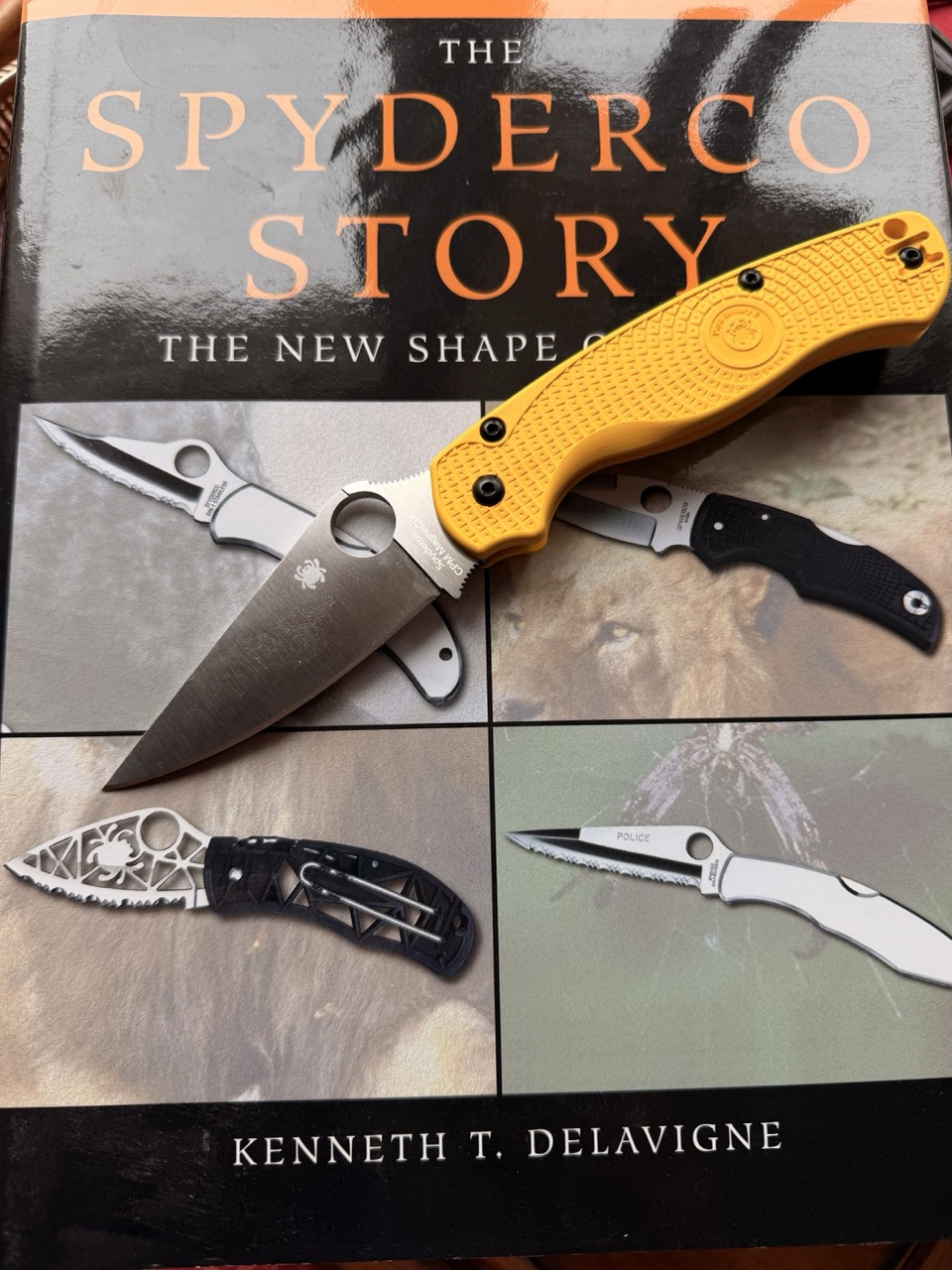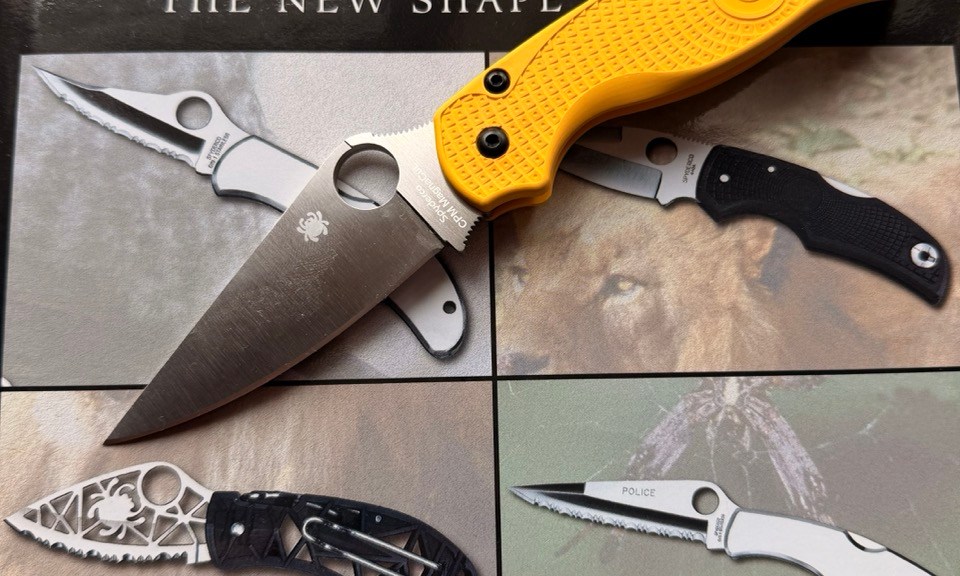
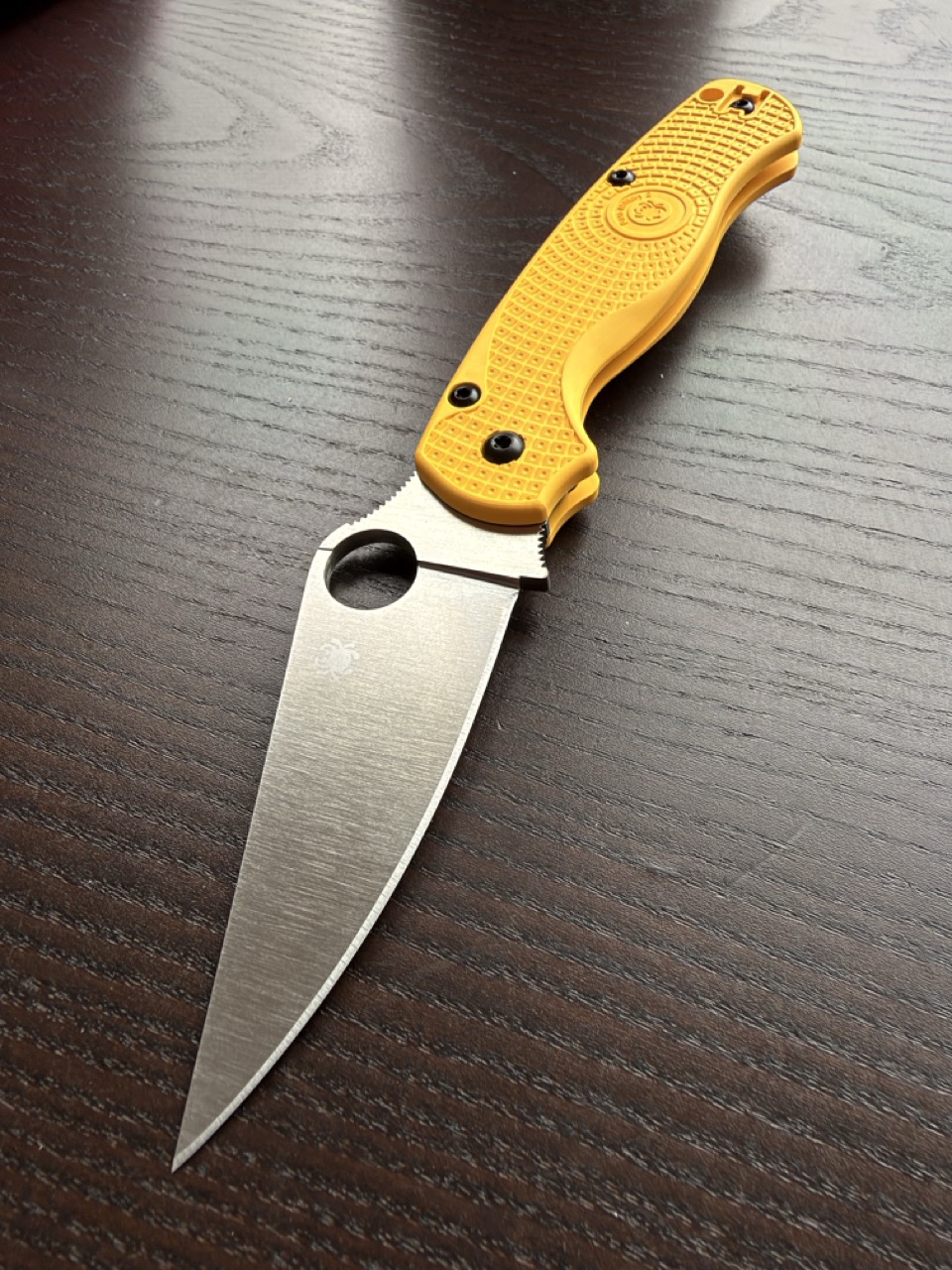
I told you so!! I told you so!!
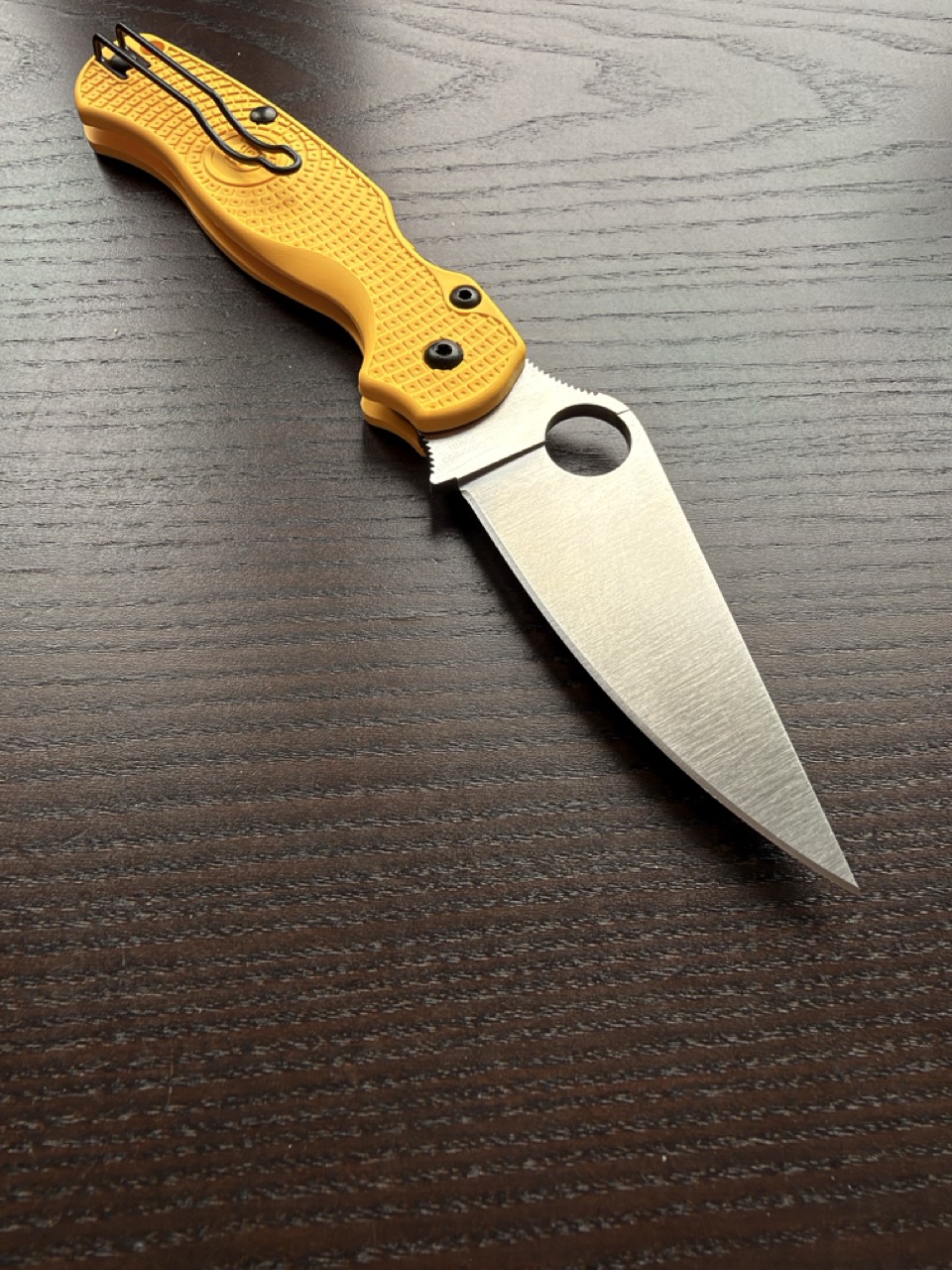
When I reviewed the PM2 LW 15V, I told you a Salt version would be a killer!!
And here we are: Great Scott!! Marty, fire up the DeLorean! We’re going back to the future — or rather, to the past — to figure out what this new version promises and, more importantly, what it actually delivers.

Sixteen years ago, in 2010, the original Paramilitary 2 in CPM-S30V laid the foundations for what would become one of Spyderco’s most iconic designs. Since then, I’ve reviewed several different takes on this classic
- CPM-S30V — January 19, 2011
- CPM-S90V Carbon Fiber Sprint Run — March 10, 2011
- CPM-52100 Carbon Fiber Exclusive — October 24, 2017
- CPM-CruWear KnifeCenter Exclusive — September 7, 2018, followed by a one-year update on September 9, 2019
- CPM-MagnaCut Salt, black G-10, DLC blade — March 30, 2024
- CPM-15V Lightweight Brown FRN Sprint Run — May 9, 2026, followed by a technical update on June 1, 2026 by Robin.
And now, here we are again: a Lightweight Salt version, just as I had hoped. Time to find out whether this new chapter lives up to the promise.
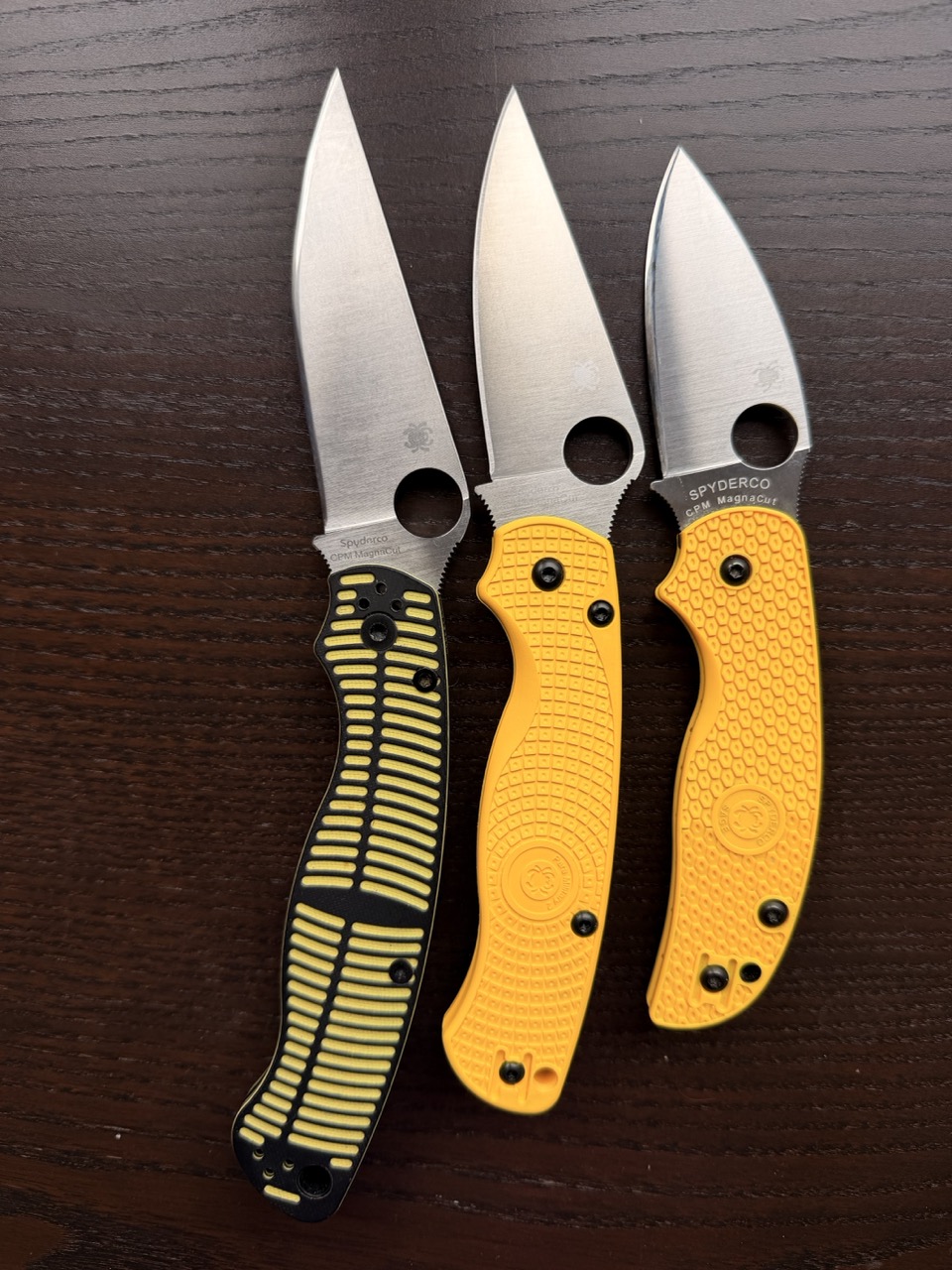
The Salt designation is not merely a cosmetic variation: it puts corrosion resistance front and center, while Spyderco’s remarkable Lightweight engineering promises an über-practical everyday-carry package. A new step in the ongoing evolution of a design I know well — but does this combination really deliver?
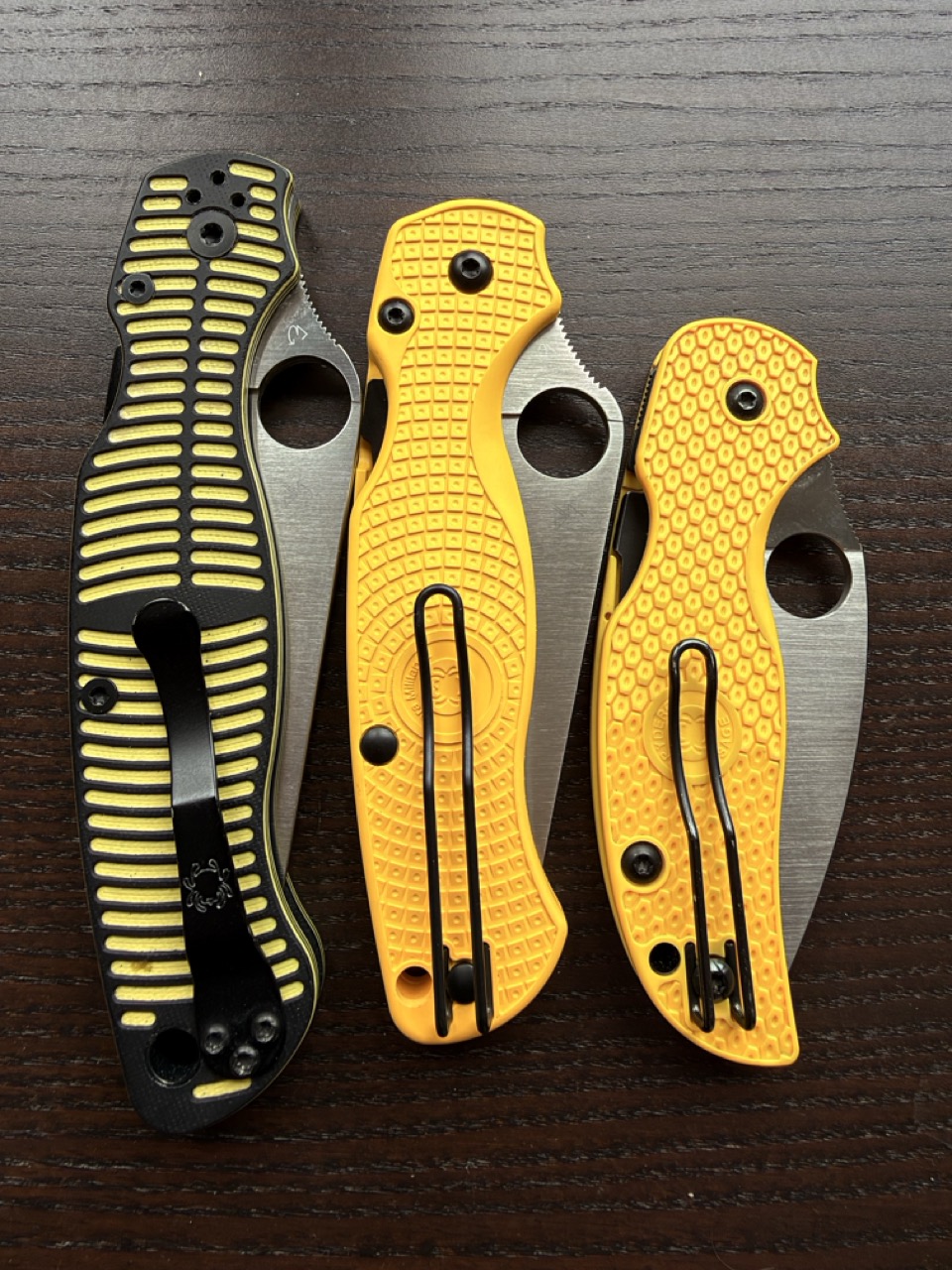
On paper, this is a pure wonder. Ultra-lightweight, virtually maintenance-free, and featuring a steel that seems to come straight from outer space — as the kids would say these days.
The overall liner-less package, however, feels almost bare-bones, decidedly more utilitarian and far less refined than the wonderful Sage 5 Lightweight Salt, with its concealed steel liners.
Yet appearances can be deceiving. What looks like a simpler design actually involves some serious engineering: doing away with full steel liners altogether is no small feat. Achieving the necessary structural integrity while keeping weight to an absolute minimum requires careful design choices and a fair amount of engineering ingenuity.
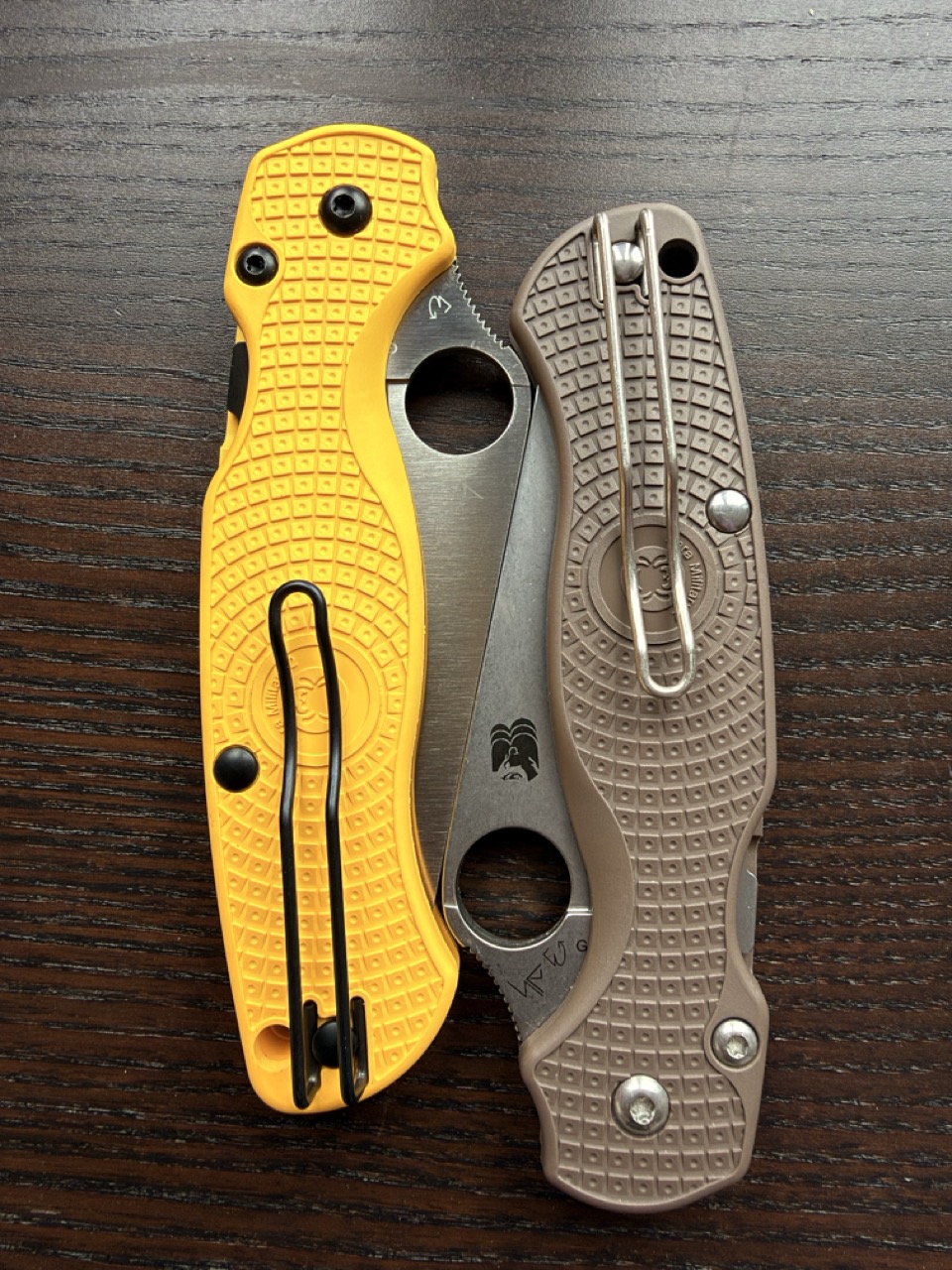
This is NOT just a yellow plastic knife. This is a refined, ultralight design!
Less metal, less maintenance. Spyderco’s FRN (fiberglass-reinforced nylon) is a remarkably durable material, combining very low weight with excellent impact resistance. No steel liners to worry about, no coatings to peel off, no laminated layers to delaminate. Unlike some handle materials, FRN also holds up very well over time, with good resistance to everyday wear and tear. While no polymer is entirely immune to prolonged UV exposure, FRN is a proven, practical choice for a hard-use knife designed to go places without demanding much in return.

I still remember Erik Remmen, the American martial arts instructor (yes, yes, the guy in the black T-shirt — NOT the one screaming on the floor!), demonstrating the toughness of Spyderco’s FRN-handled, linerless, riveted Delica back in the ’90s.
Back in 1990, Erik Remmen approached Spyderco founder Sal Glesser with an idea for a self-defense training program based on the lightweight Delica and Endura. Recognizing the importance of training with knives that handled just like their live counterparts, Sal generously supplied 40 factory-dulled Clipits. These became the precursors of Spyderco’s purpose-built folding trainers, officially introduced in 1999 with blunt blades, rounded tips, and distinctive red handles. It was an early demonstration of Spyderco’s commitment to practical training tools — and to getting the most out of its lightweight designs.
Erik’s demonstration involved running a truck over the knife to show just how much abuse this seemingly humble material could take. And this was before steel liners were introduced in the Delica!
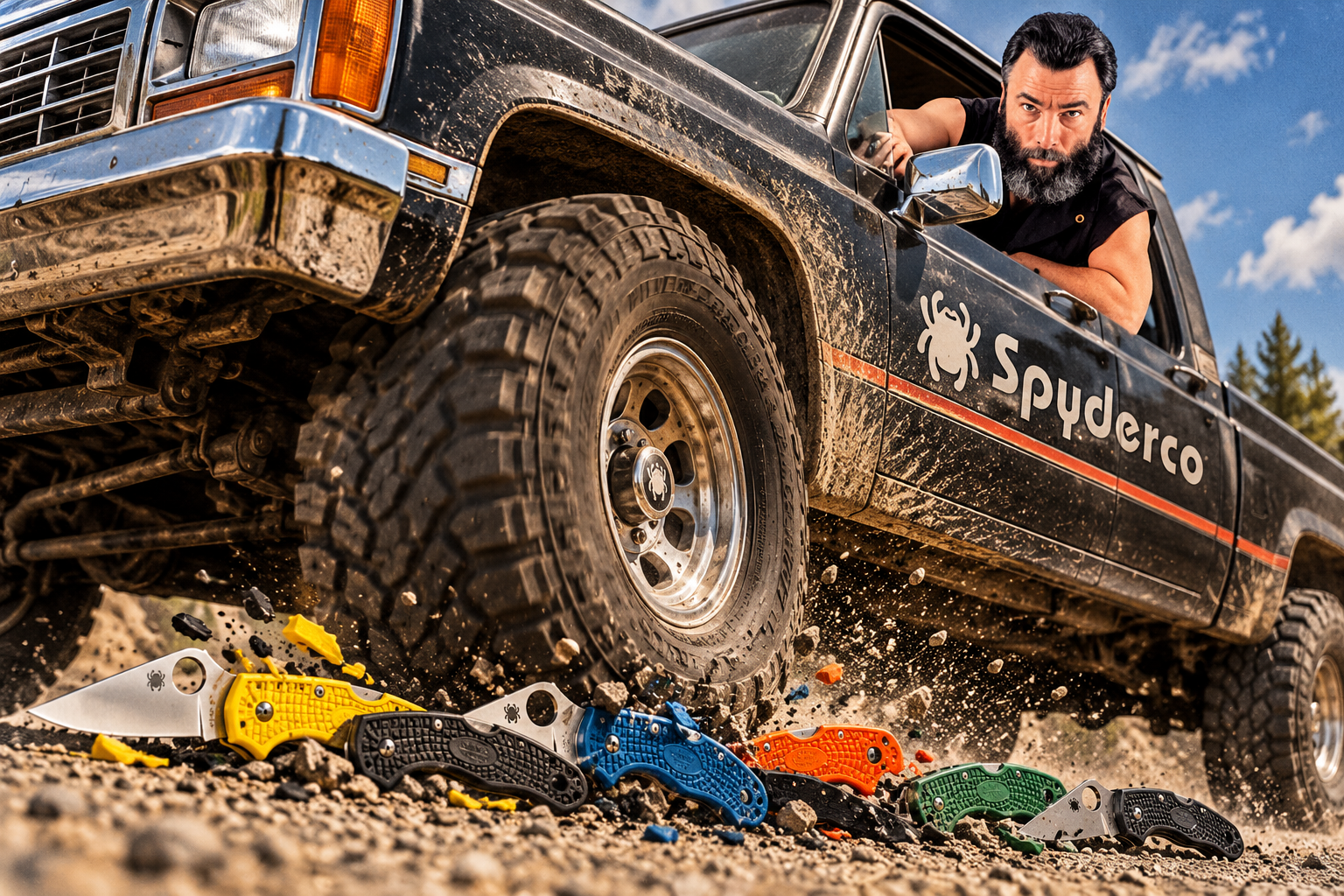
I remember reading about it in a book published by Paladin Press, which I still have somewhere. If I manage to dig it out, I’ll update this review with the reference. (For now, I’ve had to resort to that horrible AI-generated image to fill the gap. :D)
Well, it was a striking demonstration of FRN’s engineering potential, long before lightweight construction became such a major selling point for Spyderco.
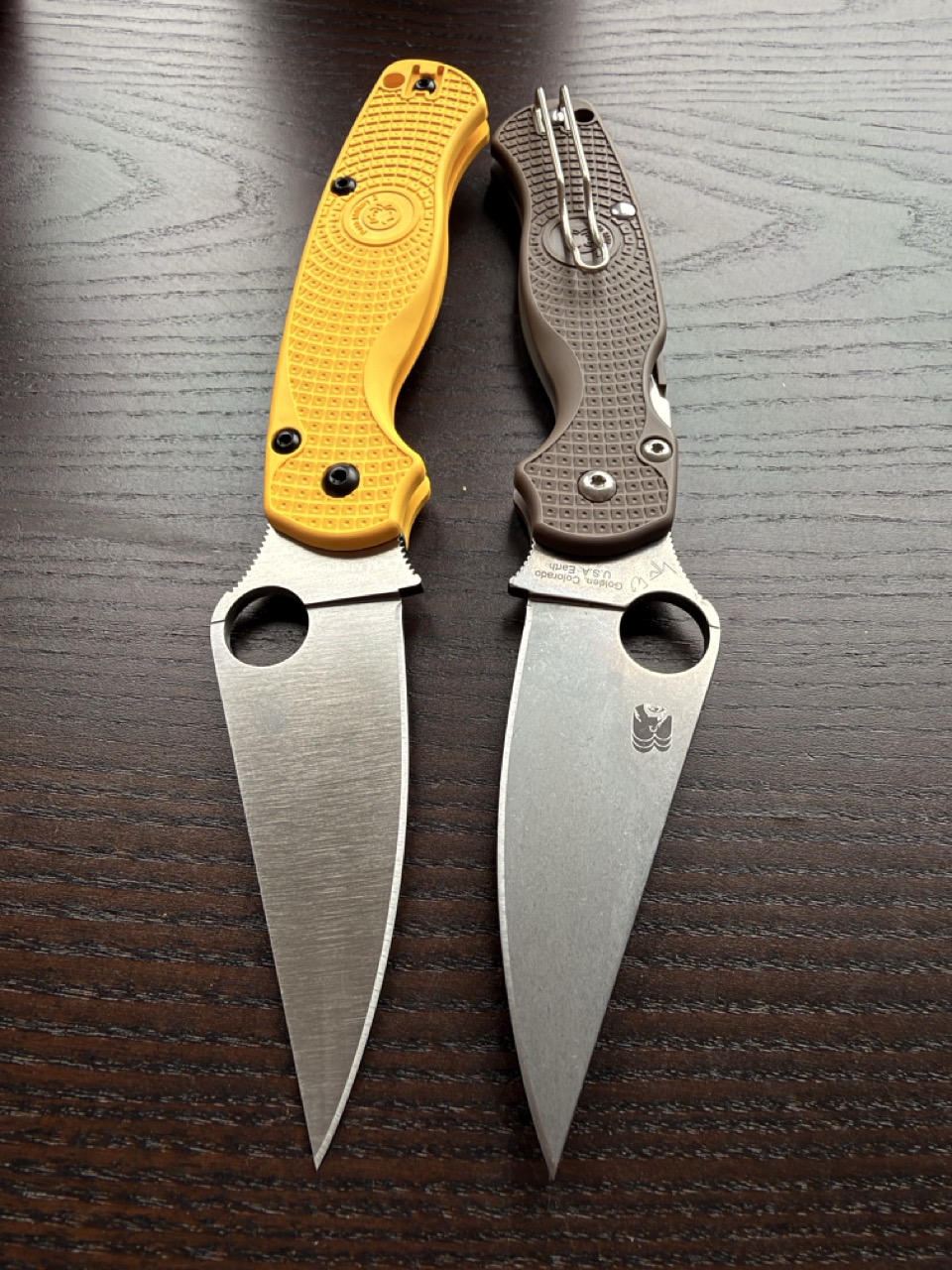
So, you get a seriously solid tool with this Lightweight version of the PM2. My friend Geoffrey has just demonstrated that on the Spyderco Fan Club France group, putting his PM2 LW 15V through hard use with zero maintenance and zero pampering. As we say in French, conçu pour servir — built to be used!
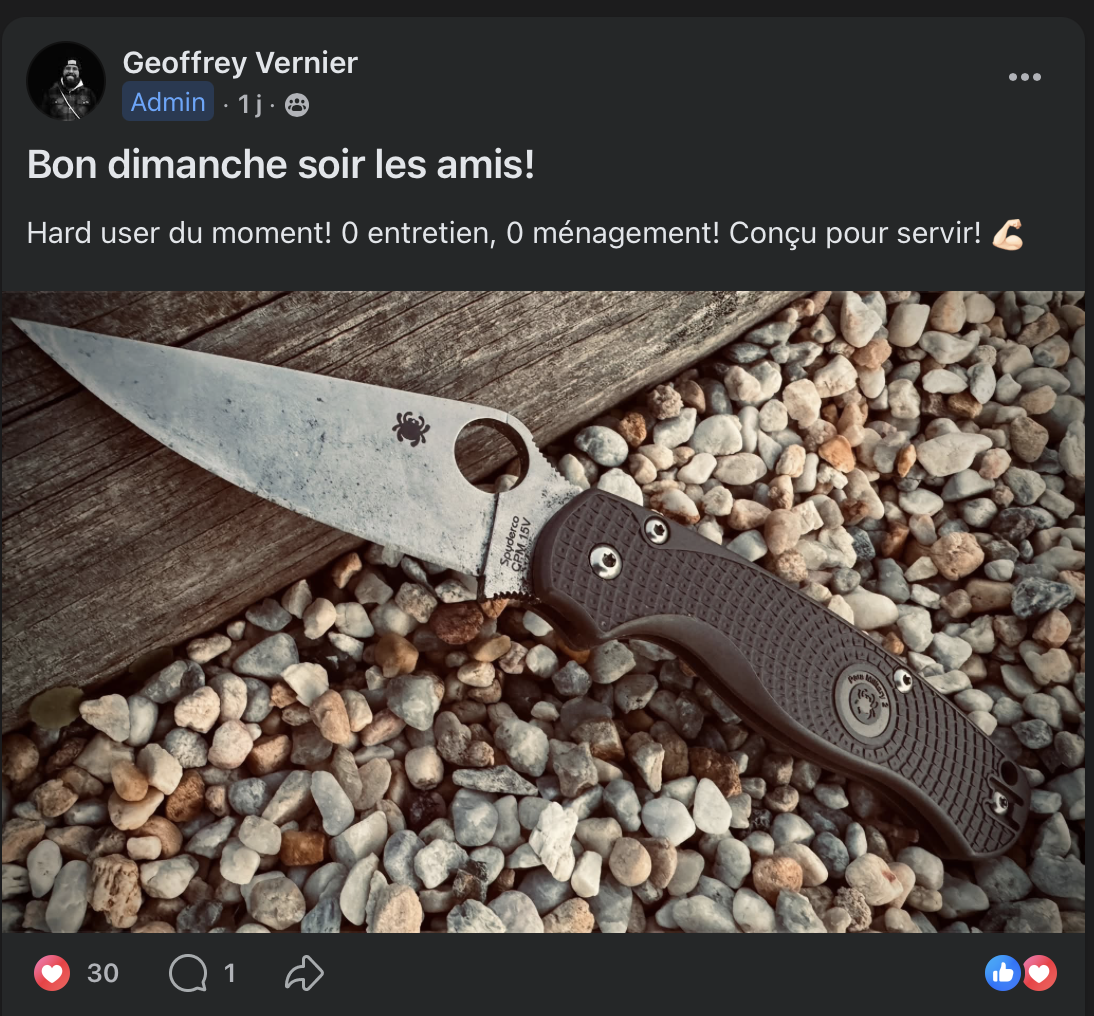
Geoffrey, who also runs Normandeep, a diving shop, is no stranger to putting Spyderco Salt knives to work. As a professional diver, he even takes his MagnaCut Native 5 Lightweight underwater.
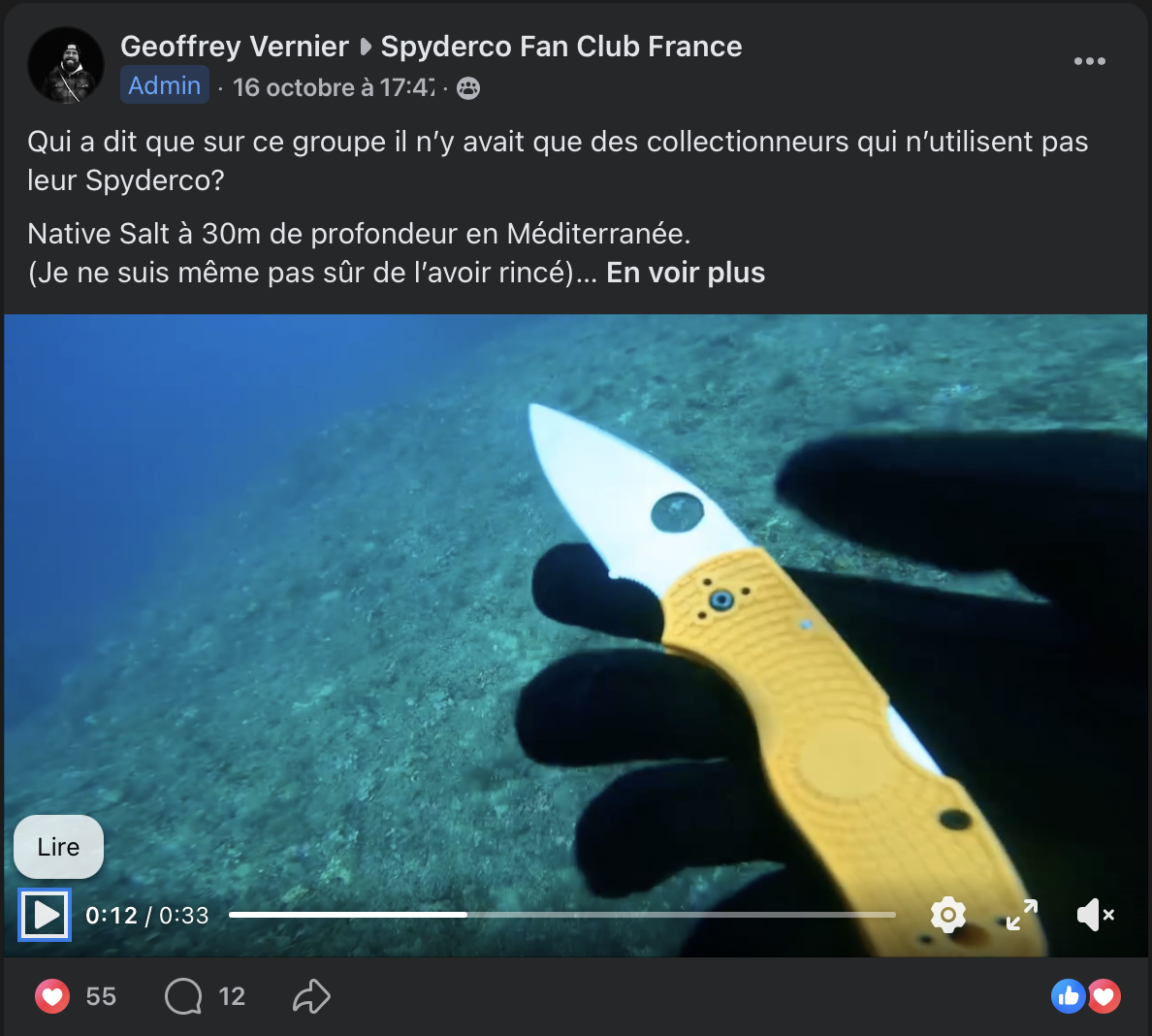
As he put it on the Spyderco Fan Club France group:
“Who said this group was full of collectors who never actually use their Spydercos? Native Salt at 30 meters deep in the Mediterranean. (I’m not even sure I rinsed it afterwards! )The advantage of the yellow handle is immediately obvious: you can spot it even at depth. And the funniest part? I was using it for work!”
Yep, these Lightweight models aren’t just designed to be clipped to your bikinis or Speedos ;-). They’re reliable tools, built to be used. And, for the record, that bright yellow handle is more than just a visual signature: it makes the knife easy to spot underwater or if you accidentally drop it on the forest floor, where it could otherwise disappear among the dark undergrowth. When you need to retrieve your tool quickly, high visibility is a genuine practical advantage, not just a cosmetic choice.
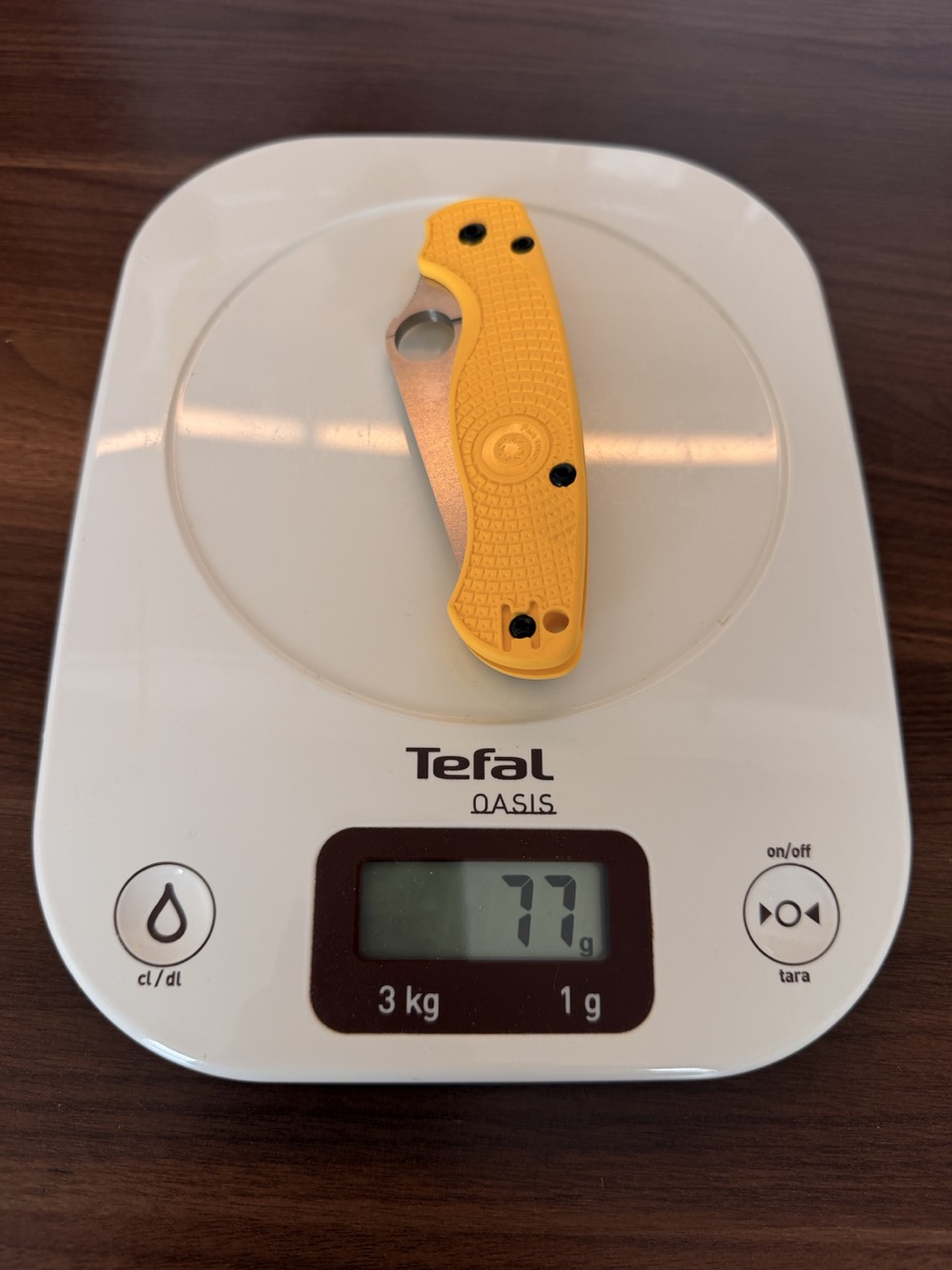
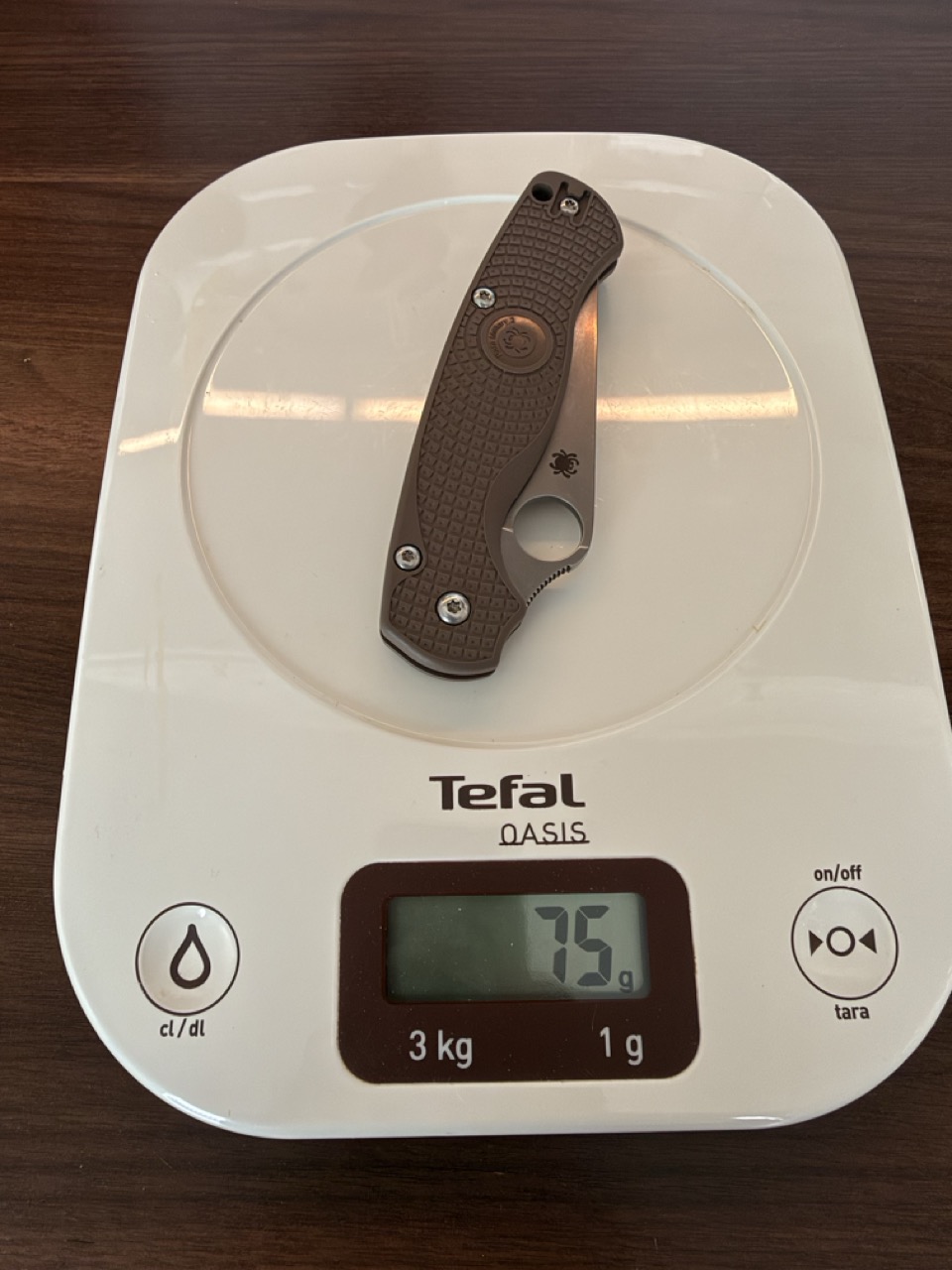
Only 2 grams difference… I would have expected CPM 15V to be denser than CPM MagnaCut. Well, apparently not! 😄
Of course, the total weight also depends on manufacturing tolerances and the other components, so we can’t attribute those 2 grams to the steel alone.
Anyway, I wouldn’t bet against Geoffrey falling in love with that Paramilitary 2 Lightweight Salt as well. It ticks all the boxes for a true land-and-sea workhorse: lightweight, corrosion-resistant, tough, and easy to carry just about anywhere without constantly worrying about maintenance.
The only refinement I could imagine for a dedicated diving knife would be a partially serrated or fully serrated edge. It would make cutting ropes, lines and fishing nets easier, especially when dealing with tough synthetic materials underwater. Other than that, the PM2 Lightweight Salt already makes a compelling case for itself as a lightweight, highly corrosion-resistant cutting tool for both land and sea.
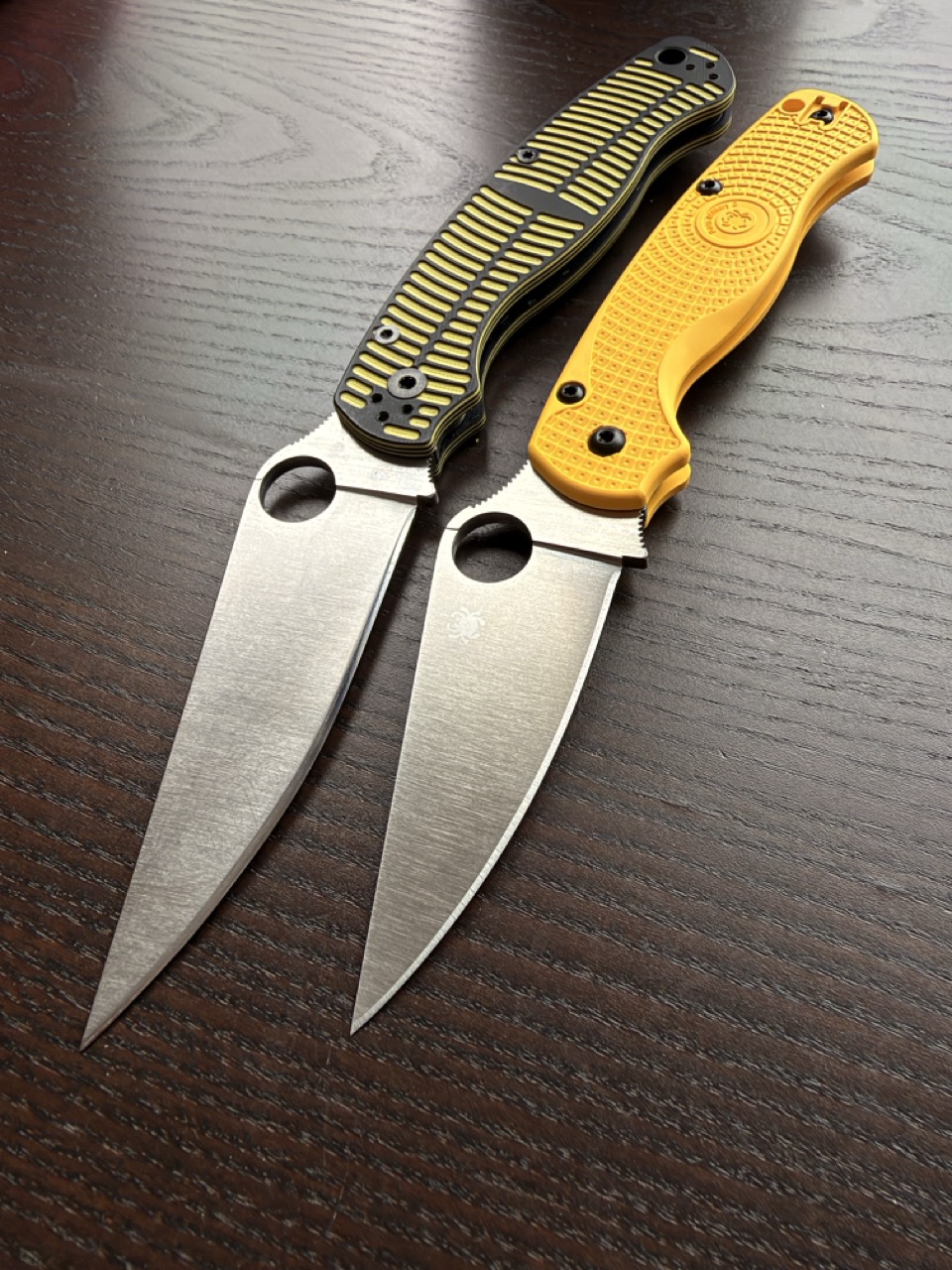
I’ve already experienced CPM MagnaCut in knives from Spyderco’s factory in Golden, Colorado, USA — my all-black PM2 Salt, Gurney, being a prime example. And now we’re seeing CPM MagnaMax blades appearing on the Manix 2, another potential game changer.
The future of Spyderco’s Salt line looks brighter than ever.
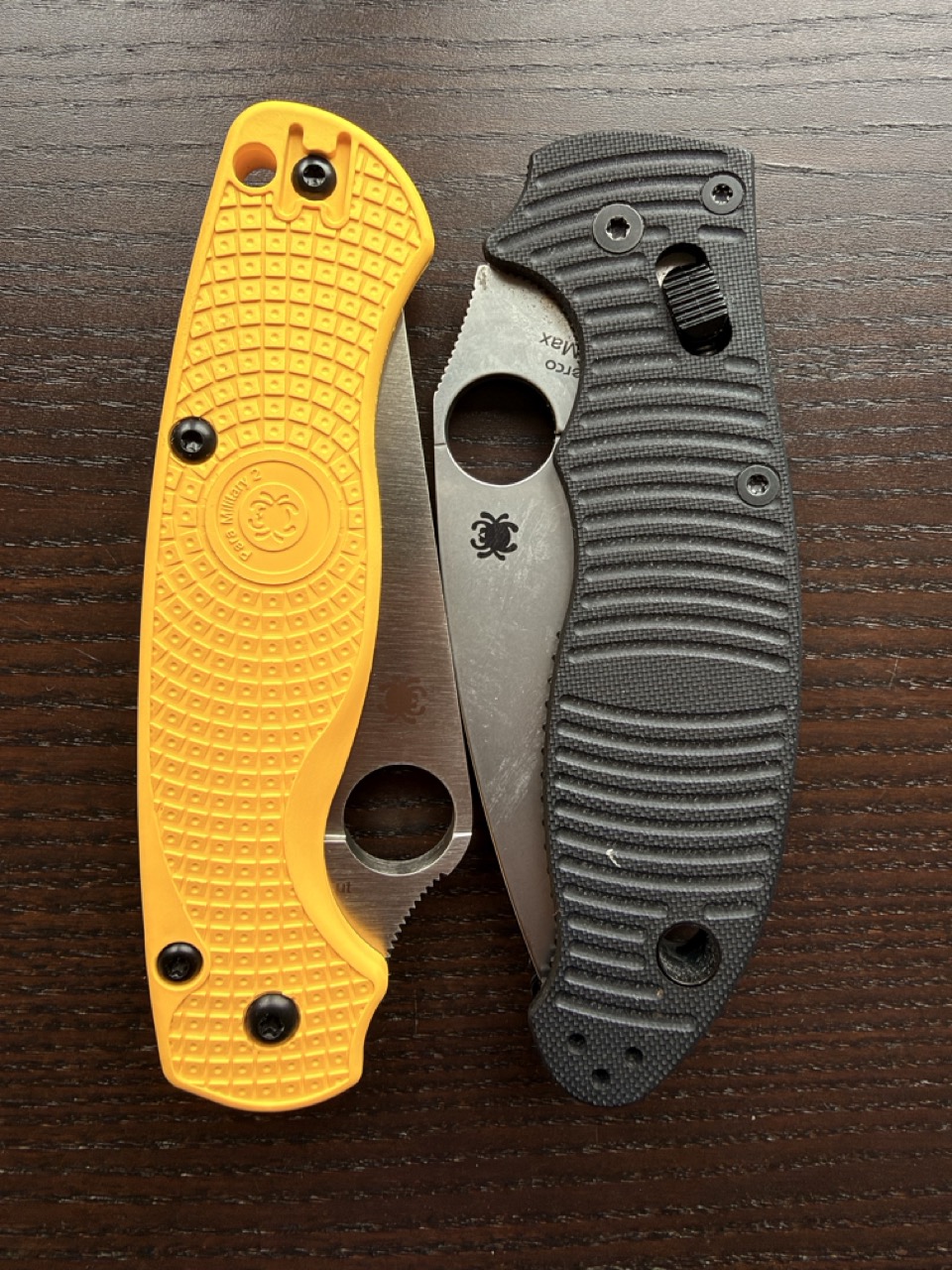
These more substantial, sturdier versions, with their full steel liners and bi-directionally textured G-10 scales, are genuine workhorses. They feel reassuringly solid, are wonderfully capable, and are a real pleasure to live with every day.
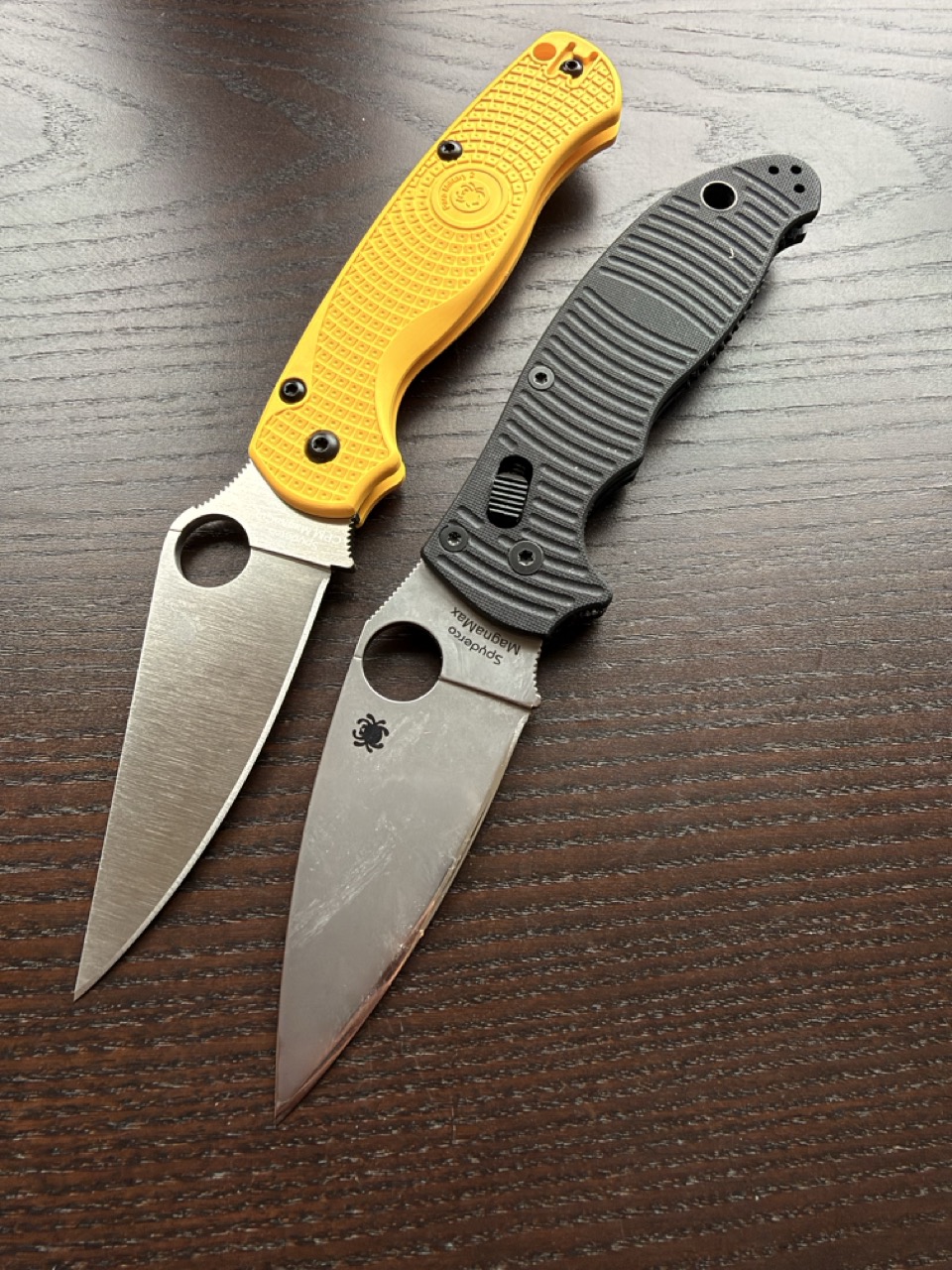
But here’s the thing: having the option to carry that same cutting potential in an ultralight package, clipped to your pocket, is simply brilliant. Sometimes you want the reassuring heft of a fully built workhorse; sometimes you want the same cutting capability without the extra weight. And being able to choose between the two is what makes Spyderco’s approach so compelling, especially in harsh environments such as tropical rainforests, open water, coastal areas, and swamps — places where a reliable cutting tool and corrosion resistance can make all the difference.
In conclusion, I believe the PM2 Lightweight Salt could become a milestone in Spyderco’s history. It combines the full-sized capabilities of an iconic folder with an exceptionally lightweight construction and the outstanding corrosion resistance of CPM MagnaCut. For military personnel and anyone operating in demanding environments, where every gram counts and equipment must withstand the elements, that’s a combination worth taking seriously.