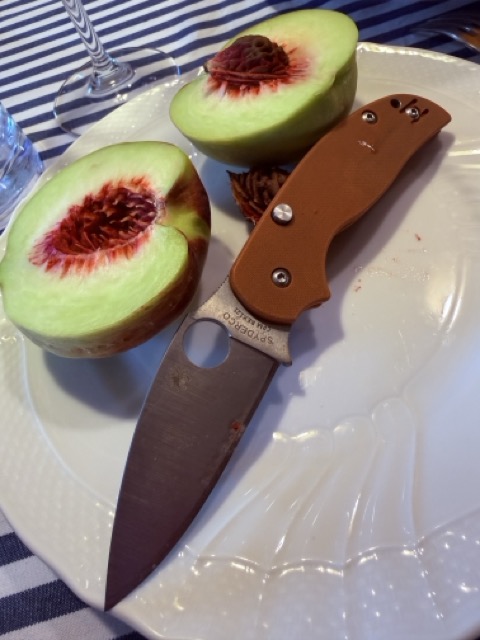
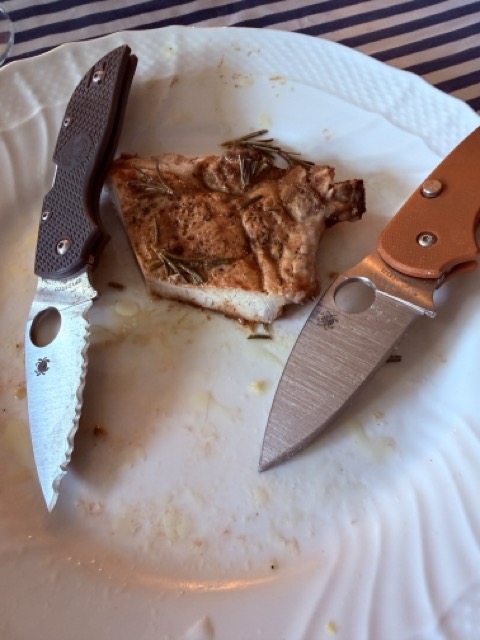
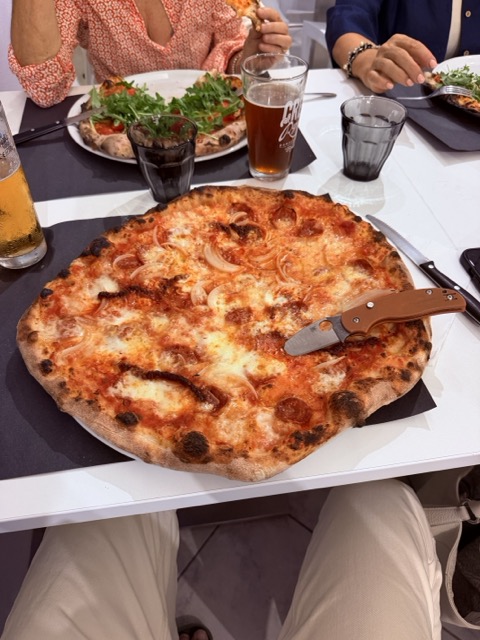
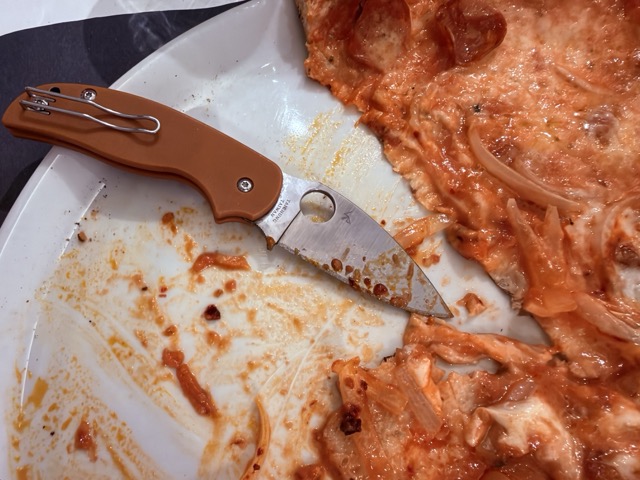
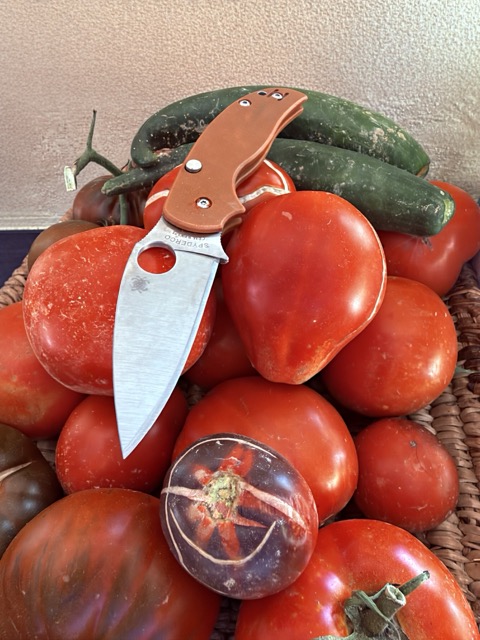
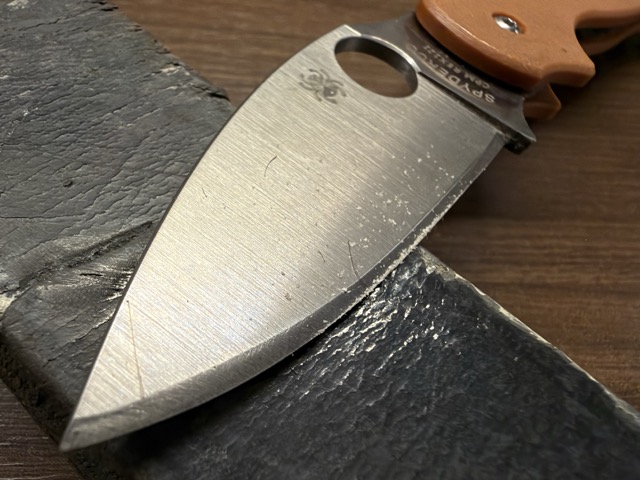
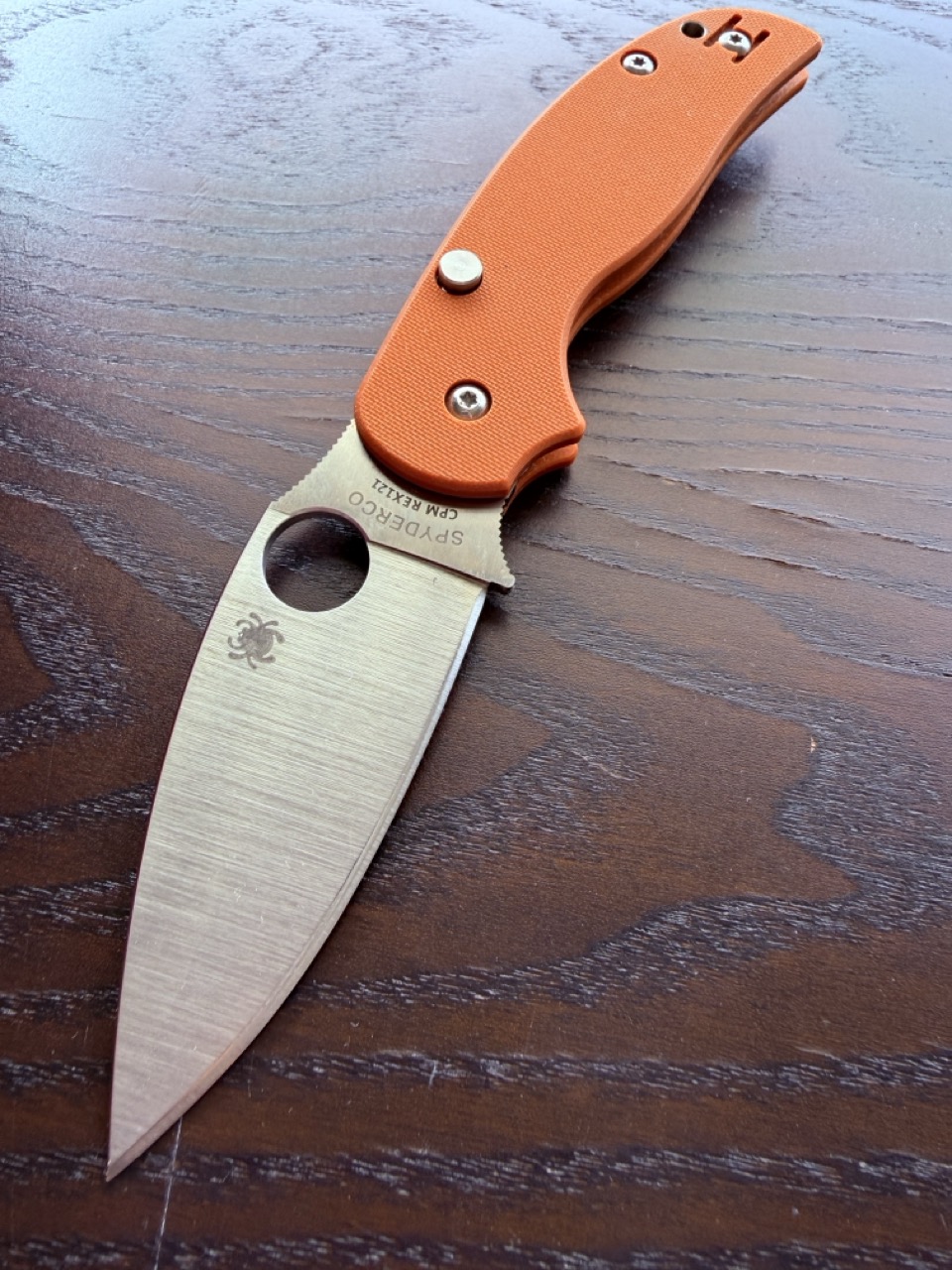
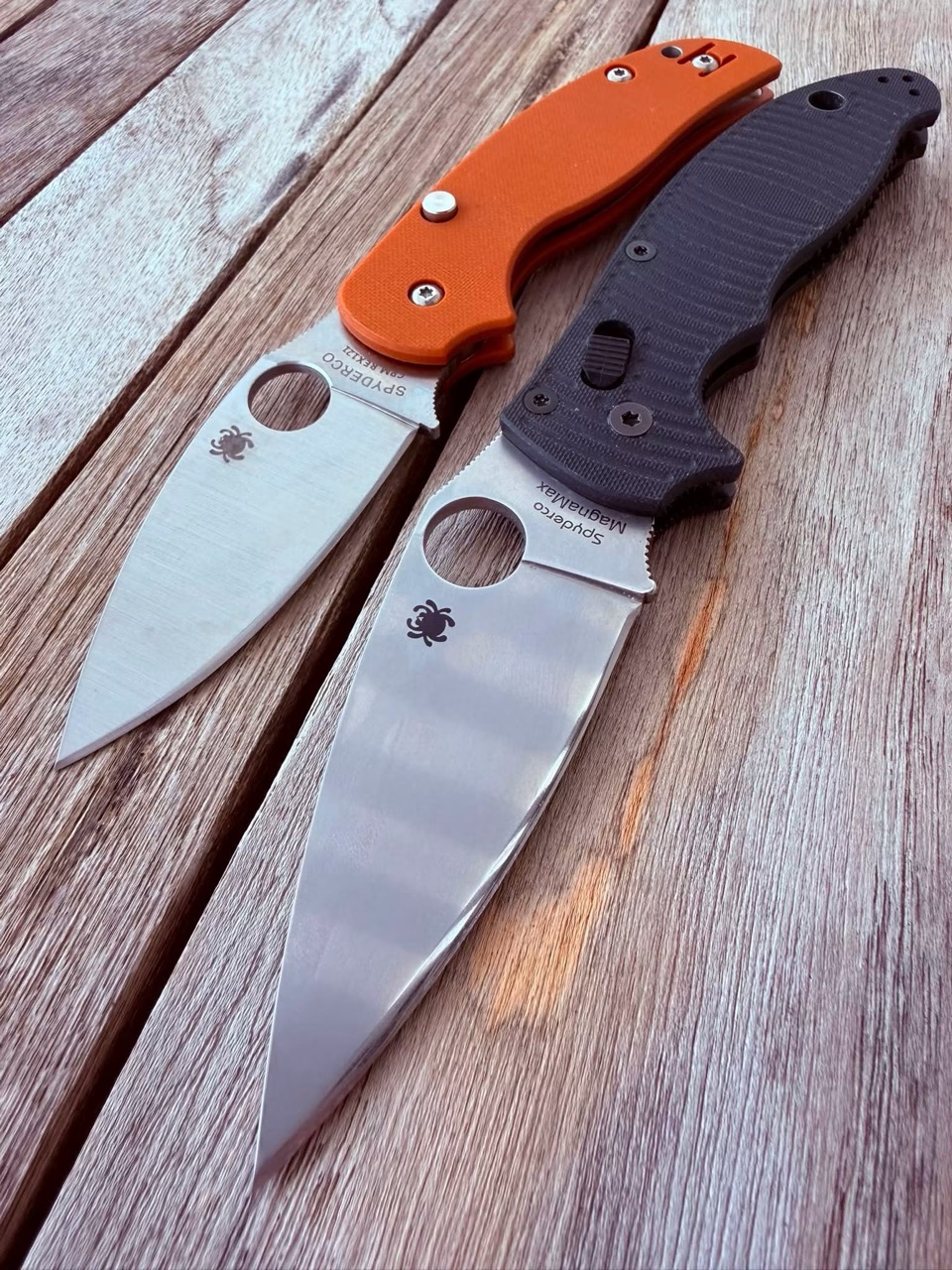
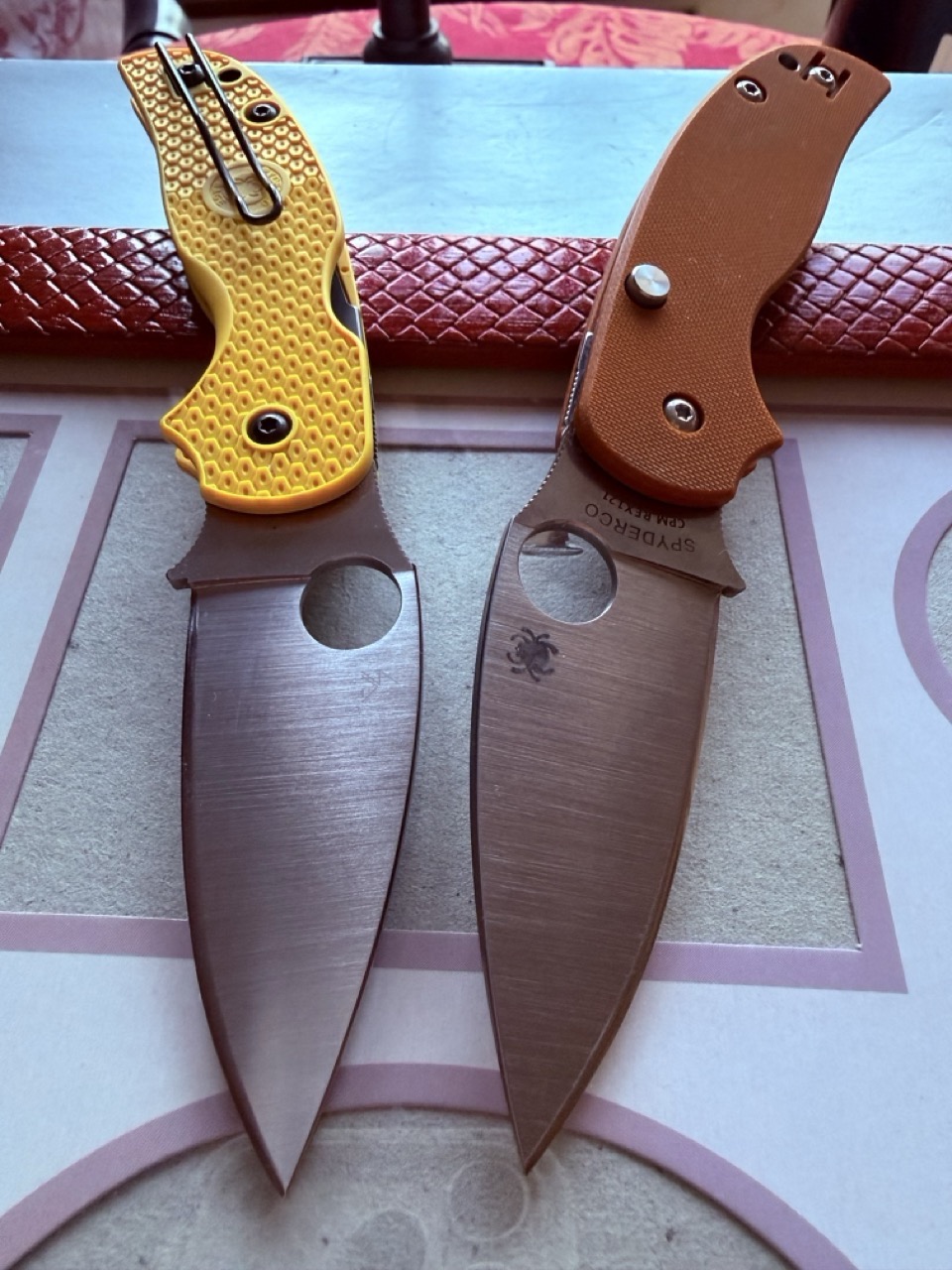
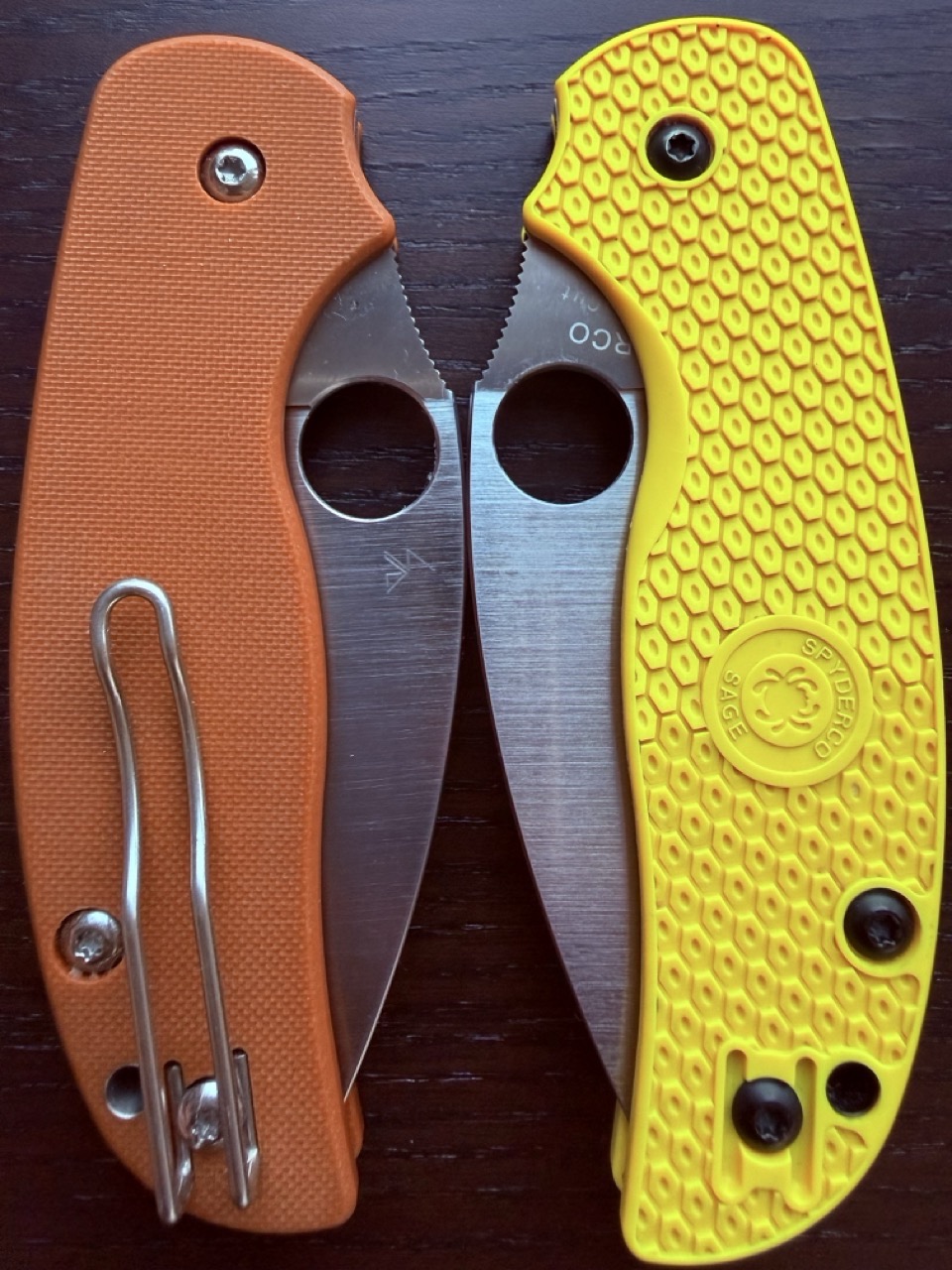
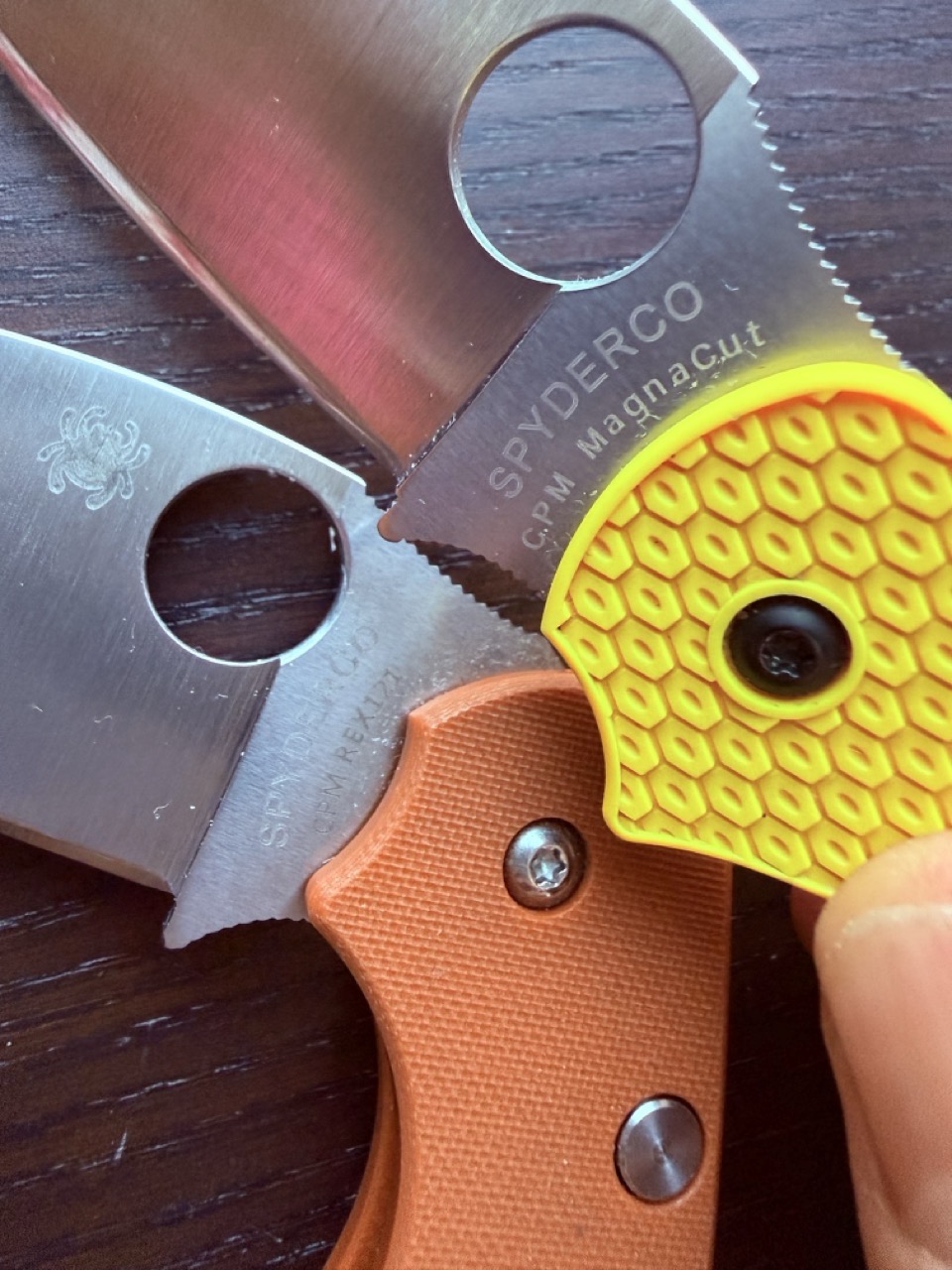
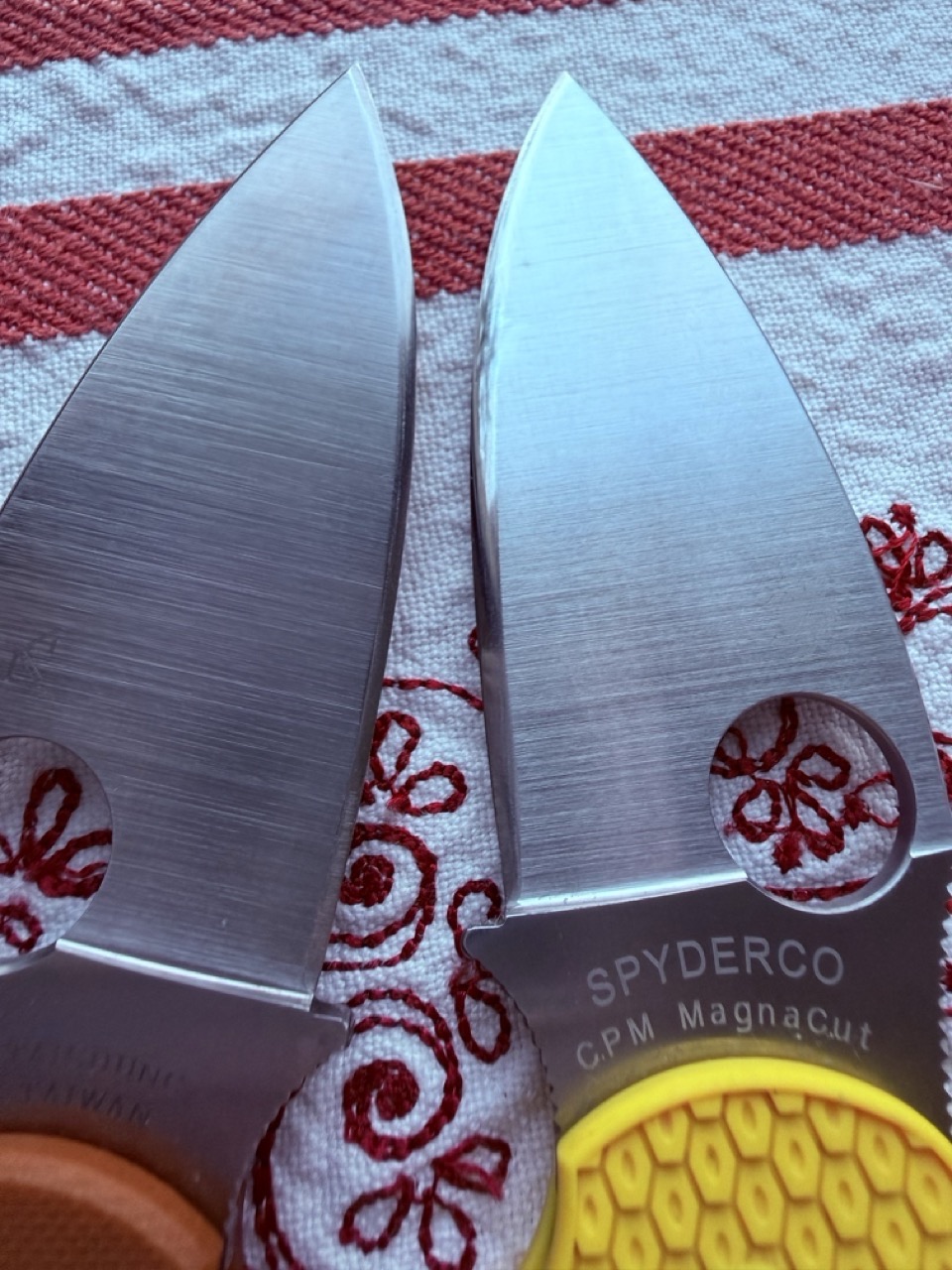
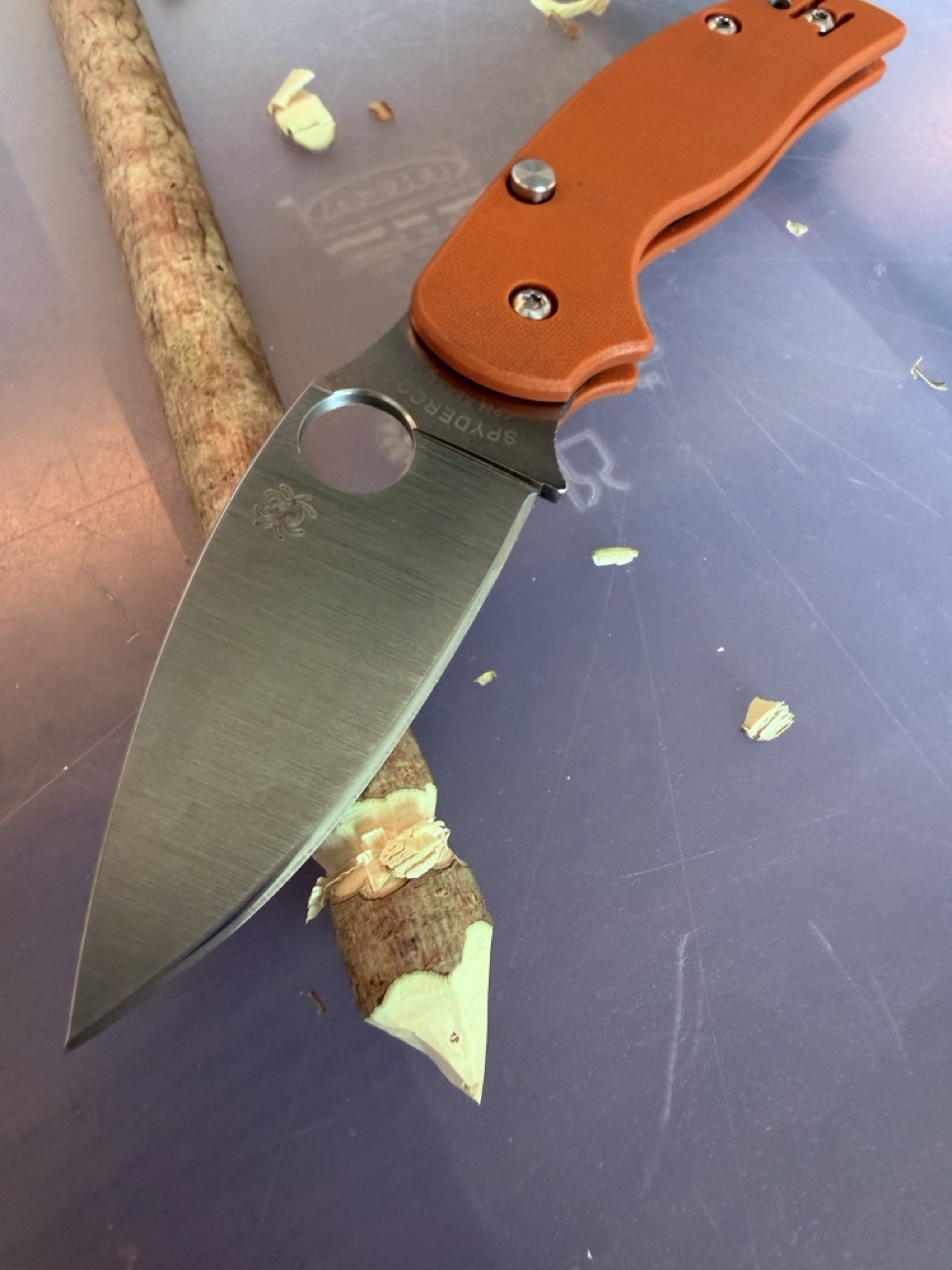
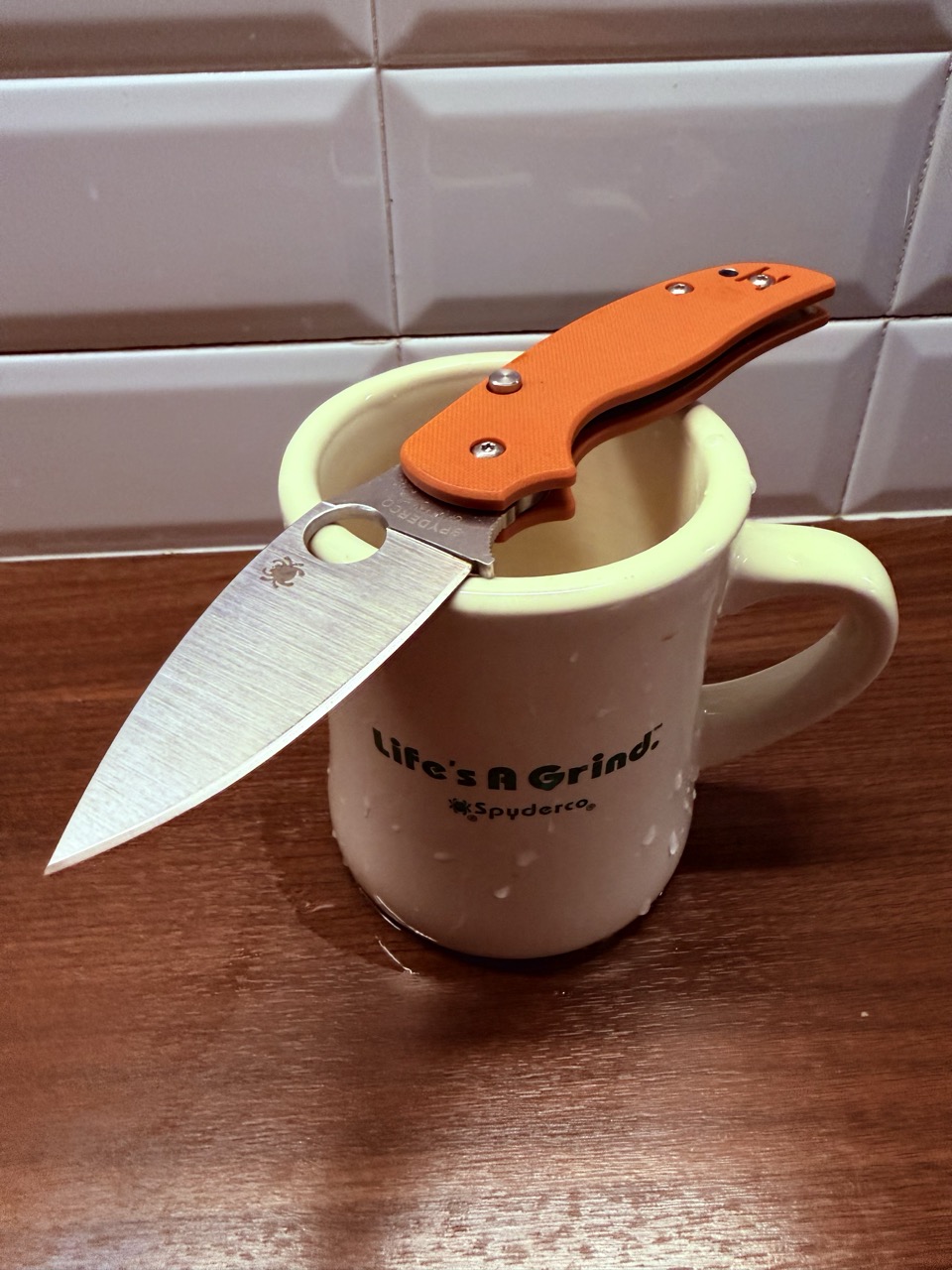
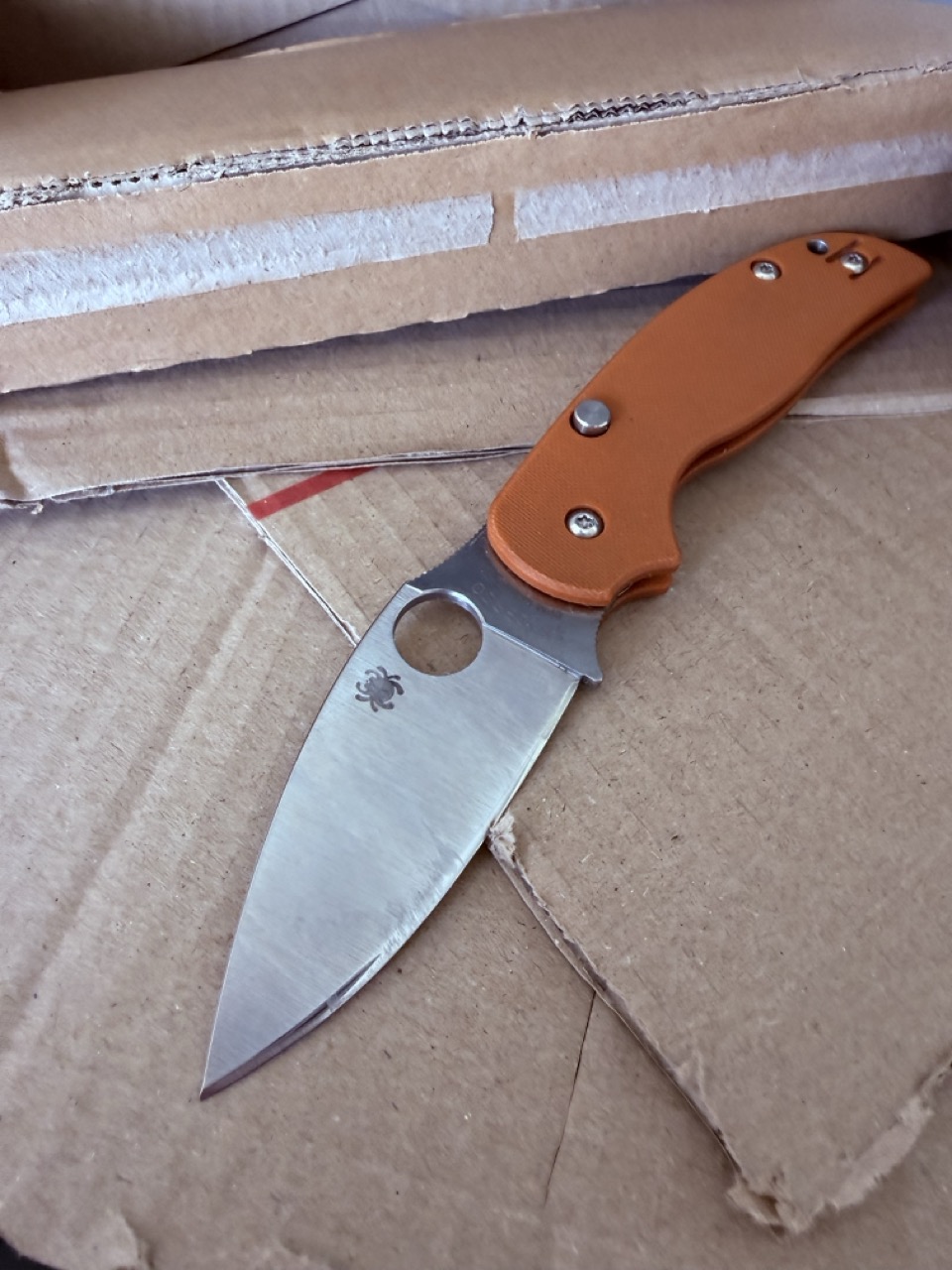
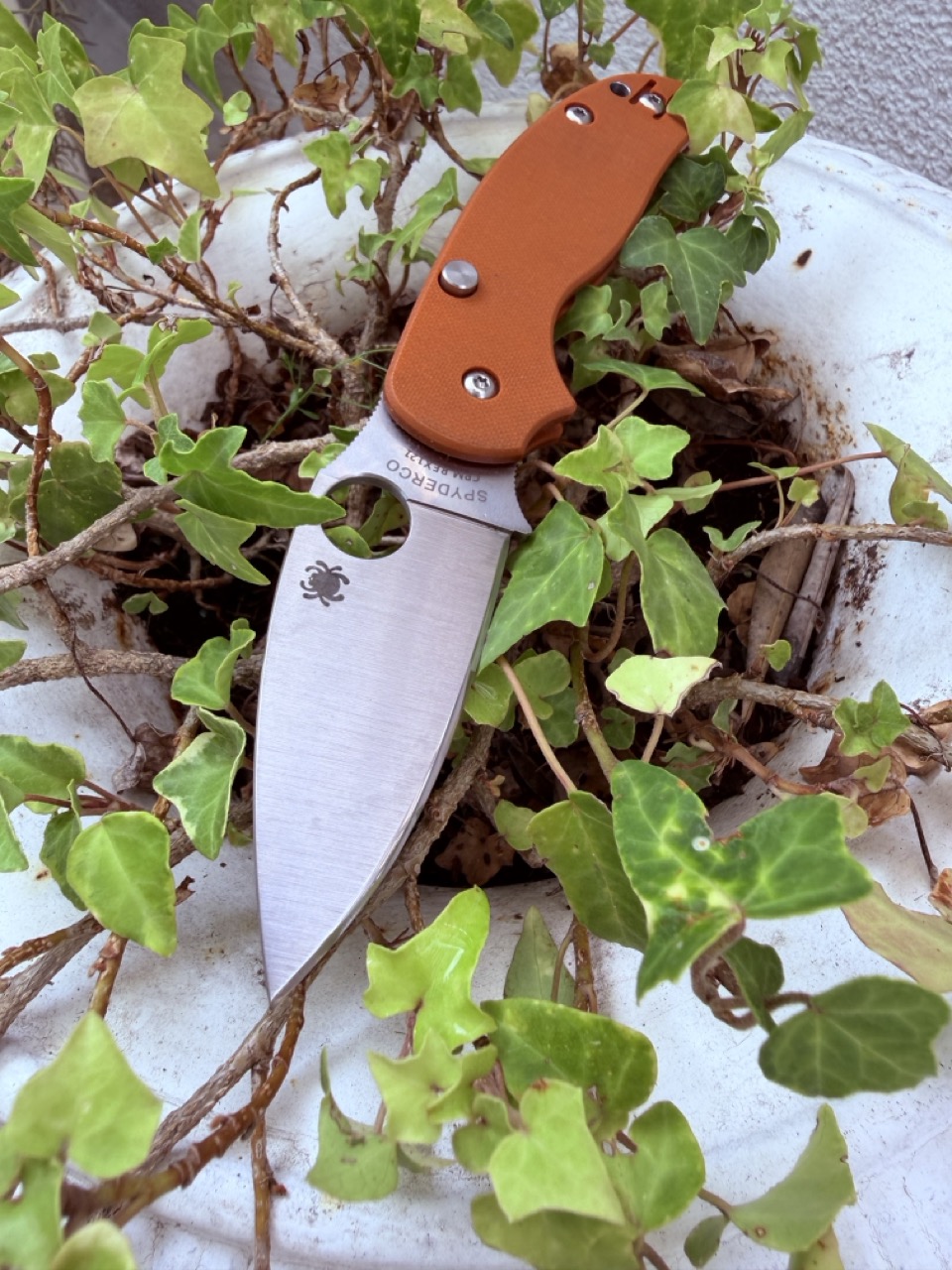
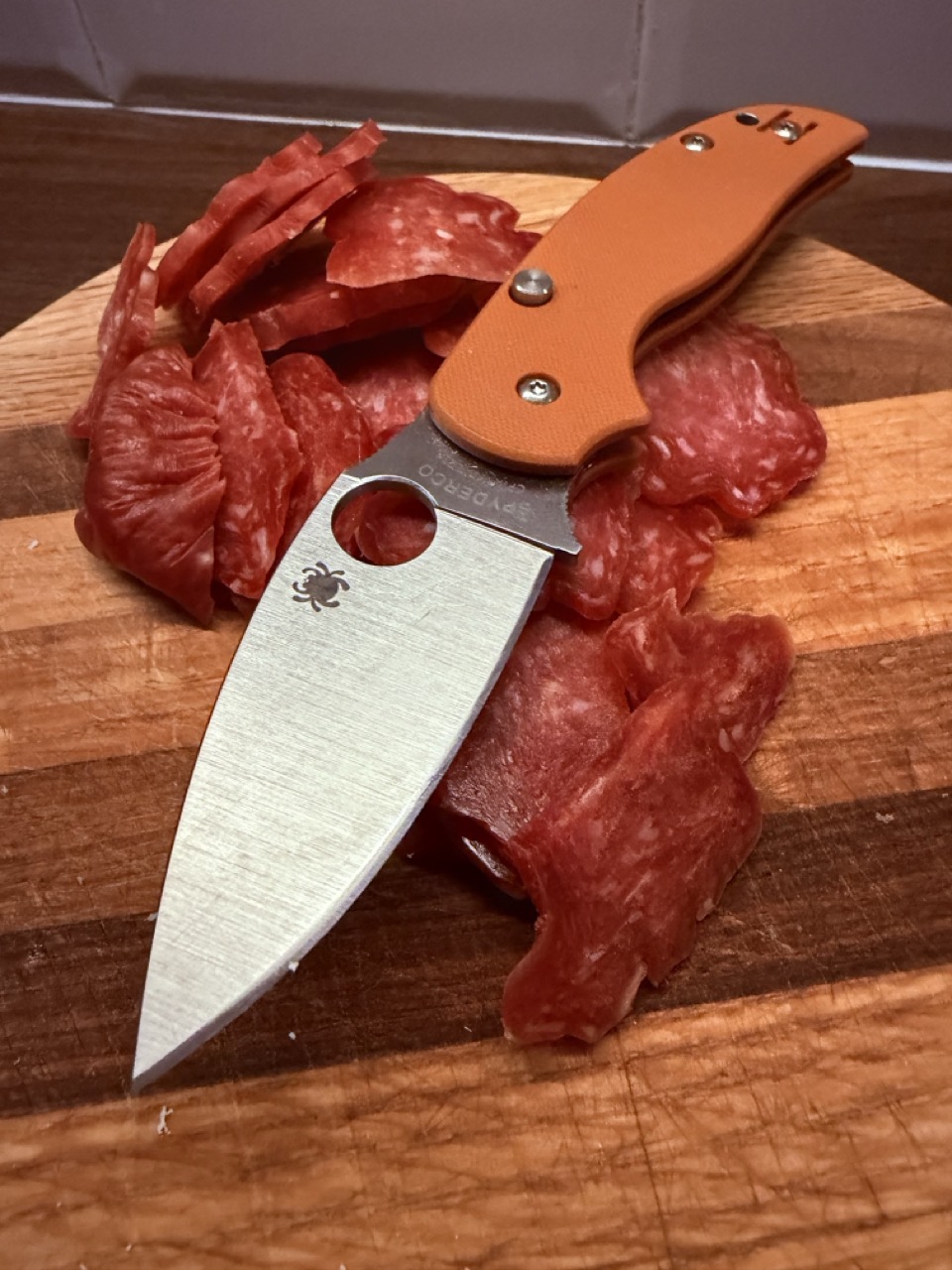
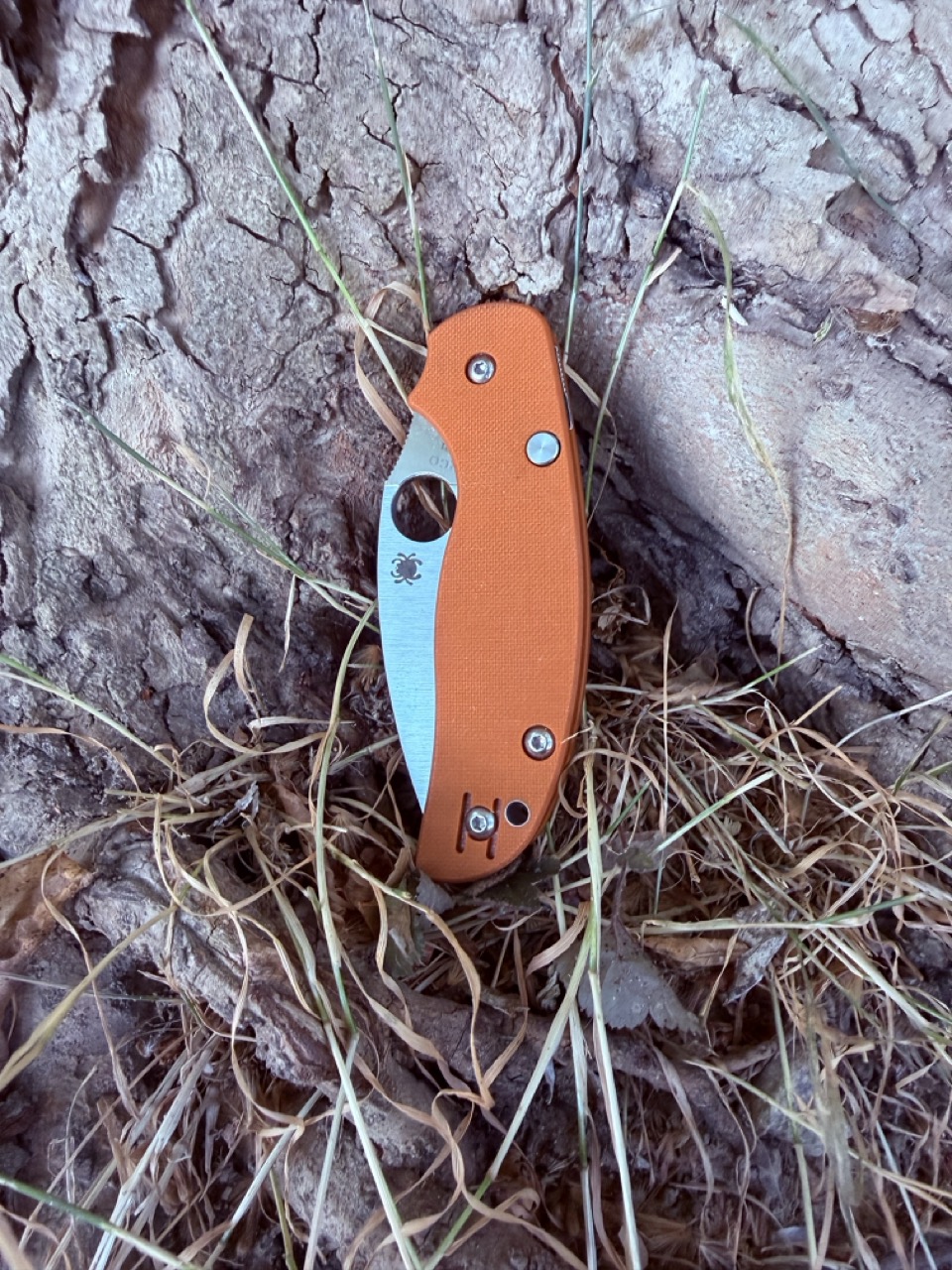
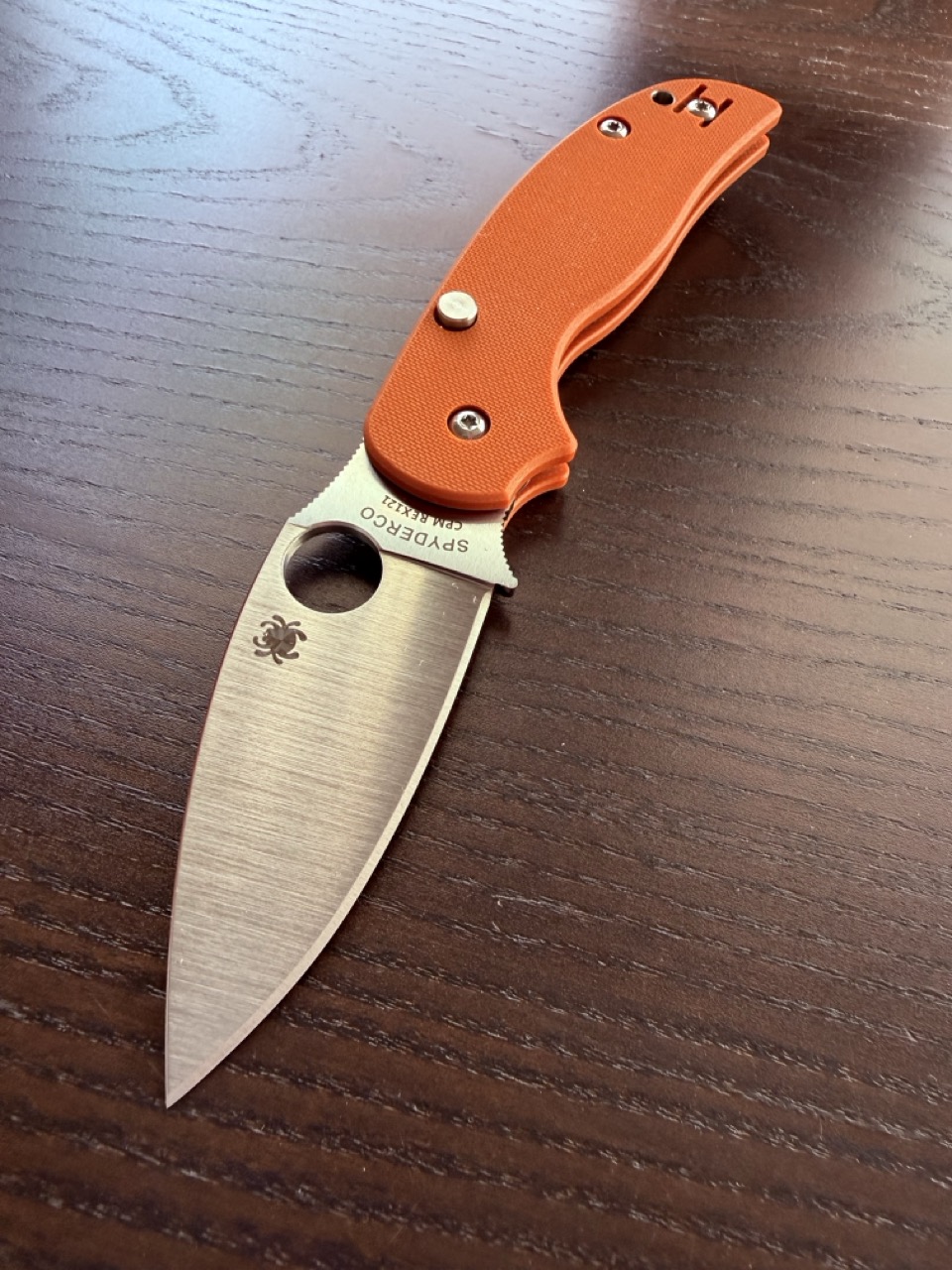
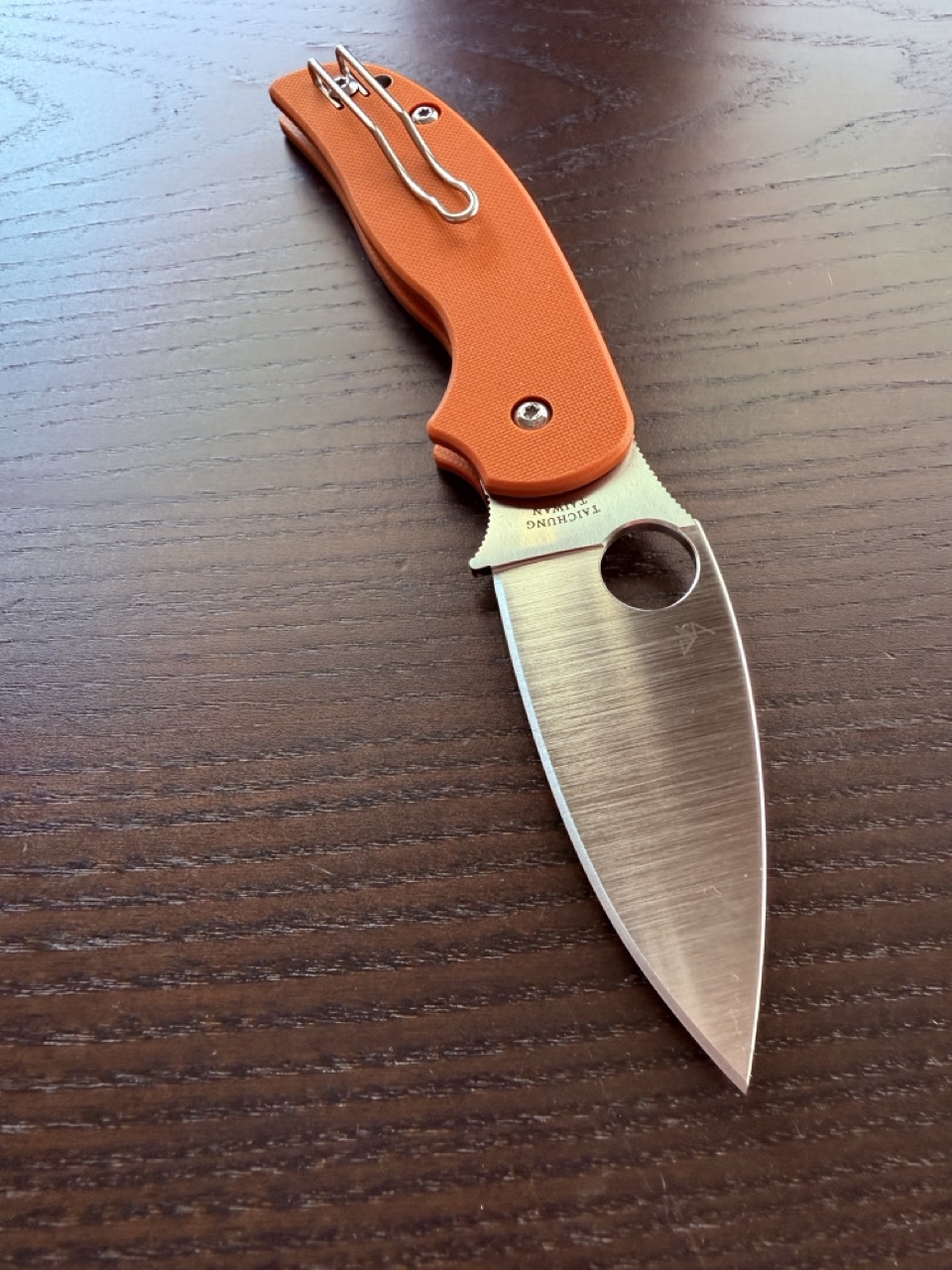
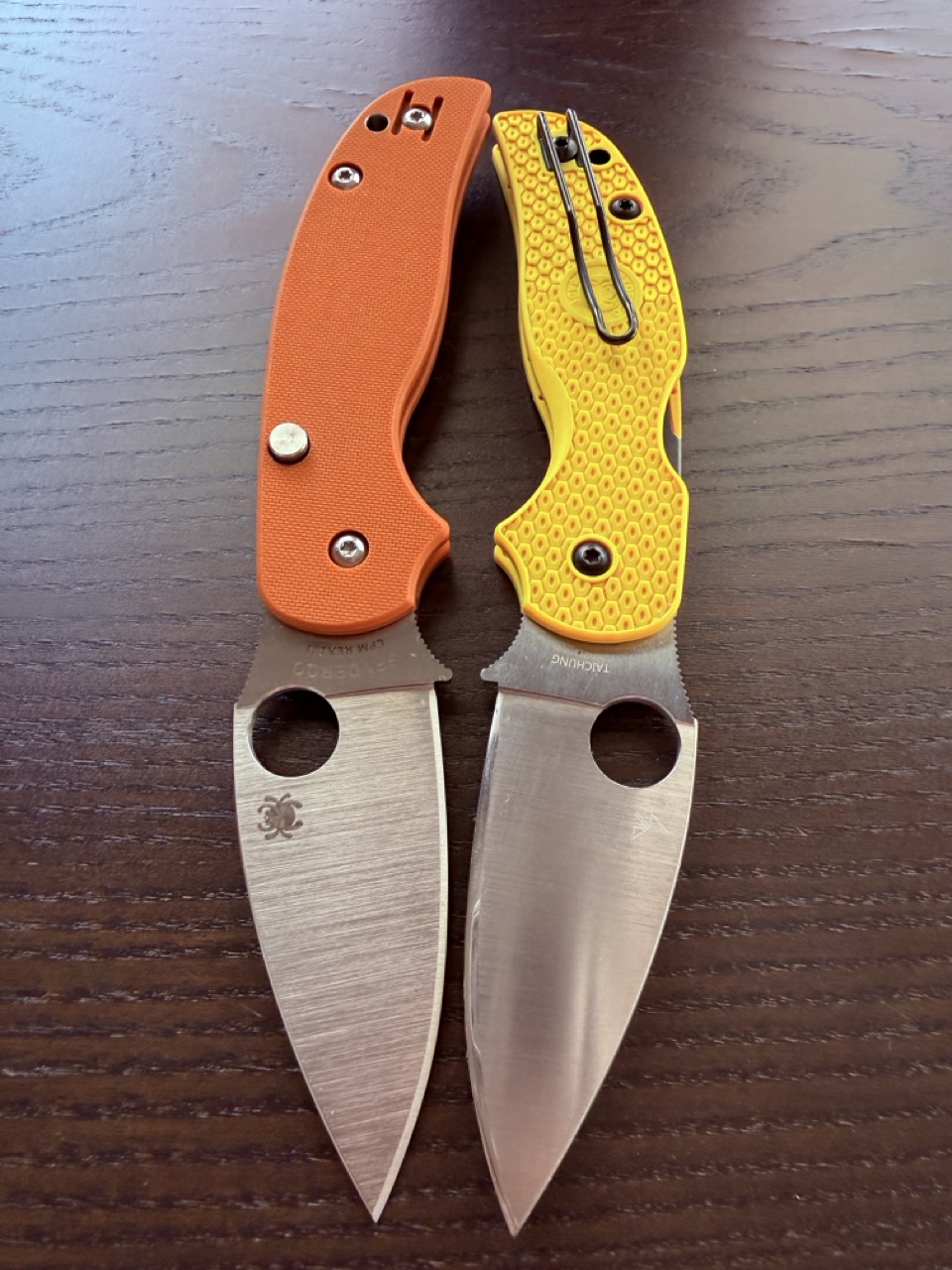
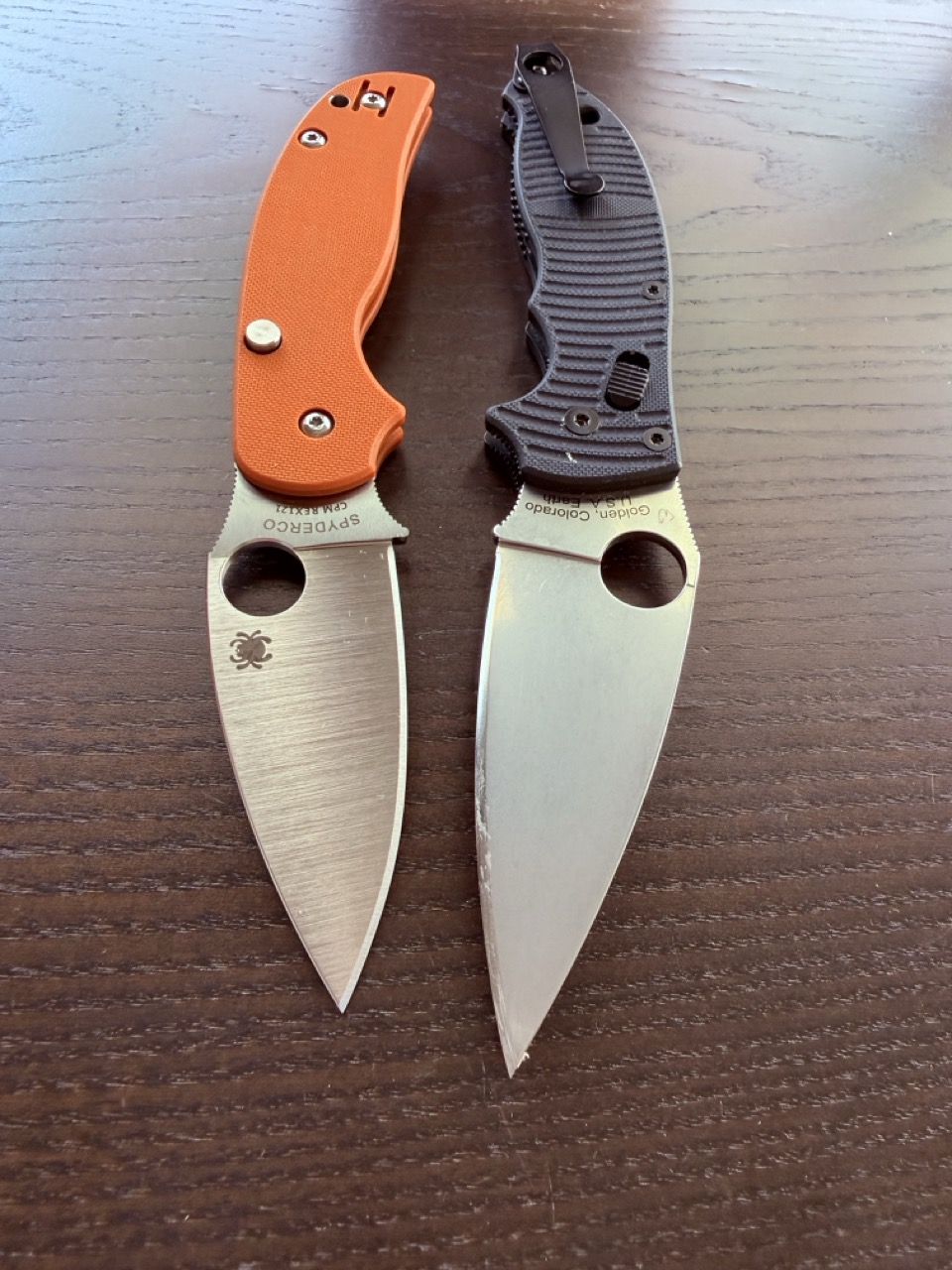
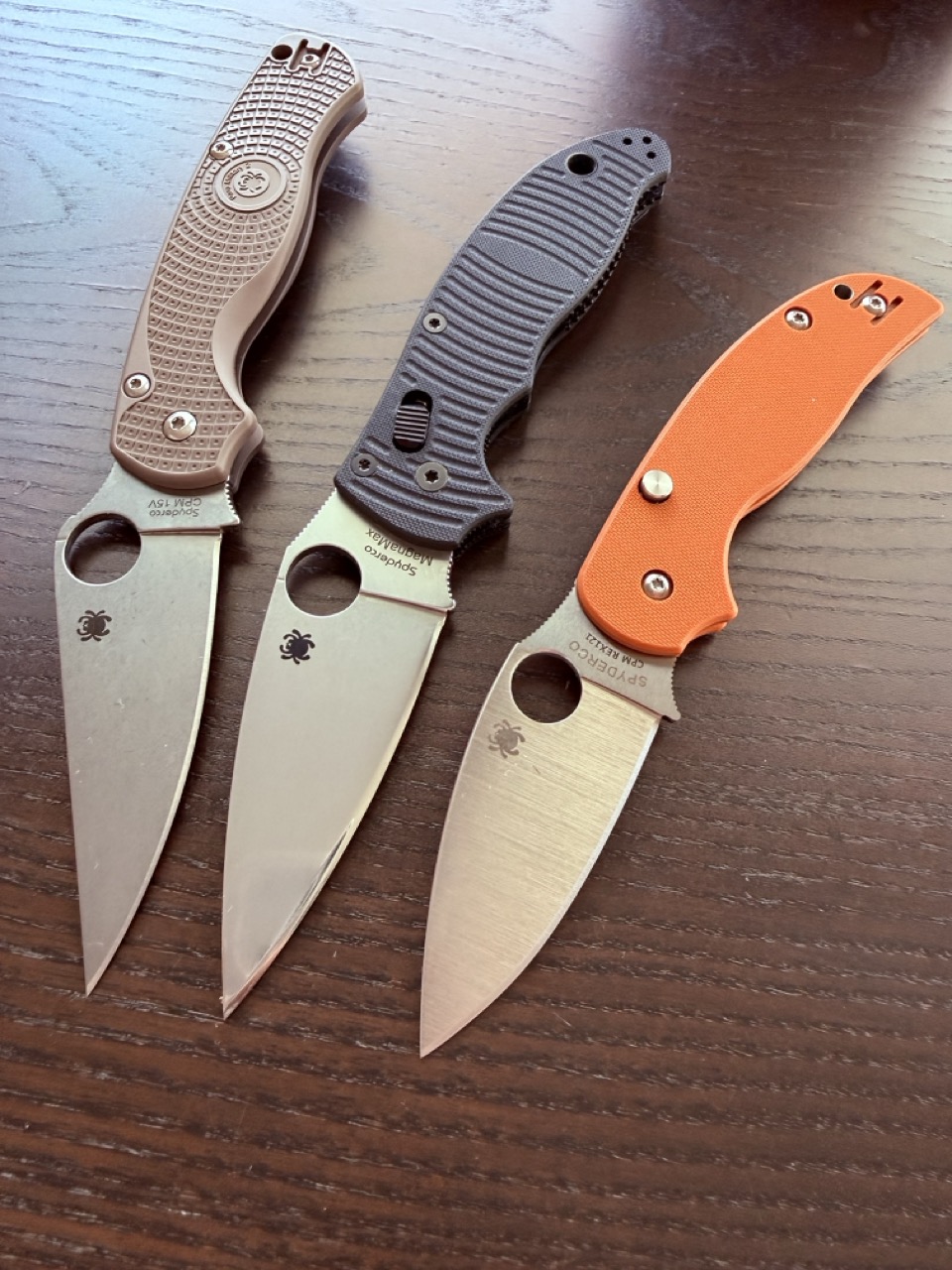
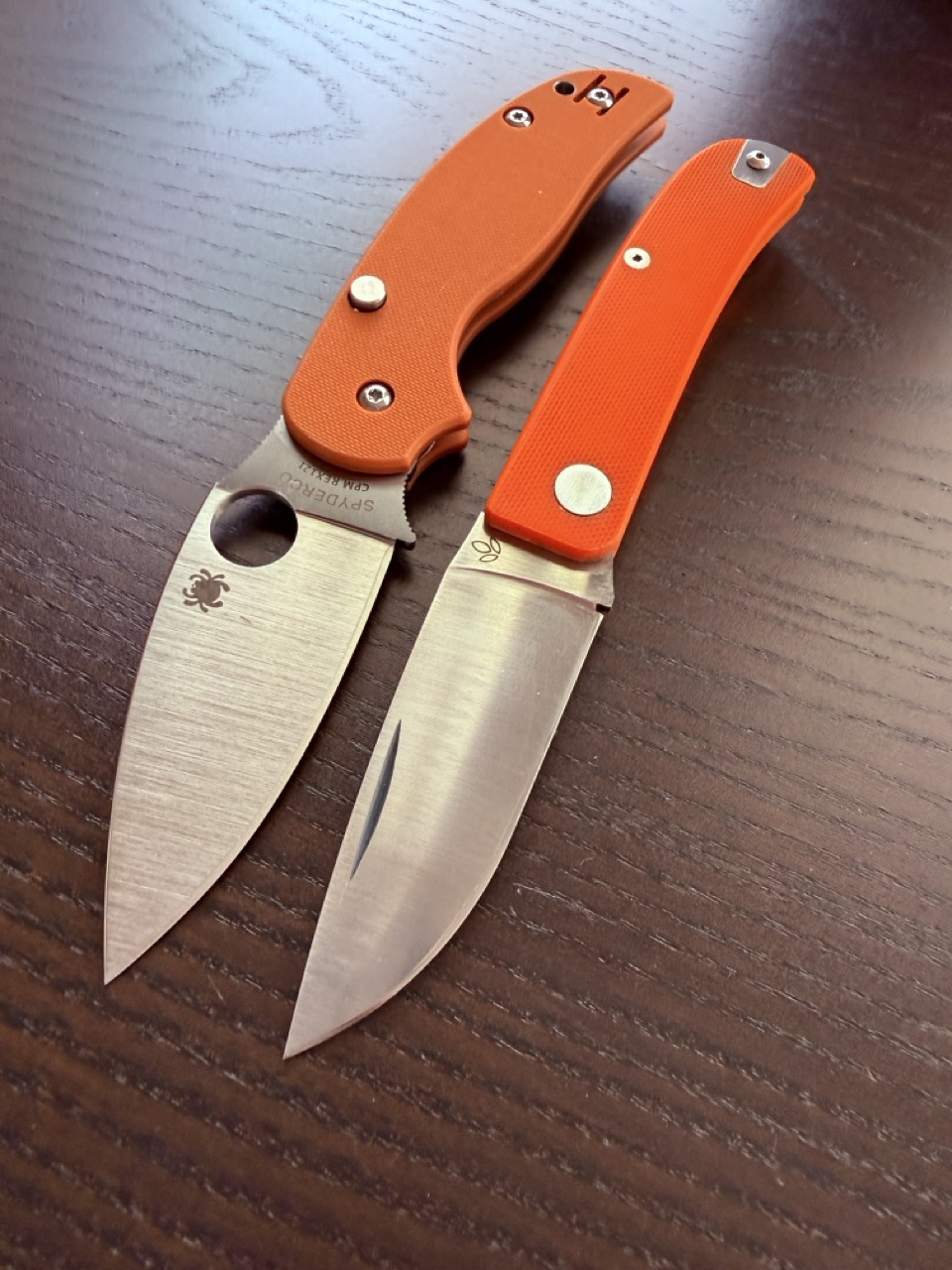
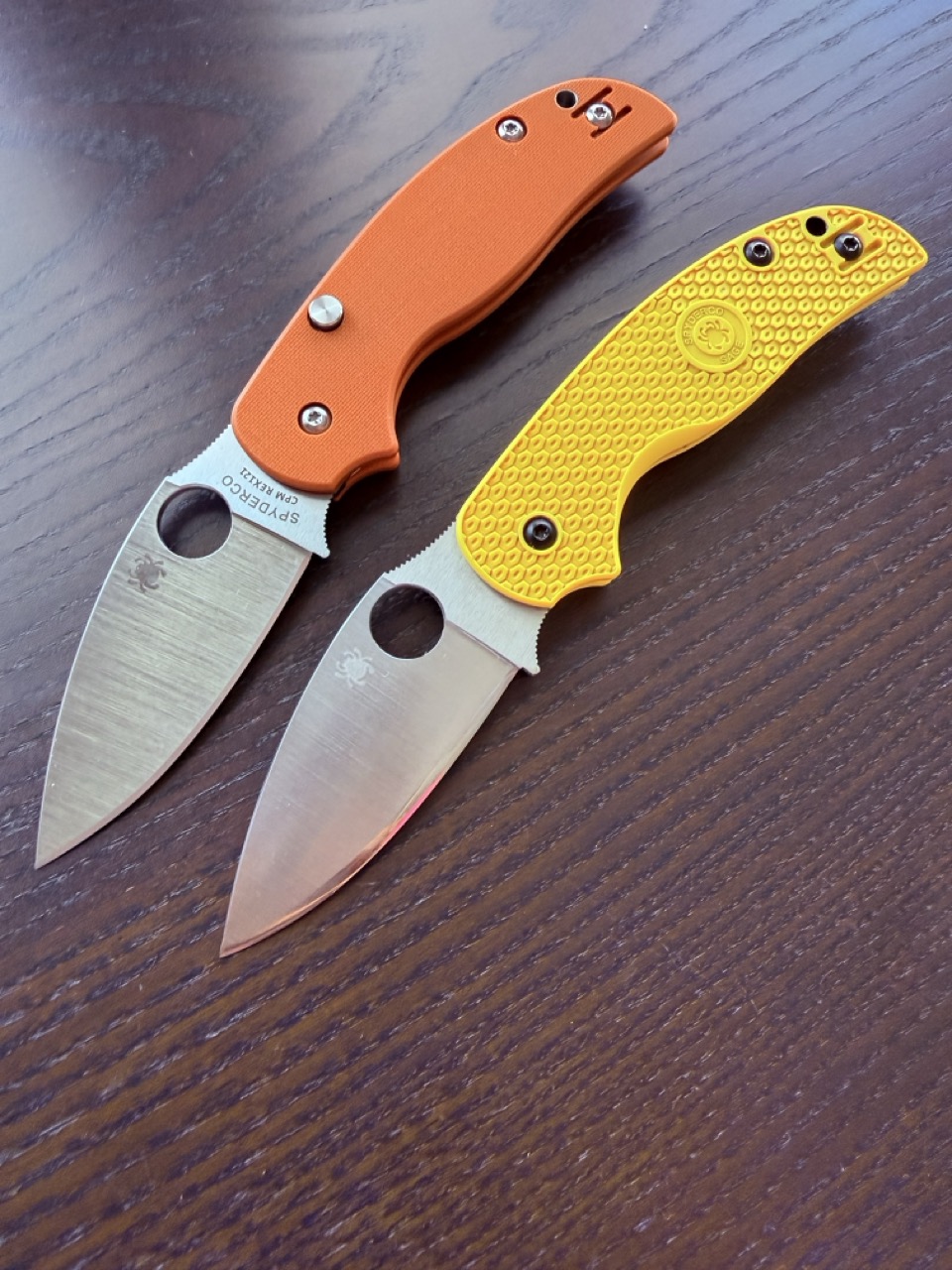
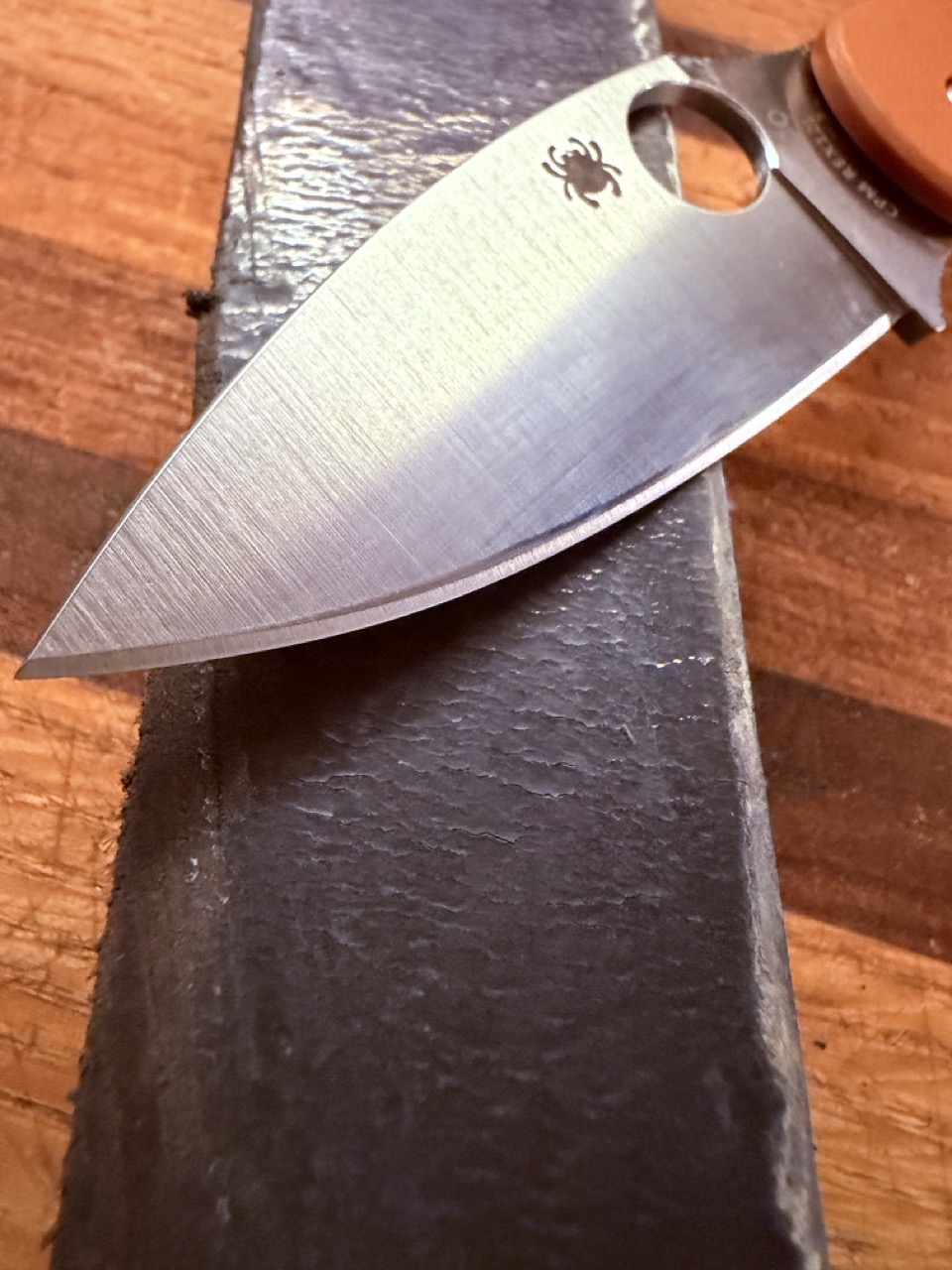
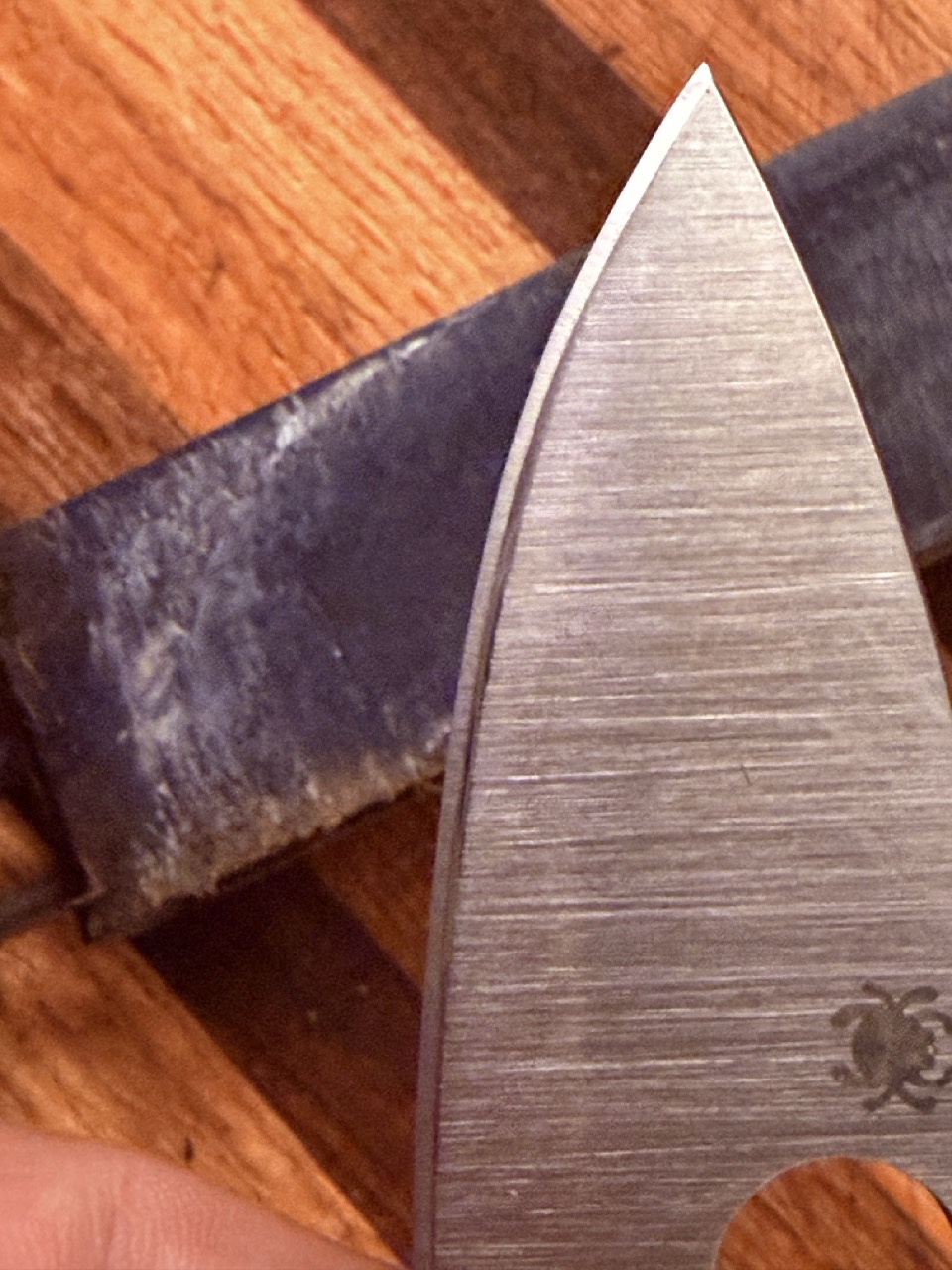
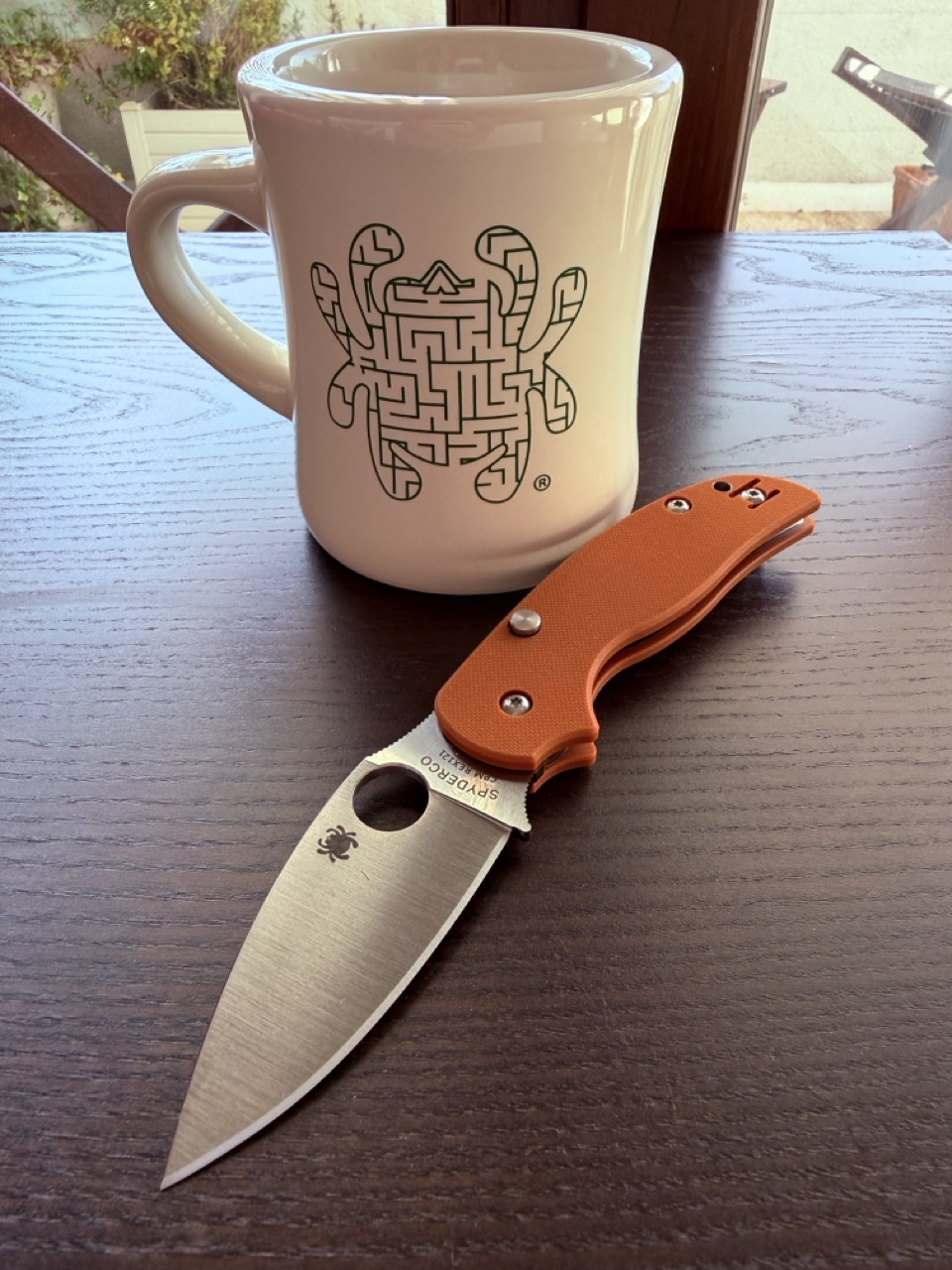
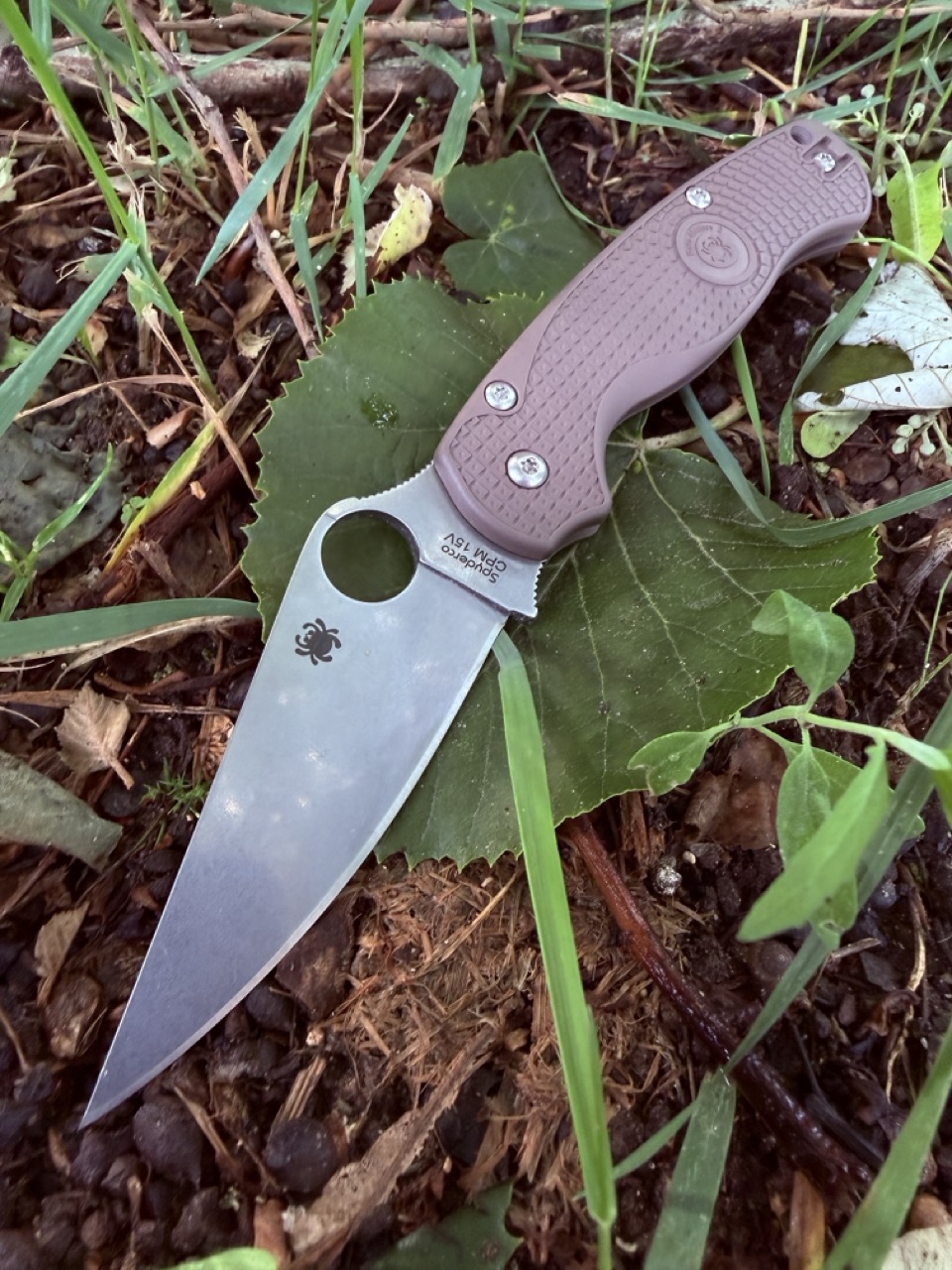
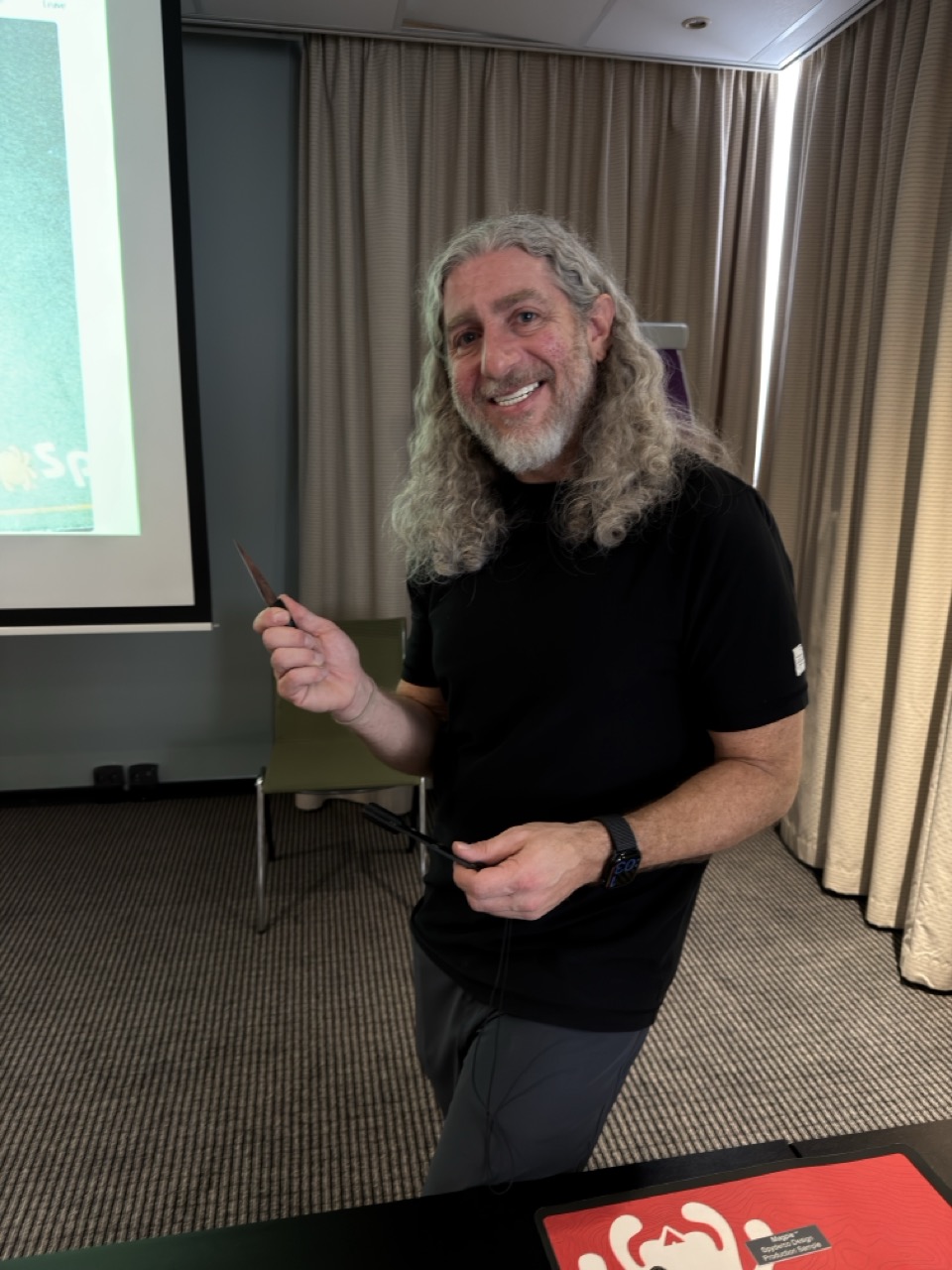
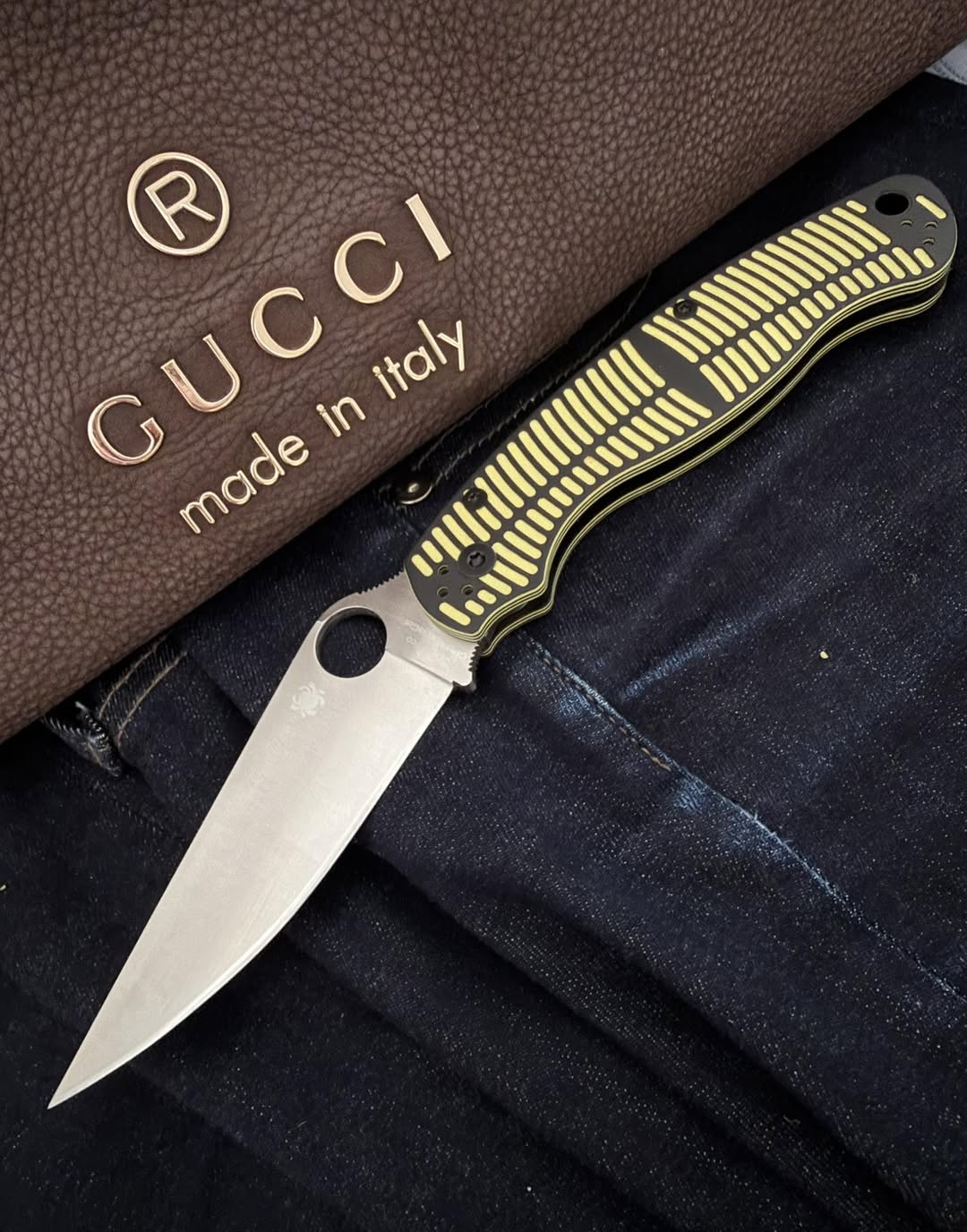
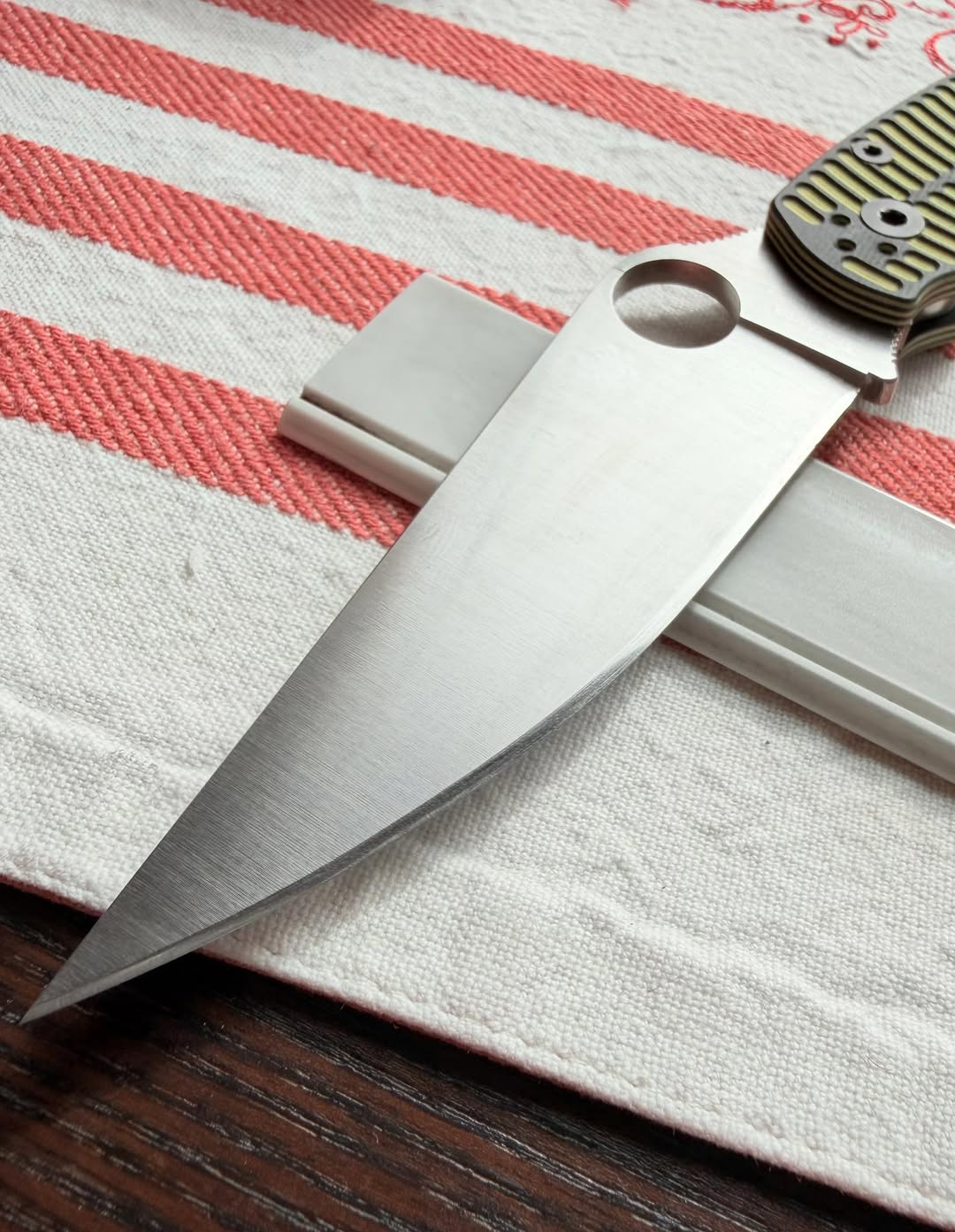
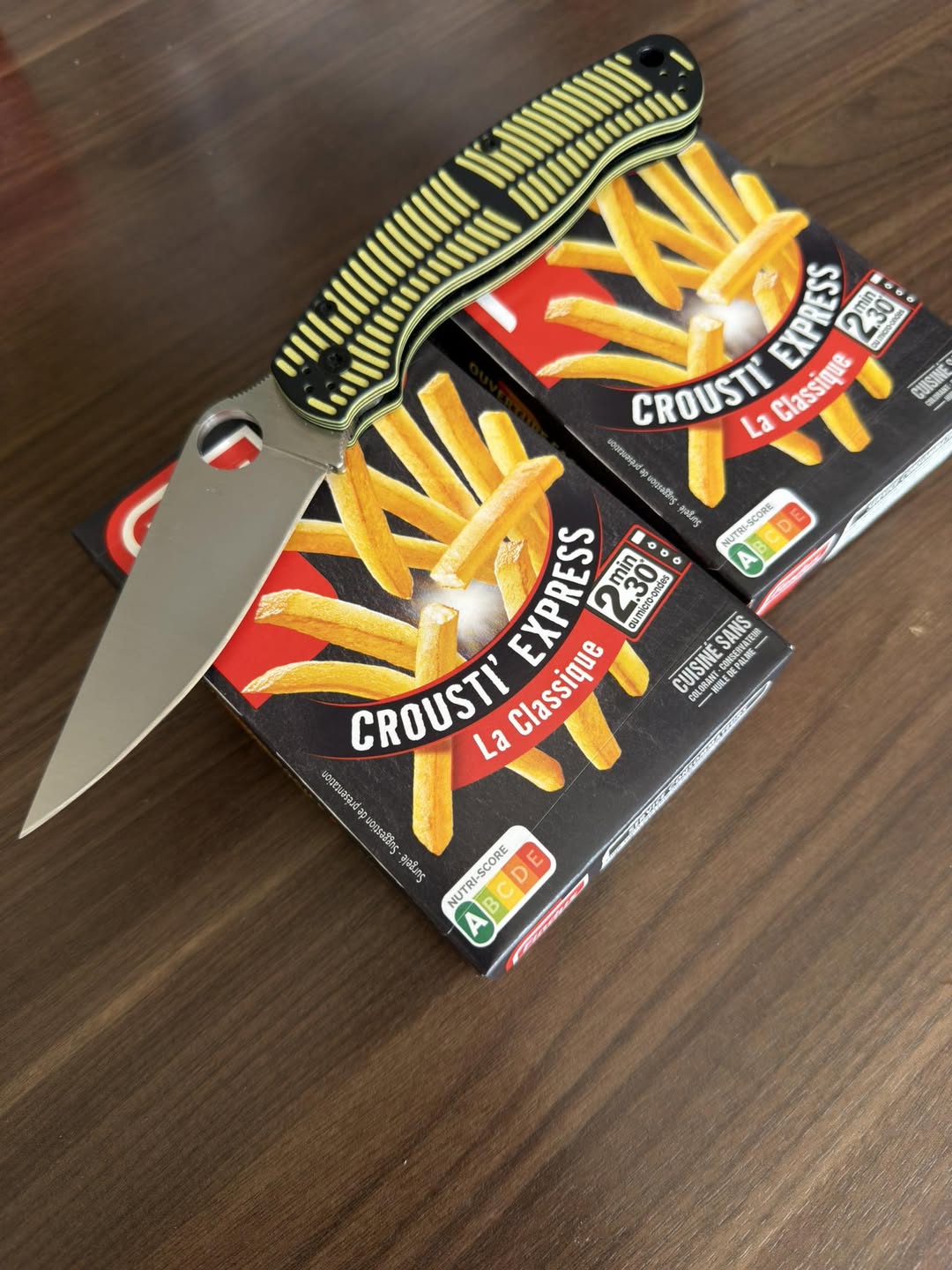
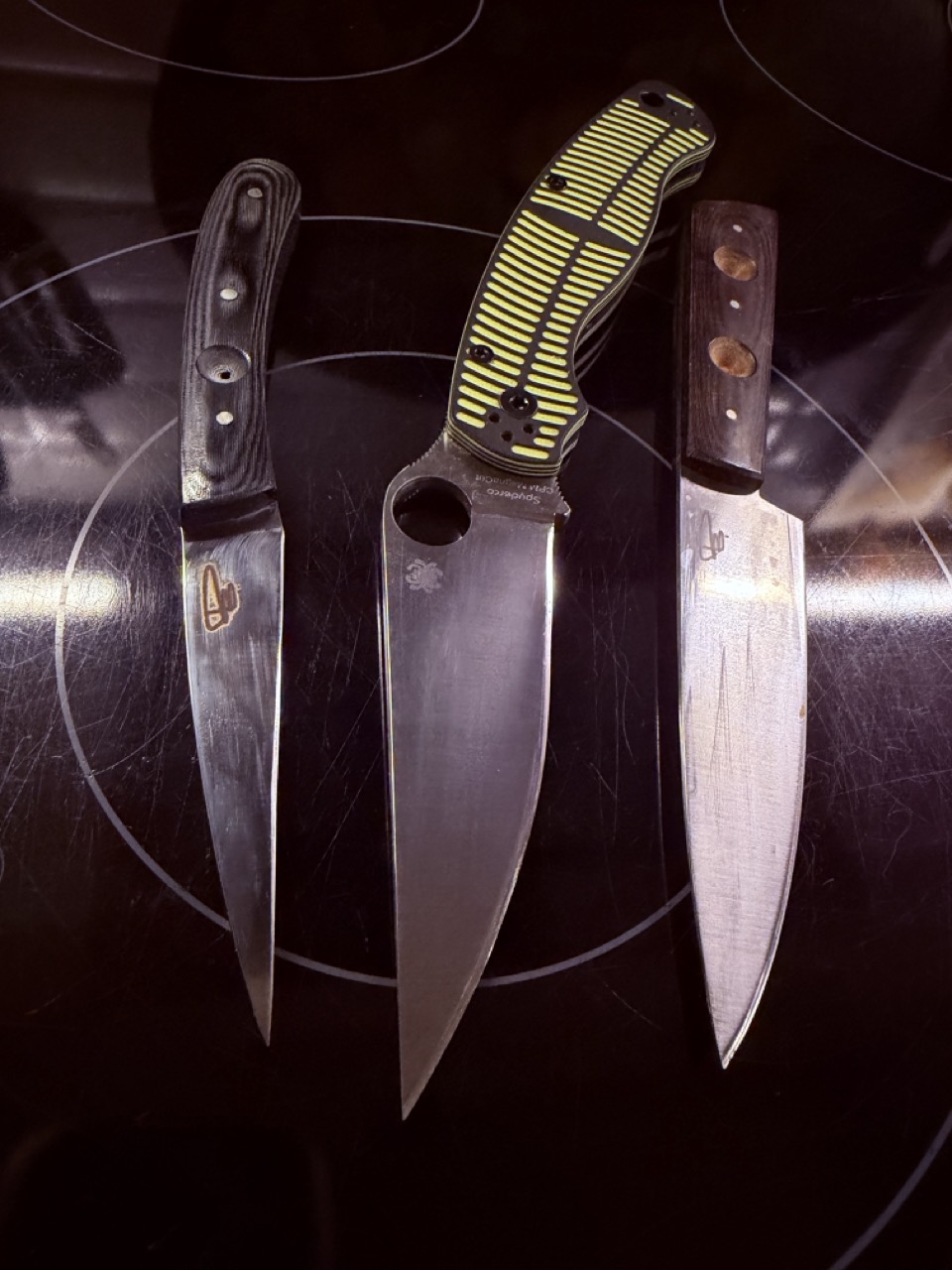
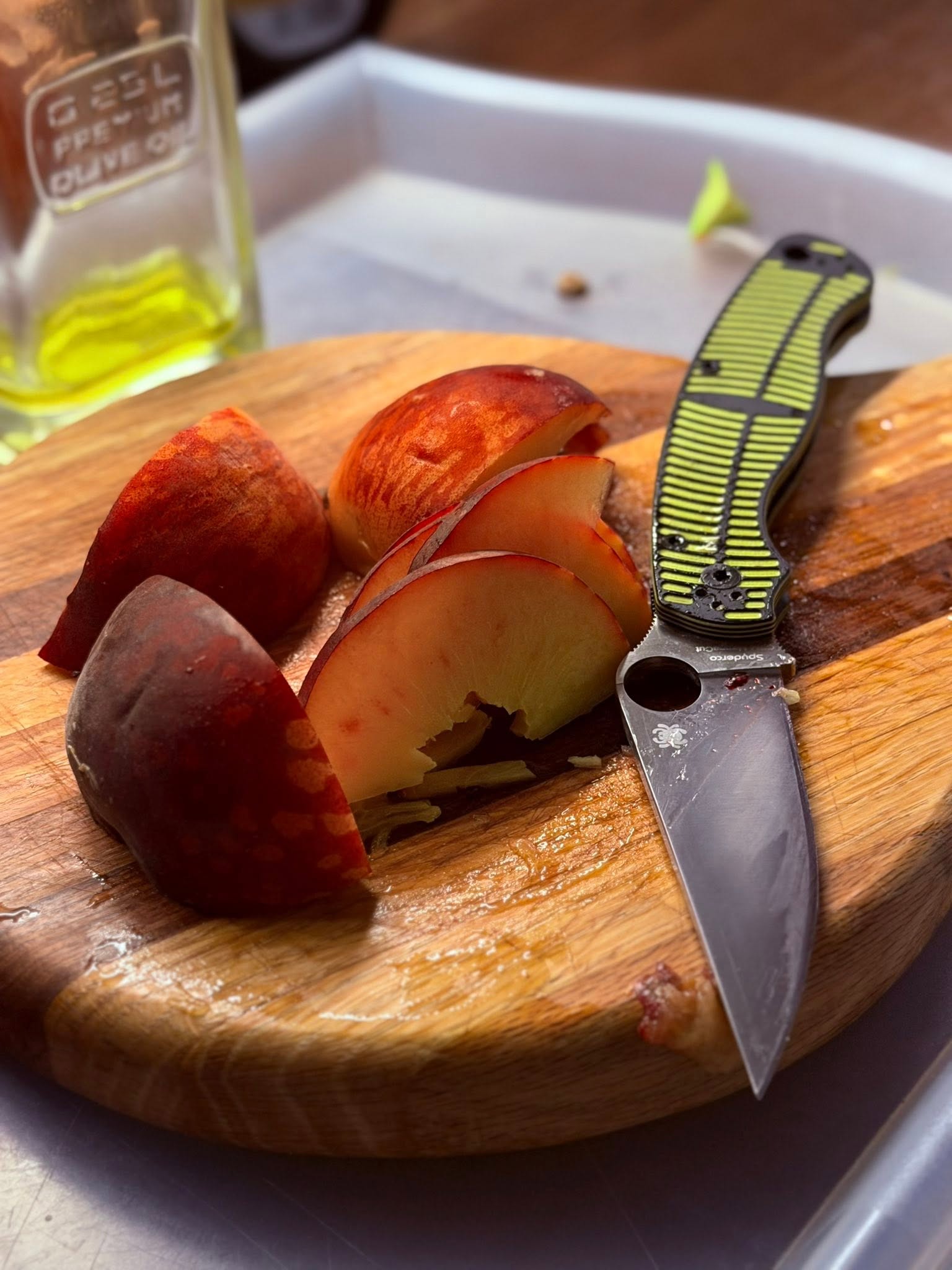
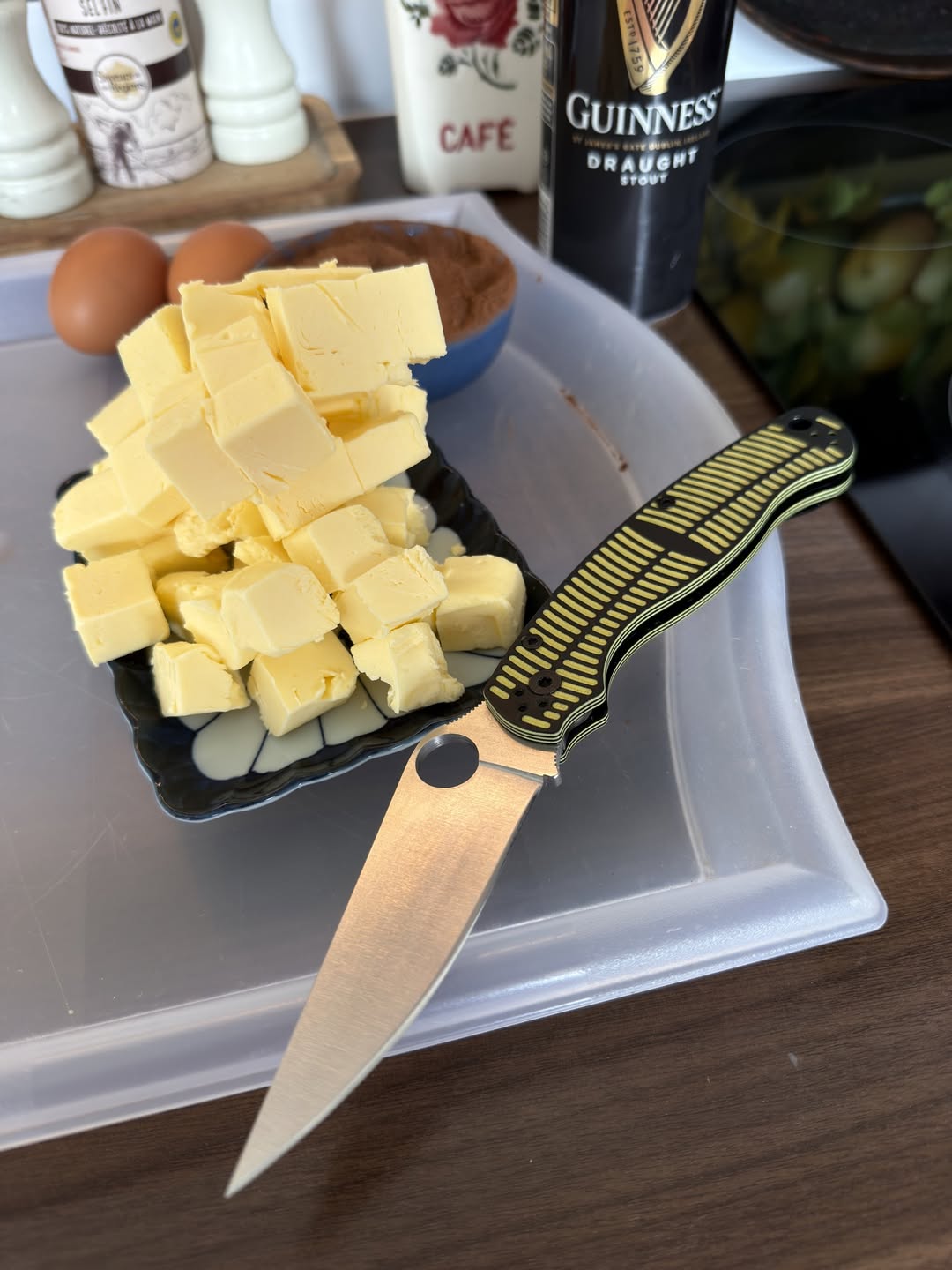
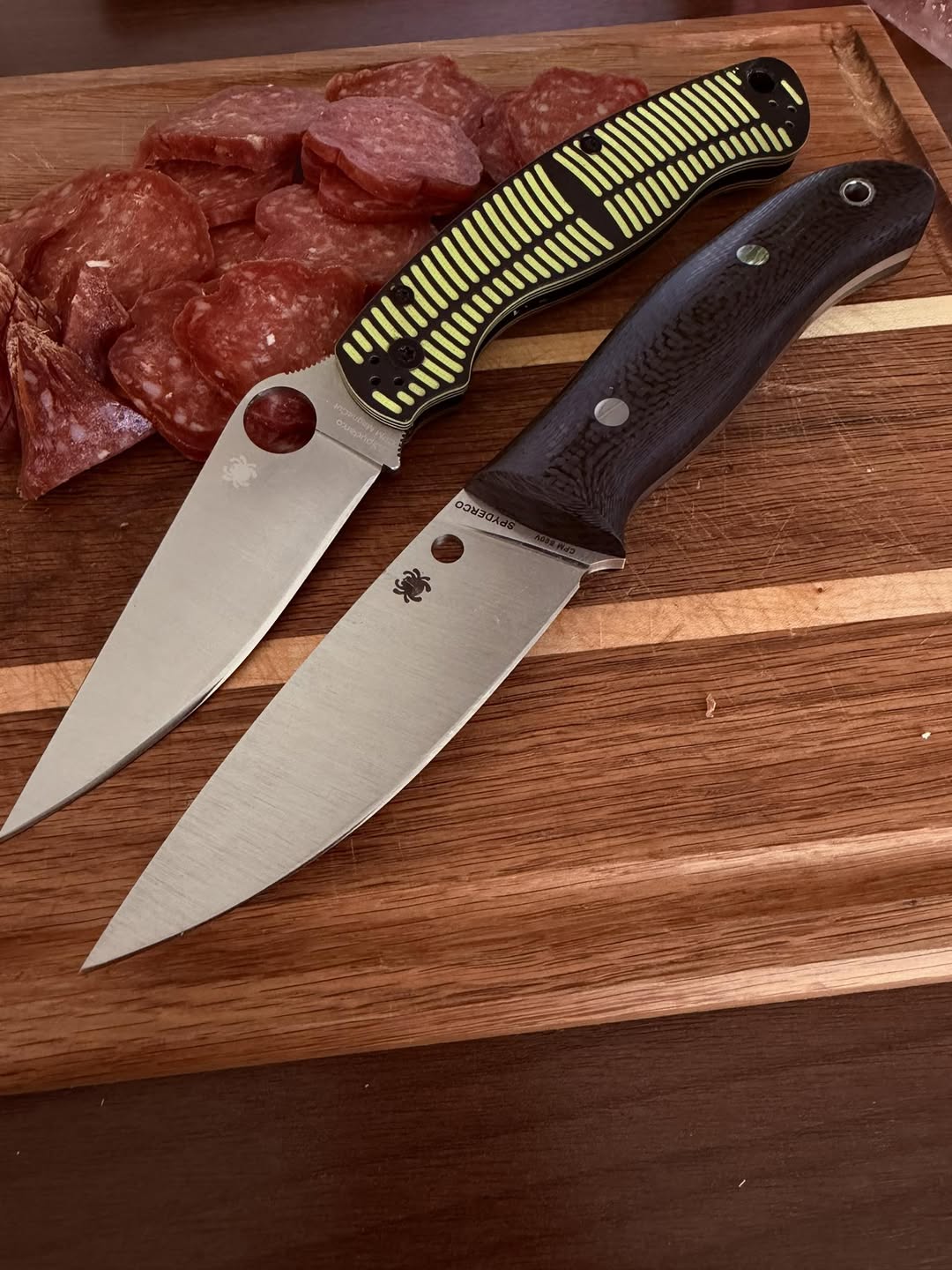
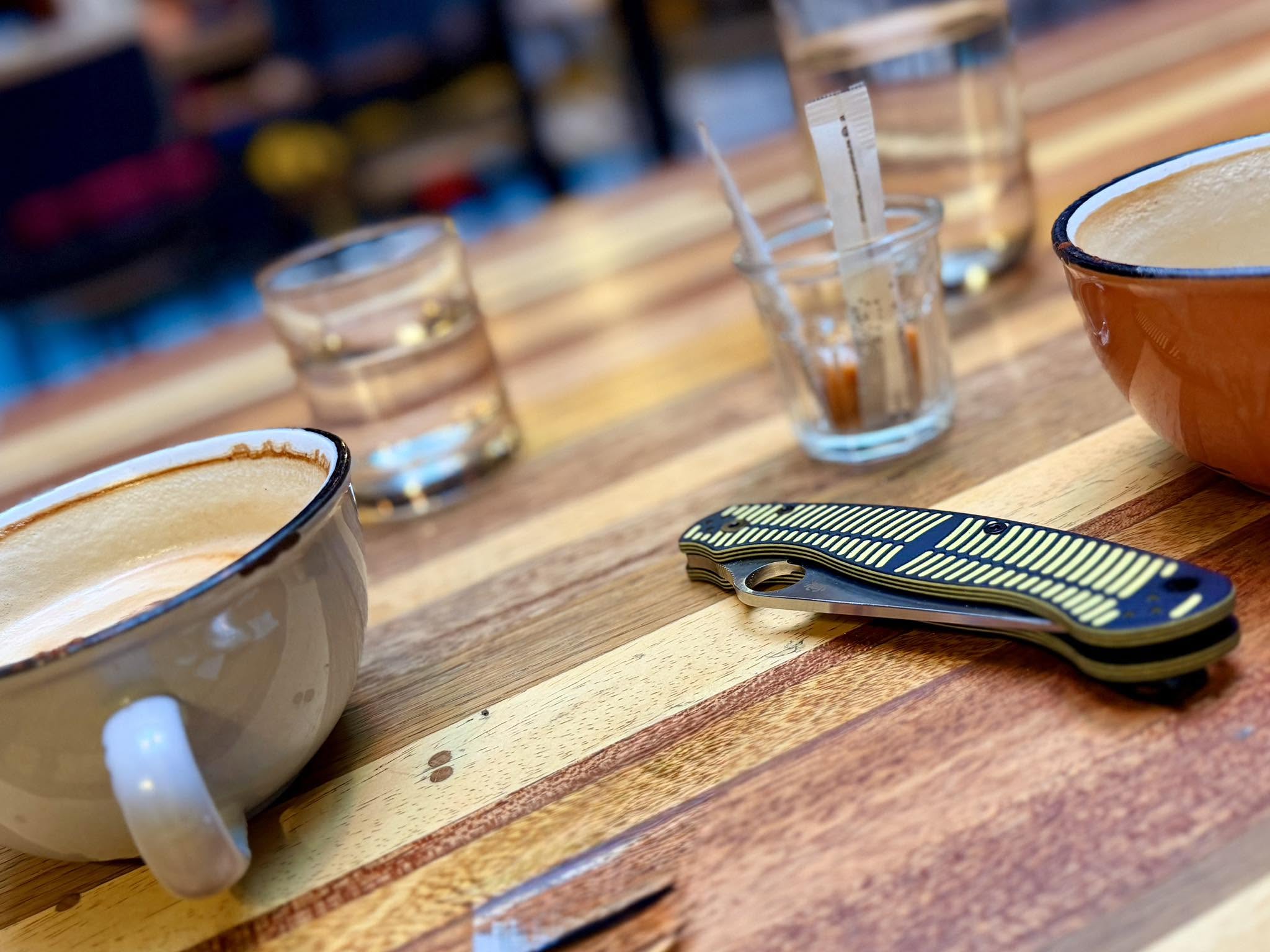
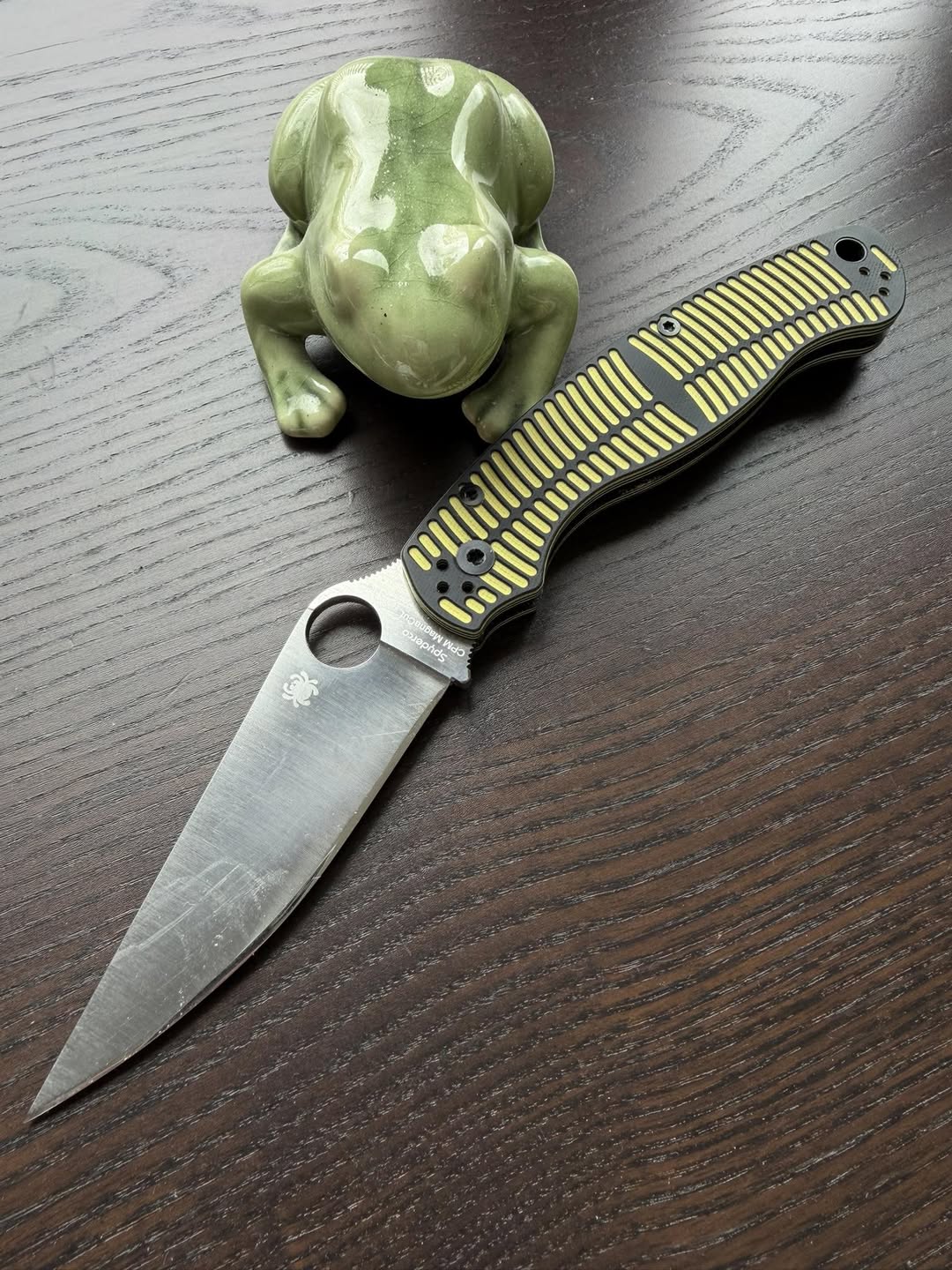
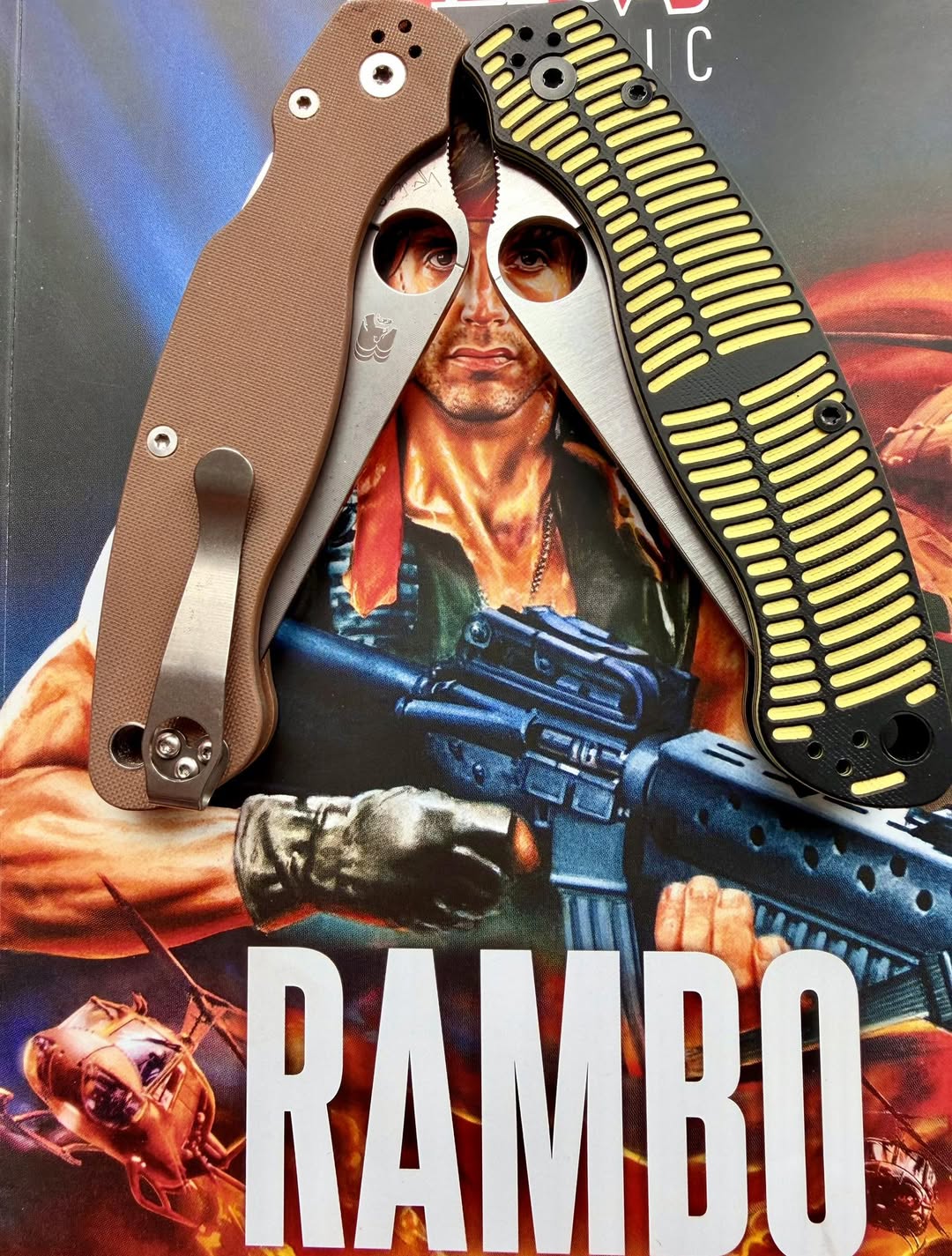
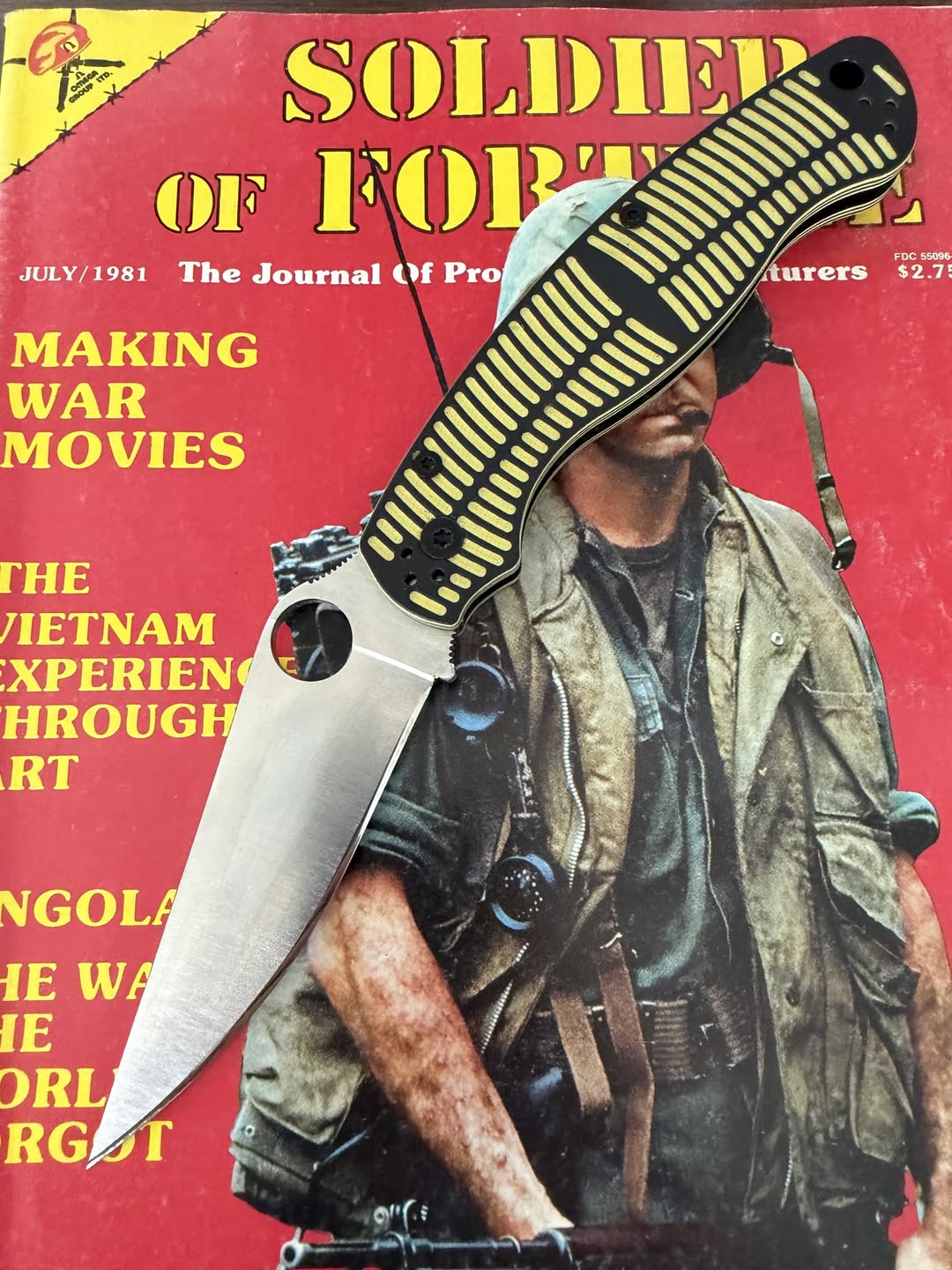
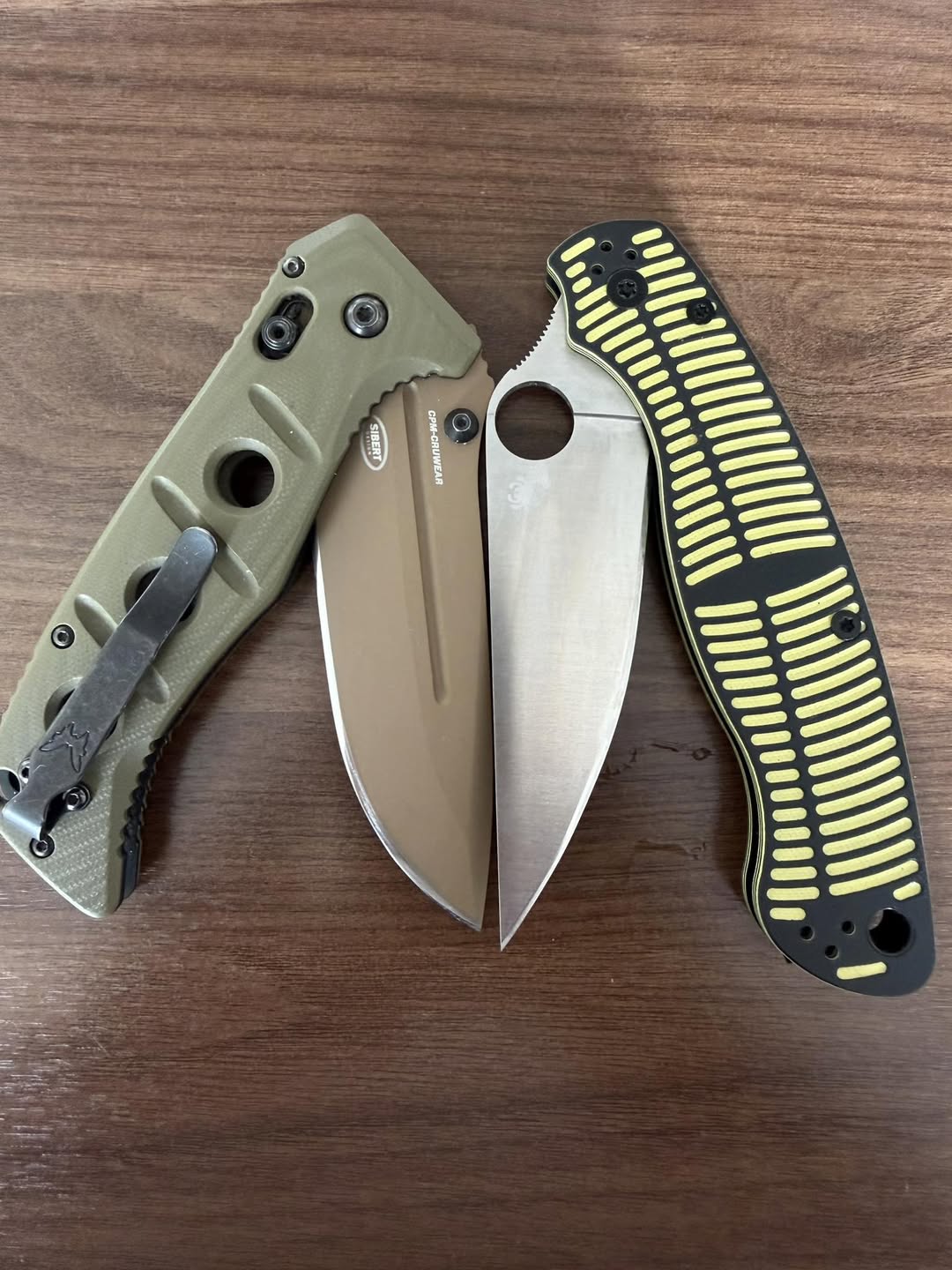
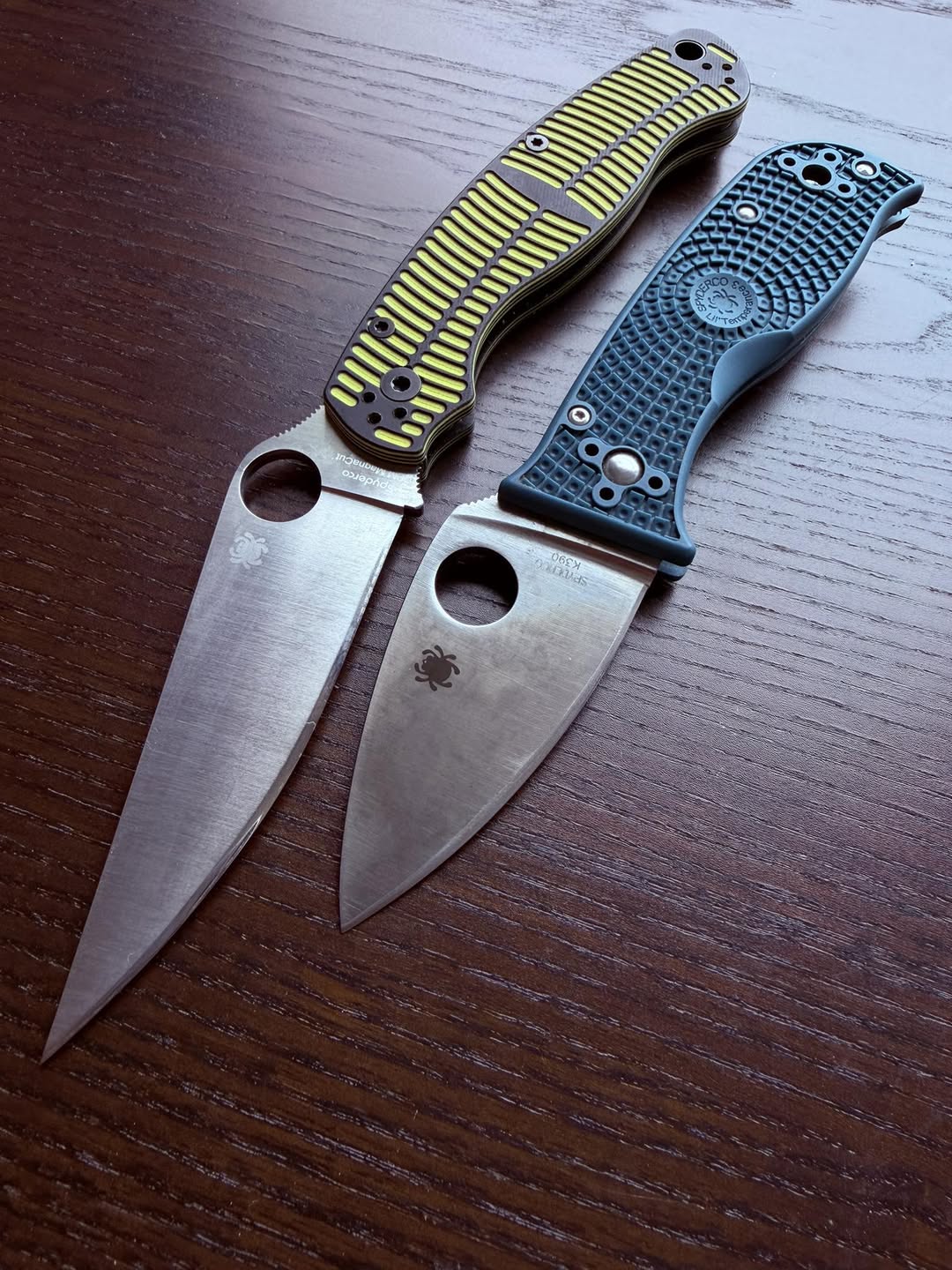
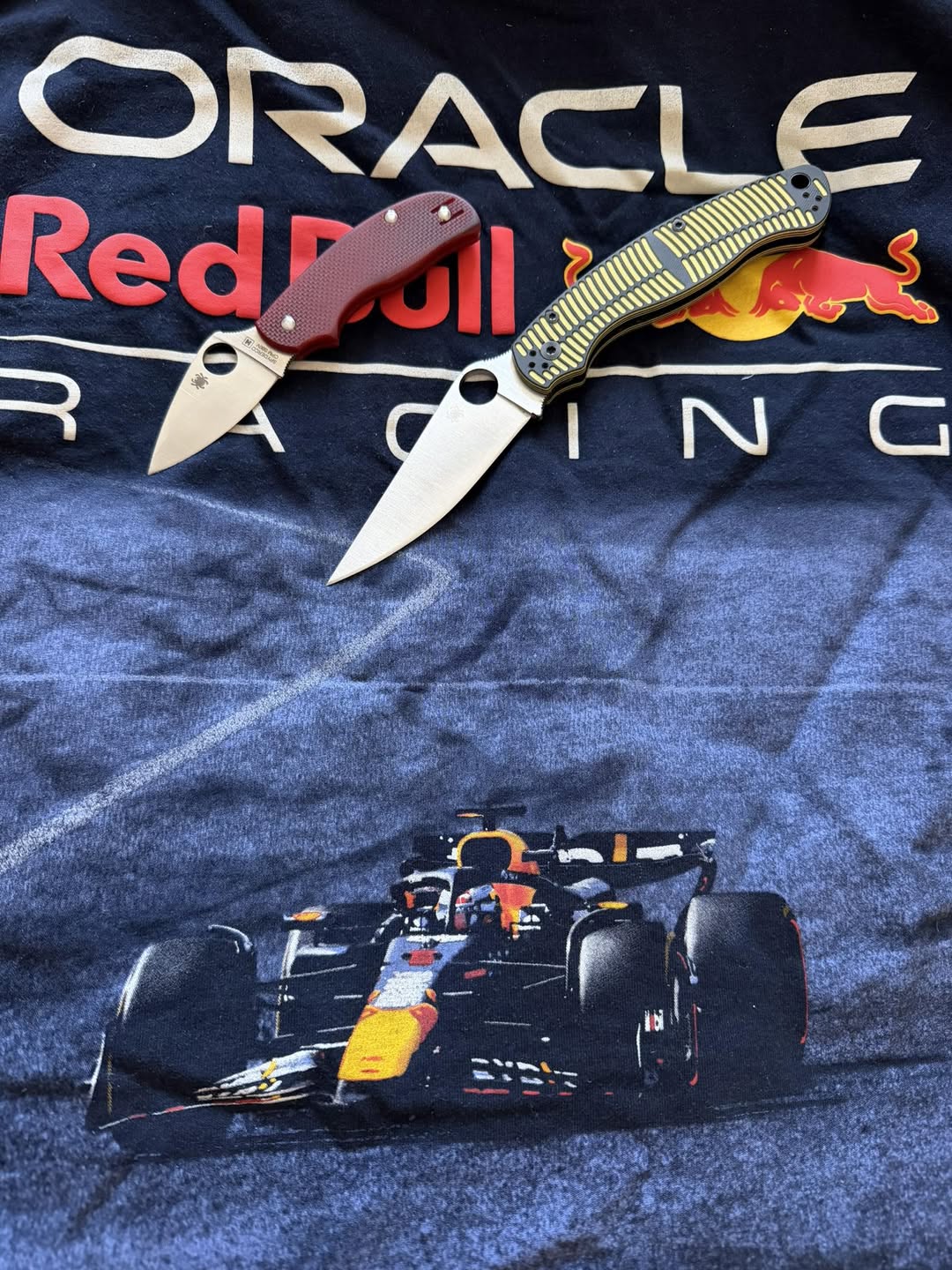
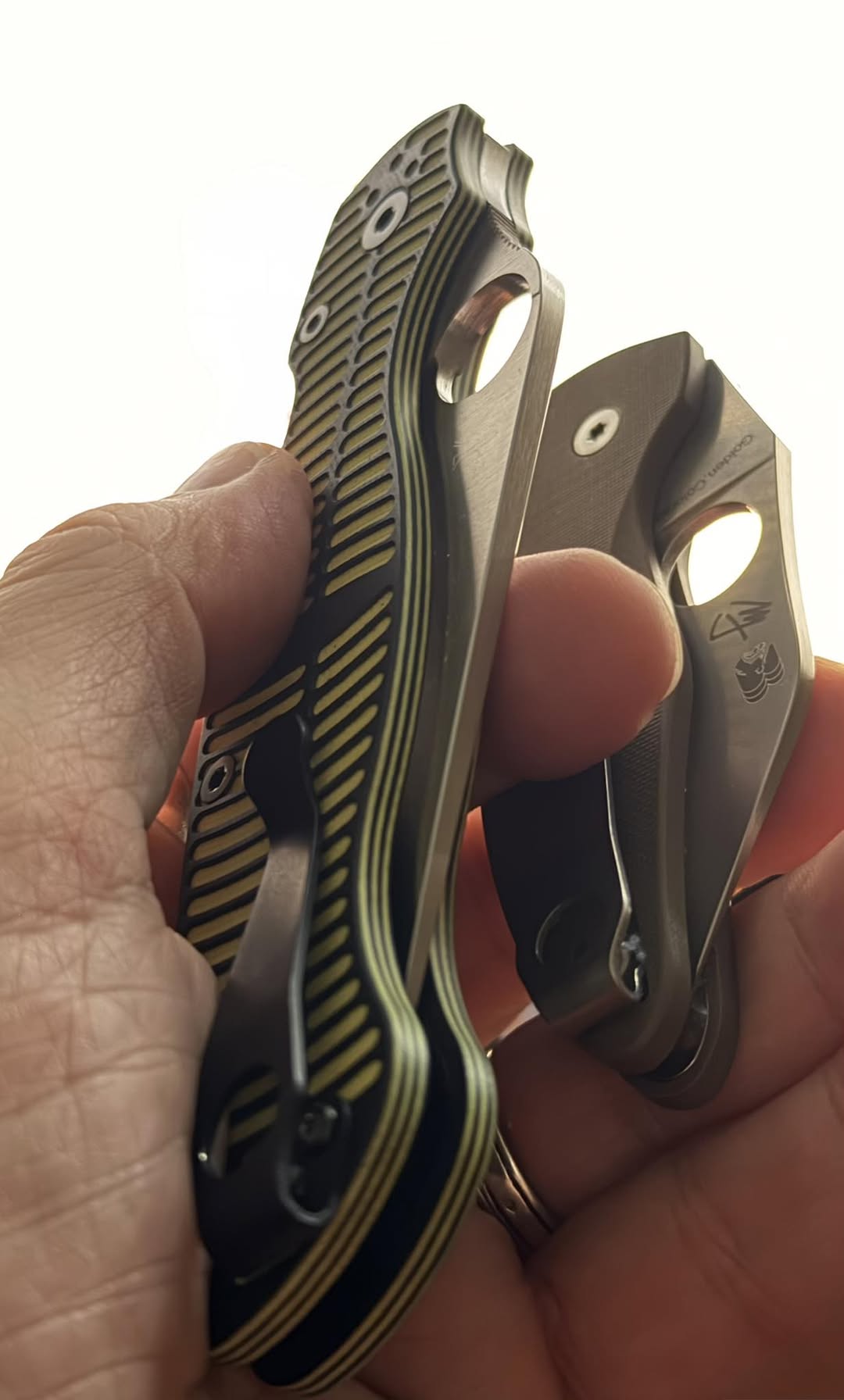
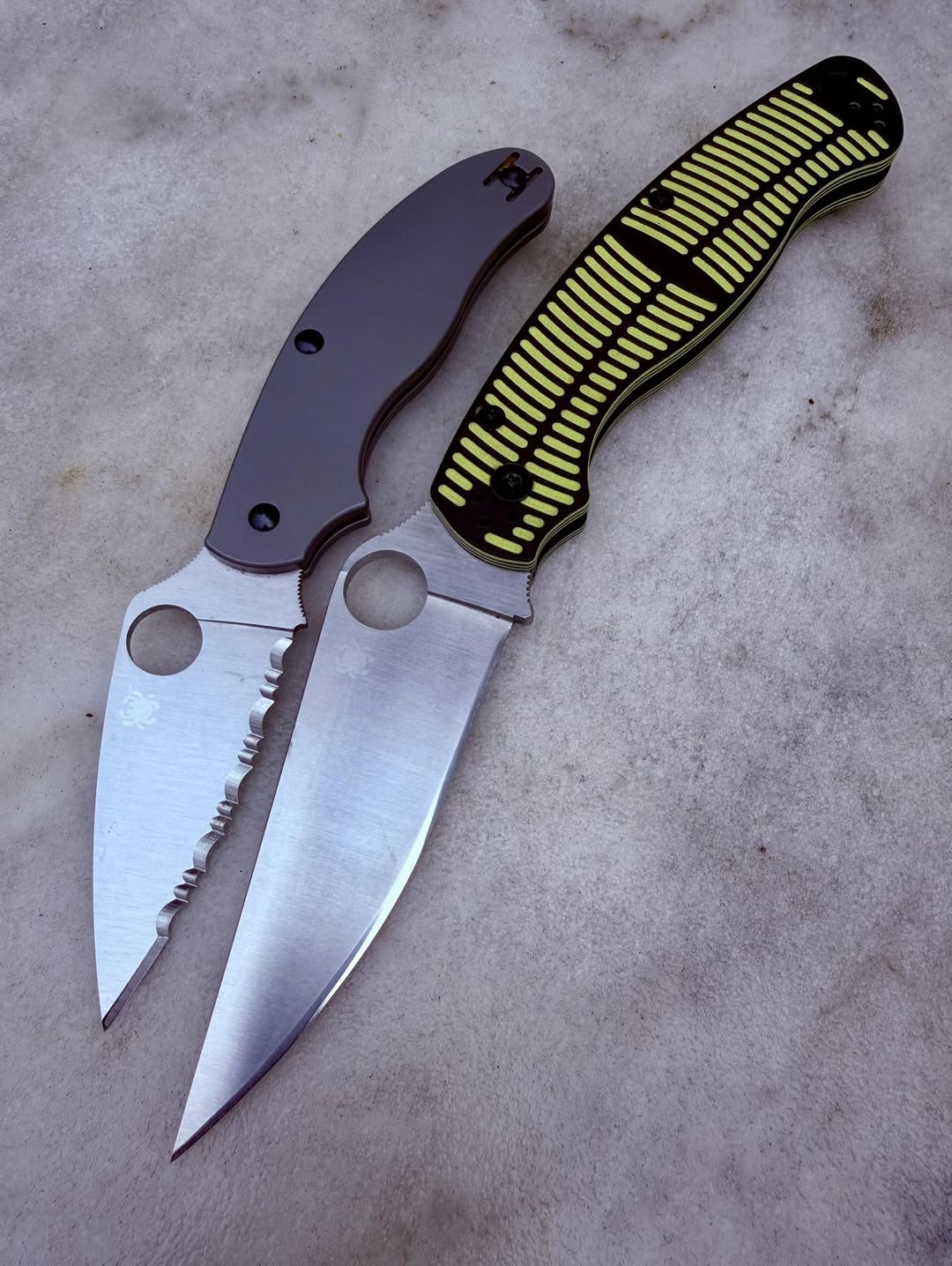
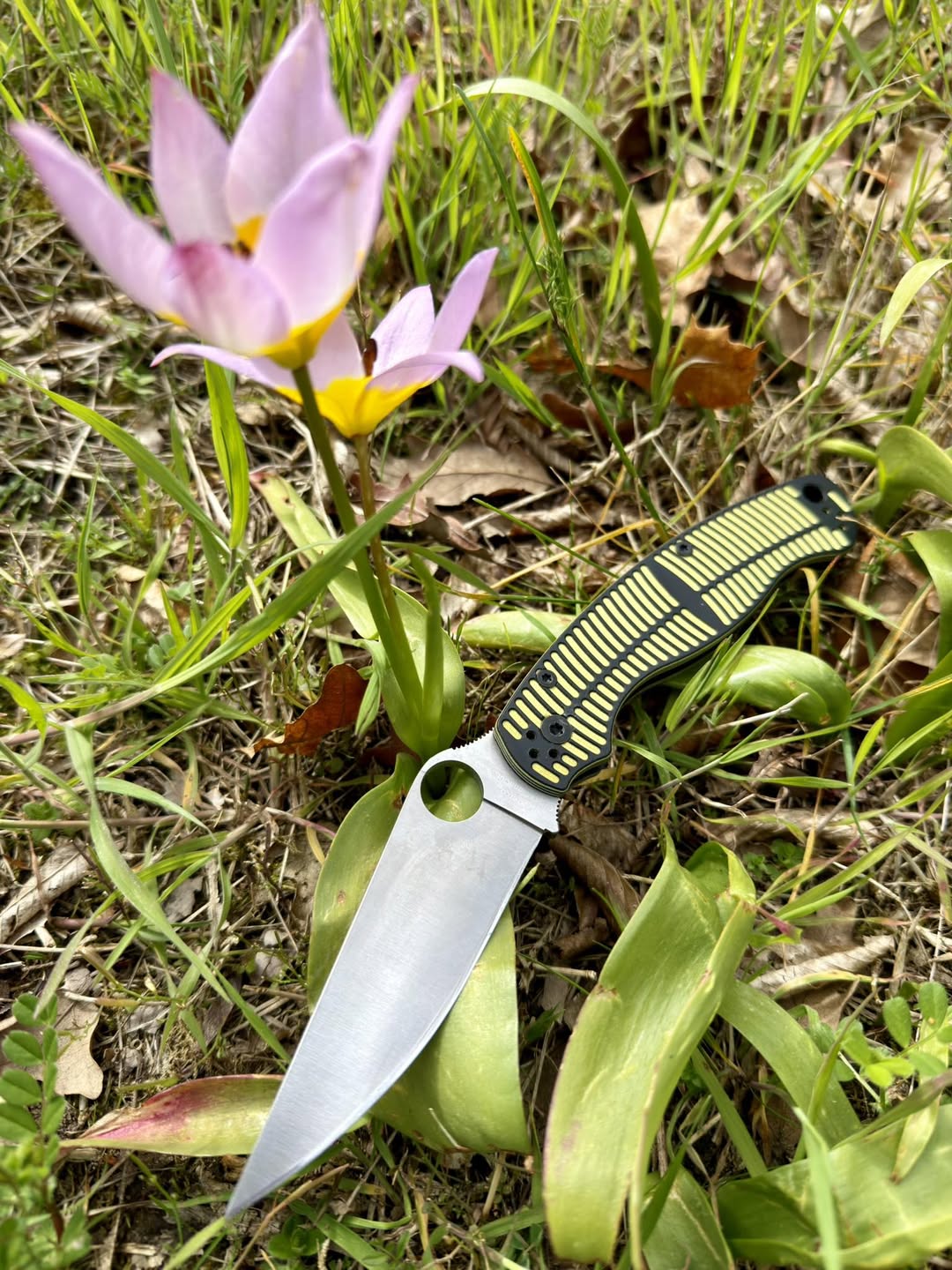
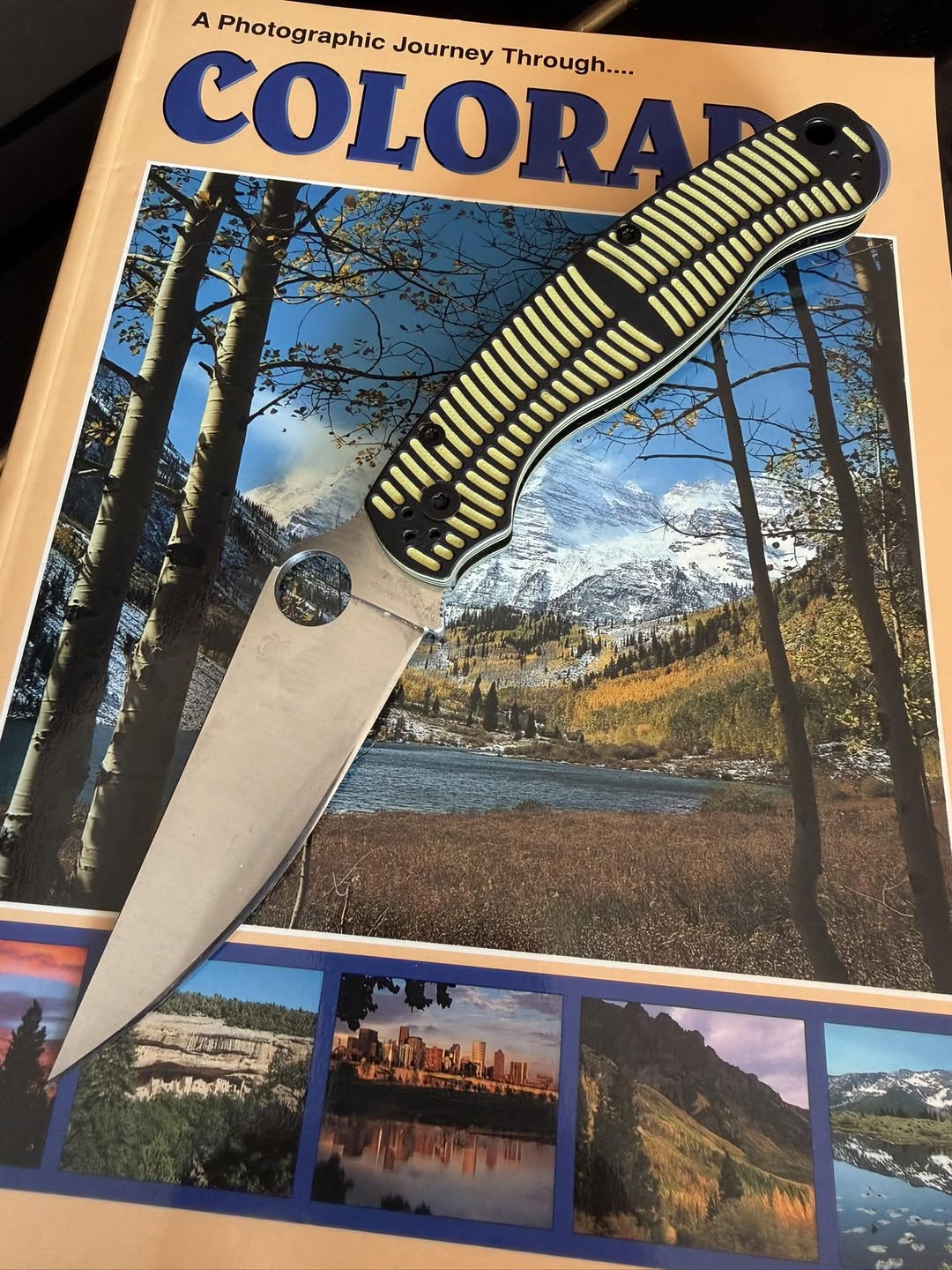
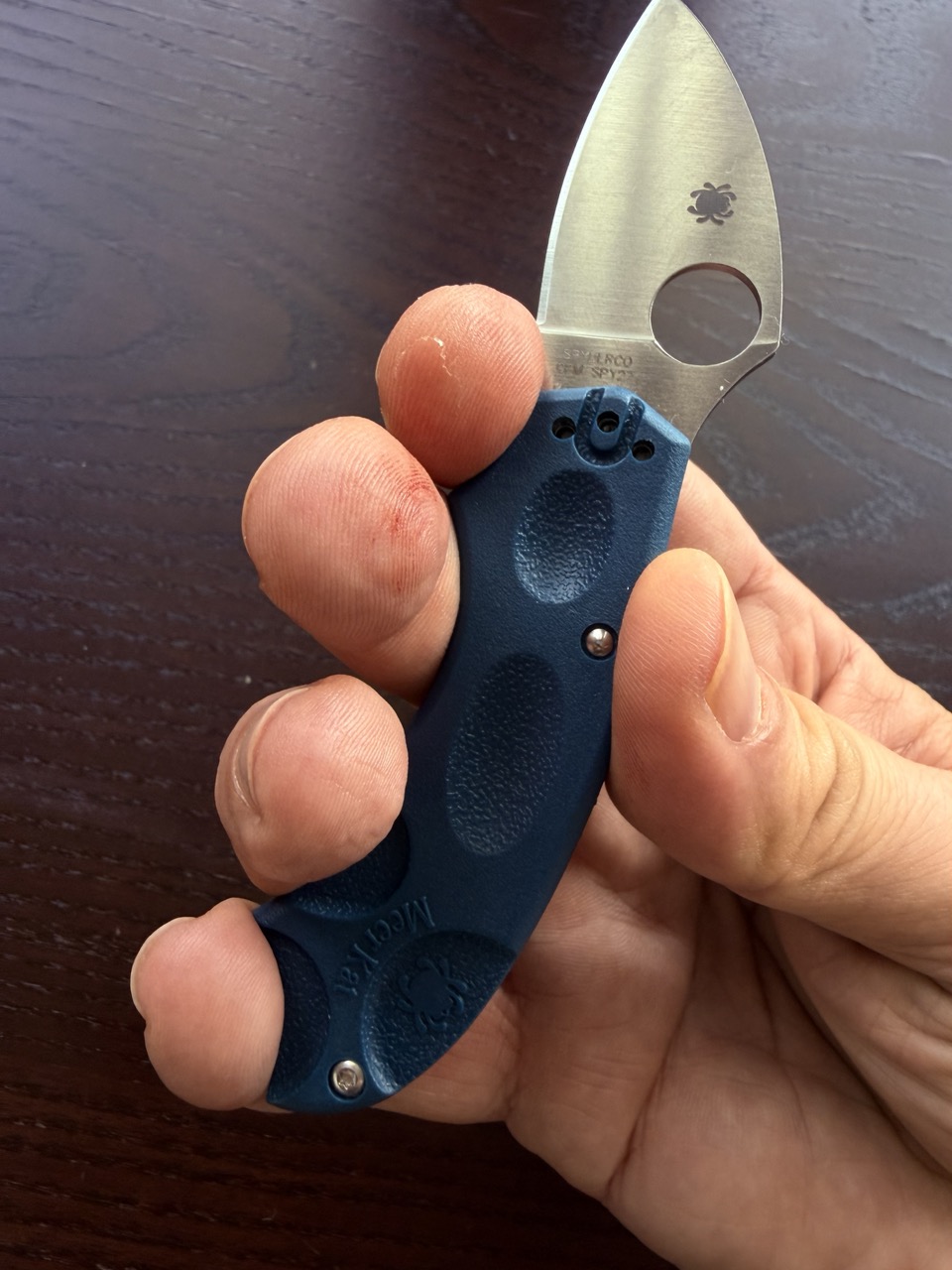
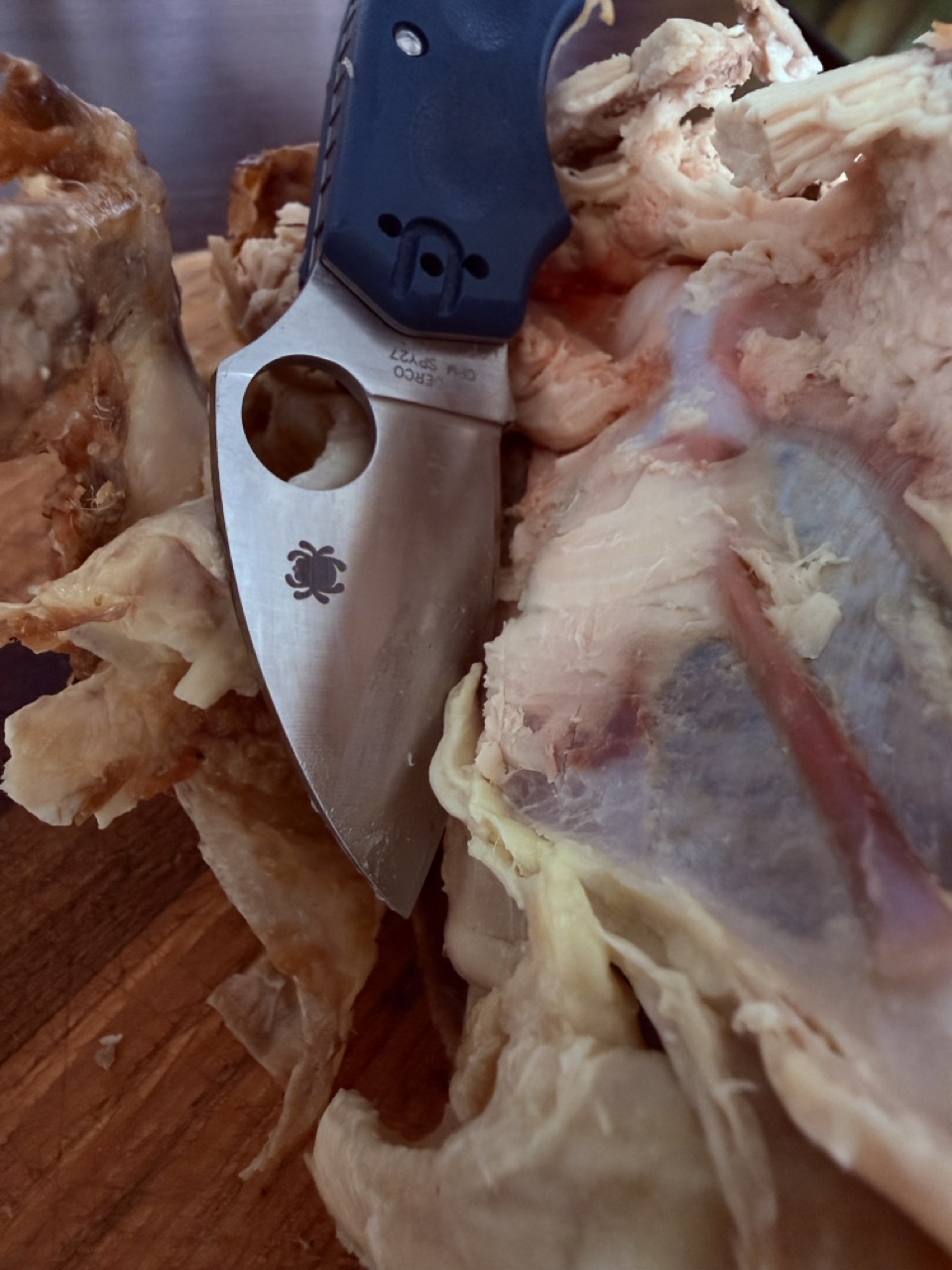
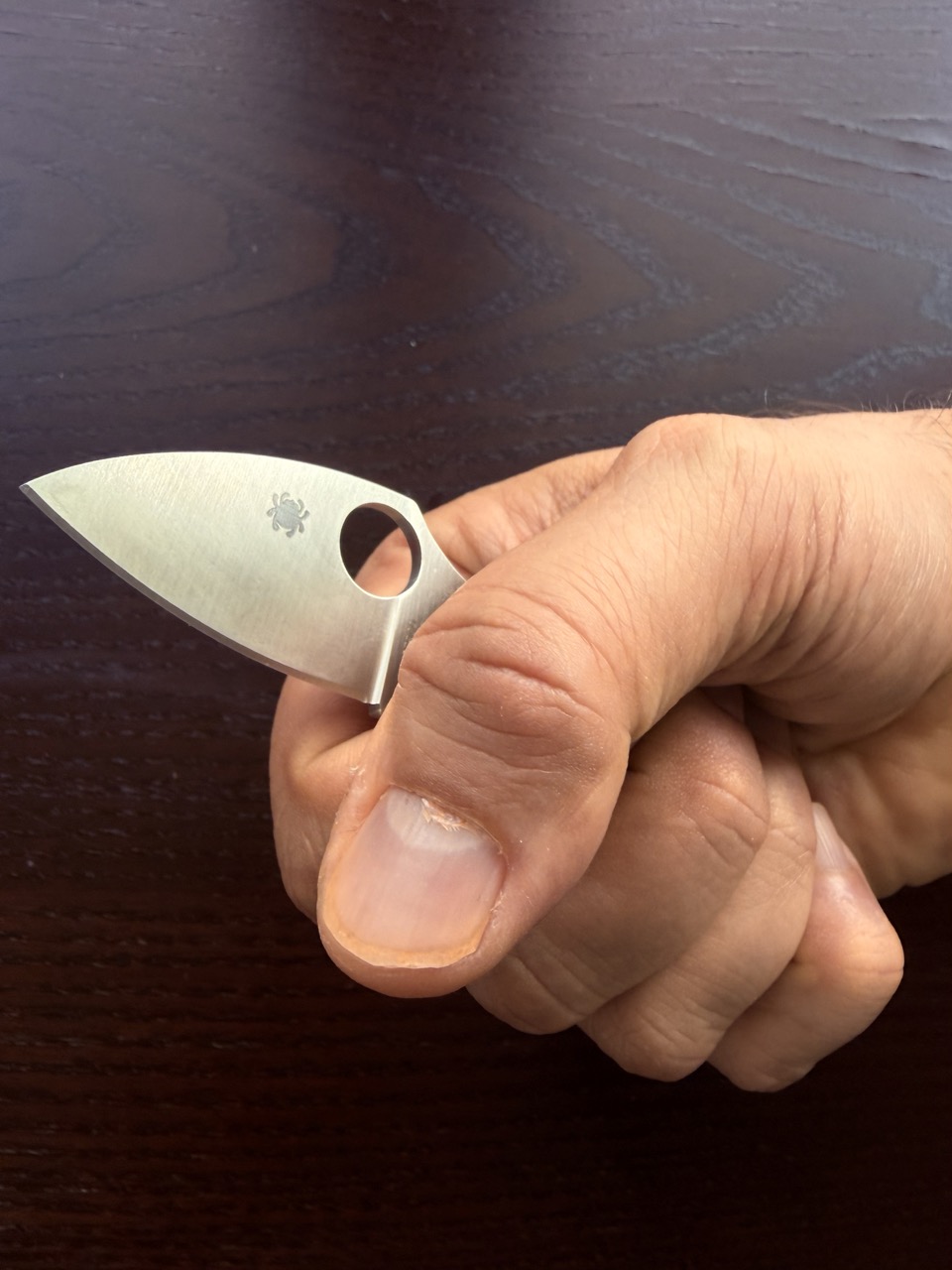
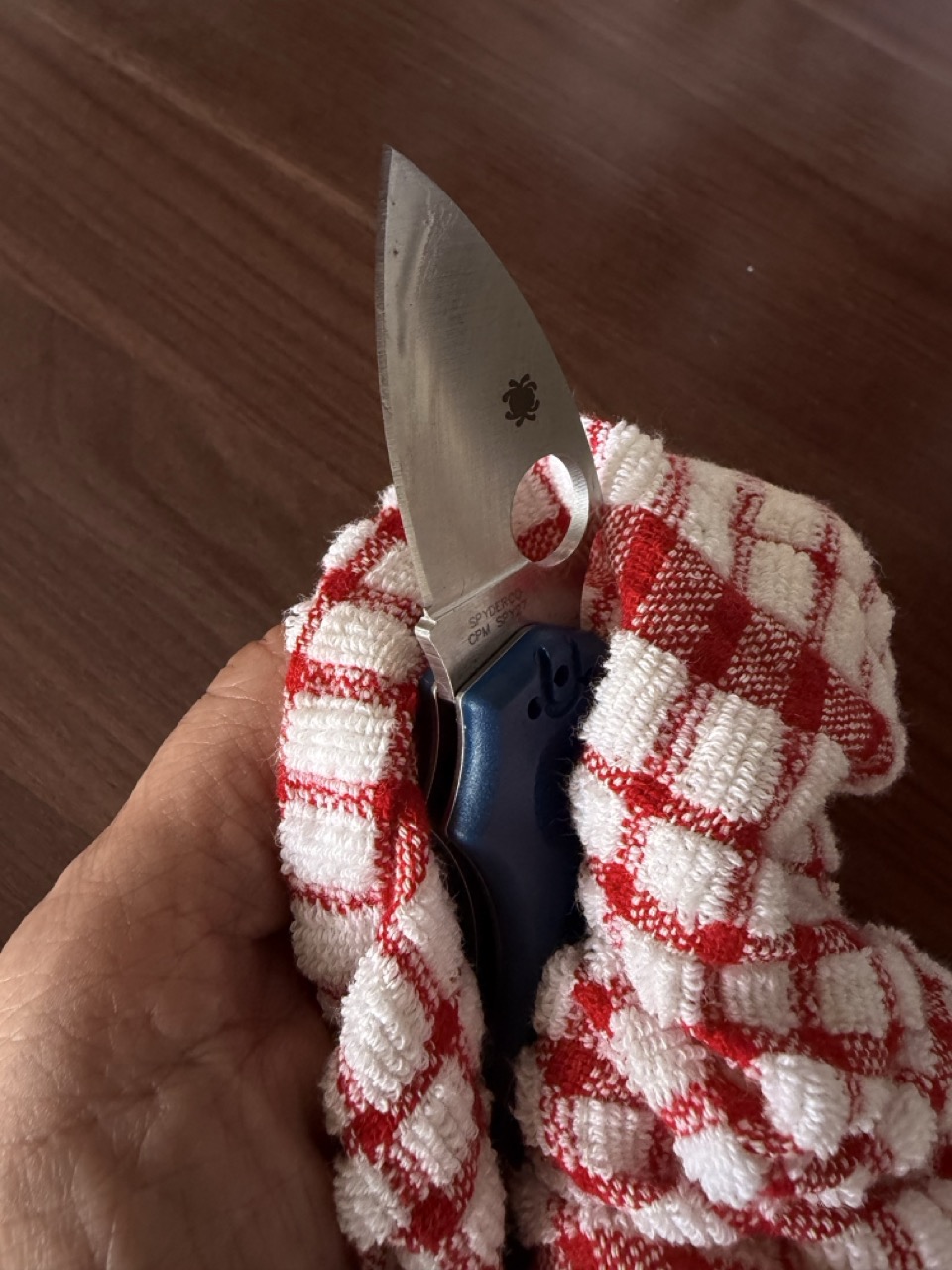
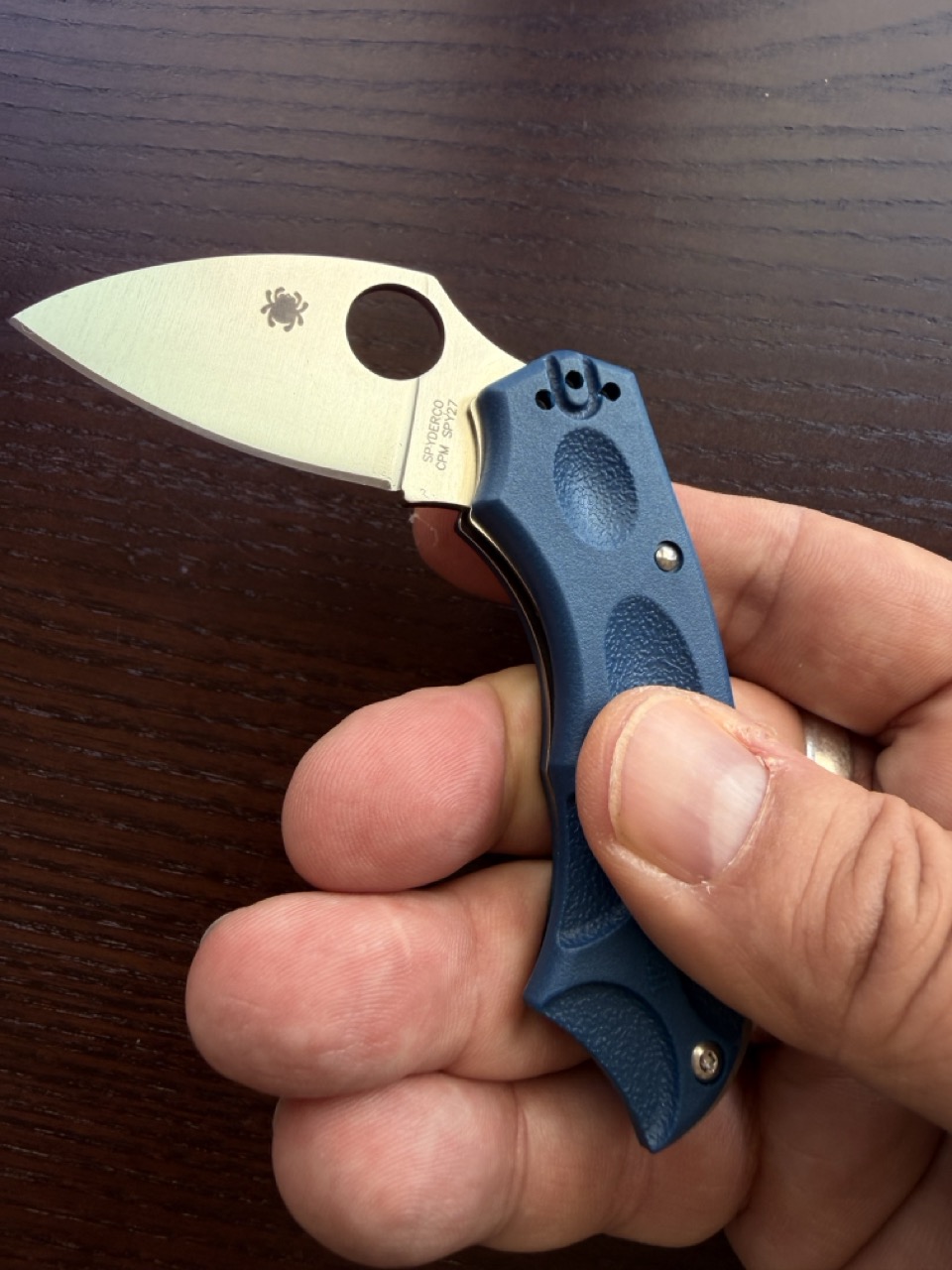
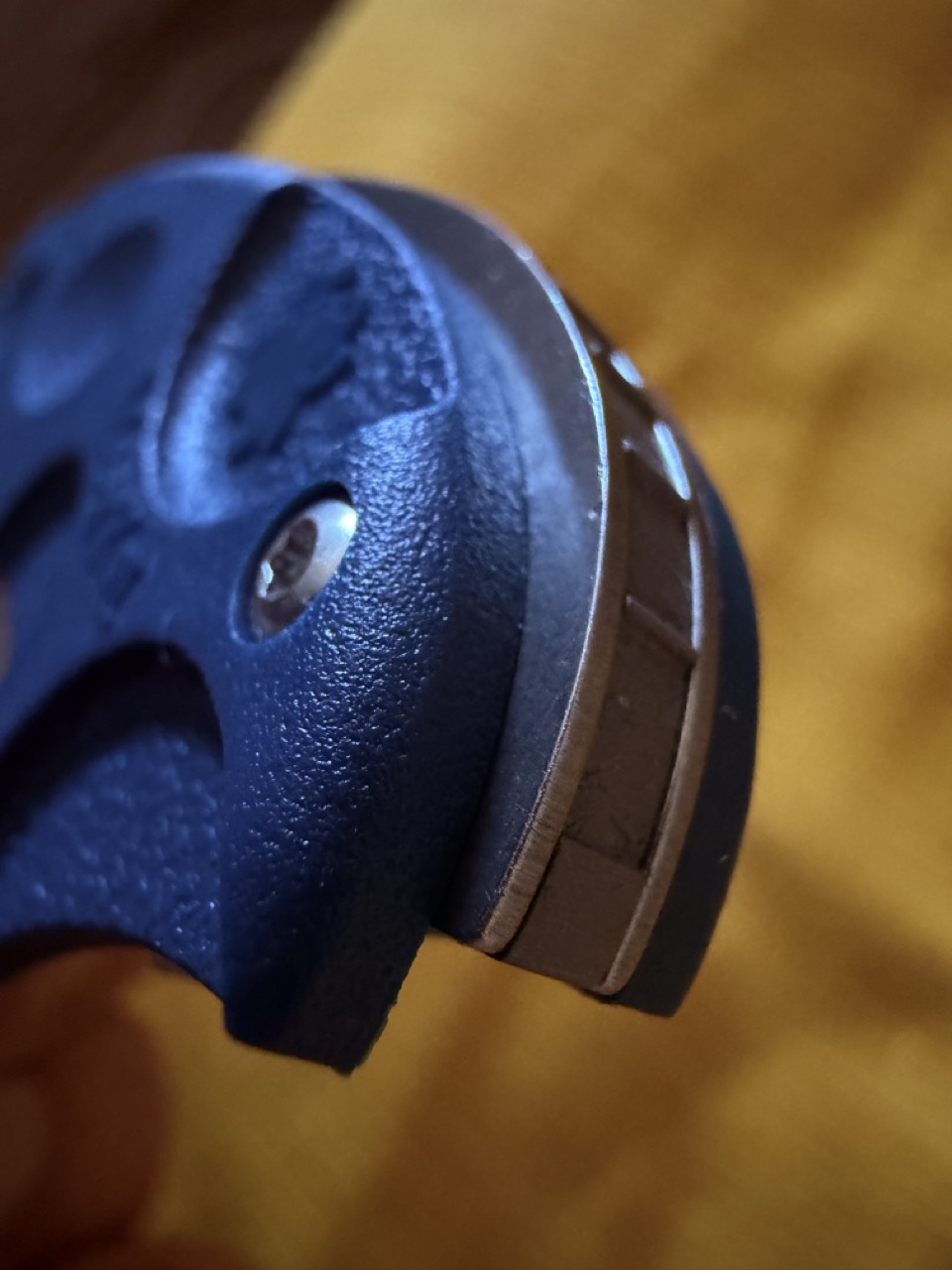
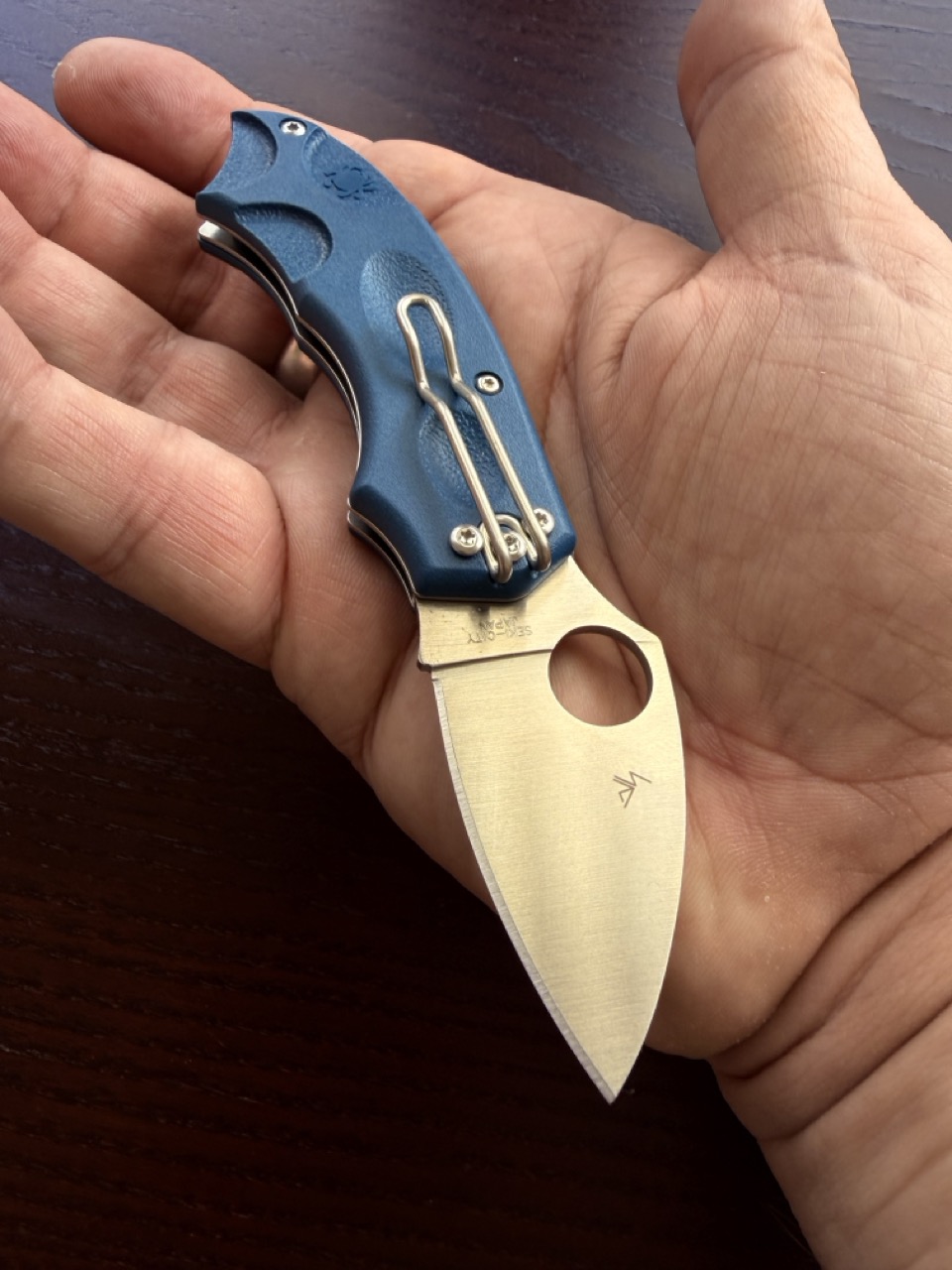
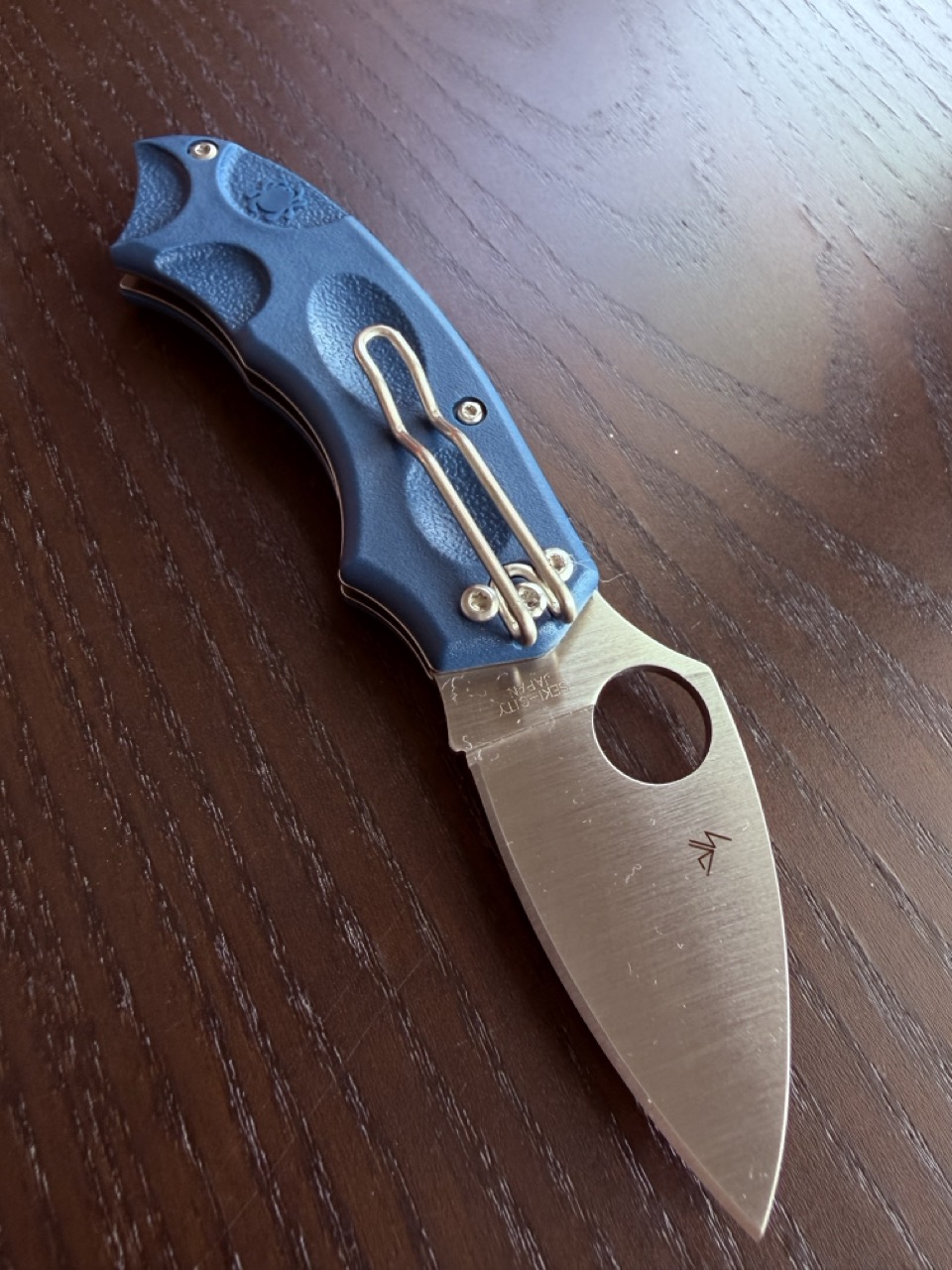
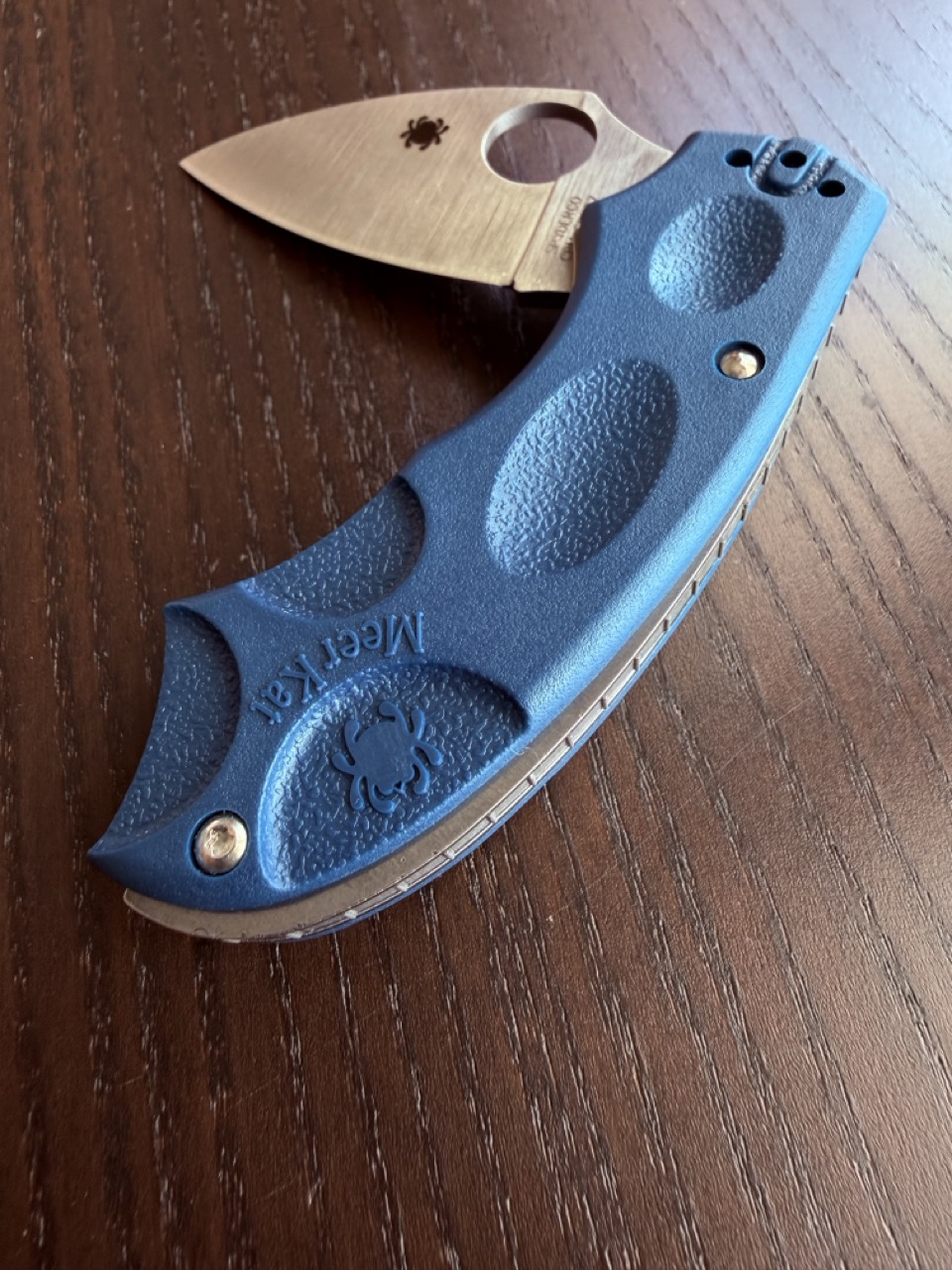
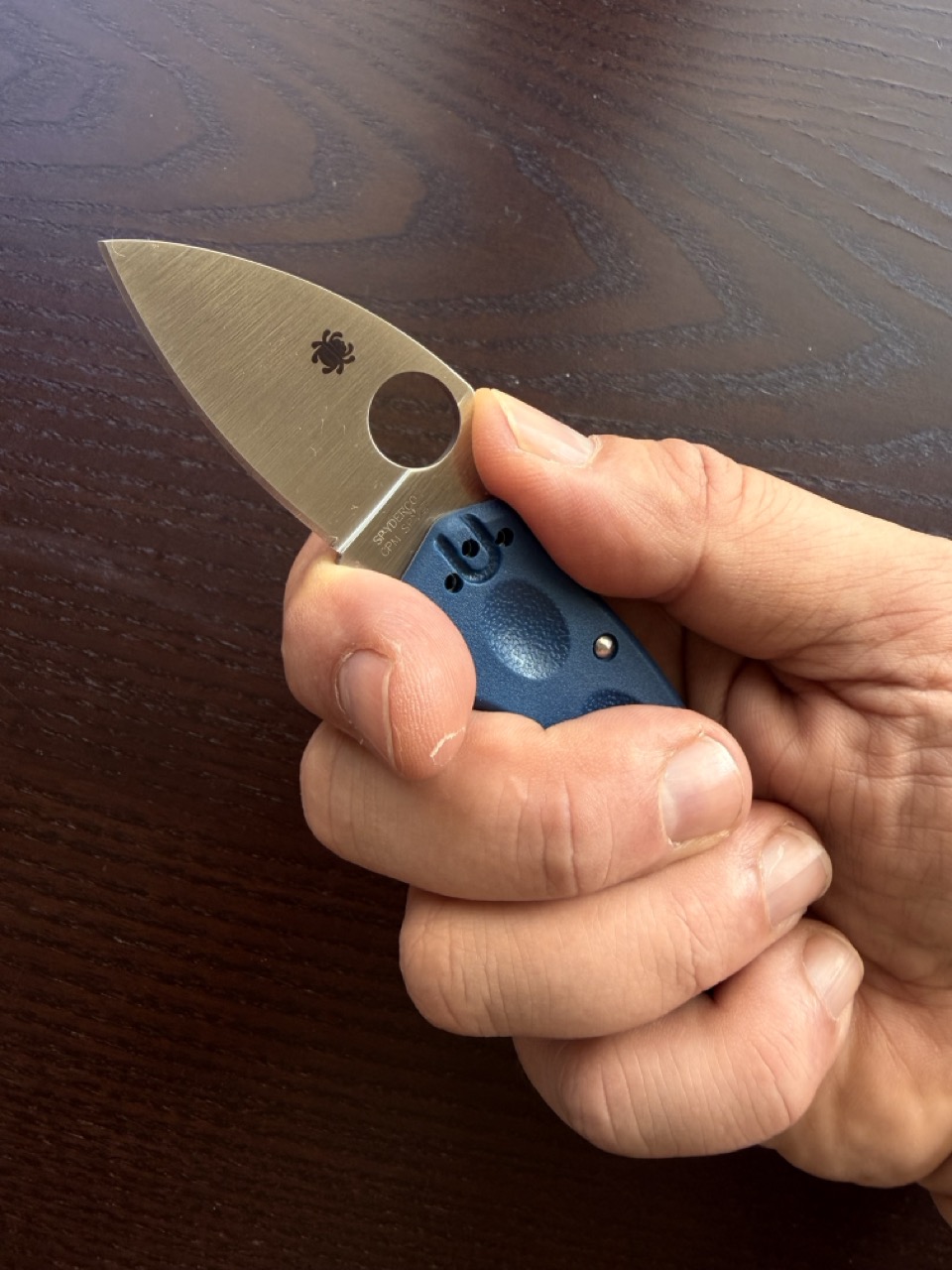
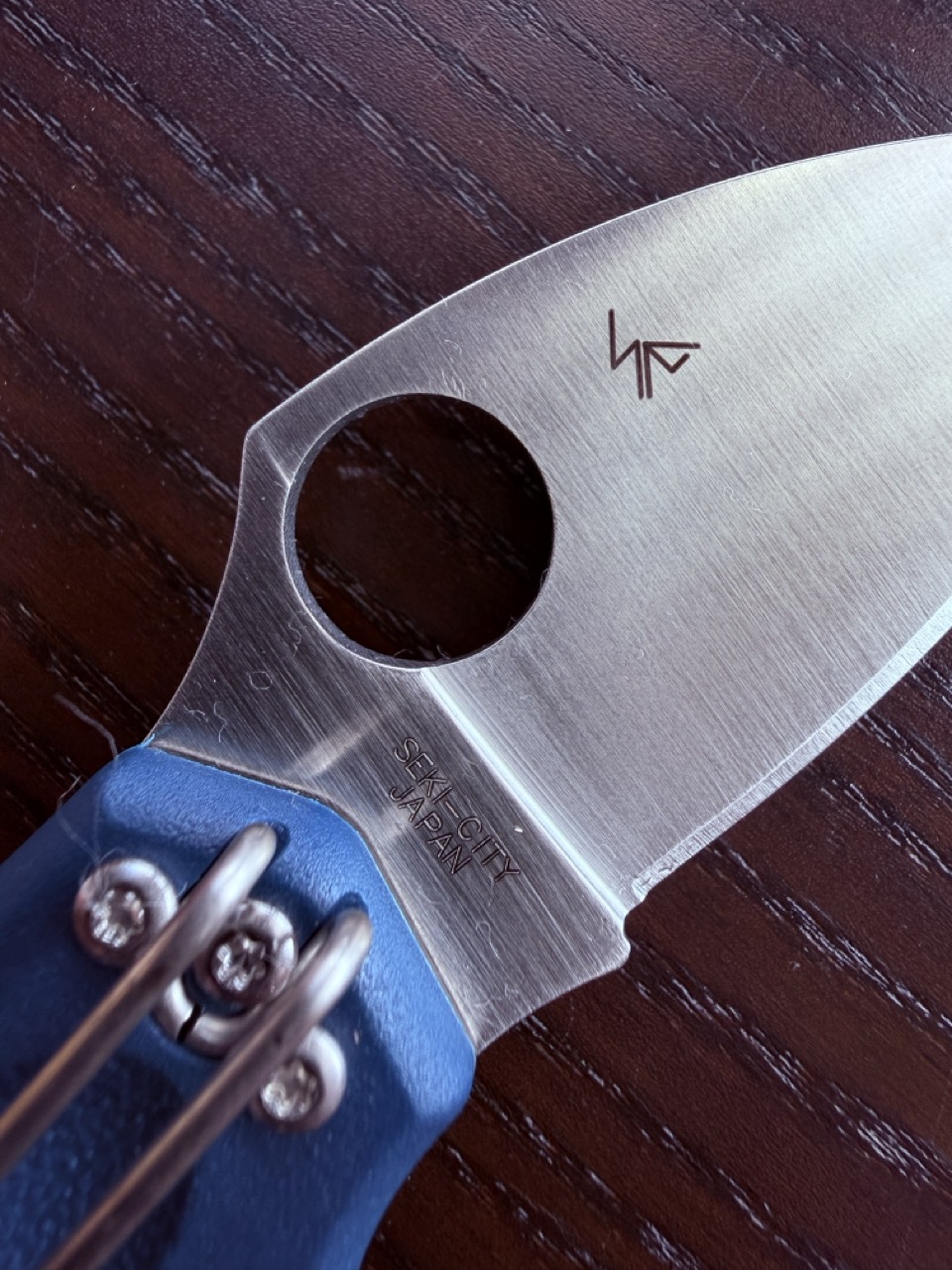
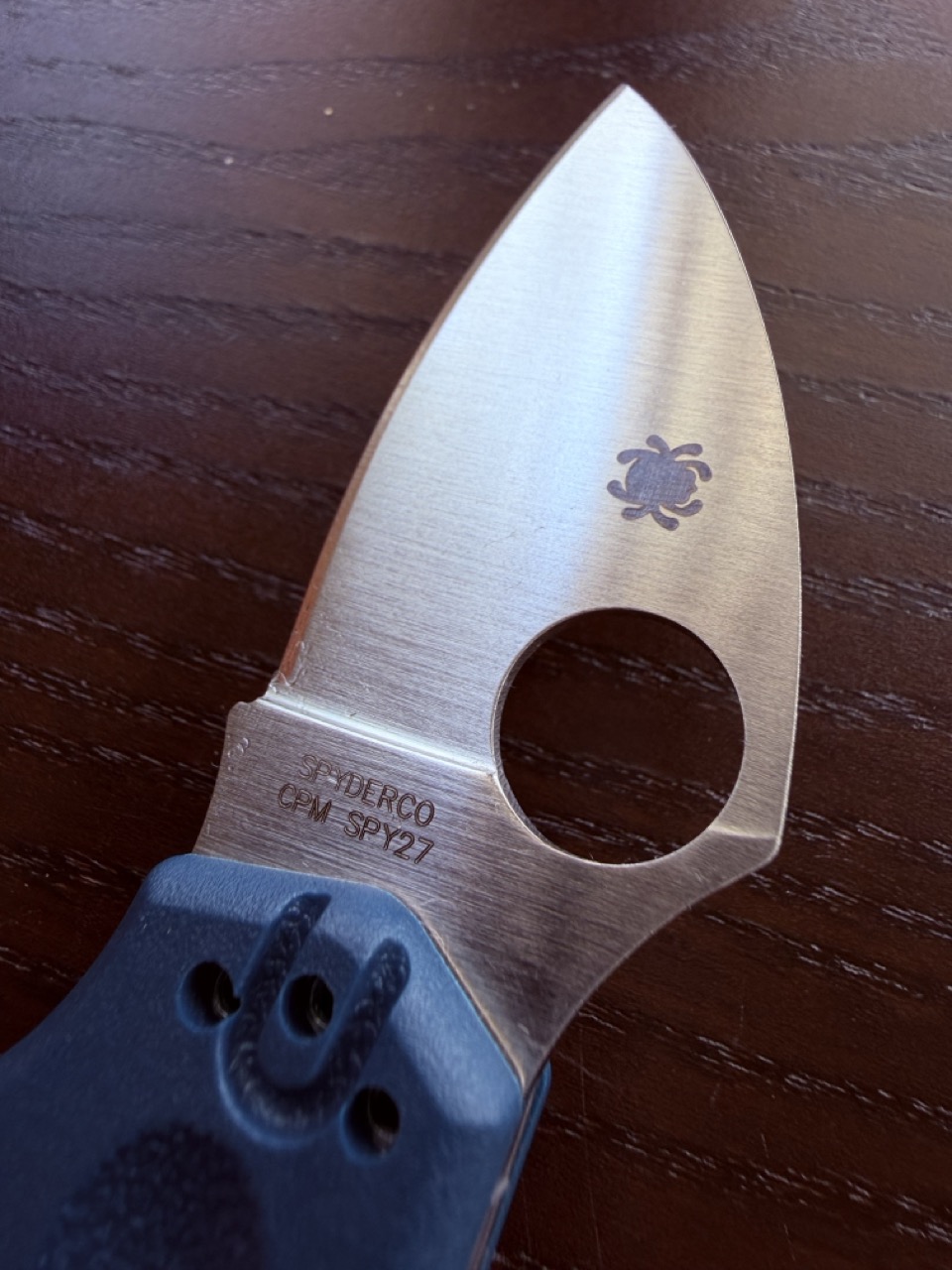
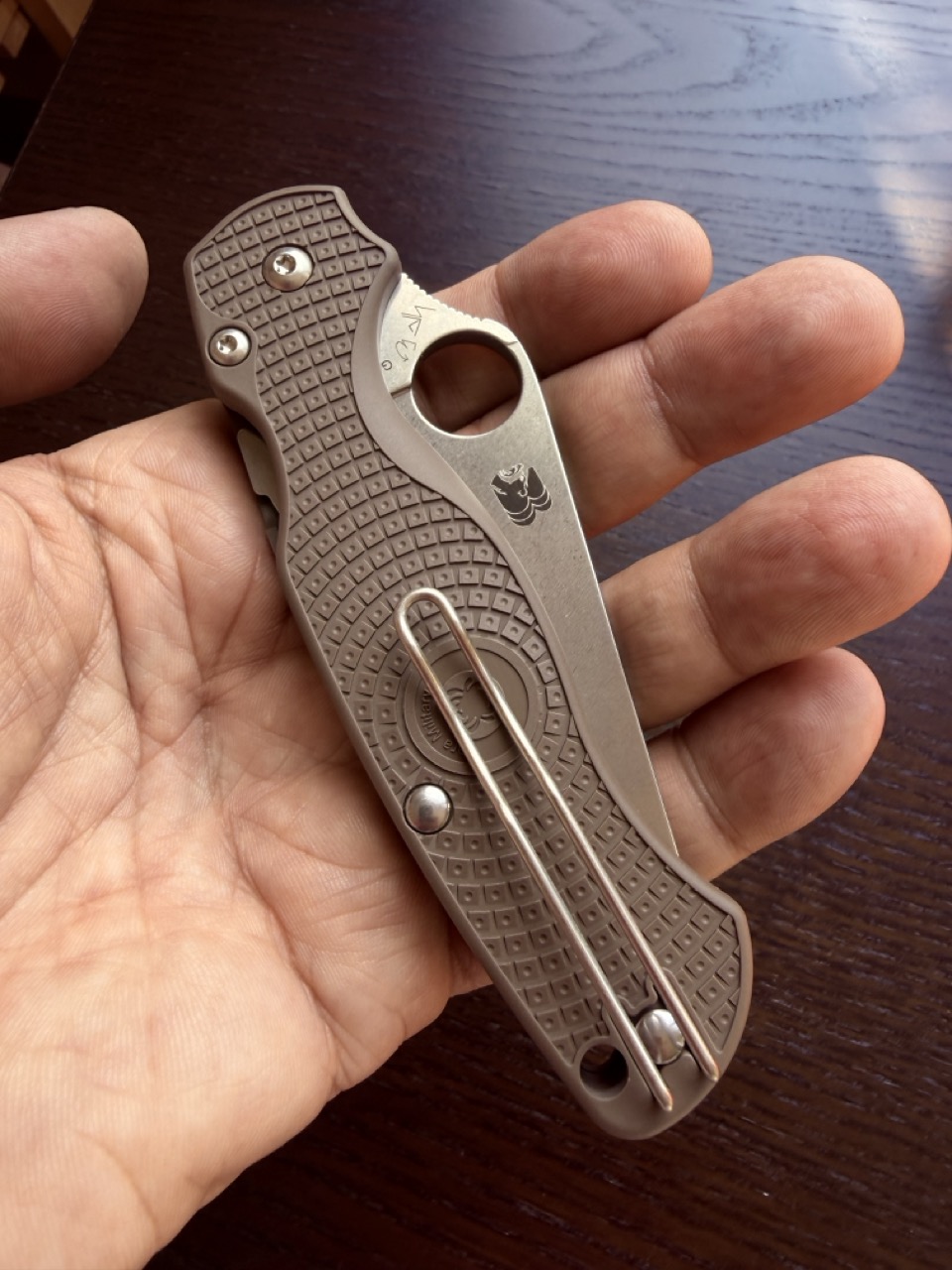
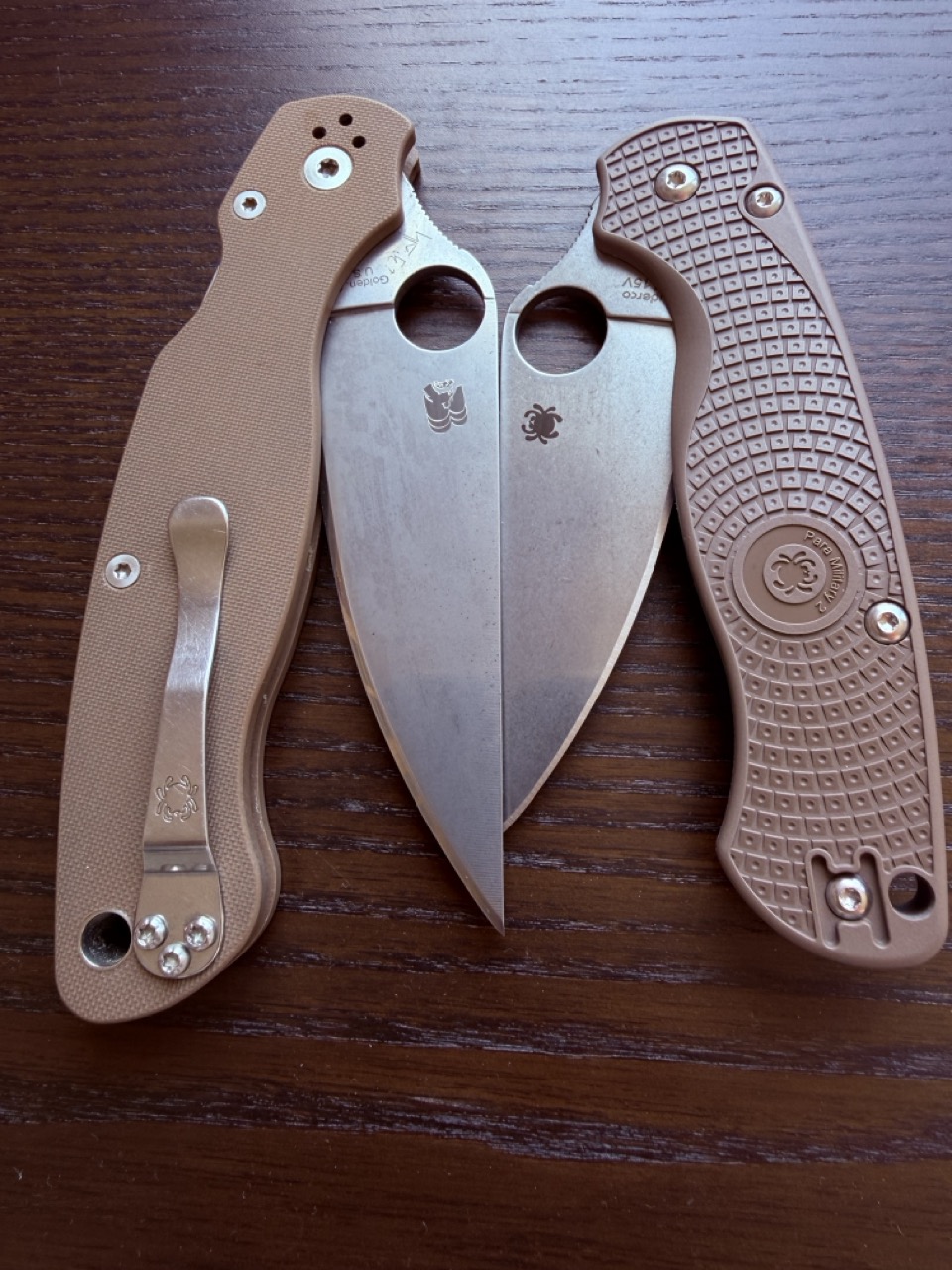
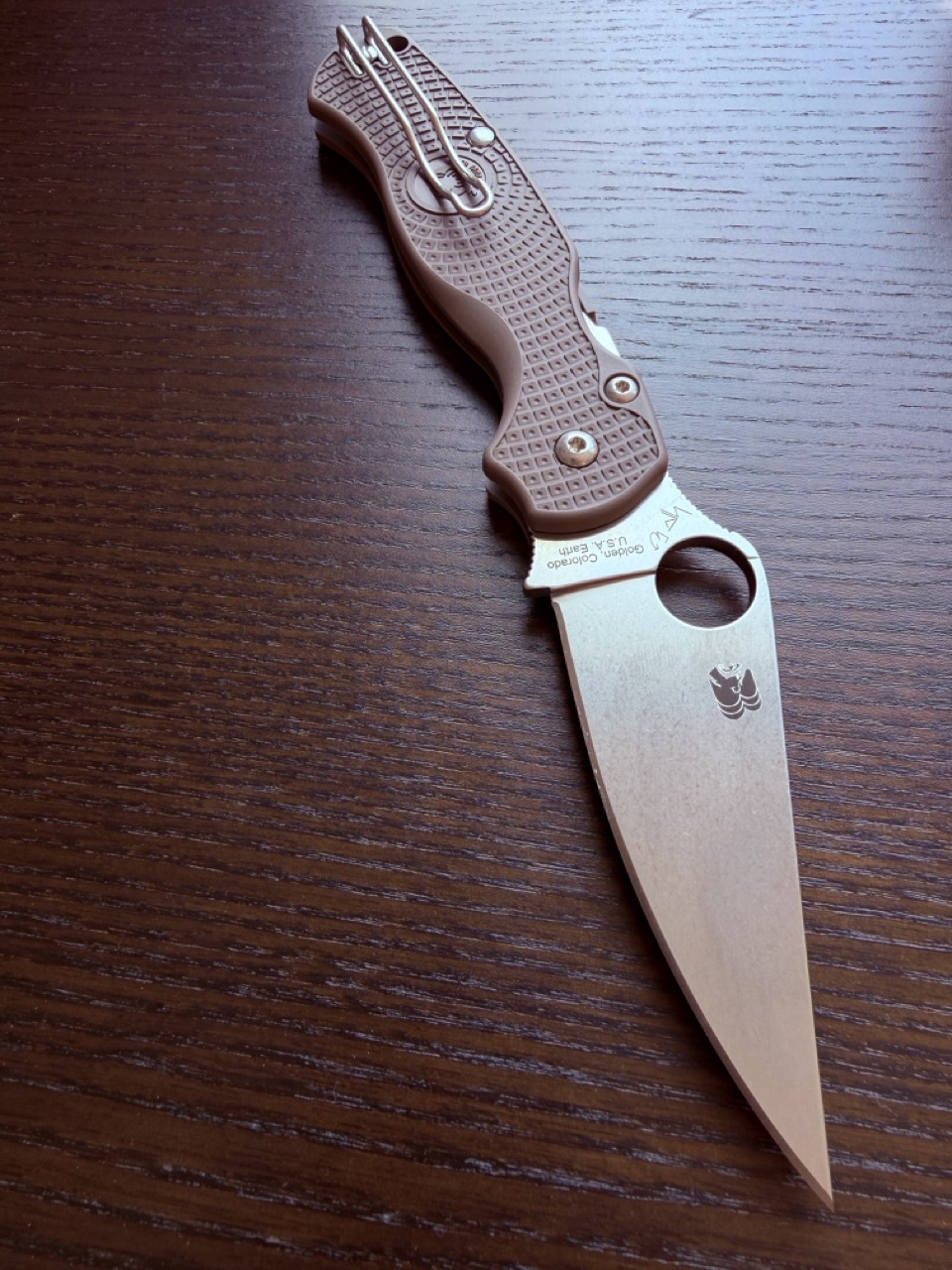
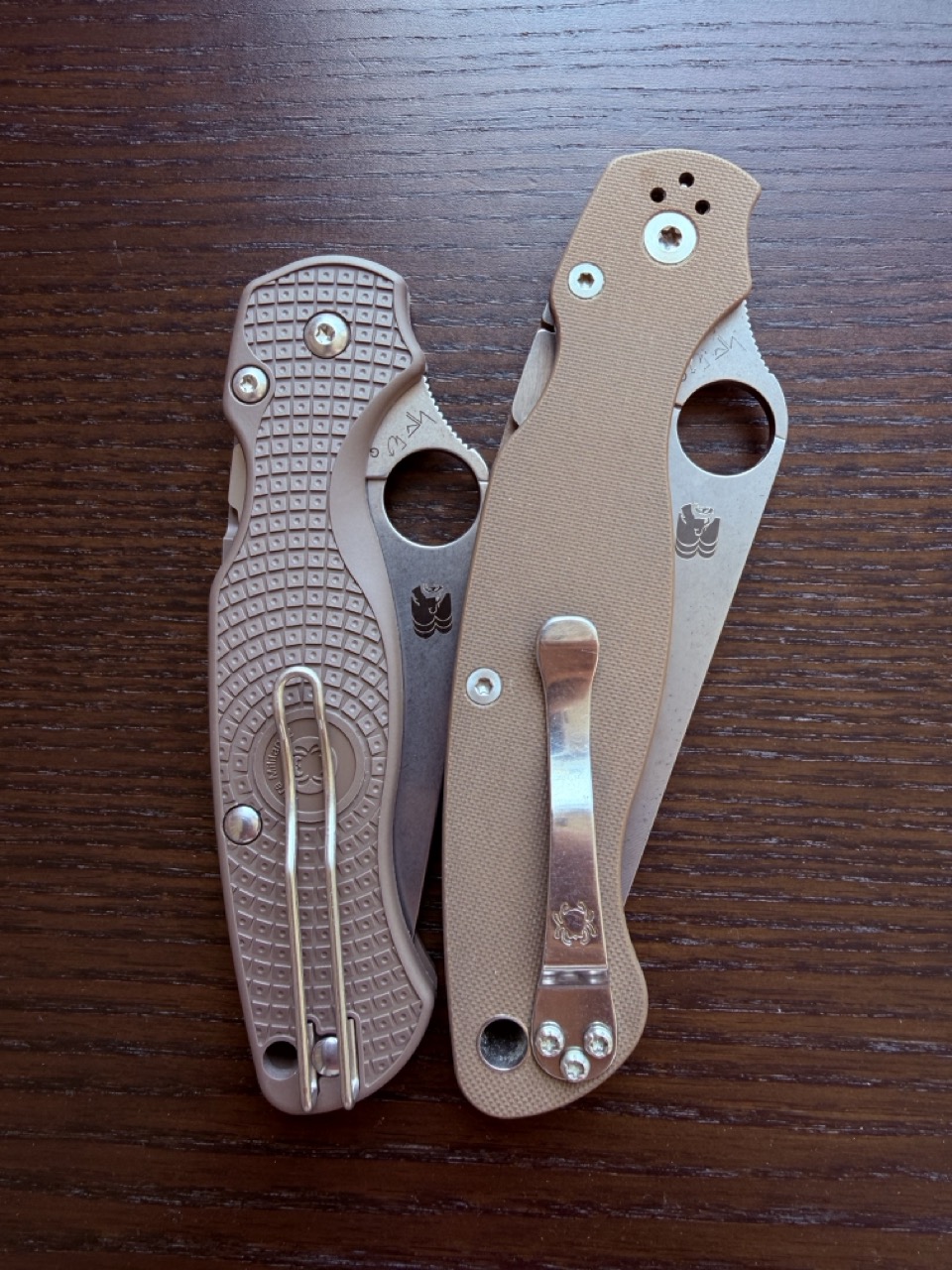
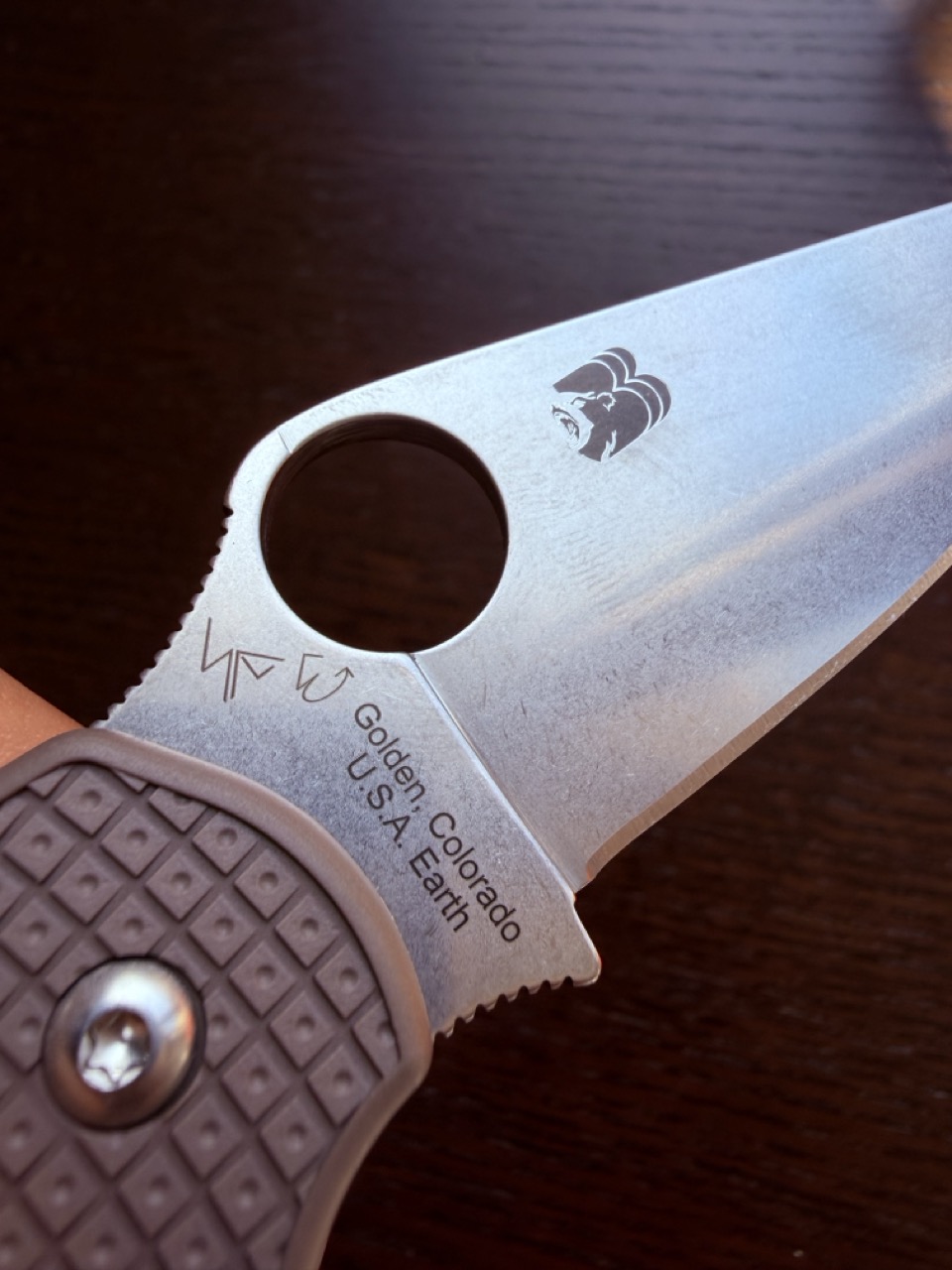
Fourteen days in Italy. One very special knife. No sharpening. Spoiler alert: actually, no need for it. 😉
And this isn’t the first time I’ve gone to Tuscany with only one Spyderco.
The first time, it was the Tuff by Ed Schempp. Last year, it was the Serrated Chaparral, which turned out to be Walter‘s favourite knife after 6 years of using the Michael Walker in ZDP189.
That was the new experiment. The new road sheet. The new main bearing.
Is Rex 121 too fragile to withstand normal EDC in the countryside?
At twice the price of other super tool steel folders, I wanted to know. Especially after seeing broken Rex 121 blades on Reddit… “I was just cutting cardboard…” Tu parles !
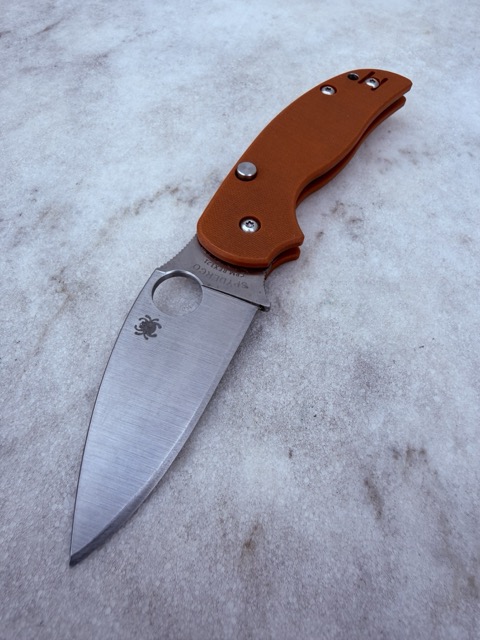
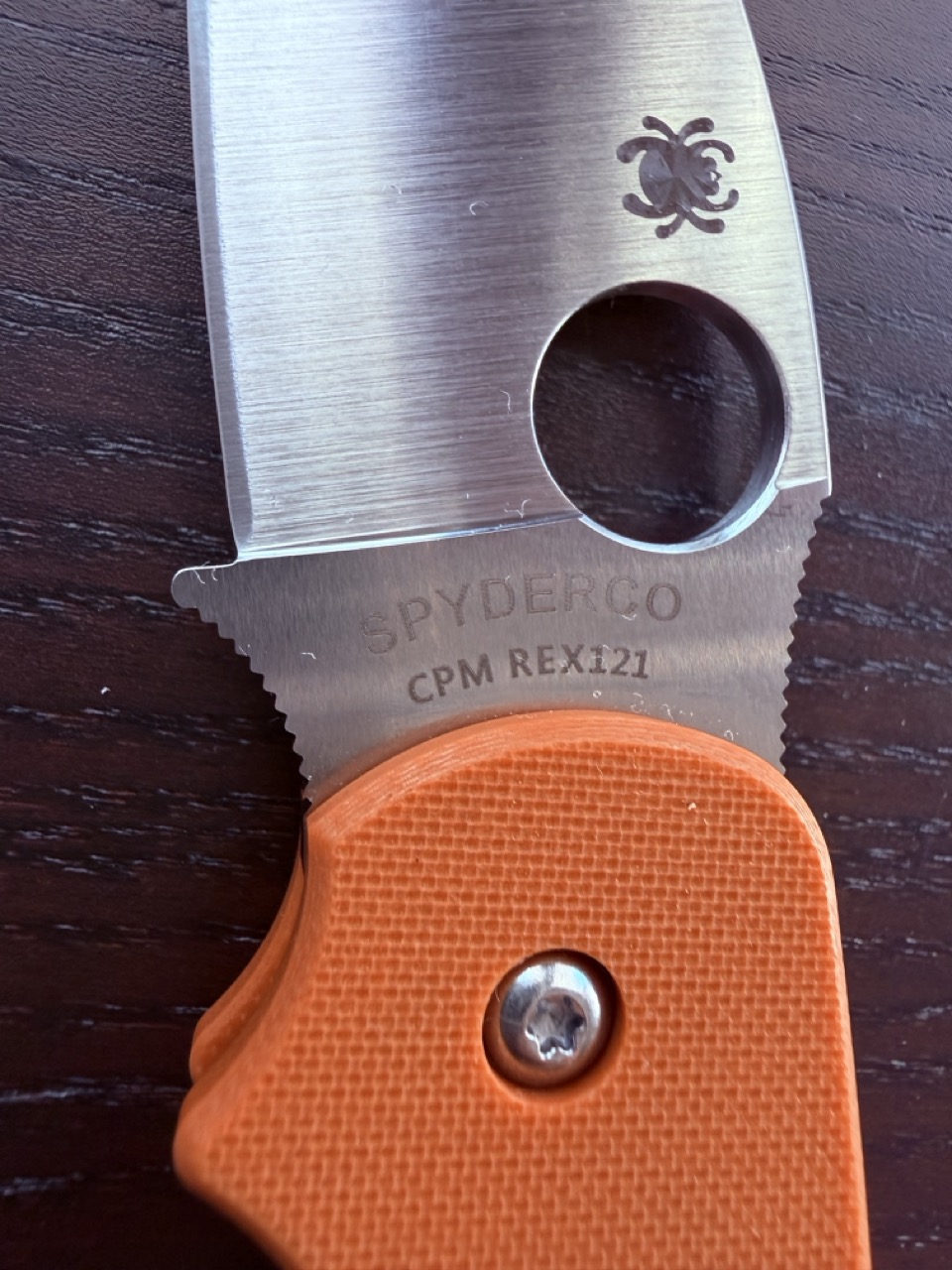
When I left for Italy, the only knife I took with me was Tango, my Spyderco Sage 6 in Rex 121. And for me Rex 121 is the Jack Reacher of tool steels !
And I can tell you, I had spent quite a bit of time getting its edge exactly where I wanted it before the trip.
The idea was simple: use it. Really use it. For two full weeks. For everything. And, whatever happened, never touch the edge again.
No sharpening stone in my bag. No guided touch-up. No diamond stones. Not even a piece of brown cardboard to strop the edge. Even if the idea crossed my mind more than once during the trip… Just the freshly sharpened knife, whatever I happened to ask it to do, and fourteen days of real-world use.
And I deliberately didn’t make things easy for it. The Sage 6 in Rex121 is a Lamborghini. But a Lambo isn’t built for rough mountain roads. So the question was simple: could this one handle them?
Getting the edge right (for me).
Yes. Right for me. Testing with my thumb’s nail. As seen on my previous review, anyone who has been confronted with Rex 121 knows that sharpening this very specific steel is not exactly a relaxing Sunday afternoon activity. Even with diamonds and a good dose of elbow grease.
That alien of a steel is extremely hard and extremely wear-resistant.
So getting a new geometry — as thin as I wanted it on the Sage 6 — took time, patience, and quite a bit of work. Going back to the blade again and again, almost a week of daily touch-ups, trying again and again, and — above all — trying to avoid creating a recurve, which I almost managed to create by flattening the belly.
Damned!!
Sal Glesser, for example, have taken the edge down to around 10 degrees per side on his Sage 6 Rex121. With all my courage, I decided to go with 15 degrees per side.
That was the geometry I wanted for this particular experiment: still extremely aggressive, but with a little more margin for the kind of abuse a travelling knife can encounter.
And I didn’t polish the edge. On purpose. Following Sal’s own recipe.
Microteeth are our friends.
And believe me, I love polished edges. I’m not usually a fan of rough edges.
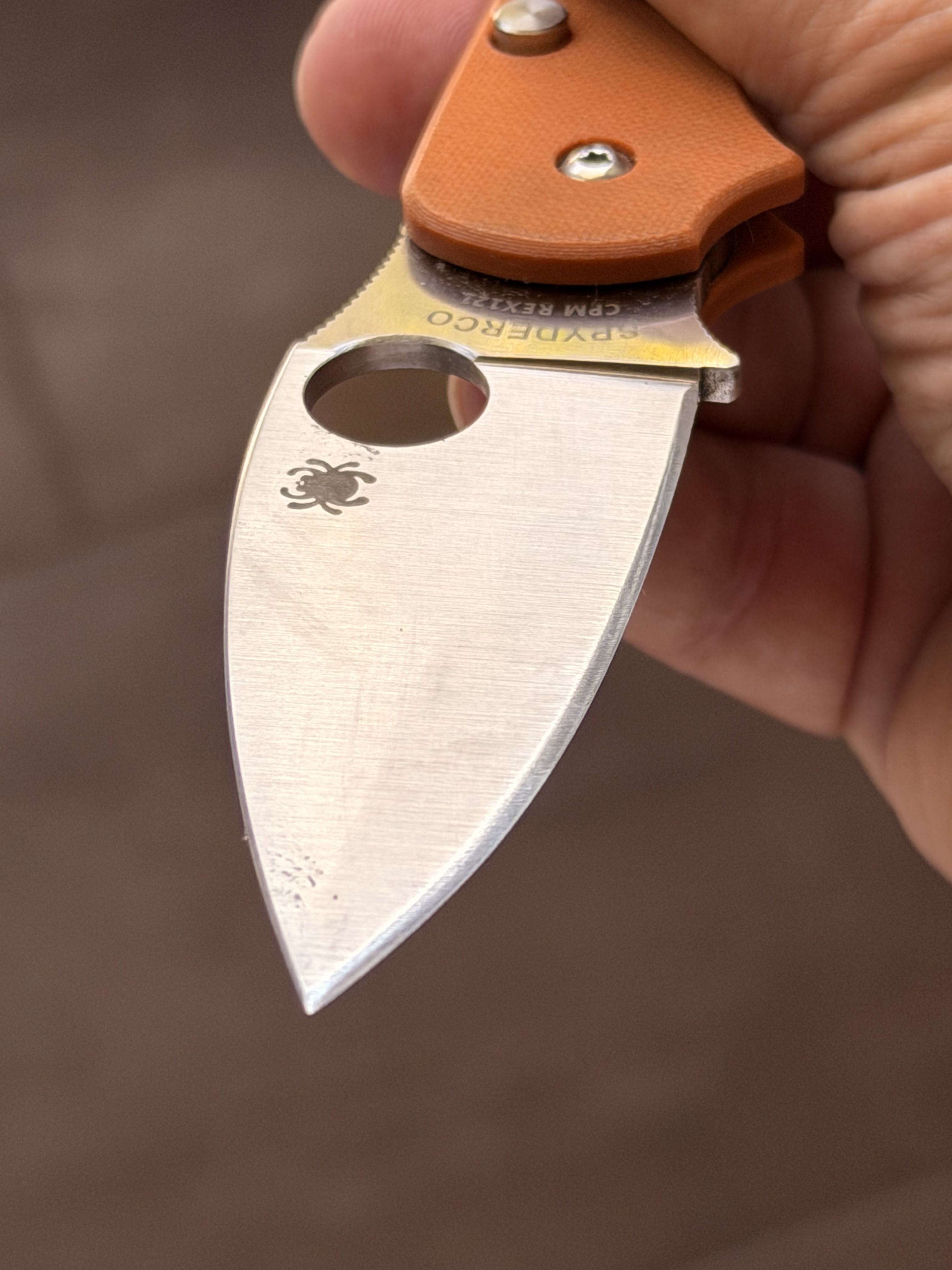
But this time, after the diamonds, Tango was different: toothy, aggressive, and sharp as my mother-in-law’s tongue.
I wanted to take advantage of the way Rex 121 behaves with a fine but slightly rough, aggressive apex. Instead of chasing a mirror-polished edge, I left it with the kind of toothy finish that can give a high-performance cutting steel a very particular character — and, hopefully, very high performance.
Scary performance.
And finally, I had exactly what I wanted.
Beware of what you wish for, as they say.
A rough-edged razor. Ready to cut your skin like the caress of a great white shark.
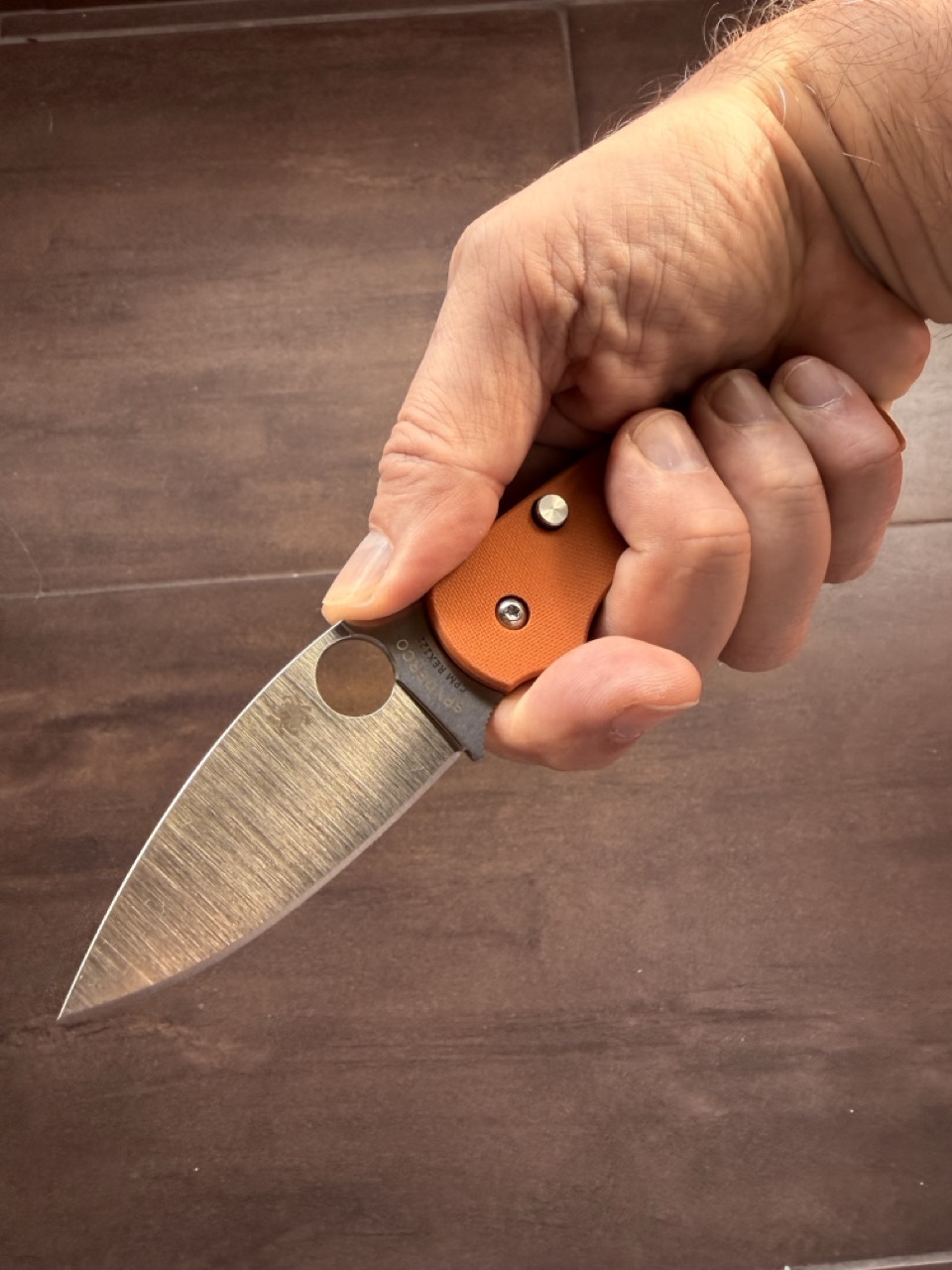
The geometry was still right for comfortable whittling. The Sage 6 has a blade shape that works particularly well for wood carving, especially when I use my left thumb to push the blade through the wood.
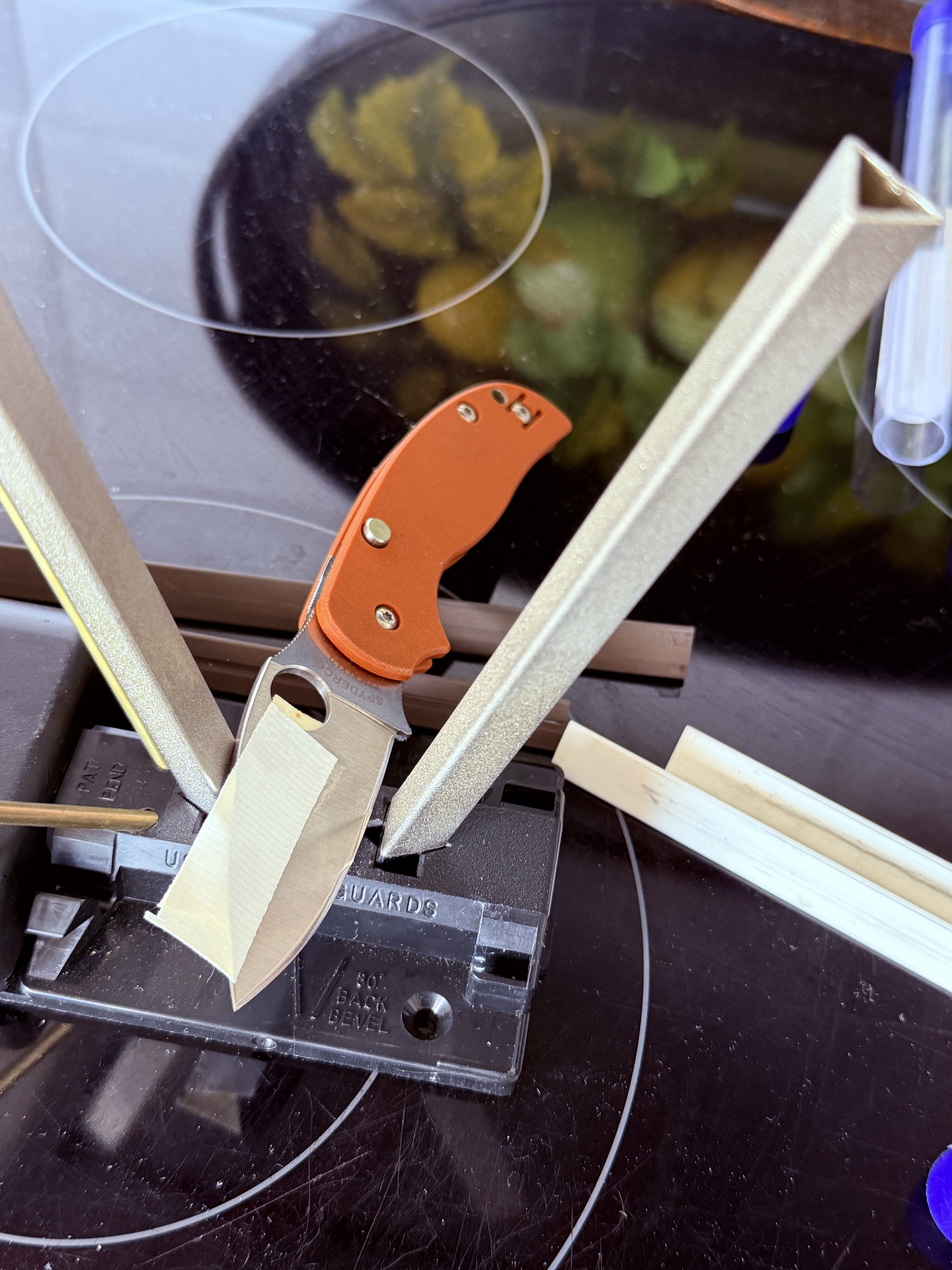
The angle was, I hoped, right and regular. I had used the Sharpmaker at 15 degrees per side, with the diamond triangle rods.
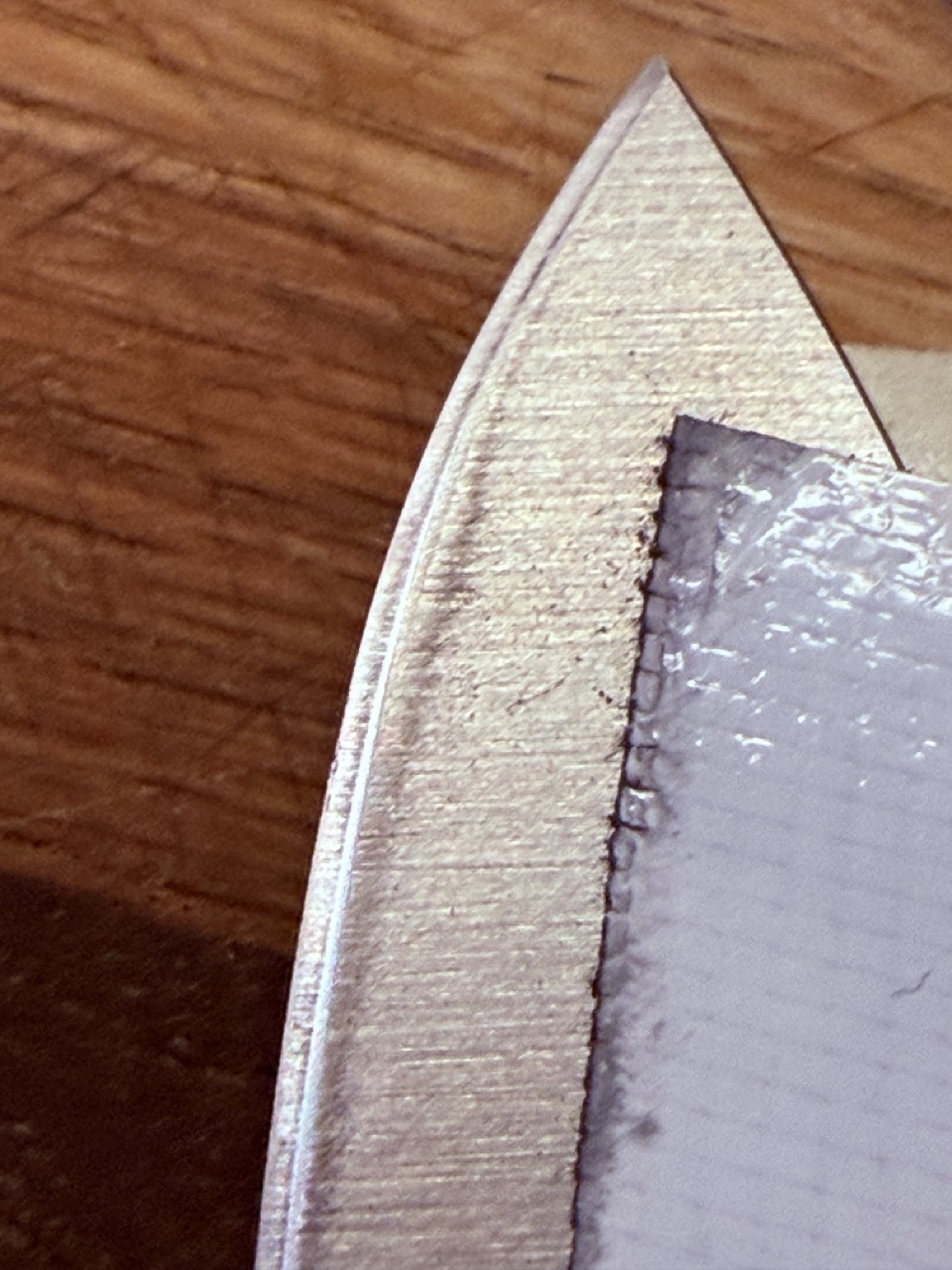
But yes, that edge was not pretty but it was an extremely rough, aggressive kind of vibroblade.
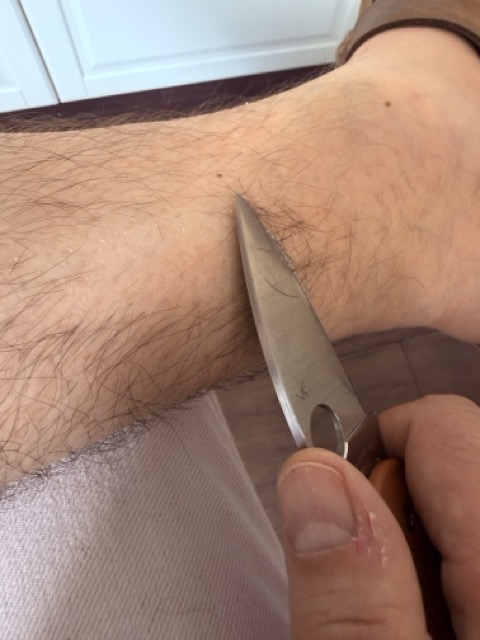
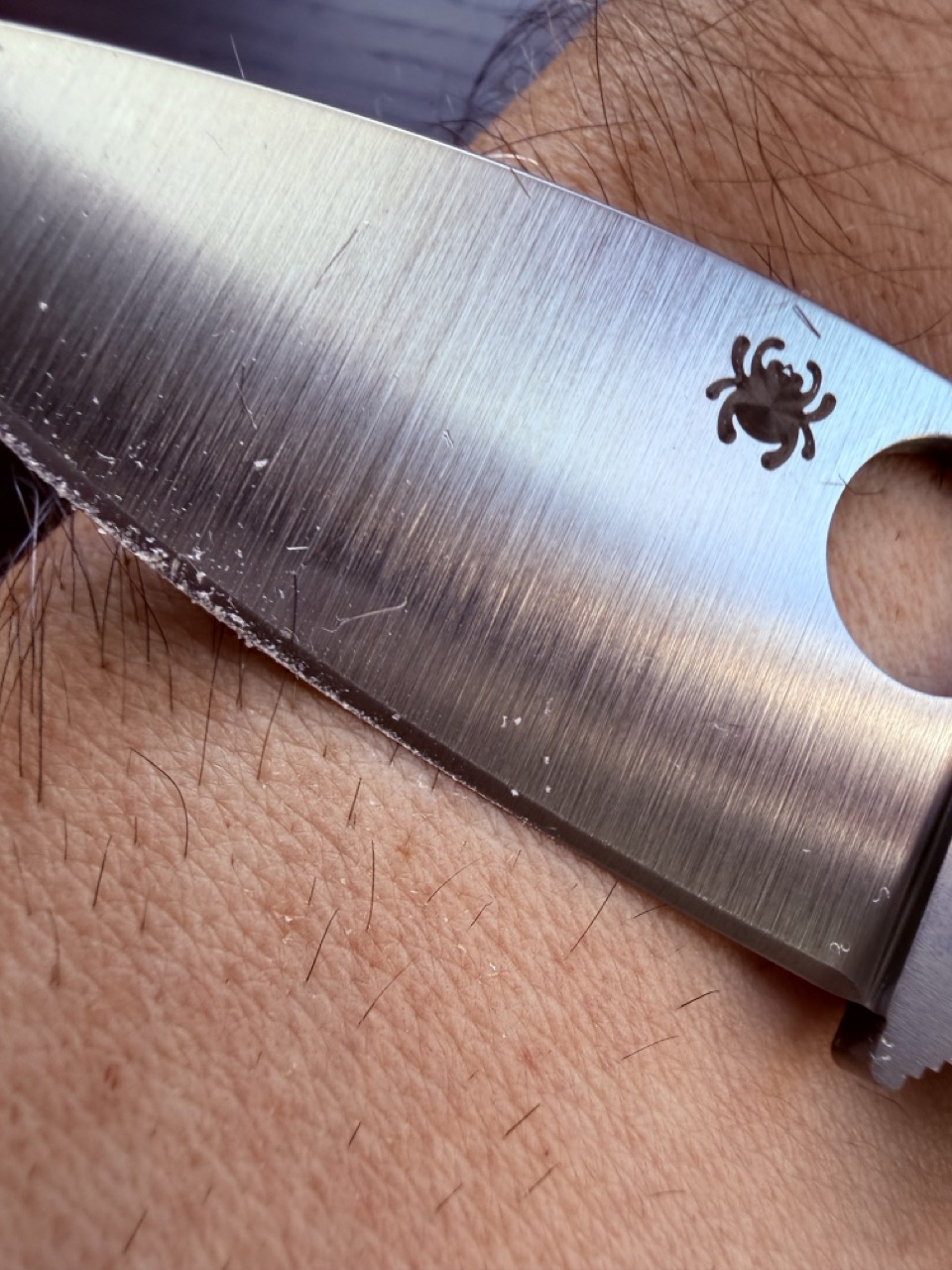
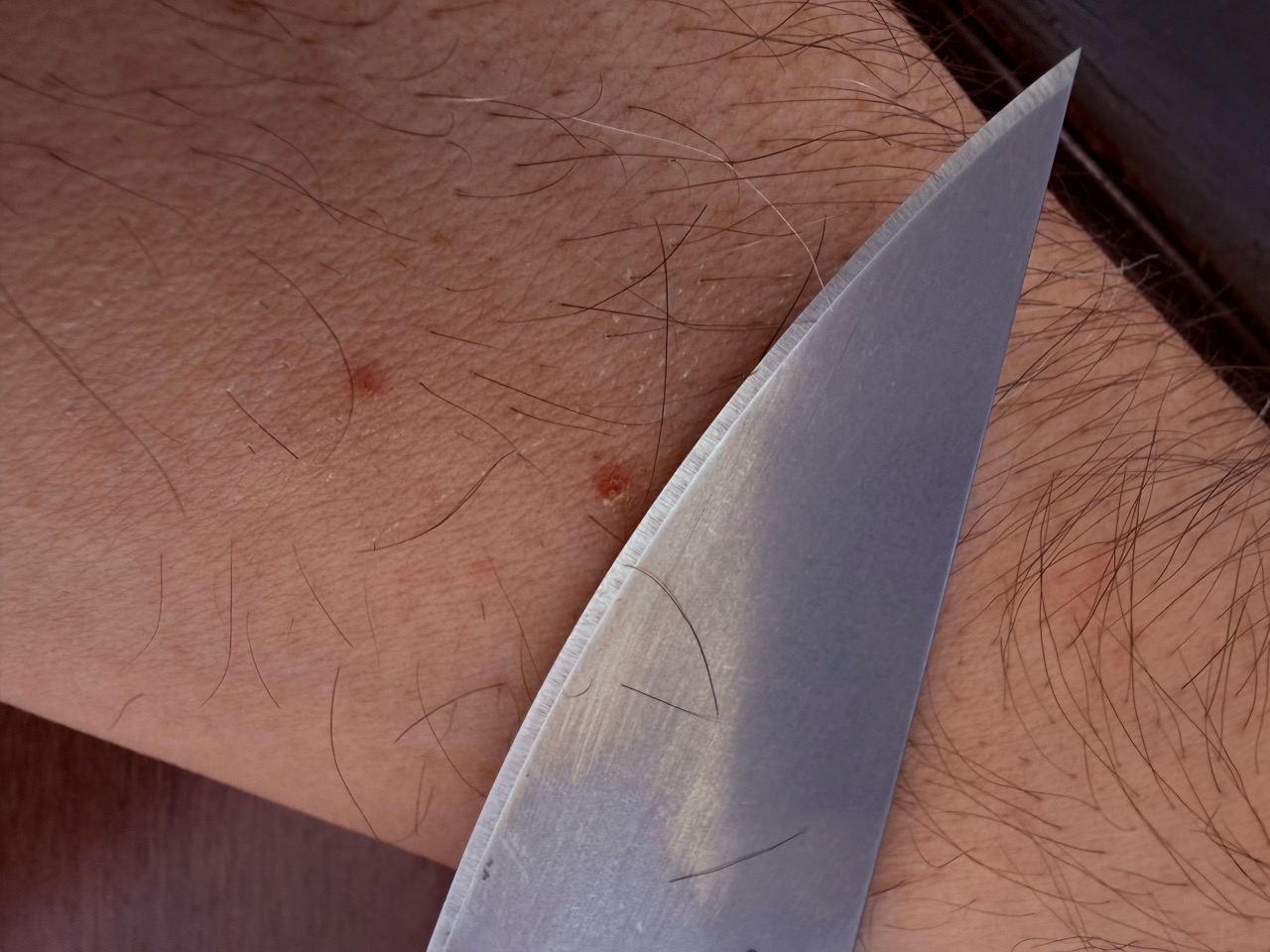
And, most importantly, it would shave the hair from my forearm , legs and hands. Right. Time to go to Italy. In Tuscany. In La Noce du Francesca in Caiano.
Fourteen Days of Everything — And Everything Goes
And I know Tango.
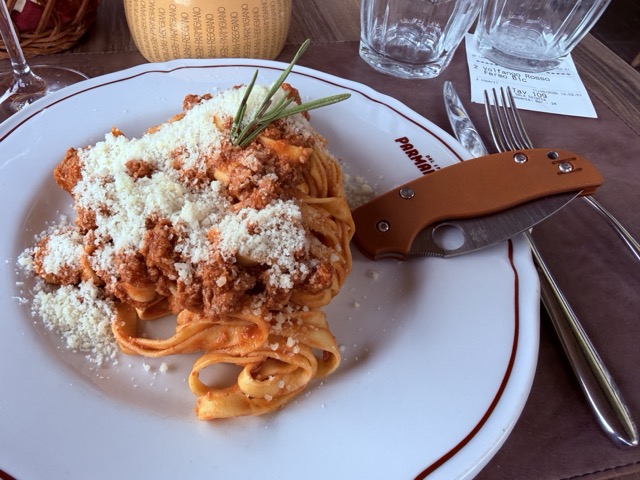
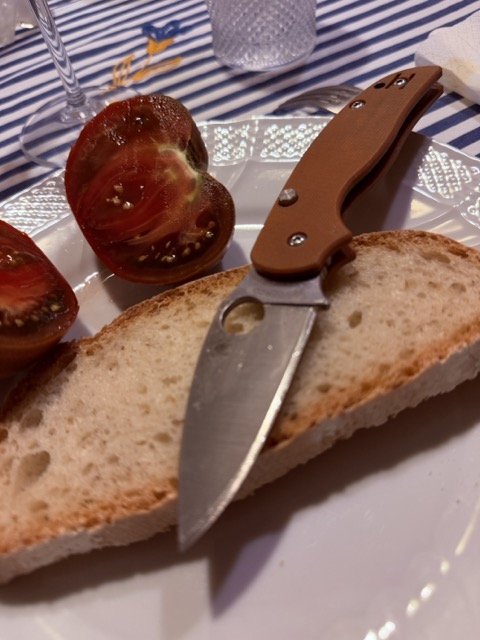
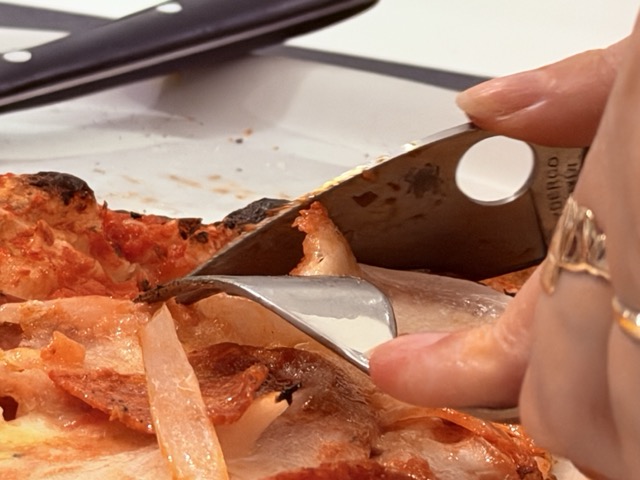
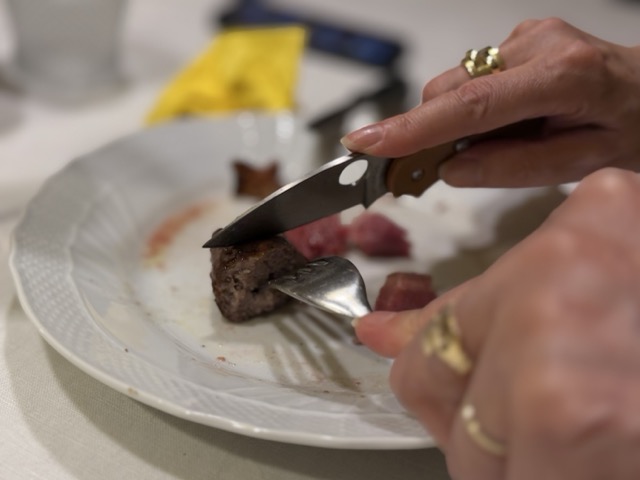
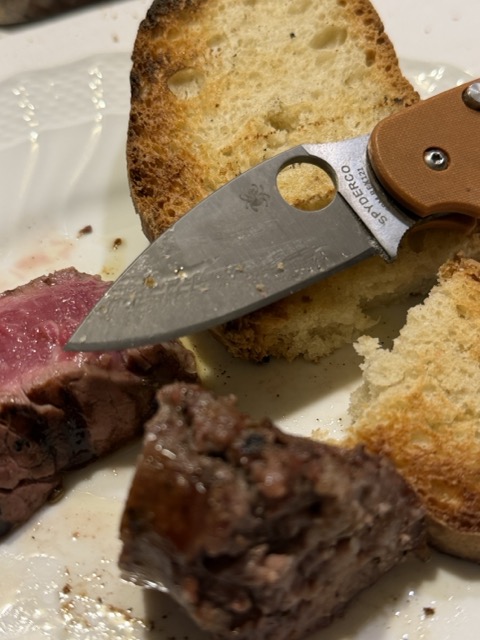
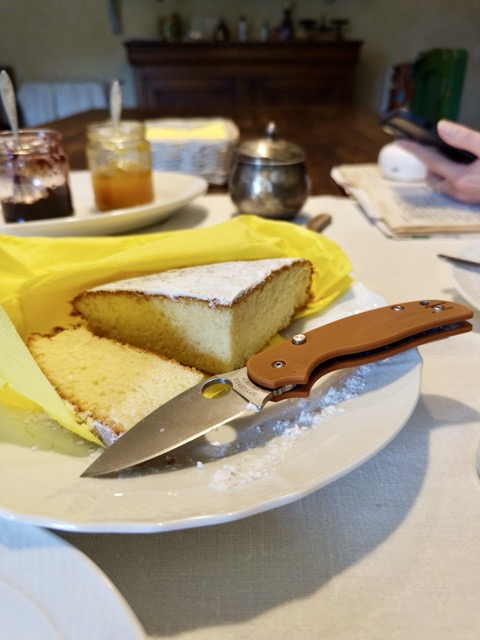
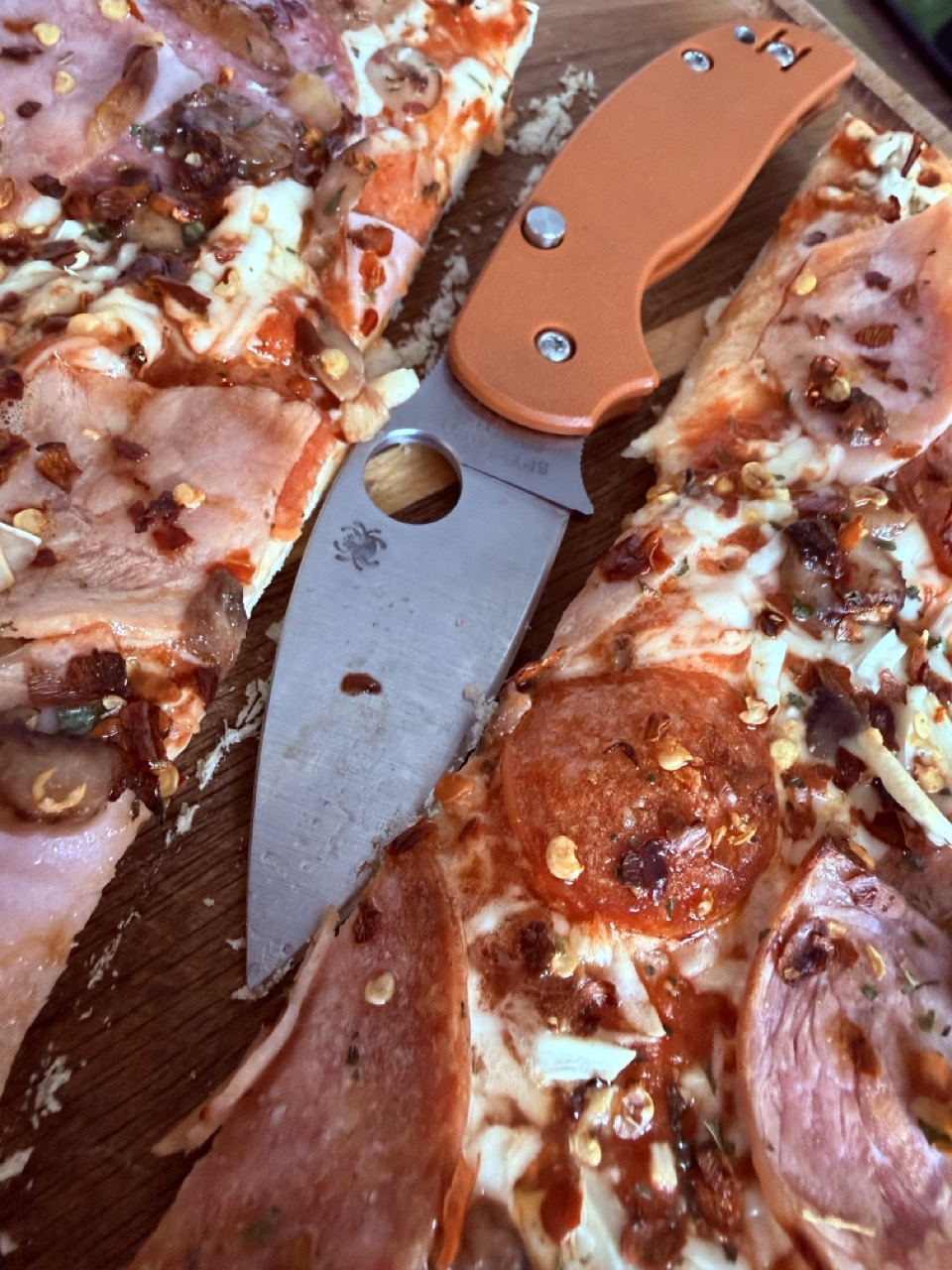
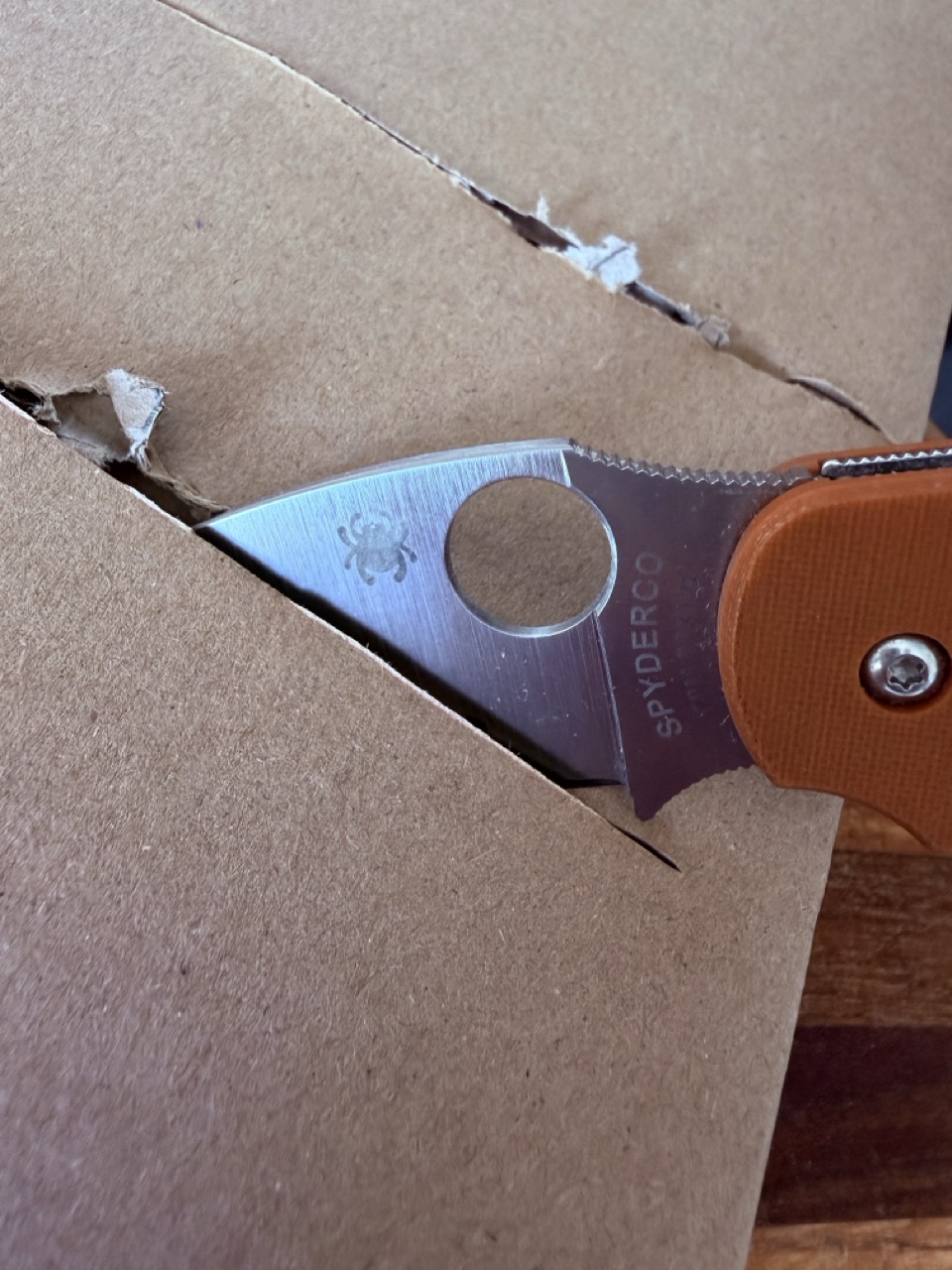
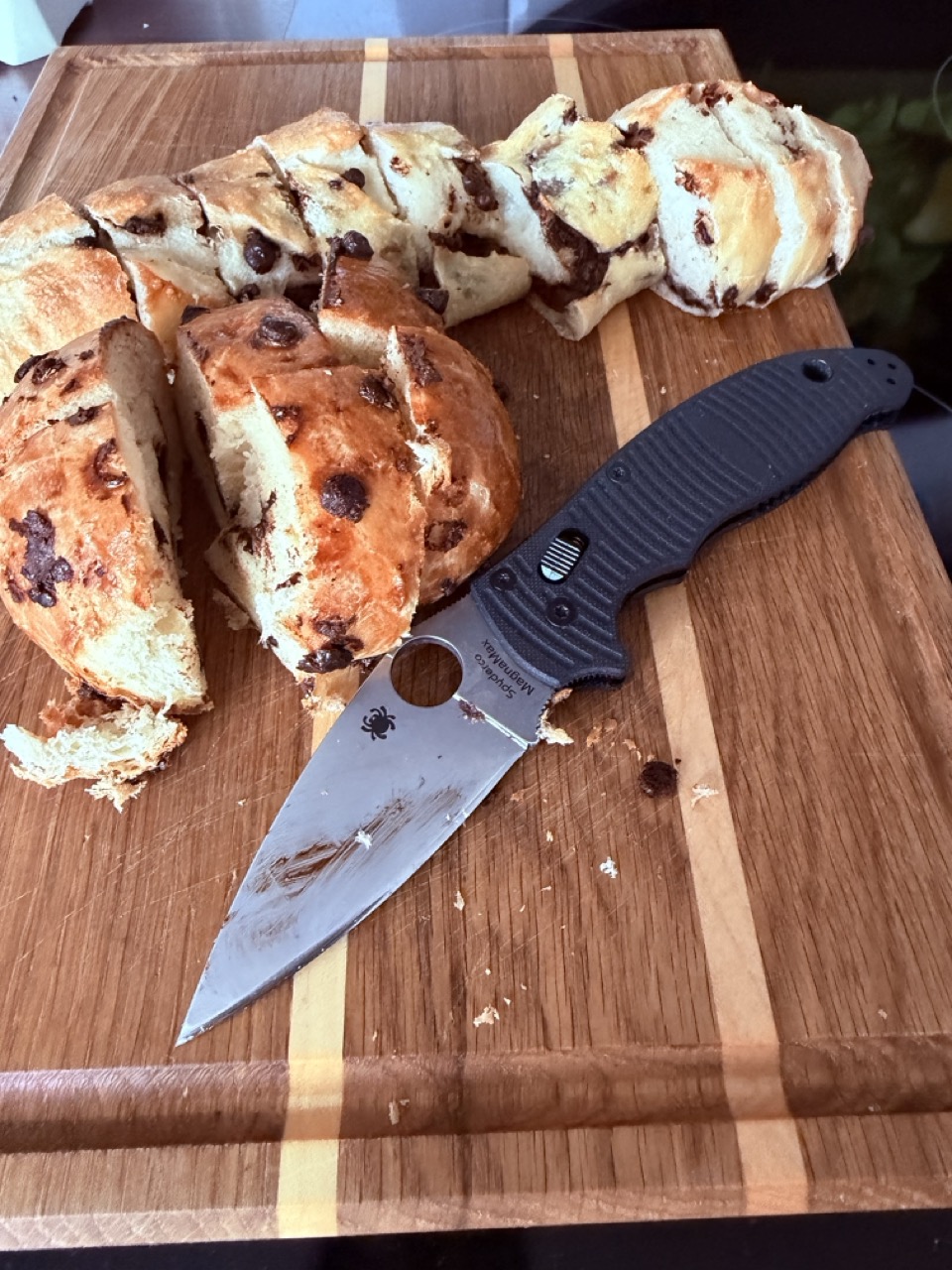
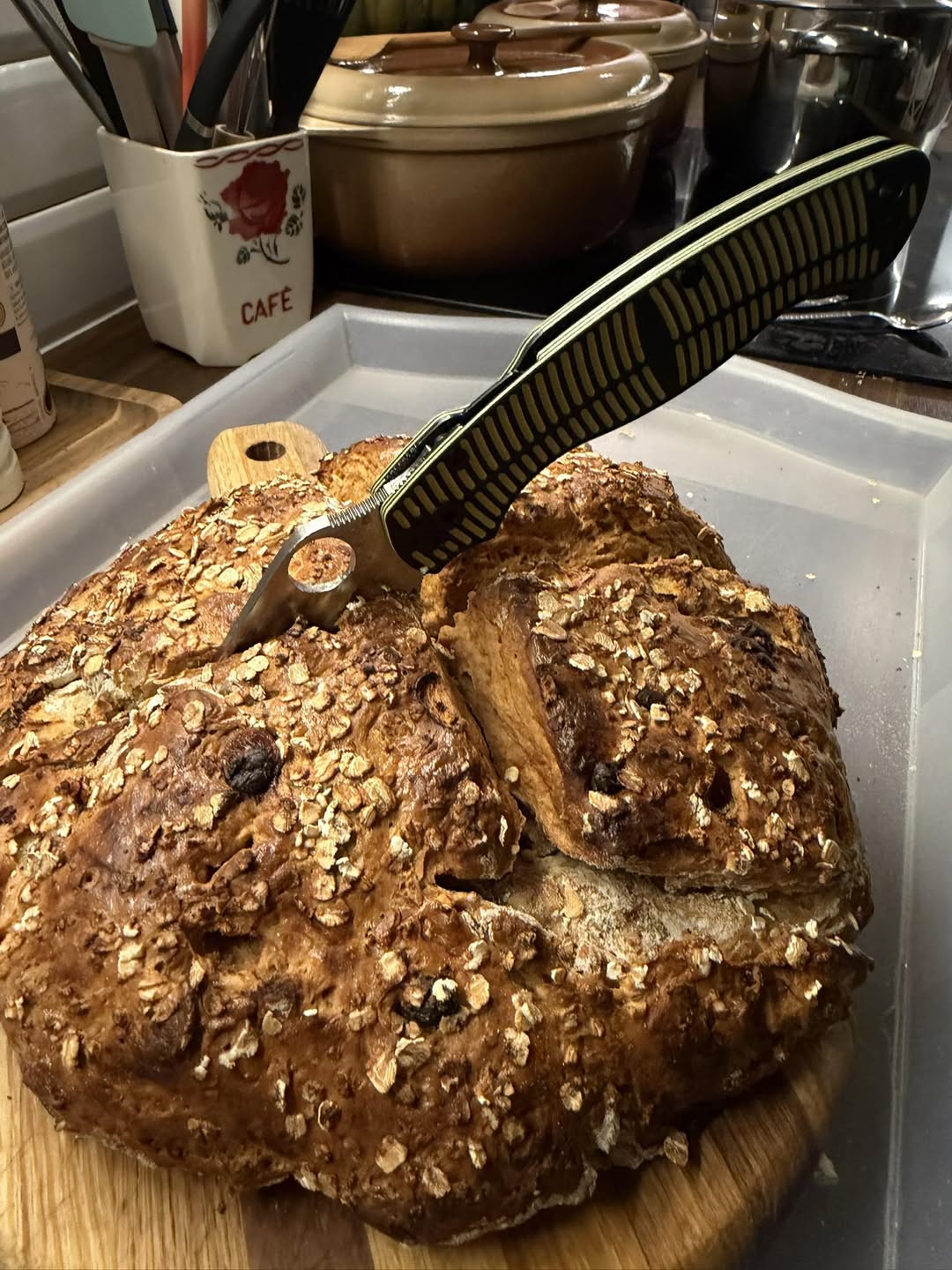
It cut food. It cut cardboard. It cut packaging. It cut meat. It cut hard plastic. It cut bread with crust as strong as oak wood. It cut a lot of wood.
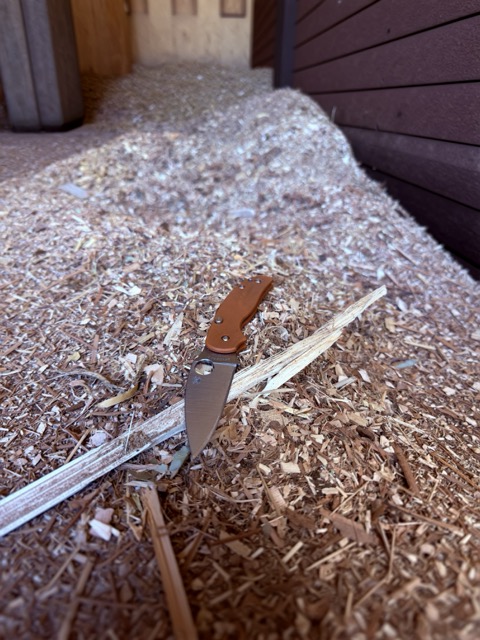
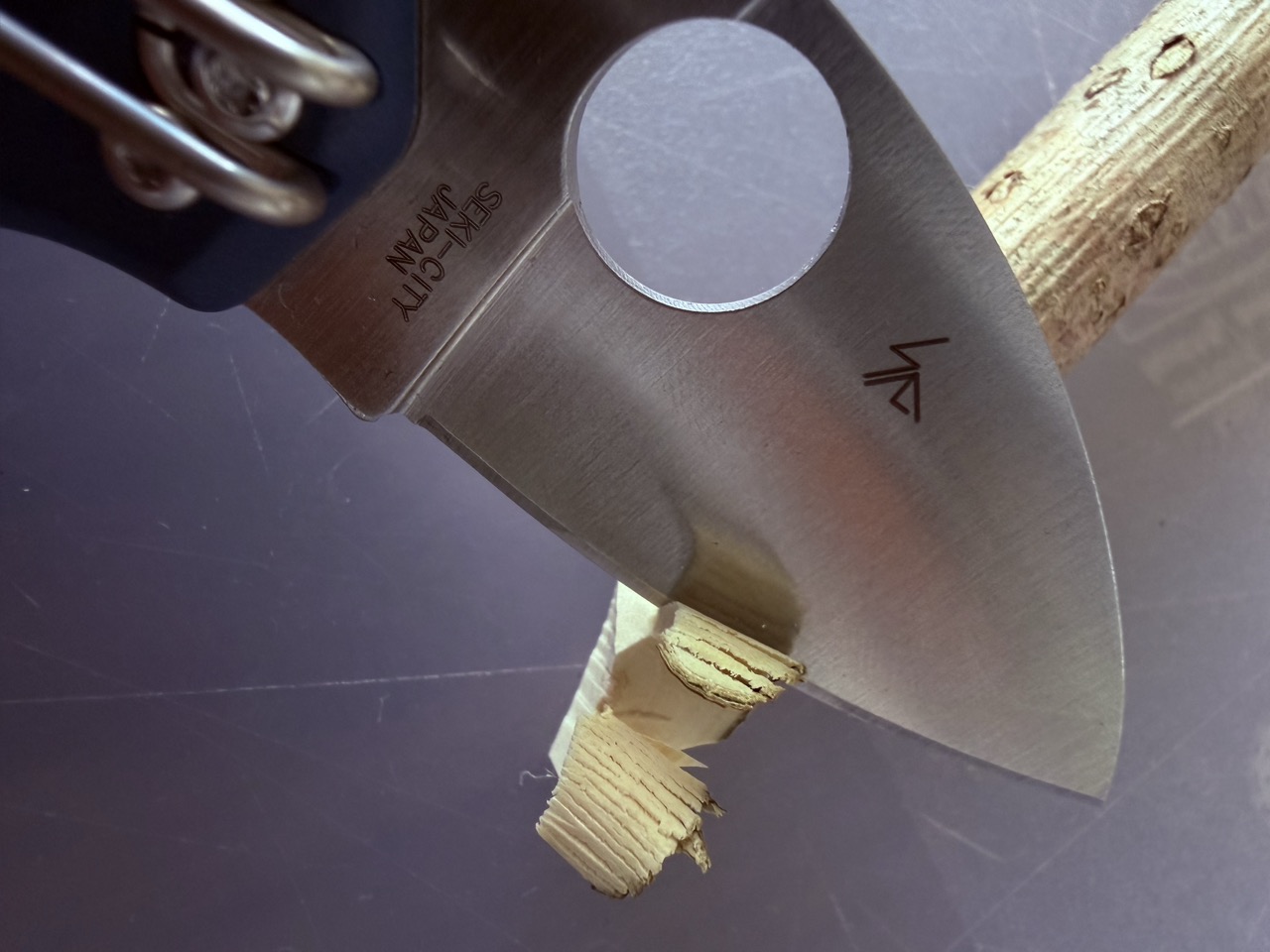
And it spent quite a bit of time doing what I particularly enjoy with a knife: whittling. It goes through dry wood like the famous lightsaber in butter.
There is something very revealing about using a knife on wood. You immediately feel what the edge is doing. A good edge doesn’t simply cut — it bites, tracks and gives you control over the material. You feel the cut under your thumb and see how the wood fibers look.
The Rex 121 was excellent at it. Just as impressive on meat, cutting almost like a serrated edge. That vanadium-tungsten-and-cobalt supercharged matrix means business.
But there was another element to the experiment that was perhaps even more interesting.
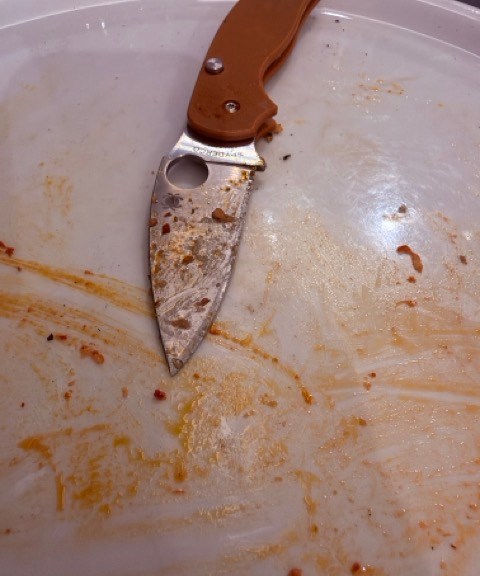
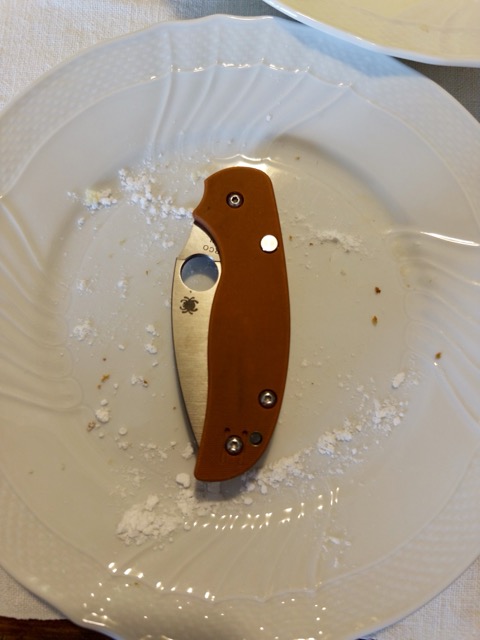
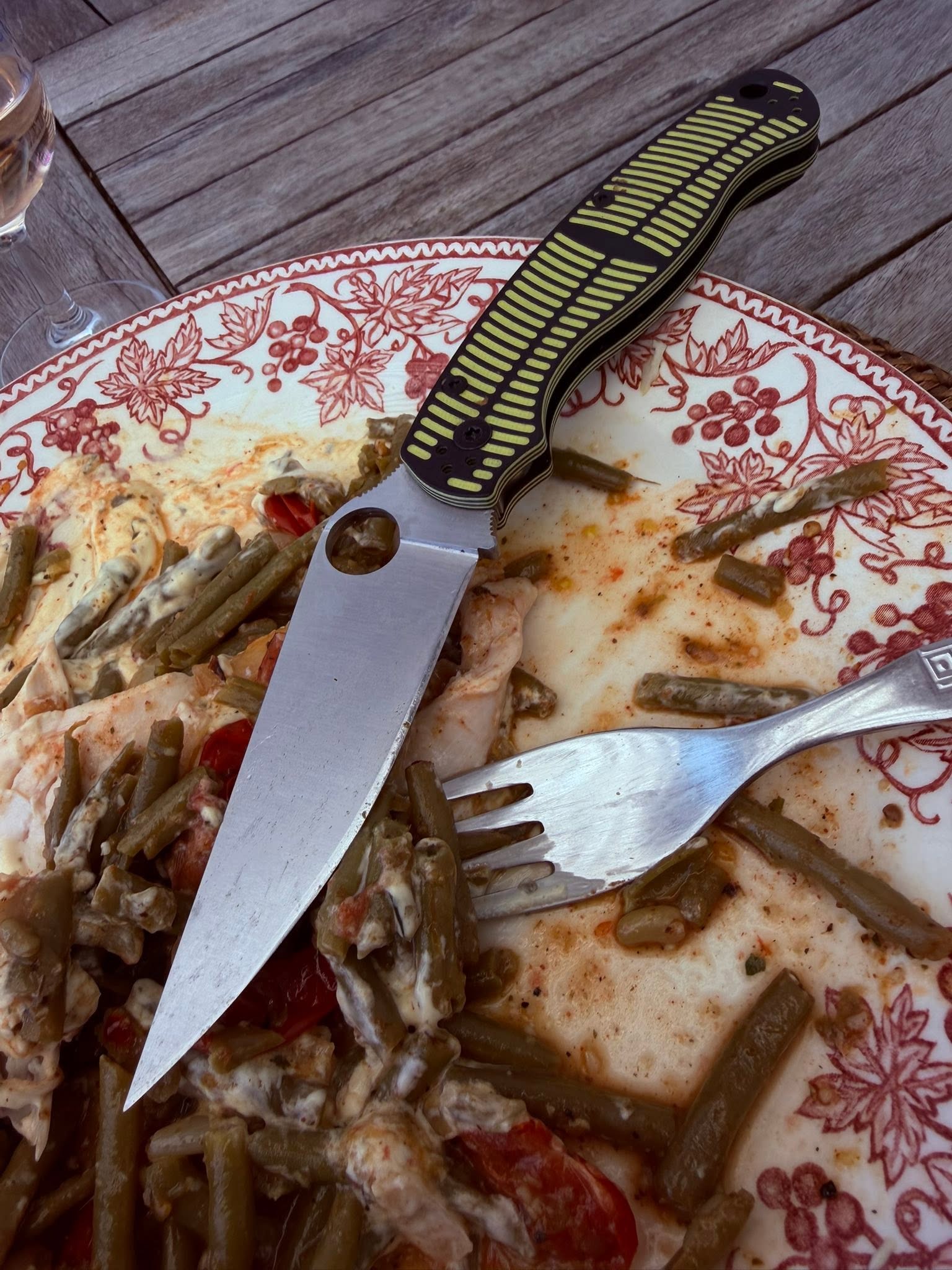
Anyone who has travelled with a good knife knows exactly what this means. You hand it to somebody at the table and, before you have time to say anything, they are cutting something on a ceramic plate.
And ceramic is about as far from knife-friendly as you can get.
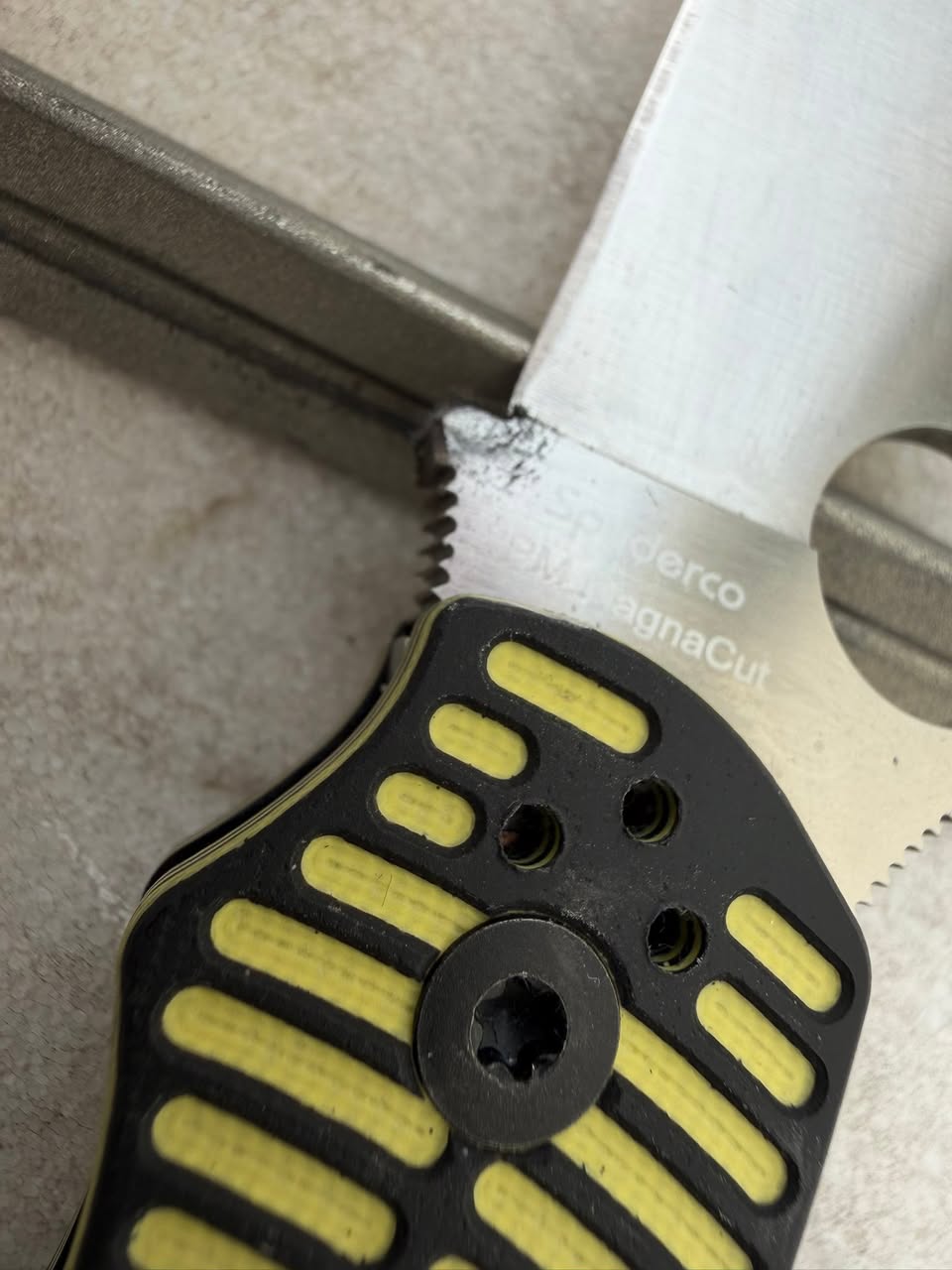
There were moments when I watched my beautiful Rex 121 edge being dragged across plates and thought: Well, that’s another few microns gone.
I was wrong.
The plate suffered. Not the knife. Hé hé ! 🙂
Anyway, I wasn’t going to sharpen it.
Whatever happened, happened.
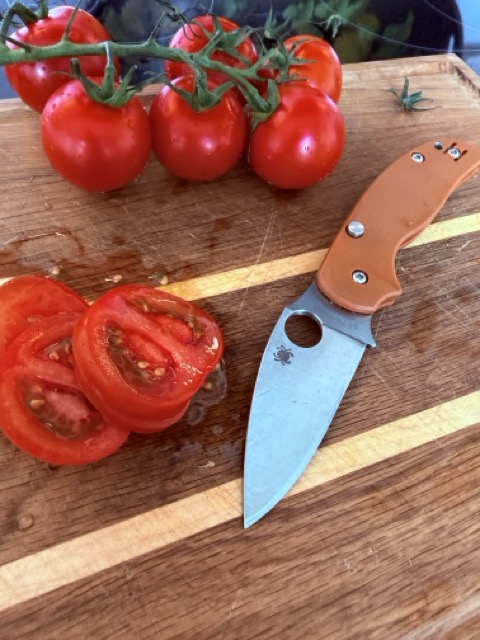
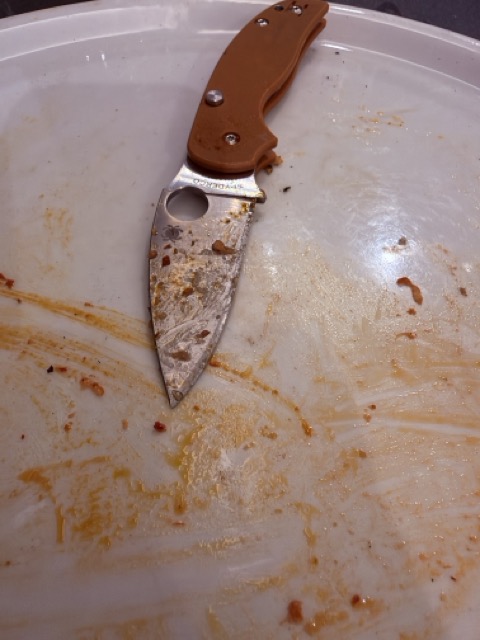
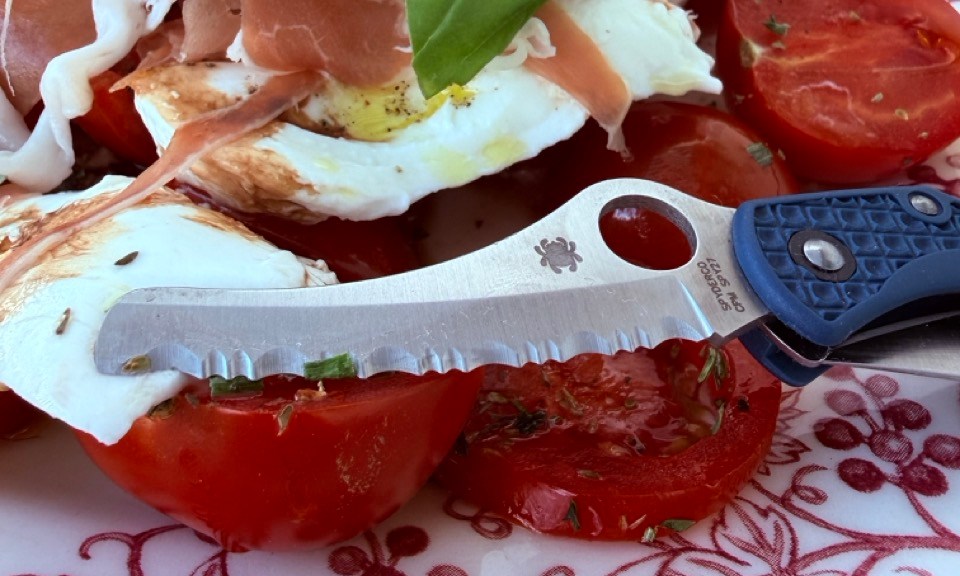
A little bit of tomato juice. A little bit of vinegar. (Like the song Mambo N°5, this would be Tango N°5 !!) A little bit of bones in my life A little bit of frozen food by my side A little bit of hard cheese‘s all I need (cut on the plate) A little bit of crusty bread‘s what I see (short blade for big piece of bread !) A little bit of citrus in the sun, and it dries on the blade. A little bit of fennel all day long A little bit of pits, here I am A little bit of ceramic makes me a man
I also decided to treat the Sage 6 slightly like I would treat a Manix 2 Salt !
Not because Rex 121 is suddenly a stainless steel miracle — it isn’t — but because I wanted to see how it behaved when I simply stopped worrying about it.
Sometimes vinegar.
Sometimes there was tomato juice on the blade.
Sometimes I didn’t clean it immediately.
Sometimes olive oil or the grease from the meat were coating the blade anyway…
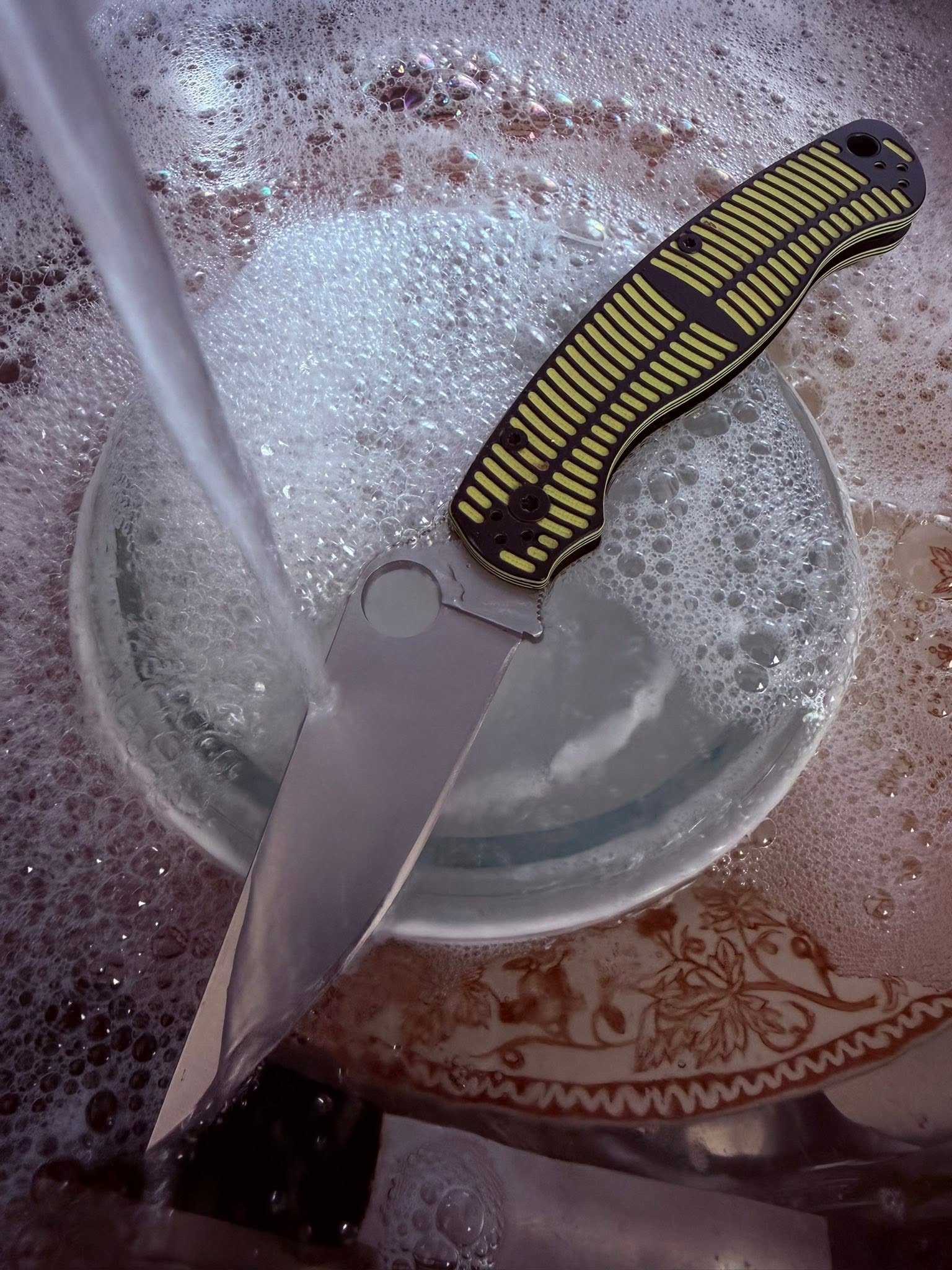
I would occasionally rinse my Tango under running water, mainly because I still wanted a clean knife that I could use for food.
But I wasn’t obsessively wiping the blade down after every use.
The knife was travelling.
It was being used. And yet, it wasn’t developing any real patina.
That surprised me.
Natural (Medium)
Even when it was being left alone.
But that was the point.
Natural (Medium)
And then I came home…
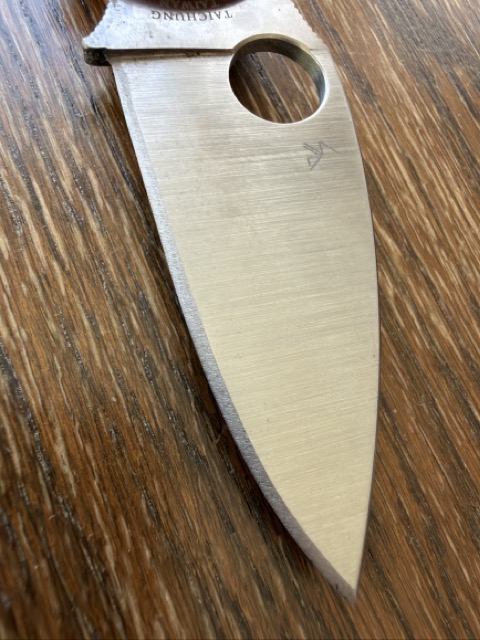
After fourteen days, I finally had the opportunity to really examine what had happened to the edge.
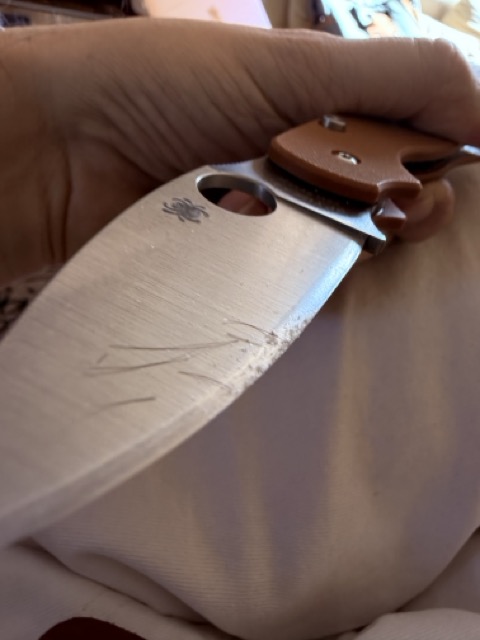
And this is where the story became interesting. I had expected the knife to be tired. I had expected some degradation. I had certainly expected that the edge would no longer shave. It was not.
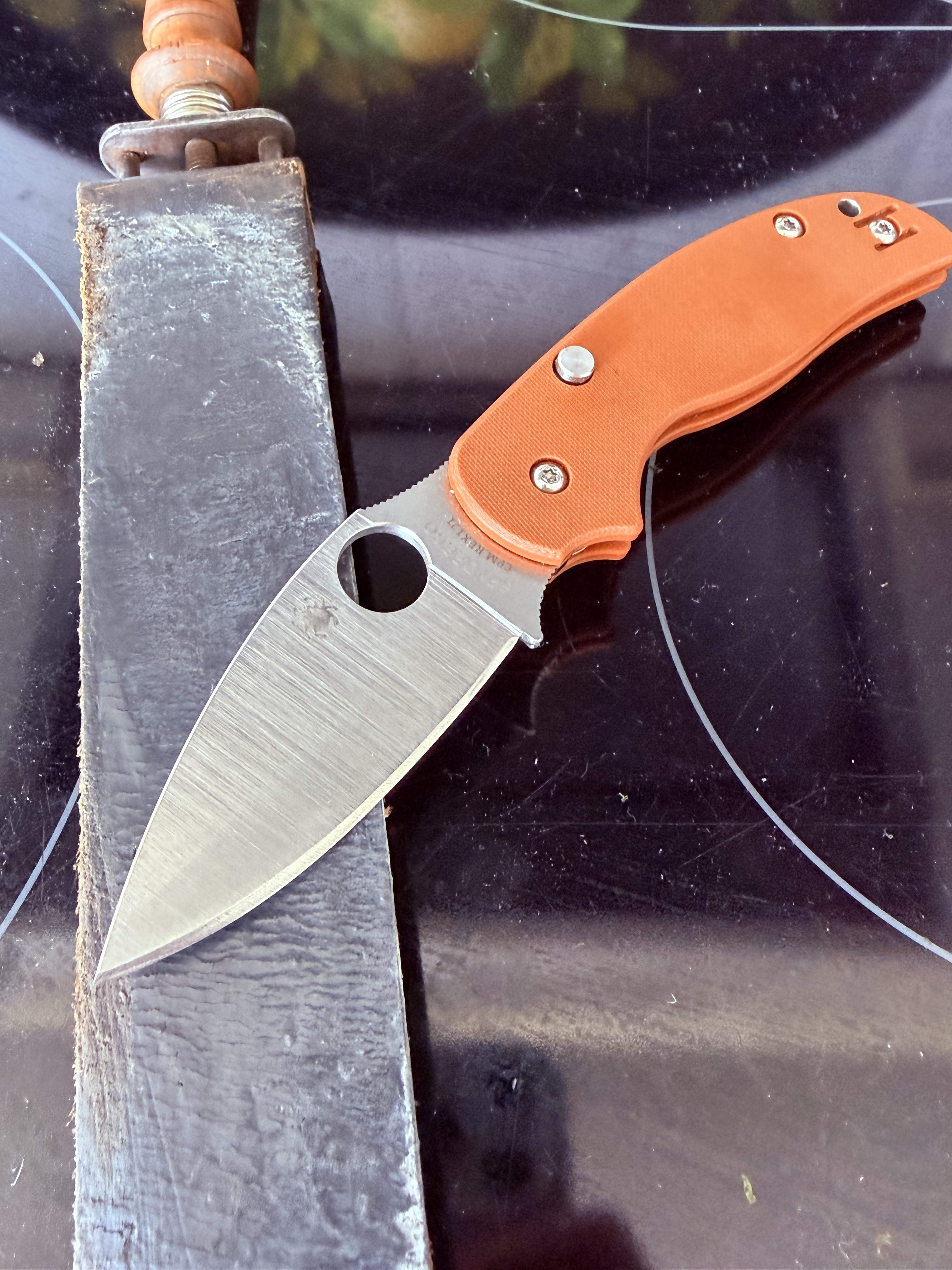
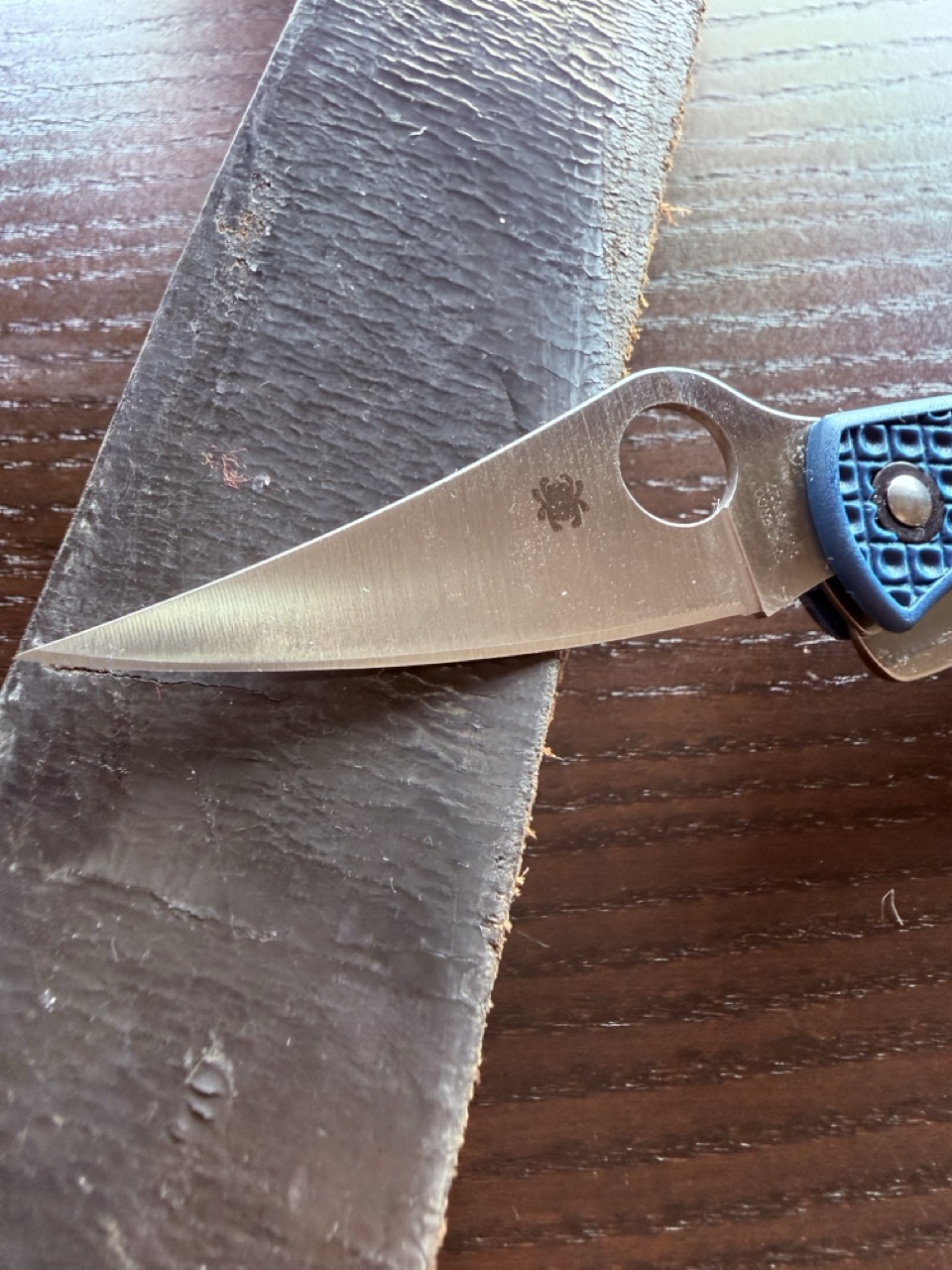
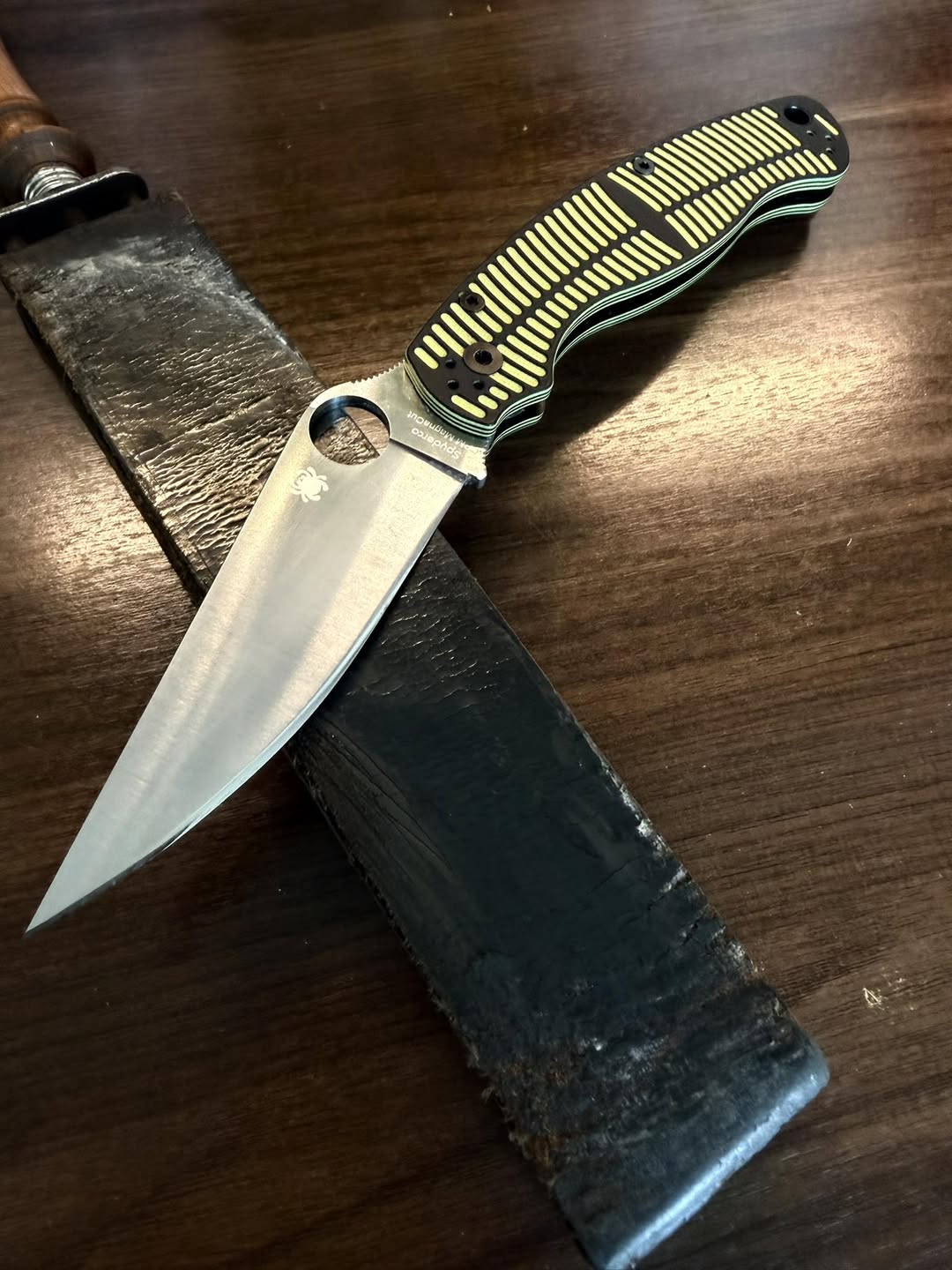
But I gave it a little time on my barber’s leather strop.
That’s it. No cardboard. No stones. No jade. No ceramic. No diamond.
Just a few passes on that very old charged leather.
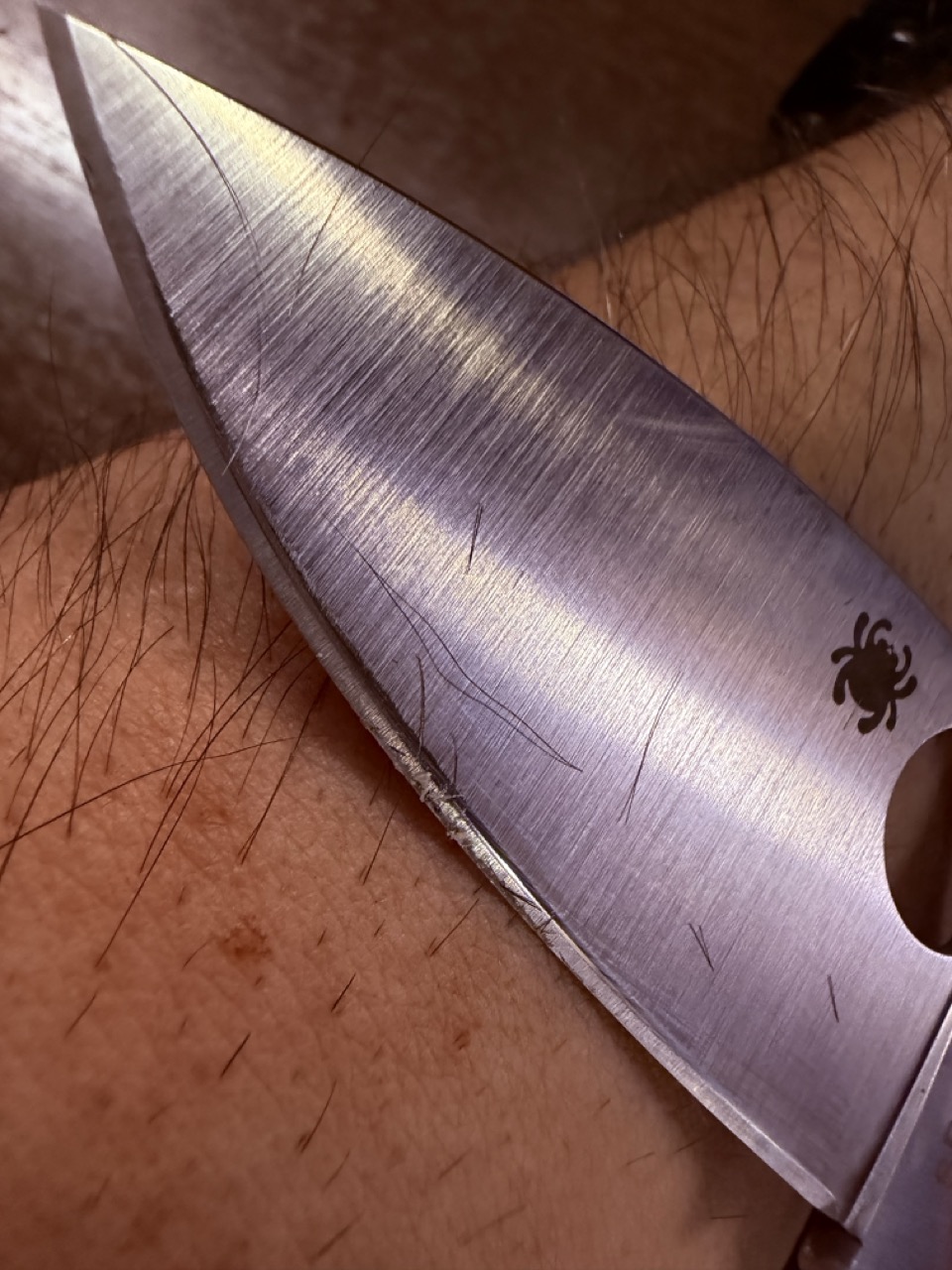
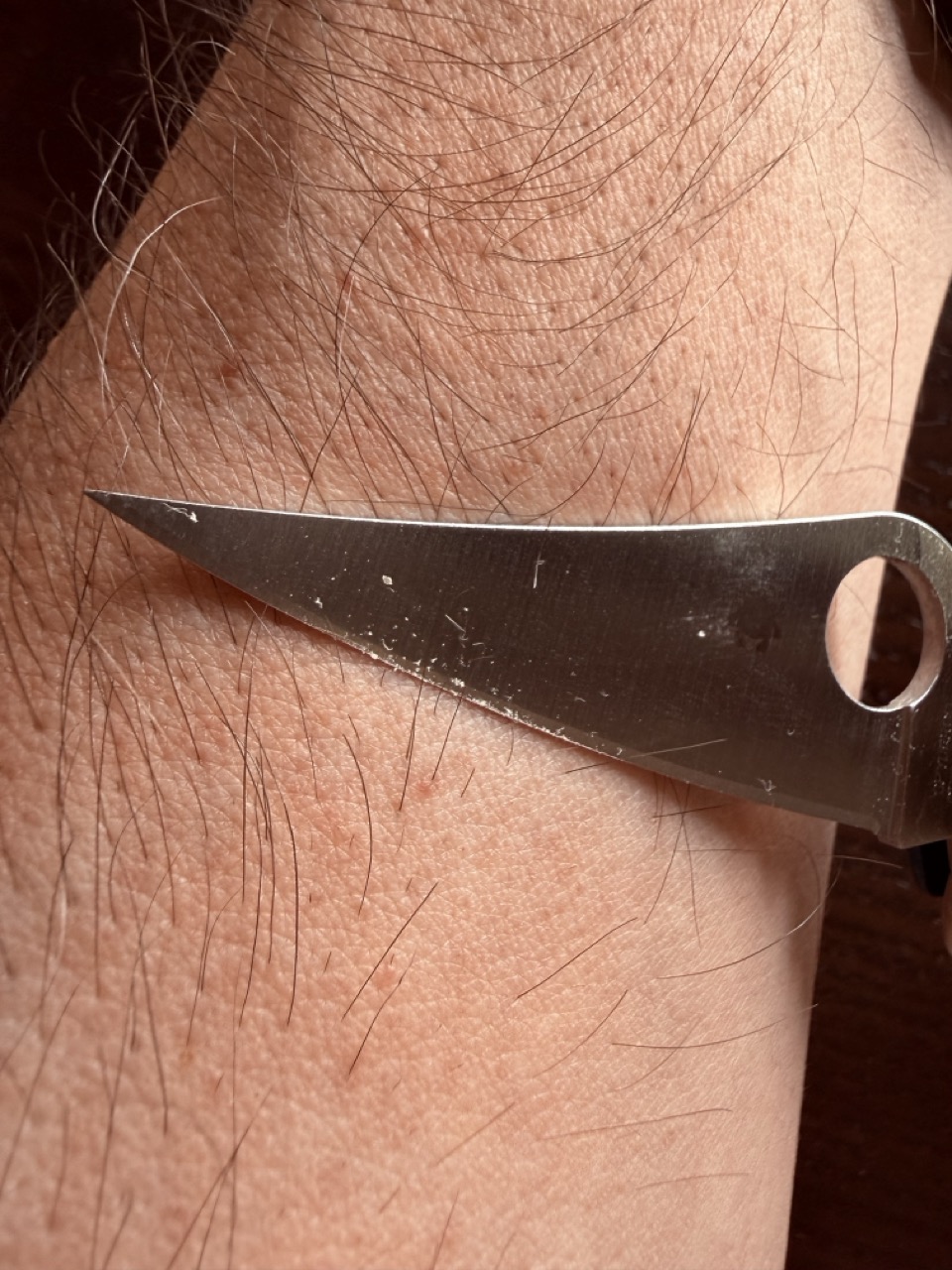
Then I tried it on the hair of my forearm.
It shaved again.
Not just technically.
It was still an extremely aggressive, extremely fine cutting edge.
And that was the moment when the whole experiment made sense.
The advantage of not polishing Rex 121
I think the finish of the edge was an important part of the result. Those micro-teeth are harder to kill on hard surfaces like ceramic plates.
And the leather strop was enough to bring it back to life.
That’s what impressed me most.
The knife didn’t need to be resharpened.
It simply needed to be refreshed.
There is a significant difference between the two.
Rex 121 in the real world
This little experiment also changed the way I look at Rex 121.
On paper, Rex 121 can seem almost absurd.
Extreme hardness. Extreme wear resistance. A reputation for being difficult to sharpen.
And yes, sharpening it is hard work.
But once you have put the geometry where you want it, the steel starts to make a lot more sense.
The Sage 6 carried an extremely acute, highly aggressive edge into a fourteen-day trip, and I simply used it.
I didn’t baby it.
I didn’t carry a second knife as a backup (but Sardin, which is always with me)
I didn’t sharpen it halfway through the trip.
I didn’t even particularly protect it from the kind of everyday situations that would make most knife enthusiasts wince.
And when I came home, the edge was still there.
Not perfect.
Not untouched.
But there.
A few passes on leather, and the Sage 6 was back to shaving.
Fourteen days. One knife.
That was ultimately the most satisfying part of the experiment.
The Sage 6 wasn’t sitting in a display case.
It was doing exactly what a pocket knife is supposed to do.
It prepared food.
It opened things.
It cut cardboard.
When I finally put it back on the leather, the Rex 121 reminded me why this steel has such a reputation.
That edge can be remarkably persistent.
Tango came back from Italy not looking like a laboratory specimen, but like a knife that had actually lived and been used.
It proved to be a remarkably reliable piece of equipment. No rust. No stains. And an edge that simply laughed at whatever material I threw at it. The kind of knife that makes all your other knives redundant. And that’s painful when you think about all the others that are now going to collect dust…
So yes, a Rex 121 blade on a Sage 6 — or a Sage 5 — makes for a fantastic EDC.
It can cut, and cut, and cut, and keep that working edge — no longer razor-sharp, but still seriously sharp — on and on and on.
And this is a fantastic experience.
No rust. No chipping. No stains. I’m amazed!
This is a beast of an EDC!
Thanks to the Spyderco Ambassador Program (*), I didn’t have to pay for this wonderful folder. But perhaps that was the best respect I could pay it: I actually used it.
Real luxury is quality. And in the knife world, quality is meant to be used.
(*) Disclosure: Tango is that Sage 6 REX 121 provided by Spyderco as a complimentary review sample through the Spyderco Ambassador Program. Receiving this amazing knife does not influence my opinions. Spyderco does not preview, edit, or approve my reviews, and all conclusions are based solely on my own testing and experience.
Disclosure: This is the same Sage 6 REX 121 as my last review, only one week later, provided by Spyderco as a complimentary review sample through the Spyderco Ambassador Program. Receiving this amazing knife does not influence my opinions. Spyderco does not preview, edit, or approve my reviews, and all conclusions are based solely on my own testing and experience.
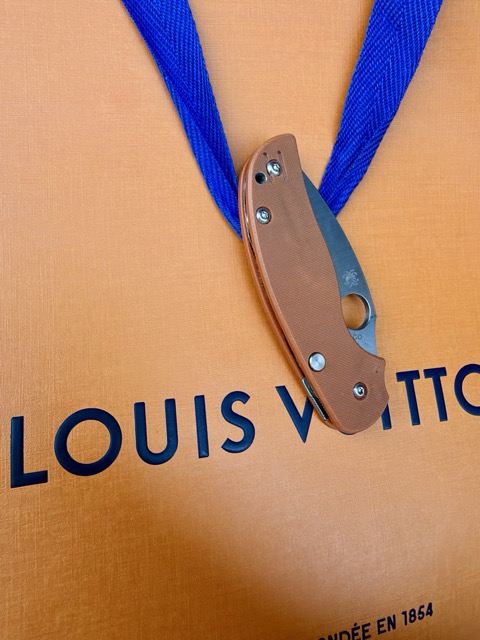
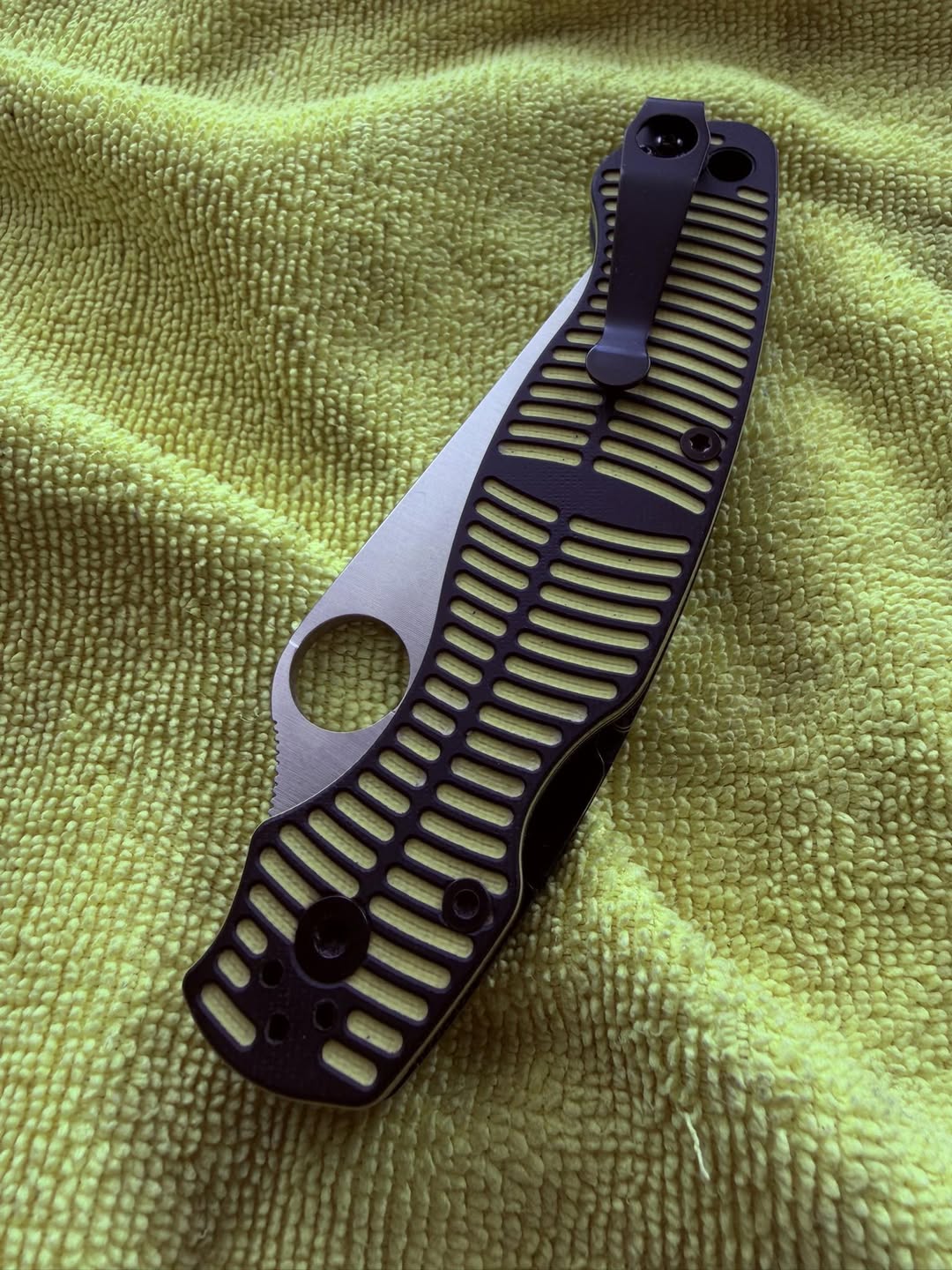
I call this Sage 6 “Tango”.
Why Tango? Because orange is the color that immediately comes to mind when I look at it — and because the name evokes the Argentine tango dancers of the early 20th century, with their flamboyant, warm-colored clothing.
So, for the rest of this review, Tango it is.
And this particular knife is about to take us somewhere rather unusual: into the world of REX 121, one of the most extreme cutting steels I have ever had the pleasure — and sometimes the frustration — of using.
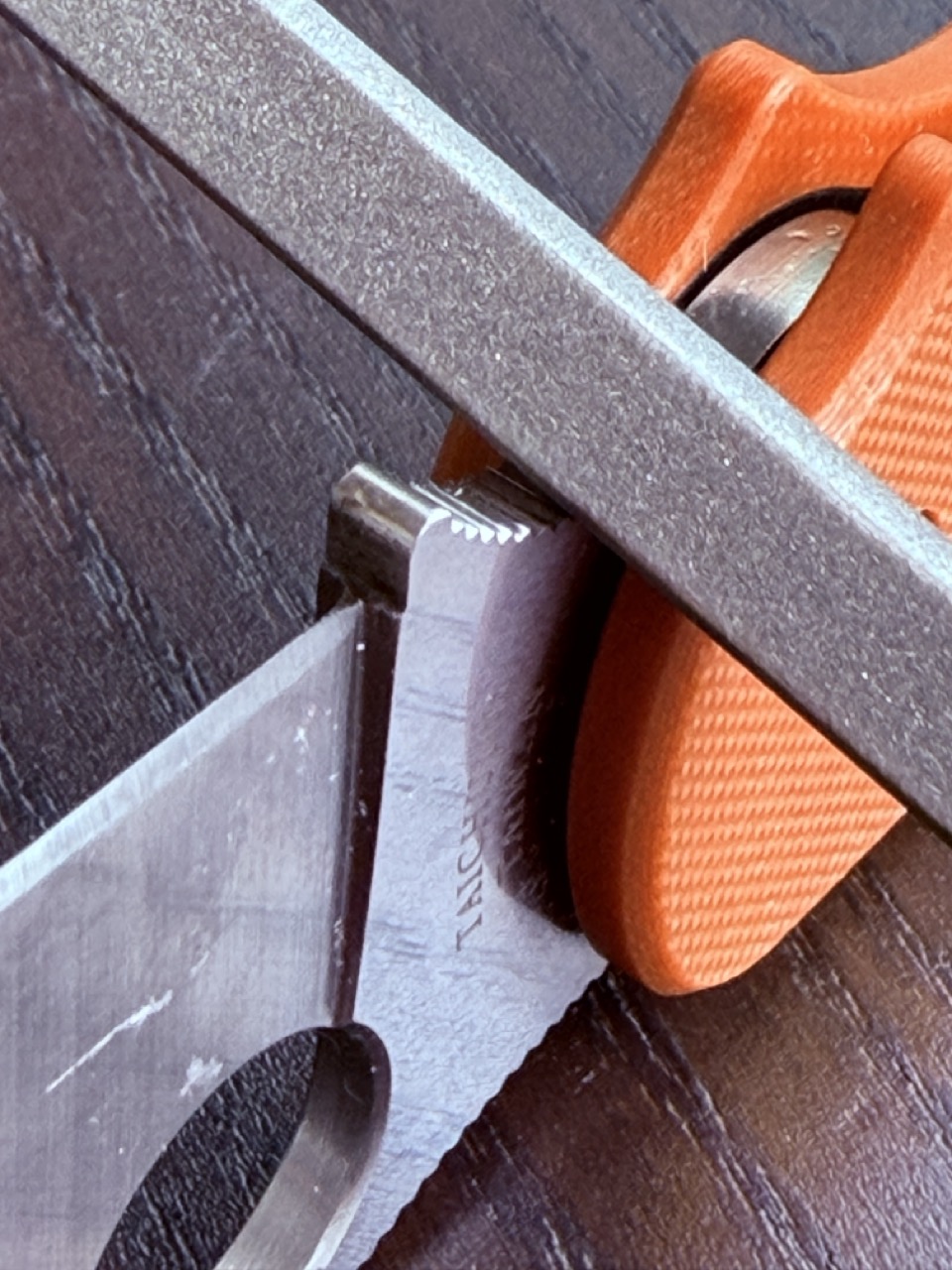
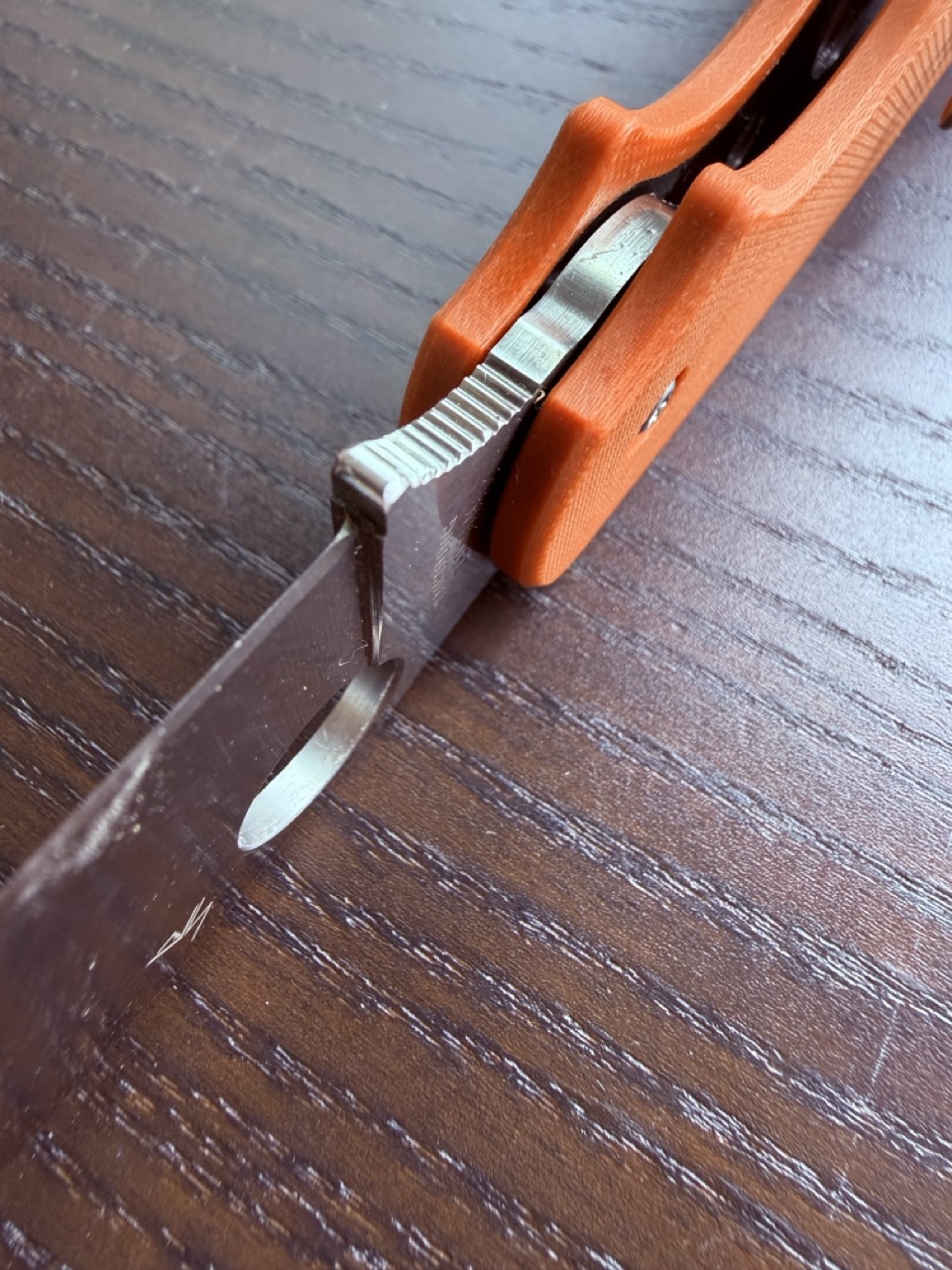
The Sage 6 Rex121 is not without its flaws. Like every Sage I’ve used, the quillon at the choil is just a little too sharp for my index finger.
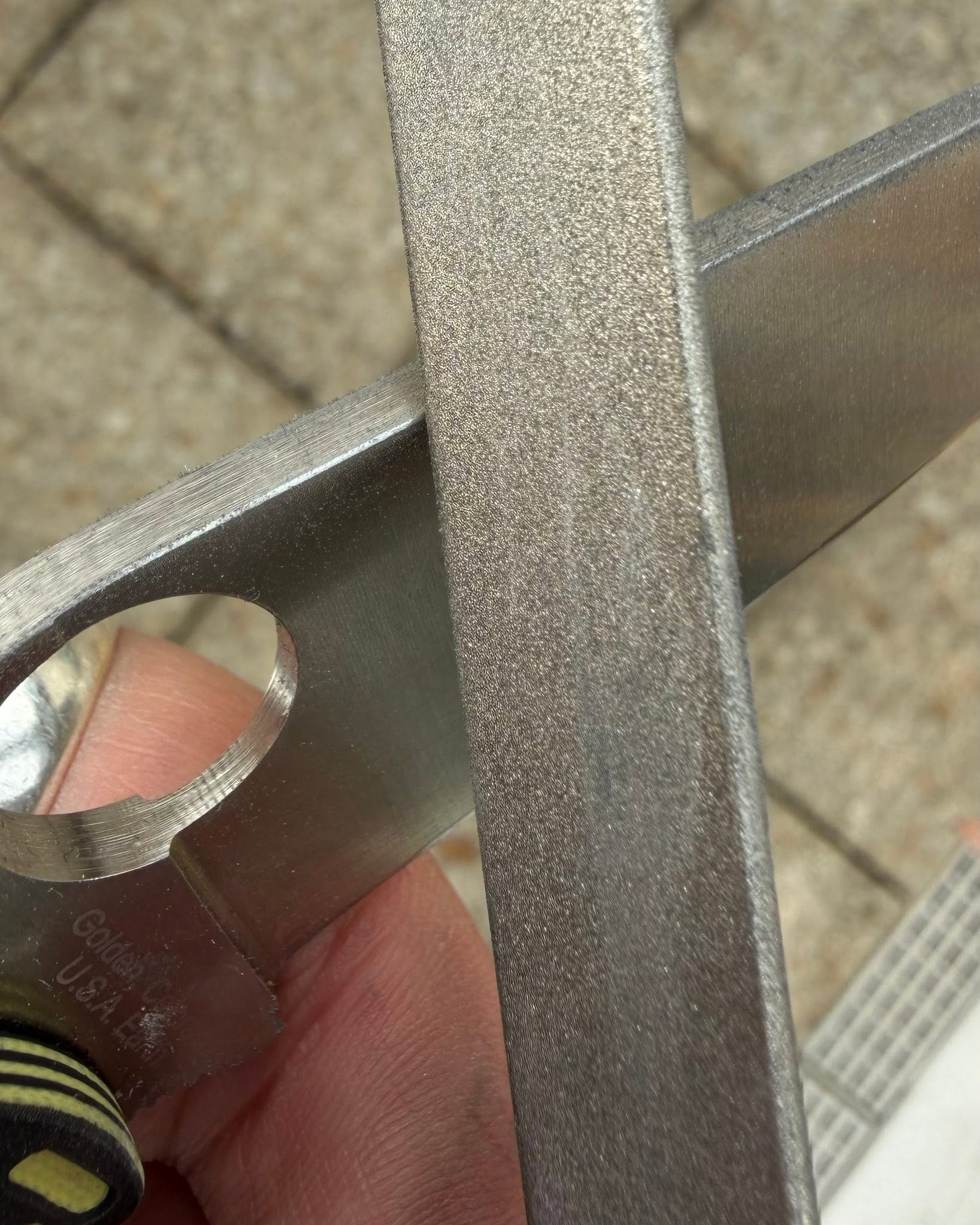
The idea was simple: just knock the edge down a bit with a diamond file. Well, it’s moments like this that make you realize just what a fucking bastard of a steel REX 121 is to file!! Pardon my French.
And on that note, I still haven’t achieved the convex edge I ultimately want. One thing is certain: REX 121, with its huge percentage of tungsten and cobalt, responds politely only to diamond.
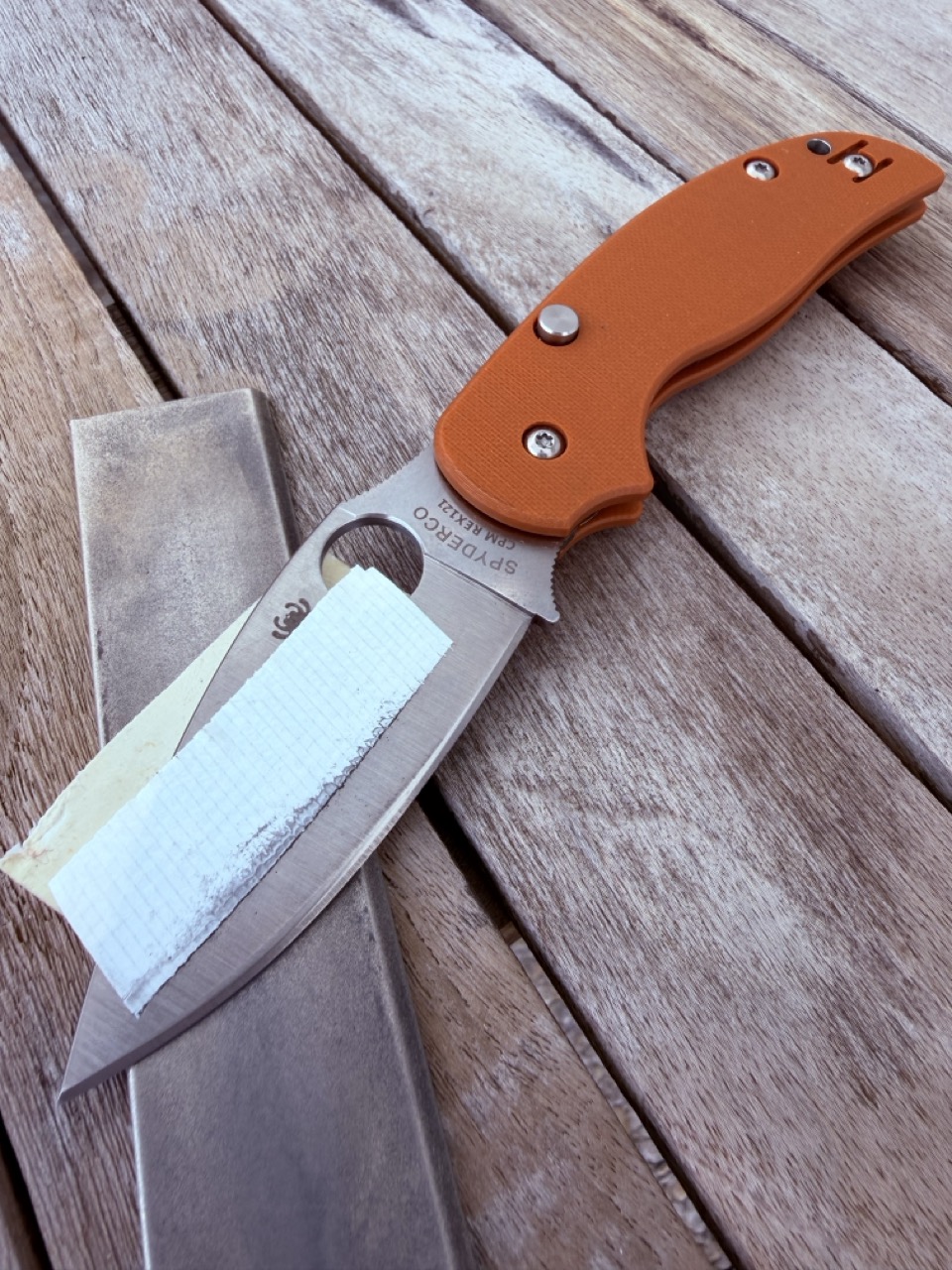
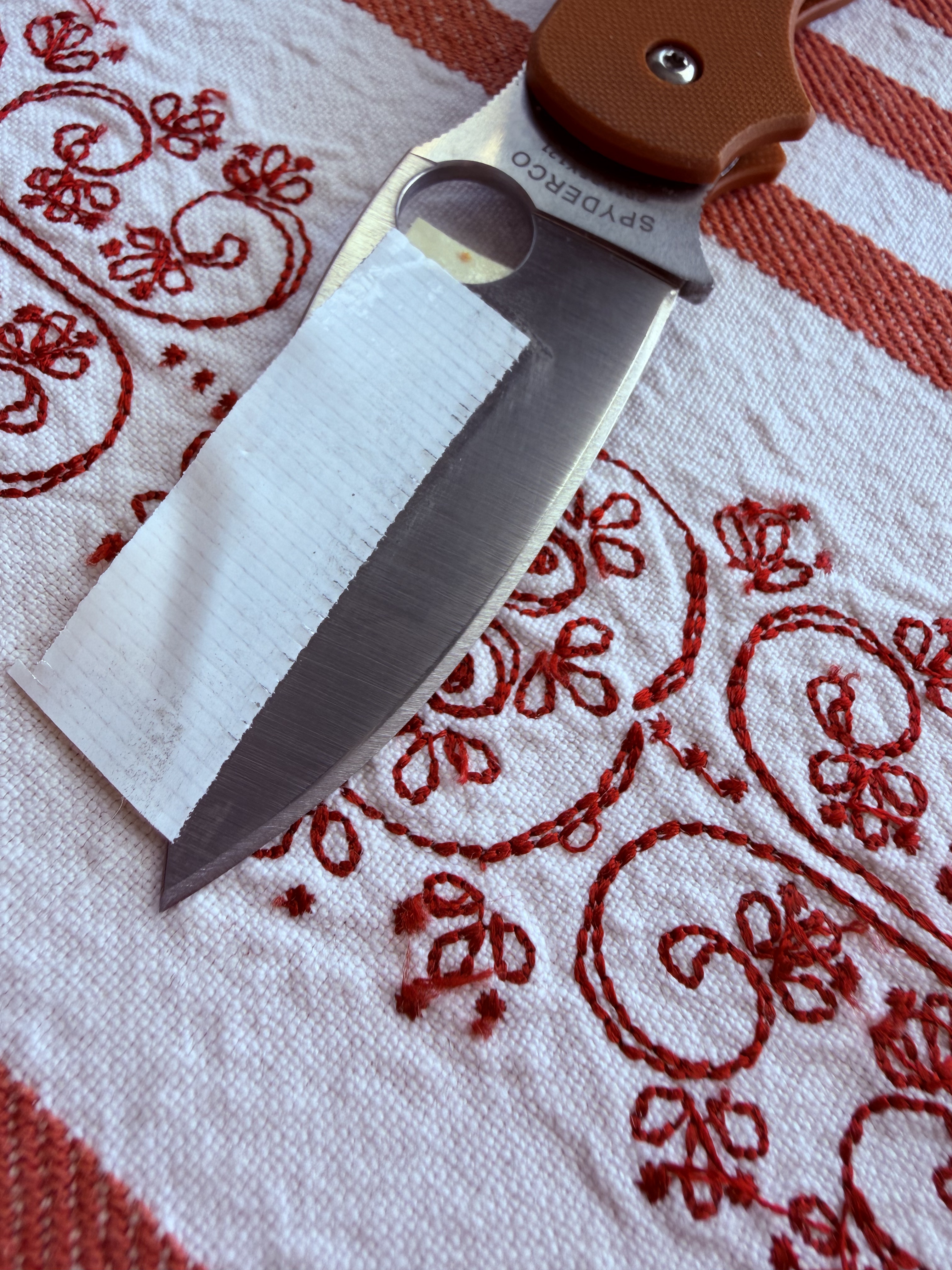
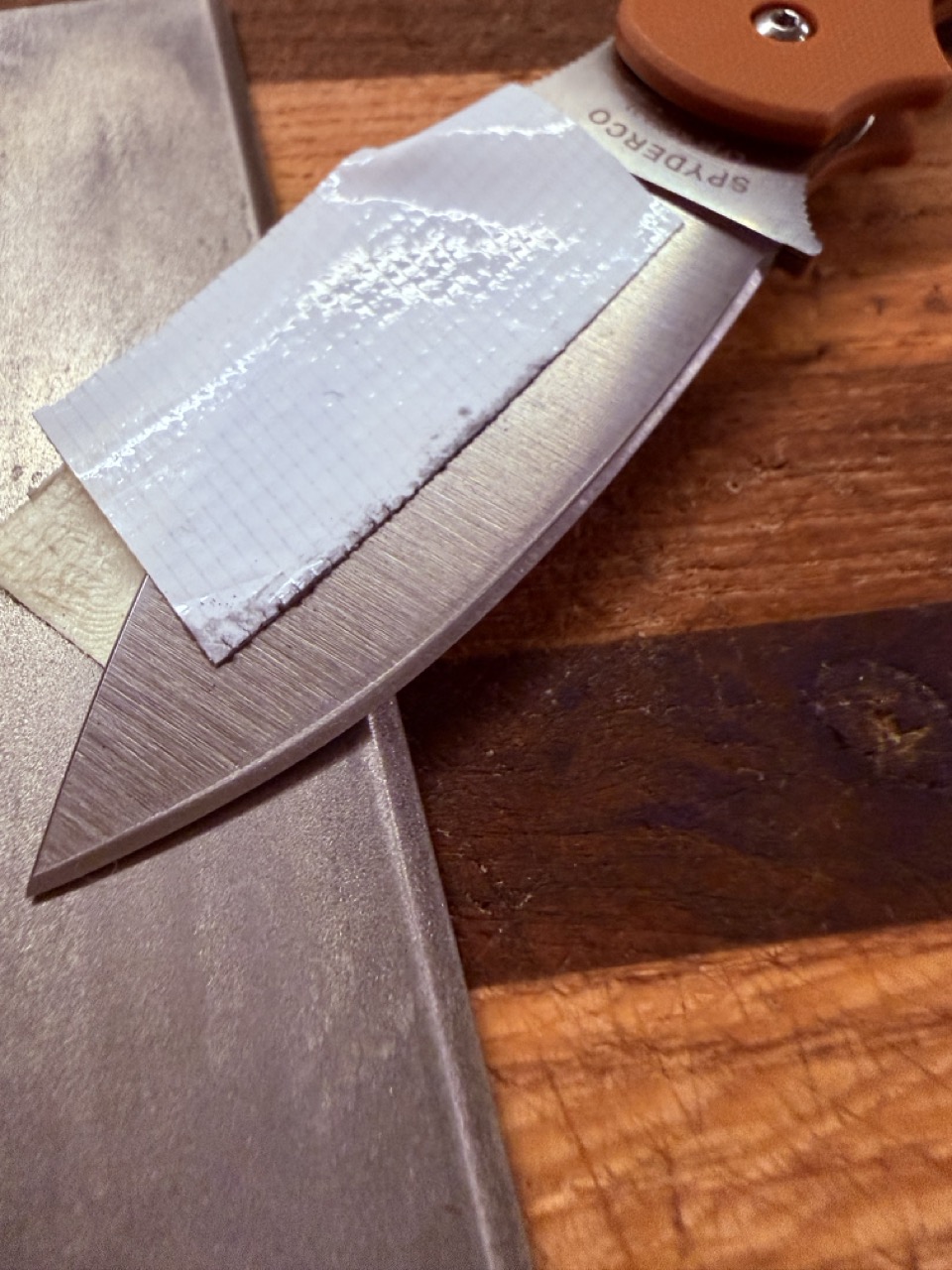
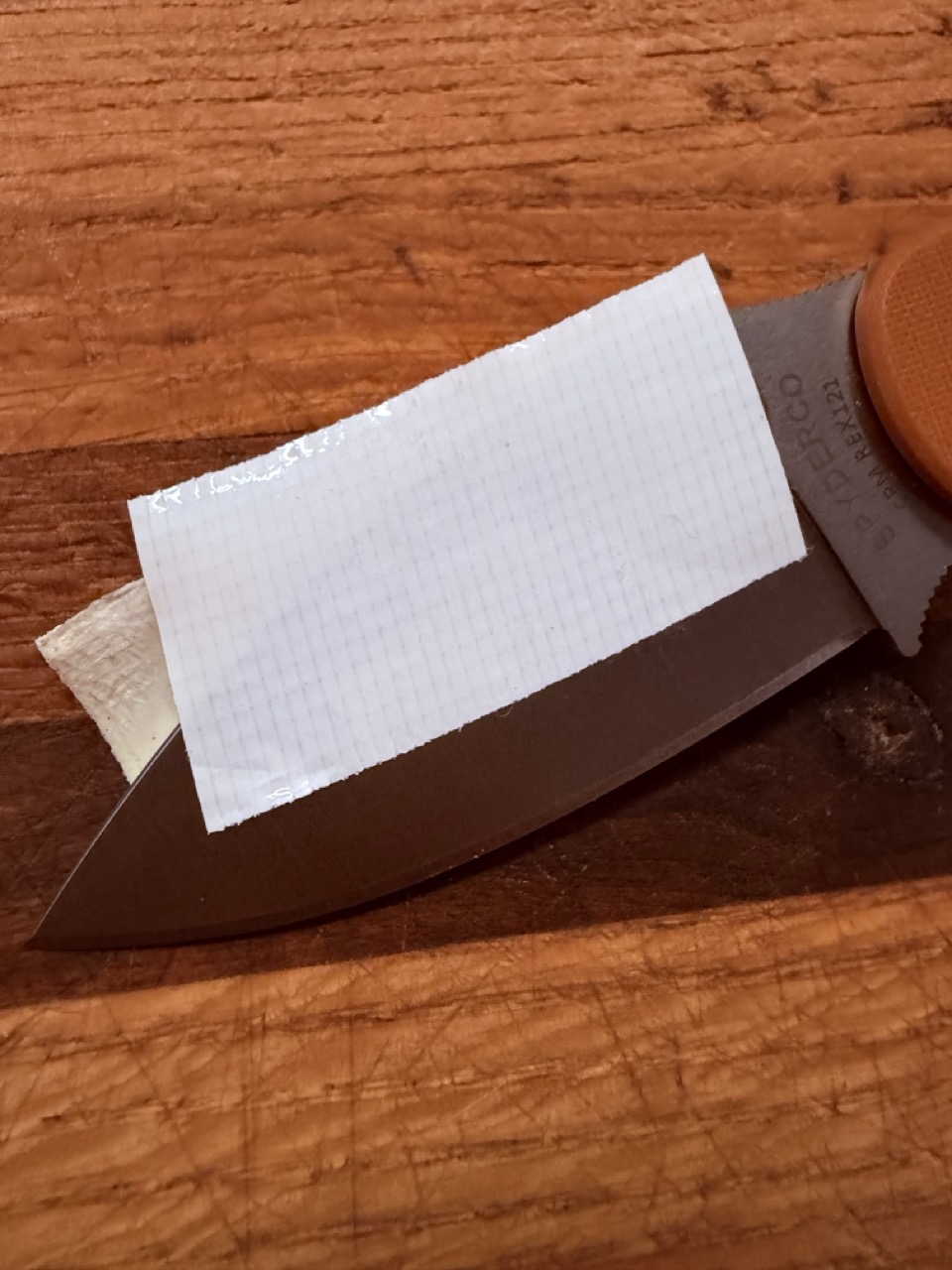
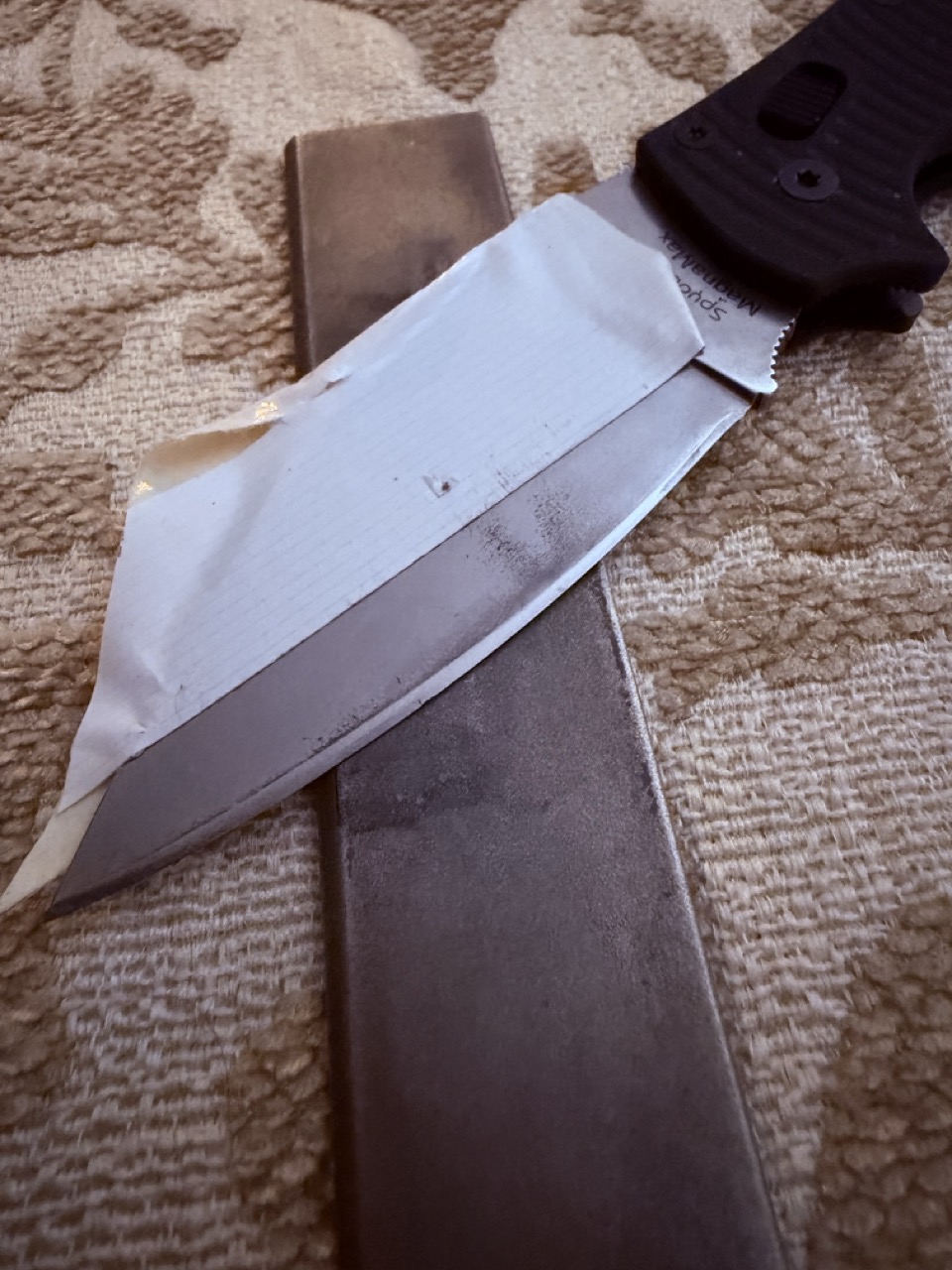
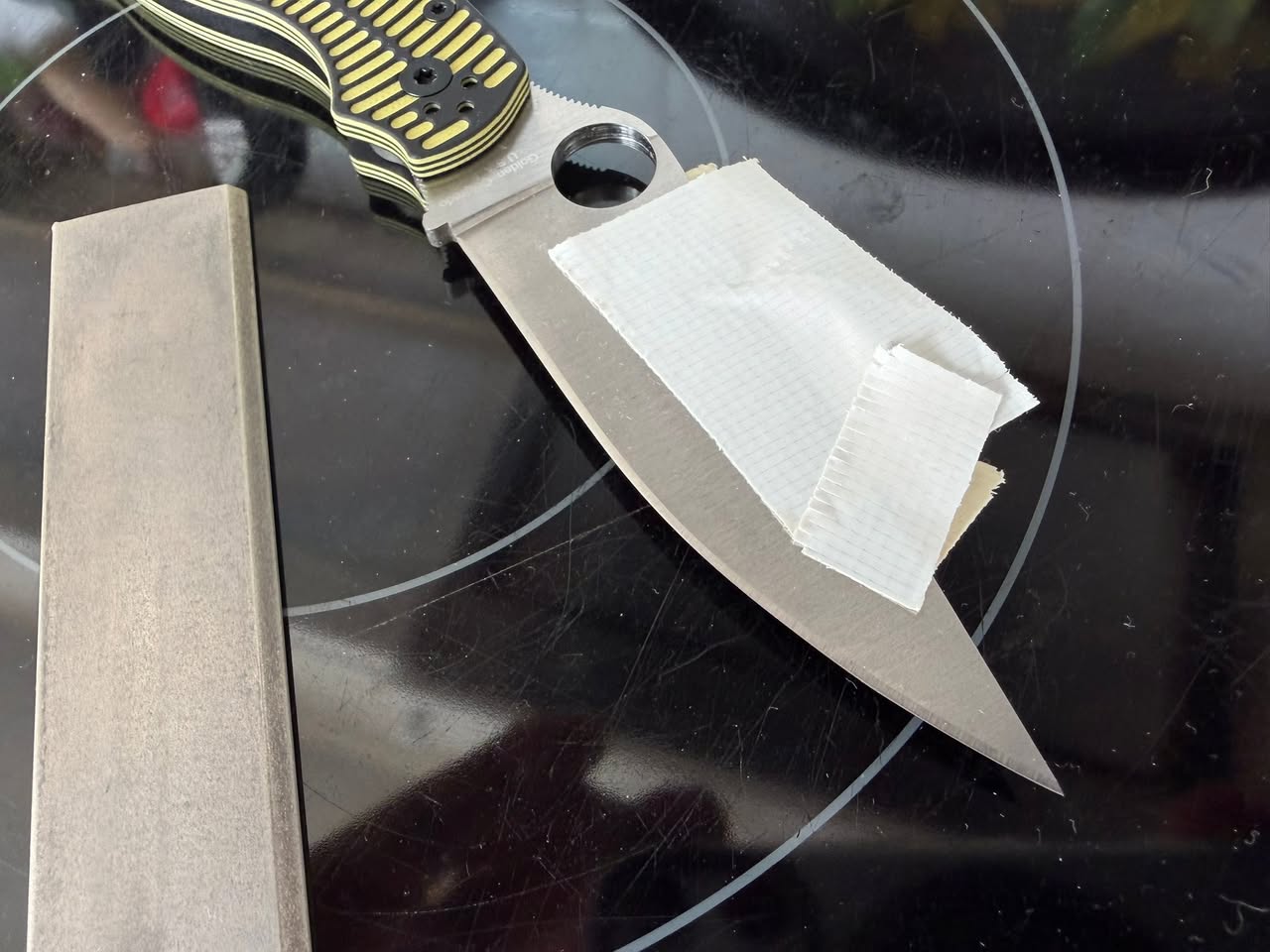
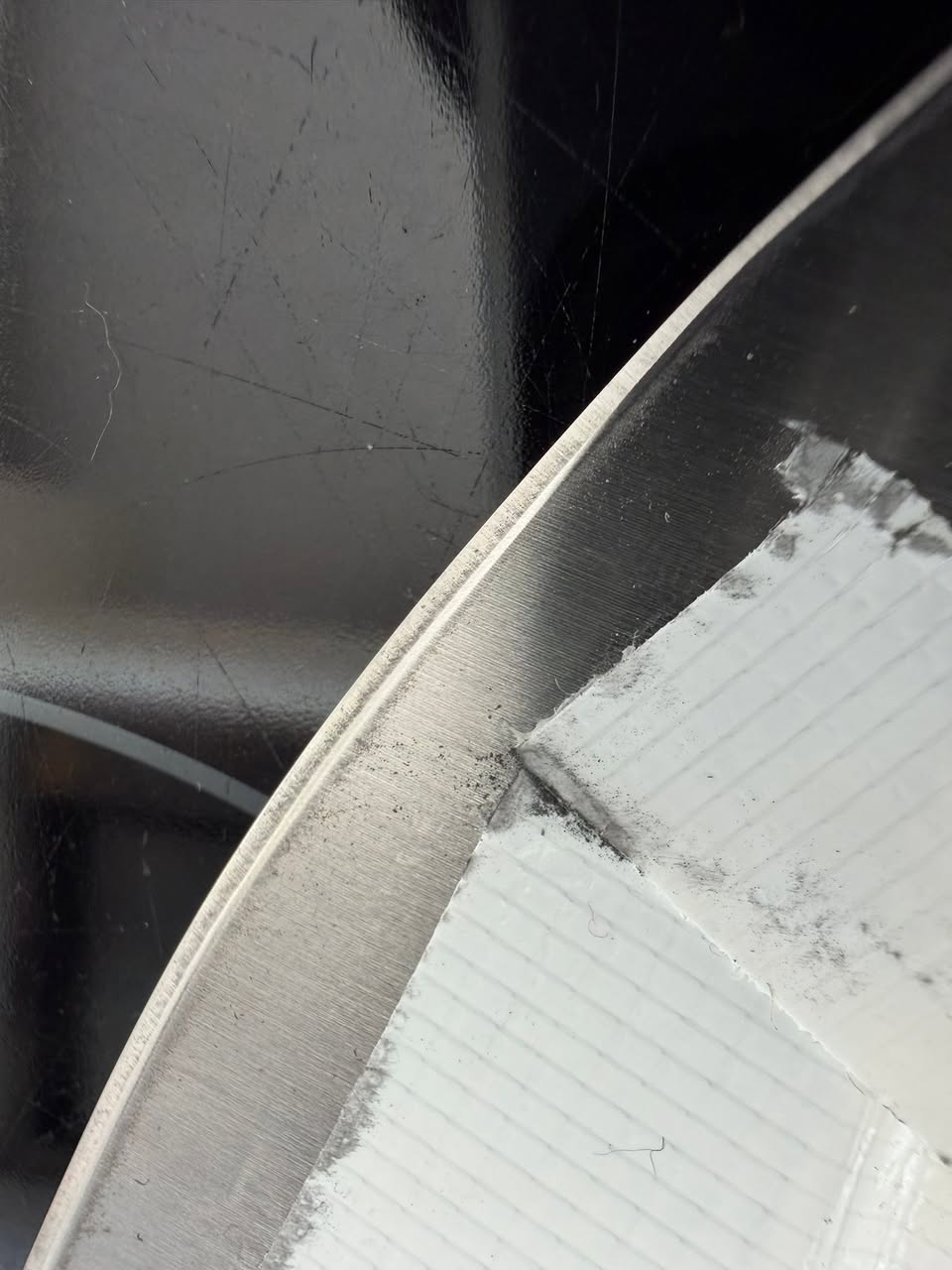
As I’m rather clumsy, I use gaffer tape to protect my blade’sides from scratches I might otherwise cause. Diamonds are unforgiving. And remember I don’t really sharpen; I reshape that edge, rounding off the angle and turning the original bevel into something more convex and organic — and, above all, much easier to maintain freehand.
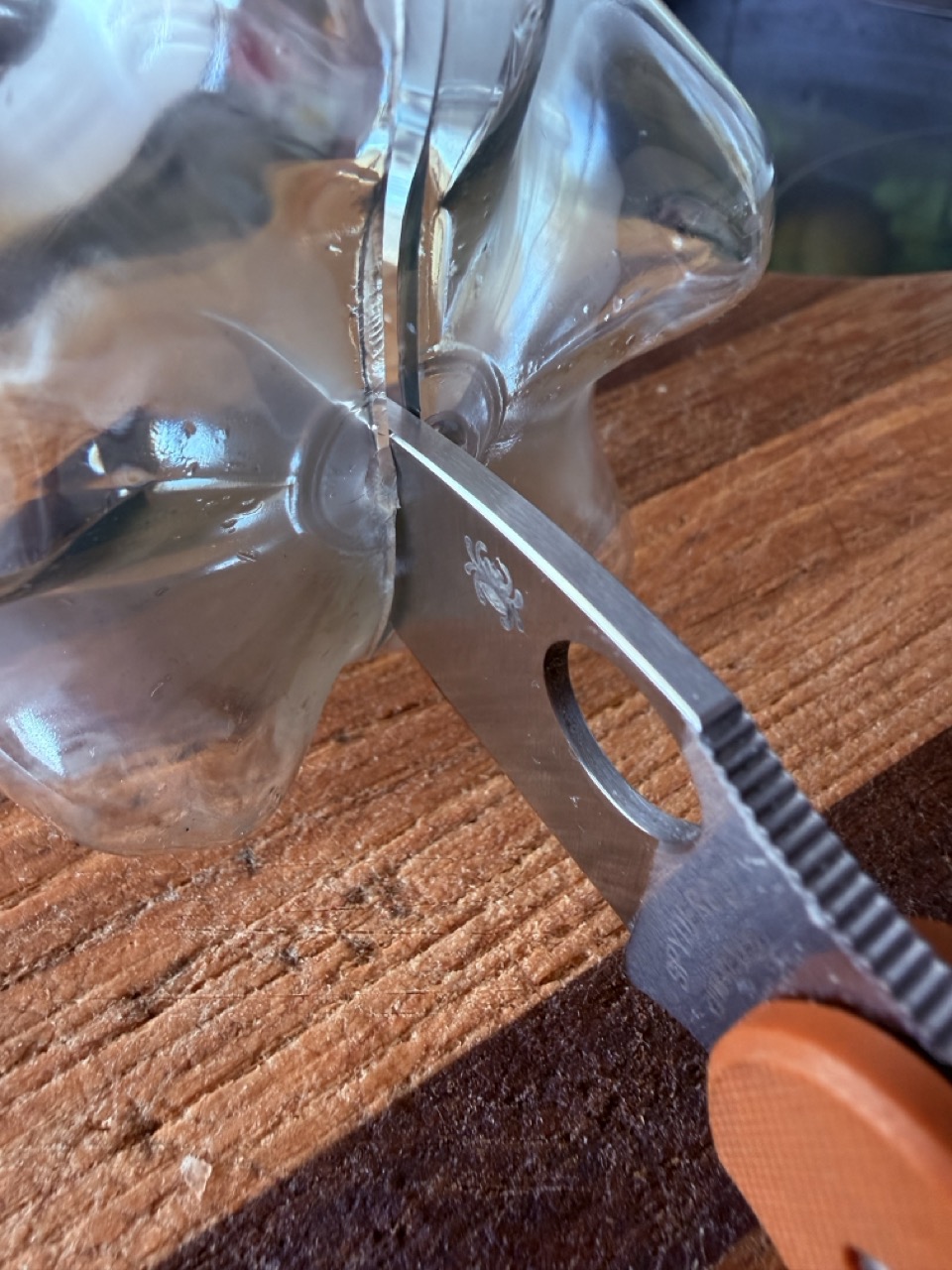
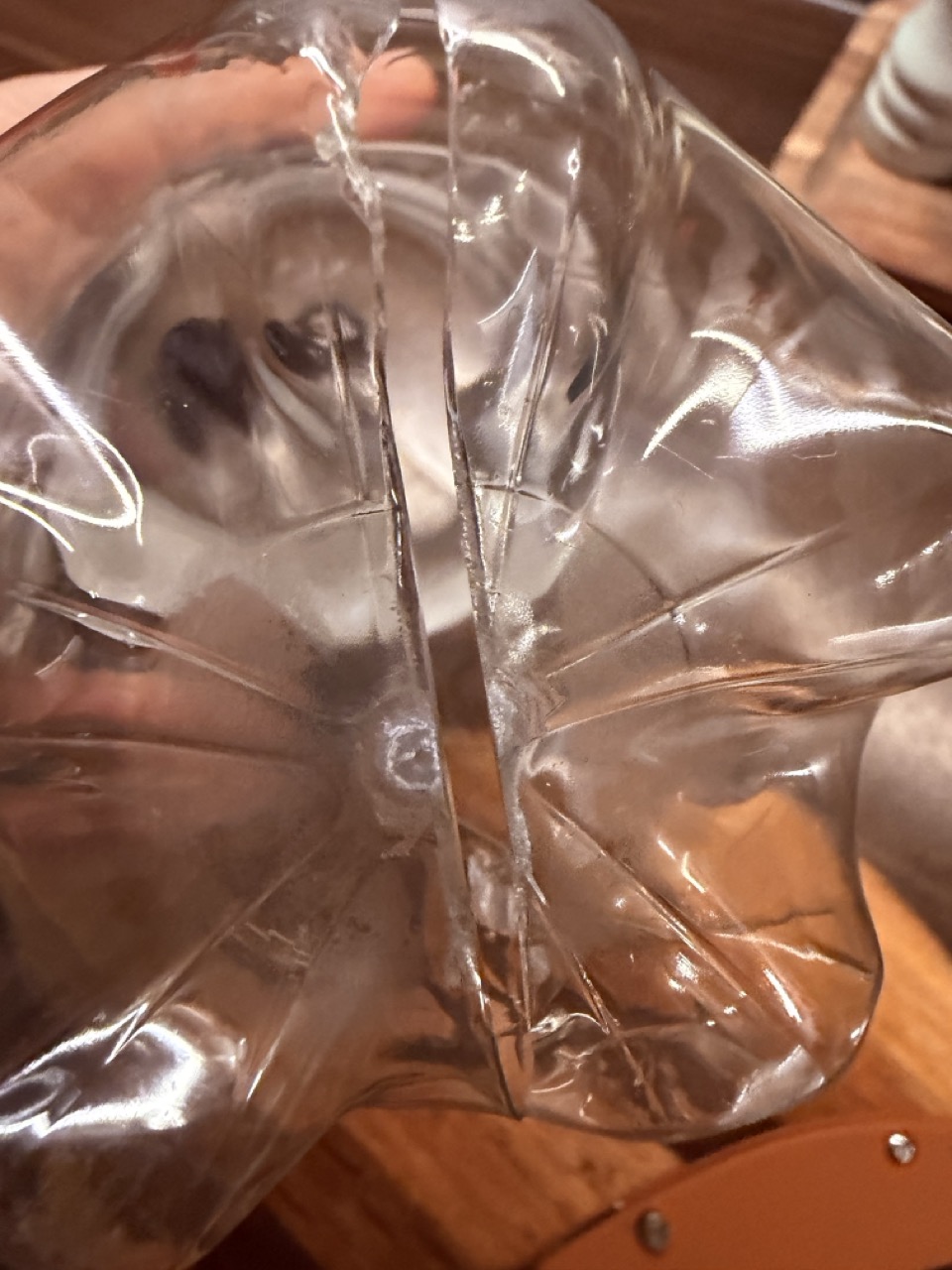
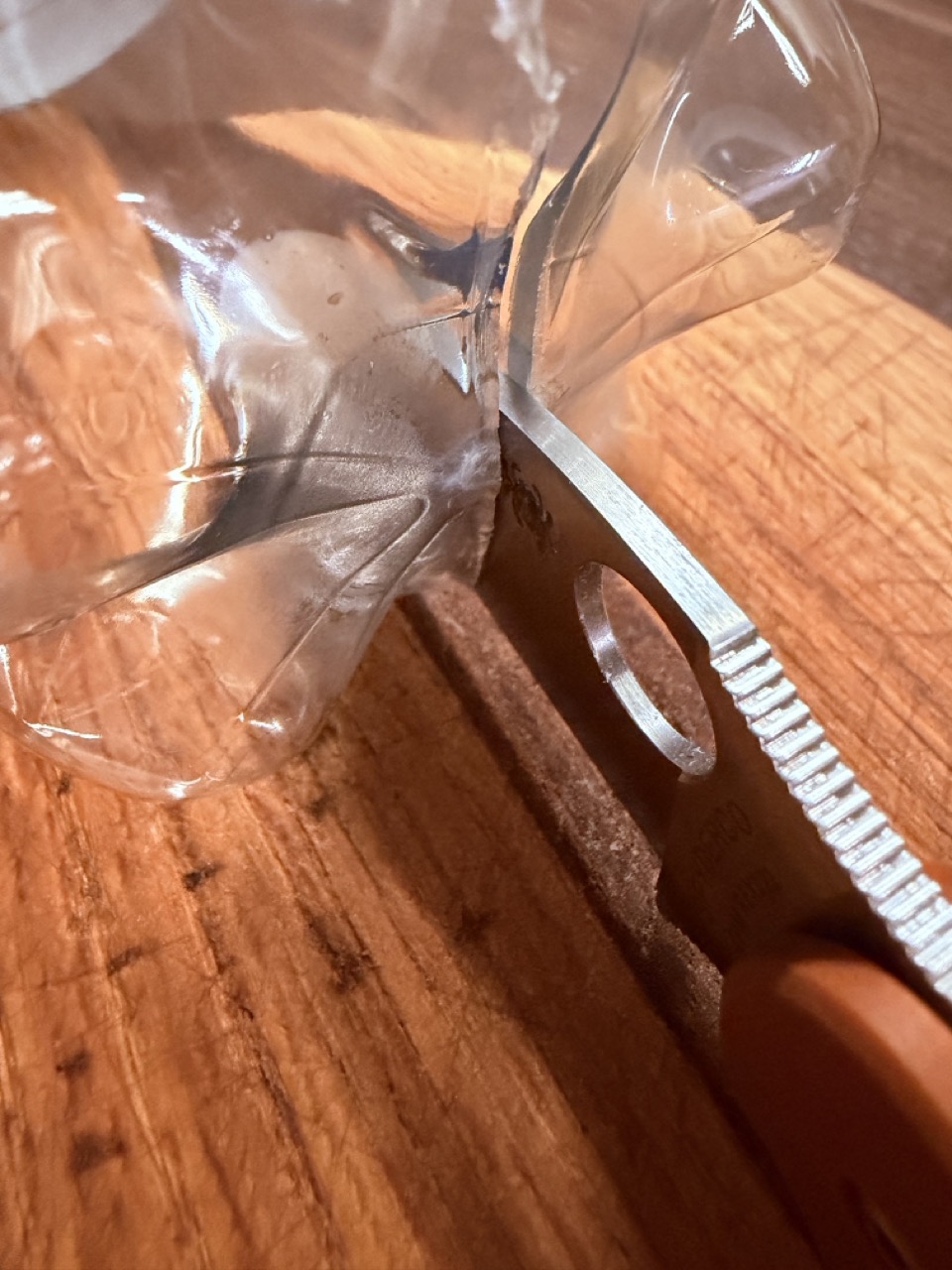
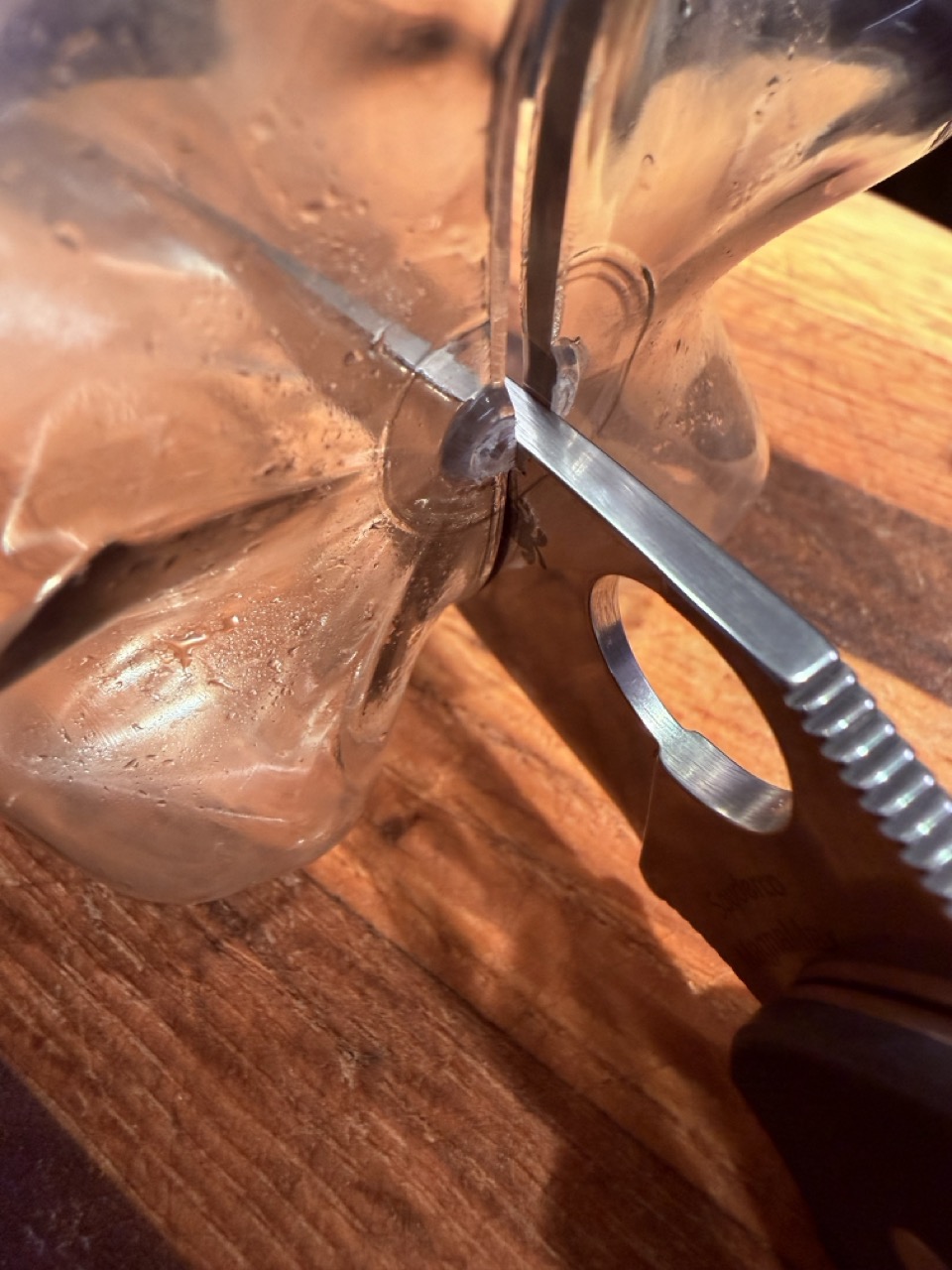
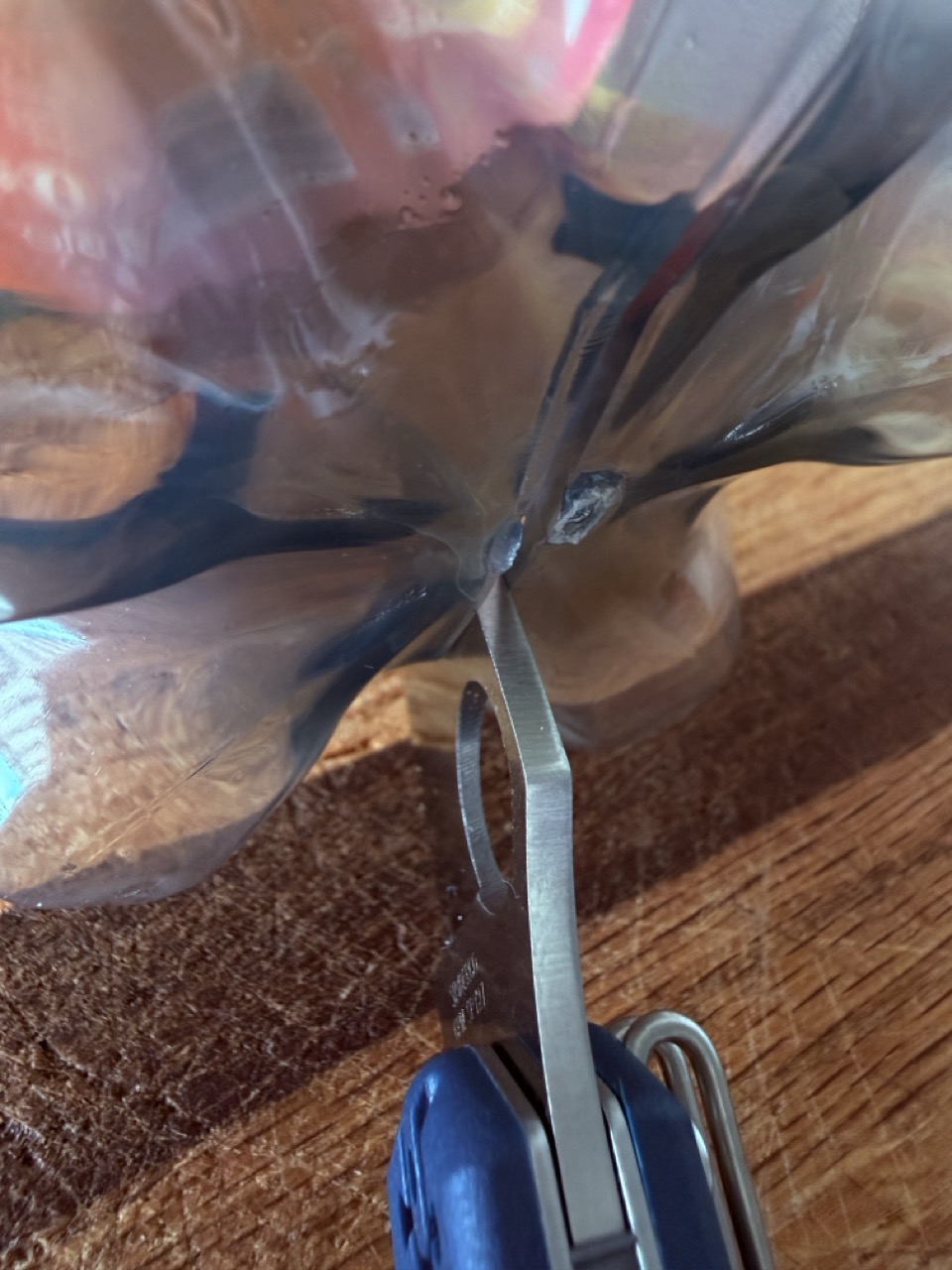
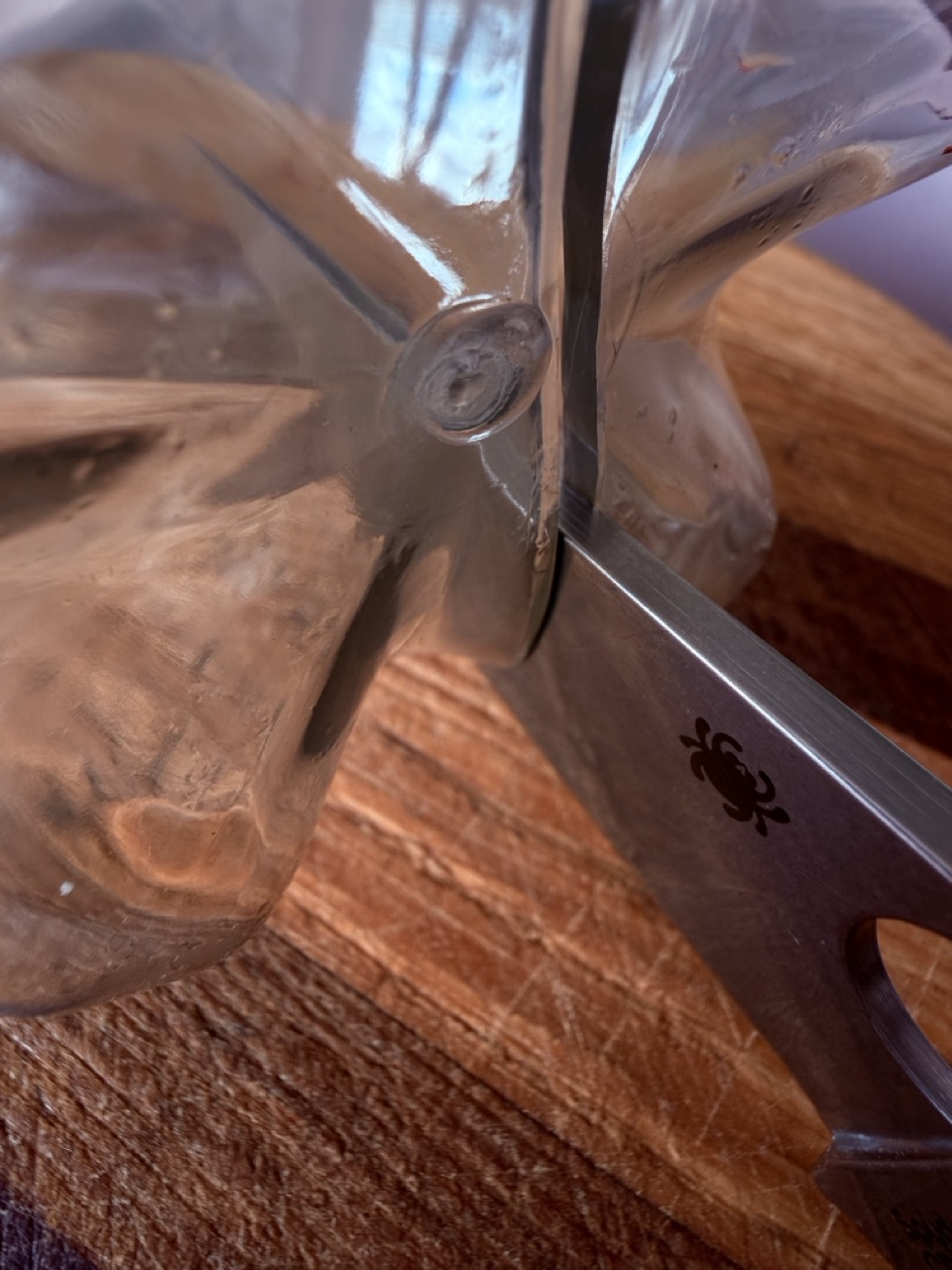
The result is immediately apparent in my test, where I push-cut through the bottom of a Coca-Cola plastic bottle. The plastic is thickest right in the center of the bottle’s base, where it corresponds to the injection gate used to form the bottle.
Straight out of the box, Tango couldn’t cut through it. Once I had convexed the edge, however, the blade went through it with ease. (But when it comes to this particular test, the Nilakka by Pekka Tuominen wins every single time as also Opinel’s thin blades…)
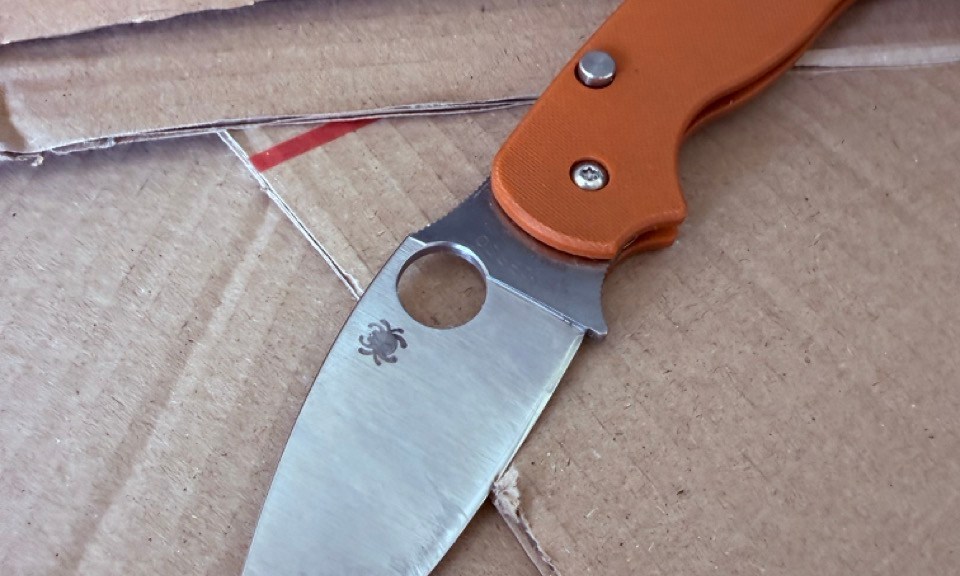
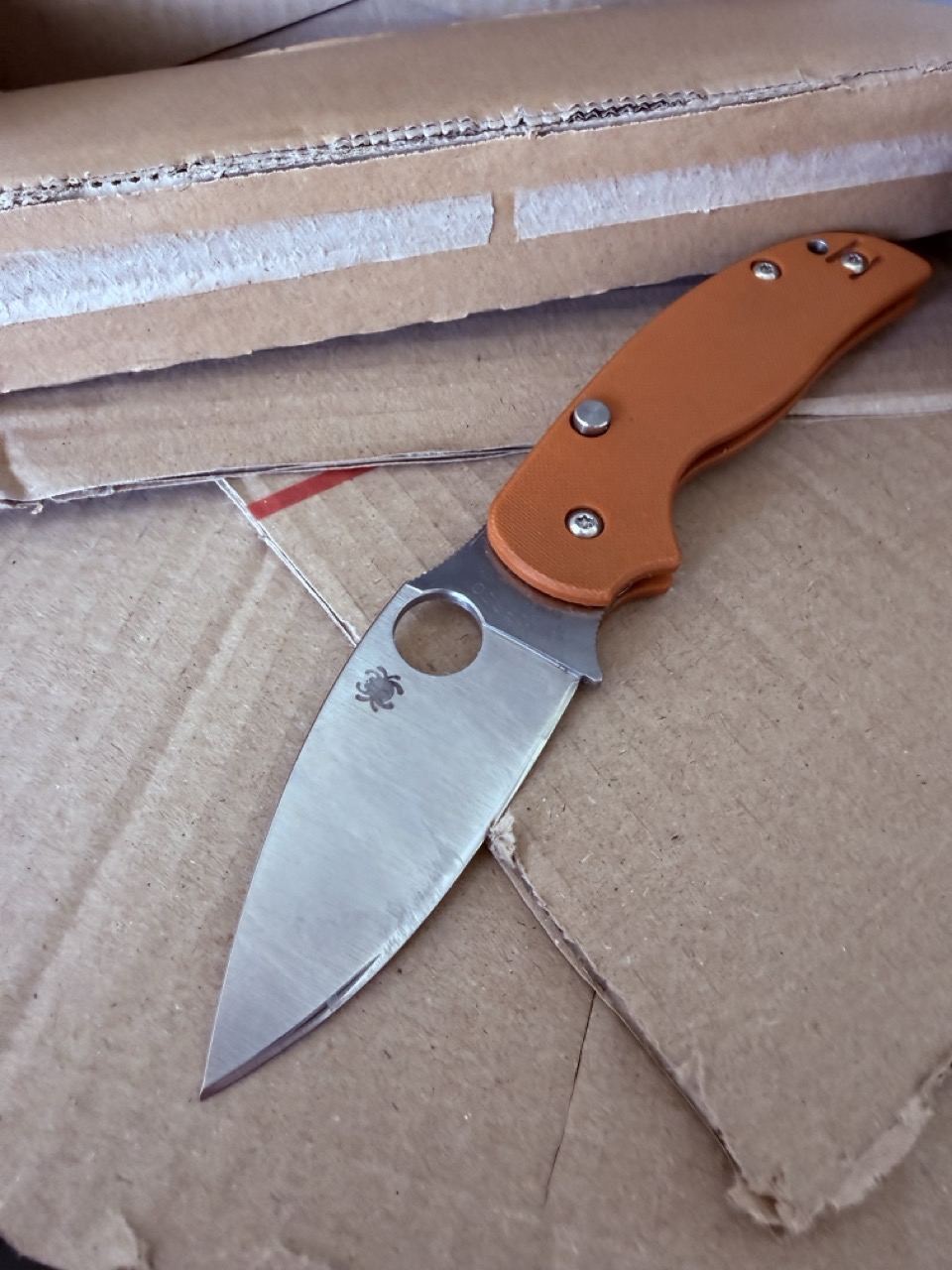
Naturally, I’ve cut a lot of cardboard with it.
That’s probably the one area where REX 121 absolutely makes a mockery of every other steel on the market, treating them all like a bunch of under-carbonized losers.
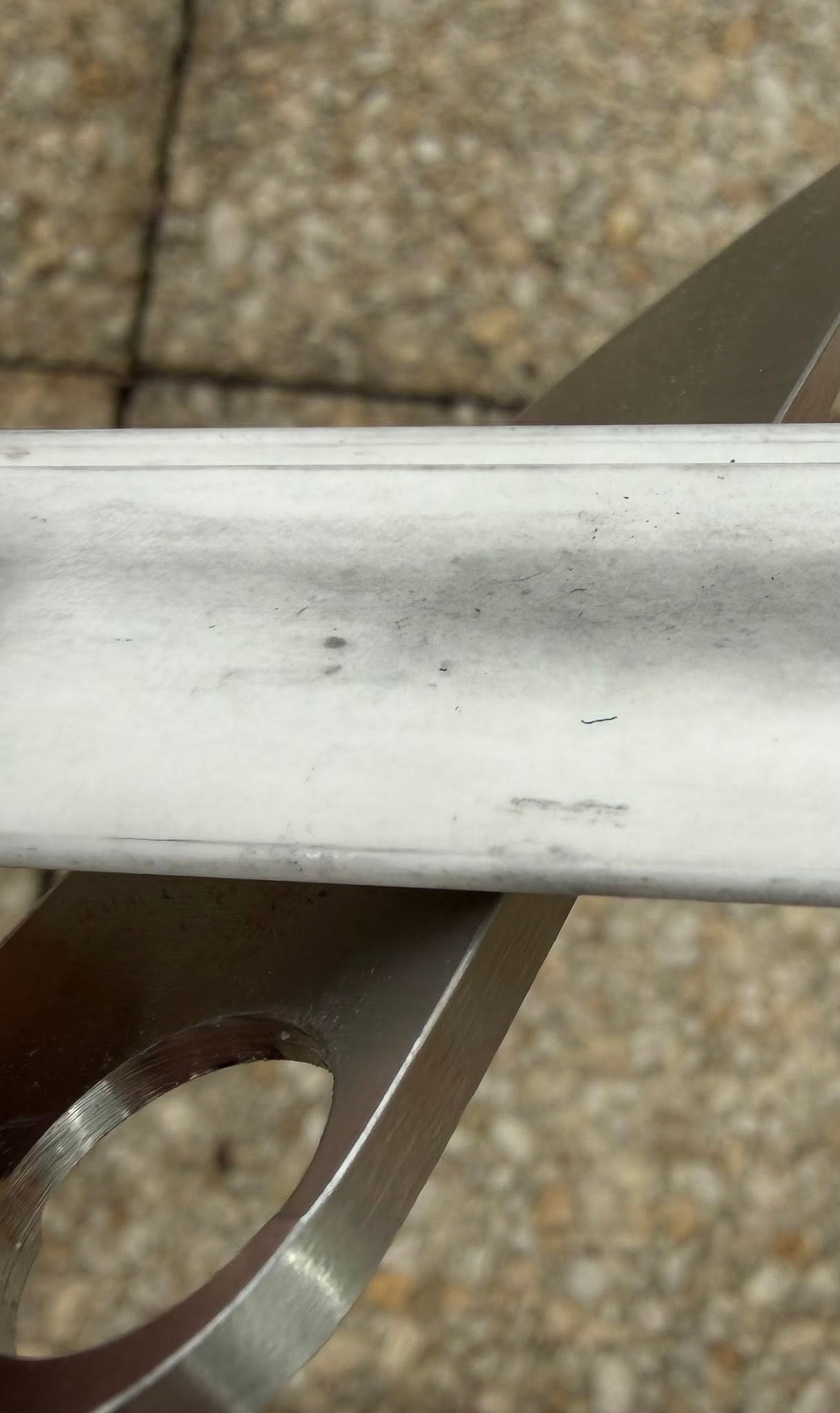
I used a Triangle Sharpener with CBN rods, setting the edge at 15° per side.
Once I had established a good edge, I went straight to the leather strop.
The result is a rough shaver, but a shaver nonetheless. It has plenty of bite.
Now, this big show-off of Tango has also been put to work on much more mundane tasks.
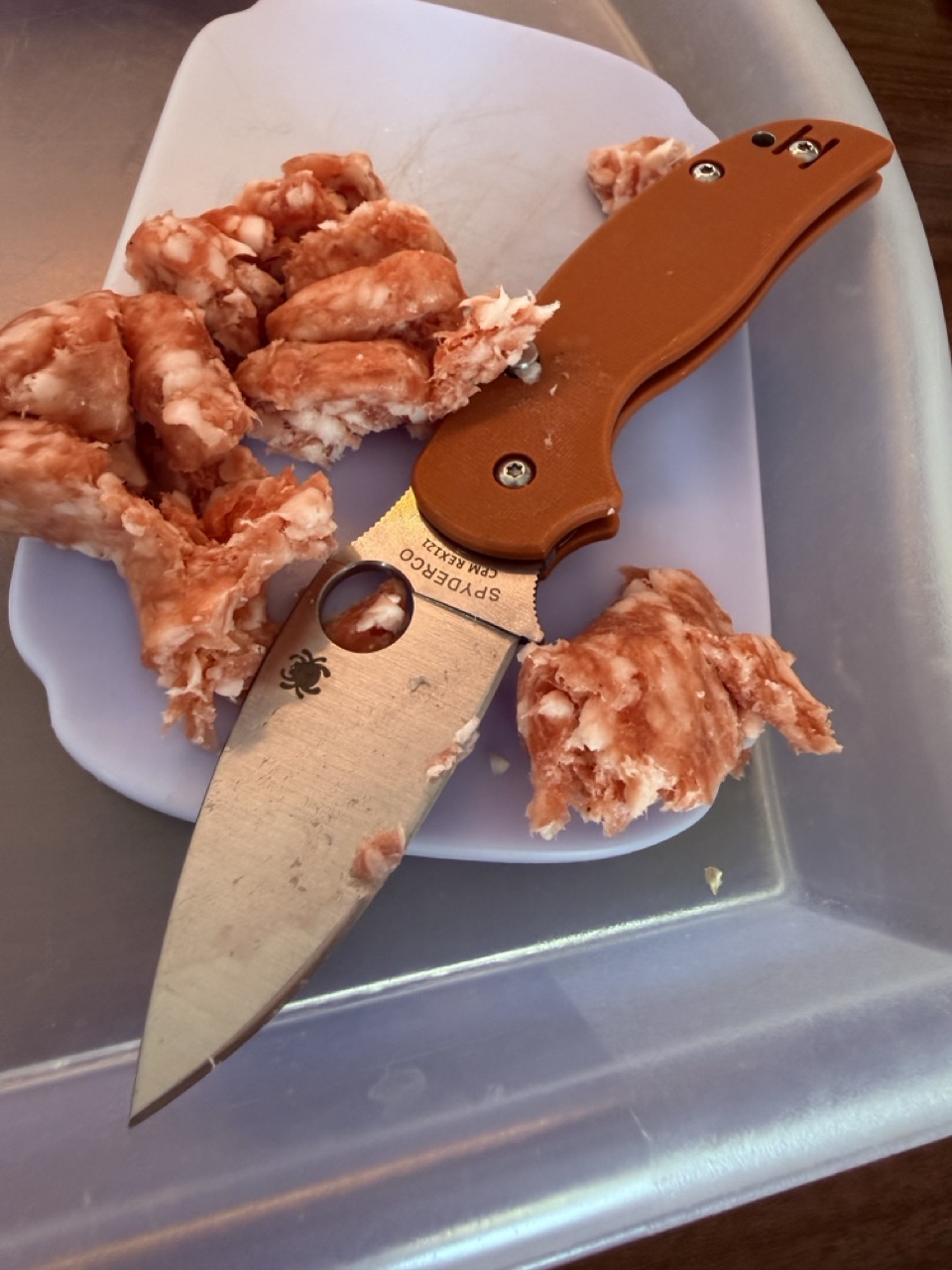
Now you’re going to tell me that a 440A knife would handle sausage meat or bread perfectly well, and I’ll tell you that you’re absolutely right.
But this blog isn’t called Nemo Steel Review, is it?
And so that very Sage 6 gets exposed to grease and crumbs.
Those two organic contaminants, once they make their way into the mechanism, can become a problem…
And things could get even worse when you’re skinning a hare…
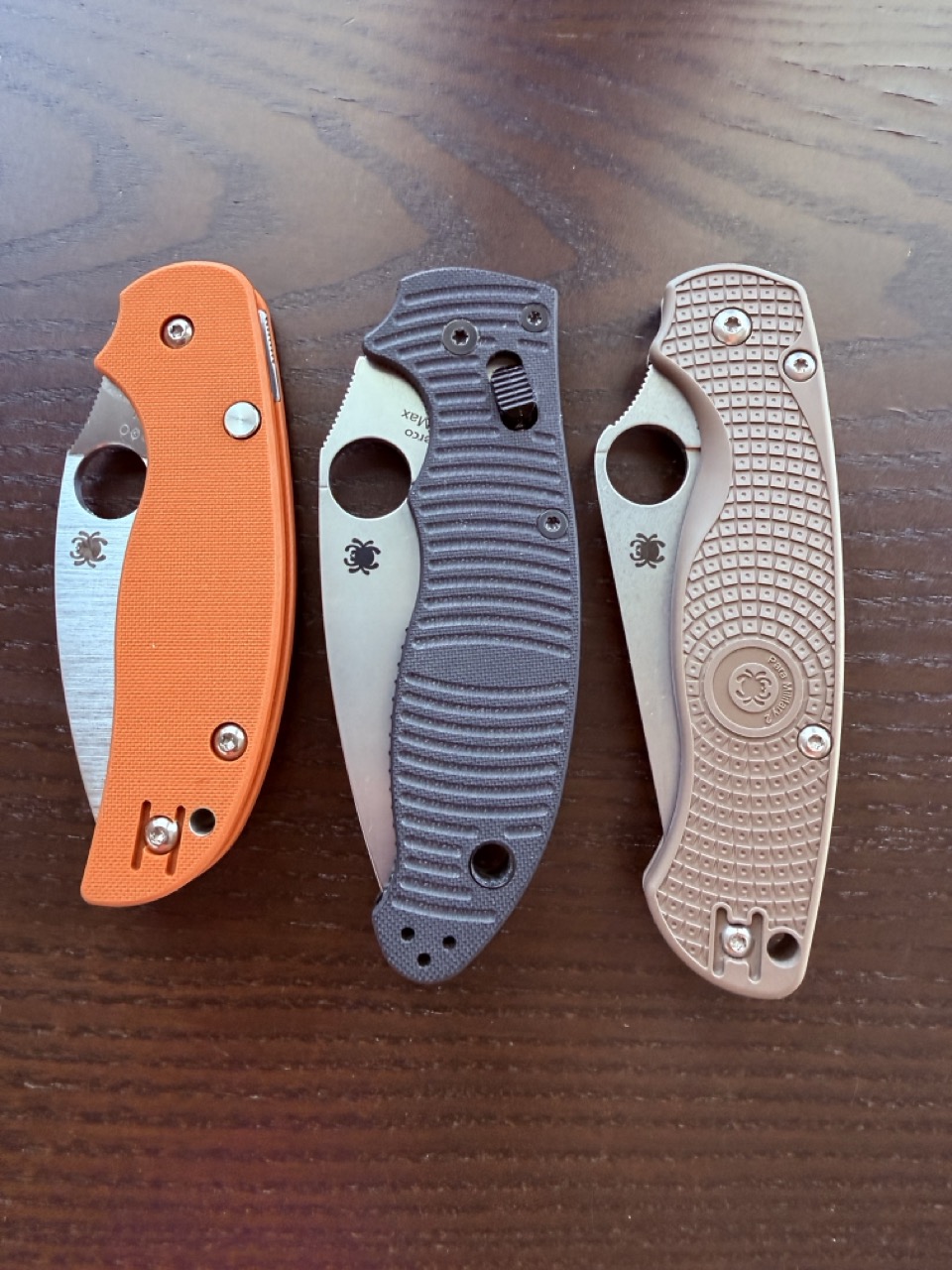
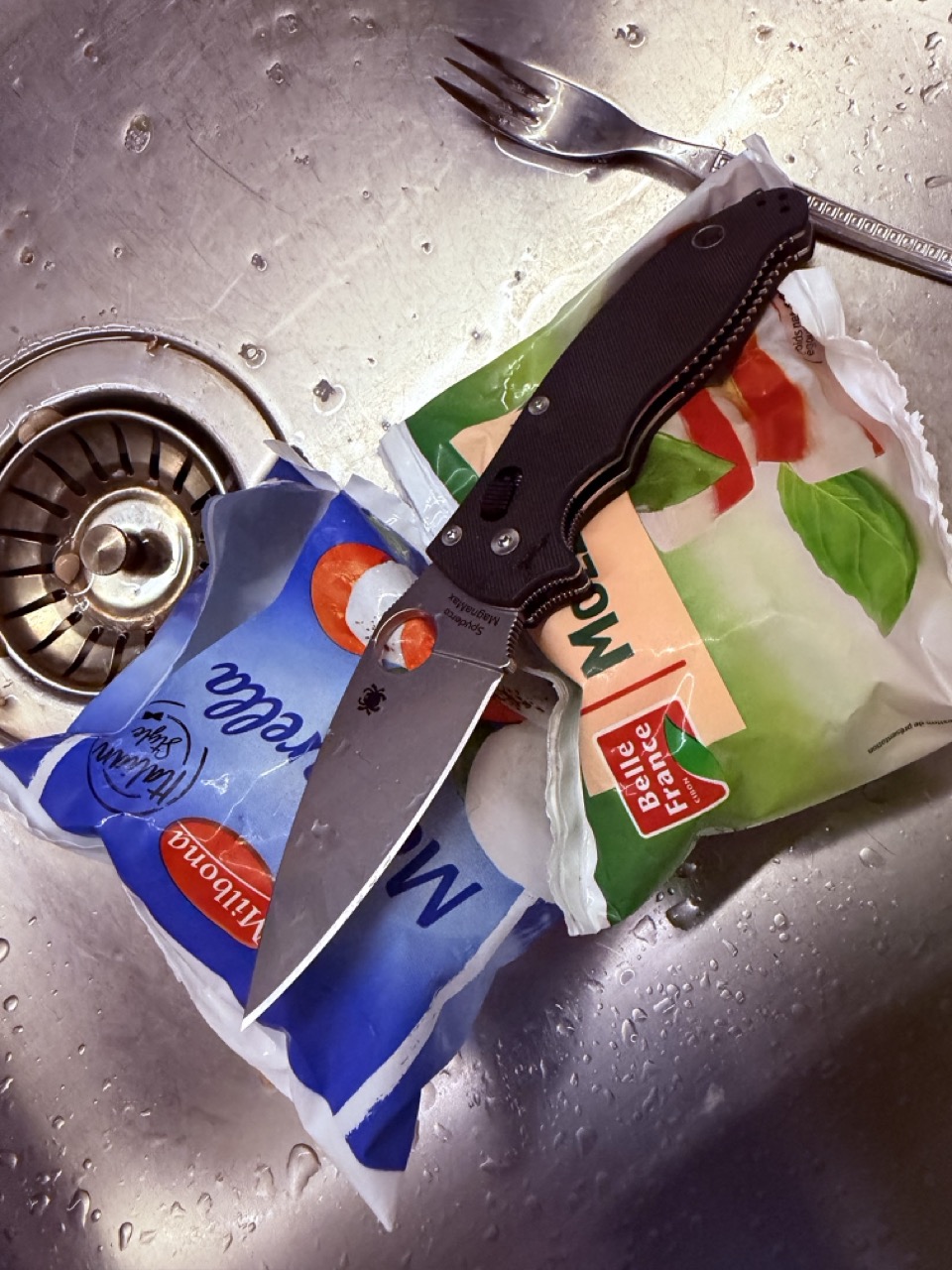
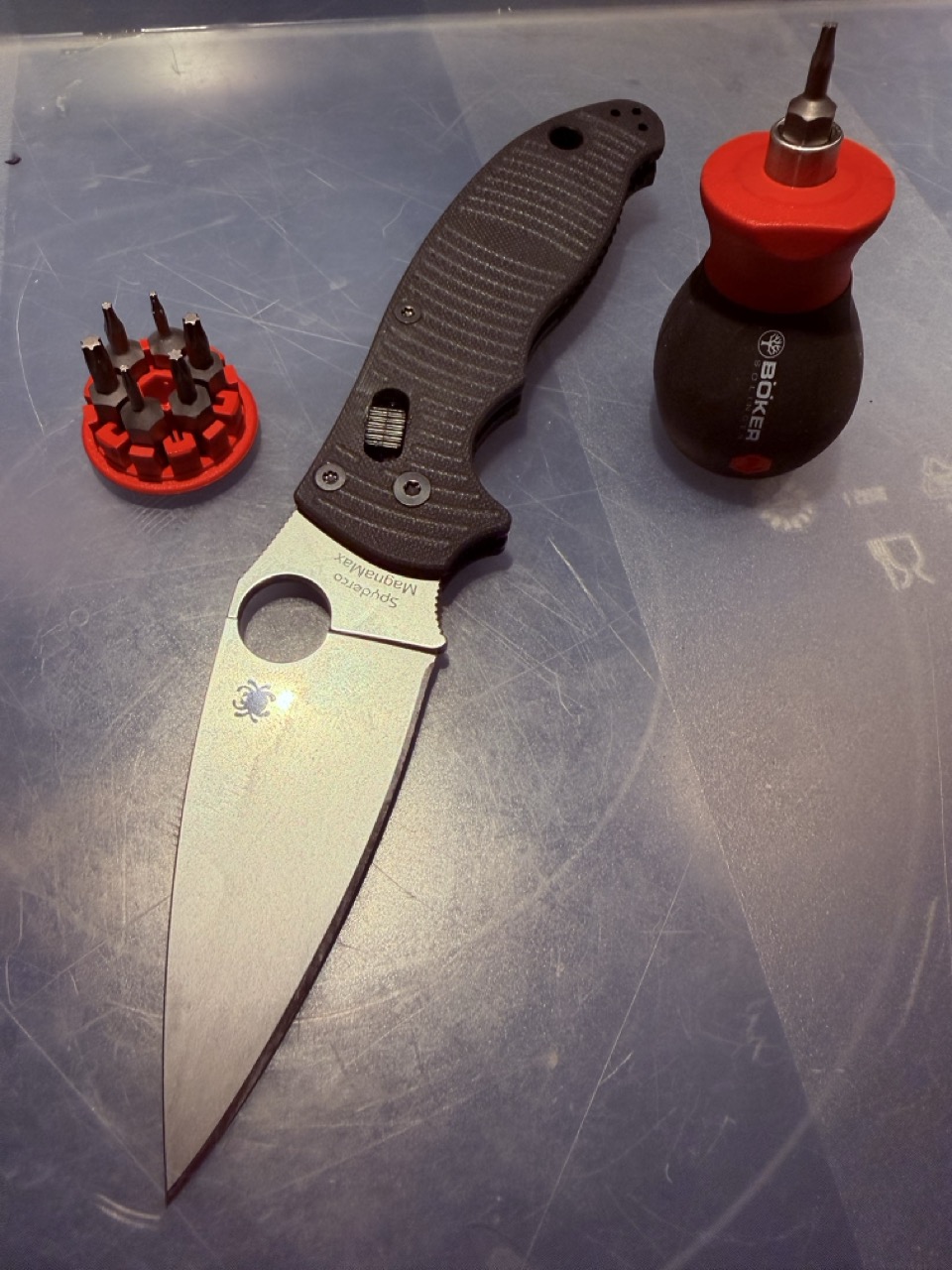
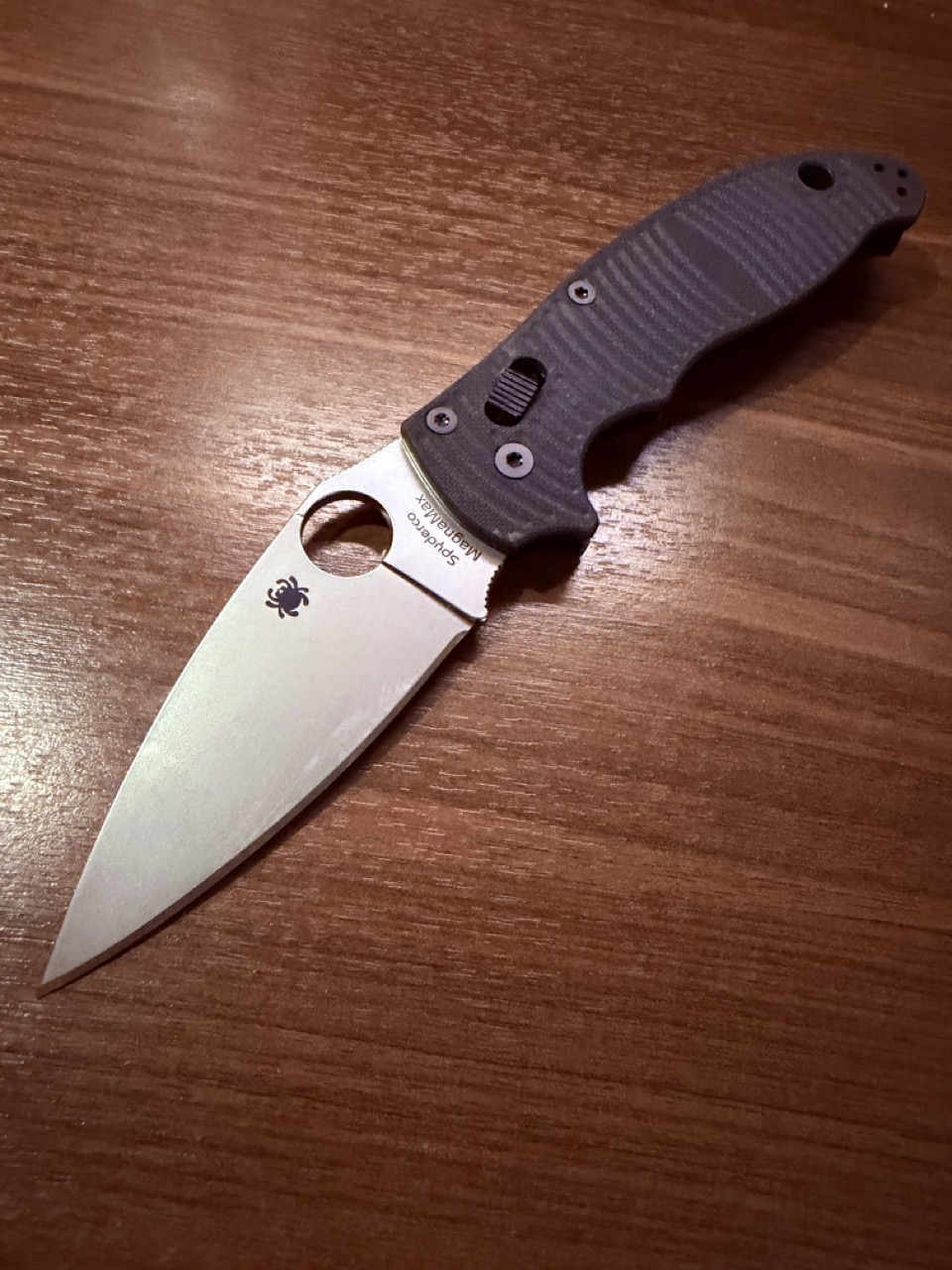
I don’t have those kinds of thoughts when I use my Manix MagnaMax, fitted with the handle from my Manix 2 Salt, because I know I can soak the knife in hot, soapy water without worrying about corrosion.
But with a Sage 6 carrying a steel this extreme?
Is it going to start rusting somewhere I can’t see?
And will those uncoated skeletonized liners eventually turn into little pockets of rust? Or bacteria colonies ?…
My first thought was to apply a thin layer of Teflon-based bicycle chain oil inside the handle, using a cotton swab soaked in it.
Then I thought: am I really going to have to do this every single time I use it ?
Why the hell am I putting myself through this when I have…
Its little brother, the Sage 5 Salt Lightweight with its CPM MagnaCut blade. A pure masterpiece of an EDC knife, with every metal component built to withstand a dip in the ocean. Its review is here BTW.
The kind of knife you can throw into the bottom of your suitcase before taking off for some unknown destination. It’ll survive a stint in the rainforest or a picnic beside a salt lake without batting its spyderhole of an eye.
The Sage 6 REX 121 and the Sage 5 Salt MagnaCut represent two almost opposite philosophies of EDC knife.
The REX 121 is a cutting machine: its extreme wear resistance gives it phenomenal edge retention, especially when cutting cardboard.
The trade-off is an exceptionally demanding steel to sharpen, with far less tolerance for moisture and corrosion.
The Sage 5 Salt takes a completely different approach: MagnaCut offers an outstanding balance of edge retention, toughness, and exceptional corrosion resistance. And the Salt takes that philosophy all the way.
The Sage 6 is the one I’d choose when I want to push cutting performance to the limit, while the Sage 5 is the one I’d take anywhere without having to worry about maintenance.
One makes you think about its steel; the other simply lets you use your knife.
And that, ultimately, is the difference between an extraordinary specialist blade and a true adventure EDC.
I also managed to get a really nice convex edge on my Sage 5, and at this point it needs nothing more than a strop to keep it sharp. It’s a whittling champion, whereas the Sage 6 still needs some work to refine its edge.
MagnaCut is also remarkably tough, while REX 121 is considerably less so. That difference in toughness is something you can feel in actual use: MagnaCut will be much more forgiving when the blade encounters twisting, knots, or lateral stress.
In short, comparing these two brothers is genuinely fascinating.
And I have to admit, choosing REX 121 could almost be considered a form of masochism: it’s more demanding to maintain, both when it comes to mechanism and edge.
But there’s something intoxicating about using REX 121. Putting a steel of this caliber into such an “approachable” friendly platform as the Sage 6 is an experience you really have to live through.
It’s like having a lion in your pocket, ready to roar — to borrow Prince’s words from 1999.
So, ten days later, where does that leave the Sage 6 REX 121?Somewhere between a brilliant EDC knife and a beautifully unnecessary piece of madness.
The REX 121 is an extraordinary steel, but it comes with a price: sharpening is a pain in the arsenal (!!), corrosion resistance requires attention, the edge is less forgiving, and even the mechanism makes you think twice about what you’re putting this knife through. (The Sage 5 Salt MagnaCut is, in many ways, the rational choice. It is tougher, vastly more corrosion resistant, easier to maintain, and an outstanding whittling knife.)
And yet, if you ask me which one I find more exciting to use, the answer is the Sage 6.
There is something deeply satisfying about having a steel this extreme on such an elegant, compact and friendly platform. It makes very little practical sense — and that is precisely what makes it so much fun.
The Sage 6 REX 121 is not the knife I would recommend to someone looking for the easiest EDC life. It is the knife I would recommend to someone who wants to experience what happens when you put one of the most extreme cutting steels available into one of Spyderco’s most refined platforms.
And if this review occasionally wandered a little too far down the rabbit hole, well…
“I was dreamin’ when I wrote this.Forgive me if it goes astray...”
After all, this is a knife made from REX 121. A little madness was probably unavoidable.
Disclosure: This Sage 6 REX 121 was provided by Spyderco as a complimentary review sample through the Spyderco Ambassador Program. Receiving the knife does not influence my opinions. Spyderco does not preview, edit, or approve my reviews, and all conclusions are based solely on my own testing and experience.
I just received my Sage 6 REX 121.
Wow. This feels like the Formula One of EDC knives.
Think about it: an ultra-modern Button Compression Lock inspired by Kevin Smock’s design, paired with one of the most extreme production blade steels ever made—CPM REX 121.
This is a true heavyweight in the knife world, and probably one of the most technically advanced production knives ever released. Its price isn’t driven by titanium scales, exotic inlays, or premium bolsters. It’s driven almost entirely by engineering, manufacturing, and metallurgy.
Just… wow.
I’ve handled and used every Spyderco Sage model over the years.
For those unfamiliar with the series, the Sage was conceived by Sal Glesser as a single knife platform dedicated to honoring the greatest folding knife lock innovations—and the designers behind them. Every Sage shares the same DNA, while each model showcases a different locking mechanism and pays tribute to the person who popularized or invented it.
Sage 1 honors Michael Walker and his revolutionary LinerLock, as well as the ball-detent system that keeps the blade securely closed.
Sage 2 pays tribute to Chris Reeve and his Reeve Integral Lock (R.I.L.), better known today as the frame lock.
Sage 3 celebrates Blackie Collins and his ingenious Bolt Action Lock.
Sage 4 honors Al Mar and the Mid-Back Lock (Front Lock) that became one of his signature features.
Sage 5 showcases Sal Glesser’s own Compression Lock, arguably Spyderco’s most iconic locking mechanism.
Sage 6 takes that concept one step further with the Button Compression Lock, inspired by Kevin Smock’s button-actuated implementation of the Compression Lock. It feels like the natural evolution of the Sage platform rather than a departure from it.
After owning and using every generation, I can honestly say the Sage 6 is the smoothest of them all. Mechanically, it’s simply remarkable.
One detail immediately caught my attention.
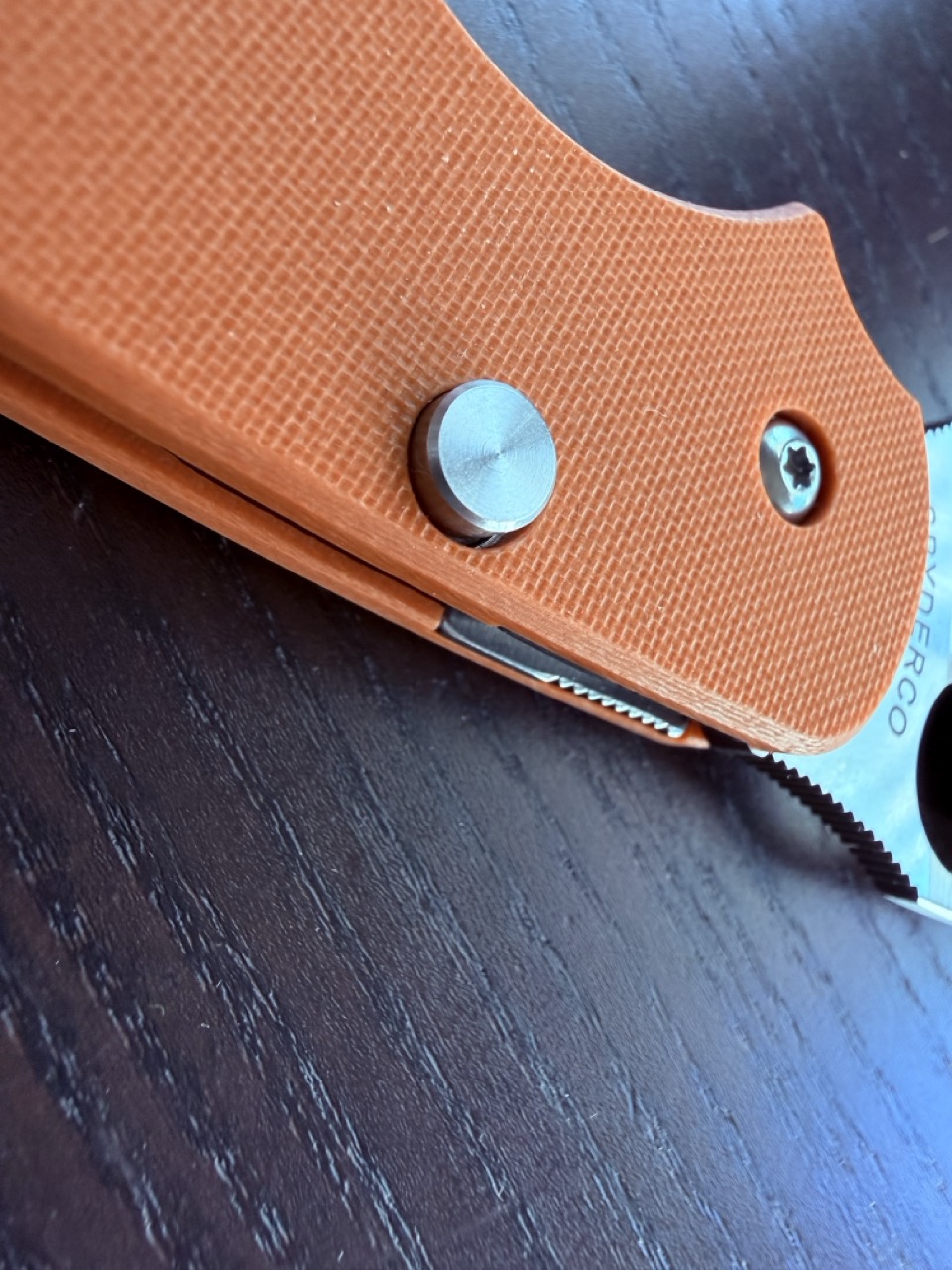
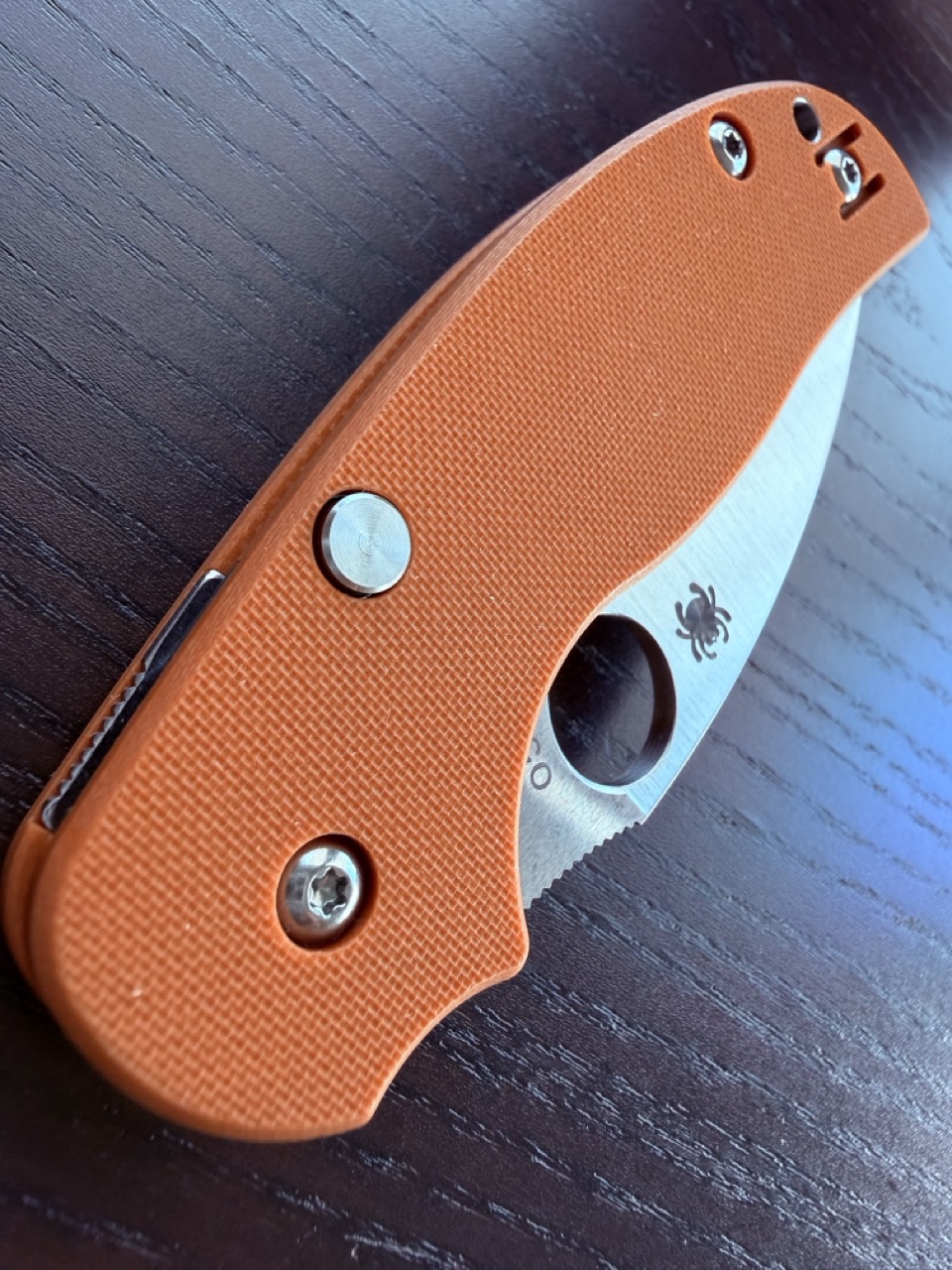
When the knife is closed, the button sits recessed into the scale. Once the blade is fully opened and locked, the button protrudes slightly above the handle, making it mandatory to disengage the lock.
This is clearly an intentional design choice. It prevents the knife from being mistaken for, or too easily operated like, a gravity knife where a simple press of the button could release the blade while closed.
Spyderco has followed a similar philosophy with the Ball Bearing Lock on the Manix 2. Unlike an Axis-style lock, it requires a more deliberate action to disengage, reducing the risk of accidental or unintended deployment.
To me, this reflects Spyderco’s long-standing approach to responsible knife design. The company doesn’t just pursue innovation—it also pays close attention to legal considerations and user safety. Rather than creating a lock that could be easily misused or interpreted as an automatic or gravity knife, Spyderco has deliberately engineered additional safeguards into the mechanism.
It’s a subtle detail, but one that says a great deal about the company’s design philosophy.
Opening it with the Spyderhole is effortless, and closing it with a gentle flick of the wrist is pure satisfaction. It is one of those rare knives that makes you want to open and close it again and again—not because you have to, but because the action is simply that enjoyable.
The action is nothing short of addictive. The Sage 6 is incredibly fidget-friendly.
The best way I can describe it is that it almost feels as if the blade were riding on a magnetic system rather than traditional washers. The action is exceptionally smooth, yet always controlled and reassuring.
Every opening and closing cycle feels refined. The lock engages with a soft, muted click instead of a harsh metallic snap, giving the knife the feel of a finely tuned mechanical instrument.
One aspect that is often overlooked in a folding knife is that opening the blade is only half the story. Closing it safely is just as important.
To me, the easier and more intuitive a knife is to close, the safer it is to use. If you don’t have to reposition your grip, place your thumb between the liners, or let the choil drop onto your finger, you’re less likely to make a mistake.
This is where the Sage 6 really shines. That single button makes disengaging the Compression Lock almost effortless. It preserves all the strengths of Sal Glesser’s ingenious lock while making it significantly easier to operate with one hand.
For me, that’s one of the biggest improvements over the original Compression Lock. It’s not just more convenient—it’s genuinely safer and more confidence-inspiring during everyday use.
That said, the design still clearly favors right-handed users. Left-handers can certainly operate it, but the ergonomics are undeniably optimized for right-handed manipulation.
One of my initial concerns was whether the button could get in the way during use or even lead to an unintended lock release.
That’s a debate that goes all the way back to the introduction of Benchmade’s AXIS Lock more than 25 years ago. Some users wondered whether pressure from the hand could accidentally disengage the lock during hard use.
Spyderco has taken a different approach. On the Manix 2, the Ball Bearing Lock relies on a fairly strong spring that requires a deliberate pull to disengage.
On the Sage 6, the solution is different but equally effective. The button is positioned far enough away from my natural grip that my fingers never come close to pressing it unintentionally.
After handling the knife, that concern disappeared almost immediately. The lock feels intuitive, secure, and confidence-inspiring. It delivers all the convenience of a button-operated mechanism without ever making me worry about an accidental unlock.
Originally developed by Crucible Industries as a high-speed tool steel for industrial cutting tools, CPM REX 121 was never designed with pocket knives in mind. Its primary objective was simple: maximum wear resistance at very high hardness.
Composition
CPM REX 121 is an astonishing alloy. Take a look:
Carbon: 3.4% !!!
Chromium: 4.0%
Vanadium: 9.5% !!!
Tungsten: 10.0% !!!
Molybdenum: 5.0%
Cobalt: 9.0% !!!
This chemistry creates an exceptionally dense “population” of very hard carbides, giving the steel extraordinary resistance to abrasive wear. It is not stainless, but its chromium content provides slightly better corrosion resistance than traditional simple carbon steels. Adamantium anyone ?
According to Sal, Spyderco runs its REX 121 blades at an impressive 67–70 HRC !!! Those hardness levels are almost unheard of in production folding knives and are one of the reasons the steel performs the way it does.
Metallurgist Larrin Thomas, father of MagnaCut and MagnaMax, places REX 121 at the very top of the edge-retention scale. In fact, he rated both REX 121 and Maxametabove his normal 1–10 scale, simply because they outperform the rest of the field by such a margin. His testing shows REX 121 combines record-breaking wear resistance with very low toughness, making it a steel optimized for slicing performance rather than abuse.
(Years ago, I even used that knife to open oysters just to see how far I could push the steel—and then sharpened it back to a razor edge.)
Looking back, that was a rather silly test.
With the Sage 6 REX 121, my goal is different. I want to evaluate it as a high-end everyday cutting tool, not as the subject of destructive or abusive experiments. There are plenty of videos on YouTube showing knives being pushed beyond their intended use. That’s not what interests me.
I’m far more interested in how REX 121 performs in real-world cutting tasks, how long it retains a truly useful edge, and what it feels like to maintain over months of normal use.
The interesting part is that real-world experience is often more nuanced than the numbers suggest. Owners of the Sage 5 REX 121 consistently report:
astonishing edge retention, especially on cardboard;
a “working edge” that seems to last almost indefinitely;
surprisingly little chipping when the knife is used for cutting rather than prying;
sharpening that absolutely benefits from diamond or CBN abrasives but is not the nightmare many expected.
One experienced user reported using a Sage 5 in REX121 almost exclusively on cardboard for six months, sharpening it only once during that period, with no chipped edge or broken tip. Another noted that while sharpening takes longer, deburring is remarkably easy, resulting in an exceptionally clean apex.
Several users also mention that REX 121 responds exceptionally well to a highly polished edge, maintaining both aggression and push-cut performance longer than expected. So it will be leather stropping friendly.
Some people may question the price of the Sage 6 REX 121. Looking at the manufacturing process, however, it starts to make sense.
First, Spyderco had to secure a significant quantity of CPM REX 121—an already rare and expensive steel. The raw material then had to be shipped from the United States to Spyderco’s manufacturing facility in Taichung, Taiwan.
REX 121 is also one of the most difficult production steels to machine and grind. Its extreme wear resistance means slower manufacturing, greater tool wear, and extensive use of diamond abrasives, all of which increase production costs.
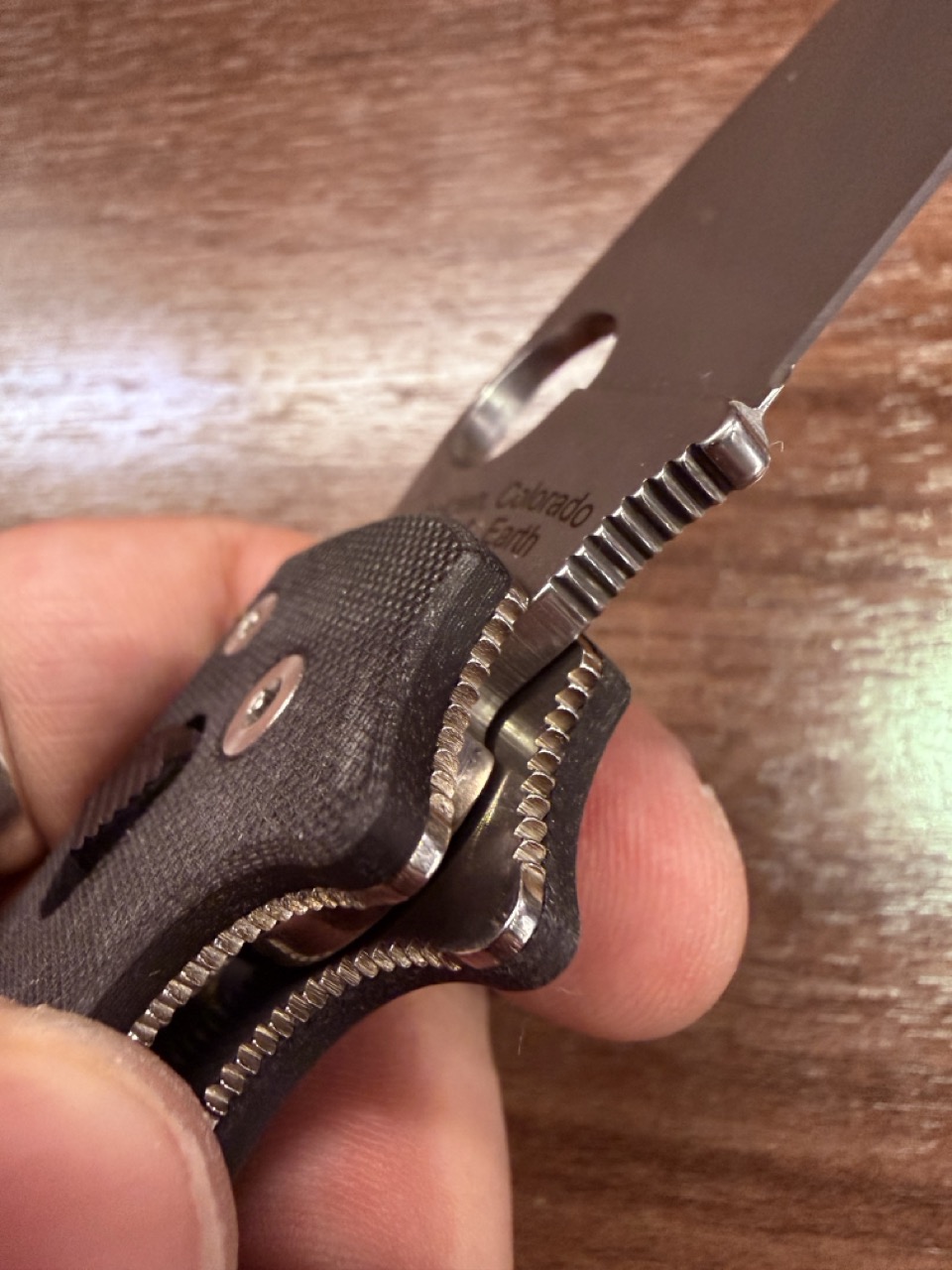
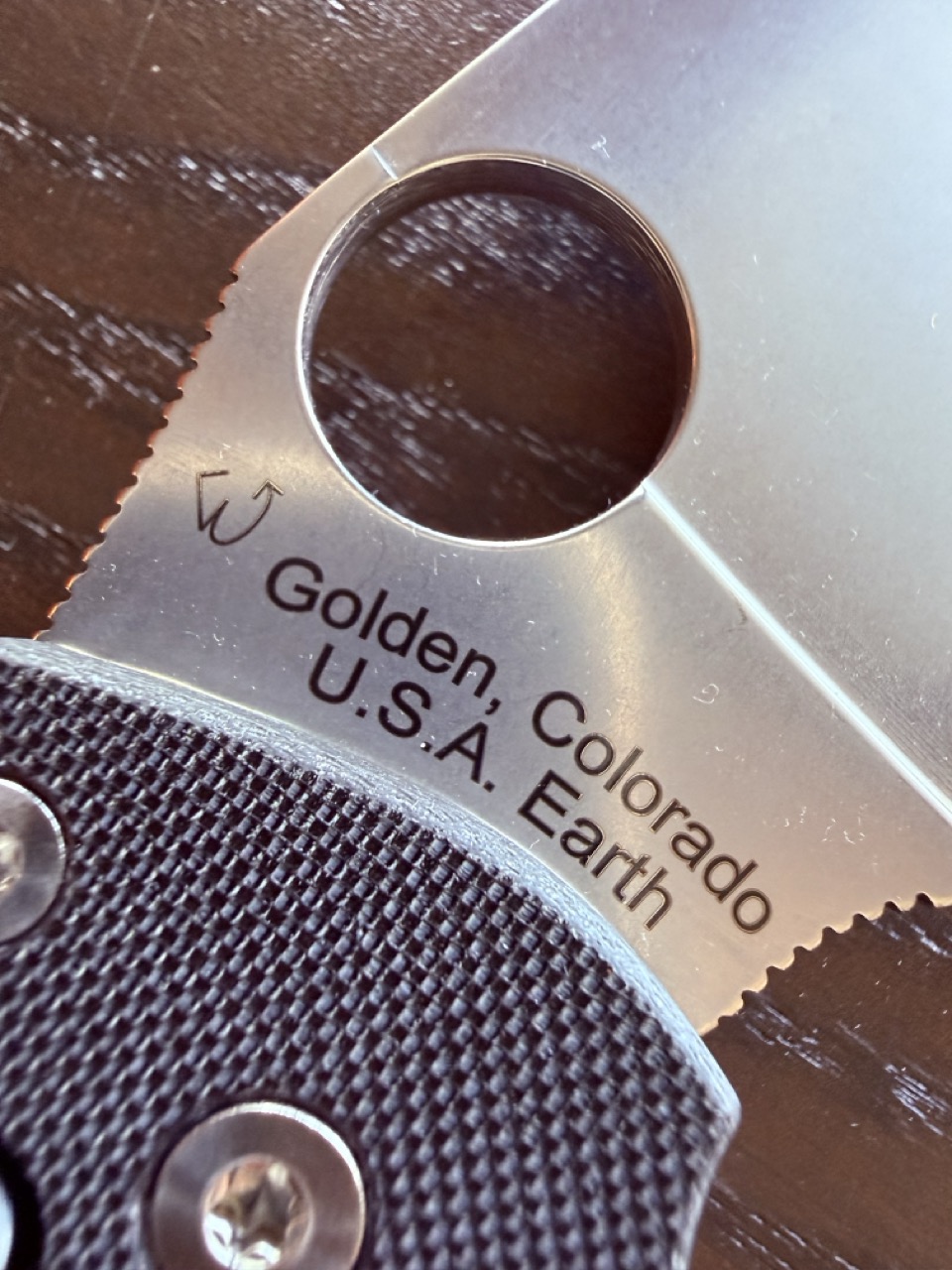
Once the knives are manufactured, they are shipped back to Golden, Colorado, Earth.
In other words, you’re not just paying for an orange handle or a premium steel. You’re paying for one of the most demanding manufacturing processes ever applied to a production folding knife.
And CPM REX 121 deserves a proper farewell, and Spyderco seems determined to give it one. By acquiring as much of the remaining steel as possible following Crucible’s acquisition by Erasteel, Eric and Sal Glesser ensured that this legendary alloy would continue to reach enthusiasts rather than quietly disappear. After the Sage 6, Spyderco is already planning a Chaparral in REX 121. With its ultra-thin 2 mm blade stock—compared to the Sage’s 3 mm—it could become one of the most formidable high-performance slicing tools the company has ever produced.
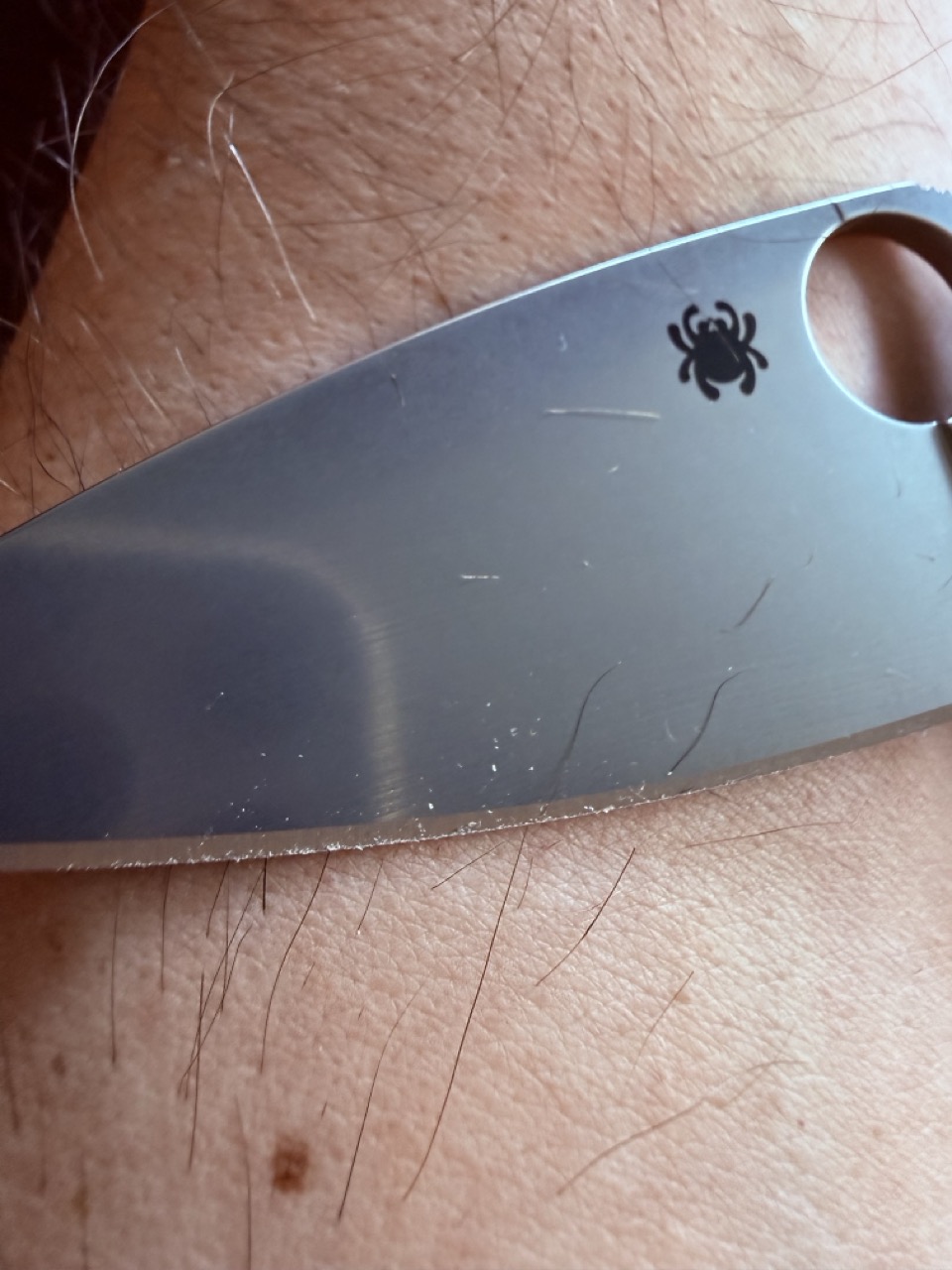
Out of the box, the knife easily shaves arm hair. That’s already an excellent factory edge.
Still, I can’t resist seeing if I can make it even better. My first stop will be an old leather strop loaded with diamond powder and automotive polishing compound. I’m curious to see how REX 121 responds to such a light treatment before I ever think about putting it on a stone.
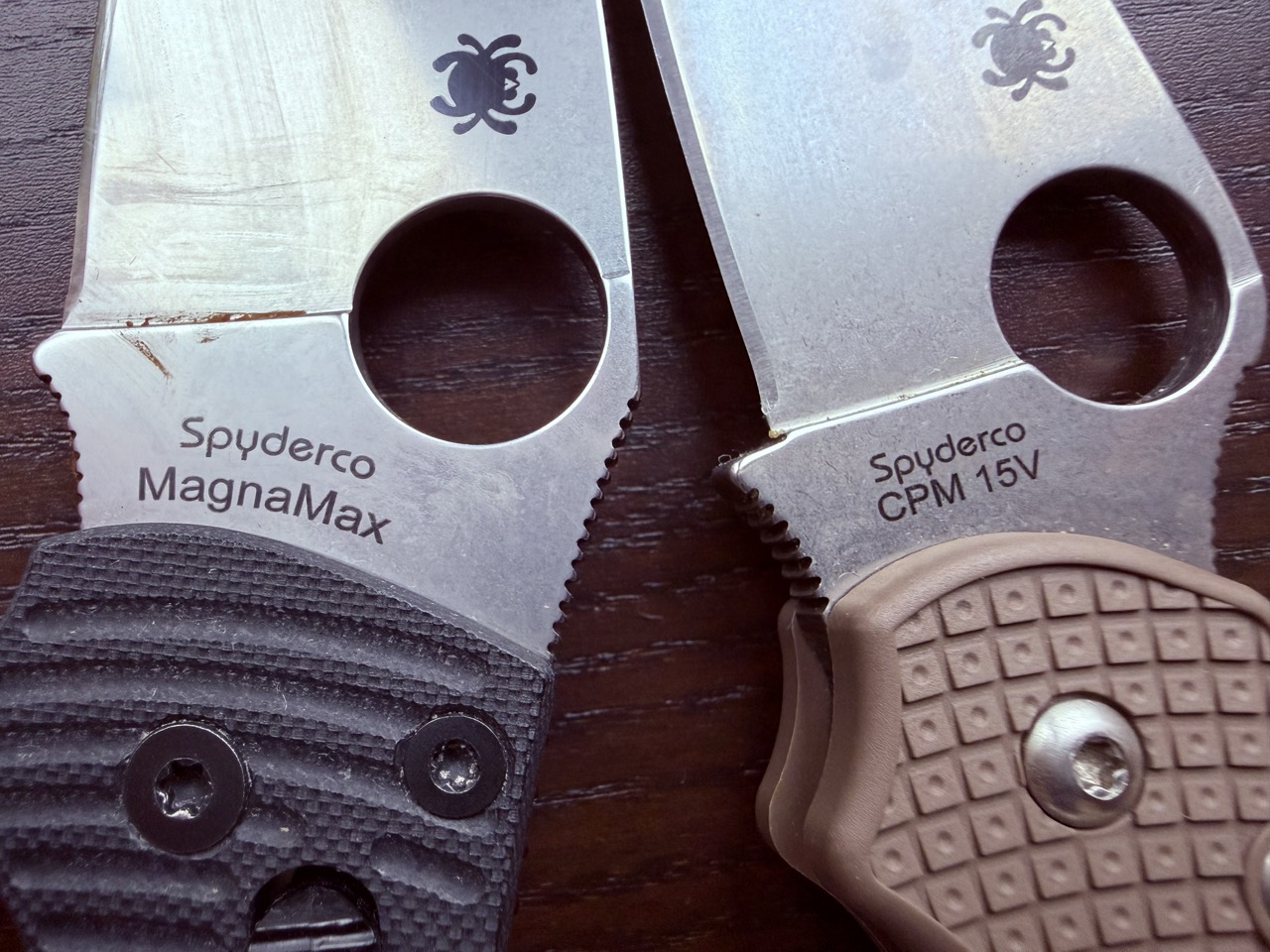
I’ve already spent a lot of time with K390, CPM 15V, and MagnaMax.
The Sage 6 will allow me to discover whether REX 121 is simply the next step in edge retention—or whether it offers a genuinely different cutting experience.
One thing is already certain: this isn’t a steel designed for everyone. It’s a steel for enthusiasts who value ultimate cutting performance above almost everything else. And that alone makes it fascinating.
Steel alone doesn’t define cutting performance. Geometry is just as important—sometimes even more so.
A perfect example is my Manly Wasp in S90V. Between its outstanding steel and its incredibly thin geometry, it cuts like an absolute beast.
Over the years, I’ve convexed every one of my Sage knives. The latest was my Sage 5 Salt in MagnaCut, which I gradually transformed into an outstanding whittling machine. That subtle convex geometry made an already excellent cutter even more enjoyable to use.
But this Sage 6 raises a different question.
Will the factory geometry already be so good that I’ll simply leave it alone?
Will I eventually have the patience—and the courage—to convex the edge of a blade made from CPM REX 121?
For now, I wasn’t entirely satisfied with the amount of force required to cut through the bottom of a plastic Coke bottle. So I decided to de-shoulder the factory edge using my Diamond Stuff 2. This is not a reprofile, and certainly not a convex edge. It’s simply a light de-shouldering of the bevel to improve cutting efficiency while keeping the original edge geometry essentially intact. The steel responded surprisingly well, and the operation was completed without any difficulty.
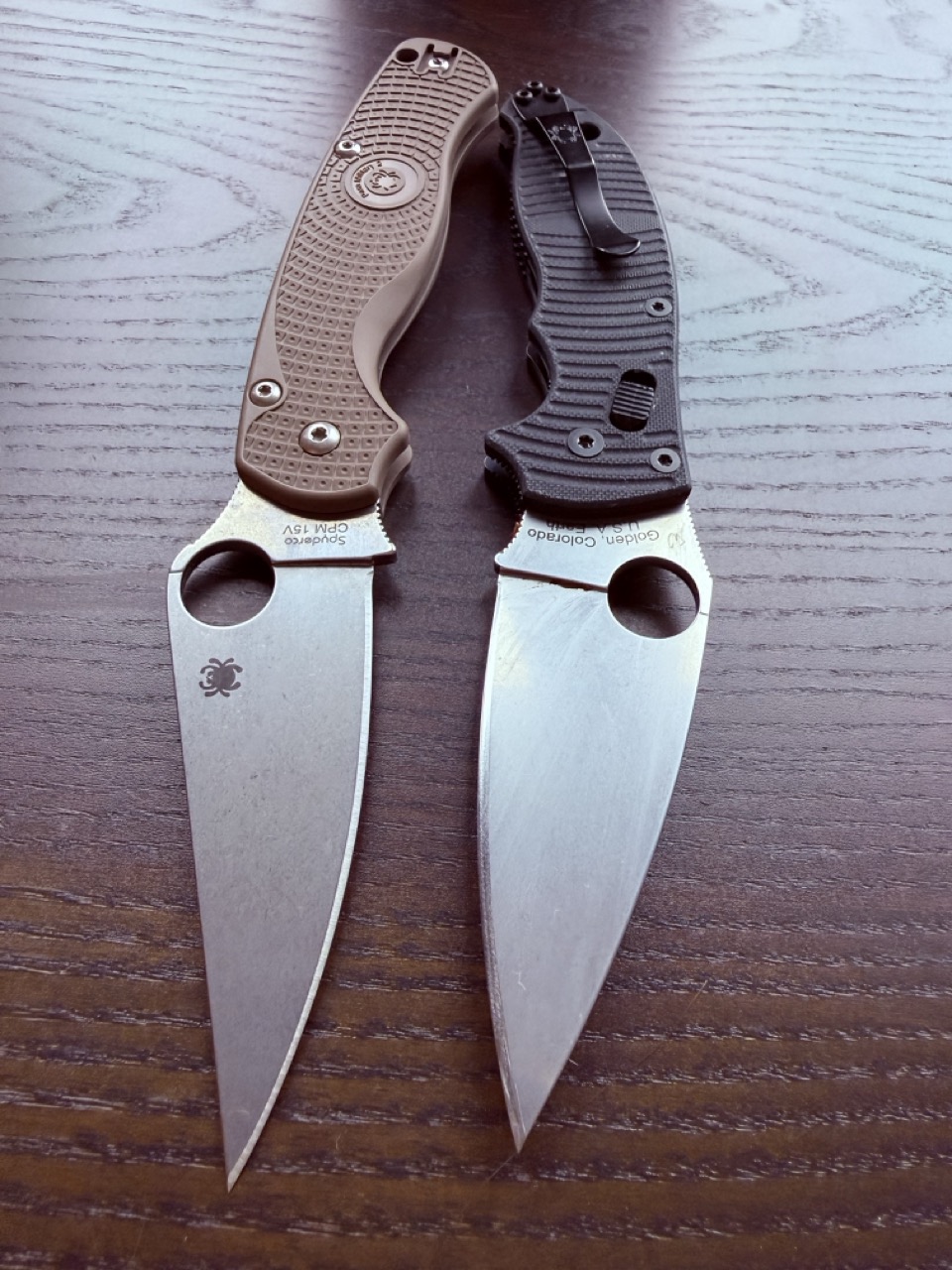
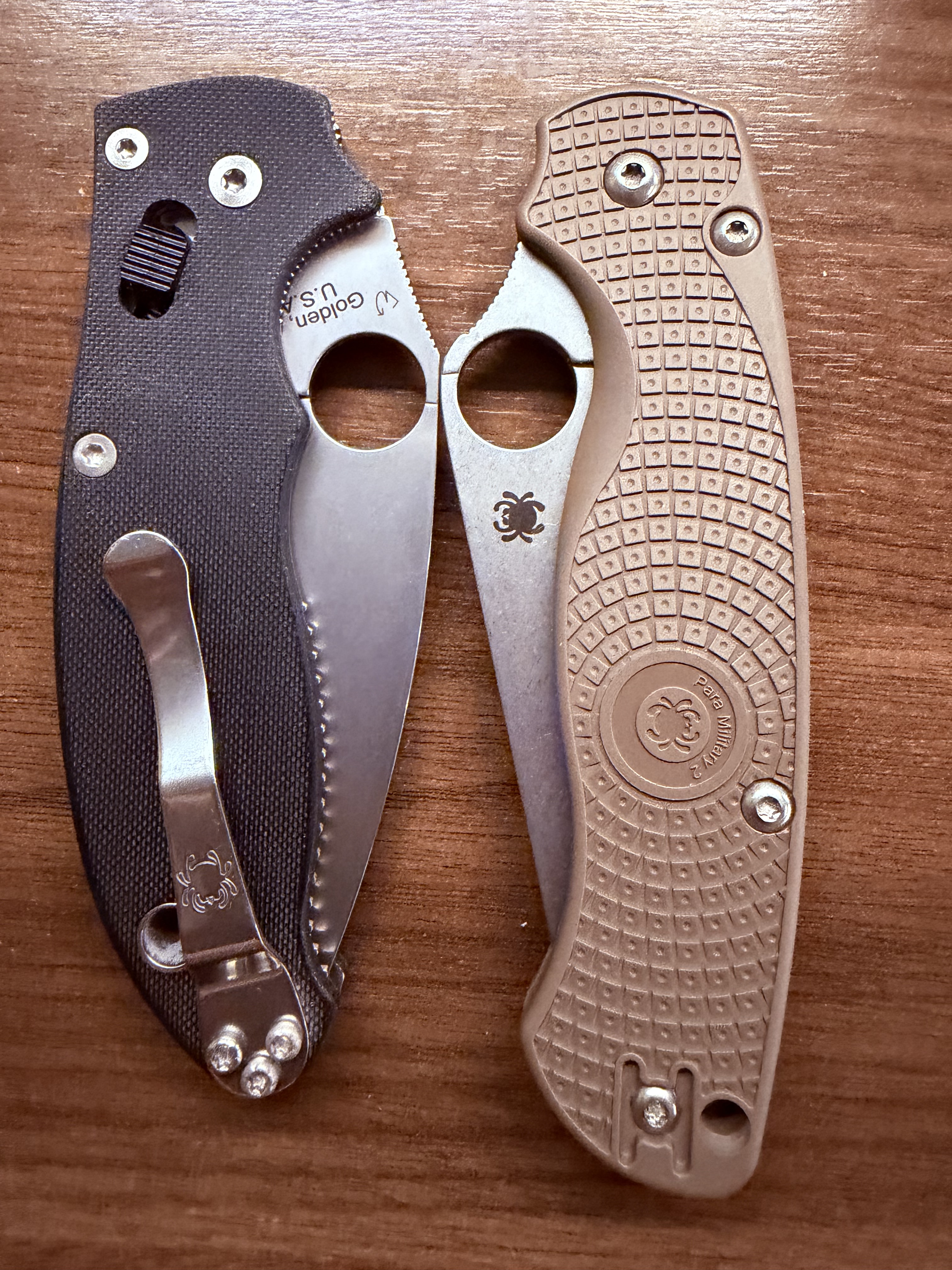
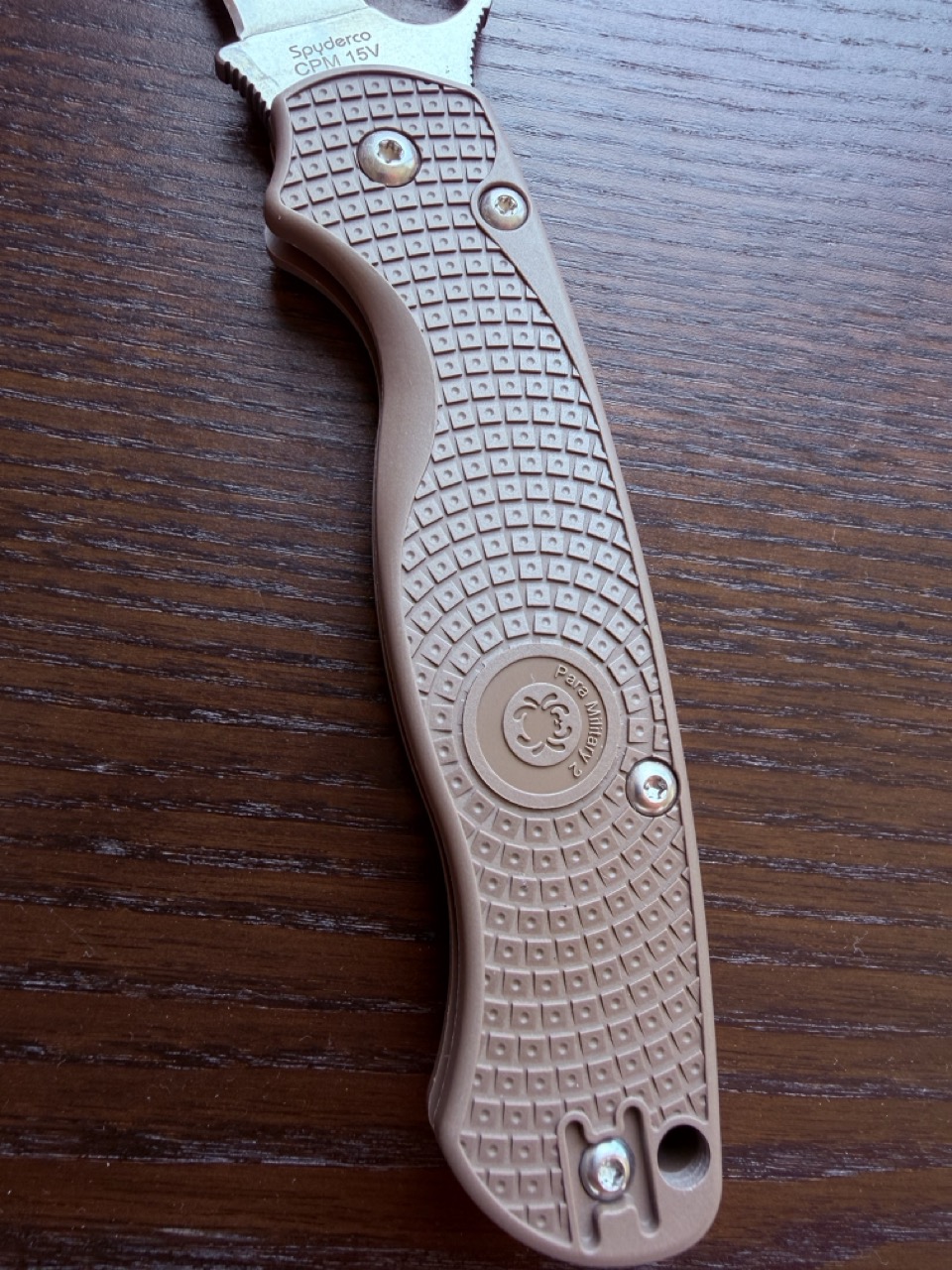
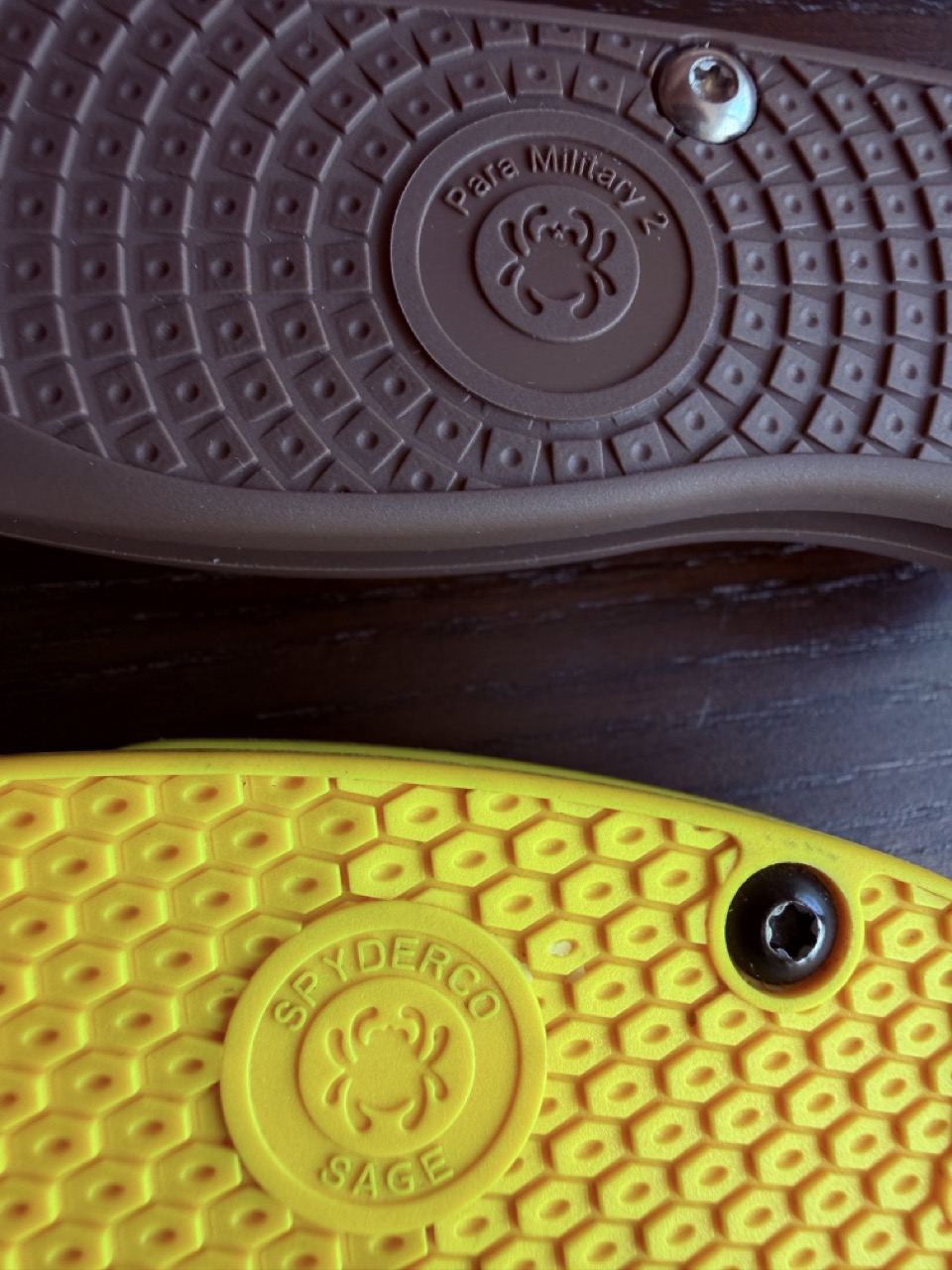
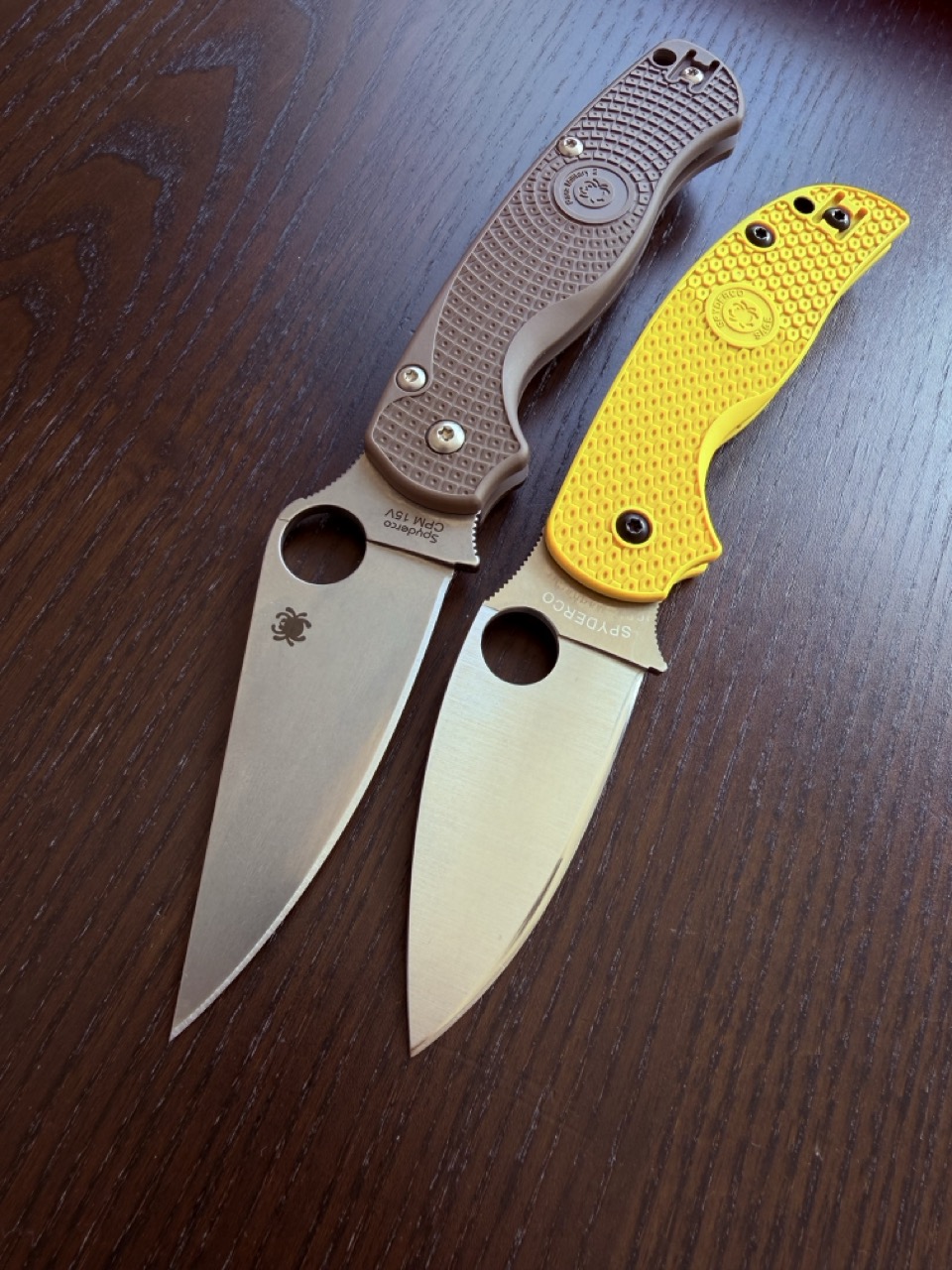
Eventually I will not treat my Sage 6 like my Paramilitary 2 Lightweight in CPM 15V, whose factory geometry I have deliberately left untouched. 😉 Under my diamond stones, Rex121 feels like Maxamet to me. And I have enjoyed a lot reprofiling my Maxamet edges.
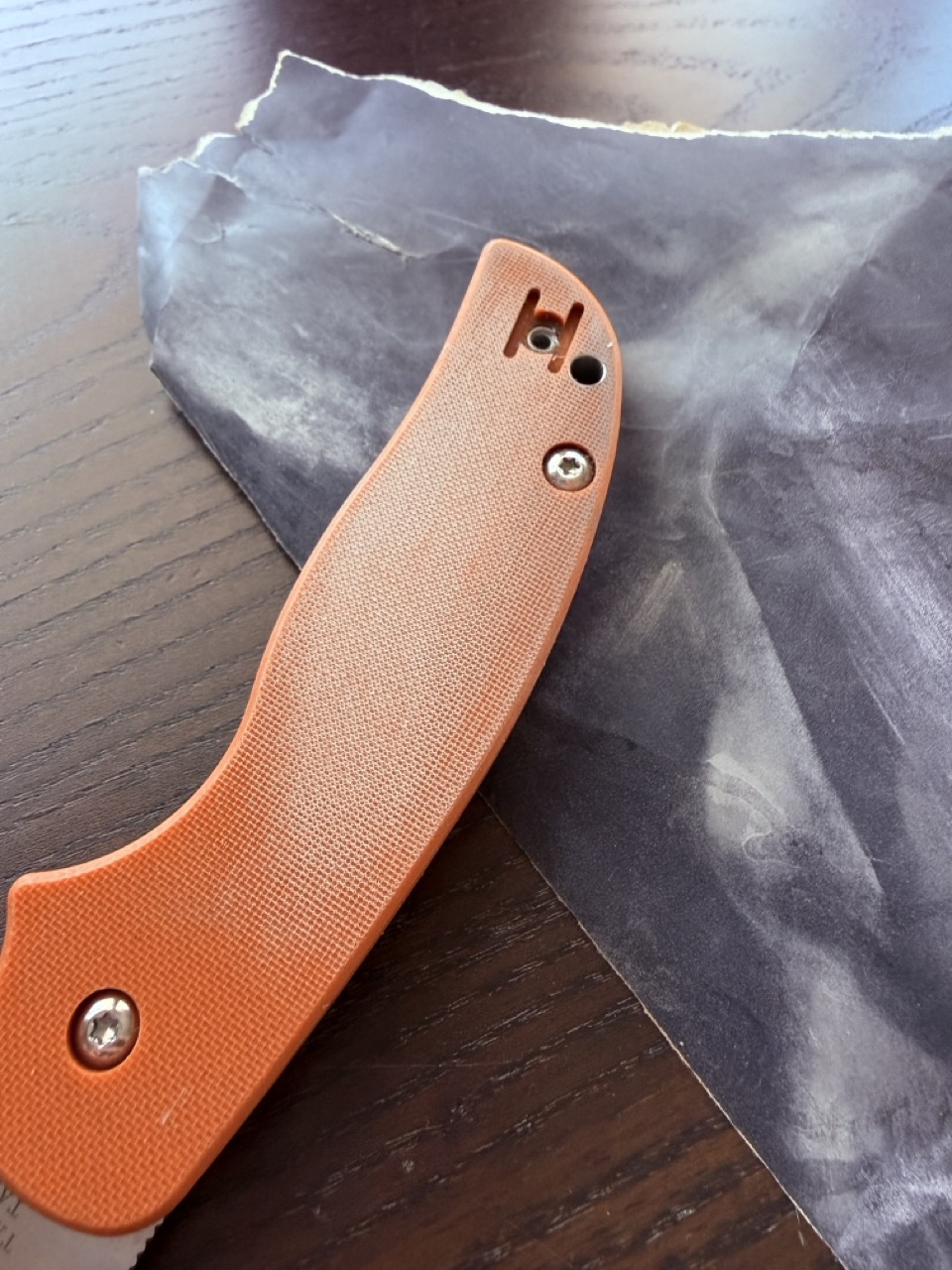
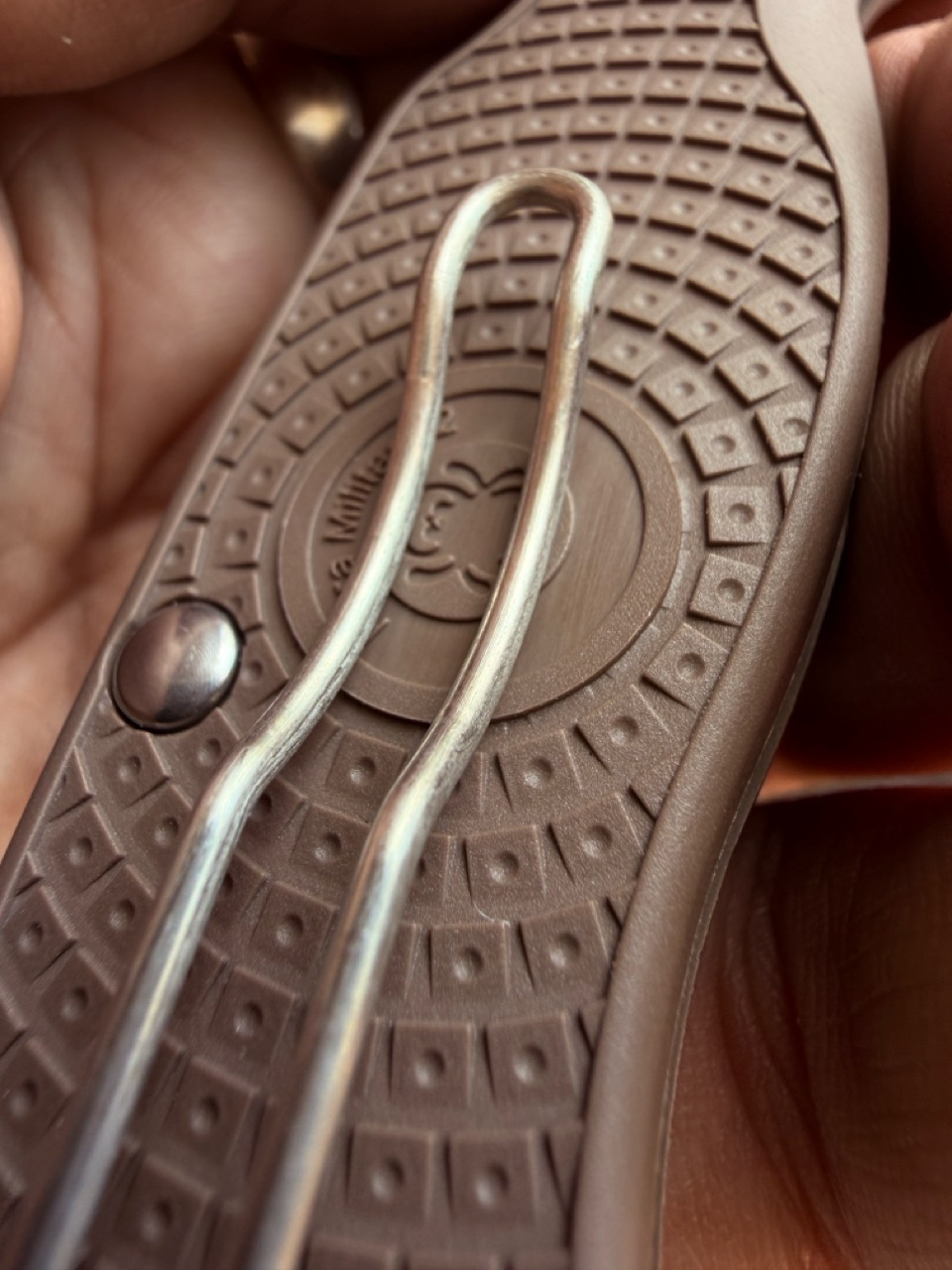
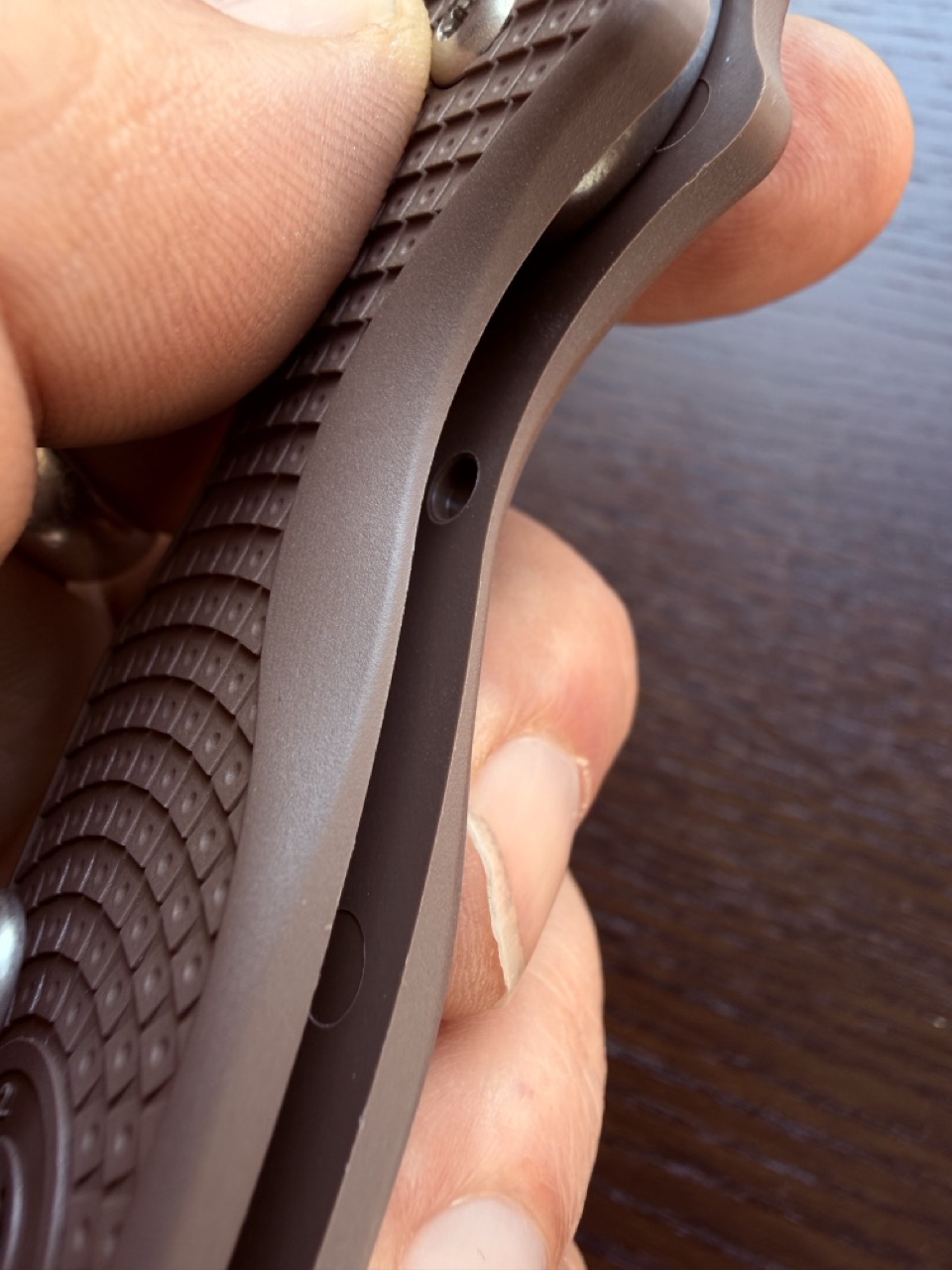
The very first thing I did was soften the G10 underneath and around the pocket clip.
Spyderco’s G10 offers excellent grip, but like many enthusiasts, I prefer to slightly round the area where the clip contacts the pocket. It takes only a few minutes with fine sandpaper and makes the knife much friendlier to carry in the pocket without noticeably affecting grip.
While doing so, I made sure to hold my breath as much as possible and avoided creating unnecessary dust. G10 and ceramic dust should never be inhaled. Whenever you sand composite materials, it’s good practice to work in a well-ventilated area, wear appropriate respiratory protection, and clean up the dust afterward.
I’m particularly careful about this because one of my neighbors, a retired dental technician, spent decades working with ceramic materials. Today, he lives with supplemental oxygen after years of occupational exposure to fine dust. Whether or not it was the sole cause, it was a stark reminder to me that airborne fine particles should never be taken lightly.
This is only a first glimpse of what is already proving to be a remarkable knife.
Let’s be honest: the Spyderco Sage 6 REX 121 is a rare knife, and its price will understandably place it beyond the reach of many enthusiasts. I’d like to sincerely thank again Spyderco for giving me the opportunity to evaluate it through their Ambassador Program and to use it exactly as I see fit.
What I can already say is this: from a purely mechanical standpoint, this is one of the finest production folding knives I have ever handled.
The action is simply outstanding. The Button Compression Lock is unbelievably smooth—almost as if the blade were riding on magnetic bearings rather than washers. There is virtually no friction throughout the opening and closing motion. The blade glides effortlessly while remaining perfectly controlled.
Fit and finish are exactly what I’ve come to expect from Spyderco’s Taichung factory: flawless blade centering, rock-solid lock-up, and exceptional attention to detail.
I own several high-end folders, and mechanically, this is without question one of the smoothest I’ve ever handled.
As for the CPM REX 121 blade steel, I’ll reserve judgment until I’ve spent enough time using it, maintaining it, and eventually sharpening it. A steel like this deserves more than a few days of testing.
If your local knife dealer has one in stock, I genuinely encourage you to handle it for yourself. Open it. Close it. Feel the action. The Balance. Only then will you understand.
Just be warned…
You may leave the shop wondering which knives you’re going to sell to make room for a Sage 6 REX 121.
Spyderco has released two knives this year that, in my opinion, perfectly illustrate two very different visions of the modern high-performance folding knife.
On one side stands the Para Military 2 Lightweight CPM-15V Sprint Run—a knife designed around one simple objective: maximizing cutting performance while carrying as little weight as possible. A sprint run destined to be harder to find.
On the other is the Manix 2 MagnaMax, a folder that feels unapologetically overbuilt, engineered to inspire confidence in every situation while introducing what may become one of the decade’s most important alloy: a “stainless tool steels”.
Spoiler alerts: after living with both, I don’t think one replaces the other.
They simply excel in different ways.
The Lightweight Champion
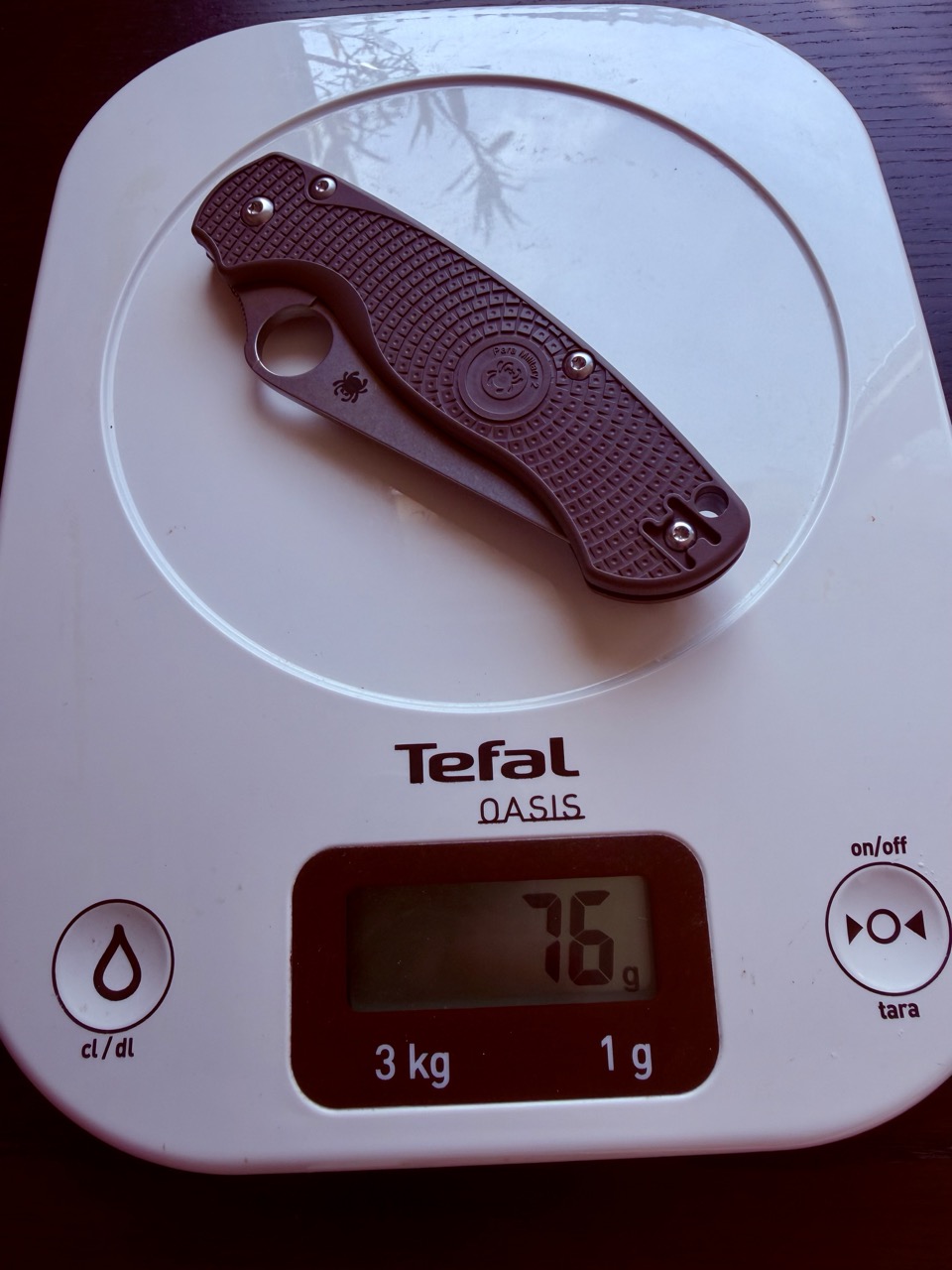
At only 76 grams, the PM2 Lightweight almost disappears in the pocket.
Every design decision serves one purpose: efficiency.
The FRN scales, the simplified construction, the excellent (refined *) Compression Lock and the outstanding blade geometry all contribute to a knife that “cuts far above its weight class” sorry for the cliché.
What impressed me most wasn’t even CPM-15V. It was the knife itself.
(*Spyderco quietly refined the Lightweight platform. Robin’s teardown revealed a redesigned Compression Lock spring featuring a longitudinal groove that improves lateral stability during operation. It’s an invisible modification, but one that perfectly illustrates Spyderco’s continuous evolution of an already outstanding design.)
The result is a PM2 that feels more mature than previous Lightweight generations.
The Heavyweight Workhorse
The Manix MagnaMax immediately sends a different message.
At 136 grams, it’s sixty grams heavier than the PM2 LW.
Normally I would criticize such an increase.
Here, I don’t.
Because the weight isn’t wasted and it was welcomed. To quote Wallach on the forums: “The other thing that jumped out at me immediately was the weight. I haven’t handled a “base” model Manix 2 in quite some time, and I had forgotten how heavy and dense this knife felt with full steel liners. I have a set of AWT scales coming for this knife, but I’m thinking I will try carrying it like this for a while, as I have to admit the knife has a different feel to it.”
Spyderco using full stainless steel liners, paired them with a stronger Ball Bearing Lock spring and produced perhaps the most confidence-inspiring Manix I’ve ever handled. It is striking.
Everything about this knife feels designed for decades of hard use.
Even the details on the MagnaMax blade impressed me:
The softened jimping, beautifully finishe, refined tip geometry and exceptional fit and finish all suggest that Spyderco knew this wasn’t just another run.
It feels now like a flagship.
CPM-15V vs. MagnaMax
Comparing these steels isn’t as straightforward as it first appears.
CPM-15V remains one of the absolute kings of wear resistance.
If your priority is maximum edge retention and you don’t mind spending extra time sharpening, it remains extremely difficult to beat.
MagnaMax follows a different philosophy.
Rather than maximizing only wear resistance, it attempts to reach an extraordinary balance between edge retention, corrosion resistance and toughness.
What impressed me during my testing is that MagnaMax never made me think about corrosion.
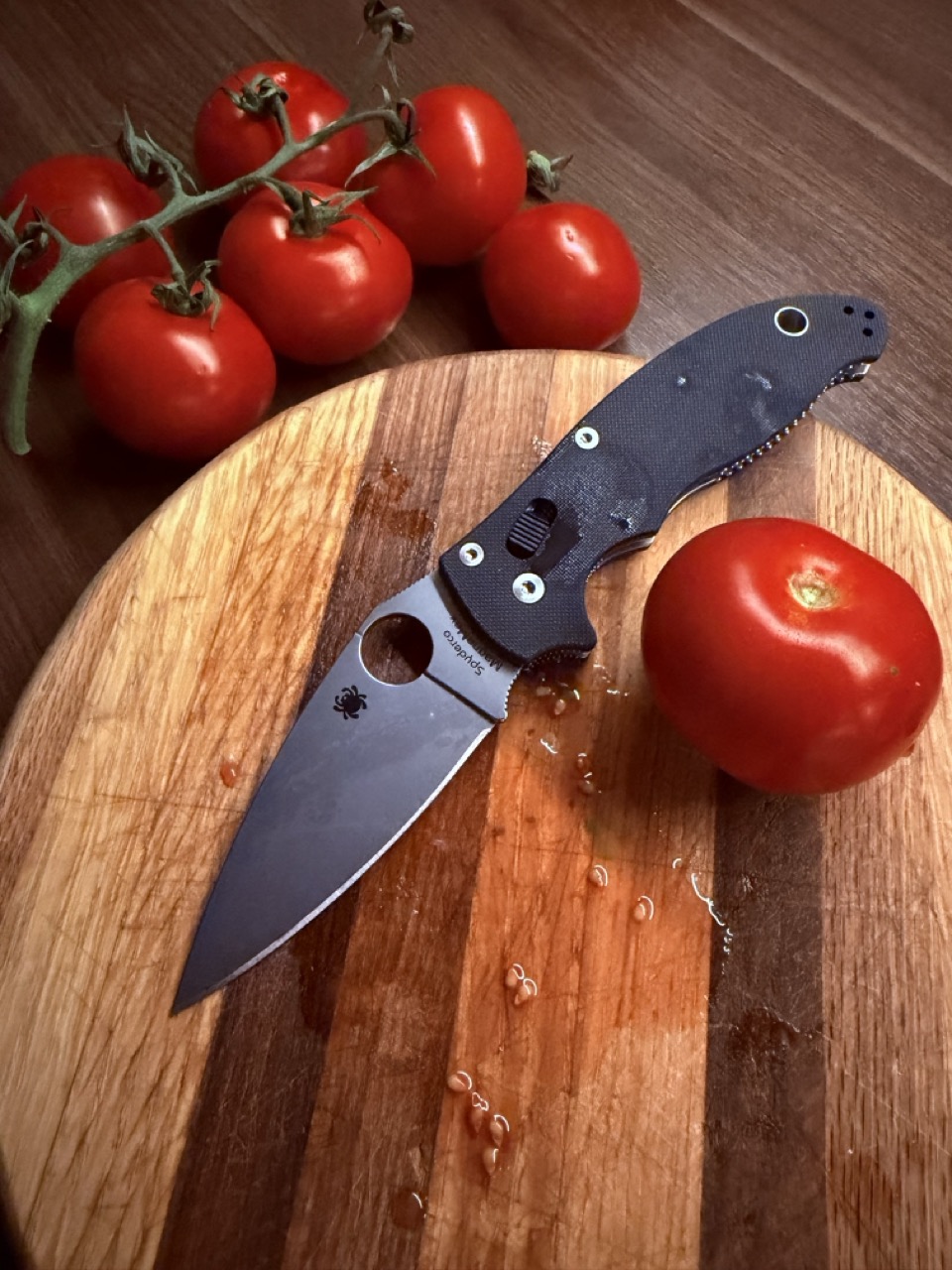
I simply used it. Kitchen work. Wet food. Cheese. Tomatoes. Lemons. Oily hands. Daily carry.
It behaved exactly as a great working stainless steel should.
After leather stropping both knives, I noticed that CPM 15V still exhibited a slightly toothier edge than MagnaMax. It became particularly noticeable on thick-skinned, fully ripe tomatoes. The PM2 would immediately grab the skin and zip through it effortlessly, without compressing or squashing the fruit first. But that may simply reflect my sharpening skills—or my lack of them. Sharpening is always a tricky business, so I’m reluctant to draw any firm conclusions from that observation alone.
Meanwhile, based on my own use—mainly breaking down a number of cardboard boxes—MagnaMax already feelsremarkably close to the elite wear-resistant tool steels that normally ask you to sacrifice corrosion resistance.
That said, these are not controlled, quantified tests like those you often see on YouTube. I have no reliable way of measuring actual edge wear, so this remains a subjective impression rather than a scientific conclusion.
If that impression proves accurate over time, this balance between excellent edge retention and true stainless performance may well become MagnaMax’s greatest strength.
Sharpening
Interestingly, both steels surprised me.
CPM-15V behaved exactly as expected. Slow. Demanding. Rewarding.
MagnaMax surprised me for another reason.
My normal sharpening routine simply wasn’t producing the finish I wanted. Only after adapting my technique did the steel really begin to reveal its potential.
15V teaches me patience. MagnaMax teaches me adaptability. 😉
Living With Them
The PM2 is the knife I instinctively slip into my pocket when I want maximum performance with minimum weight. The Manix is the knife I reach for when I expect to spend the entire day using it.
It fills the hand better. Its Ball Bearing Lock feels almost indestructible. It simply inspires confidence.
Final Thoughts
If someone asked me which knife cuts better, I’d probably answer, Define “cuts better.” 😉
If someone asked which knife feels stronger, I’d immediately answer: the Manix.
If someone asked which steel keeps an edge longer, CPM-15V still deserves its legendary reputation. The trade-off, of course, is that you have to pay a little more attention to corrosion and keep the blade lightly oiled.
If someone asked me which knife I’d take on a hike or while travelling, the honest answer would probably be: a future PM2 Lightweight in MagnaMax!
I think it would also make an outstanding hunting knife, as I mentioned in my previous review.
Then again… so would the Manix 2 MagnaMax.
Oh boy… what a dilemma.
The PM2 Lightweight CPM-15V reminds me of a Lotus Seven fitted with the most powerful engine ever officially installed in a Seven—the 550-horsepower supercharged RST-V8 of the Caterham Seven Levante. It’s all about maximizing performance while keeping weight to an absolute minimum.
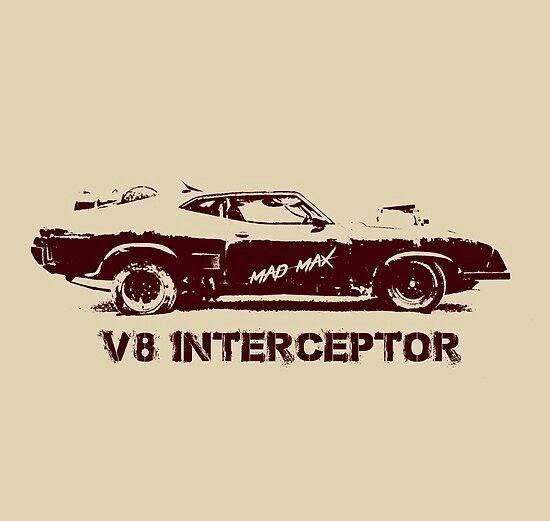
The Manix 2 MagnaMax, on the other hand, feels like Mad Max’s Ford Falcon Interceptor: heavier, tougher, brutally reassuring, and seemingly ready for whatever the road throws at it even the apocalypse !
But if someone asked me which knife I’d take on an unknown journey—one where I might encounter rain, food preparation, workshop tasks, cardboard, rope, wood, and endless daily cutting…
I’d choose my Manix 2 MagnaMax Salt “the quintessential Goldilocks knife” to quote Red Leader on the forums.
Not because it wins every category. Because it hardly loses any.
But even with the Vanilla version and it full liners and steel ball, Spyderco didn’t simply release another Manix with a new steel.
They quietly improved almost every aspect of the platform while introducing MagnaMax into production.
The PM2 Lightweight CPM-15V remains one of the finest slicing tools I’ve ever carried. And I’m planning to go in vacation with it as my only knife.
The Manix 2 MagnaMax may well become one of the finest all-around folding knives Spyderco has ever built.
Your mileage may vary, but just like their automotive counterparts, they’re both a joy to live with, really ! One is built to set lap records. The other is built to survive the rally.
As with some of my previous Spyderco reviews, I would like to begin with a brief disclaimer. Spyderco kindly provided this knife for evaluation at my request as part of the Spyderco Ambassador Program. As always, receiving a sample does not influence my opinions. Every review published on Nemo Knives Review reflects my own experience after carrying and using the knife.
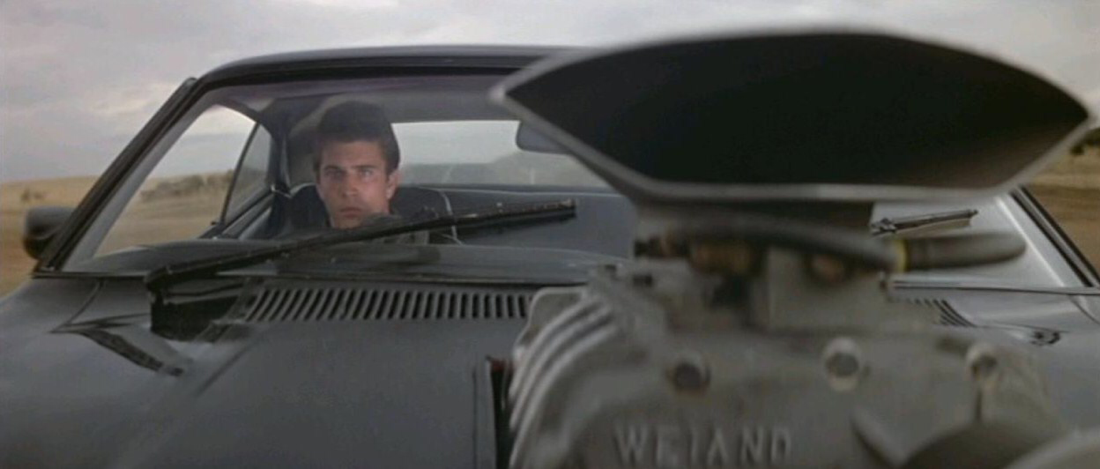
Goose: “You can shut the gate on this one, Maxie… it’s the duck’s guts!” Barry (MFP mechanic): “Yeah, she’s the last of the V8s! She sucks nitro… with Phase 4 heads, twin overhead cams, 600 horsepower through the wheels! She’s meanness put to music and the bitch is born to run!” Goose: “He’s in a coma, man!”
— From the screenplay of Mad Max (1979), written by George Miller and James McCausland.
First Impressions
The very first thing that struck me wasn’t the impeccable fit and finish—those are exactly what I’ve come to expect from Spyderco. It was the weight. Those days I mainly review Lightweight FRN folders but there is something about that Manix 2…
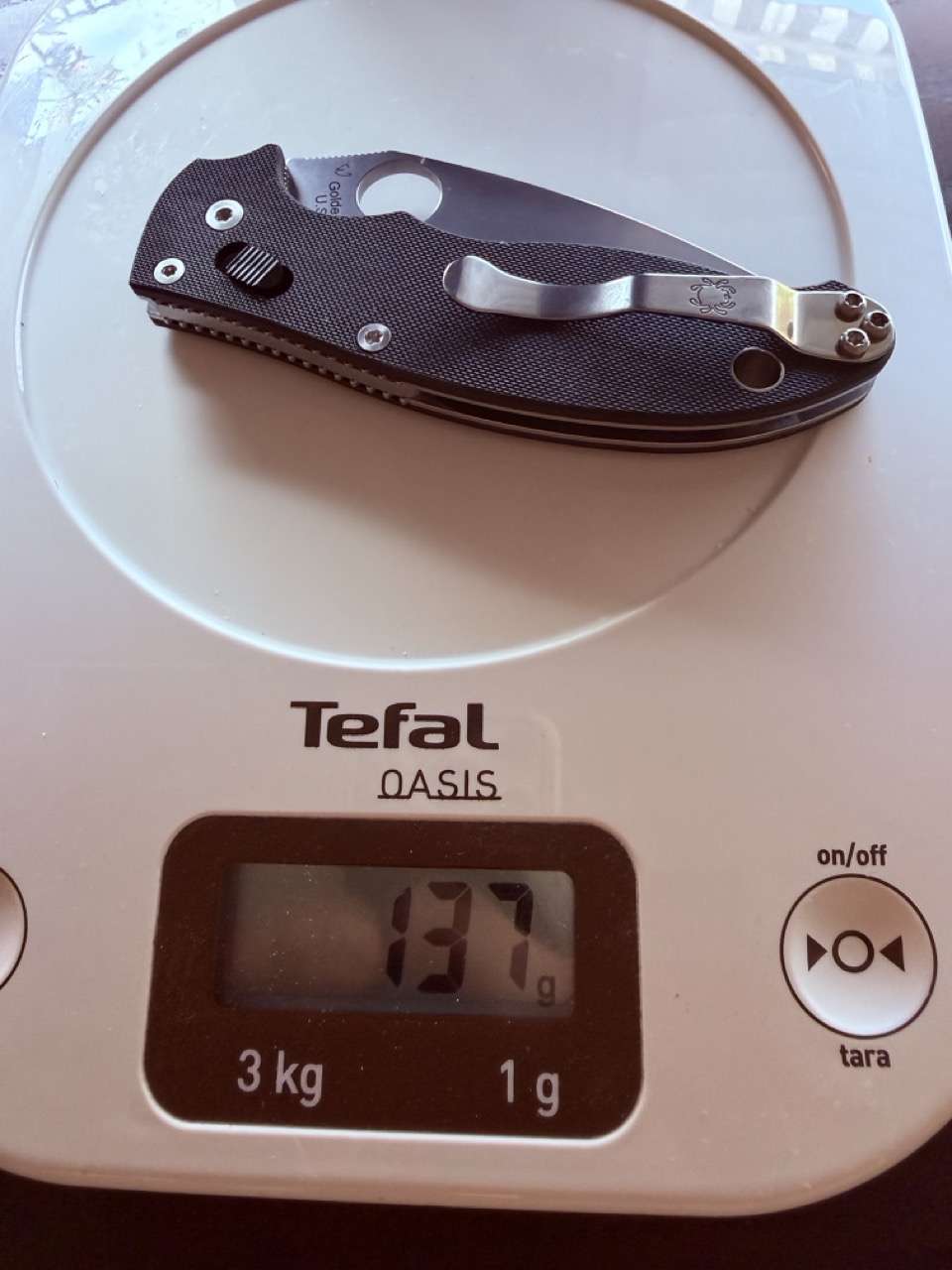
This MagnaMax version weighs 136 grams on my kitchen scale, roughly 20 grams heavier than both of my previous Manix 2 models. The additional mass is noticeable in hand, but rather than feeling cumbersome, it reinforces the impression that this is an exceptionally robust working knife. It feels dense and built to withstand years of hard use. Thanks to a hint from Robin, the mystery behind the extra weight turned out to be quite simple: this Manix 2 features full stainless steel liners. Unlike some previous versions that use skeletonized liners to reduce weight, these are solid throughout, adding approximately 20 grams to the knife. The difference is immediately noticeable in hand, giving the MagnaMax version an exceptionally robust, confidence-inspiring feel. So I went back through the Manix’s history to understand why.
Back to the Origins
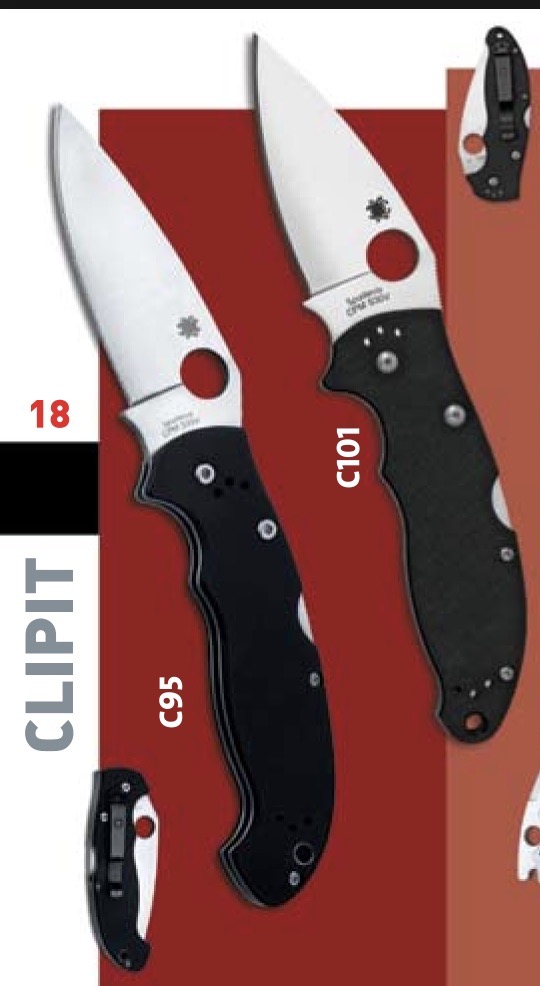
Looking back to 2004, Spyderco released two remarkably robust folders. First came the Chinook, designed by Master-at-Arms James Keating around a Bowie-style blade capable of powerful back cuts. Then, following the same philosophy but with Spyderco’s signature leaf-shaped blade, came the C95 Manix. Few folding knives have blurred the line between folder and fixed blade as convincingly as the Spyderco Manix. When the original C95 was introduced, it quickly earned a reputation for almost overbuilt strength. Designed to withstand relentless abuse, it inspired confidence in the harshest conditions and became a favorite among users who valued absolute reliability. Its only real compromises were a slight amount of vertical blade play inherent to its lock design and its considerable weight. At 154 grams, the original Manix felt reassuringly robust, but it was anything but discreet in the pocket. My friend Brian, a retired U.S. Navy helicopter pilot and avid hunter, has carried the original C95 Manix as his primary EDC since its release in 2004. “My Manix goes everywhere with me. It’s the first knife I put on in the morning and the last one I take off at night,” he wrote to me yesterday.
Screenshot
Five years after introducing the caged Ball Bearing Lock on the Dodo, Eric Glesser chose not to simply refresh the Manix, but to rethink it from the ground up. Introduced in 2009, the Manix 2 was conceived around a deceptively simple challenge: retain everything that made the original so exceptionally strong while reducing its weight by roughly ten percent. Achieving that balance required far more than trimming a few grams. The knife received a redesigned handle with more refined ergonomics, creating a tool that cut better, carried easier, and felt noticeably more natural in hand without sacrificing the confidence-inspiring durability that had defined the original Manix.
The heart of this transformation was the lock itself. The original Ball Bearing Lock, invented by Sal Glesser to satisfy the demanding standards of MBC (Martial Blade Craft), was already one of the strongest and most innovative locking systems in the folding knife world. Eric Glesser refined that concept even further by developing and patenting the Caged Ball Bearing Lock specifically for the Manix 2. By enclosing the ball bearing within a precision-machined polymer cage, Spyderco was able to use a smaller bearing while preserving the lock’s remarkable strength. The result was a mechanism that operated more smoothly, improved everyday ergonomics, simplified assembly, and remained exceptionally resistant to wear—all while making the design significantly more difficult to copy.
Screenshot
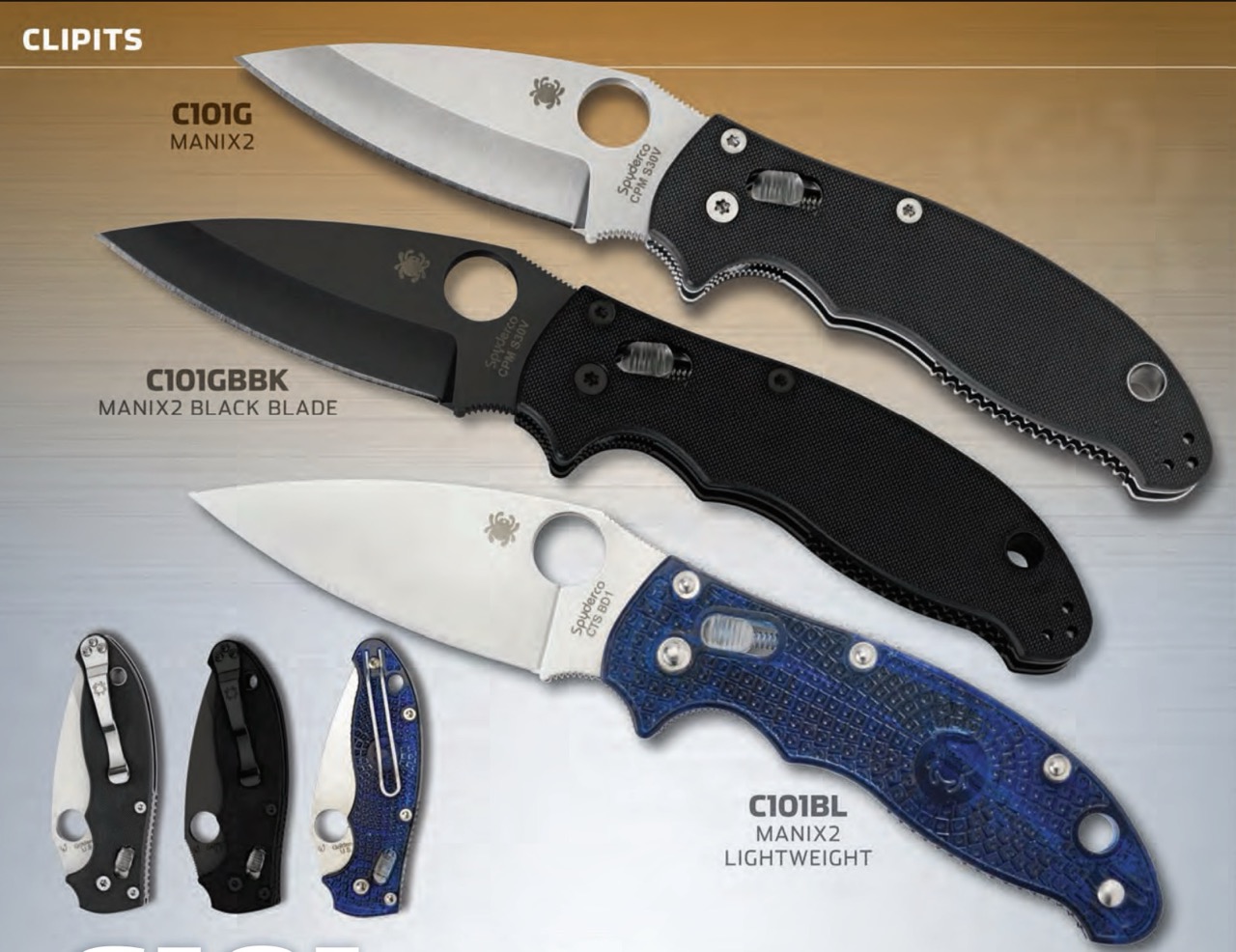
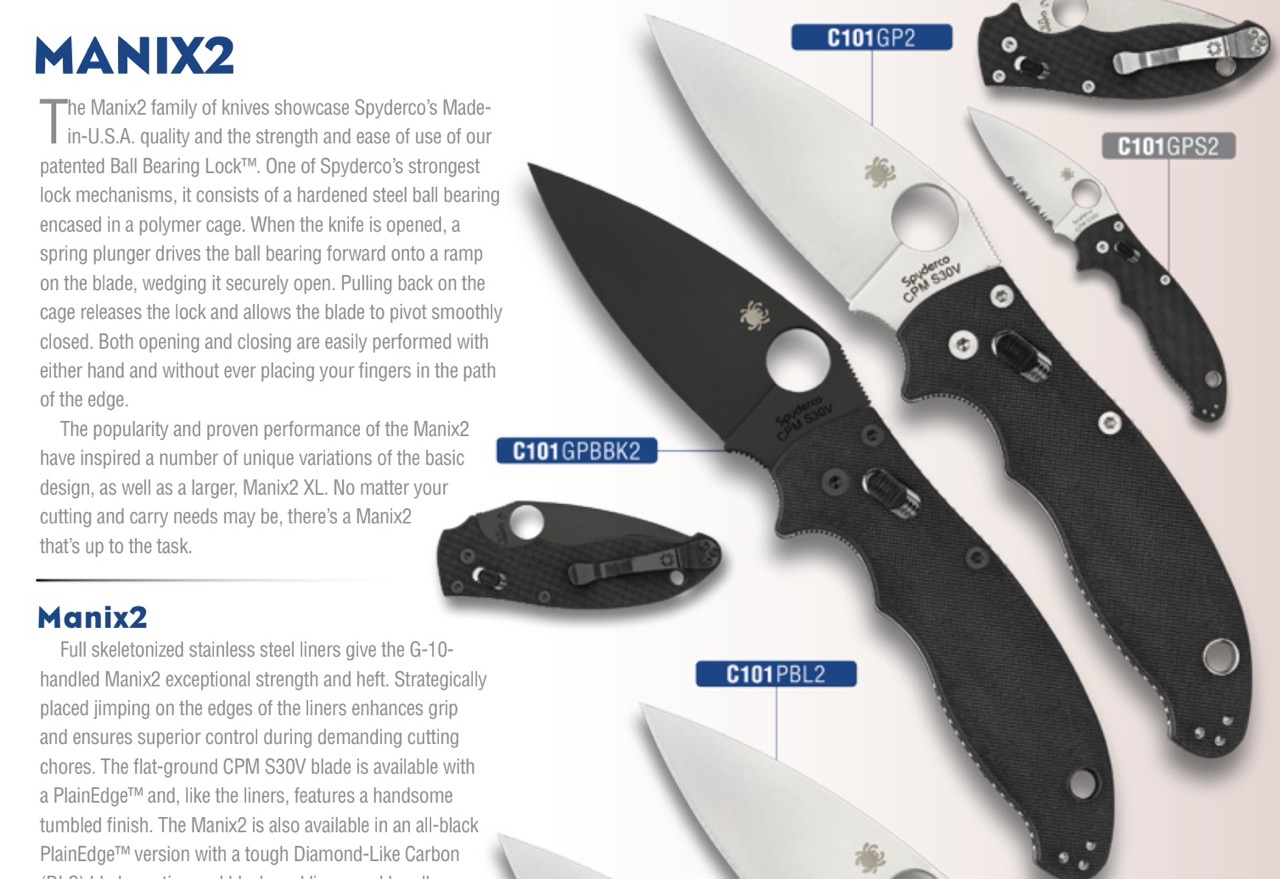
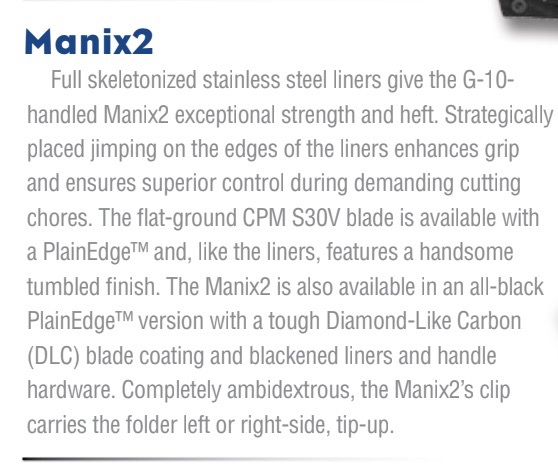
In 2014 in Spyderco Catalogue it is written:
Screenshot
“Manix2 Full skeletonized stainless steel liners give the G-10-handled Manix2 exceptional strength and heft...
The Full Liner Mystery
Spyderco has used both full and skeletonized liners throughout the Manix 2’s history, depending on the production period and model. Although skeletonized liners were used on many versions to reduce weight, the standard Black G10 Manix 2 had already returned to full stainless steel liners before the introduction of MagnaMax. Rather than marking a return to full liners, the MagnaMax version continues that robust, hard-use philosophy.
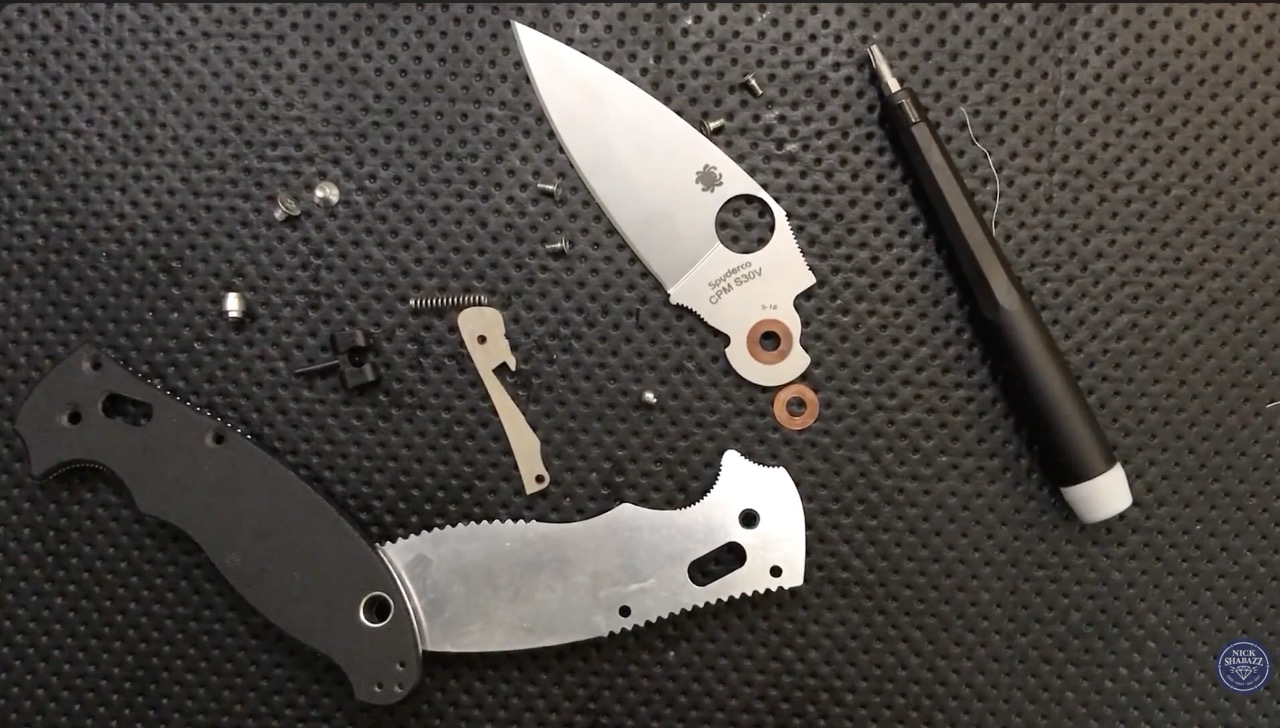
Screenshot
(Screenshot from Nick Shabazz video published eight years ago. ) Nick himself noted, on the day the video was released, “This video is an antique, one of the oldest in my backlog,” suggesting that the knife had actually been filmed several years earlier.
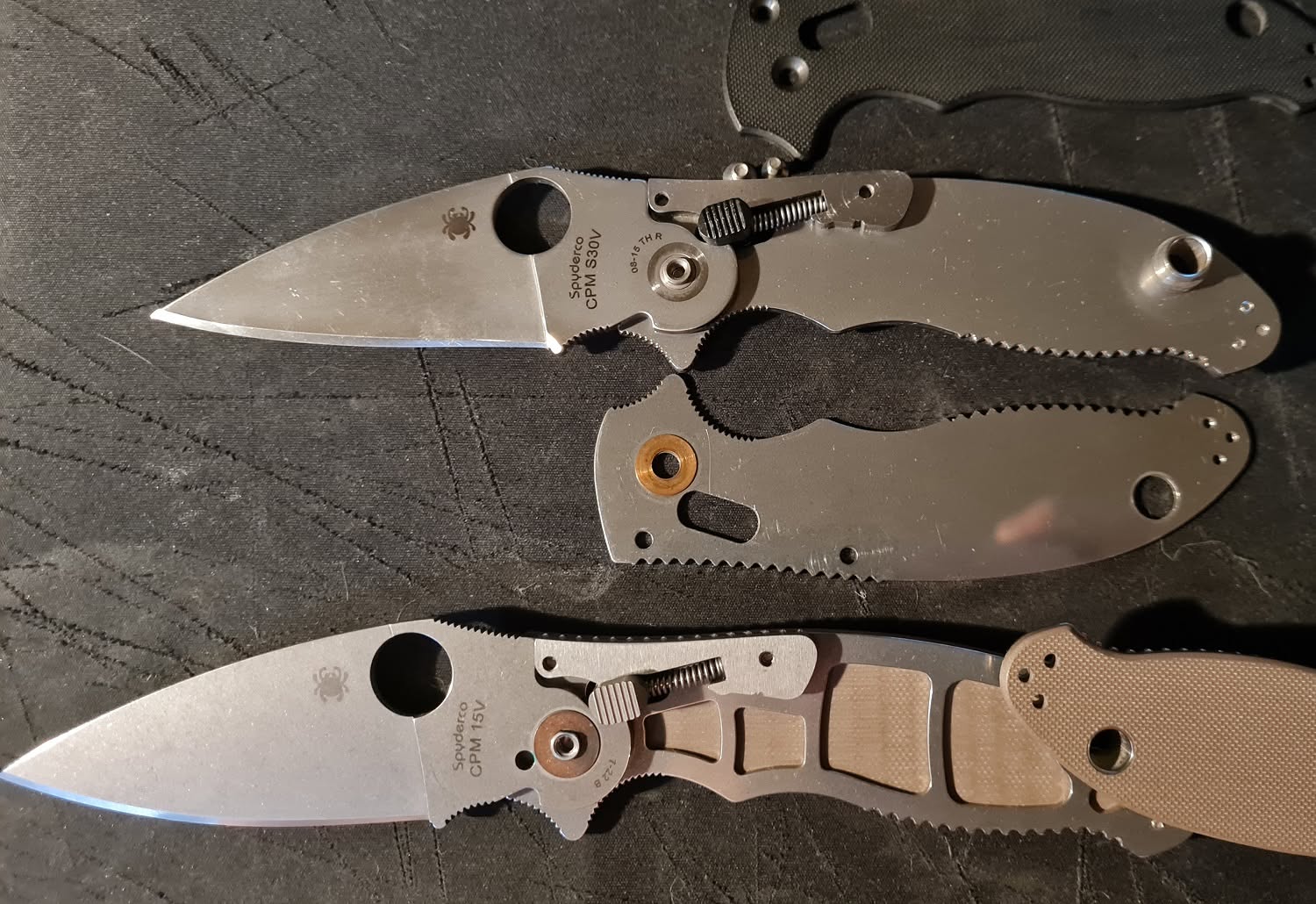
Robin (AKA Ramonade) later commented on the Spyderco Forum, “On Shabazz’s video, it’s from 2015, just like mine.” Thanks again to Robin for taking the time to disassemble his Manix 2—and, more importantly, for putting it back together without launching the spring or the Ball Bearing Lock across the room! Then again, that’s probably no surprise. He’s a talented young knifemaker with a very promising future ahead of him.
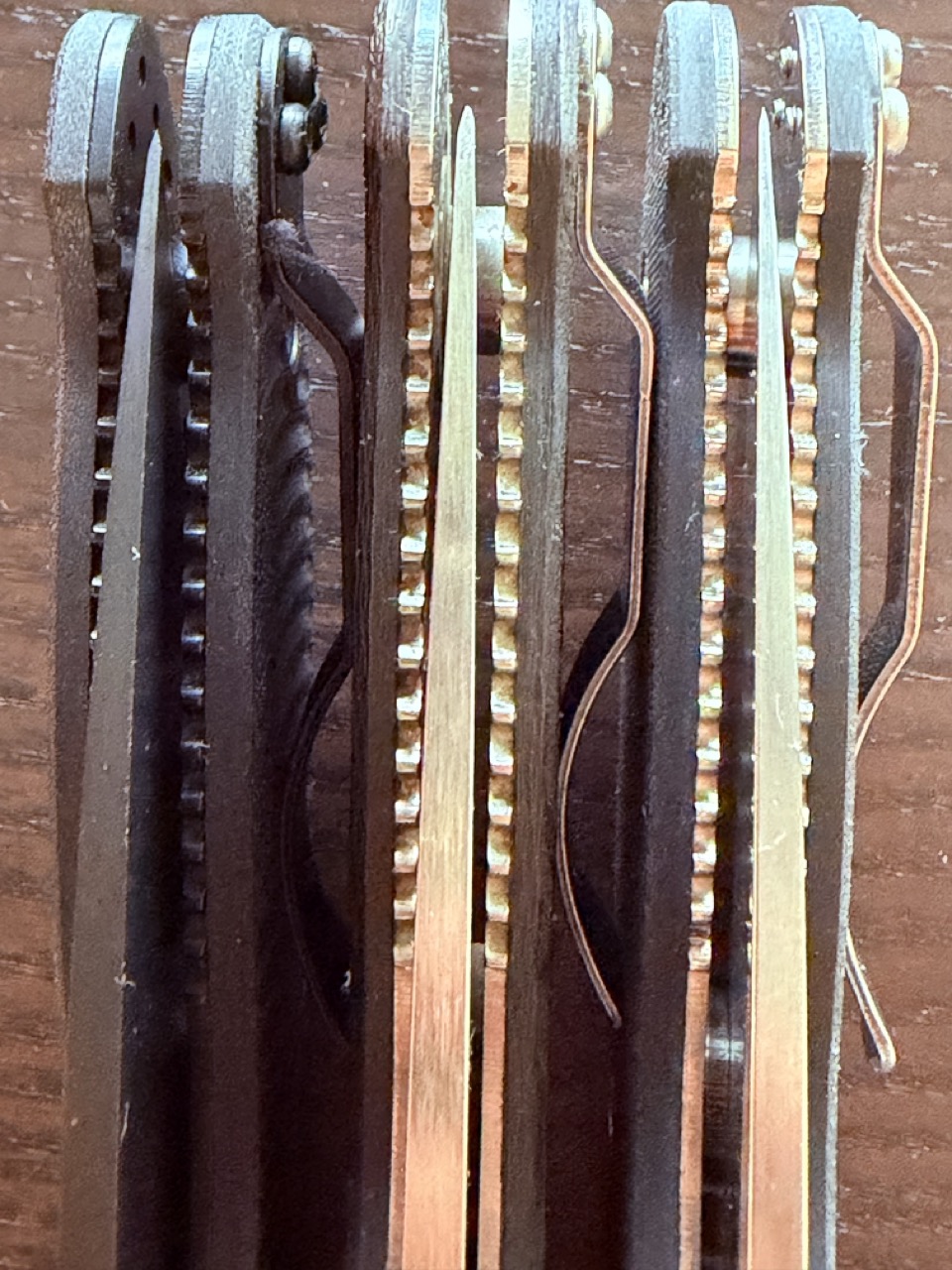
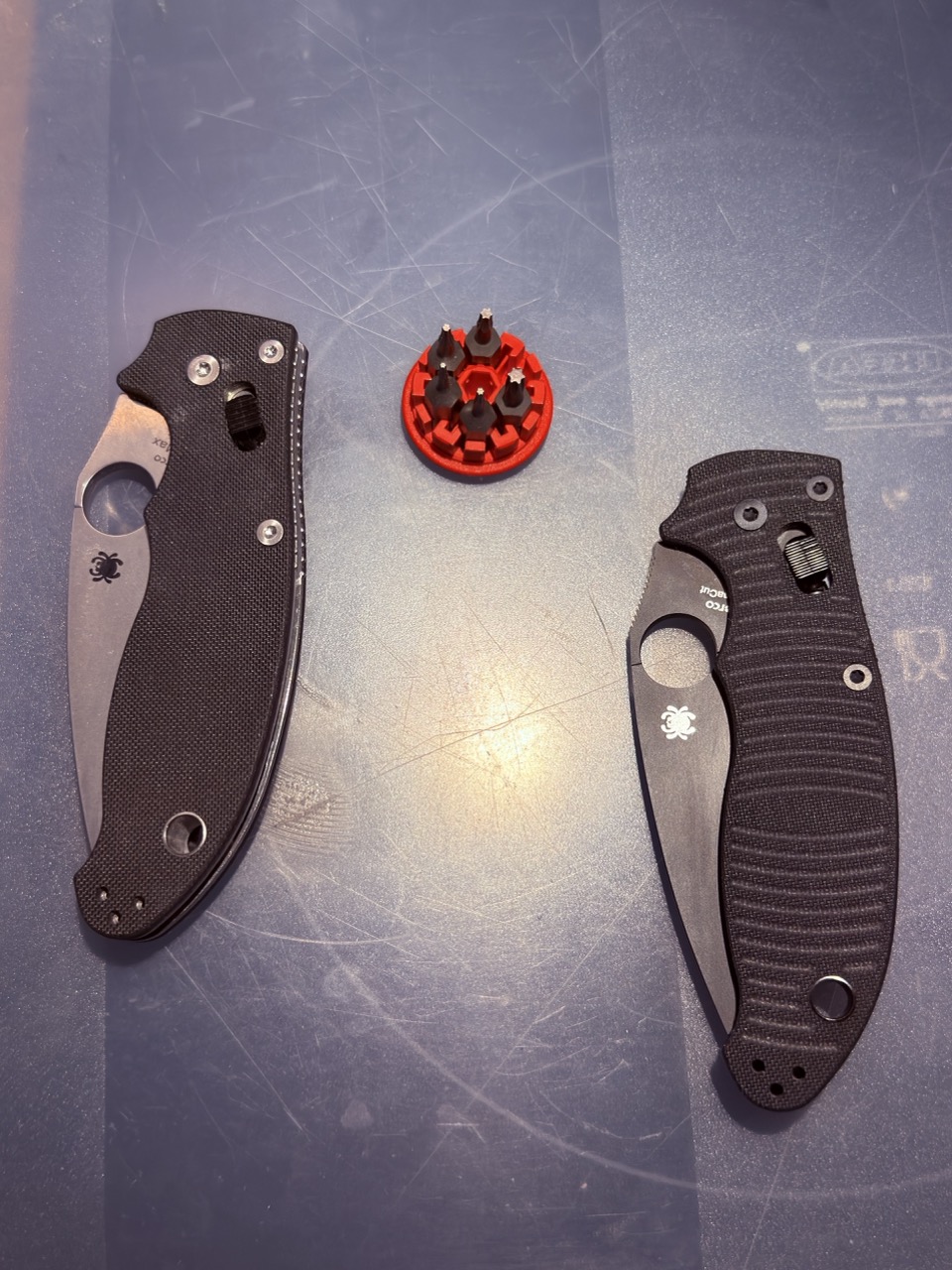
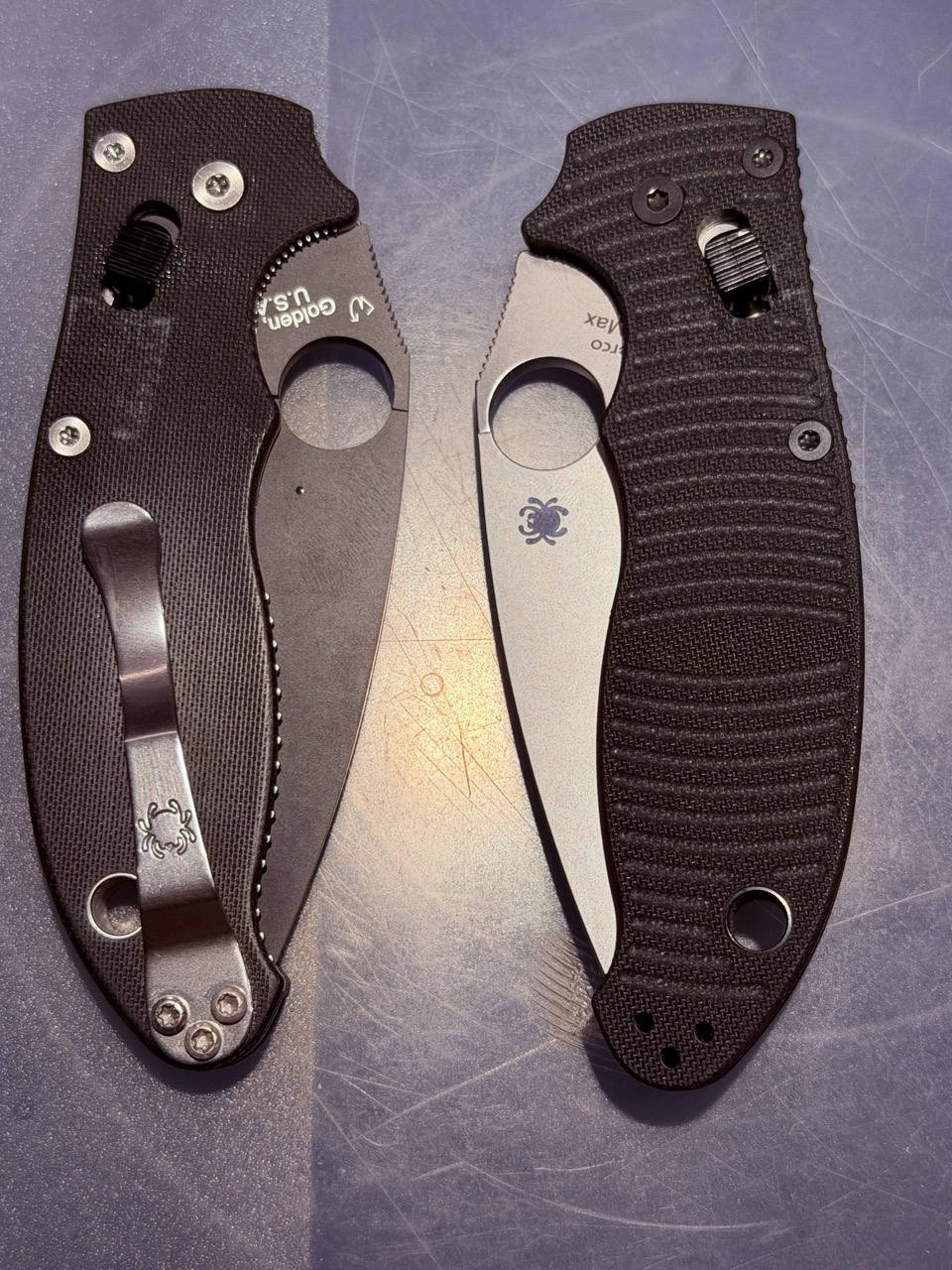
(Two Manix 2s disassembled by Robin to verify the manufacturing dates hidden beneath the blades, helping make this review as accurate as possible.)
Robin also pointed out another important detail: the Manix 2 Salt G-10 in MagnaCut is not a Sprint Run but a regular production model. It therefore demonstrates that Spyderco has also used skeletonized liners on a standard production Manix 2, rather than limiting them exclusively to Sprint Runs. This further could highlight that liner construction has varied depending on the specific model and intended purpose, rather than following a single rule across the entire Manix 2 family.
Spyderco has used both full and skeletonized liners throughout the Manix 2’s history, depending on the production period and model. Although skeletonized liners were used on many versions to reduce weight, the standard Black G10 Manix 2 had already returned to full stainless steel liners before the introduction of MagnaMax. Rather than marking a return to full liners, the MagnaMax version continues that robust, hard-use philosophy. But I do love the extra heft and the bottom-heavy balance of this MagnaMa(ni)x. It anchors the knife securely in my palm, making it feel incredibly stable and controlled during use. Rather than feeling bulky, the additional weight inspires confidence.
Looking back at the discussion, I realize my perspective was strongly influenced by the Manix Sprint Runs I own and use most often—namely that 2009 S90V Sprint Run and the new Salt G-10. Several Spyderco Forum members rightly pointed out that, for the standard G-10 Manix 2, full liners have actually been the norm for years. That’s a fair observation and an important distinction. It is also worth mentioning that some members suggested that full liners may slightly reduce manufacturing costs by eliminating the skeletonizing process.
Yes I know, I may sound like I’m splitting hairs, but this whole Manix 2 weight story is actually quite fascinating. After all, one of Eric Glesser’s original goals in 2009, when replacing the original Manix’s back lock with the Ball Bearing Lock, was to reduce the knife’s overall weight. Spyderco’s 2014 Product Guide even described the standard G10 Manix 2 as featuring skeletonized stainless steel liners. That’s what makes the full stainless steel liners—and the additional heft—of the MagnaMax version particularly intriguing. To me, it gives the impression that Spyderco was willing to prioritize strength over shaving off a few extra grams. Whether that decision was driven purely by design philosophy, manufacturing considerations, or a combination of both is something only Spyderco could answer.
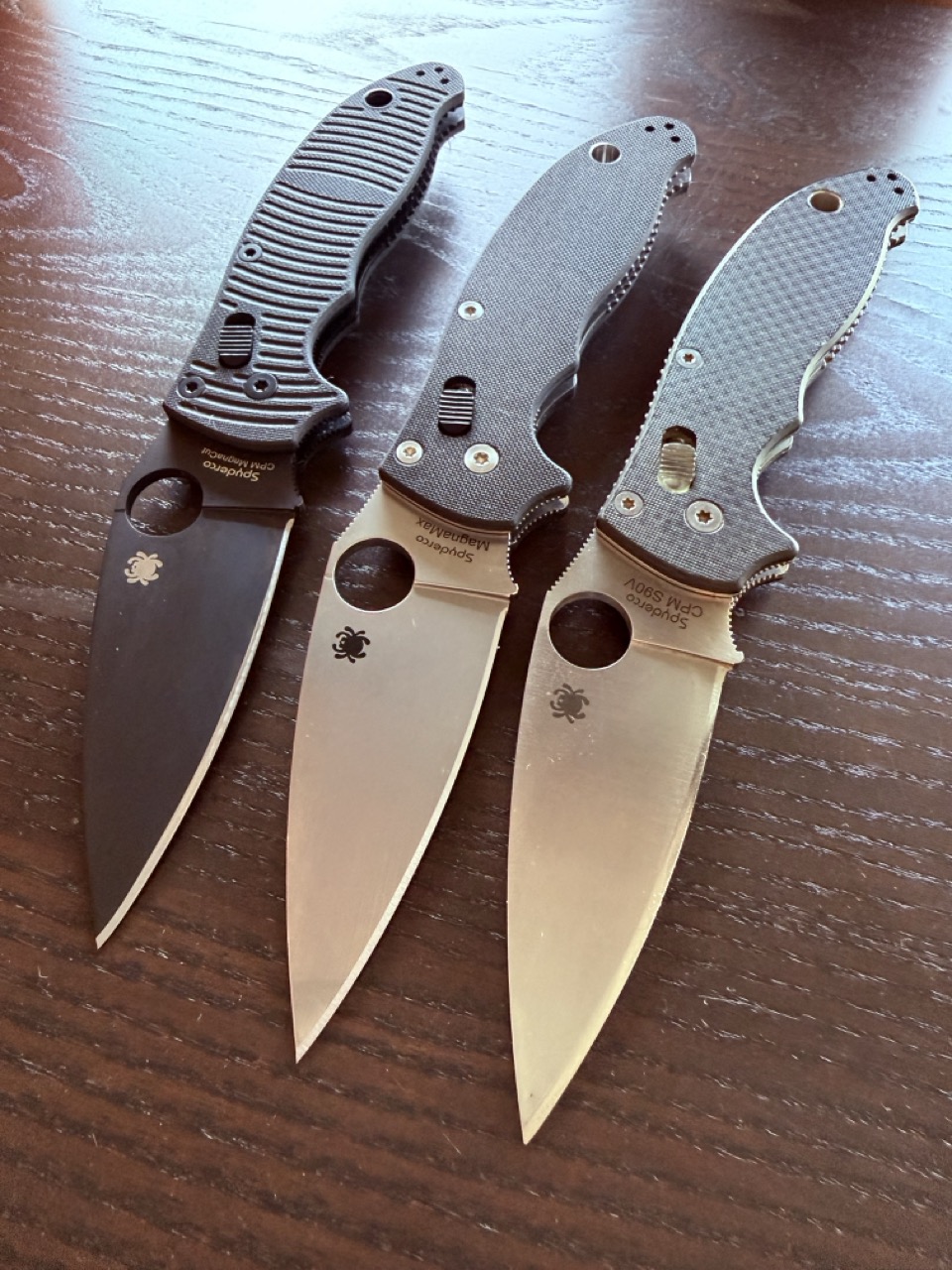
Anyway, skeletonized liners date back to at least 2009—my own C101CFP has them.
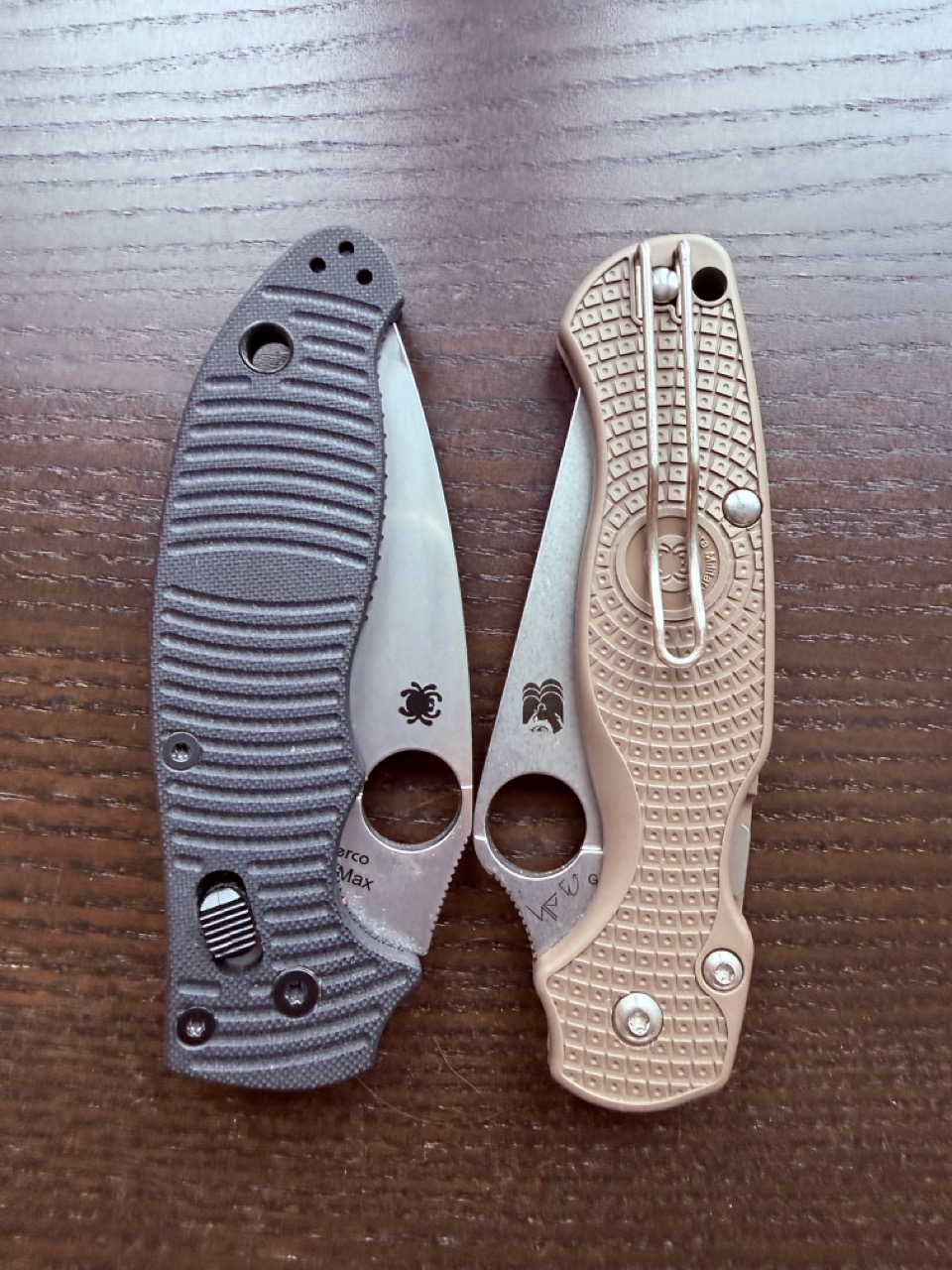
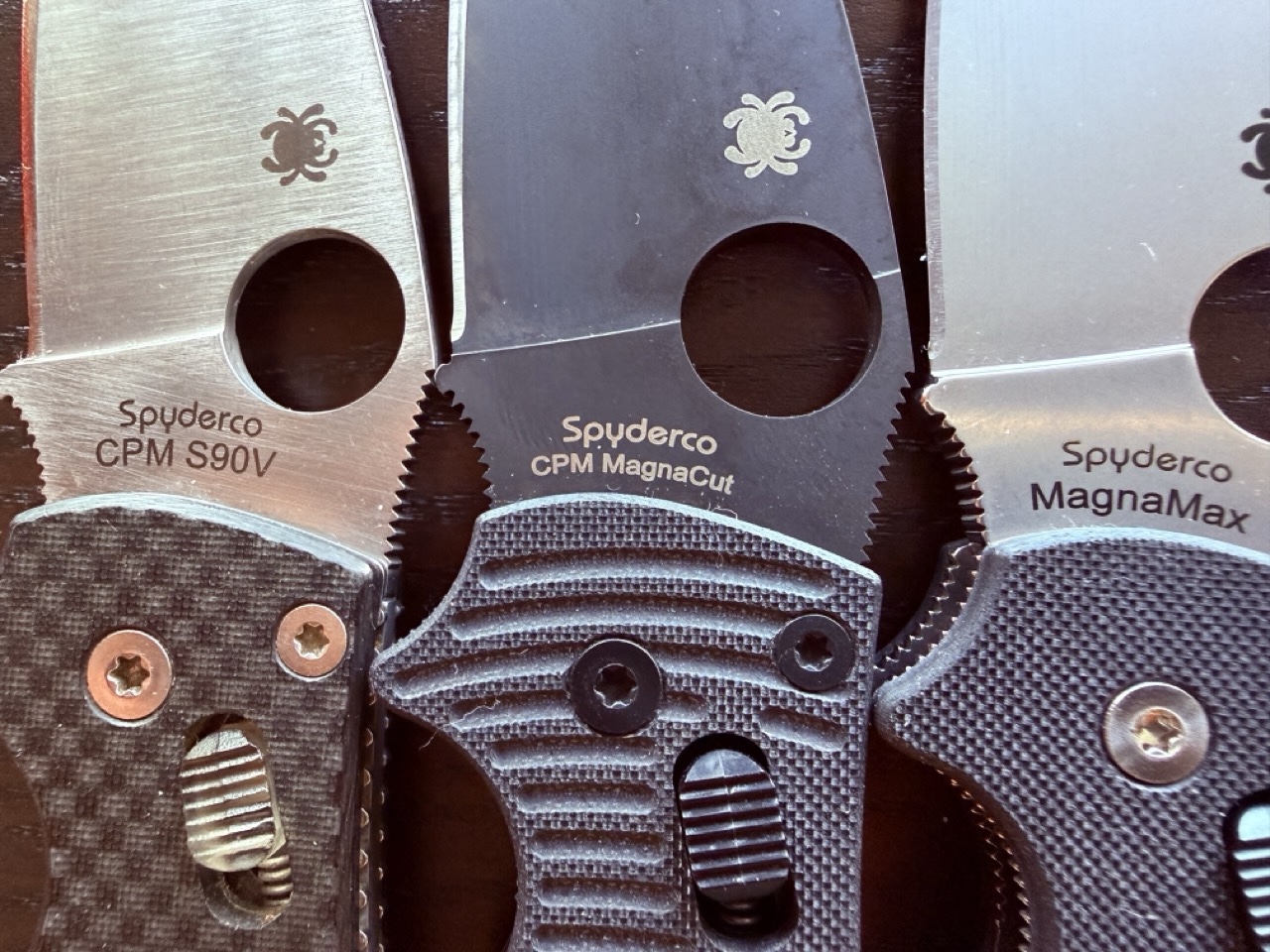
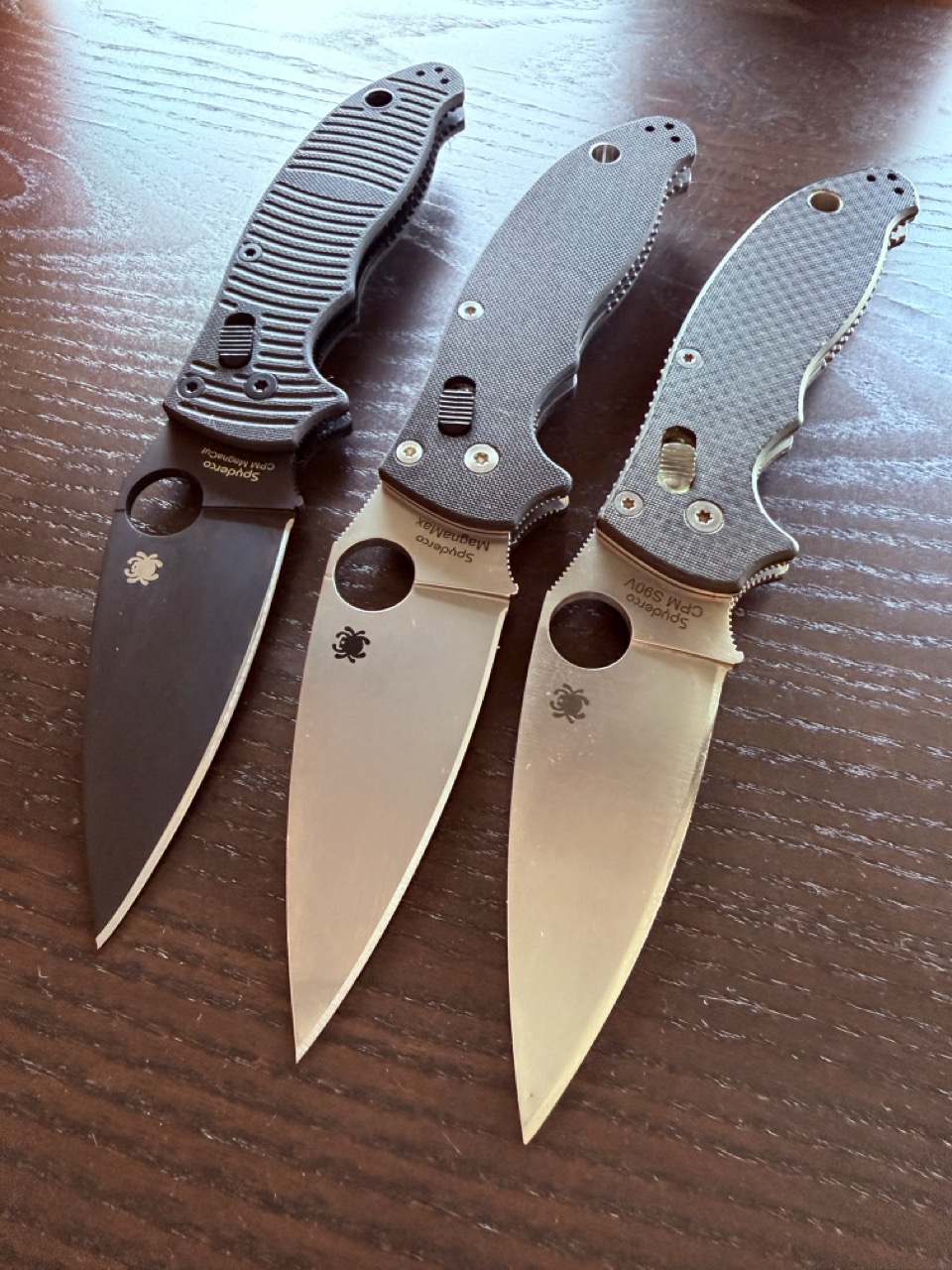
Here’s my summer 2009 C101CFP (announced by Eric Glesser on August 5, 2009), pictured alongside the MagnaMax and the MagnaCut. As discussed in the article.
Because there are fewer hidden cavities beneath the scales, full liners also offer fewer places for moisture and debris to accumulate, potentially reducing the risk of hidden corrosion over the long term. Since those liners are left uncoated, they are easy to inspect, clean, and apply a light coat of oil whenever needed. (Of course, coated skeletonized liners, such as those found on the Salt G-10, are also a premium solution—they simply reflect a different design philosophy.) It all reinforces my impression that this Manix 2 MagnaMax was designed first and foremost as a dependable workhorse.
I remember this excellent BushcraftUK review of the CPM-M4 Manix 2, where the author Xavierdoc from Wales wrote: “I don’t know how long the lock mechanism will resist the onslaught of pocket crud and the skeletonised liners are a potential blood/muck magnet.”
It raises an interesting point. Skeletonized liners undoubtedly save weight, but they also create additional cavities where mud, blood, wood dust or other debris can accumulate. Full liners may be heavier, yet they could prove easier to clean after messy outdoor tasks—something that hunters and game processors might particularly appreciate.
(The S90V is in the middle of the picture, MagnaMax on the right, Magnacut on the left)
A Blade That Speaks of Confidence
Looking more closely, I noticed that the blade tapers more aggressively toward the tip than my original S90V Manix 2 and is even thinner than the MagnaCut version. That finer tip should provide greater precision for detailed cutting tasks while still aiming to preserve the strength expected from the Manix platform. More importantly, this refined blade geometry reflects the confidence that Eric Glesser, Sal Glesser, and the Spyderco team have placed in the remarkable capabilities of MagnaMax.
Edited July 7: As forum member Wartstein rightly pointed out, a finer tip also represents a trade-off. If the Manix is viewed as a hard-use folder, a thinner tip could potentially limit some of its abuse tolerance. Whether MagnaMax’s toughness fully compensates for this change remains to be seen in long-term use.
Lock-Up and Action
Like all my Manix 2s, everything feels perfectly assembled, with the precise action and rock-solid lock-up that have made the Manix 2 one of Spyderco’s most respected designs. There is no blade play whatsoever, yet the blade remains perfectly centered and drop-chute when unlocked. The only difference I immediately noticed is that the Ball Bearing Lock feels slightly stiffer than on my older Manix 2s, most likely due to a stronger spring ? Since the knife is brand new, I’ll reserve my final judgment until it has been properly broken in. At the moment, the Ball Bearing Lock spring feels just as stiff as on my MagnaCut G10 Salt. A stronger spring makes the action feel more deliberate and virtually eliminates any gravity-assisted opening. A wrist flick is still possible, in reverse grip, but it takes significantly more commitment than with my other older Manix 2s. Whether this is intentional or simply the result of a brand-new spring remains to be seen, but it certainly reinforces the impression of a knife built with security and reliability in mind.
I know some users would prefer a lighter spring tension, and some even trim or replace the spring to make the lock easier to operate. That’s entirely a matter of personal preference.
I’ve also never really managed to close a Manix 2 without pulling back both sides of the lock, unlike all of my Axis-Lock Benchmades. My Adamas, for example, have an exceptionally smooth Axis Lock, and even my old AFCK (the Axis Lock version) is much more easier to operate pulling back only one side of the lock. I remember some self-defense instructors criticizing Benchmade’s original AXIS Lock on the BM710, arguing that an opponent might be able to disengage the lock during a struggle by pulling back on the lock bar. Whether or not that concern was realistic, it was an interesting argument at the time.
The Manix 2, originally developed with Spyderco’s Martial Blade Craft philosophy in mind, has always felt deliberately more secure to me. The Ball Bearing Lock demands a more deliberate action, making accidental disengagement seem considerably less likely. As for me, I like the reassuring feeling that my knife is not going to open accidentally in my pocket. In a way, it reminds me of shifting gears in an old Porsche Carrera with a manual gearbox—you don’t do it with hesitation, you do it with purpose. That’s exactly how I approach the Ball Bearing Lock on this MagnaMa(ni)x. The downside is that it can be a bit more challenging to operate with wet or greasy fingers. That’s probably one of the reasons why some users replace the factory polymer cage with an aftermarket aluminum or titanium version, which often provides a more positive grip. Fortunately, the Manix 2 is one of the most customizable production folders on the market, with an impressive range of third-party parts available.
Small Details That Matter
Now, from a purely cosmetic standpoint, the blade appears to have received a slightly more pronounced tumble, resulting in an almost stonewashed finish. It seems a little less pronounced than on the CPM 15V Sprint Run, but the resemblance is striking. Really, this is a beautiful blade !
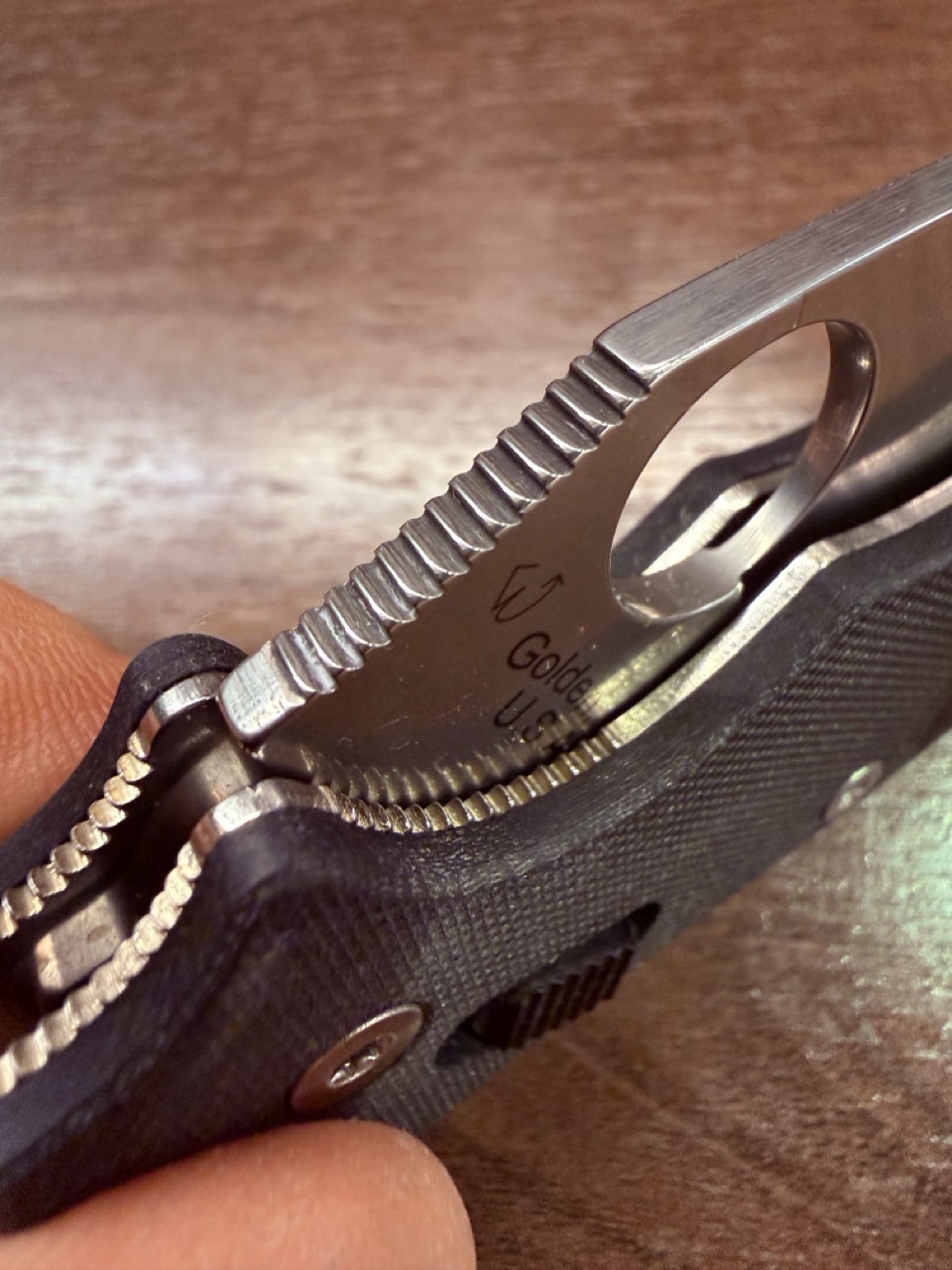
Another pleasant surprise was the jimping. I immediately noticed that the edges of the thumb ramp and choil jimping have been subtly beveled. It’s a small detail, but one that makes a noticeable difference in comfort without sacrificing grip. Ironically, this is one of the first modifications I usually make myself with a diamond rod. This time, Spyderco has already done it for me. 🙂
So, what do we have so far ? A slightly heavier Manix 2, a strong Ball Bearing Lock spring, flawless action, and impeccable fit and finish and great attention to details. So far, what’s not to like?
One small modification I made was to lightly sand the clip-side G-10 with 400-grit sandpaper. I prefer a smoother texture there to avoid turning the knife into a pocket shredder. I do that on every knives.
Personally, I’d liked my G-10 a little more refined (smooth like the Knifecenter Exclusives), especially since the Manix already provides plenty of grip through its excellent jimping. Softening only the clip-side scale slightly doesn’t compromise control for me—it simply makes the knife much kinder to my pockets, period. 😉
And my wife is grateful too… it means one more pair of trousers survives the Manix. 😉
But this knife isn’t just about that. The real story begins with the steel itself.
Meet MagnaMax
Now about MagnaMax which is core of this release: As of July 2026, if we set aside Spyderco’s Mule Team test platform, the MagnaMa(ni)x stands as the first true production folder to introduce this remarkable steel to the broader knife community. MagnaMax is one of the newest high-performance stainless steels developed by metallurgist Dr. Larrin Thomas. Building upon the innovations introduced with MagnaCut, its goal is to push the balance between toughness, wear resistance, edge retention, and corrosion resistance even further. Rather than maximizing a single property, MagnaMax aims to deliver exceptional overall performance, making it particularly attractive for hard-use folding knives. It represents the latest step in the evolution of modern powder metallurgy steels designed specifically for real-world cutting performance.
Chromium (Cr)
Vanadium (V)
Molybdenum (Mo)
Tungsten
Cobalt (Co)
Niobium (Nb)
Nitrogen (N)
MagnaMax
~1.15%
~10.5%
~3.5%
~2.0%
~1.0%
~7.5%
~1.5%
–
MagnaCut
1.15%
10.7%
4.0%
2.0%
–
–
2.0%
0.20%
CPM S90V
2.30%
14.0%
9.0%
1.0%
–
–
–
–
K390
2.47%
4.2%
9.0%
–
2.0%
2.0%
–
–
MagnaMax – Designed to deliver an exceptional balance of toughness, wear resistance, edge retention, and corrosion resistance. The addition of cobalt and tungsten further enhances its overall performance.
MagnaCut – One of the most balanced stainless knife steels ever developed, combining excellent toughness with outstanding corrosion resistance.
CPM S90V – Famous for its exceptional edge retention thanks to its very high vanadium content, though it is less tough and more difficult to sharpen.
K390 – An outstanding non-stainless tool steel with phenomenal edge retention and wear resistance, intended for demanding cutting tasks but requiring regular maintenance to prevent corrosion.
Criterion
MagnaMax vs MagnaCut
Edge retention
Notably superior (K390/Vanadis 8 level)
Corrosion resistance
Equivalent, very good
Toughness
Slightly lower
Sharpening
Harder (standard stones), diamond recommended
Availability (2026)
Very limited, near-boutique
MagnaMax in Context
In terms of performance, MagnaMax should offer edge retention comparable to K390 and Vanadis 8, placing it in the same general class as CPM-10V and CPM-S110V, while outperforming steels such as M390, ZDP-189, S60V, S30V, and CPM-M4 in wear resistance.
In toughness, it appears to sit just above Vanax, S35VN, CPM-154, and CTS-XHP… slightly below MagnaCut, yet still in the upper tier of stainless knife steels.
I was not one of the lucky MagnaMax Spyderco Mule owners but the consensus emerging from discussions on the Spyderco Forum is that MagnaMax is viewed as a specialized, edge-retention-focused premium steel. It seems particularly well suited to EDC and repetitive cutting tasks where wear resistance is paramount. For bushcraft or survival use, however, where toughness often takes precedence, many members still favor MagnaCut, Cru-Wear, CPM-3V or CPM-M4. As the Manix is a folder rather than a fixed blade, I don’t expect to subject it to heavy bushcraft. Still, many users happily rely on the Manix 2 in the woods.
Screenshot
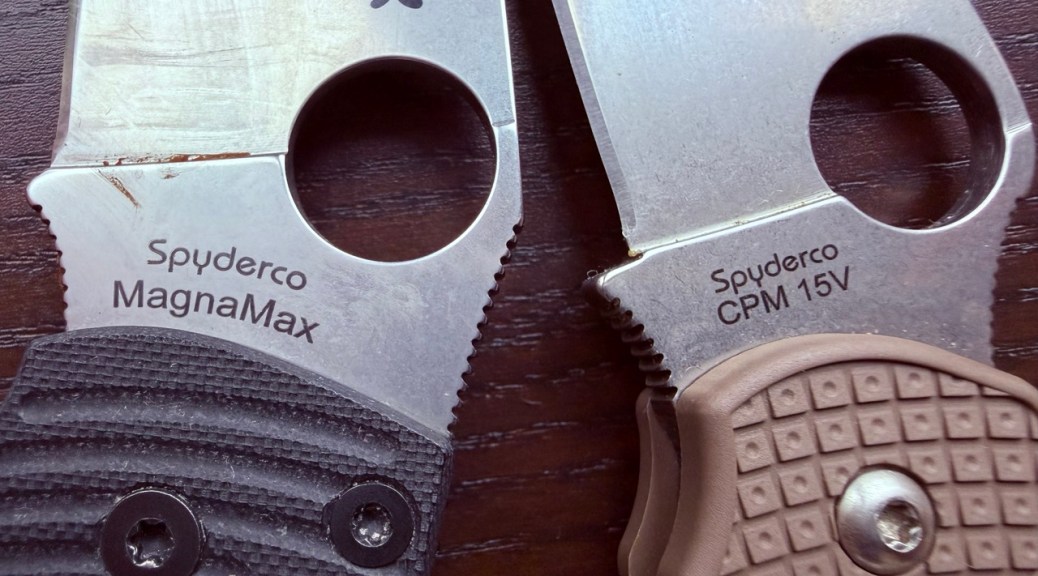
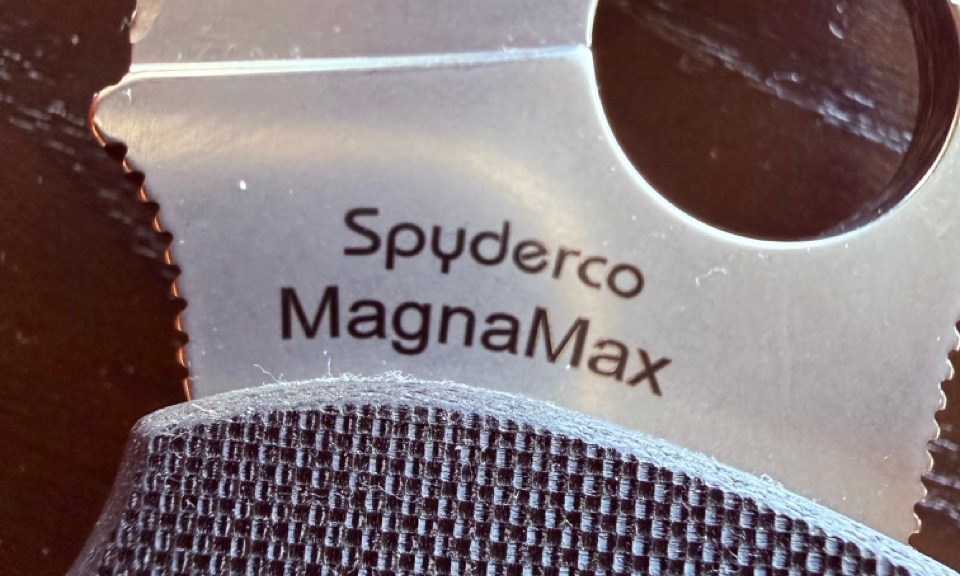
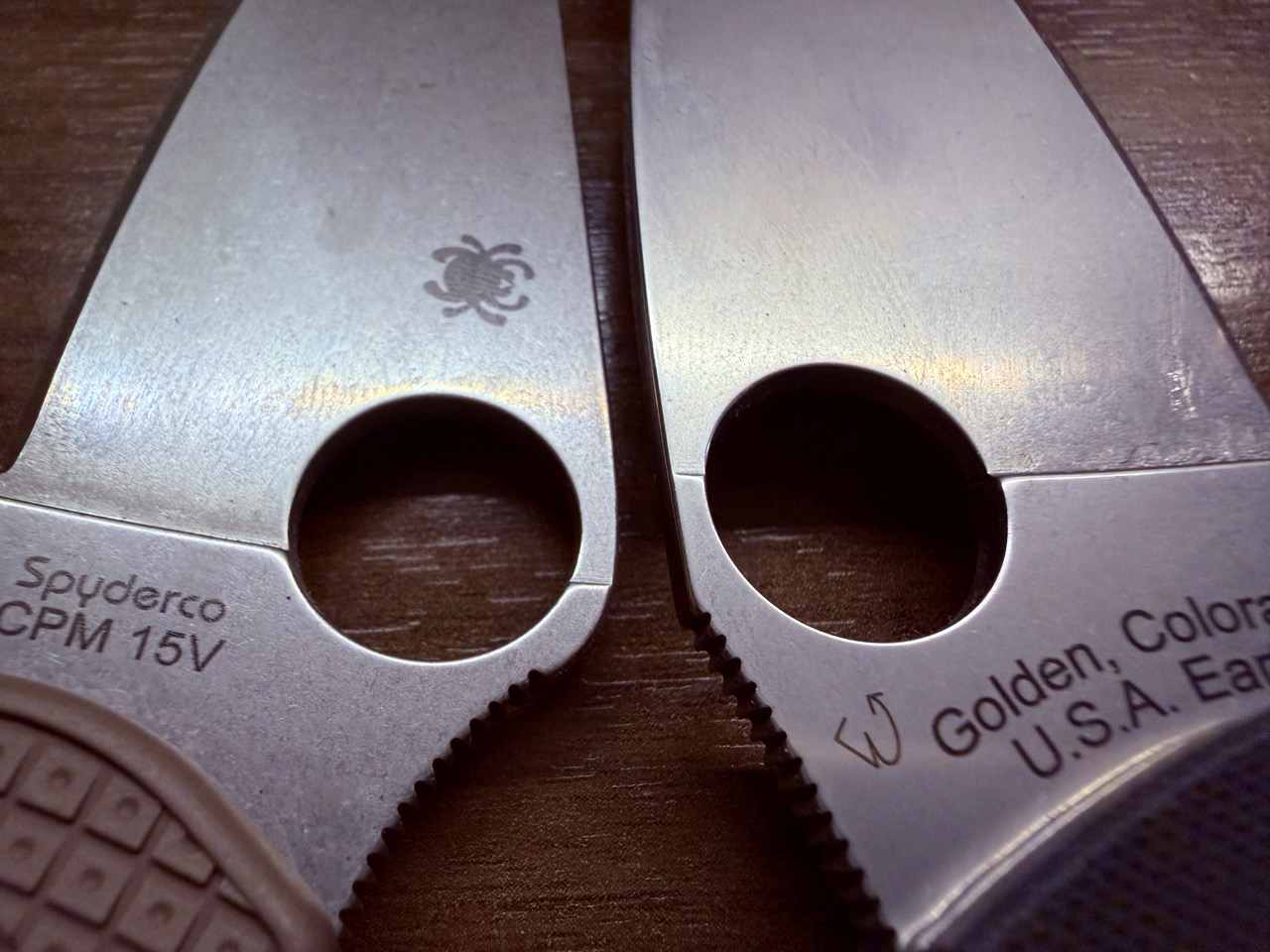
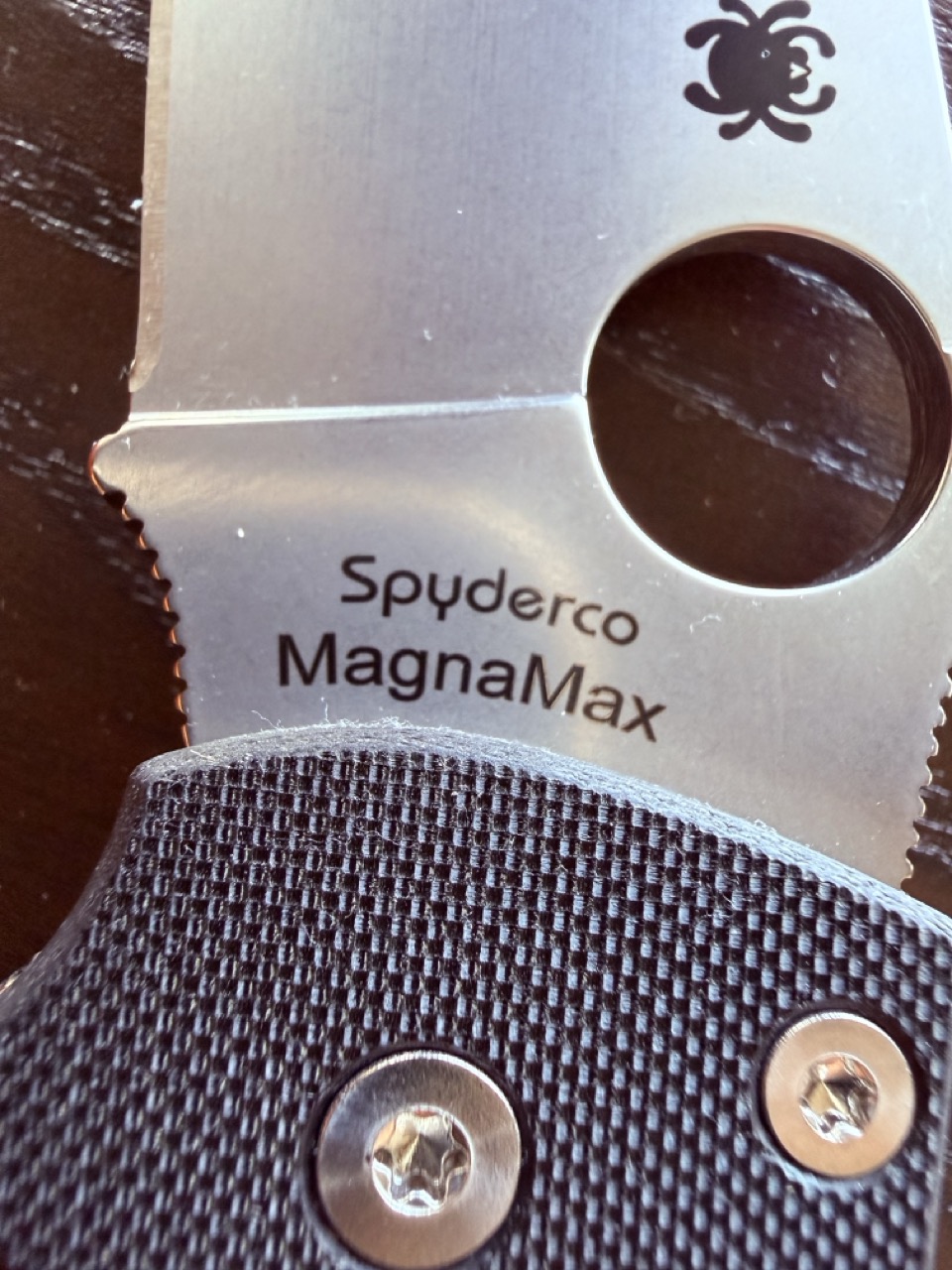
As you may have noticed, the “CPM” marking has disappeared from the blade. That’s no coincidence. Following the closure of Crucible Industries, Spyderco has dropped the CPM designation from its blade markings. While the steel itself remains the focus, this small detail quietly marks the end of an era in the history of modern knife steels. 😦
In many ways, MagnaMax feels like the offspring of MagnaCut and K390. It aims to combine MagnaCut’s outstanding balance of toughness and corrosion resistance with the exceptional wear resistance and edge retention that have made K390 legendary among knife enthusiasts. While it is not literally derived from either steel, its design philosophy seems to bridge the gap between these two outstanding performers.
One interesting clue to Spyderco’s confidence in MagnaMax came from Eric Glesser during the Amsterdam Meet 2026, where he suggested that MagnaMax could eventually replace CPM S30V/CPM S45VN in Golden, Colorado-made folders. If that transition takes place, it would position MagnaMax as Spyderco’s new premium all-around stainless steel for many production models. It is more than just a steel upgrade; it marks the beginning of a new era for Spyderco.
Ergonomics That Stand the Test of Time
The ergonomics of the Manix 2 platform have already been covered extensively in my previous review of the Manix 2 Salt G10. The outstanding handle design, aggressive jimping, Ball Bearing Lock, and exceptional grip remain unchanged here. MagnaMax does not alter what has always been one of the strongest aspects of this design.
The familiar combination of textured G10 scales, full stainless steel liners, and Spyderco’s proven hardware gives this knife an unmistakable feeling of strength. Combined with its additional weight, the knife inspires confidence the moment it is picked up. This is a tool that feels engineered for demanding work rather than simply everyday pocket carry.
Ready for Work
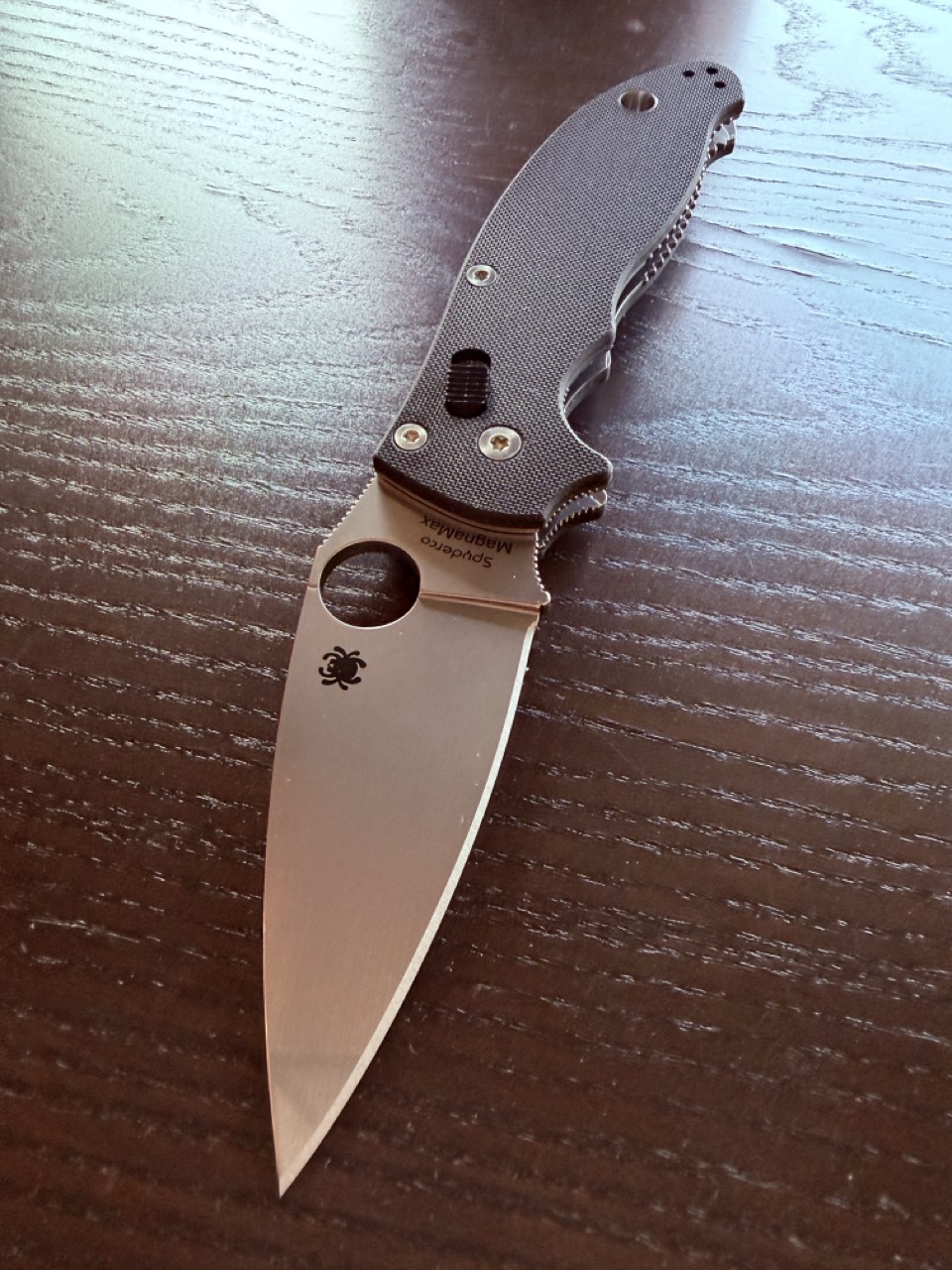
Out of the box, the edge is razor sharp. The factory sharpening is excellent, producing a clean, aggressive cutting edge that easily meets Spyderco’s reputation for outstanding factory grinds. The accompanying photographs speak for themselves.
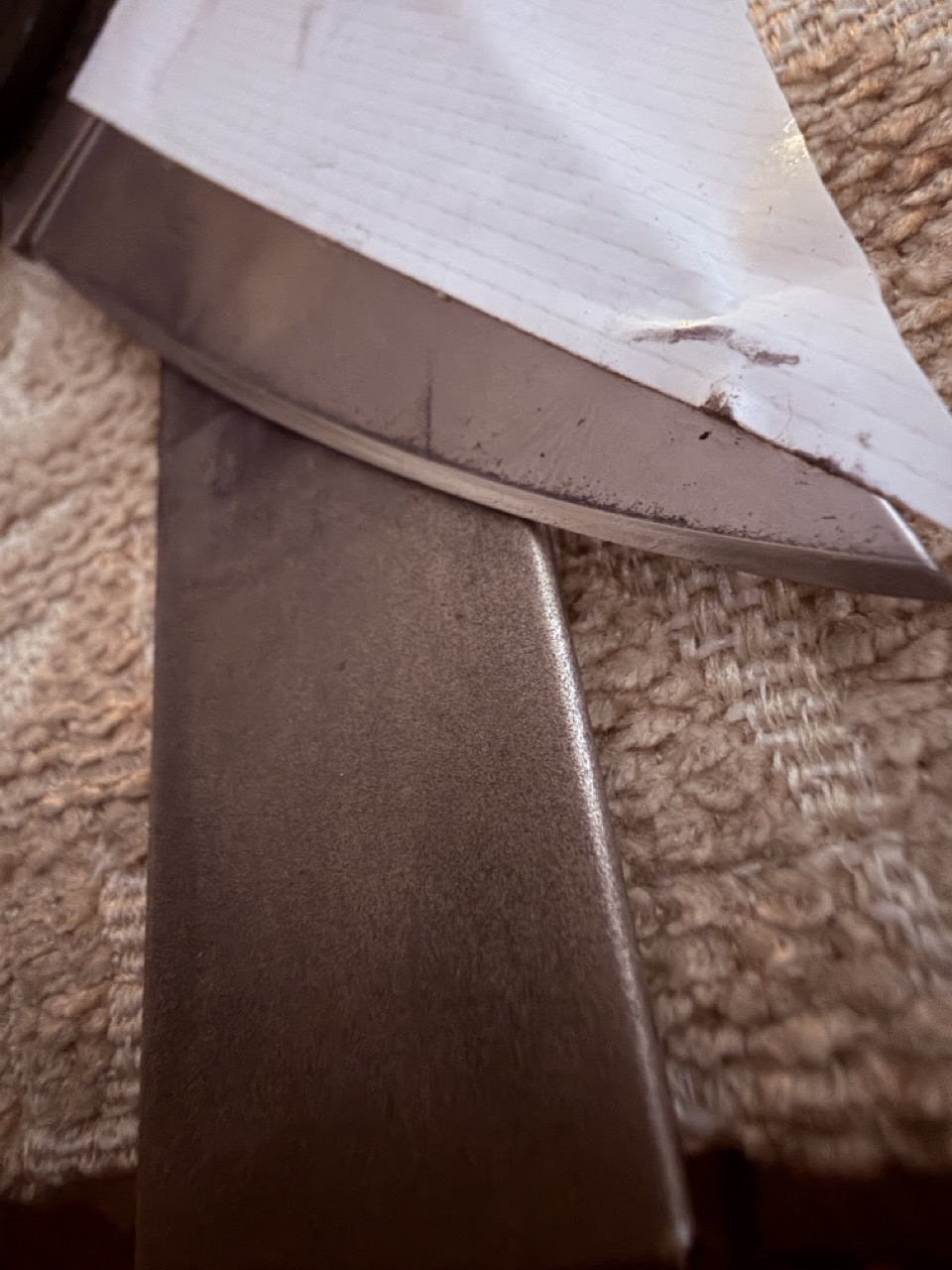
Yes, the factory edge is absolutely razor sharp. After just a few light passes on a leather strop, the edge became even keener. Hair-whittling? Not quite—but hairs were flying effortlessly with the slightest touch. An excellent factory edge !
First Verdict
Eric’s Manix 2 MagnaMax appears to be one of the most versatile folding knives Spyderco currently offers. Its combination of toughness, ergonomic comfort, and strong lock makes it equally at home as an everyday carry knife, an outdoor companion, a workshop tool, or even a capable kitchen slicer. It is the kind of knife that encourages you to use it without constantly worrying about damaging it.
As this knife has just arrived, I want to evaluate it exactly as Spyderco intended before making any personal modifications, such as totally rounding the spine or applying one of my convex edges.
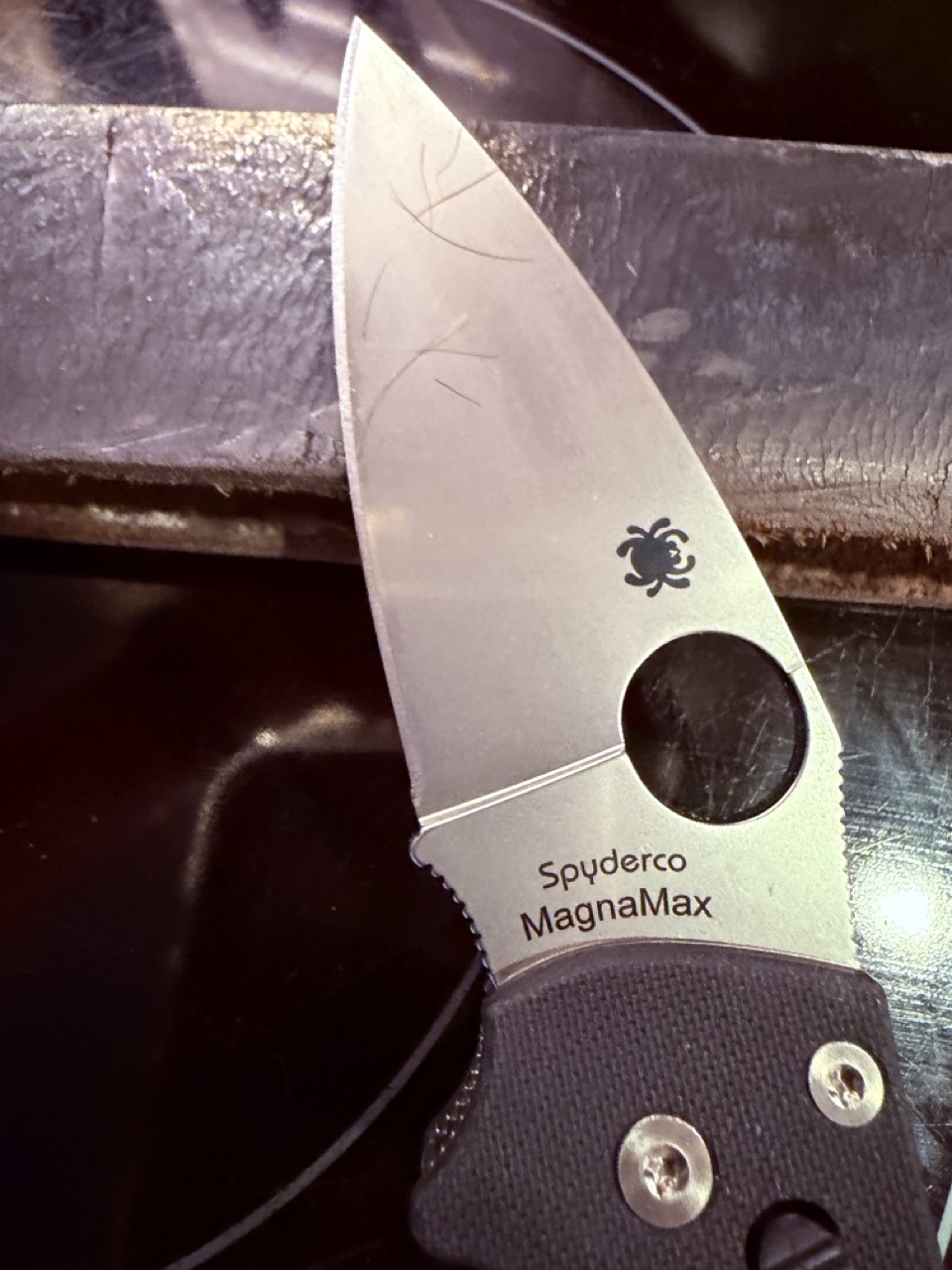
That said, I couldn’t resist giving the factory edge a quick test. Right out of the box, it sliced cleanly through the butt of a Coke plastic bottle like a hot knife through salted butter. If that’s any indication, Spyderco has absolutely nailed the factory edge on this MagnaMax Manix 2. (Notice in the photo the smoothly chamfered blade spine and softened jimping, just like those found on the CPM 15V Sprint Runs.)
Direct comparisons with my Manix 2 CPM-S90V, the Manix 2 Salt CPM MagnaCut, the Paramilitary 2, and the Military 2 Salt would deserve an article of their own. Each represents a different philosophy, and MagnaMax may well redefine where the Manix 2 sits within Spyderco’s lineup. After only a short time in hand, the Manix 2 MagnaMax already feels like one of the most compelling versions Spyderco has ever produced. It combines the legendary ergonomics of the Manix platform with one of the most advanced stainless steels currently available, while everything else has been subtly reinforced to create an uncompromising workhorse. Full stainless steel liners, a stronger Ball Bearing Lock spring, reassuring heft, and flawless fit and finish all contribute to a knife that feels built for a lifetime of hard use.
If long-term testing confirms these first impressions, this could become one of the finest all-around production folding knives in Spyderco’s catalog—a knife designed not to excel in only one area, but to perform exceptionally well in almost every situation.
This MagnaMa(ni)x feels like one of the last great V8 interceptors—a machine with real character and a touch of history. Black G10 scales, full stainless steel liners, a stout Ball Bearing Lock spring… everything about it conveys strength and purpose. For its very first production folder in MagnaMax, Spyderco clearly didn’t hold back. They went full throttle!
A Blade Swap for Wet Work
Since I intend to put MagnaMax through extensive testing in wet environments, I decided to take advantage of all the corrosion-resistant hardware from the Manix 2 Salt G10—its coated liners, black screws, and ceramic Ball Bearing Lock—so that the only component I’ll need to keep an eye on is the blade itself.
To avoid wrestling with the notoriously stubborn lanyard tube, I also kept the Salt’s G-10 scales. They only needed a light touch with 600-grit sandpaper to tame their aggressive texture and avoid carrying what was essentially a championship-grade pocket shredder. 😀
This way, I’ll be able to see how well MagnaMax stands up to every kind of wet work I can throw at it, whether in the kitchen, out in the woods, by the river, or even in the ocean.
Swapping the blades was a pleasure in itself. It gave me the opportunity to appreciate just how cleverly the Manix 2 is engineered and how impressively tight Spyderco’s manufacturing tolerances are.
The only minor hiccup involved the pivot. Each blade appears to be individually fitted to its own pivot, so the MagnaMax pivot wasn’t compatible with the DLC-coated MagnaCut blade. Reinstalling each blade with its original pivot solved the issue immediately. In the end, I swapped not only the blades but also their respective pivots—and, if memory serves me right, perhaps even the washers!
After the swap, the knife feels like the Manix 2 Spyderco never made. The MagnaMax blade paired with the Salt G-10 chassis combines exceptional edge retention with the corrosion-resistant hardware of the Salt series. Lockup remains rock solid, blade centering is perfect, and the action is every bit as smooth as the factory configuration. If there is such a thing as the ultimate production Manix 2, this custom hybrid comes remarkably close.
I’ve decided to keep the original polymer cage. The current black version is considerably tougher than the translucent cages used on the earliest Manix 2 models, so I see no reason to replace it.
I’ve also decided to keep the factory clip. It rests perfectly on the Salt G-10 scale’s sweet spot and carries comfortably exactly as Spyderco intended.
The Manix 2 has already proved itself over nearly two decades. The real question is no longer the platform—it is MagnaMax. If this steel delivers in everyday use what its design promises on paper, Spyderco may have introduced one of the most significant production blade steels of the decade. The next few months will tell.
V8
Every knife I truly bond with eventually earns a name. This one was an obvious choice: I’ll call this Manix MagnaMax “V8.”
Like the legendary Pursuit Special from Mad Max, this knife feels unapologetically overbuilt and full of character. Black G10 scales and a stout Ball Bearing Lock spring—it has the soul of a machine built to survive the Wasteland, cutting deep and true long after lesser blades have given up.
Disclaimer: I purchased this knife myself from Coutellerie Tourangelle for €113. As always, their service was excellent, and the knife was shipped quickly. No sponsorship, no discount, and no editorial input—just my own experience as a satisfied customer.
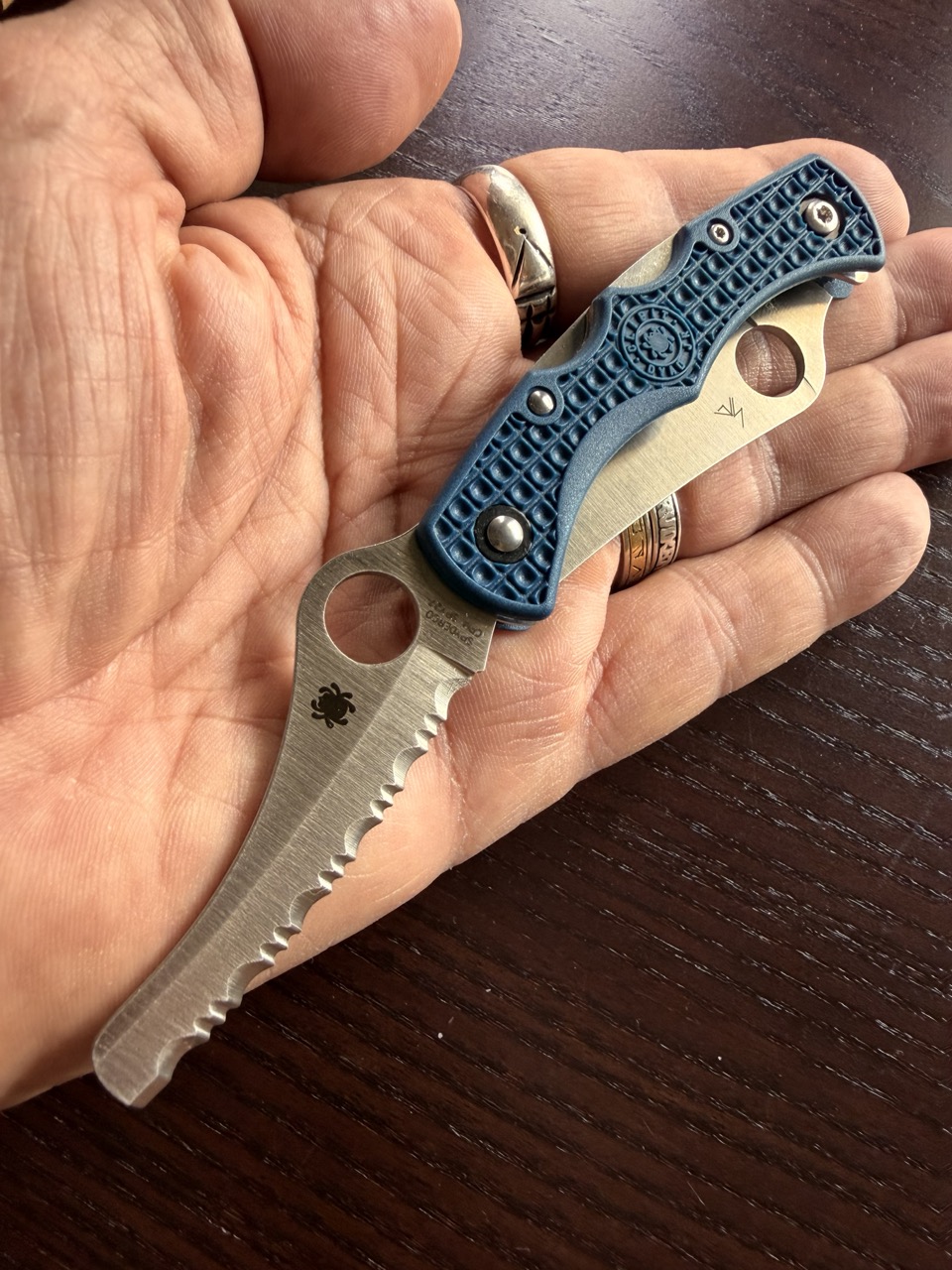
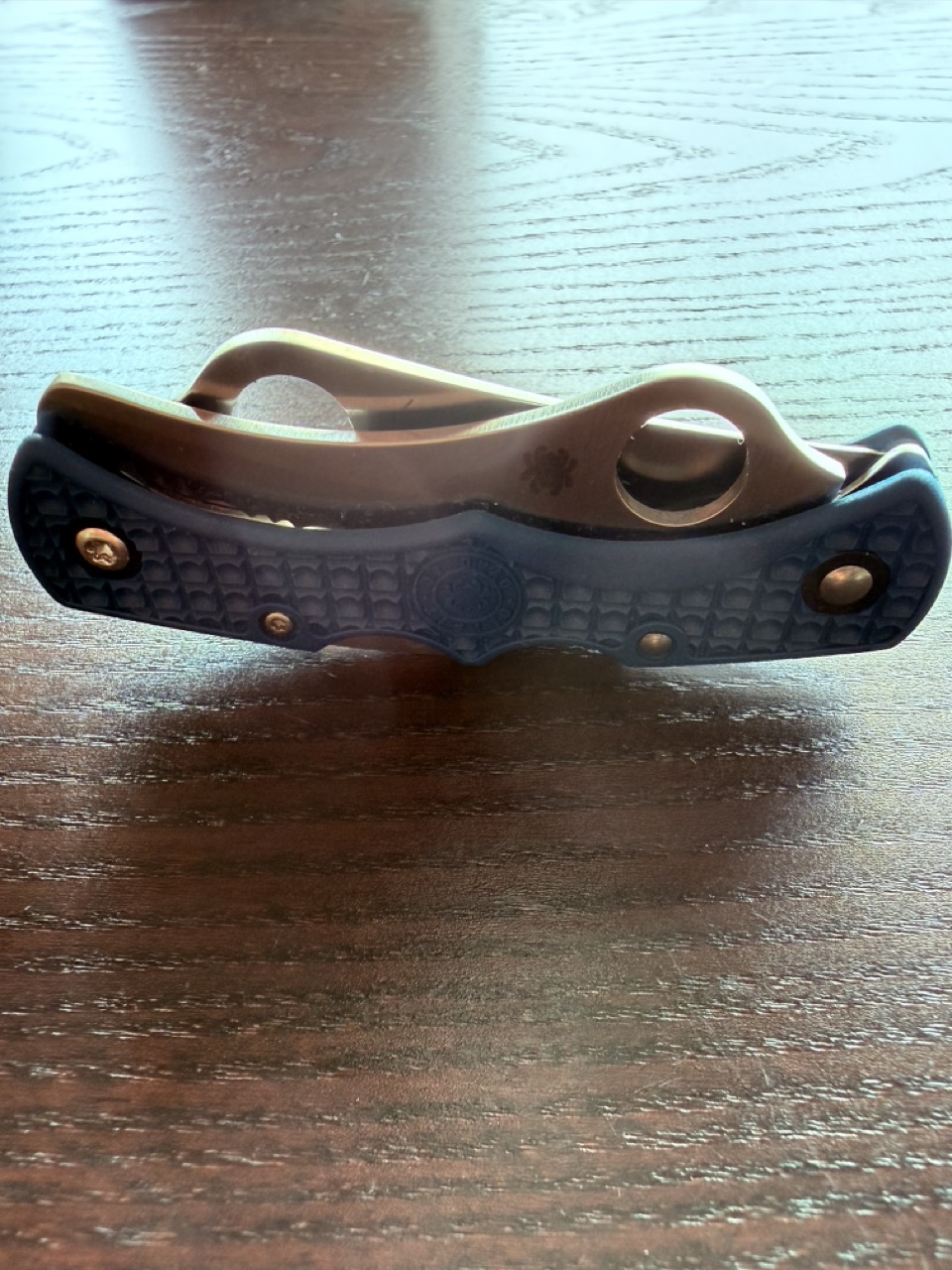
The moment you open the black and red box, one thing becomes immediately obvious: The Dyad is a very strange critter. Think about it for a second: a Spyderco with two Spyderholes… and no pocket clip. Two Papa Sal’s signatures also (on each blade and always visible ! ) That alone is enough to make even seasoned Spyderco enthusiasts raise an eyebrow.
Robin has already written an excellent review of this Sprint Run, so rather than rehashing the same points, I’ll focus on my own impressions and observations. You can read his article >>>>here<<<<
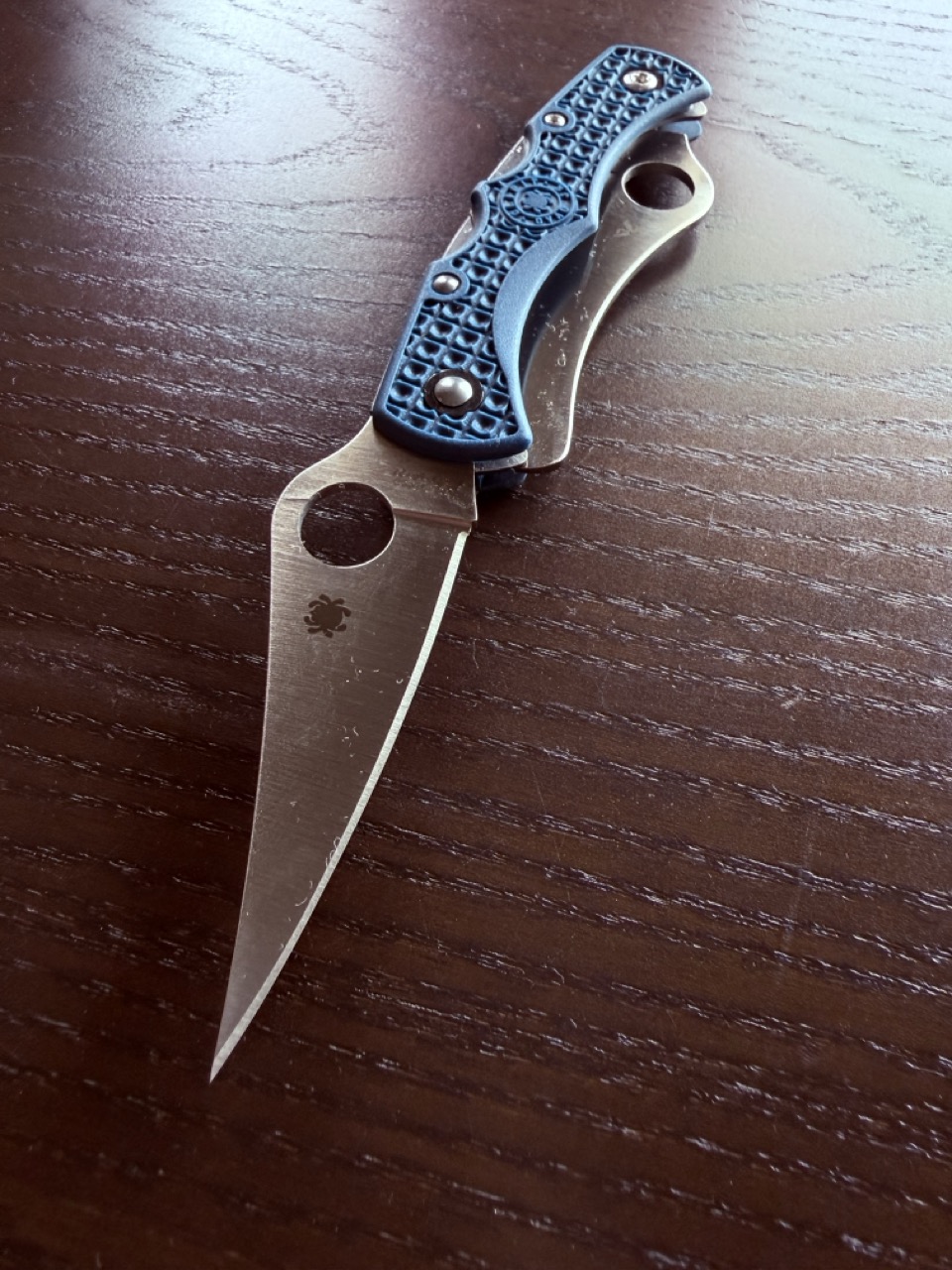
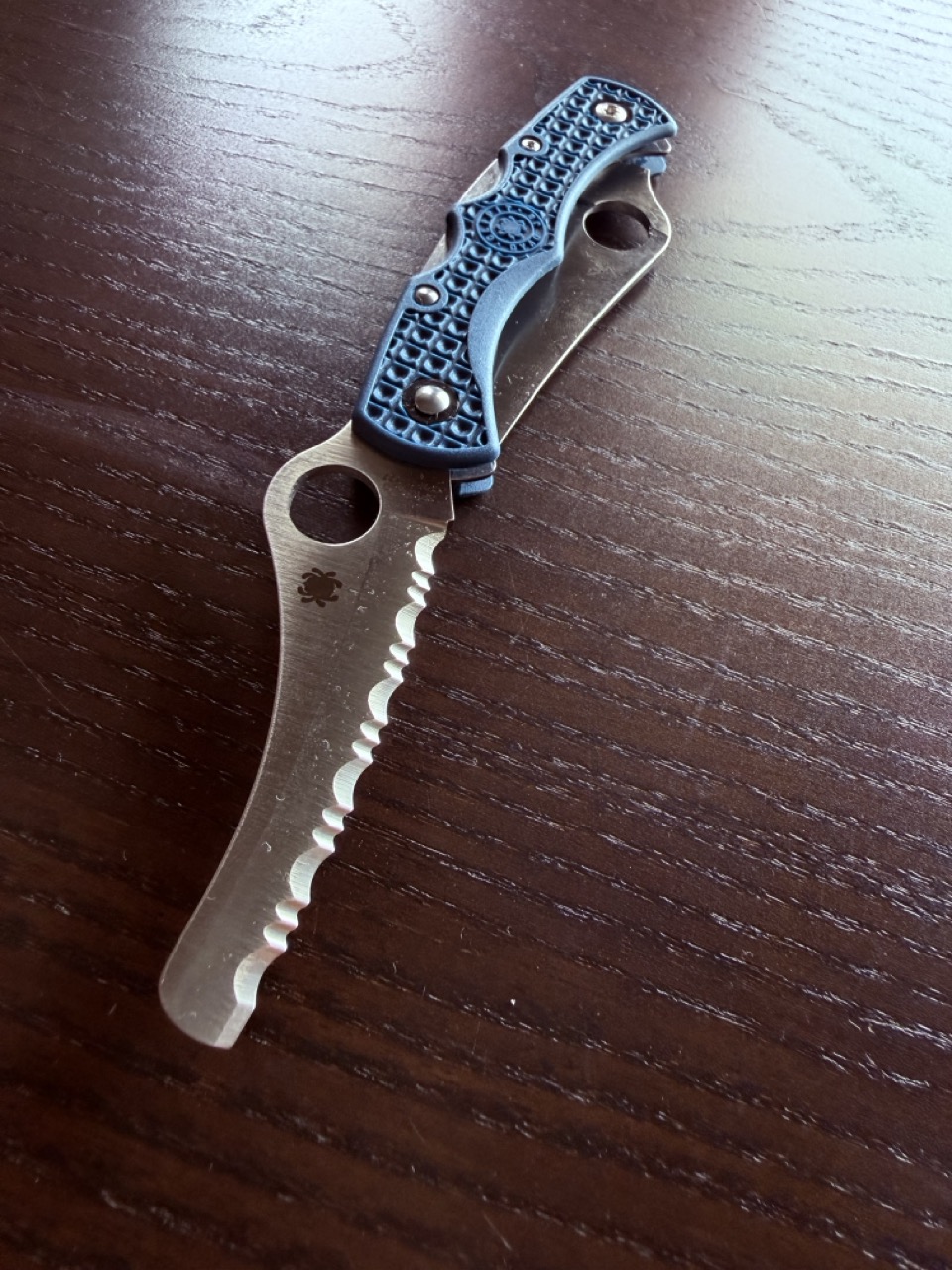
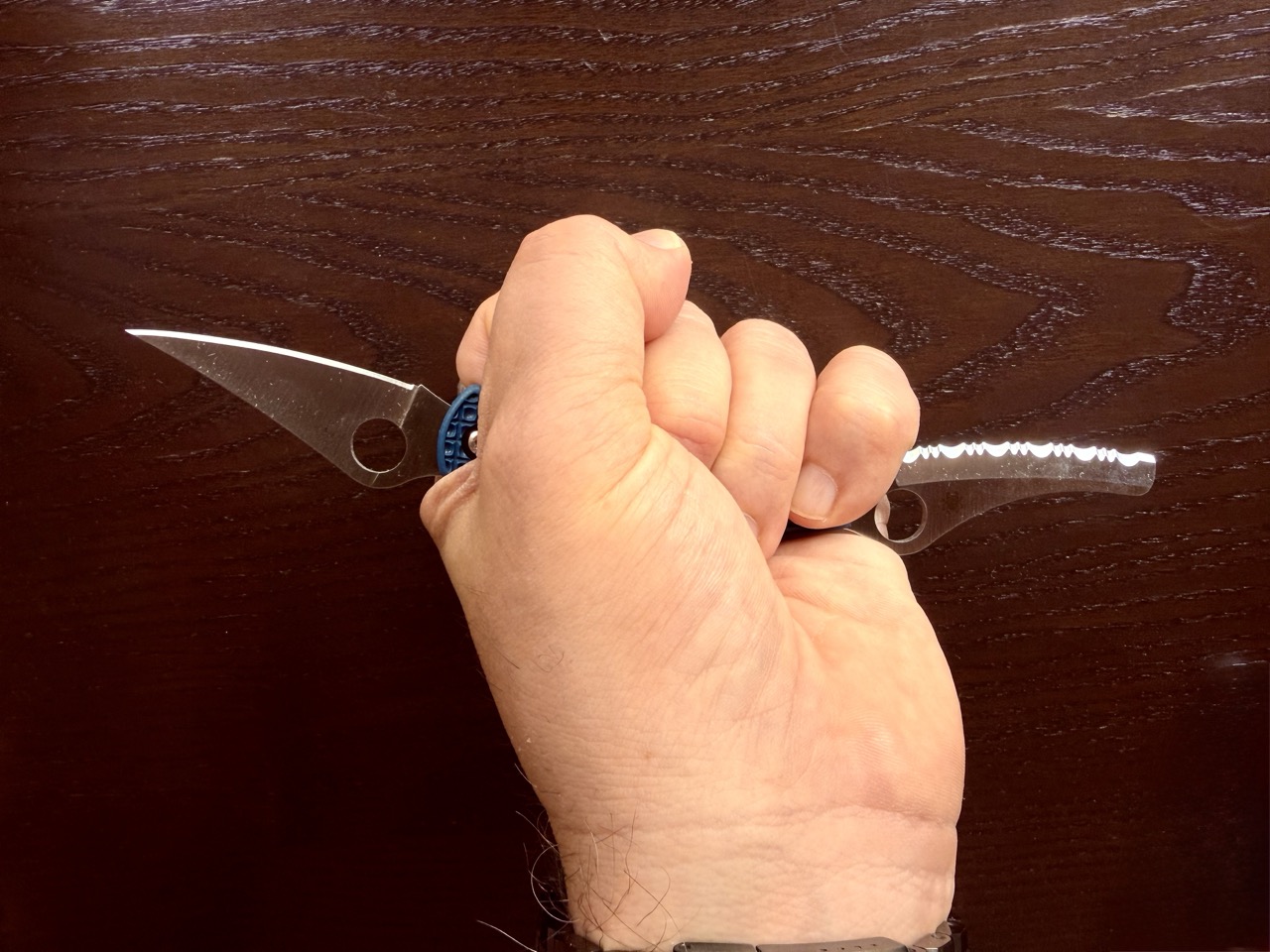
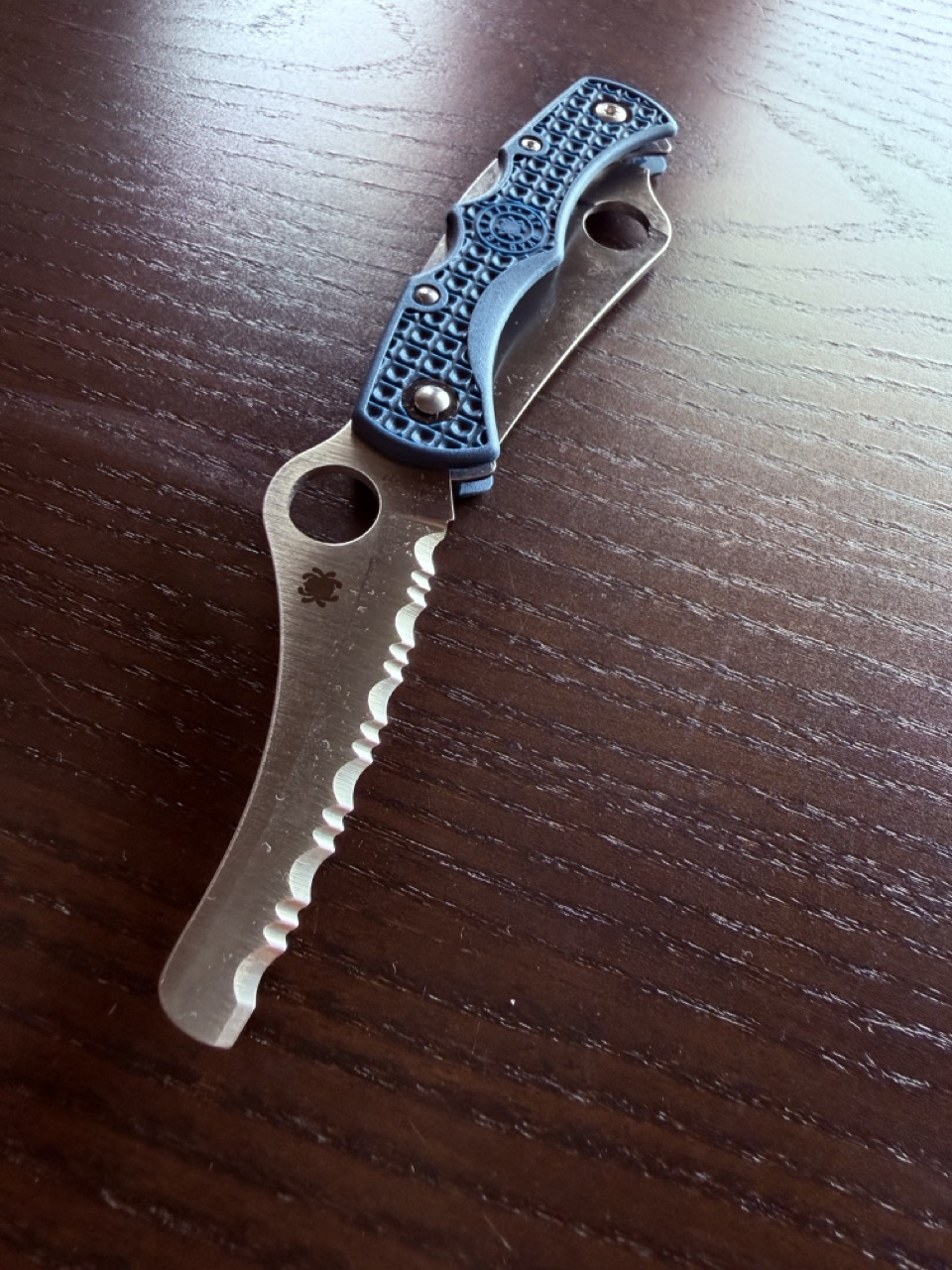
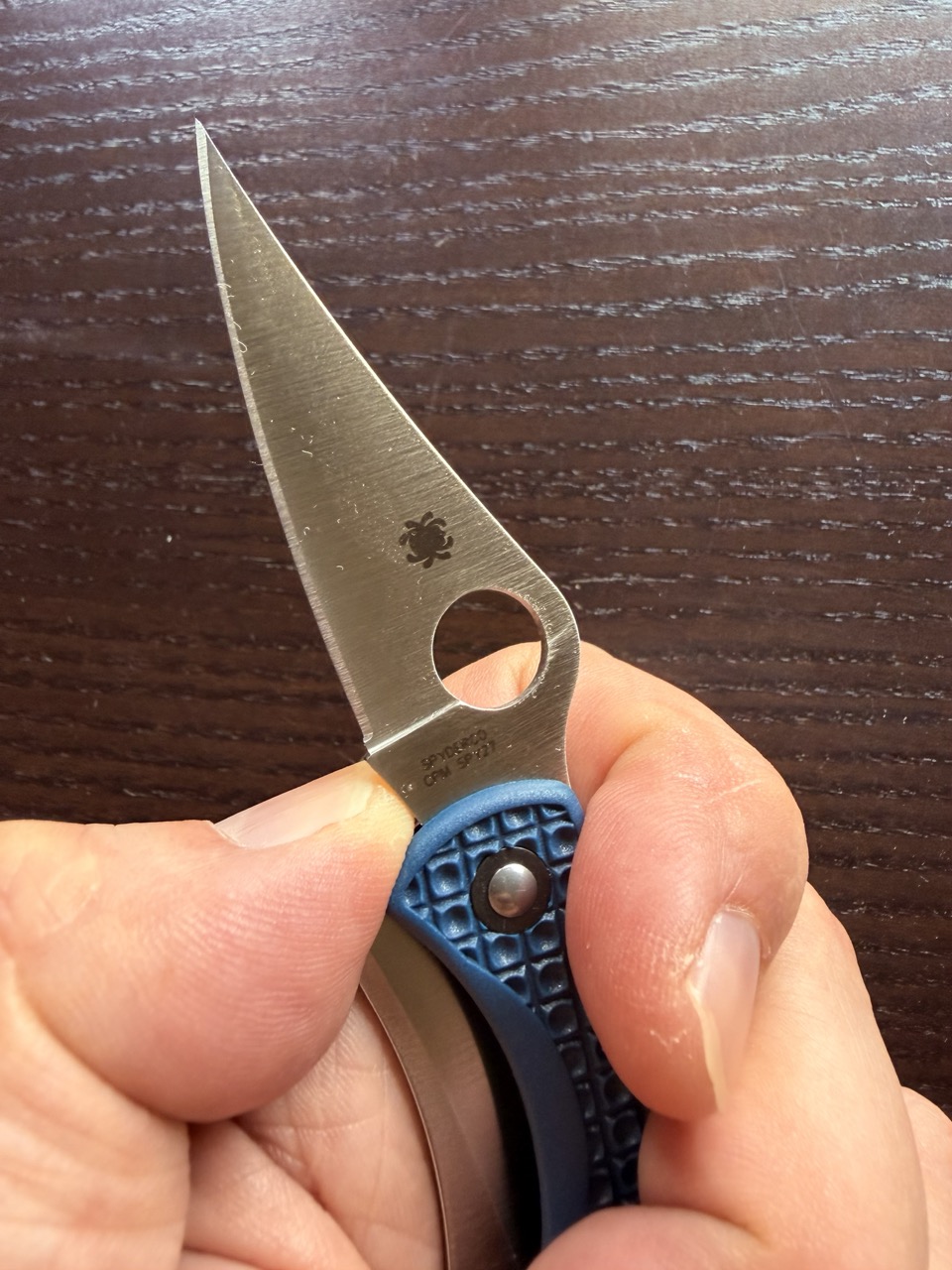
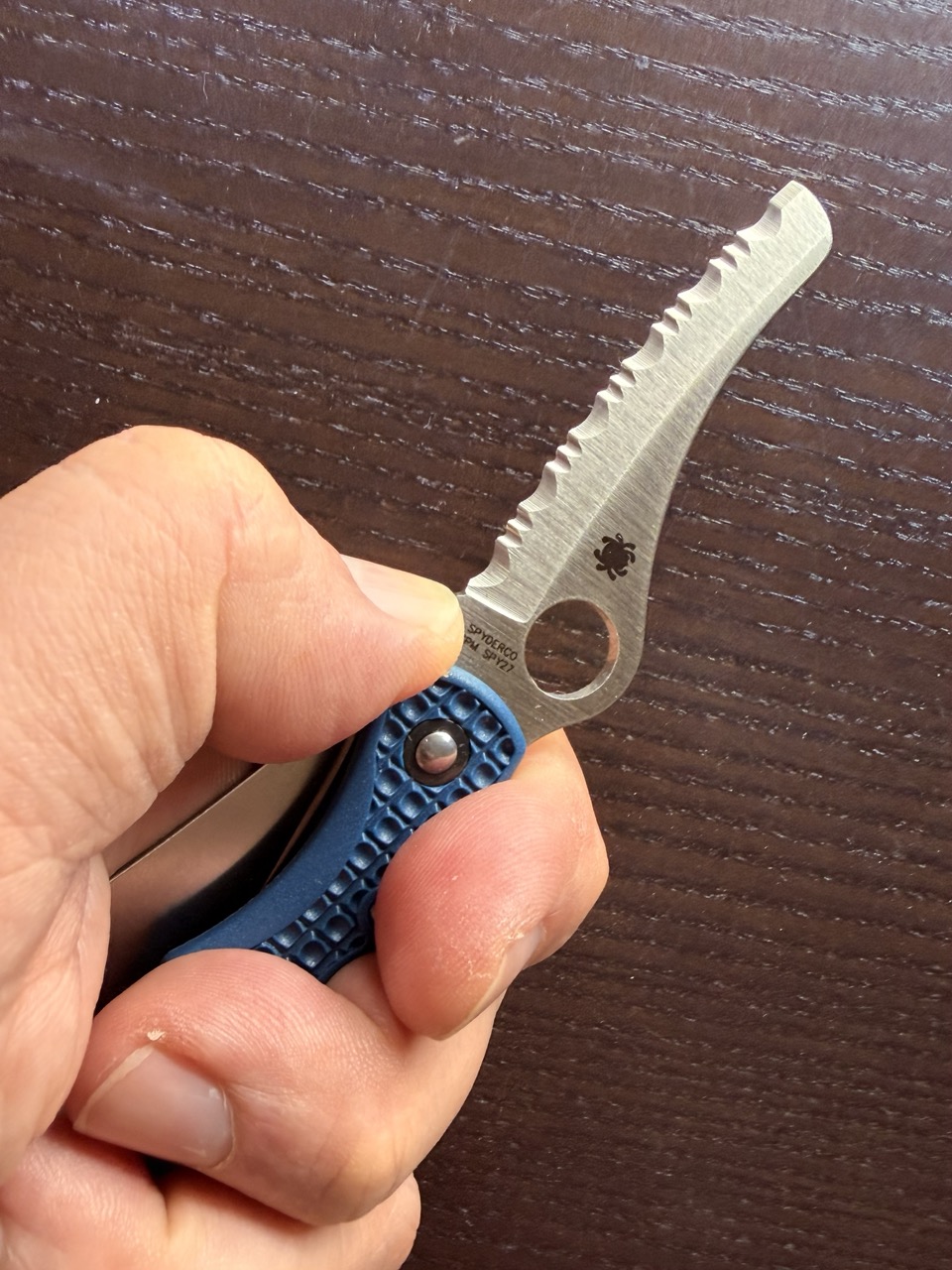
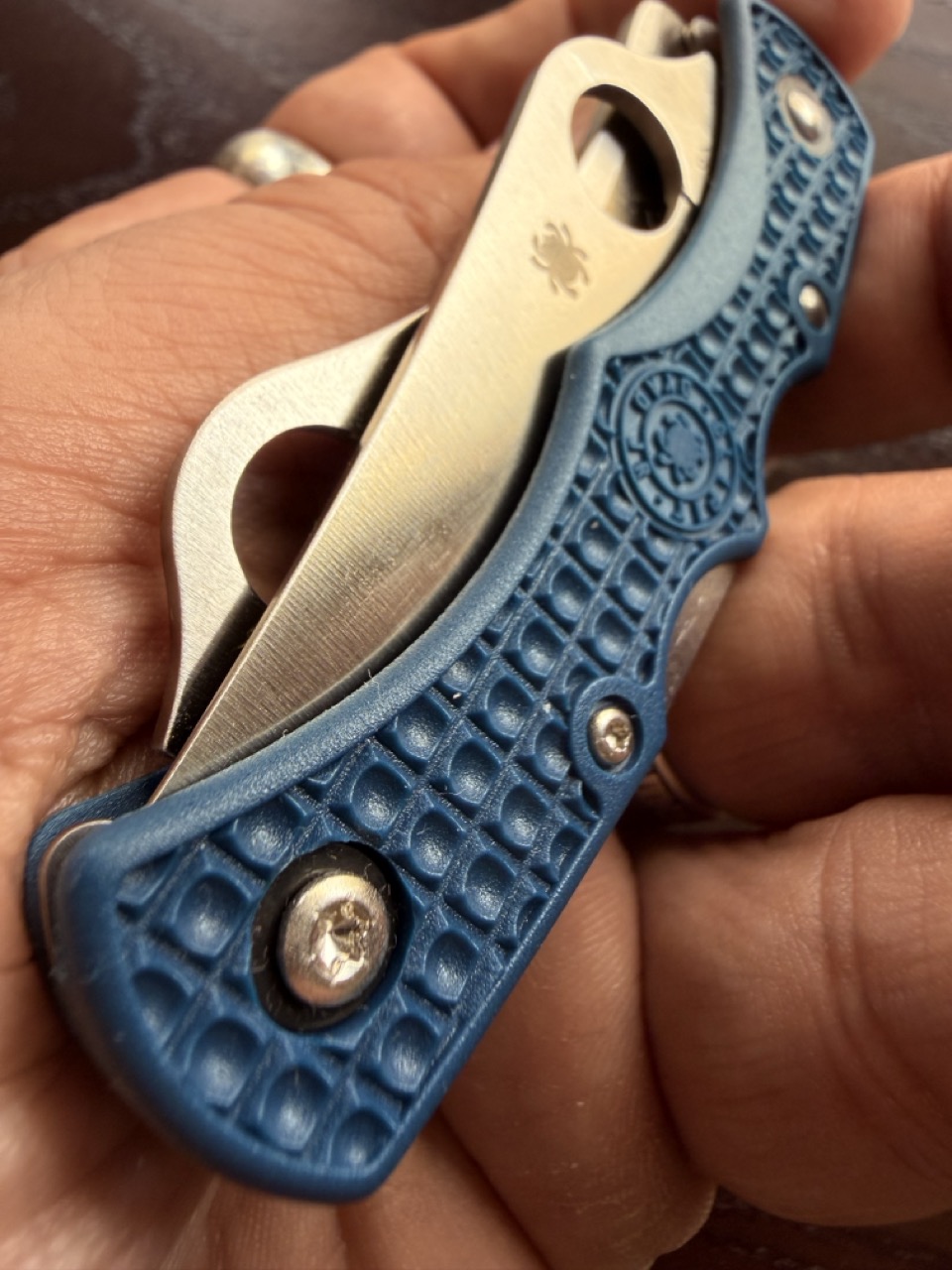
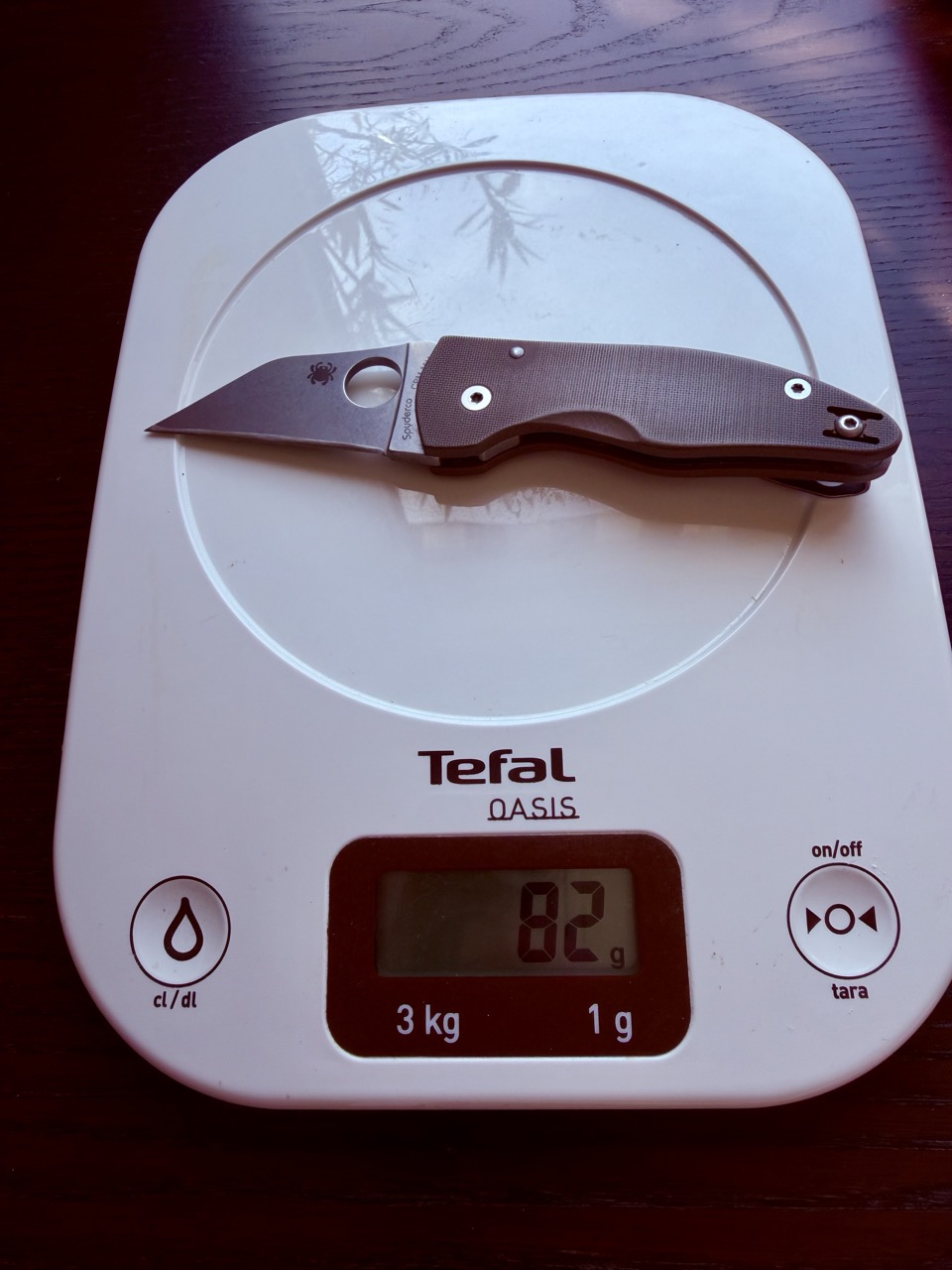
At first glance, this Japanese-made Dyad Jr. Sprint Run looks almost toy-like. It is remarkably small, to the point where many people would dismiss it without a second thought. That would be a mistake. This little knife hides far more capability than its modest dimensions suggest. In fact, it offers a better edge-to-handle ratio than almost any conventional folder. Why? Because you’re carrying twice the cutting edge in a package that’s barely larger than a typical single-bladed knife. You can call it “Double Trouble.” Or perhaps “Stereo Spyderco.” You get the idea. 🙂 Because the concept is deceptively simple. Instead of relying on a single blade, the Dyad Jr. combines two highly specialized tools. The fully serrated blade delivers cutting power far beyond what you would expect from a knife this size, effortlessly tearing through fibrous materials, rope, cardboard or tough plastics. Meanwhile, the plain edge features an exceptionally thin grind that makes it feel almost like a miniature scalpel, offering impressive precision for delicate work.
Both blades are ground surprisingly thin, a characteristic that immediately stands out when you start using the knife. The plain edge, in particular, slices with an ease that few compact folders can match.
Then comes the best surprise of all: Spy27 !
Spyderco’s proprietary steel gives this little knife a thoroughly modern heart. It offers an excellent balance of edge retention, toughness, corrosion resistance and ease of sharpening—exactly the kind of steel you want in a compact everyday carry knife that is likely to tackle a wide variety of tasks.
The Dyad Jr. has often been described as an oddball. I disagree. I think it is one of Sal Glesser’s most honest designs. I still remember watching Sal use his own Dyad in a German restaurant back in 1999. He would casually switch from the plain edge to the serrated edge depending on what was on his plate. At the time, it seemed almost eccentric. Looking back, it perfectly captured the philosophy behind the Dyad: always having the right edge for the job.
Knife enthusiasts love to argue. Plain edge or serrated? Large knife or small knife? Deep carry clip or no clip? Every new model seems to force us into choosing a side.
The Dyad Jr. refuses to play that game.
Instead of asking one blade to do everything reasonably well, Spyderco simply gave us two specialists living under the same roof.
One blade is a competent surgeon, ready to remove a splinter.
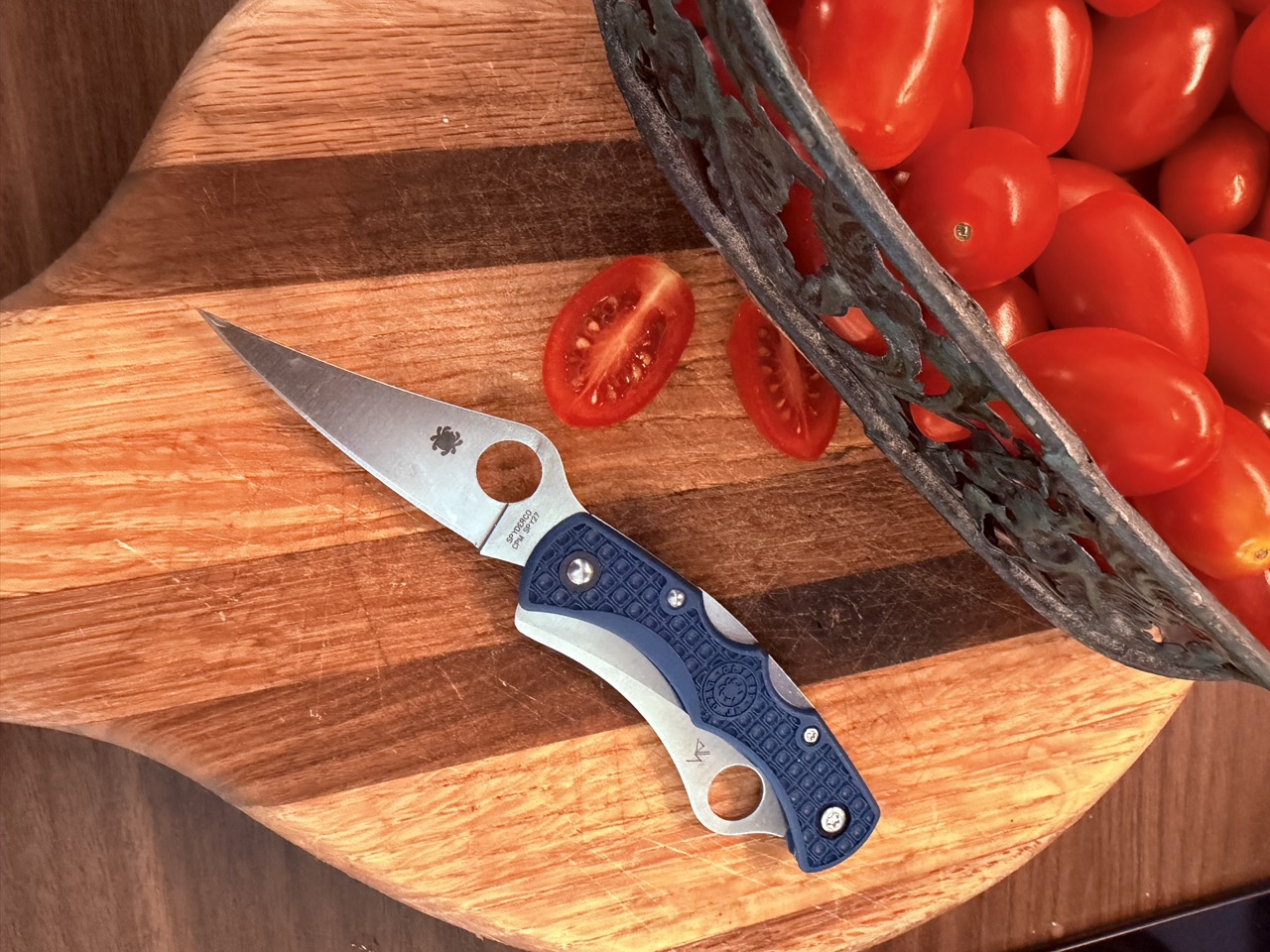
The other is a tiny lumberjack, a security blade ready to saw into seatbelts. The plain edge glides through paper, food, blister packs or delicate materials like cherry tomatoes with astonishing precision. The grind is so thin that it almost disappears behind the edge. It doesn’t feel like a compact pocket knife—it feels like a folding scalpel.
The serrated blade has completely different manners. It doesn’t slice; it attacks ! Rope, cardboard, nylon webbing, plastic strapping… materials that gradually wear down a straight edge are dispatched with almost insulting ease. You don’t ask permission. You just cut.
The serrations are nicely rounded, much like those on the Spyderco Chaparral Serrated. They cut aggressively without the annoying tendency to snag, making them surprisingly smooth in use.
The beauty of the Dyad concept isn’t simply having two blades. It’s that your brain quickly learns to assign jobs to each one.
Without even thinking about it, the serrated edge becomes your “construction worker.” Cardboard boxes. Amazon packages. Cable ties. Dirty jobs.
The plain edge remains your gentleman. Opening a letter. Peeling an apple. Carving delicately a piece of wood. Trimming a loose thread from a jacket.
Each blade “protects” the other. Ironically, this means the Dyad Jr. often stays sharper longer than a conventional single-bladed knife. The workload is shared, and so is the wear.
Calling the Dyad Jr. a multi-tool completely misses the point. There are no screwdrivers. No bottle opener. No scissors. No tiny saw pretending to cut wood.
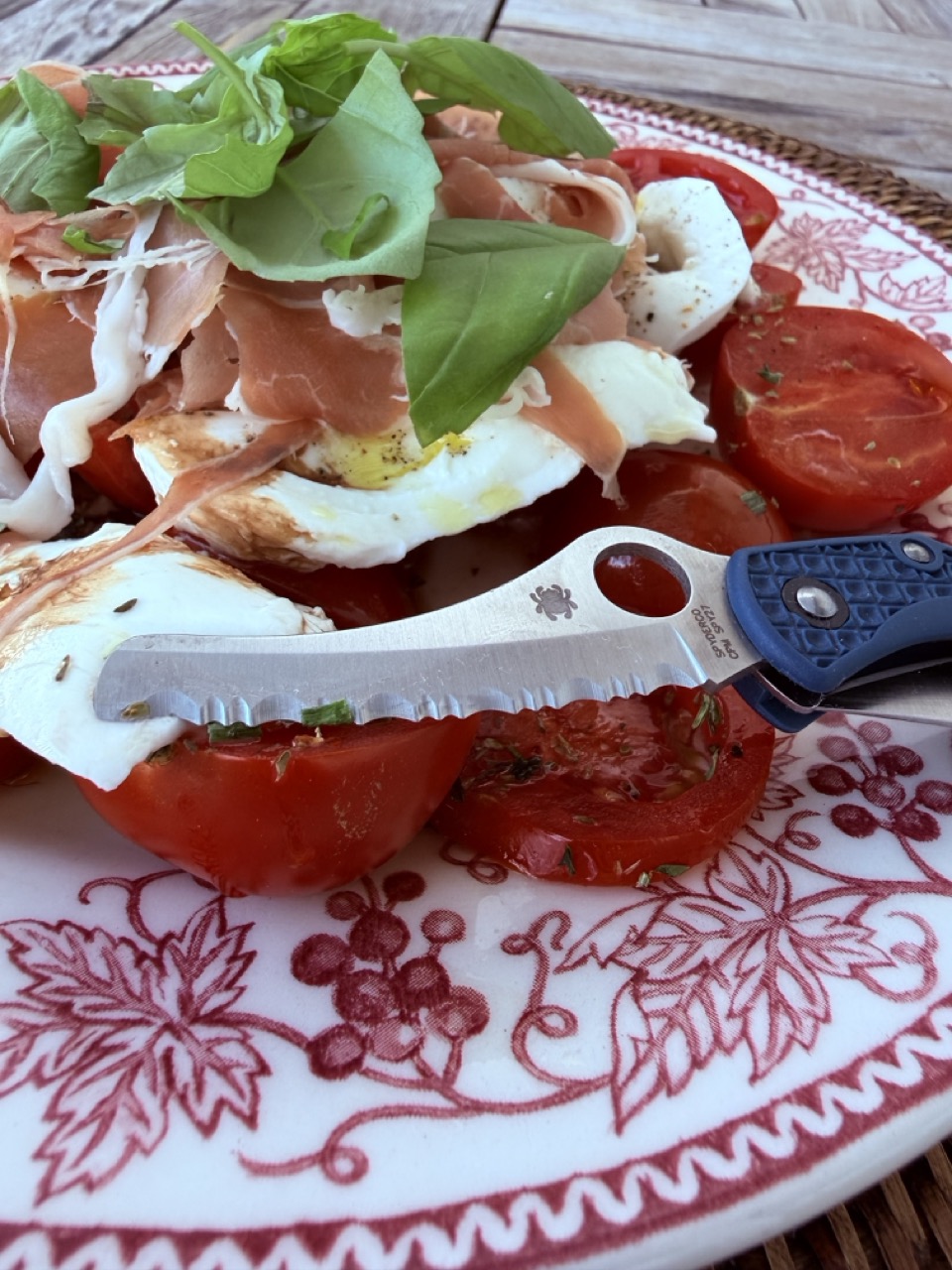
In my book, the serrated blade is the one I use directly on the plate, while the plain edge stays on the cutting board, where its razor-thin edge can really shine without risking unnecessary damage.
Just two exceptionally good blades. A robust screw-together construction that can be disassembled for maintenance. It is obvious: Spyderco wasn’t trying to build a Swiss Army Knife. They were building another serious cutting tool that simply happened to have two blades. They built a knife that asks a different question: “What if cutting was the only function worth optimizing?”
Looking at it that way, the Dyad Jr. suddenly makes perfect sense.
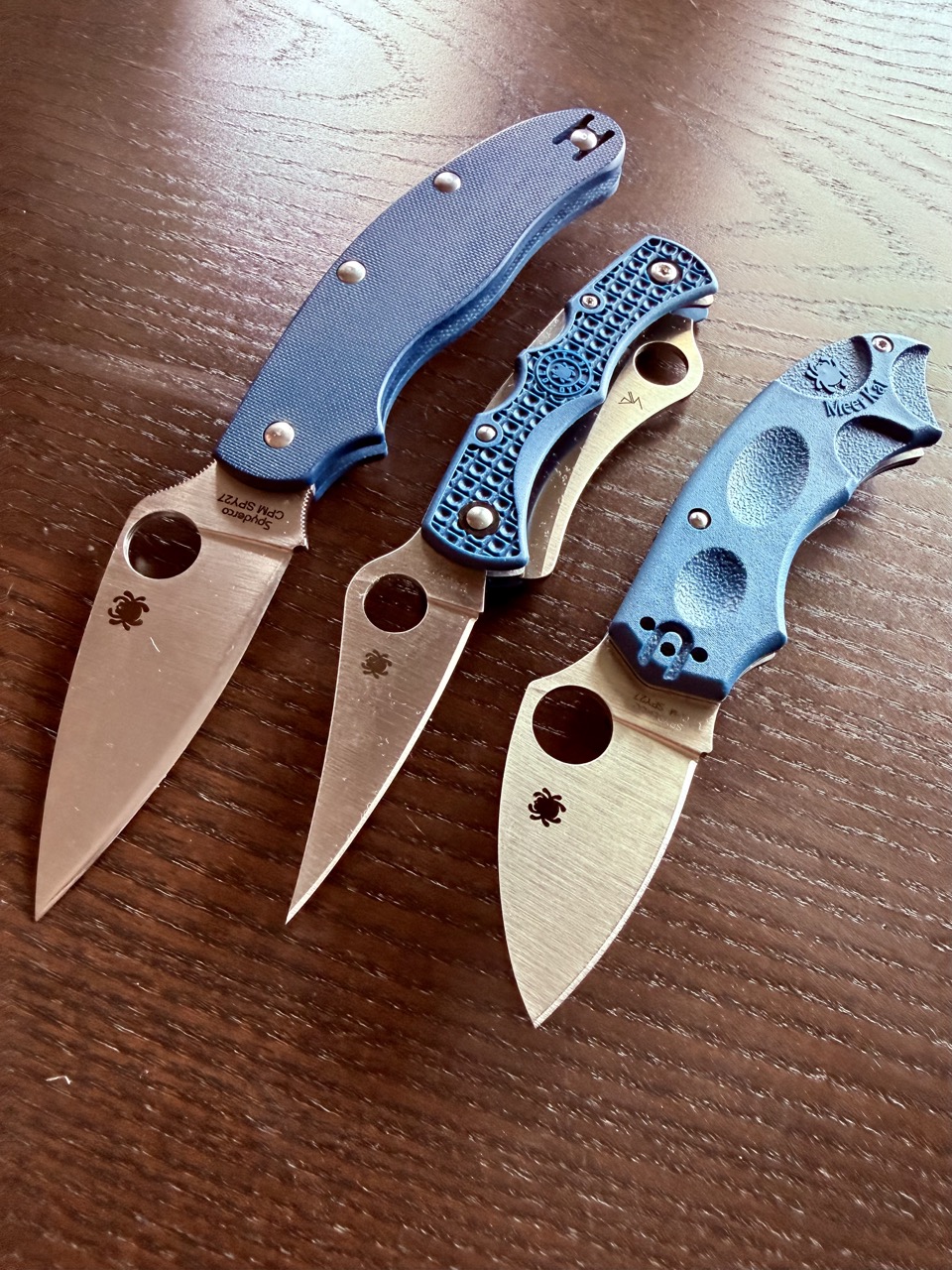
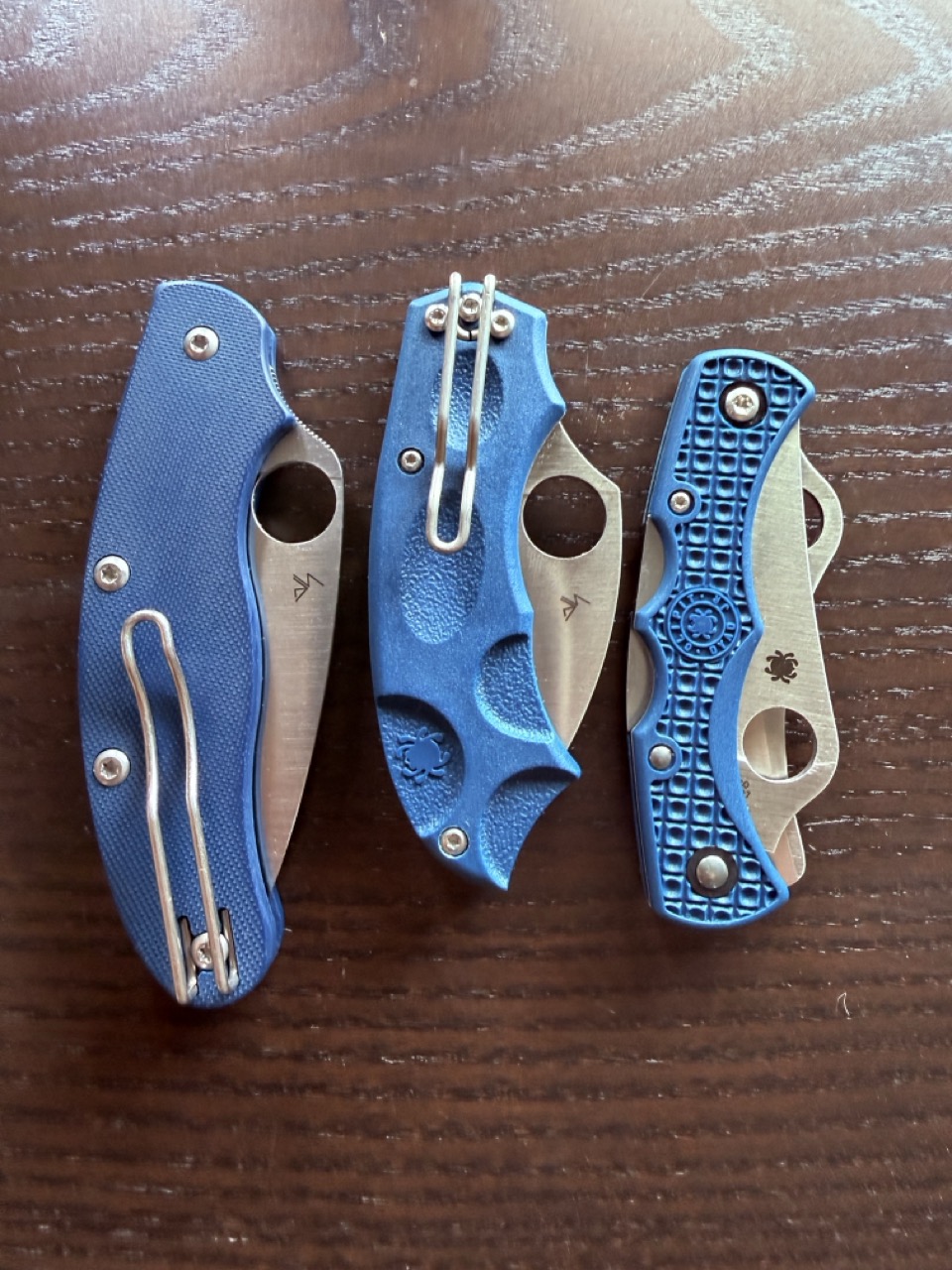
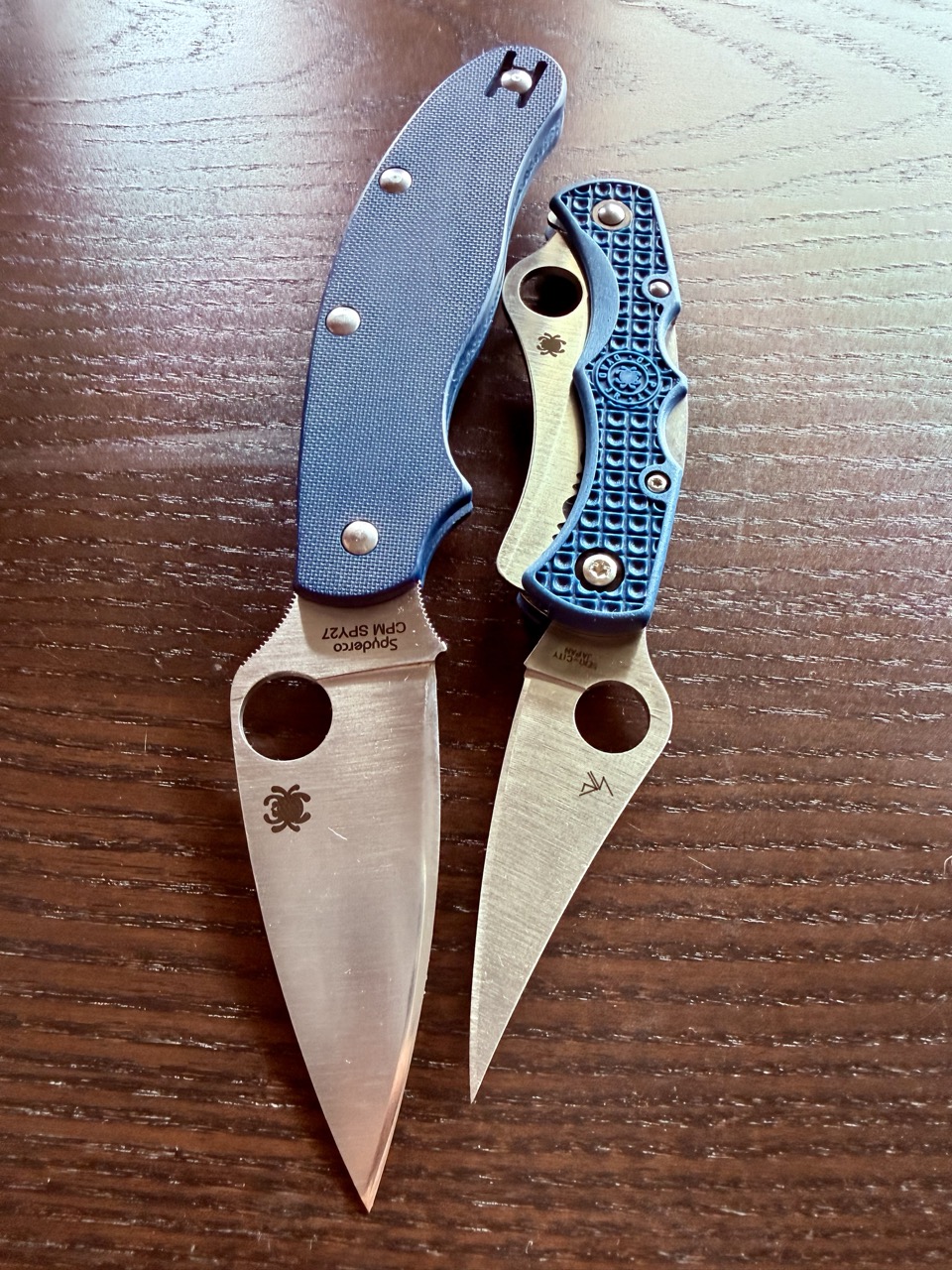
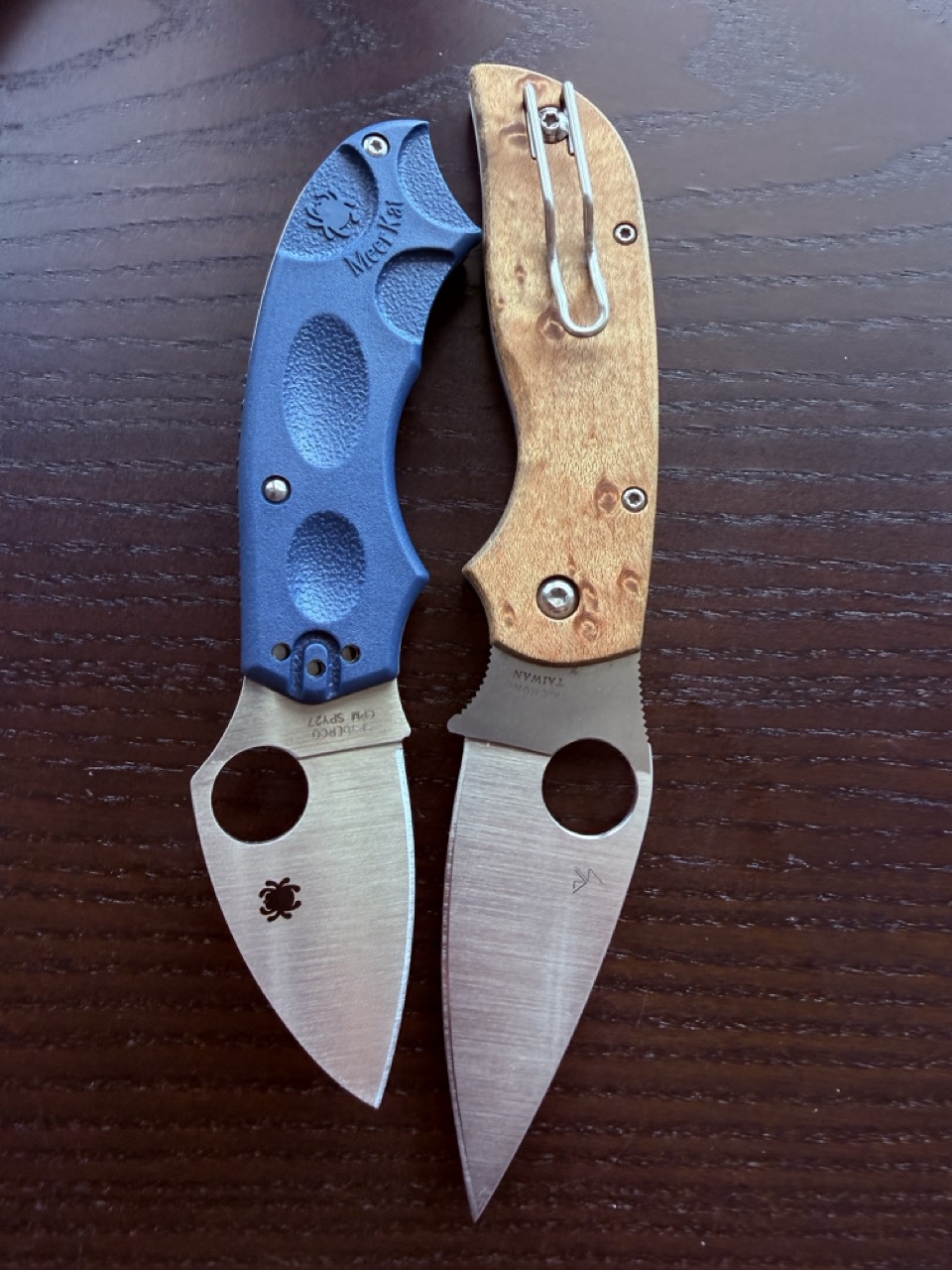
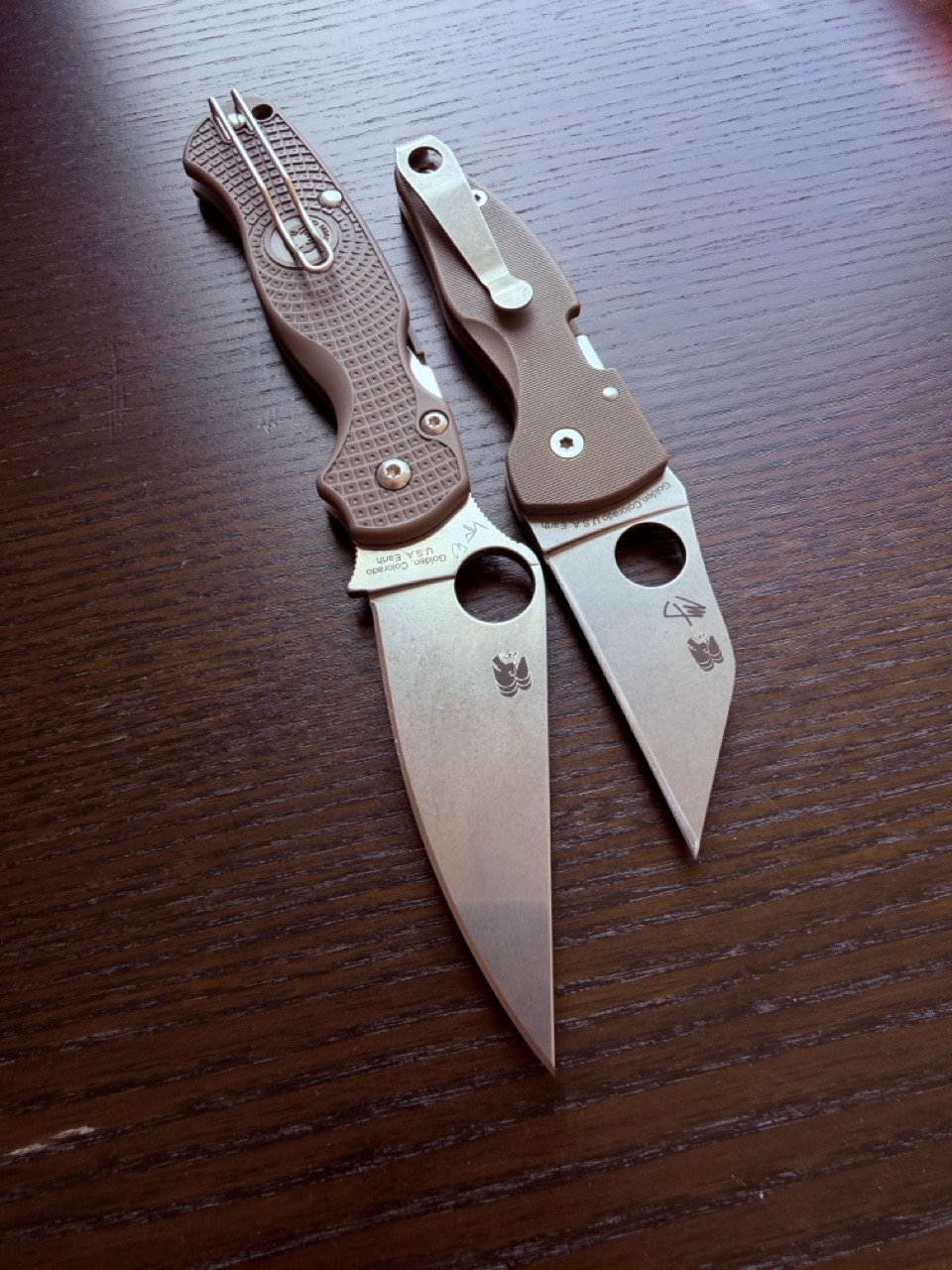
Ah, but that missing pocket clip still catches the eye. Here it sits next to two of its Spy27 siblings, looking almost naked without the familiar Spyderco clip.
It also means carrying the Dyad Jr. in the same orientation every time. Before long, your hand automatically knows which Spyderhole to reach for.
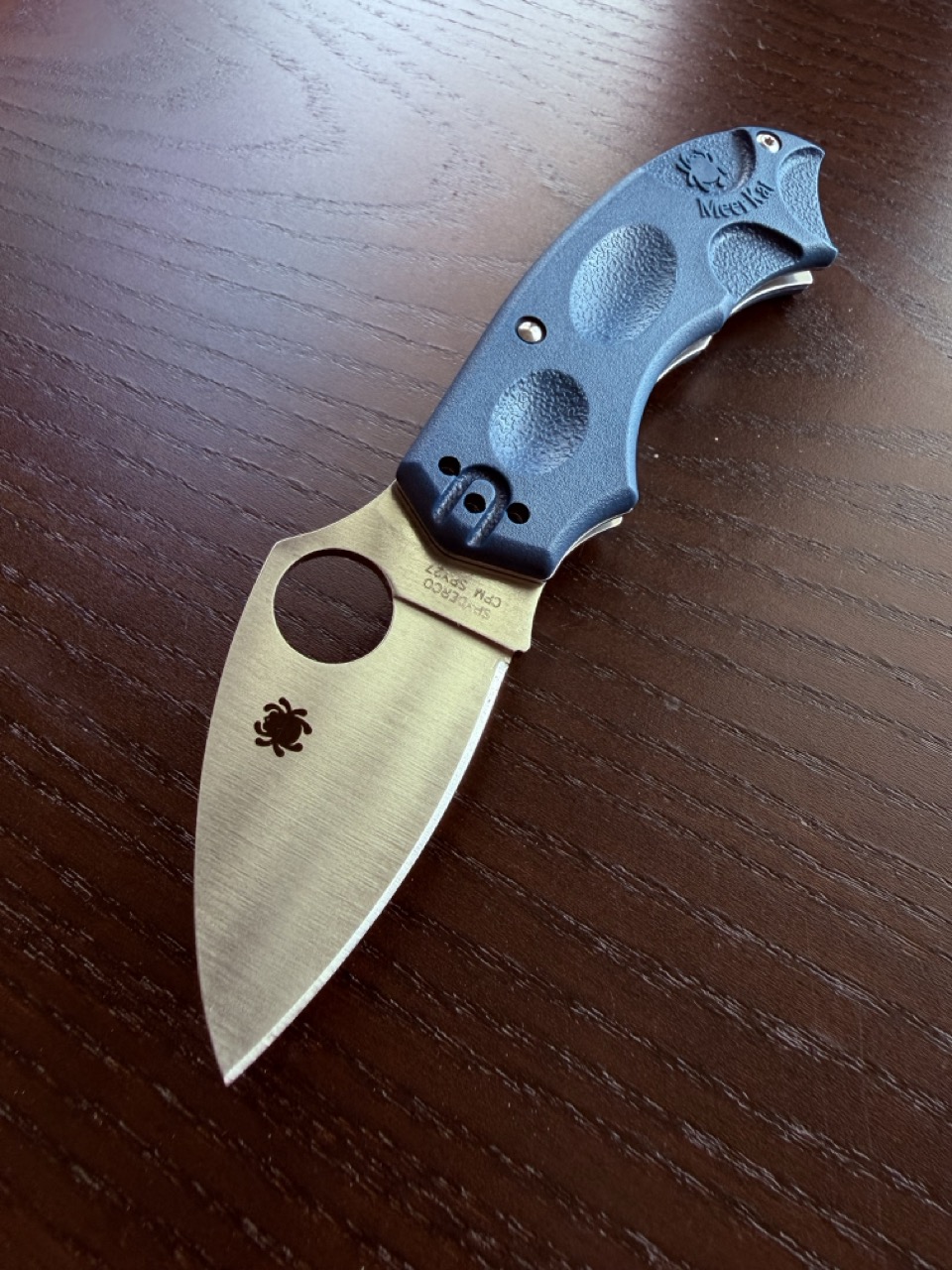
It’s a habit I learned years ago from Michael Janich’s Street Steel: consistency creates muscle memory, and muscle memory is always faster than conscious thought. (But unlike Casper, my lightning-fast Meerkat, the Dyad Jr. isn’t a quick-draw knife. It opens at a more civilized pace, much like a traditional gentleman’s folder. It encourages intention rather than haste.)
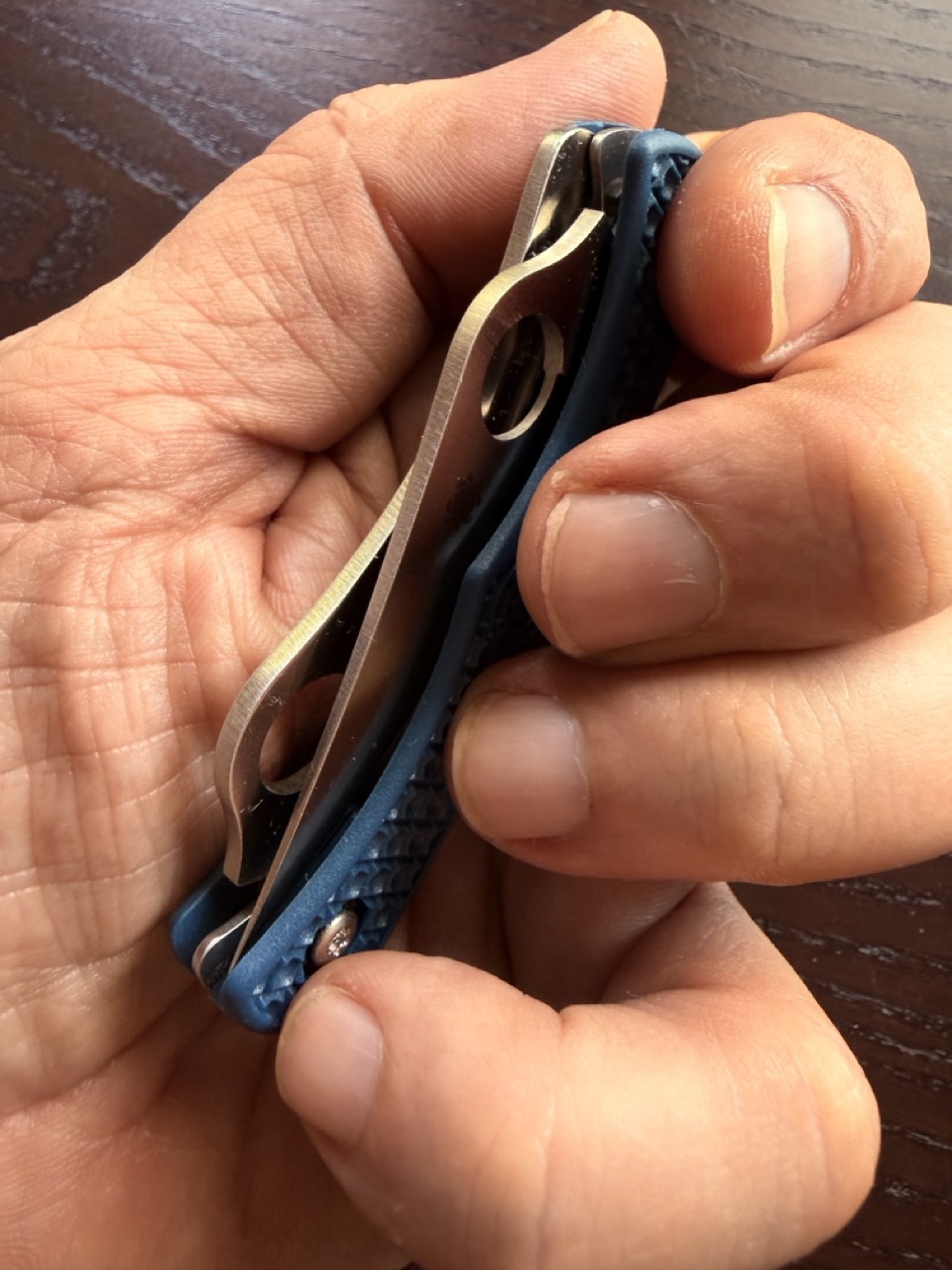
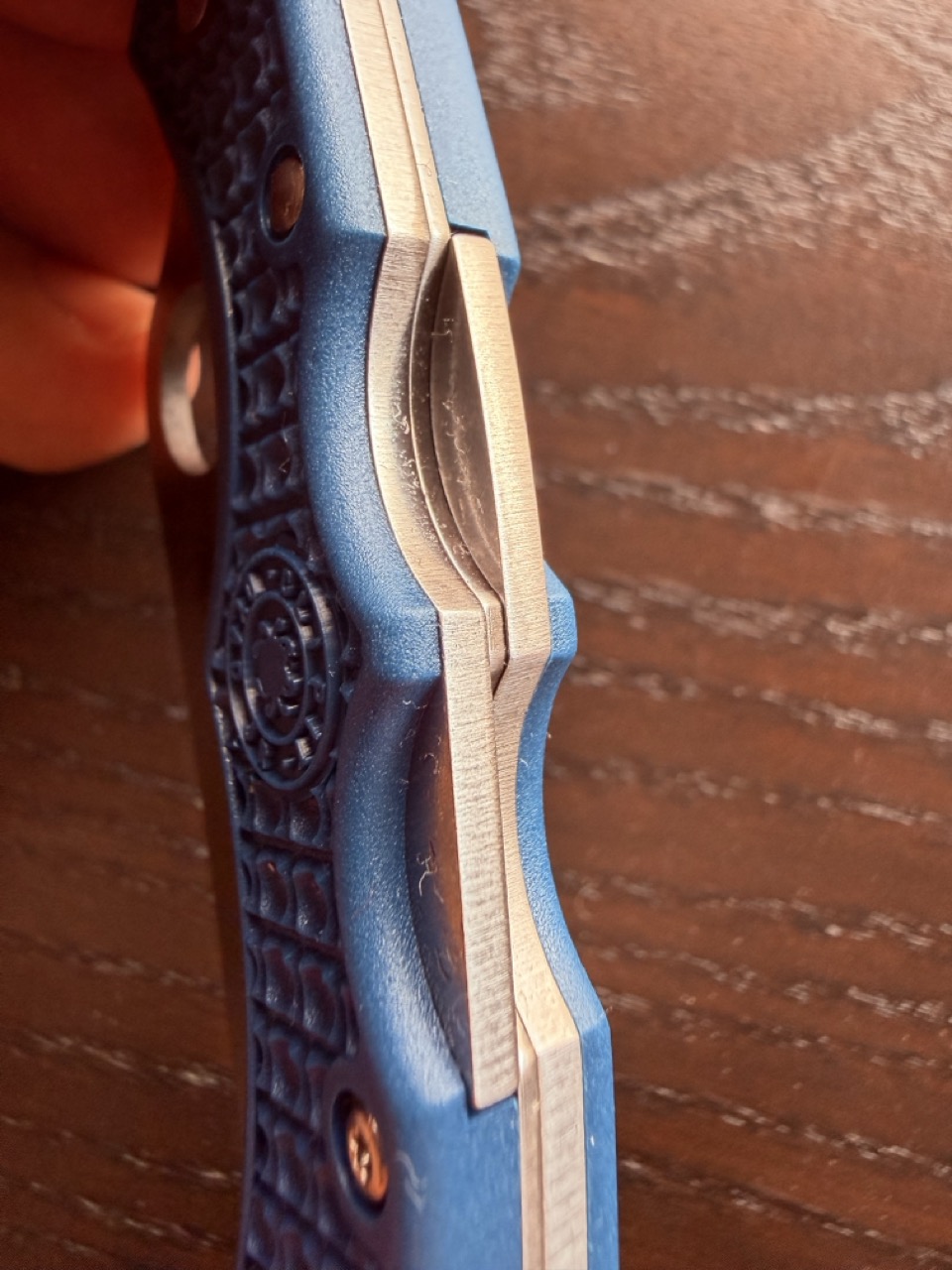
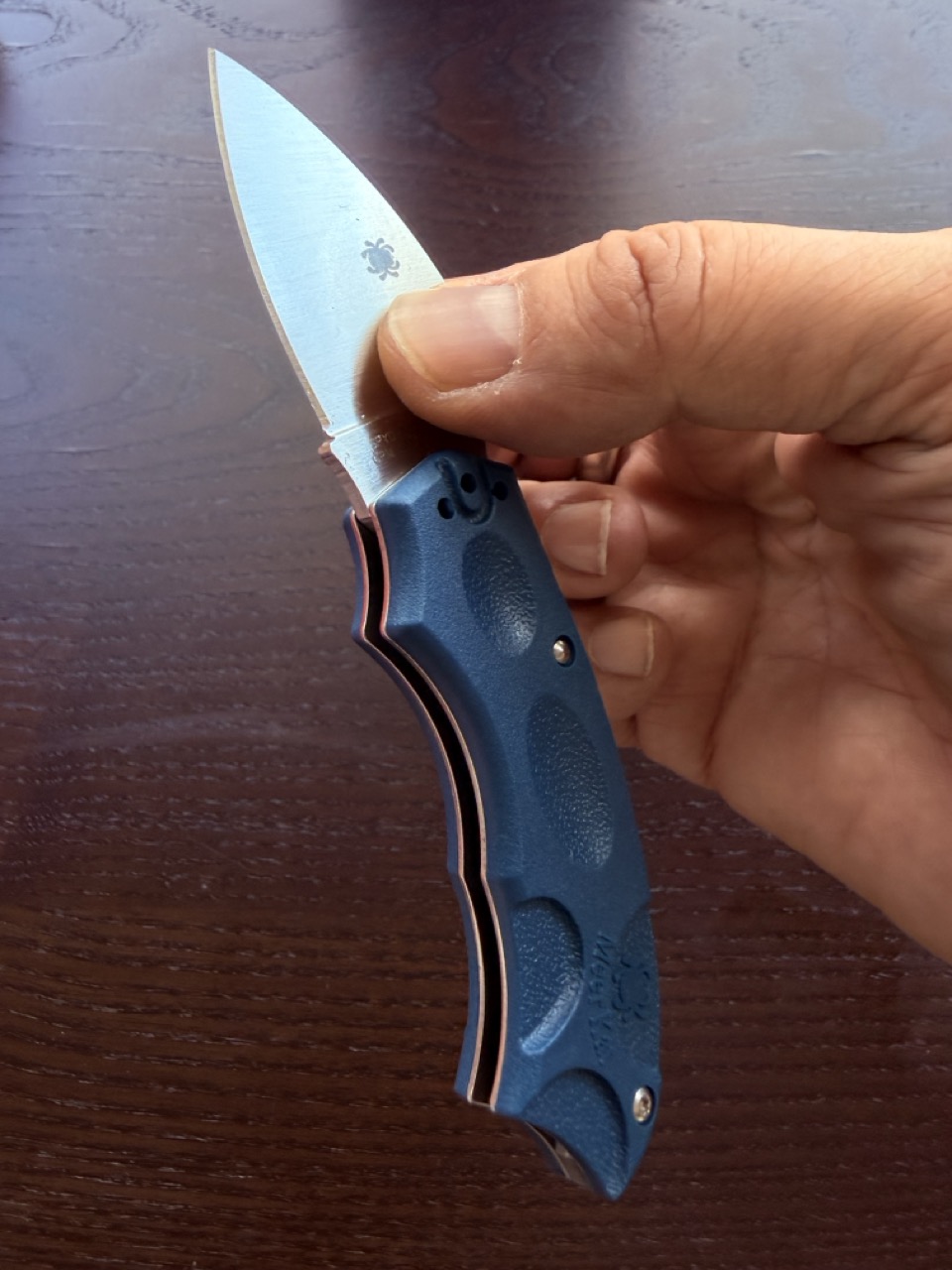
The bi-directional textured FRN scales provide excellent grip. Ergonomically, the Dyad Jr. isn’t quite as comfortable as a conventional single-bladed folder—the folded blade on the opposite side can sometimes be felt under your fingers. It never becomes painful, but you are always aware that there is another blade nested inside the handle.
That said, if you grip the knife by its FRN scales rather than squeezing directly over the blade wells, nothing shifts or flexes. The handle feels reassuringly solid, and the aggressive texture keeps the knife securely planted in your hand, even when it gets wet or slippery.
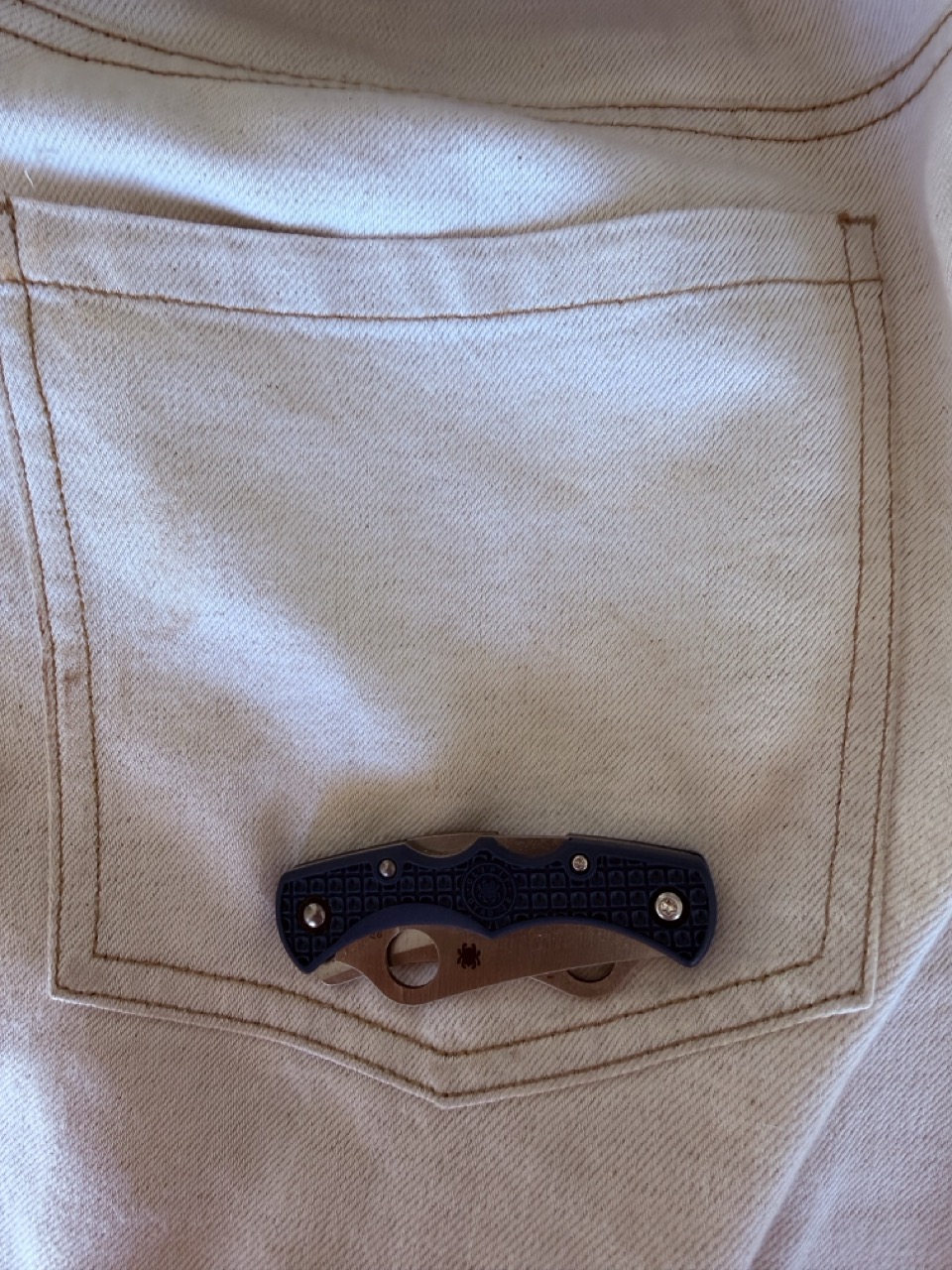
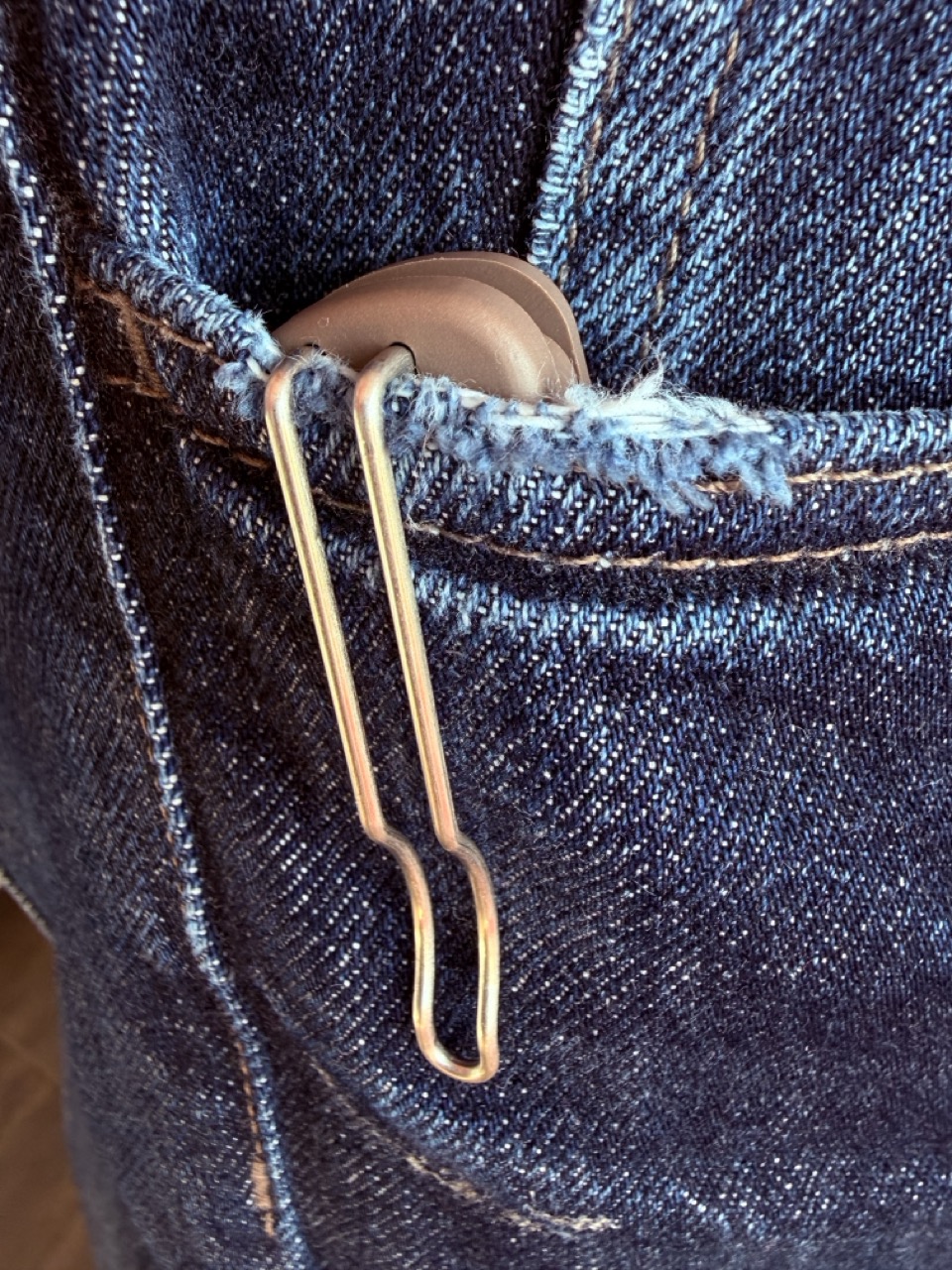
Today, every Spyderco seems incomplete without a clip, uh ? If I carry the Dyad Jr. for a week in my fifth pocket, I wont notice the clip absence. But I have decided to use my right denim back pocket instead. And the Janich’s trick. Ah going clip-less can be good also ! It disappears into the bottom of my pocket like the classic pocket knives many of us grew up with. Nothing catches on a car seat. Nothing snags your jacket lining. Nothing pokes your hand when reaching for your keys. The FRN scales are sturdy, it won’t get marks or bruises. No pocket shredding…
More importantly, deleting the clip also preserves that perfect symmetry of the handle. Two blades. Two lock bars. Two Spyderholes. Everything feels balanced, visually and mechanically.
Sometimes restraint is the most elegant design choice.
There is something wonderfully ironic about this Sprint Run : the Dyad Jr. is a design born decades ago, yet it solves a modern problem better than many contemporary folders. Today, we obsess over blade steels, coatings, lock mechanisms and deep carry pocket clips.
The Dyad Jr. quietly reminds us that geometry still matters more than marketing. A thin blade will always cut better than a thick one. Serrations will still outperform a plain edge in various fibrous materials. And with the Dyad Jr., you can switch from one to the other instantly, comparing both edges on exactly the same material, in exactly the same conditions. Few knives offer such an immediate and revealing side-by-side experience ! And carrying two purpose-built blades often makes more sense than asking one blade to compromise.
Both blades are secured by independent back locks, making the Dyad Jr. exceptionally safe to use. Unfortunately, this also makes this delightful little dual-blade folder an outlaw in some countries.
Take the United Kingdom, for example. A traditional Swiss Army Knife, with its non-locking slipjoint blades, can generally be carried legally in many everyday situations (or the UKPK pictured here). The Dyad Jr., despite being just as compact—and arguably just as practical—doesn’t enjoy the same status simply because both of its blades lock open.
To me, this is perhaps the concept’s greatest drawback, although it has nothing to do with the knife itself. It is simply a reflection of its unmistakable American heritage. Like the legendary Buck 110 before it, the Dyad Jr. was designed around the idea that a working knife should lock securely when in use. Sal Glesser chose function and safety over legal convenience, and the result is a knife that may be perfectly at home in the United States while being far less welcome in jurisdictions with stricter knife laws.
Now, add Spy27 to the equation—a steel that combines excellent edge retention, toughness, corrosion resistance and remarkably easy maintenance—and this little Dyad suddenly feels less like a nostalgic reissue and more like a timeless concept that finally received the steel it always deserved ! (Spy27 as you know it in my various reviews simply feels right on an EDC knife. It strikes a remarkable balance between edge retention, toughness, corrosion resistance and ease of sharpening—qualities that matter far more in everyday use than chasing the latest super steel.)
Out of the box, the factory edge shaves arm hair with ease. After a few passes on the strop, I’m confident it will be popping free-standing hairs like only a truly razor-sharp edge can.
Looking back, I can’t help thinking that the Dyad Jr. would have become my father-in-law’s favorite knife. Knowing how hard he used his old Pradel folders every single day, this little tool would have been love at first cut.
The Dyad Jr. doesn’t try to impress you. It doesn’t chase trends or exotic mechanisms. It simply becomes another quiet companion, always ready to deliver outstanding cutting performance whenever you ask. Cut after cut, it will quietly remind you that Sal Glesser had already found the answer long before the rest of us had finished arguing about the question.
Maybe that’s what the Dyad Jr. has always been about: “Think once. Cut twice.” 😉
(I eventually found the perfect name for my Dyad Jr.: Janus. In Roman mythology, Janus is the god of gates, transitions, and duality, famously depicted with two faces looking in opposite directions. That symbolism fits the Dyad Jr. beautifully. Its twin blades represent two distinct cutting philosophies housed within a single knife, each ready for a different task. Like its namesake, the Dyad Jr. is always looking both ways—versatile, balanced, and prepared for whatever comes next.)
My first article about the Military 2 Salt was a story about evolution. About how Spyderco quietly transformed one of its most iconic folders from the ATS-34 era into something that almost feels like the final expression of the Military concept. From ATS-34 to the Salt Age, the journey was technical, historical and, in many ways, inevitable.
This time, I want to talk about something much simpler : Living with Gurney, my Mil 2 Salt. (I nicknamed my Military 2 Salt Gurney, after Gurney Halleck from Dune. A warrior, a troubadour and, above all, a dependable companion. Somehow, it seemed fitting.) Because after months of carrying it, I’ve stopped thinking about its steel, its lock or even its impressive specifications.
I simply reach for it. And I like it. I like its texture and action. I did not like some hot spots.
The very first thing I did was reshape the edge. Not because Spyderco’s factory edge wasn’t excellent—it was—but because every knife eventually becomes personal.
Sal Glesser has often said that sharpening a knife is one of the ways its owner truly makes it his own. I couldn’t agree more.
Over the years I’ve come to prefer a convex edge on almost every working knife I own. It glides through food beautifully, feels stronger behind the edge and, perhaps more importantly, suits the way I maintain my knives.
Magnacut seems to love that de-shouldering treatment of mine.
Once the convex geometry is established, maintenance becomes almost effortless. A few strokes on a leather strop are usually all it takes to bring the edge back to hair-popping sharpness.
Just a few moments with a strop on fine leather (NOT that Gucci !) or white ceramic, and the Military 2 Salt is ready for another week of work.
No complicated sharpening sessions. No steel removal unless it’s really necessary. Free-hand sharpening is a skill to hone. 😉 Pun absolutely intended.
Now, about those hot spots I mentioned earlier.
I also rounded the blade spine.
Not because it needed it, but because I simply love the feeling of a nicely rounded spine under my thumb. It’s a small modification that makes prolonged use even more comfortable and gives the knife a more refined, almost custom feel.
Like the convex edge, it’s one of those little personal touches that turns a production knife into your knife.
Ah, and the choil ! Just to fit it to my hand. I have used the diamonds rods from my Spyderco TriAngle sharpening system.
Those scales are french fries friendly. 🙂
Ok, like many knife enthusiasts, I spend far more time preparing food than cutting ropes or surviving in the wilderness.
Summer only reinforces that habit. (Here pictured with my favorite kitchen knife custom the Kitchen Warriors made by Patrick Bonetta)
Tomatoes, cucumbers, peppers, avocado, watermelon, mozzarella, feta, peaches, lemon, herbs… preparing large salads means wet hands covered with olive oil, lemon juice, vinegar and vegetable residue. Exactly the kind of environment where many folders start feeling slippery and where corrosion quietly begins its work.
The Military 2 Salt simply doesn’t care. Citric acid ? Bring it on ! And that G10 pattern/texture really keeps the knife perfectly anchored in my hand even when everything is slick as butter under the sun.
I would ever think that its ergonomics almost reveal once my hands are wet and slippery. And you know what, in cutlery, luxury is not having to think.
Magnacut attracts all the attention nowadays and corrosion resistance sells knives. But what I appreciate most isn’t the laboratory performance. It’s the peace of mind. Nothing is going to rust. Nothing is going to seize. Nothing requires immediate cleaning because I forgot the knife in the sink after cooking.
That confidence is difficult to quantify, but it changes the relationship you have with your tool.
This is something few knives offer.
At around €200 (or about $200), the Military 2 Salt is hardly a budget knife, but I honestly think it’s a bargain for what you’re getting: a thoroughly refined design built around one of the most capable blade steels available today.
(A deep pocket carry clip is a must for a low profile attitude.)
That knife, it removes one more concern from everyday life. You simply use it, rinse it if needed, strop it from time to time… and never worry about rust, corrosion or a reluctant pivot. No lock stick on mine actually. Just a smoooooth opening and closing.
The Military has always been a large folder. Well balanced and alive in your hand once opened.
But its pointy blade is undeniably imposing.
Yet the black and yellow Salt colors completely change the perception people have of it.
Instead of looking tactical, it looks… useful.
That yellow jacket Salt identity somehow soften its silhouette. It becomes an obvious tool before becoming a military weapon.
That surprised me.
I expected a big folder built with soldiers (of fortune), outdoorsmen and hard users in mind. And it is.
Instead I found one wasp of a folder that almost disappears into daily life despite its size.
Larger folders are often criticized for being excessive.
Sometimes that’s true. But excess is good in a sturdy piece of equipment.
I do love the Lil’Temperance in K390 which is a beast of a folder. But when summer arrives and you’re slicing an entire watermelon, preparing vegetables for several people or working with large ingredients, blade length suddenly becomes an advantage rather than a compromise.
This is exactly where my UKPK Salt or even my Sage Salt begin to reach their limits. Blade length in the kitchen is defining the use of the knife.
These days, whenever I know I’m going to spend time doing wet work, I instinctively grab the Military 2 Salt.
If I’m cooking—or simply lending a hand in a friend’s kitchen—the Military 2 Salt usually travels in my bag, while a smaller Slipit, like the Urban, rides in my pocket. (Or a Microjimbo, Meerkat, Lil’Native…)
The same applies when I’m camping or travelling.
Peace of mind is priceless, and that’s exactly what Spyderco’s CPM Magnacut Salt knives give me.
Gurney comes along as well, bringing all the qualities I appreciate most: a high-tech blade, superb balance and effortless reliability.
Not because they’re the strongest folding knives I own. But because they’re the ones I never have to worry about. I know they’ll deliver—whether in terms of cutting performance, corrosion resistance or simple reliability.
Easy to deploy. Easy to control. Easy to clean and keep it dirty. Easy to put back in the pocket. Solid. Reliable. Efficient. The Military 2 Salt has become exactly that.
A big folder to live with. A little piece of Colorado in my pocket.
You know how much I enjoy giving names to my knives. Well, this Meerkat Sprint Run ( >>>>PART 1<<<<) is going to be called Casper.
Partly because of its very friendly personality, and partly because of its famous Phantom Lock. It seemed only fitting.
Like the friendly ghost, the Meerkat is small, harmless-looking and easy to like. It quietly disappears into a pocket, only to reappear when needed. And then, of course, there is that Phantom Lock. A lock that remains hidden, mysterious and just a little magical, even after all these years.
So yes, this Meerkat has officially become Casper the friendly folder, especially toward sheeples.
Now, as many of you know, I tend to baptize my knives the traditional Nemo way: with a little bit of my own blood.
And the Meerkat did not disappoint.
Ah ! When closing the blade with a wrist flick after disengaging the Phantom Lock, make sure your middle finger is well clear of the blade’s path. If it isn’t, it will quickly discover that the Meerkat’s edge is less friendly than its name suggests.
The closing blade comes down like a tiny guillotine, and yes, it cuts very well.
Ask me how I know. 😉
Nothing serious, just a small nick, but it serves as a useful reminder: the Meerkat may be compact and charming, yet it is still a very sharp Spyderco.
But once you start playing with the Meerkat, several things quickly become apparent.
First, it is surprisingly fidget-friendly.
Once you get the hang of it, disengaging the Phantom Lock and flicking the blade shut with a simple wrist movement becomes second nature. It is one of those knives that invites interaction. Before you know it, you find yourself opening and closing it repeatedly just for the pleasure of the mechanism. Just keep that middle finger away !
The second thing I noticed is how enjoyable the knife is to deploy using the good old Spyder Drop. Draw !!
Screenshot
I know this opening method is no longer fashionable. Nowadays, many users prefer to flick open a tip-up folder with their index finger. But the classic Spyderco opening technique—grabbing the knife by the Round Hole and snapping the blade open with a wrist flick—works wonderfully well with the Meerkat. The reasons are simple: tip down carry and… The handle carries a surprising amount of weight thanks to its steel liners, full backspacer and robust construction. That extra mass gives the knife excellent momentum during deployment, making the opening feel smooth, positive and satisfying.
Another pleasant surprise is the ergonomics. Despite its compact size, the handle comfortably accommodates all four fingers. The index finger naturally settles into the choil, while even the pinky gets its own dedicated space. The result is a grip that feels far more secure and powerful than the knife’s dimensions would suggest.
Then there is the blade.
One detail genuinely surprised me. Looking at the blade stock thickness, the Meerkat is actually thinner than the famously thin UKPK.
Meerkat: 0.096” (2.4 mm)
UKPK: 0.098” (2.5 mm)
We’re only talking about a tenth of a millimeter, but I still found it amusing. The UKPK has long been my benchmark for a thin, high-performance cutting blade. Yet here comes this odd little Meerkat, quietly slipping underneath it. Perhaps that helps explain why the knife feels so eager when slicing wood, food, cardboard or just about anything else. The Meerkat may look chunky because of its stout handle and full stainless steel liners, but the blade itself is surprisingly lean.
Like many great Spydercos, it hides its elite cutting performance in plain sight.
Its generous belly and thin geometry make it an outstanding cutter. The edge remains in contact with a cutting board through much of the cutting stroke, allowing clean and efficient slicing.
I’ll admit that, despite its tiny size, I ended up doing a surprising amount of kitchen work with it. Tomatoes, vegetables, even breaking down and portioning a chicken—the little Meerkat handled everything without complaint.
Agile in hand and eager to cut, it never feels overwhelmed.
This little knife is a genuine worker.
The textured FRN scales provide excellent traction, preventing any tendency to slip during use. Equally important, I found absolutely no blade play, either vertically or laterally. That’s reassuring on a knife whose pivot is not particularly accessible for adjustment.
In actual use, the Meerkat reveals itself as an exceptionally capable travel companion.
Low profile, discreet and easy to carry, yet remarkably efficient when called upon. Much of that comes from its relatively thick handle, which provides excellent control, while the thin, tall blade slices with a combination of precision and authority that continues to surprise me.
Small sheeple friendly folder, yes but very, very, very serious cutter. An impeccable companion that disappears into a pocket. Ghostlike. Always there when called upon. And far more capable than its size would ever suggest.
Ah, the Meerkat and its magical Phantom Lock… Ah ah ah! This one takes me straight back to 2002. Back to the Future, Spyderco style. The Meerkat is one of those knives that seems to have been designed for a single purpose: making knife enthusiasts scratch their heads. First impression? This is a very small knife. Even compared to the Chaparral. The Chaparral owes much of its DNA to the C62 Navigator. It was a compact lockback with the same short blade (saber hollow grind) optimized for travel and office-friendly carry. It also carries forward the spirit of the C09 CoPilot, continuing Spyderco’s long tradition of creating small knives that cut far bigger than their dimensions would suggest.
Naturally, I slipped the Meerkat into my fifth pocket, where it fits absolutely perfectly. In fact, it feels like it was designed for that role.
The second thing you notice is that this little oddball is set up for tip-down carry, just like the mighty Spyderco Military. And yes, you can still perform the classic Spyderco Drop without any issue ! 🙂
In hand, the Meerkat feels like a stout little worker. The action is firm, the lock-up is rock solid, and despite its compact size, there is nothing delicate about it. Everything feels purposeful and surprisingly robust.
Then comes the Phantom Lock. The Ghost in the Shell. 😉 I have just found that video made by Wouter (Spydercollector) 16 years ago !
Just hand the knife to another knife enthusiast and watch the show begin. They open it. They admire it. Then they try to close it.
Confusion follows. That’s when you starts smiling. 🙂
More than twenty years later, the Phantom Lock remains one of the cleverest and most entertaining locking mechanisms Spyderco has ever produced. It’s practical, it’s secure, and above all, it’s pure Spyderco: innovative, unconventional, and just a little bit crazy. 😄
Sliding the scale to unlock the blade.
Yep, some knives are designed to sell with some tactical bells and whistles. Others are designed to impress for their cleverness. The Meerkat never became a mainstream Spyderco classic. It was too small for tactical enthusiasts, too weird for traditionalists, and too clever for its own good. Yet more than twenty years later, Spyderco decided to bring it back as a Sprint Run equipped with CPM-SPY27 steel and cobalt blue FRN scales.
And honestly? I’m so glad they did ! Because the Meerkat was a knife from the future, designed twenty years ago.
And it is cute !
No, really, it remains one of the most futuristic designs ever released by Spyderco. At first glance, it looks like a tiny leaf-shaped folder with a humpback silhouette and a blade barely longer than your thumb. Full Flat Grind, the Spyderco Signature, deep carry clip Then you discover the lock. The famous Phantom Lock. Unlike a traditional back lock, the Meerkat closes by slightly twisting the handle scales in opposite directions. The mechanism releases almost magically, making the knife feel more like a gadget from a science-fiction movie than a conventional EDC your grand’pa would have chosen in a gun show.. Even today, very few production knives offer anything remotely similar. Sal Glesser is an inventor. He loves his craft. I still can hear his laugh when I have handing a Meerkat to a knife enthusiast, the reaction is the same: “Wait… how do you close this thing?”
Mission accomplished ! (Still confused by the Phantom Lock? Don’t worry, you’re not the first. Just push on the Spyderco logo to slide the scale. Suddenly, the magic trick reveals its secret. And you’ll soon be able to operate it with one hand.) 😉
The Meerkat carries its fully flat-ground blade measuring just over 5 cm (2inches). On paper, that sounds ridiculously small. In practice, it slices like a miniature lightlaser.
Spyderco’s leaf-shaped blade profile has always been one of the most efficient cutting geometries in the business. Give it a thin full-flat grind and suddenly this tiny folder starts behaving like a much larger knife.
Opening parcels. Food prep. Sharing a fruit. Breaking down cardboard. Removing parcel. Protect your family against enraged bear attacks. You name it. The Meerkat will perform all of these tasks with surprising authority.
The blade disappears in any pockets with its deep tip down carry system.
This Sprint Run upgrades the original steel to CPM-SPY27, Spyderco’s proprietary powder metallurgy stainless steel developed with Crucible. The goal was simple: create a steel offering a balance of edge retention, toughness, corrosion resistance and ease of sharpening.
I’ve not used enough SPY27 on larger folders like a Bodacious or a Manix 2 XL to fully explore its limits, but I do understand what Spyderco was trying to achieve with what I often call their “powder metallurgy VG-10.”
My own experience with SPY27 comes mainly from a UKPK that I have nicknamed The Golden Child.
What I’ve discovered is this: SPY27 doesn’t try to win steel competitions. It simply works. The edge stays keen for a long time, corrosion resistance is excellent, and maintenance remains refreshingly easy compared to some modern “super steels.” Much like Magnacut, SPY27 seems to love a leather strop. A few passes are often enough to bring back that crisp, shaving-sharp edge.
Many users compare its overall performance to S35VN, appreciating how straightforward it is to touch up. Perhaps they’re right. Personally, I don’t really care whether it lands closer to S30V, S35VN or S45VN. What matters is that Spyderco consistently gets the recipe right. Because a blade is never just an alloy. A blade is alloy + heat treatment + geometry.
And Golden’s people understand that better than most. What I want in 2026 is a blade steel that is easy on my mind. A steel that won’t punish me for grabbing the wrong sharpening tool while travelling.
A steel that can be maintained without turning sharpening into a science project.
A forgiving steel.
At sixty years old, I find myself caring less about ultimate edge retention and more about living with a knife. SPY27 feels like one of those steels that wants to work with its owner rather than against him. For a compact EDC like the Meerkat, that balance is exactly what I want.
This is not a knife meant to chop down forests. It is, however, a surprisingly capable whittler. The generous belly, thin blade stock and full-flat grind simply devour wood. Whether shaping a tent peg, sharpening a stick for the barbecue or absent-mindedly carving curls while sitting by a campfire, the Meerkat performs far beyond what its dimensions would suggest.
The blade bites eagerly, tracks predictably and leaves behind clean, controlled cuts.
Small knife. Big appetite.
Yes, it really is that powerful.
The Meerkat is a knife meant to disappear into your fifth pocket and be forgotten.
Twenty years after its introduction, that’s still what impresses me most about the Meerkat: not the Phantom Lock, not the rarity, not the nostalgia.
The fact that such a small knife cuts so ridiculously well.
The knife represents an era when Spyderco was willing to experiment with strange concepts simply because they were interesting.
Today many manufacturers chase trends. The Meerkat reminds us of a time when designers chased ideas. Its unusual lock, compact dimensions and unmistakable silhouette make it instantly recognizable among hundreds of modern folders.
You don’t buy a Meerkat because it is the most practical knife. You buy it because it is unmistakably a… Meerkat. Cute, clever and sharp.
That SPY27 Sprint Run does not reinvent the Meerkat. Fortunately. It preserves everything that made the original memorable while upgrading the steel to something genuinely useful for modern everyday carry.
Tiny. Strange. Ingenious. Solid, Stout. Great ergonomics for a 2 inches blade. The Meerkat remains one of the most charming oddballs ever released by Spyderco. And in a knife world increasingly filled with tactical clones and oversized pocket swords, that may be exactly what makes it special.
Not because it is perfect. Because nothing else feels quite like it. Invention, innovation…. Open it. Read between the line and twist the scales to close it.
The Meerkat is a jewel of a user. The kind of little big knife you can clip into a pocket every morning and completely forget about—until you need a knife. Then it reminds you exactly why it’s there.
Much like the little African animal that inspired its name, the Meerkat has a habit of suddenly popping up when something interesting needs attention. That’s part of its charm.
Disclaimer: This knife has been provided through Spyderco’s Ambassador’s program and friendship. Thank you to them for letting me review it. It felt like welcoming back an old friend I hadn’t seen in over twenty years.
If the Meerkat has piqued your curiosity, do yourself a favor and visit the website of my friend Wouter (“Mr. Blonde”). Few people know Spyderco history better than he does:: https://spydercollector.wordpress.com/tag/meerkat/
Also, there is a great thread on the Spyderco Forums featuring information, anecdotes and historical details contributed by collectors (including my friend and contributor, Robin “Ramonade): https://forum.spyderco.com/viewtopic.php?p=1885029#p1885029
There are knives that become products, and there are knives that become dialects. The Spyderco Para Military 2 since its inception belongs firmly to the second category.
For sixteen years, the PM2 has occupied a rare position in the knife world: not merely respected, but culturally embedded. Made in Golden Colorado USA Earth, designed in the lineage of the original C36 Military model and its offspring the Paramilitary 1 from 2004, the Paramilitary 2 refined the formula into something more agile, more urban, more universally wearable. Key improvements introduced in 2010 were: Ergonomics: Thinner, refined G-10 handle. Mechanism: New Bushing Pivot System for smoother action. Clip: 4-position pocket spoon clip. Blade: Slightly thinner blade profile with an elongated tip. From there, the Spyderco Paramilitary 2 quickly established itself as a modern classic in the knife industry. It also became the most compelling ambassador for Spyderco’s in-house Compression Lock system, turning simple fidgeting into something unexpectedly addictive.
Its full-flat, leaf-shaped blade geometry delivers near-universal utility — a fine, precise tip paired with a confident, efficient cutting edge. In use, it feels less like compromise and more like calibration.
And then there is the ergonomics: that unmistakable Spyderco palm swell and forward choil, which transform hard tasks into something almost composed, almost effortless.
Even AI now generates imaginary PM2 variants — sometimes hilariously inaccurate ones with back locks — which says a lot about how deeply the Spyderco Paramilitary 2 has embedded itself into modern knife/EDC culture.
Because the PM2 was never just a tactical folder. It became the Porsche 911 of contemporary EDC: instantly recognizable across a room, endlessly reinterpreted, yet impossible to mistake for anything else but one of the Spyderco Millie family.
And yet, for all its success, the classic PM2 always carried a subtle contradiction. It was a knife celebrated for everyday carry that still weighed like a “serious” tool. A tool which floats like a butterfly but sting like a bee. So, the same process which turned its little brother Para3 G10 into Para3 Lightweight has been applied: get rid of G10 scales and bring the Fiber Renforced Resin / FRN !
The new Spyderco Paramilitary 2 Lightweight changes that entirely.
At roughly 76 grams, the PM2 LW does not feel like a trimmed-down PM2. It feels like an entirely different interpretation of the design. To put that into perspective, it is even 16 grams lighter than the Spyderco MicroJimbo — a knife already considered compact and featherweight by EDC standards.
Compared to the classic G-10 PM2, the difference becomes almost startling: 32 grams gone, dropping from 108 grams to just 76. That is nearly a 30% reduction in weight.
Edge-wise, the blade-to-weight ratio is remarkable — and decisively in favour of the Spyderco Paramilitary 2. 😉 Oh well, I’m joking — these two knives were never meant to compete. They simply occupy different territories of utility, and both earn their place in my pocket for different reasons. Still, this new Lightweight feels like the moment Spyderco finally allowed the PM2 to become what it was always destined to be: not merely lighter, but almost spectral. The Para3 LW vibes haves been compared to the Delica. The PM2 got the Endura’s: a ghost of a knife you completely forget is clipped to your pocket… until the exact second you need it. Another clue? The clip. Look closely.
The deep-carry clip makes the knife feel even stealthier in the pocket, almost invisible in daily carry. Tip-up only, though. It’s not exactly a pocket shredder, but it’s not the gentlest on pocket seams either — even if the clip geometry and FRN patterning have clearly been tuned to make deployment and carry as smooth as possible.
In my view, the central “medallion” on the Spyderco Para 3 (pictured here) feels more refined and better resolved visually. It has a cleaner, more intentional integration into the design.
Here, on the PM2, it simply reads “Para Military 2” — which feels oddly understated. Curiously, the Spyderco name itself is nowhere to be found on that element, a surprising omission for such an iconic model.
But then again, this is exactly the kind of detail enthusiasts obsess over.
Personally, I prefer the FRN molding of the Spyderco Para 3 Lightweight in the epicenter of the pattern — it feels slightly more refined and cohesive. On the other hand, I find the Spyderco Paramilitary 2 Lightweight superior around the Compression Lock interface and the access to the Spyderhole, both of which feel more open, more natural, and ultimately more satisfying in use.
The handle transformation comes primarily through the FRN handle — fiberglass reinforced nylon — a material longtime knife enthusiasts still love to debate with almost religious intensity. Traditionalists often associate premium folders with layered G-10, titanium, or carbon fiber. FRN, by comparison, can seem almost too practical, too honest about its intentions. Forums discussions around Spyderco’s lightweight models reveal the familiar divide: some users still perceive FRN as less luxurious, while others praise its traction, comfort, and remarkable reduction in carry fatigue. One thing is certain: FRN brings a significant leap in ergonomics.
You can see how the design has been subtly refined to erase the boxy, almost overbuilt feel of the G-10 version. Spyderco’s history with FRN stretches back through legendary lightweight models like the Spyderco Delica, Spyderco Endura and the Spyderco Salt Series — knives that became icons precisely because they vanished into the pocket while remaining utterly dependable in dirty, wet, unforgiving environments. The people at Golden has spent decades refining FRN into something uniquely their own. On a Spyderco, FRN is not budget plastic. It is engineered utility. The texture, invented by Sal Glesser, is the key.
That bidirectional pattern grips the hand with a kind of mechanical confidence — less refined than blasted titanium perhaps, but more secure when life becomes sweaty, cold, rushed, or imperfect.
What makes the Spyderco Paramilitary 2 Lightweight genuinely fascinating is not merely its weight reduction, but the engineering compromise Spyderco somehow refused to make. Because removing mass from a back lock or liner lock is relatively straightforward. Removing mass from a Compression Lock platform is something else entirely. The Compression Lock is one of the defining mechanical signatures of Spyderco — a brilliantly elegant system designed by Sal Glesser that combines strength, fluidity and one-handed safety with an almost addictive tactile character. But unlike simpler locking systems, it traditionally depends on nested steel liners and a rigid chassis architecture.
In other words: it was never meant to live inside an ultralight FRN body. That is the hidden tour de force of the PM2 Lightweight.
Spyderco did not simply shave material away from the classic design. They had to rethink how the Compression Lock itself could survive — and still feel reassuringly precise — inside a platform whose entire philosophy is flexibility, lightness and minimal structure.
FRN has a very different mechanical behavior from G-10. It flexes differently. Resonates differently. Carries load differently. The scale’s edges can feel a touch sharp/aggressive out of the box, but I usually knock the initial bite down slightly with my thumbnail. Not a big deal.
And yet, in hand, the PM2 LW still delivers that familiar Compression Lock experience: the sharp metallic click, the secure lockup, the controlled drop-shut feel, the confidence under pressure. The knife retains the mechanical identity of a “real” PM2 despite having shed nearly a third of its weight.
That balance is far harder to achieve than most users realize.
Too much liner removal, and the knife begins to feel hollow or vague. Too much FRN flex, and the lock loses its aura of precision. Too much steel reinforcement, and the entire Lightweight philosophy collapses under its own contradiction.
Spyderco somehow threaded the needle. In hand, the result is fascinating because the PM2 LW does not feel cheap, nor stripped-down. It feels optimized — almost industrially purified. As though the designers kept asking themselves a brutal question: “How little knife can we leave… before it stops feeling like a PM2?” And the answer, apparently, was 76 grams.
So who, exactly, is this new Spyderco Paramilitary 2 Lightweight really made for? Not the collector seeking desk-jewel materials. Not the enthusiast who wants maximal heft and polished mechanical theater. This PM2 is for people who actually carry a knife every day and do not want to feel it in their pocket. Like a ghost… a spirit. For the light traveler, moving through the world in technical fabrics and ultralight luggage — absolutely yes. The Spyderco Paramilitary 2 Lightweight is exactly on point. For the architect, photographer, paramedic, cyclist, climber, sailor, or city commuter who notices every unnecessary gram. For those in the field where every gram really matters — soldiers, paratroopers, operators, and anyone carrying their world on their person — the Spyderco Paramilitary 2 Lightweight makes immediate sense. For the those who slips a knife into athletic shorts and forgets it exists until the moment it is needed. And when needed, the action remains fluid , smooth and effortless, while the absence of heft is almost disorienting at first. This is where the name Lightweight stops being a designation and becomes an identity — carried here to its purest, most unapologetic expression. Yes—there is something almost pure in handling this Spyderco Paramilitary 2 Lightweight, something slightly disorienting in its lightness. Almost paradoxical. Elegant, refined, stripped to essentials — and yet fully present in the hand. It doesn’t try to impress through mass or presence anymore. Instead, it disappears, and that absence becomes the experience itself. As the late Mark Hollis (*) once suggested, “Only silence is more beautiful than music…” and in a strange way, that idea translates surprisingly well here. This almost weightless refinement might be the closest thing cutlery has to silence: a design so resolved it no longer insists on its own existence, only its function.
The genius of the Lightweight is psychological as much as physical. A heavy knife asks for commitment. A 76 grams PM2 becomes invisible — and invisibility is the highest achievement in EDC design.
Ironically, reducing the weight also sharpens the very essence of the PM2 itself. The famous blade suddenly feels more dominant, more alive. Several early owners have described the sensation as though “all the weight is in the blade,” giving the knife a startling immediacy in hand.
Pictured beside a 120-gram Spyderco Military 2, the contrast becomes almost absurd. Of course, the Lightweight will not seduce everyone.
Some users will always prefer the denser, almost bank-vault solidity of G-10 scales and full steel liners. Others simply enjoy the tactile indulgence of heavier materials. (I once installed Flytanium bronze scales on a Spyderco Para 3. The result was magnificent — and roughly as subtle as carrying a ship anchor.)
And that is perfectly fair, because the classic G-10 Spyderco Paramilitary 2 remains one of the greatest production folders ever created.
But the Lightweight introduces something unexpectedly contemporary to the platform: efficiency without compromise.
This particular example happens to be a Sprint Run equipped with CPM 15V — a truly high-octane alloy. Yet the steel is almost secondary to the broader philosophy behind the knife. Much like the celebrated 15V Para 3 Lightweight before it, this PM2 LW pairs one of the most extreme high-performance steels available with an astonishingly light 76-gram platform.
The CPM 15V Sprint Run is the enthusiast’s reading of the idea — a limited-production exercise in maximum performance taken to its logical edge. 15V itself borders on the extreme in the best possible way. With an unusually high vanadium content of nearly 15%, it was developed for exceptional wear resistance and outstanding edge retention. In Spyderco’s implementation, it is further elevated by Shawn Houston’s specialised heat treatment, identifiable by the discreet “Triple B” mark engraved on the blade.
The beautifully stonewashed blade arrives with an edge that is immediately convincing — thin, precise, and unmistakably sharp straight out of the box. In my experience, it may well be one of the finest factory edges Spyderco has ever delivered. Hair-popping performance is effortless, almost casual, and geometrically speaking, even the informal “bottle” or light push-cut tests feel almost trivial. Much better than on my Para 3.
Oh well, the exotic steel may attract the headlines. (As a bit of a steel enthusiast, CTS-BD1N on the “vanilla” Spyderco Paramilitary 2 Lightweight doesn’t really excite me — it’s solid, reliable, easy to keep razor sharp, forgiving but uninspiring. I wouldn’t seek it out like I would CPM Cruwear steel, but I’d never pass on a great design just because of it.)
But the real story lies elsewhere: the revelation that one of the most iconic hard-use folders ever produced can suddenly feel almost effortless, friction less… pure.
Not diminished. Distilled. Purified. And distillation brings spirit. Spirit is light. And this purity is no lie.
Disclaimer: This knife has been provided through Spyderco’s Ambassador Program, upon my own request. Thank you to the Spyderpeople for letting me review it.
(*) For a musician and singer, Mark Hollis is unusually interested in silence, in what could be described as the gaps and intervals between notes. To listen to Spirt of Eden (1988) and Laughing Stock(1991), the last two albums by Talk Talk, the band of which he was singer and principal songwriter for more than a decade, is to encounter a music of fragments and dissolution, his murmured vocals often simply fading away as a song does not so much end as expire.