Tag Archives: Eric Glesser

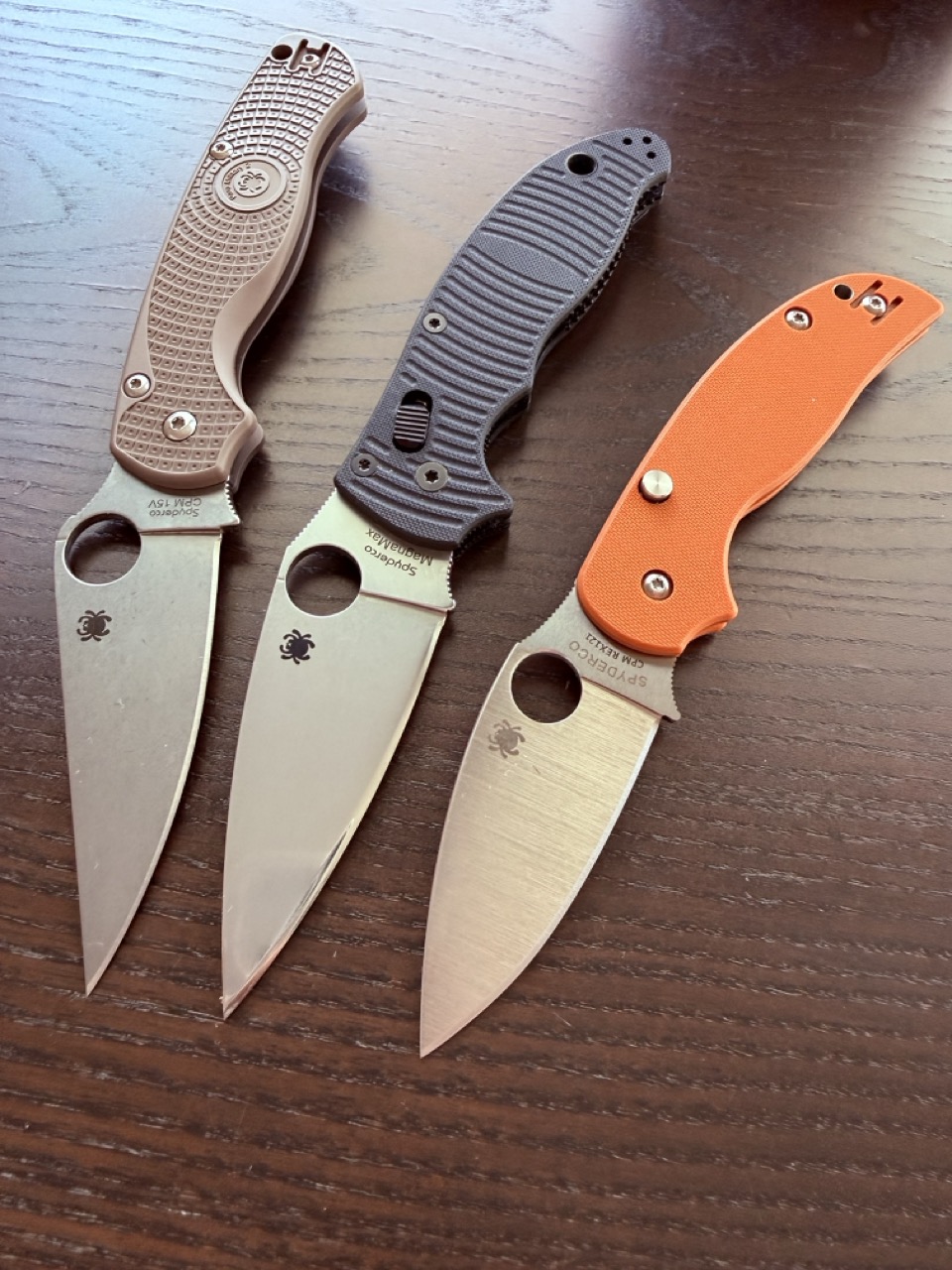
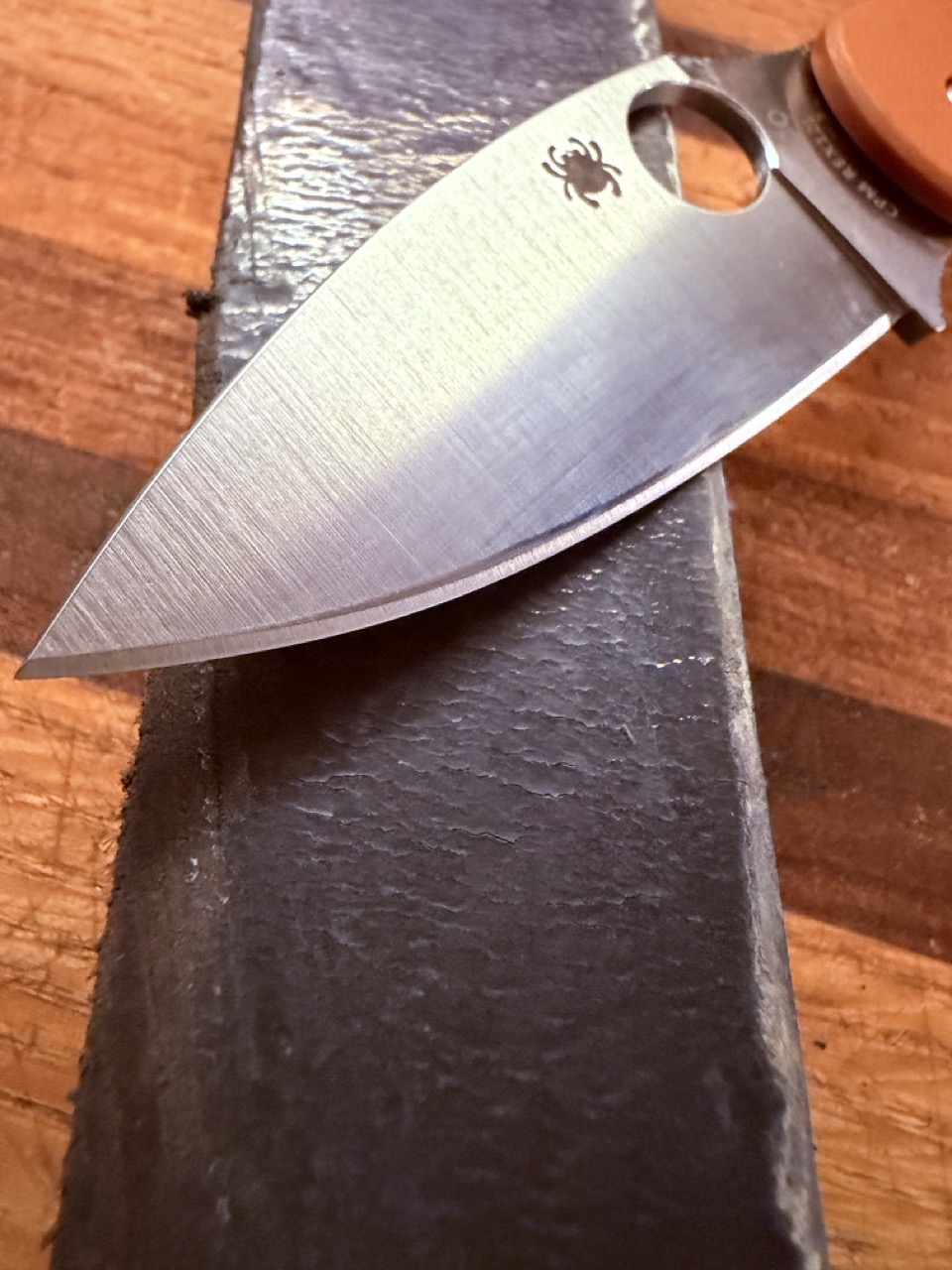
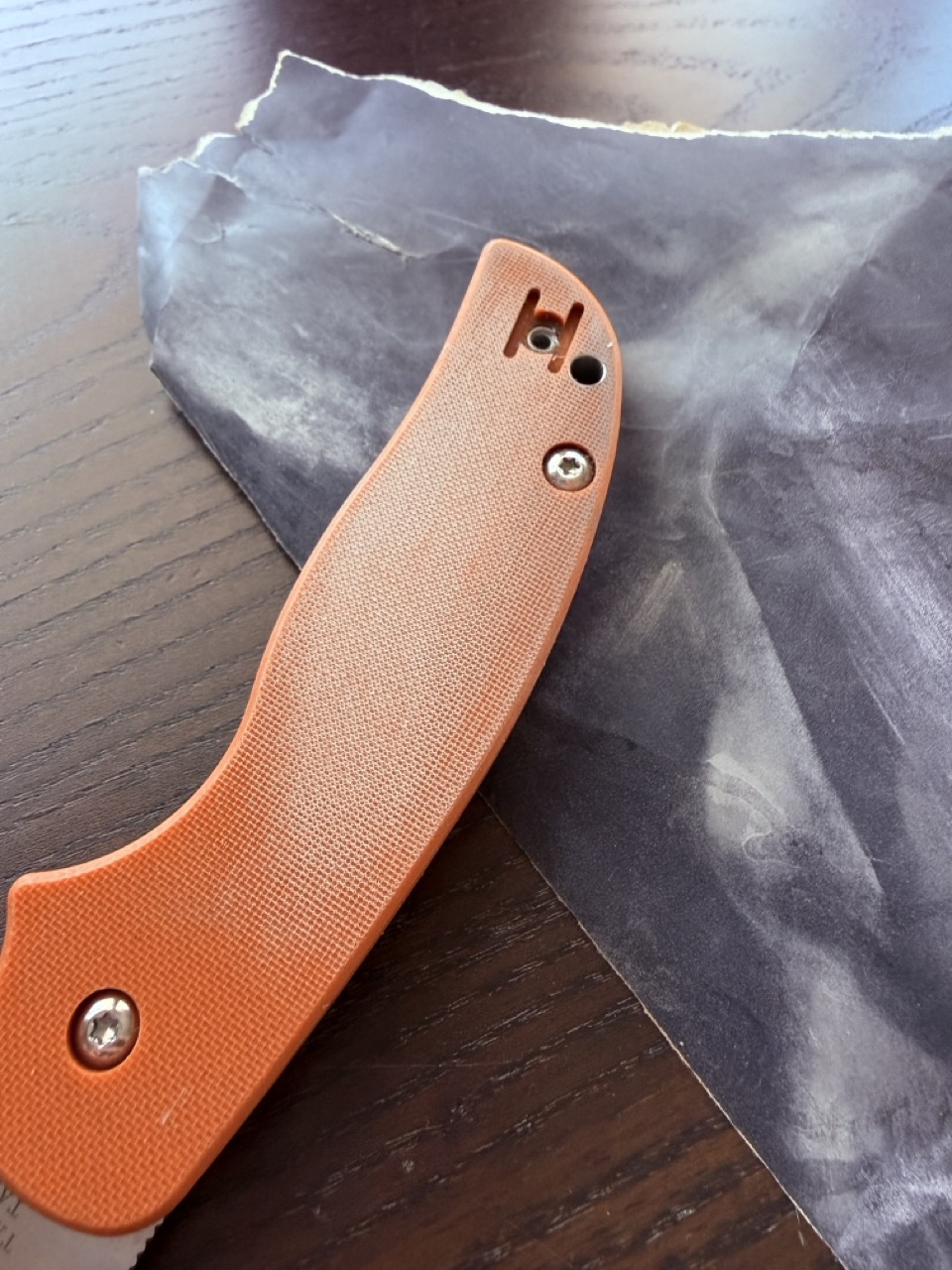
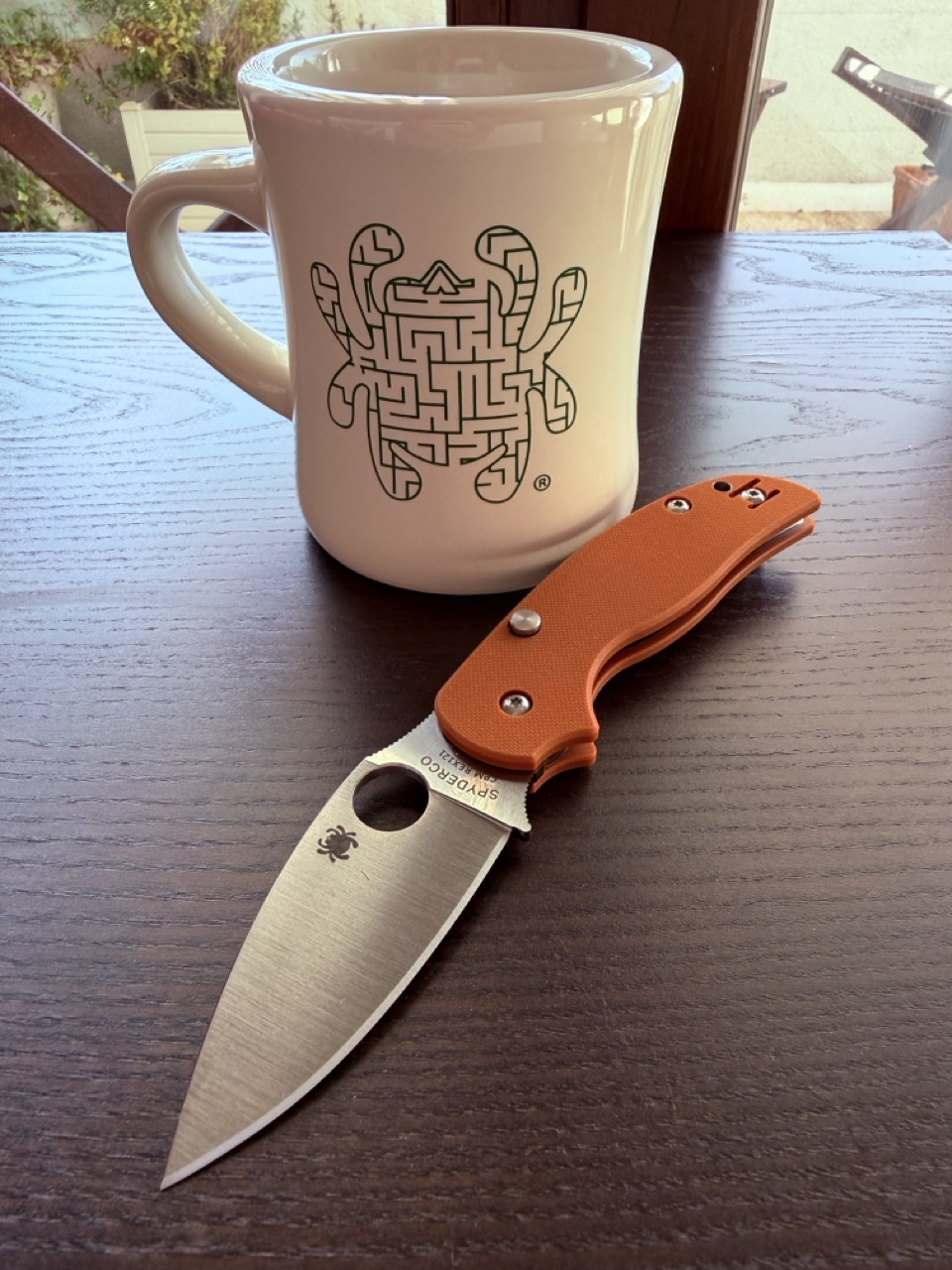
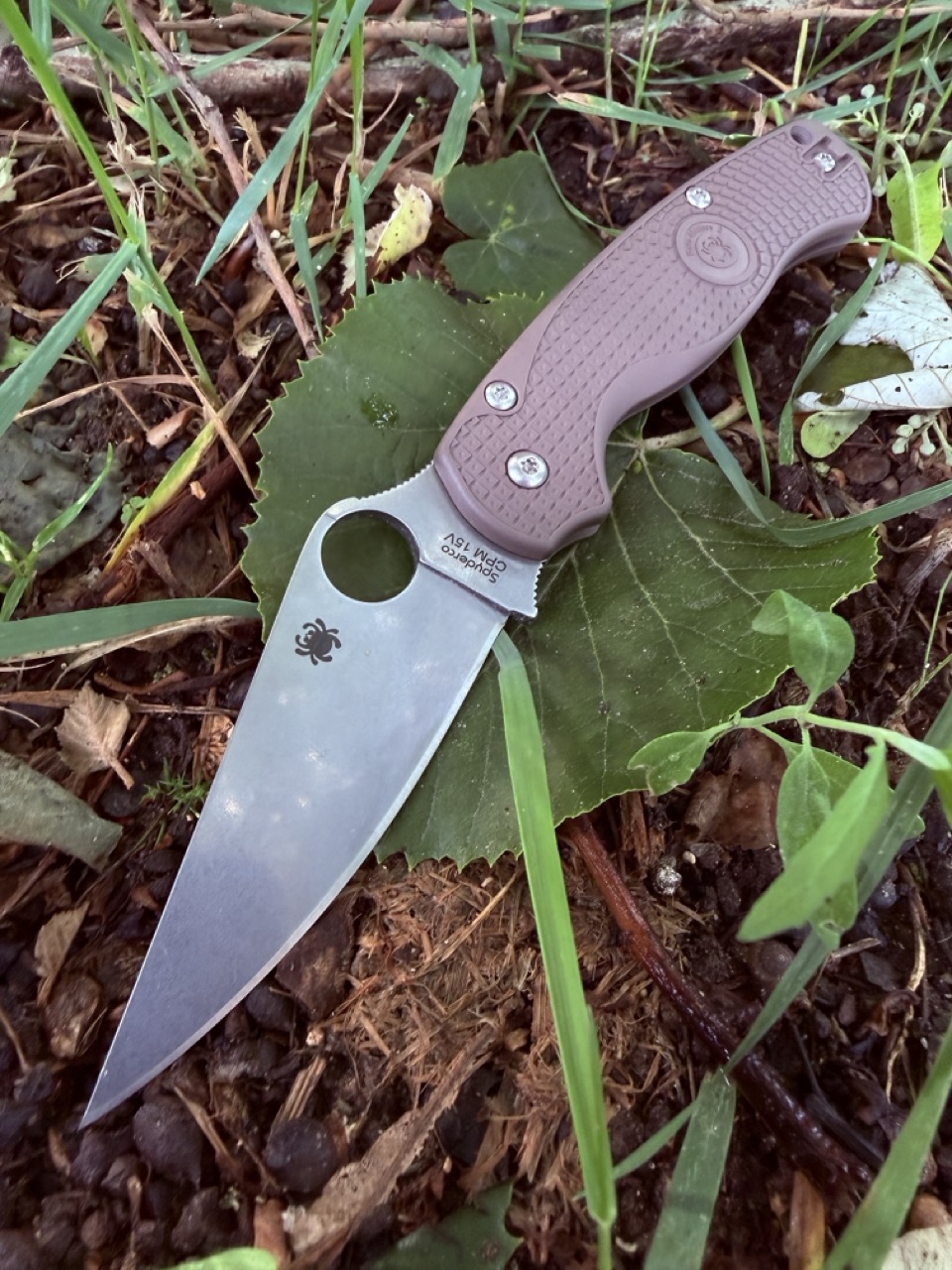
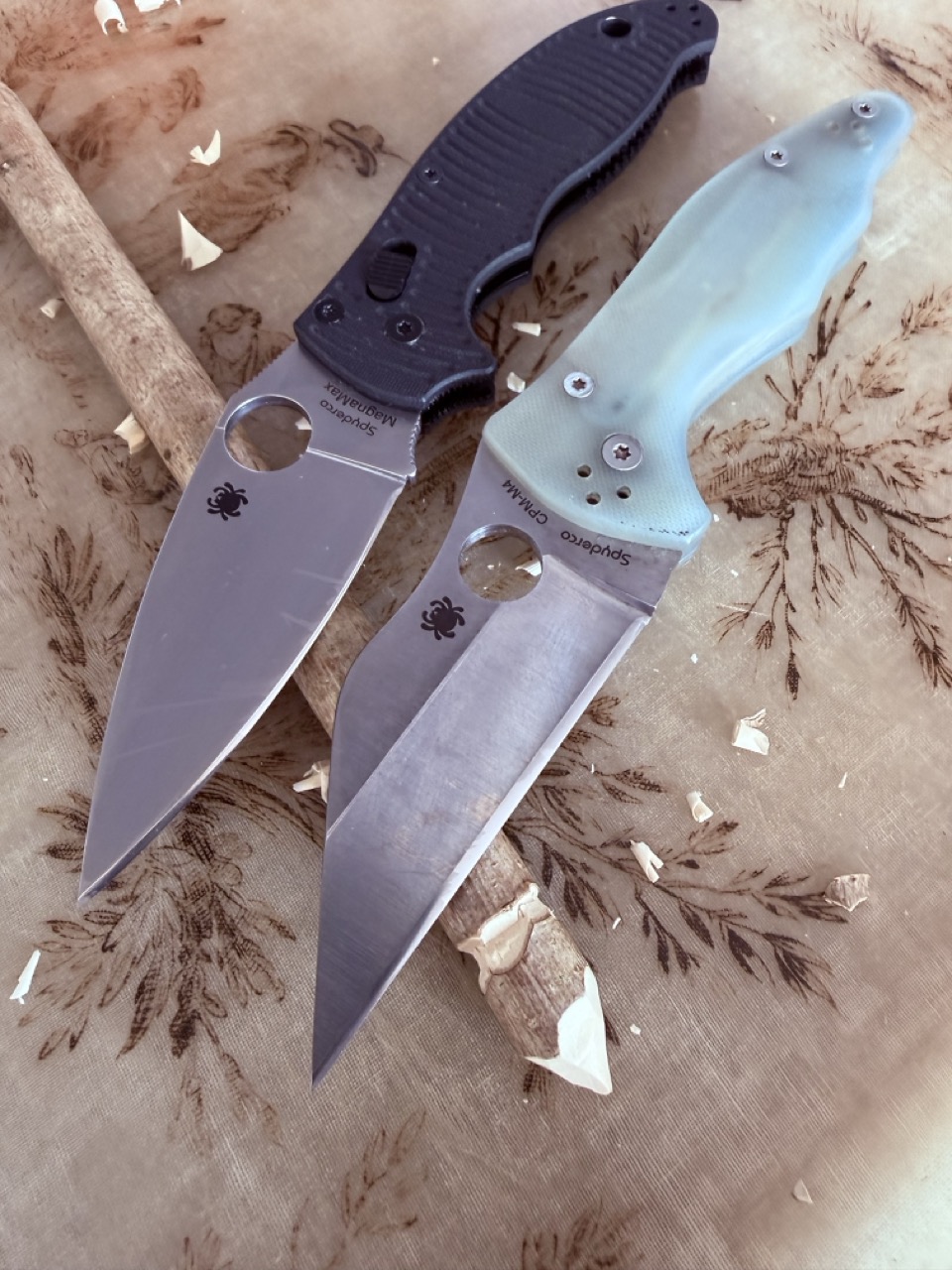
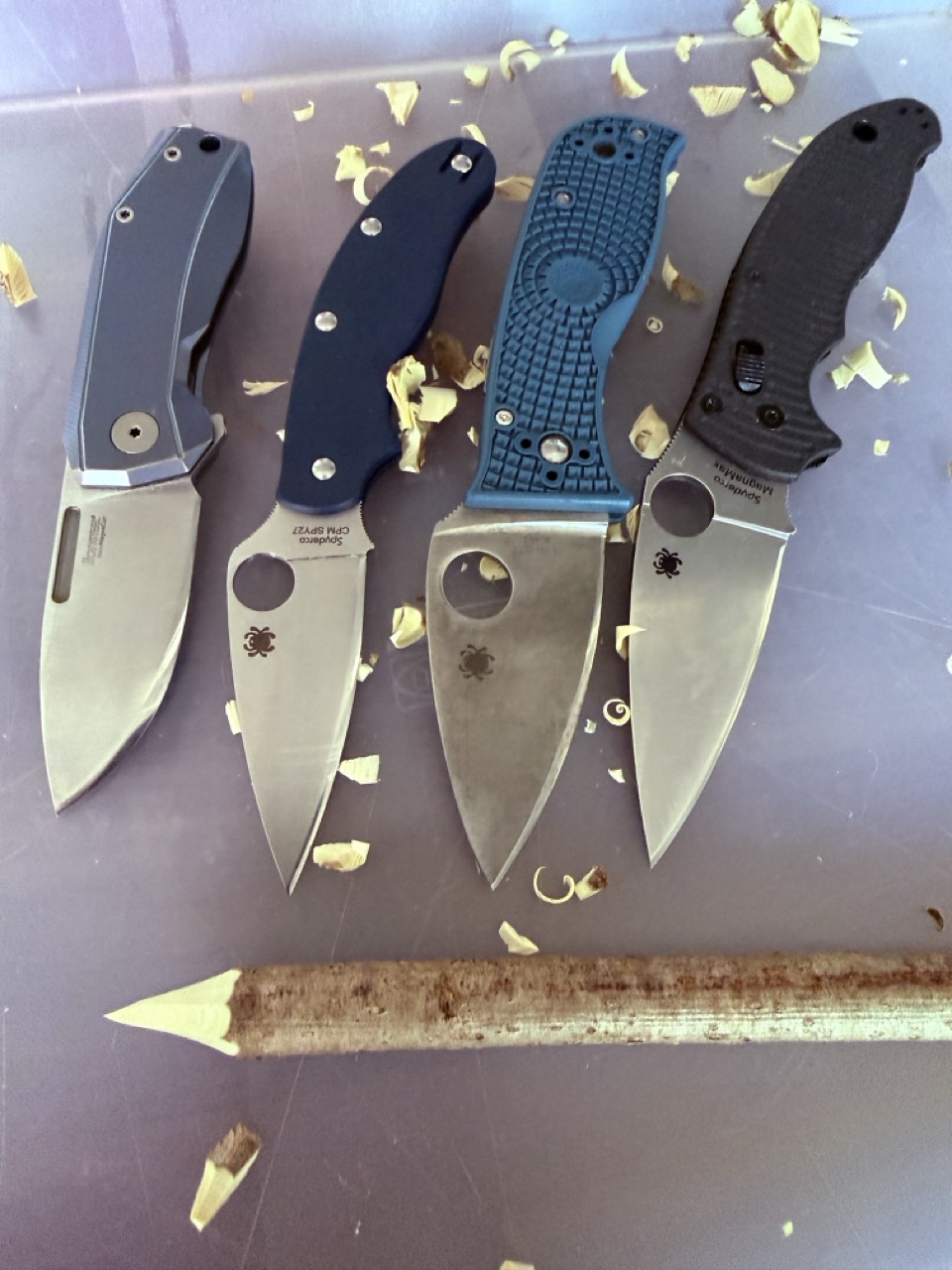
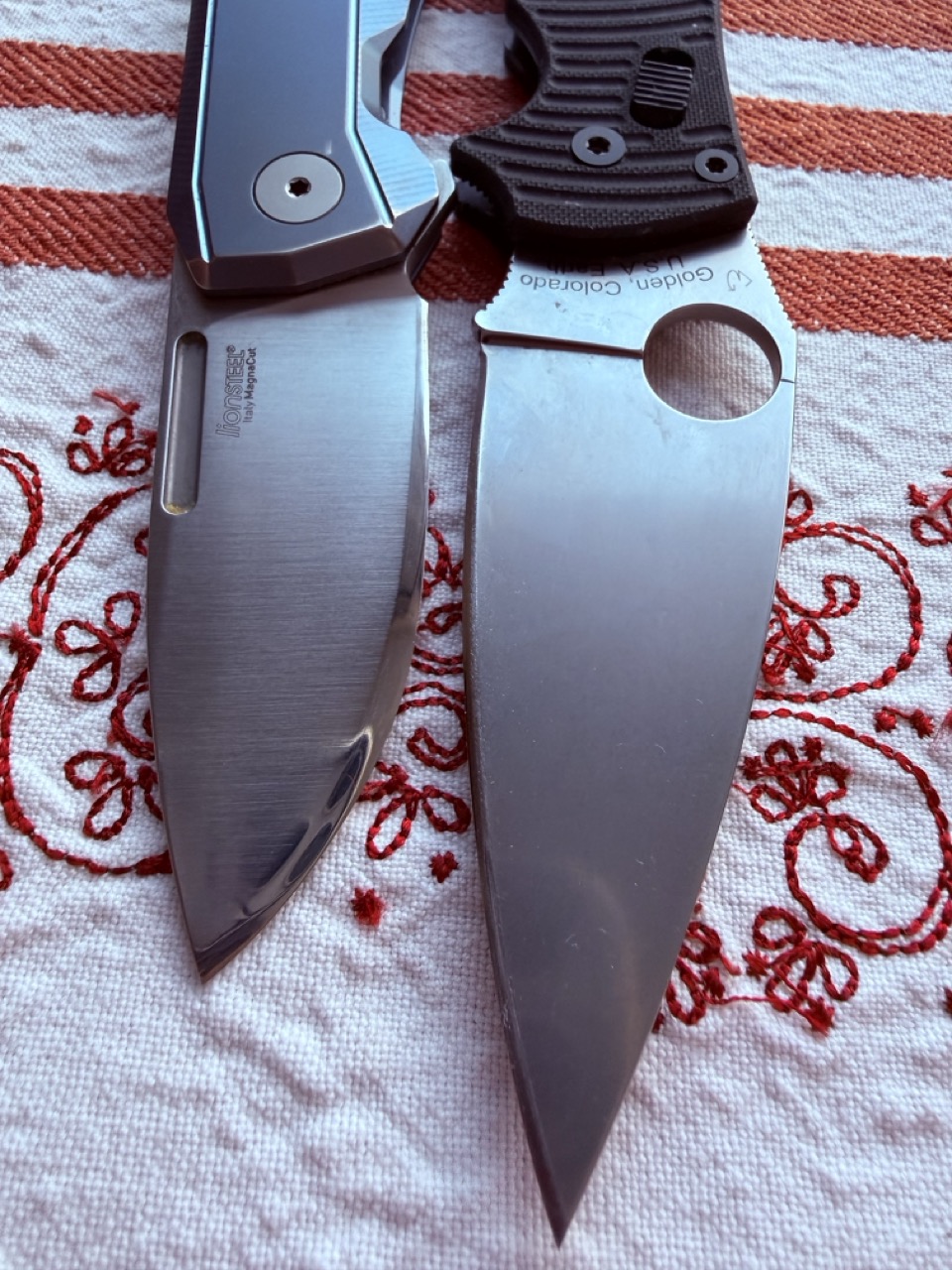
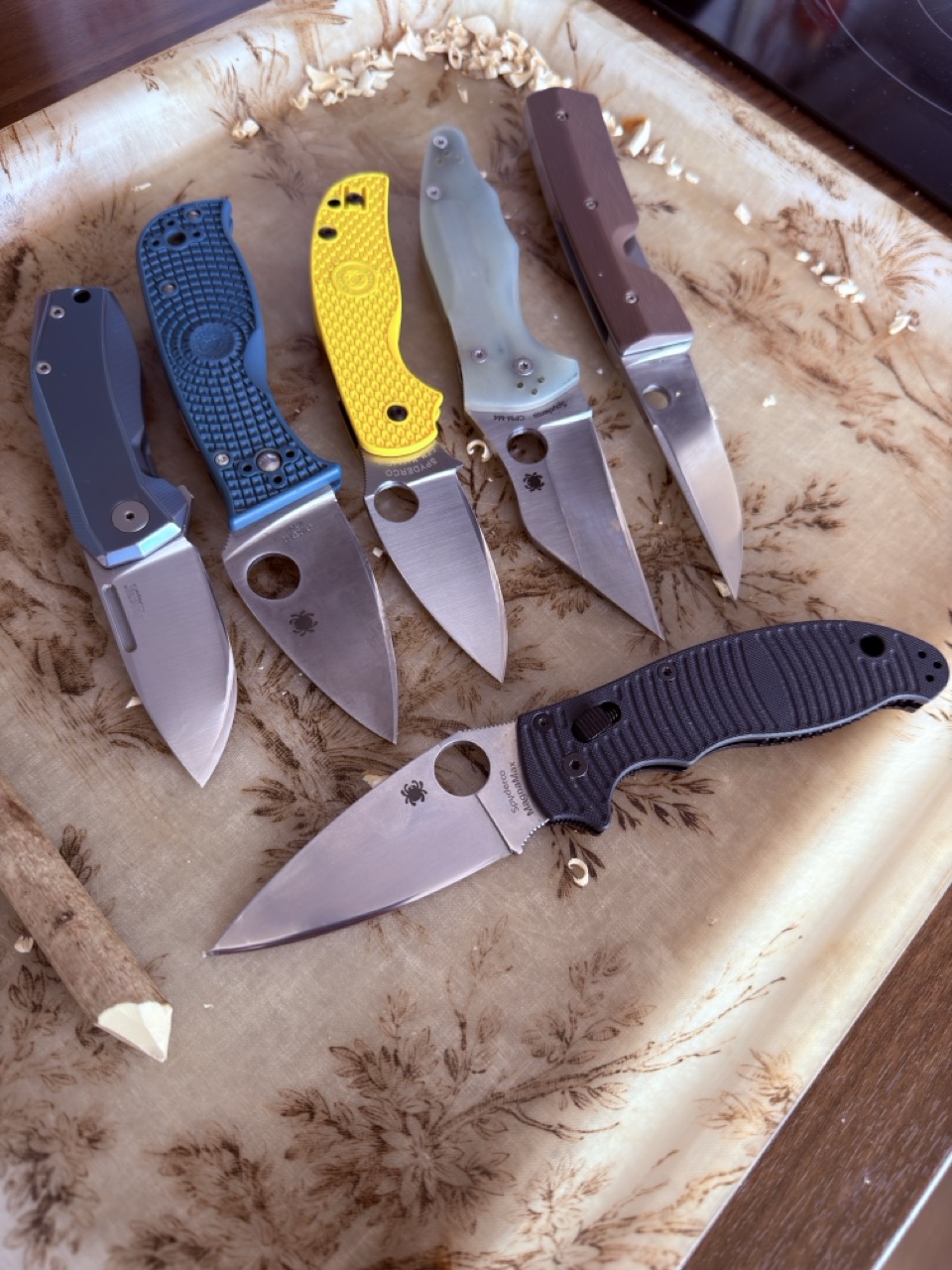
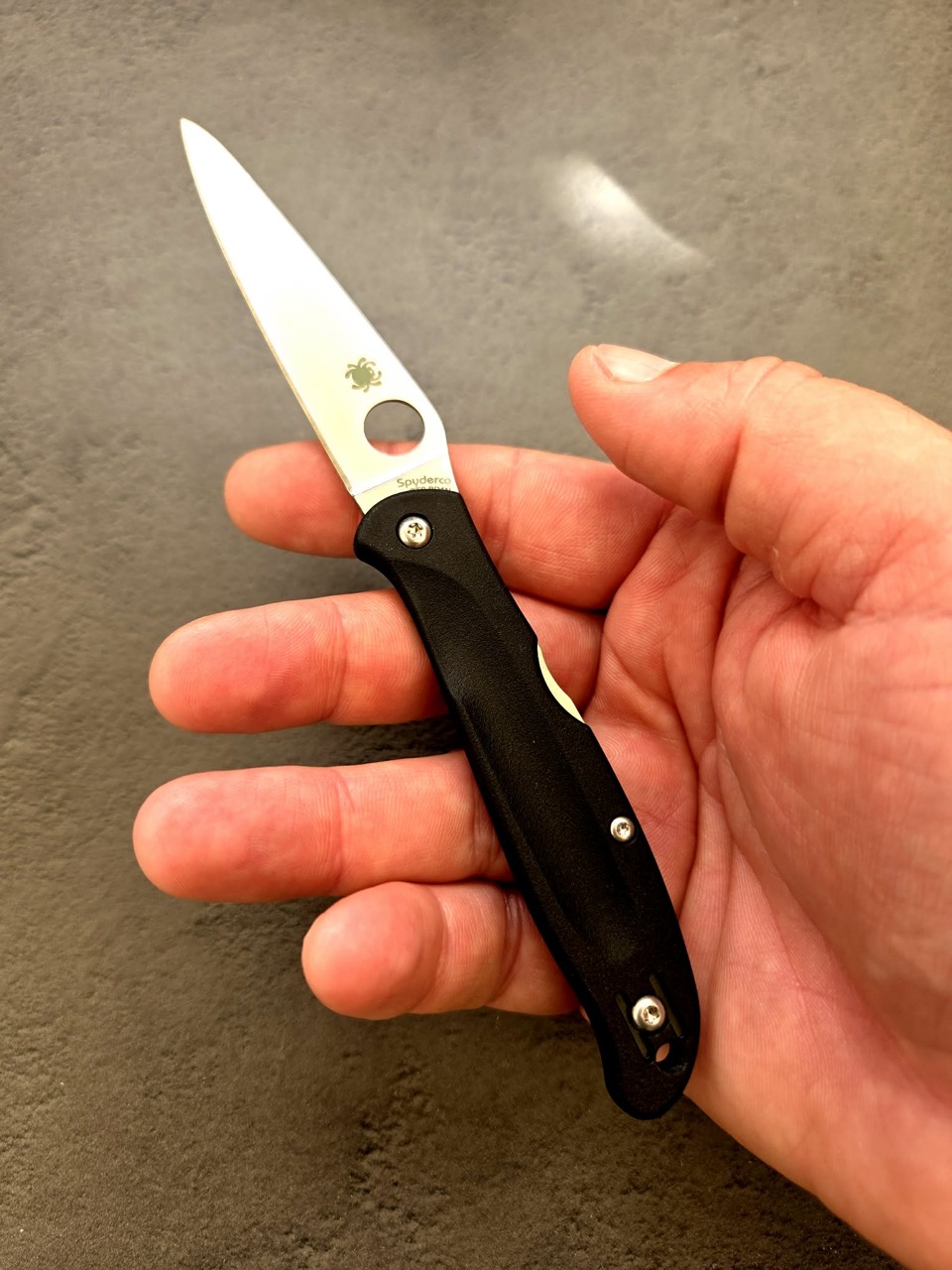
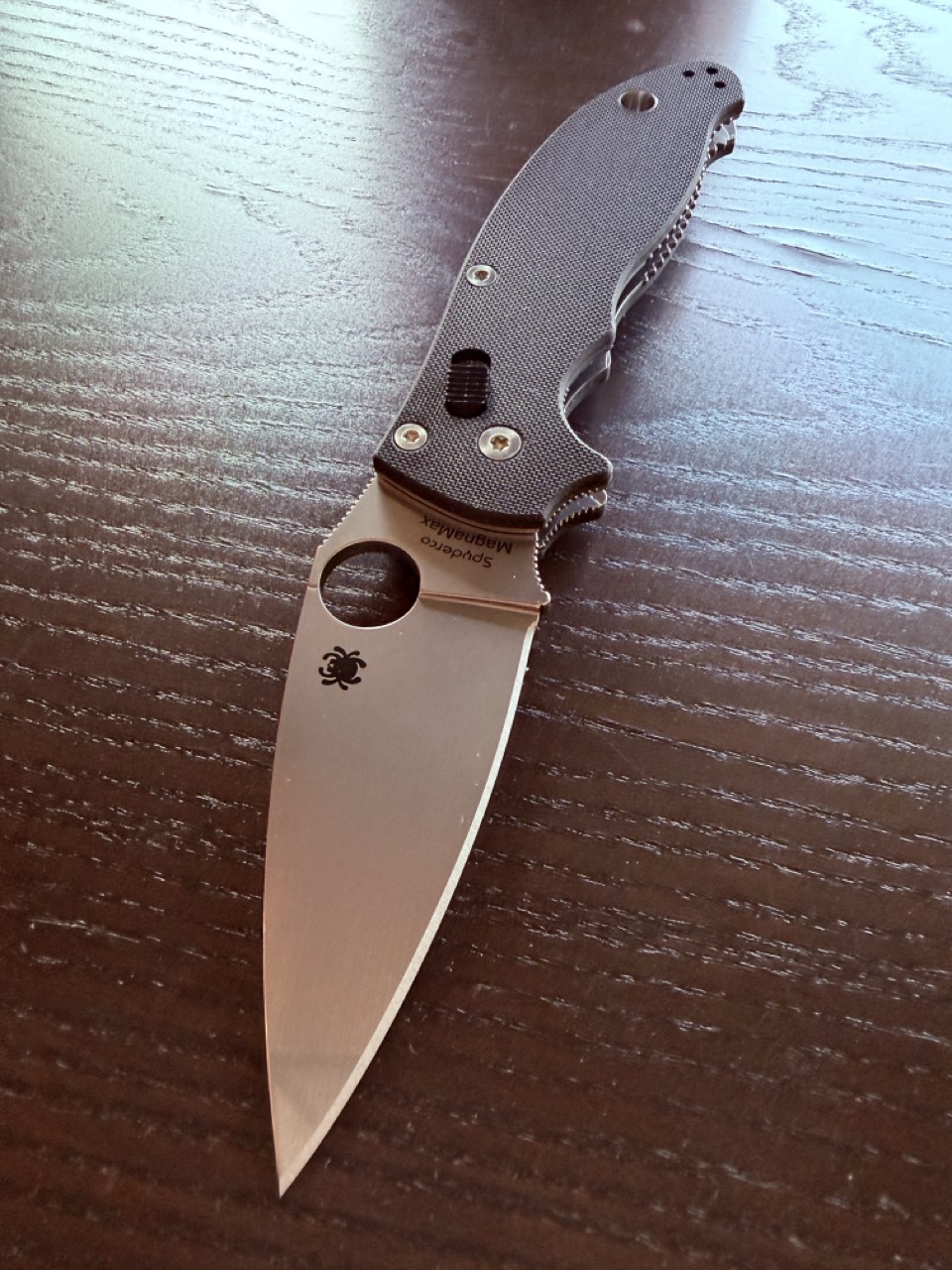
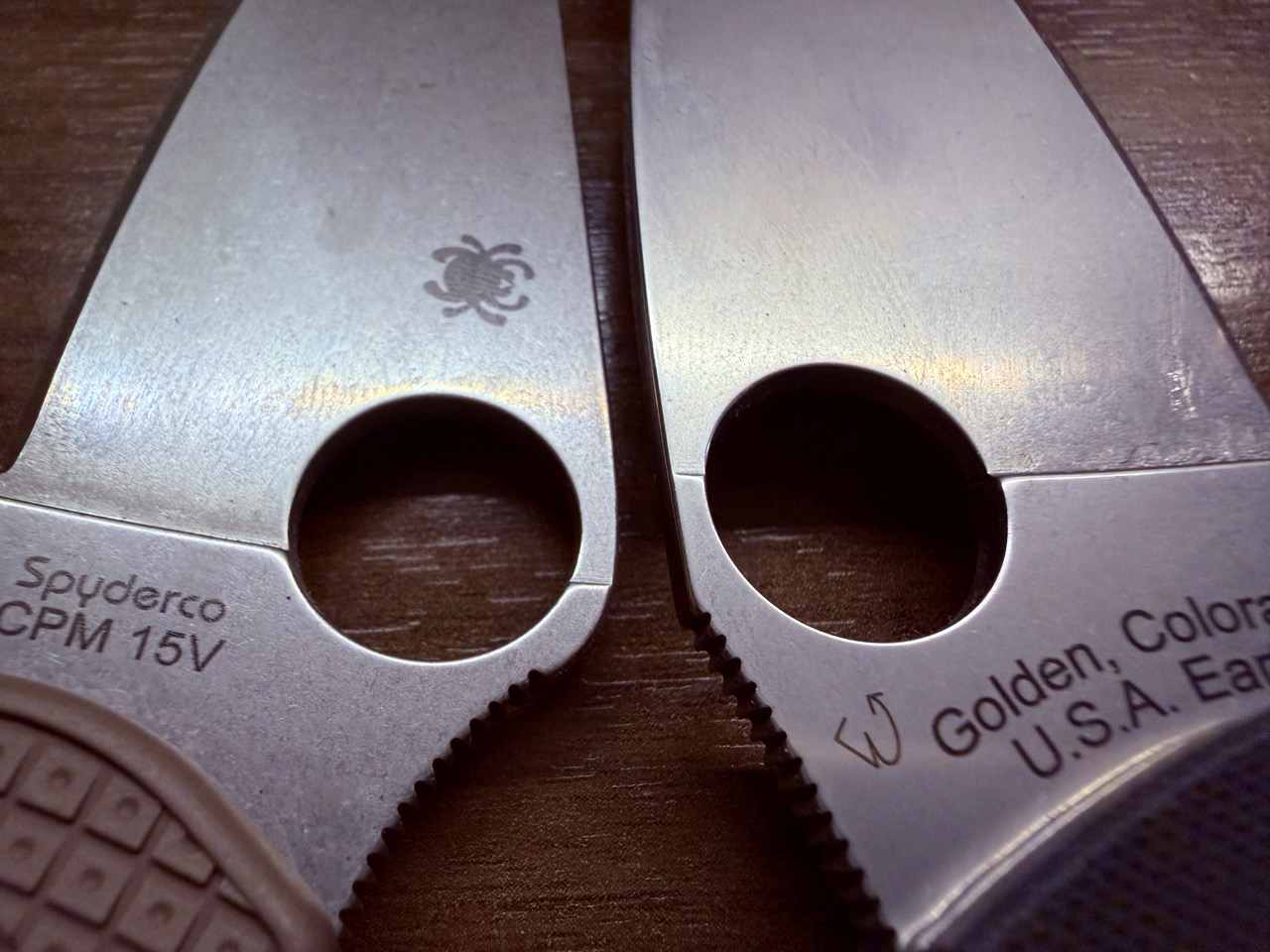
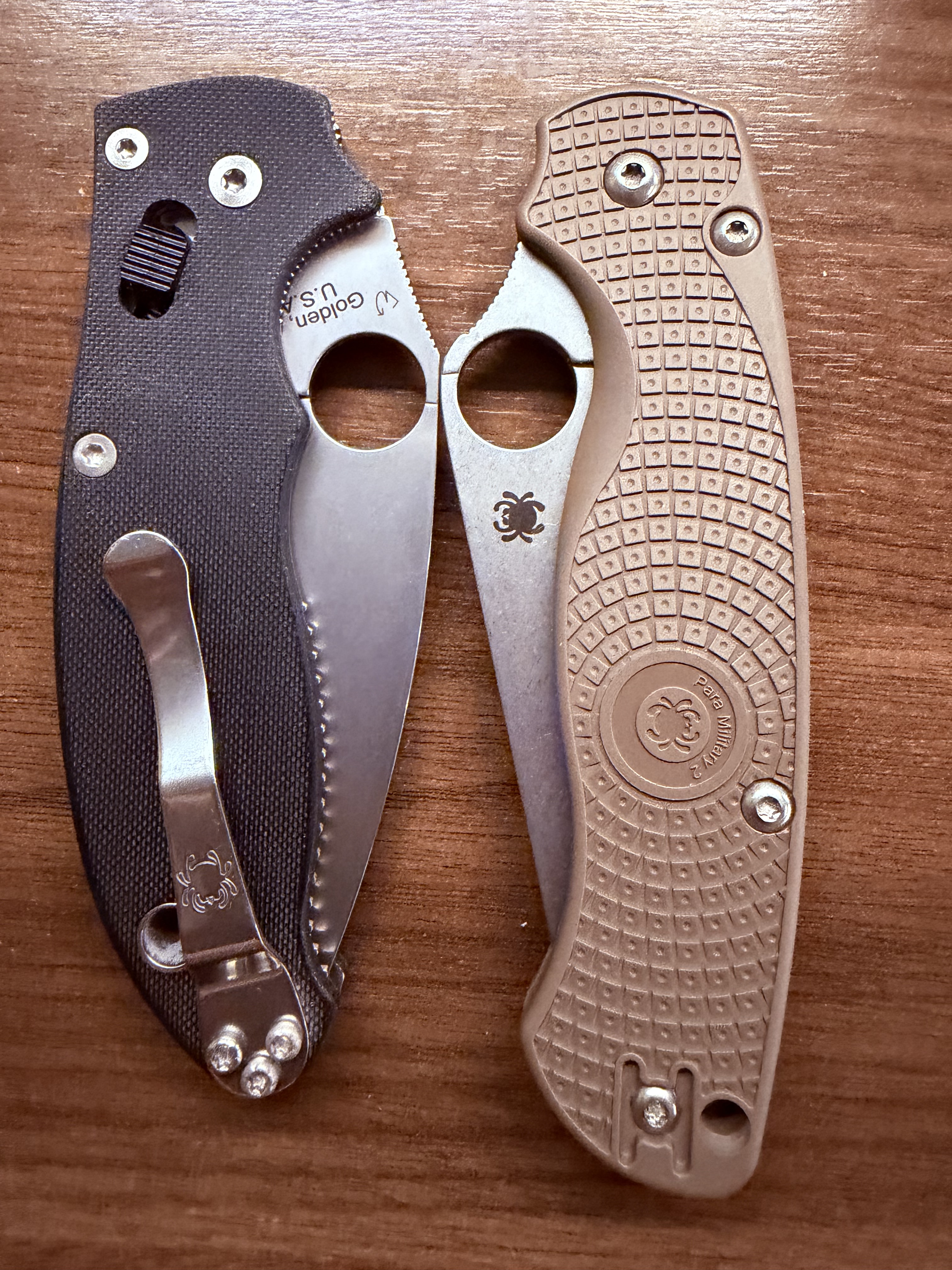
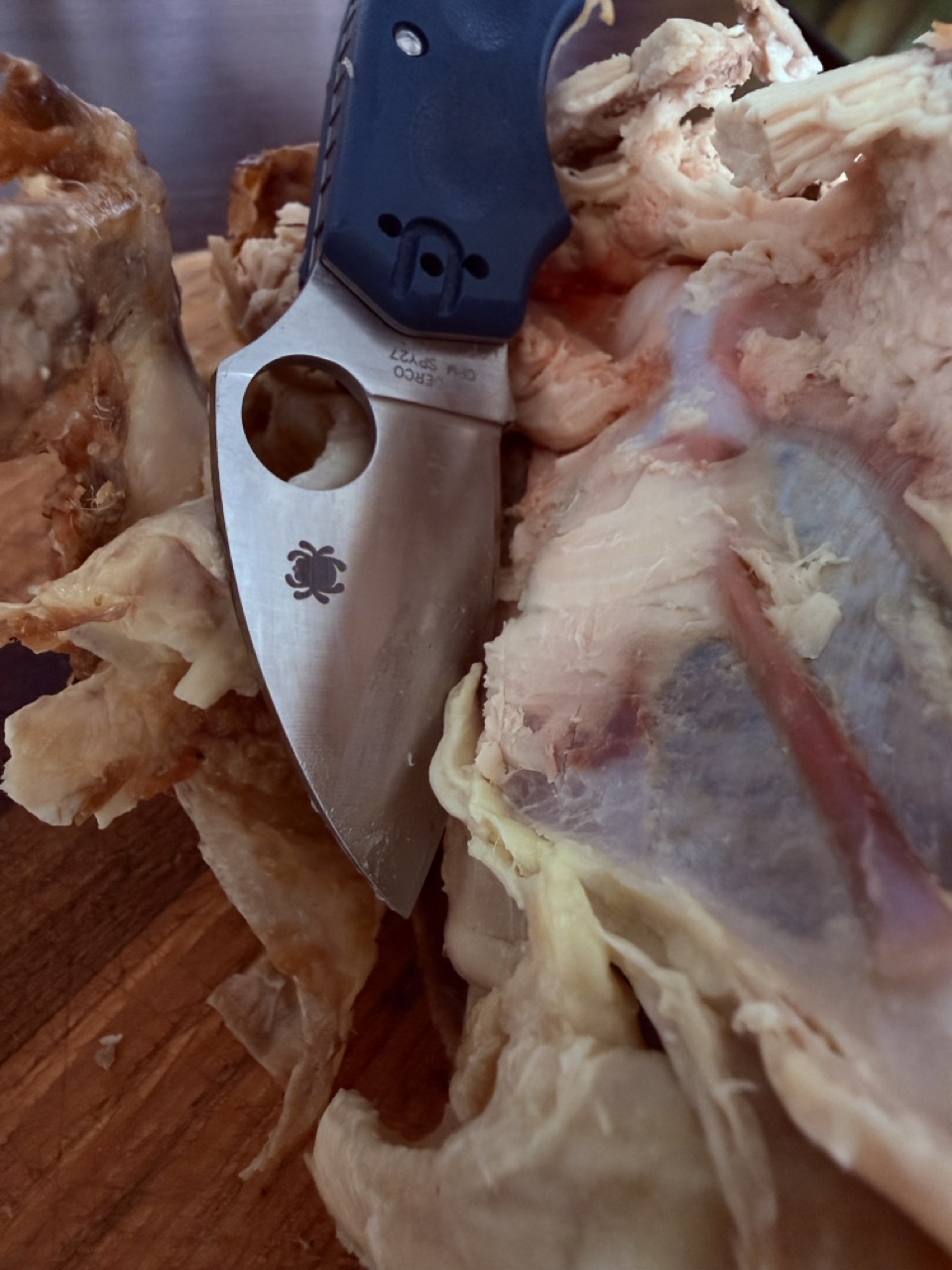
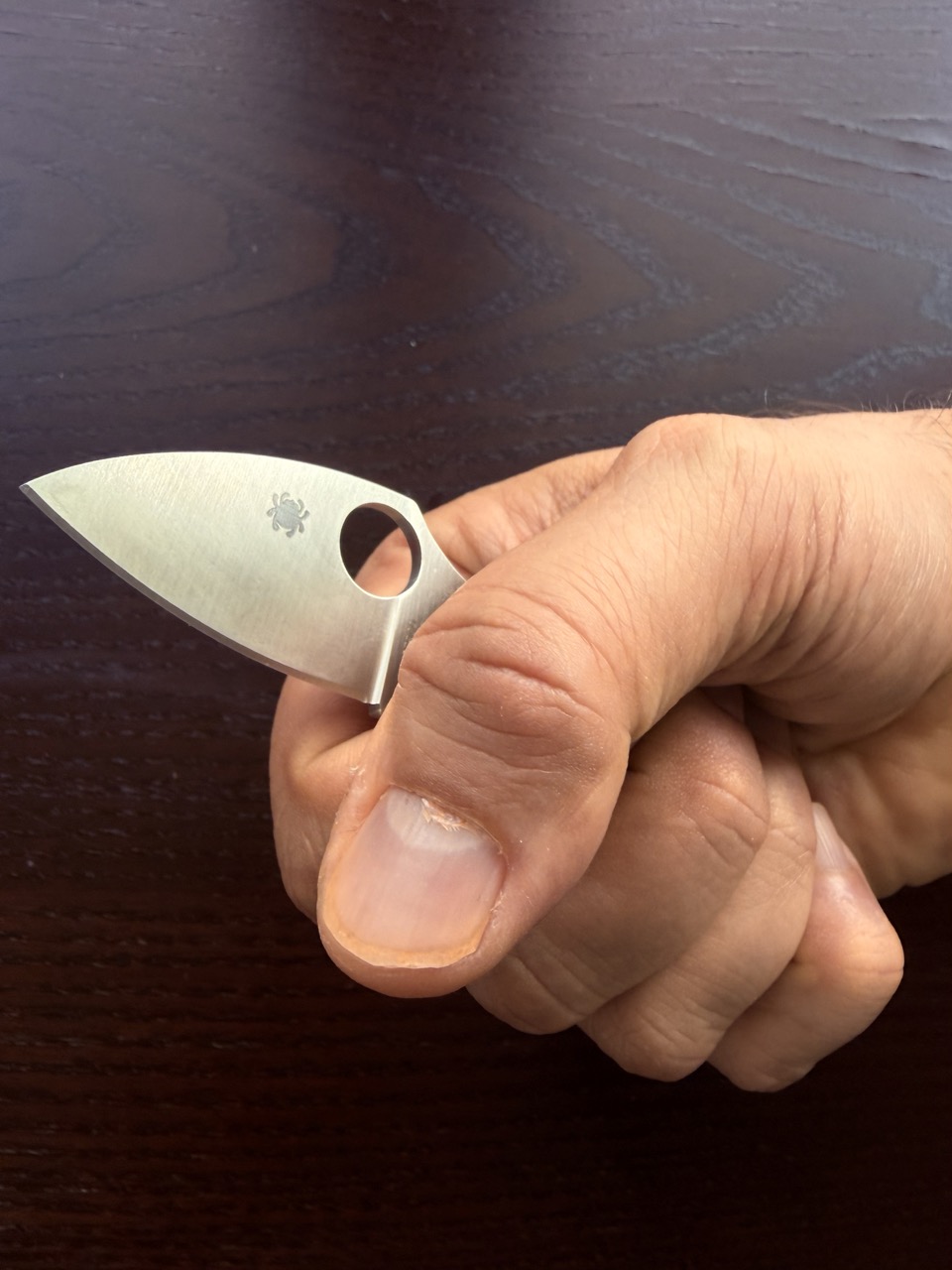
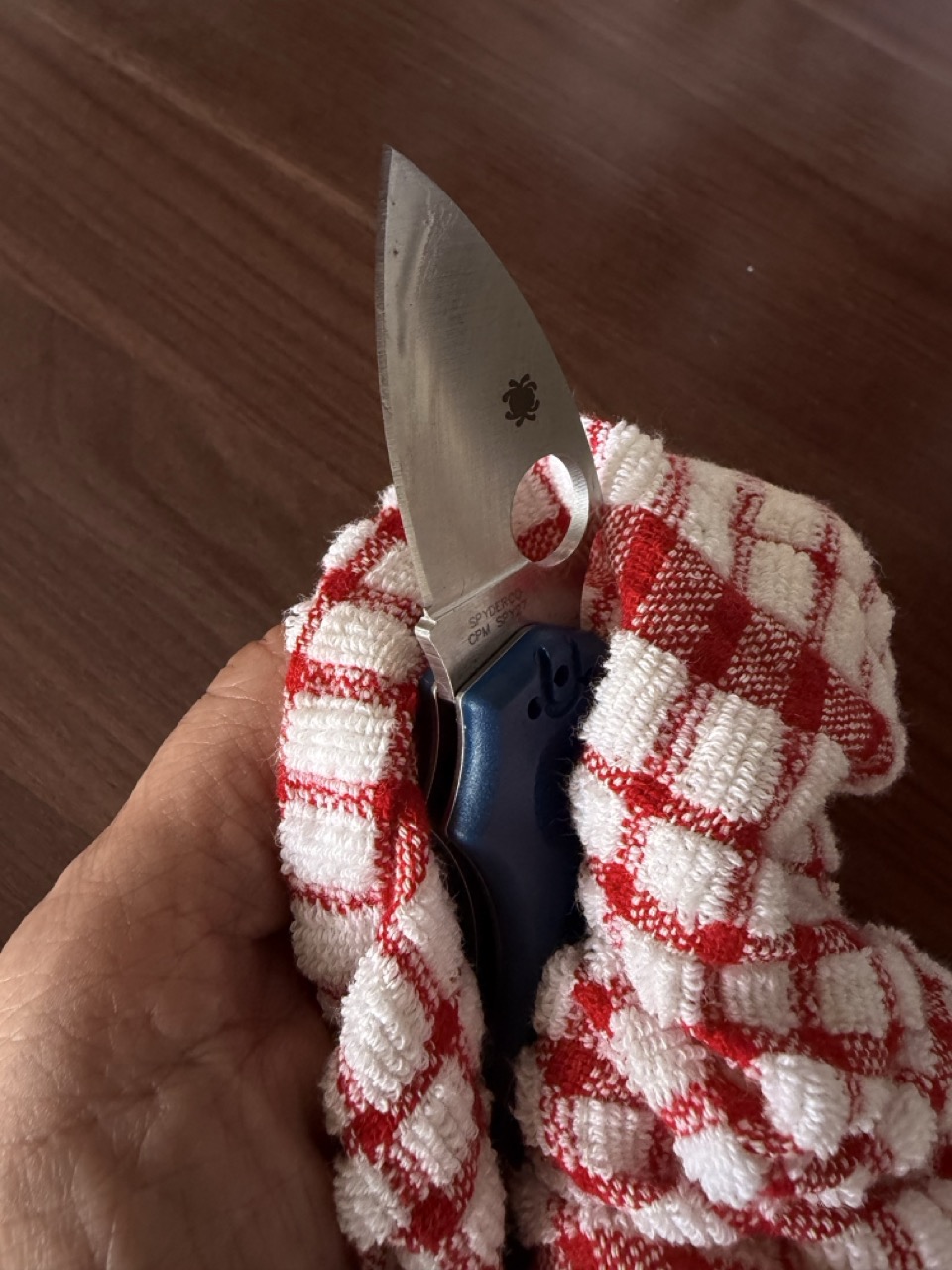
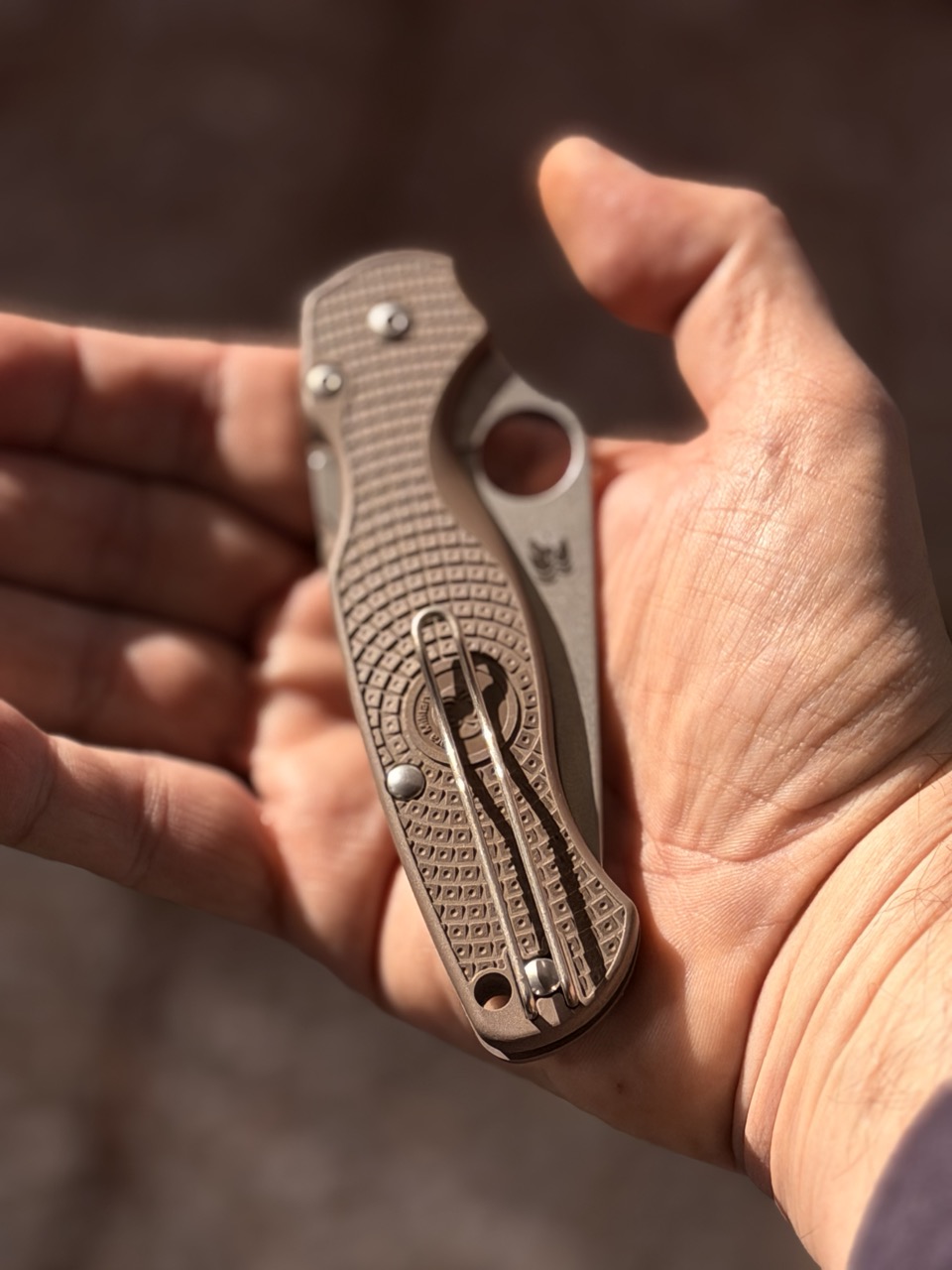
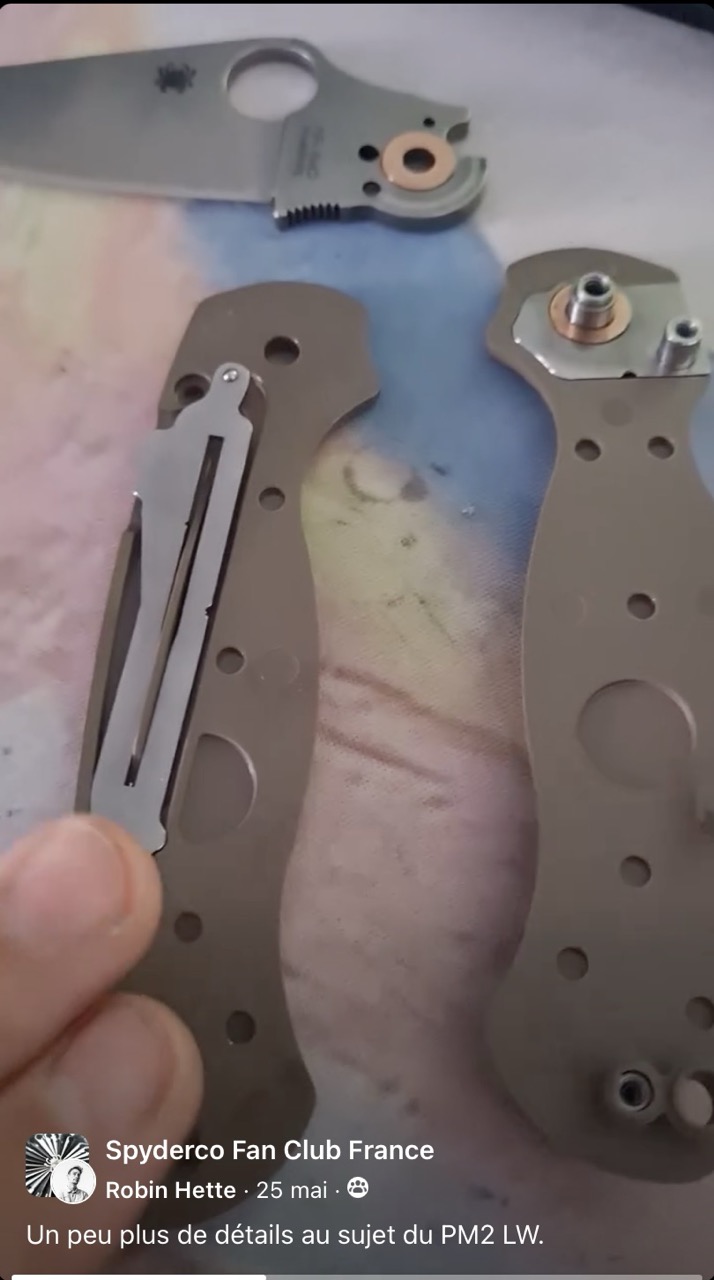
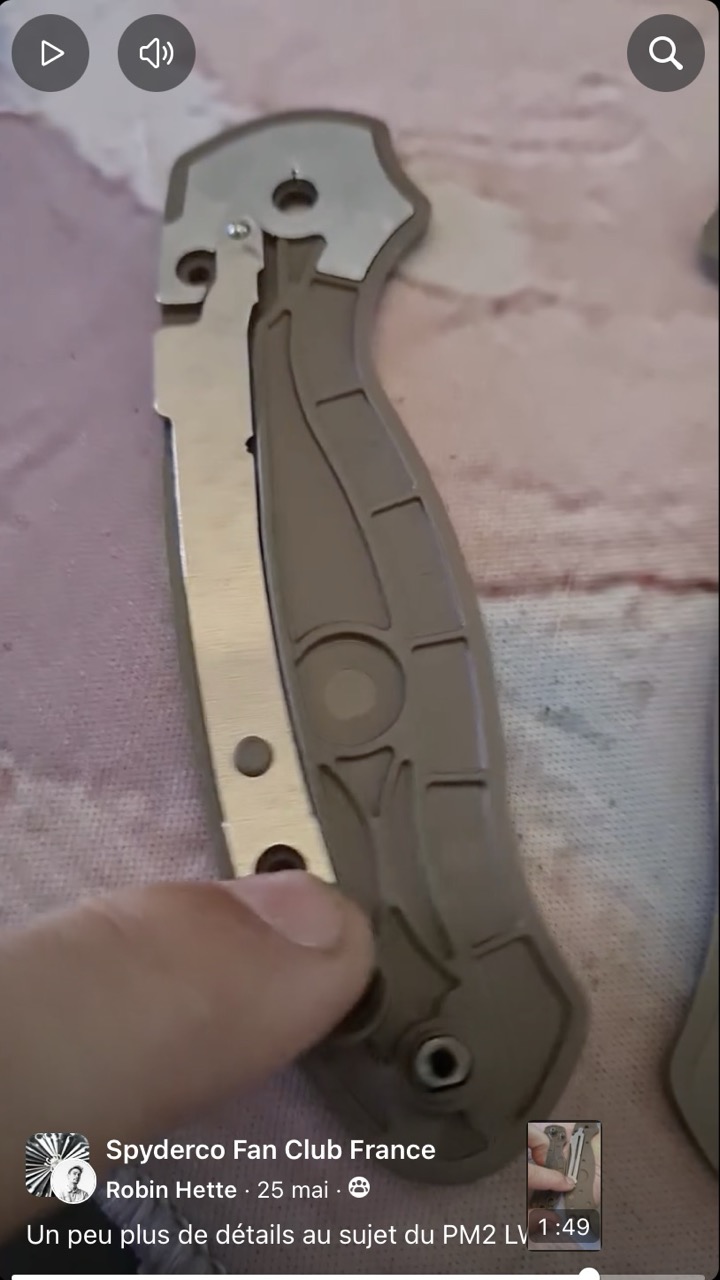
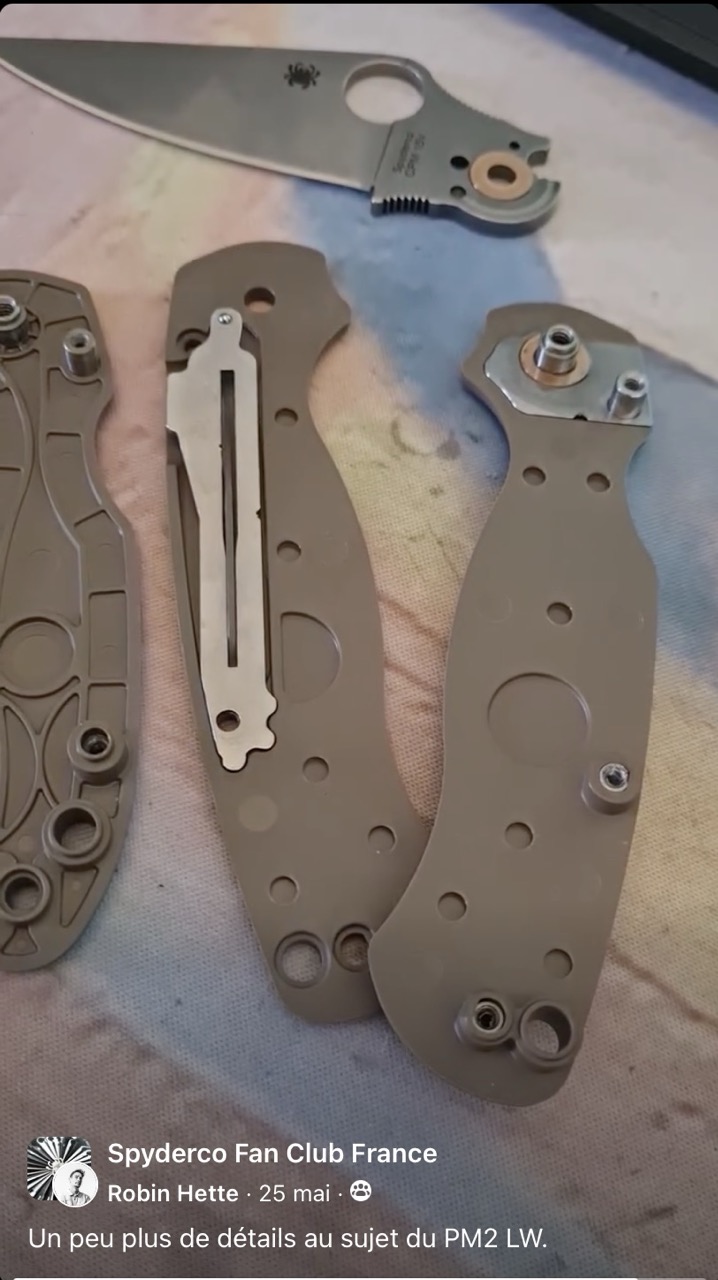
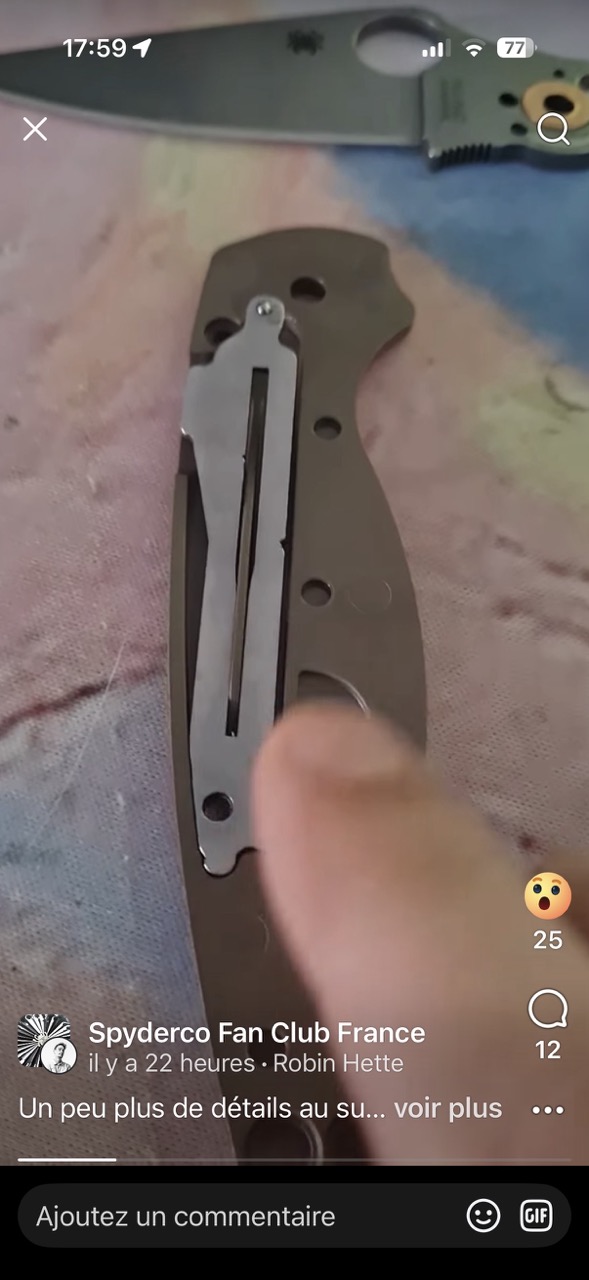
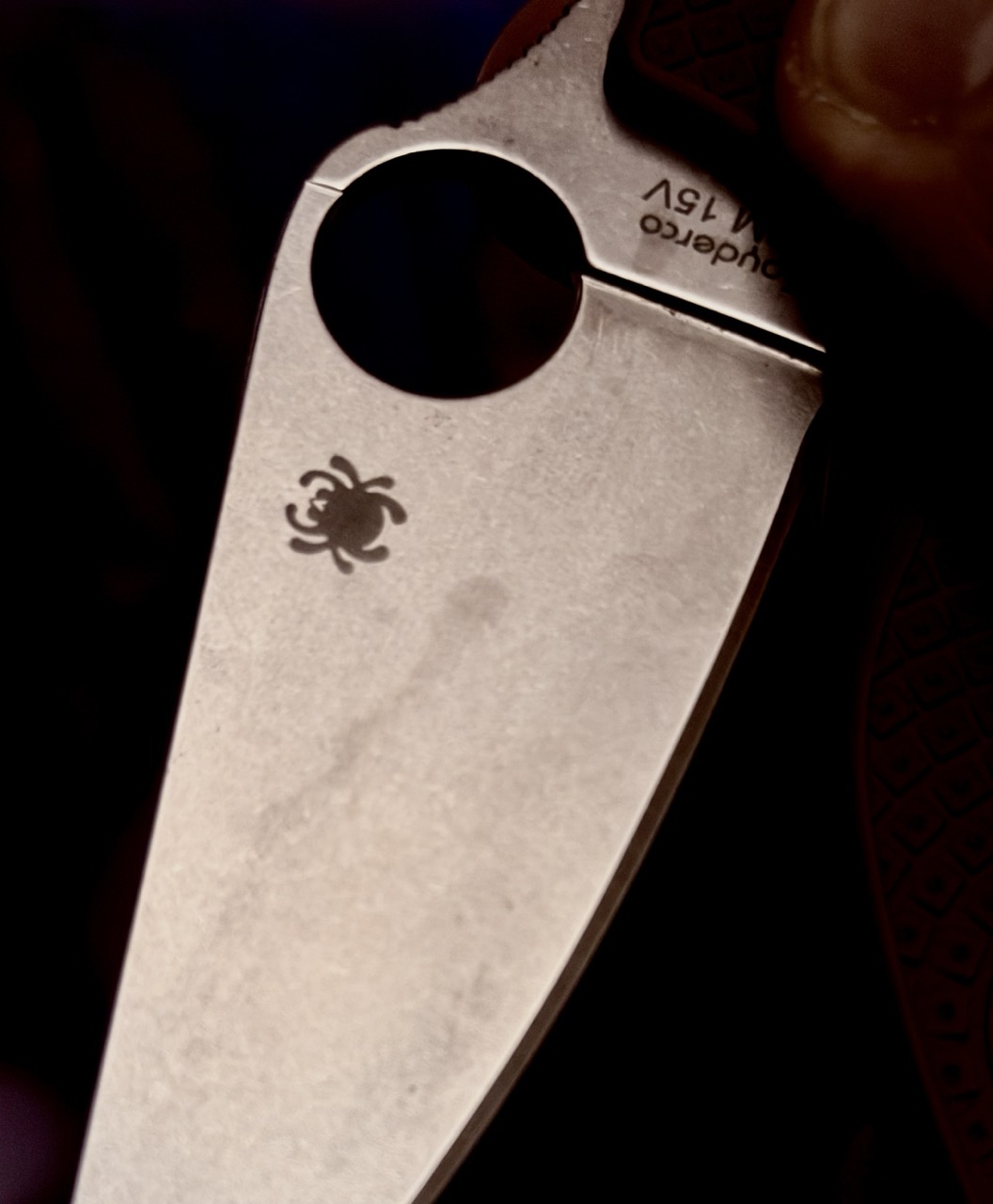
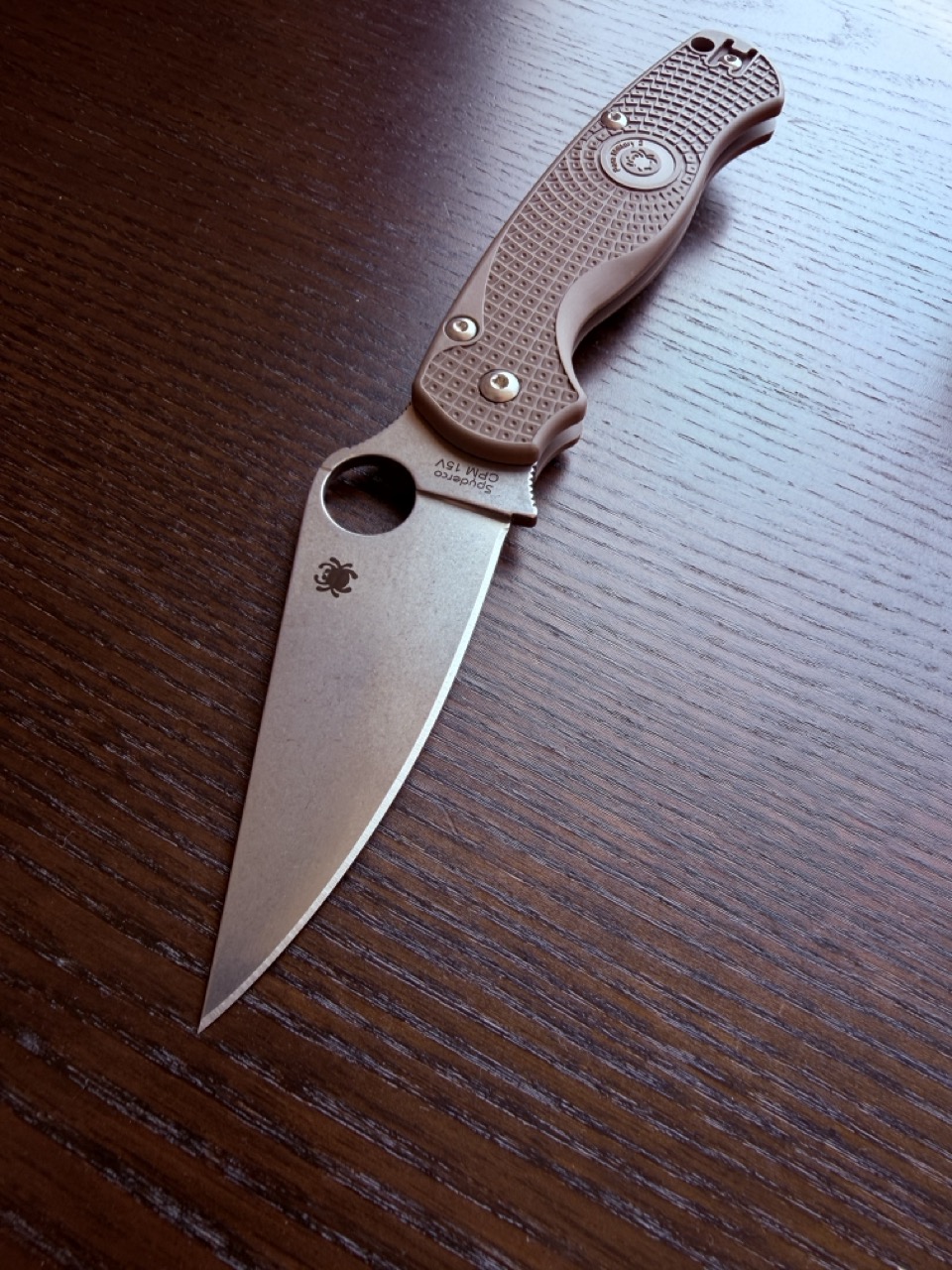
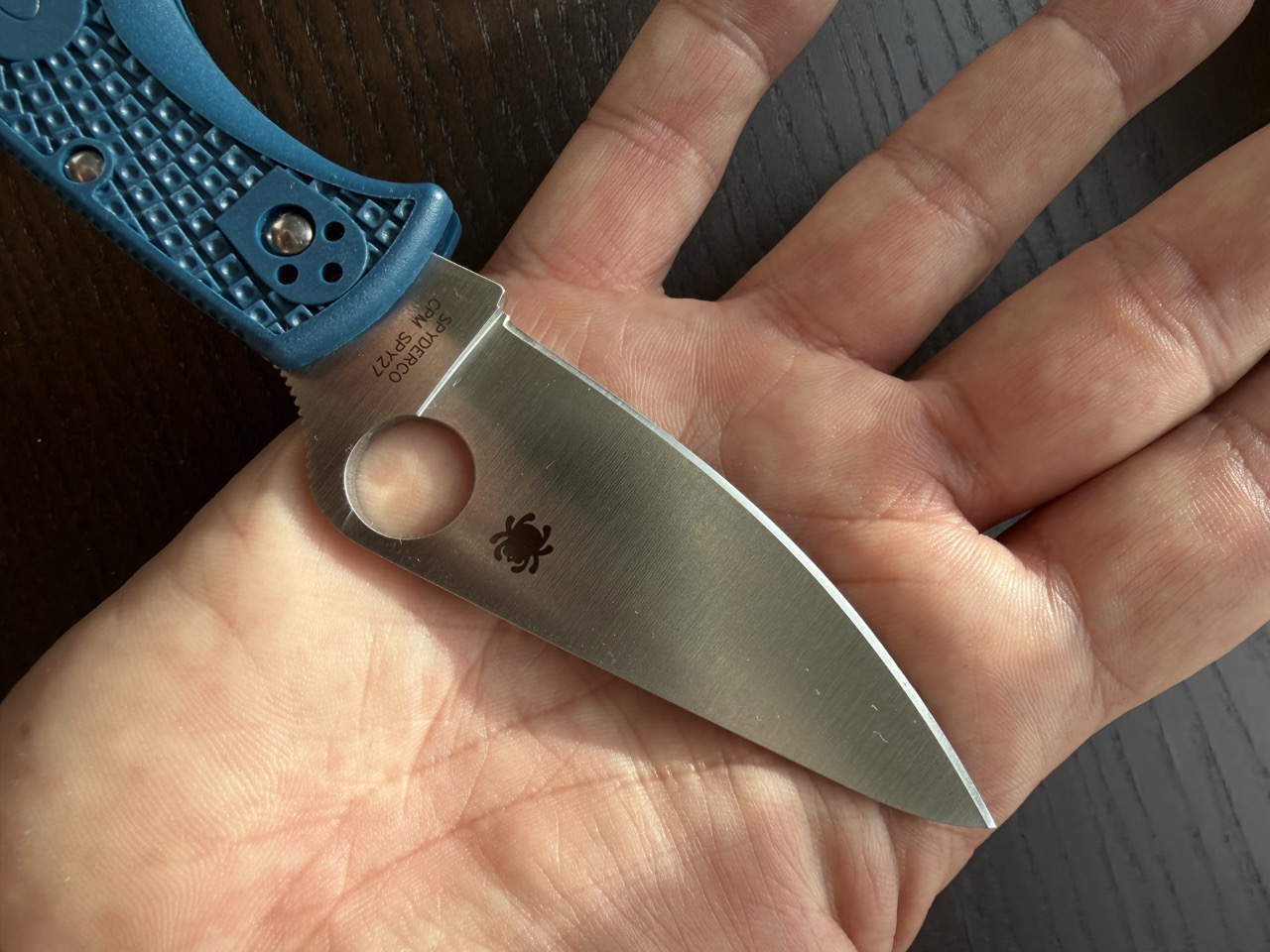
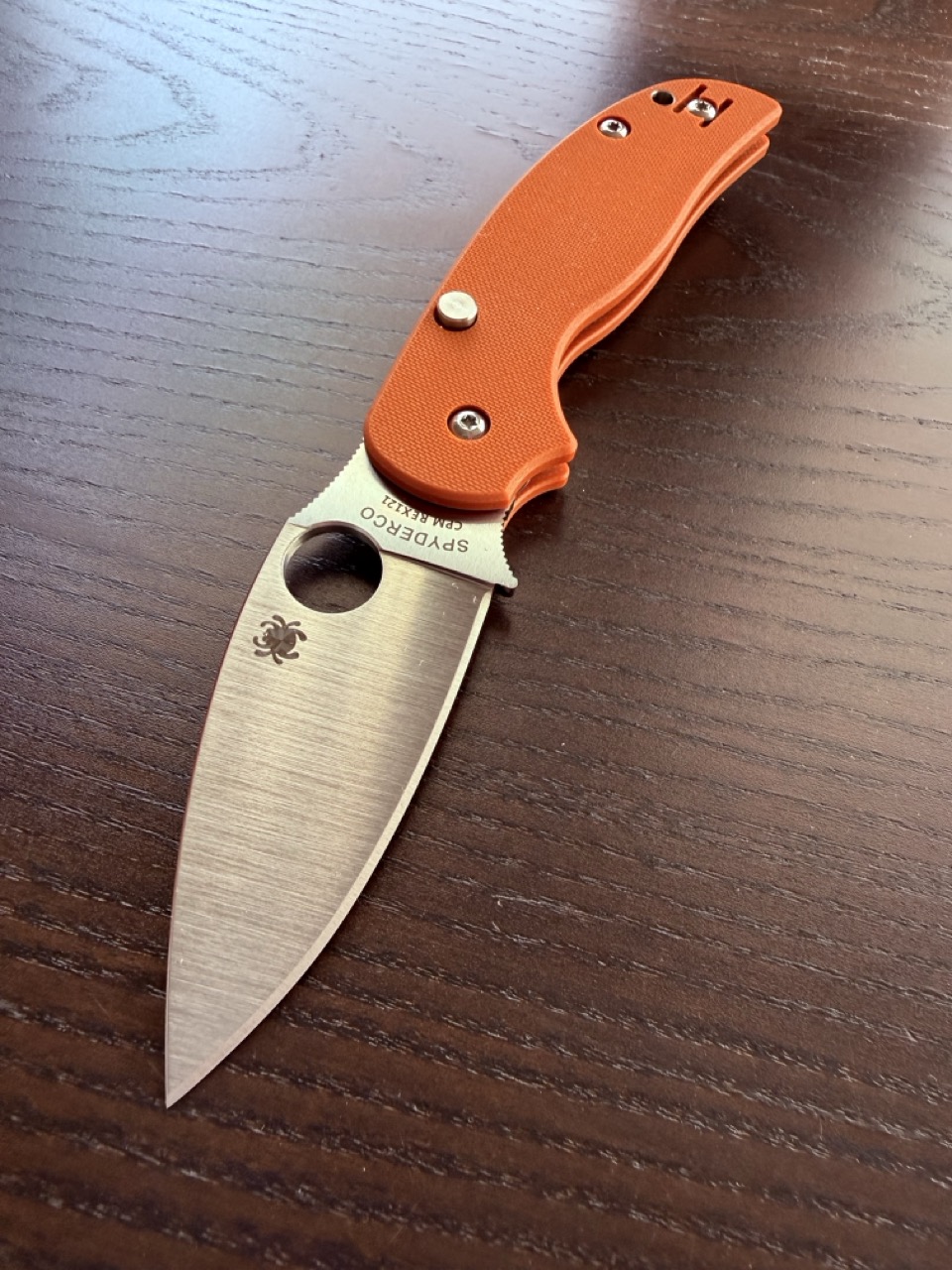
PARA MILITARY® 2 LIGHTWEIGHT BROWN CPM 15V® SPRINT RUN® — Let there be light again !

There are knives that become products, and there are knives that become dialects.
The Spyderco Para Military 2 since its inception belongs firmly to the second category.

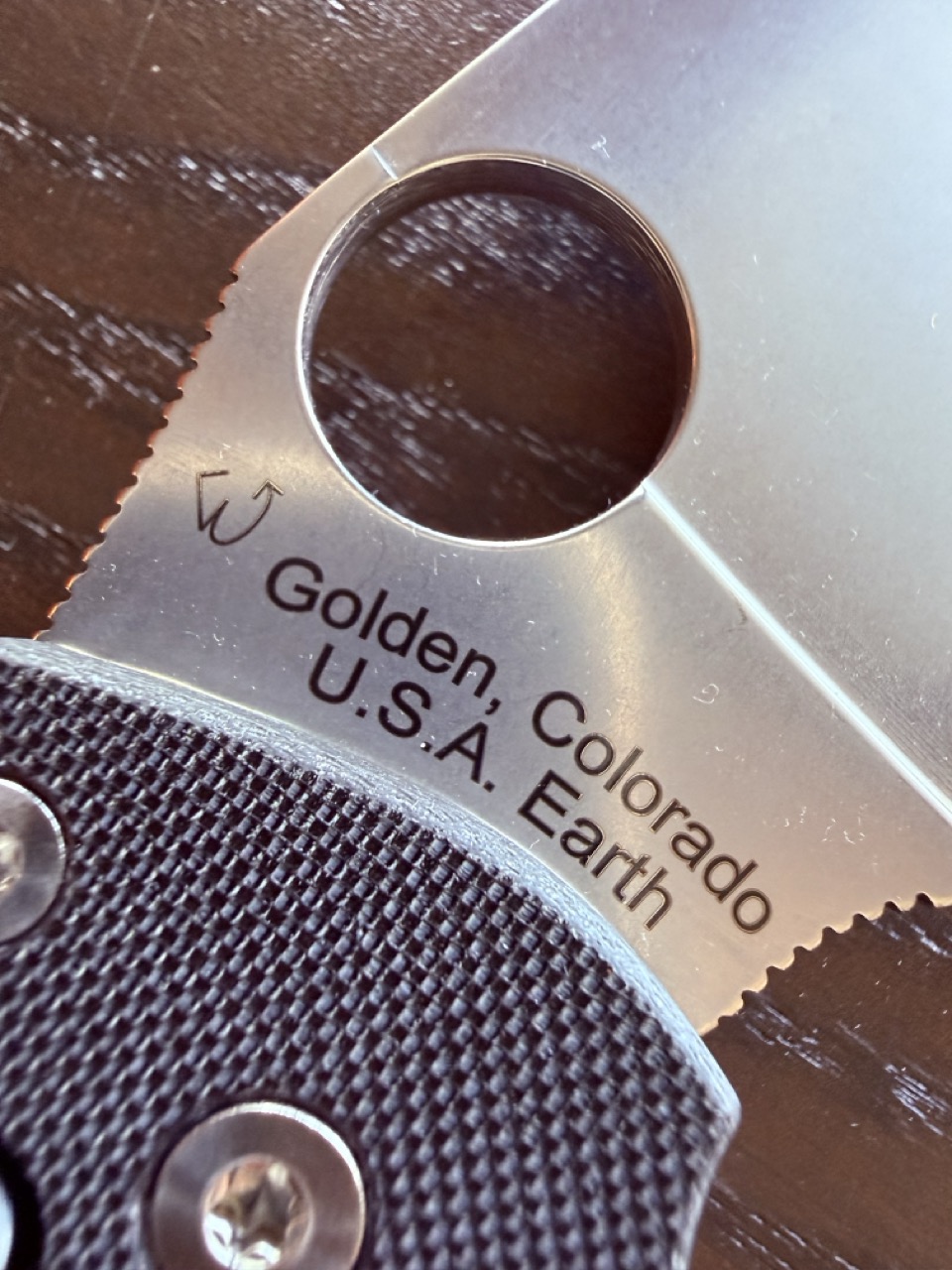
For sixteen years, the PM2 has occupied a rare position in the knife world: not merely respected, but culturally embedded. Made in Golden Colorado USA Earth, designed in the lineage of the original C36 Military model and its offspring the Paramilitary 1 from 2004, the Paramilitary 2 refined the formula into something more agile, more urban, more universally wearable.
Key improvements introduced in 2010 were:
Ergonomics: Thinner, refined G-10 handle.
Mechanism: New Bushing Pivot System for smoother action.
Clip: 4-position pocket spoon clip.
Blade: Slightly thinner blade profile with an elongated tip.
From there, the Spyderco Paramilitary 2 quickly established itself as a modern classic in the knife industry. It also became the most compelling ambassador for Spyderco’s in-house Compression Lock system, turning simple fidgeting into something unexpectedly addictive.

Its full-flat, leaf-shaped blade geometry delivers near-universal utility — a fine, precise tip paired with a confident, efficient cutting edge. In use, it feels less like compromise and more like calibration.

And then there is the ergonomics: that unmistakable Spyderco palm swell and forward choil, which transform hard tasks into something almost composed, almost effortless.

Even AI now generates imaginary PM2 variants — sometimes hilariously inaccurate ones with back locks — which says a lot about how deeply the Spyderco Paramilitary 2 has embedded itself into modern knife/EDC culture.

Because the PM2 was never just a tactical folder. It became the Porsche 911 of contemporary EDC: instantly recognizable across a room, endlessly reinterpreted, yet impossible to mistake for anything else but one of the Spyderco Millie family.

And yet, for all its success, the classic PM2 always carried a subtle contradiction.
It was a knife celebrated for everyday carry that still weighed like a “serious” tool. A tool which floats like a butterfly but sting like a bee.
So, the same process which turned its little brother Para3 G10 into Para3 Lightweight has been applied: get rid of G10 scales and bring the Fiber Renforced Resin / FRN !


The new Spyderco Paramilitary 2 Lightweight changes that entirely.

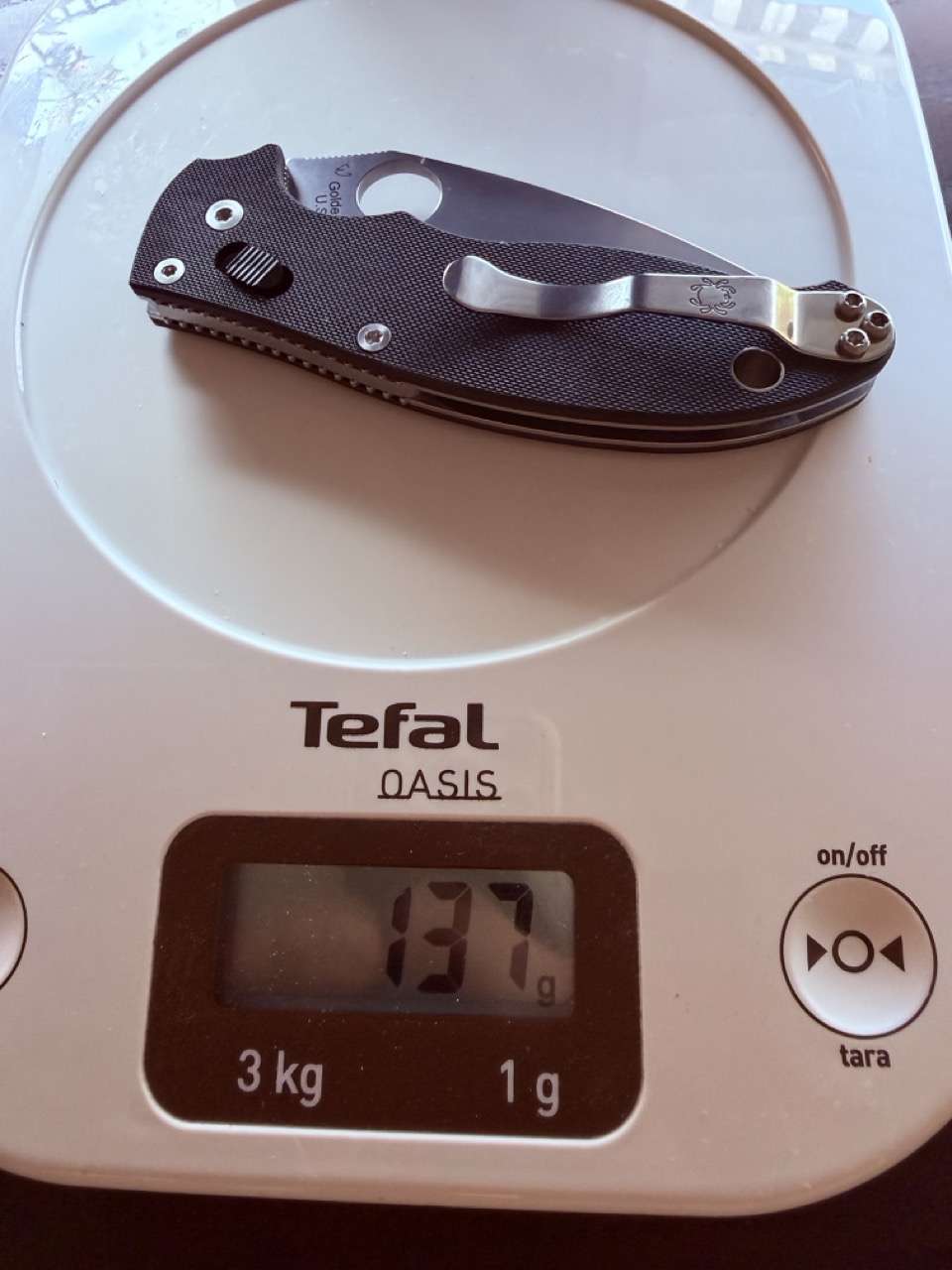
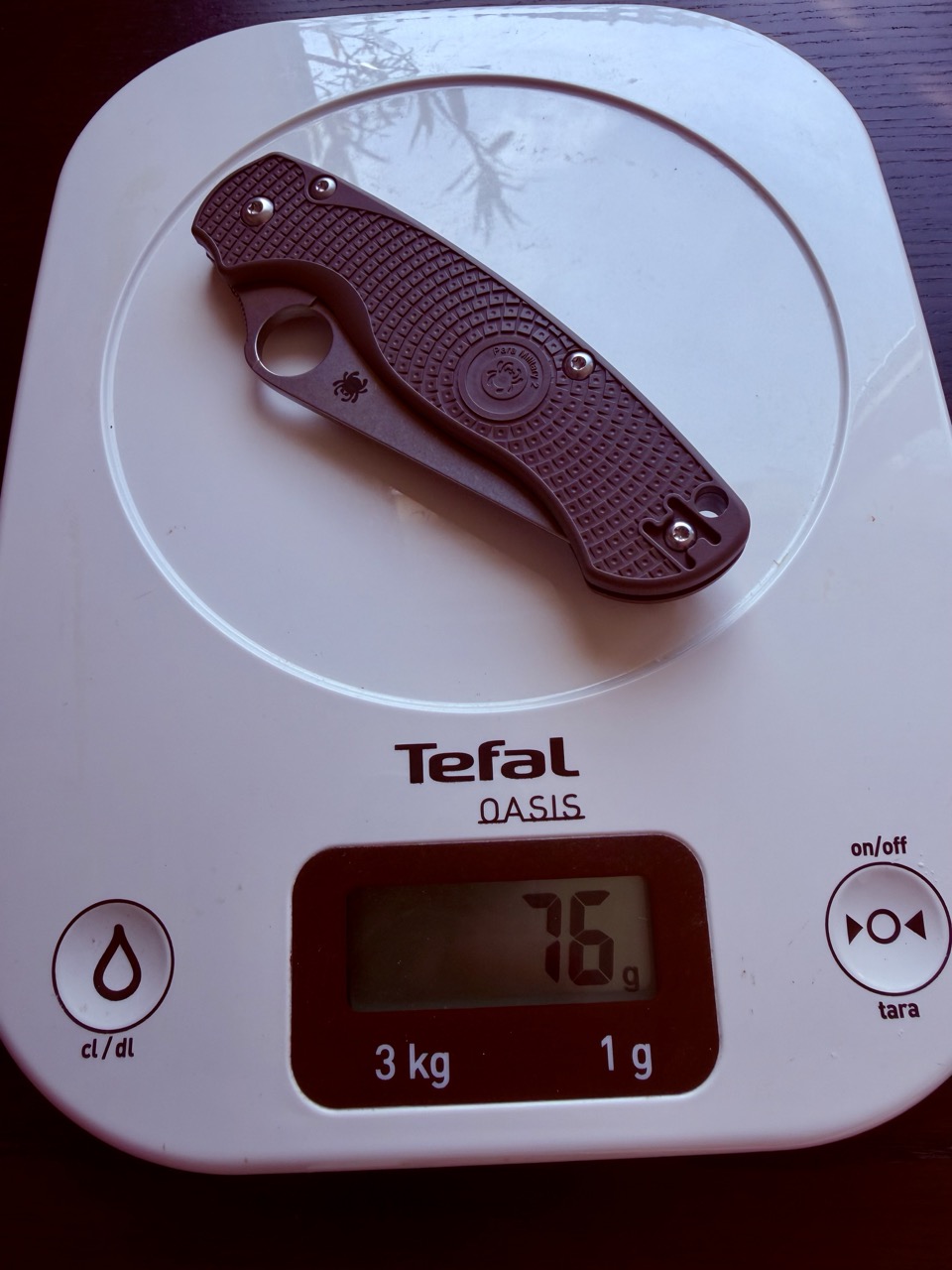
At roughly 76 grams, the PM2 LW does not feel like a trimmed-down PM2.
It feels like an entirely different interpretation of the design.
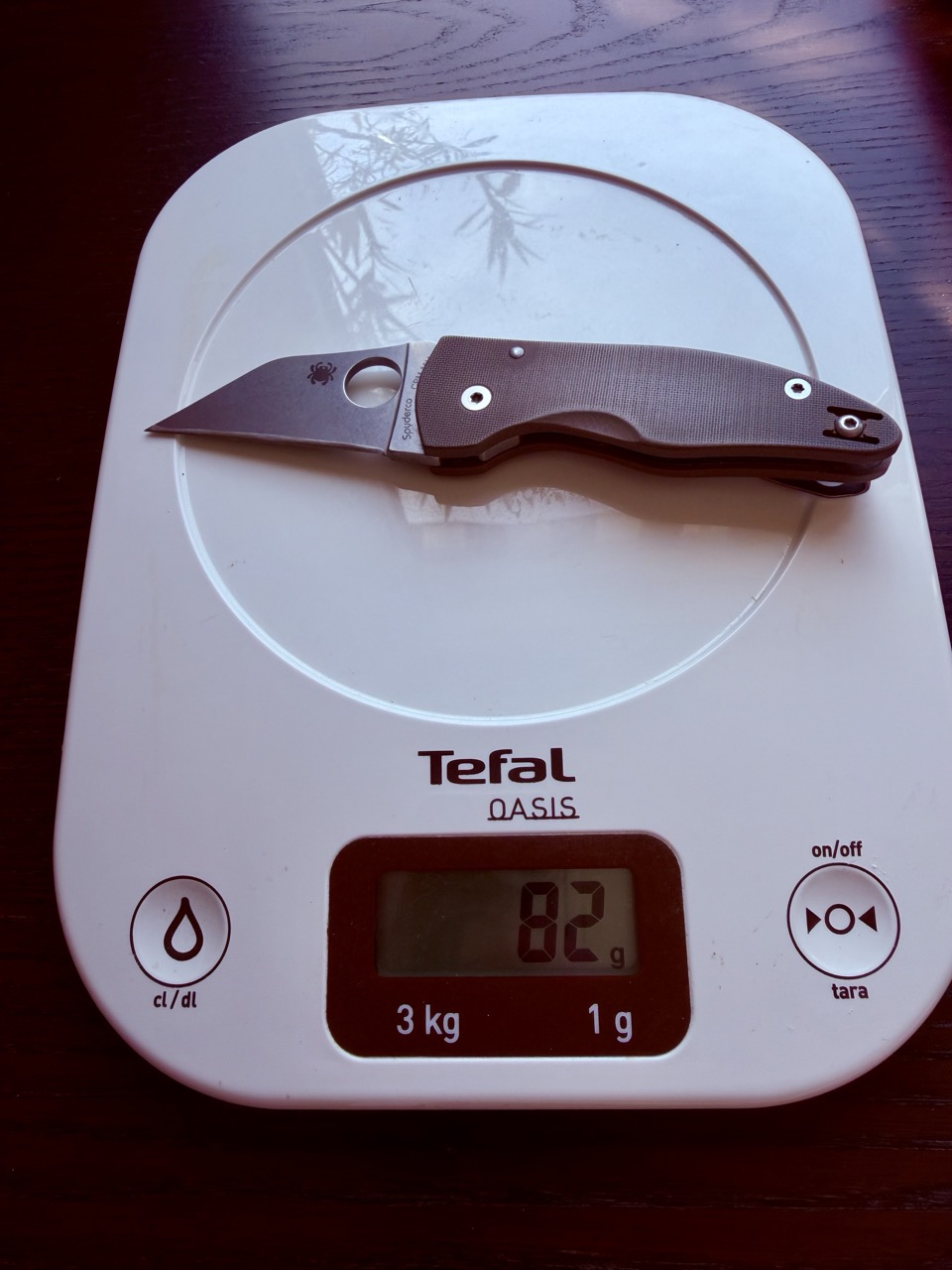
To put that into perspective, it is even 16 grams lighter than the Spyderco MicroJimbo — a knife already considered compact and featherweight by EDC standards.

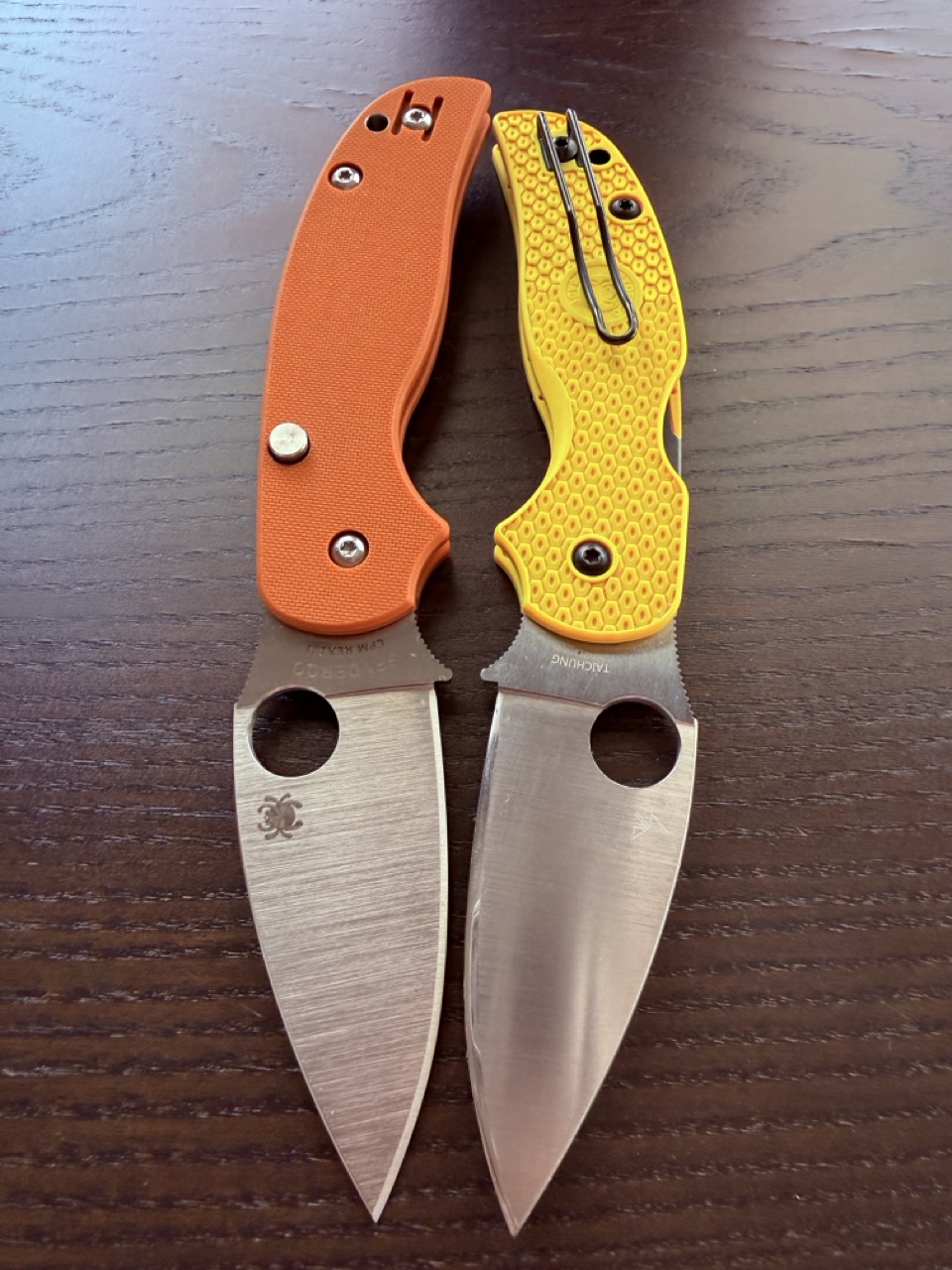
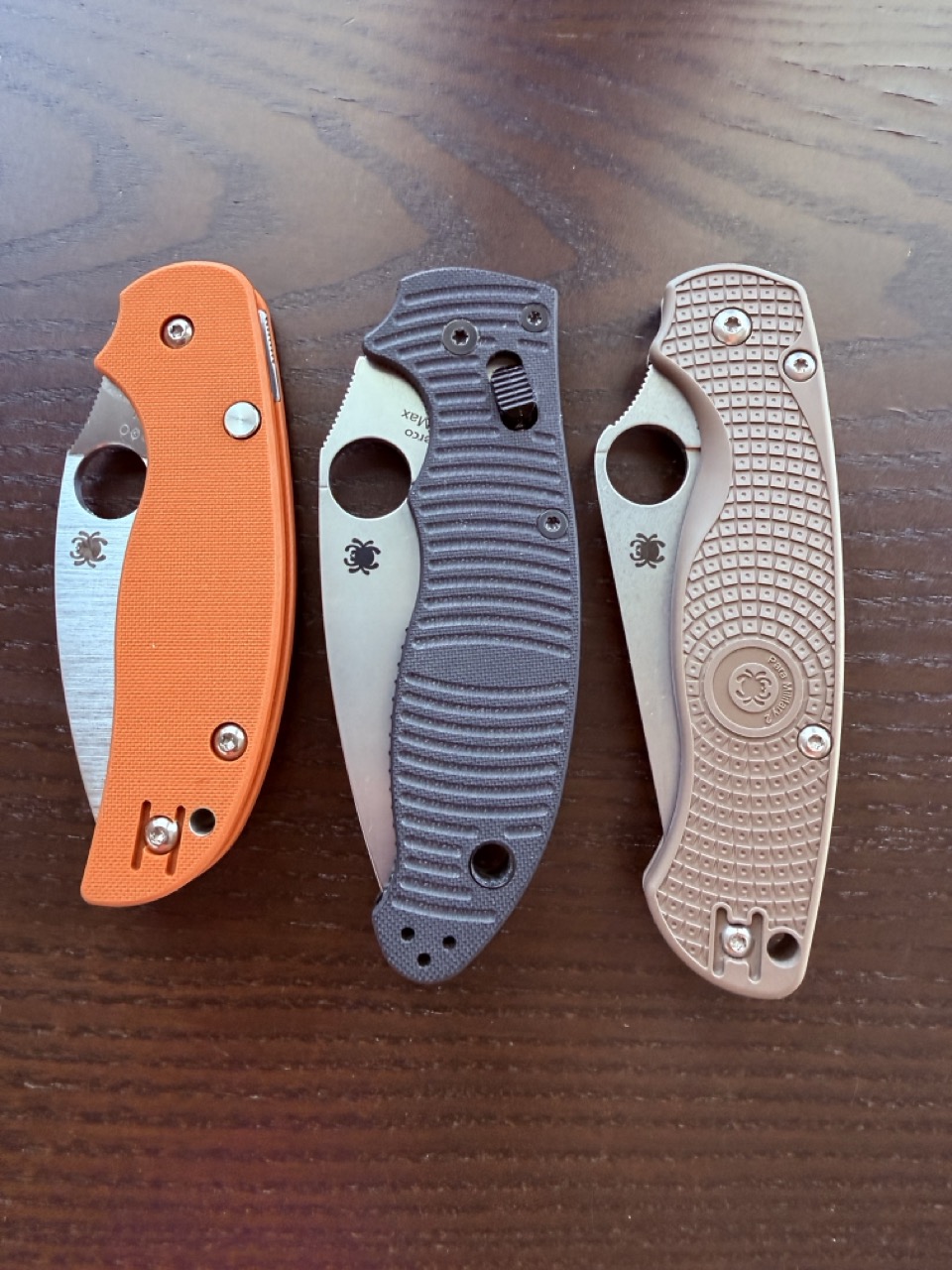
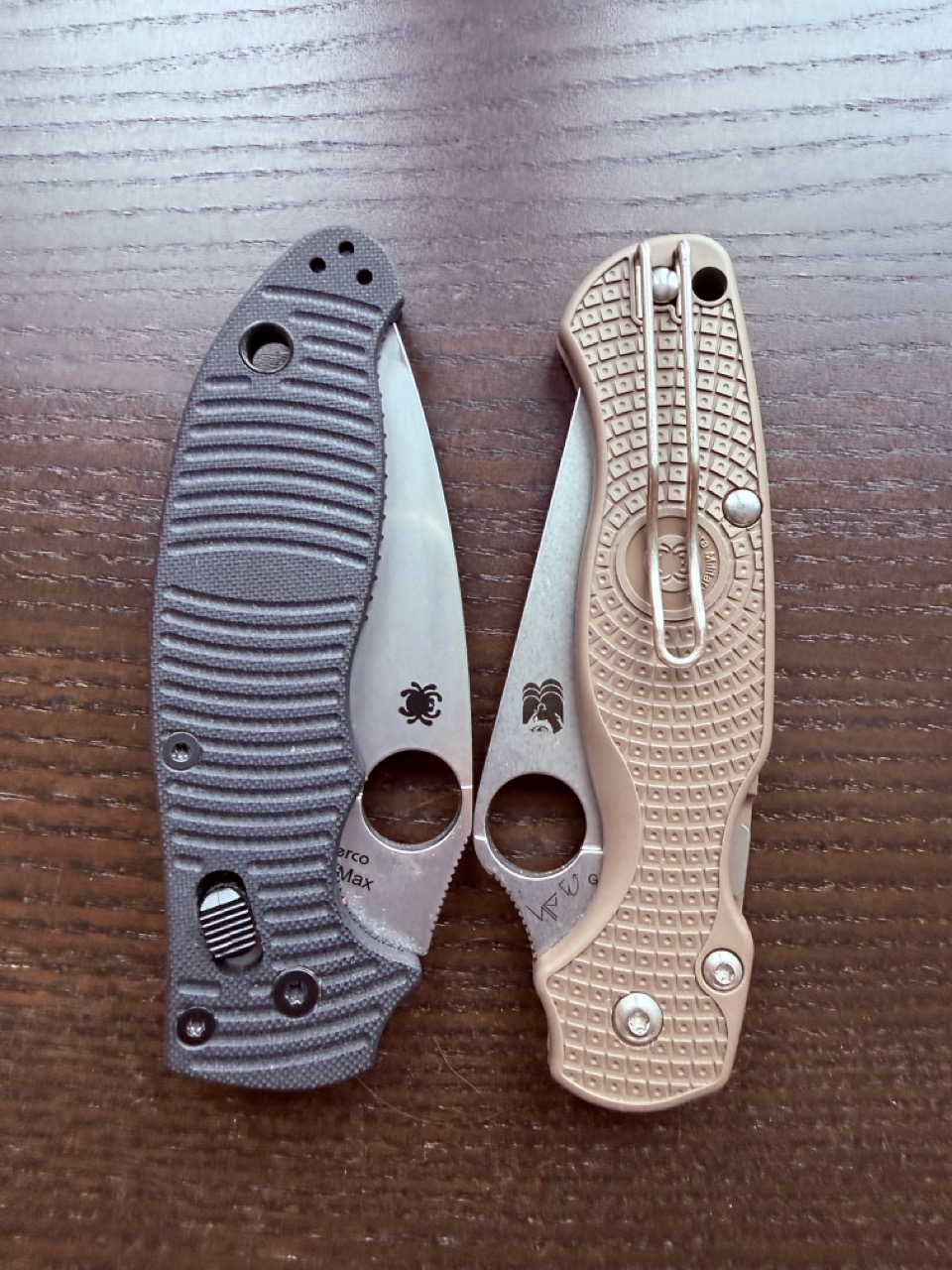
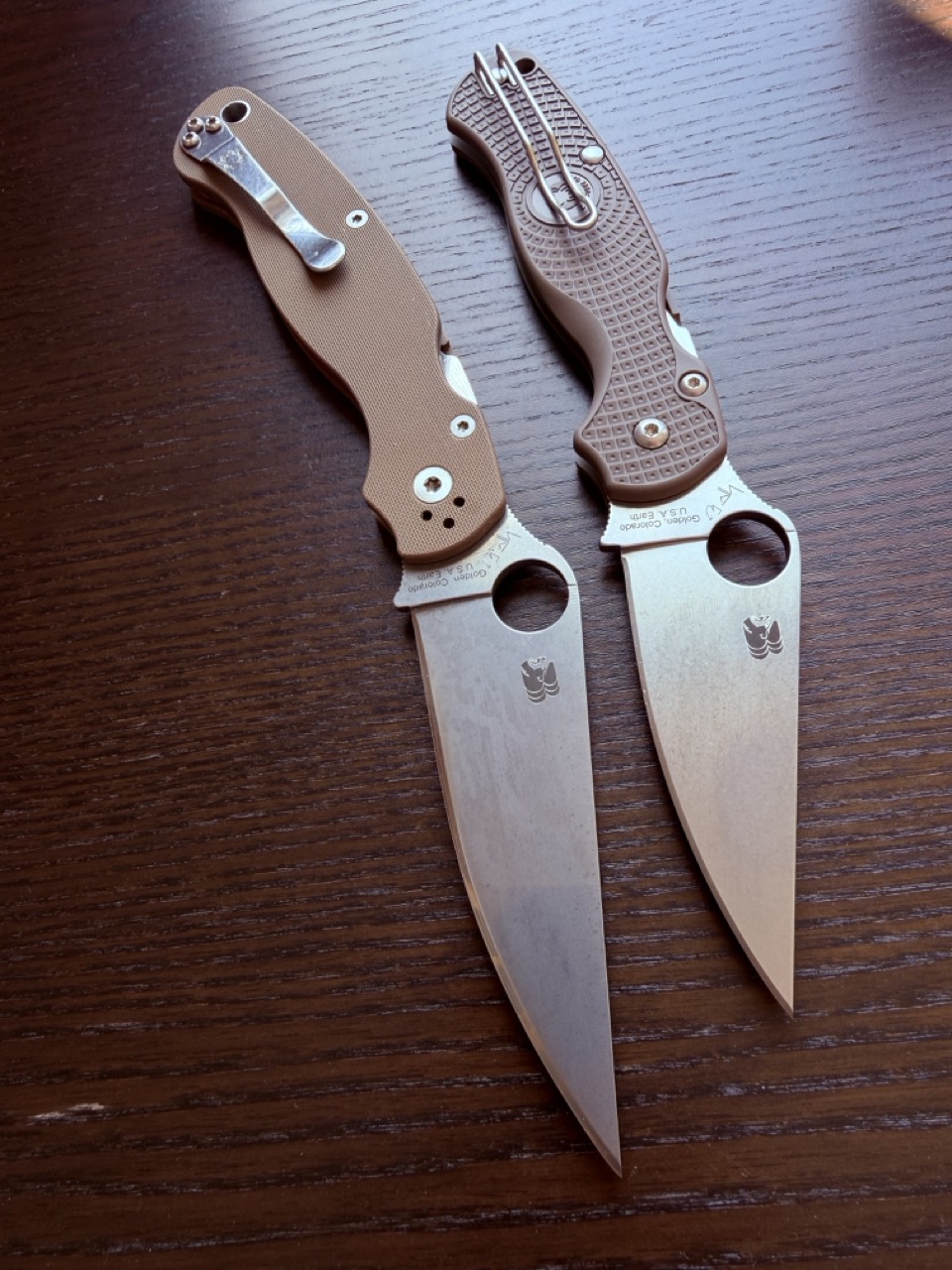
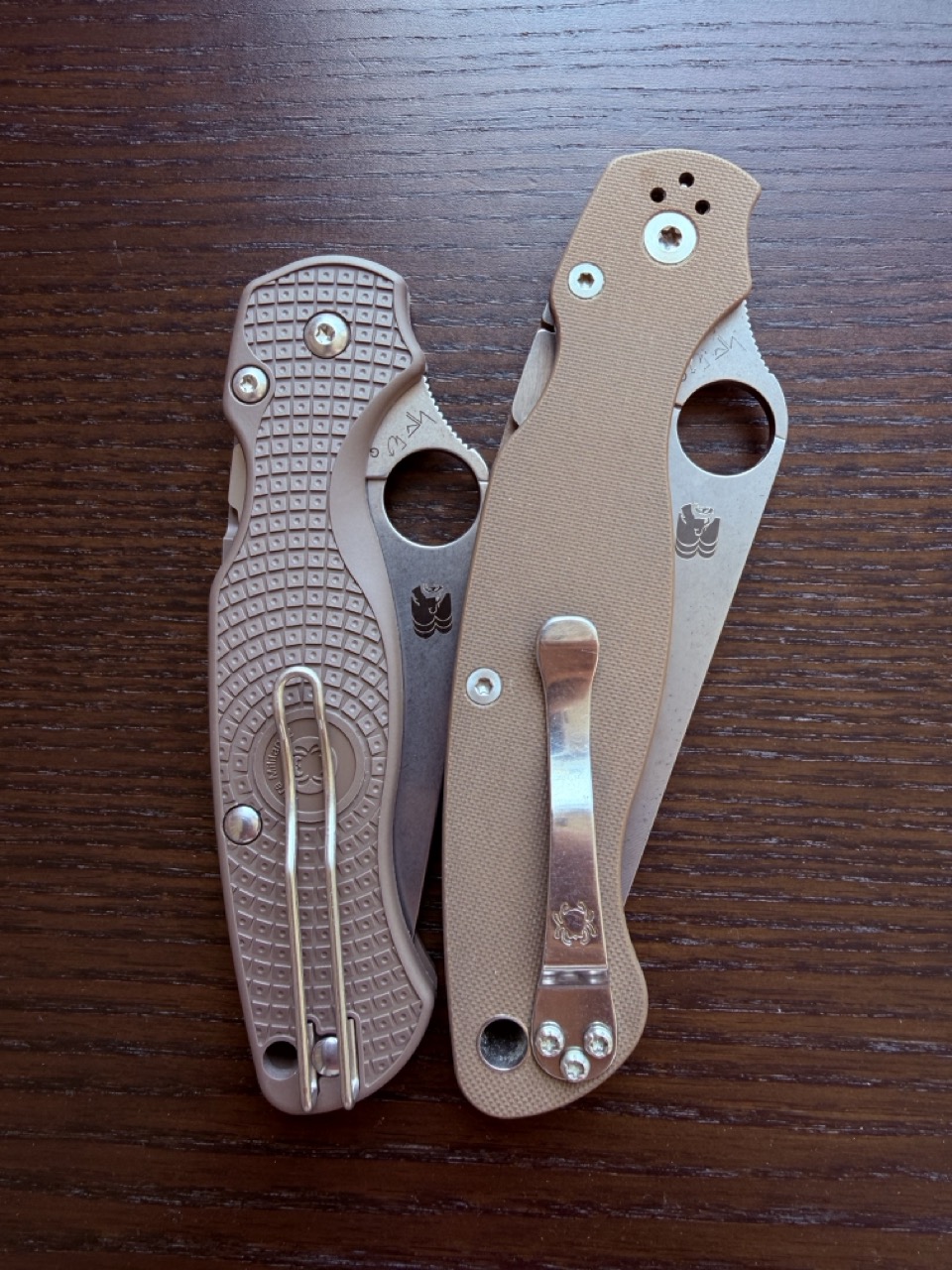
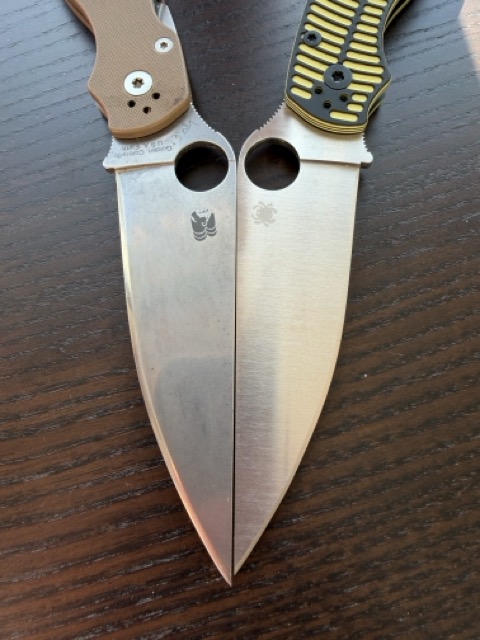
Compared to the classic G-10 PM2, the difference becomes almost startling: 32 grams gone, dropping from 108 grams to just 76.
That is nearly a 30% reduction in weight.

Edge-wise, the blade-to-weight ratio is remarkable — and decisively in favour of the Spyderco Paramilitary 2. 😉
Oh well, I’m joking — these two knives were never meant to compete.
They simply occupy different territories of utility, and both earn their place in my pocket for different reasons.
Still, this new Lightweight feels like the moment Spyderco finally allowed the PM2 to become what it was always destined to be: not merely lighter, but almost spectral. The Para3 LW vibes haves been compared to the Delica. The PM2 got the Endura’s: a ghost of a knife you completely forget is clipped to your pocket… until the exact second you need it.
Another clue?
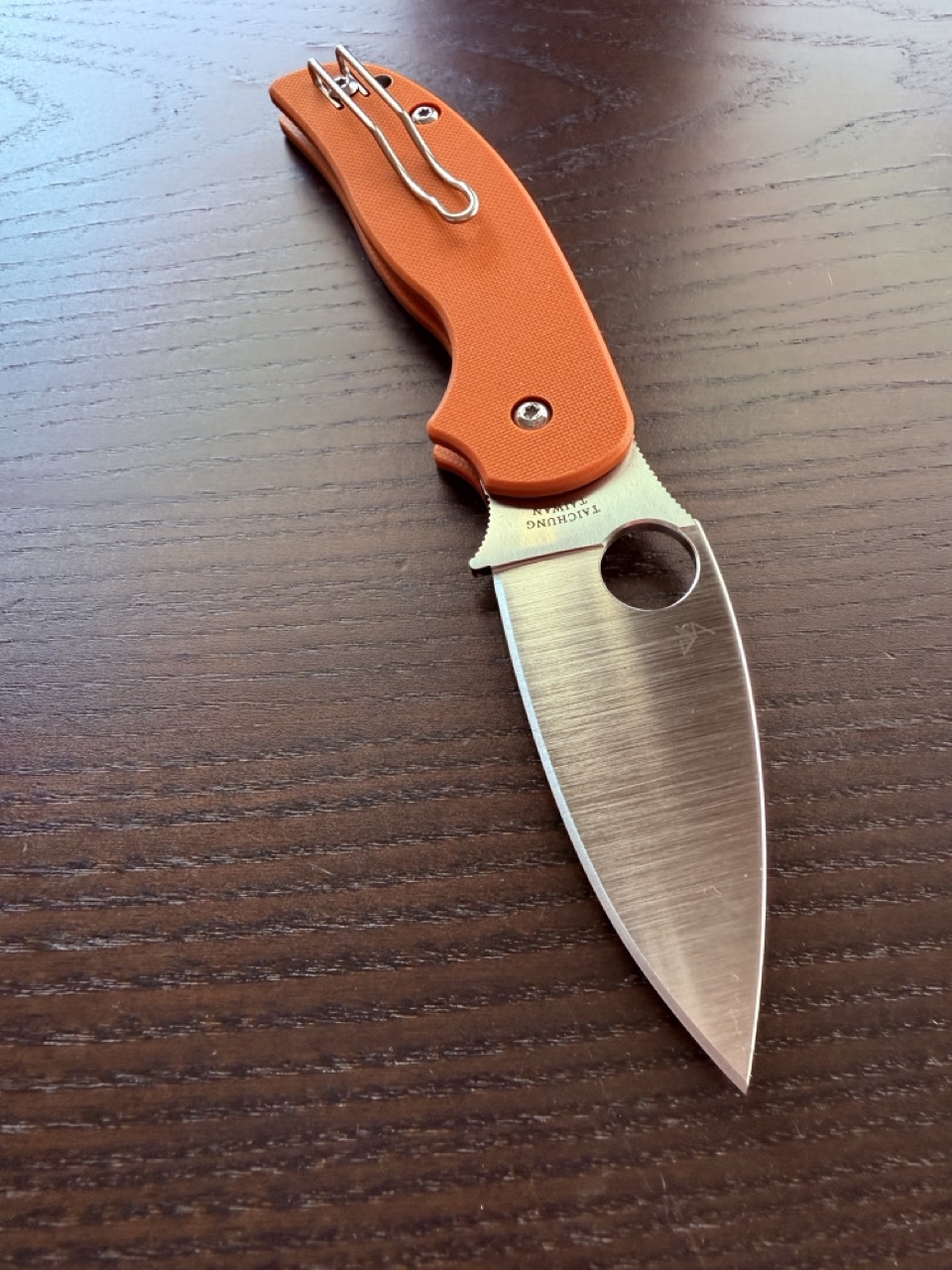
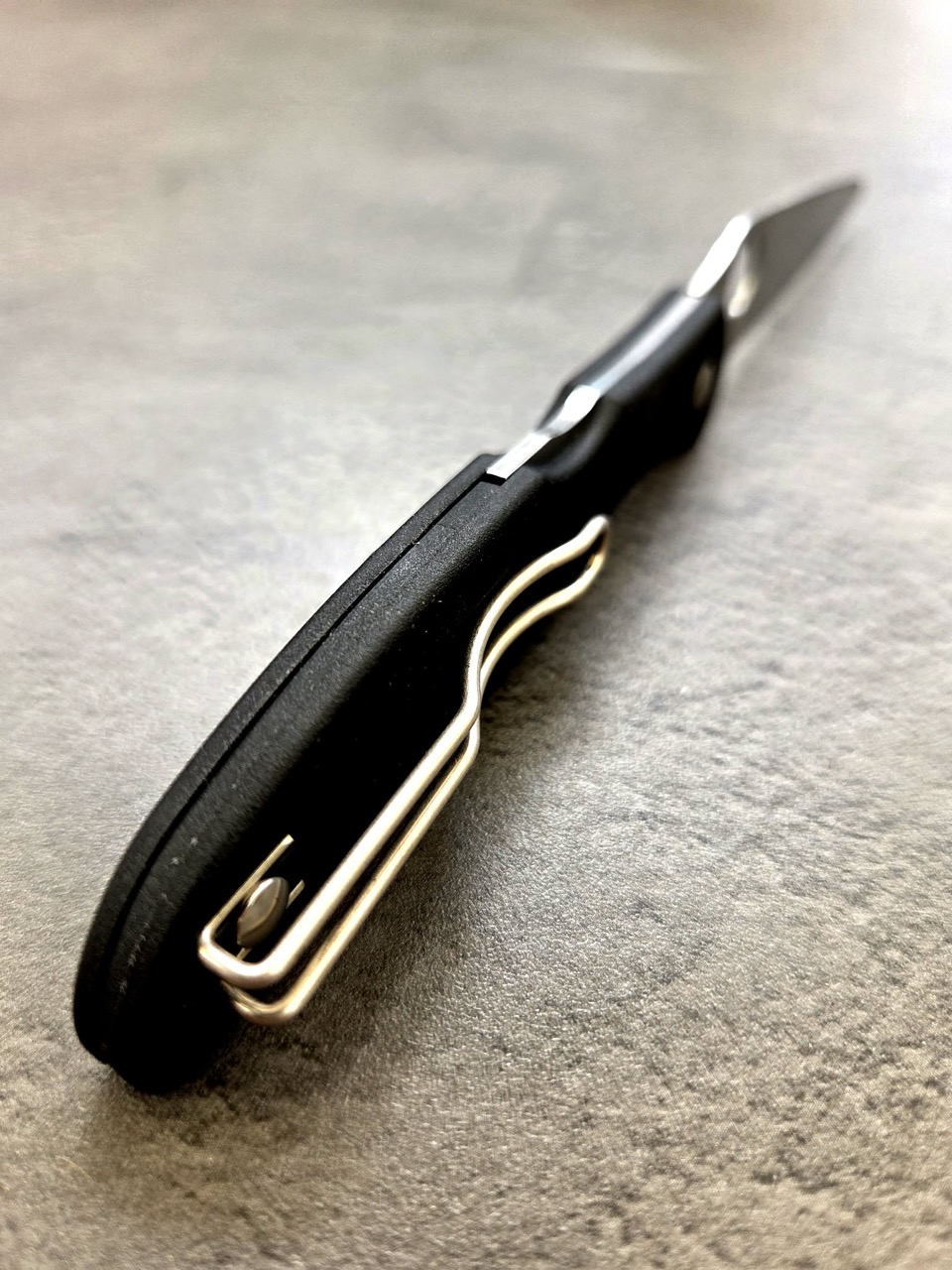
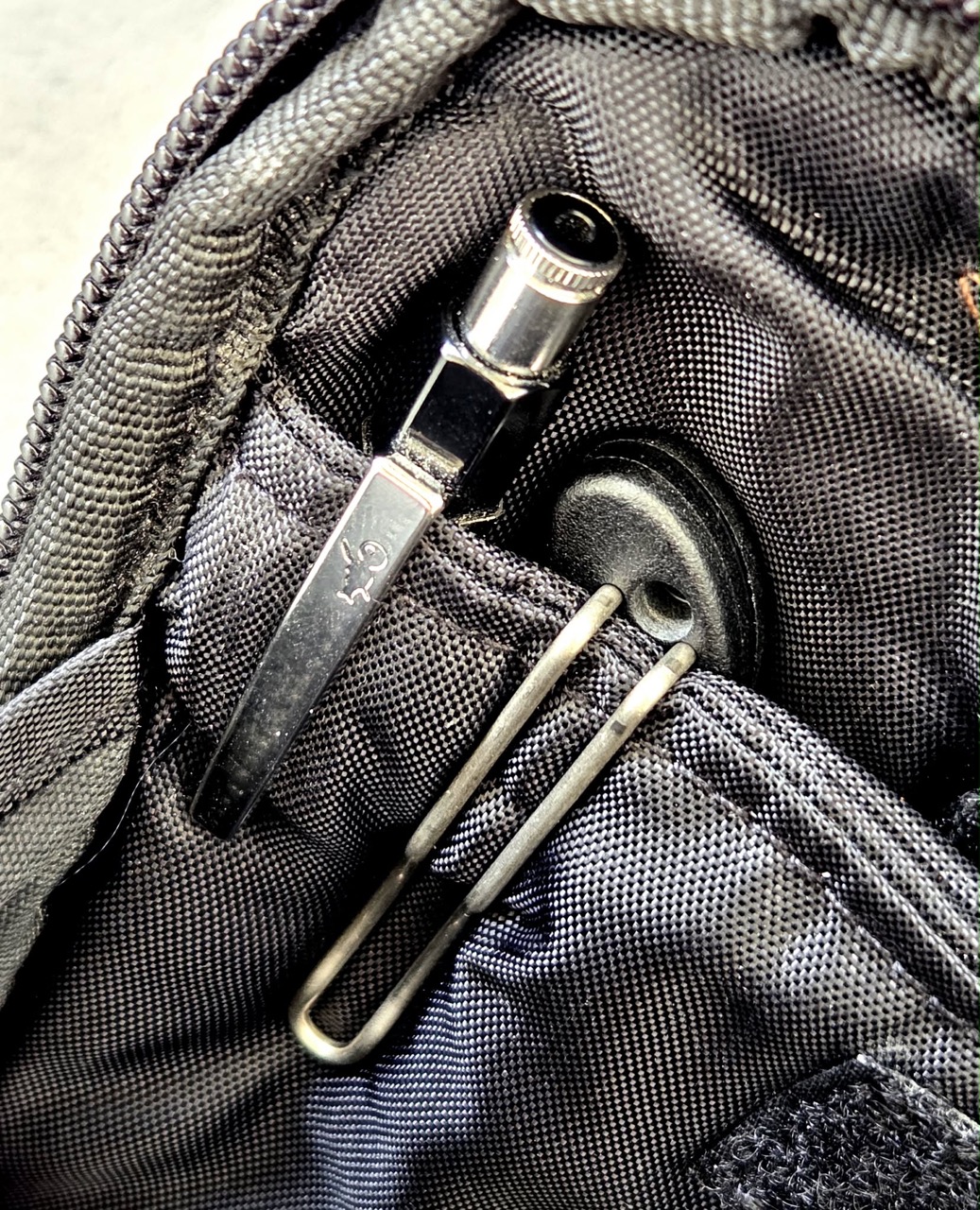
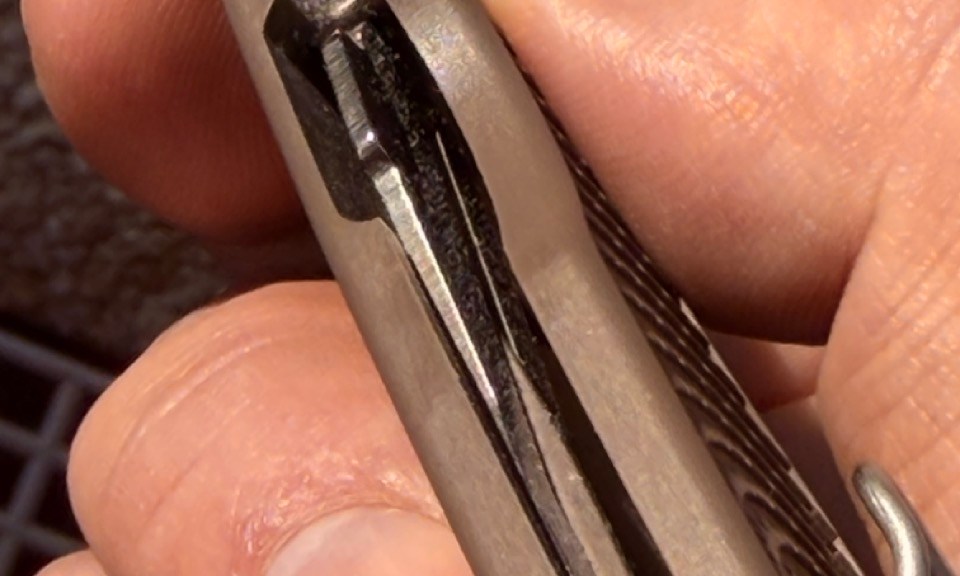
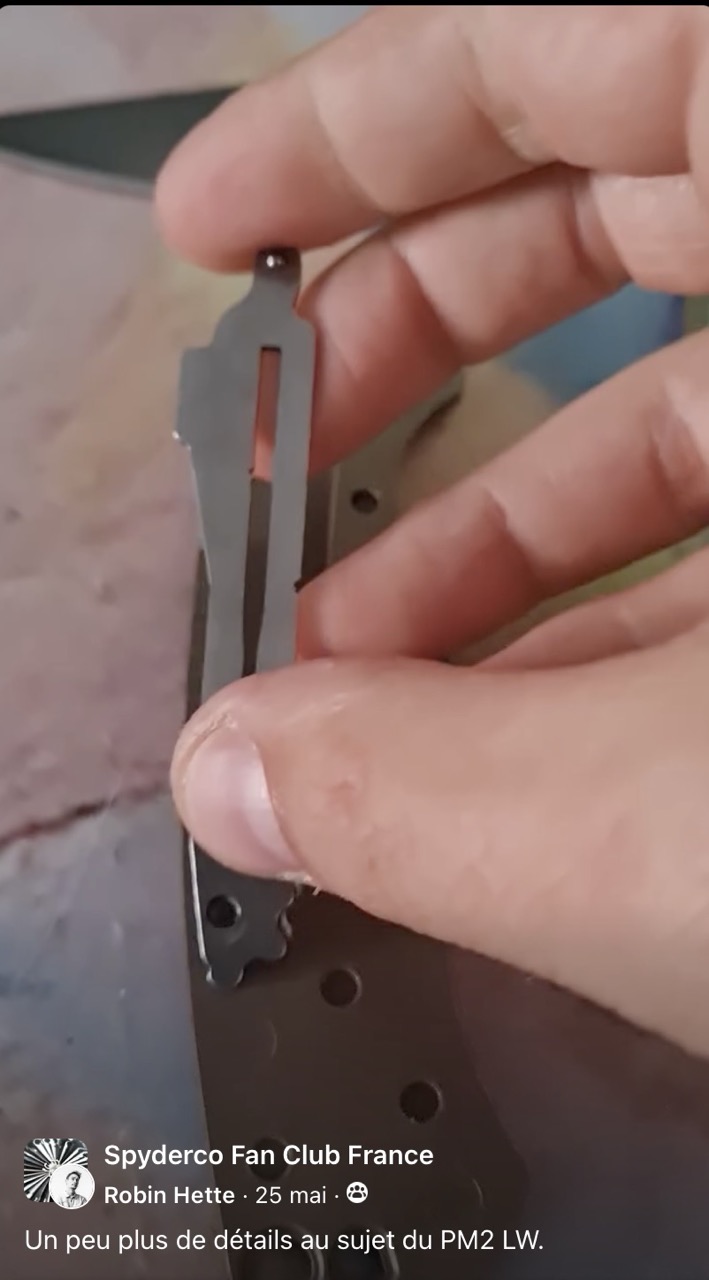
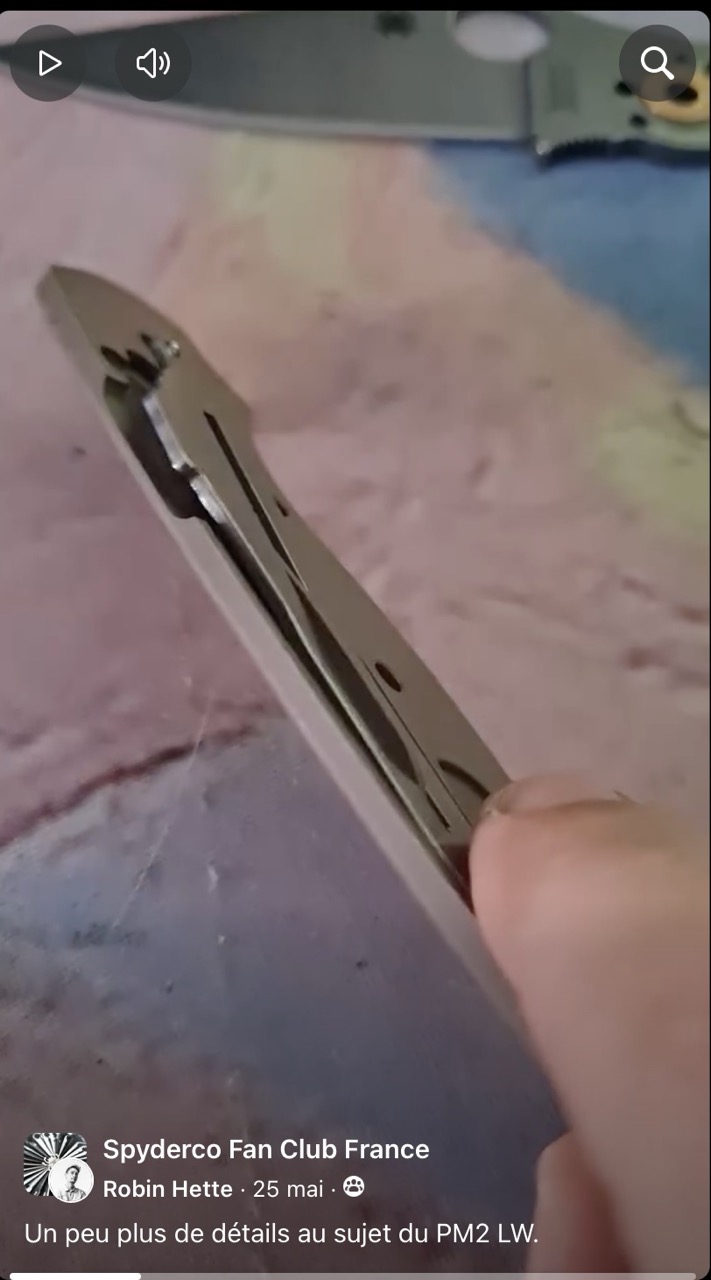
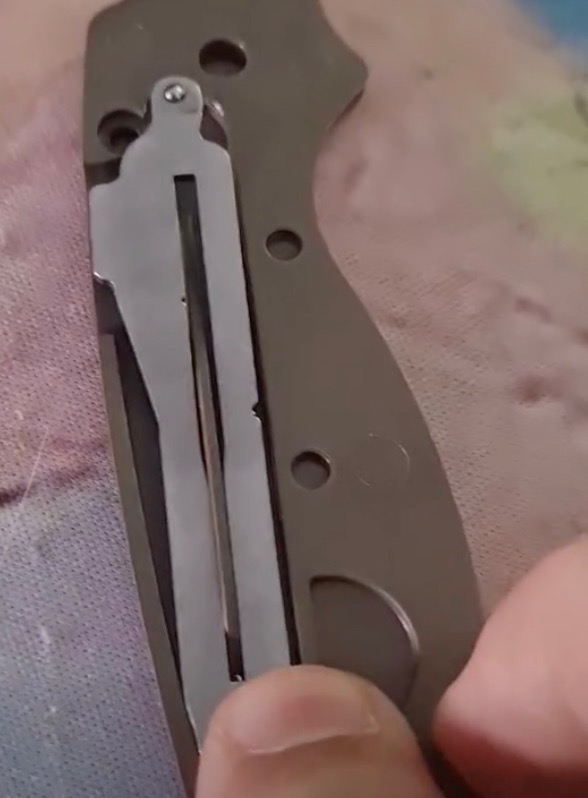
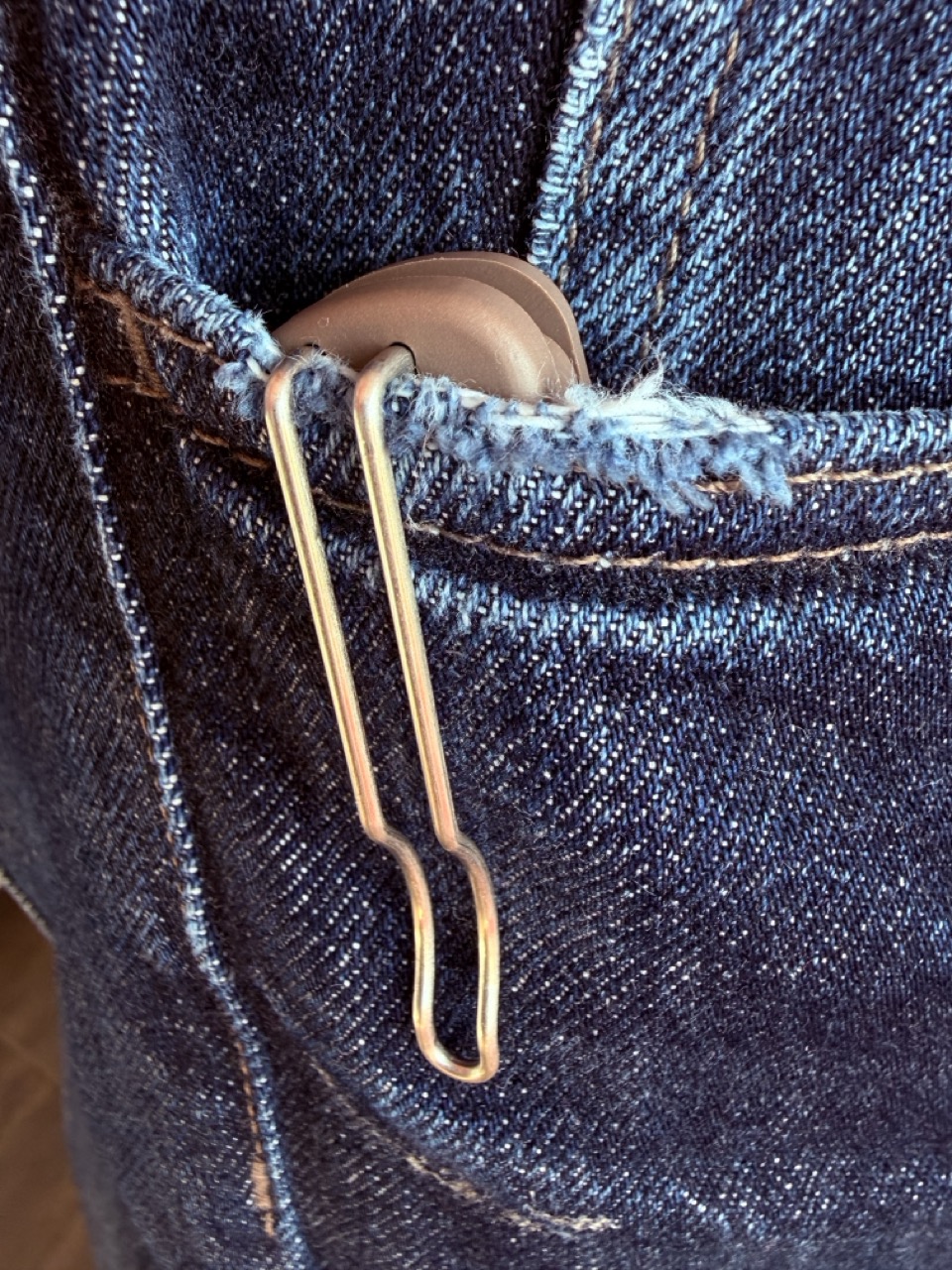
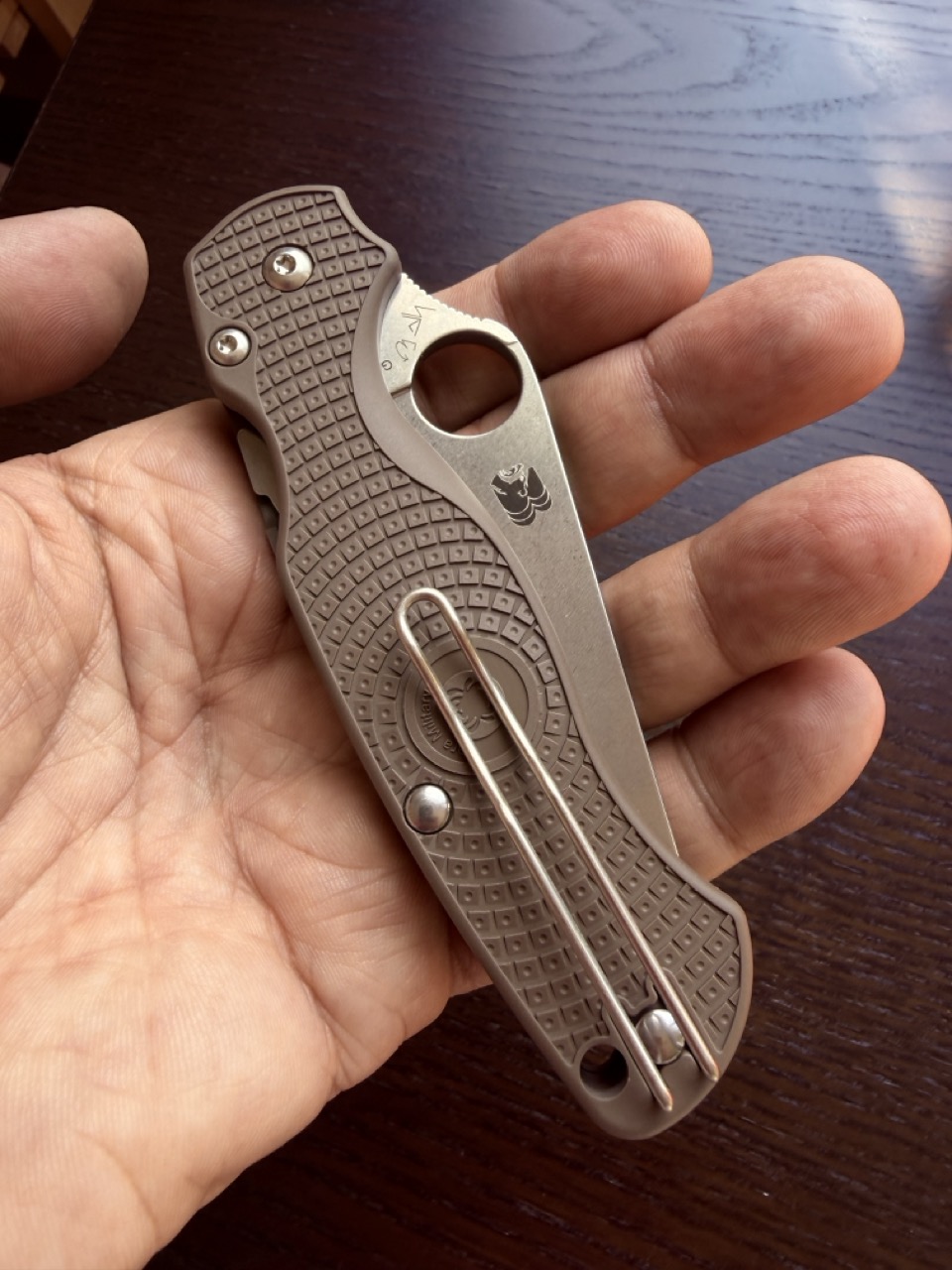
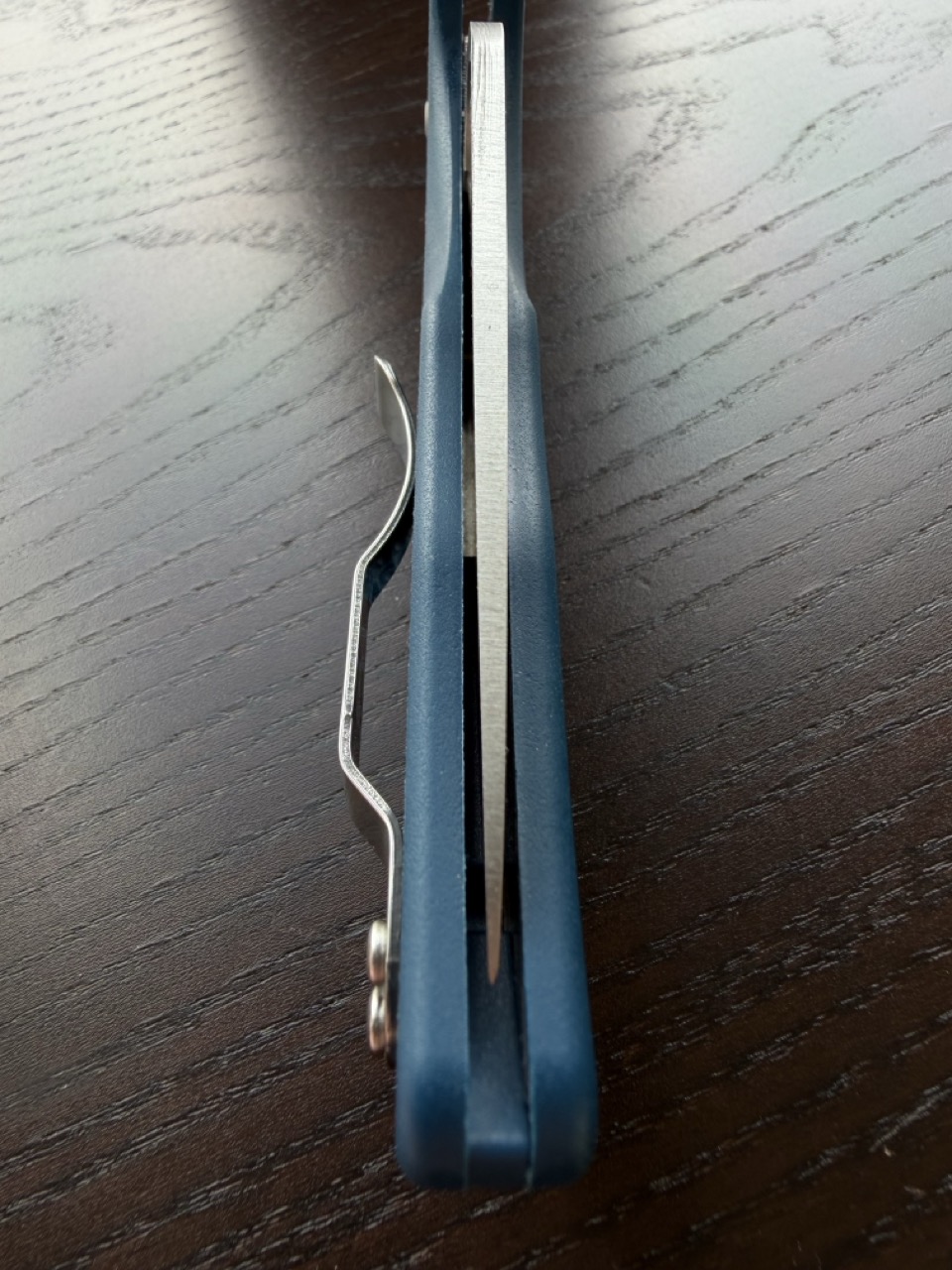
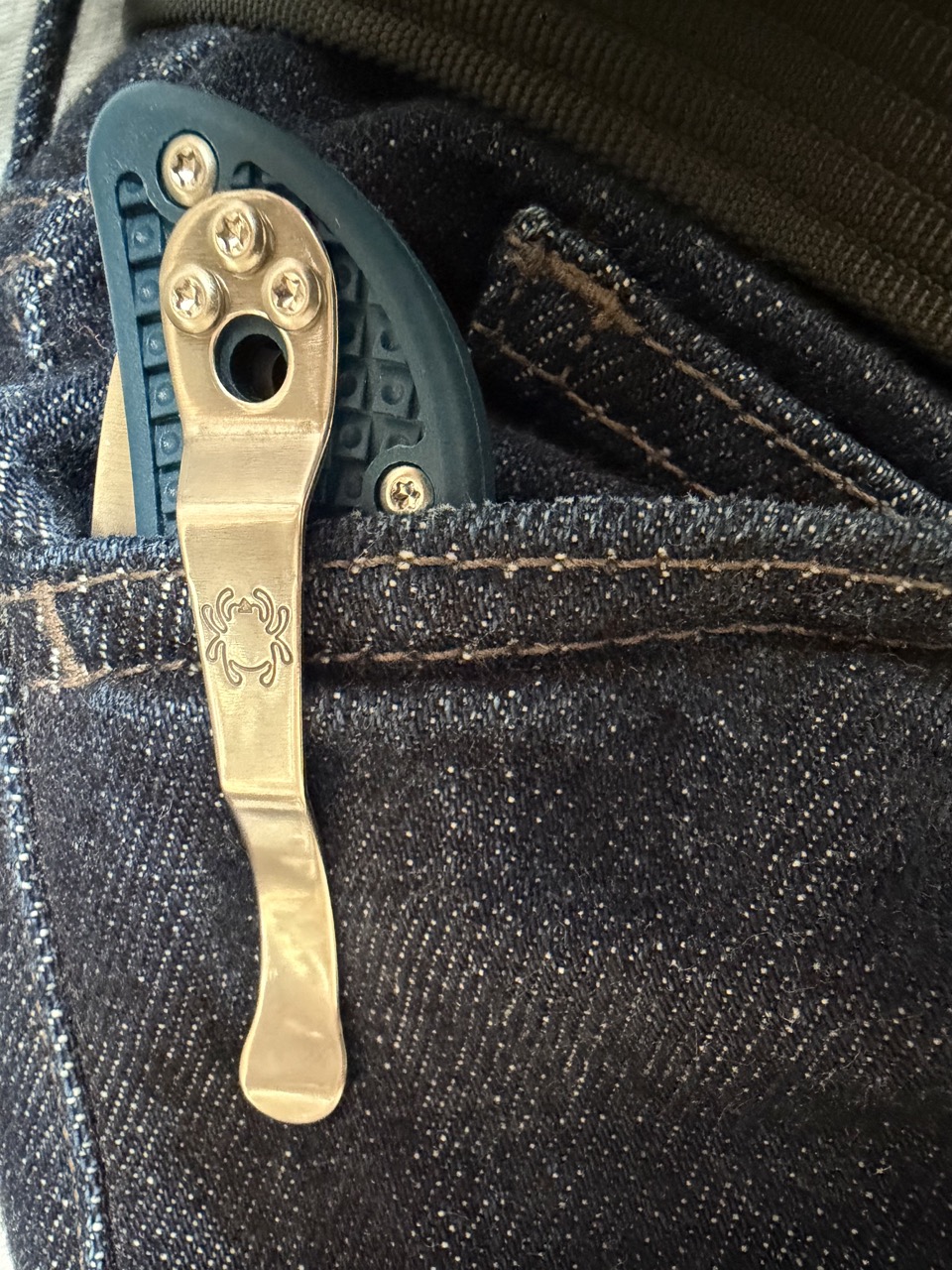
The clip.
Look closely.

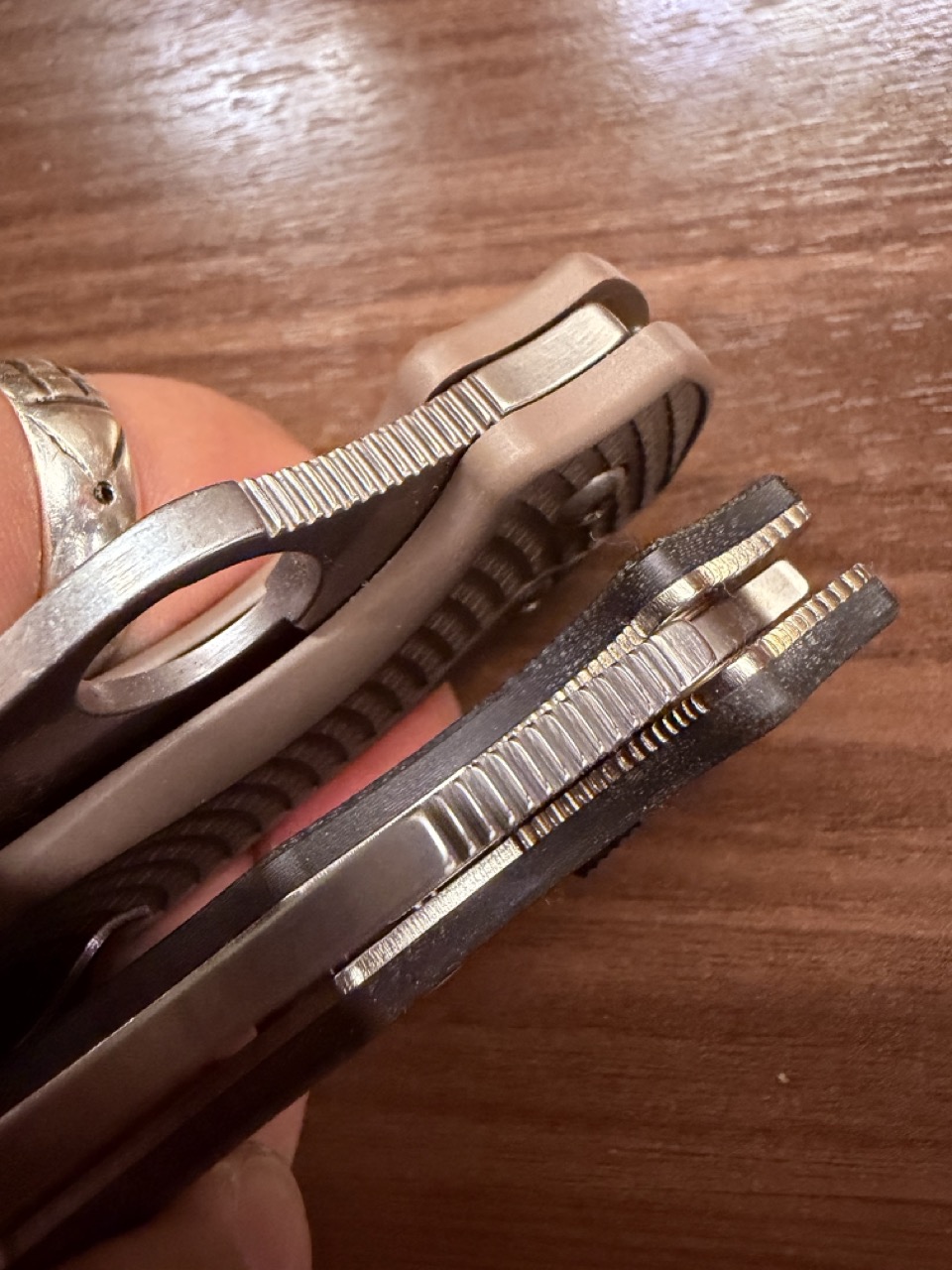
The deep-carry clip makes the knife feel even stealthier in the pocket, almost invisible in daily carry.
Tip-up only, though.
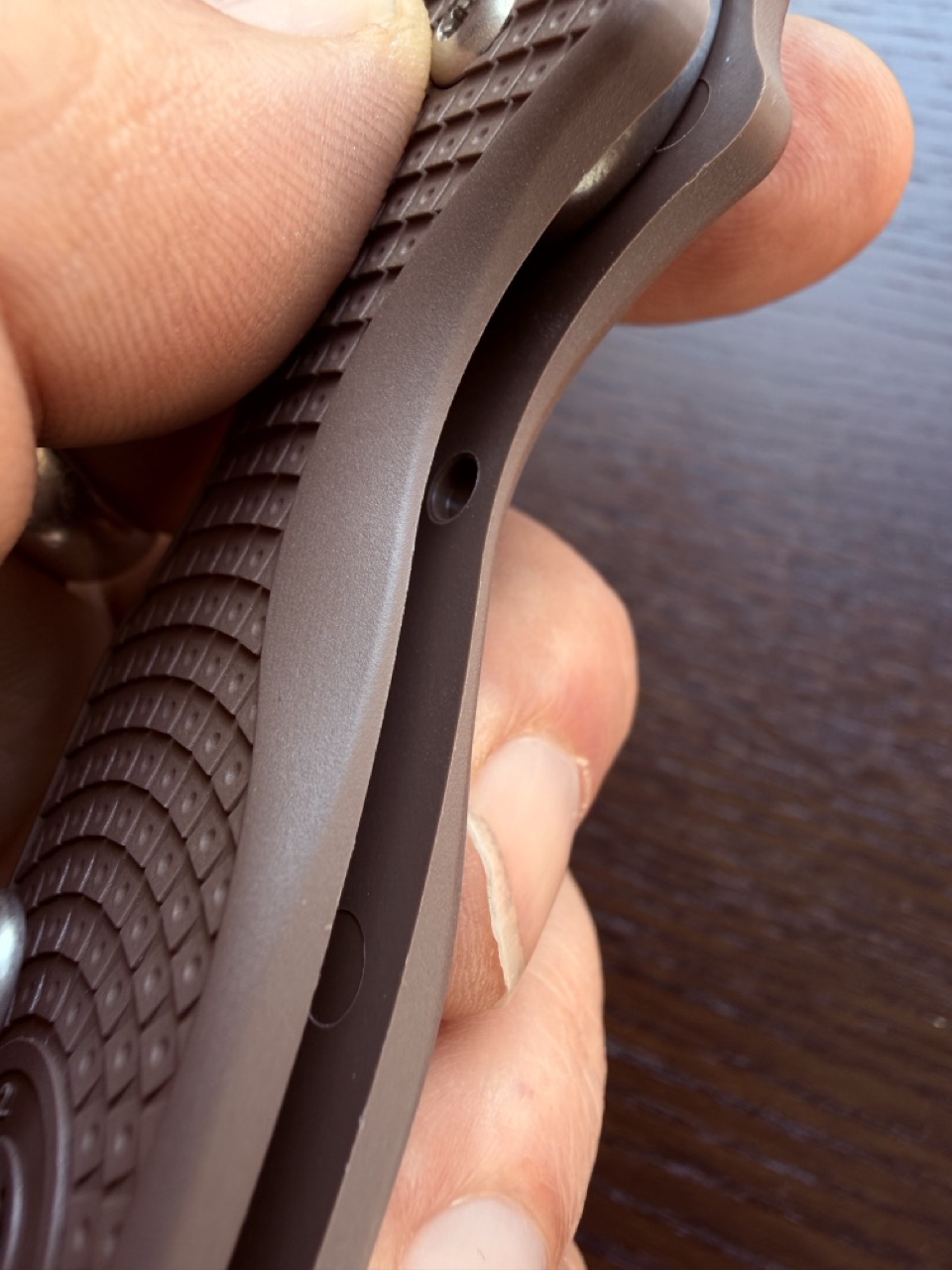
It’s not exactly a pocket shredder, but it’s not the gentlest on pocket seams either — even if the clip geometry and FRN patterning have clearly been tuned to make deployment and carry as smooth as possible.

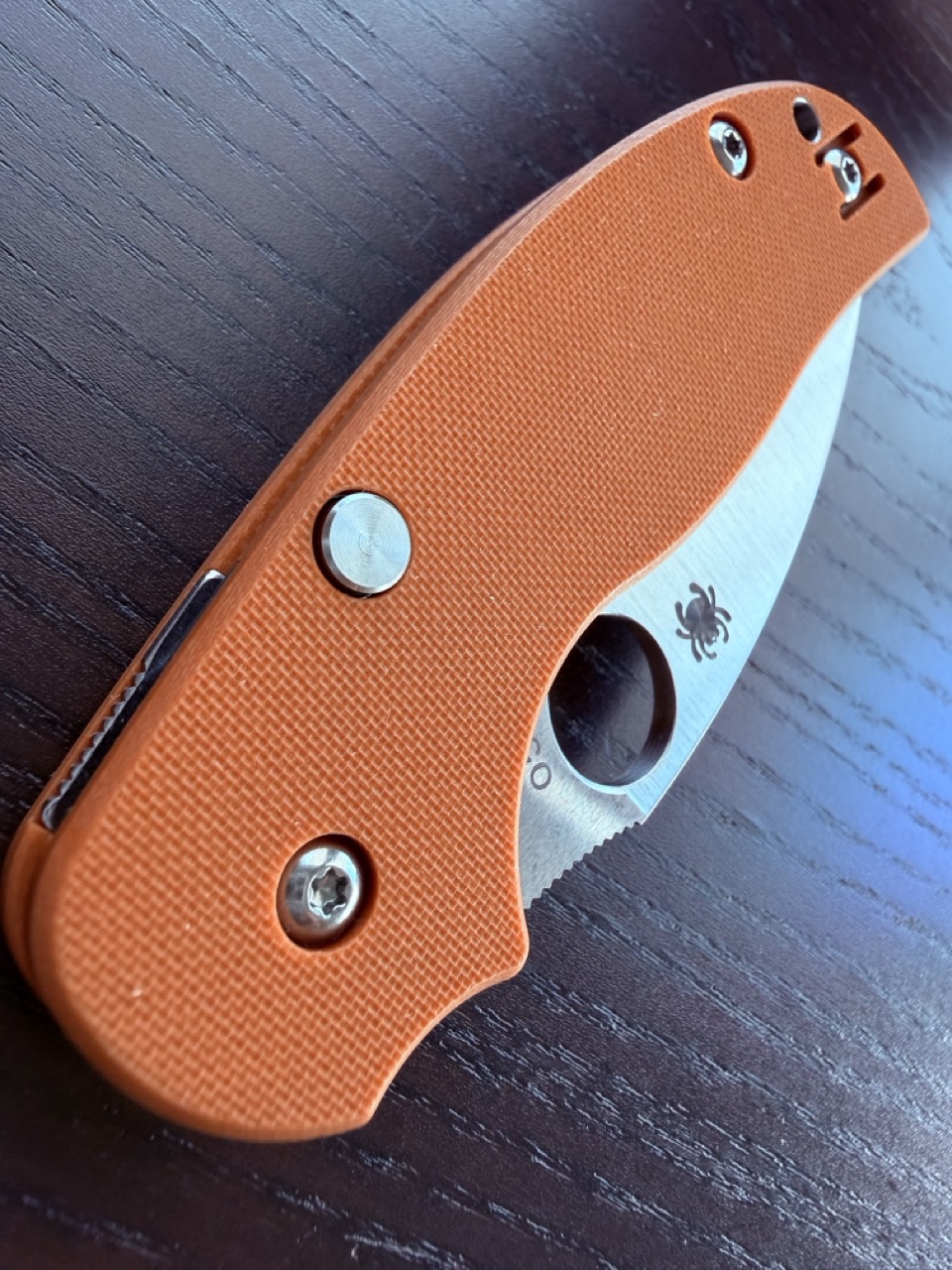
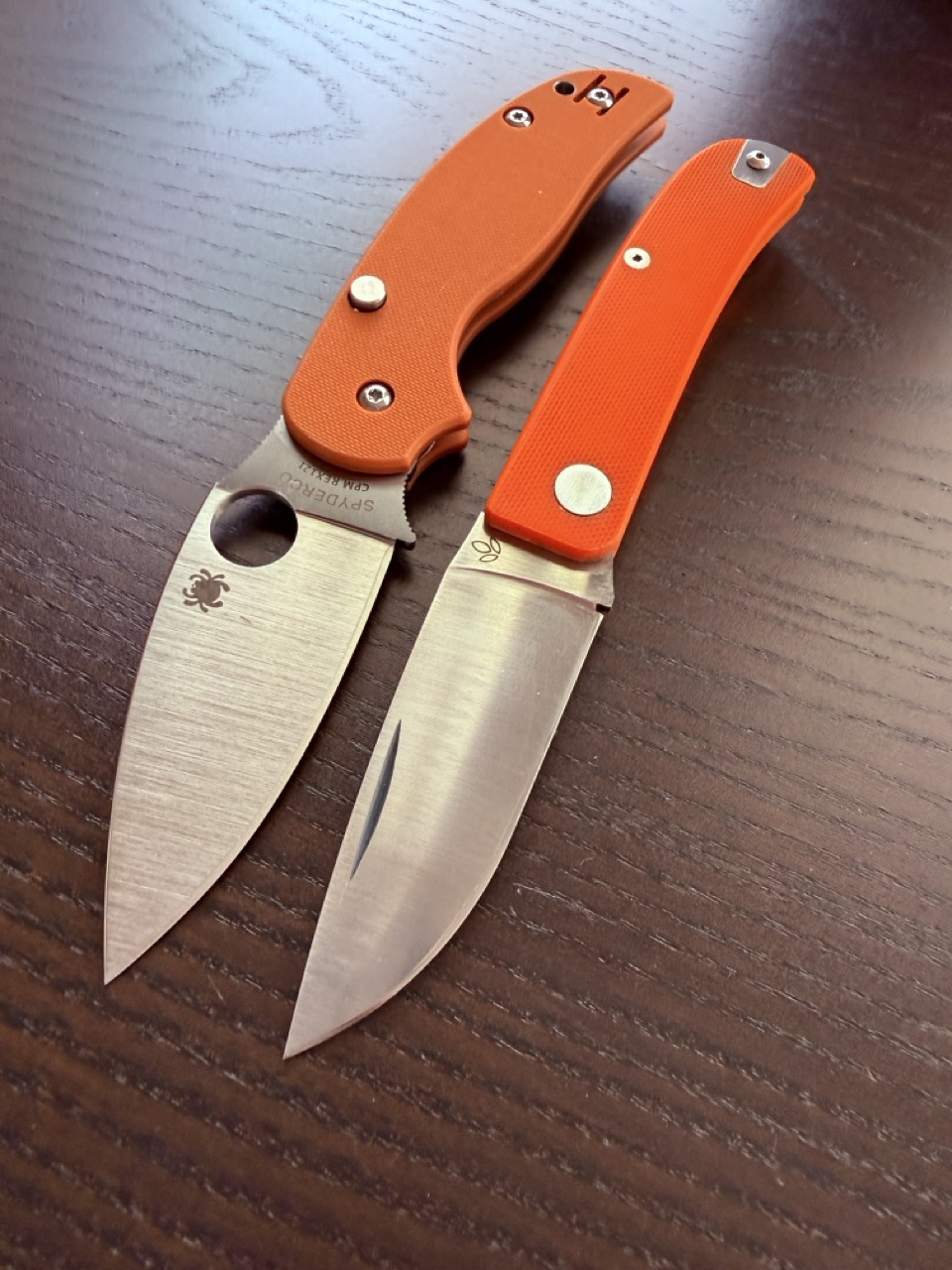
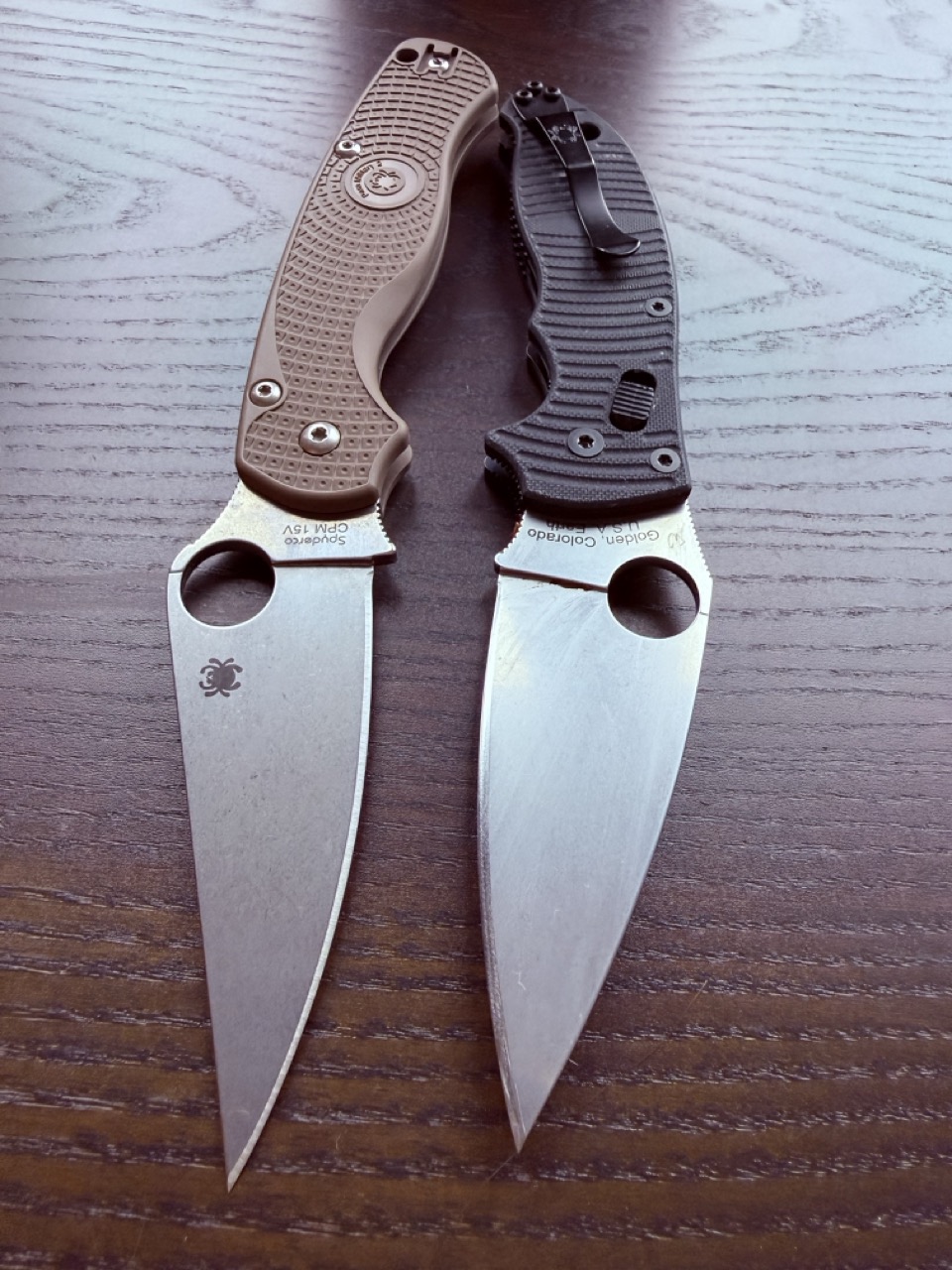
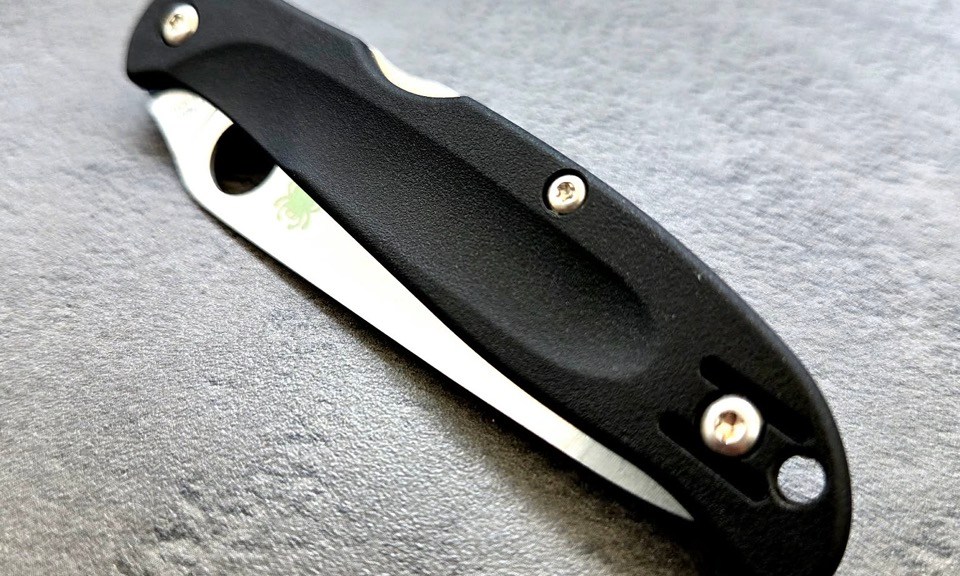
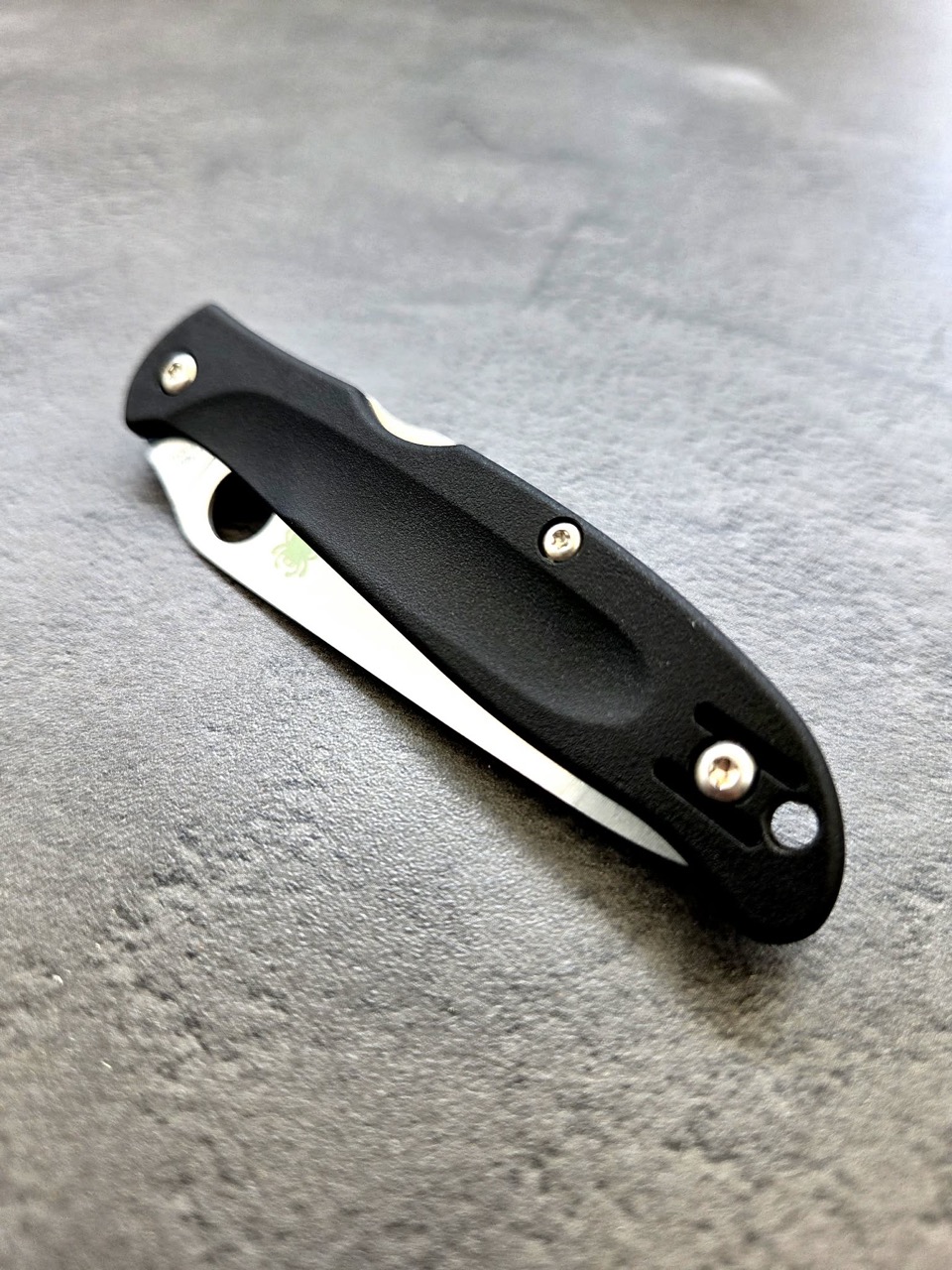
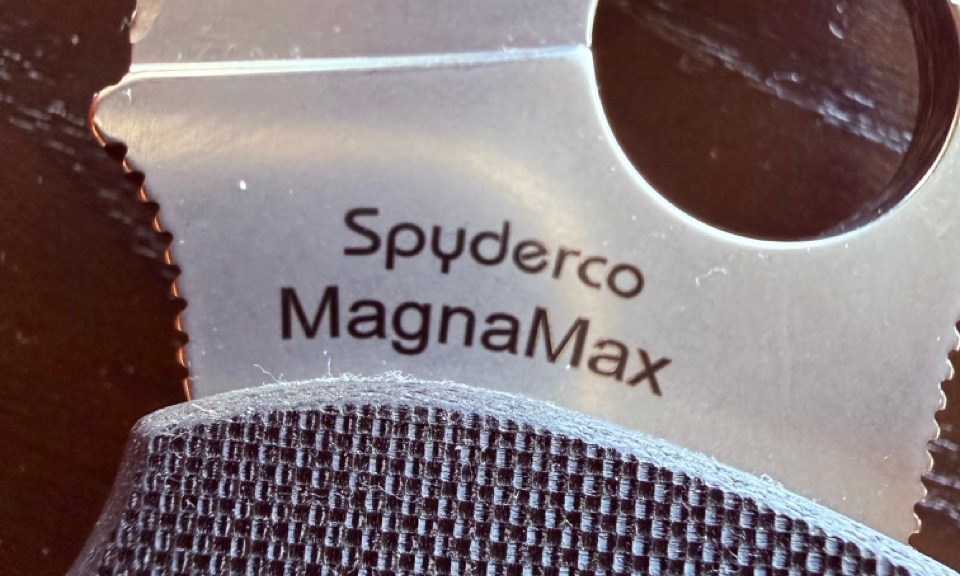
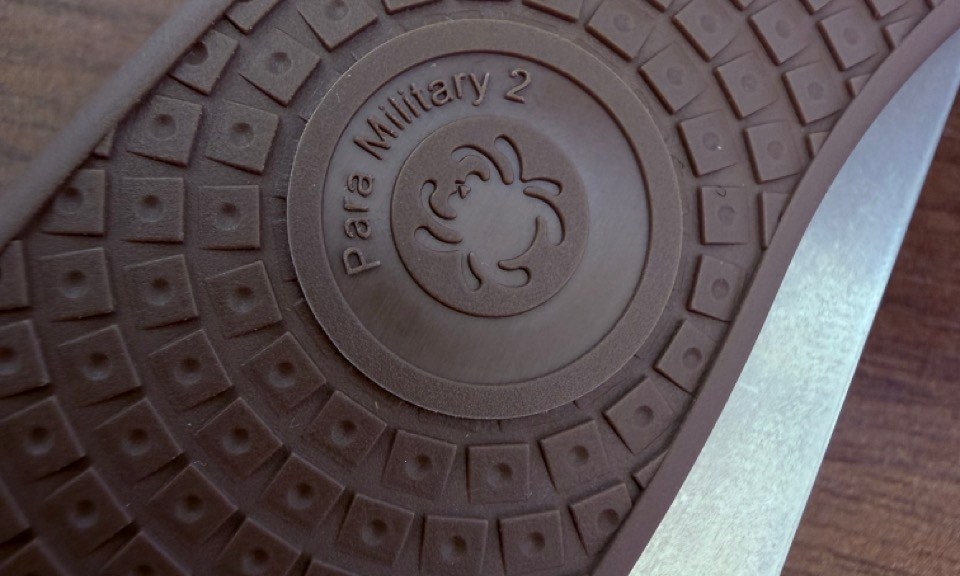
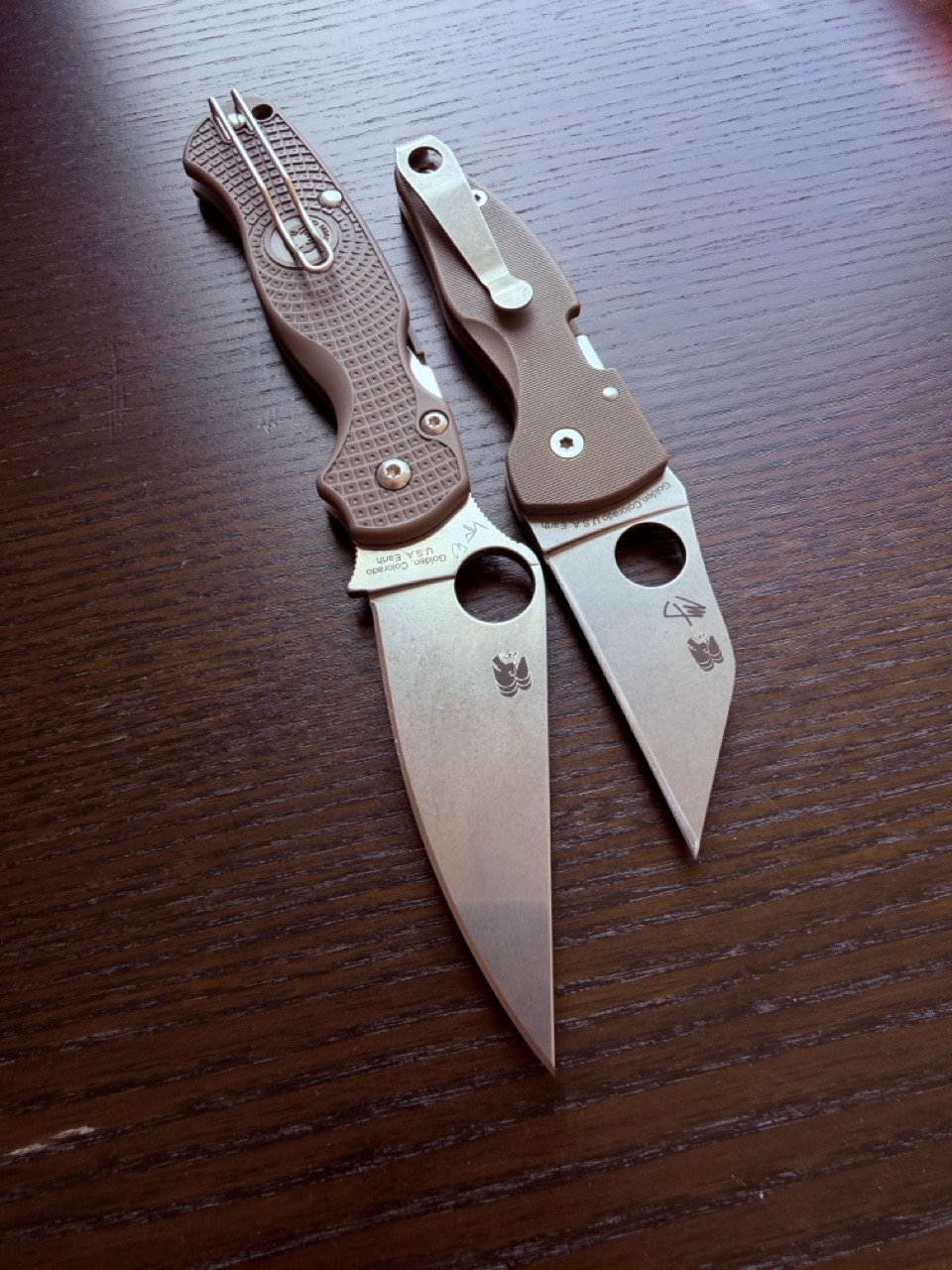
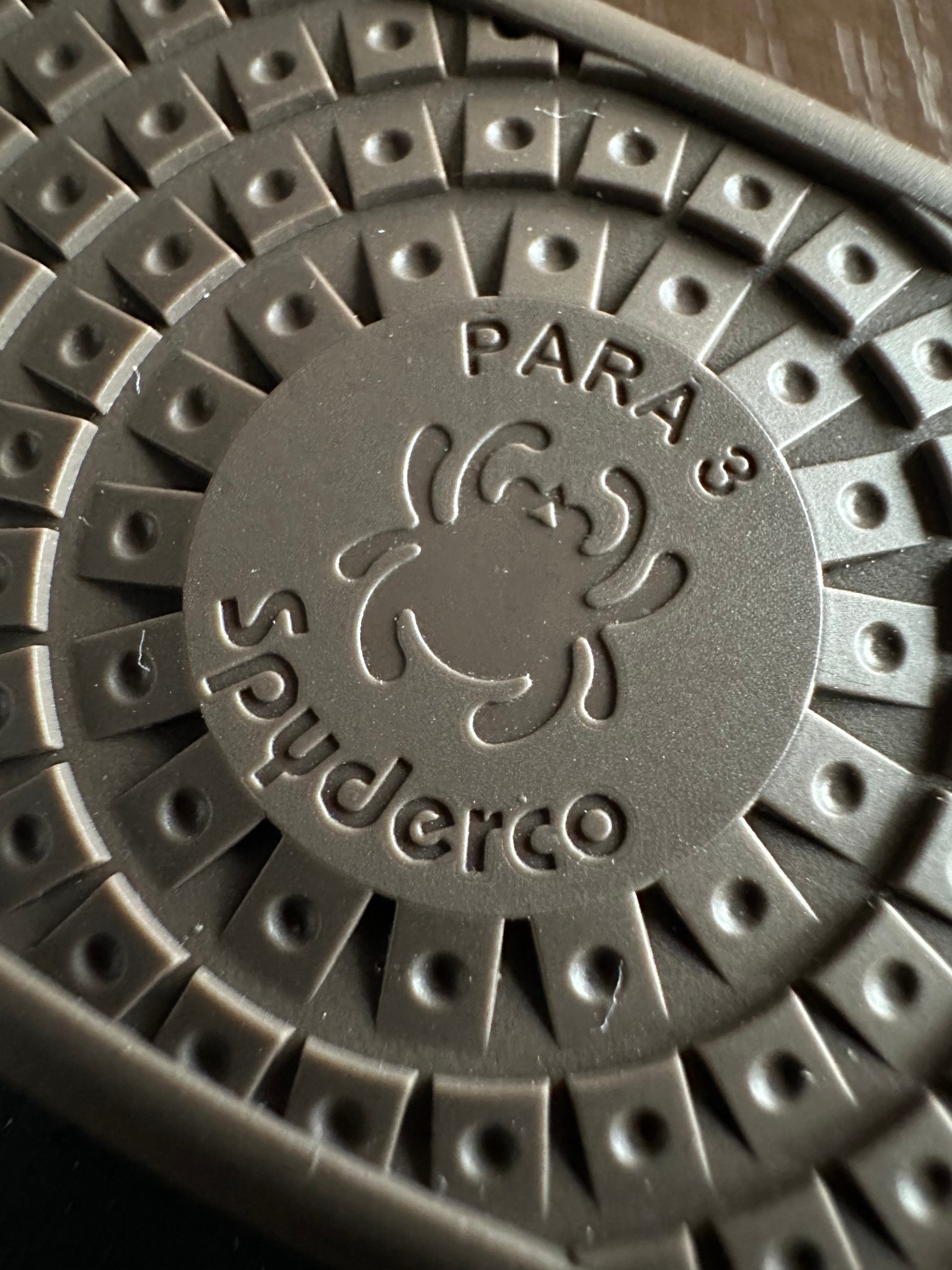
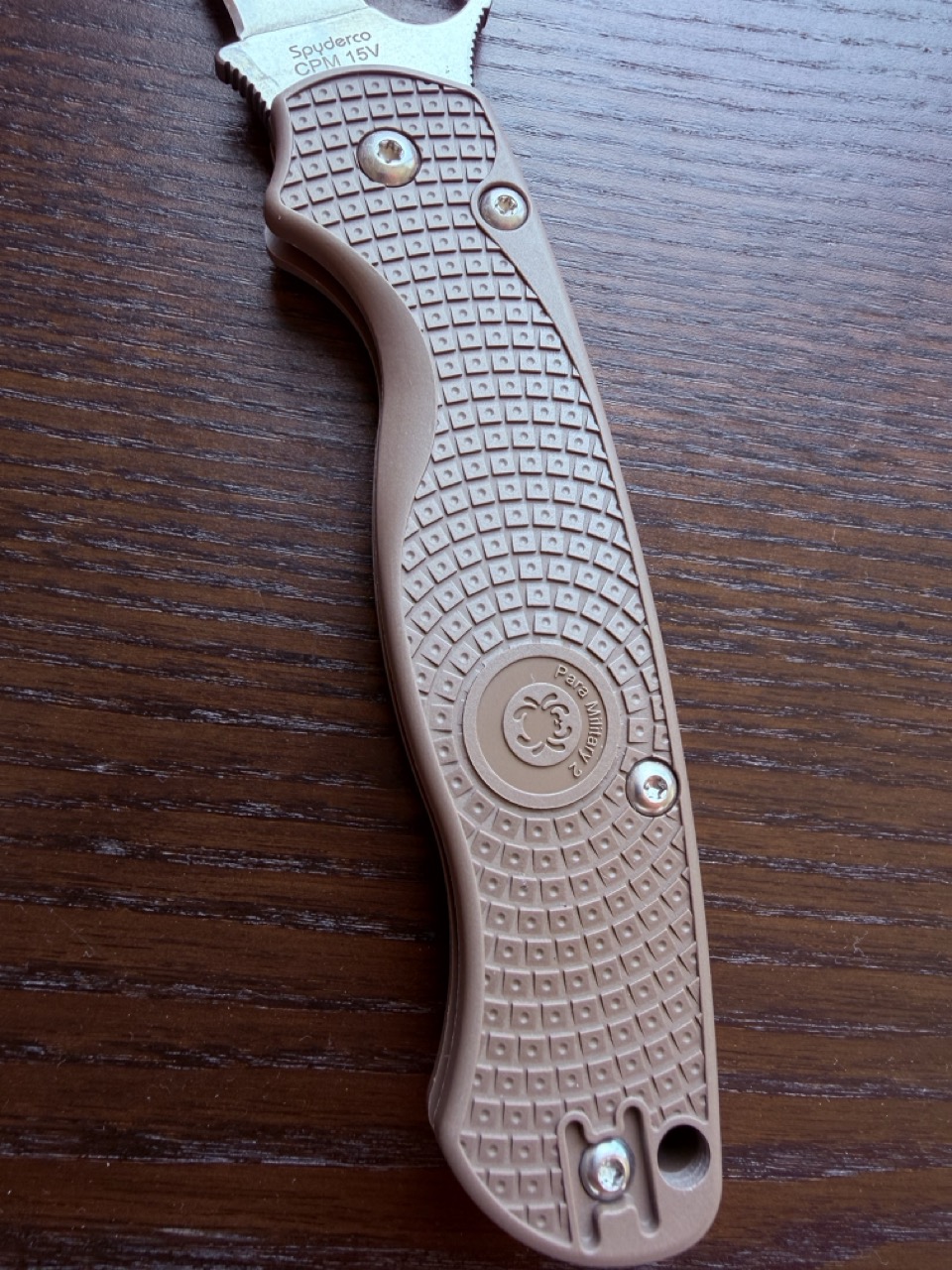
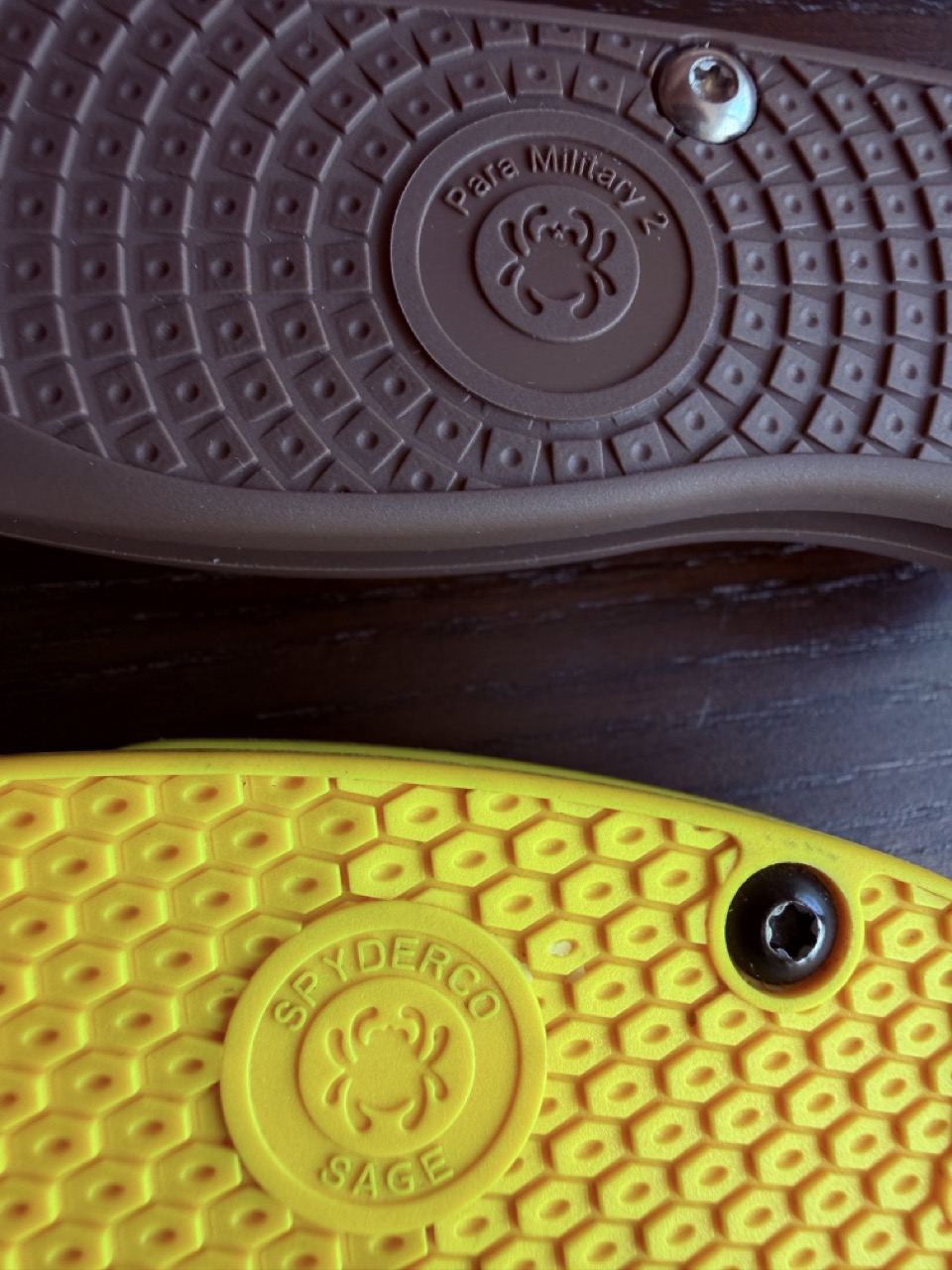
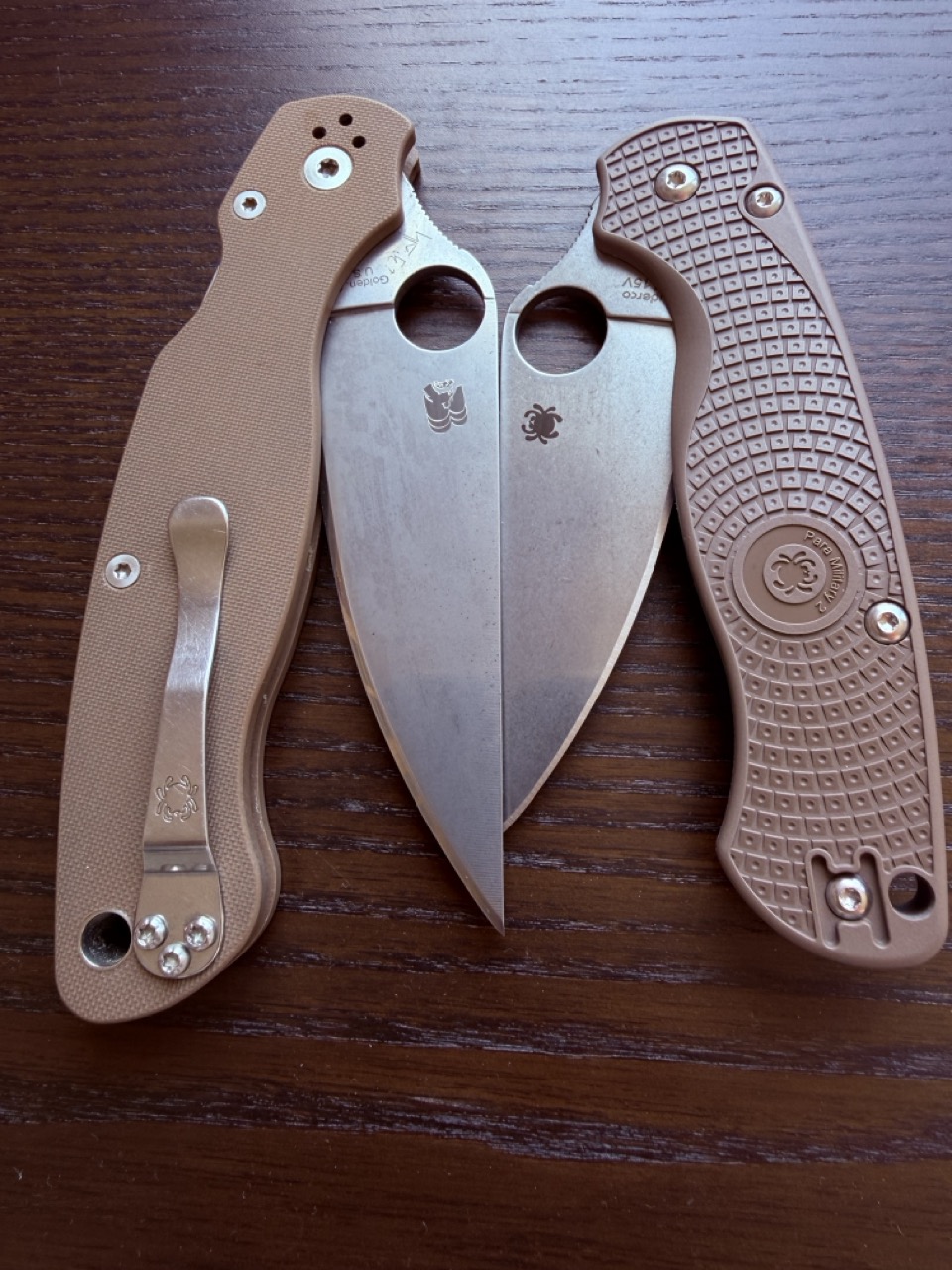
In my view, the central “medallion” on the Spyderco Para 3 (pictured here) feels more refined and better resolved visually. It has a cleaner, more intentional integration into the design.

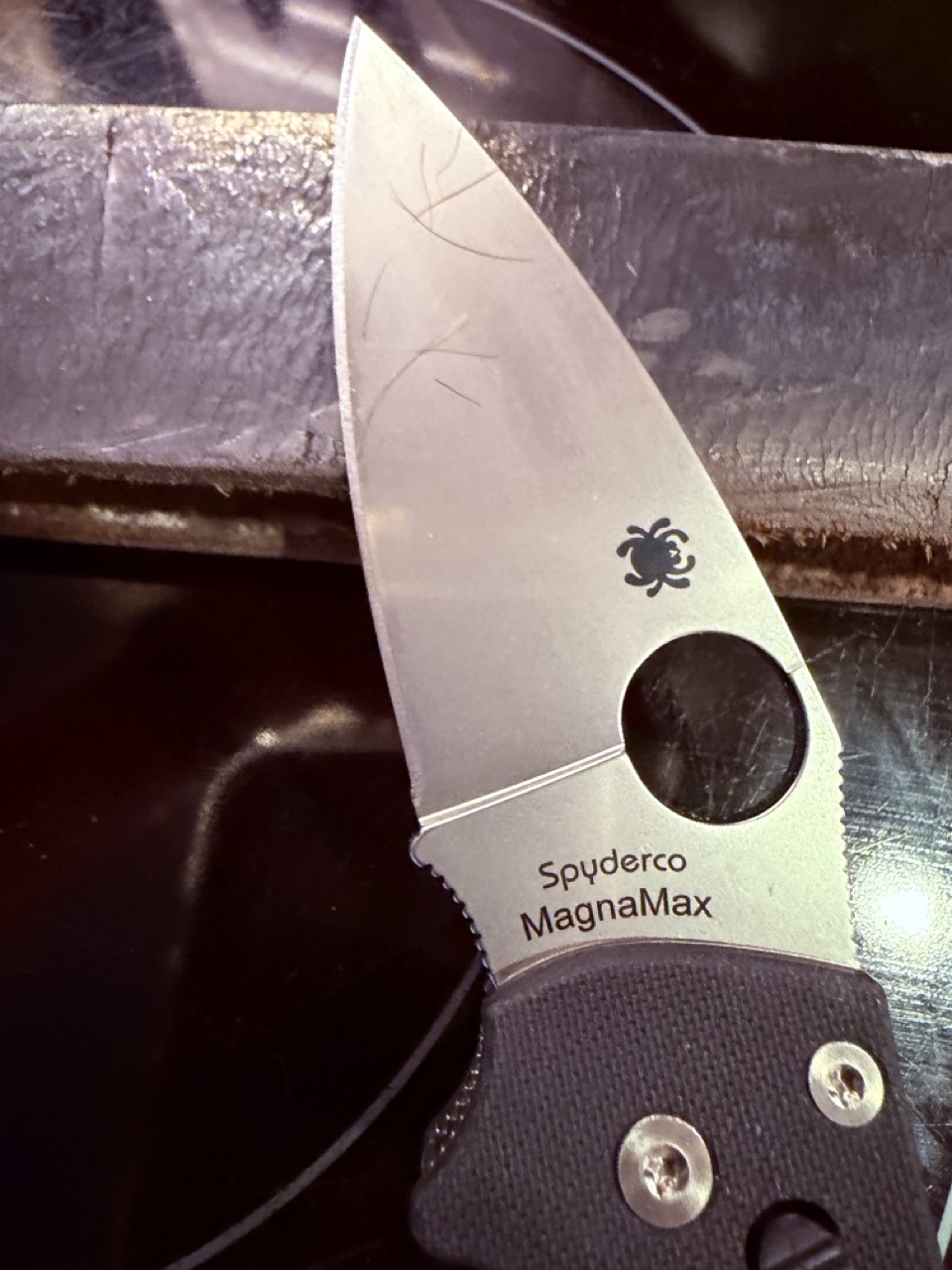
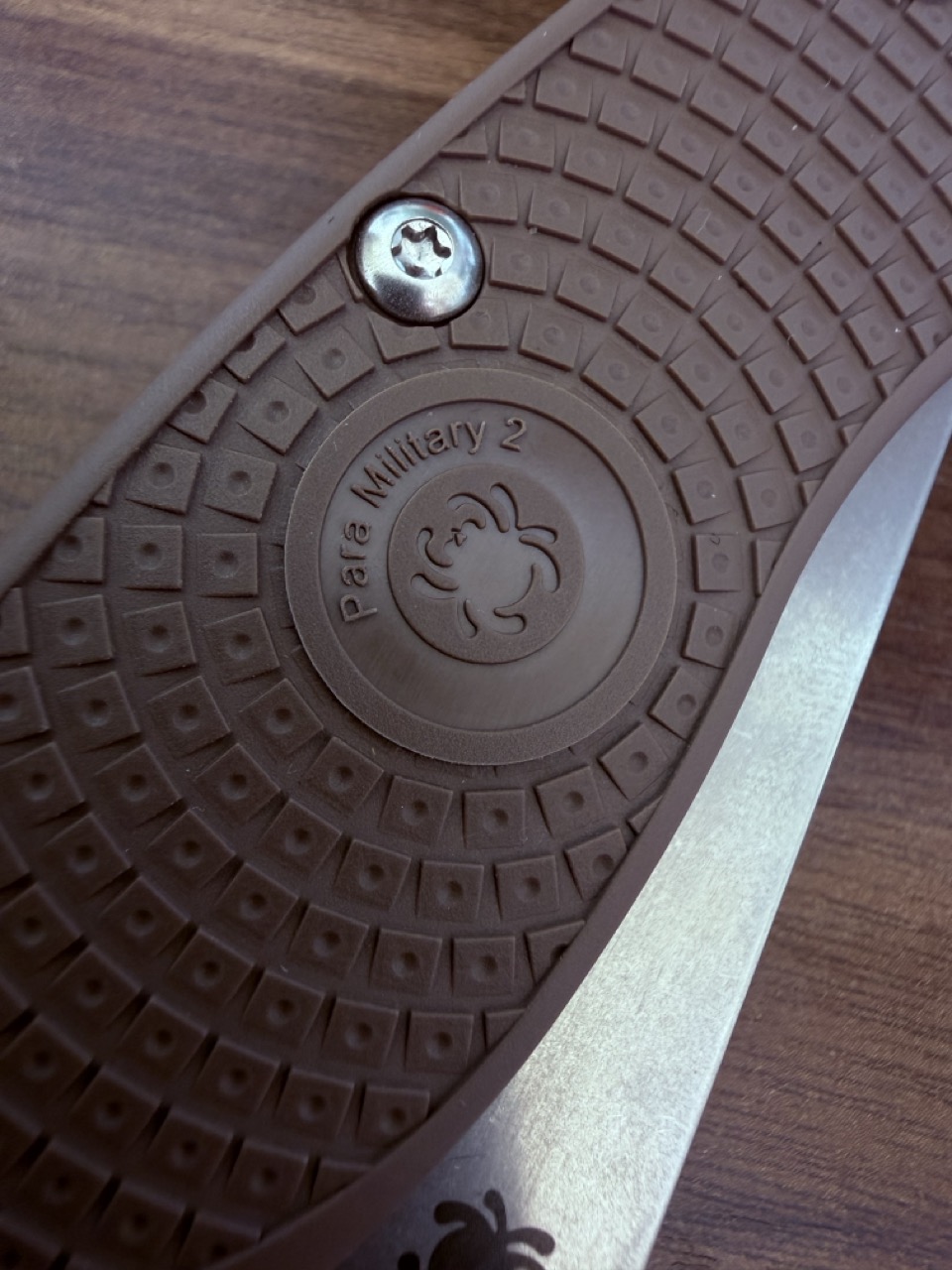
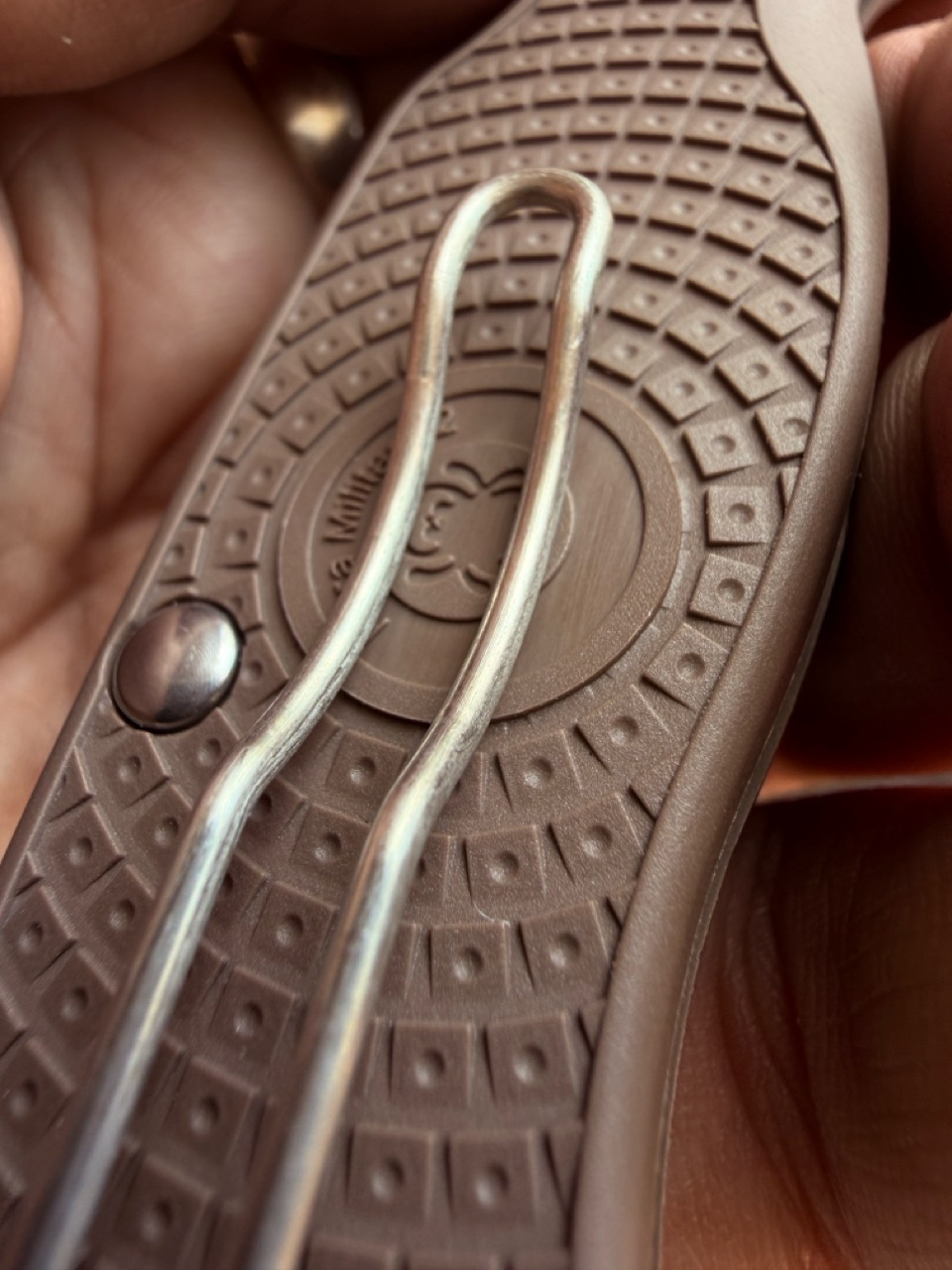
Here, on the PM2, it simply reads “Para Military 2” — which feels oddly understated. Curiously, the Spyderco name itself is nowhere to be found on that element, a surprising omission for such an iconic model.

But then again, this is exactly the kind of detail enthusiasts obsess over.

Personally, I prefer the FRN molding of the Spyderco Para 3 Lightweight in the epicenter of the pattern — it feels slightly more refined and cohesive. On the other hand, I find the Spyderco Paramilitary 2 Lightweight superior around the Compression Lock interface and the access to the Spyderhole, both of which feel more open, more natural, and ultimately more satisfying in use.

The handle transformation comes primarily through the FRN handle — fiberglass reinforced nylon — a material longtime knife enthusiasts still love to debate with almost religious intensity. Traditionalists often associate premium folders with layered G-10, titanium, or carbon fiber. FRN, by comparison, can seem almost too practical, too honest about its intentions. Forums discussions around Spyderco’s lightweight models reveal the familiar divide: some users still perceive FRN as less luxurious, while others praise its traction, comfort, and remarkable reduction in carry fatigue.
One thing is certain: FRN brings a significant leap in ergonomics.

You can see how the design has been subtly refined to erase the boxy, almost overbuilt feel of the G-10 version.
Spyderco’s history with FRN stretches back through legendary lightweight models like the Spyderco Delica, Spyderco Endura and the Spyderco Salt Series — knives that became icons precisely because they vanished into the pocket while remaining utterly dependable in dirty, wet, unforgiving environments.
The people at Golden has spent decades refining FRN into something uniquely their own. On a Spyderco, FRN is not budget plastic. It is engineered utility.
The texture, invented by Sal Glesser, is the key.

That bidirectional pattern grips the hand with a kind of mechanical confidence — less refined than blasted titanium perhaps, but more secure when life becomes sweaty, cold, rushed, or imperfect.

What makes the Spyderco Paramilitary 2 Lightweight genuinely fascinating is not merely its weight reduction, but the engineering compromise Spyderco somehow refused to make.
Because removing mass from a back lock or liner lock is relatively straightforward.
Removing mass from a Compression Lock platform is something else entirely.
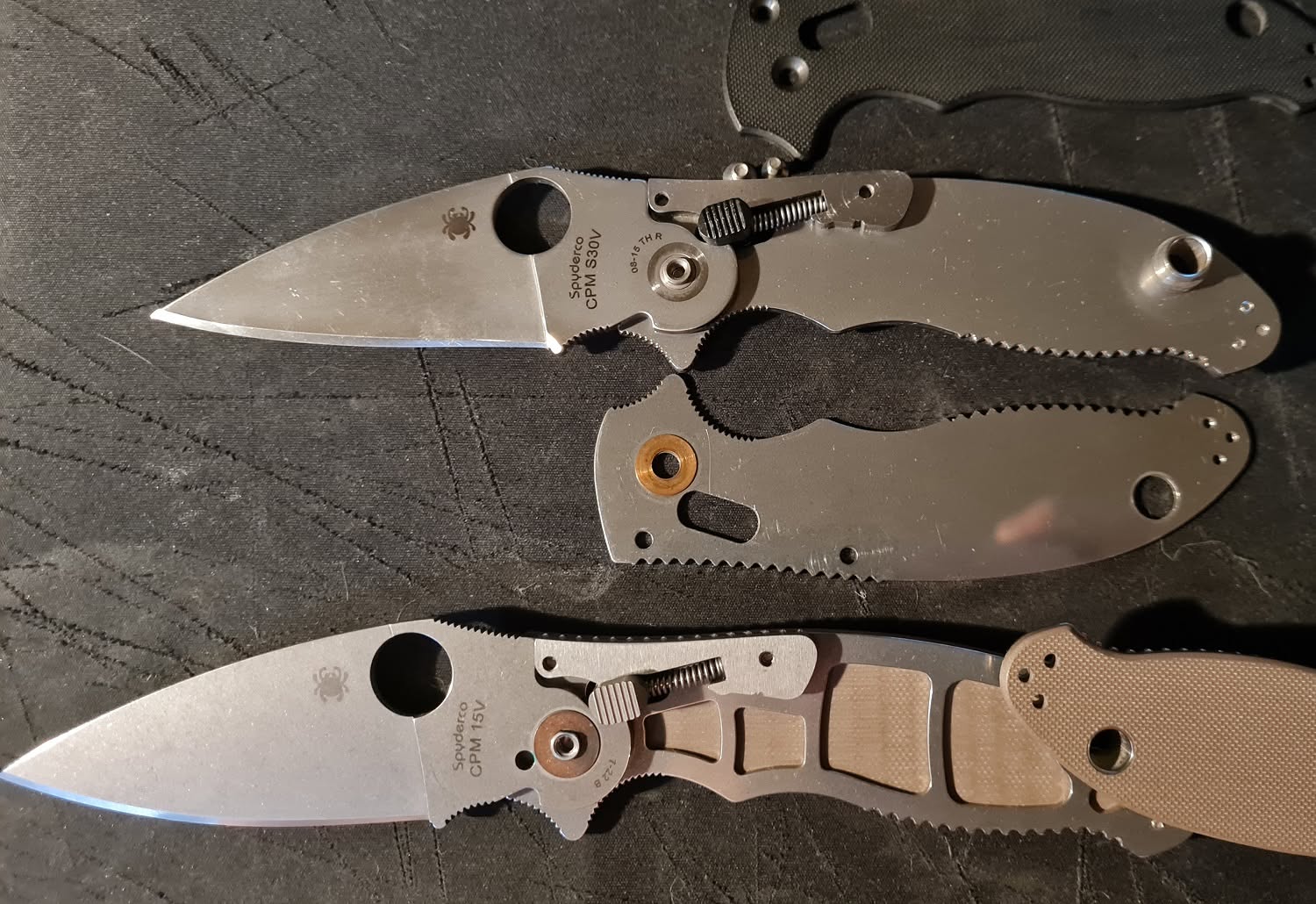
The Compression Lock is one of the defining mechanical signatures of Spyderco — a brilliantly elegant system designed by Sal Glesser that combines strength, fluidity and one-handed safety with an almost addictive tactile character. But unlike simpler locking systems, it traditionally depends on nested steel liners and a rigid chassis architecture.

In other words: it was never meant to live inside an ultralight FRN body.
That is the hidden tour de force of the PM2 Lightweight.

Spyderco did not simply shave material away from the classic design. They had to rethink how the Compression Lock itself could survive — and still feel reassuringly precise — inside a platform whose entire philosophy is flexibility, lightness and minimal structure.

FRN has a very different mechanical behavior from G-10.
It flexes differently. Resonates differently. Carries load differently.
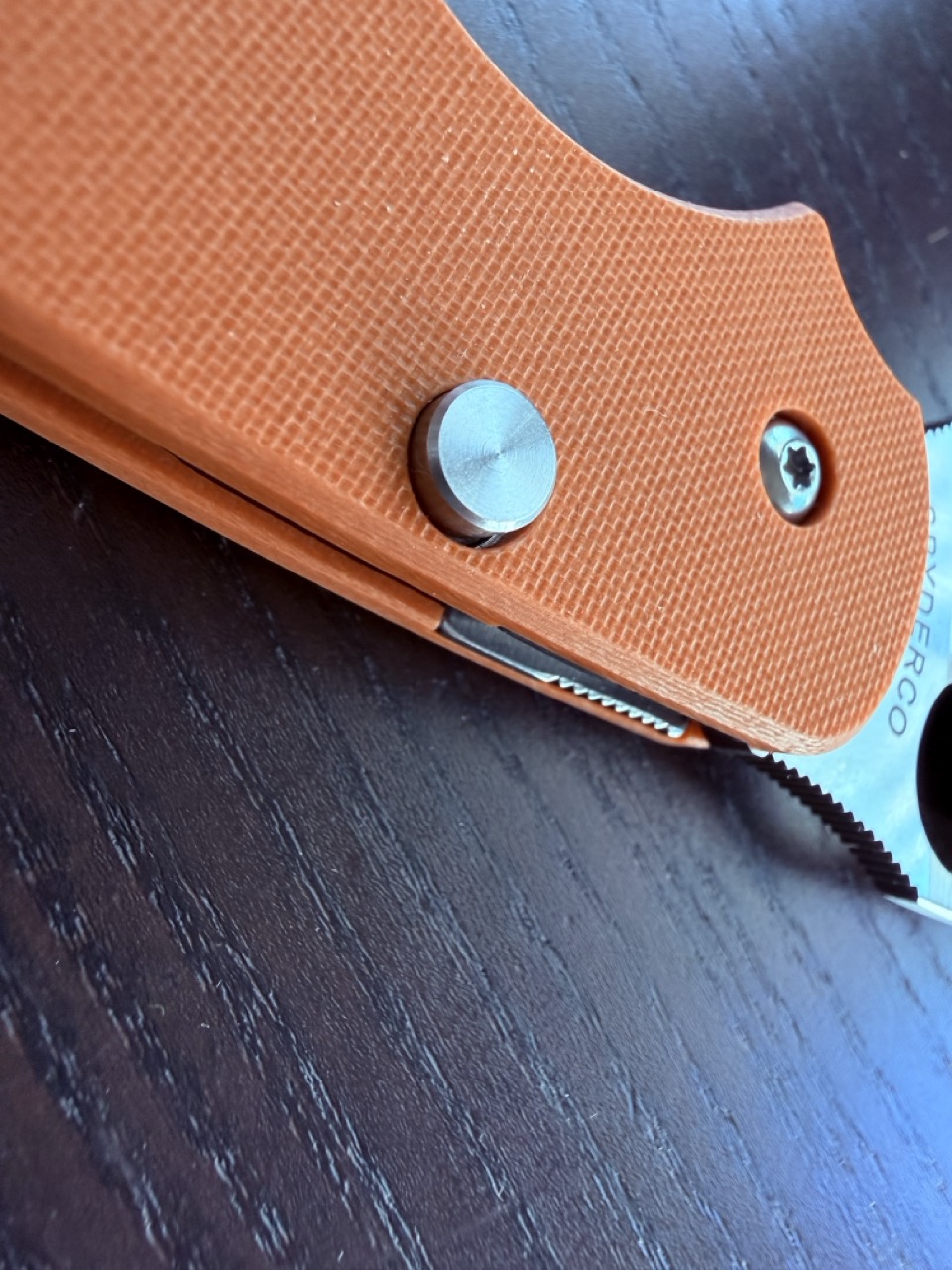
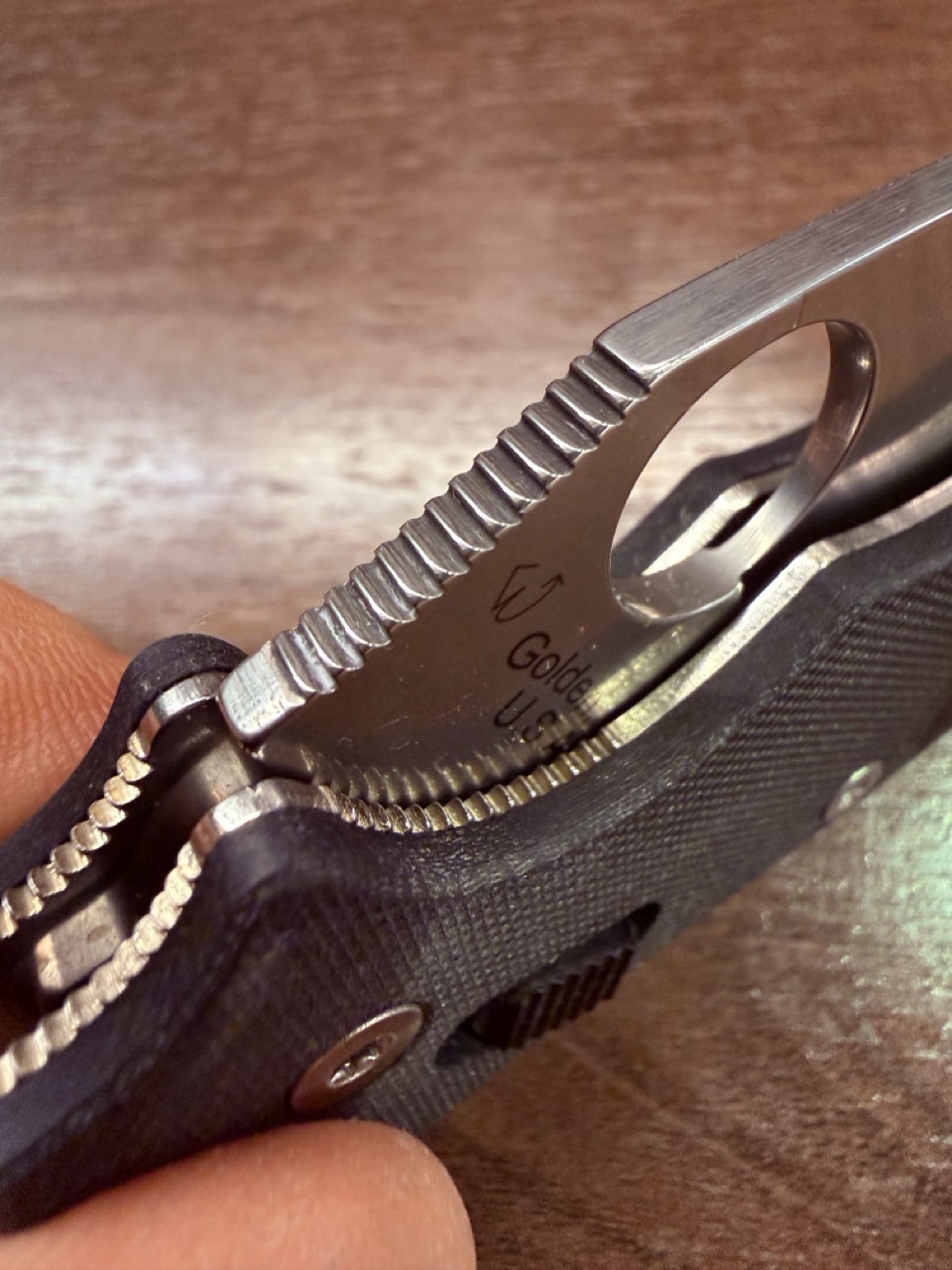
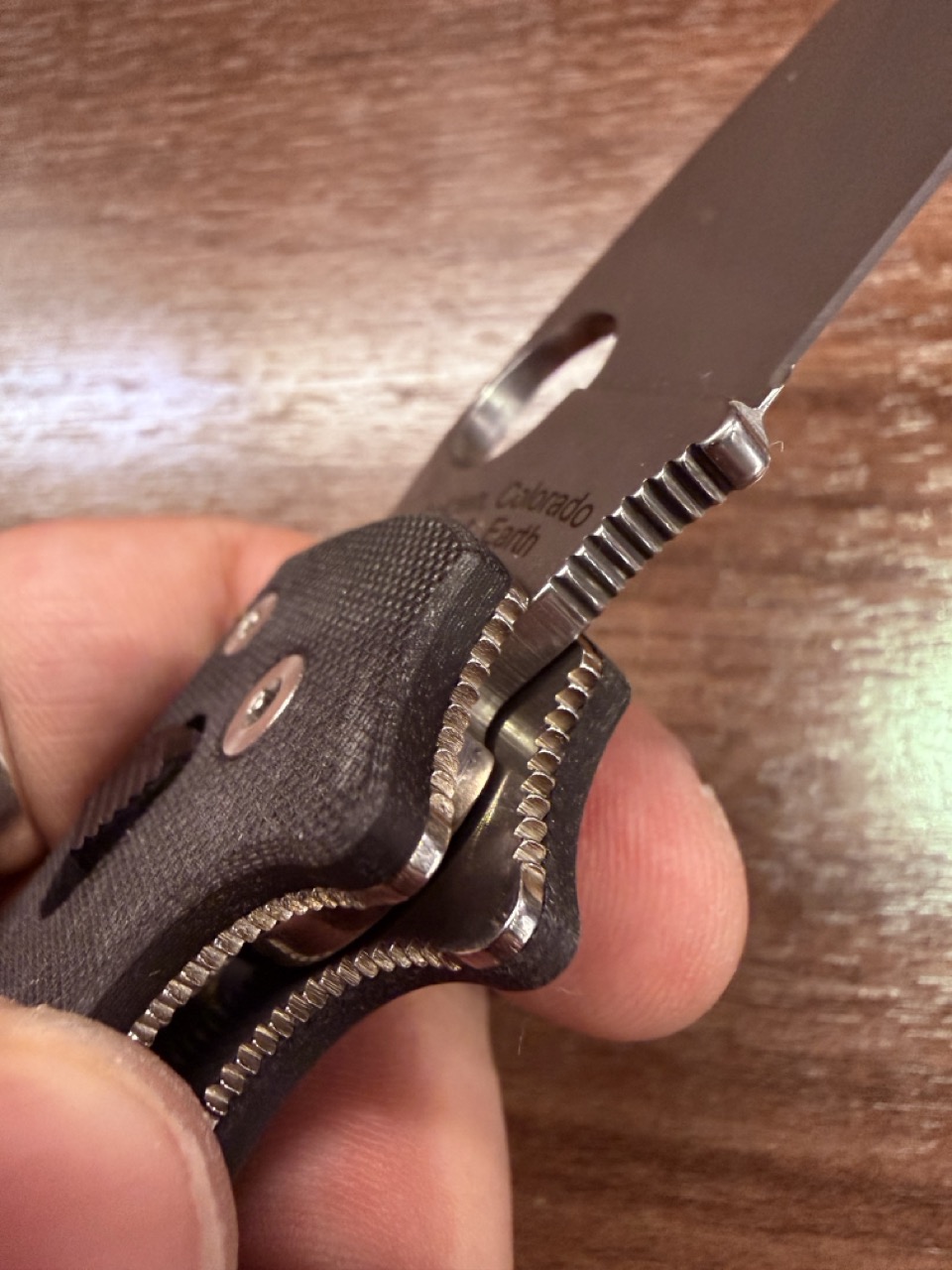
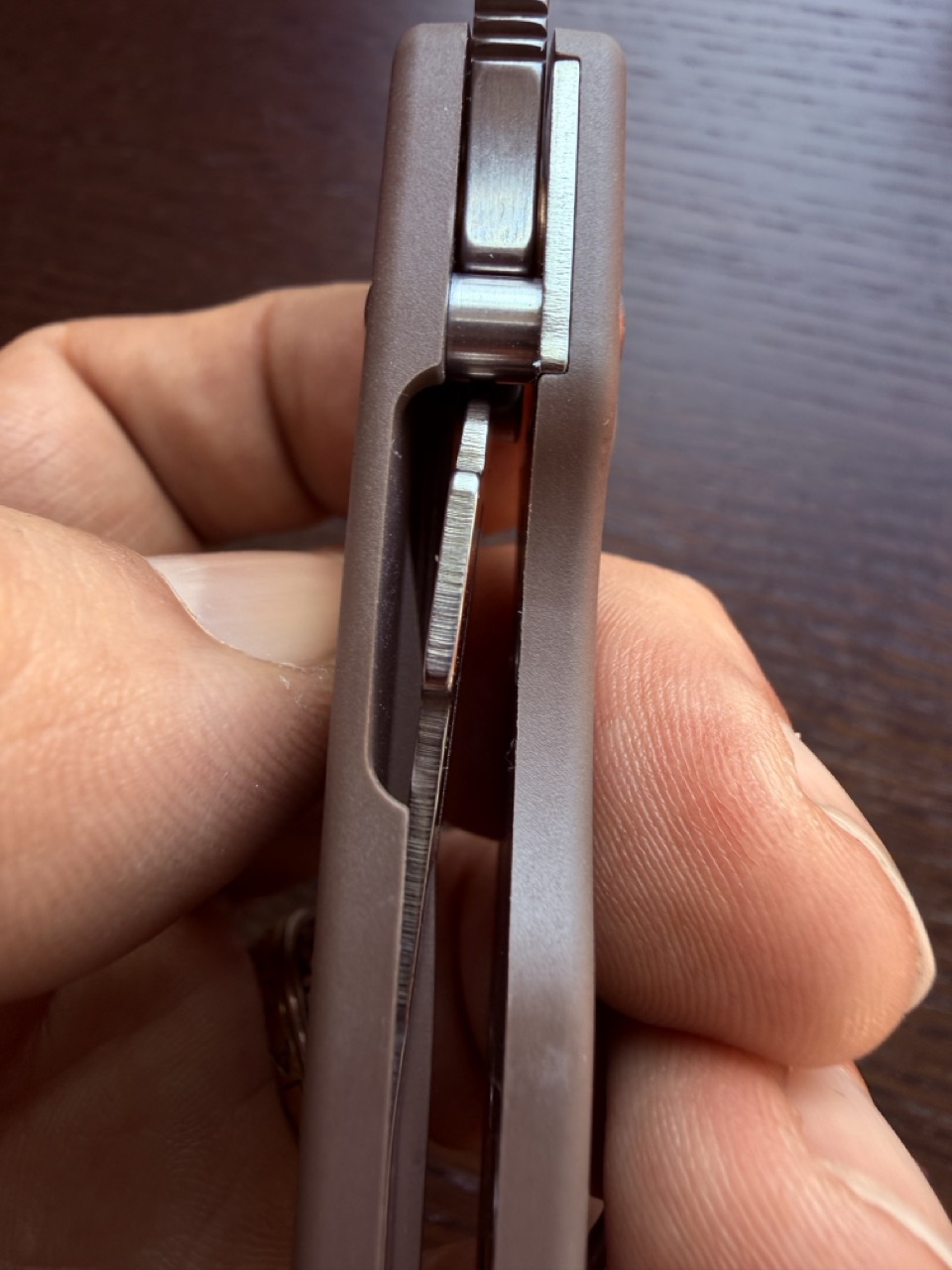
The scale’s edges can feel a touch sharp/aggressive out of the box, but I usually knock the initial bite down slightly with my thumbnail.
Not a big deal.

And yet, in hand, the PM2 LW still delivers that familiar Compression Lock experience: the sharp metallic click, the secure lockup, the controlled drop-shut feel, the confidence under pressure. The knife retains the mechanical identity of a “real” PM2 despite having shed nearly a third of its weight.

That balance is far harder to achieve than most users realize.

Too much liner removal, and the knife begins to feel hollow or vague.
Too much FRN flex, and the lock loses its aura of precision.
Too much steel reinforcement, and the entire Lightweight philosophy collapses under its own contradiction.

Spyderco somehow threaded the needle.
In hand, the result is fascinating because the PM2 LW does not feel cheap, nor stripped-down. It feels optimized — almost industrially purified. As though the designers kept asking themselves a brutal question:
“How little knife can we leave… before it stops feeling like a PM2?”
And the answer, apparently, was 76 grams.

So who, exactly, is this new Spyderco Paramilitary 2 Lightweight really made for?
Not the collector seeking desk-jewel materials.
Not the enthusiast who wants maximal heft and polished mechanical theater.
This PM2 is for people who actually carry a knife every day and do not want to feel it in their pocket. Like a ghost… a spirit.
For the light traveler, moving through the world in technical fabrics and ultralight luggage — absolutely yes. The Spyderco Paramilitary 2 Lightweight is exactly on point.
For the architect, photographer, paramedic, cyclist, climber, sailor, or city commuter who notices every unnecessary gram.
For those in the field where every gram really matters — soldiers, paratroopers, operators, and anyone carrying their world on their person — the Spyderco Paramilitary 2 Lightweight makes immediate sense.
For the those who slips a knife into athletic shorts and forgets it exists until the moment it is needed.
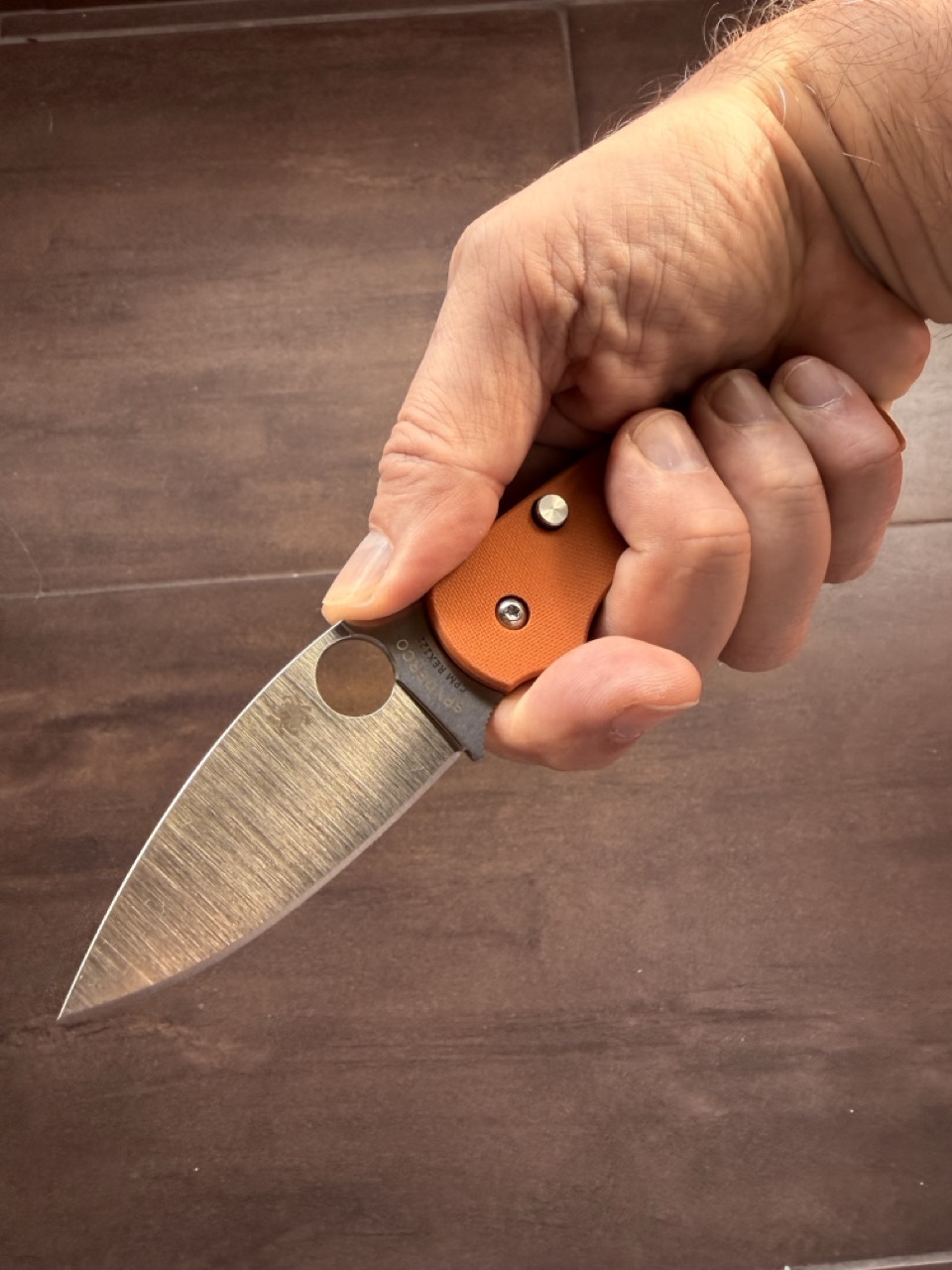
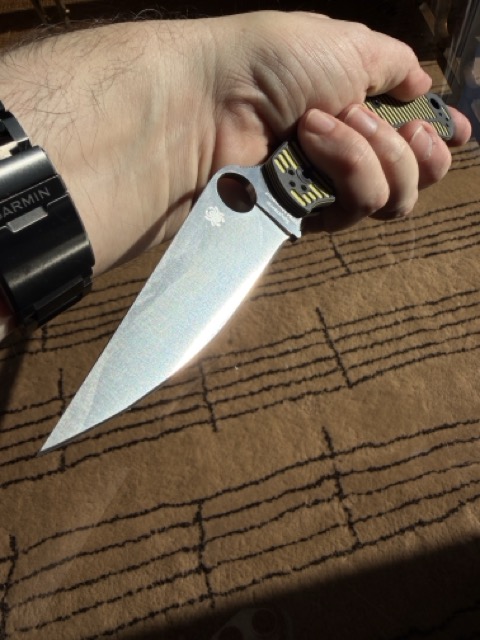
And when needed, the action remains fluid , smooth and effortless, while the absence of heft is almost disorienting at first. This is where the name Lightweight stops being a designation and becomes an identity — carried here to its purest, most unapologetic expression.
Yes—there is something almost pure in handling this Spyderco Paramilitary 2 Lightweight, something slightly disorienting in its lightness. Almost paradoxical.
Elegant, refined, stripped to essentials — and yet fully present in the hand.
It doesn’t try to impress through mass or presence anymore. Instead, it disappears, and that absence becomes the experience itself.
As the late Mark Hollis (*) once suggested, “Only silence is more beautiful than music…” and in a strange way, that idea translates surprisingly well here.
This almost weightless refinement might be the closest thing cutlery has to silence: a design so resolved it no longer insists on its own existence, only its function.

The genius of the Lightweight is psychological as much as physical. A heavy knife asks for commitment. A 76 grams PM2 becomes invisible — and invisibility is the highest achievement in EDC design.

Ironically, reducing the weight also sharpens the very essence of the PM2 itself. The famous blade suddenly feels more dominant, more alive. Several early owners have described the sensation as though “all the weight is in the blade,” giving the knife a startling immediacy in hand.

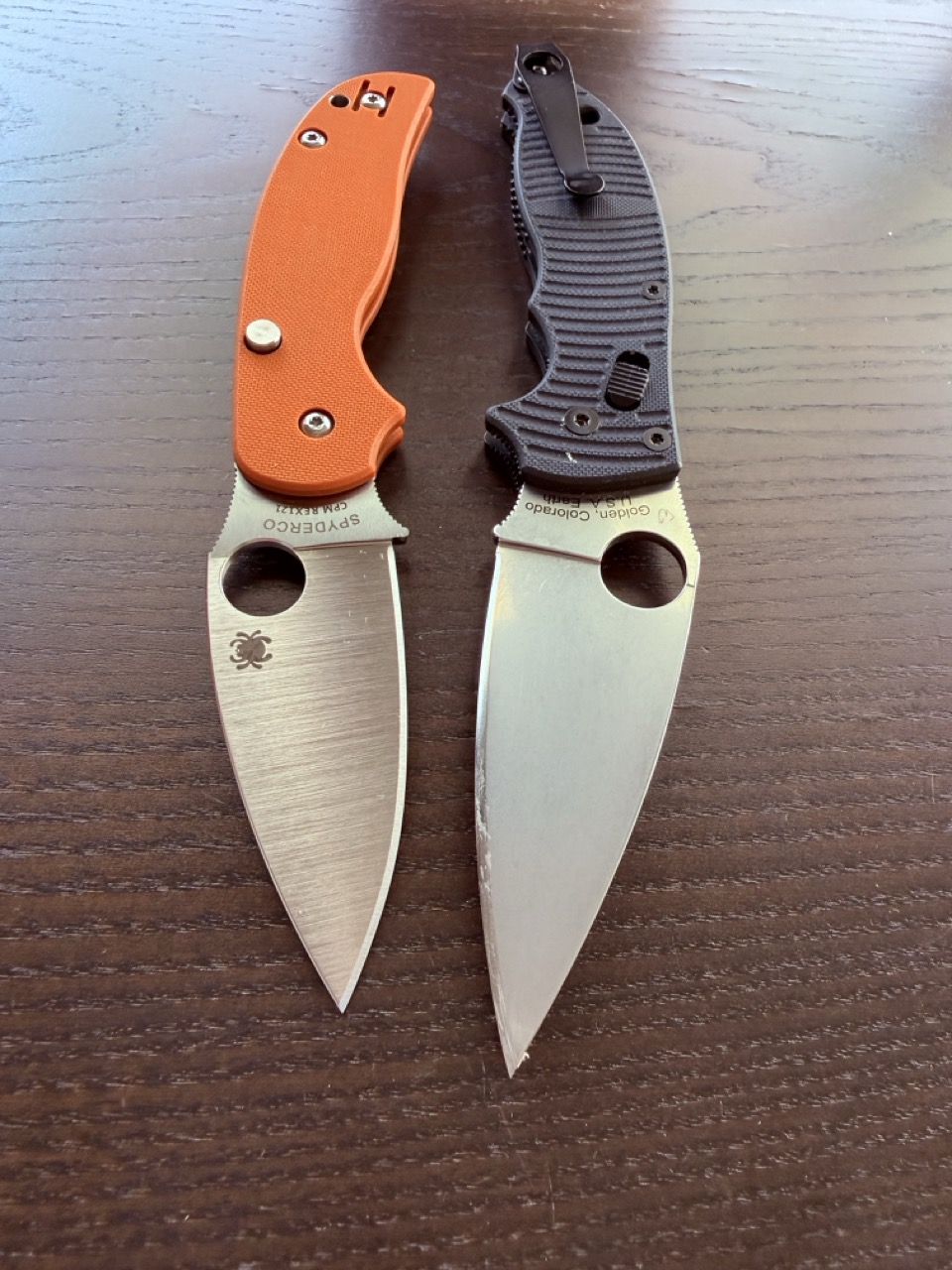
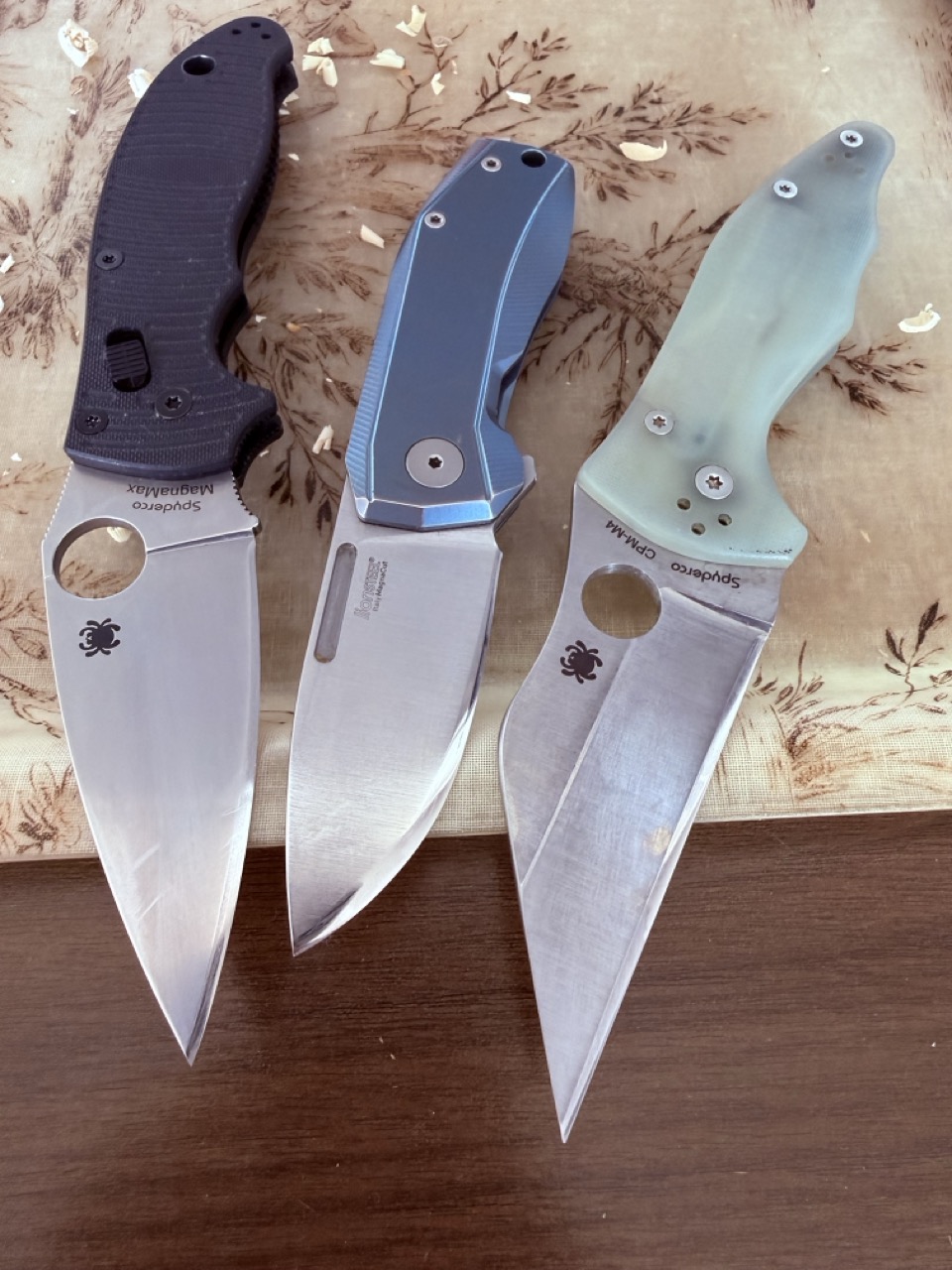
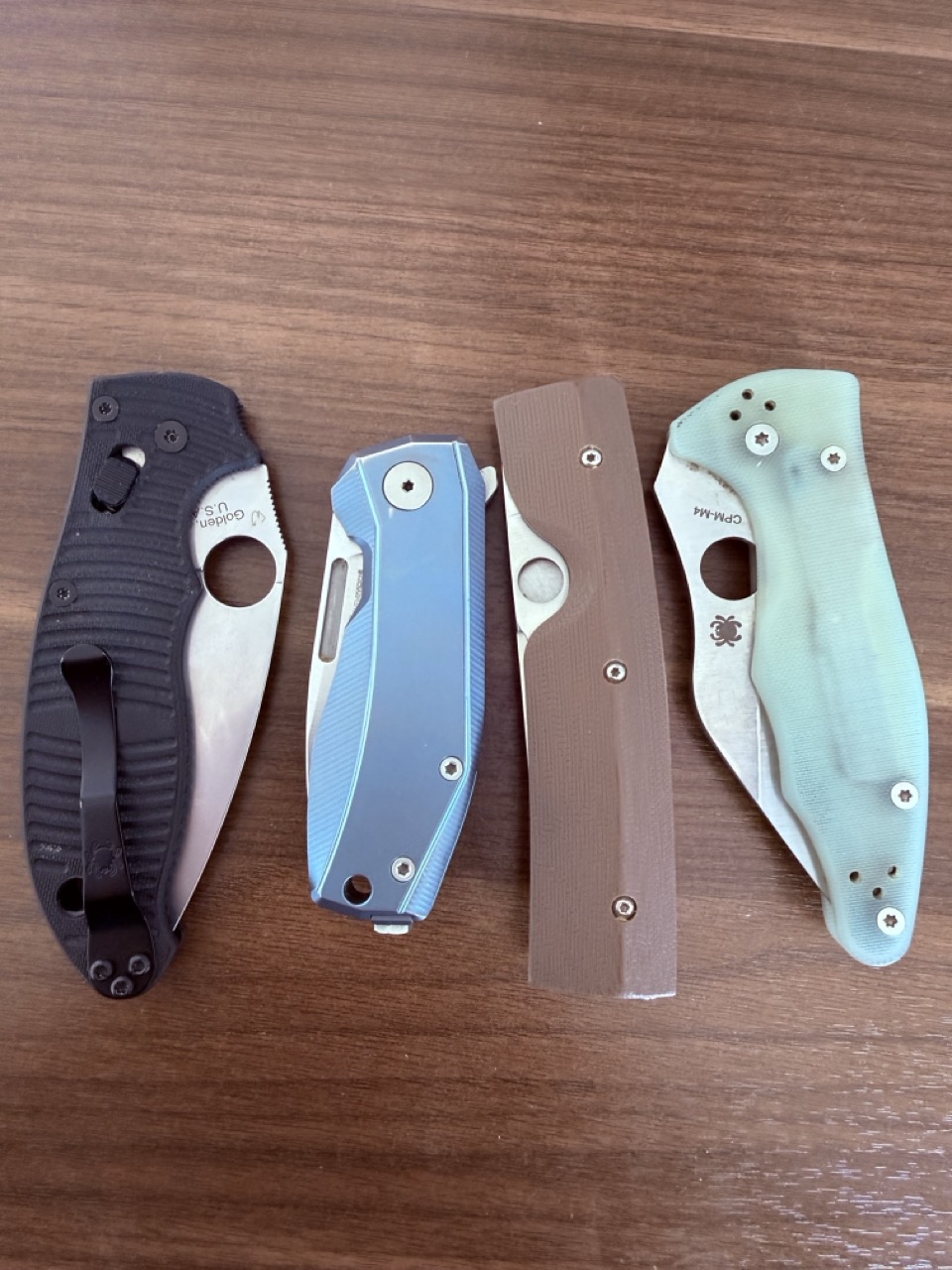
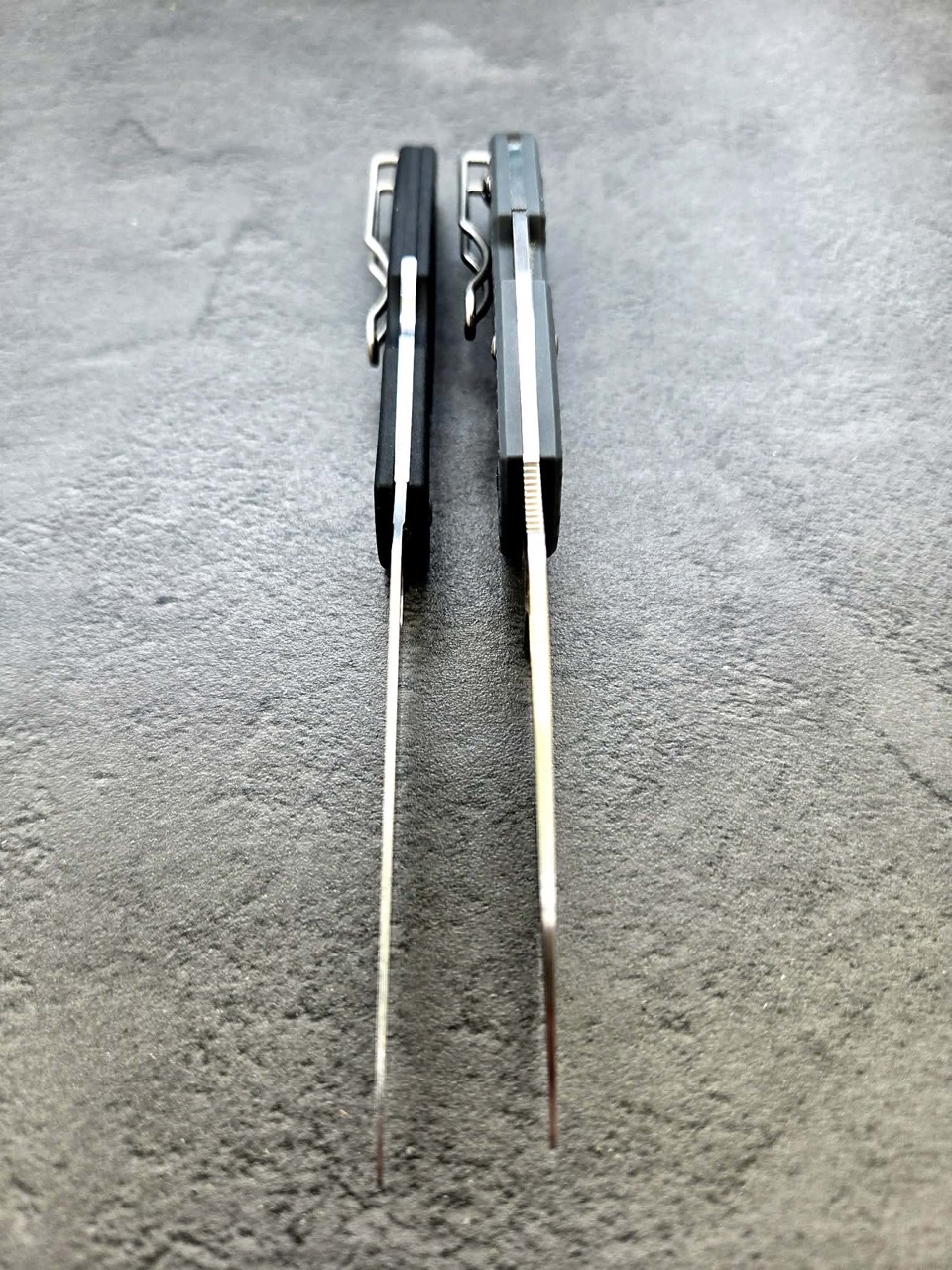
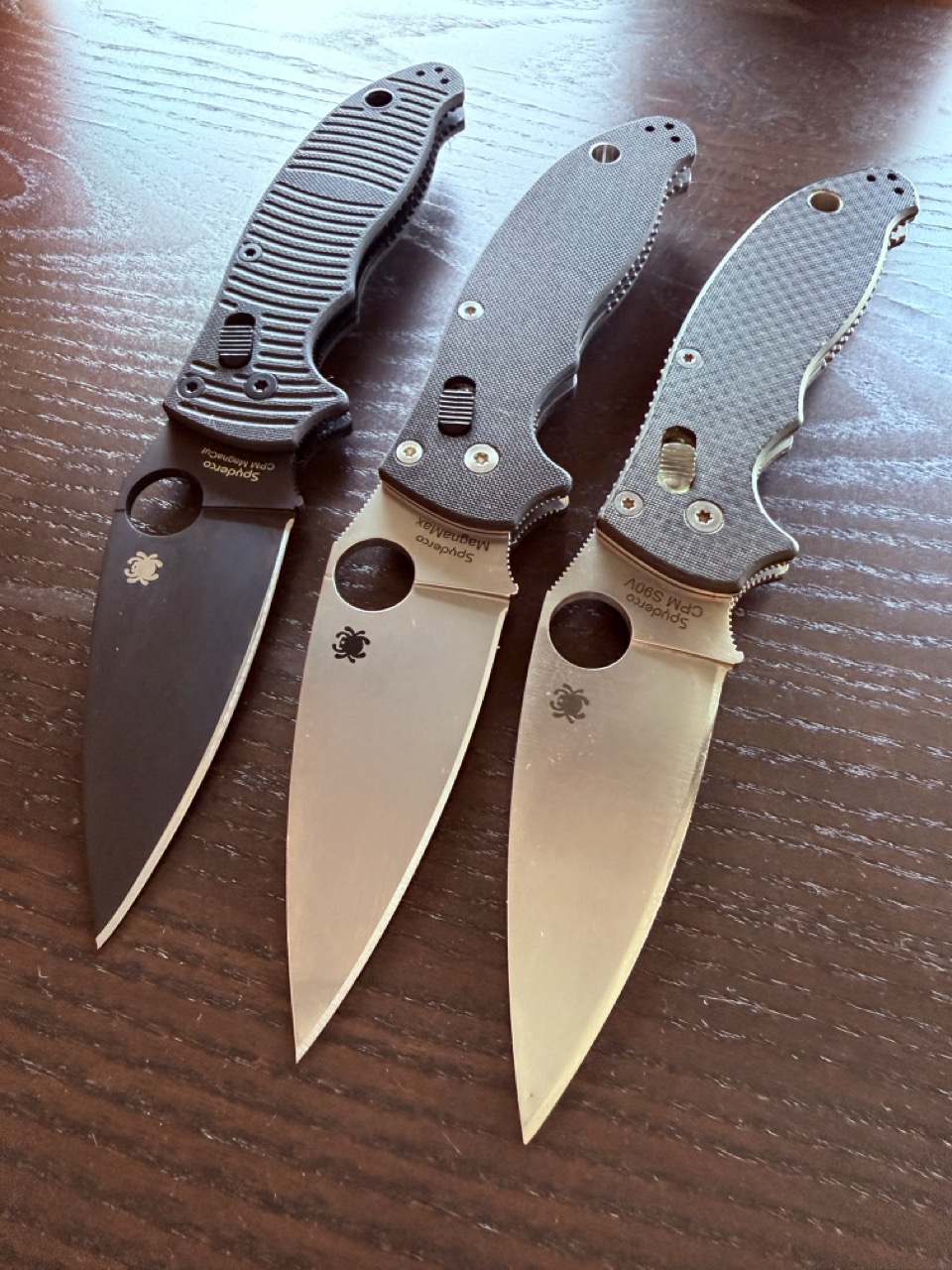
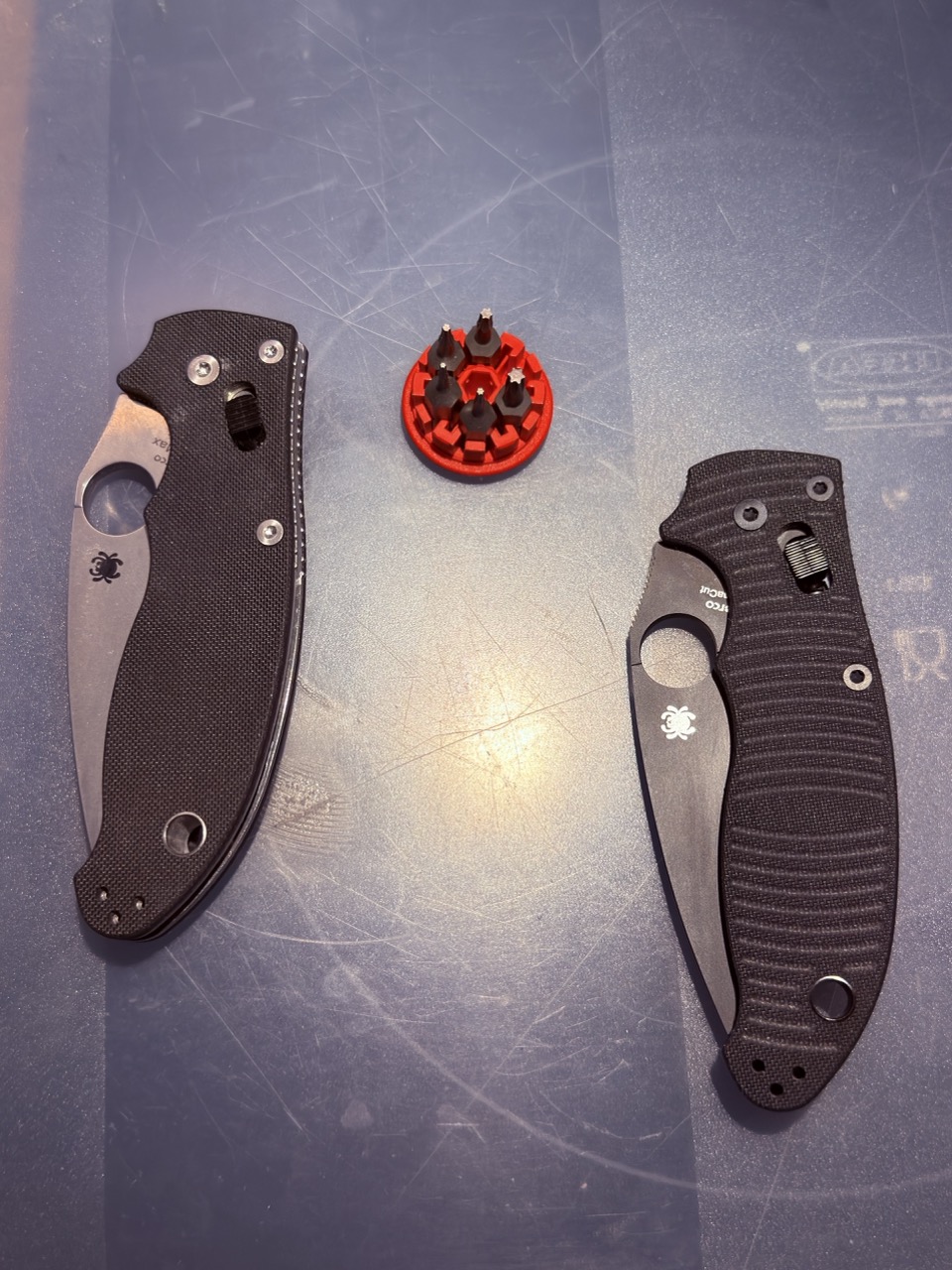
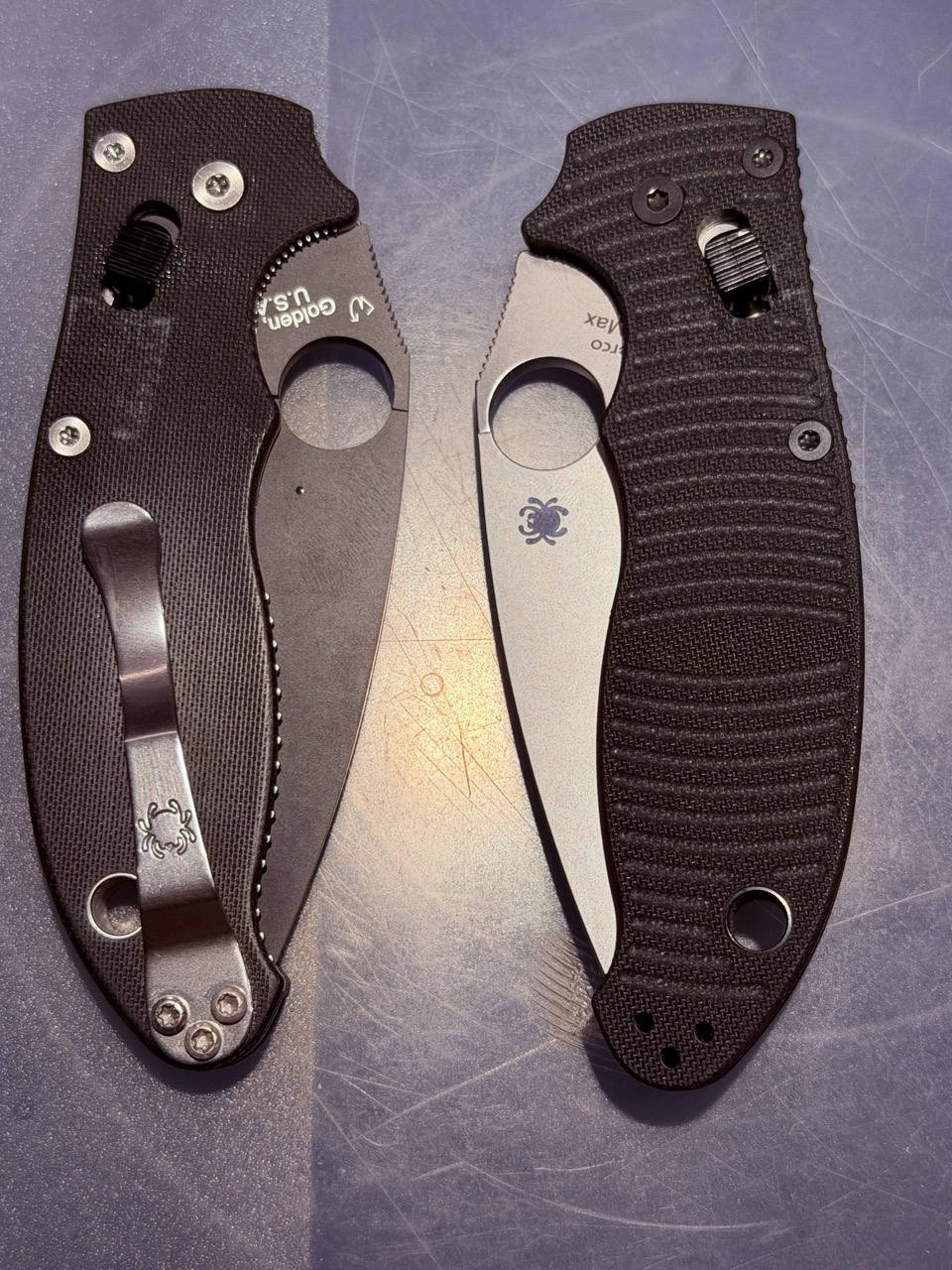
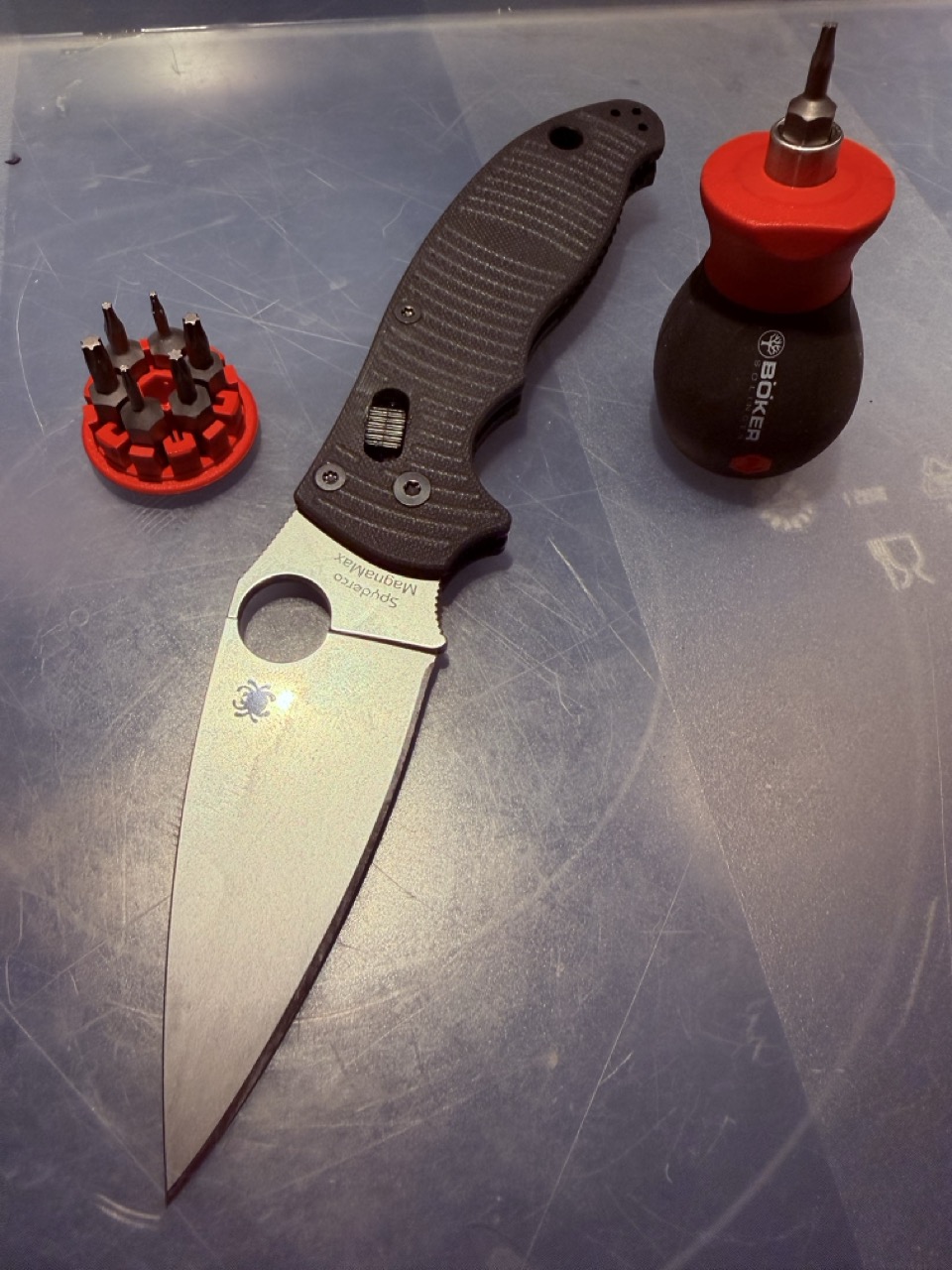
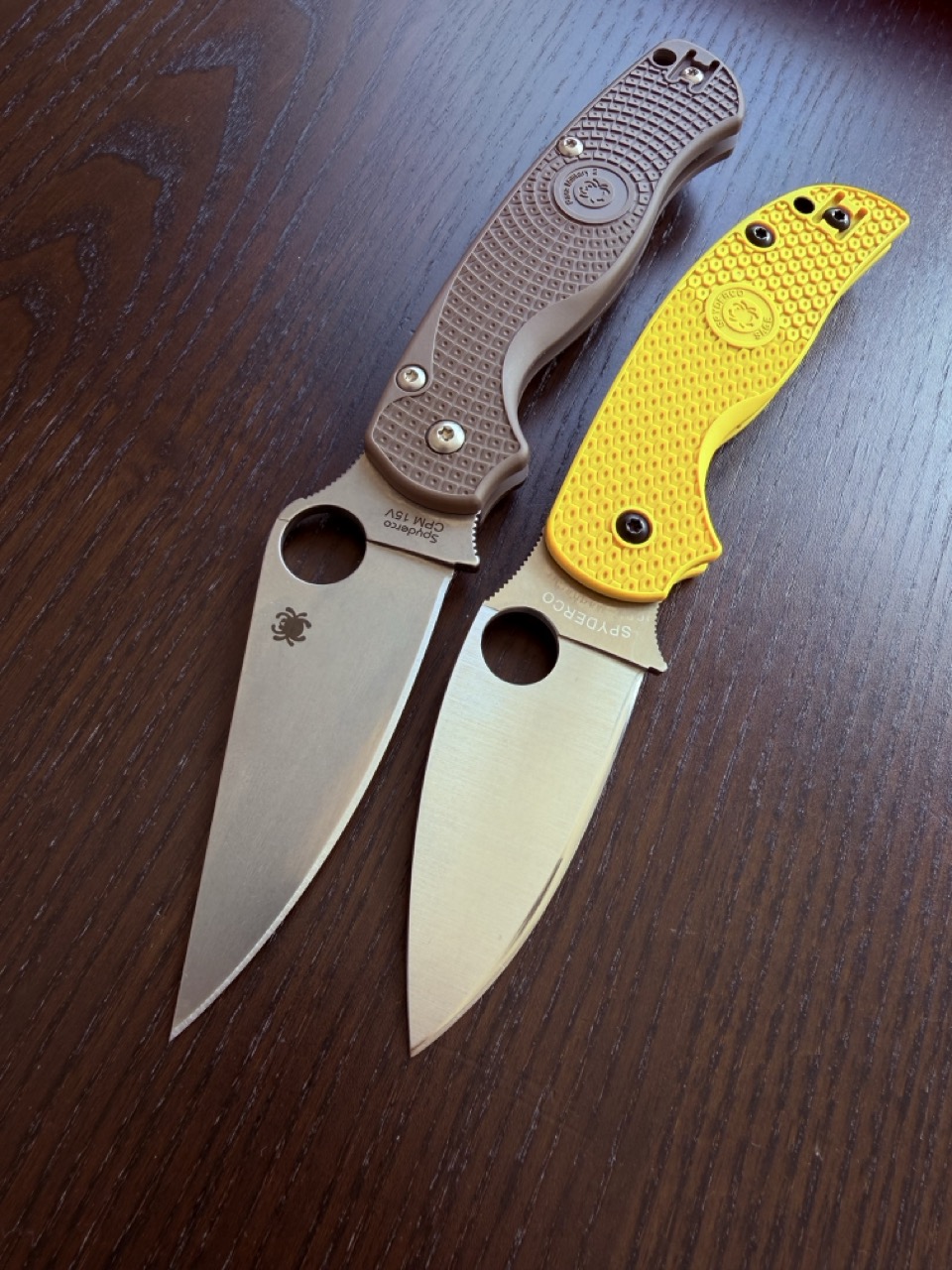
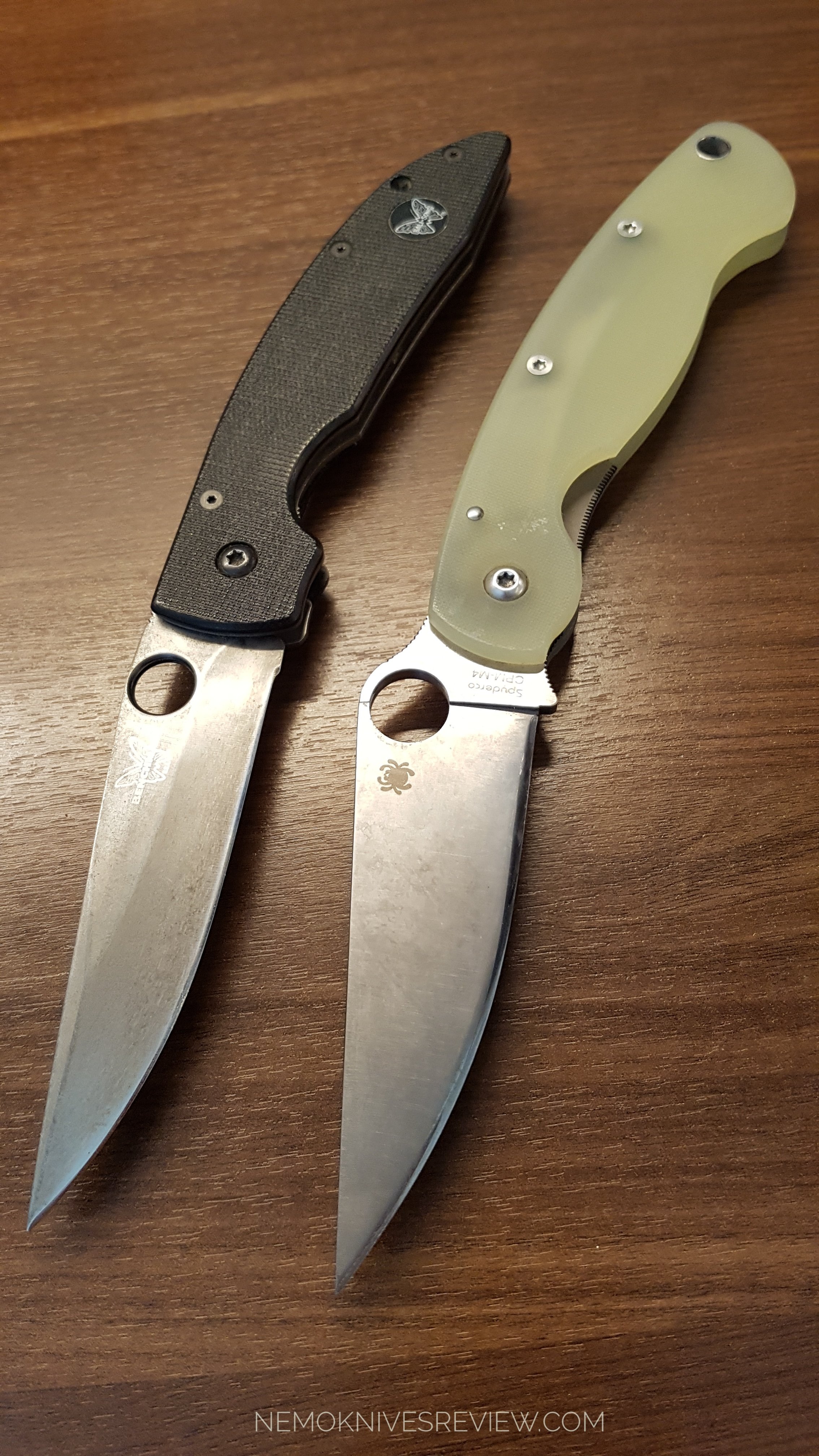
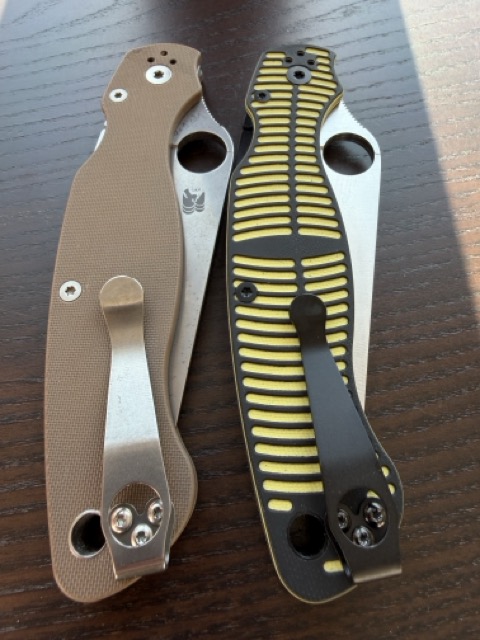
Pictured beside a 120-gram Spyderco Military 2, the contrast becomes almost absurd.
Of course, the Lightweight will not seduce everyone.

Some users will always prefer the denser, almost bank-vault solidity of G-10 scales and full steel liners. Others simply enjoy the tactile indulgence of heavier materials. (I once installed Flytanium bronze scales on a Spyderco Para 3. The result was magnificent — and roughly as subtle as carrying a ship anchor.)

And that is perfectly fair, because the classic G-10 Spyderco Paramilitary 2 remains one of the greatest production folders ever created.

But the Lightweight introduces something unexpectedly contemporary to the platform: efficiency without compromise.

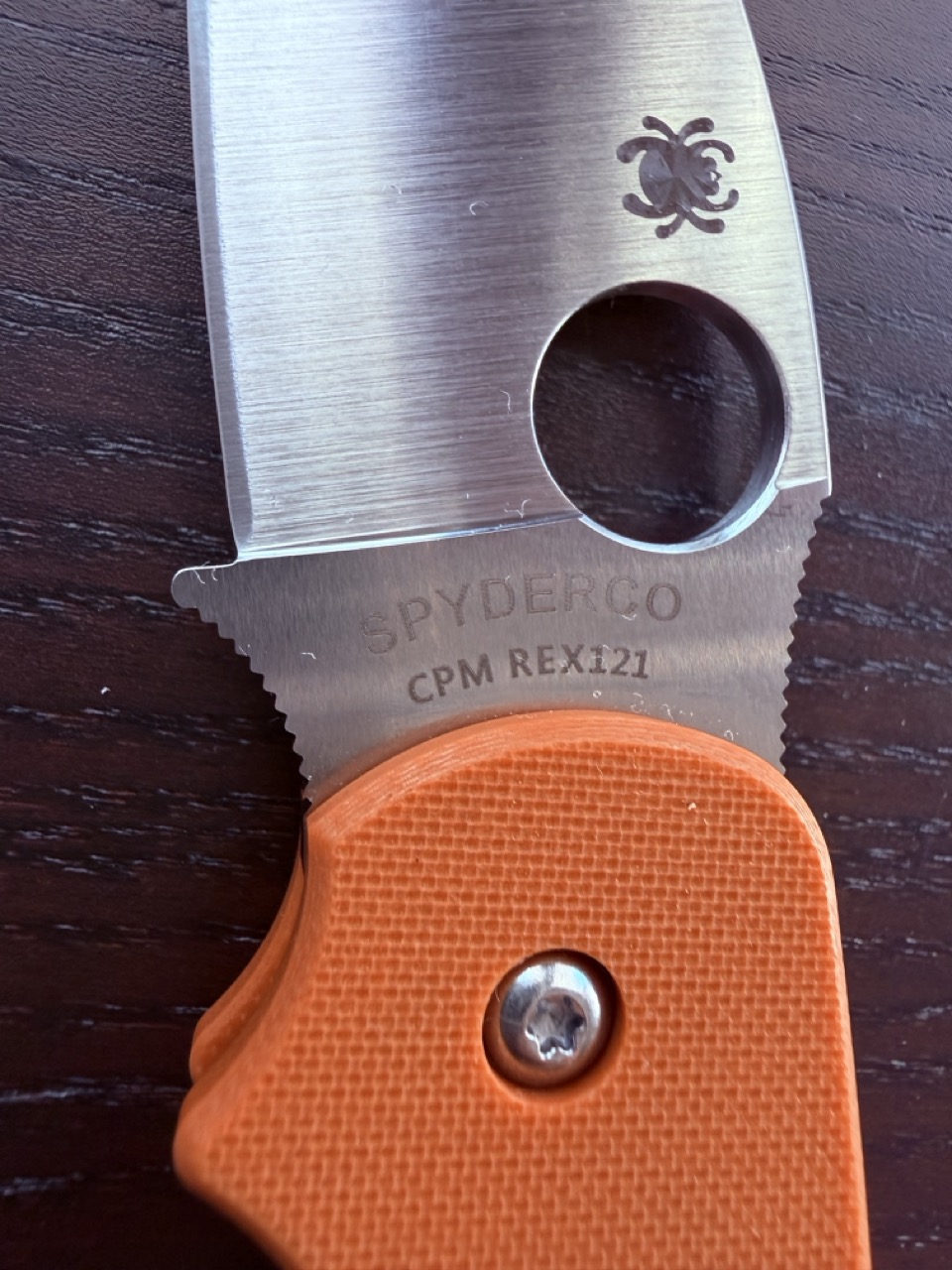
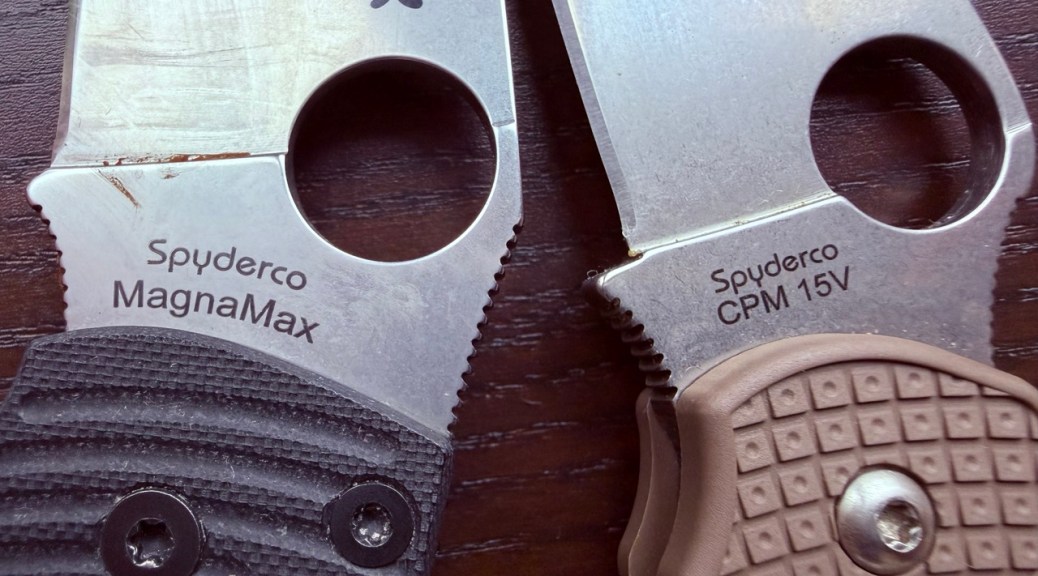
This particular example happens to be a Sprint Run equipped with CPM 15V — a truly high-octane alloy. Yet the steel is almost secondary to the broader philosophy behind the knife. Much like the celebrated 15V Para 3 Lightweight before it, this PM2 LW pairs one of the most extreme high-performance steels available with an astonishingly light 76-gram platform.


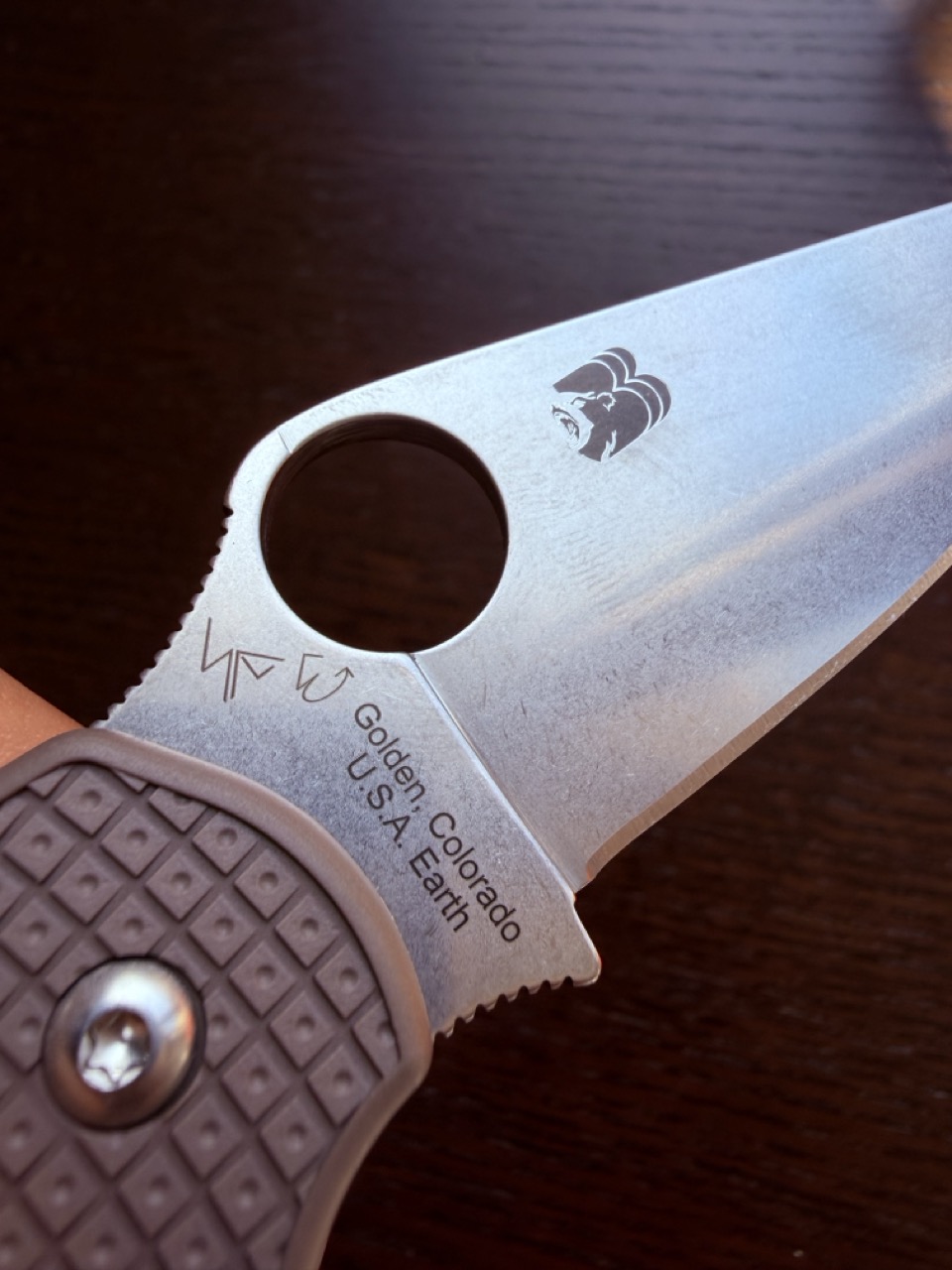
The CPM 15V Sprint Run is the enthusiast’s reading of the idea — a limited-production exercise in maximum performance taken to its logical edge. 15V itself borders on the extreme in the best possible way. With an unusually high vanadium content of nearly 15%, it was developed for exceptional wear resistance and outstanding edge retention. In Spyderco’s implementation, it is further elevated by Shawn Houston’s specialised heat treatment, identifiable by the discreet “Triple B” mark engraved on the blade.

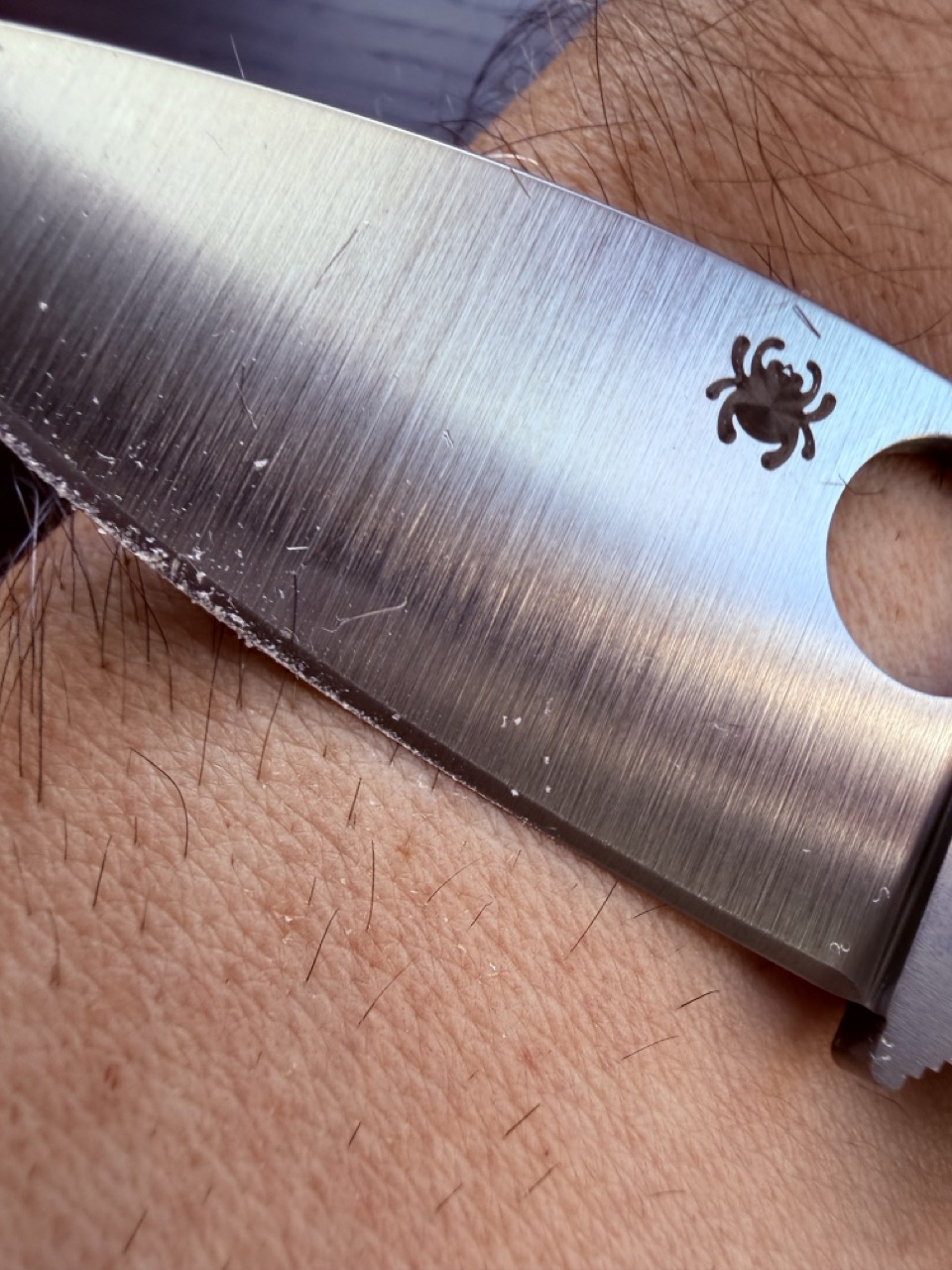
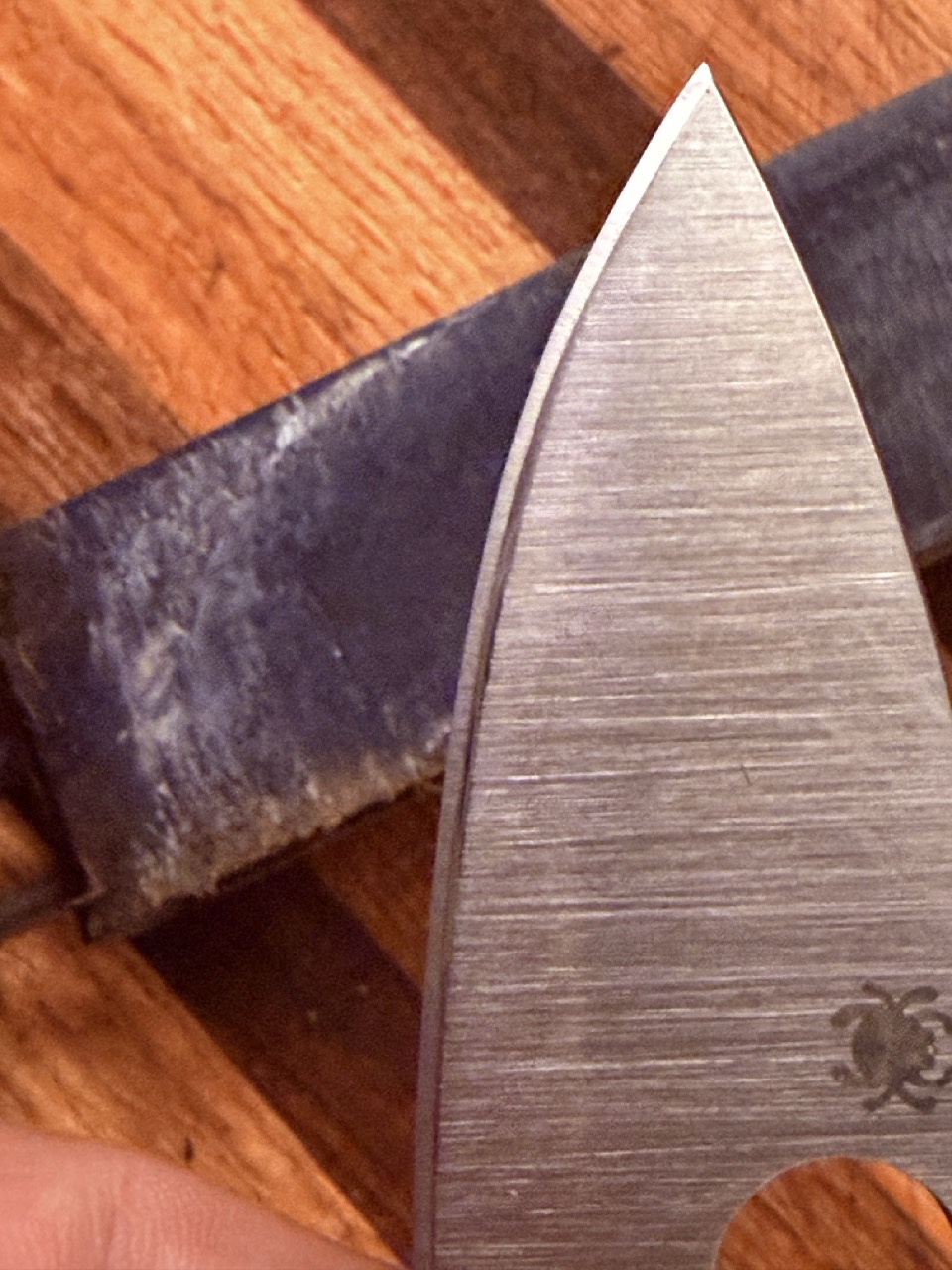
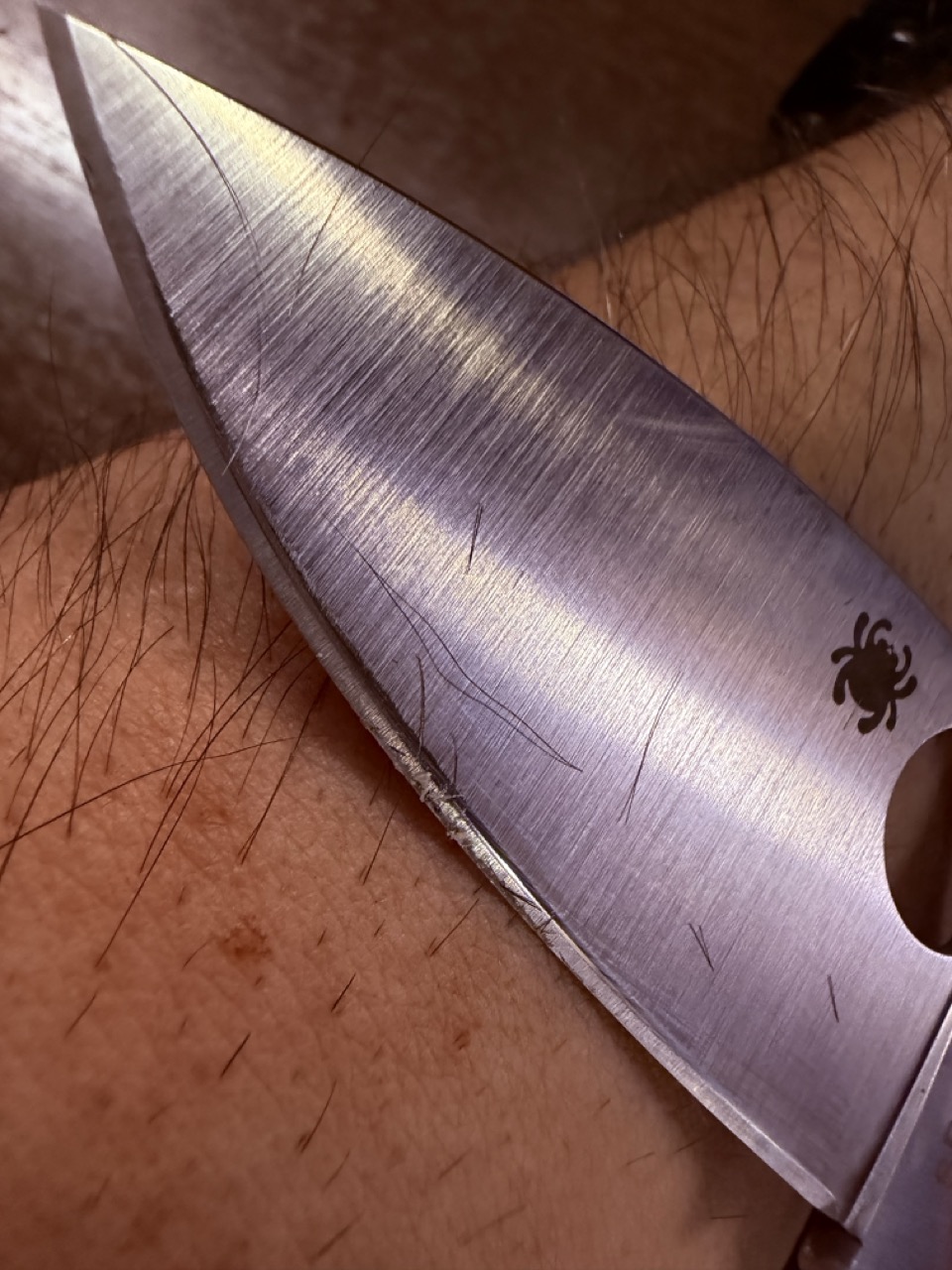
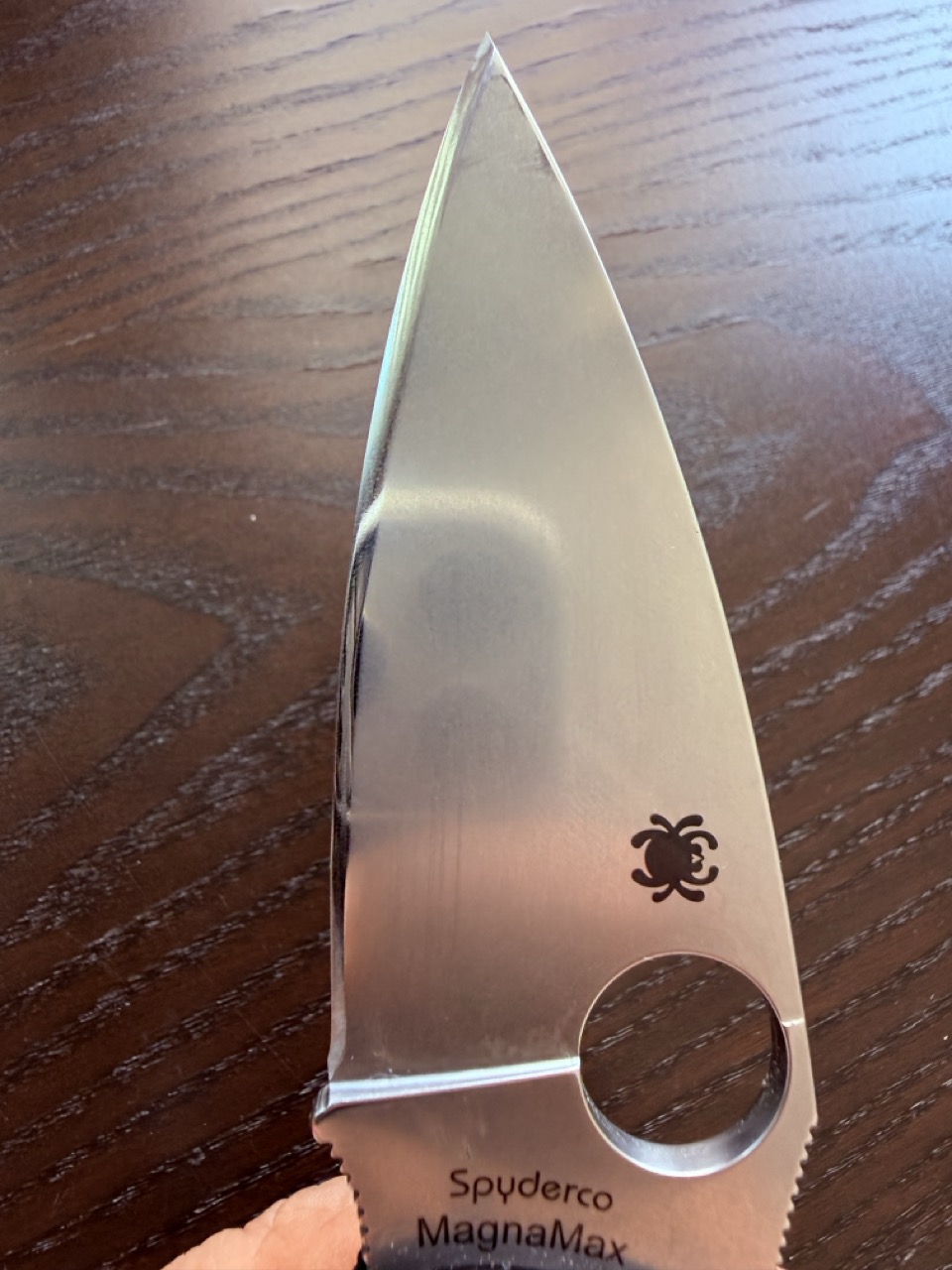
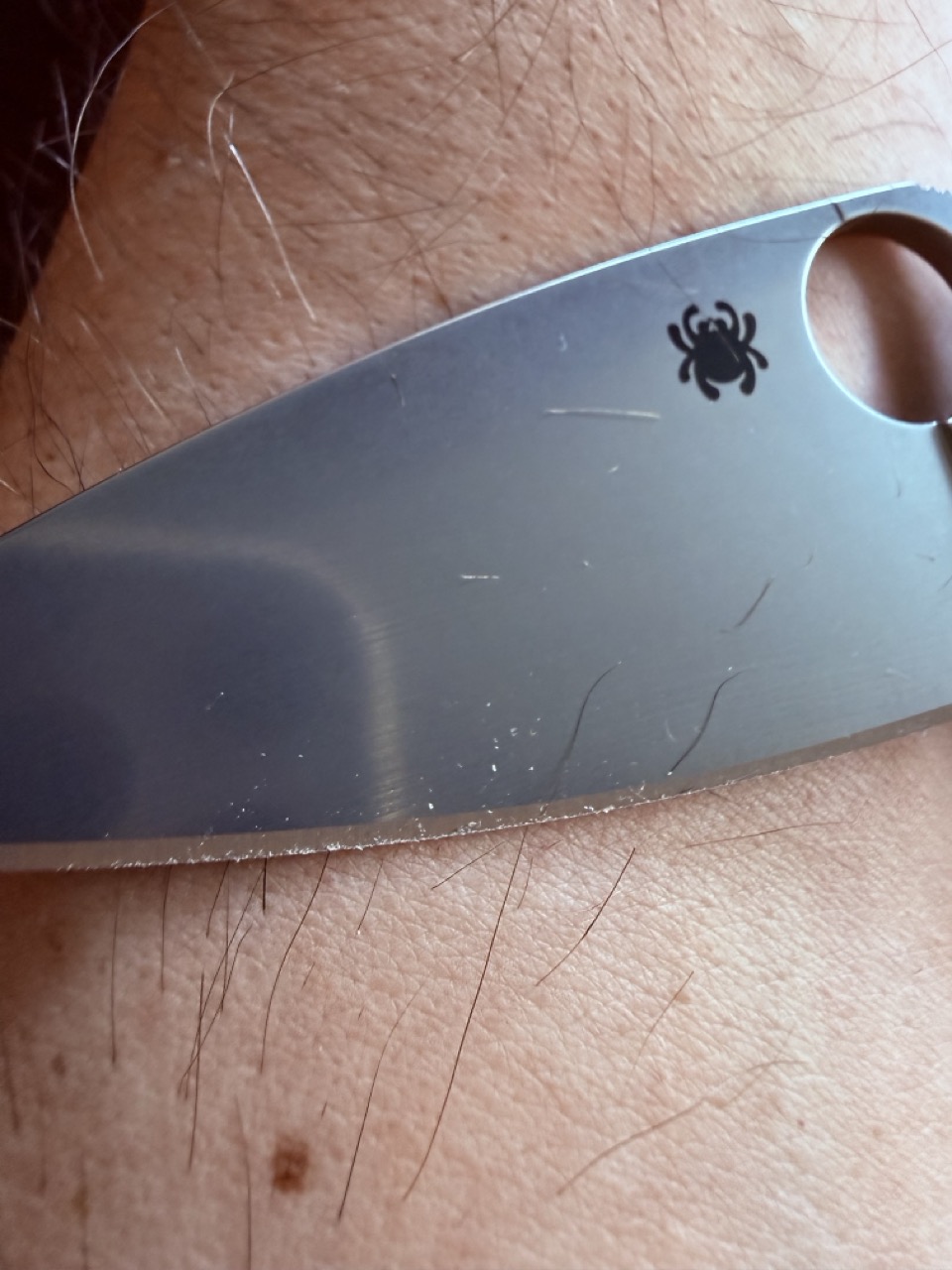
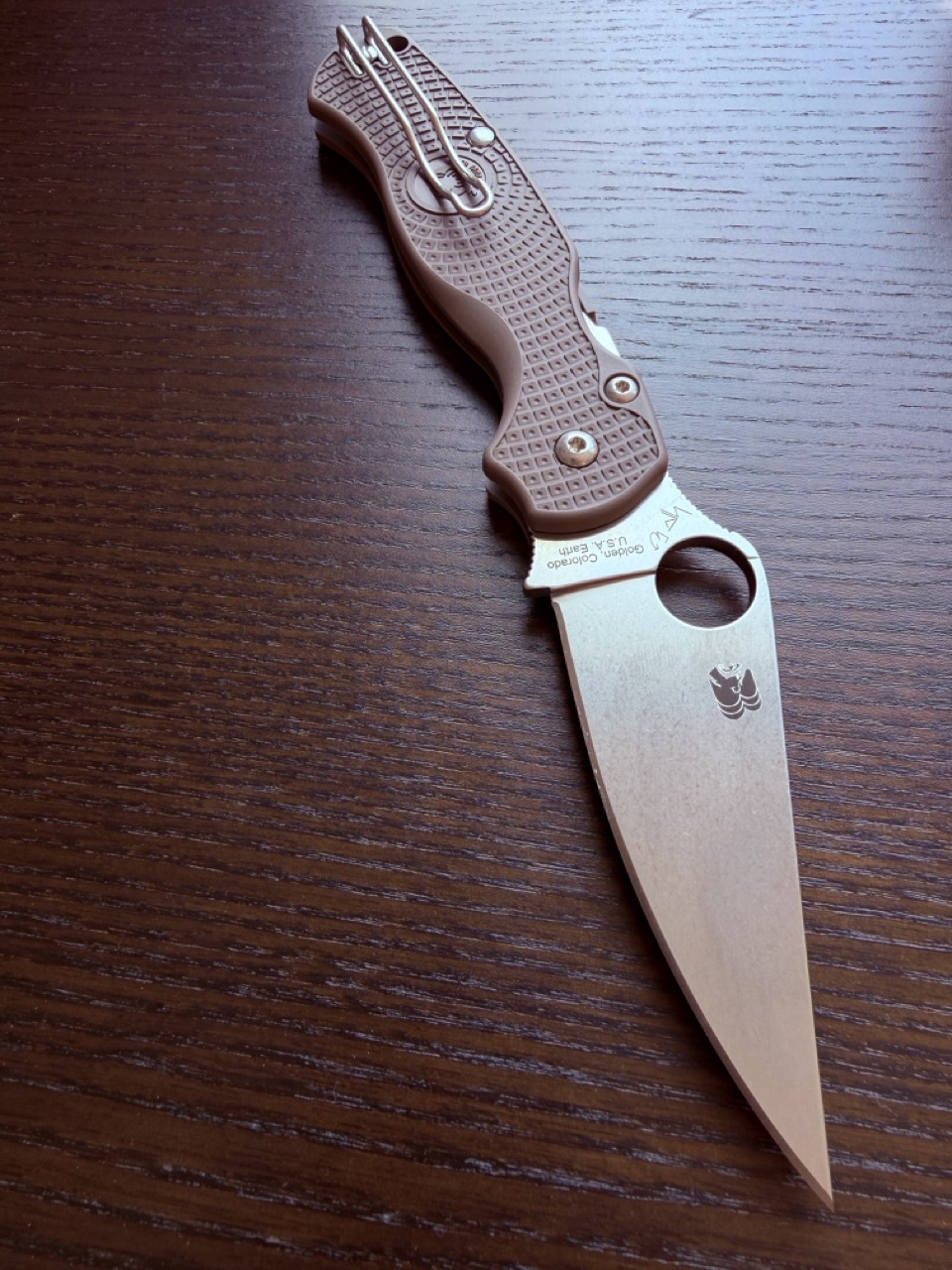
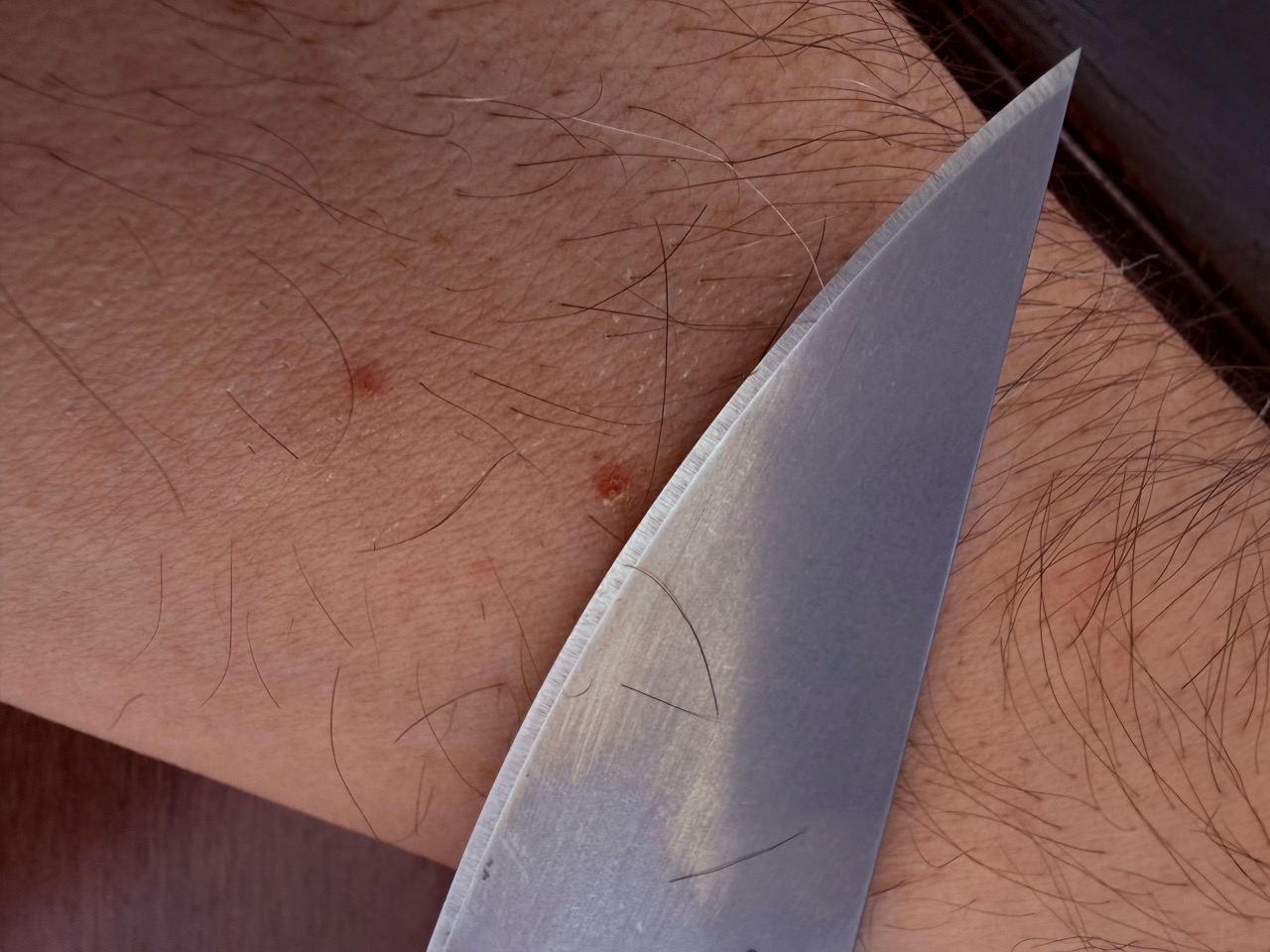
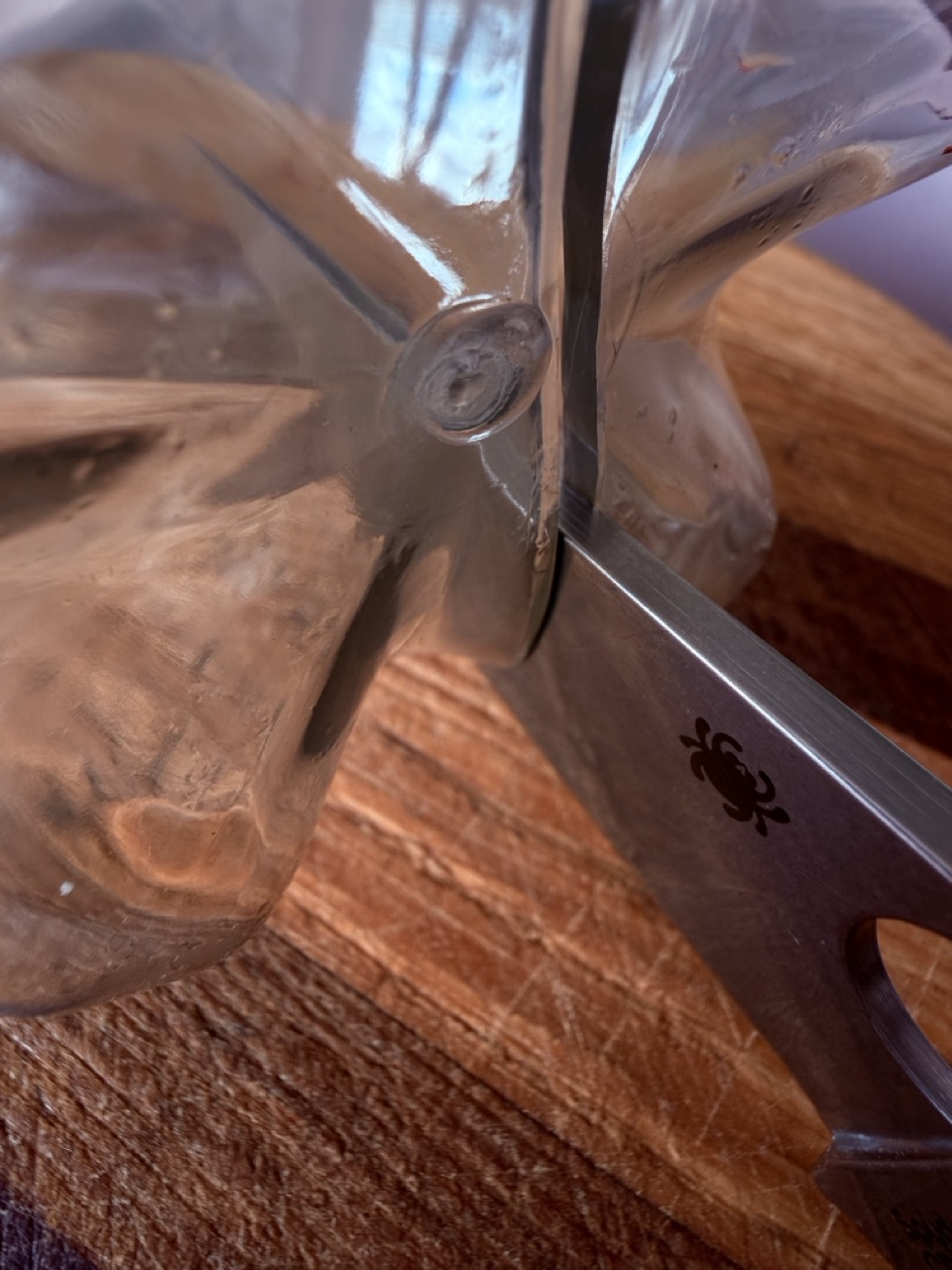
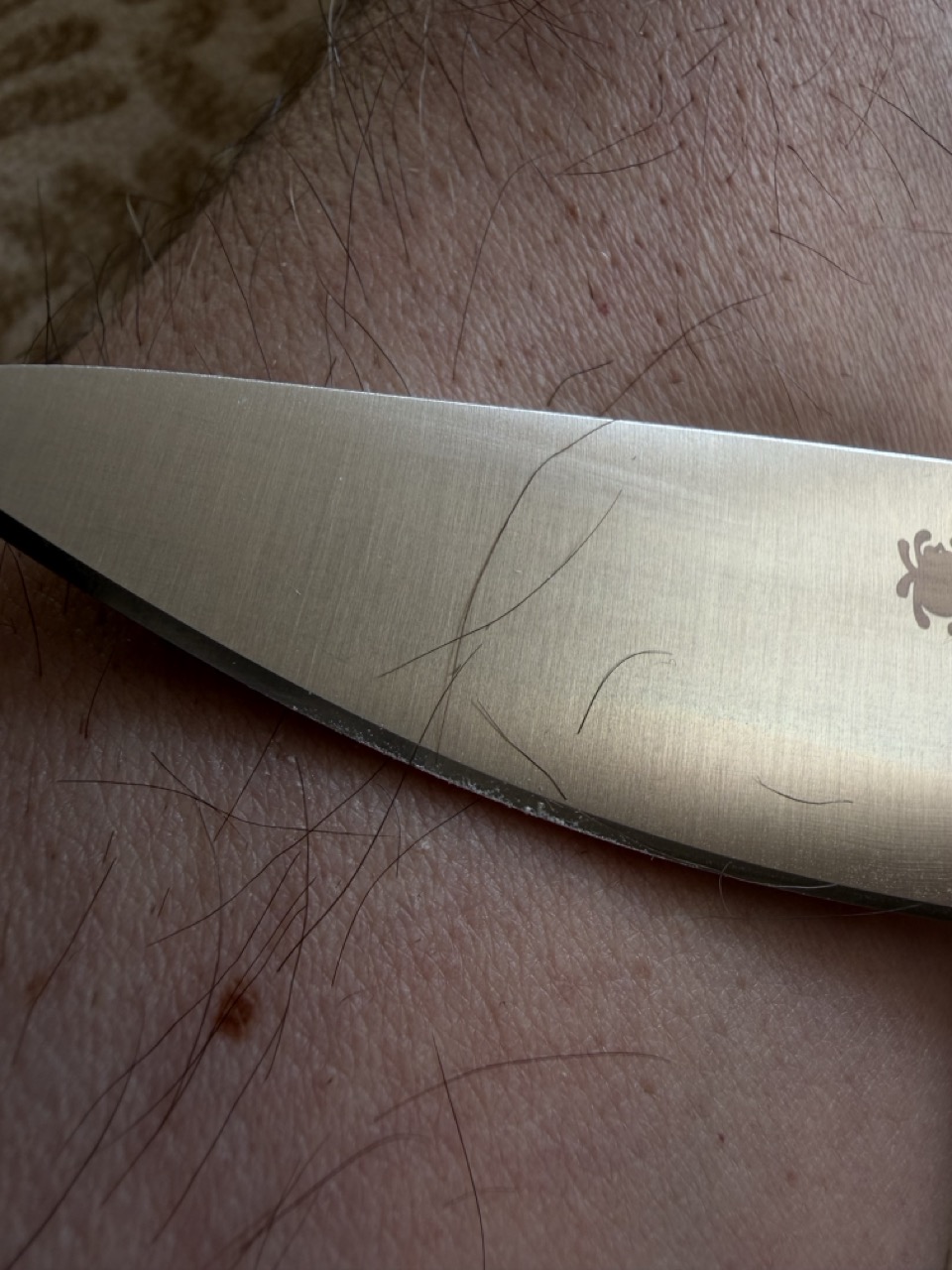
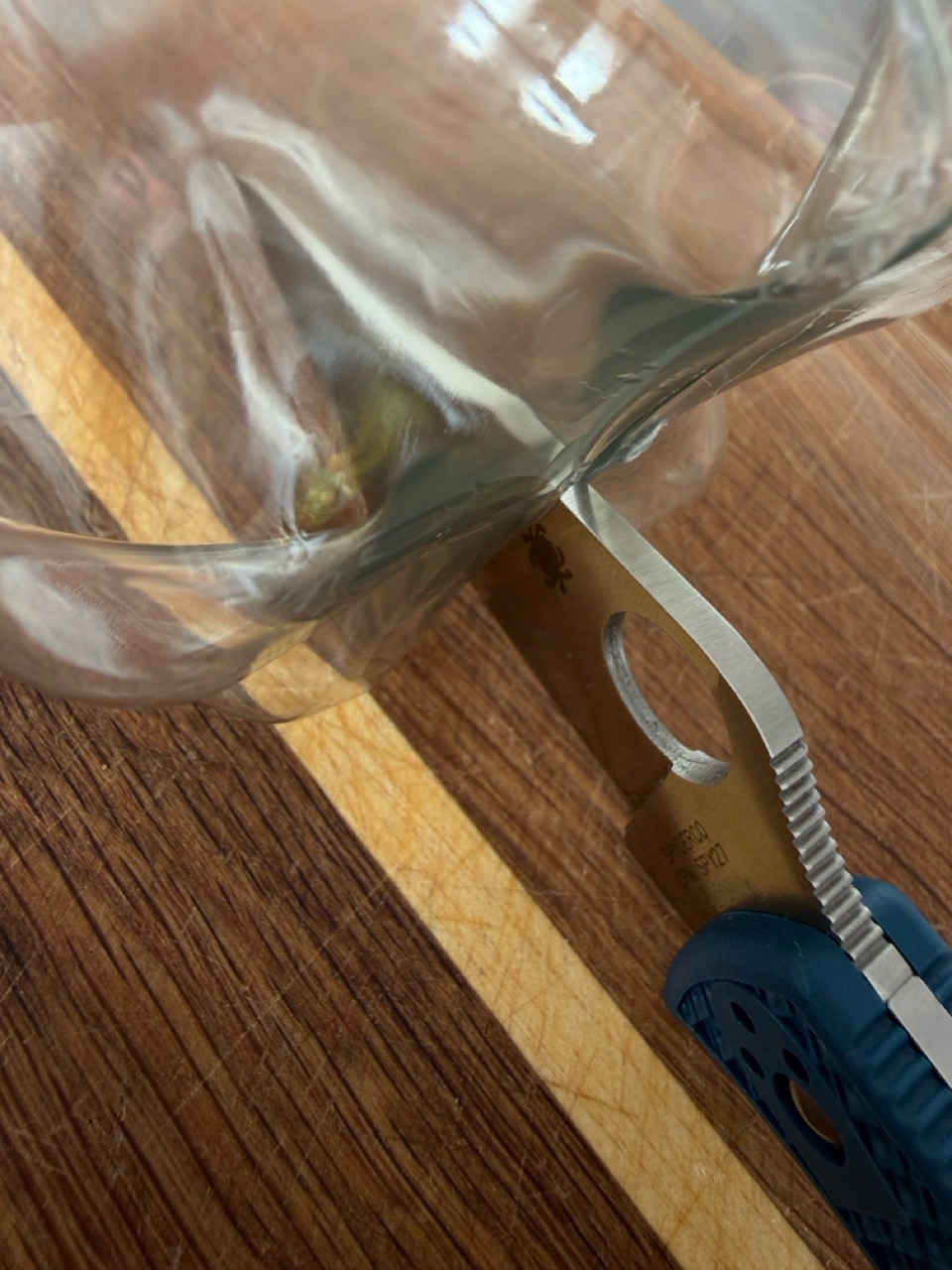
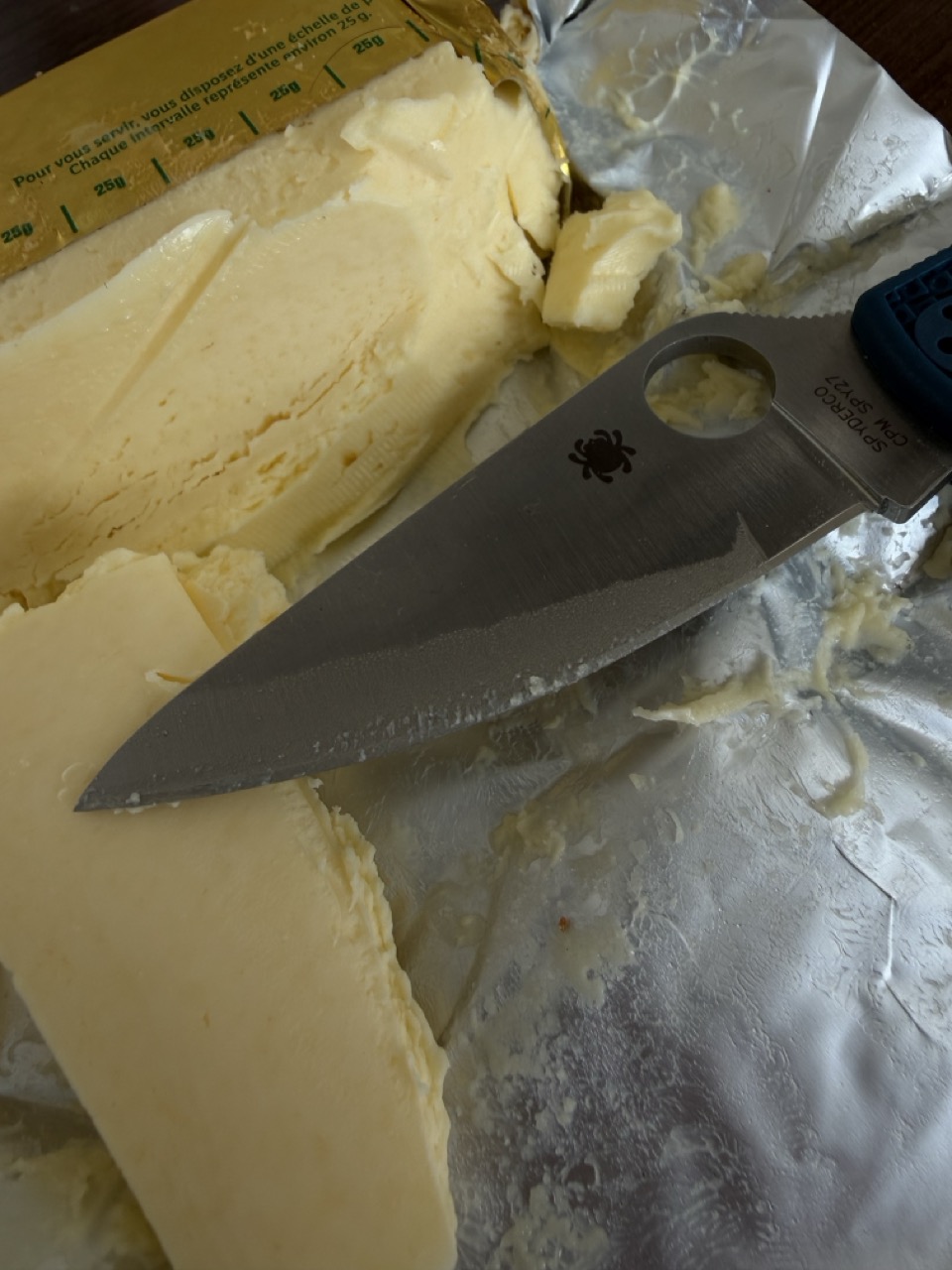
The beautifully stonewashed blade arrives with an edge that is immediately convincing — thin, precise, and unmistakably sharp straight out of the box. In my experience, it may well be one of the finest factory edges Spyderco has ever delivered. Hair-popping performance is effortless, almost casual, and geometrically speaking, even the informal “bottle” or light push-cut tests feel almost trivial. Much better than on my Para 3.

Oh well, the exotic steel may attract the headlines.
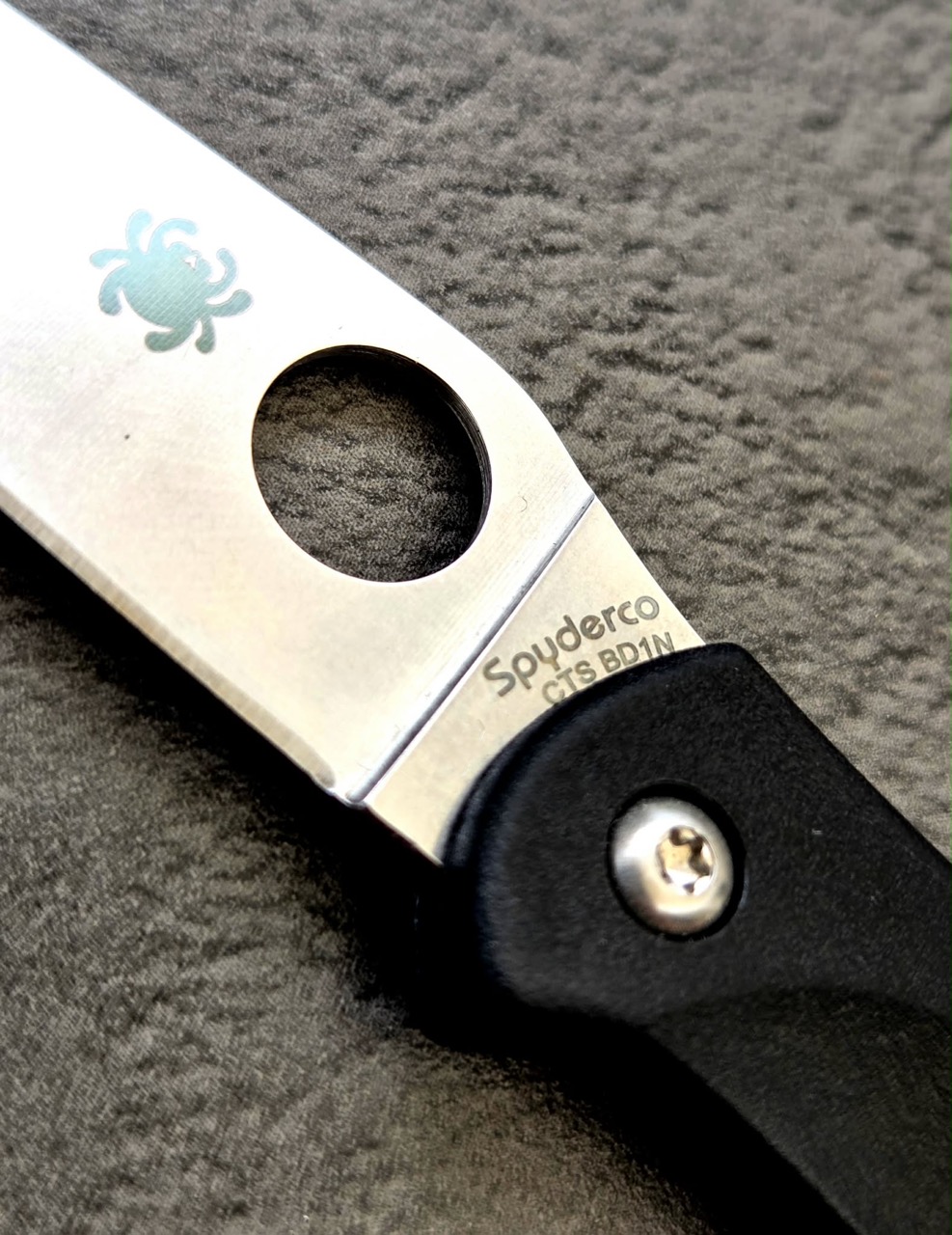
(As a bit of a steel enthusiast, CTS-BD1N on the “vanilla” Spyderco Paramilitary 2 Lightweight doesn’t really excite me — it’s solid, reliable, easy to keep razor sharp, forgiving but uninspiring. I wouldn’t seek it out like I would CPM Cruwear steel, but I’d never pass on a great design just because of it.)

But the real story lies elsewhere: the revelation that one of the most iconic hard-use folders ever produced can suddenly feel almost effortless, friction less… pure.

Not diminished.
Distilled.
Purified.
And distillation brings spirit.
Spirit is light.
And this purity is no lie.

Disclaimer: This knife has been provided through Spyderco’s Ambassador Program, upon my own request. Thank you to the Spyderpeople for letting me review it. 

(*) For a musician and singer, Mark Hollis is unusually interested in silence, in what could be described as the gaps and intervals between notes. To listen to Spirt of Eden (1988) and Laughing Stock(1991), the last two albums by Talk Talk, the band of which he was singer and principal songwriter for more than a decade, is to encounter a music of fragments and dissolution, his murmured vocals often simply fading away as a song does not so much end as expire.

Spyderco Military 2 Salt – C36GBKYLMCP2 – From ATS-34 to the Salt Age


If you were around in the 1990s, you remember the Steel Wars.
Back then, the aspirational trio was ATS-34, 440C, and D2.
ATS-34 wasthe working man’s stainless . 440C was the gentleman’s stainless . D2 was the semi-stainless tool steel brute with some bite.
Users were happy with Gin-1 blade. VG10 was not yet available. Hard chore fixed blades were made in 1095 or 1075 or 52100 carbon steel.
Anyway, those were the benchmark steels — the ceiling, not the starting point.
Then something shifted.


In 1996, Spyderco did something quietly radical with the original Spyderco Military: they moved from ATS-34 to CPM 440V — later renamed S60V. It wasn’t just a steel swap. It was a philosophical statement.
The Military became the first production folder to embrace Crucible’s Particle Metallurgy steel.
That moment matters a lot for knives users and for Spyderco.
It marked the beginning of the modern steel era in production folders — high vanadium content, fine carbide distribution, wear resistance that outpaced what most users even knew how to sharpen. It was controversial. It was ambitious. It was forward-looking. Typical Sal Glesser’s route to unknown territory.
And the Military has been evolving ever since.

Disclaimer: This knife has been provided through Spyderco’s Ambassador Program, upon their own request. Thank you to the Spyderpeople for letting me review it and enjoy it.

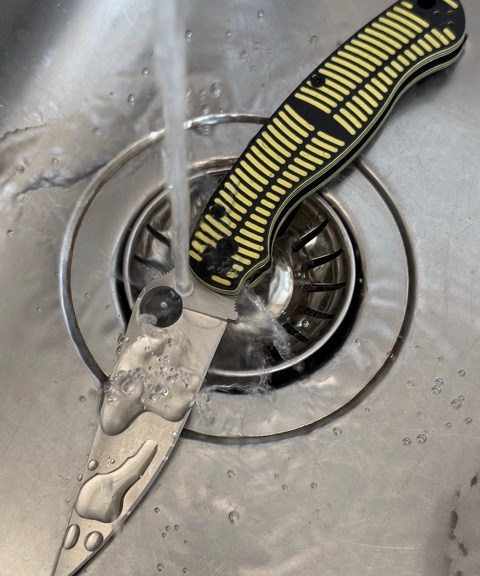
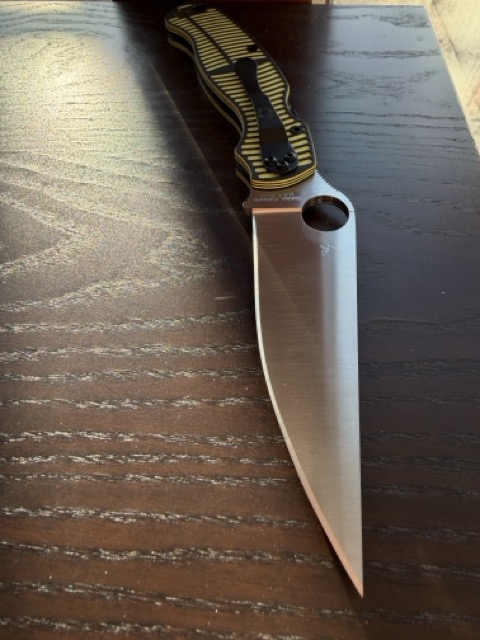
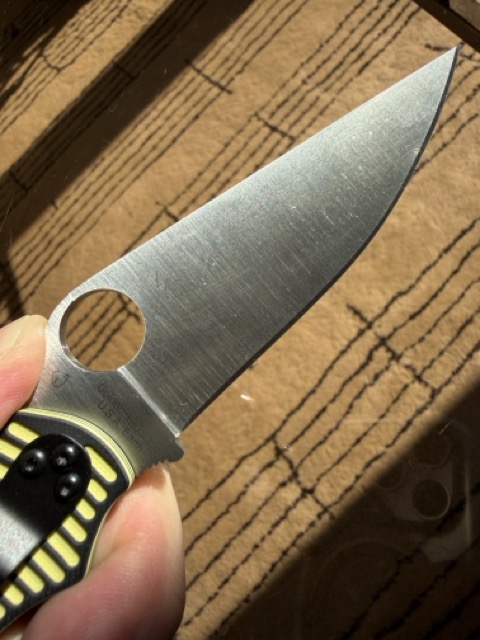
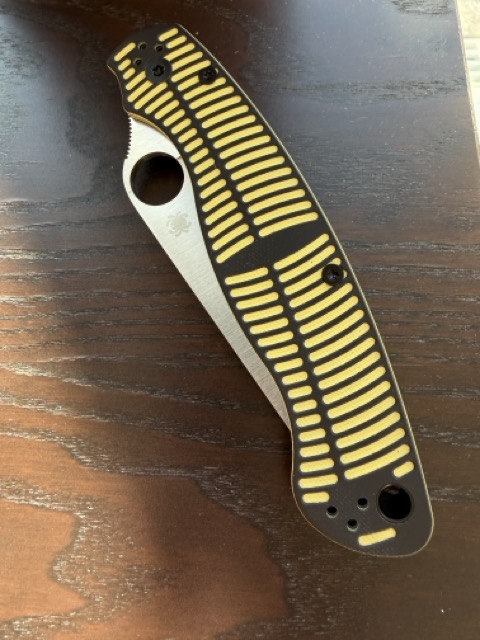
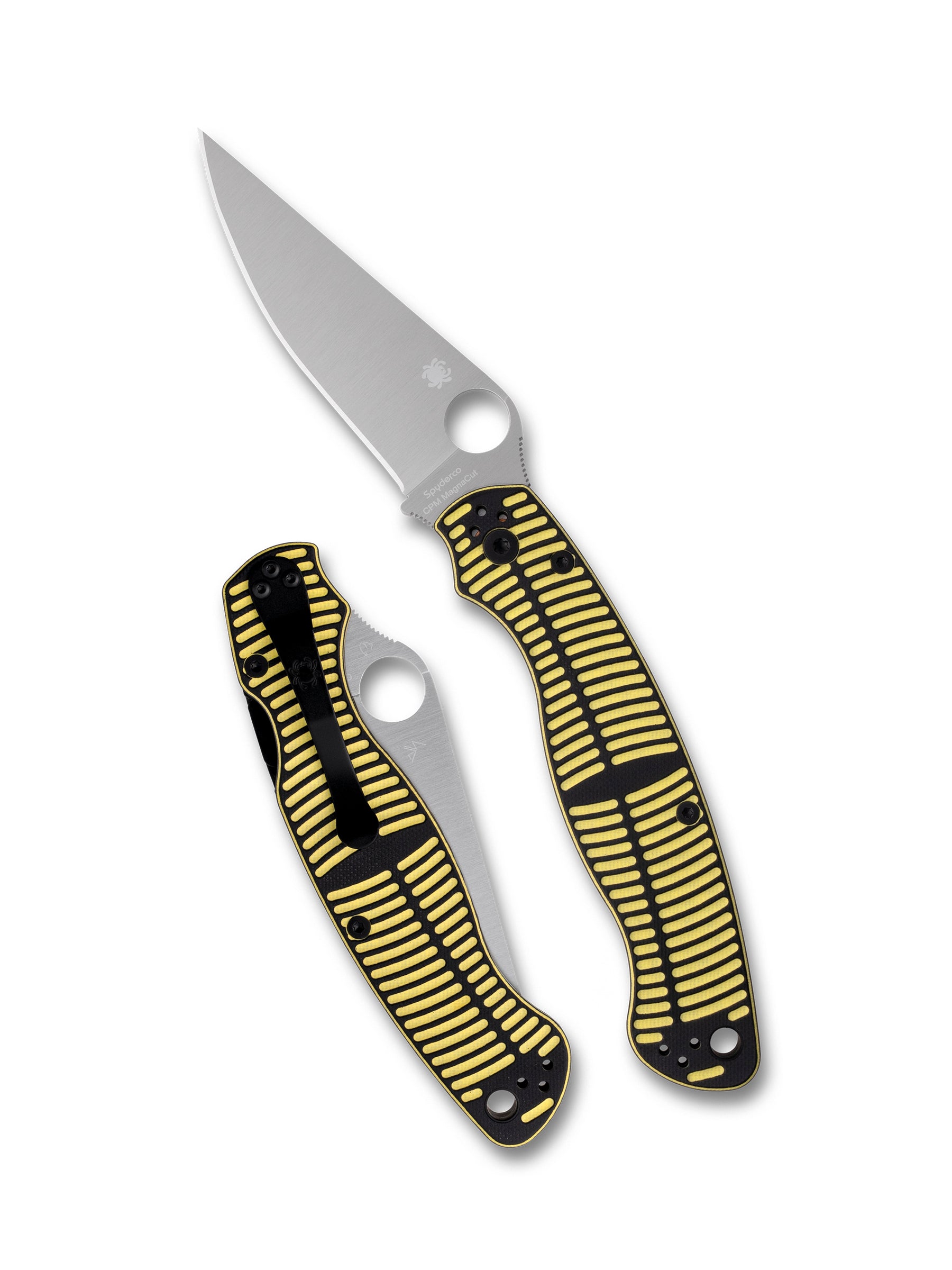
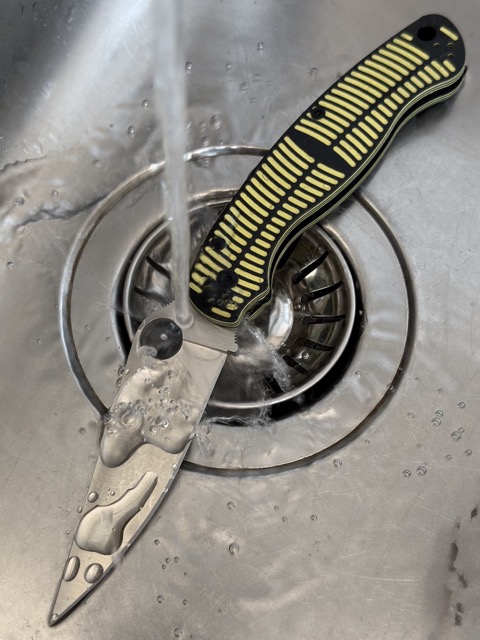
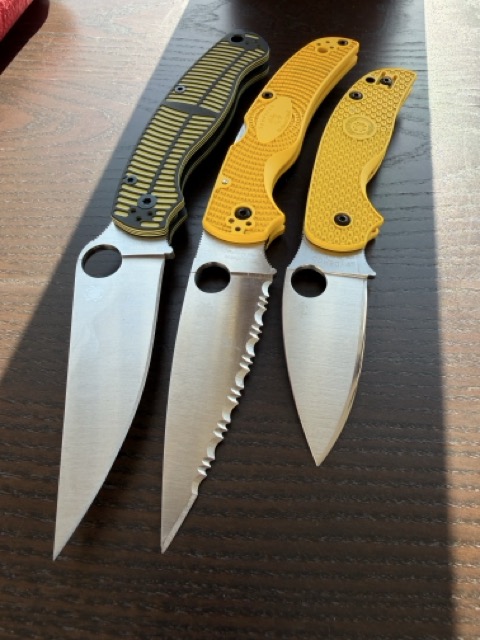
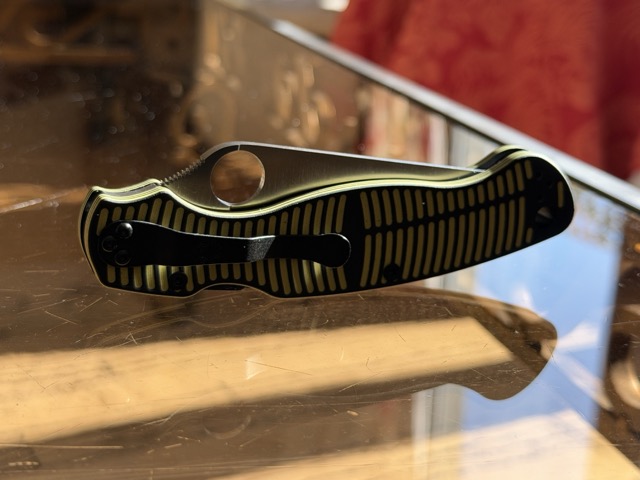
Enter the Military 2 Salt: Bright, Bold, Unapologetic — yellow and black handle, corrosion-proof attitude, purpose-built for brutal environments.
The Salt line has always been about defiance — defiance of rust, of humidity, of saltwater indifference. But this is not just a “marine” variant. It’s a continuation of a lineage that has consistently served as Spyderco’s testbed for what’s next.
From ATS-34…
To CPM 440V…
To S30V, S90V, S110V…
To the modern exotics.
The Military platform doesn’t chase trends. It previews them.


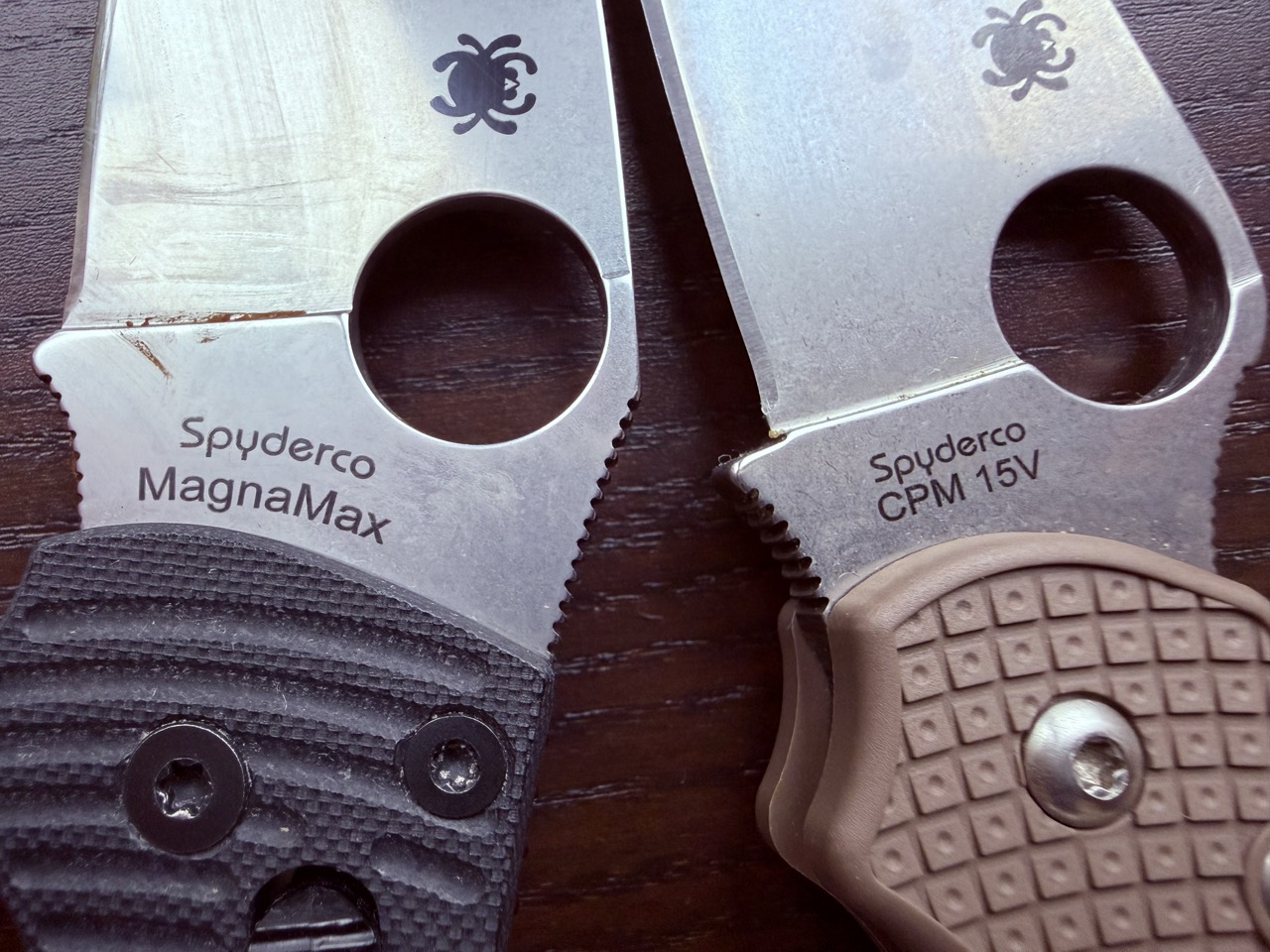
Fast forward to Gambit my CPM15V “Mother of All Bears” sprint run — a steel with outrageous vanadium content and edge retention that borders on absurd. In many ways, that sprint heat treated by Shawn Houston wasn’t just a collector’s piece. It was a thesis statement.
It said:
The Military platform still exists to push metallurgy forward.
Fifteen percent vanadium. Let that sink in. In the ‘90s, we thought 440C was peak sophistication.
For the record Rambo II Knife was made from 440C.


If the 1996 jump to CPM 440V (some kind of powder steel version of 440C) signaled the start of the particle steel era, then the inevitable future feels clear.
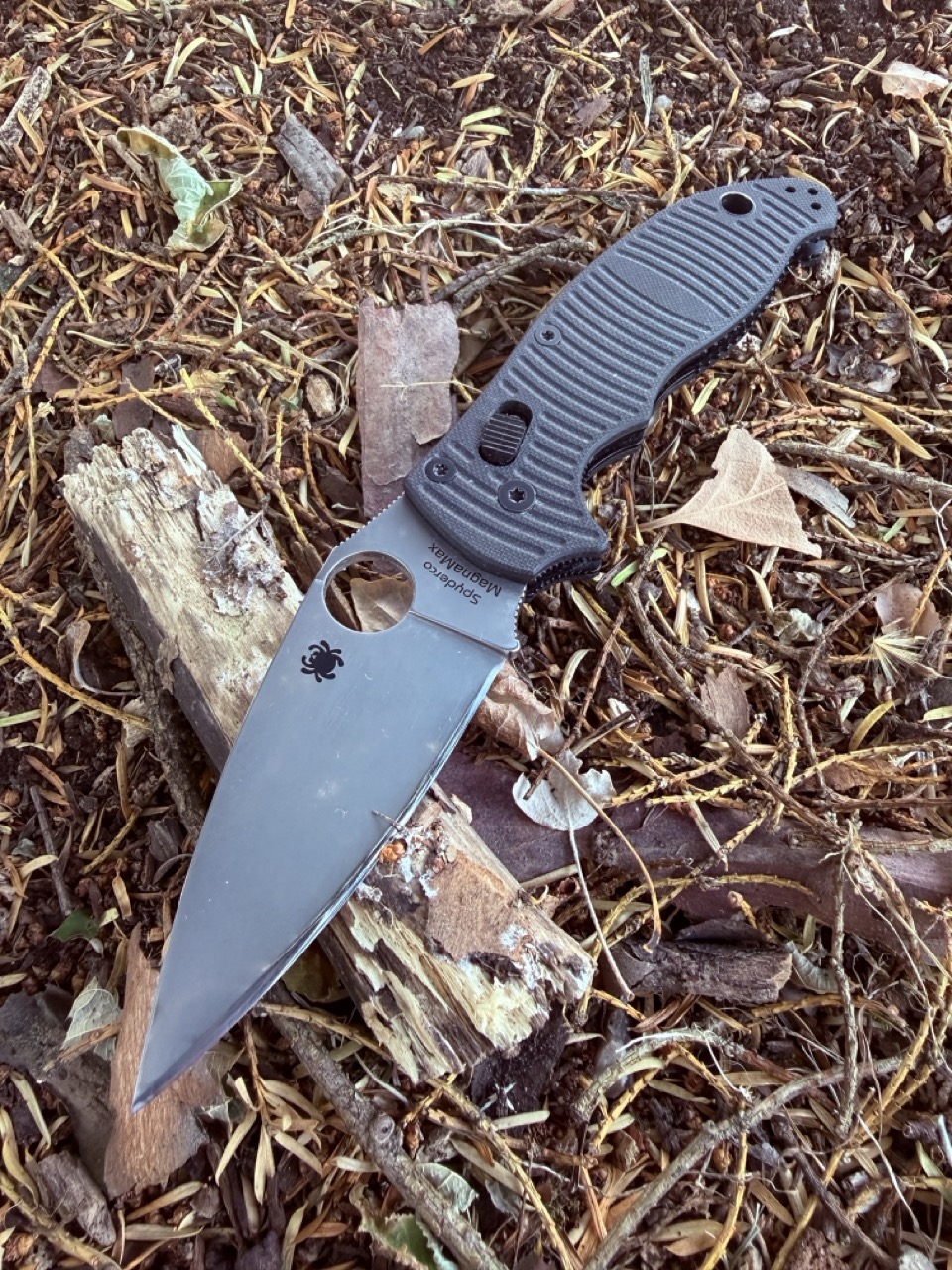
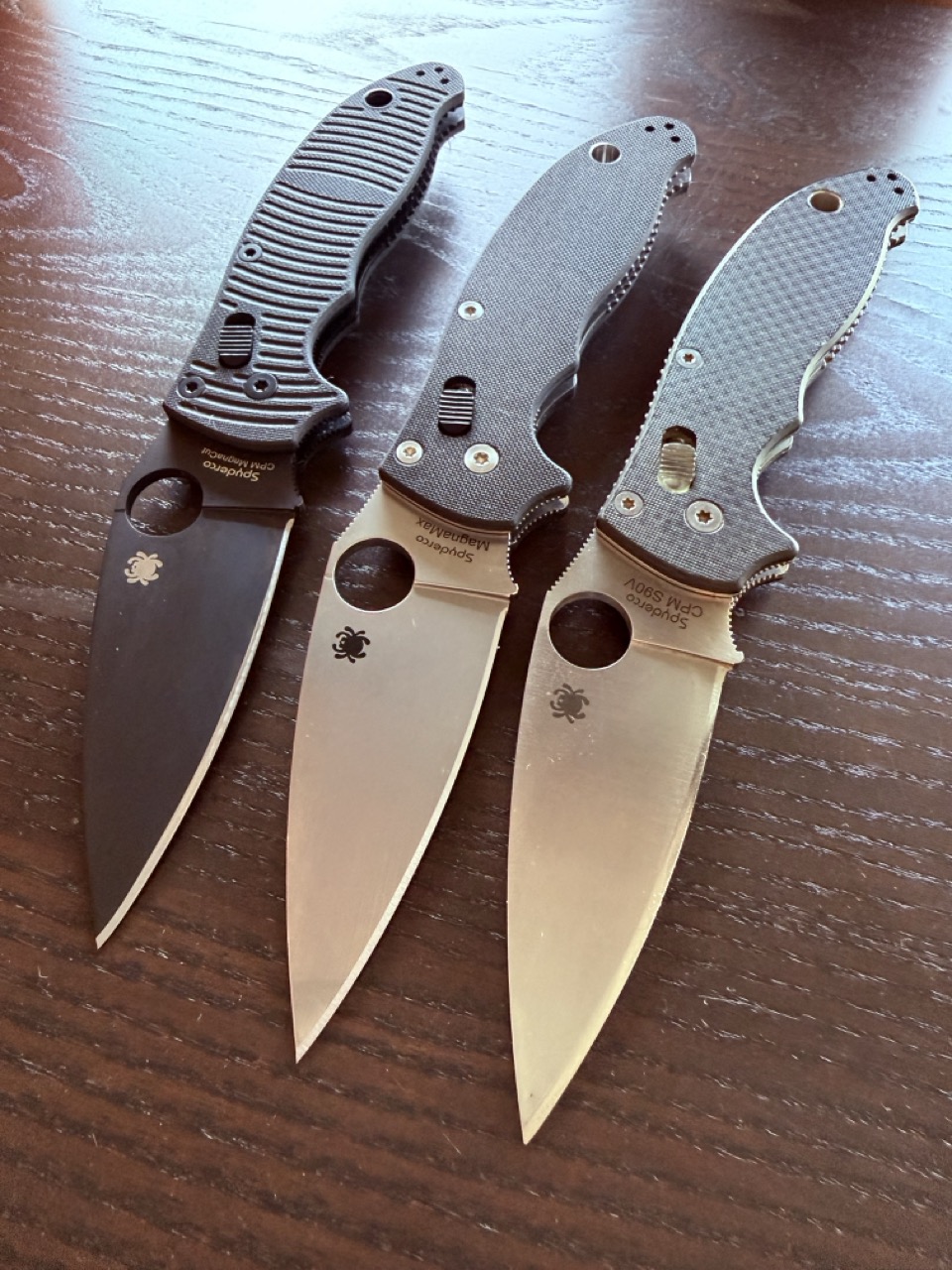
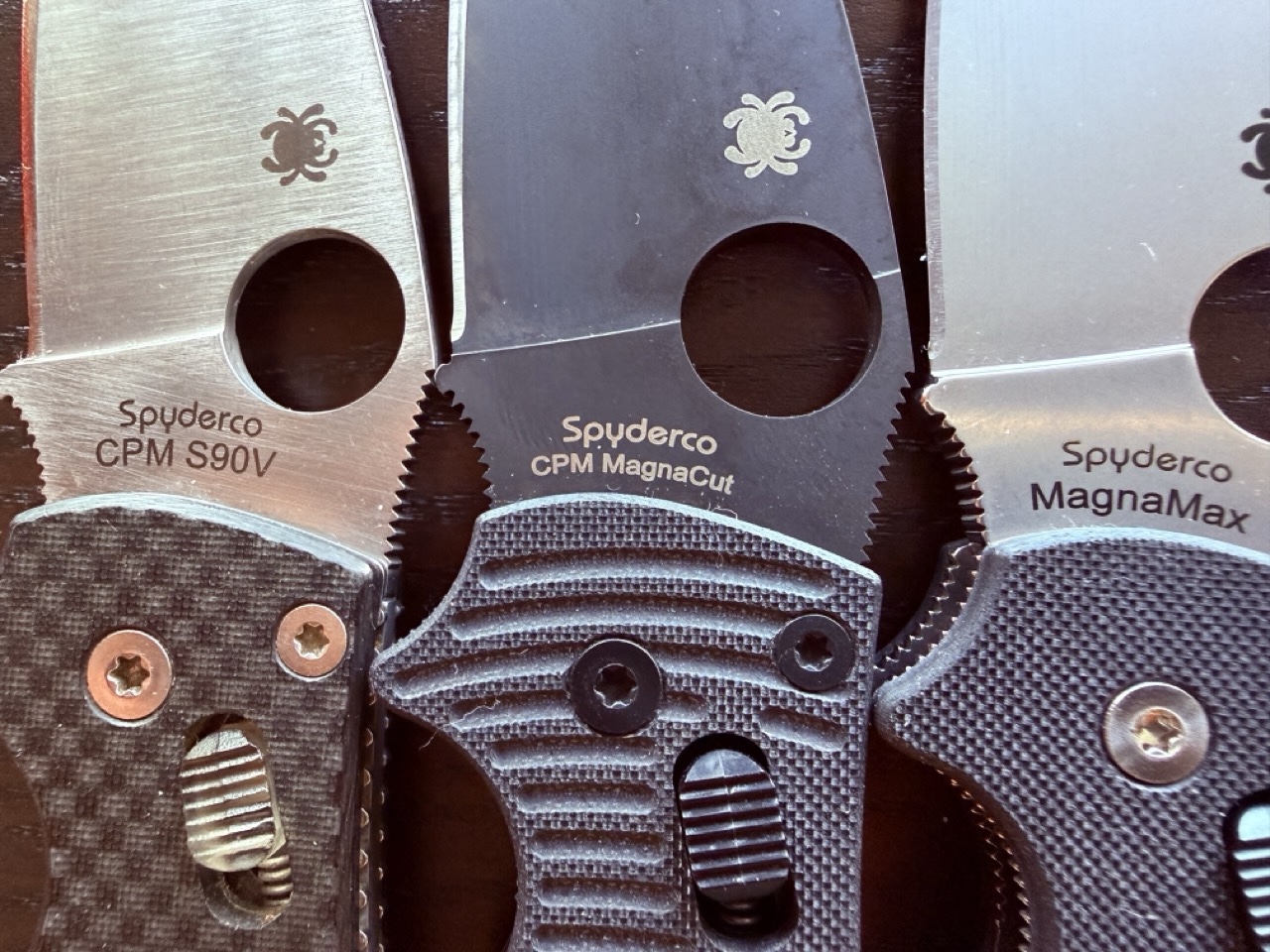
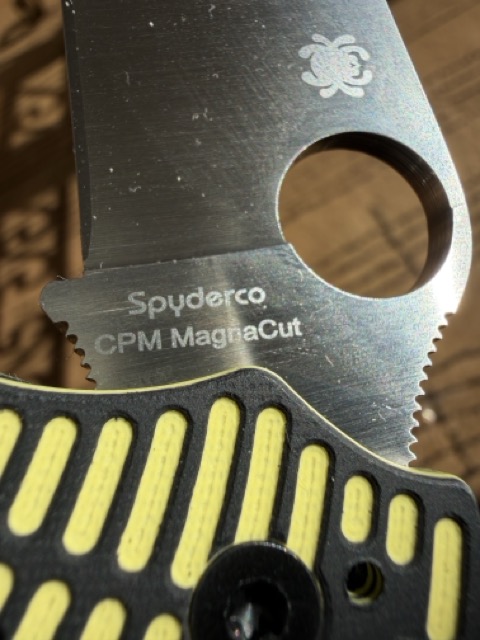
At some point — whether as a sprint or full production — the Military will wear CPM MagnaCut. A steel you can bring to the rain forest where even camera lenses can be eaten by fungi.
And when Spyderco does a Salt, it’s no gimmick. It is the logical next step.


From a certain point of view, MagnaCut represents what ATS-34 once was supposed to be (Chris Reeve’s Sebenza were made of ATS-34) — stainless performance without compromise. Fine carbide structure. Balanced toughness. Real corrosion resistance. Practical edge stability.

As the Military began its journey by embracing the future of steel before the market demanded it, a MagnaCut Military is simply continuing that tradition.

The Military isn’t just another large folder.
It’s a timeline. A flagship. A knife Sal was giving for Eric for his military service.
But also it reflects where the industry was, where it is, and where it’s going.


That beautifully “wasped” Military 2 Salt — with its unapologetic yellow and black scales — stands as a modern chapter in that story: corrosion-proof, high-performance, and unafraid of specialized steels.
For those of us who remember when ATS-34 felt exotic, holding a Military 2 Salt today is a reminder of just how far production knives have come.
And if history is any guide, this won’t be the final evolution.
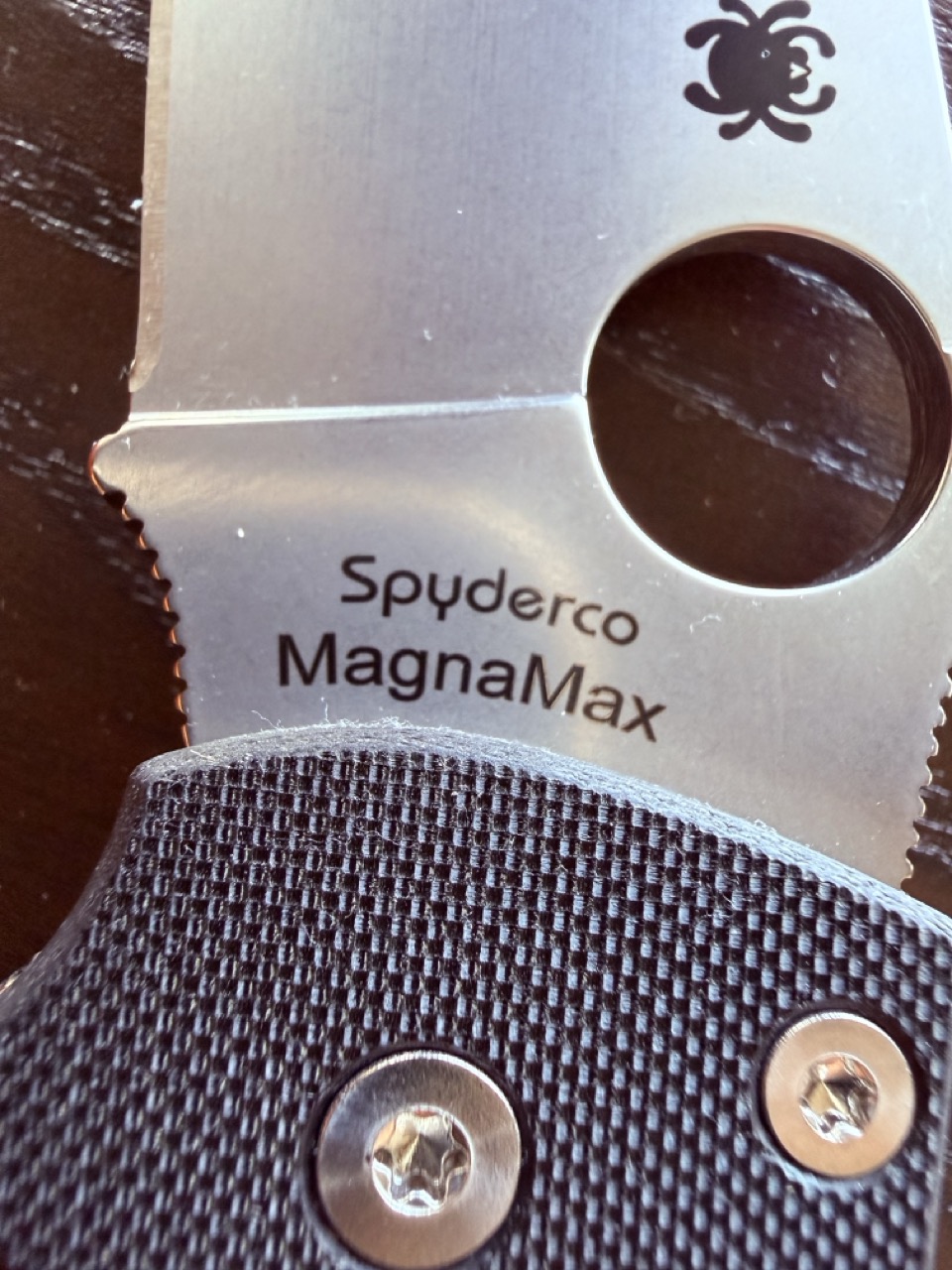
It never is……. Magnamax ?
Anyway, Magnacut is a wonderful tough steel

There is, however, one issue with the Spyderco Military 2 Salt — and it’s not the steel, the ergonomy or the lock which came with zero lock stick BTW.

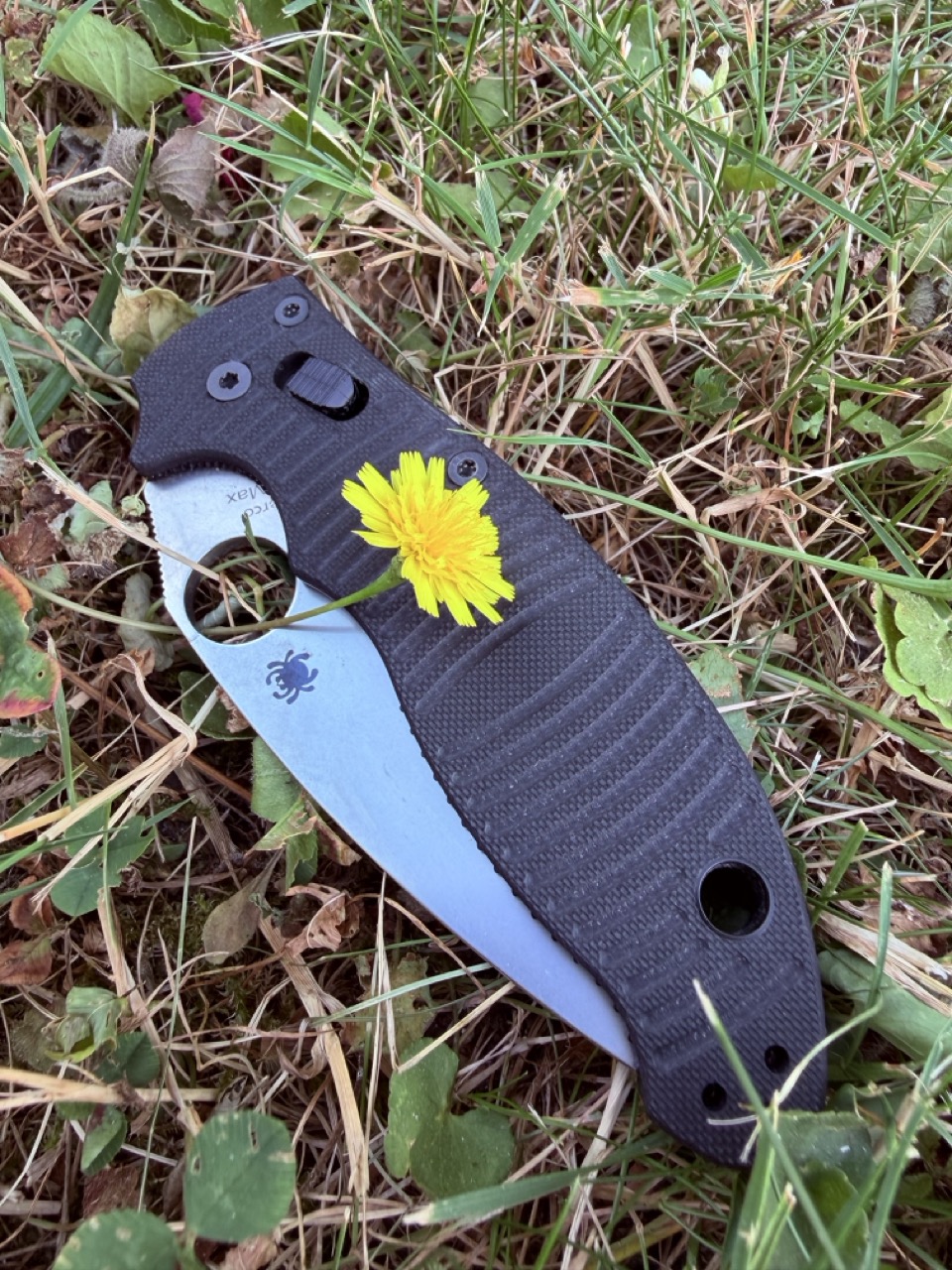
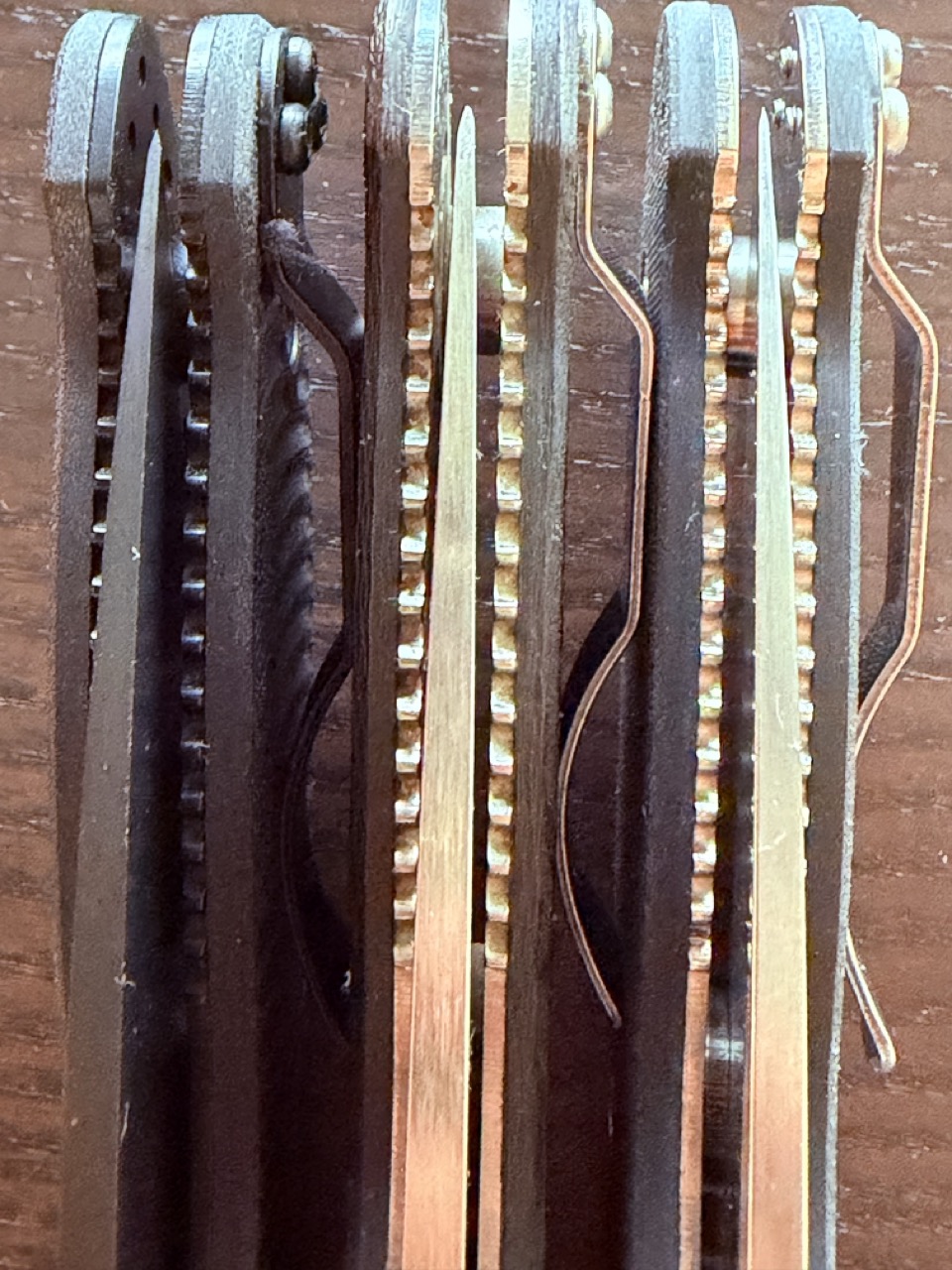
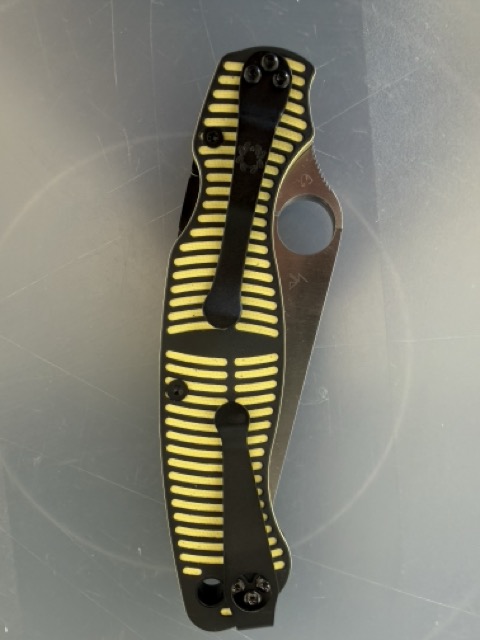
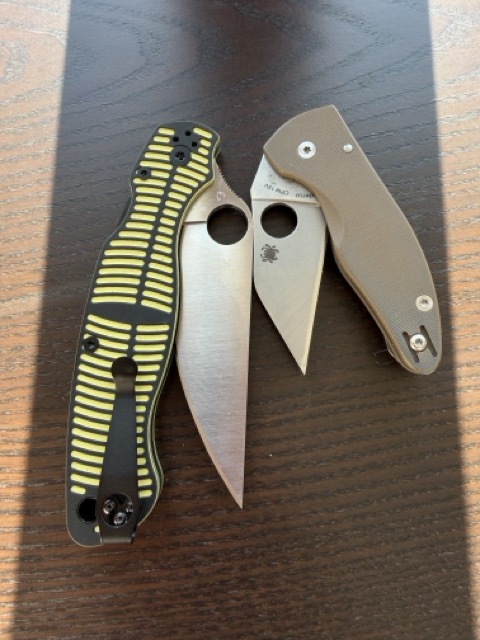
It’s the clip placement. As you can see no clip can reach that central flat spot. It stays on the grooves !

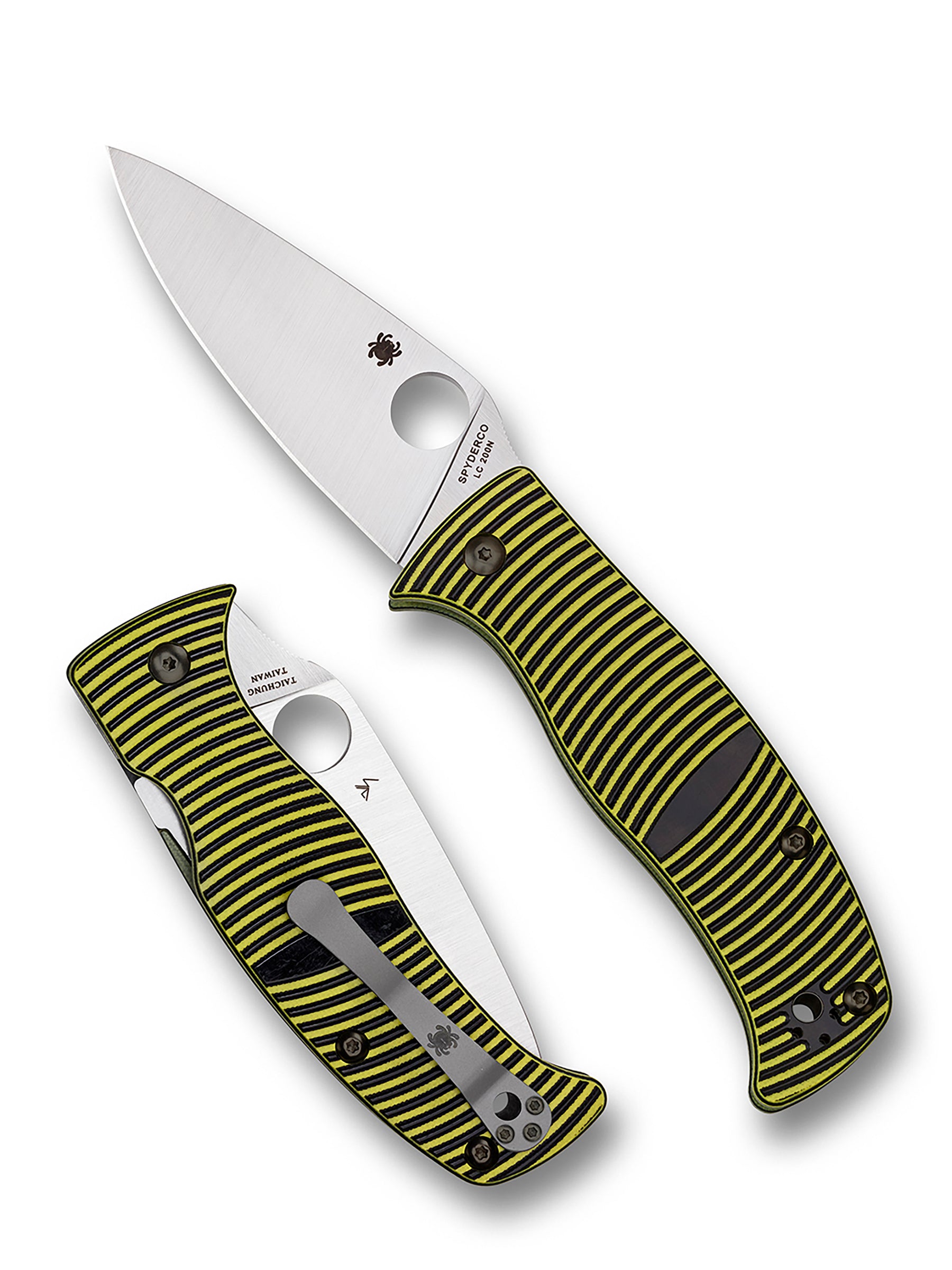
“The meticulously machined Caribbean Bi-Directional Texture pattern not only ensures a secure, non-slip grip, but also reveals the scales’ alternating black and yellow layers to enhance the knife’s visibility in and around the water.”

Yes but that yellow/black Salt version retains the aggressive, highly contoured handle geometry that makes the Spyderco Caribbean such a secure tools in wet environment.
“The Caribbean’s blade is housed in a vibrantly colored handle featuring scales crafted from layered black and yellow G-10. Their intricately machined pattern provides a non-slip texture and reveals the contrasting colors to create a high-visibility striped design. “


Those scales are not flat which is “handy” especially in wet or gloved conditions. From a grip standpoint, it’s outstanding. The ergonomics are purposeful. No question.
But the clip sppon is mounted across a section of handle that isn’t truly flat. And that matters for me.

That handle creates localized tension points. In pocket draws and insertion, that translates into friction. And friction, over time, translates into shredded fabric !!

For a knife that’s designed to live in harsh environments, the last thing you want is a clip that behaves like a textile rasp.

For the record, this is not a Salt-series indictment.

Neither the Spyderco Manix 2 Salt nor the Spyderco Paramilitary 2 Salt exhibit this issue.

A low tension deep carry clip helps a lot in my case but your mileage may vary in terms of keeping your pockets pristine…

Anyway performance remains uncompromised.
Having a true all-terrain Military is no longer a niche concept. It’s a must.

The original Spyderco Military was conceived as a purpose-driven field knife — large, lean, unapologetically performance-focused. It wasn’t built for desk duty. It wasn’t built for Instagram. It was built to work.

Today, “field use” doesn’t just mean dry land and predictable climates. It means:

  • Coastal humidity
  • Saltwater exposure
  • Sweat-soaked summer carry
  • Snow, mud, rain
  • Long-term storage in less-than-ideal conditions
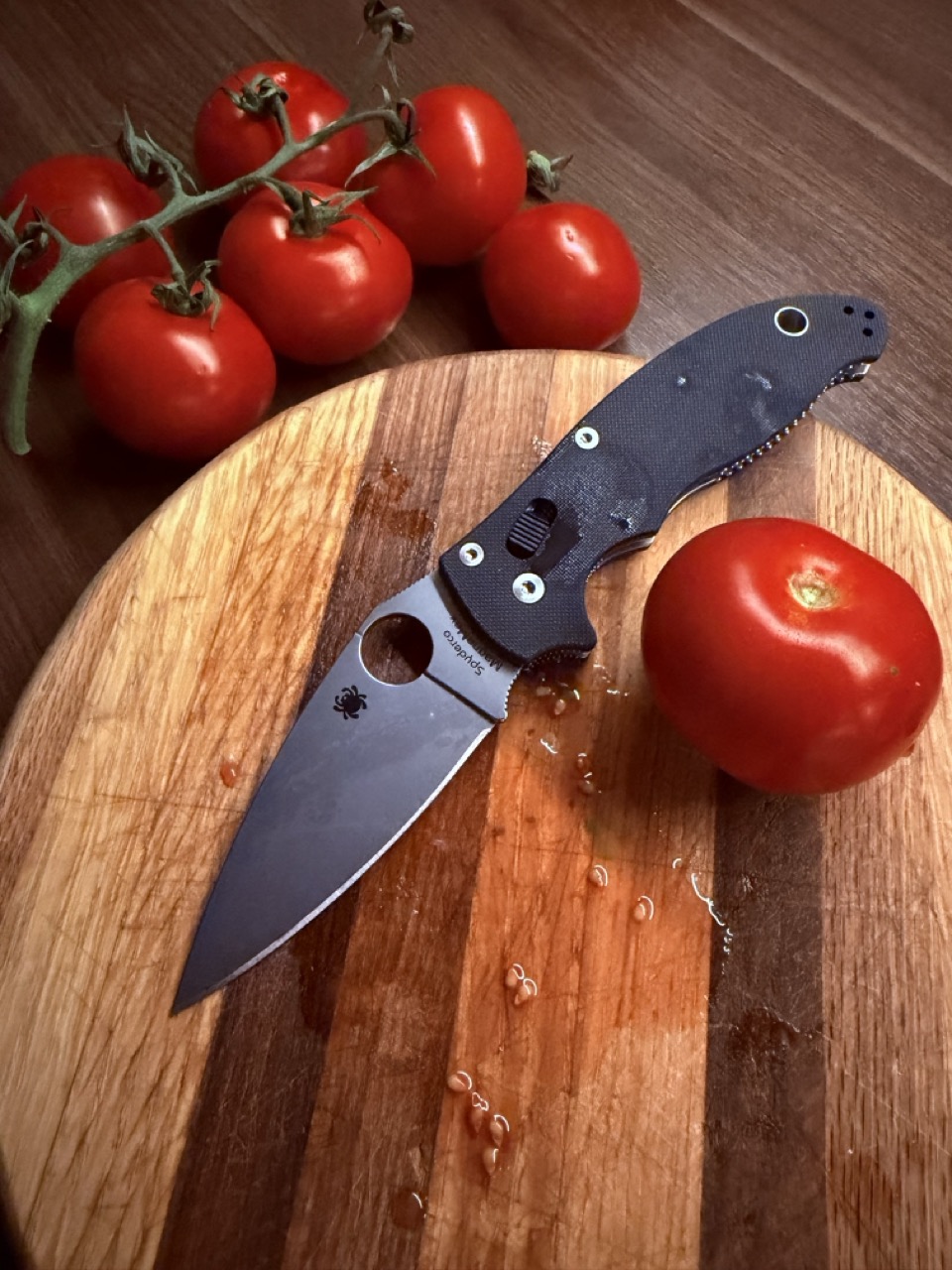
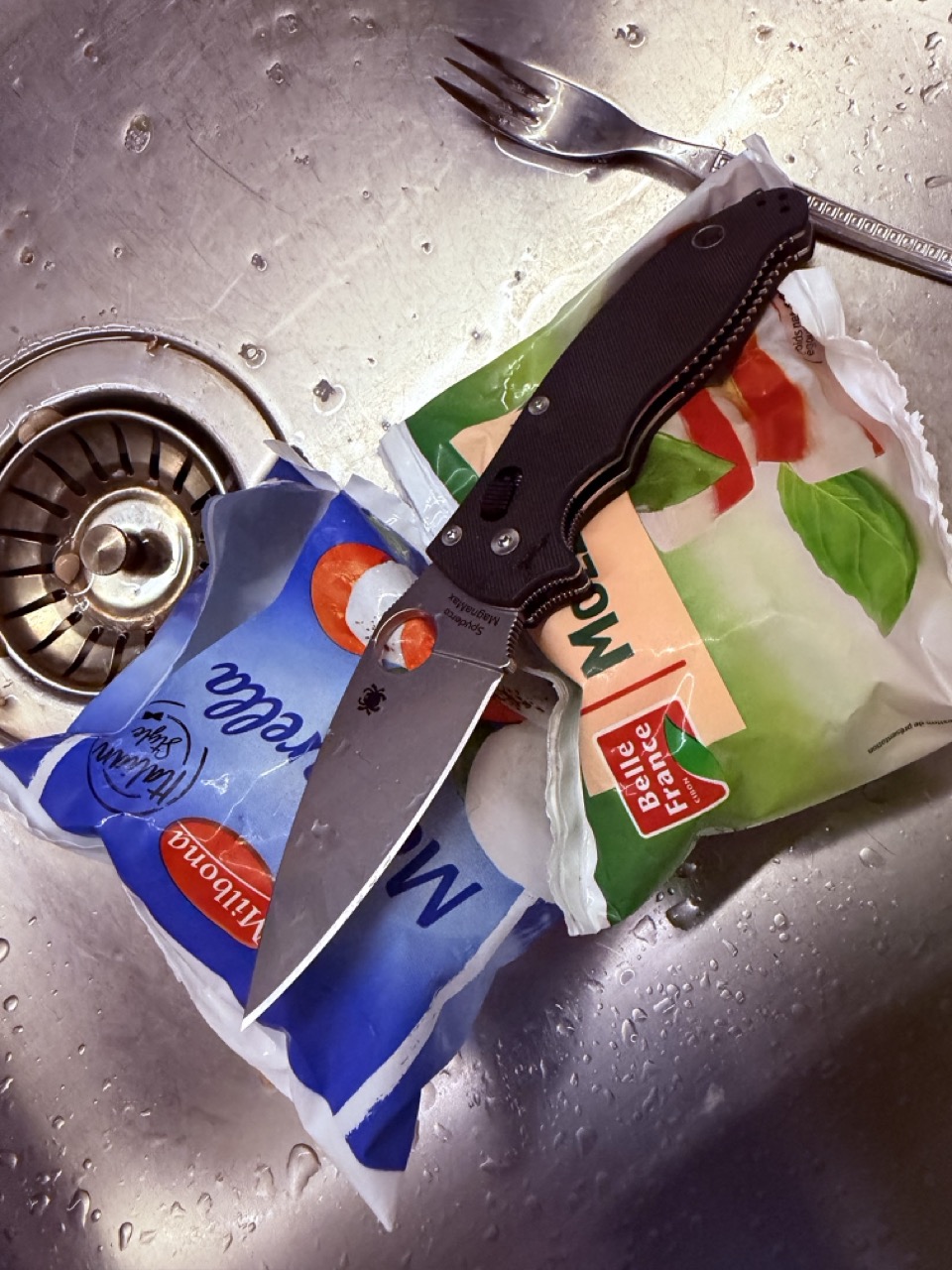
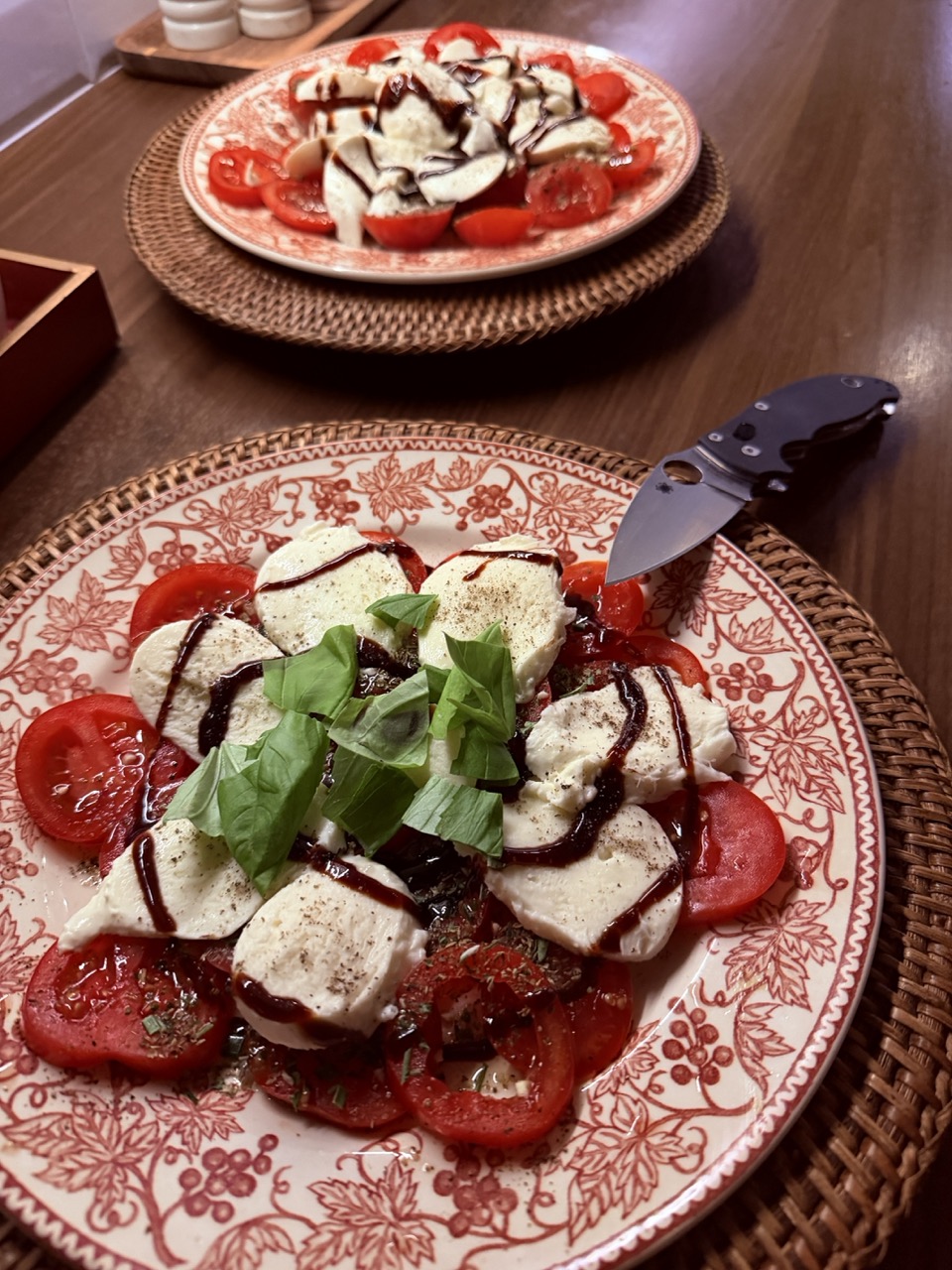
  • Kitchen !!

Corrosion resistance is no longer a specialty feature. It’s a baseline requirement for a all terrain purposed tool.
Low maintenance is a true luxury.

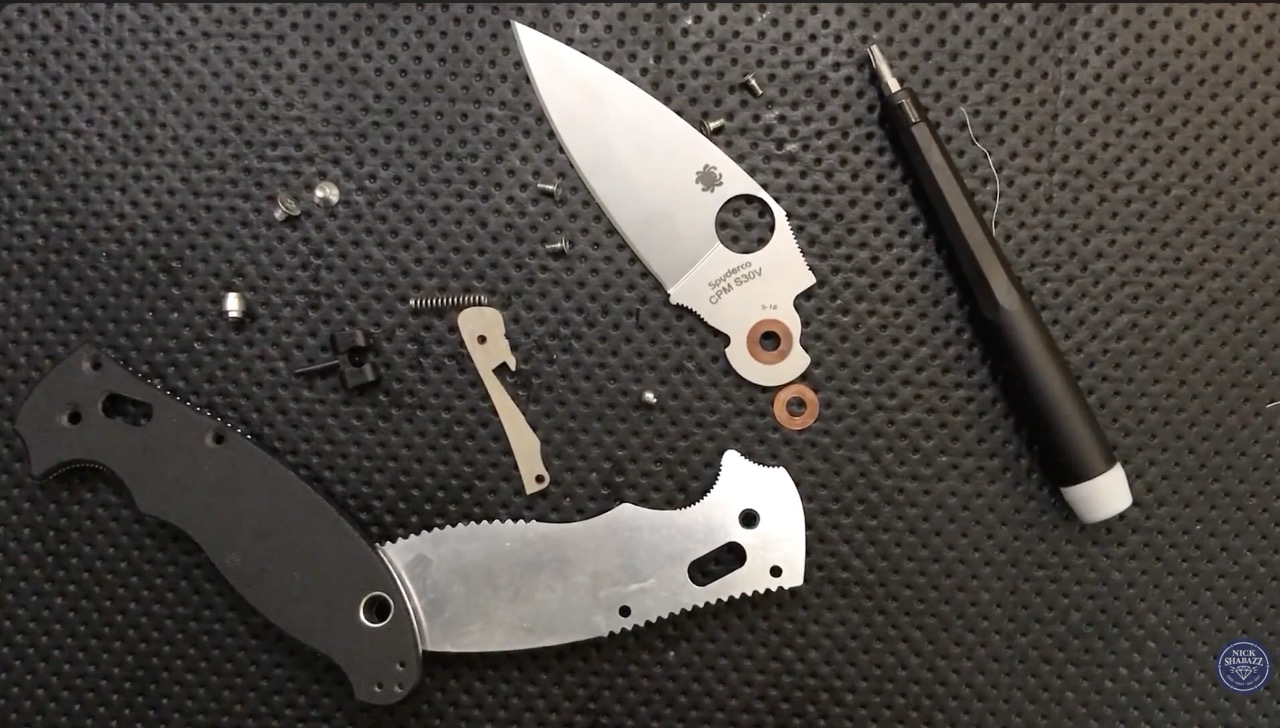
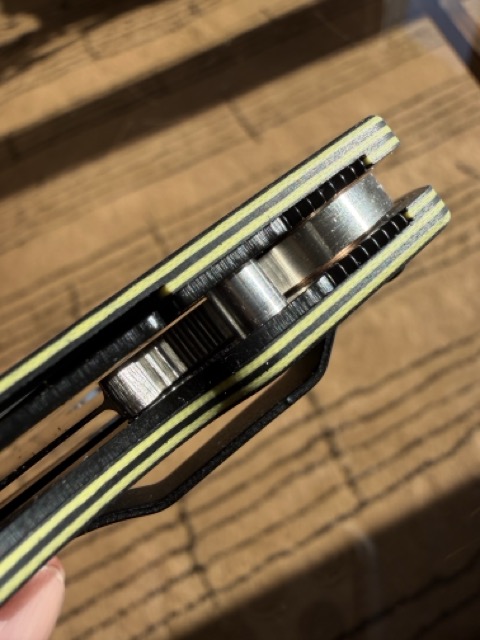
All inner parts are coated but the stop pin and the washers.
Notice that beautiful G10 layers a tour-de-force.
The nested liners being all coated there is no excuse to use that knife in wet environment.

That’s why the Spyderco Military 2 Salt matters.

It closes the loop of reliability through 3 decades.
The Military platform has always chased the frontier of steel performance — from ATS-34 to particle metallurgy, from high-vanadium experiments to modern wear monsters. But performance isn’t just edge retention charts and carbide percentages. Real performance includes survivability.

An all-terrain Military folder means:

  • A blade steel that shrugs off salt and sweat
  • Hardware that resists oxidation
  • A platform you don’t have to baby

It becomes a knife you can carry on a boat, on a mountain, in tropical humidity, or clipped inside gym shorts without thinking about it. The list goes on but you catch my drift. The Military is a big light hardchore folder ready to get dirty.
And that last part is key: without thinking about it.

Because the ultimate evolution of a military all terrain tool isn’t higher hardness.
It isn’t more vanadium.
It isn’t better CATRA numbers.
It’s freedom from worry !

The Spyderco Military 2 Salt benefits enormously from the Compression Lock. The action is smooth, controlled, and confidence-inspiring. Opening is fluid. Closing is effortless and safe. Lockup is rock solid — zero play, zero drama.
It feels modern and mechanical in the best possible way.


Compare that to the Spyderco Native Chief Salt Lightweight, and you’re in a different world. Back lock instead of Compression Lock. A more traditional cadence. A different relationship between hand and blade.
Both are outstanding knives. Choosing a favorite isn’t about quality — it’s about preference.
The Lightweight Native Chief is that good. 😉

The same goes for the Spyderco Sage 5 Salt.
Compact. Refined. Exceptionally balanced. In Salt configuration, it becomes one of the most complete corrosion-resistant EDCs available today.
At this level, it’s no longer about which one is better.
It’s about which one feels like yours.

The Military was once the knife that introduced mainstream users to particle metallurgy. Now, in Salt form, the Military 2 introduces the idea that a full-size, high-performance folder should be truly “environment-agnostic”.

And if we’re honest — for a knife with “Military” in its name — that capability feels less like an upgrade and more like destiny.


I had named my CPM M4 Millie “Ghost.”
My grey CPM CruWear Millie became “Gandalf.”
My current 15V Military 2 is “Gambit.”
So the salty one needed a name too.
And it had to start with a G.
It will be “Gurney”.
Gurney Halleck in frank Herbert’s Dune isn’t the flashy hero. He’s not mysticism and prophecy. He’s discipline. Loyalty. Hardened competence. A loyal warrior-poet who survives harsh worlds through skill and resilience.

That’s exactly what the Spyderco Military 2 Salt represents.
Not ornamental.
Not fragile.
Not trendy.

It’s a knife built for hostile environments. A blade you trust when conditions turn abrasive. There’s something very Arrakis about a corrosion-proof Military: survival through preparation.

“Behold, as a wild ass in the desert, go I forth to my work.”

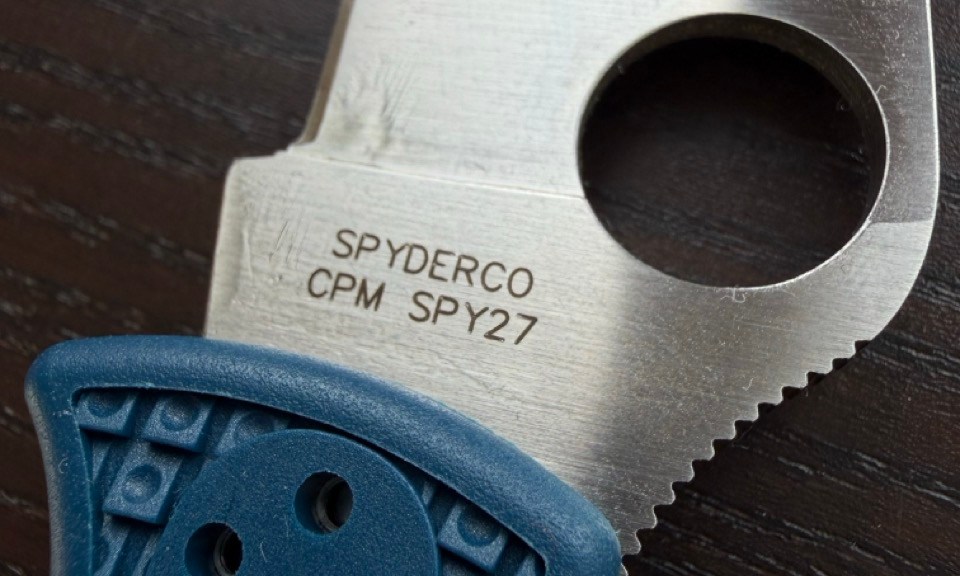
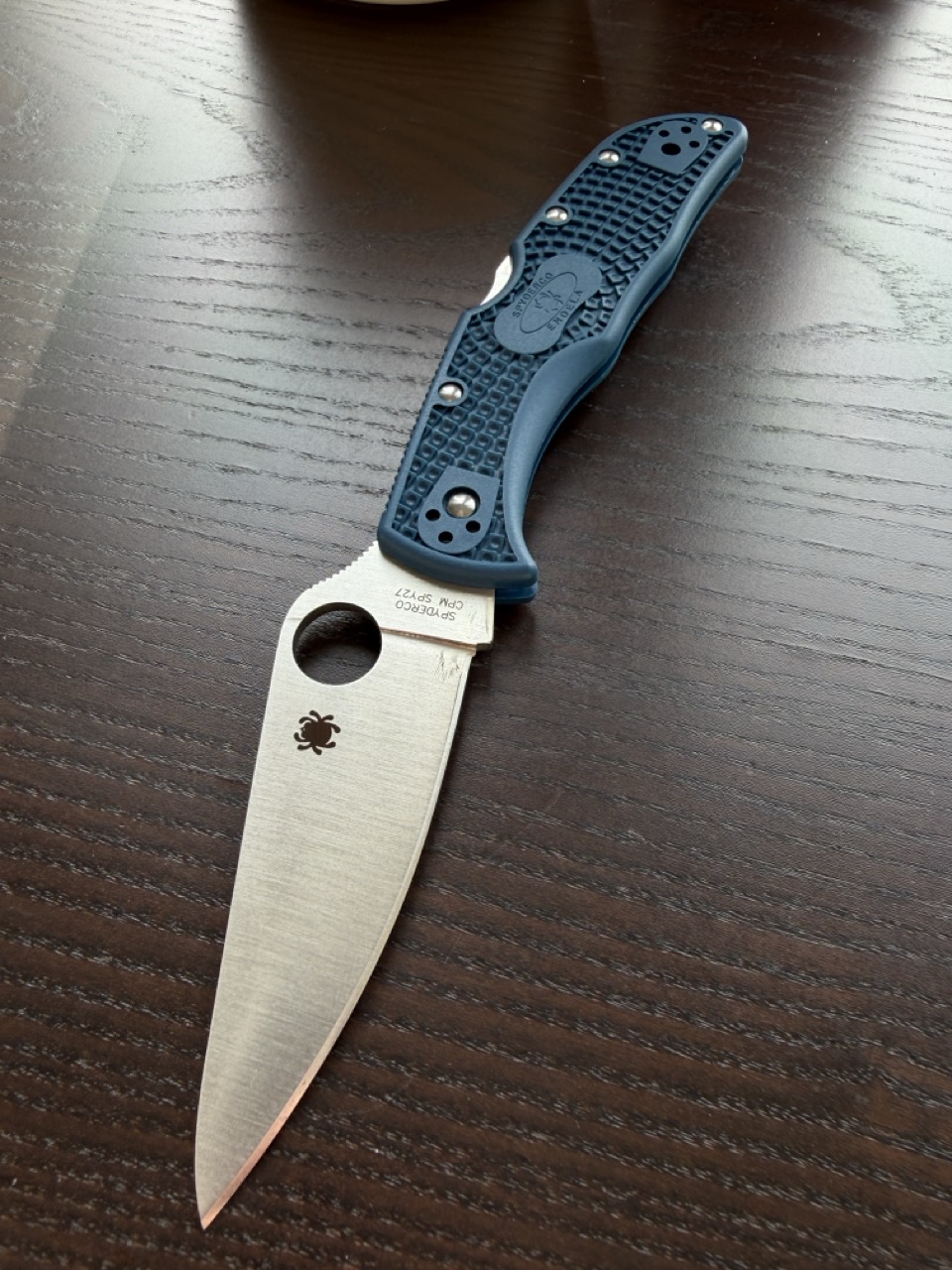
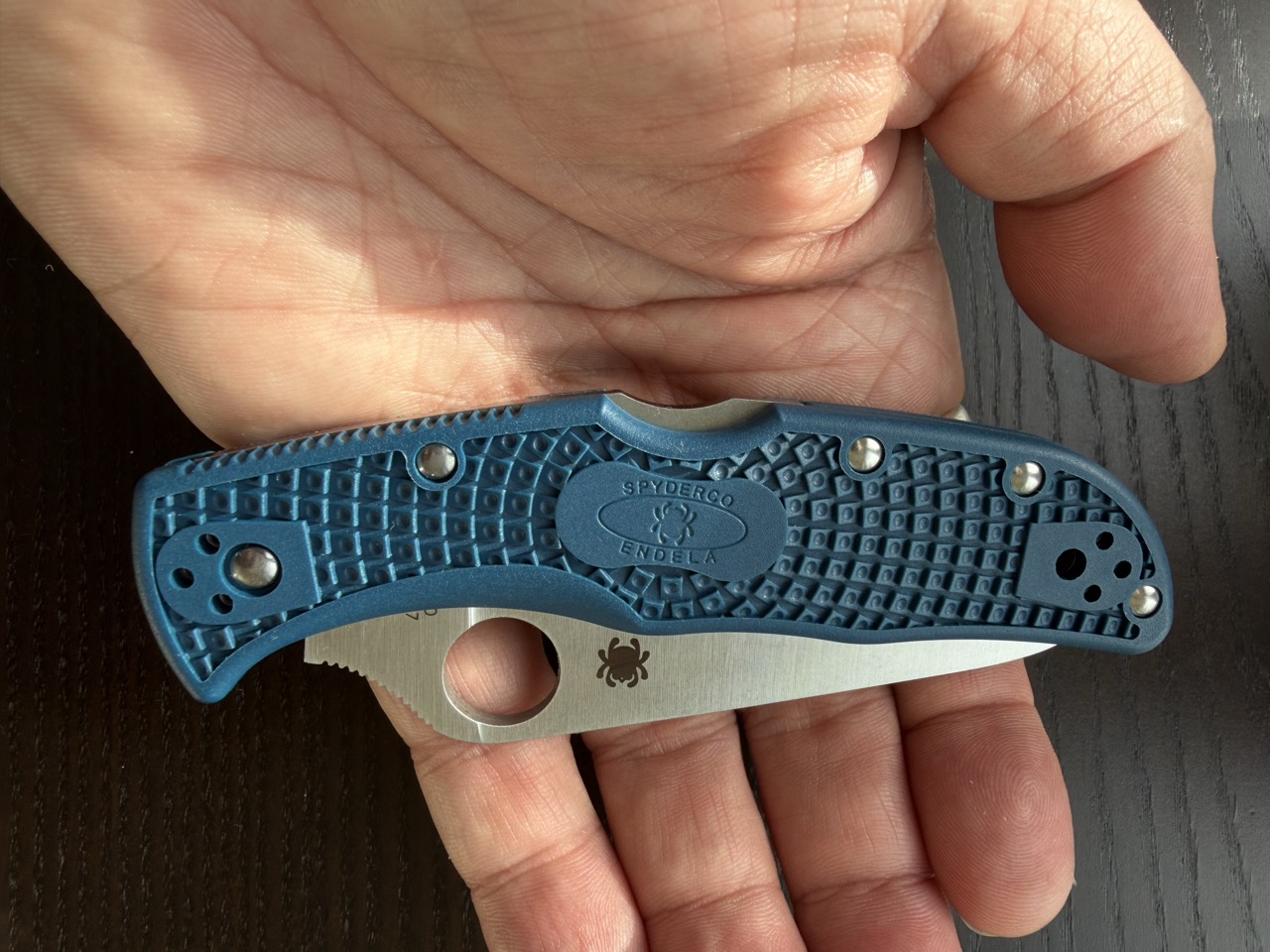
Spyderco Endela in Spy27 – 2026 Minimeet Gift.

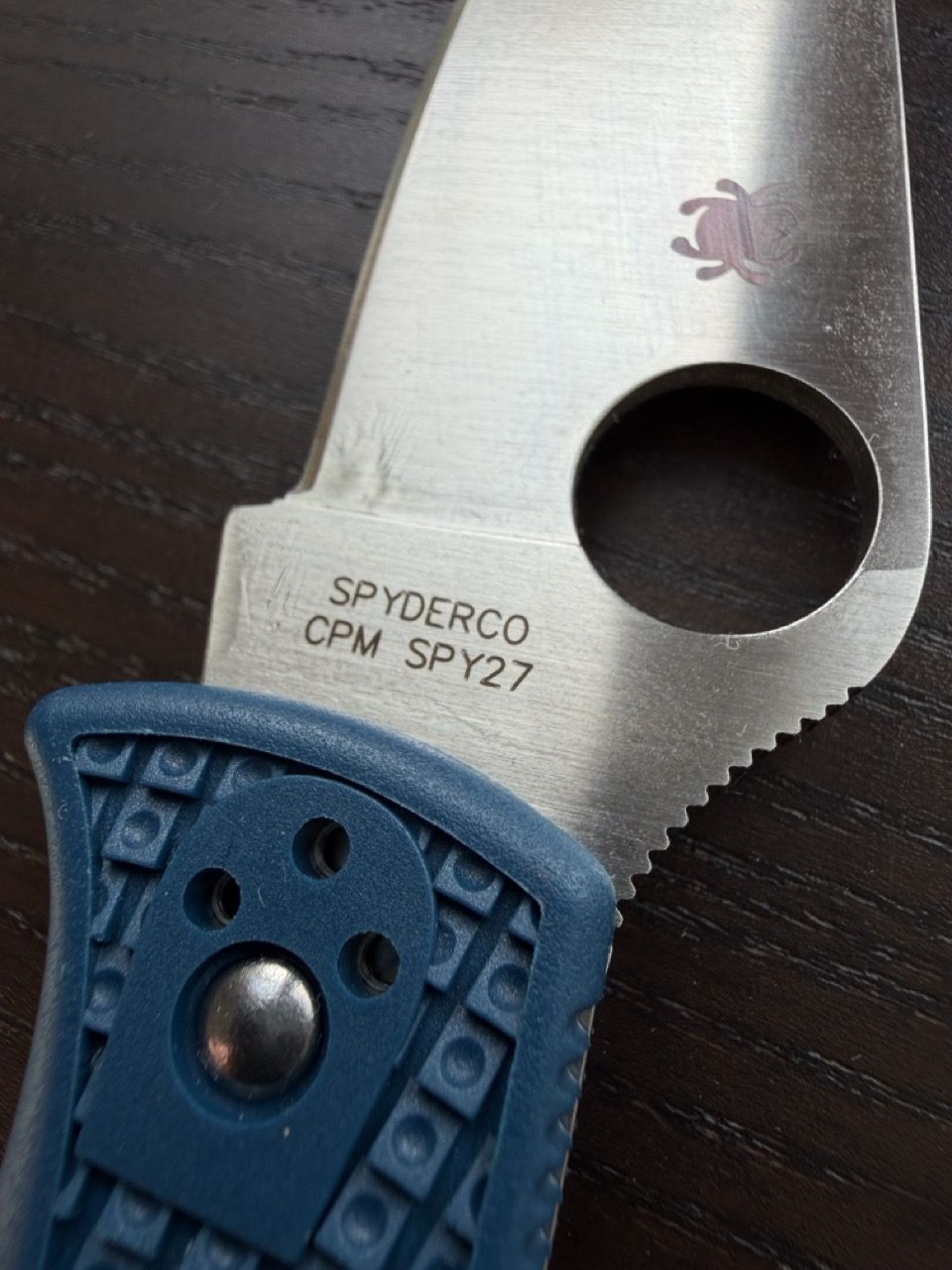
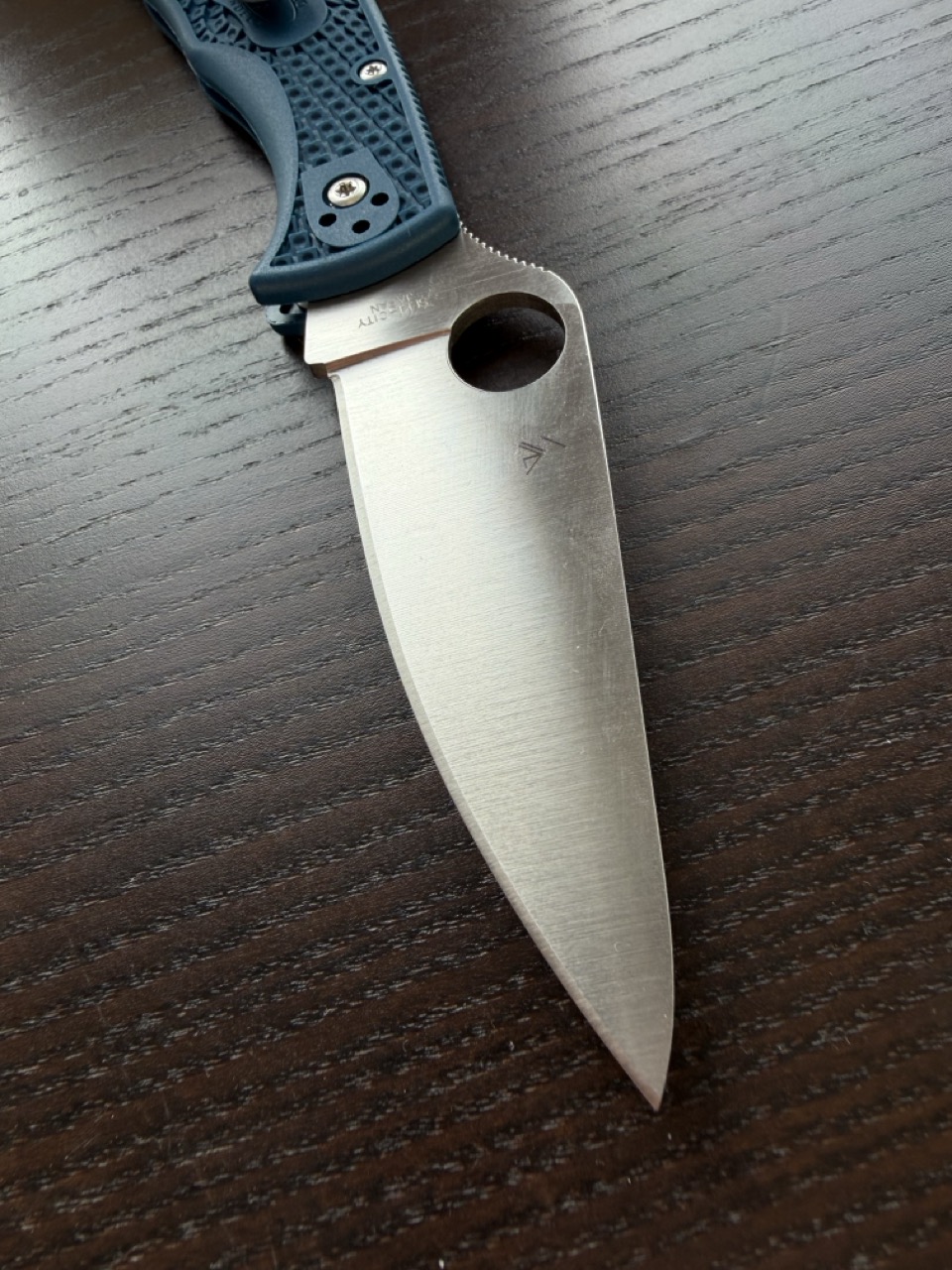
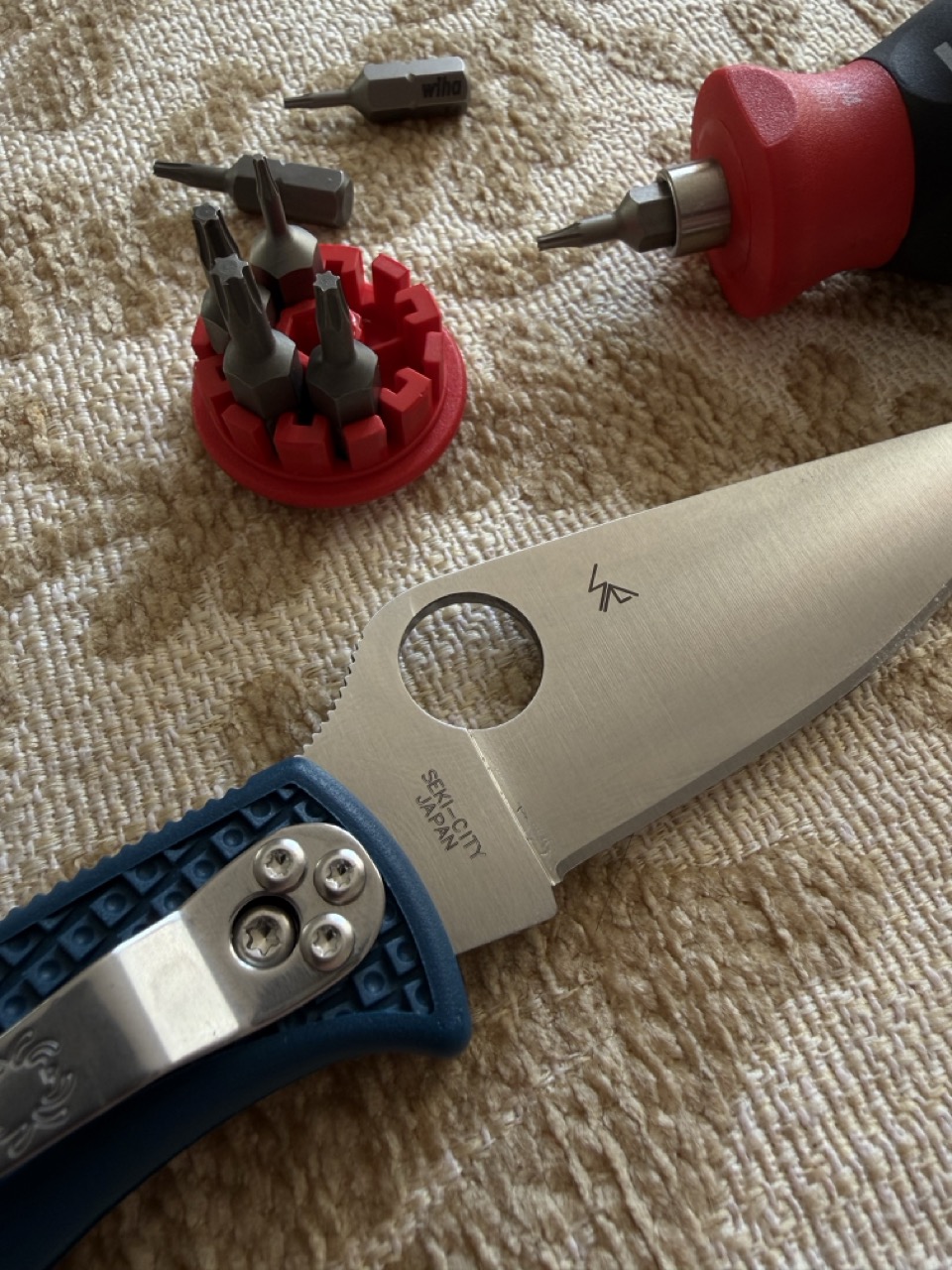
In the rarefied world of enthusiast gatherings, certain objects transcend their function to become emblems. At the 19th Minimeet of 2026, that emblem arrived in a flash of satin steel and unmistakable silhouette: the Endela, rendered in CPM Spy27.

This year’s gift was no ordinary edition, no routine variation in a catalog of many. It was a gesture—considered, knowing, and deeply rooted in heritage. A gift that spoke fluent Spyderco from A to Z with a bit of Japanese.

Designed by Sal Glesser, the Endela, positioned between the compact Delica and the longer Endura, has always embodied balance: long enough to command presence, slim enough to disappear into a pocket. In this iteration, its lines were amplified by a full flat grind (FFG), that signature tapering geometry that flows from spine to edge in one continuous, purposeful plane. The result is a blade that slices with authority yet retains the structural confidence expected from a serious cutting tool.

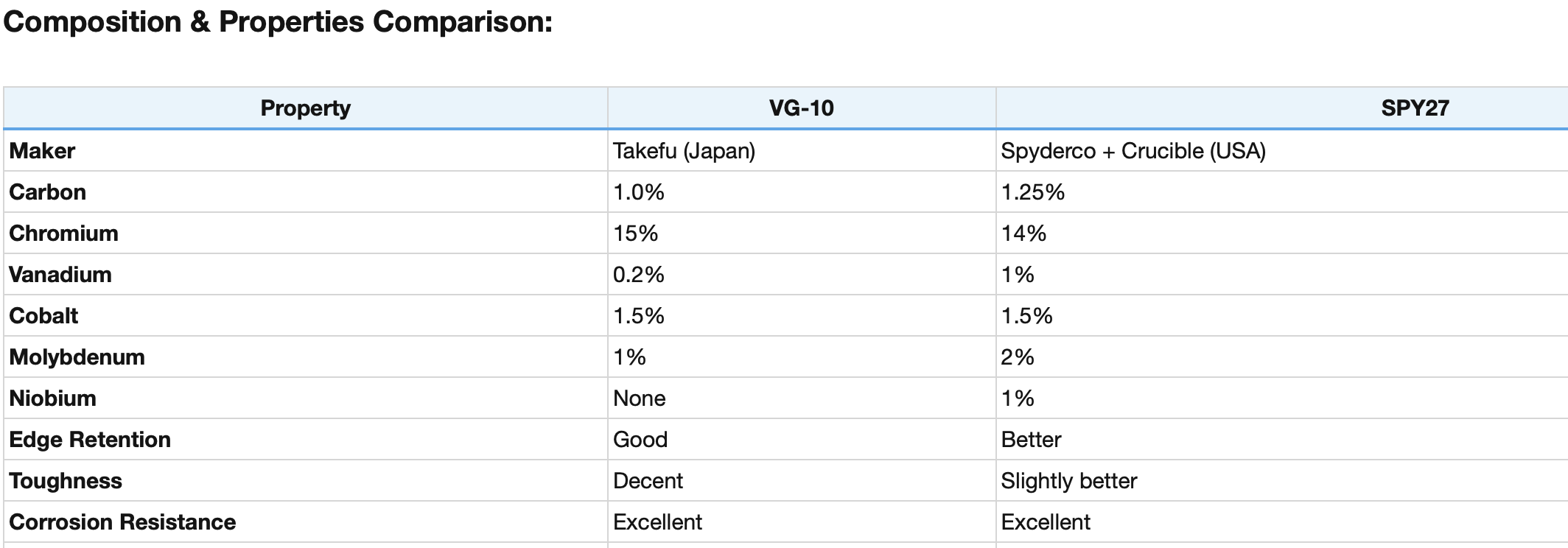
But the true poetry lies in the steel which I have covered in my UKPK article AKA “the Golden Child”.

(I have taken this from Humint in that thread on the Bladeforums)

CPM Spy27 is not merely another powdered metallurgy alloy; it is an insider’s composition, born from collaboration and conviction. Developed as a proprietary formula, Spy27 was conceived as a modern evolution in performance stainless steel—often described as a powdered metallurgy answer to the spirit of VG-10, yet unmistakably contemporary in its balance of edge retention, corrosion resistance, and toughness. Engineered through Crucible’s particle metallurgy process—before the company’s bankruptcy reshaped the landscape—it stands as the product of a singular joint venture and a fleeting industrial moment.

Spy27 is, in many ways, a manifesto: a steel created not simply to follow trends, but to refine the brand’s own philosophy of practical performance. Fine carbides for clean, aggressive slicing. Stainless resilience for daily carry. A hardness profile that rewards precision sharpening while maintaining field durability. In hand, it feels deliberate—neither brittle nor indulgently soft. It is steel tuned to the cadence of real use. And God, it loves leather stropping.

You cannot get more “Spyderco’s roots” than this. Made in Japan (like in the 80’s), paired with the unmistakable round hole—Spyderco’s totemic opening device—and a “spoon clip” ready for pocket carry, the Endela in CPM Spy27 becomes more than a knife. It becomes a statement of identity. The FFG geometry ensures that the blade glides through material with elegant efficiency, while the ergonomics—subtle finger choil, textured scales, carefully considered weight—anchor the experience in control.

At a Minimeet, the gift is never just about value. It is about friendship. About shared language. About the unspoken understanding between those who appreciate grind lines, heat treatments, and the quiet satisfaction of a perfectly executed edge of our favorite performance knives.

The Endela came out of the box with the kind of edge that makes you pause for half a second before testing it. Not because you doubt it—but because you already know: this is the Way !

Factory sharpness can be a vague promise in this industry. Here, it was a statement. Kuddos to the Seki factory ! The blade arrived as an aggressive razor, keen and un-apolo-getic, the apex refined to the point where it would silently treetop arm hair without pressure. Not tear. Not tug. Simply pop. Hair fell away at the slightest whisper of contact.

This wasn’t just shaving sharp; it was hair-popping sharp.

It slices through plastic as though the material had lost all resistance—gliding, parting, yielding without protest. There is a particular sound when a blade meets dense plastic packaging: usually a faint crackle, a hesitant drag. Here, there was only a smooth, uninterrupted whisper. The edge didn’t force its way in; it entered decisively and continued with almost disconcerting ease, as if the medium itself had become incidental.

That kind of performance is not accidental. It is the result of geometry meeting metallurgy in perfect accord.

As my friend Robin observed—accurately and without exaggeration—the level of sharpness coming out of the Seki factories has noticeably risen since the K390 batches. Something shifted during that era. Whether it was refinement in heat treatment protocols, greater consistency in final sharpening stages, or simply a renewed culture of precision, the outcome is tangible. Blades now leave the factory with an apex that feels more deliberate, more aggressive, more controlled.

The legacy of those early K390 runs set a new internal benchmark. What we’re seeing now is the continuation of that standard applied across steels—Spy27 included. The edges are cleaner, the bevels more disciplined, the bite more assertive right out of the box.

This year, which is also the 50th anniversary from Spyderco, that understanding came wrapped in Spy27.
So what do we got:
A steel born of collaboration.
A grind that defines a house style.
A silhouette instantly recognizable across continents.
For the 19th Minimeet of 2026, the Endela was not simply offered—it was bestowed.

And in doing so, it reaffirmed what true connoisseurs already know: luxury is not always gold and gloss. Sometimes, it is the cool, matte sheen of a perfectly ground blade, engineered with intent and carried with pride. Thank you for that beautiful gift.

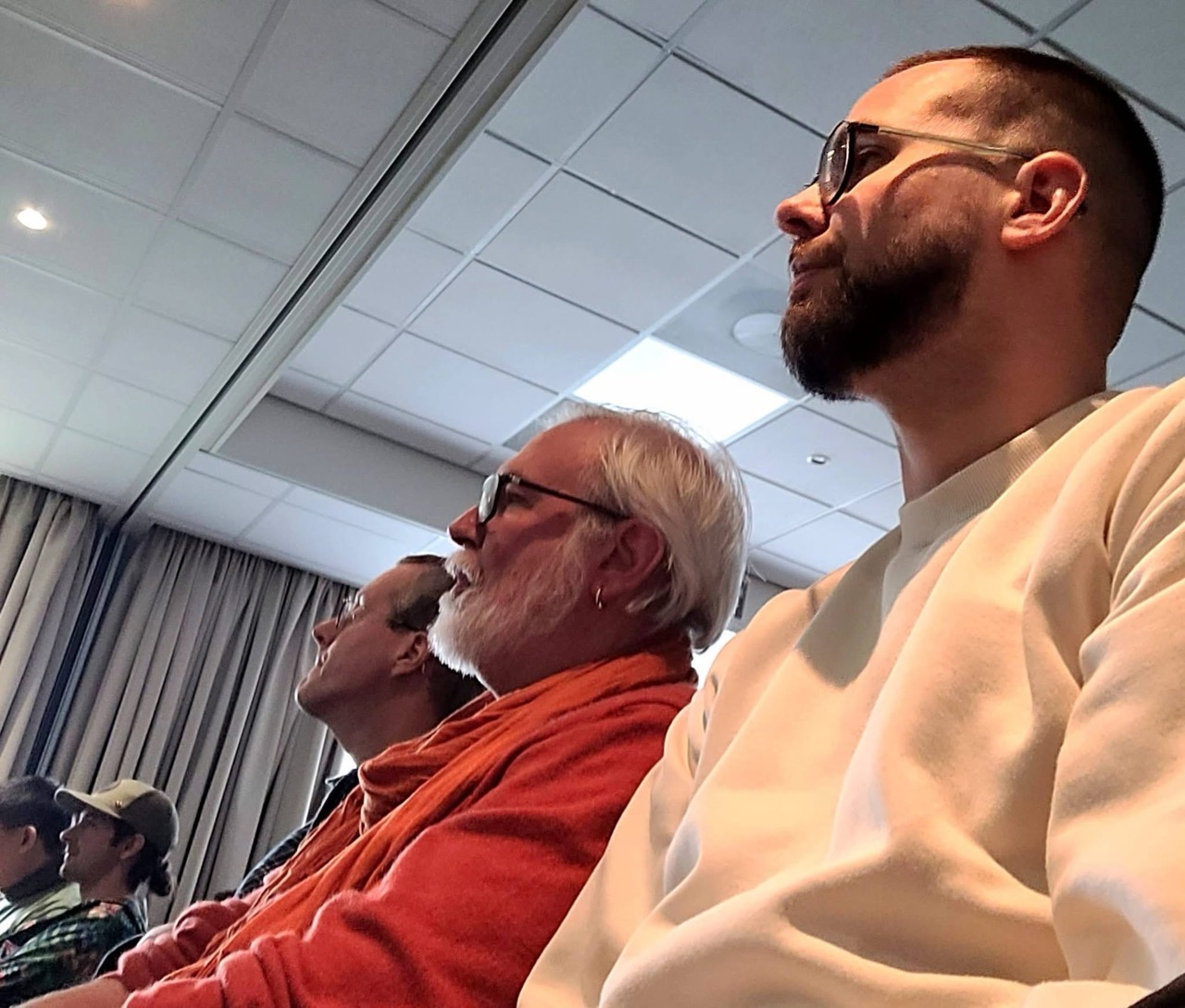
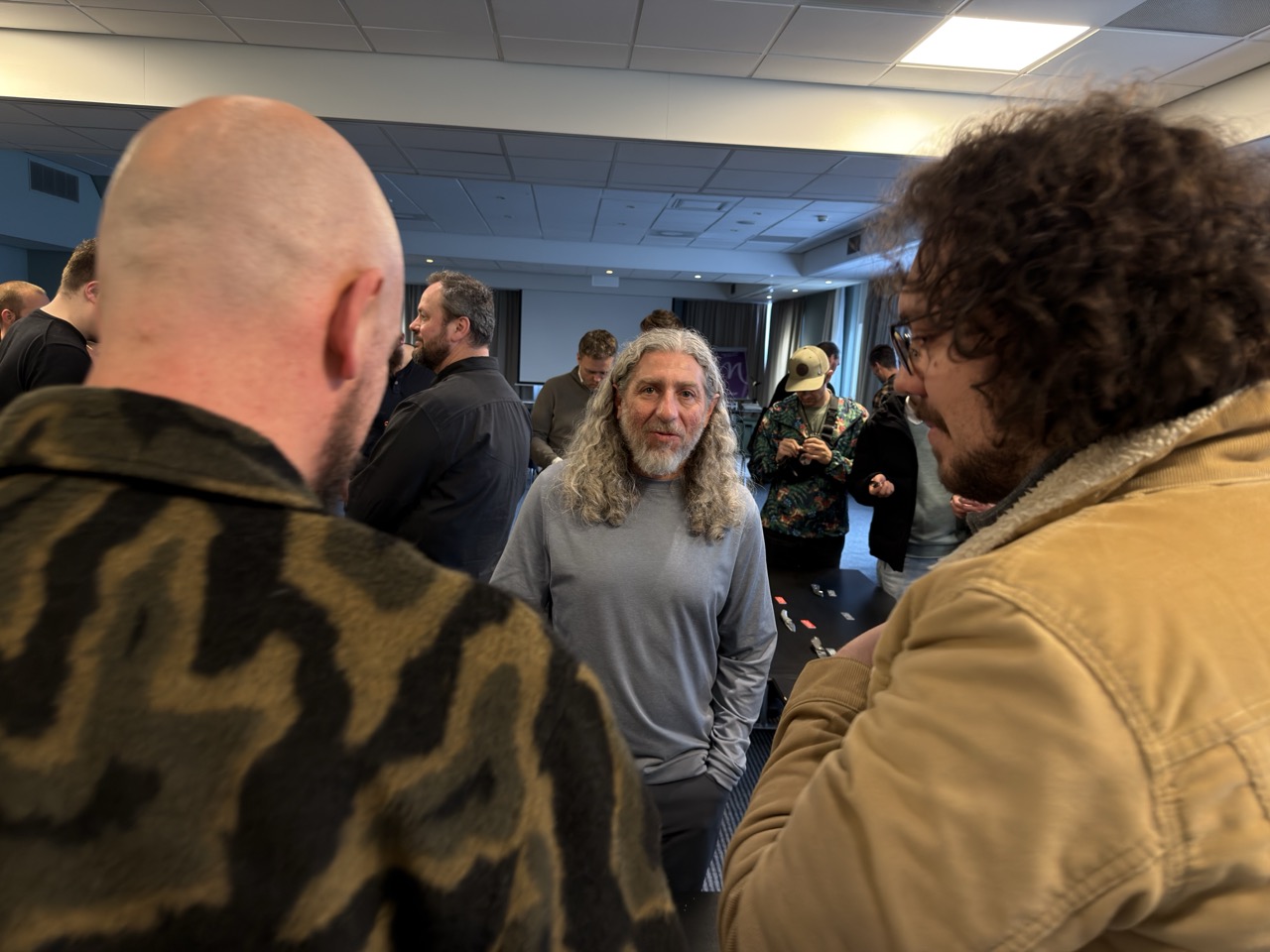
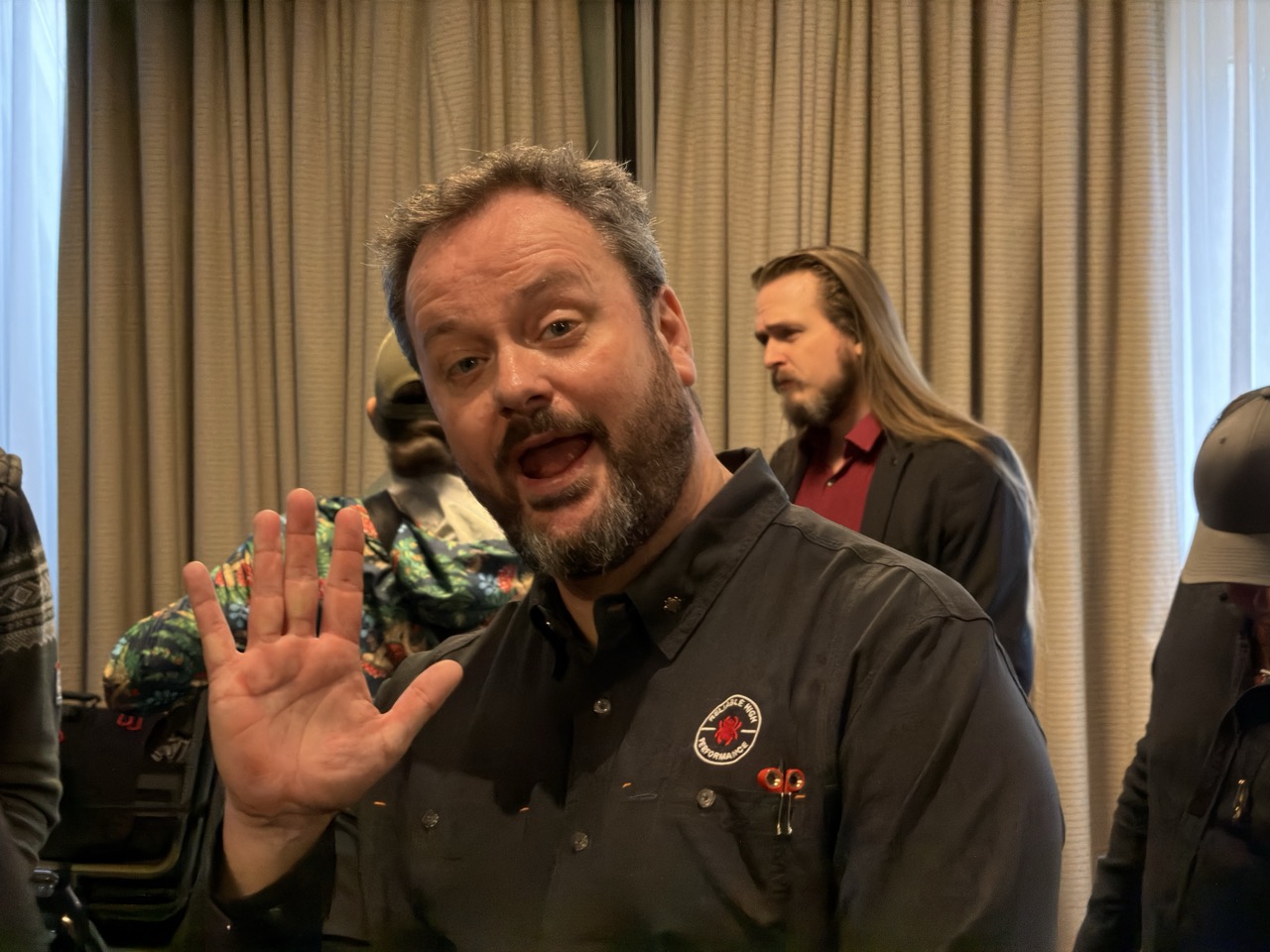
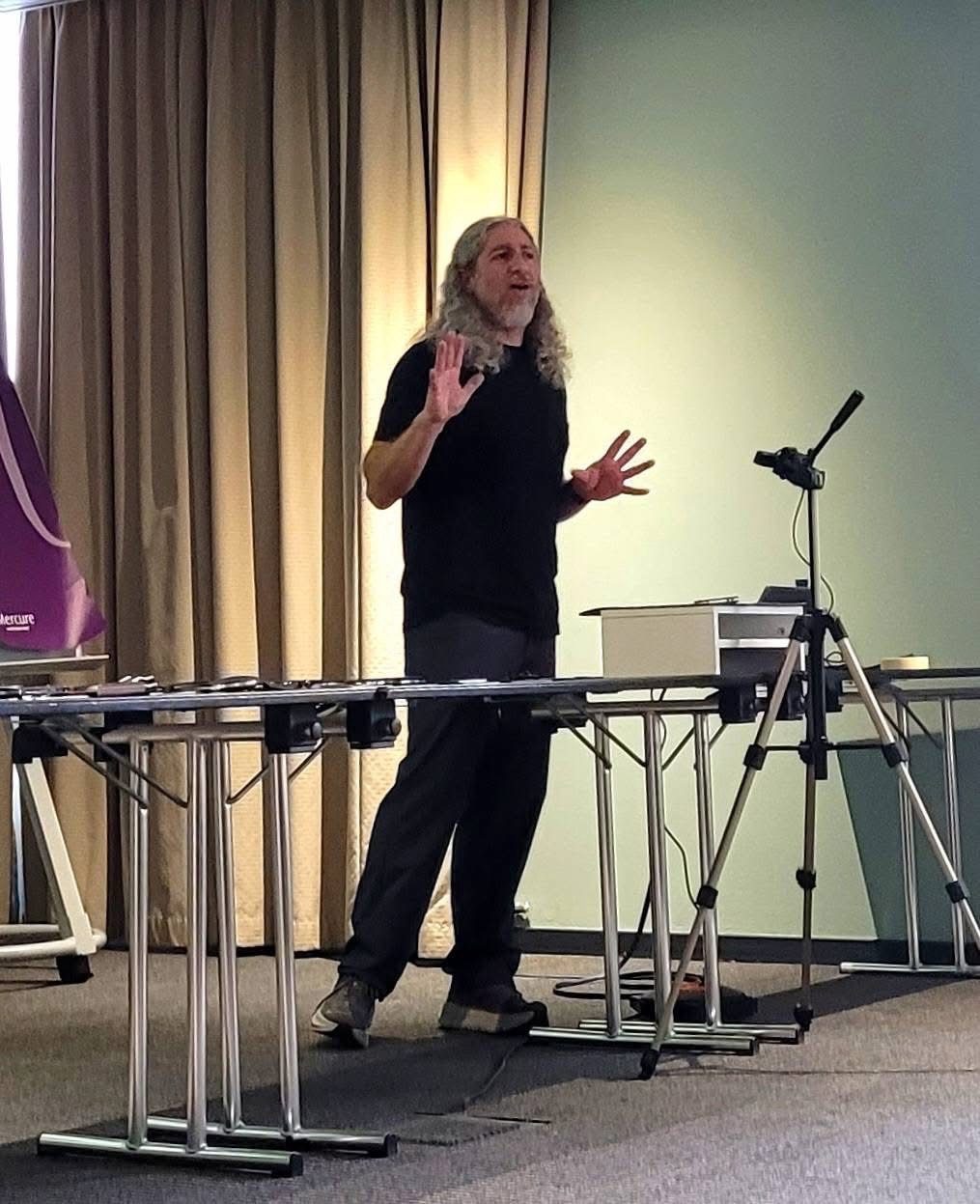
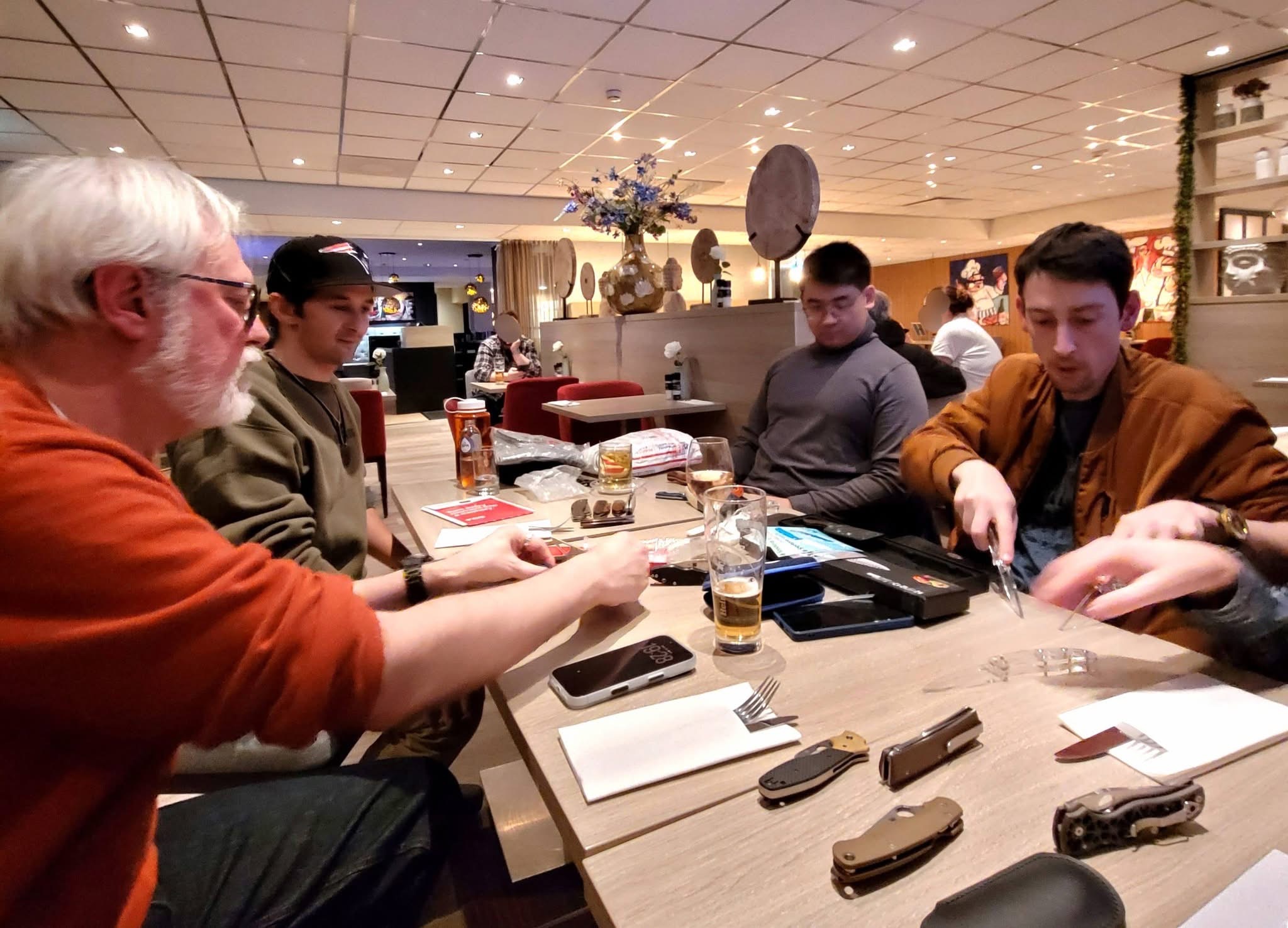
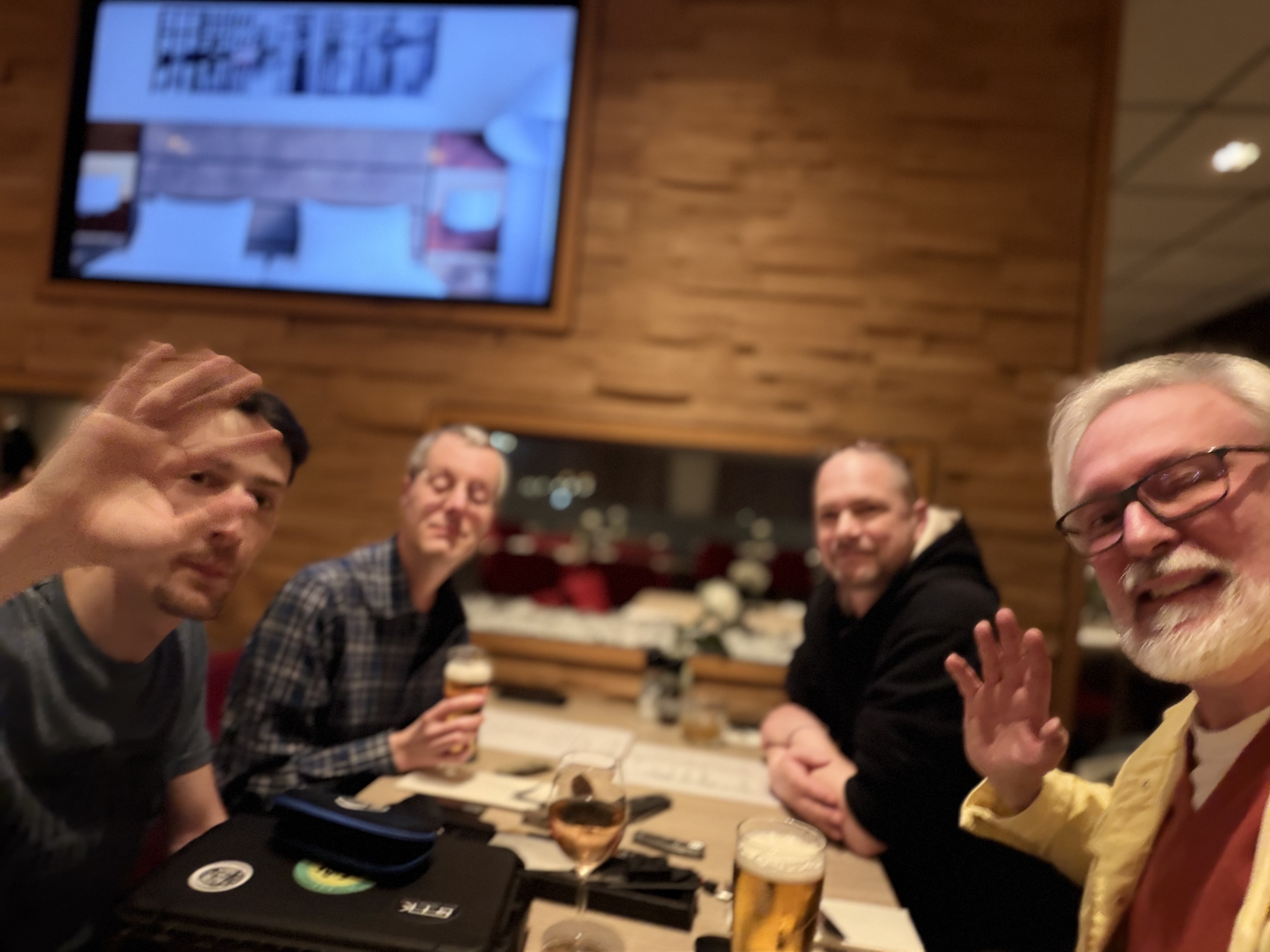
(Photos from the Minimeet by Guillaume GX)

Spyderco Manix 2 Salt – A Welcome Overkill


The funniest part about using the Manix 2 Salt is remembering how this model first came into being at Spyderco—and how well it has matured over time, much like your humble narrator and its designer, Eric Glesser. We’re not getting any younger! 🙂
For that, you can refer back to my previous article dedicated to this knife.

“An extremely capable full-sized folder that is ready for the toughest challenges.”

It’s either a survival-kit essential or an EDC that has earned deep respect over the decades since its creation. And that’s pretty cool. This workhorse remains a bestseller at Spyderco because it radiates reliability and performance.

Its few drawbacks? The space it occupies in the pocket—which really deserves to be dedicated to it entirely—and the lack of tip-down carry. Which means no “Spyderdrop,” unlike the Military for example—one of the most elegant ways to open a Spyderco (Grab it by the Spyderhole!).

At its core, the Manix brings three key elements that truly make the difference: a blade clearly oriented toward performance—neither overly thick nor compromised, with a tall full flat grind; a rock-solid lock that effectively turns it into a fixed blade once engaged and a drop chuting action when closing; and ergonomics so well thought out that, no matter the wet and oily situation, this knife simply refuses to escape your hand.

Disclaimer: The Manix 2 Salt has been provided through Spyderco’s Ambassador Program, upon my own request. Thank you to the Spyderpeople for letting me review it.


The Manix 2 Salt black G-10 handle is fully peel-ply-textured (mixed with Spyderco’s signature Caribbean Bi-Directional Texture™ pattern) and exceptionally grippy and yet surprisingly never abrasive to my denim pocket’s seams — a balance made possible by a thoughtful clip placement because, really, on the paper I was certain that folder would be a competitive pocket shredder !!

That said, this very design becomes a limitation if one considers swapping to a deep-carry clip: the clip would no longer land on the scale’s soft flat spot, potentially creating unwanted friction against the pocket lip. For this reason, I chose to keep the original clip. In practice, it delivers remarkably smooth in-and-out pocket action—arguably even smoother than the Edgerati.
This is still a mystery to me but that ultra grippy Manix 2 Salt G10 is actually very pocket friendly !

Now, for the past few weeks, the Salt—which is arguably the most badass version of the Manix 2 (alongside the Crucarta, which elevates it beautifully in the patina departement, or perhaps a few Sprint runs like the mighty CPM-15V brown g-10 version)—has been jumping into my pocket for real use. As you know, the Edgerati, thanks to its novelty and sheer pleasure of use, has had a tendency to evict several knives from my rotation: the Military 2 in CPM-15V, the Caly 2, the Chief in Magnacut, the Sage Salt… and inevitably, the poor Manix 2 Salt G10, which had the bad luck of arriving at the same time.

But then it hit me: if I see the Edgerati as a BMW X3—powerful, lightweight, and all-terrain—then the Manix 2 Salt is clearly a Land Rover Defender. After all, it came here to suffer… so let’s make it suffer.

And so far, it comes out with flying colors.
Like a Tenacious, this knife is here to work—no matter the conditions.
It brings back that familiar, no-nonsense feeling I used to get from the old Cold Steel Recon 1 and its mighty Triad Lock.


About the Manix 2’s lock, I was worried the mechanism might seize up with dirt or mud, but since the Salt laughs at moisture, soaking it in water is a non-issue. In the kitchen, it also encountered oily situations. Once again, the new G10 scales on the Salt provide excellent traction when drawing it from the pocket—which is definitely not the case with my titanium Squeak, an outstanding little bar of soap when my fingers are wet or greasy…

I did notice a small “click” when opening. I have the same thing on the carbon fiber CPM S90V version, though it’s less pronounced. It’s not a problem at all—just the mechanism doing its thing.

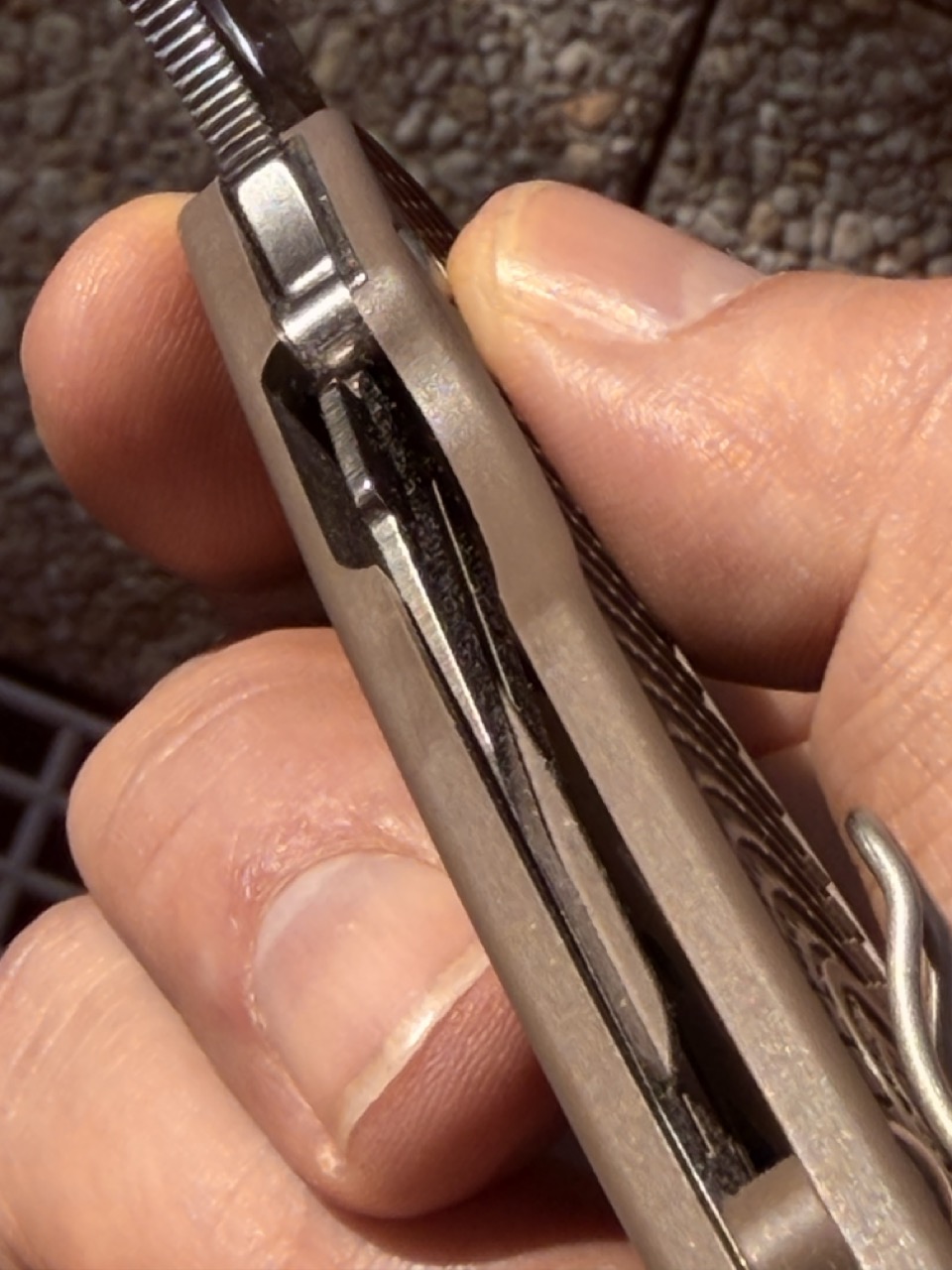
There is also something I forgot to mention—and it is far from a minor detail. The Manix lock does not rely on a detent ball to keep the blade closed in the handle. Much like a traditional back lock, spring tension alone holds the blade securely shut. It may seem subtle, but the implication is significant: closing force is applied even if the blade is slightly out of position. This provides an additional layer of safety—one that should not be underestimated, especially in demanding or unpredictable conditions.
And as mentioned in my previous article on the Manix Salt, the very first Manix models were built around a Martial Blade Craft–grade back lock—thick, overbuilt, and driven by an exceptionally strong spring. That DNA is still there. The Manix 2 lock clearly inherits that same philosophy of power, security, and mechanical confidence.
This is also what makes the Ball Bearing Lock™ so reassuring: safety.


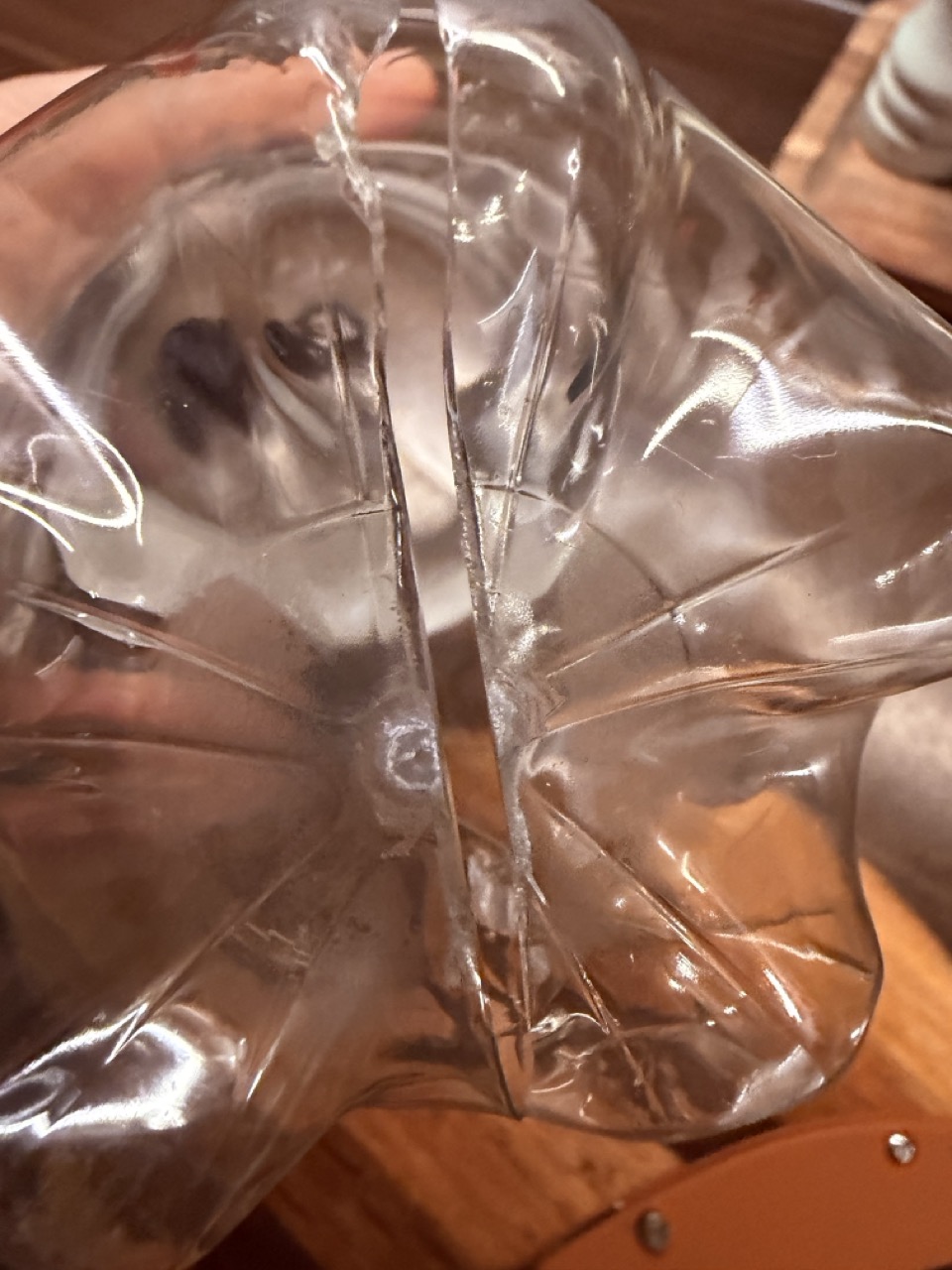
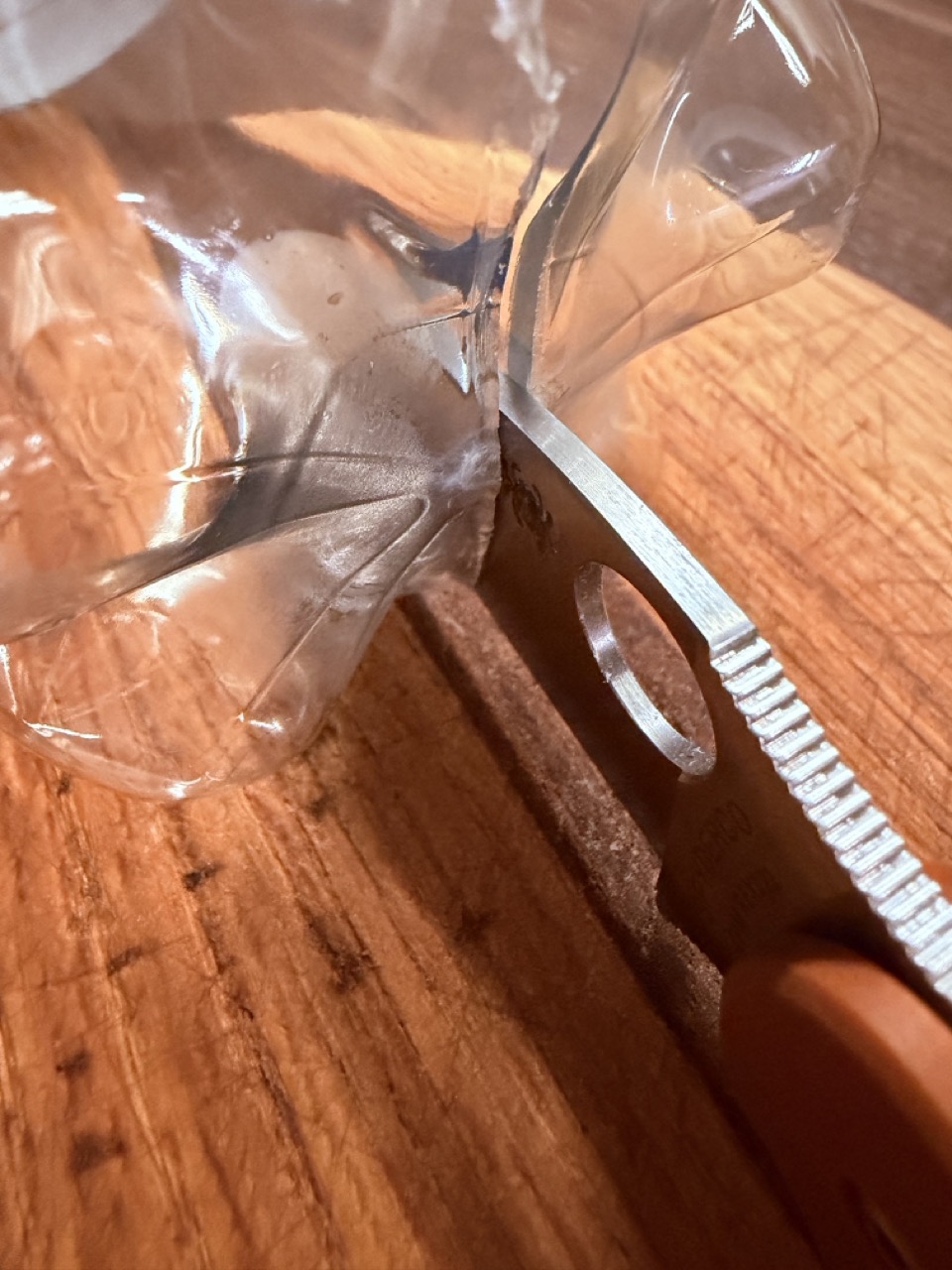
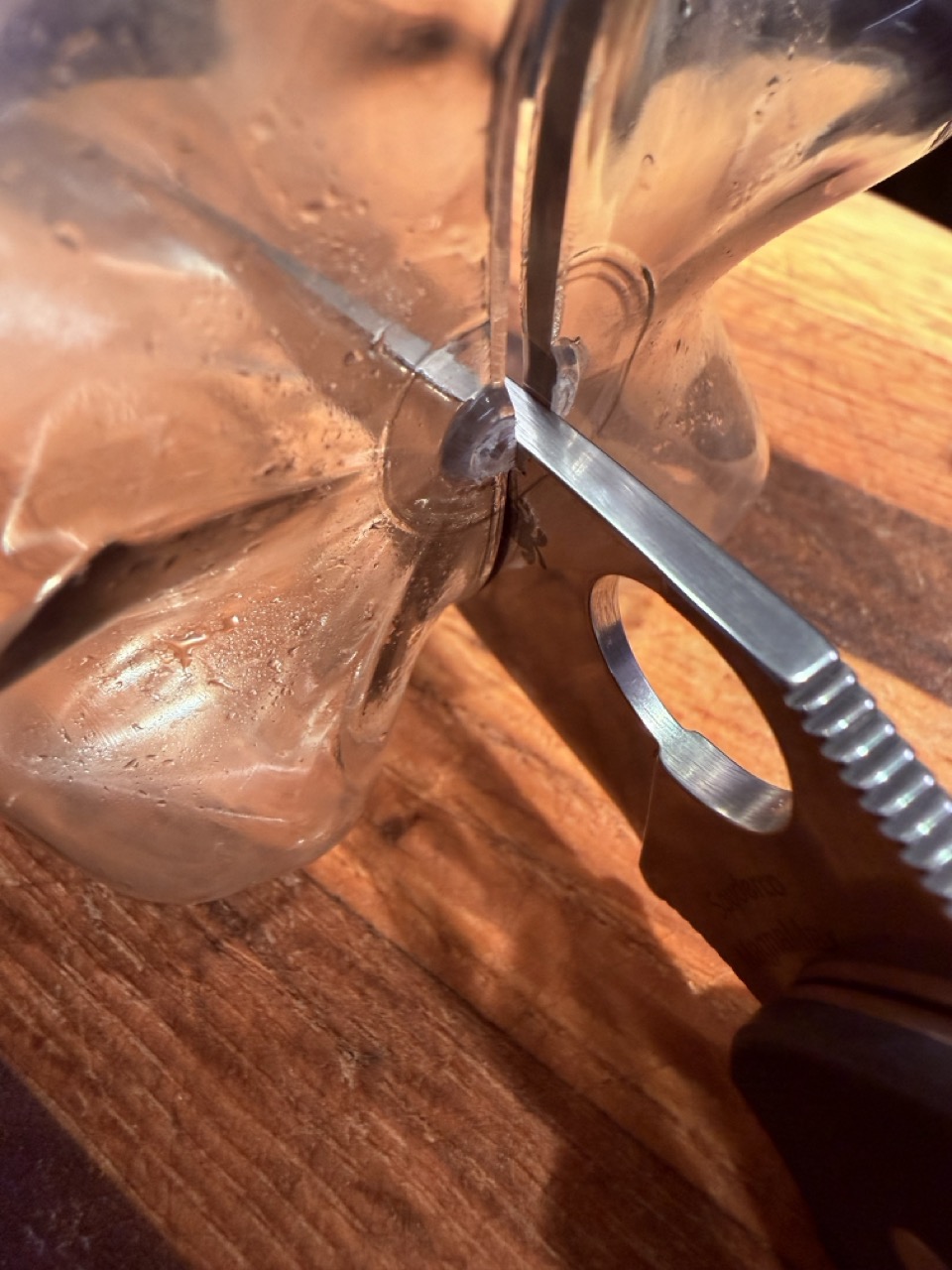
During my homemade bottle butt geometry test—driving the blade straight through the bottom of a plastic bottle, where the material is at its thickest—I found that the Manix 2 could do a tad better. Where the Edgerati (a thicker blade though) passed this test straight out of the box, the thinner Manix 2 Salt required a bit more encouragement. I therefore decided to de-shoulder the edge slightly to thin it out, and the improvement was immediately noticeable. As usual, in ten minutes, small adjustment, but one that significantly enhanced its geometry and cutting performance.
Also I have not been able to scratch that DLC blade so far.

It also made me wonder whether this knife could genuinely appeal to a diver. How intuitive would it be to deploy and use underwater? To answer that question properly, I decided to ask Geoffrey—the head of Normandeep, a professional diver and rescue specialist operating off the Normandy coast, near the D-Day beaches

“The relevance of folding knives in diving is not always obvious.
Accessibility and storage can be an issue, especially when wearing thick gloves.
That said, the Manix is probably the least compromised option, as its lock is the easiest to operate of them all—even with gloves on. For a travelling diver, it could make sense: a knife that transitions from backpack carry during walks to a diving knife clipped to a buoyancy compensator.

Beyond diving, there’s also the nautical world—sailors, fishermen, boating in general—where this kind of knife becomes genuinely relevant. In that context, it makes a lot of sense.”

In the end, the Manix 2 remains faithful to its original ambition: to be a tool first, without apology or compromise. It does not follow trends, nor does it seek to charm through superficial refinement. Its appeal lies elsewhere—in disciplined geometry, a locking system of unquestionable security, and ergonomics conceived to ensure the blade stays exactly where it should: firmly at work in the hand.

In its Salt configuration, these virtues are elevated rather than altered. Moisture, mud, oil, even neglect, fail to disturb its composure. It can be rinsed, returned to service, and trusted again without ritual or concern. Such quiet confidence is rare, and it explains why the Manix platform has not merely survived the years, but matured with them.

It may not be the most discreet companion, nor the most elegant silhouette in Spyderco’s catalogue. Yet when conditions degrade and reliability takes precedence over finesse, the Manix 2 asserts itself with calm authority. Like any true instrument of work, it earns respect not through promise, but through repetition.

And that, ultimately, is why the Manix 2 remains a reference—quietly indispensable, and entirely earned.

MANTRA™ 2 Titanium – C203TI – Still alive and kicking ?

In 2026, does the decade-old Mantra 2 still have what it takes to stay relevant?

(For the record, the Spyderco Mantra 2 is a flipper-style folding knife. It features ergonomic twin titanium handle scales, a robust Reeve Integral Lock, and a lightweight open-backed construction. Its narrow drop-point profile suits a wide range of cutting tasks, and it opens quickly via an integral flipper and ball-bearing pivot.)

This question inevitably comes to mind when placing it next to the Edgerati, you know ? It’s that beautifully executed modern lightweight workhorse that embodies contemporary folding-knife design. On the surface, the comparison might seem unfair. The Mantra 2 belongs to an earlier design generation, one that predates today’s obsession with extreme lightness and visual minimalism. Yet, in actual use, the gap is far narrower than expected.

One aspect where Eric Glesser’s design continues to impress me is that blade-to-handle ratio. It remains among the most efficient in its class, extracting maximum cutting edge from a remarkably compact footprint. This efficiency translates directly into real-world ergonomics, with no sense of compromise in grip or control.

Pocket carry is another domain in which the Mantra 2 quietly exceeds expectations. Its footprint is remarkably discreet—once clipped in place, the slim, folded knife nearly vanishes. In daily carry, it becomes an almost invisible companion, a subtlety that even many newer designs struggle to achieve despite advances in materials and manufacturing.

A decade on, the Mantra 2 shows no signs of obsolescence. Rather, it stands as a testament to the enduring value of thoughtful fundamentals and intelligent proportions, which age far more gracefully than fleeting trends. It has been wielded in the kitchen, carried deep into the woods, relied upon as a traveling companion, and pressed hard into demanding materials—yet it continues to perform flawlessly, a quiet tribute to its lasting design.

Along the way, I decided to upgrade the Mantra 2 with a shorter mini pocket clip—the kind found on the Lil’ Native Compression Lock, the Microjimbo, or the Dragonfly. A seemingly minor adjustment, it nevertheless has a surprisingly tangible impact on daily carry, subtly refining accessibility and pocket presence without altering the knife’s elegant proportions.

The shorter clip further reduces the knife’s visual footprint in the pocket, enhancing an already discreet carry profile. More importantly, it improves comfort in motion, removing any unnecessary contact points while preserving secure retention, making the Mantra 2 feel almost weightless and effortless throughout the day.

This small modification feels entirely in line with the original design philosophy of the Mantra 2: efficiency over excess, function over spectacle. Rather than altering the knife’s character, the shorter clip refines it, subtly updating the platform without betraying its intent.

In a way, this simple upgrade underscores the enduring strength of the Mantra 2’s design. A decade on, the knife requires no reinvention—its fundamentals remain exemplary. One minor critique persists: I’ve never been particularly fond of the small Trademark Round Hole™, which tends to trap debris and demands occasional cleaning. Personally, I would have preferred a simple laser-engraved circle as Spyderco’s signature—subtle, elegant, and maintenance-free.

Even so, the knife’s core mechanics continue to impress. After ten years of regular use, the liner lock has not shifted a single bit. Its stability and reliability remain flawless, a quiet testament to Spyderco’s engineering and the robustness of the Reeve Integral Lock.

It is also worth remembering that the Mantra 2’s blade is crafted from CPM M4, a choice that says a great deal about the era—and the intent—behind the design. At the time, M4 was far from a marketing buzzword. It was selected for performance, not for trend alignment.

In use, CPM M4 still delivers what made it so respected: outstanding edge retention, a fine, aggressive cutting feel, and a toughness that inspires confidence during harder, more demanding tasks. Even when compared to newer powder metallurgy steels, it remains deeply relevant, particularly for users who prioritize cutting performance over corrosion resistance.

On this particular example, the steel is allowed to fully express its potential thanks to the work of my friend JD, who polished and sharpened the blade with remarkable efficiency. His edge work brings out everything M4 has to offer, resulting in a cutting performance that feels both refined and uncompromising. His skill is undeniable, and it shows immediately in use.

Of course, M4 comes with its own expectations. It asks for a certain level of care, a willingness to maintain the blade and accept patina as part of its character. Yet this trade-off feels entirely coherent with the Mantra 2’s tool-first philosophy. Rather than chasing stainless convenience, it embraces performance and durability.

A decade on, the CPM M4 blade reinforces the sense that the Mantra 2 was designed as a serious cutting instrument first—and as an object of design second. In 2026, that approach feels less dated than it does refreshingly honest.

Set against the PITS 2 in Böhler M398, the Mantra 2 reveals just how differently two knives can approach the same everyday cutting mission. Where the PITS 2 leans heavily into modern metallurgy, with M398 offering extreme edge retention and near-total corrosion resistance, the Mantra 2 counters with a more tactile, tool-driven philosophy embodied by CPM M4.

The PITS 2 feels engineered for low-maintenance efficiency: a steel designed to hold an edge seemingly forever, largely indifferent to environment or neglect. In contrast, the Mantra 2 demands engagement. Its M4 blade rewards attention, maintenance, and sharpening skill with a cutting feel that remains distinctly more aggressive and communicative.

In practical terms, the difference is less about absolute performance and more about attitude. The PITS 2 represents the pinnacle of contemporary refinement—clean, controlled, and technically flawless. The Mantra 2, meanwhile, feels more alive. It is a knife that invites use, interaction, and care, developing character over time rather than resisting it.

In 2026, choosing between the two is not a question of old versus new, but of values. The PITS 2 in M398 showcases where modern EDC design has arrived. The Mantra 2 in CPM M4 reminds us why performance-driven fundamentals still matter—and why some designs age not by fading, but by deepening.

Ultimately, the Mantra 2 (linked to JD review)remains an outstanding choice in 2026. Its exceptional blade-to-handle ratio and discreet, effortless portability continue to set a benchmark that many newer designs still struggle to match.

Notably, my own example—part of the very first generation—has never exhibited the slightest issue with its ball-bearing pivot. A decade on, it operates with the same smoothness and reliability as it did out of the box.

Proof, if any were needed, that strong proportions, intelligent engineering, and a focus on real-world use can stand the test of time.
The Mantra 2 is a pure flipper workhorse.

NATIVE CHIEF™ LIGHTWEIGHT SALT® CPM® MAGNACUT® — Part 2 — Every Day Teeth.

As I mentioned in my previous review of the Teeth for the Deep, the Chief Salt in Magnacut comes in two flavors: plain edge and serrated. The plain edge could be the ultimate traveler’s knife—light, versatile, and ready for anything (now that I have discovered the Edgerati, this is another great traveler knife, light and powerful but cost twice the Chief).
What about the Chief serrated version? That’s something else entirely. This is another animal. It takes the aggressive Spyderedge concept and stretches it across a long pointy blade, giving you both points and bites in one sleek package.
And no, you don’t open oysters with a Serrated Native Chief.
This picture is just for illustration. 😀

Having used the serrated Chaparral daily, I already knew how addictive a well-executed serration can be on a daily basis on a short and flat lady/gentleman folder. Scaling that up to the long Native Chief was something I had long wanted to put to the test again, and it doesn’t disappoint. Sal and Eric are true evangelists for serrations. Sal, in particular, is famous for collecting iconic knives and fitting them with custom serrated blades—the man knows how to get the max of performance in a portable package.

Now, let’s be honest: serrations aren’t for everyone—and that’s a shame. More often than not, it’s simply a matter of education and familiarity. No, serrations are not difficult to keep sharp; you just need the right tools for the job. And yes, you can push-cut into wood to strip branches from a rod when needed.

Some of my friends love meat but refuse to touch a serrated knife at the table. And while serrations are not the first choice for delicate whittling or ultra-precise cut, also the teeth are chisel-ground, so the cut can drift if you’re careless… But for true performance, fast and furious, serrations shine everywhere !
On the Chief Salt, they are sharp, a little too aggressive, and pointy: they bite hard into whatever you’re cutting, with a bit of drag, but they make short work of fibrous and demanding materials. The serrations of the Chaparral are more forgiving. The Chief Magnacut’s spyderedge will catch everything, keep it away from your skin !

Maintenance as mentionned earlier is simple. Especially with a triangle rod of a Sharpmaker.

” I designed the Sharpmaker to be able to sharpen serrations. It’s really easy to get good edge on a Spyderco serrated edge with a Sharpmaker. When sharpening a SE edge on the Sharp Maker should you also “push” the knife along the stones as well as pull? I feel like only pulling the edge along the stone would concentrate the contact of the stone on the front of each serration.”
Sal.
These serrations hold their edge very very well and, because of the chisel grind, you only need to sharpen only one side of the blade. And here’s a neat thing to know: serrations always give you more edge length than a plain edge of the same blade size. More edge’s length, more power.

Using the serrated Chief changes the way I cut. On a wooden board, I often find myself relying mainly on the tip and the first 10% of the edge.
Making a wider angle with board, holding he knife higher…
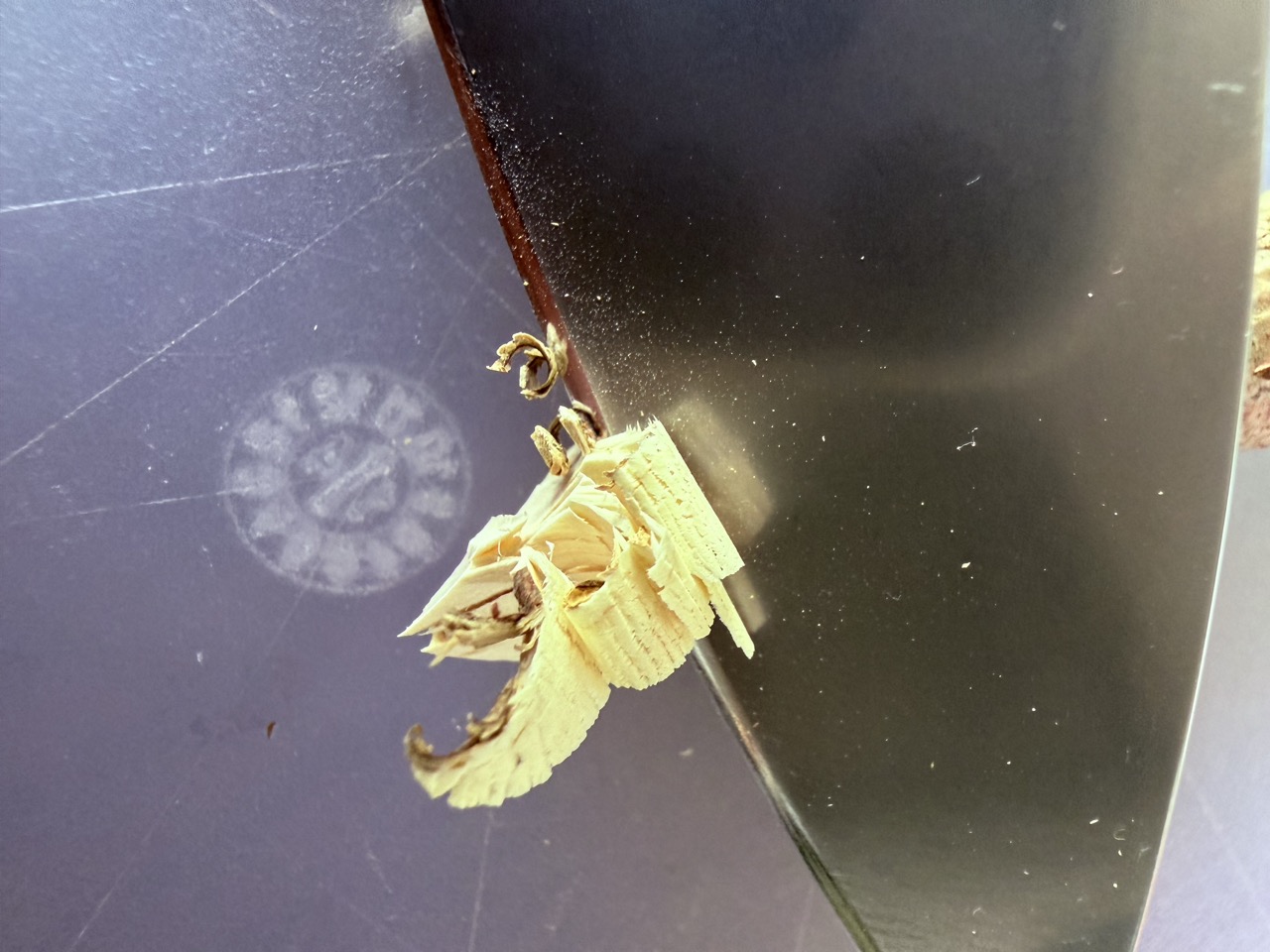
If I cut parallel to the board, the serrations are so aggressive they generate sawdust!
But in any professional kitchen, serrated knives make preparing sandwiches or slicing layered ingredients effortless—fast, clean, and without crushing delicate foods.

The mechanics of a serrated blade differ from a plain edge. Plain edges excel when you can push, slicing smoothly through the material. Serrations excel with a sawing motion, ideal for fibrous materials and when speed matters more than precision. Think of sawing through a branch versus whittling a stick: both cut, but only one does it efficiently under pressure, in emergency. Spyderco bigger folders were often considered as Pocket Chainsaws for that very reason.
Start using Spyderedge and you will see they are addictive !

See ?

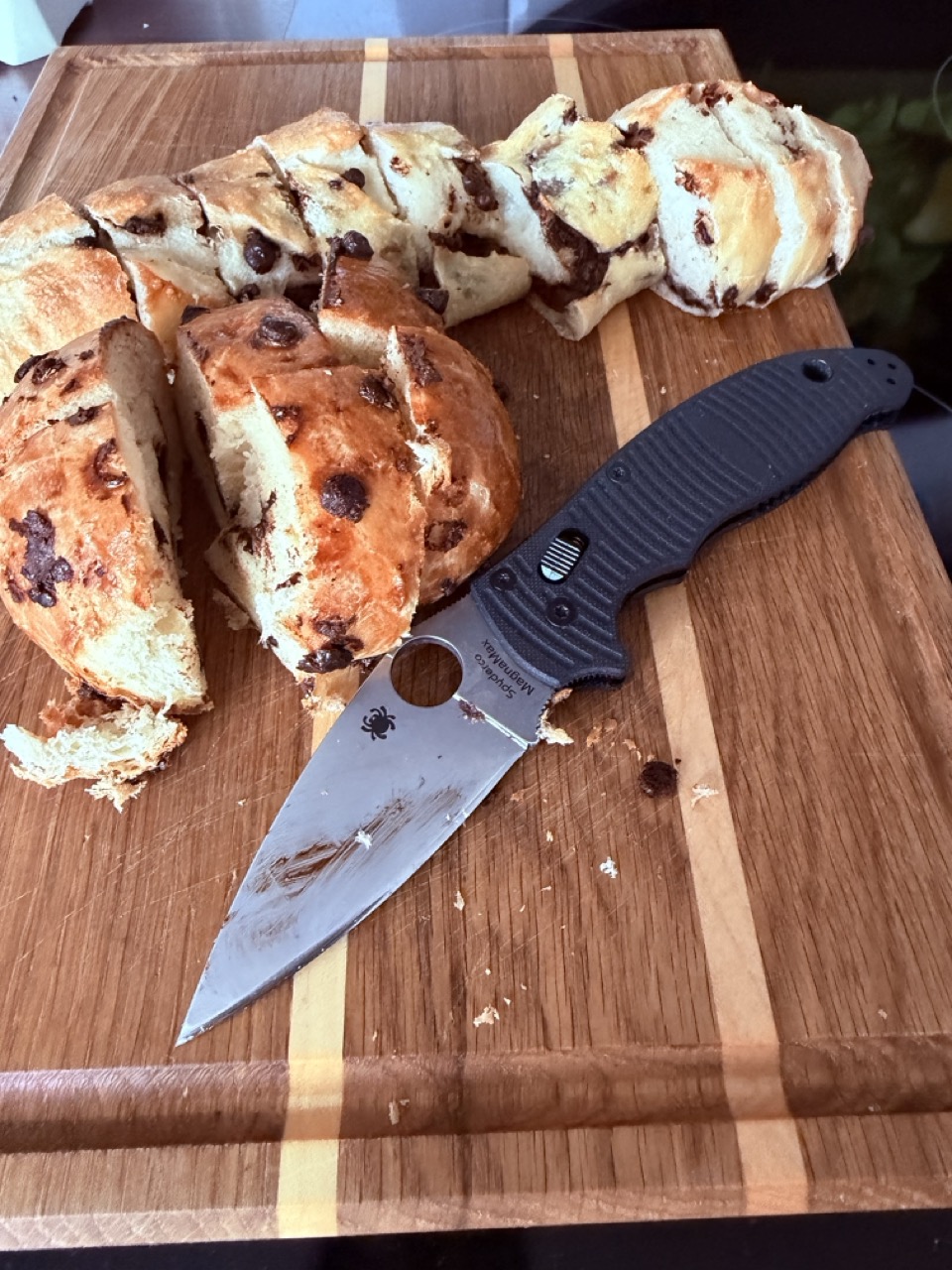
Slicing bread illustrates that point perfectly. Pushing with a flat blade (even a thin one) can squish a loaf, but a serrated edge will slice cleanly, scoring and dividing the material with minimal effort. A sharp serrated knife hooks, grips, and slices with real efficiency, unlike a dull serrated knife, which merely tears. Each teeth act like tiny scallop edge, biting, reaping through the material rather than forcing it apart. A real saw, is not really sharp, by contrast, removes shavings to create a kerf—a very different process altogether.

From a geometric point of view, that serrated Chief Salt is a masterclass in applied design. A true vector for serrations. Very aggressive yet easily controlled, fast yet precise enough for practical use in every day or emergency chores. It’s a light folding knife that turns hard work into satisfying results: you cut fast in all conditions, rain, snow, sea, mud, grease… That chief would even be a precious ally for an expedition in the rain forest. For anyone who wants to take with them everywhere the utility of a long, hard-working Spyderedge in a travel-friendly folding package, this is it. An toothy all terrain tool you can rely on in all circonstances. The fruit of fifty years into knife making observing Nature where serrations are legion.

“In our early testing, (Gail and my), we learned that a coarse edge cut more aggressively than a fine edge, but the coarse edge tended to dull more quickly. The way we decided to combine the coarse cutting and the fine edge longevity was with a serrated edge. The serration tooth is he “coarse” aspect and the “fine” inner edge, lasts longer. “
Sal Glesser.

NATIVE CHIEF™ LIGHTWEIGHT SALT® CPM® MAGNACUT® — Teeth For The Deep.

Serrations aren’t everyone’s favorite, but one thing is undeniable: Spyderco knows how to make them perform. I’ve tested serrated Chaparrals and even the semi-serrated CPM-M4 Tenacious, but the Salt Chief in Magnacut takes this to another level thanks to its relatively long blade.
The “Salt Chief” … does it ring a bell to South Park’s fans ?
(Ah, Isaac Hayes Salty Chocolate Balls...)

For the record, Magnacut behaves similarly to CPM-4V but is far more stainless, which explains why the Salt Series (like this Chief) thrives in humid and coastal conditions.
(The LC200N version of the very same knife (with green FRN handle) would be even better in terms of corrosion resistance but Magnacut’s edge will last longer.)

My first Chief, a special edition in CPM-4V nicknamed Hellboy, was already a beast which I considered replacing my Spyderco C36 Military — and this lightweight Salt Chief has teeth that remind me of a Nine Inch Nails album : pointy, high tech, raw and aggressive.

This relatively long folder is remarkably light: 88 grams for a 102 mm blade — 21% lighter than the G10 version, according to Spyderco.

This is a serious tool for mariners, divers, explorers, military personnel, cooks, gardeners, and anyone who might let their knife get wet. Unlike my Salt Sage 5 (plain edge, monster in the woods), the Serrated Salt Chief is clearly aimed at humid/coastal environments.
(There is also a plain edge Salt Chief C244PYL which could be more versatile.)
The serrations concentrate force on small points along the edge, allowing fibers to be cut more effectively than a plain edge of the same thickness. Each tooth acts like a mini-chisel, making tasks like slicing rope, cord, seatbelts, fibrous fabrics, or vegetation far easier.
But it will be harder to cut straight as the serrations are chisel ground on the left of the blade. So it will naturally be deviate to the right during a push cut.

The multiple points of contact make serrated edges actually longer than straight plain edge. Even if the points dull slightly, the valleys continue to cut, which is why serrated blades are preferred in emergency for cutting seat belts for example.
And serrated edge are not difficult to resharpen. Do it like you would sharpen a chisel with a ceramic able to reach each valleys. Once you get a burr just one or two passes on the other side of the edge and it is back to razor. No big deal really.
Magnacut love leather though; But it won’t be easy to strop it obviously, unless using the rims of a leather belt…

The ergos are just great. Same cockpit as the Native 5.

Out of the box, I noticed a slight tip imperfection — less than a millimeter — which I easily corrected on a diamond rod in under a minute. Even with Magnacut’s hard, corrosion-resistant steel, the tip can be fragile but repairable. This means one thing: use your sh*t !
This light amphibious folder is made to be a workhorse in the sea or earth because it is also easy to keep clean.

Those diamond corners are perfect to put a fresh edge on a serrated blade.

This time again, Spyderco uses a Full-Flat Grind with SpyderEdge. But this is a very very aggressive serrated edge, much more aggressive than the serrated Chaparral for example and, yes, so aggressive and pointy, it can snag and tear but it will do the job. It won’t be a clean cut but the job will be done very very quickly.
(On the Chaparral, the serration are rounded to avoid snagging when cutting. Those same serrations can be found on another serrated folder made in Taichung for Spyderco: the LC200N made Caribbean.)
So the Salt Chief serrated is also a potential emergency tool with a pointy blade!
It will excel in marine scenarios like cutting wet cordage very quick. So this knife feels especially suited for maritime or humid environments. Those serrations also will cut in vegetation with minimal effort. Actually even a gardener or a farmer would appreciate that raw cutting power made to endure mud and rain.
But keep it mind, this is raw cutting, fast and dirty. Perfect in emergency. But the cuts won’t be clean. You won’t slice raw meat into loafs like a chef knife would. Also keep it mind the the chisel edge blade will drift to the right.

As you can notice, the teeth of the Chief are more pointy and deep than, for example, the Tenacious CPM-M4 which is less agressive.

That lightweight Chief strong mid-backlock mechanism is impressive: no liners or spacers and… zero play (unlike my CPM-4V G10 Native Chief, which had slight vertical play.), and perfect action. The blade falls gently when unlocked, The drop-shut action is smooth, supported by a very strong spring, and the knife oozes quality from every angle.
Ah ! Zero play, this what we often got from Golden made backlocks this lightweight long knife is no exception !

This long pointy folder feels lighter than expected for its size, yet solid and trustworthy. It should be perfect for fishermen, mariners, firemen, policemen, divers, gardeners, ranchmen, farmer, construction workers or anyone working in the outside or in corrosive/humid environments from the rainforest to the ocean. The combination of Magnacut steel, Spyderedge, and Yellow FRN handle makes it an emergency tool — especially for those who value edge retention, corrosion resistance, and very aggressive cutting performance in wet environments.

In short, the Serrated Salt Chief designed by Eric and Sal Glesser is a serious, reliable, and powerful folder — perfect for professionals in demanding conditions who need to cut deep and quickly.

“I just got Eric a Megaladon Shark’s tooth for Christmas. Had serrations on the tooth, 150 million years ago. I don’t think serrations are a “new” thing.
Sal Glesser

GETTING A CONVEX EDGE WITH THE CPM-15V BLADE OF THE HOULAHOULA PARA3 LIGHTWEIGHT PART 2.

Since the first try of convexing the Para 3, it is time now to reach the same level of de-shouldering as on my Sage 5 Salt.

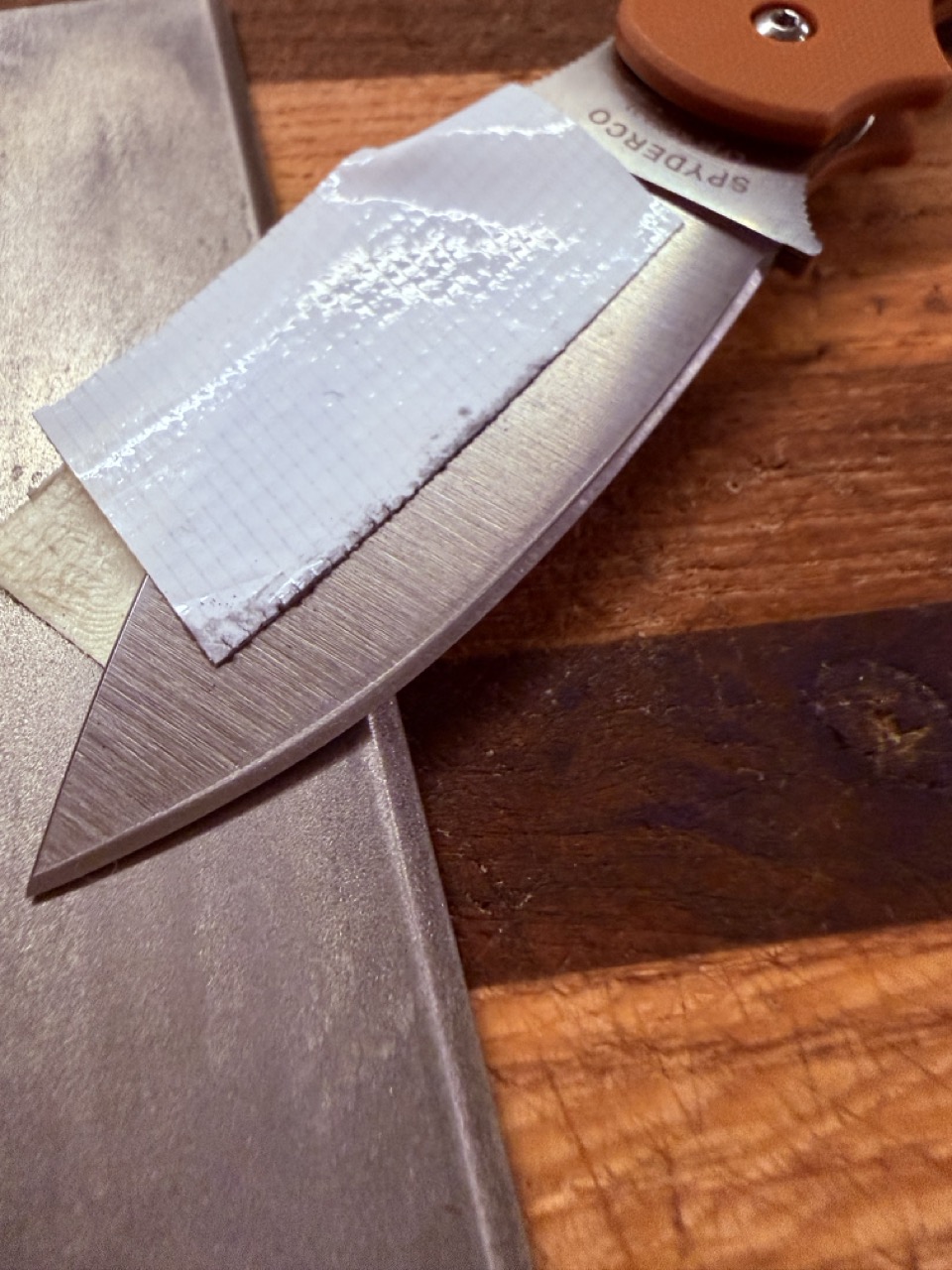
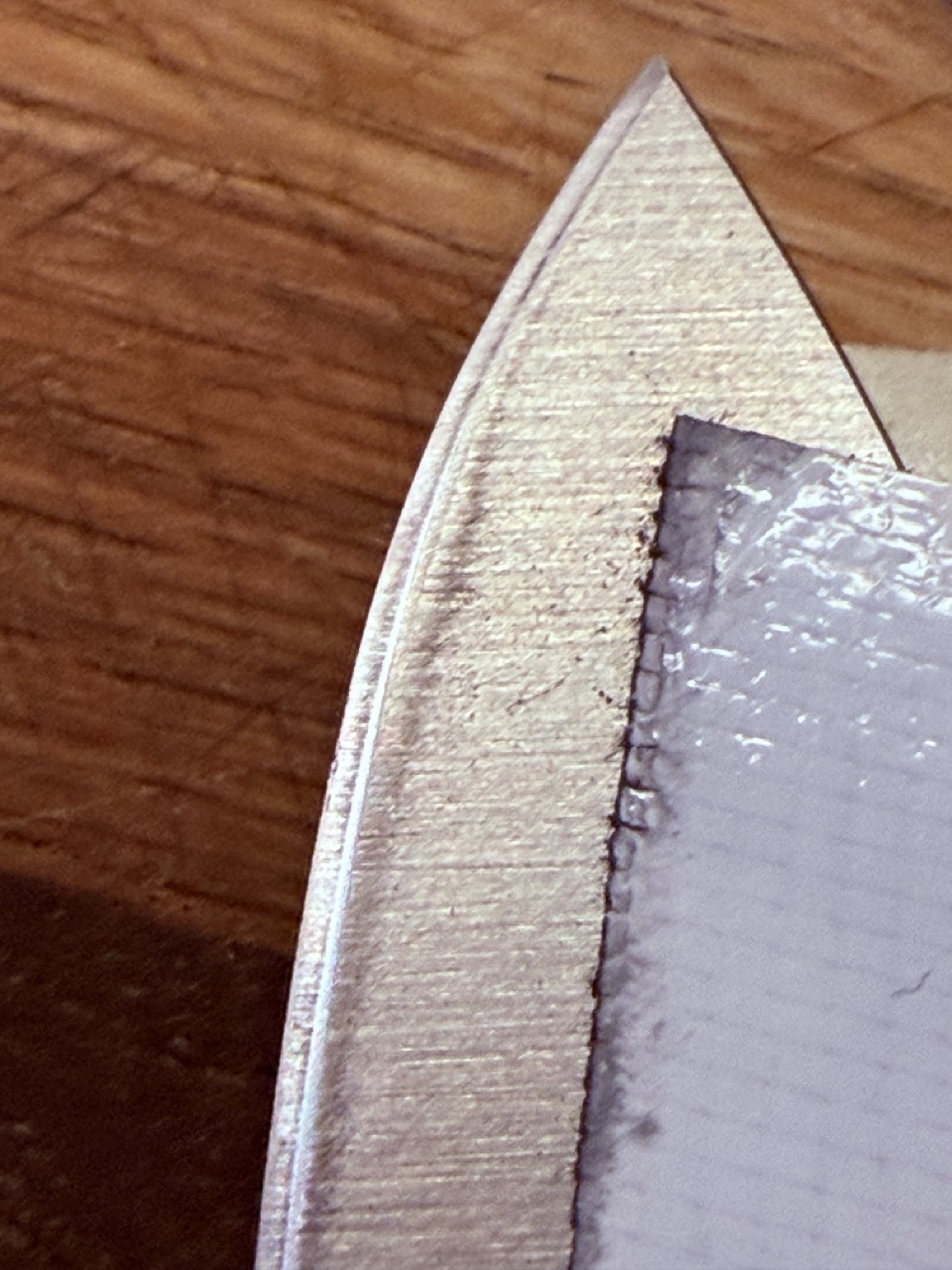
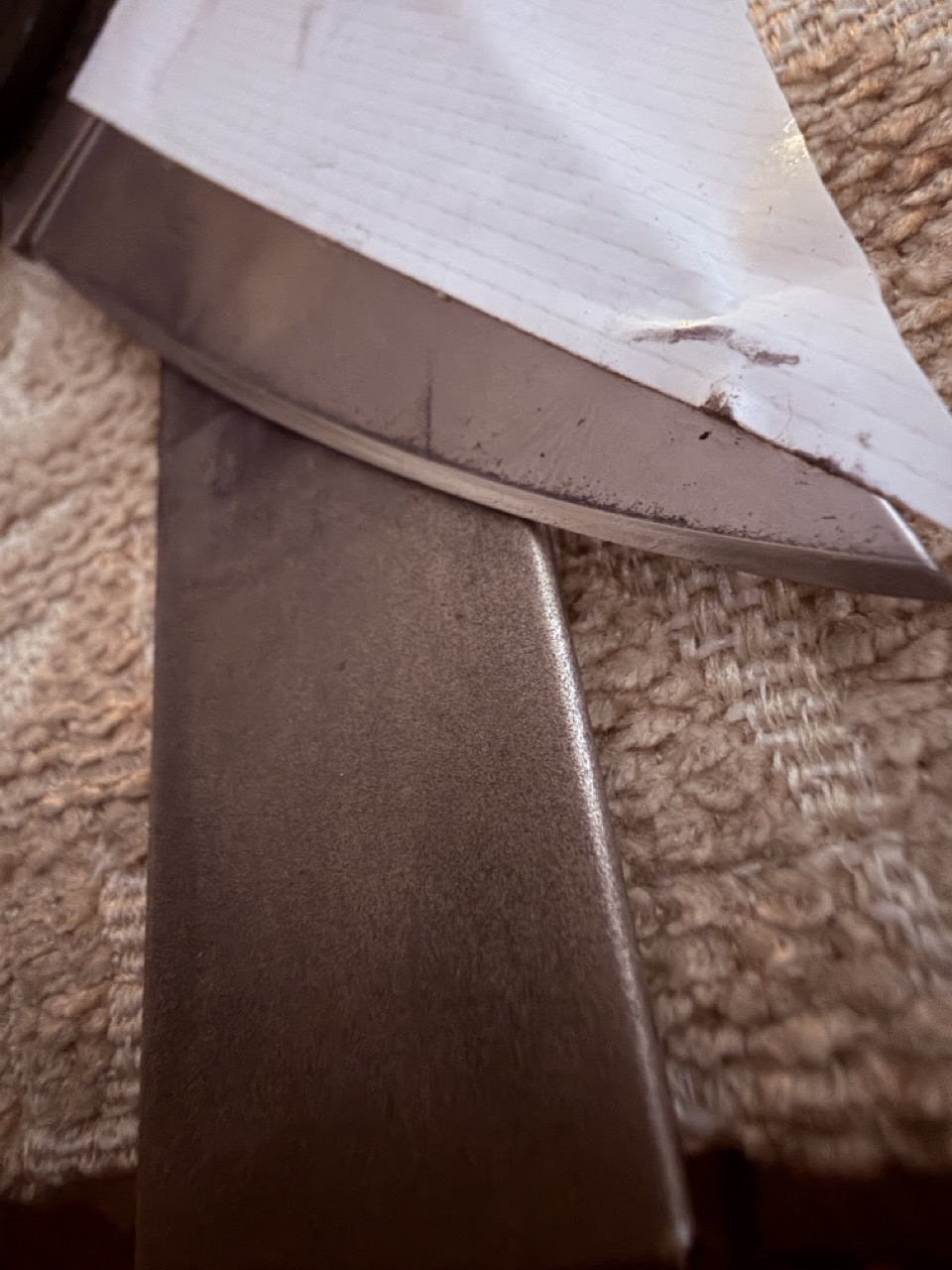
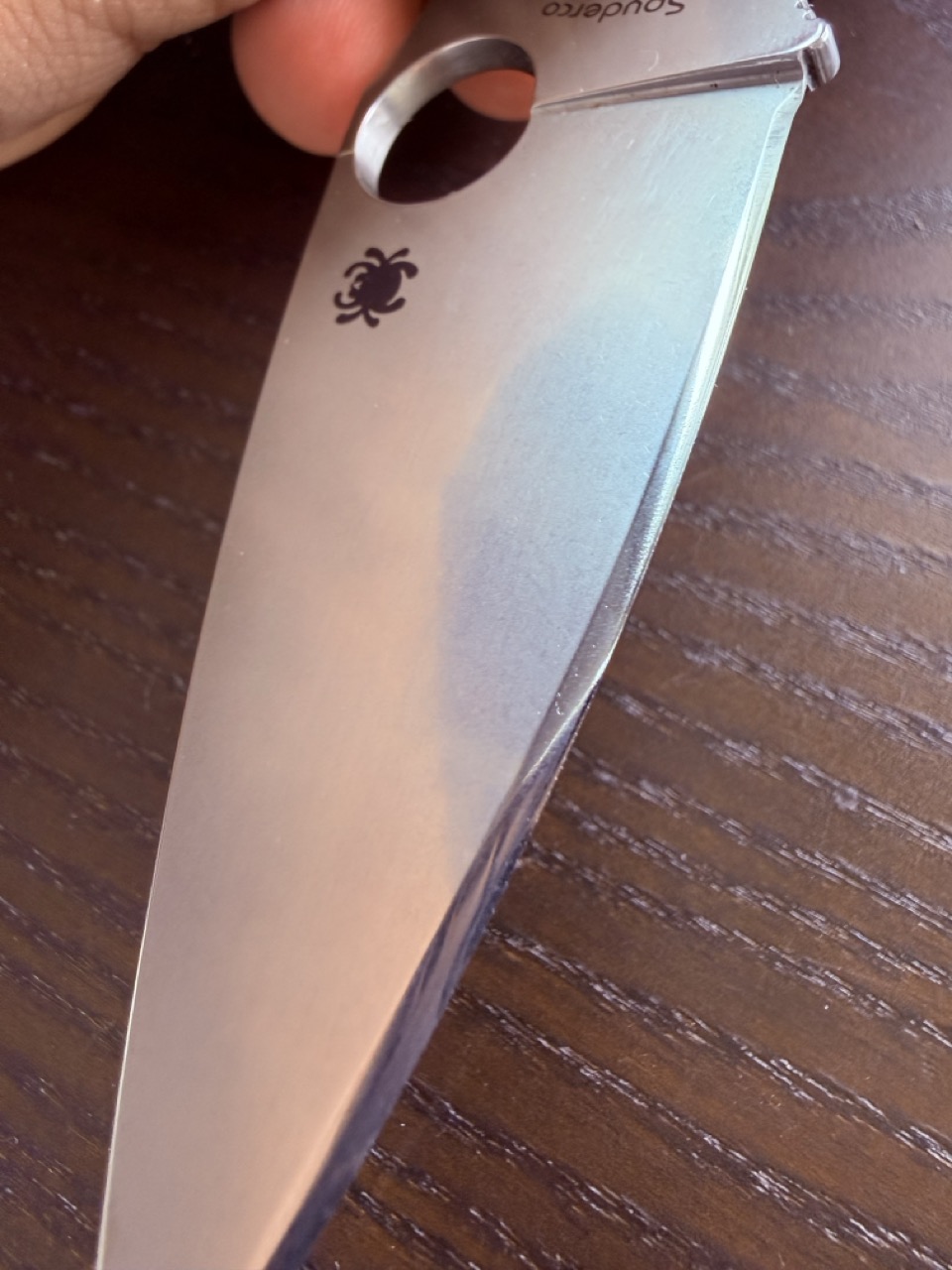
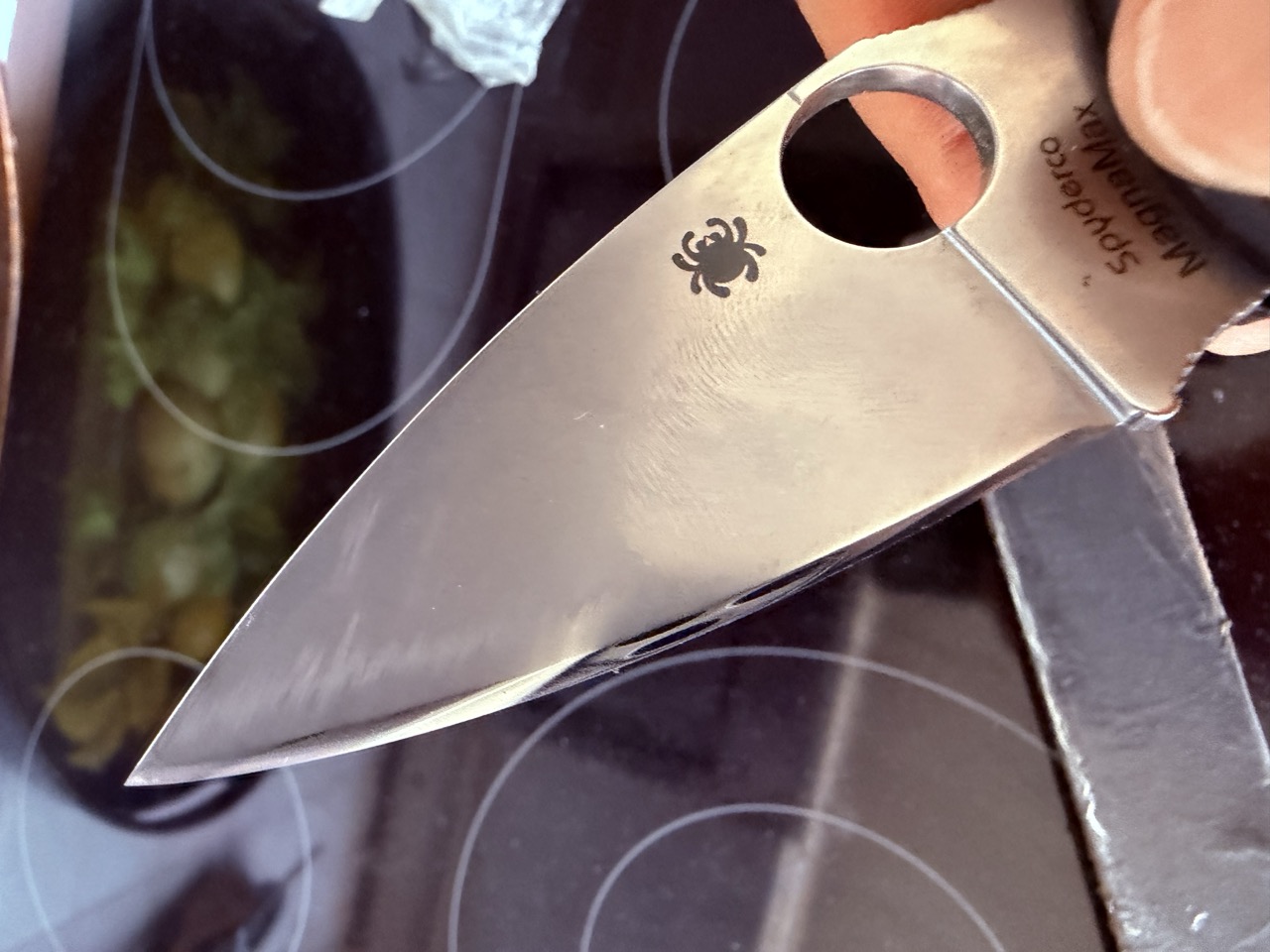
My goal here isn’t to touch the edge itself, but to smooth the border between the flat of the blade and the edge angle. This allows me to maintain the edge primarily on leather while reducing drag when cutting hard materials like plastic or wood.

The equipment I used was again the Spyderco Double Stuff 2, focusing mainly on the diamond side. I experimented with gentle, round strokes on the flat diamond stone instead of always moving in the same direction — it seems to remove metal much faster.

For aesthetics, I plan to follow up with white ceramic or jade stones to approach a mirror finish, similar to the Sage 5. Magnacut responds beautifully to polishing, whereas CPM-15V doesn’t particularly care.

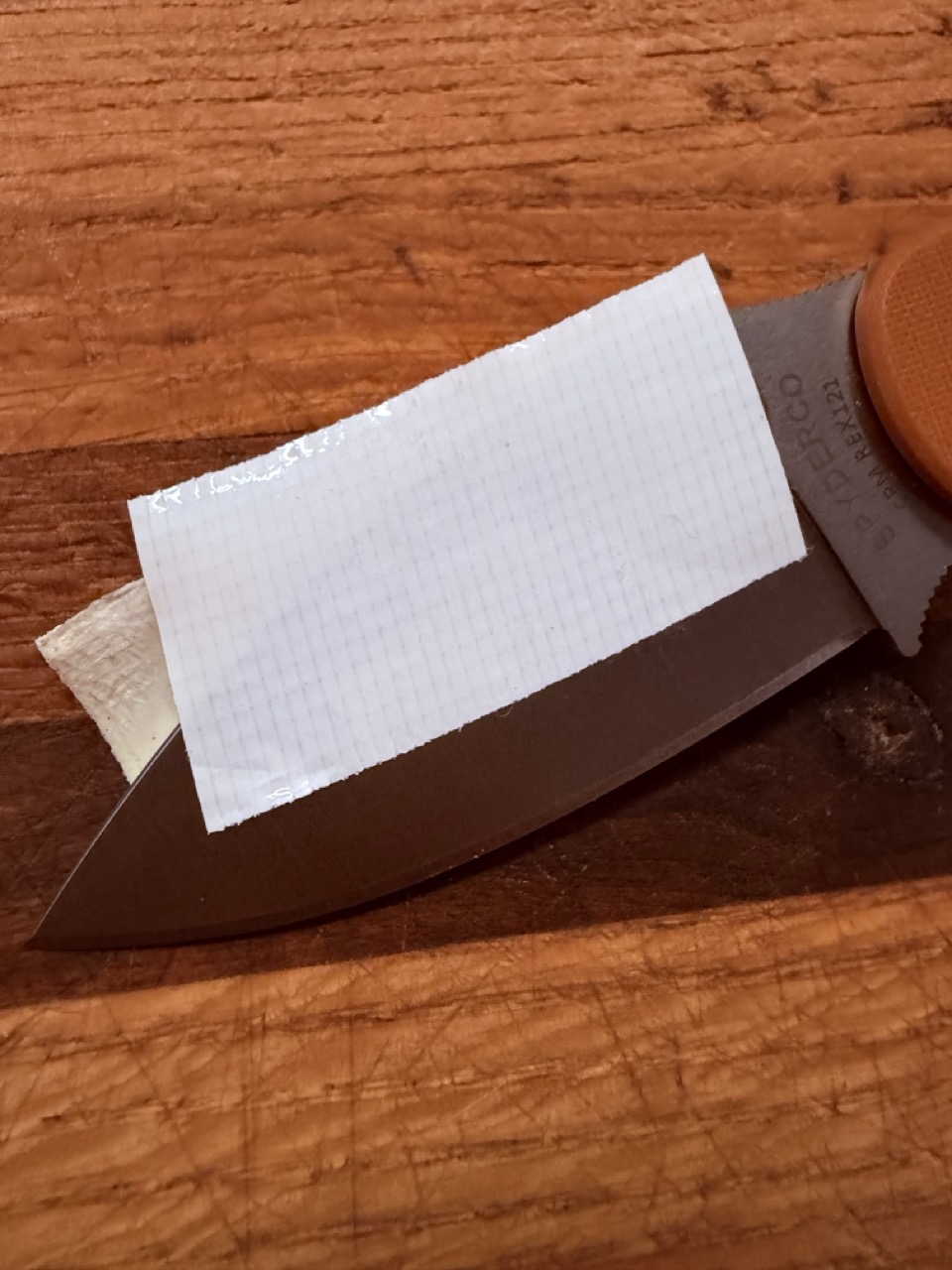
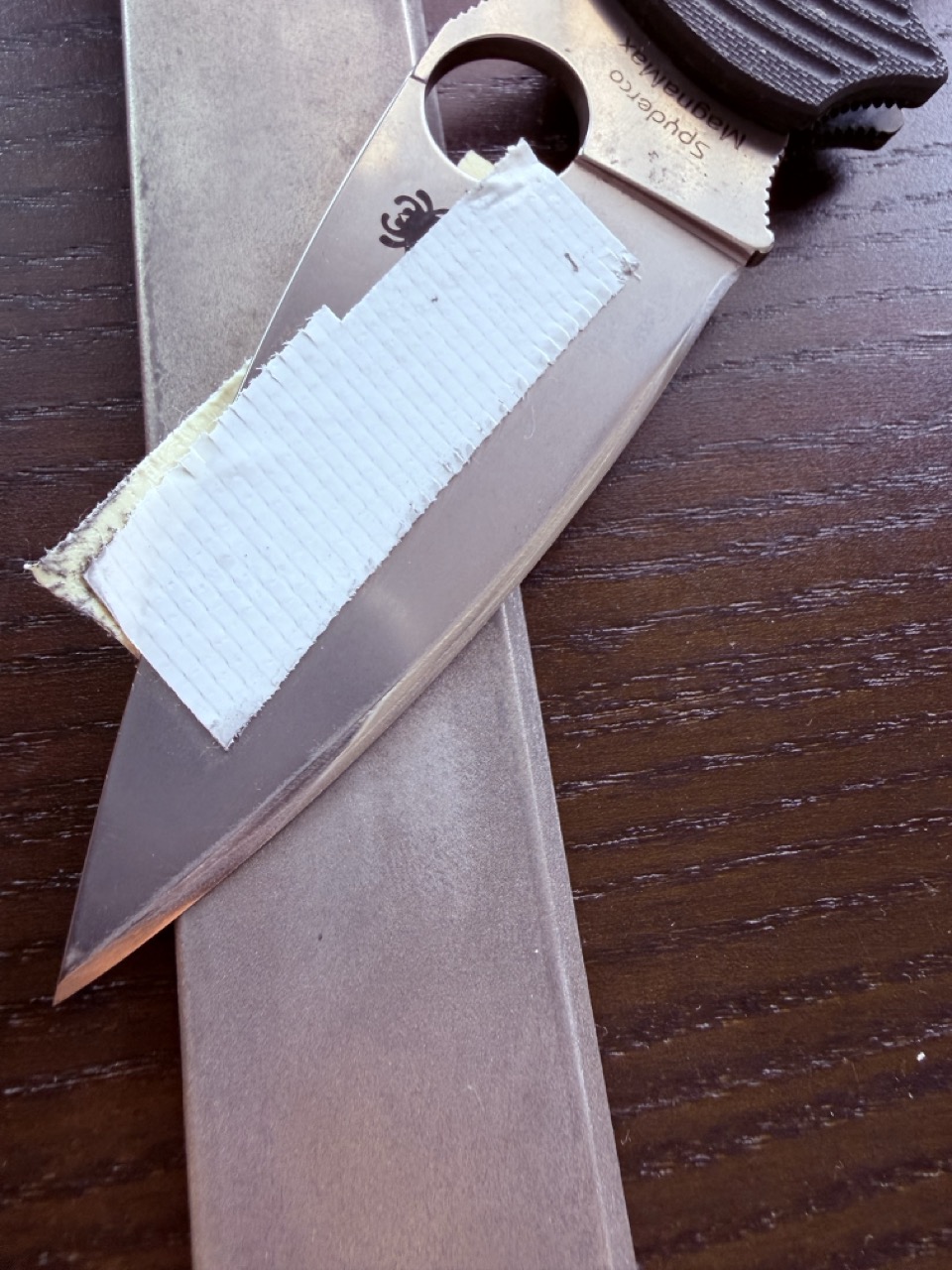
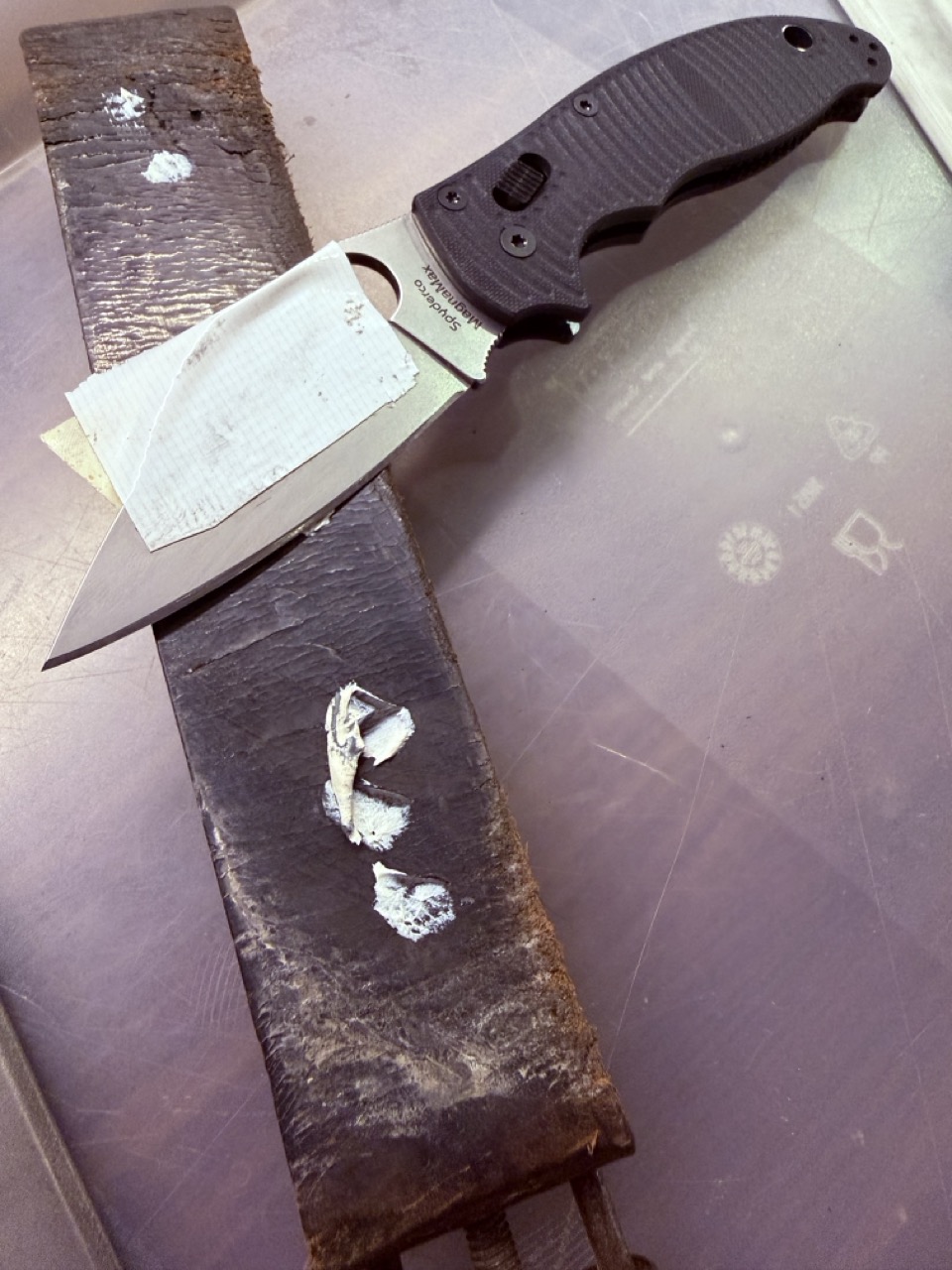
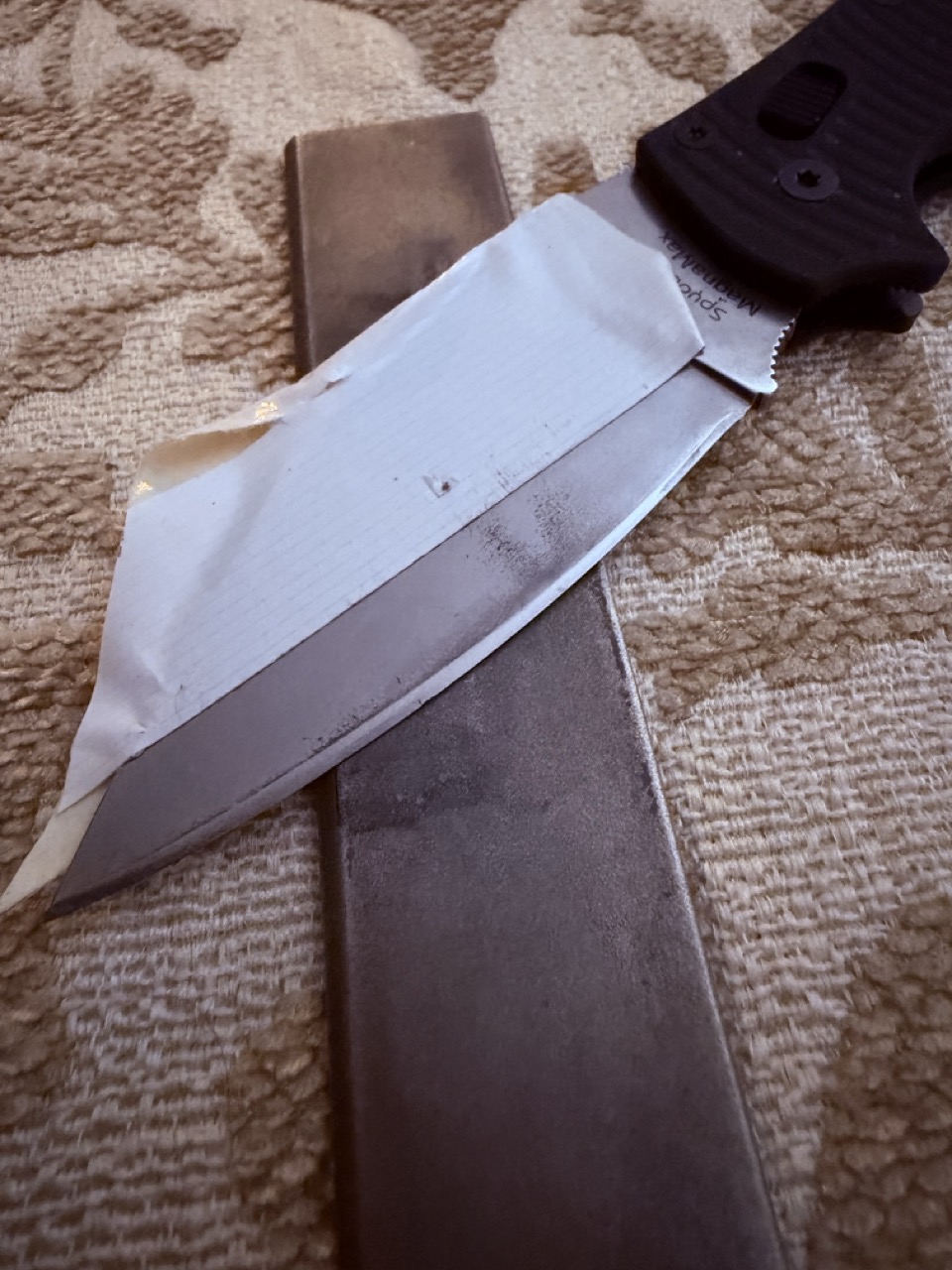
The use of gaffer helps preventing any deep scratches on the blade finish.
It works great. The black dust is metal removed by the diamonds.
I do that outside in the wind. I don’t want to breath that dust.

Eventually this second round has gone so smoothly (compared to the first one linked at the start of this review) that i was on the verge to work on the Military 2.

Remember Sal saying:
The Edge is a Ghost. Always changing. Dying (dulling) being reborn (sharpened) split personality (angles and geometry changing). Think of the edge as gas in a vehicle. It runs out of gas and you put in more gas. We provide the format, materials, design for use, variety to avoid boredom and create interest, but the edge is your creation. The result of your understanding, education, experience and practice.

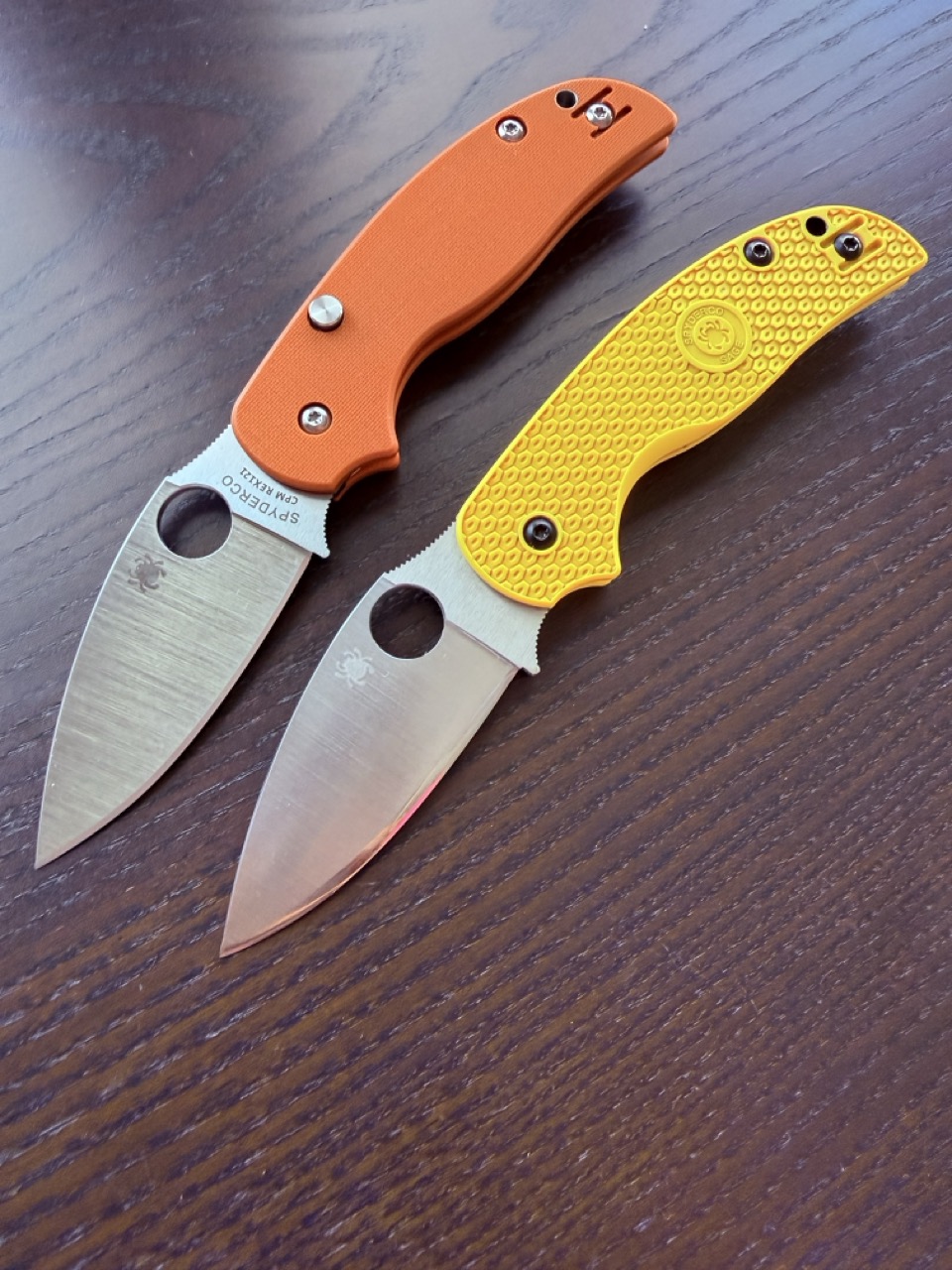
The comparison between the Sage 5 Salt and the Para 3 continues. In short: the Sage 5 has superior geometry thanks to its high 3 mm FFG blade, while the Para 3 features a sturdier blade, a thinner point, and is overall lighter (no steel liners).

It’s really your choice — both are highly capable and complement each other, coming from the same design mind. Shawn Houston even notes that the Para 3 carries “that Delica vibe.”

I’m impressed by the Sage 5’s exceptionally smooth action — one of the best among Spyderco’s compression lock knives. I love both knives. These days, the Sage Salt rides with me, but while both won’t let you down, the smooth Sage is more fidget-friendly. Both are great, but the Sage 5 is simply less popular… 😉

MILITARY™ 2 BROWN G-10 CPM® 15V® SPRINT RUN® – The Mother Of All Bears.

The Spyderco Military C36 entered my life before the turn of the millennium. Back then it was a CPM-440V (S60V) wonder, remarkable for its emphasis on lightness. With Fred Perrin, we called it a “quick reaction tool.” At the time, it was a genuinely innovative design: a folder with a nested liner and powder metallurgy steel, both cutting-edge features. It was a real breakthrough in the cutlery world, and a true Sal Glesser design — high performance on a light frame, or as Sal, a racing car enthusiast, would put it: a fast, efficient chassis built for speed and reliability.
The idea was simple:  “If your son were going into the military what folding knife would you send him with?”
(“Do you think we were born in peaceful time ? Put out the lights on the Age of Reason.” Justin Sullivan.)

The very thin, pointy blade and the long handle of the Military were not understood at first. I often heard: “I can break the point!” or “I don’t like the blade-to-handle ratio!”

But Sal’s vision was deliberate. The elongated handle provided a secure grip and safe operation of the knife — even when wearing gloves in harsh conditions. And that needle-like point, when not abused as a pry bar, proved to be a reliable, precise all-terrain tool. What first looked fragile was in fact purpose-built: a cutting instrument optimized for performance, not for reassuring looks.
I remember ESEE (the RAT) founder Jeff Randall having written a review of him bringing a CPM440V Military in the Peruvian Rain Forest. It was requested by Sal Glesser asking Jeff to use it hard in the equatorial zone.
The review has been published in Tactical Knives and on Randall site before he started his knifemaking business. Eventually Jeff Randall prefer the SERE 2000 in VG10 but:
I have zero complaints against the Military, but for the role I use a folder in, the new SERE is absolutley perfect. Actually in a tactical role, the Military is a little faster to deploy for me. I think the Military is a perfect crossover between survival and tactical, but the SERE is the perfect survival folder.”
The point is, the Military’s thin tip and liner lock were never an issue — even in the rainforest, where I pushed it hard.

Thanks to Spyderco’s CQI (Constant Quality Improvement) philosophy, the Military has been continuously refined over the decades. A titanium Reeve Integral Lock version was later released, giving a sturdier feeling but at the cost of the knife’s soul: it became heavy, losing that unique spirit of lightness and agility that made the original Millie so special. For the record, G10 is already a strong, proven material — it didn’t need titanium to inspire confidence.
Also Eric made his own hardchore liner lock folder: the Tenacious.
Spyderco will continue to promote well-made linerlocks especially those designed by Master Ed Schempp. His Bowie is a master piece.


The Military has always been a huge folder to carry casually, and even more so in the years after 9/11, when knives became heavily restricted and socially frowned upon. Yet, the C36 still managed to slip into pop culture: in Desperate Housewives, Season 2 Episode 8 (“The Sun Won’t Set”), Hector Ramos (played by Danny Trejo) nonchalantly peels an apple with a full-serrated C36 Military. A perfect Easter egg — a knife enthusiast immediately recognizes it, while most viewers just see “a big folding knife.”

It’s funny how pop culture sometimes normalizes what legislation and public opinion try to stigmatize: Trejo’s character wasn’t using it violently, but in the most domestic, innocent way possible — peeling fruit. That contrast says a lot about how the Military can be both a serious tactical tool and, at the same time, a simple everyday companion.

Then, the Market asked for a shorter version. Sal teamed up with Eric to design and produce the Paramilitary. A shorter version with a new strong lock developed for their Martial Blade Craft Line: the Compression Lock.
Then came the Paramilitary V2 or PM2 which stillis a huge success.
Then the Para3 (three inches blade) came for a more compact version and even a Lightweight version which is considered by Shawn Houston as a Compression Lock Delica.

It’s striking how pop culture can normalize what legislation and public opinion often stigmatize. After 9/11, carrying a large folder like the Military became suspect, even frowned upon. Yet in Desperate Housewives (Season 2, Episode 8: “The Sun Won’t Set”), Danny Trejo’s character Hector Ramos uses a fully serrated C36 not as a weapon, but in the most innocent domestic way imaginable — peeling an apple. That small scene perfectly captures the duality of the Military: a knife designed as a serious, high-performance tactical tool, yet just as capable of being a simple, everyday companion.

“More than 25 years after its original release, the eagerly anticipated Military 2 builds on that hard-earned reputation while incorporating several significant design improvements. Instead of a LinerLock, the Military 2’s full-flatground CPM® S30V® blade is supported by Spyderco’s signature Compression Lock® mechanism, which offers greater strength and even safer one-handed operation.” Quoting Spyderco.

To make it clear: the Military 2 is based on the Paramilitary 2 with a longer blade and handle. Is that simple ? It is a PM2 XL ! 😉

Designed in 1995, the first-generation Military (Mil1) came with a single clip option: tip-down carry. That choice wasn’t arbitrary — it was tied directly to Sal Glesser’s preferred opening method, the Spyderdrop. Pinch the hole between thumb and finger, give a flick, and let the weight of the handle swing the blade open. Faster than many switchblades, elegant, and utterly reliable. My Tenacious carries that same spirit: a knife built to be deployed quickly, smoothly, and without fuss — ready for work in an instant.
That opening style is less common today, as most users gravitate toward the “Spyderco flick” or “thumb flick.” But those techniques depend on tip-up carry — the clip has to be mounted at the rear of the handle, not near the pivot. That’s why the Military 2 was so eagerly awaited with its new configuration… yet curiously, it’s still sold tip-down!


The stainless steel liners that form the foundation of the lock are larger, giving the knife increased structural strength and anchoring its four-position pocket clip, which is configurable for left or right-side, tip-up or tip-down carry. “
OK but comparing the weight between the C36 (128g) and the C36-2 (124g) the Military 2 is 4 grams lighter. (114 grammes on my kitchen scale !)

“The skeletonized liners are nested within peel-ply-textured G-10 scales to maintain a slim profile and complement its open-backed construction to reduce the knife’s overall weight.”

I have been waiting for a Sprint Run before to jump into the M2 wagon.
“C36GBN15V2″ ! (For the record, the first name of the Vanilla Military 2 is just C36G2, plain edge, and the new Mil 2 Salt is C36GMCBK2” and the Paramillie Salt is “C81GBKYLMC2” !…)
My two previous Millie were Gandalf with a CPM-Cruwear blade and grey handle, Ghost with a CPM-M4 blade and jade handle.
This one will bear the name of Gambit.

Now this one carries a CPM 15V blade — a state-of-the-art particle metallurgy tool steel with an extremely high vanadium content, heat treated according to Shawn Houston’s specifications. And 15V is nothing short of astonishing: its cutting ability and edge retention are absolutely breathtaking.
Even Sal himself acknowledged it on the forums:

“The flesh is weak.” That’s the very sentence that made me pull the trigger on the Military 2, right after ordering the Para 3 in CPM-15V. If you want to learn about 15V, this is the review to read: it’s an ultra-high-vanadium steel, heat treated according to Shawn Houston’s recipe — a carefully refined protocol that pushes the alloy to around 65 HRC. The result? Performance that is nothing short of otherworldly. Everyone in the community praises Shawn for his mastery of this steel.

So when the chance came to experience the Military 2 platform powered by such an extraordinary steel, heat treated with this level of care and “love,” it felt like a now or never opportunity. Especially knowing that Crucible, the producer of CPM-15V, has since been acquired.

The Military 2 stands as the new flagship of the Spyderco family, a knife signed by both father and son. And this Sprint Run is truly a gem — a piece that simply oozes quality.

The action on this Golden-made Military 2 is simply wonderful: smooth as silk. Mine has zero lock stick and the blade is perfectly centered. Despite being heavier than a PM2 or Para 3, the blade’s momentum makes opening and locking effortless and confident — and the same goes for closing. In fact, this big folder is as easy to operate as a Para 3, making it instantly ready for use and safely closed just as quickly. The flat profile of the handle helps it disappear in the pocket, meaning you can carry a versatile 4-inch blade while keeping it unobtrusive.

There has been some discussion about the choil evolution between V1 and V2. The Military 2 has a slightly more pronounced choil, but it doesn’t bother me at all. The knife falls naturally into my hand, opening with a smooth middle-finger flick, and its generous ergonomics unfold like origami. The squarish, gritty G10 handle fills the hand securely and confidently.

How does it feel under hard use? The compression lock can be a hotspot without gloves — my friend Pascal even got a blister cutting quinces with his PM2. Gloves can be a good precaution. This sort of discomfort is less of an issue with a backlock or liner lock. I’ve also swapped the pocket clip for a rear flat deep-pocket clip, which gives me better control around the pivot while keeping the knife accessible.

The G10 could use a touch of sanding for my taste, but it’s beautifully executed — and this time, I won’t touch it. The Military 2 “Gambit” is a true quick-reaction tool: you need just enough traction to put the blade in motion and maintain precise control over your cuts.

(I’ve installed titanium slabs on a PM2 before, and while it changed the feel of the knife, it didn’t enhance the reactive, instantaneous handling you get naturally with Gambit.)


One thing I’ve always loved on the Maxamet Para 3 — and now notice on the 15V family — is how the hot spots and angles on the spine are gently rounded. It makes the knife comfortable in prolonged use. Add to that the stonewashed finish of the blade, which gives the Military 2 a satisfying, tool-like aesthetic, and it feels immediately ready for work.

If you add a deep carry clip you got plenty of low profile carrying options.

Tip down carry for Spyderdrops.

A true Heir to the Military first version has always been the Tenacious.
It’s Eric’s answer to his father’s design, and what a brilliant evolution it is. The knife is a joy to Spyderdrop, and it feels incredible in hand during hard push cuts.

For the first time, the Gambit will be my Millie carried tip-up, and I can already tell it will change how I interact with the knife every day.

The clip doesn’t get in the way when I grip the knife firmly, thanks to the relatively long handle.

It also features a larger lanyard hole, similar to the Para 2, which adds versatility without compromising ergonomics.


The Gambit is designed as a worker, not a weapon — a reliable, high-performance 4-inch folder. While it’s not made for city carry, its design has always proven incredibly handy in the kitchen.


The Military 2 feels right at home in the woods, handling all chores during a hike or around the campfire — just as reliably as its father, the M1.

I’ve also noticed that the screws are now flat on this design, unlike the original Millie. (The Para 3 still has rounded screws.) I particularly love the large pivot screw on the Military 2 — bigger than many Spyderco pivots, including the Yojumbo and PM2 — giving the knife a solid, confident feel.

It is a bit longer than the excellent Native Chief.
And notice the larger pivot screw on Gambit.

The Military 2 Sprint Run is the new flagship — the culmination of decades of evolution on an already classic big folder.

A few things to keep in mind: the original Military V1 isn’t a knife to leave by the roadside. As Brock O. Lee pointed out — and I agree — the M1 still has some subtle advantages:

  • The broad, curved clip melts into the hand.
  • Chamfering on the handle is excellent.
  • smooth back with no compression-lock cutout hot spot.

The M2, however, is a strong evolution, built on the winning formula of the PM2. The compression lock is as strong as ever, though it can create hot spots between the thumb and index finger. Thankfully, the handle chamfering can be refined by hand, and the clip now allows for custom solutions.

This Sprint Run also introduces a steel that is extremely hard to beat in strength and edge retention. While I’m already enchanted by the PARA 3 in 15V, this “Mama Bear” folder brings massive cutting power in a light, flat, pocketable package. In terms of design and material, it’s an apex in modern cutlery.

Now the real testing begins — this review will be updated as I put it through its paces.

I don’t need a strong clip on such a long knife as it will rest gently in the pocket. Also a strong clip can ruin my pocket by shredding it.
This copycat of Lynch is just perfect in term of retention.

Now I need to convex the edge a little. The blade cannot go through the plastic bottle’s butt.

it could not reach the middle of the butt where the plastic is at its thickest… when the convexed Para3 or the Zero Ground Nilakka went through it.

Geometry wise nothing can beat the Nilakka.

Diamonds are a Bear’s best friends! You can see the line where I carefully pass the diamonds to slowly convex the edge. But CPM-15V, in my experience and with my tools, demands patience and tenacity.

To be updated and continued!

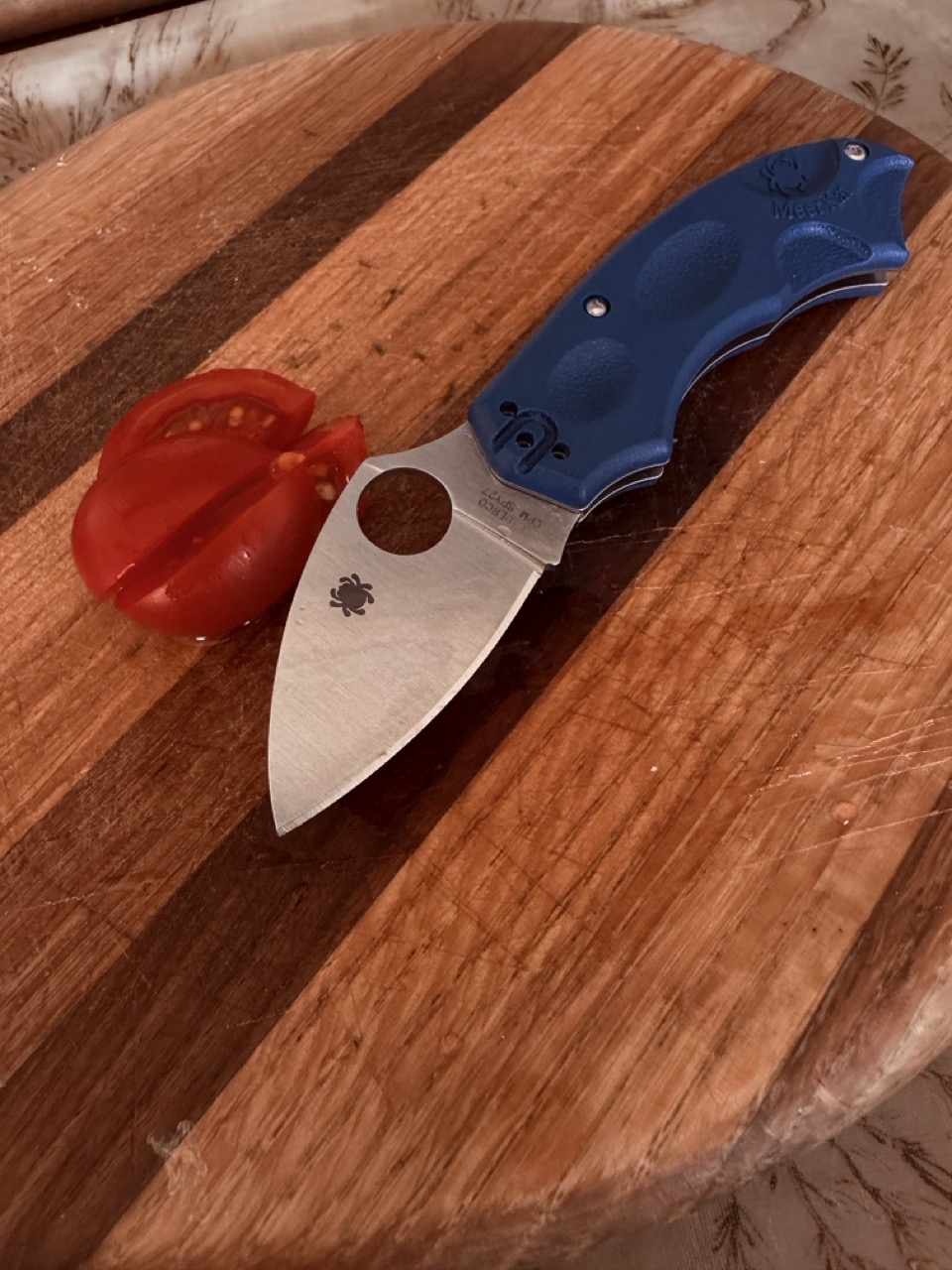
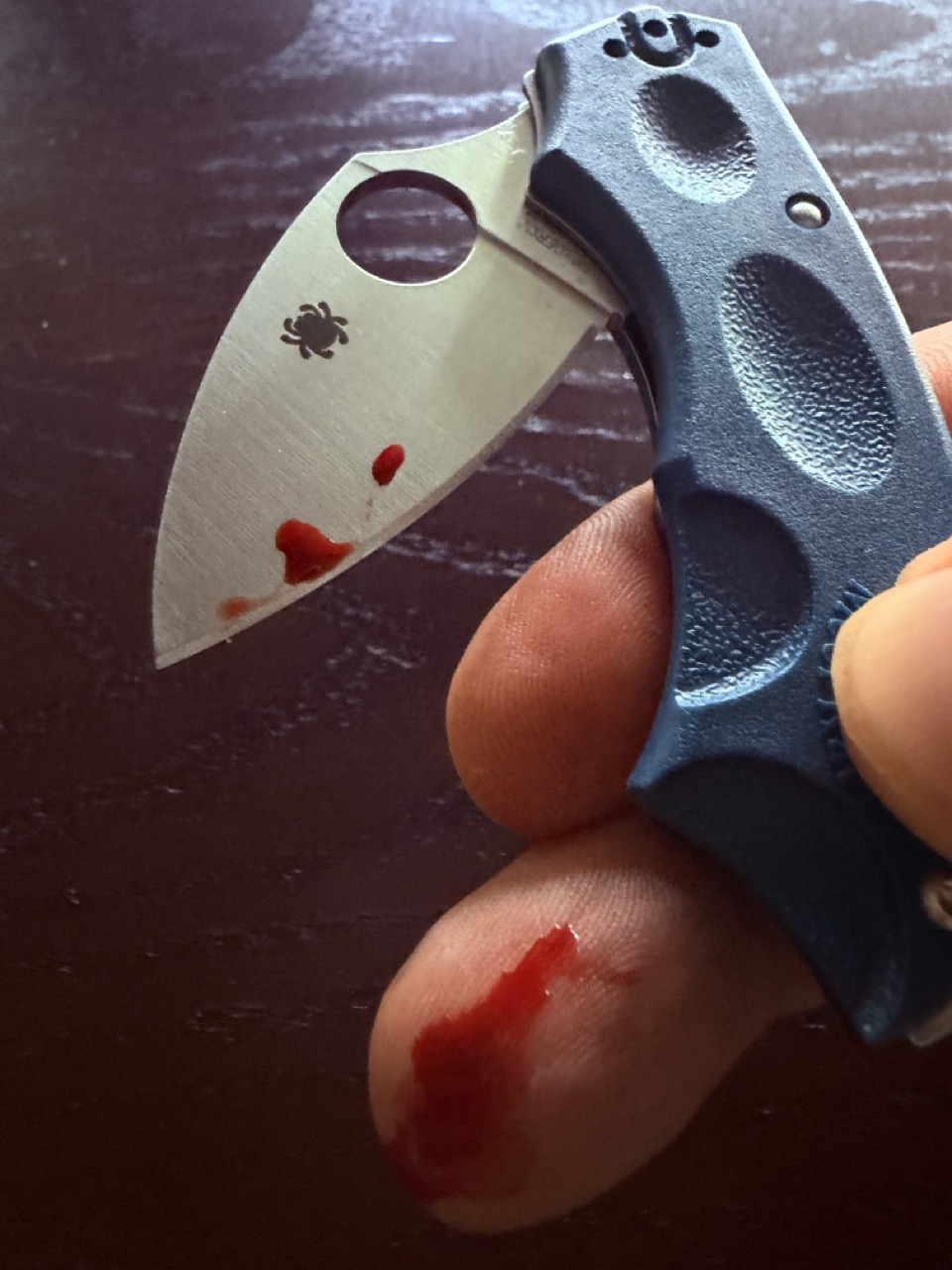
There will be blood ! Now it is christen.
That blade is a hair popping sharp razor right out of the box.

After deshouldering the edge, the geometry has improved dramatically — we’re really getting somewhere. On this long blade, the first third is incredibly precise, almost like carrying a scalpel from a smaller knife. With the Military 2, you truly have a highly versatile tool in your pocket.


I’ve loved the Military V1 for almost 30 years — it has long been one of my favorite workhorse folders. The CPM-15V blade, heat treated following Shawn Houston’s recipe, is just the icing on the bear. This Military 2 may well be the ultimate expression of the entire BBB 15V line.

Personally, I see this model as the pinnacle of an era: the most emblematic Spyderco design, paired with state-of-the-art heat-treated steel (Shawn wasn’t alone — big-name beta testers were involved), a proven geometry, and an incredibly versatile blade shape.

In short, I couldn’t miss it — especially since it’s a Sprint Run and, with the end of Crucible, everything about it feels historic.

So, “Gambit”, aka “C36GBN15V2” is really the “Mother Of All Bears” !

Spyderco Para 3 Lightweight 15V Sprint Run – C223PBN15V – First glimpse at the Lil’Brown Bear !

Jumping on the Para® 3 Lightweight Brown CPM® 15V® Sprint Run® wagon was an easy choice after a month of watching our American friends review this new CPM-15V batch.

Following the Manix 2 release two years ago, showcased in the Reveal 11, and a Paramilitary Brown version, here is the chance to test this remarkable steel on a lightweight platform: the Para 3 in brown FRN.


For record CPM 15V is “Boasting almost a 15 percent vanadium content, this remarkable material offers the highest wear resistance of any cold work tool steel available today. The full-flat-ground, satin-finished blade of this knife is further enhanced by a specialized heat-treating protocol developed by acclaimed custom knifemaker Shawn Houston. The result is a blade that offers extreme sharpness and unparalleled edge retention.”

Shawn Houston is known as Big Brown Bear on youtube and his skills in metallurgy and knifemaking as drawn the attention of the Glesser’s family.

In 2018, he has written on the Spyderco Forums that request:
Sal, Can we get CPM 15v?
I like this steel. It’s easier to work with then Maxamet and Rex121.
Takes a killer edge and seems to be more stable then s110v.


Larrin Thomas even answered:
“You guys are crazy. But with Spyderco anything is possible.”
And in 2022 a first Spyderco knife designed by Shawn Houston in 15V with his own heat treat protocol was proposed. Eric’s Manix 2.

“The CPM 15V Sprint run was supposed to be a surprise treat.
Eric wanted to share the CPM 15V with the custom heat treatment I worked on for my folder design.
His idea was to use a standard model so people can get their hands on the steel. Which I thought was really, REALLY cool of him to do that.
Working with Crucible and Niagara Specialty Metal we were able to select a specific melt of the CPM 15V that would respond best to this specially developed custom heat treatment. 
So, Eric and Sal really went all the way on this, no other production knife company on the planet would do something like this. Eric and Sal are one of a kind. 
You guys need to understand this is very unique having actual knife/steel/sharpening/edge people running a knife company that can cater to enthusiasts. 
Originally, I was given options for different handle scales for the Manix but the most important priority was to get the CPM 15V Manix out as soon as possible so it didn’t make any sense to use exotic scale materials.
G10 is a great material to work with and brown g10 was selected because “Big Brown Bear” aka Triplebhandmade. (Me)
I am aware as many others that brown g10 is not unique to this model.
But the color of the handle scales and the handle scale material are irrelevant to edge performance and the most important priority was getting this out to you guys as soon as possible.
Looks like the price is great too, if we used carbon fiber etc cost would have been higher.
So, I hope you guys can respect that.
The folder collaboration design was being pushed back due to production capacity being completely full at Golden.
Please understand that I’ve been very persistent at wanting the knife made in Golden come **** or high water; I would wait until the
stars burned out.
Spyderco has been very busy increasing the size of their golden factory to meet the insane demand of the current knife industry after the global pandemic.
Keep in mind, when a new product comes through the factory, they have to train the staff on how to make them, and what the best procedures are for creating that specific model in high volume with maximum efficiency. So, there is hidden effort when new designs come through at Spyderco.
Folks need to remember if we want this folder made in Golden (my favorite factory) we have to be patient. 
My dream is to have a Golden folder we can all experience together.

I’ve gotten a chance to meet the people from the Golden factory I must say I’m even more excited about the idea of it being made in Golden. I’ve talked to the people that do grinding and heat treatment and there’s just something special about being able to talk to the folks that make your collaboration knife design.
So, I keep pretty quiet about the folder because I don’t feel it’s necessary to see get people excited about something that doesn’t have a clearly set date of exactly when it can be expected and I don’t want to put any undue pressure on Spyderco because they’ve been working very very hard over the past couple years to get things that sometimes people take for granted and expect to magically appear on the shelves to buy.
While I haven’t been posting in this thread everyday, I really appreciate you guys making sure to let Spyderco know this is something you want.
So, thanks for always updating this thread and talking about it on social media.I really think you guys will like this knife and I can’t wait to get one in my pocket one day.

-Shawn

Now this is new batch including Microjimbo, Yojumbo, Yojimbo2, Native, Military 2, Para3 G10 and Para3 Lightweight.

Like all its brothers and sisters it boast the BBB logo proving that the blade has followed Shawn Houston heat treatment.

In his excellent vidéo Shawn share his first impressions and also check the hardness of his Para3 and the result is 65.4 HRC ! Impressive !

Framed from his video: he performed five separate hardness tests just to be sure. It’s well known that Shawn Houston’s special heat treatment — refined over years and tested by renowned professionals — brings out the quintessence of CPM-15V, elevating its performance to exceptional levels.

“Well, most heat treatment protocols are for tooling, like the ones in datasheets — not really optimized for things like edge stability.”
— Shawn Houston, on his own heat treatment

In practical tests, Pete from the Cedric and Ada Gear and Outdoors was able to cut through a rope 2,000 times without compromising the edge.

The action on my new Para 3 is perfectly smooth. I notice a little lock sticking but this is not an issue in my book.


And smooth enough that nothing unscrews on it — the blade closes like glass, effortlessly and precisely.

My Para 3 arrived perfectly centered, but with some burrs on the scales.
(A burr is a raised edge or small piece of material that remains attached to a workpiece after a modification process.)

You can feel these tiny imperfections under your finger along the FRN edges.

I have “deburr” it with some diamonds rod. Nothing fancy but now the handle is fine. I don’t remember having that issue on my previous Para 3 review.

The edge is even.

I don’t see myself working on a convex edge on this one. Not for the moment.

The sharpness is high and that blade is a hair popping sharp razor right out of the box.

I have already cut my self with its very pointy point. My Para 3 is baptized !

Now it is truly mind.

It is said that CPM-15V loves leather for a crispy edge.
(S90V or M398 for example don’t care about stropping…)

I’m curious how its 68 grams will compete with my Maxamet Para 3 G10 (98 grams) — sturdy yet smooth as velvet.

According to Spyderco:

“The term ‘lightweight,’ or the use of injection-molded handle components on a Spyderco folder, isn’t just about how the knife tips the scale. It’s about taking full advantage of the remarkable properties of FRN and FRCP, as well as our decades of experience as an industry leader in their use.”

So yes, this is a “light” saber.

The edge appears ground thinner than on the notoriously brittle Maxamet blade. Both blades receive special attention: the spine is smooth under the thumb, and the edges are expertly bevelled.

The chance to have such a steel on a lightweight folder would make it a great hunting knife like the Michael Walker ZDP-189 was in his days.
The game’s fur is very abbrasive. CPM-15V could be even stronger than ZDP189 on the joints, more permissive.

Ericasedc has made a video about that:

She seems really happy with her Para 3 since she has received it. You can see all the videos she has made on her channel about the Para 3 15V.

Anyway, going in the woods equipped with a Tenacious CPM M4 and a Para 3 in 15V would be a great combo nowadays.


Now that I can carry the mighty CPM-15V steel in my pocket, I’m eager to test its performance over the long run. Stay tuned for updates on this page or in another chapter.

Having a featherweight folder equipped with such a formidable blade and steel is uncanny — it packs remarkable power in a pocket-sized package. I still remember fitting the Maxamet blade on my red FRN Para 3 just to experience that sensation of a powerful engine on a lightweight platform.

This Para 3 Sprint Run is already a triumph, offering the chance to experience a remarkable steel crafted by passionate knifeaholics.

As mentioned, I have no intention of convexing the edge for now — I’m trusting Shawn’s expertise. Unlike AEB-L, which can be thinned while remaining strong, CPM-15V is packed with carbides, so I’ll stick with the angle specified by Spyderco and Shawn, which is already thinner than Maxamet.

But now, the real fun begins: testing!
Spoiler: the combination of geometry and steel makes it an excellent whittler — the blade cuts deep, and the wood feels incredibly smooth under the cut.


Final word of this review are from Shawn Houston who was quoting and answering to Todd from Scienceofsharp.com about 15V (as Todd’s goal is to increase our understanding of the role of carbides in cutting performance and how different sharpening techniques “interact” with the carbide):
““tremendous pleasure in using an extremely sharp knife or tool (and satisfaction when you have sharpened it yourself). Even though it is often a fleeting experience”
That’s the “idée fixe” of it all.
The little smile and feeling of elation when the edge lasers through material with zero effort.
The stones, geometries, steels, heat treatments and the techniques.
Chasing those fleeting moments of joy with high performance and riding the line between madness and clarity in trying to understand at the most intricate levels how it all really works.
An insatiable quest.

The Edge is a Ghost. Always changing. Dying (dulling) being reborn (sharpened) split personality (angles and geometry changing).

Think of the edge as gas in a vehicle. It runs out of gas and you put in more gas. We provide the format, materials, design for use, variety to avoid boredom and create interest, but the edge is your creation. The result of your understanding, education, experience and practice.”

Sal

CPM 15V is a very difficult steel to manufacturer, so it may not always be available in the future.
Crucible Industries LLC went to great lengths to produce the steel, it puts a great amount of wear and tear on the ceramic refractory designed to hold the super heated liquid steel during melting. This is necessary to dissolve the vanadium carbides to the very fine sizes that we see in the finished product.
It’s quite a marvel that’s not often appreciated.
15V is basically the commercial limit for how much carbon and vandium they can get in a steel for production sizes batches.
The benefits of this to the end user combined with excellent heat treatment is a enjoyable, lasting cutting experience that also touches up at the edge nicely with proper abrasives and sharpening experience.”

Shawn Houston on Spyderco Forums