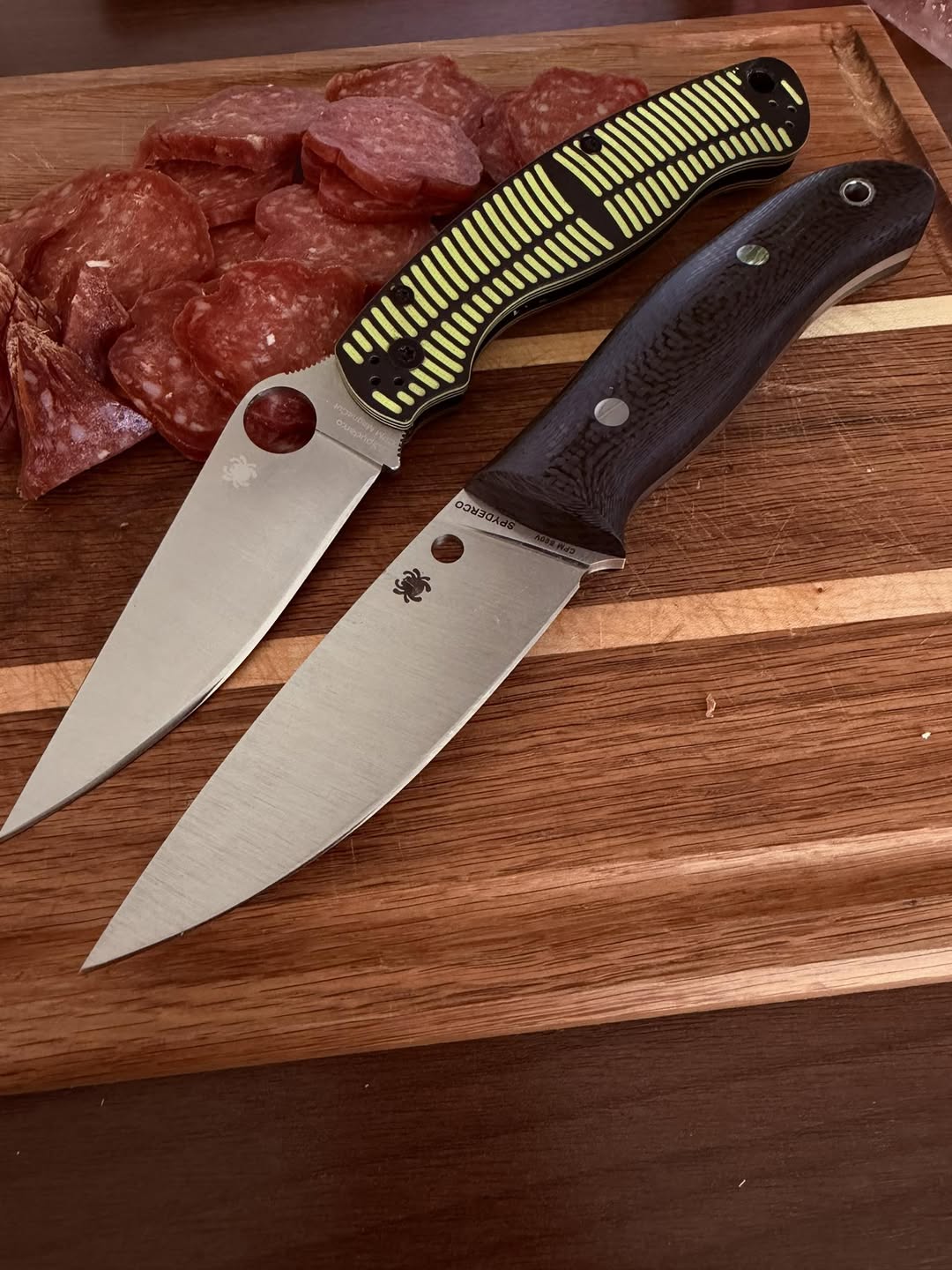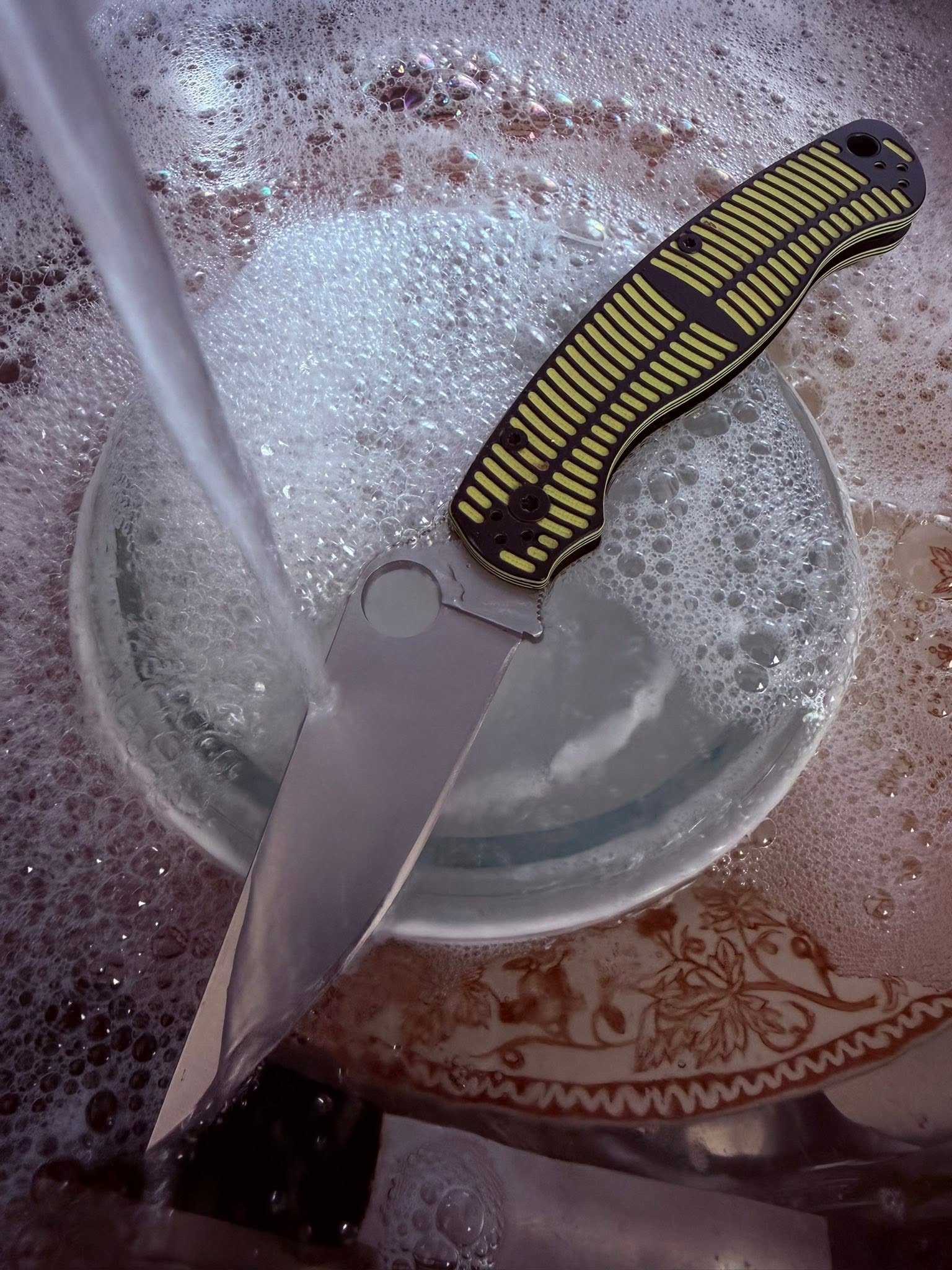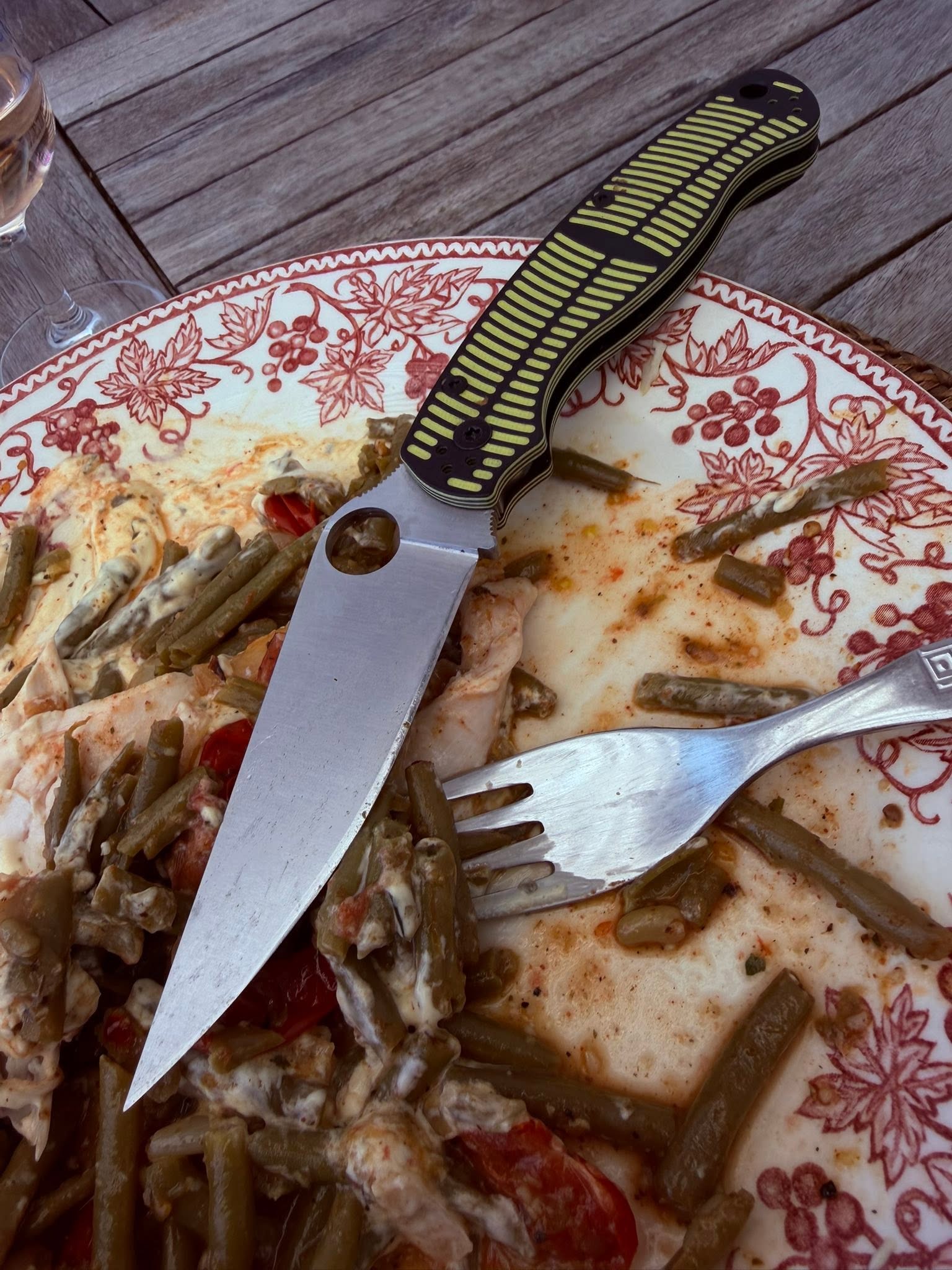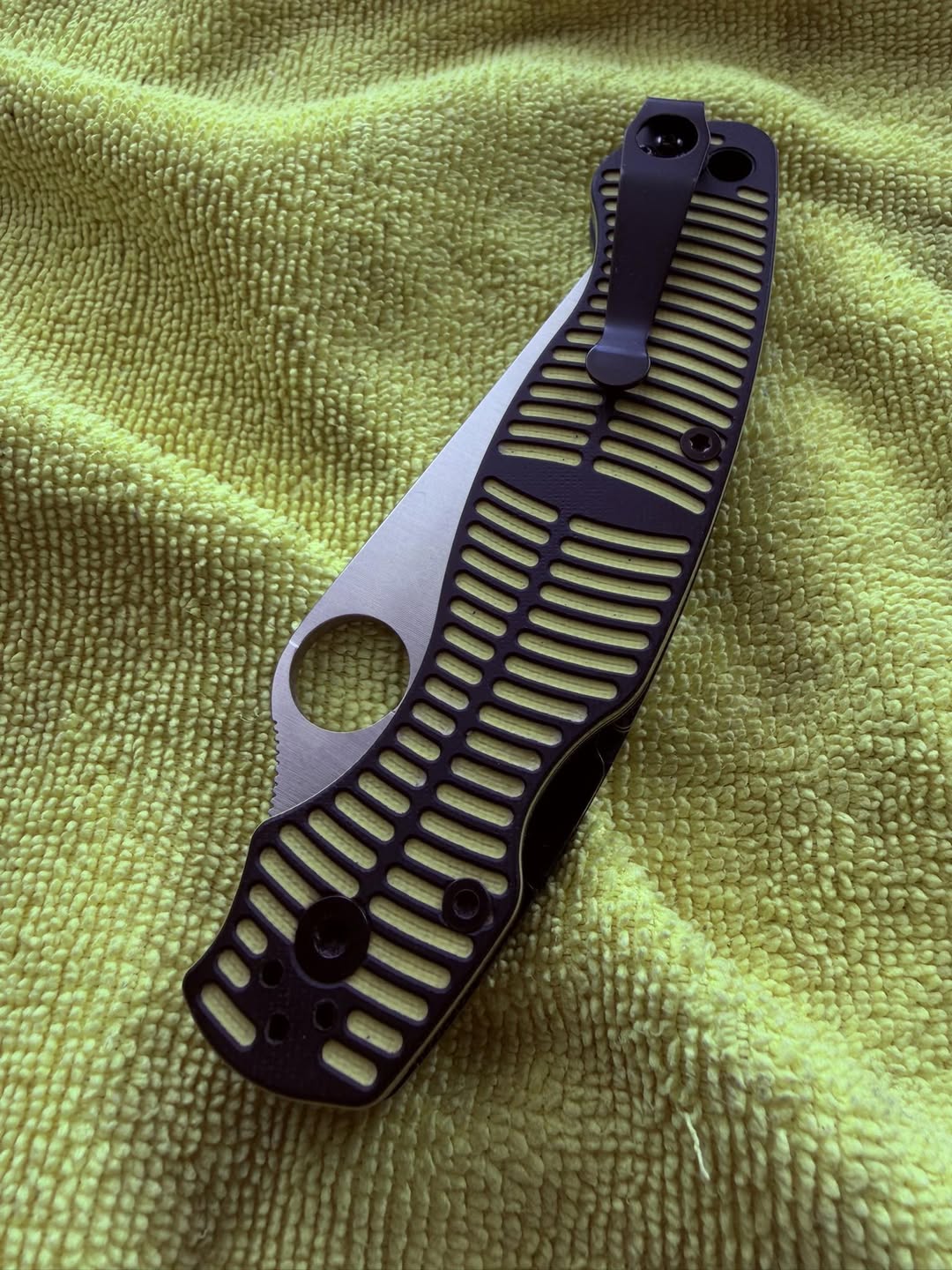
Tag Archives: magnacut

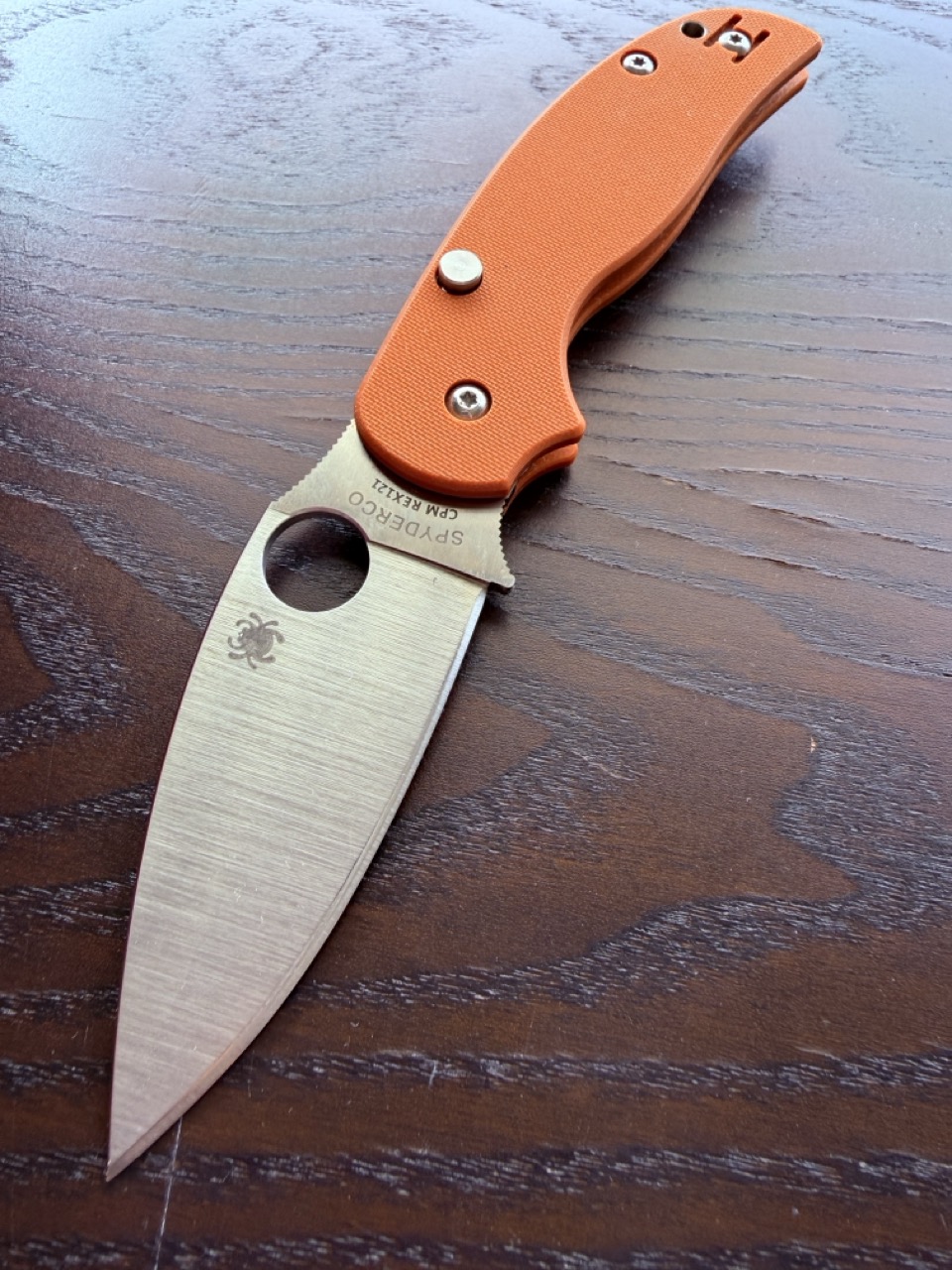
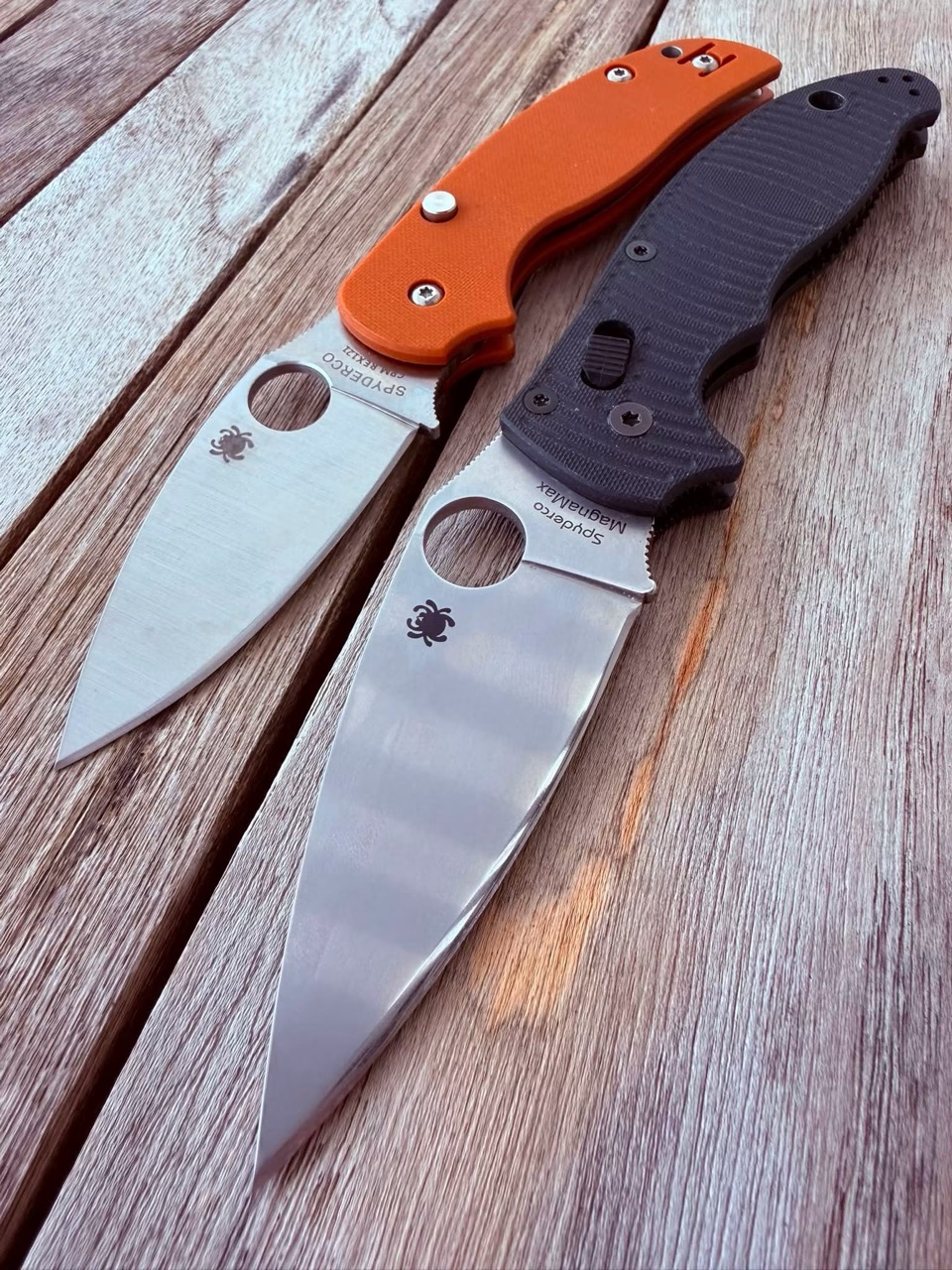
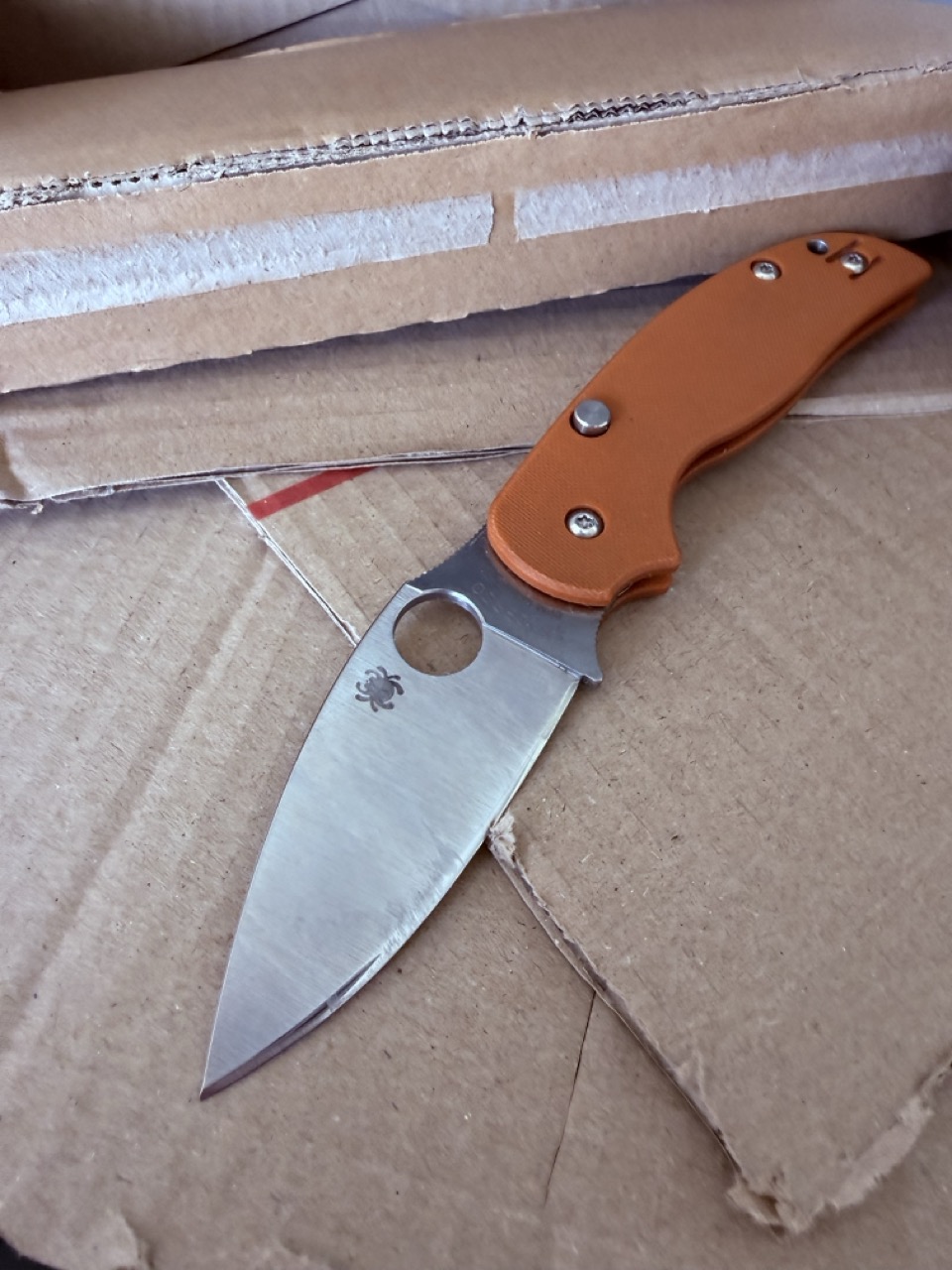
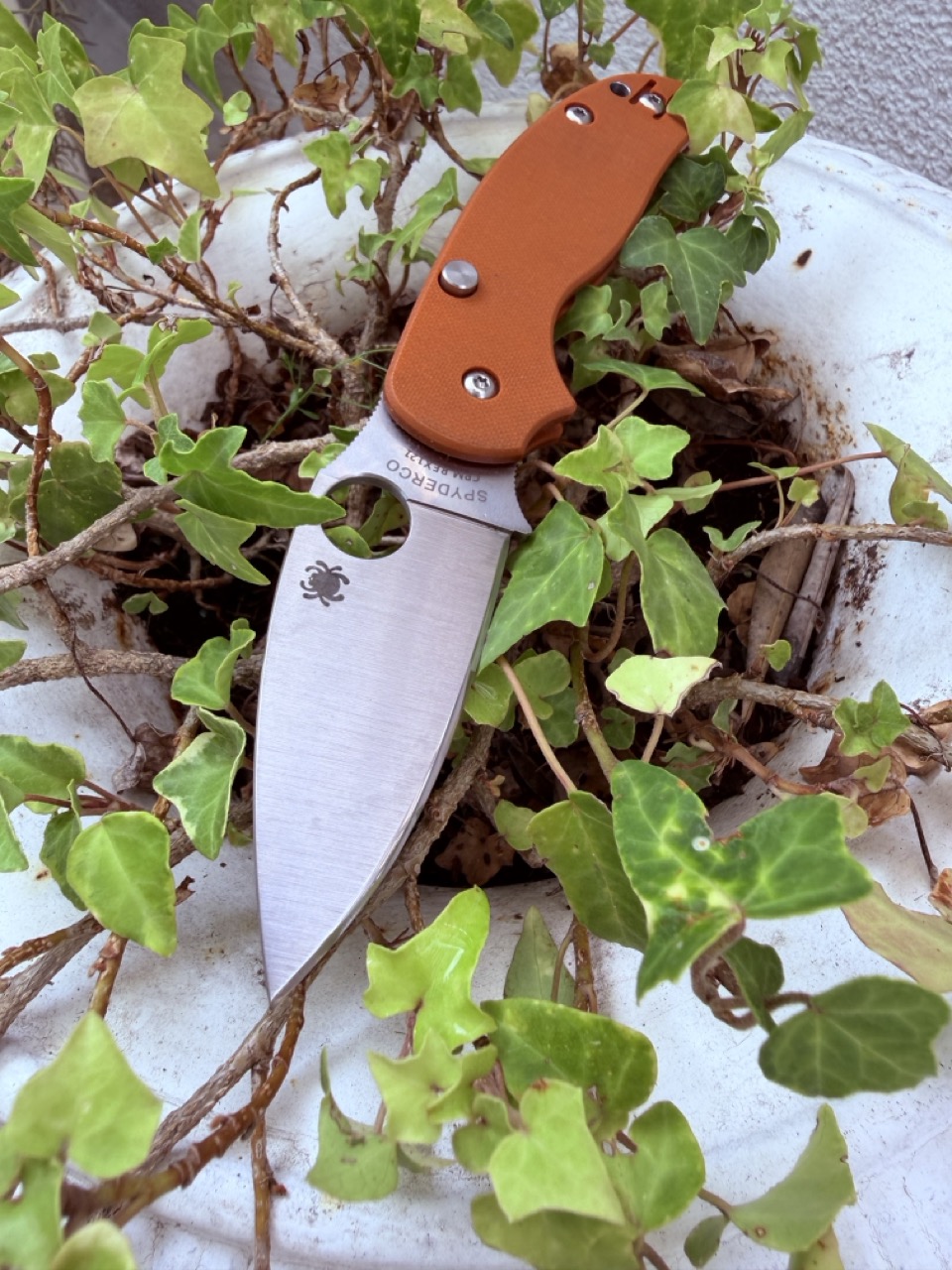
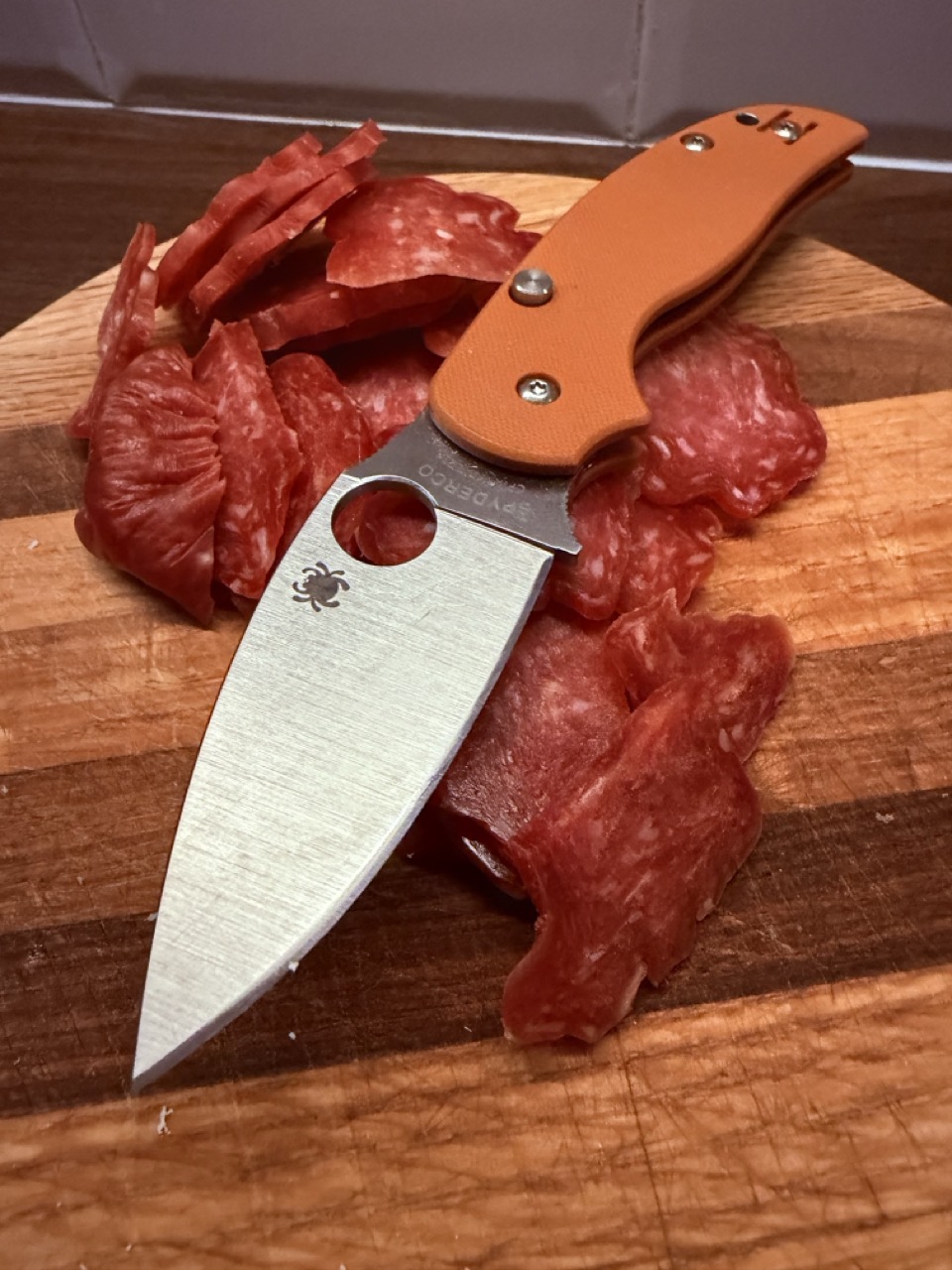
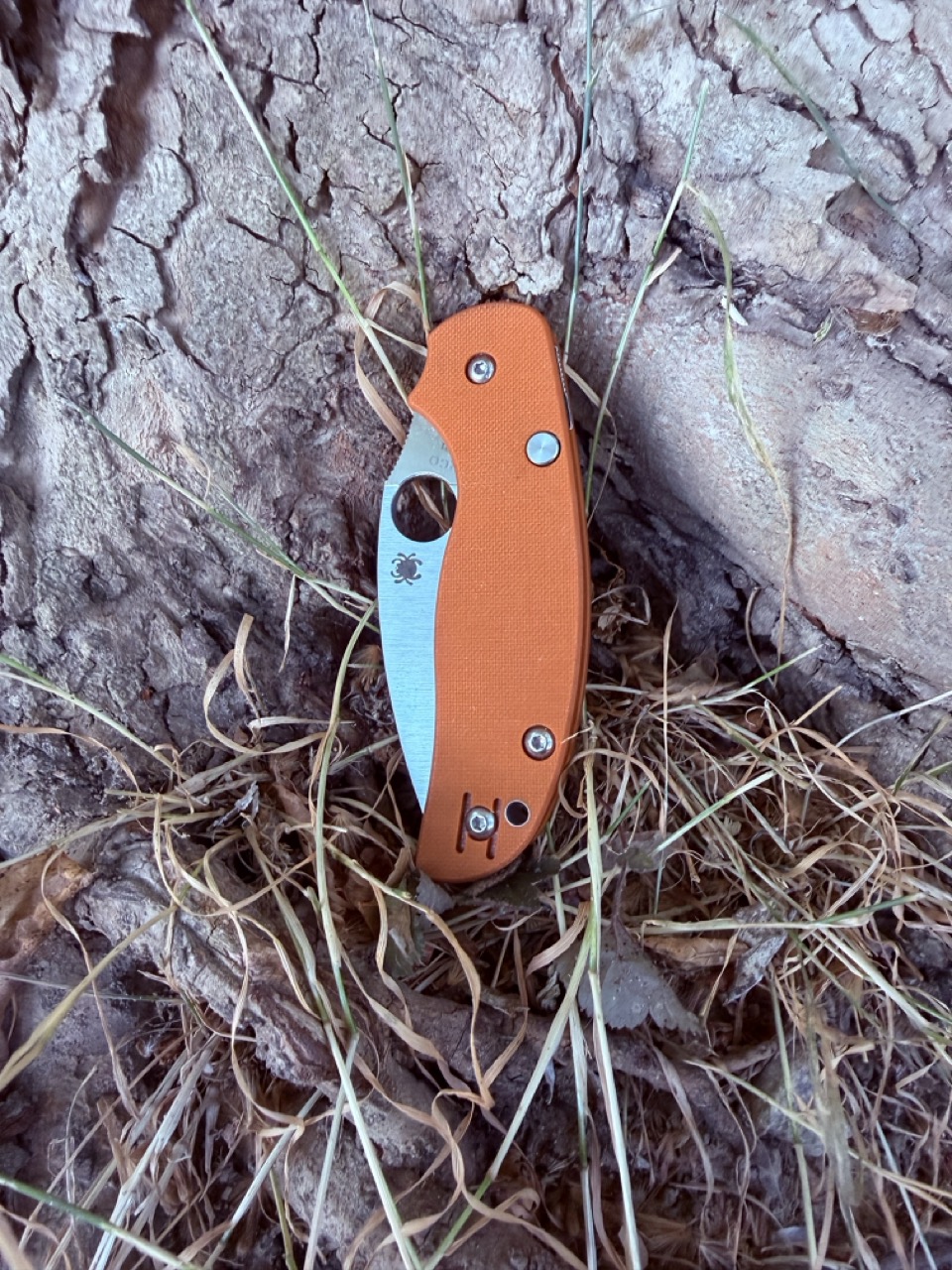
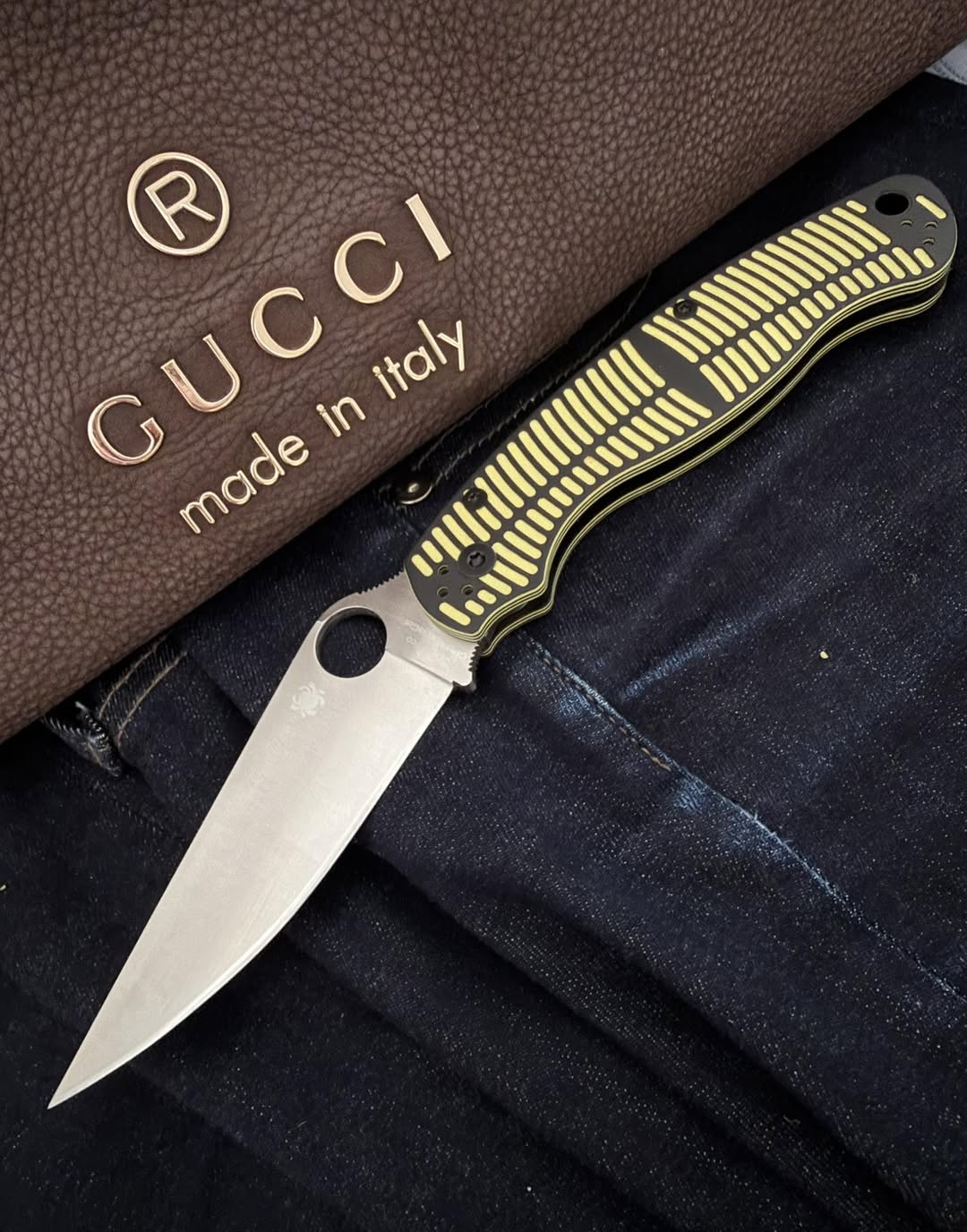
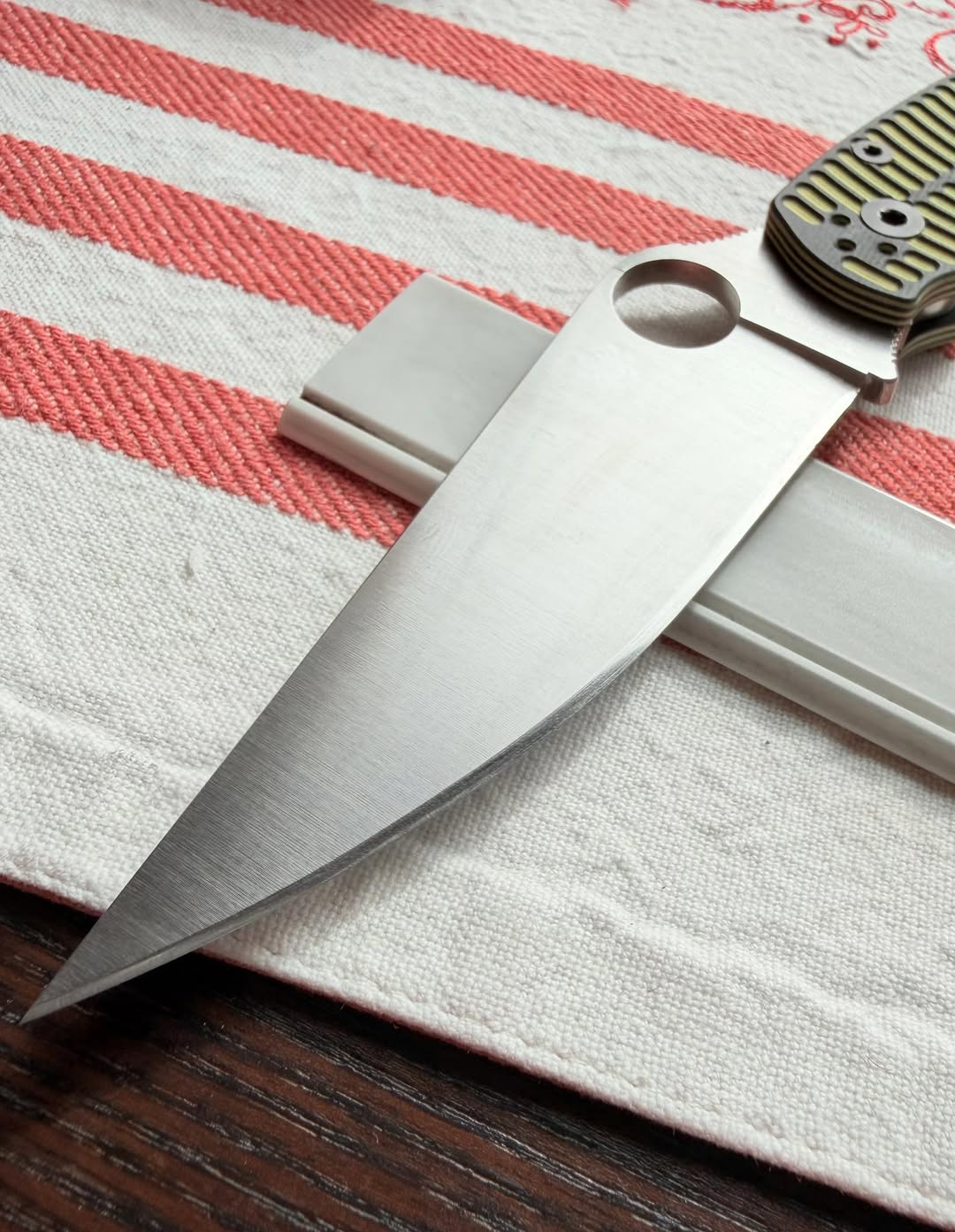
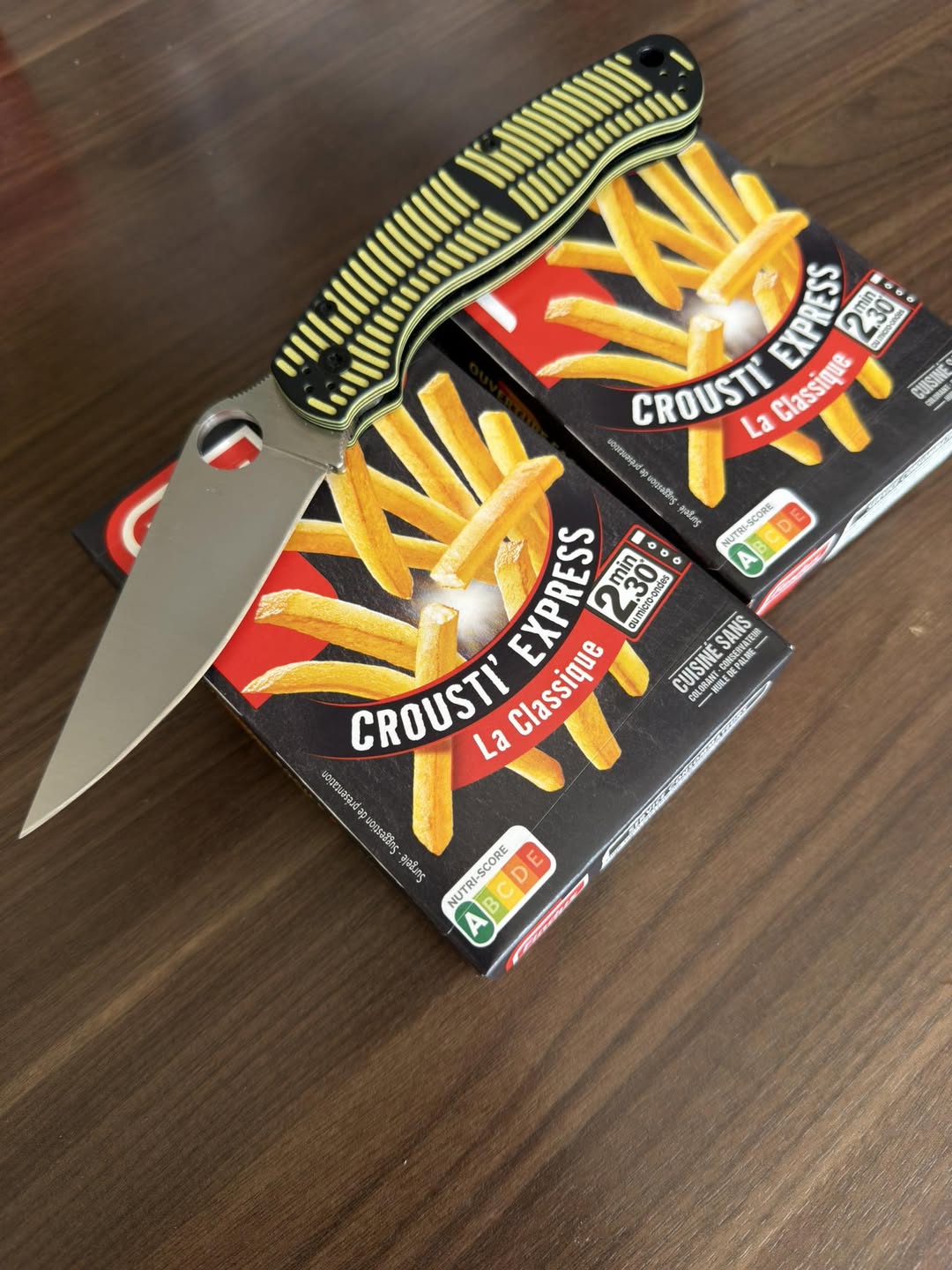
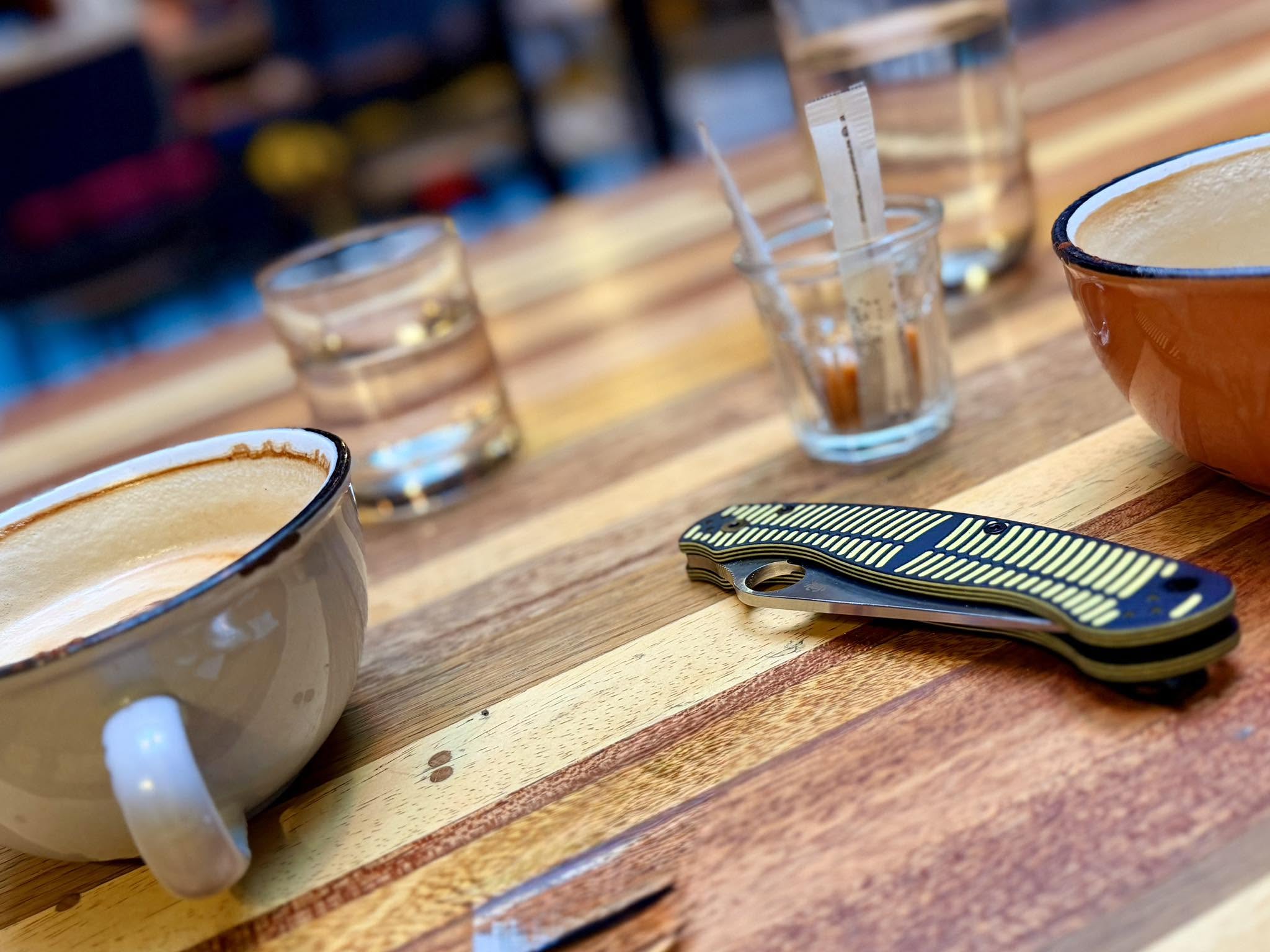
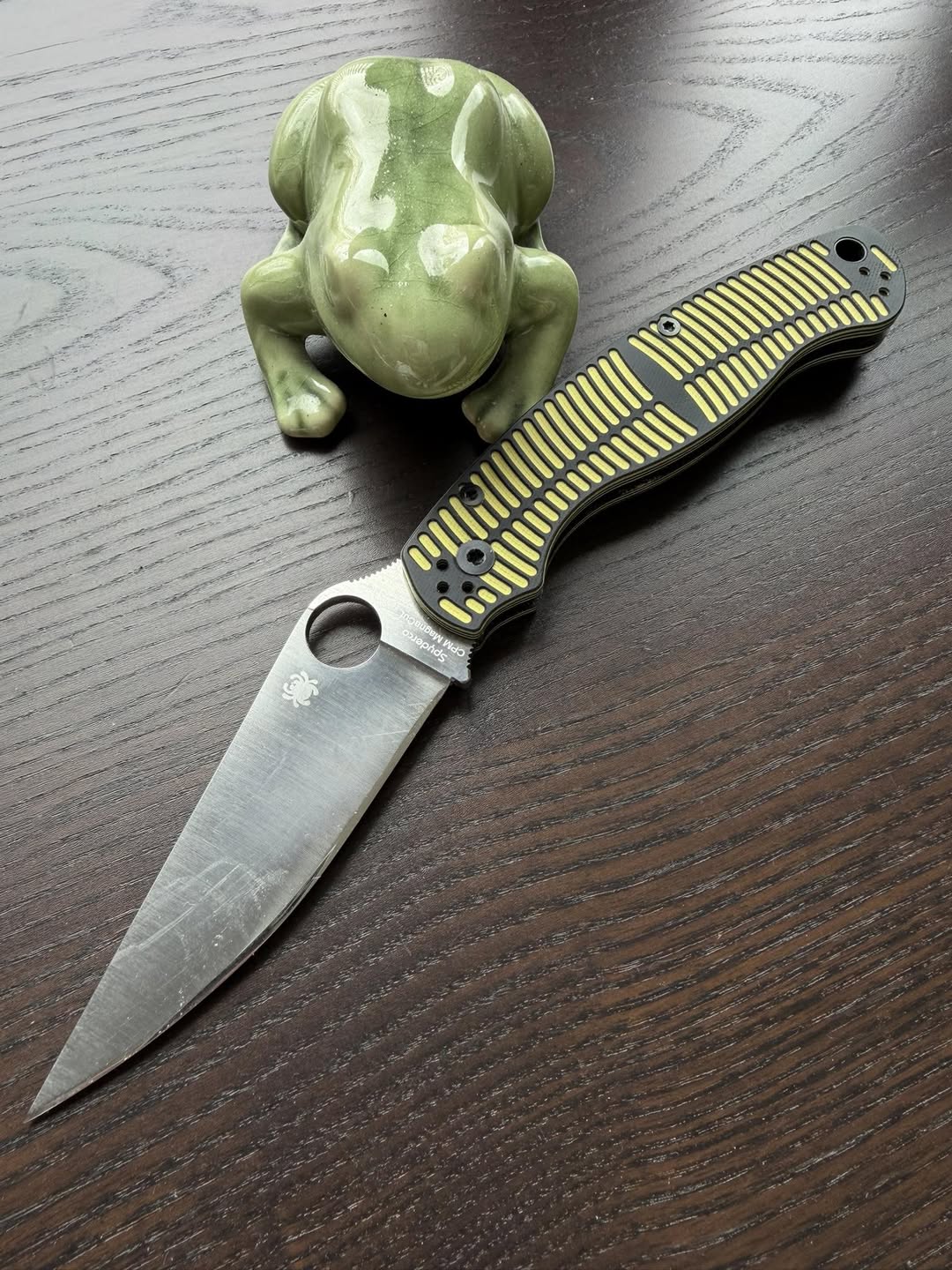
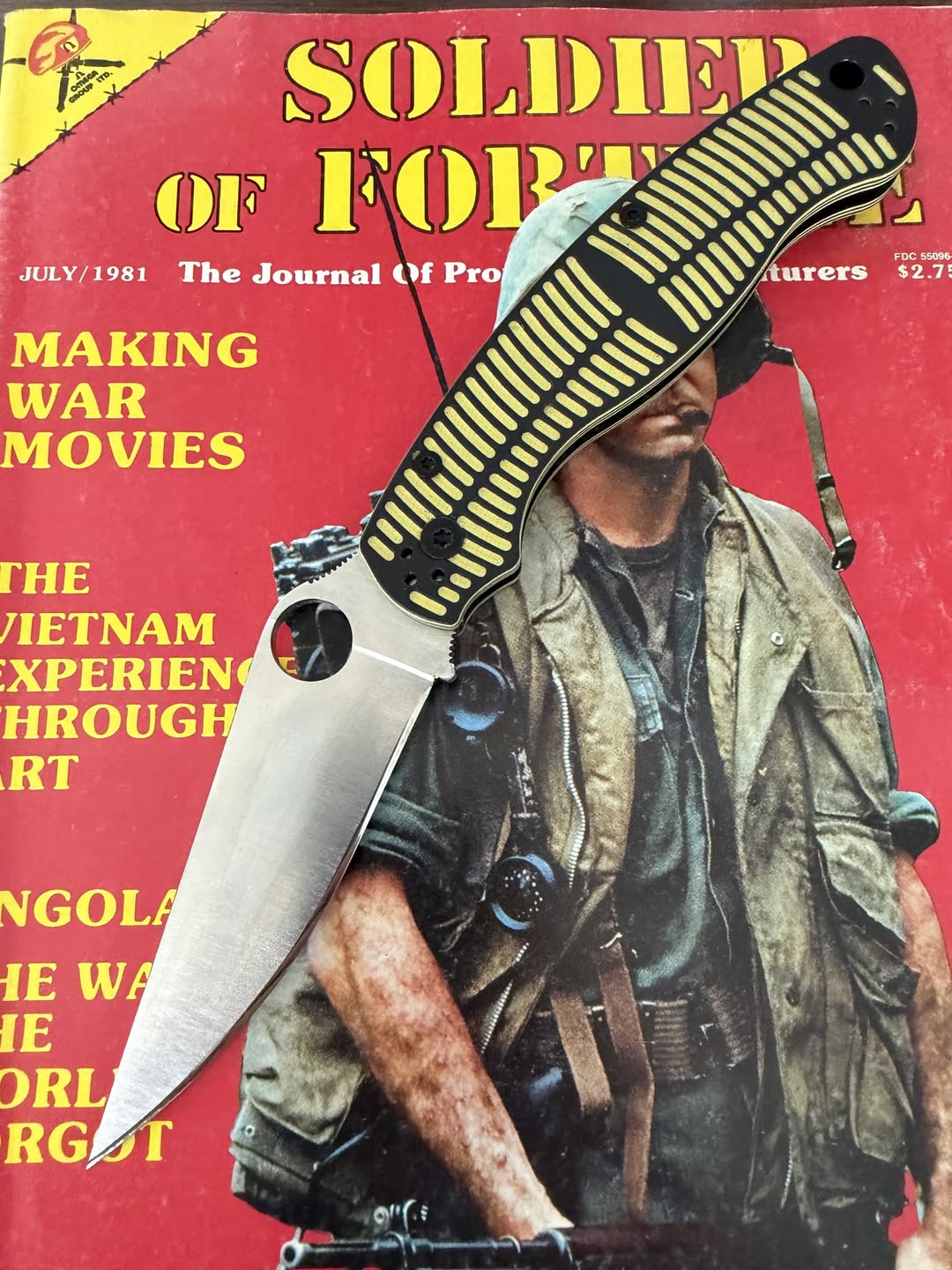
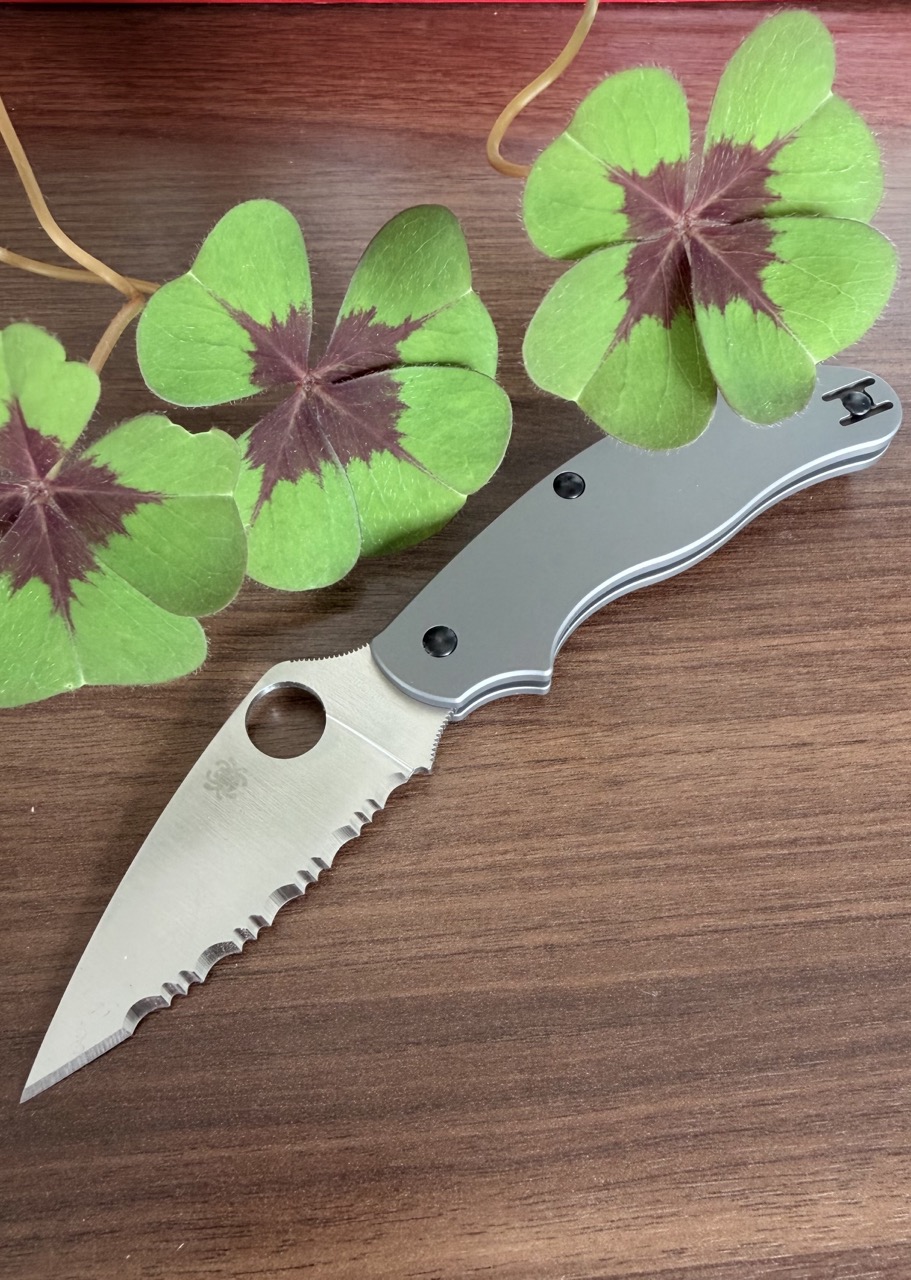
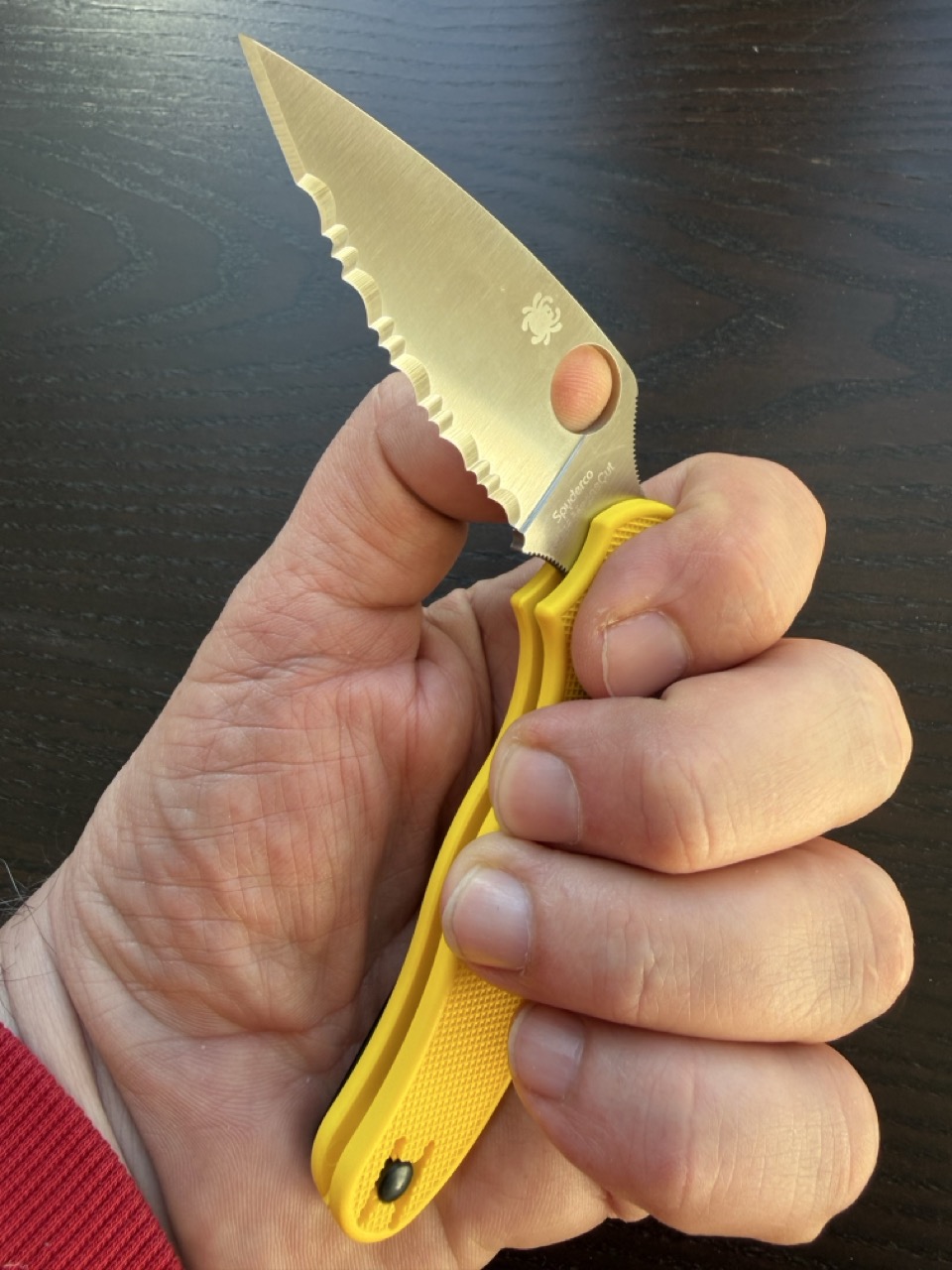
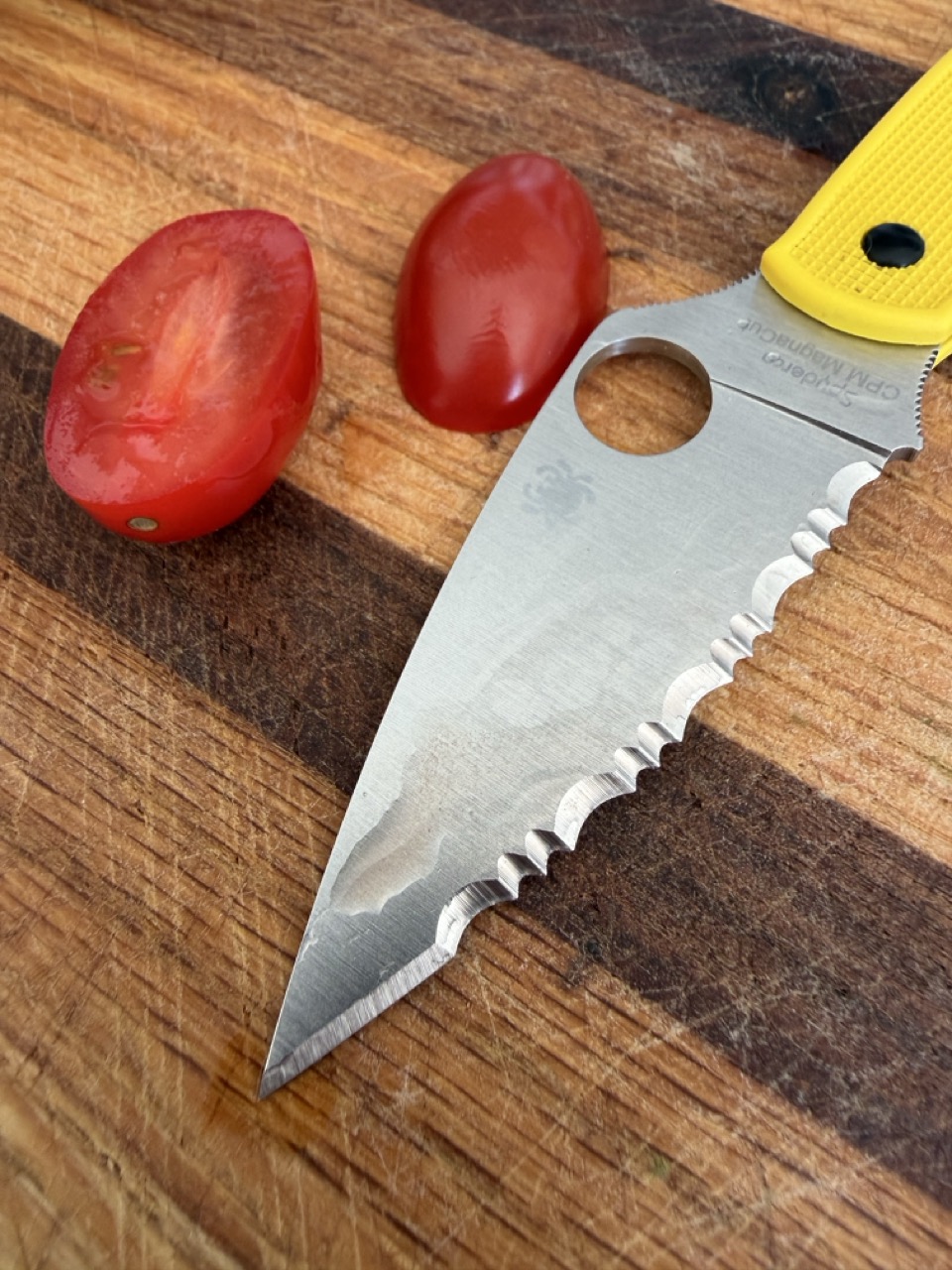
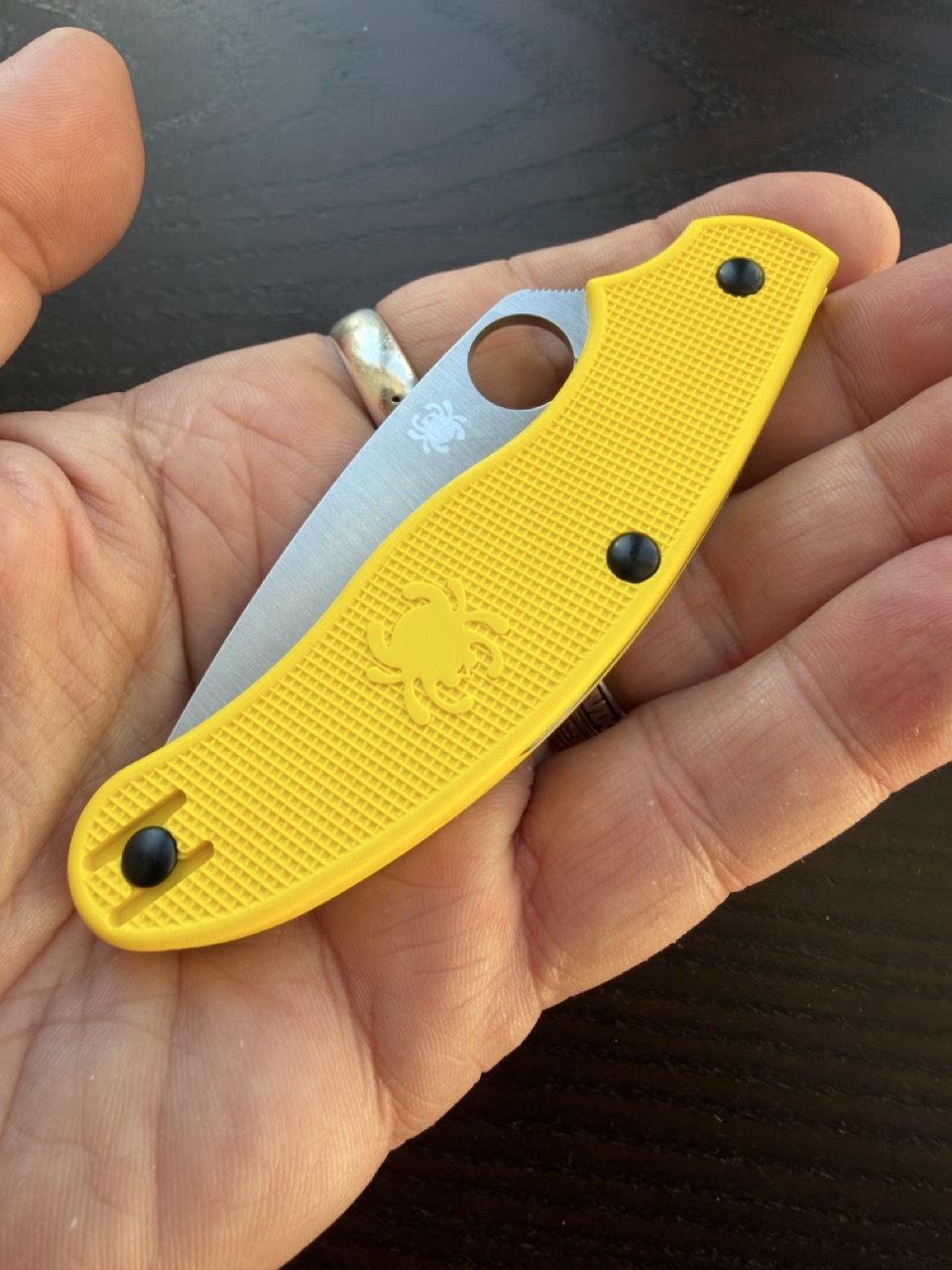
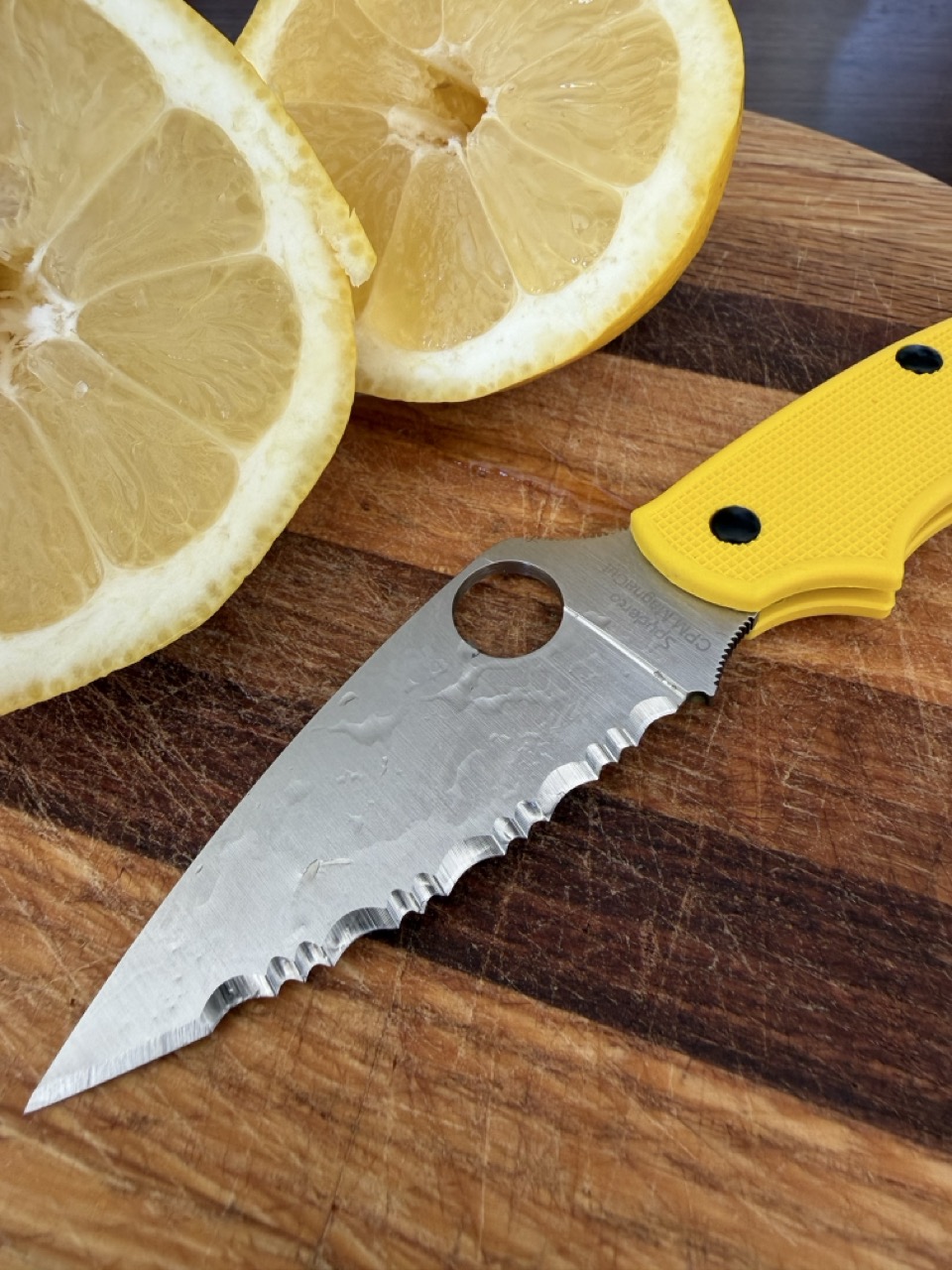
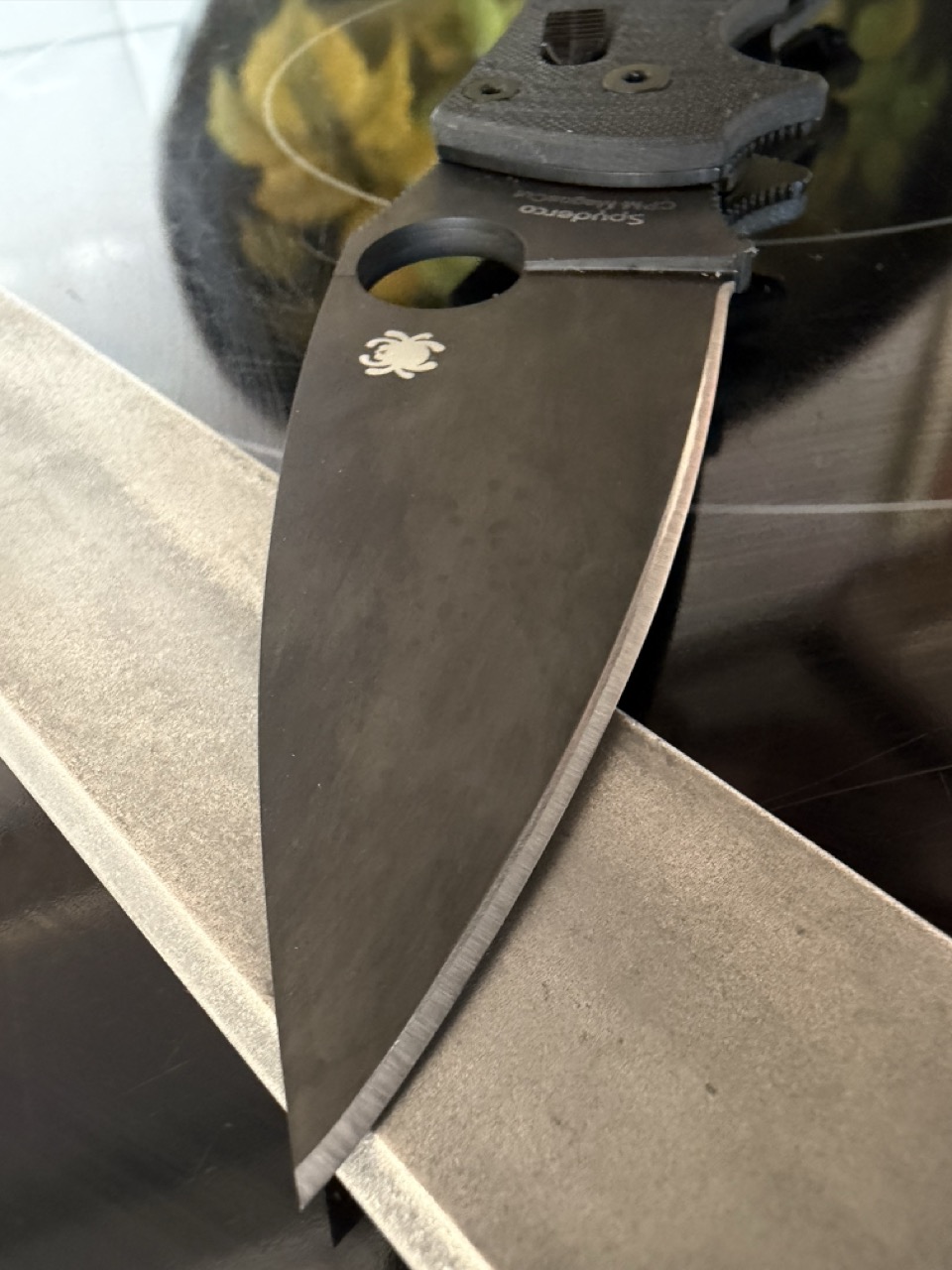
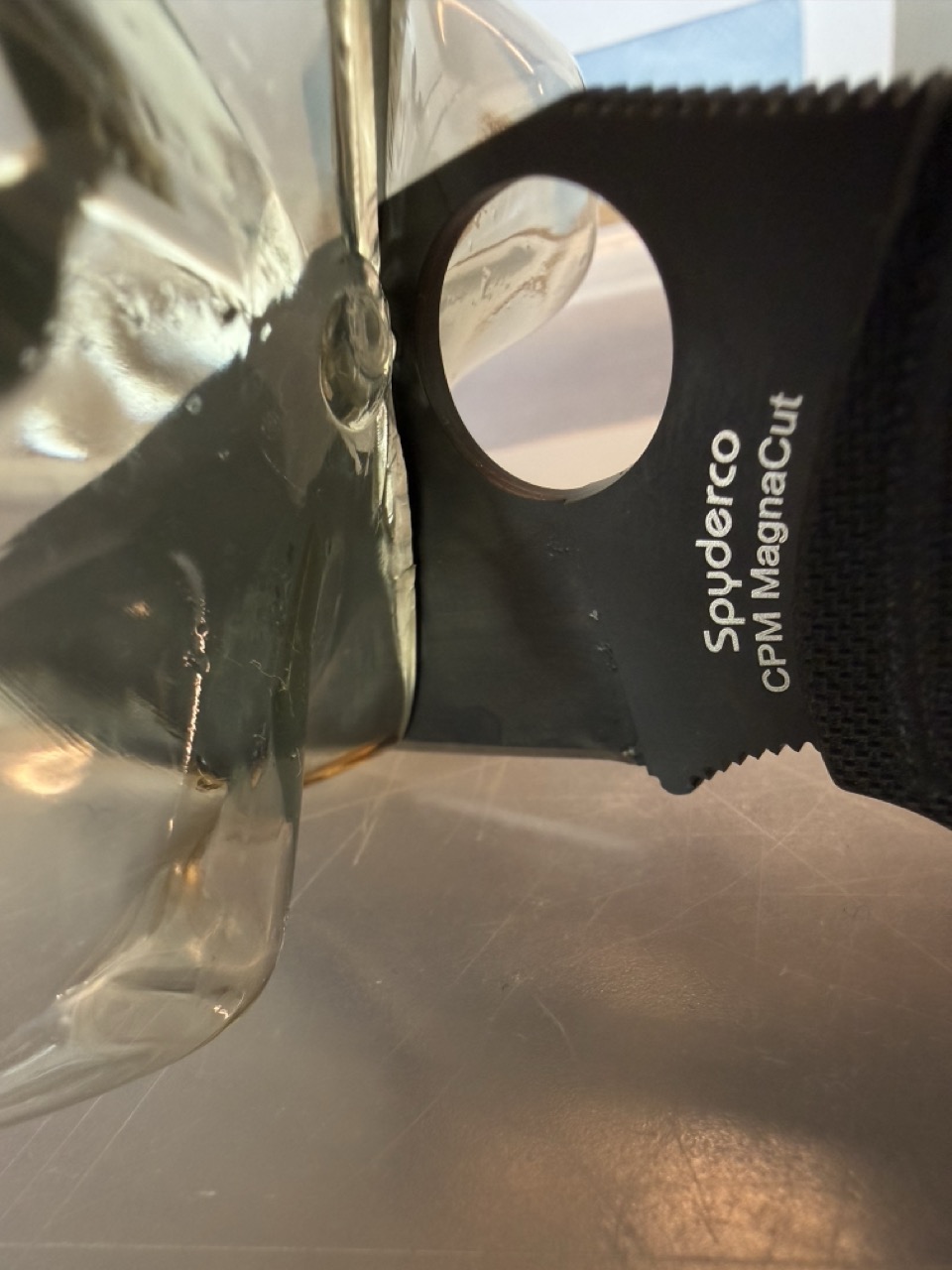
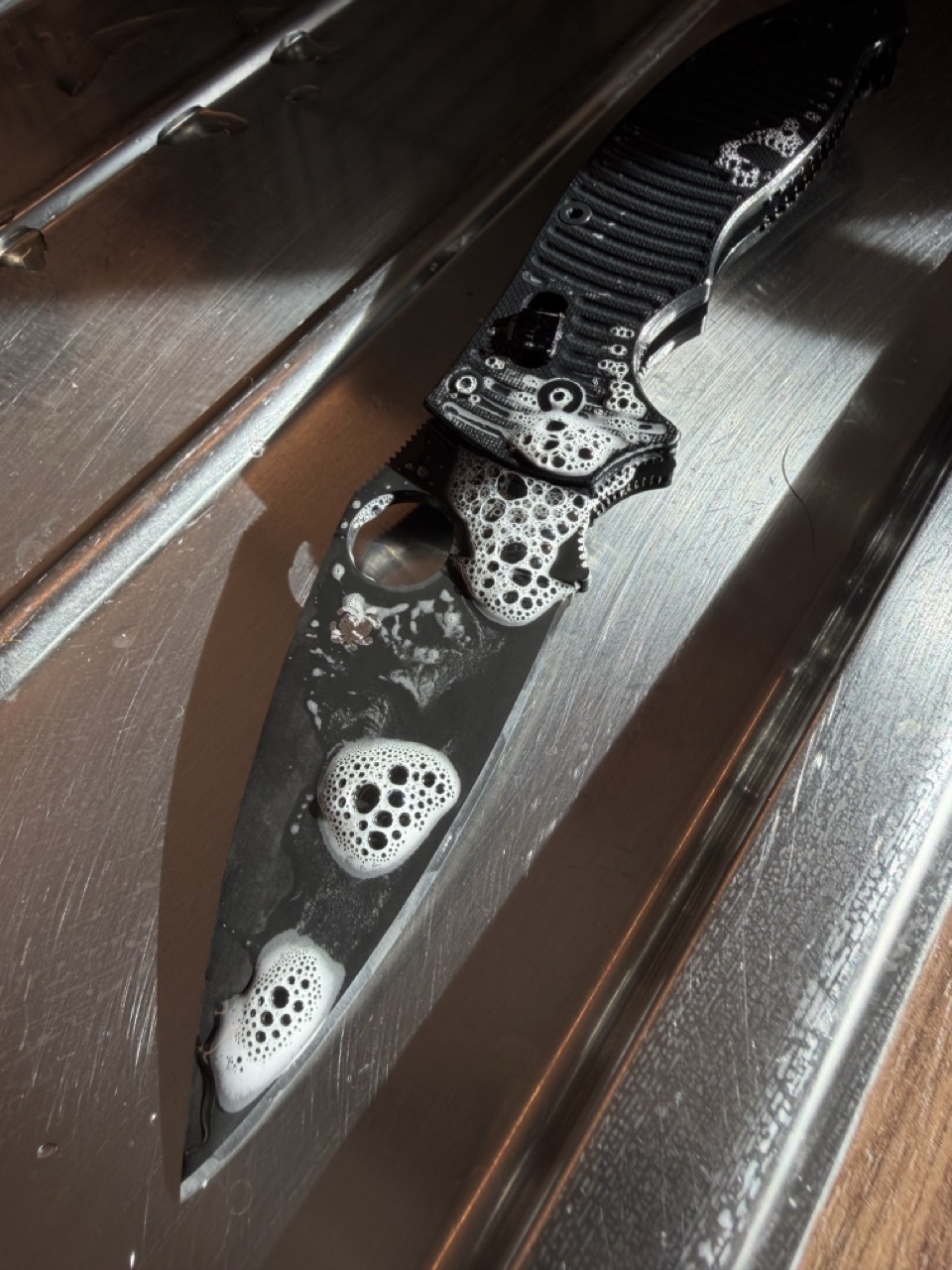
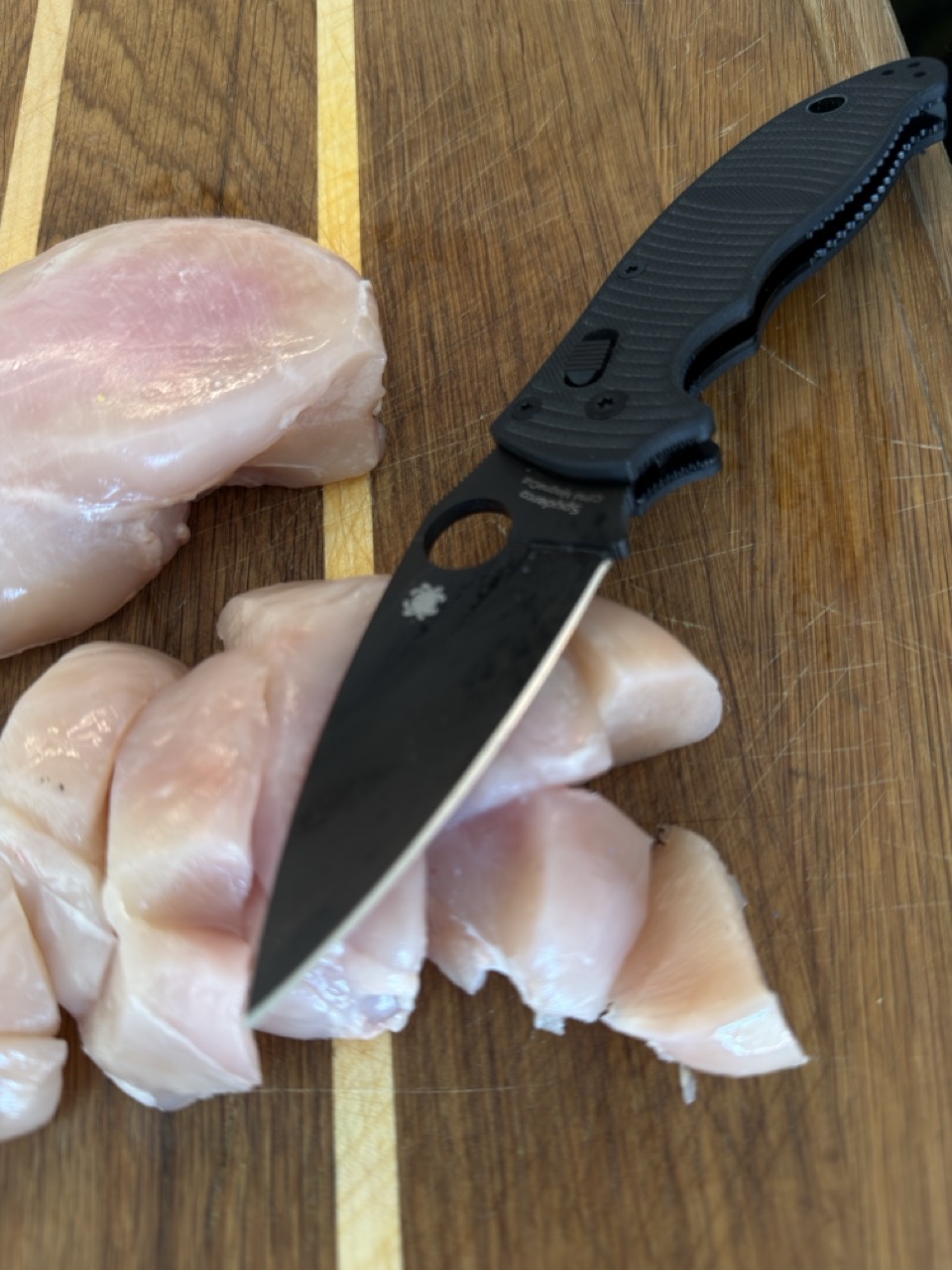
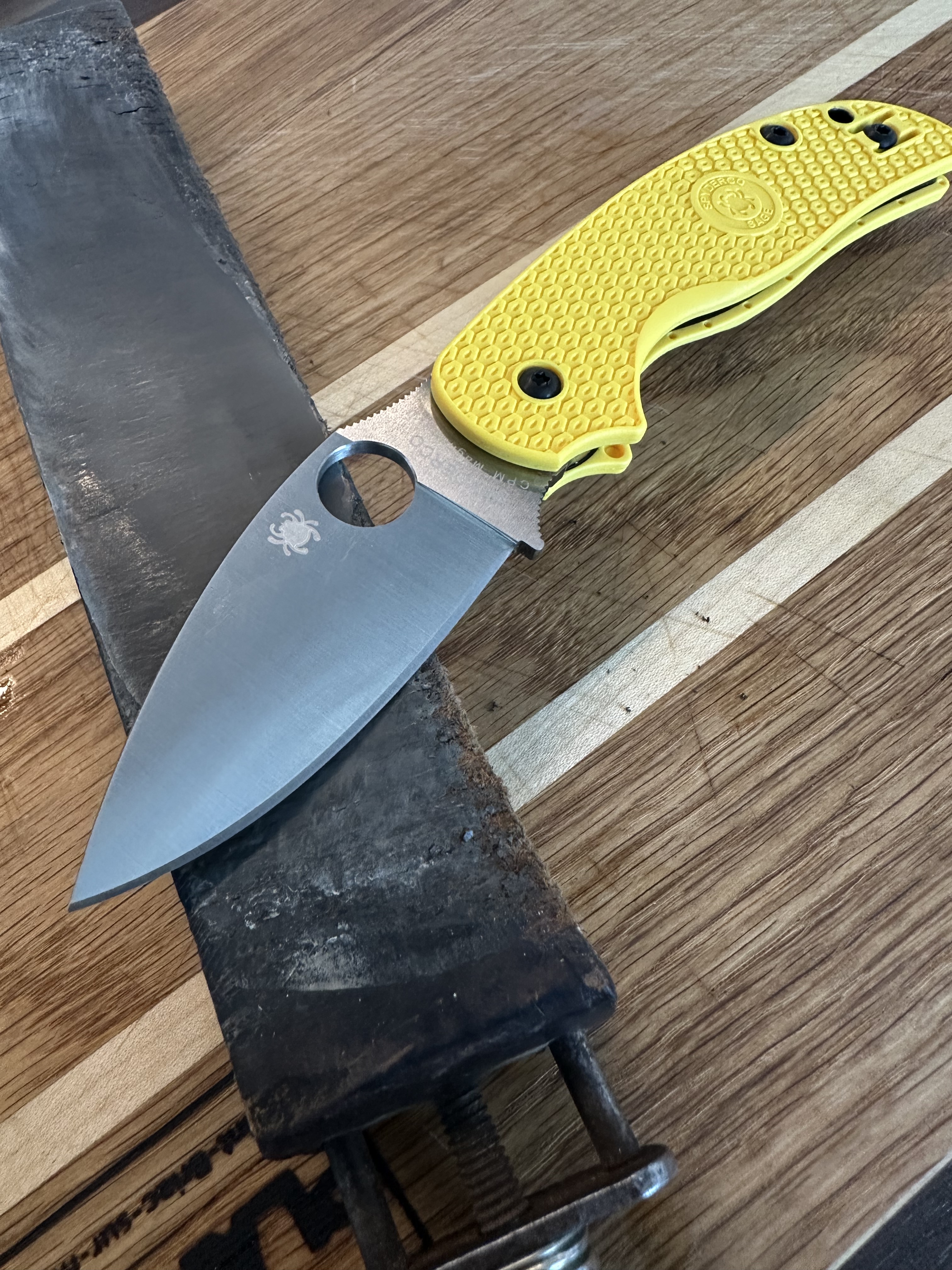
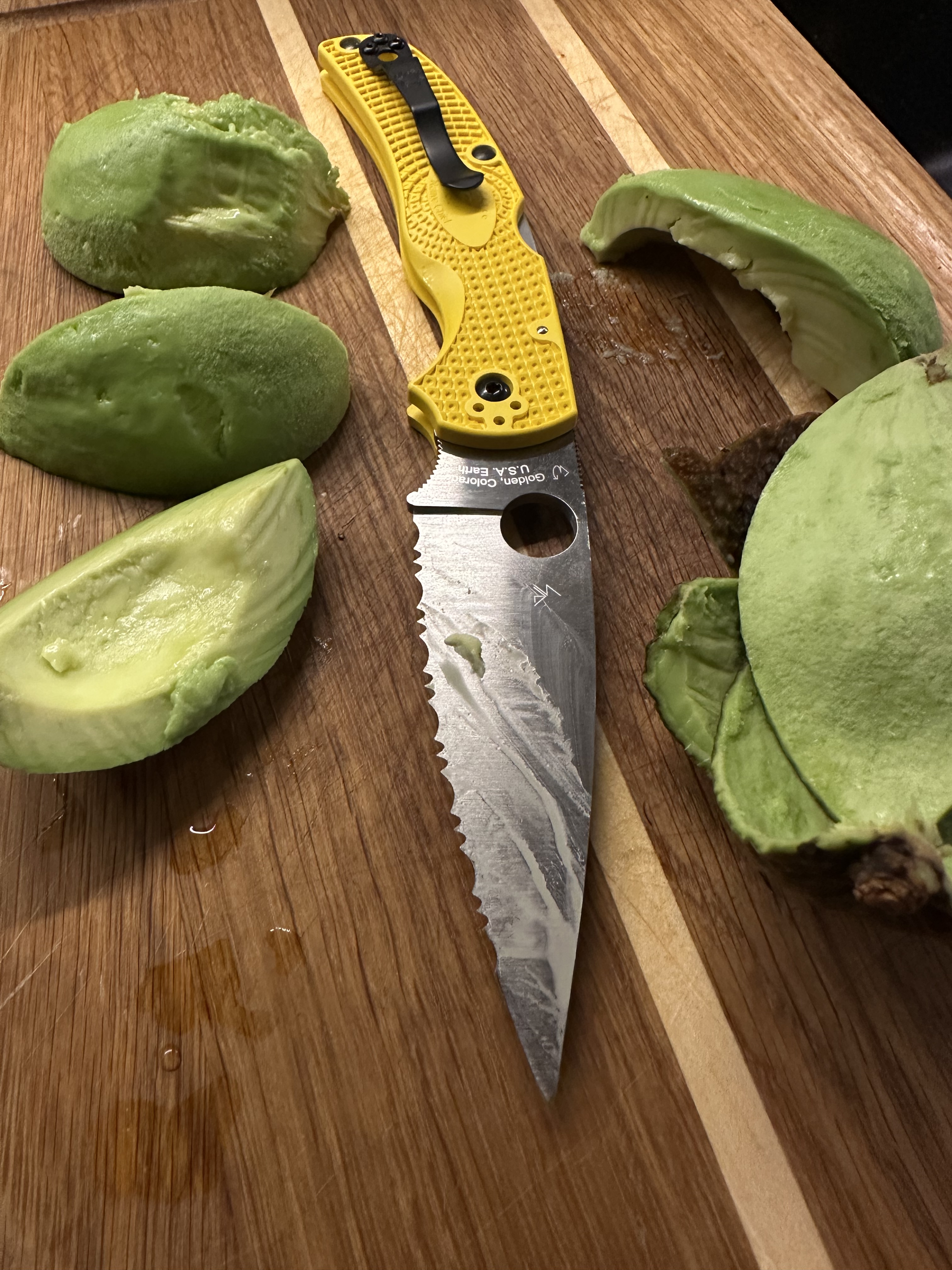
The Serrations of the Everyday — Notes on a Serrated Magnacut UKPK enhance with titanium scales.

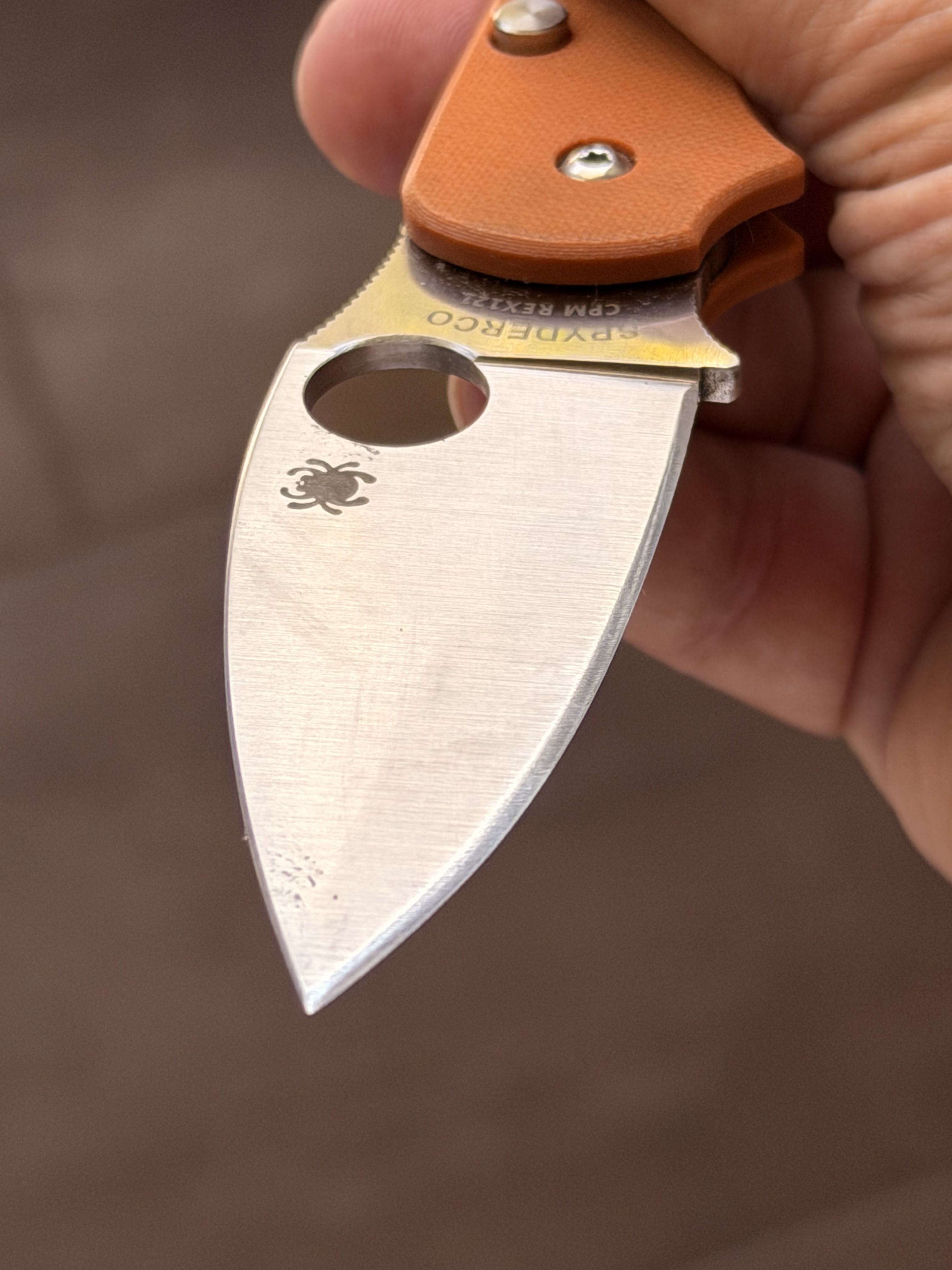
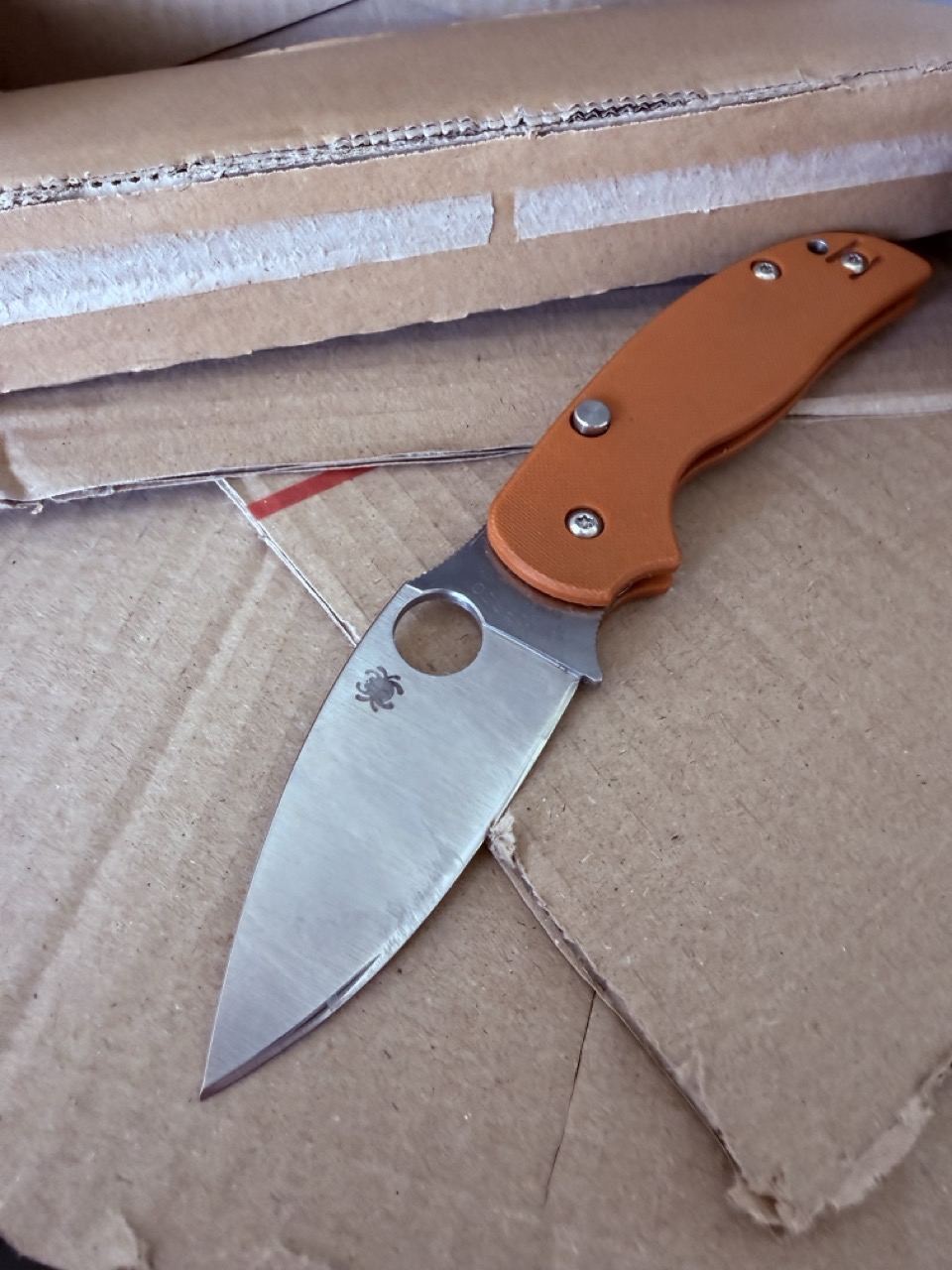
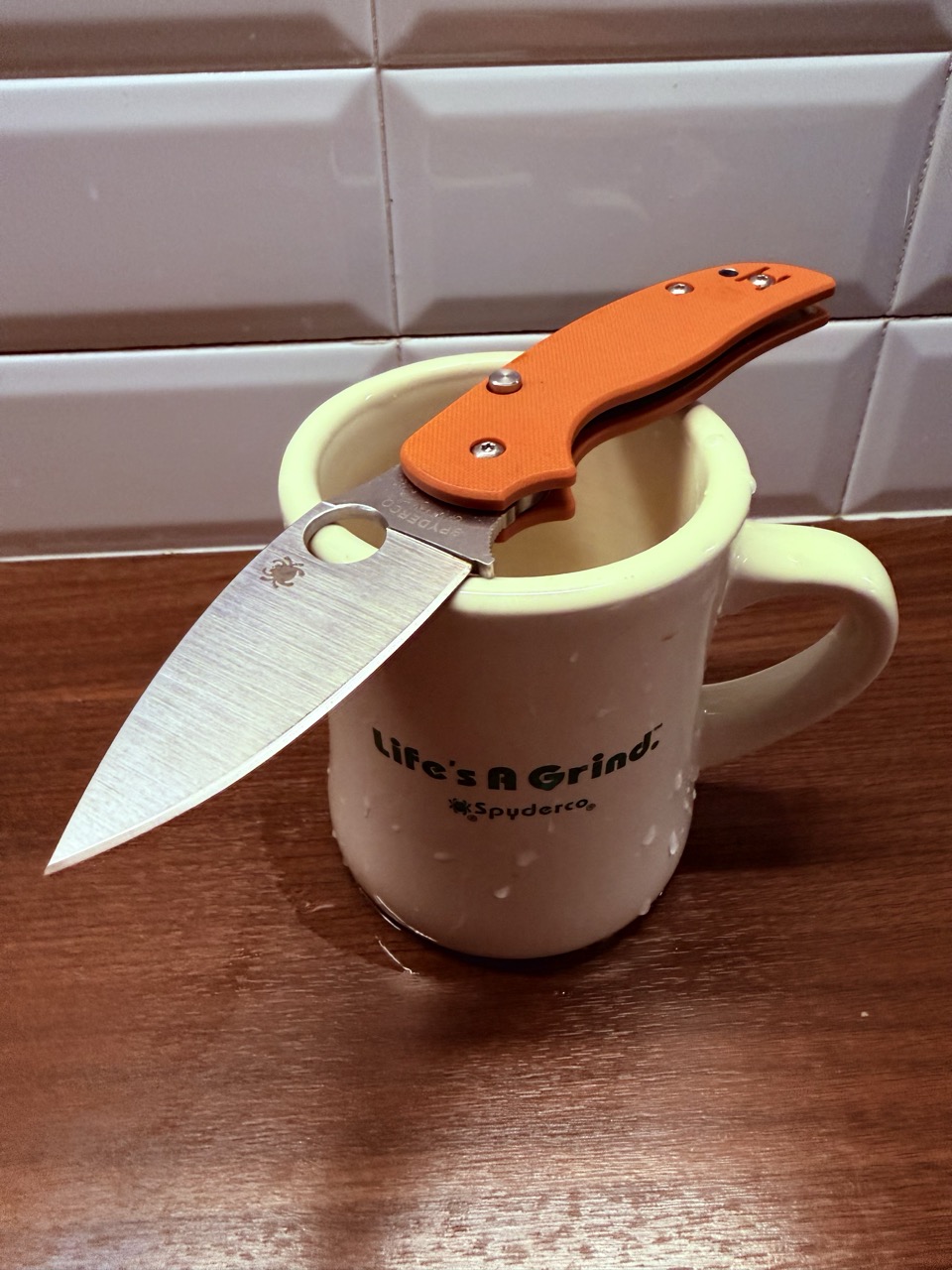
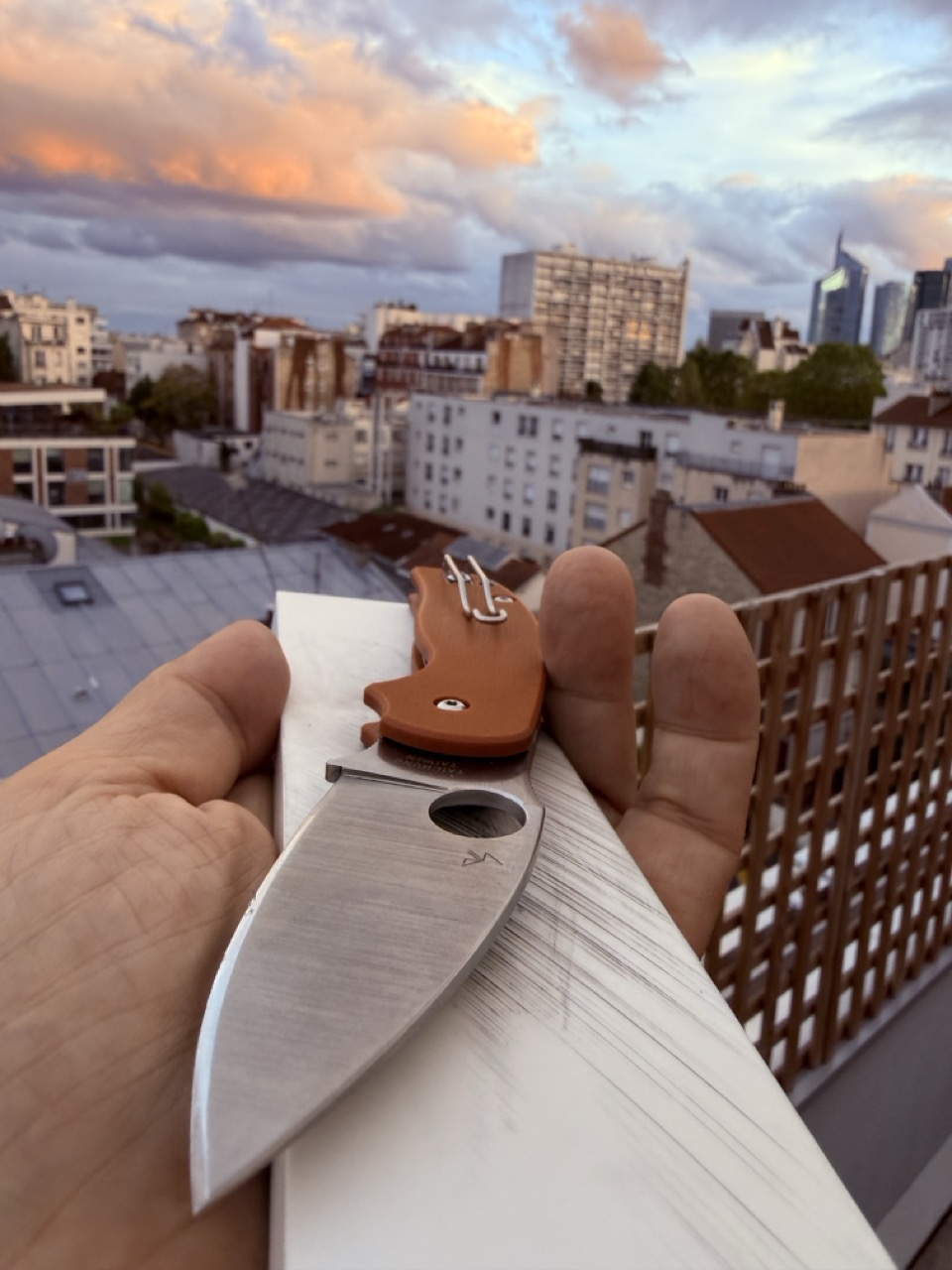
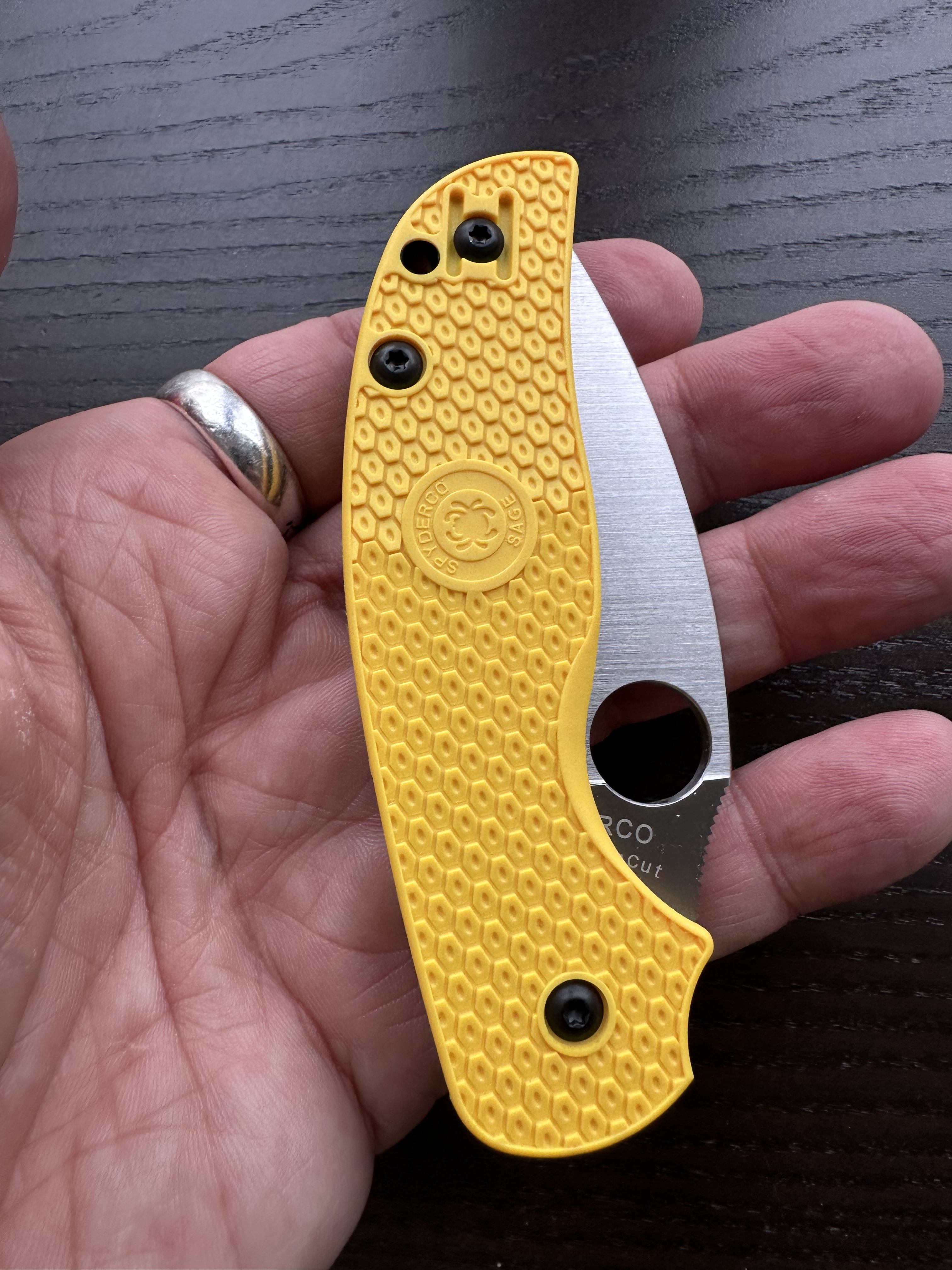
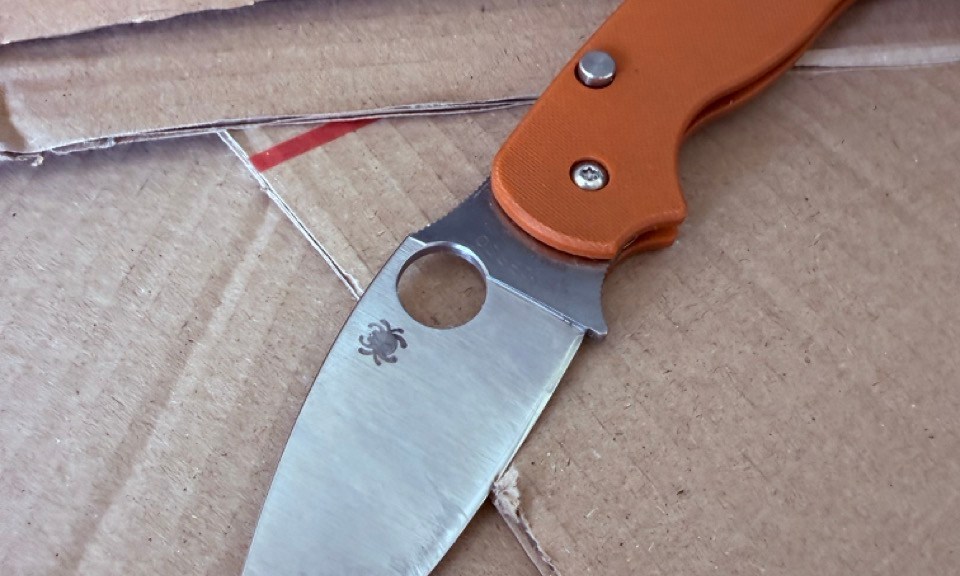
There are objects we own, and others that, through use, quietly become extensions of our hand. The UKPK in Magnacut—here in its serrated form, dressed in Heinnie’s Titech titanium scales—belongs firmly to the latter. Not a piece to be admired at a distance, but one to be lived with. Everyday. Tested. Carried without ceremony.
This tool is low profile but with an hungry edge.

What strikes first is the paradox. A familiar, ergonomic silhouette—born from a will shaped by strict legal constraints—yet delivering a level of cutting performance that feels anything but limited. That serrated edge does not flatter at first glance. It unsettles some, even repels others. And that is precisely where its relevance begins.

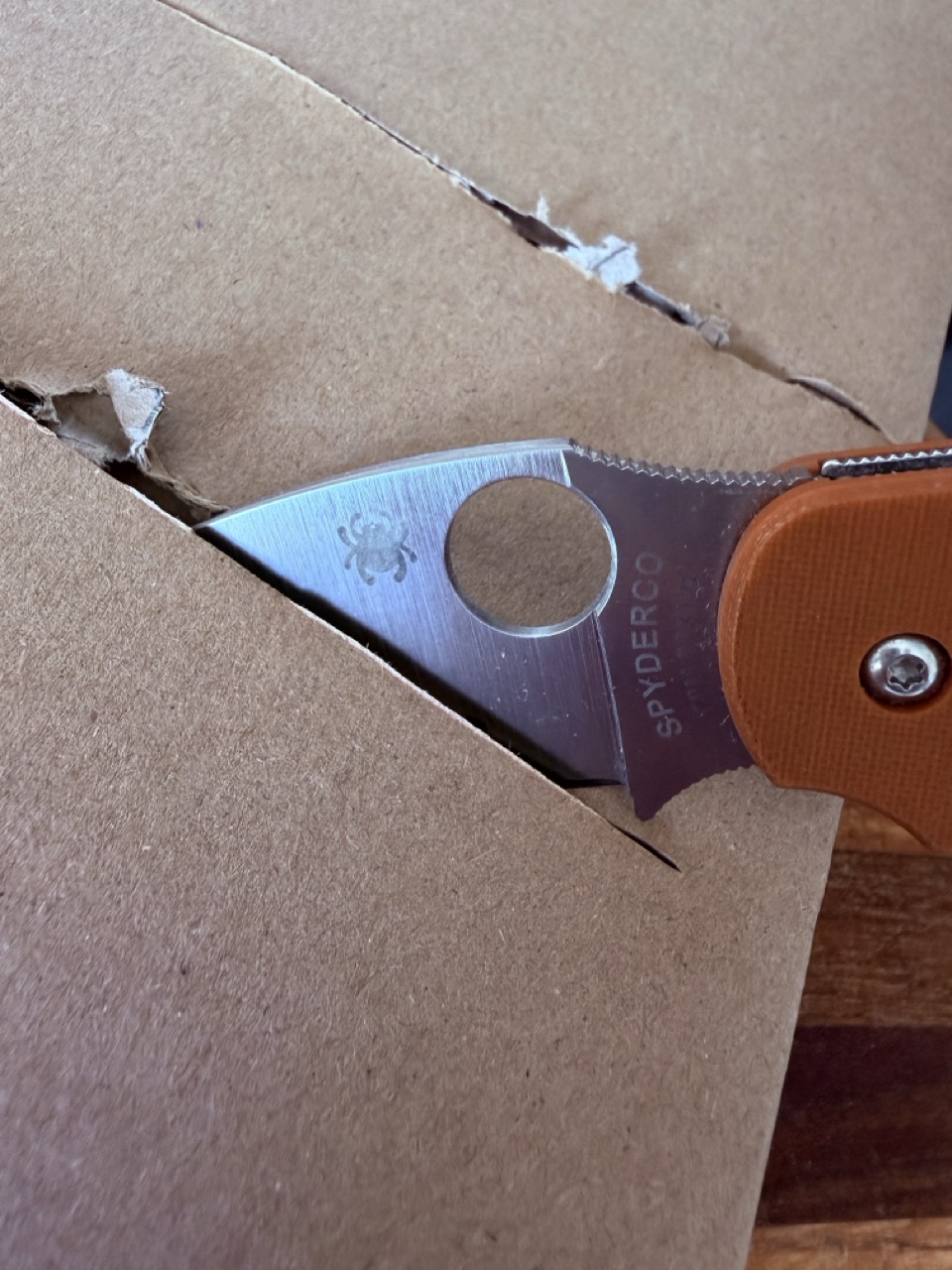
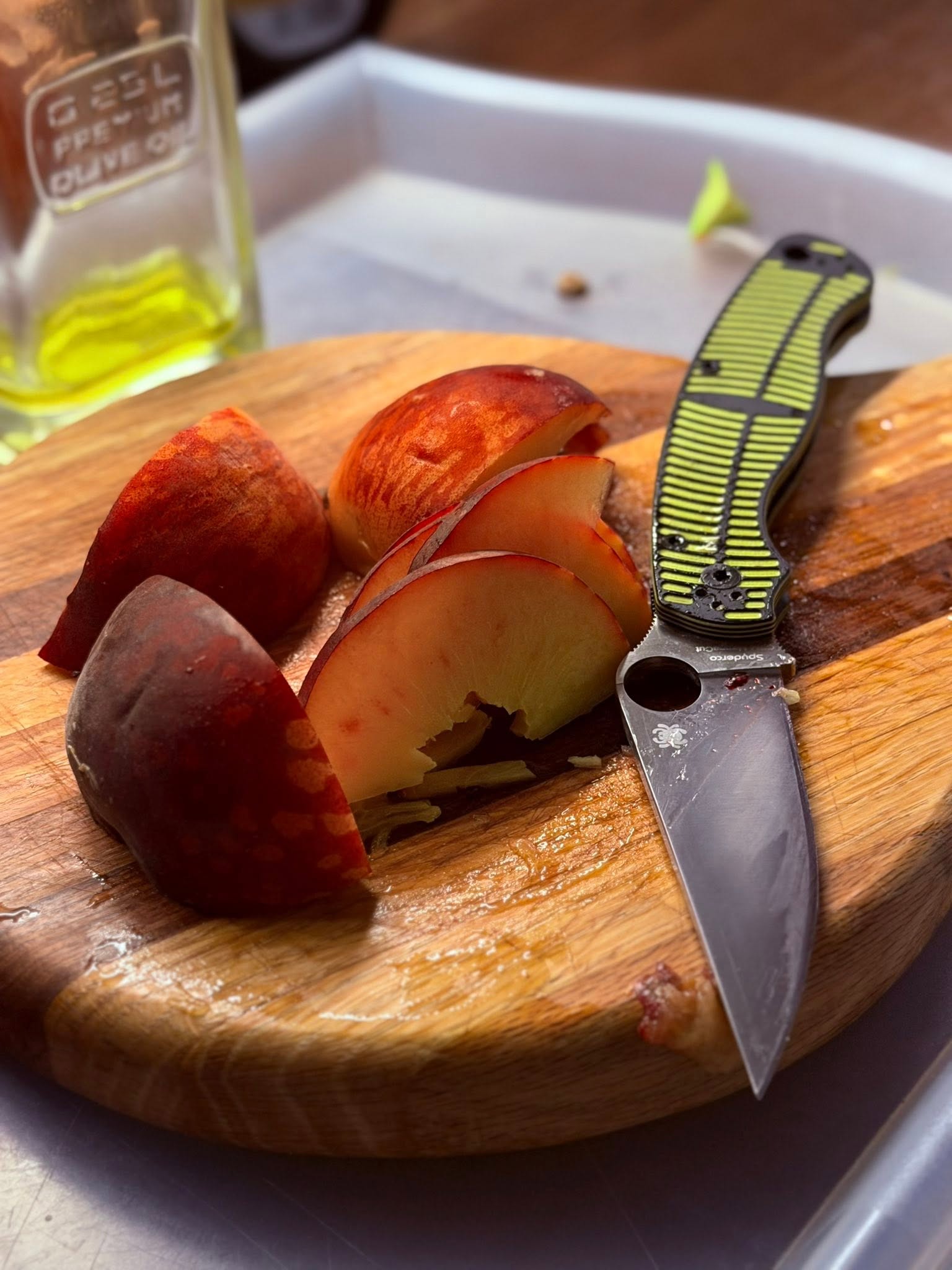
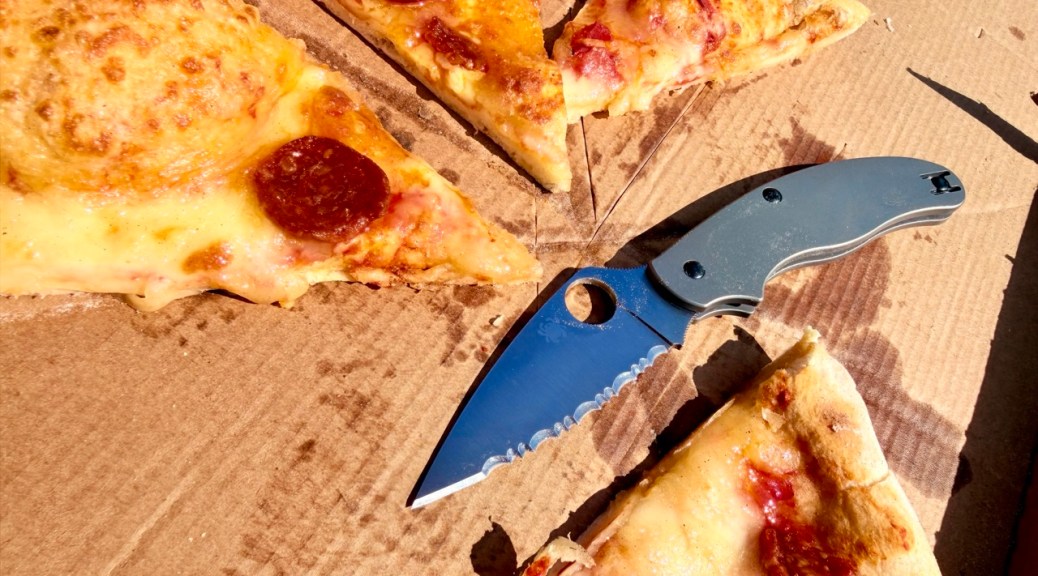
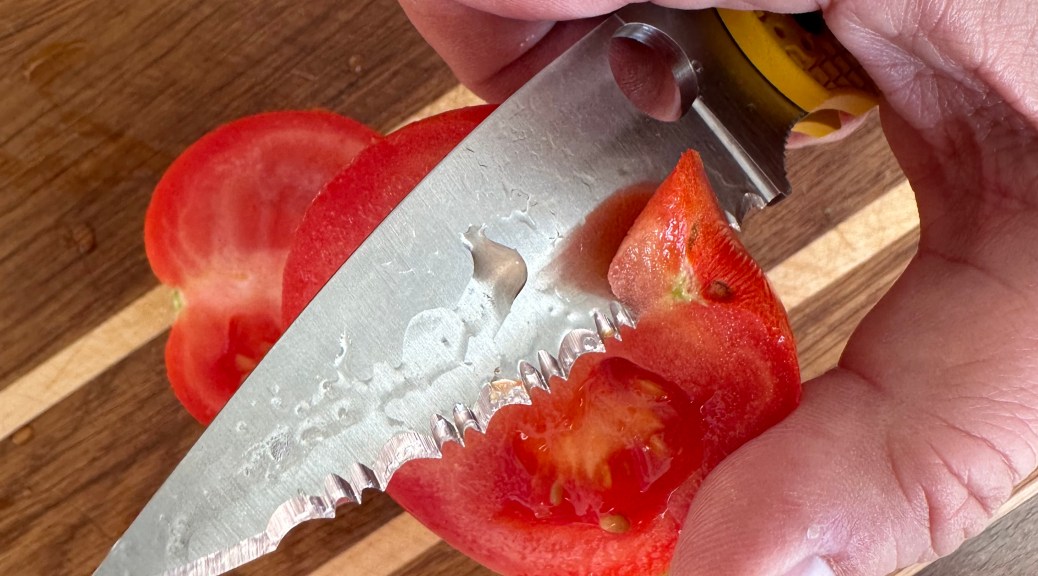
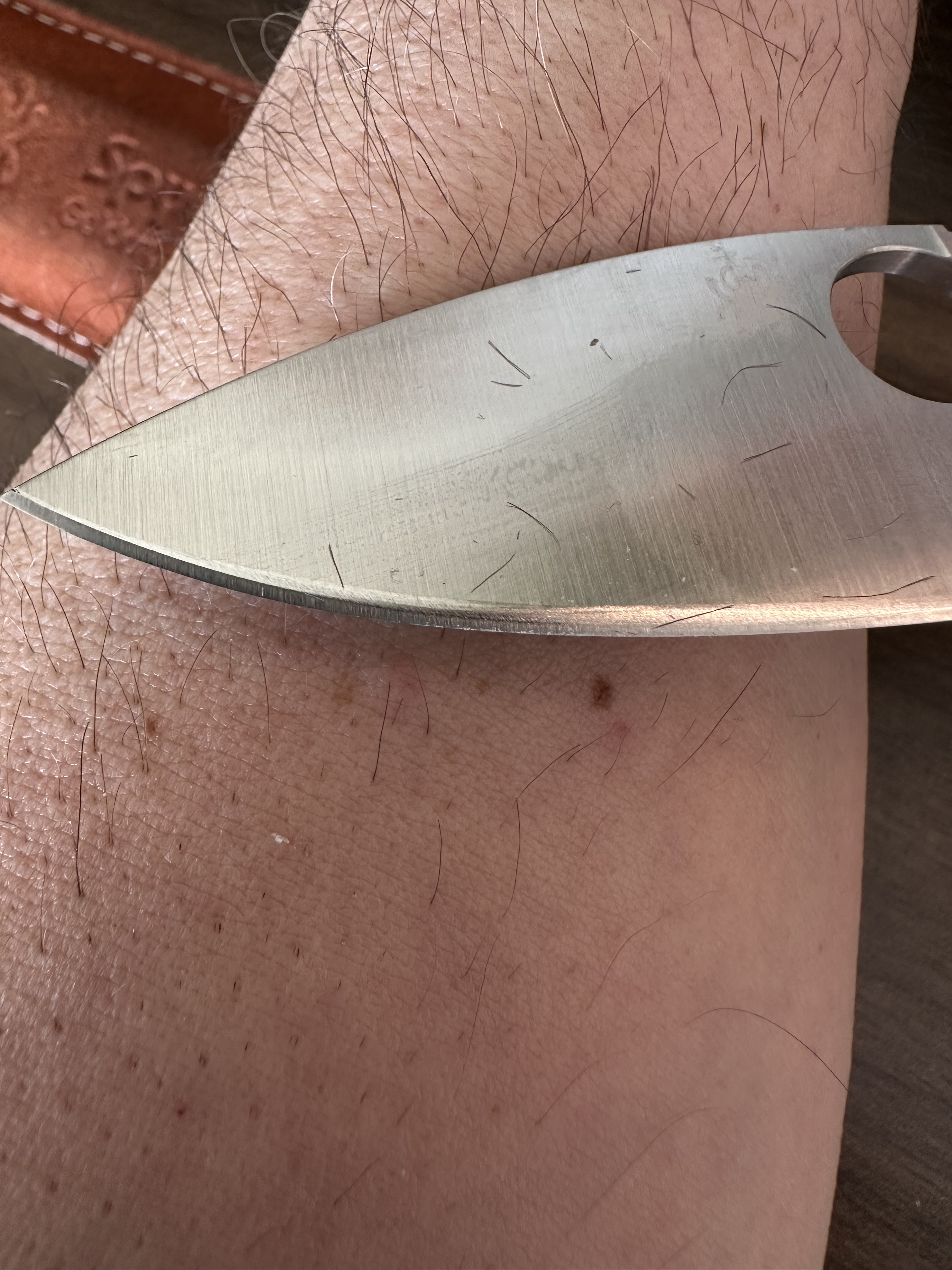
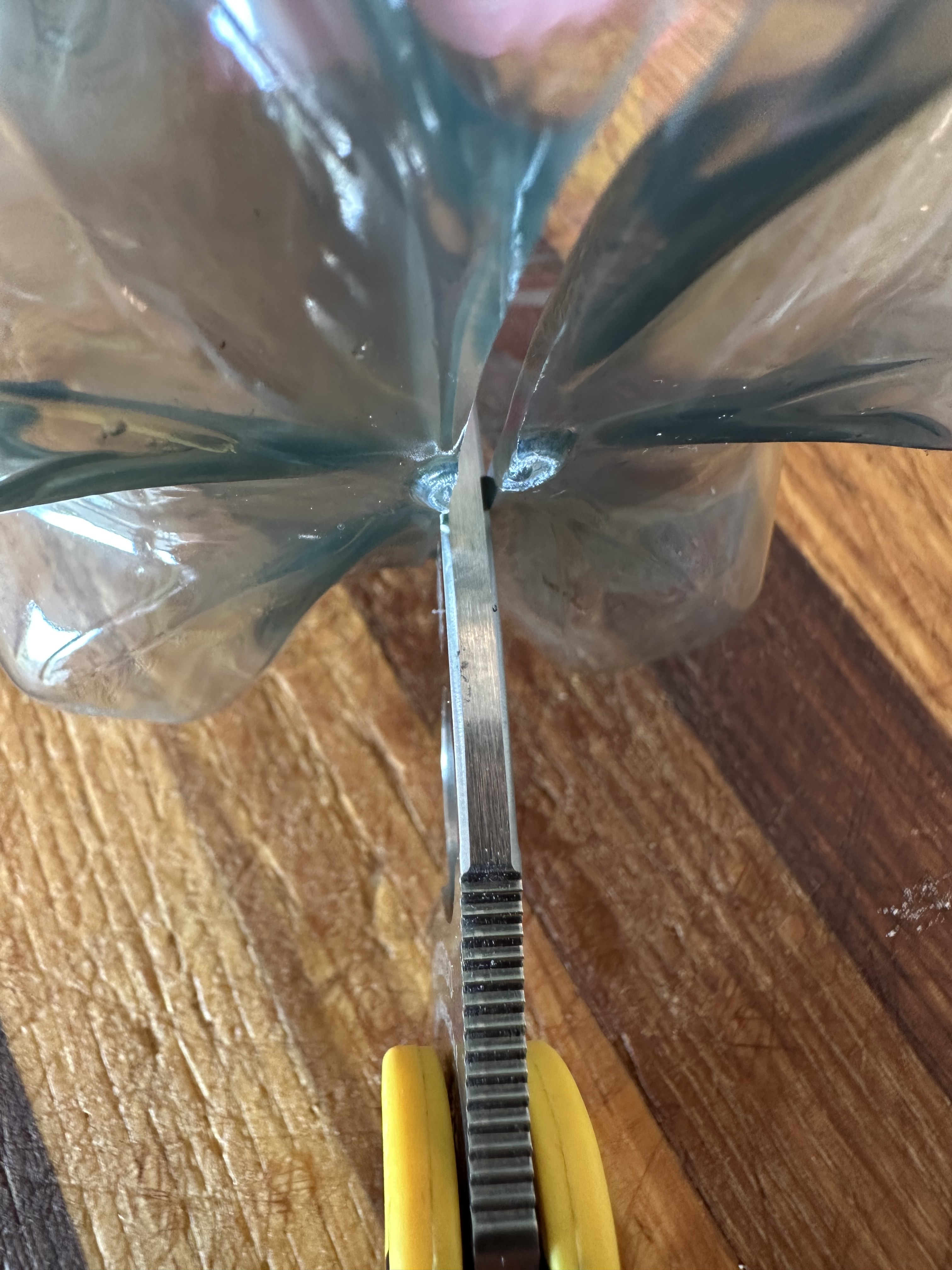
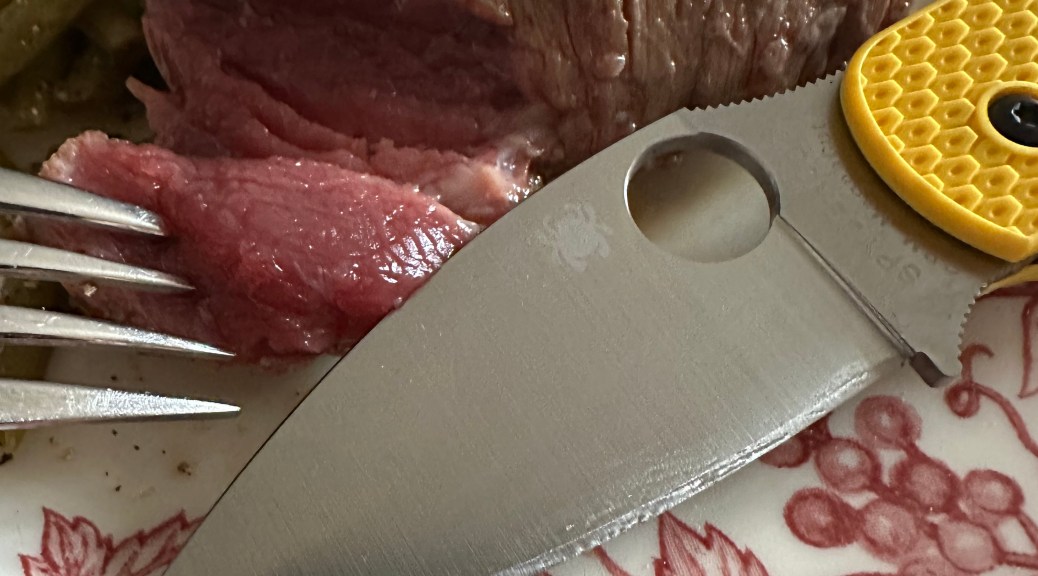
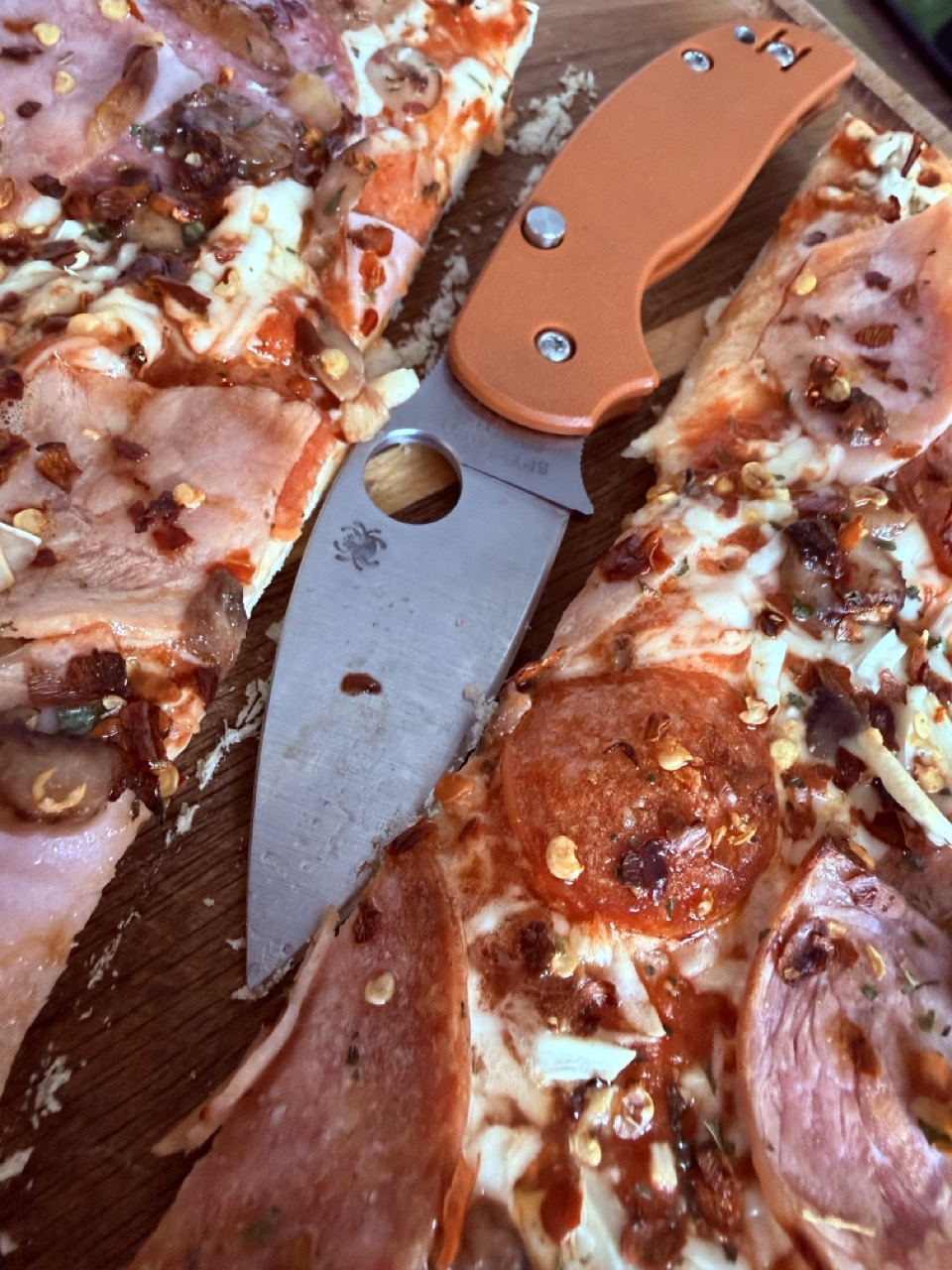
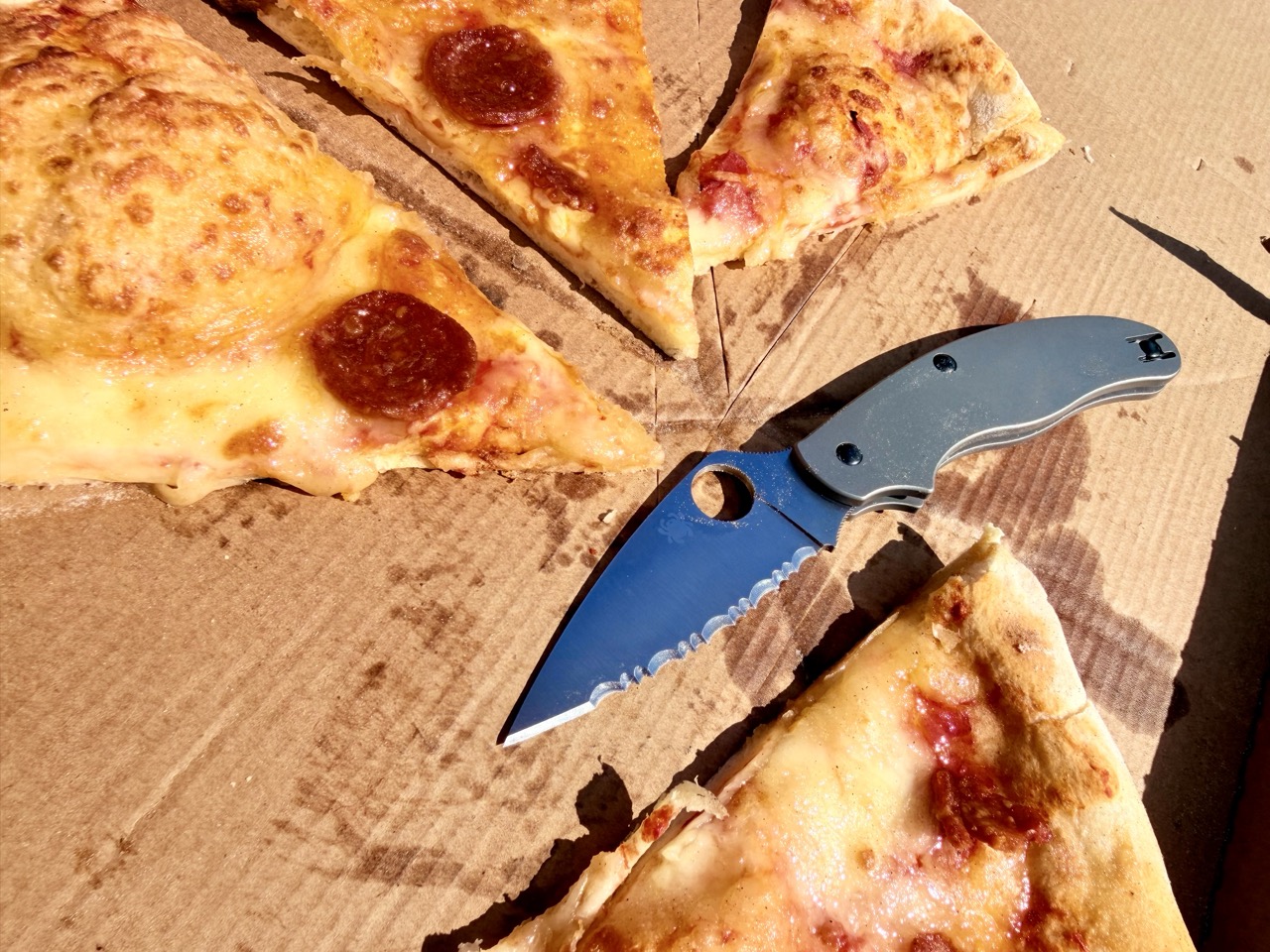
Because real life does not deal in ideal materials or perfect technique. A slice of cooling pizza, a stubborn thread, double-wall cardboard, an electrical cable—each offers a different resistance. Where a plain edge demands precision, serrations adapt. They bite and initiate cuts. From a caresse to firm push cuts, using thin SpyderEdge serrations is an escalation in my cutting intentions. I need that material to be cut fast !!
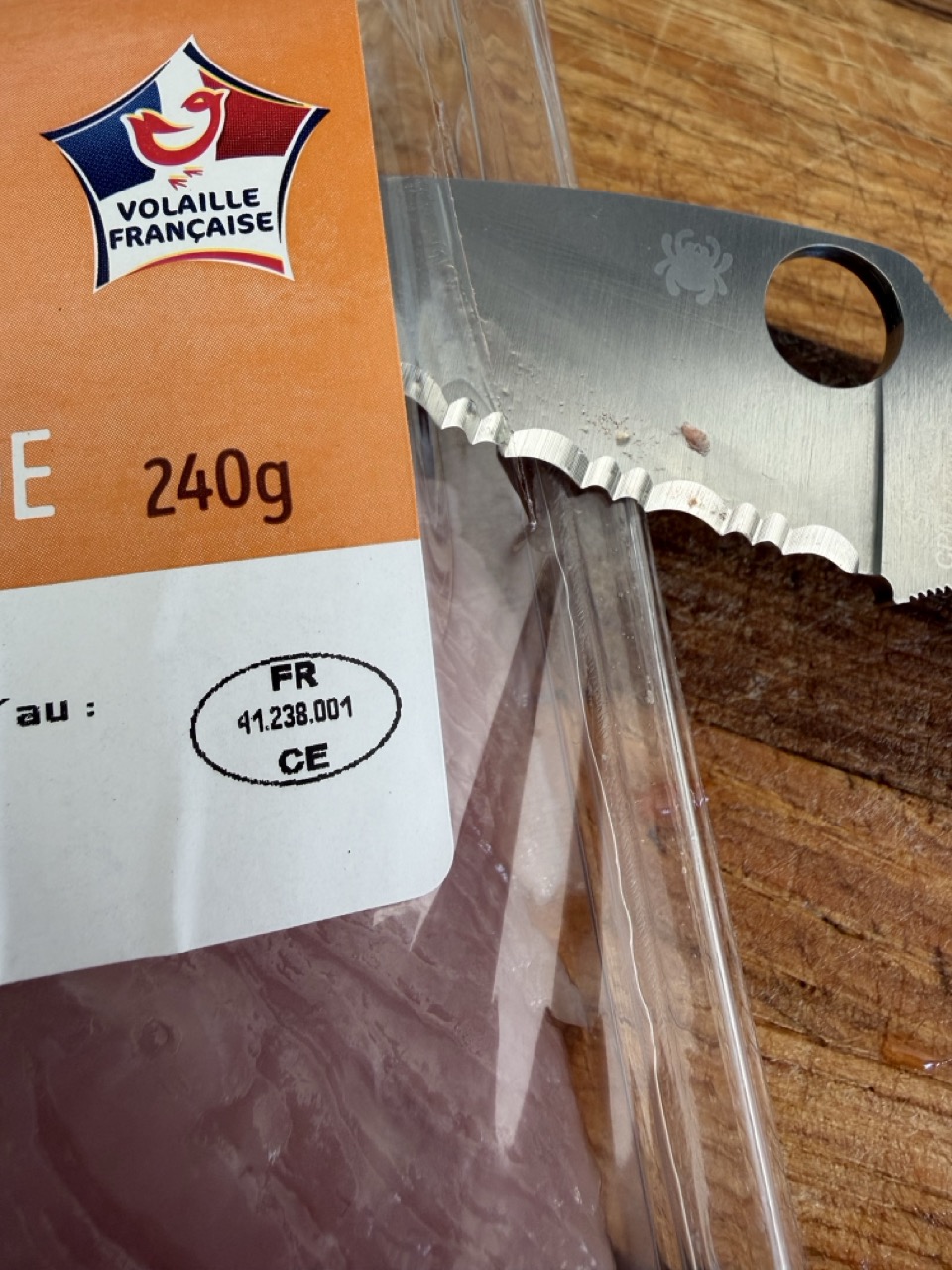
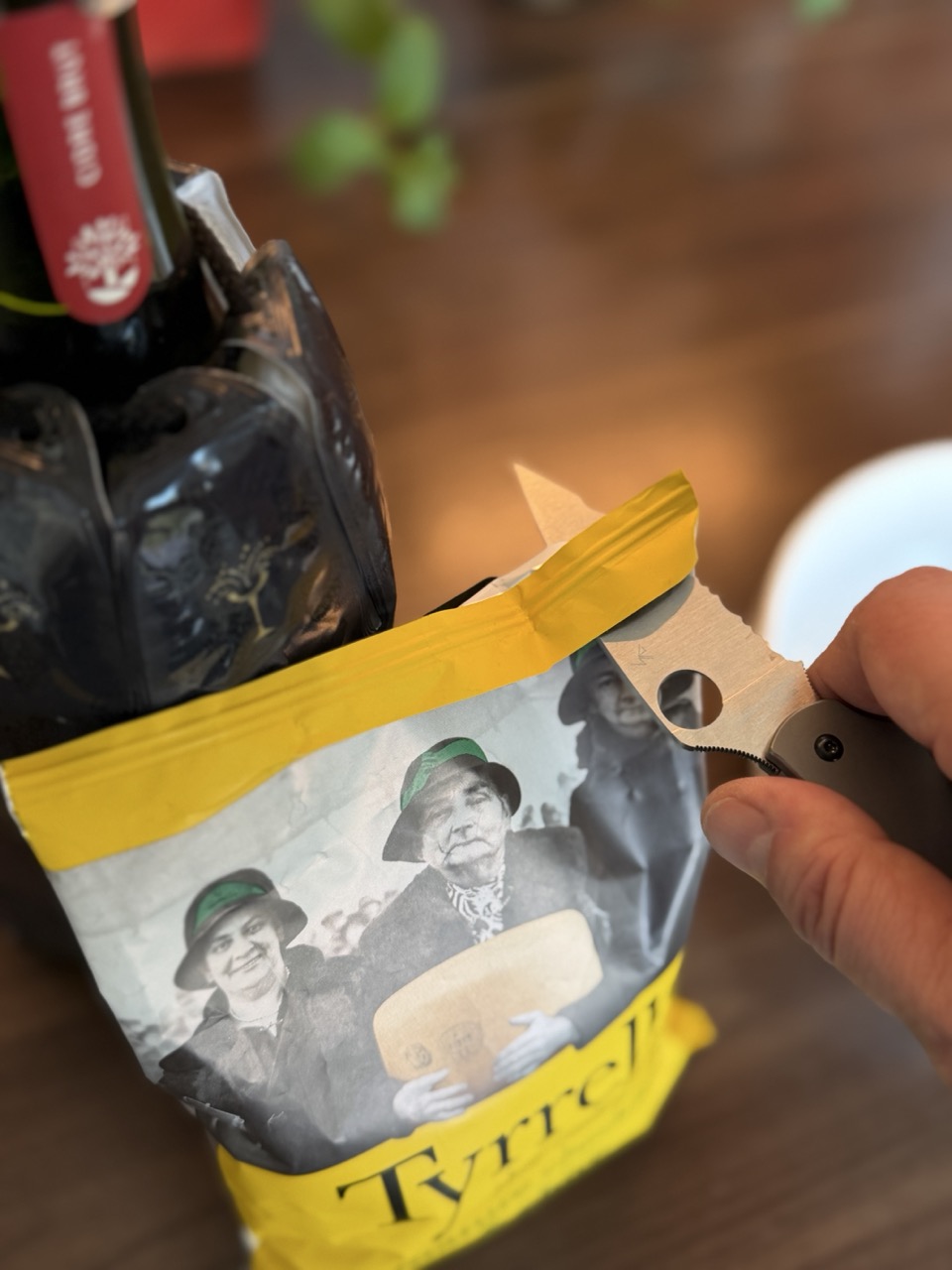
It helps a lot when you cut a label in a store without to be noticed (once you bought it of course…)

In this configuration, Magnacut reveals a deeper character. I had noticed it on the wonderful Chief Salt . Its reputation is well established, but it is in repetition—across mundane, unremarkable tasks—that it truly asserts itself. Edge retention ceases to be a technical metric and becomes something tangible.
Days pass, materials accumulate, and yet the initial sensation—a ready, immediate hungry bite—remains intact with a quiet, almost disconcerting consistency. That makes a real difference for an EDC.

It is telling that even its own designer, Sal Glesser, found himself rediscovering the knife through this serrated Magnacut expression.

Notice my “preaching to the choir” post 😄

This is a genuine sense of surprise at the endurance of the edge, accompanied by a nod to Larrin Thomas, whose metallurgical work made this steel possible. This is more than technical acknowledgment; it is recognition of a rare alignment between design intent and material innovation.

The titanium scales subtly shift the relationship further. The knife gains density, heft and presence. I just love that. It’s no more a lightweight though but the tactile experience becomes cooler, more deliberate. There is something almost architectural about it—a structure defined as much by its material honesty as by its purpose, ready to meet the unpredictability of daily use by sea, air or land.

Over time, what emerges is a quiet redefinition of the serrated edge itself. Long confined to specialized roles—rescue, rope, marine environments—it finds here a broader legitimacy. Not as an alternative to the plain edge, but as a different philosophy of cutting. More instinctive. More pragmatic.

I have felt the same with the Chaparral serrated, offering those performance in a lady/gentleman format. The UKPK offers a longer blade but a legal solution.

The serrated Chaparral brings this same idea into a more restrained, almost tailored format—slim, discreet, almost polite in profile, yet unexpectedly serious once it starts working. It’s the kind of tool that disappears into a pocket and reappears only when needed, delivering performance without ever looking like it intends to.

The UKPK serrated Magnacut, on the other hand, pushes the concept further in a different direction. Same underlying logic, but with more reach, more cutting length, more immediate utility when the task scales up. It’s not trying to be more aggressive—it simply extends the capability envelope while staying within a legal framework that forces discipline into the design.

Put together, they sketch an interesting continuum rather than a category:
the thinner Chaparral as refined minimalism with bite, the thin UKPK as everyday legality stretched to its most useful expression.

Different formats, same underlying surprise: serrations stop being “special-purpose” and start behaving like a perfectly normal, highly efficient everyday cutting system !

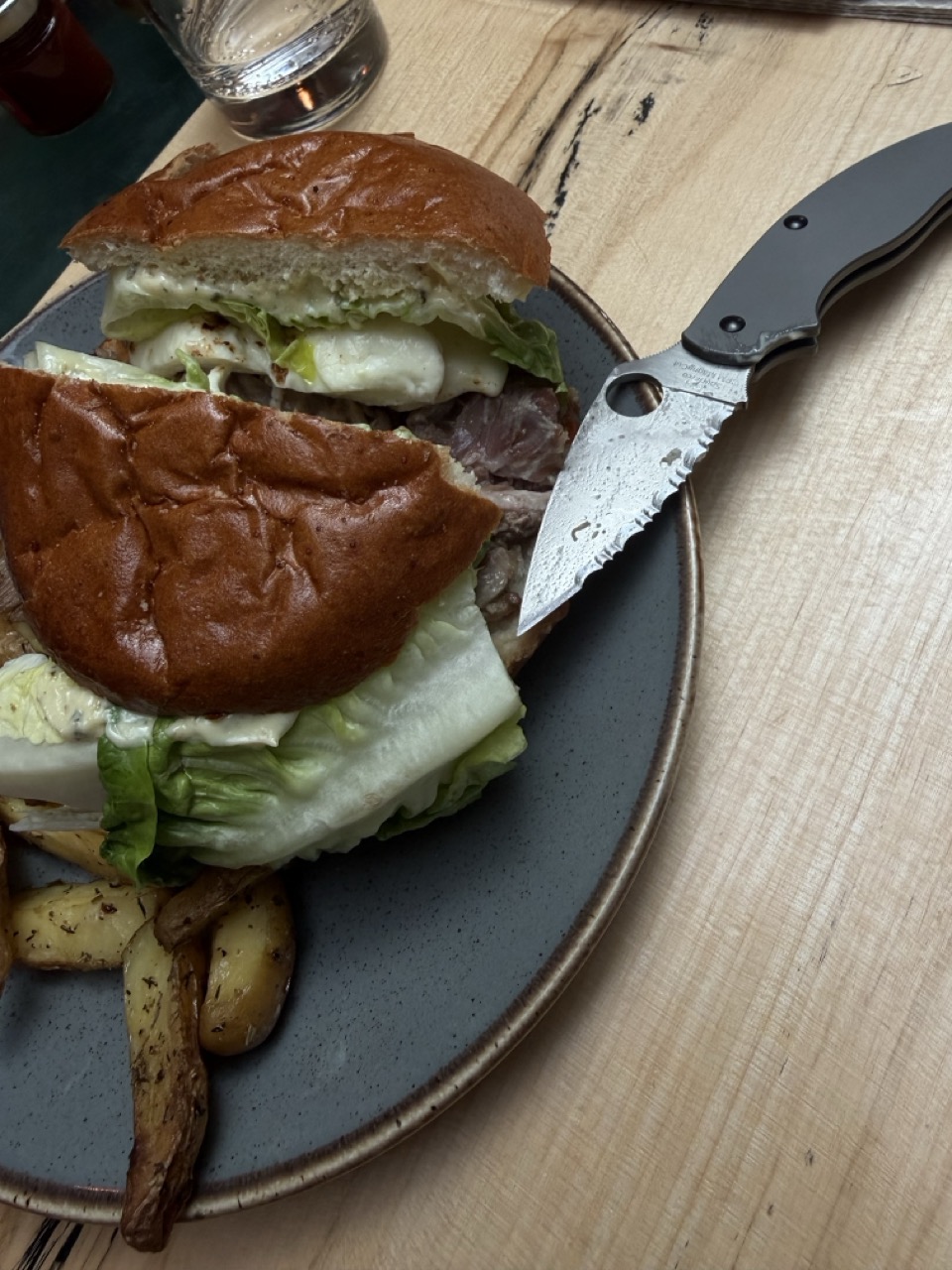
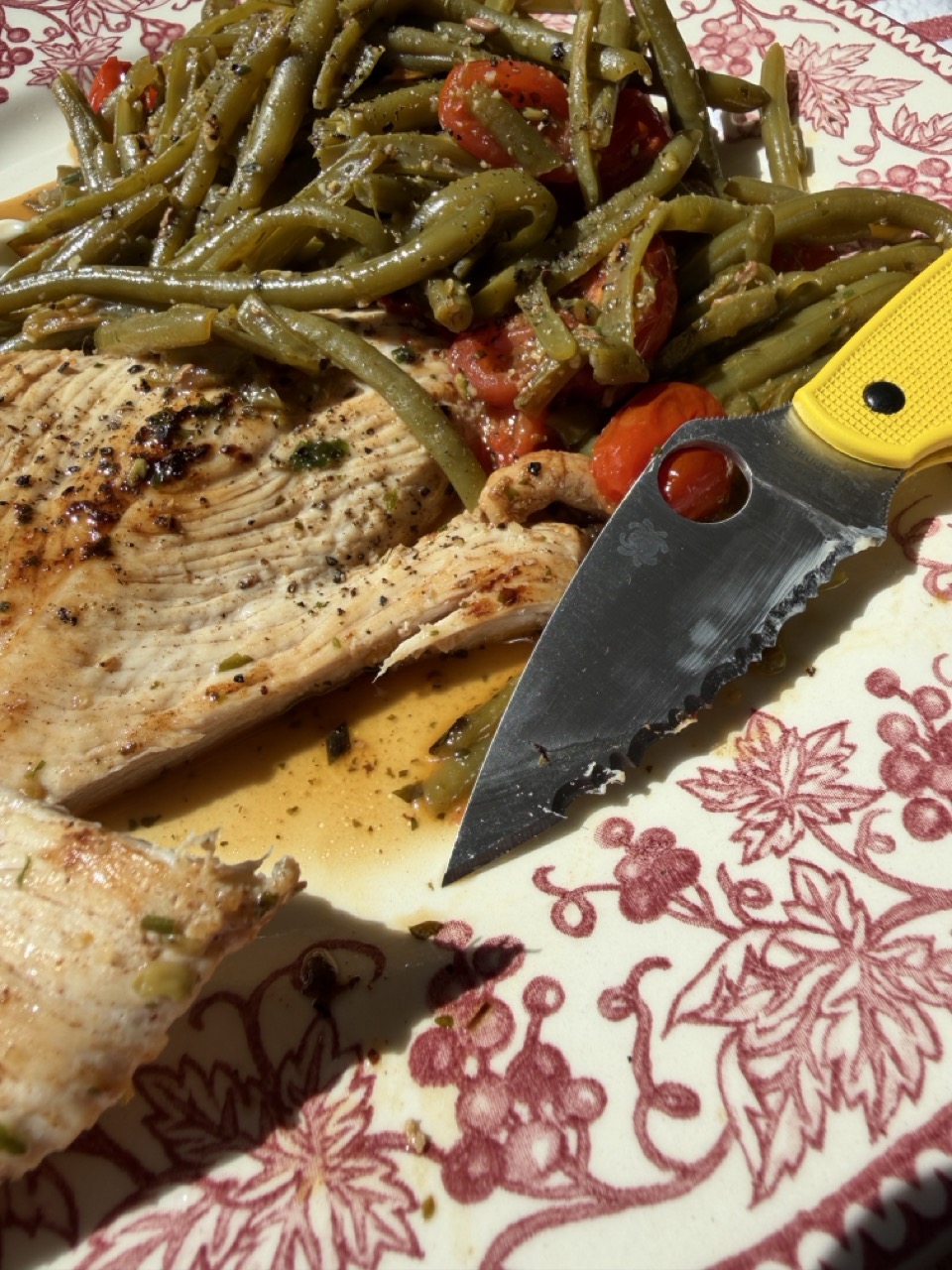
To reach for a serrated blade to cut burger or break down a box should no longer feel unusual. If anything, it is where this knife feels most at home. Its modernity lies not in spectacle, but in normalization—in making high performance feel natural within the ordinary.

The serrated Magnacut UKPK does not argue its case. It does not need to. It simply works—and in doing so, it quietly resets expectations.

Low-profile in the pocket, yet unmistakably assertive at the edge, it pairs a hungry, enduring bite with a reassuringly solid construction. All of it contained within a form that remains legally acceptable in many places—an understated balance of restraint and capability.

UK PENKNIFE™ SALT® YELLOW CPM® MAGNACUT® — Civility Bares Its Teeth.

Disclaimer: This knife has been provided through Spyderco’s Ambassador Program, upon my own request. Thank you to the Spyderpeople for letting me review it. 

There’s something deliciously subversive about the Spyderco UKPK in full serrated CPM Magnacut steel.
Something unique in the world of cutlery. So friendly and so formidable !
Imagine a slipjoint—non-locking, polite, born for UK legal carry—now equipped with one of the most advanced steels ever made… AND with a fully serrated edge. The kind of edge famous for emergency uses, an edge that looks like it wants to chew through a seatbelt, a rope, or your expectations like there is no tomorrow.
And yet… it works. Too well. And this is just great !

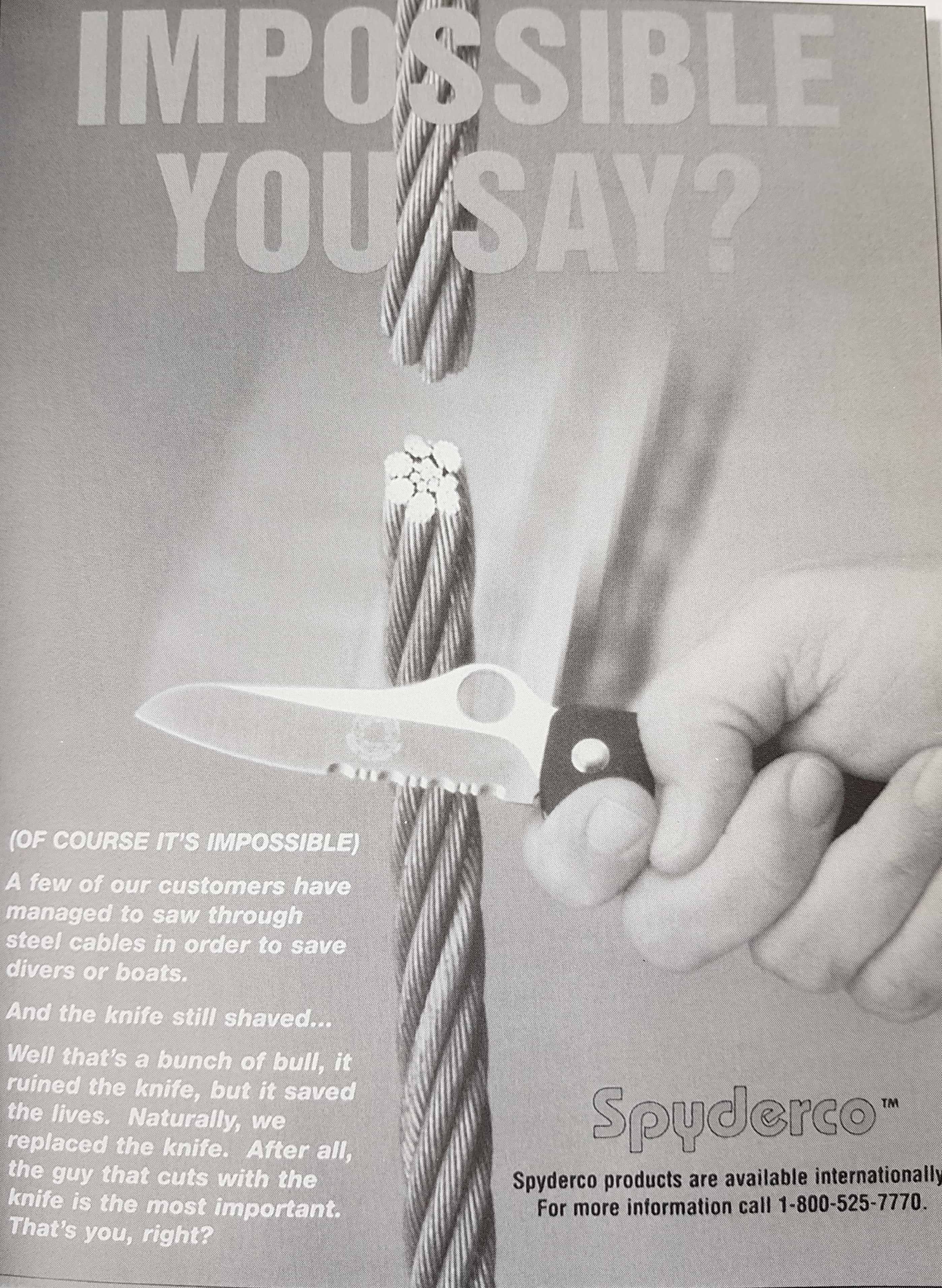
Back in the 80s, Spyderco didn’t just enter the knife world—they rewired it.
And at the center of that shift was an inventor: Sal Glesser.
Three ideas. That’s all it took:
the clip, the hole, and the teeth.
The clip turned knives into tools you actually carry—pocket, belt, or backpack.
The Spyderhole made one-handed opening instinctive, reliable… and easy to maintain in the real world.
And the serrations? They made blades hungry for fibrous materials.
Let’s get one thing straight, once and for all:
serrated knives are not saws.
They don’t remove material—they slice through it. Razor sharp, aggressive, efficient.
While everyone else was still polishing forged 52100 steel and dressing knives in stag like museum pieces, Spyderco dropped something radically different into the pocket: performance and reliability.
The early icons—Spyderco Worker, Spyderco Mariner, and Spyderco Police—weren’t about tradition.
They were about function.
Fully serrated edges. Stainless steels. Tools built to cut, not to impress.
They looked strange.
They cut like nothing else.

The Spyderco UKPK was Spyderco’s first true slipjoint, introduced roughly twenty years ago—not as a nostalgic throwback, but as a constraint-driven design.
It was built for one purpose: to comply with UK law.
No lock. A sub-3-inch blade.
But in true Spyderco fashion, compliance didn’t mean compromise.
Instead of dumbing things down, they engineered around the limitations:
a strong, confidence-inspiring pocket knife inspired by the Caly 3
with a prominent finger choil for control and safety and the unmistakable Spyderhole for true one-handed use.
What could have been a neutered tool became something else entirely:
a legal EDC that still behaves like a real knife.
The UKPK wasn’t designed to look traditional.
It was designed to work—within the rules, not despite them.
You don’t feel “underknifed” with any of the SlipIt in your pocket from the UKPK to the Squeak through the Urban.

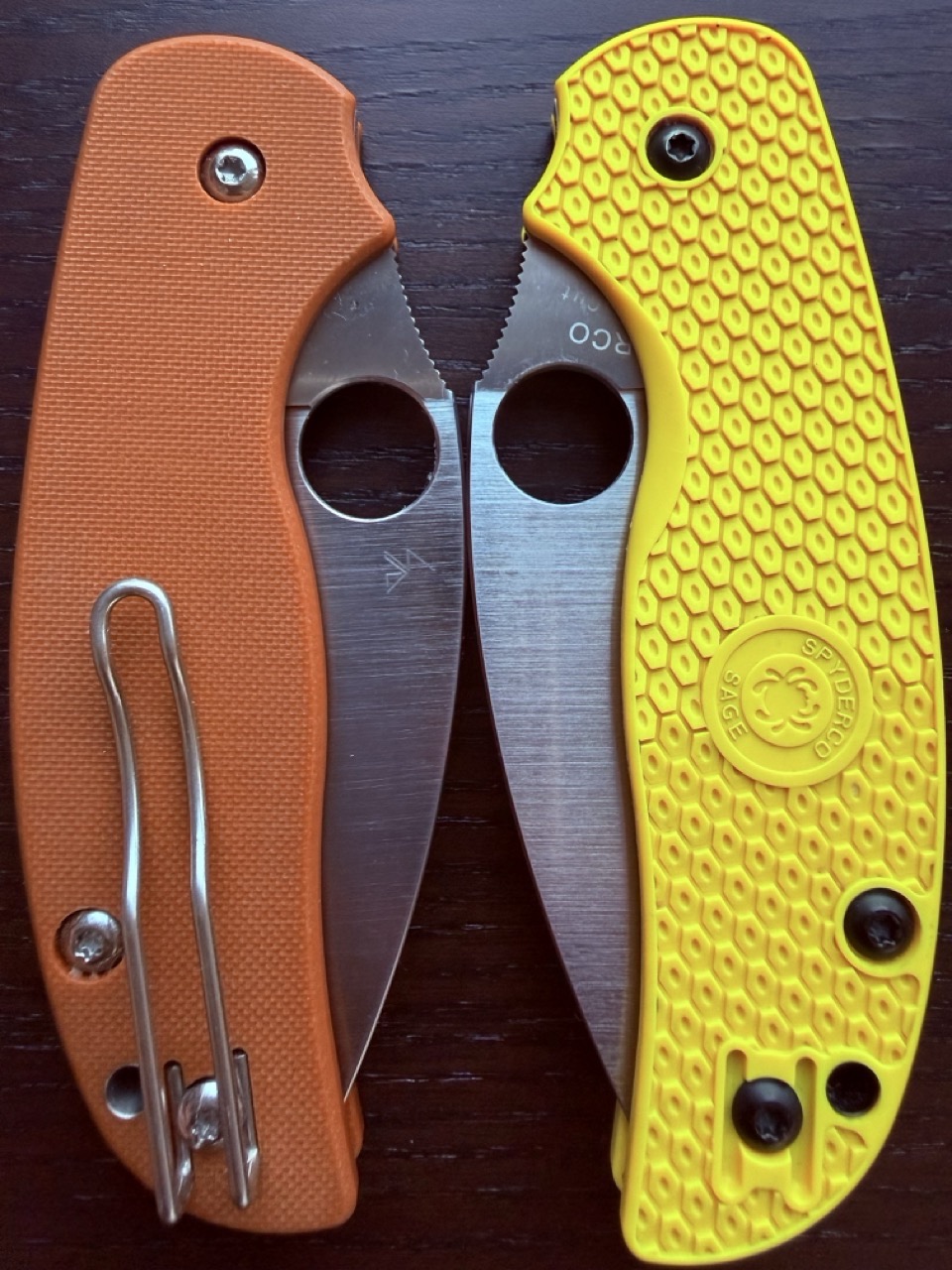
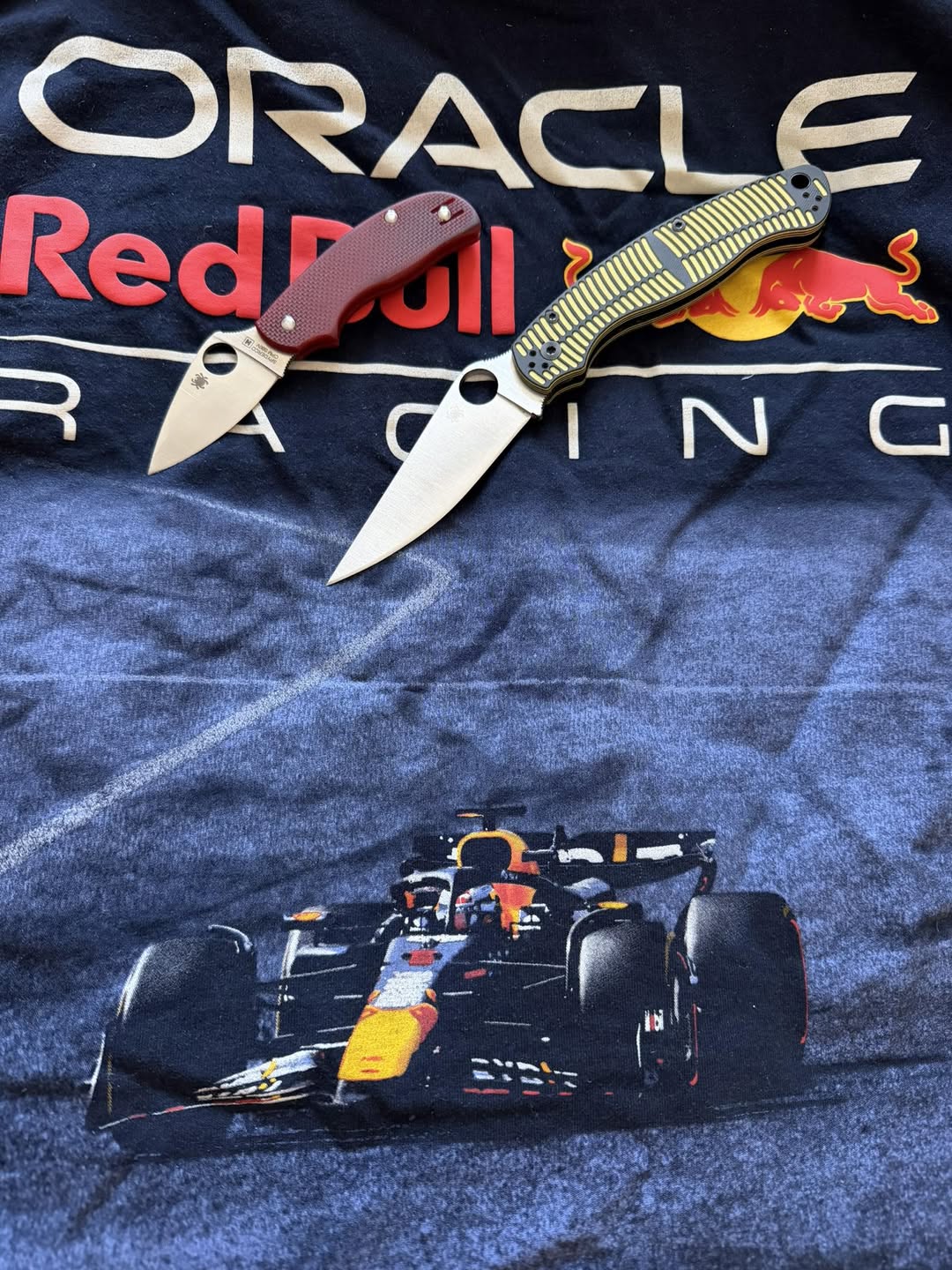
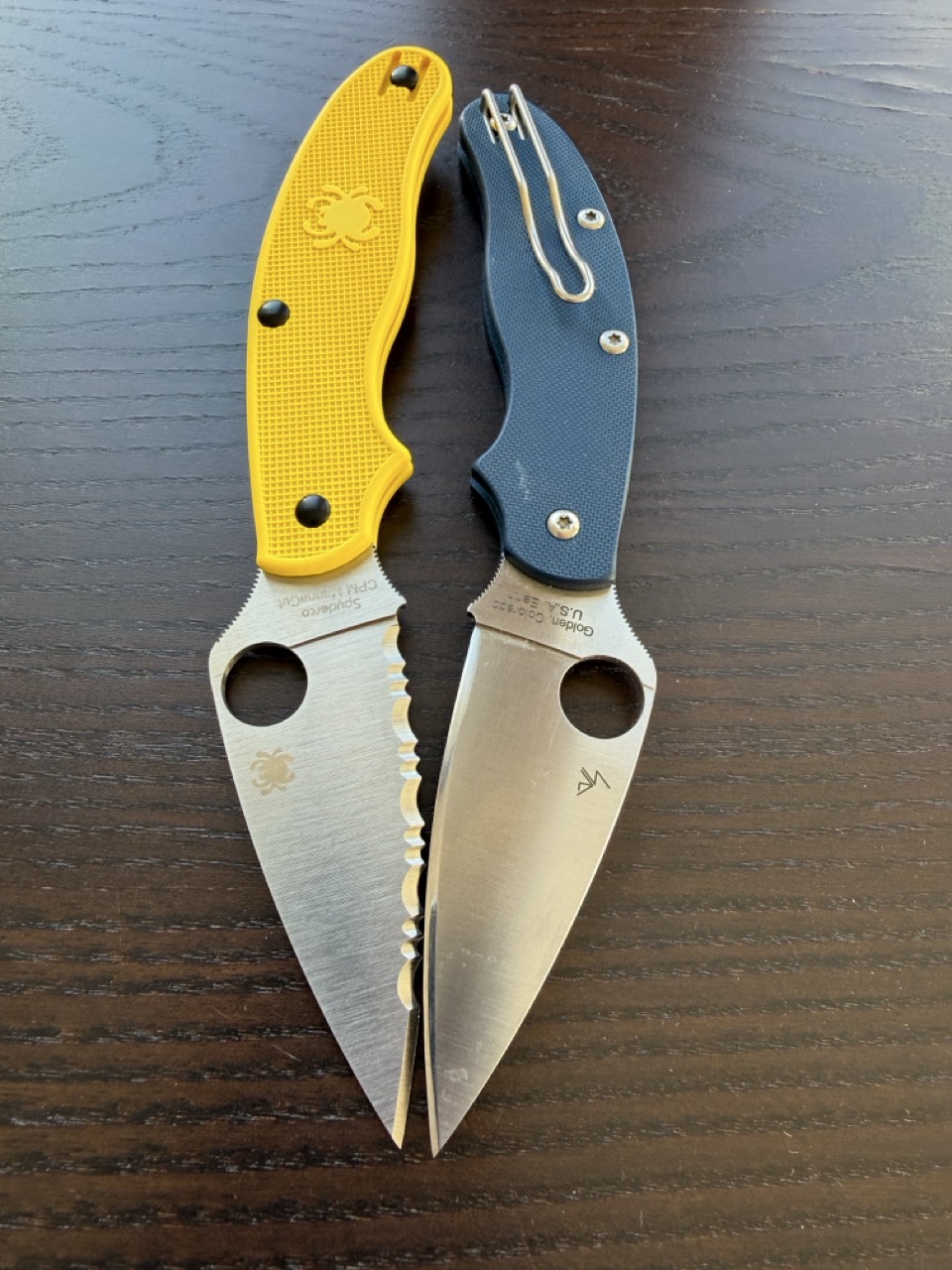
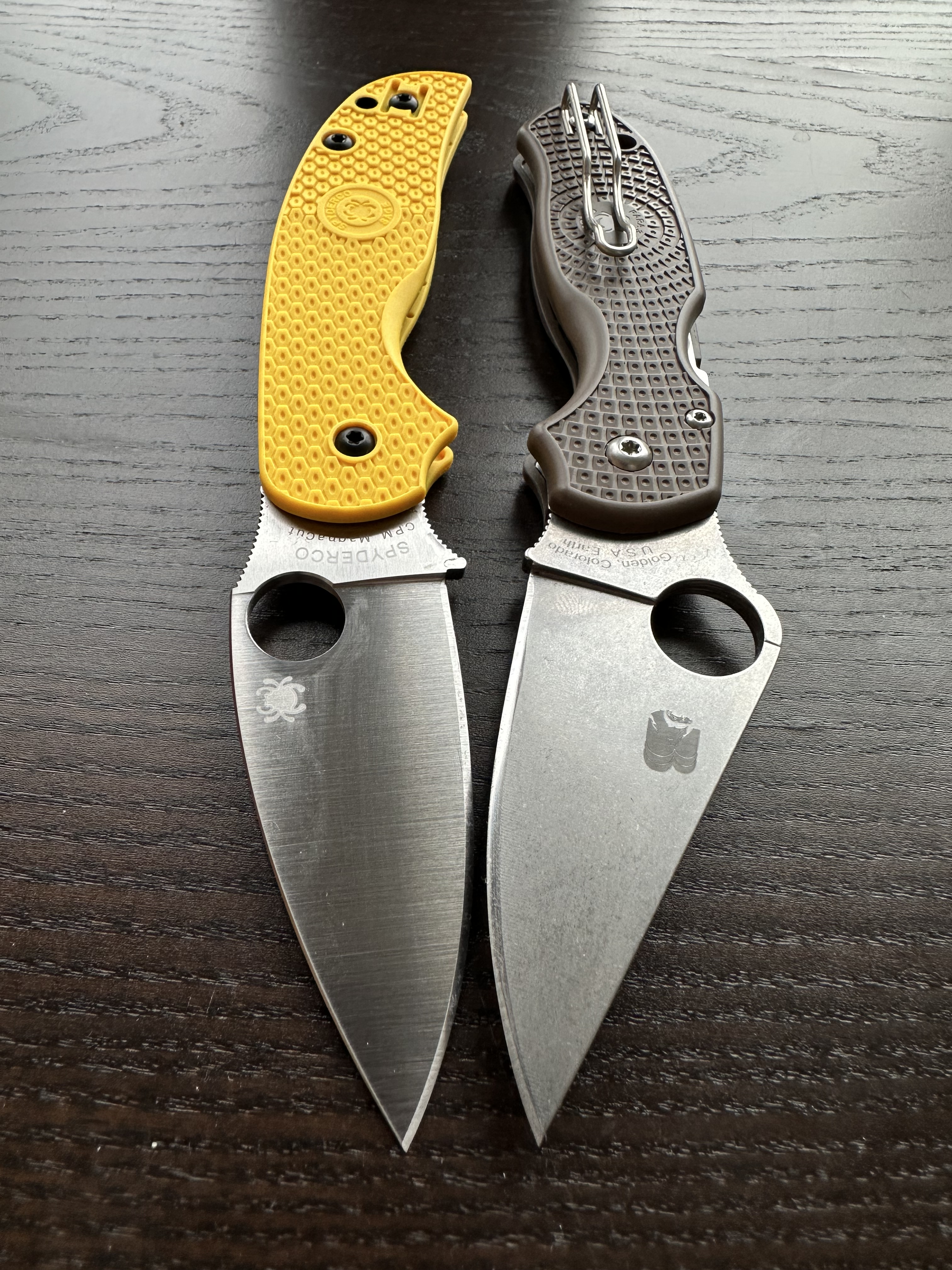
(Pictured here with the UKPK Spy27 G10. The Salt is a FRN lightweight.)
But, yes, the UKPK has always been about restraint.
No lock. No aggression. Just that classic Spyderco leaf blade and a strong slipjoint spring doing quiet, honest work.

Link here for the forums

But now… serrations change the personality completely.
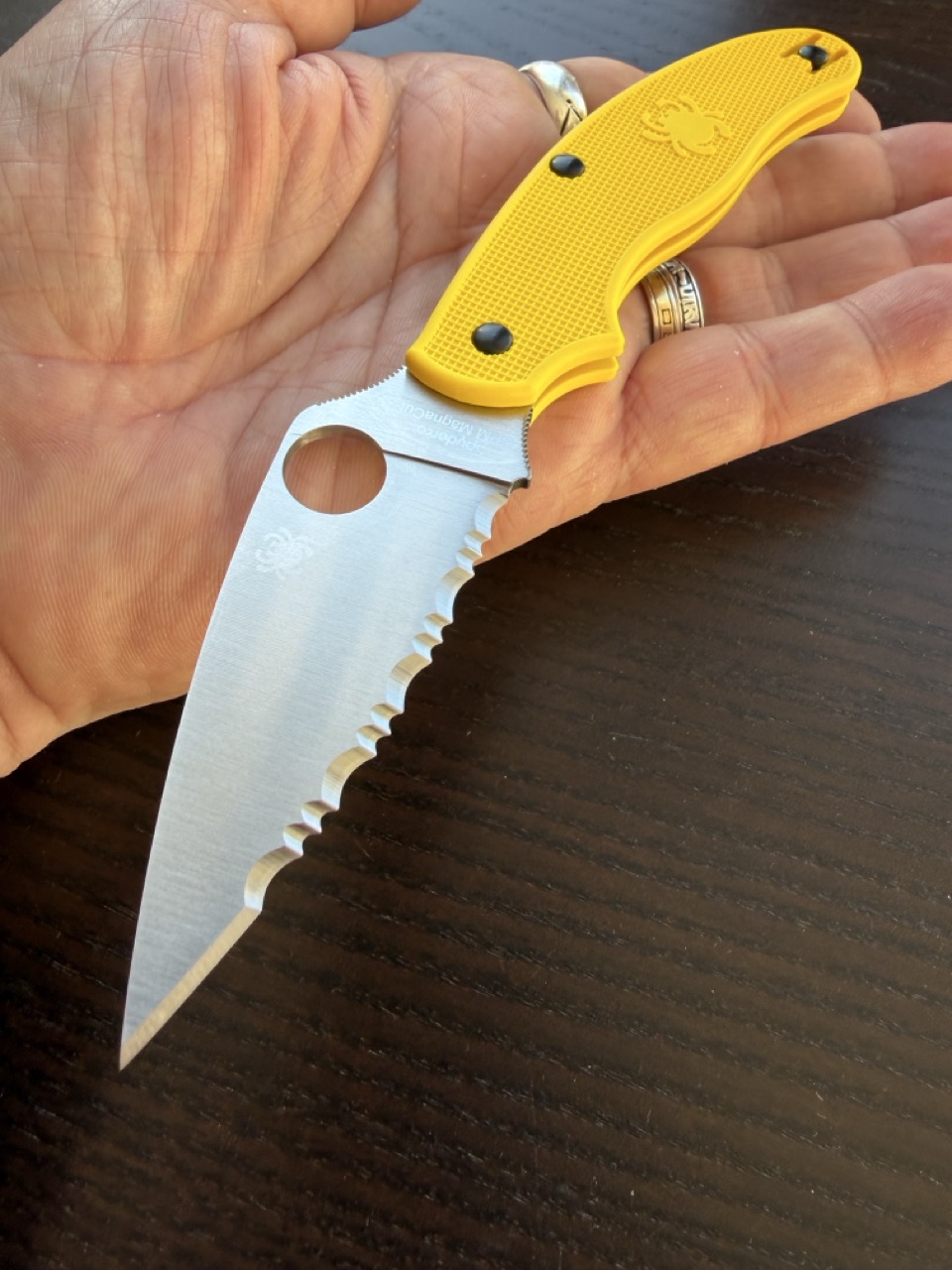
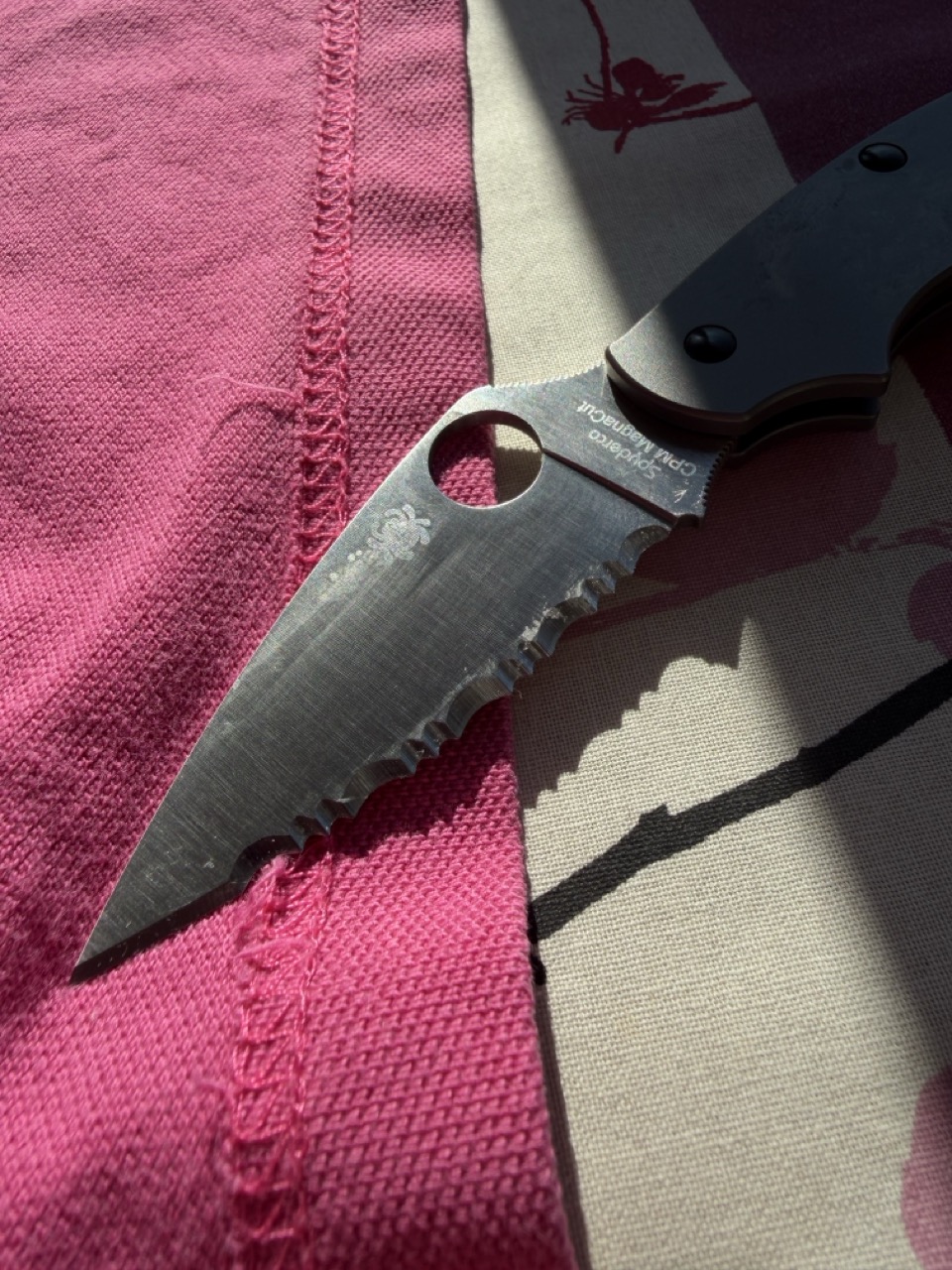
This is no longer a polite cutter— it’s a controlled velociraptor claw.


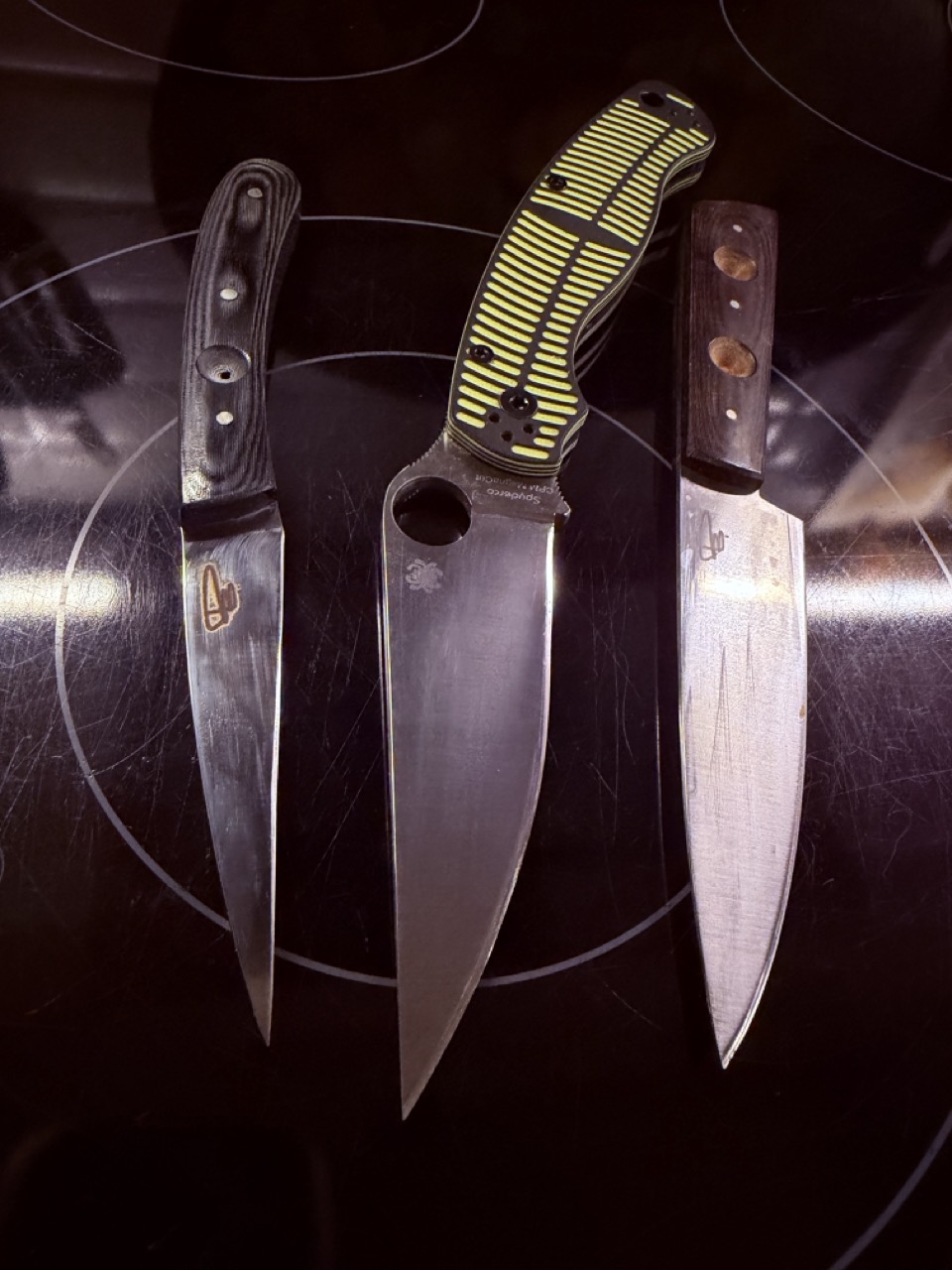
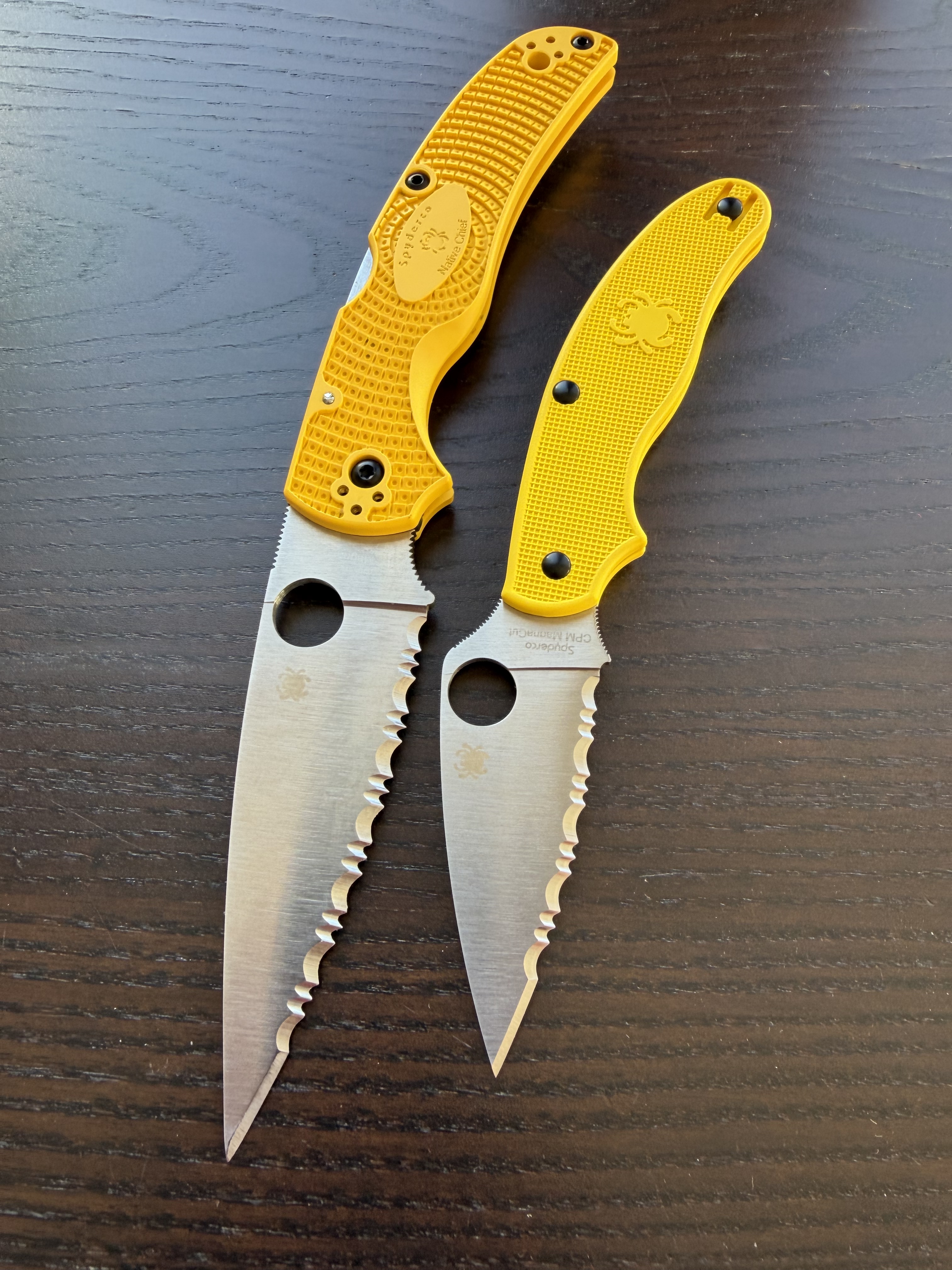
We already know how Spyderco’s serrations behave—from the long slicing authority of the Spyderco Native Chief Salt, to the feral aggression of the Spyderco Civilian, down to the unlikely precision of the “Mighty Grey Mouse,” the Spyderco Chaparral in full serrated.
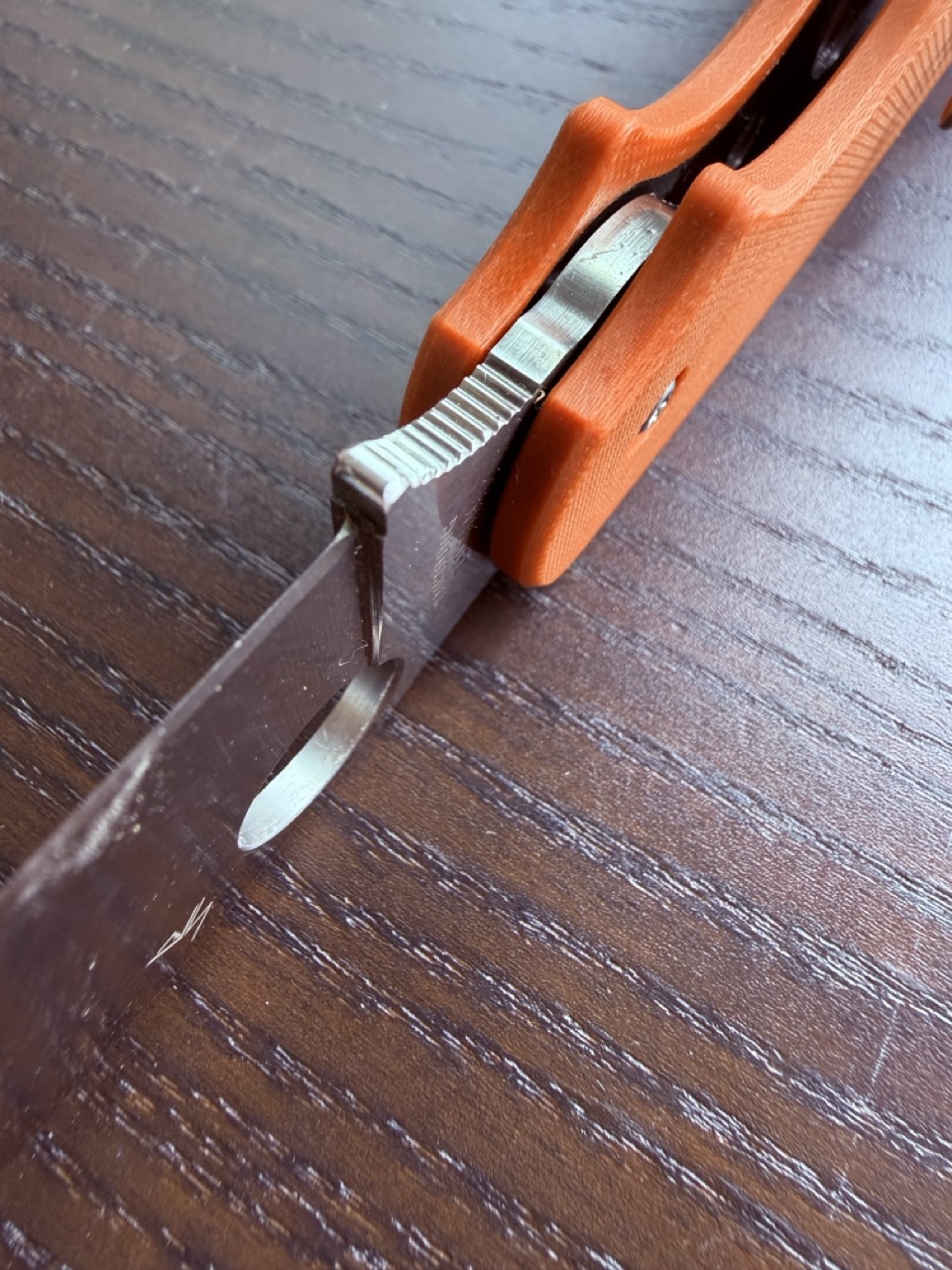
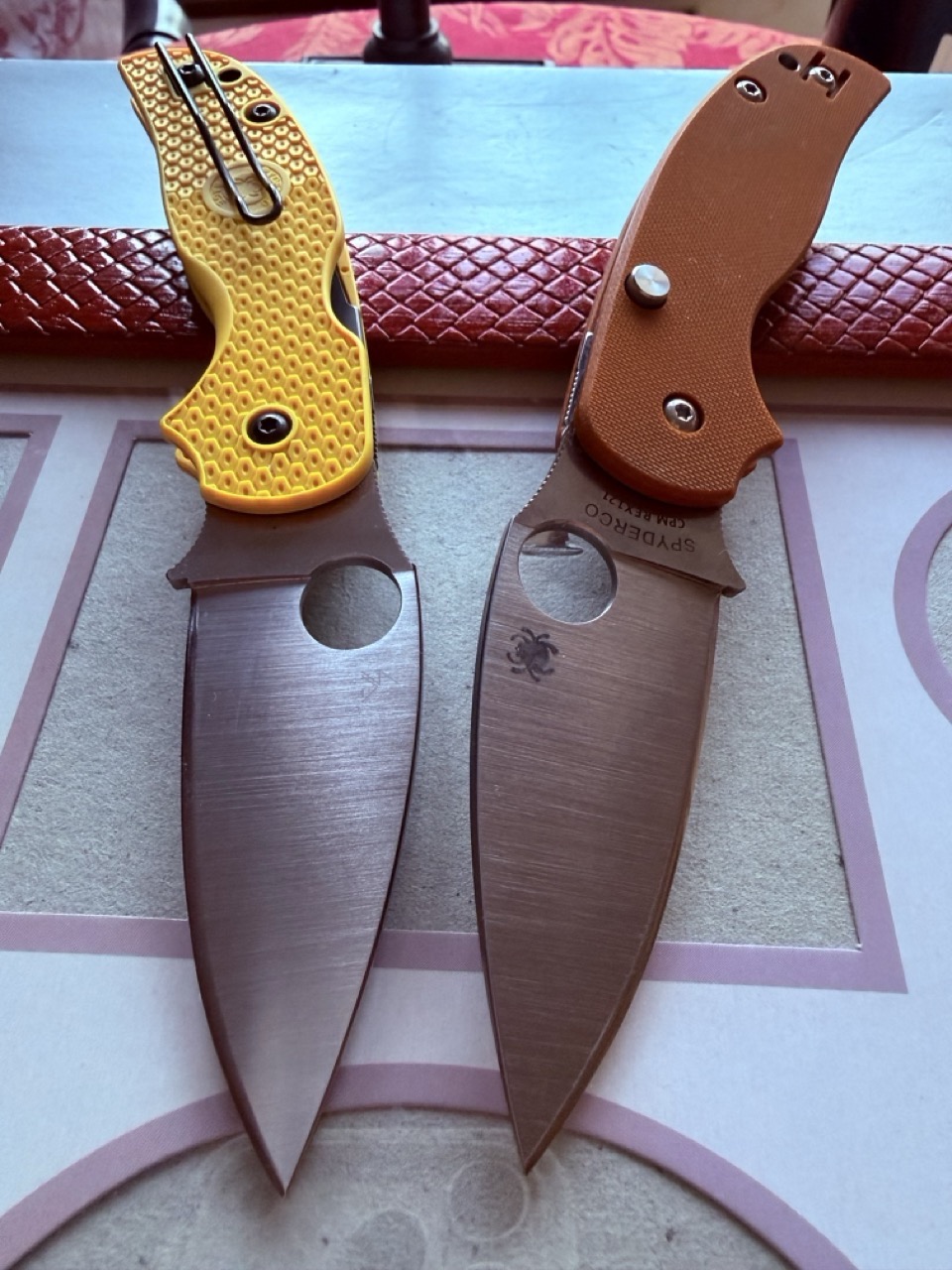
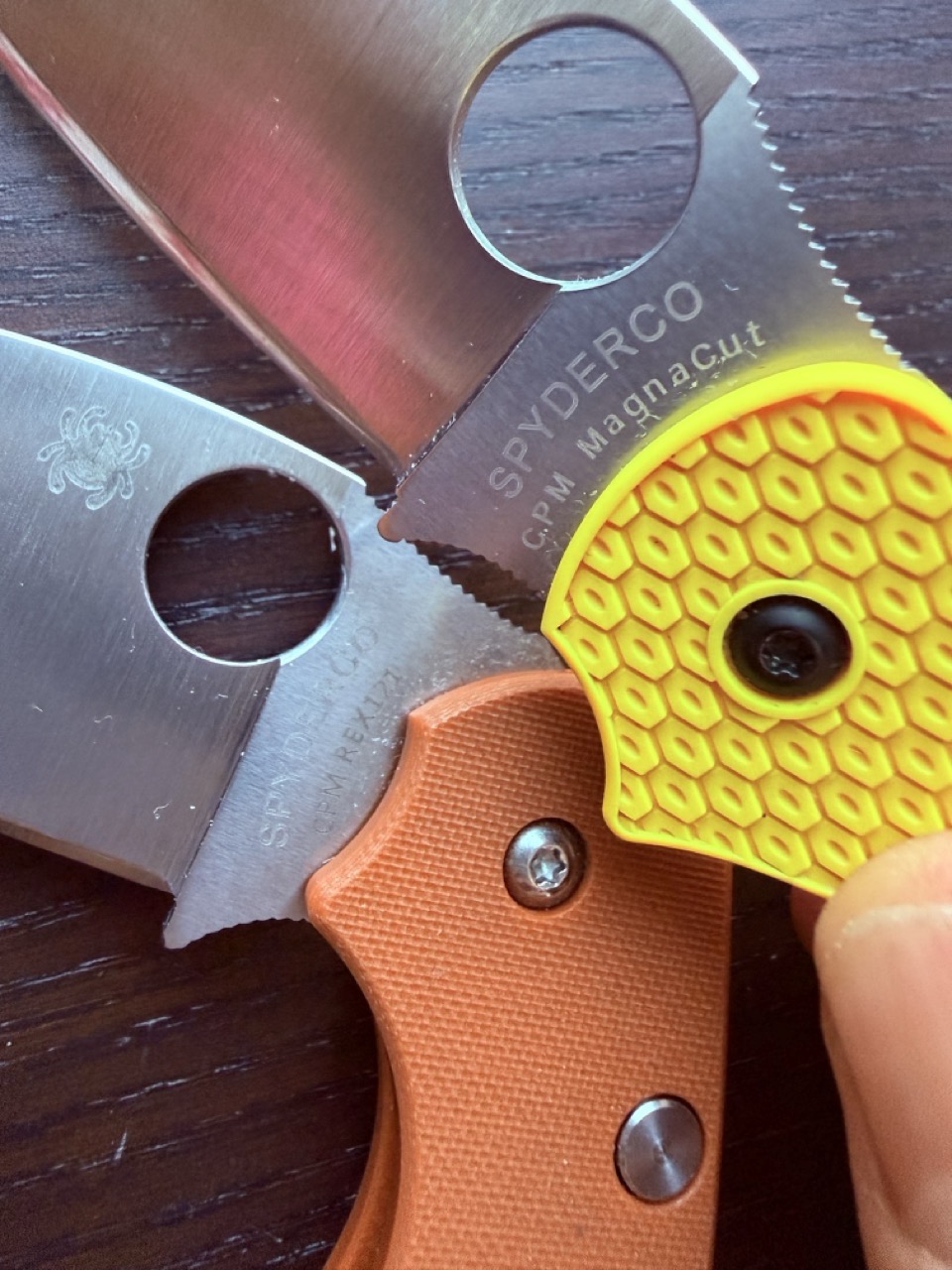
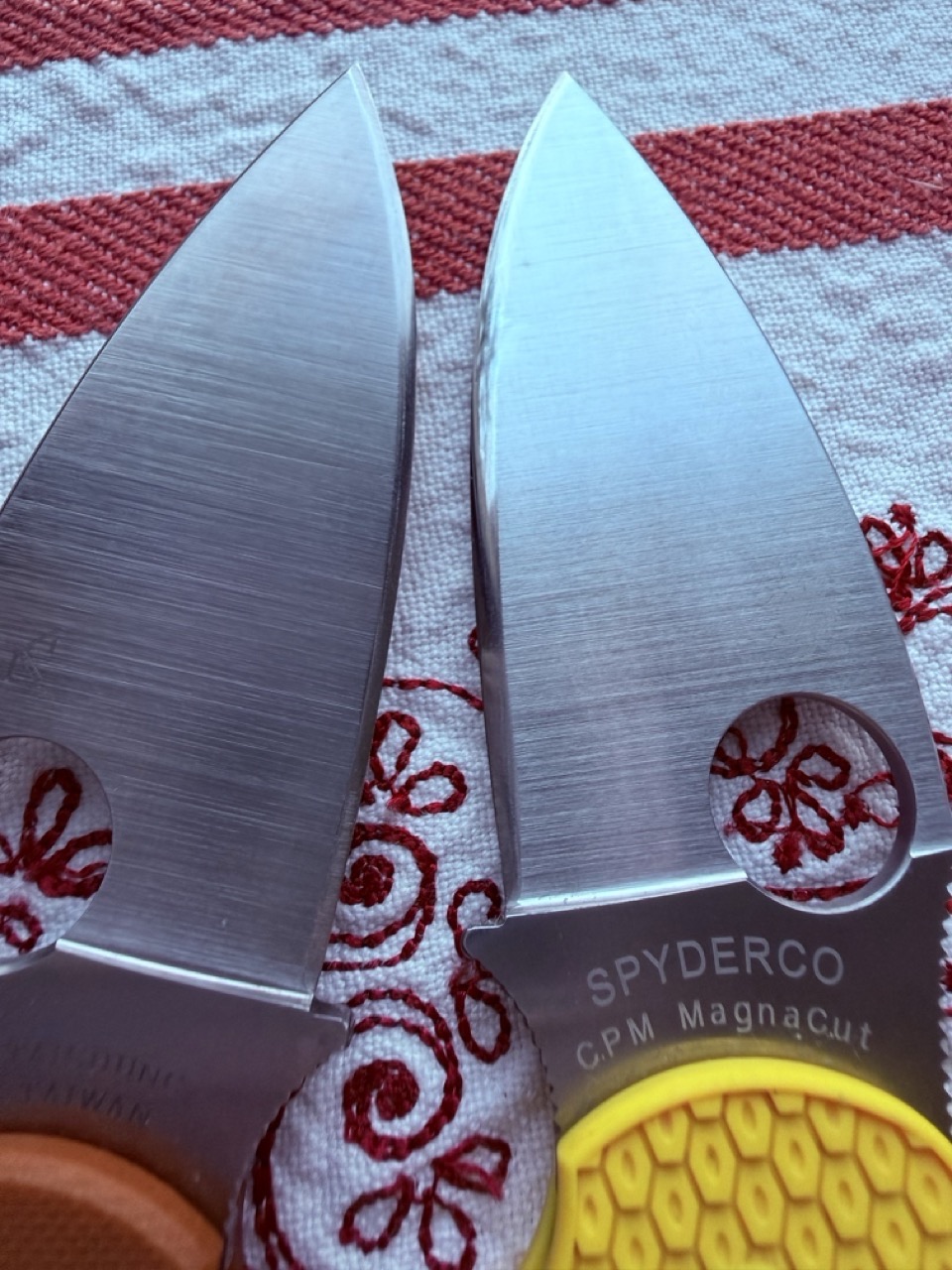
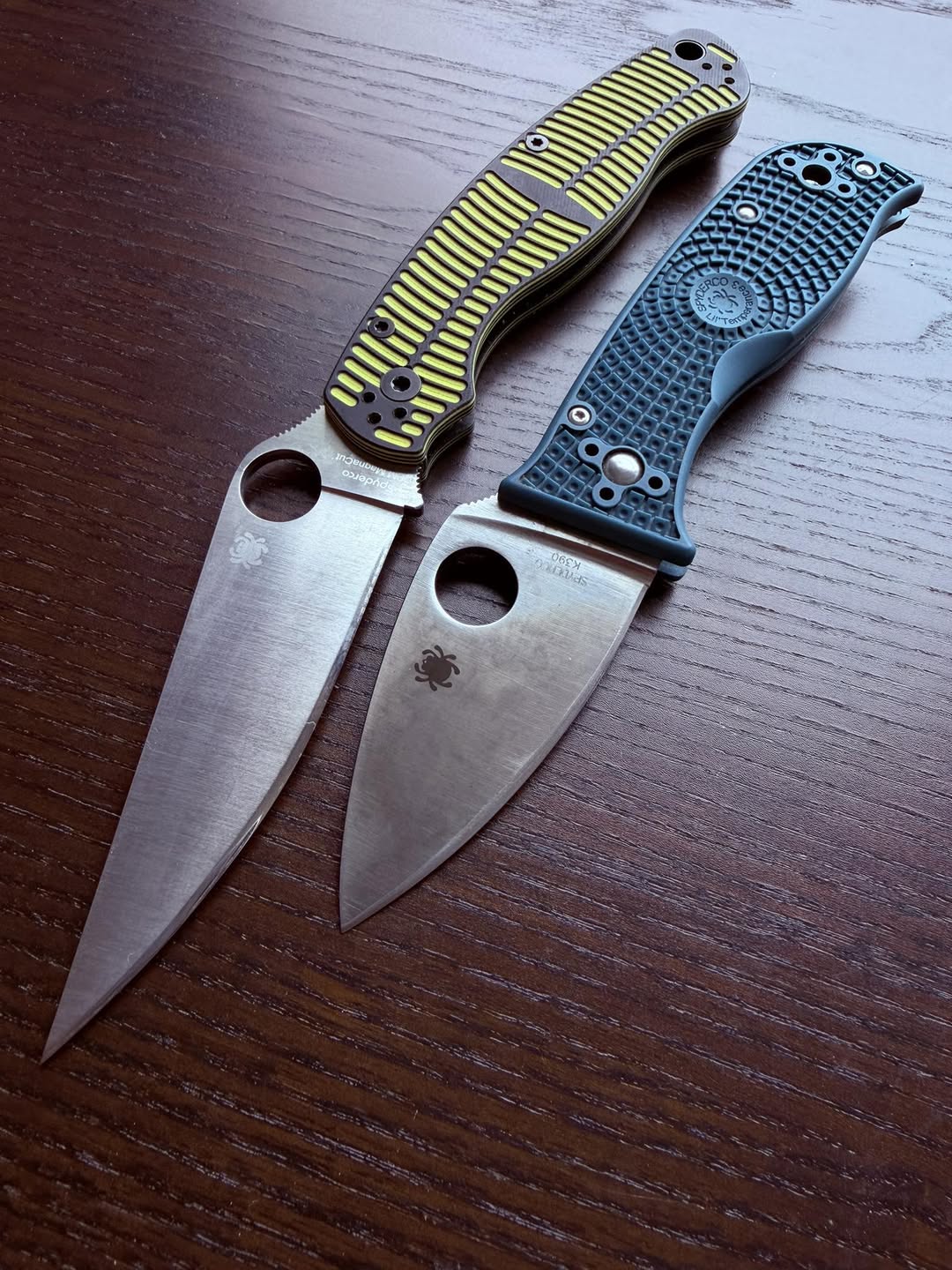
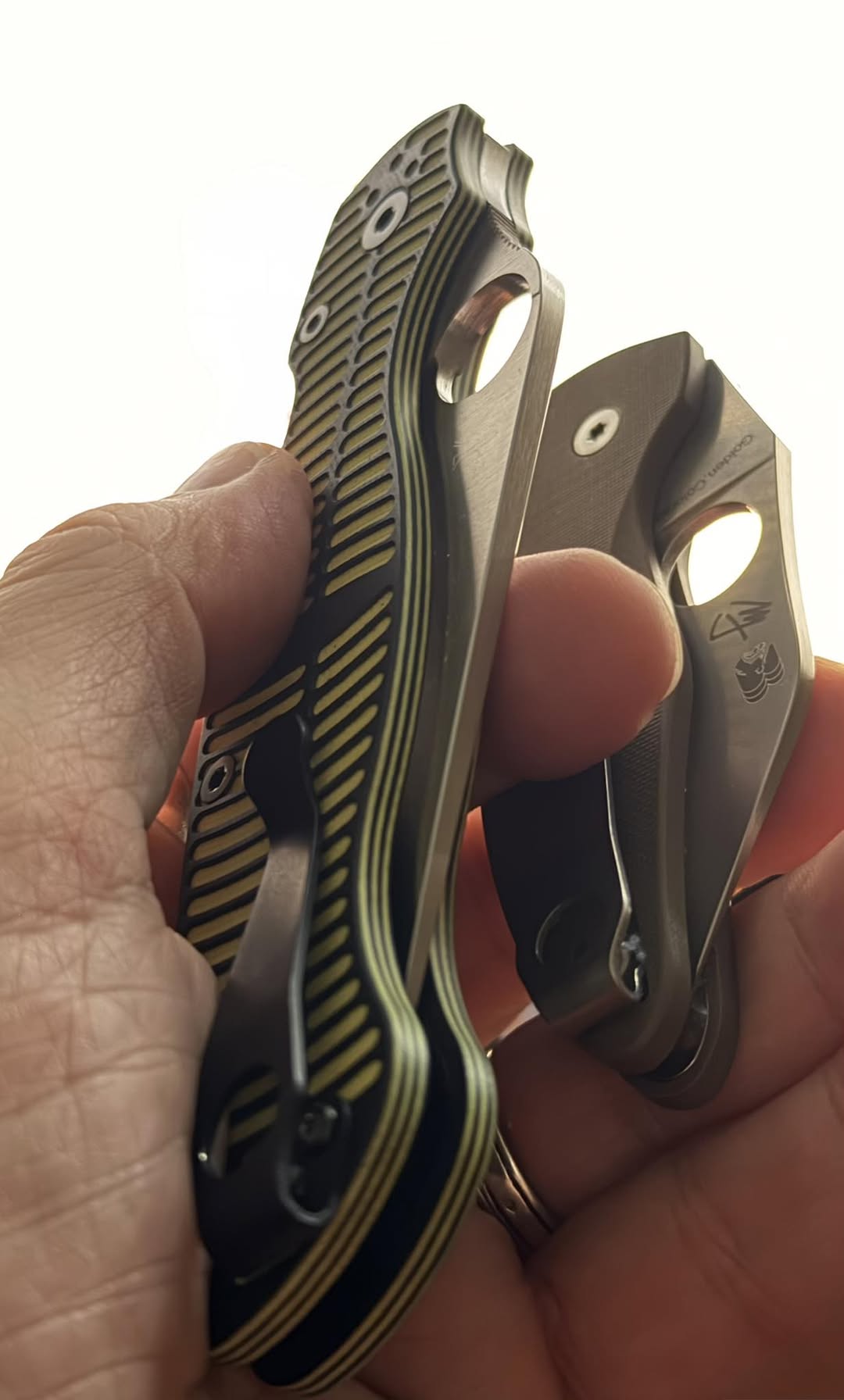
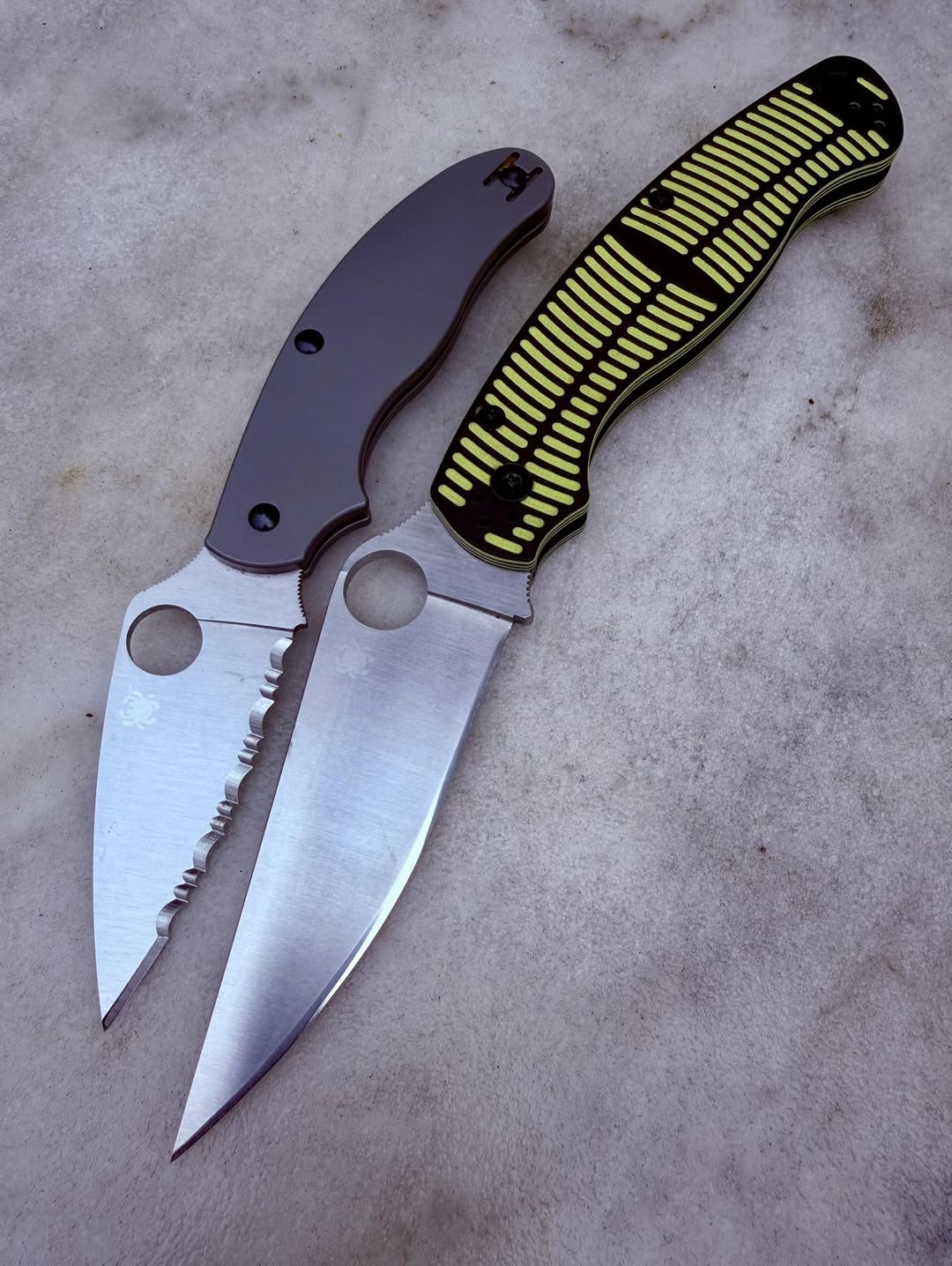
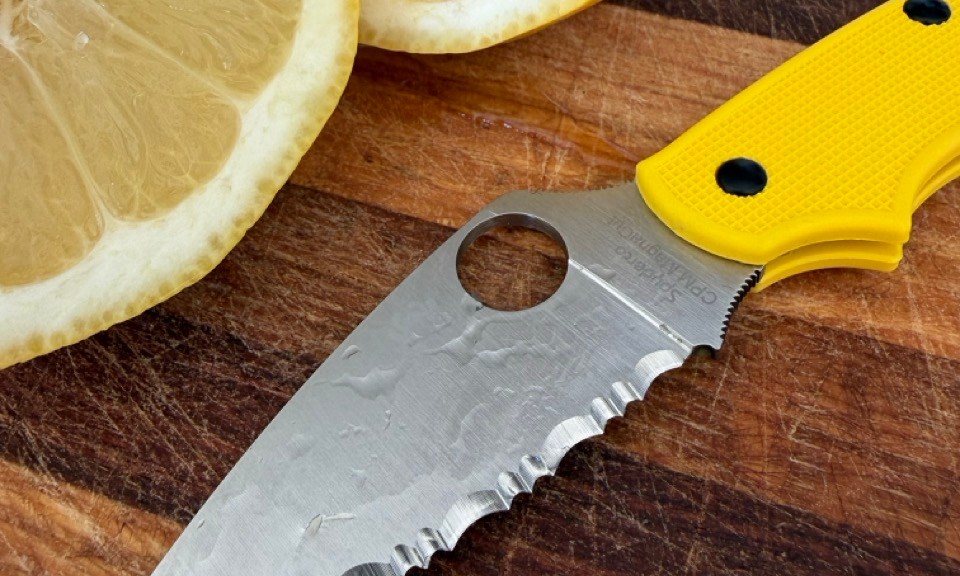
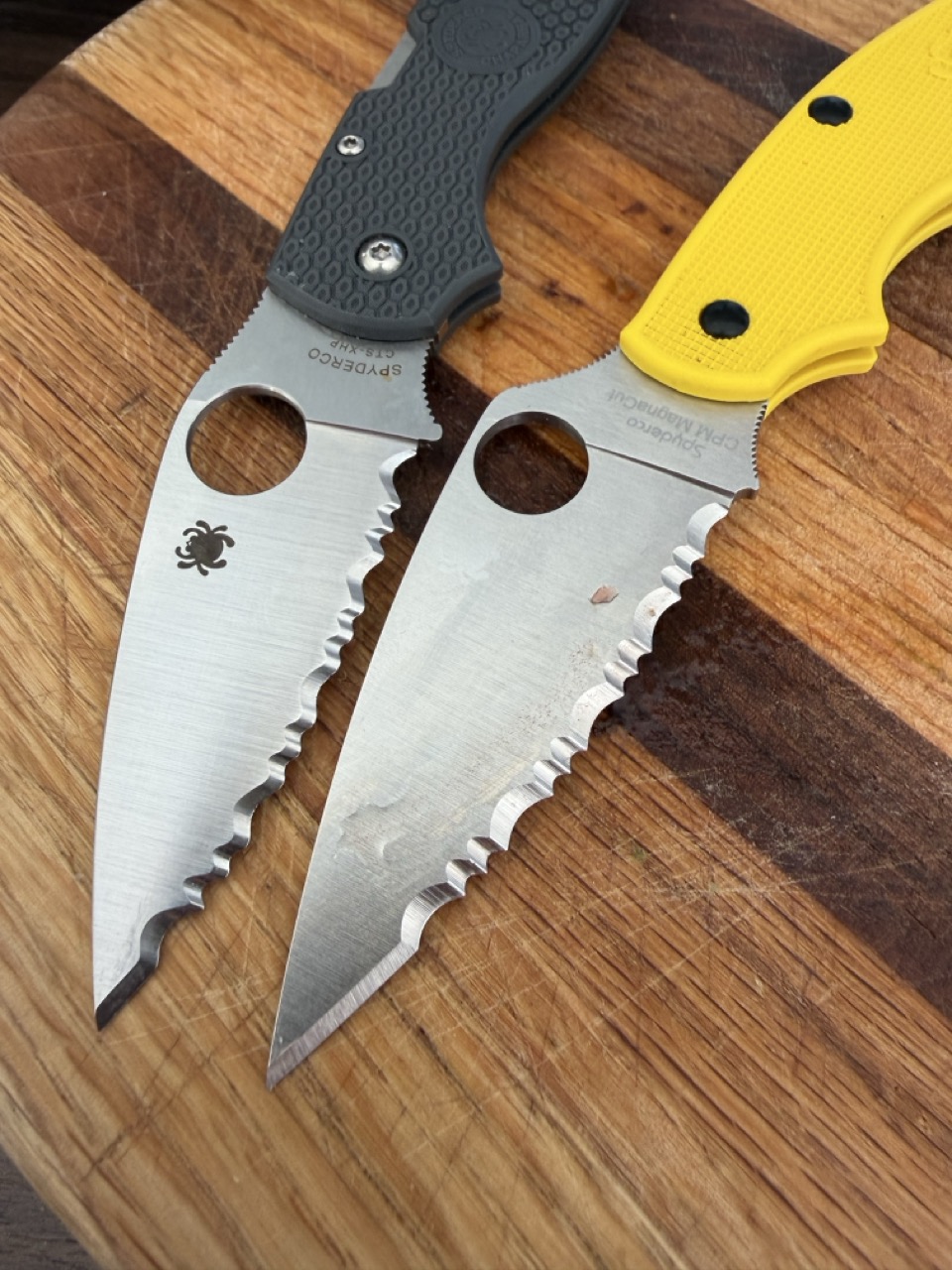
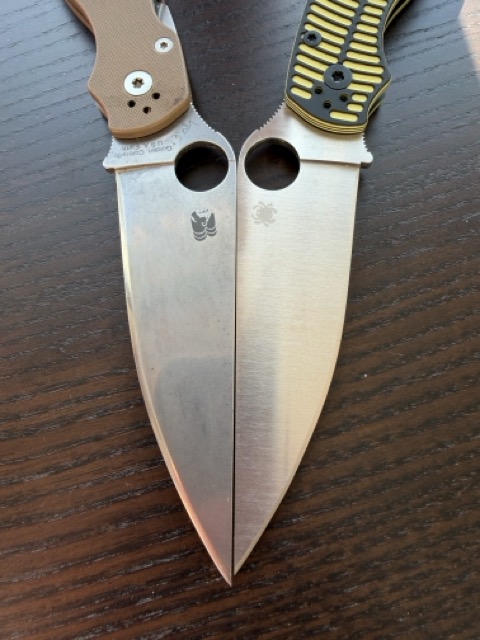
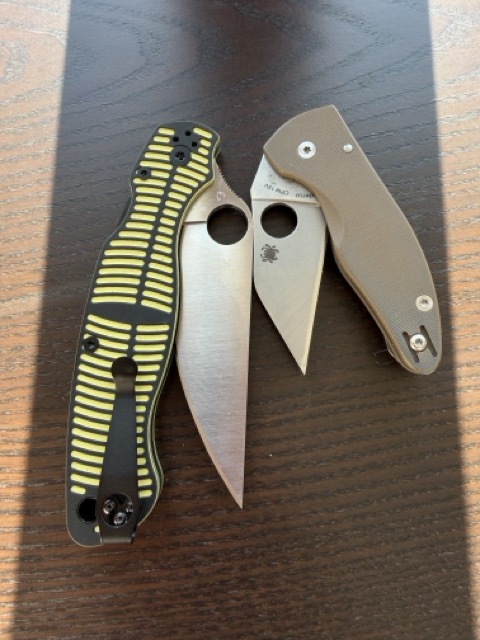
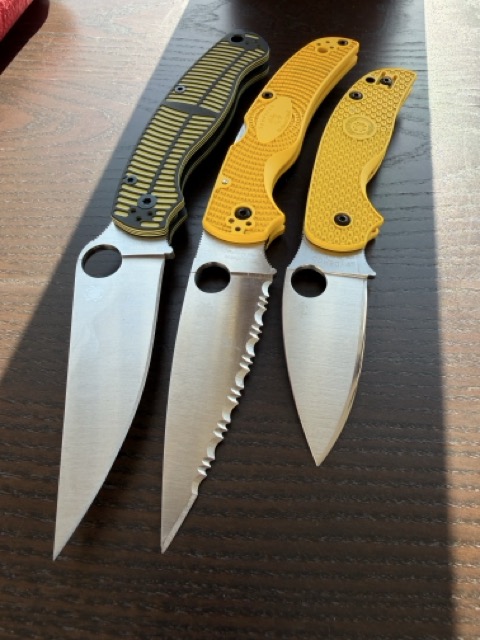
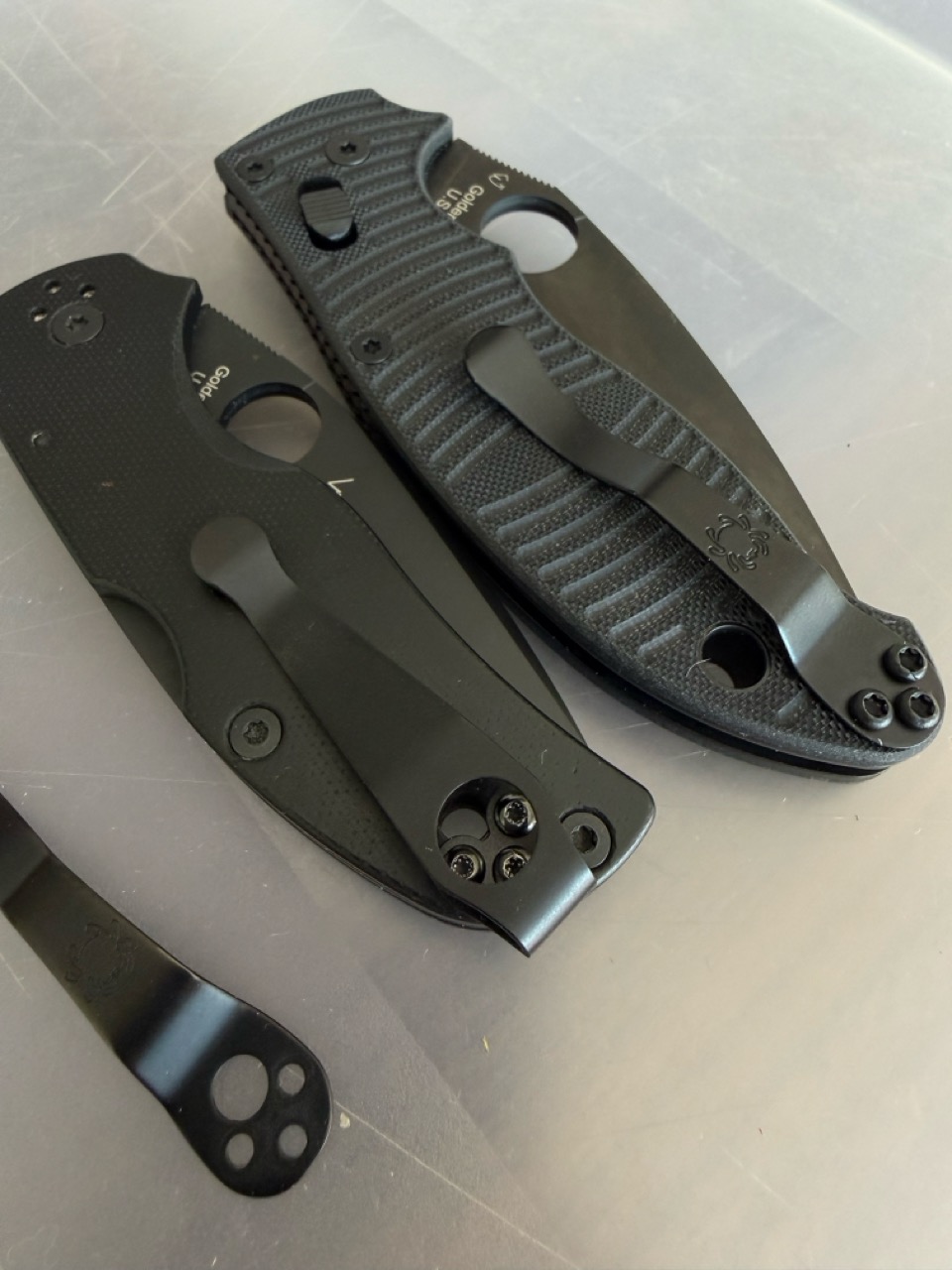
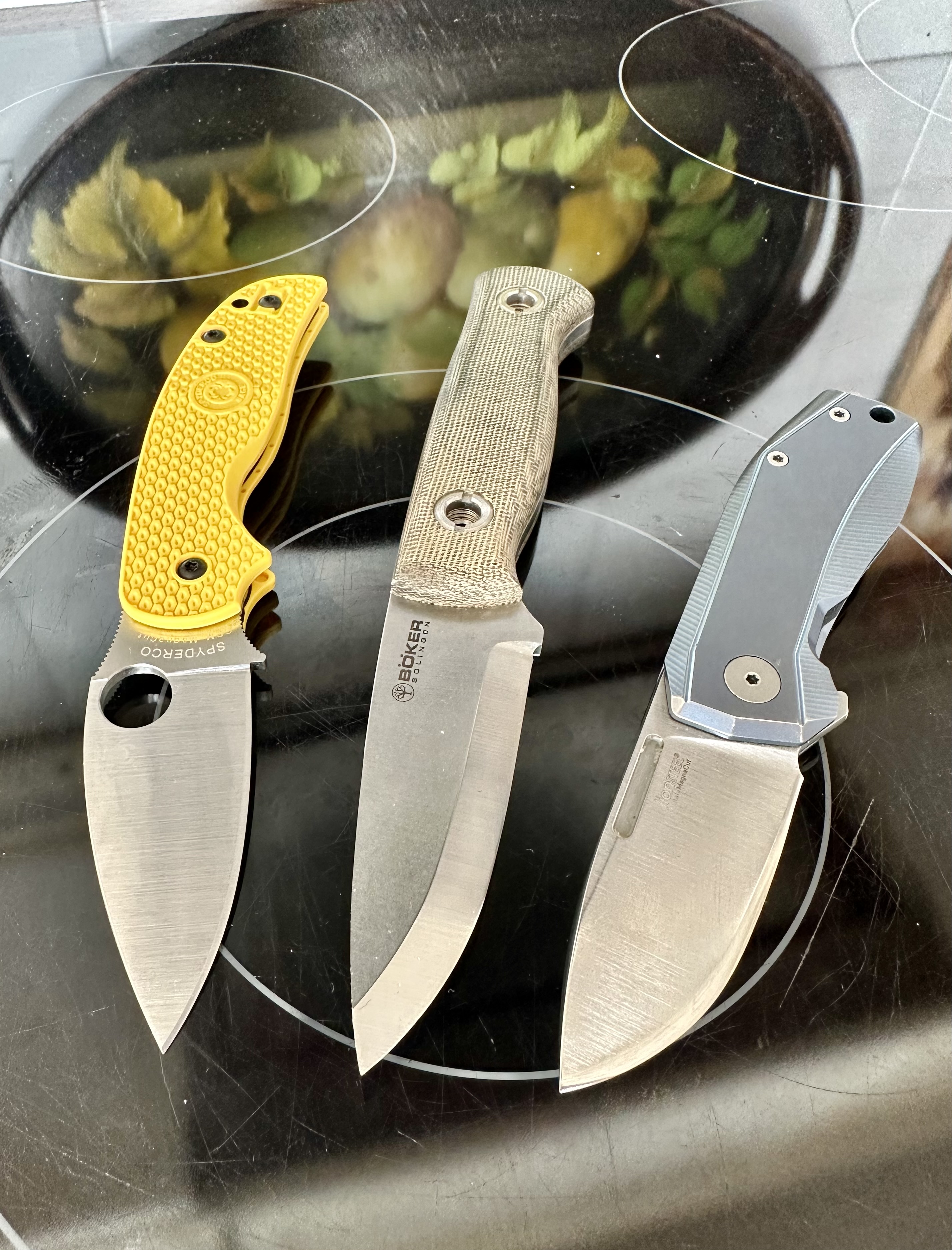
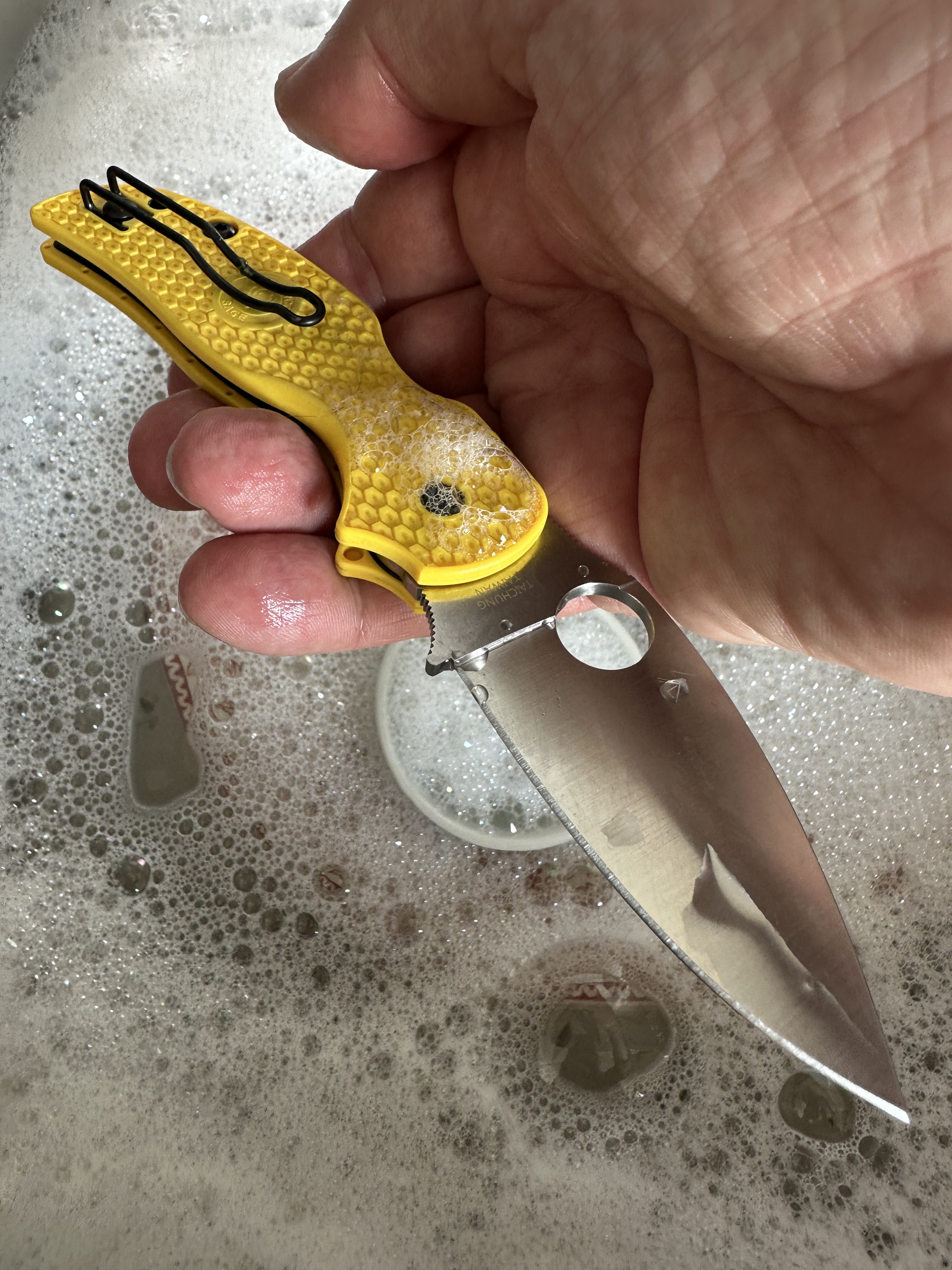
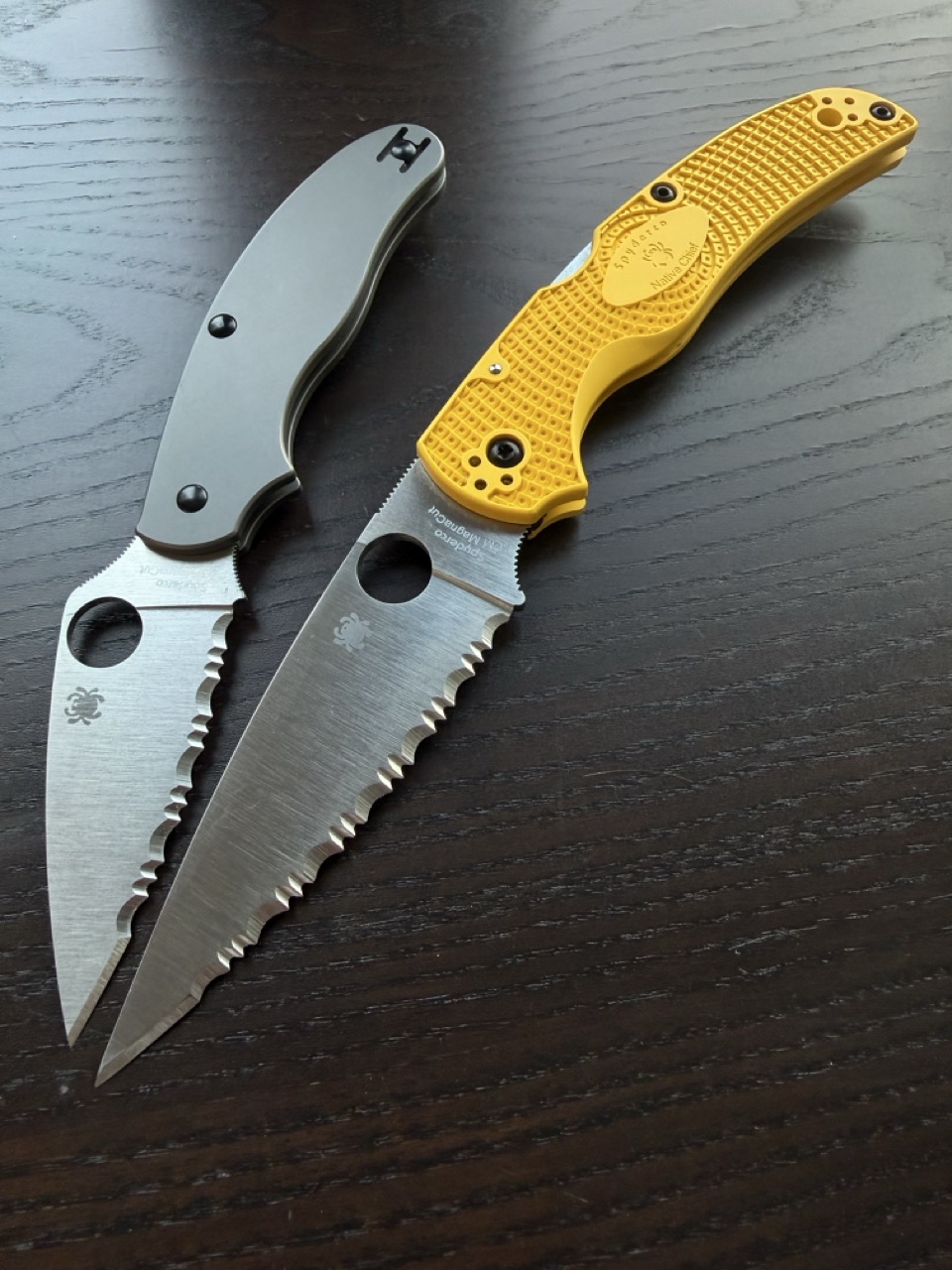
(Notice on the picture: the Chaparral/Taichung serrations are “softer” than the Golden made serrated knives.)

Oh, SpyderEdge
The bite is immediate. Unforgiving.
Cardboard, rope, fibrous material—this isn’t slicing anymore.
It’s total matter separation. “Part the matters for me !”


As you’ll notice, SpyderEdge uses a chisel grind—
which makes it surprisingly easy to maintain.
You work one side, raise a burr, then lightly deburr the other.
That’s it.
No complicated angles, no endless back-and-forth.
Fast. Efficient. Back to razor sharp in minutes.
For a blade that cuts this aggressively,
maintenance is almost… unfairly simple.

Now you’ll say: this isn’t new.
And you’d be right.
The Spyderco UKPK LC200N already brought serrations to the platform, with that ultra-corrosion-resistant, NASA-associated steel used in the Salt Series. (Click on the link for its extended review. That version exists now in green FRN.)
But this time… it’s different.
This time, CPM Magnacut steel’s turn to roar in your pocket.
And that changes everything in my book ! As I love Magnacu first.
And also because Magnacut doesn’t just resist corrosion—it brings toughness, edge stability, and a kind of refined brutality that pairs almost too well with serrations.
This isn’t just a variant.
It’s a very serious evolution of intent.


Here’s where things get almost absurd—in a good way as you get a blade that:
stays aggressive for ages
keeps cutting even when “dull”
laughs at moisture, sweat, food prep, urban abuse
This is not just durable—it’s low-maintenance lethality in a legal-friendly package.

The gentleman’s non locking folder has no business being here.
And yet—it thrives.
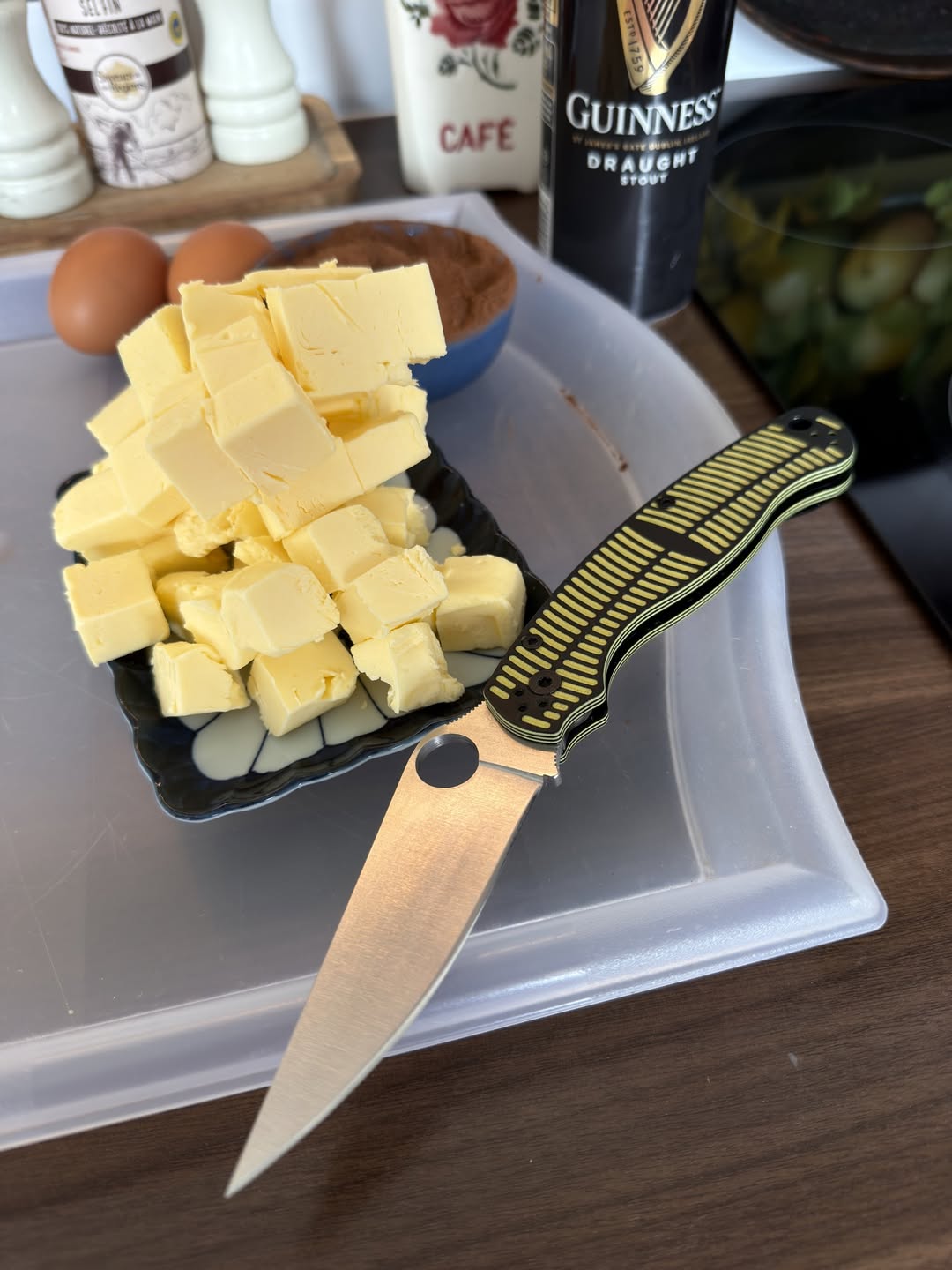
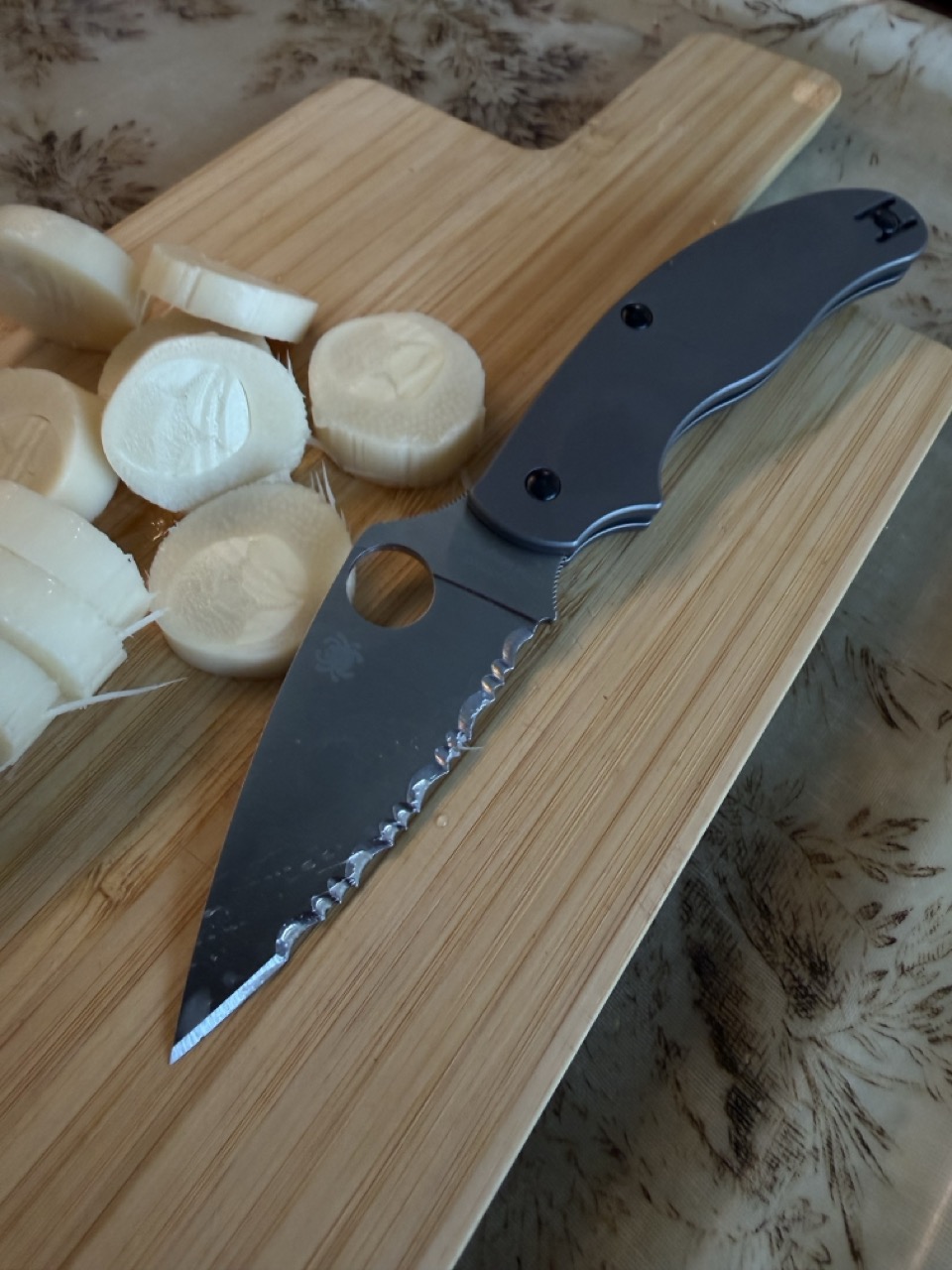
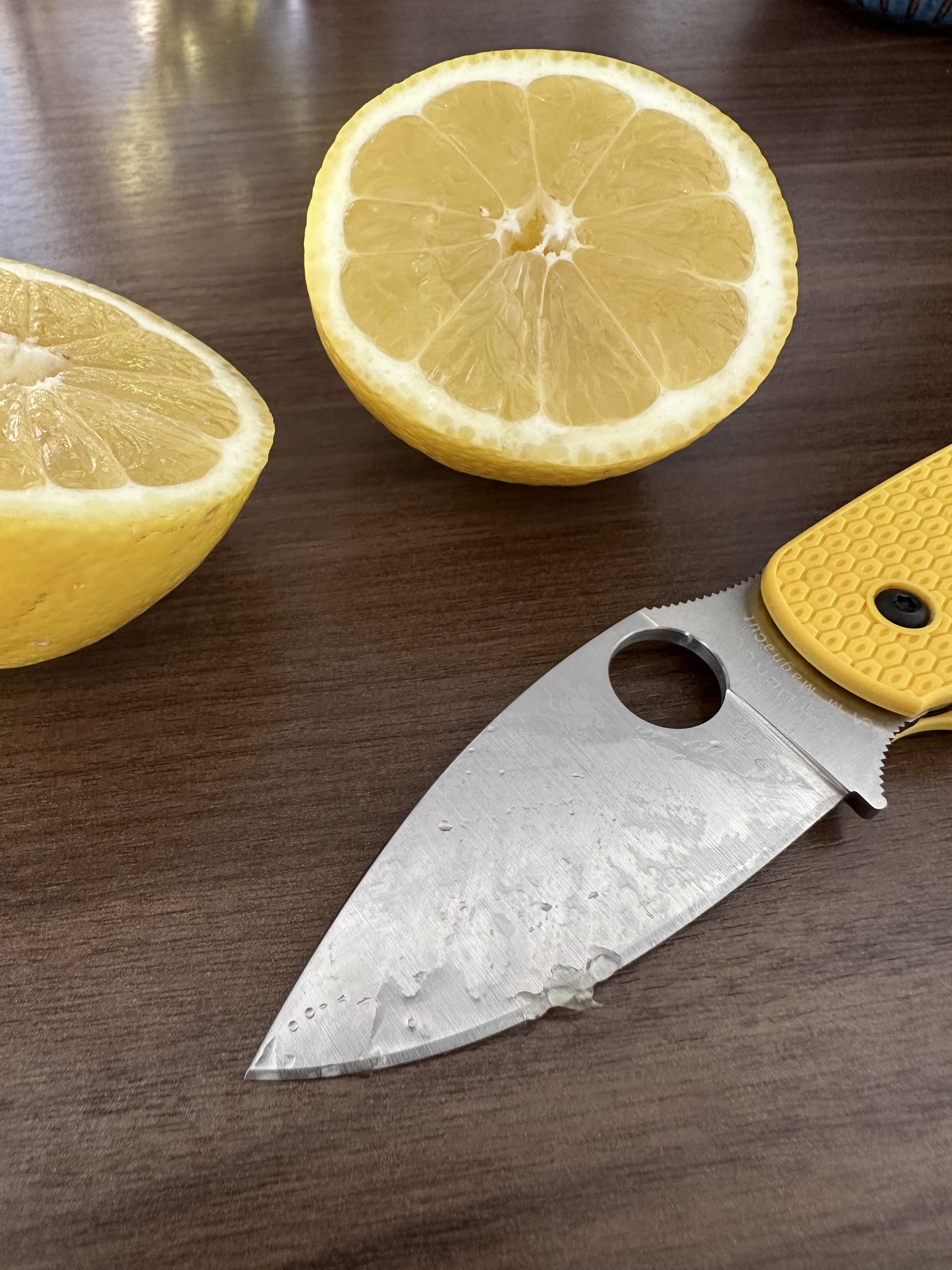
From the Amazonian coast to the unforgiving battlefield of my own kitchen, this “polite” knife sheds its manners the moment it meets real work.
What should feel restrained feels… unleashed.

Let’s be honest: serrations on a slipjoint feel wrong to most of knife collectors. You expect that kind of edge on a rescue knife, a tactical folder, something that locks like a plastic vault equipped with whistle.
But Spyderco pulls it off because:
the UKPK’s ergonomics are rock solid
the choil gives you a huge security if the blade closes on your fingers.
the walk & talk is confidence-inspiring, the slipjoint is hard to close.
You don’t feel under-knifed at all.

In the Real World, this knife shines where most EDCs hesitate: ripping through packaging without slipping, cutting rope under tension
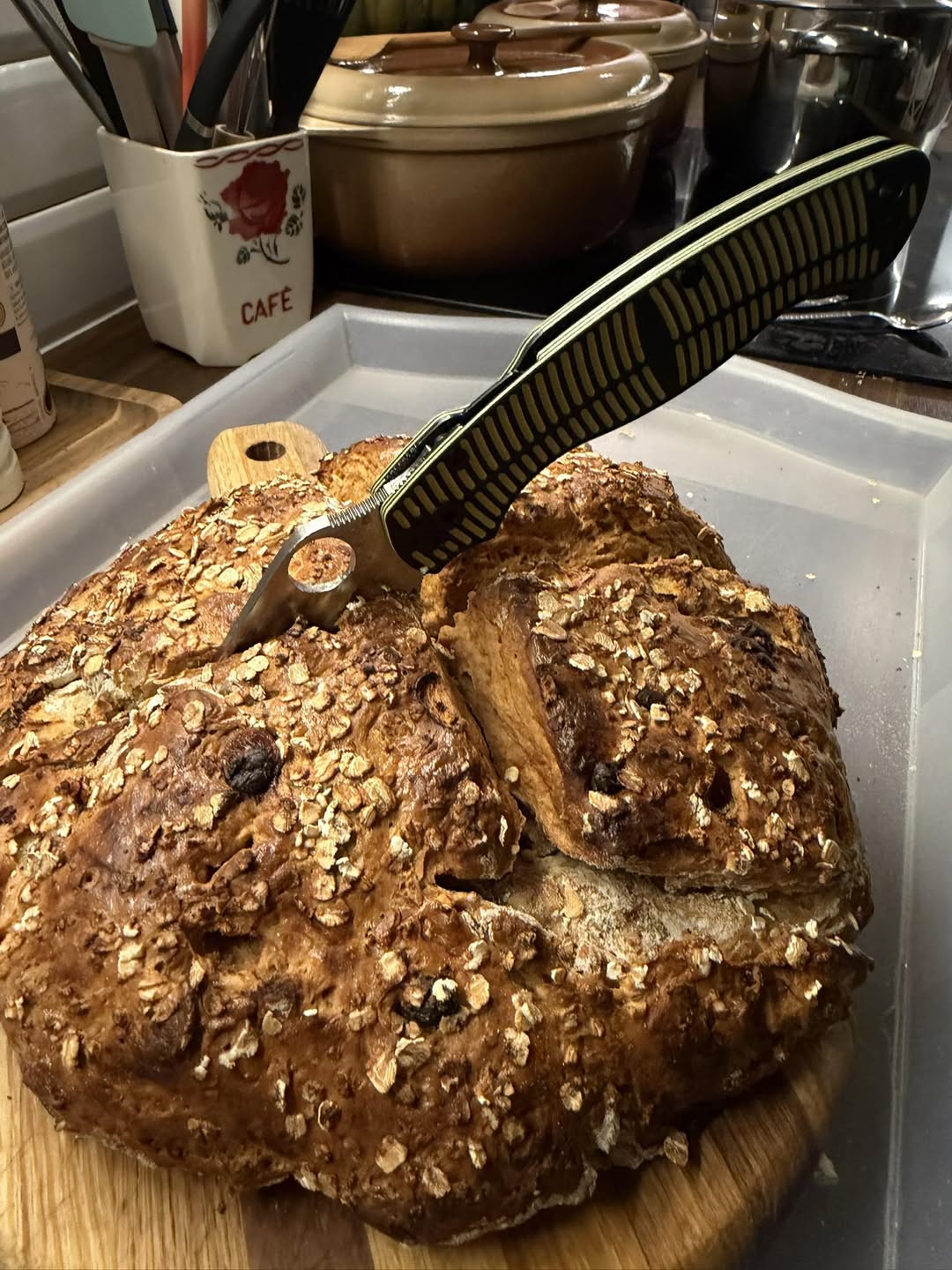
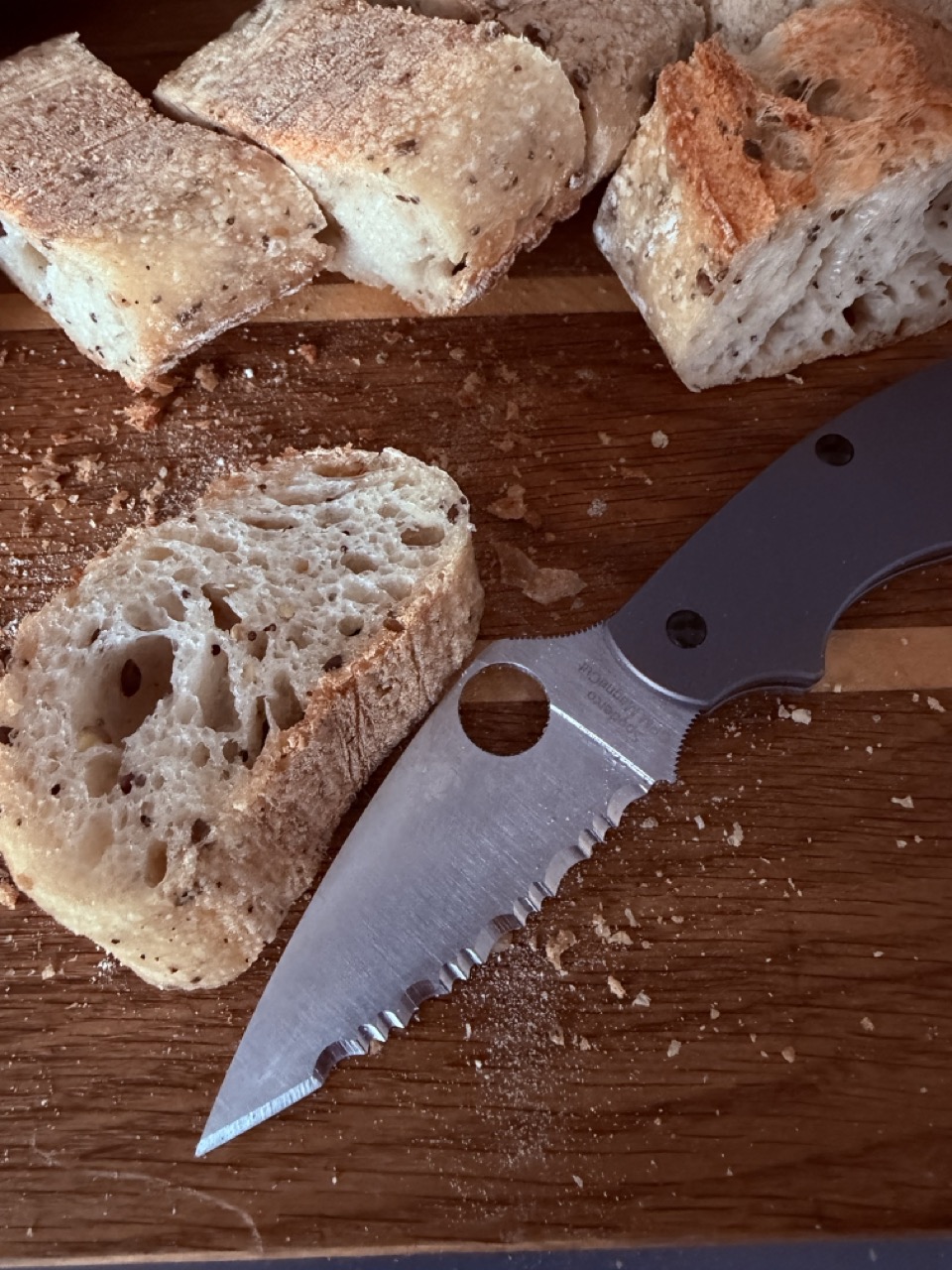
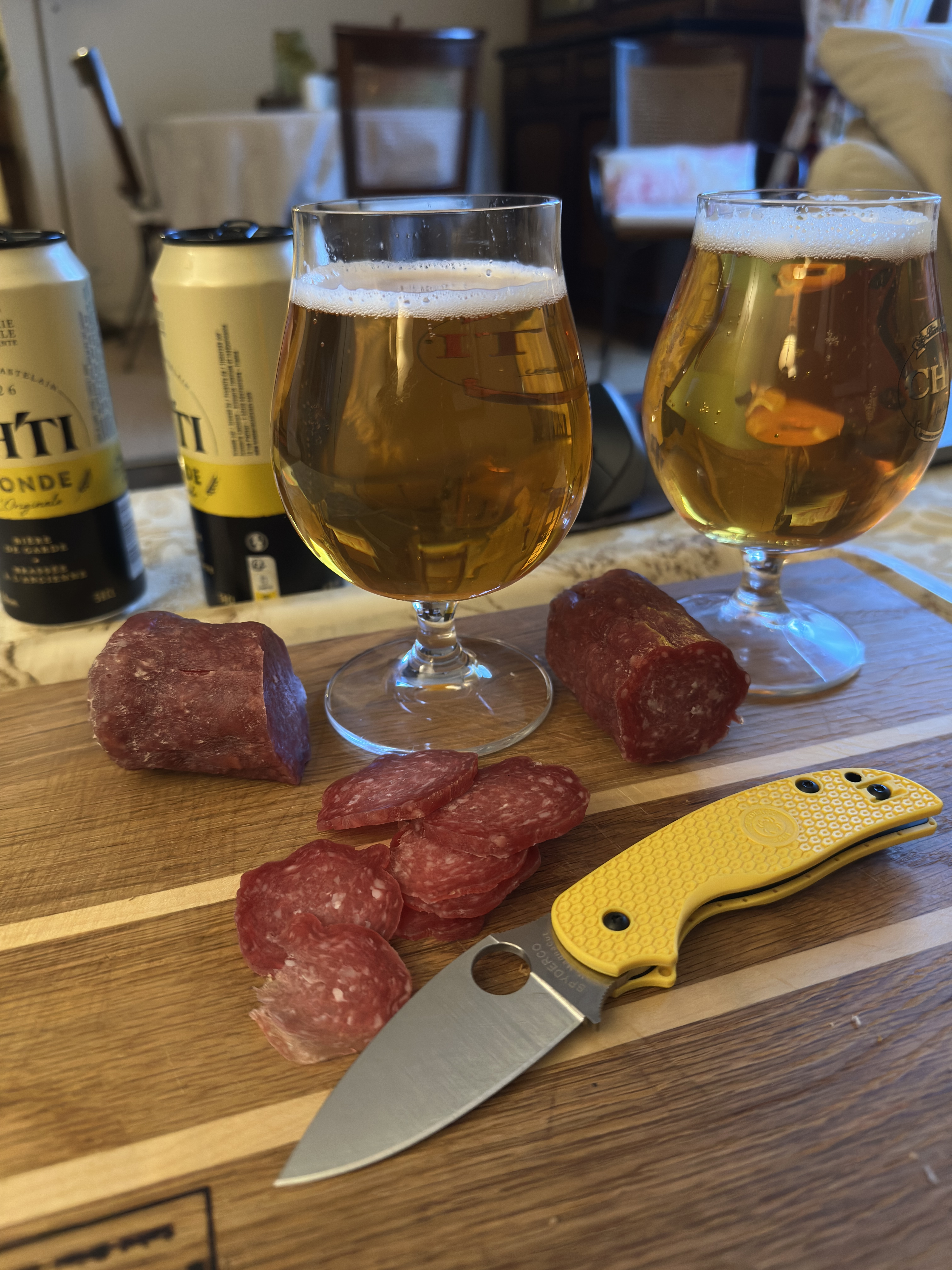
food with crust (bread, cured meats—yes, really) in wet environments where plain edges can lose bite.
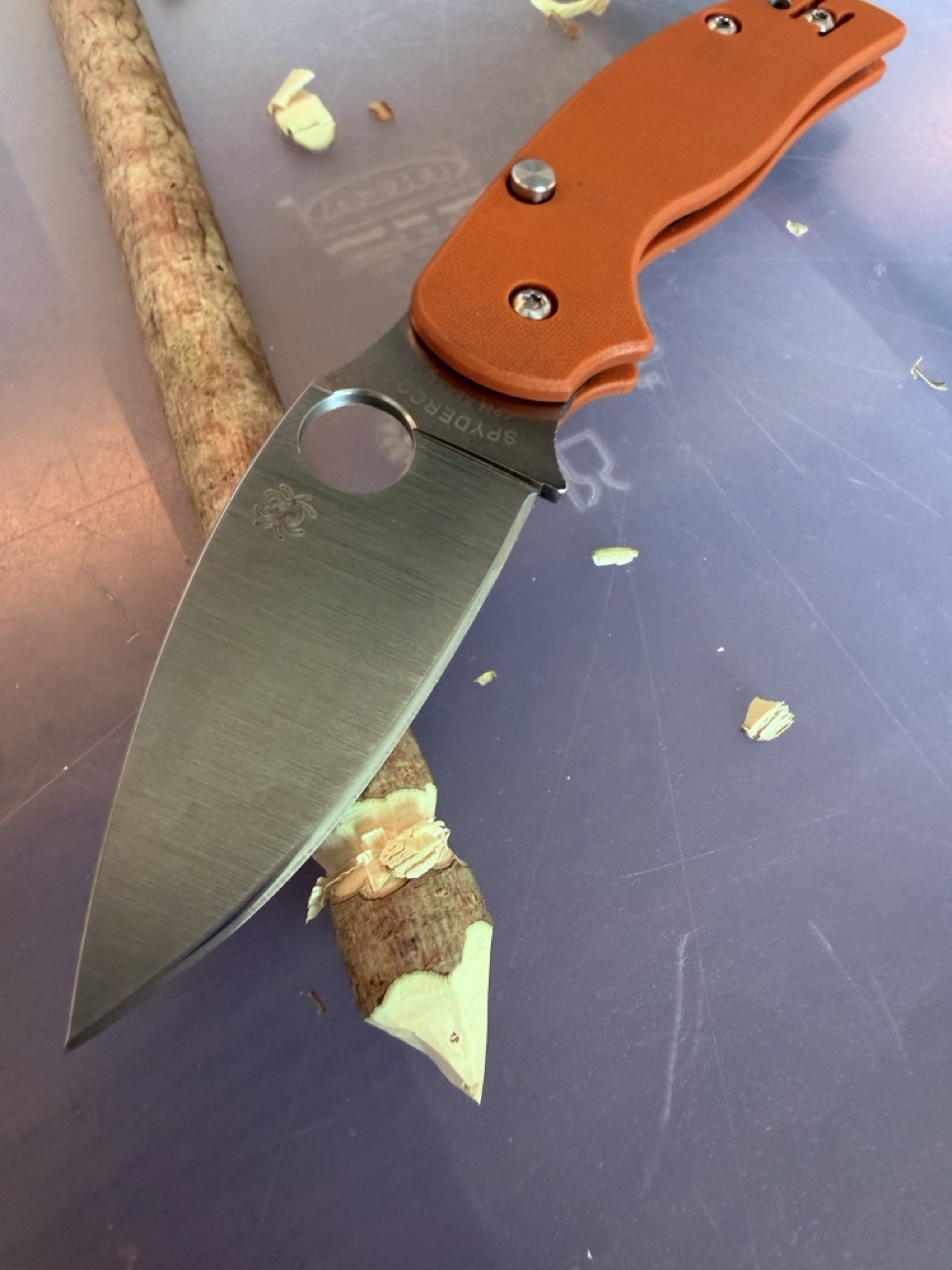
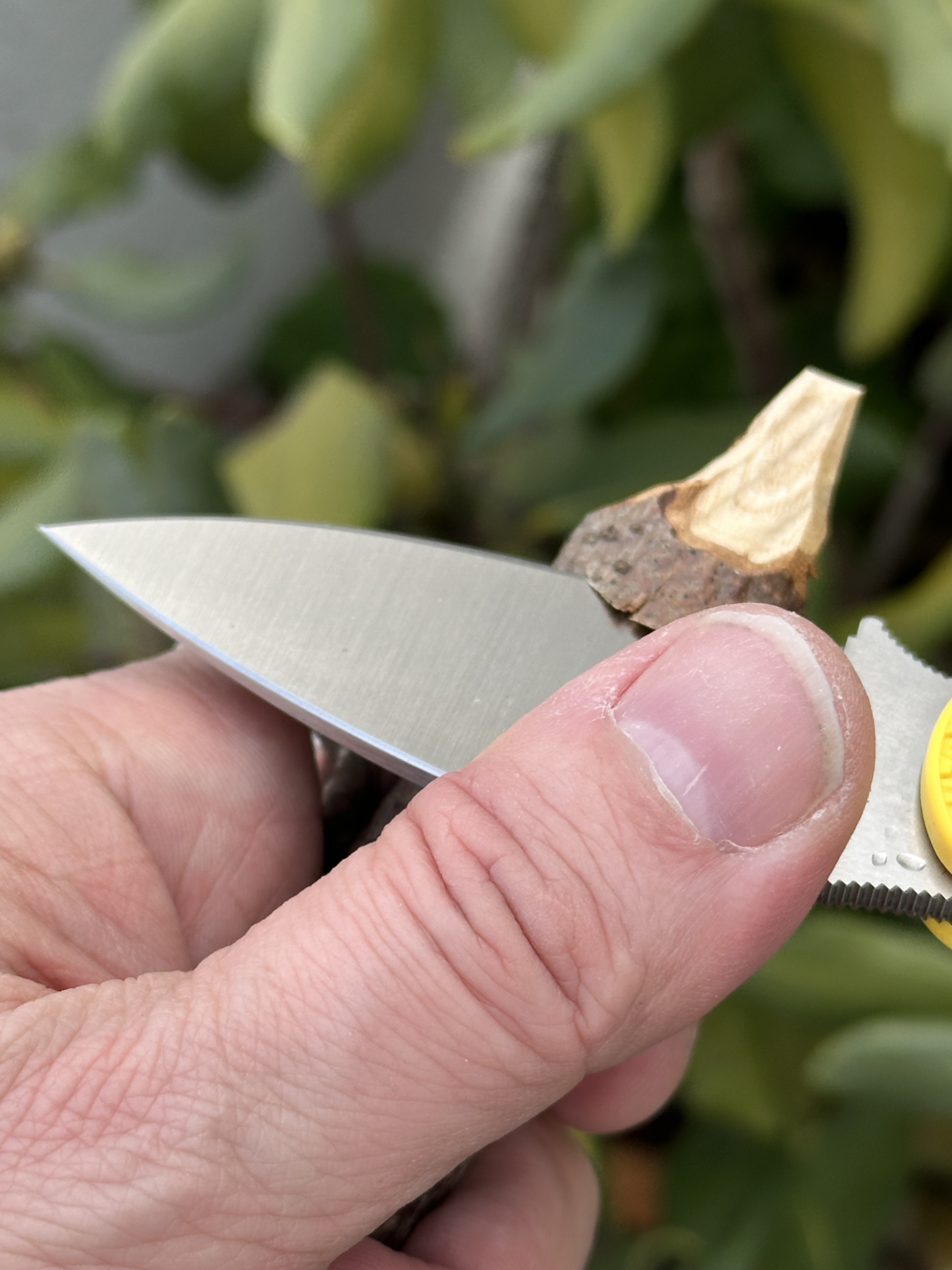
Nope, it’s not a bushcraft blade by design but it won’t frown to be used in the woods.
It’s not a slicey Instagram queen.
It’s a working edge for people who actually cut things or need thing to be cut quick !


The serrated Magnacut UKPK is a contradiction that became a concept.
It takes:
the legality of a slipjoint
the performance of serrations
the excellence of Magnacut
…and fuses them into something oddly perfect and reliable.
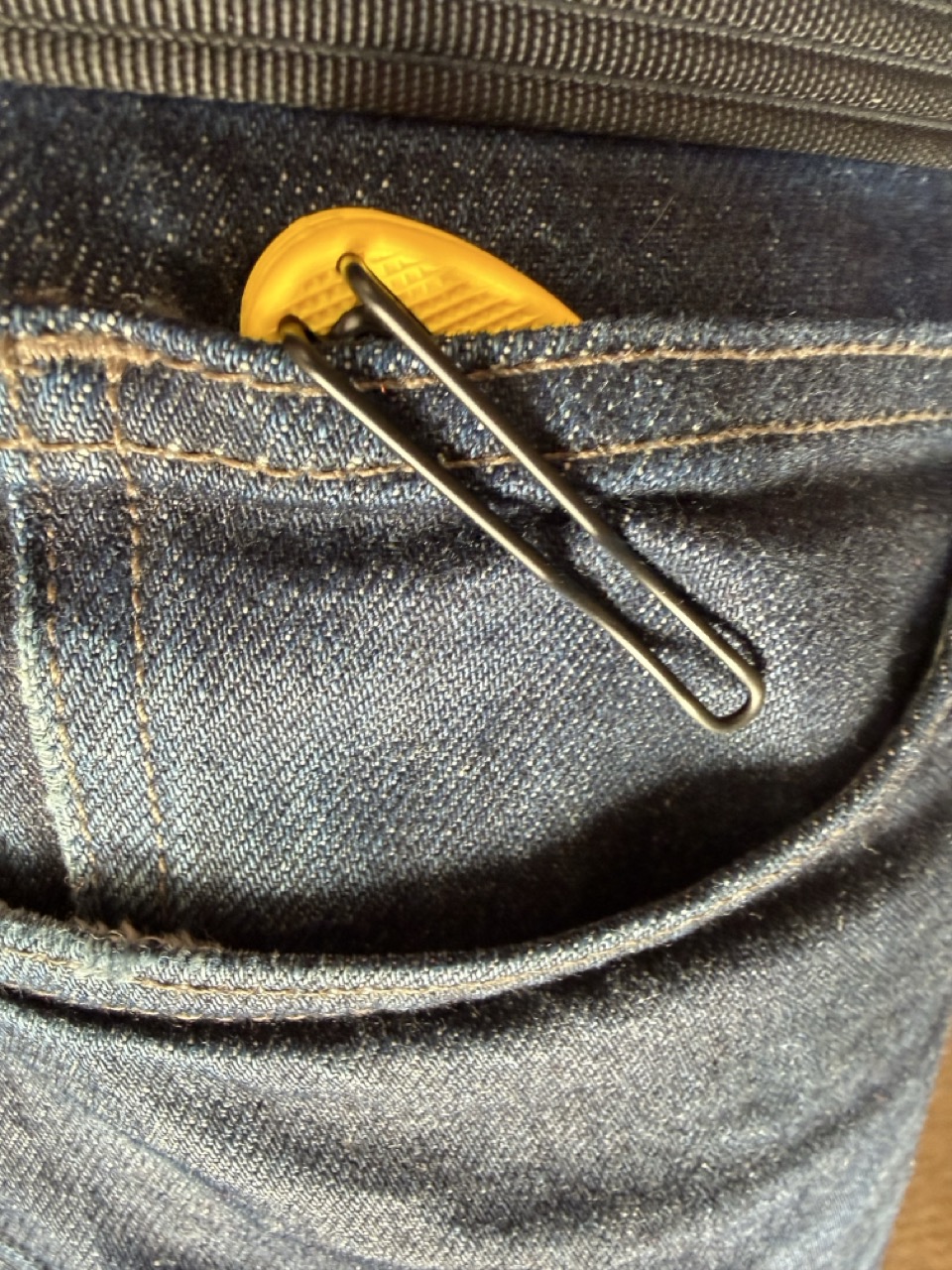
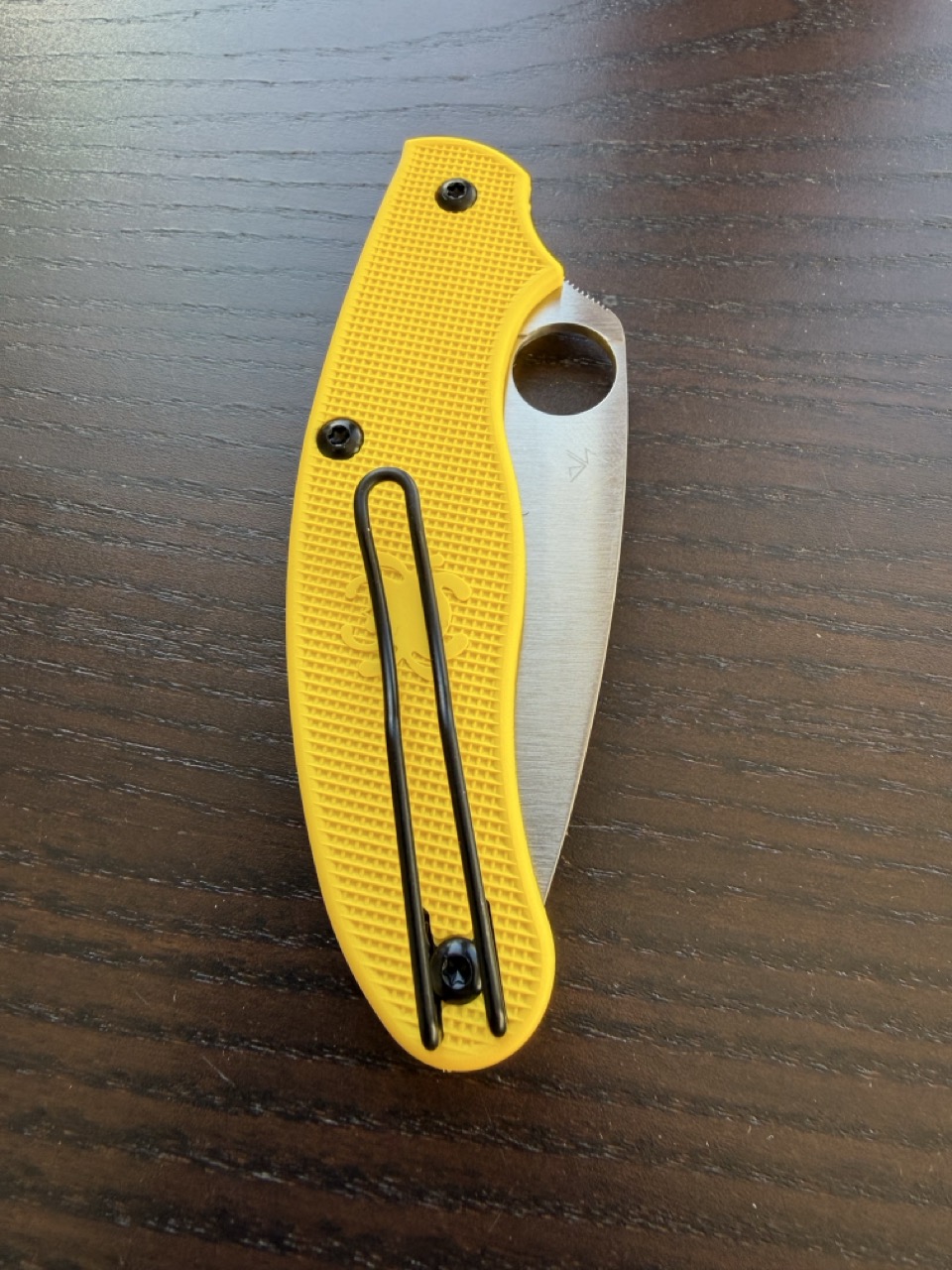
The clip is black and deep carry and all the metal elements (clip, screws, spring and of course blade) are impervious to salt water: “marine gear” is the name of the game.
Knowing LC200N green version is rustproof when Magnacut is stainless.
That green LC200N version is more sea proof if you see what I mean. But the edge won’t last as long as with the Magnacut version. 😉

The UKPK Salt Serrated in Magnacut isn’t your refined EDC.
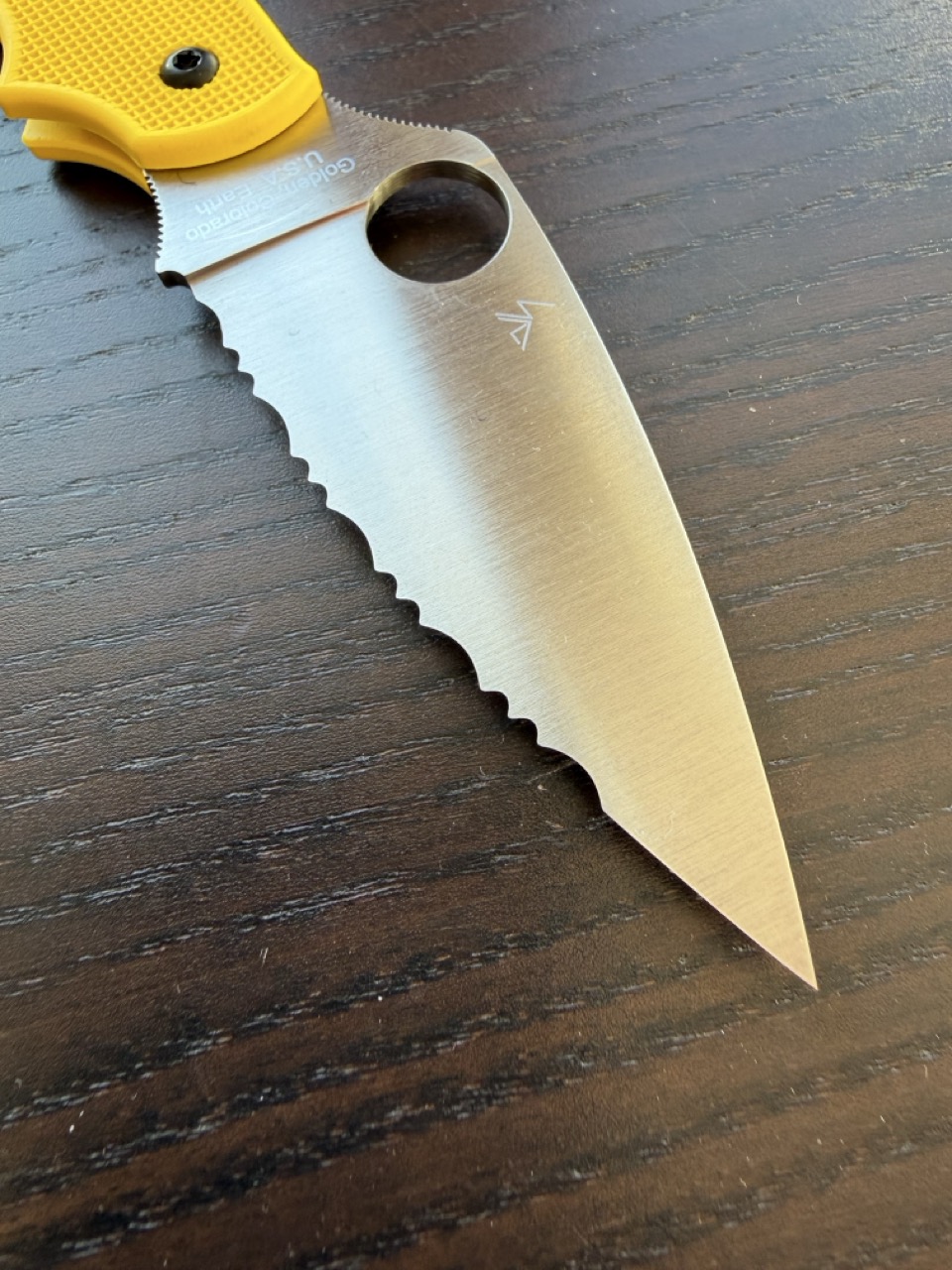
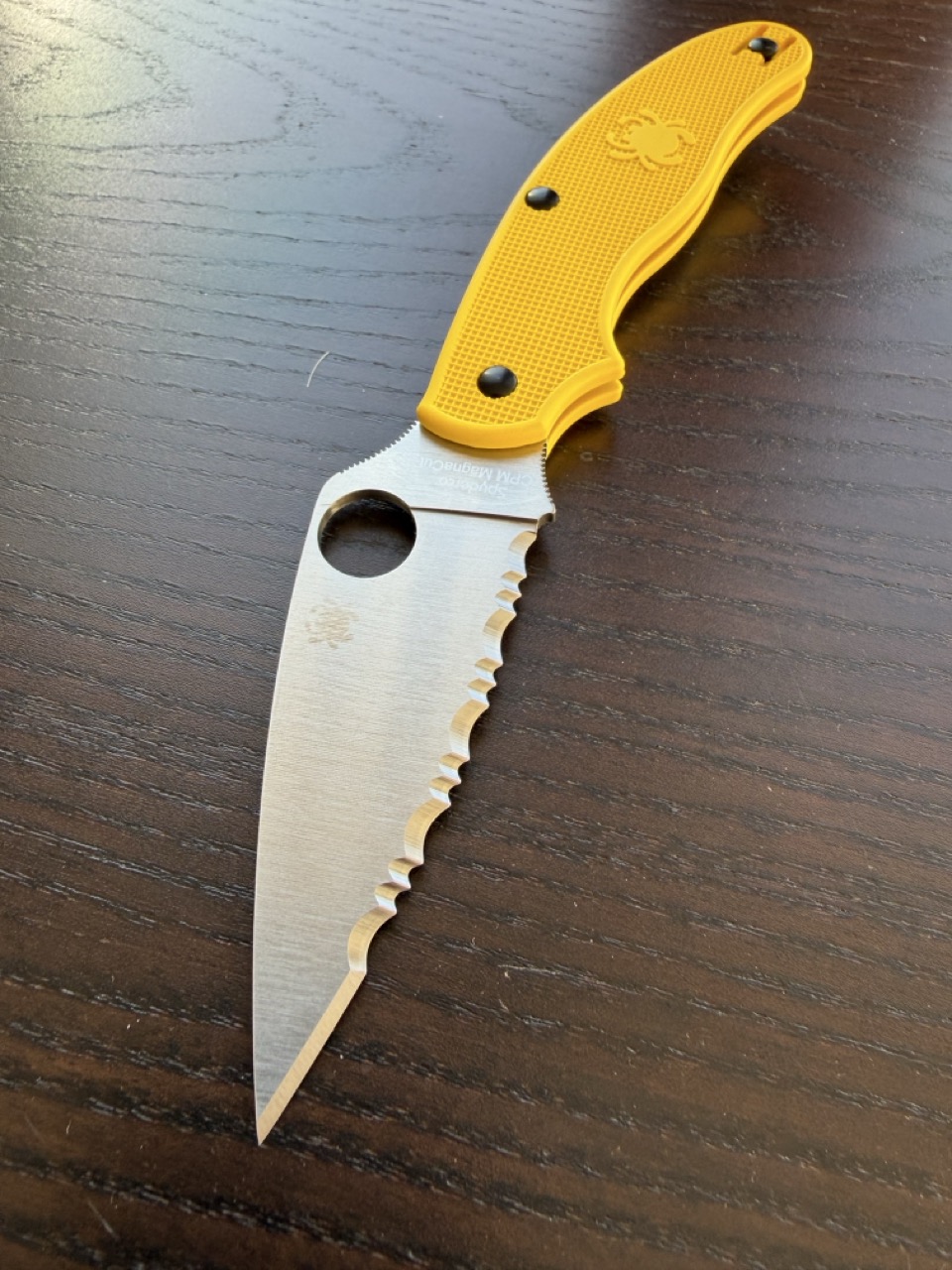
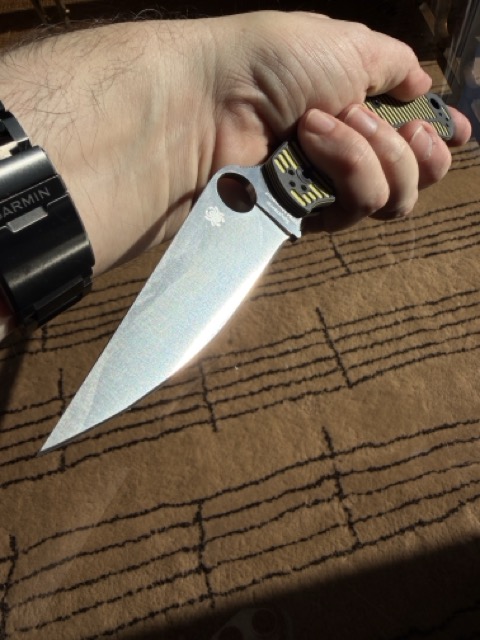
It’s lightweight, high-visibility yellow, with a remarkably thin blade—among the thinnest ever seen on a SlipIt platform.
Made in Golden, Colorado, it turns into something unexpected:
your new all terrain folding survival tool… in a legal suit.

Overall Length: 6.91in 176mm
Closed Length: 3.95in 100mm
Blade Thickness: .098in 2.5mm
Tip Carry Position: Tip-Up

Blade Length: 2.98in 76mm
Edge Length: 2.58in 66mm
Handle Material: FRN
Lock Type: SlipIt
Origin: United States

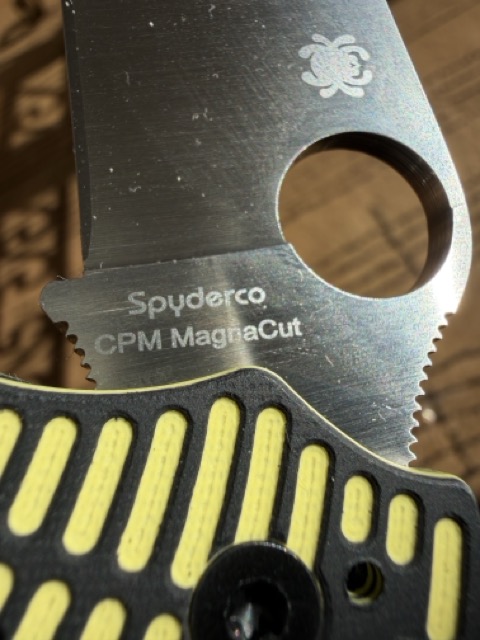
Steel: CPM® MagnaCut®
Knife Weight: 1.7oz 48g
Clip Position: Ambi
Grind: Full-Flat

I have now installed some Titech Titanium Scales exclusive from Heinnie.
Take a look at my previous review of the LC200N UKPK Plain Edge here.

Spyderco Military 2 Salt – C36GBKYLMCP2 – From ATS-34 to the Salt Age


If you were around in the 1990s, you remember the Steel Wars.
Back then, the aspirational trio was ATS-34, 440C, and D2.
ATS-34 wasthe working man’s stainless . 440C was the gentleman’s stainless . D2 was the semi-stainless tool steel brute with some bite.
Users were happy with Gin-1 blade. VG10 was not yet available. Hard chore fixed blades were made in 1095 or 1075 or 52100 carbon steel.
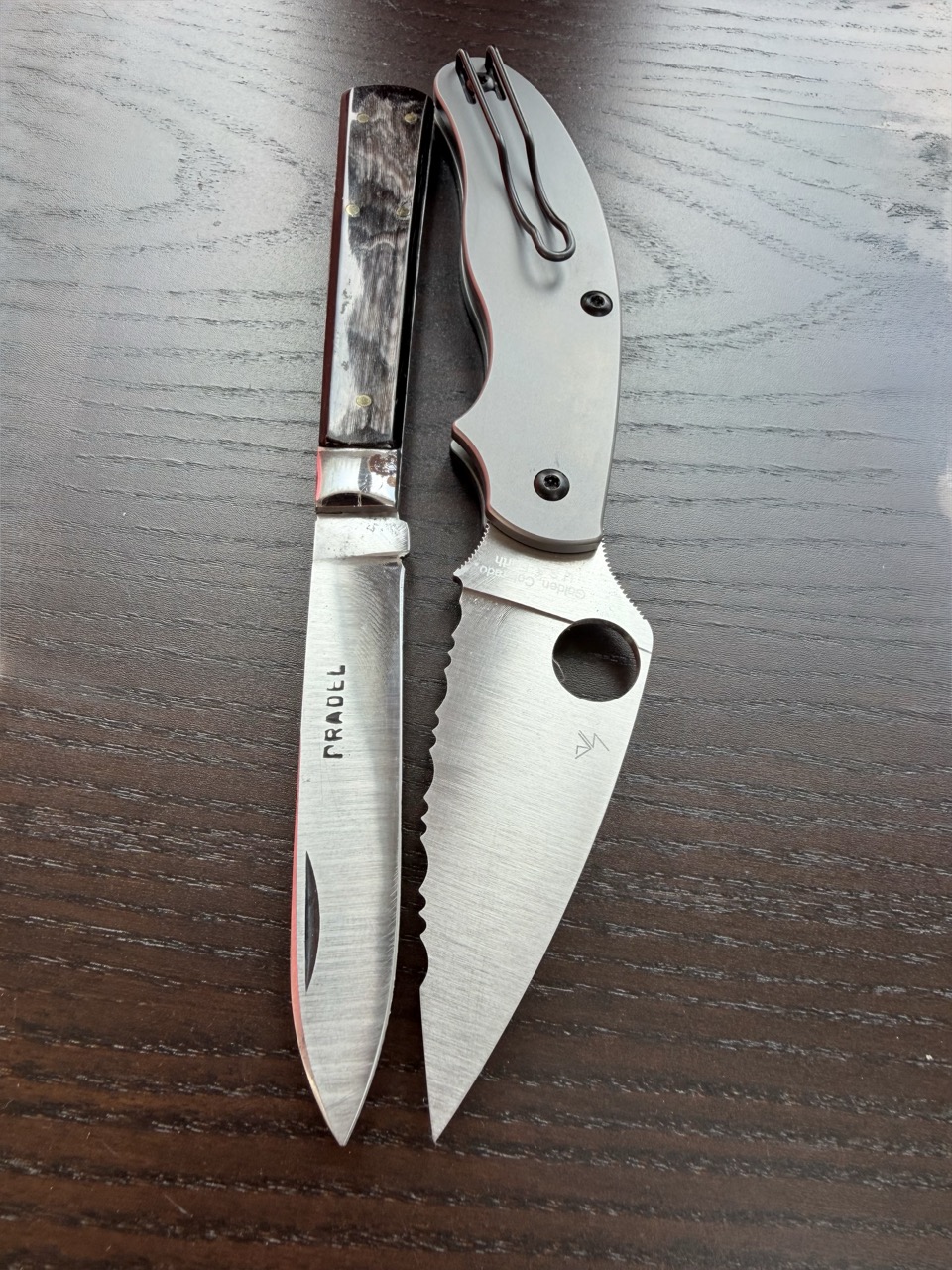
Anyway, those were the benchmark steels — the ceiling, not the starting point.
Then something shifted.


In 1996, Spyderco did something quietly radical with the original Spyderco Military: they moved from ATS-34 to CPM 440V — later renamed S60V. It wasn’t just a steel swap. It was a philosophical statement.
The Military became the first production folder to embrace Crucible’s Particle Metallurgy steel.
That moment matters a lot for knives users and for Spyderco.
It marked the beginning of the modern steel era in production folders — high vanadium content, fine carbide distribution, wear resistance that outpaced what most users even knew how to sharpen. It was controversial. It was ambitious. It was forward-looking. Typical Sal Glesser’s route to unknown territory.
And the Military has been evolving ever since.

Disclaimer: This knife has been provided through Spyderco’s Ambassador Program, upon their own request. Thank you to the Spyderpeople for letting me review it and enjoy it.

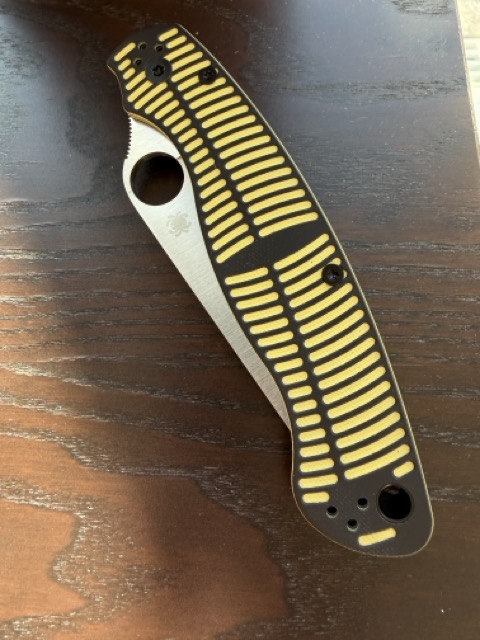
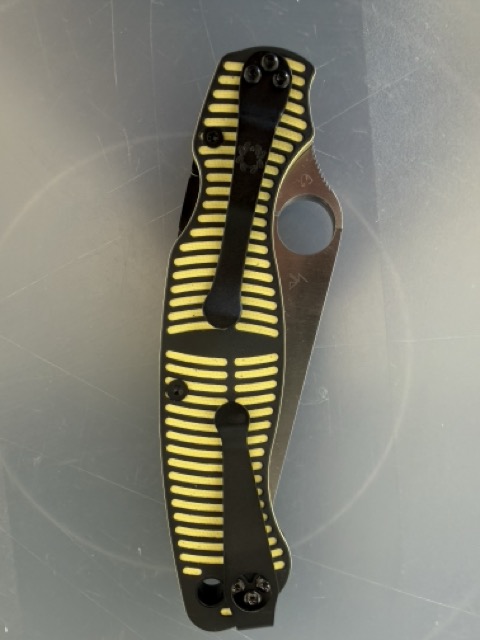
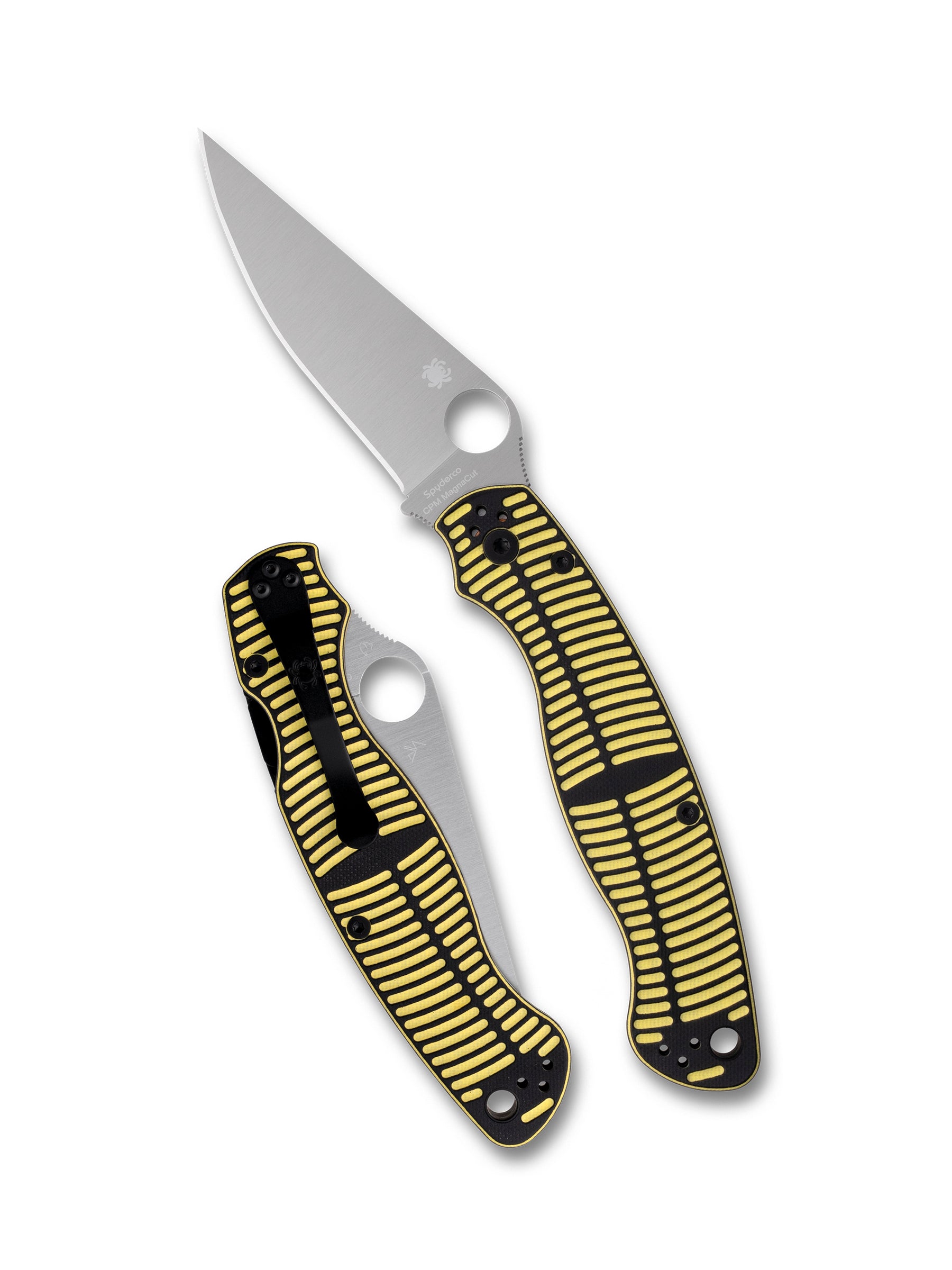
Enter the Military 2 Salt: Bright, Bold, Unapologetic — yellow and black handle, corrosion-proof attitude, purpose-built for brutal environments.
The Salt line has always been about defiance — defiance of rust, of humidity, of saltwater indifference. But this is not just a “marine” variant. It’s a continuation of a lineage that has consistently served as Spyderco’s testbed for what’s next.
From ATS-34…
To CPM 440V…
To S30V, S90V, S110V…
To the modern exotics.
The Military platform doesn’t chase trends. It previews them.


Fast forward to Gambit my CPM15V “Mother of All Bears” sprint run — a steel with outrageous vanadium content and edge retention that borders on absurd. In many ways, that sprint heat treated by Shawn Houston wasn’t just a collector’s piece. It was a thesis statement.
It said:
The Military platform still exists to push metallurgy forward.
Fifteen percent vanadium. Let that sink in. In the ‘90s, we thought 440C was peak sophistication.
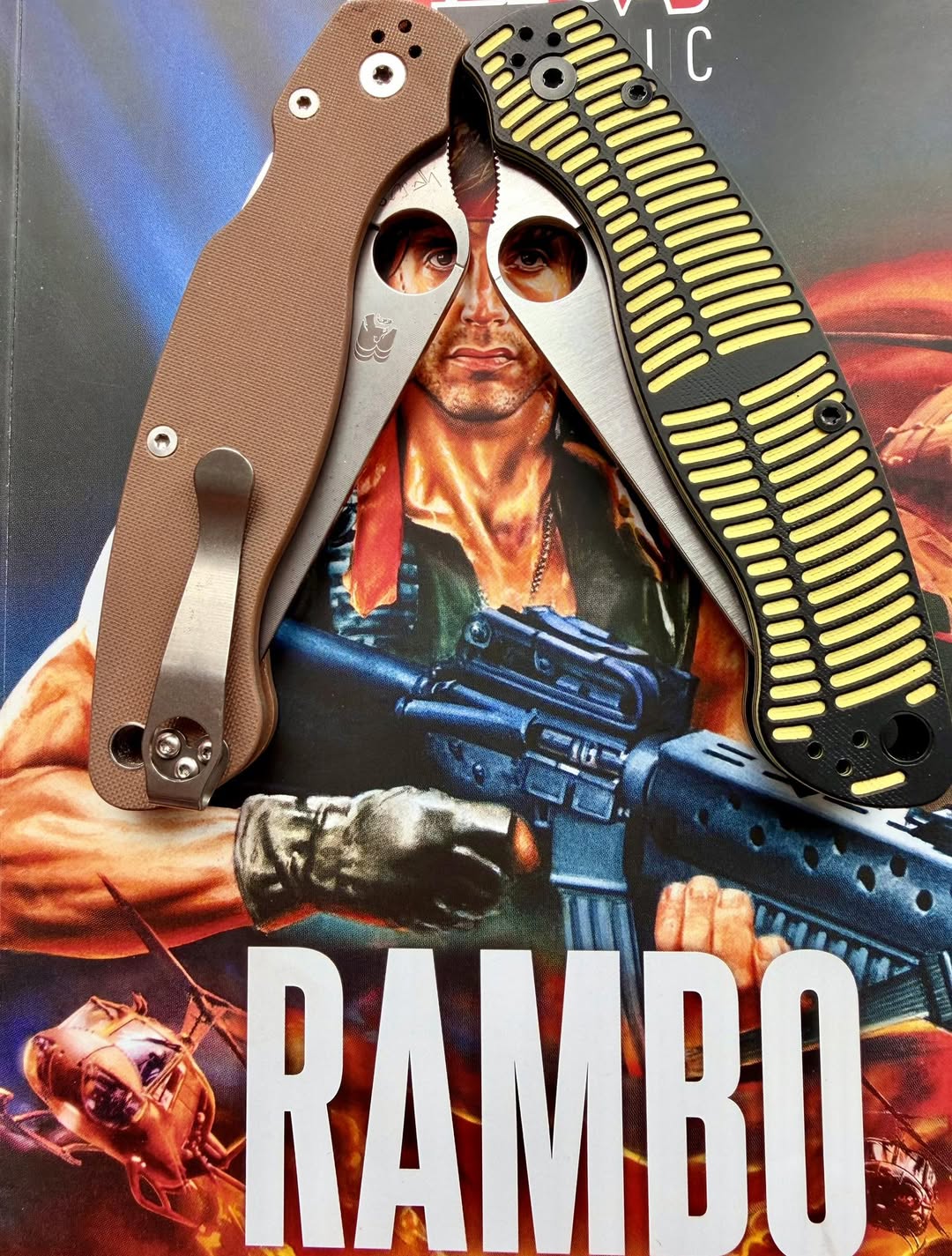
For the record Rambo II Knife was made from 440C.


If the 1996 jump to CPM 440V (some kind of powder steel version of 440C) signaled the start of the particle steel era, then the inevitable future feels clear.
At some point — whether as a sprint or full production — the Military will wear CPM MagnaCut. A steel you can bring to the rain forest where even camera lenses can be eaten by fungi.
And when Spyderco does a Salt, it’s no gimmick. It is the logical next step.


From a certain point of view, MagnaCut represents what ATS-34 once was supposed to be (Chris Reeve’s Sebenza were made of ATS-34) — stainless performance without compromise. Fine carbide structure. Balanced toughness. Real corrosion resistance. Practical edge stability.

As the Military began its journey by embracing the future of steel before the market demanded it, a MagnaCut Military is simply continuing that tradition.

The Military isn’t just another large folder.
It’s a timeline. A flagship. A knife Sal was giving for Eric for his military service.
But also it reflects where the industry was, where it is, and where it’s going.


That beautifully “wasped” Military 2 Salt — with its unapologetic yellow and black scales — stands as a modern chapter in that story: corrosion-proof, high-performance, and unafraid of specialized steels.
For those of us who remember when ATS-34 felt exotic, holding a Military 2 Salt today is a reminder of just how far production knives have come.
And if history is any guide, this won’t be the final evolution.
It never is……. Magnamax ?
Anyway, Magnacut is a wonderful tough steel

There is, however, one issue with the Spyderco Military 2 Salt — and it’s not the steel, the ergonomy or the lock which came with zero lock stick BTW.

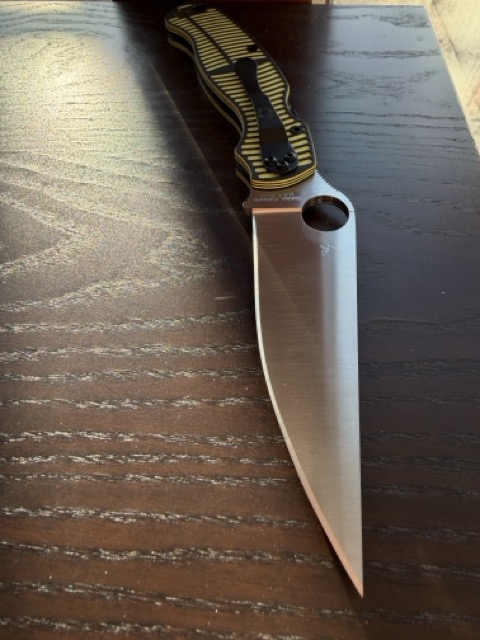
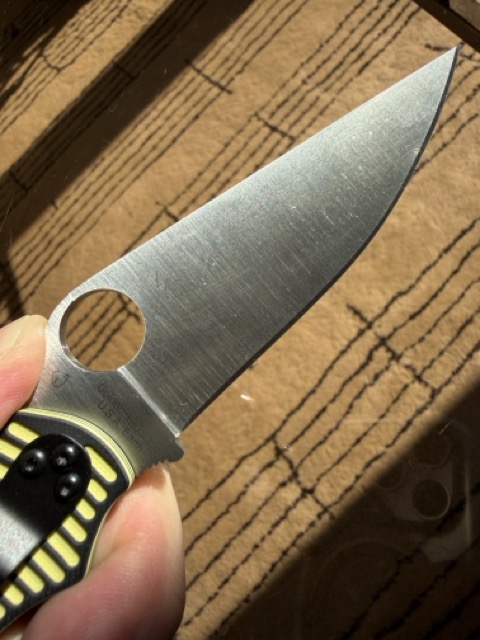
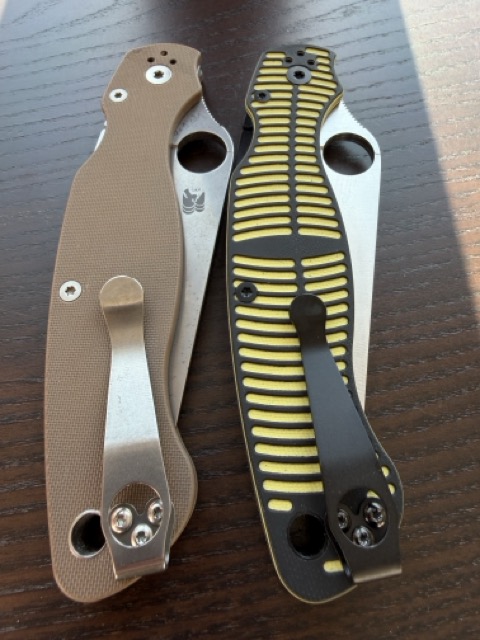
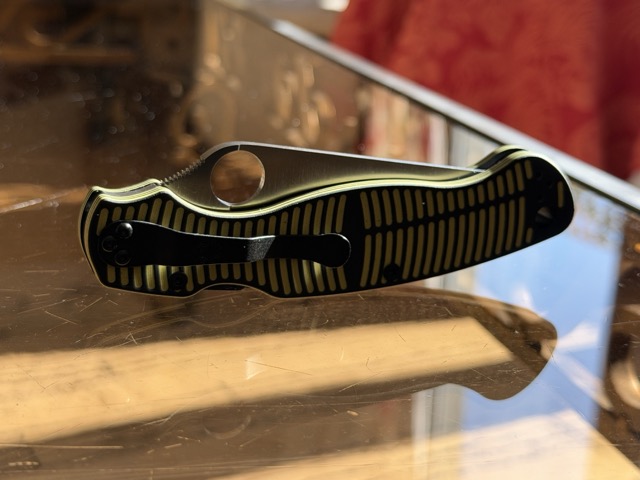
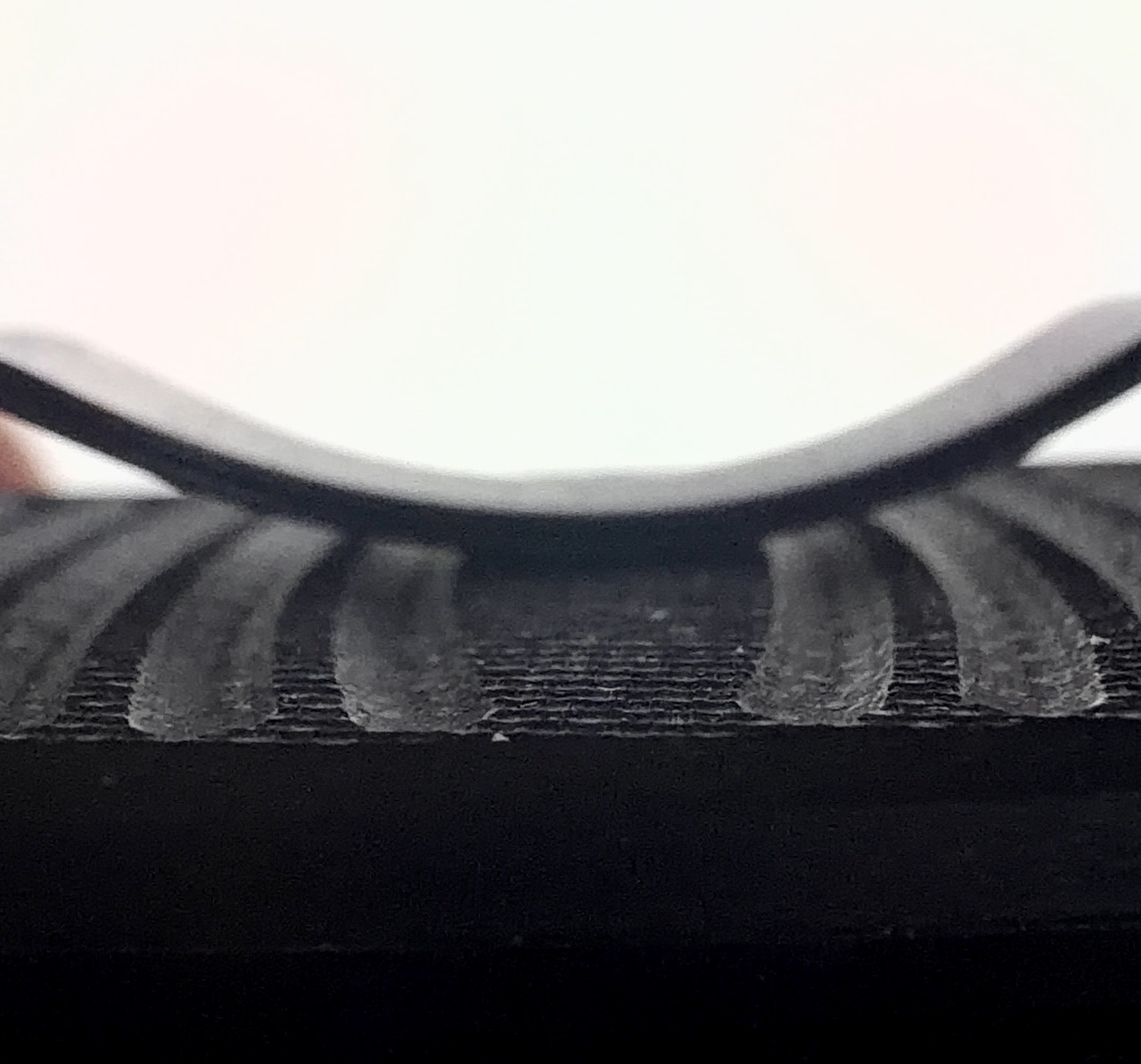
It’s the clip placement. As you can see no clip can reach that central flat spot. It stays on the grooves !

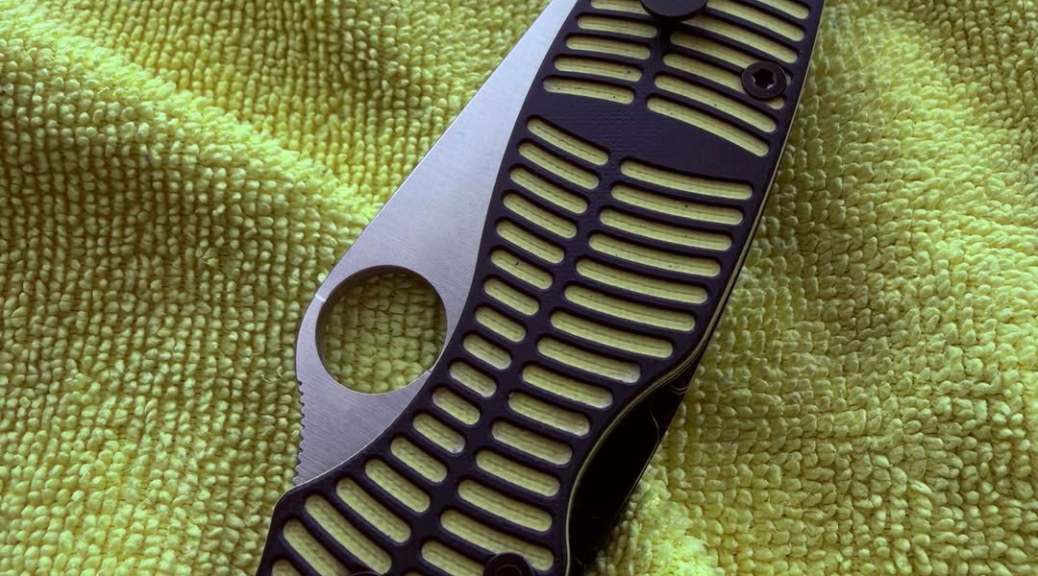
“The meticulously machined Caribbean Bi-Directional Texture pattern not only ensures a secure, non-slip grip, but also reveals the scales’ alternating black and yellow layers to enhance the knife’s visibility in and around the water.”

Yes but that yellow/black Salt version retains the aggressive, highly contoured handle geometry that makes the Spyderco Caribbean such a secure tools in wet environment.
“The Caribbean’s blade is housed in a vibrantly colored handle featuring scales crafted from layered black and yellow G-10. Their intricately machined pattern provides a non-slip texture and reveals the contrasting colors to create a high-visibility striped design. “


Those scales are not flat which is “handy” especially in wet or gloved conditions. From a grip standpoint, it’s outstanding. The ergonomics are purposeful. No question.
But the clip sppon is mounted across a section of handle that isn’t truly flat. And that matters for me.

That handle creates localized tension points. In pocket draws and insertion, that translates into friction. And friction, over time, translates into shredded fabric !!

For a knife that’s designed to live in harsh environments, the last thing you want is a clip that behaves like a textile rasp.

For the record, this is not a Salt-series indictment.

Neither the Spyderco Manix 2 Salt nor the Spyderco Paramilitary 2 Salt exhibit this issue.

A low tension deep carry clip helps a lot in my case but your mileage may vary in terms of keeping your pockets pristine…

Anyway performance remains uncompromised.
Having a true all-terrain Military is no longer a niche concept. It’s a must.

The original Spyderco Military was conceived as a purpose-driven field knife — large, lean, unapologetically performance-focused. It wasn’t built for desk duty. It wasn’t built for Instagram. It was built to work.

Today, “field use” doesn’t just mean dry land and predictable climates. It means:

  • Coastal humidity
  • Saltwater exposure
  • Sweat-soaked summer carry
  • Snow, mud, rain
  • Long-term storage in less-than-ideal conditions
  • Kitchen !!

Corrosion resistance is no longer a specialty feature. It’s a baseline requirement for a all terrain purposed tool.
Low maintenance is a true luxury.

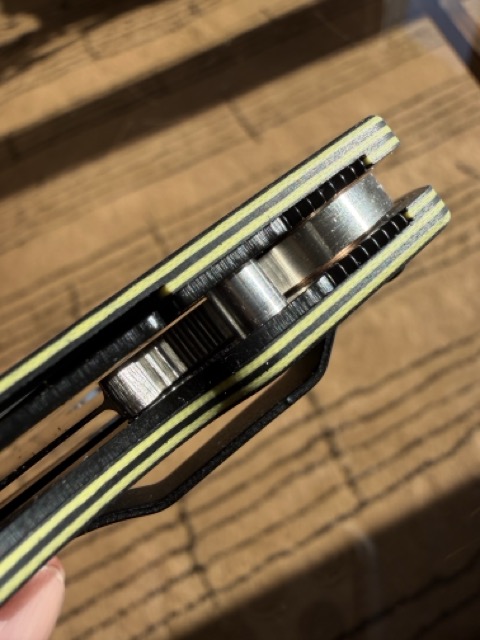
All inner parts are coated but the stop pin and the washers.
Notice that beautiful G10 layers a tour-de-force.
The nested liners being all coated there is no excuse to use that knife in wet environment.

That’s why the Spyderco Military 2 Salt matters.

It closes the loop of reliability through 3 decades.
The Military platform has always chased the frontier of steel performance — from ATS-34 to particle metallurgy, from high-vanadium experiments to modern wear monsters. But performance isn’t just edge retention charts and carbide percentages. Real performance includes survivability.

An all-terrain Military folder means:

  • A blade steel that shrugs off salt and sweat
  • Hardware that resists oxidation
  • A platform you don’t have to baby

It becomes a knife you can carry on a boat, on a mountain, in tropical humidity, or clipped inside gym shorts without thinking about it. The list goes on but you catch my drift. The Military is a big light hardchore folder ready to get dirty.
And that last part is key: without thinking about it.

Because the ultimate evolution of a military all terrain tool isn’t higher hardness.
It isn’t more vanadium.
It isn’t better CATRA numbers.
It’s freedom from worry !

The Spyderco Military 2 Salt benefits enormously from the Compression Lock. The action is smooth, controlled, and confidence-inspiring. Opening is fluid. Closing is effortless and safe. Lockup is rock solid — zero play, zero drama.
It feels modern and mechanical in the best possible way.


Compare that to the Spyderco Native Chief Salt Lightweight, and you’re in a different world. Back lock instead of Compression Lock. A more traditional cadence. A different relationship between hand and blade.
Both are outstanding knives. Choosing a favorite isn’t about quality — it’s about preference.
The Lightweight Native Chief is that good. 😉

The same goes for the Spyderco Sage 5 Salt.
Compact. Refined. Exceptionally balanced. In Salt configuration, it becomes one of the most complete corrosion-resistant EDCs available today.
At this level, it’s no longer about which one is better.
It’s about which one feels like yours.

The Military was once the knife that introduced mainstream users to particle metallurgy. Now, in Salt form, the Military 2 introduces the idea that a full-size, high-performance folder should be truly “environment-agnostic”.

And if we’re honest — for a knife with “Military” in its name — that capability feels less like an upgrade and more like destiny.


I had named my CPM M4 Millie “Ghost.”
My grey CPM CruWear Millie became “Gandalf.”
My current 15V Military 2 is “Gambit.”
So the salty one needed a name too.
And it had to start with a G.
It will be “Gurney”.
Gurney Halleck in frank Herbert’s Dune isn’t the flashy hero. He’s not mysticism and prophecy. He’s discipline. Loyalty. Hardened competence. A loyal warrior-poet who survives harsh worlds through skill and resilience.

That’s exactly what the Spyderco Military 2 Salt represents.
Not ornamental.
Not fragile.
Not trendy.

It’s a knife built for hostile environments. A blade you trust when conditions turn abrasive. There’s something very Arrakis about a corrosion-proof Military: survival through preparation.
“Behold, as a wild ass in the desert, go I forth to my work.”

Spyderco Manix 2 Salt – A Welcome Overkill


The funniest part about using the Manix 2 Salt is remembering how this model first came into being at Spyderco—and how well it has matured over time, much like your humble narrator and its designer, Eric Glesser. We’re not getting any younger! 🙂
For that, you can refer back to my previous article dedicated to this knife.

“An extremely capable full-sized folder that is ready for the toughest challenges.”

It’s either a survival-kit essential or an EDC that has earned deep respect over the decades since its creation. And that’s pretty cool. This workhorse remains a bestseller at Spyderco because it radiates reliability and performance.

Its few drawbacks? The space it occupies in the pocket—which really deserves to be dedicated to it entirely—and the lack of tip-down carry. Which means no “Spyderdrop,” unlike the Military for example—one of the most elegant ways to open a Spyderco (Grab it by the Spyderhole!).

At its core, the Manix brings three key elements that truly make the difference: a blade clearly oriented toward performance—neither overly thick nor compromised, with a tall full flat grind; a rock-solid lock that effectively turns it into a fixed blade once engaged and a drop chuting action when closing; and ergonomics so well thought out that, no matter the wet and oily situation, this knife simply refuses to escape your hand.

Disclaimer: The Manix 2 Salt has been provided through Spyderco’s Ambassador Program, upon my own request. Thank you to the Spyderpeople for letting me review it.


The Manix 2 Salt black G-10 handle is fully peel-ply-textured (mixed with Spyderco’s signature Caribbean Bi-Directional Texture™ pattern) and exceptionally grippy and yet surprisingly never abrasive to my denim pocket’s seams — a balance made possible by a thoughtful clip placement because, really, on the paper I was certain that folder would be a competitive pocket shredder !!

That said, this very design becomes a limitation if one considers swapping to a deep-carry clip: the clip would no longer land on the scale’s soft flat spot, potentially creating unwanted friction against the pocket lip. For this reason, I chose to keep the original clip. In practice, it delivers remarkably smooth in-and-out pocket action—arguably even smoother than the Edgerati.
This is still a mystery to me but that ultra grippy Manix 2 Salt G10 is actually very pocket friendly !

Now, for the past few weeks, the Salt—which is arguably the most badass version of the Manix 2 (alongside the Crucarta, which elevates it beautifully in the patina departement, or perhaps a few Sprint runs like the mighty CPM-15V brown g-10 version)—has been jumping into my pocket for real use. As you know, the Edgerati, thanks to its novelty and sheer pleasure of use, has had a tendency to evict several knives from my rotation: the Military 2 in CPM-15V, the Caly 2, the Chief in Magnacut, the Sage Salt… and inevitably, the poor Manix 2 Salt G10, which had the bad luck of arriving at the same time.

But then it hit me: if I see the Edgerati as a BMW X3—powerful, lightweight, and all-terrain—then the Manix 2 Salt is clearly a Land Rover Defender. After all, it came here to suffer… so let’s make it suffer.

And so far, it comes out with flying colors.
Like a Tenacious, this knife is here to work—no matter the conditions.
It brings back that familiar, no-nonsense feeling I used to get from the old Cold Steel Recon 1 and its mighty Triad Lock.


About the Manix 2’s lock, I was worried the mechanism might seize up with dirt or mud, but since the Salt laughs at moisture, soaking it in water is a non-issue. In the kitchen, it also encountered oily situations. Once again, the new G10 scales on the Salt provide excellent traction when drawing it from the pocket—which is definitely not the case with my titanium Squeak, an outstanding little bar of soap when my fingers are wet or greasy…

I did notice a small “click” when opening. I have the same thing on the carbon fiber CPM S90V version, though it’s less pronounced. It’s not a problem at all—just the mechanism doing its thing.

There is also something I forgot to mention—and it is far from a minor detail. The Manix lock does not rely on a detent ball to keep the blade closed in the handle. Much like a traditional back lock, spring tension alone holds the blade securely shut. It may seem subtle, but the implication is significant: closing force is applied even if the blade is slightly out of position. This provides an additional layer of safety—one that should not be underestimated, especially in demanding or unpredictable conditions.
And as mentioned in my previous article on the Manix Salt, the very first Manix models were built around a Martial Blade Craft–grade back lock—thick, overbuilt, and driven by an exceptionally strong spring. That DNA is still there. The Manix 2 lock clearly inherits that same philosophy of power, security, and mechanical confidence.
This is also what makes the Ball Bearing Lock™ so reassuring: safety.


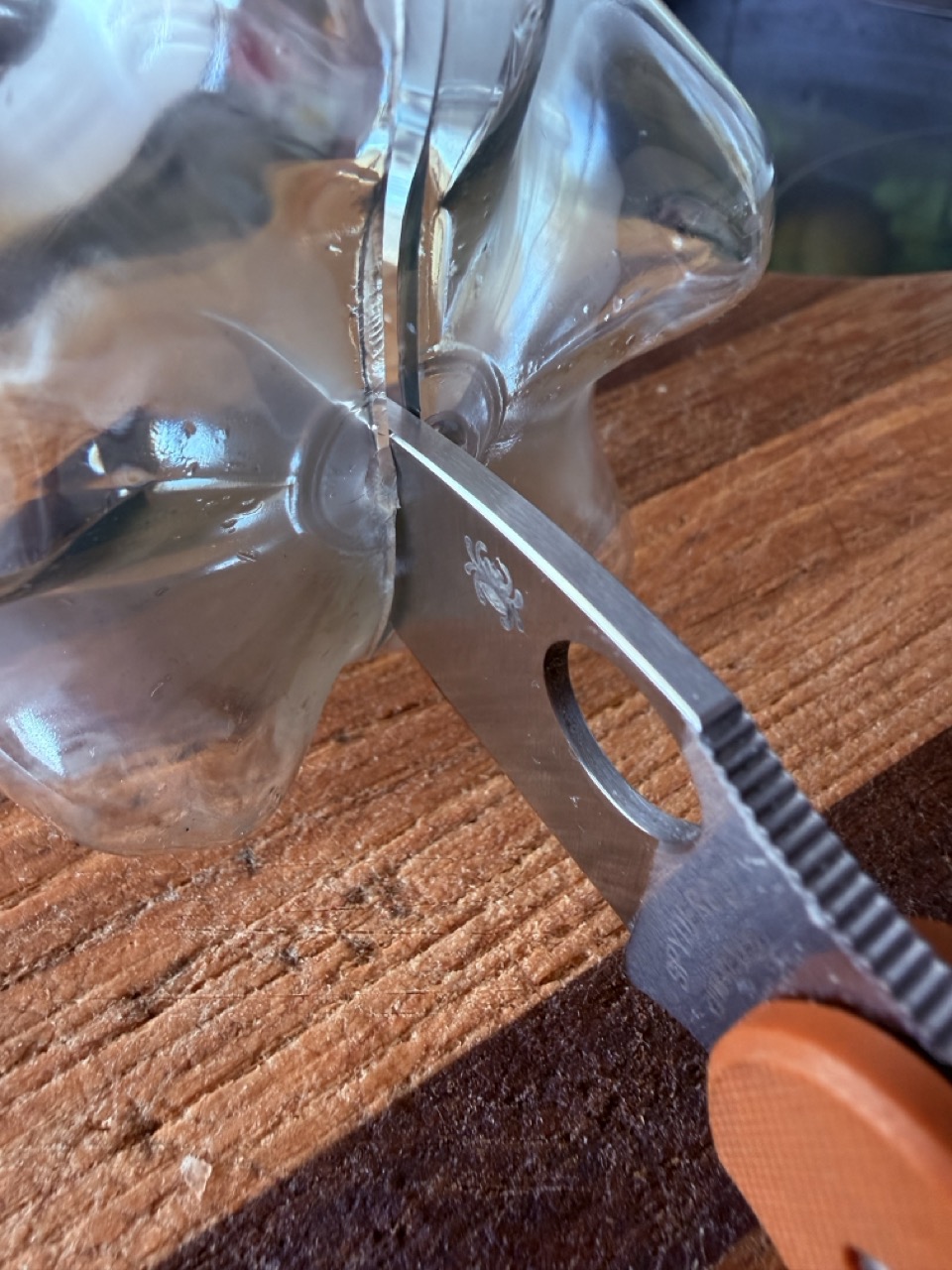
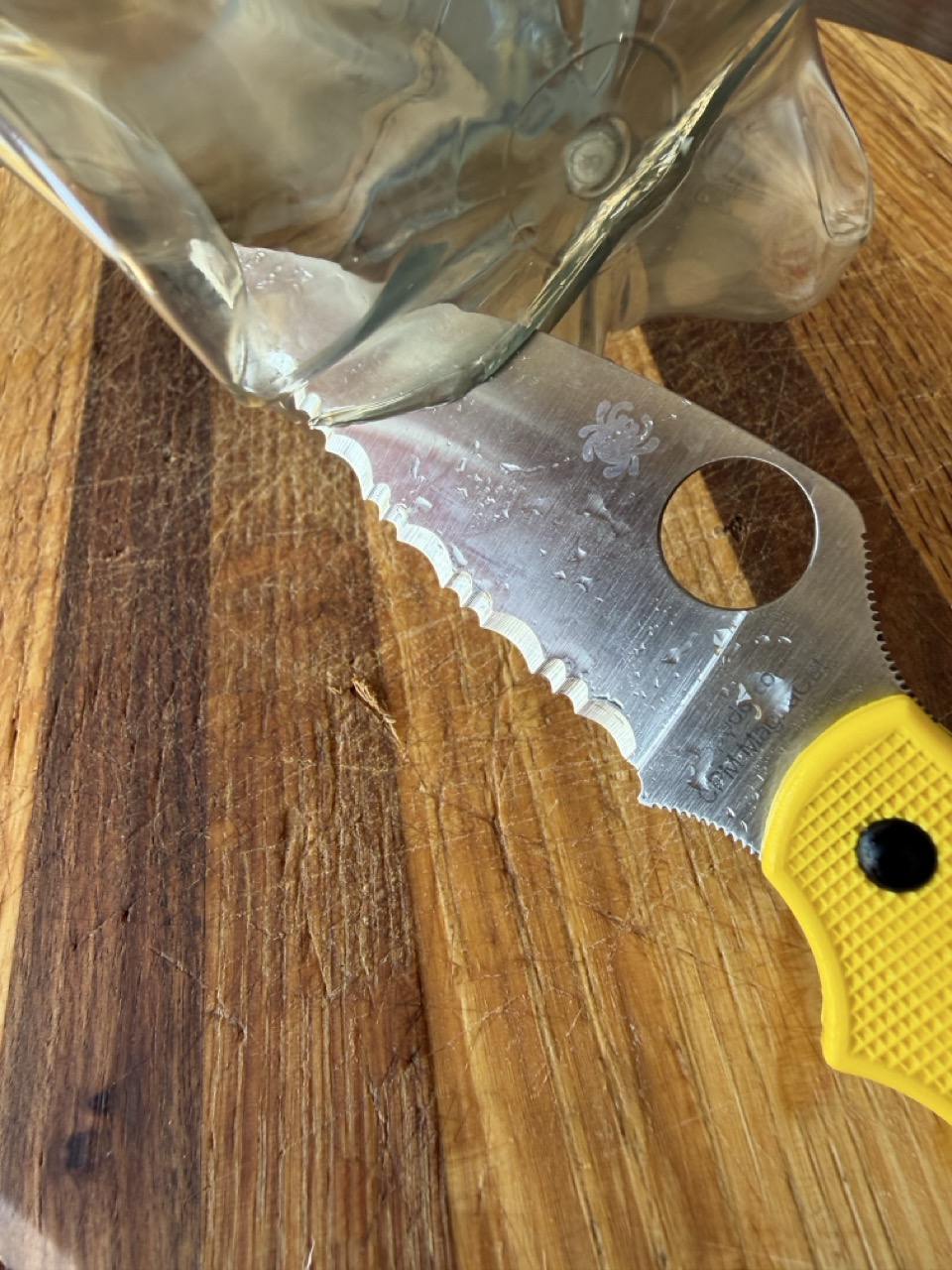
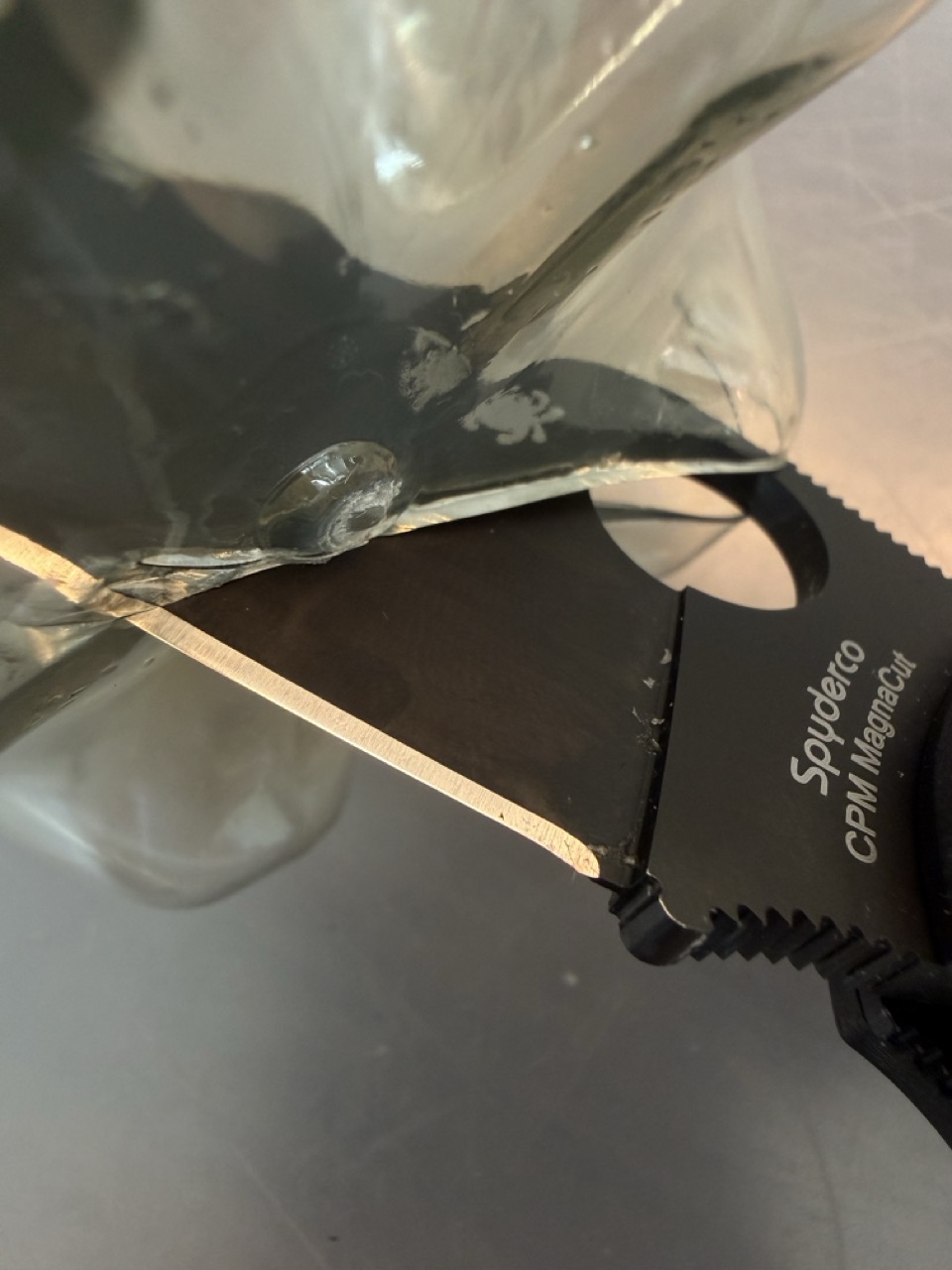
During my homemade bottle butt geometry test—driving the blade straight through the bottom of a plastic bottle, where the material is at its thickest—I found that the Manix 2 could do a tad better. Where the Edgerati (a thicker blade though) passed this test straight out of the box, the thinner Manix 2 Salt required a bit more encouragement. I therefore decided to de-shoulder the edge slightly to thin it out, and the improvement was immediately noticeable. As usual, in ten minutes, small adjustment, but one that significantly enhanced its geometry and cutting performance.
Also I have not been able to scratch that DLC blade so far.

It also made me wonder whether this knife could genuinely appeal to a diver. How intuitive would it be to deploy and use underwater? To answer that question properly, I decided to ask Geoffrey—the head of Normandeep, a professional diver and rescue specialist operating off the Normandy coast, near the D-Day beaches

“The relevance of folding knives in diving is not always obvious.
Accessibility and storage can be an issue, especially when wearing thick gloves.
That said, the Manix is probably the least compromised option, as its lock is the easiest to operate of them all—even with gloves on. For a travelling diver, it could make sense: a knife that transitions from backpack carry during walks to a diving knife clipped to a buoyancy compensator.

Beyond diving, there’s also the nautical world—sailors, fishermen, boating in general—where this kind of knife becomes genuinely relevant. In that context, it makes a lot of sense.”

In the end, the Manix 2 remains faithful to its original ambition: to be a tool first, without apology or compromise. It does not follow trends, nor does it seek to charm through superficial refinement. Its appeal lies elsewhere—in disciplined geometry, a locking system of unquestionable security, and ergonomics conceived to ensure the blade stays exactly where it should: firmly at work in the hand.

In its Salt configuration, these virtues are elevated rather than altered. Moisture, mud, oil, even neglect, fail to disturb its composure. It can be rinsed, returned to service, and trusted again without ritual or concern. Such quiet confidence is rare, and it explains why the Manix platform has not merely survived the years, but matured with them.

It may not be the most discreet companion, nor the most elegant silhouette in Spyderco’s catalogue. Yet when conditions degrade and reliability takes precedence over finesse, the Manix 2 asserts itself with calm authority. Like any true instrument of work, it earns respect not through promise, but through repetition.

And that, ultimately, is why the Manix 2 remains a reference—quietly indispensable, and entirely earned.

NATIVE CHIEF™ LIGHTWEIGHT SALT® CPM® MAGNACUT® — Teeth For The Deep.

Serrations aren’t everyone’s favorite, but one thing is undeniable: Spyderco knows how to make them perform. I’ve tested serrated Chaparrals and even the semi-serrated CPM-M4 Tenacious, but the Salt Chief in Magnacut takes this to another level thanks to its relatively long blade.
The “Salt Chief” … does it ring a bell to South Park’s fans ?
(Ah, Isaac Hayes Salty Chocolate Balls...)

For the record, Magnacut behaves similarly to CPM-4V but is far more stainless, which explains why the Salt Series (like this Chief) thrives in humid and coastal conditions.
(The LC200N version of the very same knife (with green FRN handle) would be even better in terms of corrosion resistance but Magnacut’s edge will last longer.)

My first Chief, a special edition in CPM-4V nicknamed Hellboy, was already a beast which I considered replacing my Spyderco C36 Military — and this lightweight Salt Chief has teeth that remind me of a Nine Inch Nails album : pointy, high tech, raw and aggressive.

This relatively long folder is remarkably light: 88 grams for a 102 mm blade — 21% lighter than the G10 version, according to Spyderco.

This is a serious tool for mariners, divers, explorers, military personnel, cooks, gardeners, and anyone who might let their knife get wet. Unlike my Salt Sage 5 (plain edge, monster in the woods), the Serrated Salt Chief is clearly aimed at humid/coastal environments.
(There is also a plain edge Salt Chief C244PYL which could be more versatile.)
The serrations concentrate force on small points along the edge, allowing fibers to be cut more effectively than a plain edge of the same thickness. Each tooth acts like a mini-chisel, making tasks like slicing rope, cord, seatbelts, fibrous fabrics, or vegetation far easier.
But it will be harder to cut straight as the serrations are chisel ground on the left of the blade. So it will naturally be deviate to the right during a push cut.

The multiple points of contact make serrated edges actually longer than straight plain edge. Even if the points dull slightly, the valleys continue to cut, which is why serrated blades are preferred in emergency for cutting seat belts for example.
And serrated edge are not difficult to resharpen. Do it like you would sharpen a chisel with a ceramic able to reach each valleys. Once you get a burr just one or two passes on the other side of the edge and it is back to razor. No big deal really.
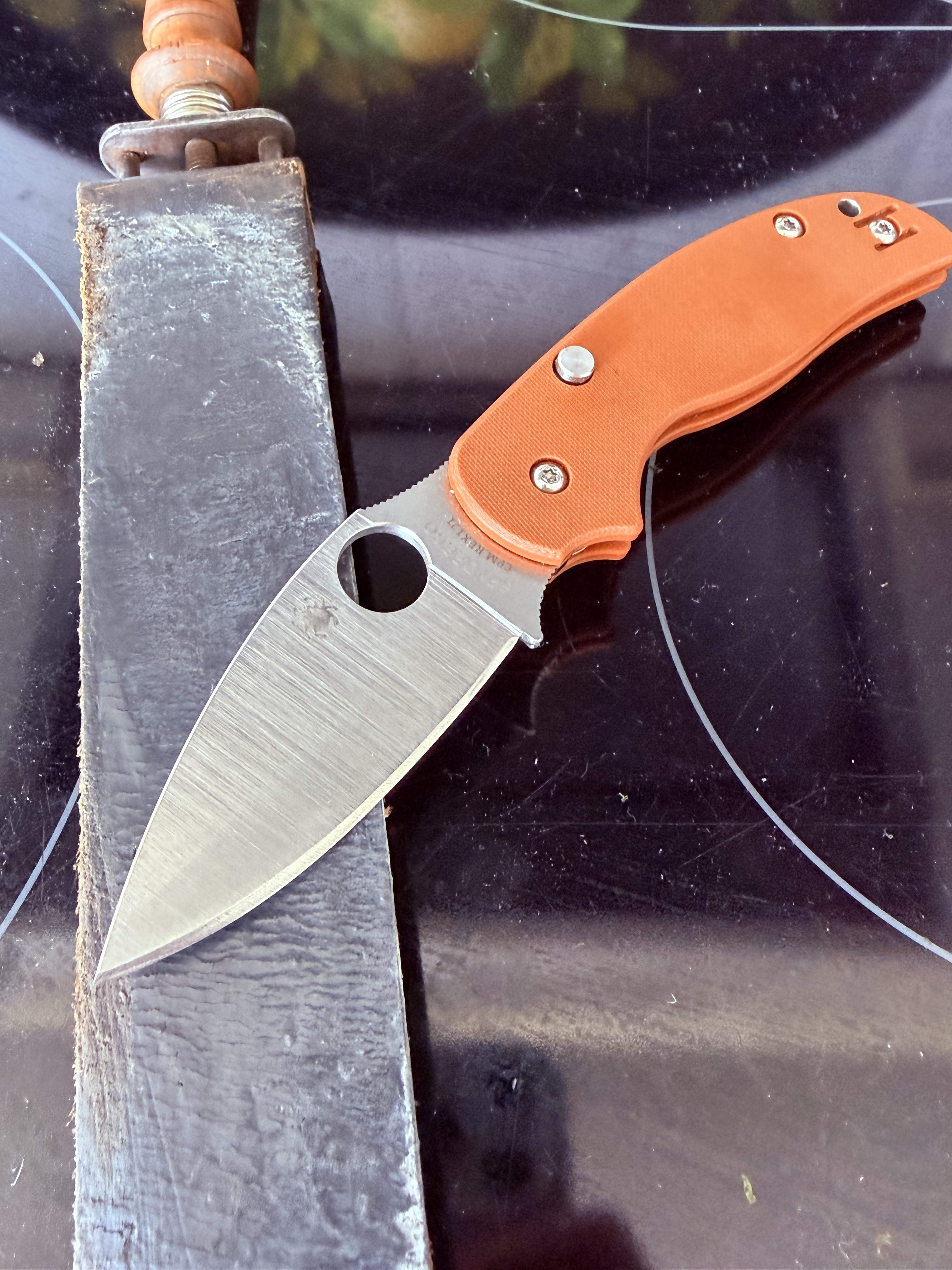
Magnacut love leather though; But it won’t be easy to strop it obviously, unless using the rims of a leather belt…

The ergos are just great. Same cockpit as the Native 5.

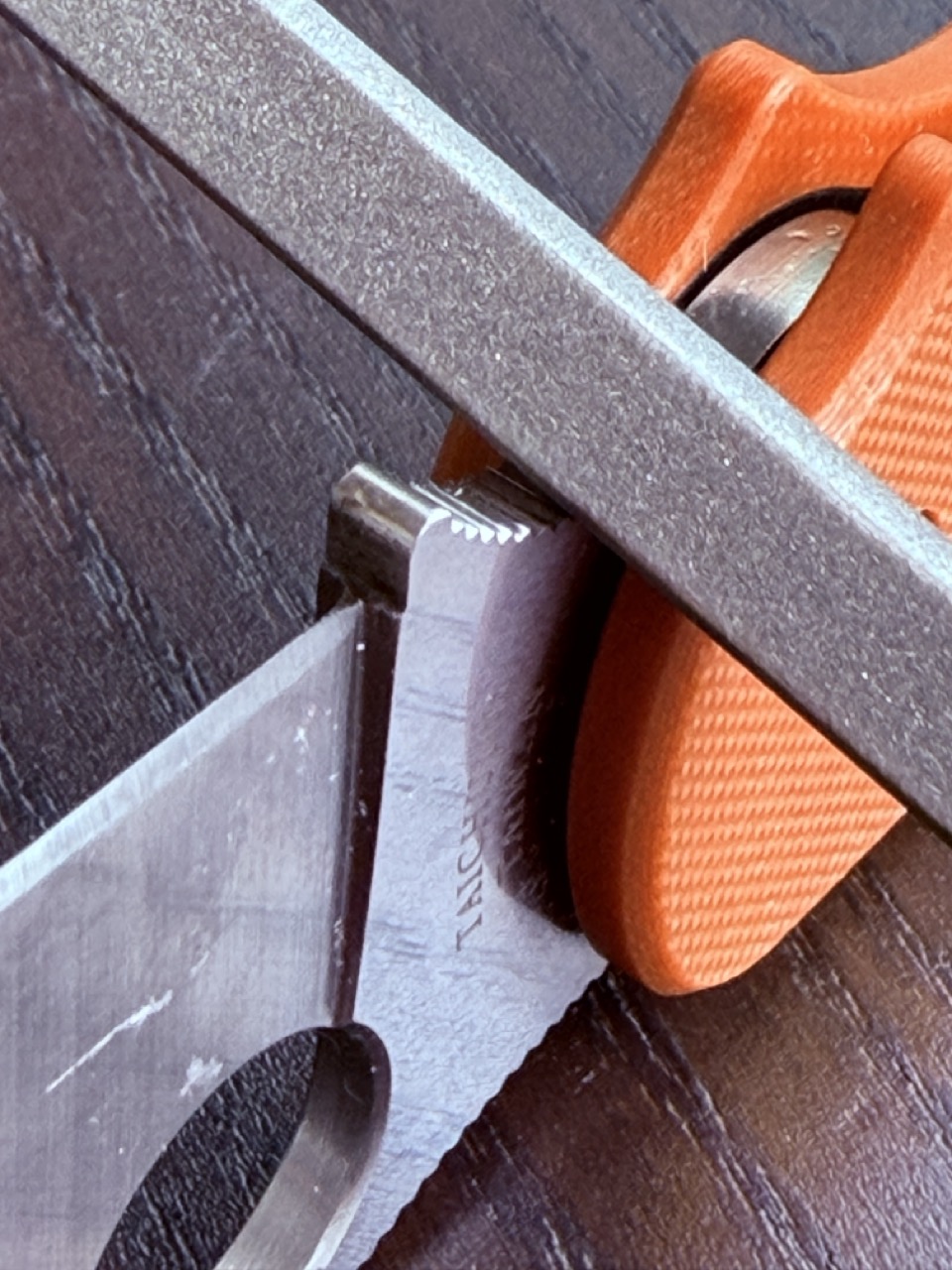
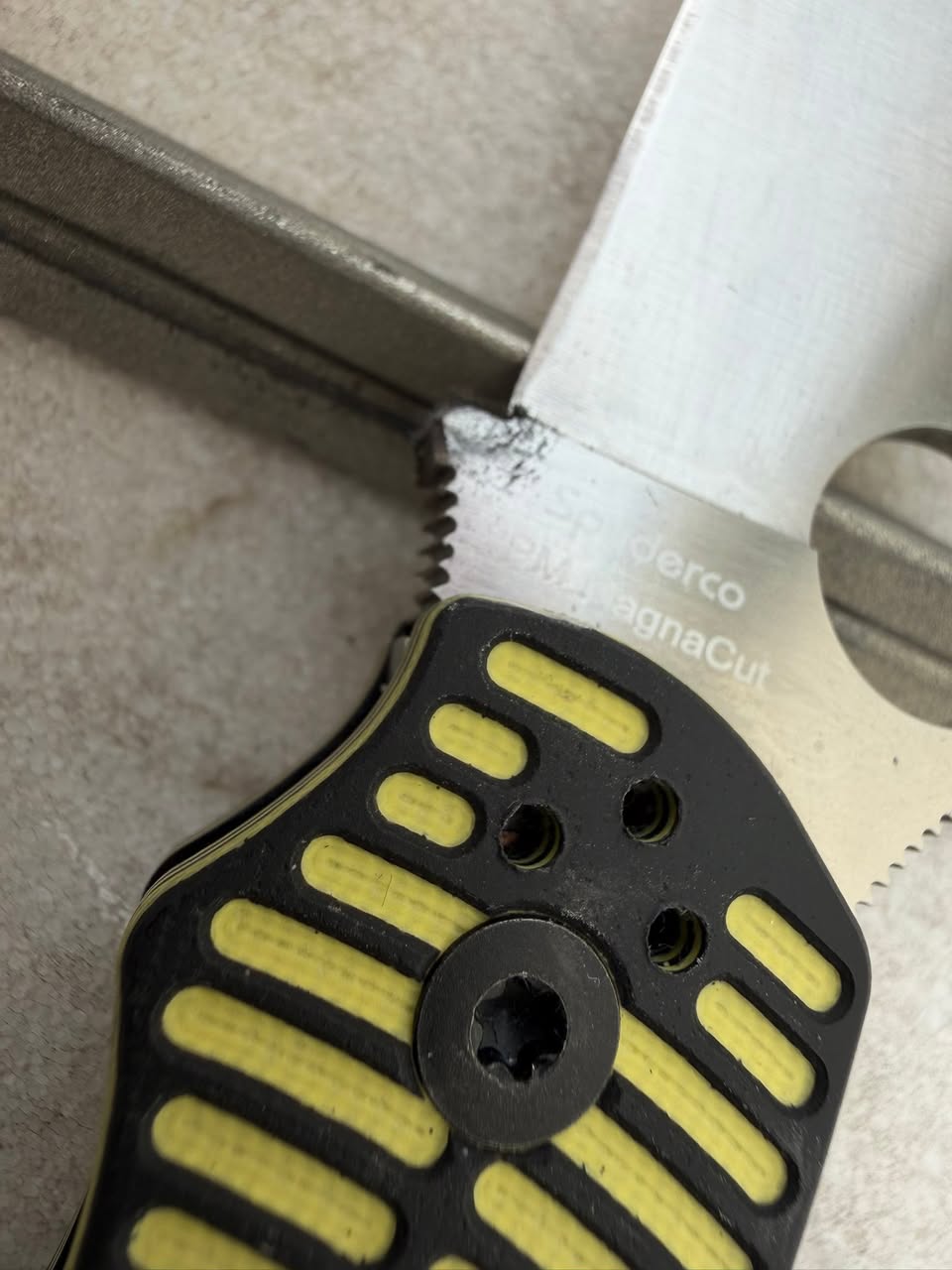
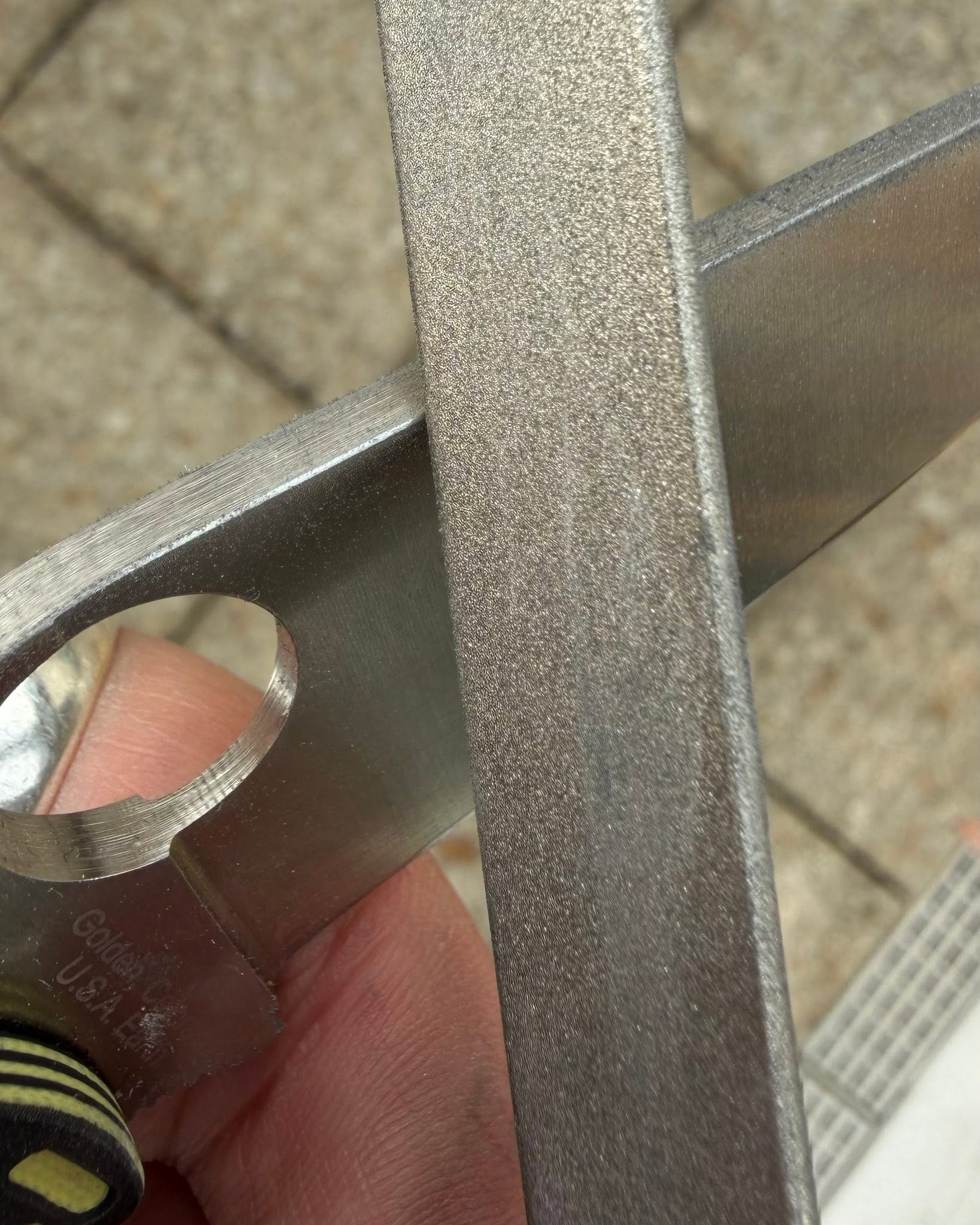
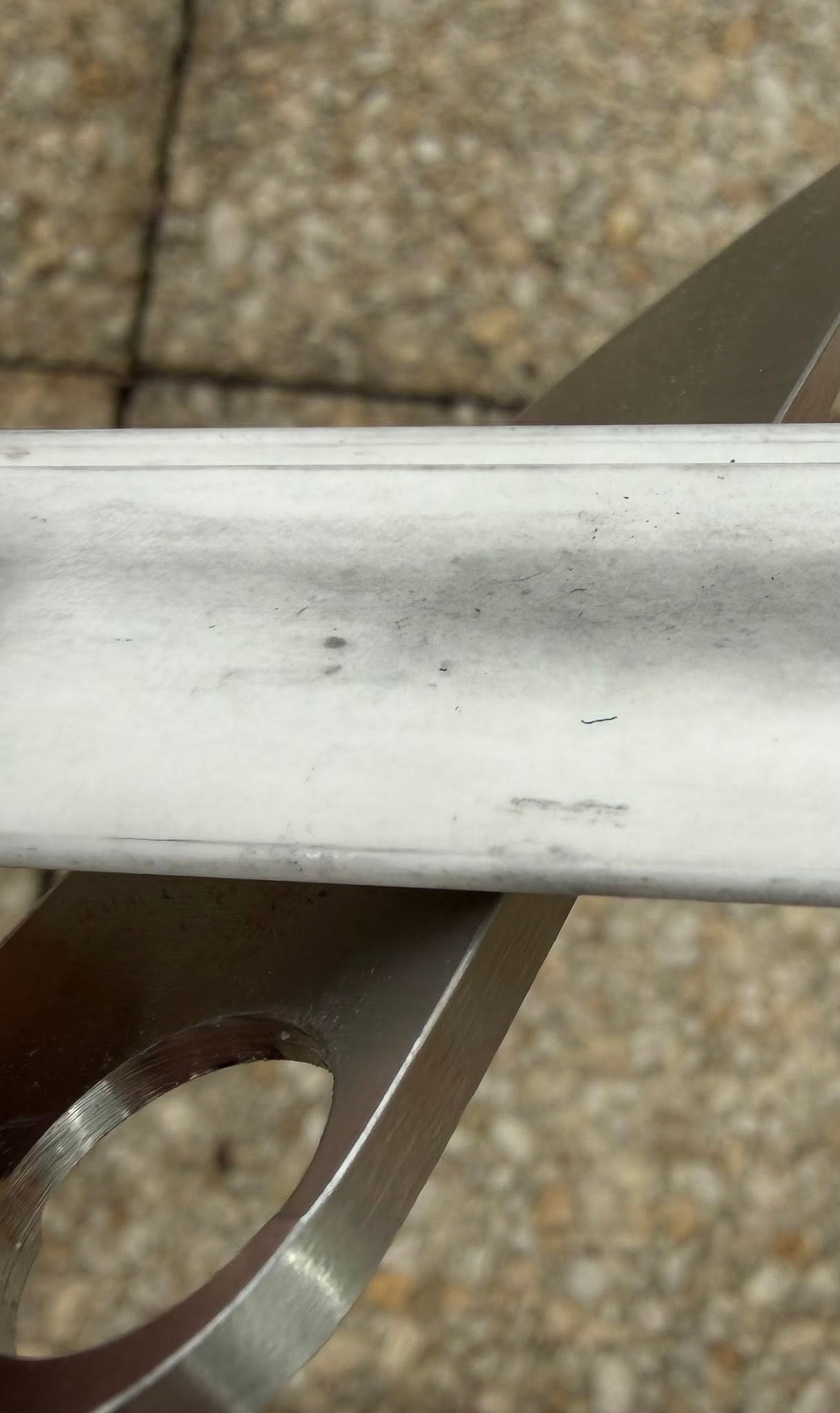
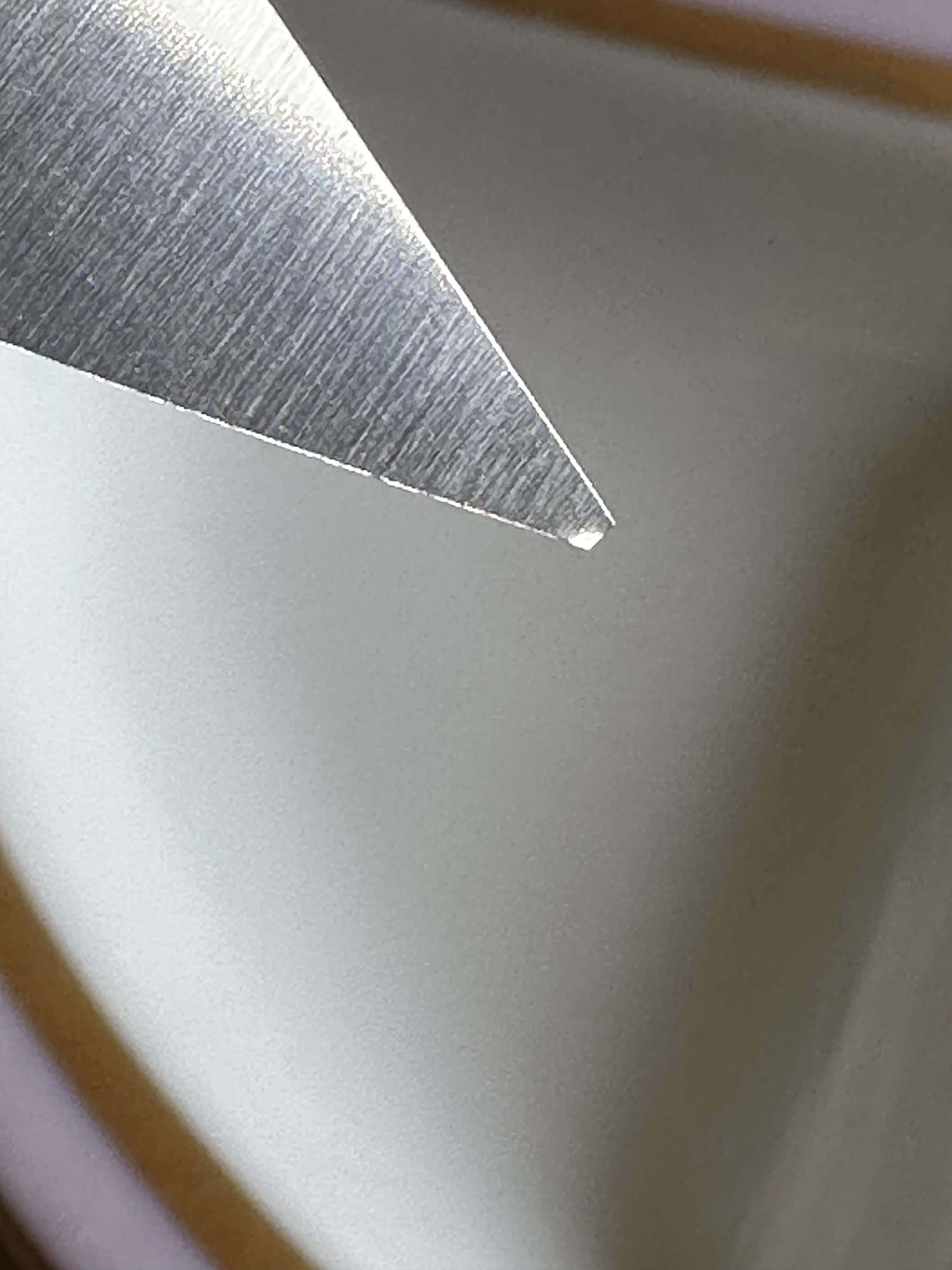
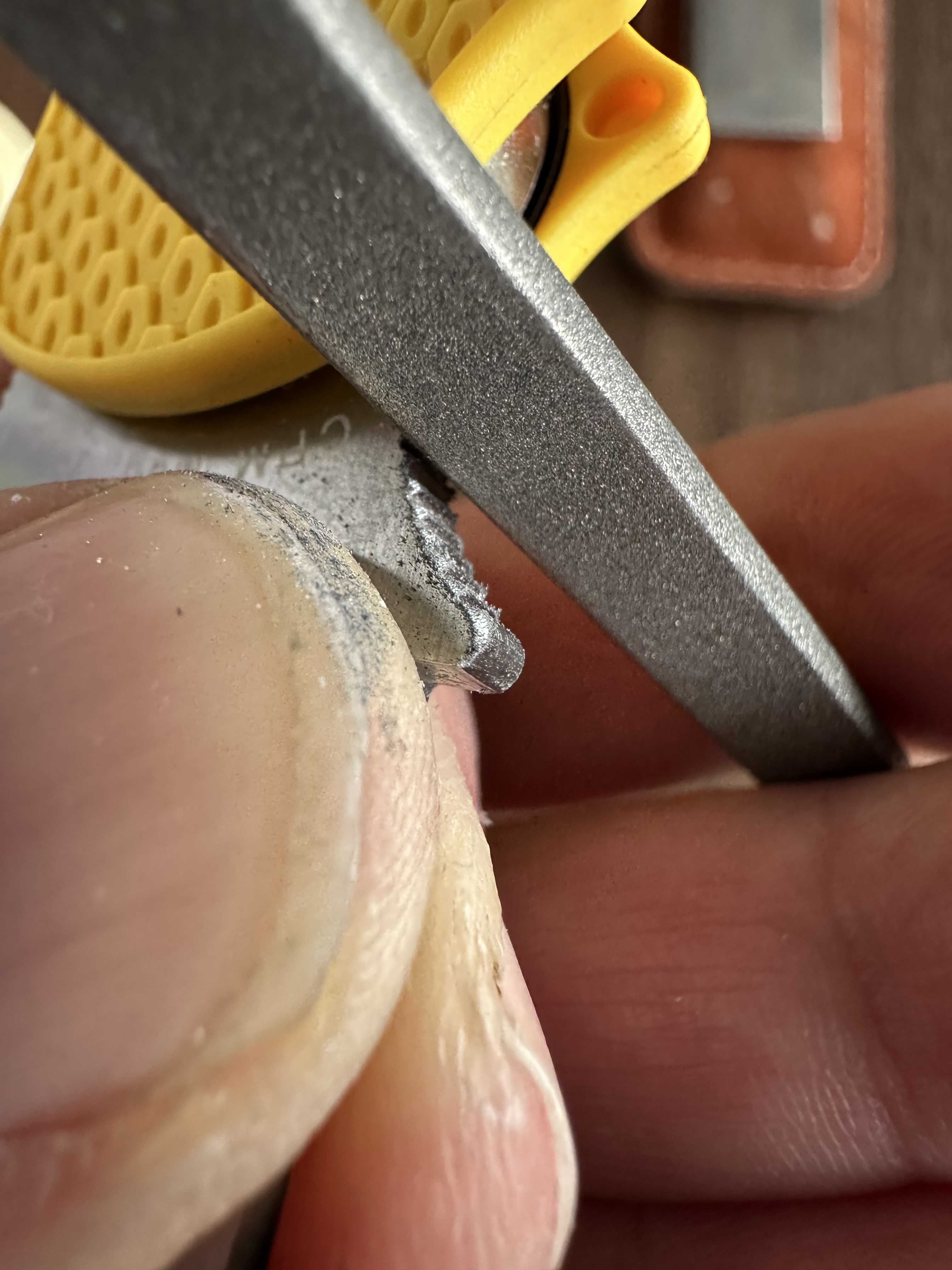
Out of the box, I noticed a slight tip imperfection — less than a millimeter — which I easily corrected on a diamond rod in under a minute. Even with Magnacut’s hard, corrosion-resistant steel, the tip can be fragile but repairable. This means one thing: use your sh*t !
This light amphibious folder is made to be a workhorse in the sea or earth because it is also easy to keep clean.

Those diamond corners are perfect to put a fresh edge on a serrated blade.

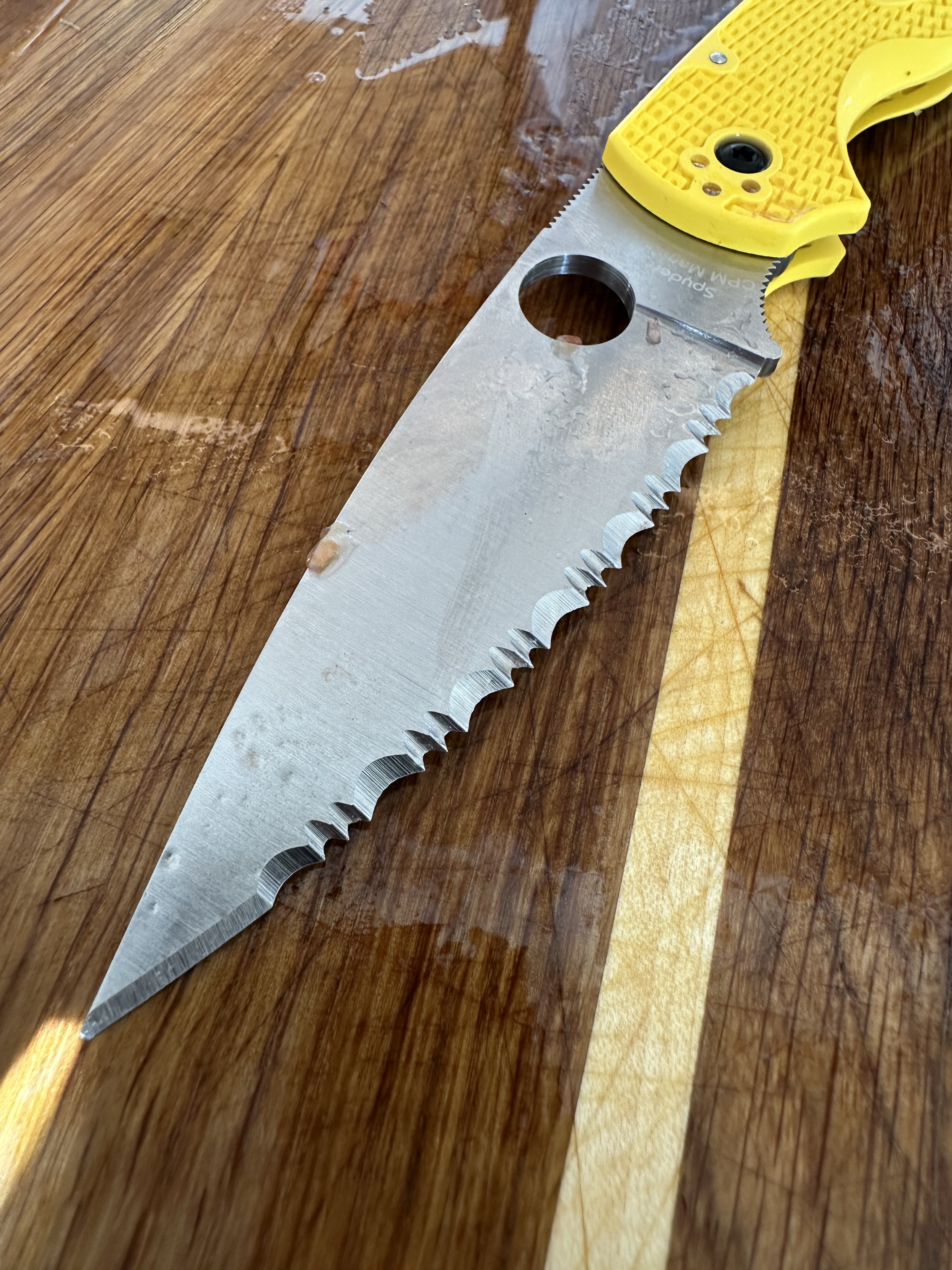
This time again, Spyderco uses a Full-Flat Grind with SpyderEdge. But this is a very very aggressive serrated edge, much more aggressive than the serrated Chaparral for example and, yes, so aggressive and pointy, it can snag and tear but it will do the job. It won’t be a clean cut but the job will be done very very quickly.
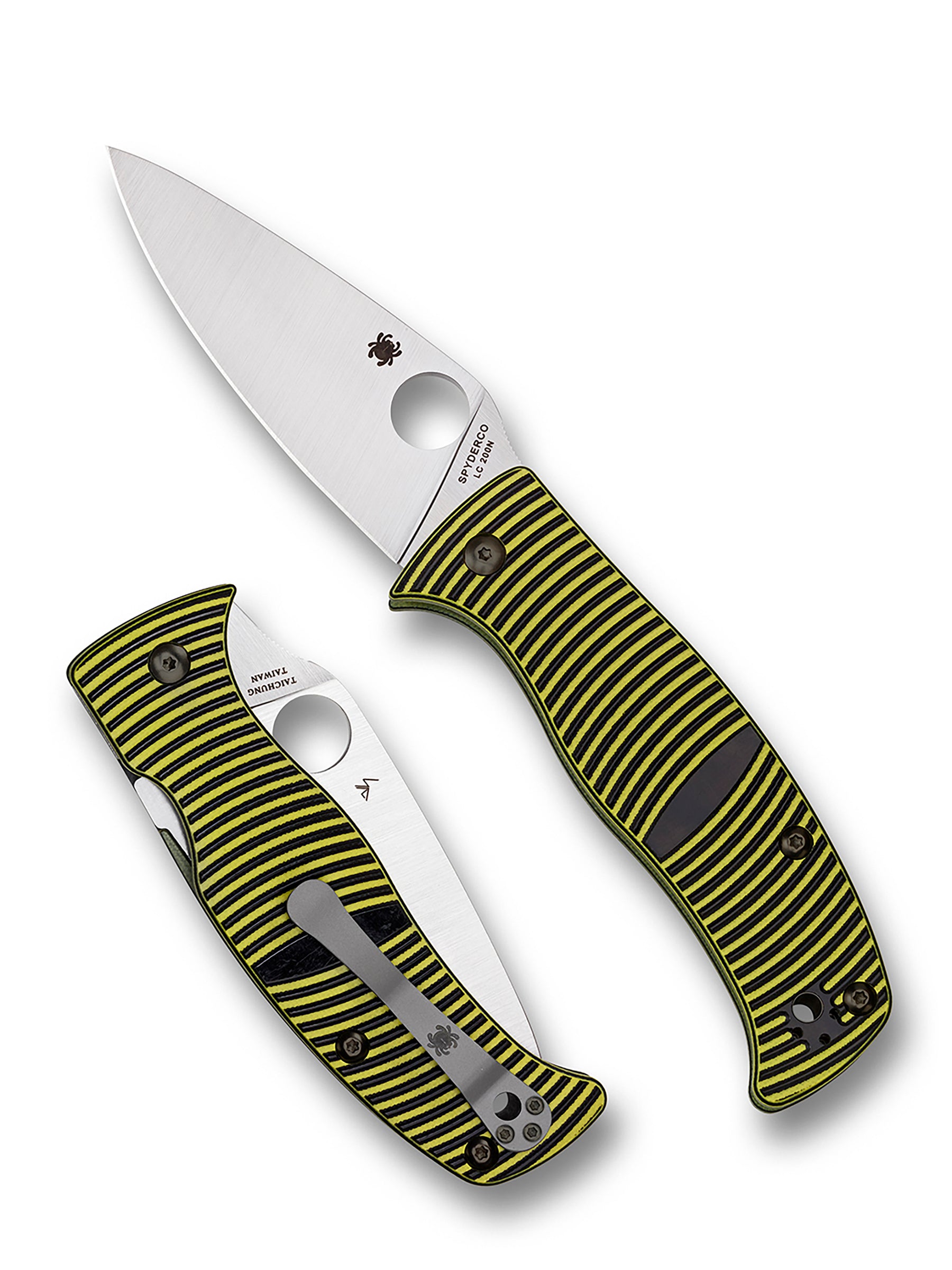
(On the Chaparral, the serration are rounded to avoid snagging when cutting. Those same serrations can be found on another serrated folder made in Taichung for Spyderco: the LC200N made Caribbean.)
So the Salt Chief serrated is also a potential emergency tool with a pointy blade!
It will excel in marine scenarios like cutting wet cordage very quick. So this knife feels especially suited for maritime or humid environments. Those serrations also will cut in vegetation with minimal effort. Actually even a gardener or a farmer would appreciate that raw cutting power made to endure mud and rain.
But keep it mind, this is raw cutting, fast and dirty. Perfect in emergency. But the cuts won’t be clean. You won’t slice raw meat into loafs like a chef knife would. Also keep it mind the the chisel edge blade will drift to the right.

As you can notice, the teeth of the Chief are more pointy and deep than, for example, the Tenacious CPM-M4 which is less agressive.

That lightweight Chief strong mid-backlock mechanism is impressive: no liners or spacers and… zero play (unlike my CPM-4V G10 Native Chief, which had slight vertical play.), and perfect action. The blade falls gently when unlocked, The drop-shut action is smooth, supported by a very strong spring, and the knife oozes quality from every angle.
Ah ! Zero play, this what we often got from Golden made backlocks this lightweight long knife is no exception !

This long pointy folder feels lighter than expected for its size, yet solid and trustworthy. It should be perfect for fishermen, mariners, firemen, policemen, divers, gardeners, ranchmen, farmer, construction workers or anyone working in the outside or in corrosive/humid environments from the rainforest to the ocean. The combination of Magnacut steel, Spyderedge, and Yellow FRN handle makes it an emergency tool — especially for those who value edge retention, corrosion resistance, and very aggressive cutting performance in wet environments.

In short, the Serrated Salt Chief designed by Eric and Sal Glesser is a serious, reliable, and powerful folder — perfect for professionals in demanding conditions who need to cut deep and quickly.

“I just got Eric a Megaladon Shark’s tooth for Christmas. Had serrations on the tooth, 150 million years ago. I don’t think serrations are a “new” thing.
Sal Glesser

De-Shouldering Process – How I get a convex edge in 15 minutes.

The new Sage 5 Salt got a great geometry but I love convex edges.
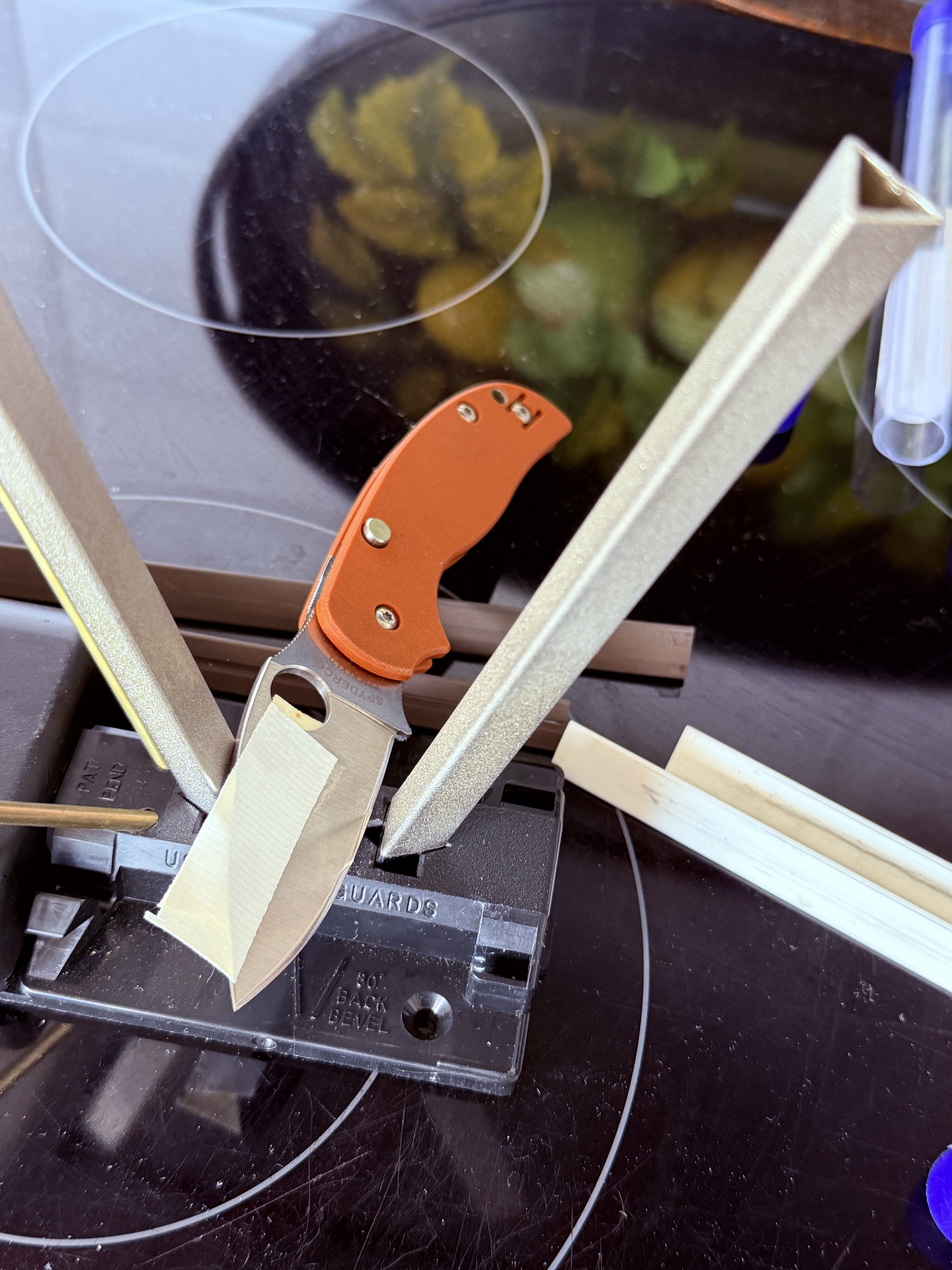
I like to remove the shoulder on the edge and with diamonds it is only a matter of minutes.

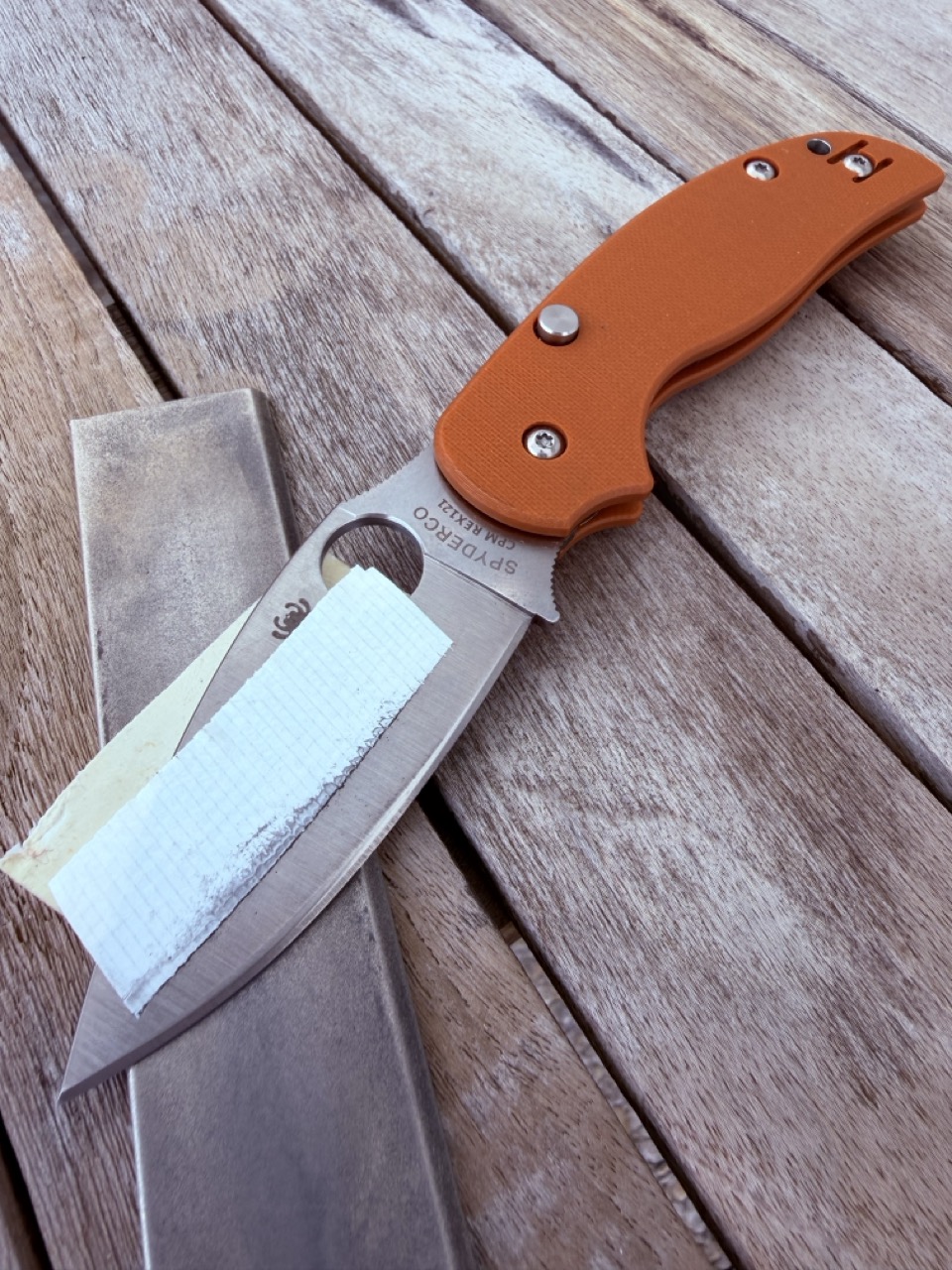
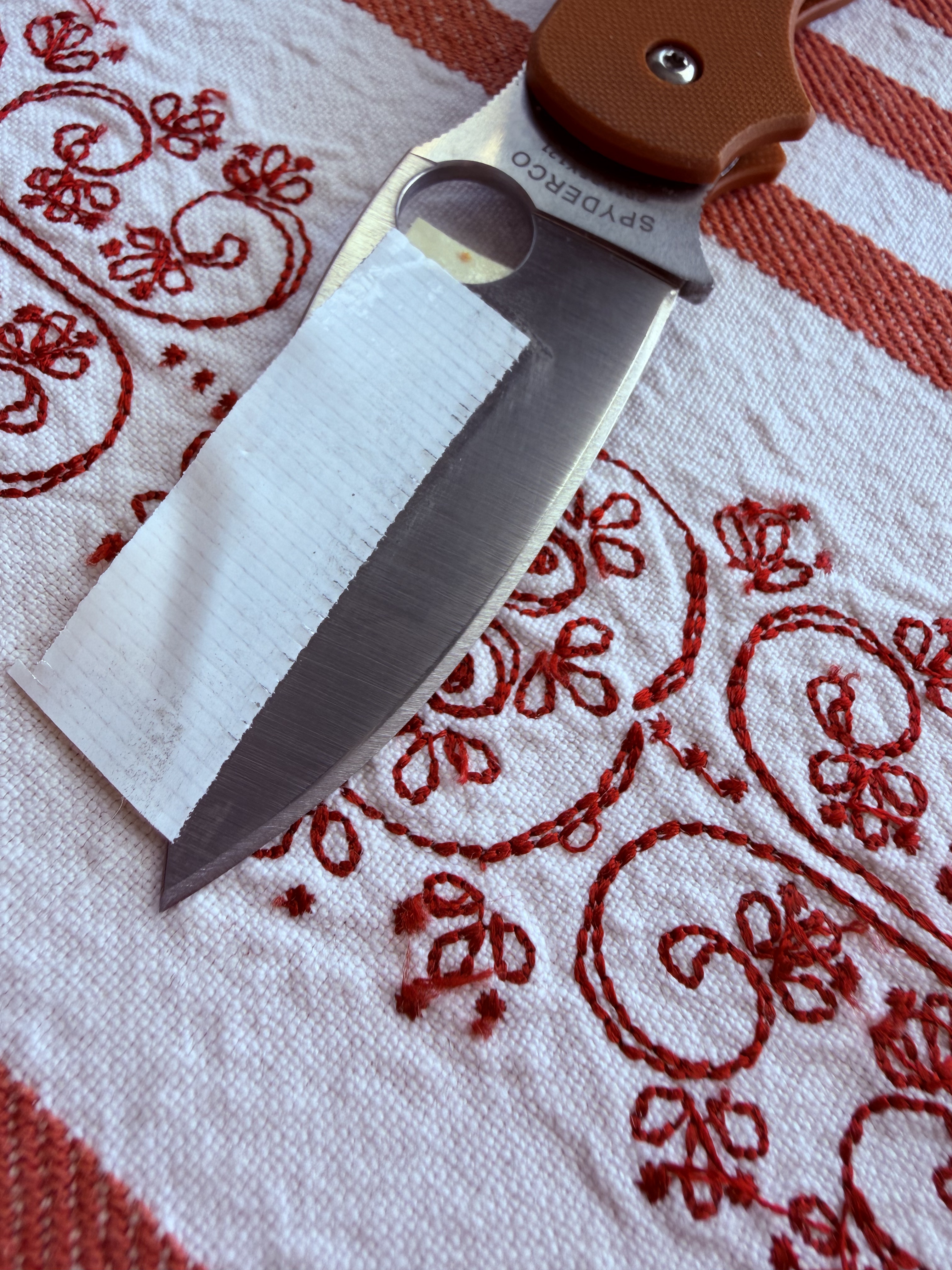
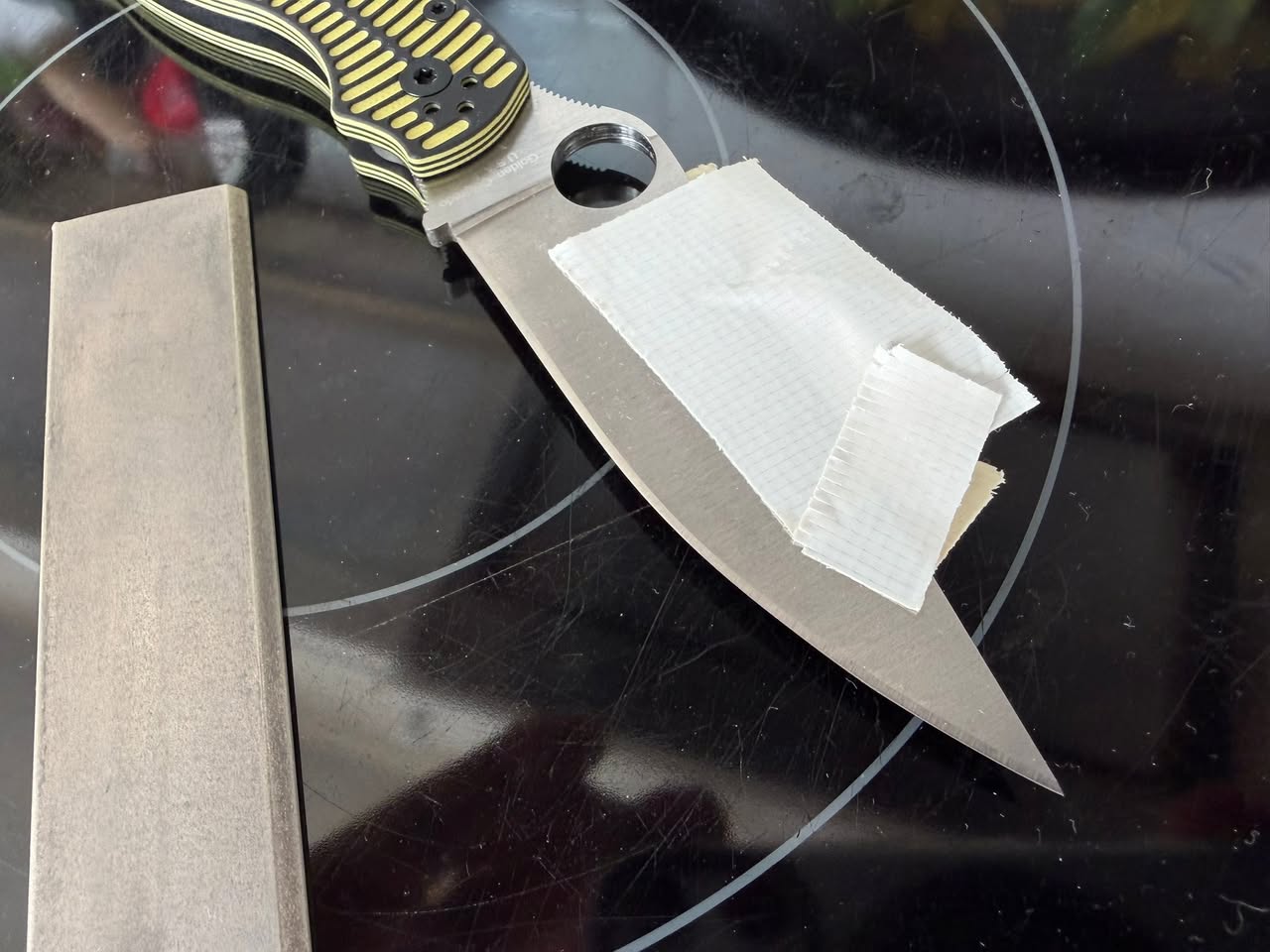
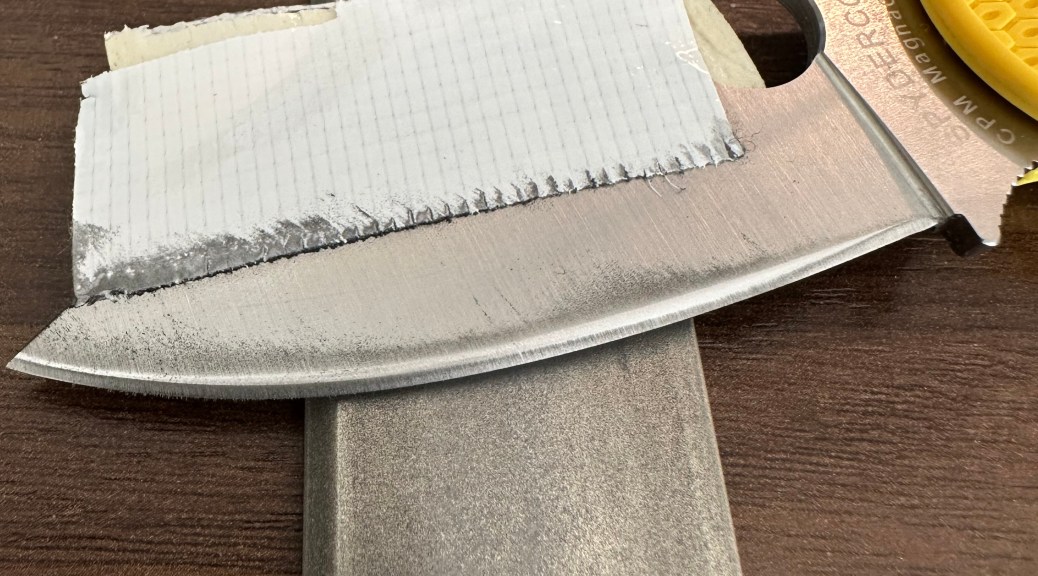
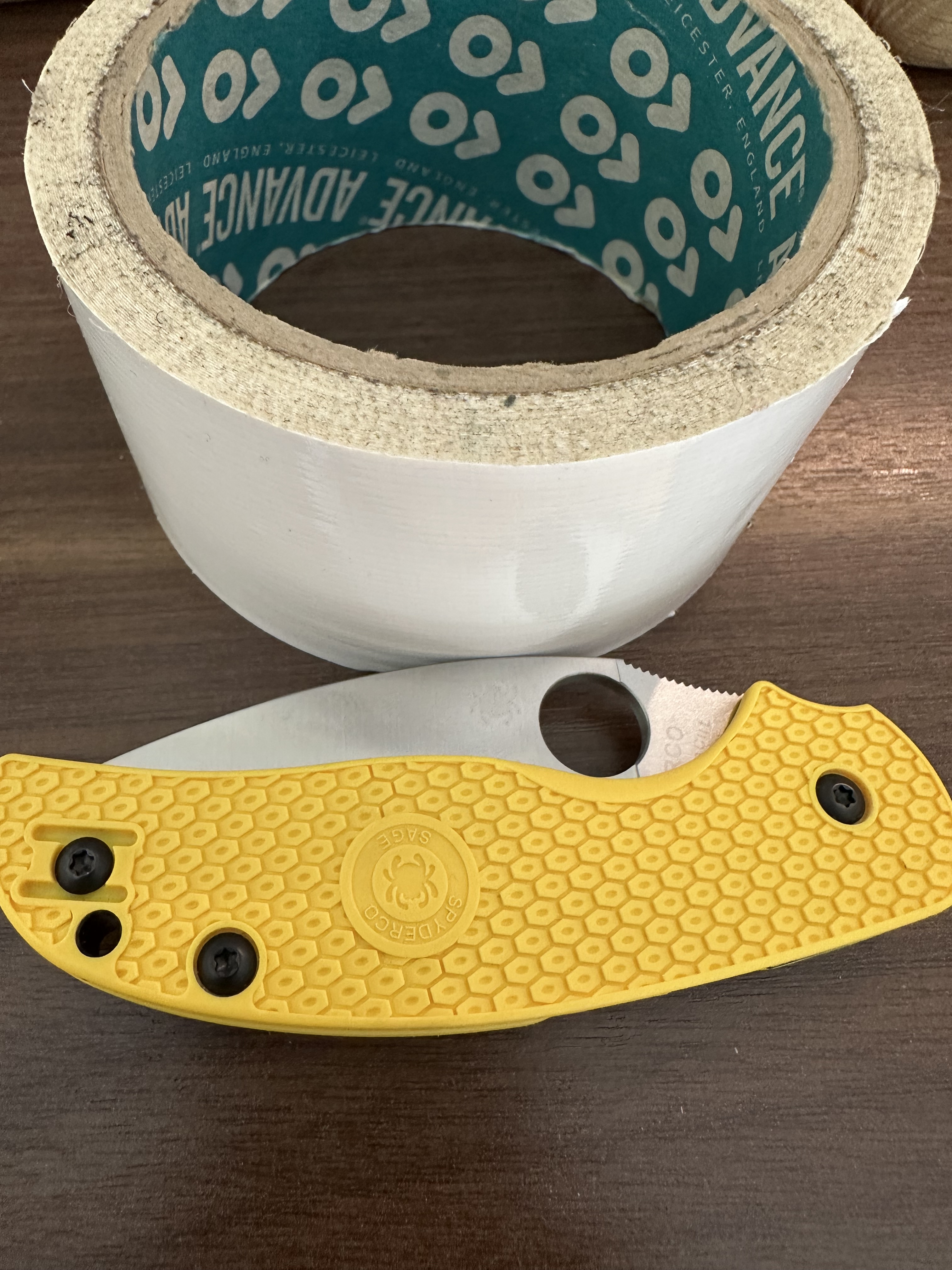
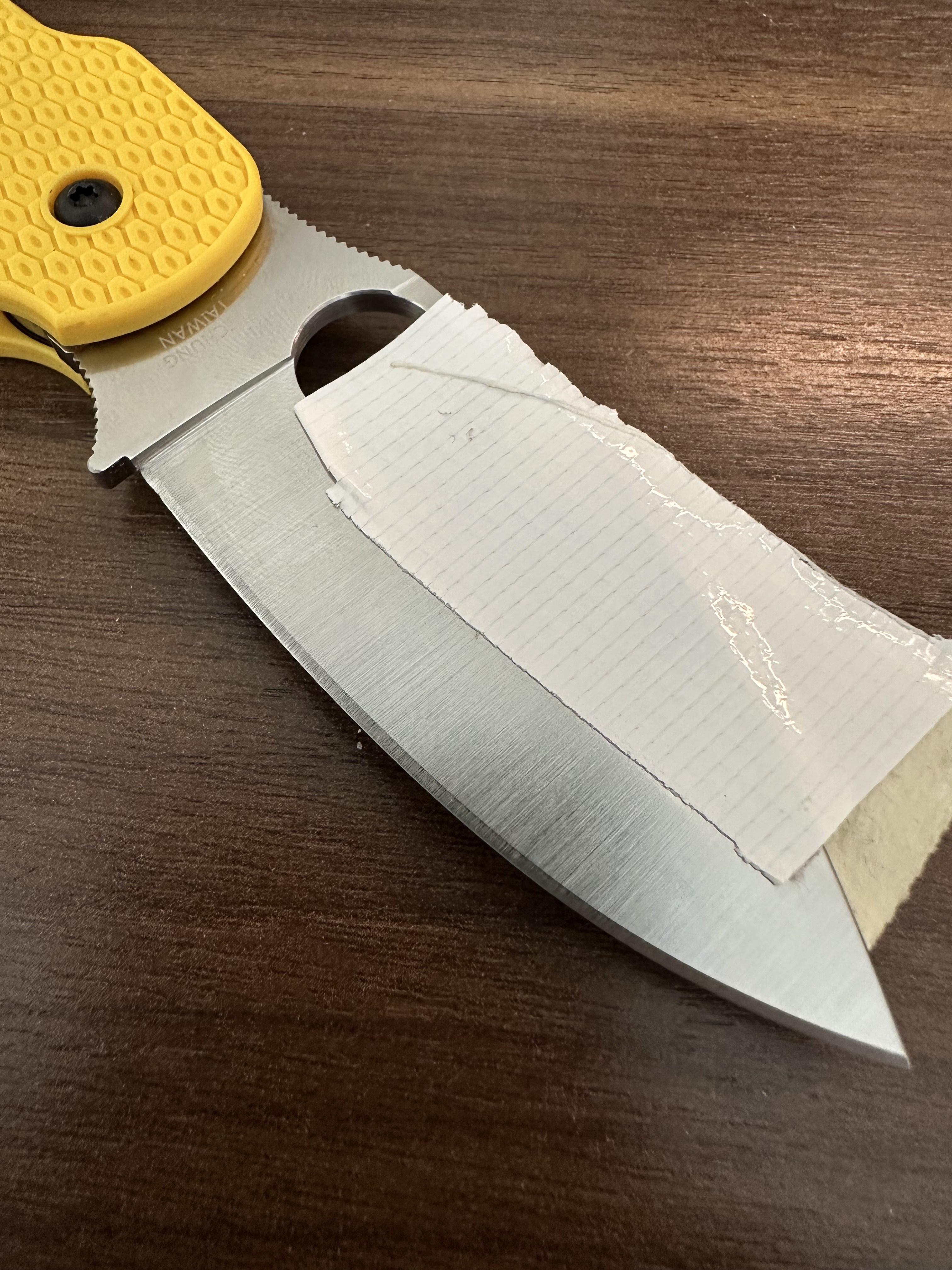
First thing. I do protect the sides of the blade to avoid scratching because I’m clumsy. I use thick duct tape AKA gaffer used to fix everything on the movie sets for everything including marks on the floor or information on magazines.

As I’m clumsy it even not symetrical.

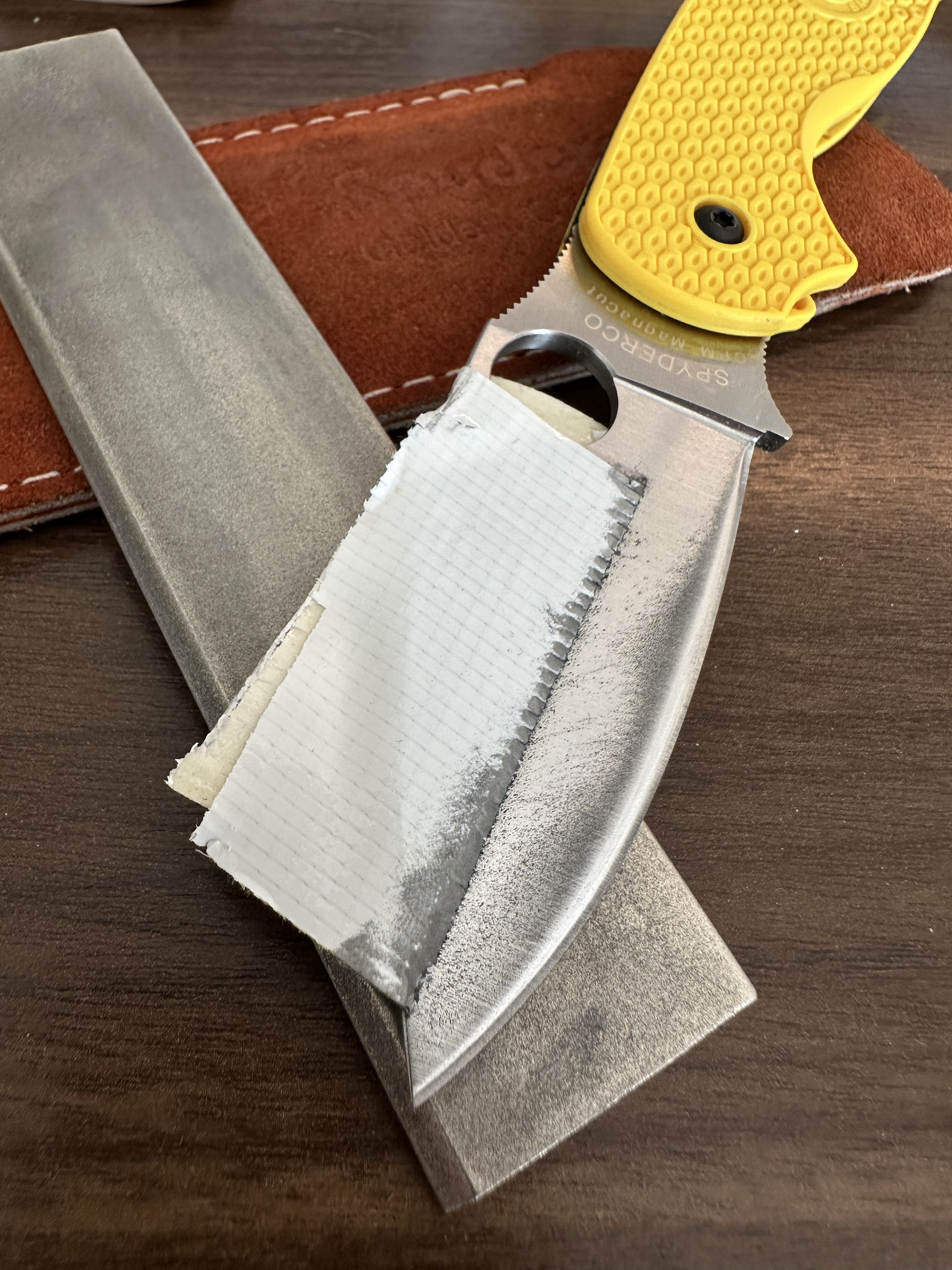
Next I use some diamond. Here it is a Spyderco Double Stuff II.

A two-sided pocket stone has long been the sharpening tool of choice for fishermen, outdoorsmen, and other knife users who needed a handy, versatile sharpener for touch-ups in the field.

In 7 minutes I got that result.
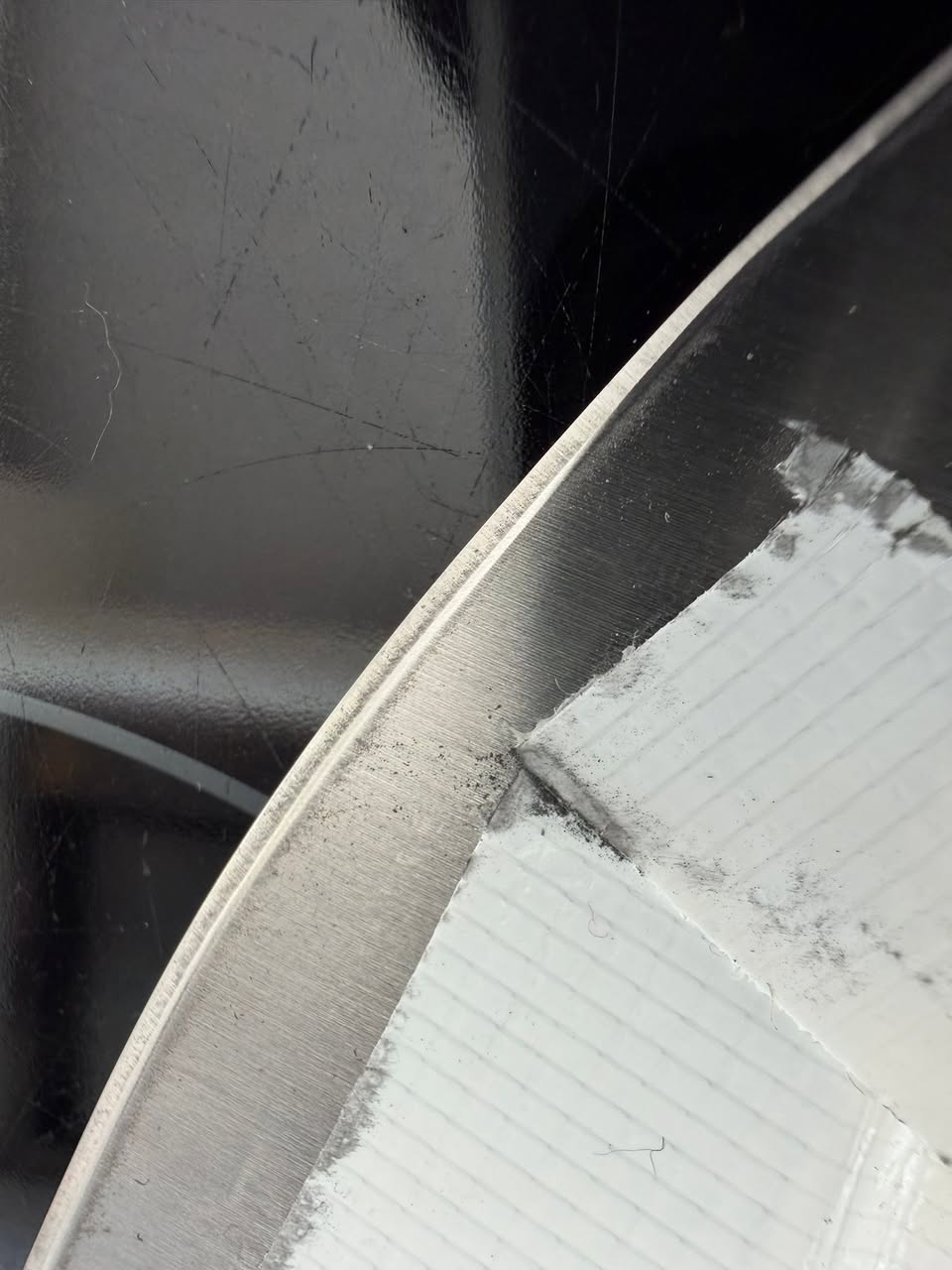
I do not touch up the edge, my angle is aim toward the shoulder of the edge to thin it.
You can see the edge is styill the factory edge.

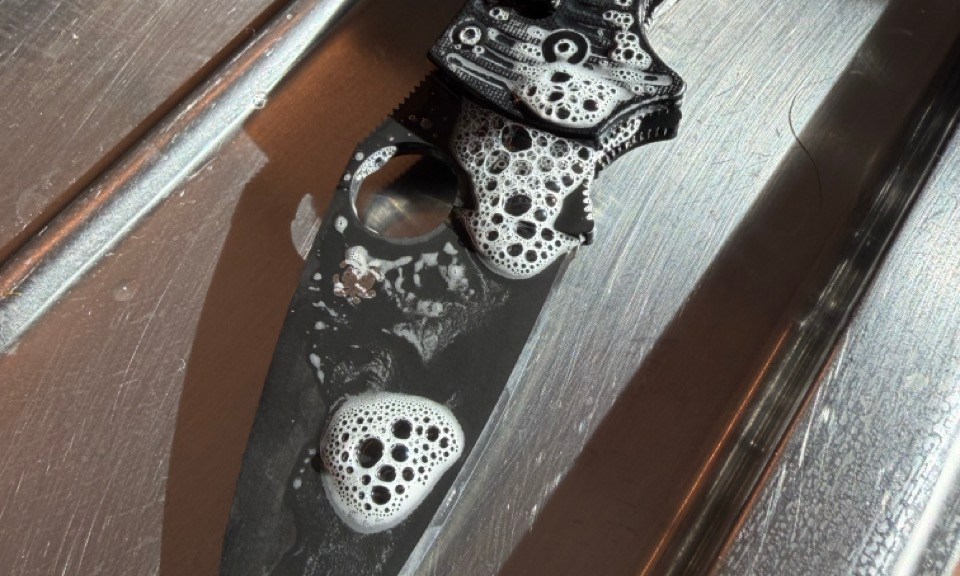
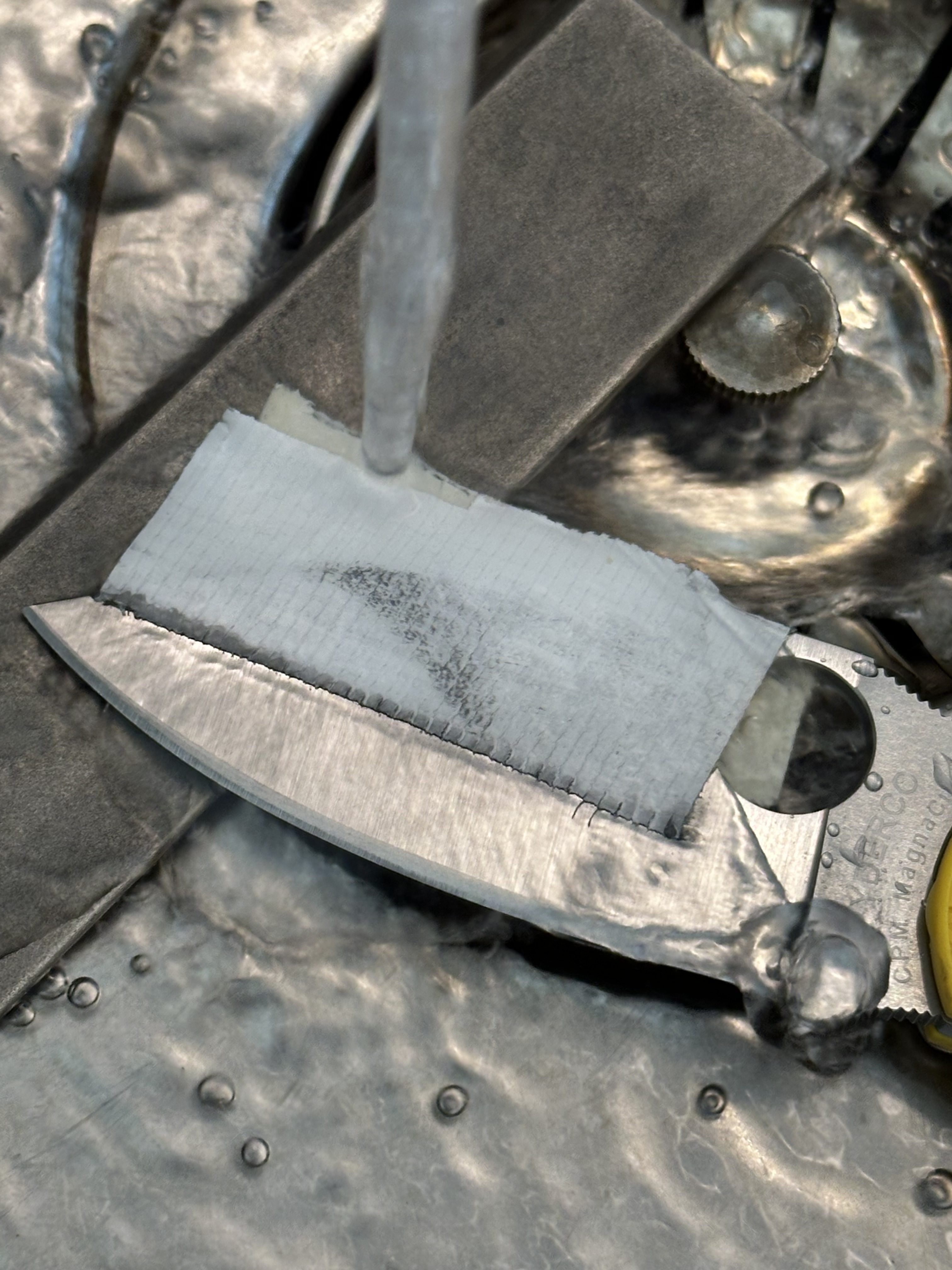
Now it is just a matter to rinse it.
The factory edge still is razor sharp.
But the geometry is improved and it cuts much more easily into hard matter.
In 15 minutes I got an edge like I want. This was made on my Sage Magnacut.

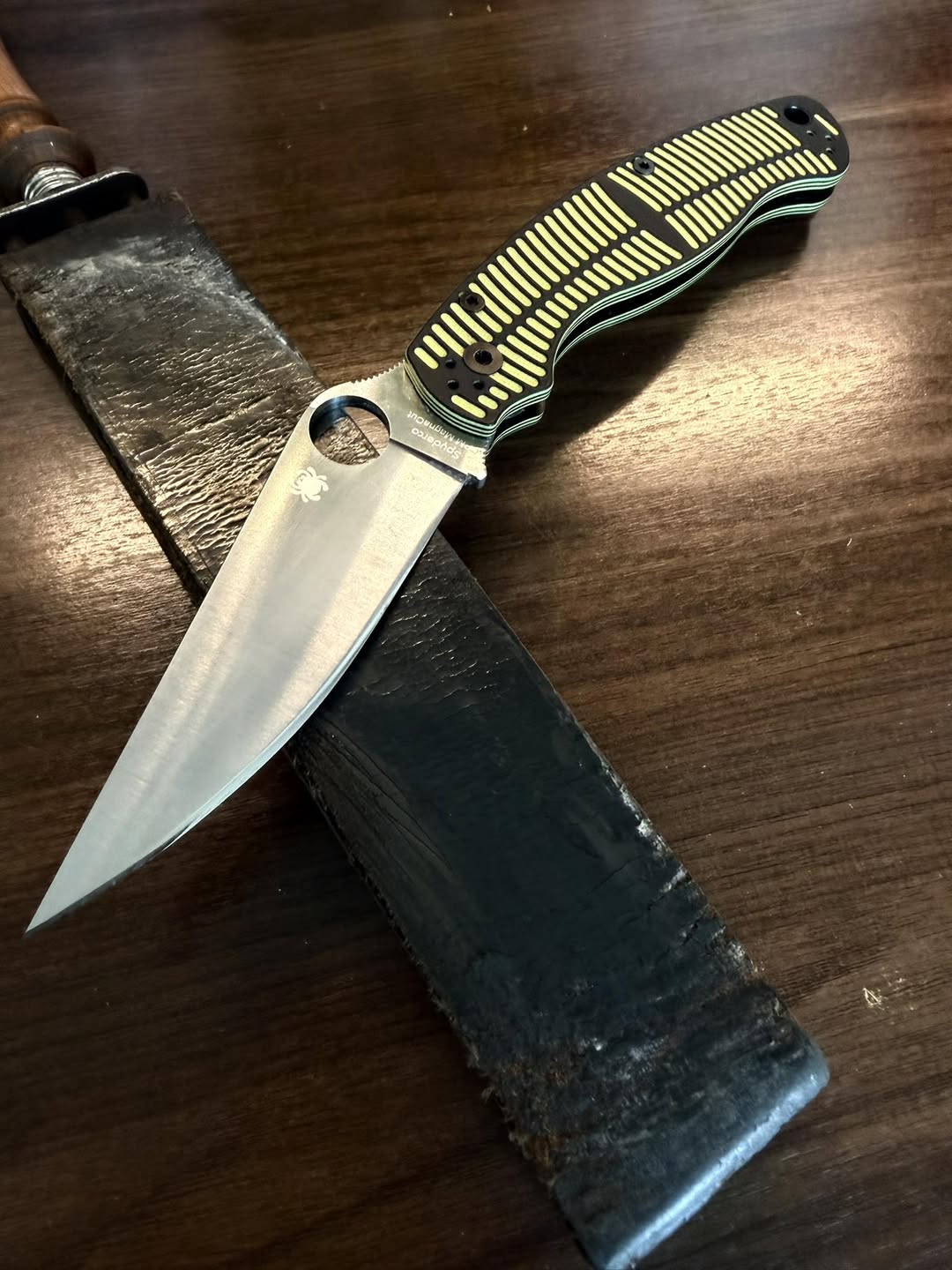
Now with a more convex edge it is easier to strop it on leather.
Magnacut behave a lot like Cruwear and both love leather.
It won’t be that easy on CPM – 15V which needs much more patience !
Anyway a part 2 is now available.

SAGE™ 5 LIGHTWEIGHT SALT® – C123YL – The Magnacut Amphibian EDC –

First of all, thank you to Guillaume Xais who has convinced me to try the Sage 5 Salt. I have found a deal under 200 euros.
In the past, I have owned some Sage(s) from the Sage 2 to the Sage 4 actually.
You still can find the reviewss by clicking the links.
The Sage 2 was a Sebenza killer when all the crave was about Christopher Reeves Integral Lock and titanium slabs.
The Sage 3 was the Blue Brother.
The Sage 4 was a masterpiece with its Front Lock and titanium Bolster never reviewed because too much a jewel of a knife.

(Picture by Guillaume Xais – instagram Spydigex_knives)

I wasn’t particularly interested in the Sage 5 Compression Lock, and even less in the Sage 5 Lightweight. Yet both the Sage 5 G10 and Lightweight versions proved so popular and well-regarded that Spyderco expanded the lineup into Maxamet, SPY27, REX 121, Magnacut, and CPM-M4 (thanks to Guillaume for the editing).

With the vanilla S30V, the Sage 5 was offered in six different alloys — some of the most impressive in terms of performance — demonstrating just how versatile and capable this design can be.
 “The Sage 5 Lightweight has also proven itself to be a perfect platform for showcasing the elite properties of high-performance blade steels.”

(Picture by Guillaume Xais – instagram Spydigex_knives)


For the record the Sage Series has traditionally expressed the same iconic design with different lock mechanisms, paying homage to the innovative designers who created them. Also Spyderco donates approximately 5% of sales of the Sage line to the National Alzheimer’s Association Denver, Colorado Chapter.
(A Sage 6 is soon coming with a button/compression lock as found on the Smock.)
So I have asked to Guillaume in the Spyderco Fan Club France, why should I invest in a Sage 5 Salt Lightweight in the first place ?

(Picture by Guillaume Xais – instagram Spydigex_knives)

“Its action, like any self-respecting Sage LW, is dazzling!
This yellow contrasts with the hardware, the clip, and the deep black of the liners, like a Black Mamba face… I love it!
My first Magnacut, by the way… I fish and am quite often at the seaside, it will complement my Ukpk salt (which is also very good).
My favorites, however, remain the 2 and 4, true works of art!

For me, it does everything better than a Para3: handling, fluidity, less fragile tip, less tactical image, more rewarding feel of the FRN… there’s no comparison (from my point of view, of course).
Add to that the Taichung Quality and Magna’versatility… they’re worth it, right?

I was convinced !

First impressions: there’s some real heft to this lightweight — thanks to the full liners. I love it. The blade is perfectly centered, and the lock doesn’t stick.

The detent is impressively strong, almost magnetic — stronger than the detents on my recent Para 3 and Military 2. Go figure! And the action is smooth as oily butter. Classic, perfect Taichung craftsmanship.

The FRN pattern is hard, grippy and catchy I even got some issue to put in my pocket.
It the same issue I had with my Chaparral Lightweight.


A passage under the sandpaper would be perhaps mandatory ? Let’s see what Papa Sal would advice in my case of protecting my pockets:
“You can lessen the tension on the clip as an easy solution. Some sand the scales bit.” Sal in the Forums.

Some gaffer to protect the black screws when using sandpaper.
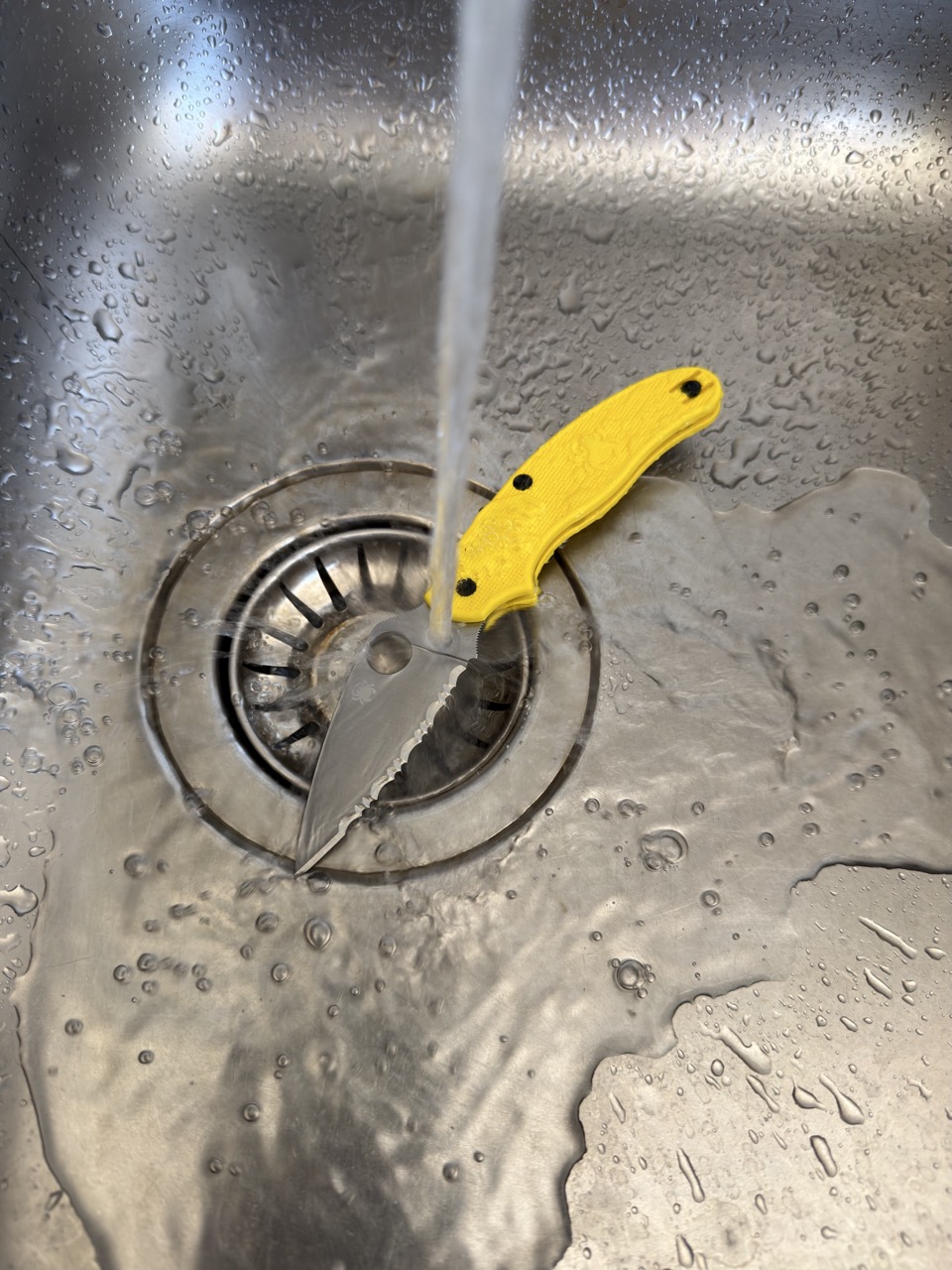
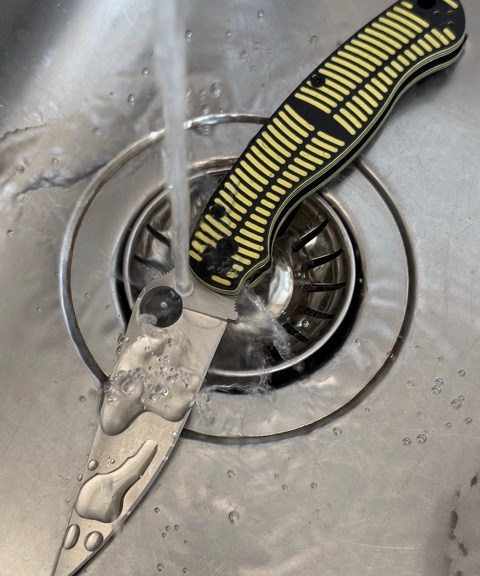
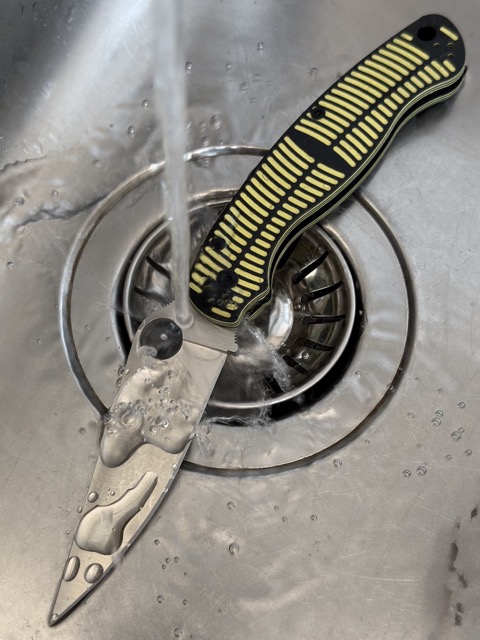
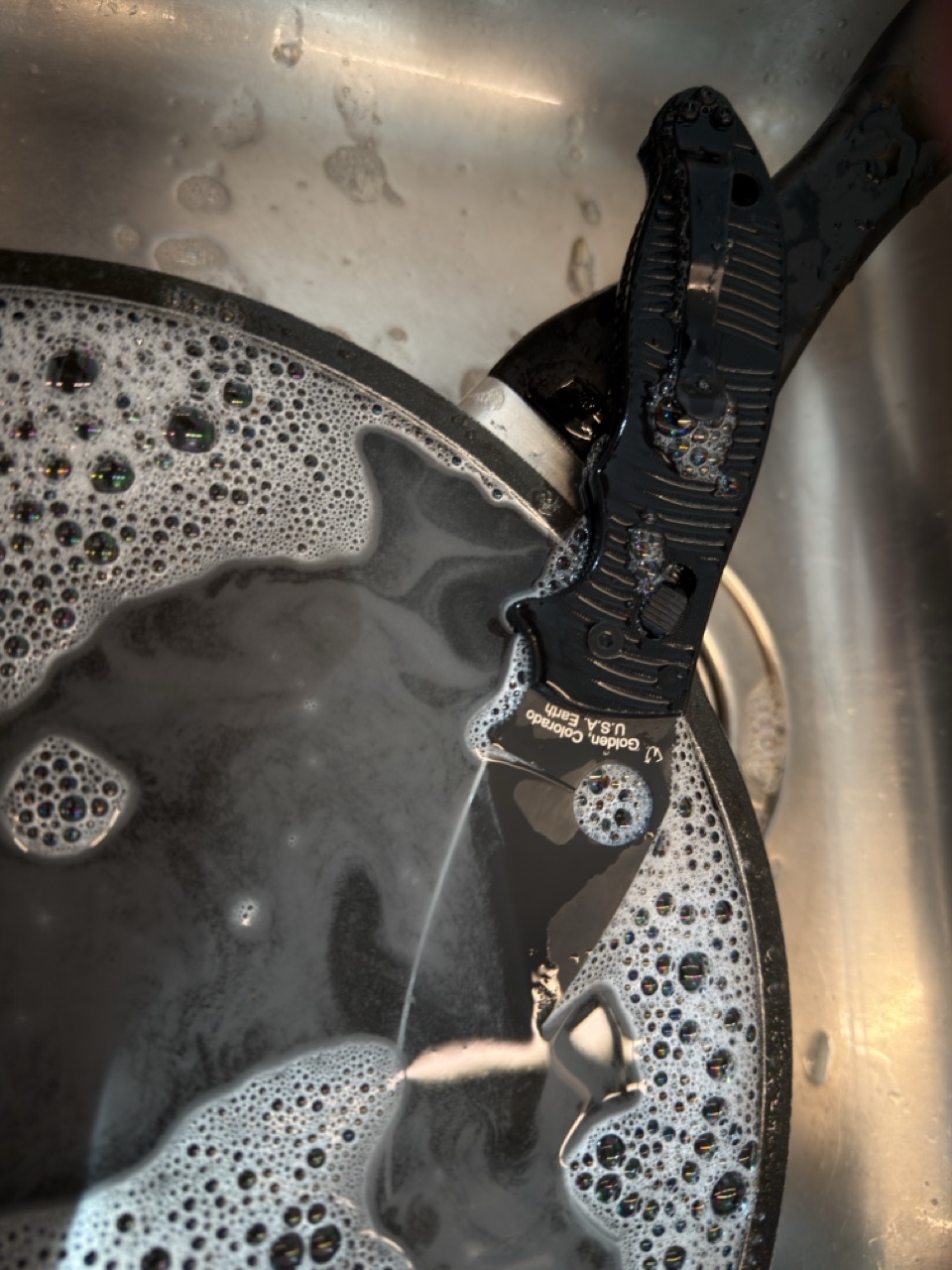
Then cleaned under the tap and it’s good to go.

Well… it is so compact it can eventually be carried inside the pocket watch.
But Sal was right like always, bending the clip a little has completely changed the way it clipped and for the better.

The metal hardware is all black certainly PVD coated.  “Like all Salt Series folders, the clip, liners, and all handle hardware are also crafted from marine-grade materials.” said Spyderco.
And Guillaume is right, the contrast between the black and yellow is an eye candy.

I have found a little hot spot on the choil which I felt under my index finger. Nothing a little diamond file won’t eliminate in a matter of minutes.

Now let’s compare it to the Para3 Lightweight.

The Para3 is a really light package because there is almost no liner.

64 grams.

78 grams for the Sage 5 with its nested steel liners

The FRN is smoother on the Para3 as it is not the same pattern.
Being a Salt the Sage 5 is destined to be used with wet hands.

The Sage 5 has a thinner 3 mm blade, and the chamfered edges on its spine are just stunning — smooth under the thumb and a true Taichung signature. Even the Spyderhole is gently finished.

A major plus for whittling is how easily my left-hand thumb finds a comfortable spot on the blade spine. With the Para 3, the thumb doesn’t have a proper ramp parallel to the cut. On the Sage 5, the parabolic spine of the leaf-shaped bladelets the thumb push comfortably in the middle of the spine, which makes a real difference during whittling.

Same blade length, but a different spine shape. The Para 3’s Spyderhole is especially suited for use with gloves.

Is the Sage more of a civilian EDC and the Para 3 more tactical? Not entirely certain. The Sage feels more solid in the hand and has more heft, while the Para 3 feels like a light, quick-reaction tool, and the Sage 5 is an all-terrain EDC.

The Sage handle is more compact and can be carried in the watch pocket, thanks to its grippy FRN and strong clip.

Grip is essential when working around water or with wet hands. The Para 3 is gentler on pocket edges, while the Sage out of the box can be a pocket shredder. Following Sal Glesser’s advice, I flexed the clip slightly for lighter retention — now it’s perfect.

Next, let’s take a look at the Sage’s geometry straight out of the box.

I was able to cut through the plastic without having de-shouldered the edge yet. It will be done in the next chapters. For the record, I was not able to get a clean cut with the factory geometry of my new Para3 and Military2 in CPM 15V.


So this blade has excellent geometry right out of the box: this is really impressive ! Without any touchup of the factory edge it goes deep in any material, soft or hard.

The Sage 5 Salt is a pure Sal Glesser design with its iconic leaf-shaped blade. Fun fact: the letters S‑A‑G‑E appear in order in his name!

This great folder is made in Taichung, Taiwan, renowned for its exquisite manufacturing and quality control. The blade is chamfered, and the jimping is soft under the thumb, making it a joy to handle.

Ultimately, this is a Highlander knife“In the end, there can be only one.” The Sage 5 Salt feels like a Spyderco to rule them all — the only one I’d ever need in terms of portability, reliability, and performance.


Purely stainless from blade to screws, it is a true all terrain tool. I mean, you won’t need another knife as this one is totally impervious to salt water and boast that CPM Magnacut blade known for its great performance: “a revolutionary particle metallurgy steel that offers an exceptional balance of edge retention, toughness, and the extreme corrosion resistance.” It is true when properly heat treated and with the best geometry.
(Again all those green marks are links to previous review or sources of this review.)


Polishing the Sage’s edge on a leather strap — aka stropping — removes the final imperfections, leaving an even razor-sharp edge. Magnacut, in particular, responds beautifully to leather stropping.

With the Vigtig and the Nano. I managed to get these three knives for under €200: the Sage 5 at €194, the Vigtig at €130, and the Nano at €192.

This means that, as of March 2025, CPM Magnacut knives can be found for as low as €130 — a good deal, though it may not last. The UKPK in CPM Magnacut should be in a similar price range, which I’m looking forward to.


So far, first impressions are excellent! The yellow handle makes it feel less threatening — more like an everyday tool than a “ninja mall weapon,” which is a definite plus these days.

It’s also ready for kitchen use, thanks to a strong edge that isn’t afraid of ceramic plates. Magnacut takes a razor-sharp edge easily with just a bit of ceramic and leather work. No need for diamond paste like on the mighty CPM 15V.


The amphibious Sage 5 is a perfect traveling companion — from mountain rivers to the ocean. It delivers impressive cutting power for its size, biting into hard wood effortlessly. The blade spine is very comfortable for push cuts, making it a reliable all-terrain tool.

It’s a dream knife for fishermen and woodcrafters, capable of accompanying you in virtually any environment.
So far the Spyderco Salt serie is enlarged to very nice plateforms with Military flavours and civilian purposes.


First impressions of the Sage 5 are excellent — in terms of action, geometry, and ergonomics. This is a great EDC that’s fearlessly corrosion-resistant.

Thanks to Guillaume for the tip!
Now time to convex it !

Lion Steel Nano – A closer look at the Dwarf

One week later with Thorin in the pocket (Tolkien fans will know), I can now say: “What a great EDC knife!”
And especially after each use: “What a cleverly designed cutting tool!”

Of course, I have noticed some complaints about the fact that the ball bearings are not ceramic. But I also remember reading many issues about the Spyderco Mantra 2, and mine only got better and better the more I used it.
The same goes for the Nano: it now flips at 100% every time.

Now the Dwarf has proven to be exceptional in terms of pure ergonomics. This is a knife designed as a tool you can handle for a long time, making it a great candidate for woodworking and even various bushcraft uses.

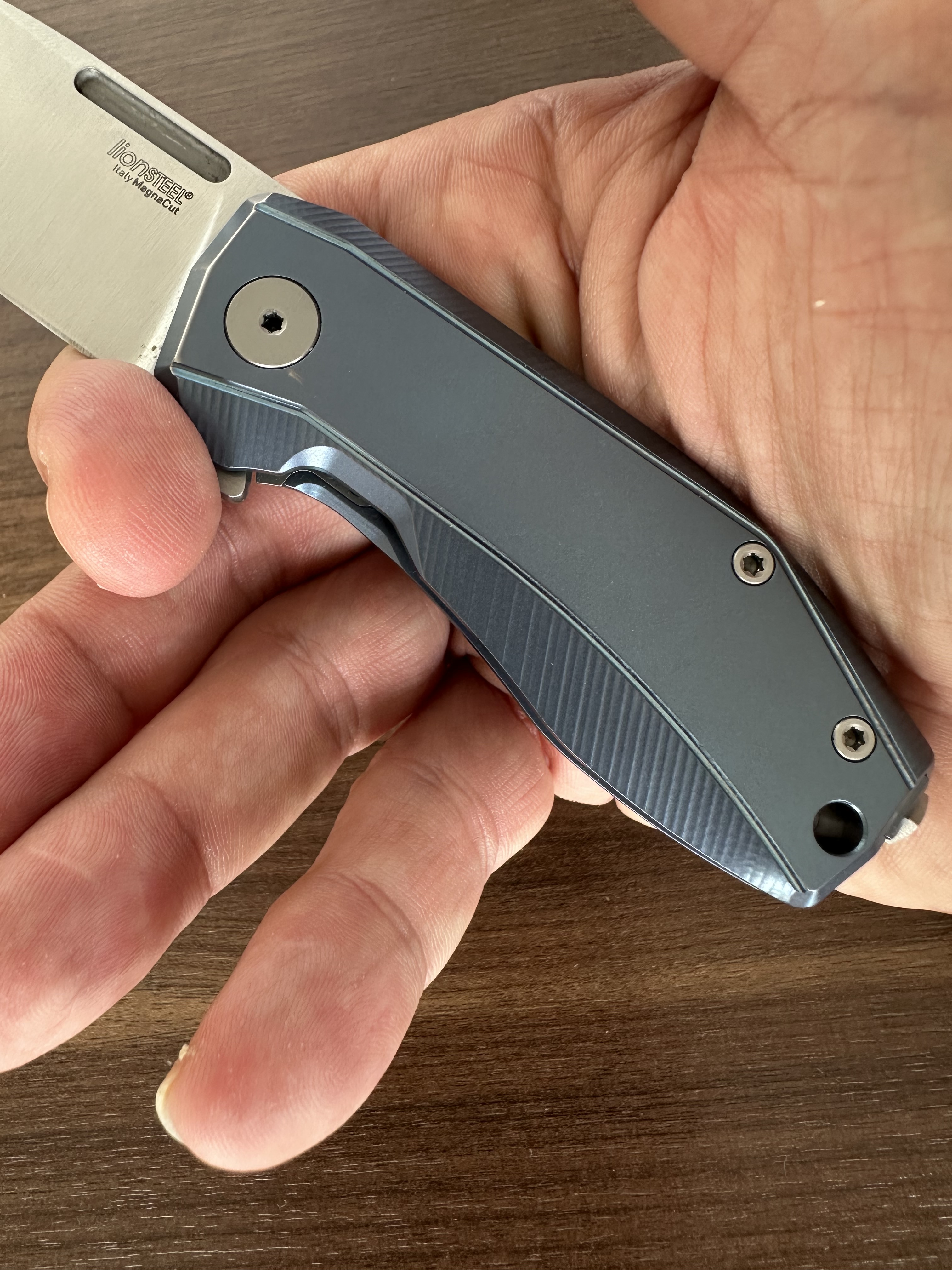
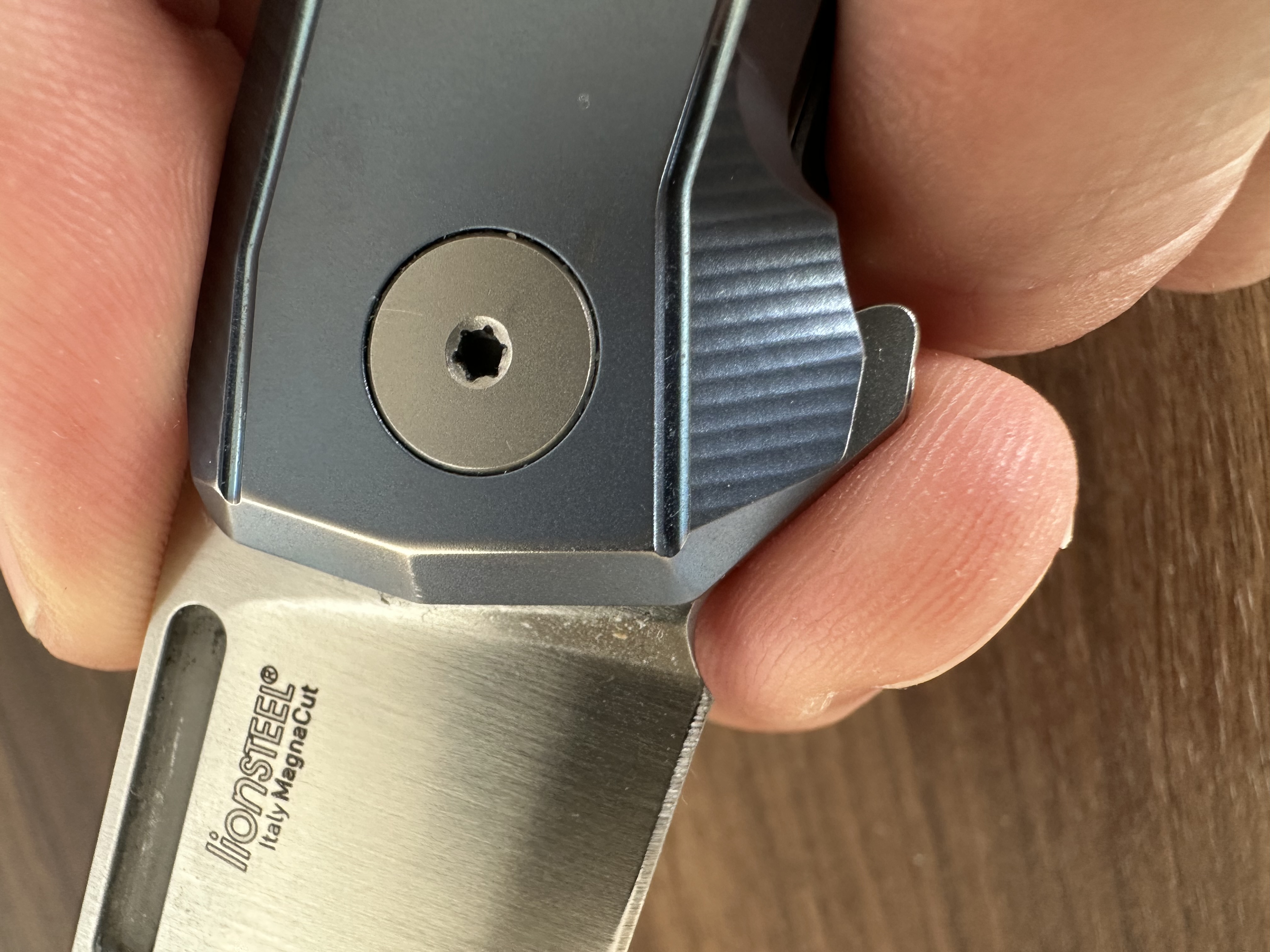
As you can notice, the handle has that “elbow” near the end, which makes it simply nest in the palm of the hand.

See?
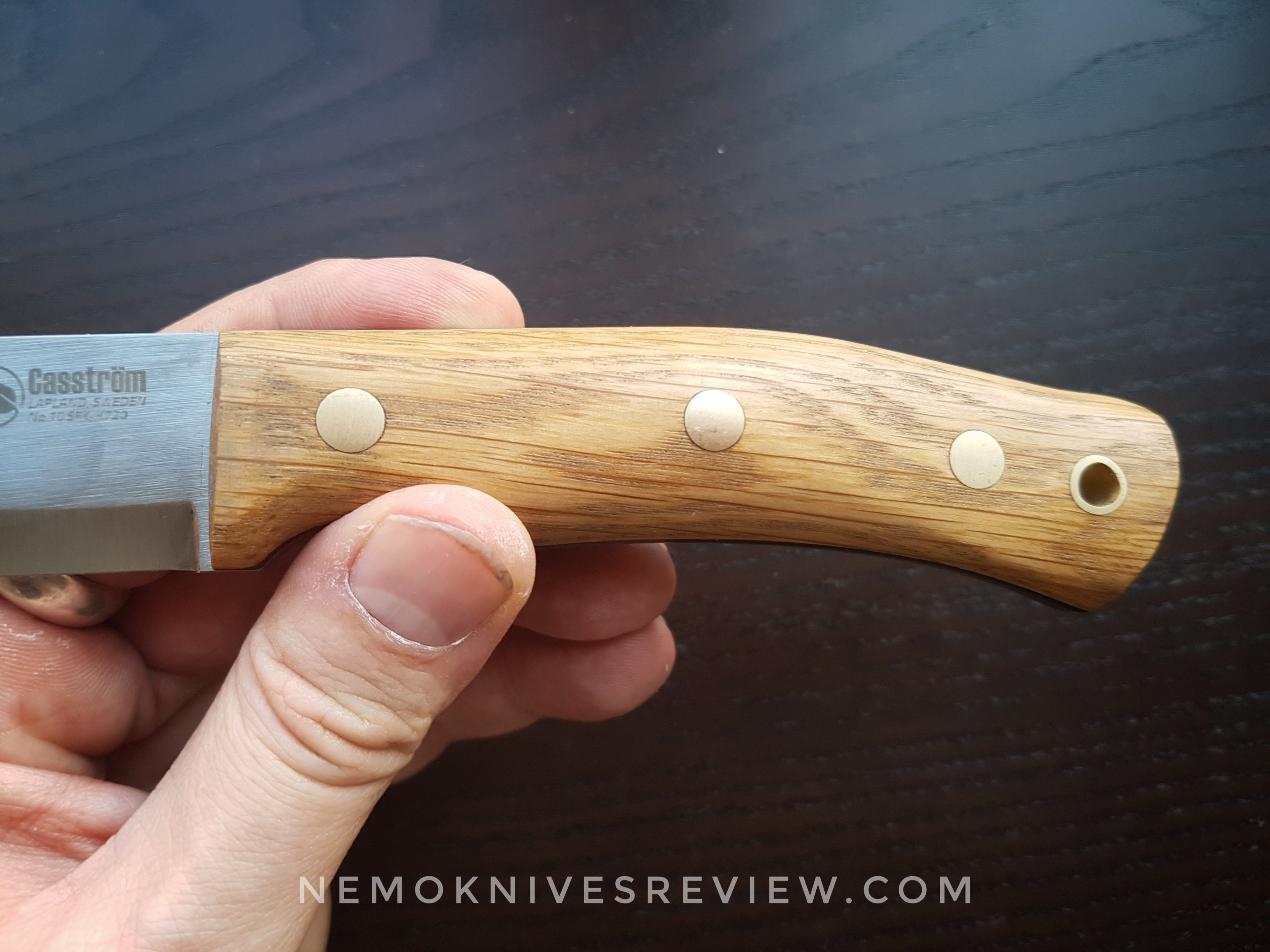
It follows the same idea as the Casström handle, a knife that is a pure bushcraft tool.

This design detail significantly improves comfort and control in the hand.

Another really nice touch is how the flipper integrates into the handle once the Nano is open.

The flipper almost disappears into the handle. It sits more flush than on my Amalgame Bowie.

This dwarven knife is made for hard use and tough work. The blade has a wide full flat grind on an almost 4mm thick stock, which delivers excellent push-cutting power.
Like the dwarves in Tolkien’s books, you cannot judge the Nano by its size.

This little big knife has a handle built for a strong grip and a short blade made for hard cutting.

Also, the edge of that CPM Magnacut blade, once convexed, is easy to maintain razor sharp with just leather stropping. Apparently, the heat treatment has been very well executed by the Maniago makers.

The excellent geometry also makes it a breeze to use on softer materials.

The open construction also makes it easy to clean.

Even better: titanium and Magnacut are not easy to stain anyway. You don’t need to clean it immediately. Under hot tap water, it comes back like new.

So really, so far so good: Thorin the Dwarf (“Nano” in Italian) delivers and is not a disappointment at all, but an excellent surprise. It sits in the same category as the Spyderco Techno.

Short tools with real cutting power are precious and not easy to design well; a folder short enough to fit comfortably in a watch pocket, with its pebble-like shape, won’t raise any sheeple eyebrows. That’s a gem!

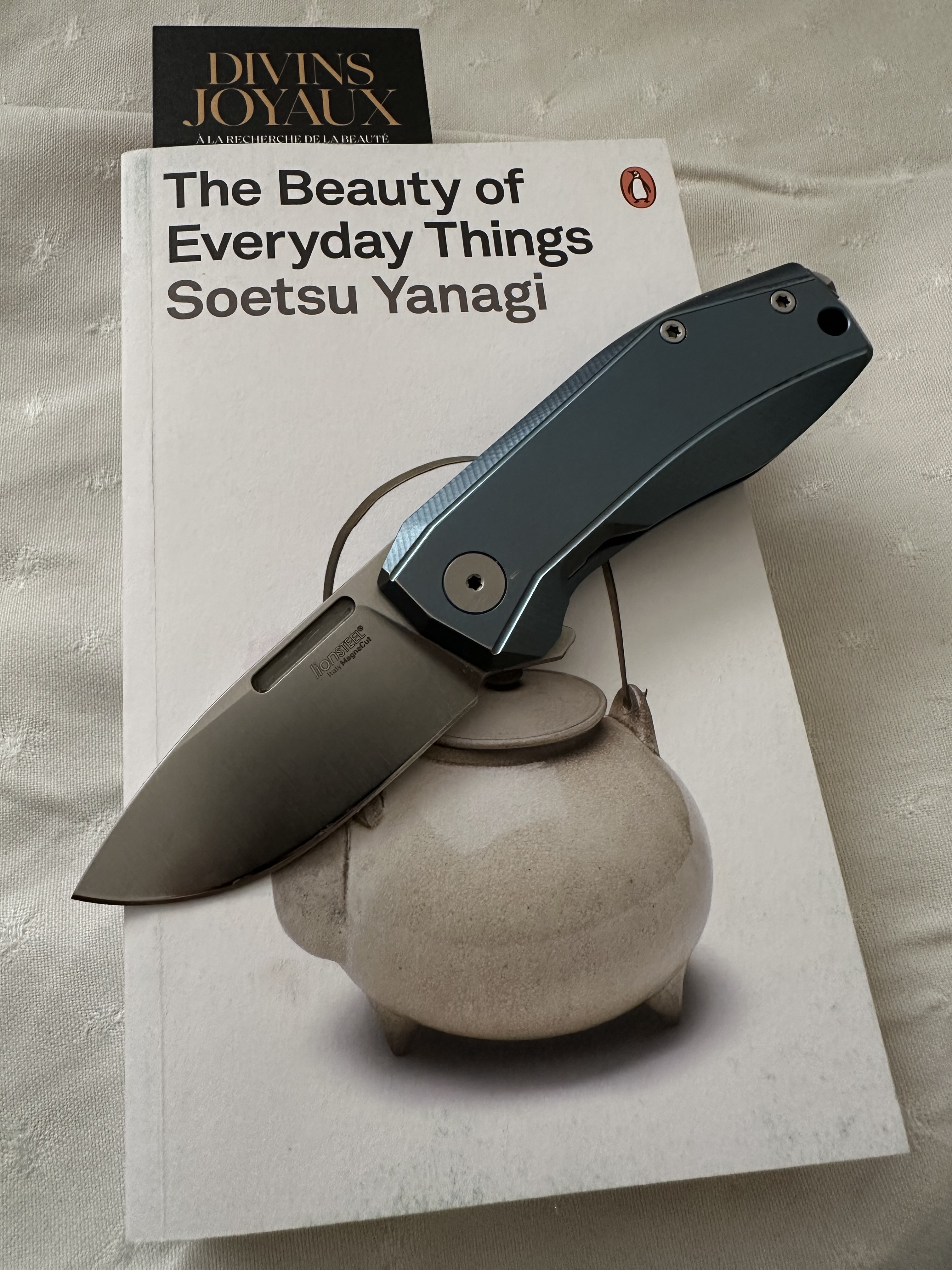
LionSteel Nano, NA01-BL – Magnacut Blue Lil Big Knife Made in Italy.

Lionsteel Nano – “Amore a prima vista”

I’ve been eyeing the Nano from Lionsteel for almost a year now.

A compact titanium frame lock in CPM Magnacut, made in Maniago, is a very tempting proposition. Lionsteel has clearly invested heavily in what has become the “darling steel” of modern cutlery: CPM Magnacut, and several models in their lineup showcase it.

Known for high manufacturing quality, Lionsteel has already impressed me in the past, including through collaborations like the Spyderco LionSpy.

So, back to the Nano: what’s not to like about this chunky little “big knife”?

Magnacut, titanium, and a refined Italian design — amore a prima vista.

Specifications (from Lionsteel):

Total length: 162 mm (6.38 in)
Blade length: 65 mm (2.56 in)
Blade thickness: 3.8 mm (0.15 in)
Weight: 101 g (3.56 oz)
Steel: CPM Magnacut
Finish: Satin
Lock: Frame lock
Frame: Titanium 6Al4V
Handle: Titanium (blue anodized version shown)
Packaging: Cardboard box

The blade hardness is reported around 63 HRC according to this CBRx video.

This model is designed to be the “ultimate everyday partner”, as Lionsteel describes it.

To me, it feels like the Italian answer to the Spyderco Techno. Even upcoming generations seem to follow a similar design language.

This is an ultra-solid compact folder: titanium frame, strong lock, premium steel — a true pocket workhorse.

The hidden stop pin design also reminds me of my Swayback. Everything feels overbuilt in the best possible way — like a Land Rover in a Ferrari suit.

The flipping action out of the box is not perfect despite the double crown bearing system, but a drop of oil improved it significantly.

Still, the flipper is not my primary opening method.

There is a blade cutout allowing easy one-handed opening. I can reliably notch-drop open the Nano this way.

The flipper is removable thanks to Lionsteel’s ReF system (Removable Flipper System), allowing the user to install or remove it depending on preference.

I personally keep it installed, as it also works as a small guard.

Closing is smooth and secure. The titanium frame lock is reinforced with a hardened steel insert to prevent wear over time — a well-executed technical detail typical of Maniago craftsmanship.

The blade arrived very sharp out of the box, and Magnacut clearly responds extremely well to stropping.

The clip is beautifully machined titanium and reversible for left-hand carry.

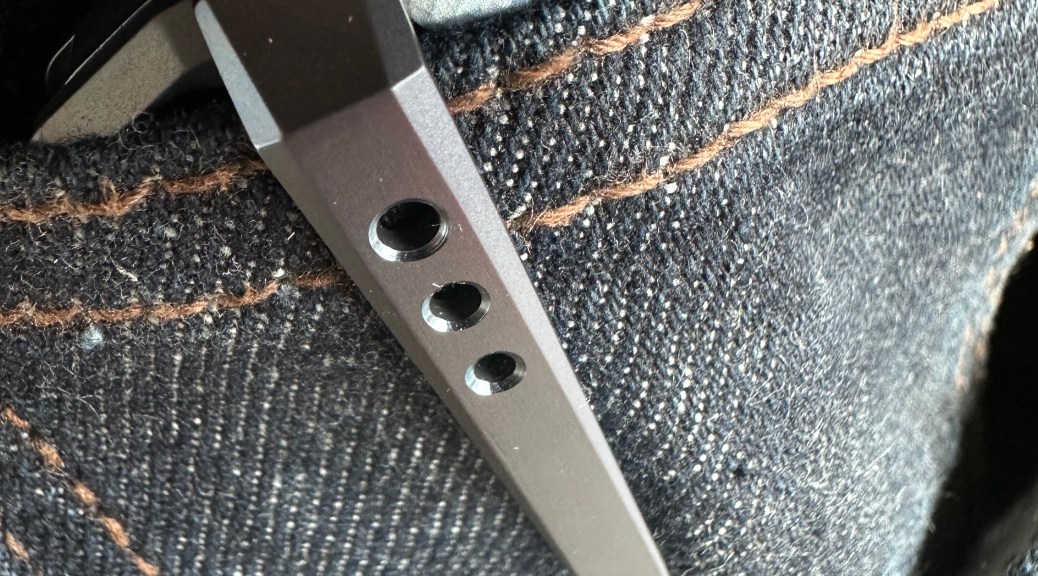
However, it is quite stiff on thick denim pockets. Not a deal-breaker, but worth noting for heavy clip users.

On the positive side, it never creates hotspots and disappears well in hand.

Overall finishing is excellent. The Nano feels like a premium folder in every detail. At under 200€, it is frankly an impressive value proposition.

Comparable quality from some US-made brands would cost significantly more.

Ergonomics are better than expected. I was initially skeptical about the angular geometry, but in use it feels secure and comfortable, even during harder cutting tasks.

The spine is rounded like a Chris Reeve design, making thumb push cuts very comfortable.

In wood, the geometry performs very well. Magnacut combined with this blade shape makes it a surprisingly capable compact woodworking tool.

Despite its size, the Nano offers a slightly better blade-to-handle ratio than my Native, making it feel efficient and purposeful.

In short, this is a compact but highly capable knife: refined, robust, and beautifully executed.

Thanks to Lionsteel and Gianni Pauletta for this design — a true gem from Maniago.

Mine is blue. Nel blu, dipinto di blu… and yes, it makes me feel felice di stare lassù.

The Amphibian Milestone in CPM Magnacut : the Paramillie 2 Salt has landed !

The Amphibian Milestone in CPM Magnacut iq PARA MILITARY® 2 SALT® BLACK G-10 CPM MAGNACUT® BLACK BLADE – C81GMCBK2, which is much too long to fit in a title.

This is not my first Paramillie 2. I usually wear the 52100 carbon fiber version, but I have used many versions in S90V, CPM Cruwear, and S30V. The 52100 is actually the exact opposite of this new version.
Announced at the 2023 Amsterdam Minimeet, a Paramillie impervious to the elements. Better: a nautical version ready to stand tall in front of the salty waves of the ocean’s breakers.
Then the wait began.

And here it is, in all its glory!
Delivered with Larrin Thomas’ dreamlike alloy: the CPM Magnacut!
A steel that hits a lot of sweet spots. Like a sort of totally rust-free CPM M4: strong, resilient, and able to withstand thin edges without chipping.
So why add a DLC on that alloy? Overkill can be fun, can’t it?

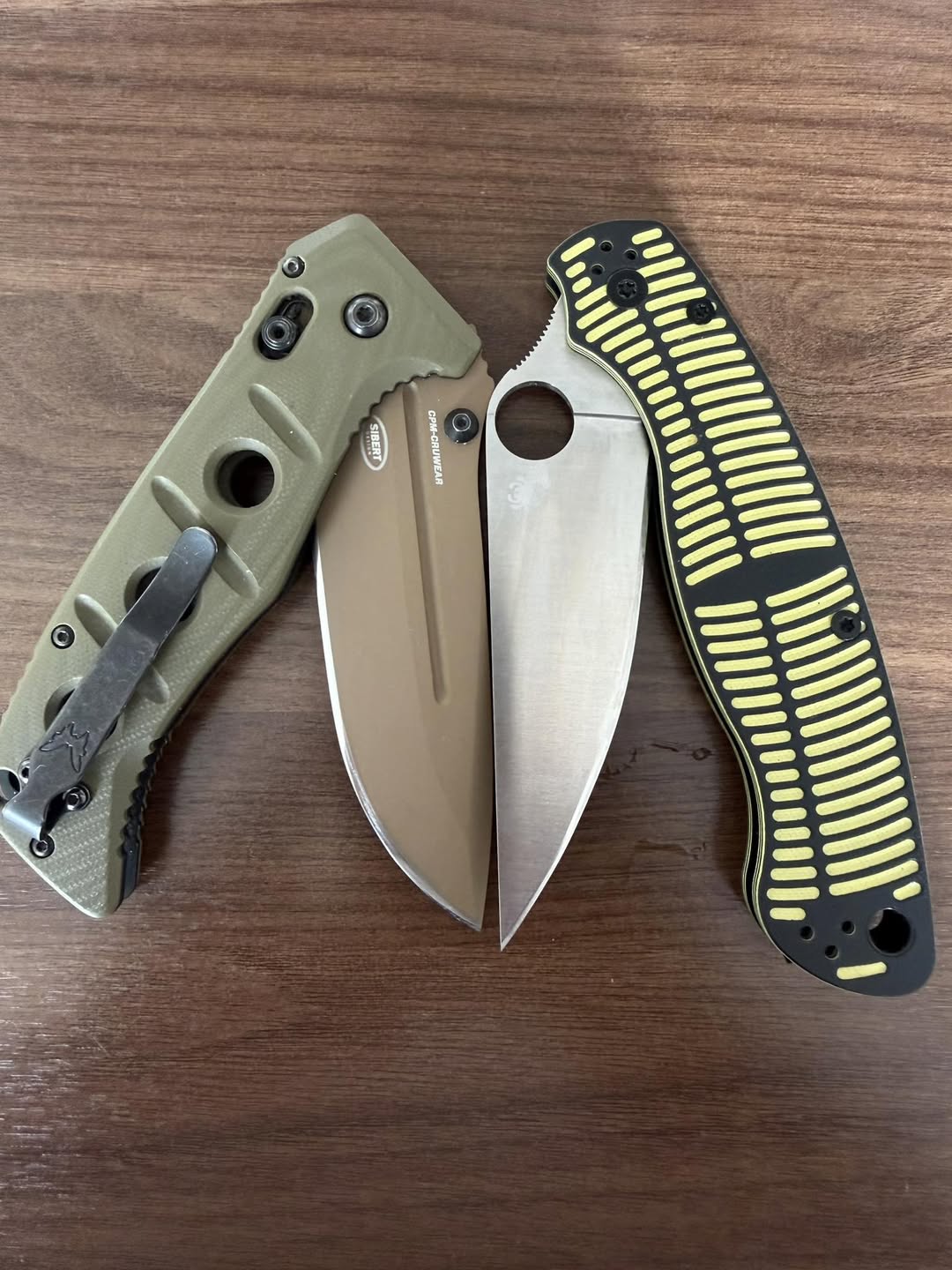
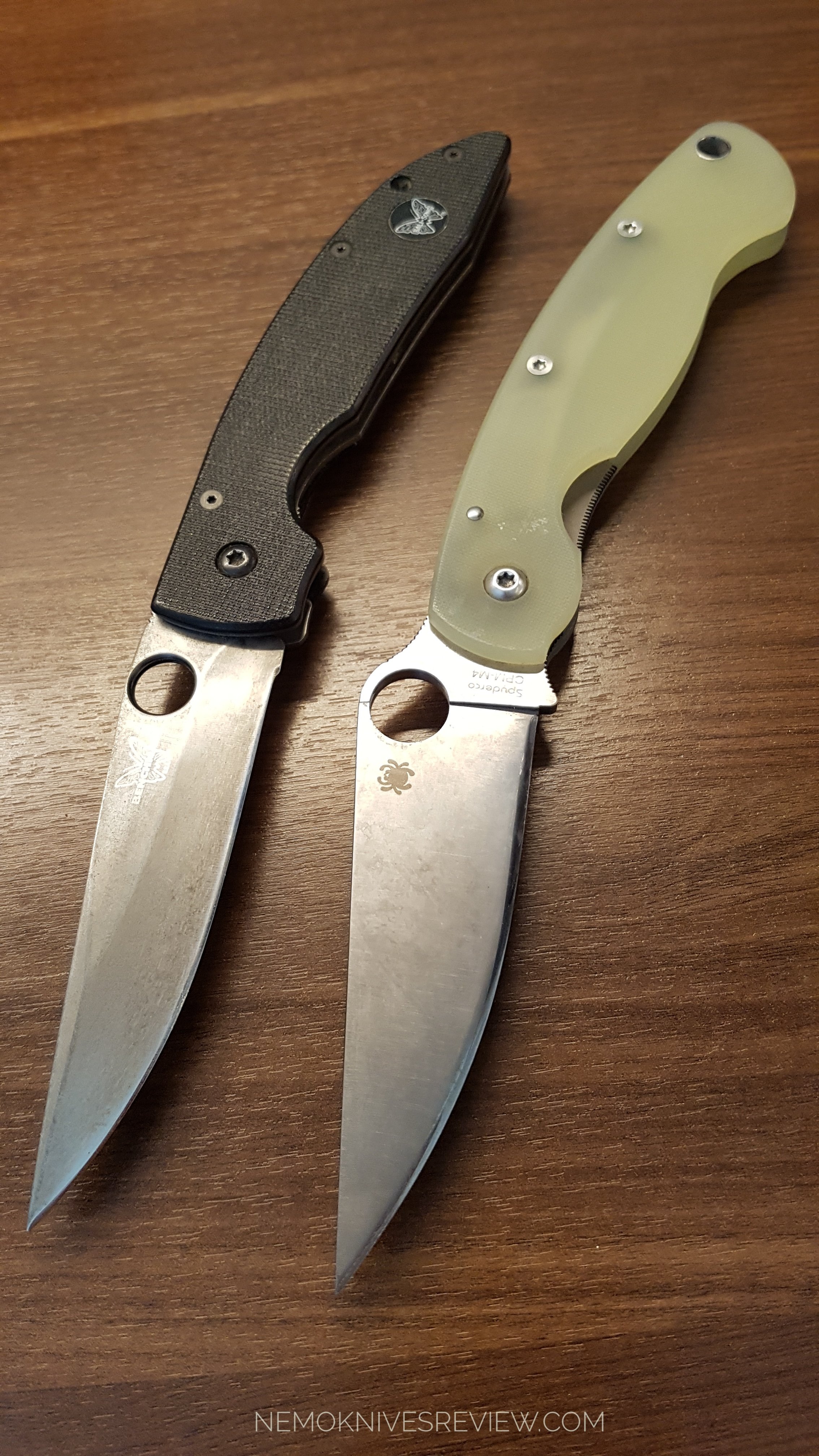
Here are 3 versions. The 52100, the CPM Cruwear, and CPM Magnacut from right to left. Three excellences in their own way, all designed by Sal and Eric Glesser.
CPM Magnacut is a story of love.
Quoting its metallurgist and designer:
“The carbide structure of MagnaCut is much finer than the common powder metallurgy stainless steels such as CPM-154, M390, Elmax, S35VN, etc. The only stainless PM steel I have imaged which is competitive in terms of carbide/nitride size is Vanax. MagnaCut is even somewhat finer than CPM-4V and Vanadis 4 Extra, the non-stainless steels that MagnaCut was modeled after. This is an excellent result and should lead to excellent properties.”

Quoting Spyderco:
“This tour-de-force expression of the Para Military 2 showcases a full-flat-ground blade crafted from CPM MagnaCut—a state-of-the-art particle metallurgy steel that offers an exceptional balance of edge retention, toughness, and superior corrosion resistance. Cloaked in a non-reflective Diamond-Like Carbon (DLC) coating, the PlainEdge blade is housed in a handle featuring peel-ply-textured black G-10 scales machined with the signature Caribbean Bi-Directional Texture pattern of Spyderco’s US-made Salt Series knives. To complement its blade steel and finish, the knife’s nested stainless steel liners, four-position pocket clip, and all other hardware are also made from ultra-corrosion-resistant materials and black coated.”

That new Salty Paramillie is destined to be an amphibian workhorse, a hippocampus!!
All hardware is black coated except the stop pin, which is silver and made of “fearlessly corrosion-resistant marine-grade materials“.
The handle (as efficient as it is in being non-slip) is destined to be a pocket shredder, as it is carved to be used with wet, oily hands. Your trousers will suffer!!
Unless, like myself, you are a compulsive user of sandpaper. Even then, it will be hard on pocket lips.

The Diamond-Like Coating is not only protecting a blade that doesn’t need any protection; it also gives a strong Mall Ninja vibe.
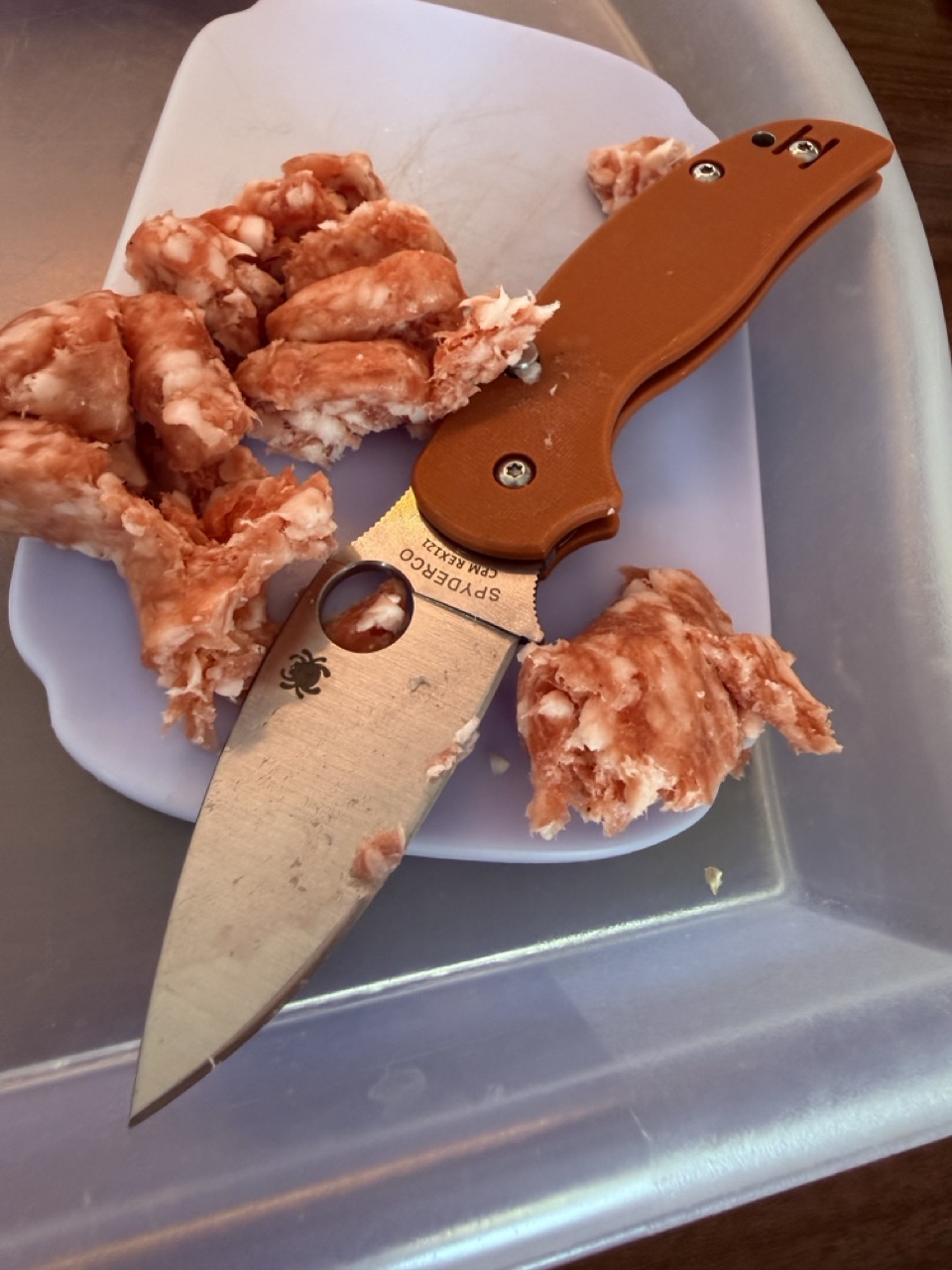
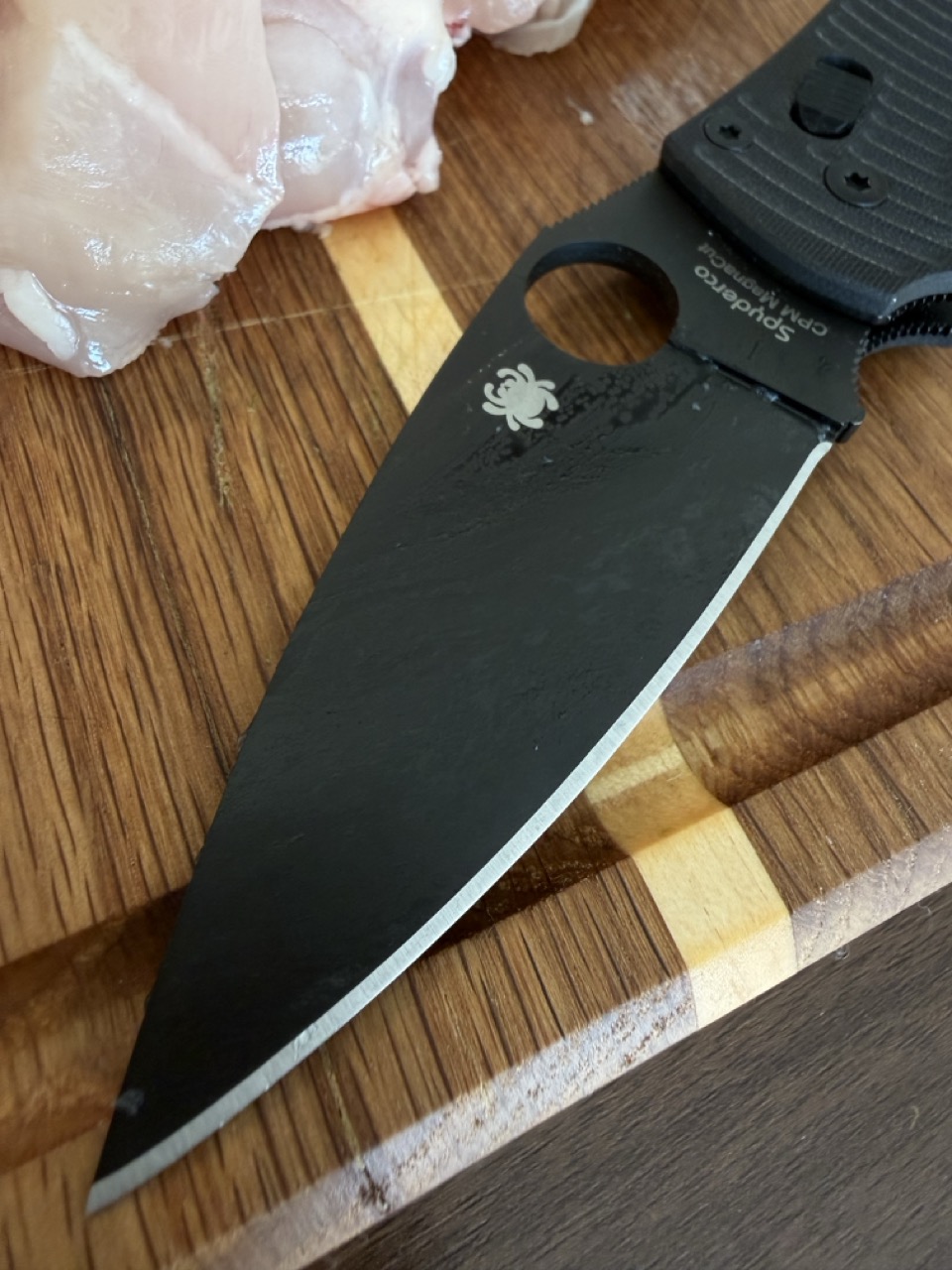
Usually, coatings bring some kind of lubrication to material separation. I’m not impressed so far, even on sausages.
The geometry is perfect on my PM Salty—thin as a razor though.

One thing I had to change was the clip. It was replaced by a Flytanium Universal Titanium Clip, which is short and deep-carry.
Also, I moved the clip for a tip-up carry, which suits the Paramillie better in my book.

Of course, de-shouldering the edge is the first step before convexing, which I do on new knives. Especially since I have read that Magnacut loves leather stropping.

And this is true! The edge turned quickly into a über-razor state.

It zipped through meat like a lightsaber into bantha meat.

So now the game is on. The Salty Magnacut Paramillie is ready to kick all other knives from my pockets and be used long term.
Let’s see what this cutlery apogee-era knife has to propose in the long run!