Tag Archives: spyderedge

UK PENKNIFE™ SALT® YELLOW CPM® MAGNACUT® — Civility Bares Its Teeth.

Disclaimer: This knife has been provided through Spyderco’s Ambassador Program, upon my own request. Thank you to the Spyderpeople for letting me review it. 

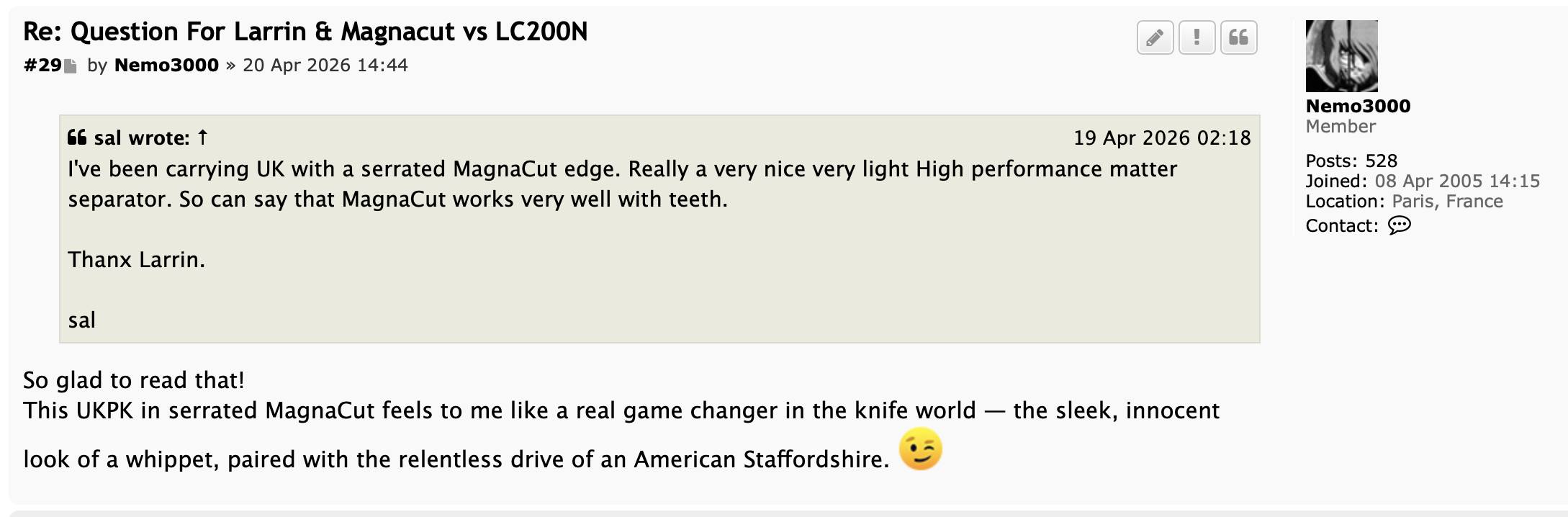
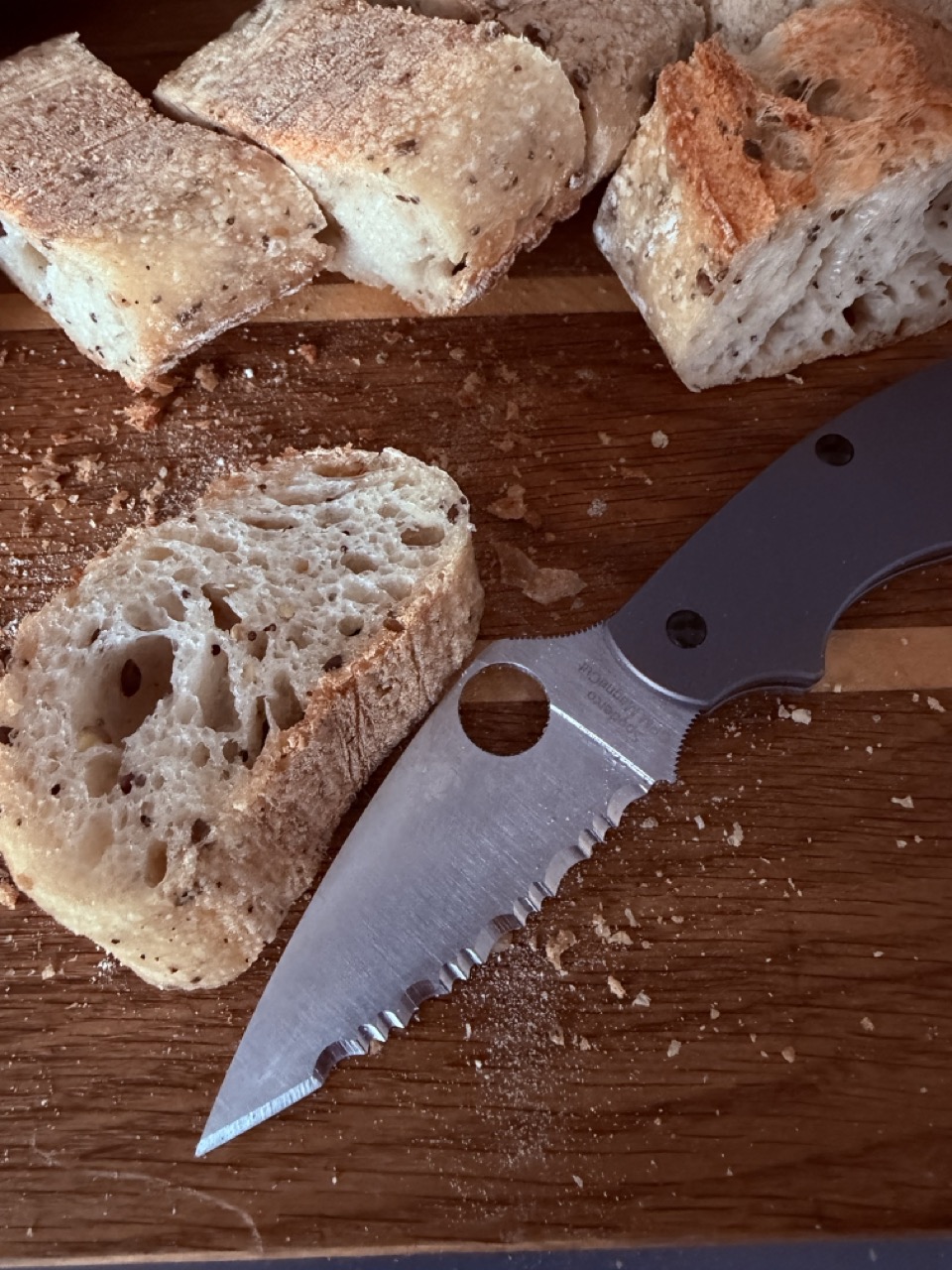
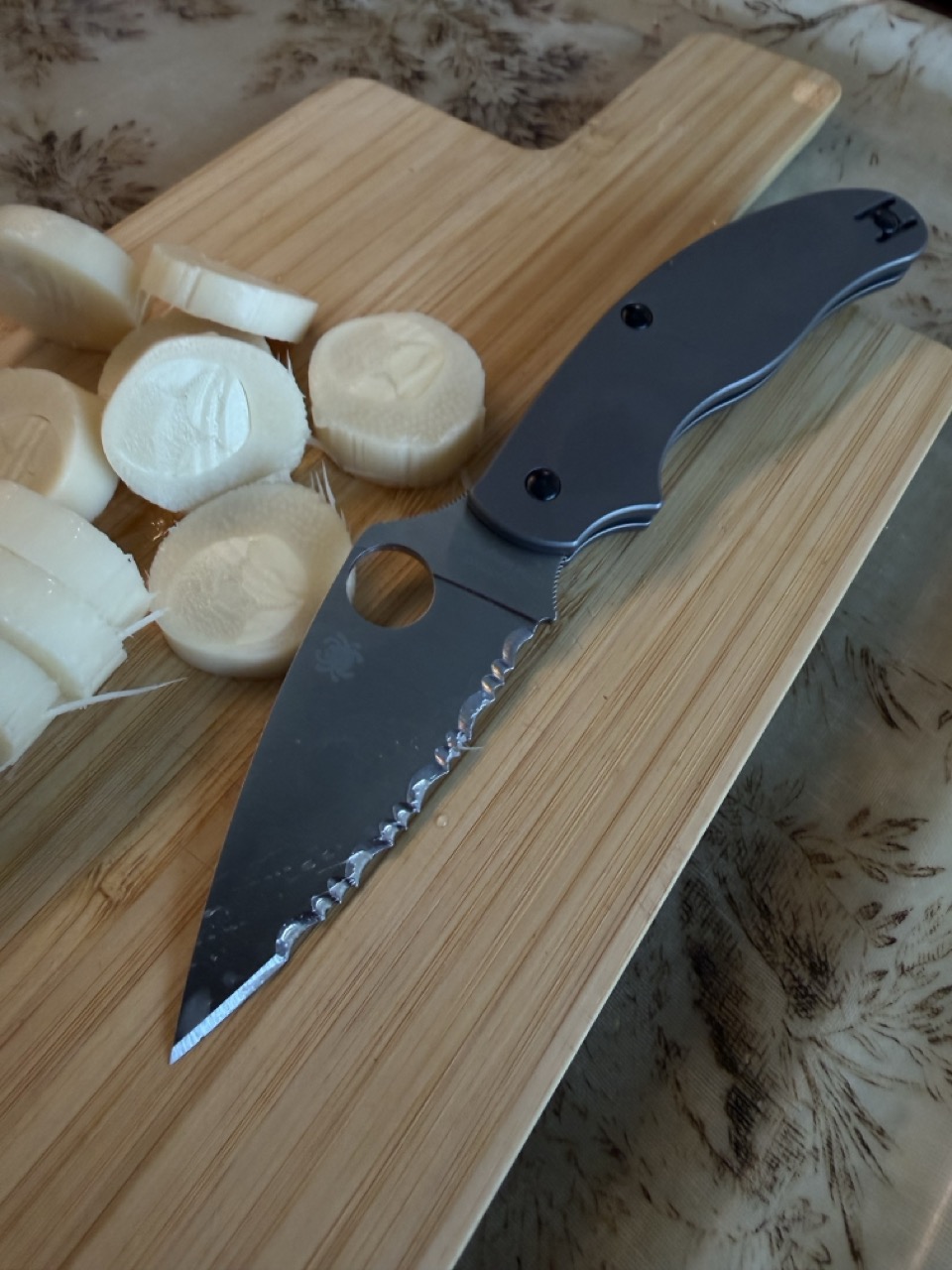
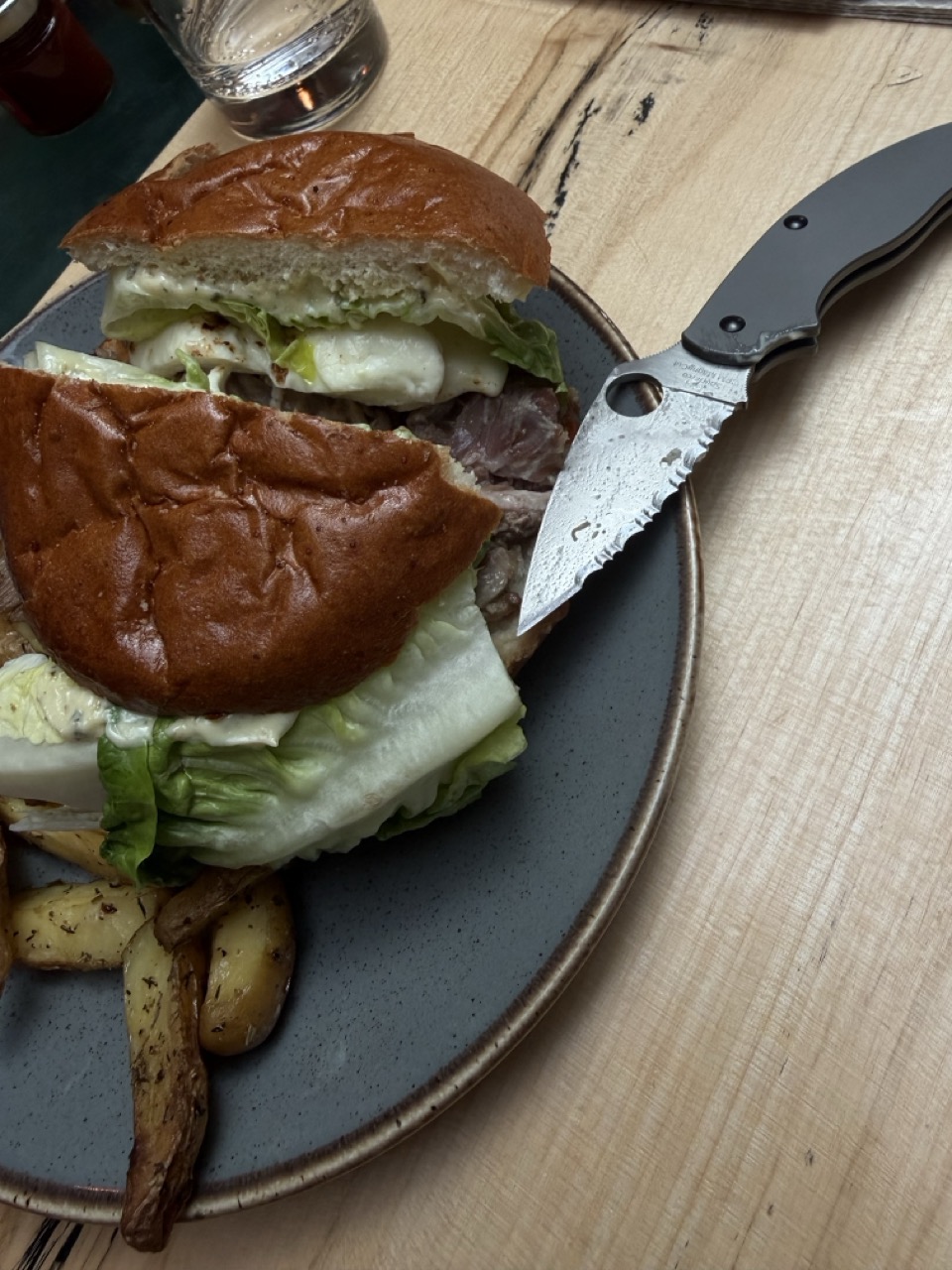
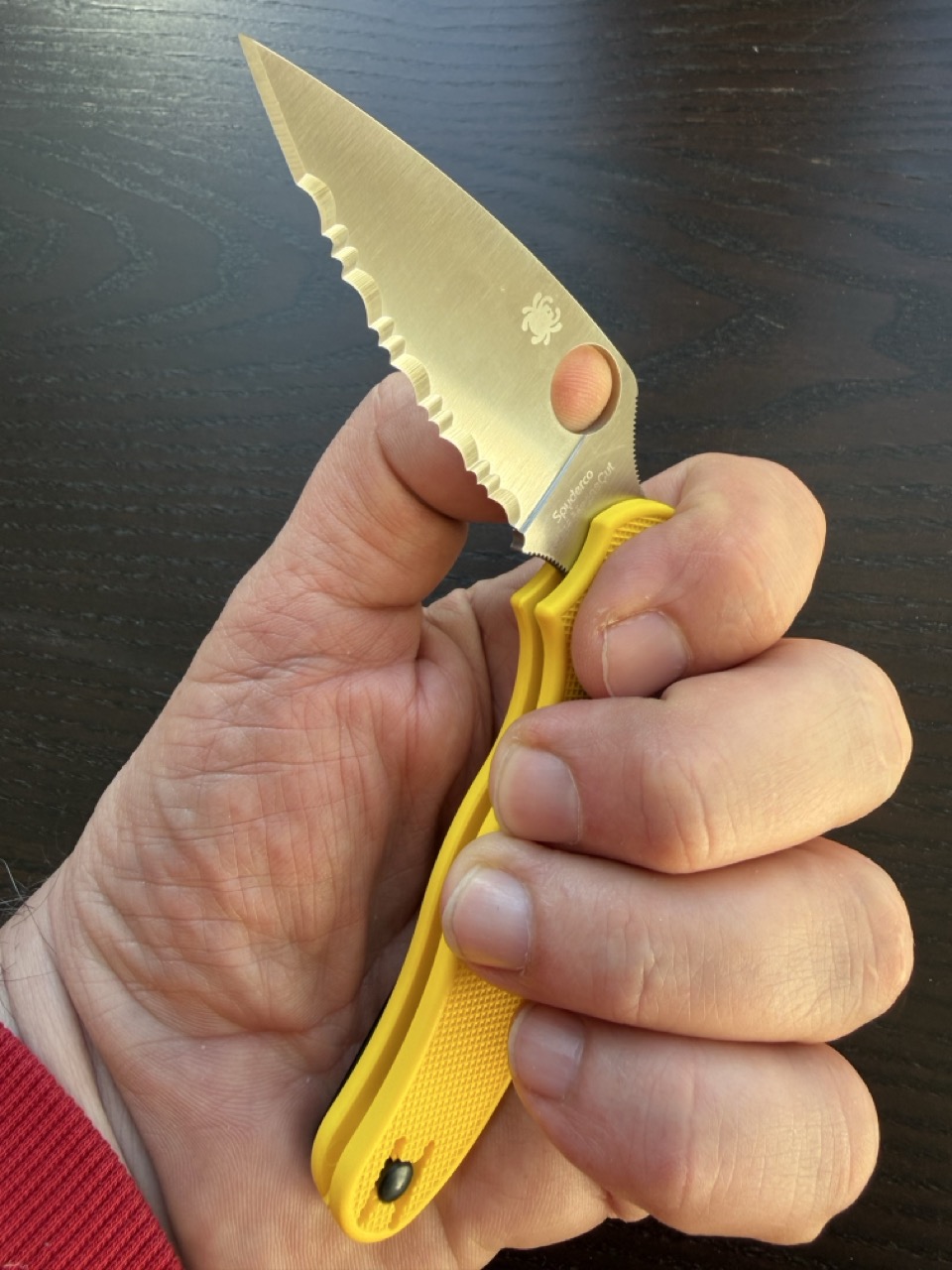
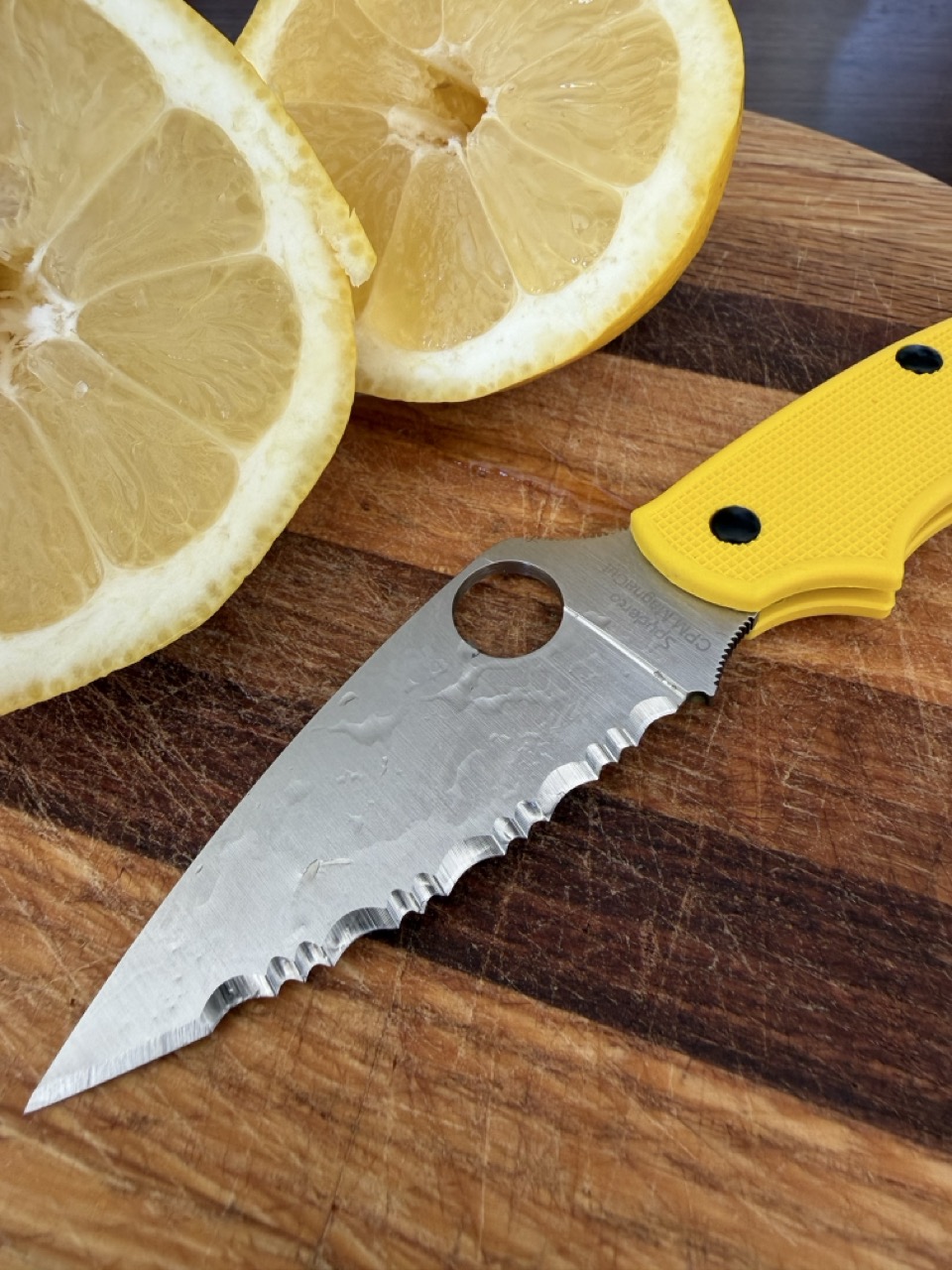
There’s something deliciously subversive about the Spyderco UKPK in full serrated CPM Magnacut steel.
Something unique in the world of cutlery. So friendly and so formidable !
Imagine a slipjoint—non-locking, polite, born for UK legal carry—now equipped with one of the most advanced steels ever made… AND with a fully serrated edge. The kind of edge famous for emergency uses, an edge that looks like it wants to chew through a seatbelt, a rope, or your expectations like there is no tomorrow.
And yet… it works. Too well. And this is just great !

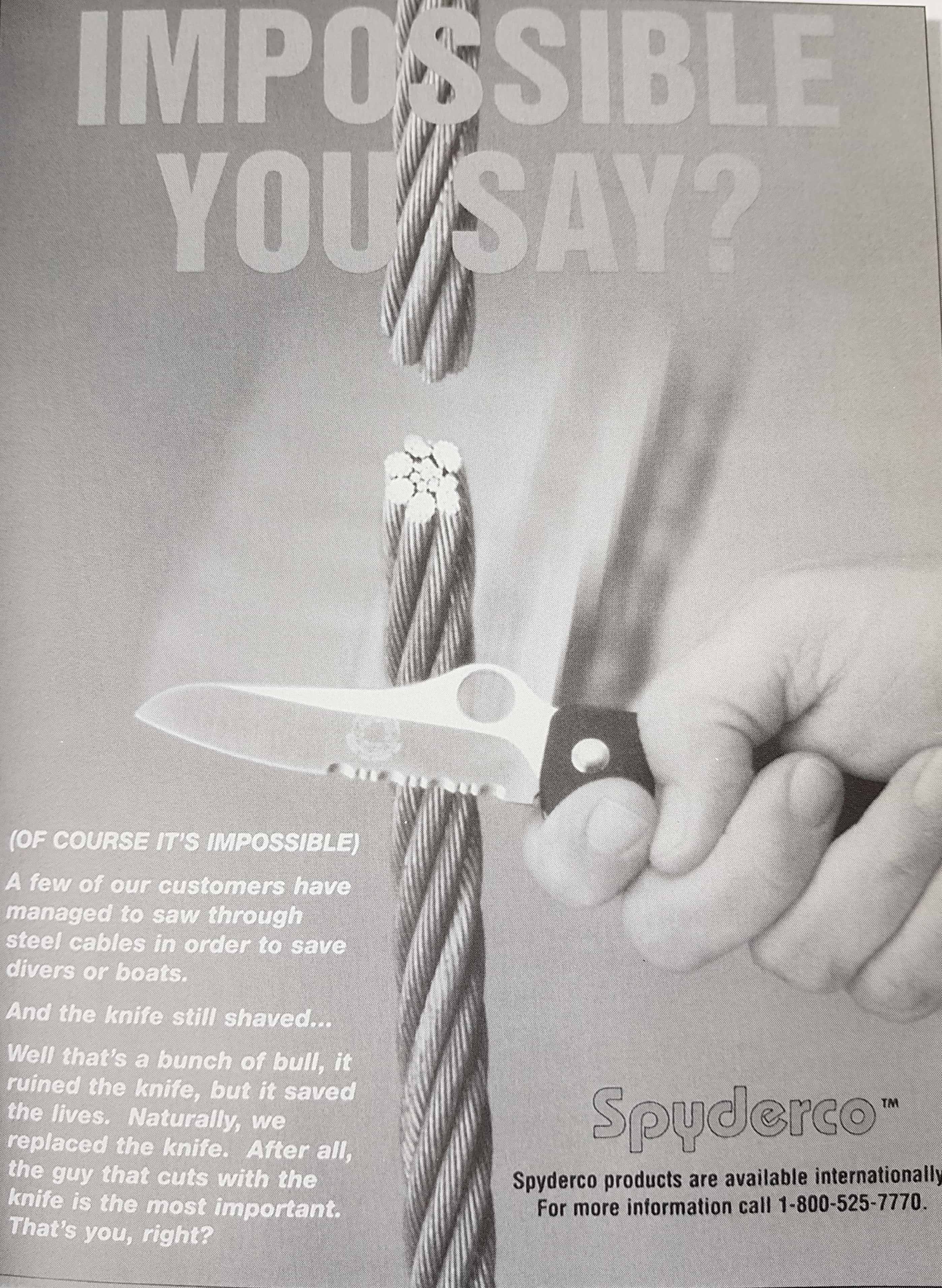
Back in the 80s, Spyderco didn’t just enter the knife world—they rewired it.
And at the center of that shift was an inventor: Sal Glesser.
Three ideas. That’s all it took:
the clip, the hole, and the teeth.
The clip turned knives into tools you actually carry—pocket, belt, or backpack.
The Spyderhole made one-handed opening instinctive, reliable… and easy to maintain in the real world.
And the serrations? They made blades hungry for fibrous materials.
Let’s get one thing straight, once and for all:
serrated knives are not saws.
They don’t remove material—they slice through it. Razor sharp, aggressive, efficient.
While everyone else was still polishing forged 52100 steel and dressing knives in stag like museum pieces, Spyderco dropped something radically different into the pocket: performance and reliability.
The early icons—Spyderco Worker, Spyderco Mariner, and Spyderco Police—weren’t about tradition.
They were about function.
Fully serrated edges. Stainless steels. Tools built to cut, not to impress.
They looked strange.
They cut like nothing else.

The Spyderco UKPK was Spyderco’s first true slipjoint, introduced roughly twenty years ago—not as a nostalgic throwback, but as a constraint-driven design.
It was built for one purpose: to comply with UK law.
No lock. A sub-3-inch blade.
But in true Spyderco fashion, compliance didn’t mean compromise.
Instead of dumbing things down, they engineered around the limitations:
a strong, confidence-inspiring pocket knife inspired by the Caly 3
with a prominent finger choil for control and safety and the unmistakable Spyderhole for true one-handed use.
What could have been a neutered tool became something else entirely:
a legal EDC that still behaves like a real knife.
The UKPK wasn’t designed to look traditional.
It was designed to work—within the rules, not despite them.
You don’t feel “underknifed” with any of the SlipIt in your pocket from the UKPK to the Squeak through the Urban.

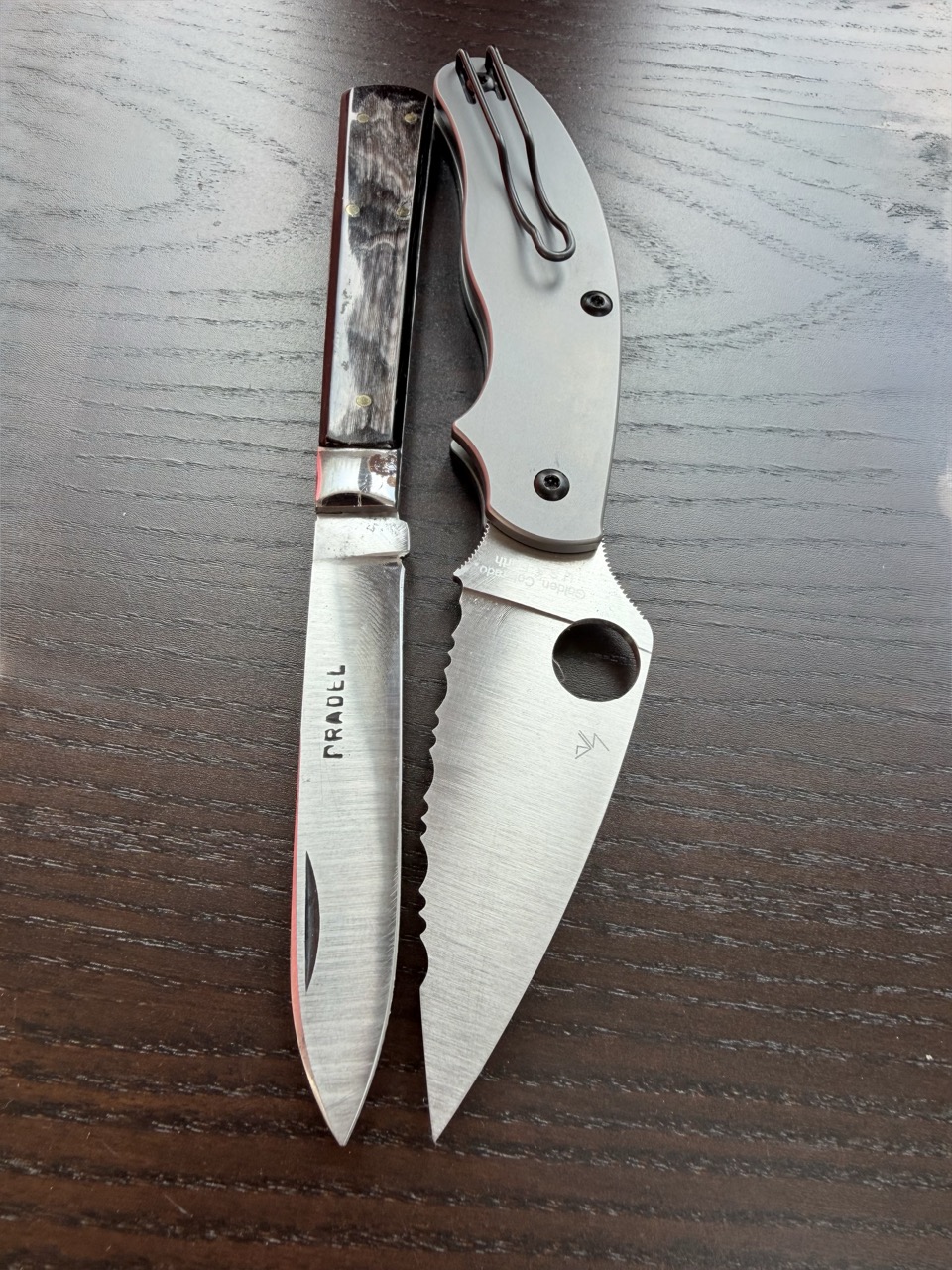
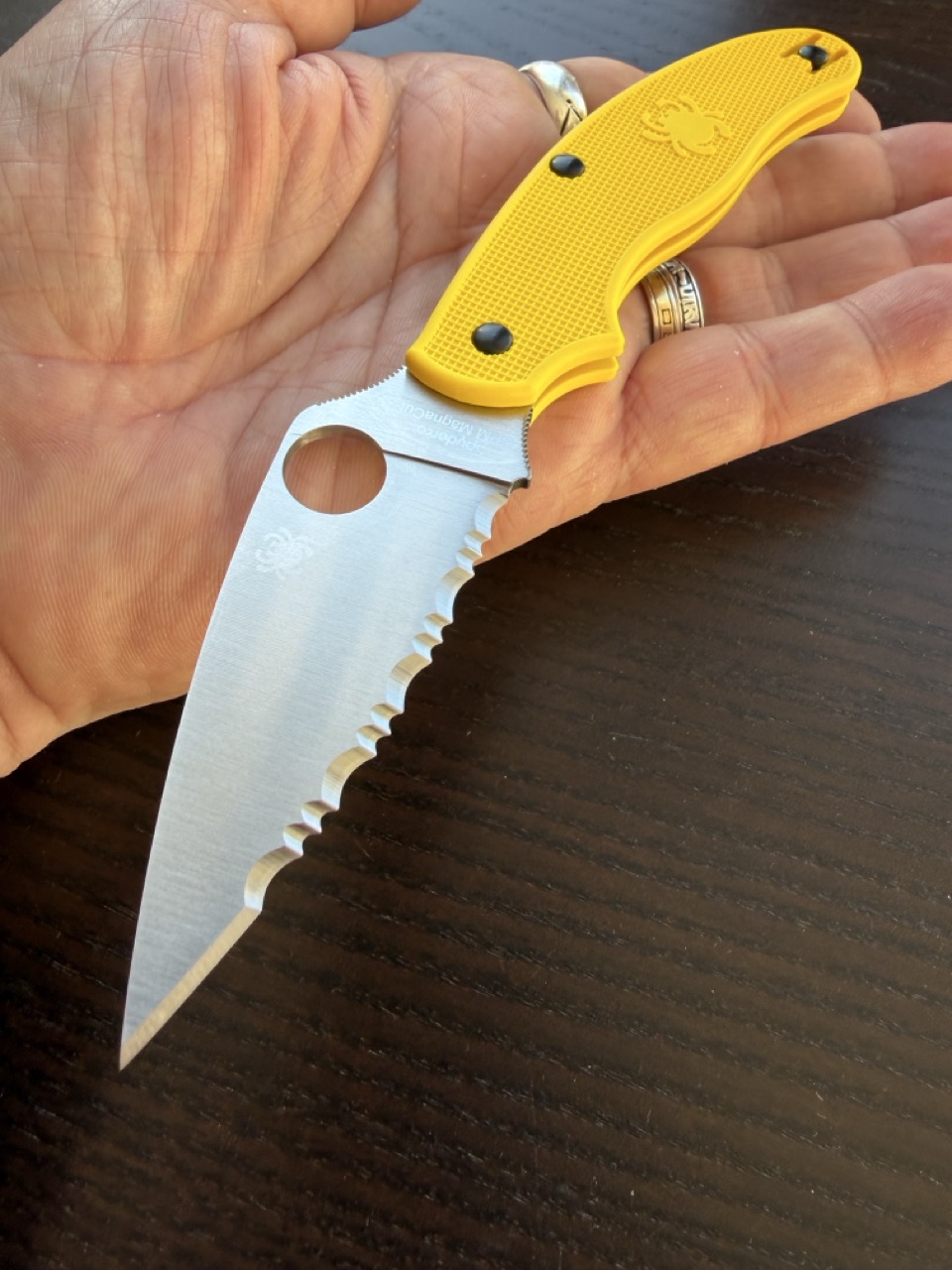
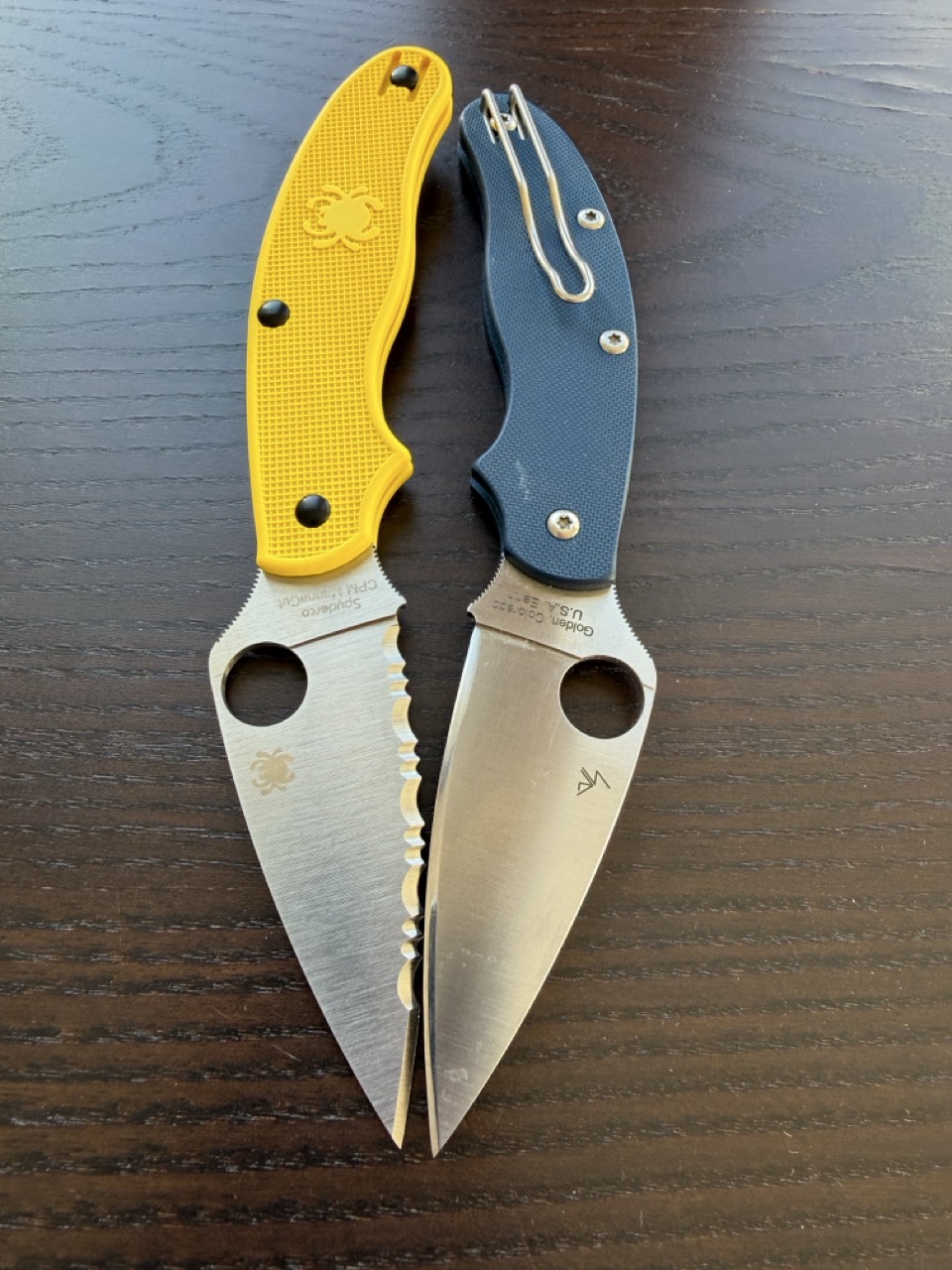
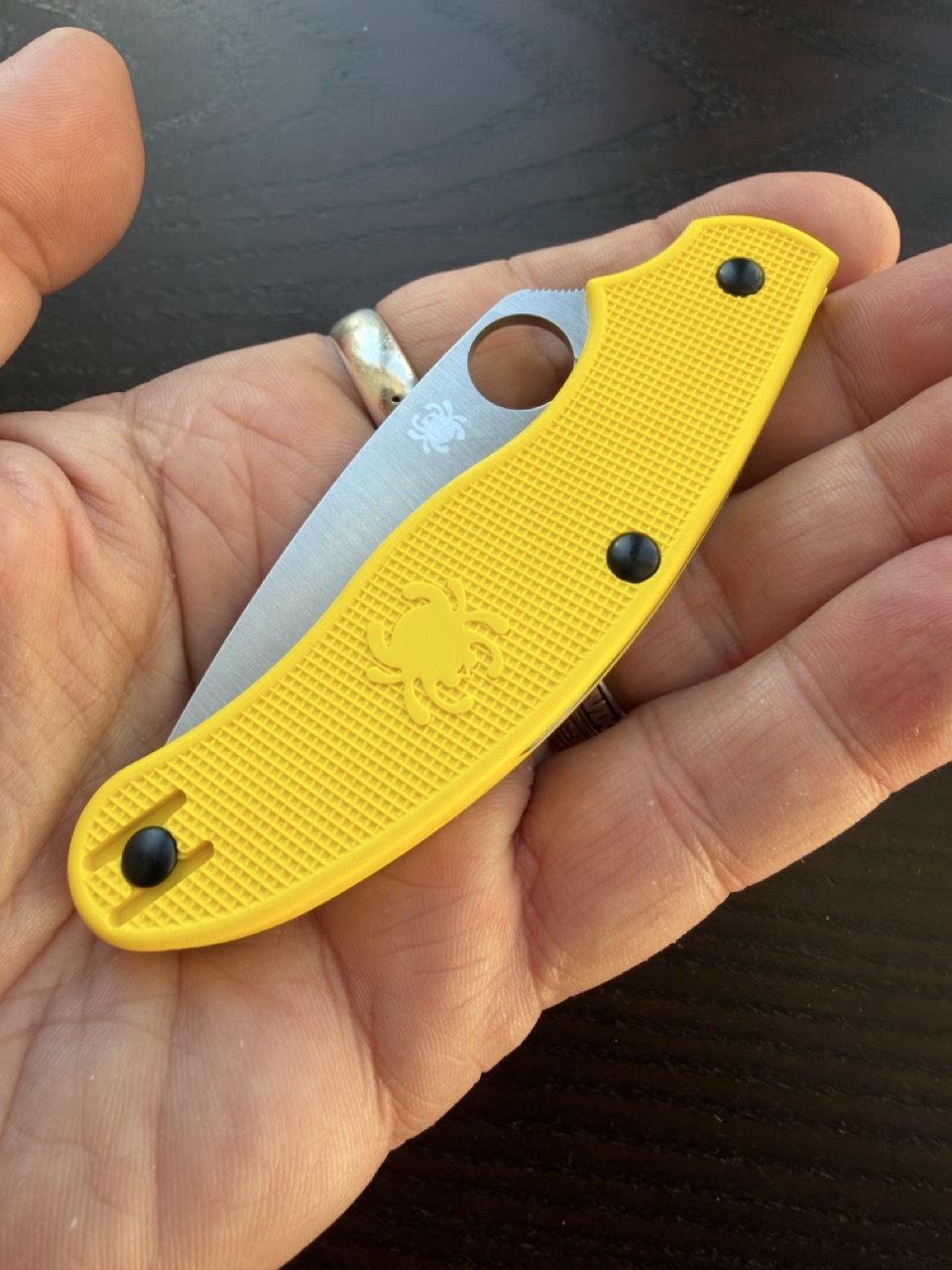
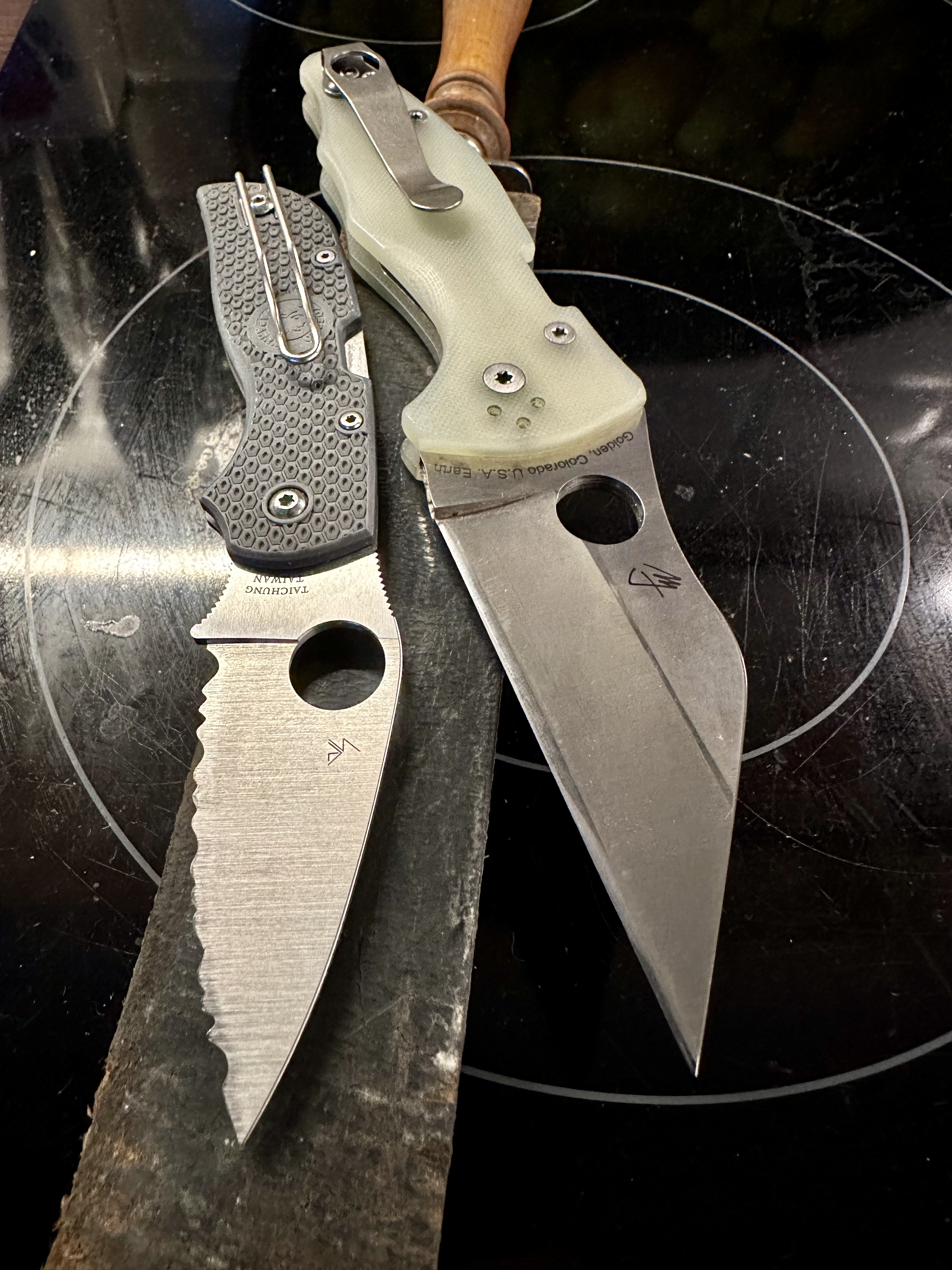
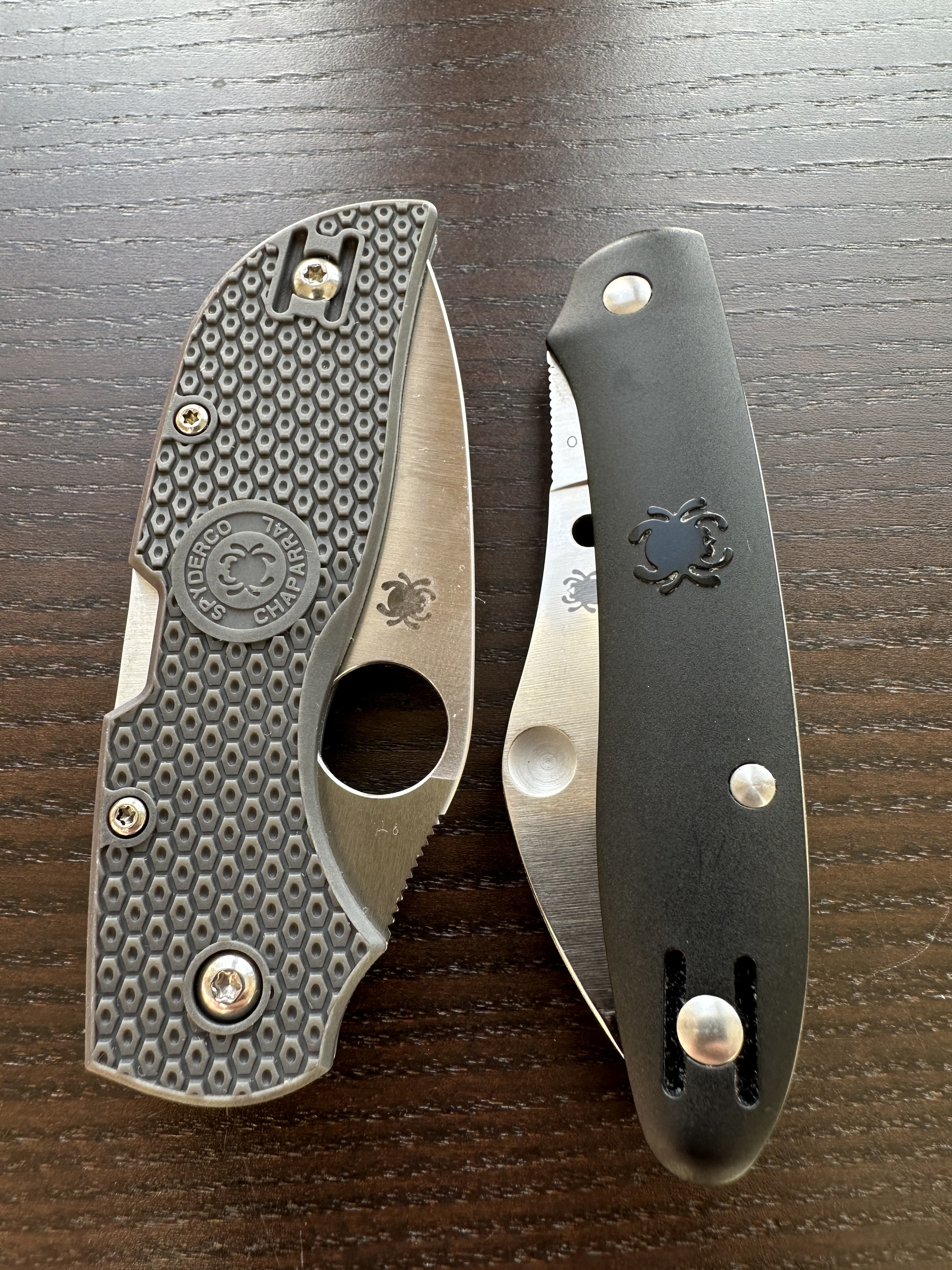
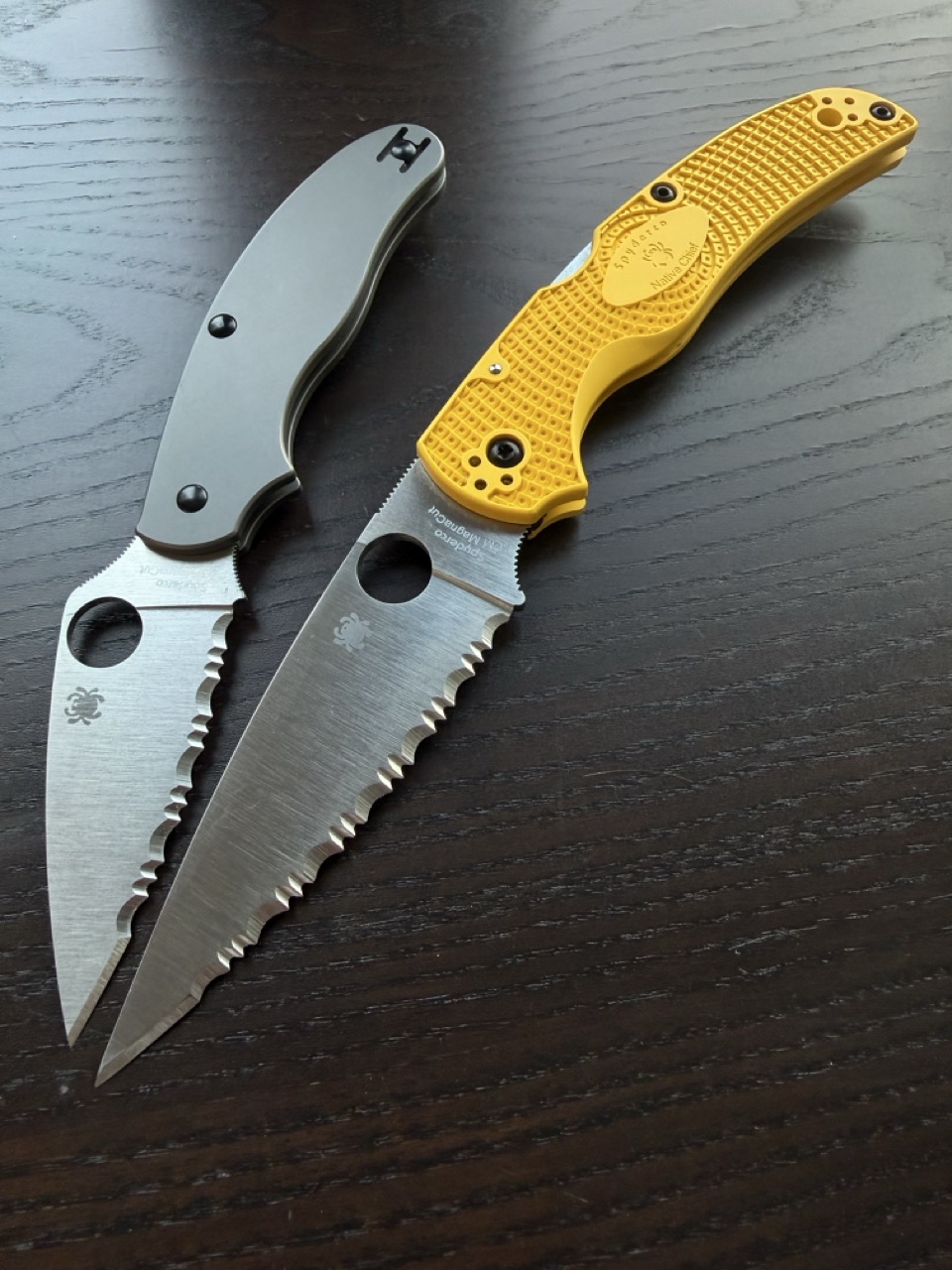
(Pictured here with the UKPK Spy27 G10. The Salt is a FRN lightweight.)
But, yes, the UKPK has always been about restraint.
No lock. No aggression. Just that classic Spyderco leaf blade and a strong slipjoint spring doing quiet, honest work.

Link here for the forums

But now… serrations change the personality completely.
This is no longer a polite cutter— it’s a controlled velociraptor claw.


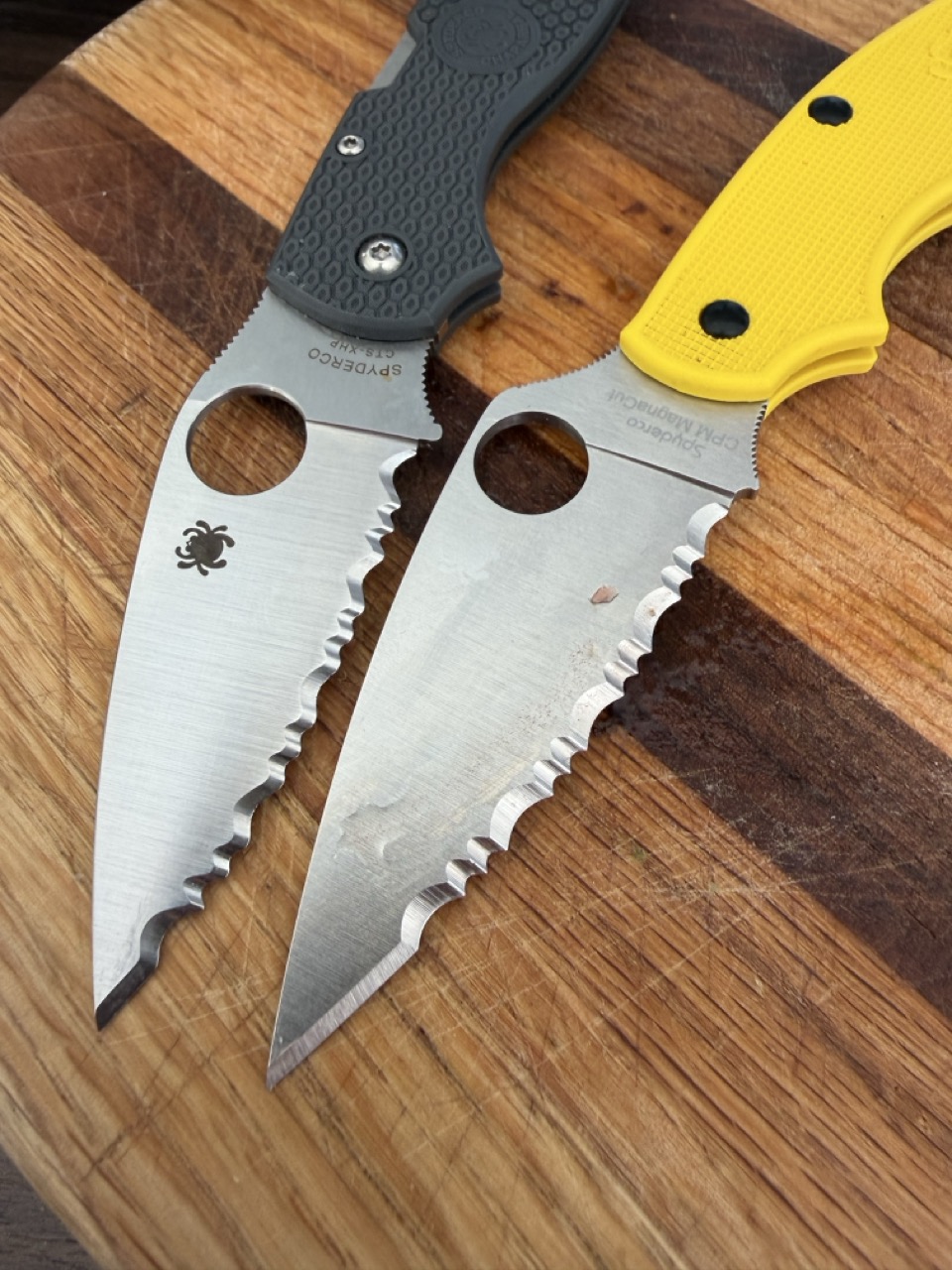
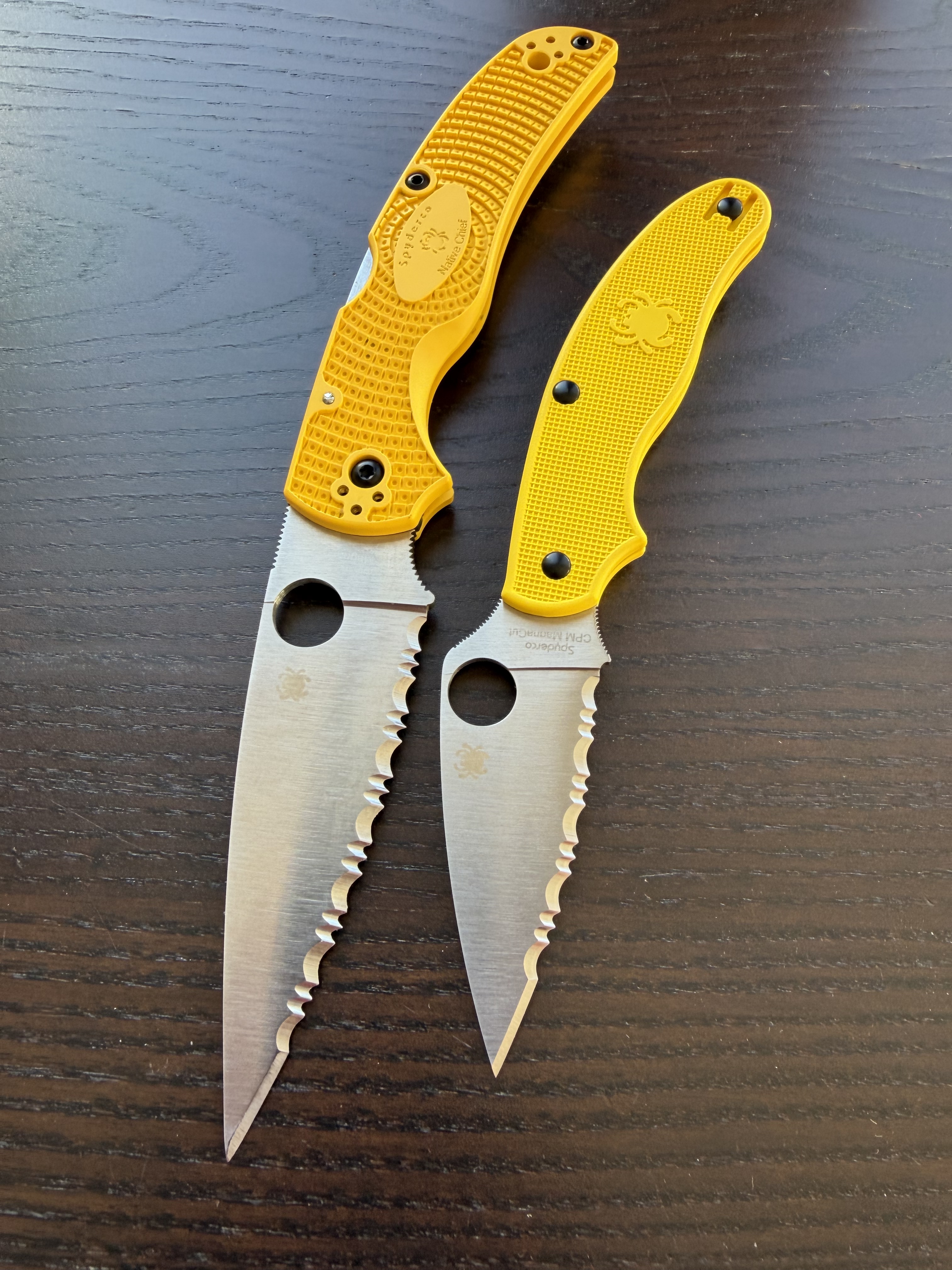
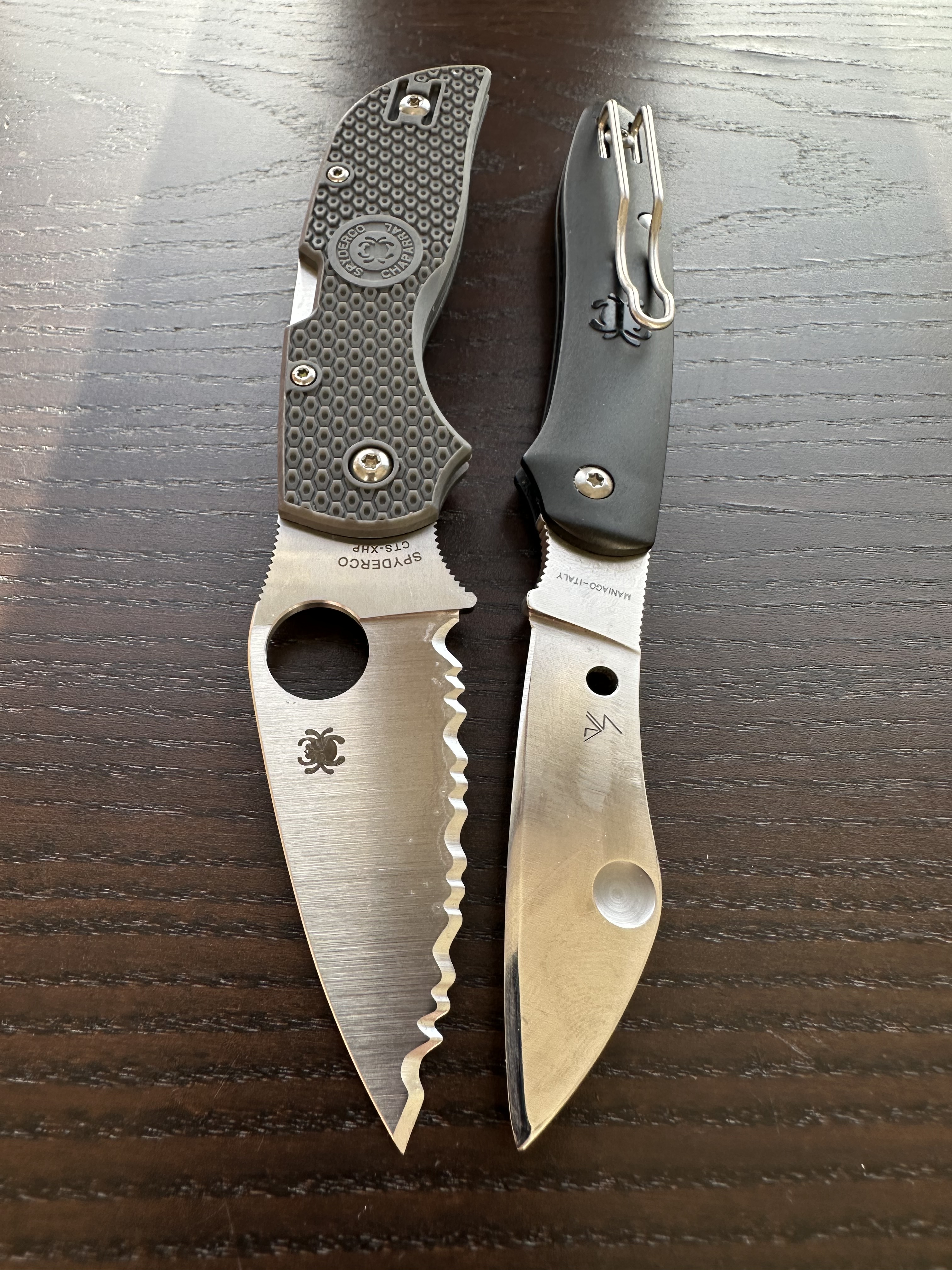
We already know how Spyderco’s serrations behave—from the long slicing authority of the Spyderco Native Chief Salt, to the feral aggression of the Spyderco Civilian, down to the unlikely precision of the “Mighty Grey Mouse,” the Spyderco Chaparral in full serrated.
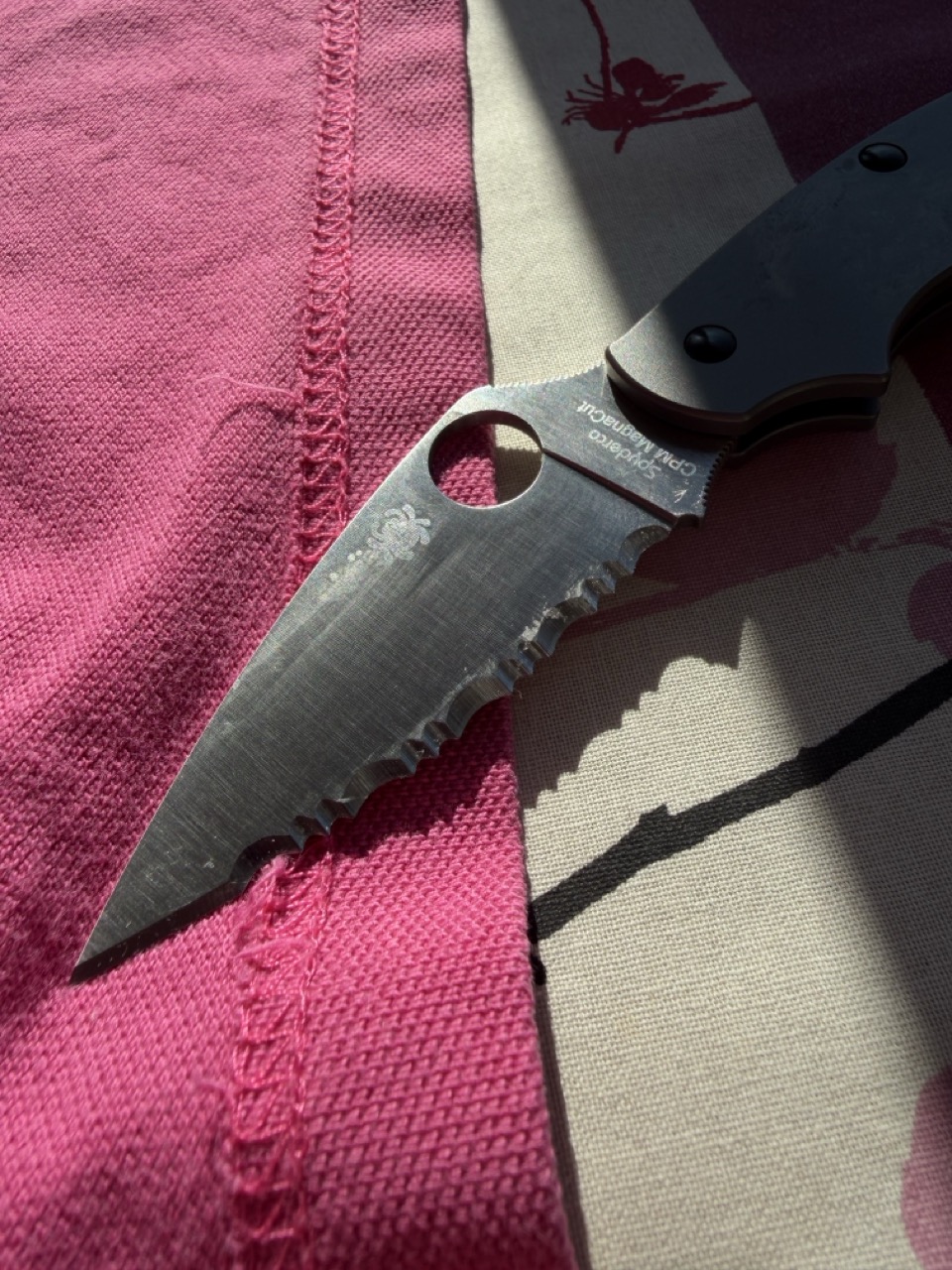
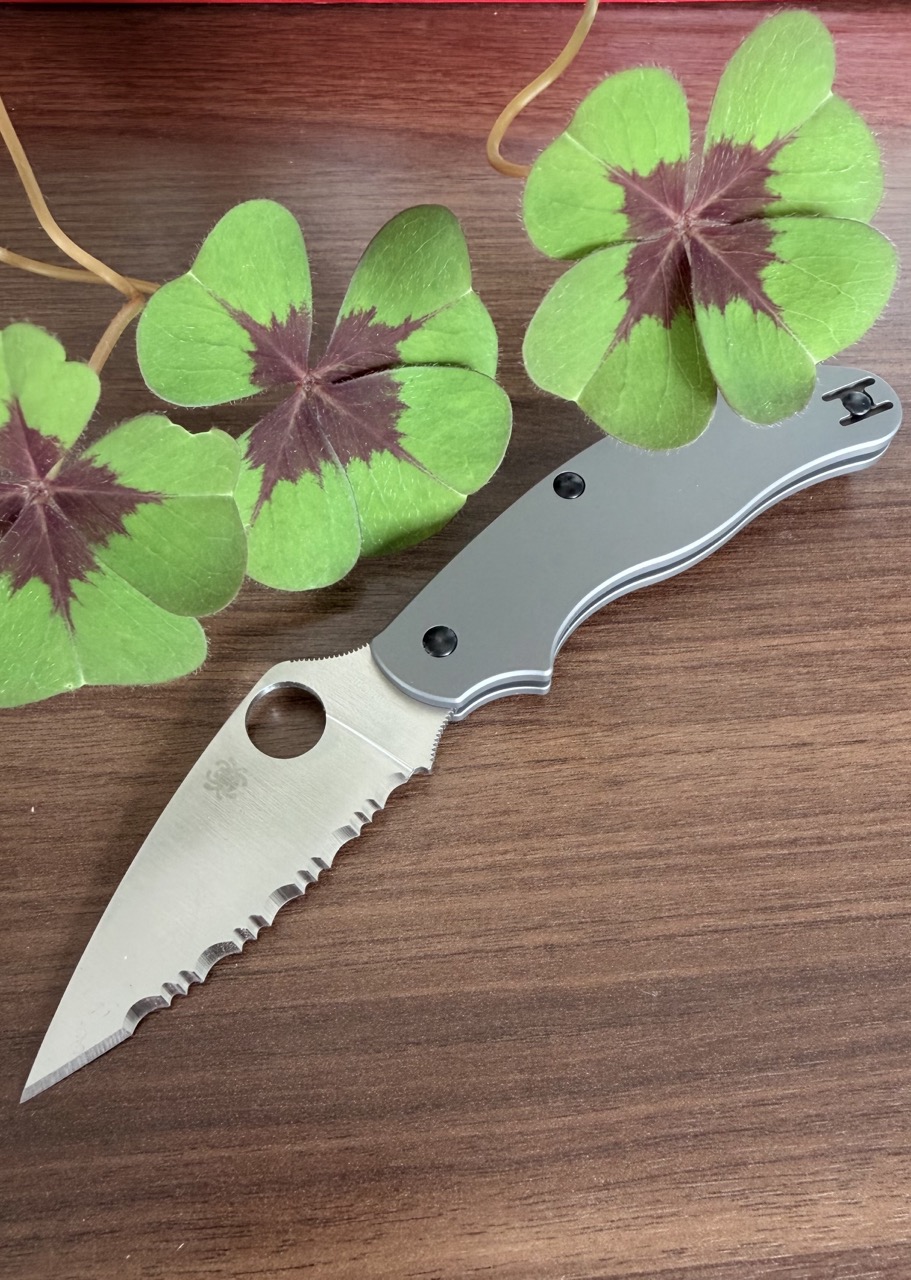
(Notice on the picture: the Chaparral/Taichung serrations are “softer” than the Golden made serrated knives.)

Oh, SpyderEdge
The bite is immediate. Unforgiving.
Cardboard, rope, fibrous material—this isn’t slicing anymore.
It’s total matter separation. “Part the matters for me !”


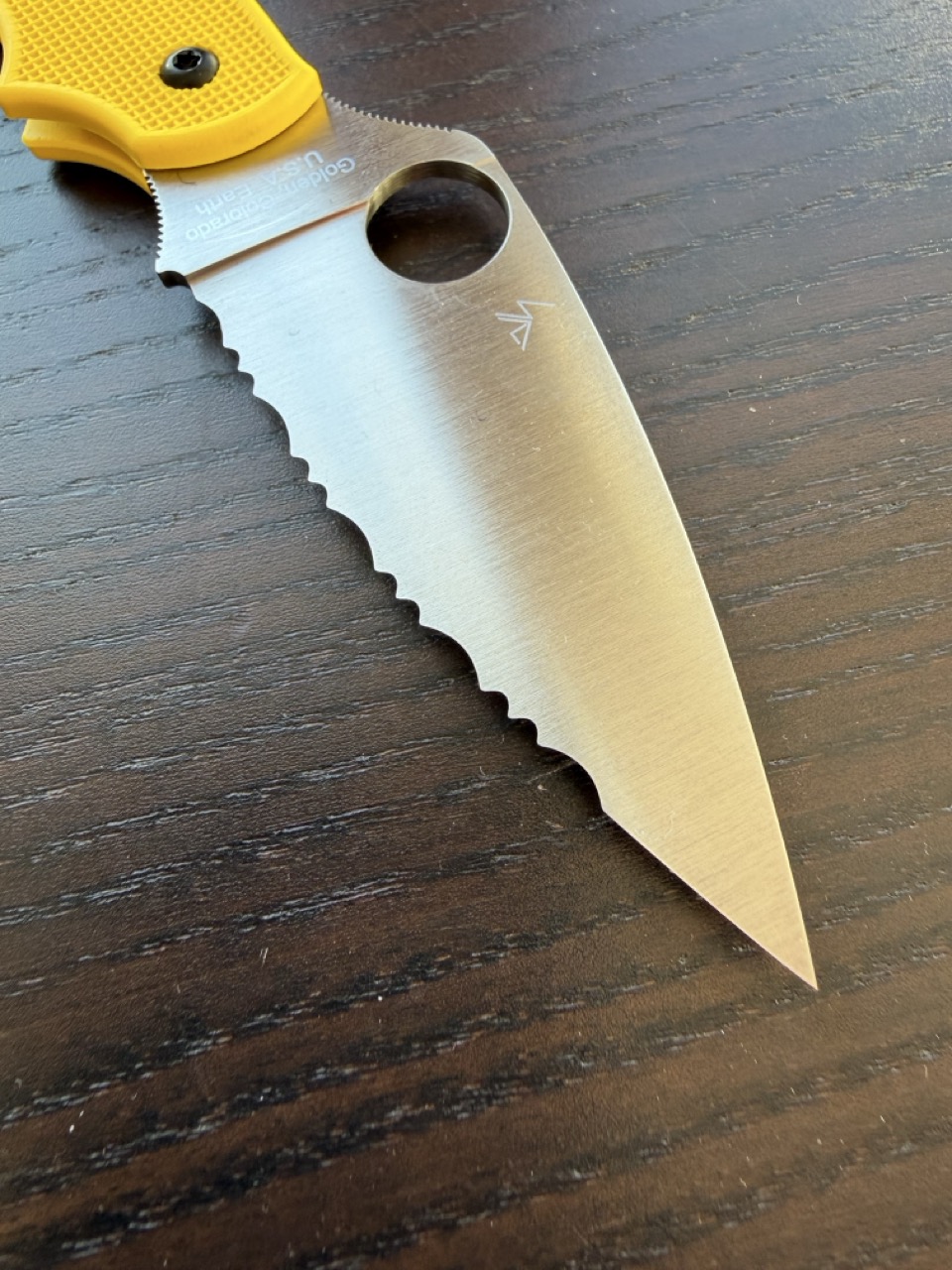
As you’ll notice, SpyderEdge uses a chisel grind—
which makes it surprisingly easy to maintain.
You work one side, raise a burr, then lightly deburr the other.
That’s it.
No complicated angles, no endless back-and-forth.
Fast. Efficient. Back to razor sharp in minutes.
For a blade that cuts this aggressively,
maintenance is almost… unfairly simple.

Now you’ll say: this isn’t new.
And you’d be right.
The Spyderco UKPK LC200N already brought serrations to the platform, with that ultra-corrosion-resistant, NASA-associated steel used in the Salt Series. (Click on the link for its extended review. That version exists now in green FRN.)
But this time… it’s different.
This time, CPM Magnacut steel’s turn to roar in your pocket.
And that changes everything in my book ! As I love Magnacu first.
And also because Magnacut doesn’t just resist corrosion—it brings toughness, edge stability, and a kind of refined brutality that pairs almost too well with serrations.
This isn’t just a variant.
It’s a very serious evolution of intent.


Here’s where things get almost absurd—in a good way as you get a blade that:
stays aggressive for ages
keeps cutting even when “dull”
laughs at moisture, sweat, food prep, urban abuse
This is not just durable—it’s low-maintenance lethality in a legal-friendly package.

The gentleman’s non locking folder has no business being here.
And yet—it thrives.
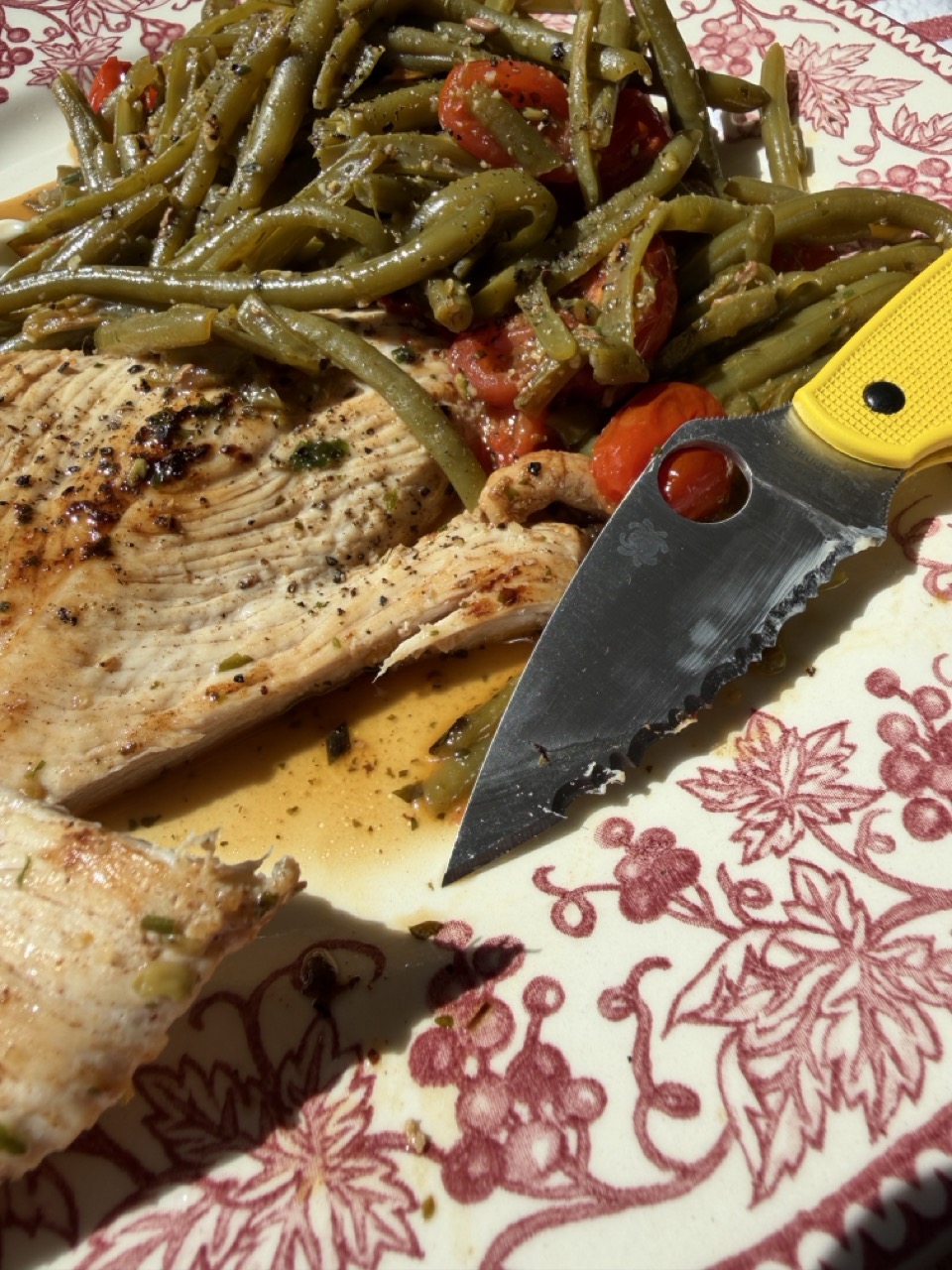
From the Amazonian coast to the unforgiving battlefield of my own kitchen, this “polite” knife sheds its manners the moment it meets real work.
What should feel restrained feels… unleashed.

Let’s be honest: serrations on a slipjoint feel wrong to most of knife collectors. You expect that kind of edge on a rescue knife, a tactical folder, something that locks like a plastic vault equipped with whistle.
But Spyderco pulls it off because:
the UKPK’s ergonomics are rock solid
the choil gives you a huge security if the blade closes on your fingers.
the walk & talk is confidence-inspiring, the slipjoint is hard to close.
You don’t feel under-knifed at all.

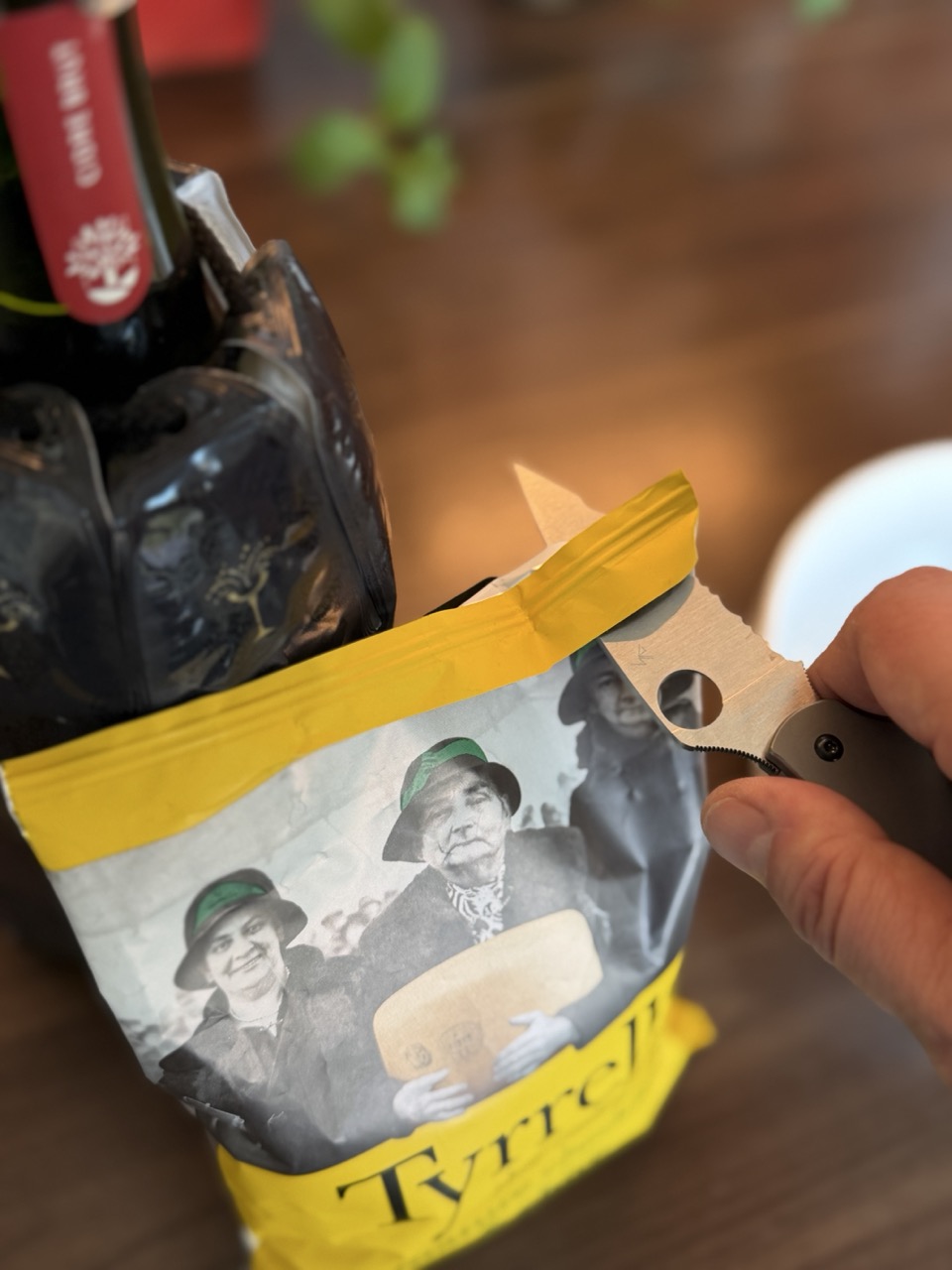
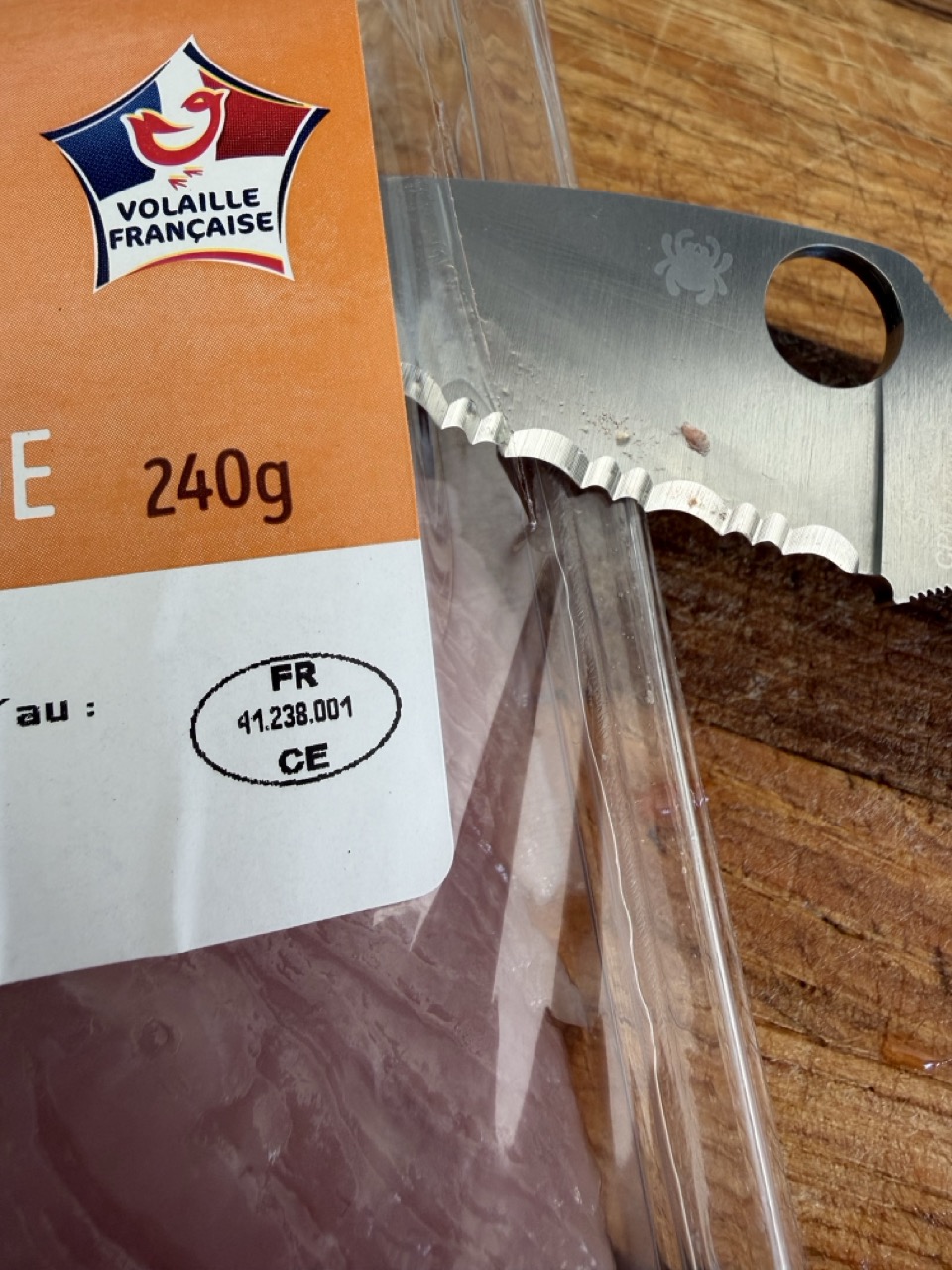
In the Real World, this knife shines where most EDCs hesitate: ripping through packaging without slipping, cutting rope under tension
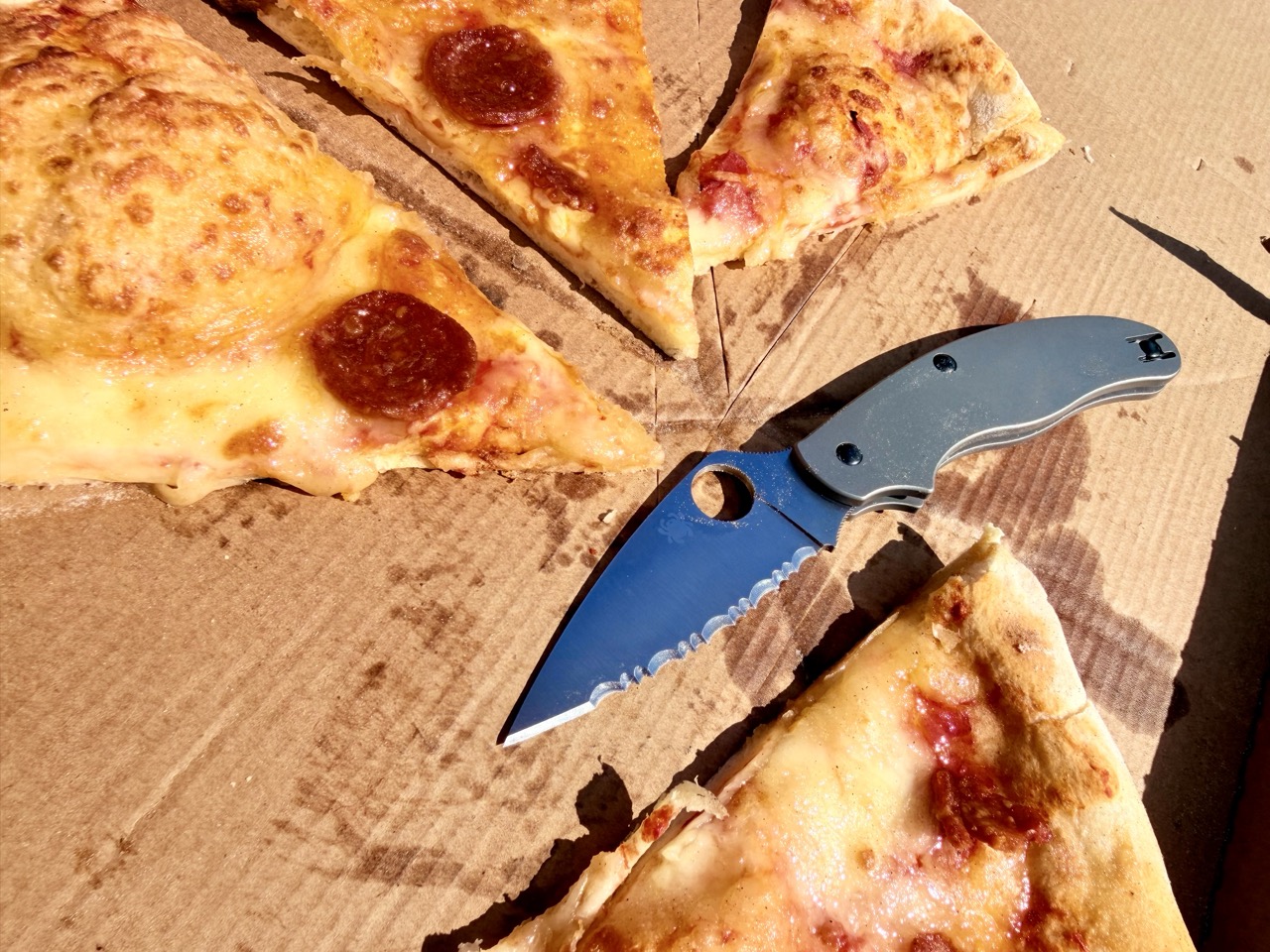
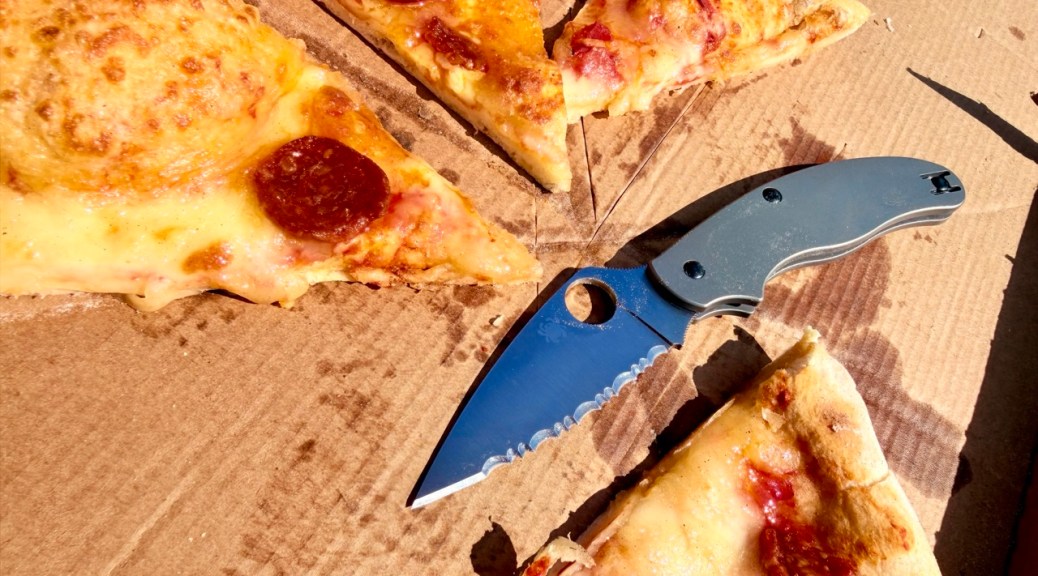
food with crust (bread, cured meats—yes, really) in wet environments where plain edges can lose bite.
Nope, it’s not a bushcraft blade by design but it won’t frown to be used in the woods.
It’s not a slicey Instagram queen.
It’s a working edge for people who actually cut things or need thing to be cut quick !


The serrated Magnacut UKPK is a contradiction that became a concept.
It takes:
the legality of a slipjoint
the performance of serrations
the excellence of Magnacut
…and fuses them into something oddly perfect and reliable.

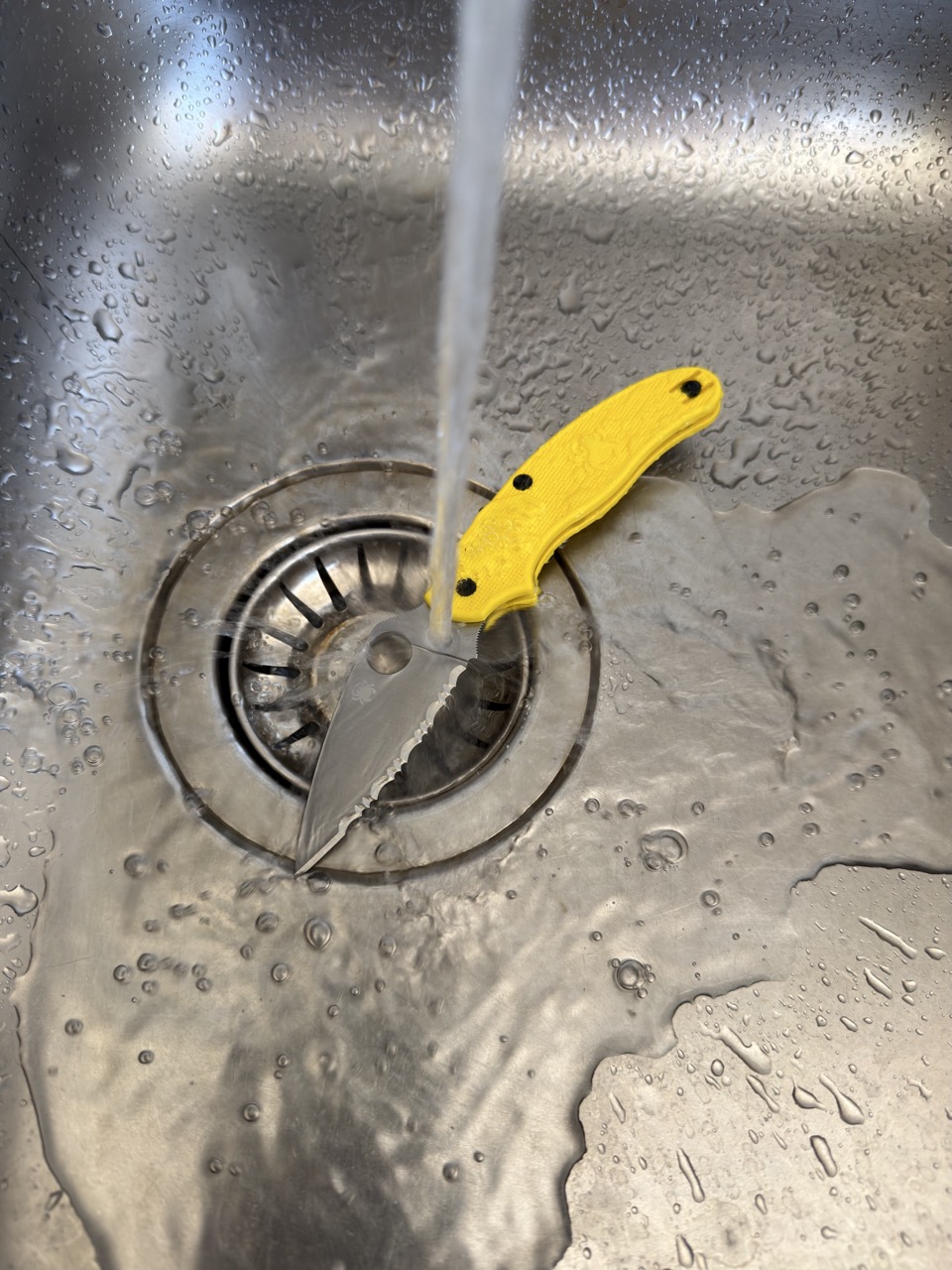
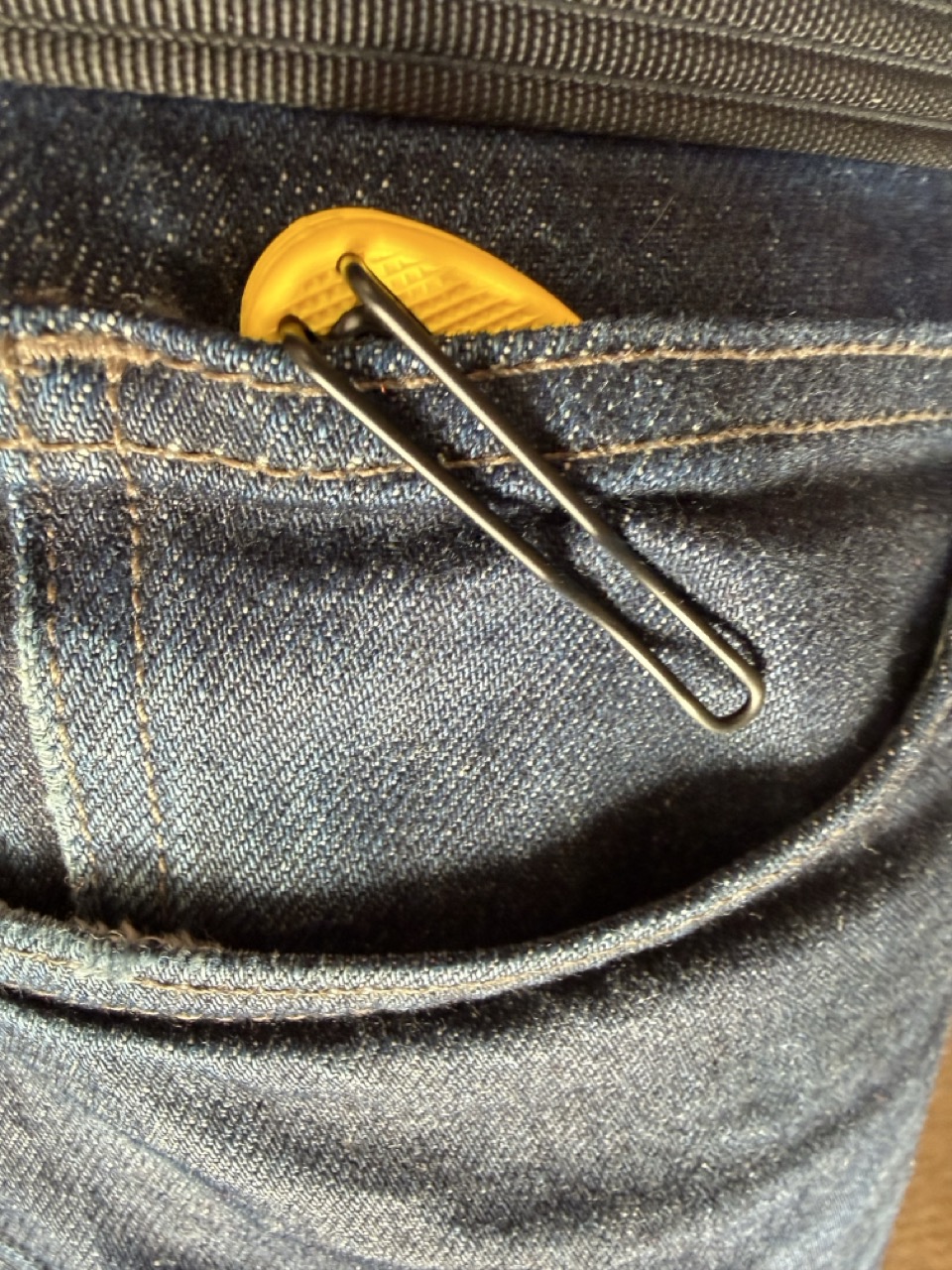
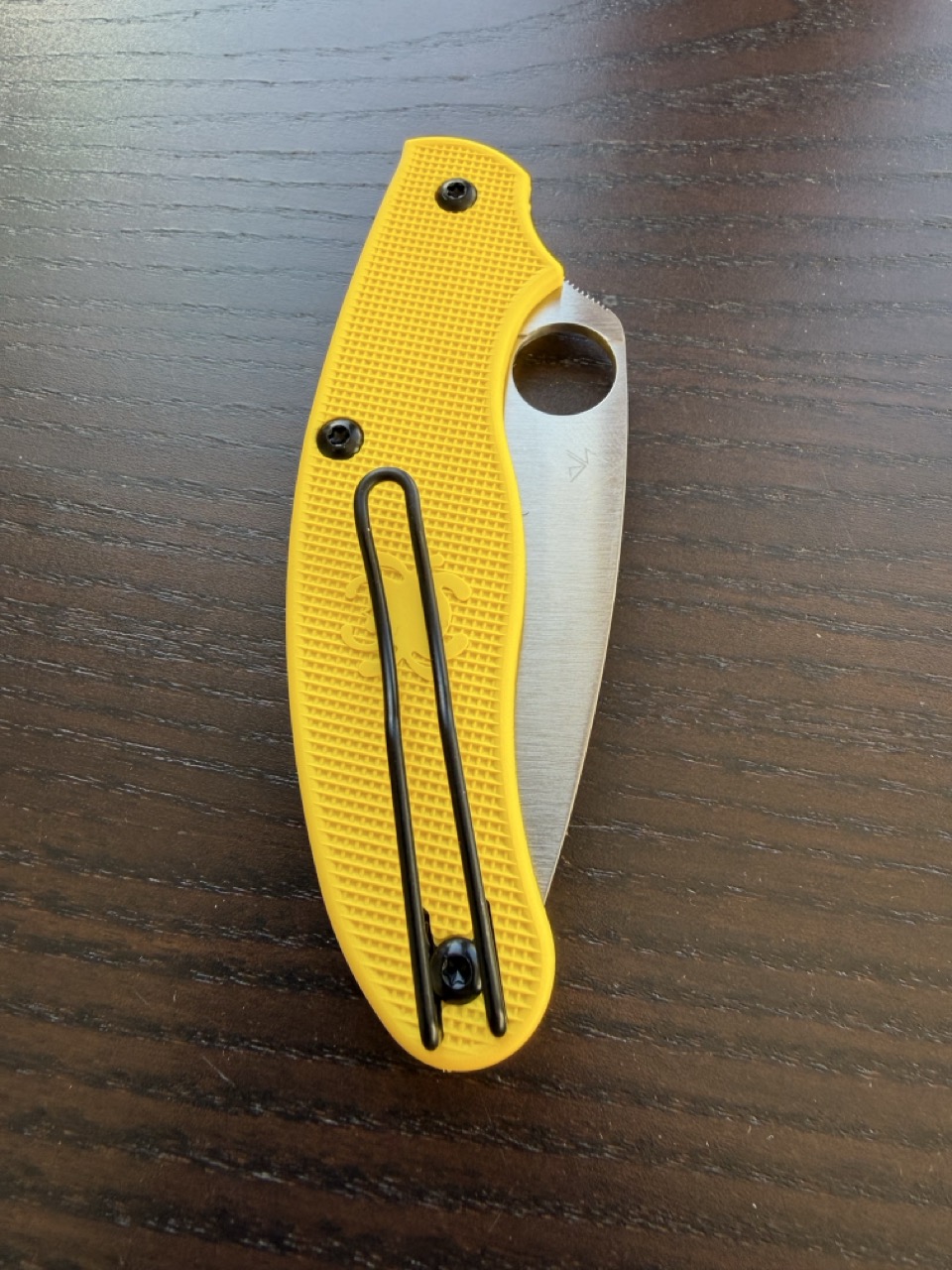
The clip is black and deep carry and all the metal elements (clip, screws, spring and of course blade) are impervious to salt water: “marine gear” is the name of the game.
Knowing LC200N green version is rustproof when Magnacut is stainless.
That green LC200N version is more sea proof if you see what I mean. But the edge won’t last as long as with the Magnacut version. 😉

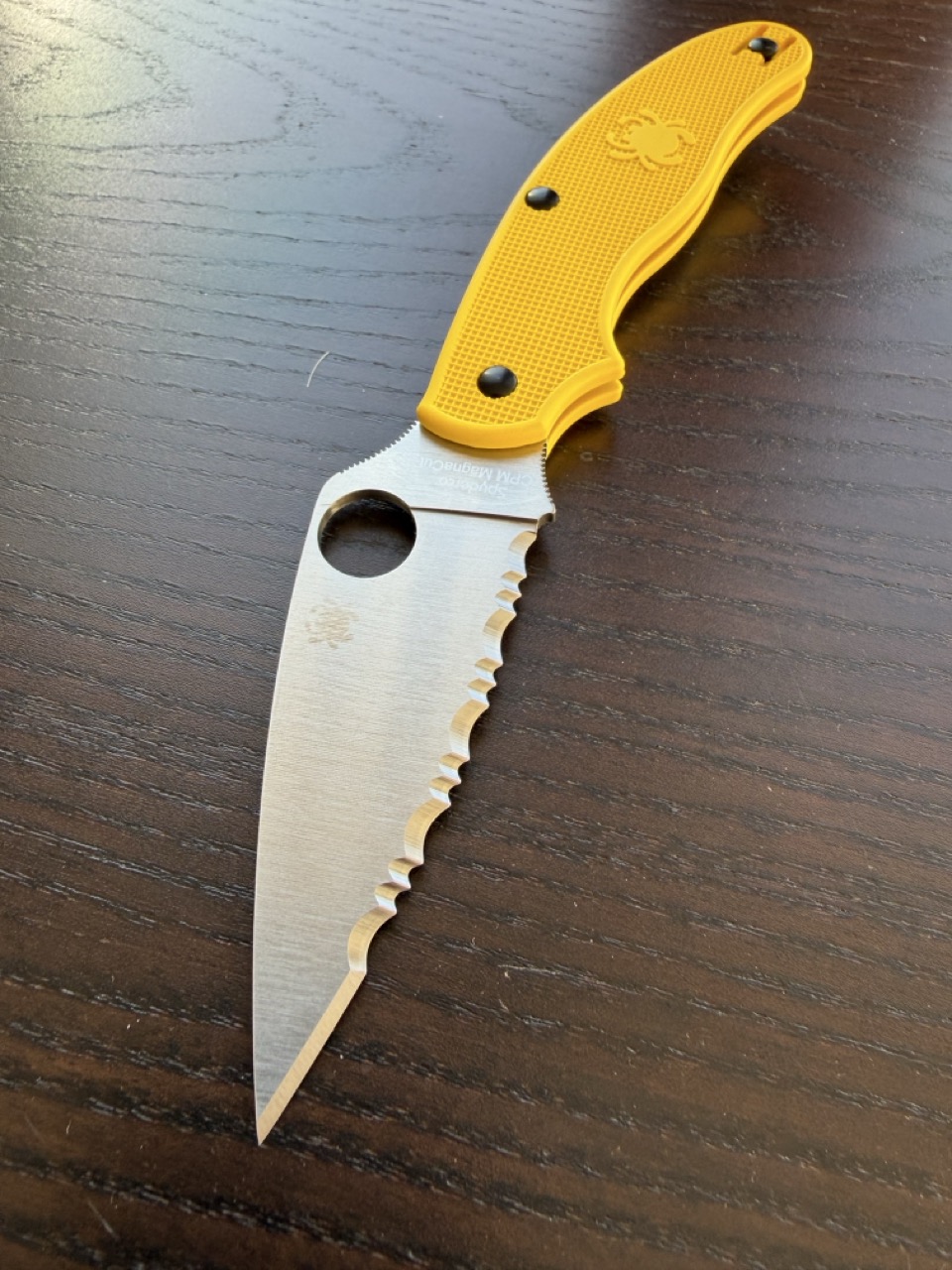
The UKPK Salt Serrated in Magnacut isn’t your refined EDC.
It’s lightweight, high-visibility yellow, with a remarkably thin blade—among the thinnest ever seen on a SlipIt platform.
Made in Golden, Colorado, it turns into something unexpected:
your new all terrain folding survival tool… in a legal suit.

Overall Length: 6.91in 176mm
Closed Length: 3.95in 100mm
Blade Thickness: .098in 2.5mm
Tip Carry Position: Tip-Up

Blade Length: 2.98in 76mm
Edge Length: 2.58in 66mm
Handle Material: FRN
Lock Type: SlipIt
Origin: United States

Steel: CPM® MagnaCut®
Knife Weight: 1.7oz 48g
Clip Position: Ambi
Grind: Full-Flat

I have now installed some Titech Titanium Scales exclusive from Heinnie.
Take a look at my previous review of the LC200N UKPK Plain Edge here.

Spyderco Chaparral C152SGY – For the Fierce and the Furious

Like I had mentioned in the glimpse review of the Serrated Chaparral, this little, thin folder is built to punch above its weight. Thanks to its sturdy construction and relatively strong stainless steel — the same type found on my Cold Steel Recon 1 XL — it can be tested and used like a much larger knife without compromising performance.

Solid steel, sturdy lock? Not much difference from a larger knife, in fact. 😉

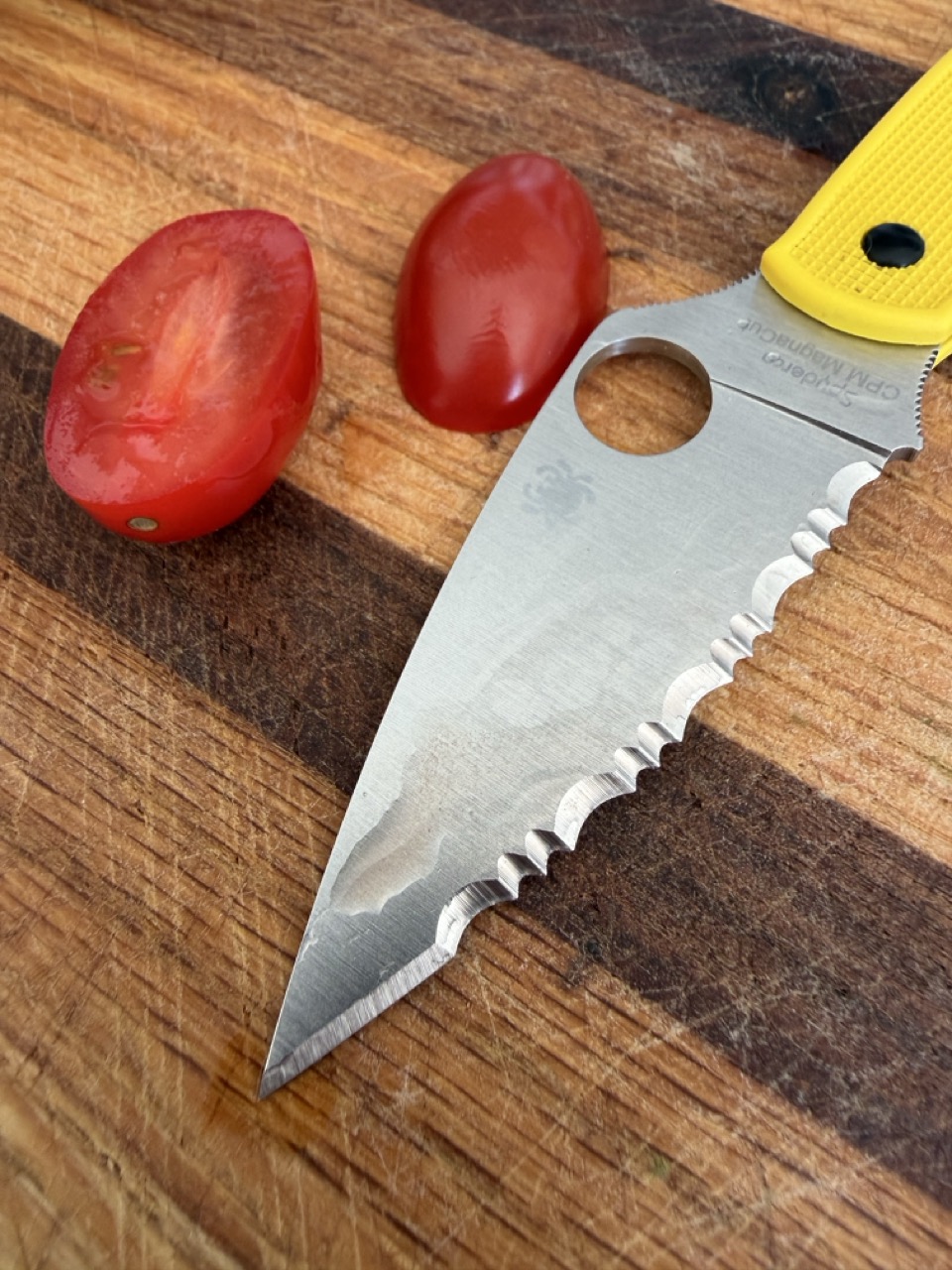
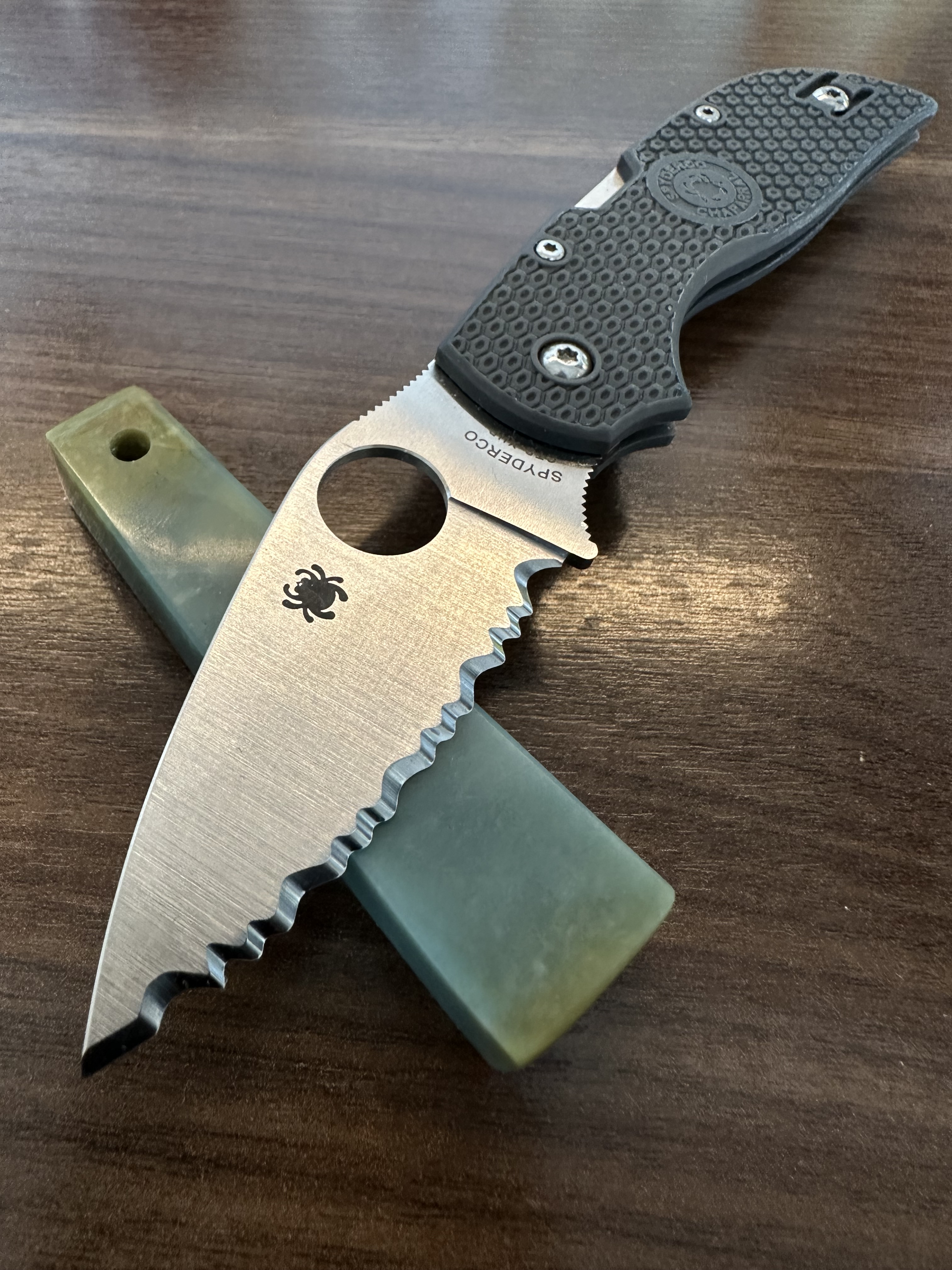
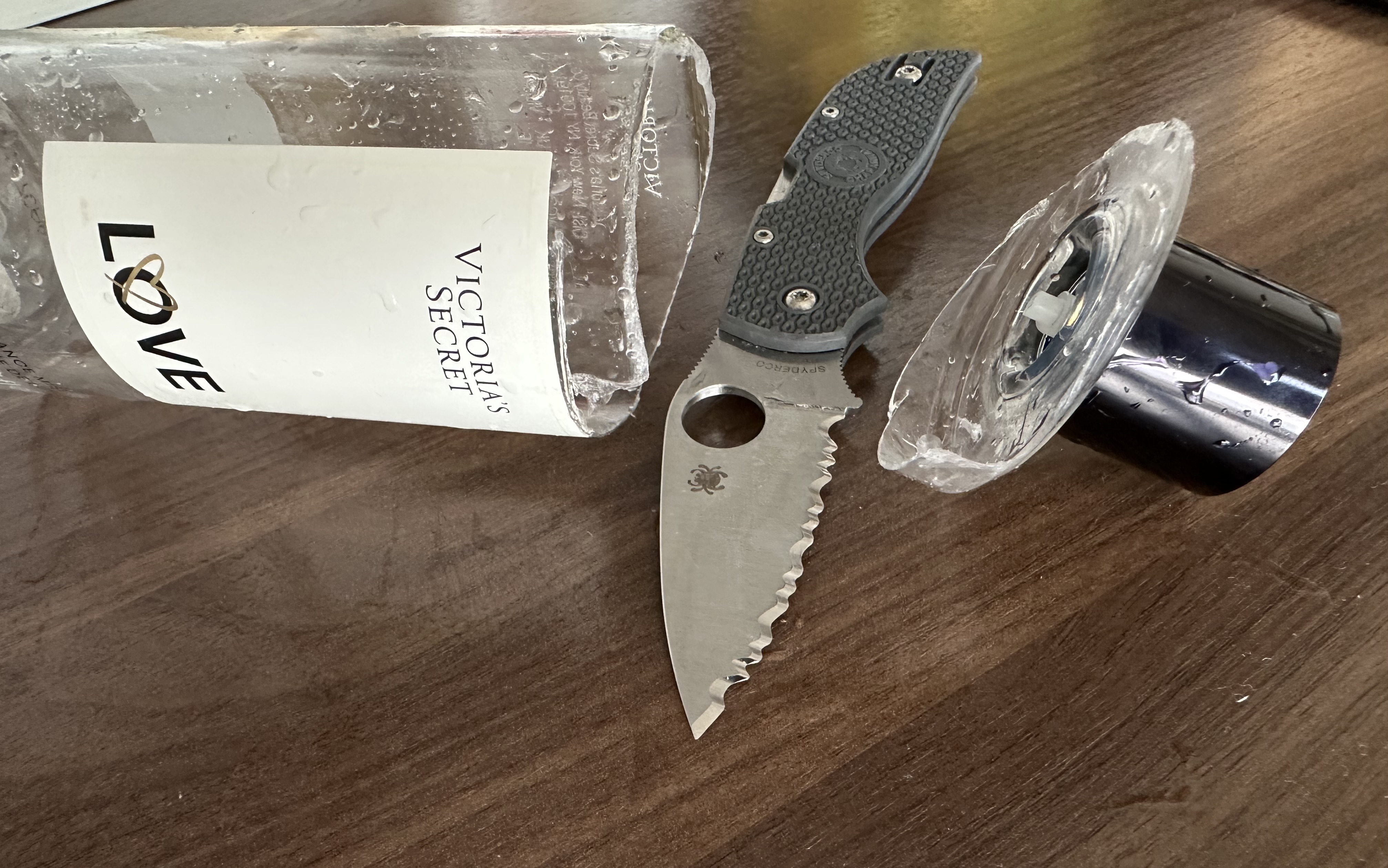
So far, I’ve put the knife through its paces, cutting anything I could, and maintaining the edge with some Jade stones (see first picture). The mechanism shows no signs of play in any direction — rock-solid performance.

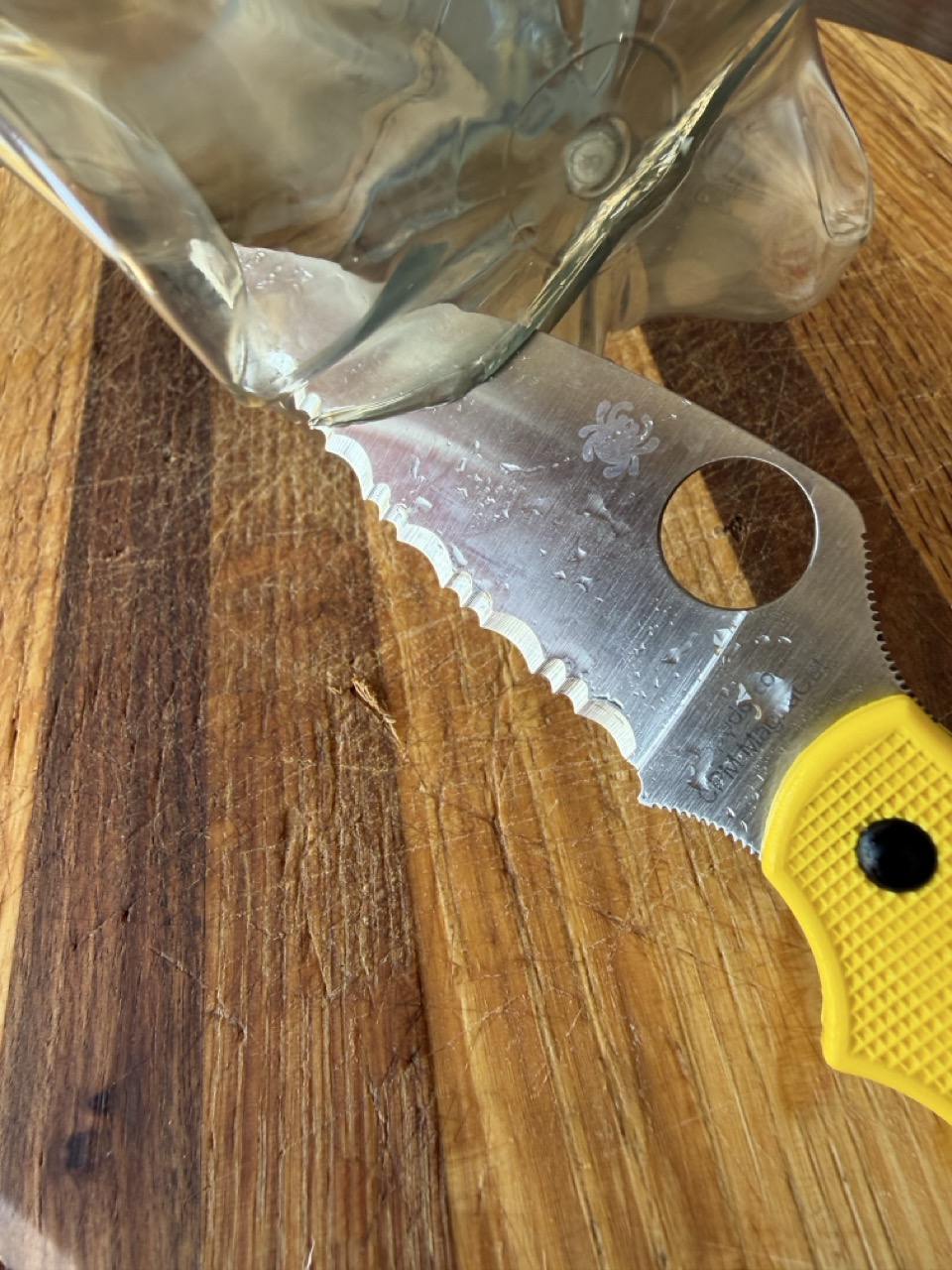
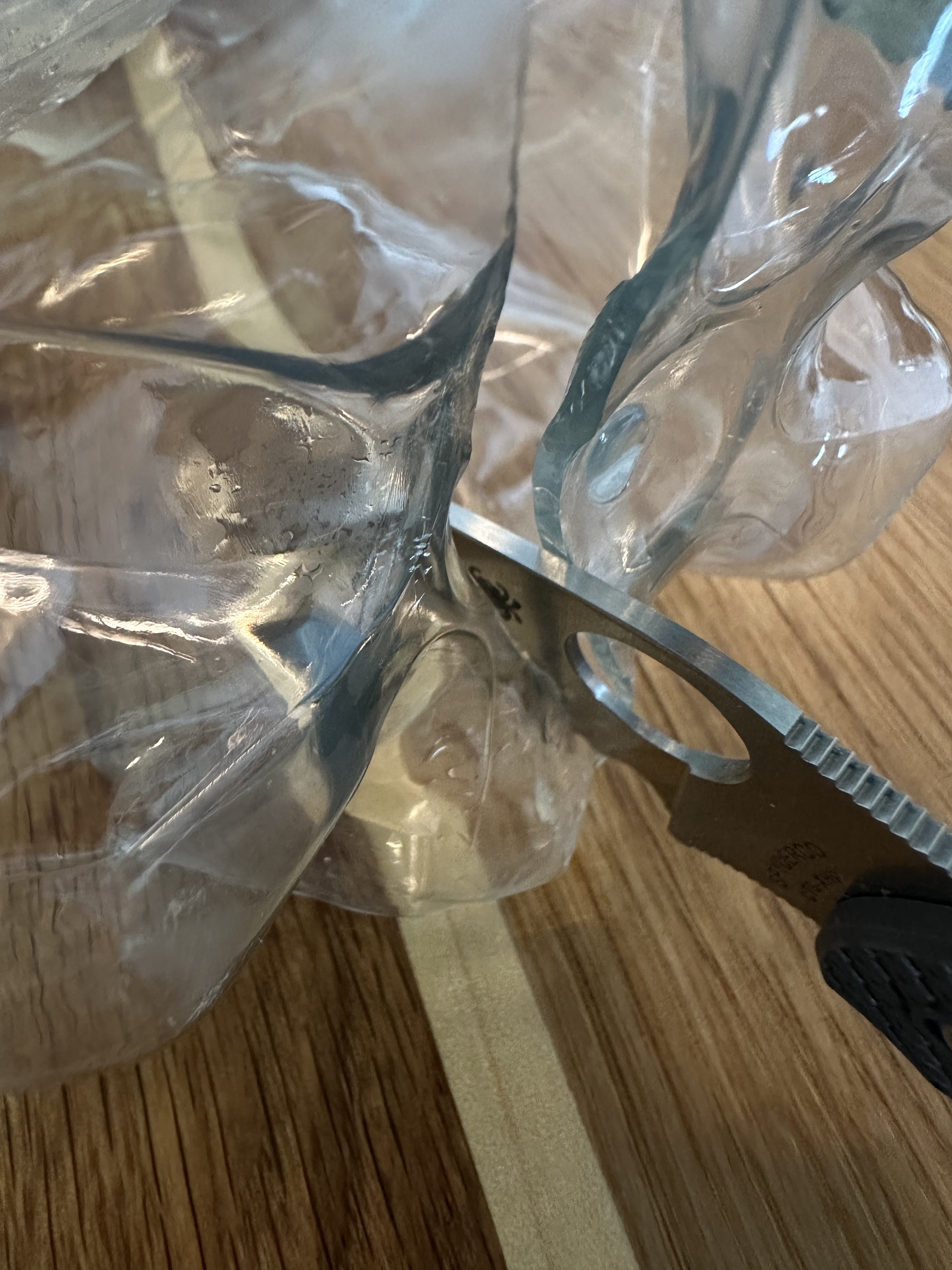
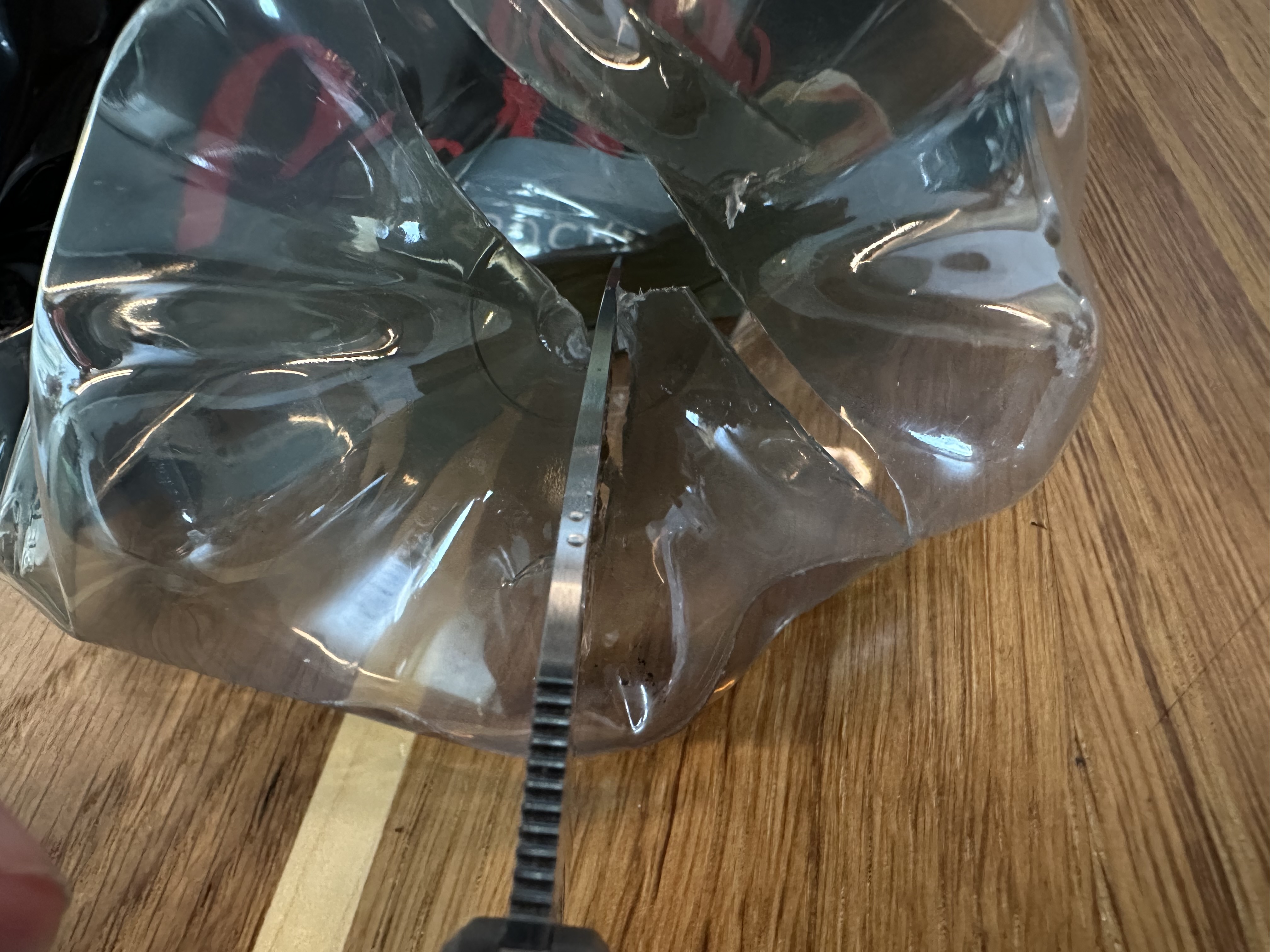
The plastic is thicker that the blade.

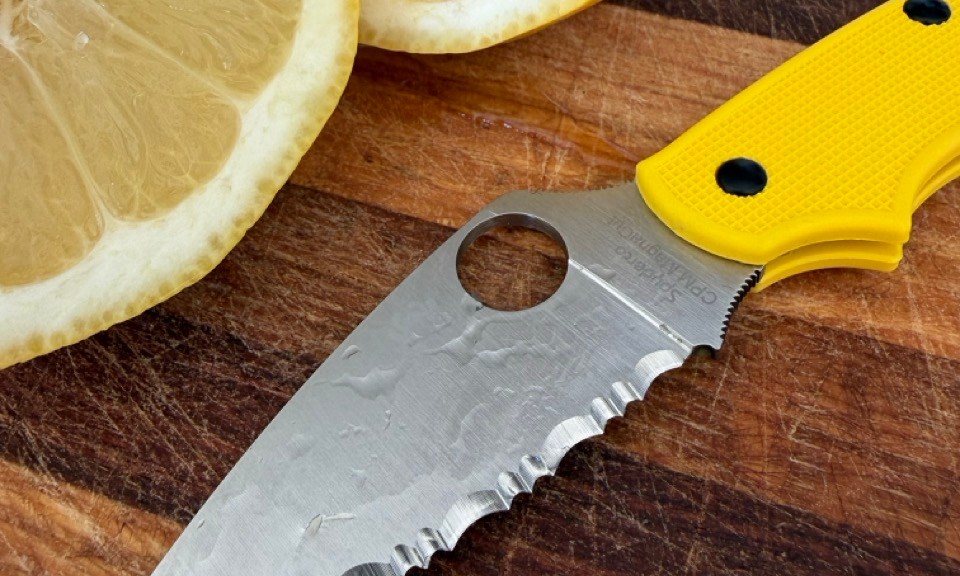
As you can see, the serrated edge is a chisel grind, which means it tends to deviate slightly to the right of the material being cut, much like a fin in water. I started the cuts with a bit of sawing, then transitioned to push cuts, and the knife effortlessly sliced through the thick plastic used to form the bottle.

This little knife is fierce in term of cutting performance. It is a lot of power in your pocket ! It is a pocket chainsaw !

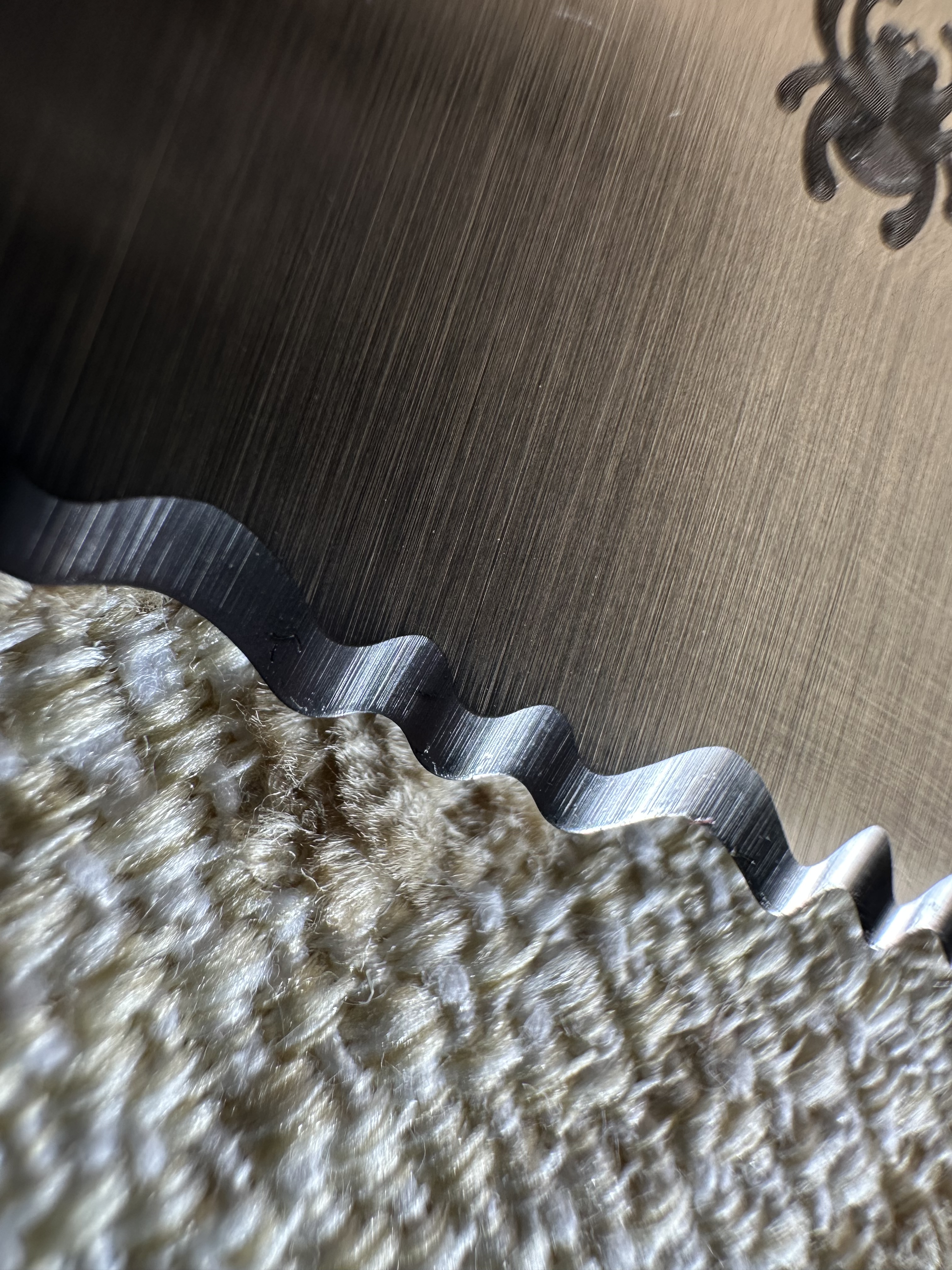
The serrations really shine on the plate. You can push the knife hard against ceramic surfaces, and if the points ever need a touch-up, a few passes on a ceramic corner — or in my case, a jade corner — brings them back like new.

I have been able to reach razor level just by passing gently the Jade on it.

Actually it is fun to enhance the edge.

Actually, this is a bit of a comeback for me with serrations, dating back to my AFCK experience 25 years ago. Back then, I mostly used partly serrated edges, which helped initiate cuts on hard materials.

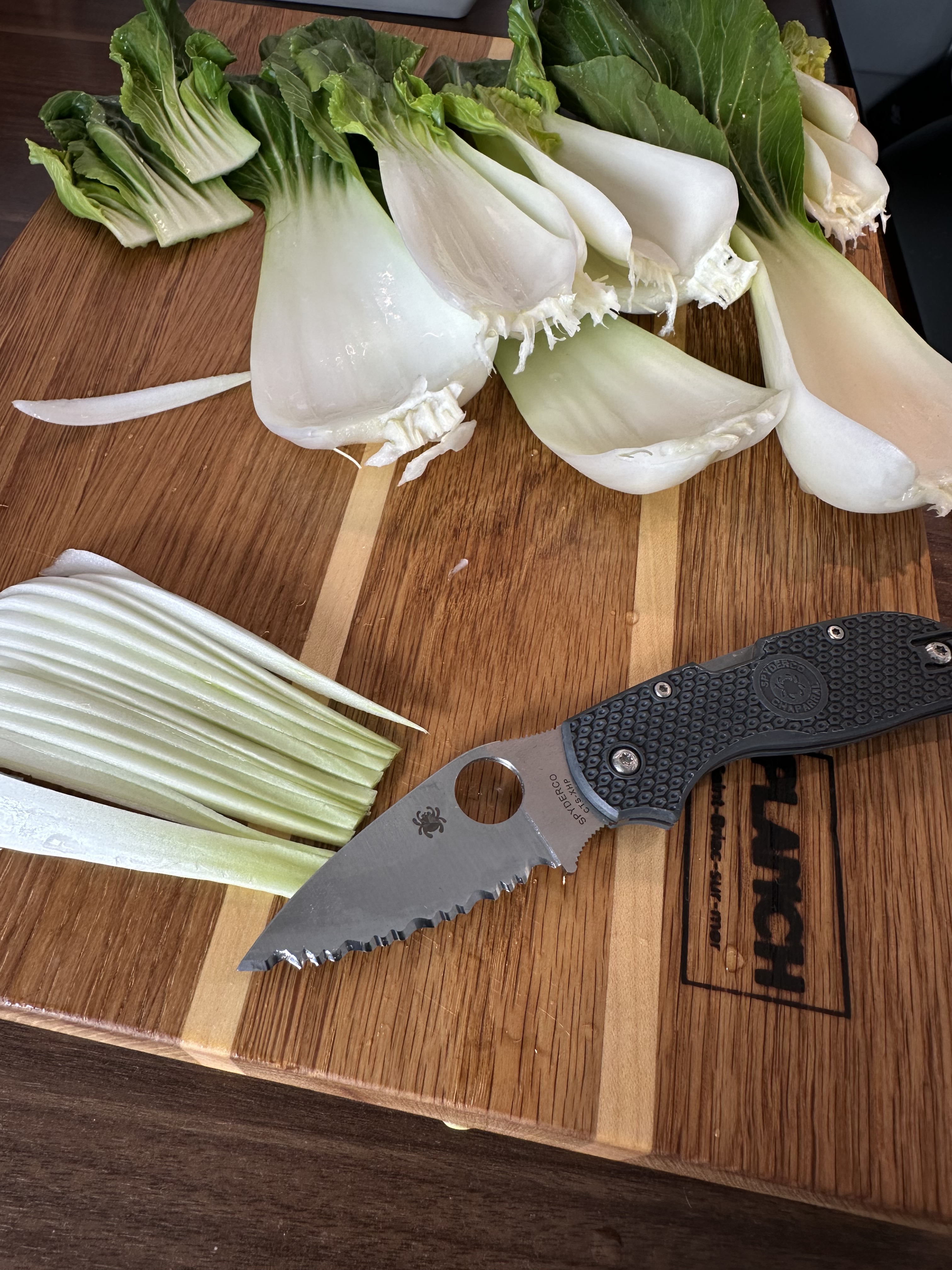
With a fully serrated thin blade and no plain edge, I initially wondered how useful it would be in the kitchen — especially since my wife’s favorite knives are Victorinox fruit knives (serrated). But it turns out, neither fruits nor vegetables can withstand the sharp, wavy edge of the Chaparral.

Funny enough I have been able to strop the edge of the Chap by using the side of the leather belt. CTS XHP is a steel which loves leather in my experience.

All in all, so far, so good. The Chaparral delivers impressive cutting power. Its thin, fully serrated edge is unique within the Spyderco line, pushing the design out of its comfort zone — and for a “knifeaholic” like me, that’s pure fun.

The next step is to trust this little knife enough to take it on a road trip in Italy — handling food prep, wood, and low-profile carry as my only pocketed folder. The Chaparral will make its return in May.

Spyderco Chaparral Serrated C152SGY- The Lightweight With Teeth.

I’ve been an early adopter of the Chaparral. Nearly 13 years ago, I called it the “Extra Flat Companion” in my first review from 2012. Back then, the Chaparral was designed to serve as a platform to test different handle materials, while the Sage (another model “made in Taichung”) showcased various lock designs used in folders.

Twelve years later, Spyderco has introduced a major improvement to the Chap’s blade: their famous serrations. The brand is, of course, known for its Spyderhole, its clips, and… the performance of its serrated edges. Sal Glesser has long advocated the superior cutting performance of Spyderco’s sserrations. Scallops, moon quarters, and thin chisel geometry all work together to create the ultimate “matter separator,” making tough cutting tasks effortless.


Sal has refined his serrations into a recognized patterns and created the Spyderedge: “Spyderco’s two-step serration patterns consist of one large and two small serrations. The pattern increases the cutting edge’s surface area by up to 24%”.
On the Chaparral, the serration are even better as they are rounded to avoid snagging when cutting. Those same enhanced serrations can be found on another serrated folder made in Taichung for Spyderco: the LC200N made Caribbean.

I’am not a serration’s fan. I prefer a short convexed blade like my Roadie XL to EDC but this is the opportunity to pocket a serrated knife designed to be low profile folder easily displayed in the middle of the sheeples.

The Chaparral is another Lil’ Big Knife in disguise. Go figure, his lock is equipped with an hidden pin which gives a lot of strength and stability. This improved backlock is also found on the Sage 4 but do not worry about vertical play.
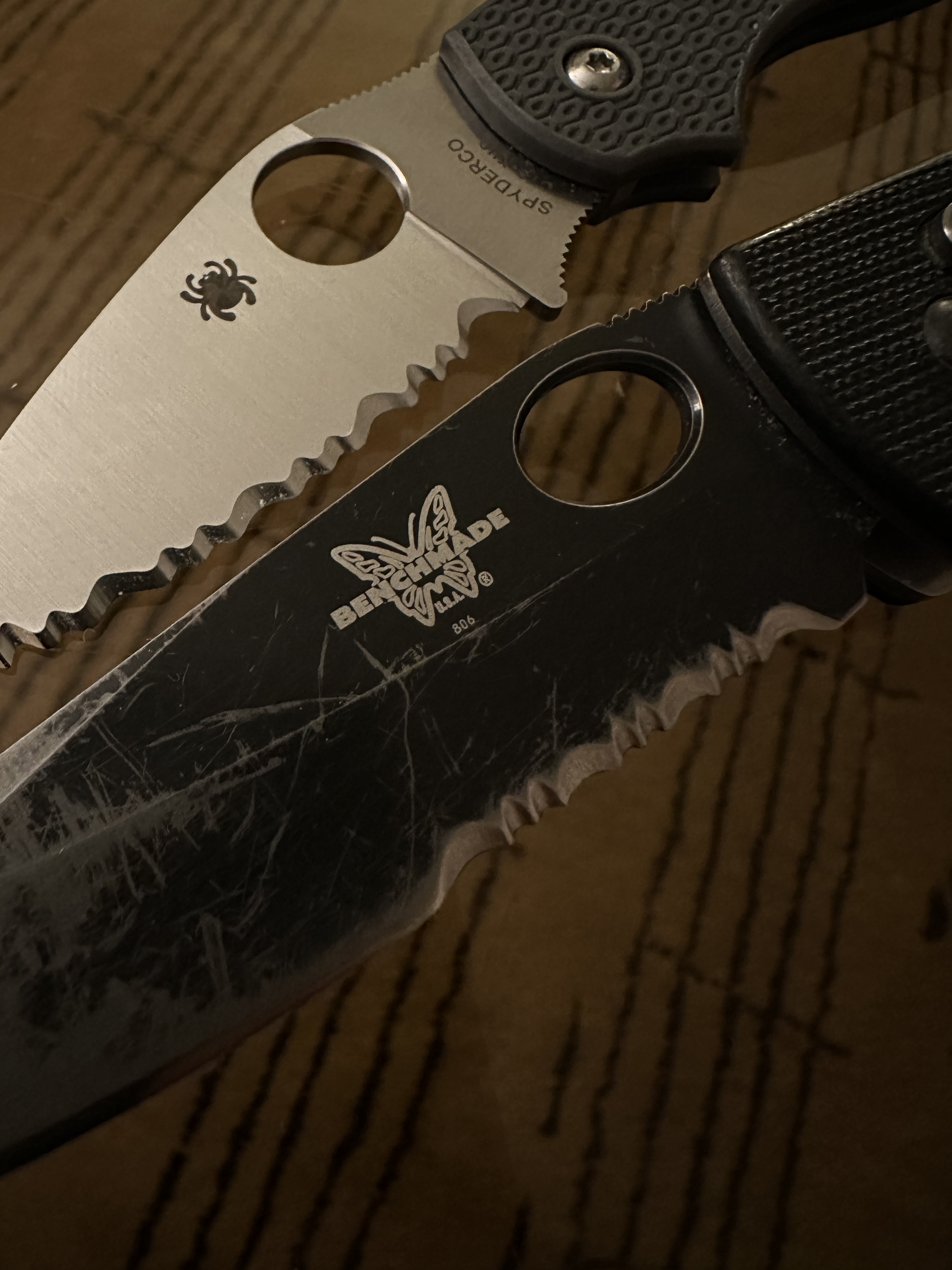

Also the Chaparral’s blade is only 2 mm thick. A razor blade with serrations ? It should be interesting !
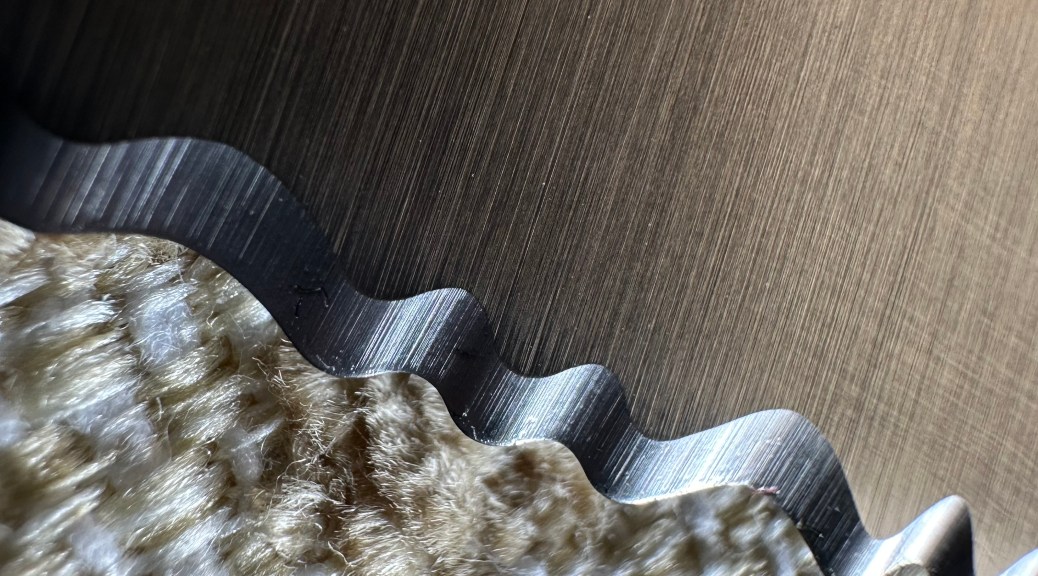
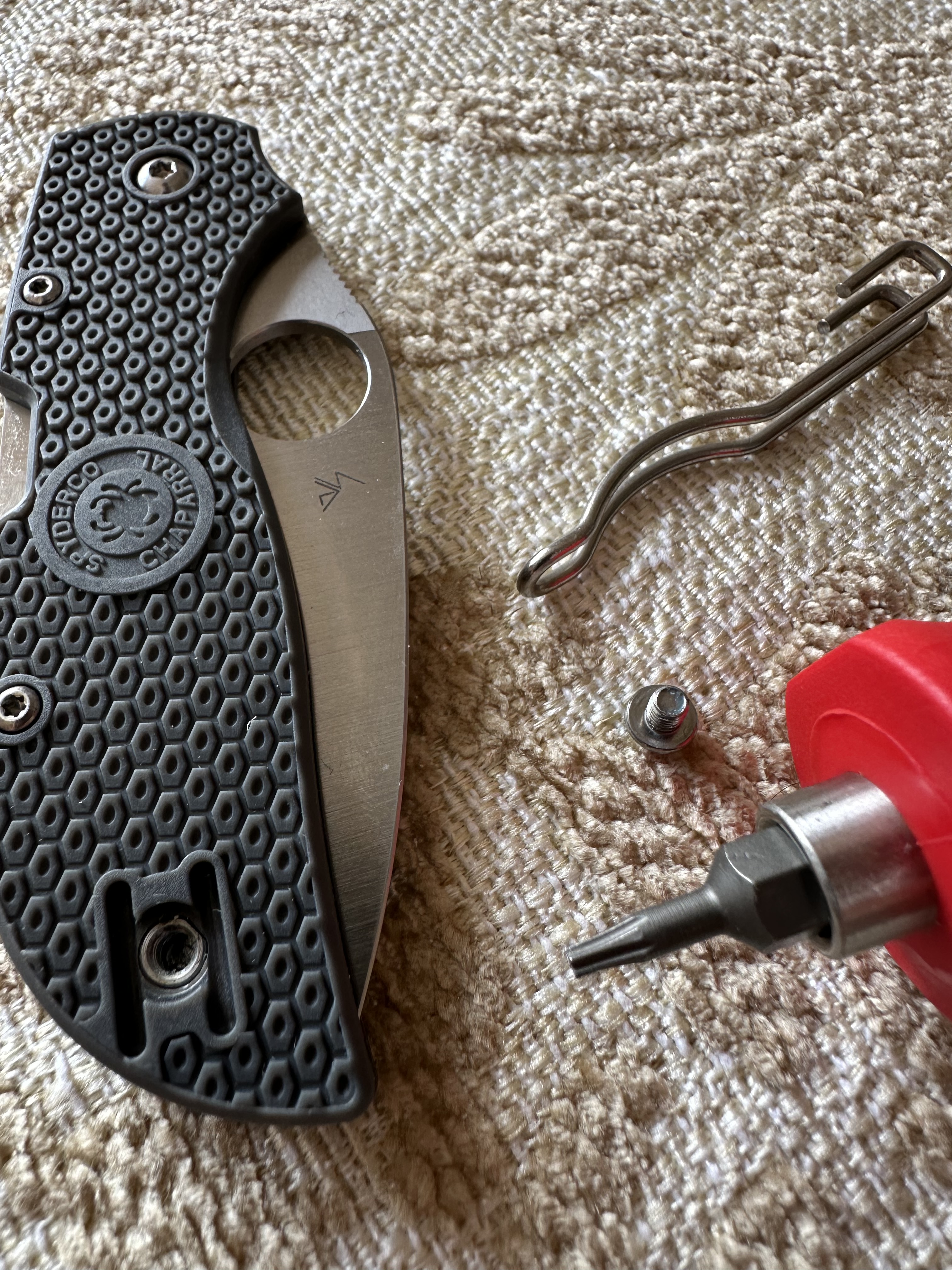
It even has teeth on its handle. The FRN scales feel almost like shark skin, which can be tough on pockets. My first step was to temporarily remove the pocket clip, then sand the scales to smooth them out.

The FRN doesn’t react as quickly as G10 when sanded. I still ended up with a slightly toothy handle, but it’s much more acceptable to me. Of course, this is a matter of personal taste — many users will appreciate the aggressive grip the pattern provides. I, however, prefer not to carry a pocket shredder anymore.

Lately, I’ve discovered that I really enjoy knives I can carry in my denim watch pocket. The Roadie XL, which I can now flick open with a wrist, is the king of that pocket and I use it hard despite its small size.

But this little “Tooth Faerie”, the Serrated Chaparral, also demands heavy use — and beware of its cutting power! Its steel, CTS-XHP, is known for being extremely reliable, even on thin edges. I’ve used it in many knives, including some Cold Steel Voyager XLs, and it never disappoints.

It will be very interesting to see how the Chaparral Light platform, equipped with a top-performance factory edge and an improved backlock, performs as a true workhorse — pushing the envelope of what the Chap’ can do. Spyderco has also just released a Slipit (non-locking) Chaparral, sold at nearly double the price of the FRN serrated version. Clearly, this one isn’t marketed as a “precious” collectible but as a pure performance tool. Spyderco has supercharged the Chaparral to be a user’s knife.

To summarize:

  • 2 mm thick blade — this is thin !
  • Backlock enhanced with a hidden pin — zero vertical play !
  • Rounded, anti-snag SpyderEdge.
  • Sheeple-friendly design.
  • Made in Taiwan with attention to details.

Yes, the Chap is back… with teeth … in its next chapter:
FOR THE FIERCE AND THE FURIOUS