Tag Archives: Taichung

Spyderco Sage 6 REX 121 –C123GPBOR – My First Impression of Agent Orange

Disclosure: This Sage 6 REX 121 was provided by Spyderco as a complimentary review sample through the Spyderco Ambassador Program. Receiving the knife does not influence my opinions. Spyderco does not preview, edit, or approve my reviews, and all conclusions are based solely on my own testing and experience.
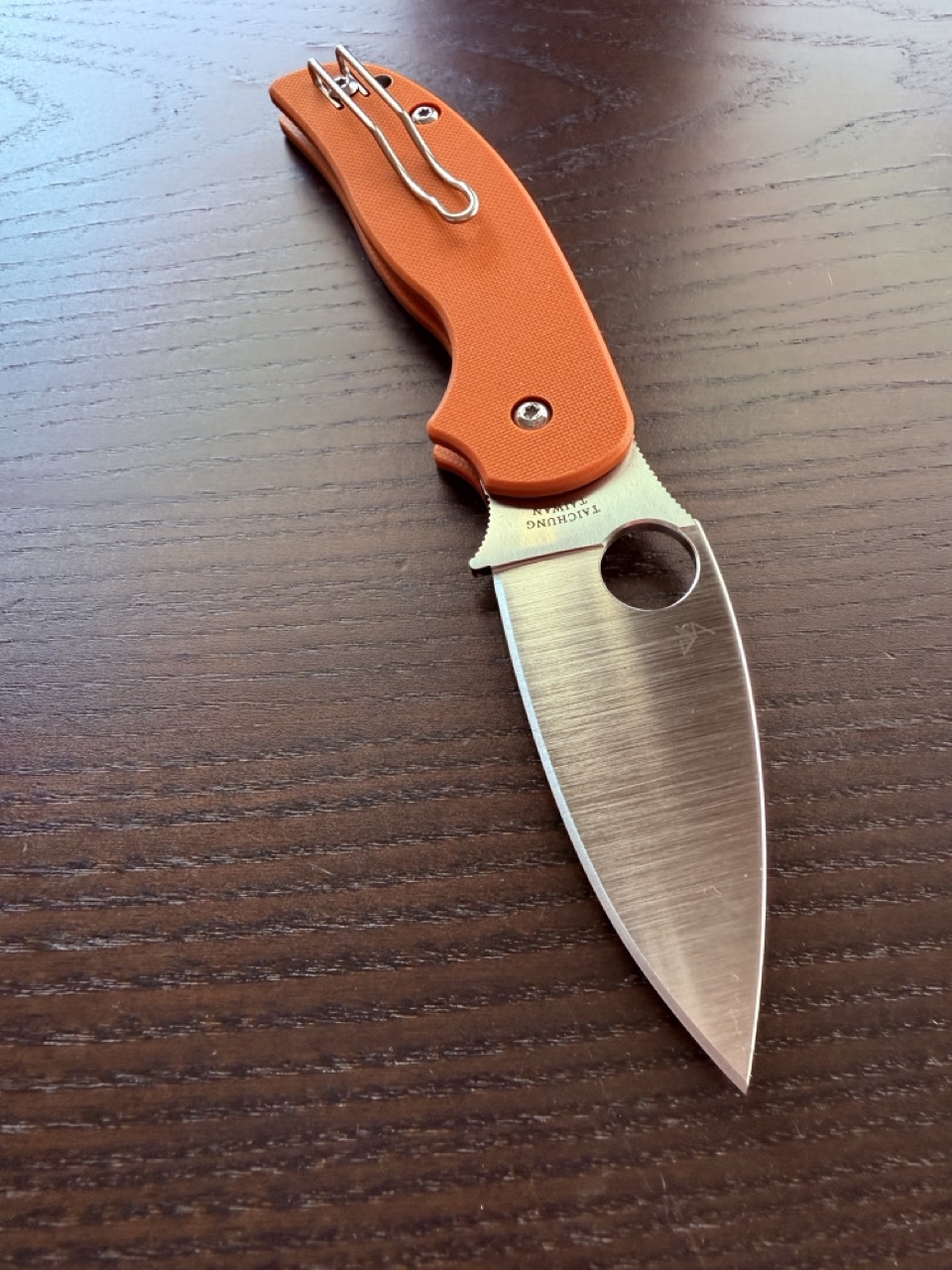
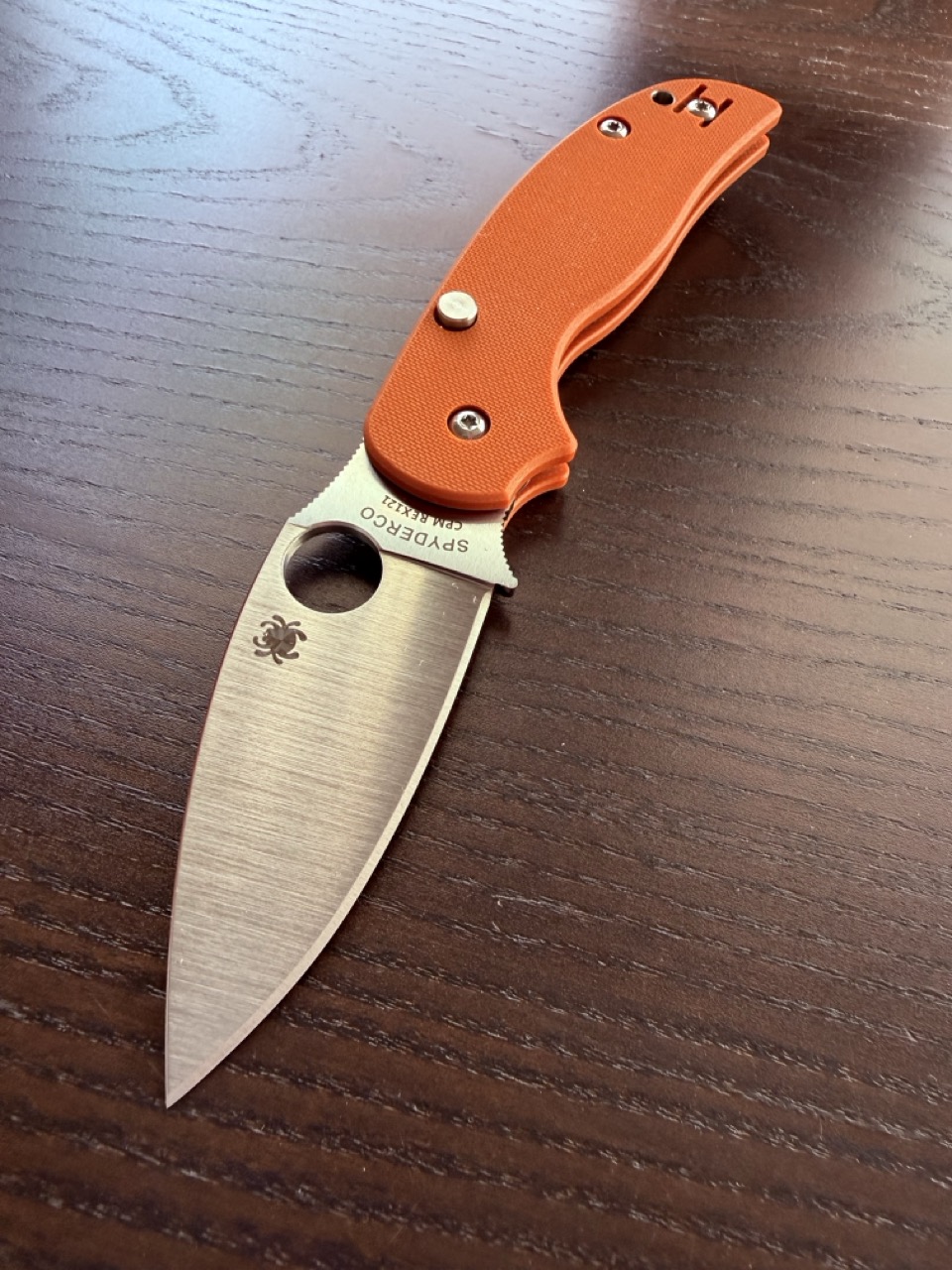
I just received my Sage 6 REX 121.

Wow. This feels like the Formula One of EDC knives.

Think about it: an ultra-modern Button Compression Lock inspired by Kevin Smock’s design, paired with one of the most extreme production blade steels ever made—CPM REX 121.

This is a true heavyweight in the knife world, and probably one of the most technically advanced production knives ever released. Its price isn’t driven by titanium scales, exotic inlays, or premium bolsters. It’s driven almost entirely by engineering, manufacturing, and metallurgy.

Just… wow.
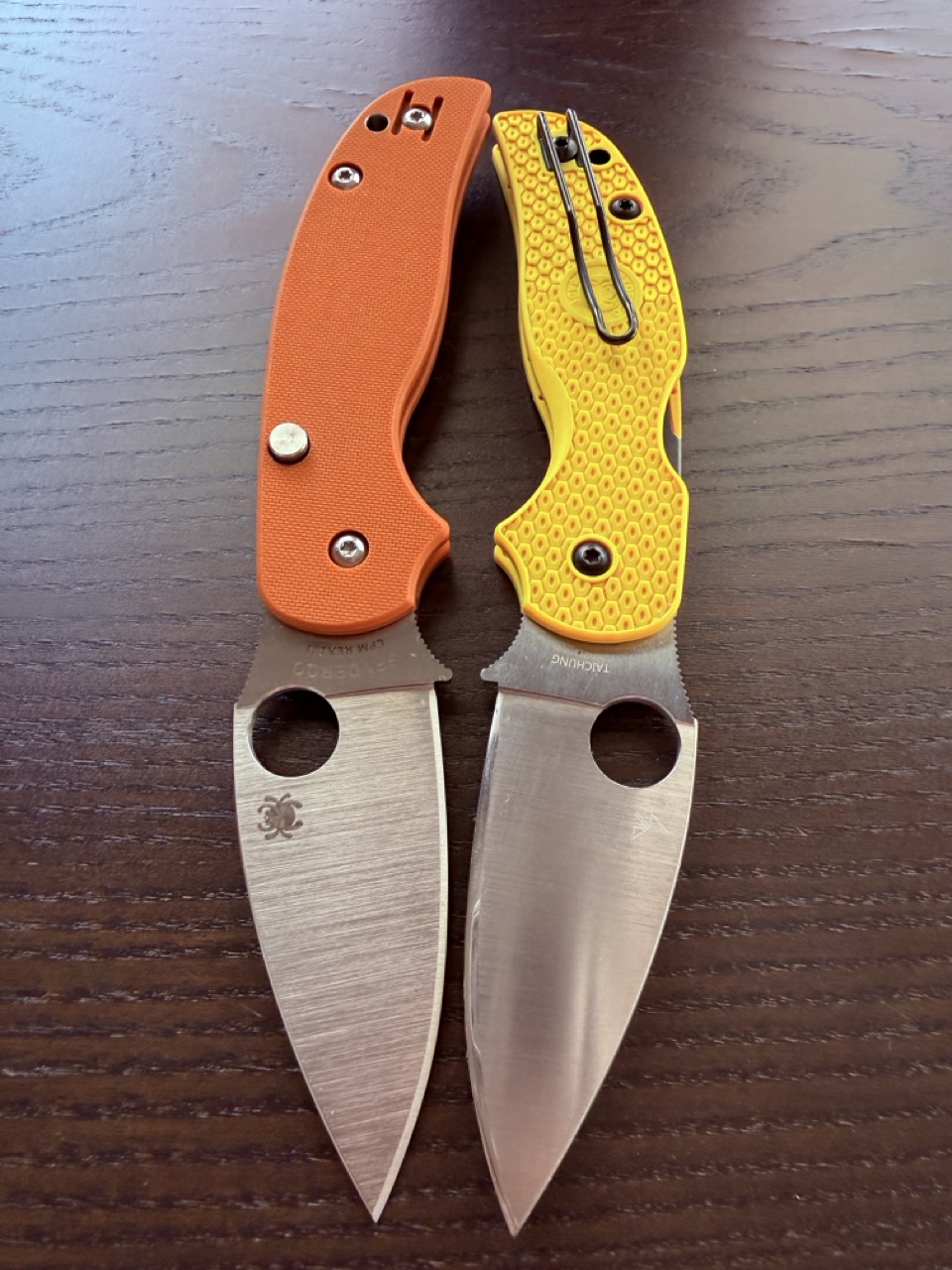
I’ve handled and used every Spyderco Sage model over the years.

For those unfamiliar with the series, the Sage was conceived by Sal Glesser as a single knife platform dedicated to honoring the greatest folding knife lock innovations—and the designers behind them. Every Sage shares the same DNA, while each model showcases a different locking mechanism and pays tribute to the person who popularized or invented it. 

  • Sage 1 honors Michael Walker and his revolutionary LinerLock, as well as the ball-detent system that keeps the blade securely closed.
  • Sage 2 pays tribute to Chris Reeve and his Reeve Integral Lock (R.I.L.), better known today as the frame lock.
  • Sage 3 celebrates Blackie Collins and his ingenious Bolt Action Lock.
  • Sage 4 honors Al Mar and the Mid-Back Lock (Front Lock) that became one of his signature features.
  • Sage 5 showcases Sal Glesser’s own Compression Lock, arguably Spyderco’s most iconic locking mechanism.
  • Sage 6 takes that concept one step further with the Button Compression Lock, inspired by Kevin Smock’s button-actuated implementation of the Compression Lock. It feels like the natural evolution of the Sage platform rather than a departure from it.

After owning and using every generation, I can honestly say the Sage 6 is the smoothest of them all. Mechanically, it’s simply remarkable.
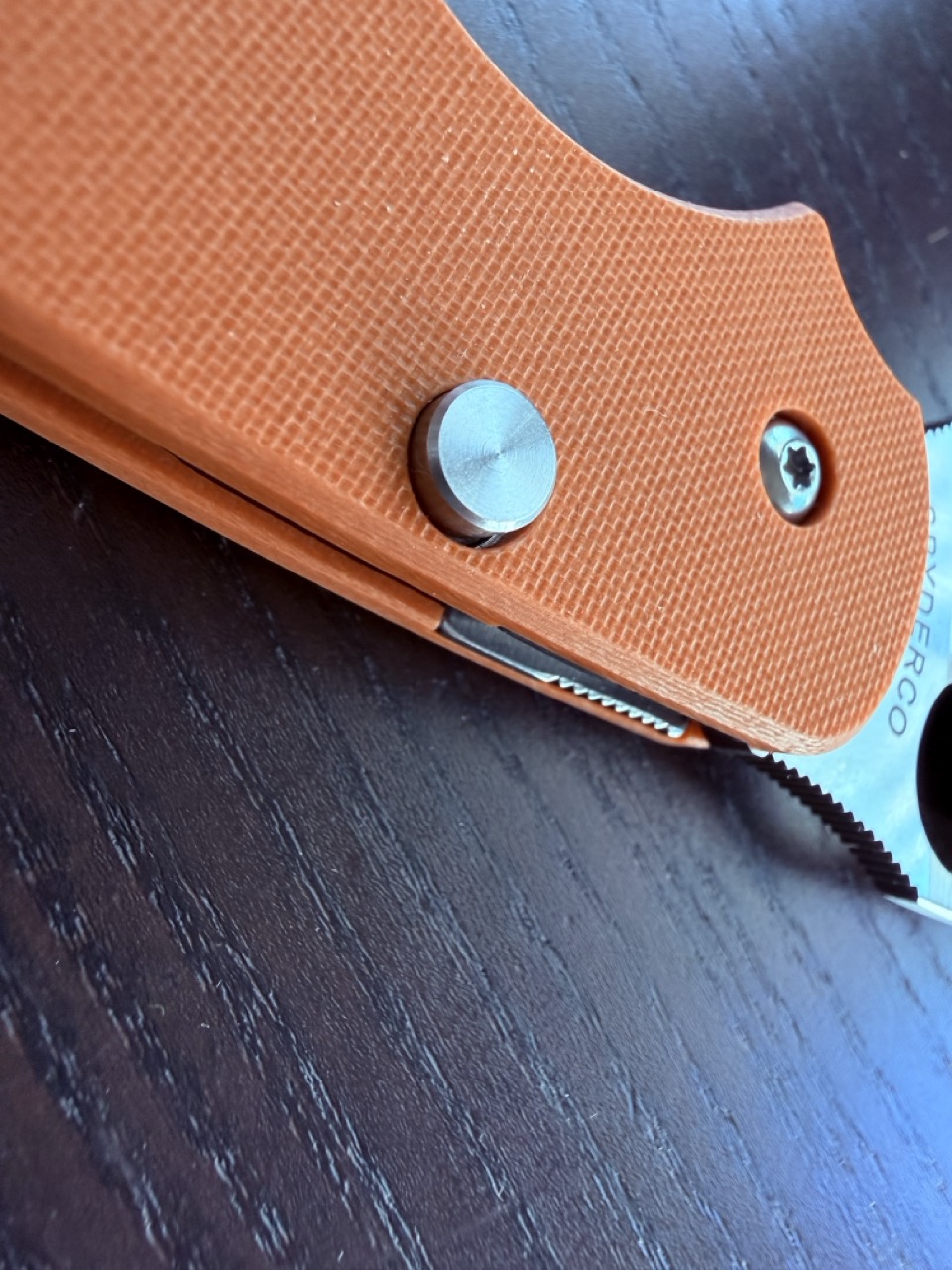
One detail immediately caught my attention.

When the knife is closed, the button sits recessed into the scale. Once the blade is fully opened and locked, the button protrudes slightly above the handle, making it mandatory to disengage the lock.

This is clearly an intentional design choice. It prevents the knife from being mistaken for, or too easily operated like, a gravity knife where a simple press of the button could release the blade while closed.
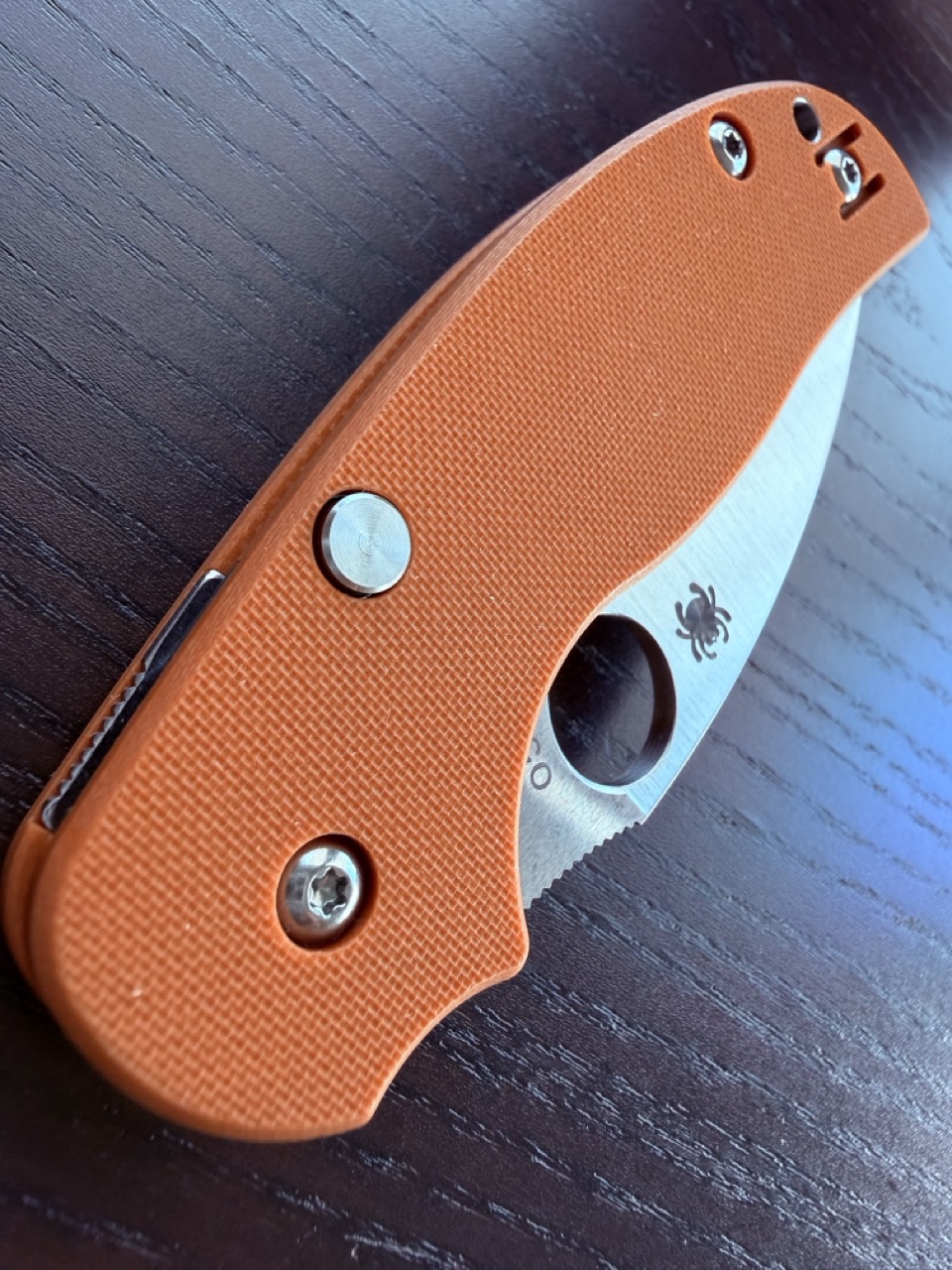
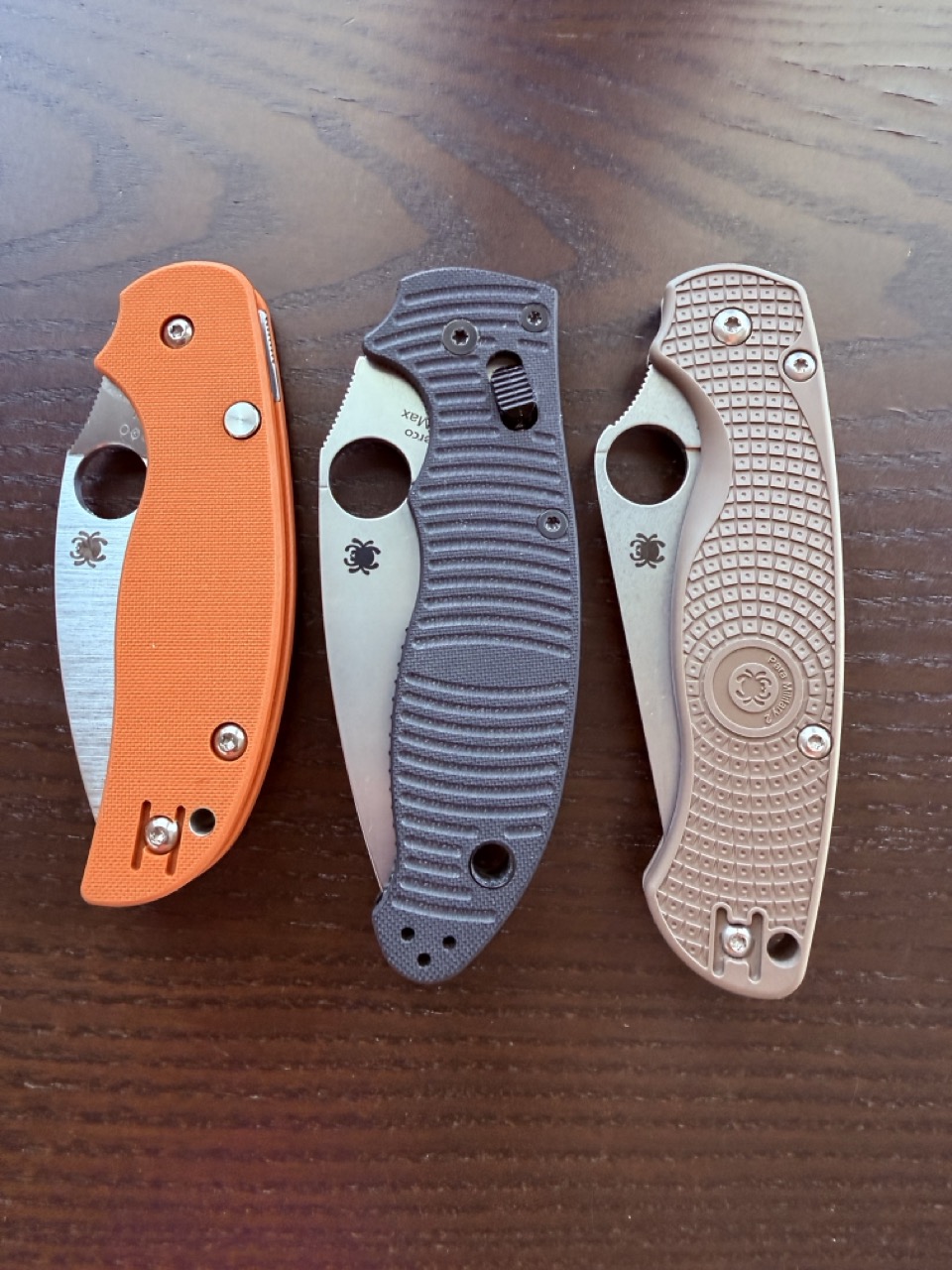
Spyderco has followed a similar philosophy with the Ball Bearing Lock on the Manix 2. Unlike an Axis-style lock, it requires a more deliberate action to disengage, reducing the risk of accidental or unintended deployment.

To me, this reflects Spyderco’s long-standing approach to responsible knife design. The company doesn’t just pursue innovation—it also pays close attention to legal considerations and user safety. Rather than creating a lock that could be easily misused or interpreted as an automatic or gravity knife, Spyderco has deliberately engineered additional safeguards into the mechanism.

It’s a subtle detail, but one that says a great deal about the company’s design philosophy.
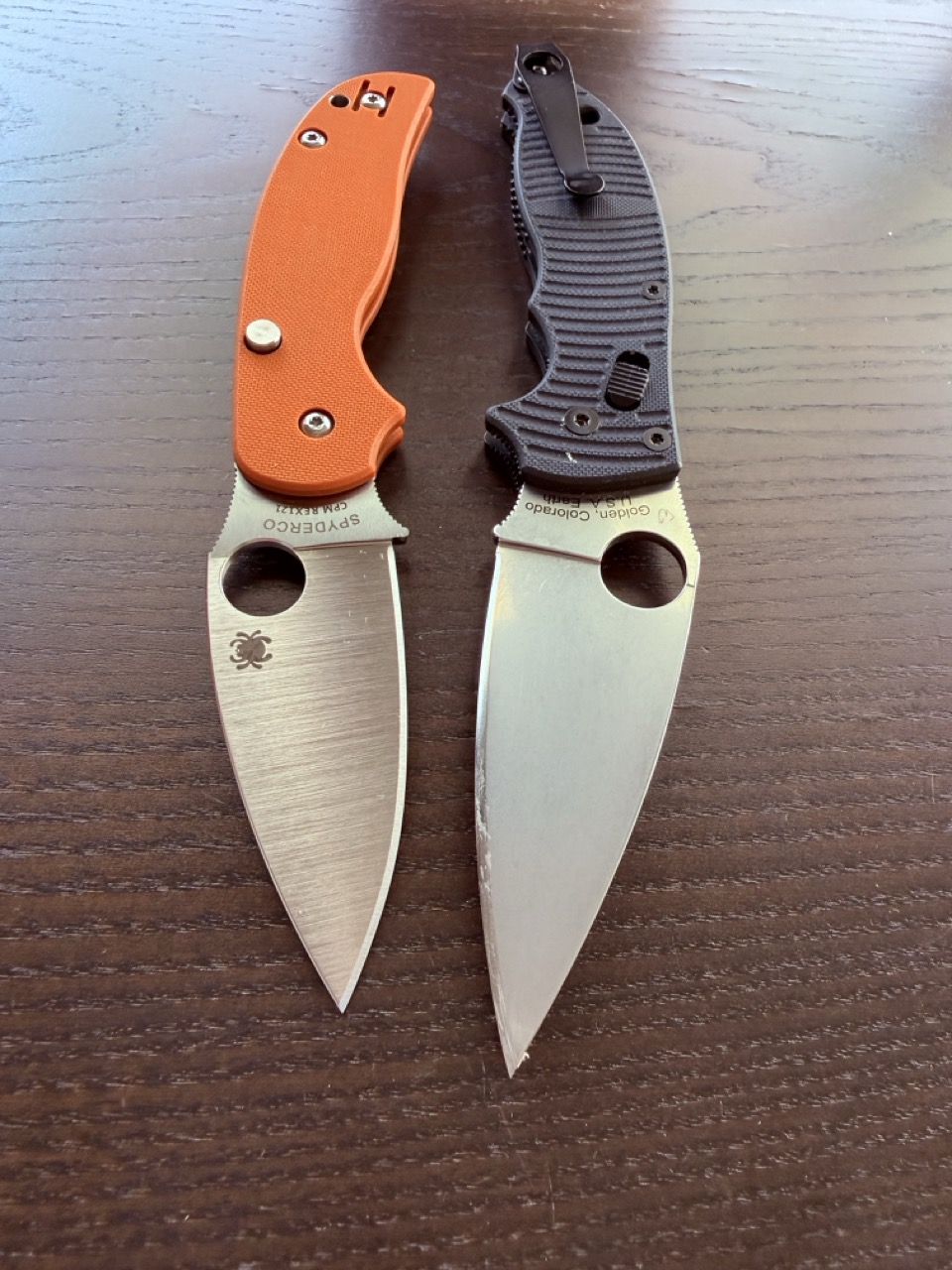

Opening it with the Spyderhole is effortless, and closing it with a gentle flick of the wrist is pure satisfaction. It is one of those rare knives that makes you want to open and close it again and again—not because you have to, but because the action is simply that enjoyable.

The action is nothing short of addictive. The Sage 6 is incredibly fidget-friendly.

The best way I can describe it is that it almost feels as if the blade were riding on a magnetic system rather than traditional washers. The action is exceptionally smooth, yet always controlled and reassuring.

Every opening and closing cycle feels refined. The lock engages with a soft, muted click instead of a harsh metallic snap, giving the knife the feel of a finely tuned mechanical instrument.

One aspect that is often overlooked in a folding knife is that opening the blade is only half the story. Closing it safely is just as important.

To me, the easier and more intuitive a knife is to close, the safer it is to use. If you don’t have to reposition your grip, place your thumb between the liners, or let the choil drop onto your finger, you’re less likely to make a mistake.

This is where the Sage 6 really shines. That single button makes disengaging the Compression Lock almost effortless. It preserves all the strengths of Sal Glesser’s ingenious lock while making it significantly easier to operate with one hand.

For me, that’s one of the biggest improvements over the original Compression Lock. It’s not just more convenient—it’s genuinely safer and more confidence-inspiring during everyday use.

That said, the design still clearly favors right-handed users. Left-handers can certainly operate it, but the ergonomics are undeniably optimized for right-handed manipulation.
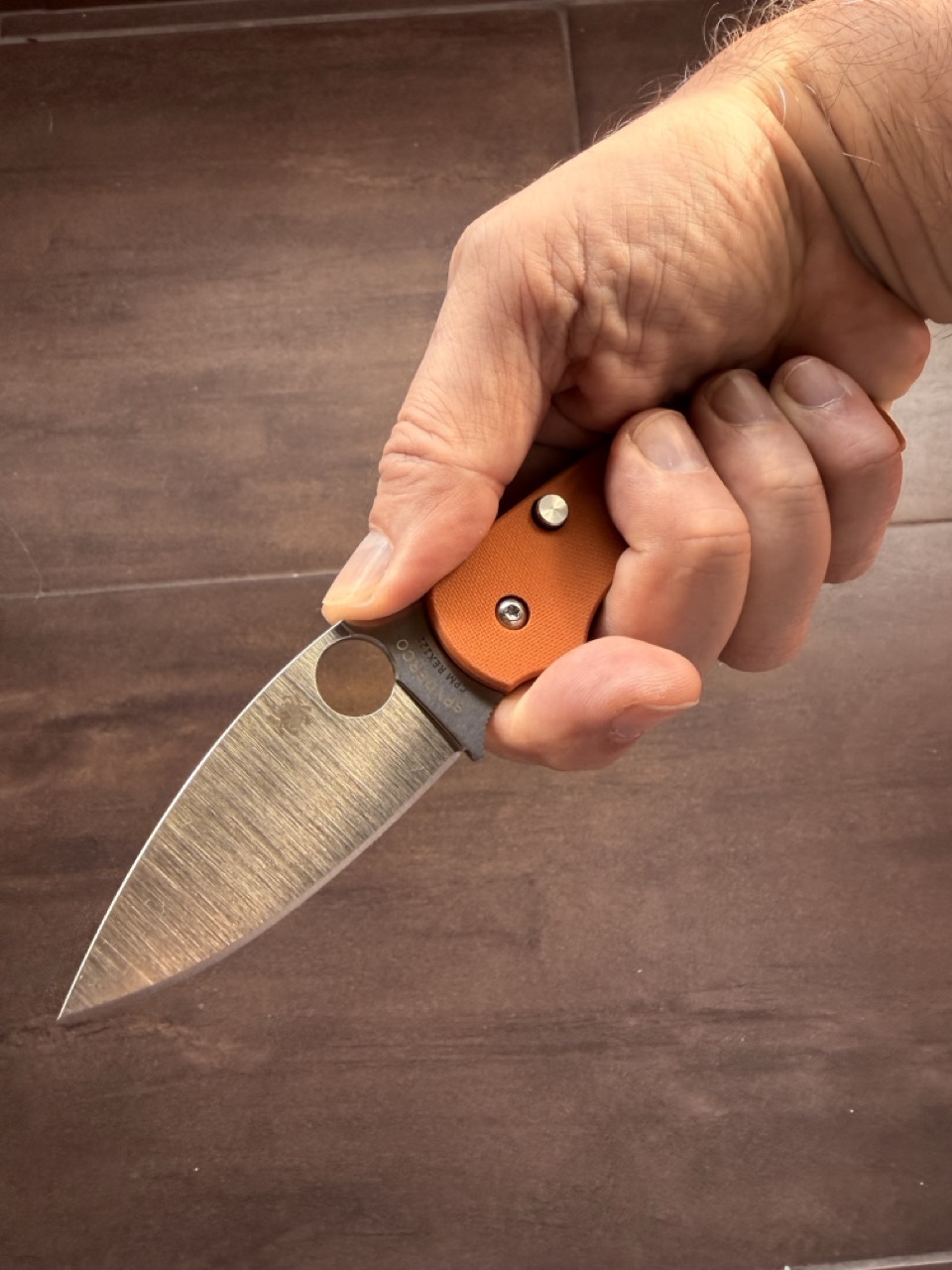

One of my initial concerns was whether the button could get in the way during use or even lead to an unintended lock release.

That’s a debate that goes all the way back to the introduction of Benchmade’s AXIS Lock more than 25 years ago. Some users wondered whether pressure from the hand could accidentally disengage the lock during hard use.

Spyderco has taken a different approach. On the Manix 2, the Ball Bearing Lock relies on a fairly strong spring that requires a deliberate pull to disengage.

On the Sage 6, the solution is different but equally effective. The button is positioned far enough away from my natural grip that my fingers never come close to pressing it unintentionally.

After handling the knife, that concern disappeared almost immediately. The lock feels intuitive, secure, and confidence-inspiring. It delivers all the convenience of a button-operated mechanism without ever making me worry about an accidental unlock.
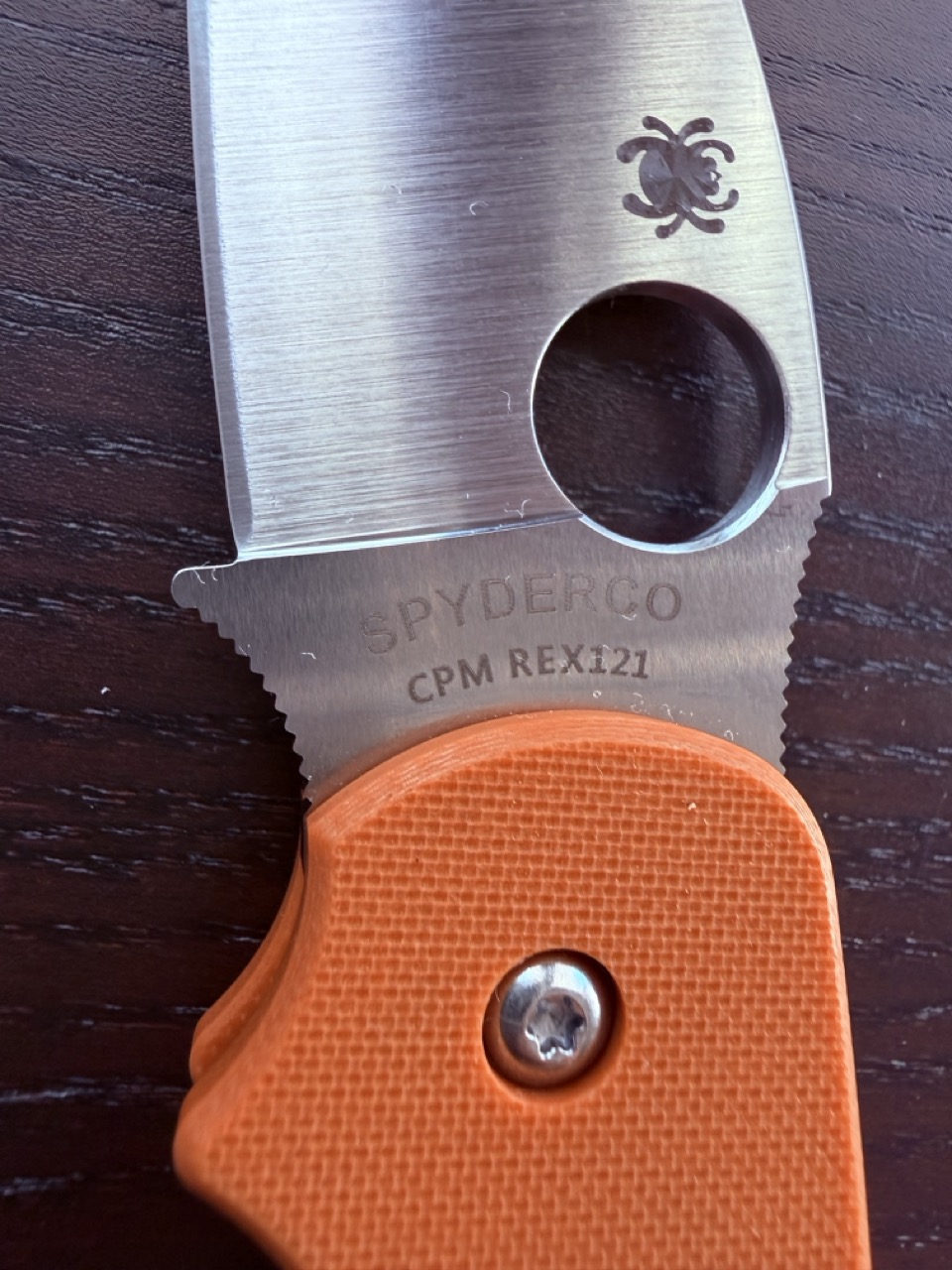

Originally developed by Crucible Industries as a high-speed tool steel for industrial cutting tools, CPM REX 121 was never designed with pocket knives in mind. Its primary objective was simple: maximum wear resistance at very high hardness.

Composition

CPM REX 121 is an astonishing alloy. Take a look:

  • Carbon: 3.4% !!!
  • Chromium: 4.0%
  • Vanadium: 9.5% !!!
  • Tungsten: 10.0% !!!
  • Molybdenum: 5.0%
  • Cobalt: 9.0% !!!

This chemistry creates an exceptionally dense “population” of very hard carbides, giving the steel extraordinary resistance to abrasive wear. It is not stainless, but its chromium content provides slightly better corrosion resistance than traditional simple carbon steels.
Adamantium anyone ?

According to Sal, Spyderco runs its REX 121 blades at an impressive 67–70 HRC !!!
Those hardness levels are almost unheard of in production folding knives and are one of the reasons the steel performs the way it does. 

Metallurgist Larrin Thomas, father of MagnaCut and MagnaMax, places REX 121 at the very top of the edge-retention scale.
In fact, he rated both REX 121 and Maxamet above his normal 1–10 scale, simply because they outperform the rest of the field by such a margin. His testing shows REX 121 combines record-breaking wear resistance with very low toughness, making it a steel optimized for slicing performance rather than abuse. 

I won’t be treating this knife the way I treated my Maxamet.

(Years ago, I even used that knife to open oysters just to see how far I could push the steel—and then sharpened it back to a razor edge.)

Looking back, that was a rather silly test.

With the Sage 6 REX 121, my goal is different. I want to evaluate it as a high-end everyday cutting tool, not as the subject of destructive or abusive experiments. There are plenty of videos on YouTube showing knives being pushed beyond their intended use. That’s not what interests me.

I’m far more interested in how REX 121 performs in real-world cutting tasks, how long it retains a truly useful edge, and what it feels like to maintain over months of normal use.

The interesting part is that real-world experience is often more nuanced than the numbers suggest.
Owners of the Sage 5 REX 121 consistently report:

  • astonishing edge retention, especially on cardboard;
  • a “working edge” that seems to last almost indefinitely;
  • surprisingly little chipping when the knife is used for cutting rather than prying;
  • sharpening that absolutely benefits from diamond or CBN abrasives but is not the nightmare many expected. 

One experienced user reported using a Sage 5 in REX121 almost exclusively on cardboard for six months, sharpening it only once during that period, with no chipped edge or broken tip.
Another noted that while sharpening takes longer, deburring is remarkably easy, resulting in an exceptionally clean apex.

Several users also mention that REX 121 responds exceptionally well to a highly polished edge, maintaining both aggression and push-cut performance longer than expected.
So it will be leather stropping friendly.

Some people may question the price of the Sage 6 REX 121. Looking at the manufacturing process, however, it starts to make sense.

First, Spyderco had to secure a significant quantity of CPM REX 121—an already rare and expensive steel. The raw material then had to be shipped from the United States to Spyderco’s manufacturing facility in Taichung, Taiwan.

REX 121 is also one of the most difficult production steels to machine and grind. Its extreme wear resistance means slower manufacturing, greater tool wear, and extensive use of diamond abrasives, all of which increase production costs.

Once the knives are manufactured, they are shipped back to Golden, Colorado, Earth.

In other words, you’re not just paying for an orange handle or a premium steel. You’re paying for one of the most demanding manufacturing processes ever applied to a production folding knife.

And CPM REX 121 deserves a proper farewell, and Spyderco seems determined to give it one. By acquiring as much of the remaining steel as possible following Crucible’s acquisition by Erasteel, Eric and Sal Glesser ensured that this legendary alloy would continue to reach enthusiasts rather than quietly disappear. After the Sage 6, Spyderco is already planning a Chaparral in REX 121. With its ultra-thin 2 mm blade stock—compared to the Sage’s 3 mm—it could become one of the most formidable high-performance slicing tools the company has ever produced.

To quote Sal on the forums:
“I’ve been maintaining a very coarse edge (CBN Gauntlet Vivi style) at 10 DPS with no problems so far.”
That’s impressive.
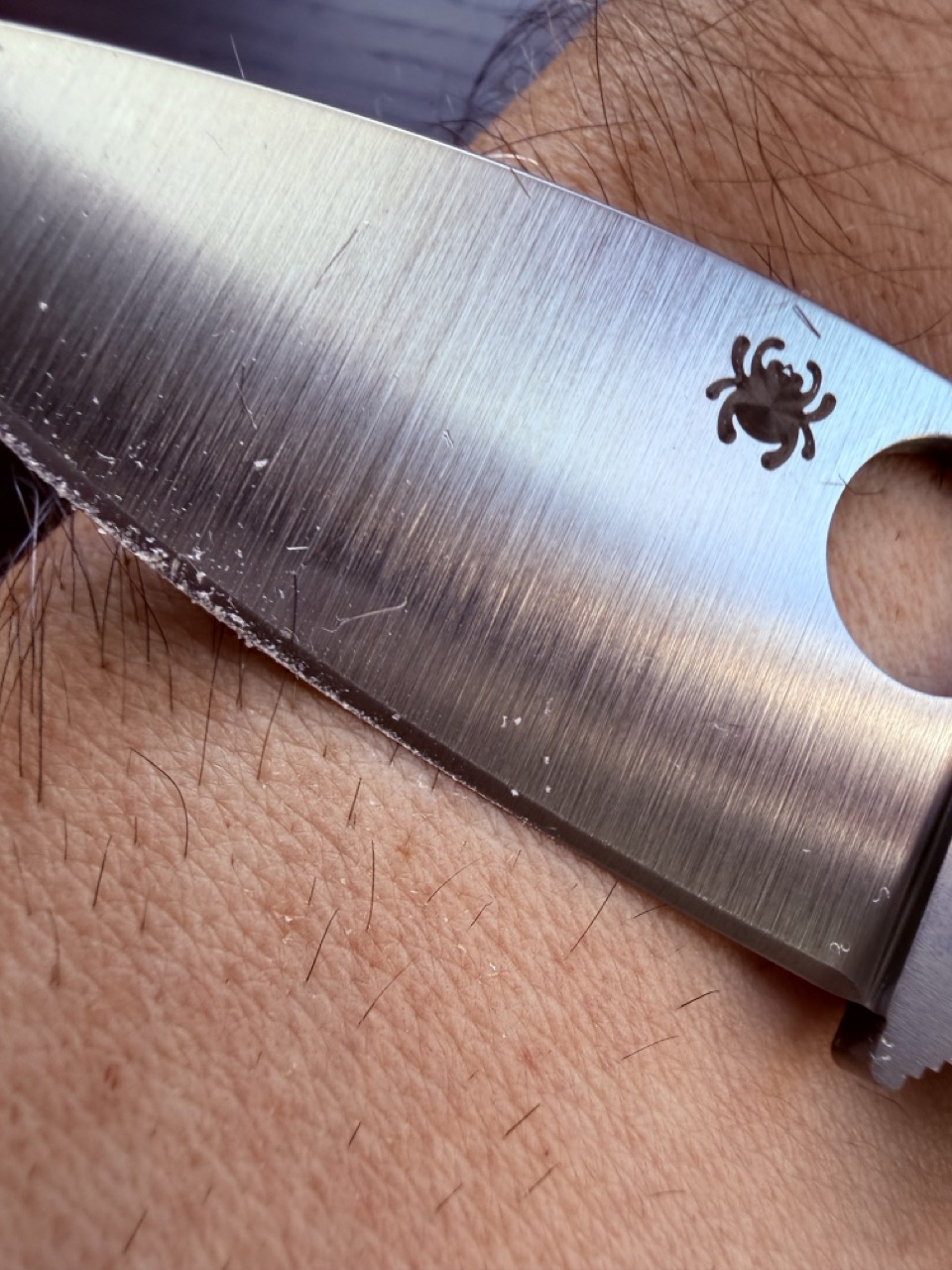
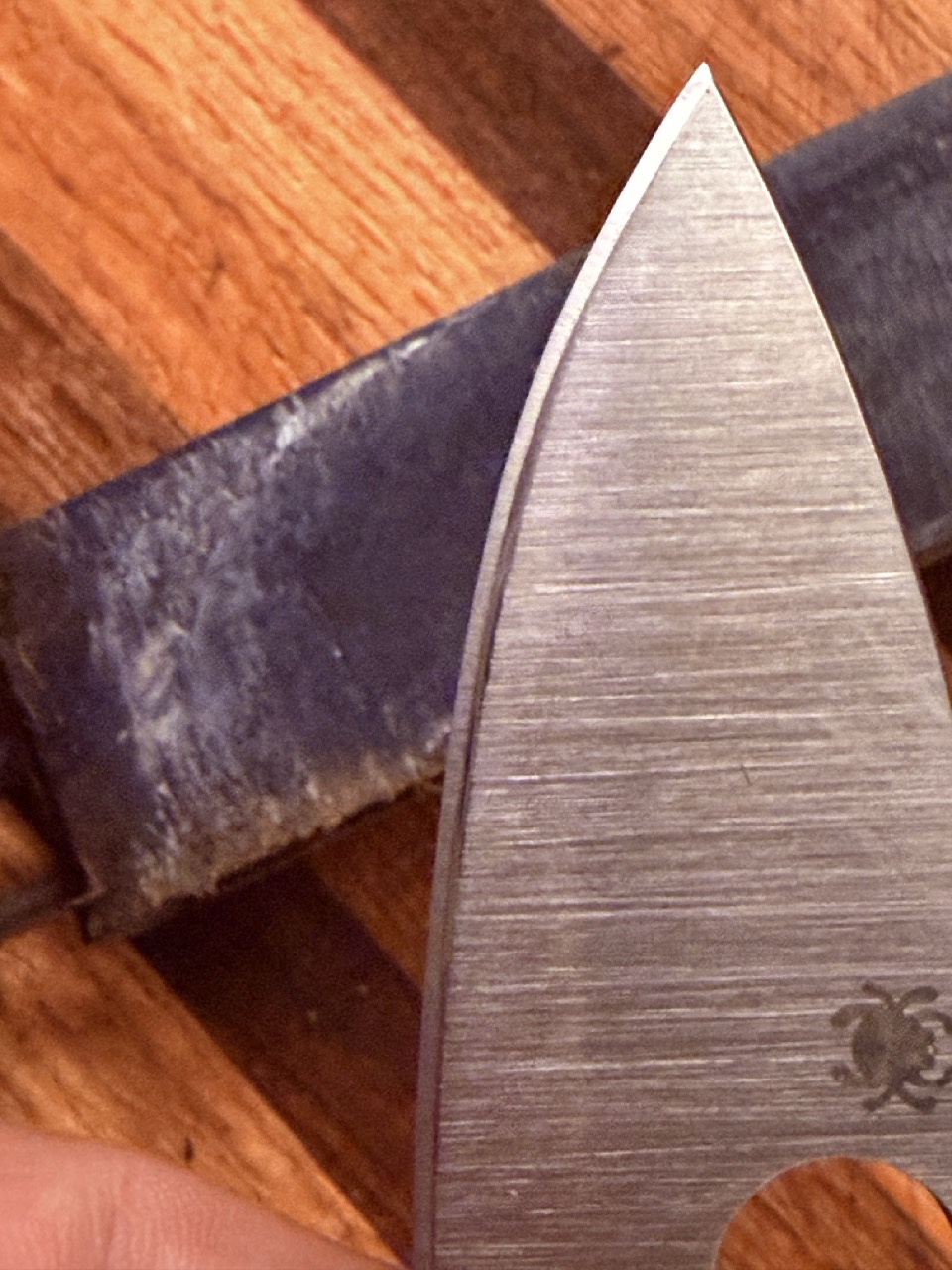
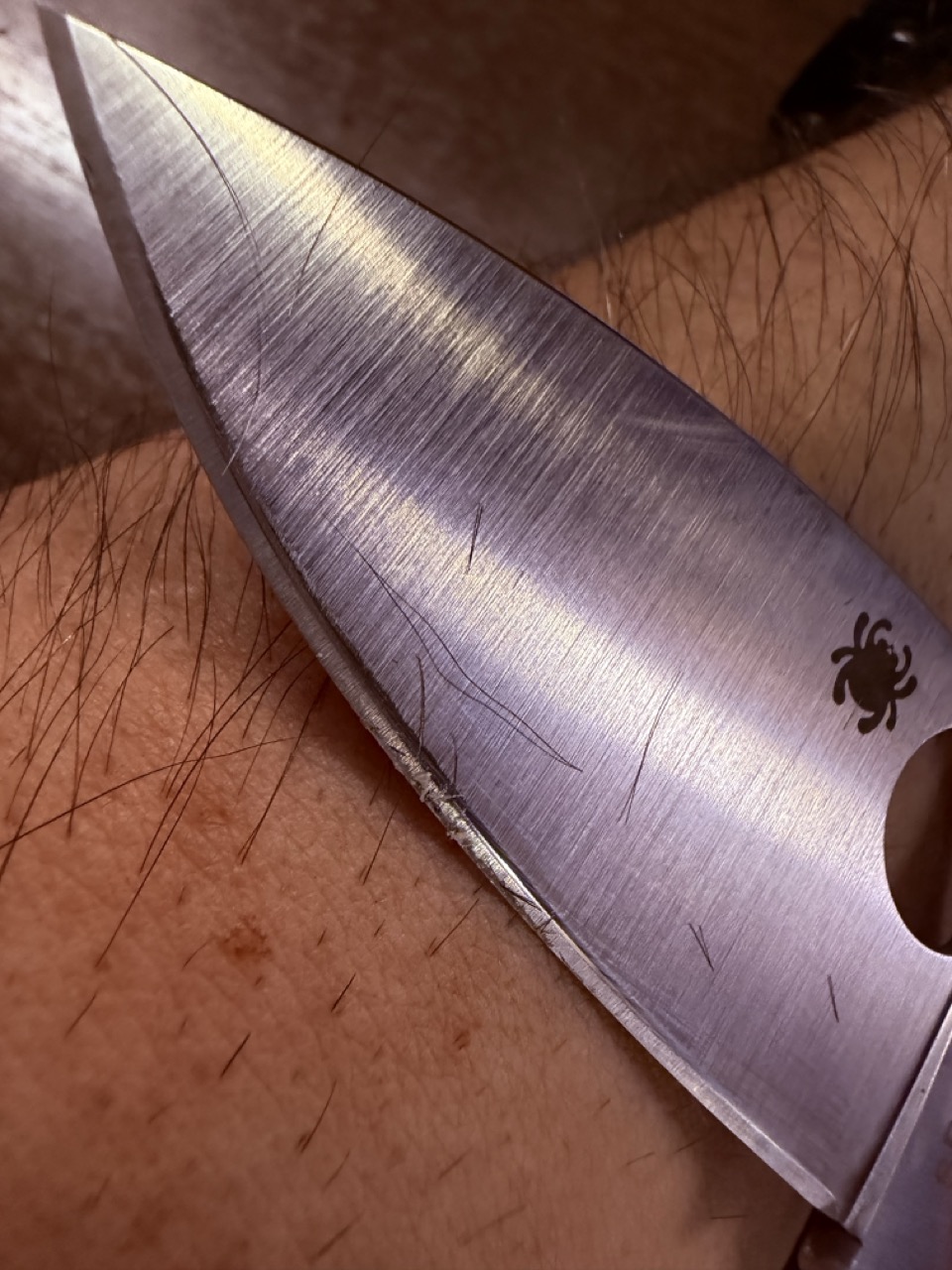
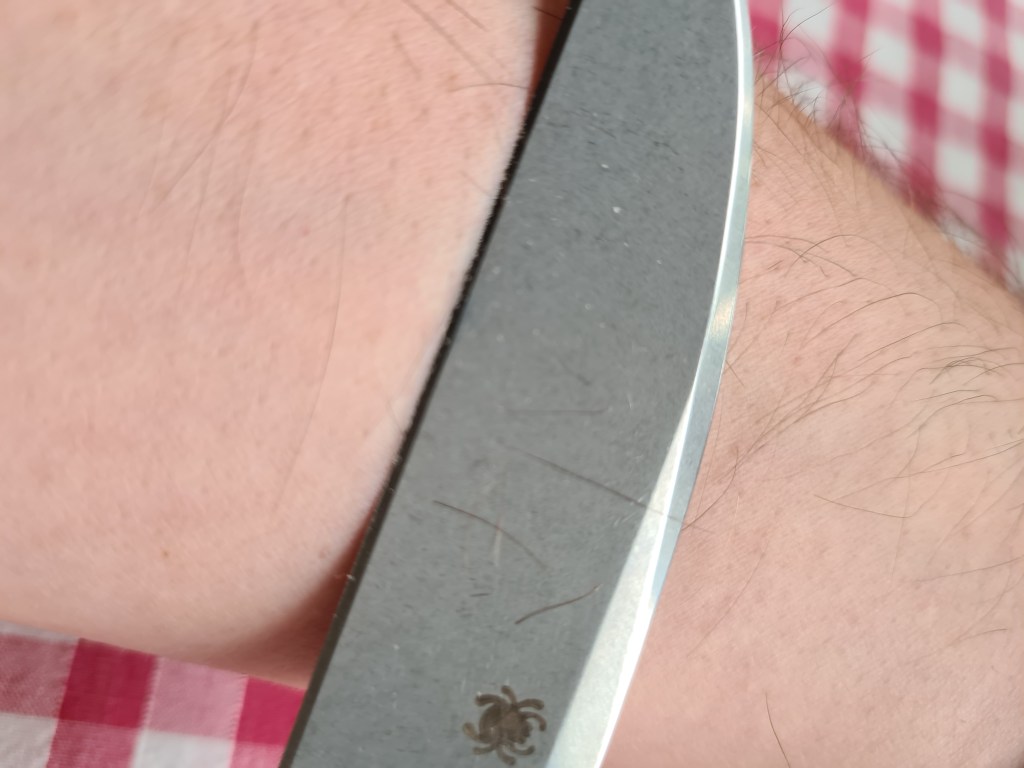
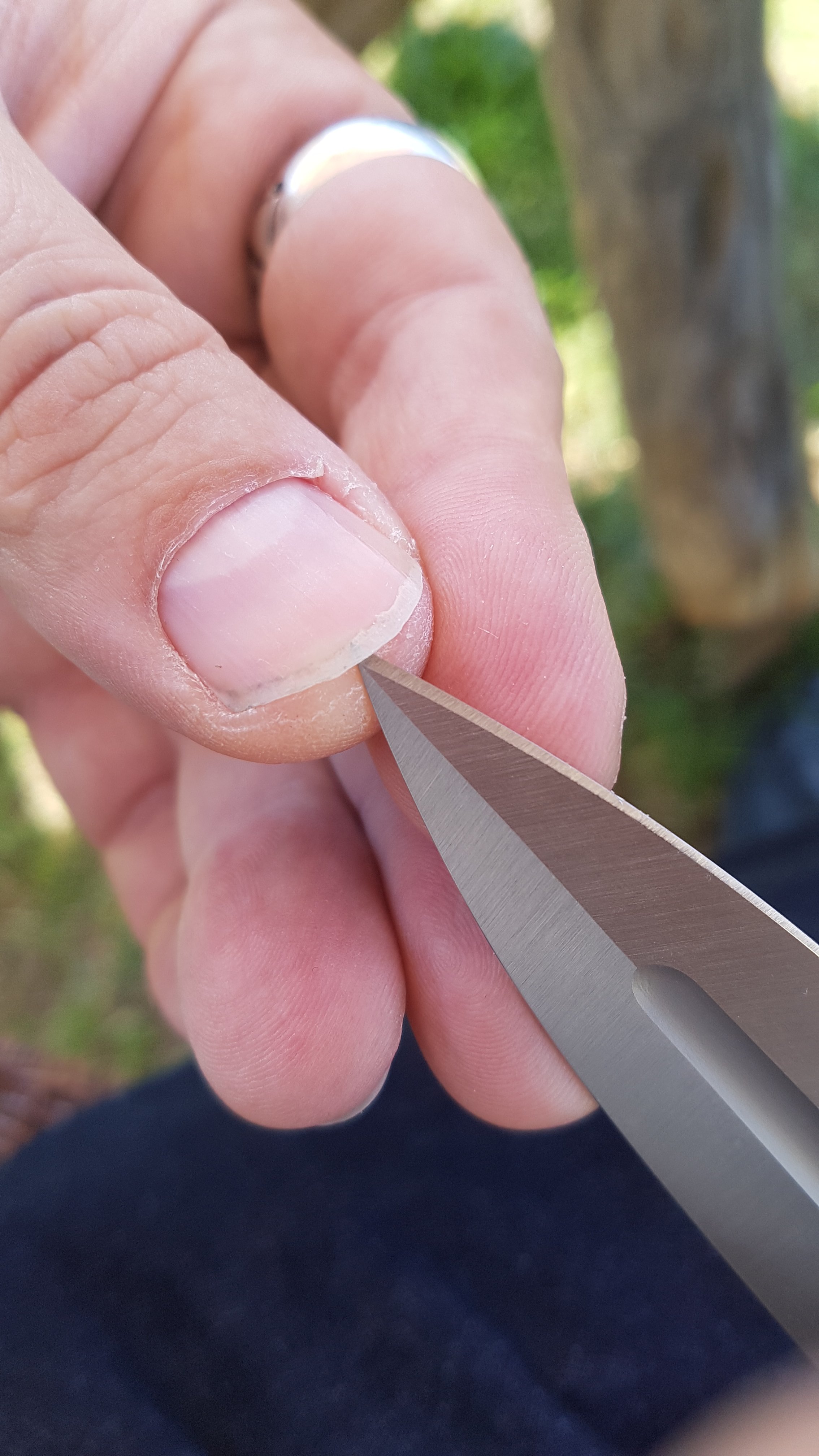
Out of the box, the knife easily shaves arm hair. That’s already an excellent factory edge.

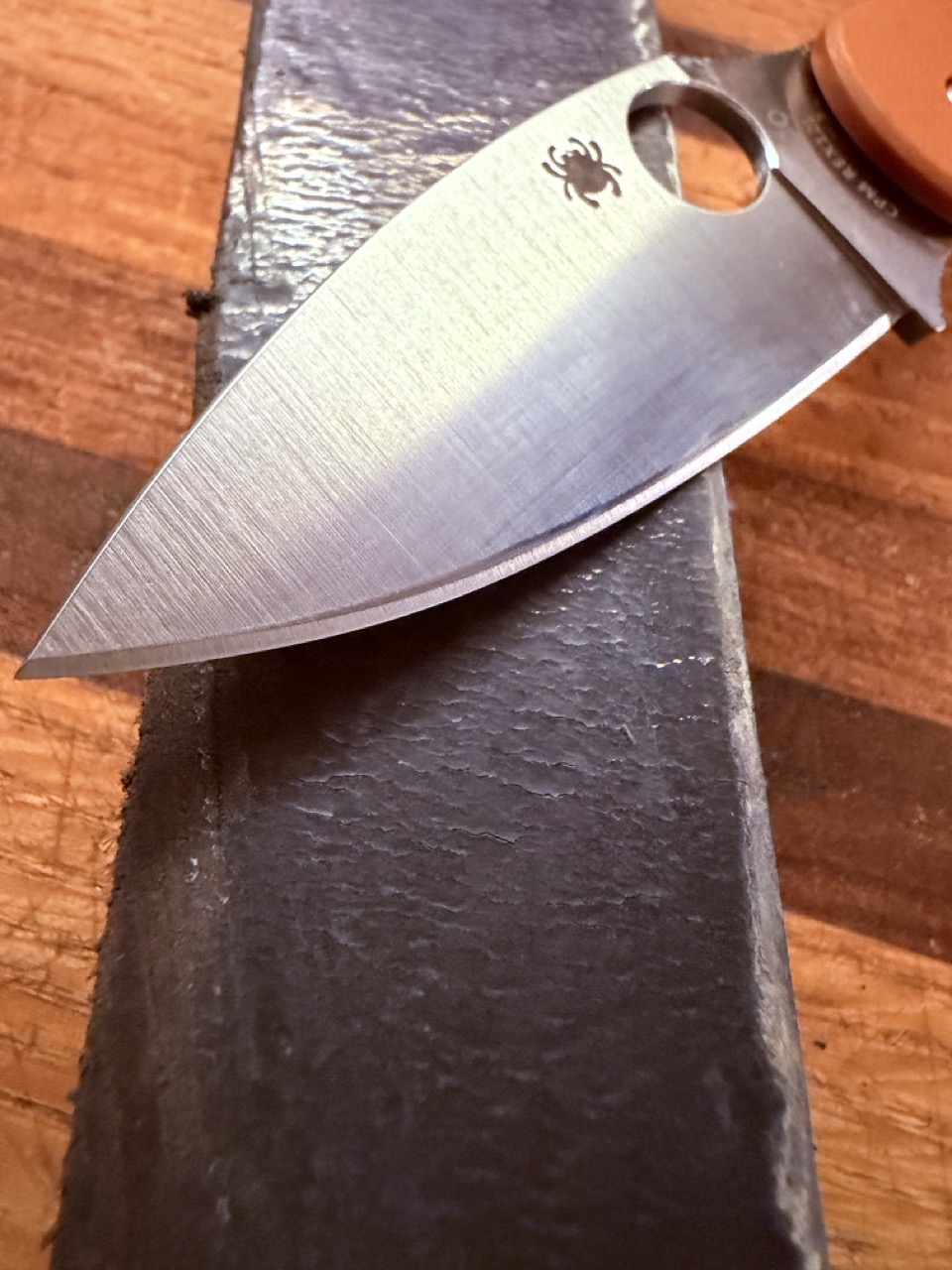
Still, I can’t resist seeing if I can make it even better. My first stop will be an old leather strop loaded with diamond powder and automotive polishing compound. I’m curious to see how REX 121 responds to such a light treatment before I ever think about putting it on a stone.
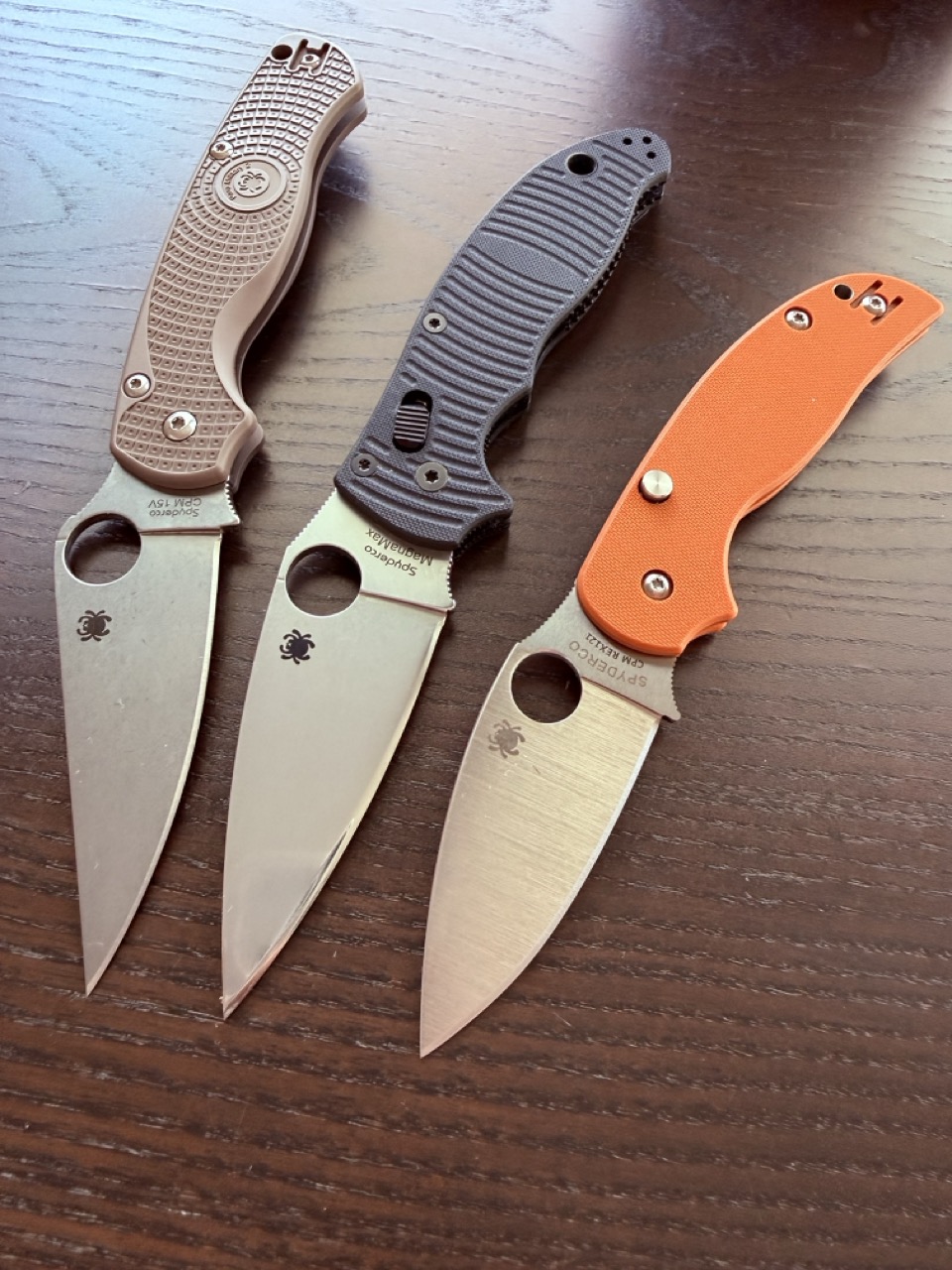
I’ve already spent a lot of time with K390CPM 15V, and MagnaMax.

The Sage 6 will allow me to discover whether REX 121 is simply the next step in edge retention—or whether it offers a genuinely different cutting experience.

One thing is already certain: this isn’t a steel designed for everyone. It’s a steel for enthusiasts who value ultimate cutting performance above almost everything else. And that alone makes it fascinating.
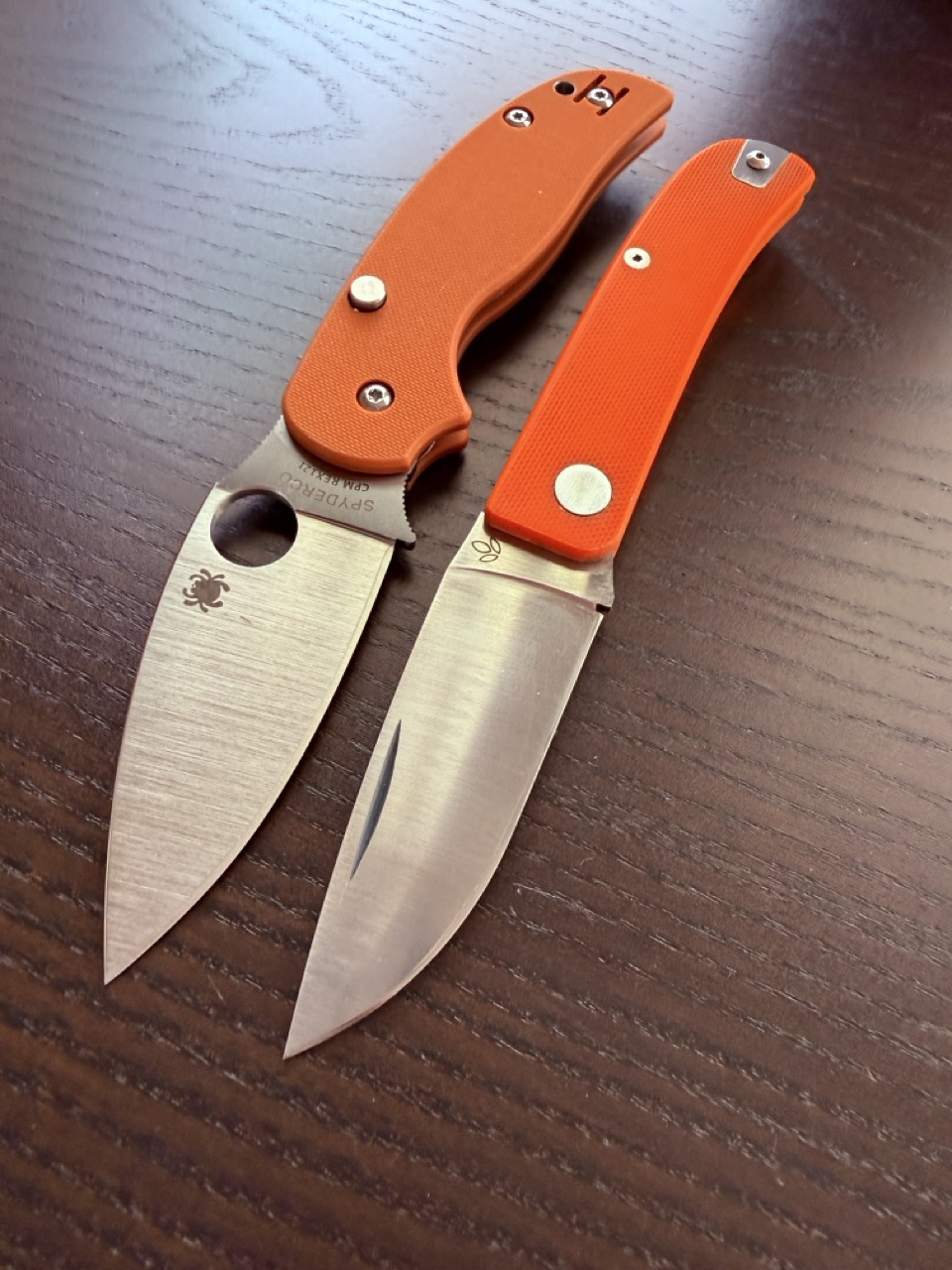

Steel alone doesn’t define cutting performance. Geometry is just as important—sometimes even more so.

A perfect example is my Manly Wasp in S90V. Between its outstanding steel and its incredibly thin geometry, it cuts like an absolute beast.

Over the years, I’ve convexed every one of my Sage knives. The latest was my Sage 5 Salt in MagnaCut, which I gradually transformed into an outstanding whittling machine. That subtle convex geometry made an already excellent cutter even more enjoyable to use.
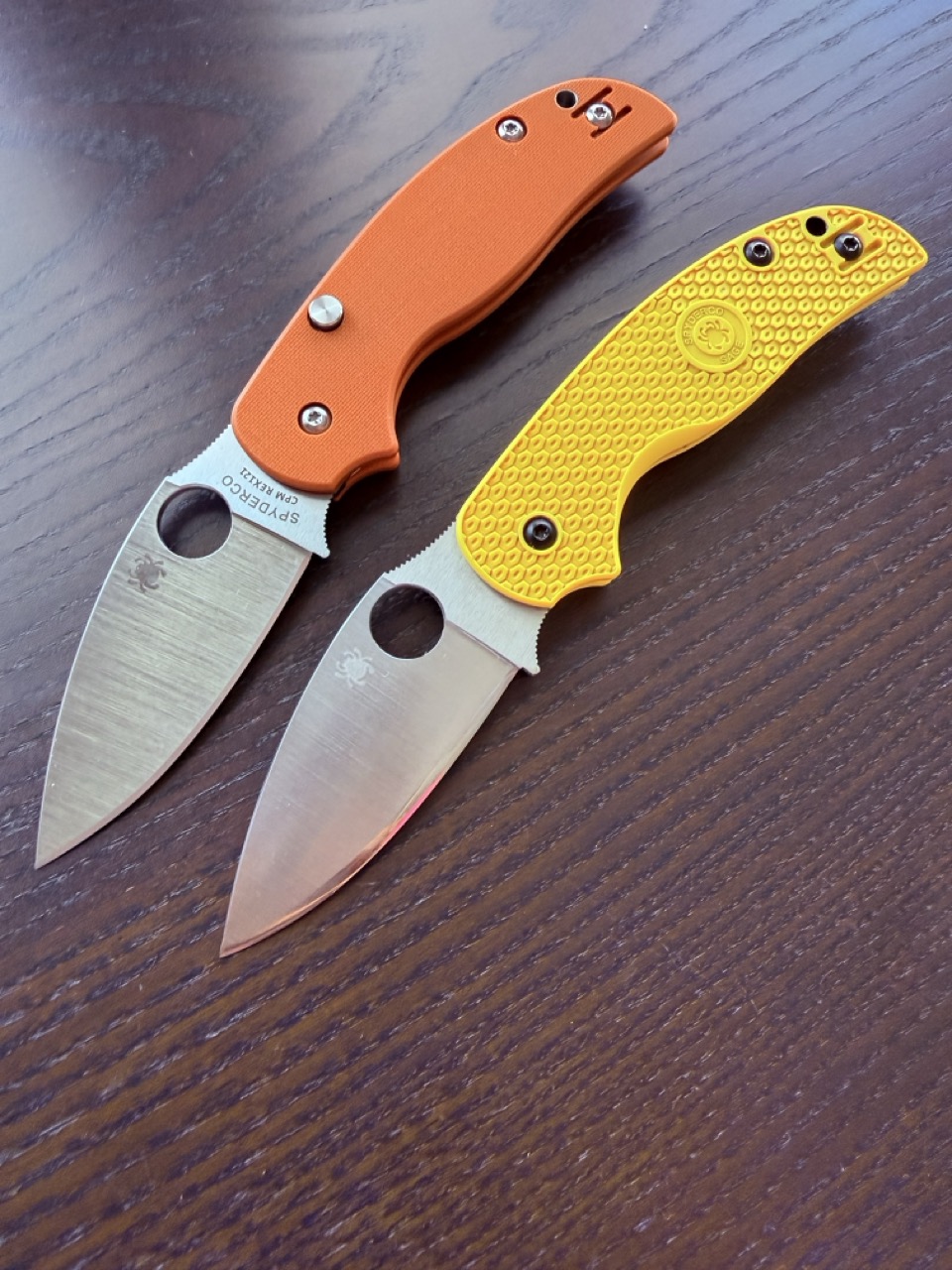
But this Sage 6 raises a different question.

Will the factory geometry already be so good that I’ll simply leave it alone?

Will I eventually have the patience—and the courage—to convex the edge of a blade made from CPM REX 121?

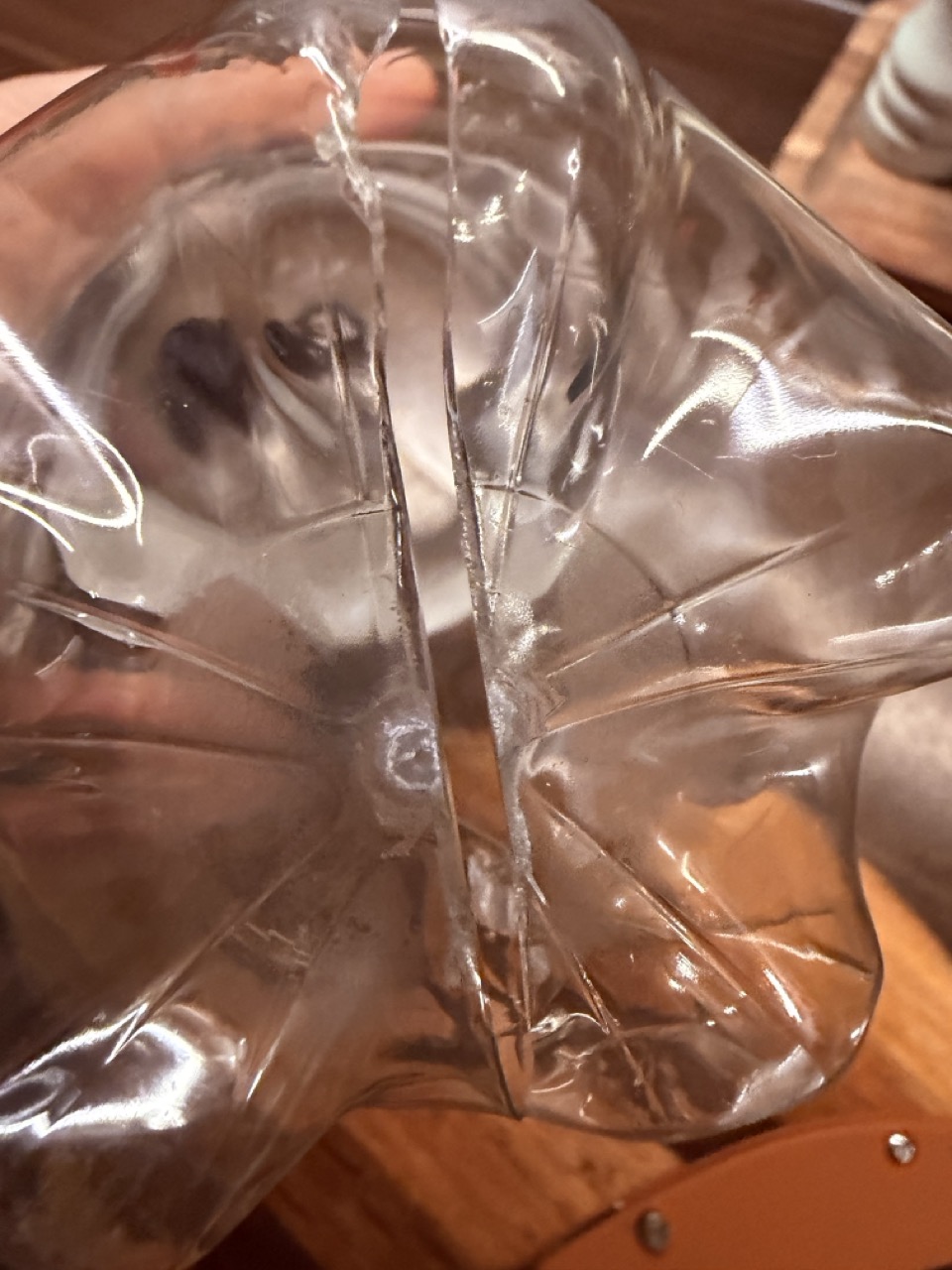
For now, I wasn’t entirely satisfied with the amount of force required to cut through the bottom of a plastic Coke bottle.
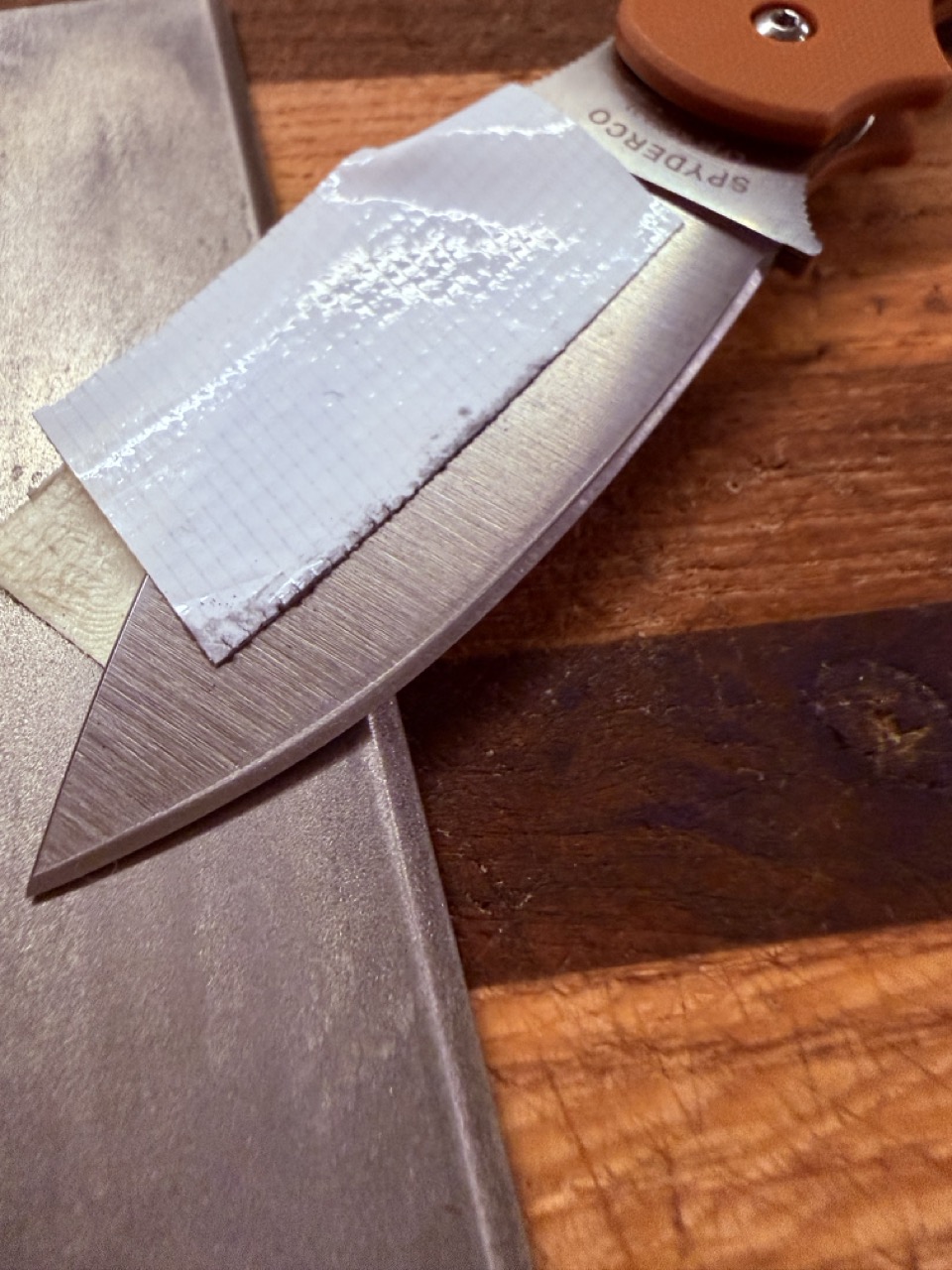
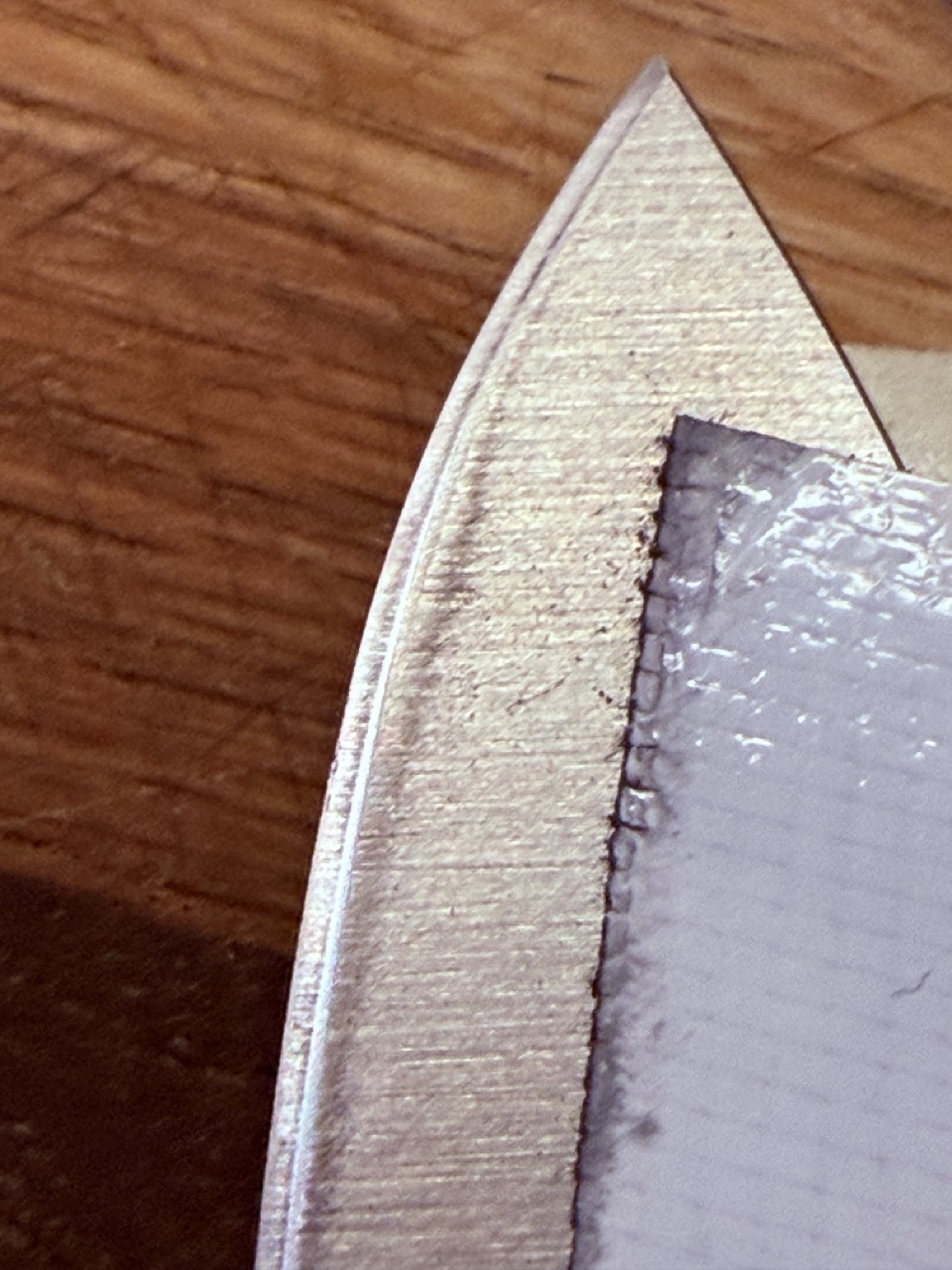
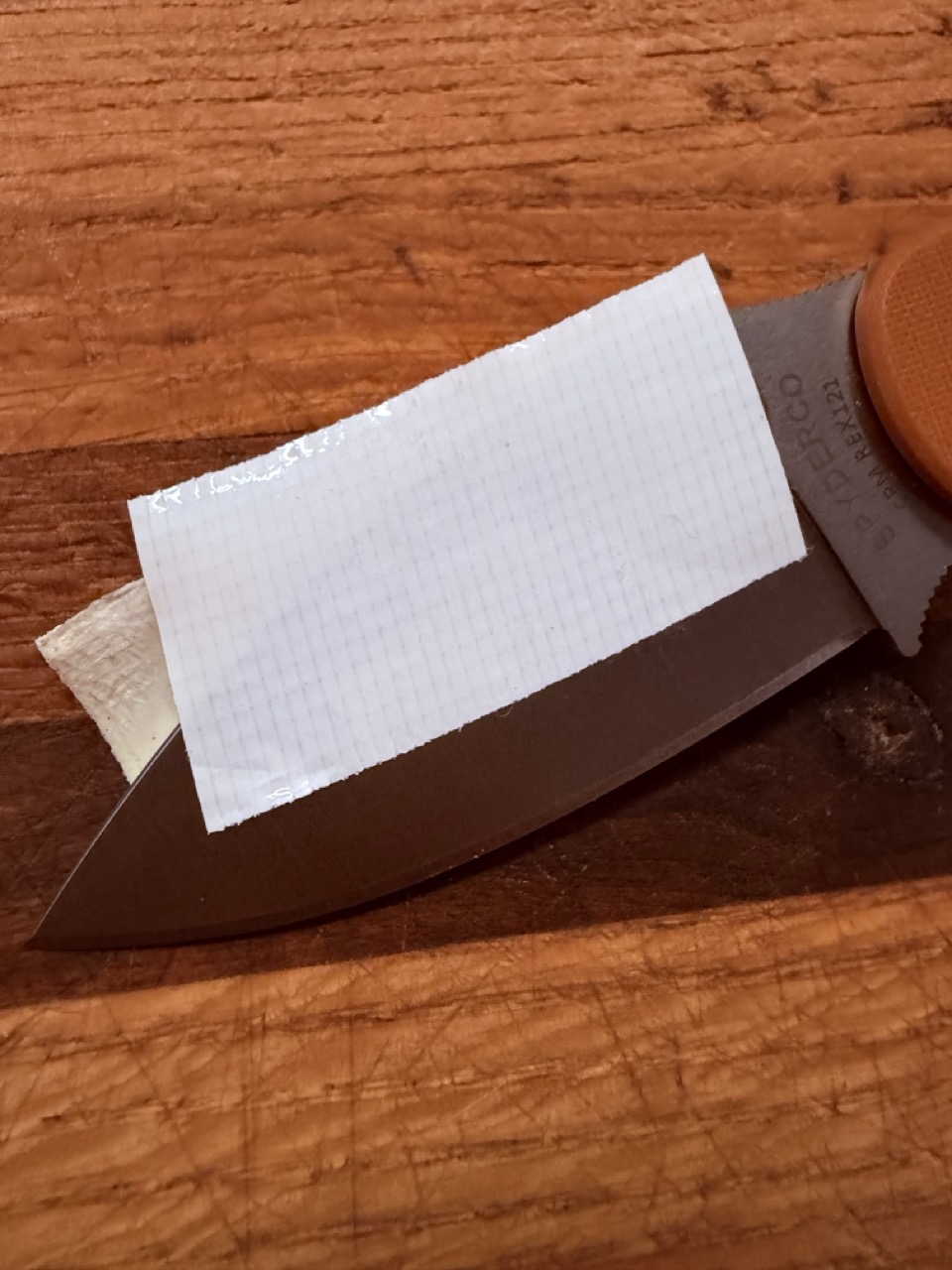
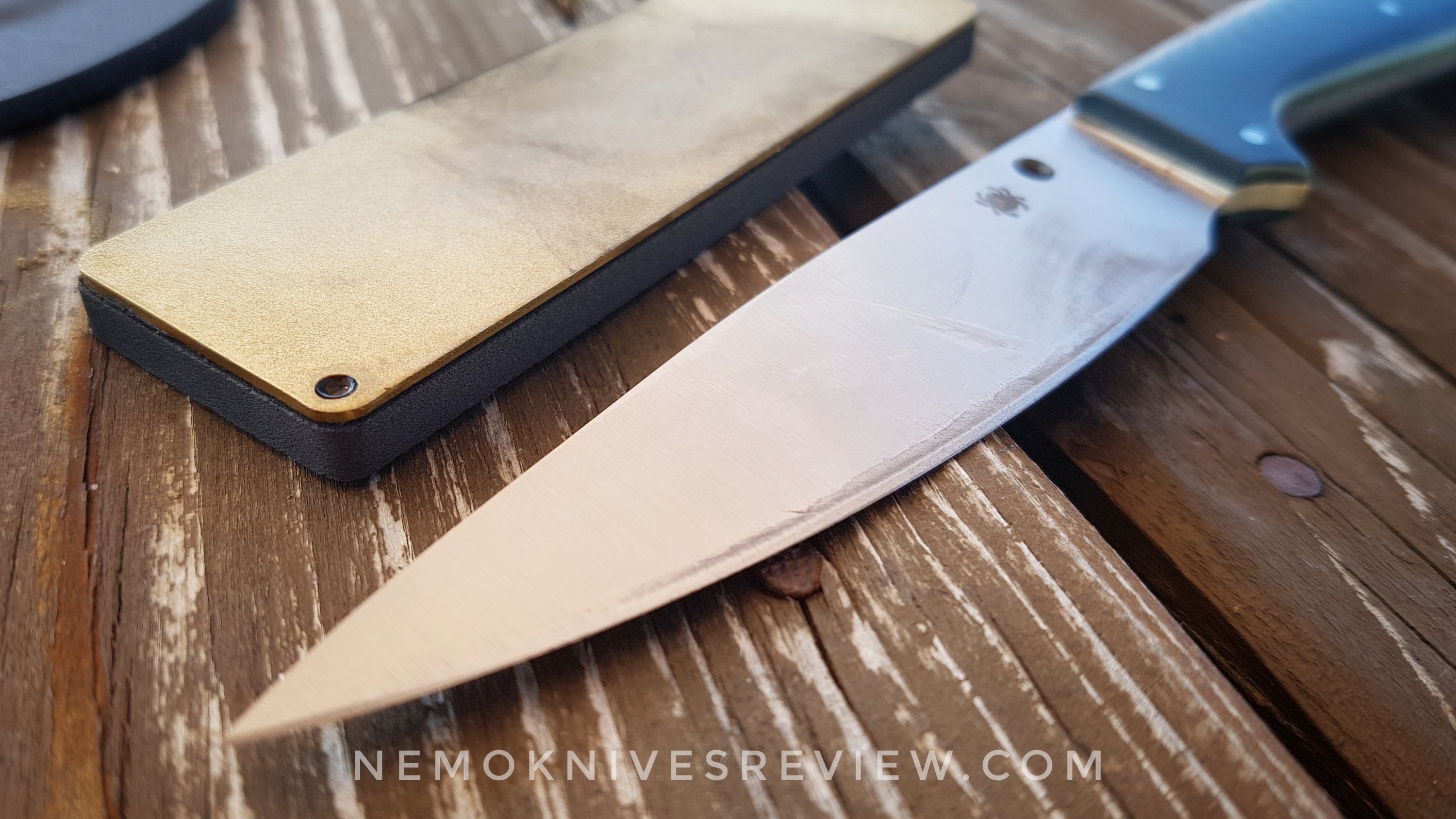
So I decided to de-shoulder the factory edge using my Diamond Stuff 2.
This is not a reprofile, and certainly not a convex edge. It’s simply a light de-shouldering of the bevel to improve cutting efficiency while keeping the original edge geometry essentially intact.
The steel responded surprisingly well, and the operation was completed without any difficulty.
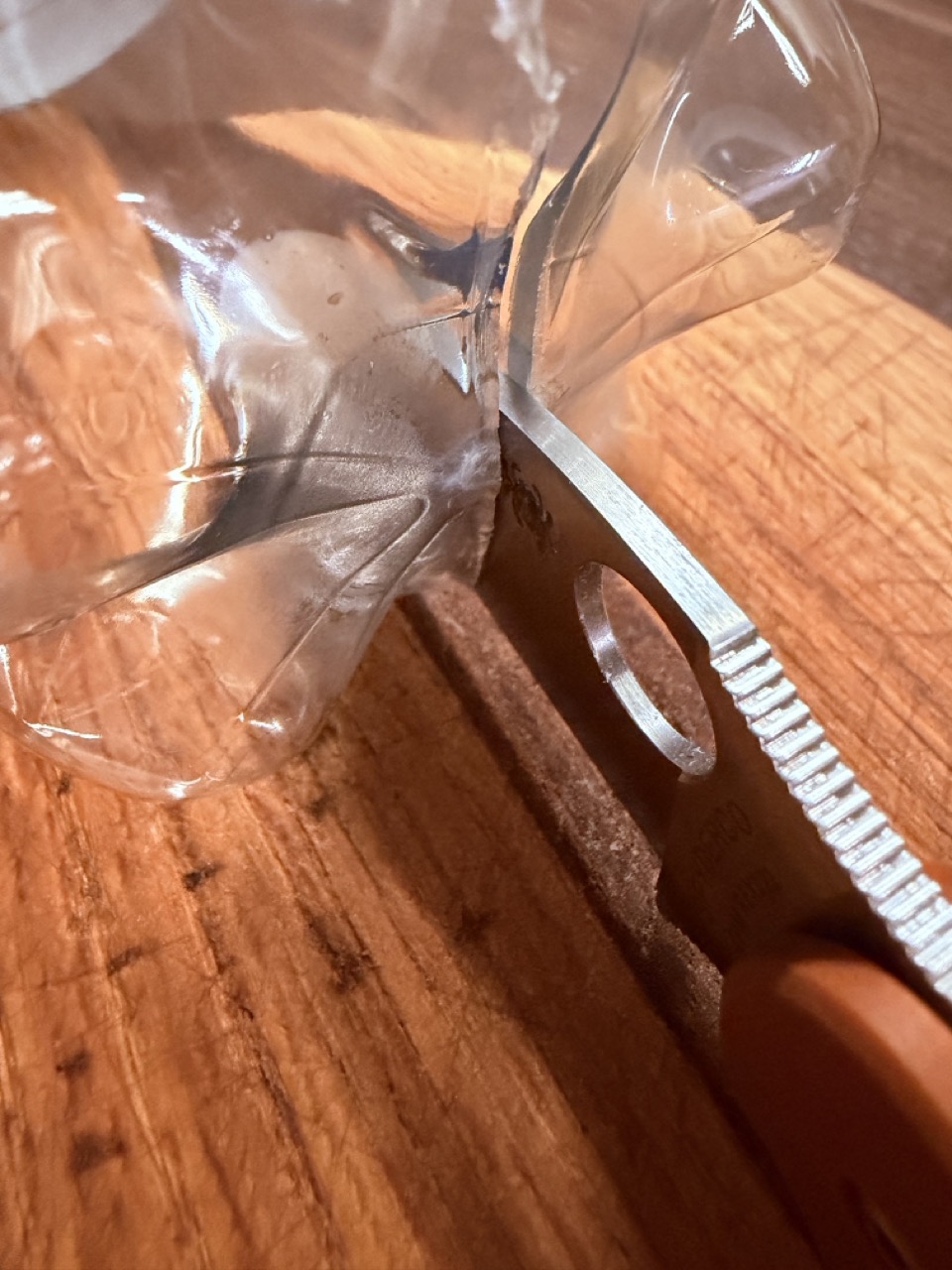
Eventually I will not treat my Sage 6 like my Paramilitary 2 Lightweight in CPM 15V, whose factory geometry I have deliberately left untouched. 😉
Under my diamond stones, Rex121 feels like Maxamet to me.
And I have enjoyed a lot reprofiling my Maxamet edges.
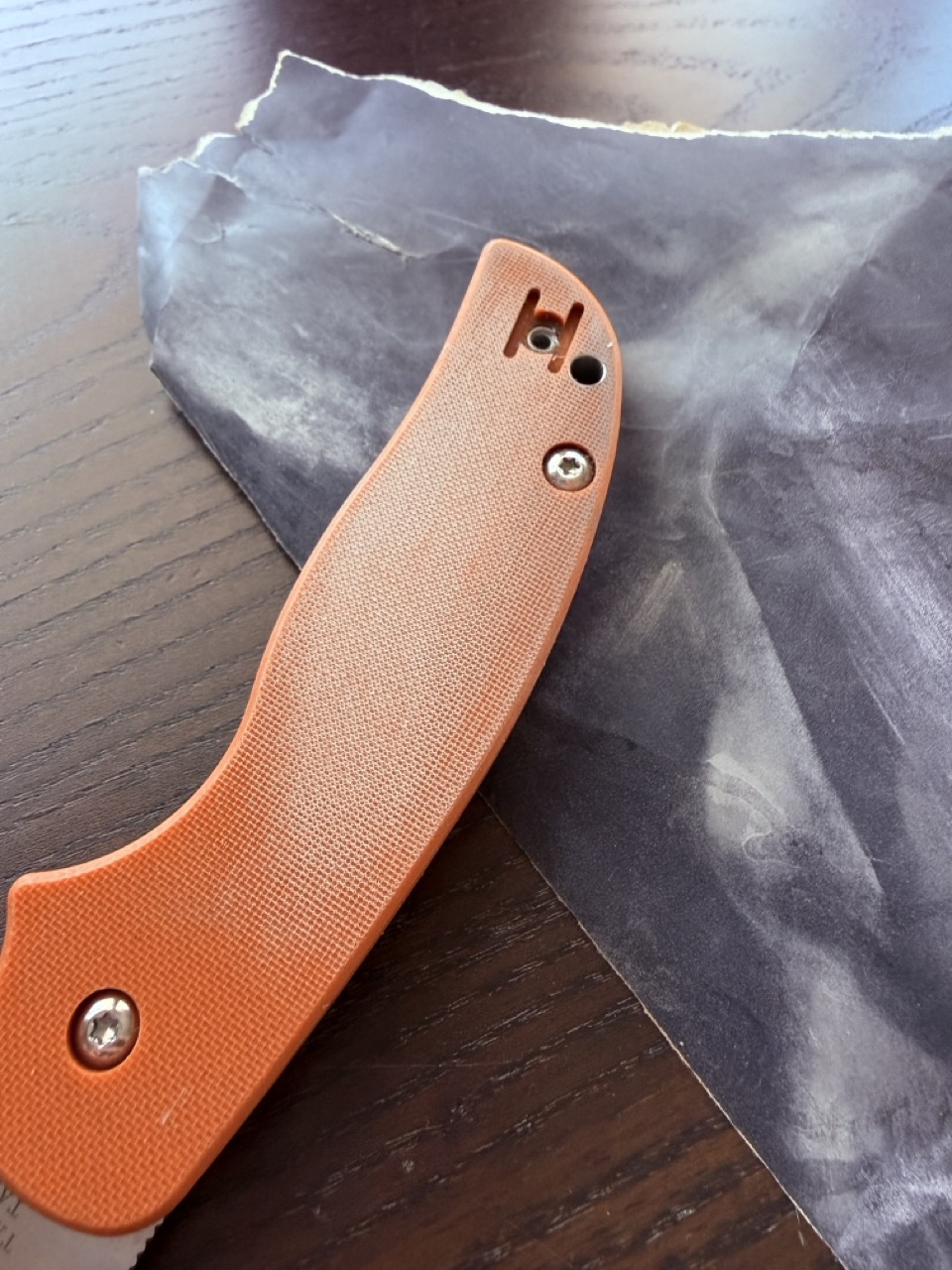

The very first thing I did was soften the G10 underneath and around the pocket clip.

Spyderco’s G10 offers excellent grip, but like many enthusiasts, I prefer to slightly round the area where the clip contacts the pocket. It takes only a few minutes with fine sandpaper and makes the knife much friendlier to carry in the pocket without noticeably affecting grip.

While doing so, I made sure to hold my breath as much as possible and avoided creating unnecessary dust. G10 and ceramic dust should never be inhaled. Whenever you sand composite materials, it’s good practice to work in a well-ventilated area, wear appropriate respiratory protection, and clean up the dust afterward.

I’m particularly careful about this because one of my neighbors, a retired dental technician, spent decades working with ceramic materials. Today, he lives with supplemental oxygen after years of occupational exposure to fine dust. Whether or not it was the sole cause, it was a stark reminder to me that airborne fine particles should never be taken lightly.
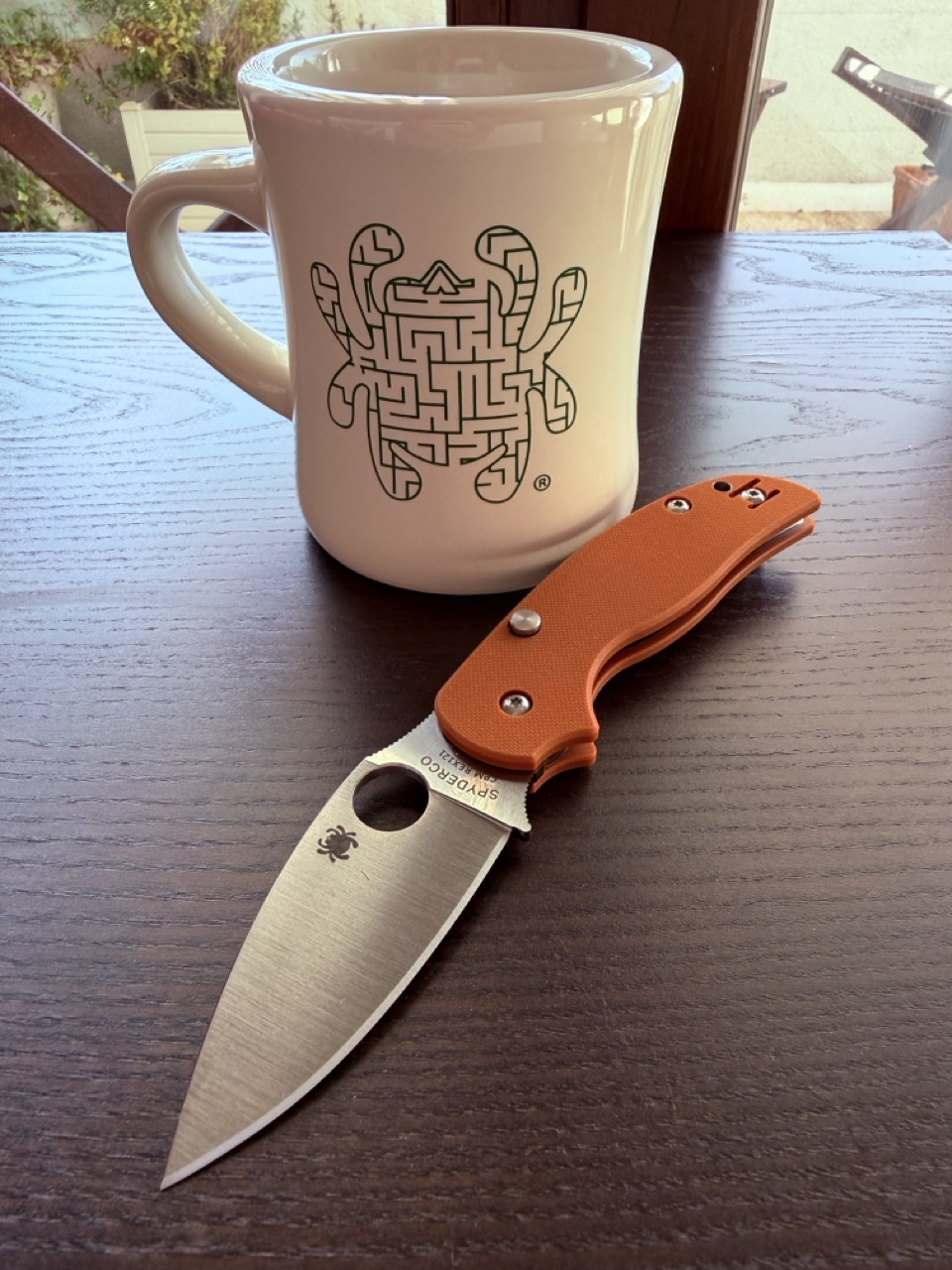
This is only a first glimpse of what is already proving to be a remarkable knife.

Let’s be honest: the Spyderco Sage 6 REX 121 is a rare knife, and its price will understandably place it beyond the reach of many enthusiasts. I’d like to sincerely thank again Spyderco for giving me the opportunity to evaluate it through their Ambassador Program and to use it exactly as I see fit.

What I can already say is this: from a purely mechanical standpoint, this is one of the finest production folding knives I have ever handled.

The action is simply outstanding. The Button Compression Lock is unbelievably smooth—almost as if the blade were riding on magnetic bearings rather than washers. There is virtually no friction throughout the opening and closing motion. The blade glides effortlessly while remaining perfectly controlled.

Fit and finish are exactly what I’ve come to expect from Spyderco’s Taichung factory: flawless blade centering, rock-solid lock-up, and exceptional attention to detail.

I own several high-end folders, and mechanically, this is without question one of the smoothest I’ve ever handled.

As for the CPM REX 121 blade steel, I’ll reserve judgment until I’ve spent enough time using it, maintaining it, and eventually sharpening it. A steel like this deserves more than a few days of testing.

If your local knife dealer has one in stock, I genuinely encourage you to handle it for yourself. Open it. Close it. Feel the action. The Balance.
Only then will you understand.

Just be warned…

You may leave the shop wondering which knives you’re going to sell to make room for a Sage 6 REX 121

Spyderco Chaparral Serrated C152SGY- The Lightweight With Teeth.

I’ve been an early adopter of the Chaparral. Nearly 13 years ago, I called it the “Extra Flat Companion” in my first review from 2012. Back then, the Chaparral was designed to serve as a platform to test different handle materials, while the Sage (another model “made in Taichung”) showcased various lock designs used in folders.

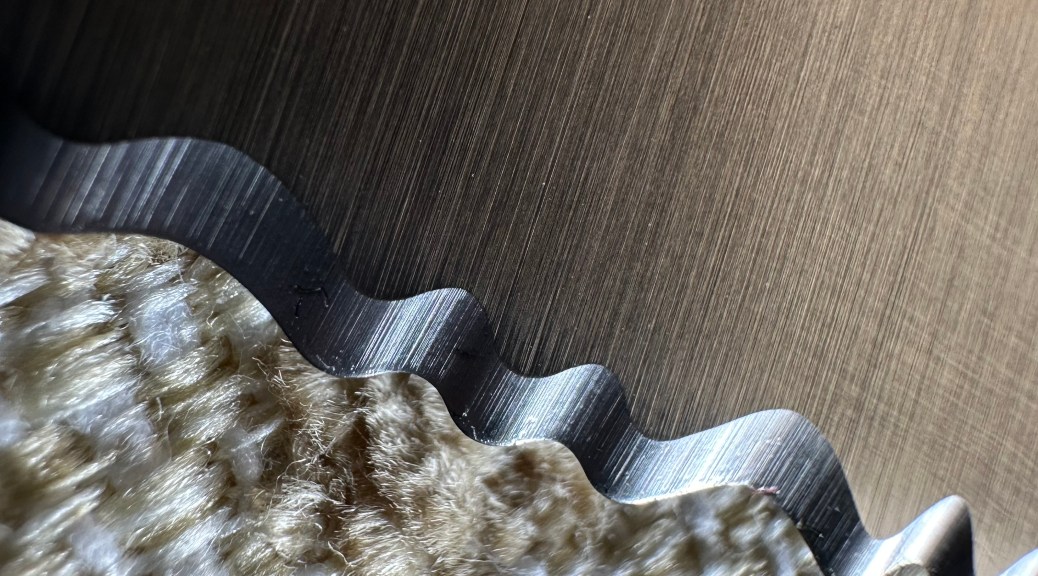
Twelve years later, Spyderco has introduced a major improvement to the Chap’s blade: their famous serrations. The brand is, of course, known for its Spyderhole, its clips, and… the performance of its serrated edges. Sal Glesser has long advocated the superior cutting performance of Spyderco’s sserrations. Scallops, moon quarters, and thin chisel geometry all work together to create the ultimate “matter separator,” making tough cutting tasks effortless.


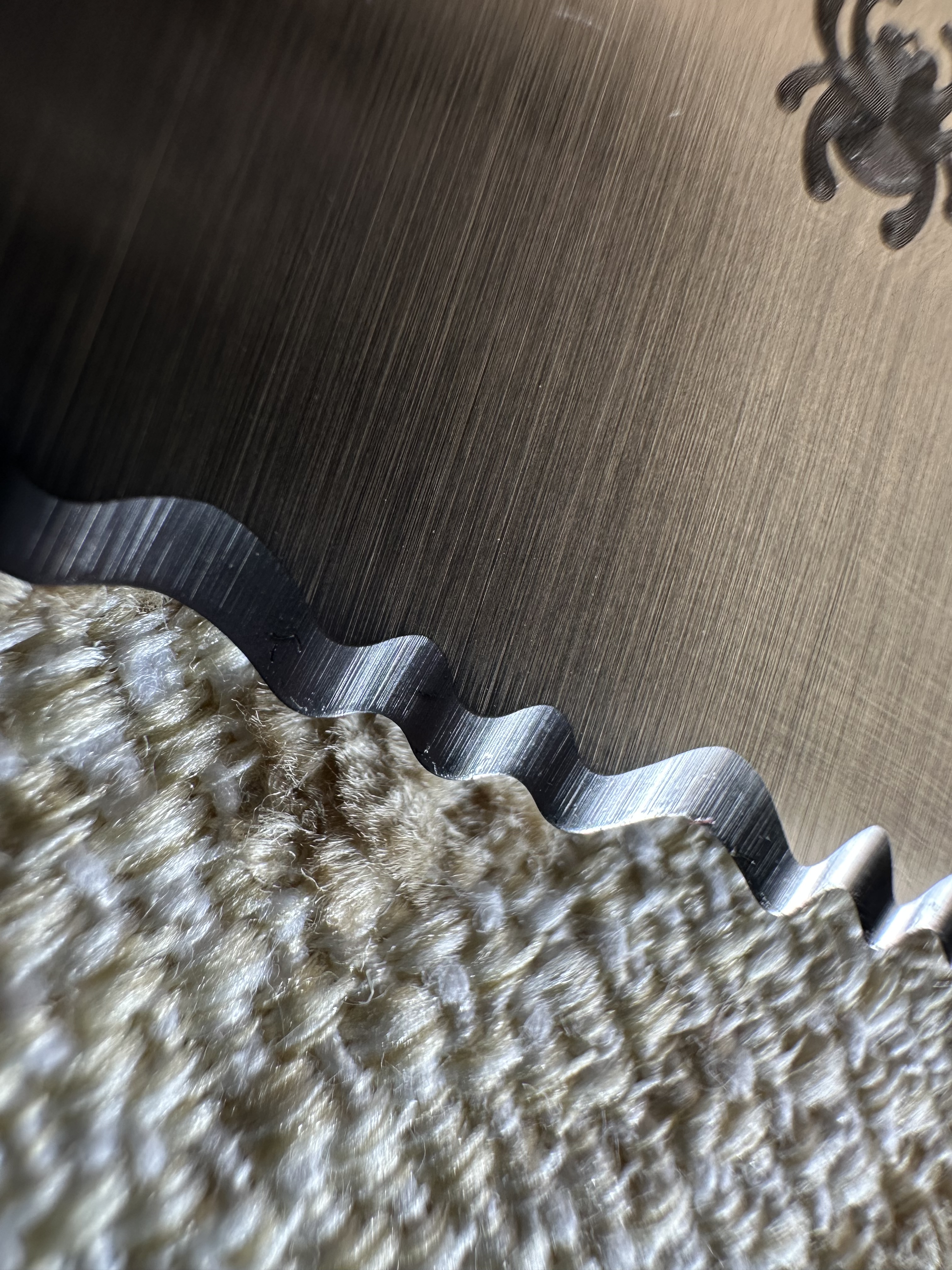
Sal has refined his serrations into a recognized patterns and created the Spyderedge: “Spyderco’s two-step serration patterns consist of one large and two small serrations. The pattern increases the cutting edge’s surface area by up to 24%”.
On the Chaparral, the serration are even better as they are rounded to avoid snagging when cutting. Those same enhanced serrations can be found on another serrated folder made in Taichung for Spyderco: the LC200N made Caribbean.

I’am not a serration’s fan. I prefer a short convexed blade like my Roadie XL to EDC but this is the opportunity to pocket a serrated knife designed to be low profile folder easily displayed in the middle of the sheeples.

The Chaparral is another Lil’ Big Knife in disguise. Go figure, his lock is equipped with an hidden pin which gives a lot of strength and stability. This improved backlock is also found on the Sage 4 but do not worry about vertical play.


Also the Chaparral’s blade is only 2 mm thick. A razor blade with serrations ? It should be interesting !

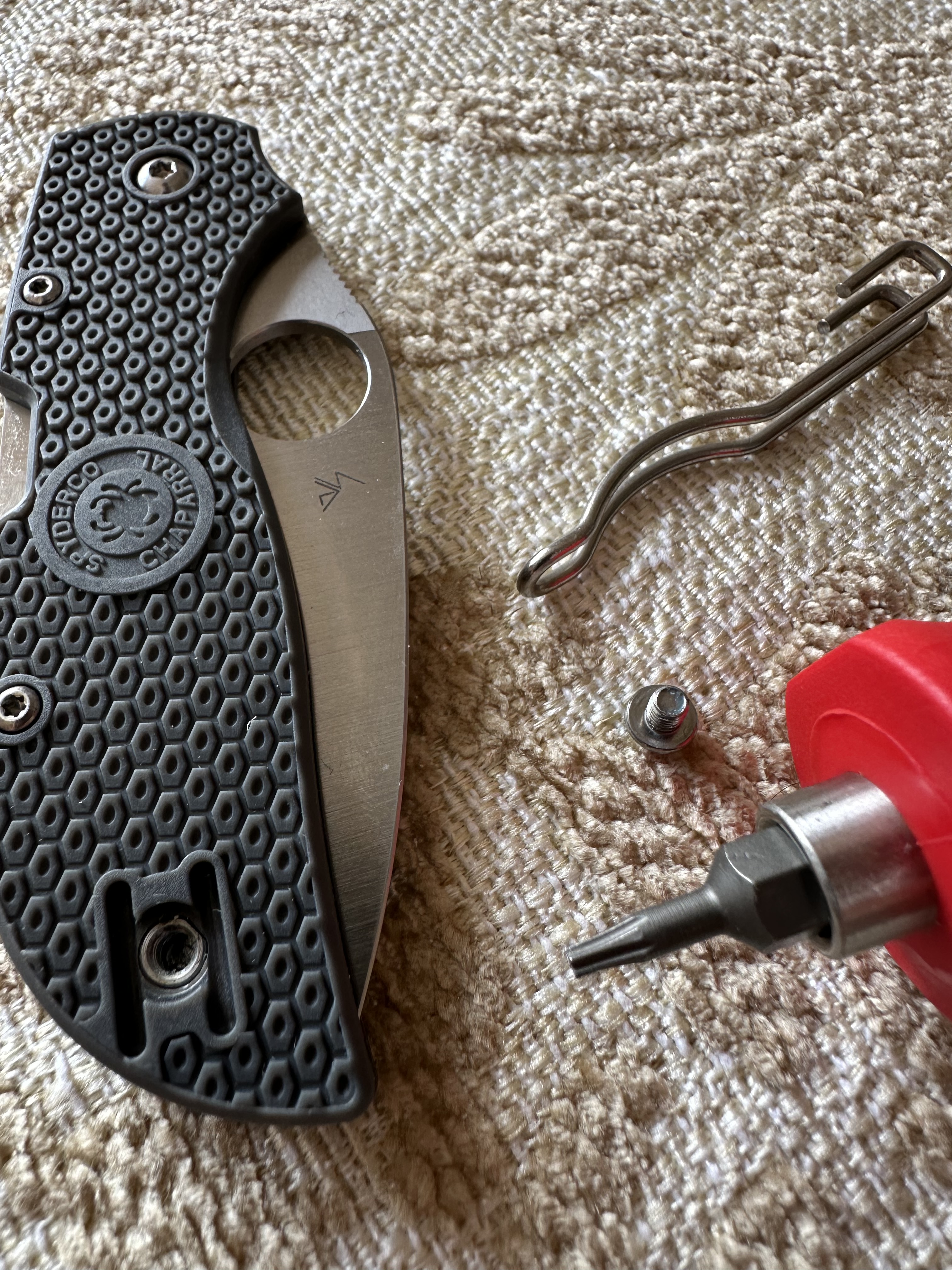
It even has teeth on its handle. The FRN scales feel almost like shark skin, which can be tough on pockets. My first step was to temporarily remove the pocket clip, then sand the scales to smooth them out.

The FRN doesn’t react as quickly as G10 when sanded. I still ended up with a slightly toothy handle, but it’s much more acceptable to me. Of course, this is a matter of personal taste — many users will appreciate the aggressive grip the pattern provides. I, however, prefer not to carry a pocket shredder anymore.

Lately, I’ve discovered that I really enjoy knives I can carry in my denim watch pocket. The Roadie XL, which I can now flick open with a wrist, is the king of that pocket and I use it hard despite its small size.

But this little “Tooth Faerie”, the Serrated Chaparral, also demands heavy use — and beware of its cutting power! Its steel, CTS-XHP, is known for being extremely reliable, even on thin edges. I’ve used it in many knives, including some Cold Steel Voyager XLs, and it never disappoints.

It will be very interesting to see how the Chaparral Light platform, equipped with a top-performance factory edge and an improved backlock, performs as a true workhorse — pushing the envelope of what the Chap’ can do. Spyderco has also just released a Slipit (non-locking) Chaparral, sold at nearly double the price of the FRN serrated version. Clearly, this one isn’t marketed as a “precious” collectible but as a pure performance tool. Spyderco has supercharged the Chaparral to be a user’s knife.

To summarize:

  • 2 mm thick blade — this is thin !
  • Backlock enhanced with a hidden pin — zero vertical play !
  • Rounded, anti-snag SpyderEdge.
  • Sheeple-friendly design.
  • Made in Taiwan with attention to details.

Yes, the Chap is back… with teeth … in its next chapter:
FOR THE FIERCE AND THE FURIOUS

This is the Swayback – Spyderco C249TIP First glimpse at a Sebenza Grand Child.

Here it is, the new Marcin Slysz designed Spydie some have been dreaming for almost 10 years. Inspired by 19th Century pocket knives design this is another grand child of the Mighty Sebenza with a Reeve Integral Lock and many other details which relie on Reeve’s legacy of making high quality folding workhorses.
(BTW big kuddos to the Coutellerie Tourangelle which has been able to send it during vacation’s period in 3 days.)
You will see, it is more a Sebenza’ heir that I thought.

Let’s read the description:

Inspired by 19th century English Jack knives, the sway back pattern is a stylish and extremely functional cutting tool. In his latest Spyderco collaboration, renowned Polish knifemaker Marcin Slysz supercharges this classic design by rendering it with state-of-the-art materials and craftsmanship. 
The SwayBack’s hollow-ground Wharncliffe blade is crafted from CTS® XHP stainless steel and has a handsome stonewashed finish. It is housed in an open-backed handle constructed with solid titanium scales. Both scales are beautifully crowned for comfort and the reverse-side scale forms the foundation of a sturdy Reeve Integral Lock (R.I.L.) with a stainless steel interface. 
A polished stainless steel clip provides convenient carry and is reversible for left or right-side tip-up access.

OK… Polished stainless steel on a Polish expensive knife… tss.. tss…
Now the specs:
Overall Length 204mm
Blade Length 90mm
Steel CTS XHP
Closed Length 115mm
Edge Length 84mm
Weight 111g
Blade Thickness 3.5mm

When I have receive the knife I was chocked. Chocked by a simple fact: I could not open that damn folder with one hand ! It was like glued !!
Two hands I could. One hand -> impossible. Glued.
Again: IMPOSSIBLE. And again. And again. 
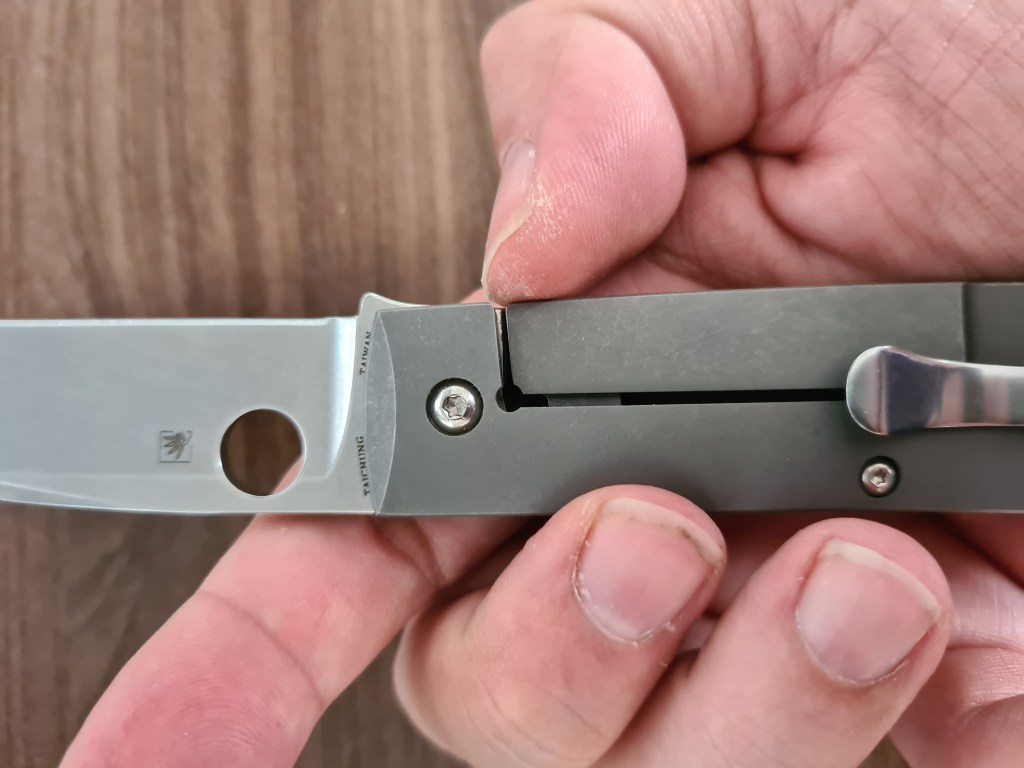
The hole is not sharp, he got a light bevel and my thumb cannot catch it. 

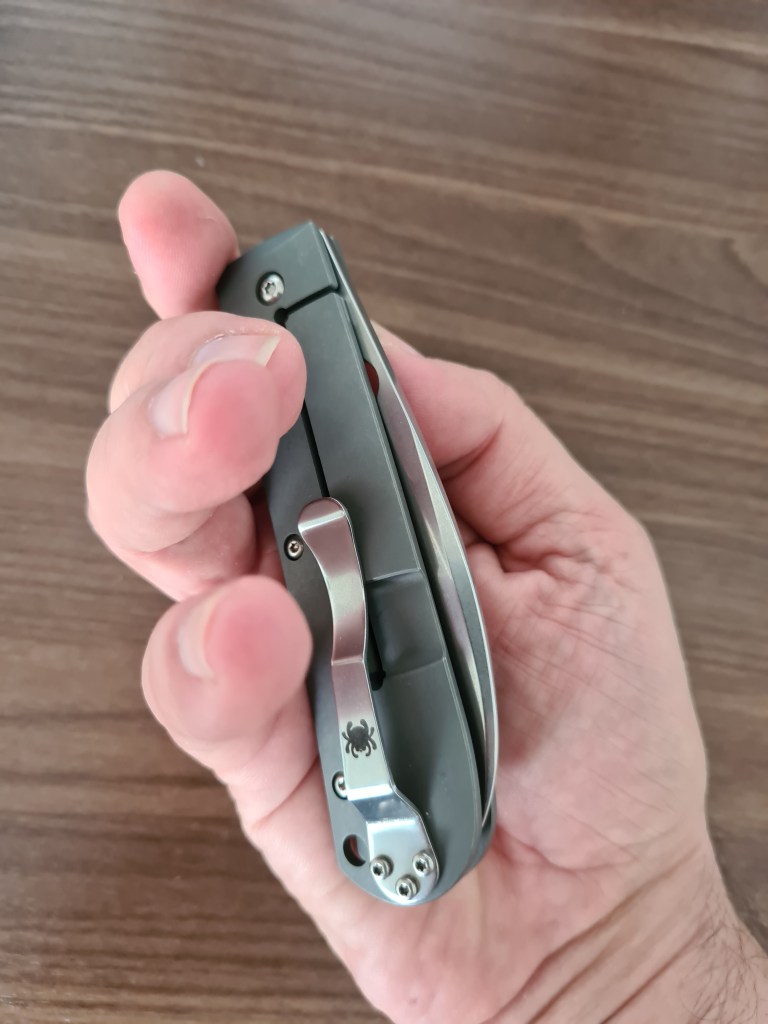
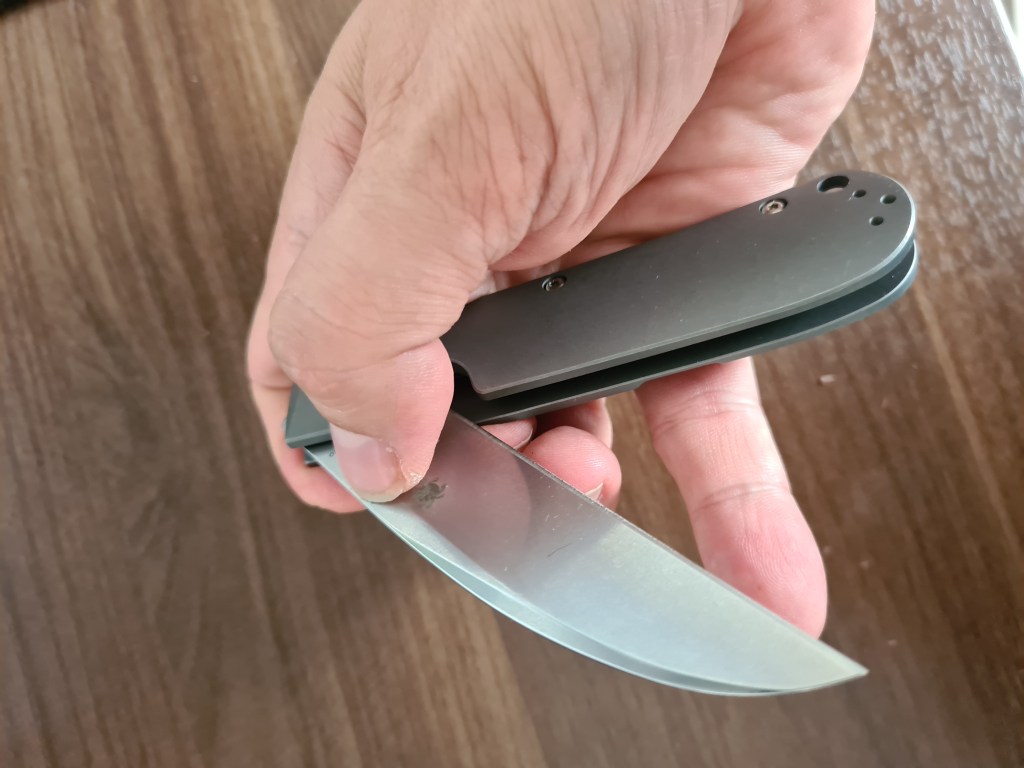
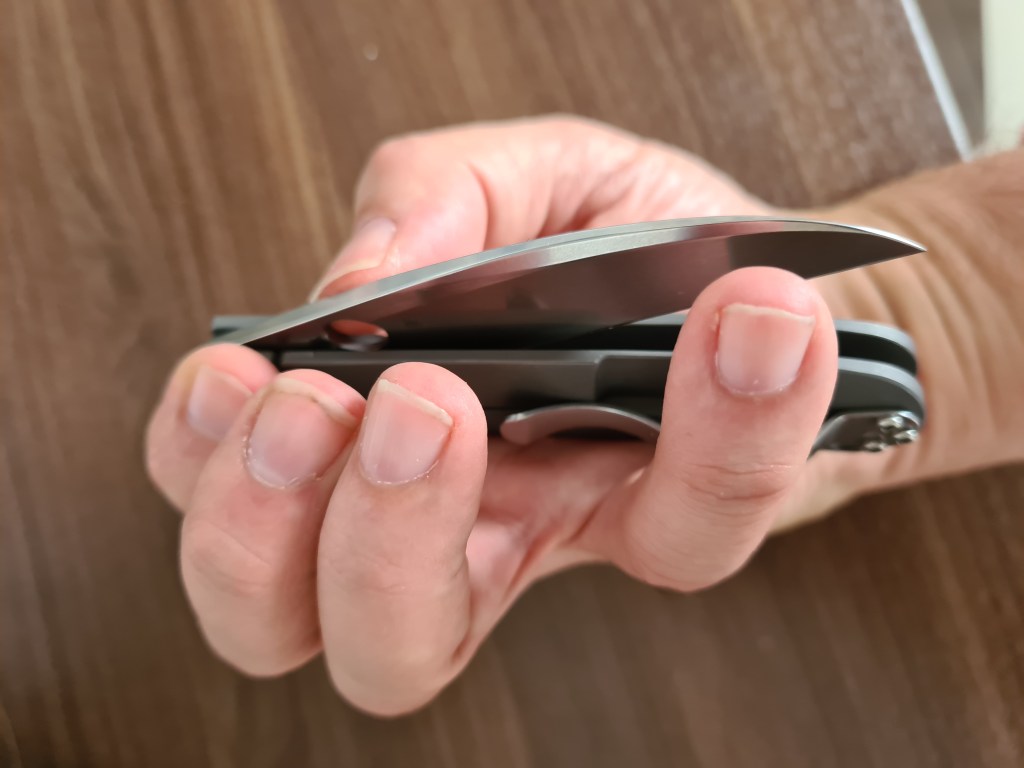
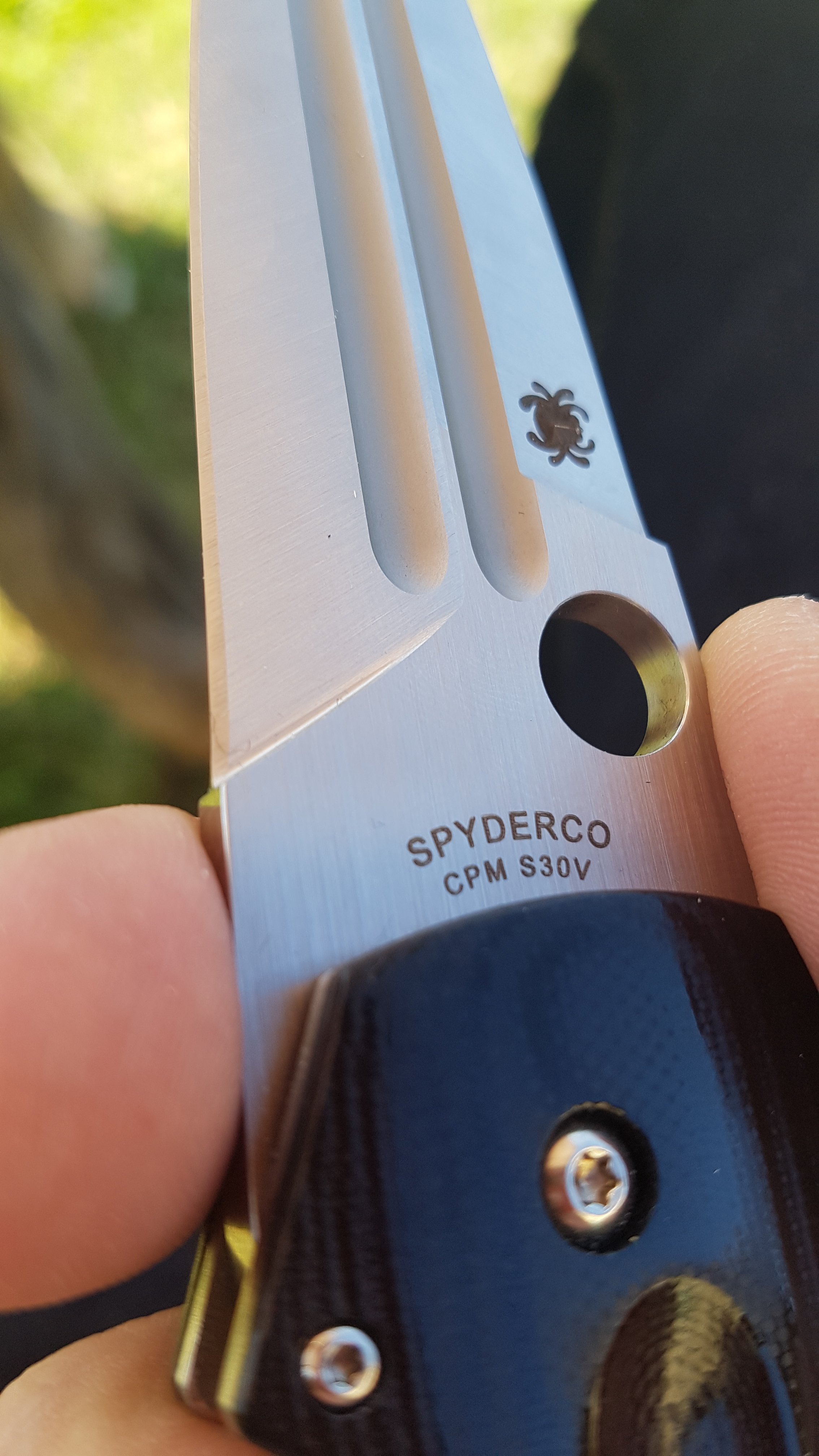
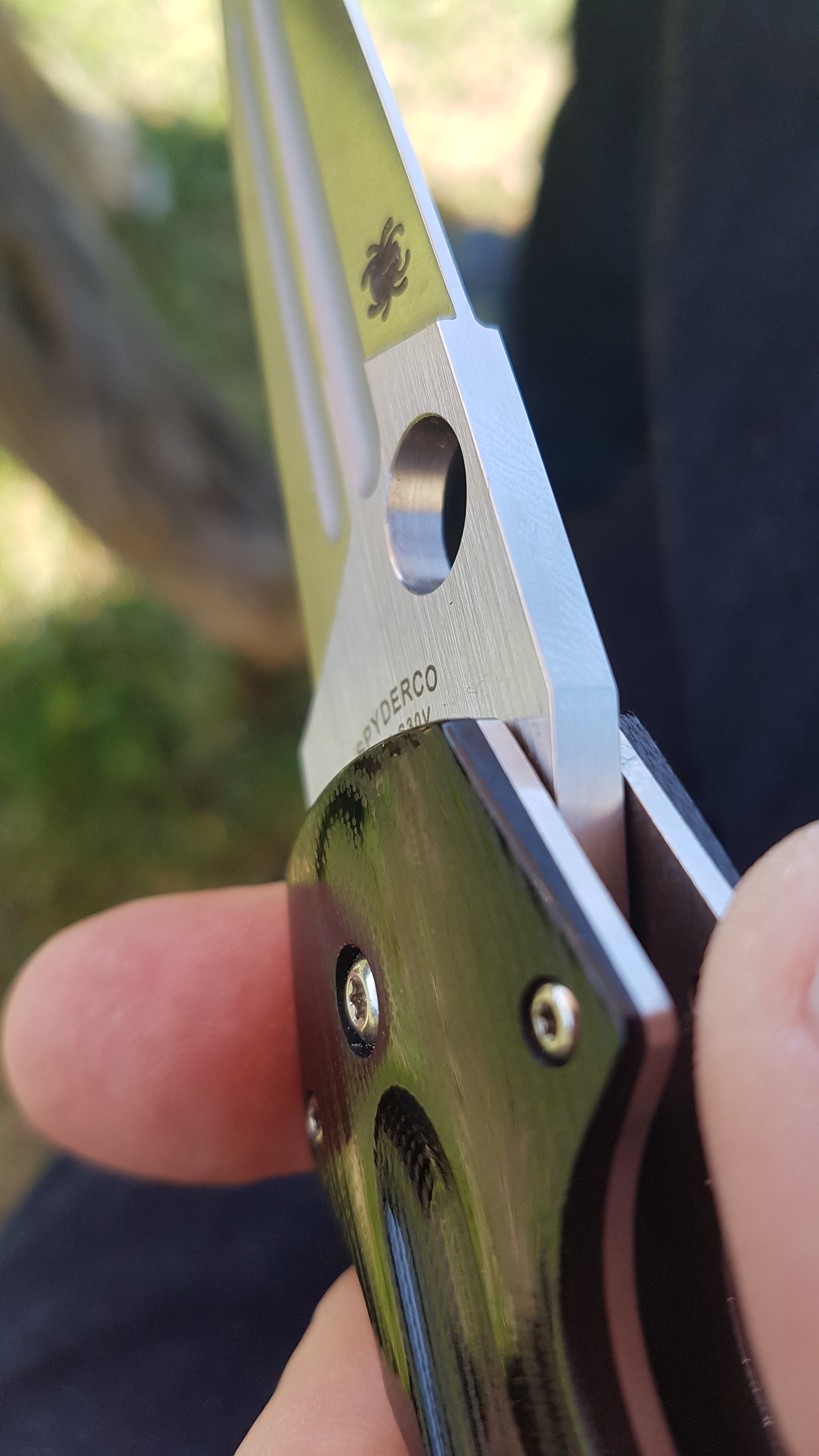
In fact, as seen on the 3rd picture, the lock bar is wide, the hole is deep in the handle, so instinctively my other fingers push the bar and augment the detent strength -> you can not open it.
On the second picture you can notice my middle finger pushing the handle’s bar of the the frame lock.
So I was the source of my problem. Not the knife.
It is just a matter of NOT touching the lock bar when opening the damn thing !
Also it is also important to push at 90° from the handle, like Chris Reeve was advising 20 years ago about his Sebenza. You see ? It is really a Sebbie grand child. 🙂
With the Spyderco Ikushi, this is my second tricky Spyderco. Eventually I gave up on the Ikushi. The Swayback is more on a learn curve and finding new muscle motors way.

As you can notice, it ask a little gymnastical way: holding the knife by the pivot and the clip. But it is learnt quick.
I really thought it is the answer of Marcin to all that fidget fashion.
For example the Para3 is so easy to open and close it is almost a game for some people. Click open. Clack closed.
But here, the Swayback tells you “I am a very serious knife ! Not a toy.”
Like Chris Reeve said: “Think twice, cut once”.
You open it with a certain joy and he closes just by gravity.
It is ‘that’ good.


Perhaps this is also a way to force you to use two hands to opening it. It is a polite way to open your knife in public. Also it prevents children or other people to open the knife without your permission. In this case it is great ! 🙂
I also found a way to open it in reverse grip with my ring finger.
It is also a very polite way to open a folder as the point is turned toward yourself. Also the reverse grip is really made for that knife.

20200814_152011.jpg

Now the other point of disappointment is the stainless steel clip.

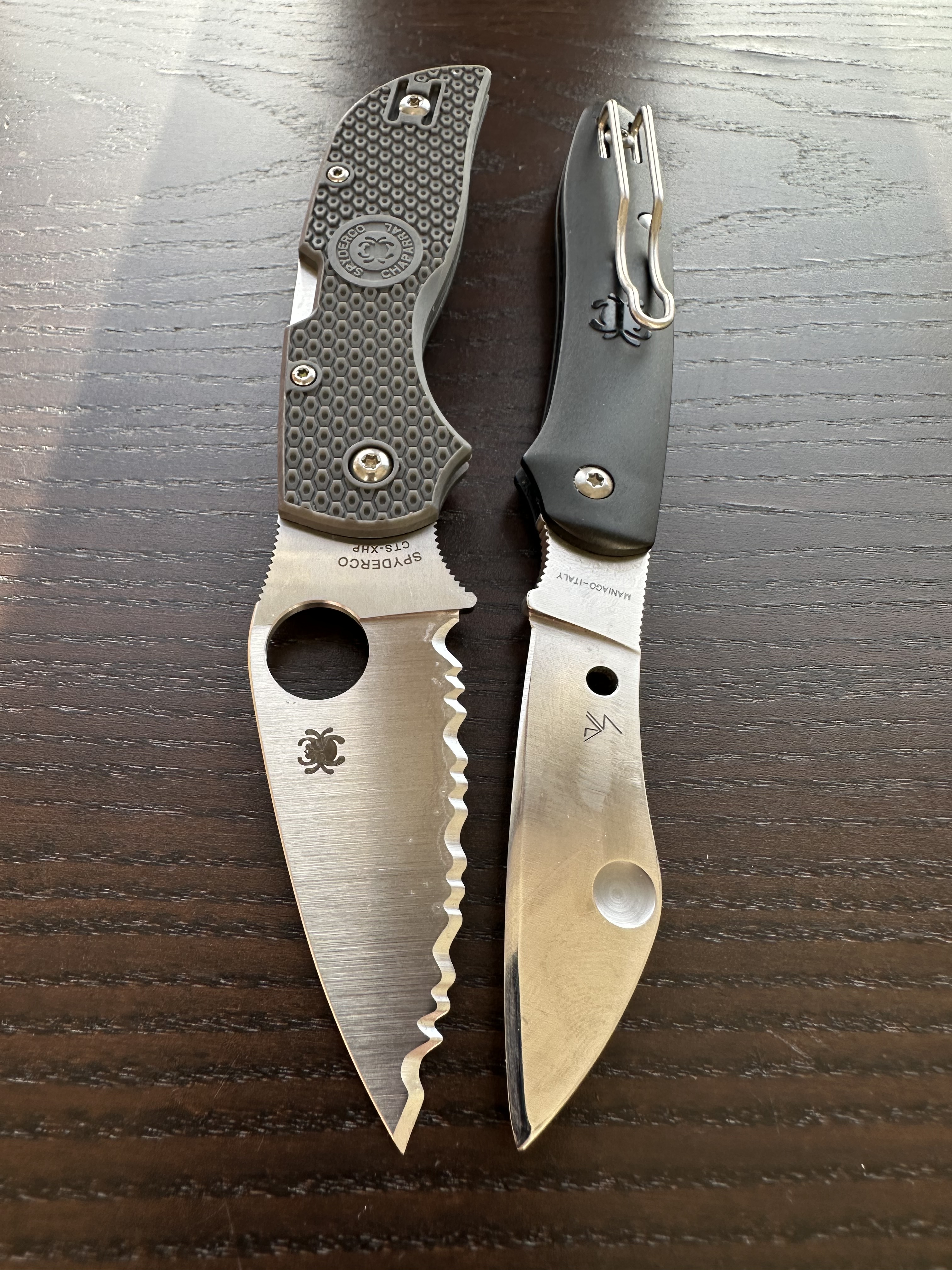
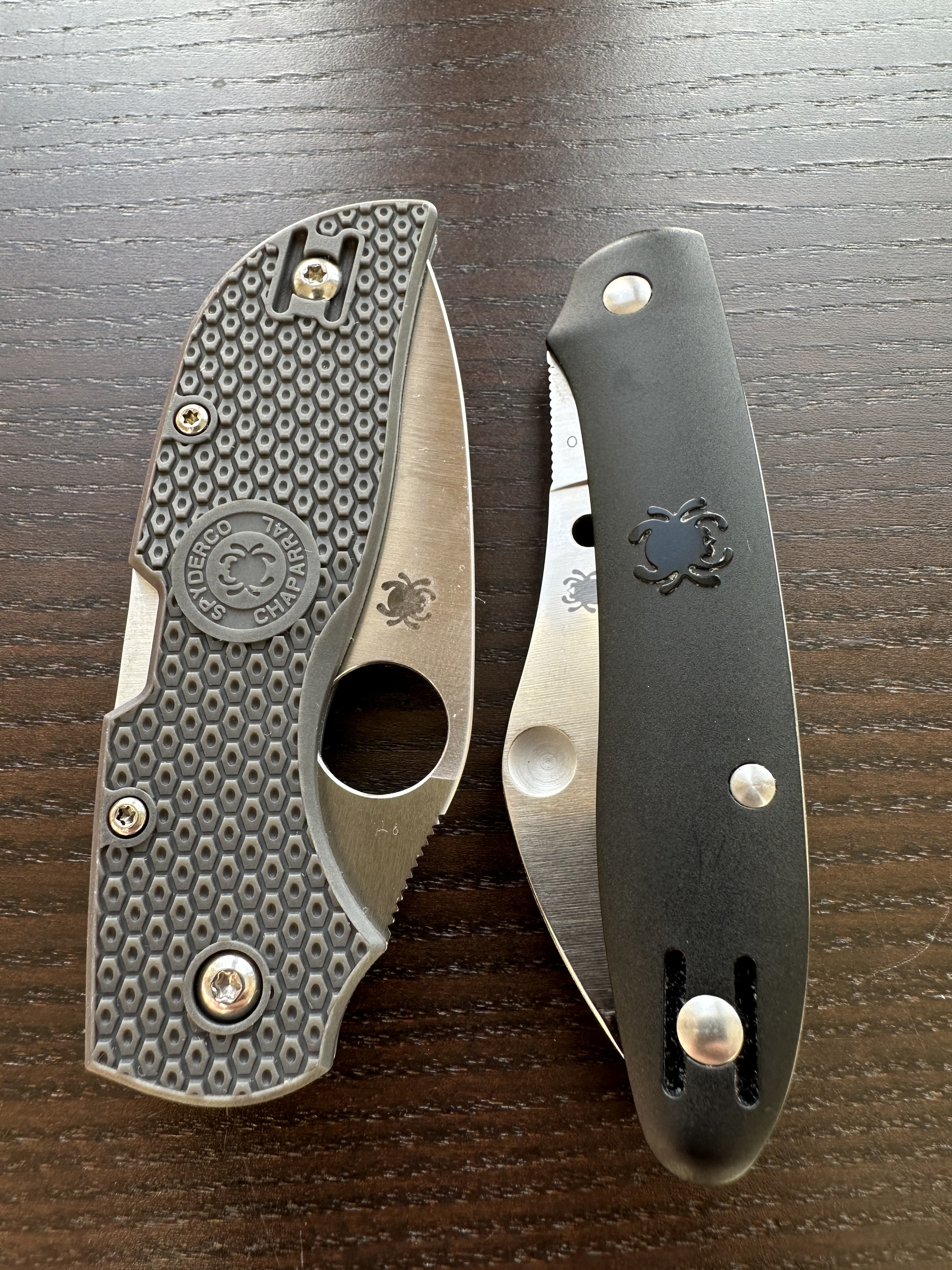
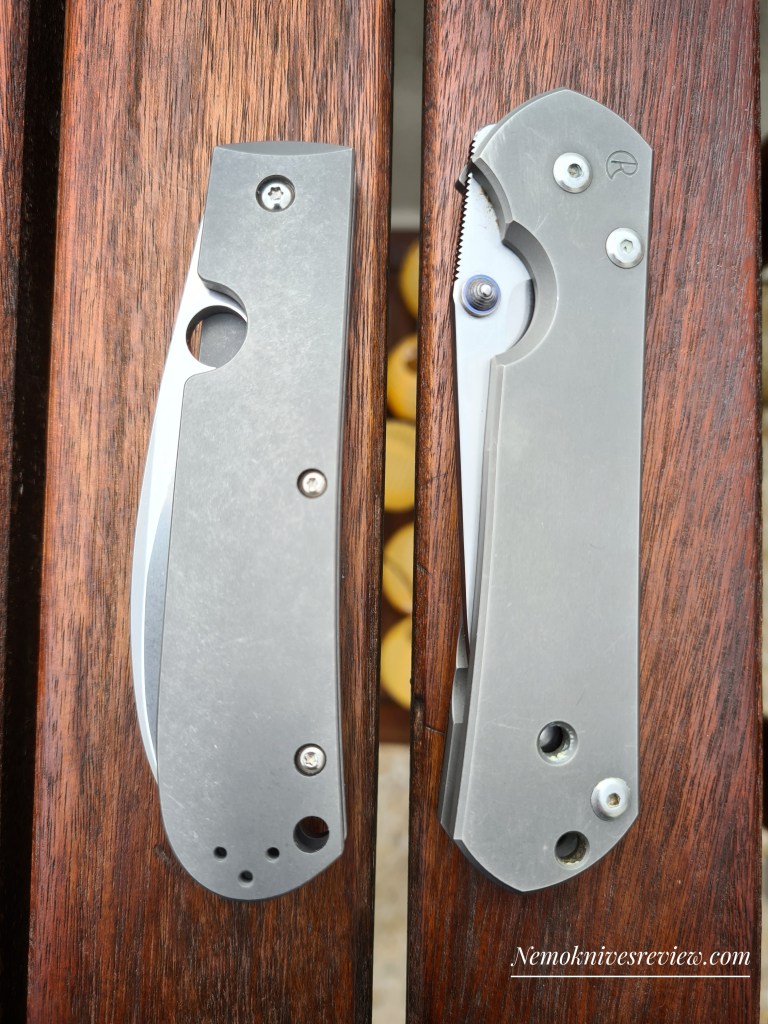
It is high and really not in the style of all the previous Spyderco Slycz which were wired like you can see it on my picture of the Swayback next to the Spydiechef.

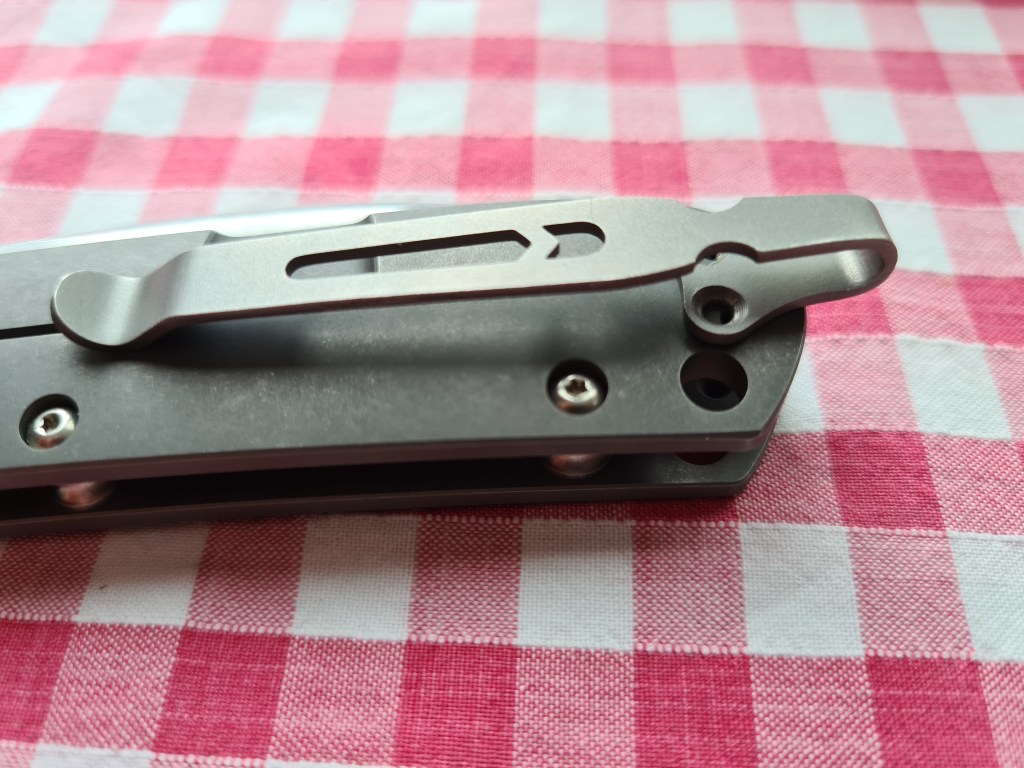
I got some titanium clips in spare so let see… which one could fit.

They are all as high as the OEM Spyderco but I do not wanted the deep carry titanium clip to stand over the handle edge.  Also I wanted it to match the handle better.

Too long….

Too shiny…

Perfect.

So let’s make some pictures:

So now the edge is very thin on this knife. It is an hollow ground blade like the Sebbie. My 1997 ATS34 is still in a great shape.

Let’s try the edge….

20200814_201727-01.jpeg

20200814_124226.jpg

20200814_145759.jpg

The factory edge is impressive. Just a few pass on leather and it get to real razor. CTX XHP fine grain is known for that behavior.
I have used it on tomatoes and it passed the test with the famous flying colours.

It is a relatively big folder with great ergos. I appreciate the hidden “choil” or hidden guard and the sway back fits the meat of my palm perfectly. No hot spot there, even with the old or new clip.

20200814_160443.jpg

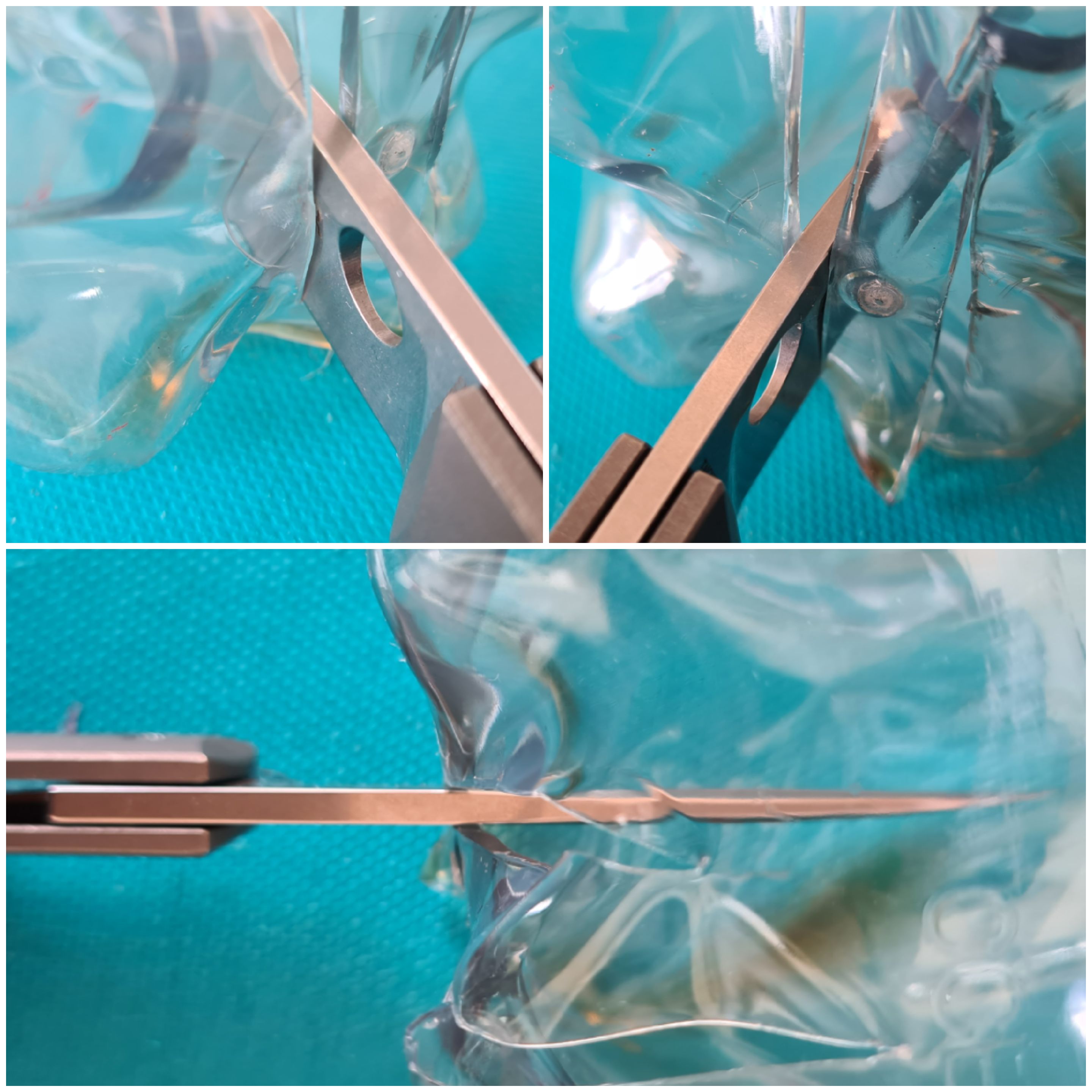
The plastic coke bottle’s butt has been perfectly passed. It is really amazing.

The edge/handle ratio is also great. It is really a tool which screams to be used and looking forward to use it on wood for whittling. There is plenty of space for my thumb to push on the spine.
The Swayback is also an exquisite work of love by Taichung plant.
Many details are hidden like the double pins screw inside the blade around the pivot. They works as stop pin with bevel inside the slabs.
Nick Shabbaz has made a nice video about it.
Taichung rocks really.

So here we got a very elegant folder with a lot of very thin edge. I told you it is very CRK in his blood.
The clip provided is OK but it is a matter of preference to find another one. Once you have learned to put your index high on the handle, near the pivot, the opening is flawless.

20200814_125907-01.jpeg


It is very very sharp and the straight edge us generous in length and geometry.
I’m looking forward using it and it will the in another article.


And now you can proudly say: “THIS IS THE SWAY !!”    😉

mandalo-season-2

Spyderco C210CFP Reinhold Rhino: The Mini Chinook ?

20180706_213311.jpg

My first impression is that this little folder is designed as a very strong little workhorse. Nested liners, carbon fiber, compression lock, integral guard (short choil), full flat ground blade, belly on the edge ? What no to like ?
The hour glass clip !! Because it’s not deep carry friendly ! At least it doesn’t create a real hotspot even when holding the handle tight.

20180706_214628.jpg

See ? The Rhino could be compared to the PITS in the way the guard/choil is working.

Then it could a be a small folding Sharpfinger.

20180706_213346.jpg

So far it’s another “Little big Knife” by Spyderco which could be used in the woods or in the city. Taichung is again top notch in the manufacturing, the liners are polished for example. Visible bronze phosphorous washers are visible and gives a very smooth opening.

20180706_213353.jpg

This is the kind of knife which is crying to be used and the belly with the thin edge will certainly give a max of cutting power.

One last thing: I love the Reinhold logo.

More to come soon.

20180706_213400.jpg

Spyderco C214TIP: The Devil’s Advocate by Gayle Bradley.

20171130_1127091842919763.jpg

“You sharpen the human appetite to the point where it can split atoms with its desire…”

I feel like in the “Honest Trailers”: “Please review the Advocate…” OK here we go:

Oh yes, the Advocate is a looker and really catches the light.  Knowing Gayle Bradley since his first hard chores folder, I really wanted to see his new design.

20171130_1131321053577775.jpg

At the moment I write those lines, we are all under the official statement from Spyderco about the Advocate. To sum it up: “A careful review of the Advocate’s design revealed that the steel washers used in its pivot are measurably thinner than those used in our other flipper models and are therefore vulnerable to the effects of overtightening….We have suspended production of the current version and are working diligently to redesign the pivot to completely eliminate this concern. We have also decided to suspend shipment of our current inventory of Advocate knives until a satisfactory redesign is complete.” Michael Janich 10th of April 2017.
I don’t have any issues with my Advocate pivot, so I’m not concerned.

20171130_113103867874246.jpg

Unless major purpose, I don’t feel the urge to disassemble my knives and I always find that rinsing them under hot tap water and oiling them back once dry, is more than enough to keep them going. I do however have got a gripping pivot issue with my Southard but this was before discovering and using nano oil. Here on the advocate, it seems like even nano oil did not help. but again It do not have any issue on mine. I got other issues and they are from the design, not the manufacturing.

20171130_113020468886516.jpg
So I was able to snatch a model before the factory line stopped and I really wanted to try and love another great Gayle Bradley design. The Advocate is his first flipper and he’s using my favorite steel: CPM-M4 (drawing from Gayle Bradley’s extensive experience as a competitive cutting champion, CPM® M4 is a high-performance tool steel renowned for its extreme edge-holding ability).

“The Advocate’s handle consists of two 3-D-machined solid titanium scales that are radiused across their width and feature a unique “orange peel” finish that is both visually striking and provides an enhanced grip texture. The precision machining of these features ensures maximum comfort in the hand and contributes to the knife’s stunning, custom-quality appearance.”

20171130_1129381694055380.jpg

See how the knife looks great? This is a very thin design. It slips into your pocket very confortably but, in my own experience, its thin handle create a lot of hotspots. I would have preferred a thicker handle even if the finish and lines are wonderful, it is really more a looker than a user so far.
OK mine fires perfectly and once unlocked, the blade falls free. So the action is OK but there is a strong break to it: the ball detent on the lock making the action less smooth than on my other flipper: ZT0562 or Falcon. It’s even noisy, you hear it. What is the point of having ball bearings when you put a brake on it ? Spyderco knows what smooth means ie Ed Schempp’s Bowie the Paramillie. Why not the Advocate ?


Also you can notice how the Zero Tolerance’s (ZT) handle is thicker and hence much better ergonomic-wise. I would not mind that for a Chaparral or for a shorter folder but the Advocate is a medium folder with a 9 centimeters blade and weighs 111 grammes; so it’s not a small folder! Even on the last picture you can see that it’s thinner than the Sliverax….

Error
This video doesn’t exist

Also flippers have got a fun factor shared with spinners and balisongs. We love to play with them and because of that, we have tendancies to “test” them more in their opening and closing.
Again, the Advocate’s thin profile doesn’t make it easy to close. The tension on the lock bar is very important and the edge to unlock it is sharp. So it’s not easy on your thumb, almost painful sometimes compared to my ZT and its fat lock… Even the flipper’s tab feels too thin for such a strong detent. It’s biting into the index finger’s pulp….

20171130_113116465167529.jpg

20171130_115113937134801.jpg

You can see the sharp edge of the lock bar; actually it comes from the steel insert.

20171130_133127-011464298529.jpeg

You can notice the marks on my thumb.

20171130_133237-01928540783.jpeg

Look at the way the lock bar is chamfered on the ZT. Rick Hinderer is not at his first flipper design obviously…

After playing for some time, there is no real fun. The detent is so strong it makes thumb-opening impossible on mine; only reverse grip works for me.

Error
This video doesn’t exist

So the strong lock acts like a break; you understand why Compression Lock flippers like the Sliverax are a path to explore.  That said, after playing with both knives, I also feel the Sliverax could have benefited from a stronger detent.

So far the Advocate is not my favorite Gayle Bradley design.

My opinion is not based on any pivot issues as mine doesn’t have it but in my book,
it’s too thin, too slippery, not easy to close nor is it easy to open with the thumb hole.  It’s not smooth… It’s the total opposite to its famous GB1.
Perhaps it will grow on me but even the clip is not a deep carry option… Oh well.
I need to play with my Ed Schempp bowie for good measure… as it’s the perfect opposite in the way Taichung can deliver a great folder with great ergos.

So in summary, if you want a really fun and light Spyderco to play with, try the Sliverax.

20171128_184033-02726952399.jpeg

edited by pjaffre: jan 5, 2018.

Spyderco FB33GP Gayle Bradley Pocket Bowie !

20171128_142427-01320227037.jpeg

This is Gayle Bradley first Fixed Blade collaboration with Spyderco. A “unique blend of expert design and state-of-the-art metallurgy”… But is it a real Bowie ?

A true Bowie is “the most effective fighting and survival knife ever made.”
Just to quote Bill Bagwell as he was attending the Paris Knife Show, where one of his Bowies won the award for the best fixed-bladed Damascus knife in 1995…
A stiletto can pierce, but not more effectively; a cleaver or kukri can chop with similar result; and a razor can slice, but only in one direction and without the power of a combat Bowie. A 10 inches perfectly balanced beast with a false edge ready for a back cut… This is Bill definition of a big bad Bowie.
Actually I got a Cold Steel Trailmaster but much prefer the Fallkniven A2 for camp knife purpose. The A2 is not a proper bowie but the 8 inches blade gives you the scale of the Bradley Bowie which is not much longer than a Phil Wilson South Fork.
20171128_142314-011164019776.jpeg

Also I have noticed the edge is quite thick on the Bowie. It’s not a great whittler. I was immediately tempted to get a thinner edge. I felt also the edge to be very far from the handle because of its large choil.


In that matter its little brother the Junction was much more capable. Being much more thinner behind the edge.
But a 5 inches blade is not the best chopper. The size emphases the portability but not the chopping performance. This Bowie must be designed with a special purpose: hunting knife, pocket camp knife ? It’s a bastard dog but Gayle Bradley don’t design by guessing, he must have a reason. I have asked him in an email and will update this review as soon as he will be kind enough to answer me.

20171128_144850-01402770663.jpeg

To quote Bill Bagwell: ” There is a difference between the ideal fighting Bowie and an ideal survival Bowie, even though the basic design is relatively similar. The ideal fighting Bowie and survival Bowie would have roughly the same blade length of about nine to ten inches, because this is the length that offers the perfect amount of balance and leverage in both scenarios. But the ideal survival Bowie might be a fair amount heavier overall and have a greater concentration of the weight further up the blade. This concentration of weight further up the blade gives the Bowie a balance more like a hatchet, so that it has greater chopping power, separating it from the more nimble fighting Bowie class.”

20171128_142355-01775841927.jpeg

The Bradley Bowie is a Jack Of All Trade focused on a Sub 6 inches fixed blade market.
In that domain I already got some favorites Spyderco: the Serrata !
20171128_142836-01584628714.jpeg

The Serrata offers a cleaver power in the field. But the Bowie is tougher in the choice of its steel. “An incredibly tough spray-formed tool steel. Like the particle metallurgy process, spray forming rapidly solidifies molten steel into small particles so its component alloys cannot “segregate” or settle. This creates an ultra-fine, extremely homogenous grain structure that is ideal for knife blades. PSF27’s alloy composition includes molybdenum, vanadium and a generous 1.55% carbon, but because its chromium content is 12%—just below the official threshold for stainless steel—care should be taken to maintain it properly.”

20171128_142714-01534366658.jpeg

The Bradley Bowie is also an eye candy, even if I don’t like where the trademark hole has been placed, at least it is very very small and even smaller than on the Junction.

The contoured polished G10 handle is very confortable in the hands. much better than the Junction which is very very flat. I’m not a fan of the tubular holes on both models but it offers some potential in creativity: who want to make a spear from they knife ? Boar hunting anyone ? And it respects the prime designs of Gayle Bradley.
I also love the balance of the Bowie making it “alive” in the hands.

IMHO the Bradley Bowie would be great as a soldier’s knife. Some kind of modern KABAR…
It’s thick enough to withstand some serious abuse. The tip and the blade shape would make it easy for opening crates if needed.  It can be used for batoning of even light chopping.

20171128_142644-01632066016.jpeg

So it’s a Bowie easy to pocket in its boltaron sheath or rigged upside down thanks to its great retention. The pancake sheath works great and is very secure. There is no play or rattle when shaken. It’s a sheath of great quality.

20171128_163713-012067509247.jpeg

Conclusion, the Pocket Bowie made in Taichung is ready to follow you in any kind of expedition you got in mind. Its full tang construction and general design make it fit for any tasks where a solid and reliable knife is needed. The Bradley Bowie is a tough cookie.

More to come soon.


SPYDERCO SPRIG FB37GGR — Phil Wilson Bird & Trout Companion.

20171121_100407-01539792713.jpeg

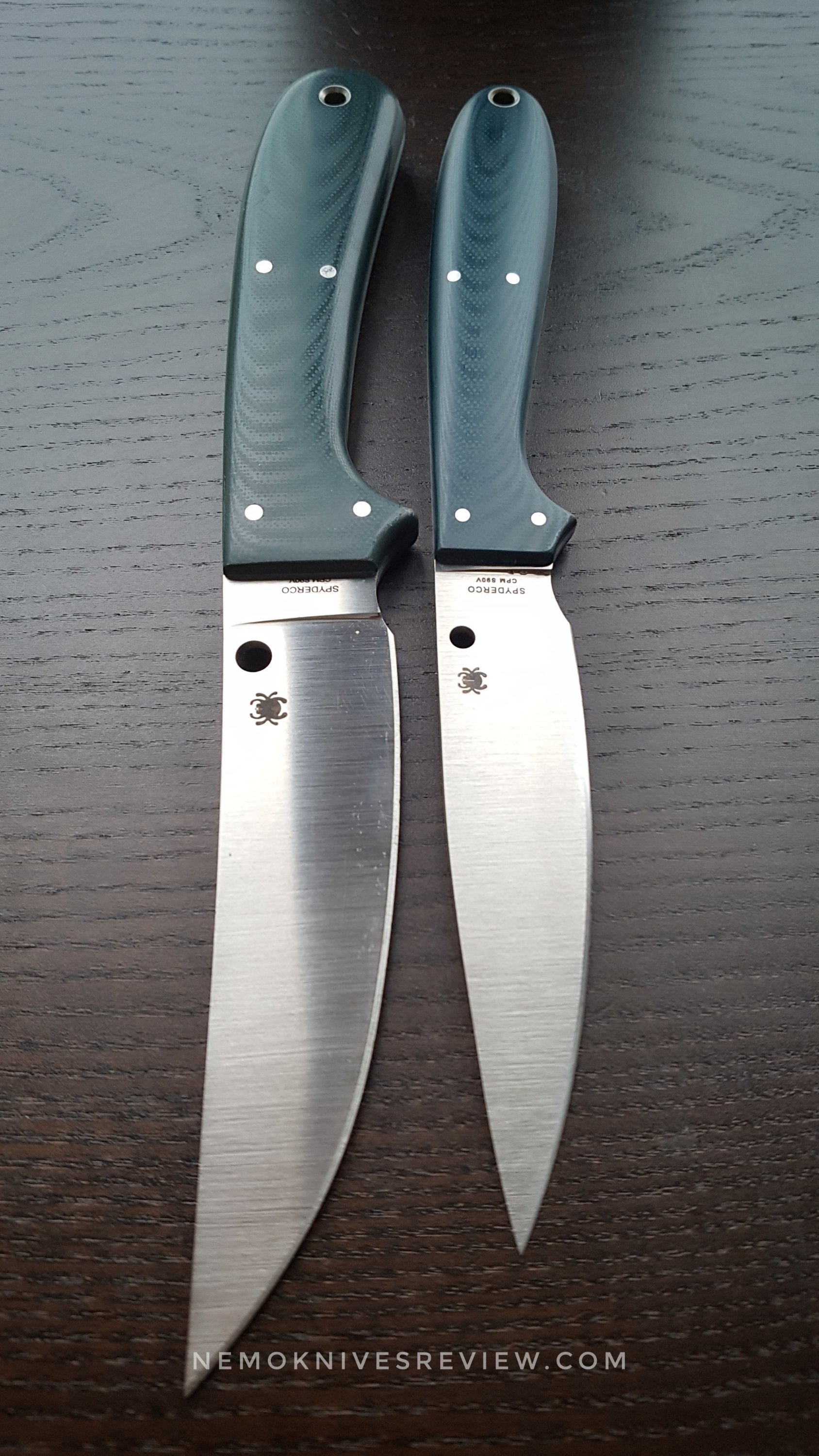
Bird & Trout knives are small thin fixed blades, lightweight sharp knives able to process a bird or a trout. Those knives got of course no chopping purposes and no bushcrafting purposes but we have found the Sprig by Phil Wilson to be a reliable wood companion.

I already knew Phil Wilson as a knifemaker and clever metallurigist for his writing on CPM420V (S90V) back in 90’s. He was the first to provide fillet knives for people who process salmons all day and was measuring the edge retention of this new powder steel back in the past century.  His results were outstanding: the S90V steel was able to process much more fish than the normal stainless steel used on that time (440C ?). He was also able to heat treat them to 60HRC and higher. Bringing the powder steel edge to uncharted territories long before people were spoiled with S30V and S110V and Elmax…
When Phil Wilson did edge holding test, lower Rockwell numbers yielded much poorer edge holding in real world use. High hardness prevents rolling and blunting of the edge, a major cause of loss of sharpness, even though the steel has very high abrasion resistance. His blades do have very high soak temps, oil quenched followed by deep cryo in liquid nitrogen but he did not have any problems with chipping as he considers the use for his S90V knives to be only for slicing.  (source Bladeforums).

To quote him:
“Edge holding will be proportional to hardness to a large degree. Experience with CPM 10V, S90V, and 3V showed me that, with a particle-based steel, the hardness can be pushed a little higher up the Rockwell scale and still retain enough toughness to prevent edge chipping. (CPM S60V is the exception; it has it’s best qualities at about Rc56.) This is because the particle-metallurgy-based steels have a very fine grain structure.”

20171121_100415-011815640864.jpeg

Let’s quote Phil Wilson about knife making and steel testing to understand the way he design knives, this is from an article he wrote in 2002 about the coming of S30V then new to all 15 years ago:
” I chose to make a fillet knife because, in my opinion, it has the hardest work life of any knife. Use around salt water will reveal a fillet blades ability to resist corrosion in a short time. Edge holding is tested quickly when cutting through scales and bones and working against an abrasive cutting board. A fillet knife must have a thin, flexible blade to ride over the rib bones during the fillet cut. A brittle steel will soon chip out or break under such use. A fillet knife also makes a very handy kitchen blade. It’s a natural for boning a chicken breast, slicing prime rib, or filleting out a grapefruit. Kitchen knives are left wet on the counter and bounced around in a drawer with other utensils, which is another pretty severe test for a new steel.

In addition to the fillet knife, I made a simple slab-handle semi skinner with the new S30V, and two other [nearly identical] knives from CPM S90V and 3V. This effort would give me a fresh comparison on the heat treating, grinding and finishing of all three steels. It would allow me to do some cutting and edge-holding tests against the new grade. Does the new S30V meet the challenges? The answer is yes, and I’m willing to bet that it will be the favorite steel of many knifemakers in a short time.”

— August issue of Blade Magazine in 2002 —

So as you can see Phil Wilson knows his craft and was testing those new particle-metallurgy-based steels to their limits. No surprise Jim Ankerson and Sal Glesser are huge fans of Wilson’s knives.

20171121_100509-01514419659.jpeg

The Sprig is not the first Spyderco edition of Wilson knives. The South Fork FB30GB was the first. This design combines very high cutting ability, point penetration and grip ergonomics into a very high performance working knife, to quote Cliff Stamps test of the custom original version. Strangely I was never able to bound with the South Fork when with the Sprig it was love at first cut !!

20171121_100715-011362243192.jpeg

First thing was the handle. The rounded Sprig handle is much more confortable in my hand when the South Fork feels more square.  The Sprig is nested in my palm very very confortably and I can cut i wood for long time without any hotspots noticed. It’s important for a fixed blade. With folders there is often some kind of compromised due to the folding of the blade into the handle, but for fixed blade the confort during cutting needs to be optimum hence the Mora’s handles compared to any thick edged squeleton tactical gadgets.

The Sprig is great on wood, even with its factory edge. It is ground thin in Taichung and is able to get to work right out of the box. The belly also helps a lot to push cut fibers acting like a guillotine edge. So really this knife can be used for bushcrafting purposes which are not implemented hard drilling in wood or batoning. The thin point is wonderfully handy and not made for snuff Russian tests.

20170923_122125-02970291423.jpeg

But for cutting wood and whittling the Sprig is even better than the South Fork or the Gayle Bradley Bowie and Junction, because its edge is so thinly ground.

20170923_123440-011828196874.jpeg

I had used some diamonds on it but it was not really necessary really. Just a compulsive attitude of mine when I got too much time on my hands… S90V is a legendary steel. I already quote Phil Wilson’s articles in my Paramillie 2 review.

“Crucible Materials Corp has introduced three winning steels in the past 10 years: CPM S90V, CPM 3V, and now CPM S30V. CPM 3V is still the undisputed toughness champ, even surpassing some carbon steels such as A-2. Originally known as CPM420V, S90V was introduced as an upgrade for S60V (originally called CPM 440V), and met all the targets of improved corrosion resistance and toughness. It has the reputation of being hard on heat-treating equipment and is a bear to finish, but is still the best edge-holding stainless steel going.”

20170923_122414-02137667105.jpeg

Easy to carry in my denim pockets with its kydex sheath, the Sprig is not really bigger than the Sliverax. The sheath is well made and flat enough to be packed in any Go-Hunting bag. So it’s very easy to bring him along for a walk in the forest or near the sea as S90V is very stainless.

I was really surprised by the cutting abilities of the Sprig. It really caught me by surprise.
The drop point design is useful even in the kitchen , so the Sprig will suit hunters as much as cooks and also it will take a very serious place in any expeditions needing a reliable cutting tool which you won’t need to sharpen every hours.

20171121_100547-01602839848.jpeg

You can find a lot to read and learn in Phil Wilson’s site here:
http://www.seamountknifeworks.com/articles.htm

Tuscan Raider #3 – Spyderco C215GP Euroedge.

20170916_175148-0114312562.jpeg

Again this is all made with my smartphone as I’m far from any computer.

A folding dagger as beautifully designed and made is not a bushcraft knife.

But my very first modern folder back in 1993 has been a Gerber Applegate folding dagger.

The first models were made in a stainless steel close to 420Hc.

The Euroedge is made of S30V.

Cutting wood with it is like making chop sticks with a bastard sword: it was not designed for that. The Euroedge is like a weapon a Templar will keep at hand. The blade is massive and the stock is thick.

The handle is so well made G10 feels like carbon fibers.

It is one of the most beautiful Spyderco ever made and a real tour de force in pure hommage to ancient times.

“”I can do anything”, Ed Schempp, will push the envelope, often just to see if he can. I did a “hammer” in at Ed’s house. Just a bunch of knife afi’s with great skill working on a globe. But no hammers. Ed designed and built a series of miniature rolling mills so we can produce mosaic
Damascus pieces, each with an assignment. Ed’s my “go to” guy for Ethnic series knives. Take a design hundreds, or even thousands of year old, capture the purpose and function and re-create that in a modern folder. He studies the design, the history, function and purpose before beginning. Those of you that have studied and used Ed’s designs know what I’m talking about. True original classics, each and every one.”
Sal Glesser.

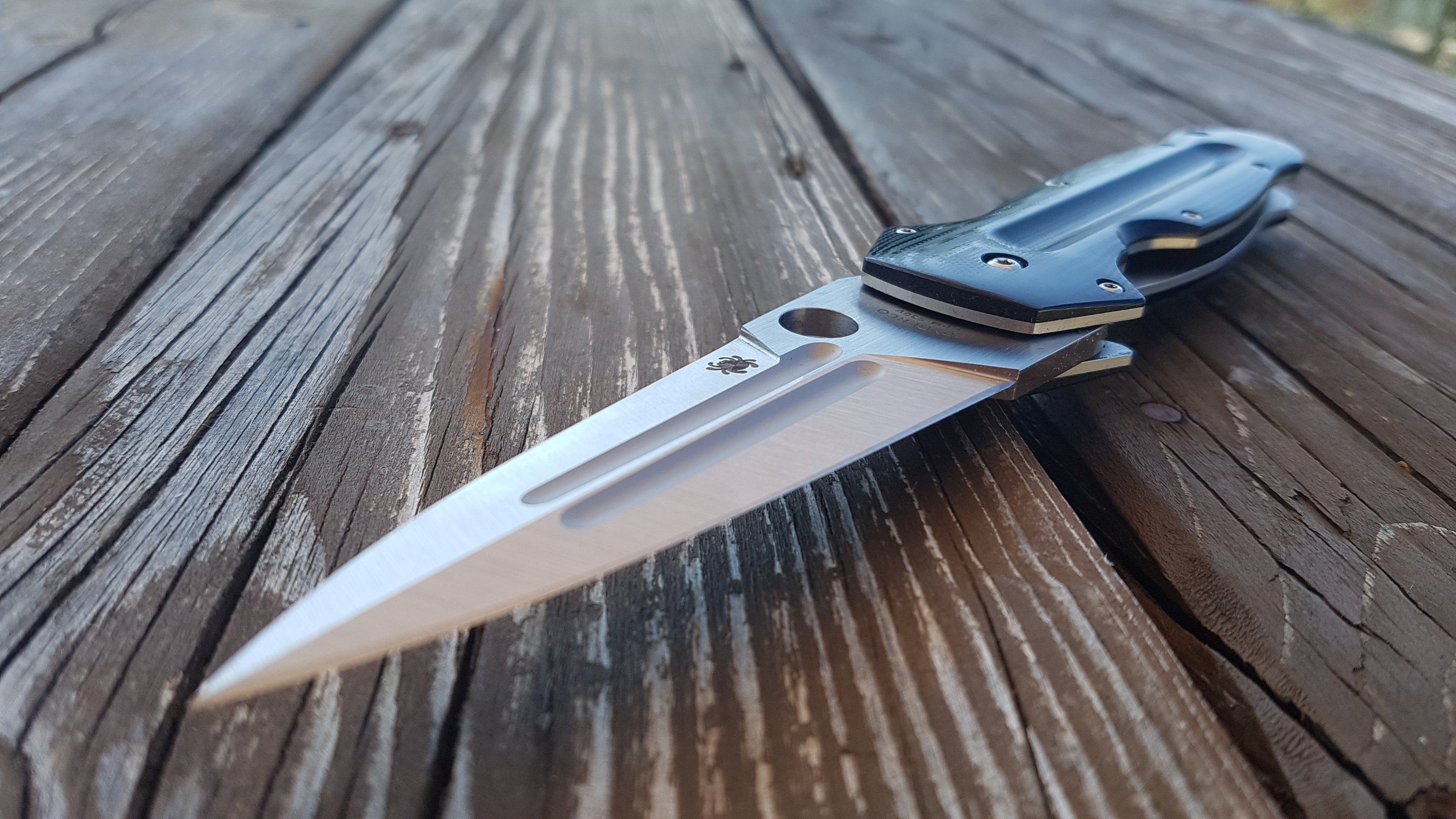
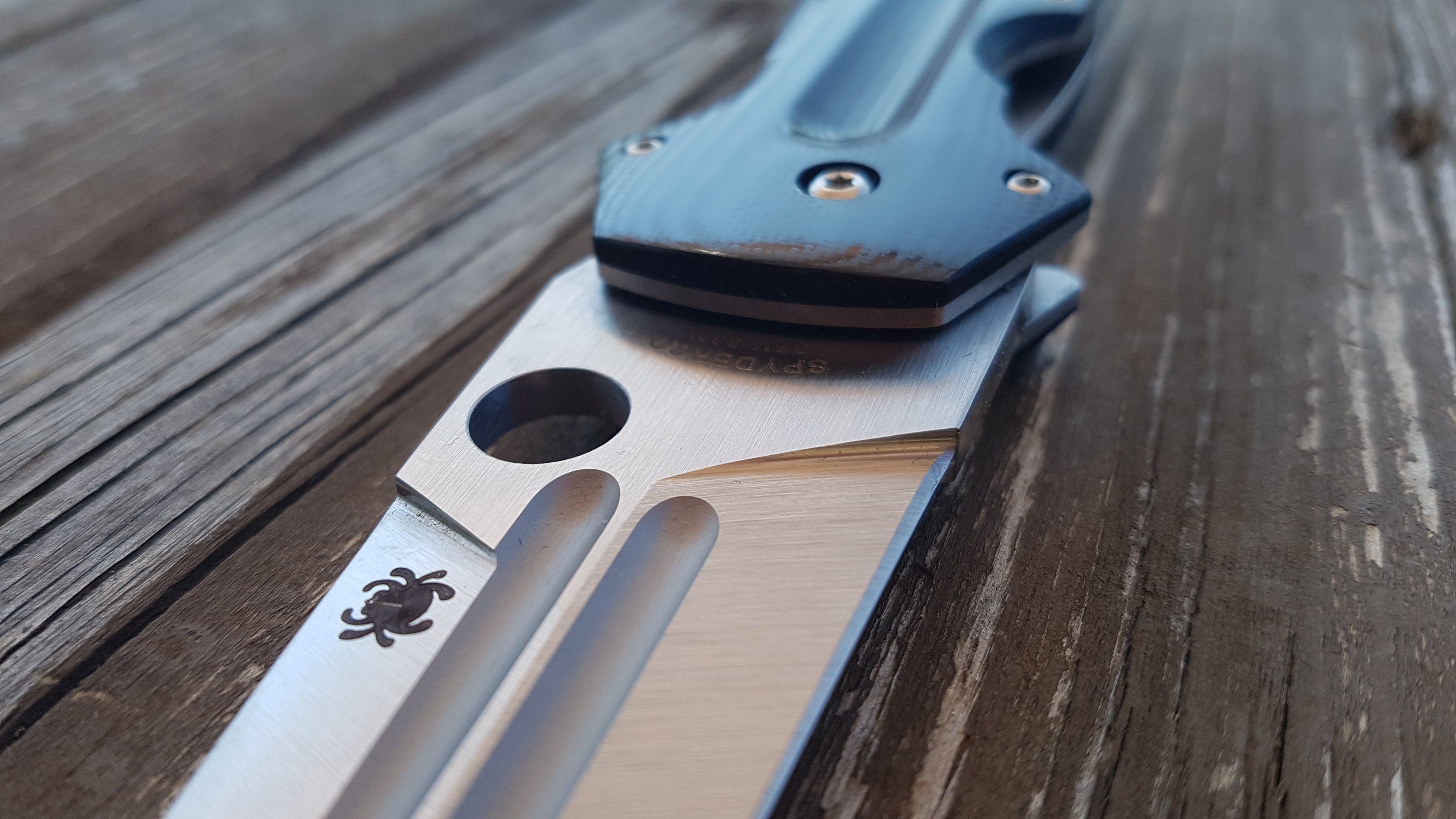
A first glimpse at the Spyderco C187CFP2 Peter Carey Rubicon 2

I’m not a fan of thick hollow blades for quite long time now. The Gil Hibben Rambo III knife is not in my dreamlist anymore and the last hollow ground knife I have reviewed has been the Recon 1. But one of my favorite knife, which has not been reviewed is my 1994 Sebenza. Anyway, the Sebbie and the Cold Steel or even the Gayle Bradley are holow ground but not thick blades.
The Peter Carey Rubicon 2 is 3,5mm thick and for a 3 inches blade it is substantial.
(The Slycz Techno was 5 mm though…)

The Rubicon 2 is not a big knife, is it destined to be an EDC. He’s not heavy, its liners are made of titanium and the scales of peel carbon fiber.

The first you enjoy is the ease of deployment. This knife flips like no other in my collection. No need for assisted opening on this baby: the heavy blade, the ball bearing pivot and the well designed flipper make the trick. The opening is positive everytime.

Eric Glesser told how difficult is it to have a flipper which also provides an alternative opening system. Meaning: sometimes you just want to open your blade gently with the Spyderhole and not with the flipper. You want to trade a “shlack!” for a “click!”.
The Rubicon can be open with the thumb and even the index. It’s fun how easy it is! The operation is so smooth and could be catagorized into the gravity knives family. This ease of operation has been a big charm upon me: the more I’ve played with the knife, the more I have enjoyed it.

The blade got a beautiful satin finish perfectly executed, perfectly executed, symetrical and and centered.

The second big charm on the Rubicon 2 is the handle. The way the flipper create a guard and a subguard, depending how you hold it. This short handle is married litteraly to my hand. For once, there is no lanyard hole and the butt of the knife is pointer than its blade.

A beautiful orange spacer gives a very hightech look to the knife as everyparts are perfectly adjusted: spacer, scales and liners. This high quality of manfacture is again provided by Taichung in Taiwan.

The bronze washers and the ball bearing gives the smoothness and the exterior stop pin assure that the washer are wide enough for stability: no lateral play.
The only break to the action could be the ball detent of the titanium liner lock but it is minor compared to the momentum of the blade.

The design is well thought also once the knfe is closed.  The Rubicon 2 gently rests in you palm confortably. The peels carbon fiber is very nice against the skin giving a very positive grip. The jimping on the blade are purely decorative and this is the way I like them two.
I won’t need to file them.

The blade is wide and thinly ground and very effective thanks to its nice belly. I was able to push cut through hard material easily. It has surprised me how it zipped though.

The balance of the Rubicon 2 is perfect IMHO. The choice of the material again provides that. The handle is very light.

I haven’t been able yet to find an easy to clip carry the knife. The texture of the scale and the very strong clip give a lot of friction. I was even able to carry it in the pocket watch.

Compared to the Ed Schempp Bowie for example: the Rubicon 2 is not pocket friendly at all.

It is not carried deep and the orange spacer screams loud : “Hey look !!!”

I’m so unhappy with the way the knife rides in the pocket that I’m thinking to use a pouch and get rid of the clip !

For the moment my cutting test with the Rubicon 2 has been really positive. It’s a short knife with a big potential.  Also your thumb can easily rest on the spine giving you more leverage.

So here we go with a first glimpse to a very well designed knife. I would have been more excited to get some exotic steel on such a radical design but S30V heat Treated by Spyderco does the trick.

The Rubicon 2 is destined to be a reliable workhorse and not only a looker and a very addictive flipping toy. There is a strong will behind its design to provide strong cutting power in a small package in its design and all is served by an ergonomy which is for me magnificent. The knife is simply anchored to your hand.