Tag Archives: Gentleman folder

“Spirit” – Des Horn 450# – A Whisper of Steel in a World Obsessed with Noise

In the rarefied atmosphere of high-end custom knives, true elegance rarely announces itself loudly. It reveals itself slowly — through proportion, restraint, tactility, and detail. The Des Horn 450# belongs to this vanishing category of objects: creations that do not merely impress, but seduce.

This is my second folder from my friend Des Horn. (I have known Des and Linda for nearly twenty years now. Des Horn is a true legend in knifemaking — a master of his craft, and above all, a gentleman.)
The first folder was a beautiful Imvubu that was unfortunately confiscated at airport security after traveling clandestinely beneath my wallet. I was absolutely convinced my pockets were knifeless — until the metal detector disagreed.
Watching it disappear into the security tray was genuinely heartbreaking. Losing such an elegant piece because I was sprinting to catch a flight for a TF1 reportage made the whole scene feel even more absurd. Some objects are replaceable. A Des Horn never truly is.

Des knew about this very first-world tragedy, and after nearly ten years I finally decided it was time to own another of his beautiful knives. I asked him which folder, among all his creations, was his personal favorite.
His answer came immediately: “The 450#. My favorite.”


(Pictured here is the 450# my friend Jan Dirk has bought from him 15 years ago. Perhaps JD’s favorite in all his collection. Actually Pascal Jaffre also have one…)

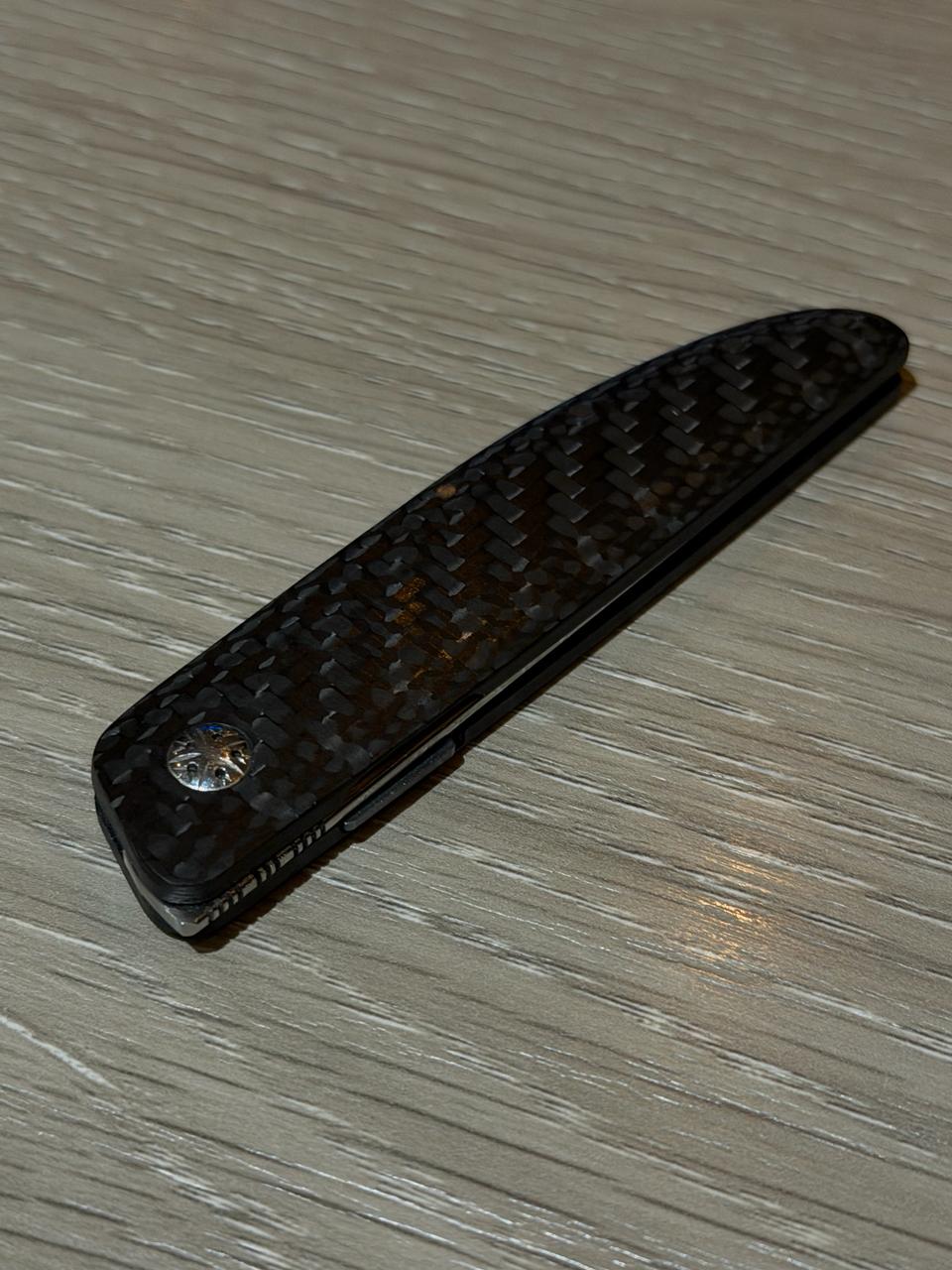
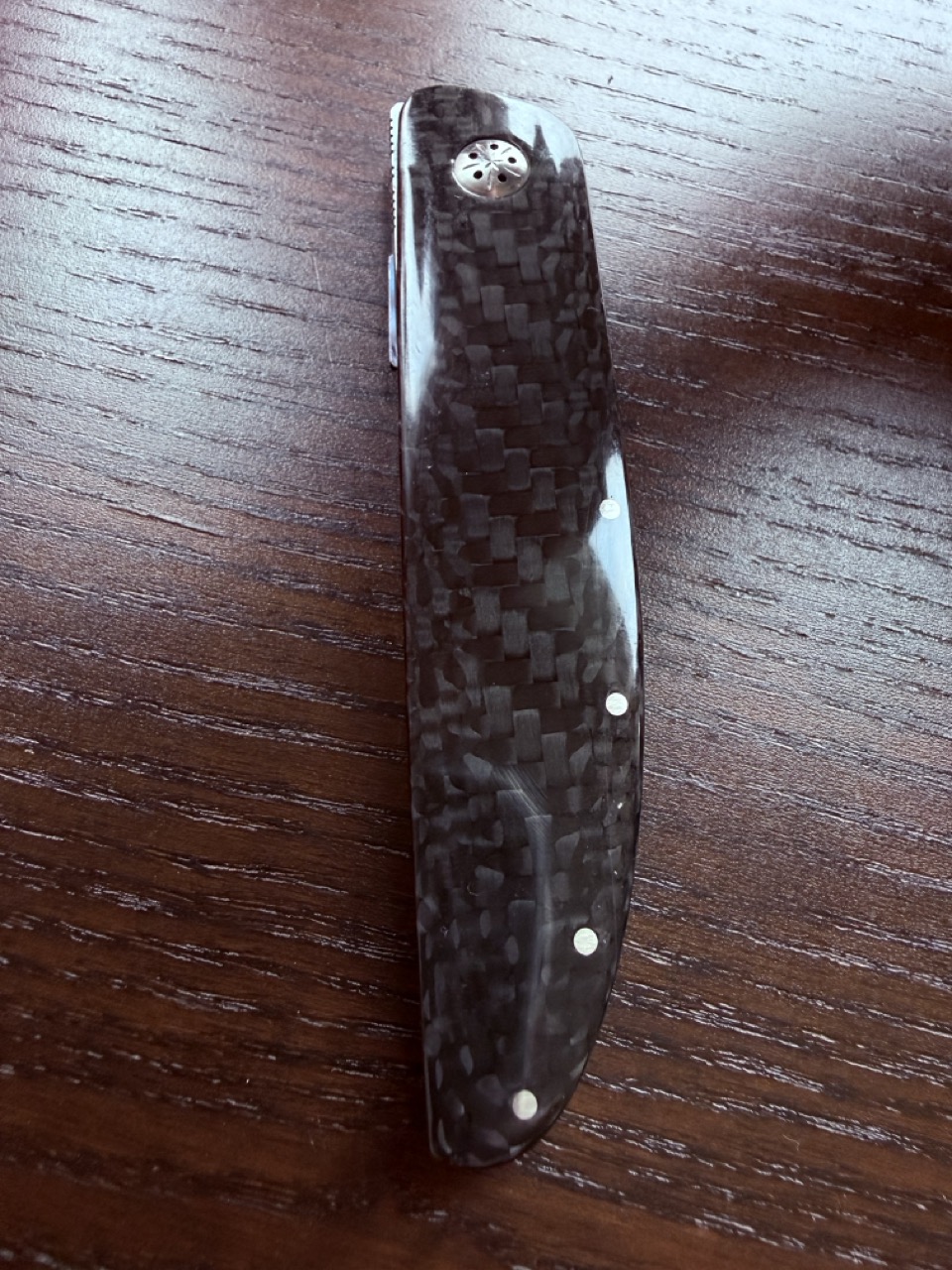
He told me he would find a particularly unusual piece of carbon fiber for it and also:
This one has a “2K” finish .
Very tough and durable and is used on exotic cars to finish the carbon fibre. It was the only one I had finished without a clip.”


And then came the part that genuinely left me speechless: this special 450# was a gift from Des Horn for my 60th birthday !!!
In a world where so many luxury objects are reduced to transactions, gestures like this carry something infinitely more valuable: humanity, generosity, and the quiet bond between two friends.
I will remain forever grateful. Thank you Des and Linda.

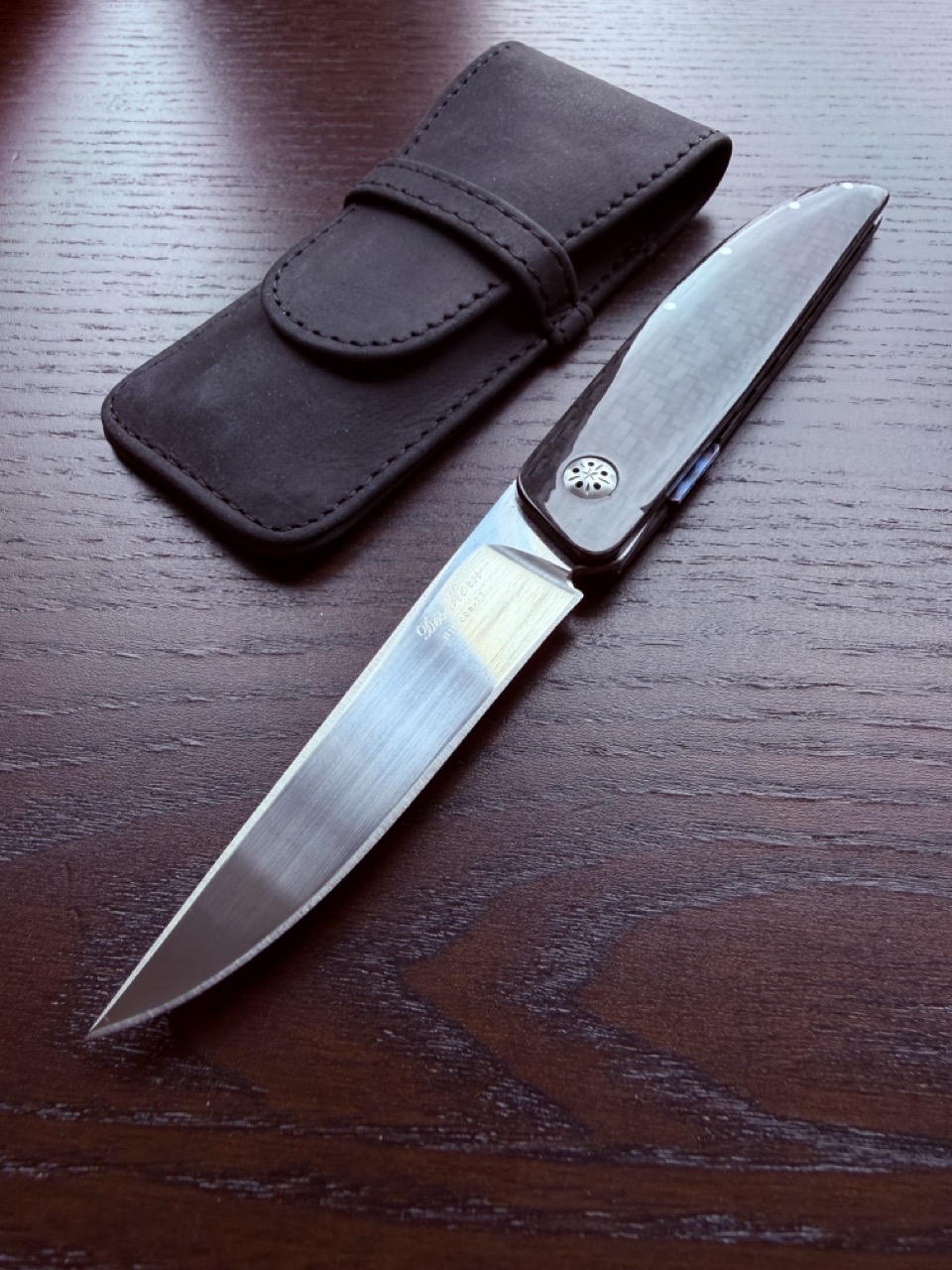
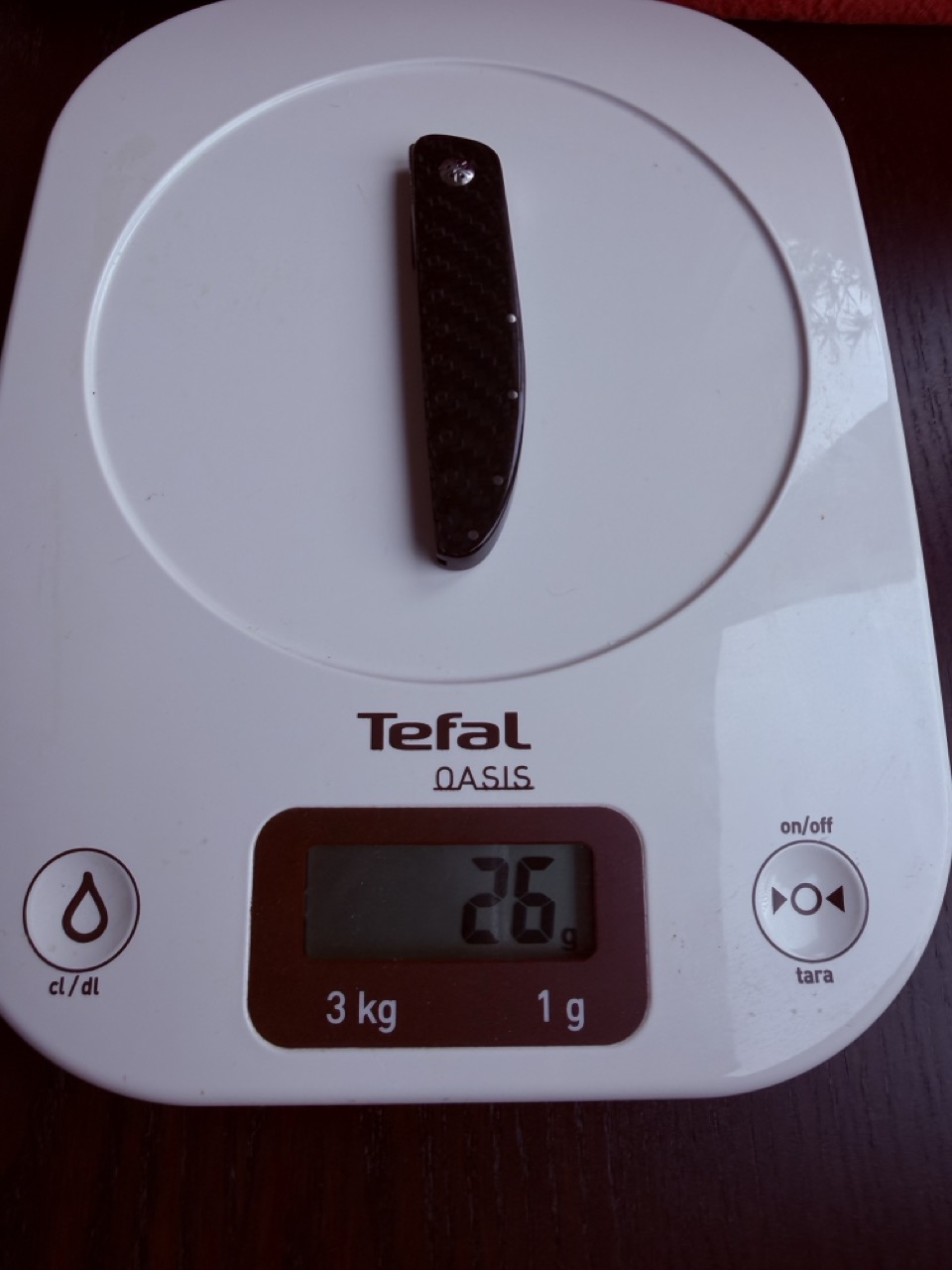
At just 26 grams, the knife found its name almost immediately: Spirit. Spirit of Cape Town.
Partly for its impossible lightness, as if the knife itself barely belonged to the physical world. And partly for what the French so beautifully call la part des anges — the angel’s share — that invisible portion reserved for time, memory, and things too precious to truly possess. A knife this light almost feels immaterial. A gift like this certainly does like a whisper of steel…


Spirit is less a cutting instrument than a study in modern aristocratic design. At first glance, it appears almost understated. There are no aggressive lines, no tactical theatrics, no oversized hardware screaming for attention. Instead, the knife radiates the confidence of an object that knows exactly what it is.

And what it is, precisely, is one of the most refined lady and gentleman’s folders ever conceived.

The first sensation delivered by the 450# is disbelief.

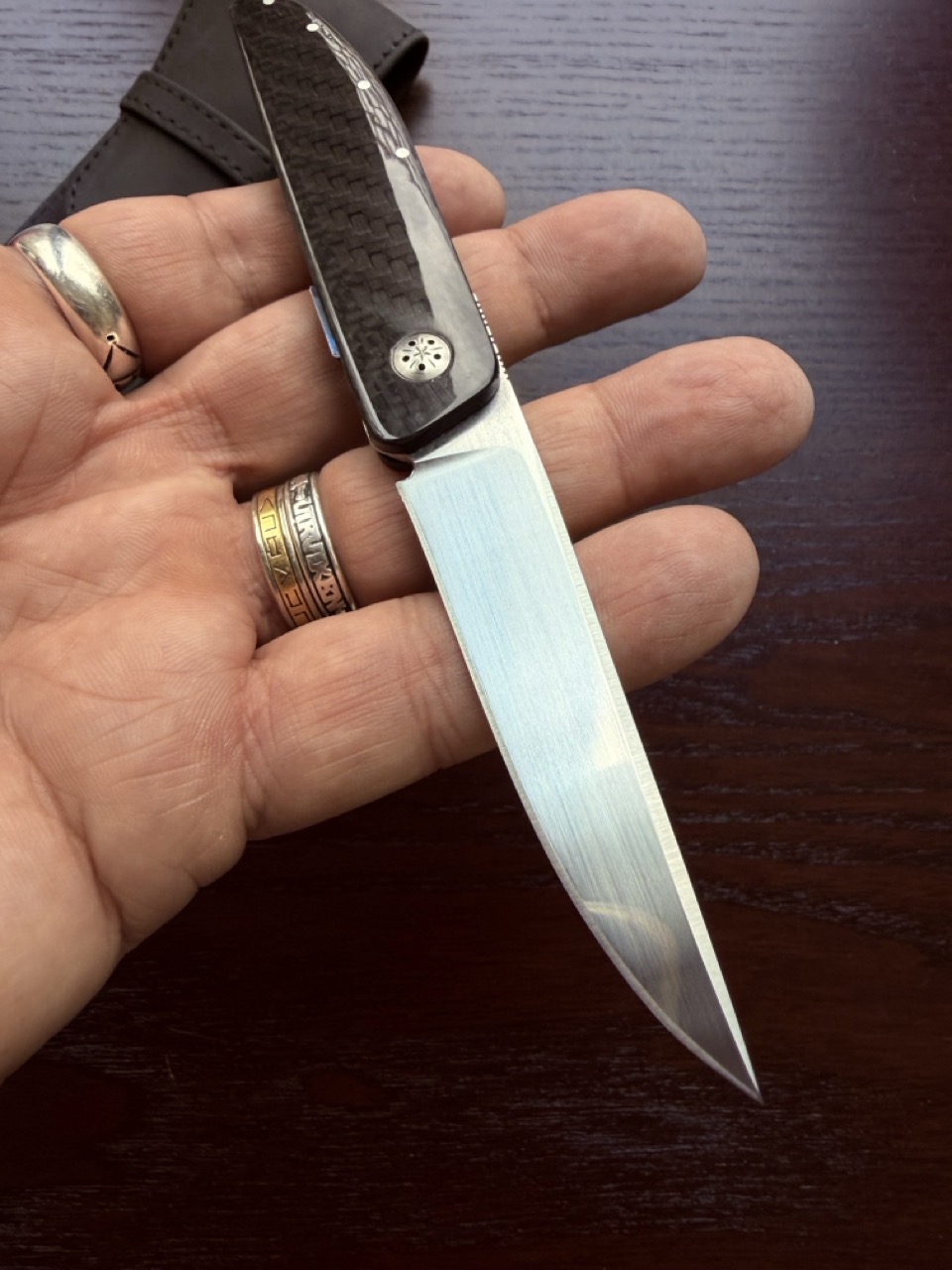
Lift it, and the knife nearly disappears in the hand. Versions executed in marbled carbon fiber and Nitrobe 77 steel have achieved almost mythical status among collectors for their featherlight construction — a level of portability more often associated with luxury writing instruments than with precision folders. Yet despite its ethereal mass, the knife feels structurally complete, almost architectural.

This paradox defines the genius of Des Horn.

Spirit (like all 450#) is not designed around brute force. It is designed around intelligent refinement. Every millimeter exists for a reason. The slim silhouette slips effortlessly into tailored trousers or the inner pocket of a cashmere jacket, becoming part of the wearer rather than an accessory imposed upon him.

In an era obsessed with excess, the 450# celebrates discretion.
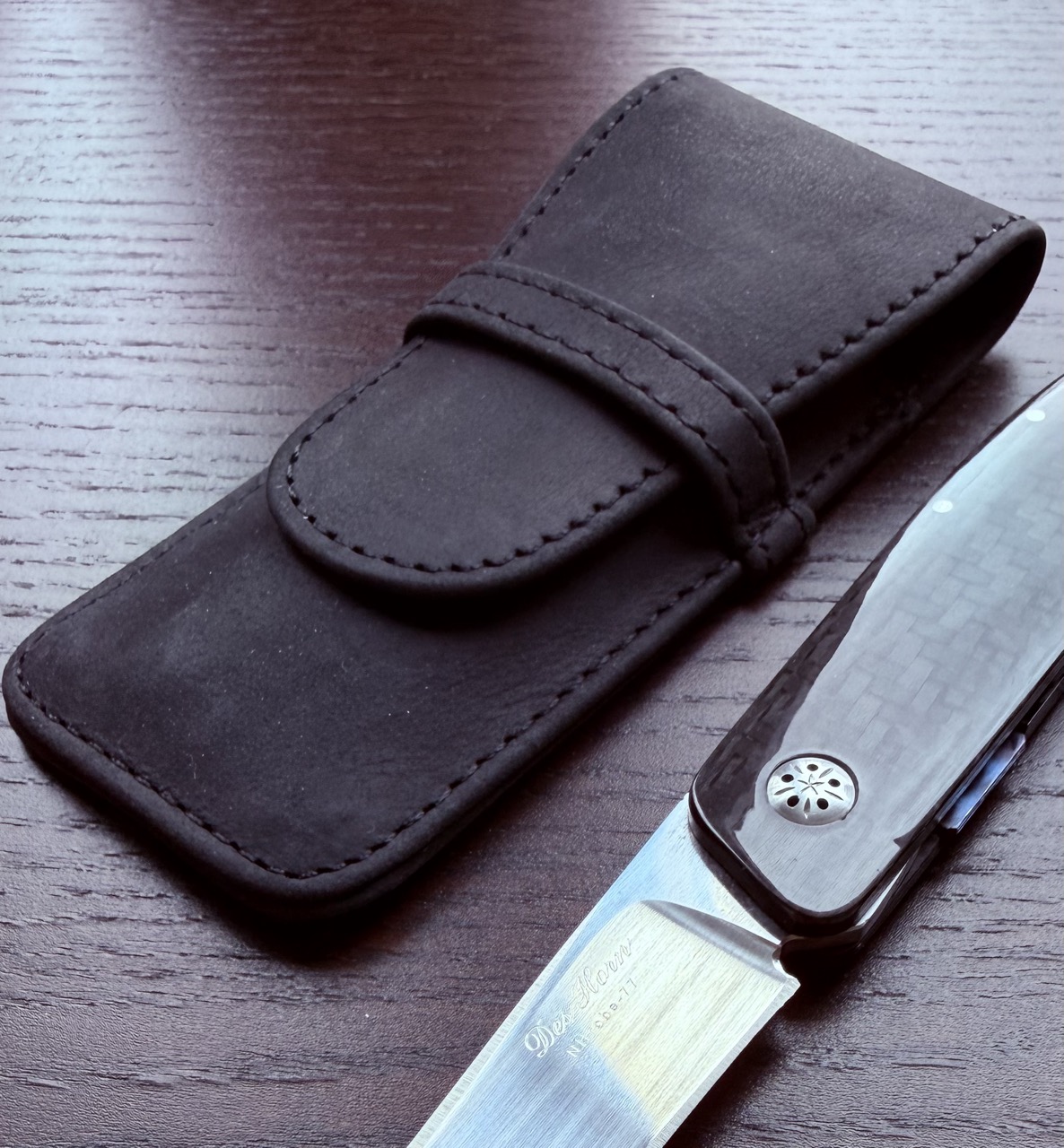
It is housed in a beautiful buffalo leather pouch, a cocoon-like case designed to protect it from pocket dust and daily abrasion. Simple, tactile, and perfectly in tune with the object it carries — an understated sheath for something already defined by discretion and refinement.

Once in your hand, the action itself is an exercise in restraint.
Unlike modern folders engineered for theatrical deployment, the 450# front flipper unfolds with subtle precision. The movement feels intimate, almost private — a mechanism intended for connoisseurs rather than spectators. The blade opens with silky assurance, revealing tolerances that reflect decades of accumulated craftsmanship.
It is also fully ambidextrous — intuitive, balanced, and genuinely enjoyable to handle. That sense of play is not incidental; it is part of the design language.
Because beyond precision and materials, pleasure matters. Fun, tactile satisfaction, and the simple desire to interact with the object are essential parts of how I evaluate and experience it.

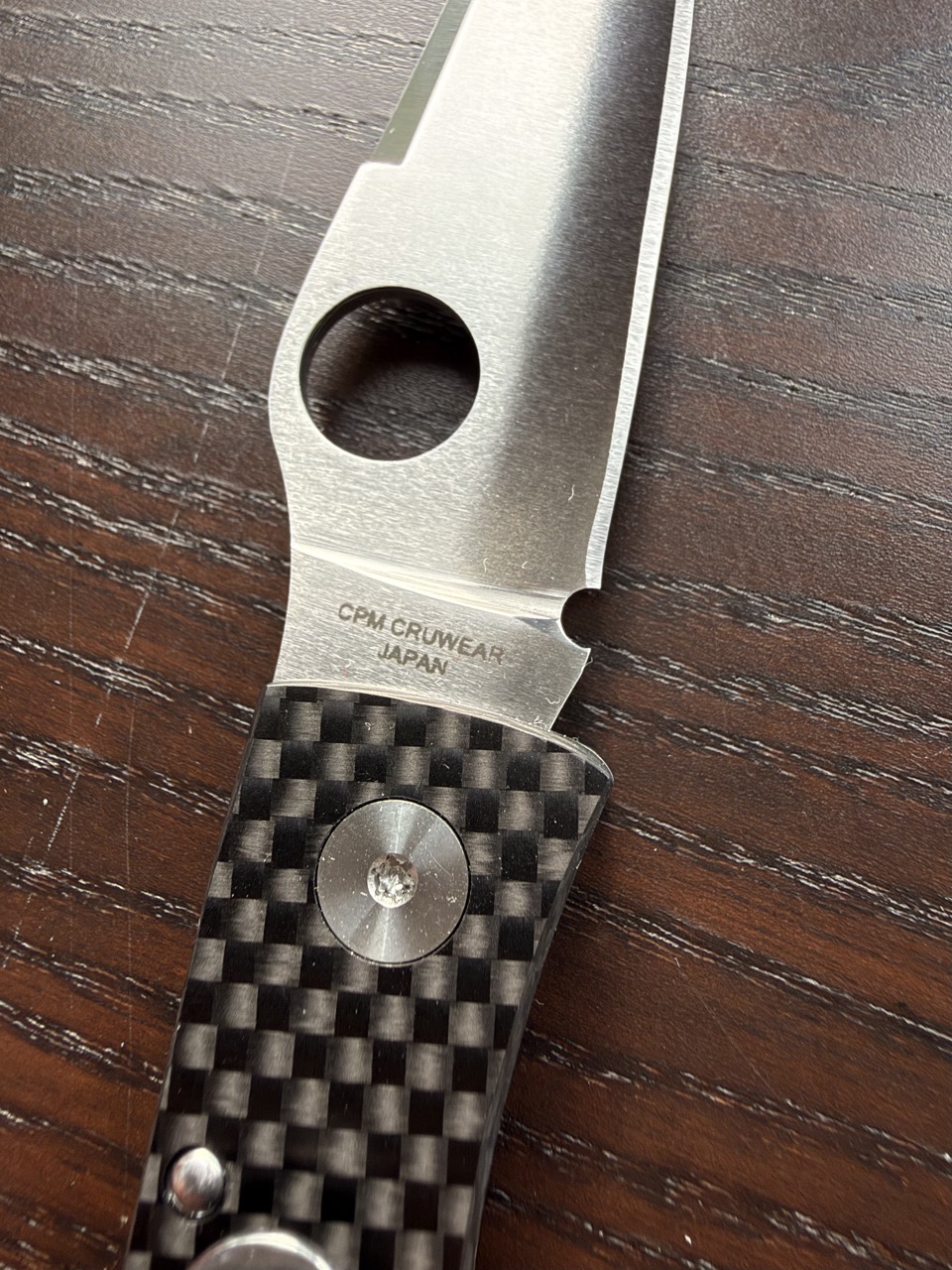
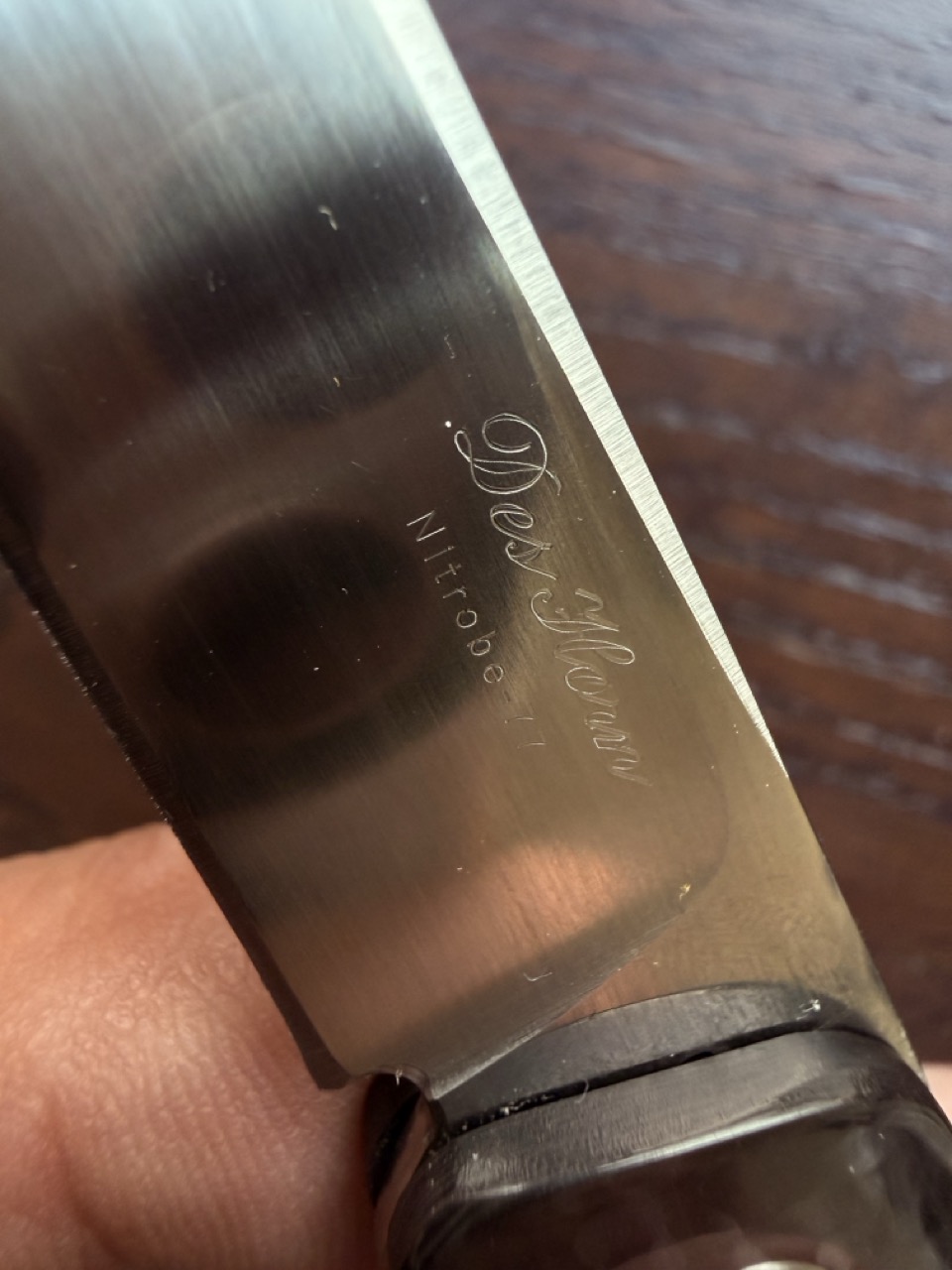
The blade is crafted from Nitrobe 77.
Ah… another legendary steel.
Revered among enthusiasts for its extraordinary corrosion resistance and exceptional cutting performance, Nitrobe 77 manages to combine qualities that rarely coexist: hardness, toughness, edge retention, and remarkable flexibility.
It takes — and keeps — an incredibly sharp edge, while remaining astonishingly resilient under stress. Des himself has demonstrated its elasticity in some videos that almost seem unreal the first time you watch them. And for those familiar with the world of performance steels, seeing Shawn Houston — the magician behind CPM 15V heat treatments for Spyderco — speak highly of Nitrobe 77 says a great deal about the material’s reputation among serious knife people.


Quoting Shawn on the Bladeforums:

“Nitrobe77 has 0.9% wt N which it uses some of to make nitrogen martensite like lc200n. Some of that nitrogen total is locked up as Cr2N that dissolves at the temperatures N77 requires to harden. That nitrogen put in solution will become nitrogen martensite when quenched. The nitrogen that did not dissolve stayed behind in a nice, small compliment of Niobium rich nitrides (MN type/NbN) which don’t dissolve in the Chromium and Austenite as readily as the Vanadium at the temperatures required to harden Hence why we have Nb dominant MN type. These Nitrides are just not at enough volume to make this steel a “rope killer”

The Nitrobe 77 is unique thanks to it’s ability to get harder than the other Nitrogen martensite rich steels like Lc200n thanks to being designed for precipitation strengthening. Using liquid nitrogen cryogenics and multiple high tempers after quenching allows the steel to raise up in HRC each cycle after hardening thanks to converting retained austenite that didn’t transform from quenching to hard martensite and also the nitrides precipitating from the martensite and coarsening to the necessary sizes to strengthen the steel to resist displacement and make up for the shrinking of martensite.

It is possibly the best sharpening steel in the world and can operate at 62-64rc, The Nitriding process combined with this chemistry and volume makes a fine structured steel. The wear resistance is not super high however.

Nitrobe77 is one of my favorite steels but unfortunately due to cost, difficulty making at the steel mill and it not being cost effective to heat treat mass production. It has finally been discontinued by Damasteel as of 2018, they kept it alive for a long while.

I feel Des Horn has done some amazing work with Nitrobe 77 and had helped the steel persist for a long time @Deshorn”

Des Horn heat-treated the Nitrobe 77 blade through a triple-cycle process, each stage followed by a carefully controlled cryogenic quench in liquid nitrogen. Three heat treatments. Three deep freezes. A complex sequence designed for pure performance — pushing Nitrobe 77 to its best toughness, and edge stability.

The phrase “gentleman’s folder” has become tragically diluted in recent years, attached indiscriminately to any small knife wearing carbon fiber. I feel like that 450# restores dignity to the term.

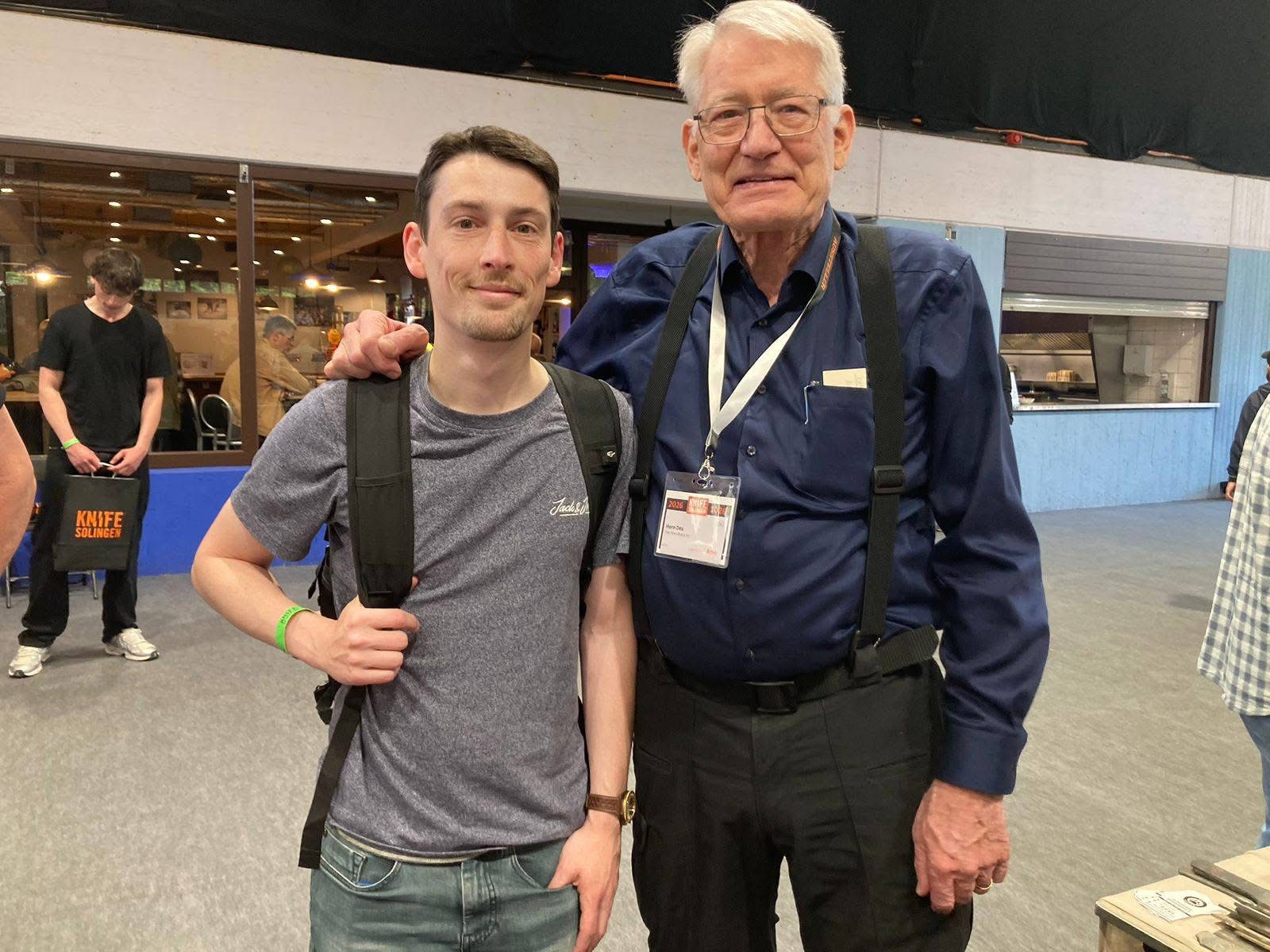
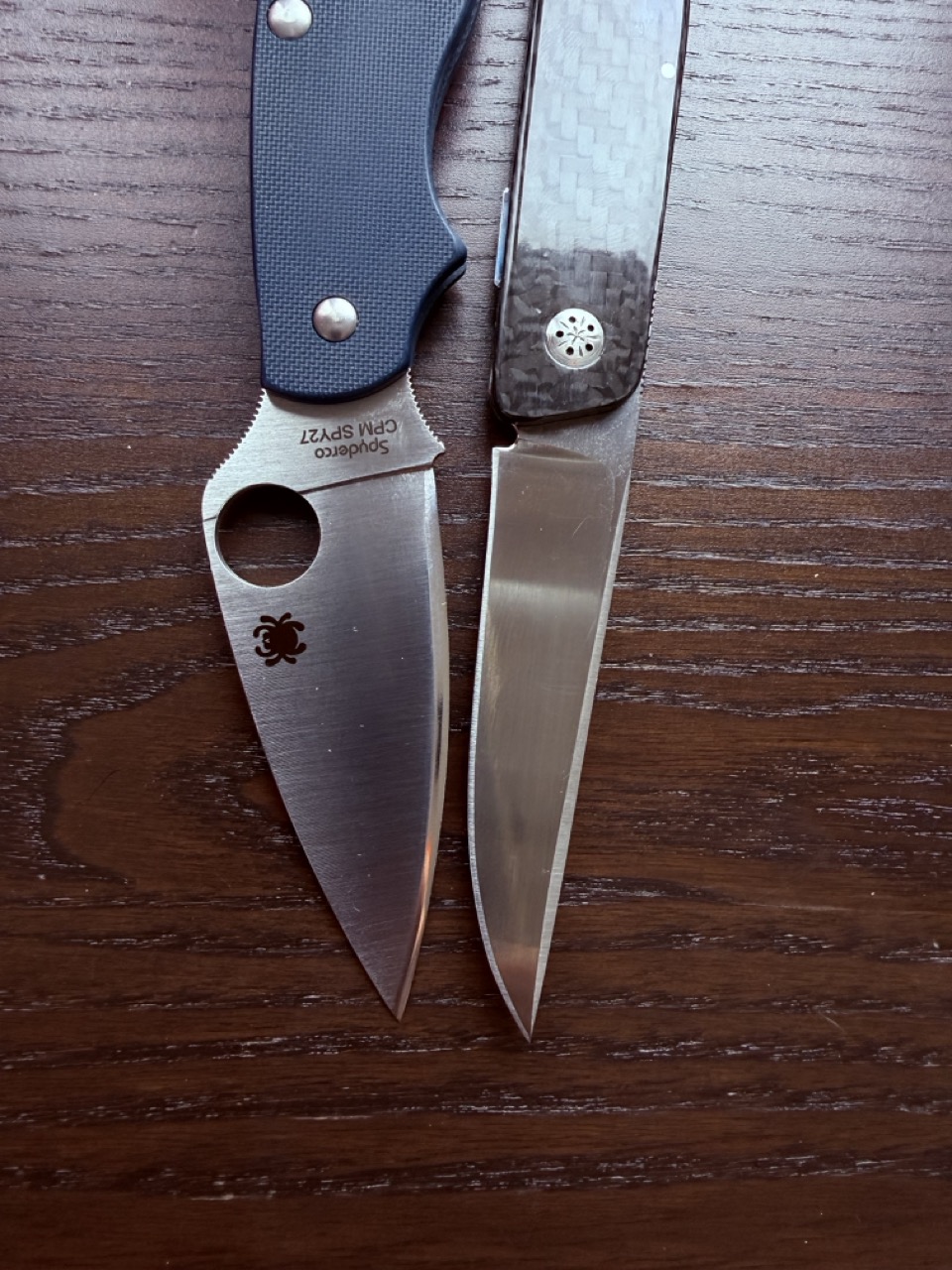
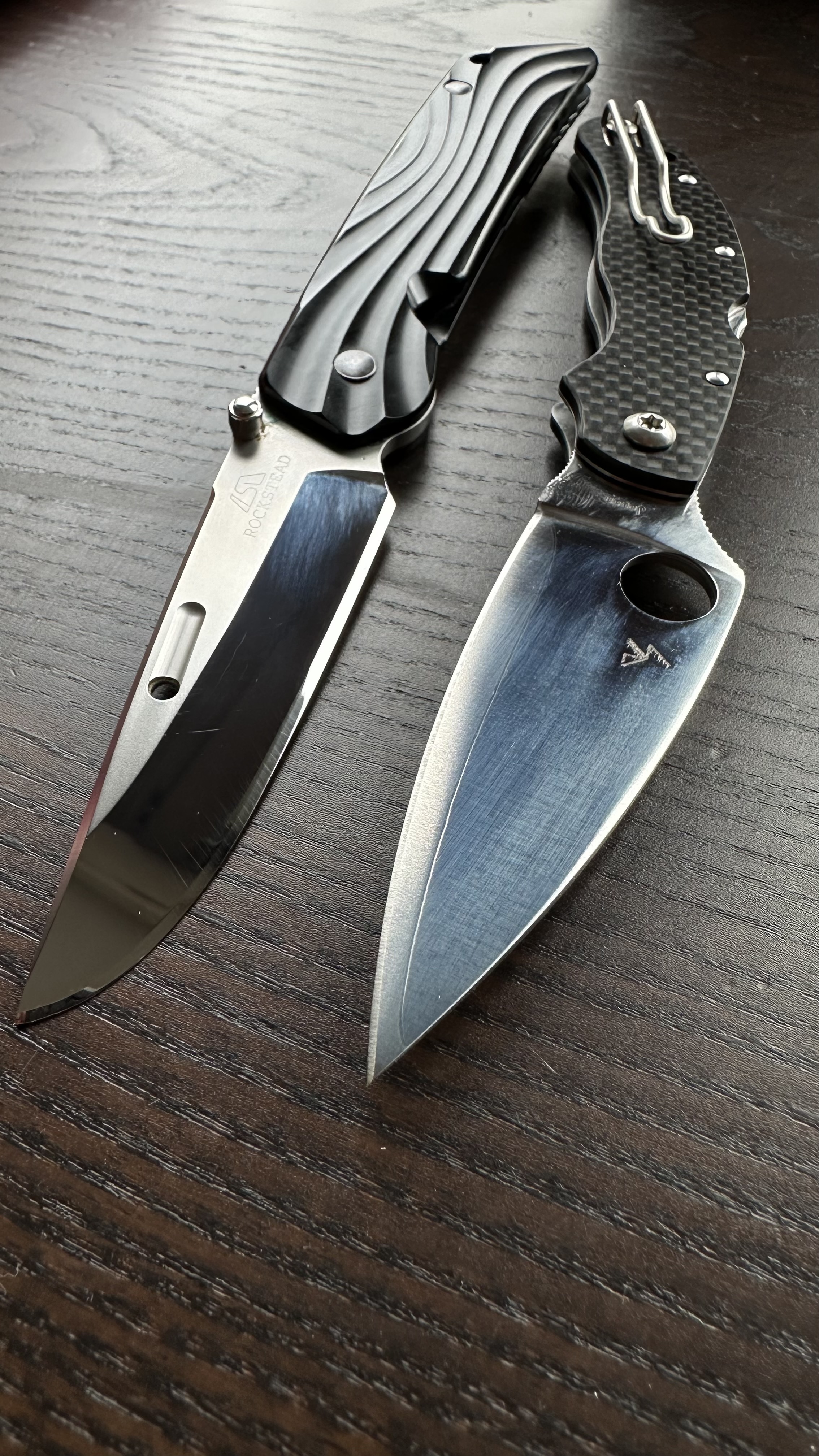
(My friend Robin had the opportunity to meet Des at Solingen 2026 Knife Show. He was the one who brought “Spirit” to me.
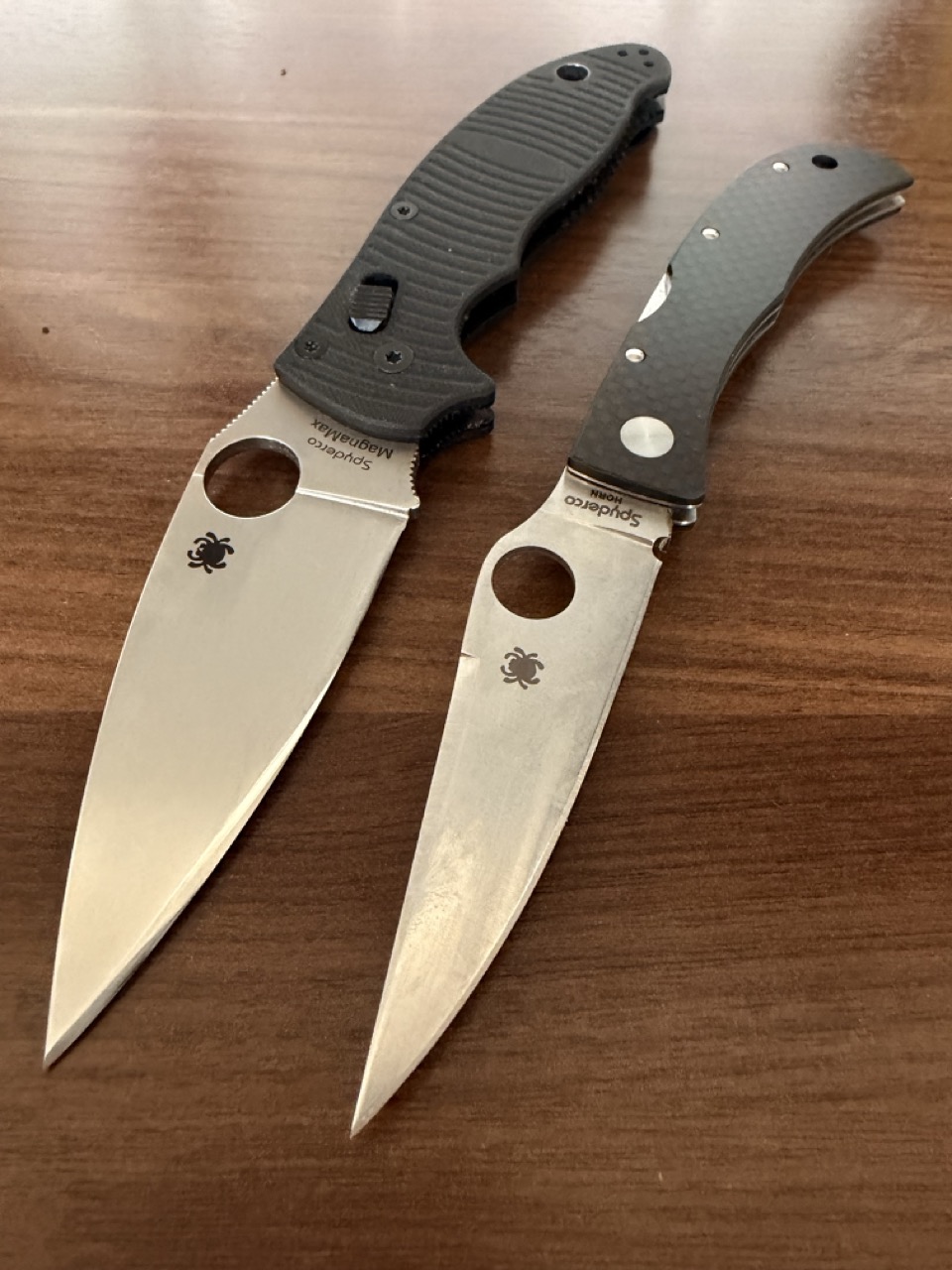
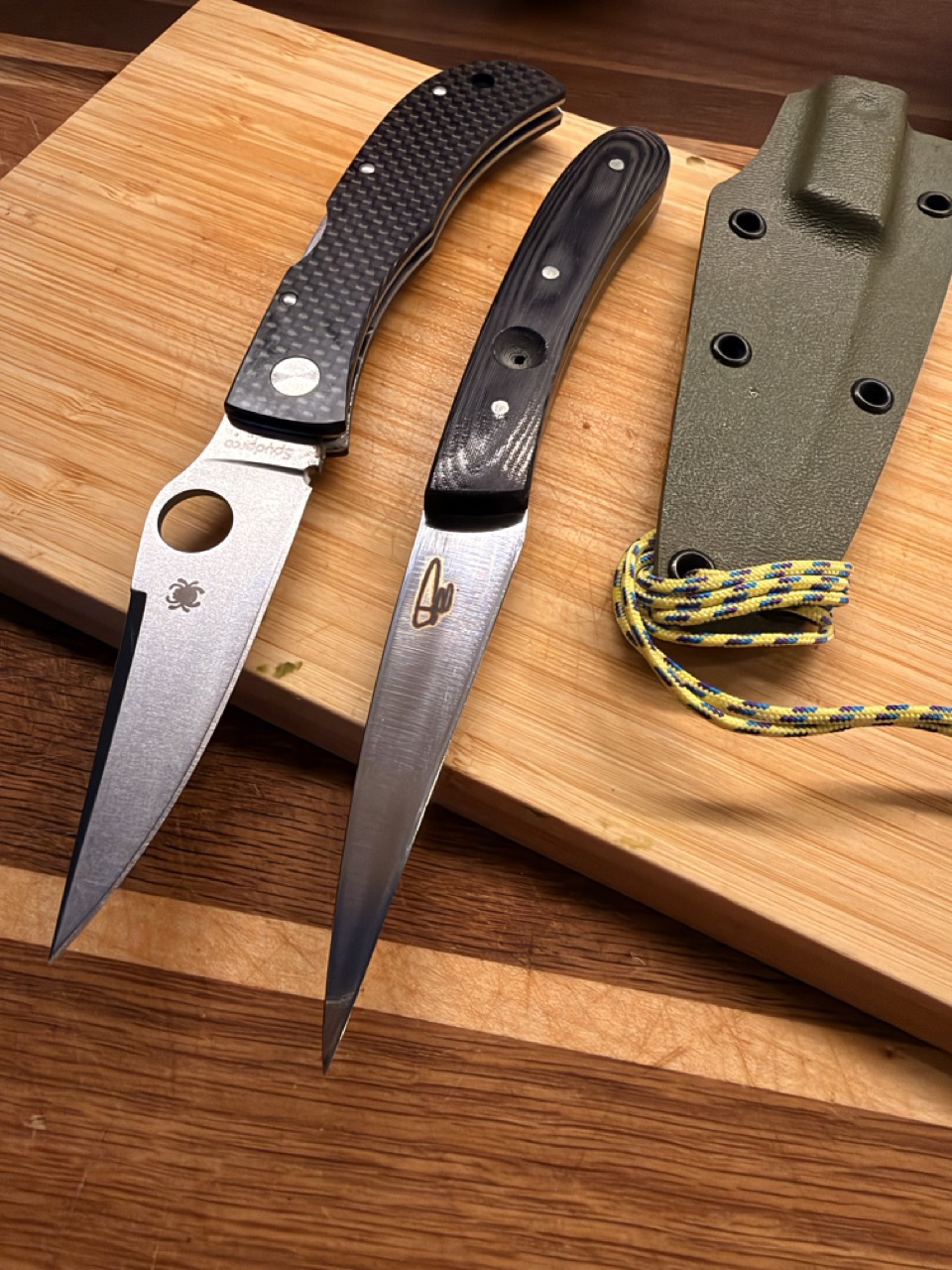
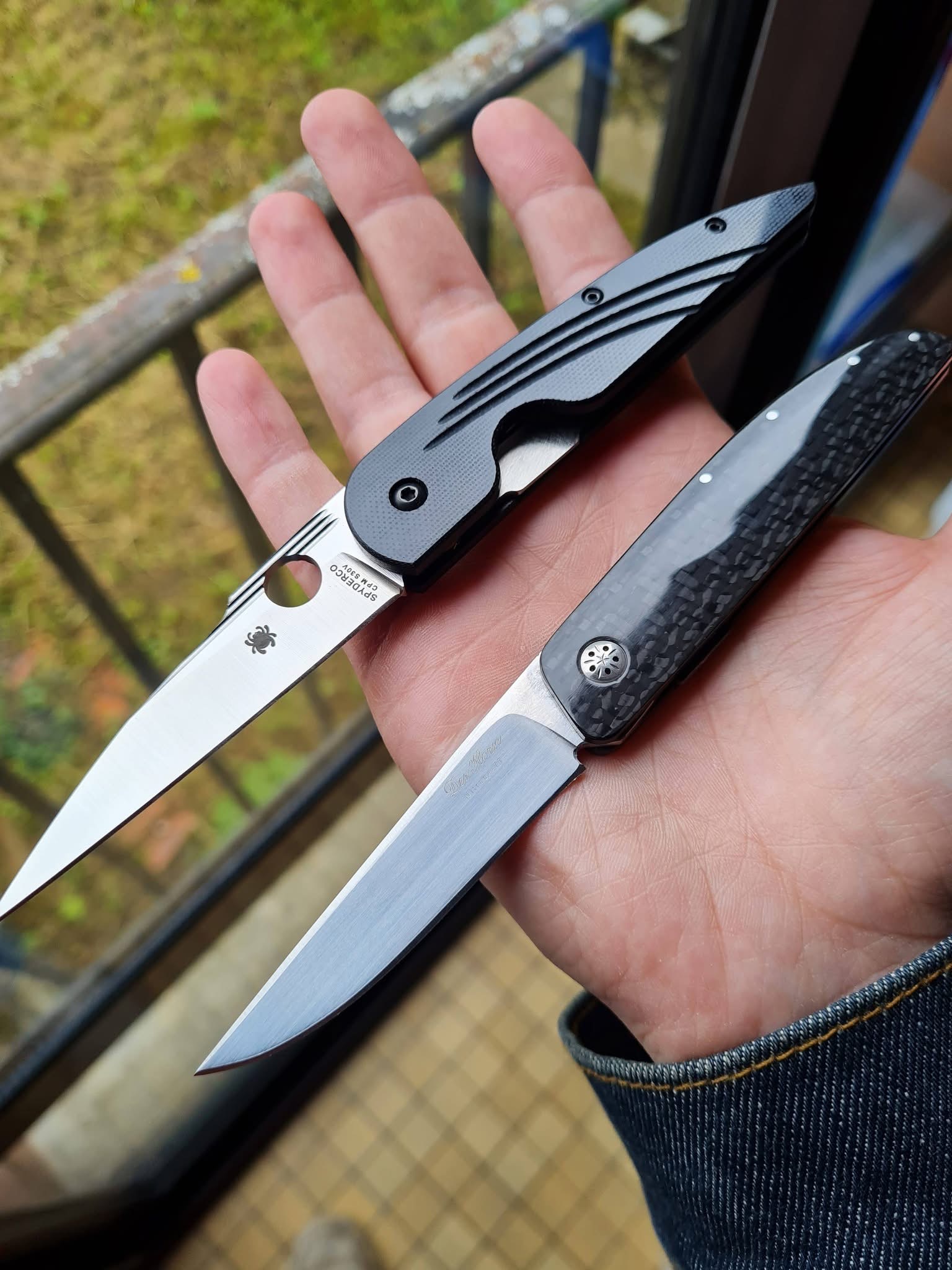
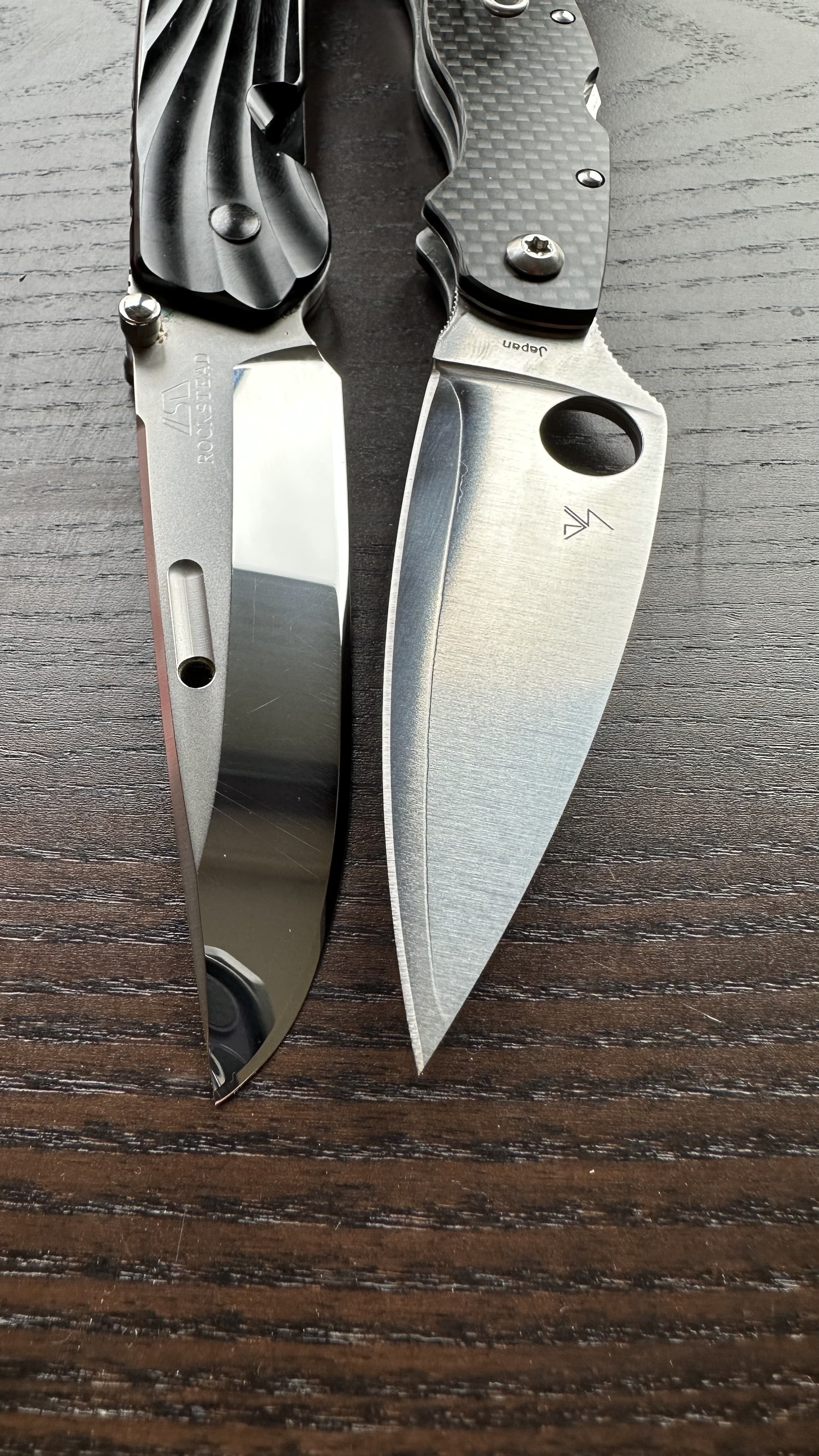
He even made a pic comparing the Spyderco C153GP and the custom made 450#.)

The 450# is a knife conceived for cultivated environments: the desk of an architect in Capetown, the leather seat of an Aston Martin crossing Mayfair, the quiet ritual of opening correspondence in a private office lined with walnut and books.
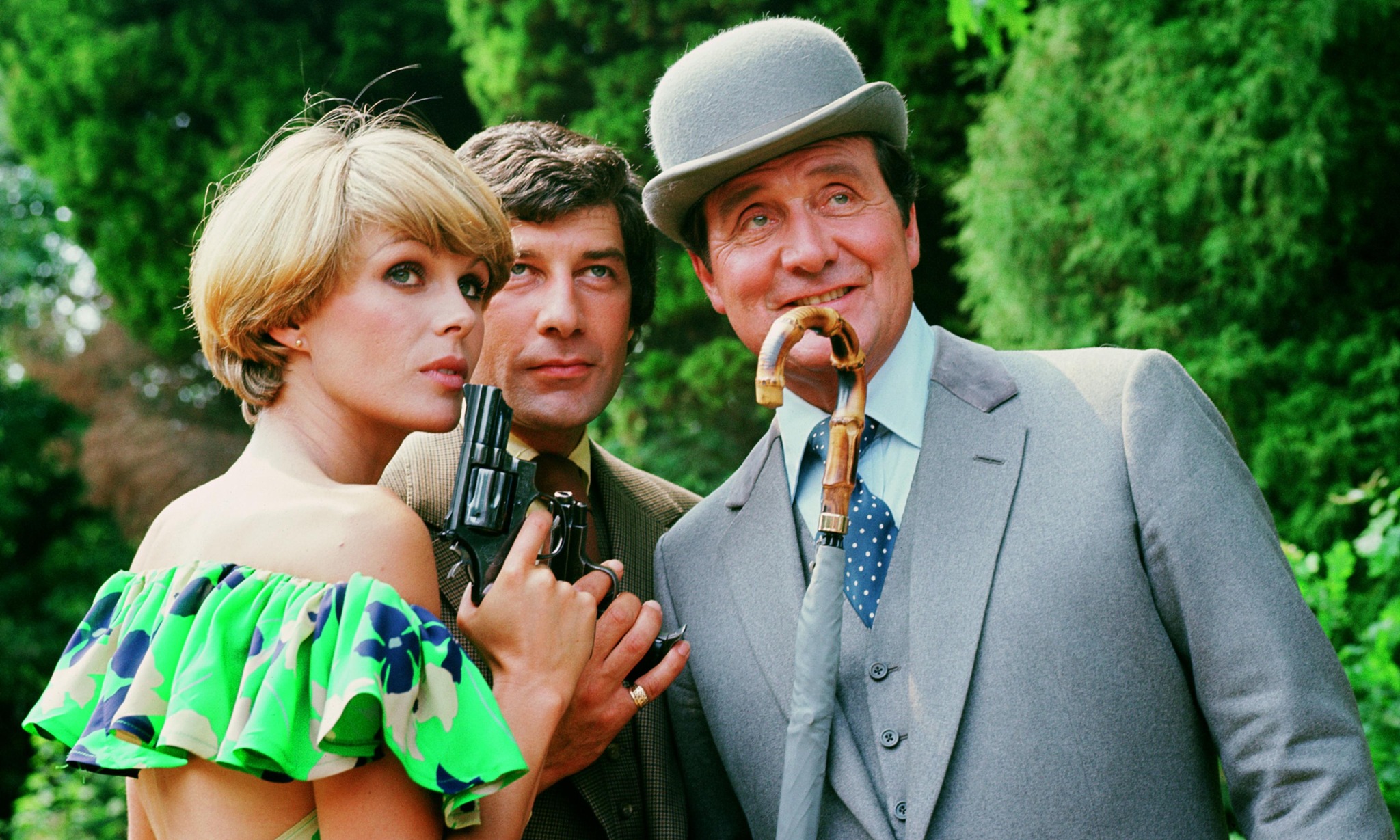
It is the kind of personal knife John Steed or Emma Peel might have carried — discreetly elegant, technically refined, and perfectly at home beside a tailored suit or inside the glove compartment of a vintage Bentley.

But like in The Avengers, one should never confuse kindness with weakness.
John Steed and Emma Peel always carried themselves with a kind of effortless civility that concealed something far more formidable beneath the surface.
Spirit follows the same logic.

(And what about the New Avengers? A testament to that spirit is the collaborative work Des has done with James Purdey & Sons, creating a knife truly worthy of the Purdey name. Fans of Joanna Lumley will especially appreciate the reference.)


It may be feather-light in the hand, but it is anything but fragile. The marriage of advanced carbon fiber and Nitrobe 77 gives it a structural toughness that belies its weight. This is not delicacy — it is engineered resilience, refined to the point of invisibility. Hard as a nail, yes — but with the composure of something that never needs to prove it.

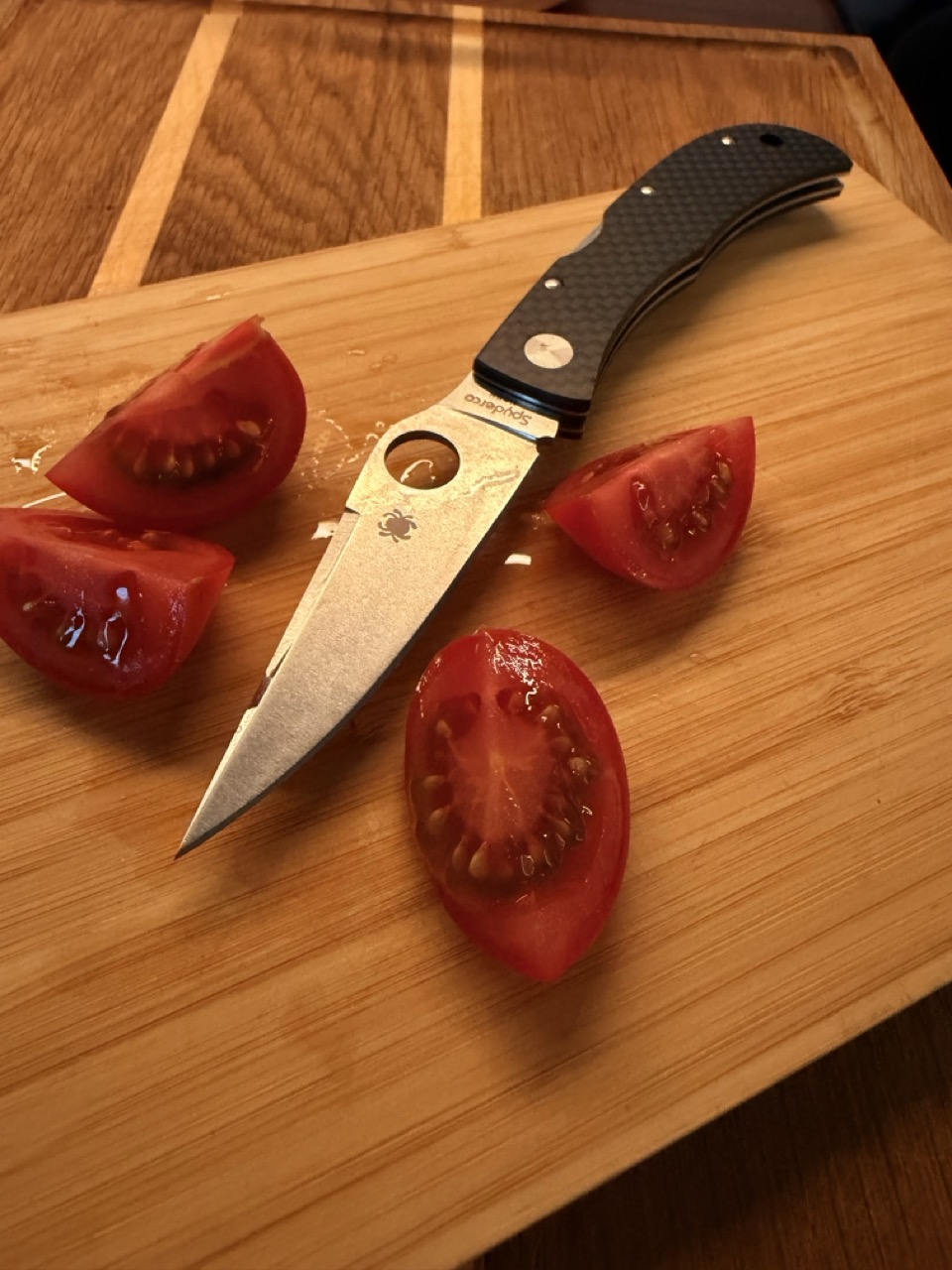
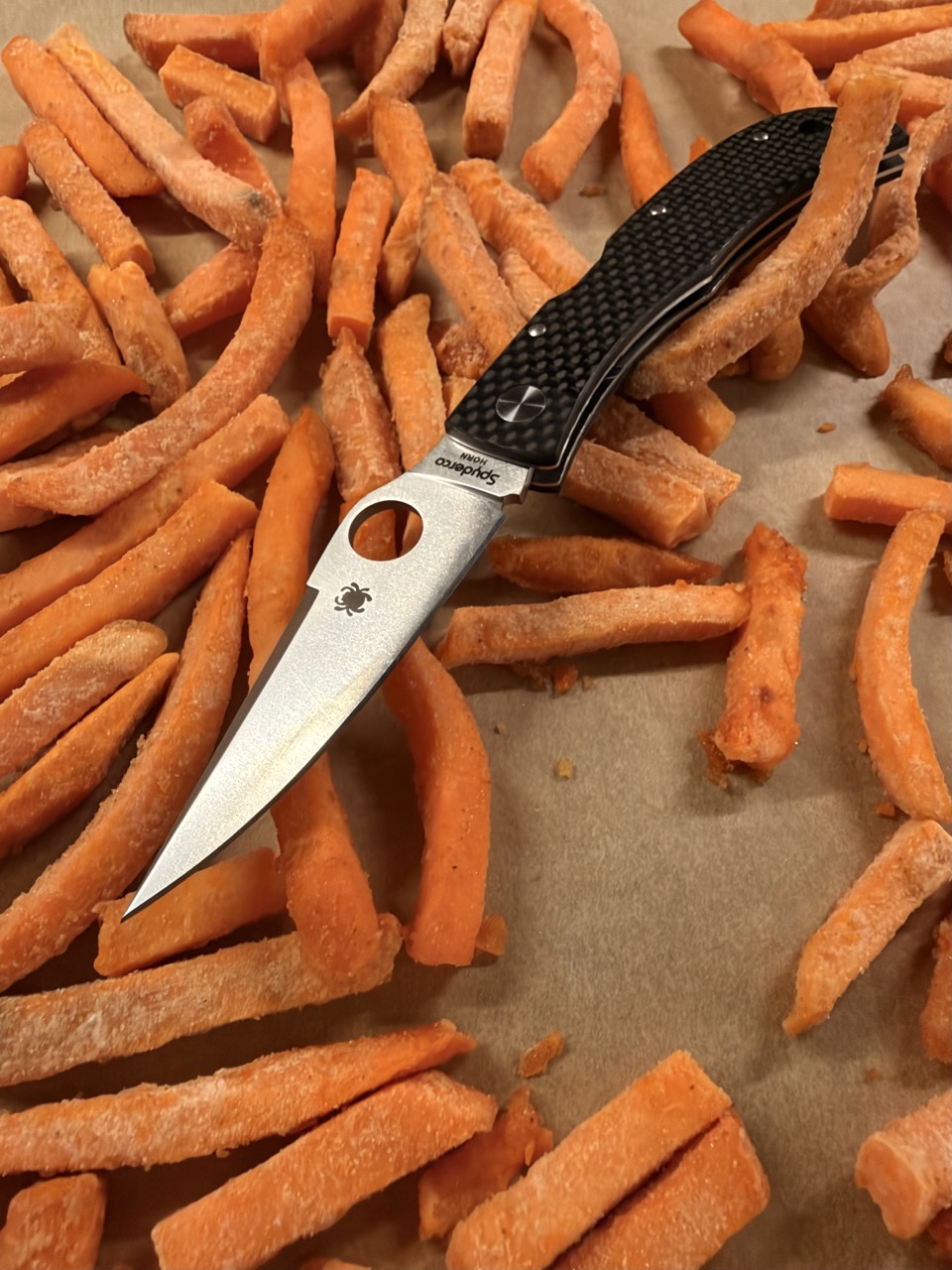
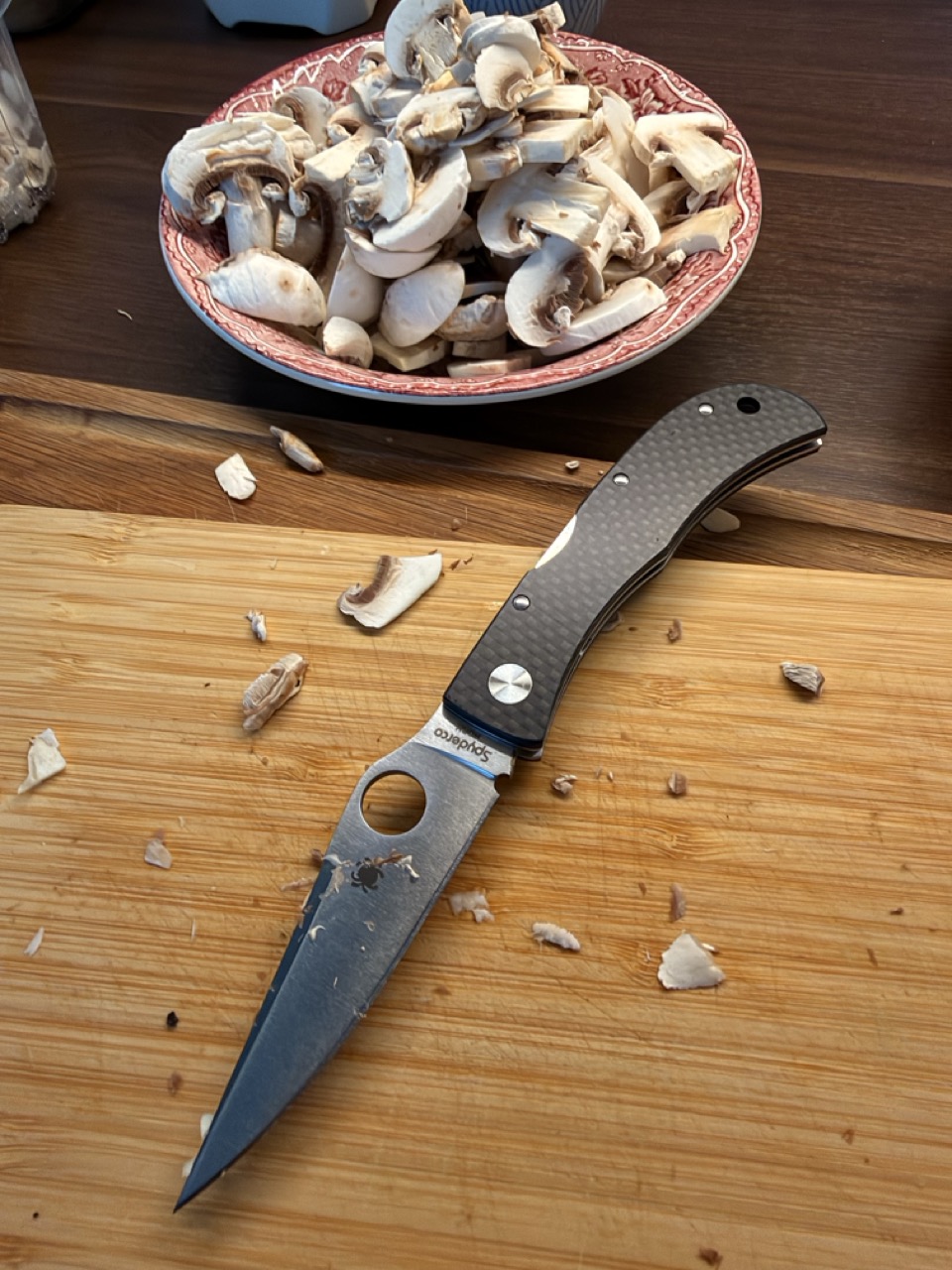
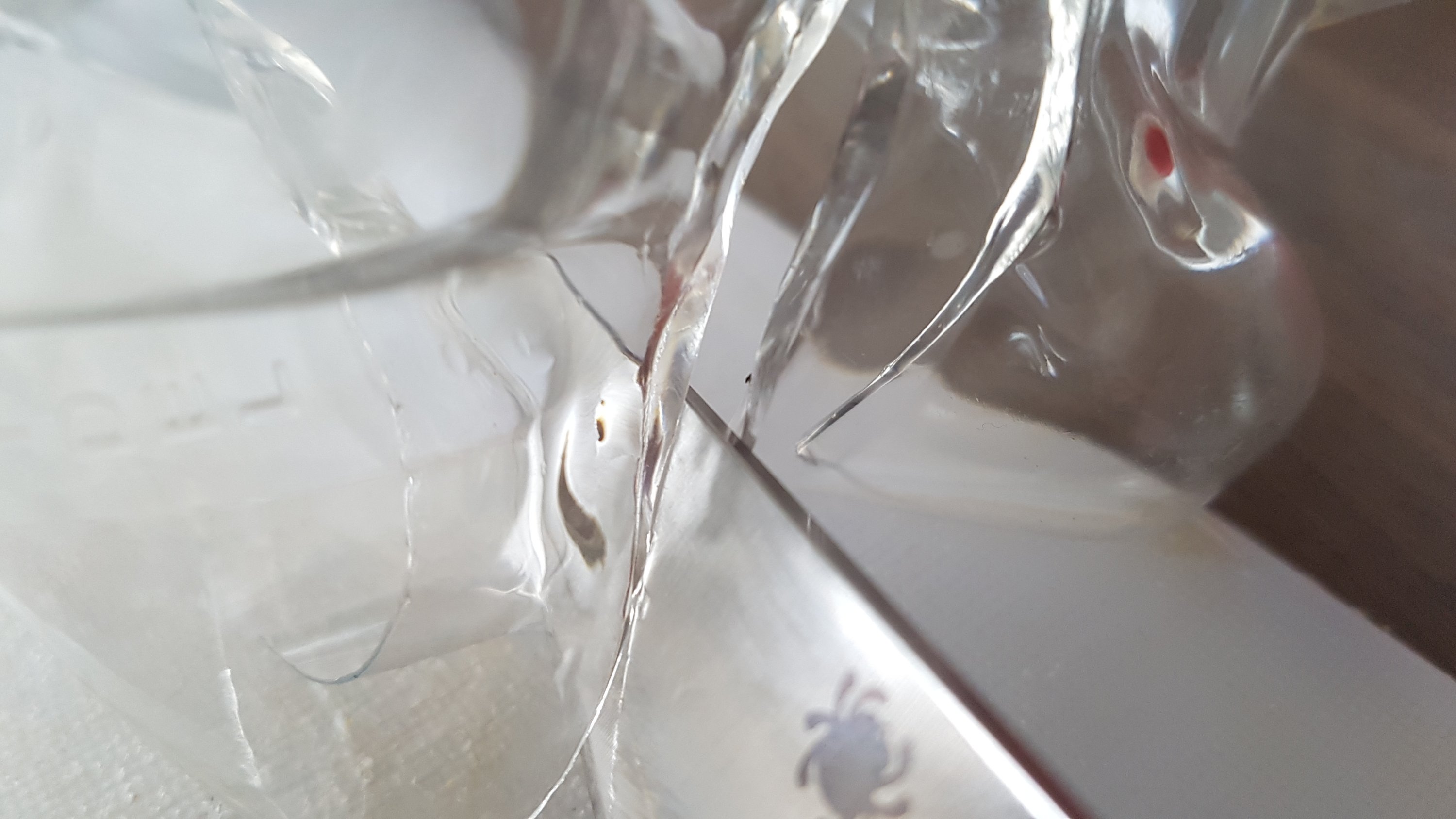
(And yes, it slices through plastic bottle bottoms like they’re made of warm butter…)

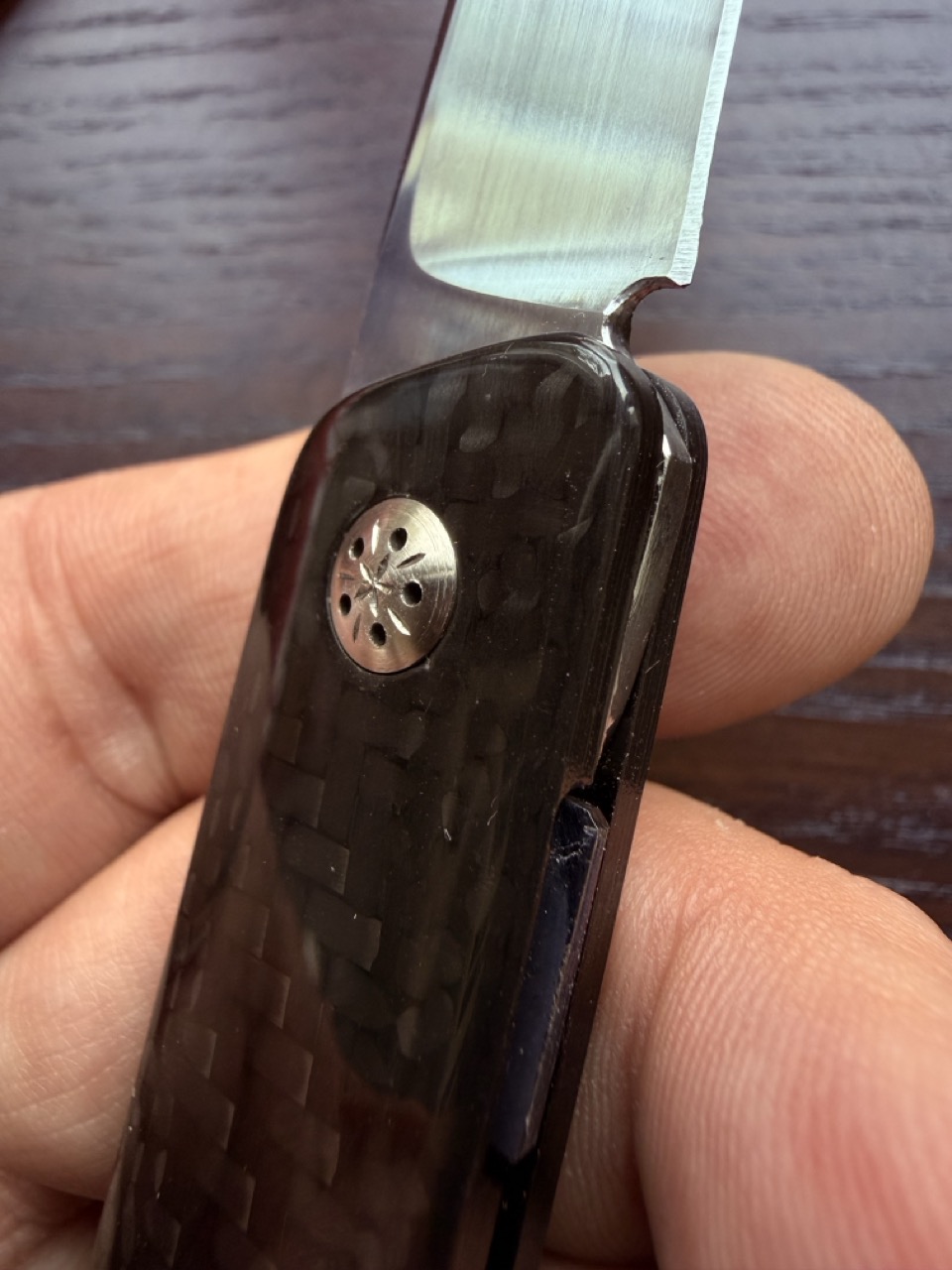
Ironically, its liner lock would also make it thoroughly unlawful in today’s UK. And yet, beneath its understated sophistication lies some remarkably serious engineering. The lock bar itself is crafted from Grade 5 titanium and fitted with a silicon nitride detent ball rated at an astonishing HRC 93. Tiny details perhaps — but precisely the kind that reveal the obsessive level of refinement behind a Des Horn folder.

And like all great luxury objects, it communicates identity.
Carrying a Des Horn does not suggest aggression or preparedness.
It suggests discernment.

I heard that among serious collectors, the 450# has acquired an almost cult-like reputation precisely because it avoids spectacle. Owners speak of the knife with unusual affection, describing it less as gear and more as a companion piece — something lived with daily and appreciated continuously.

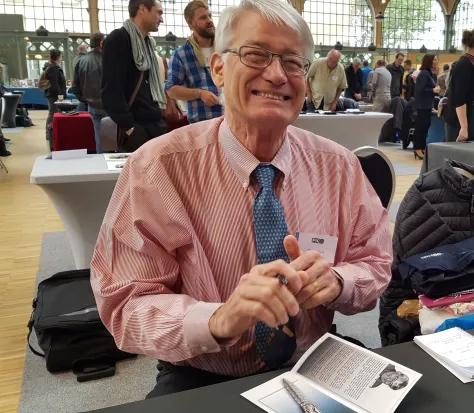
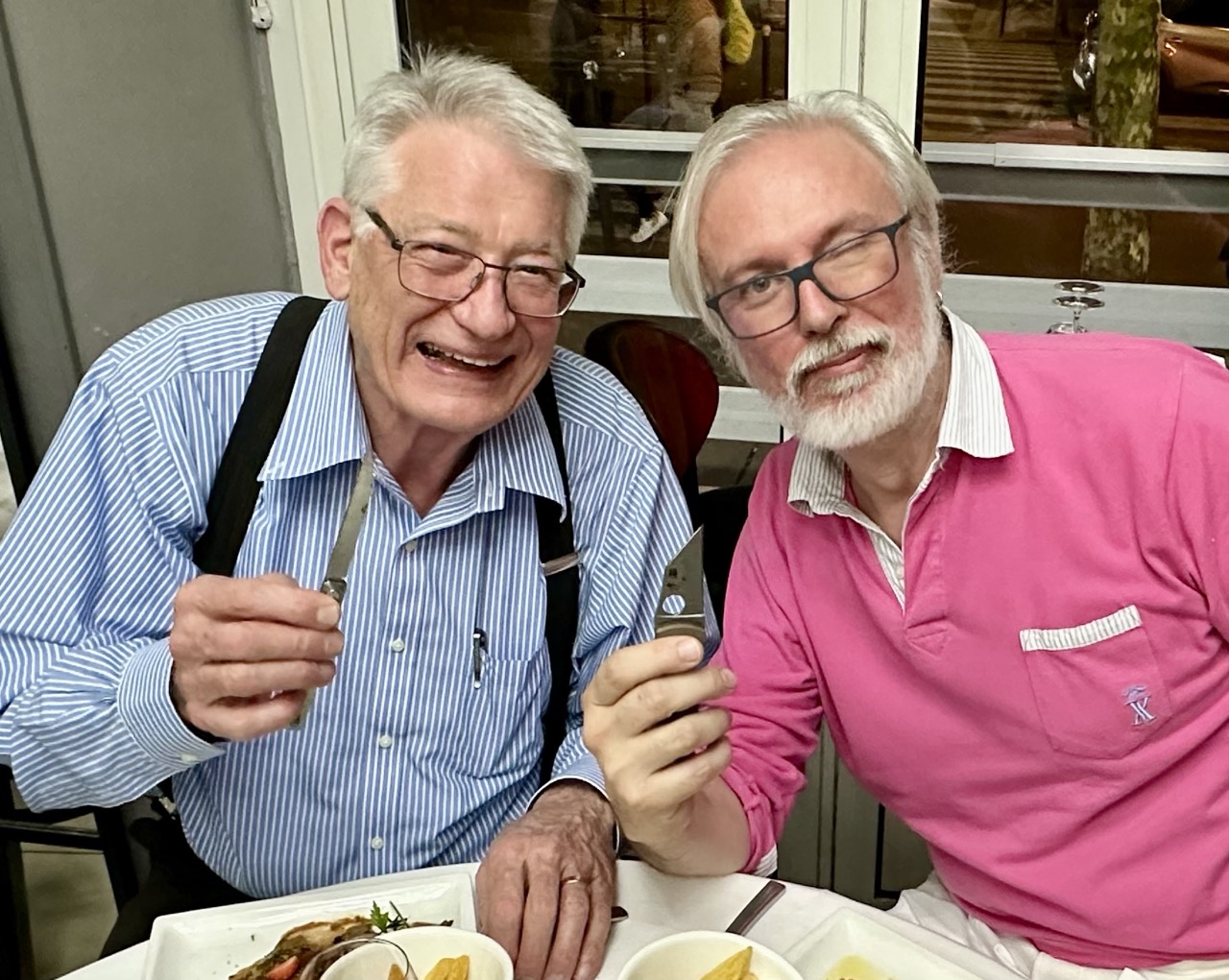
(Des holding his personal 450# at a dinner after the SICAC 2025 in Paris…)

Over more than four decades, Des Horn has developed a design language that blends technical mastery with sculptural sensitivity. His work often incorporates rare materials sourced from Africa itself: Gibeon meteorite, pietersite gemstones, mammoth ivory, hand-engraved titanium, and complex Damascus steels. (His workshop is so clean you could eat on the floor.)

Yet despite these exotic ingredients, his 450# never descends into ornament for ornament’s sake. Even the most elaborate versions retain purity of line and proportion.
That discipline is what separates luxury from mere decoration.

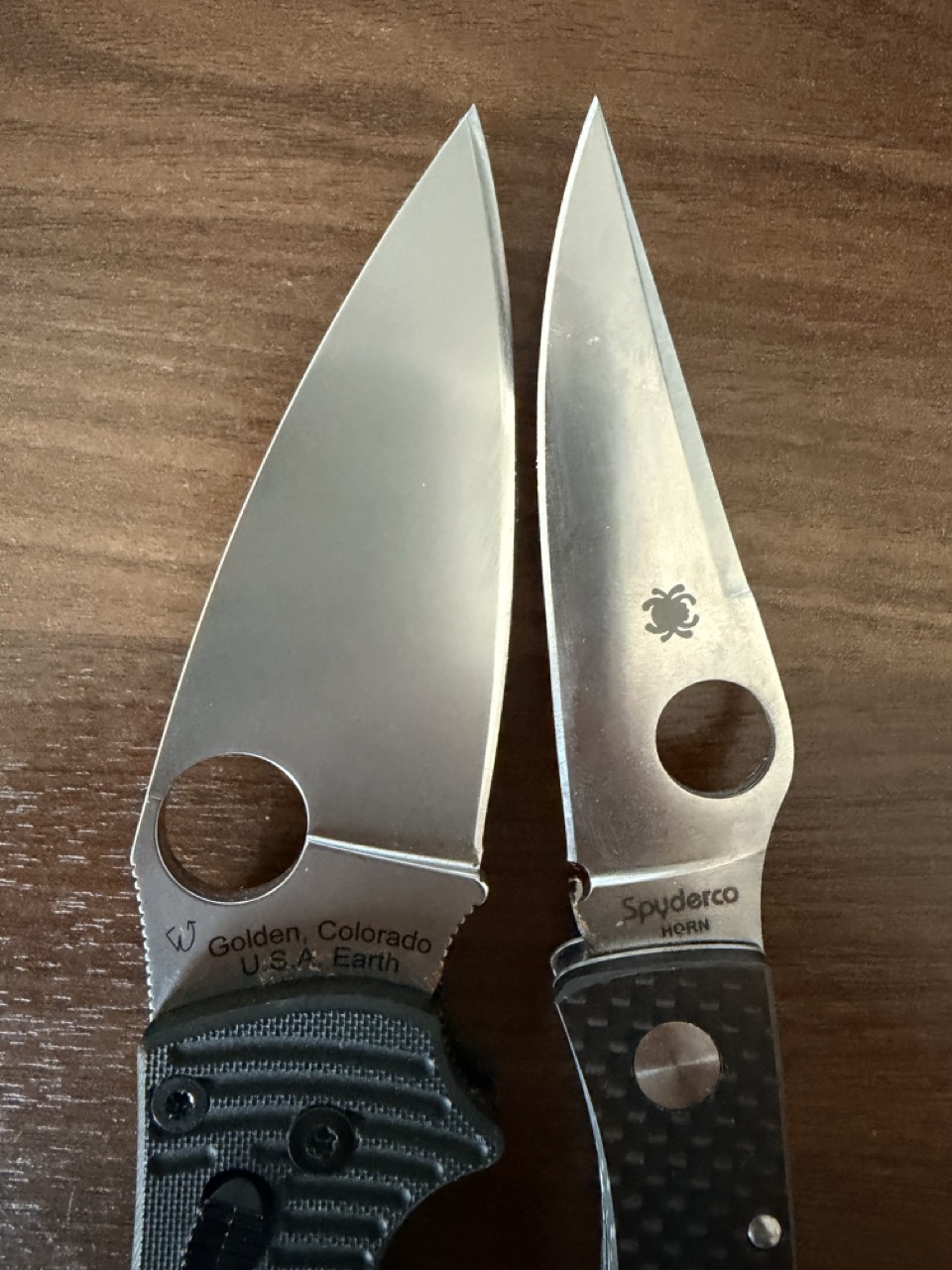
(With no choil, Spirit actually offers more usable edge length than the Golden Child.)

Because true luxury has never been about being seen. It has always been about knowing.
And Des Horn knows.
He understands la part des anges — that invisible fraction of perfection that can never be fully owned, only sensed. He understands the spirit of a blade not as an object, but as a living balance of steel, geometry, heat, and intention.
And perhaps that is what sets his work apart: not just mastery of materials, but an almost philosophical restraint — the ability to let excellence remain quiet.

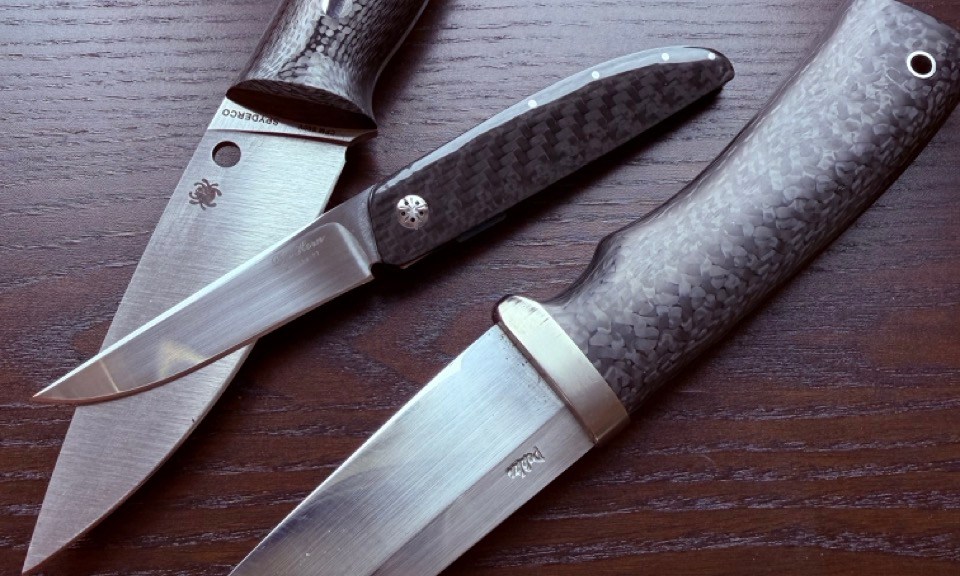
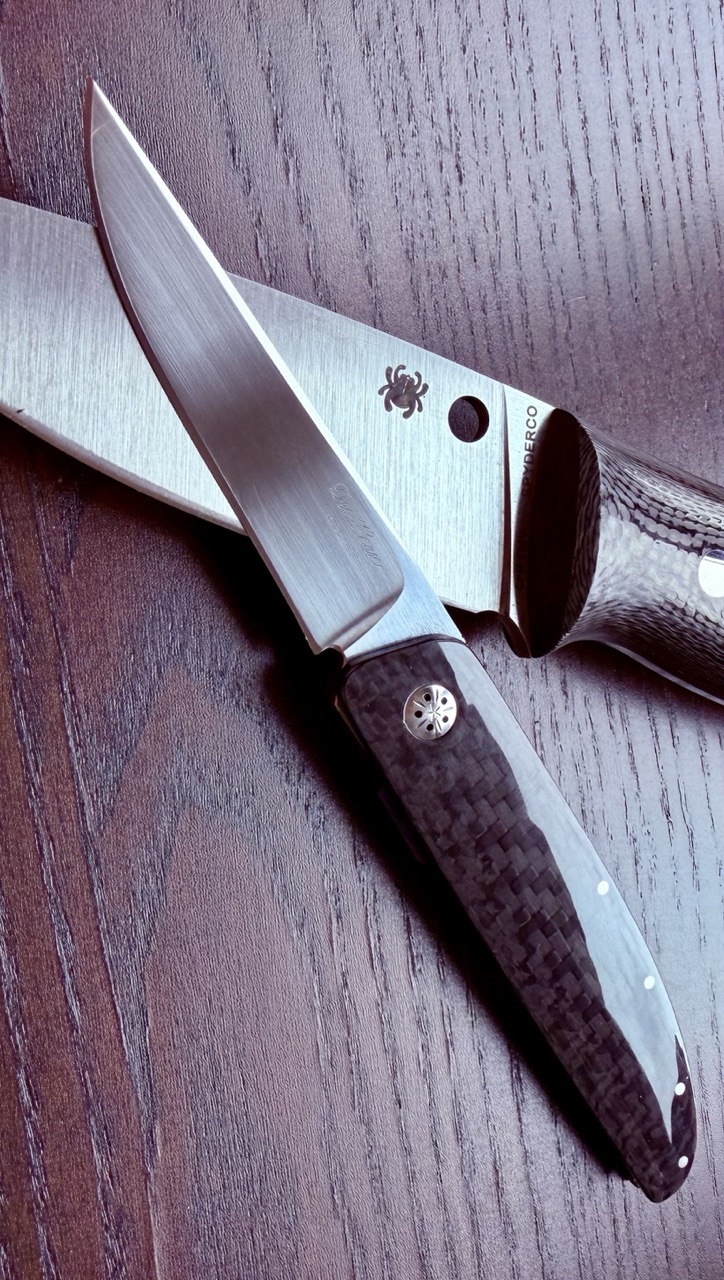
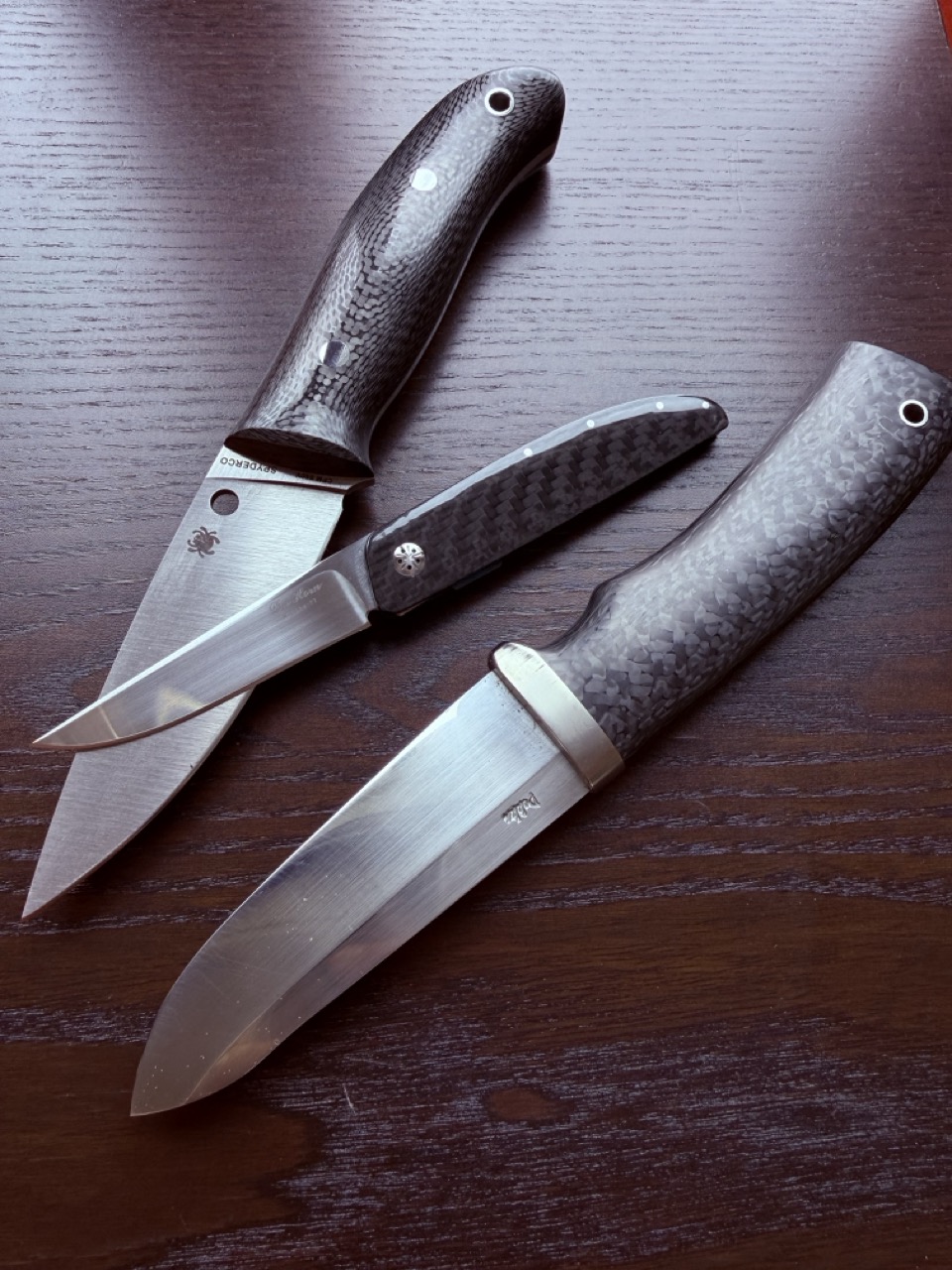
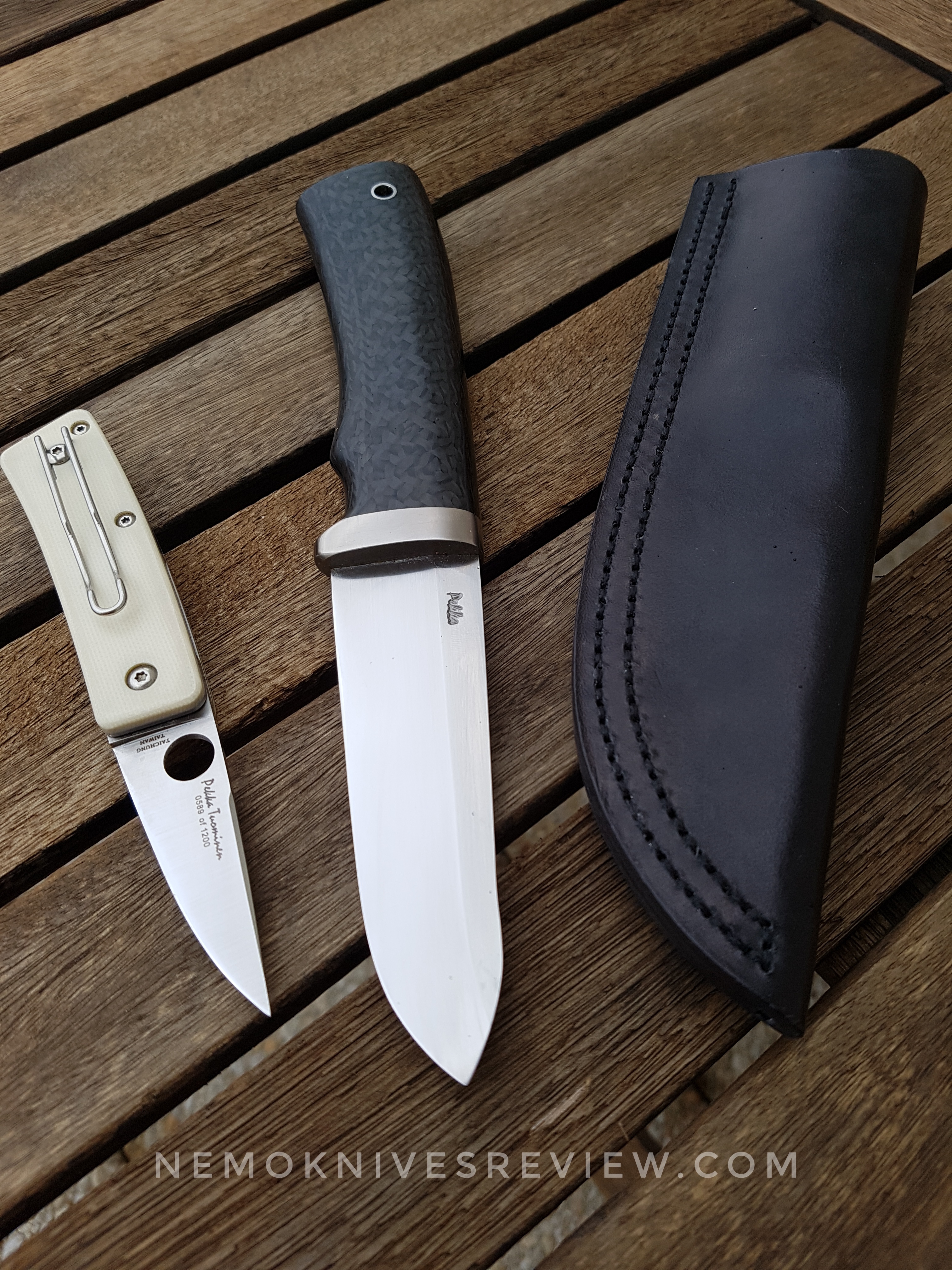
Spirit pictured between a Spyderco Proficient and Pekka Tuominen Urban II.

Des Horn showcasing one of his true gems of a knife.

Spyderco CALY™ 3.5 – C144CFPE Caly 3.5 ZDP – Back To The Future !

Disclaimer: this knife was supplied at no cost by Spyderco as part of their brand ambassador program. The review that follows, however, remains entirely independent and unbiased. I thank them for placing their trust in this little blog.

Let’s take a walk back to 2010! It was a year marked by major natural and environmental disasters—the Haiti earthquake, the Deepwater Horizon oil spill, and the Chile earthquake. The swine flu pandemic, which had begun the year before, finally dissipated. On the cultural side, Lady Gaga made history with 13 VMA nominations (the most ever at the time), plus another 5 for her contribution to Beyoncé’s Video Phone. Meanwhile, Justin Bieber won Best New Artist, becoming the youngest person ever to claim a VMA.
But enough about disasters!

In 2010, ZDP-189 was the new kid on the block. The big questions were: does it stain? Is it brittle? What’s its exact composition? And carbon fiber—once a rare luxury—was suddenly being mass-produced for knife handles and had become the must-have material. I was 45.
It was the year I got a wonderful gift from Rockstead: their Higo to review in ZDP189.
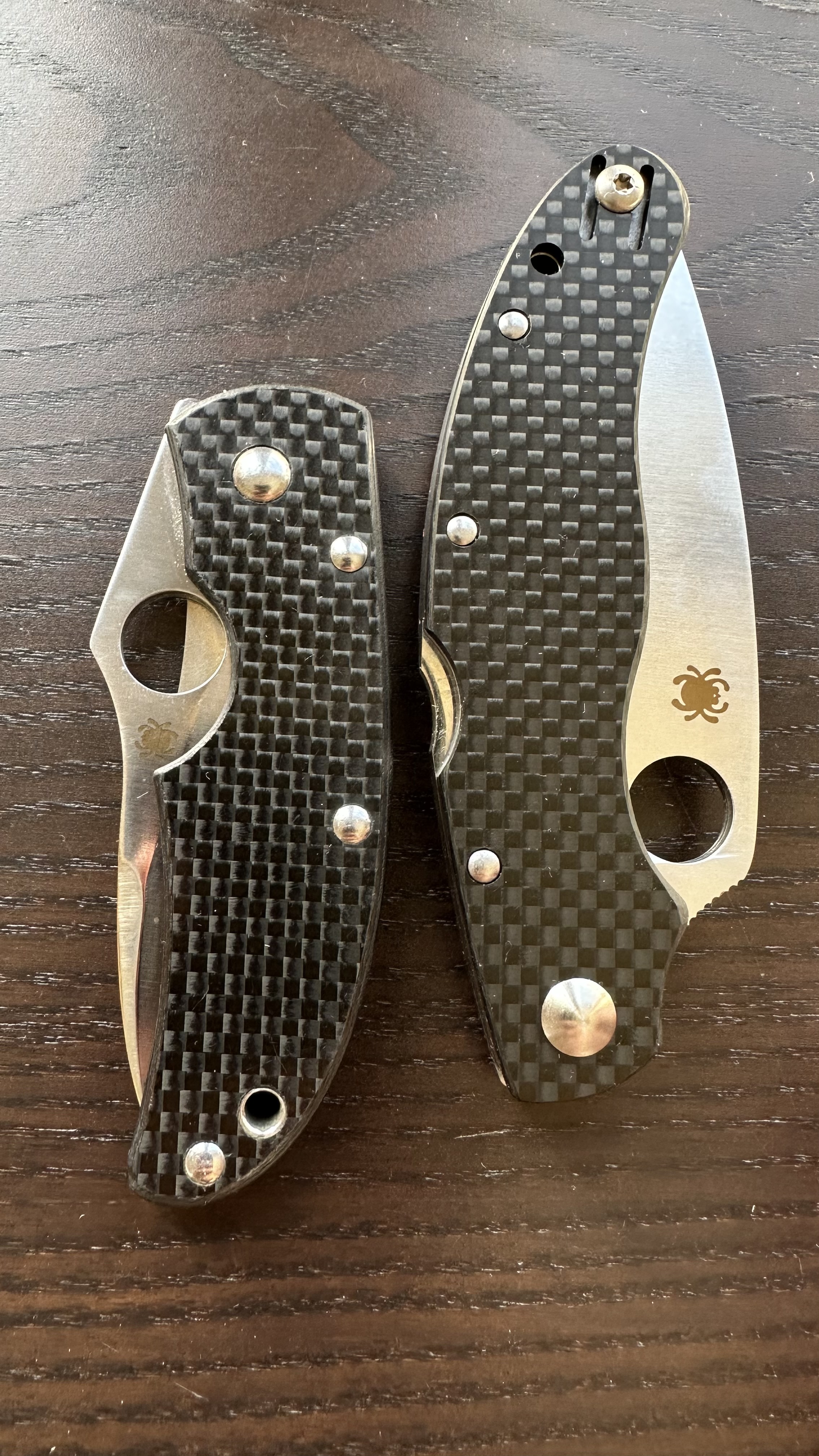
The Michael Walker in ZDP189 was neatly carried in my watch pocket.


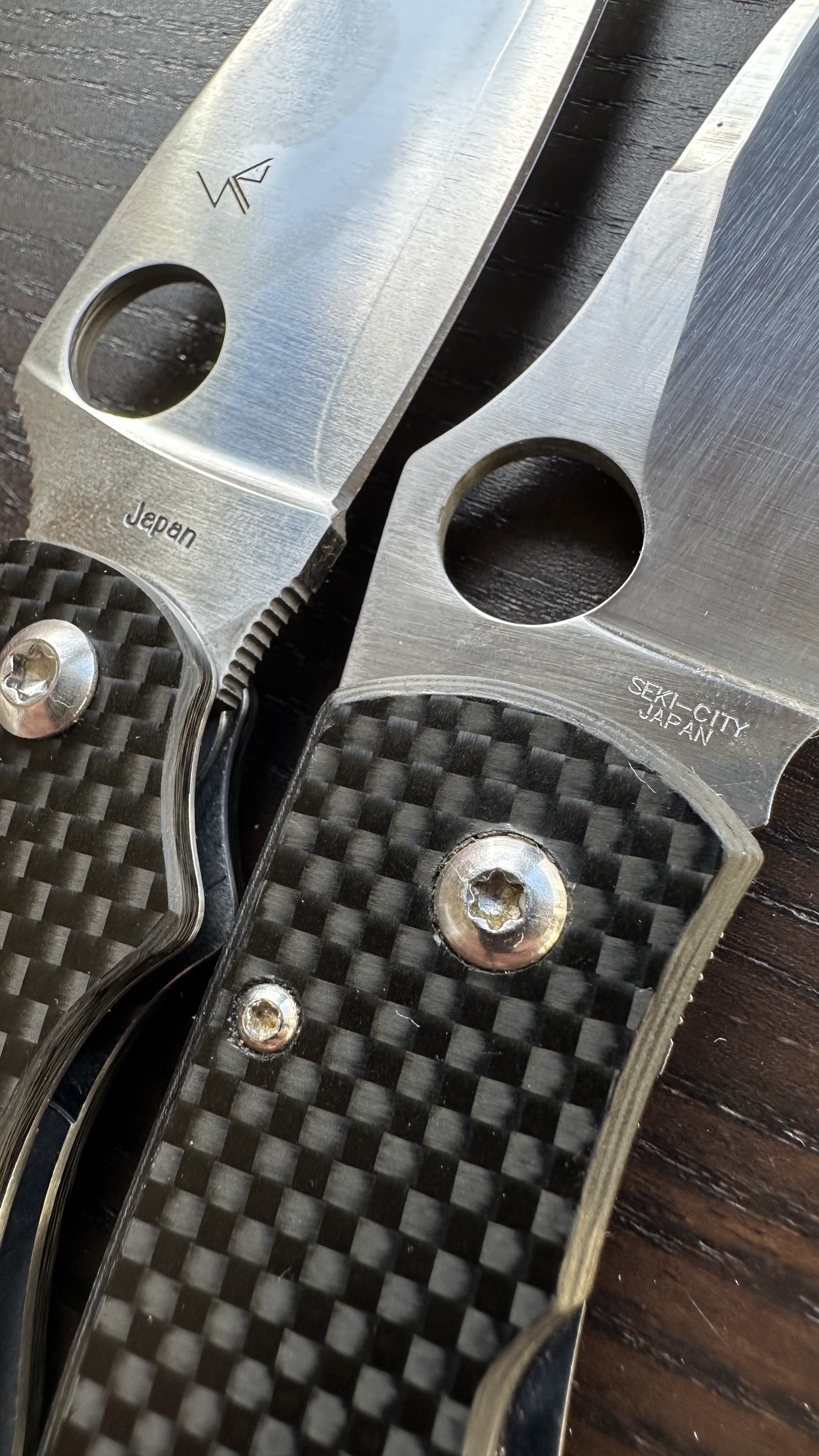
Proudly made in Japan.

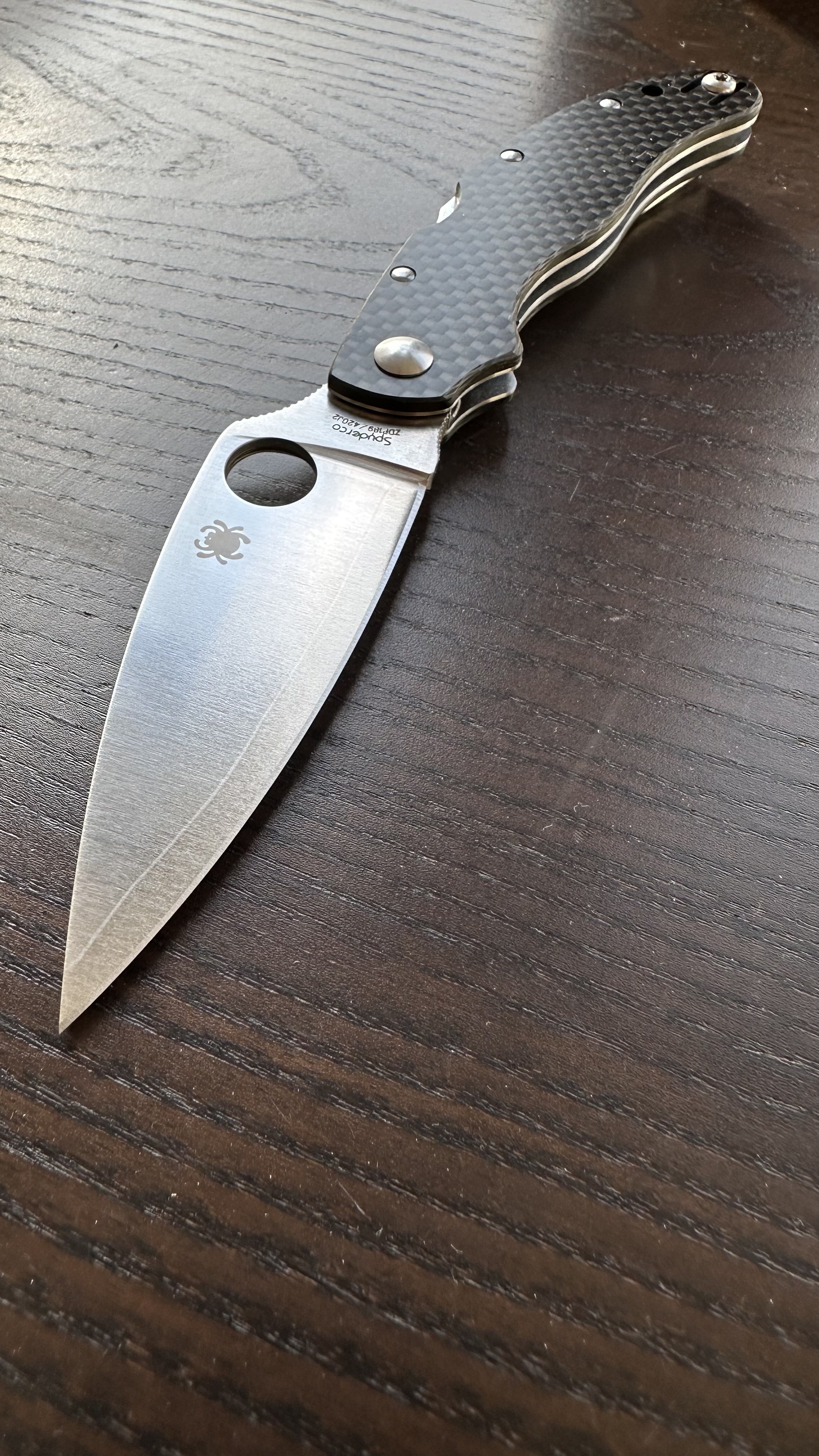
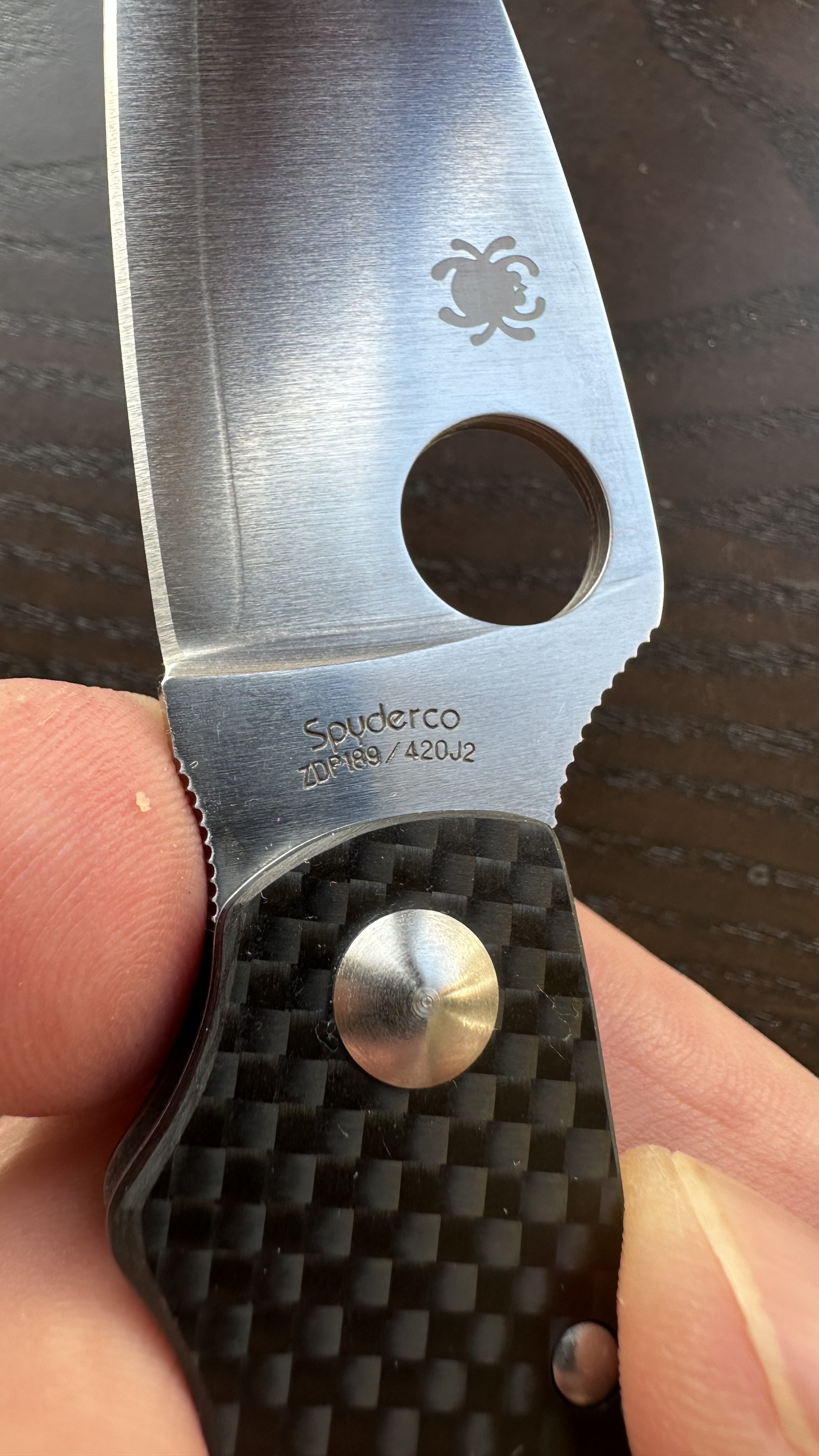
Fifteen years later, a parcel lands at my door. Inside: a blast from the past—the Caly 3.5. Or should I say, the Mighty Caly. Clad ZDP-189 steel, proud axis screws, and that unmistakable aura. A gentleman’s knife that decided to play the outlaw with its 3.5-inch locking blade.

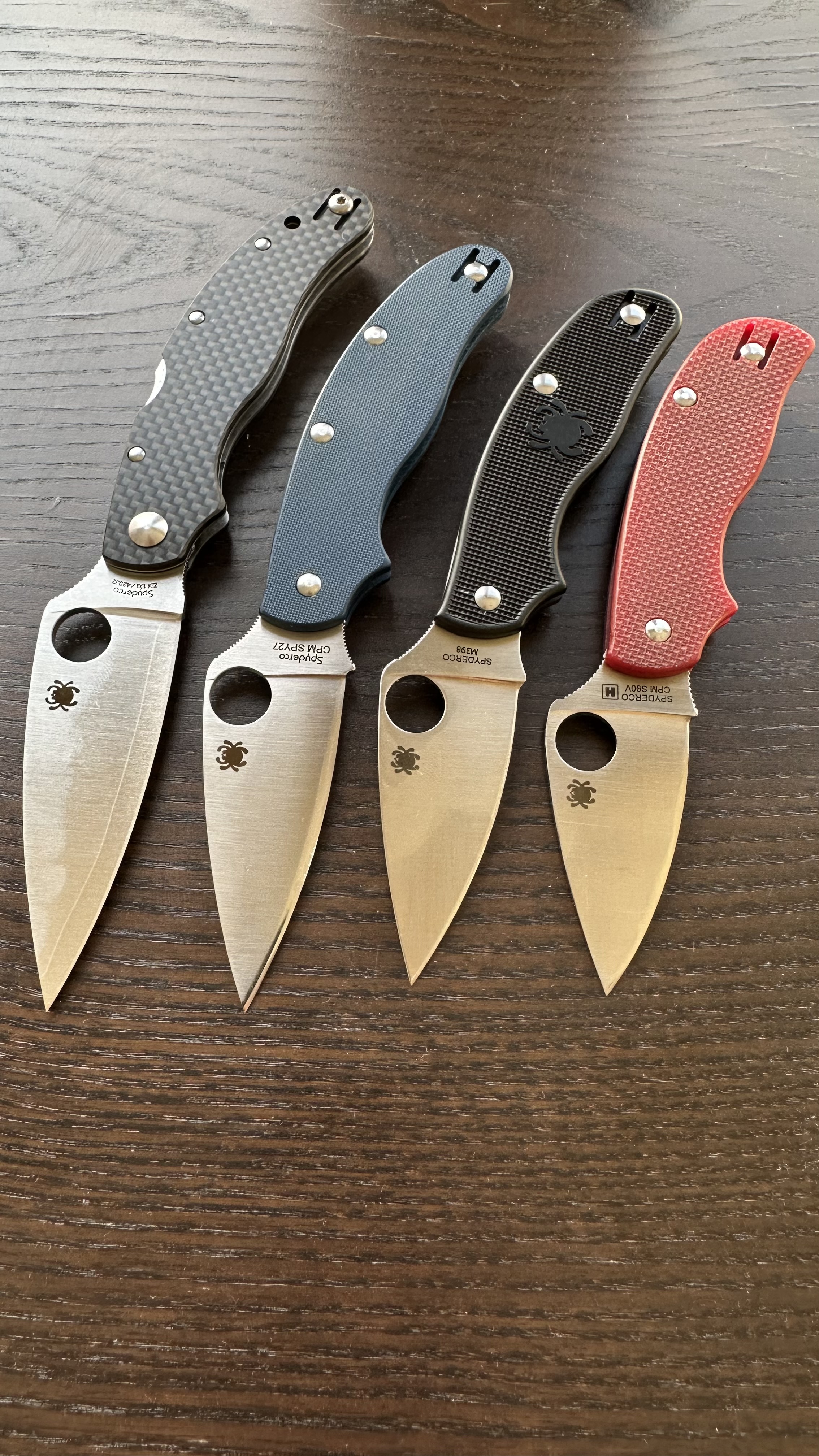
The father of the UKPK.

And many of the ClipIt offsprings:

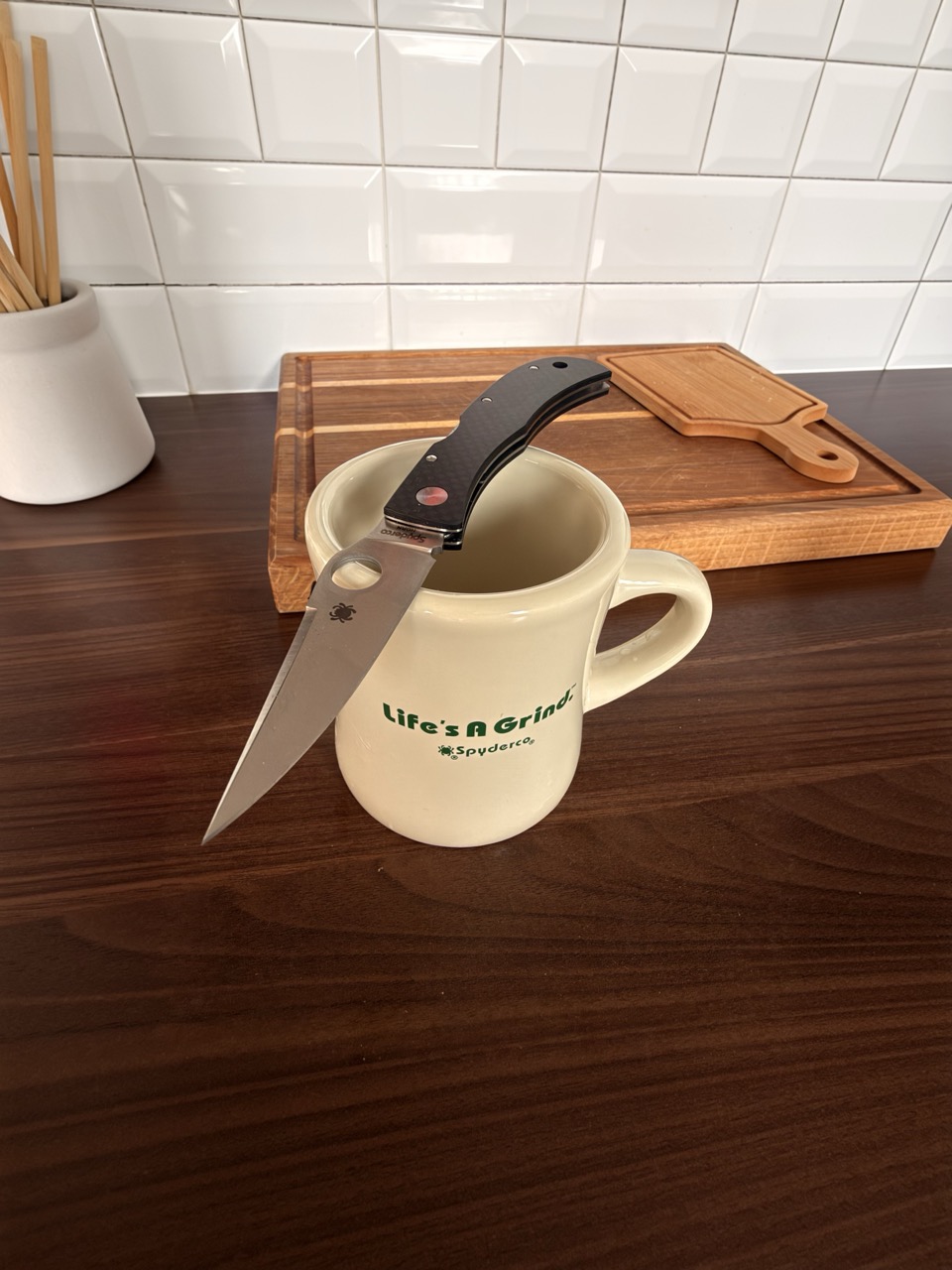
Out of the box, the Caly 3.5 is incredibly pocket-friendly. The smooth carbon fiber scales make it glide in and out effortlessly, adding to its everyday usability.

This is one thing I won’t need to polish on the Caly. 😉

Now, the Caly is one of the rare Spyderco models that hasn’t been converted to full screw construction in 2025. It still carries those three rivets on the handle, radiating an unmistakable early-2000s vibe.

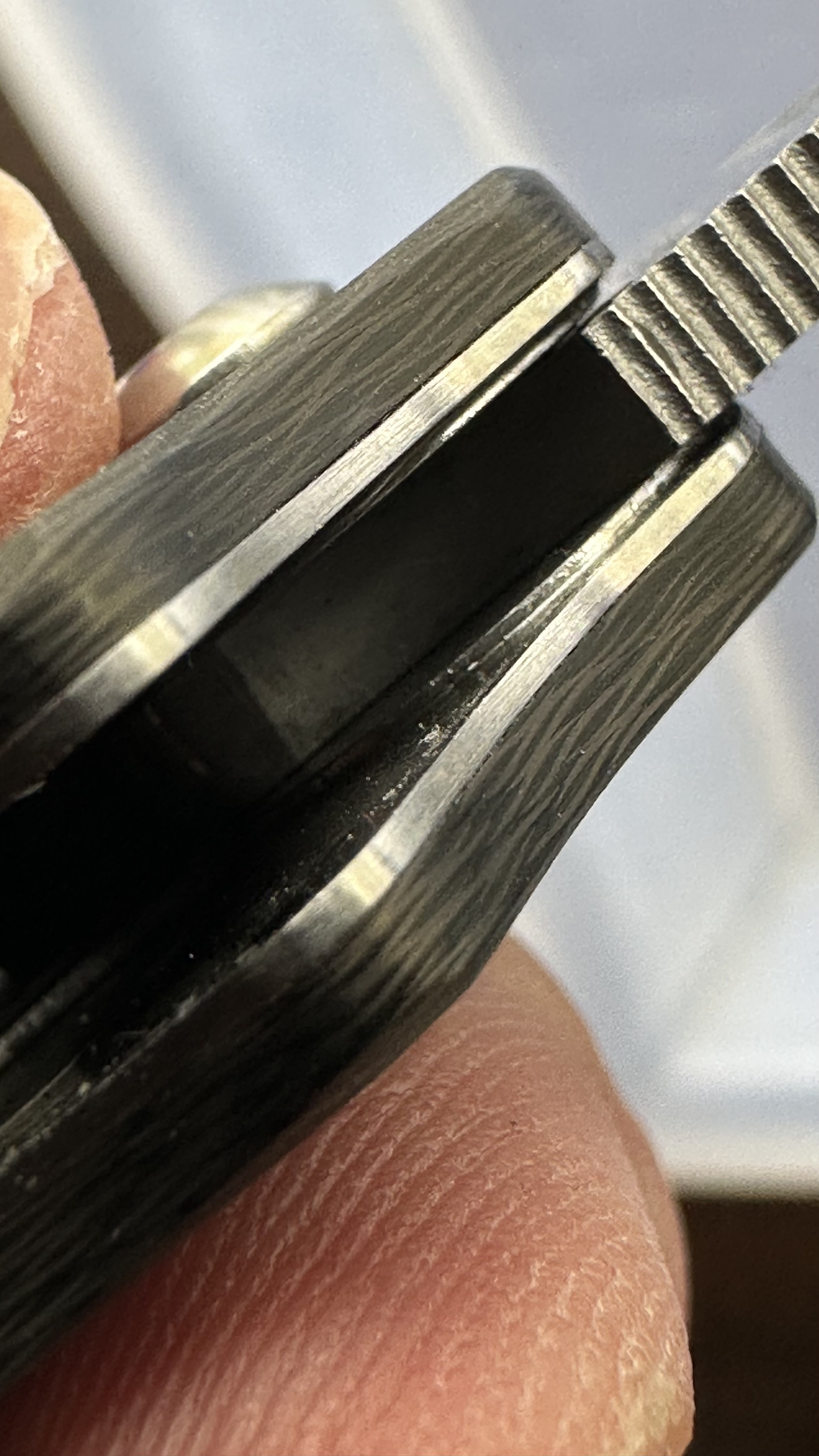
Most modern folders are assembled with screws, which makes them easy to disassemble and service. The Caly 3.5, by contrast, is riveted—apart from the pivot and clip screw—which means full disassembly isn’t really an option.

I understand why some people have a visceral dislike for rivets. But in my experience, they work reliably and don’t loosen over time—an important factor when you’re using a knife in remote places for long stretches. A friend of mine, once a hunter’s guide in the African rainforest, swore by riveted knives for exactly that reason: nothing to rattle loose, nothing to lose.

Personally, I won’t be field-dressing game or digging in the mud with my Caly. For me, the lack of full disassembly isn’t an issue. Cleaning with hot soapy water, a rinse, and a blast of compressed air is more than enough. No worries at all.
But to quote a user back in 2013: “Disassembly for cleaning is as simple as the design: Open blade, Remove pivot pin screw, Depress lock bar, Pull out pivot and the blade falls out. Voila, that’s as far as it breaks down. No washers, nothing falls out, etc. Reassembly, just reverse the process.”

And then there’s the BIG pivot screw—so bold it practically becomes the Caly’s signature.

This is pure Sal Glesser design: a knife that melts into your hand. The carbon fiber slabs are smooth, almost glassy, while that oversized pivot not only anchors the construction but also serves as a subtle functional detail. It works as a natural index point on the handle—almost like a thumb guard, without ever creating a hot spot.

It’s not just practical; it’s a stylistic stamp. You see the same oversized pivot screw on the Michael Walker, another hallmark of Spyderco’s design language from that era.

Now, let’s talk about ZDP-189—a steel I’ve reviewed many times over the years.

ZDP-189 is a Japanese premium stainless steel produced by Hitachi through powder metallurgy. It’s one of the landmark developments in that field, known for pushing the limits of what stainless steel can do. With an unusually high chromium and around carbon, it achieves extreme hardness, excellent corrosion resistance, and outstanding wear resistance.

While it’s most often found in high-end kitchen knives, ZDP-189 has also carved out a place in EDC designs. My own Higo J from Rockstead, for example, proudly measures in at 66.6 HRC—a testament to how hard this steel can go when heat-treated to its full potential.
(ZDP-189 steel can reach a maximum hardness of 67 HRC, which is well above the values of average mass-production knives.)

ElementPortionEffect
Chromium20.0%Improves wear resistance, heat resistance and scale resistance. It increases tensile strength because it acts as a carbide former. Use of rust-proof or stainless steel, as it increases corrosion resistance from a mass proportion of 12.2%. Reduction in weldability.
Carbon3.0%Increasing hardness and tensile strength. In larger quantities, increase in brittleness and a reduction in forgeability and weldability.
Manganese0.5%Improves hardness and tensile strength.
Molybdenum1.4%Improves hardenability, tensile strength and weldability. Reduction in forgeability and ductility.
Silicon0.4%Improves strength.
Vanadium0.1%Increasing hardness, increasing wear resistance and improving tempering resistance.
Wolfram0.6%Increase in heat strength, tempering resistance and wear resistance at high temperatures up to red heat.


The magic of ZDP-189 lies in its unusual recipe. With about 3% carbon—a huge amount compared to most steels—and a massive 20% chromium, it pushes the limits of what stainless steel can be. That mix makes it harder, more wear-resistant, and more corrosion-resistant than almost anything else in the pocketknife world.
If you’ve ever used knives made from softer steels (well below 60 HRC), you know the frustration: the edge dulls quickly. Instead of chipping, the steel tends to roll, with the fine cutting edge flattening under pressure and losing its bite. A few quick passes through a sharpener will bring it back, but the cycle repeats too often.

With a harder steel like ZDP-189, the story is different. Edges don’t roll nearly as easily, which means the blade keeps its razor-sharp performance for far longer, even under demanding use. That’s where ZDP-189 really shines in 2010 and still shines in 2025—it holds a cutting edge like almost no other stainless steel in the EDC world.
But beware as ZDP189 is also known for chipping especially on factory edges..


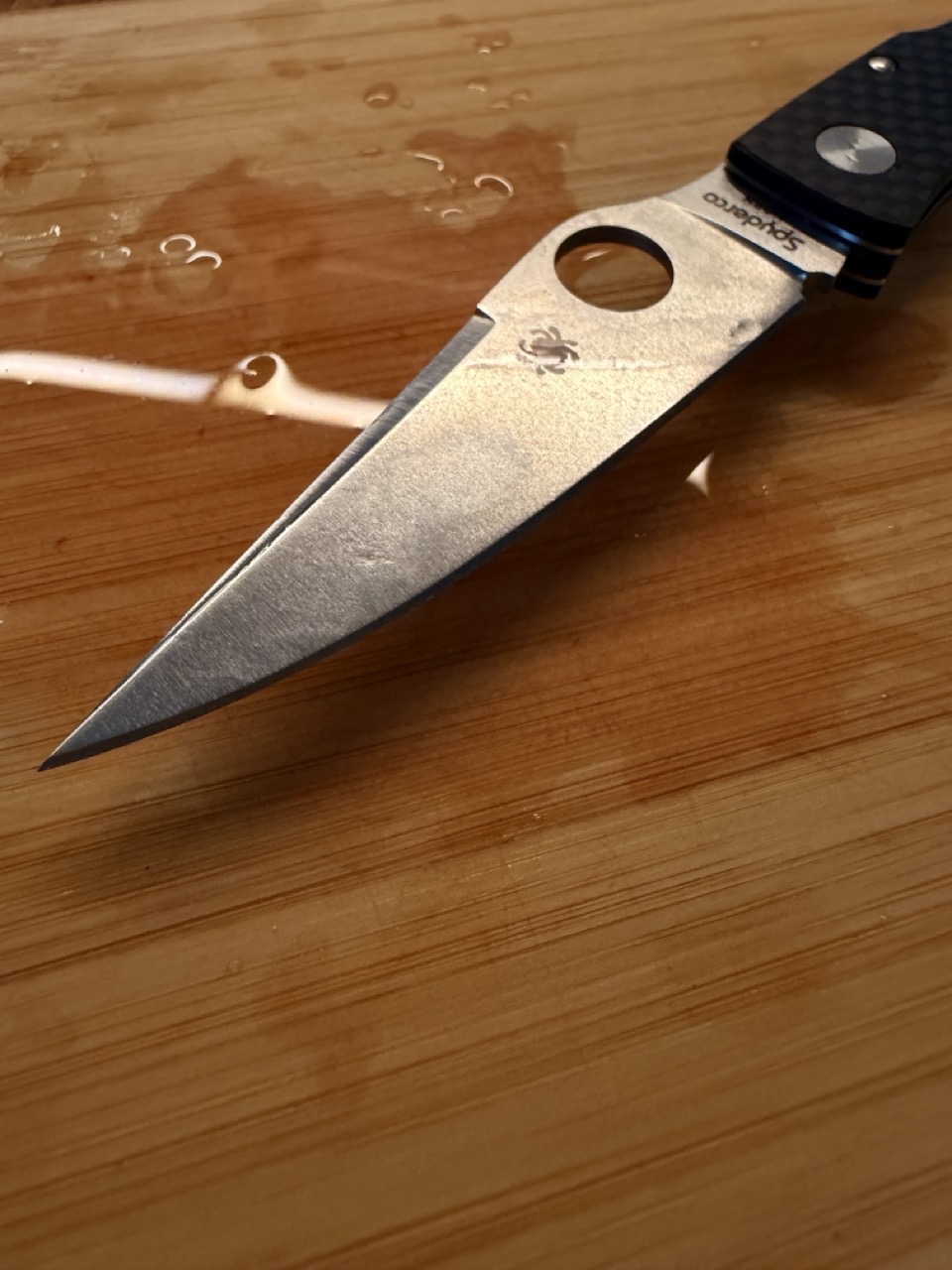
15 years ago my ZDP-189 Higo gave me a scare: its factory convexe edge started chipping quite badly (arrrgh!). I hadn’t been using it hard, so it caught me off guard. My guess is that the ultra-thin edge at the tip, maybe combined with a careless fumble or contact with something hard, was the culprit.
The tip may have contacted something hard, which can happen without noticing. I’ve had a similar experience with another knife: a mirror-finished, thin stainless blade I was testing on bamboo. After just ten cuts, the edge looked almost serrated—but I realigned it, and the damage became nearly invisible while restoring high sharpness.

To bring it back to new, I gave it many gentle pass on a Spyderco white ceramic rod, then spent a solid hour stropping on leather with compound. The result? The knife came back sharper than ever, and with a touch of convexing the edge now feels stronger and less prone to be damaged. For all its hardness, ZDP-189 is surprisingly forgiving.

My other ZDP-189 blade ,back in 2010, the Michael Walker, hasn’t rolled or chipped, though it isn’t as “smooth” sharp as the Higo. It’s also slightly less hard than the Higo-J.
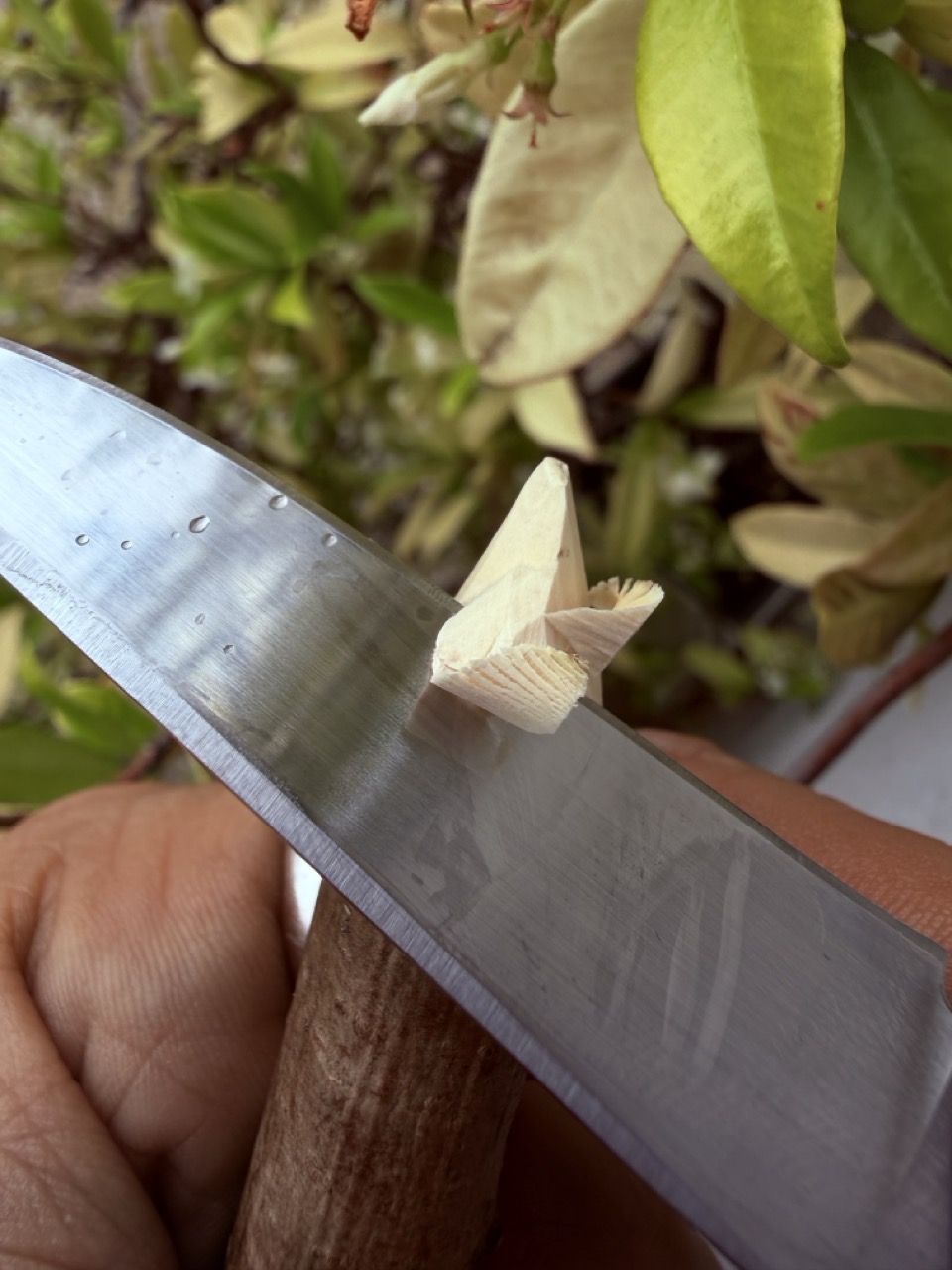
It will be the same story with the Caly 3.5. I also feel that its beautiful full-flat-ground blade, with its already even edge, could benefit from a bit of convexing. Doing so would create a safety net against potential chipping, making the blade even more durable in everyday use.
Sooner or later I will also smooth the blade’s spine. Good news the 420J2 steel is soft to work.


Why does the Caly 3.5 have a laminated blade made of ZDP-189/420J2?

The inner core is ZDP-189, while the outer shell is 420J2. The idea behind a laminated or “clad” blade is simple: the inner core provides a very hard, high-performance edge, while the outer layers are softer and more corrosion-resistant. This combination gives you the best of both worlds: excellent edge retention from the ZDP-189, and a tougher, more flexible spine that helps prevent damage when pressure is applied.

The softer 420J2  outer layer will scratch over time but it will be easy to polish back. It also improves corrosion resistance, especially near the pivot area. Even though ZDP-189 has a very high chromium content, it can still stain, but won’t rust like other hard laminated steels such as HAP40. The cladding adds a bit of toughness to the overall blade, compensating for the fact that ZDP-189 is not the toughest stainless steel in case of torsion.

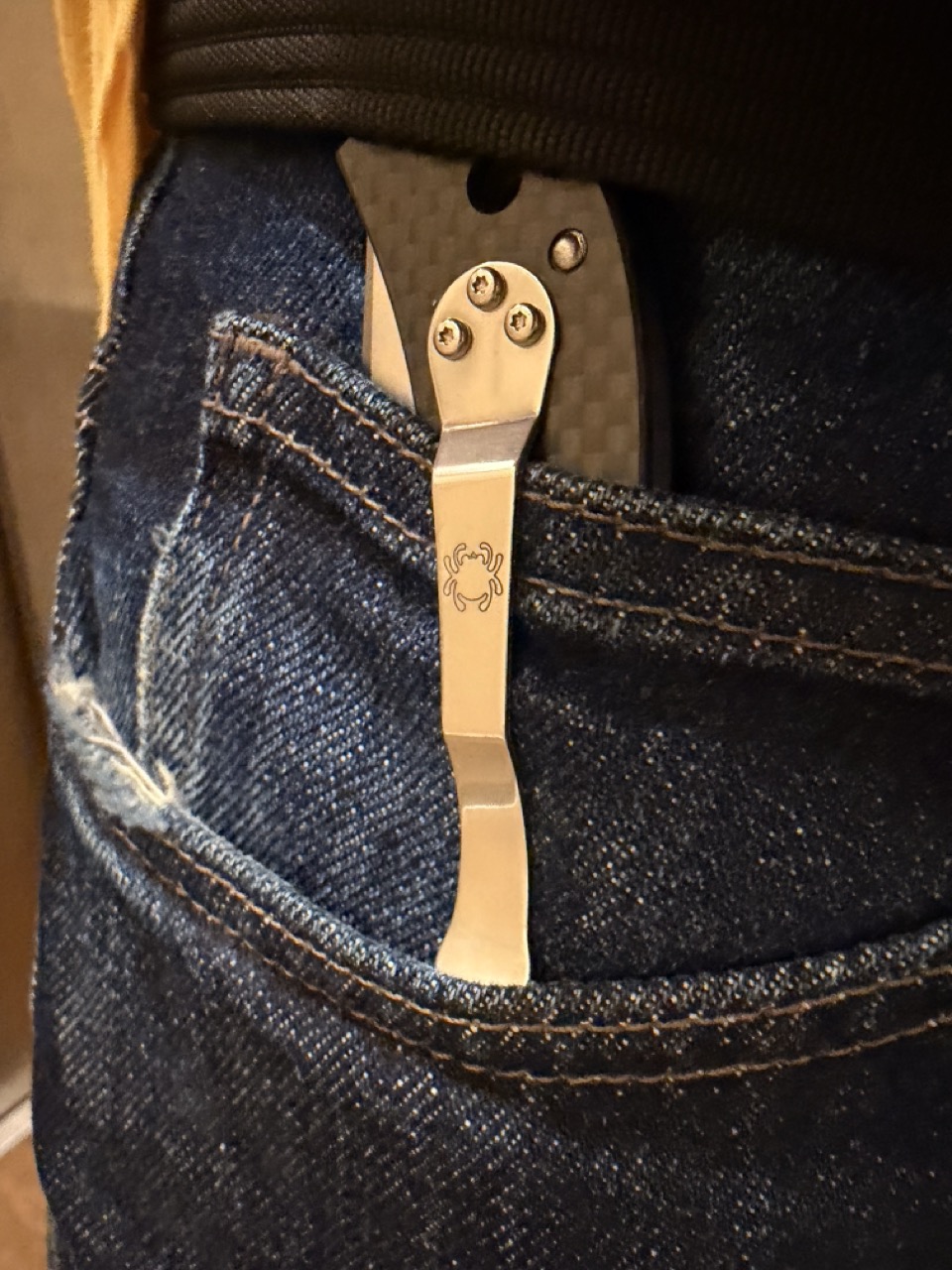
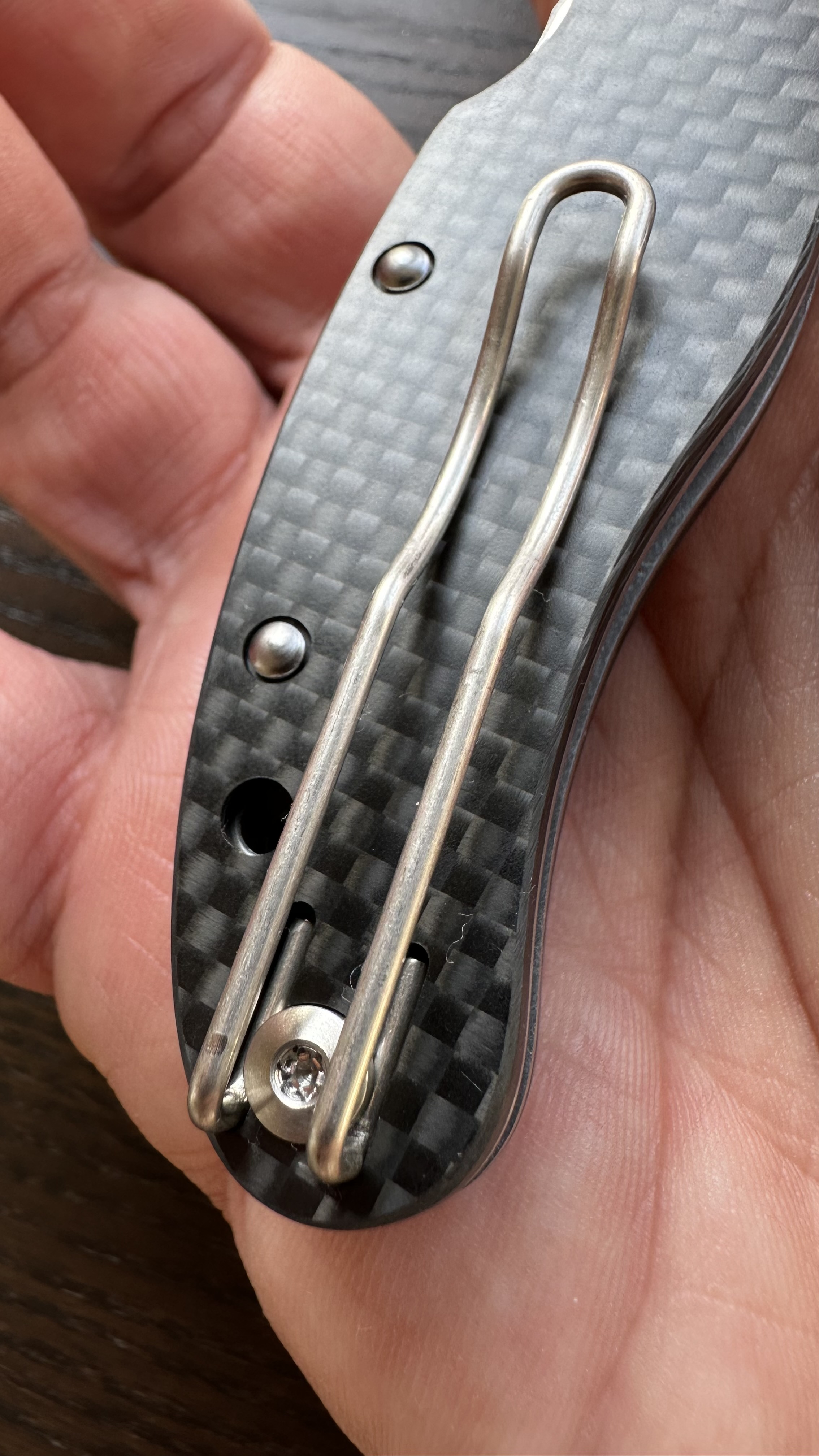
Carrying the Caly 3.5 is another smooth experience—it practically disappears in your pocket. The deep-carry clip, smooth handle, and thin profile combine to make it a true pocket ghost.
But deployment is definitely the Caly 3.5’s vintage characteristic, especially compared to modern compression-lock knives like the Microjimbo. The action is less smooth and a bit slow—which, in fairness, suits a gentleman’s (or lady’s) folder. Out of the box, it was quite grippy, but a few drops of nano oil helped.


One reason for this feel is that the knife lacks washers. The blade and stainless liners are polished at the Seki factory to minimize friction, but they remain in direct contact. Over time, the blade gradually leaves “traces” at the pivot where it rubs against the liners, which is normal for this type of construction. With a little oil, there is no issue.

Using, carrying, and deploying the Caly 3.5 is like going from a 2025 electric Kia to a classic common-rail diesel BMW. It’s rougher, yes, but still comfortable, reliable, and full of character—part of its undeniable charm. And it gets better and better…
One big asset is how easy to goes in and out of my pockets where it’s disappears like a much smaller knife. This is purely the opposite of a pocket shredder. It makes the carrying experience pleasant and confortable.

Details like Boyle’s dent on the lock (which flushes with hand), the proud liners and the full stainless steel spacer held by rivets add to that vintage appeal. My Caly 3.5 exhibits zero vertical play, giving the same solid backlock experience I enjoy on my Police 4 in K390. This is rock-solid.
And that 3 mm-thick blade contributes significant lateral strength, meaning the Caly can be used harder than its elegant appearance might suggest.

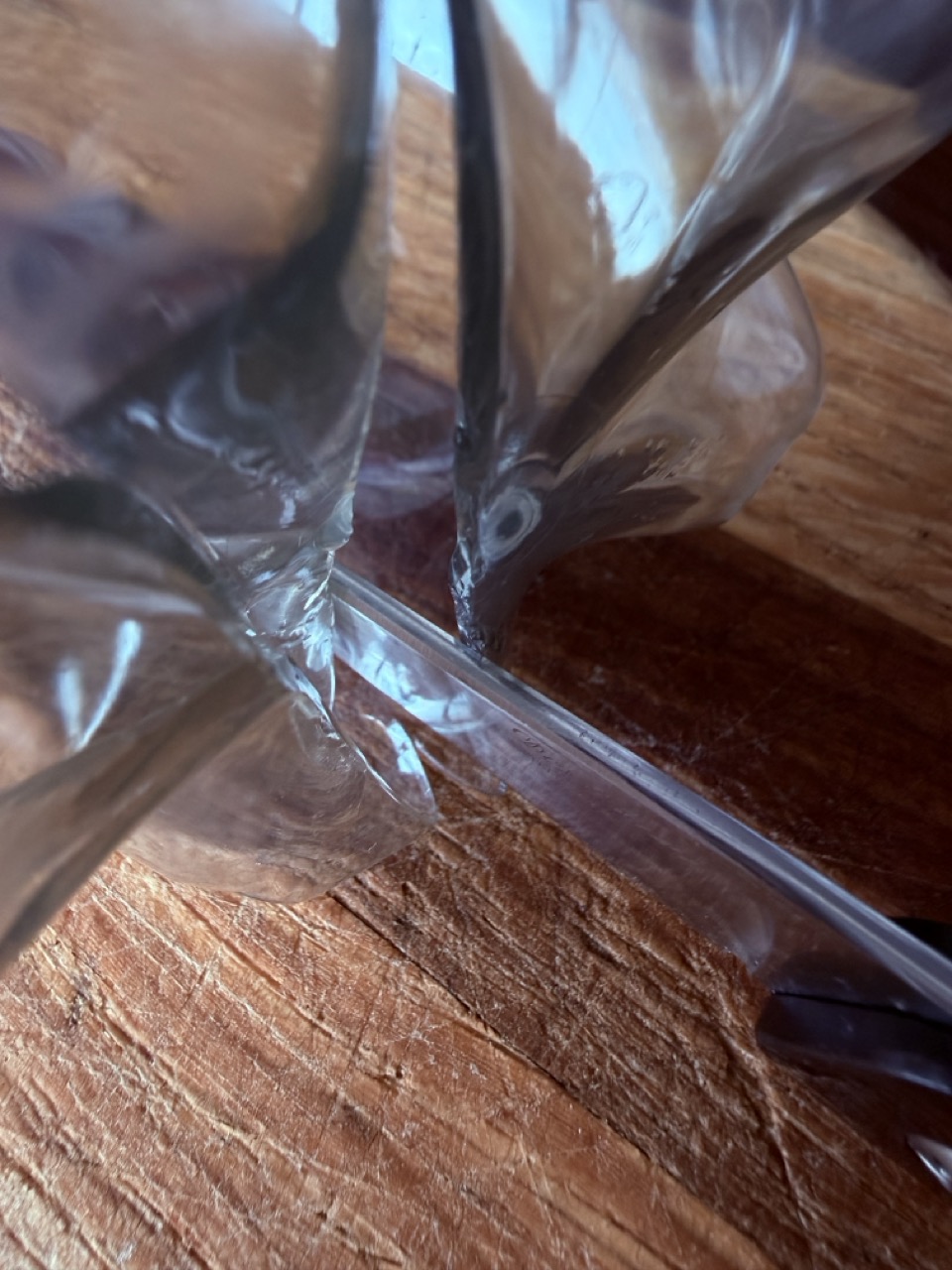
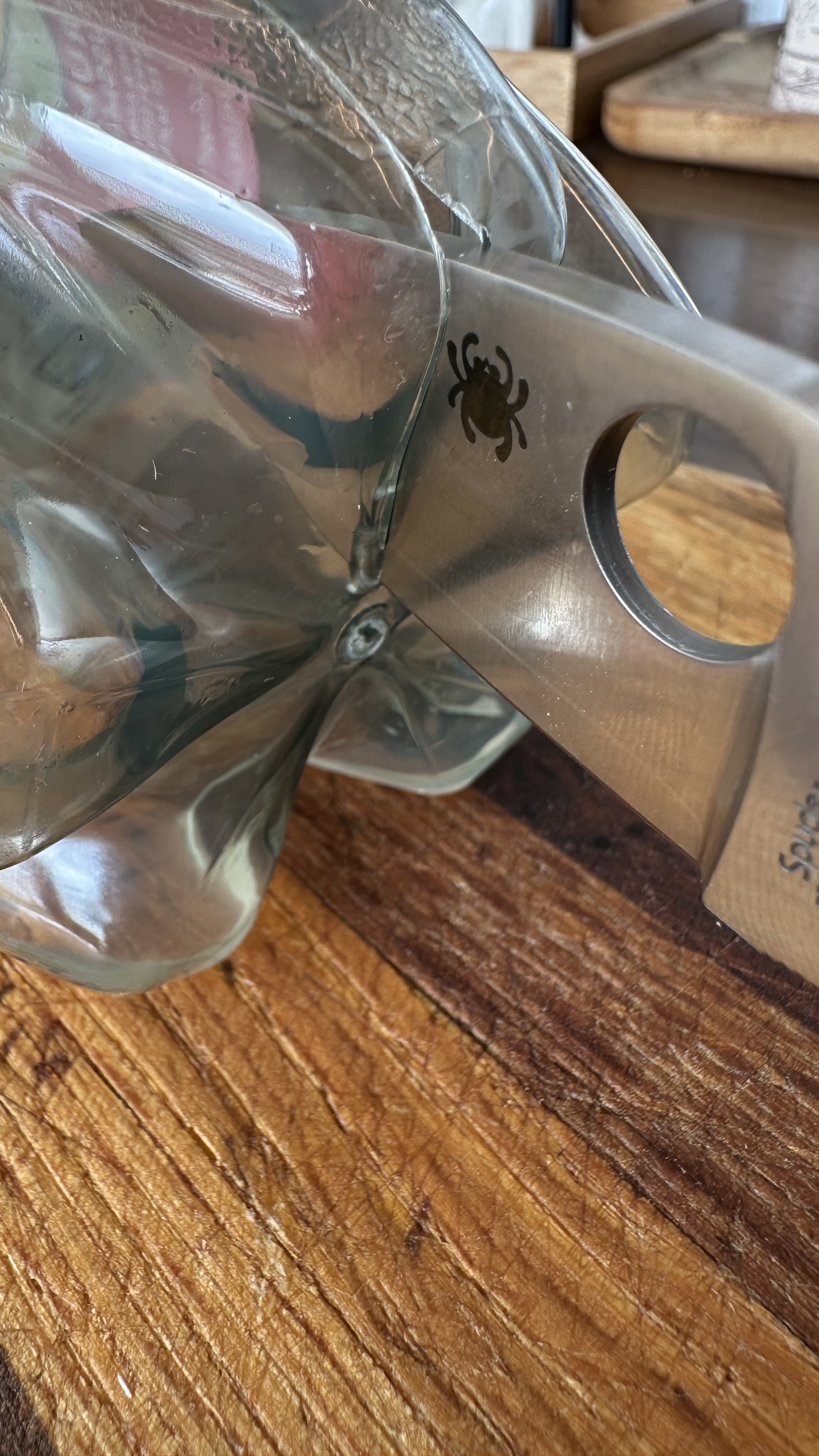
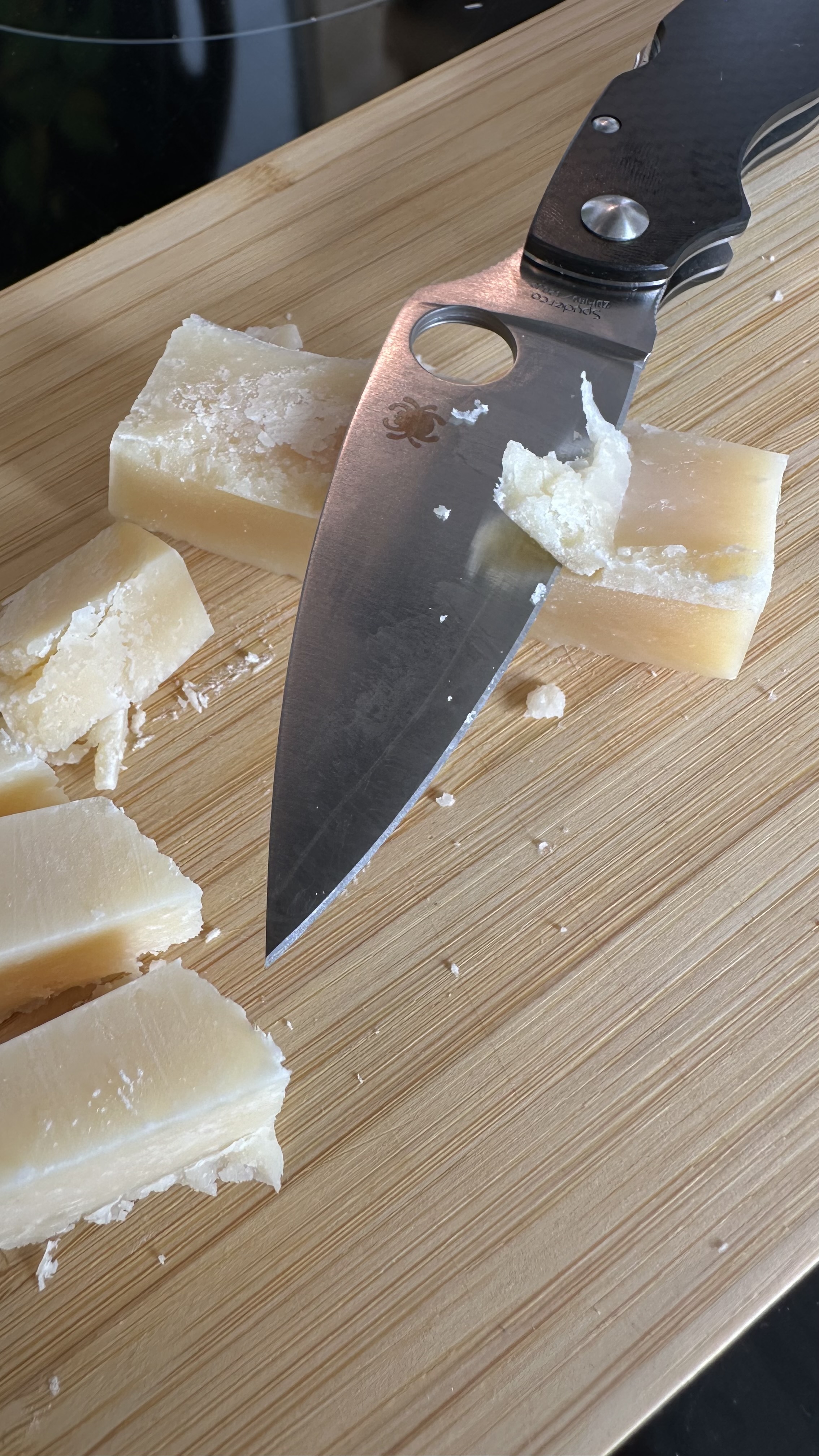
The factory edge is a bit on the thick side, so its performance doesn’t fully meet my needs. At the moment, the Caly 3.5  can’t even slide cleanly through the base of a plastic bottle.

So for my personal taste, I’ll likely smooth the spine, convex the edge, and round that blade jimping (a real hot spot for hard cutting), as well as soften the handle edges until they feel like a pebble. But this will take time—I don’t want to compromise the overall beauty of the Caly 3.5. It’s a true looker, eye candy for anyone who appreciates Sal Glesser’s designs.

But as Bob Terzuola always says: “If your knife is still sharp, it means you don’t use it enough!”
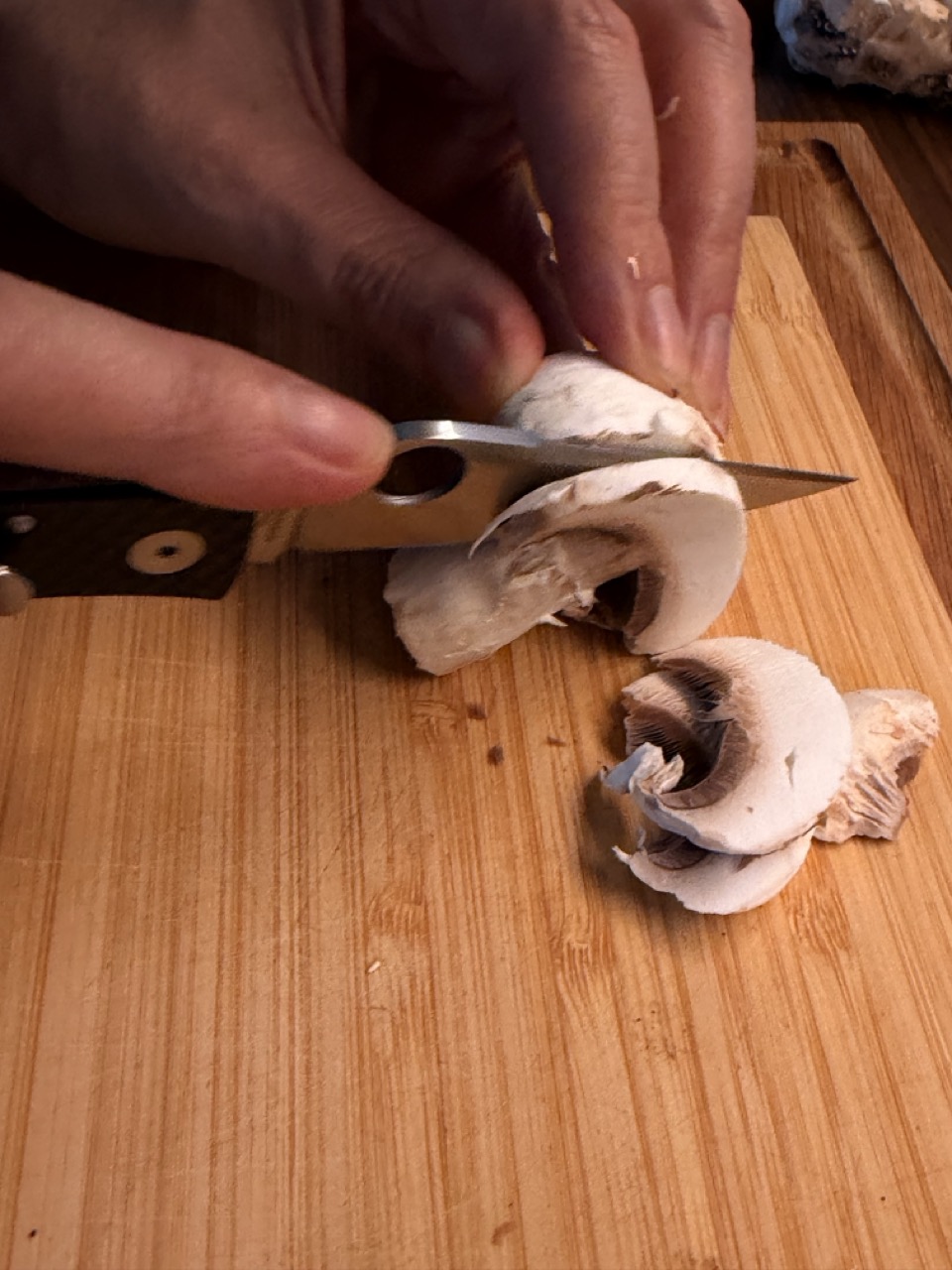
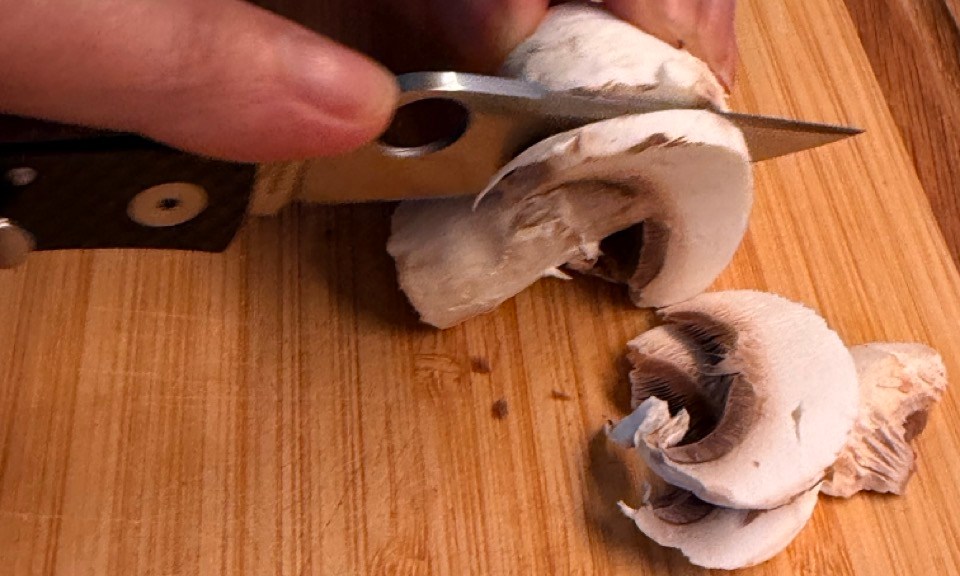
So let’s put that Caly 3.5 to work. First step: rounding the angles.

Link to the Caly 3.5 used to save a child from mountain lion on Blade Magazine.

EDIT from 24th of October 2025:

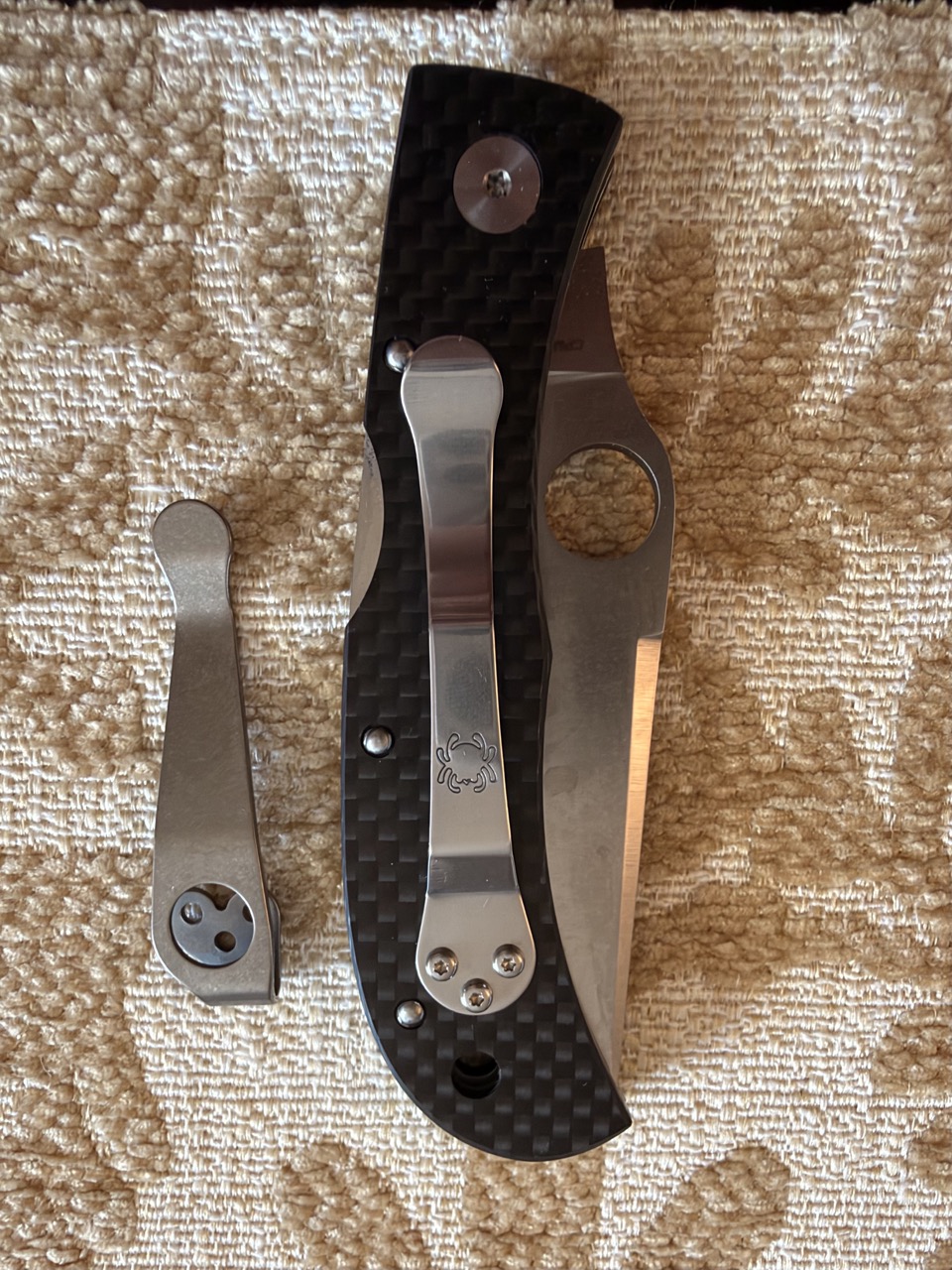
I have installed a shorted clip:

Spyderco Lil’Nilakka – My Romantic Gentleman Puukko.

26234312_10213159758203104_187023894_n

When I consider a new knife, I like to choose it in such a way that it conveys values that appeal to me; in synch with my mood with what I recognize as exemplifying a tradition, a nation; when craft turns into art.

26135013_10213159759163128_1260224319_n

I also opt for features complimentary to the ones I already have so that each knife stands out as champion in its category. Ie this one does not rust, this one will not be taken away from me in UK or Denmark, this one is really good for heavy duty stuff, this one has something so obscene about it I can’t resist!

jean-sibelius-tt-width-600-height-540-fill-0-crop-0-bgcolor-eeeeee

Setting the mood: read Henrik Ibsen’s Peer Gynt; listen to Symphony n.5 by Jean Sibelius (pictured): dears belling in a barren wilderness where primitive elements collide – wind, sheer stones and icebergs…

gallen_kallela_akseli_taos_vuoret_pilvien_peitossa

…envision cold tundra landscape depicted by Akseli Gallen-Kallela’s paintings – the hard conditions forging men and women. Suomi.


A gentleman folder with no pair equal.

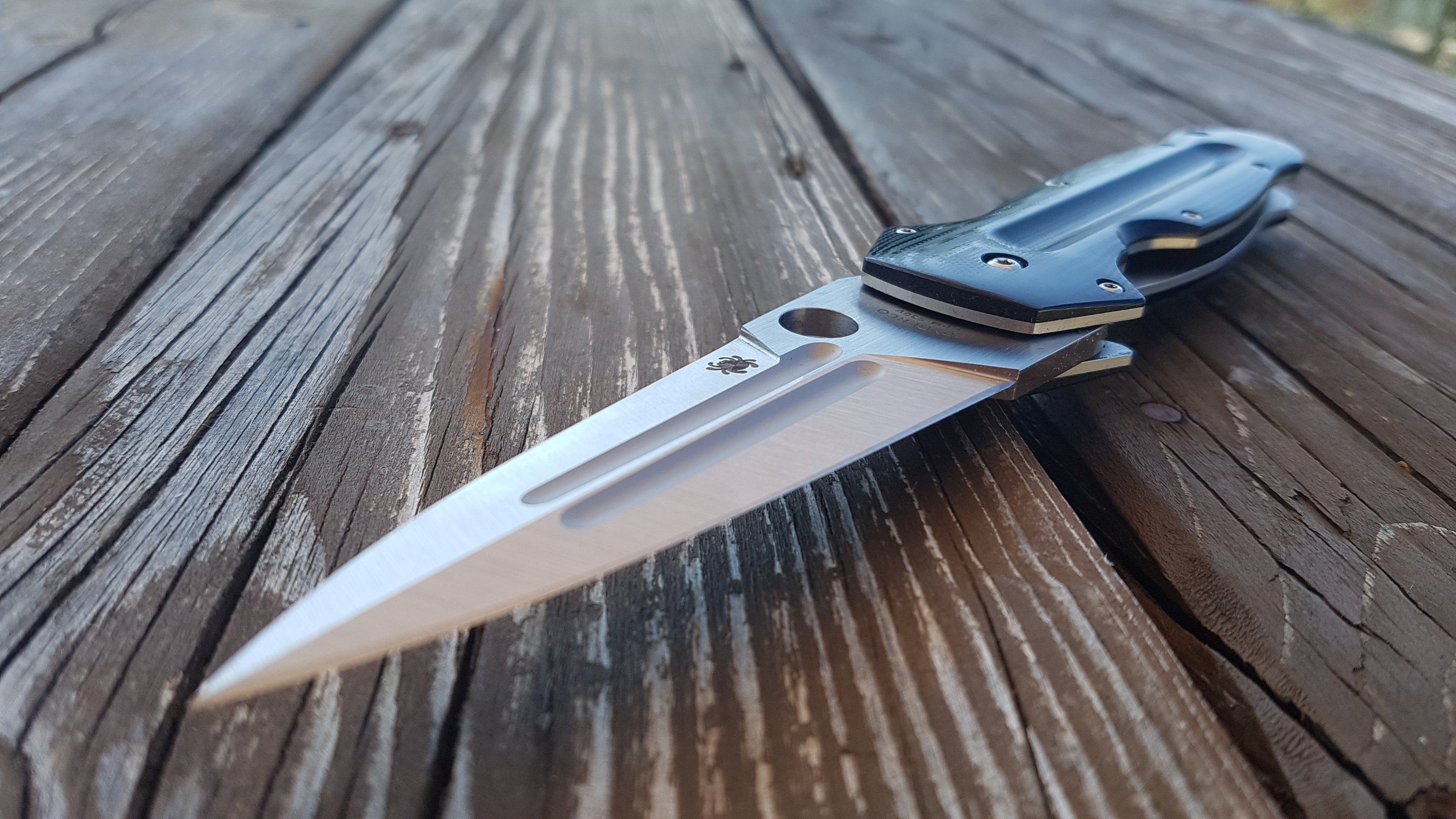
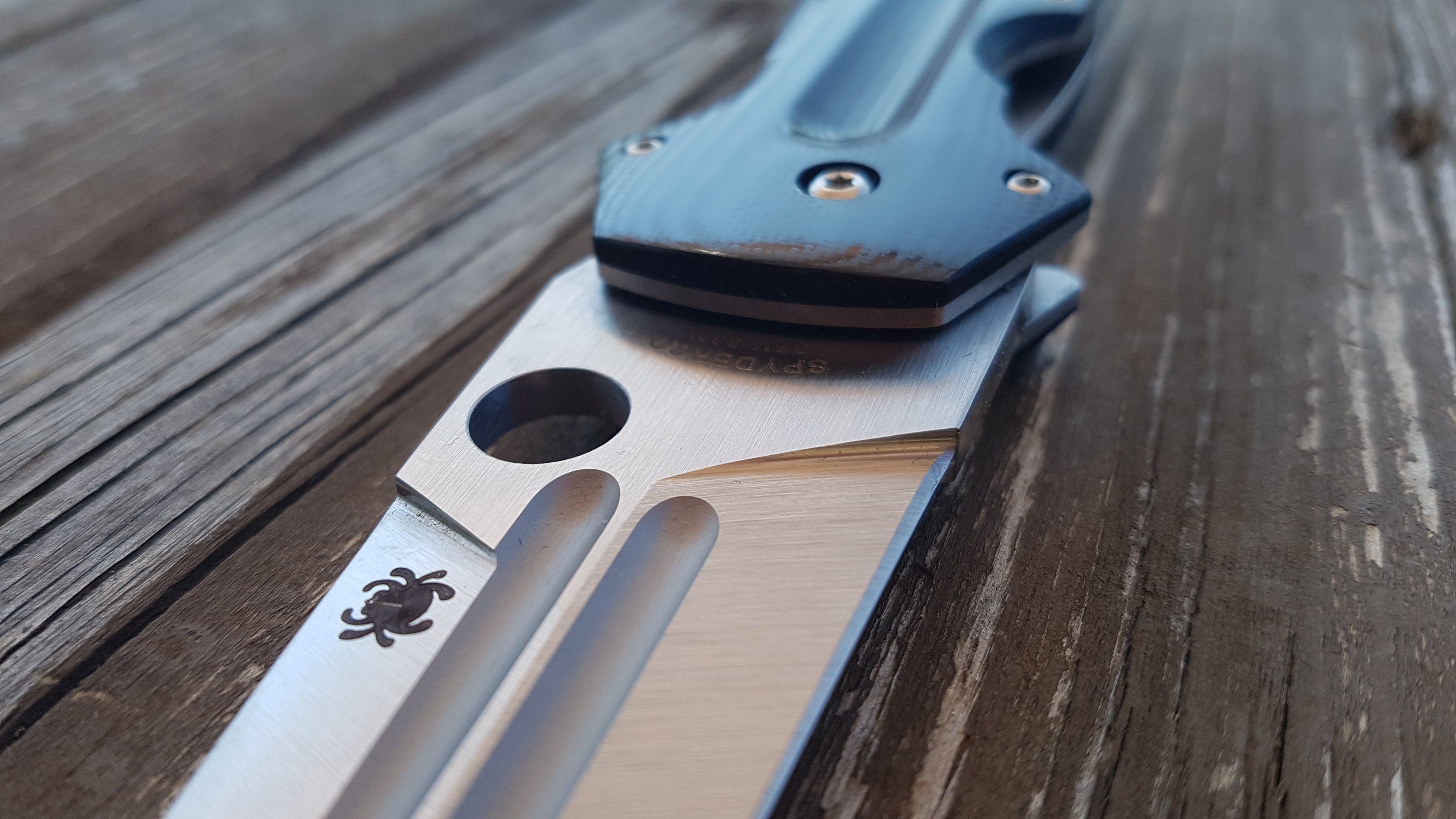
Which Spyderco better conveys rigour and austerity of the North other than the Pekka Tuominen designed Lil Nilakka Puukko? It stands out immediately recognizable with its character unlike any other and its craftman, alike the aforementioned finnish artists, is a true representative of the Nordic tradition and nation.

21192638_1507662229301655_8205200112918996749_n

So to summarize: as Sibelius was once said to be the “Chopin of the north”; Pekka the Sibelius of blacksmith and cutlery.

26174972_10213159756603064_609381602_n

So what is so fantastic about Lil Nilakka?

Still life:

  • Matter of taste: traditional finnish Puukko – I love it!
  • White G-10 so elegant – like ivory but walrus friendly.
  • RWL 34 the Robert W Loveless “in memoriam” steel with excellent combination of corrosion resistance, edge sharpness and hardenability. Also its said to be easy to maintain; good for me!
  • Solid clip that nests Lil Nilakka deep in the pocket

In motion:

  • The Lil Nilakka is snug close-fitting in hand; the forefinger in the G-10 handle opening and the thumb comfortable on the spine thanks to the chanfer.
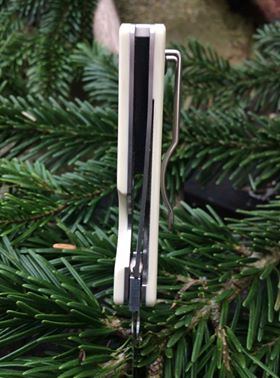
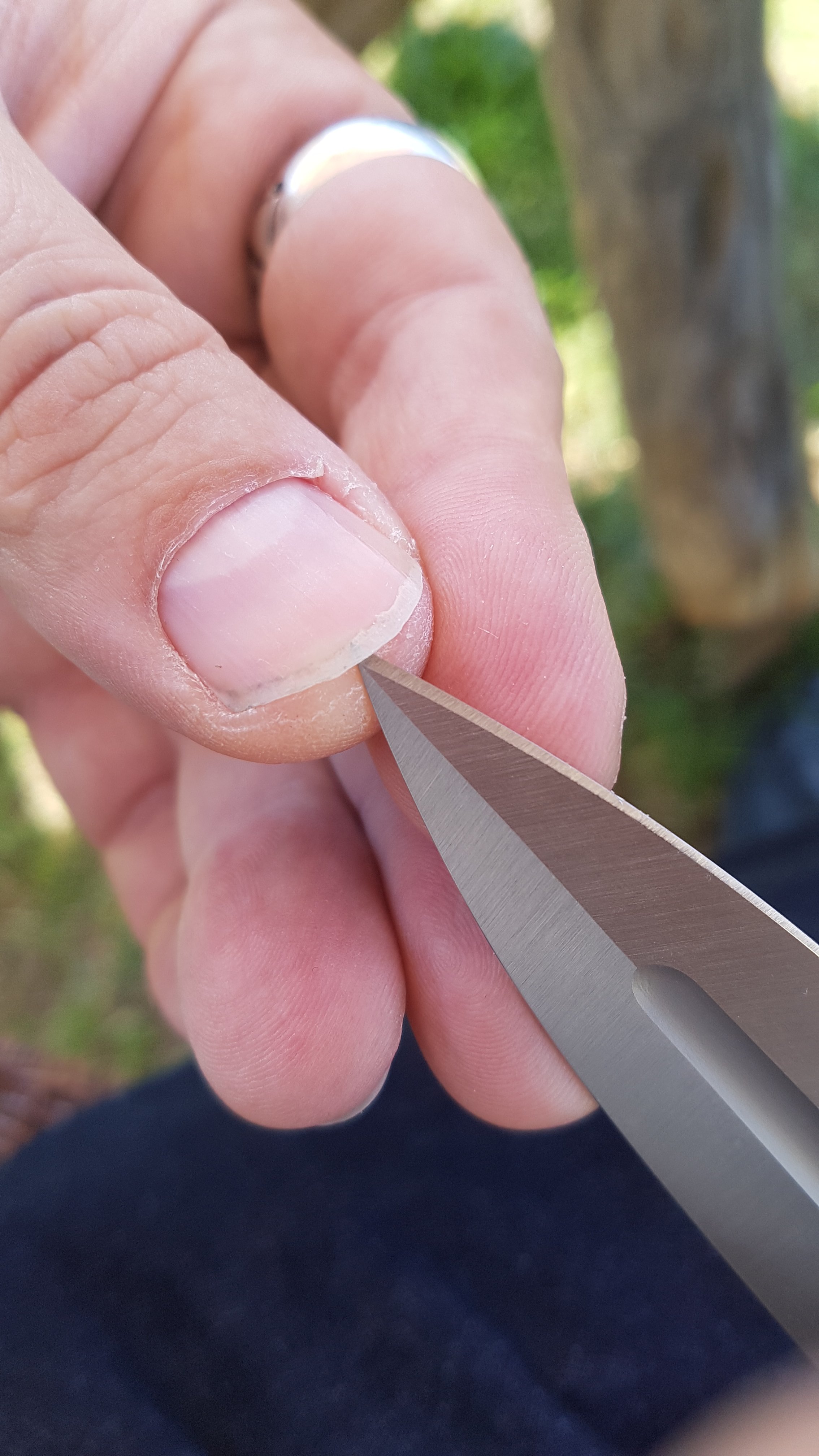
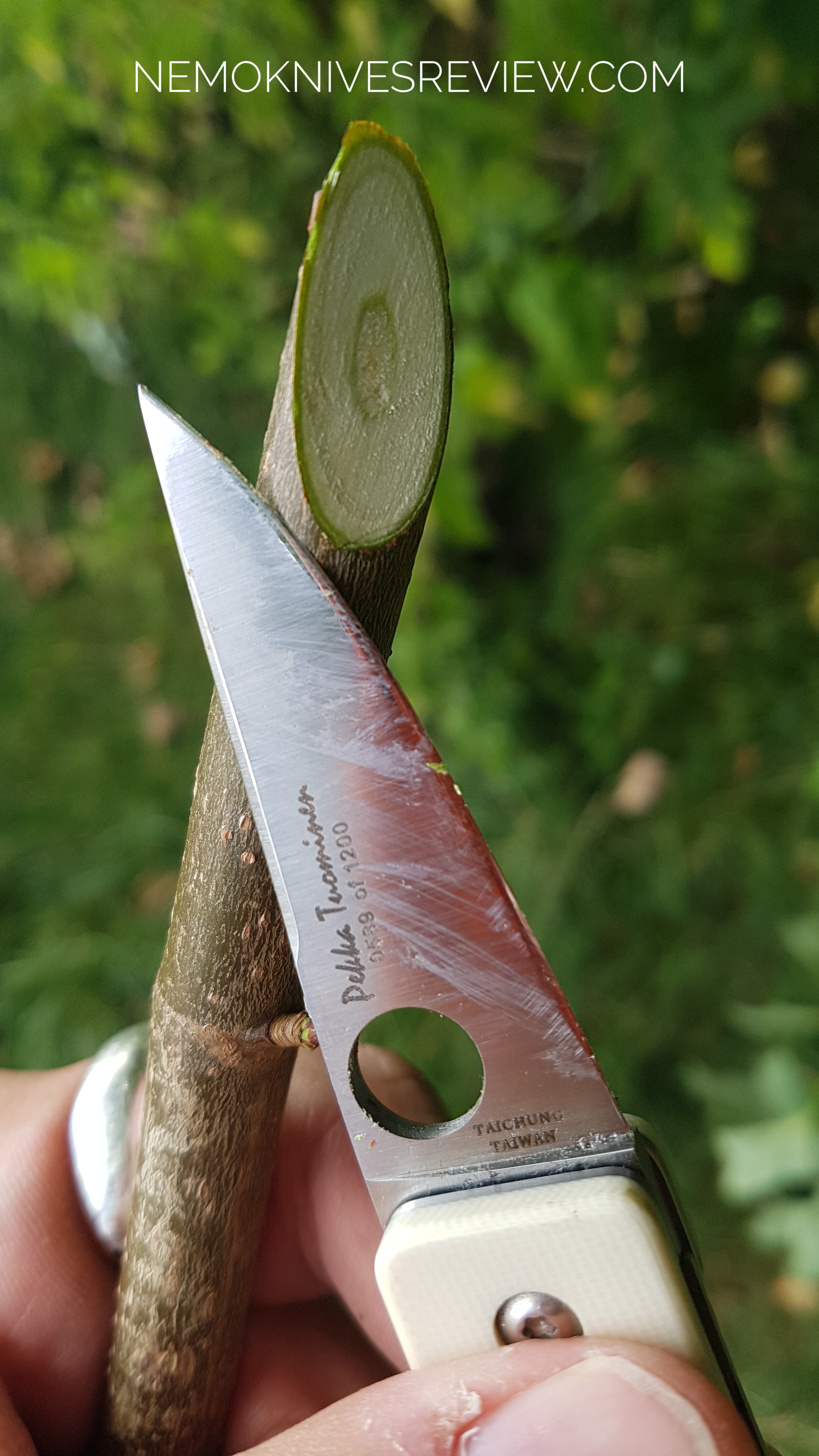
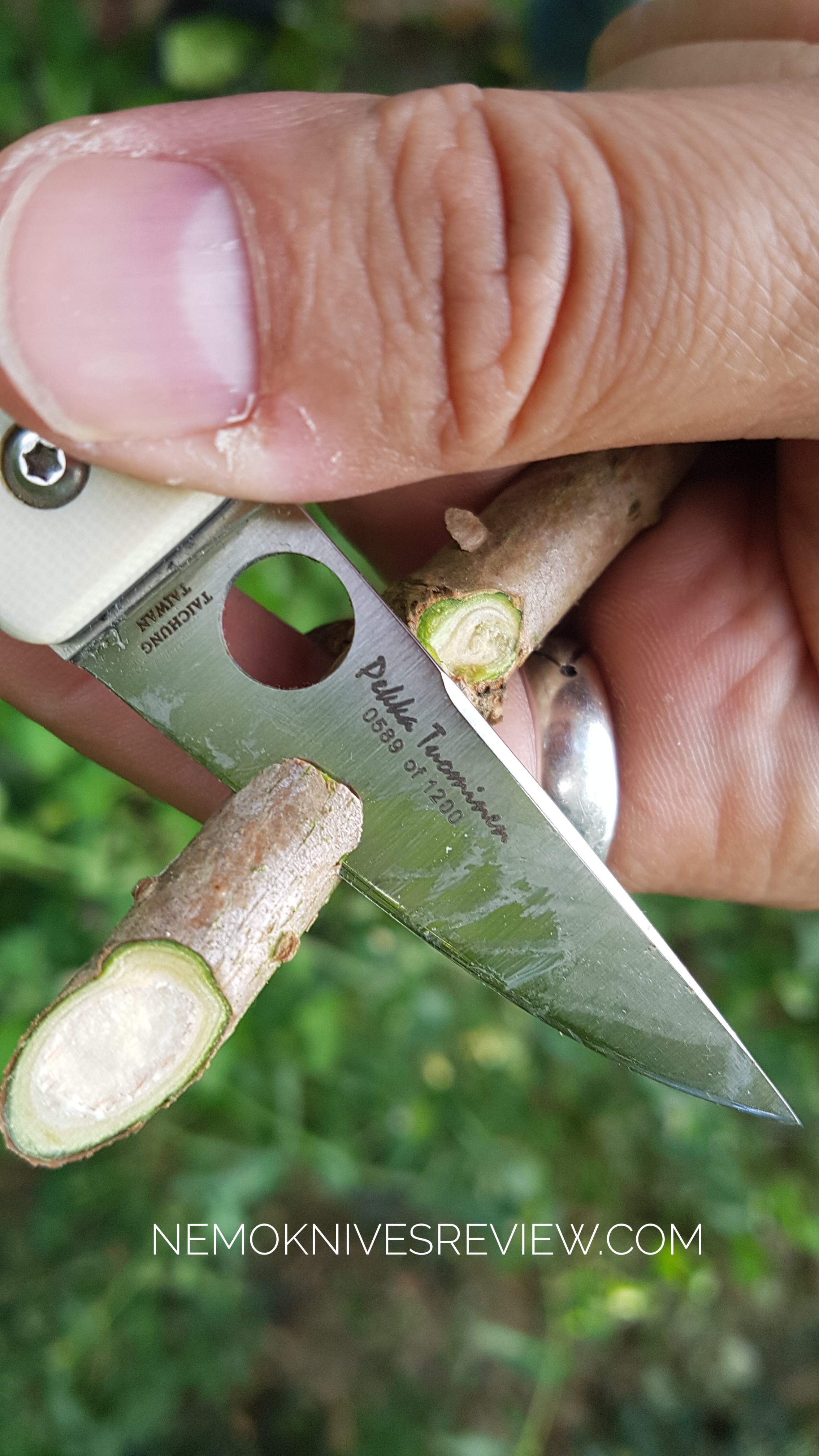
  • So perfect control when cutting – should that be the x-mas tree branches in excess or the ultimate test: pealing a ripe pear and skinning it angstrom style. The point of the blade and the blade’s width also contribute to making this tool one of extreme precision.
  • Easy to action linerlock and the blade fits perfectly; great engineering work!


Mine is #589; with me to stay as my gentleman Puukko!


26197413_10213159753962998_1796598639_n

Tuscan Raider #3 – Spyderco C215GP Euroedge.

20170916_175148-0114312562.jpeg

Again this is all made with my smartphone as I’m far from any computer.

A folding dagger as beautifully designed and made is not a bushcraft knife.

But my very first modern folder back in 1993 has been a Gerber Applegate folding dagger.

The first models were made in a stainless steel close to 420Hc.

The Euroedge is made of S30V.

Cutting wood with it is like making chop sticks with a bastard sword: it was not designed for that. The Euroedge is like a weapon a Templar will keep at hand. The blade is massive and the stock is thick.

The handle is so well made G10 feels like carbon fibers.

It is one of the most beautiful Spyderco ever made and a real tour de force in pure hommage to ancient times.

“”I can do anything”, Ed Schempp, will push the envelope, often just to see if he can. I did a “hammer” in at Ed’s house. Just a bunch of knife afi’s with great skill working on a globe. But no hammers. Ed designed and built a series of miniature rolling mills so we can produce mosaic
Damascus pieces, each with an assignment. Ed’s my “go to” guy for Ethnic series knives. Take a design hundreds, or even thousands of year old, capture the purpose and function and re-create that in a modern folder. He studies the design, the history, function and purpose before beginning. Those of you that have studied and used Ed’s designs know what I’m talking about. True original classics, each and every one.”
Sal Glesser.

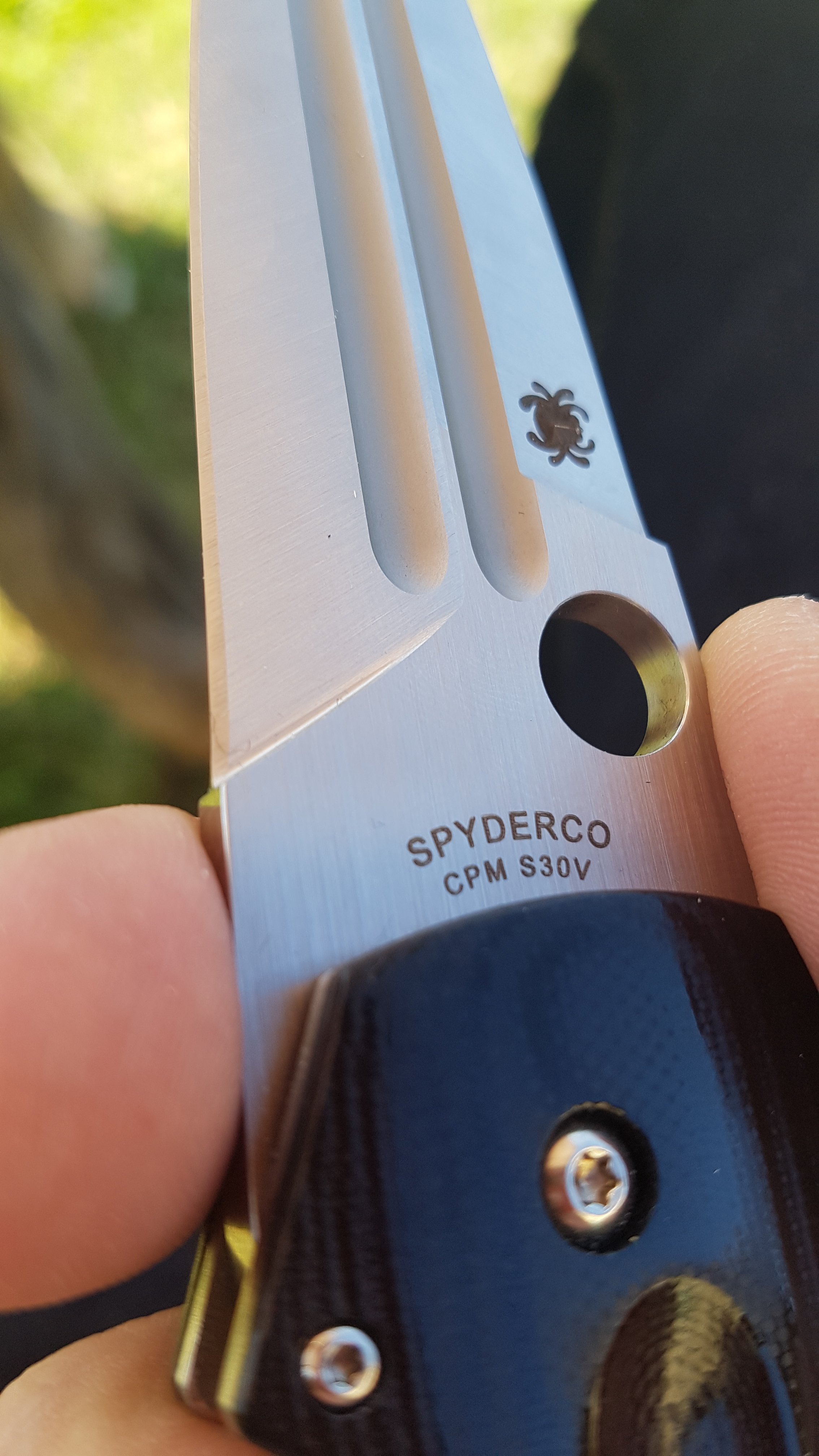
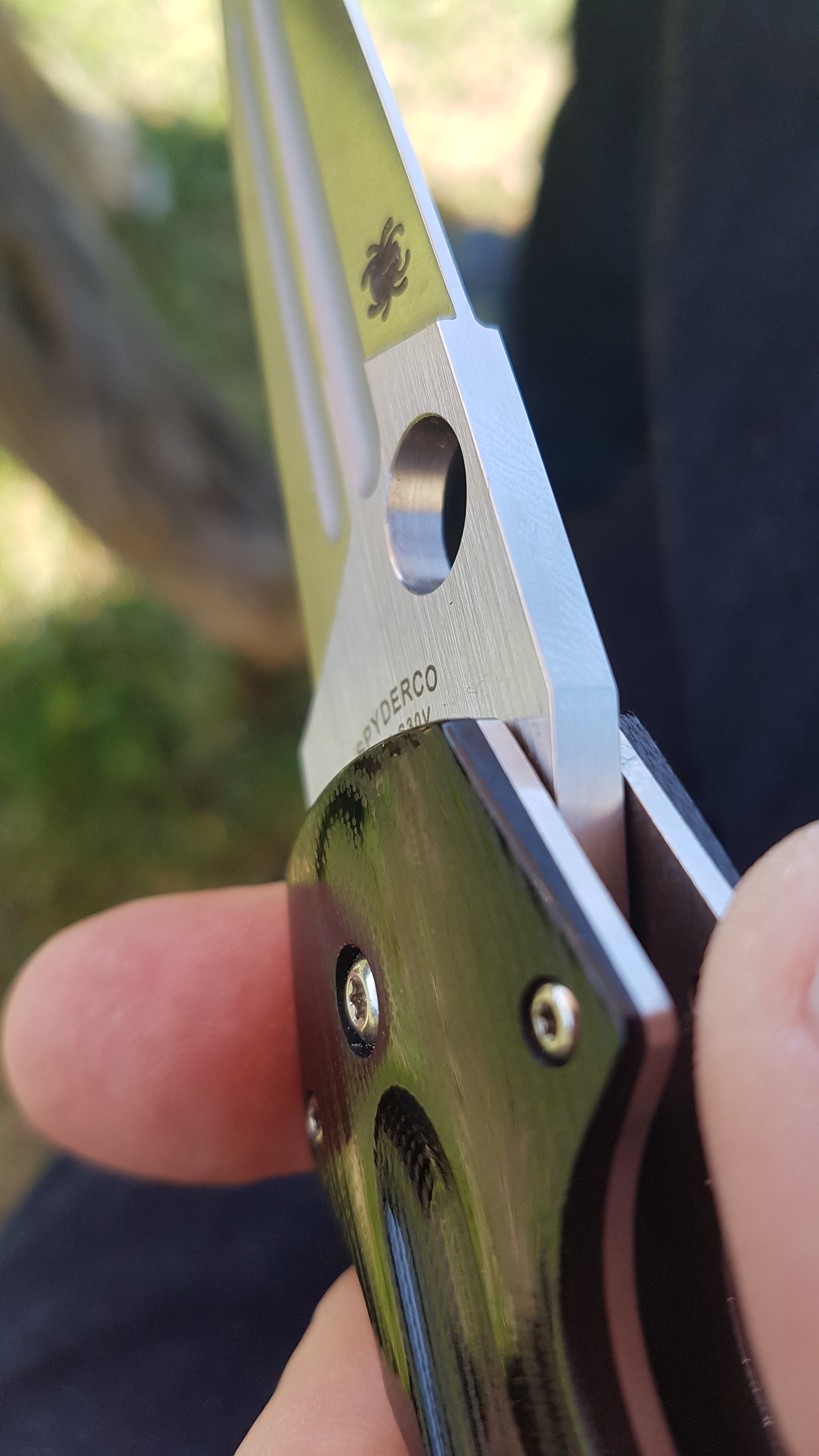
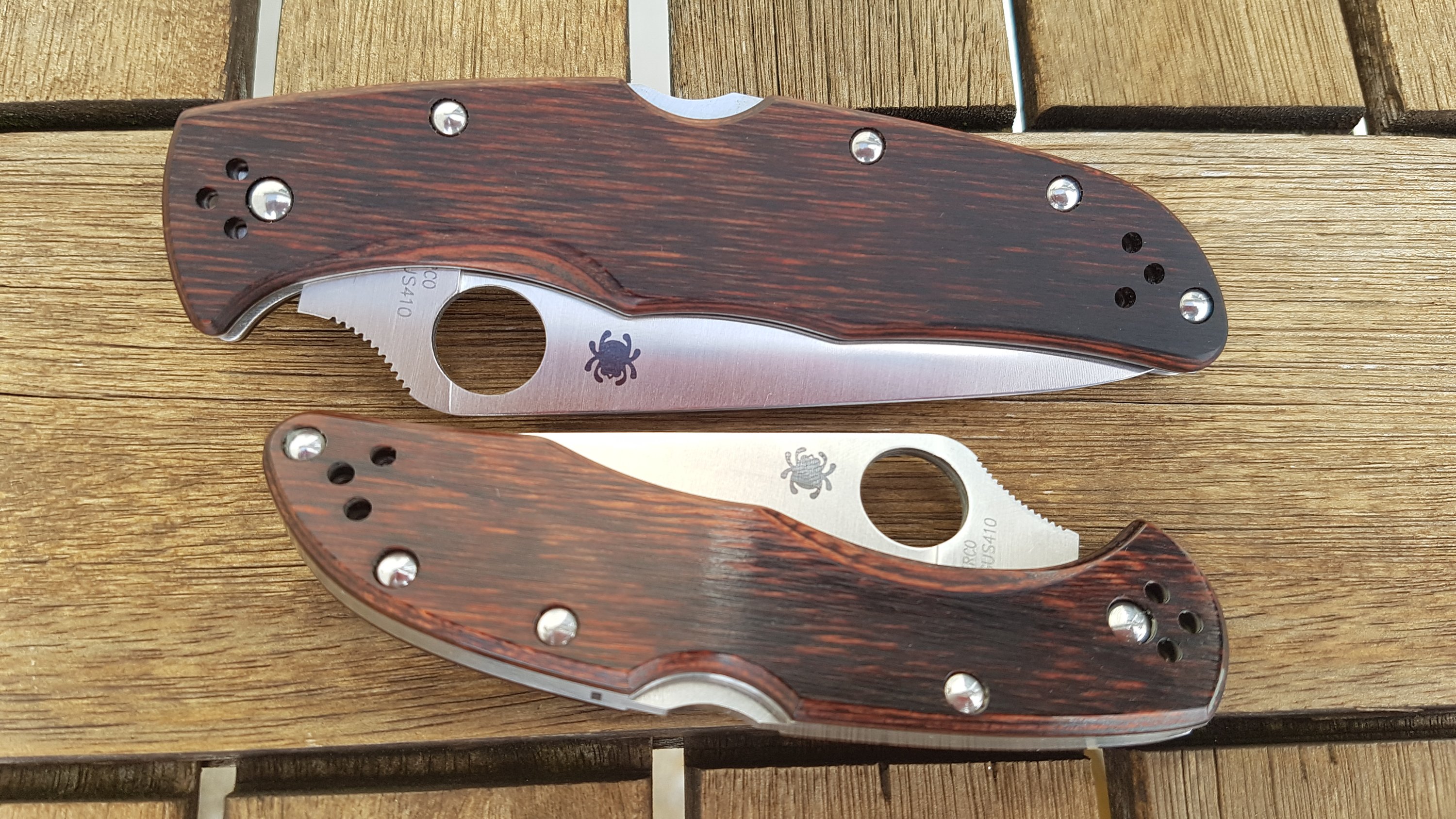
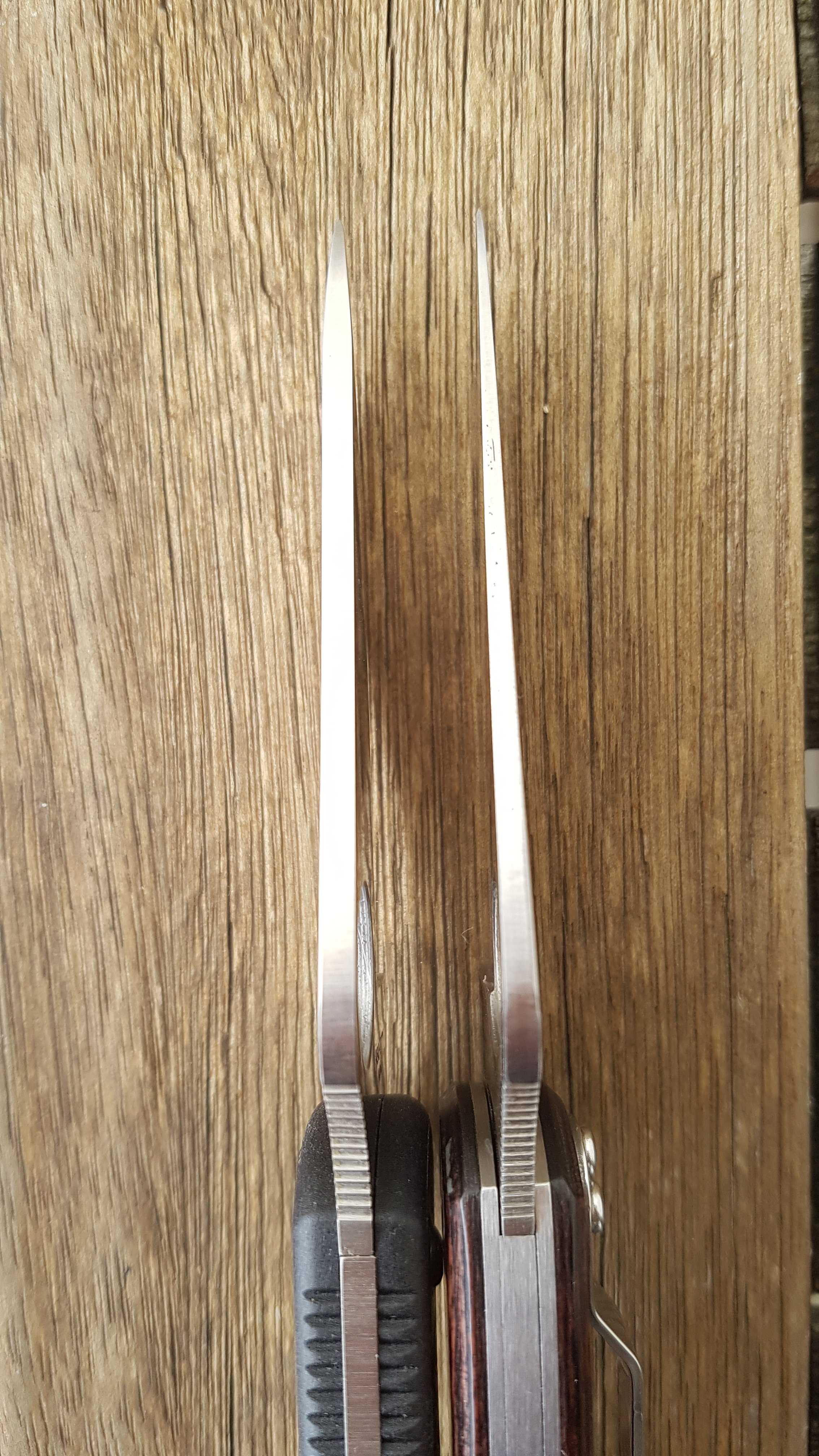
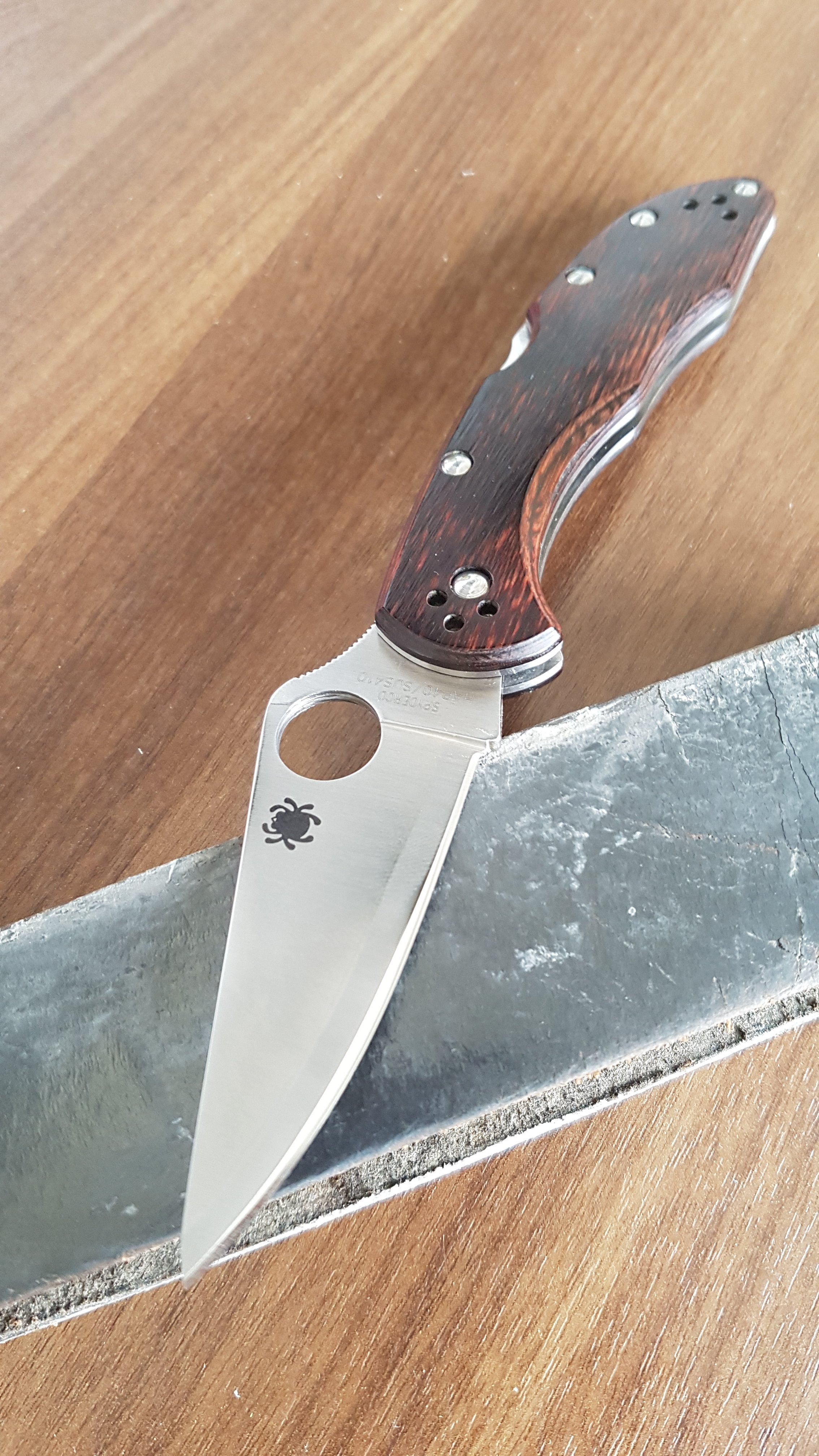
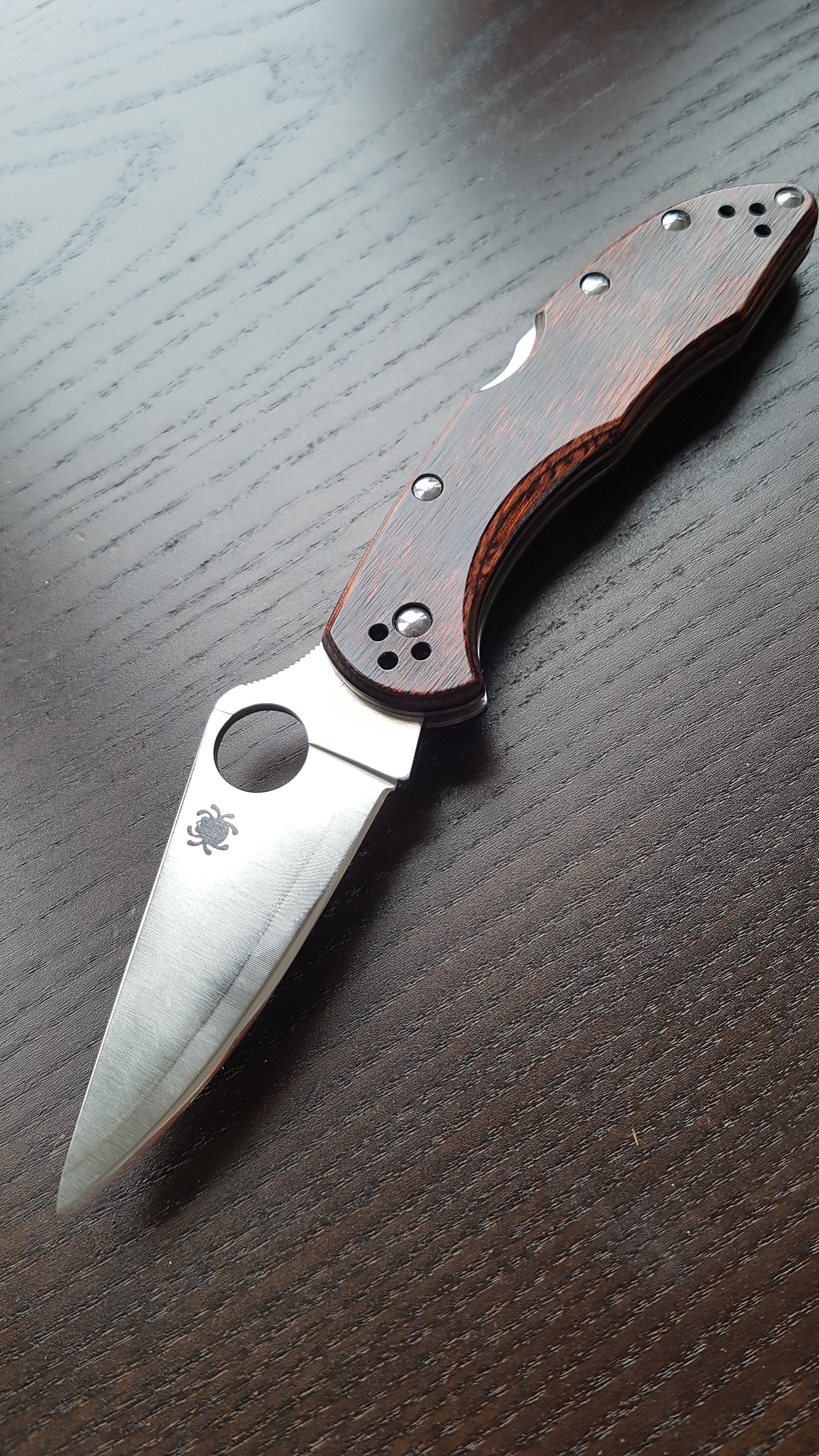
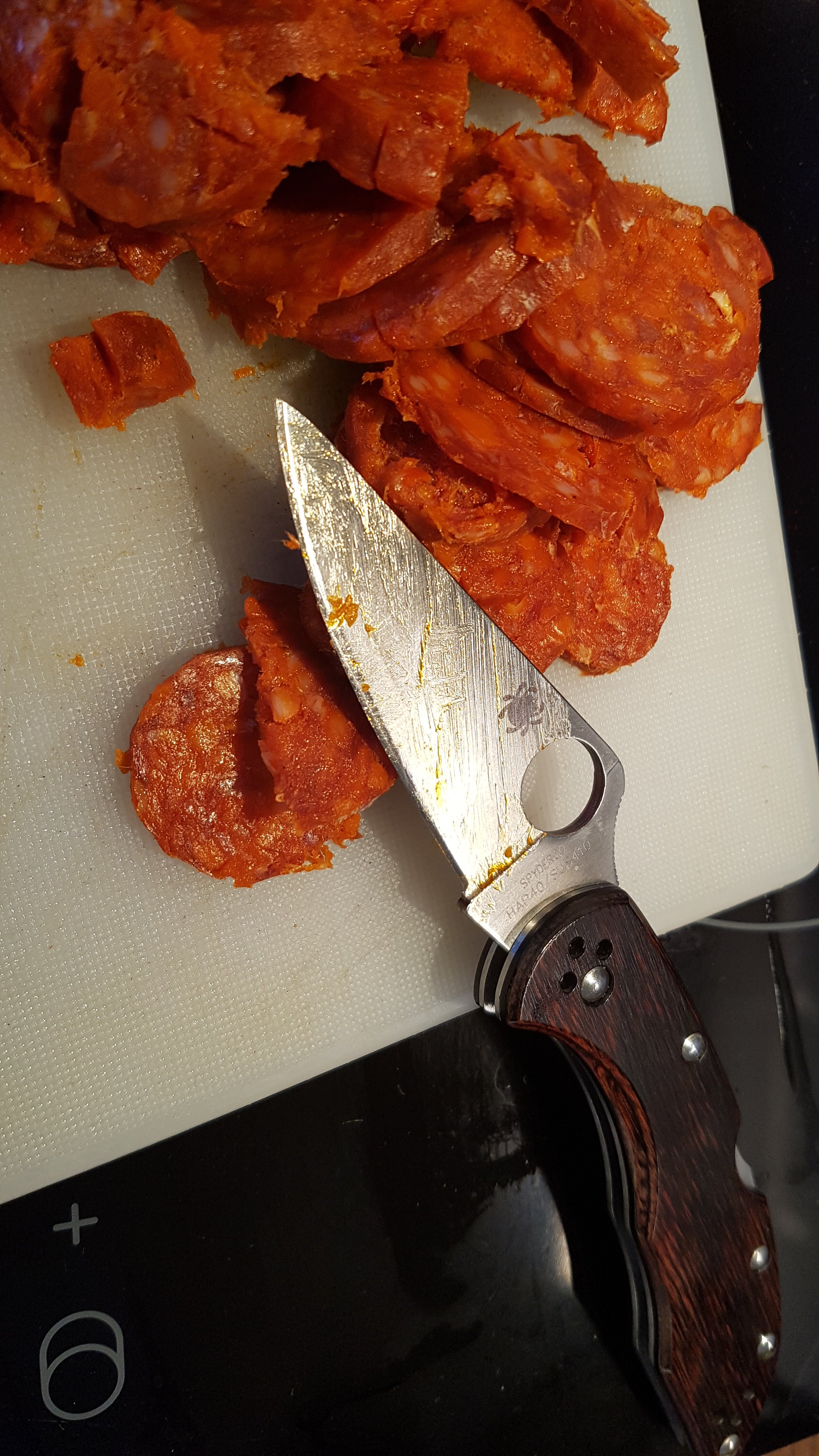
Spyderco C11WDP Delica HAP40/SUS410 Pakkawood Handles, KnifeCenter Exclusive — Delicate Lady/Gentleman Folder.

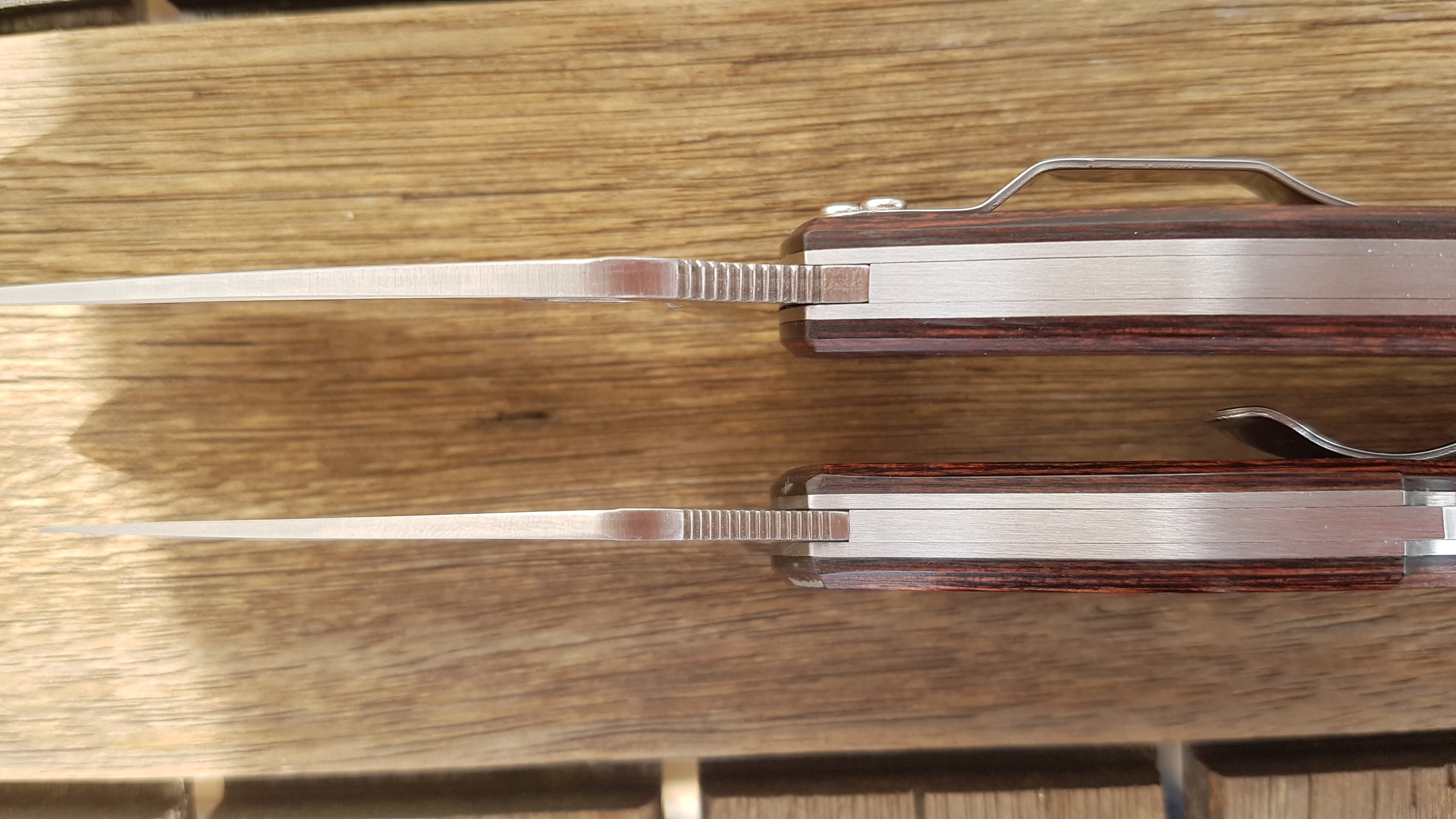
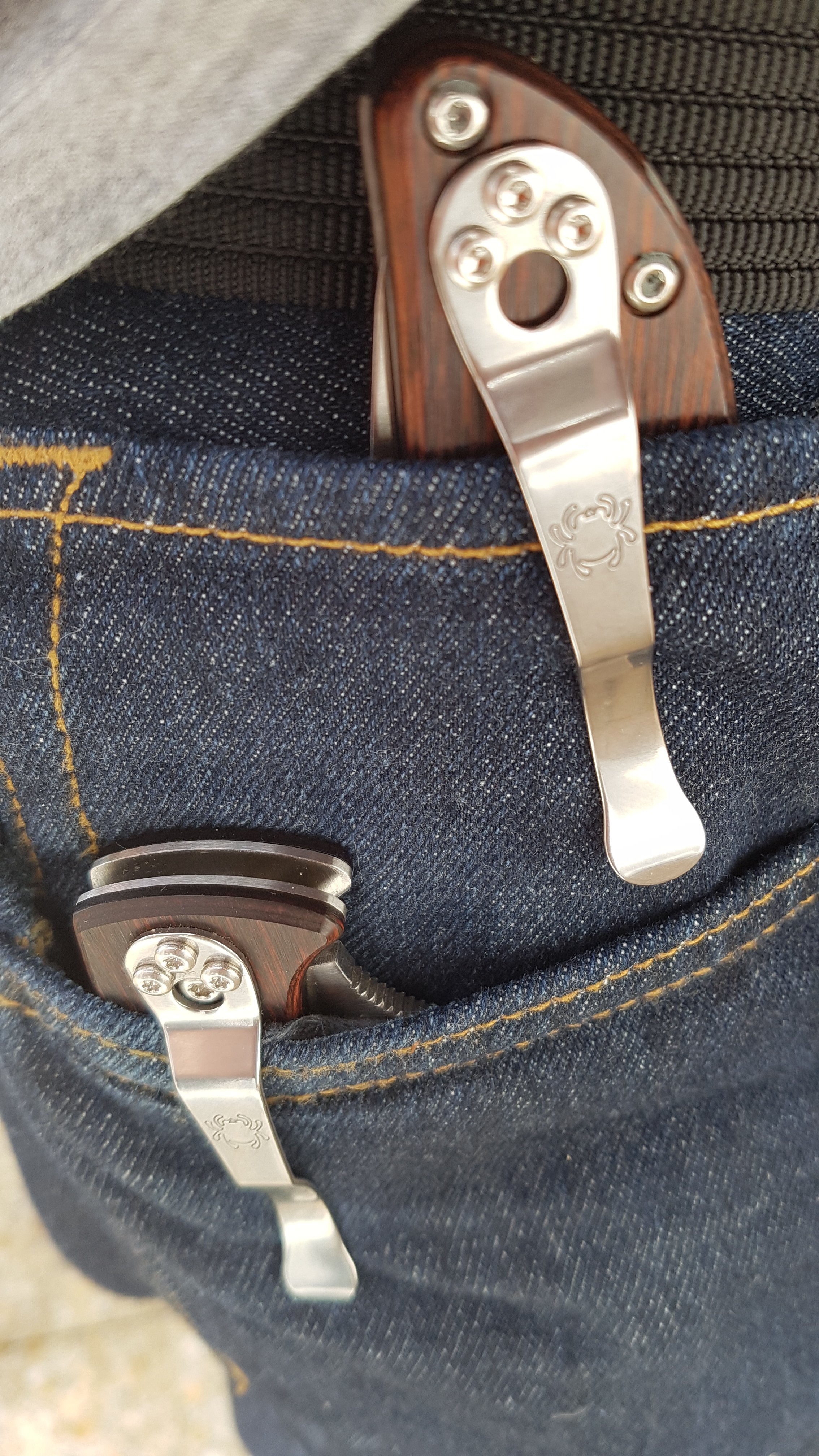
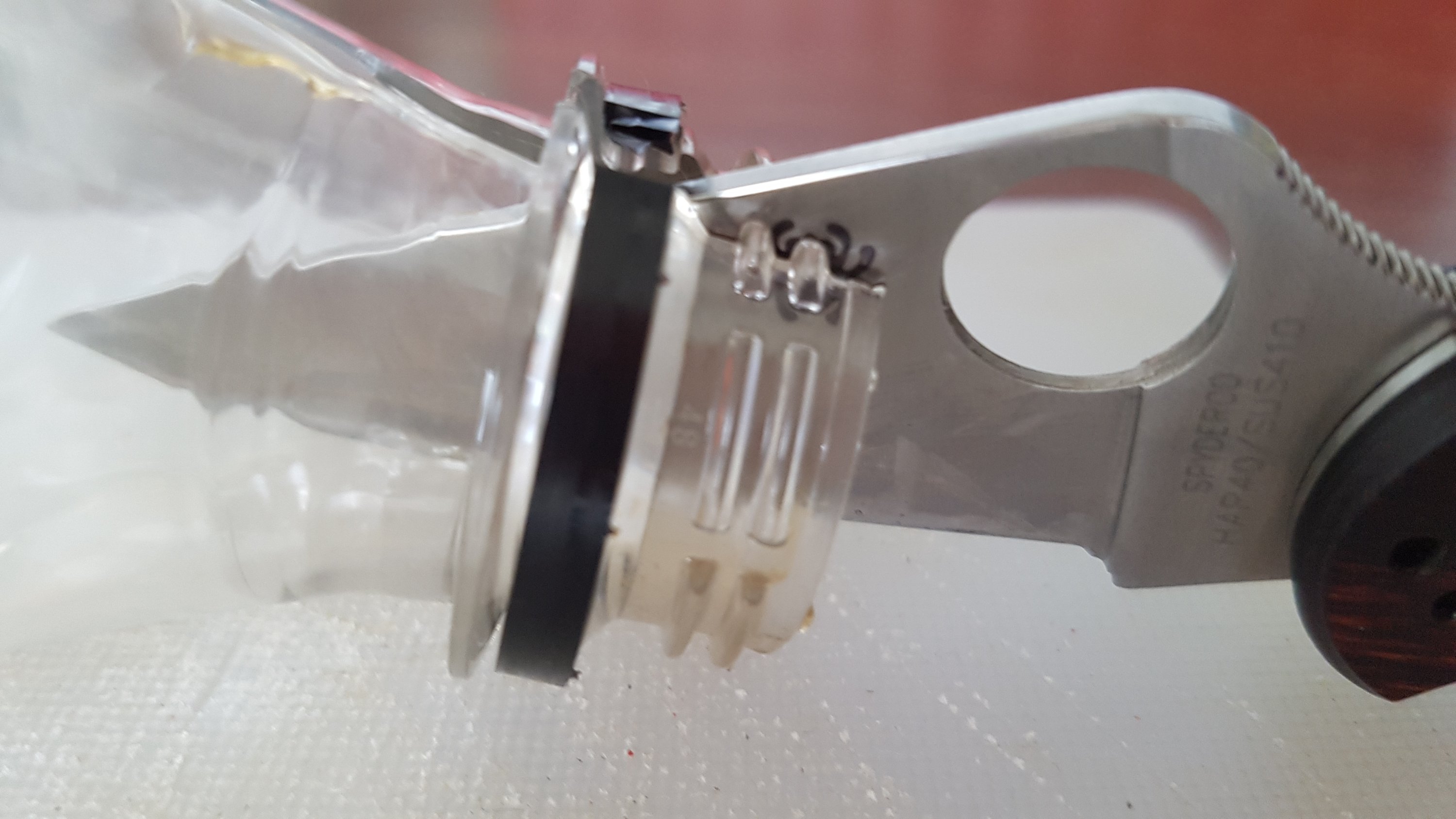
20170912_120344-011509878026.jpeg If the Endura with Pekkawood handles is too big for you, there is the Delica alternative ! Again it is IMHO the best version ever made of that legendary folder. I have bought it from the Knifecenter and Howard Korn which is really proud of his exclusive version have buffed the handle to a beautiful result. The Delica is not only a shorten version of the Endura, it got a thinner blade which gives great slicing and whittling power. Again this exclusive version got the clad HAP40/SUS410 blade and it gives you a powder metalurgy high speed alloy in a very thin stock. The blade got also now more lateral strenght than pure stainless steel. On the Delica with its thinner stock, again this pure slicing wonder ! With a little time you can hone it in a true razor. wp-image-136639233 The Delica got that status of pure EDC as it is small enough to be accepted easily by sheeples. The handle adds a touch of class to this little workhorse and the special alloy blade gives more power to the “matter separator”. wp-image-325305067 This is little gem is just asking to be clipped and use. As you can notice there is no laynard hole on the version. That can be an issue for some people who use lanyard to retrieve the knife form their pocket and enhance the handle in length. It’s a matter of taste. I love lanyards on knives pictures but I don’t like them on my EDC and the Delica’handle is perfect for my hand. wp-image-149091807 I have kept the clip mounted for tip up carry, on the opposite of the Endura which I open with a Spyderdrop. But the Delica is so smooth that it can be “spyderdropped” too. wp-image-1199844387 Fit and finish are stellar and you can noticed the 0.5mm of difference in the blade’s stock. Also the full steel backspacegives a feeling of reliable and solid construction pushing the envelop in that great design. wp-image-258000545 You can notice the hole in the clip which is not in use when mounted on the knife butt compared to the Endura’s mounted on the axis clip. Again, you choose your ways they are four positions. All in all the Delica KnifeCenter’s special edition is an incredible EDC and a must for collector. It’s the kind of knife which can not leave your pocket as it’s flat, soft and precious and with the Endura it forms a true daishō (大小) !! wp-image-77962487 wp-image-1669896613 wp-image-175933760 Eventually after some carrying, I have found that tip down carry was fun. The Delica is one of the shortest Spyderco I can spyderdrop as easy and faster than my Millie. Adding a lot of fun! Also the edge once thinned can use the fact HAP40 is ready for a mini apex. I was cutting bottle my Zero Tolerance could not goo through.
Spyderco Lil Nilakka Edge rolling out fixed and used.

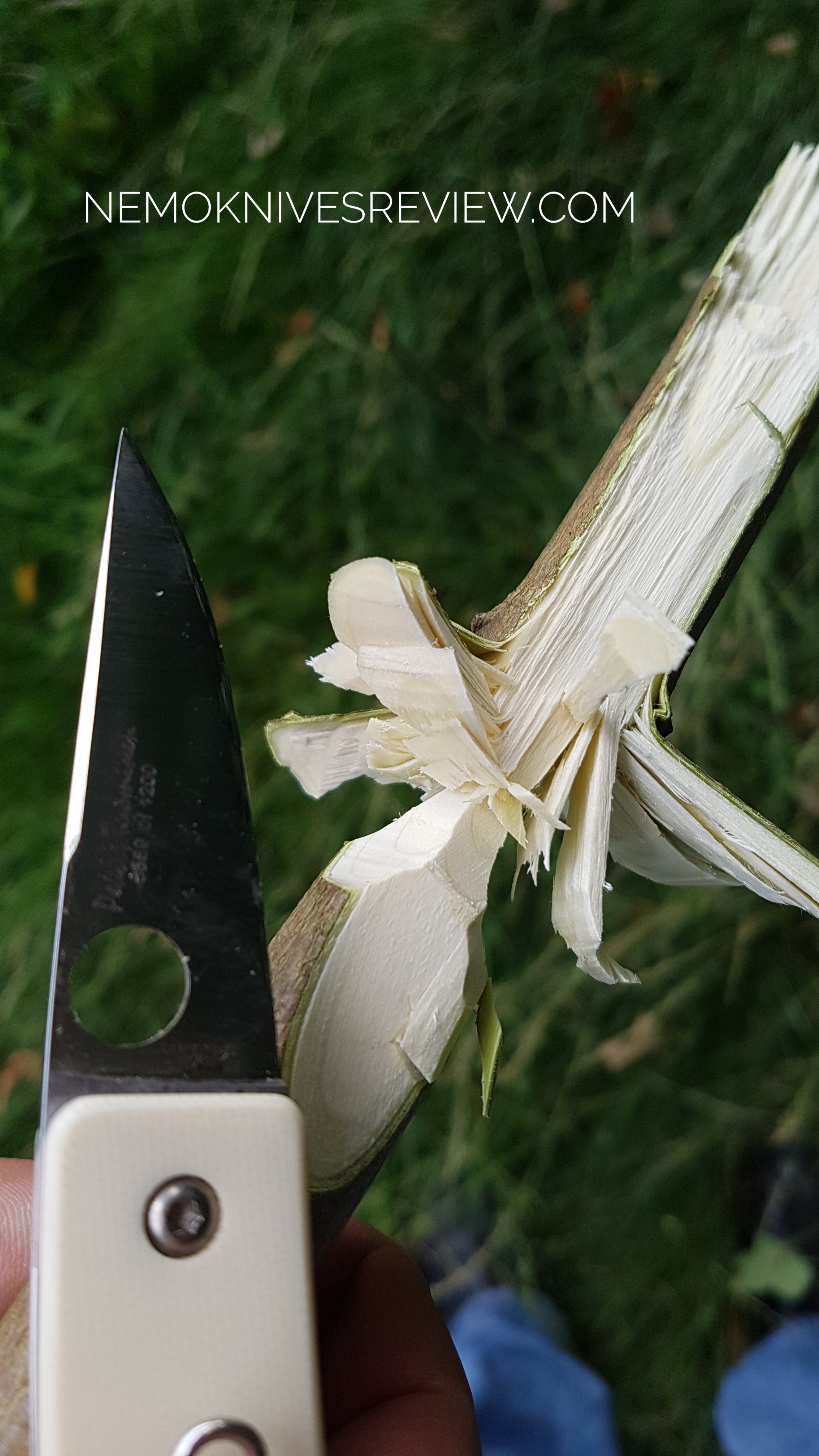
On my Lil Nilakka You can see the damage on the edge. Dry bambu cutting…

It looks spectacular but it’s just a matter to realign the edge.

It hurst on a new knife !!… Ouch !


In fact I also use diamond to remove some material.


15 minutes later, it is back for more.

Simple tools…

30 minutes later on leather;
Convexing gives a little more material behind the edge. No more stability issues.
And it’s not giving up on performances.


20170724_124624-0120170729_171500-0120170729_171439-0120170729_171301-0120170729_171539-0120170729_171546-0120170729_171651-0120170729_170954-01