In the rarefied atmosphere of high-end custom knives, true elegance rarely announces itself loudly. It reveals itself slowly — through proportion, restraint, tactility, and detail. The Des Horn 450# belongs to this vanishing category of objects: creations that do not merely impress, but seduce.
This is my second folder from my friend Des Horn. (I have known Des and Linda for nearly twenty years now. Des Horn is a true legend in knifemaking — a master of his craft, and above all, a gentleman.)
The first folder was a beautiful Imvubu that was unfortunately confiscated at airport security after traveling clandestinely beneath my wallet. I was absolutely convinced my pockets were knifeless — until the metal detector disagreed.
Watching it disappear into the security tray was genuinely heartbreaking. Losing such an elegant piece because I was sprinting to catch a flight for a TF1 reportage made the whole scene feel even more absurd. Some objects are replaceable. A Des Horn never truly is.
Des knew about this very first-world tragedy, and after nearly ten years I finally decided it was time to own another of his beautiful knives. I asked him which folder, among all his creations, was his personal favorite.
His answer came immediately: “The 450#. My favorite.”
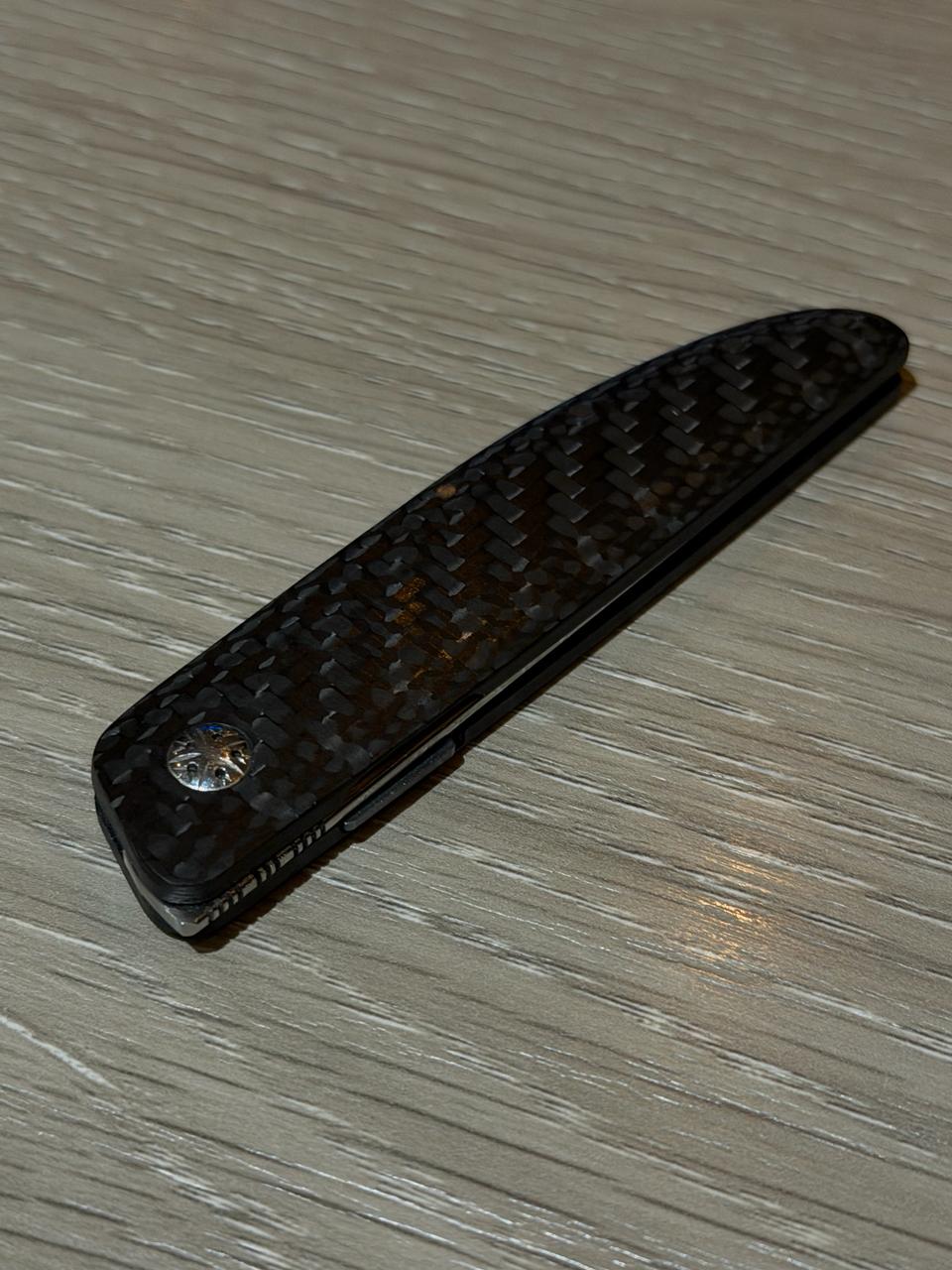
(Pictured here is the 450# my friend Jan Dirk has bought from him 15 years ago. Perhaps JD’s favorite in all his collection. Actually Pascal Jaffre also have one…)
He told me he would find a particularly unusual piece of carbon fiber for it and also:
“This one has a “2K” finish .
Very tough and durable and is used on exotic cars to finish the carbon fibre. It was the only one I had finished without a clip.”
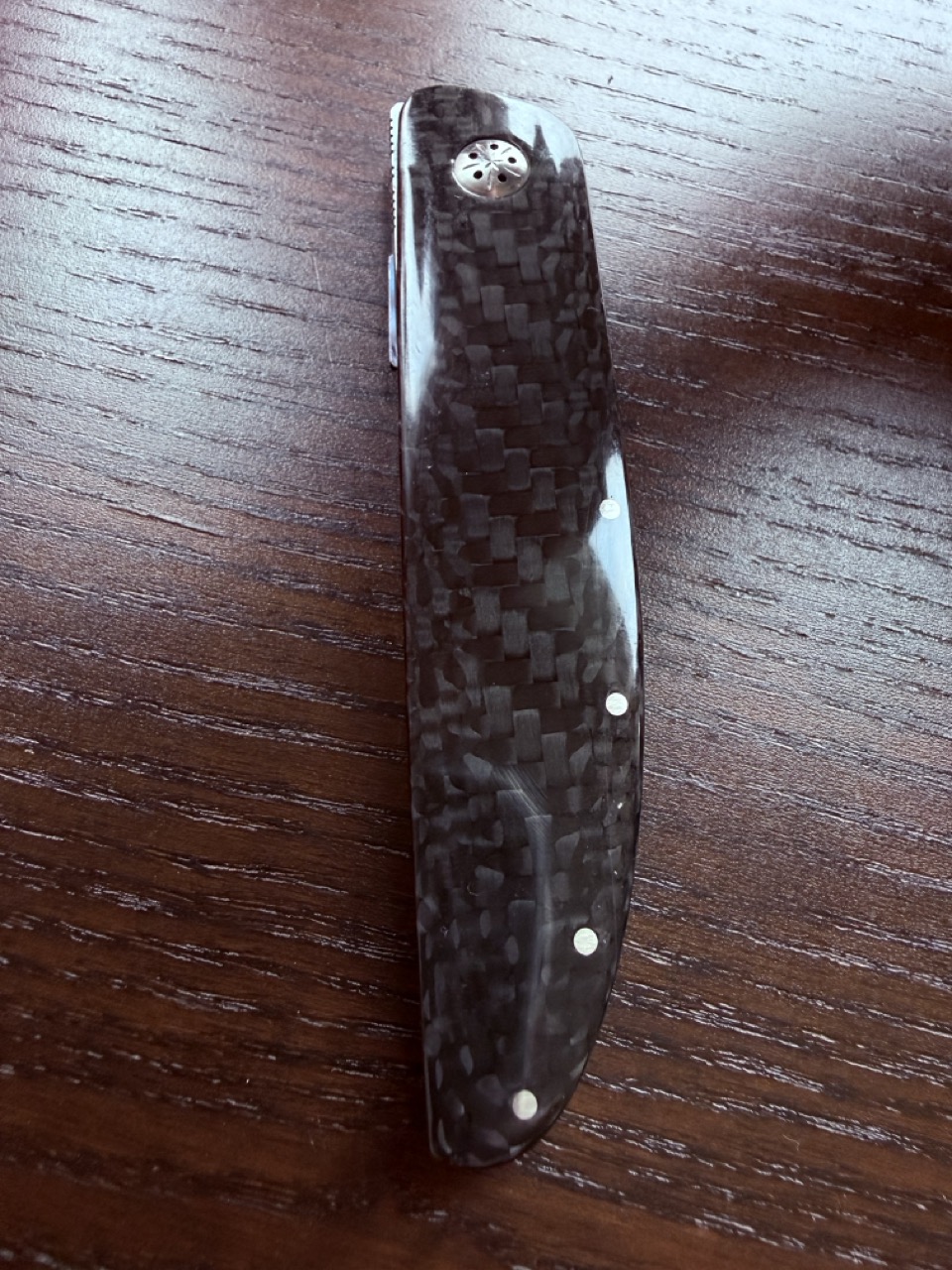
And then came the part that genuinely left me speechless: this special 450# was a gift from Des Horn for my 60th birthday !!!
In a world where so many luxury objects are reduced to transactions, gestures like this carry something infinitely more valuable: humanity, generosity, and the quiet bond between two friends.
I will remain forever grateful. Thank you Des and Linda.
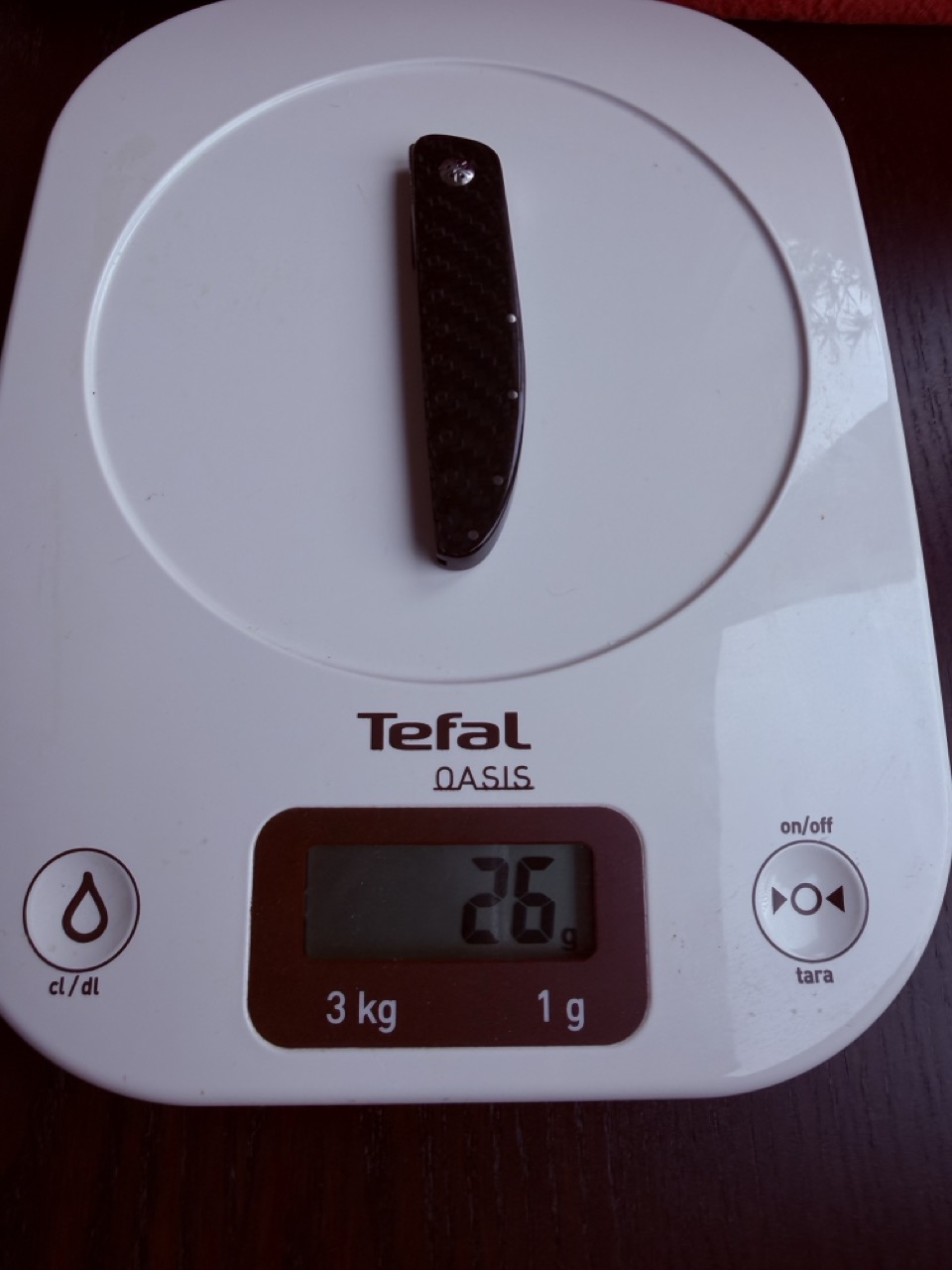
At just 26 grams, the knife found its name almost immediately: Spirit. Spirit of Cape Town.
Partly for its impossible lightness, as if the knife itself barely belonged to the physical world. And partly for what the French so beautifully call la part des anges — the angel’s share — that invisible portion reserved for time, memory, and things too precious to truly possess. A knife this light almost feels immaterial. A gift like this certainly does like a whisper of steel…
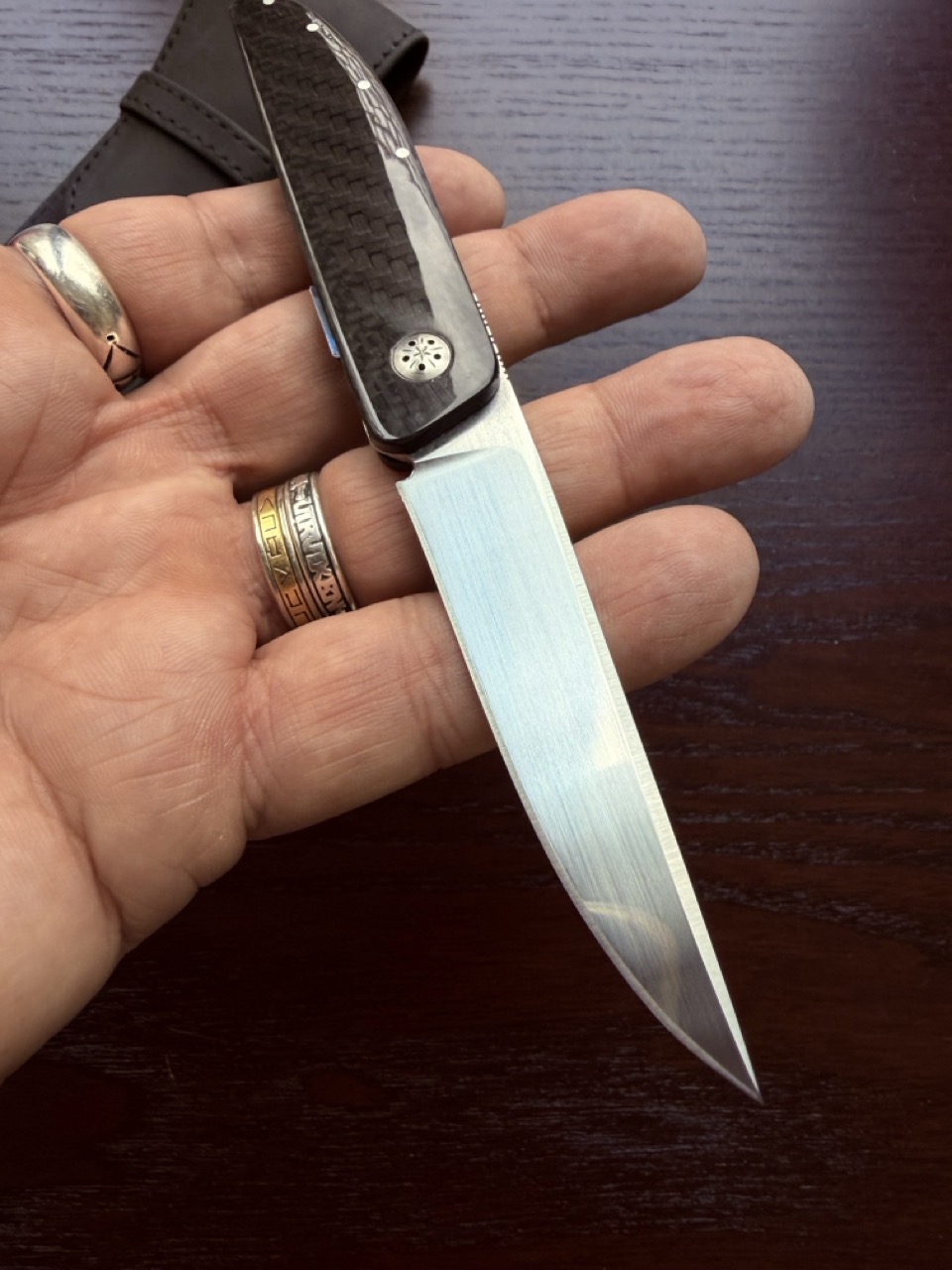
Spirit is less a cutting instrument than a study in modern aristocratic design. At first glance, it appears almost understated. There are no aggressive lines, no tactical theatrics, no oversized hardware screaming for attention. Instead, the knife radiates the confidence of an object that knows exactly what it is.
And what it is, precisely, is one of the most refined lady and gentleman’s folders ever conceived.
The first sensation delivered by the 450# is disbelief.
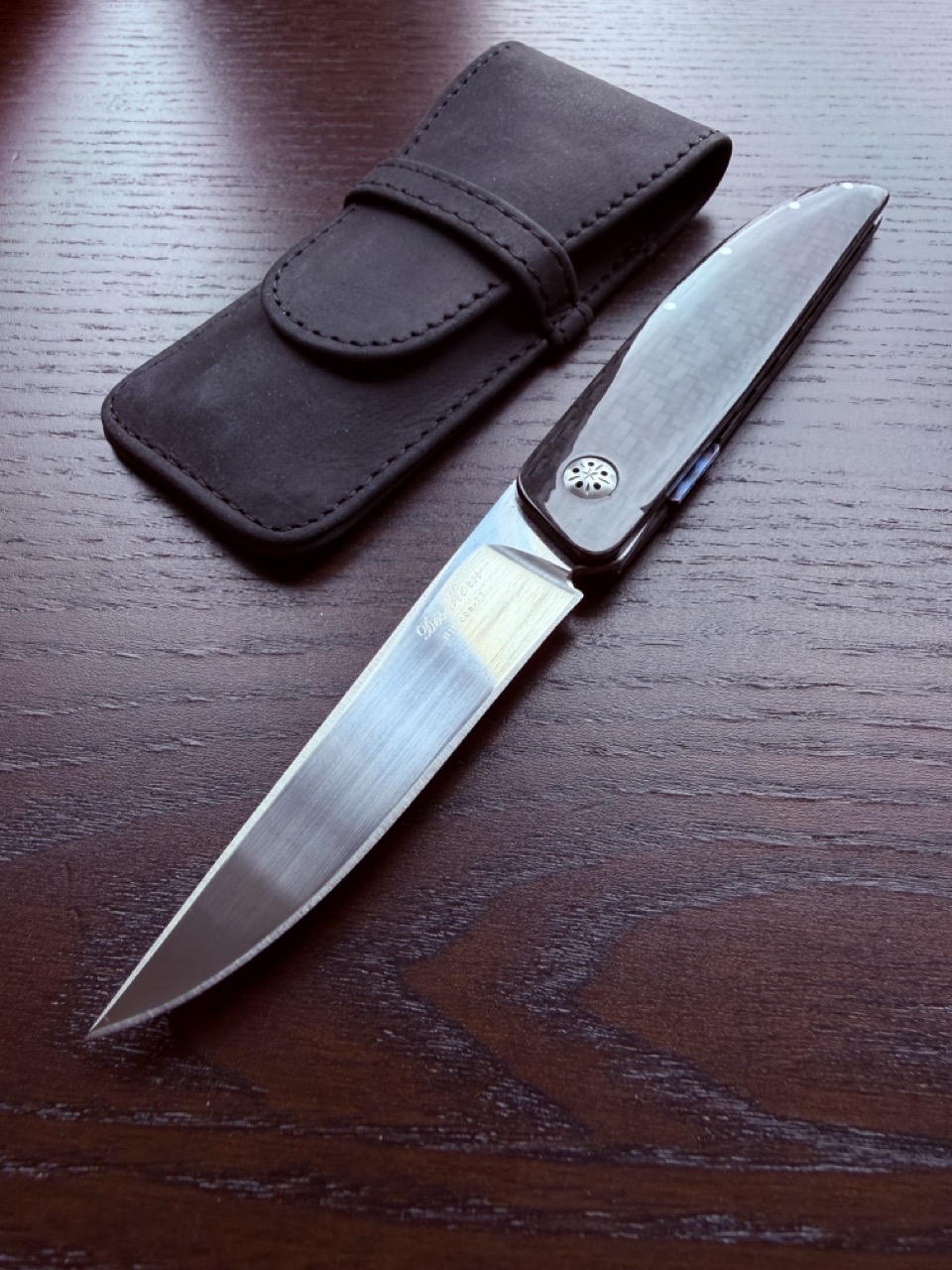
Lift it, and the knife nearly disappears in the hand. Versions executed in marbled carbon fiber and Nitrobe 77 steel have achieved almost mythical status among collectors for their featherlight construction — a level of portability more often associated with luxury writing instruments than with precision folders. Yet despite its ethereal mass, the knife feels structurally complete, almost architectural.
This paradox defines the genius of Des Horn.
Spirit (like all 450#) is not designed around brute force. It is designed around intelligent refinement. Every millimeter exists for a reason. The slim silhouette slips effortlessly into tailored trousers or the inner pocket of a cashmere jacket, becoming part of the wearer rather than an accessory imposed upon him.
In an era obsessed with excess, the 450# celebrates discretion.
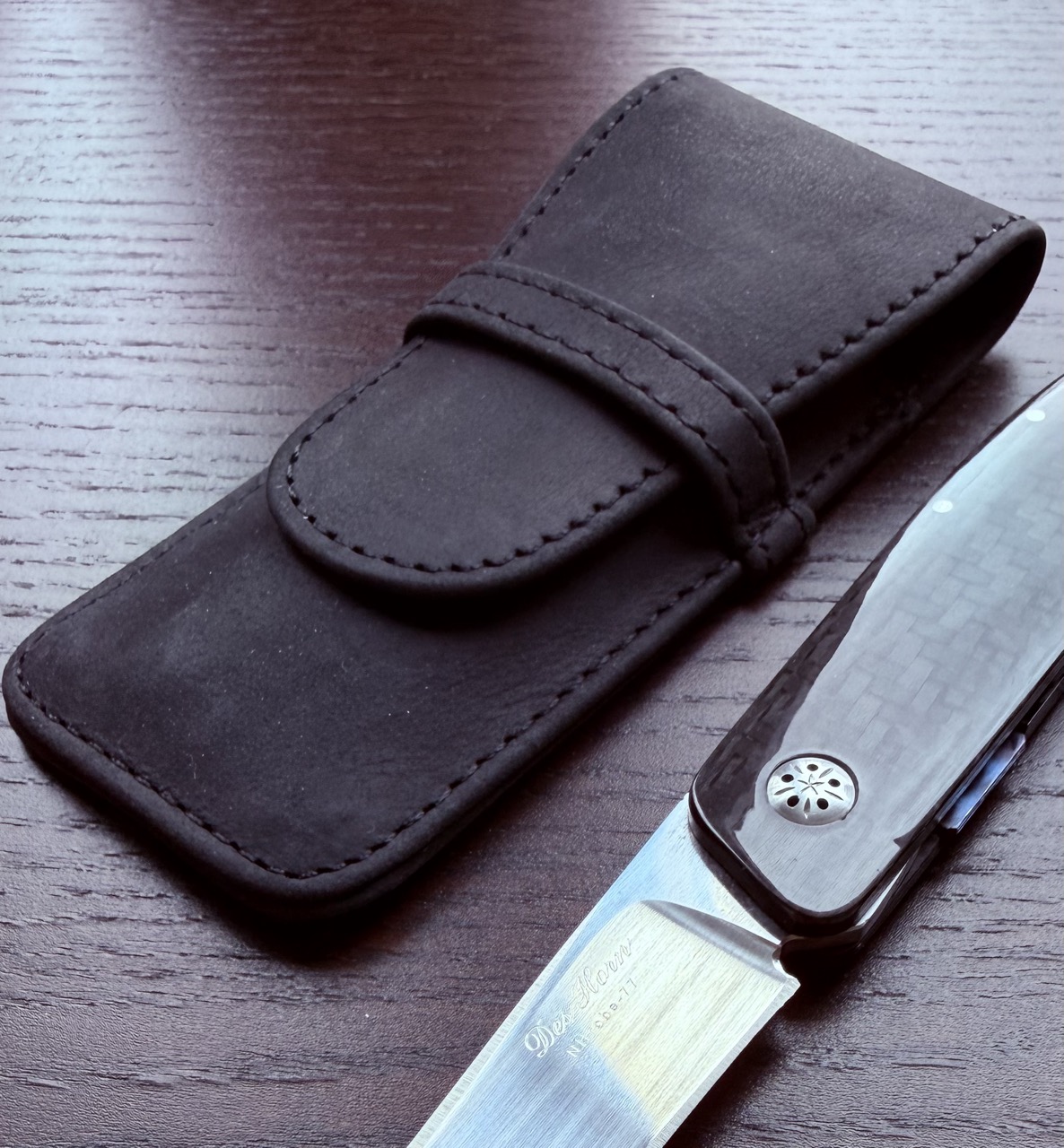
It is housed in a beautiful buffalo leather pouch, a cocoon-like case designed to protect it from pocket dust and daily abrasion. Simple, tactile, and perfectly in tune with the object it carries — an understated sheath for something already defined by discretion and refinement.
Once in your hand, the action itself is an exercise in restraint.
Unlike modern folders engineered for theatrical deployment, the 450# front flipper unfolds with subtle precision. The movement feels intimate, almost private — a mechanism intended for connoisseurs rather than spectators. The blade opens with silky assurance, revealing tolerances that reflect decades of accumulated craftsmanship.
It is also fully ambidextrous — intuitive, balanced, and genuinely enjoyable to handle. That sense of play is not incidental; it is part of the design language.
Because beyond precision and materials, pleasure matters. Fun, tactile satisfaction, and the simple desire to interact with the object are essential parts of how I evaluate and experience it.
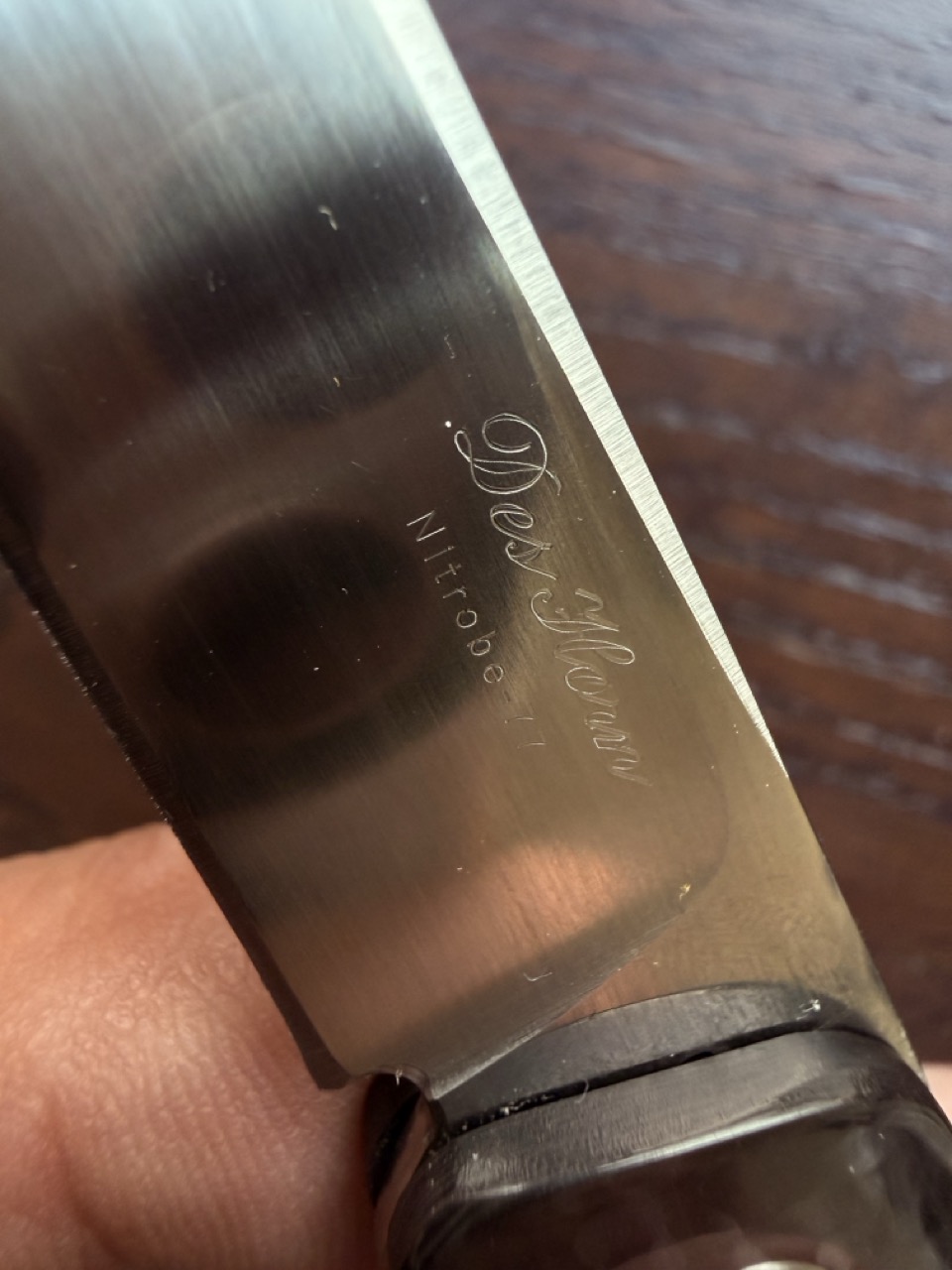
The blade is crafted from Nitrobe 77.
Ah… another legendary steel.
Revered among enthusiasts for its extraordinary corrosion resistance and exceptional cutting performance, Nitrobe 77 manages to combine qualities that rarely coexist: hardness, toughness, edge retention, and remarkable flexibility.
It takes — and keeps — an incredibly sharp edge, while remaining astonishingly resilient under stress. Des himself has demonstrated its elasticity in some videos that almost seem unreal the first time you watch them. And for those familiar with the world of performance steels, seeing Shawn Houston — the magician behind CPM 15V heat treatments for Spyderco — speak highly of Nitrobe 77 says a great deal about the material’s reputation among serious knife people.
Quoting Shawn on the Bladeforums:
“Nitrobe77 has 0.9% wt N which it uses some of to make nitrogen martensite like lc200n. Some of that nitrogen total is locked up as Cr2N that dissolves at the temperatures N77 requires to harden. That nitrogen put in solution will become nitrogen martensite when quenched. The nitrogen that did not dissolve stayed behind in a nice, small compliment of Niobium rich nitrides (MN type/NbN) which don’t dissolve in the Chromium and Austenite as readily as the Vanadium at the temperatures required to harden Hence why we have Nb dominant MN type. These Nitrides are just not at enough volume to make this steel a “rope killer”
The Nitrobe 77 is unique thanks to it’s ability to get harder than the other Nitrogen martensite rich steels like Lc200n thanks to being designed for precipitation strengthening. Using liquid nitrogen cryogenics and multiple high tempers after quenching allows the steel to raise up in HRC each cycle after hardening thanks to converting retained austenite that didn’t transform from quenching to hard martensite and also the nitrides precipitating from the martensite and coarsening to the necessary sizes to strengthen the steel to resist displacement and make up for the shrinking of martensite.
It is possibly the best sharpening steel in the world and can operate at 62-64rc, The Nitriding process combined with this chemistry and volume makes a fine structured steel. The wear resistance is not super high however.
Nitrobe77 is one of my favorite steels but unfortunately due to cost, difficulty making at the steel mill and it not being cost effective to heat treat mass production. It has finally been discontinued by Damasteel as of 2018, they kept it alive for a long while.
I feel Des Horn has done some amazing work with Nitrobe 77 and had helped the steel persist for a long time @Deshorn”
Des Horn heat-treated the Nitrobe 77 blade through a triple-cycle process, each stage followed by a carefully controlled cryogenic quench in liquid nitrogen. Three heat treatments. Three deep freezes. A complex sequence designed for pure performance — pushing Nitrobe 77 to its best toughness, and edge stability.
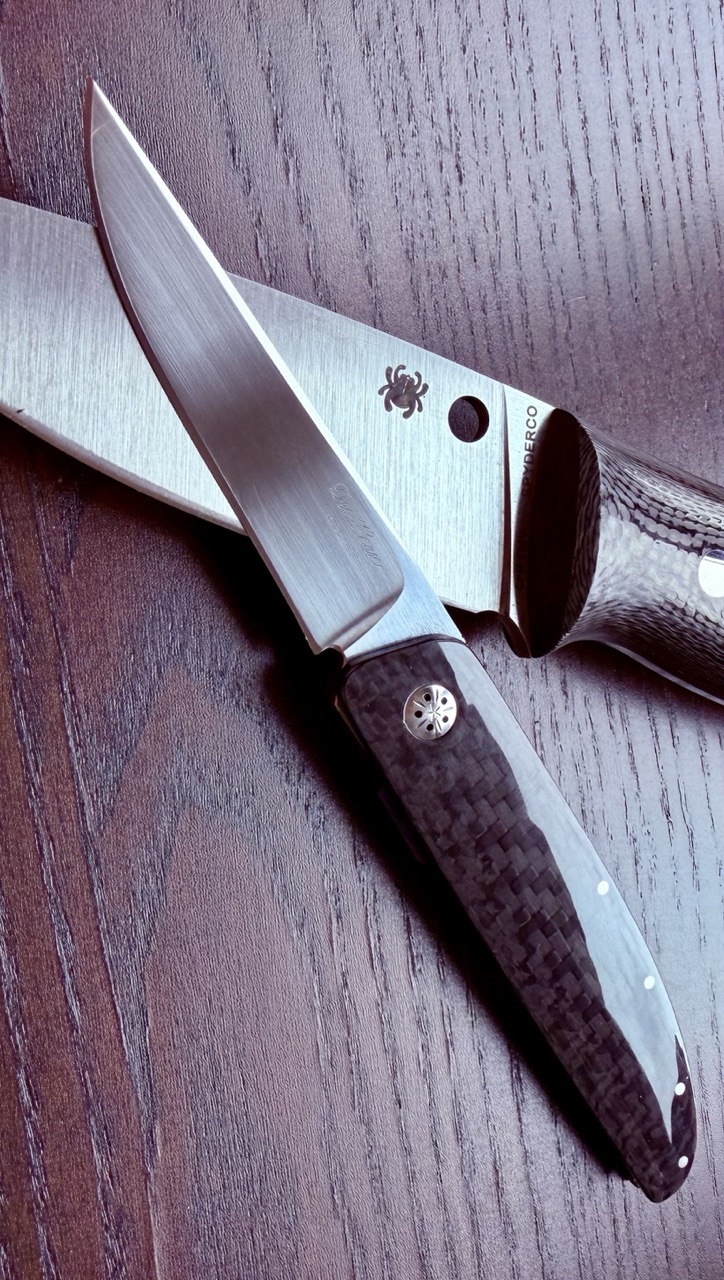
The phrase “gentleman’s folder” has become tragically diluted in recent years, attached indiscriminately to any small knife wearing carbon fiber. I feel like that 450# restores dignity to the term.
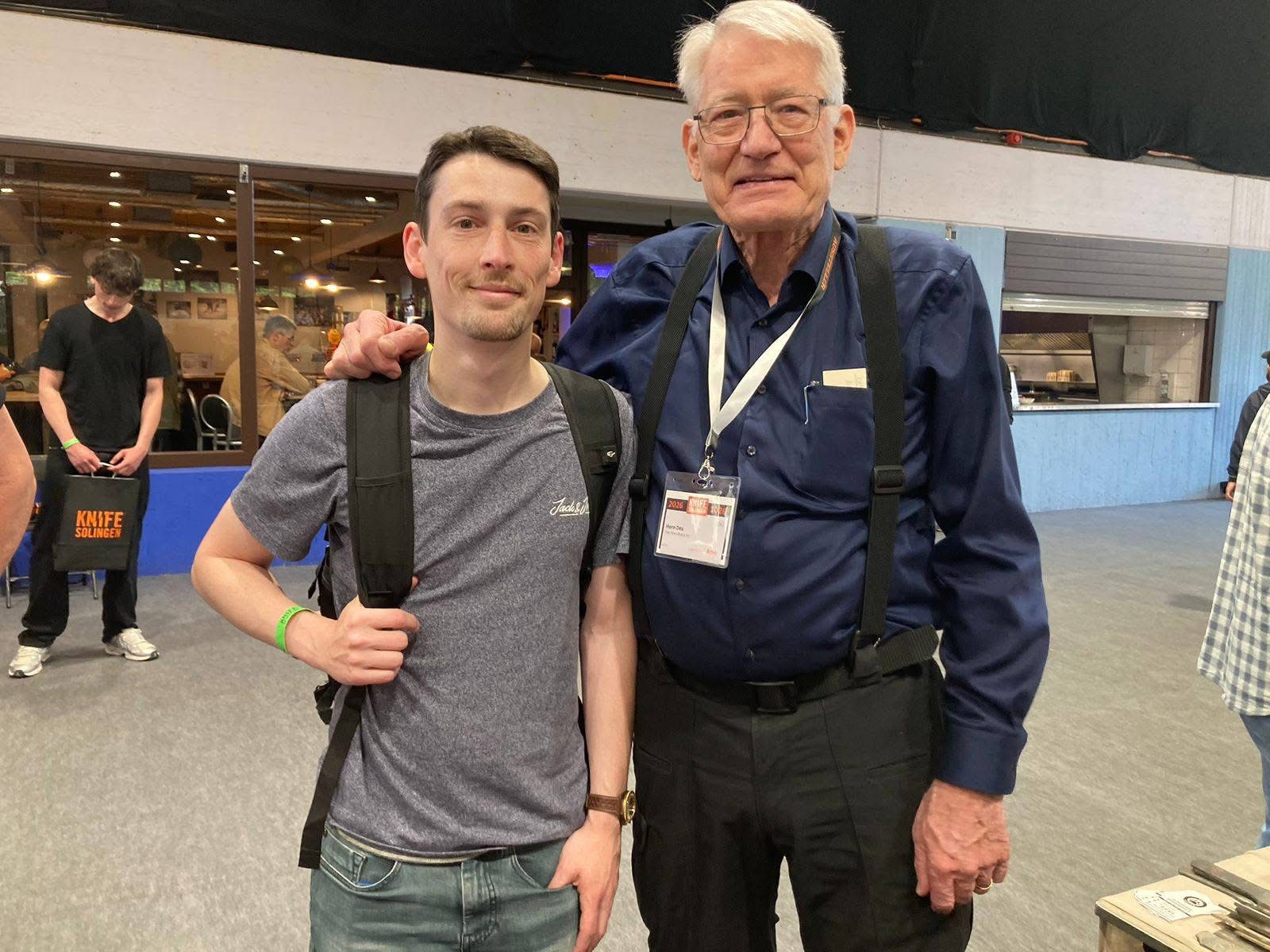
(My friend Robin had the opportunity to meet Des at Solingen 2026 Knife Show. He was the one who brought “Spirit” to me.
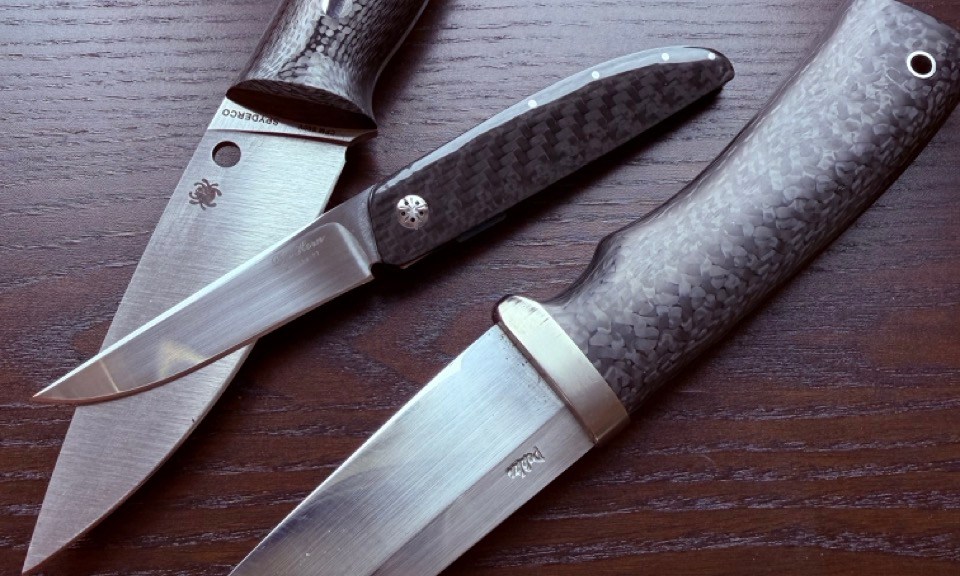
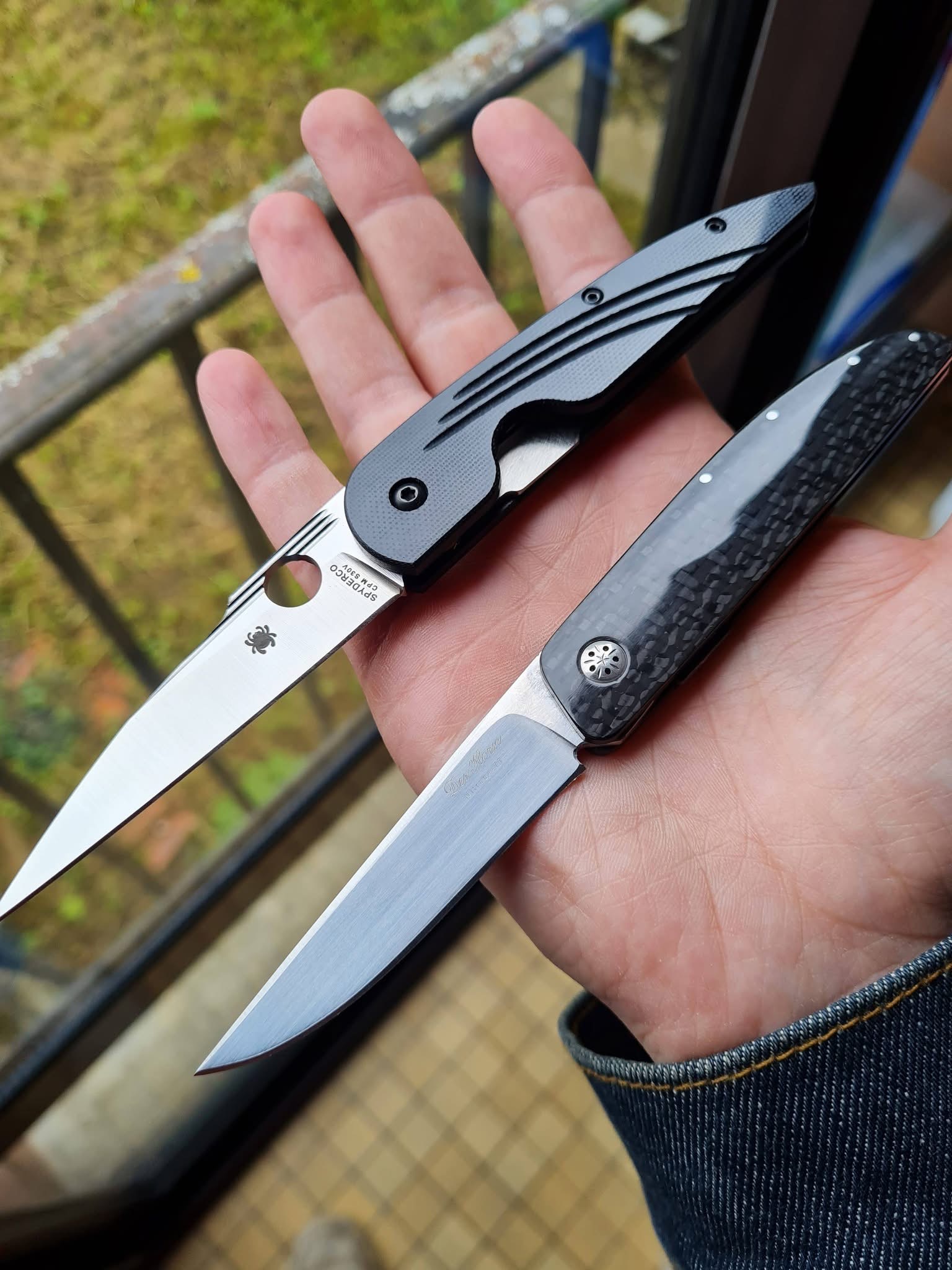
He even made a pic comparing the Spyderco C153GP and the custom made 450#.)
The 450# is a knife conceived for cultivated environments: the desk of an architect in Capetown, the leather seat of an Aston Martin crossing Mayfair, the quiet ritual of opening correspondence in a private office lined with walnut and books.
It is the kind of personal knife John Steed or Emma Peel might have carried — discreetly elegant, technically refined, and perfectly at home beside a tailored suit or inside the glove compartment of a vintage Bentley.
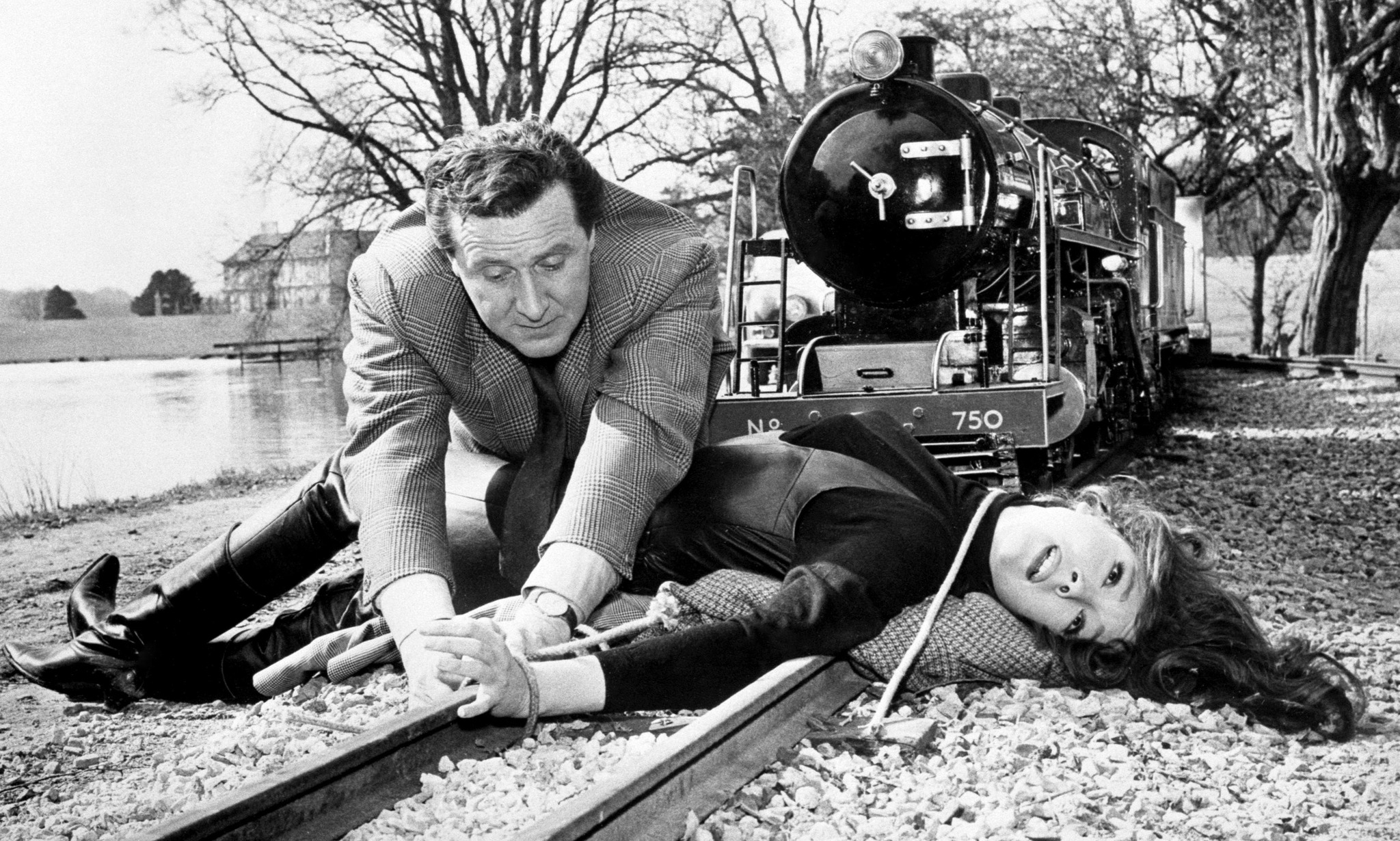
But like in The Avengers, one should never confuse kindness with weakness.
John Steed and Emma Peel always carried themselves with a kind of effortless civility that concealed something far more formidable beneath the surface.
Spirit follows the same logic.
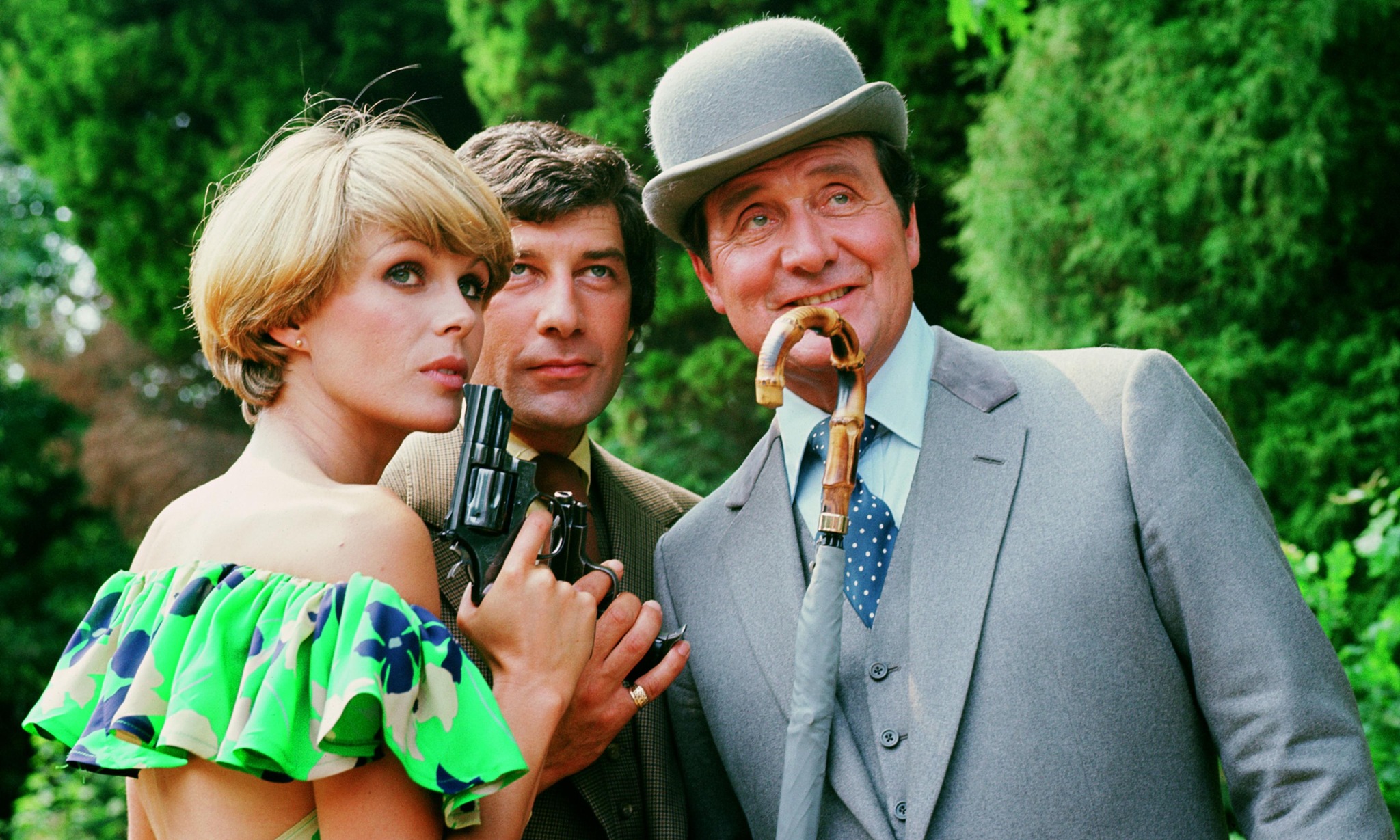
(And what about the New Avengers? A testament to that spirit is the collaborative work Des has done with James Purdey & Sons, creating a knife truly worthy of the Purdey name. Fans of Joanna Lumley will especially appreciate the reference.)
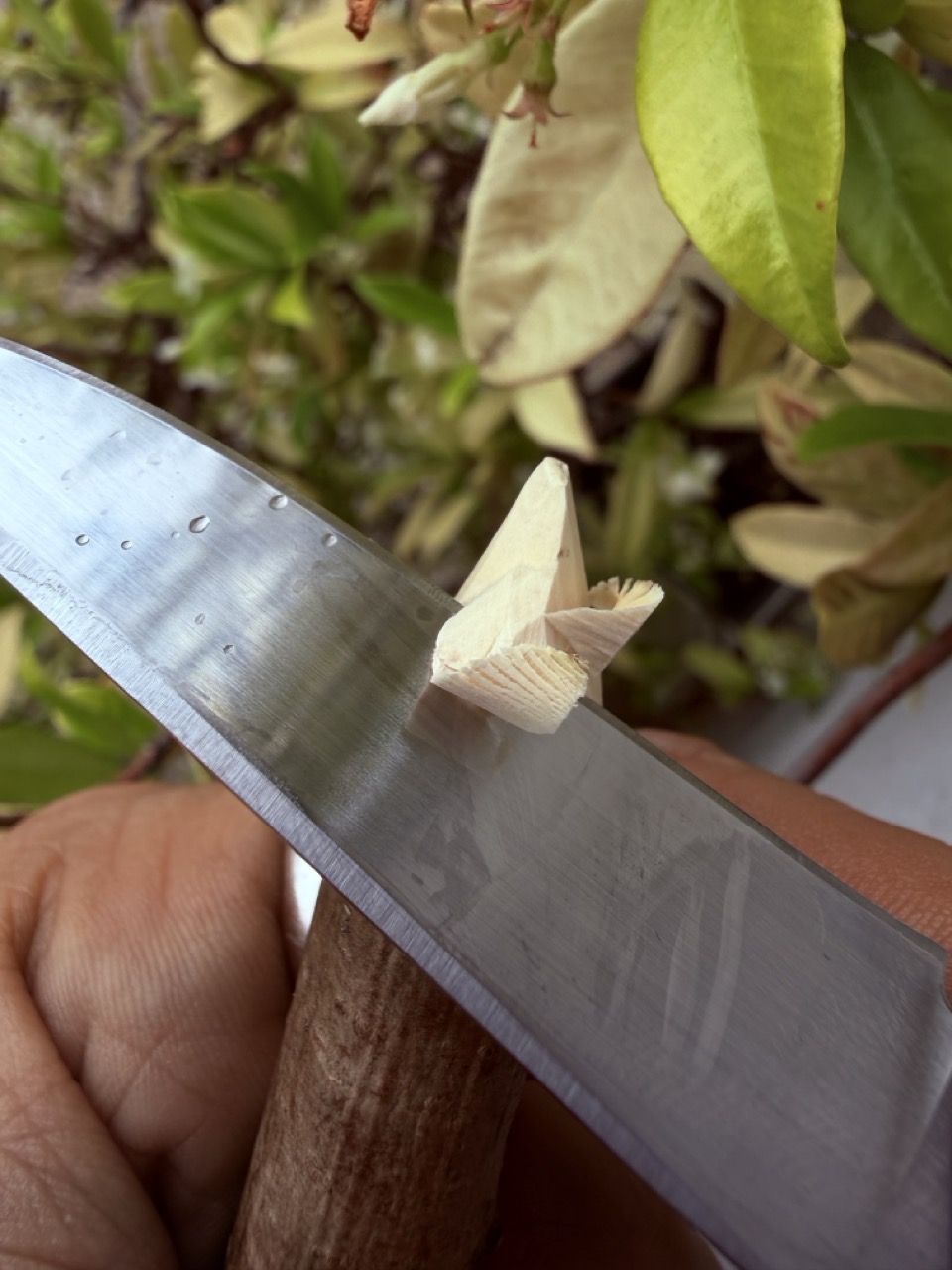
It may be feather-light in the hand, but it is anything but fragile. The marriage of advanced carbon fiber and Nitrobe 77 gives it a structural toughness that belies its weight. This is not delicacy — it is engineered resilience, refined to the point of invisibility. Hard as a nail, yes — but with the composure of something that never needs to prove it.
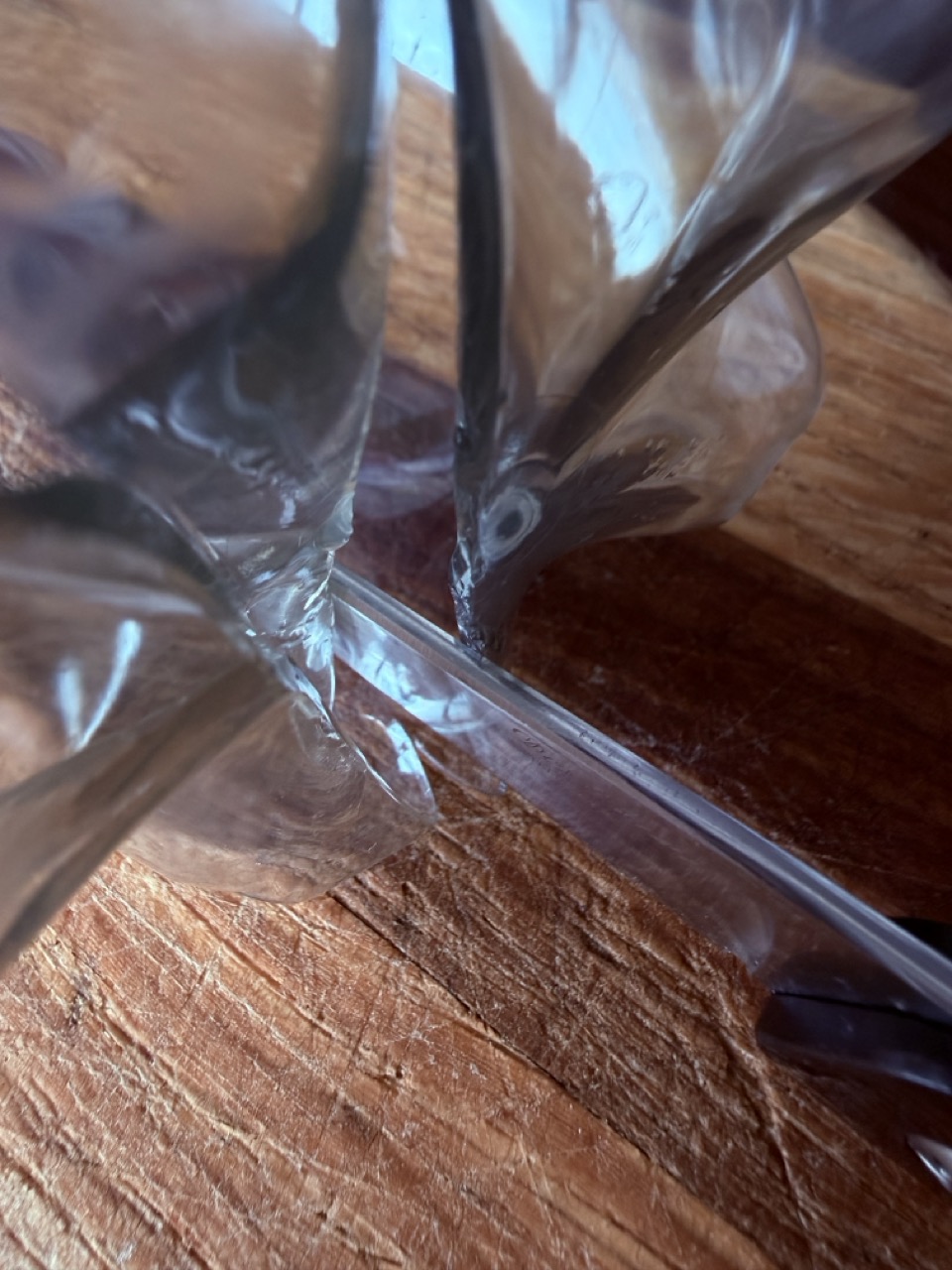
(And yes, it slices through plastic bottle bottoms like they’re made of warm butter…)
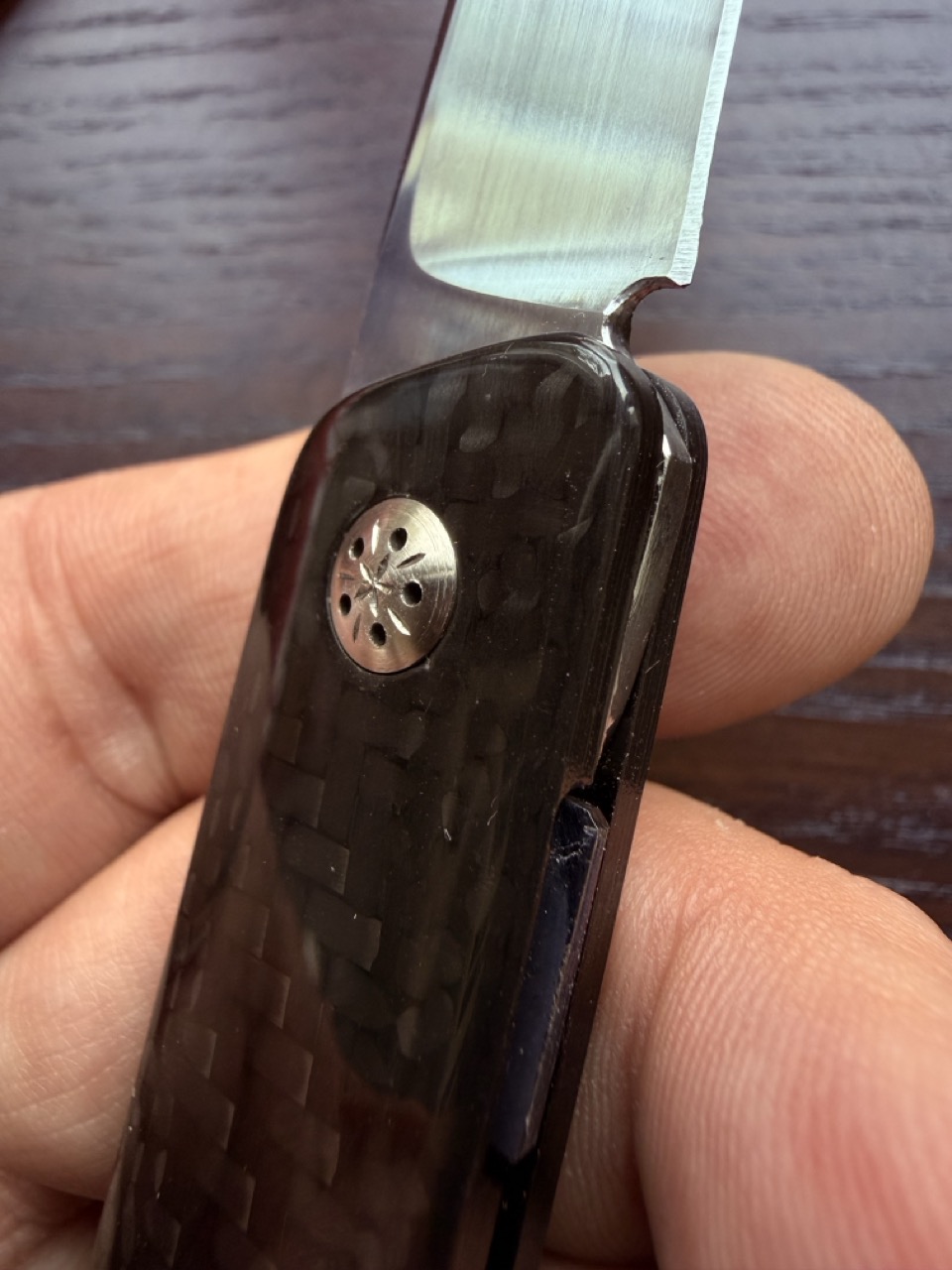
Ironically, its liner lock would also make it thoroughly unlawful in today’s UK. And yet, beneath its understated sophistication lies some remarkably serious engineering. The lock bar itself is crafted from Grade 5 titanium and fitted with a silicon nitride detent ball rated at an astonishing HRC 93. Tiny details perhaps — but precisely the kind that reveal the obsessive level of refinement behind a Des Horn folder.
And like all great luxury objects, it communicates identity.
Carrying a Des Horn does not suggest aggression or preparedness.
It suggests discernment.
I heard that among serious collectors, the 450# has acquired an almost cult-like reputation precisely because it avoids spectacle. Owners speak of the knife with unusual affection, describing it less as gear and more as a companion piece — something lived with daily and appreciated continuously.
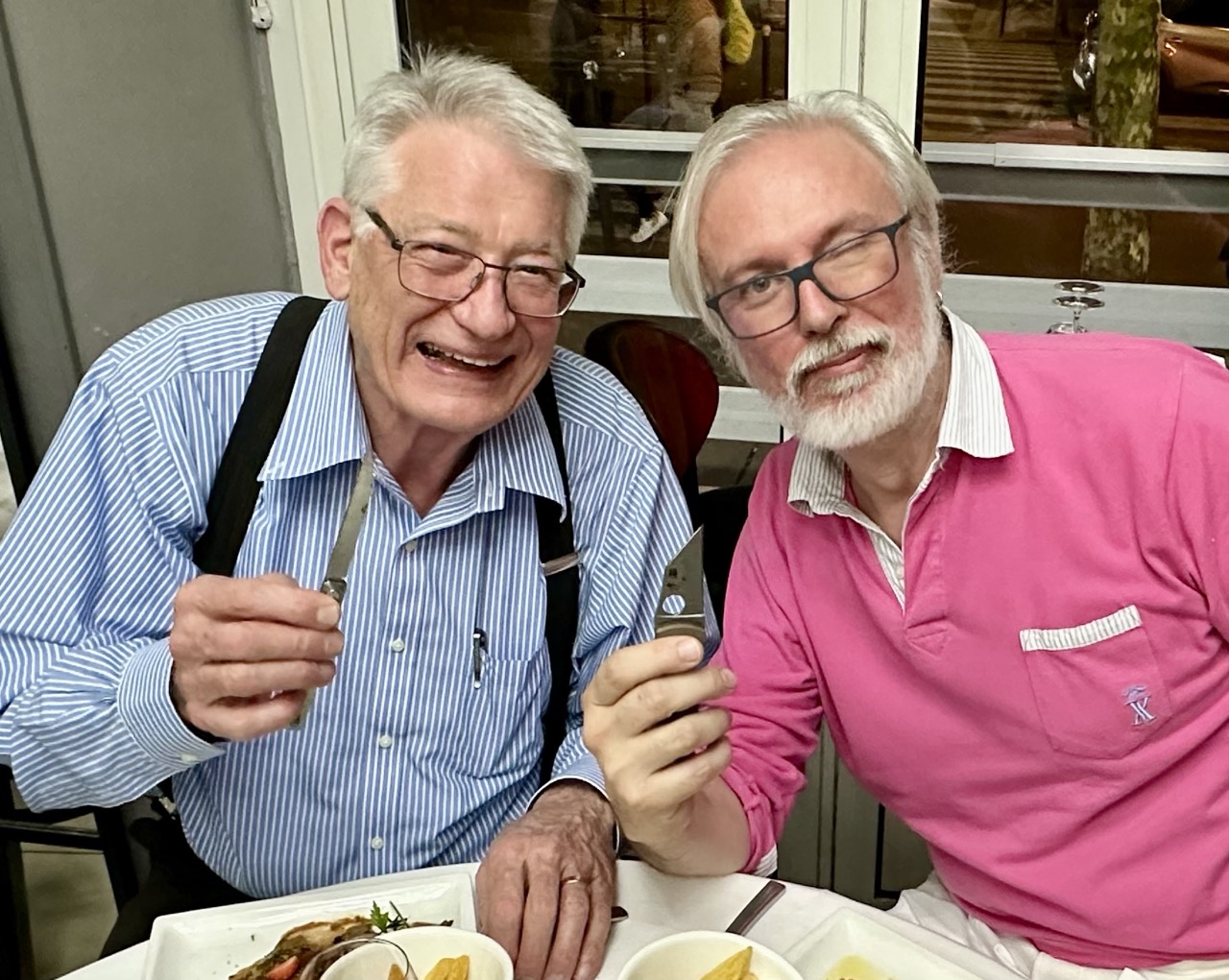
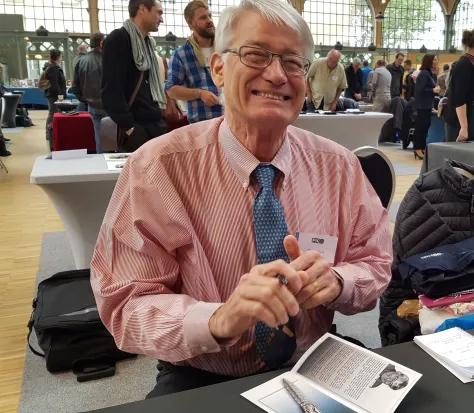
(Des holding his personal 450# at a dinner after the SICAC 2025 in Paris…)
Over more than four decades, Des Horn has developed a design language that blends technical mastery with sculptural sensitivity. His work often incorporates rare materials sourced from Africa itself: Gibeon meteorite, pietersite gemstones, mammoth ivory, hand-engraved titanium, and complex Damascus steels. (His workshop is so clean you could eat on the floor.)
Yet despite these exotic ingredients, his 450# never descends into ornament for ornament’s sake. Even the most elaborate versions retain purity of line and proportion.
That discipline is what separates luxury from mere decoration.
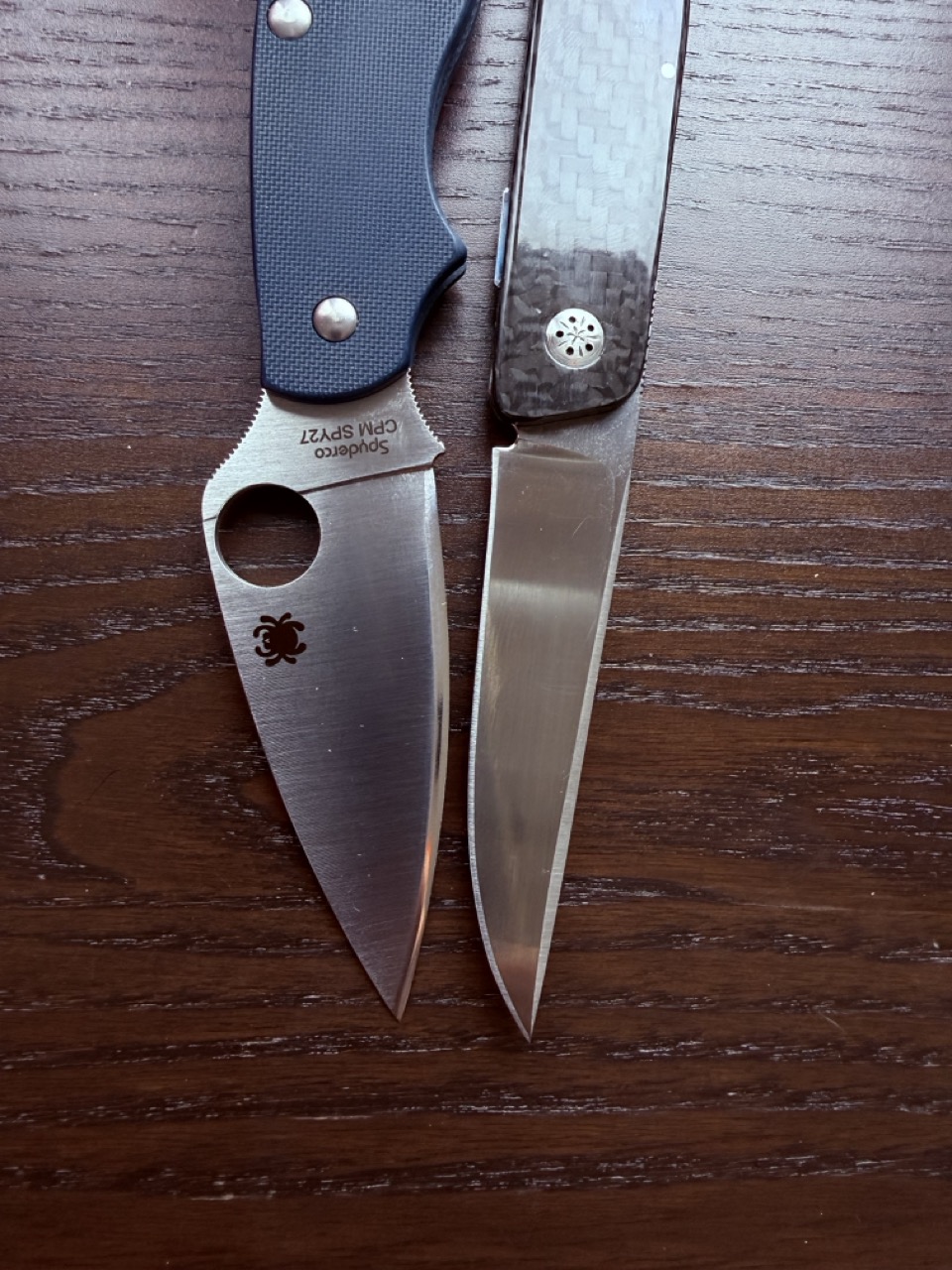
(With no choil, Spirit actually offers more usable edge length than the Golden Child.)
Because true luxury has never been about being seen. It has always been about knowing.
And Des Horn knows.
He understands la part des anges — that invisible fraction of perfection that can never be fully owned, only sensed. He understands the spirit of a blade not as an object, but as a living balance of steel, geometry, heat, and intention.
And perhaps that is what sets his work apart: not just mastery of materials, but an almost philosophical restraint — the ability to let excellence remain quiet.
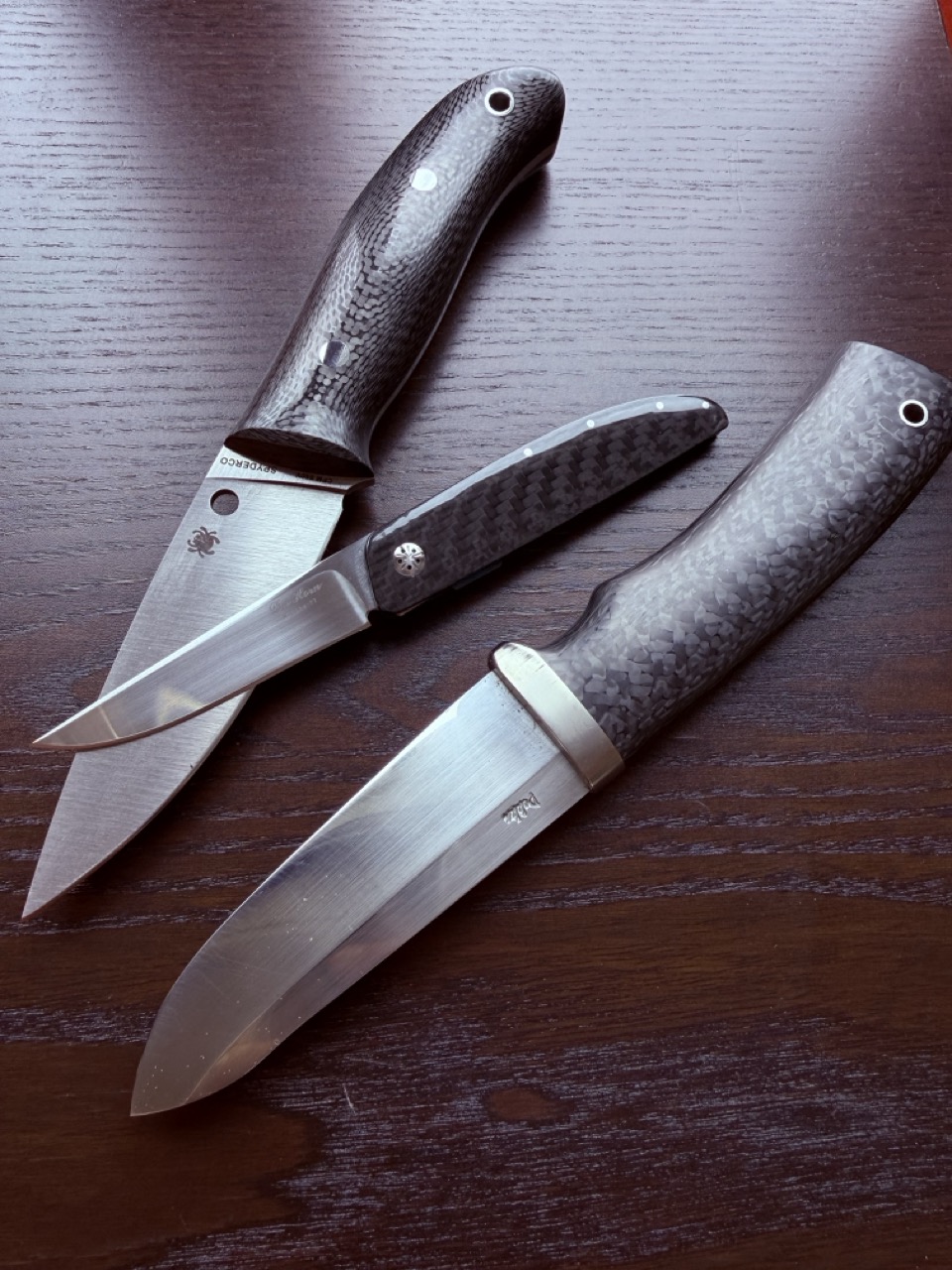
Spirit pictured between a Spyderco Proficient and Pekka Tuominen Urban II.
Des Horn showcasing one of his true gems of a knife.

