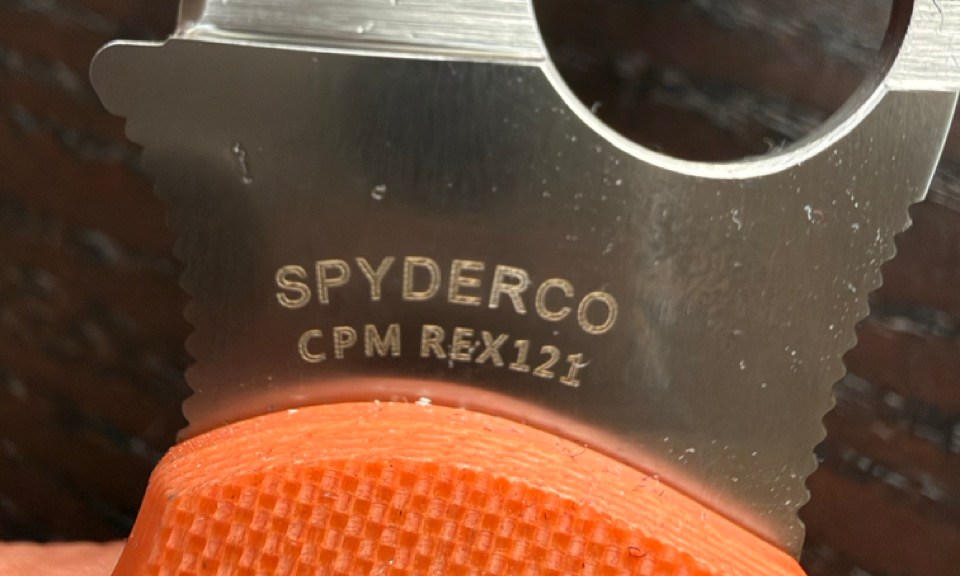
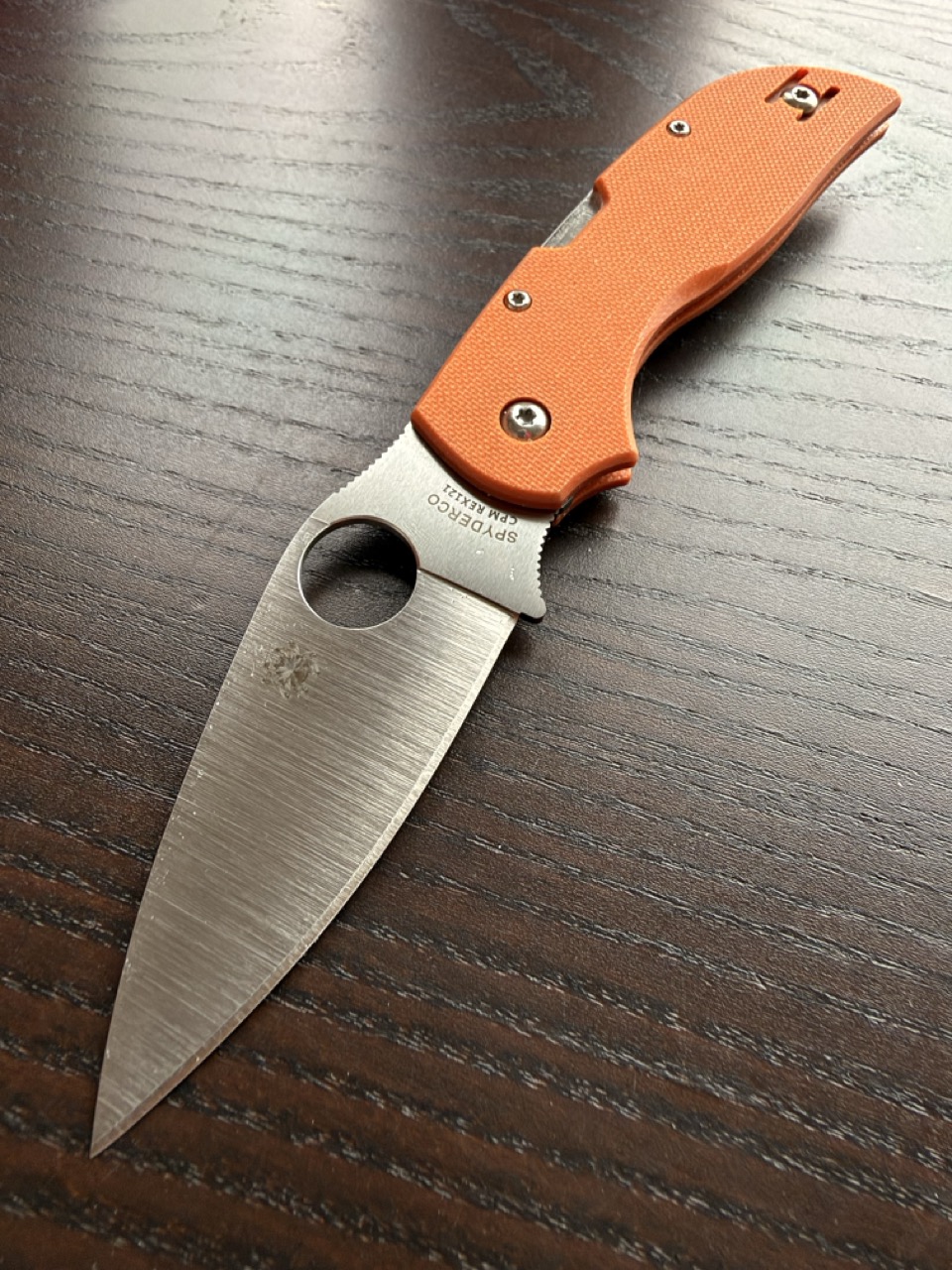
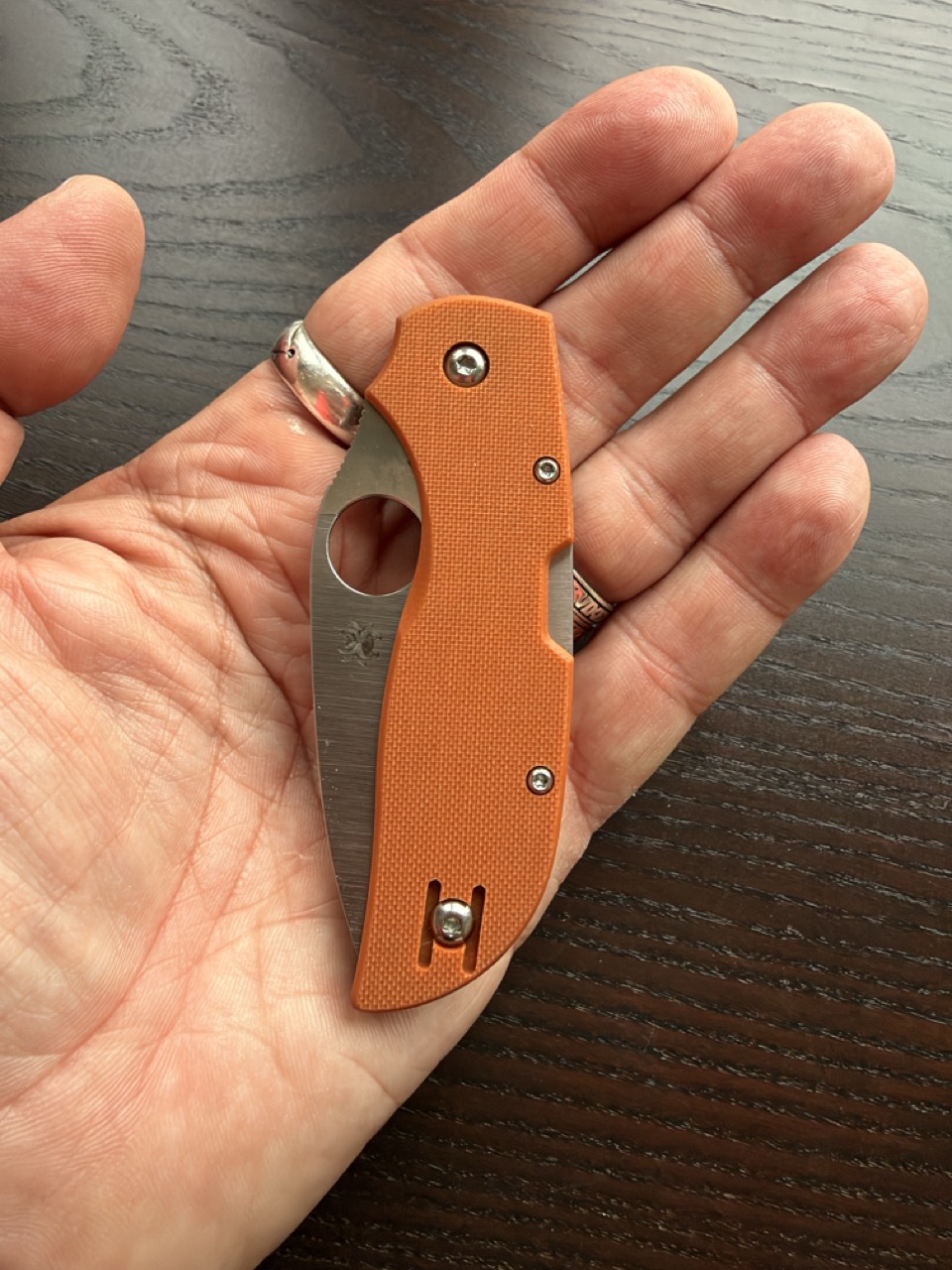
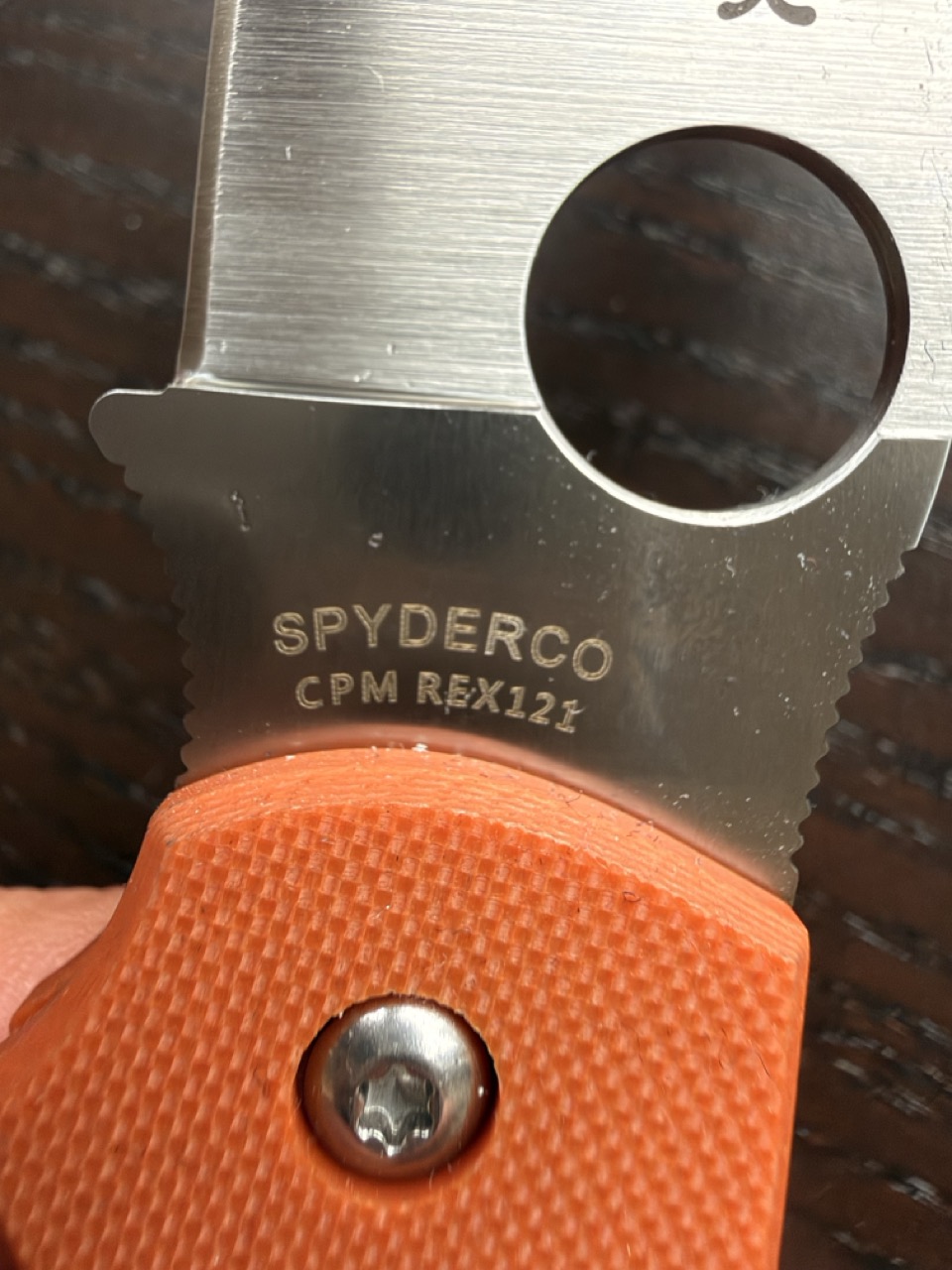
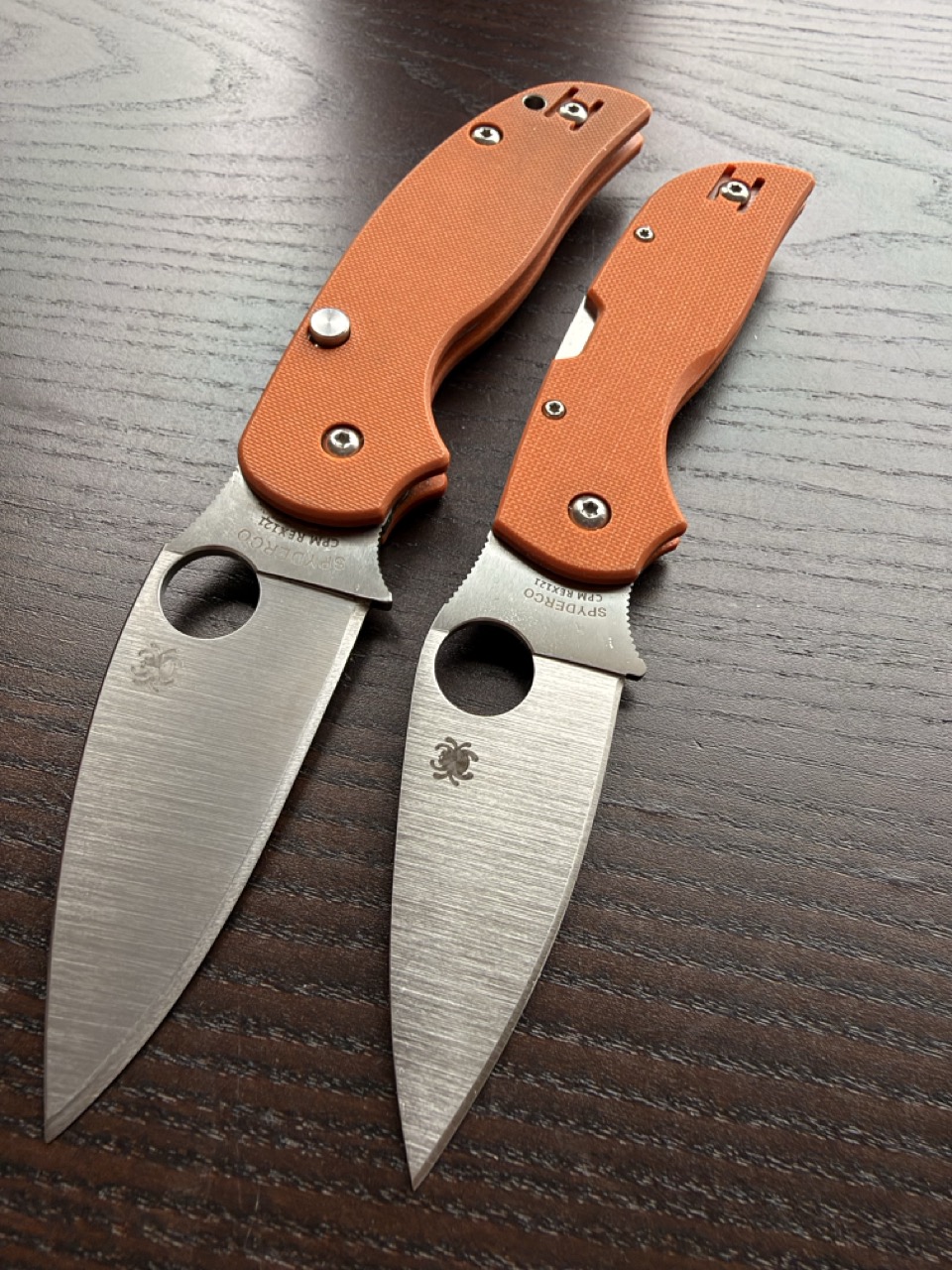
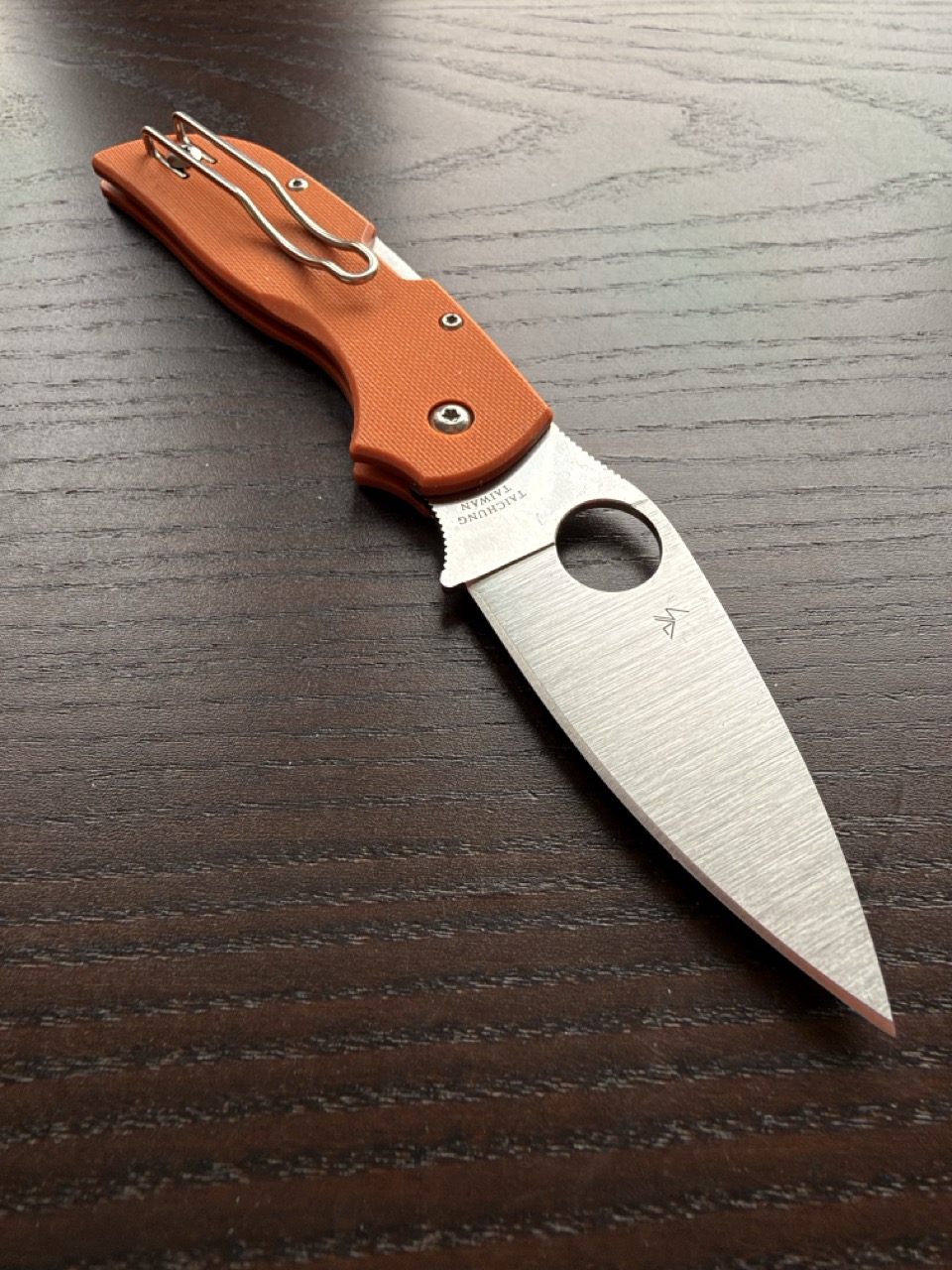
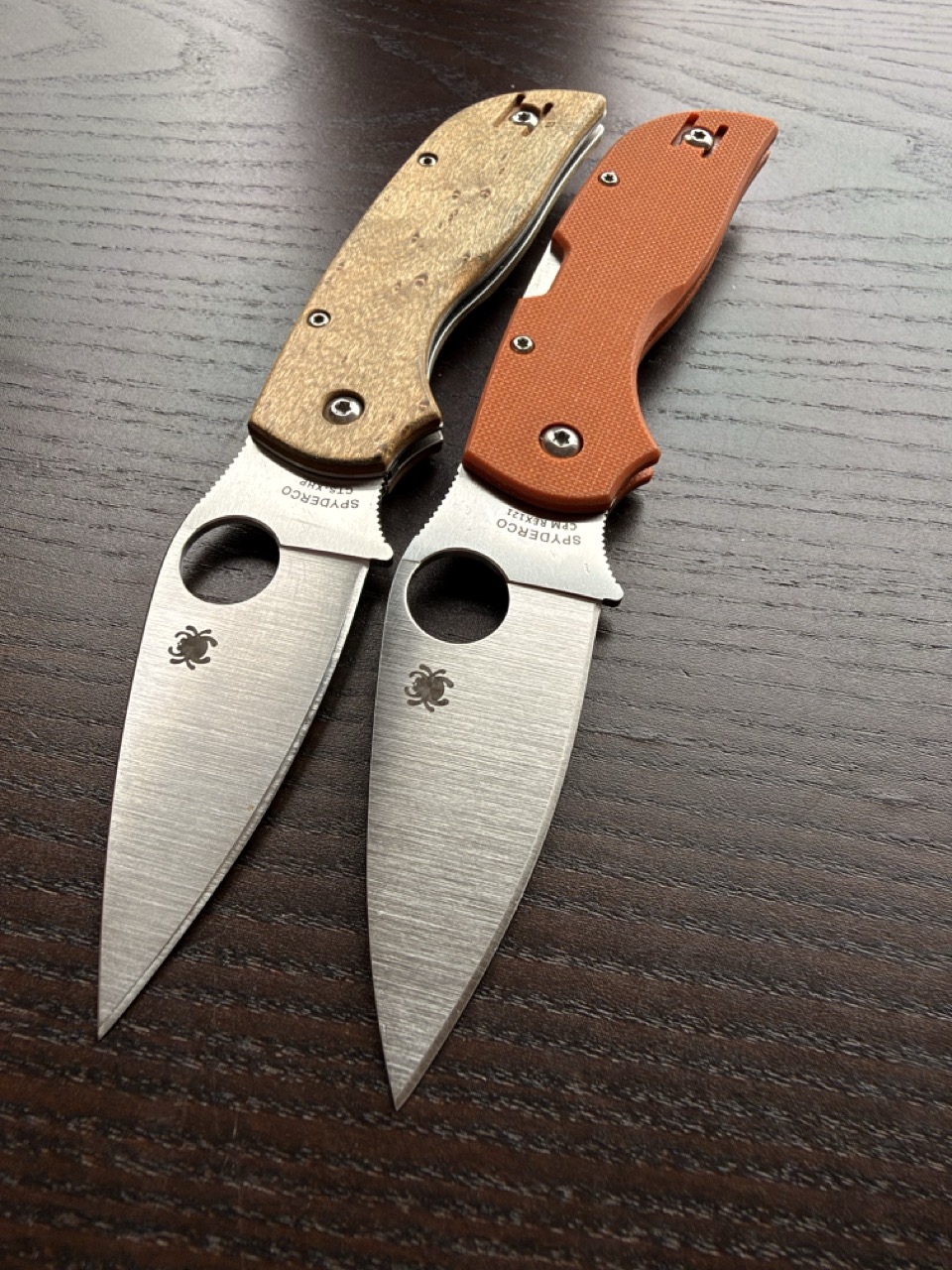
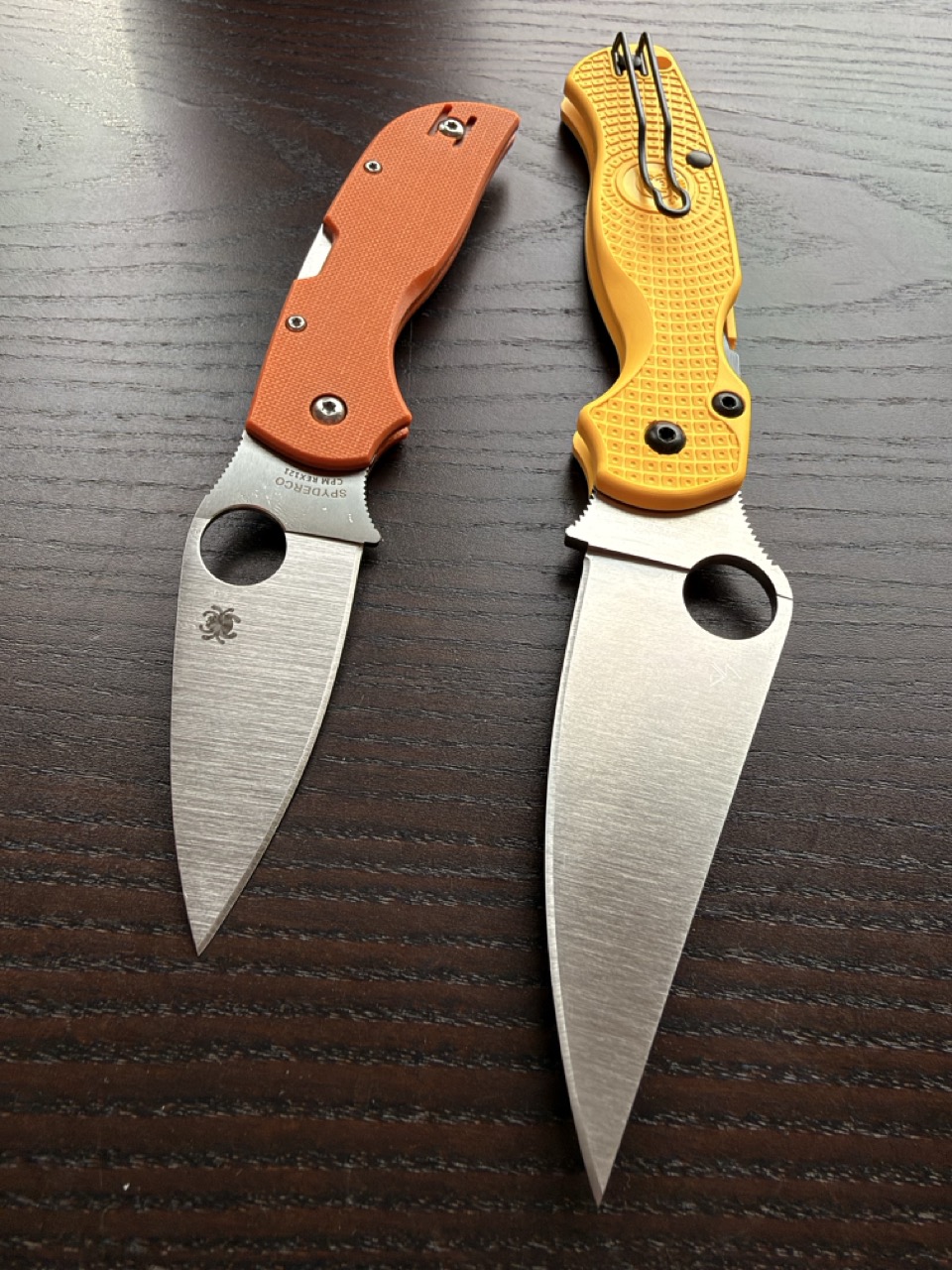
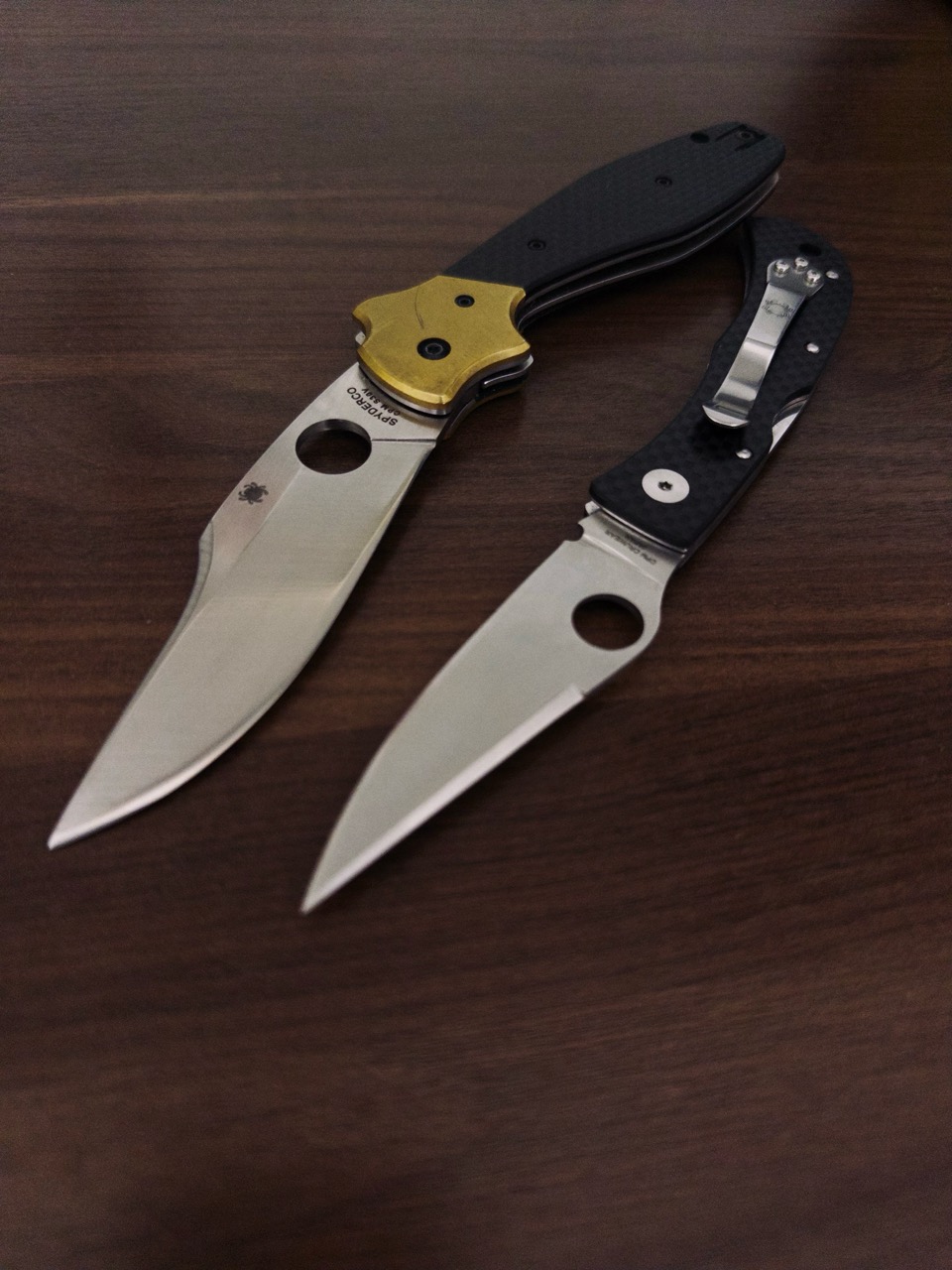
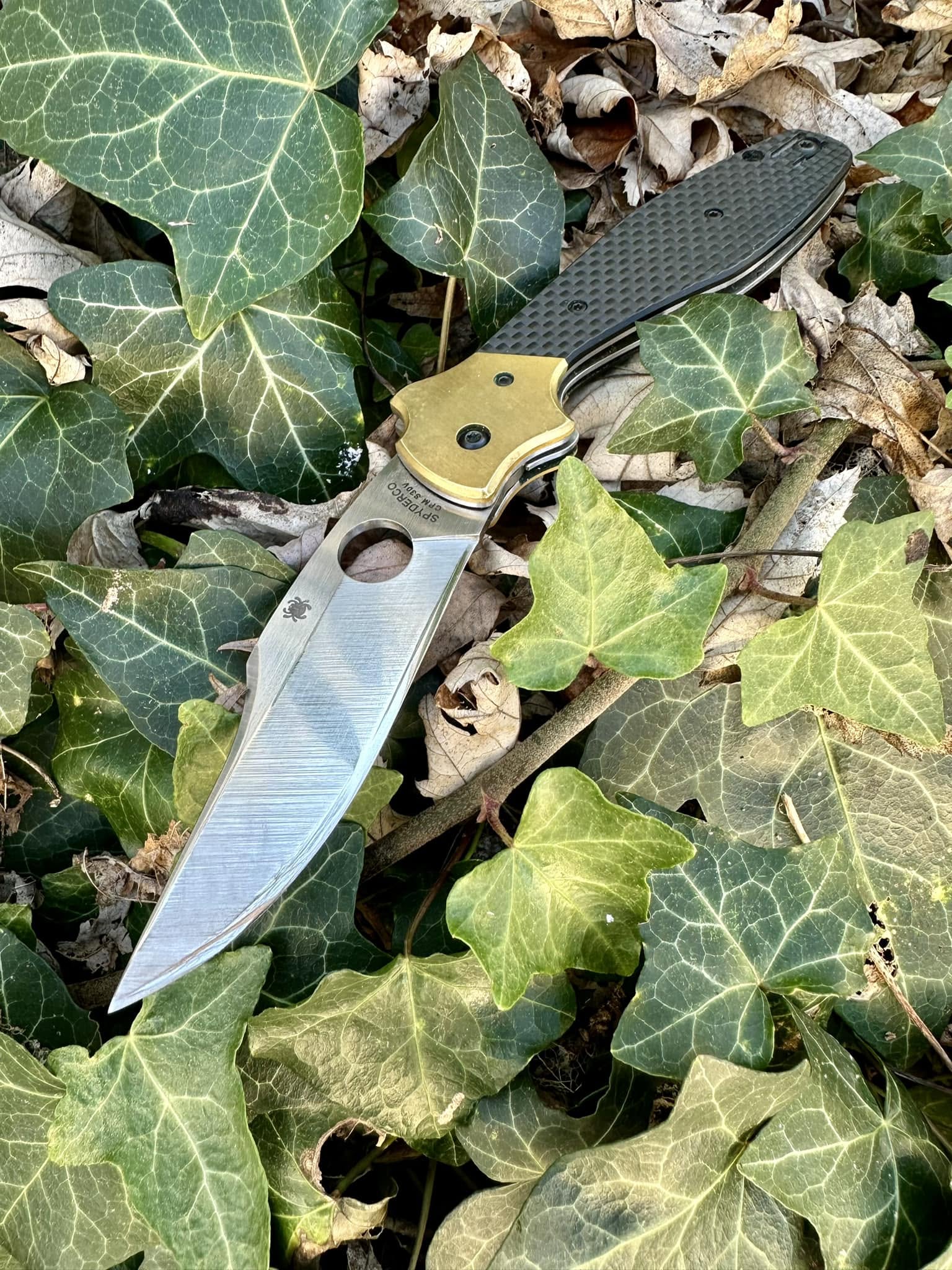
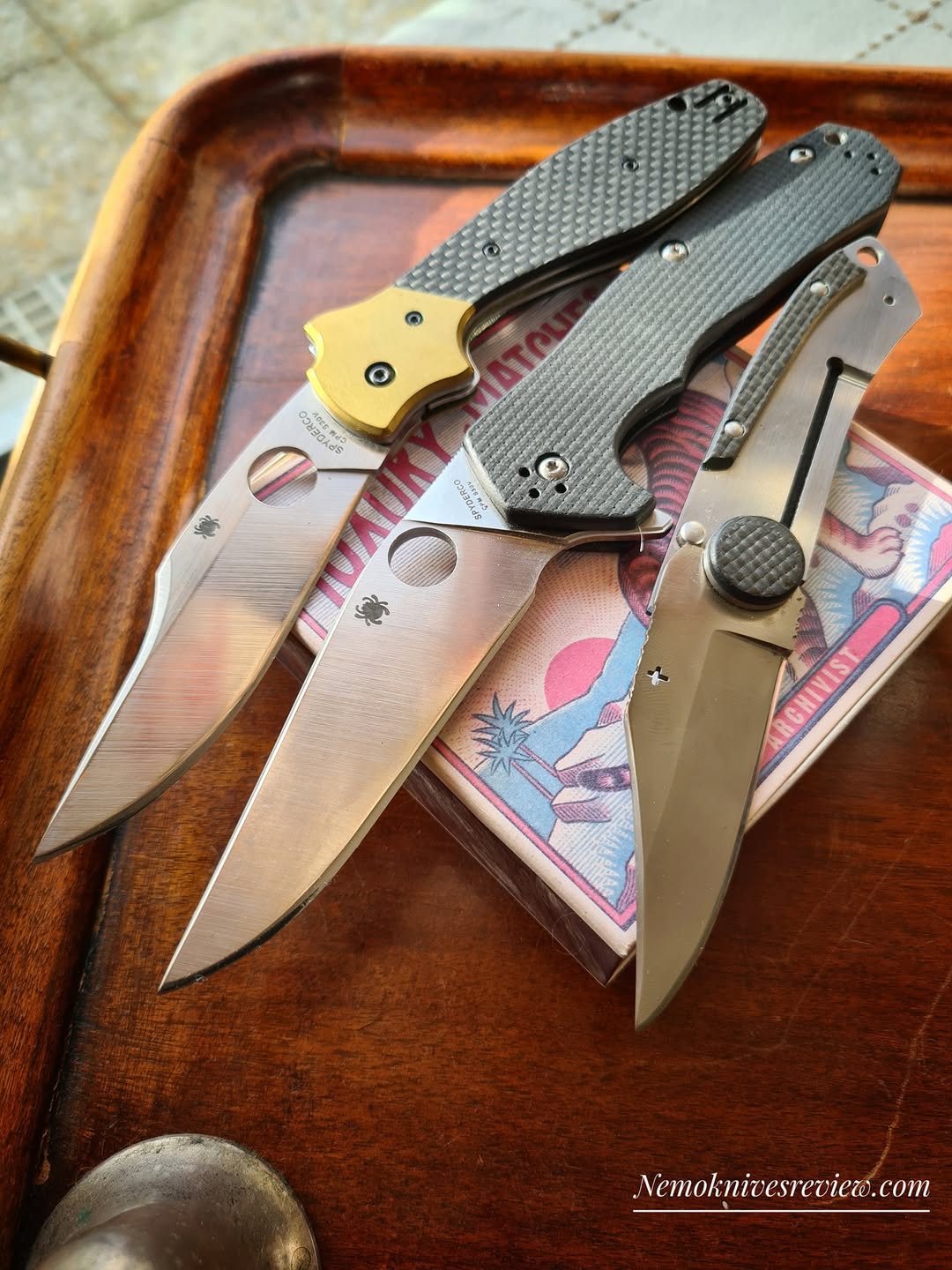
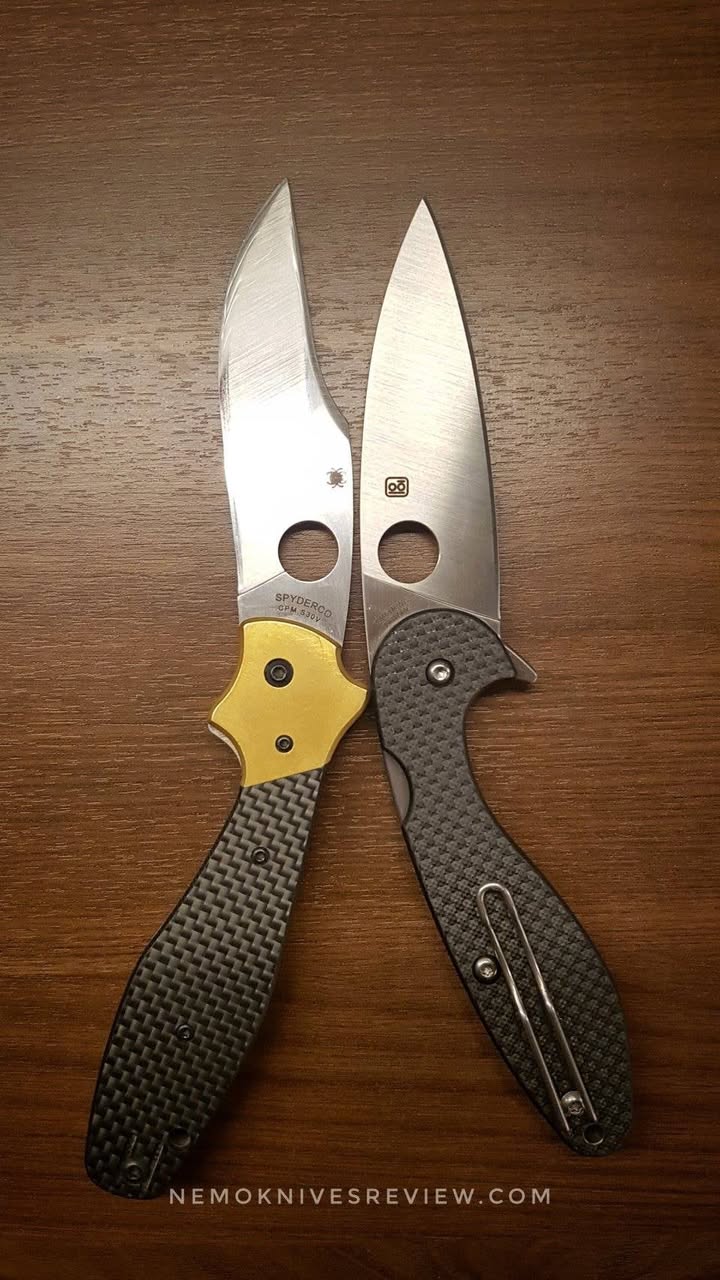
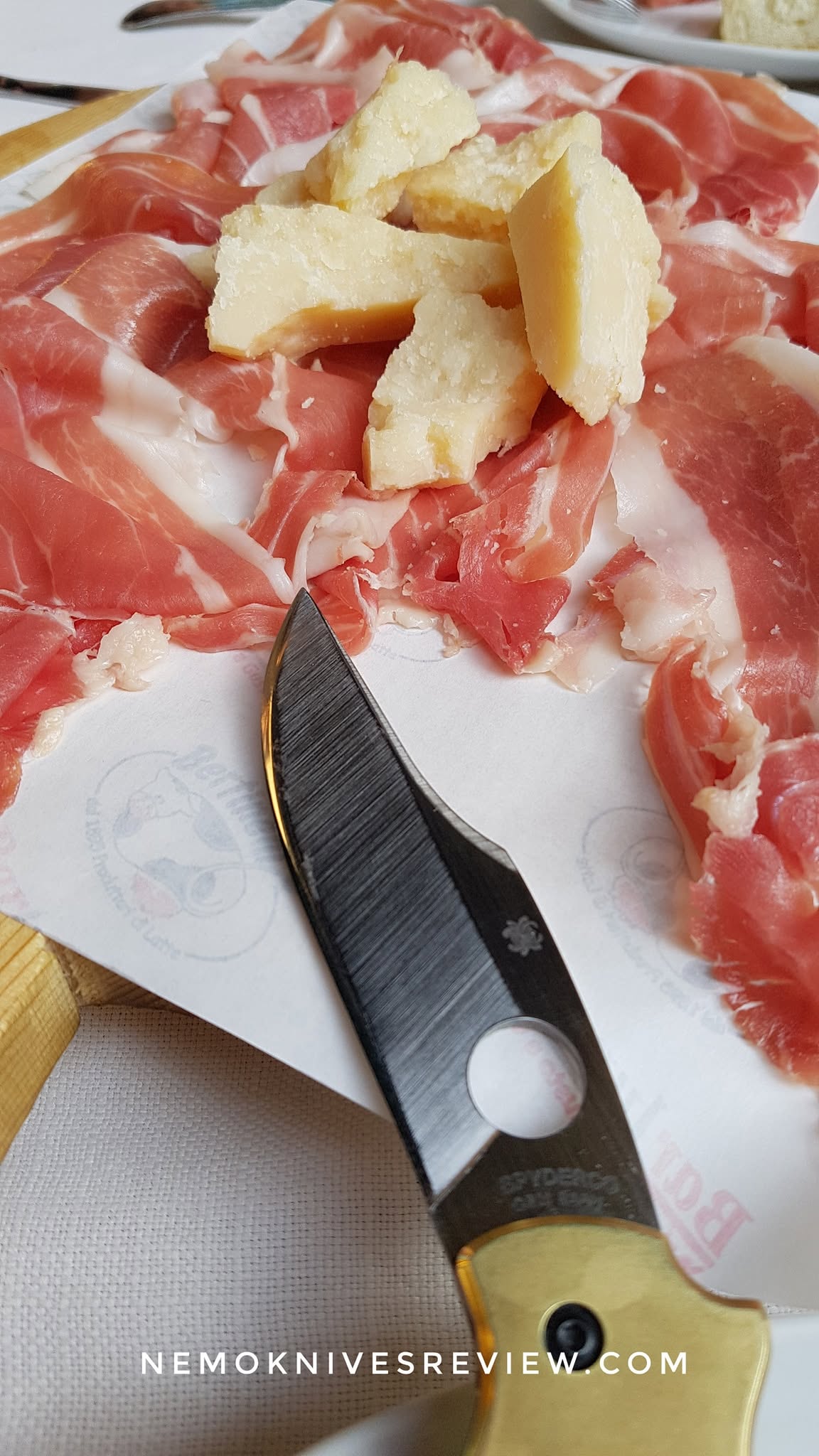
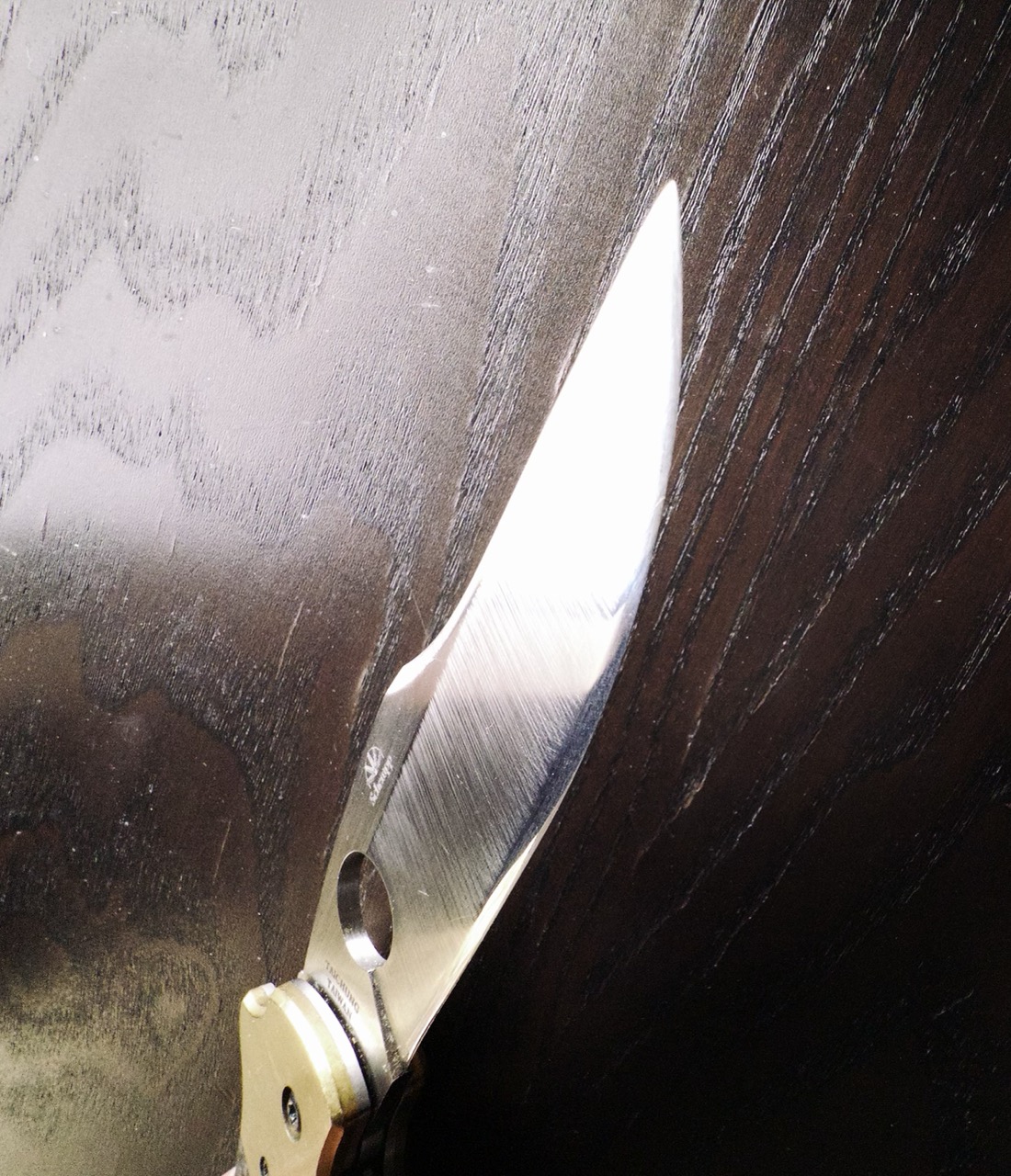
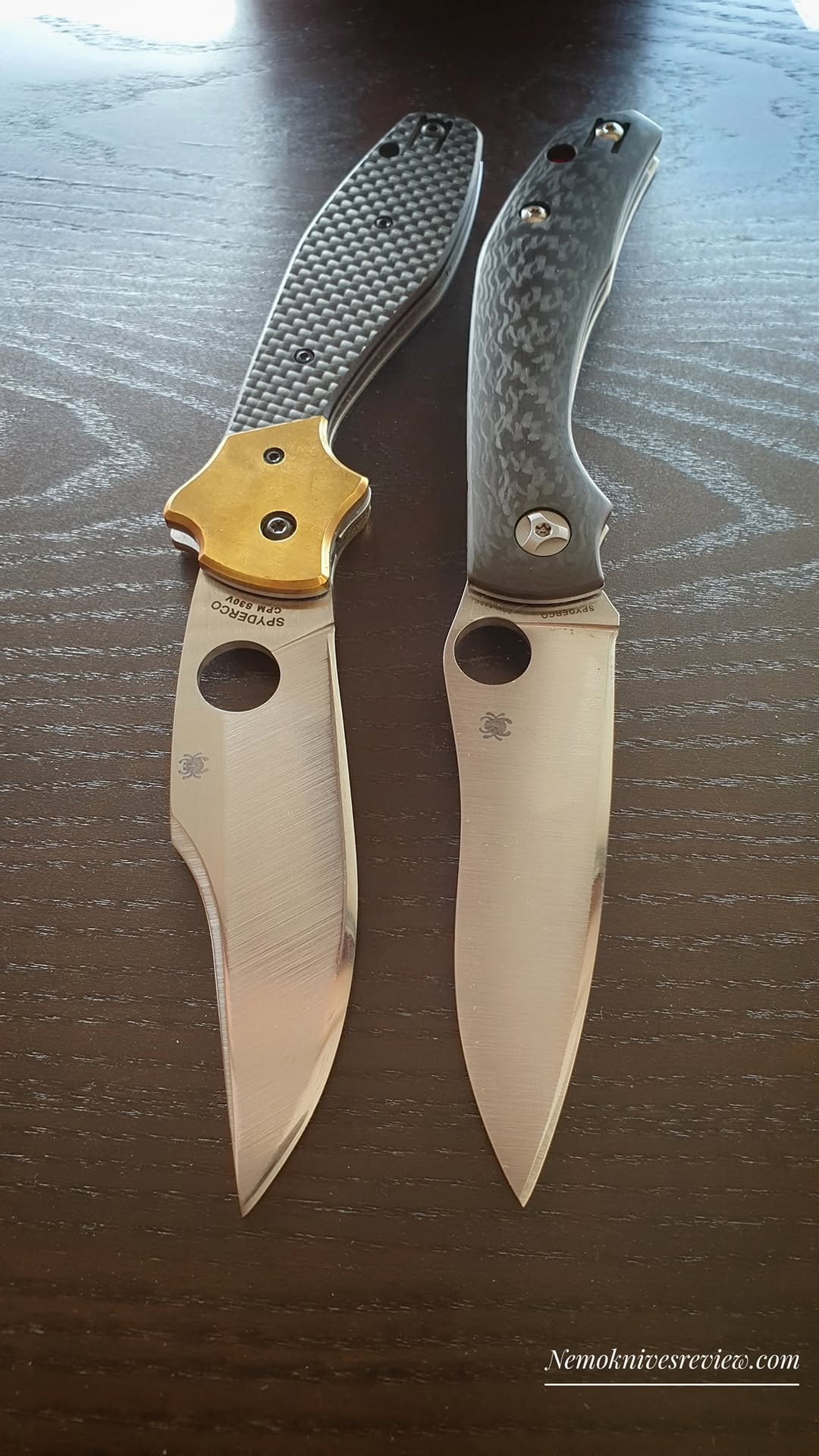
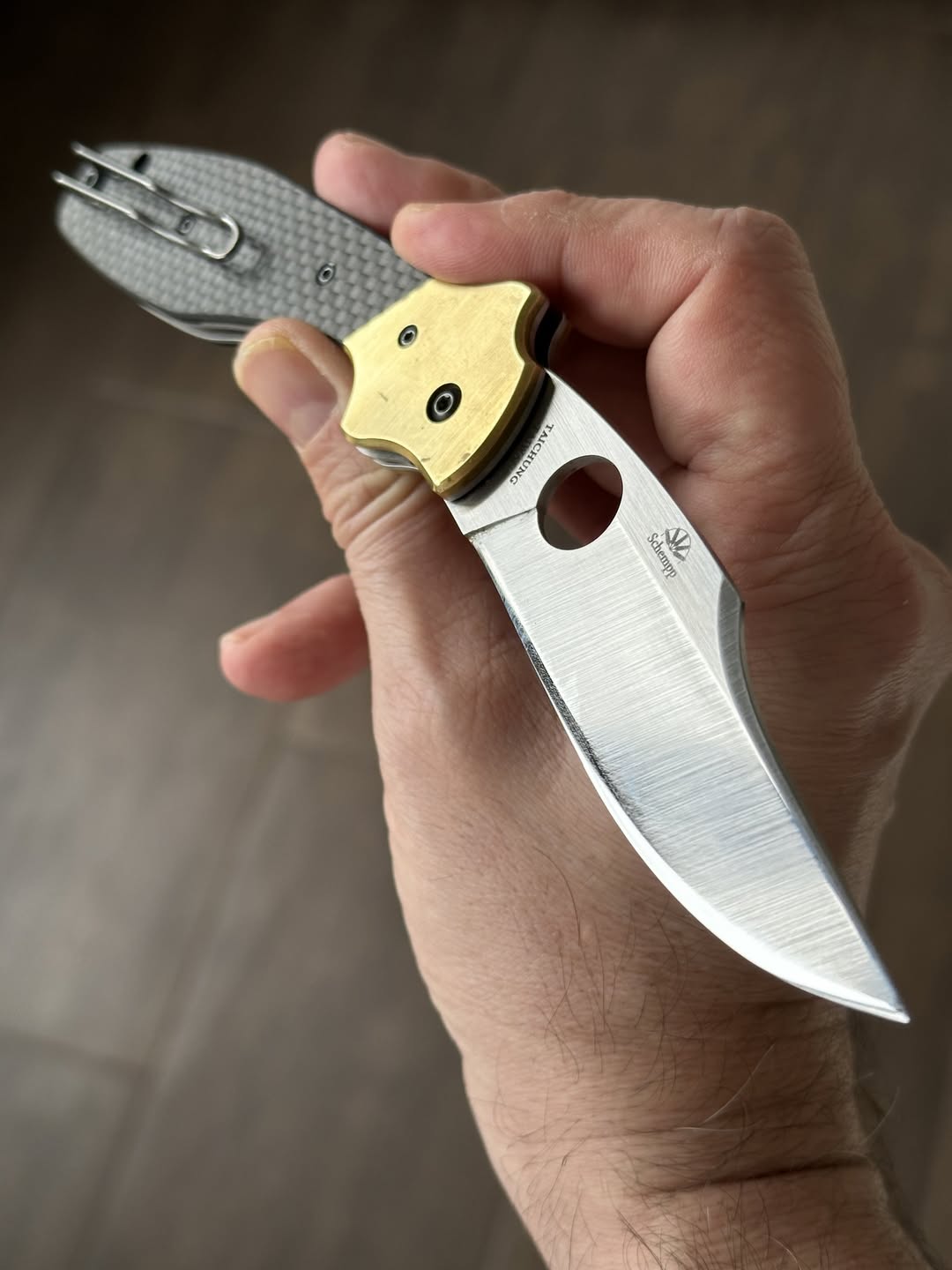
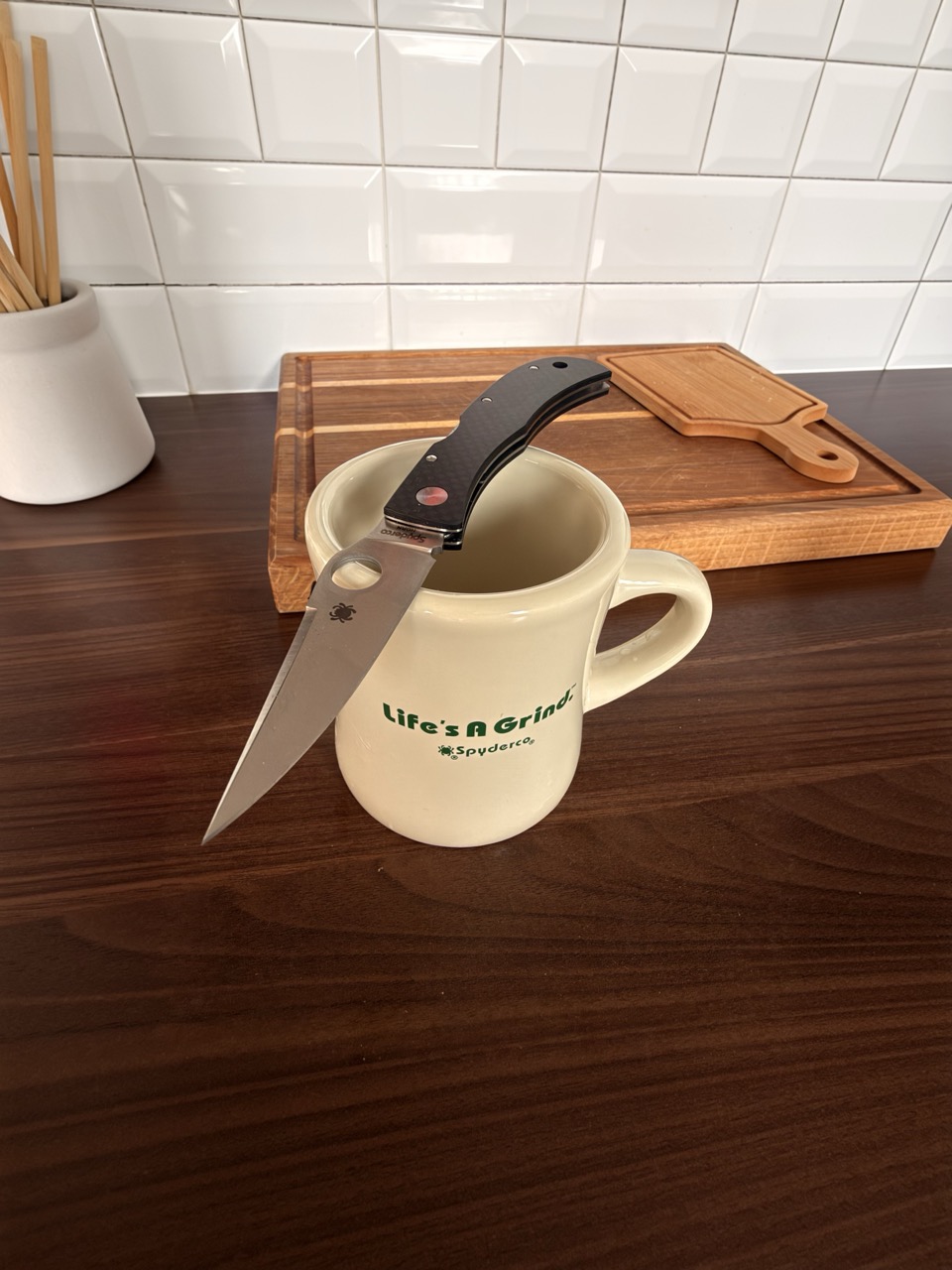
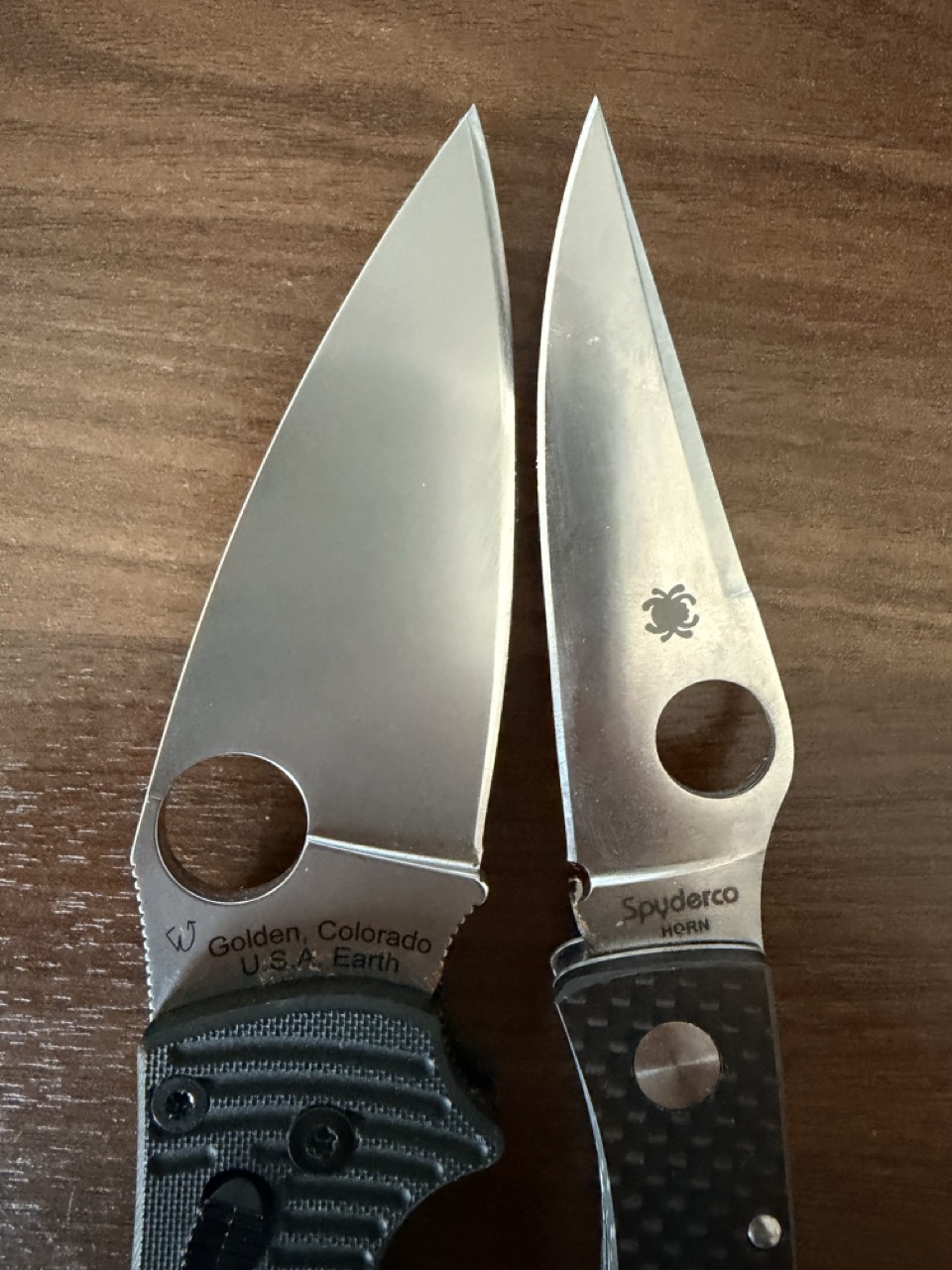
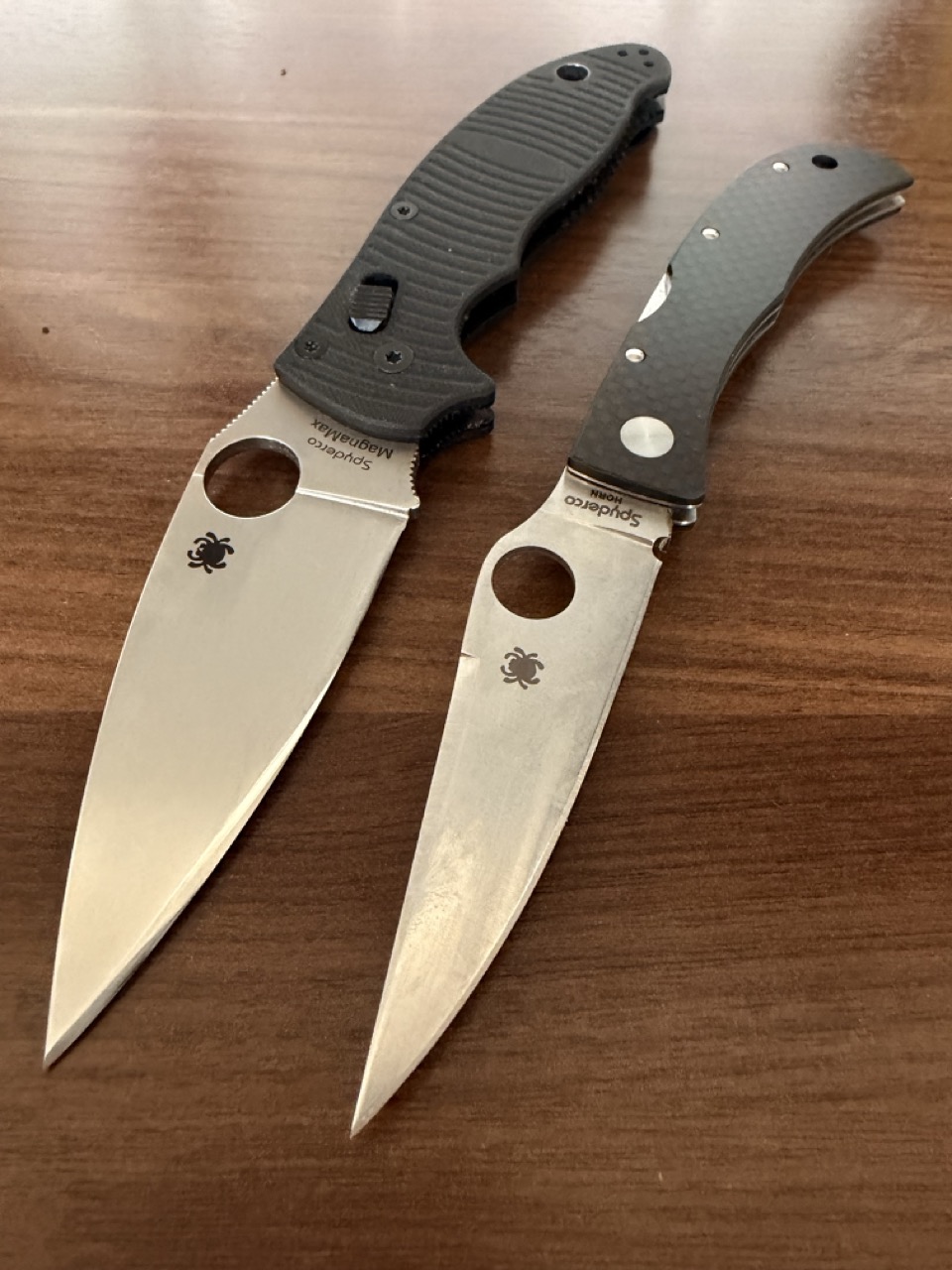
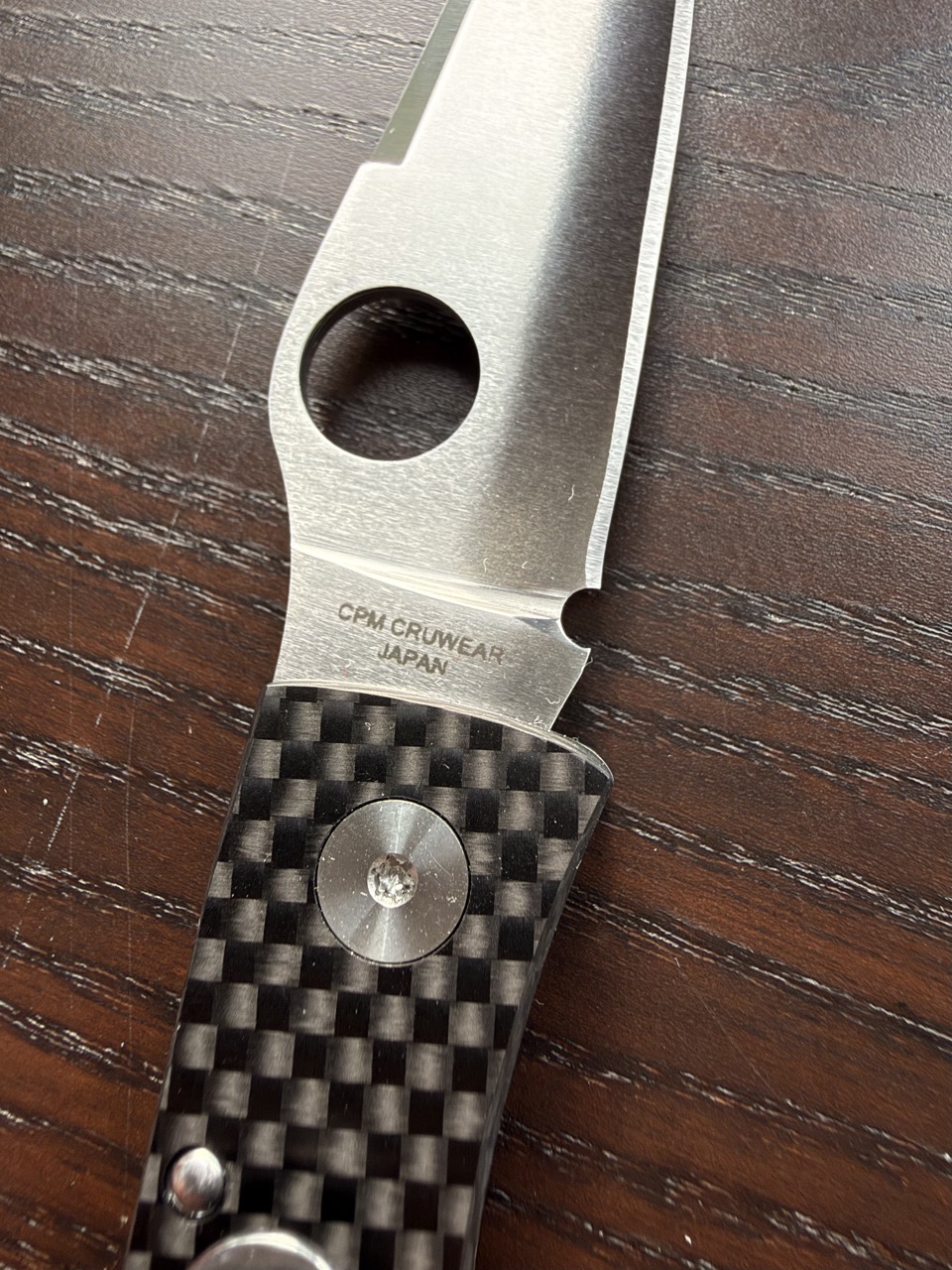
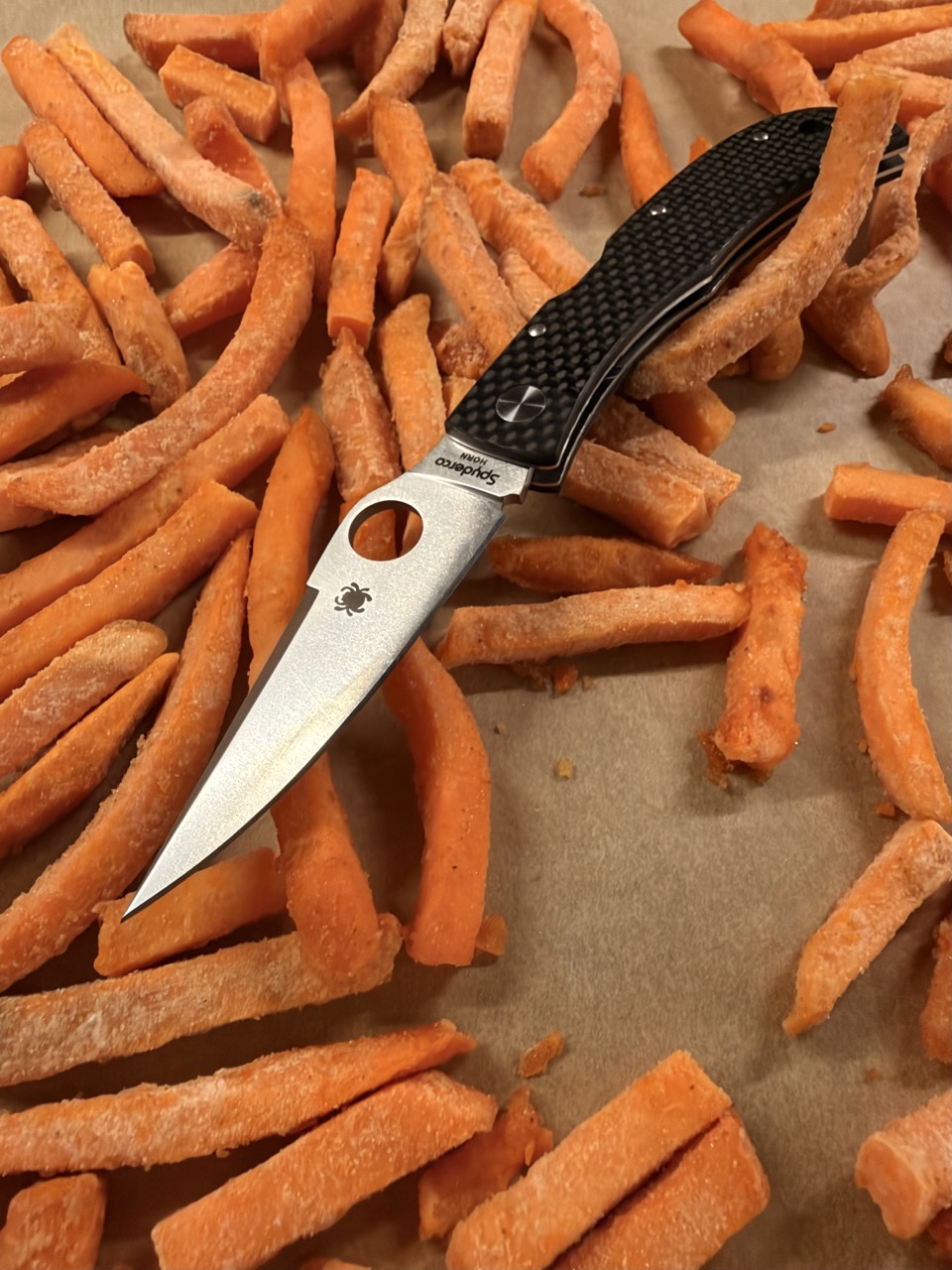
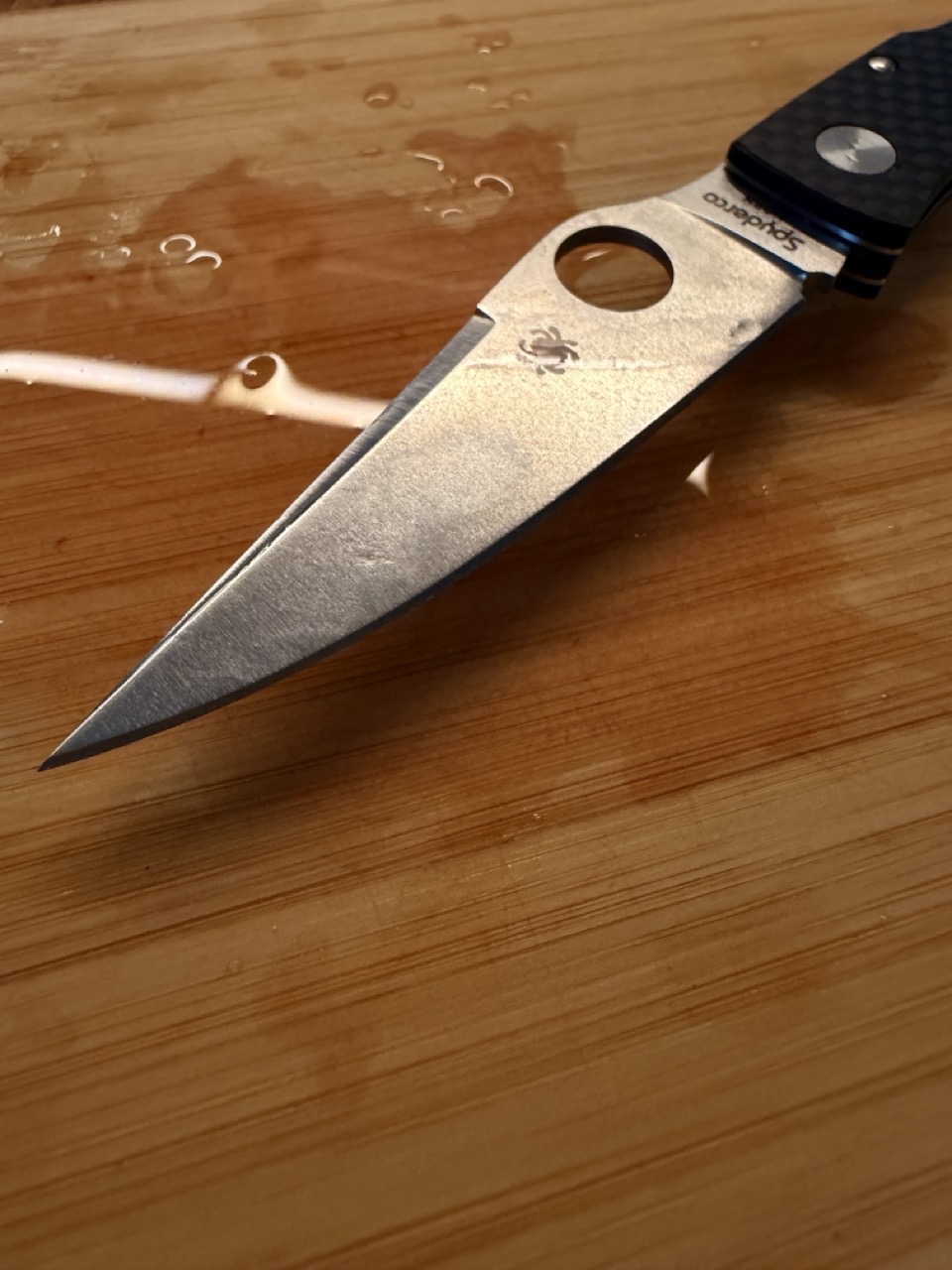
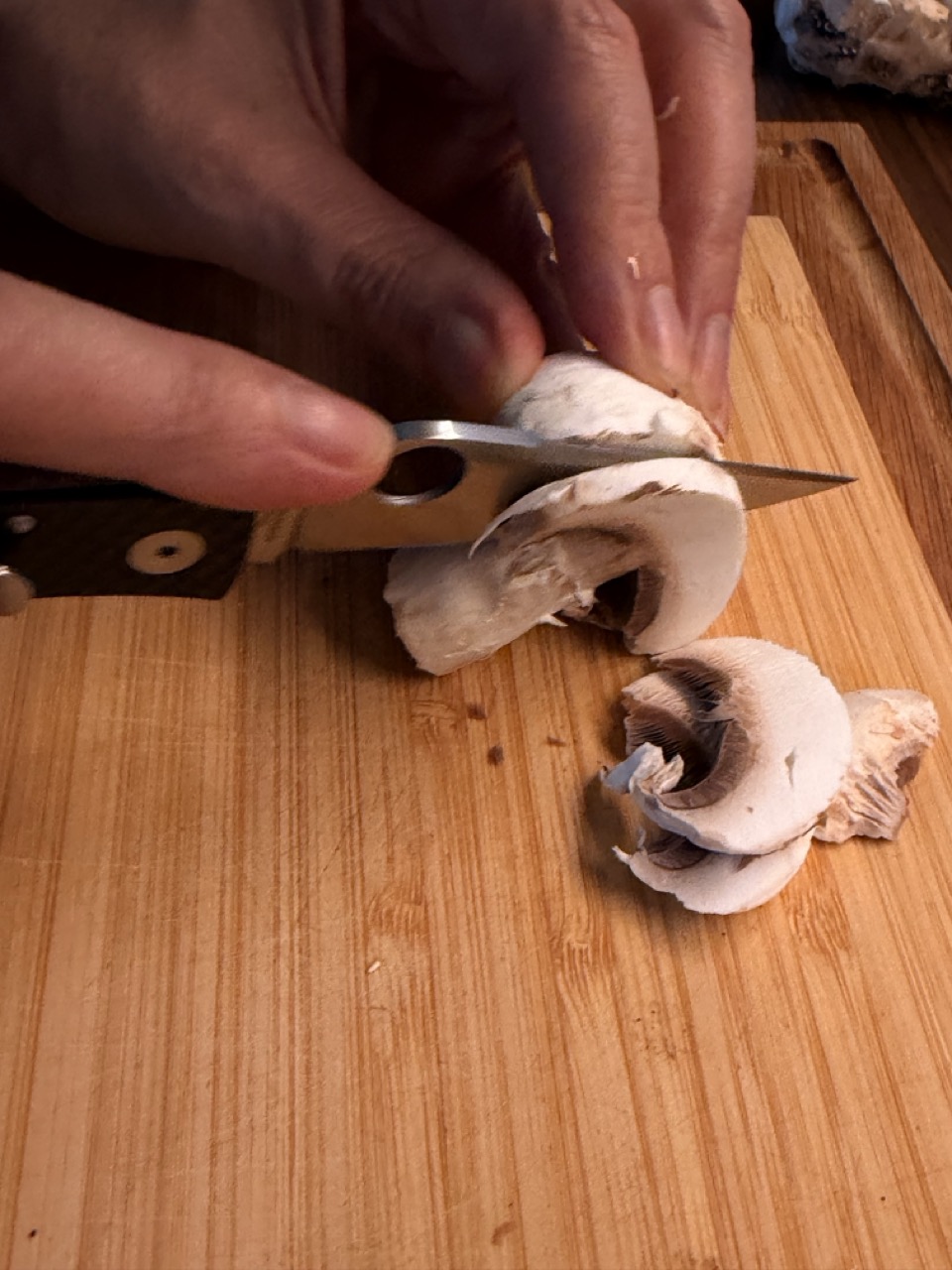
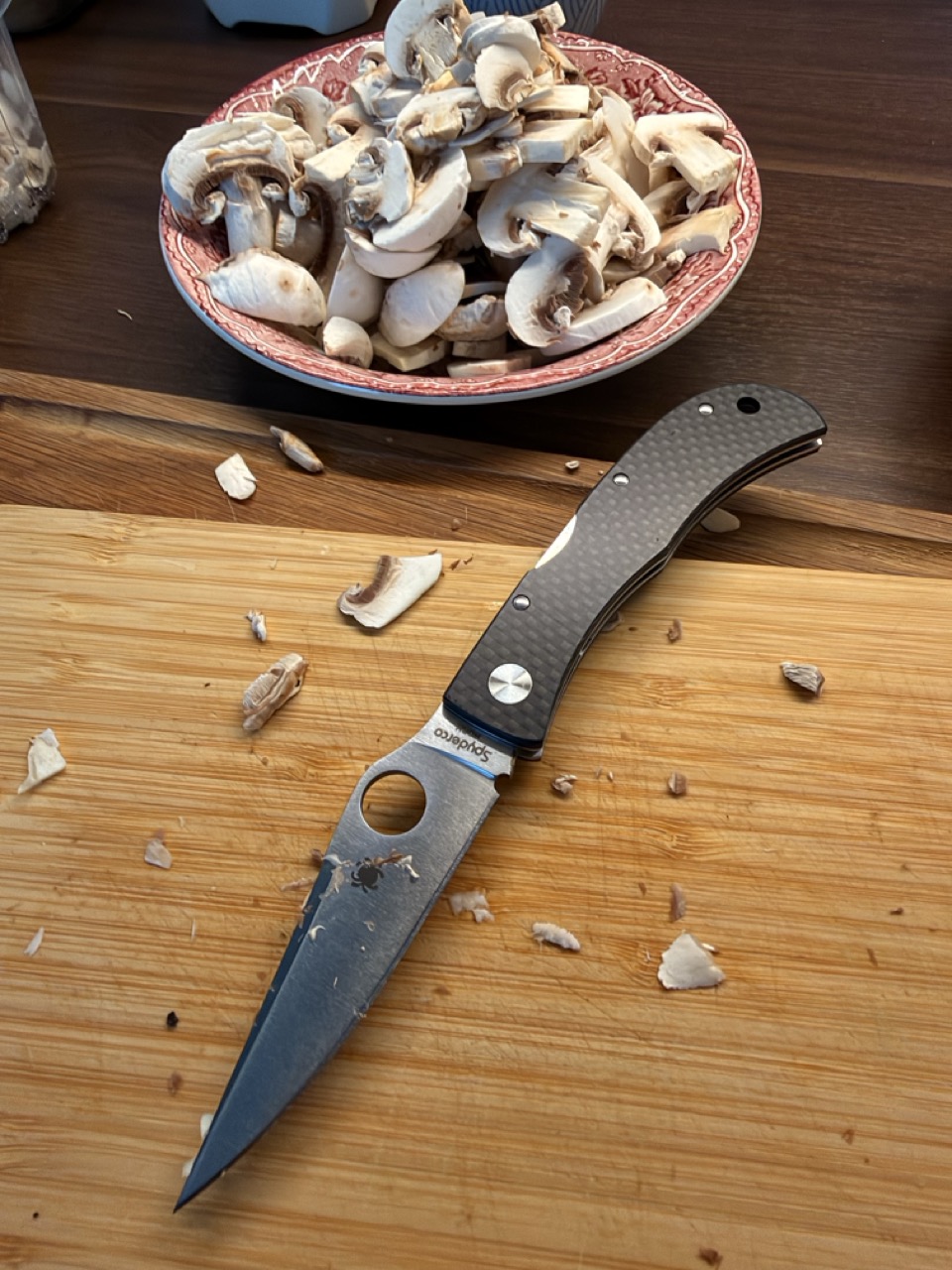
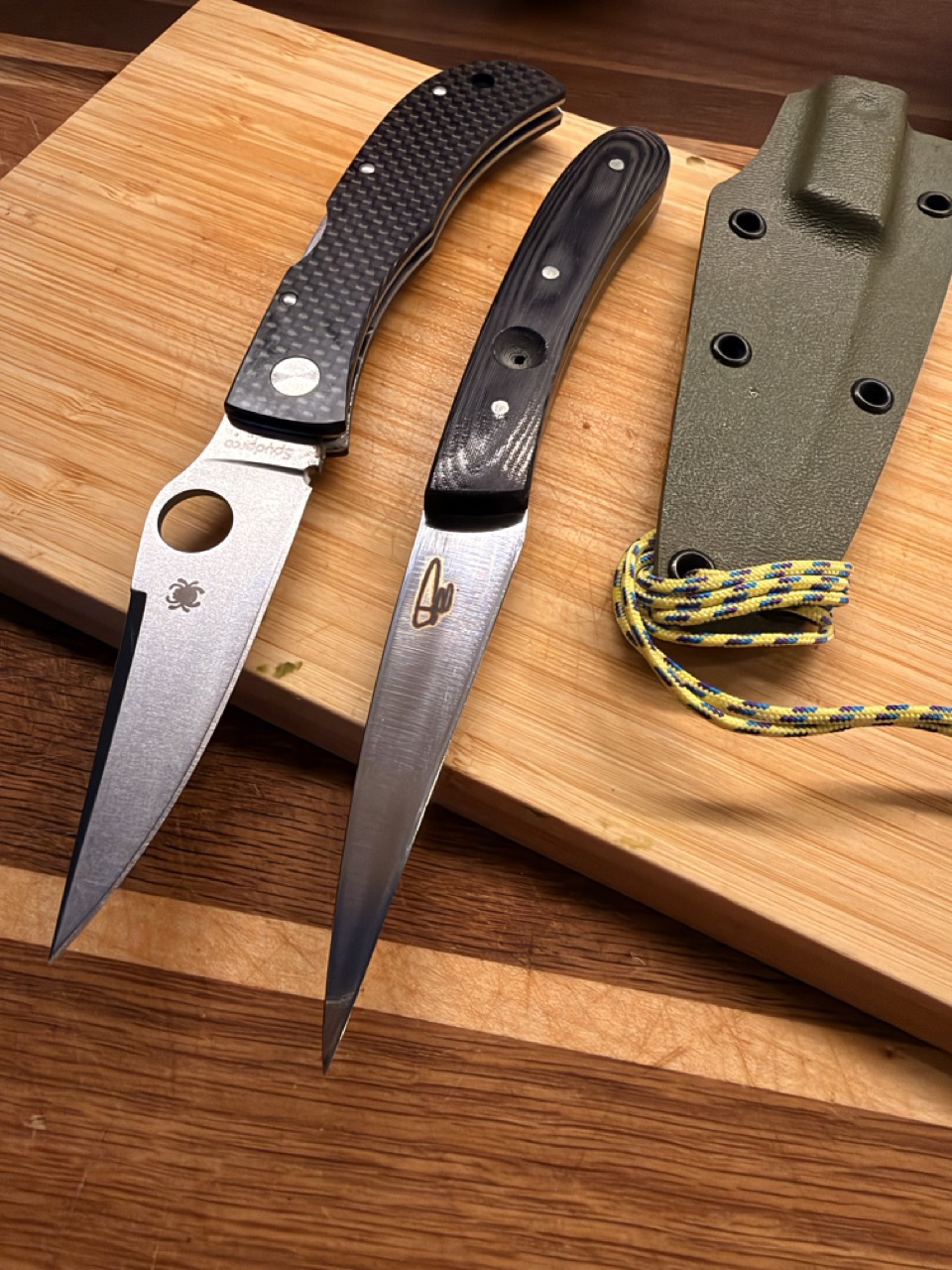
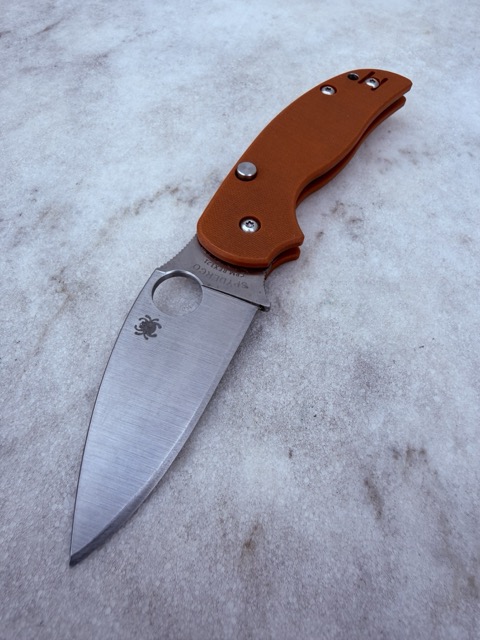
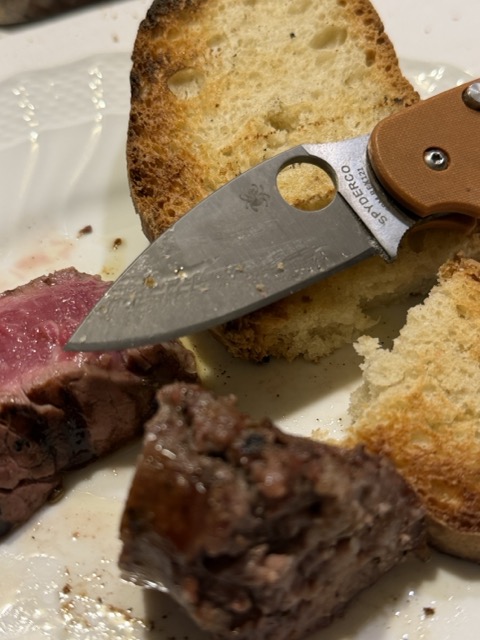
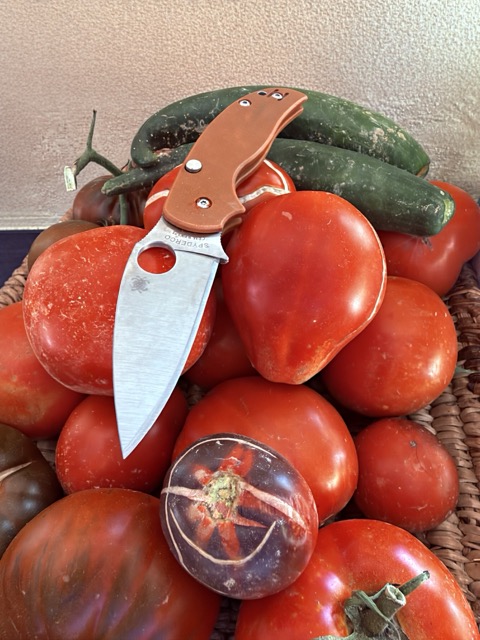
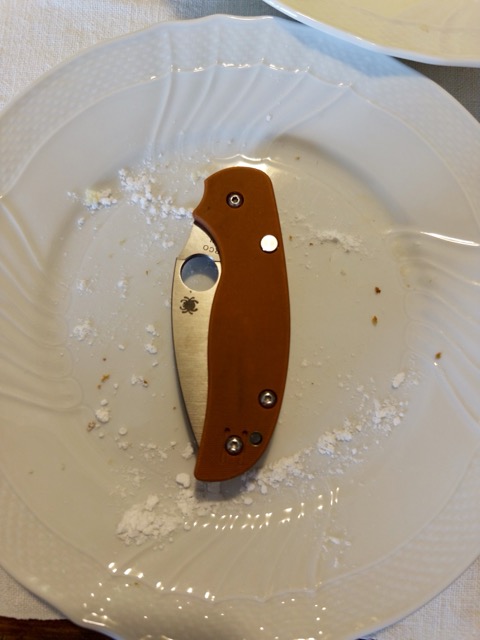
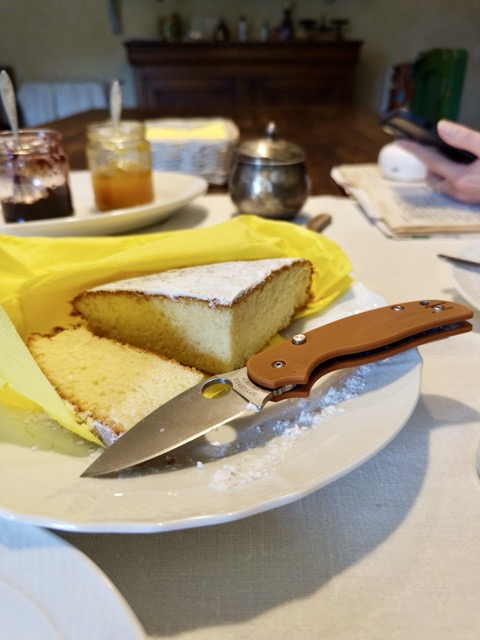
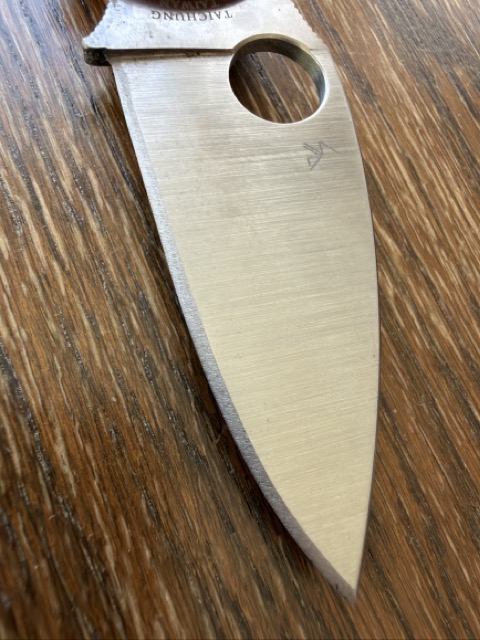
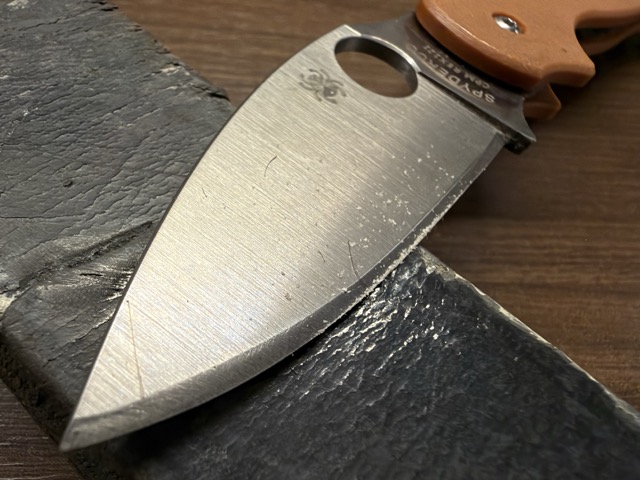
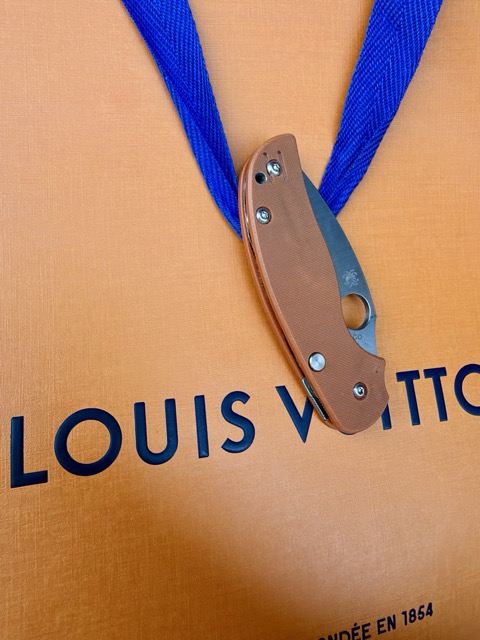
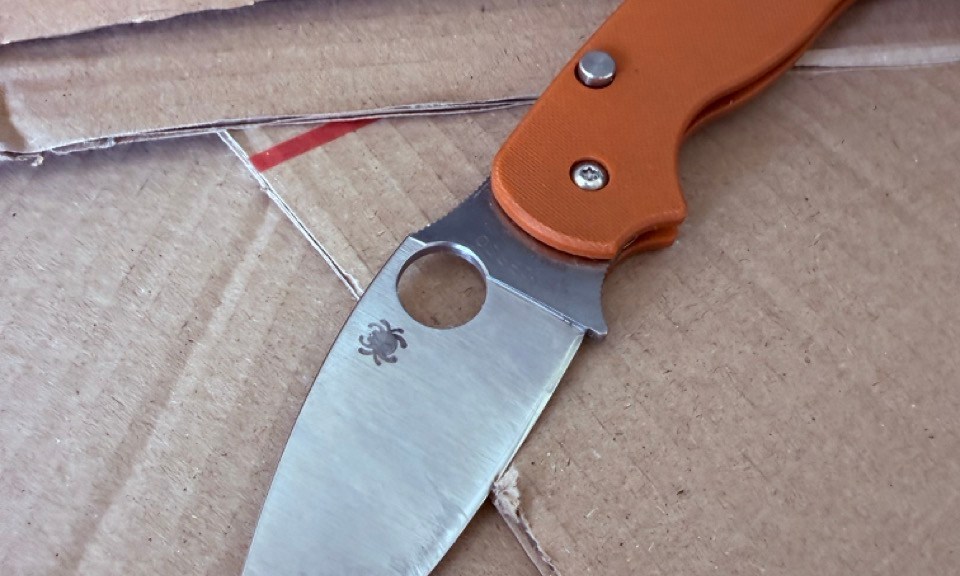
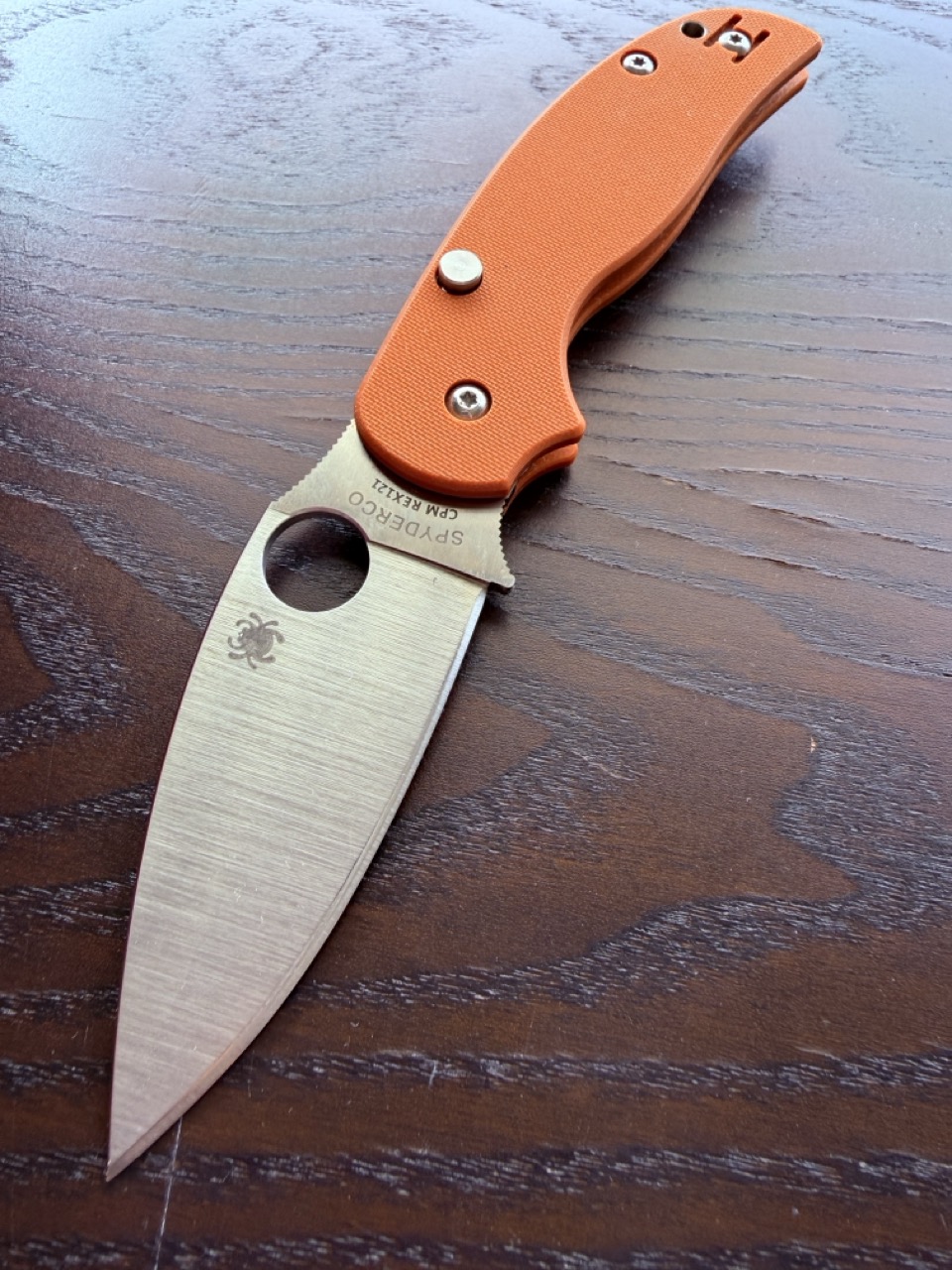
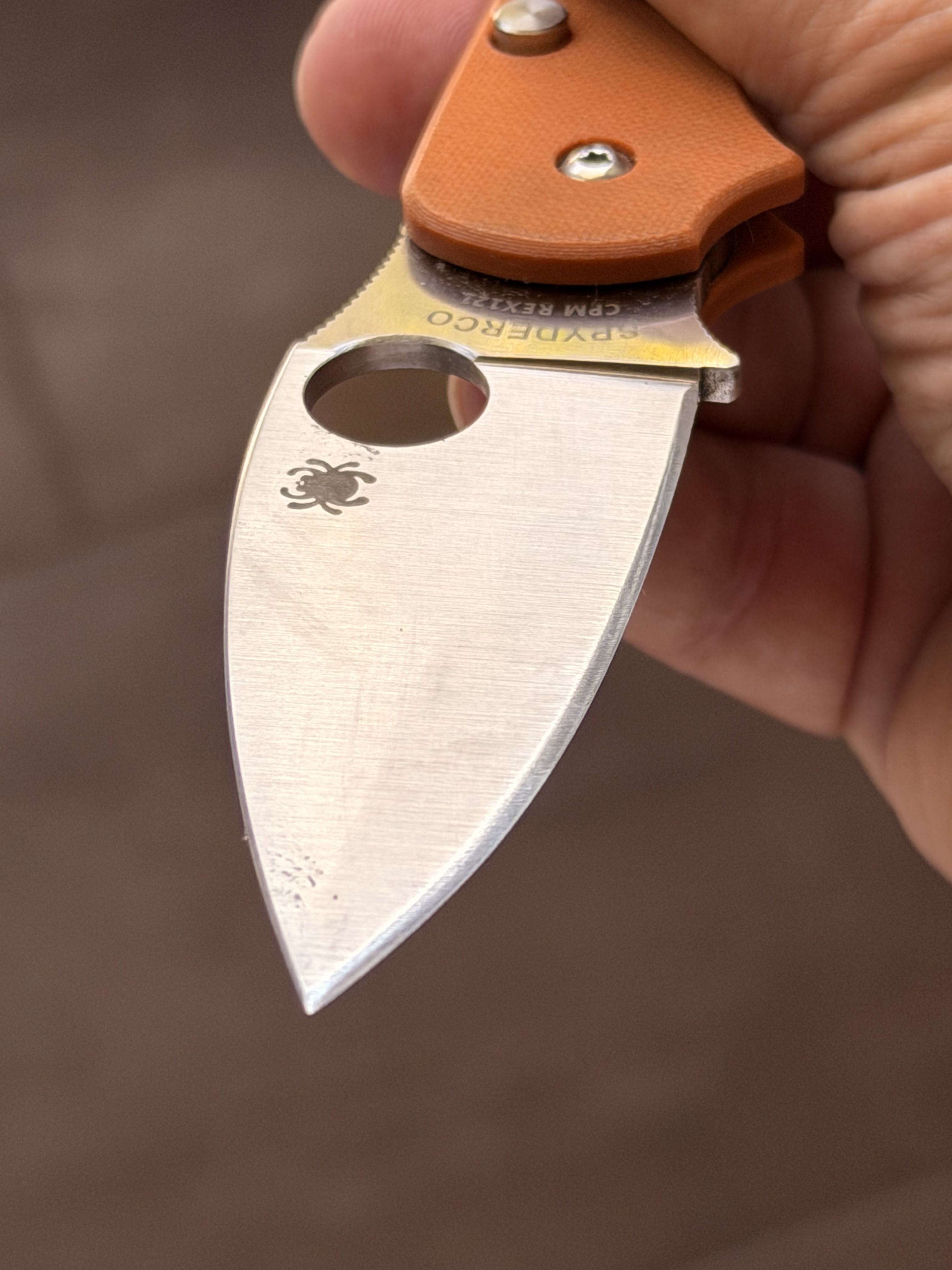
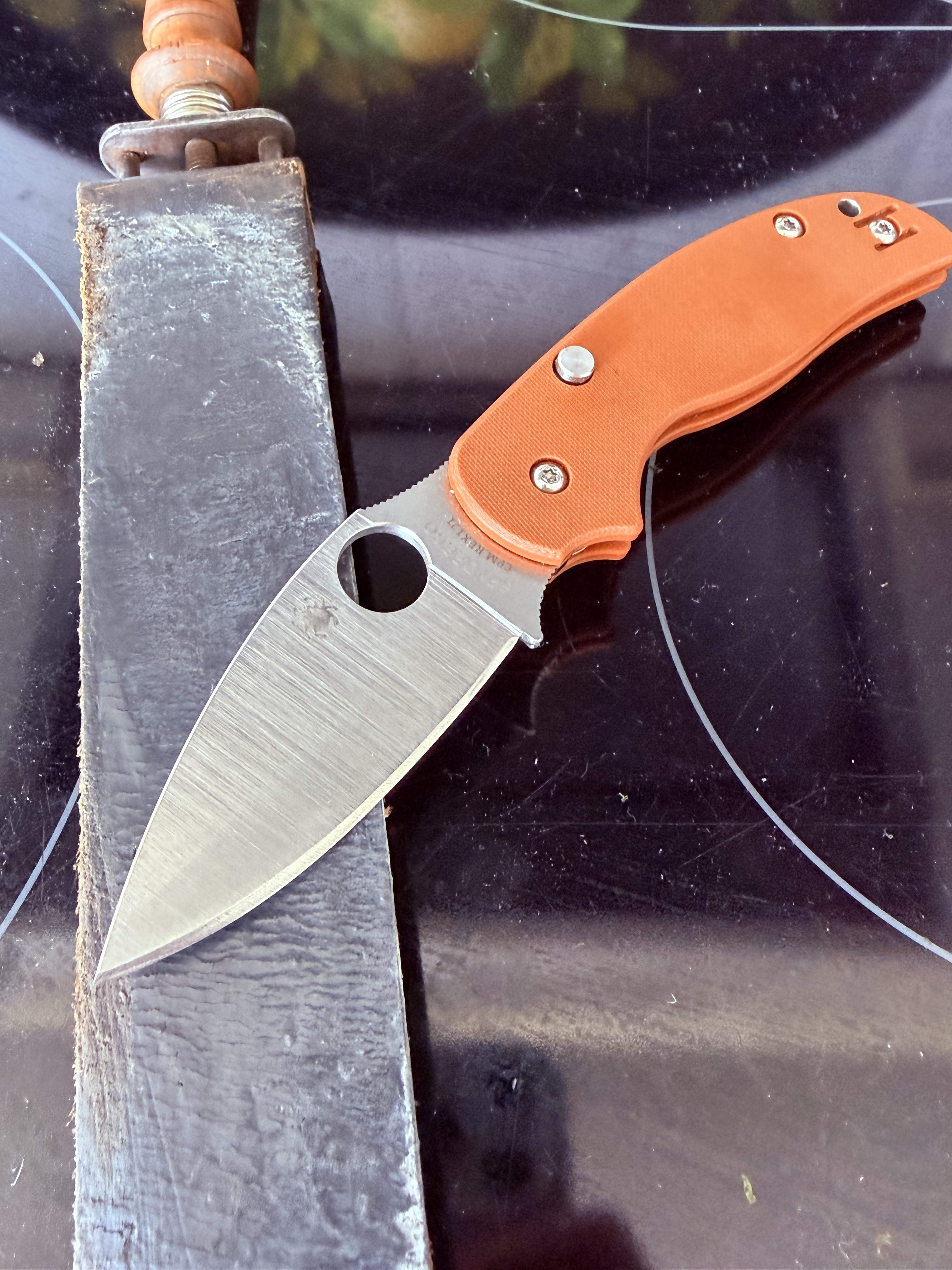
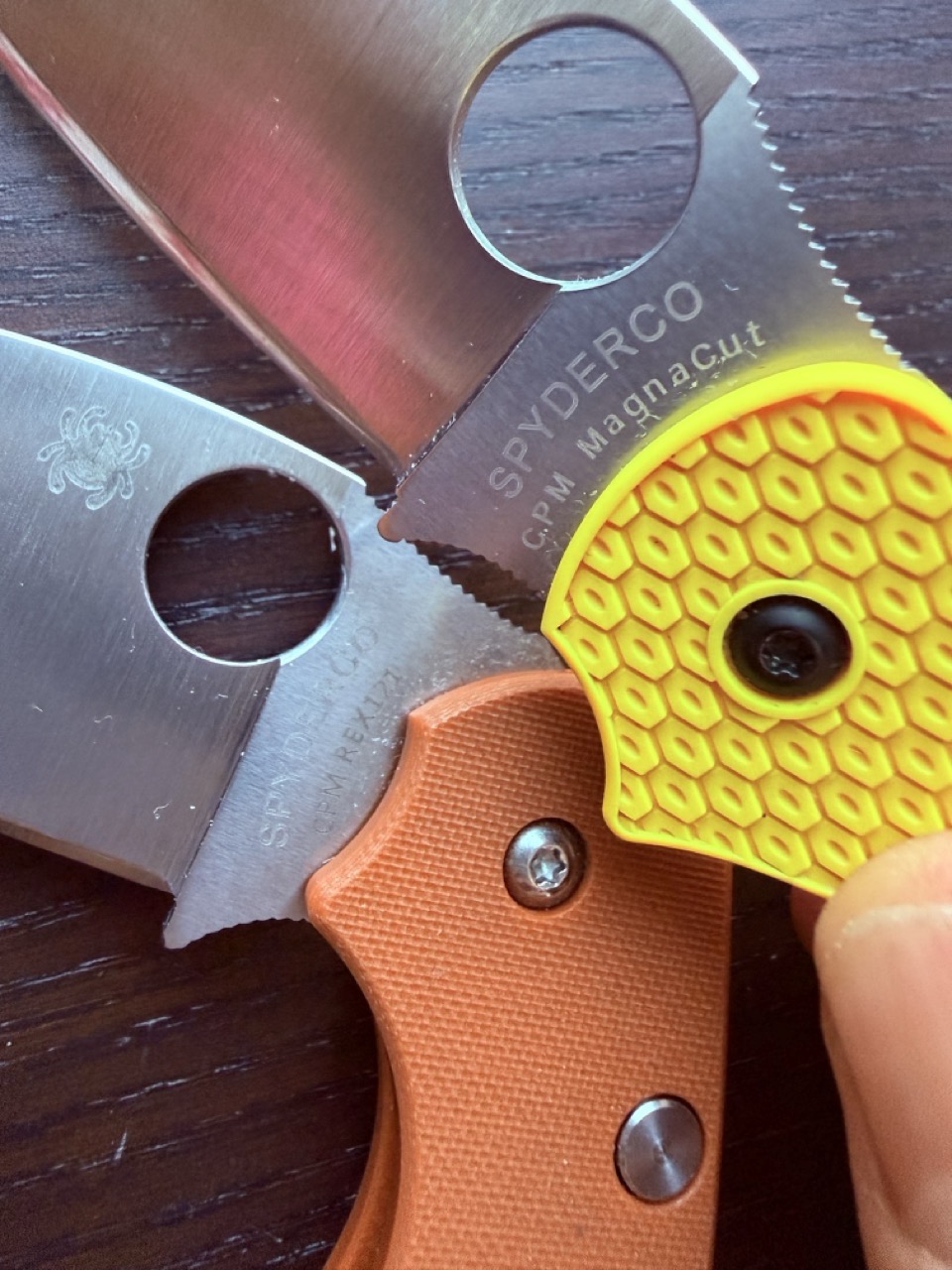
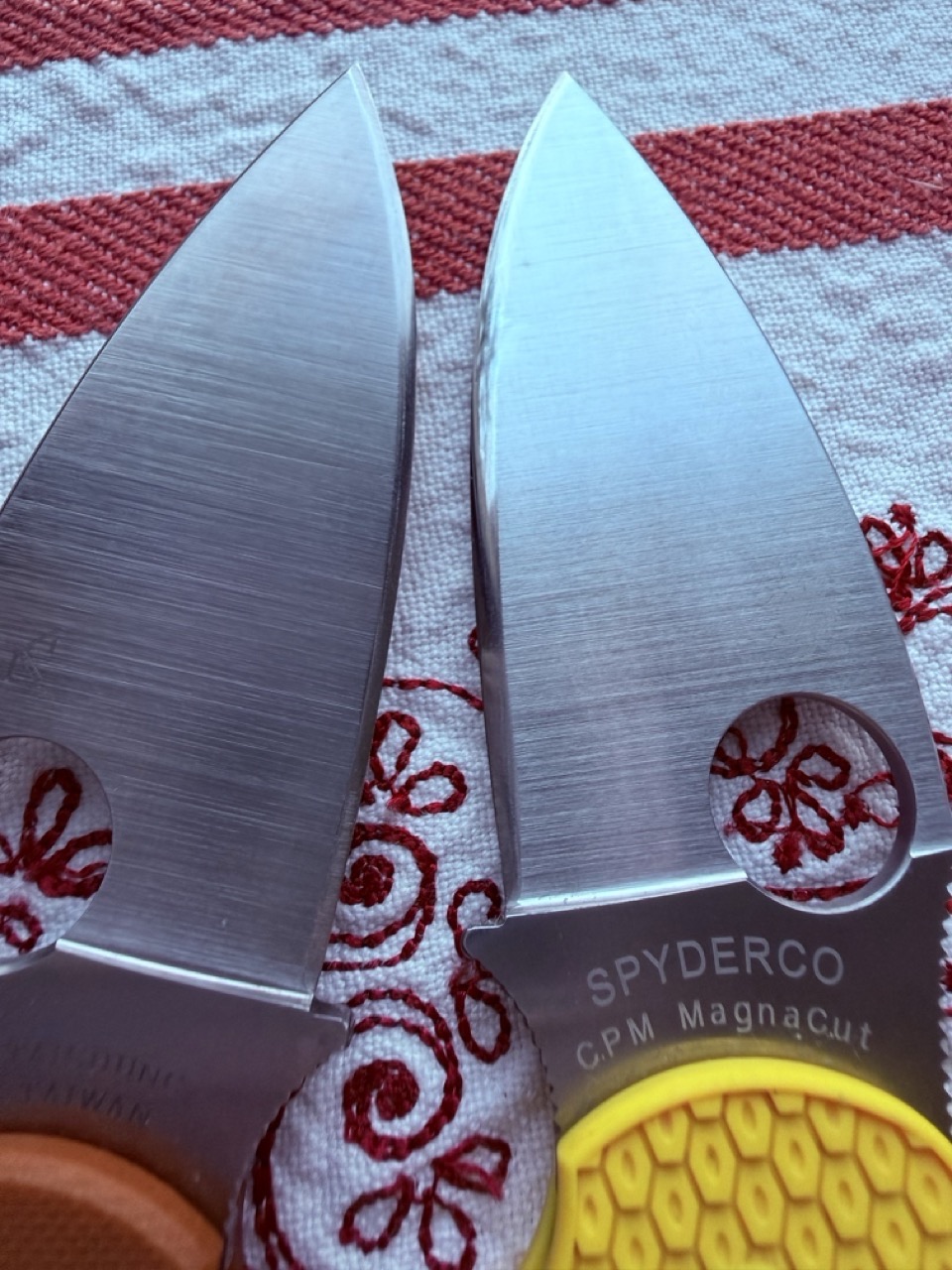
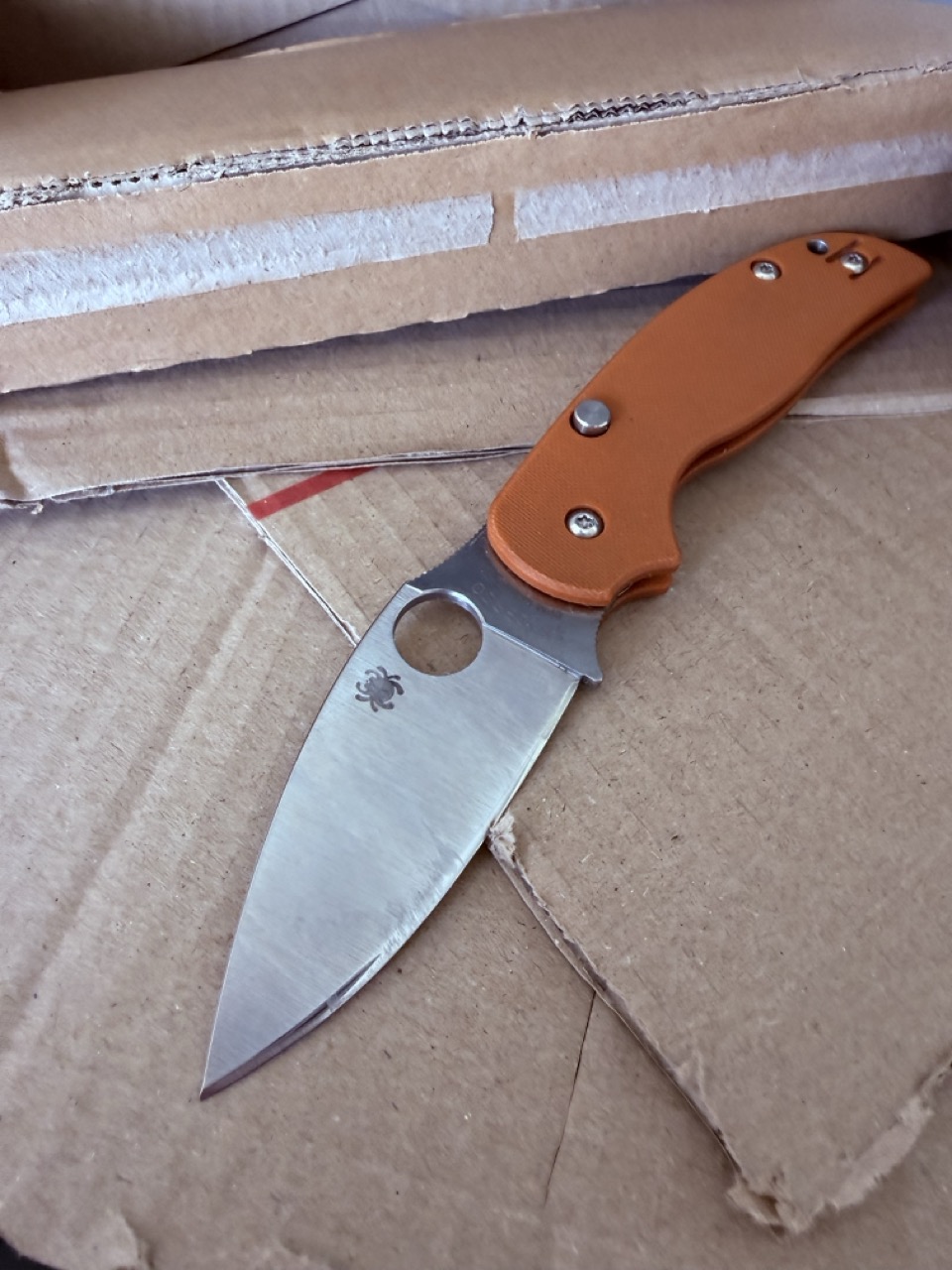
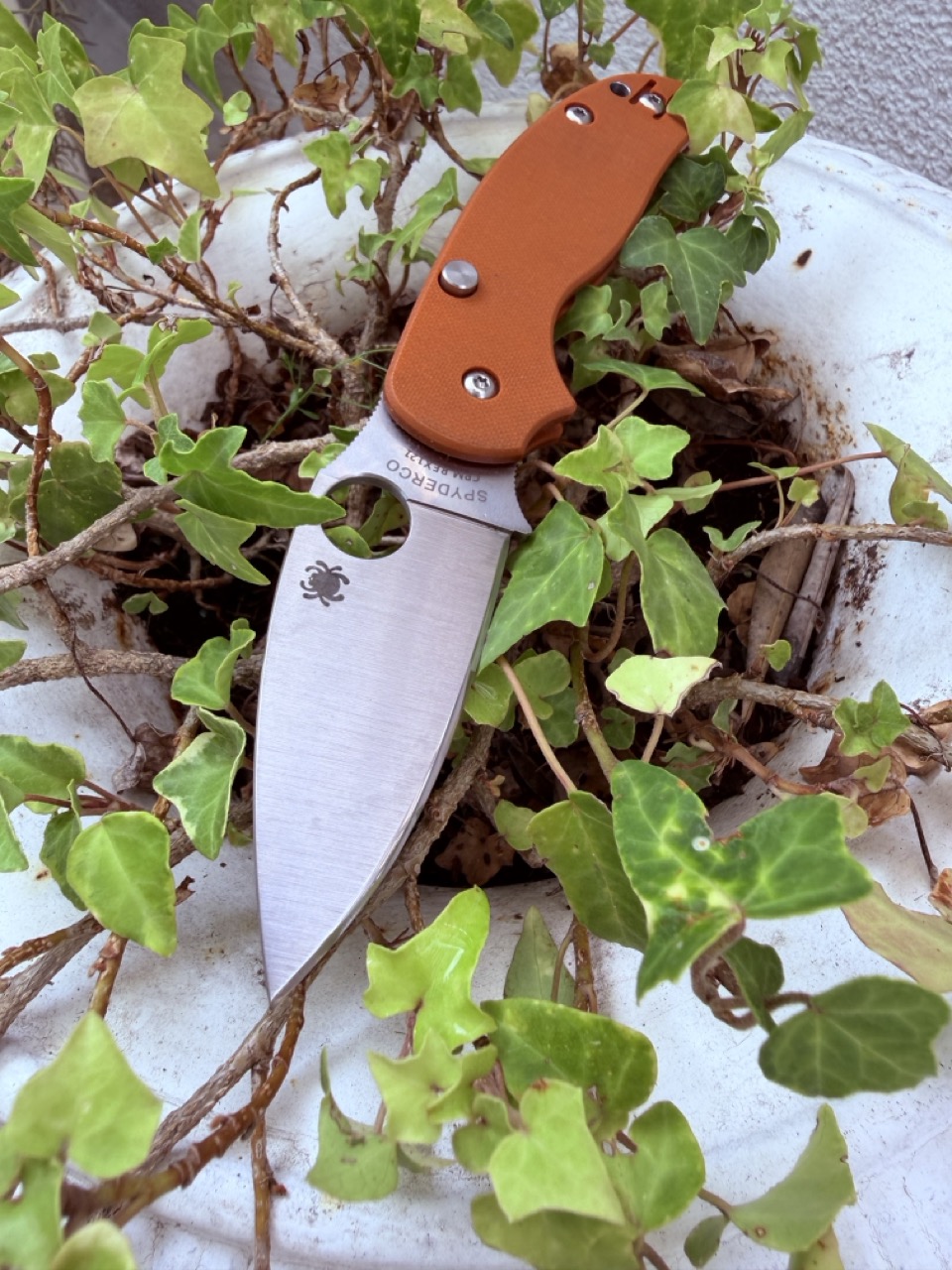
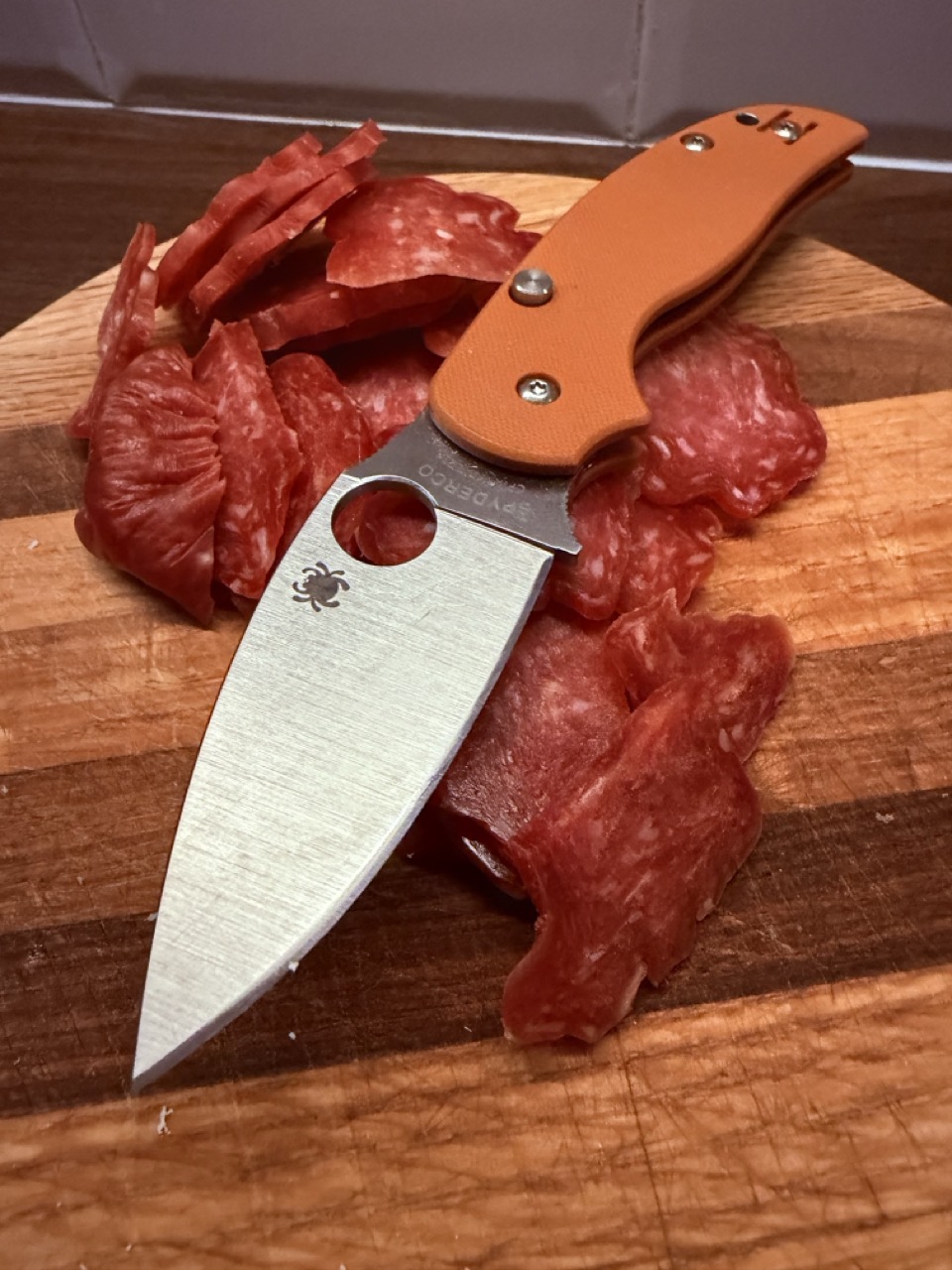
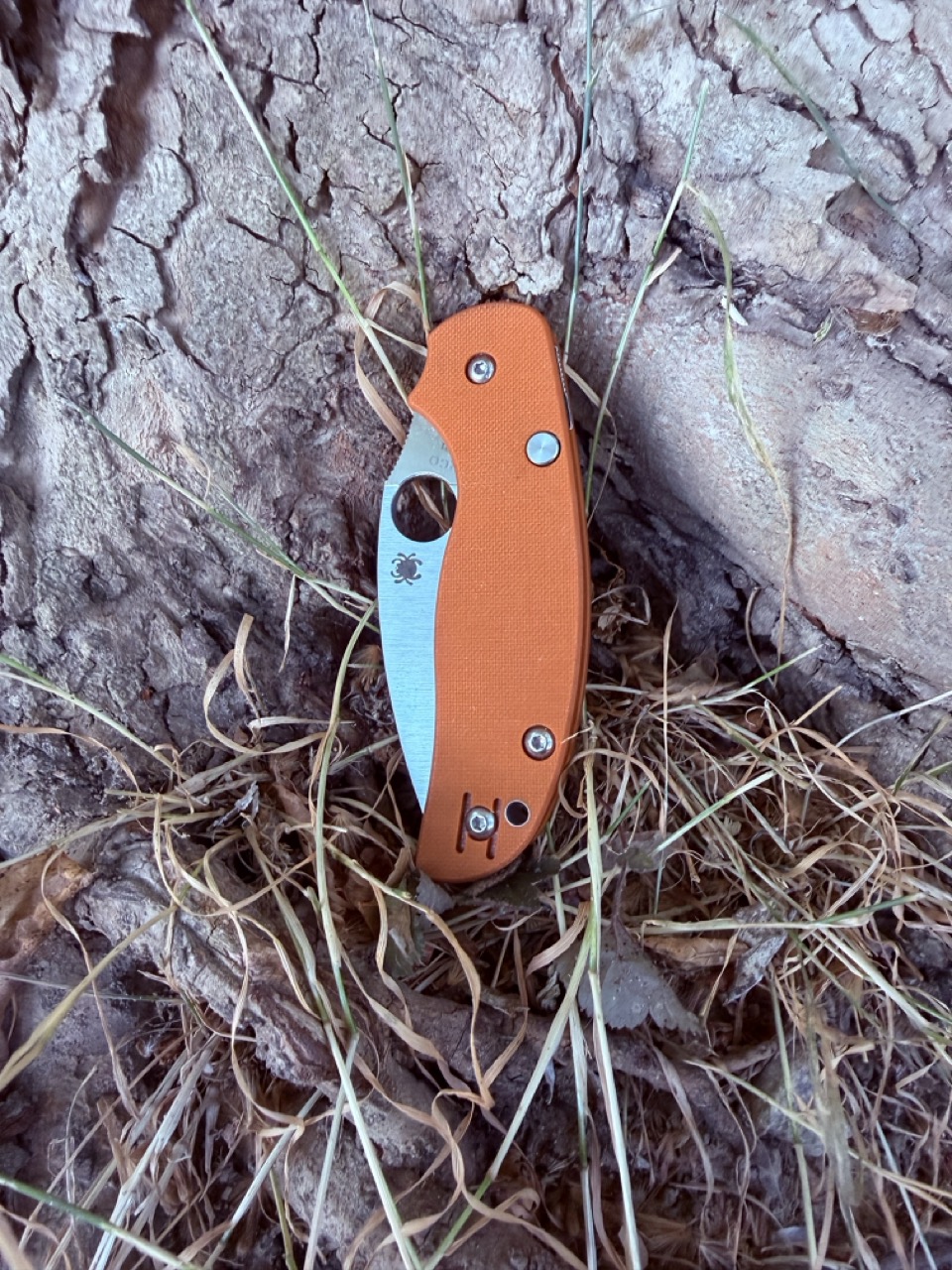
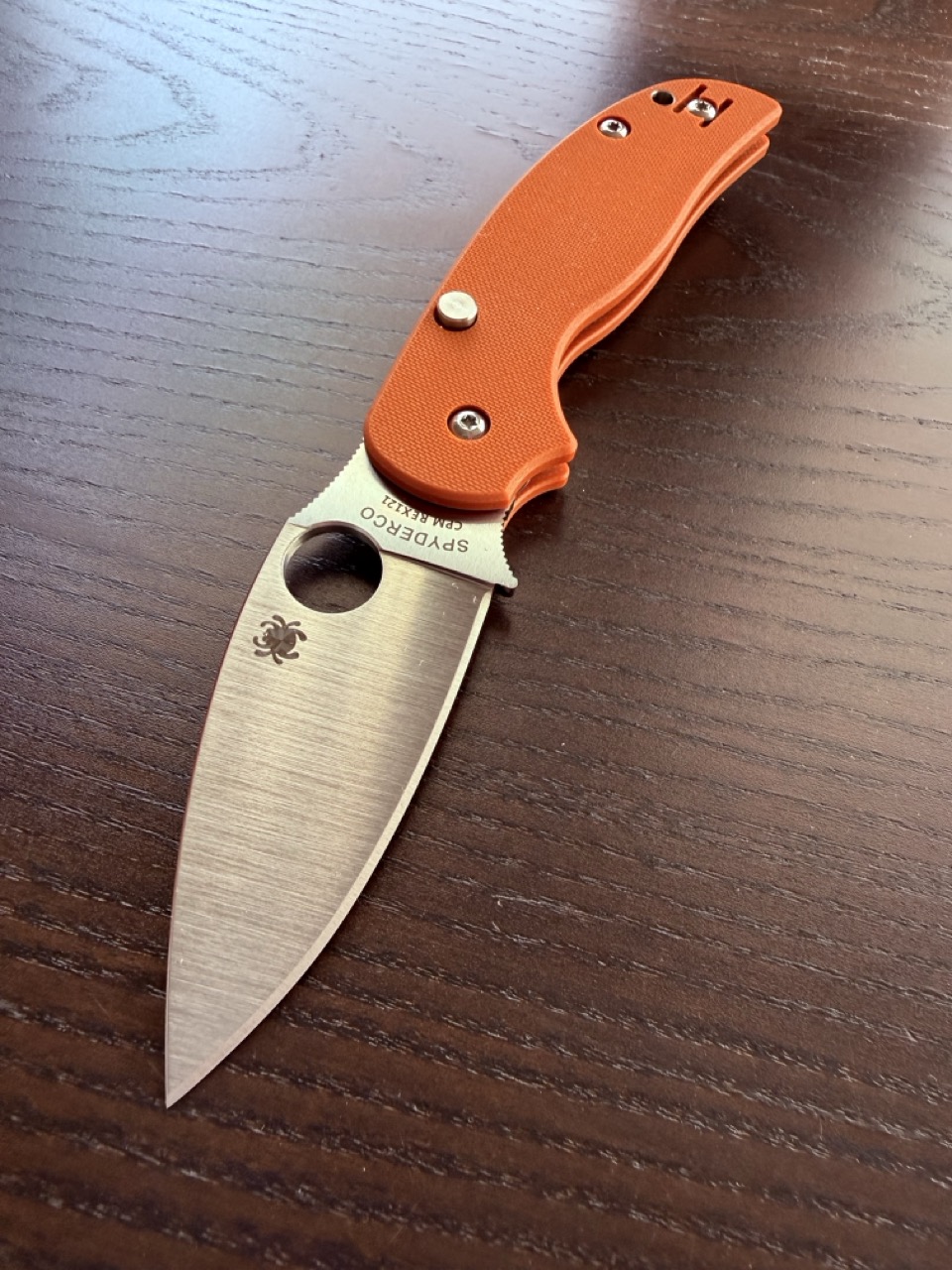
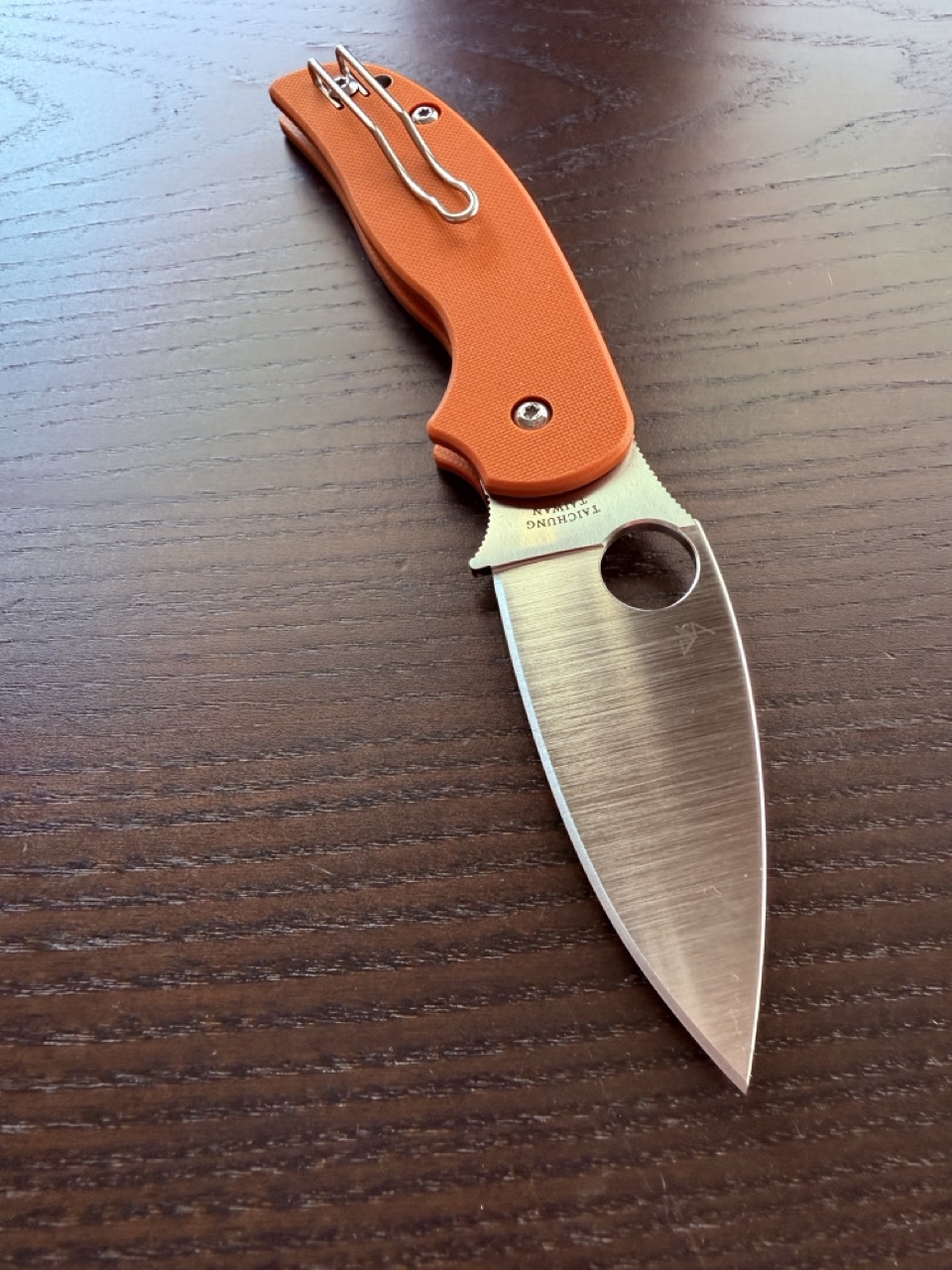
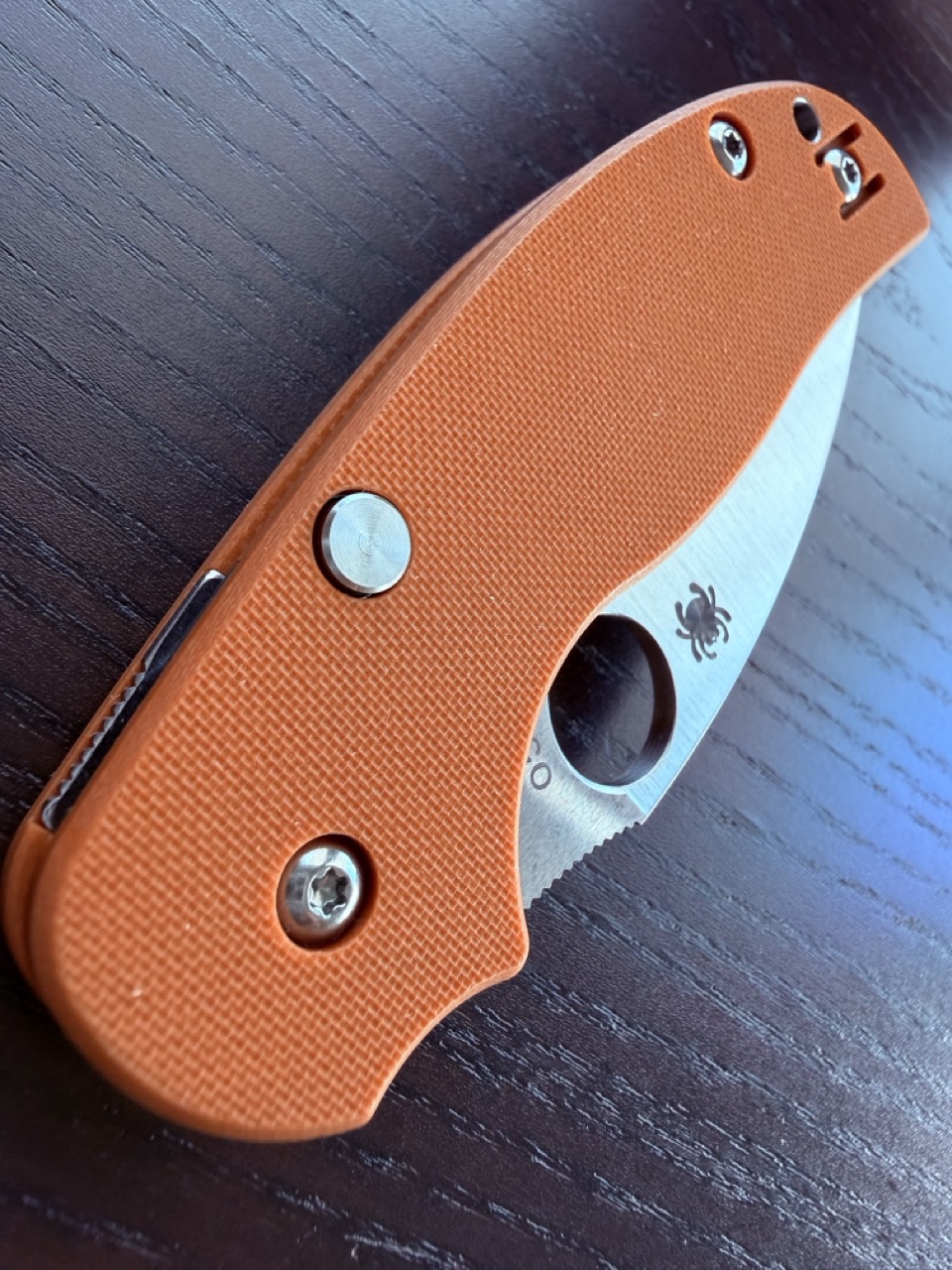
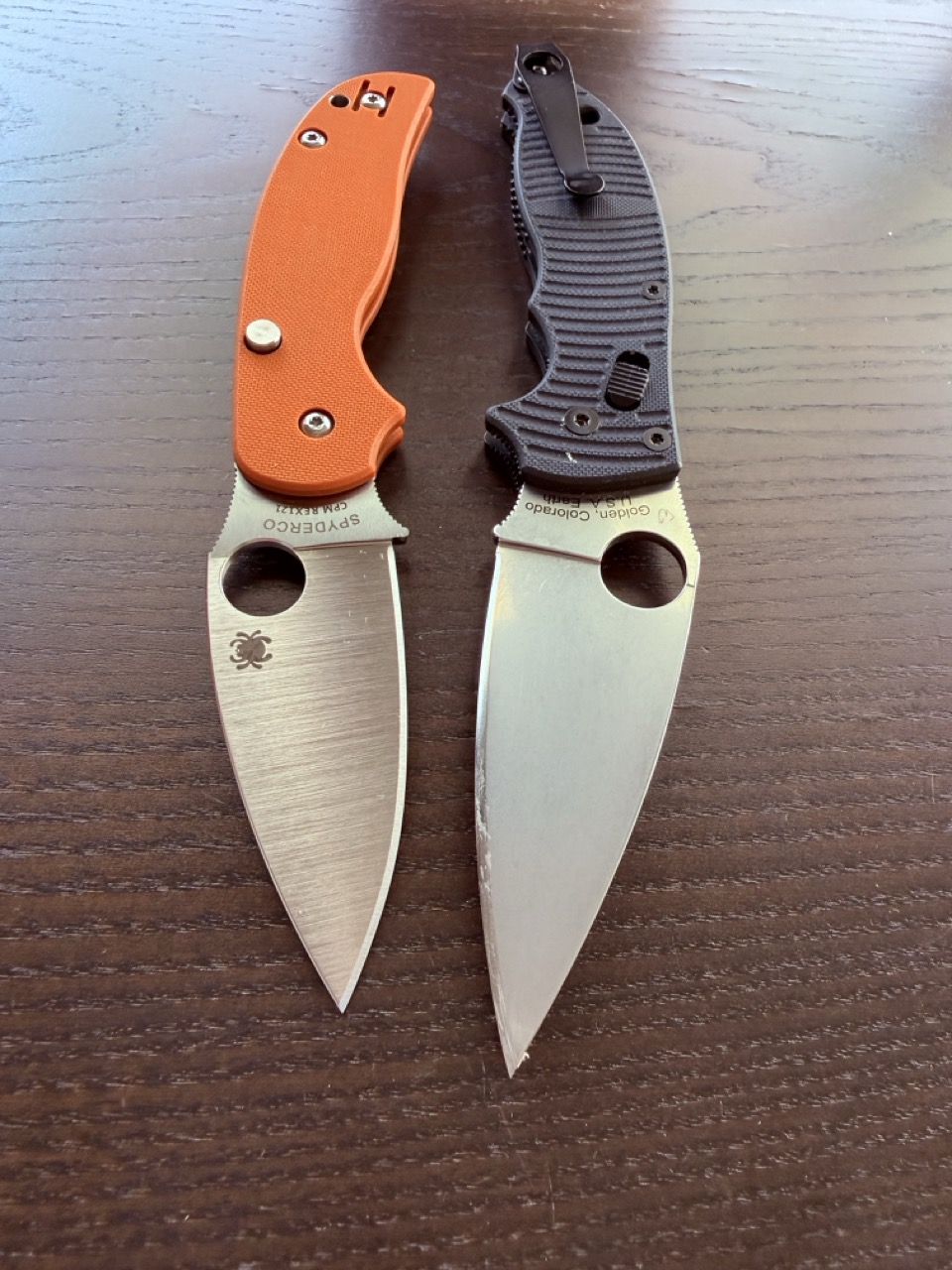
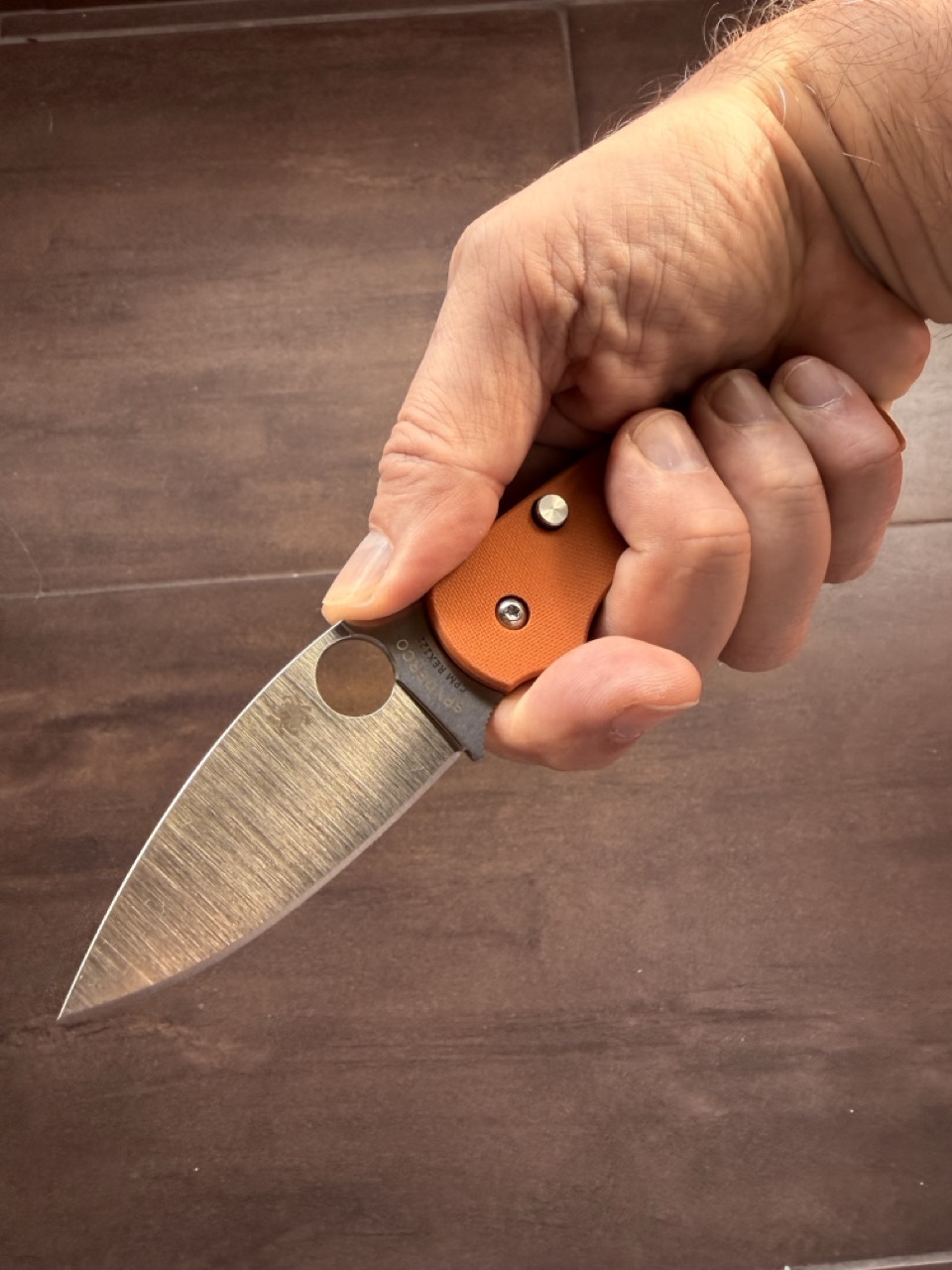
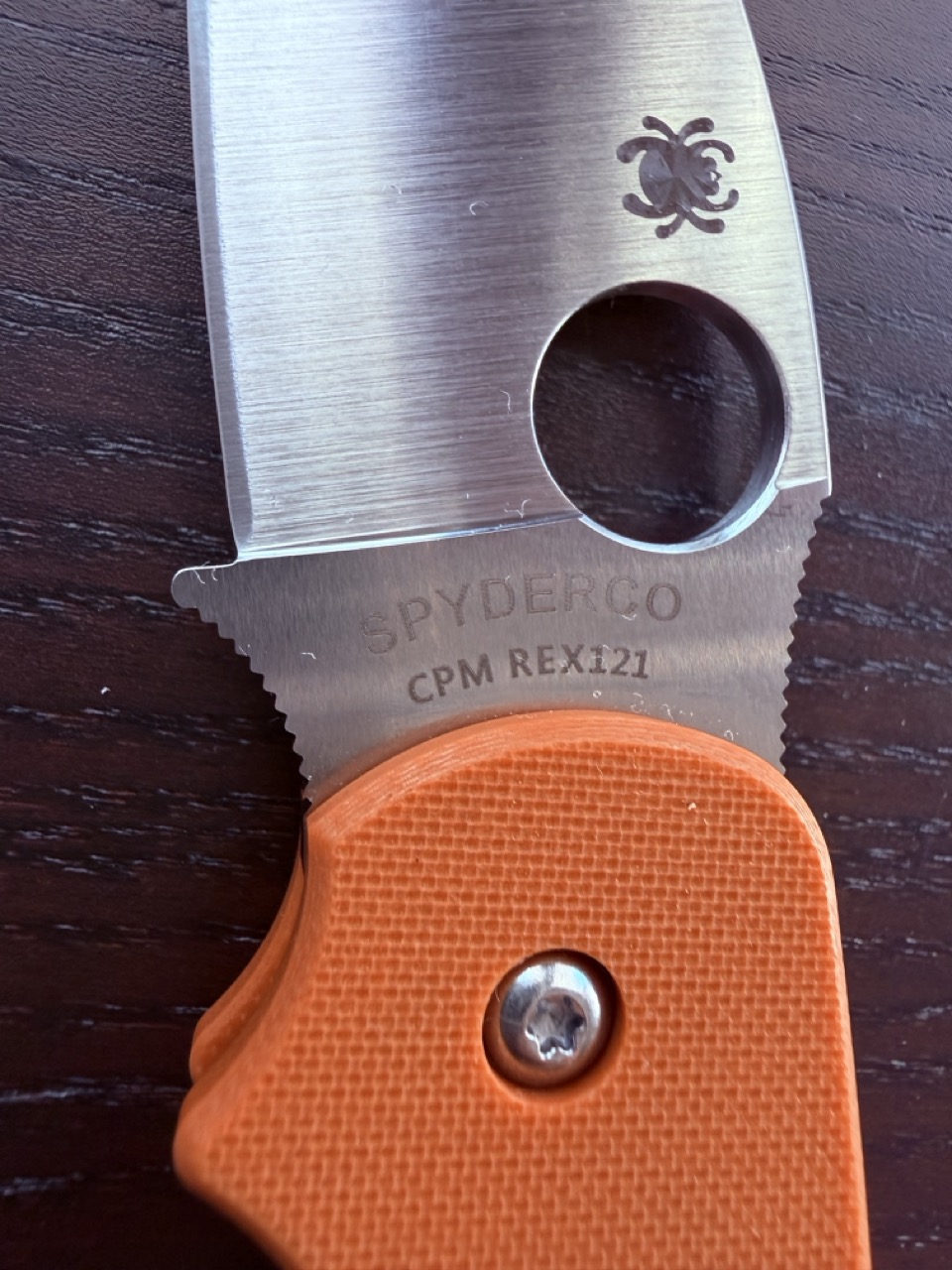
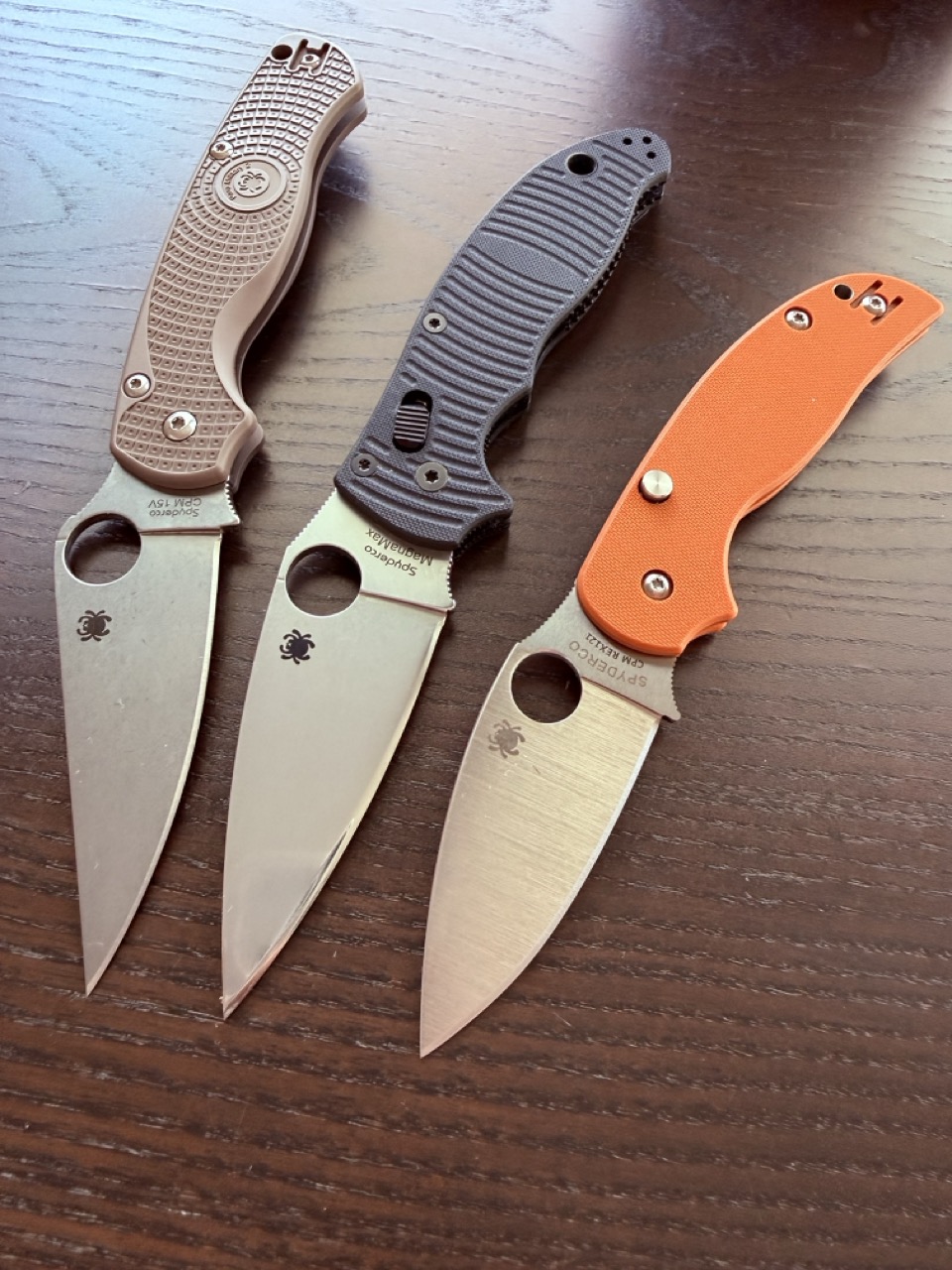
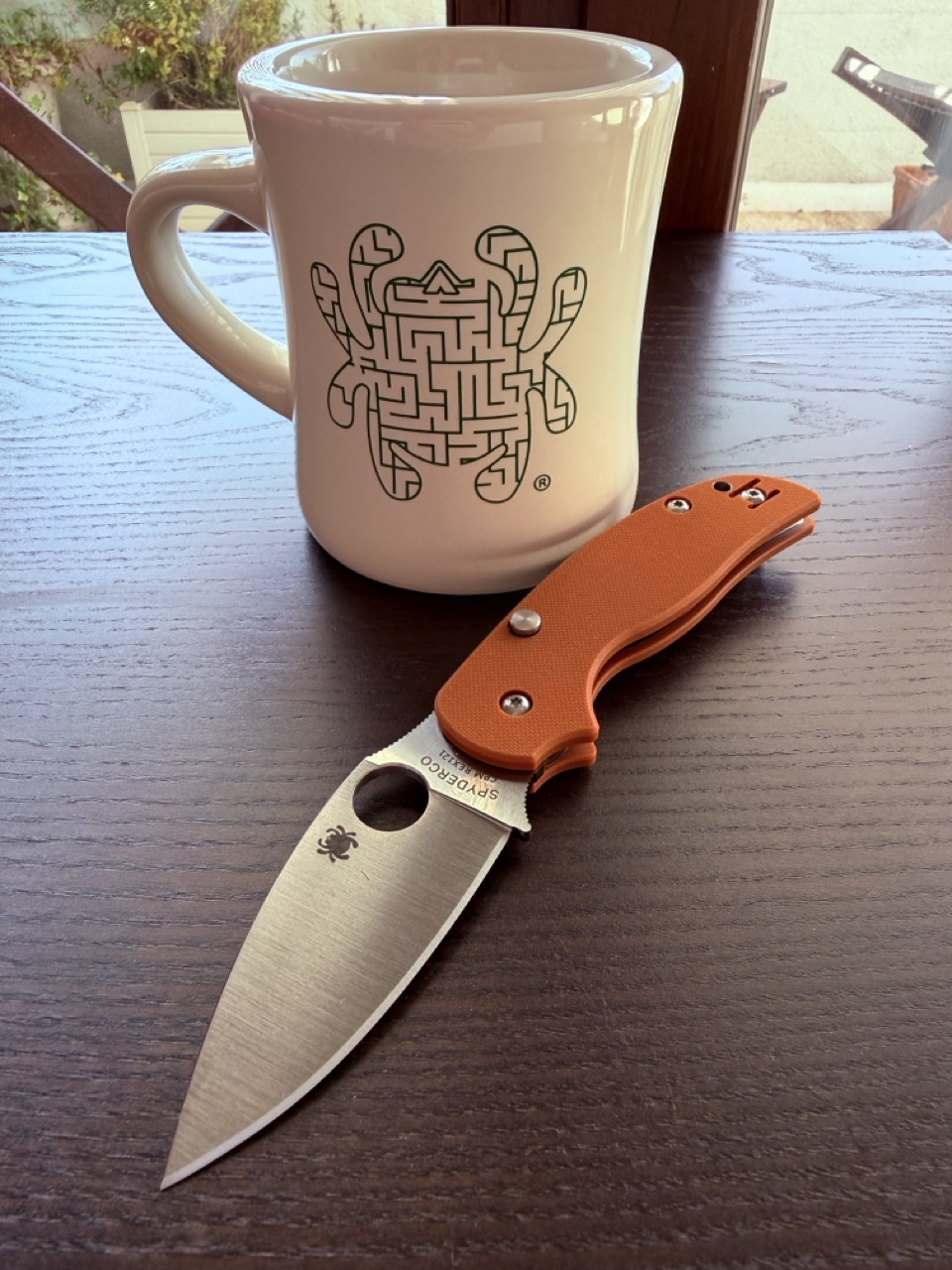
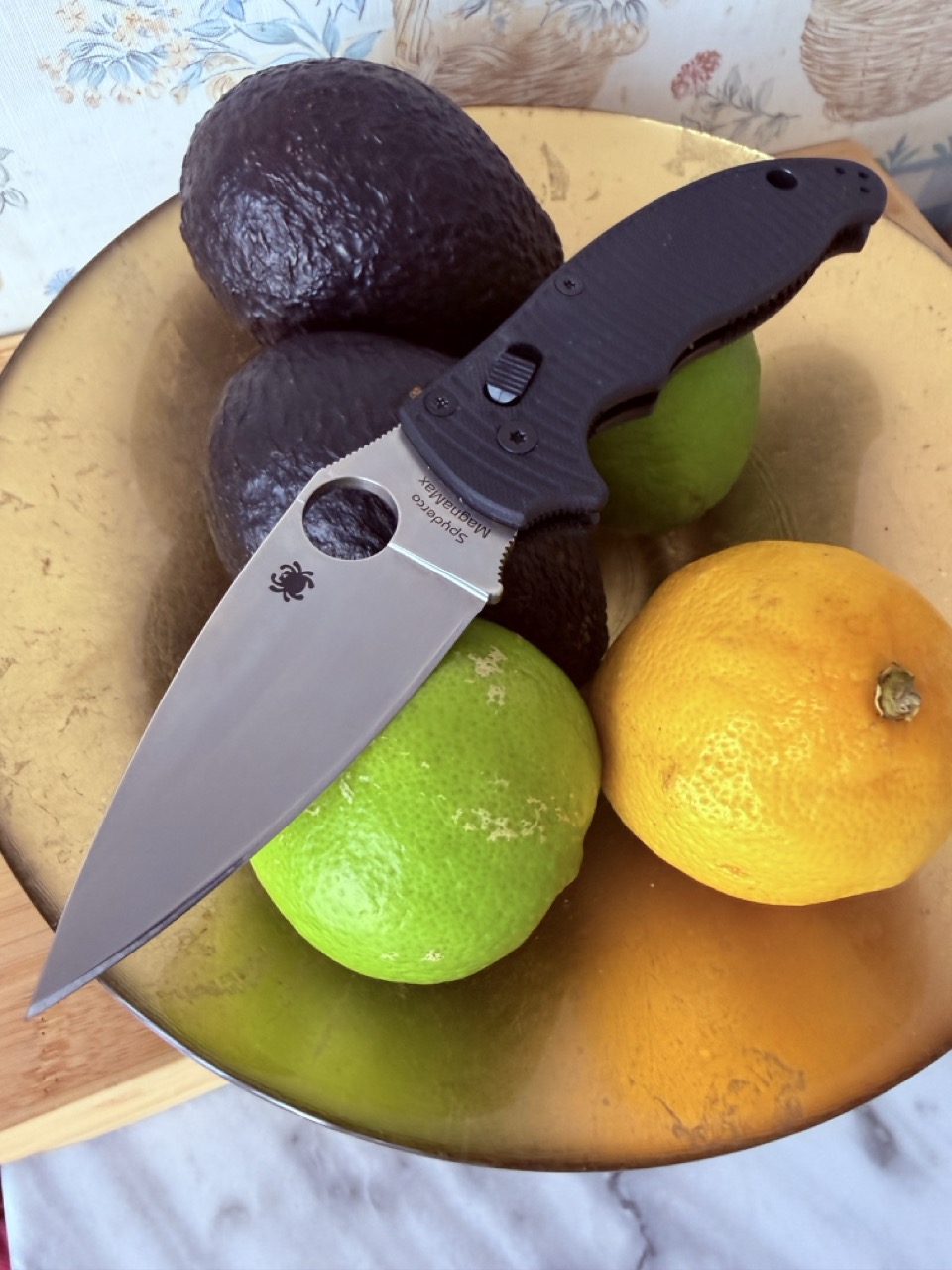
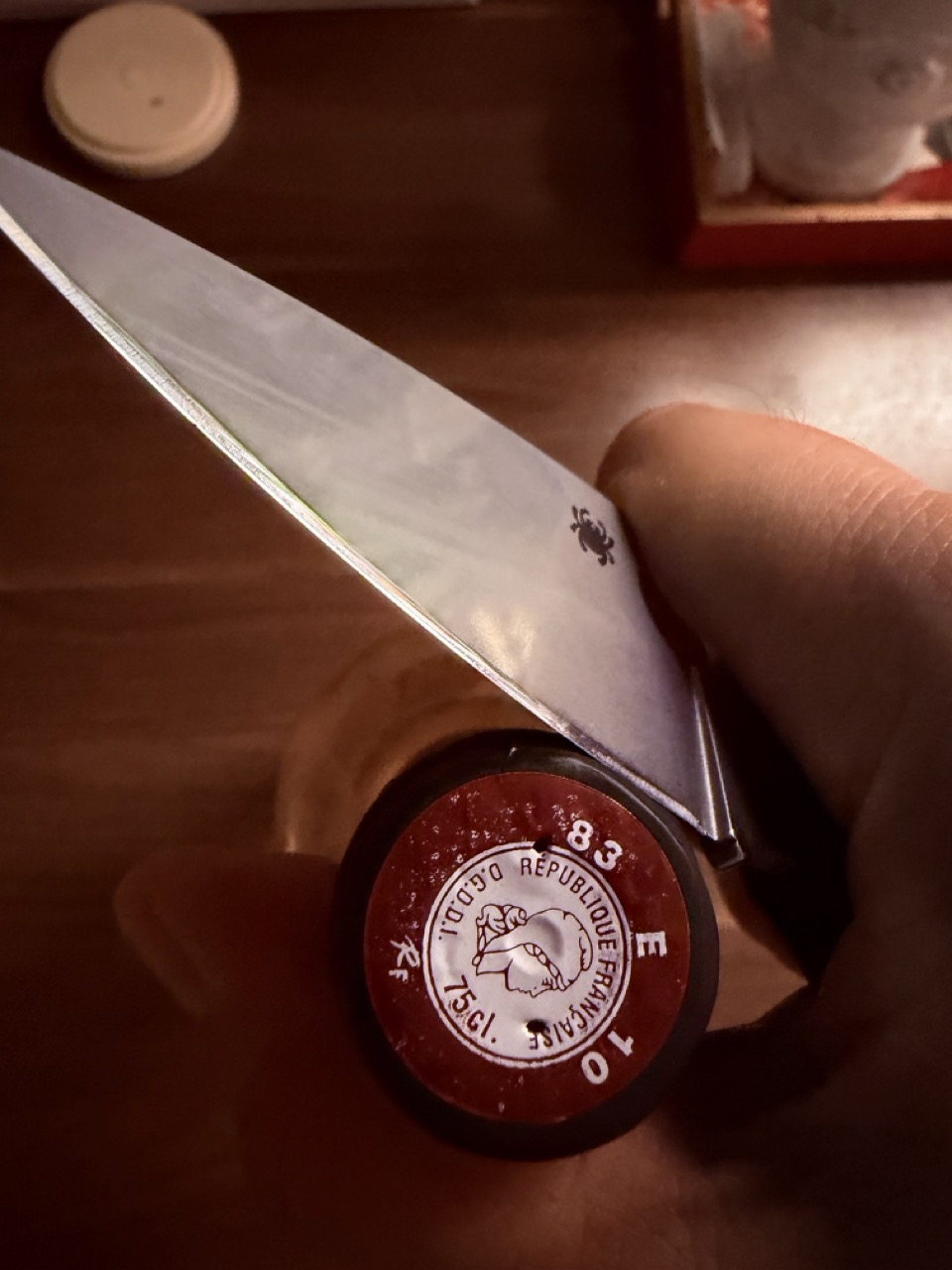
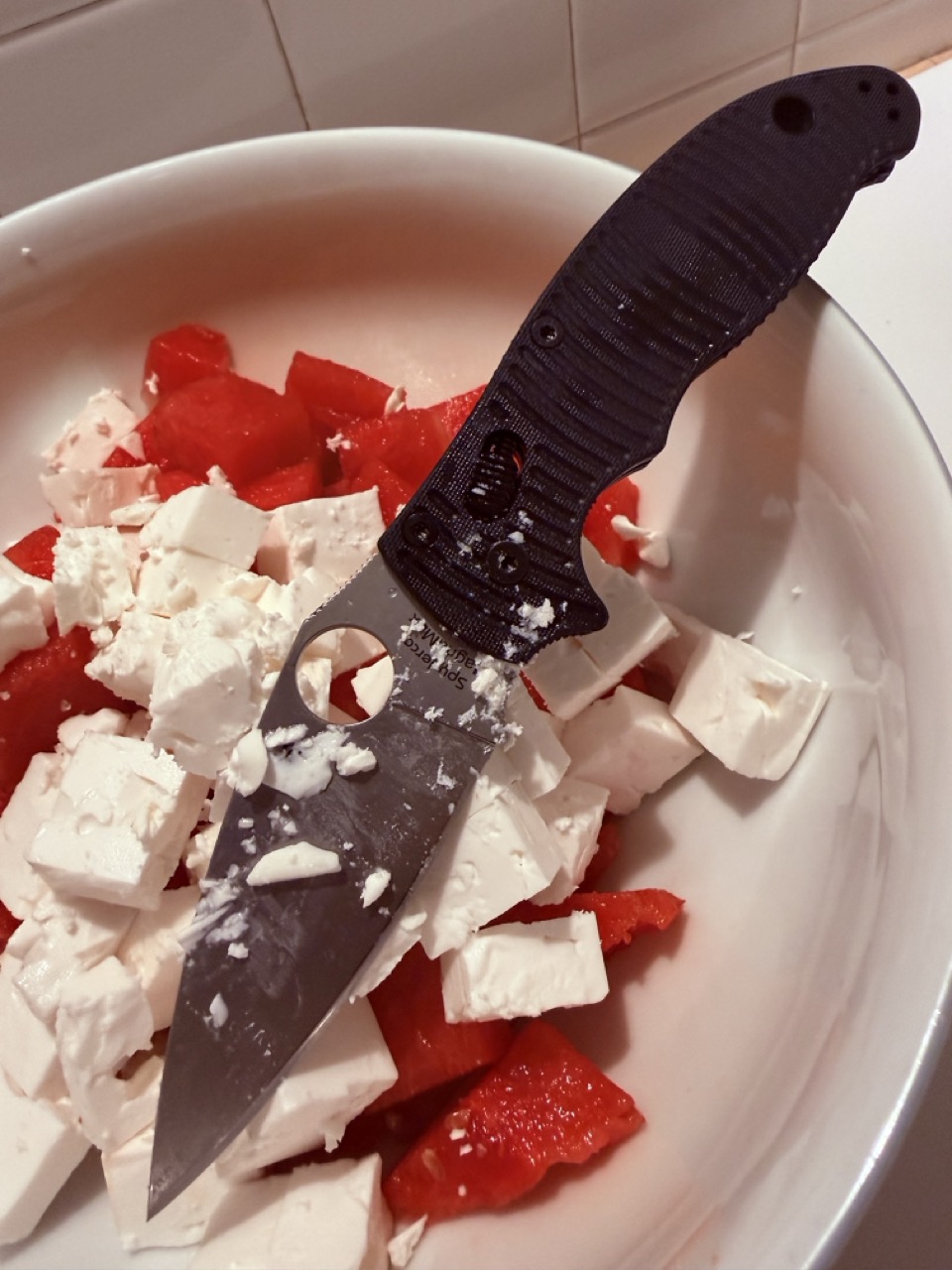
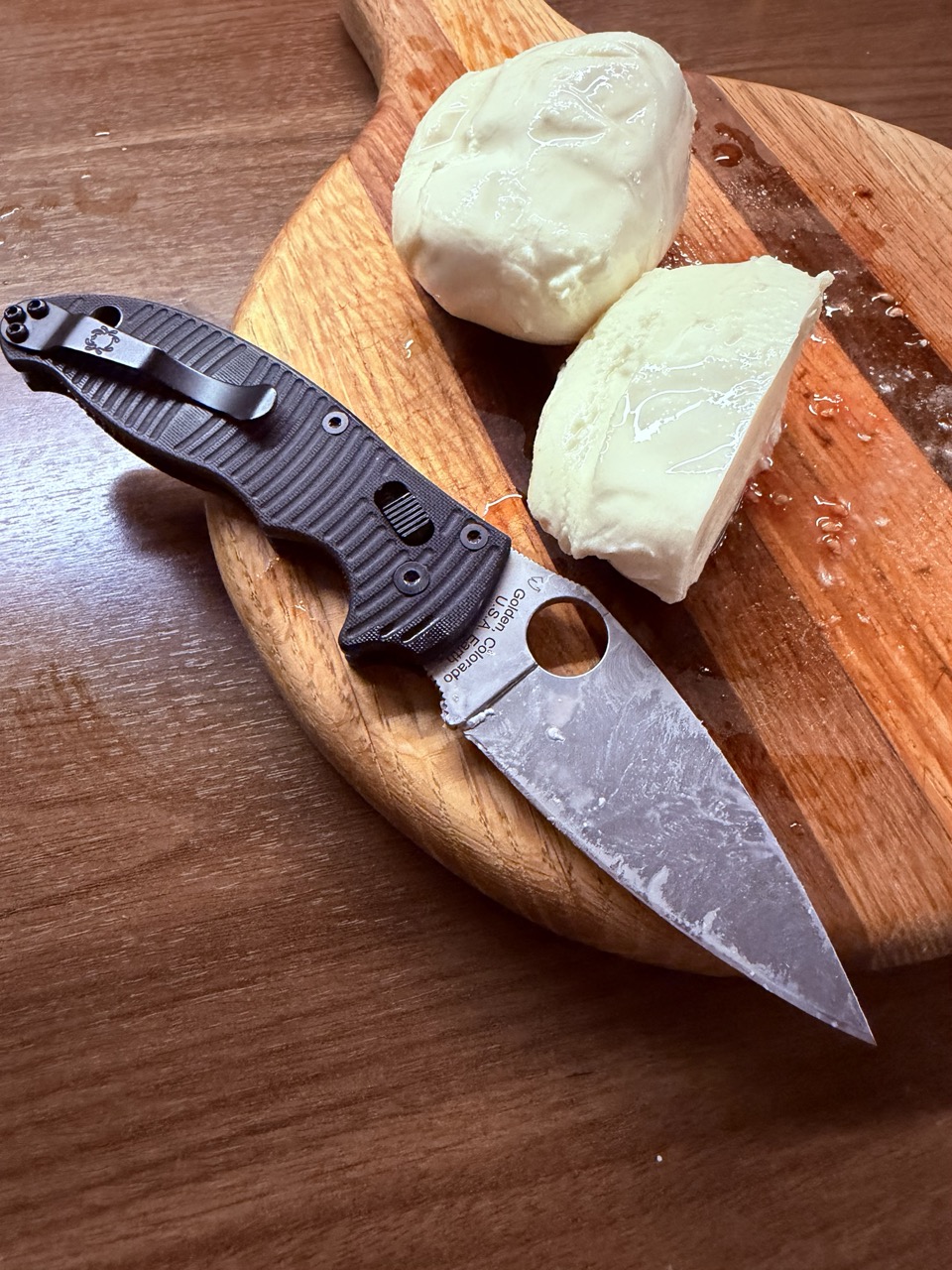
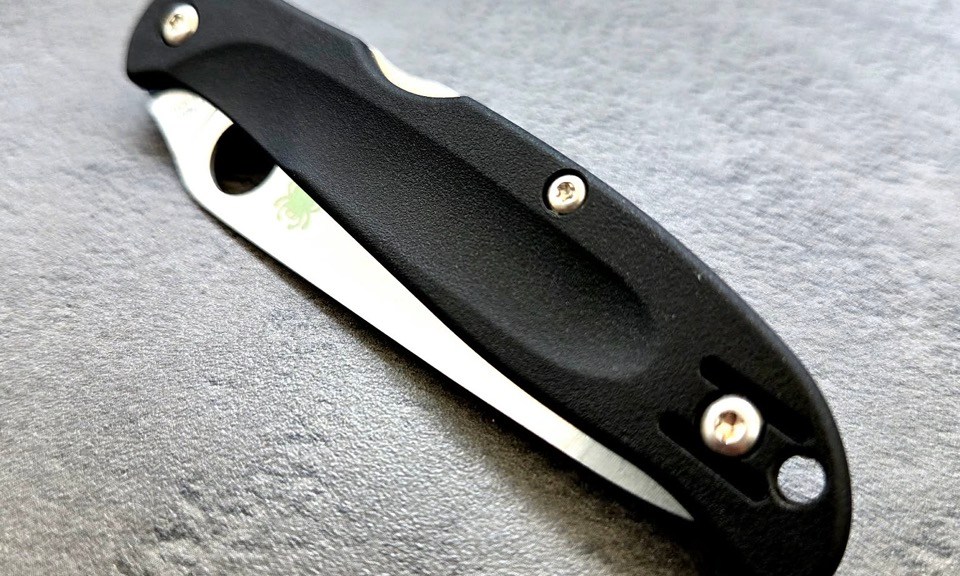
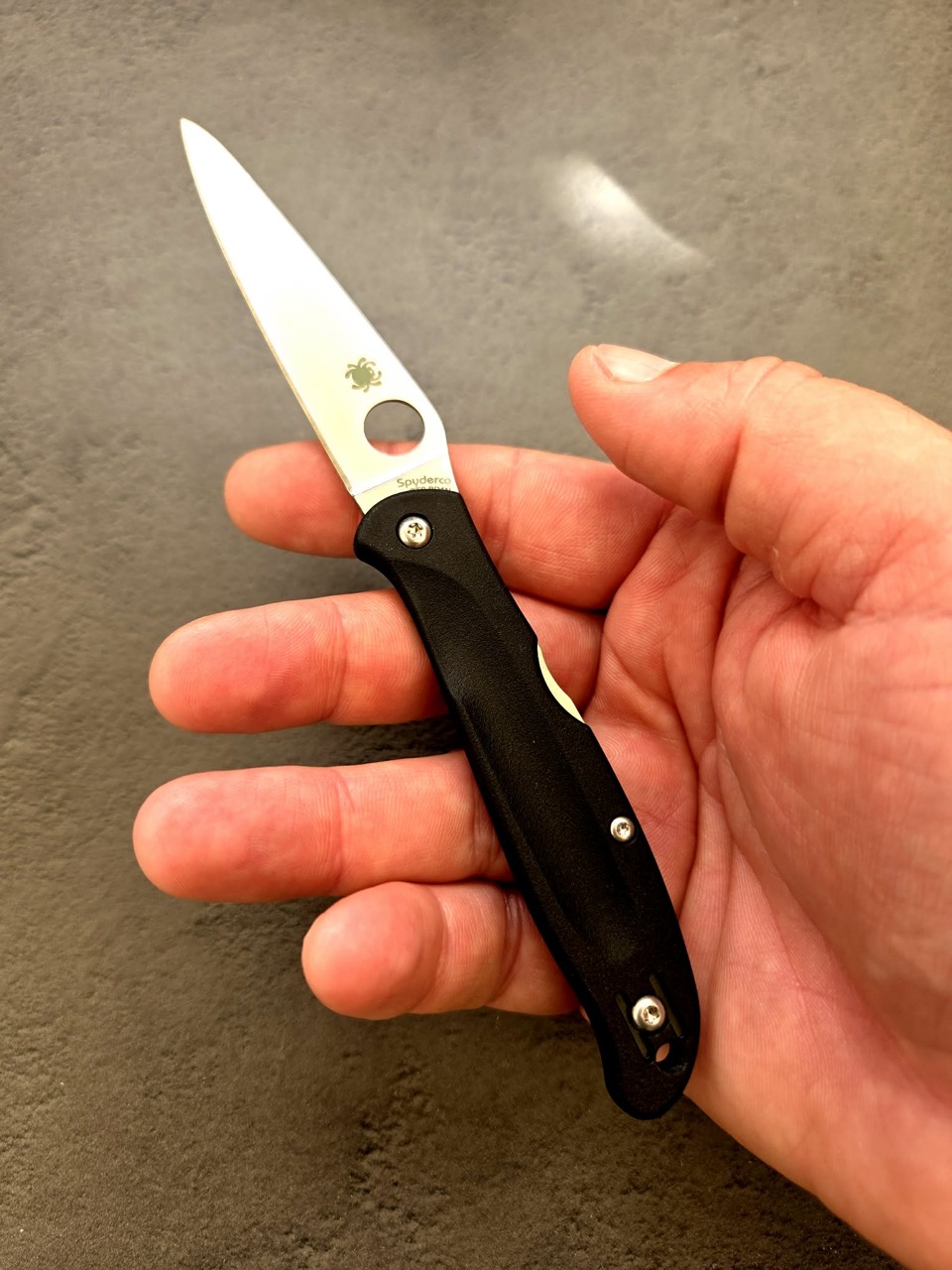
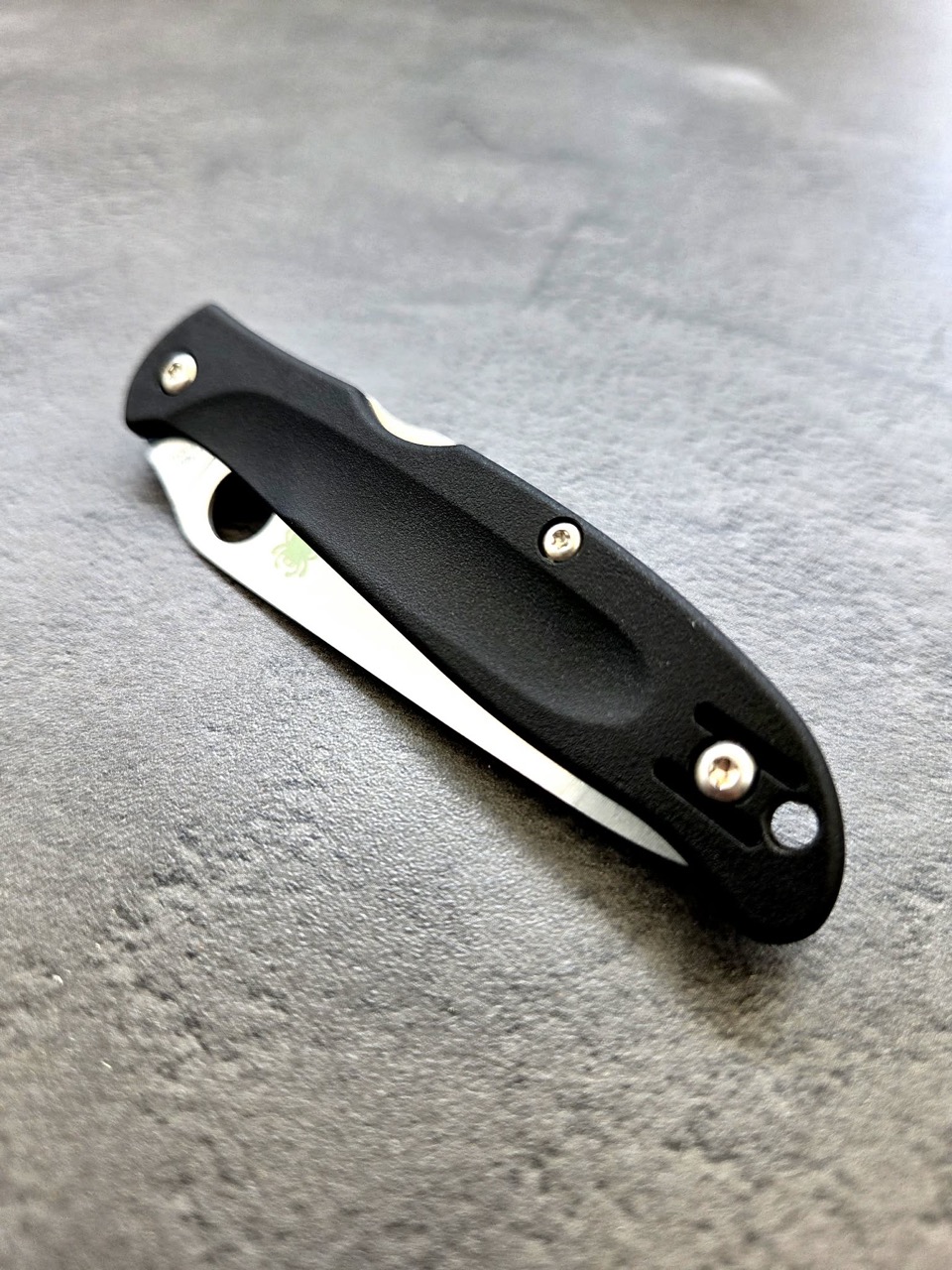
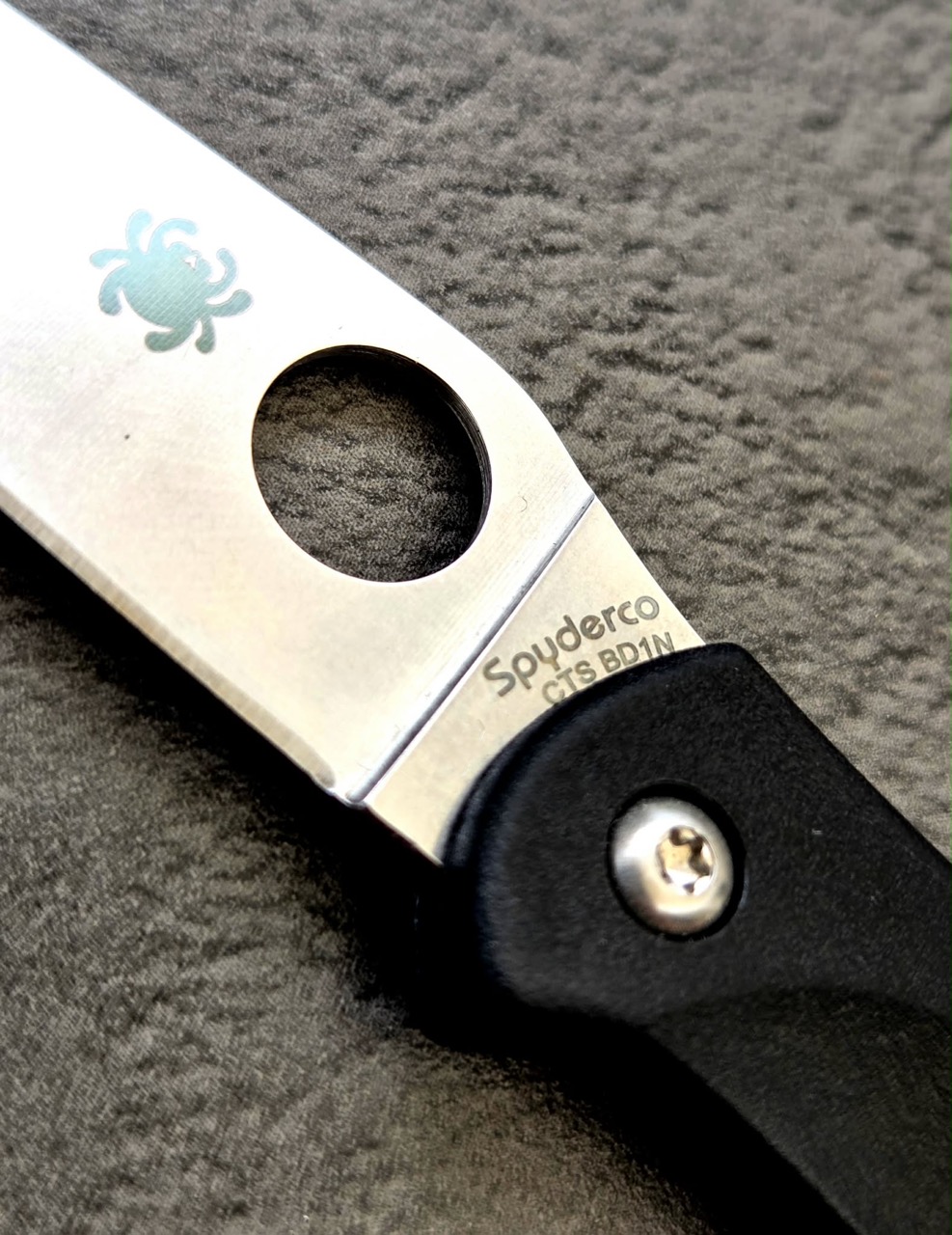
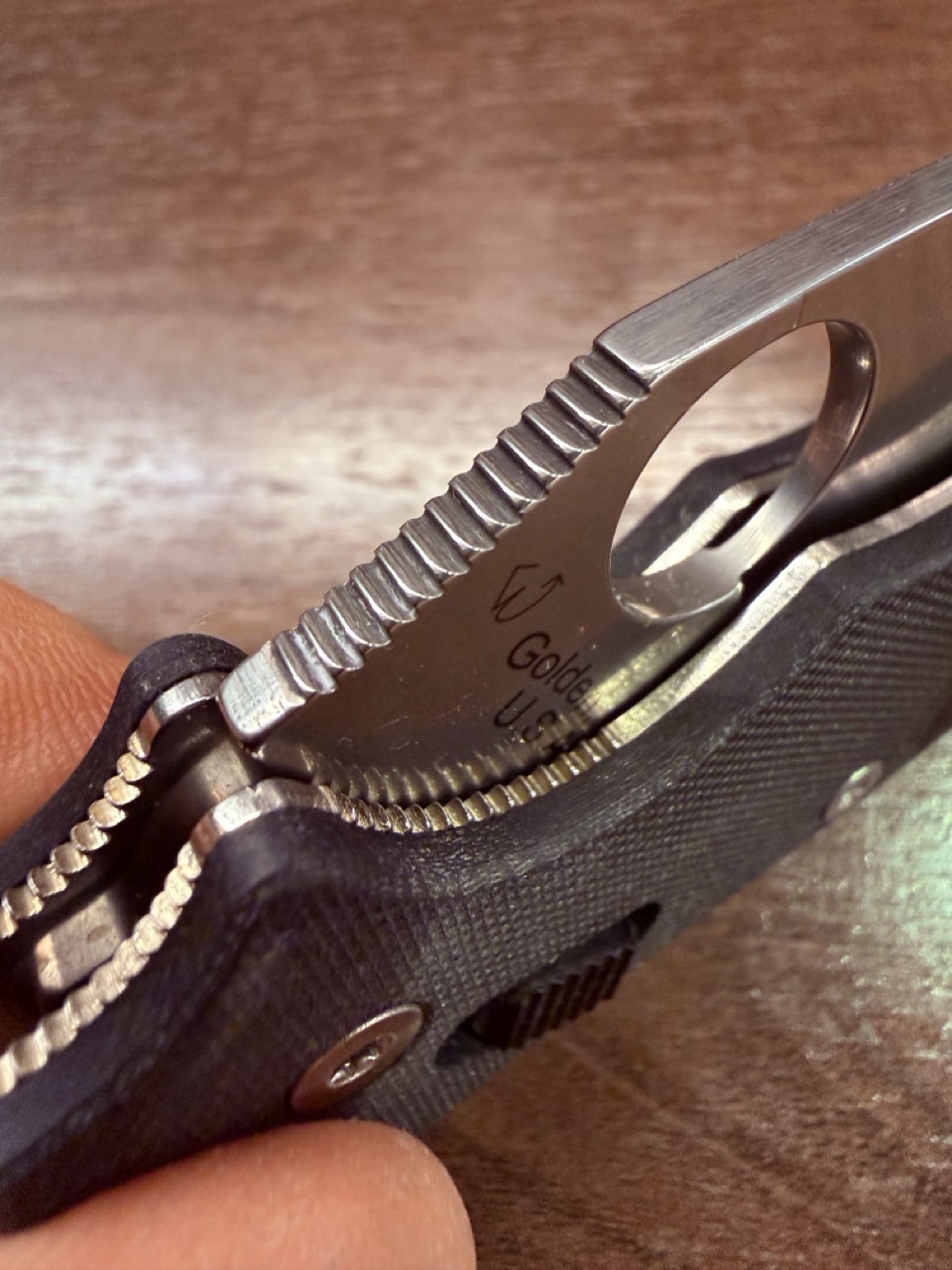
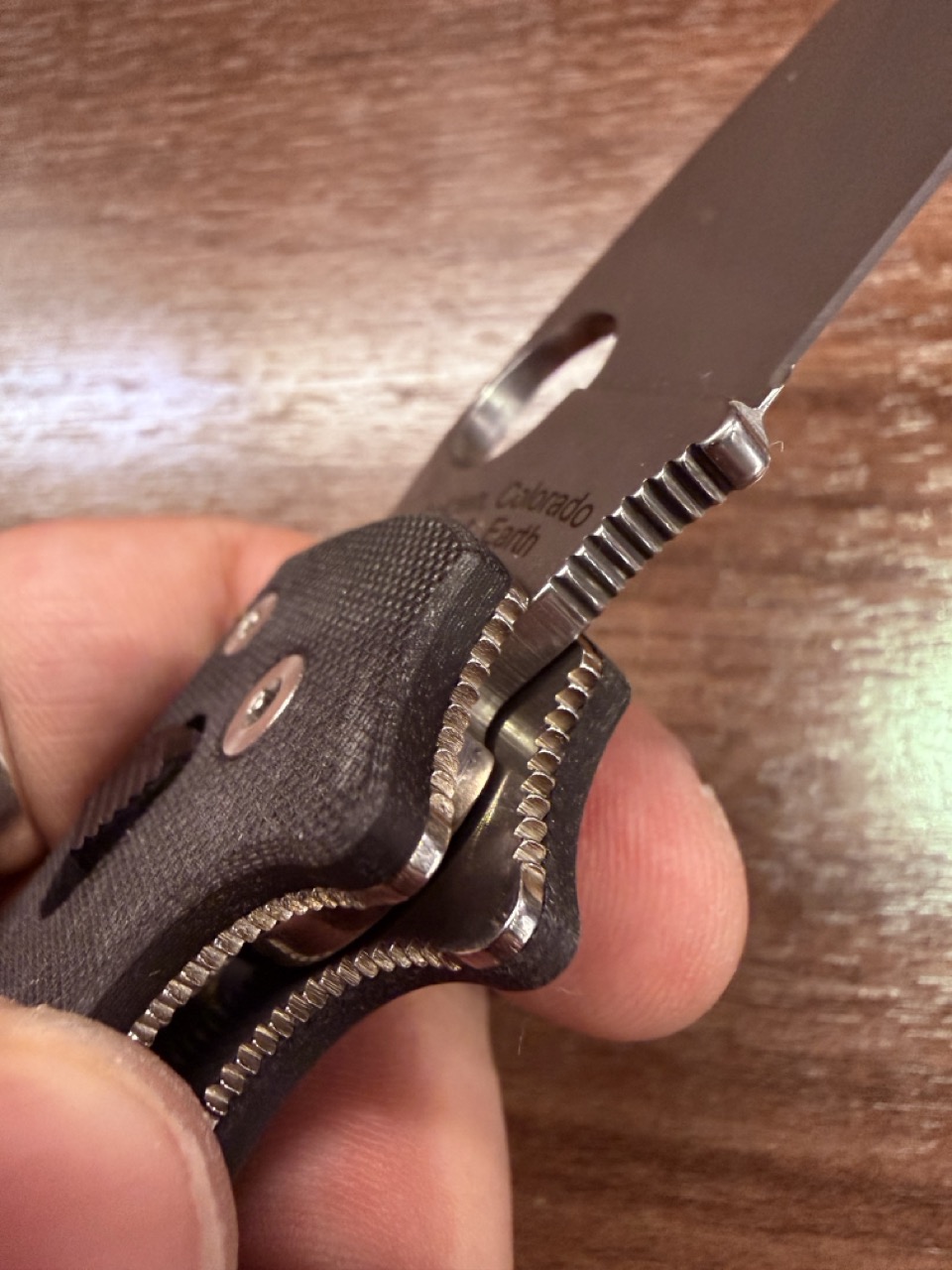
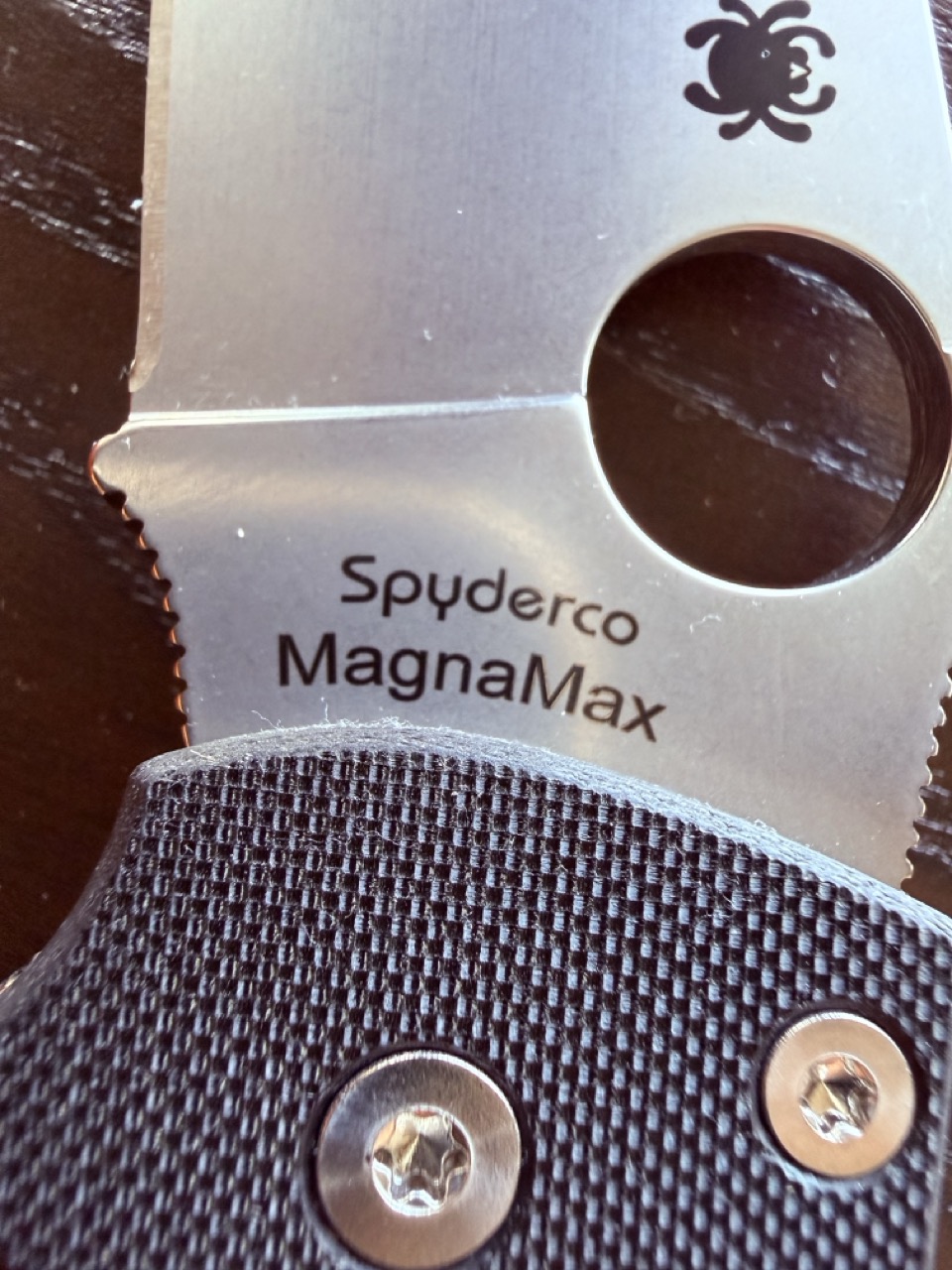
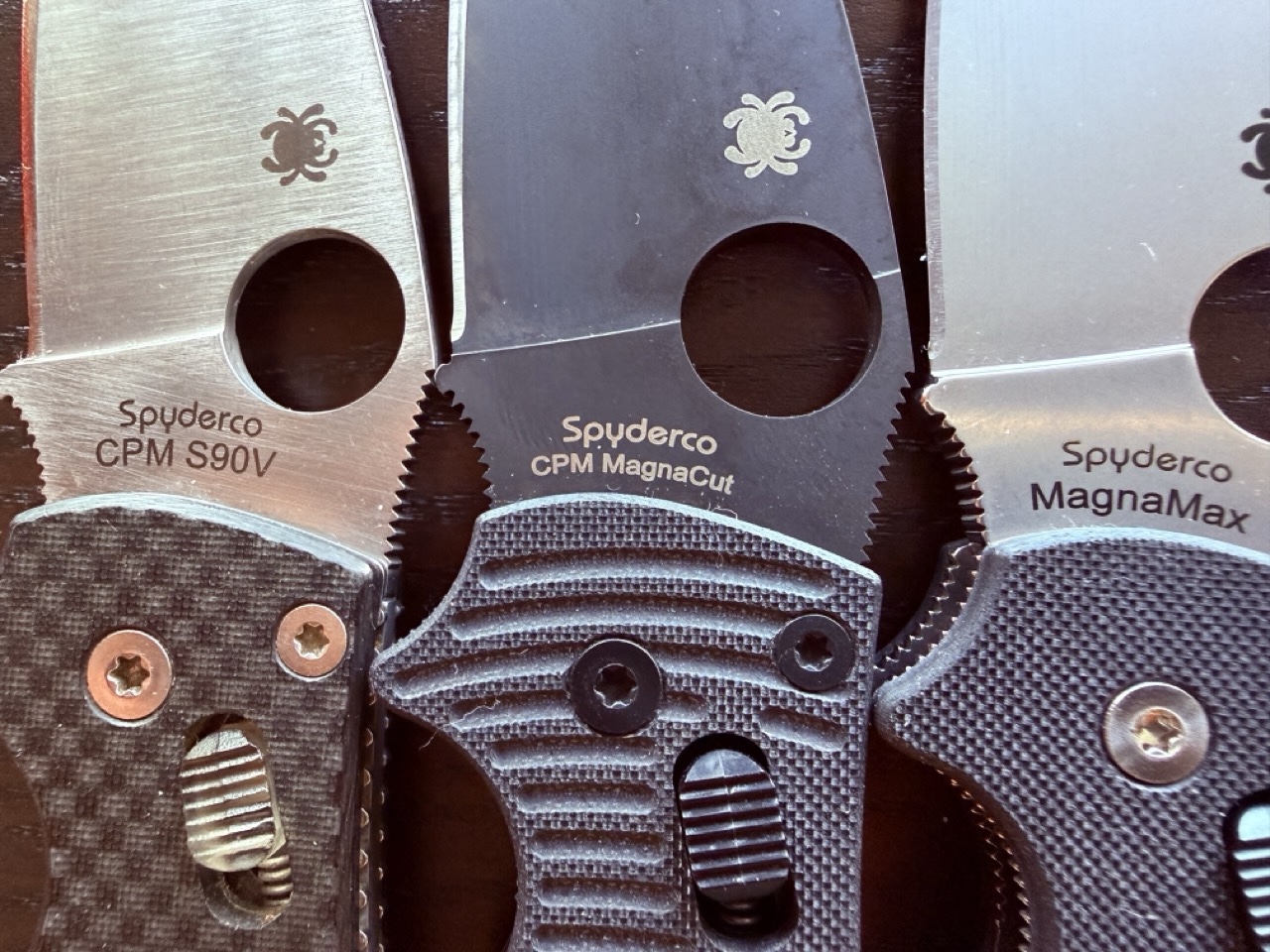
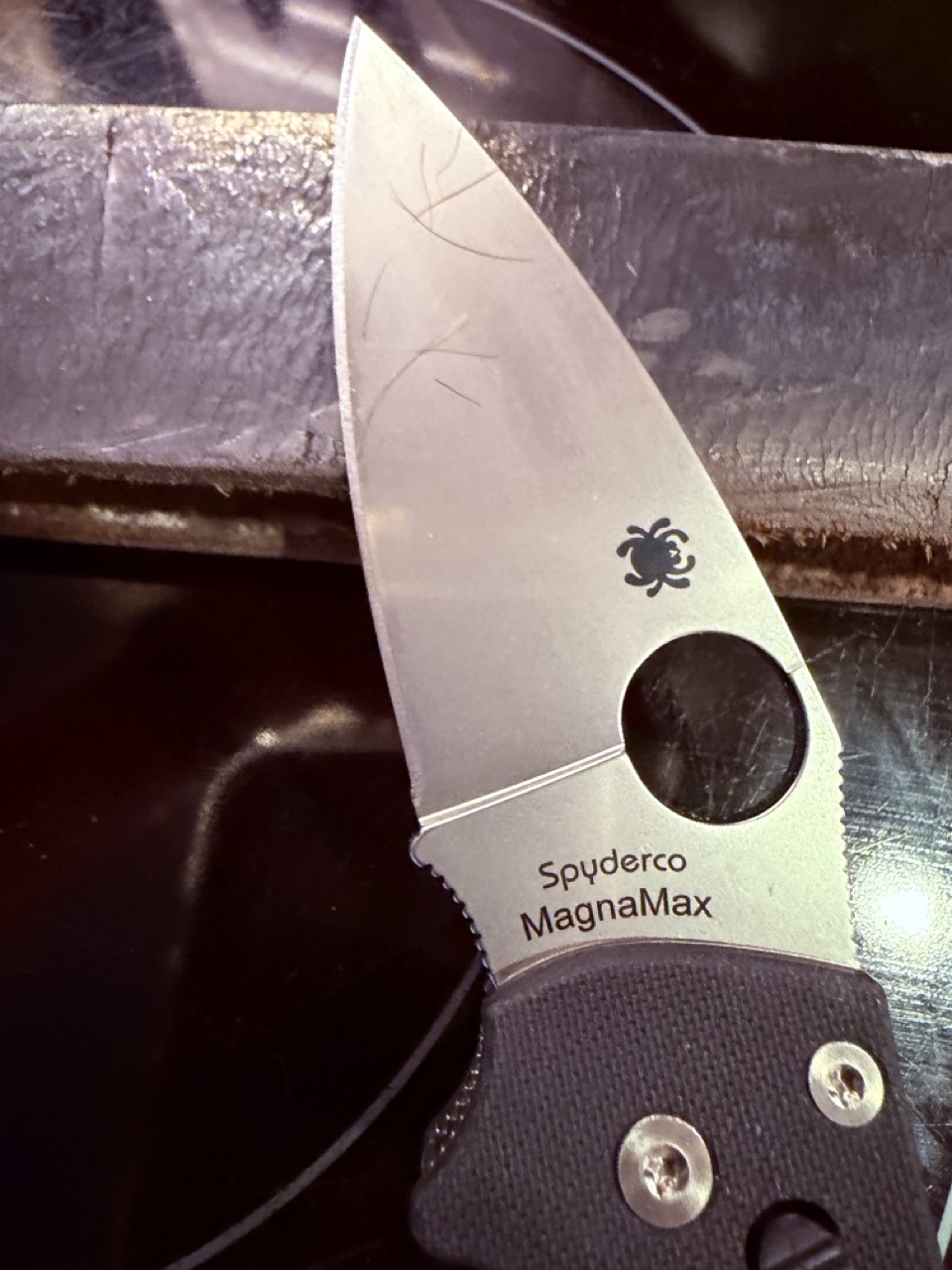
I’ve reviewed quite a few members of the Spyderco Chaparral family over the years, so I thought I knew pretty much what to expect from another variation of this compact gentleman’s folder. But this new Chaparral, featuring REX 121 blade steel, has made a particularly strong first impression.
Because… Spyderco is doing more than simply introducing an exceptional steel into a small gentleman’s knife. The company is positioning this Chaparral among its most premium offerings, with a price tag that even exceeds those of previous titanium-handled variants !
By the way: a big thank you to Golden as I received this stunning Spyderco Chaparral CPM REX 121 as part of their Ambassador Program. As always, my reviews reflect my own experience and honest opinions.
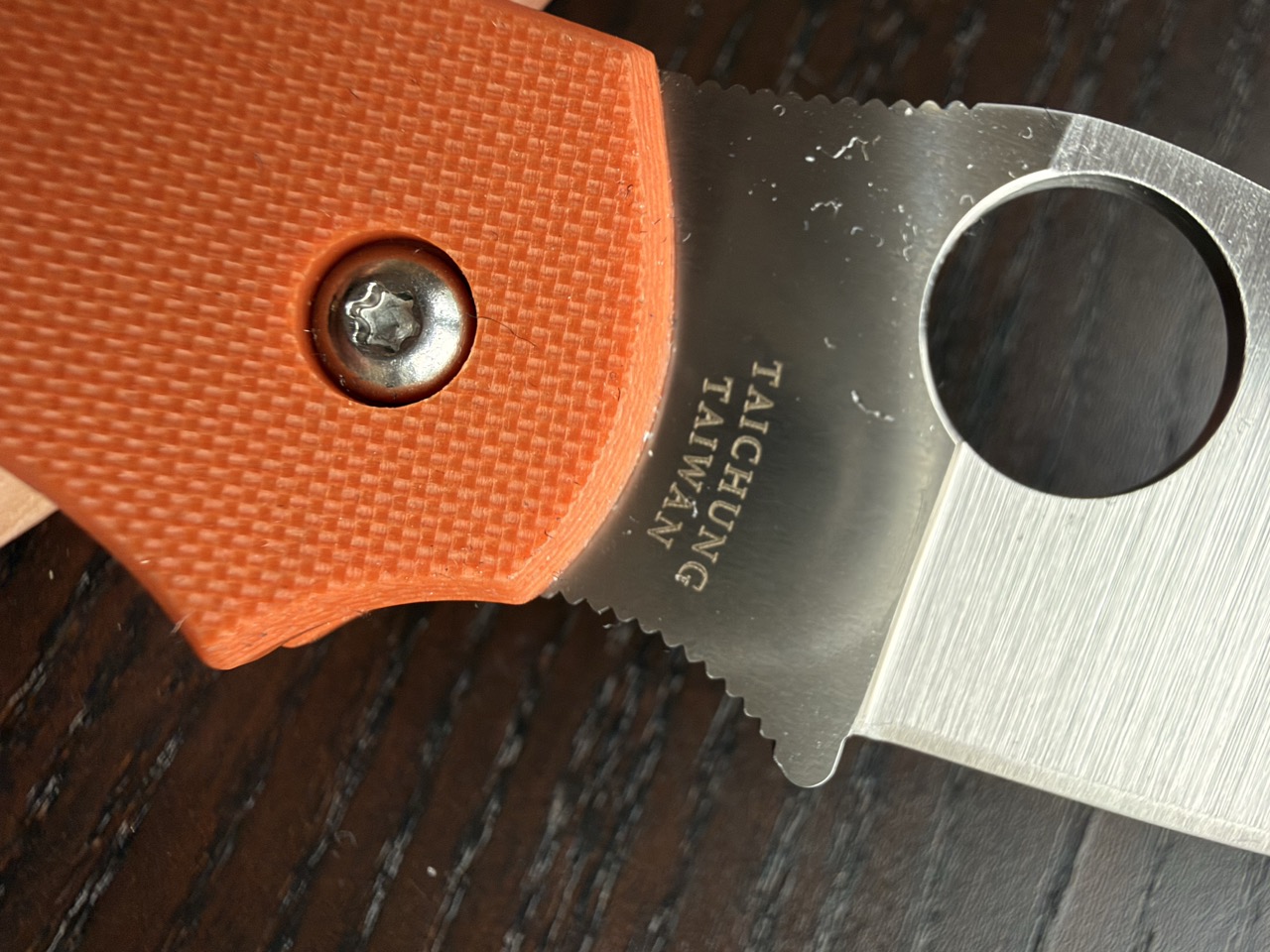
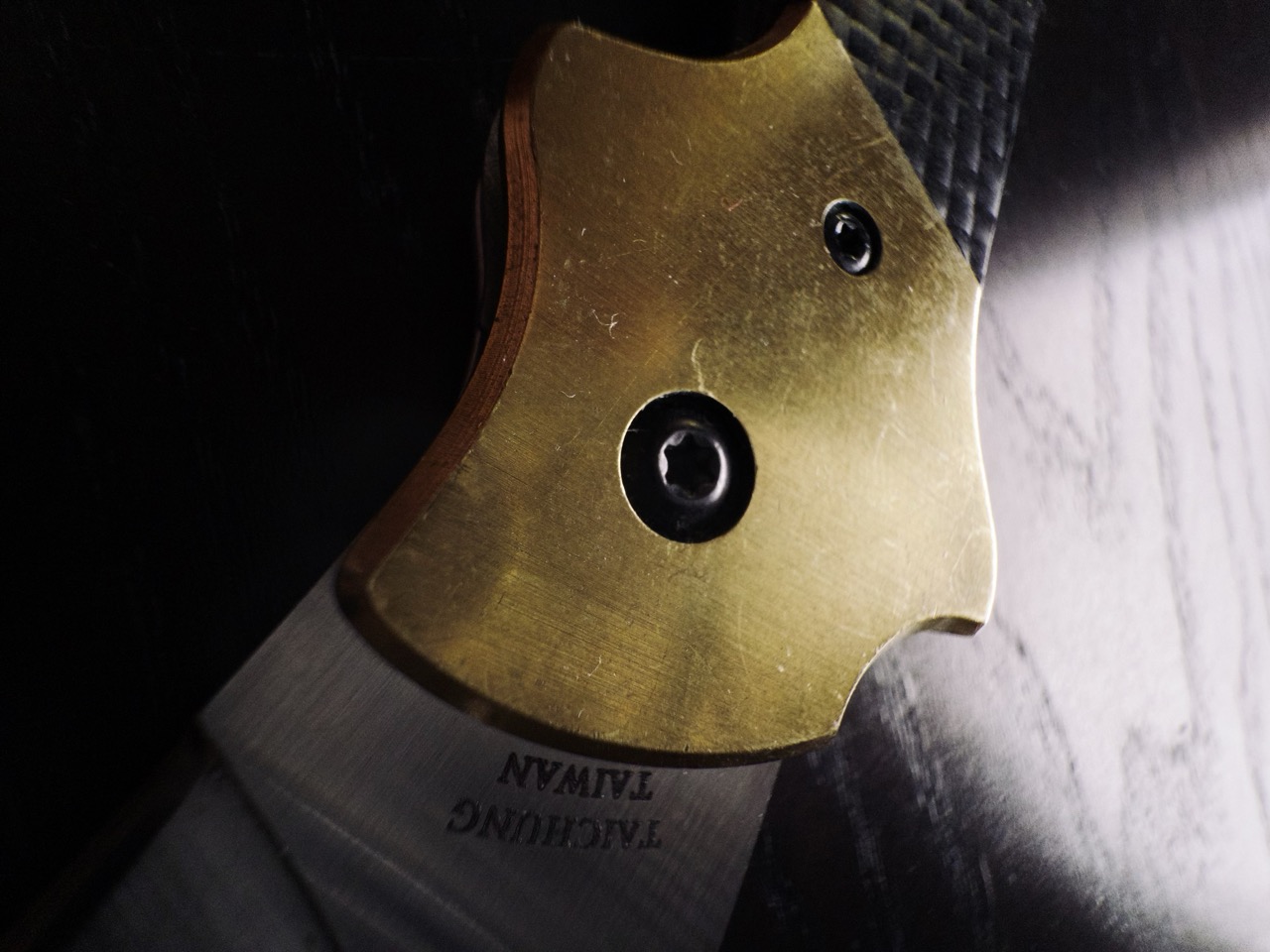
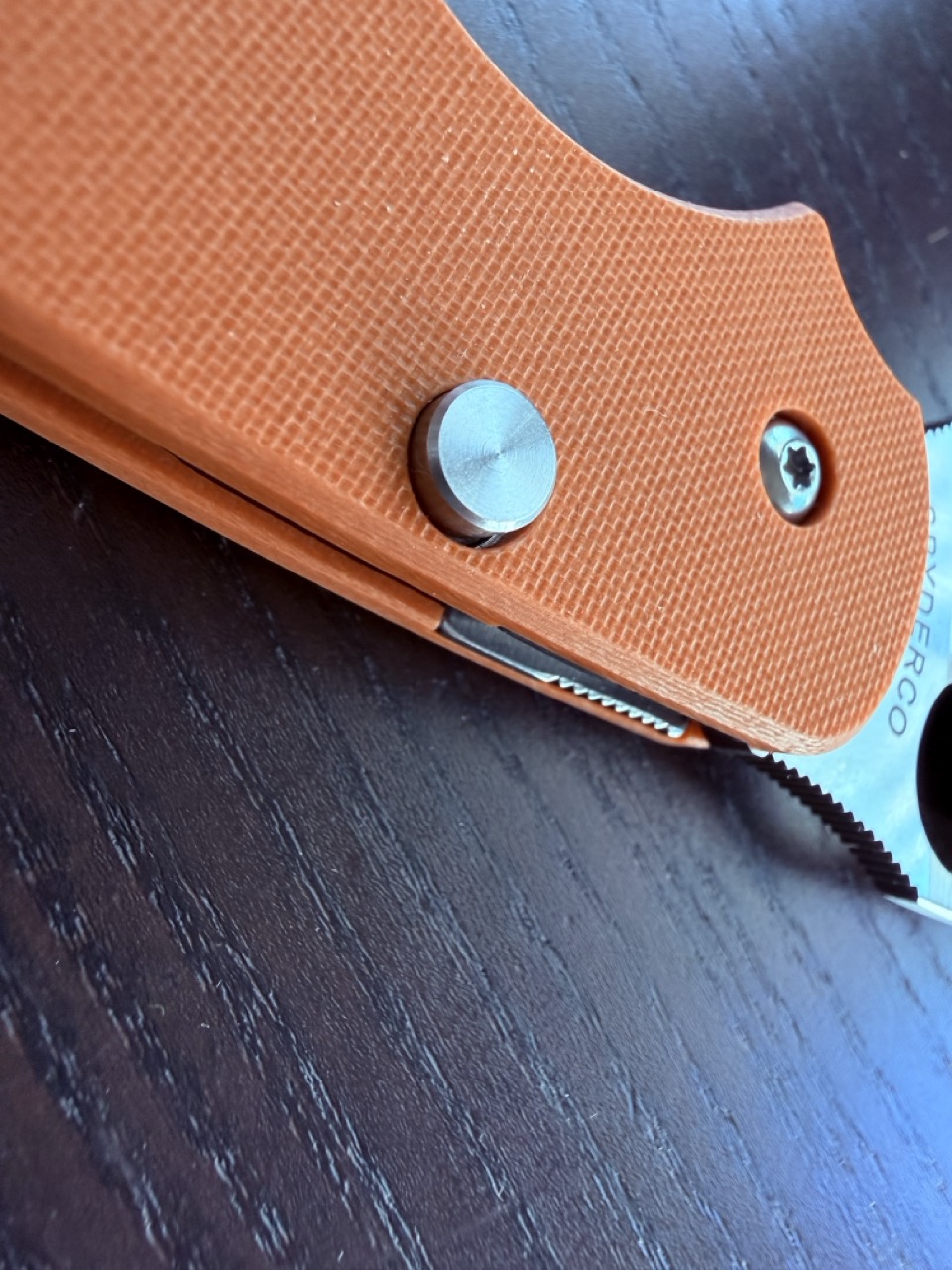
Right out of the box, the first thing I noticed was the outstanding quality of the action. Everything feels exceptionally smooth, precise, and refined. As expected from Spyderco’s Taiwanese production, the fit and finish are simply superb. There is absolutely no blade play in any direction. The action is buttery smooth, while the blade itself is razor sharp. Everything feels exactly as it should.
And that’s just as well, considering the price tag: it costs more than three Lightweight versions, which are already masterpieces of EDC design.
This Chaparral isn’t just the queen of the family. It might very well be the Empress of all Chaparrals!
And actually… As I hold Her Orange Majesty, there is something else about this particular Chaparral that sets it apart, something harder to put into words.
It feels denser, more substantial in the hand.
Perhaps this impression of greater density comes just from the fact that I’ve handled the mighty Lightweight Serrated version so extensively. I’m so used to its featherweight feel that the REX 121 version feels more substantial in comparison. That’s probably all there is to it!
But really, compared with the other Chaparrals I’ve handled, this one feels noticeably more substantial in the hand. Its slightly rear-biased balance gives it a reassuring sense of solidity, allowing the knife to sit naturally and securely in the palm.
And then it hit me: this is my very first G10 Chaparral!
That realization actually means something, because the Chaparral Collection has always been about more than just being a great little EDC. Sal Glesser conceived the series as a platform for exploring different handle materials, rather than different locking mechanisms, which is the territory of the Spyderco Sage family. Over the years, we’ve seen Chaparrals in carbon fiber, FRN, wood, Titanium and various other materials, each bringing its own character to this remarkably slim design.
Yet somehow, until now, I’d never owned a G10 version.
And what a difference it makes! G10 has a distinctly different feel from carbon fiber or FRN. It gives a knife that unmistakable workhorse character: solid, purposeful, and ready to be used without ceremony. It’s not merely about appearance or exclusivity; it’s about the way the knife feels when you put it to work.
This Chaparral isn’t a gentleman’s knife designed to sit pretty in a collection. It’s a performance-oriented EDC, built around an exceptionally thin blade and one of the most extreme edge-retention steels available today. The other Chaparral oriented toward hard chore is the extraordinary FRN Serrated Chap.
So… Her Orange Majesty isn’t here to show off. She’s here to cut and cut and cut and cut, and keep cutting, for a very long time between touch-ups. Same as the Serrated Chaparral but in plain edge. Rex121 being known to love toothy edges….
That’s why, despite its compact dimensions, this Orange Chap feels remarkably purpose-built, without sacrificing the slim profile and effortless pocket-ability that make any Chaparral such an outstanding EDC.
The REX 121 blade is the main attraction, naturally. Until now, the Chaparral family has relied primarily on CTS-XHP, with S30V used in the very first production run.
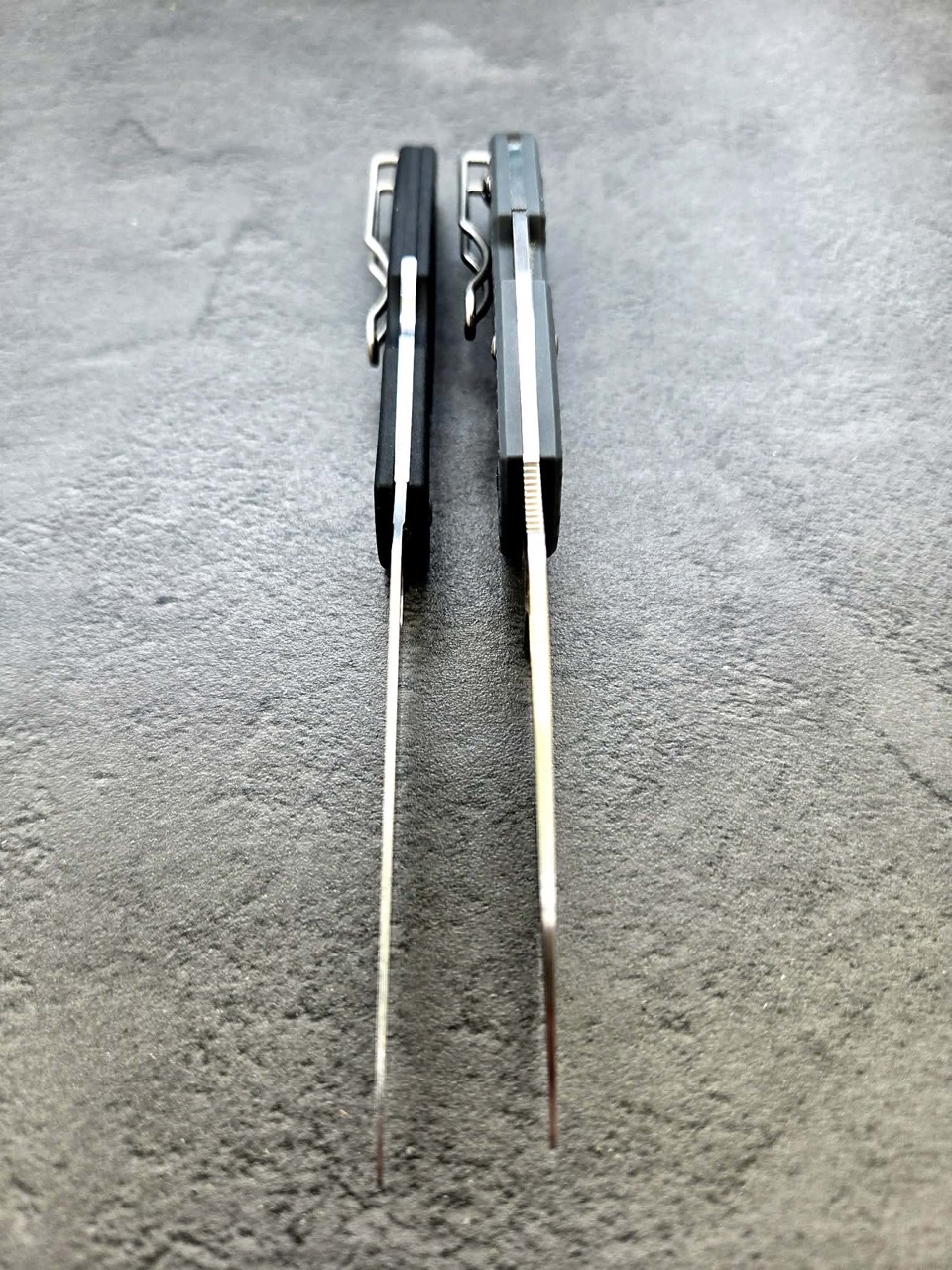
And here is the Tour de Force: as with every Chaparral, we’re looking at an exceptionally thin blade, measuring just 2 mm at the spine. But this time, Spyderco has paired that remarkably slim profile with one of the most wear-resistant steels available in a production knife. It’s an intriguing combination: an ultra-thin blade designed for effortless cutting, backed by a steel renowned for its extraordinary edge retention.
I’ve already spent considerable time testing this steel, particularly on my Spyderco Sage 6 REX 121, which I nicknamed Tango. That knife has been an interesting demonstration of what REX 121 can do in real-world use, including its remarkable ability to retain a working edge over extended periods.
So, if the Sage 6 is Tango, what should we call its smaller relative?
Meet Tanga! Empress Tanga ! 😀
The name seems appropriate for this smaller, more urban-oriented companion. Both knives share the same fundamental attraction: an extremely fine blade combined with a steel designed to retain its edge for an exceptionally long time.
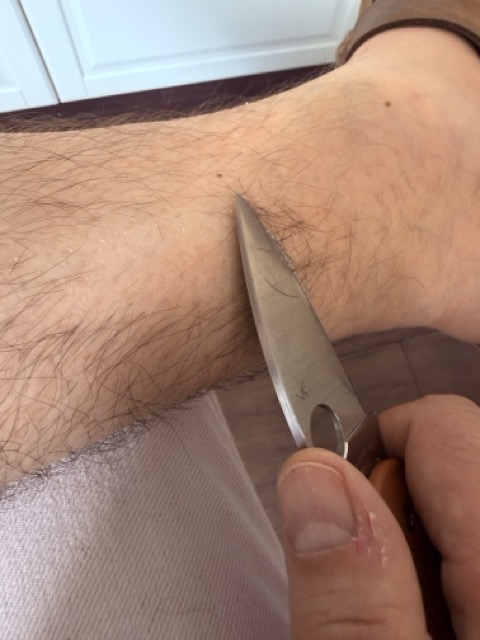
My first cutting tests confirmed that Tanga arrived with an impressively sharp edge. It cuts like a razor, which is exactly what I want to see on a knife made from REX 121. There is little point in choosing a steel with extraordinary edge retention if the knife doesn’t cut properly in the first place. REX 121 can hold a keen edge for a very long time, but that potential needs to be matched by good factory sharpening and an appropriate edge geometry.
So far, so good.
There is, however, one aspect I wanted to investigate immediately: the relationship between the extremely thin blade and the relatively brittle nature of that steel !
At about 70HRC, the über hard REX 121 excels at wear resistance, but it is not a steel I would choose for applications involving substantial lateral stress or twisting. Its impressive edge retention does not make it immune to chipping or other damage when subjected to inappropriate forces. With a blade only 2 mm thick, this was worth checking before putting the knife into regular use.
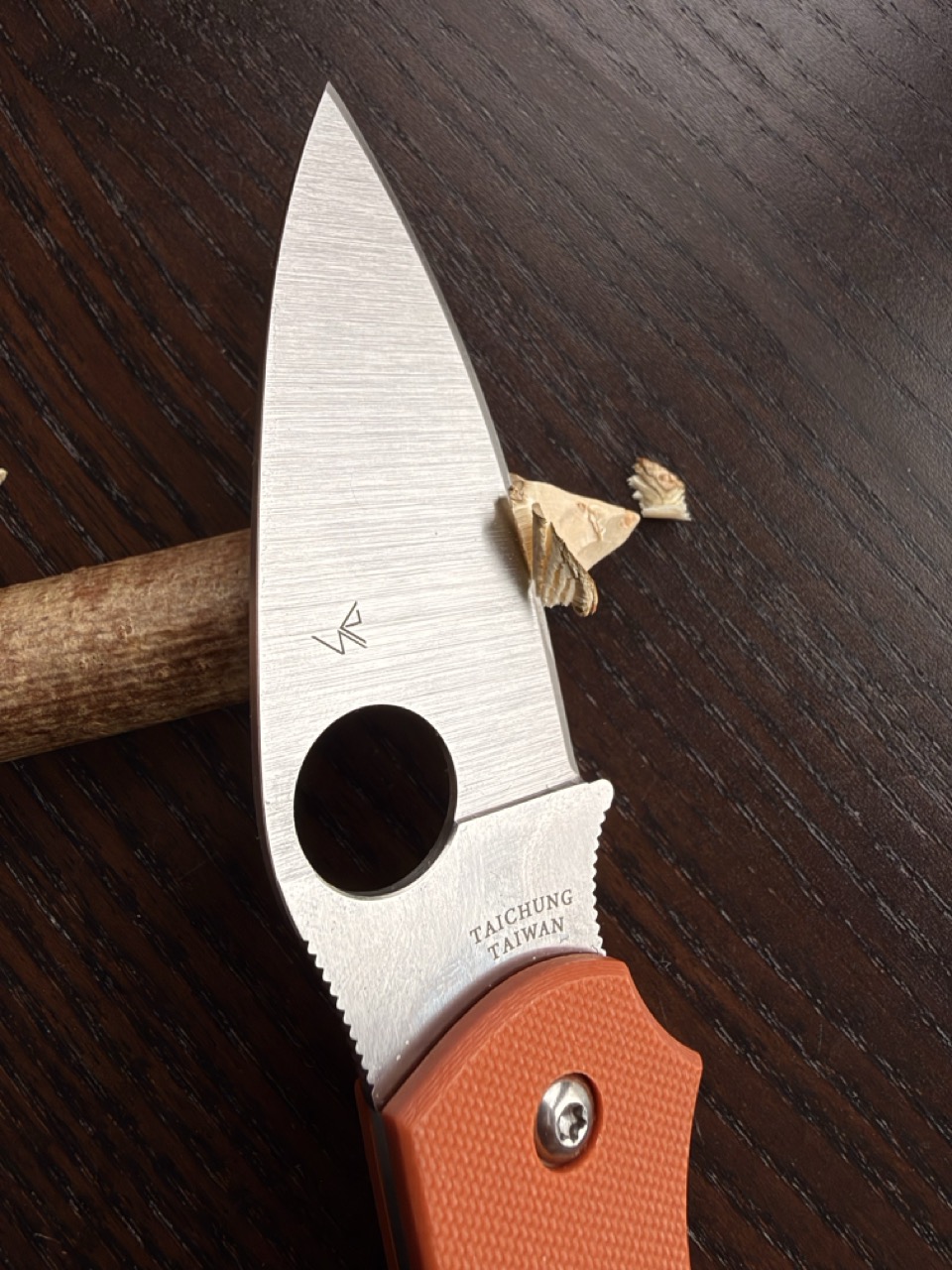
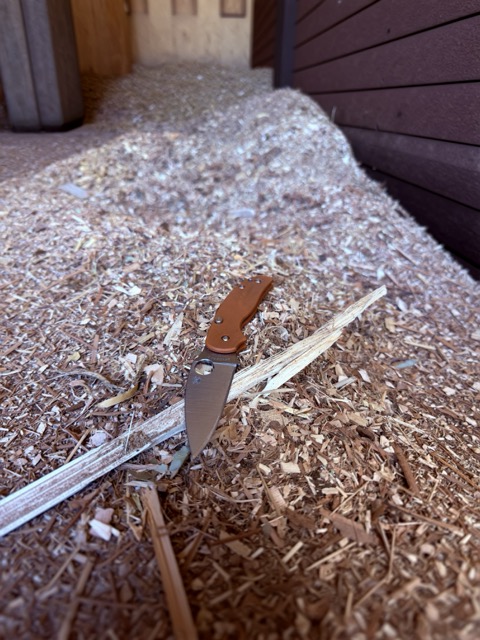
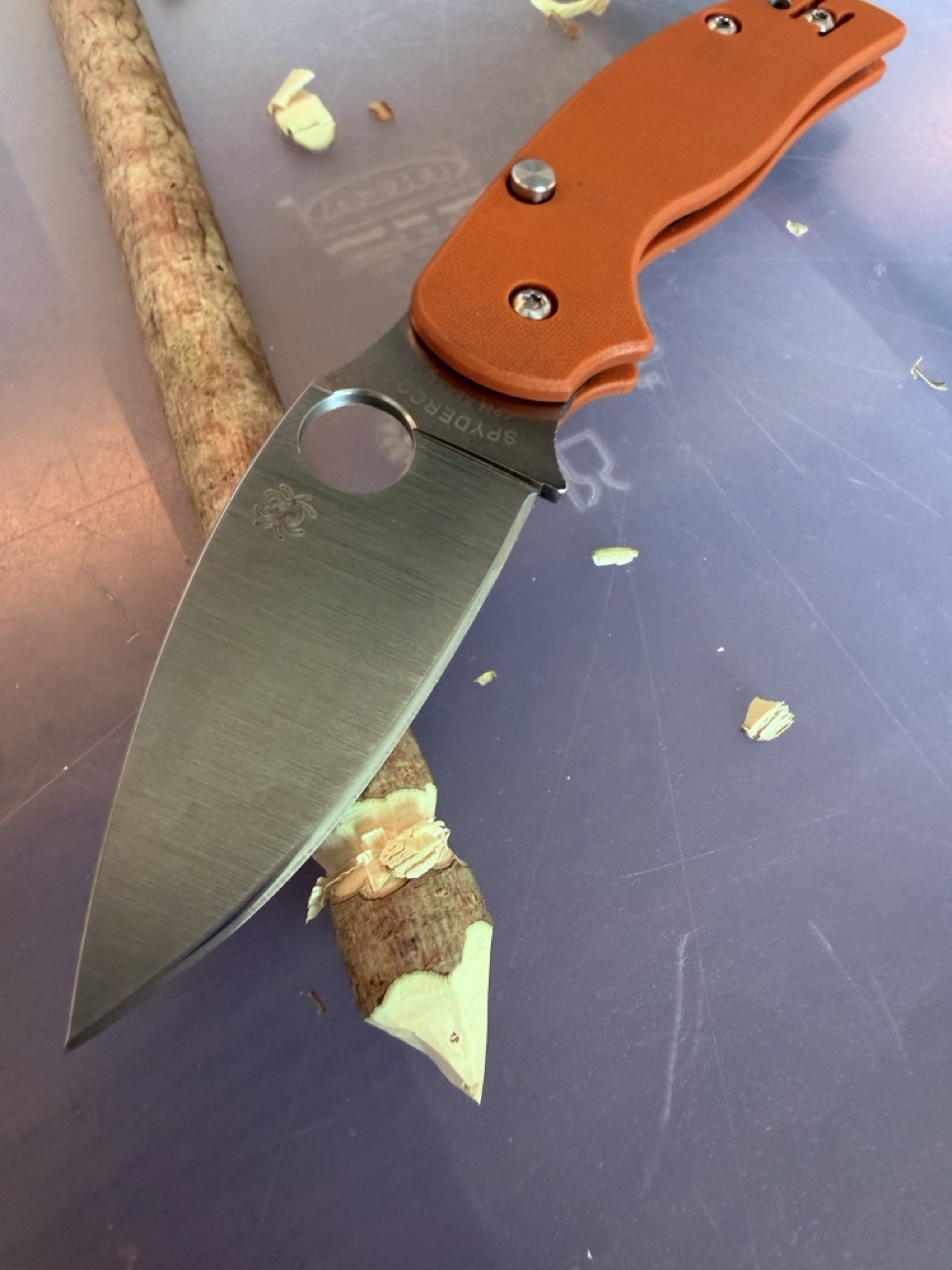
For now, I wouldn’t feel comfortable using Tanga to carve wood by twisting the blade to remove shavings. I simply don’t have that level of confidence in its resistance to lateral stress, especially given the combination of a 2 mm blade and REX 121 steel. Its extraordinary edge retention is one thing; its resistance to lateral forces is another. Until I’ve gained more experience with this particular knife, I’ll stick to cutting tasks that don’t put the blade under unnecessary lateral stress.
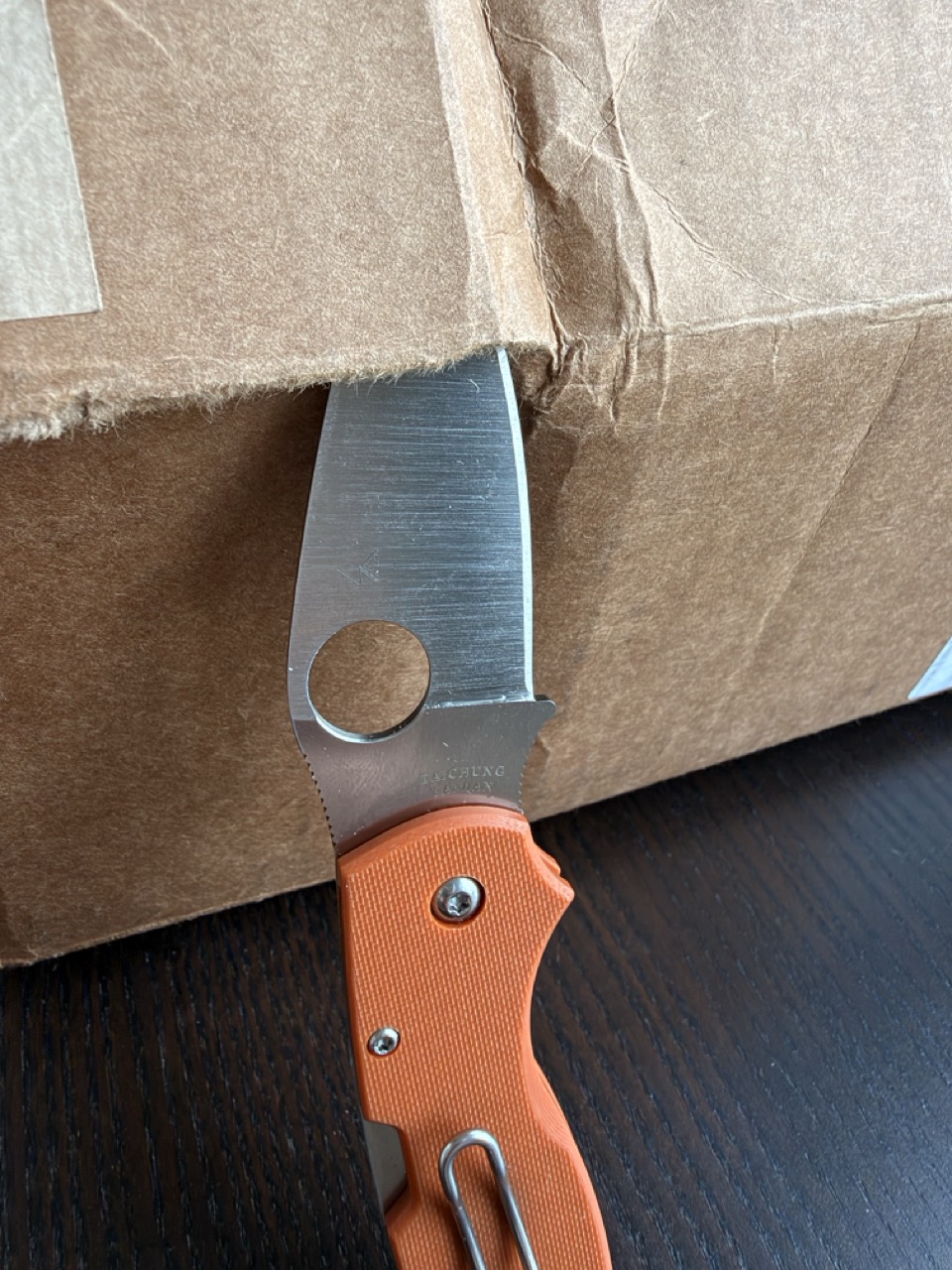
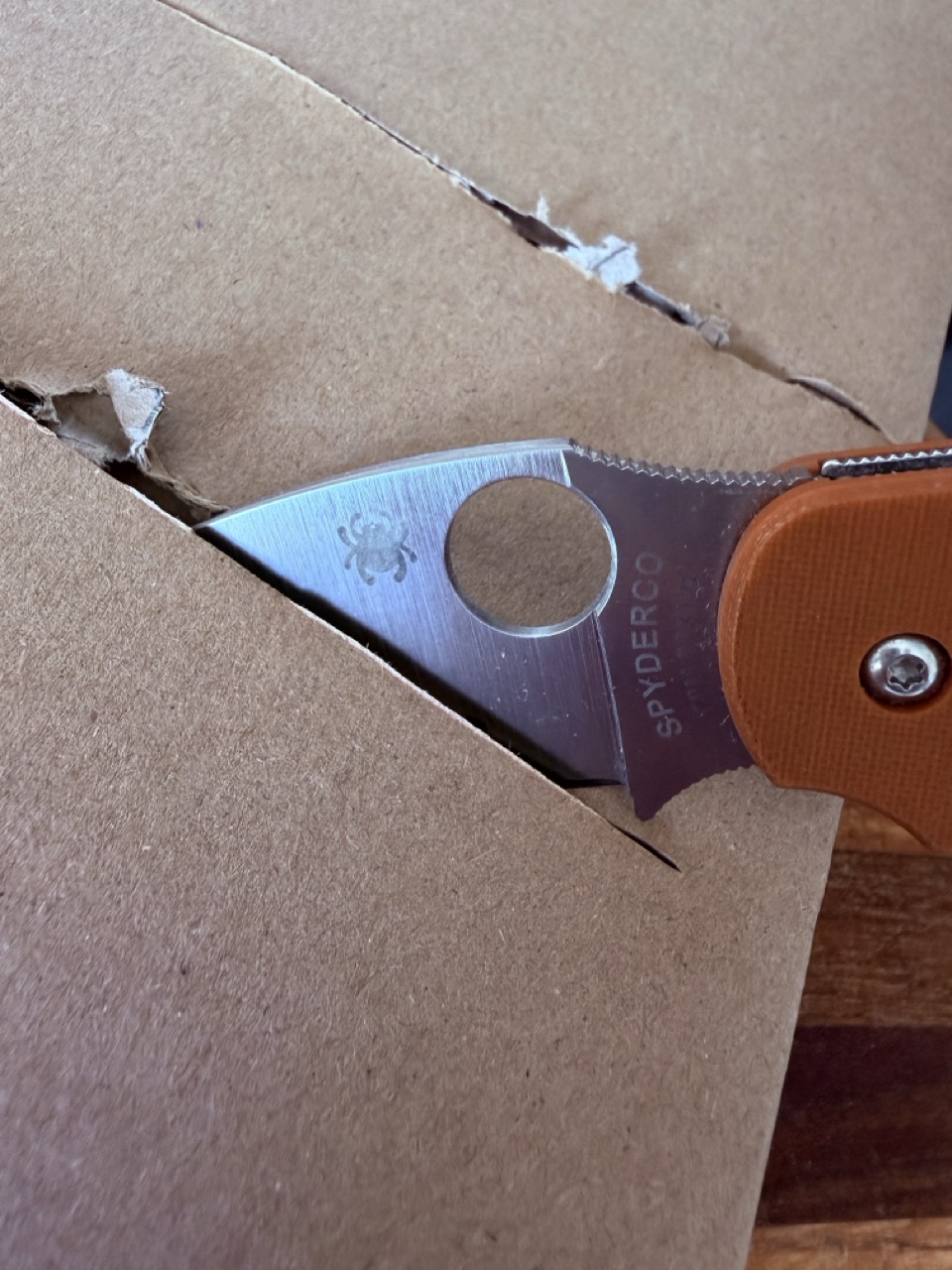
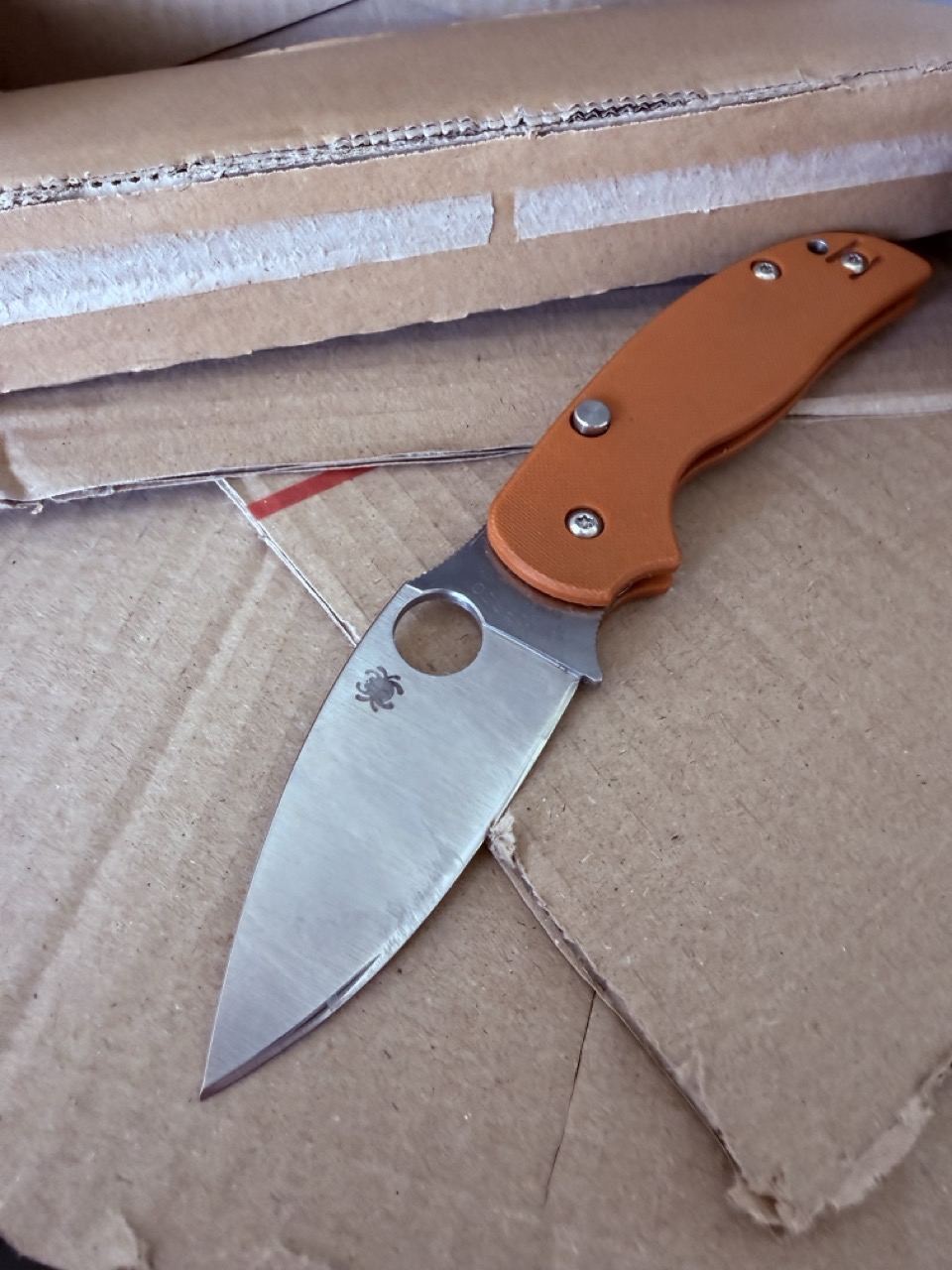
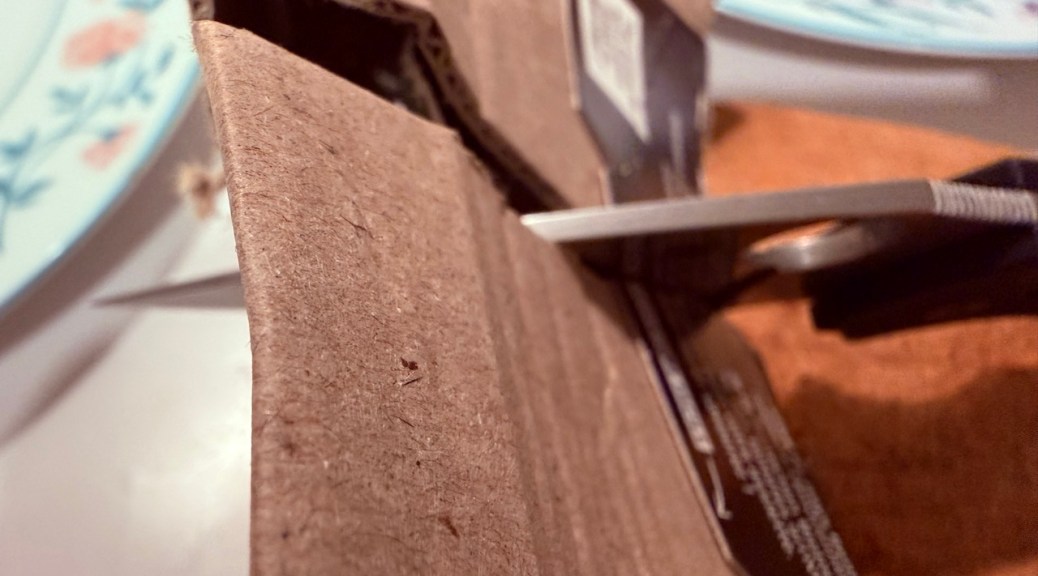
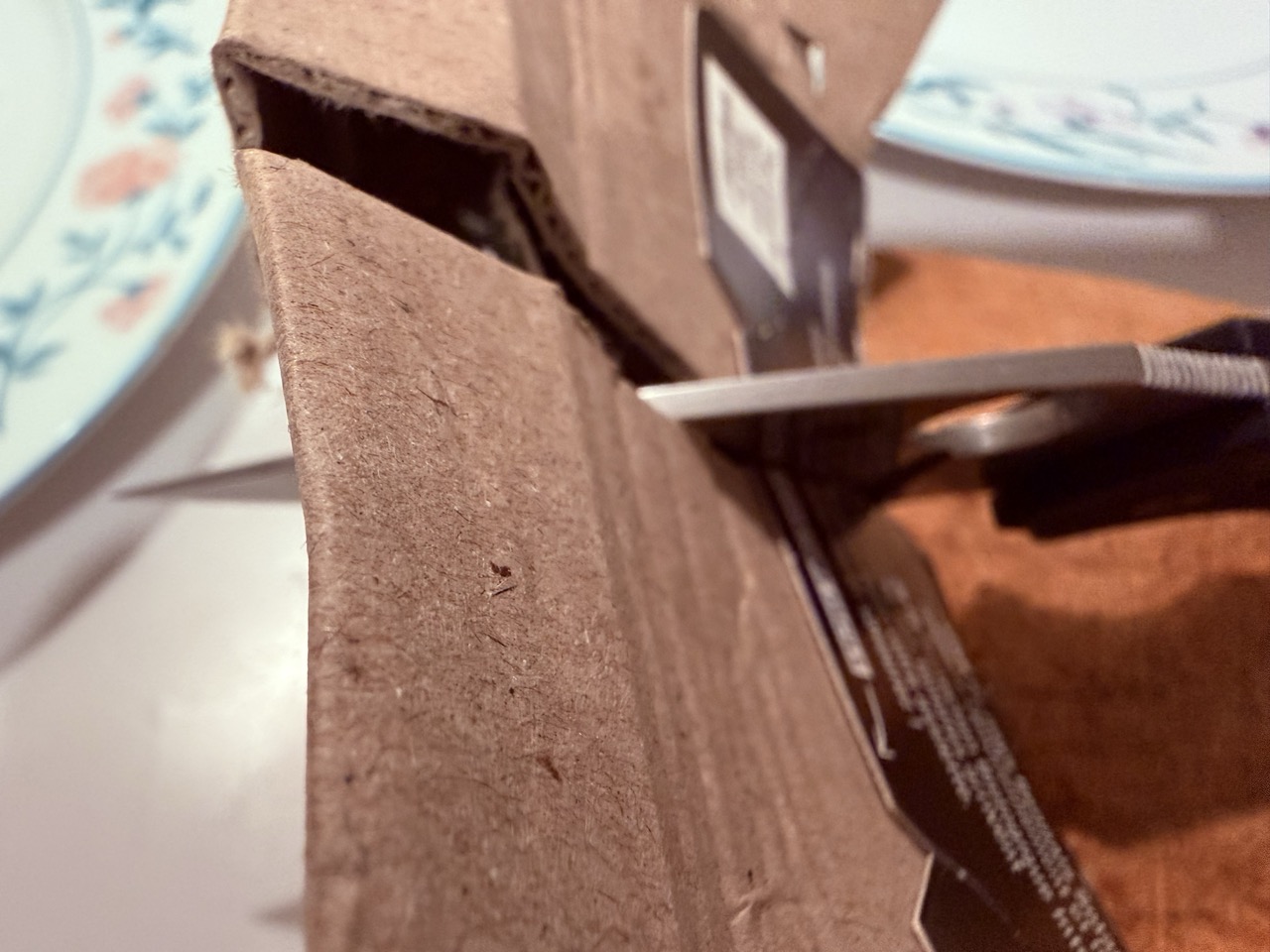
I’ll feel much more comfortable using Tanga for long cuts through corrugated cardboard, for example. The exceptionally thin blade should slice through it with very little resistance, making it ideal for breaking down cardboard boxes into smaller pieces before recycling them. This is exactly the kind of task where the combination of an ultra-thin blade and REX 121’s outstanding edge retention should really shine.
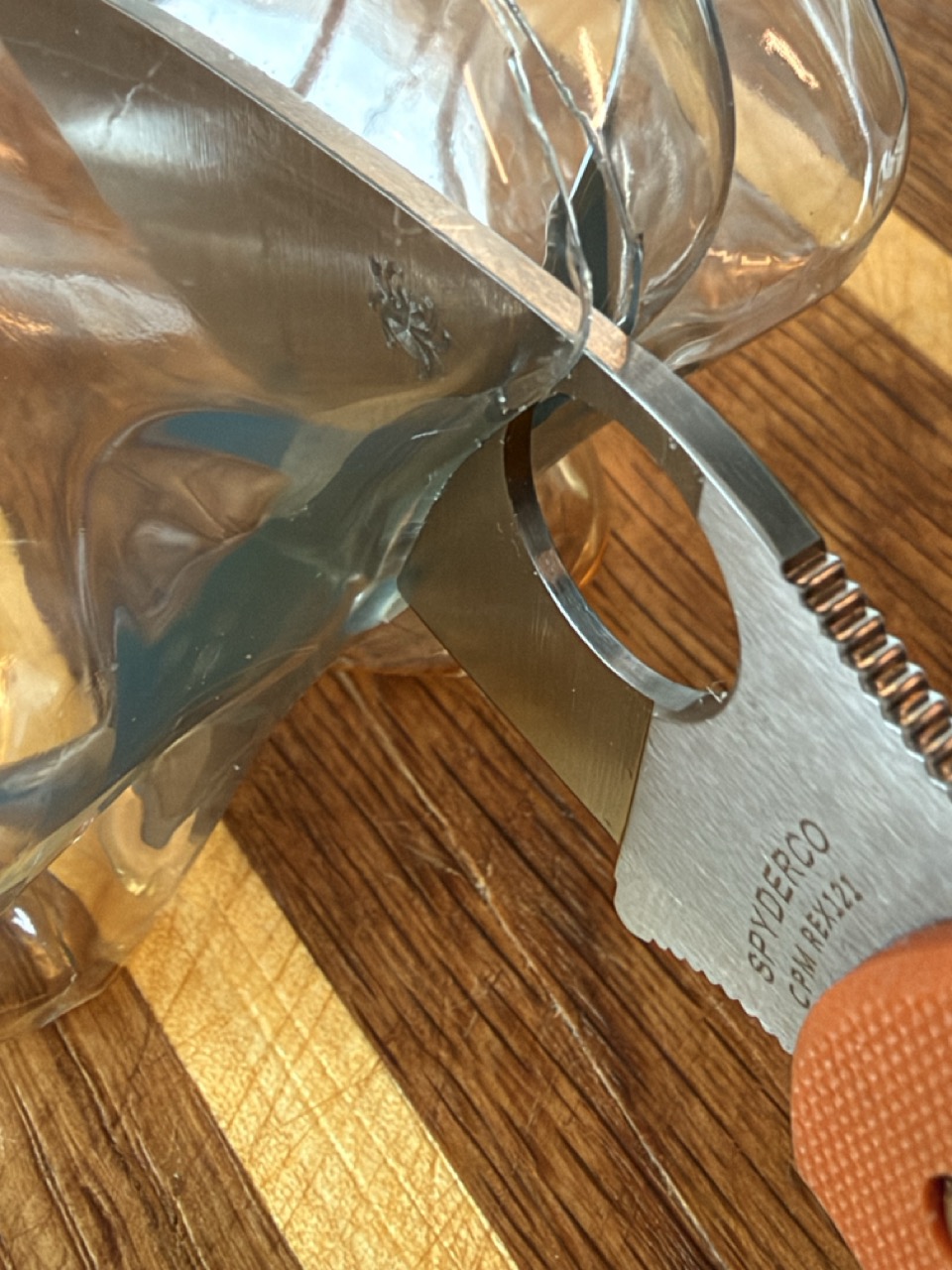
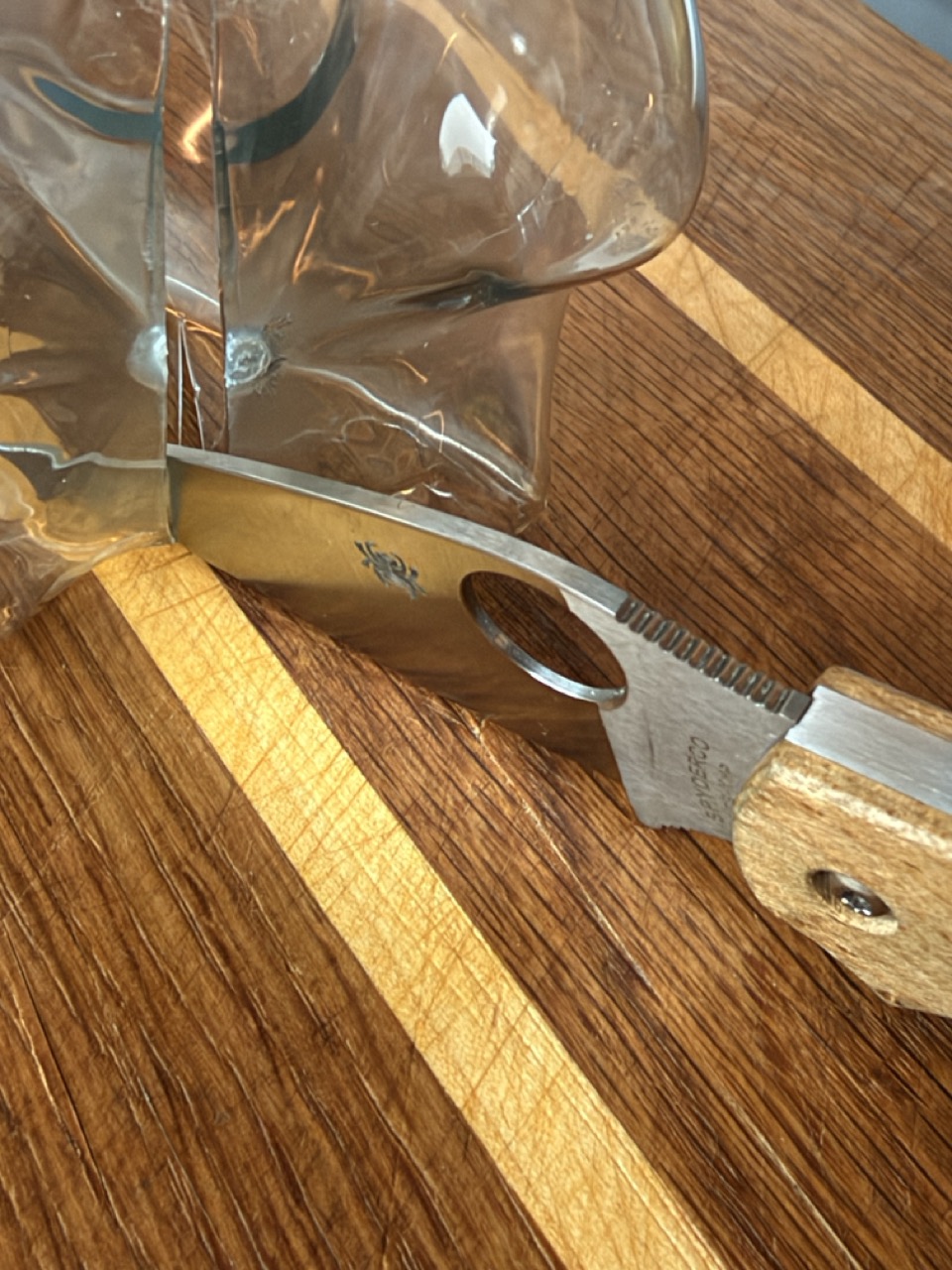
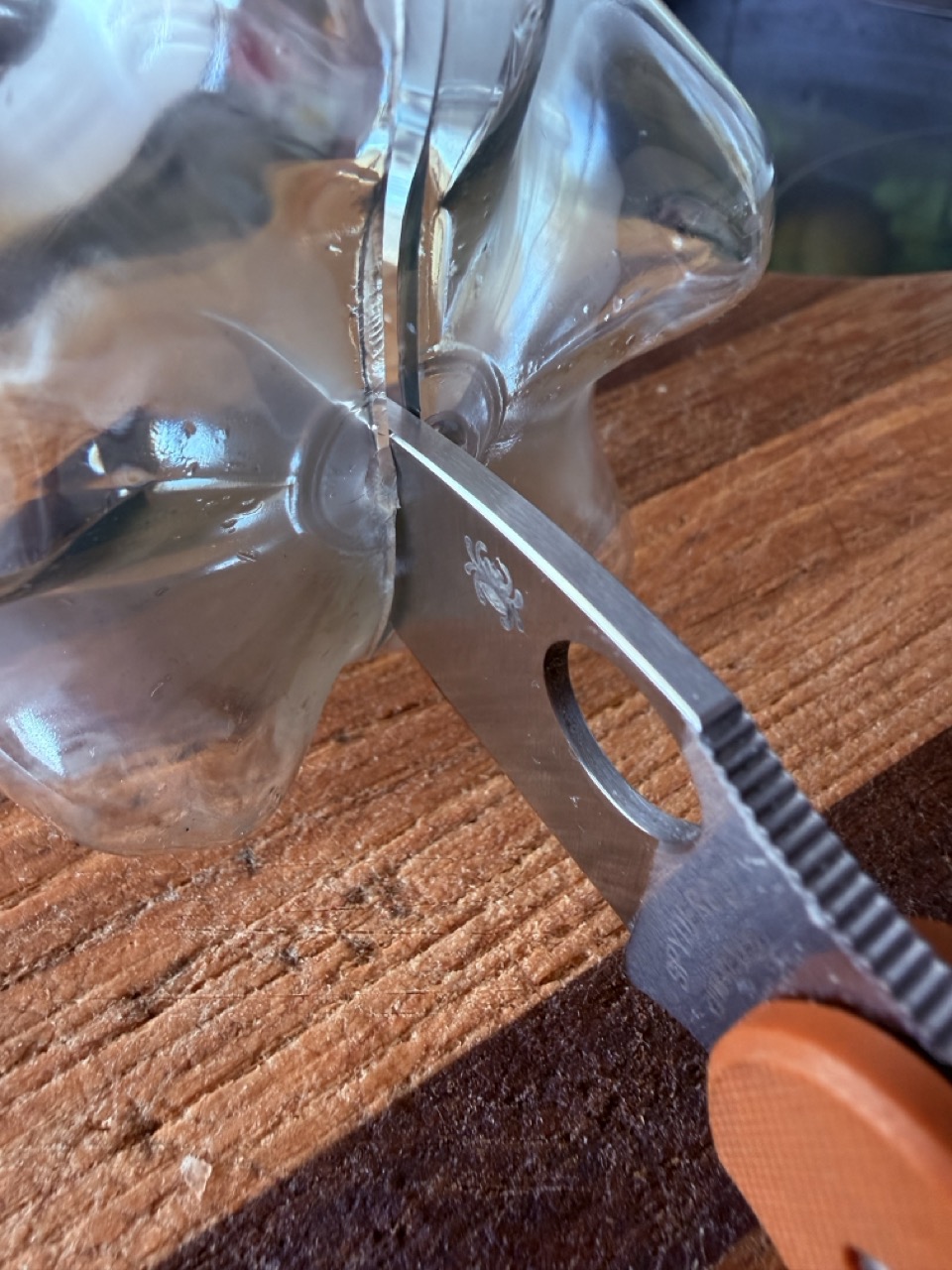
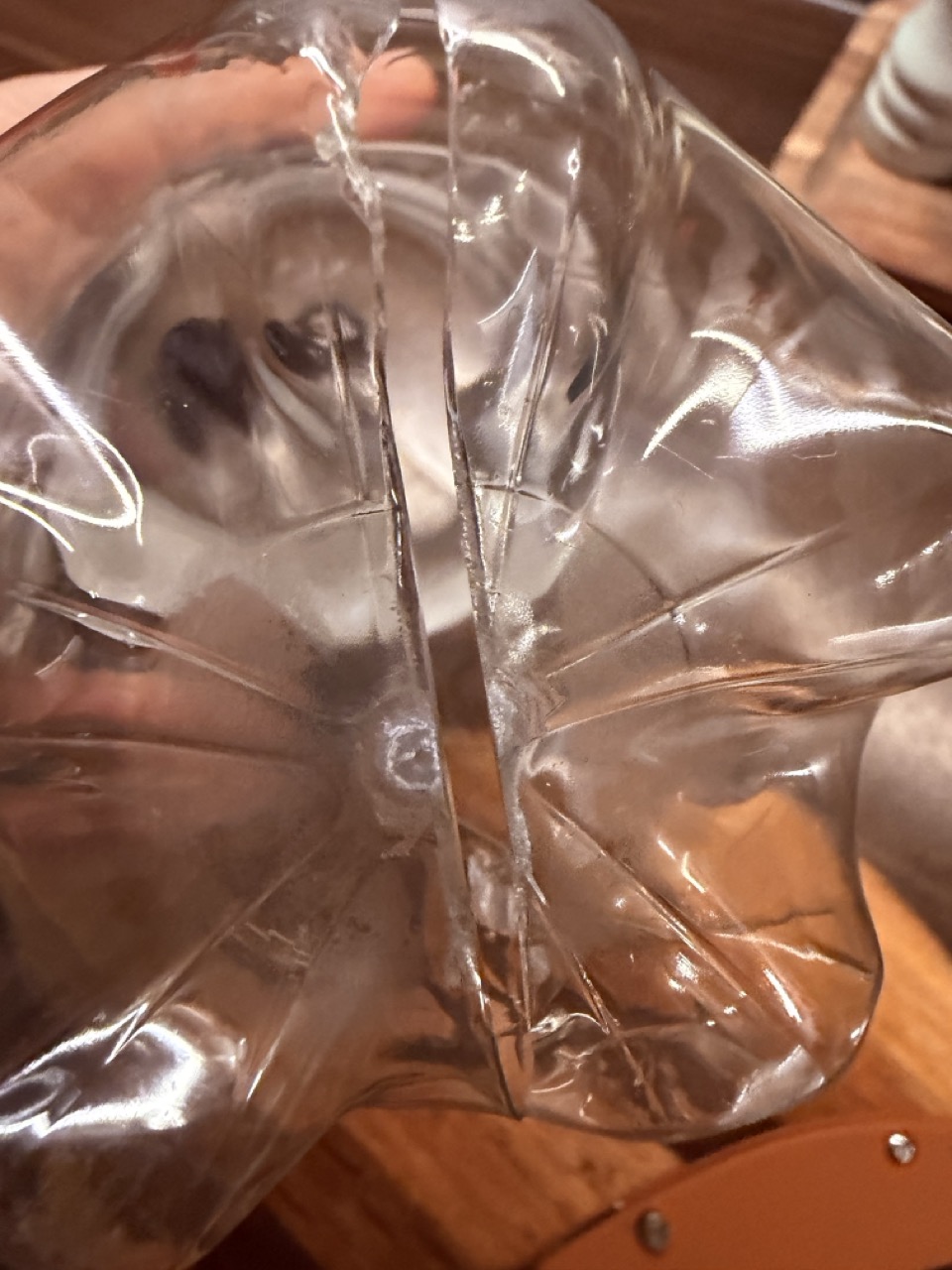
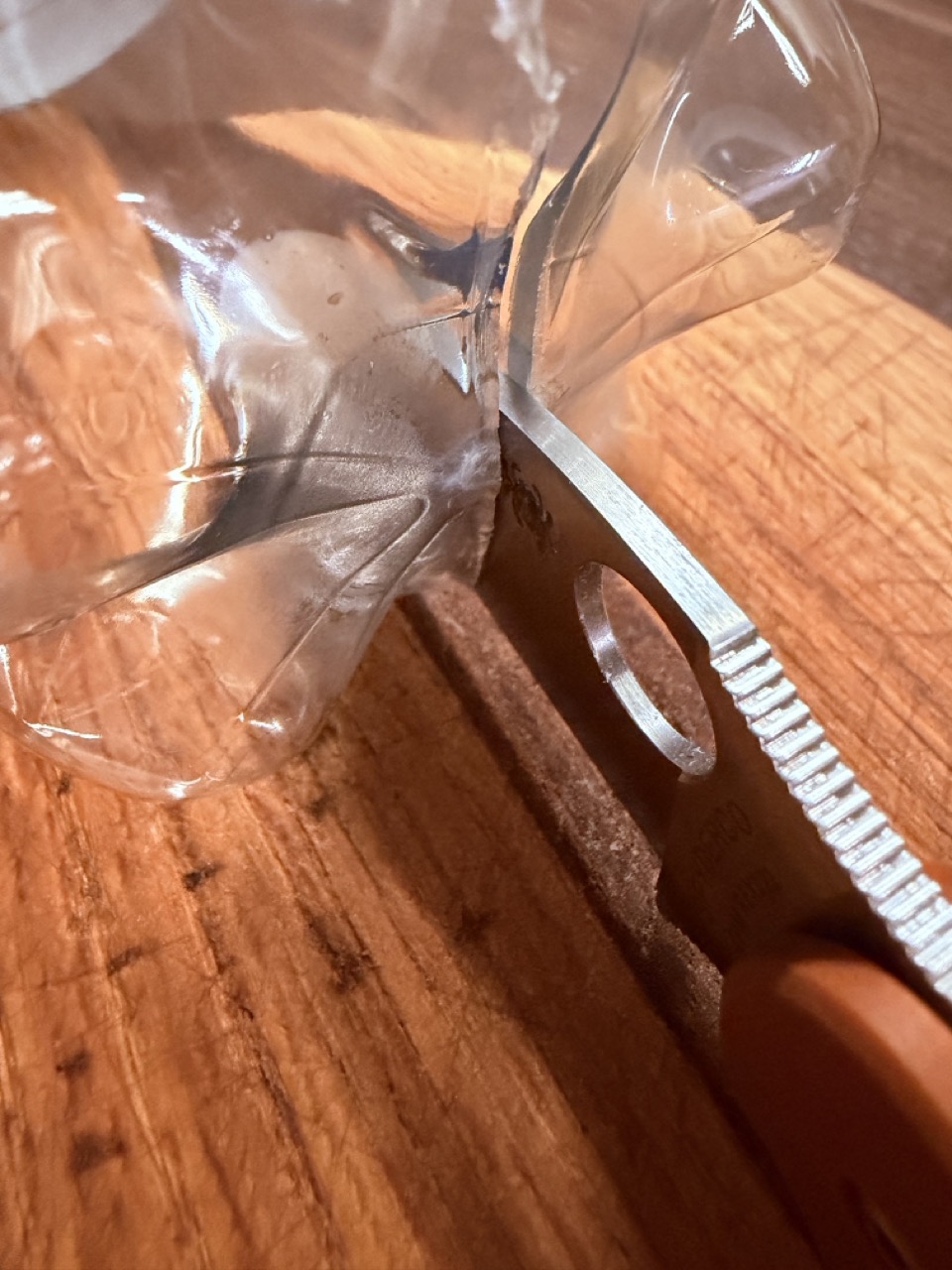
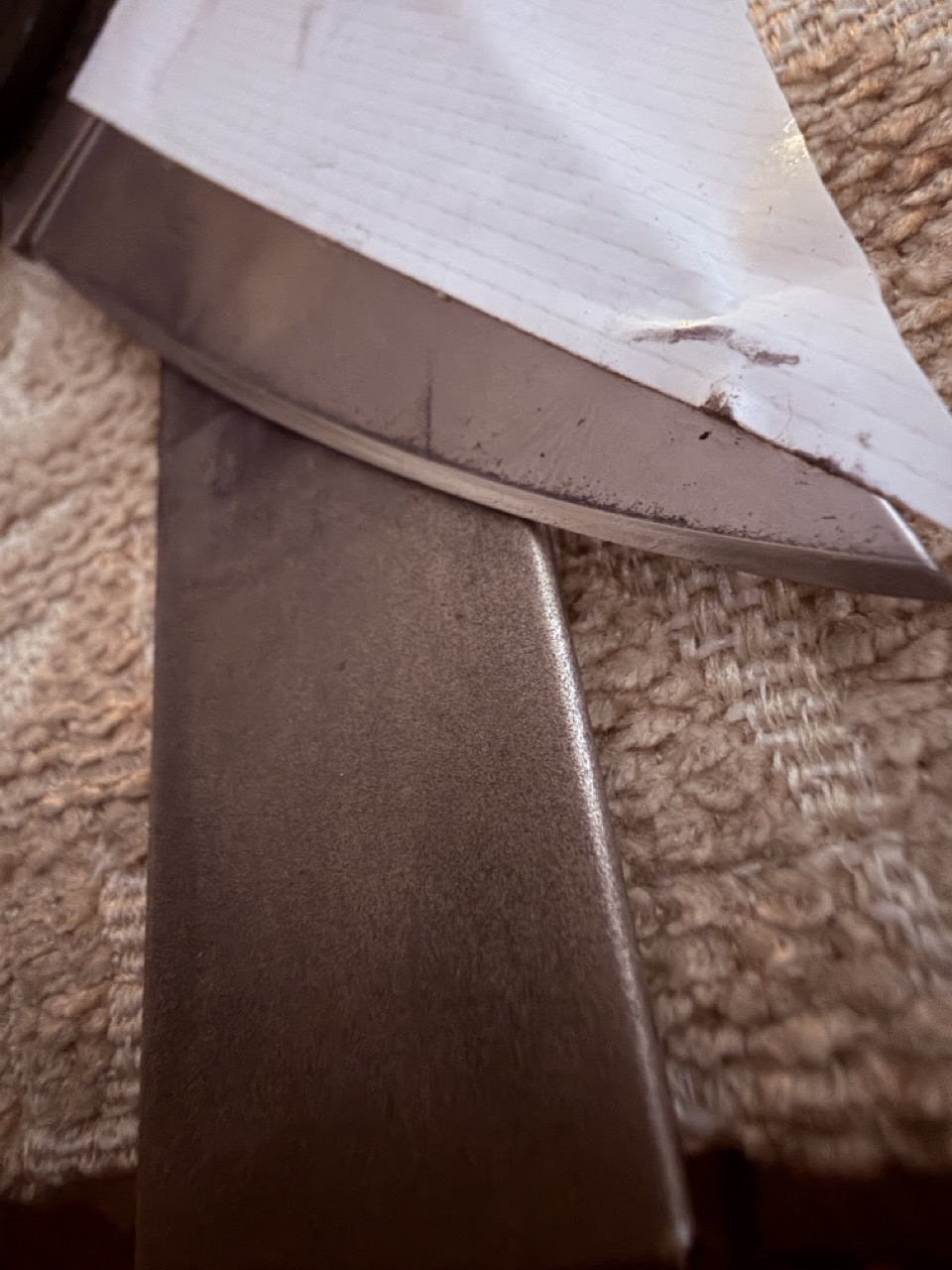
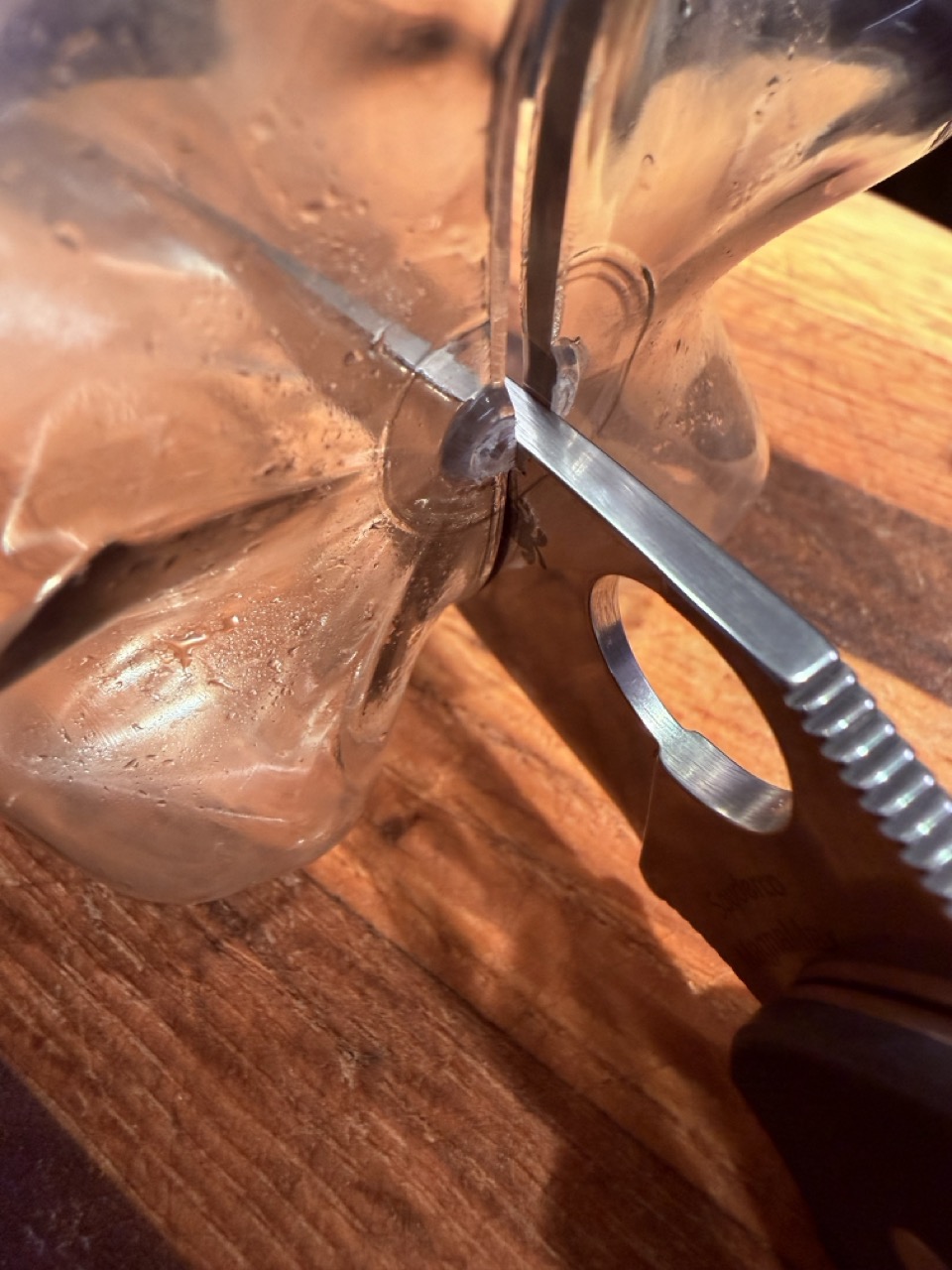
For an initial, informal test, I used the knife to cut through the bottom of a Coca-Cola plastic bottle. The purpose was to assess the factory edge geometry, straight out of the box, independently of the steel itself. Regardless of whether a blade is made from REX 121 or any other steel, its immediate cutting performance depends heavily on the geometry of the edge. We already know that the blade is exceptionally thin, but what about the edge angle? That’s what I wanted to find out.
This is not a comprehensive toughness test, nor does it establish how the knife would perform under more demanding conditions. It was simply a practical way to get an initial feel for the blade’s behavior in hard materials.
I used a pure push cut, driving the blade straight through the plastic without any sawing motion. This is a demanding test of edge geometry, as the blade has to penetrate the material through direct pressure alone.
You have to keep in mind that this is a surprisingly tricky cutting task. The base of a plastic bottle tends to collapse under pressure, and while the blade may initially cut through the material, getting through the thicker central section can be considerably more difficult.
That’s exactly where Tanga got stuck. The blade made its way through the plastic but stalled at the thickest part in the centre. I decided not to push any further. This knife had only just come out of the box, and I would have been rather annoyed with myself if I’d damaged the edge during such an early test.
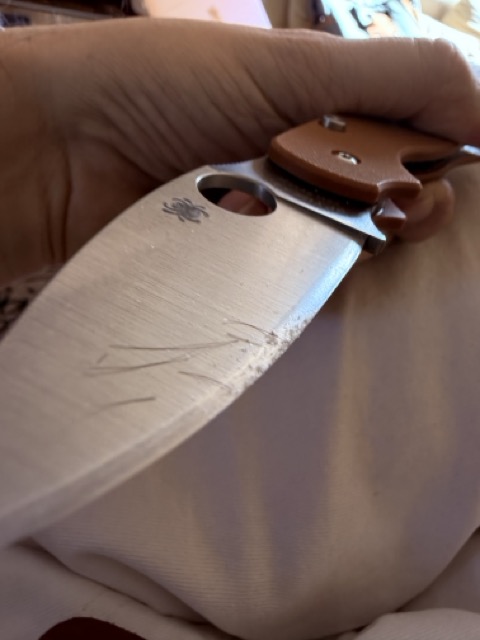
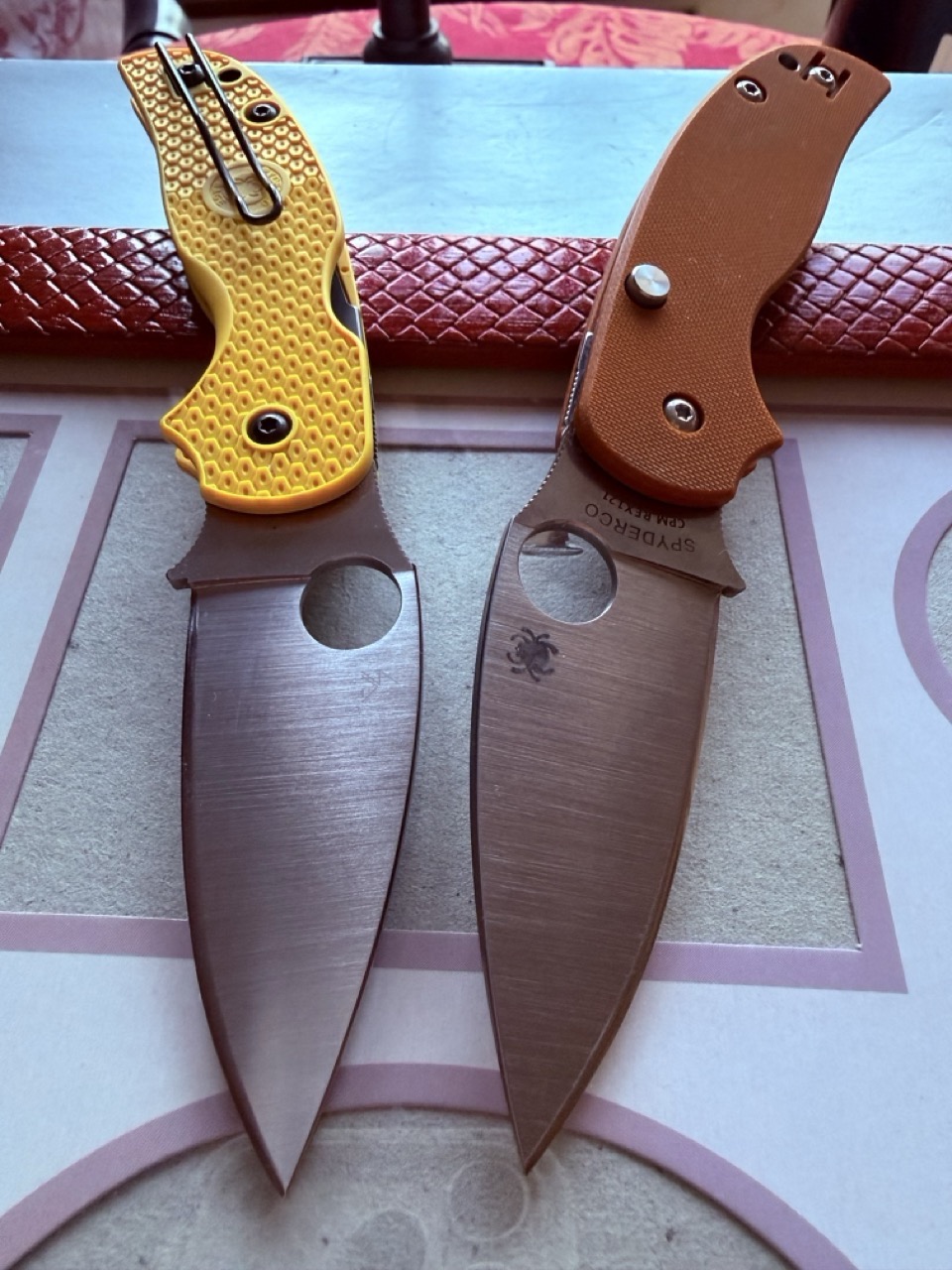
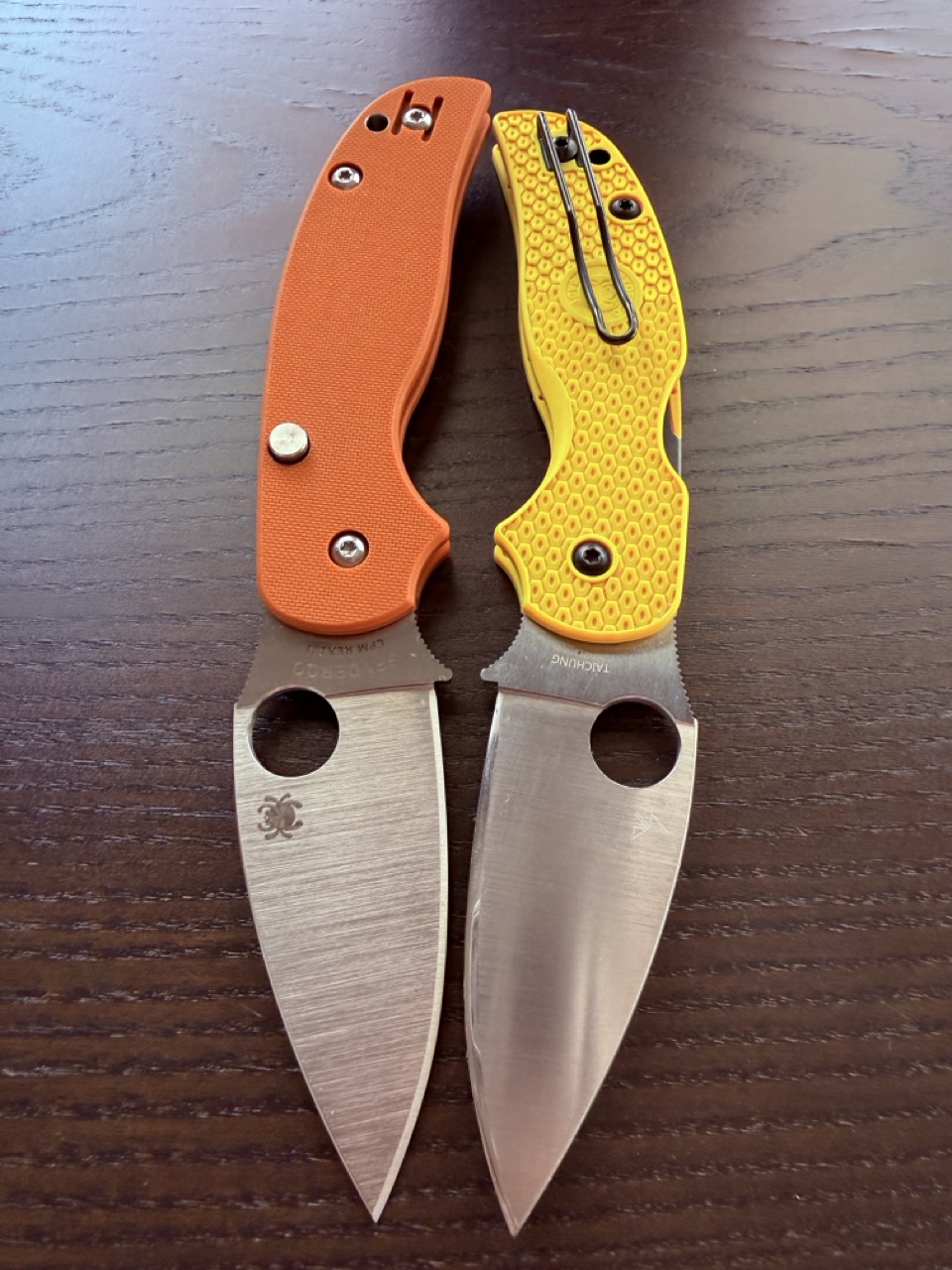
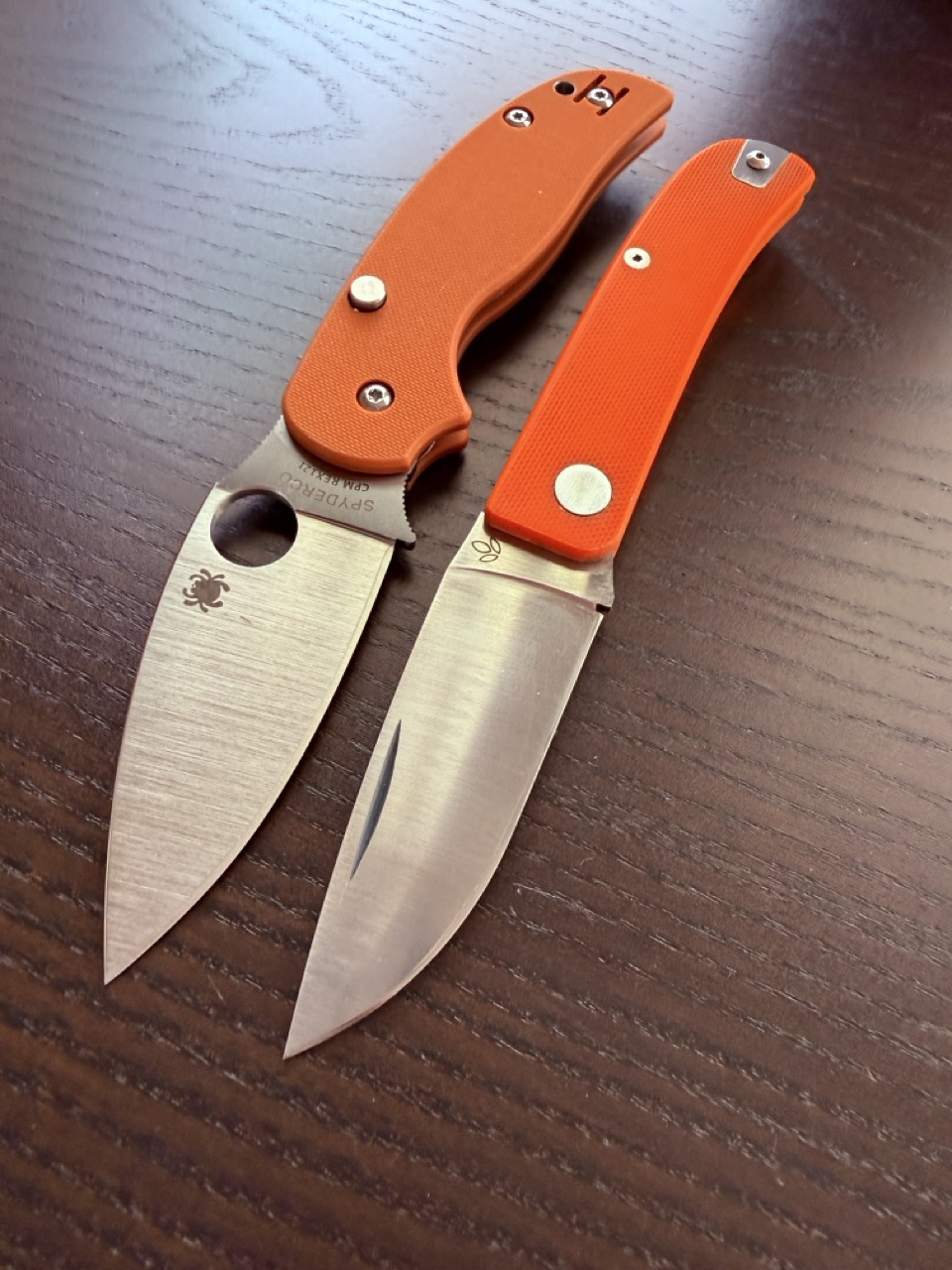
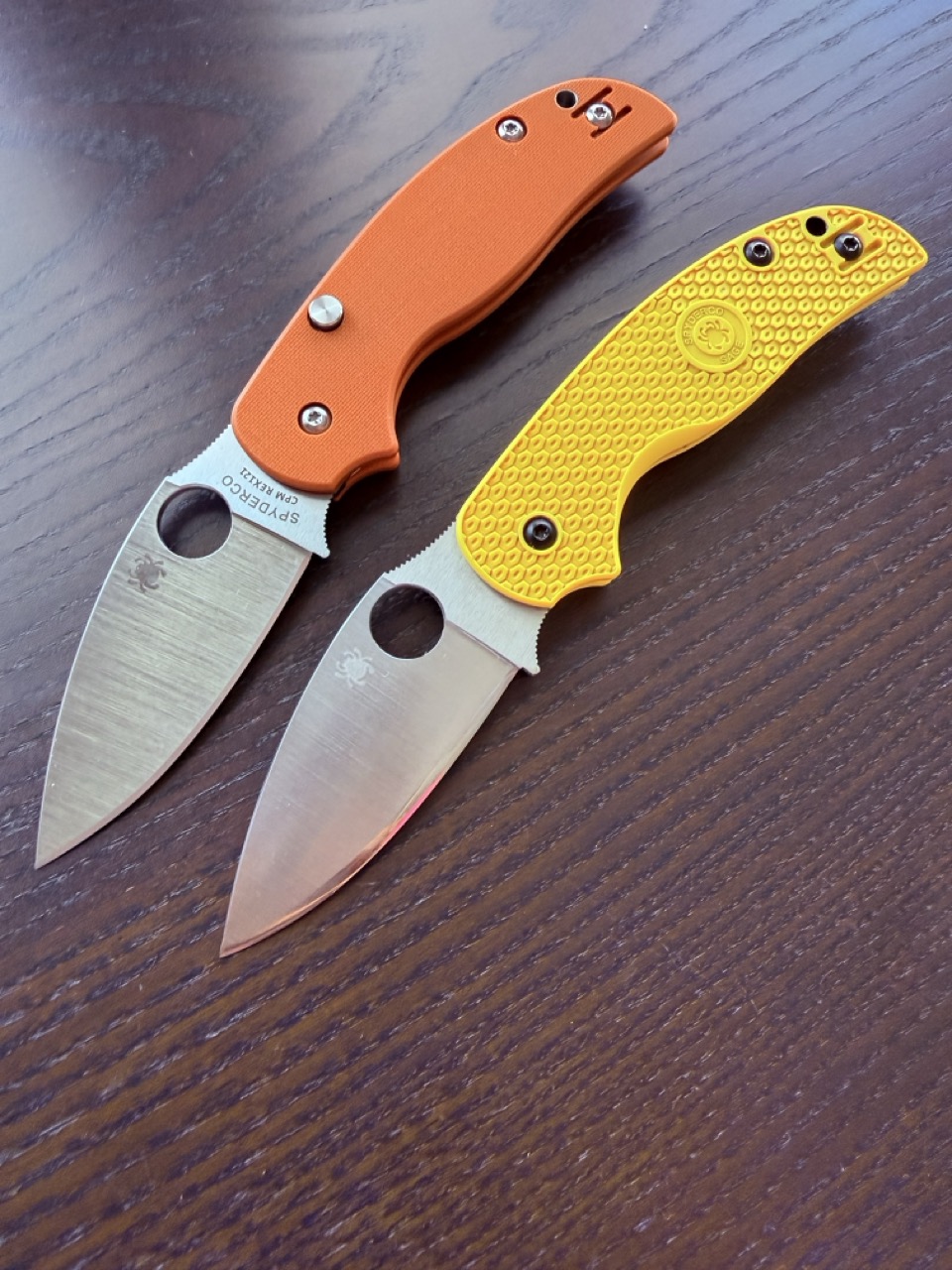
Interestingly, its little sister, the Chaparral Slipjoint, managed to get through the same obstacle. Another thin-bladed knife I’ve recently tested, the Jess Horn, also performed better in this test. This suggests that there may be a difference in edge geometry between those knives, with Tanga possibly sporting a more obtuse factory edge. Perhaps Spyderco opted for this geometry as a precaution against edge chipping, given the characteristics of REX 121 ? I don’t know.
However, my experience with REX121 suggests that it can handle a much thinner edge and a finer edge angle. When I refined the edge on my Sage 6 REX 121, following the same general approach Sal Glesser had taken with his own Sage 6, I found that the steel could perform very well with a more acute geometry. No chipping at all !
This first test has raised an interesting question: has Spyderco prioritized edge durability over cutting performance with its factory sharpening, or is there simply more to this particular geometry than meets the eye? That is not necessarily a disadvantage. A slightly more robust edge geometry can be a sensible choice for a steel like REX 121, particularly on such a thin blade.
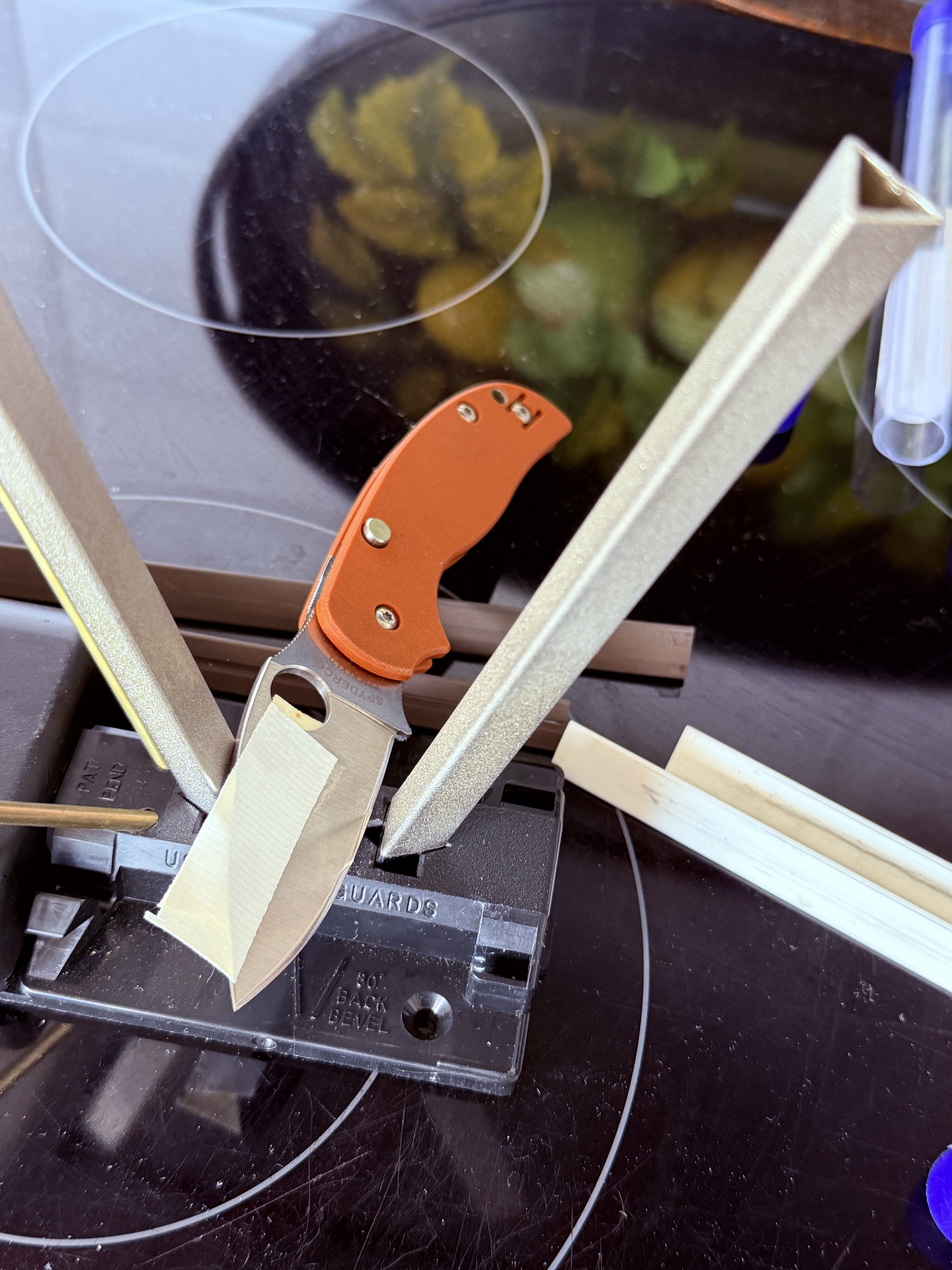
I may eventually give Tanga a little attention with diamond abrasives to refine the geometry and introduce some convexity. For now, however, I’m going to leave the factory edge untouched and see how it performs in everyday use. There is no reason for me to modify an edge before giving it a fair chance.
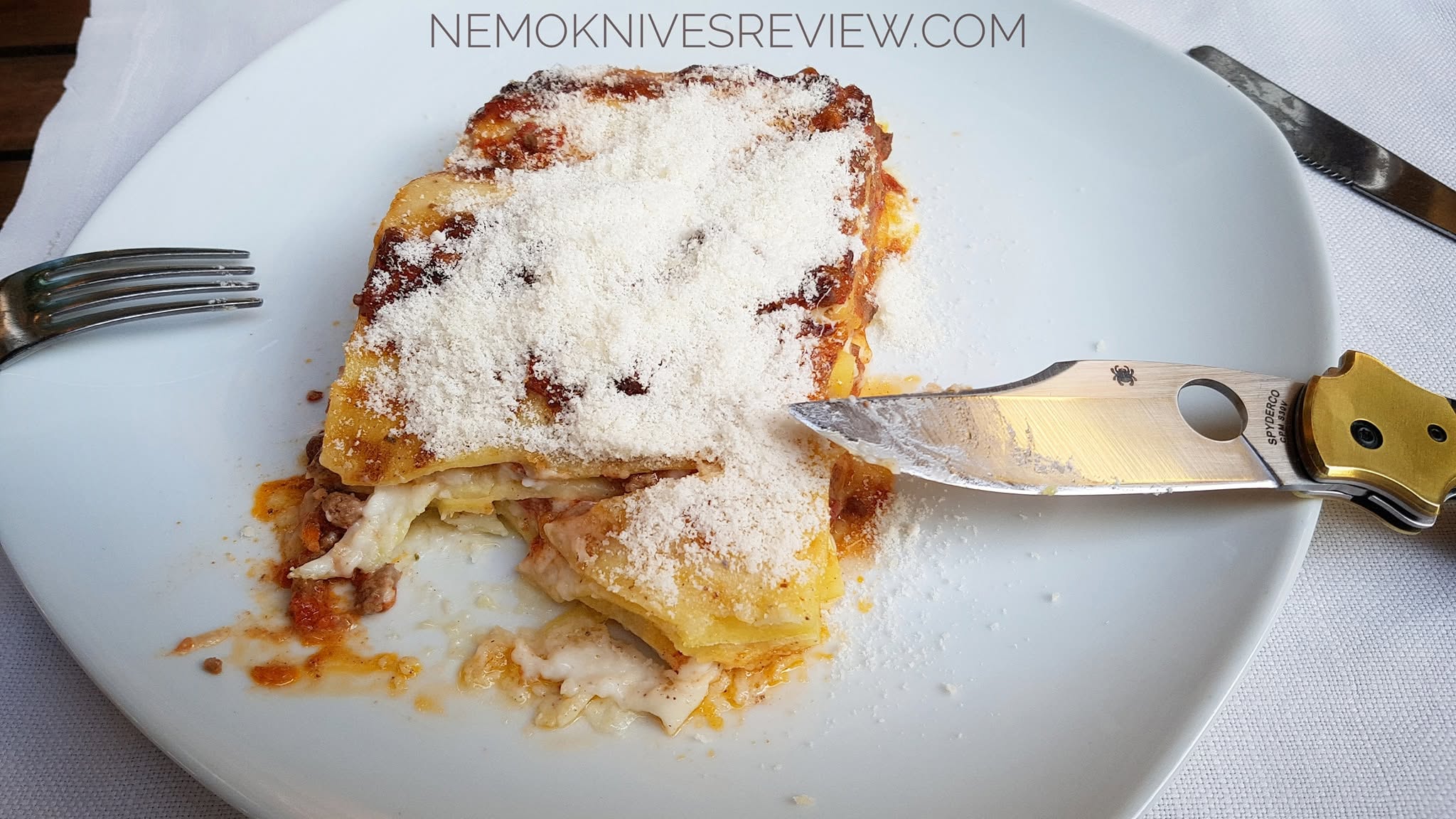
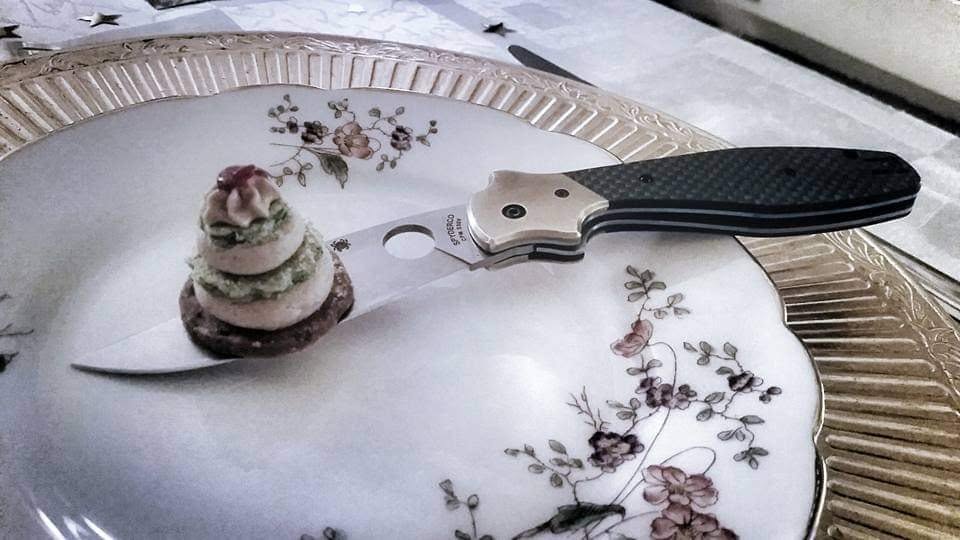
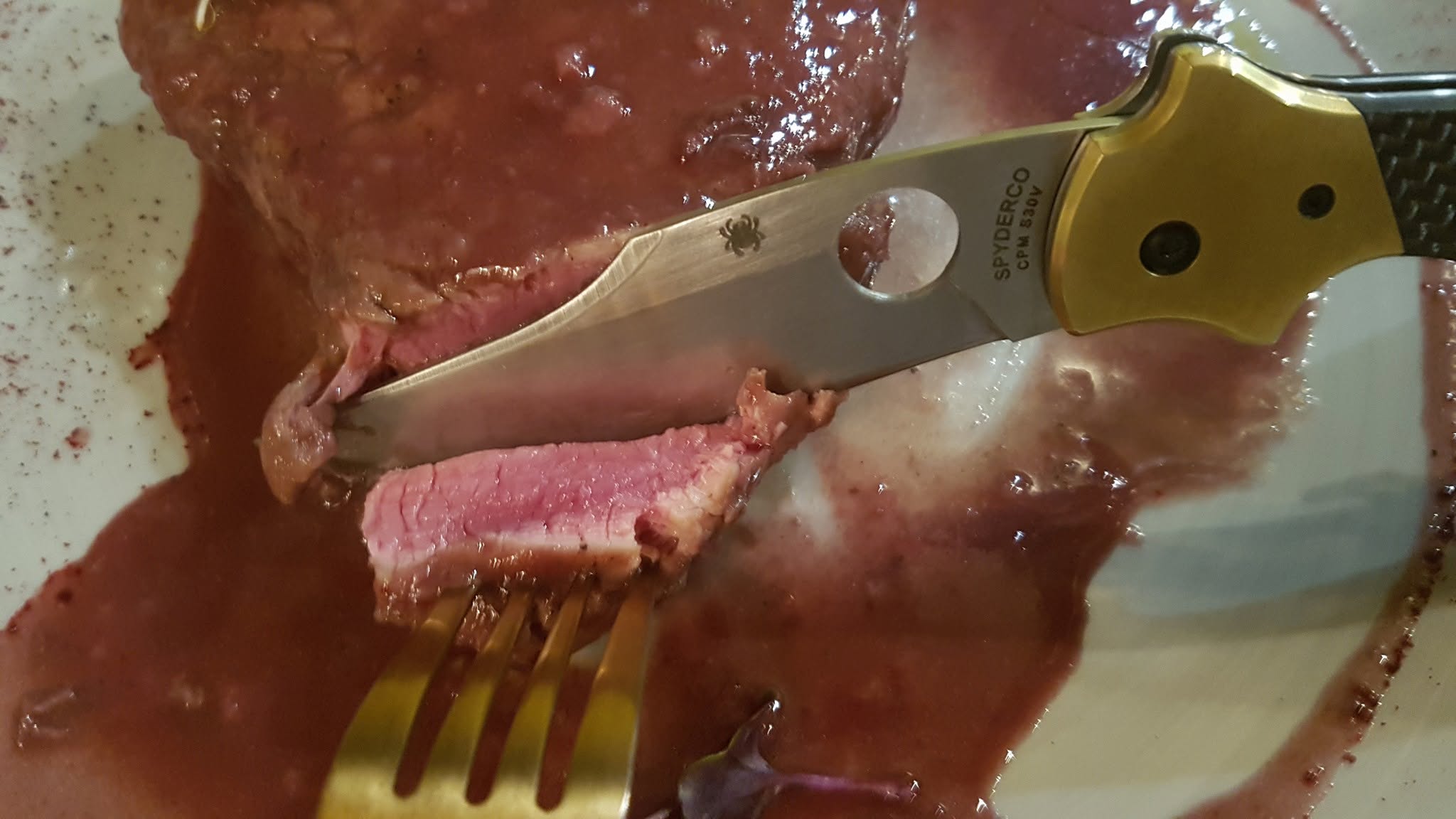
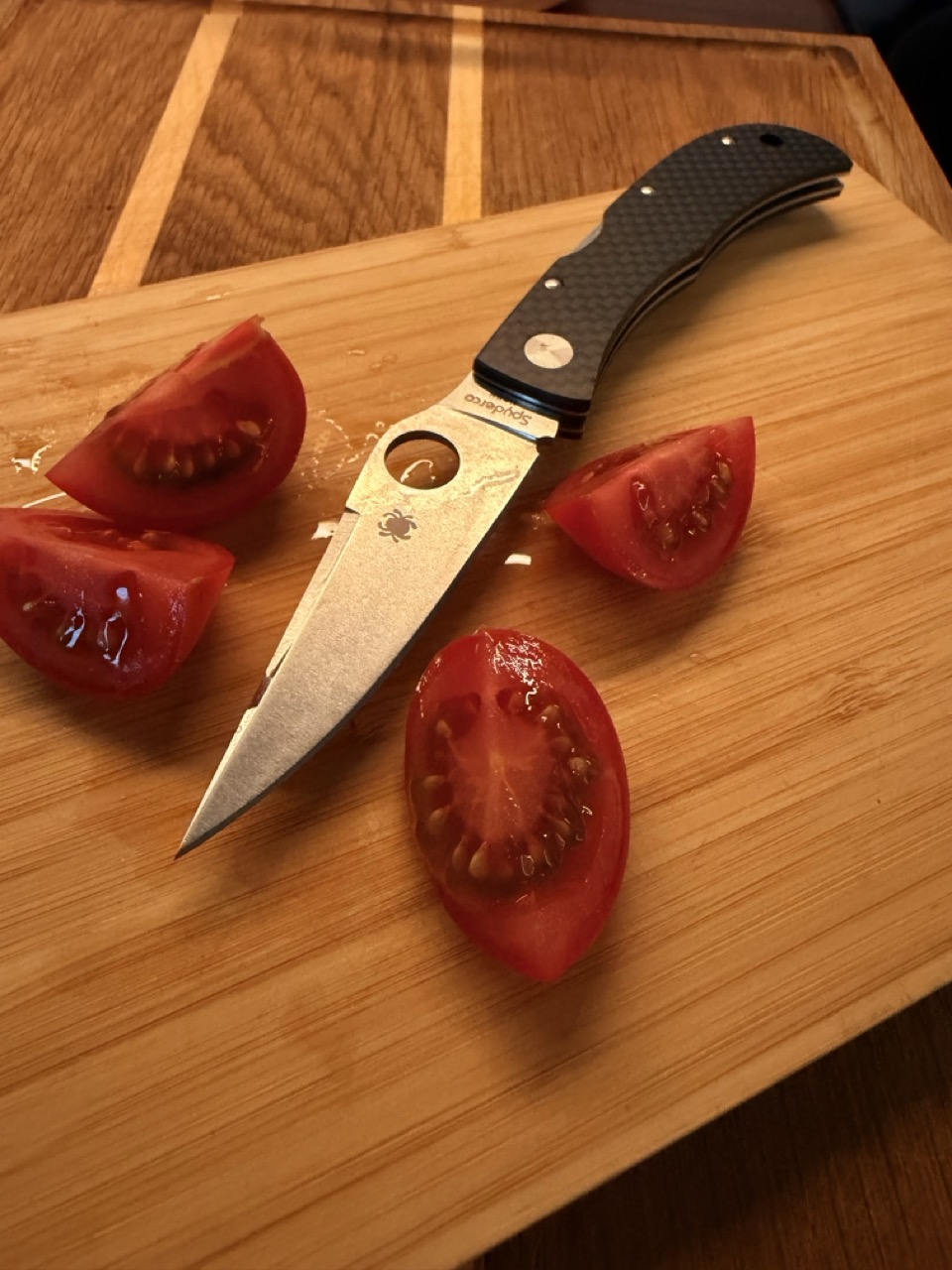
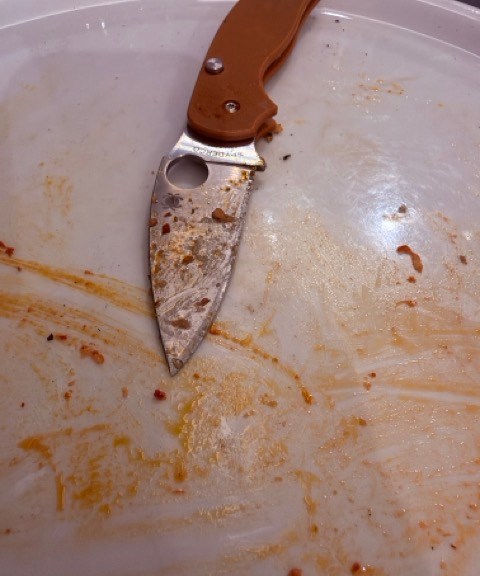
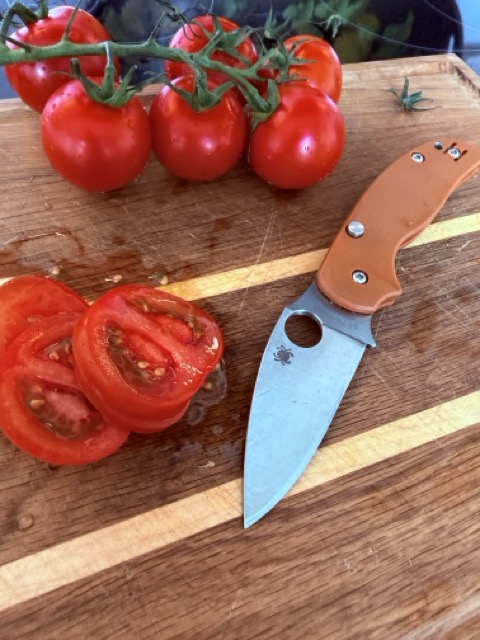
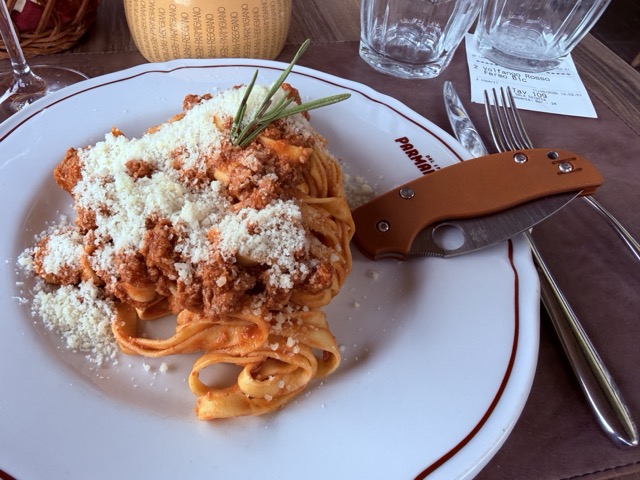
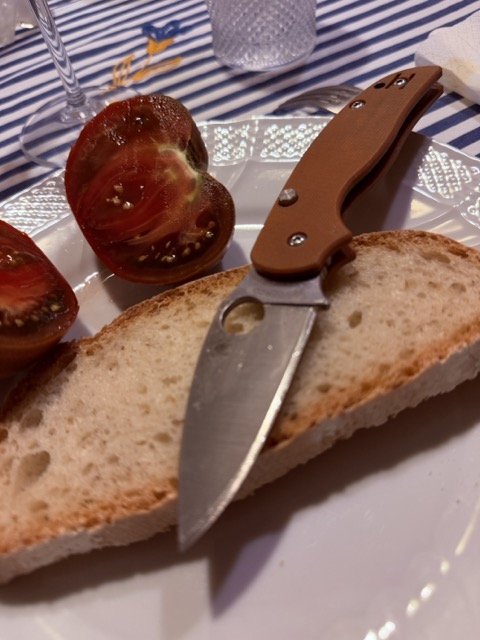
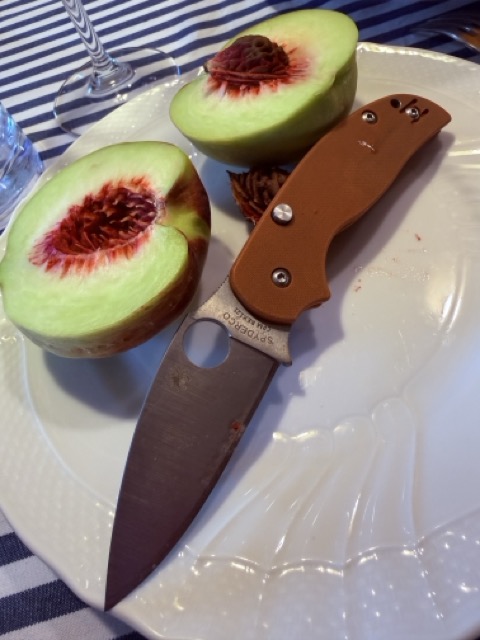
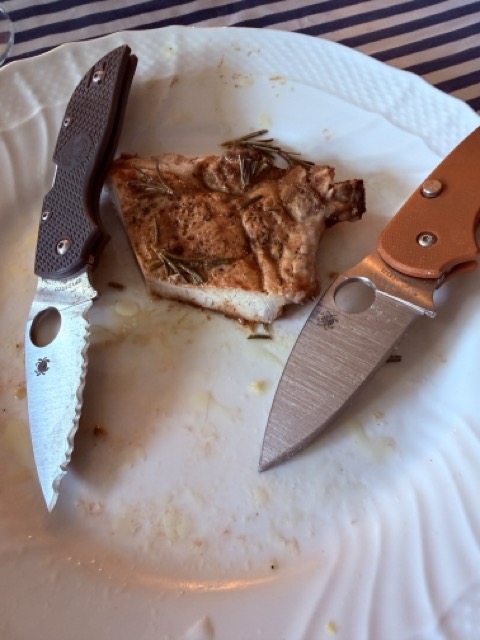
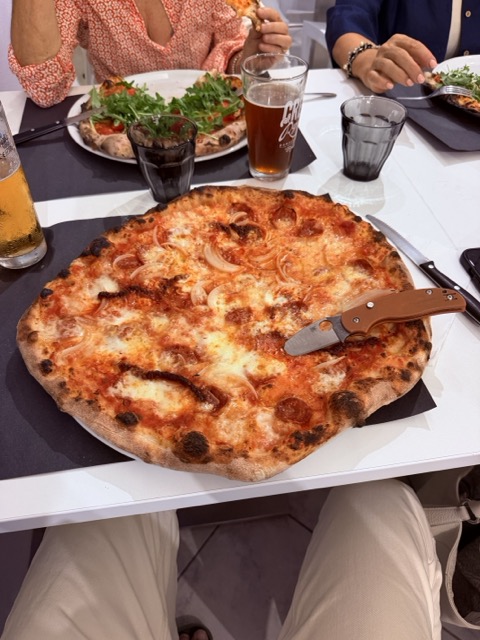
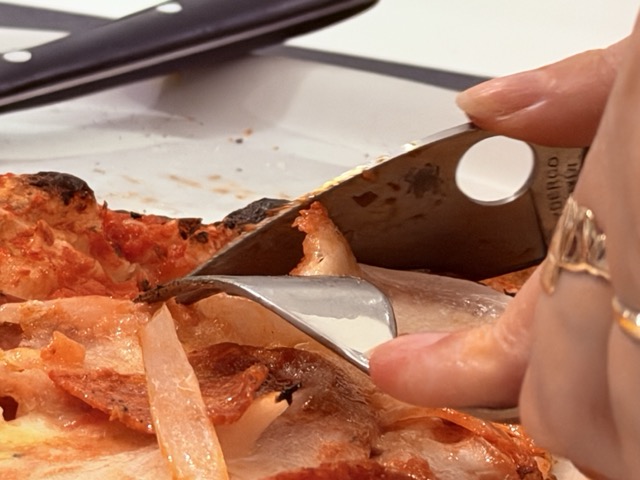
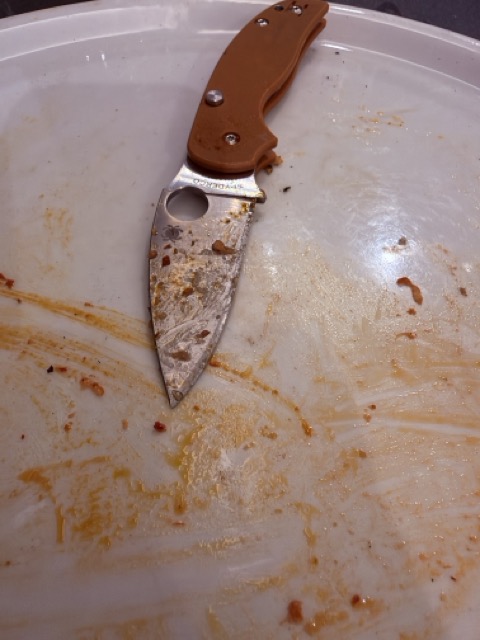
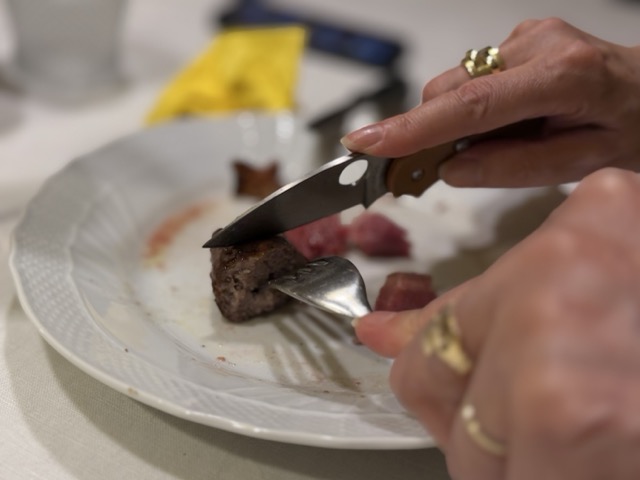
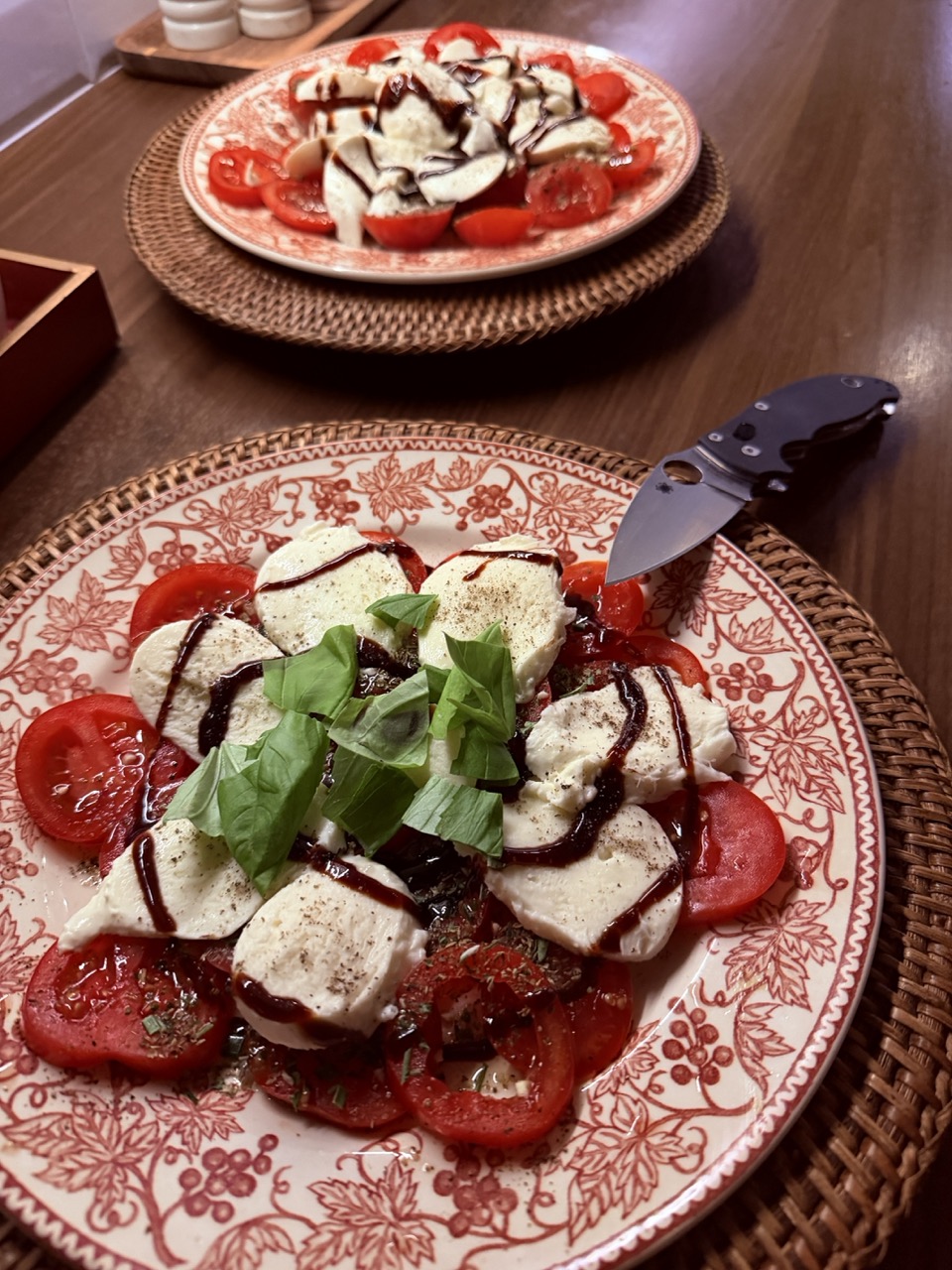
One of the more interesting things I’ve learned while testing the Sage 6 Tango in Italy is that REX 121 can perform surprisingly well in an everyday food-cutting role, including cutting on ceramic plates. That is not a claim that ceramic contact has no effect whatsoever on an edge. Repeated contact with a hard ceramic surface can eventually affect any knife’s sharpness. But my experience with the Sage 6 has been encouraging, with no obvious premature loss of cutting performance from this type of use and no chipping !
I intend to put Tanga through the same kind of testing.
After all, a small urban folder is likely to encounter food preparation and ordinary daily cutting tasks far more often than any particularly demanding outdoor application.
If it can reproduce Tango’s performance in this respect, that will be another argument in favour of this little knife.
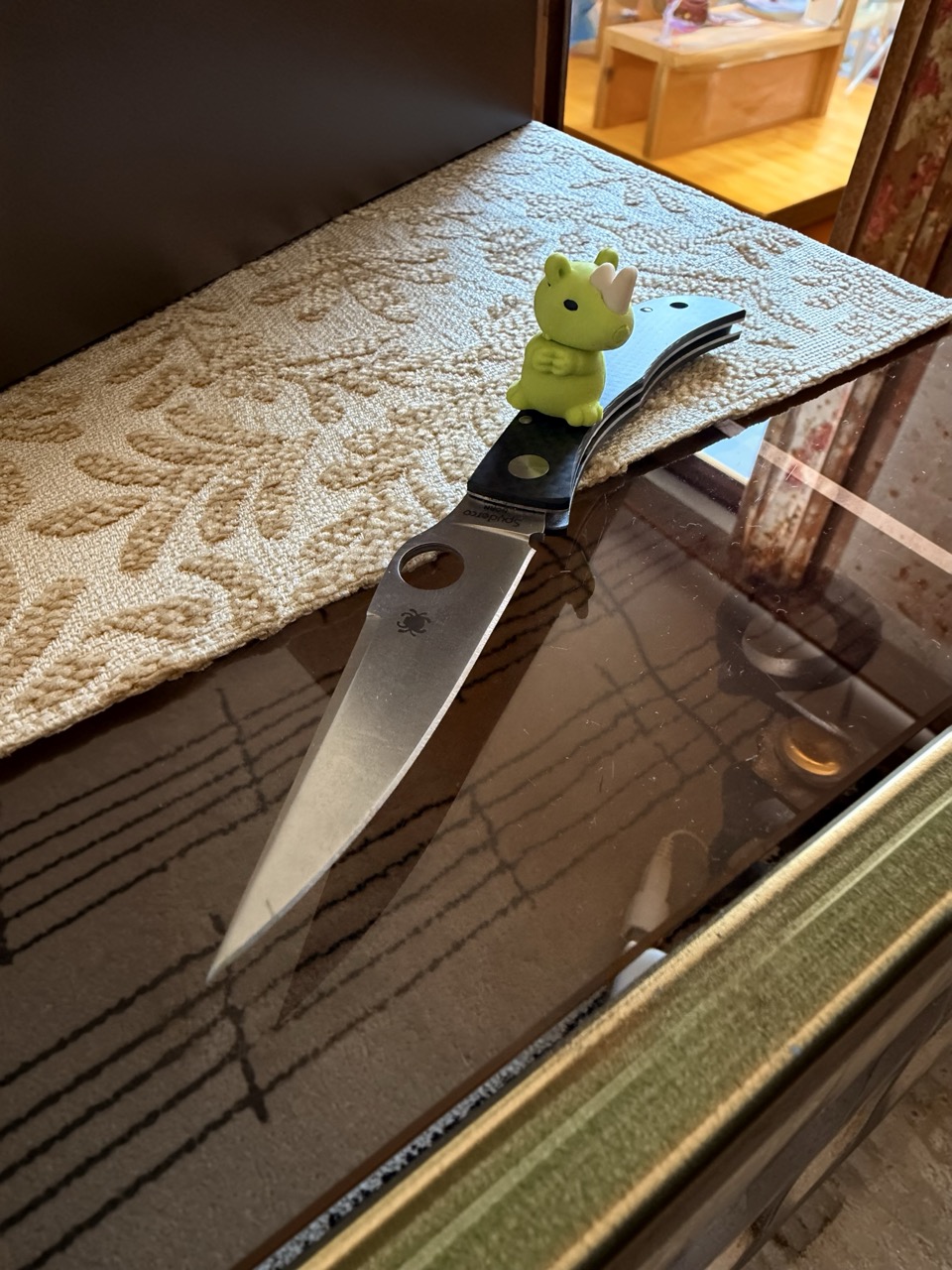
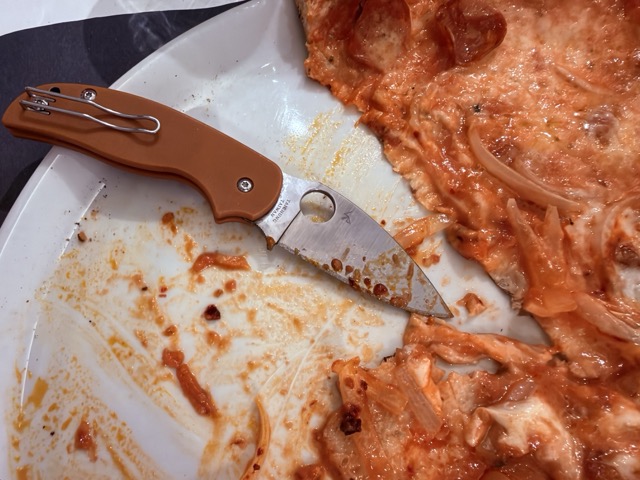
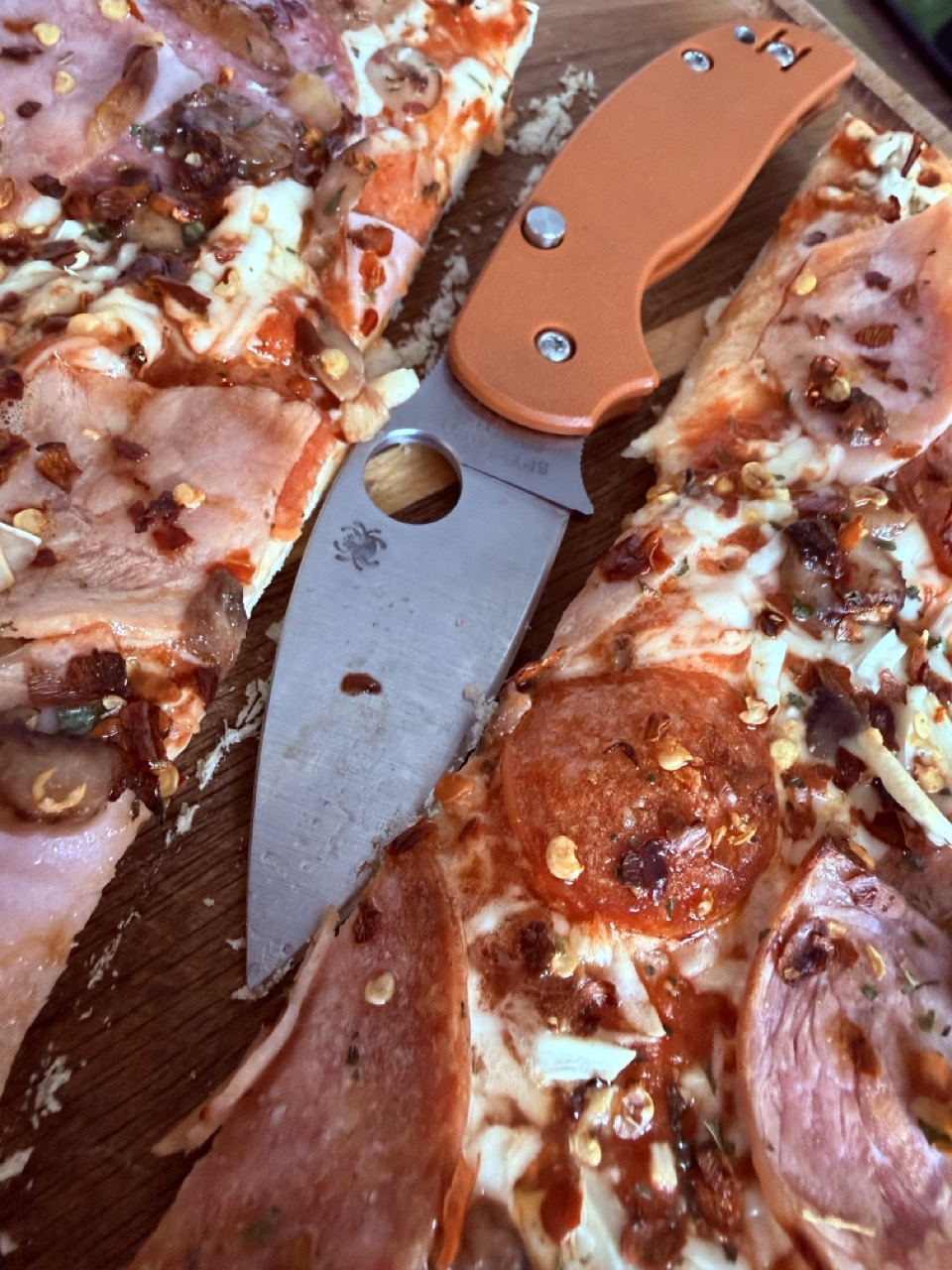
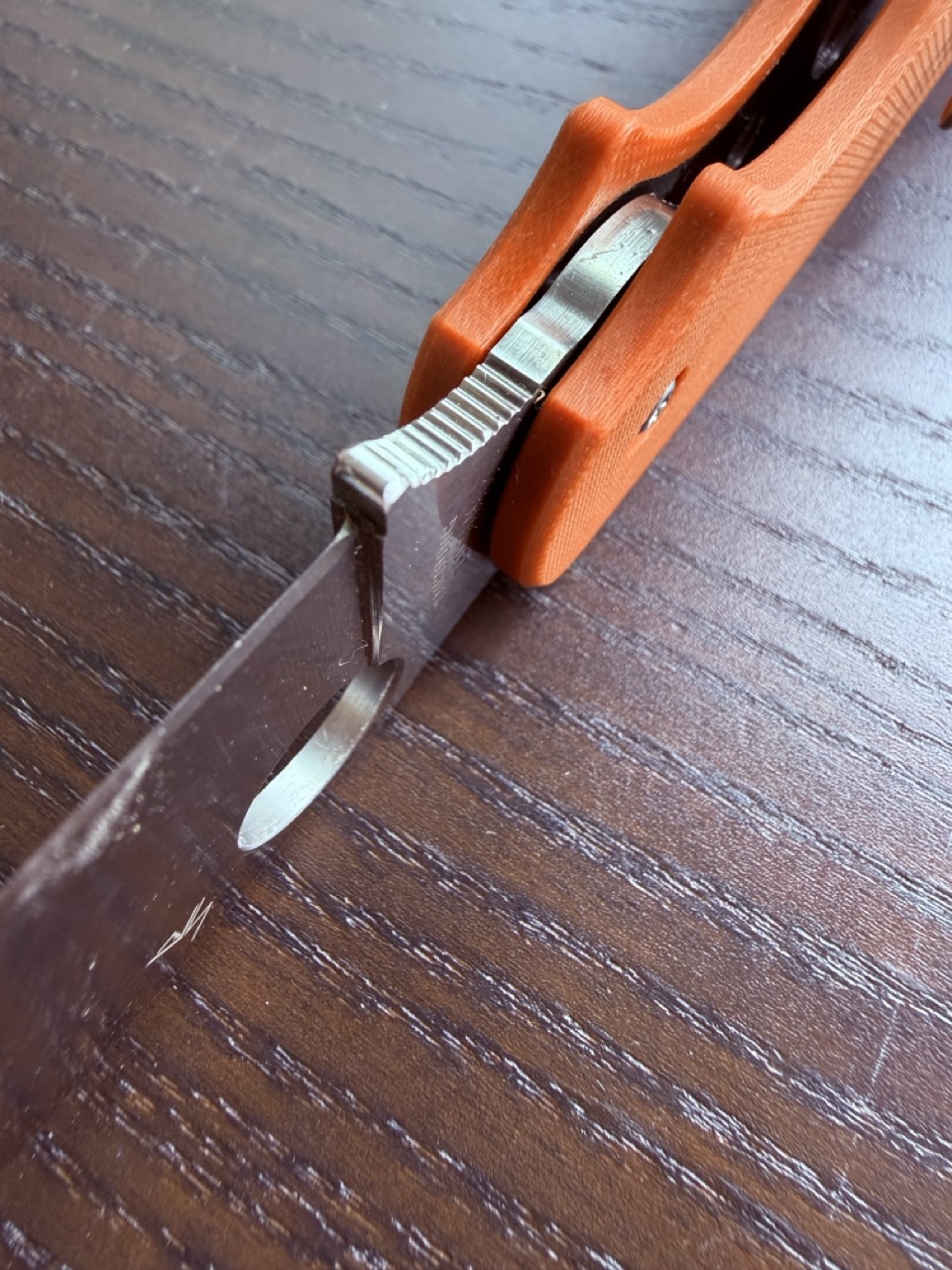
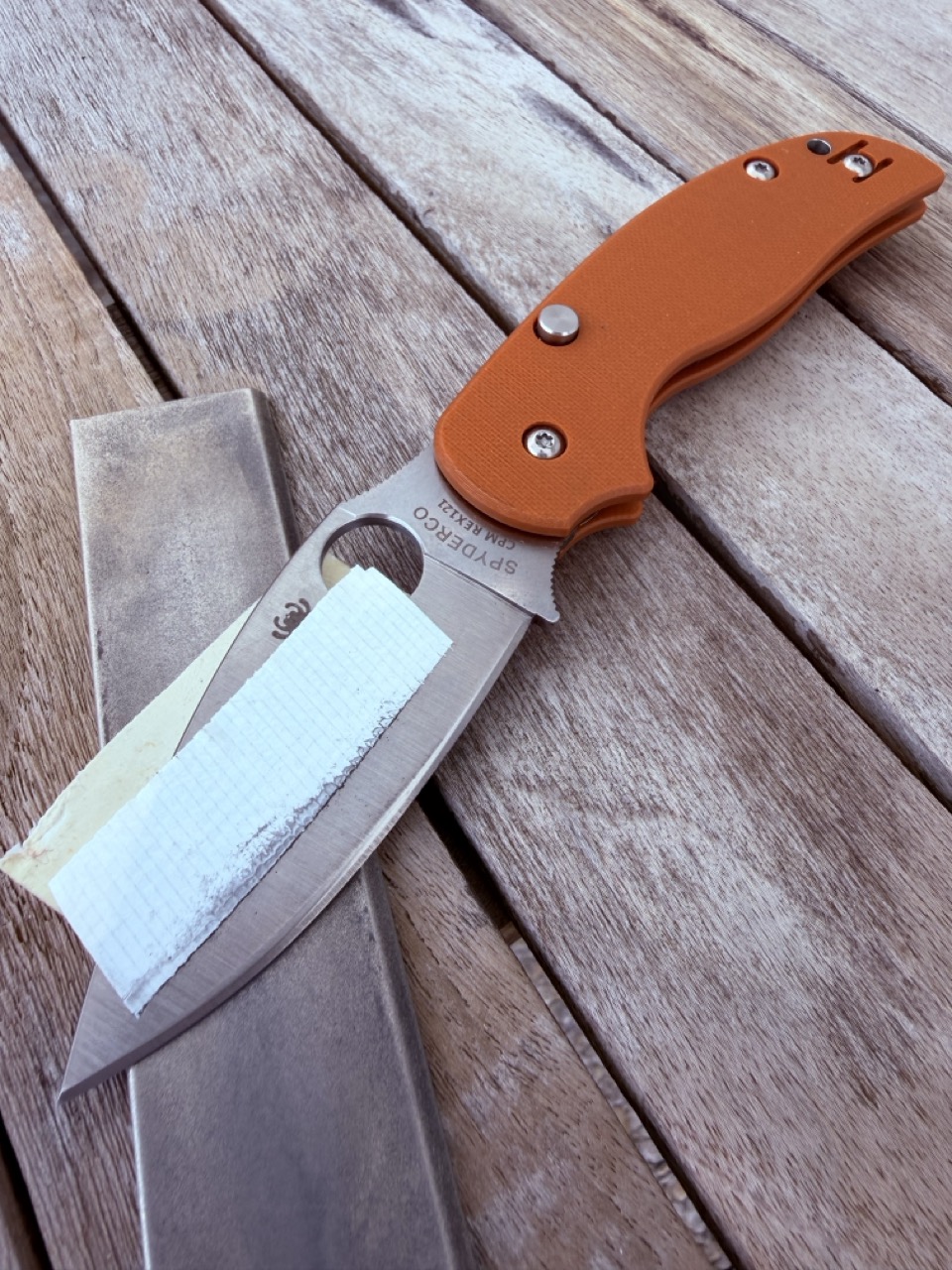
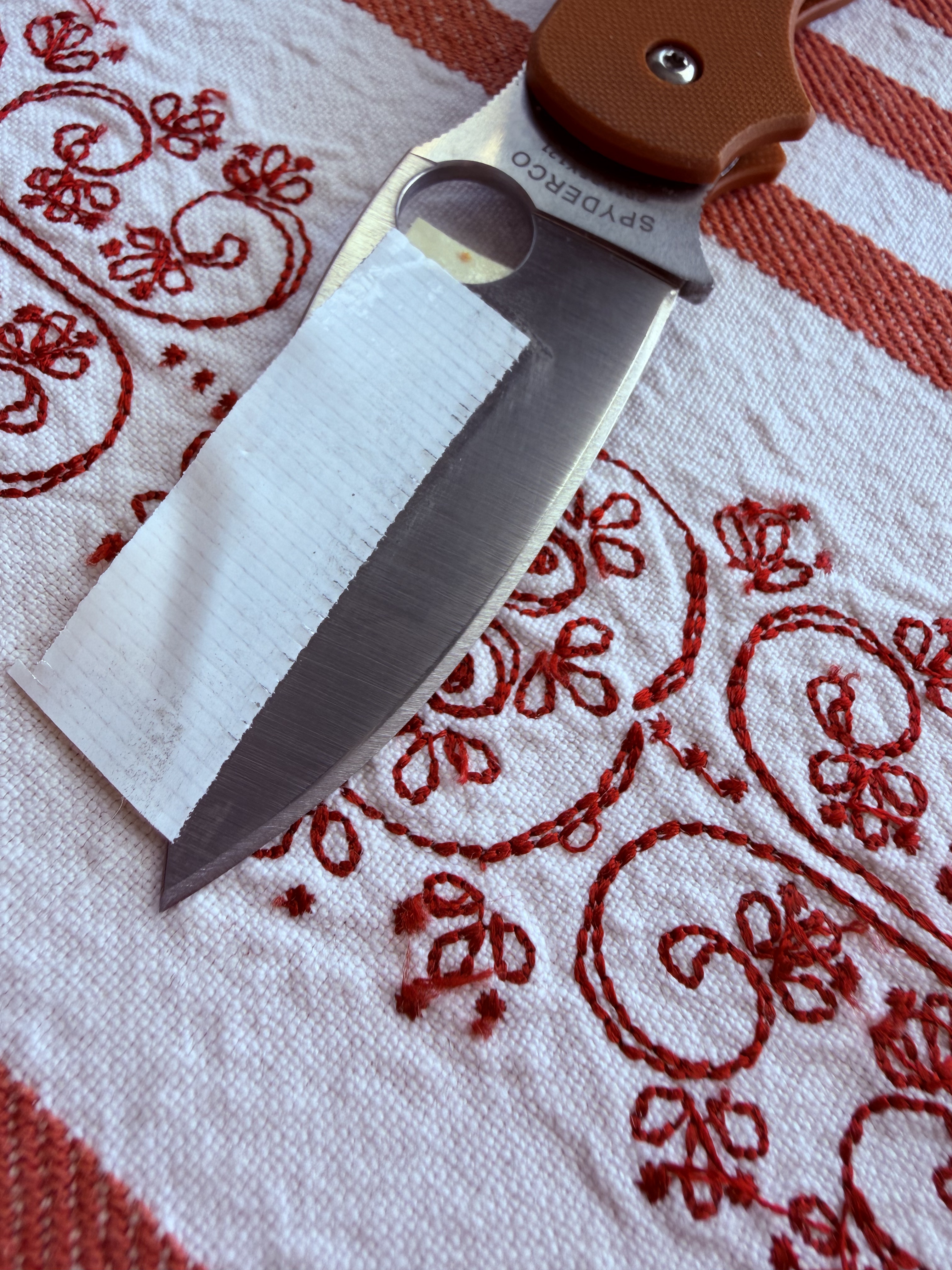
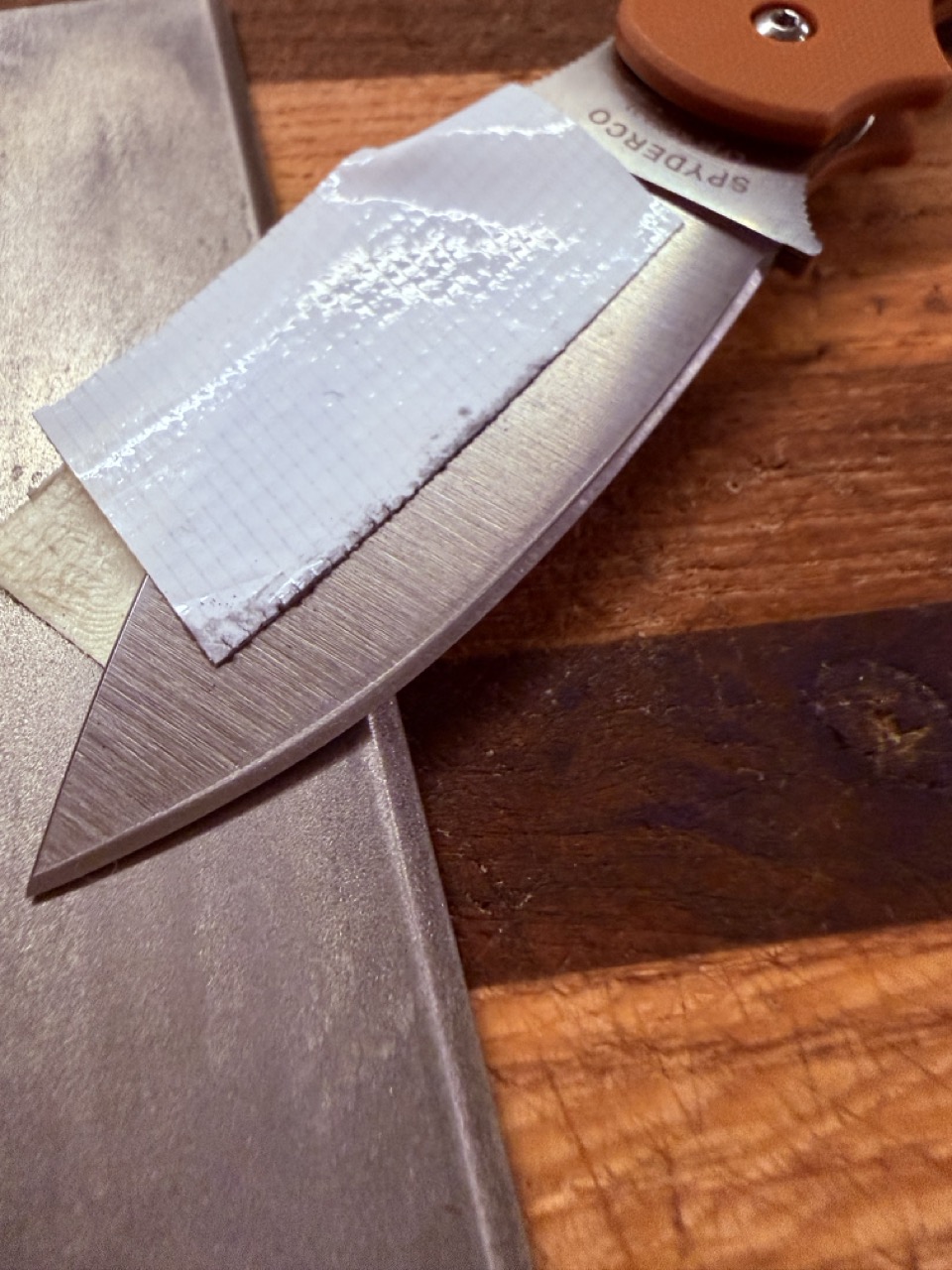
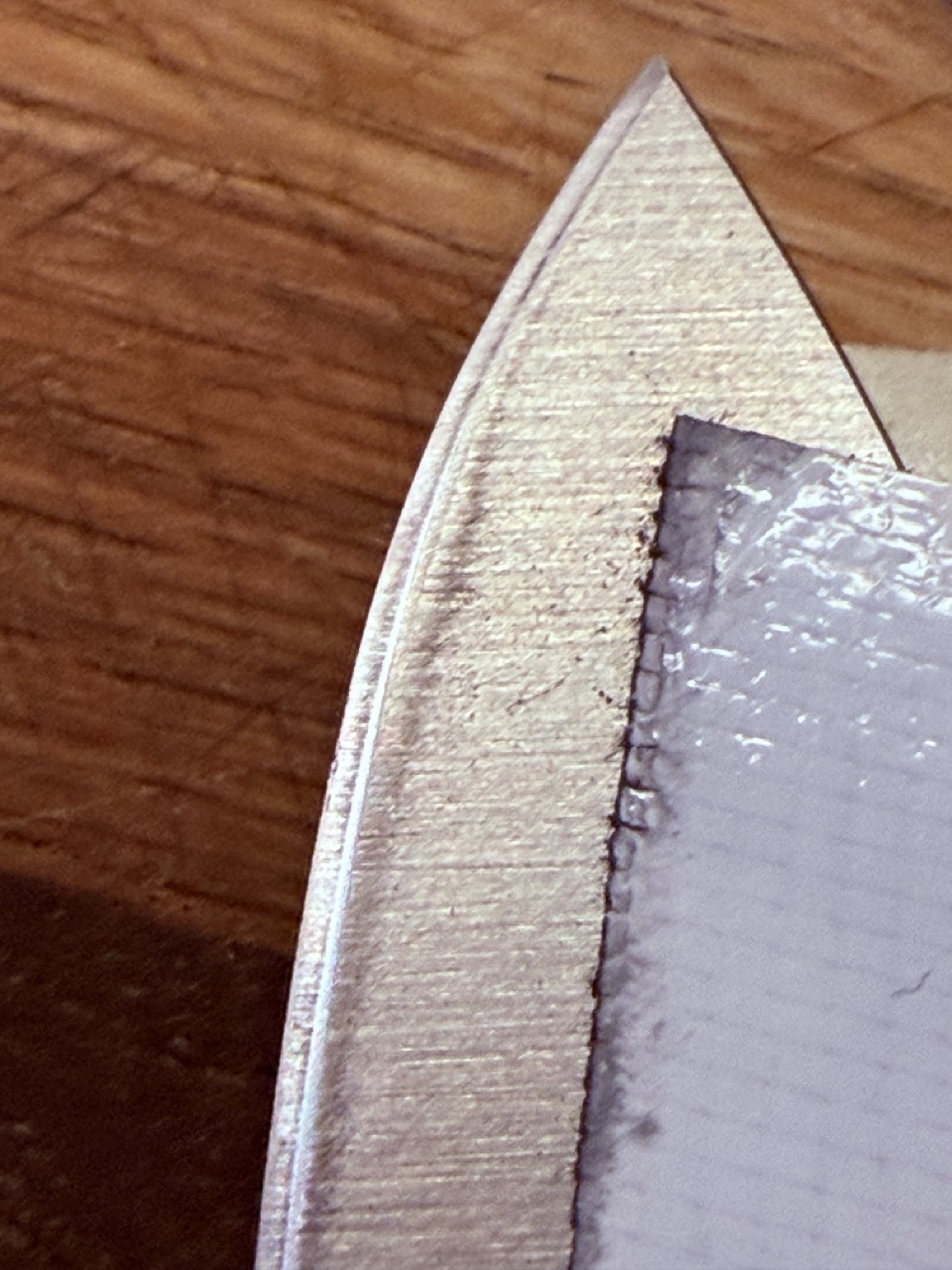
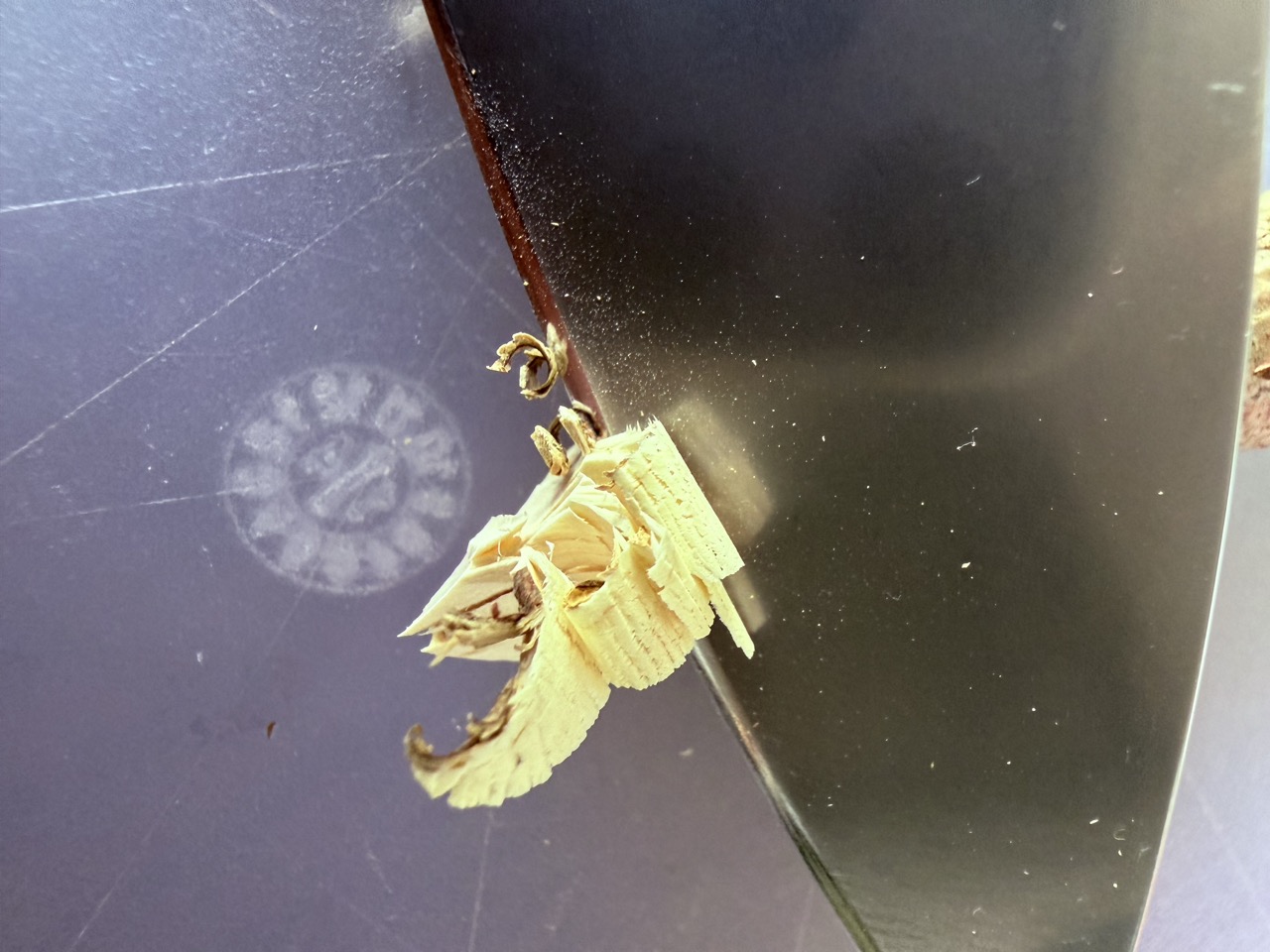
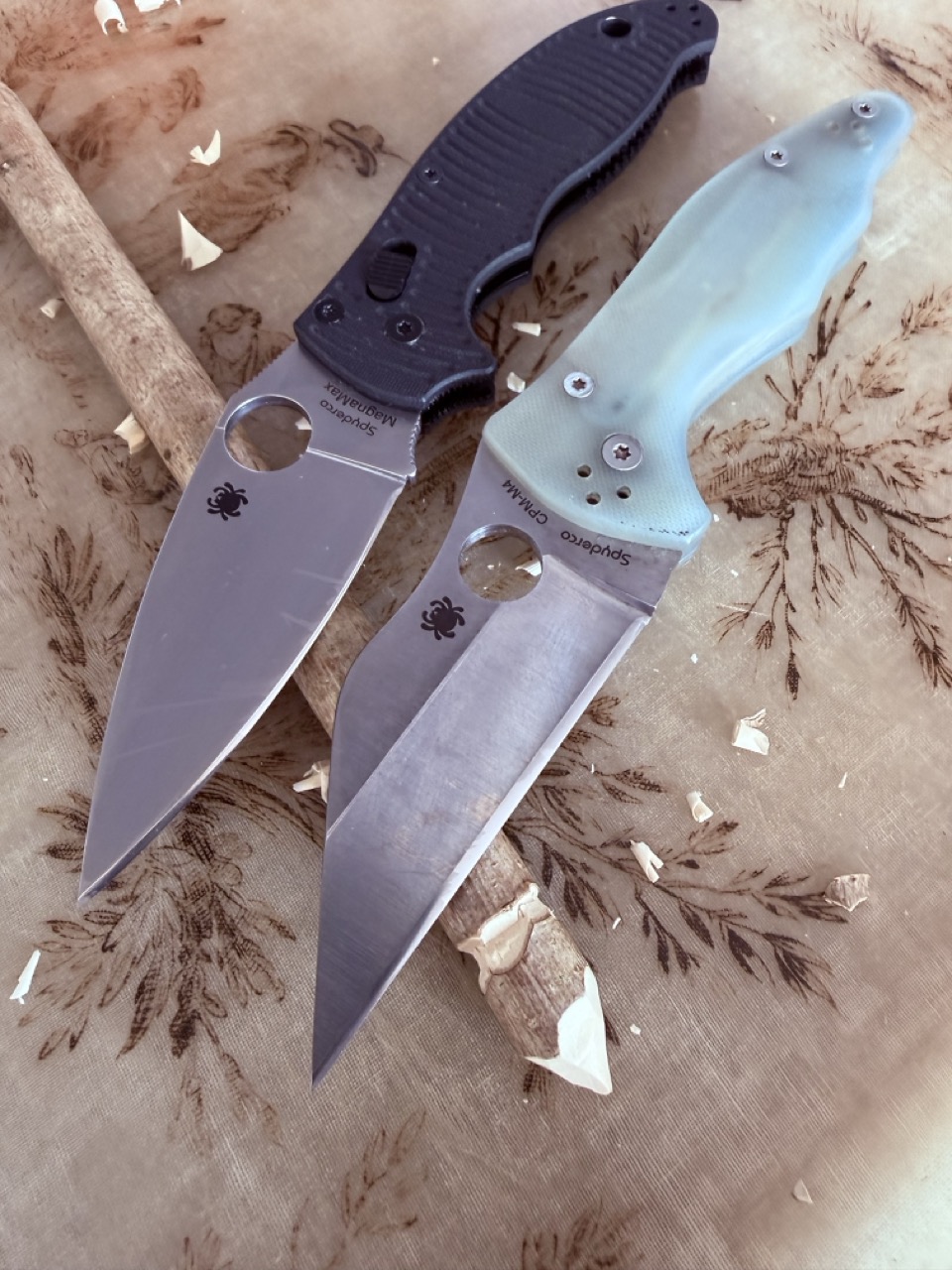
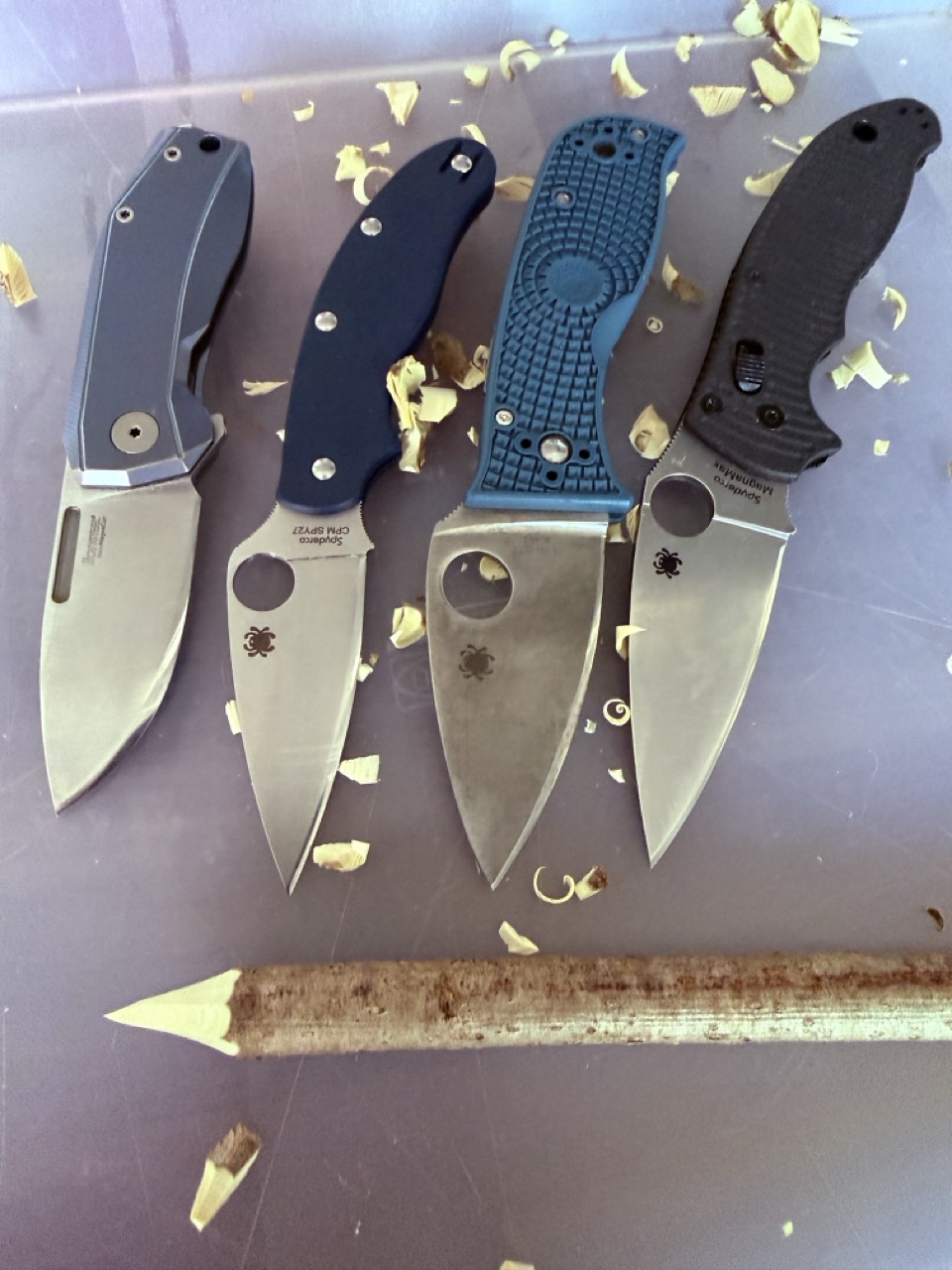
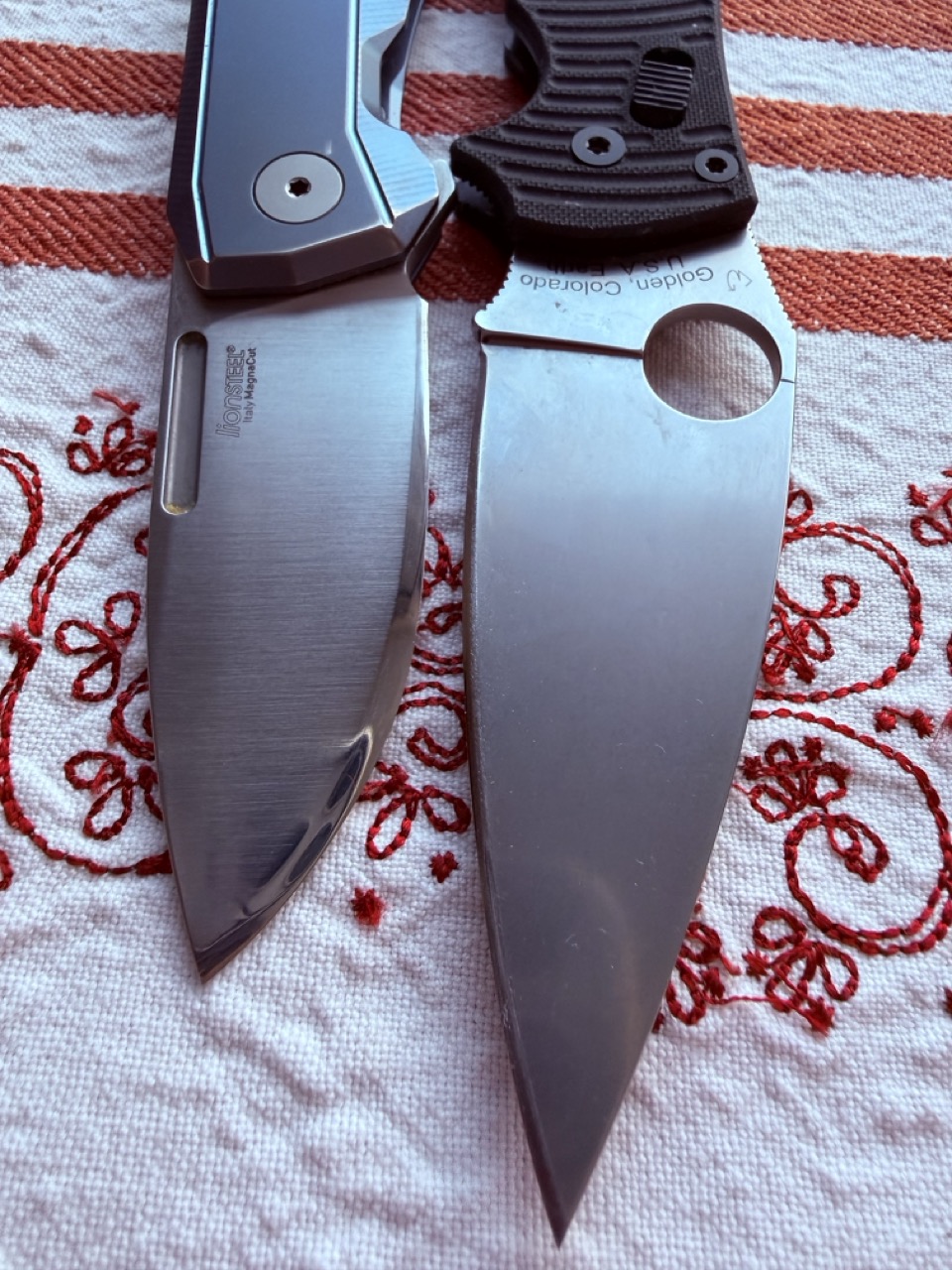
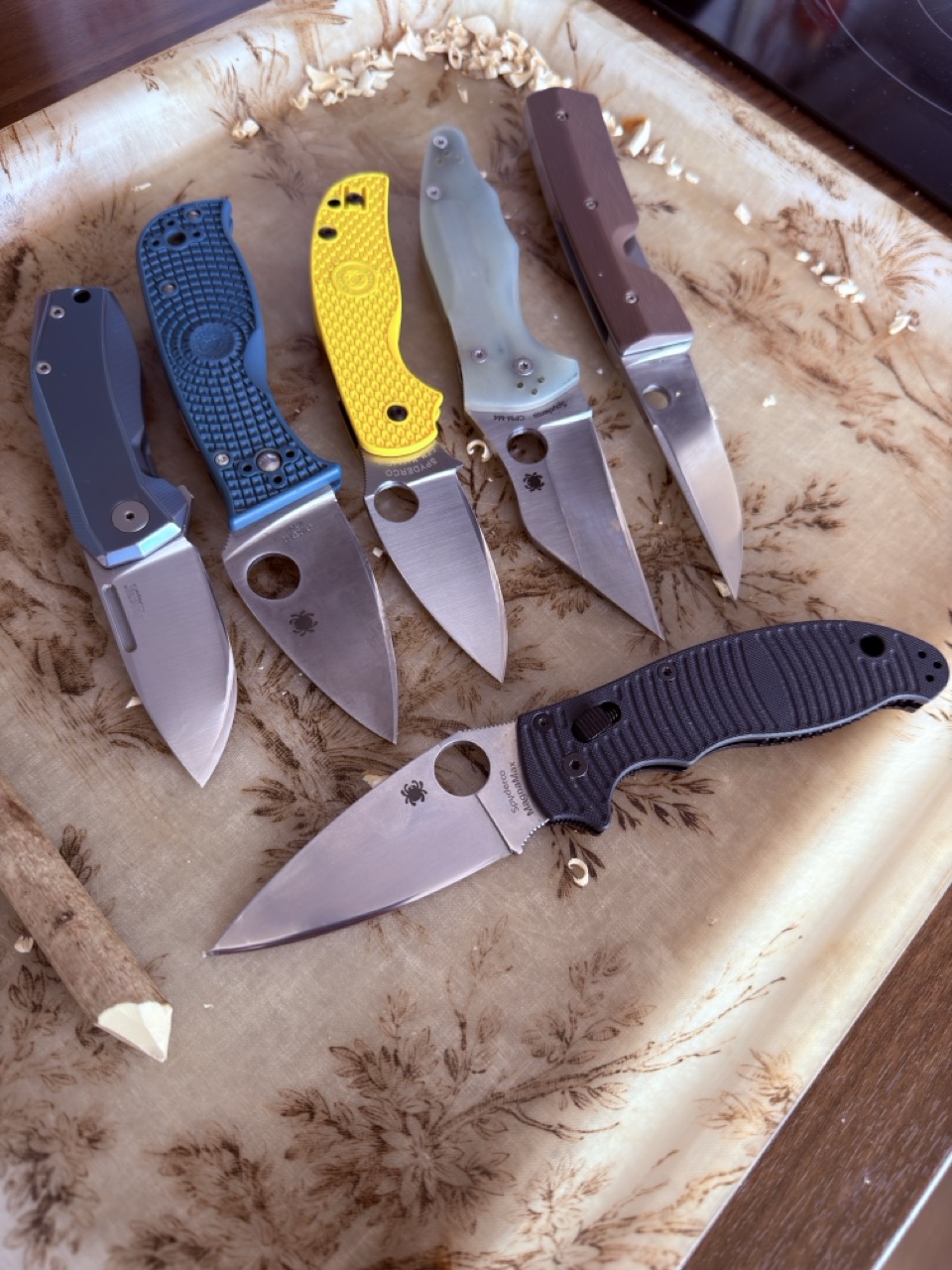
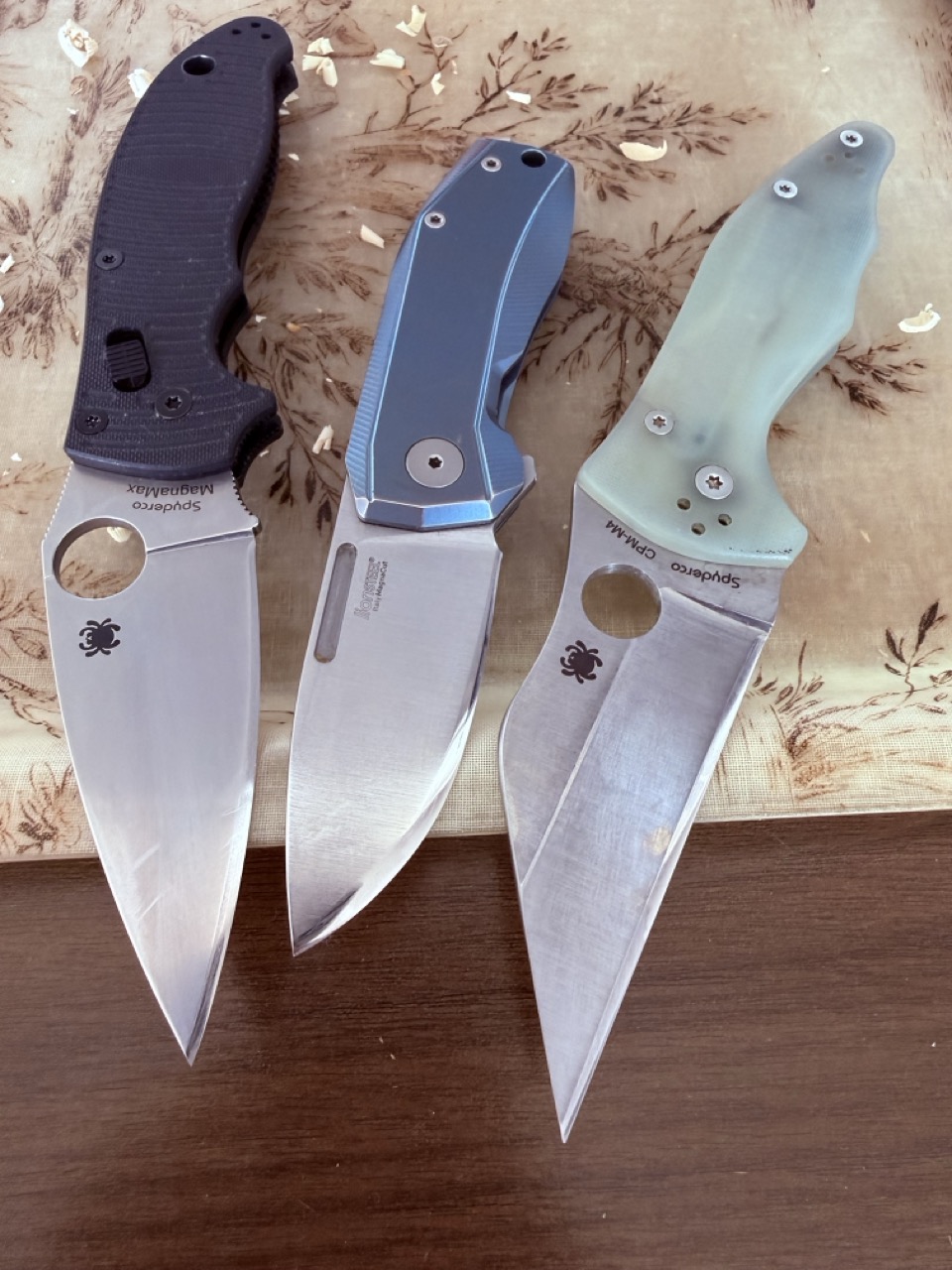
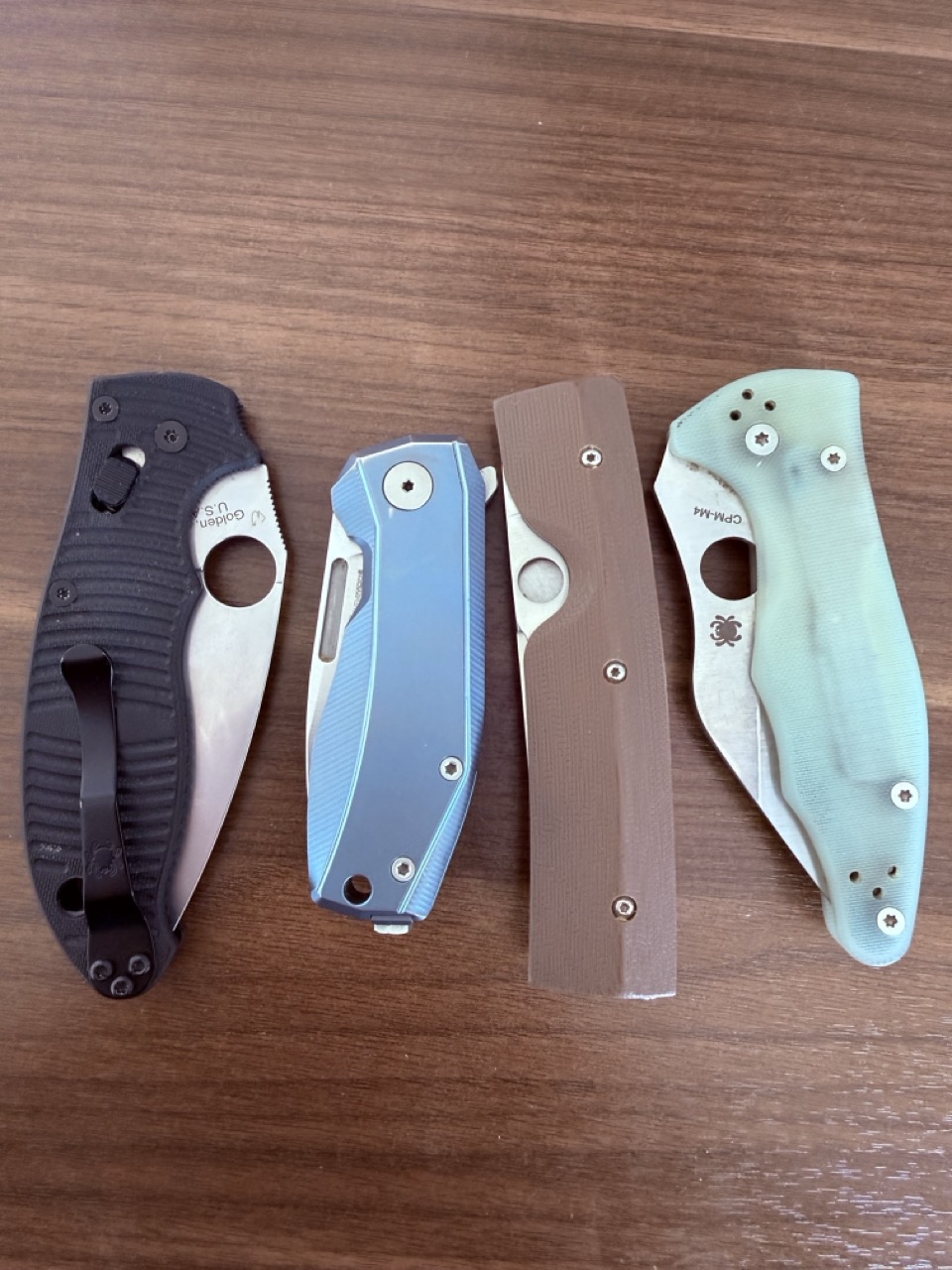
As you can see on the picture: I have deshouldered the SlipIt Chap.
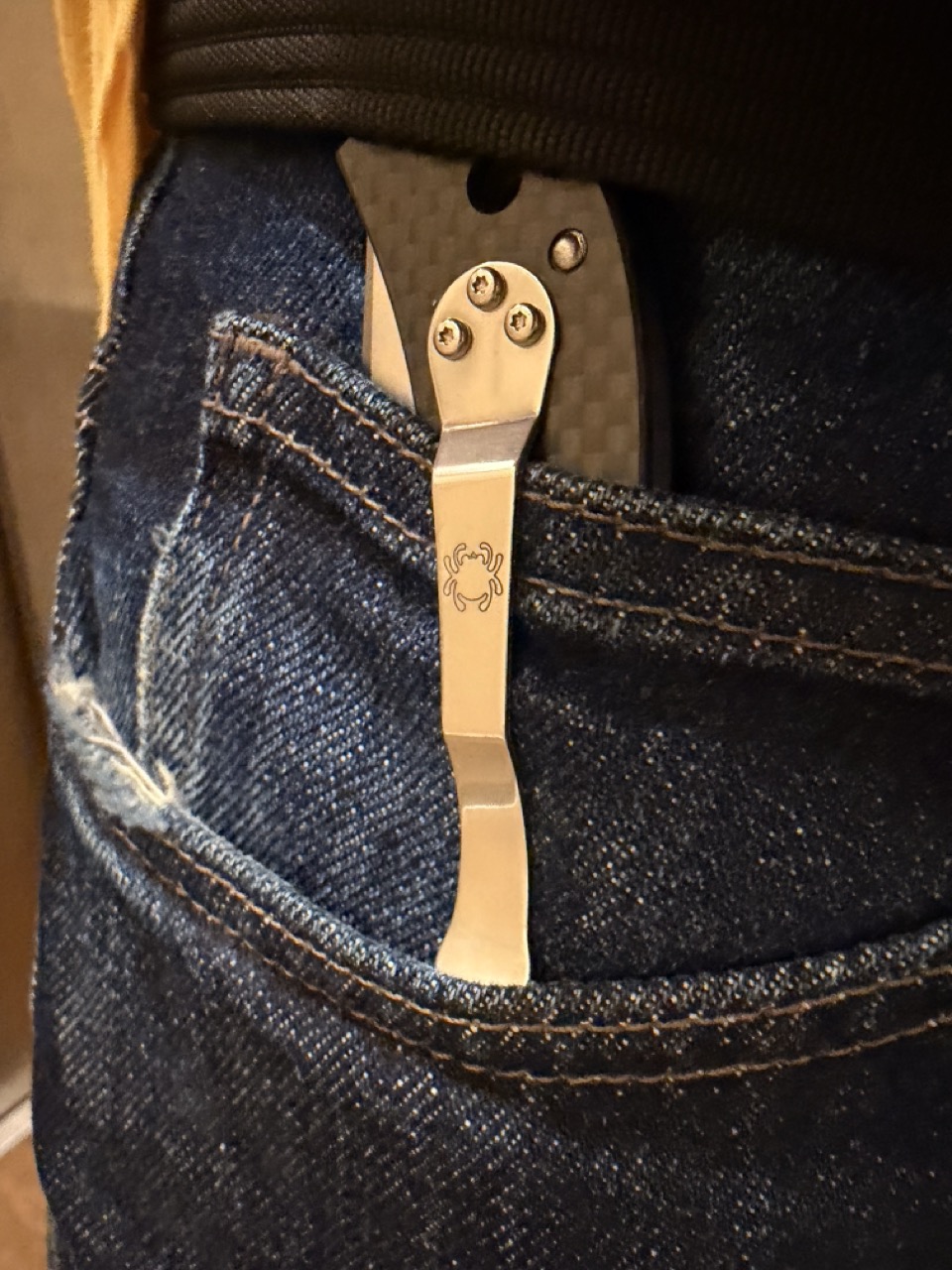
The Chaparral has always made sense as a compact everyday-carry knife. Its size makes it particularly convenient when walking around town, where a larger folder can feel unnecessarily cumbersome.
That is where I intend to concentrate my testing of Tanga.
Tango, my Sage 6 REX 121, has already demonstrated that this steel can be useful well beyond purely urban environments. I see no reason why Tanga should be incapable of handling occasional outdoor tasks, provided her limitations are respected.
But her natural territory is more mundane… more urban: slipping into a pocket, handling everyday cutting jobs, and providing excellent cutting performance without taking up much space in the 5th pocket.
Over the coming weeks, I’ll be using it in precisely that way, paying attention to edge retention, cutting performance, handling, and how well the knife stands up to the routine demands of everyday life.
The real test is not how impressive a knife feels on the first day. It is how well it continues to perform after weeks of use.
There is another detail worth mentioning: the Chaparral’s construction. Spyderco’s hidden pin construction helps prevent vertical blade play, contributing to the sense of rigidity that makes this design feel more substantial than its size would suggest.
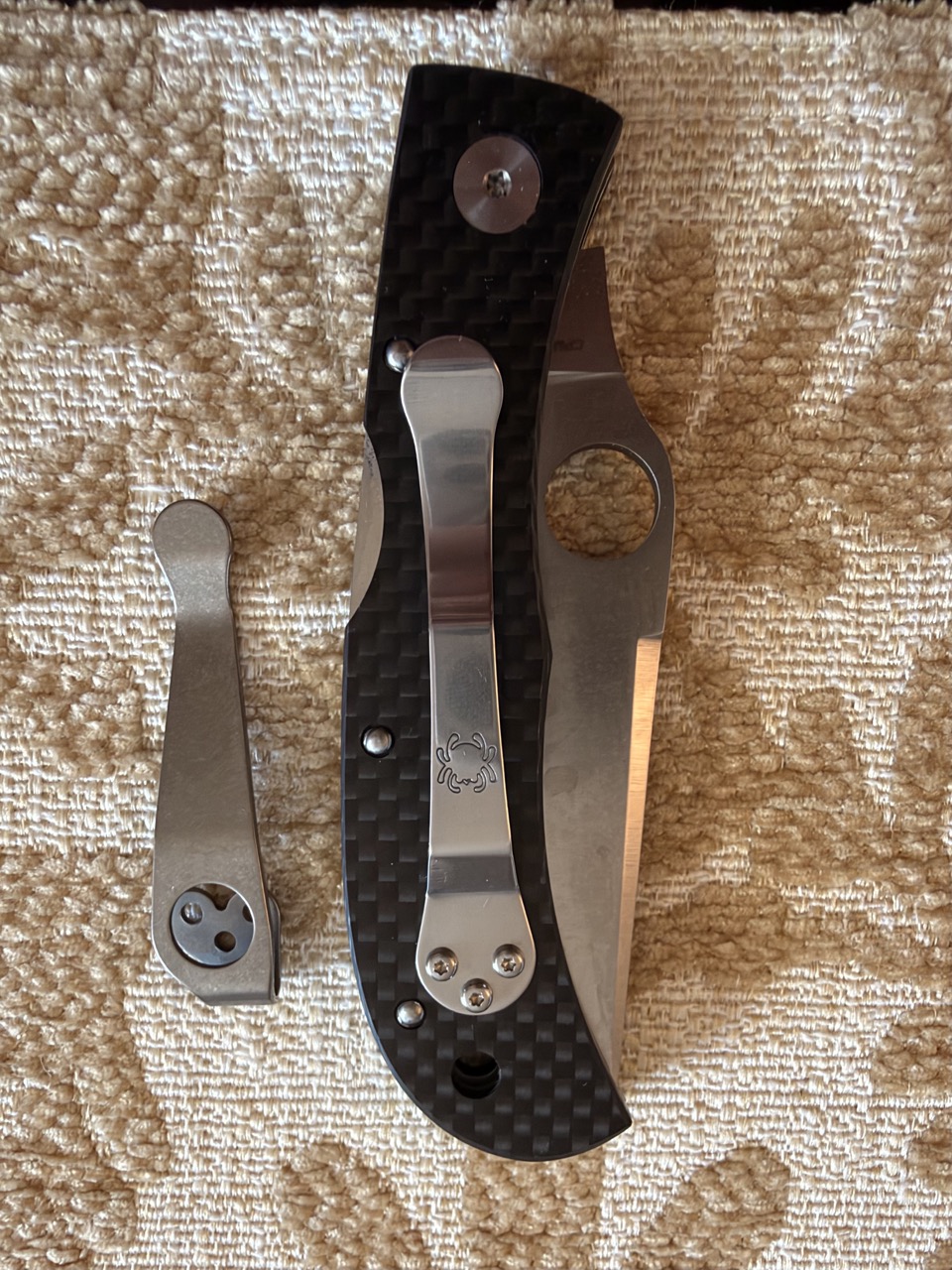
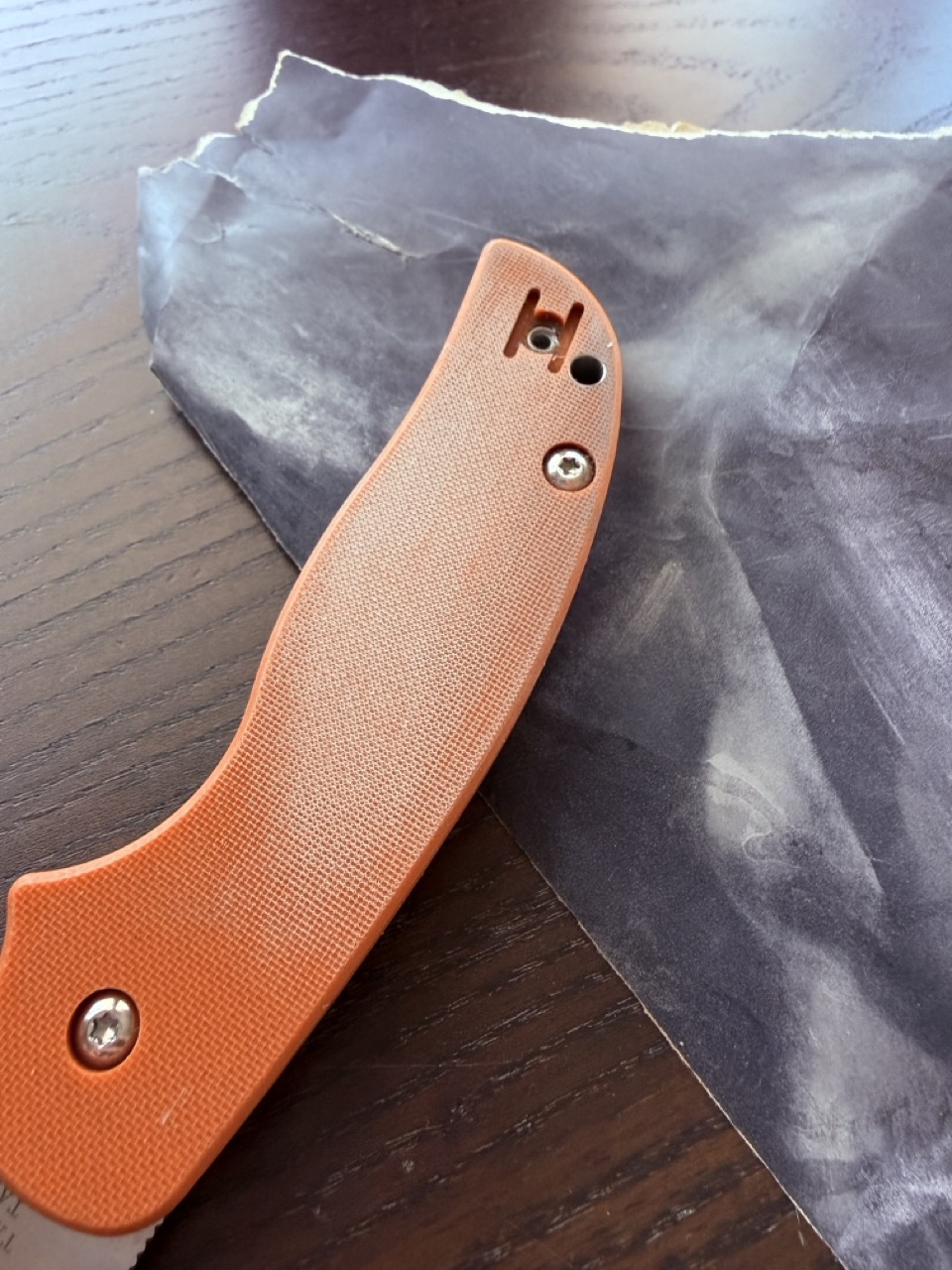
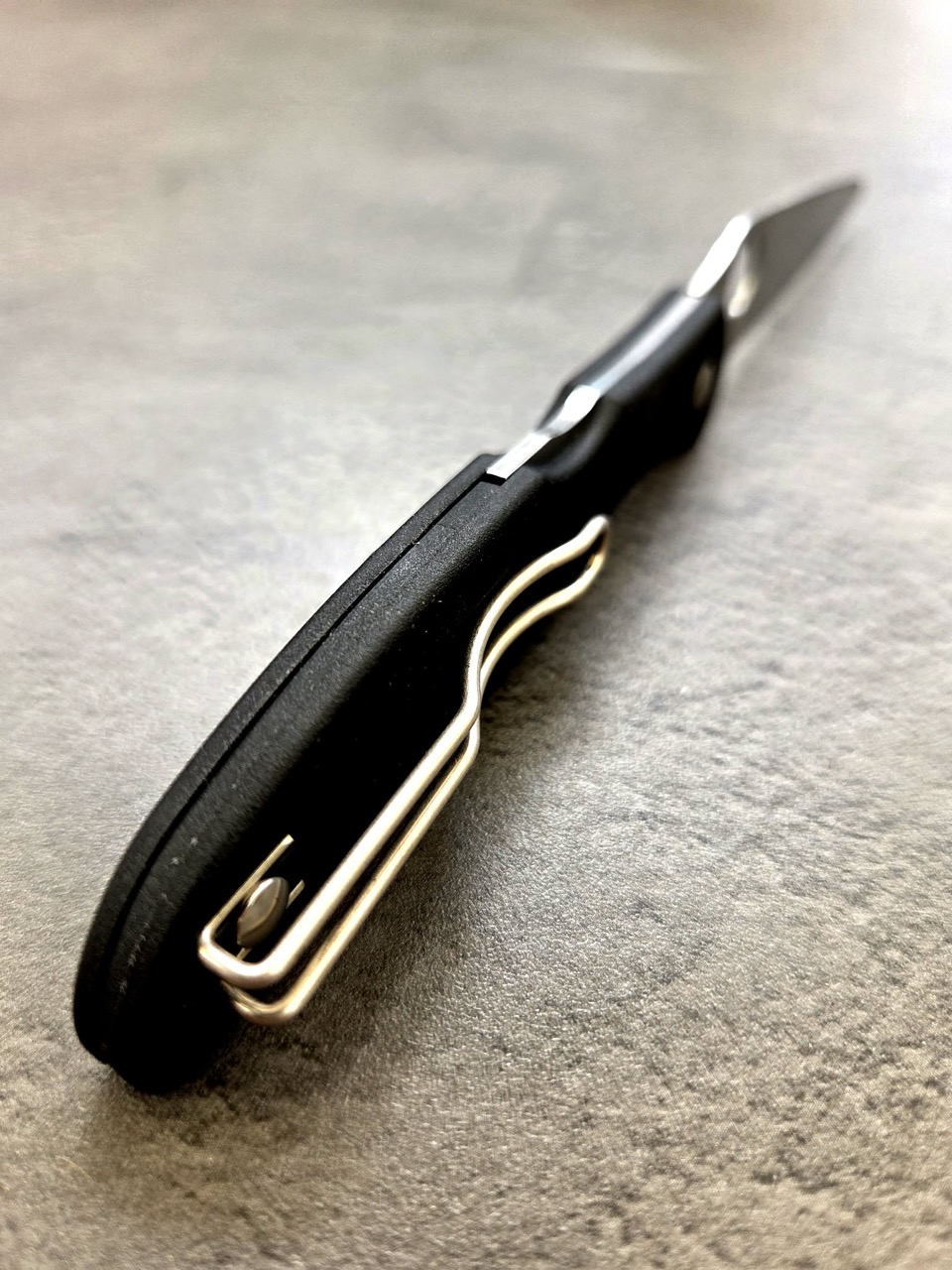
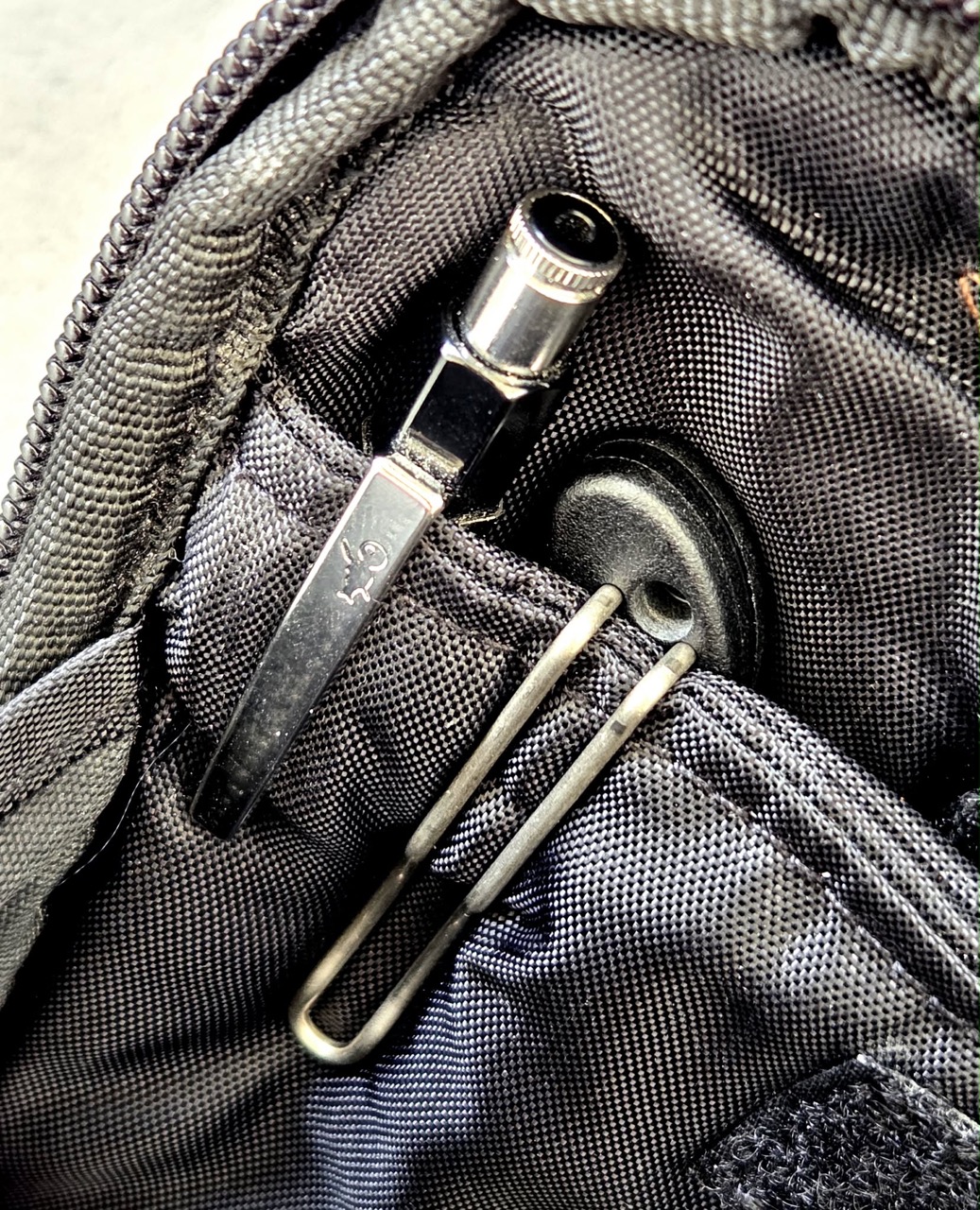
There is just one small detail I may address before carrying Tanga regularly: G10 provides excellent grip, but its slightly abrasive texture can sometimes wear against pocket fabric over time. I may gently smooth the area around the clip with fine sandpaper to reduce that risk. This is a minor precaution rather than a criticism of the knife itself.
Otherwise, Tanga is ready to go.
My first encounter with the Spyderco Chaparral REX 121 has been extremely positive. The action is superb, the fit and finish are excellent, the blade is razor sharp, and the knife feels unexpectedly solid for something so compact and thin. The factory edge geometry may deserve some attention in the future, but I’m in no hurry to change it. First, I want to see how it performs as delivered.
So let’s see whether the empress can live up to her family name.
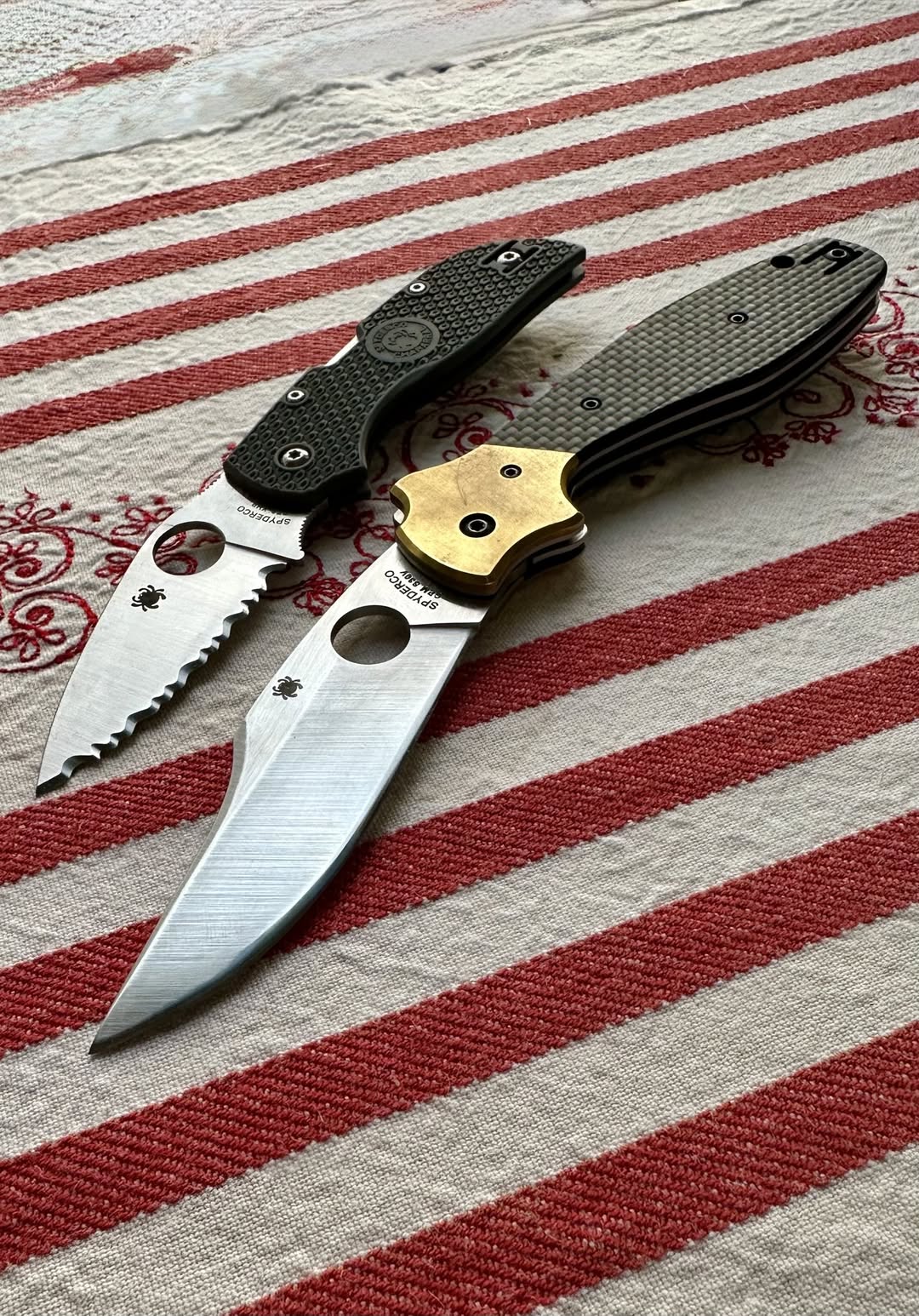
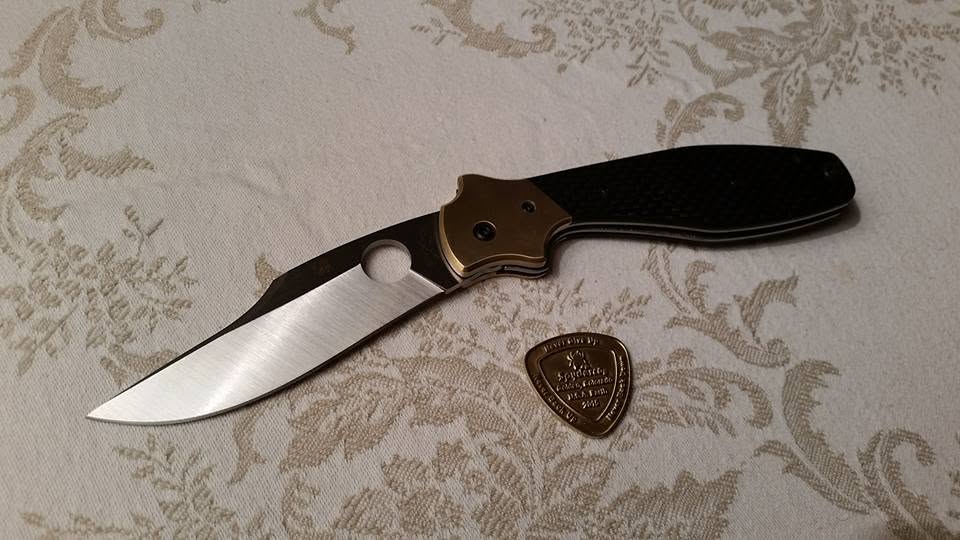
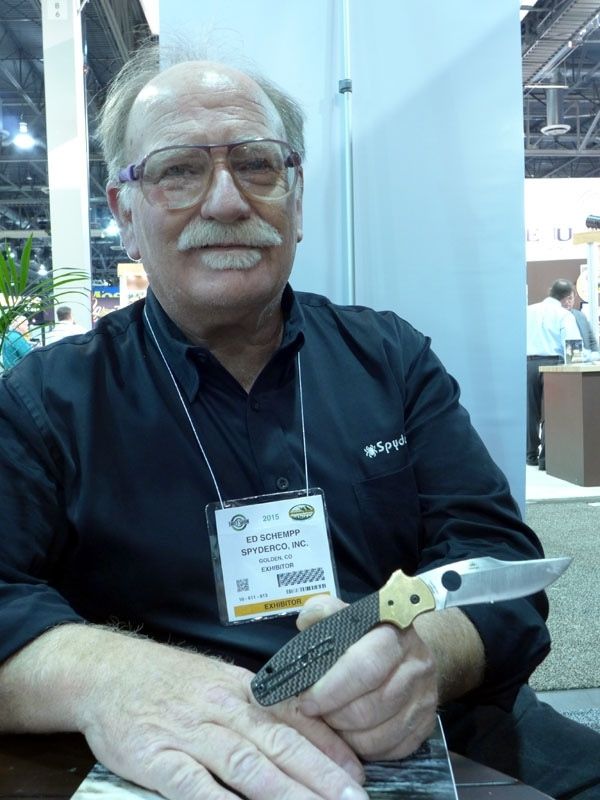
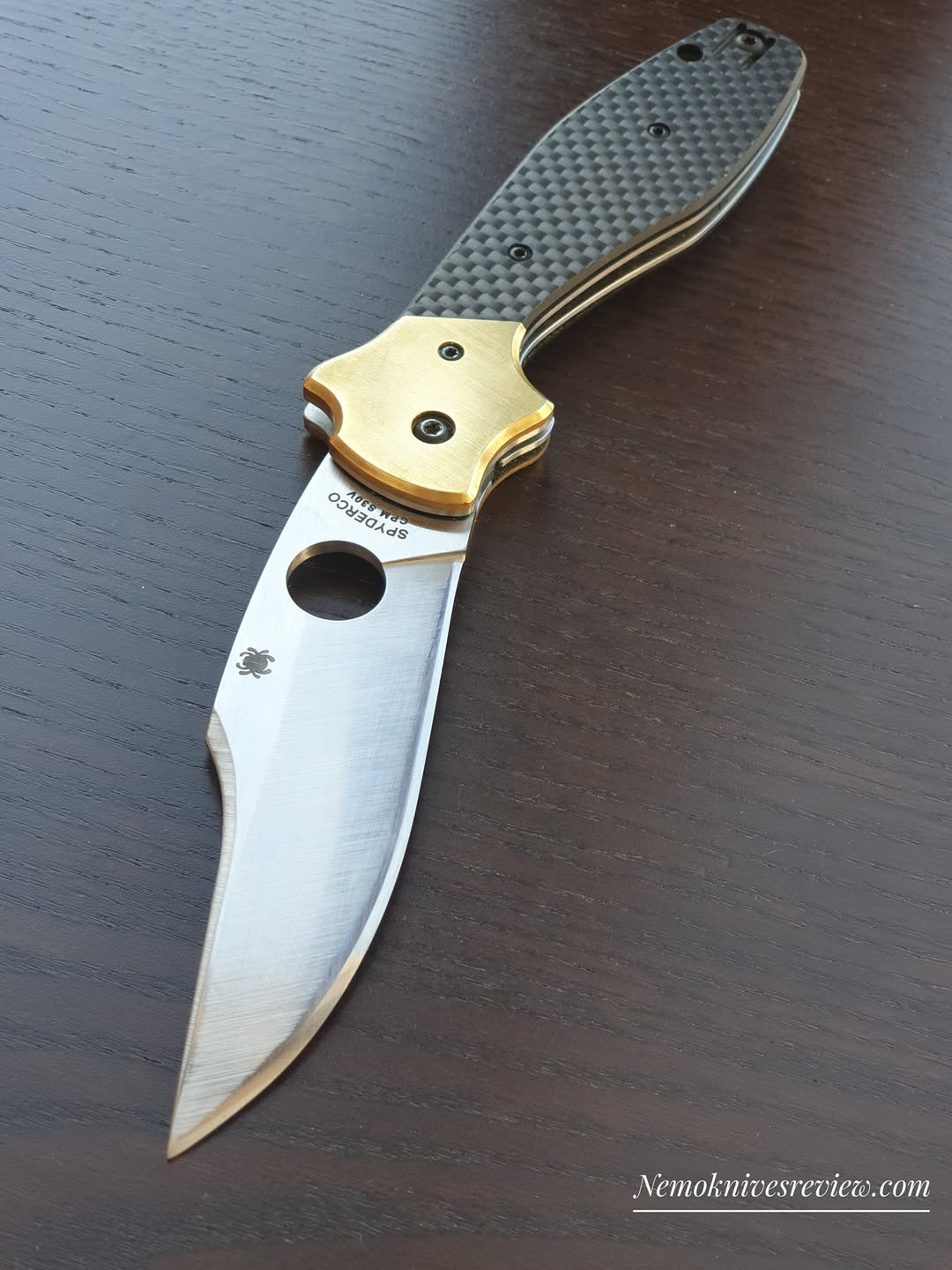
A decade. How time flies, huh ? That’s how long Ed Schempp’s Bowie has been part of my life. Ten years since it first review and a decade of regular pocket carry, countless cutting tasks, meals prepared, packages opened, and all those little everyday jobs that never make it into a knife review.
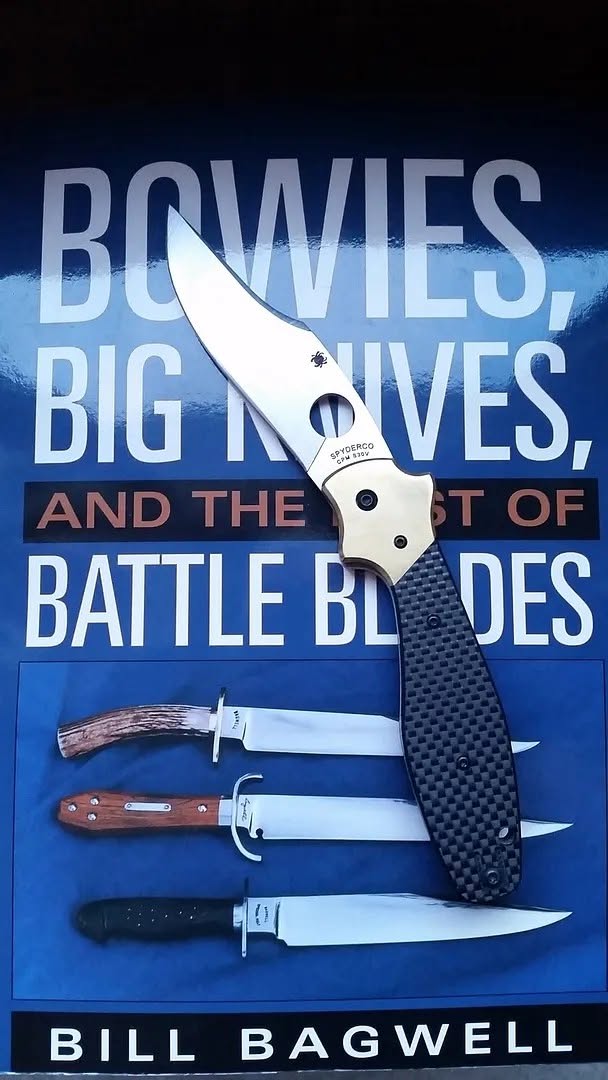
I own older knives, too. Honor, my Chris Reeve Sebenza, for example, has been with me for years. But Ed’s Spyderco C190CF Schempp Bowie holds a special place in my heart. Some knives earn your respect through their engineering, others through their history. And then there are those that, for reasons you can’t always explain, become part of your life. The Schempp Bowie is one of those knives for me. And you know what? It has never let me down. Not once.
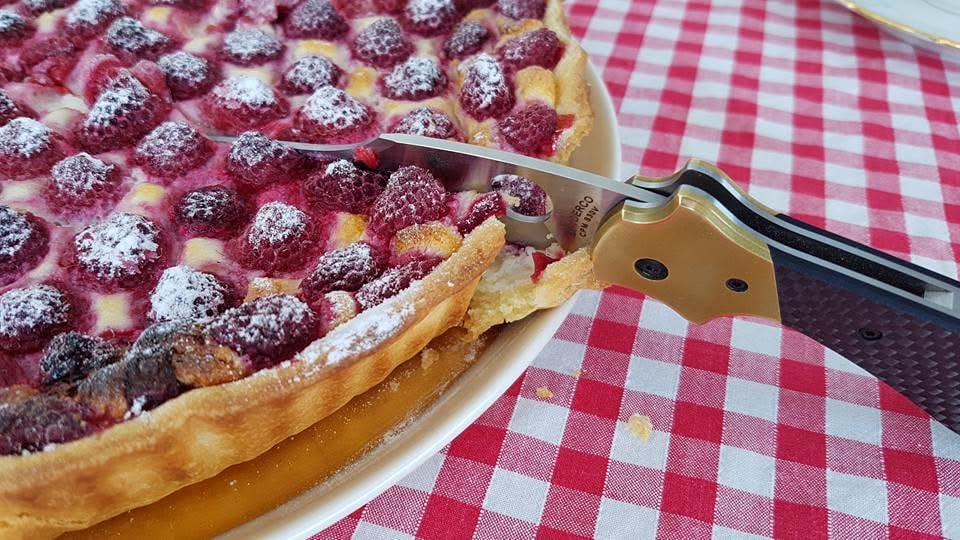
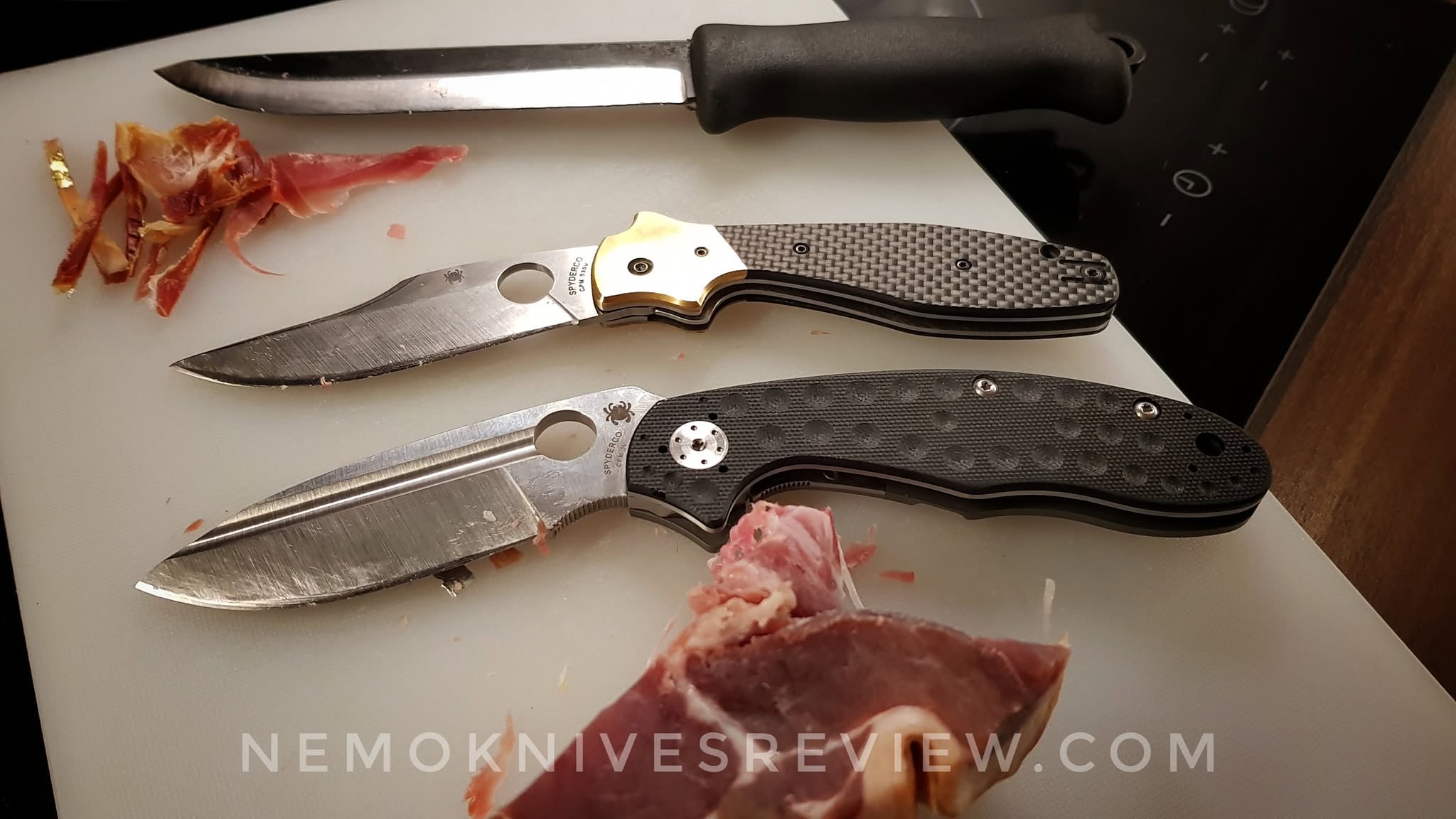
I first wrote about this beautiful folding Bowie back in January 2016, in Pocket Legends of the Fall feat. Spyderco Schempp Bowie. Later, I took it to Tuscany, where it proved that a knife with such a distinctive silhouette could be just as comfortable around the dinner table as it was doing the less glamorous jobs of everyday life. Back then, I already knew I was dealing with something special.
Today, after ten years of ownership, I can tell you that my first impressions were not mistaken.
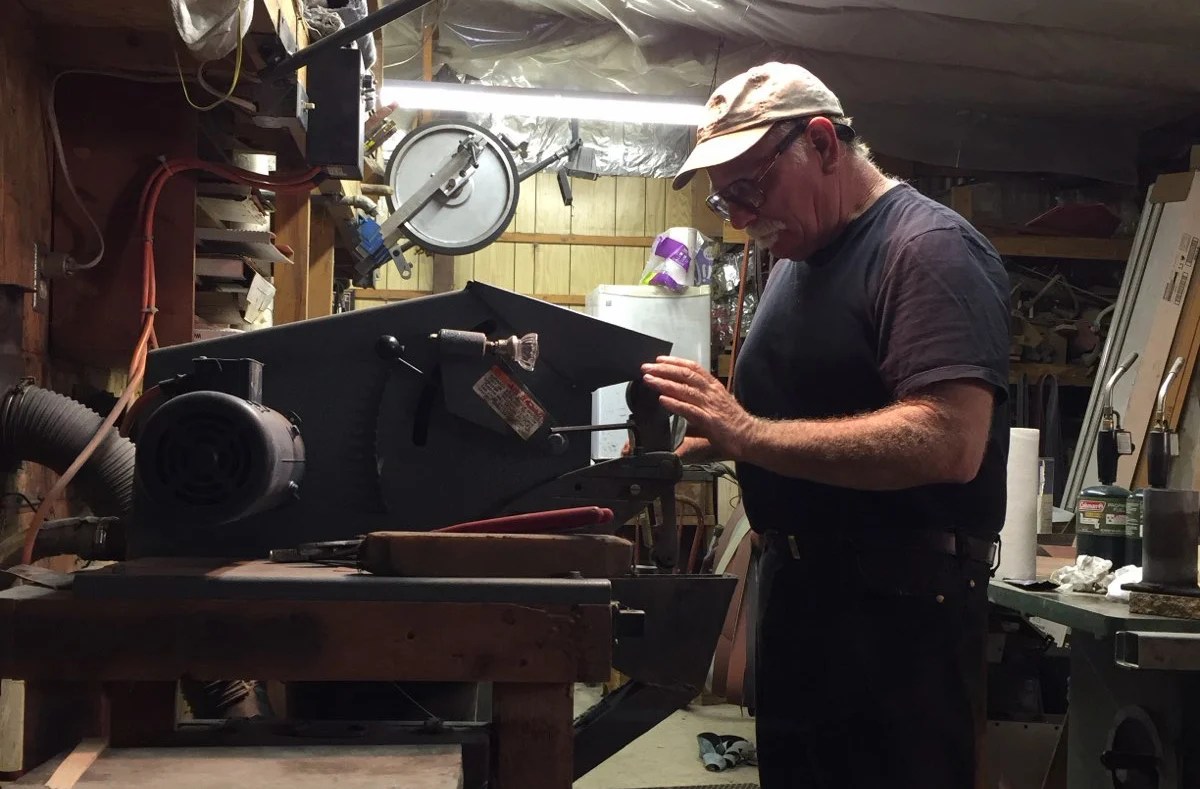
But here’s the funny thing: Ed himself has been putting his Bowie to work every day for a decade, too! So, when you own this knife, you’re carrying the EDC of a legendary knifemaker.
Ed’s own Spyderco Bowie lives on his ranch and accompanies him through everyday life. His has picked up deeper wear marks than mine, but that’s hardly surprising. Ed is a man who makes things, repairs things, builds things, and puts his tools to work. His personal Bowie looks like it has lived a little harder than mine… and that’s exactly how it should be. These are knives to be used, not locked away in a display case.
Mine has been treated with somewhat more consideration, perhaps, but make no mistake: neither knife is a safe queen.
Ed Schempp’s are knives to live with.
Taichung: where craftsmanship meets obsession
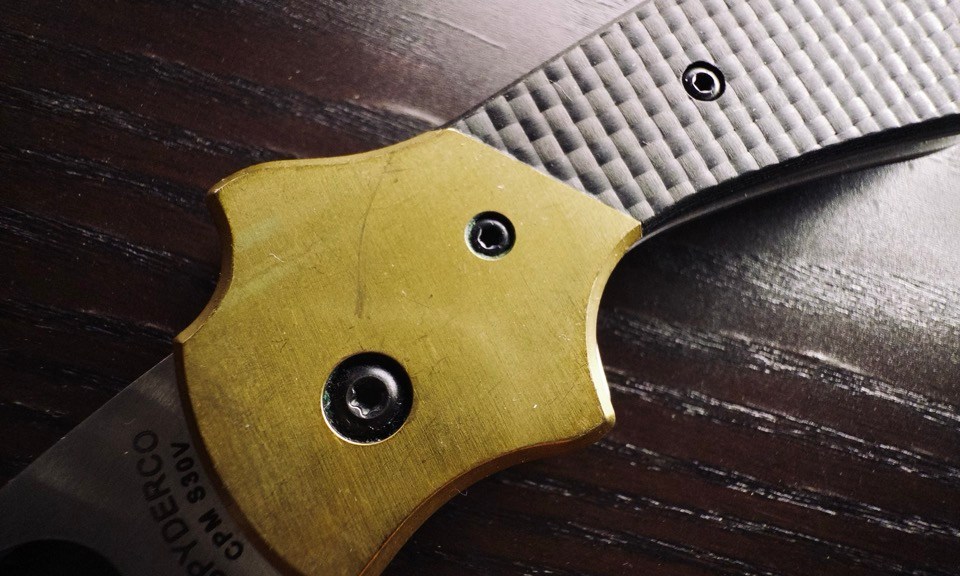
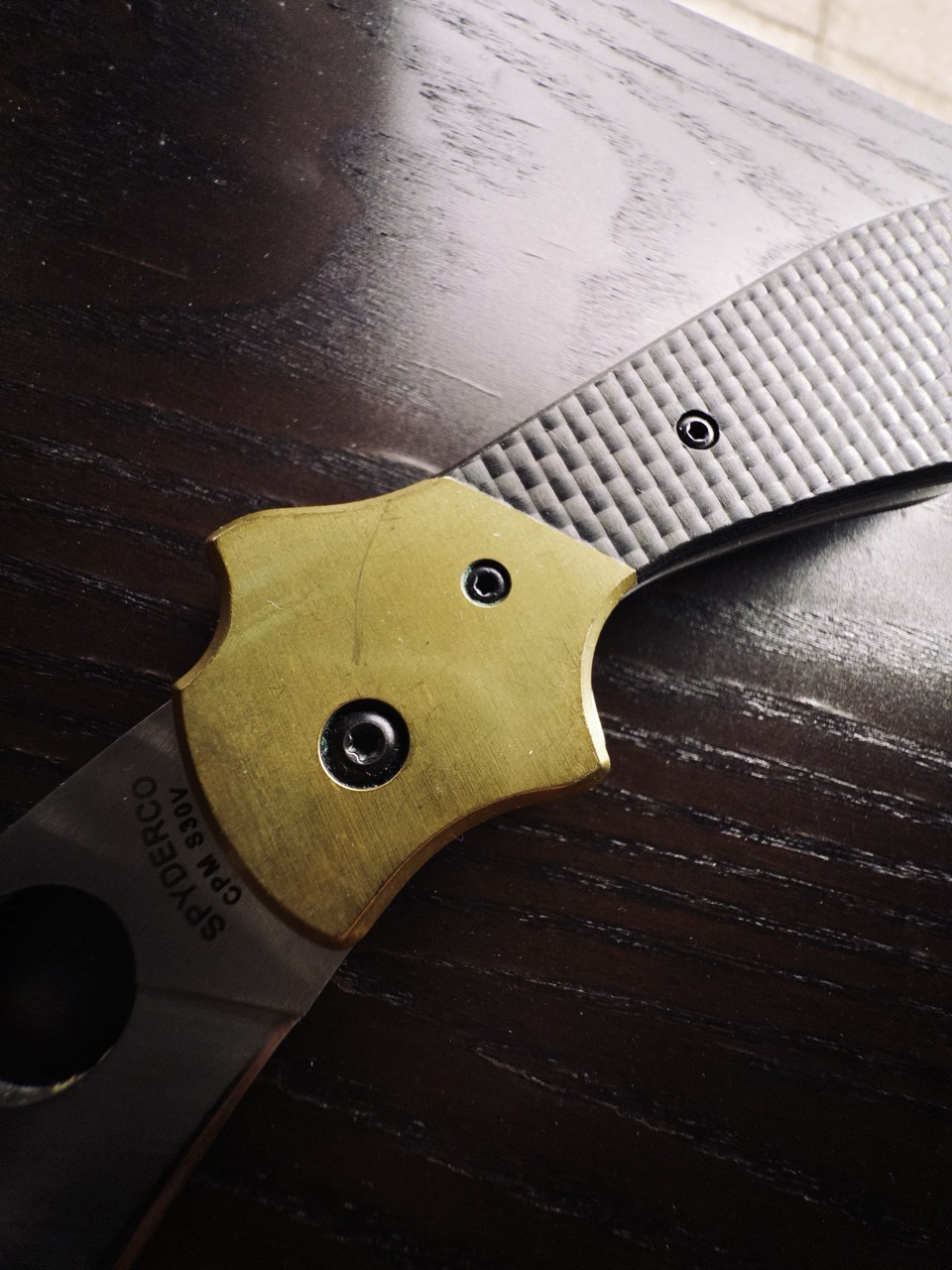
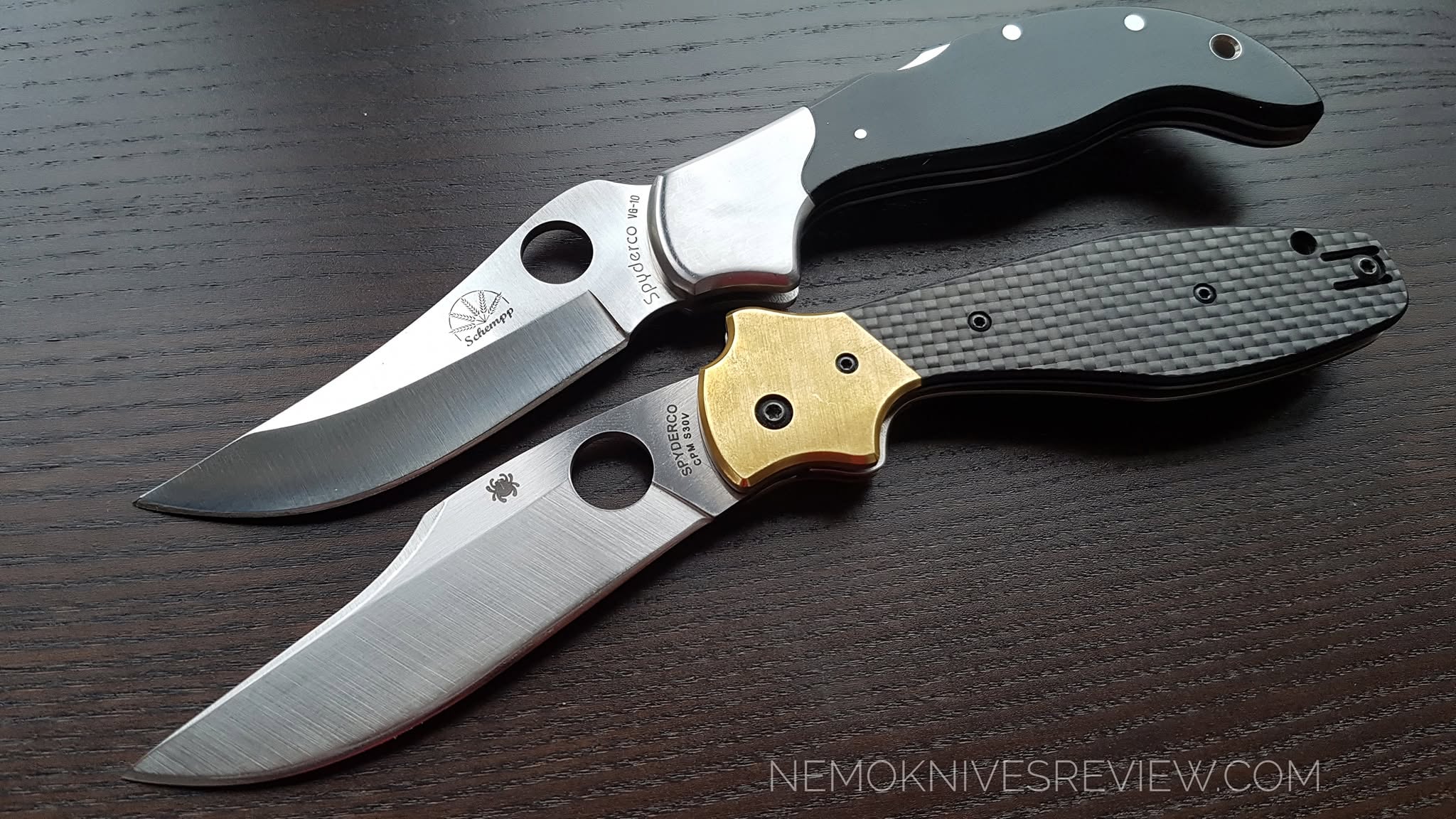
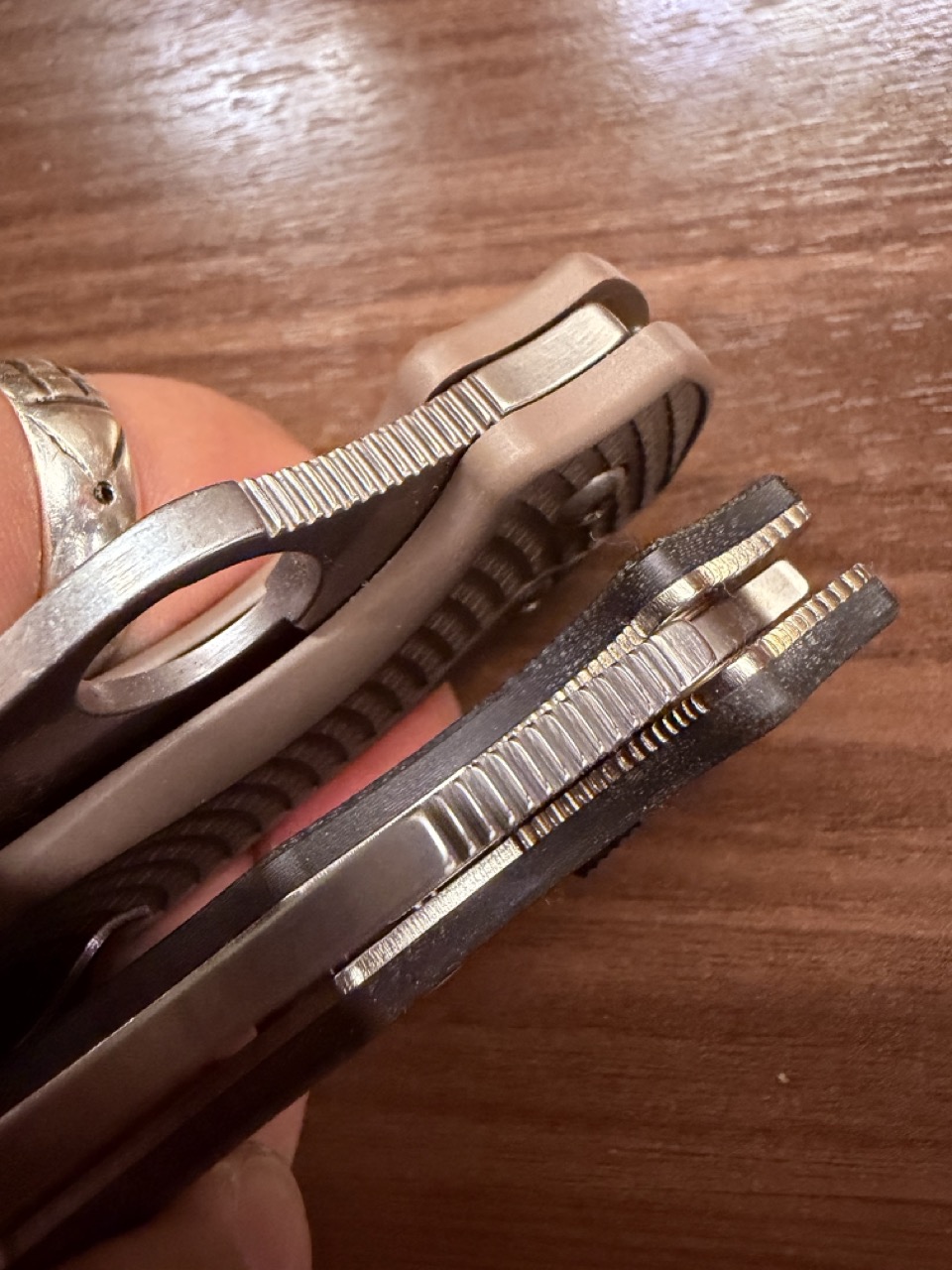
There is something I admired from the very beginning, and something that has become even more impressive with time. The work performed by Spyderco’s Taichung factory on the junction between the carbon-fiber scales and the brass bolsters.
Look at it. Then run your fingers over it. The transition is so beautifully executed that your eyes and fingertips tell you the same story. There are no crude edges, no unpleasant transitions, no little manufacturing sins that reveal themselves only after a few months of handling.
It is a remarkably clean piece of work.
Manufacturing a knife with this level of fit and finish is one thing. Maintaining that precision in a production knife, at a price that remains within reach of ordinary enthusiasts, is quite another.
« My brother in law is a cowboy action shooter. I wanted to redo the primary scale for a special knife for him to carry at shoots. I removed the bolster and scale on one side of the knife. The scale is dovetailed under the bolster so both parts had to be removed. Besides the two screws holding the bolster onto the knife there were also two 3mm shoulder pins pressed into the liners. These pins positioned the bolsters to the scales perfectly. There were two 3mm shoulder studs pressed into the carbon fiber scales that fit precisely into holes in the liners, besides the 3 screws holding the scale in place. This knife exceeds most methods of custom knife production, by far. I’m proud to have my name on this knife…Take Care…Ed Schempp P.S. It will take me awhile to do the scale replacement, I’d like to do it at the standard it was produced. » Ed on Bladeforums February the 15th 2016.
And after a decade? Nothing has moved. The carbon-fiber scales remain intact. There is no separation, no loosening, no unpleasant surprise waiting for me after all these years. The fit between the scales and the bolsters remains as satisfying as it was when the knife was new. This is the kind of craftsmanship that does not need a marketing department to explain itself. You simply pick up the knife, even the one used for ten years, and look at it again…
Ed told me on his goal was to create a knife that, despite its generous blade length, would ride in the pocket like a much smaller folder. The design had to be compact and comfortable to carry, without sacrificing cutting performance. The Bowie combines a substantial cutting edge with a relatively thin blade stock of approximately 2.5 mm. Its full-flat grind makes excellent use of that geometry, delivering the cutting performance that remains one of its strongest arguments.
The lack of a choil gives you more usable edge length, much like on my Jess Horn. You get more cutting edge out of the same overall blade length, without sacrificing the clean lines of the design.
It is a long blade in a surprisingly manageable package. And it cuts. Not because it needs to be aggressively marketed as a cutting machine, but because its ergos and geometry doe the talking.
Over the years, I have also given my blade a convex reprofile. This is as usual a very personal modification rather than a factory specification, but it suits the knife beautifully. Maintaining it on a leather strop is an absolute pleasure. A few passes, a little attention, and the edge comes back to life without requiring an elaborate sharpening ritual. The convex profile has become part of the way I live with this knife.
Of course, this is not a claim that a convex edge is universally superior. Different geometries suit different jobs, and the original full-flat grind already gives the Schempp Bowie excellent cutting credentials.
But for my own use, this combination works wonderfully. And the blade itself? Still perfectly centred. No corrosion whatsoever on my example. After ten years of regular carry, that is worth mentioning.
The CPM S30V blade has aged gracefully, although I would not attribute its condition to the steel alone. Regular use, sensible maintenance, and the conditions in which a knife is carried all matter.
Still, there is something deeply satisfying about opening a knife you have owned for a decade and finding that it remains exactly where it should be.
Let’s talk about the lock. Michael Walker’s liner lock may no longer be the most fashionable choice, but it was all the rage at the turn of the century, when tactical folders exploded in popularity. Think of the knives from Bob Terzuola or Ernest Emerson, among others. The titanium liner lock was practically synonymous with the modern tactical folder, and for good reason: it was simple, effective, and allowed for slim, lightweight designs without compromising on strength when properly executed.
The Bowie lockbar is made of stainless steel, not titanium. And after all these years, it shows no significant wear. Some of my titanium liner-lock folders (AFCK), on the other hand, have reached the end of their useful life due to lockbar wear. Using a steel liner has made all the difference.
Ten years later, the action remains one of those small pleasures that are difficult to quantify in any specification sheet. Silky smoothness makes you appreciate the quality of the underlying construction.
It is Ed Schempp’s interpretation of the folding Bowie, and that interpretation makes a difference.
The blade’s angle and curvature give the knife that particular feel in the hand. The handle seems to settle naturally into the palm, while the geometry provides a satisfying combination of control and leverage during cutting.
The result is a knife that feels comfortable and powerful without needing to be oversized.
Ed’s Bowie manages to combine a distinctive visual identity—that of a gentleman’s knife—with genuine utility at its heart. His designs have strong personalities, but that personality is never merely decorative. Every curve, every angle, every detail serves a purpose. They are unmistakably Ed Schempp’s designs, but first and foremost, they are tools meant to be used.
That elegance comes from the combination of materials. The woven carbon fiber gives the handle a distinctly modern character, while the brass bolsters and integrated guard introduce a more traditional touch. It is an unusual marriage of old and new, but one that feels entirely natural.
On mine, there are, admittedly, a few scratches on the full steel backspacer. Nothing serious. When you carry a knife clipped to your pocket, it will inevitably rub against other objects. In my case, part of my wallet is made of aluminium, and the two have occasionally met in the confined space of a pocket. It seems like aluminium corners won a few rounds. The backspacer bears the evidence. But these are superficial marks, not structural concerns. They are the sort of little scars that accumulate when an object is actually used rather than admired from a distance.
The carbon fibers scales, on the other hand, remains in excellent condition, and the brass bolsters continue to provide that tactile contrast that makes the Schempp Bowie so recognizable. And then there’s that peculiar smell. Because brass has a smell of its own, and that’s part of this knife’s character, too. 😀
Those brass bolsters are not simply a decorative flourish. It is part of Ed Schempp’s design language.
(I had already appreciated the way it was integrated into the Bowie, both aesthetically and ergonomically. But seeing Ed’s work on the Spyderco Native 5 50th Anniversary edition brought that appreciation into sharper focus.)
The use of brass, and the way it can be incorporated into a knife’s architecture, tells us something about the designer’s willingness to look beyond the usual modern conventions.
(Today, the knife industry is full of familiar combinations of titanium, G10, Micarta, and carbon fiber Nothing wrong with that, of course, but sometimes you can’t help feeling that we’ve seen it all before. Old-timers will remember the Buck 110 and its many heavy German clones, with brass bolsters and liners everywhere. They had their own kind of elegance, but they were also hefty beasts in the pocket. Ed Schempp has blended the warmth and traditional character of brass bolsters with modern materials and a surprisingly pocket-friendly design. A nod to the old school.)
On the Schempp Bowie, the brass bolsters help bridge the gap between a classic American knife pattern and his thoroughly modern touch.
They give the knife warmth. They give it character. And they make it instantly recognisable.
Looking at that work today, I find myself appreciating the design more deeply than I did when I first took the knife out of its box.
I love its quillons. My thumb naturally finds its place on either side of the guard, depending on the grip and the task at hand. It’s playful, almost as if the knife invites you to experiment with your grip.
Yes, sometimes it takes a decade to fully understand what a designer was trying to tell you—and to realise, years later, just how much you had understood at first glance, ten years earlier.
I am obviously not the only person who appreciates this knife.
When I revisited the Spyderco forums and BladeForums, I found several comments that echoed my own experience, particularly concerning the blade geometry, the fit and finish, and the way the design combines elegance with everyday usefulness.
The reviewer initially thought the knife might not be for him. After meeting Ed Schempp and handling the Bowie, however, he began to understand the design and found himself increasingly reluctant to put it down. He praised the smooth action, the blade centring, and the quality of the lock engagement. More importantly, he described the knife as an elegant, controlled slicer rather than a heavy-duty brute.
The owner was struck by the knife’s appearance, the amount of blade available in such a compact handle, and its surprisingly comfortable pocket carry. He also praised the thin blade stock and the smooth action, while noting that the handle provided good control and leverage.
The Spyderco Forums discussion on Ed Schempp’s designs offers another interesting perspective. One owner specifically highlighted the Bowie, praising its distinctive handle shape, carbon-fiber scales, brass bolsters, and versatility, including its usefulness as a camp cooking knife.
Finally, a 2025 Spyderco Forums discussion about long, thin blades included a particularly telling comment from someone who had acquired a second-hand Schempp Bowie and was enjoying its long, relatively thin, slicey blade. It’s never too late to appreciate that knife. 😉
Nearly a decade after the knife first appeared, its cutting geometry was still giving an owner a reason to seek it out and that is perhaps the most interesting point to emerge from these discussions.
The Bowie has never been a universally conventional design. The guard, the blade angle, and the overall silhouette may not appeal to everyone. Some users will prefer a more familiar handle configuration, while others may simply dislike liner locks. And that is perfectly fair. But for those who appreciate what Ed was trying to achieve, the design continues to make sense.
Yes, really, even if I’m repeating myself a little, the Schempp Bowie was never just about looking like a Bowie. It was about translating the character of a classic blade into a modern folding knife without losing the qualities that made the original pattern interesting in the first place. It had to be elegant, but not fragile. Distinctive, but not impractical. Modern, without becoming anonymous.
And capable of cutting properly, rather than simply looking the part.
Ed Schempp and Spyderco’s Taichung factory got that combination remarkably right.
My knife is still perfectly centered. Its lock remains free of perceptible play. The action is still silky smooth. The carbon-fiber scales remain intact, the bolster smells and the knife shows no sign of corrosion.
And I intend to keep using it. Not because it is perfect in some abstract, laboratory sense, but because it has earned my confidence through years of everyday ownership. That is a much more meaningful achievement.
Looking back at my previous articles about Ed Schempp’s Bowie, I realize that my opinion has changed very little. What has changed is the depth of my appreciation. Ten years ago, I admired its unusual lines, its beautiful materials, its silky action, and the meticulous work performed in Taichung. Today, I can add something more substantial to that list: experience.
Speaking of experience… and Legends of the Fall.
Pekka, Sylvie, Pirkko, Jur, Ed, Linda, Jan Dirk, Des… in September 2013.
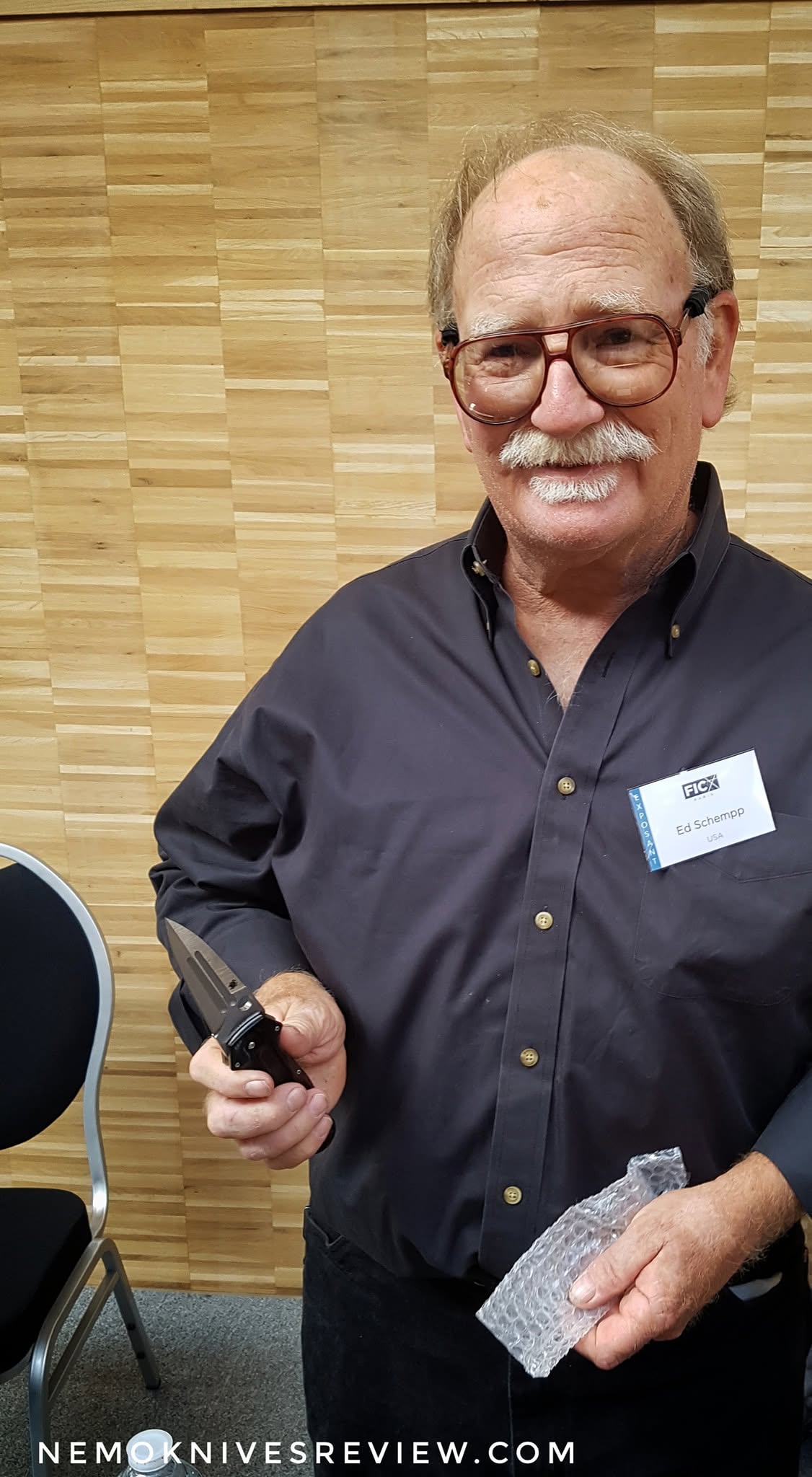
Yep, my first encounter with Ed Schempp dates back to 2013, after the SICAC knife show in Paris. Spyderco had kindly invited us to dinner at Le Petit Poucet, in Neuilly-sur-Seine, in the company of Ed Schempp, Des Horn and Pekka Tuominen, among others.
It was one of those evenings that make the knife world such a special place. Beyond the knives themselves, there were the people who design them, make them, and share the same passion for their craft. Meeting Ed for the first time gave a human dimension to the name I already knew from his work. (Little did I know that, three years later, his Spyderco Bowie would become one of my regular companions — and that, ten years on, I would still be carrying it.)
Looking back at that photograph, I realise how much time has passed. Some things have changed, but Ed’s Bowie is still in my pocket. And that’s a pretty good way to measure the lasting appeal of a well-designed knife.
This is a knife built to last, and one of the relatively rare modern folders that combines a long blade with genuinely slim stock and excellent cutting geometry.
There is a certain irony in the fact that a folding Bowie, a pattern that might initially seem a little old-fashioned or even theatrical, has proved to be such a dependable everyday companion.
I think that says quite a lot.
Ed still uses his own Bowie every day on his ranch. Mine continues to accompany me through the ordinary business of life. Our knives have accumulated different marks and scratches, but they share the same essential purpose.
And if I had to sum up Ed Schempp’s Bowie in a single sentence, it would be this:
Some knives impress you when they are new. The best ones make you appreciate them even more ten years later.
This one has earned its place in my pocket. And it isn’t going anywhere.
At first glance, the Jess Horn in CPM CruWear looks like a knife from another era. And that is a huge part of its charm. There is something wonderfully timeless about this folder—and I’m totally in love with it.
Oh, and I’ll take carbon fiber over just about anything, any day! These scales are absolutely gorgeous. Seriously gorgeous. The weave, the depth, the way they catch the light… I just love that sense of sheer quality.
Ah, those elegant lines, the slender blade, the big flat axis screw, the understated proportions—it immediately brings to mind the kind of traditional pocket knife that could have been carried decades ago. That is what makes the Jess Horn feel so timeless: its design relies on proportion, simplicity, and function rather than fashion. Nothing is exaggerated, nothing is trying too hard to look modern. There is nothing aggressive or overtly tactical about it. No futuristic geometry, no exaggerated blade shape, no visual statement about the technology hidden inside. Just a beautifully proportioned folder whose design could have existed decades ago and would still look right decades from now. Its quiet simplicity is precisely what gives it character.
But look closer, and the story changes completely.
Just look at the edge length—it’s basically the same as a Manix 2. You’re getting a serious amount of cutting power in such a slim package. And the lock is rock solid, with absolutely zero blade play. Honestly… wow.
The secret ingredients? A healthy dose of CQI, a handful of clever choices !
Because putting a steel like CPM CruWear into such a thin, traditionally styled blade creates something that is, in many ways, remarkably modern. The real magic of this knife is the combination of old-school geometry and contemporary metallurgy.
I love CPM CruWear. It’s an exceptionally well-balanced tool steel, offering that peculiar combination of toughness, wear resistance and edge stability that makes it particularly well suited to the Jess Horn thin cutting blade that is meant to be also used. And for an everyday-carry knife, that balance is even more valuable. You get excellent edge retention without moving into the extreme territory of steels that are difficult to sharpen or prone to chipping, and enough toughness to trust a thin pointy blade in real-world use. More importantly, CruWear is really pleasant to maintain. A leather strop, a ceramic rod, a piece of jade… that’s often all it takes to bring the edge straight back to razor sharpness. For an EDC knife that gets carried, used, touched up and used again, that ease of maintenance is a huge advantage. A knife should not only perform when it is new—it should remain a pleasure to use and maintain week after week, and CruWear makes that sooooo easy.
CPM Cru-Wear has a history that goes back long before our current obsession with “super-steels.” Its roots lie in the Vasco Diefamily of tool steels developed by Vasco Metals in the 1960s, originally for hot-forging dies rather than knives. Vasco later developed grades such as Vasco Tuf and Vasco Wear, the latter designed to combine wear resistance with useful toughness.
Crucible eventually developed its own version, Cru(cible)-Wear, introducing it in 1994 and later producing it through the Crucible Particle Metallurgy (CPM) process. The result is a steel containing around 1.1% carbon, 7.5% chromium, 1.6% molybdenum, 1% tungsten and 2.4% vanadium, with roughly 10% carbide volume. But the numbers only tell part of the story. What really matters is the fine and uniform distribution of those carbides (thanks to the CPM process). Compared with the tougher CPM 3V, which has a lower carbide volume (around 5%) and prioritizes toughness, Cru-Wear gives up some impact resistance in exchange for better wear resistance and edge retention. Compared with CPM 15V, however, it contains far fewer carbides and is therefore much less demanding when it comes to sharpening and generally less prone to chipping.
So, CPM Cru-Wear doesn’t try to win the edge-retention contest at any cost. Instead, it gives the user that praise very stable, durable edge that can take a very very fine apex, withstand hard cutting without constantly threatening to chip, and still be sharpened without turning the job into an rocket engineering project. What else ?
I’ve been using Horny in the kitchen, much like Cliff did with his ZDP-189 version some twenty years ago. I got it wet, rinsed it off, didn’t even oil it—and while cutting butter, I was practically greasing the blade anyway. A quick wipe with a paper towel and it was good to go.
And what a wonderful little kitchen knife, my friends! What a chef’s lightsaber! Its needle-like tip opens packages with barely a whisper, while the thin blade has more than enough authority to deal with cartons, plastic and all the usual packaging before it goes into the trash. And when it comes to actual food preparation, its precision is simply delightful. The thin, keen edge slips through vegetables, meat, butter and all sorts of ingredients with an almost surgical feel.
This is one of those knives that makes you want to keep finding things to cut—not because you have to, but because using it is just so damn satisfying.
The handle is somewhat square in cross-section, and the exposed liners are a little sharp. I’ll probably give them a light pass with a diamond abrasive, but honestly, it doesn’t bother me much. If anything, the angular profile gives me a useful indexing reference: unlike a perfectly round handle such as an Opinel, I always know how the knife is oriented in my hand and where the edge is pointing. For precise cutting, that’s a real advantage.
The handle is also fully enclosed, with that steel backspacer requiring a quick inspection after rinsing the knife under hot water. But none of that got in the way of its mission in the kitchen. It simply did the job, every single time.
And that kind of reliability is always welcome.
Ah, it is not stainless—the 7.5% chromium content is nowhere near enough for that—so it deserves a little care around moisture and corrosive environments. But for someone who actually uses a knife rather than simply admiring its steel designation, CPM Cru-Wear makes a tremendous amount of sense. It is one of those steels where the whole is greater than the individual numbers: excellent edge stability, very good wear resistance, high toughness, and reasonable sharpening effort, all in the same blade. And this is what I like about Cru-Wear ! It isn’t about having the most extreme steel on paper. It is about having a steel that makes an extremely good and pleasant knife in the real world.
And pleasure in holding, using, and cutting with force and precision is mandatory in my own appreciation of a knife. That matters just as much as the metallurgy itself. A knife can have outstanding specifications, but if it doesn’t feel right in the hand, if the edge doesn’t invite you to cut and pierce, or if using it simply isn’t enjoyable, then something is really missing.
Long story short: I don’t judge a knife only by what its steel can do—I judge it by how much I enjoy deploying it, holding it, and actually using it.
And I’m getting used to the clip position too. In the end, maybe it’s a good thing for a knife to have a bit of character in the way it carries. I tried fitting a deep-carry clip, but once installed, the screws couldn’t get enough purchase—the clip was just slightly too thick. No big deal. I’m even considering removing the clip altogether and carrying the knife in a dedicated pocket of my sling bag. To be honest, I rather like the idea. This Jess Horn is starting to feel less like something I simply carry and more like a knife I’ve given its own little place in my everyday life.
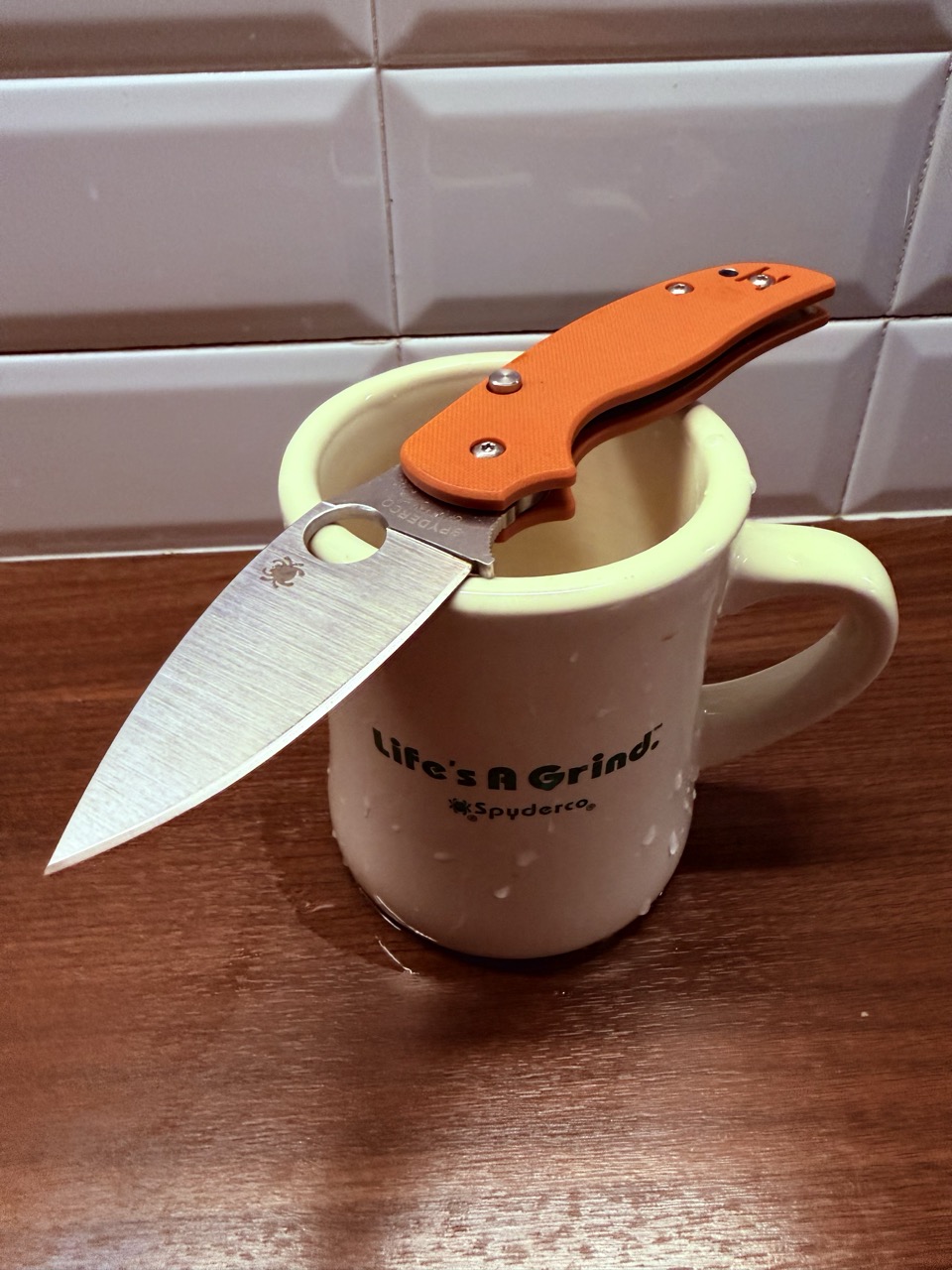
One rather nice thing about the clip is that I can actually rest the knife on it when my worktop is wet. The clip is flat, fairly large, and positioned right in the middle of the handle, so it acts almost like a little stand and keeps the handle and blade away from the wet surface.
You always discover little tricks like this when you learn to work with your tools rather than against them.
“USE ME! FOR GOD’S SAKE!” screamed the deployed Jess Horn.
And that thin blade is just… asking to be used ! Its geometry gives you effortless cutting performance, but it also means that the steel has to be able to support that geometry. A brittle or overly wear-resistant steel would make the concept much less appealing. CruWear brings a different balance: it is tough enough to tolerate real-world use while still offering excellent edge retention.
And when the edge eventually needs attention, CruWear is refreshingly easy to bring back.
It takes an extremely sharp edge without becoming a nightmare to sharpen. With the right stones and a good technique, bringing the Jess Horn back to a genuinely razor-sharp condition is almost part of the pleasure of owning it.
That is where the apparent contradiction becomes particularly interesting.
The blade doesn’t need to be thick and overbuilt. It doesn’t need a spectacular tactical design. It doesn’t need to advertise its strength.
Its technology is hidden in the steel.
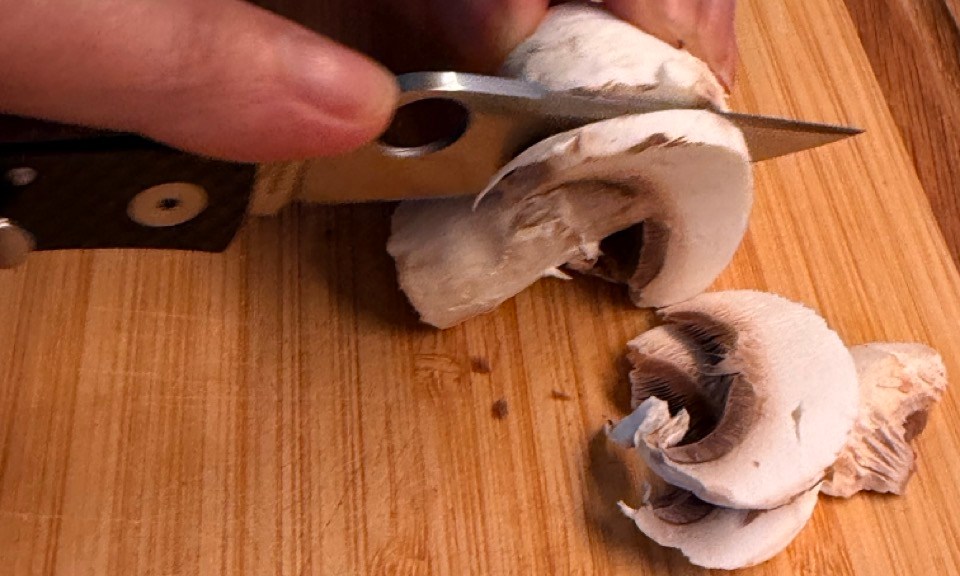
That is perhaps what makes the Jess Horn so compelling. Its modernity is almost invisible. You don’t experience it by looking at the knife. You experience it when you really cut into something, when you feel how effortlessly that thin blade passes through any material. Even mushrooms !:D
In a sense, the Jess Horn is a perfect example of how modern knife technology has evolved in the right direction.
We tend to think, myself included, of technological progress as a race toward ever-greater complexity: more intriguing parts, more micro-mechanisms, more unwanted features, more white-coat engineering. But real progress sometimes lies in the exact opposite direction—doing more with less, and making something simpler, more reliable, and genuinely useful. Take another Horn, Des Horn “450#” for example (link here)
Another example is the evolution of knife locks. Instead of adding more parts, springs, buttons, and mechanisms, clever engineering can achieve exceptional strength and reliability with remarkably few, precisely tuned components. Less complexity, more intelligent design, means fewer things to go wrong—and, ultimately, a knife that simply works when you need it.
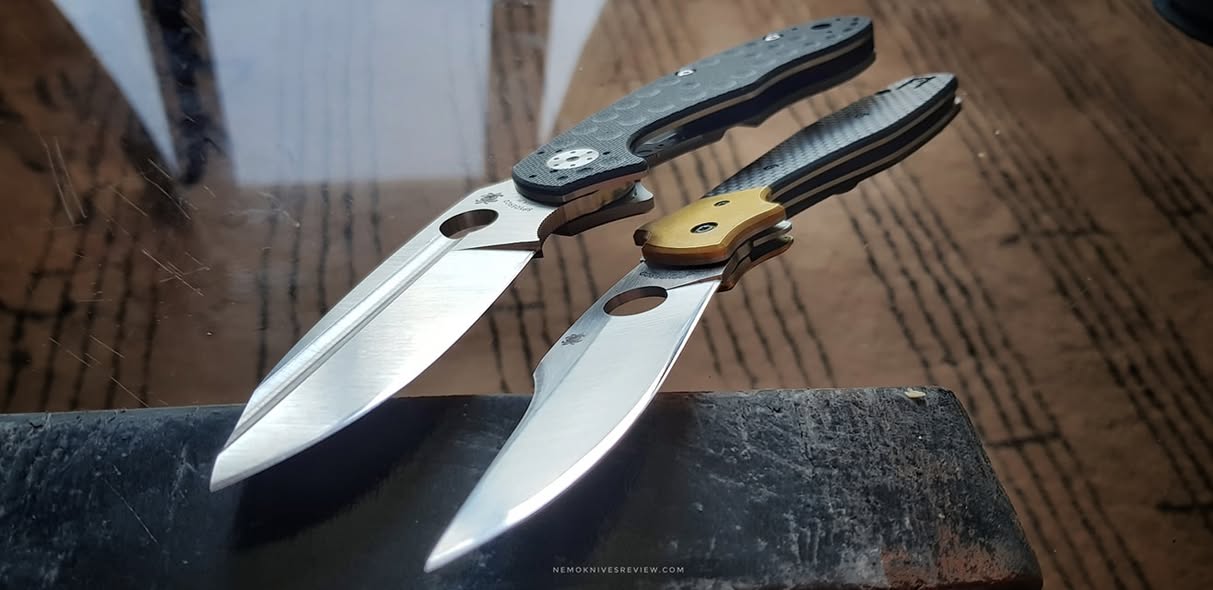
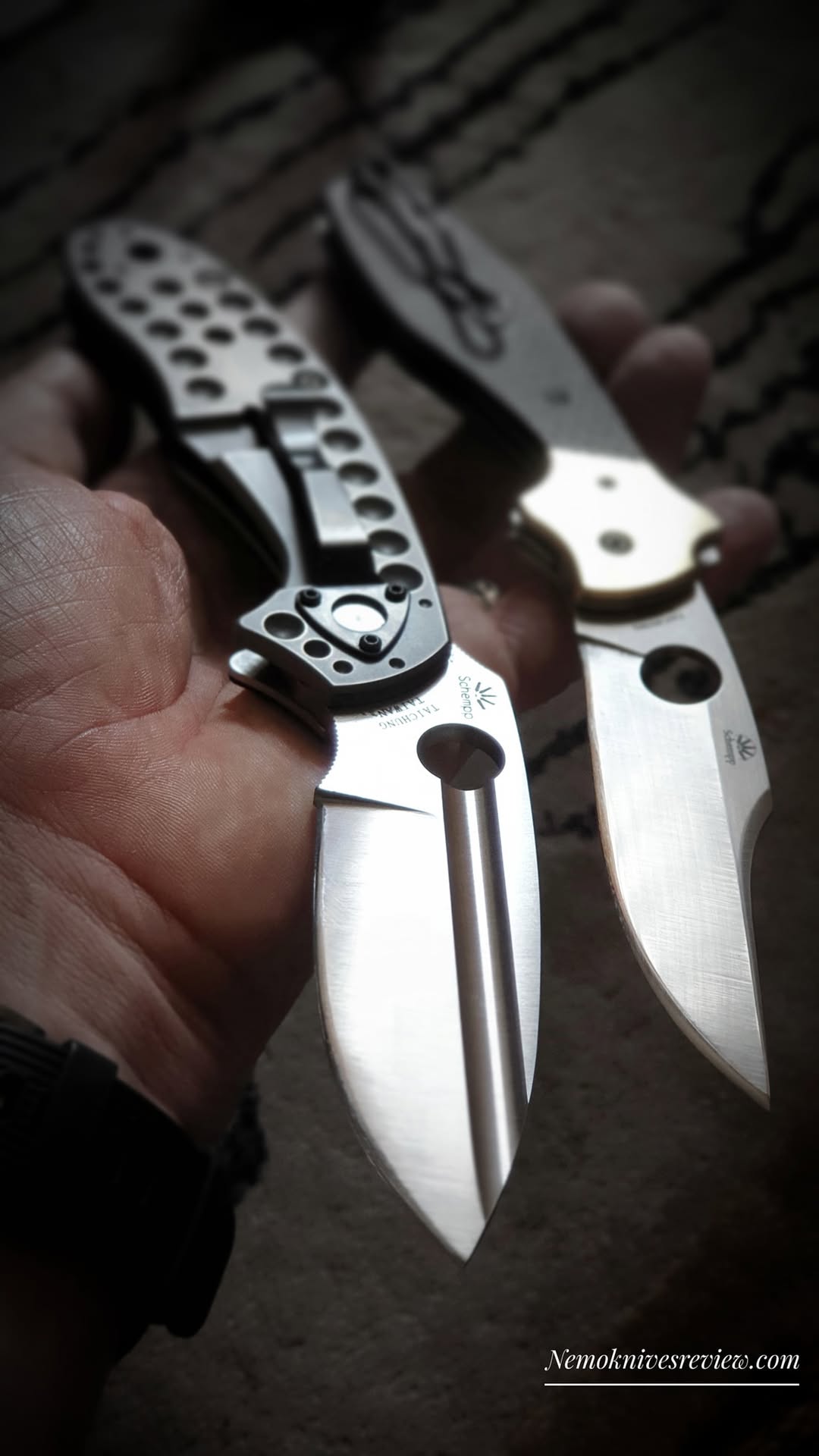
That thin, elegant blade (pictured here next to Patrick Bonetta Kitchen Warrior) can remain thin and elegant because modern metallurgy gives it that extra push in the right direction, providing a combination of properties that simply wasn’t available a few decades ago.
So yes, the Exclusive Jess Horn looks like an old-school knife. But underneath that vintage personality is a very modern piece of engineering.
Horny is not an old-fashioned knife made with modern steel. It is a modern knife deliberately disguised as an old-fashioned one.
Fourteen days in Italy. One very special knife. No sharpening. Spoiler alert: actually, no need for it. 😉
And this isn’t the first time I’ve gone to Tuscany with only one Spyderco.
The first time, it was the Tuff by Ed Schempp. Last year, it was the Serrated Chaparral, which turned out to be Walter‘s favourite knife after 6 years of using the Michael Walker in ZDP189.
That was the new experiment. The new road sheet. The new main bearing.
Is Rex 121 too fragile to withstand normal EDC in the countryside?
At twice the price of other super tool steel folders, I wanted to know. Especially after seeing broken Rex 121 blades on Reddit… “I was just cutting cardboard…” Tu parles !
When I left for Italy, the only knife I took with me was Tango, my Spyderco Sage 6 in Rex 121. And for me Rex 121 is the Jack Reacher of tool steels !
And I can tell you, I had spent quite a bit of time getting its edge exactly where I wanted it before the trip.
The idea was simple: use it. Really use it. For two full weeks. For everything. And, whatever happened, never touch the edge again.
No sharpening stone in my bag. No guided touch-up. No diamond stones. Not even a piece of brown cardboard to strop the edge. Even if the idea crossed my mind more than once during the trip… Just the freshly sharpened knife, whatever I happened to ask it to do, and fourteen days of real-world use.
And I deliberately didn’t make things easy for it. The Sage 6 in Rex121 is a Lamborghini. But a Lambo isn’t built for rough mountain roads. So the question was simple: could this one handle them?
Getting the edge right (for me).
Yes. Right for me. Testing with my thumb’s nail. As seen on my previous review, anyone who has been confronted with Rex 121 knows that sharpening this very specific steel is not exactly a relaxing Sunday afternoon activity. Even with diamonds and a good dose of elbow grease.
That alien of a steel is extremely hard and extremely wear-resistant.
So getting a new geometry — as thin as I wanted it on the Sage 6 — took time, patience, and quite a bit of work. Going back to the blade again and again, almost a week of daily touch-ups, trying again and again, and — above all — trying to avoid creating a recurve, which I almost managed to create by flattening the belly.
Damned!!
Sal Glesser, for example, have taken the edge down to around 10 degrees per side on his Sage 6 Rex121. With all my courage, I decided to go with 15 degrees per side.
That was the geometry I wanted for this particular experiment: still extremely aggressive, but with a little more margin for the kind of abuse a travelling knife can encounter.
And I didn’t polish the edge. On purpose. Following Sal’s own recipe.
Microteeth are our friends.
And believe me, I love polished edges. I’m not usually a fan of rough edges.
But this time, after the diamonds, Tango was different: toothy, aggressive, and sharp as my mother-in-law’s tongue.
I wanted to take advantage of the way Rex 121 behaves with a fine but slightly rough, aggressive apex. Instead of chasing a mirror-polished edge, I left it with the kind of toothy finish that can give a high-performance cutting steel a very particular character — and, hopefully, very high performance.
Scary performance.
And finally, I had exactly what I wanted.
Beware of what you wish for, as they say.
A rough-edged razor. Ready to cut your skin like the caress of a great white shark.
The geometry was still right for comfortable whittling. The Sage 6 has a blade shape that works particularly well for wood carving, especially when I use my left thumb to push the blade through the wood.
The angle was, I hoped, right and regular. I had used the Sharpmaker at 15 degrees per side, with the diamond triangle rods.
But yes, that edge was not pretty but it was an extremely rough, aggressive kind of vibroblade.
And, most importantly, it would shave the hair from my forearm , legs and hands. Right. Time to go to Italy. In Tuscany. In La Noce du Francesca in Caiano.
Fourteen Days of Everything — And Everything Goes
And I know Tango.
It cut food. It cut cardboard. It cut packaging. It cut meat. It cut hard plastic. It cut bread with crust as strong as oak wood. It cut a lot of wood.
And it spent quite a bit of time doing what I particularly enjoy with a knife: whittling. It goes through dry wood like the famous lightsaber in butter.
There is something very revealing about using a knife on wood. You immediately feel what the edge is doing. A good edge doesn’t simply cut — it bites, tracks and gives you control over the material. You feel the cut under your thumb and see how the wood fibers look.
The Rex 121 was excellent at it. Just as impressive on meat, cutting almost like a serrated edge. That vanadium-tungsten-and-cobalt supercharged matrix means business.
But there was another element to the experiment that was perhaps even more interesting.
Anyone who has travelled with a good knife knows exactly what this means. You hand it to somebody at the table and, before you have time to say anything, they are cutting something on a ceramic plate.
And ceramic is about as far from knife-friendly as you can get.
There were moments when I watched my beautiful Rex 121 edge being dragged across plates and thought: Well, that’s another few microns gone.
I was wrong.
The plate suffered. Not the knife. Hé hé ! 🙂
Anyway, I wasn’t going to sharpen it.
Whatever happened, happened.
A little bit of tomato juice. A little bit of vinegar. (Like the song Mambo N°5, this would be Tango N°5 !!) A little bit of bones in my life A little bit of frozen food by my side A little bit of hard cheese‘s all I need (cut on the plate) A little bit of crusty bread‘s what I see (short blade for big piece of bread !) A little bit of citrus in the sun, and it dries on the blade. A little bit of fennel all day long A little bit of pits, here I am A little bit of ceramic makes me a man
I also decided to treat the Sage 6 slightly like I would treat a Manix 2 Salt !
Not because Rex 121 is suddenly a stainless steel miracle — it isn’t — but because I wanted to see how it behaved when I simply stopped worrying about it.
Sometimes vinegar.
Sometimes there was tomato juice on the blade.
Sometimes I didn’t clean it immediately.
Sometimes olive oil or the grease from the meat were coating the blade anyway…
I would occasionally rinse my Tango under running water, mainly because I still wanted a clean knife that I could use for food.
But I wasn’t obsessively wiping the blade down after every use.
The knife was travelling.
It was being used. And yet, it wasn’t developing any real patina.
That surprised me.
Natural (Medium)
Even when it was being left alone.
But that was the point.
Natural (Medium)
And then I came home…
After fourteen days, I finally had the opportunity to really examine what had happened to the edge.
And this is where the story became interesting. I had expected the knife to be tired. I had expected some degradation. I had certainly expected that the edge would no longer shave. It was not.
But I gave it a little time on my barber’s leather strop.
That’s it. No cardboard. No stones. No jade. No ceramic. No diamond.
Just a few passes on that very old charged leather.
Then I tried it on the hair of my forearm.
It shaved again.
Not just technically.
It was still an extremely aggressive, extremely fine cutting edge.
And that was the moment when the whole experiment made sense.
The advantage of not polishing Rex 121
I think the finish of the edge was an important part of the result. Those micro-teeth are harder to kill on hard surfaces like ceramic plates.
And the leather strop was enough to bring it back to life.
That’s what impressed me most.
The knife didn’t need to be resharpened.
It simply needed to be refreshed.
There is a significant difference between the two.
Rex 121 in the real world
This little experiment also changed the way I look at Rex 121.
On paper, Rex 121 can seem almost absurd.
Extreme hardness. Extreme wear resistance. A reputation for being difficult to sharpen.
And yes, sharpening it is hard work.
But once you have put the geometry where you want it, the steel starts to make a lot more sense.
The Sage 6 carried an extremely acute, highly aggressive edge into a fourteen-day trip, and I simply used it.
I didn’t baby it.
I didn’t carry a second knife as a backup (but Sardin, which is always with me)
I didn’t sharpen it halfway through the trip.
I didn’t even particularly protect it from the kind of everyday situations that would make most knife enthusiasts wince.
And when I came home, the edge was still there.
Not perfect.
Not untouched.
But there.
A few passes on leather, and the Sage 6 was back to shaving.
Fourteen days. One knife.
That was ultimately the most satisfying part of the experiment.
The Sage 6 wasn’t sitting in a display case.
It was doing exactly what a pocket knife is supposed to do.
It prepared food.
It opened things.
It cut cardboard.
When I finally put it back on the leather, the Rex 121 reminded me why this steel has such a reputation.
That edge can be remarkably persistent.
Tango came back from Italy not looking like a laboratory specimen, but like a knife that had actually lived and been used.
It proved to be a remarkably reliable piece of equipment. No rust. No stains. And an edge that simply laughed at whatever material I threw at it. The kind of knife that makes all your other knives redundant. And that’s painful when you think about all the others that are now going to collect dust…
So yes, a Rex 121 blade on a Sage 6 — or a Sage 5 — makes for a fantastic EDC.
It can cut, and cut, and cut, and keep that working edge — no longer razor-sharp, but still seriously sharp — on and on and on.
And this is a fantastic experience.
No rust. No chipping. No stains. I’m amazed!
This is a beast of an EDC!
Thanks to the Spyderco Ambassador Program (*), I didn’t have to pay for this wonderful folder. But perhaps that was the best respect I could pay it: I actually used it.
Real luxury is quality. And in the knife world, quality is meant to be used.
(*) Disclosure: Tango is that Sage 6 REX 121 provided by Spyderco as a complimentary review sample through the Spyderco Ambassador Program. Receiving this amazing knife does not influence my opinions. Spyderco does not preview, edit, or approve my reviews, and all conclusions are based solely on my own testing and experience.
Disclosure: This is the same Sage 6 REX 121 as my last review, only one week later, provided by Spyderco as a complimentary review sample through the Spyderco Ambassador Program. Receiving this amazing knife does not influence my opinions. Spyderco does not preview, edit, or approve my reviews, and all conclusions are based solely on my own testing and experience.
I call this Sage 6 “Tango”.
Why Tango? Because orange is the color that immediately comes to mind when I look at it — and because the name evokes the Argentine tango dancers of the early 20th century, with their flamboyant, warm-colored clothing.
So, for the rest of this review, Tango it is.
And this particular knife is about to take us somewhere rather unusual: into the world of REX 121, one of the most extreme cutting steels I have ever had the pleasure — and sometimes the frustration — of using.
The Sage 6 Rex121 is not without its flaws. Like every Sage I’ve used, the quillon at the choil is just a little too sharp for my index finger.
The idea was simple: just knock the edge down a bit with a diamond file. Well, it’s moments like this that make you realize just what a fucking bastard of a steel REX 121 is to file!! Pardon my French.
And on that note, I still haven’t achieved the convex edge I ultimately want. One thing is certain: REX 121, with its huge percentage of tungsten and cobalt, responds politely only to diamond.
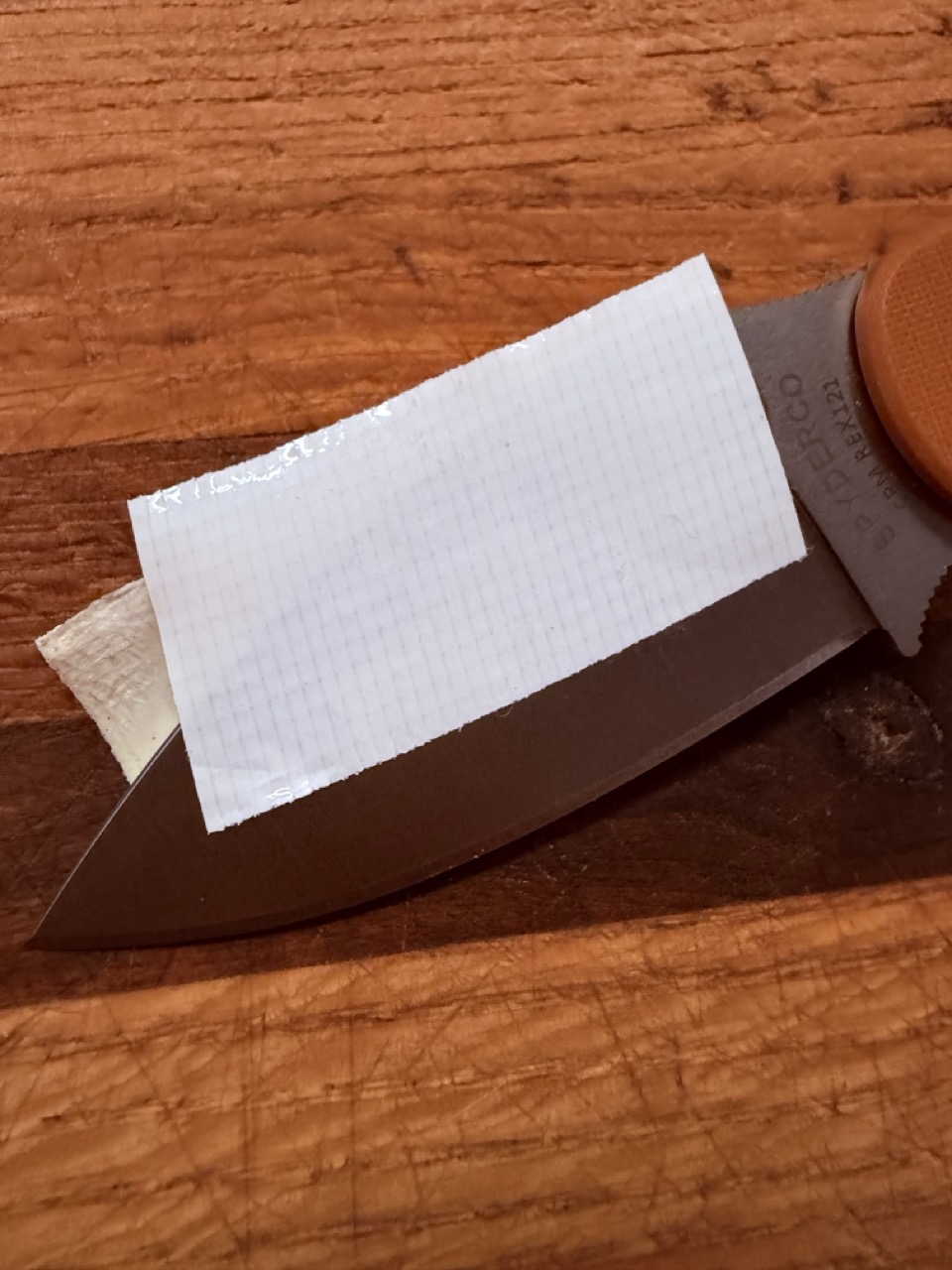
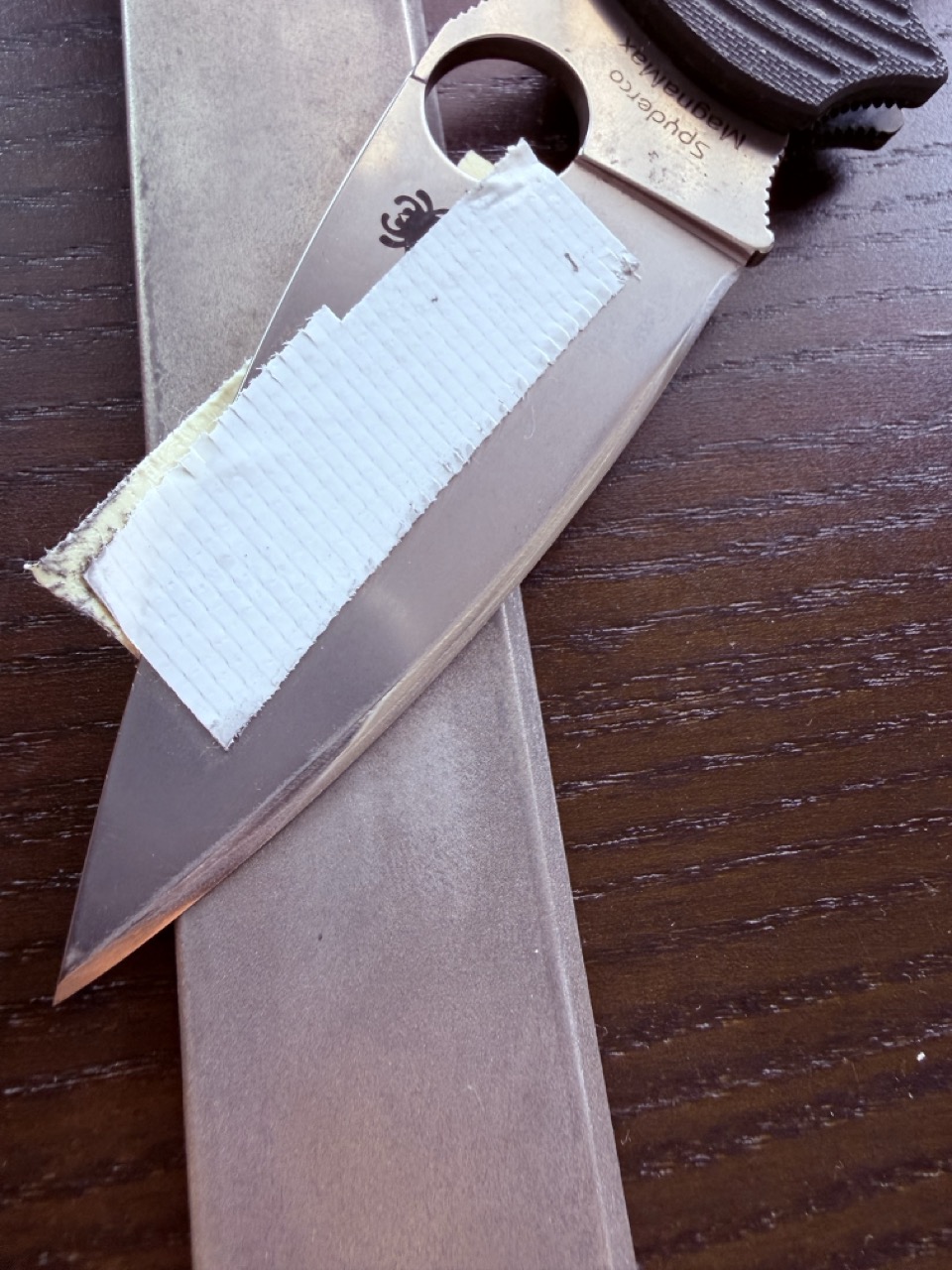
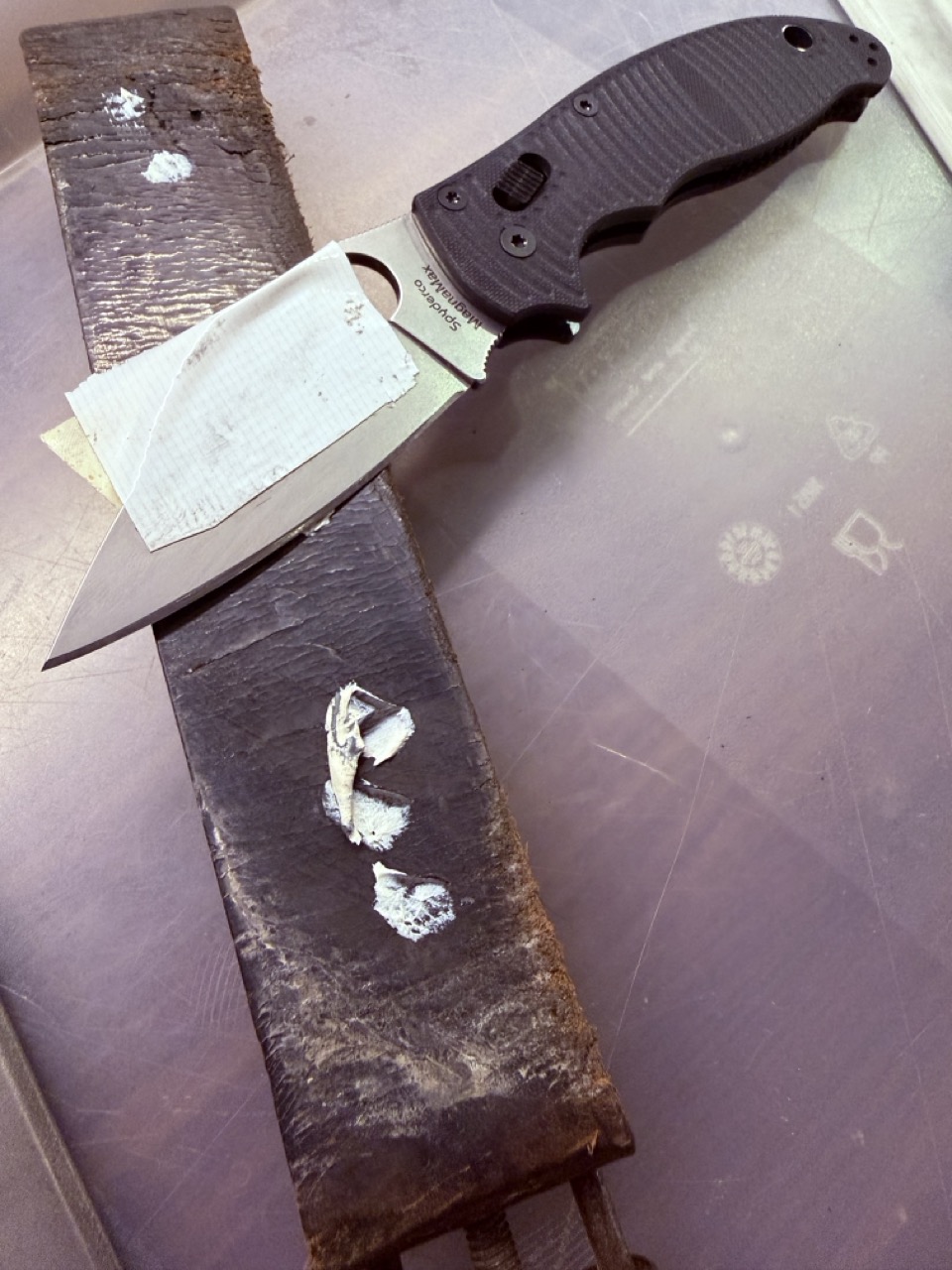
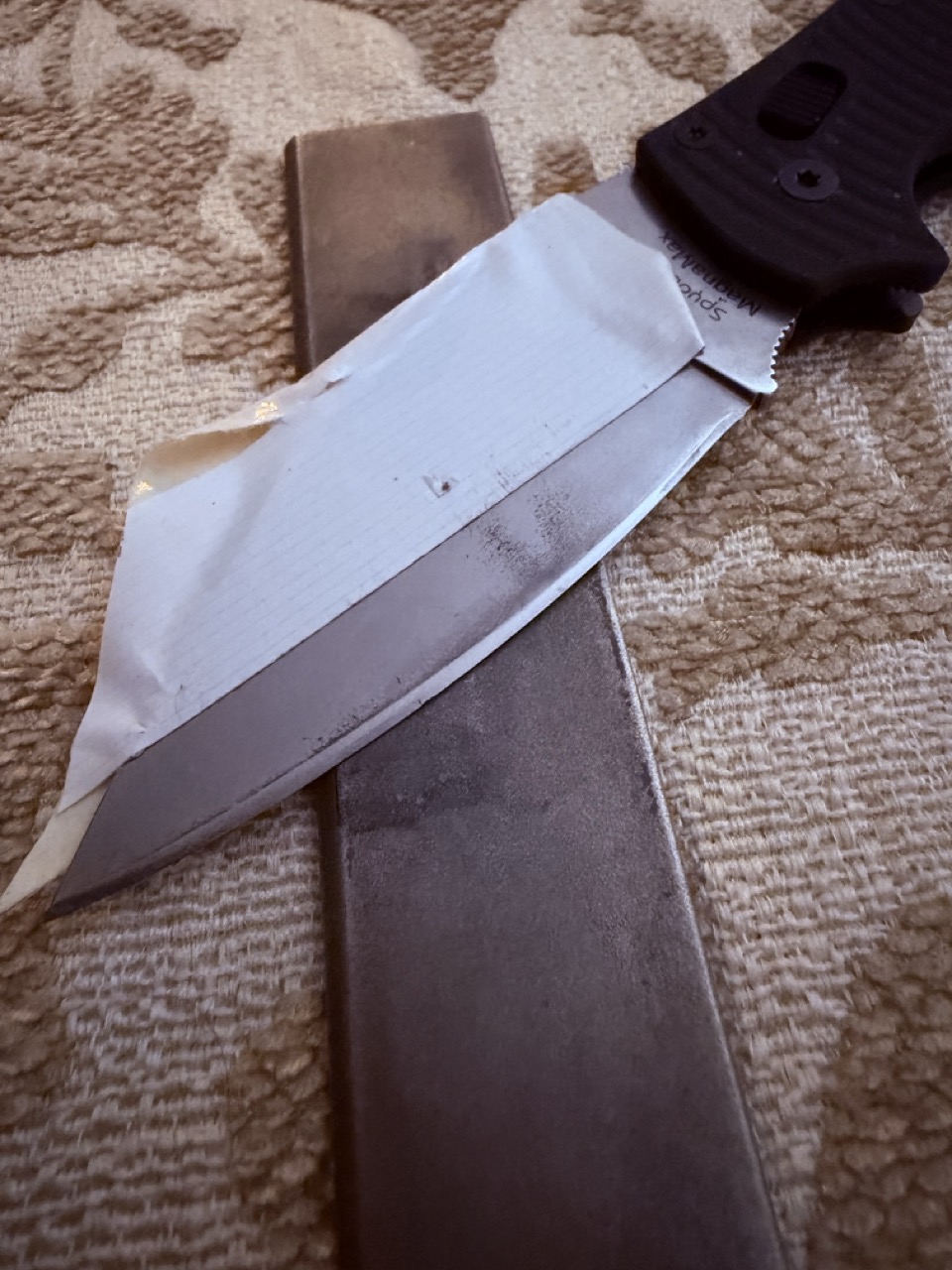
As I’m rather clumsy, I use gaffer tape to protect my blade’sides from scratches I might otherwise cause. Diamonds are unforgiving. And remember I don’t really sharpen; I reshape that edge, rounding off the angle and turning the original bevel into something more convex and organic — and, above all, much easier to maintain freehand.
The result is immediately apparent in my test, where I push-cut through the bottom of a Coca-Cola plastic bottle. The plastic is thickest right in the center of the bottle’s base, where it corresponds to the injection gate used to form the bottle.
Straight out of the box, Tango couldn’t cut through it. Once I had convexed the edge, however, the blade went through it with ease. (But when it comes to this particular test, the Nilakka by Pekka Tuominen wins every single time as also Opinel’s thin blades…)
Naturally, I’ve cut a lot of cardboard with it.
That’s probably the one area where REX 121 absolutely makes a mockery of every other steel on the market, treating them all like a bunch of under-carbonized losers.
I used a Triangle Sharpener with CBN rods, setting the edge at 15° per side.
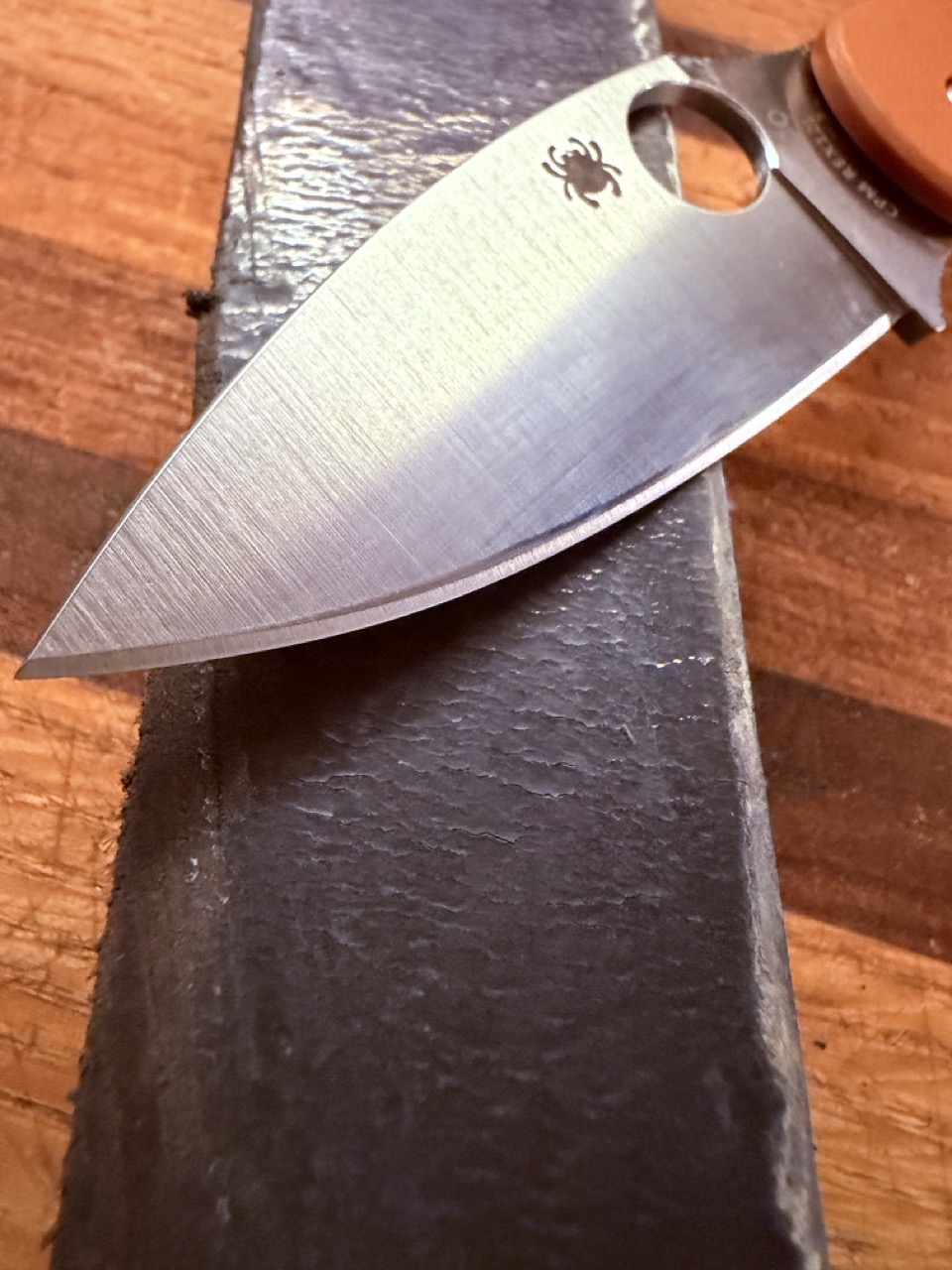
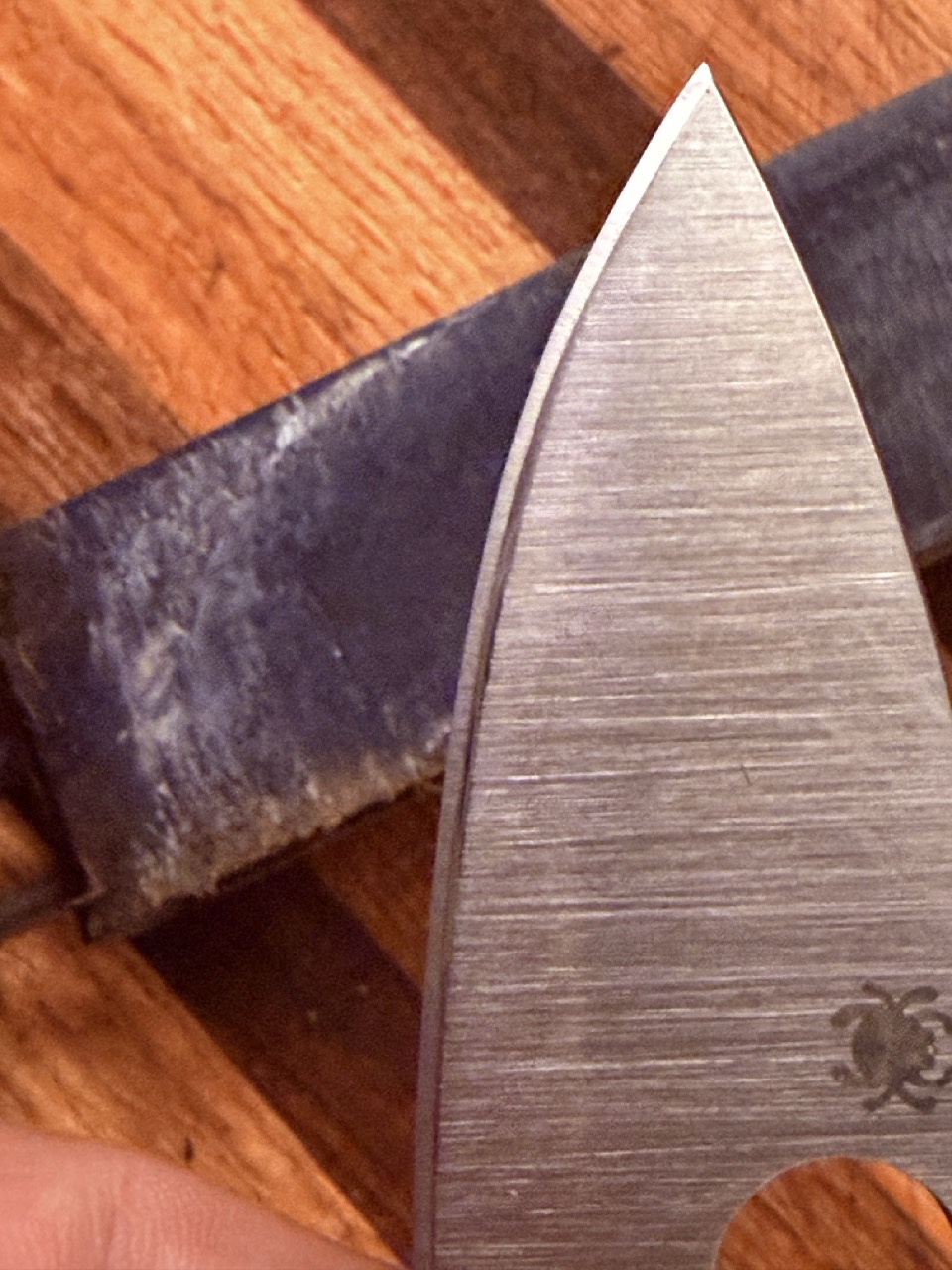
Once I had established a good edge, I went straight to the leather strop.
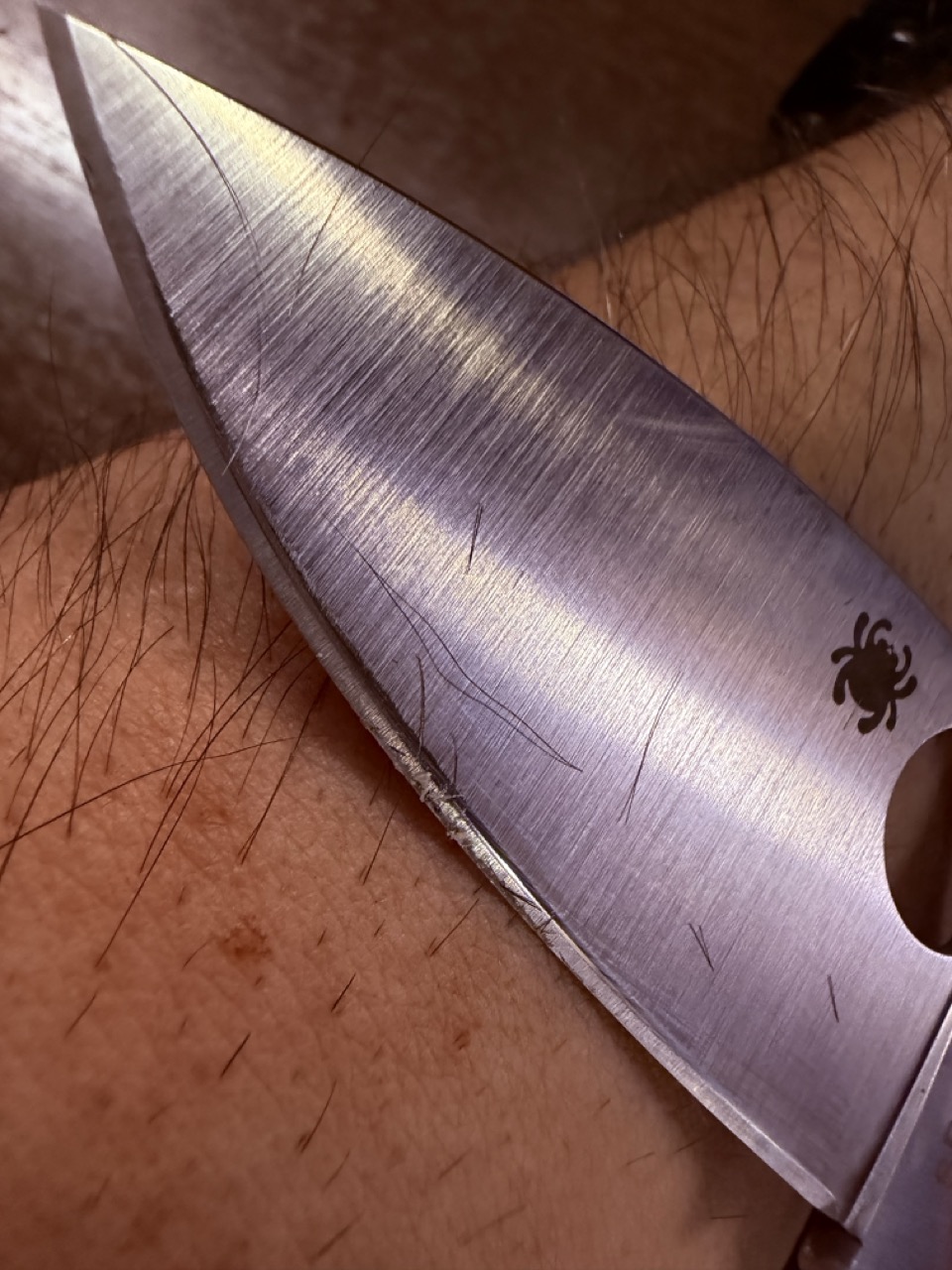
The result is a rough shaver, but a shaver nonetheless. It has plenty of bite.
Now, this big show-off of Tango has also been put to work on much more mundane tasks.
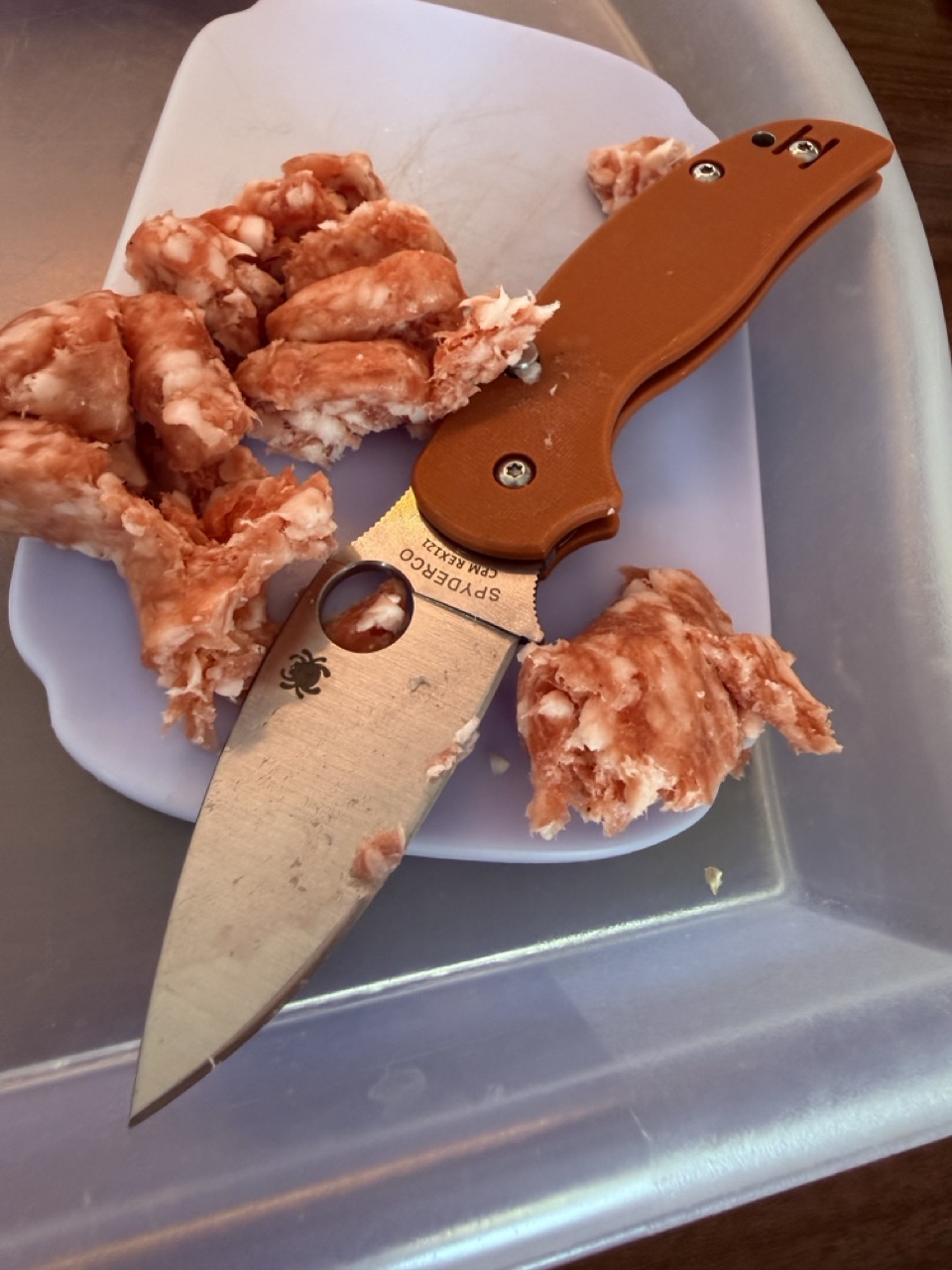
Now you’re going to tell me that a 440A knife would handle sausage meat or bread perfectly well, and I’ll tell you that you’re absolutely right.
But this blog isn’t called Nemo Steel Review, is it?
And so that very Sage 6 gets exposed to grease and crumbs.
Those two organic contaminants, once they make their way into the mechanism, can become a problem…
And things could get even worse when you’re skinning a hare…
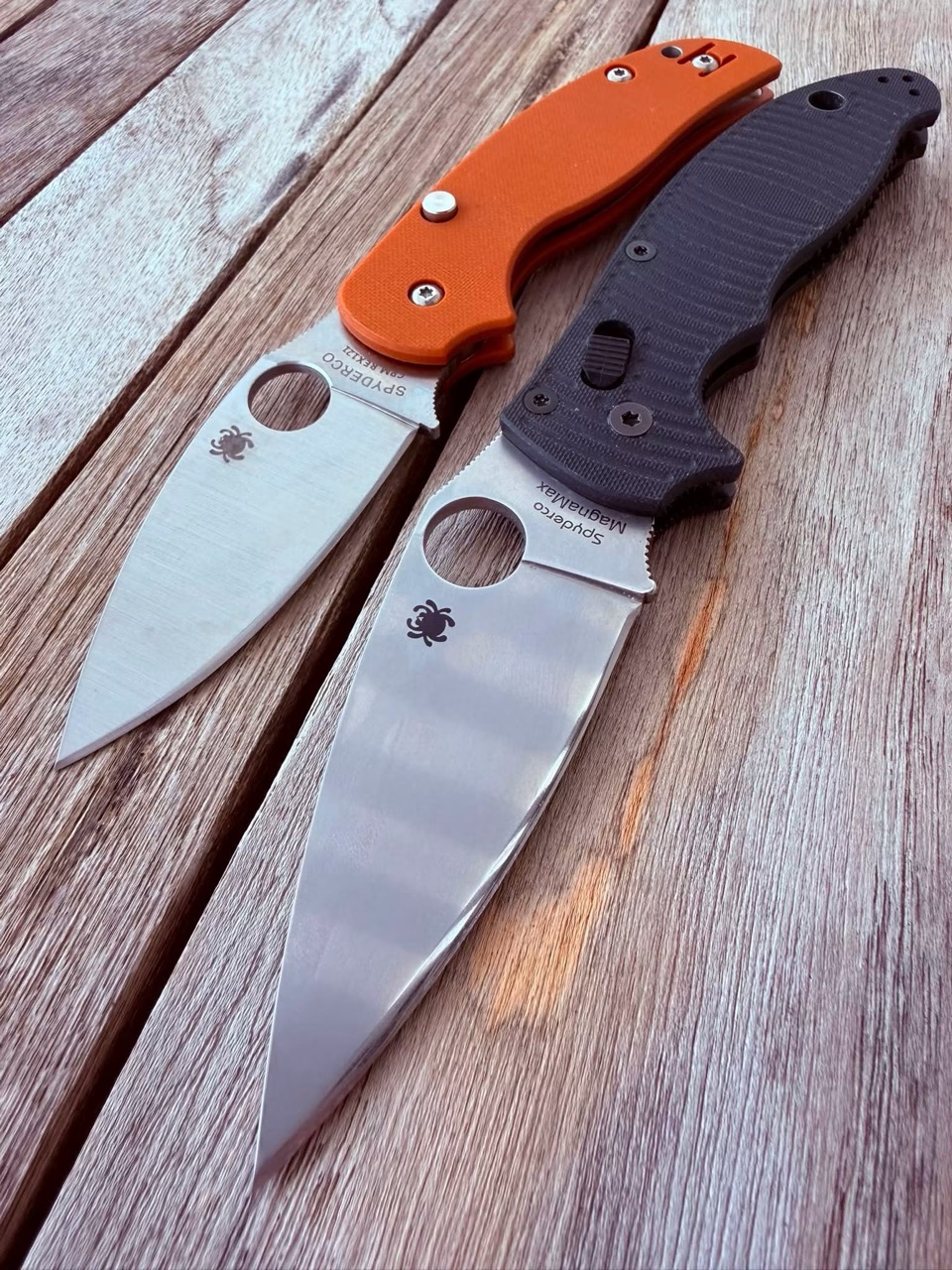
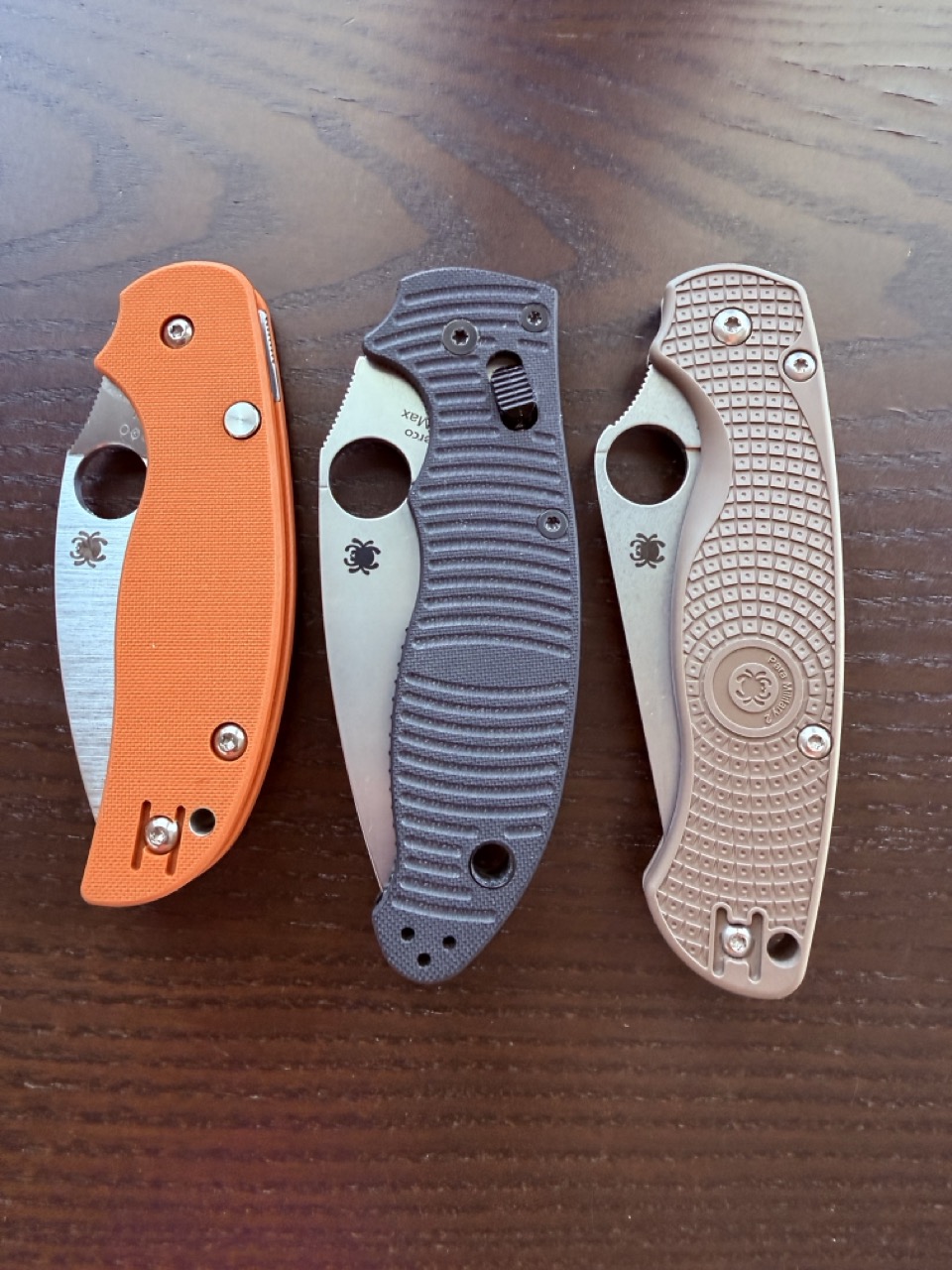
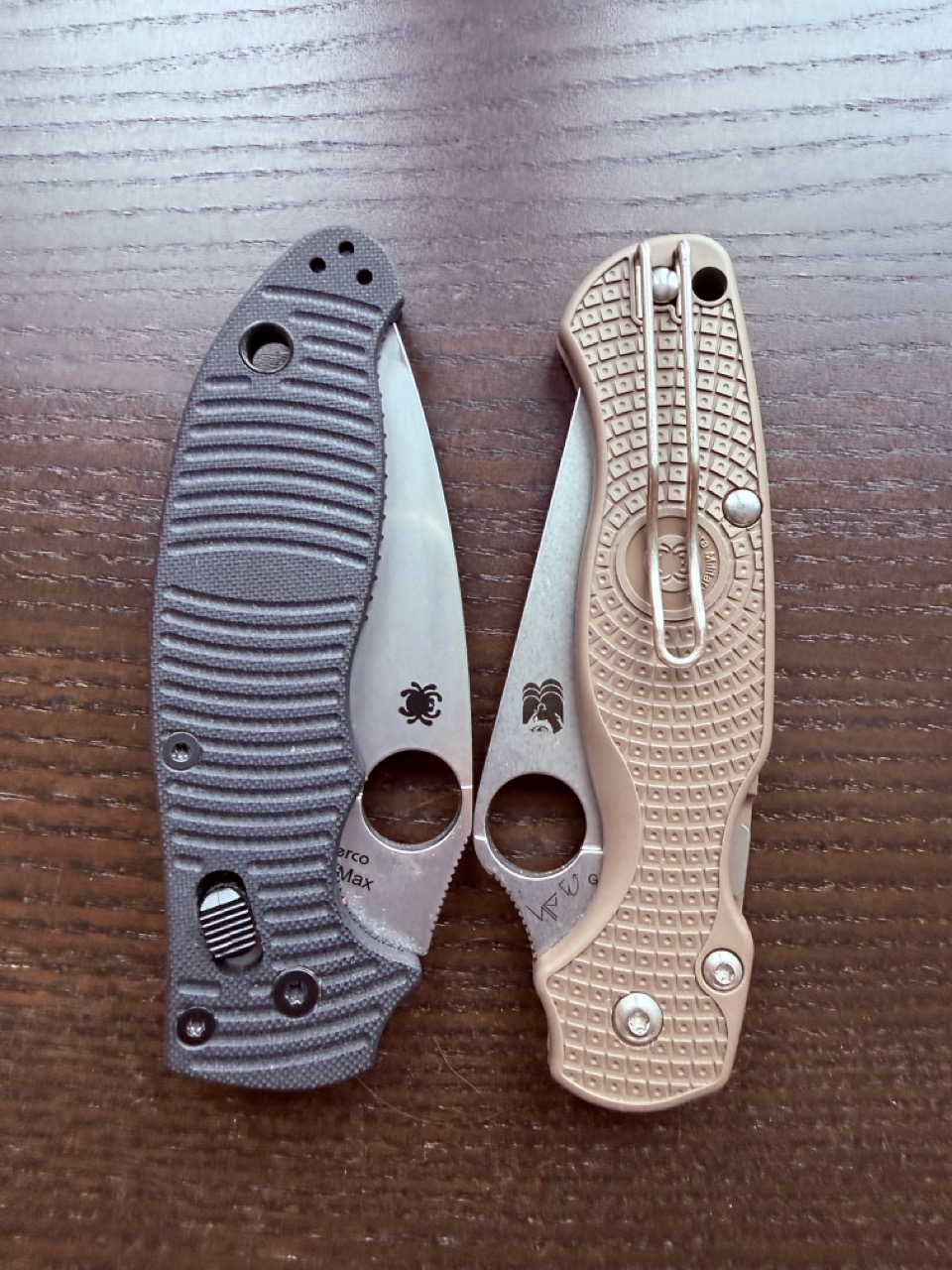
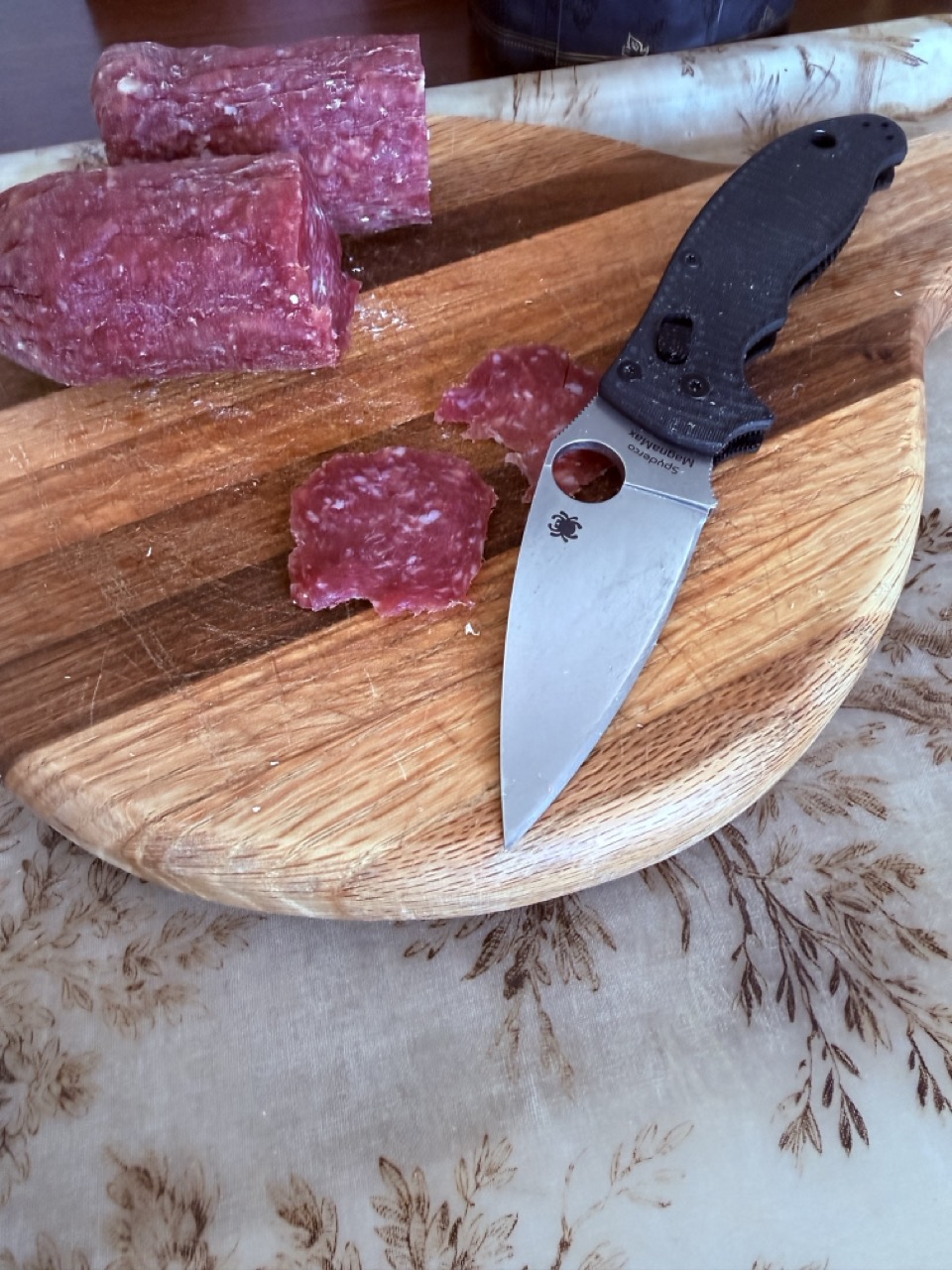
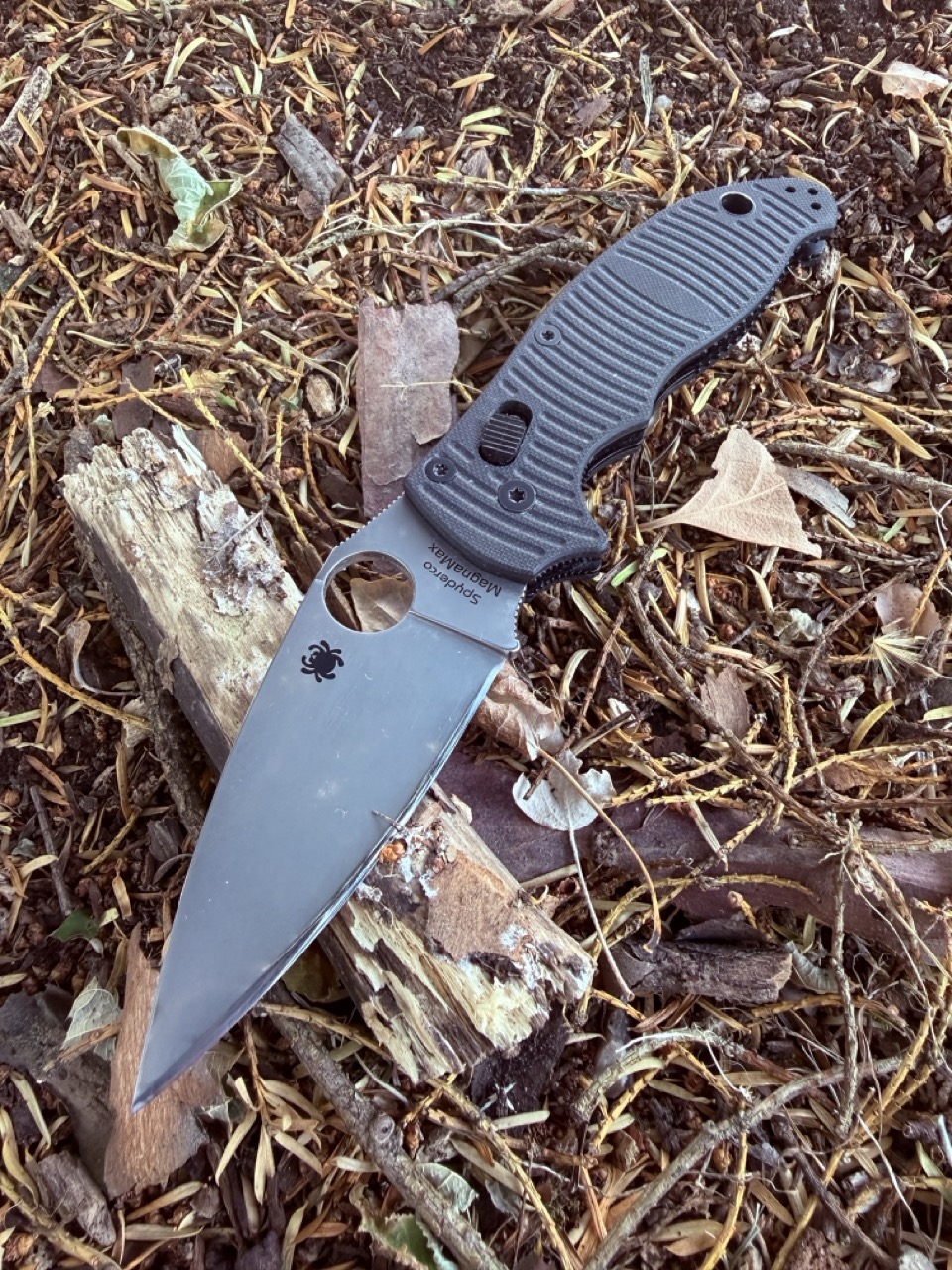
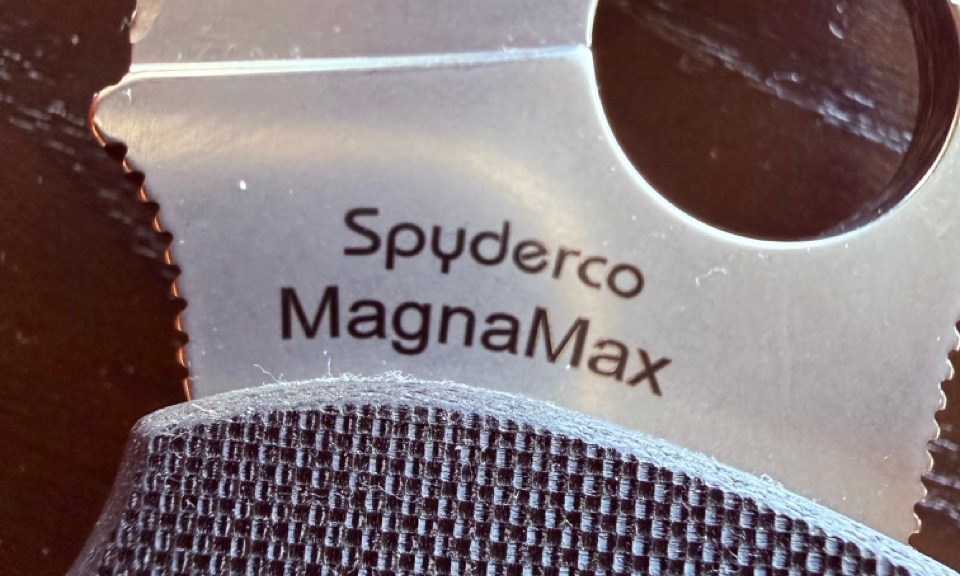
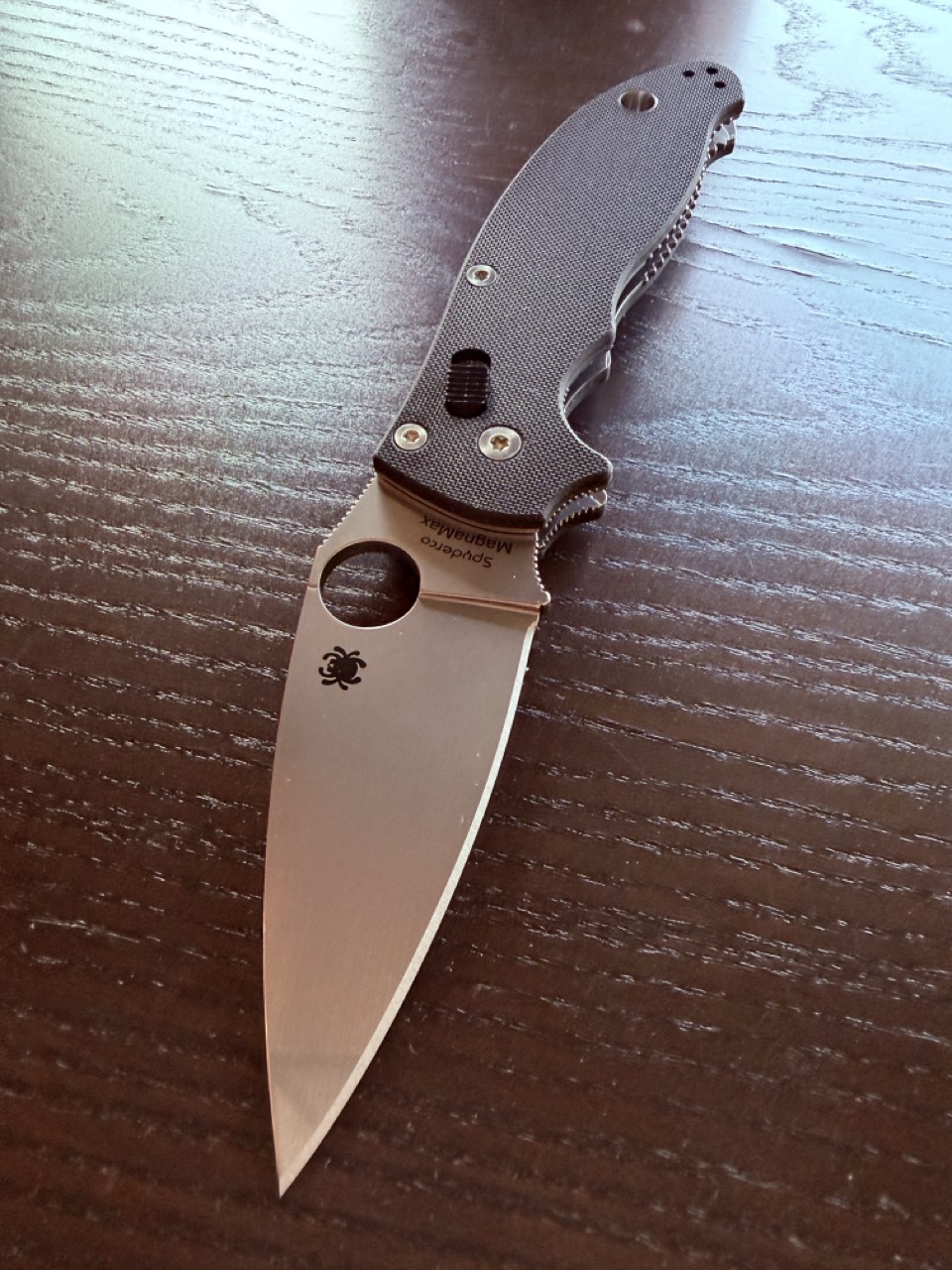
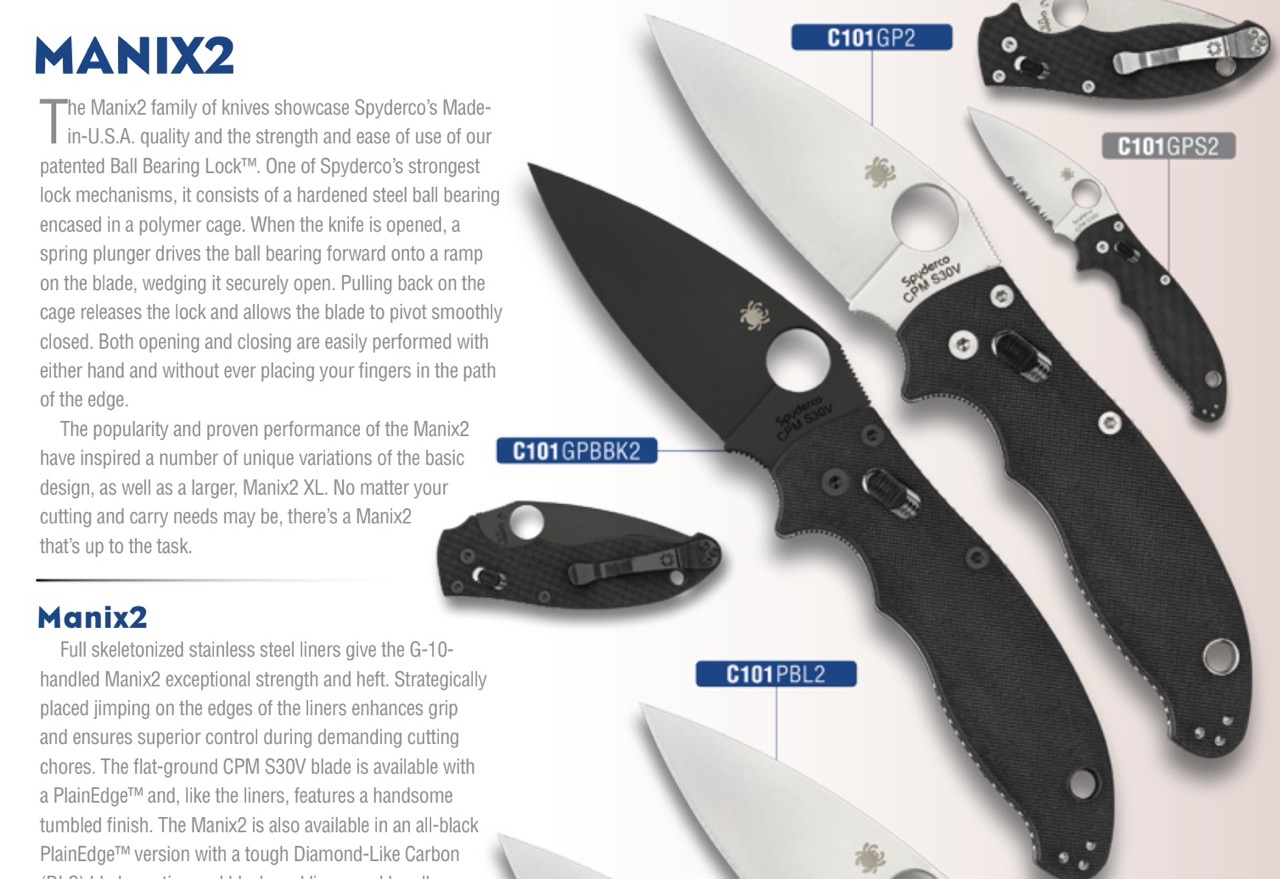
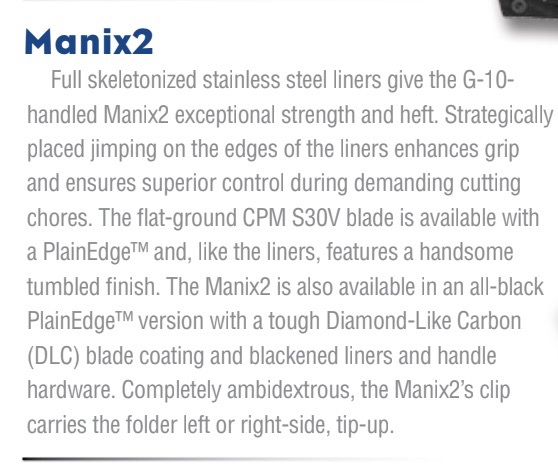
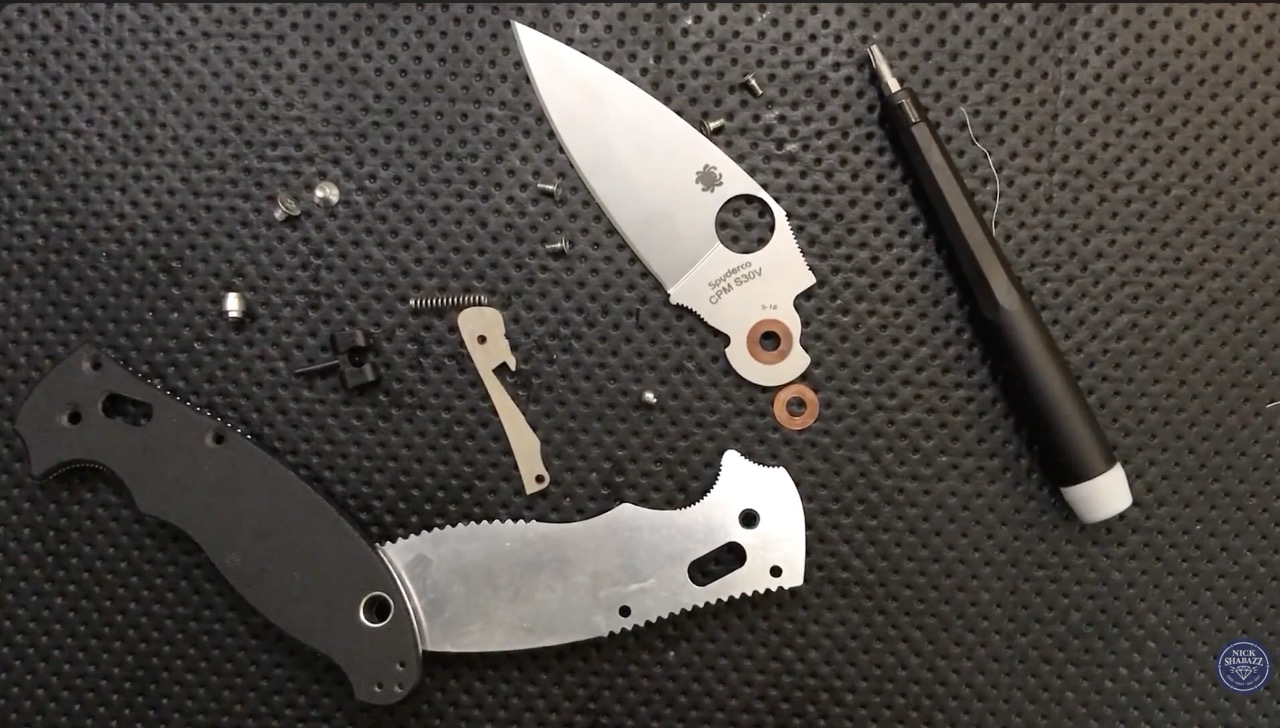
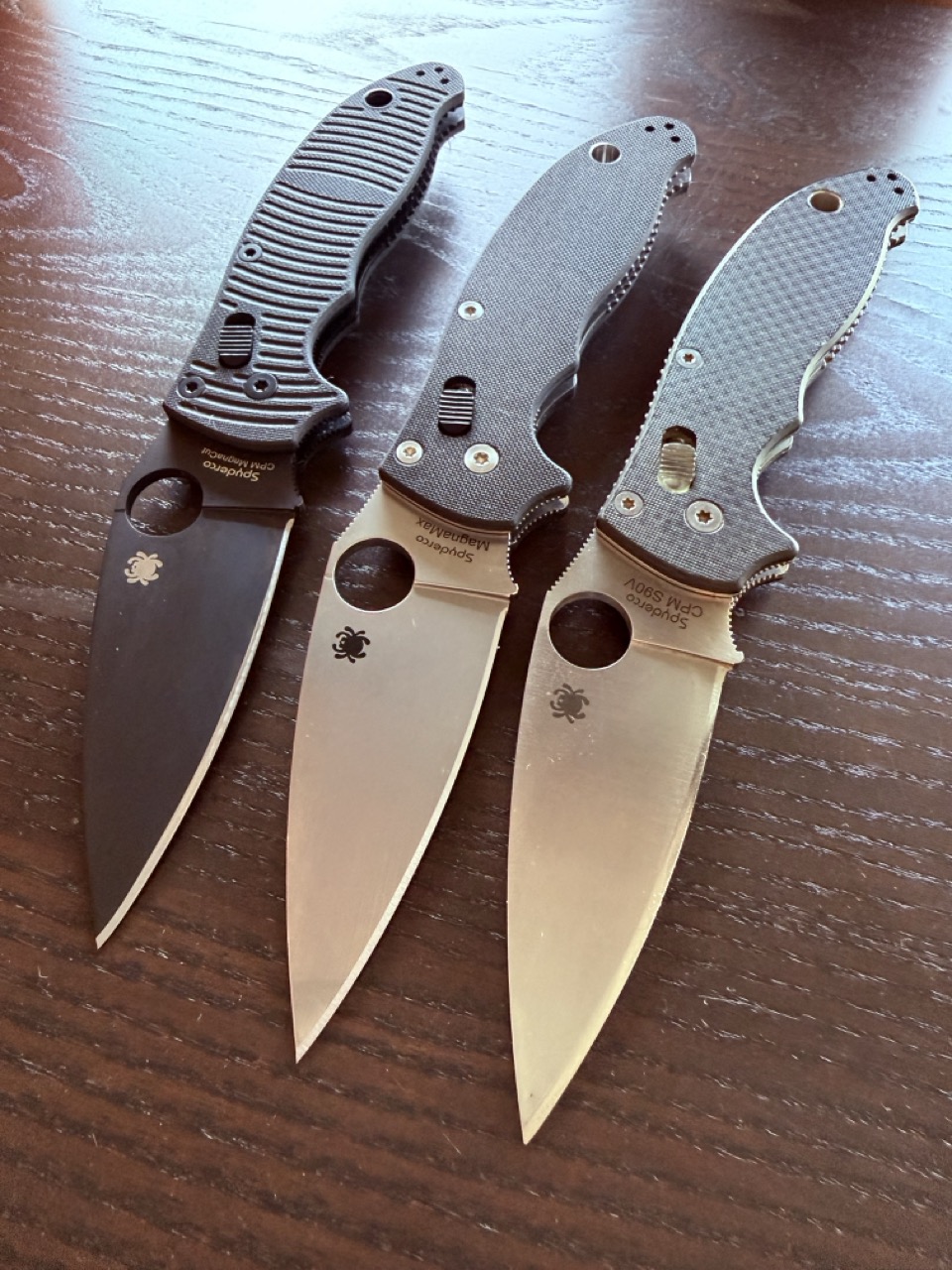
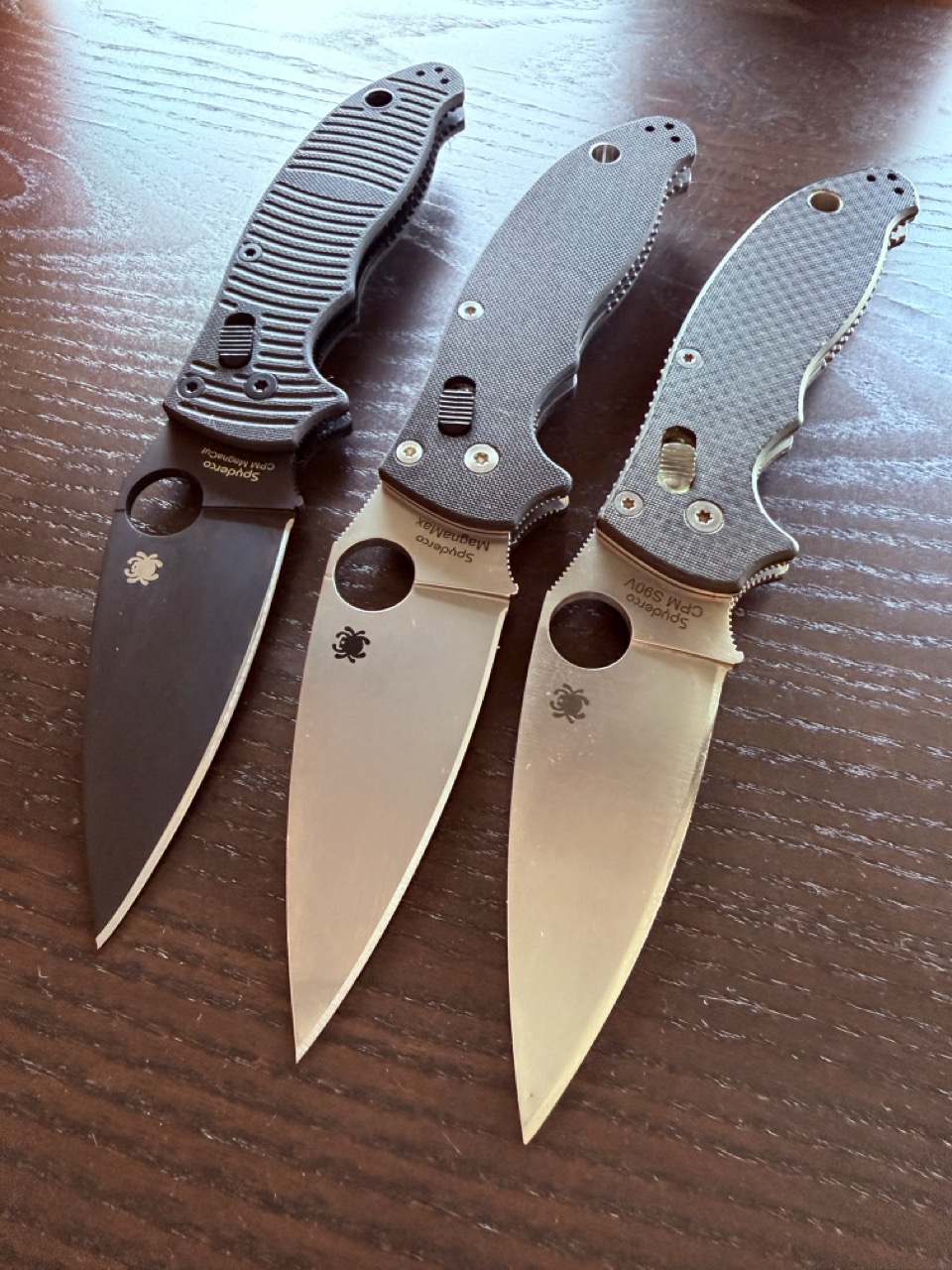
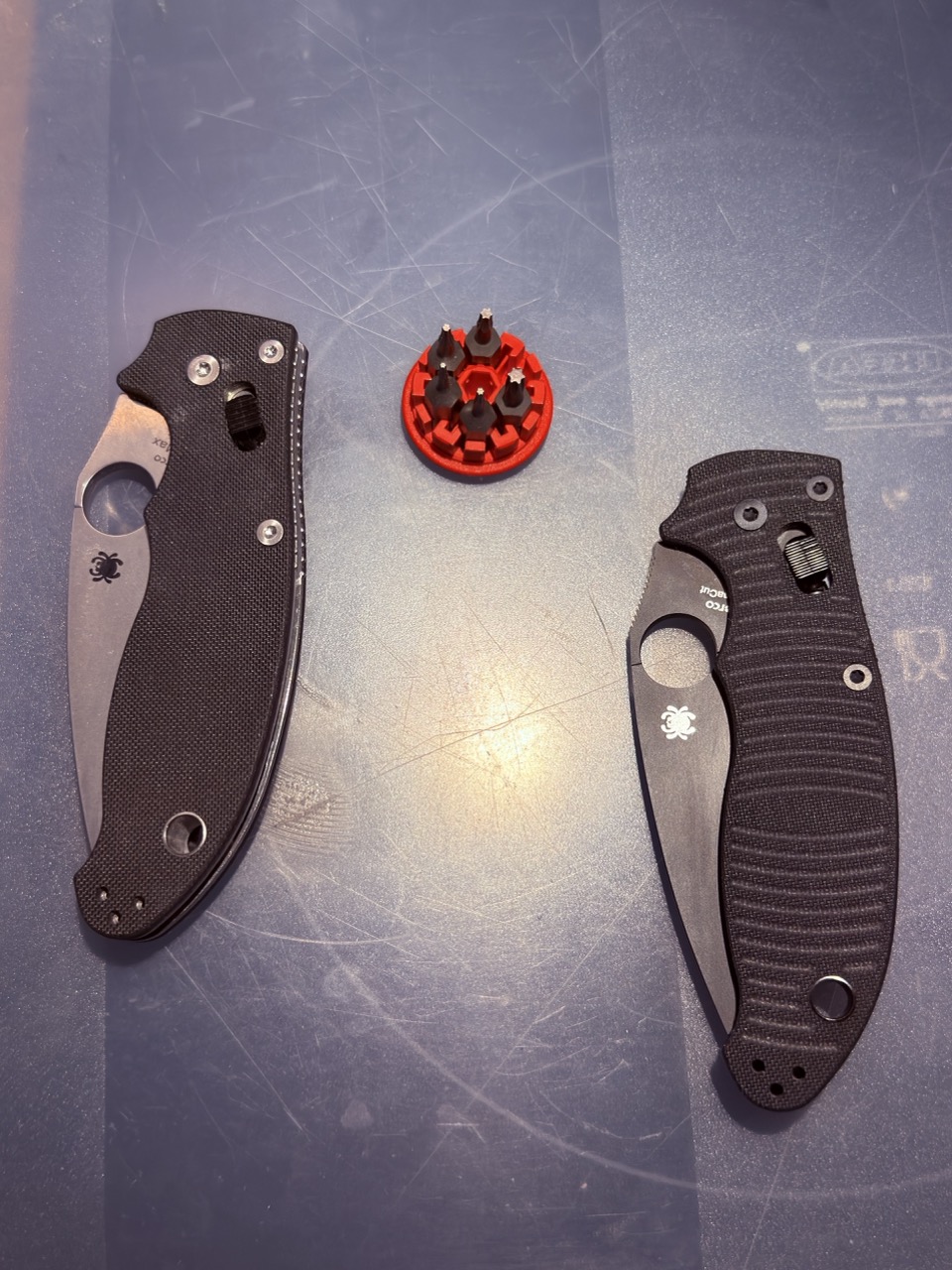
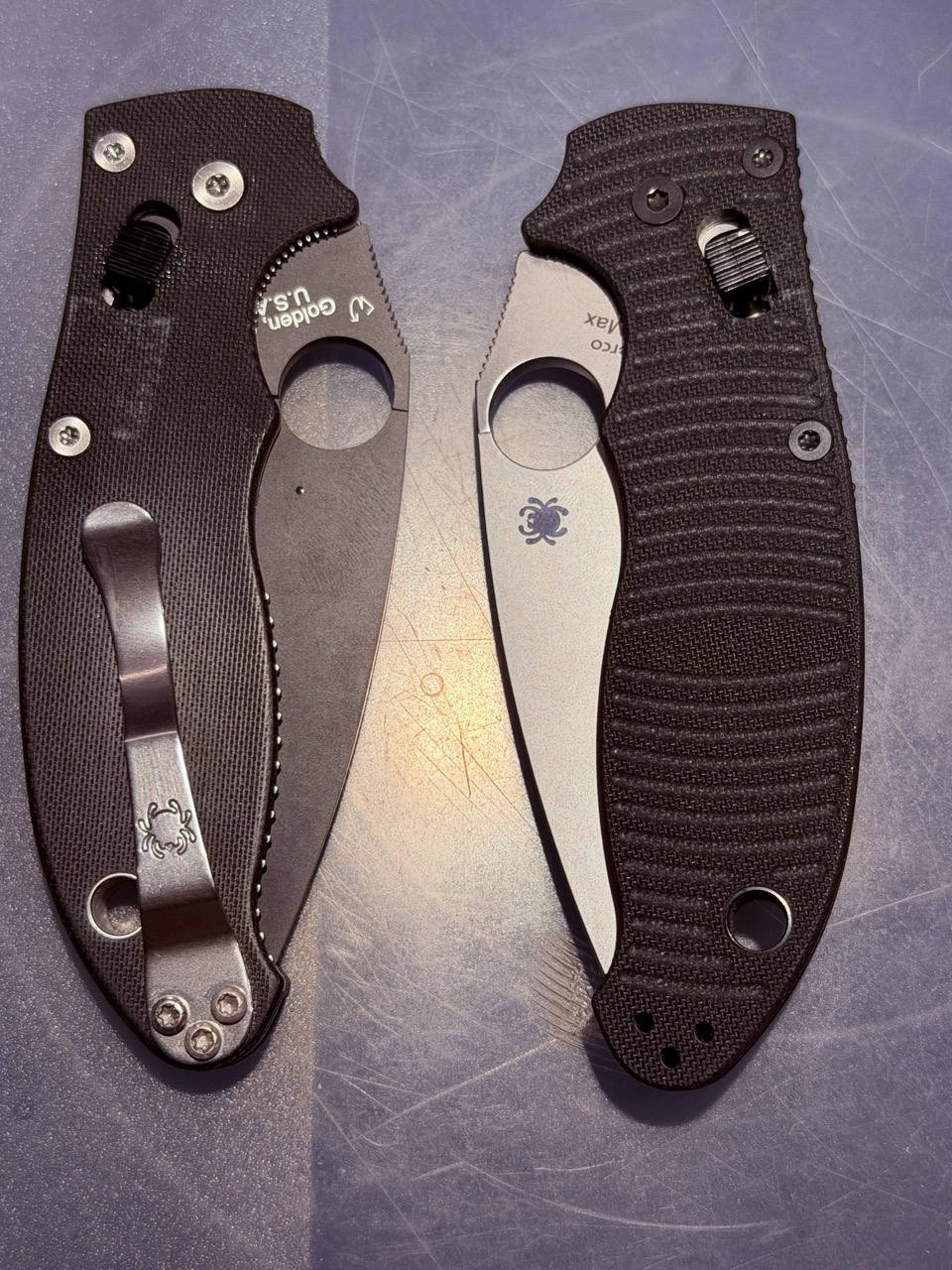
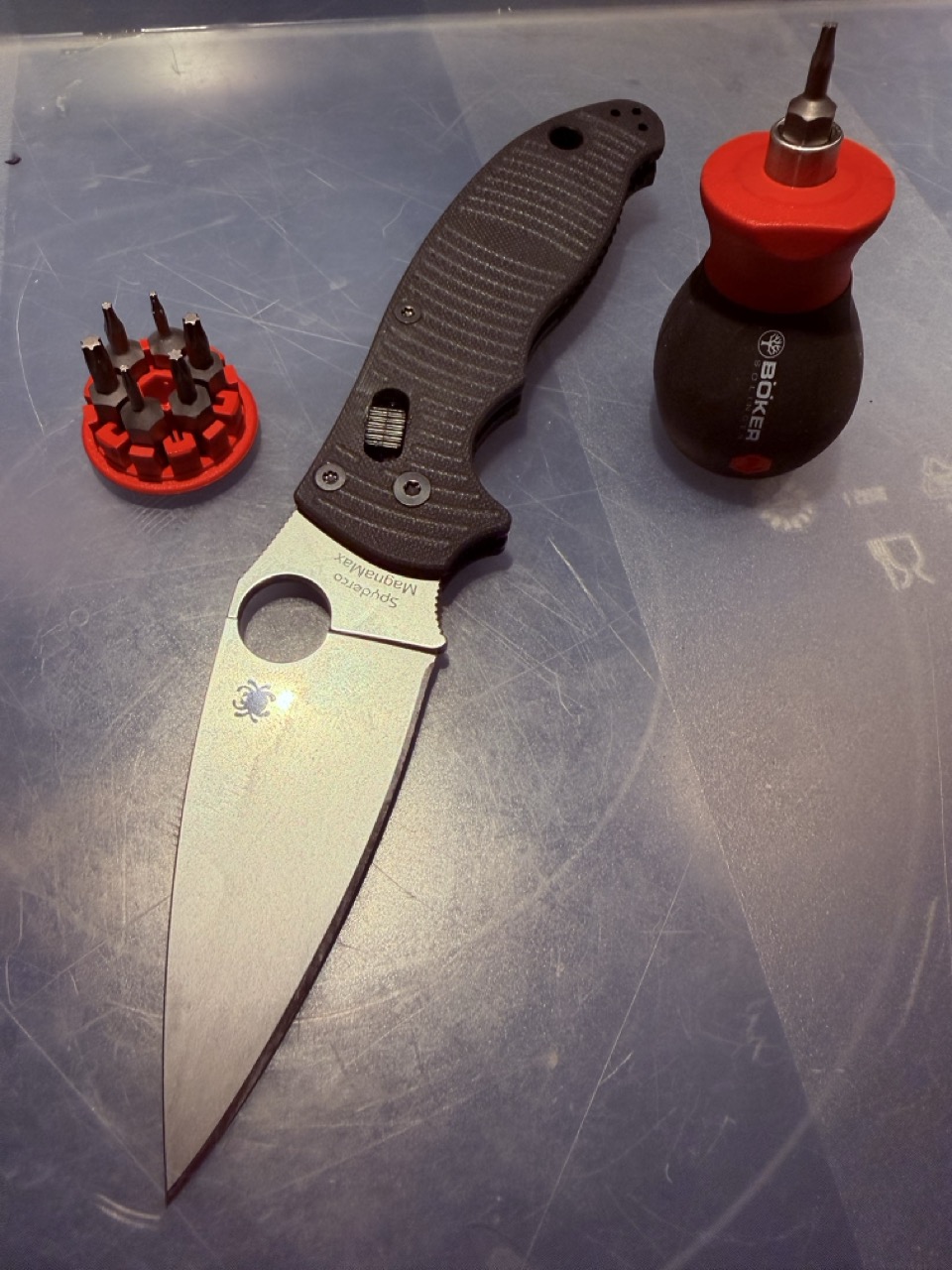
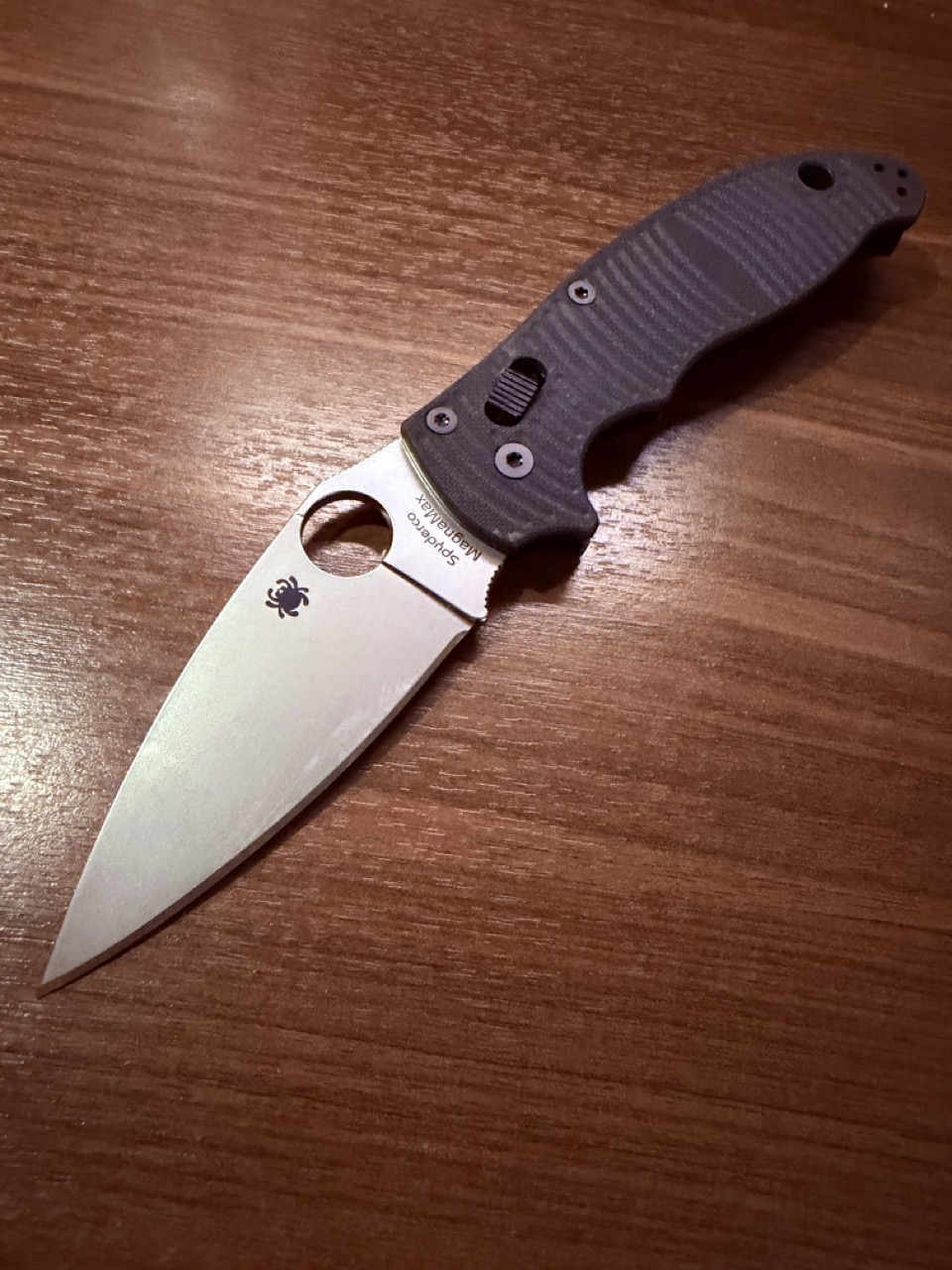
I don’t have those kinds of thoughts when I use my Manix MagnaMax, fitted with the handle from my Manix 2 Salt, because I know I can soak the knife in hot, soapy water without worrying about corrosion.
But with a Sage 6 carrying a steel this extreme?
Is it going to start rusting somewhere I can’t see?
And will those uncoated skeletonized liners eventually turn into little pockets of rust? Or bacteria colonies ?…
My first thought was to apply a thin layer of Teflon-based bicycle chain oil inside the handle, using a cotton swab soaked in it.
Then I thought: am I really going to have to do this every single time I use it ?
Why the hell am I putting myself through this when I have…
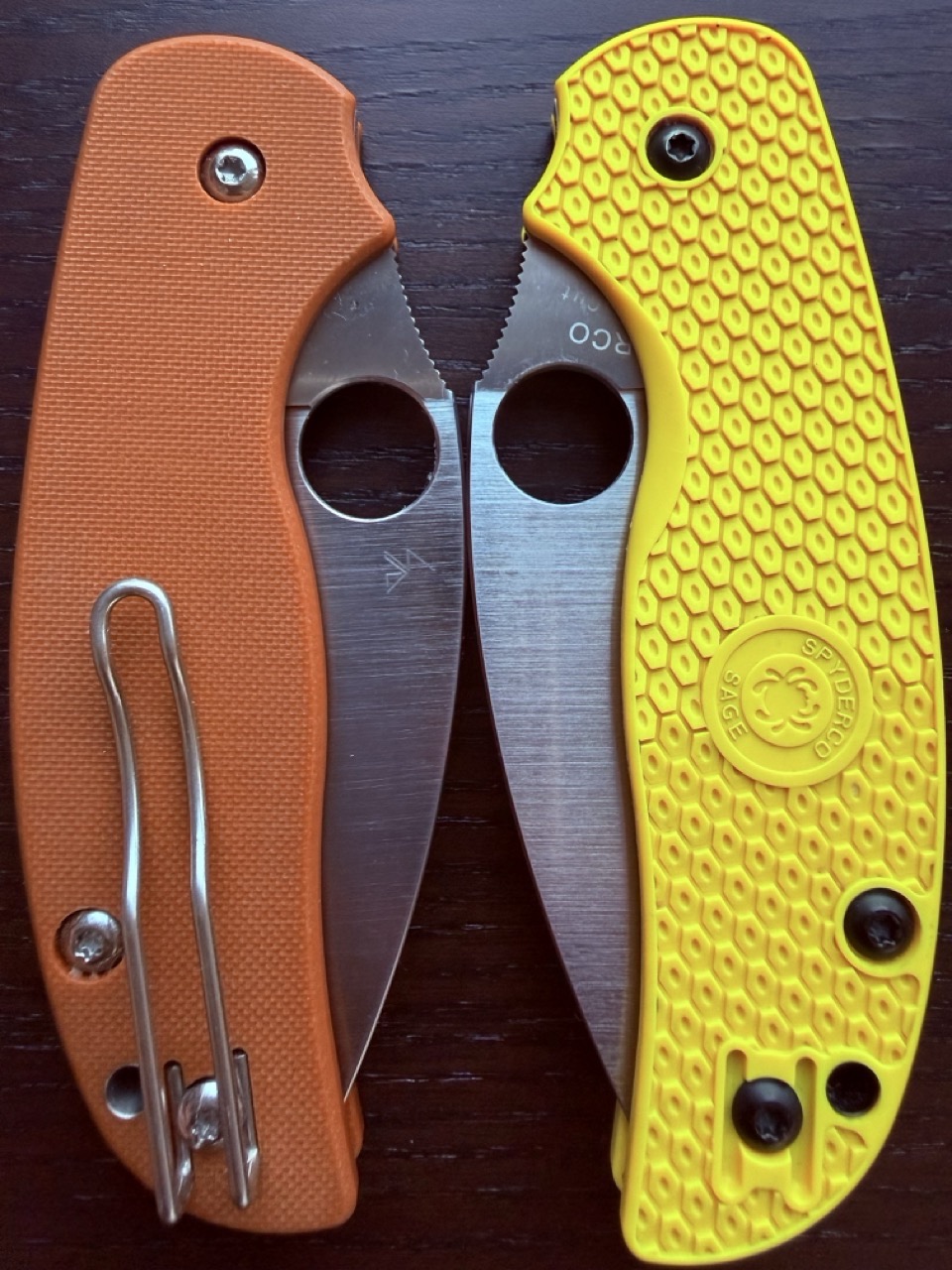
Its little brother, the Sage 5 Salt Lightweight with its CPM MagnaCut blade. A pure masterpiece of an EDC knife, with every metal component built to withstand a dip in the ocean. Its review is here BTW.
The kind of knife you can throw into the bottom of your suitcase before taking off for some unknown destination. It’ll survive a stint in the rainforest or a picnic beside a salt lake without batting its spyderhole of an eye.
The Sage 6 REX 121 and the Sage 5 Salt MagnaCut represent two almost opposite philosophies of EDC knife.
The REX 121 is a cutting machine: its extreme wear resistance gives it phenomenal edge retention, especially when cutting cardboard.
The trade-off is an exceptionally demanding steel to sharpen, with far less tolerance for moisture and corrosion.
The Sage 5 Salt takes a completely different approach: MagnaCut offers an outstanding balance of edge retention, toughness, and exceptional corrosion resistance. And the Salt takes that philosophy all the way.
The Sage 6 is the one I’d choose when I want to push cutting performance to the limit, while the Sage 5 is the one I’d take anywhere without having to worry about maintenance.
One makes you think about its steel; the other simply lets you use your knife.
And that, ultimately, is the difference between an extraordinary specialist blade and a true adventure EDC.
I also managed to get a really nice convex edge on my Sage 5, and at this point it needs nothing more than a strop to keep it sharp. It’s a whittling champion, whereas the Sage 6 still needs some work to refine its edge.
MagnaCut is also remarkably tough, while REX 121 is considerably less so. That difference in toughness is something you can feel in actual use: MagnaCut will be much more forgiving when the blade encounters twisting, knots, or lateral stress.
In short, comparing these two brothers is genuinely fascinating.
And I have to admit, choosing REX 121 could almost be considered a form of masochism: it’s more demanding to maintain, both when it comes to mechanism and edge.
But there’s something intoxicating about using REX 121. Putting a steel of this caliber into such an “approachable” friendly platform as the Sage 6 is an experience you really have to live through.
It’s like having a lion in your pocket, ready to roar — to borrow Prince’s words from 1999.
So, ten days later, where does that leave the Sage 6 REX 121?Somewhere between a brilliant EDC knife and a beautifully unnecessary piece of madness.
The REX 121 is an extraordinary steel, but it comes with a price: sharpening is a pain in the arsenal (!!), corrosion resistance requires attention, the edge is less forgiving, and even the mechanism makes you think twice about what you’re putting this knife through. (The Sage 5 Salt MagnaCut is, in many ways, the rational choice. It is tougher, vastly more corrosion resistant, easier to maintain, and an outstanding whittling knife.)
And yet, if you ask me which one I find more exciting to use, the answer is the Sage 6.
There is something deeply satisfying about having a steel this extreme on such an elegant, compact and friendly platform. It makes very little practical sense — and that is precisely what makes it so much fun.
The Sage 6 REX 121 is not the knife I would recommend to someone looking for the easiest EDC life. It is the knife I would recommend to someone who wants to experience what happens when you put one of the most extreme cutting steels available into one of Spyderco’s most refined platforms.
And if this review occasionally wandered a little too far down the rabbit hole, well…
“I was dreamin’ when I wrote this.Forgive me if it goes astray...”
After all, this is a knife made from REX 121. A little madness was probably unavoidable.
Disclosure: This Sage 6 REX 121 was provided by Spyderco as a complimentary review sample through the Spyderco Ambassador Program. Receiving the knife does not influence my opinions. Spyderco does not preview, edit, or approve my reviews, and all conclusions are based solely on my own testing and experience.
I just received my Sage 6 REX 121.
Wow. This feels like the Formula One of EDC knives.
Think about it: an ultra-modern Button Compression Lock inspired by Kevin Smock’s design, paired with one of the most extreme production blade steels ever made—CPM REX 121.
This is a true heavyweight in the knife world, and probably one of the most technically advanced production knives ever released. Its price isn’t driven by titanium scales, exotic inlays, or premium bolsters. It’s driven almost entirely by engineering, manufacturing, and metallurgy.
Just… wow.
I’ve handled and used every Spyderco Sage model over the years.
For those unfamiliar with the series, the Sage was conceived by Sal Glesser as a single knife platform dedicated to honoring the greatest folding knife lock innovations—and the designers behind them. Every Sage shares the same DNA, while each model showcases a different locking mechanism and pays tribute to the person who popularized or invented it.
Sage 1 honors Michael Walker and his revolutionary LinerLock, as well as the ball-detent system that keeps the blade securely closed.
Sage 2 pays tribute to Chris Reeve and his Reeve Integral Lock (R.I.L.), better known today as the frame lock.
Sage 3 celebrates Blackie Collins and his ingenious Bolt Action Lock.
Sage 4 honors Al Mar and the Mid-Back Lock (Front Lock) that became one of his signature features.
Sage 5 showcases Sal Glesser’s own Compression Lock, arguably Spyderco’s most iconic locking mechanism.
Sage 6 takes that concept one step further with the Button Compression Lock, inspired by Kevin Smock’s button-actuated implementation of the Compression Lock. It feels like the natural evolution of the Sage platform rather than a departure from it.
After owning and using every generation, I can honestly say the Sage 6 is the smoothest of them all. Mechanically, it’s simply remarkable.
One detail immediately caught my attention.
When the knife is closed, the button sits recessed into the scale. Once the blade is fully opened and locked, the button protrudes slightly above the handle, making it mandatory to disengage the lock.
This is clearly an intentional design choice. It prevents the knife from being mistaken for, or too easily operated like, a gravity knife where a simple press of the button could release the blade while closed.
Spyderco has followed a similar philosophy with the Ball Bearing Lock on the Manix 2. Unlike an Axis-style lock, it requires a more deliberate action to disengage, reducing the risk of accidental or unintended deployment.
To me, this reflects Spyderco’s long-standing approach to responsible knife design. The company doesn’t just pursue innovation—it also pays close attention to legal considerations and user safety. Rather than creating a lock that could be easily misused or interpreted as an automatic or gravity knife, Spyderco has deliberately engineered additional safeguards into the mechanism.
It’s a subtle detail, but one that says a great deal about the company’s design philosophy.
Opening it with the Spyderhole is effortless, and closing it with a gentle flick of the wrist is pure satisfaction. It is one of those rare knives that makes you want to open and close it again and again—not because you have to, but because the action is simply that enjoyable.
The action is nothing short of addictive. The Sage 6 is incredibly fidget-friendly.
The best way I can describe it is that it almost feels as if the blade were riding on a magnetic system rather than traditional washers. The action is exceptionally smooth, yet always controlled and reassuring.
Every opening and closing cycle feels refined. The lock engages with a soft, muted click instead of a harsh metallic snap, giving the knife the feel of a finely tuned mechanical instrument.
One aspect that is often overlooked in a folding knife is that opening the blade is only half the story. Closing it safely is just as important.
To me, the easier and more intuitive a knife is to close, the safer it is to use. If you don’t have to reposition your grip, place your thumb between the liners, or let the choil drop onto your finger, you’re less likely to make a mistake.
This is where the Sage 6 really shines. That single button makes disengaging the Compression Lock almost effortless. It preserves all the strengths of Sal Glesser’s ingenious lock while making it significantly easier to operate with one hand.
For me, that’s one of the biggest improvements over the original Compression Lock. It’s not just more convenient—it’s genuinely safer and more confidence-inspiring during everyday use.
That said, the design still clearly favors right-handed users. Left-handers can certainly operate it, but the ergonomics are undeniably optimized for right-handed manipulation.
One of my initial concerns was whether the button could get in the way during use or even lead to an unintended lock release.
That’s a debate that goes all the way back to the introduction of Benchmade’s AXIS Lock more than 25 years ago. Some users wondered whether pressure from the hand could accidentally disengage the lock during hard use.
Spyderco has taken a different approach. On the Manix 2, the Ball Bearing Lock relies on a fairly strong spring that requires a deliberate pull to disengage.
On the Sage 6, the solution is different but equally effective. The button is positioned far enough away from my natural grip that my fingers never come close to pressing it unintentionally.
After handling the knife, that concern disappeared almost immediately. The lock feels intuitive, secure, and confidence-inspiring. It delivers all the convenience of a button-operated mechanism without ever making me worry about an accidental unlock.
Originally developed by Crucible Industries as a high-speed tool steel for industrial cutting tools, CPM REX 121 was never designed with pocket knives in mind. Its primary objective was simple: maximum wear resistance at very high hardness.
Composition
CPM REX 121 is an astonishing alloy. Take a look:
Carbon: 3.4% !!!
Chromium: 4.0%
Vanadium: 9.5% !!!
Tungsten: 10.0% !!!
Molybdenum: 5.0%
Cobalt: 9.0% !!!
This chemistry creates an exceptionally dense “population” of very hard carbides, giving the steel extraordinary resistance to abrasive wear. It is not stainless, but its chromium content provides slightly better corrosion resistance than traditional simple carbon steels. Adamantium anyone ?
According to Sal, Spyderco runs its REX 121 blades at an impressive 67–70 HRC !!! Those hardness levels are almost unheard of in production folding knives and are one of the reasons the steel performs the way it does.
Metallurgist Larrin Thomas, father of MagnaCut and MagnaMax, places REX 121 at the very top of the edge-retention scale. In fact, he rated both REX 121 and Maxametabove his normal 1–10 scale, simply because they outperform the rest of the field by such a margin. His testing shows REX 121 combines record-breaking wear resistance with very low toughness, making it a steel optimized for slicing performance rather than abuse.
(Years ago, I even used that knife to open oysters just to see how far I could push the steel—and then sharpened it back to a razor edge.)
Looking back, that was a rather silly test.
With the Sage 6 REX 121, my goal is different. I want to evaluate it as a high-end everyday cutting tool, not as the subject of destructive or abusive experiments. There are plenty of videos on YouTube showing knives being pushed beyond their intended use. That’s not what interests me.
I’m far more interested in how REX 121 performs in real-world cutting tasks, how long it retains a truly useful edge, and what it feels like to maintain over months of normal use.
The interesting part is that real-world experience is often more nuanced than the numbers suggest. Owners of the Sage 5 REX 121 consistently report:
astonishing edge retention, especially on cardboard;
a “working edge” that seems to last almost indefinitely;
surprisingly little chipping when the knife is used for cutting rather than prying;
sharpening that absolutely benefits from diamond or CBN abrasives but is not the nightmare many expected.
One experienced user reported using a Sage 5 in REX121 almost exclusively on cardboard for six months, sharpening it only once during that period, with no chipped edge or broken tip. Another noted that while sharpening takes longer, deburring is remarkably easy, resulting in an exceptionally clean apex.
Several users also mention that REX 121 responds exceptionally well to a highly polished edge, maintaining both aggression and push-cut performance longer than expected. So it will be leather stropping friendly.
Some people may question the price of the Sage 6 REX 121. Looking at the manufacturing process, however, it starts to make sense.
First, Spyderco had to secure a significant quantity of CPM REX 121—an already rare and expensive steel. The raw material then had to be shipped from the United States to Spyderco’s manufacturing facility in Taichung, Taiwan.
REX 121 is also one of the most difficult production steels to machine and grind. Its extreme wear resistance means slower manufacturing, greater tool wear, and extensive use of diamond abrasives, all of which increase production costs.
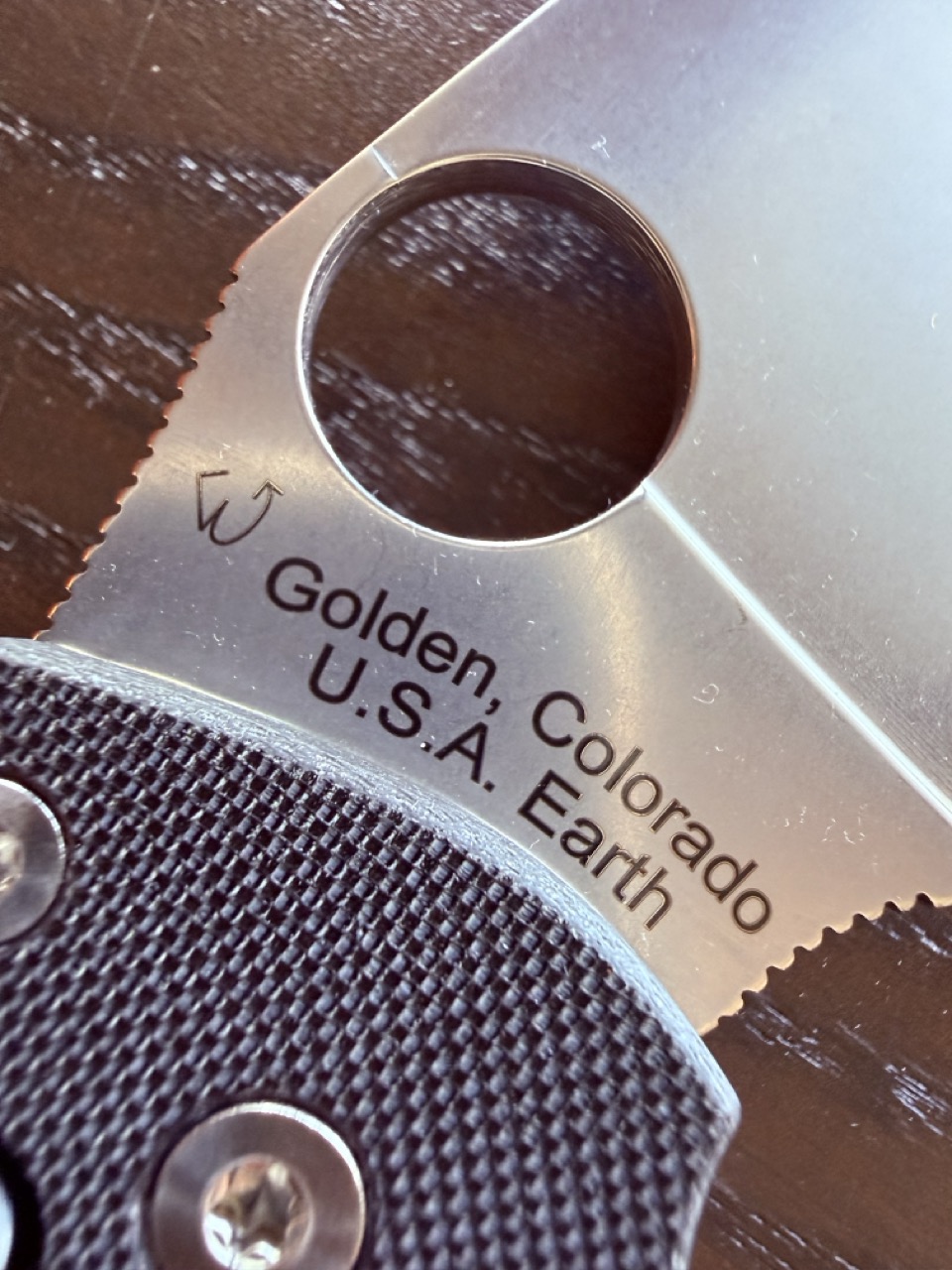
Once the knives are manufactured, they are shipped back to Golden, Colorado, Earth.
In other words, you’re not just paying for an orange handle or a premium steel. You’re paying for one of the most demanding manufacturing processes ever applied to a production folding knife.
And CPM REX 121 deserves a proper farewell, and Spyderco seems determined to give it one. By acquiring as much of the remaining steel as possible following Crucible’s acquisition by Erasteel, Eric and Sal Glesser ensured that this legendary alloy would continue to reach enthusiasts rather than quietly disappear. After the Sage 6, Spyderco is already planning a Chaparral in REX 121. With its ultra-thin 2 mm blade stock—compared to the Sage’s 3 mm—it could become one of the most formidable high-performance slicing tools the company has ever produced.
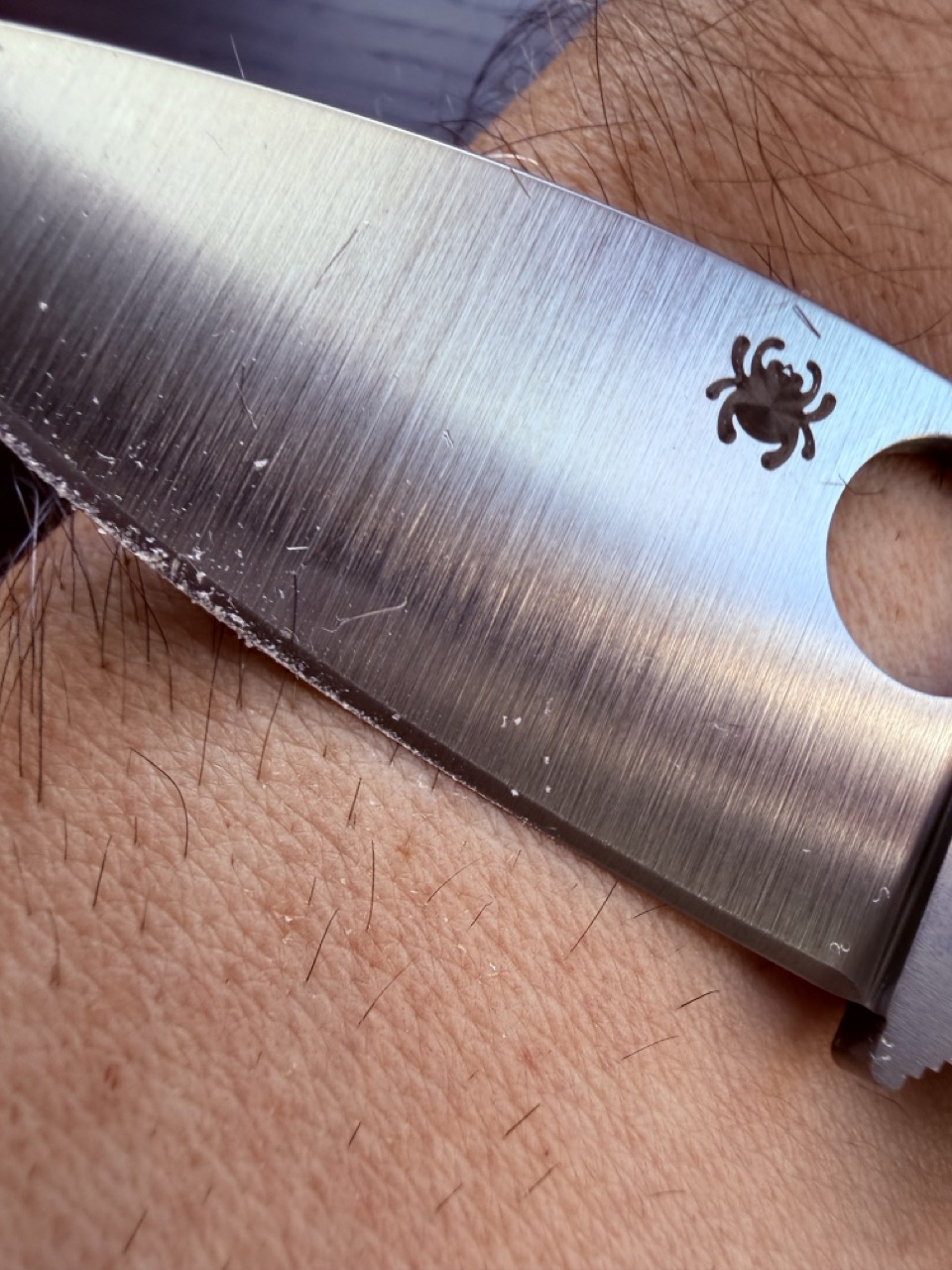
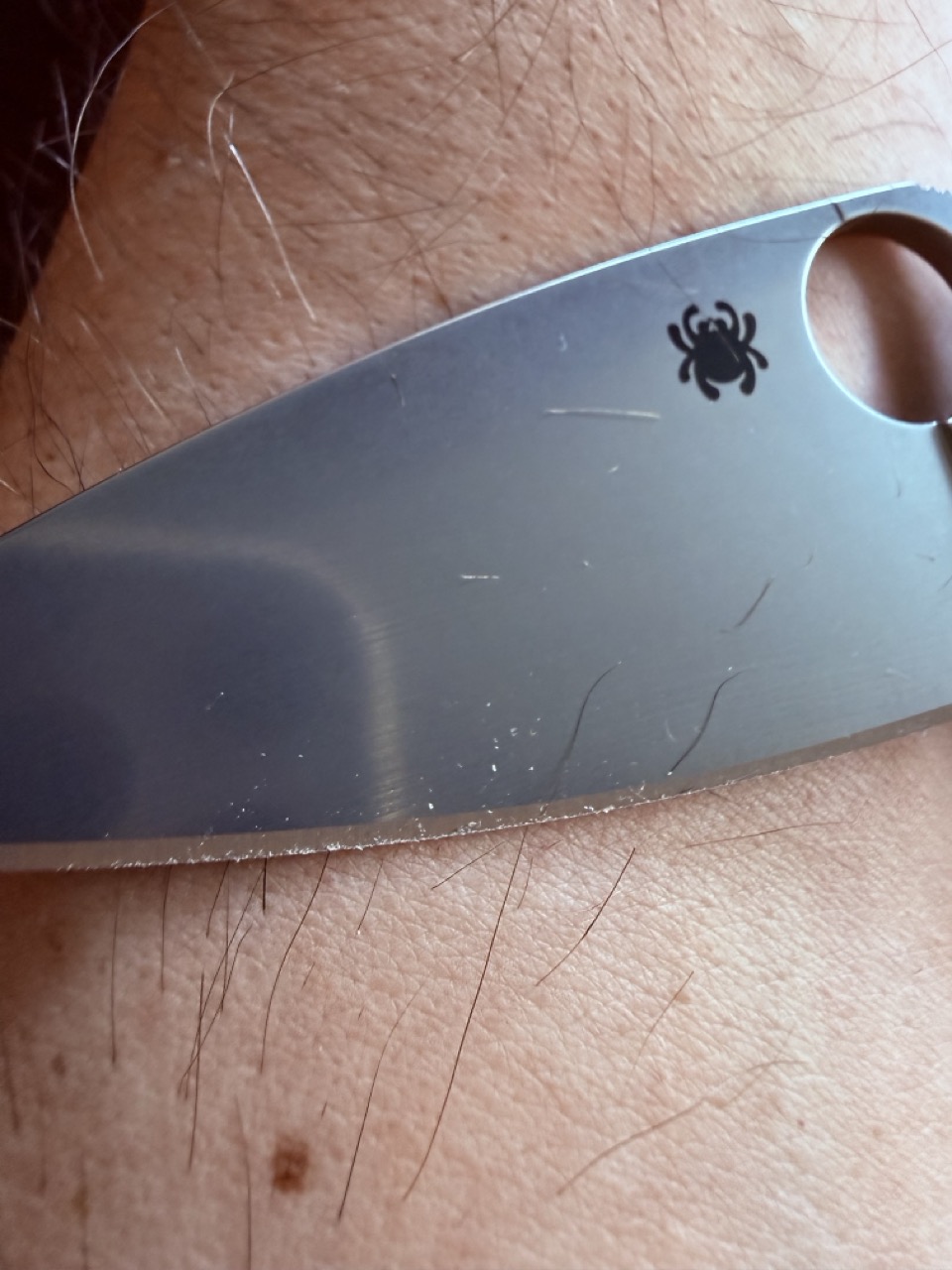
Out of the box, the knife easily shaves arm hair. That’s already an excellent factory edge.
Still, I can’t resist seeing if I can make it even better. My first stop will be an old leather strop loaded with diamond powder and automotive polishing compound. I’m curious to see how REX 121 responds to such a light treatment before I ever think about putting it on a stone.
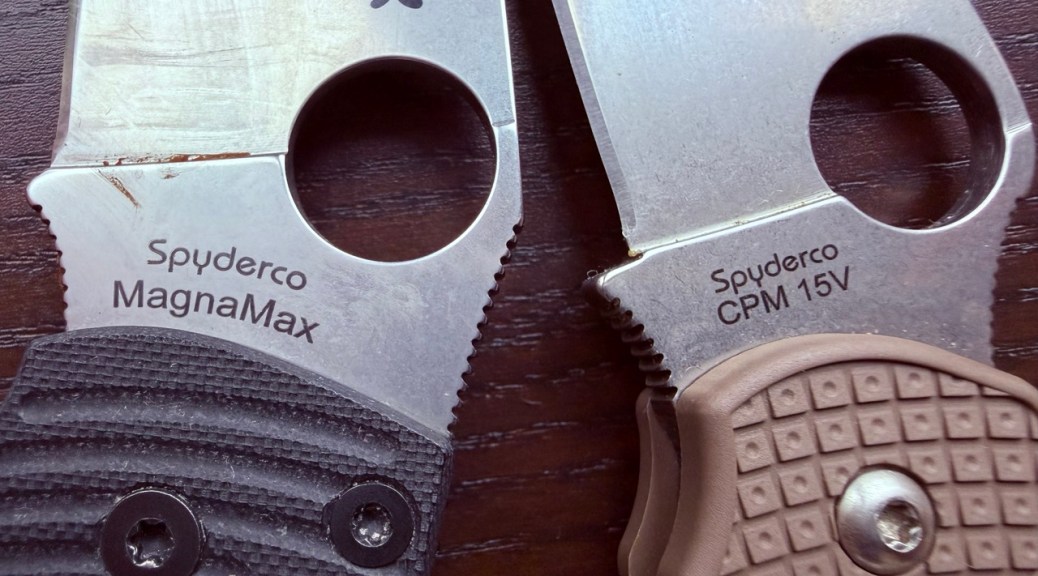
I’ve already spent a lot of time with K390, CPM 15V, and MagnaMax.
The Sage 6 will allow me to discover whether REX 121 is simply the next step in edge retention—or whether it offers a genuinely different cutting experience.
One thing is already certain: this isn’t a steel designed for everyone. It’s a steel for enthusiasts who value ultimate cutting performance above almost everything else. And that alone makes it fascinating.
Steel alone doesn’t define cutting performance. Geometry is just as important—sometimes even more so.
A perfect example is my Manly Wasp in S90V. Between its outstanding steel and its incredibly thin geometry, it cuts like an absolute beast.
Over the years, I’ve convexed every one of my Sage knives. The latest was my Sage 5 Salt in MagnaCut, which I gradually transformed into an outstanding whittling machine. That subtle convex geometry made an already excellent cutter even more enjoyable to use.
But this Sage 6 raises a different question.
Will the factory geometry already be so good that I’ll simply leave it alone?
Will I eventually have the patience—and the courage—to convex the edge of a blade made from CPM REX 121?
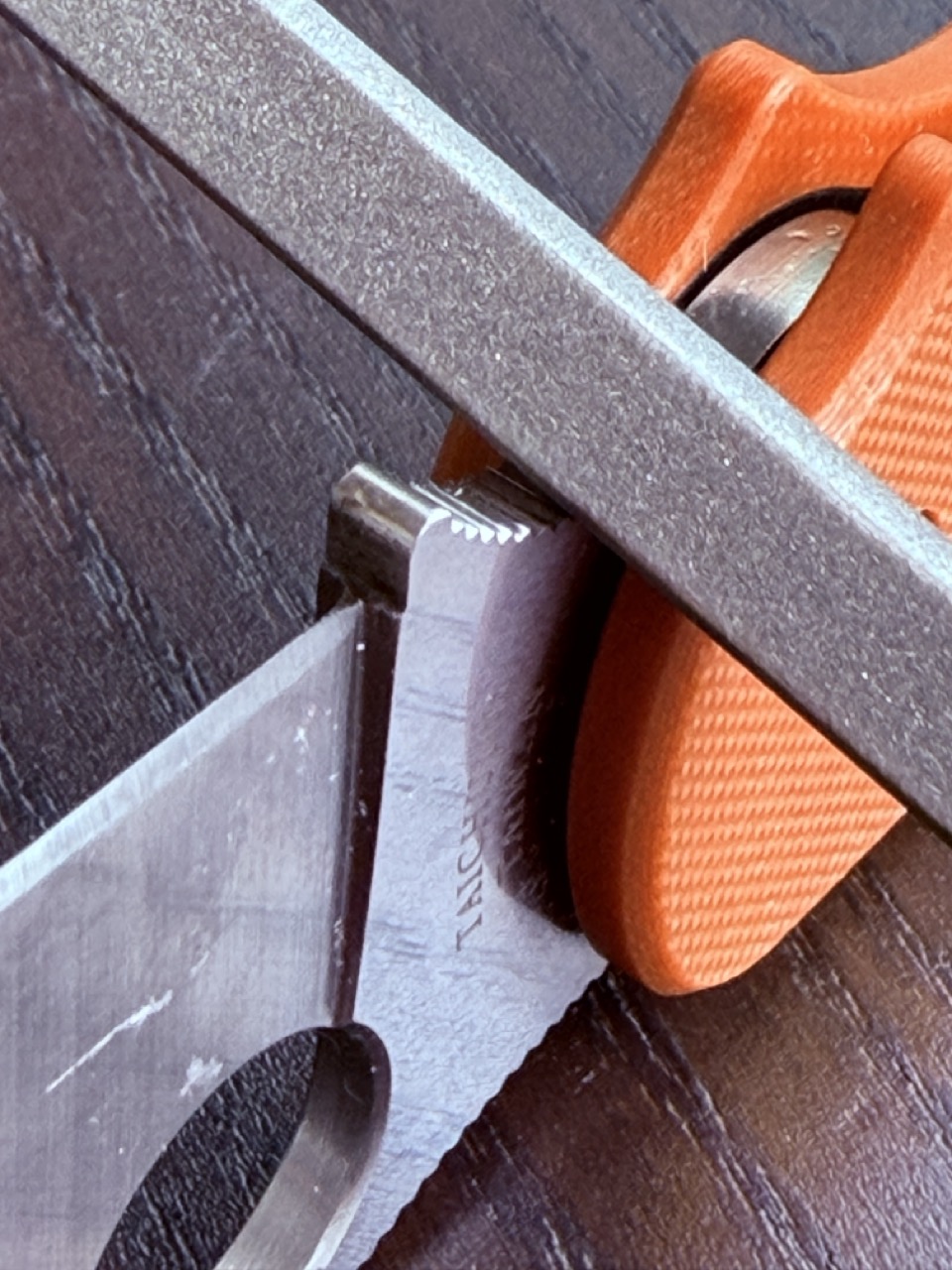
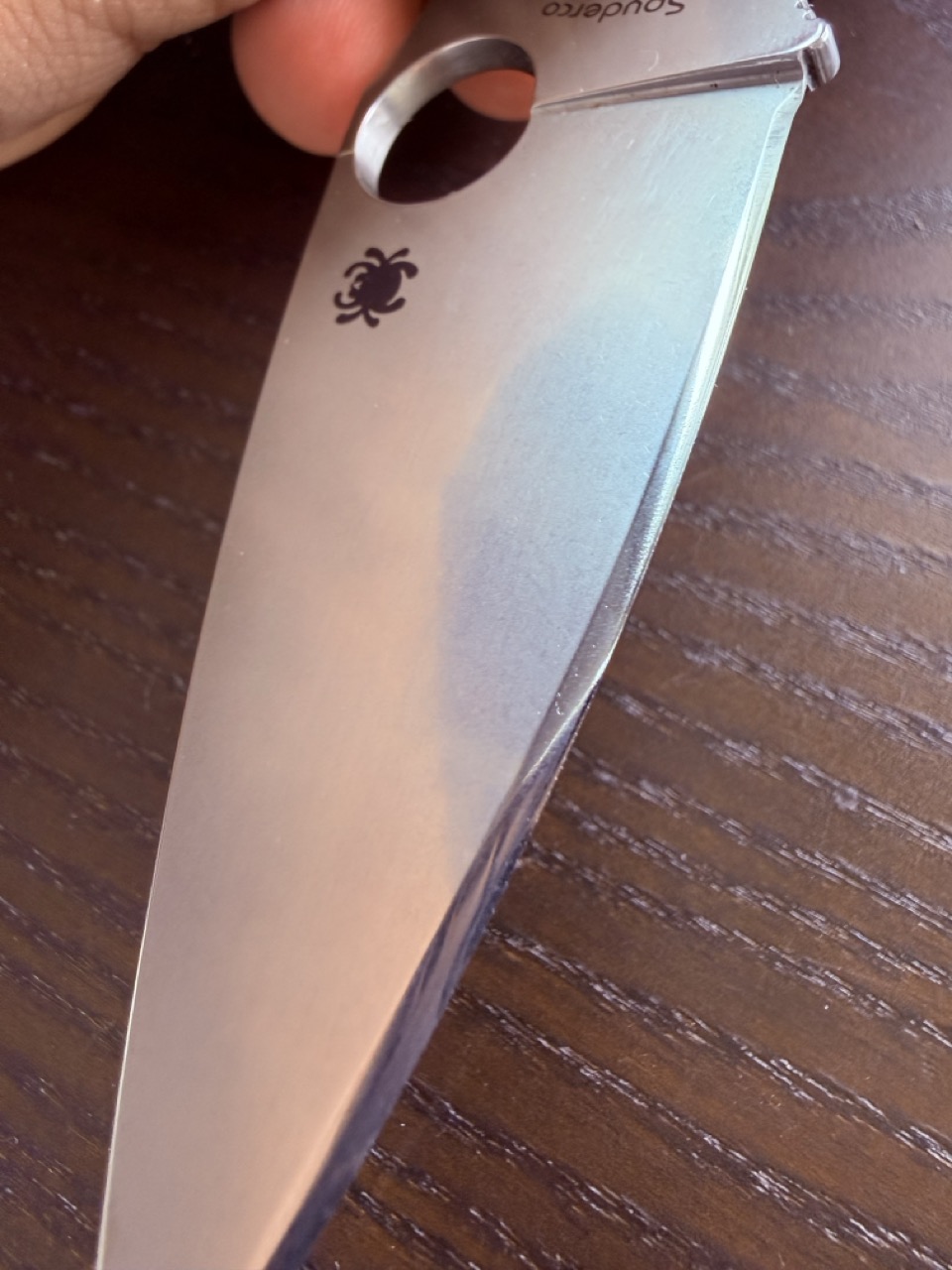
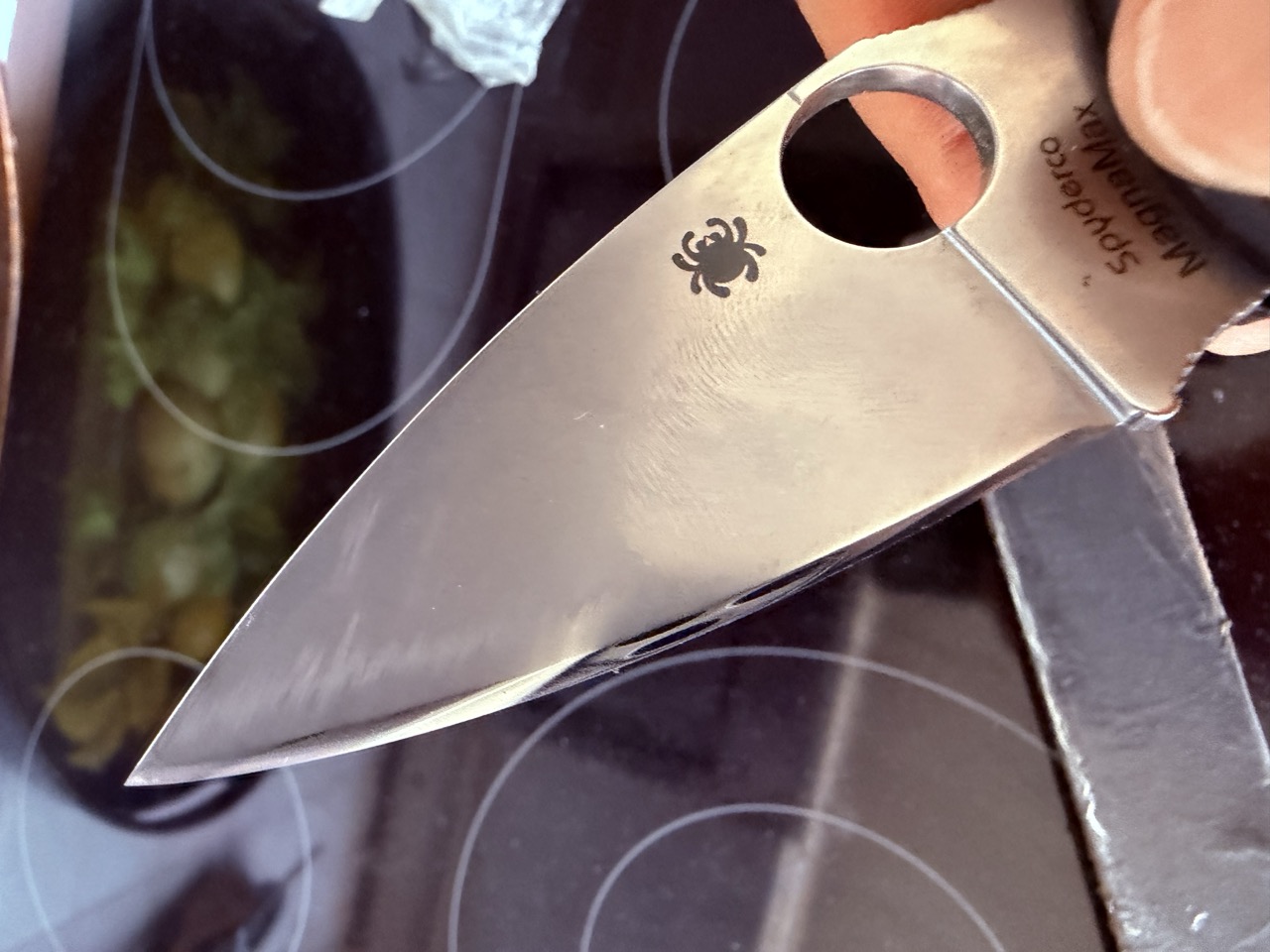
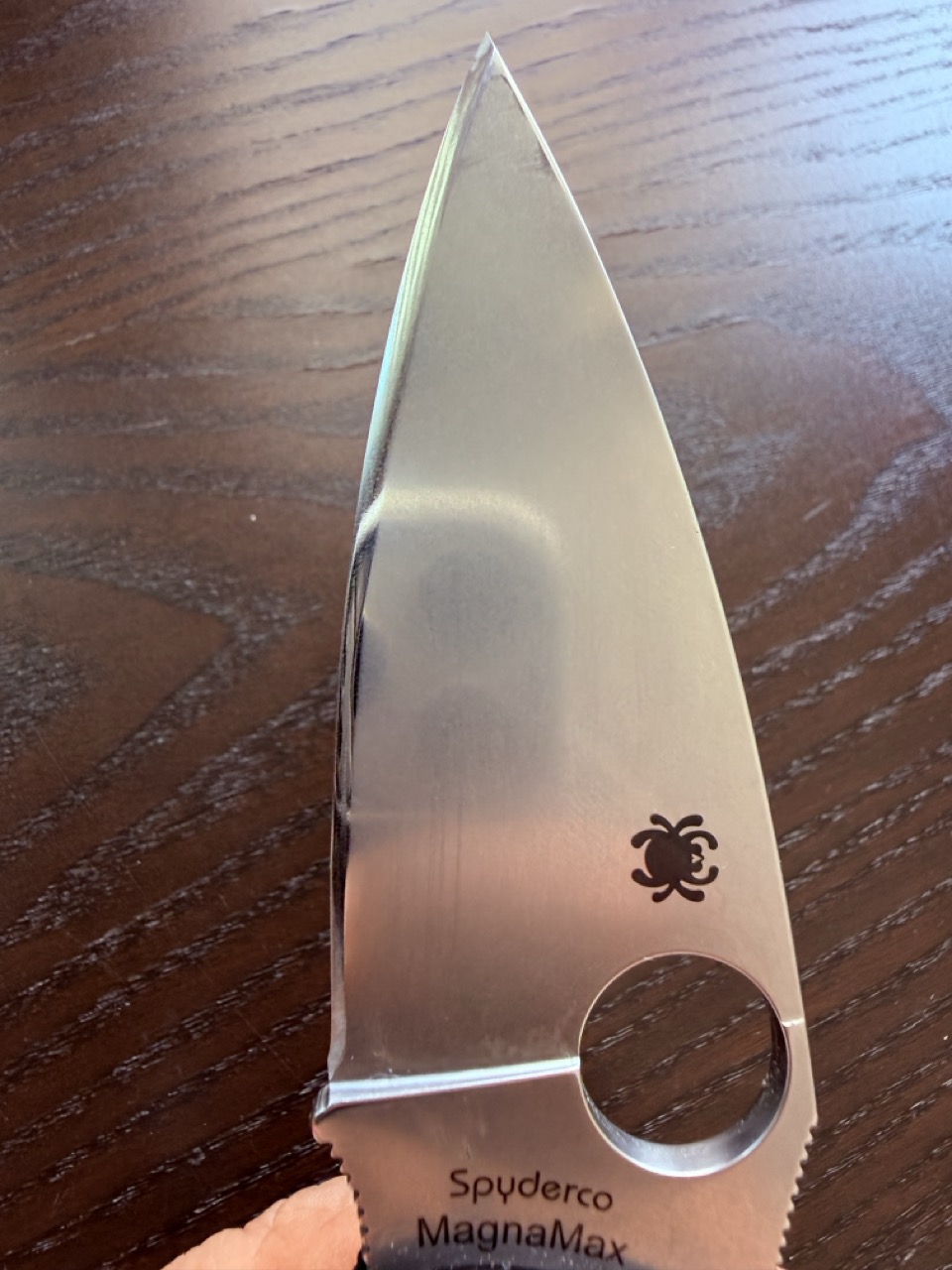
For now, I wasn’t entirely satisfied with the amount of force required to cut through the bottom of a plastic Coke bottle. So I decided to de-shoulder the factory edge using my Diamond Stuff 2. This is not a reprofile, and certainly not a convex edge. It’s simply a light de-shouldering of the bevel to improve cutting efficiency while keeping the original edge geometry essentially intact. The steel responded surprisingly well, and the operation was completed without any difficulty.
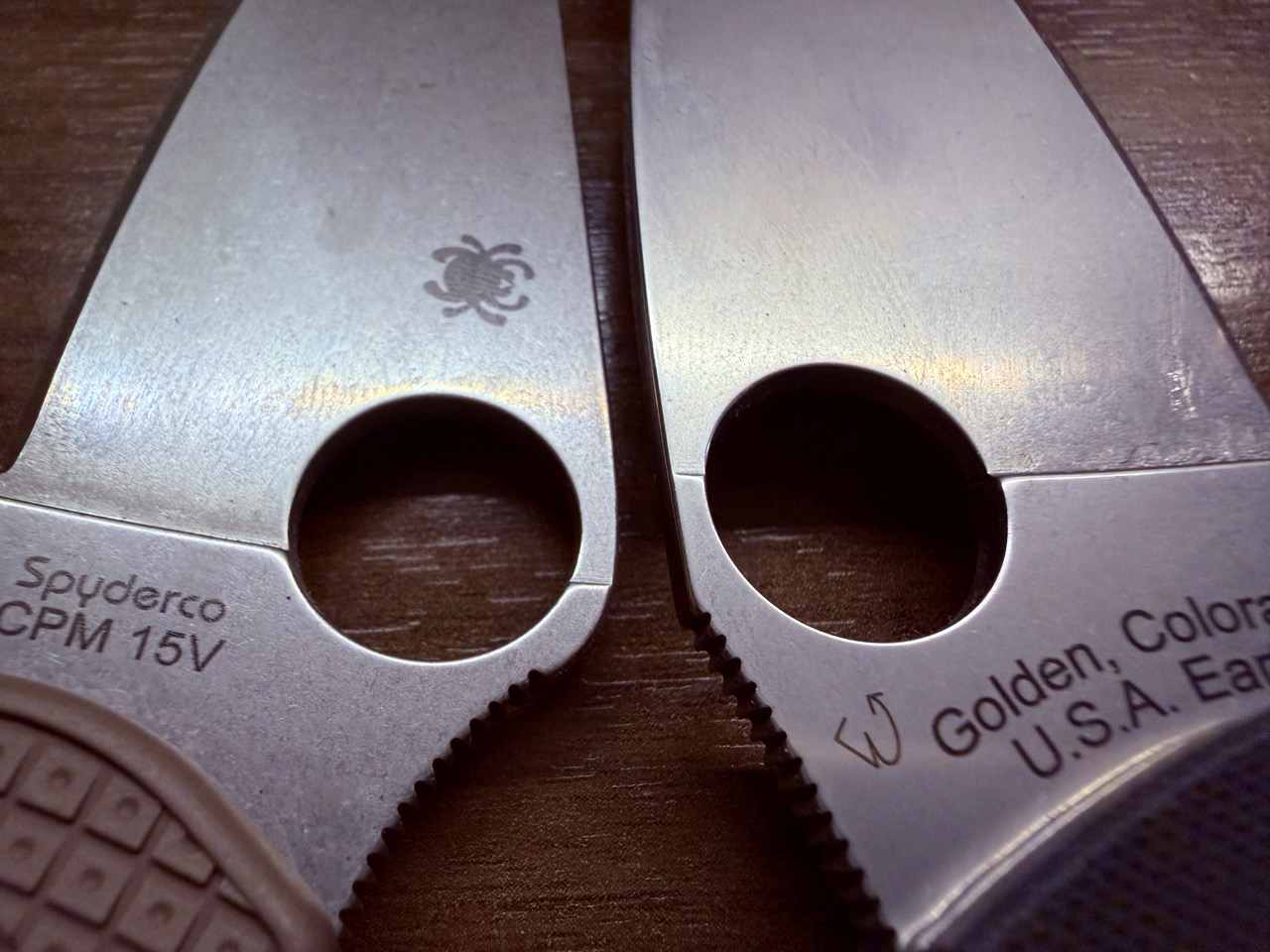
Eventually I will not treat my Sage 6 like my Paramilitary 2 Lightweight in CPM 15V, whose factory geometry I have deliberately left untouched. 😉 Under my diamond stones, Rex121 feels like Maxamet to me. And I have enjoyed a lot reprofiling my Maxamet edges.
The very first thing I did was soften the G10 underneath and around the pocket clip.
Spyderco’s G10 offers excellent grip, but like many enthusiasts, I prefer to slightly round the area where the clip contacts the pocket. It takes only a few minutes with fine sandpaper and makes the knife much friendlier to carry in the pocket without noticeably affecting grip.
While doing so, I made sure to hold my breath as much as possible and avoided creating unnecessary dust. G10 and ceramic dust should never be inhaled. Whenever you sand composite materials, it’s good practice to work in a well-ventilated area, wear appropriate respiratory protection, and clean up the dust afterward.
I’m particularly careful about this because one of my neighbors, a retired dental technician, spent decades working with ceramic materials. Today, he lives with supplemental oxygen after years of occupational exposure to fine dust. Whether or not it was the sole cause, it was a stark reminder to me that airborne fine particles should never be taken lightly.
This is only a first glimpse of what is already proving to be a remarkable knife.
Let’s be honest: the Spyderco Sage 6 REX 121 is a rare knife, and its price will understandably place it beyond the reach of many enthusiasts. I’d like to sincerely thank again Spyderco for giving me the opportunity to evaluate it through their Ambassador Program and to use it exactly as I see fit.
What I can already say is this: from a purely mechanical standpoint, this is one of the finest production folding knives I have ever handled.
The action is simply outstanding. The Button Compression Lock is unbelievably smooth—almost as if the blade were riding on magnetic bearings rather than washers. There is virtually no friction throughout the opening and closing motion. The blade glides effortlessly while remaining perfectly controlled.
Fit and finish are exactly what I’ve come to expect from Spyderco’s Taichung factory: flawless blade centering, rock-solid lock-up, and exceptional attention to detail.
I own several high-end folders, and mechanically, this is without question one of the smoothest I’ve ever handled.
As for the CPM REX 121 blade steel, I’ll reserve judgment until I’ve spent enough time using it, maintaining it, and eventually sharpening it. A steel like this deserves more than a few days of testing.
If your local knife dealer has one in stock, I genuinely encourage you to handle it for yourself. Open it. Close it. Feel the action. The Balance. Only then will you understand.
Just be warned…
You may leave the shop wondering which knives you’re going to sell to make room for a Sage 6 REX 121.
Spyderco has released two knives this year that, in my opinion, perfectly illustrate two very different visions of the modern high-performance folding knife.
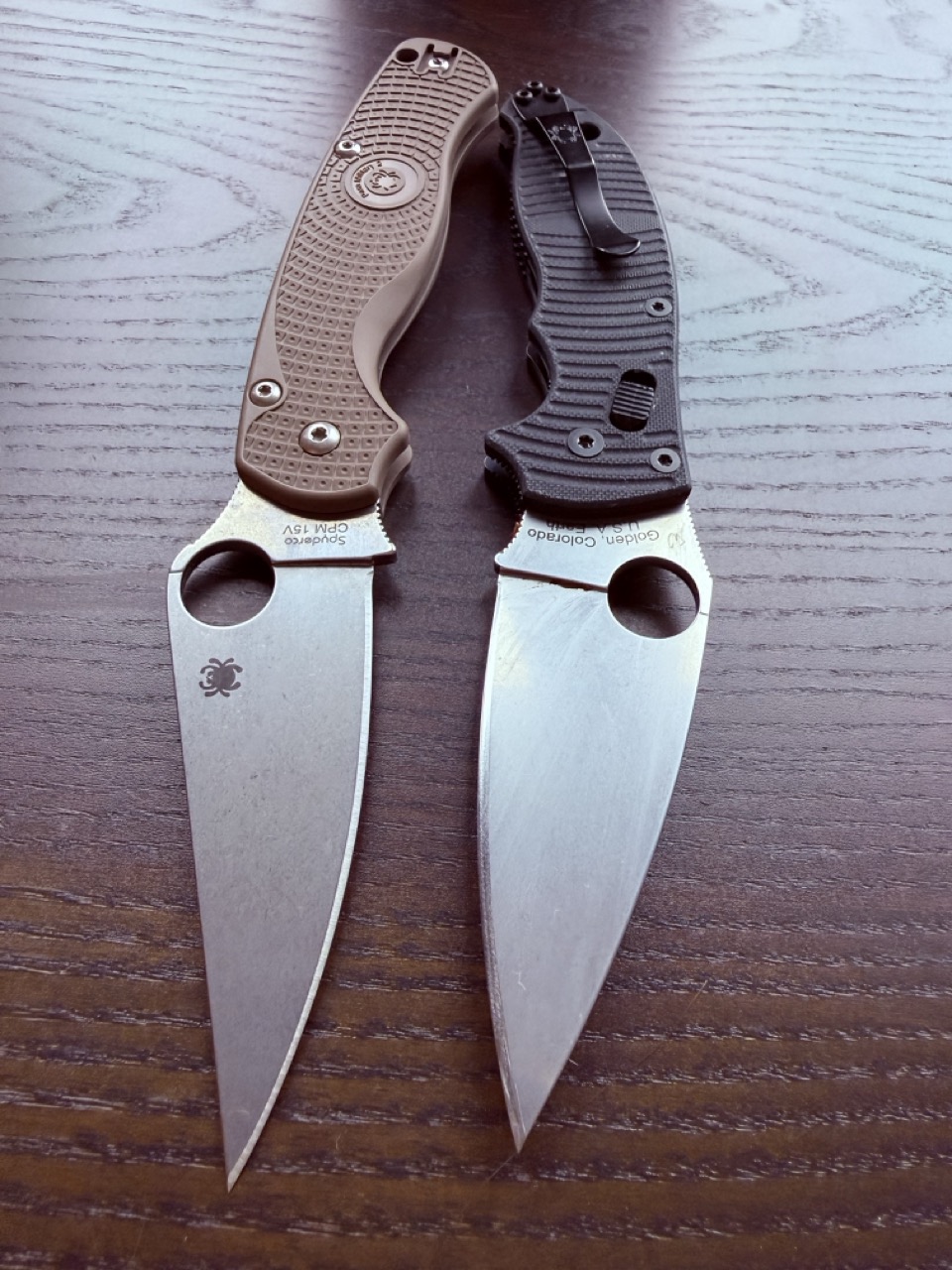
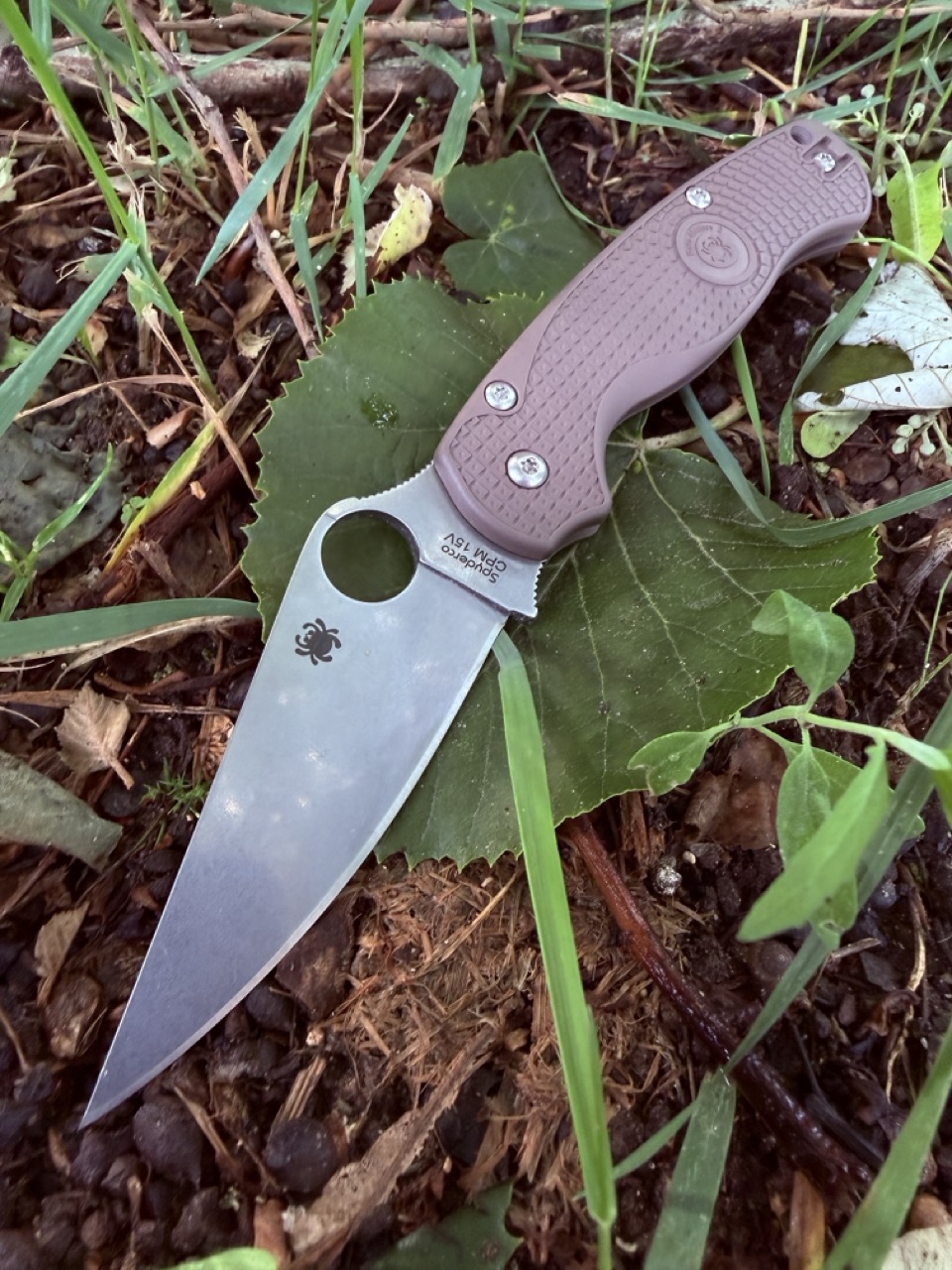
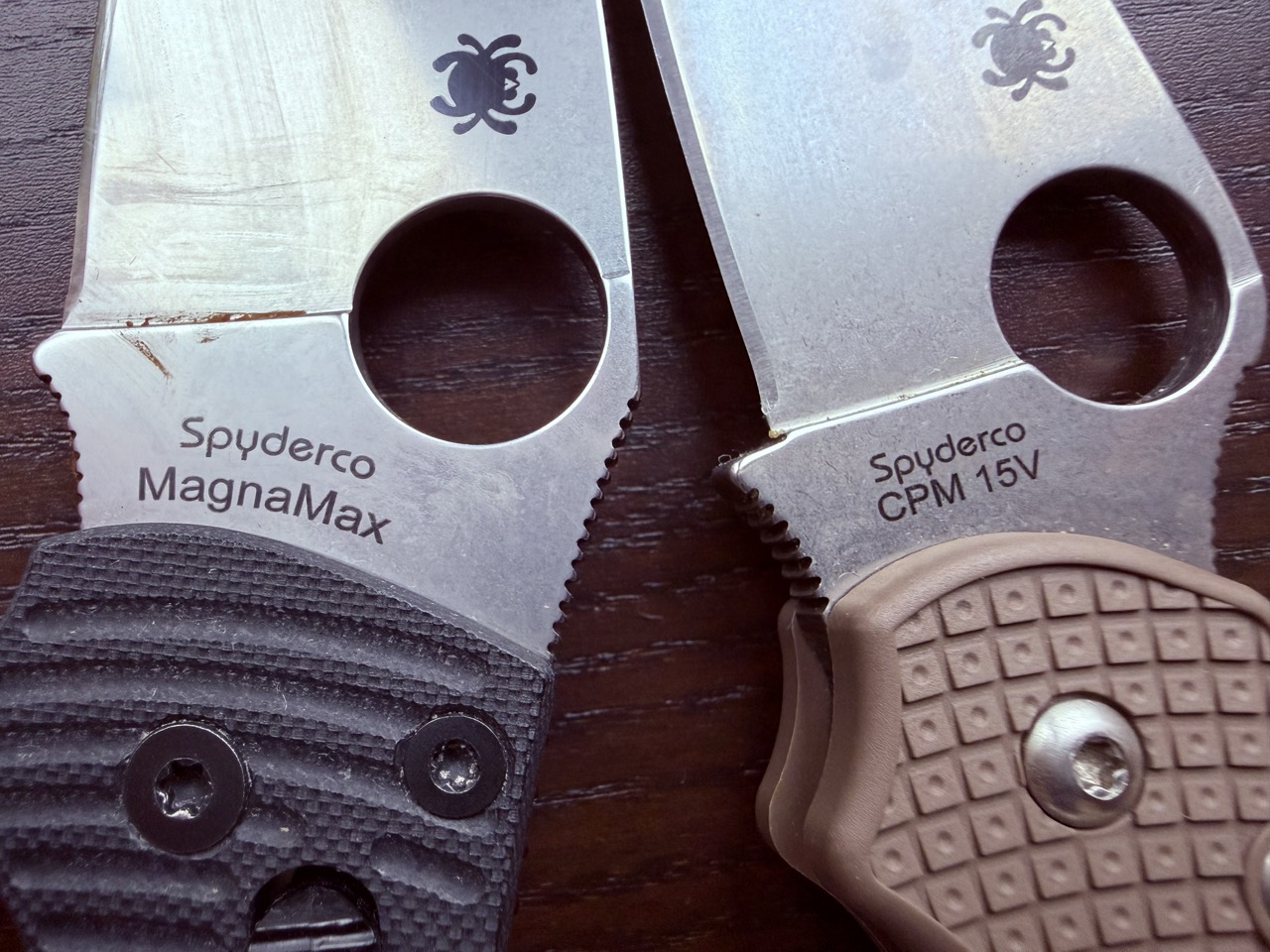
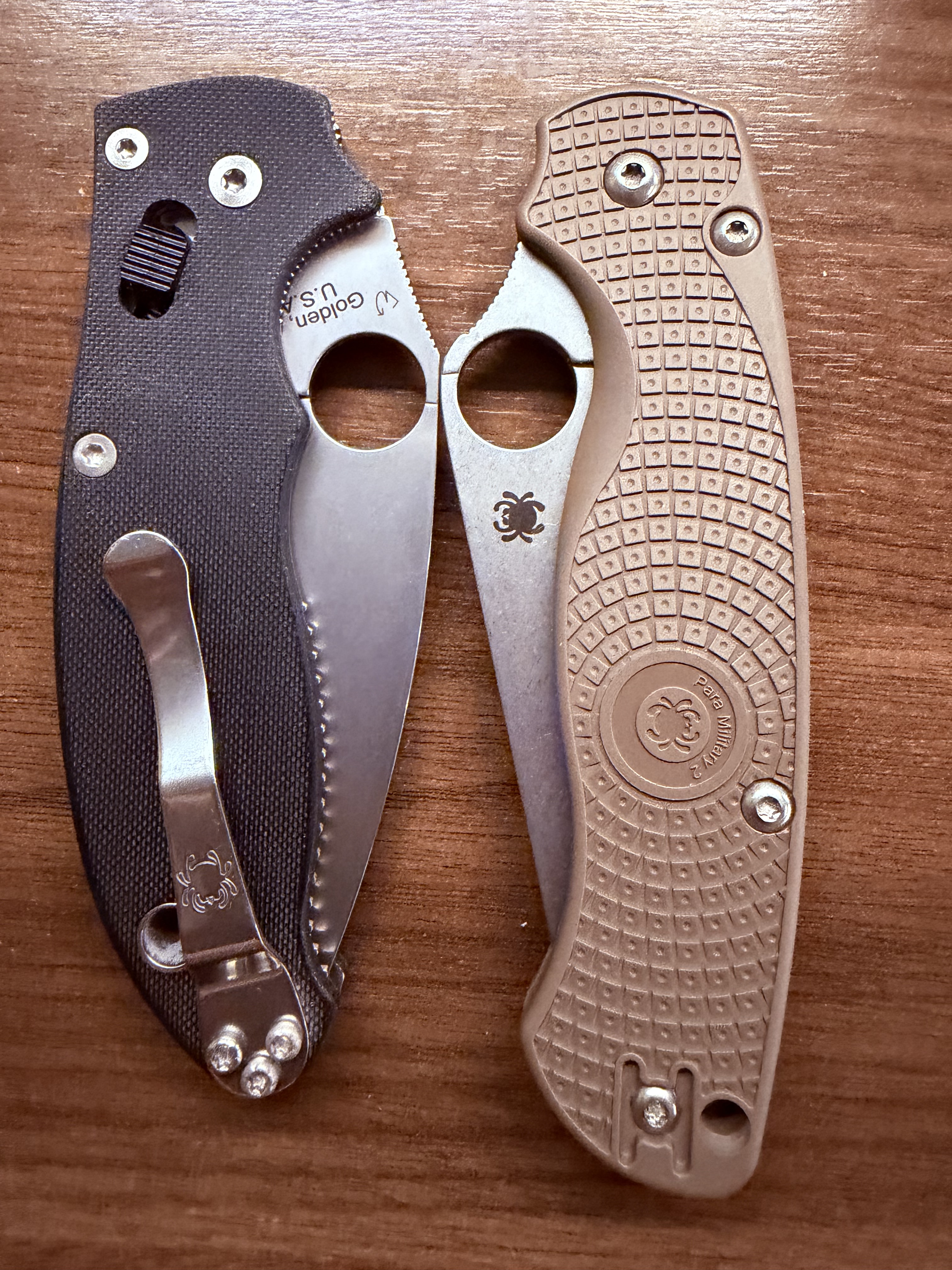
On one side stands the Para Military 2 Lightweight CPM-15V Sprint Run—a knife designed around one simple objective: maximizing cutting performance while carrying as little weight as possible. A sprint run destined to be harder to find.
On the other is the Manix 2 MagnaMax, a folder that feels unapologetically overbuilt, engineered to inspire confidence in every situation while introducing what may become one of the decade’s most important alloy: a “stainless tool steels”.
Spoiler alerts: after living with both, I don’t think one replaces the other.
They simply excel in different ways.
The Lightweight Champion
At only 76 grams, the PM2 Lightweight almost disappears in the pocket.
Every design decision serves one purpose: efficiency.
The FRN scales, the simplified construction, the excellent (refined *) Compression Lock and the outstanding blade geometry all contribute to a knife that “cuts far above its weight class” sorry for the cliché.
What impressed me most wasn’t even CPM-15V. It was the knife itself.
(*Spyderco quietly refined the Lightweight platform. Robin’s teardown revealed a redesigned Compression Lock spring featuring a longitudinal groove that improves lateral stability during operation. It’s an invisible modification, but one that perfectly illustrates Spyderco’s continuous evolution of an already outstanding design.)
The result is a PM2 that feels more mature than previous Lightweight generations.
The Heavyweight Workhorse
The Manix MagnaMax immediately sends a different message.
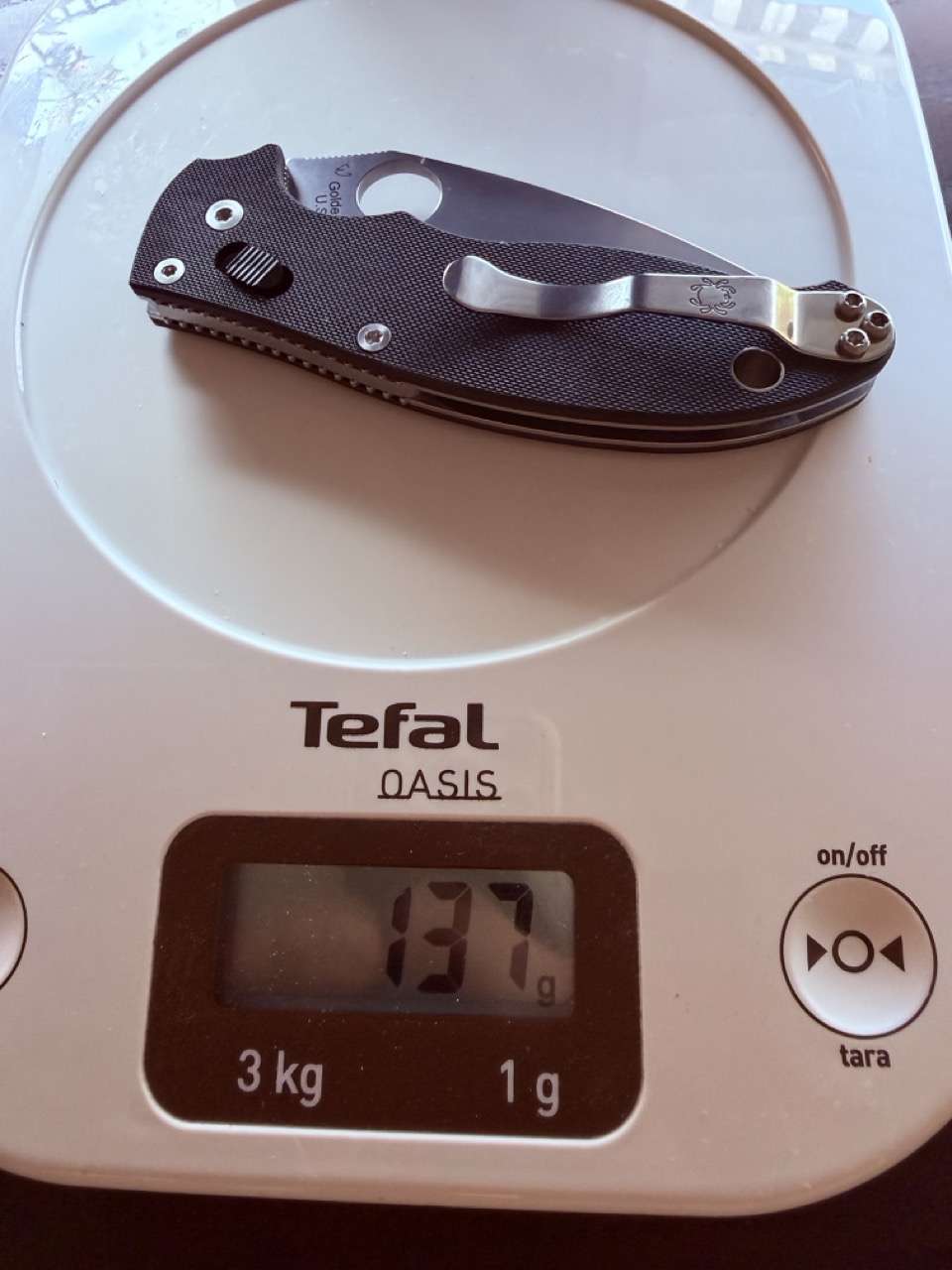
At 136 grams, it’s sixty grams heavier than the PM2 LW.
Normally I would criticize such an increase.
Here, I don’t.
Because the weight isn’t wasted and it was welcomed. To quote Wallach on the forums: “The other thing that jumped out at me immediately was the weight. I haven’t handled a “base” model Manix 2 in quite some time, and I had forgotten how heavy and dense this knife felt with full steel liners. I have a set of AWT scales coming for this knife, but I’m thinking I will try carrying it like this for a while, as I have to admit the knife has a different feel to it.”
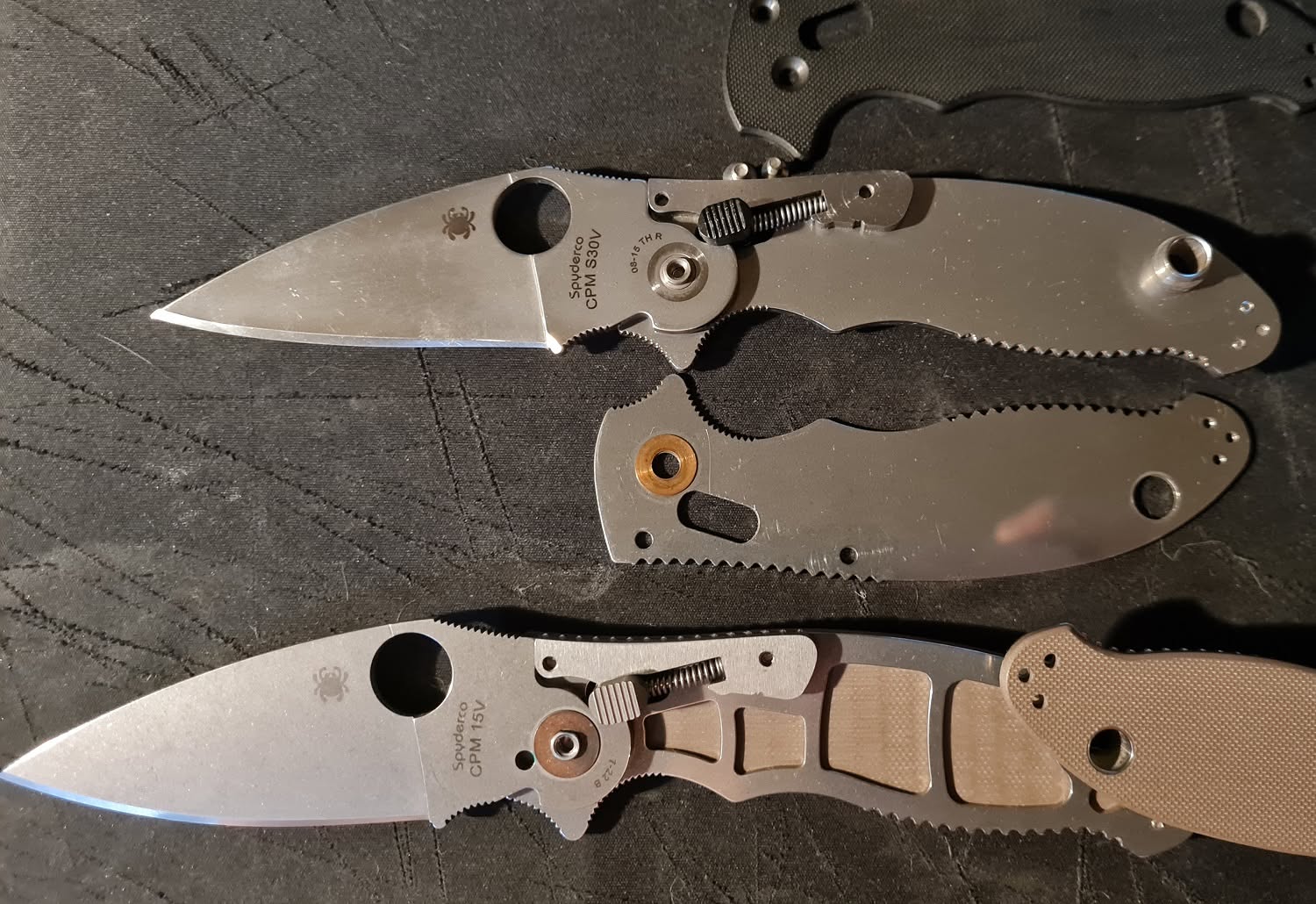
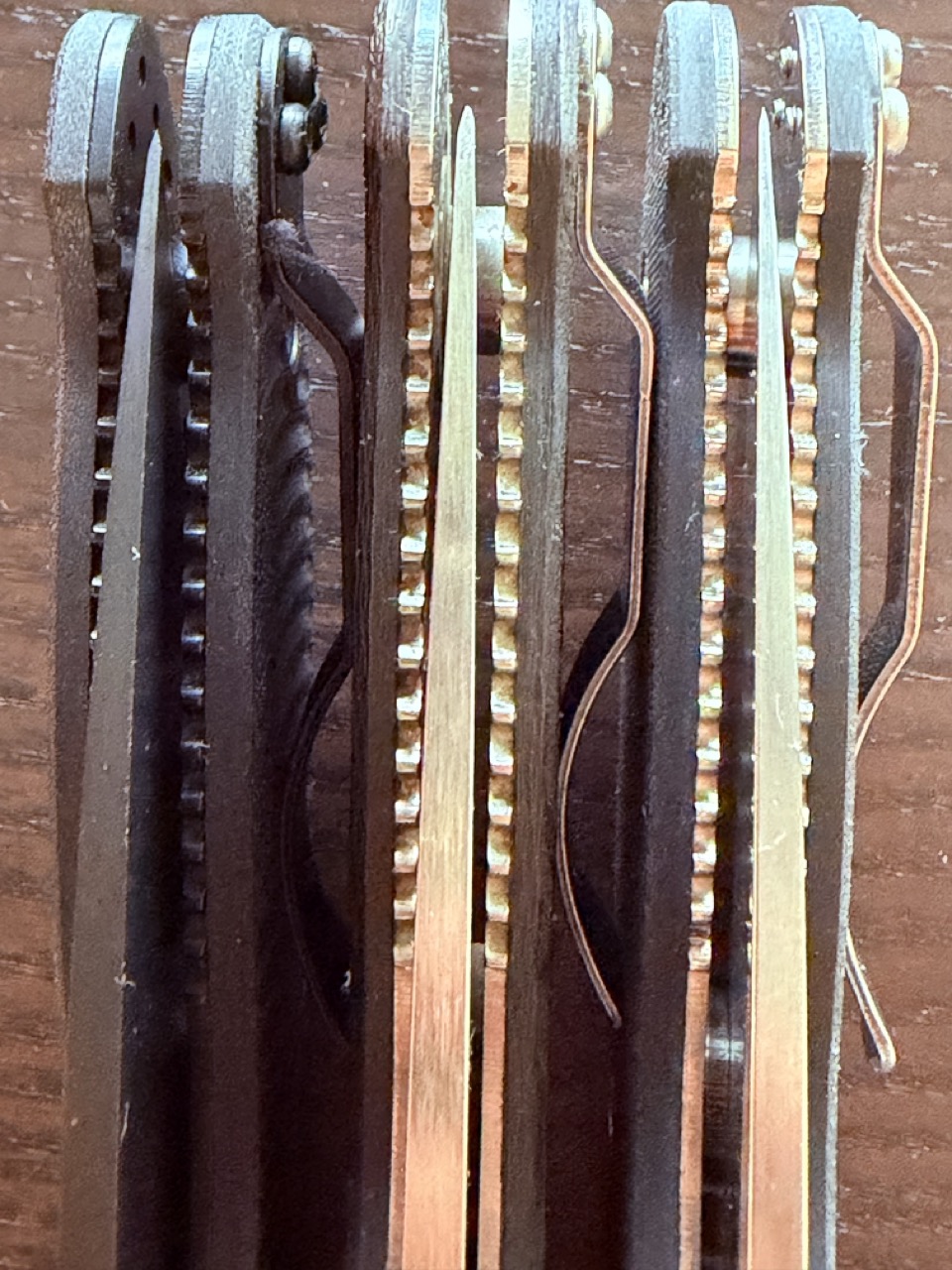
Spyderco using full stainless steel liners, paired them with a stronger Ball Bearing Lock spring and produced perhaps the most confidence-inspiring Manix I’ve ever handled. It is striking.
Everything about this knife feels designed for decades of hard use.
Even the details on the MagnaMax blade impressed me:
The softened jimping, beautifully finishe, refined tip geometry and exceptional fit and finish all suggest that Spyderco knew this wasn’t just another run.
It feels now like a flagship.
CPM-15V vs. MagnaMax
Comparing these steels isn’t as straightforward as it first appears.
CPM-15V remains one of the absolute kings of wear resistance.
If your priority is maximum edge retention and you don’t mind spending extra time sharpening, it remains extremely difficult to beat.
MagnaMax follows a different philosophy.
Rather than maximizing only wear resistance, it attempts to reach an extraordinary balance between edge retention, corrosion resistance and toughness.
What impressed me during my testing is that MagnaMax never made me think about corrosion.
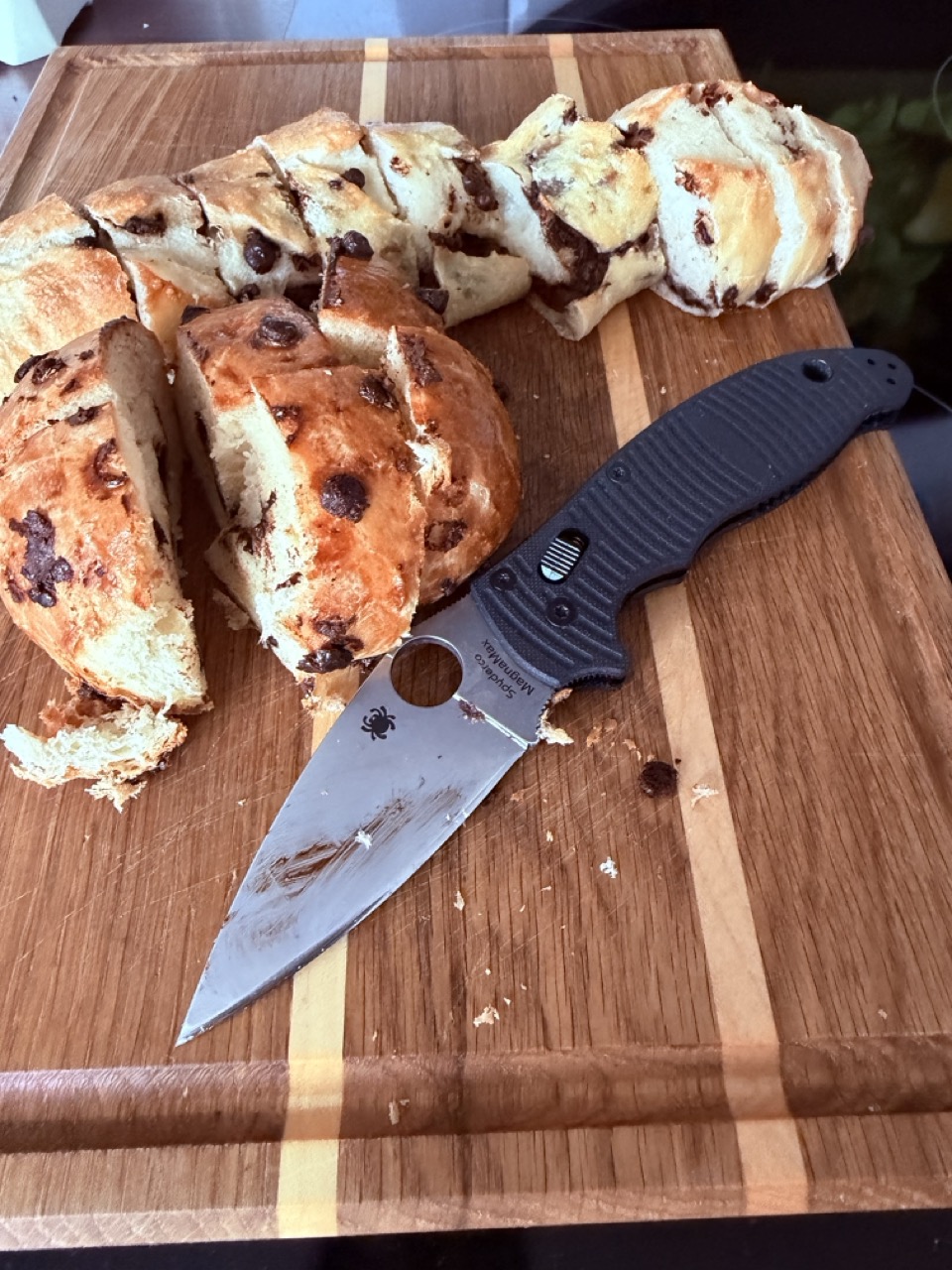
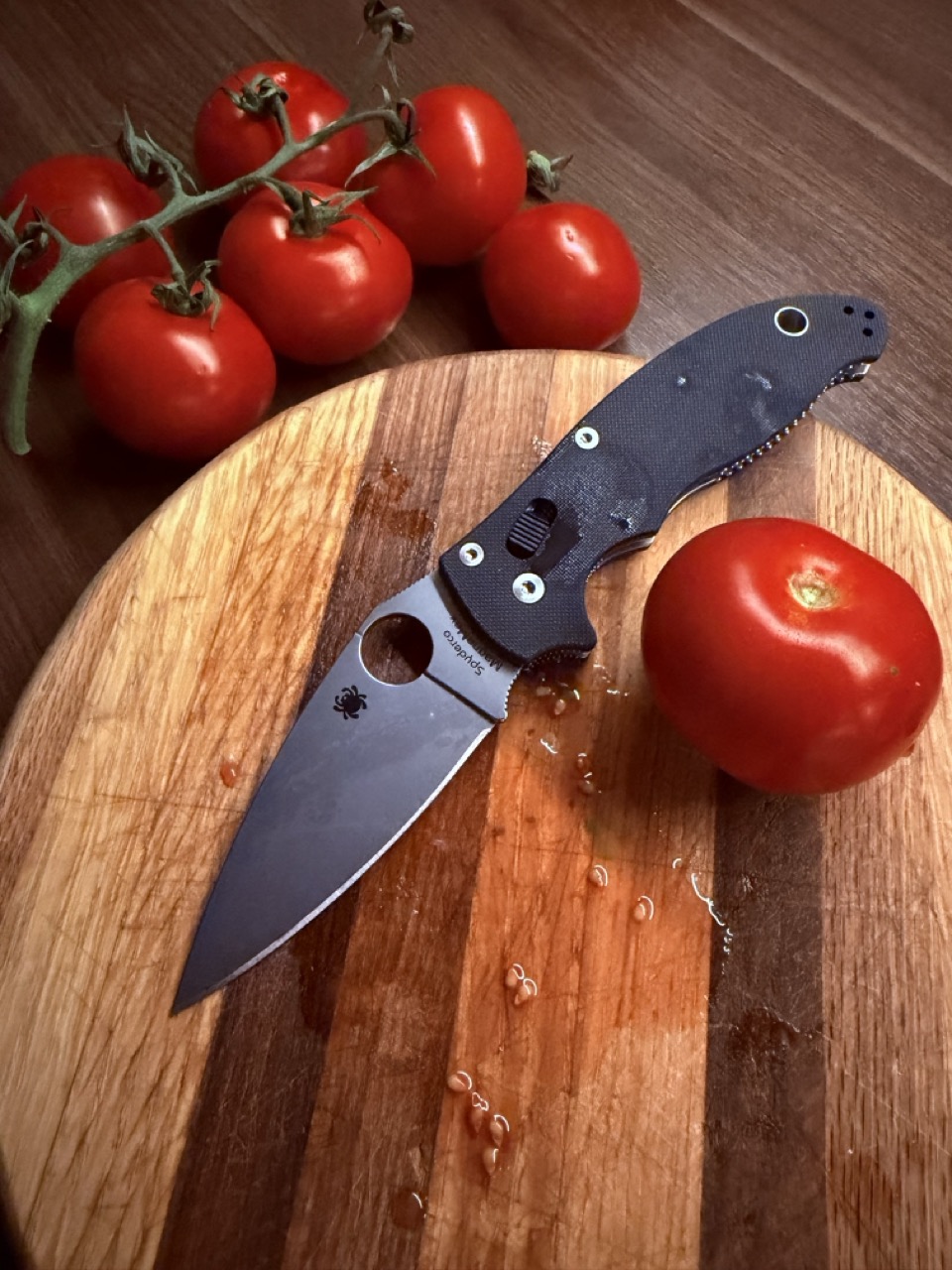
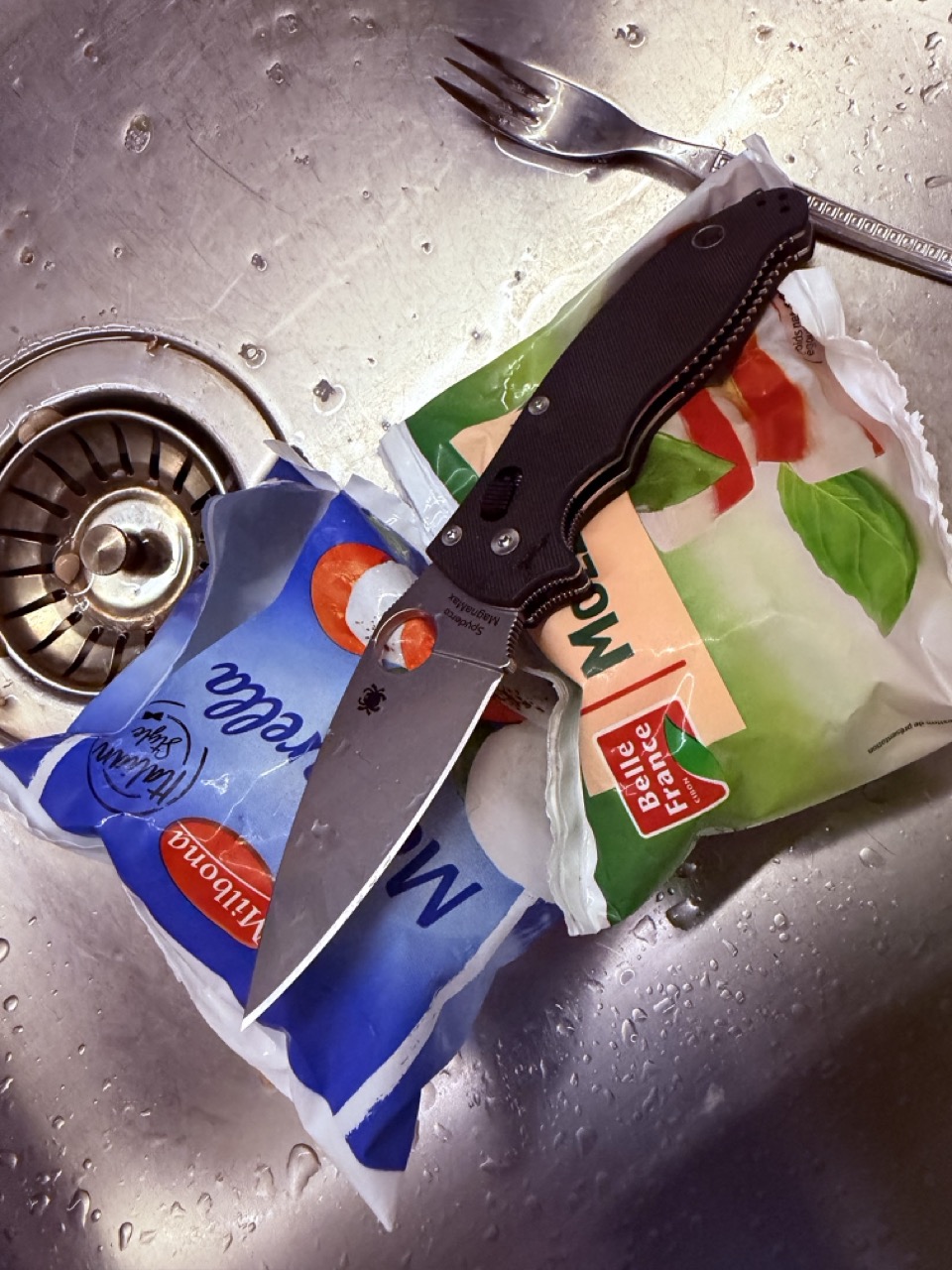
I simply used it. Kitchen work. Wet food. Cheese. Tomatoes. Lemons. Oily hands. Daily carry.
It behaved exactly as a great working stainless steel should.
After leather stropping both knives, I noticed that CPM 15V still exhibited a slightly toothier edge than MagnaMax. It became particularly noticeable on thick-skinned, fully ripe tomatoes. The PM2 would immediately grab the skin and zip through it effortlessly, without compressing or squashing the fruit first. But that may simply reflect my sharpening skills—or my lack of them. Sharpening is always a tricky business, so I’m reluctant to draw any firm conclusions from that observation alone.
Meanwhile, based on my own use—mainly breaking down a number of cardboard boxes—MagnaMax already feelsremarkably close to the elite wear-resistant tool steels that normally ask you to sacrifice corrosion resistance.
That said, these are not controlled, quantified tests like those you often see on YouTube. I have no reliable way of measuring actual edge wear, so this remains a subjective impression rather than a scientific conclusion.
If that impression proves accurate over time, this balance between excellent edge retention and true stainless performance may well become MagnaMax’s greatest strength.
Sharpening
Interestingly, both steels surprised me.
CPM-15V behaved exactly as expected. Slow. Demanding. Rewarding.
MagnaMax surprised me for another reason.
My normal sharpening routine simply wasn’t producing the finish I wanted. Only after adapting my technique did the steel really begin to reveal its potential.
15V teaches me patience. MagnaMax teaches me adaptability. 😉
Living With Them
The PM2 is the knife I instinctively slip into my pocket when I want maximum performance with minimum weight. The Manix is the knife I reach for when I expect to spend the entire day using it.
It fills the hand better. Its Ball Bearing Lock feels almost indestructible. It simply inspires confidence.
Final Thoughts
If someone asked me which knife cuts better, I’d probably answer, Define “cuts better.” 😉
If someone asked which knife feels stronger, I’d immediately answer: the Manix.
If someone asked which steel keeps an edge longer, CPM-15V still deserves its legendary reputation. The trade-off, of course, is that you have to pay a little more attention to corrosion and keep the blade lightly oiled.
If someone asked me which knife I’d take on a hike or while travelling, the honest answer would probably be: a future PM2 Lightweight in MagnaMax!
I think it would also make an outstanding hunting knife, as I mentioned in my previous review.
Then again… so would the Manix 2 MagnaMax.
Oh boy… what a dilemma.
The PM2 Lightweight CPM-15V reminds me of a Lotus Seven fitted with the most powerful engine ever officially installed in a Seven—the 550-horsepower supercharged RST-V8 of the Caterham Seven Levante. It’s all about maximizing performance while keeping weight to an absolute minimum.
The Manix 2 MagnaMax, on the other hand, feels like Mad Max’s Ford Falcon Interceptor: heavier, tougher, brutally reassuring, and seemingly ready for whatever the road throws at it even the apocalypse !
But if someone asked me which knife I’d take on an unknown journey—one where I might encounter rain, food preparation, workshop tasks, cardboard, rope, wood, and endless daily cutting…
I’d choose my Manix 2 MagnaMax Salt “the quintessential Goldilocks knife” to quote Red Leader on the forums.
Not because it wins every category. Because it hardly loses any.
But even with the Vanilla version and it full liners and steel ball, Spyderco didn’t simply release another Manix with a new steel.
They quietly improved almost every aspect of the platform while introducing MagnaMax into production.
The PM2 Lightweight CPM-15V remains one of the finest slicing tools I’ve ever carried. And I’m planning to go in vacation with it as my only knife.
The Manix 2 MagnaMax may well become one of the finest all-around folding knives Spyderco has ever built.
Your mileage may vary, but just like their automotive counterparts, they’re both a joy to live with, really ! One is built to set lap records. The other is built to survive the rally.
Summer is still in full swing, which means salads are a daily ritual at home. Every day, V8 slices cucumbers, pickles, tomatoes of every size, melons, lemons, and all kinds of cheeses—some of them considerably more invasive to a knife’s mechanism than others.
Working with oily or soaking wet hands is simply part of the experience. Once again, it reminded me just how pleasant the G-10 handles on the Salt models are under these conditions, whether it’s V8 or Gurney, my Military 2 Salt.
I noticed that MagnaMax wasn’t biting quite as aggressively into my ripe tomatoes with their slightly thick skins, so I decided to start refining the edge. I wanted to see whether this steel would respond better to a slightly rougher, toothier finish rather than a highly polished edge.
As always, this wasn’t about chasing numbers—it was about chasing feel.
One thing is certain: for my rather amphibious way of using knives in the kitchen—after all, the French are still “frogs”—MagnaMax has proved completely stainless. It is a genuine luxury never having to think about corrosion while preparing food every day.
Diamonds Are a Carbide’s Best Friend
As I began convexing the edge, I immediately noticed that MagnaMax proved considerably more resistant to reprofiling than any of my MagnaCut blades. For sure ! 😀
Every MagnaCut knife I’ve owned accepted a convex edge relatively easily. MagnaMax is a different animal altogether. It immediately reminded me of CPM S90V and the stubborn way that steel seems reluctant to let go of its carbides.
It took time.
Rather than trying to reshape everything in a single session, I worked on it a little every day. My goal was simple: create a thinner convex geometry that would allow MagnaMax to express itself fully in wood.
After about two weeks, I think I’ve finally arrived at a thinner geometry that suits me.
At the very least, tomato skins no longer stand a chance. 😉
Now comes the interesting part: comparing it against some of my favourite carving knives.
Among the Whittlers
The first knife that comes to mind is my heavily customized Yojimbo 2 in CPM M4.
“Jade” remains an absolute joy to use on dry wood. After extensive modifications and years of refinement, it has become one of my favourite woodworking knives. I’ve reviewed it several times over the years because it continues to impress me.
I also compared V8 with my LionSteel Nano, another knife carrying a heavily convexed edge. MagnaCut responds beautifully to this kind of geometry, and “Thorin” is an absolute beast when it comes to shortening branches.
In terms of pure enjoyment while carving dry wood, it absolutely belongs in that company.
It doesn’t have that silky smooth sensation of CPM M4 hollow ground Yojimbo 2. Instead, it feels a little more assertive.
Years ago, on my own entirely subjective mental scale, I often compared ATS-34 with M2 high-speed steel. Cuts made with M2 always seemed to leave a sort of silky finish on the wood, whereas ATS-34 felt rougher, almost more aggressive.
There is nothing scientific about that observation. It is simply the accumulated feeling of using many different steels over the years. (God, Jade looks really like a folding seax (scramasaxe in French) on this pictures)
Some steels seem to glide through wood, though. YMMV.
Others seem to bite their way into it. Hungry edges !
To me, MagnaMax clearly belongs to the second category: the “hungers” !
Of course, blade geometry is a huge part of that sensation, which is precisely why I wanted to convex the edge until it reached the same level as the other knives in this comparison.
At the moment, with its current convex geometry, V8 seems to bite into dry wood even more aggressively than my M4 Yojimbo.
Whether that’s entirely due to the steel, the edge geometry, or a combination of both, I can’t say with certainty.
What I can say is that it feels exceptionally satisfying to use.
Fifteen Days Later
That’s where I stand today, but I’m nowhere near finished.
V8 has replaced the wonderful Gurney as my everyday companion around the house. When I leave home, though, I still prefer something a little more socially acceptable—a UKPK, a Meerkat, an Urban, or another discreet Spyderco.
The testing continues.
Oh, I also put it through a few mandatory cardboard-cutting sessions, although I have no reliable way to quantify edge retention from that alone. It just happened. But I still remember certain pseudo 440C Chinese-made knives that seemed to lose their bite after only a handful of cuts through borwn cardboard. This is not the case here.
Also, in the kitchen, my bamboo cutting boards certainly aren’t punishing that MagnaMax edge either. So far, what has impressed me most is how much effort MagnaMax demanded during reprofiling. It was tedious. 😉
Despite everything I’ve thrown at it, I still haven’t managed to take it from razor sharp to genuinely dull, yet.
It also seems to respond exceptionally well to stropping, making it easy to achieve that beautifully polished edge.
The more I use MagnaMax, the less I think about its specifications and the more I simply enjoy using it.
Perhaps that’s the best compliment I can give to this steel.
After only fifteen days, it’s already beginning to earn a place among my favourite Spyderco steels. Whether it eventually becomes a true classic remains to be seen, but the journey has been remarkably promising so far.
Today’s review is a little different. From time to time, I like to invite fellow reviewers and passionate knife enthusiasts to share their own perspective. This is the second article written for Nemo Knives Review by Guillaume Gx, moderator of the Spyderco Fan Club on Facebook and someone who truly knows his way around a knife. As always, Guillaume offers an honest, hands-on glimpse at Spyderco’s latest release, focusing on the details that matter in real-world use.
(All photos featured in this article are also the work of Guillaume Gx.)
The Spyderco Charisma was one of the releases I was most looking forward to in 2026. Ironically, though, “big” is probably the wrong word. For the first time ever, I opened a brand-new Spyderco box and honestly thought it was empty.
The search for the knife almost turns into a game of hide-and-seek. Yet the moment you pick it up, one thing becomes obvious: the Charisma embraces simplicity like few modern folders do. Discreet, lightweight, and utterly unpretentious, that’s exactly where its appeal lies.
Forget exotic steels, elaborate handle designs, or ultra-premium materials. The Charisma embraces simplicity with a refreshingly straightforward specification sheet:
CTS BD1N stainless steel
Textured FRN handle
Weight: 23 g (0.81 oz)
Overall length: 173 mm (6.81”)
Closed length: 97 mm (3.82”)
Cutting edge: 71 mm (2.80”)
There are no flashy specifications or exotic materials here. Instead, Spyderco has focused on what truly matters: creating an exceptionally practical everyday carry knife. That’s exactly where the Charisma excels.
As a Frenchman, the Charisma brings back memories of the simple little pocket knives that were always tucked away in my pocket as a kid. Like those knives, it virtually disappears in your pocket or organizer pouch. At just 23 grams, it’s so light and unobtrusive that you’ll soon forget you’re even carrying it.
With a blade measuring just over 1 mm thick, the Charisma is an exceptional slicer. In fact, it may even edge out the already legendary Chaparral when it comes to cutting performance.
That incredibly thin blade also gives it a surprising amount of flexibility, allowing it to bend slightly under load while remaining remarkably resistant to twisting during normal cutting tasks.
Whether you’re slicing a steak at a restaurant, peeling an apple, preparing lunch for a picnic, opening packages, or tackling everyday cutting tasks, the Charisma handles them all with remarkable ease.
Versatility is the Charisma’s defining trait. Everyday cutting tasks are effortless, but make no mistake—this is an urban EDC, not a hard-use outdoor knife. Leave batoning and abusive camp chores to larger, more robust folders. The Charisma excels where most knives spend their lives: opening mail, cutting cordage, breaking down packaging, preparing food, and quietly taking care of the countless small tasks that make up everyday life.
Sometimes, the best knife isn’t the one that draws attention—it’s the one you forget you’re carrying until the moment you need it. The Spyderco Charisma captures that idea perfectly.
As with some of my previous Spyderco reviews, I would like to begin with a brief disclaimer. Spyderco kindly provided this knife for evaluation at my request as part of the Spyderco Ambassador Program. As always, receiving a sample does not influence my opinions. Every review published on Nemo Knives Review reflects my own experience after carrying and using the knife.
Goose: “You can shut the gate on this one, Maxie… it’s the duck’s guts!” Barry (MFP mechanic): “Yeah, she’s the last of the V8s! She sucks nitro… with Phase 4 heads, twin overhead cams, 600 horsepower through the wheels! She’s meanness put to music and the bitch is born to run!” Goose: “He’s in a coma, man!”
— From the screenplay of Mad Max (1979), written by George Miller and James McCausland.
First Impressions
The very first thing that struck me wasn’t the impeccable fit and finish—those are exactly what I’ve come to expect from Spyderco. It was the weight. Those days I mainly review Lightweight FRN folders but there is something about that Manix 2…
This MagnaMax version weighs 136 grams on my kitchen scale, roughly 20 grams heavier than both of my previous Manix 2 models. The additional mass is noticeable in hand, but rather than feeling cumbersome, it reinforces the impression that this is an exceptionally robust working knife. It feels dense and built to withstand years of hard use. Thanks to a hint from Robin, the mystery behind the extra weight turned out to be quite simple: this Manix 2 features full stainless steel liners. Unlike some previous versions that use skeletonized liners to reduce weight, these are solid throughout, adding approximately 20 grams to the knife. The difference is immediately noticeable in hand, giving the MagnaMax version an exceptionally robust, confidence-inspiring feel. So I went back through the Manix’s history to understand why.
Back to the Origins
Looking back to 2004, Spyderco released two remarkably robust folders. First came the Chinook, designed by Master-at-Arms James Keating around a Bowie-style blade capable of powerful back cuts. Then, following the same philosophy but with Spyderco’s signature leaf-shaped blade, came the C95 Manix. Few folding knives have blurred the line between folder and fixed blade as convincingly as the Spyderco Manix. When the original C95 was introduced, it quickly earned a reputation for almost overbuilt strength. Designed to withstand relentless abuse, it inspired confidence in the harshest conditions and became a favorite among users who valued absolute reliability. Its only real compromises were a slight amount of vertical blade play inherent to its lock design and its considerable weight. At 154 grams, the original Manix felt reassuringly robust, but it was anything but discreet in the pocket. My friend Brian, a retired U.S. Navy helicopter pilot and avid hunter, has carried the original C95 Manix as his primary EDC since its release in 2004. “My Manix goes everywhere with me. It’s the first knife I put on in the morning and the last one I take off at night,” he wrote to me yesterday.
Screenshot
Five years after introducing the caged Ball Bearing Lock on the Dodo, Eric Glesser chose not to simply refresh the Manix, but to rethink it from the ground up. Introduced in 2009, the Manix 2 was conceived around a deceptively simple challenge: retain everything that made the original so exceptionally strong while reducing its weight by roughly ten percent. Achieving that balance required far more than trimming a few grams. The knife received a redesigned handle with more refined ergonomics, creating a tool that cut better, carried easier, and felt noticeably more natural in hand without sacrificing the confidence-inspiring durability that had defined the original Manix.
The heart of this transformation was the lock itself. The original Ball Bearing Lock, invented by Sal Glesser to satisfy the demanding standards of MBC (Martial Blade Craft), was already one of the strongest and most innovative locking systems in the folding knife world. Eric Glesser refined that concept even further by developing and patenting the Caged Ball Bearing Lock specifically for the Manix 2. By enclosing the ball bearing within a precision-machined polymer cage, Spyderco was able to use a smaller bearing while preserving the lock’s remarkable strength. The result was a mechanism that operated more smoothly, improved everyday ergonomics, simplified assembly, and remained exceptionally resistant to wear—all while making the design significantly more difficult to copy.
Screenshot
In 2014 in Spyderco Catalogue it is written:
Screenshot
“Manix2 Full skeletonized stainless steel liners give the G-10-handled Manix2 exceptional strength and heft...
The Full Liner Mystery
Spyderco has used both full and skeletonized liners throughout the Manix 2’s history, depending on the production period and model. Although skeletonized liners were used on many versions to reduce weight, the standard Black G10 Manix 2 had already returned to full stainless steel liners before the introduction of MagnaMax. Rather than marking a return to full liners, the MagnaMax version continues that robust, hard-use philosophy.
Screenshot
(Screenshot from Nick Shabazz video published eight years ago. ) Nick himself noted, on the day the video was released, “This video is an antique, one of the oldest in my backlog,” suggesting that the knife had actually been filmed several years earlier.
Robin (AKA Ramonade) later commented on the Spyderco Forum, “On Shabazz’s video, it’s from 2015, just like mine.” Thanks again to Robin for taking the time to disassemble his Manix 2—and, more importantly, for putting it back together without launching the spring or the Ball Bearing Lock across the room! Then again, that’s probably no surprise. He’s a talented young knifemaker with a very promising future ahead of him.
(Two Manix 2s disassembled by Robin to verify the manufacturing dates hidden beneath the blades, helping make this review as accurate as possible.)
Robin also pointed out another important detail: the Manix 2 Salt G-10 in MagnaCut is not a Sprint Run but a regular production model. It therefore demonstrates that Spyderco has also used skeletonized liners on a standard production Manix 2, rather than limiting them exclusively to Sprint Runs. This further could highlight that liner construction has varied depending on the specific model and intended purpose, rather than following a single rule across the entire Manix 2 family.
Spyderco has used both full and skeletonized liners throughout the Manix 2’s history, depending on the production period and model. Although skeletonized liners were used on many versions to reduce weight, the standard Black G10 Manix 2 had already returned to full stainless steel liners before the introduction of MagnaMax. Rather than marking a return to full liners, the MagnaMax version continues that robust, hard-use philosophy. But I do love the extra heft and the bottom-heavy balance of this MagnaMa(ni)x. It anchors the knife securely in my palm, making it feel incredibly stable and controlled during use. Rather than feeling bulky, the additional weight inspires confidence.
Looking back at the discussion, I realize my perspective was strongly influenced by the Manix Sprint Runs I own and use most often—namely that 2009 S90V Sprint Run and the new Salt G-10. Several Spyderco Forum members rightly pointed out that, for the standard G-10 Manix 2, full liners have actually been the norm for years. That’s a fair observation and an important distinction. It is also worth mentioning that some members suggested that full liners may slightly reduce manufacturing costs by eliminating the skeletonizing process.
Yes I know, I may sound like I’m splitting hairs, but this whole Manix 2 weight story is actually quite fascinating. After all, one of Eric Glesser’s original goals in 2009, when replacing the original Manix’s back lock with the Ball Bearing Lock, was to reduce the knife’s overall weight. Spyderco’s 2014 Product Guide even described the standard G10 Manix 2 as featuring skeletonized stainless steel liners. That’s what makes the full stainless steel liners—and the additional heft—of the MagnaMax version particularly intriguing. To me, it gives the impression that Spyderco was willing to prioritize strength over shaving off a few extra grams. Whether that decision was driven purely by design philosophy, manufacturing considerations, or a combination of both is something only Spyderco could answer.
Anyway, skeletonized liners date back to at least 2009—my own C101CFP has them.
Here’s my summer 2009 C101CFP (announced by Eric Glesser on August 5, 2009), pictured alongside the MagnaMax and the MagnaCut. As discussed in the article.
Because there are fewer hidden cavities beneath the scales, full liners also offer fewer places for moisture and debris to accumulate, potentially reducing the risk of hidden corrosion over the long term. Since those liners are left uncoated, they are easy to inspect, clean, and apply a light coat of oil whenever needed. (Of course, coated skeletonized liners, such as those found on the Salt G-10, are also a premium solution—they simply reflect a different design philosophy.) It all reinforces my impression that this Manix 2 MagnaMax was designed first and foremost as a dependable workhorse.
I remember this excellent BushcraftUK review of the CPM-M4 Manix 2, where the author Xavierdoc from Wales wrote: “I don’t know how long the lock mechanism will resist the onslaught of pocket crud and the skeletonised liners are a potential blood/muck magnet.”
It raises an interesting point. Skeletonized liners undoubtedly save weight, but they also create additional cavities where mud, blood, wood dust or other debris can accumulate. Full liners may be heavier, yet they could prove easier to clean after messy outdoor tasks—something that hunters and game processors might particularly appreciate.
(The S90V is in the middle of the picture, MagnaMax on the right, Magnacut on the left)
A Blade That Speaks of Confidence
Looking more closely, I noticed that the blade tapers more aggressively toward the tip than my original S90V Manix 2 and is even thinner than the MagnaCut version. That finer tip should provide greater precision for detailed cutting tasks while still aiming to preserve the strength expected from the Manix platform. More importantly, this refined blade geometry reflects the confidence that Eric Glesser, Sal Glesser, and the Spyderco team have placed in the remarkable capabilities of MagnaMax.
Edited July 7: As forum member Wartstein rightly pointed out, a finer tip also represents a trade-off. If the Manix is viewed as a hard-use folder, a thinner tip could potentially limit some of its abuse tolerance. Whether MagnaMax’s toughness fully compensates for this change remains to be seen in long-term use.
Lock-Up and Action
Like all my Manix 2s, everything feels perfectly assembled, with the precise action and rock-solid lock-up that have made the Manix 2 one of Spyderco’s most respected designs. There is no blade play whatsoever, yet the blade remains perfectly centered and drop-chute when unlocked. The only difference I immediately noticed is that the Ball Bearing Lock feels slightly stiffer than on my older Manix 2s, most likely due to a stronger spring ? Since the knife is brand new, I’ll reserve my final judgment until it has been properly broken in. At the moment, the Ball Bearing Lock spring feels just as stiff as on my MagnaCut G10 Salt. A stronger spring makes the action feel more deliberate and virtually eliminates any gravity-assisted opening. A wrist flick is still possible, in reverse grip, but it takes significantly more commitment than with my other older Manix 2s. Whether this is intentional or simply the result of a brand-new spring remains to be seen, but it certainly reinforces the impression of a knife built with security and reliability in mind.
I know some users would prefer a lighter spring tension, and some even trim or replace the spring to make the lock easier to operate. That’s entirely a matter of personal preference.
I’ve also never really managed to close a Manix 2 without pulling back both sides of the lock, unlike all of my Axis-Lock Benchmades. My Adamas, for example, have an exceptionally smooth Axis Lock, and even my old AFCK (the Axis Lock version) is much more easier to operate pulling back only one side of the lock. I remember some self-defense instructors criticizing Benchmade’s original AXIS Lock on the BM710, arguing that an opponent might be able to disengage the lock during a struggle by pulling back on the lock bar. Whether or not that concern was realistic, it was an interesting argument at the time.
The Manix 2, originally developed with Spyderco’s Martial Blade Craft philosophy in mind, has always felt deliberately more secure to me. The Ball Bearing Lock demands a more deliberate action, making accidental disengagement seem considerably less likely. As for me, I like the reassuring feeling that my knife is not going to open accidentally in my pocket. In a way, it reminds me of shifting gears in an old Porsche Carrera with a manual gearbox—you don’t do it with hesitation, you do it with purpose. That’s exactly how I approach the Ball Bearing Lock on this MagnaMa(ni)x. The downside is that it can be a bit more challenging to operate with wet or greasy fingers. That’s probably one of the reasons why some users replace the factory polymer cage with an aftermarket aluminum or titanium version, which often provides a more positive grip. Fortunately, the Manix 2 is one of the most customizable production folders on the market, with an impressive range of third-party parts available.
Small Details That Matter
Now, from a purely cosmetic standpoint, the blade appears to have received a slightly more pronounced tumble, resulting in an almost stonewashed finish. It seems a little less pronounced than on the CPM 15V Sprint Run, but the resemblance is striking. Really, this is a beautiful blade !
Another pleasant surprise was the jimping. I immediately noticed that the edges of the thumb ramp and choil jimping have been subtly beveled. It’s a small detail, but one that makes a noticeable difference in comfort without sacrificing grip. Ironically, this is one of the first modifications I usually make myself with a diamond rod. This time, Spyderco has already done it for me. 🙂
So, what do we have so far ? A slightly heavier Manix 2, a strong Ball Bearing Lock spring, flawless action, and impeccable fit and finish and great attention to details. So far, what’s not to like?
One small modification I made was to lightly sand the clip-side G-10 with 400-grit sandpaper. I prefer a smoother texture there to avoid turning the knife into a pocket shredder. I do that on every knives.
Personally, I’d liked my G-10 a little more refined (smooth like the Knifecenter Exclusives), especially since the Manix already provides plenty of grip through its excellent jimping. Softening only the clip-side scale slightly doesn’t compromise control for me—it simply makes the knife much kinder to my pockets, period. 😉
And my wife is grateful too… it means one more pair of trousers survives the Manix. 😉
But this knife isn’t just about that. The real story begins with the steel itself.
Meet MagnaMax
Now about MagnaMax which is core of this release: As of July 2026, if we set aside Spyderco’s Mule Team test platform, the MagnaMa(ni)x stands as the first true production folder to introduce this remarkable steel to the broader knife community. MagnaMax is one of the newest high-performance stainless steels developed by metallurgist Dr. Larrin Thomas. Building upon the innovations introduced with MagnaCut, its goal is to push the balance between toughness, wear resistance, edge retention, and corrosion resistance even further. Rather than maximizing a single property, MagnaMax aims to deliver exceptional overall performance, making it particularly attractive for hard-use folding knives. It represents the latest step in the evolution of modern powder metallurgy steels designed specifically for real-world cutting performance.
Chromium (Cr)
Vanadium (V)
Molybdenum (Mo)
Tungsten
Cobalt (Co)
Niobium (Nb)
Nitrogen (N)
MagnaMax
~1.15%
~10.5%
~3.5%
~2.0%
~1.0%
~7.5%
~1.5%
–
MagnaCut
1.15%
10.7%
4.0%
2.0%
–
–
2.0%
0.20%
CPM S90V
2.30%
14.0%
9.0%
1.0%
–
–
–
–
K390
2.47%
4.2%
9.0%
–
2.0%
2.0%
–
–
MagnaMax – Designed to deliver an exceptional balance of toughness, wear resistance, edge retention, and corrosion resistance. The addition of cobalt and tungsten further enhances its overall performance.
MagnaCut – One of the most balanced stainless knife steels ever developed, combining excellent toughness with outstanding corrosion resistance.
CPM S90V – Famous for its exceptional edge retention thanks to its very high vanadium content, though it is less tough and more difficult to sharpen.
K390 – An outstanding non-stainless tool steel with phenomenal edge retention and wear resistance, intended for demanding cutting tasks but requiring regular maintenance to prevent corrosion.
Criterion
MagnaMax vs MagnaCut
Edge retention
Notably superior (K390/Vanadis 8 level)
Corrosion resistance
Equivalent, very good
Toughness
Slightly lower
Sharpening
Harder (standard stones), diamond recommended
Availability (2026)
Very limited, near-boutique
MagnaMax in Context
In terms of performance, MagnaMax should offer edge retention comparable to K390 and Vanadis 8, placing it in the same general class as CPM-10V and CPM-S110V, while outperforming steels such as M390, ZDP-189, S60V, S30V, and CPM-M4 in wear resistance.
In toughness, it appears to sit just above Vanax, S35VN, CPM-154, and CTS-XHP… slightly below MagnaCut, yet still in the upper tier of stainless knife steels.
I was not one of the lucky MagnaMax Spyderco Mule owners but the consensus emerging from discussions on the Spyderco Forum is that MagnaMax is viewed as a specialized, edge-retention-focused premium steel. It seems particularly well suited to EDC and repetitive cutting tasks where wear resistance is paramount. For bushcraft or survival use, however, where toughness often takes precedence, many members still favor MagnaCut, Cru-Wear, CPM-3V or CPM-M4. As the Manix is a folder rather than a fixed blade, I don’t expect to subject it to heavy bushcraft. Still, many users happily rely on the Manix 2 in the woods.
Screenshot
As you may have noticed, the “CPM” marking has disappeared from the blade. That’s no coincidence. Following the closure of Crucible Industries, Spyderco has dropped the CPM designation from its blade markings. While the steel itself remains the focus, this small detail quietly marks the end of an era in the history of modern knife steels. 😦
In many ways, MagnaMax feels like the offspring of MagnaCut and K390. It aims to combine MagnaCut’s outstanding balance of toughness and corrosion resistance with the exceptional wear resistance and edge retention that have made K390 legendary among knife enthusiasts. While it is not literally derived from either steel, its design philosophy seems to bridge the gap between these two outstanding performers.
One interesting clue to Spyderco’s confidence in MagnaMax came from Eric Glesser during the Amsterdam Meet 2026, where he suggested that MagnaMax could eventually replace CPM S30V/CPM S45VN in Golden, Colorado-made folders. If that transition takes place, it would position MagnaMax as Spyderco’s new premium all-around stainless steel for many production models. It is more than just a steel upgrade; it marks the beginning of a new era for Spyderco.
Ergonomics That Stand the Test of Time
The ergonomics of the Manix 2 platform have already been covered extensively in my previous review of the Manix 2 Salt G10. The outstanding handle design, aggressive jimping, Ball Bearing Lock, and exceptional grip remain unchanged here. MagnaMax does not alter what has always been one of the strongest aspects of this design.
The familiar combination of textured G10 scales, full stainless steel liners, and Spyderco’s proven hardware gives this knife an unmistakable feeling of strength. Combined with its additional weight, the knife inspires confidence the moment it is picked up. This is a tool that feels engineered for demanding work rather than simply everyday pocket carry.
Ready for Work
Out of the box, the edge is razor sharp. The factory sharpening is excellent, producing a clean, aggressive cutting edge that easily meets Spyderco’s reputation for outstanding factory grinds. The accompanying photographs speak for themselves.
Yes, the factory edge is absolutely razor sharp. After just a few light passes on a leather strop, the edge became even keener. Hair-whittling? Not quite—but hairs were flying effortlessly with the slightest touch. An excellent factory edge !
First Verdict
Eric’s Manix 2 MagnaMax appears to be one of the most versatile folding knives Spyderco currently offers. Its combination of toughness, ergonomic comfort, and strong lock makes it equally at home as an everyday carry knife, an outdoor companion, a workshop tool, or even a capable kitchen slicer. It is the kind of knife that encourages you to use it without constantly worrying about damaging it.
As this knife has just arrived, I want to evaluate it exactly as Spyderco intended before making any personal modifications, such as totally rounding the spine or applying one of my convex edges.
That said, I couldn’t resist giving the factory edge a quick test. Right out of the box, it sliced cleanly through the butt of a Coke plastic bottle like a hot knife through salted butter. If that’s any indication, Spyderco has absolutely nailed the factory edge on this MagnaMax Manix 2. (Notice in the photo the smoothly chamfered blade spine and softened jimping, just like those found on the CPM 15V Sprint Runs.)
Direct comparisons with my Manix 2 CPM-S90V, the Manix 2 Salt CPM MagnaCut, the Paramilitary 2, and the Military 2 Salt would deserve an article of their own. Each represents a different philosophy, and MagnaMax may well redefine where the Manix 2 sits within Spyderco’s lineup. After only a short time in hand, the Manix 2 MagnaMax already feels like one of the most compelling versions Spyderco has ever produced. It combines the legendary ergonomics of the Manix platform with one of the most advanced stainless steels currently available, while everything else has been subtly reinforced to create an uncompromising workhorse. Full stainless steel liners, a stronger Ball Bearing Lock spring, reassuring heft, and flawless fit and finish all contribute to a knife that feels built for a lifetime of hard use.
If long-term testing confirms these first impressions, this could become one of the finest all-around production folding knives in Spyderco’s catalog—a knife designed not to excel in only one area, but to perform exceptionally well in almost every situation.
This MagnaMa(ni)x feels like one of the last great V8 interceptors—a machine with real character and a touch of history. Black G10 scales, full stainless steel liners, a stout Ball Bearing Lock spring… everything about it conveys strength and purpose. For its very first production folder in MagnaMax, Spyderco clearly didn’t hold back. They went full throttle!
A Blade Swap for Wet Work
Since I intend to put MagnaMax through extensive testing in wet environments, I decided to take advantage of all the corrosion-resistant hardware from the Manix 2 Salt G10—its coated liners, black screws, and ceramic Ball Bearing Lock—so that the only component I’ll need to keep an eye on is the blade itself.
To avoid wrestling with the notoriously stubborn lanyard tube, I also kept the Salt’s G-10 scales. They only needed a light touch with 600-grit sandpaper to tame their aggressive texture and avoid carrying what was essentially a championship-grade pocket shredder. 😀
This way, I’ll be able to see how well MagnaMax stands up to every kind of wet work I can throw at it, whether in the kitchen, out in the woods, by the river, or even in the ocean.
Swapping the blades was a pleasure in itself. It gave me the opportunity to appreciate just how cleverly the Manix 2 is engineered and how impressively tight Spyderco’s manufacturing tolerances are.
The only minor hiccup involved the pivot. Each blade appears to be individually fitted to its own pivot, so the MagnaMax pivot wasn’t compatible with the DLC-coated MagnaCut blade. Reinstalling each blade with its original pivot solved the issue immediately. In the end, I swapped not only the blades but also their respective pivots—and, if memory serves me right, perhaps even the washers!
After the swap, the knife feels like the Manix 2 Spyderco never made. The MagnaMax blade paired with the Salt G-10 chassis combines exceptional edge retention with the corrosion-resistant hardware of the Salt series. Lockup remains rock solid, blade centering is perfect, and the action is every bit as smooth as the factory configuration. If there is such a thing as the ultimate production Manix 2, this custom hybrid comes remarkably close.
I’ve decided to keep the original polymer cage. The current black version is considerably tougher than the translucent cages used on the earliest Manix 2 models, so I see no reason to replace it.
I’ve also decided to keep the factory clip. It rests perfectly on the Salt G-10 scale’s sweet spot and carries comfortably exactly as Spyderco intended.
The Manix 2 has already proved itself over nearly two decades. The real question is no longer the platform—it is MagnaMax. If this steel delivers in everyday use what its design promises on paper, Spyderco may have introduced one of the most significant production blade steels of the decade. The next few months will tell.
V8
Every knife I truly bond with eventually earns a name. This one was an obvious choice: I’ll call this Manix MagnaMax “V8.”
Like the legendary Pursuit Special from Mad Max, this knife feels unapologetically overbuilt and full of character. Black G10 scales and a stout Ball Bearing Lock spring—it has the soul of a machine built to survive the Wasteland, cutting deep and true long after lesser blades have given up.