Tag Archives: G10

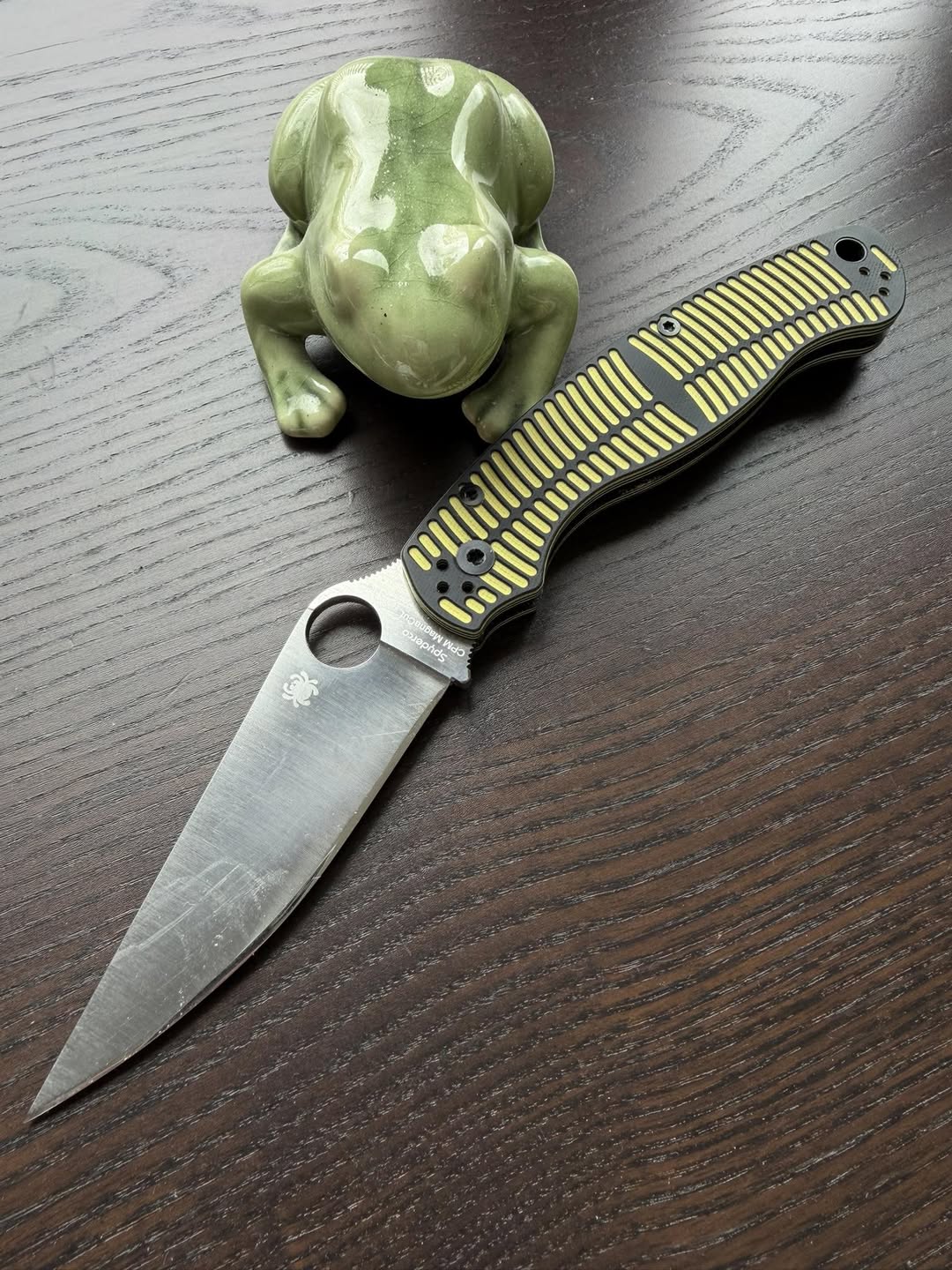
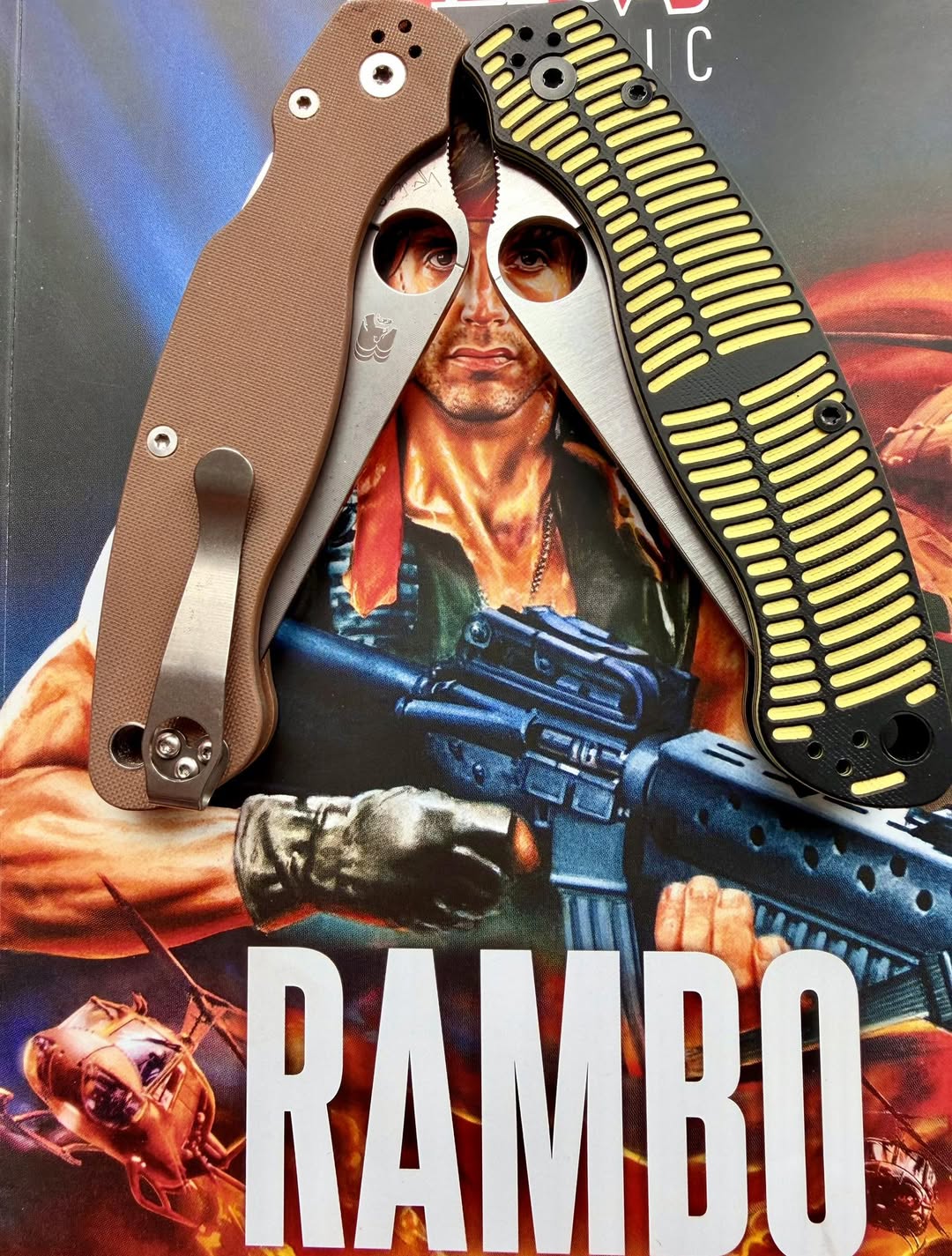
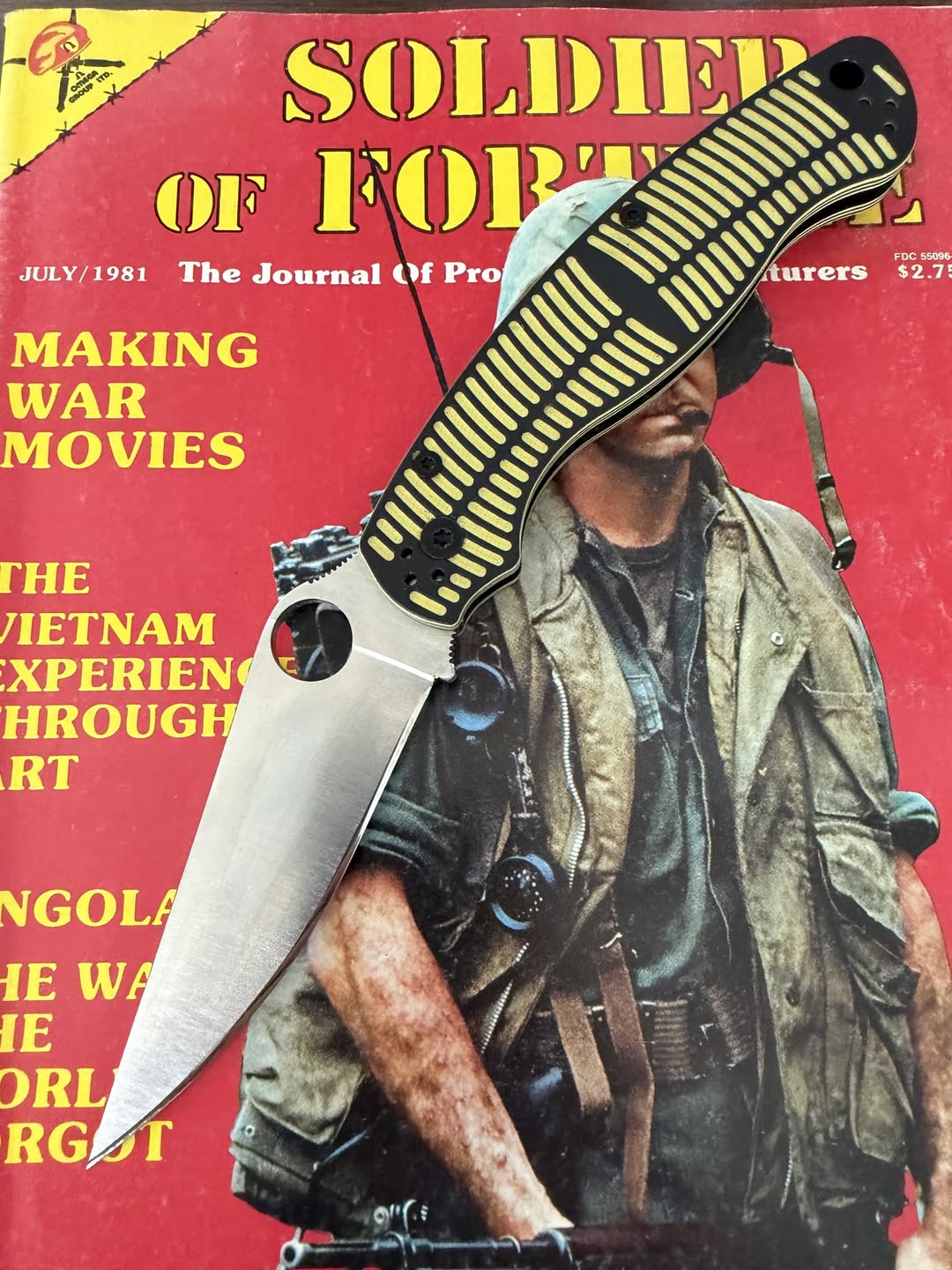
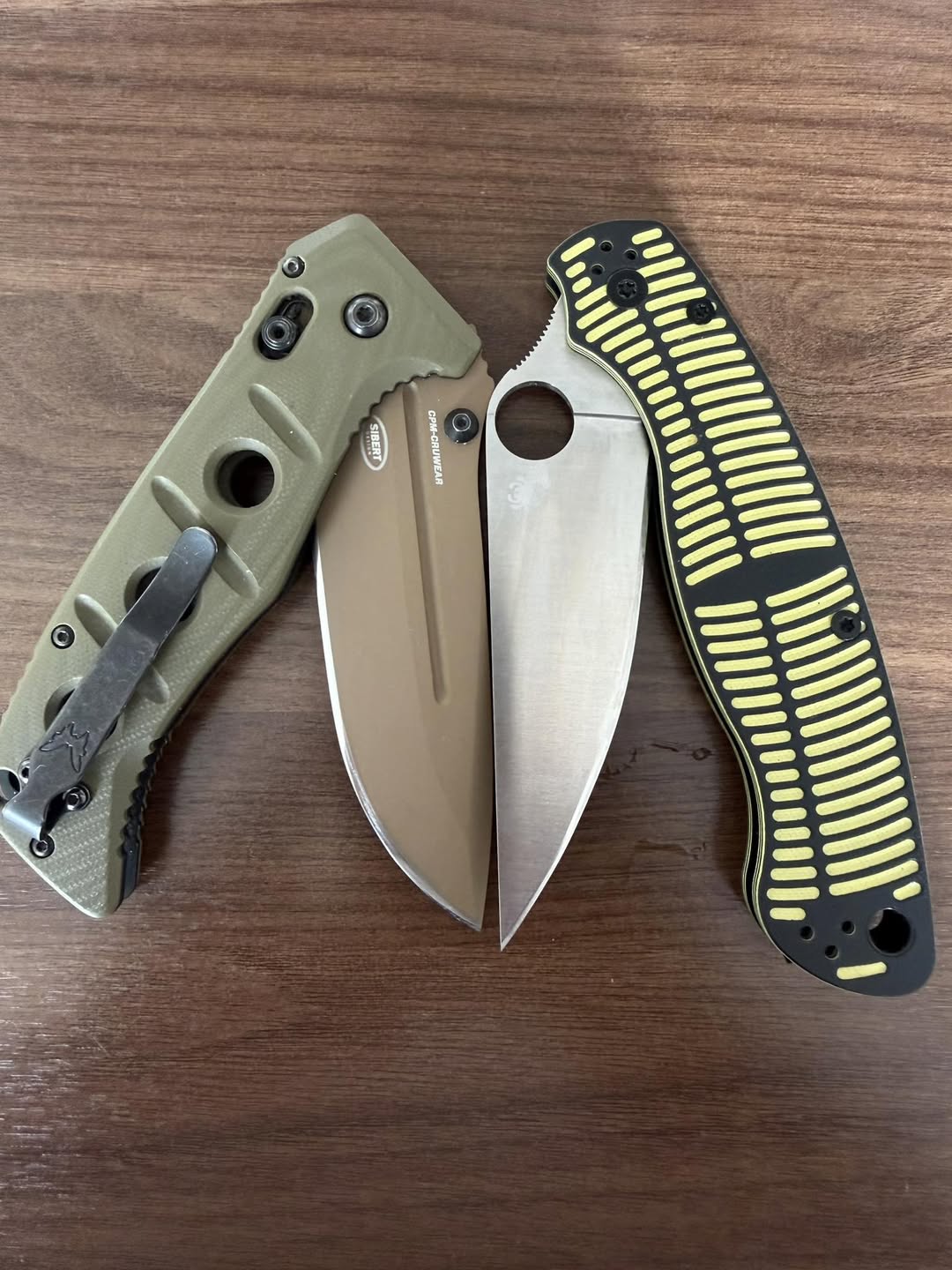
Spyderco Sage 6 REX 121 –C123GPBOR – My First Impression of Agent Orange

Disclosure: This Sage 6 REX 121 was provided by Spyderco as a complimentary review sample through the Spyderco Ambassador Program. Receiving the knife does not influence my opinions. Spyderco does not preview, edit, or approve my reviews, and all conclusions are based solely on my own testing and experience.
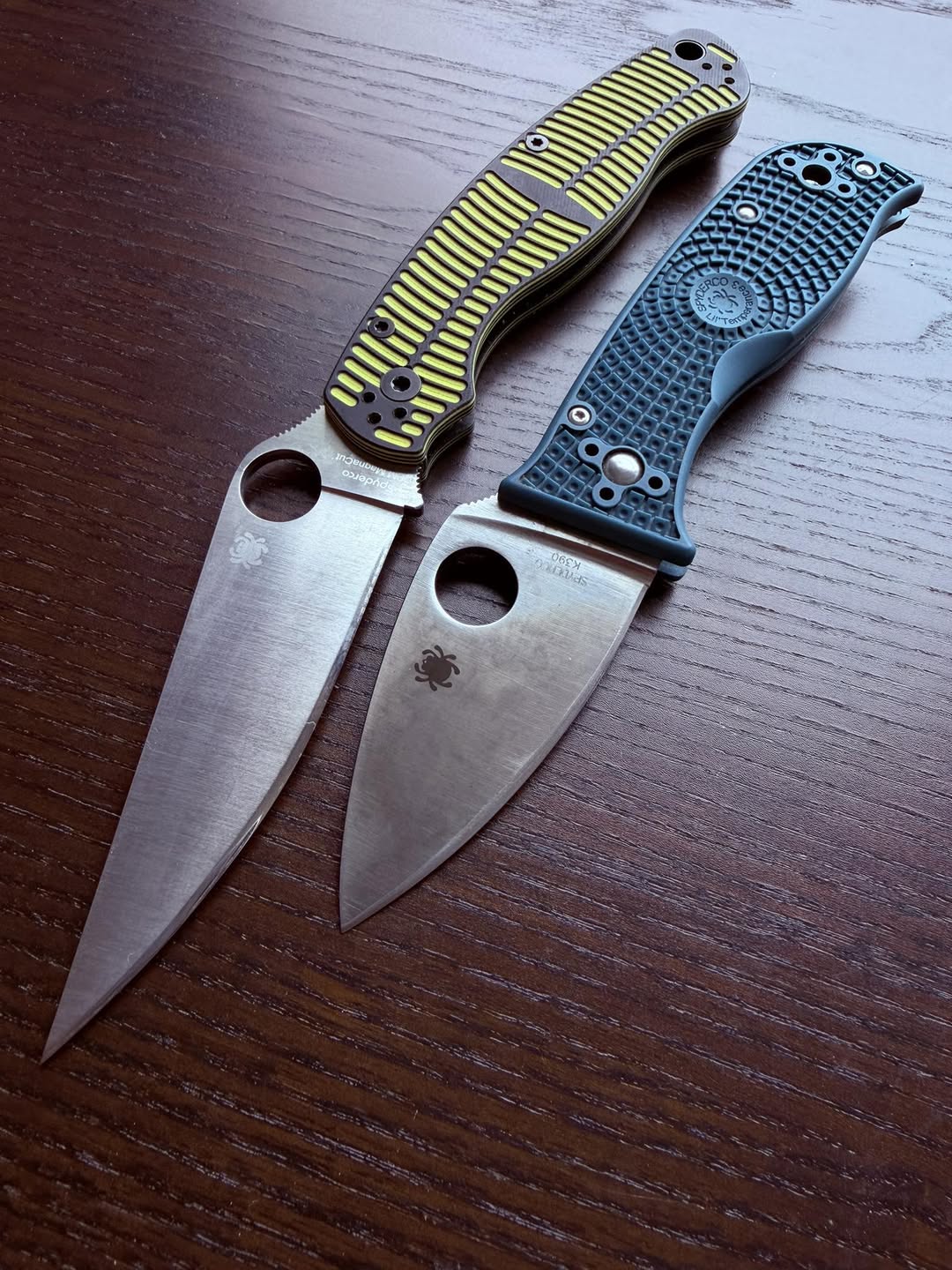
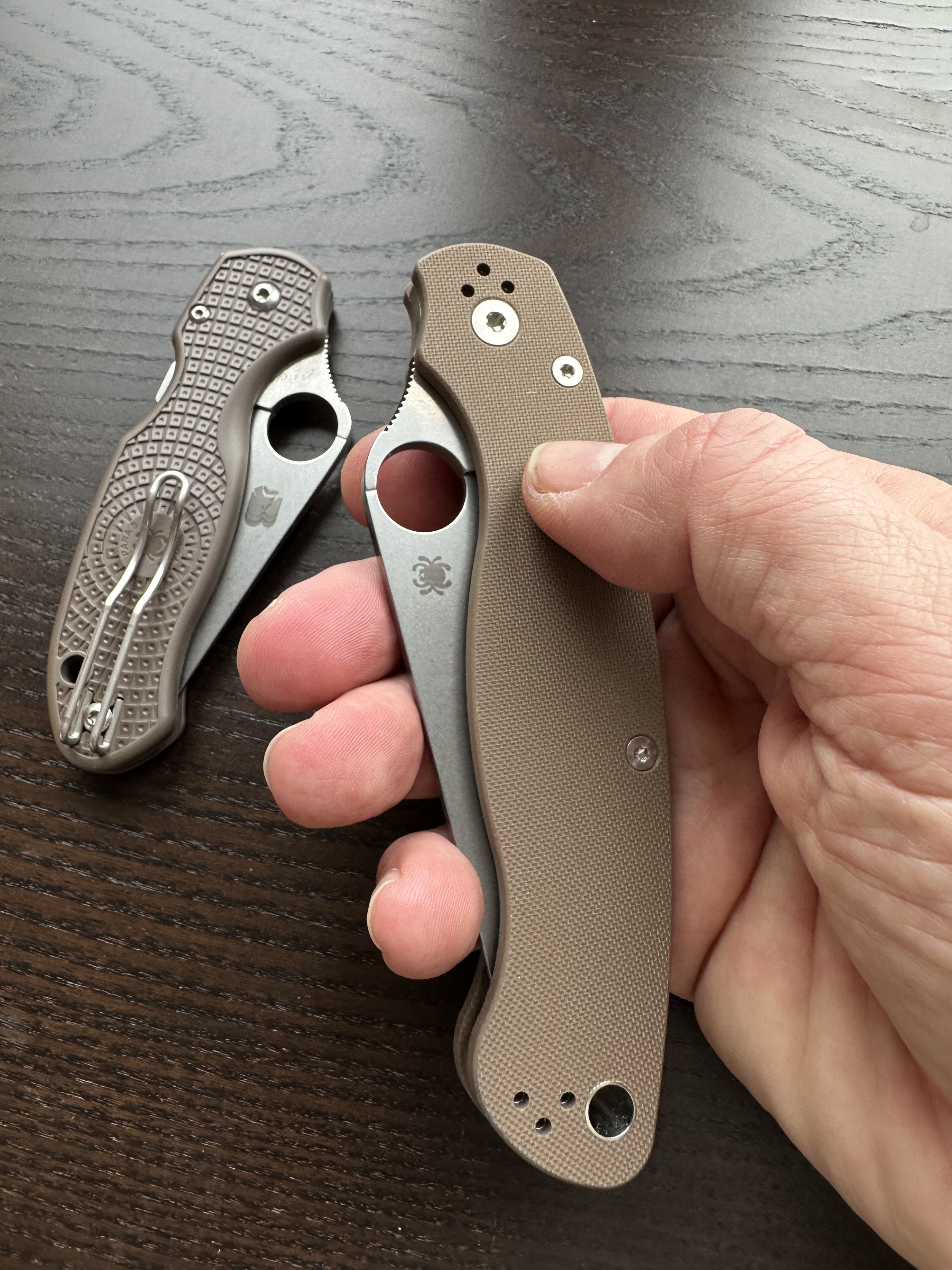
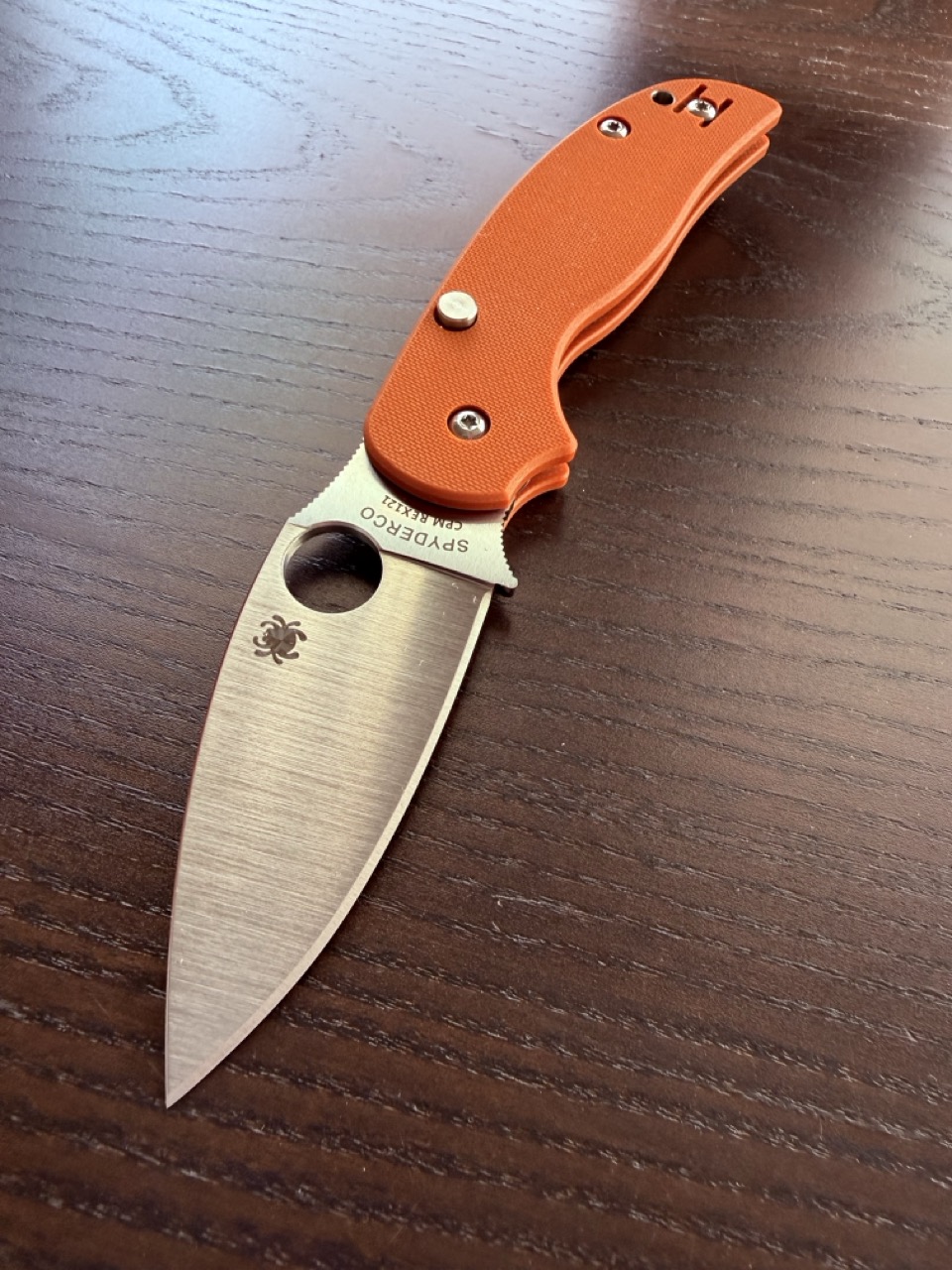
I just received my Sage 6 REX 121.

Wow. This feels like the Formula One of EDC knives.

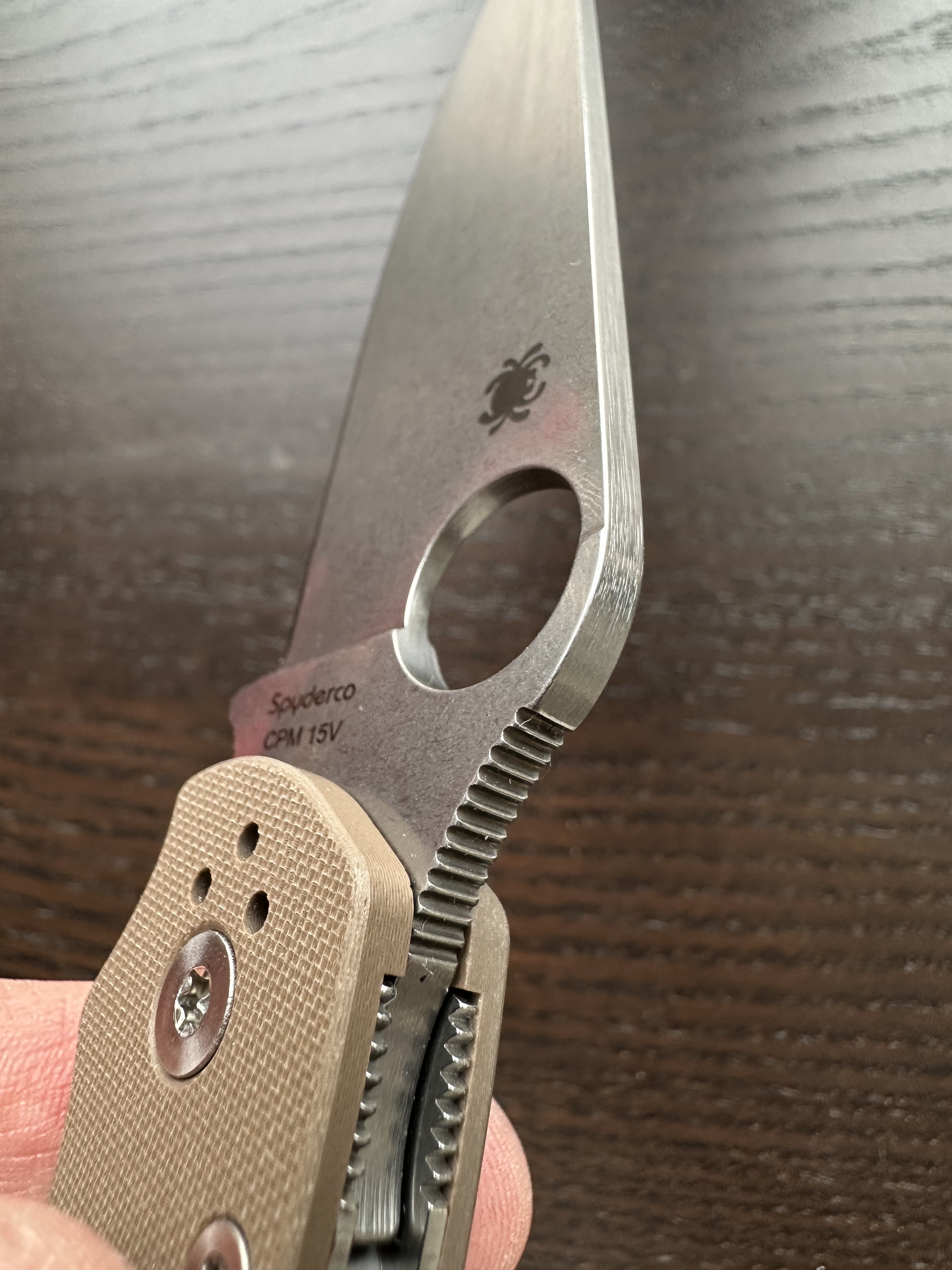
Think about it: an ultra-modern Button Compression Lock inspired by Kevin Smock’s design, paired with one of the most extreme production blade steels ever made—CPM REX 121.

This is a true heavyweight in the knife world, and probably one of the most technically advanced production knives ever released. Its price isn’t driven by titanium scales, exotic inlays, or premium bolsters. It’s driven almost entirely by engineering, manufacturing, and metallurgy.

Just… wow.
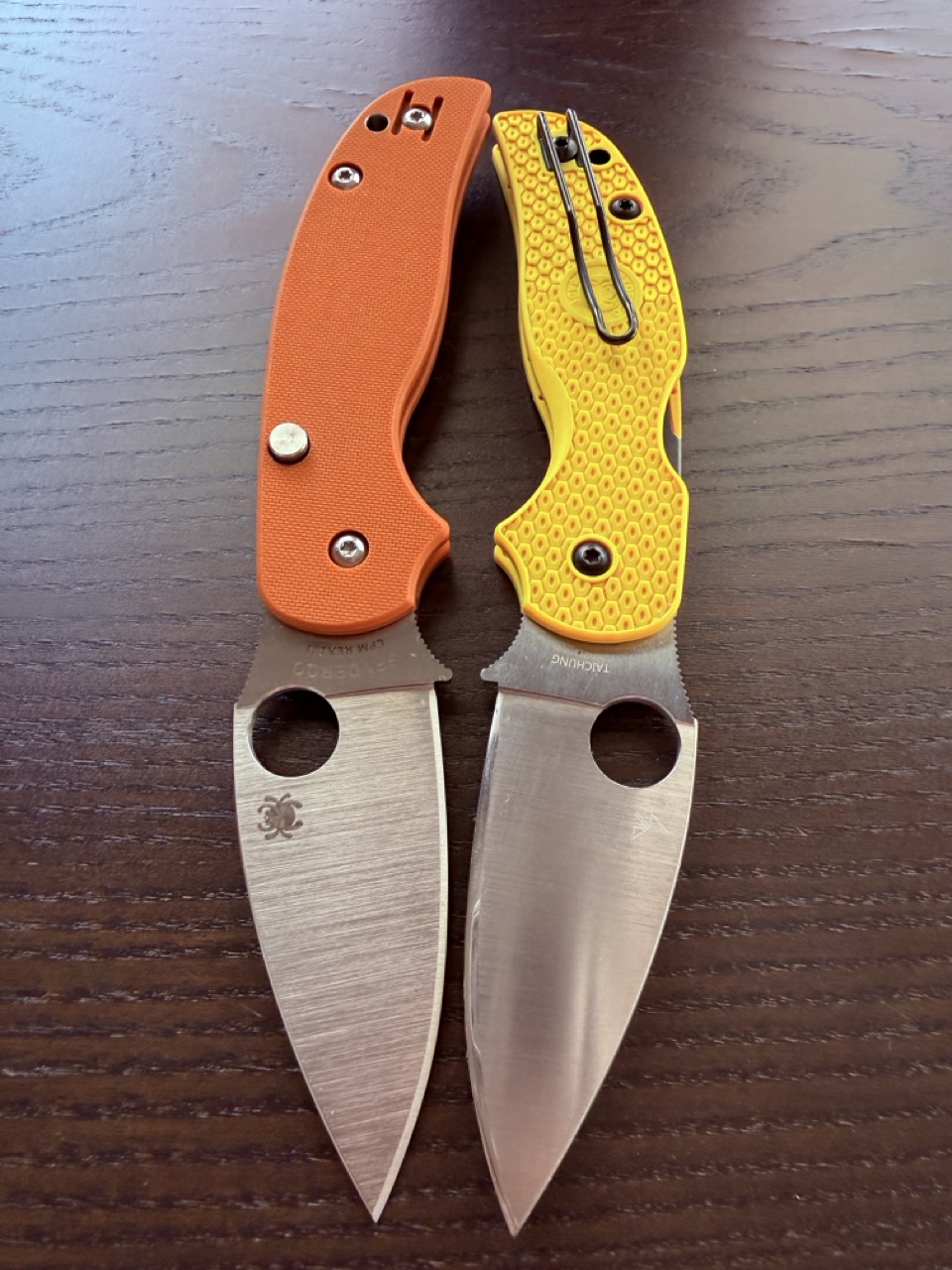
I’ve handled and used every Spyderco Sage model over the years.

For those unfamiliar with the series, the Sage was conceived by Sal Glesser as a single knife platform dedicated to honoring the greatest folding knife lock innovations—and the designers behind them. Every Sage shares the same DNA, while each model showcases a different locking mechanism and pays tribute to the person who popularized or invented it. 

  • Sage 1 honors Michael Walker and his revolutionary LinerLock, as well as the ball-detent system that keeps the blade securely closed.
  • Sage 2 pays tribute to Chris Reeve and his Reeve Integral Lock (R.I.L.), better known today as the frame lock.
  • Sage 3 celebrates Blackie Collins and his ingenious Bolt Action Lock.
  • Sage 4 honors Al Mar and the Mid-Back Lock (Front Lock) that became one of his signature features.
  • Sage 5 showcases Sal Glesser’s own Compression Lock, arguably Spyderco’s most iconic locking mechanism.
  • Sage 6 takes that concept one step further with the Button Compression Lock, inspired by Kevin Smock’s button-actuated implementation of the Compression Lock. It feels like the natural evolution of the Sage platform rather than a departure from it.

After owning and using every generation, I can honestly say the Sage 6 is the smoothest of them all. Mechanically, it’s simply remarkable.
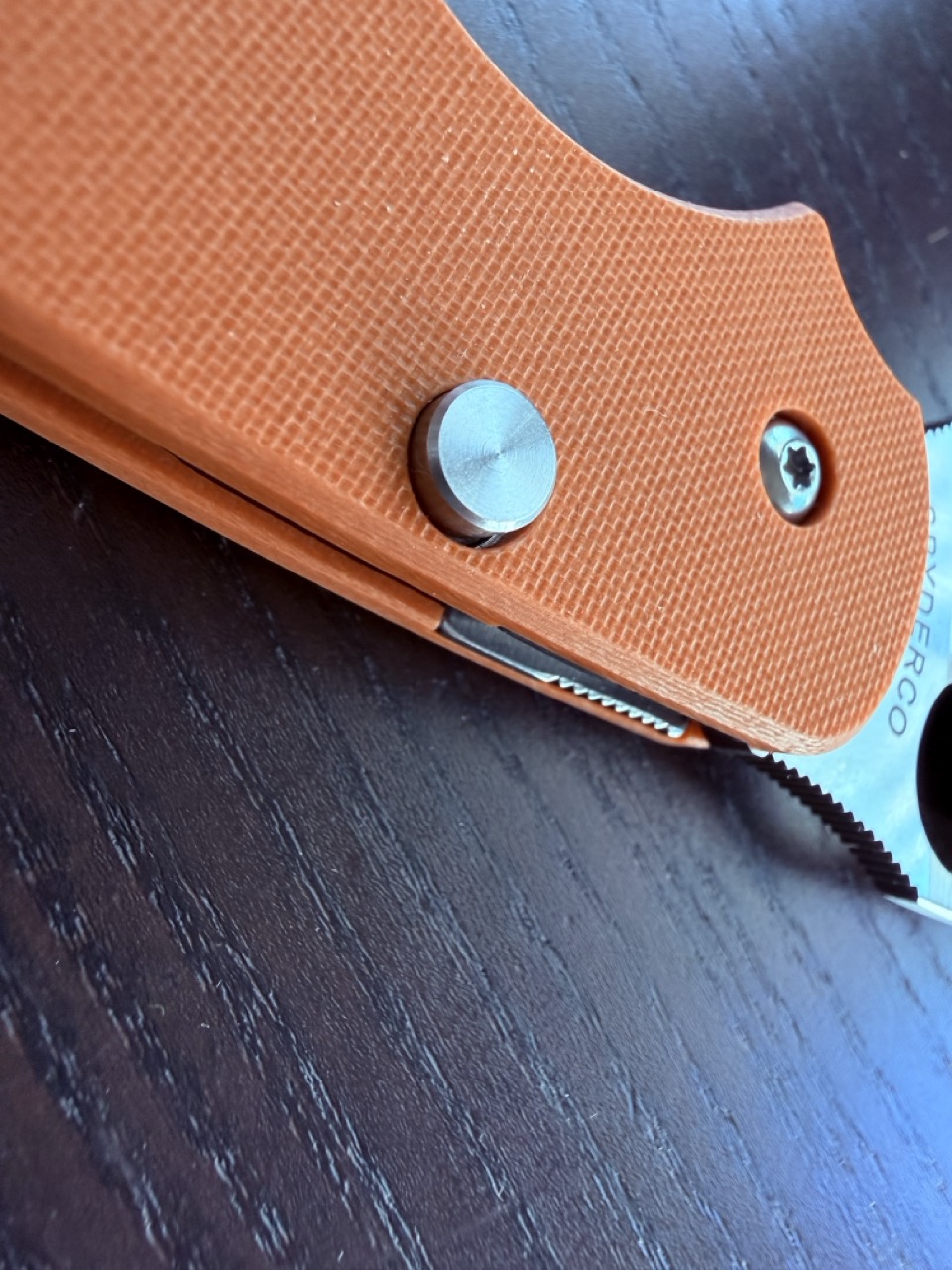
One detail immediately caught my attention.

When the knife is closed, the button sits recessed into the scale. Once the blade is fully opened and locked, the button protrudes slightly above the handle, making it mandatory to disengage the lock.

This is clearly an intentional design choice. It prevents the knife from being mistaken for, or too easily operated like, a gravity knife where a simple press of the button could release the blade while closed.
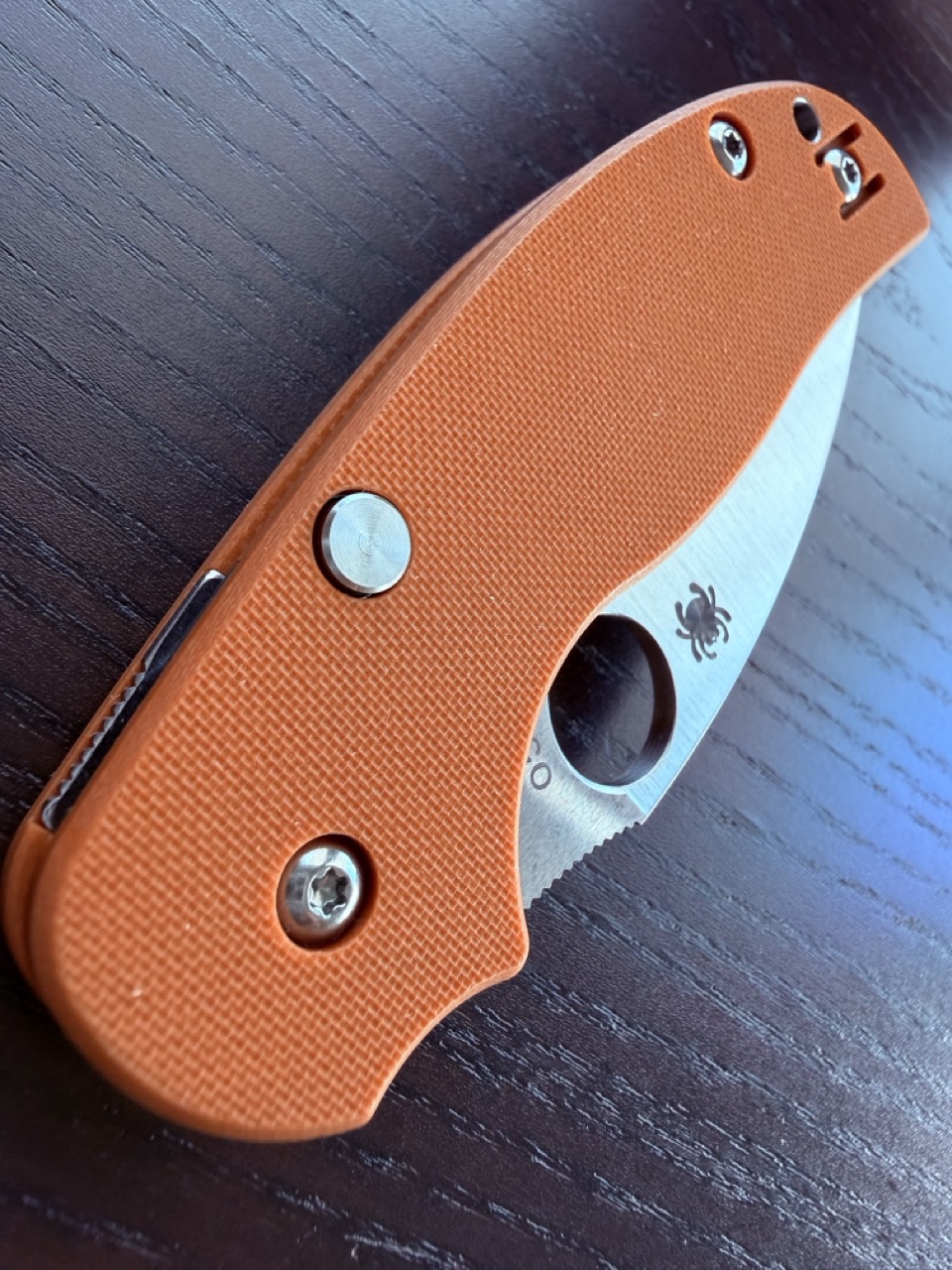
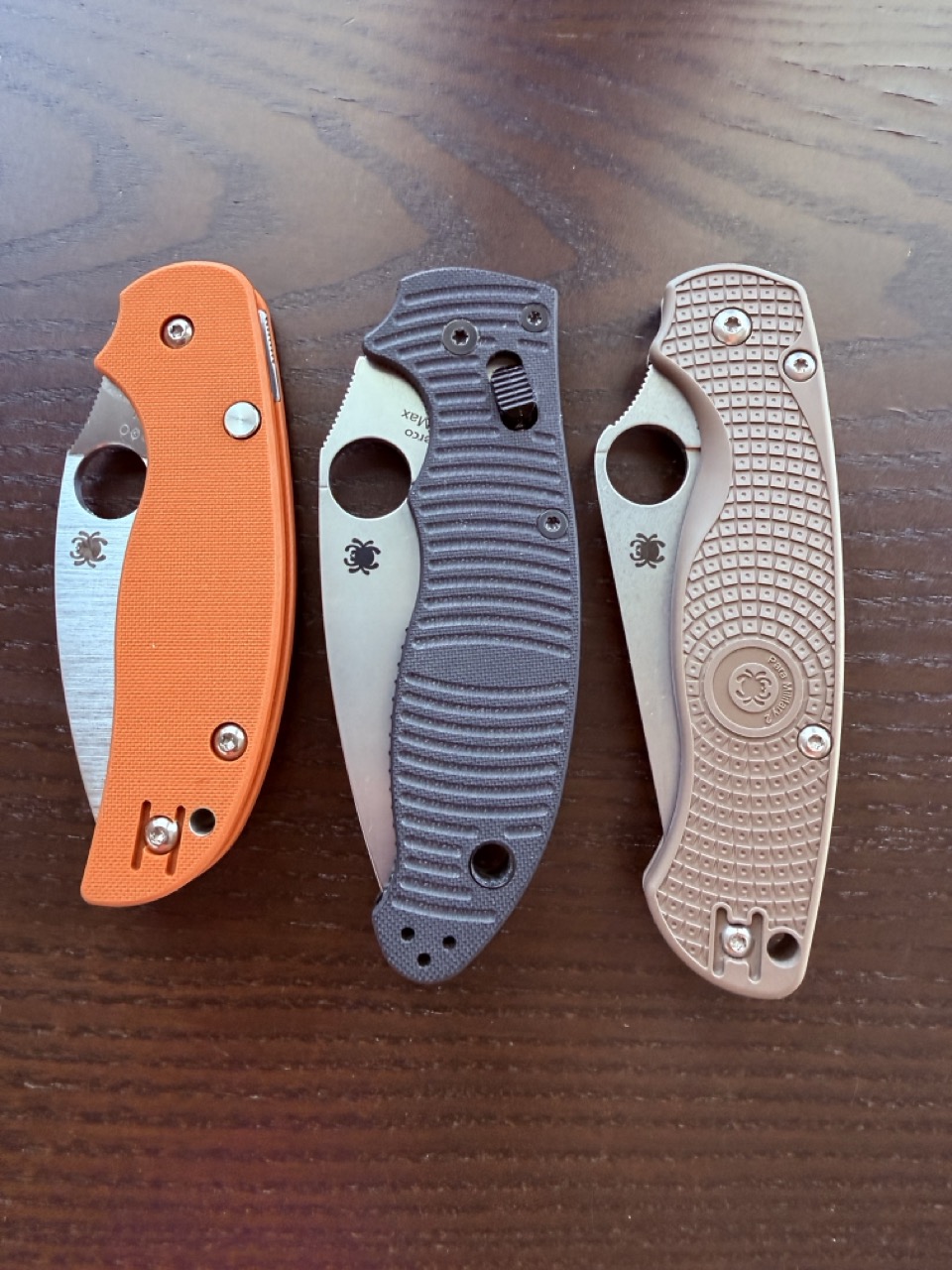
Spyderco has followed a similar philosophy with the Ball Bearing Lock on the Manix 2. Unlike an Axis-style lock, it requires a more deliberate action to disengage, reducing the risk of accidental or unintended deployment.

To me, this reflects Spyderco’s long-standing approach to responsible knife design. The company doesn’t just pursue innovation—it also pays close attention to legal considerations and user safety. Rather than creating a lock that could be easily misused or interpreted as an automatic or gravity knife, Spyderco has deliberately engineered additional safeguards into the mechanism.

It’s a subtle detail, but one that says a great deal about the company’s design philosophy.
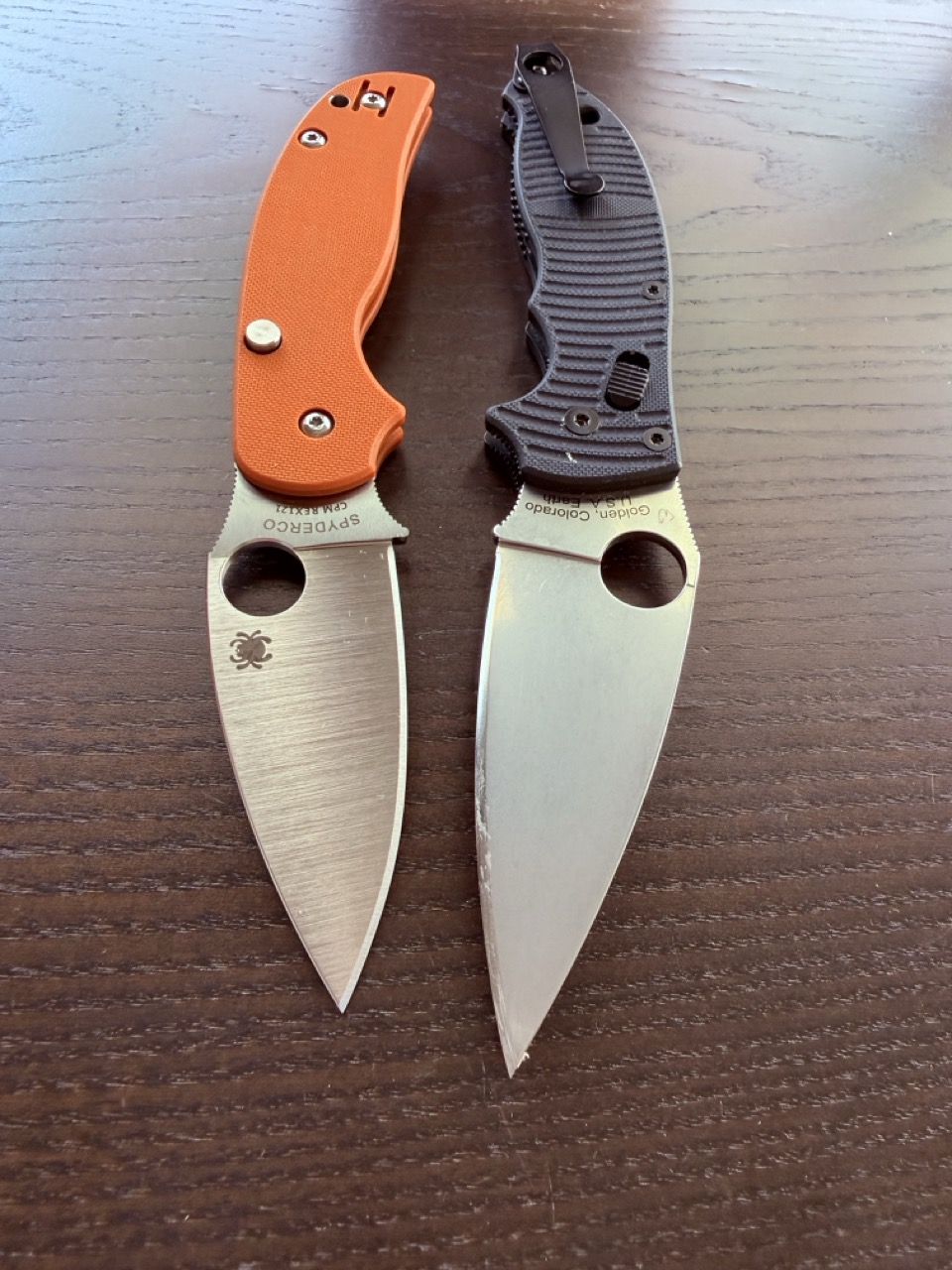

Opening it with the Spyderhole is effortless, and closing it with a gentle flick of the wrist is pure satisfaction. It is one of those rare knives that makes you want to open and close it again and again—not because you have to, but because the action is simply that enjoyable.

The action is nothing short of addictive. The Sage 6 is incredibly fidget-friendly.

The best way I can describe it is that it almost feels as if the blade were riding on a magnetic system rather than traditional washers. The action is exceptionally smooth, yet always controlled and reassuring.

Every opening and closing cycle feels refined. The lock engages with a soft, muted click instead of a harsh metallic snap, giving the knife the feel of a finely tuned mechanical instrument.

One aspect that is often overlooked in a folding knife is that opening the blade is only half the story. Closing it safely is just as important.

To me, the easier and more intuitive a knife is to close, the safer it is to use. If you don’t have to reposition your grip, place your thumb between the liners, or let the choil drop onto your finger, you’re less likely to make a mistake.

This is where the Sage 6 really shines. That single button makes disengaging the Compression Lock almost effortless. It preserves all the strengths of Sal Glesser’s ingenious lock while making it significantly easier to operate with one hand.

For me, that’s one of the biggest improvements over the original Compression Lock. It’s not just more convenient—it’s genuinely safer and more confidence-inspiring during everyday use.

That said, the design still clearly favors right-handed users. Left-handers can certainly operate it, but the ergonomics are undeniably optimized for right-handed manipulation.
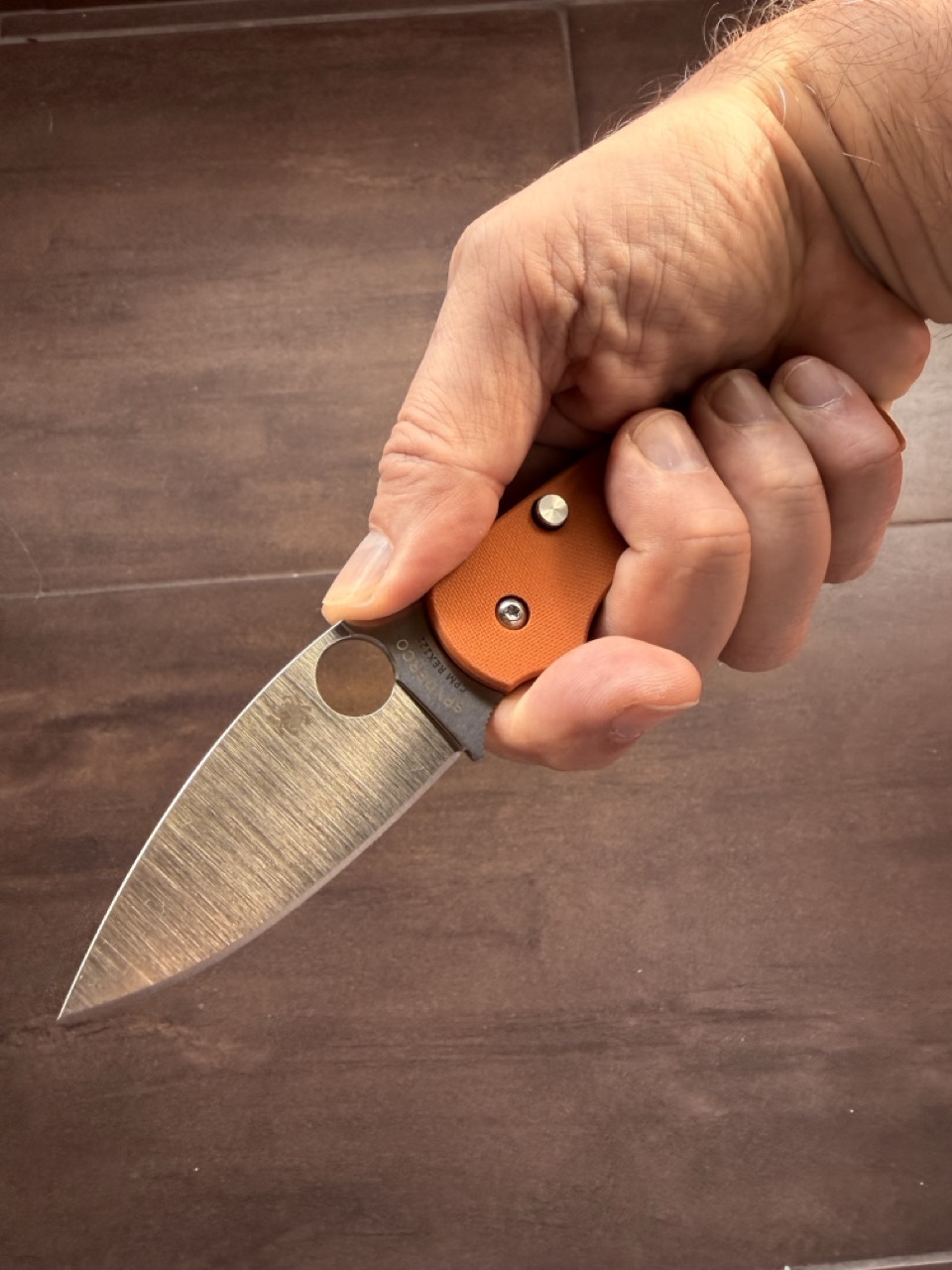

One of my initial concerns was whether the button could get in the way during use or even lead to an unintended lock release.

That’s a debate that goes all the way back to the introduction of Benchmade’s AXIS Lock more than 25 years ago. Some users wondered whether pressure from the hand could accidentally disengage the lock during hard use.

Spyderco has taken a different approach. On the Manix 2, the Ball Bearing Lock relies on a fairly strong spring that requires a deliberate pull to disengage.

On the Sage 6, the solution is different but equally effective. The button is positioned far enough away from my natural grip that my fingers never come close to pressing it unintentionally.

After handling the knife, that concern disappeared almost immediately. The lock feels intuitive, secure, and confidence-inspiring. It delivers all the convenience of a button-operated mechanism without ever making me worry about an accidental unlock.
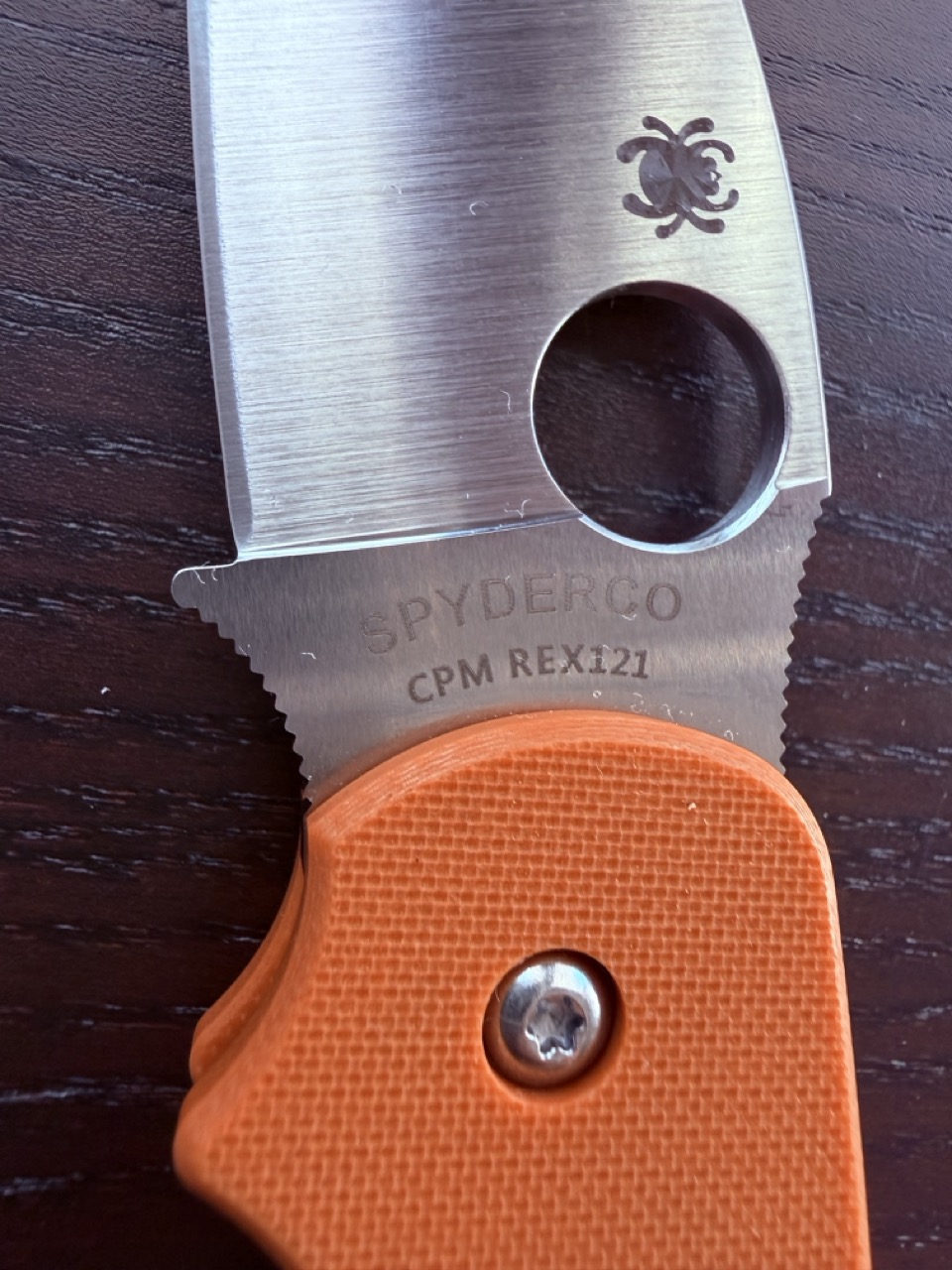

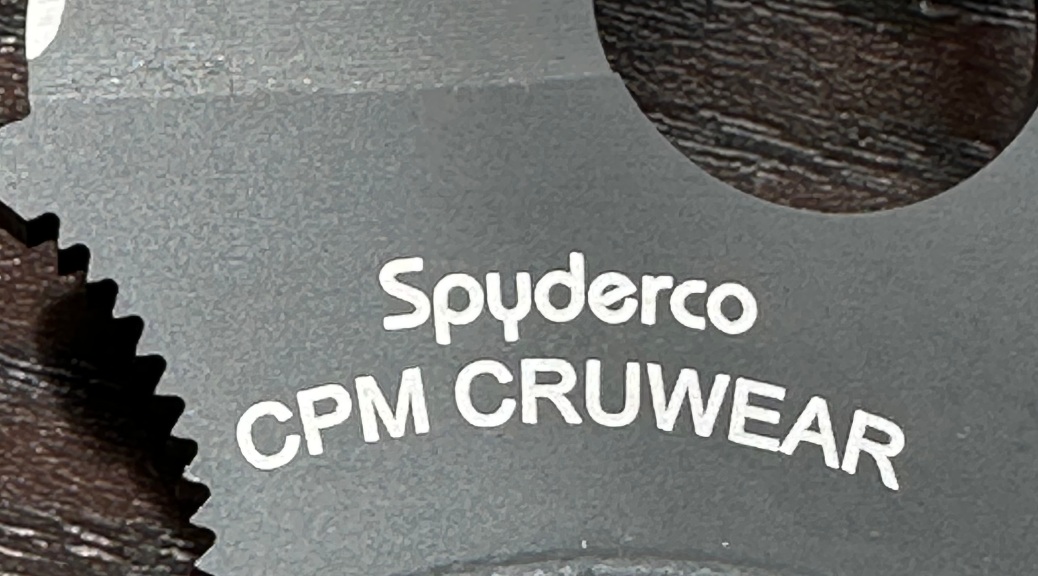
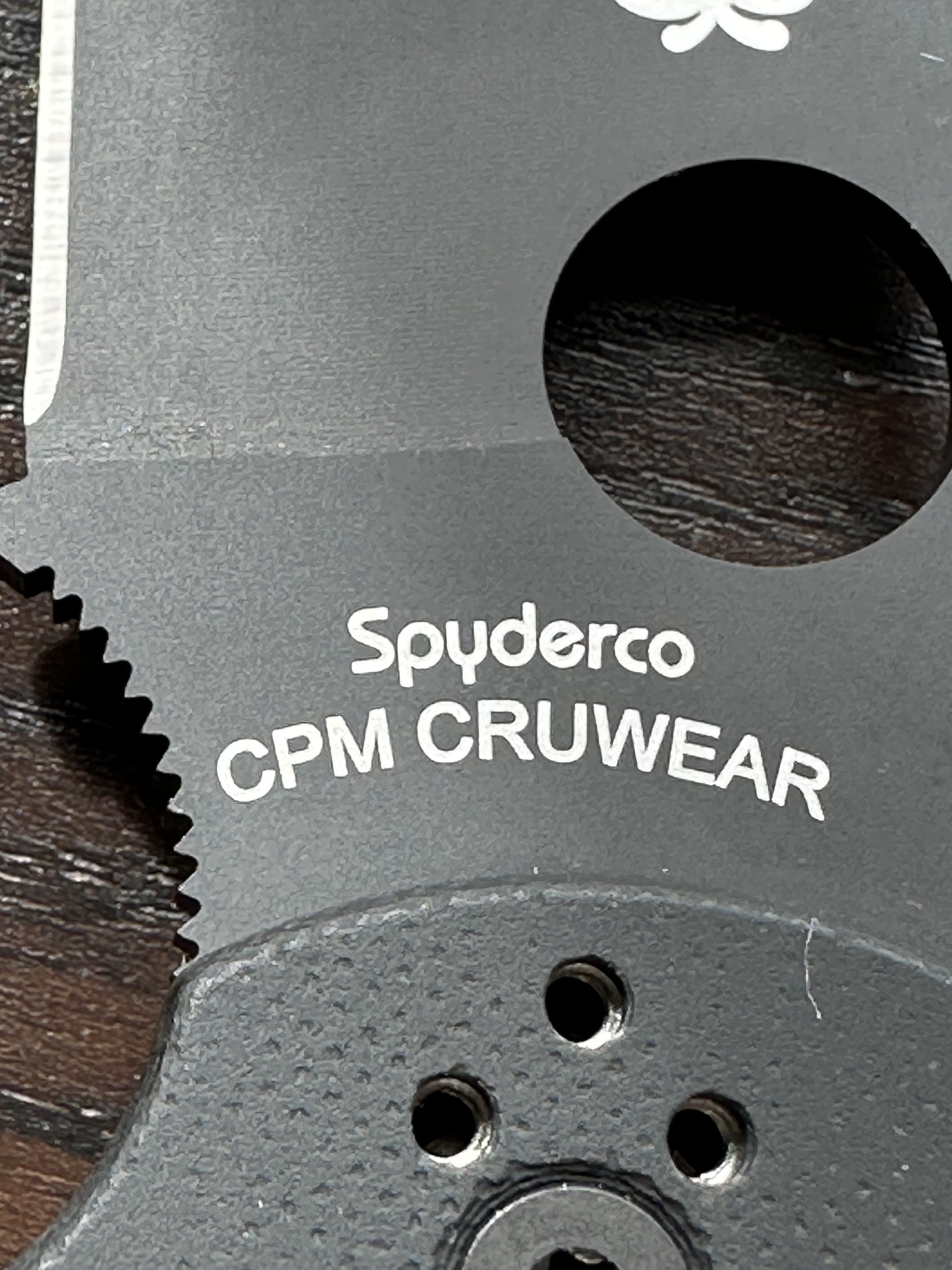
Originally developed by Crucible Industries as a high-speed tool steel for industrial cutting tools, CPM REX 121 was never designed with pocket knives in mind. Its primary objective was simple: maximum wear resistance at very high hardness.

Composition

CPM REX 121 is an astonishing alloy. Take a look:

  • Carbon: 3.4% !!!
  • Chromium: 4.0%
  • Vanadium: 9.5% !!!
  • Tungsten: 10.0% !!!
  • Molybdenum: 5.0%
  • Cobalt: 9.0% !!!

This chemistry creates an exceptionally dense “population” of very hard carbides, giving the steel extraordinary resistance to abrasive wear. It is not stainless, but its chromium content provides slightly better corrosion resistance than traditional simple carbon steels.
Adamantium anyone ?

According to Sal, Spyderco runs its REX 121 blades at an impressive 67–70 HRC !!!
Those hardness levels are almost unheard of in production folding knives and are one of the reasons the steel performs the way it does. 

Metallurgist Larrin Thomas, father of MagnaCut and MagnaMax, places REX 121 at the very top of the edge-retention scale.
In fact, he rated both REX 121 and Maxamet above his normal 1–10 scale, simply because they outperform the rest of the field by such a margin. His testing shows REX 121 combines record-breaking wear resistance with very low toughness, making it a steel optimized for slicing performance rather than abuse. 

I won’t be treating this knife the way I treated my Maxamet.

(Years ago, I even used that knife to open oysters just to see how far I could push the steel—and then sharpened it back to a razor edge.)

Looking back, that was a rather silly test.

With the Sage 6 REX 121, my goal is different. I want to evaluate it as a high-end everyday cutting tool, not as the subject of destructive or abusive experiments. There are plenty of videos on YouTube showing knives being pushed beyond their intended use. That’s not what interests me.

I’m far more interested in how REX 121 performs in real-world cutting tasks, how long it retains a truly useful edge, and what it feels like to maintain over months of normal use.

The interesting part is that real-world experience is often more nuanced than the numbers suggest.
Owners of the Sage 5 REX 121 consistently report:

  • astonishing edge retention, especially on cardboard;
  • a “working edge” that seems to last almost indefinitely;
  • surprisingly little chipping when the knife is used for cutting rather than prying;
  • sharpening that absolutely benefits from diamond or CBN abrasives but is not the nightmare many expected. 

One experienced user reported using a Sage 5 in REX121 almost exclusively on cardboard for six months, sharpening it only once during that period, with no chipped edge or broken tip.
Another noted that while sharpening takes longer, deburring is remarkably easy, resulting in an exceptionally clean apex.

Several users also mention that REX 121 responds exceptionally well to a highly polished edge, maintaining both aggression and push-cut performance longer than expected.
So it will be leather stropping friendly.

Some people may question the price of the Sage 6 REX 121. Looking at the manufacturing process, however, it starts to make sense.

First, Spyderco had to secure a significant quantity of CPM REX 121—an already rare and expensive steel. The raw material then had to be shipped from the United States to Spyderco’s manufacturing facility in Taichung, Taiwan.

REX 121 is also one of the most difficult production steels to machine and grind. Its extreme wear resistance means slower manufacturing, greater tool wear, and extensive use of diamond abrasives, all of which increase production costs.

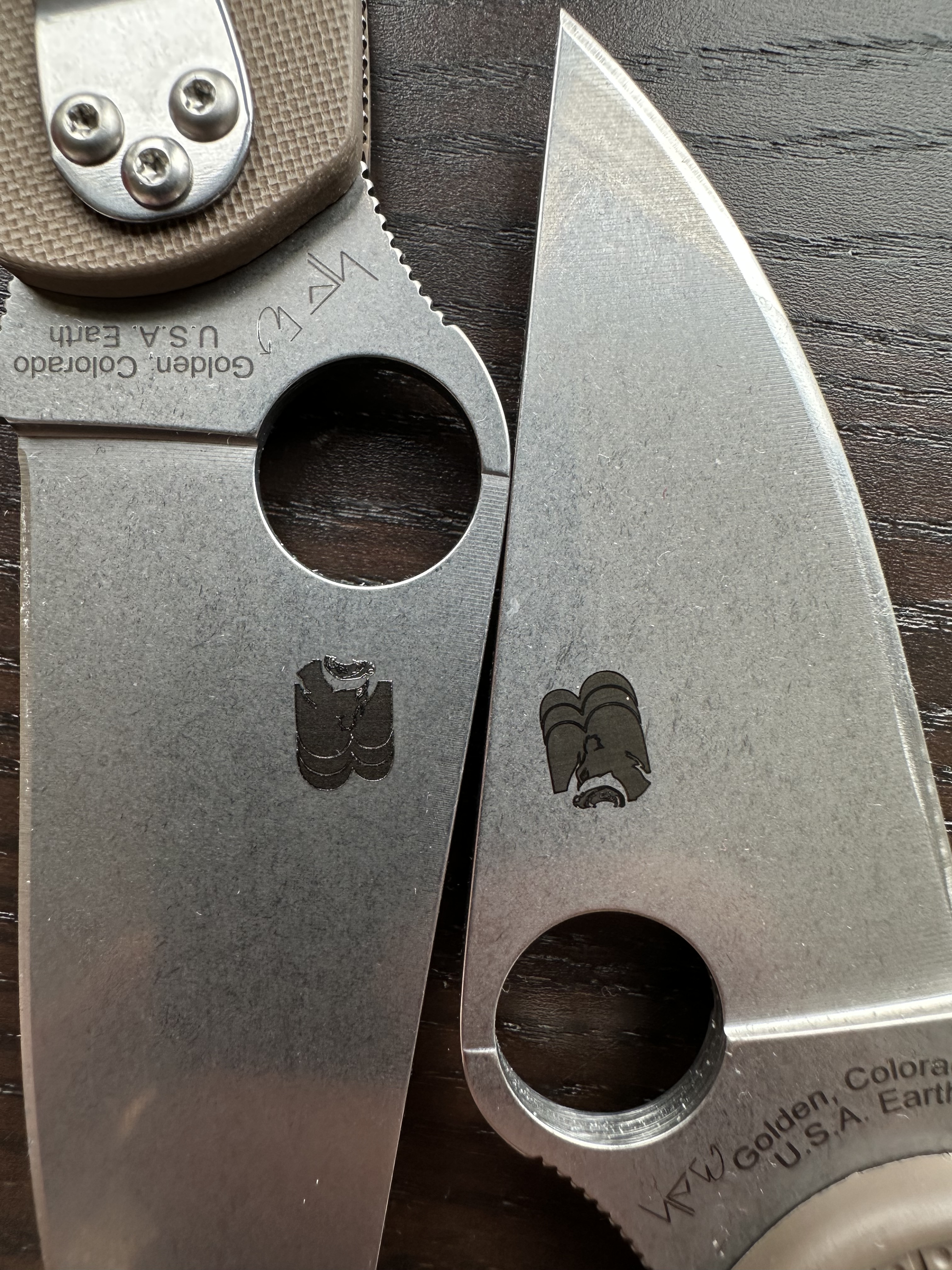
Once the knives are manufactured, they are shipped back to Golden, Colorado, Earth.

In other words, you’re not just paying for an orange handle or a premium steel. You’re paying for one of the most demanding manufacturing processes ever applied to a production folding knife.

And CPM REX 121 deserves a proper farewell, and Spyderco seems determined to give it one. By acquiring as much of the remaining steel as possible following Crucible’s acquisition by Erasteel, Eric and Sal Glesser ensured that this legendary alloy would continue to reach enthusiasts rather than quietly disappear. After the Sage 6, Spyderco is already planning a Chaparral in REX 121. With its ultra-thin 2 mm blade stock—compared to the Sage’s 3 mm—it could become one of the most formidable high-performance slicing tools the company has ever produced.

To quote Sal on the forums:
“I’ve been maintaining a very coarse edge (CBN Gauntlet Vivi style) at 10 DPS with no problems so far.”
That’s impressive.
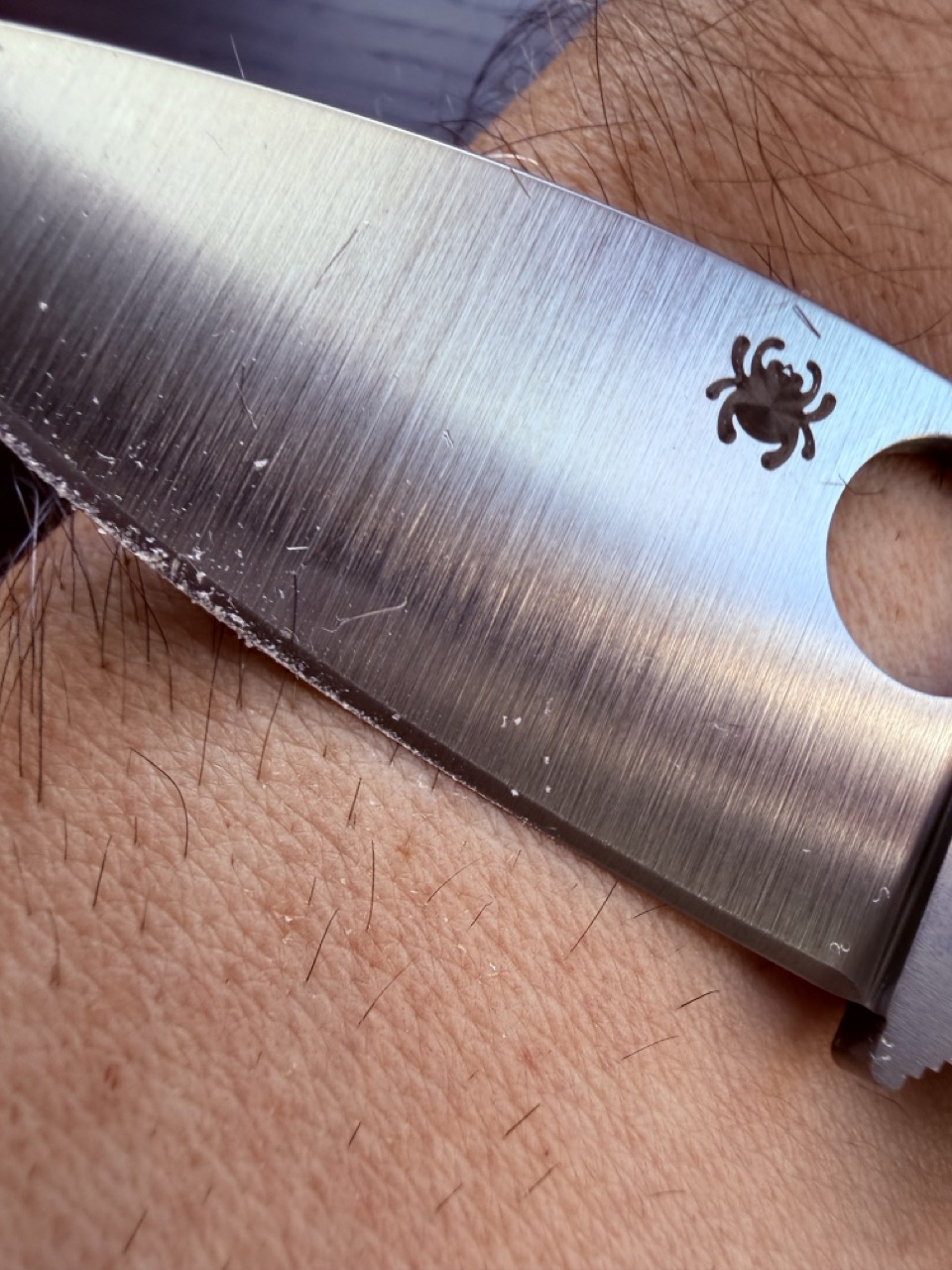
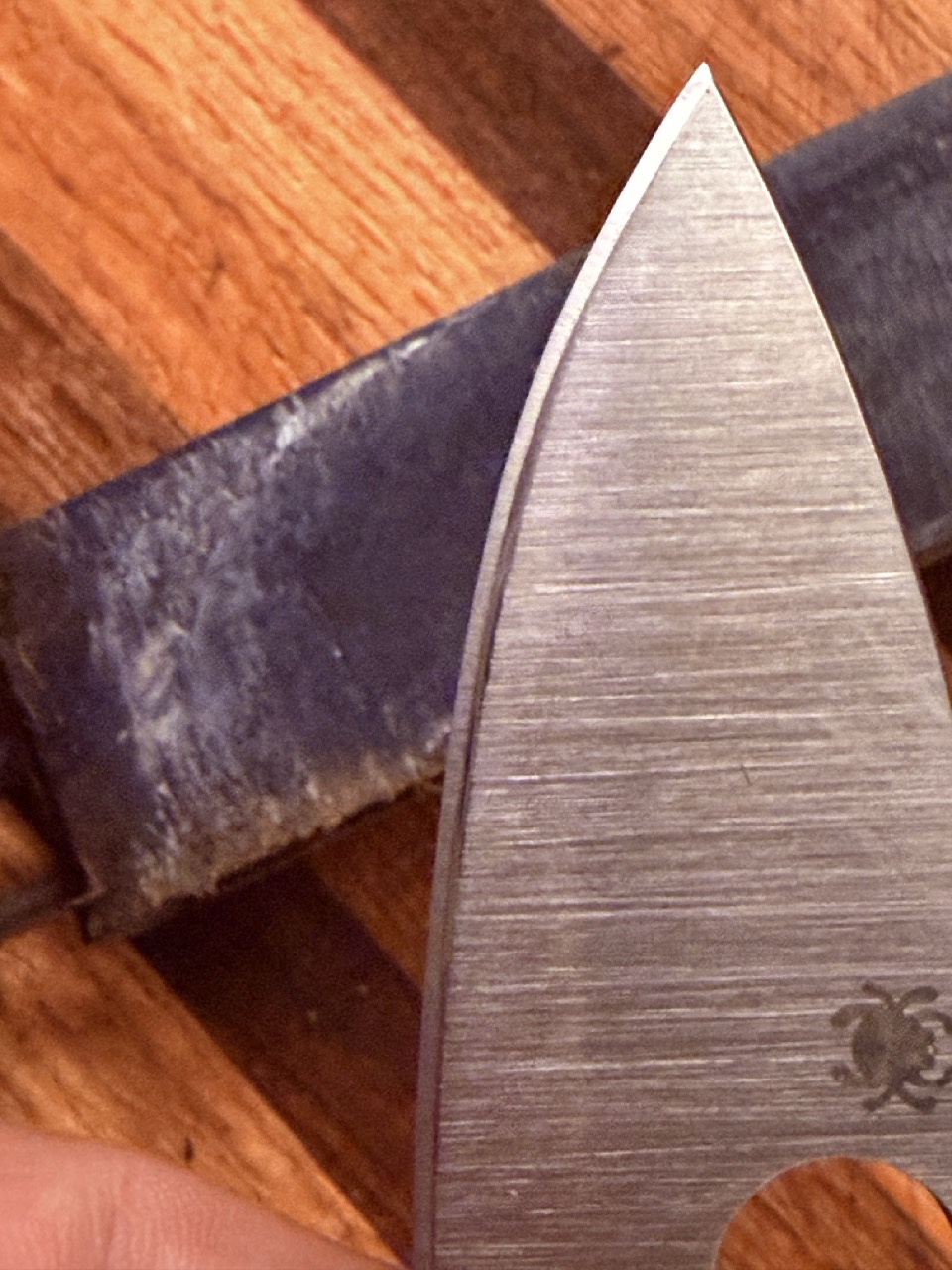
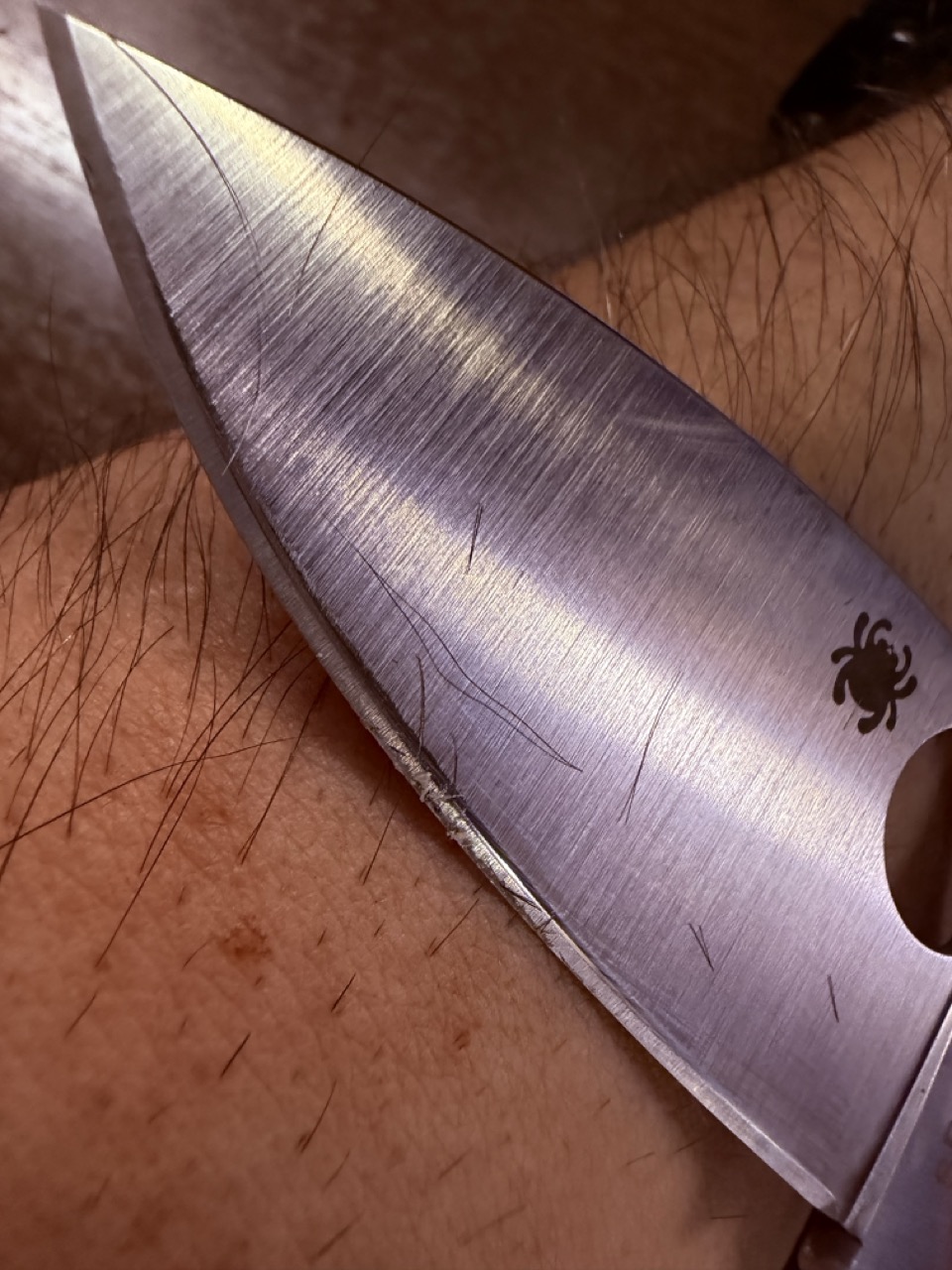
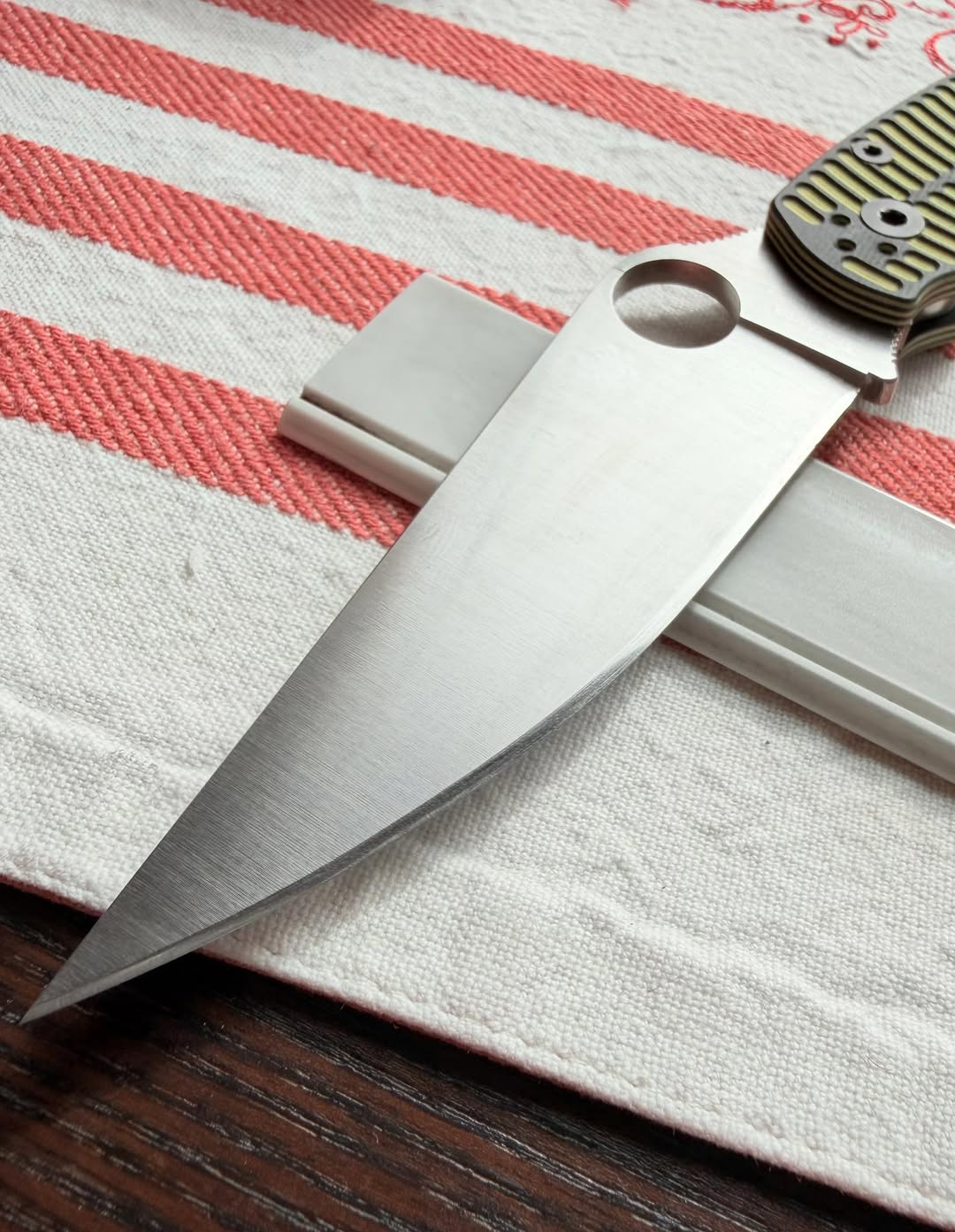
Out of the box, the knife easily shaves arm hair. That’s already an excellent factory edge.

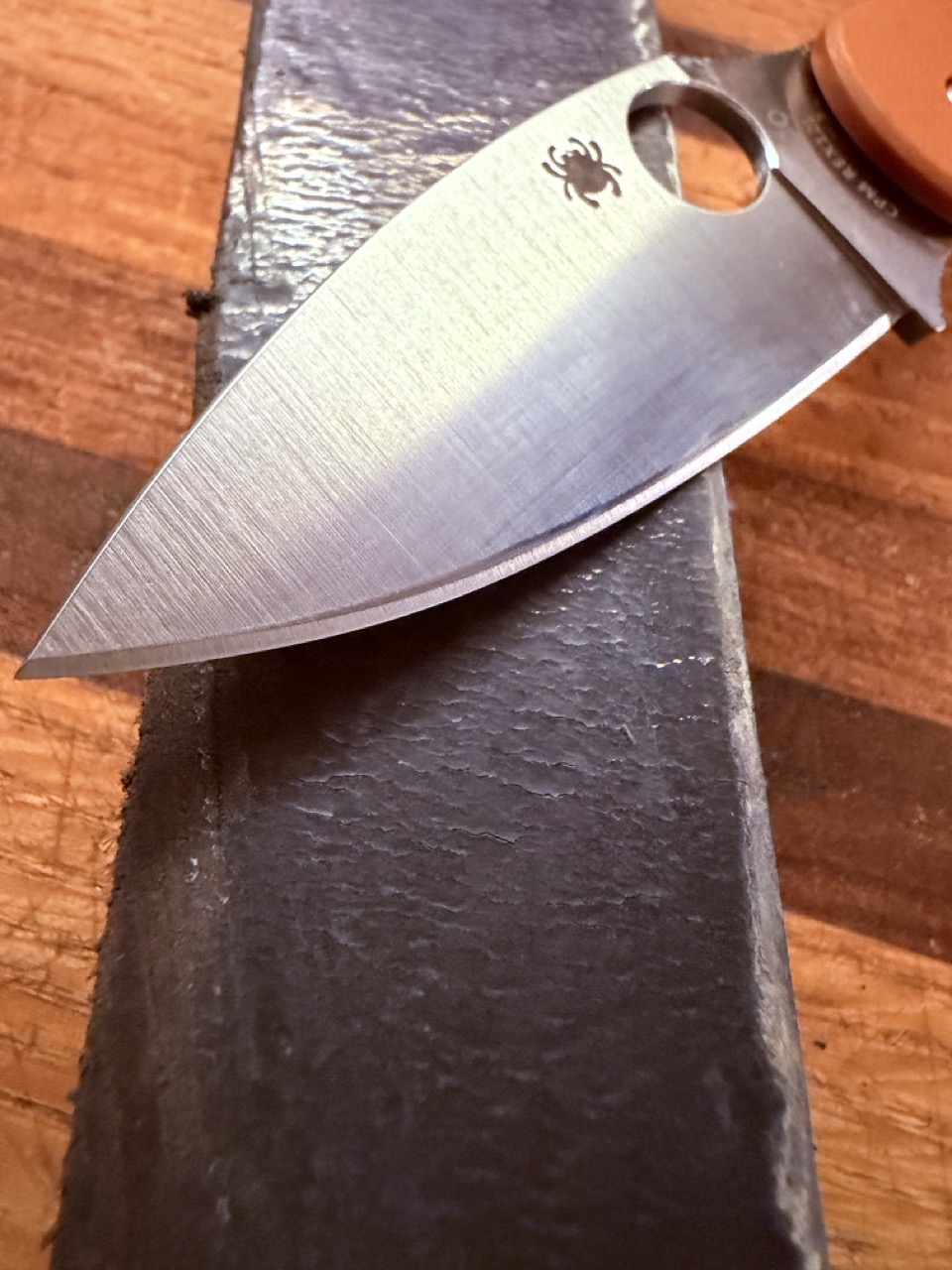
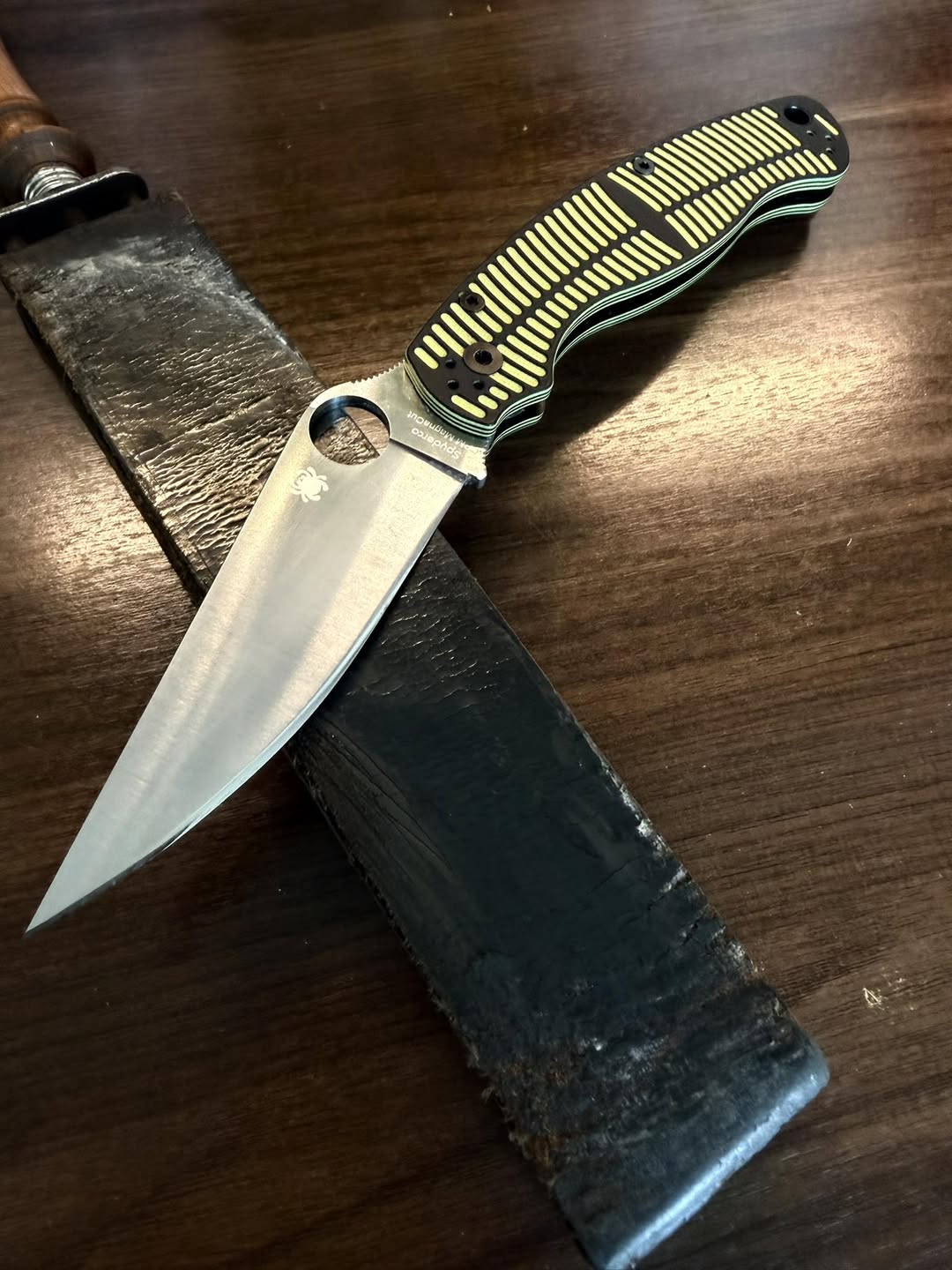
Still, I can’t resist seeing if I can make it even better. My first stop will be an old leather strop loaded with diamond powder and automotive polishing compound. I’m curious to see how REX 121 responds to such a light treatment before I ever think about putting it on a stone.
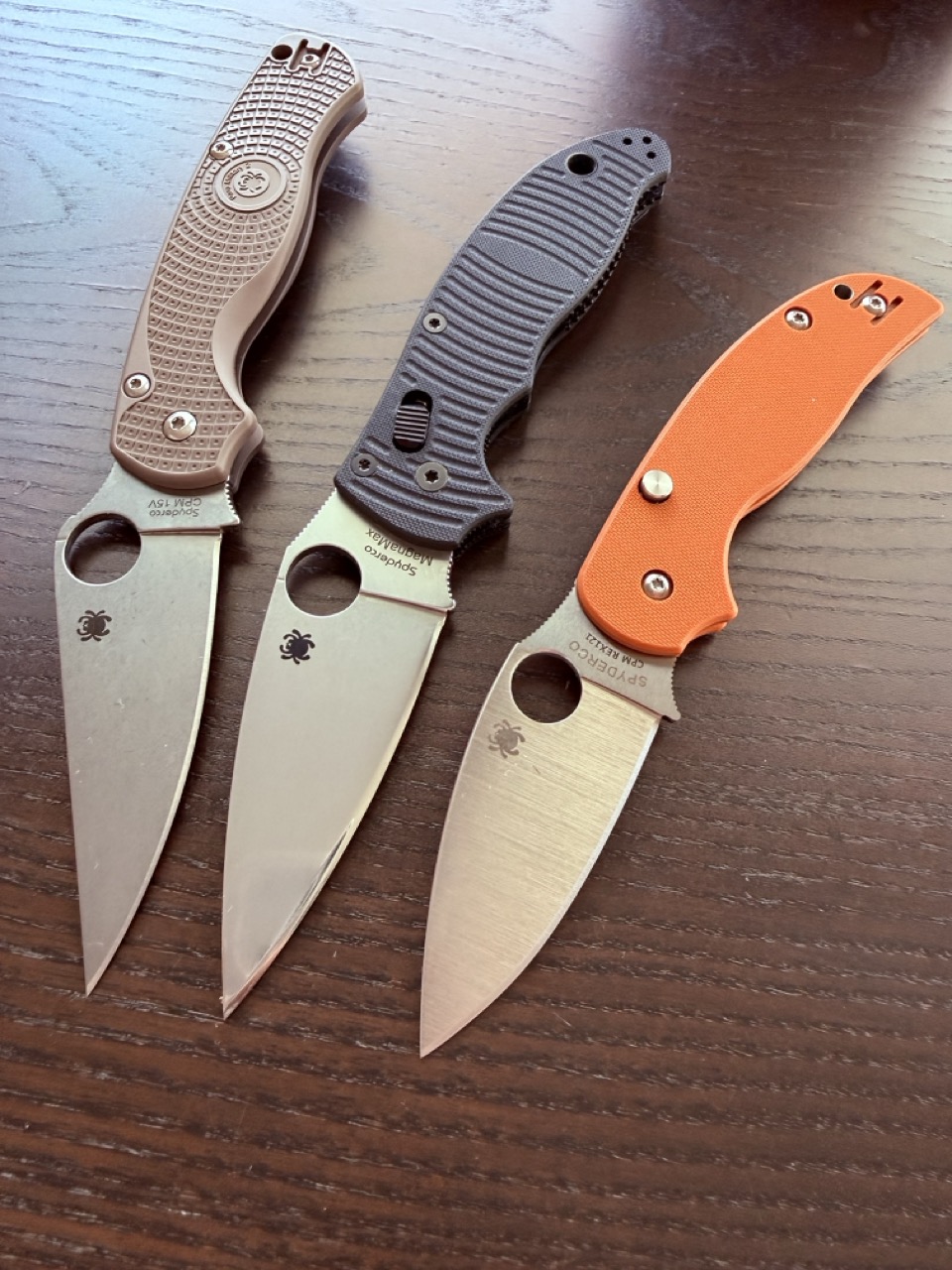
I’ve already spent a lot of time with K390CPM 15V, and MagnaMax.

The Sage 6 will allow me to discover whether REX 121 is simply the next step in edge retention—or whether it offers a genuinely different cutting experience.

One thing is already certain: this isn’t a steel designed for everyone. It’s a steel for enthusiasts who value ultimate cutting performance above almost everything else. And that alone makes it fascinating.
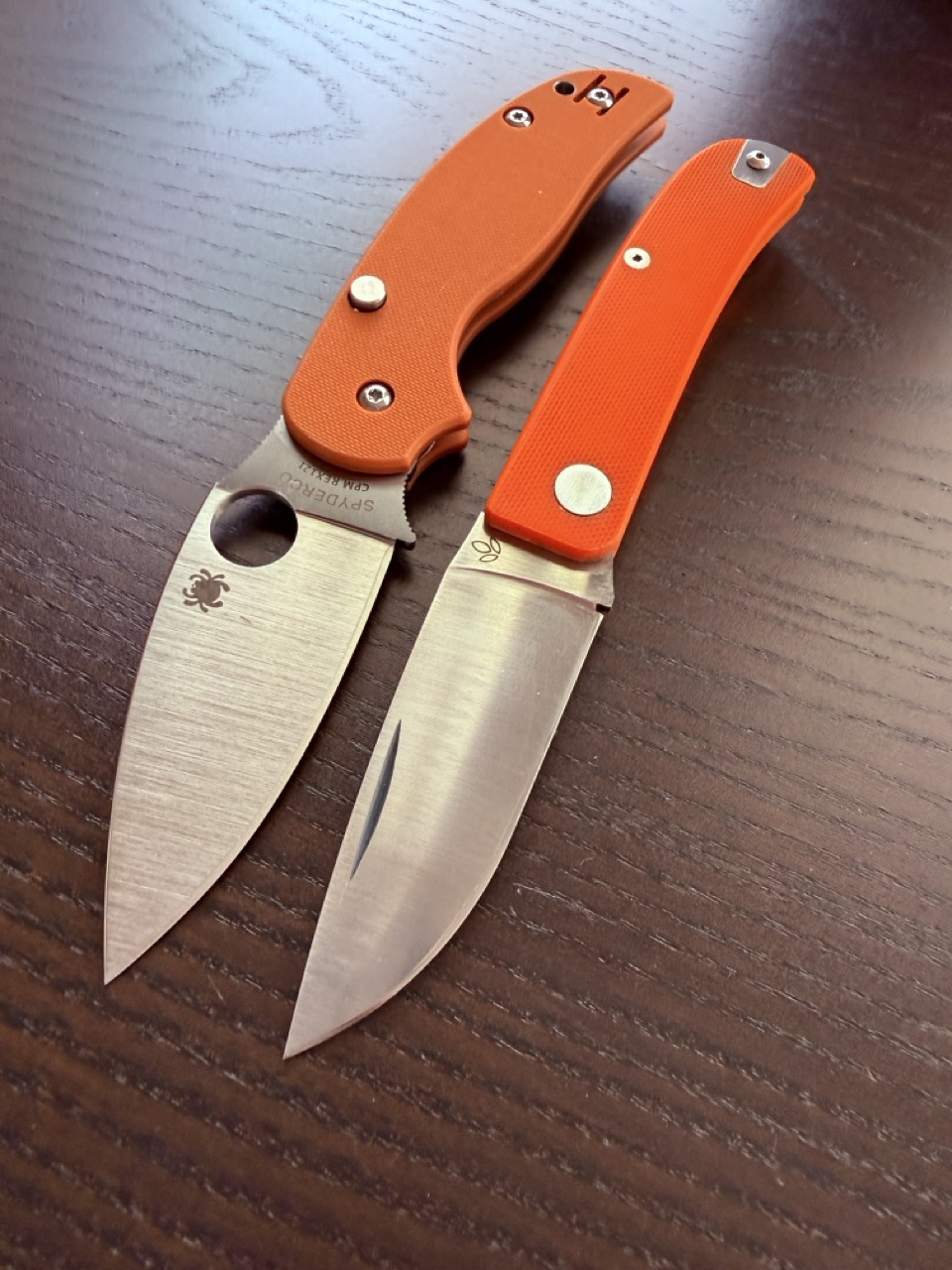

Steel alone doesn’t define cutting performance. Geometry is just as important—sometimes even more so.

A perfect example is my Manly Wasp in S90V. Between its outstanding steel and its incredibly thin geometry, it cuts like an absolute beast.

Over the years, I’ve convexed every one of my Sage knives. The latest was my Sage 5 Salt in MagnaCut, which I gradually transformed into an outstanding whittling machine. That subtle convex geometry made an already excellent cutter even more enjoyable to use.
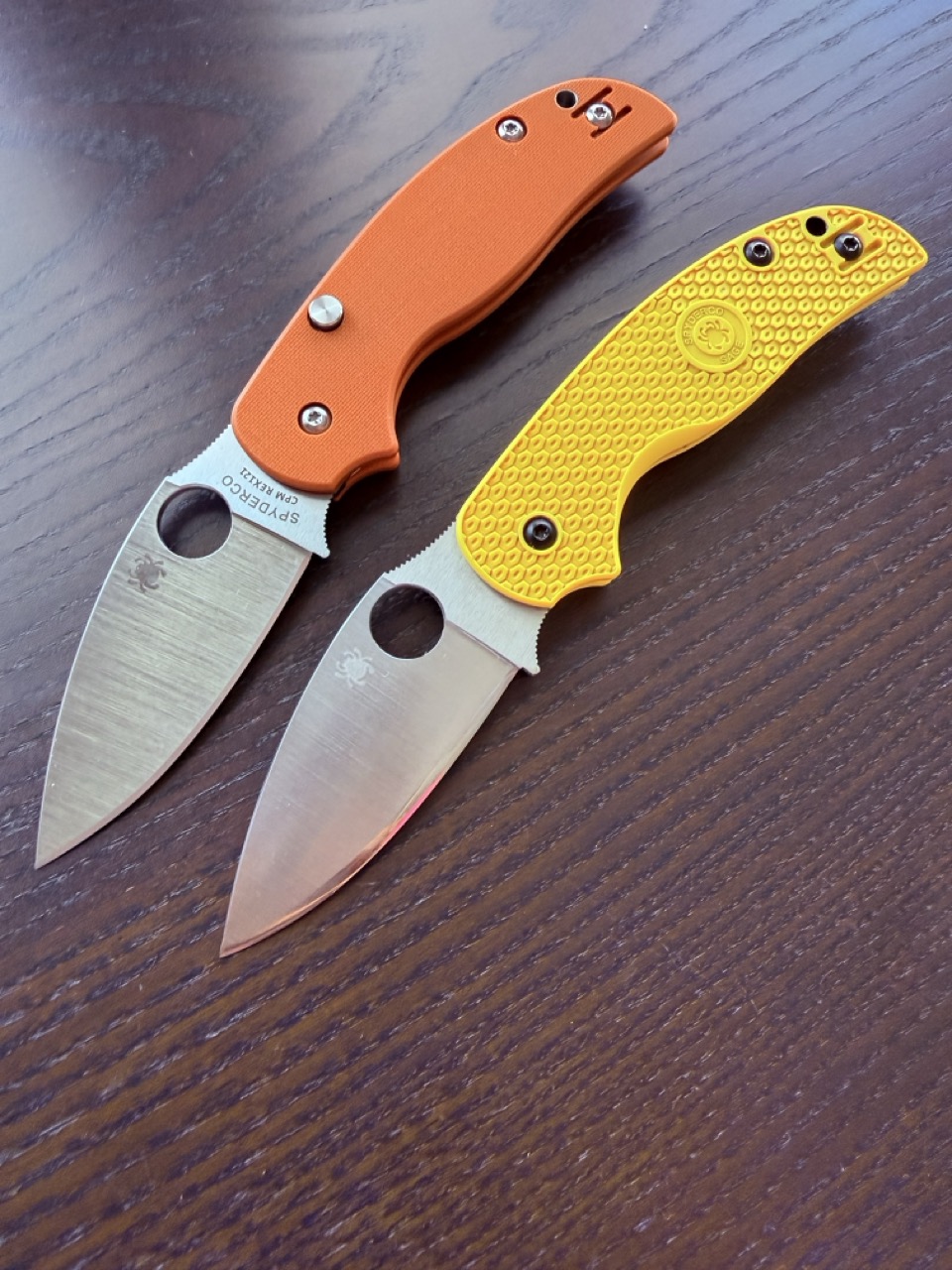
But this Sage 6 raises a different question.

Will the factory geometry already be so good that I’ll simply leave it alone?

Will I eventually have the patience—and the courage—to convex the edge of a blade made from CPM REX 121?

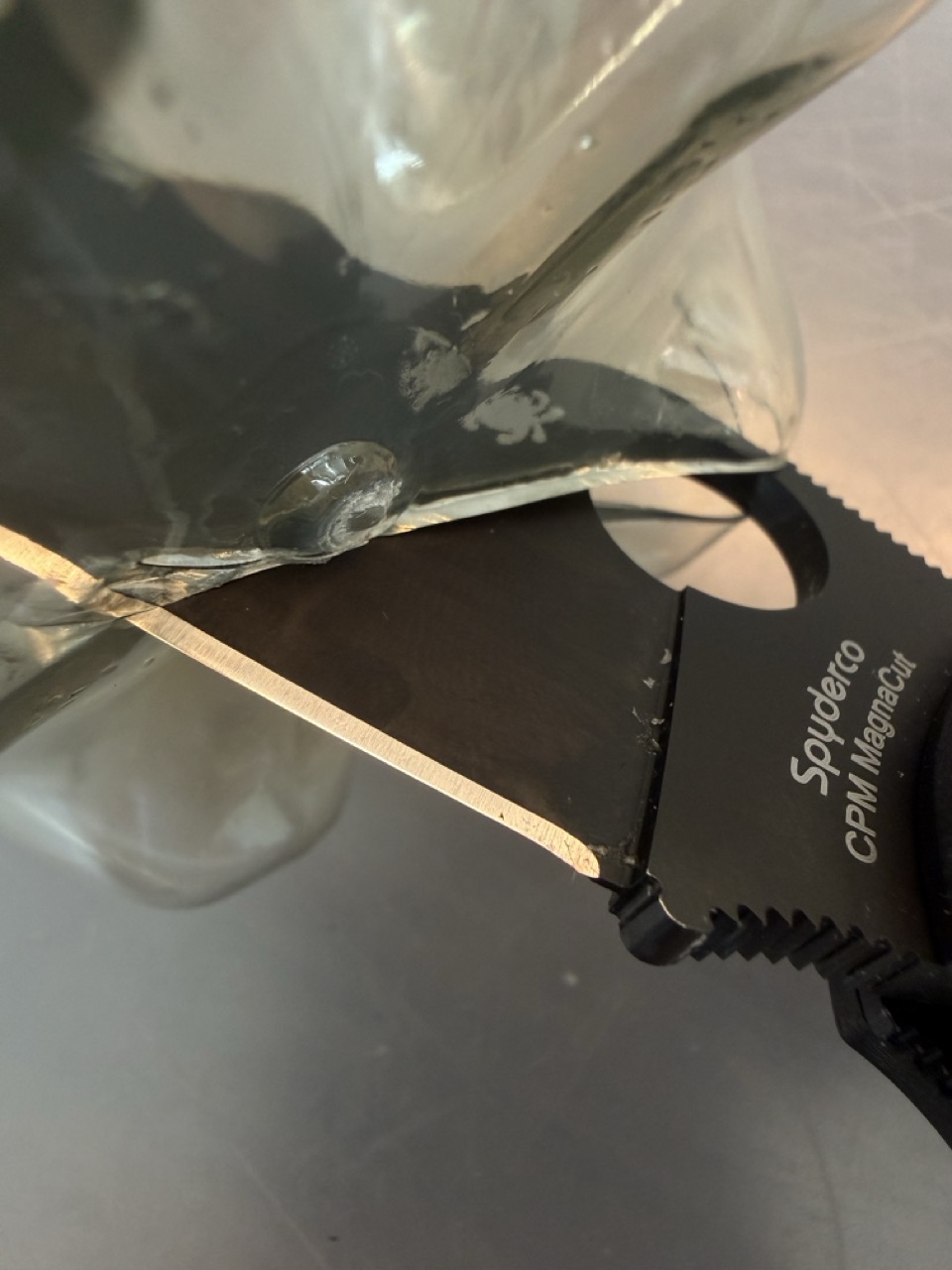
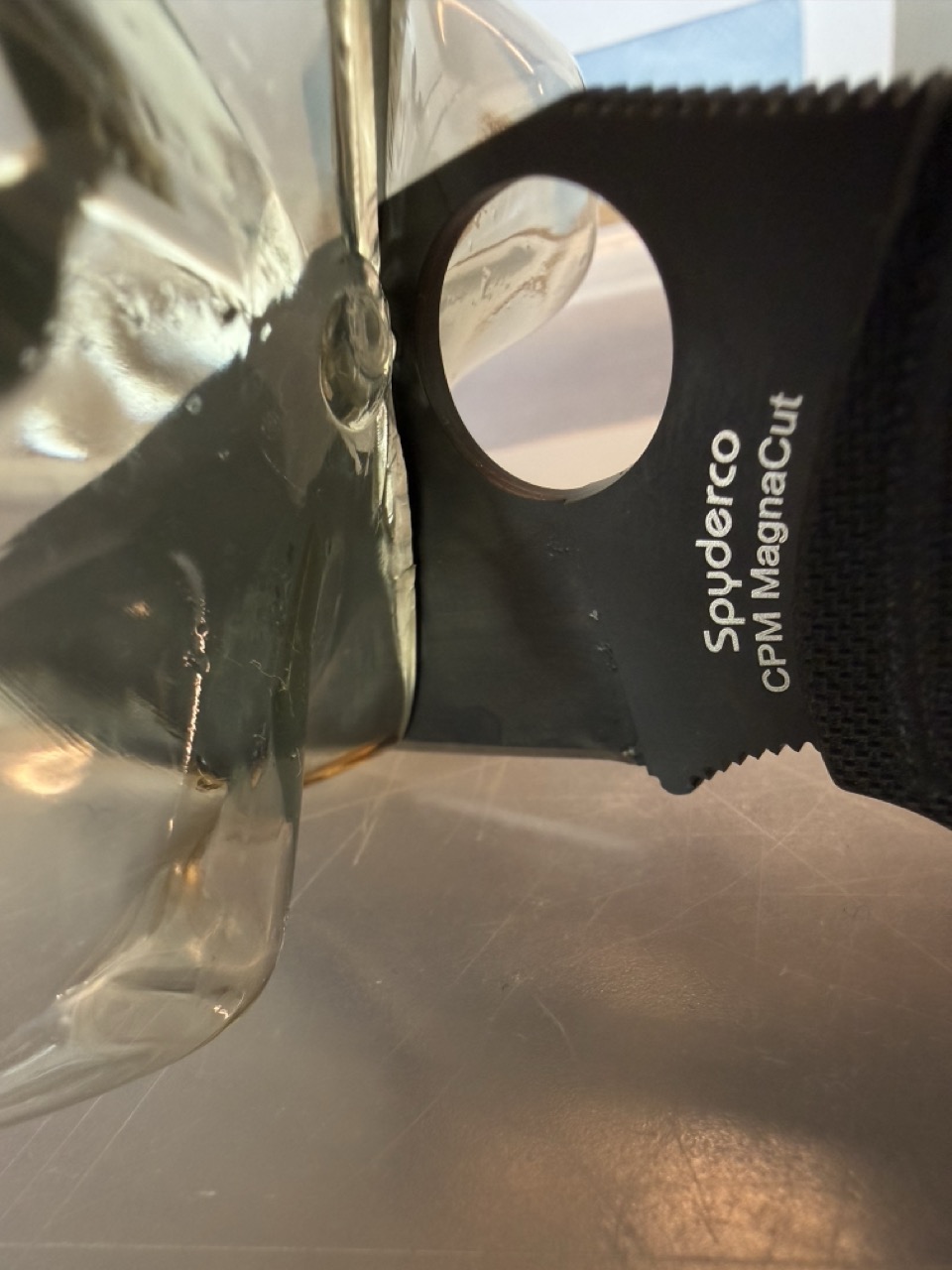
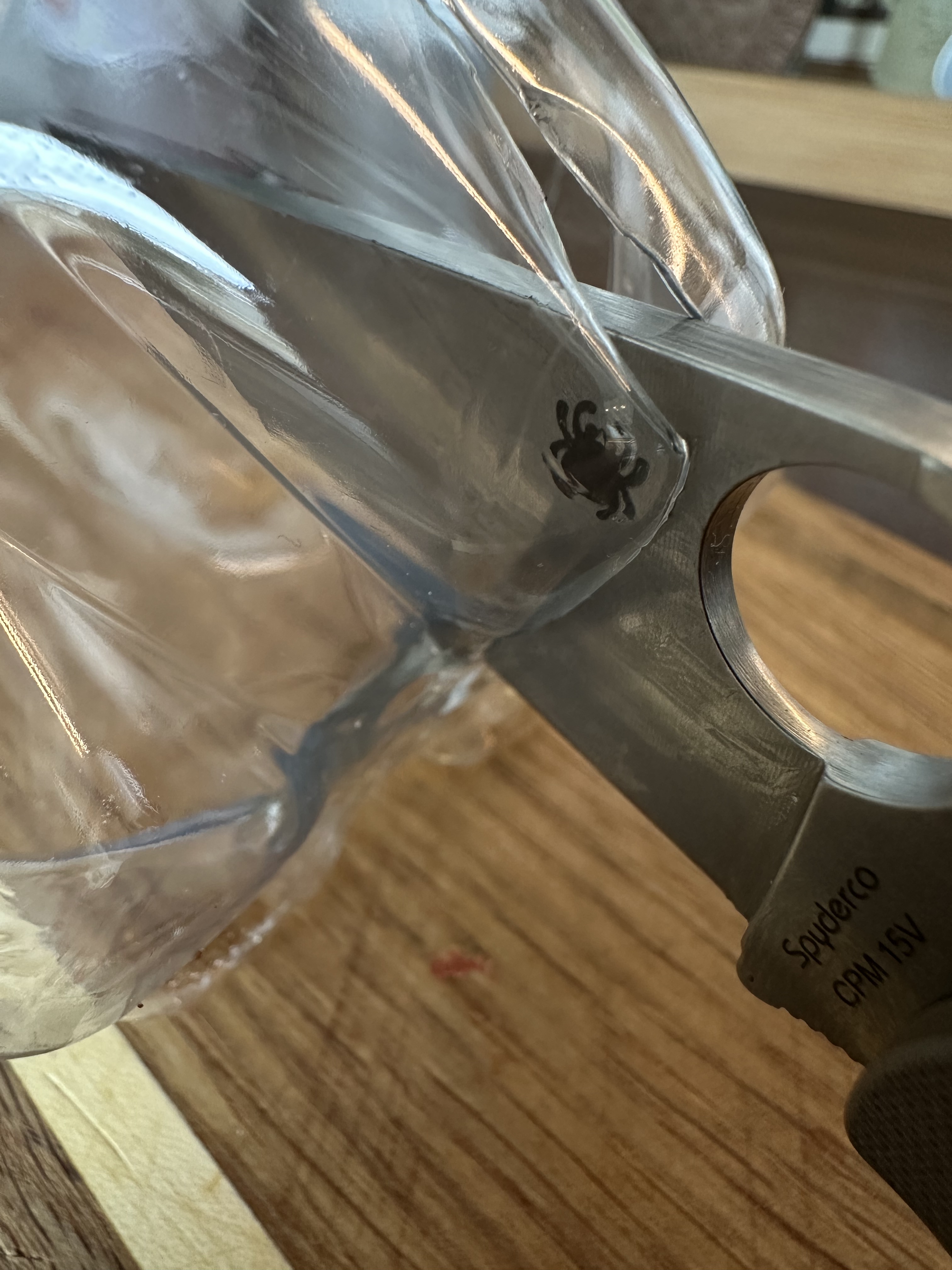
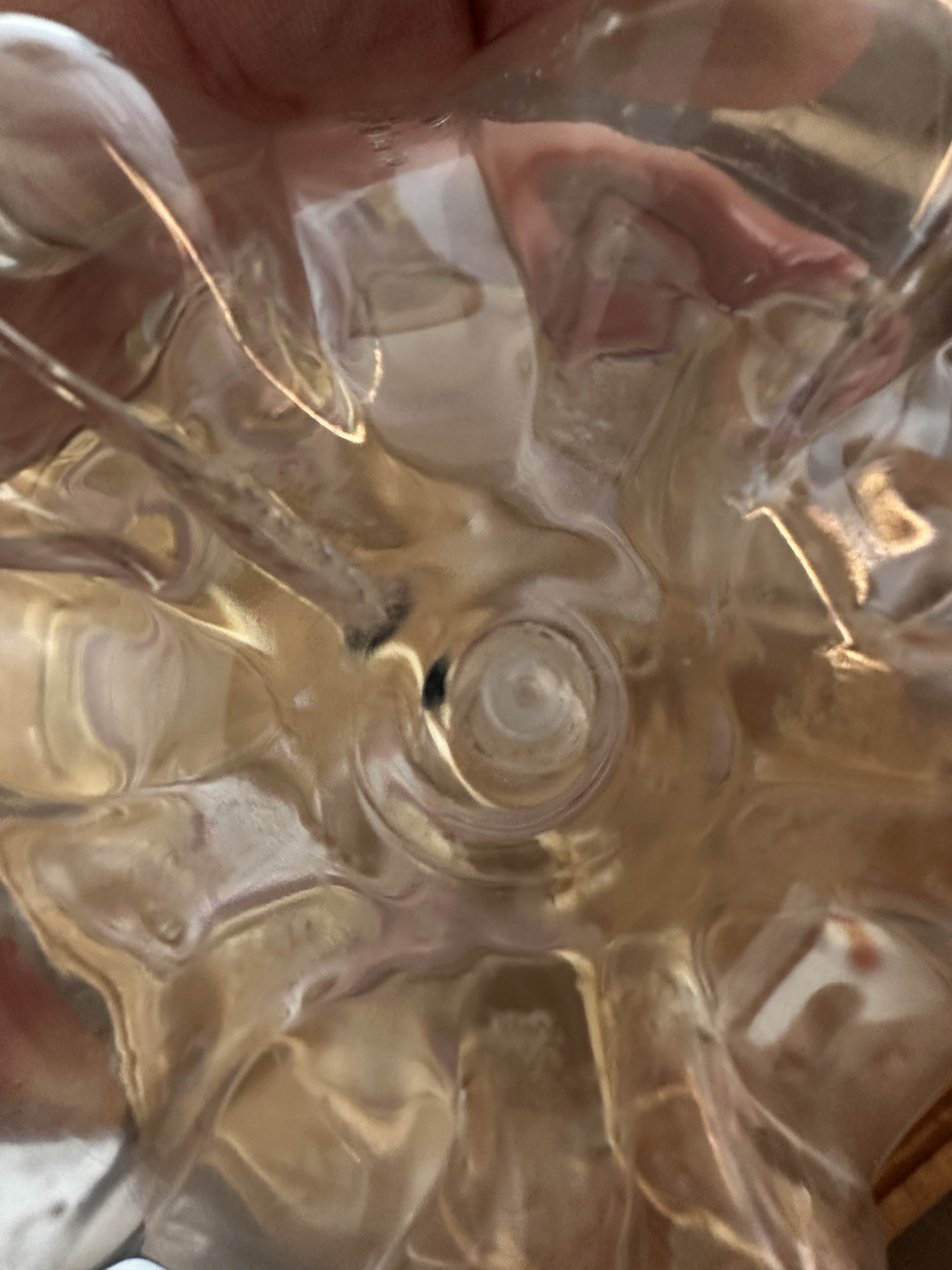
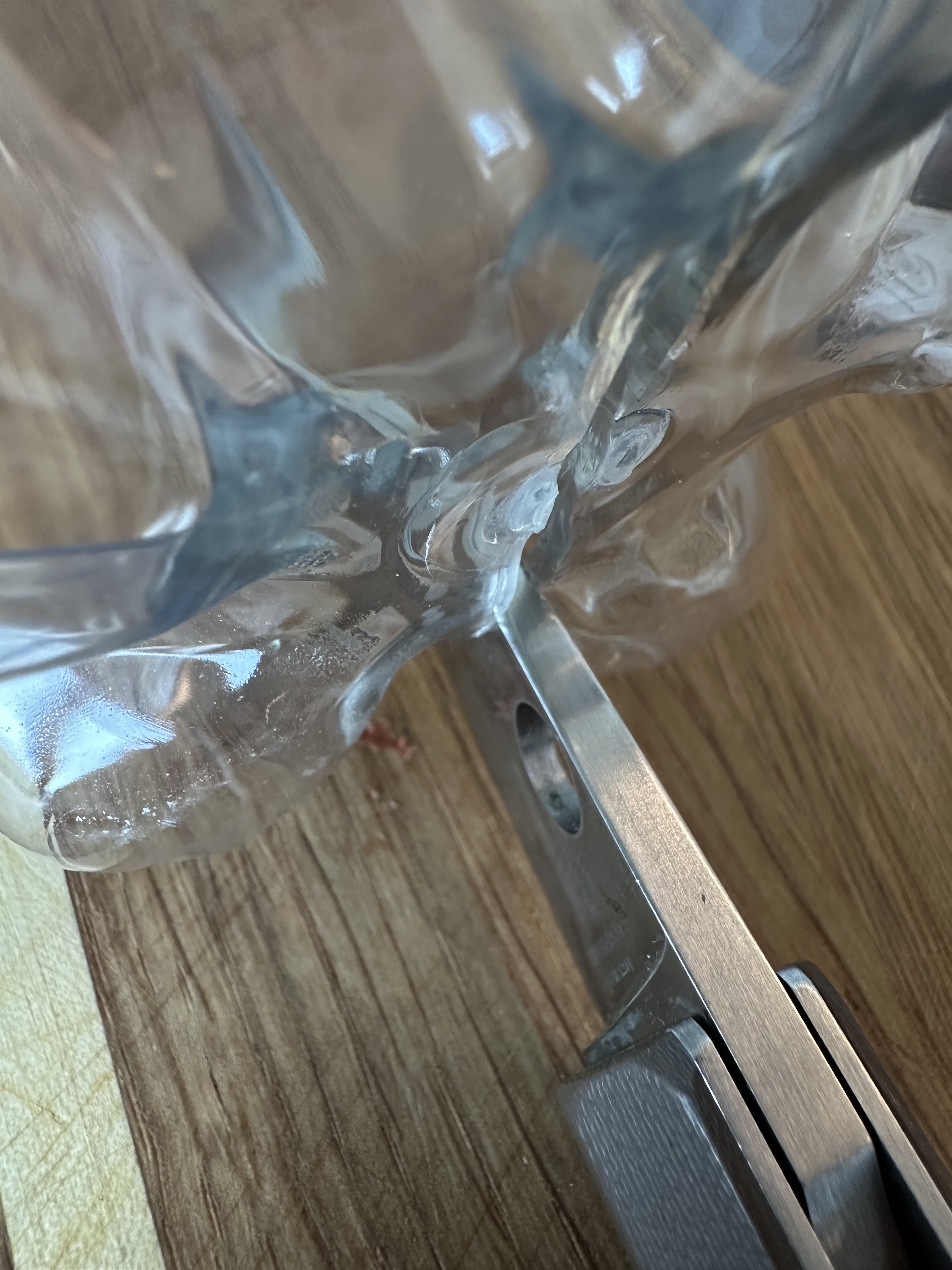
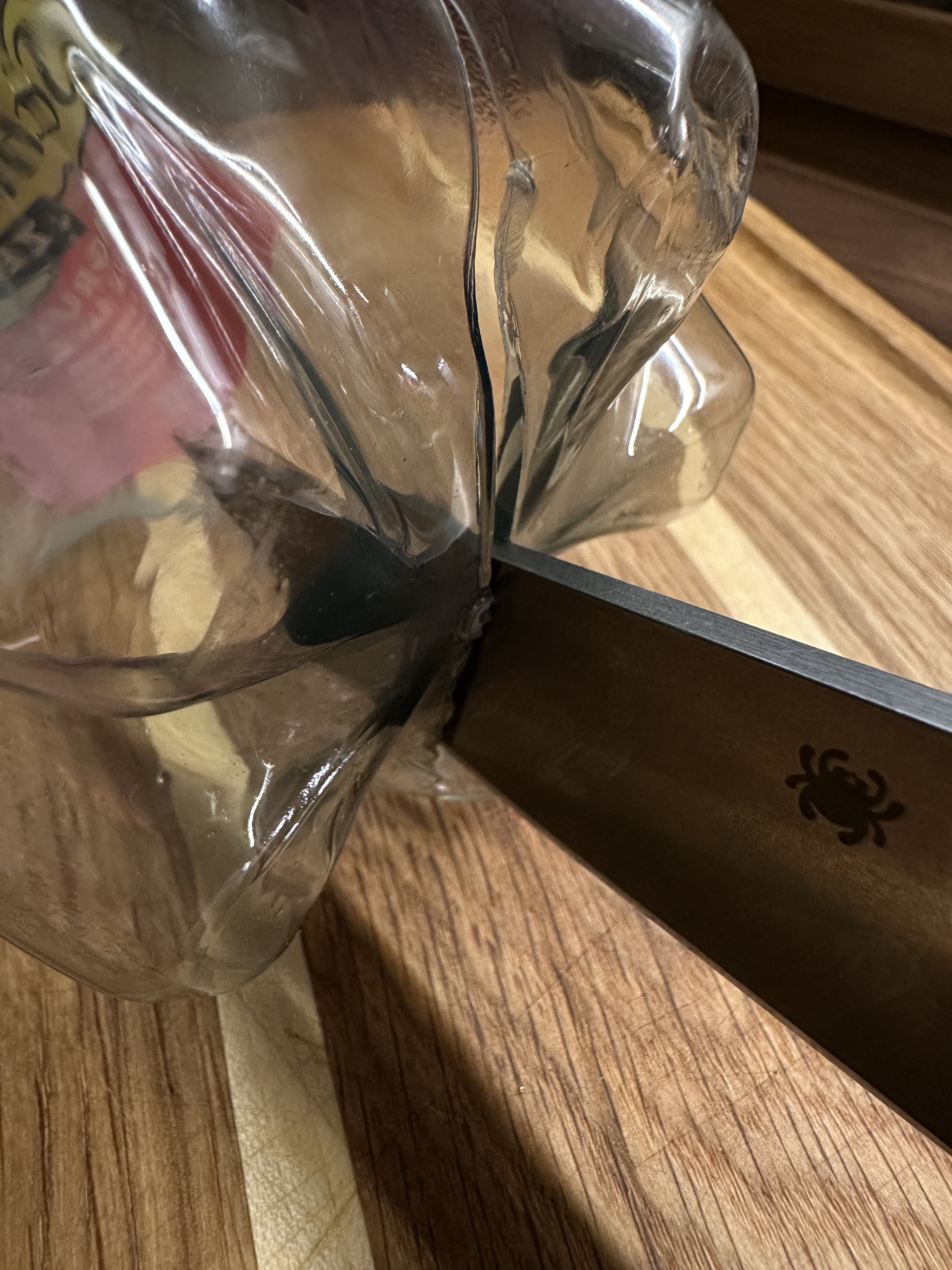
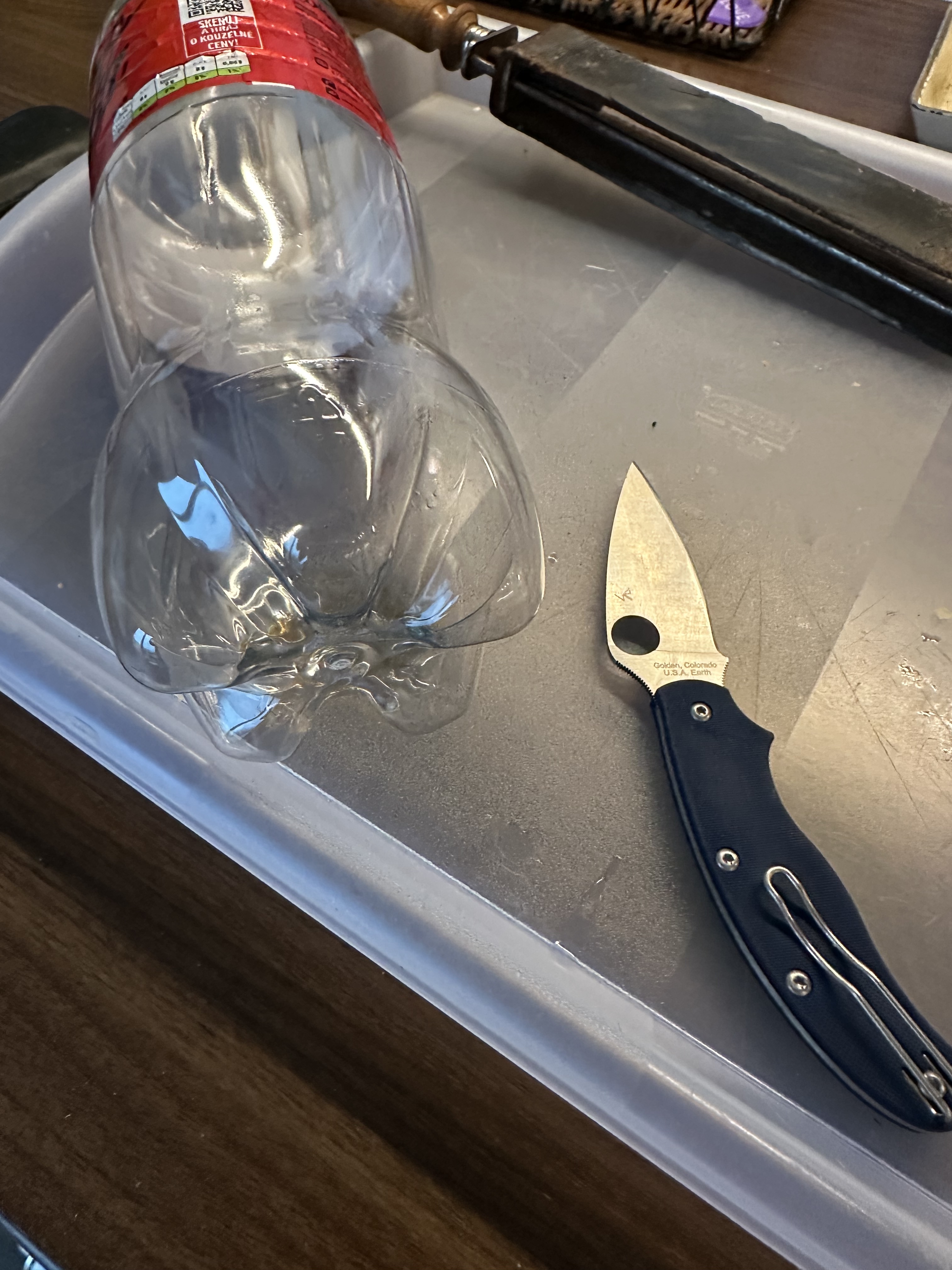
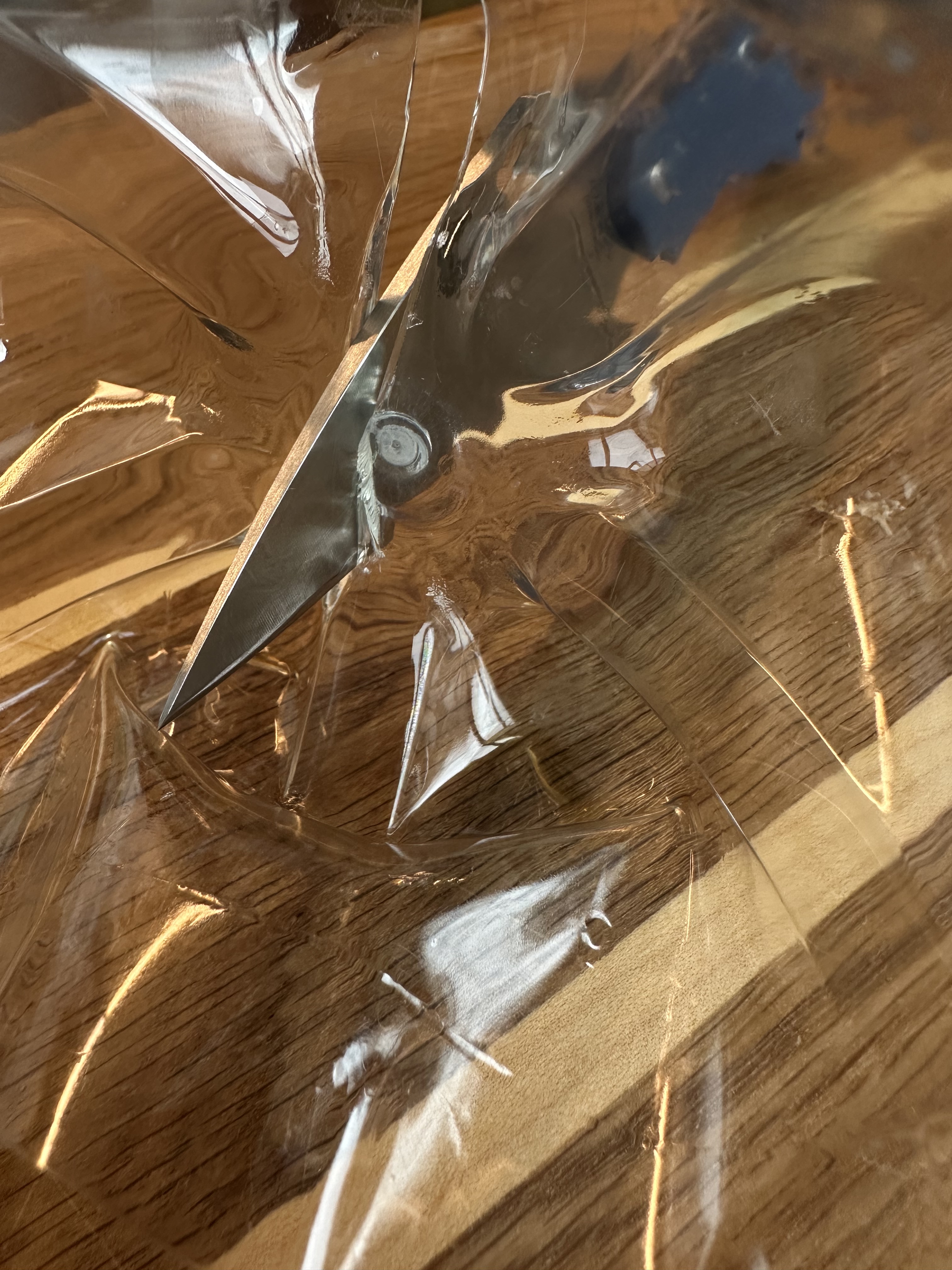
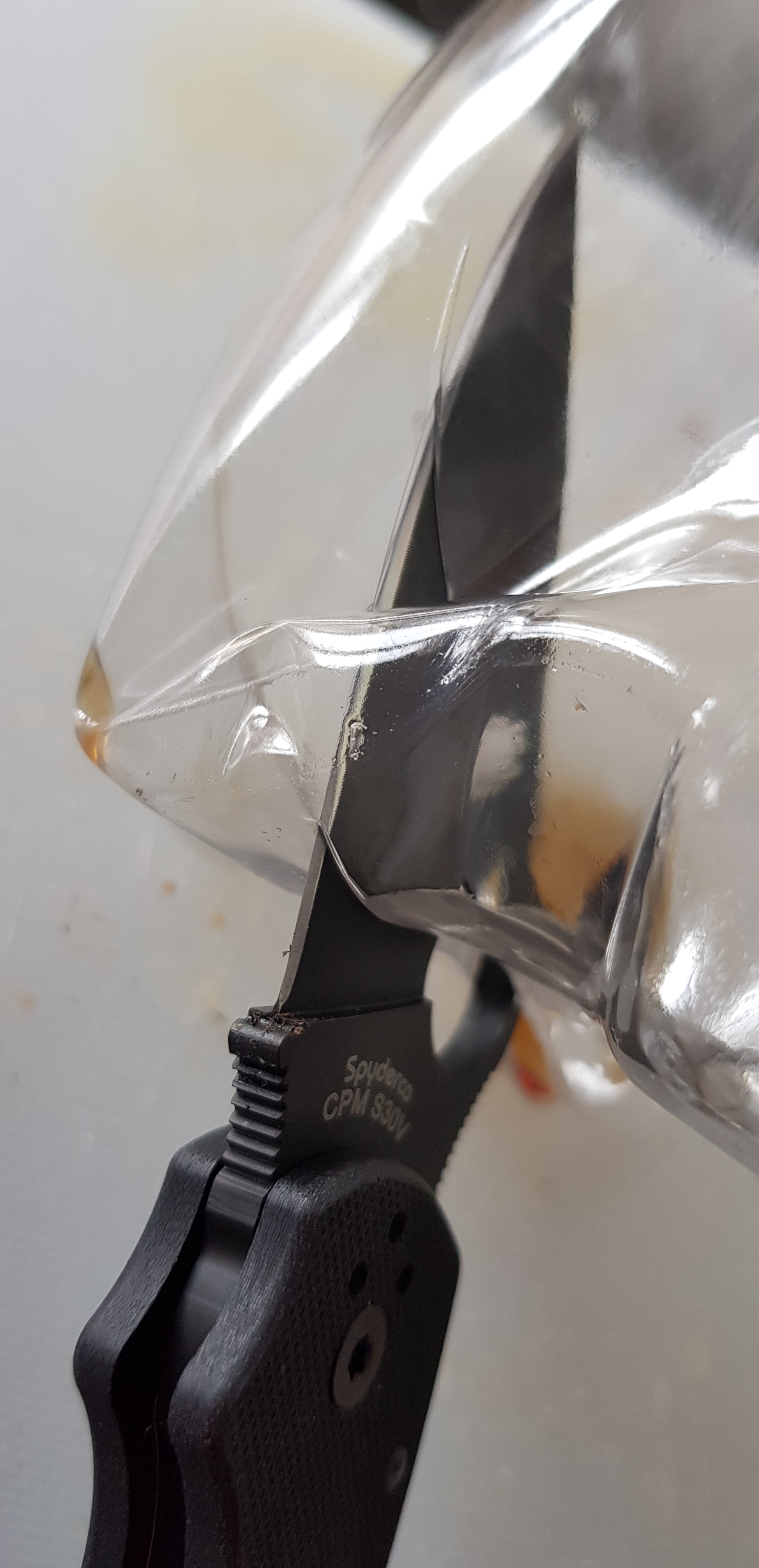
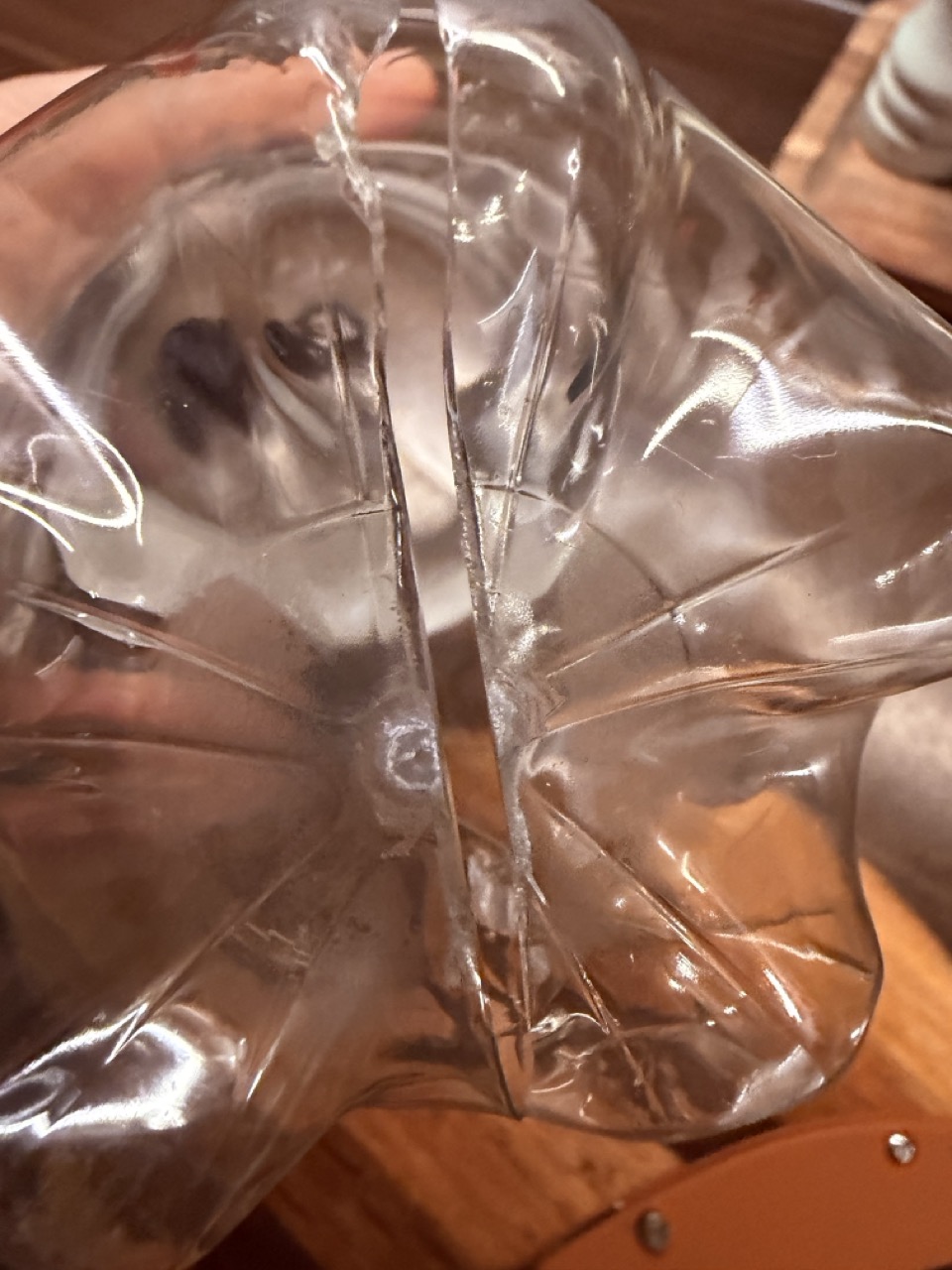
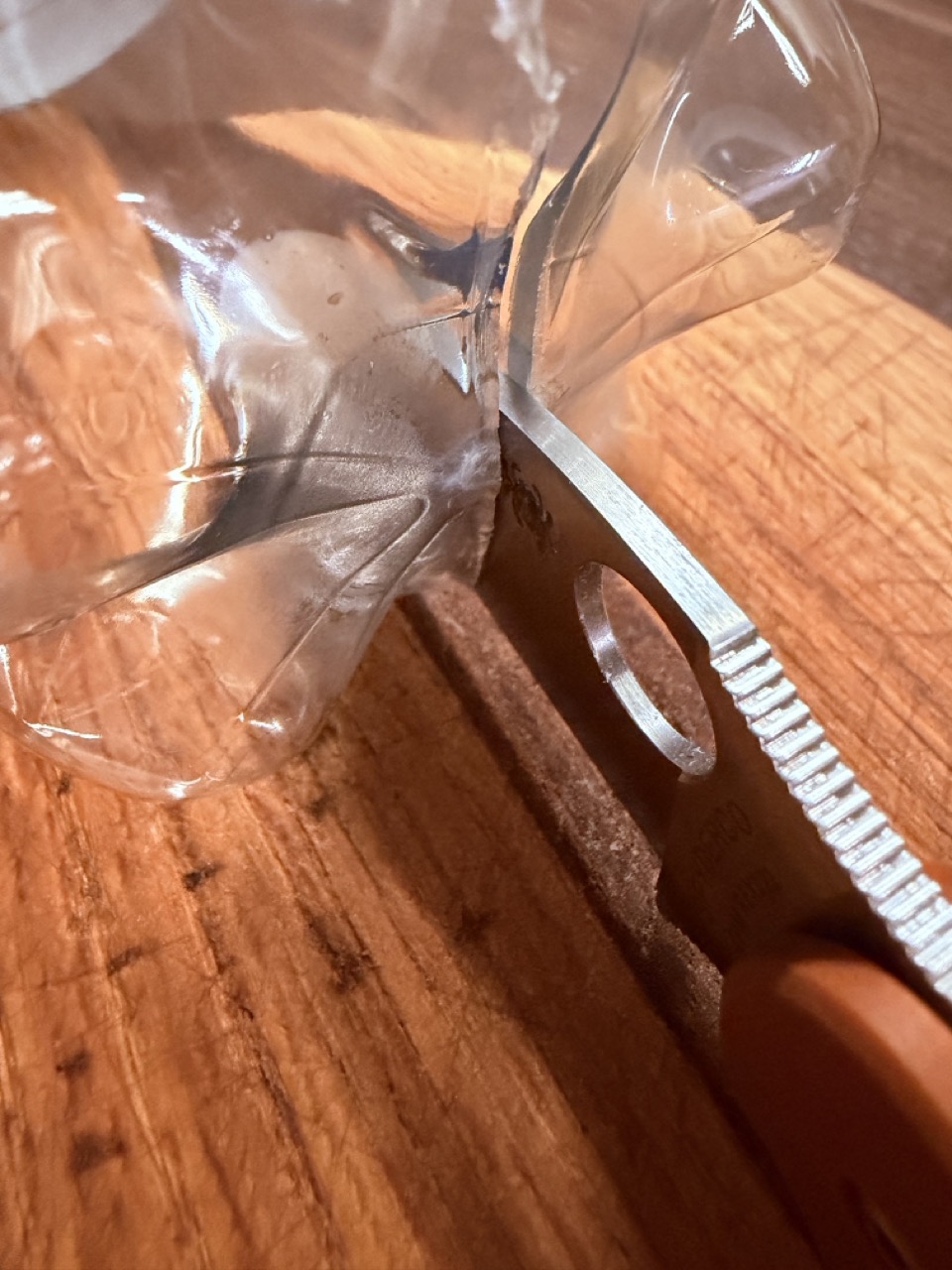
For now, I wasn’t entirely satisfied with the amount of force required to cut through the bottom of a plastic Coke bottle.
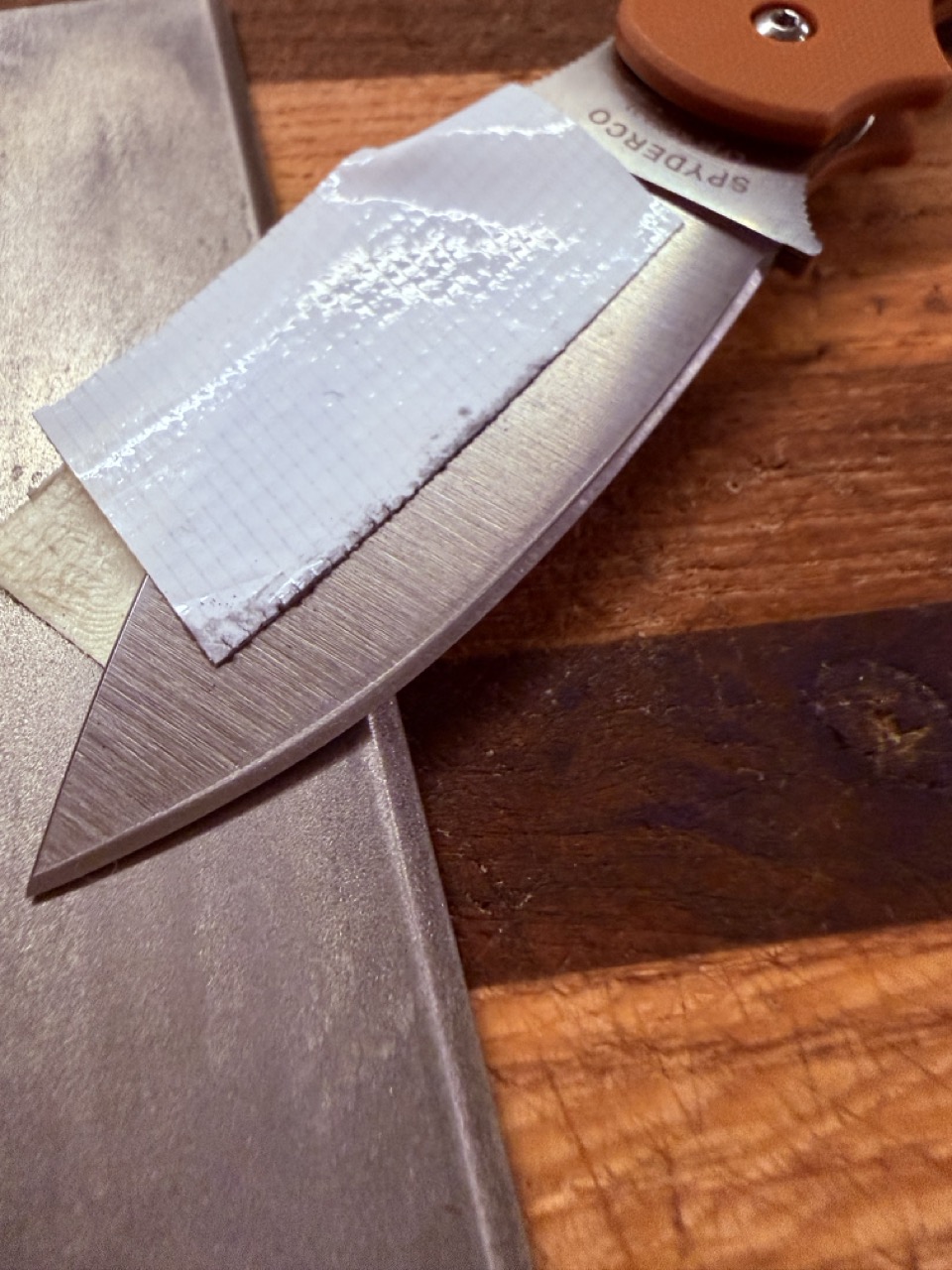
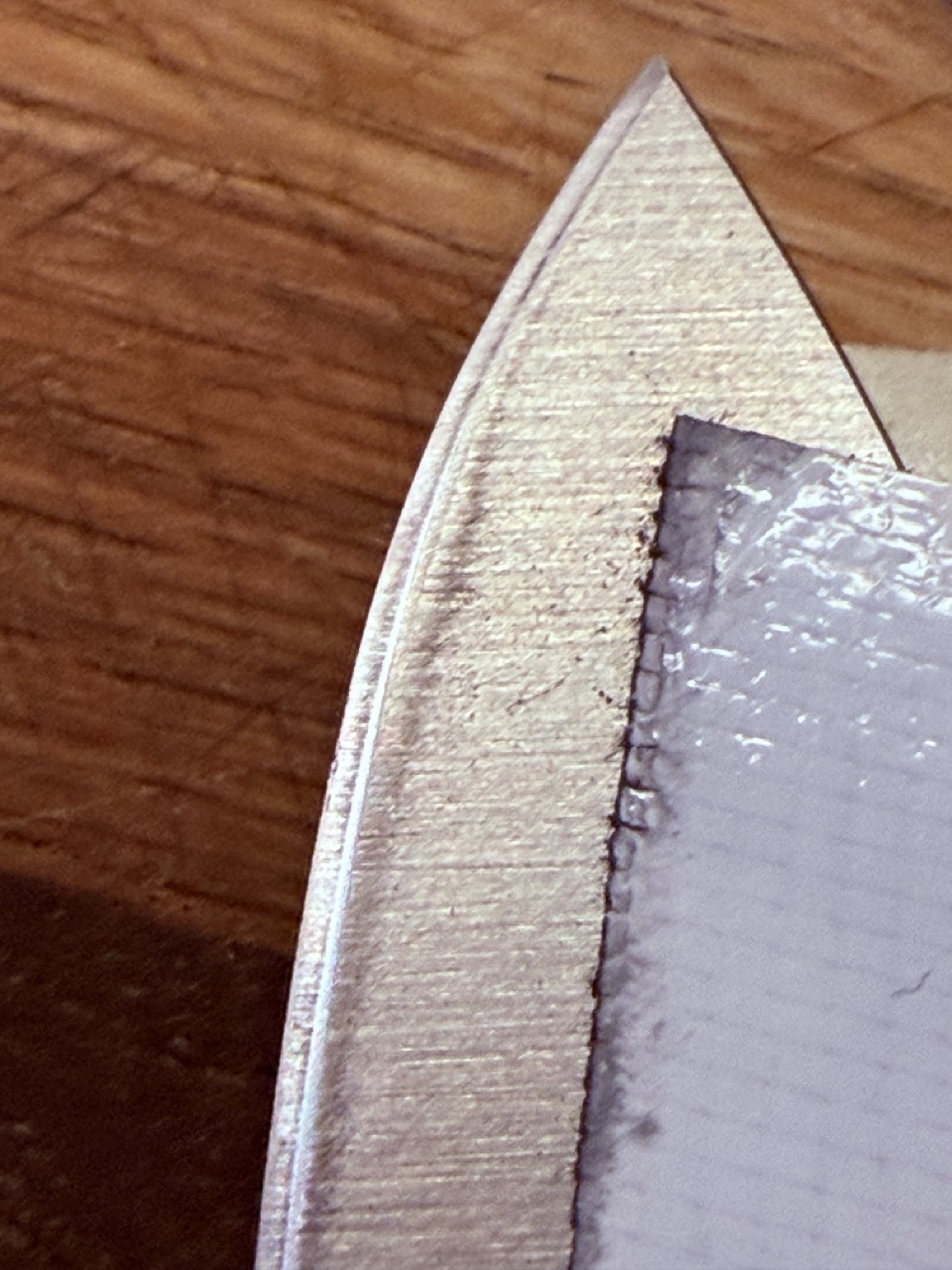
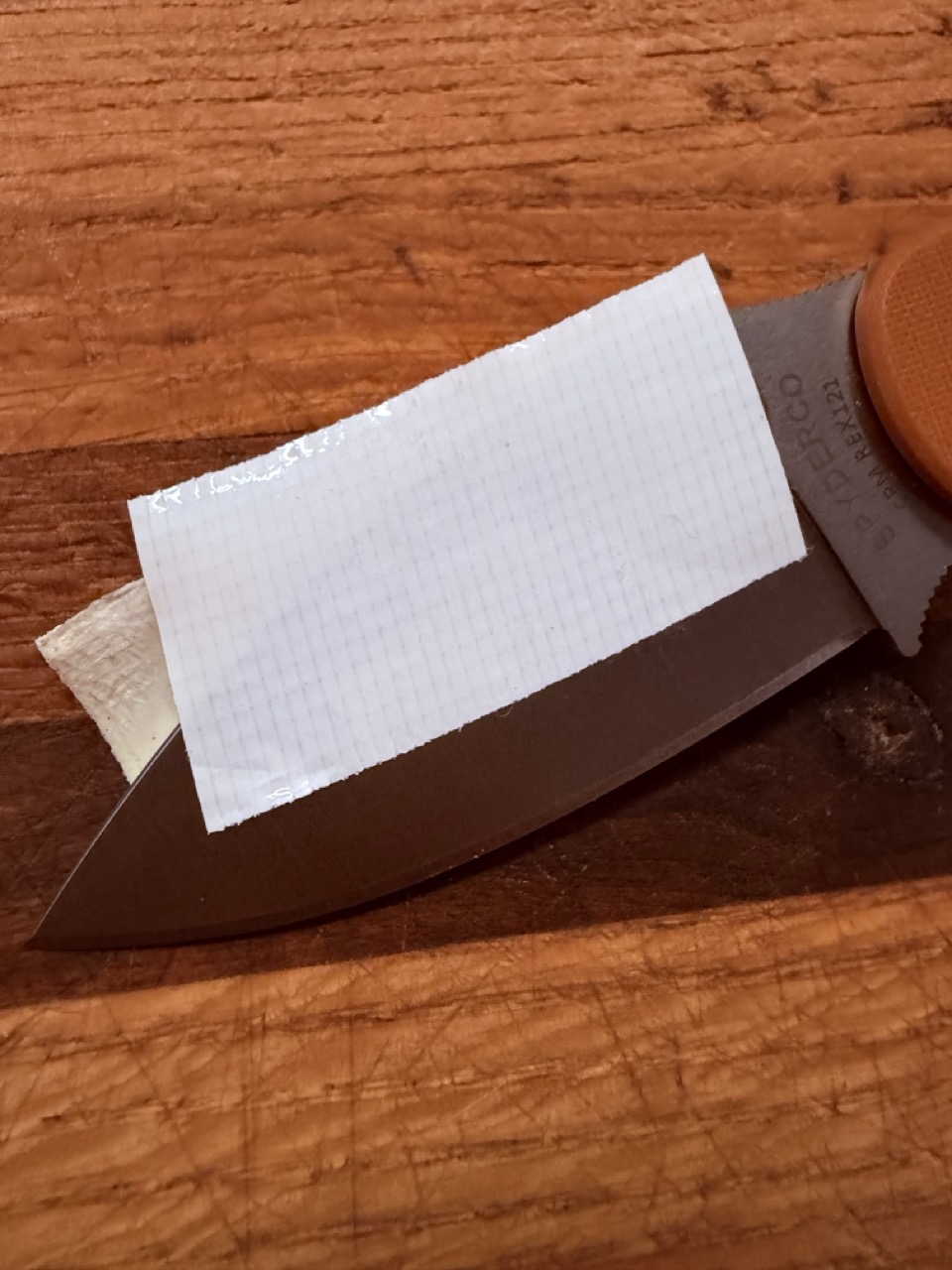
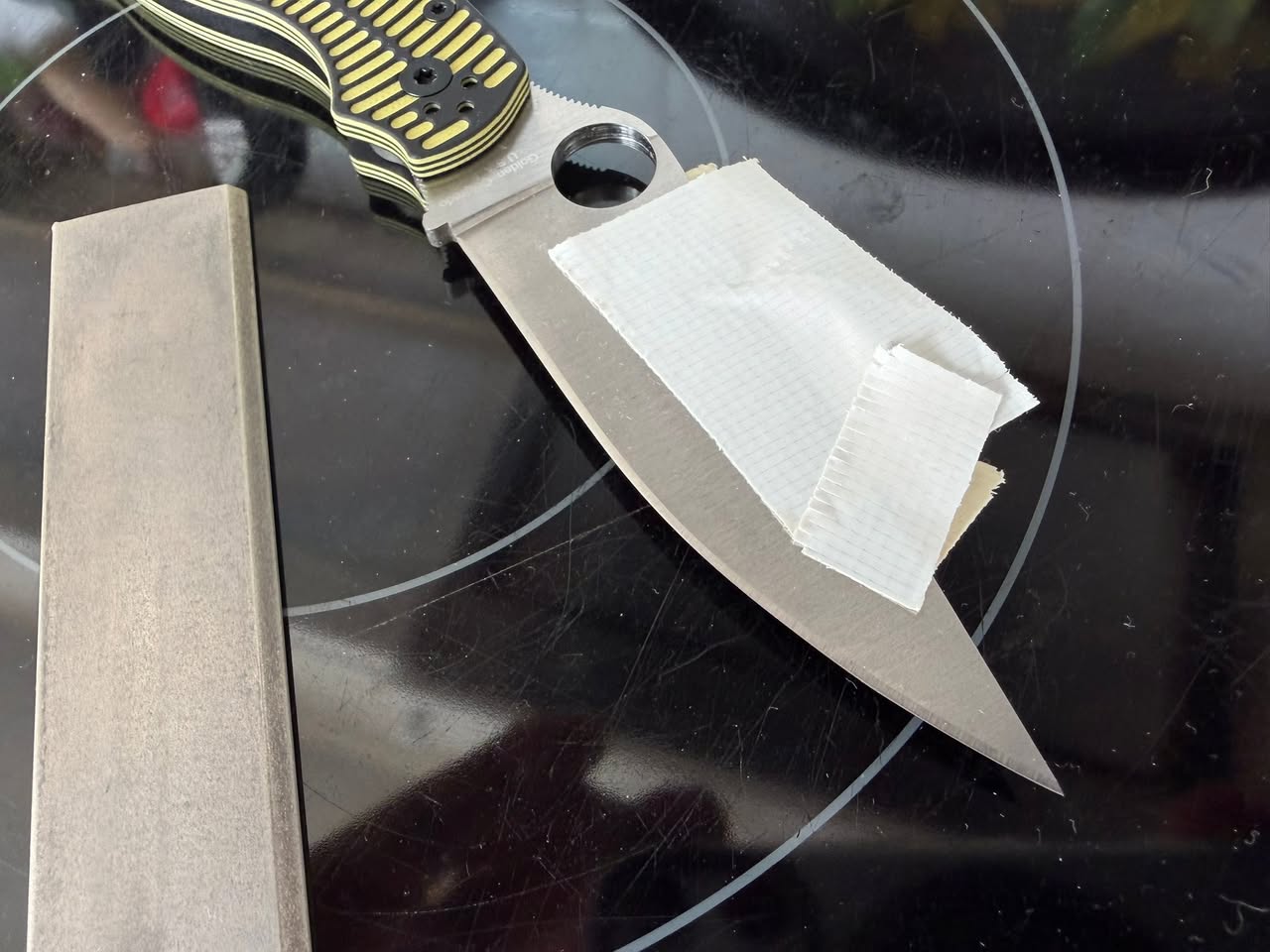
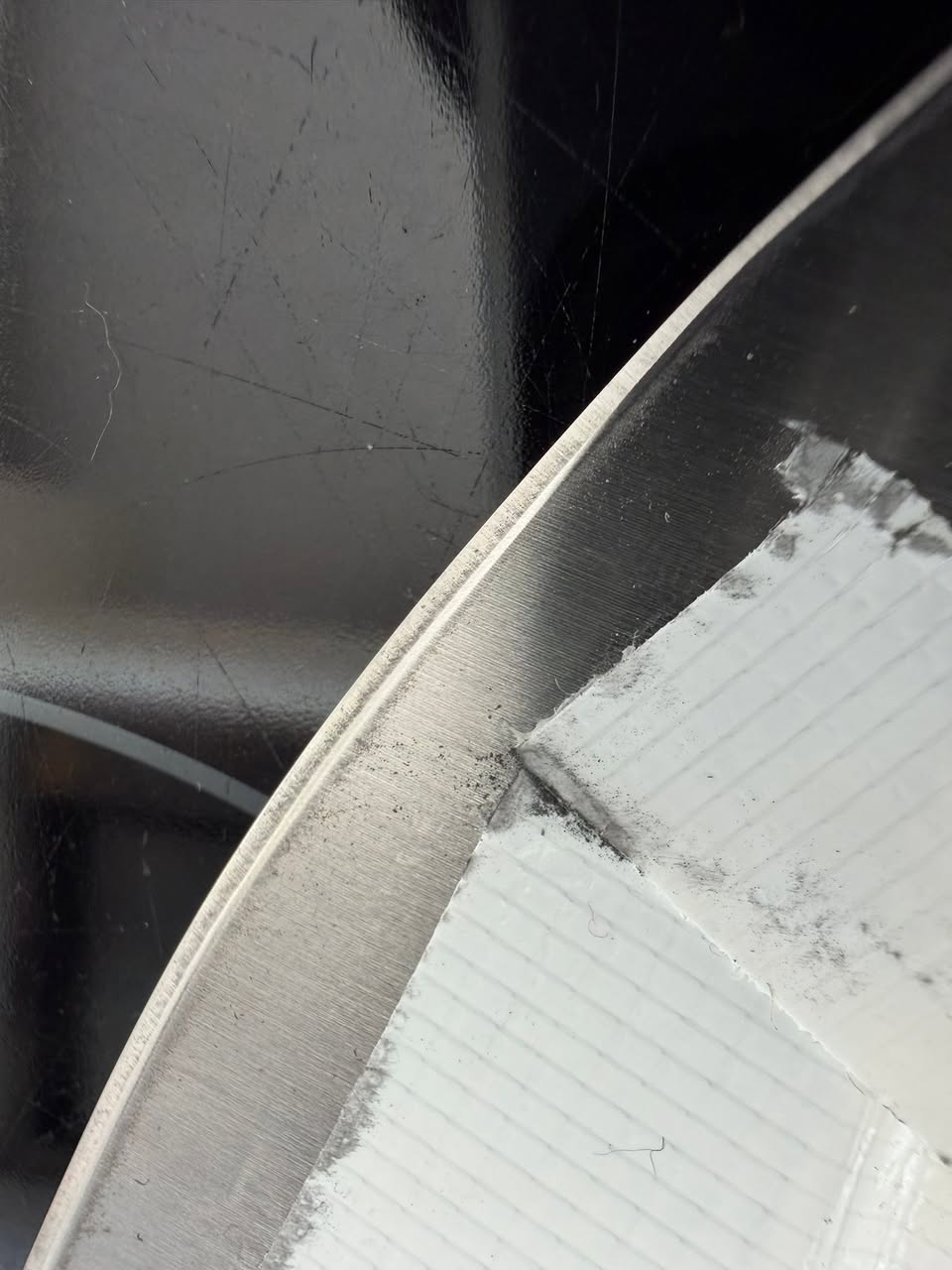
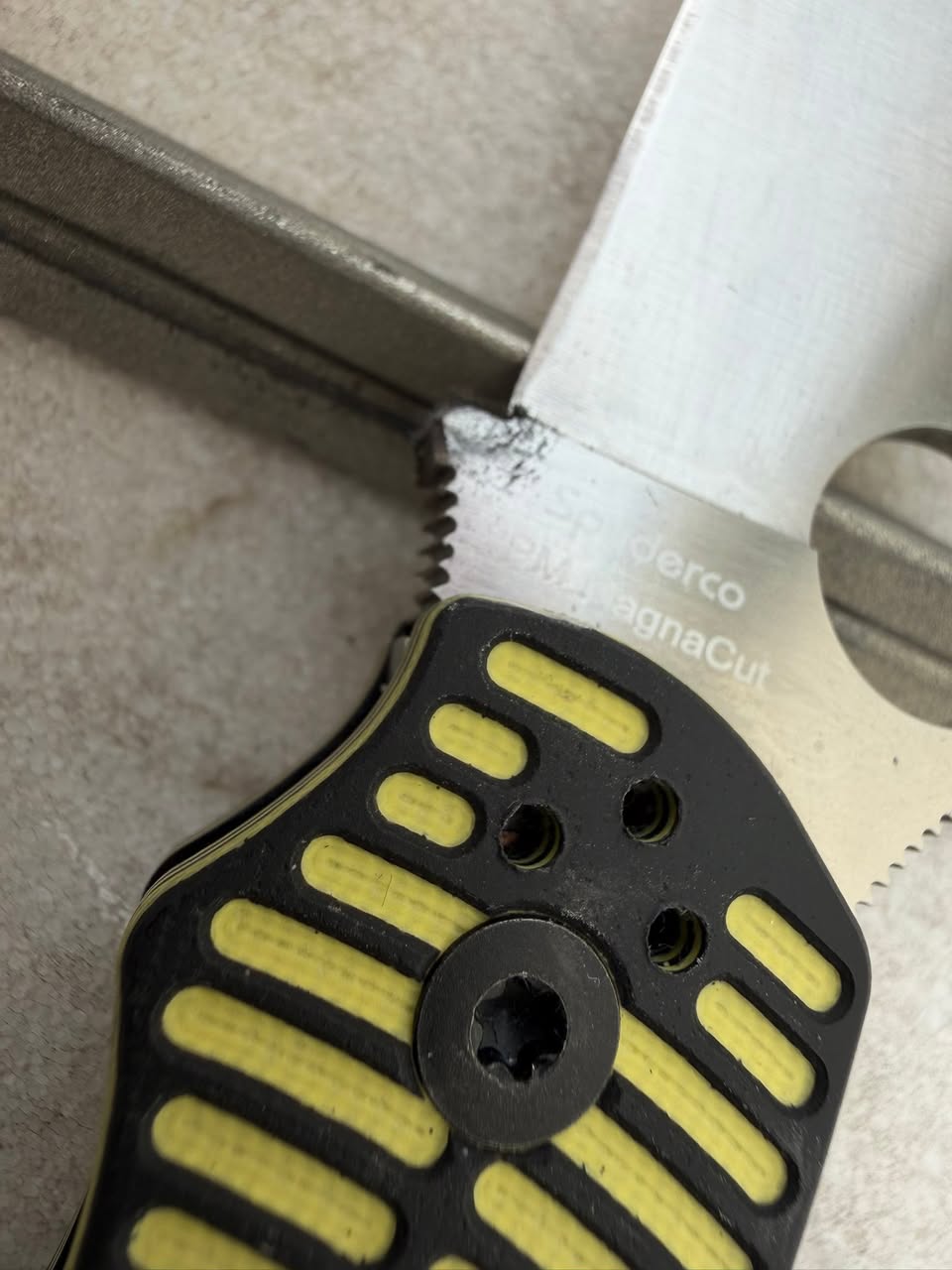
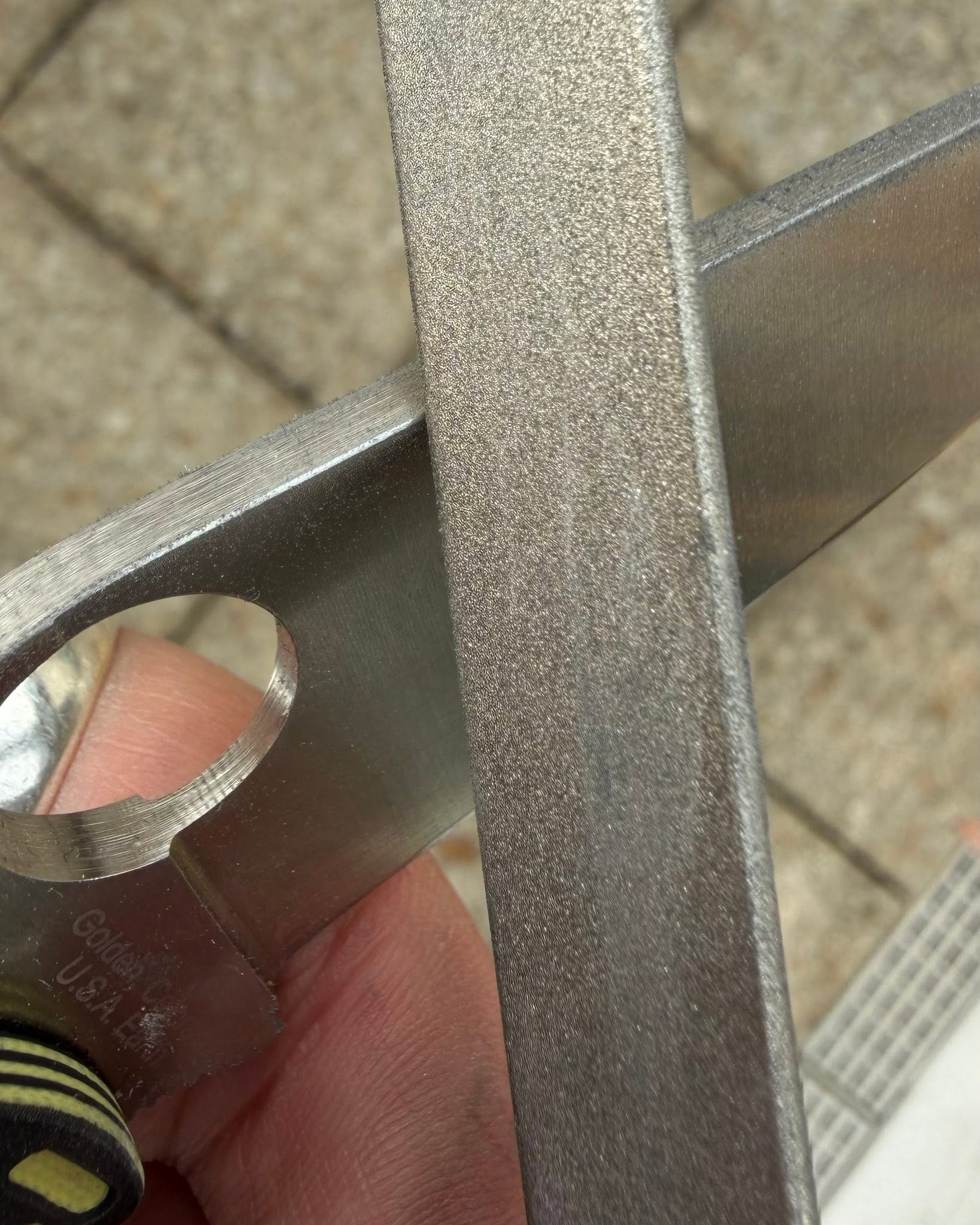
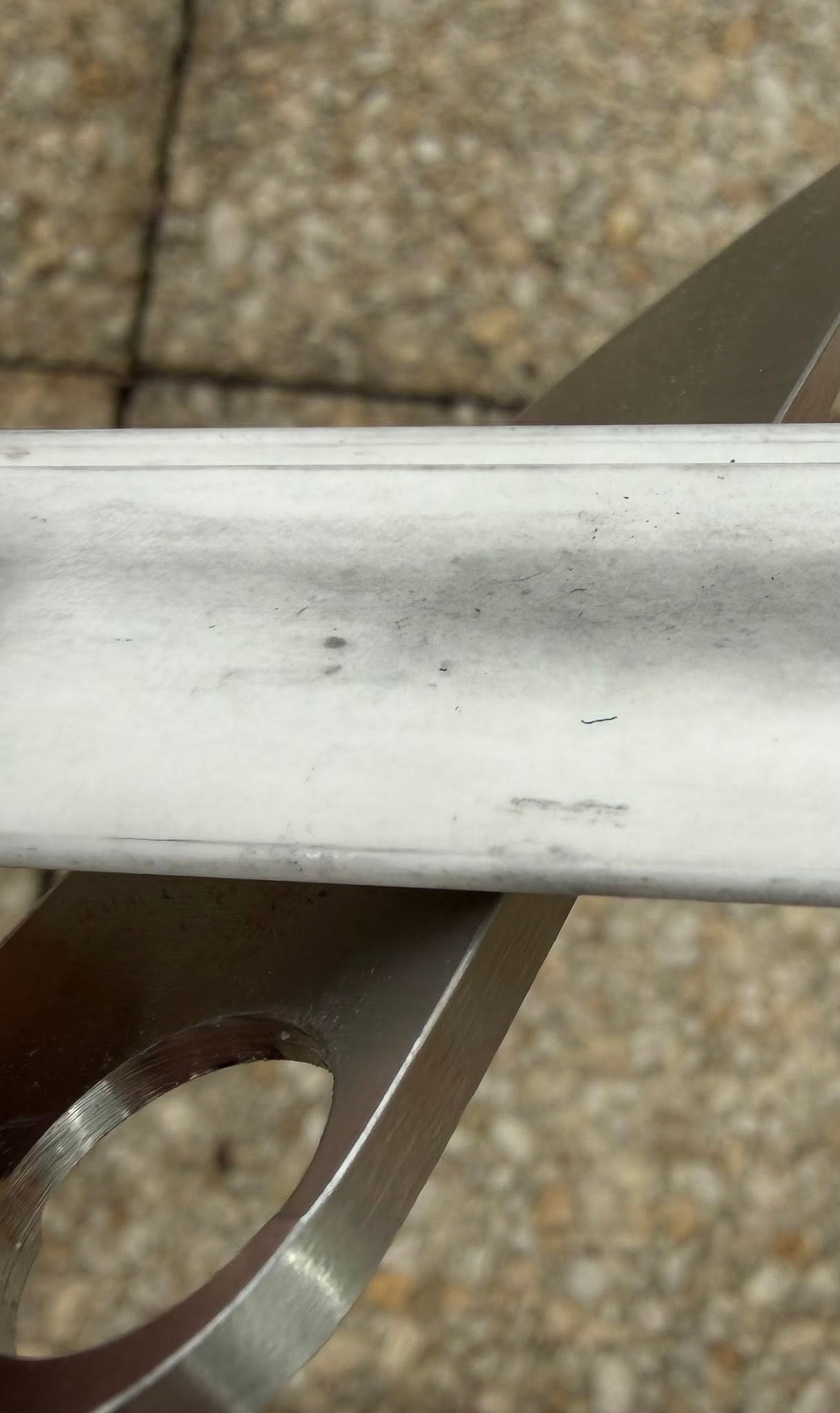
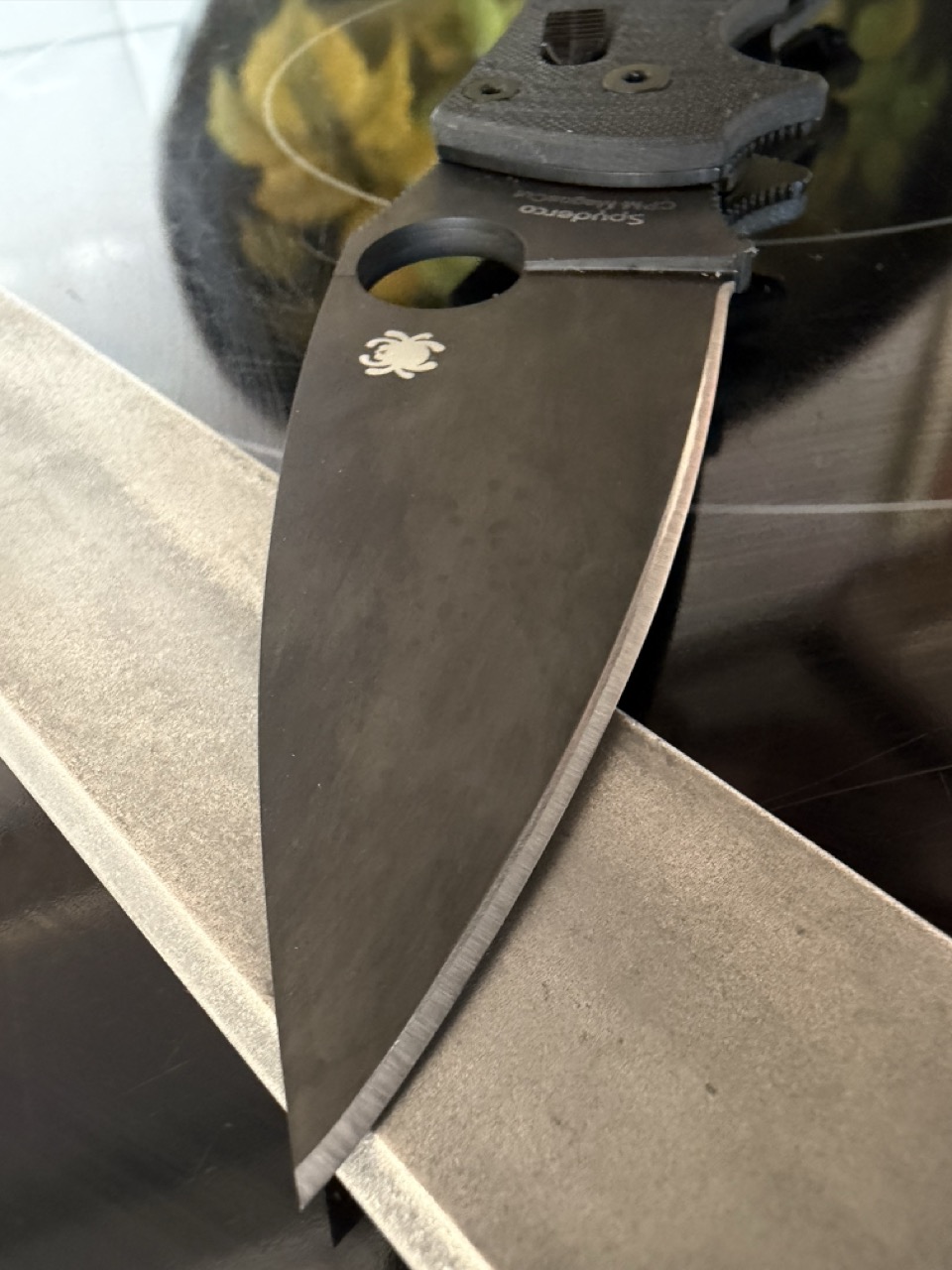
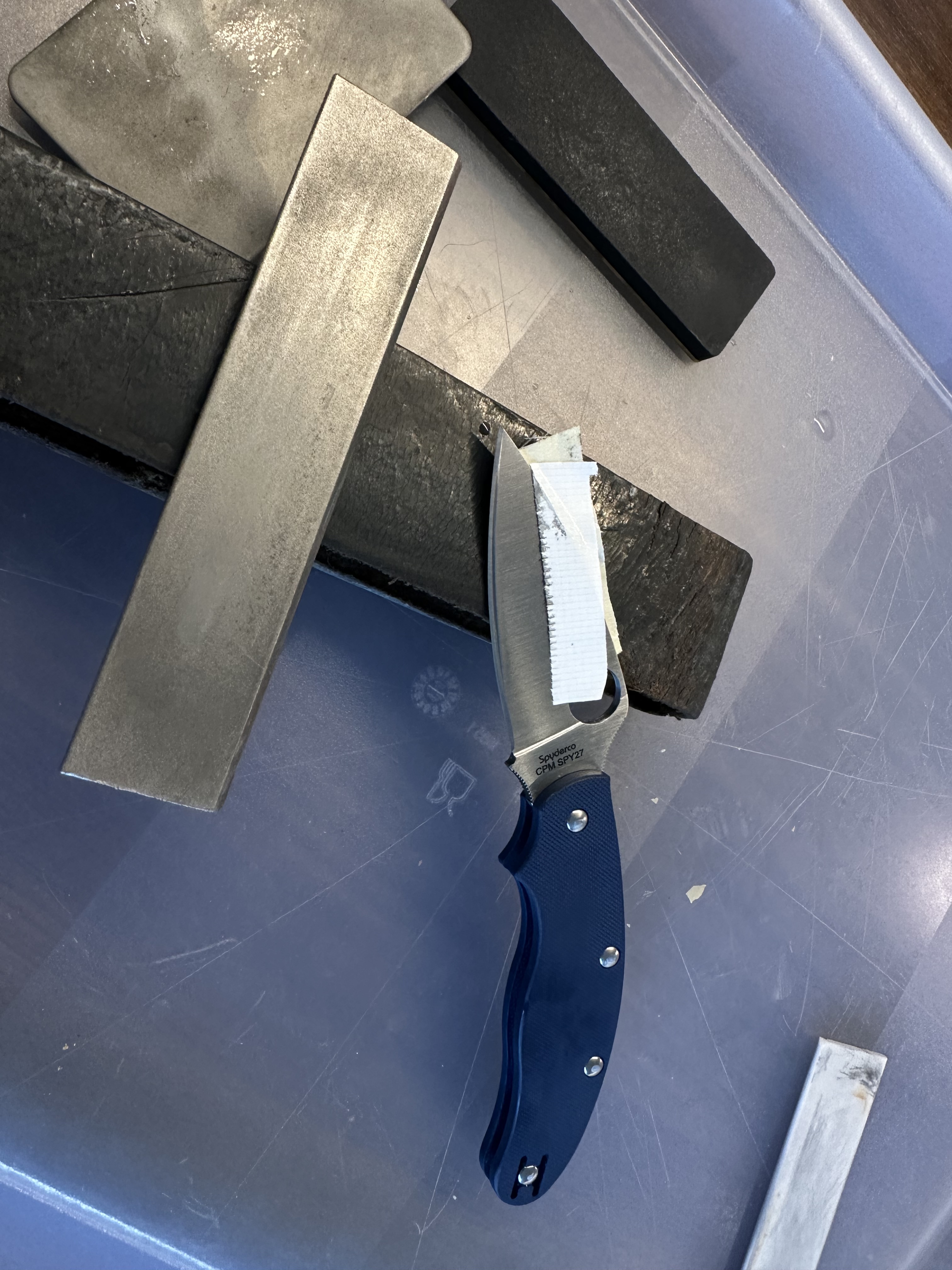
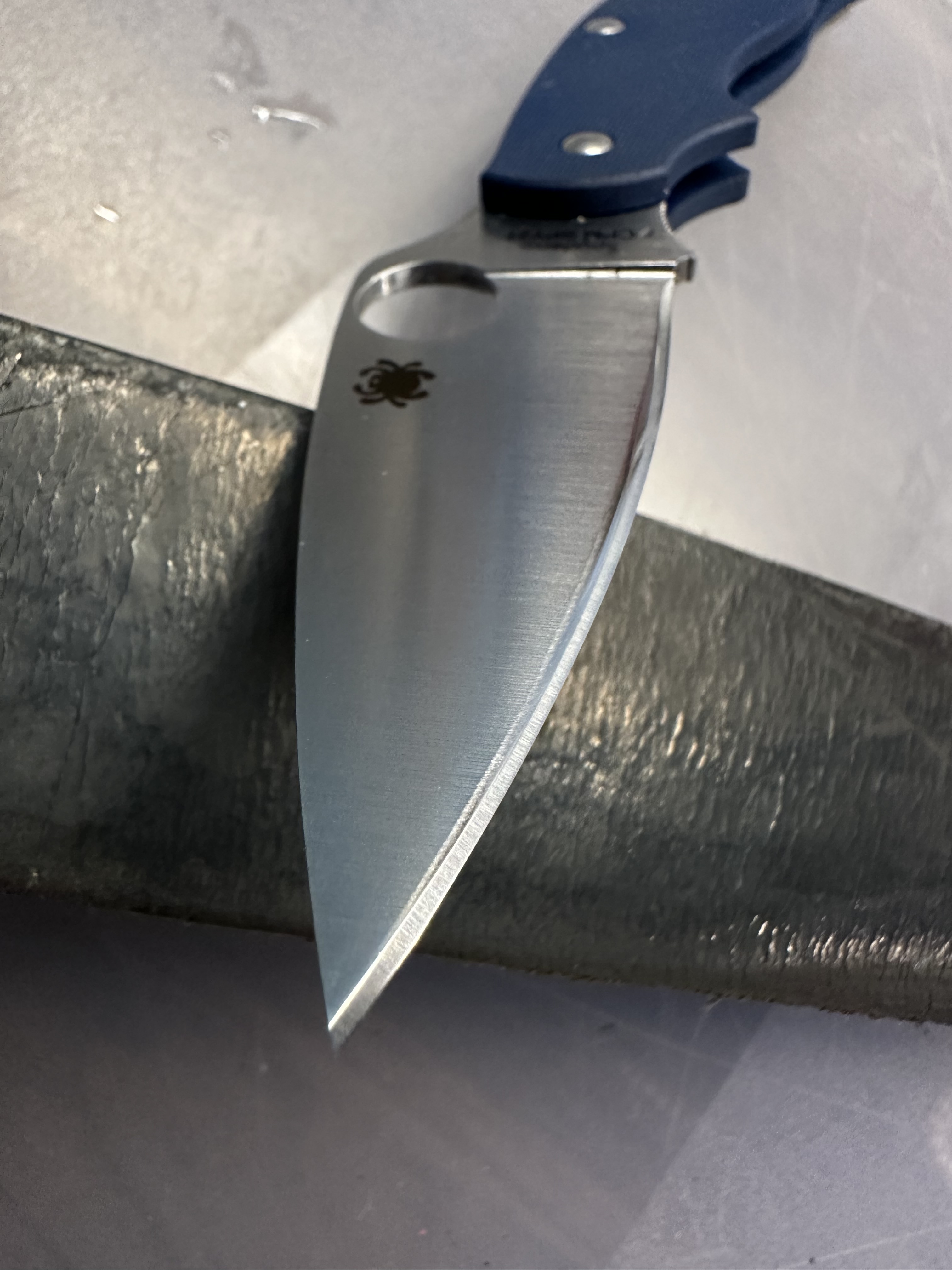
So I decided to de-shoulder the factory edge using my Diamond Stuff 2.
This is not a reprofile, and certainly not a convex edge. It’s simply a light de-shouldering of the bevel to improve cutting efficiency while keeping the original edge geometry essentially intact.
The steel responded surprisingly well, and the operation was completed without any difficulty.
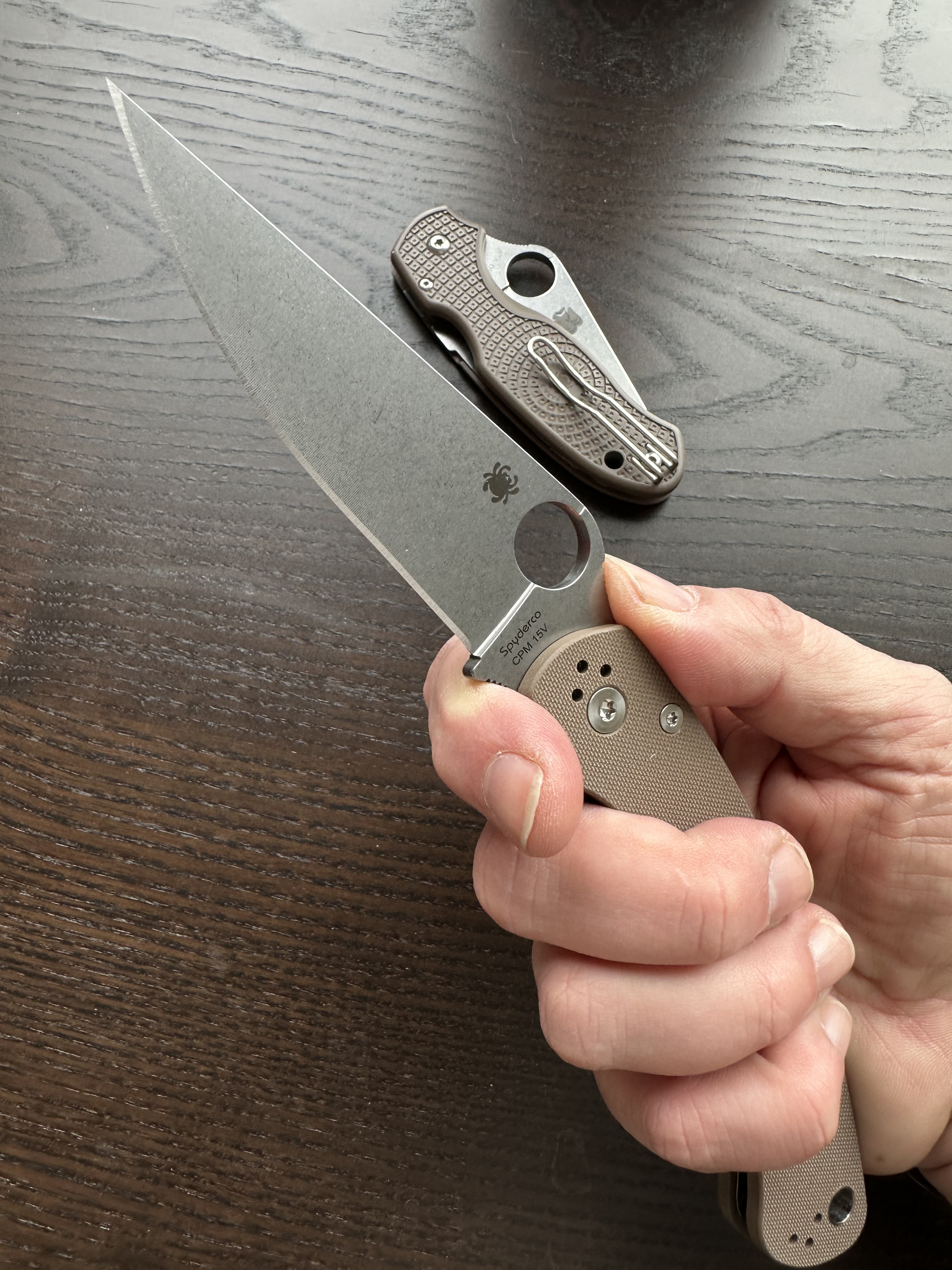
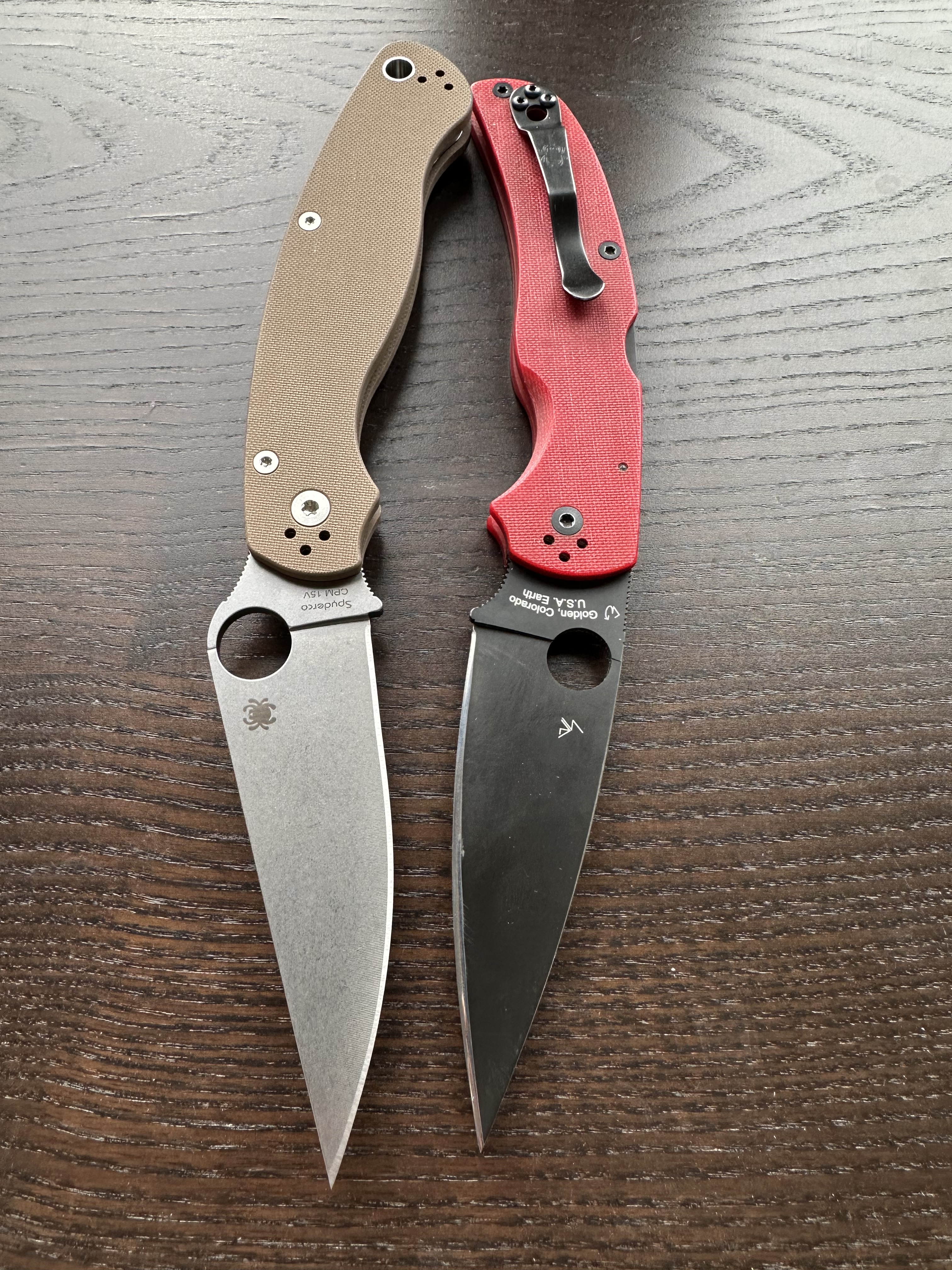
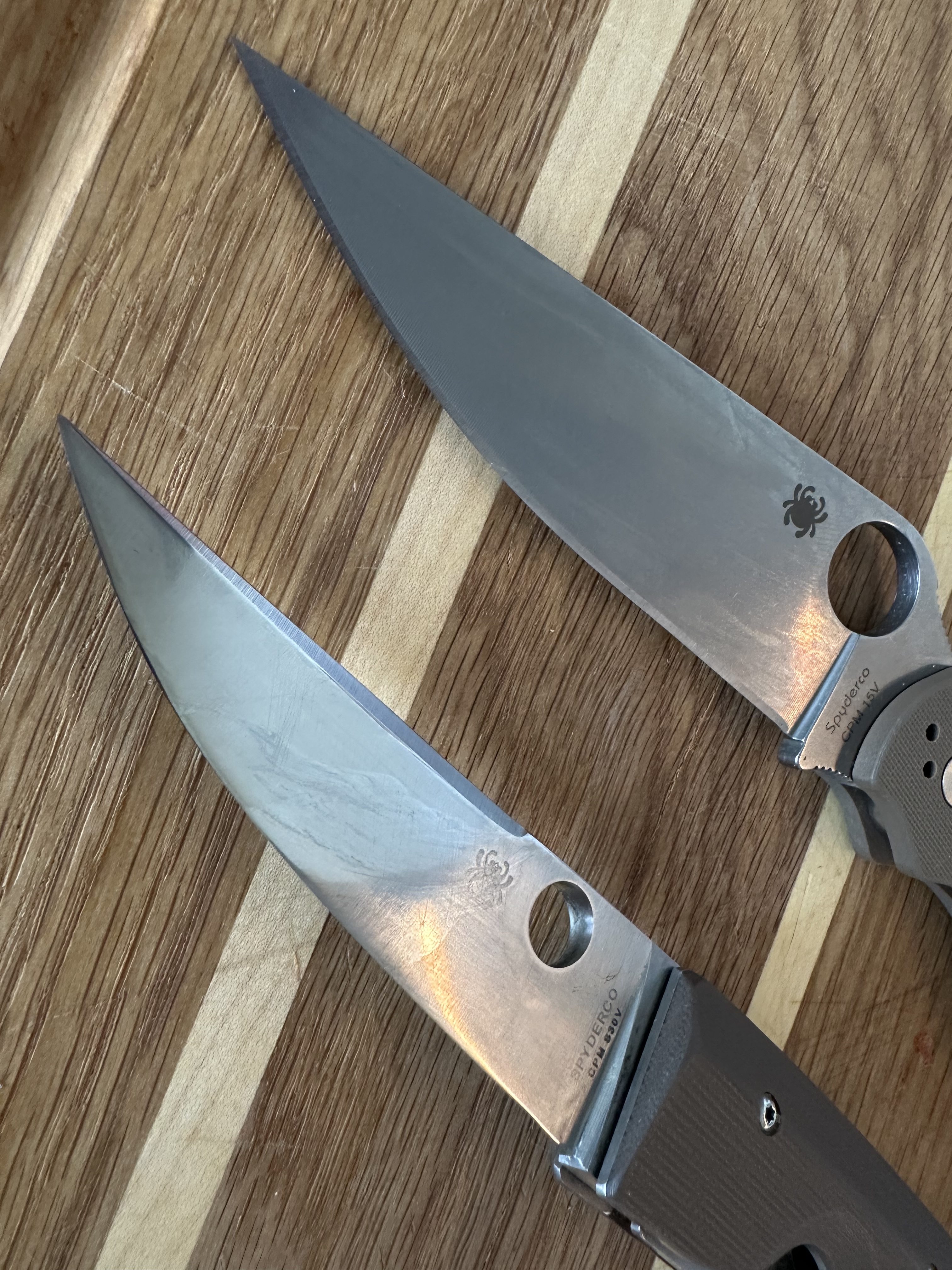
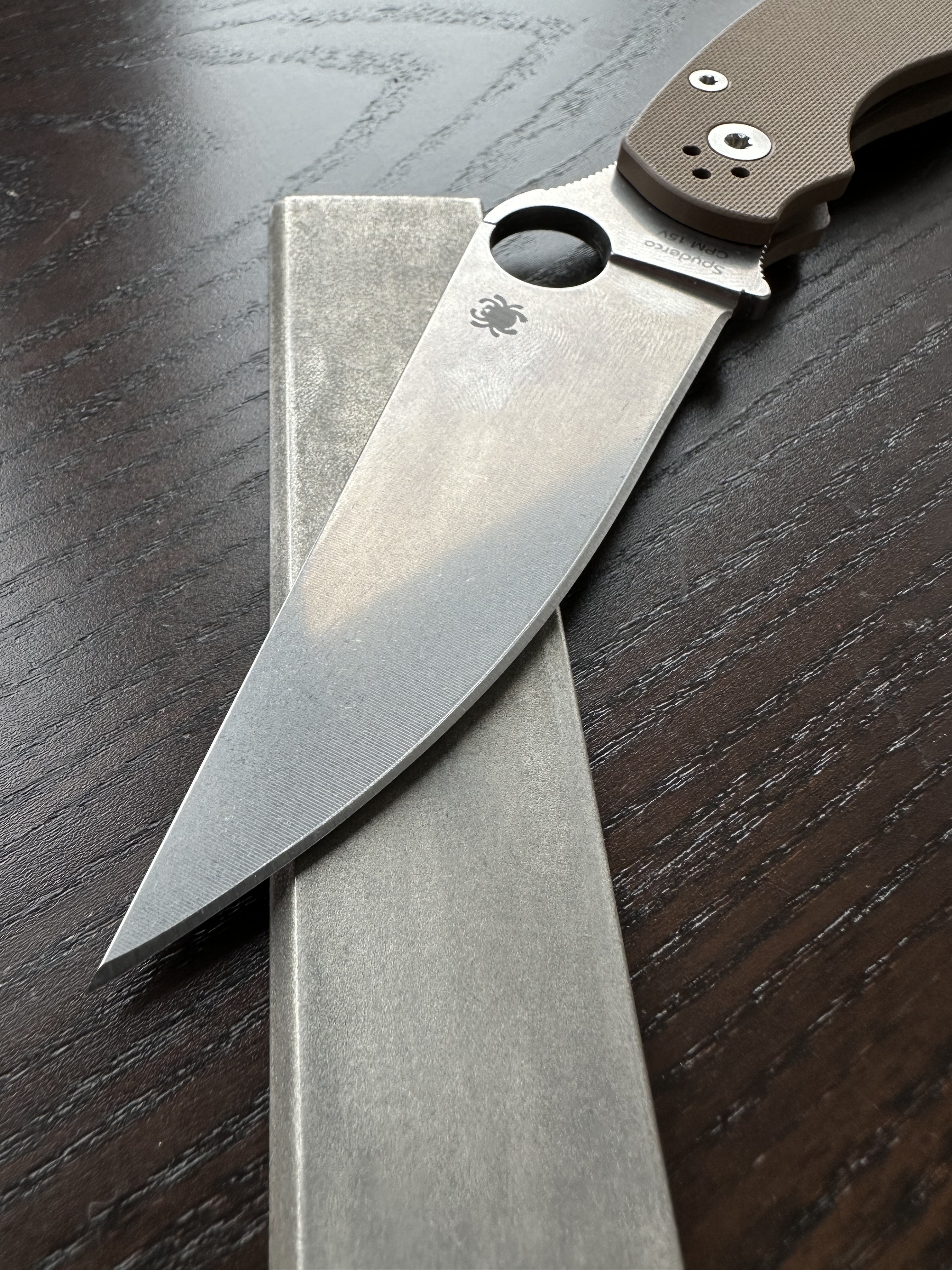
Eventually I will not treat my Sage 6 like my Paramilitary 2 Lightweight in CPM 15V, whose factory geometry I have deliberately left untouched. 😉
Under my diamond stones, Rex121 feels like Maxamet to me.
And I have enjoyed a lot reprofiling my Maxamet edges.
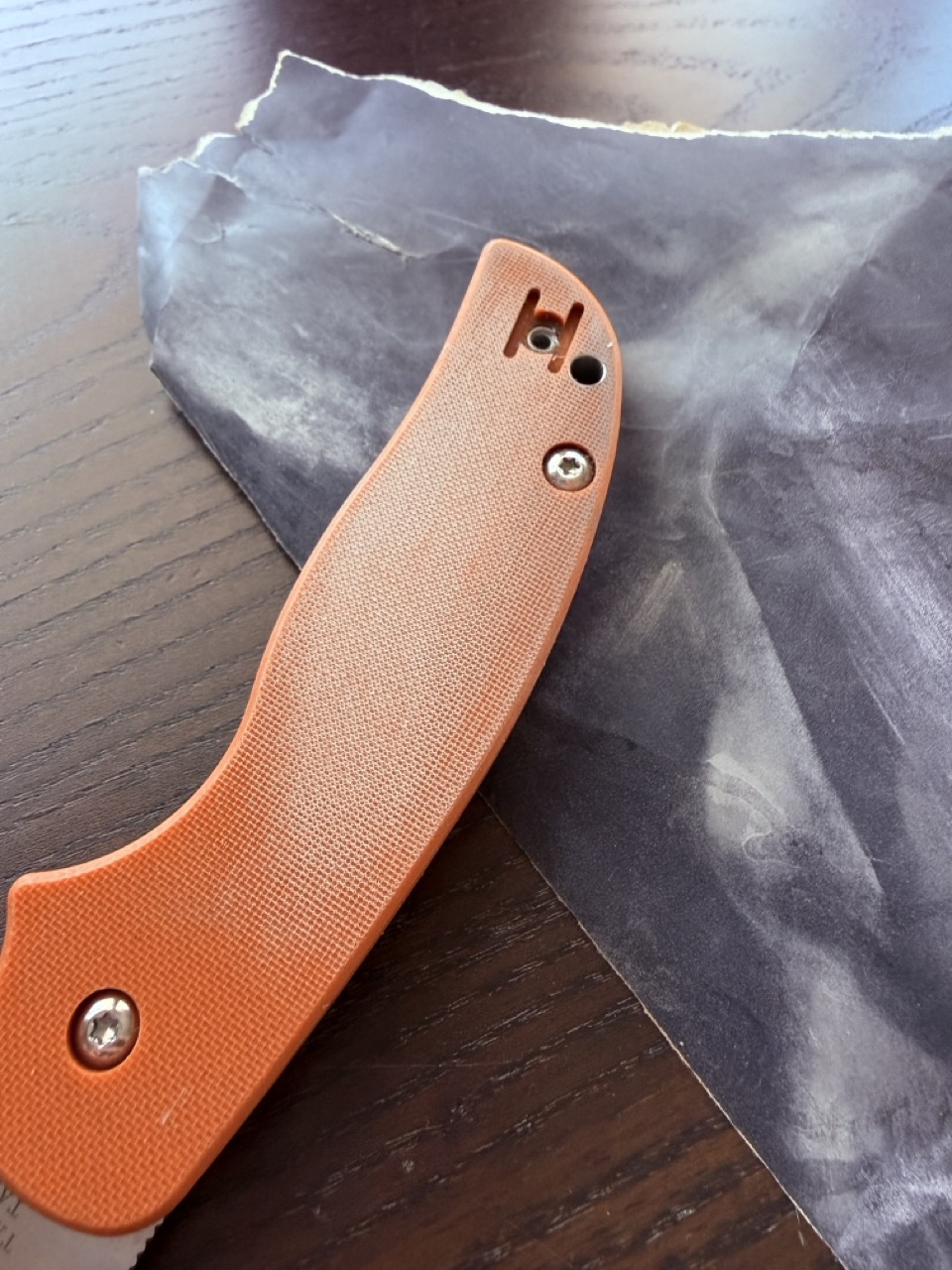

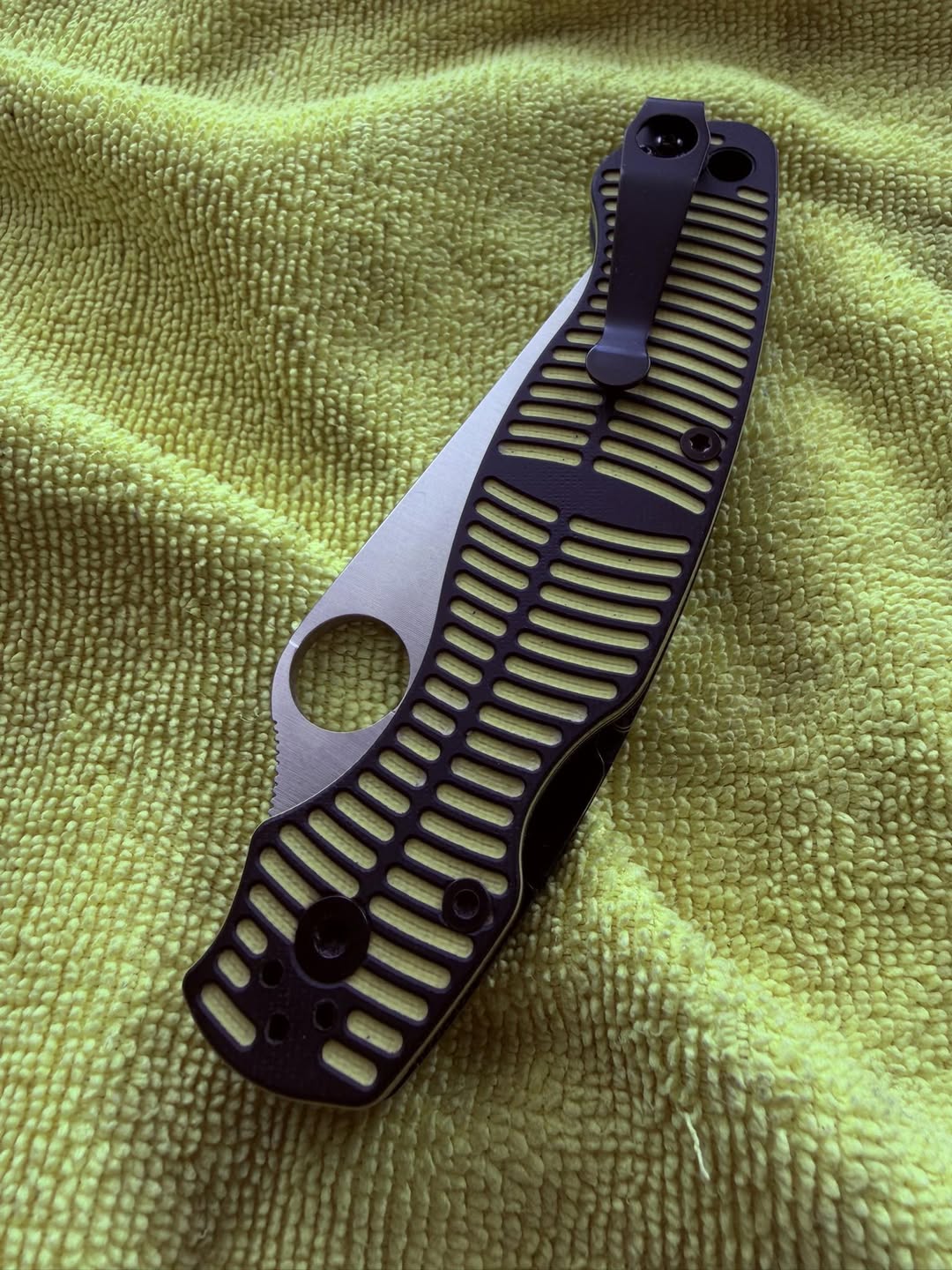
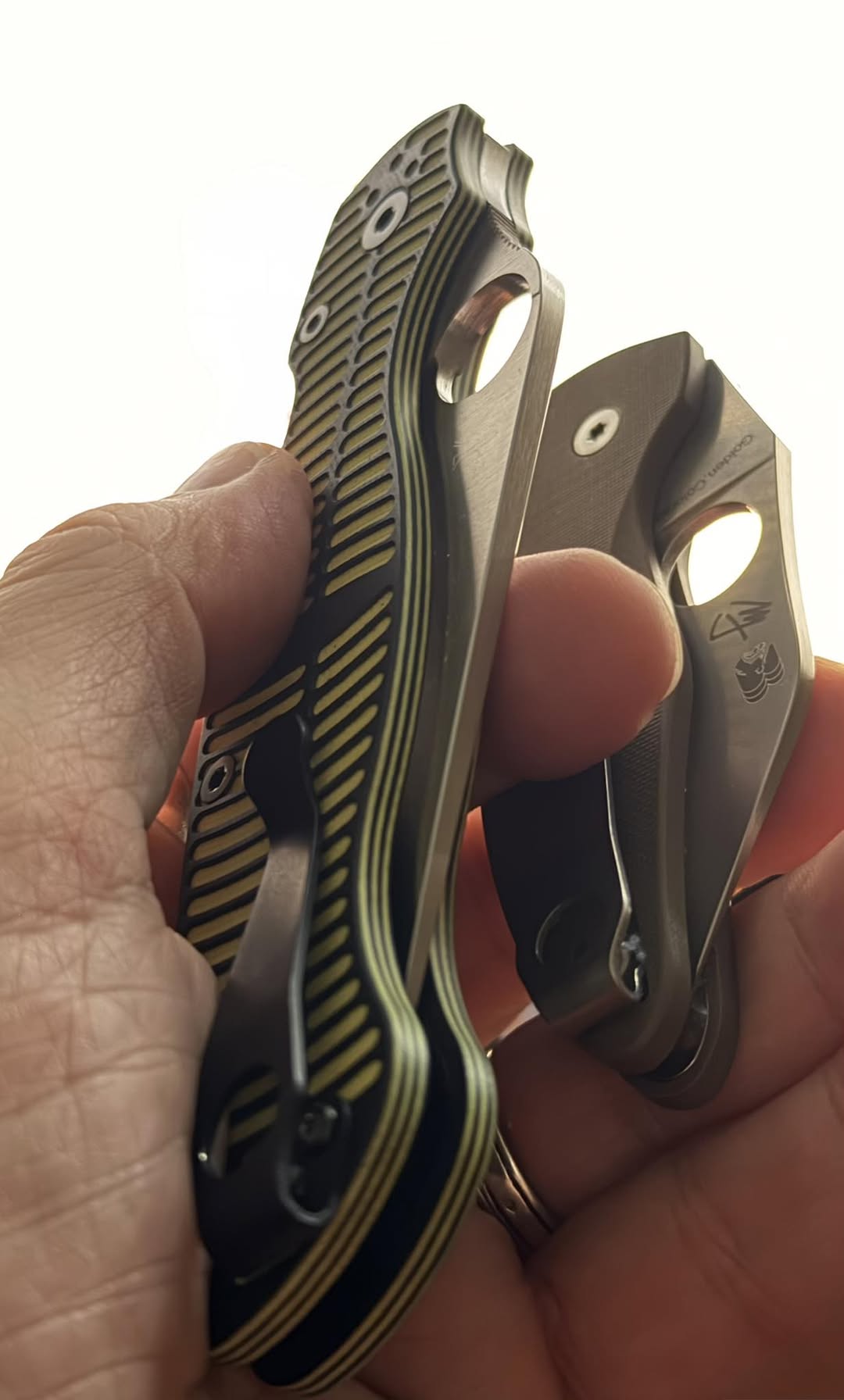
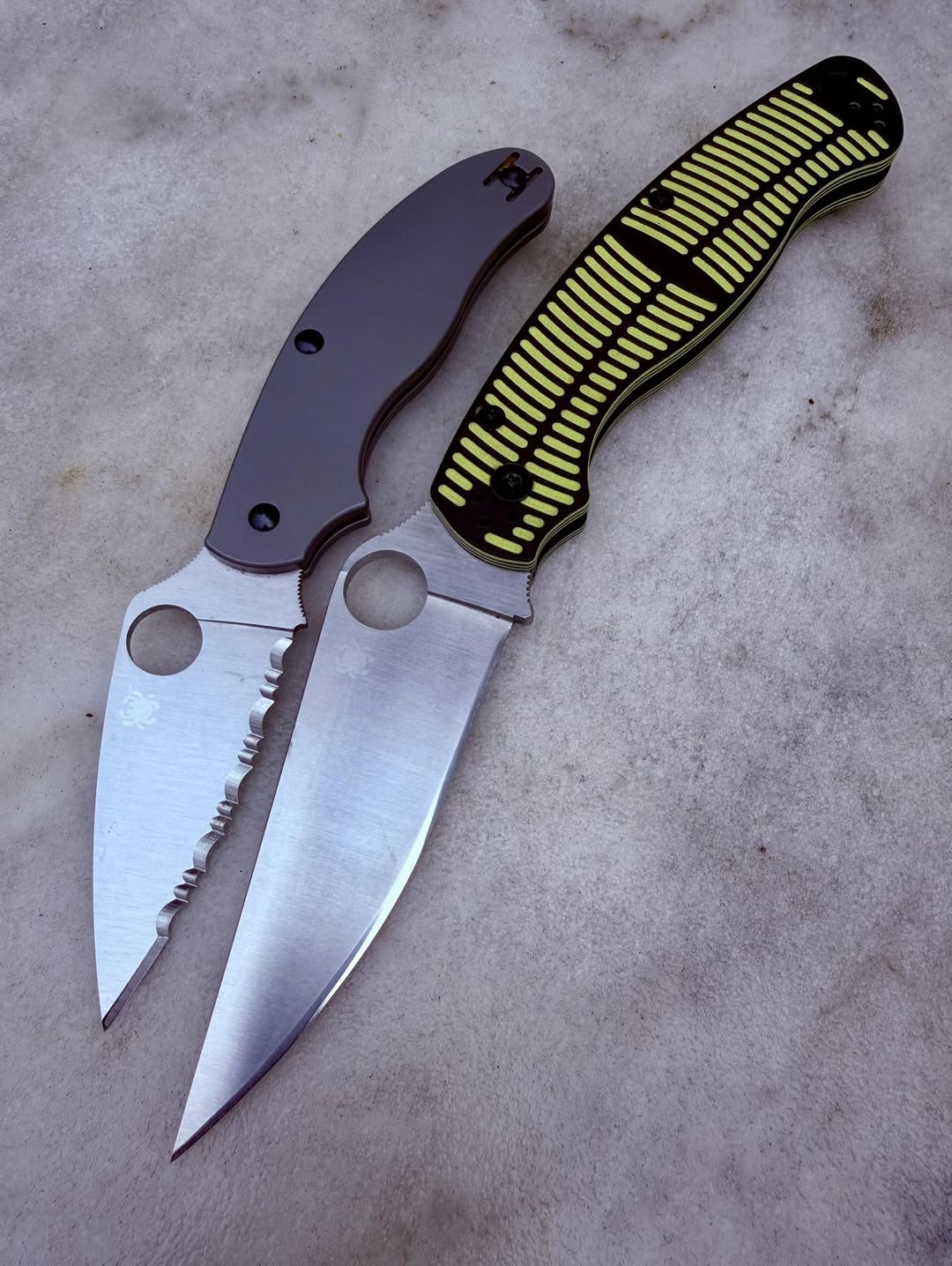
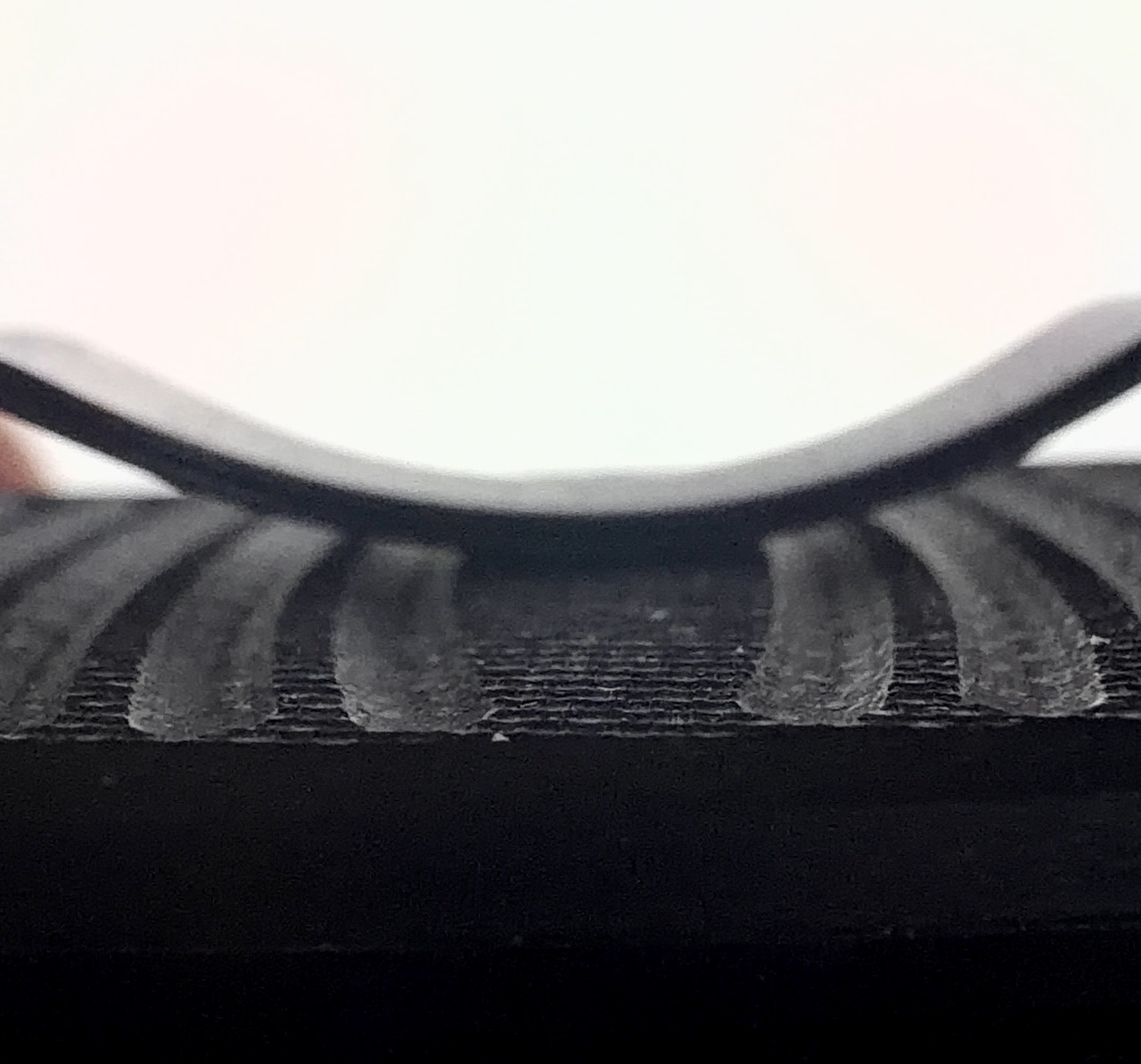
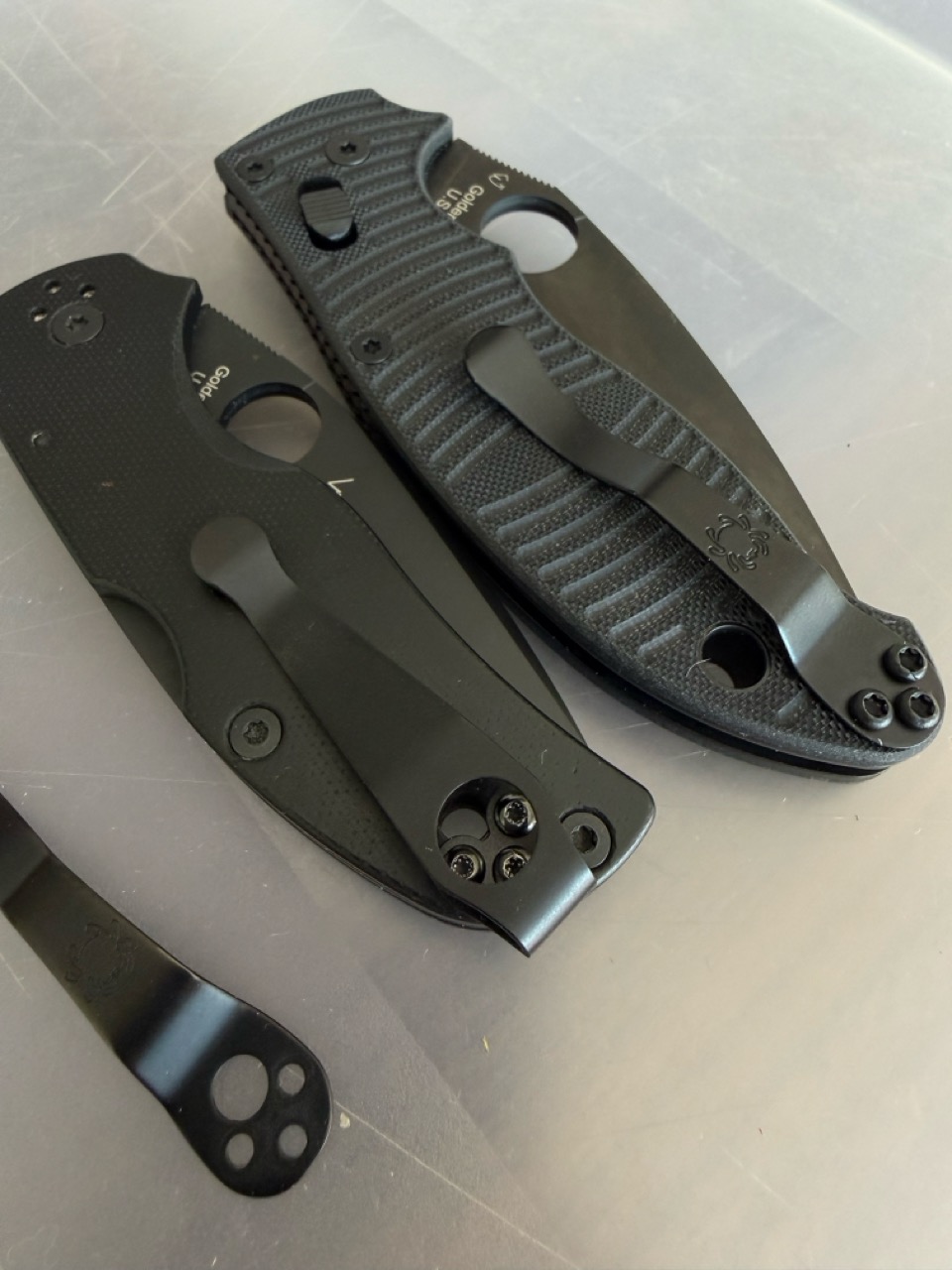
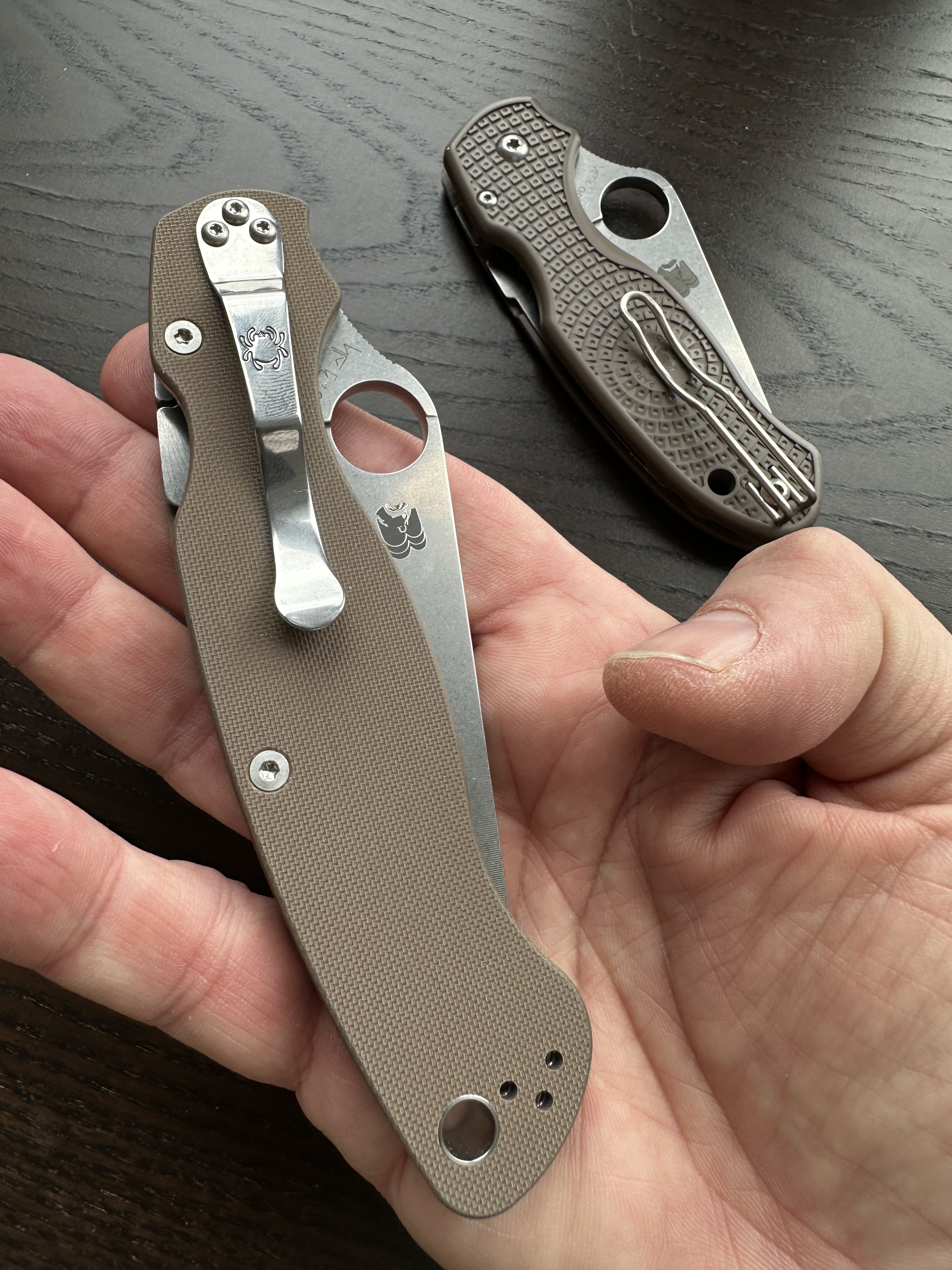
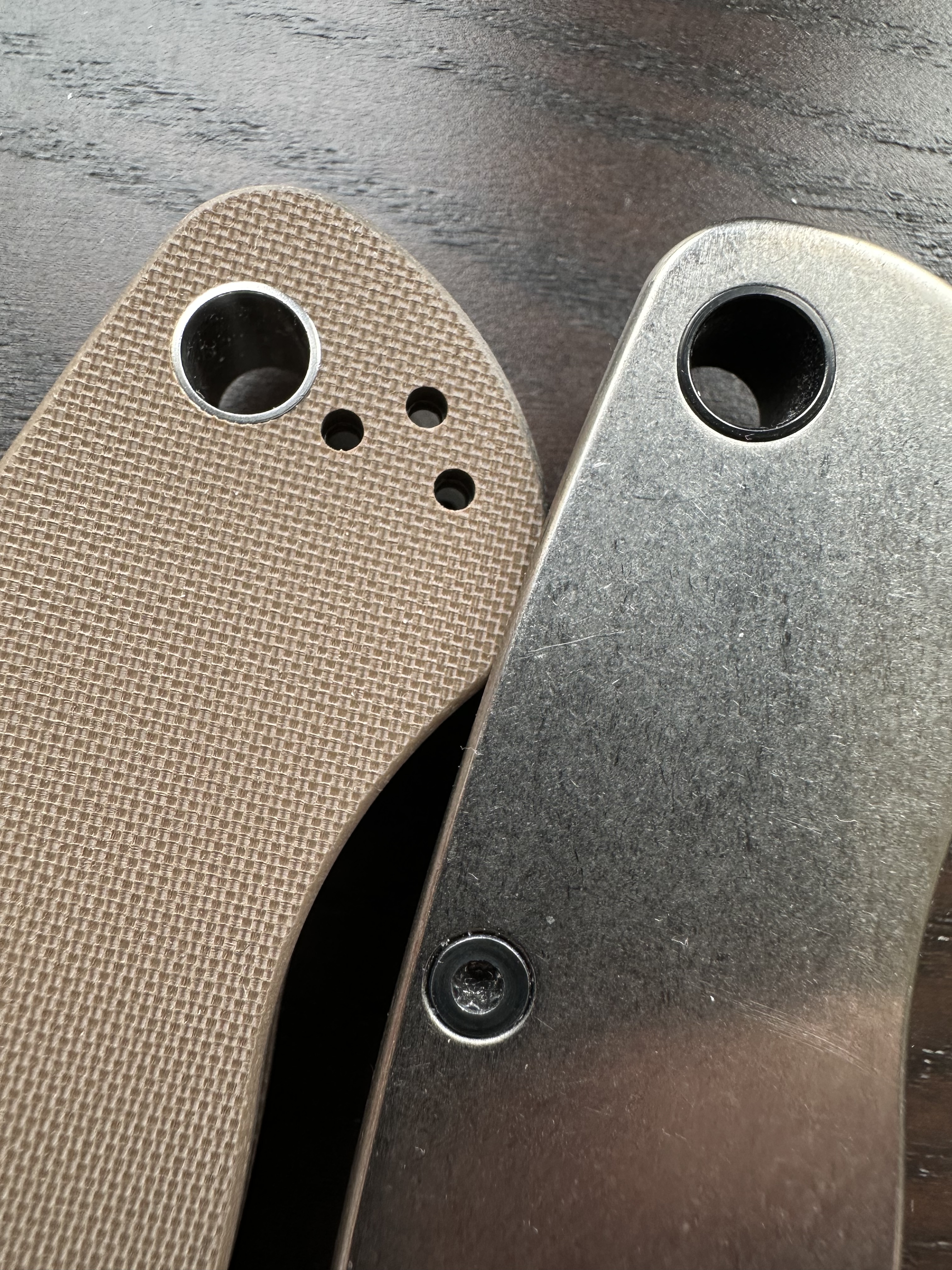
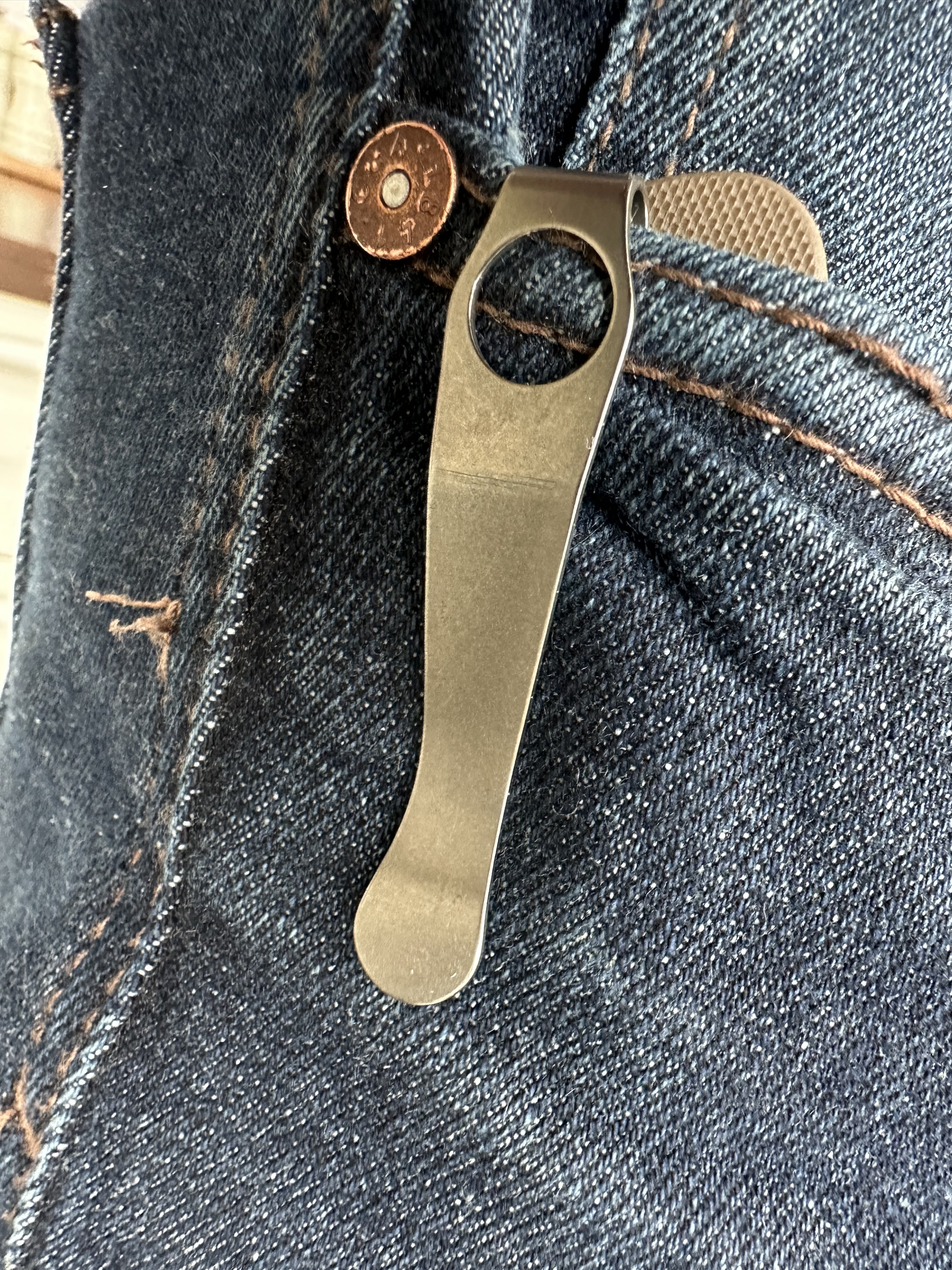
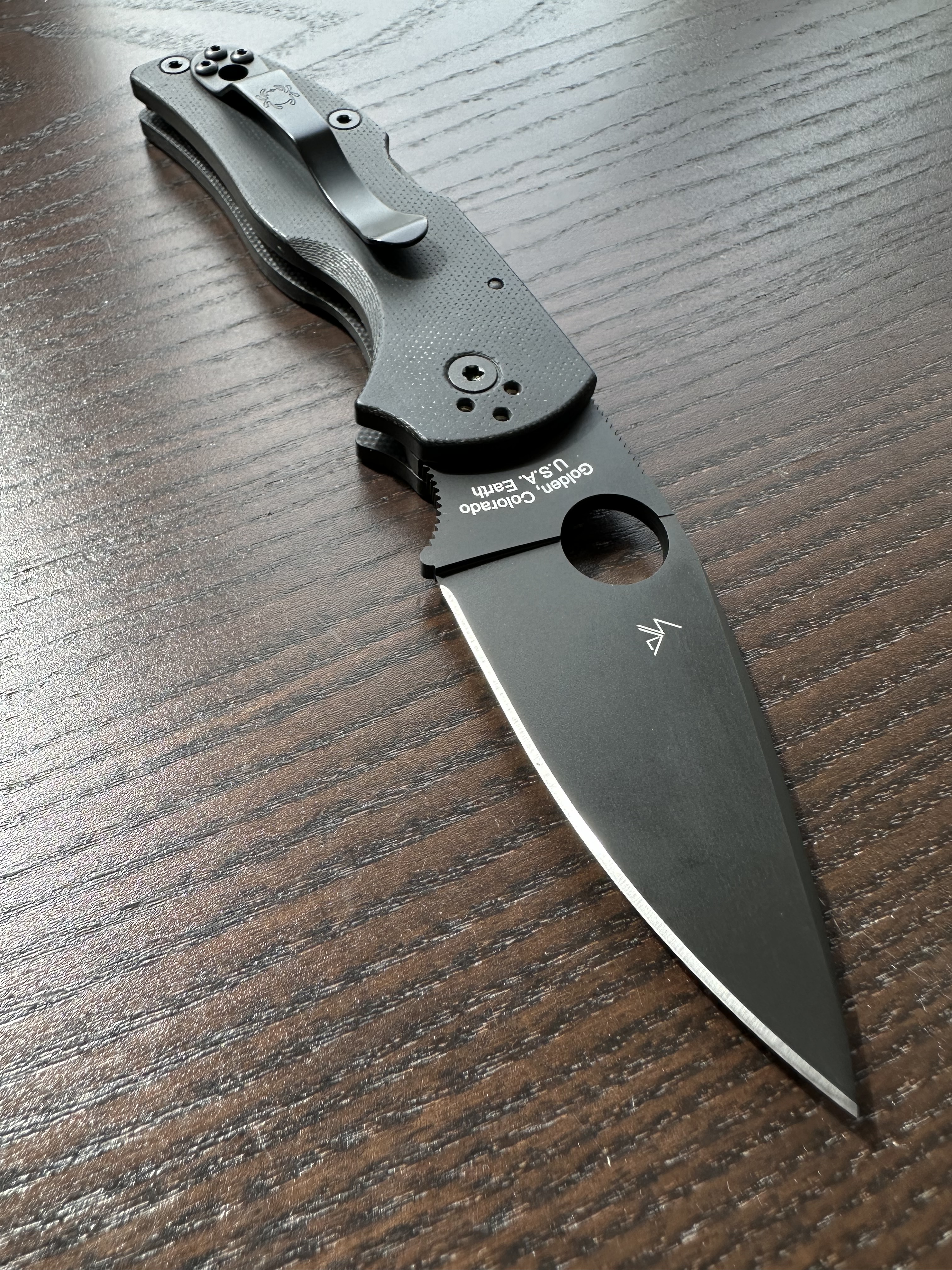
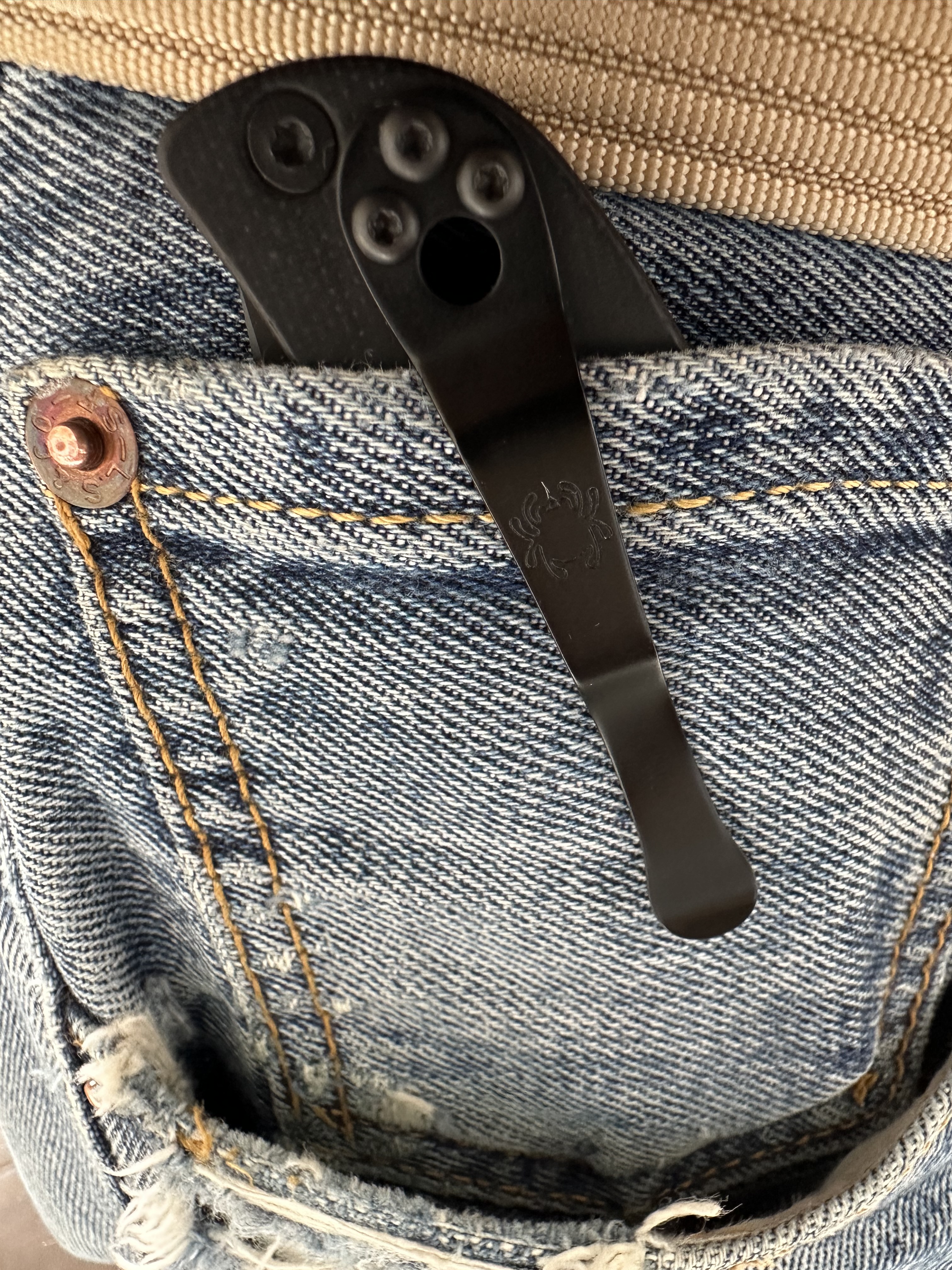
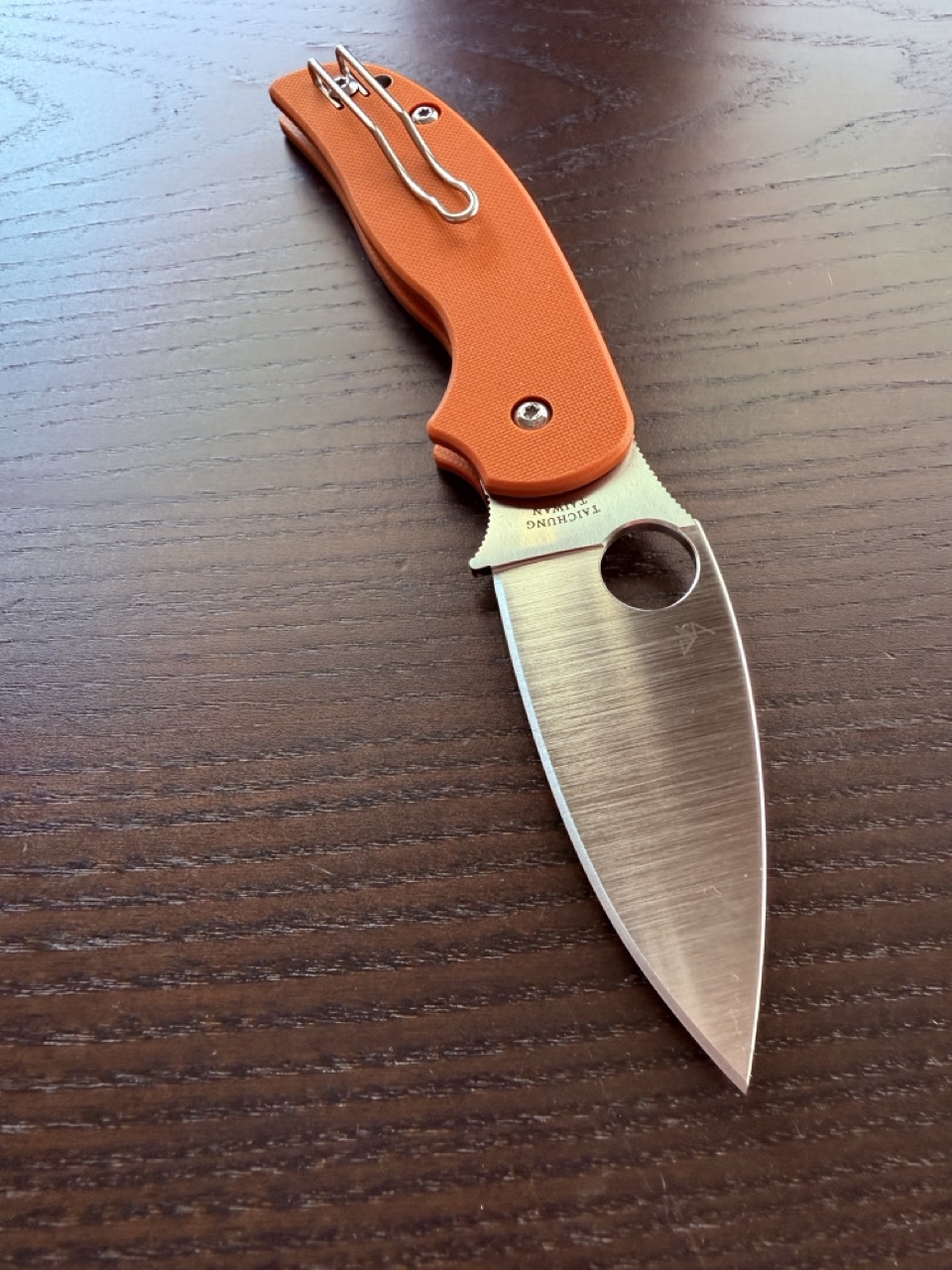
The very first thing I did was soften the G10 underneath and around the pocket clip.

Spyderco’s G10 offers excellent grip, but like many enthusiasts, I prefer to slightly round the area where the clip contacts the pocket. It takes only a few minutes with fine sandpaper and makes the knife much friendlier to carry in the pocket without noticeably affecting grip.

While doing so, I made sure to hold my breath as much as possible and avoided creating unnecessary dust. G10 and ceramic dust should never be inhaled. Whenever you sand composite materials, it’s good practice to work in a well-ventilated area, wear appropriate respiratory protection, and clean up the dust afterward.

I’m particularly careful about this because one of my neighbors, a retired dental technician, spent decades working with ceramic materials. Today, he lives with supplemental oxygen after years of occupational exposure to fine dust. Whether or not it was the sole cause, it was a stark reminder to me that airborne fine particles should never be taken lightly.
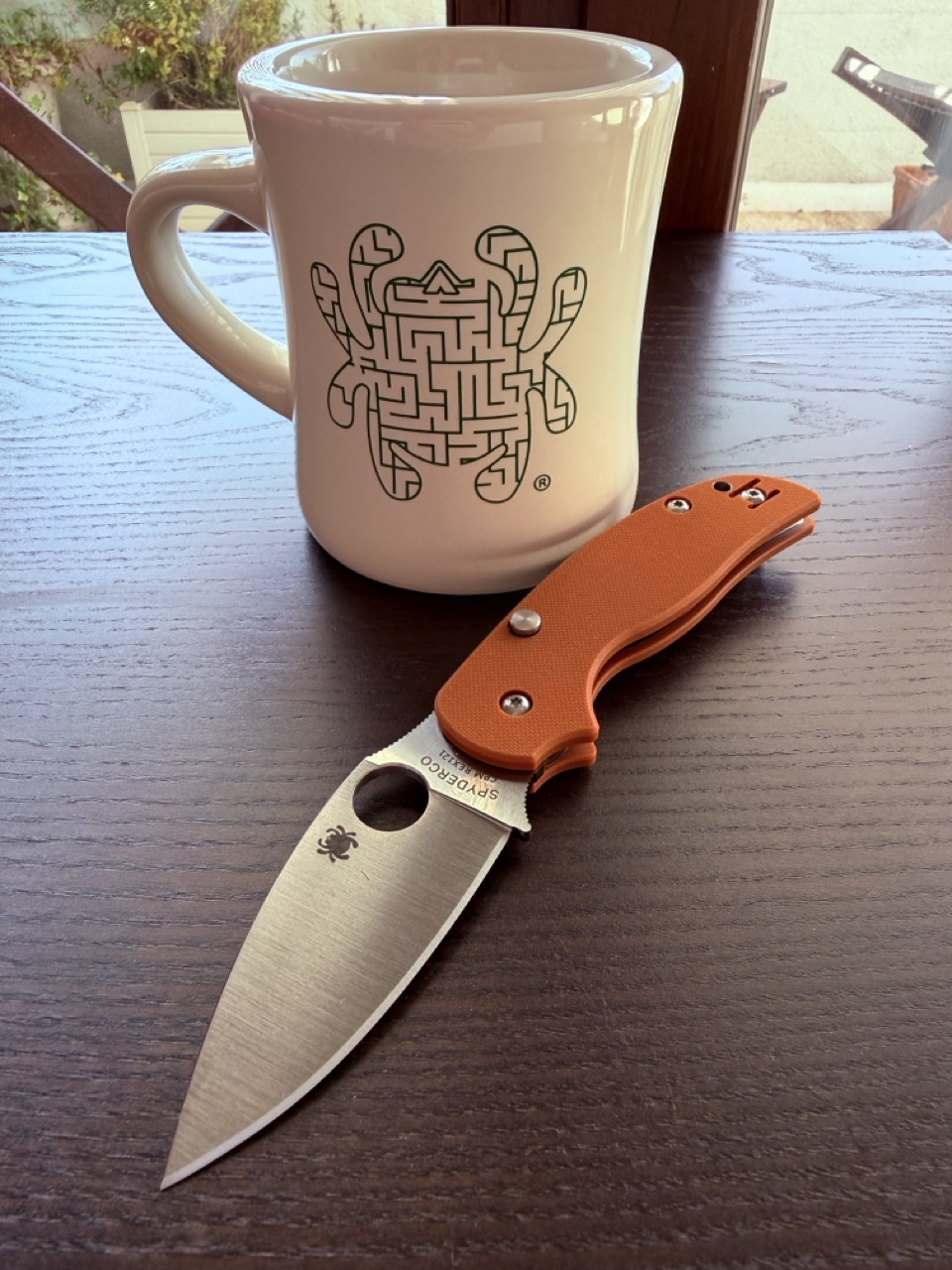
This is only a first glimpse of what is already proving to be a remarkable knife.

Let’s be honest: the Spyderco Sage 6 REX 121 is a rare knife, and its price will understandably place it beyond the reach of many enthusiasts. I’d like to sincerely thank again Spyderco for giving me the opportunity to evaluate it through their Ambassador Program and to use it exactly as I see fit.

What I can already say is this: from a purely mechanical standpoint, this is one of the finest production folding knives I have ever handled.

The action is simply outstanding. The Button Compression Lock is unbelievably smooth—almost as if the blade were riding on magnetic bearings rather than washers. There is virtually no friction throughout the opening and closing motion. The blade glides effortlessly while remaining perfectly controlled.

Fit and finish are exactly what I’ve come to expect from Spyderco’s Taichung factory: flawless blade centering, rock-solid lock-up, and exceptional attention to detail.

I own several high-end folders, and mechanically, this is without question one of the smoothest I’ve ever handled.

As for the CPM REX 121 blade steel, I’ll reserve judgment until I’ve spent enough time using it, maintaining it, and eventually sharpening it. A steel like this deserves more than a few days of testing.

If your local knife dealer has one in stock, I genuinely encourage you to handle it for yourself. Open it. Close it. Feel the action. The Balance.
Only then will you understand.

Just be warned…

You may leave the shop wondering which knives you’re going to sell to make room for a Sage 6 REX 121

Spyderco Military 2 Salt – C36GBKYLMCP2 Part 2 – Wet Works & Piece of Mind

My first article about the Military 2 Salt was a story about evolution. About how Spyderco quietly transformed one of its most iconic folders from the ATS-34 era into something that almost feels like the final expression of the Military concept. From ATS-34 to the Salt Age, the journey was technical, historical and, in many ways, inevitable.

This time, I want to talk about something much simpler :
Living with Gurney, my Mil 2 Salt.
(I nicknamed my Military 2 Salt Gurney, after Gurney Halleck from Dune. A warrior, a troubadour and, above all, a dependable companion. Somehow, it seemed fitting.)
Because after months of carrying it, I’ve stopped thinking about its steel, its lock or even its impressive specifications.

I simply reach for it. And I like it. I like its texture and action.
I did not like some hot spots.

The very first thing I did was reshape the edge. Not because Spyderco’s factory edge wasn’t excellent—it was—but because every knife eventually becomes personal.

Sal Glesser has often said that sharpening a knife is one of the ways its owner truly makes it his own.
I couldn’t agree more.

Over the years I’ve come to prefer a convex edge on almost every working knife I own. It glides through food beautifully, feels stronger behind the edge and, perhaps more importantly, suits the way I maintain my knives.

Magnacut seems to love that de-shouldering treatment of mine.

Once the convex geometry is established, maintenance becomes almost effortless. A few strokes on a leather strop are usually all it takes to bring the edge back to hair-popping sharpness.

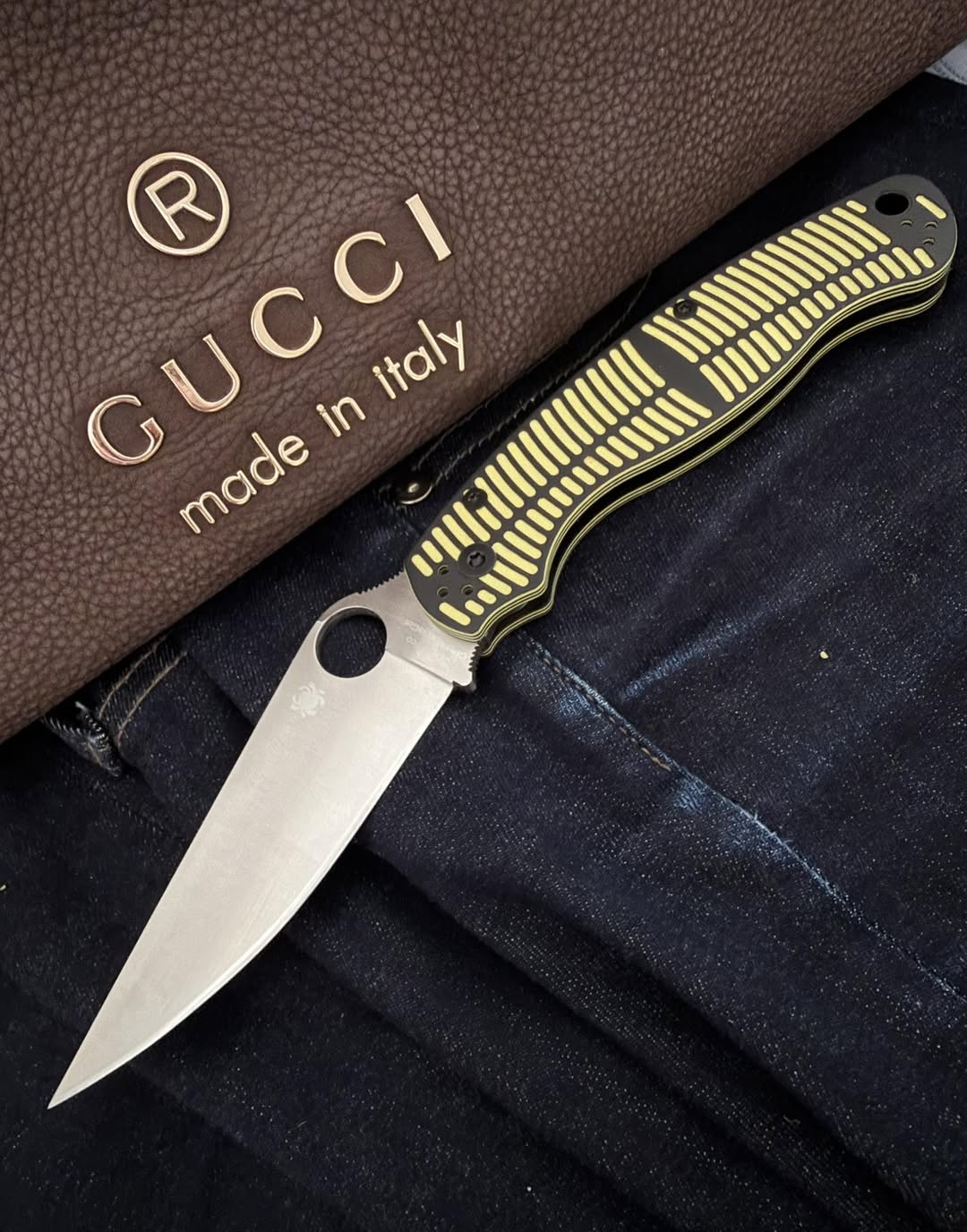
Just a few moments with a strop on fine leather (NOT that Gucci !) or white ceramic, and the Military 2 Salt is ready for another week of work.

No complicated sharpening sessions.
No steel removal unless it’s really necessary.
Free-hand sharpening is a skill to hone. 😉
Pun absolutely intended.

Now, about those hot spots I mentioned earlier.

I also rounded the blade spine.

Not because it needed it, but because I simply love the feeling of a nicely rounded spine under my thumb. It’s a small modification that makes prolonged use even more comfortable and gives the knife a more refined, almost custom feel.

Like the convex edge, it’s one of those little personal touches that turns a production knife into your knife.

Ah, and the choil ! Just to fit it to my hand. I have used the diamonds rods from my Spyderco TriAngle sharpening system.

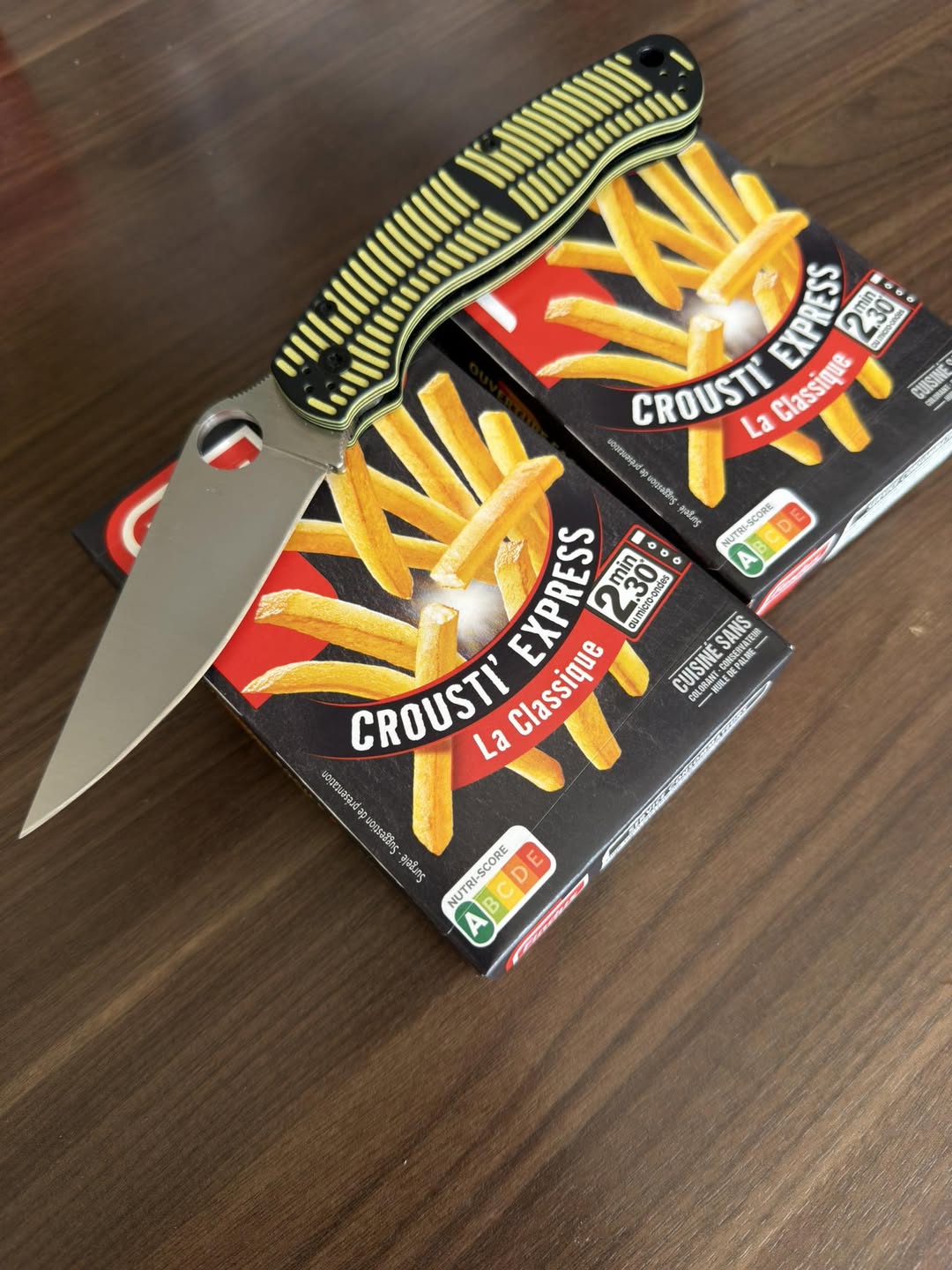
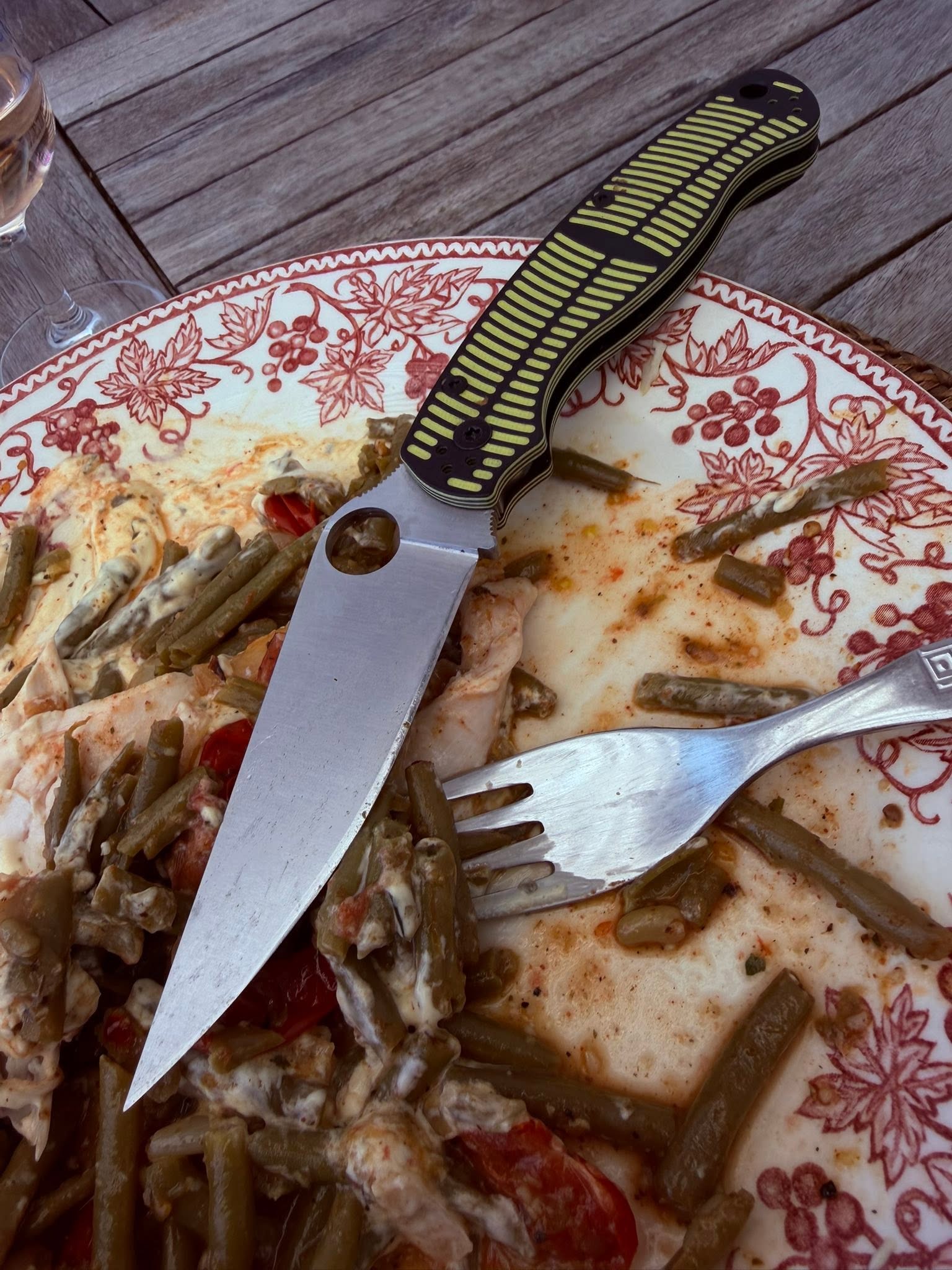
Those scales are french fries friendly. 🙂

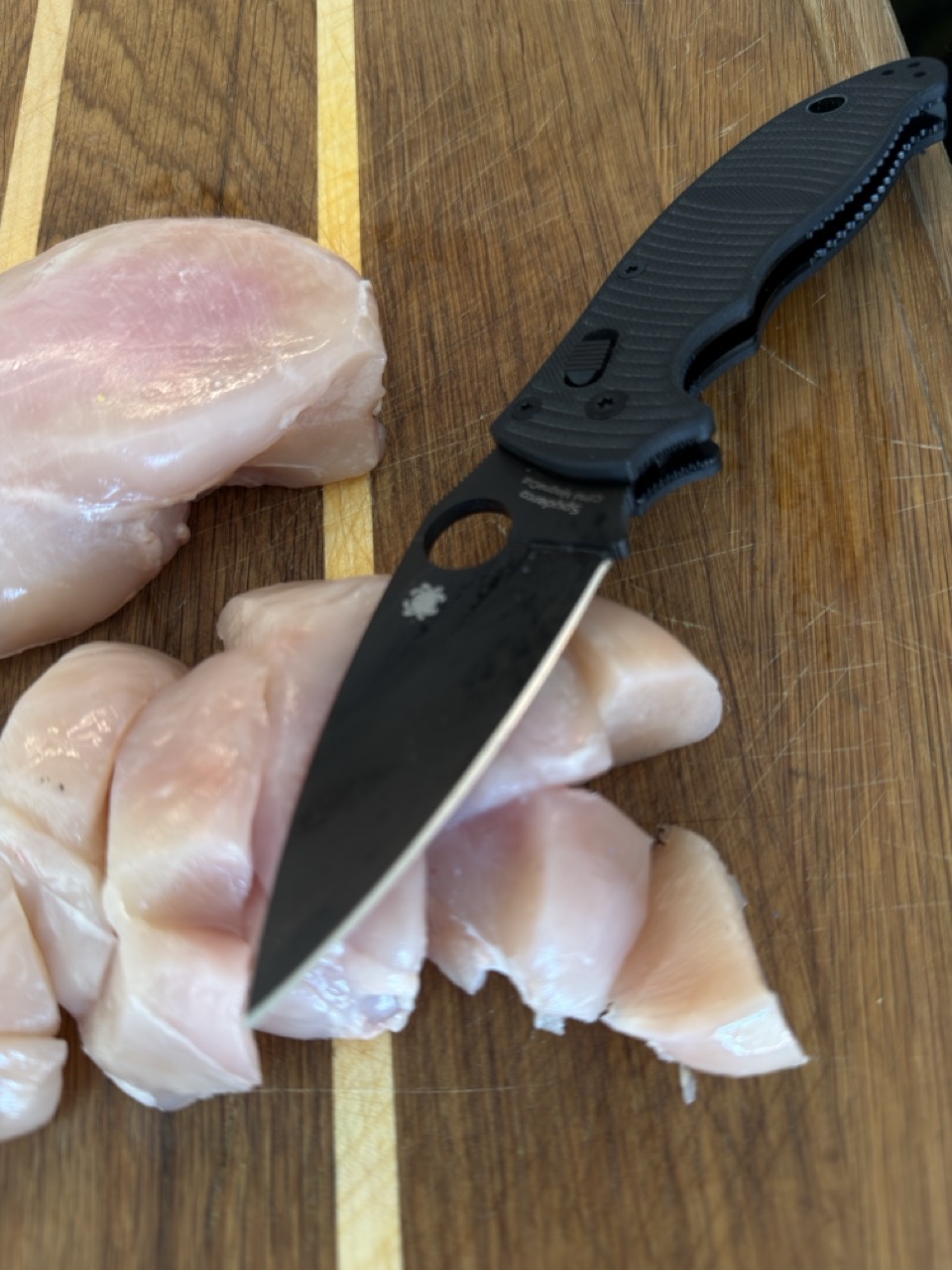
Ok, like many knife enthusiasts, I spend far more time preparing food than cutting ropes or surviving in the wilderness.

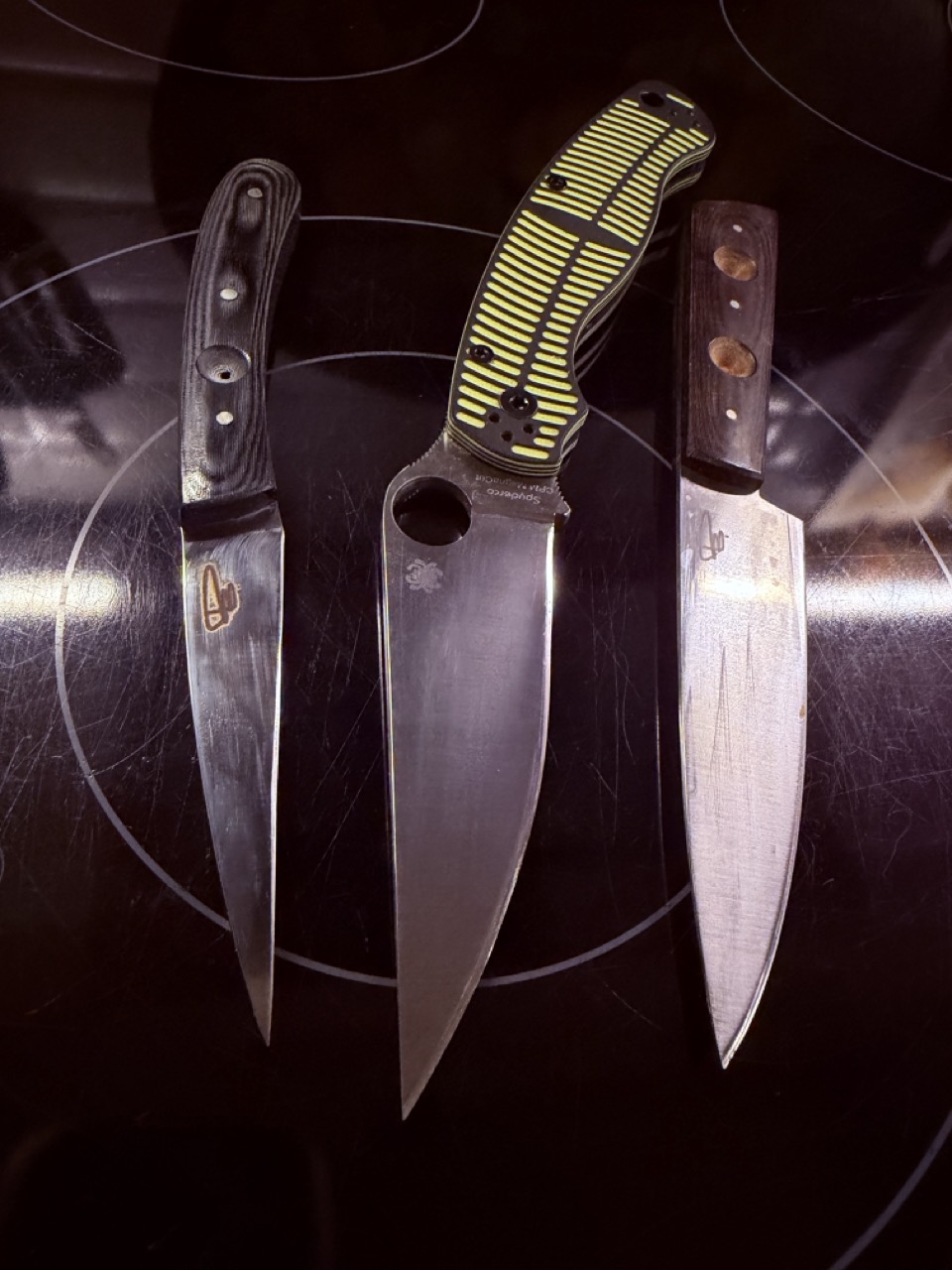
Summer only reinforces that habit. (Here pictured with my favorite kitchen knife custom the Kitchen Warriors made by Patrick Bonetta)

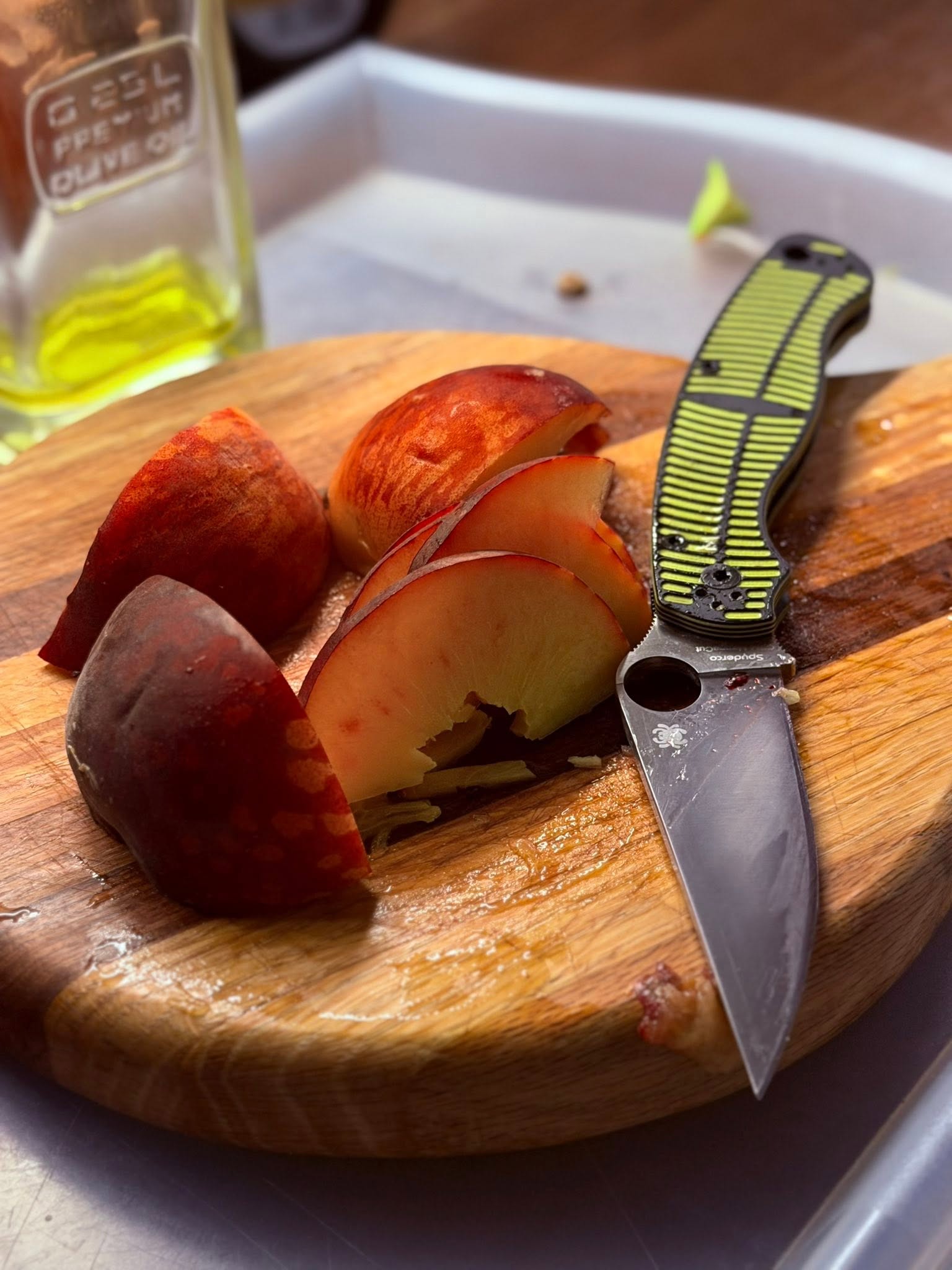
Tomatoes, cucumbers, peppers, avocado, watermelon, mozzarella, feta, peaches, lemon, herbs… preparing large salads means wet hands covered with olive oil, lemon juice, vinegar and vegetable residue. Exactly the kind of environment where many folders start feeling slippery and where corrosion quietly begins its work.

The Military 2 Salt simply doesn’t care. Citric acid ? Bring it on !
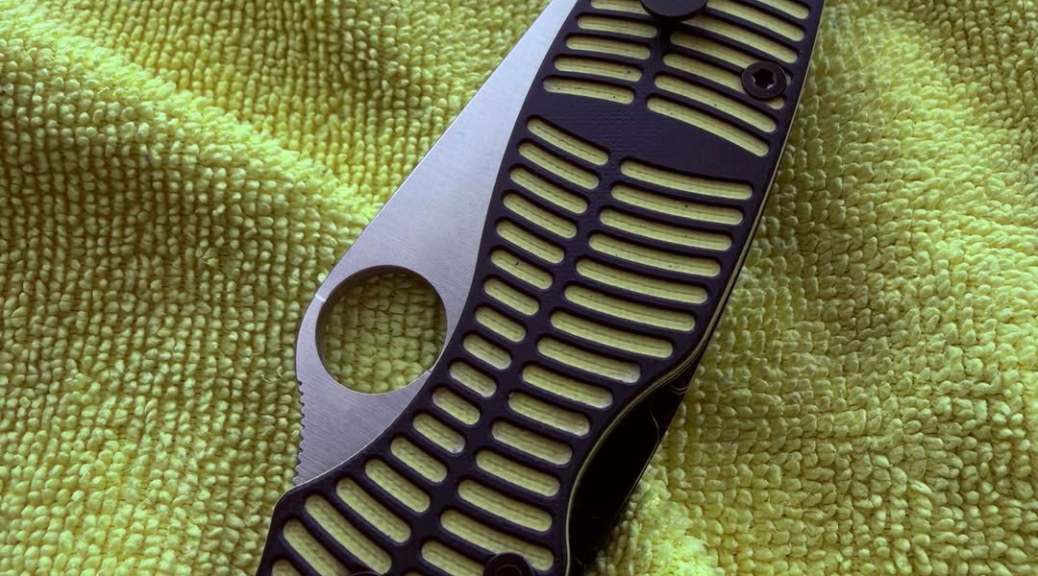
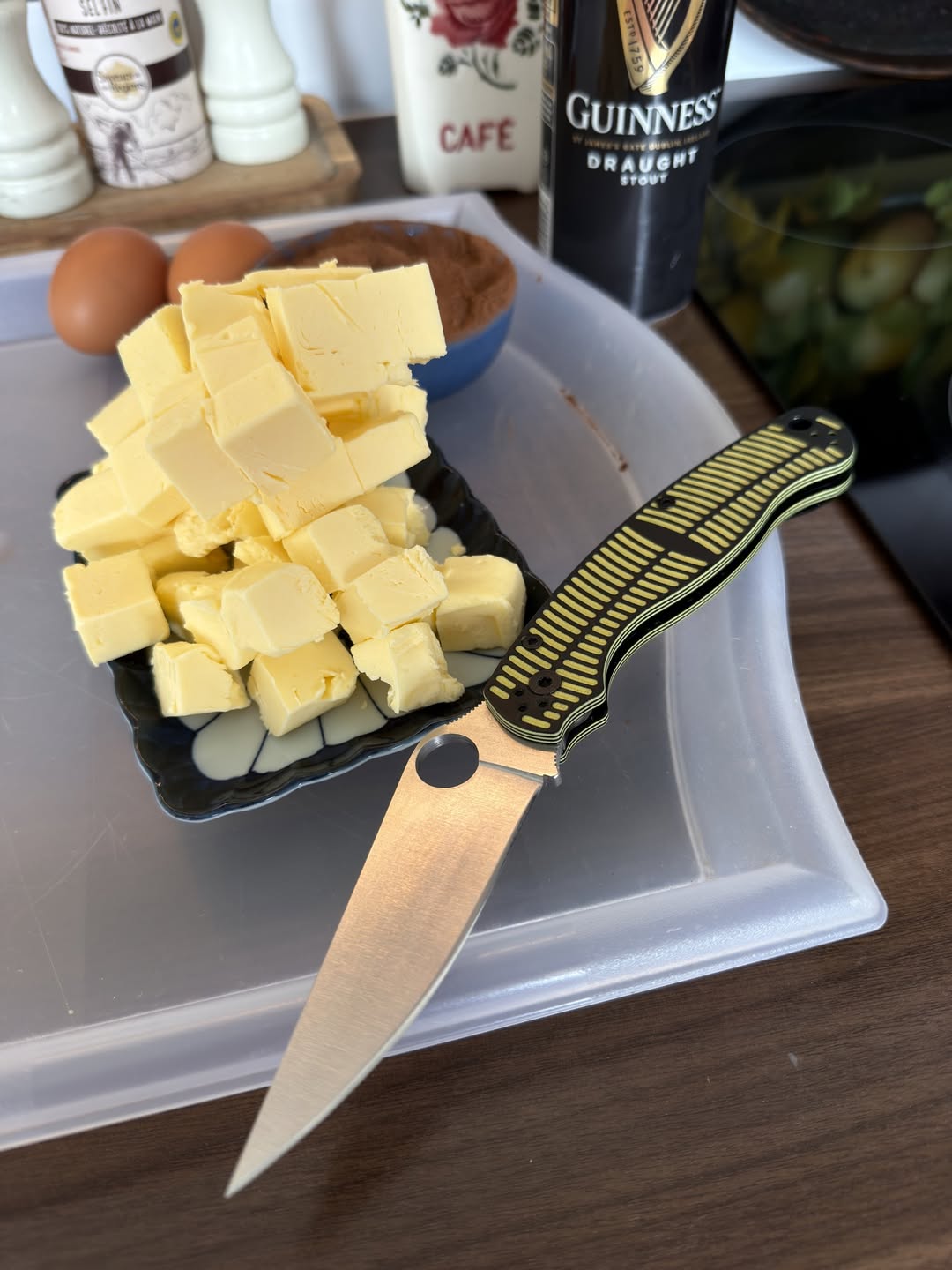
And that G10 pattern/texture really keeps the knife perfectly anchored in my hand even when everything is slick as butter under the sun.

I would ever think that its ergonomics almost reveal once my hands are wet and slippery.
And you know what, in cutlery, luxury is not having to think.

Magnacut attracts all the attention nowadays and corrosion resistance sells knives. But what I appreciate most isn’t the laboratory performance. It’s the peace of mind.
Nothing is going to rust.
Nothing is going to seize.
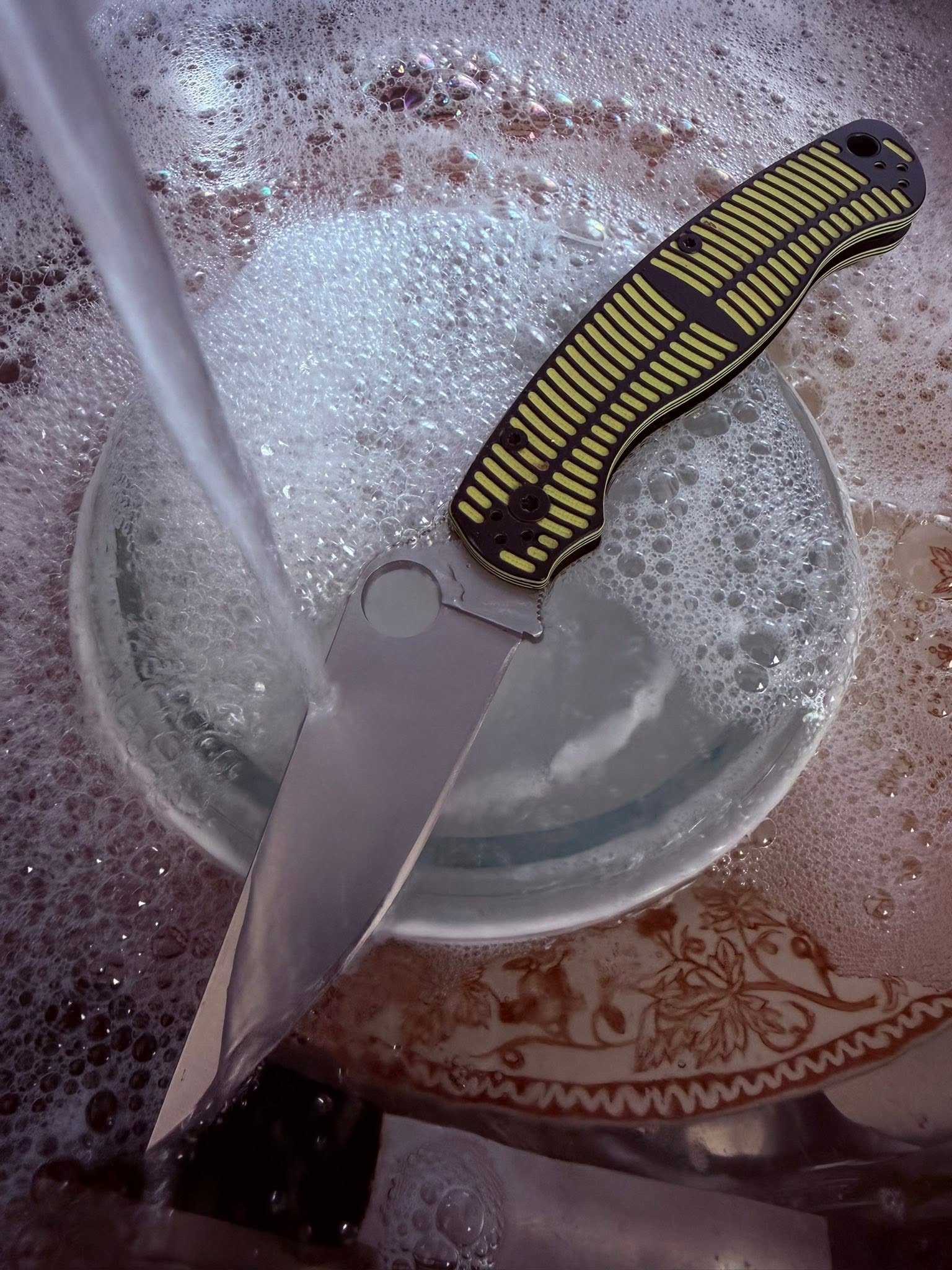
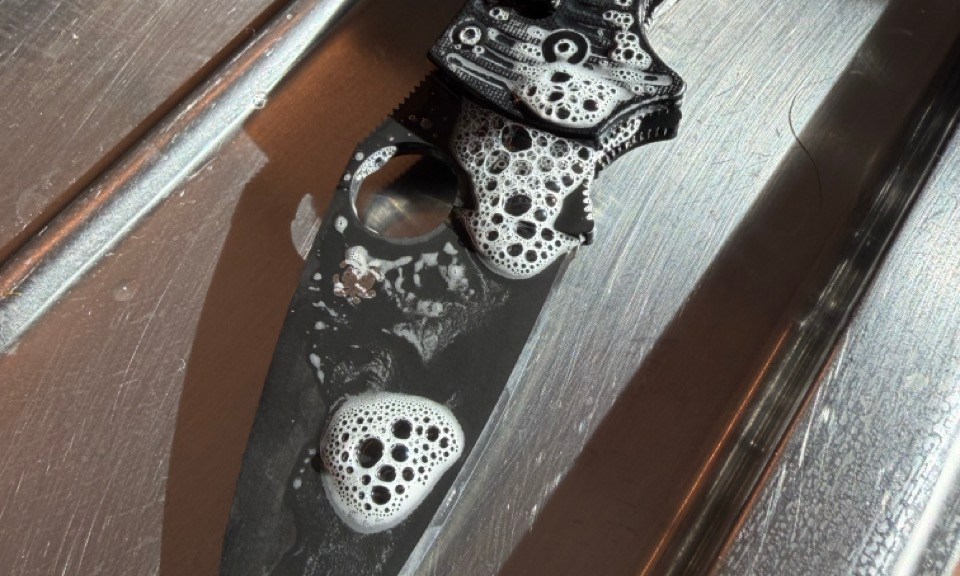
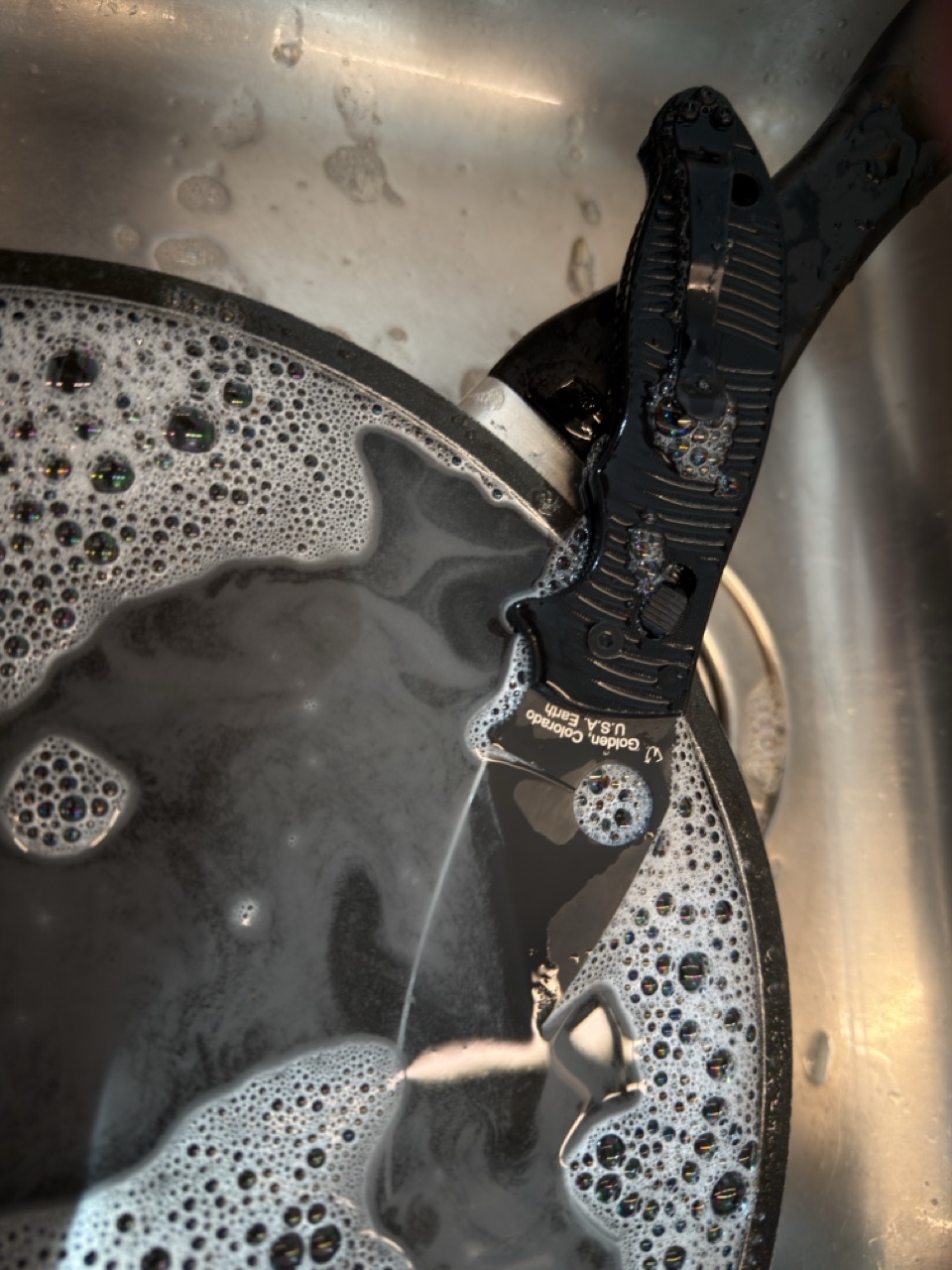
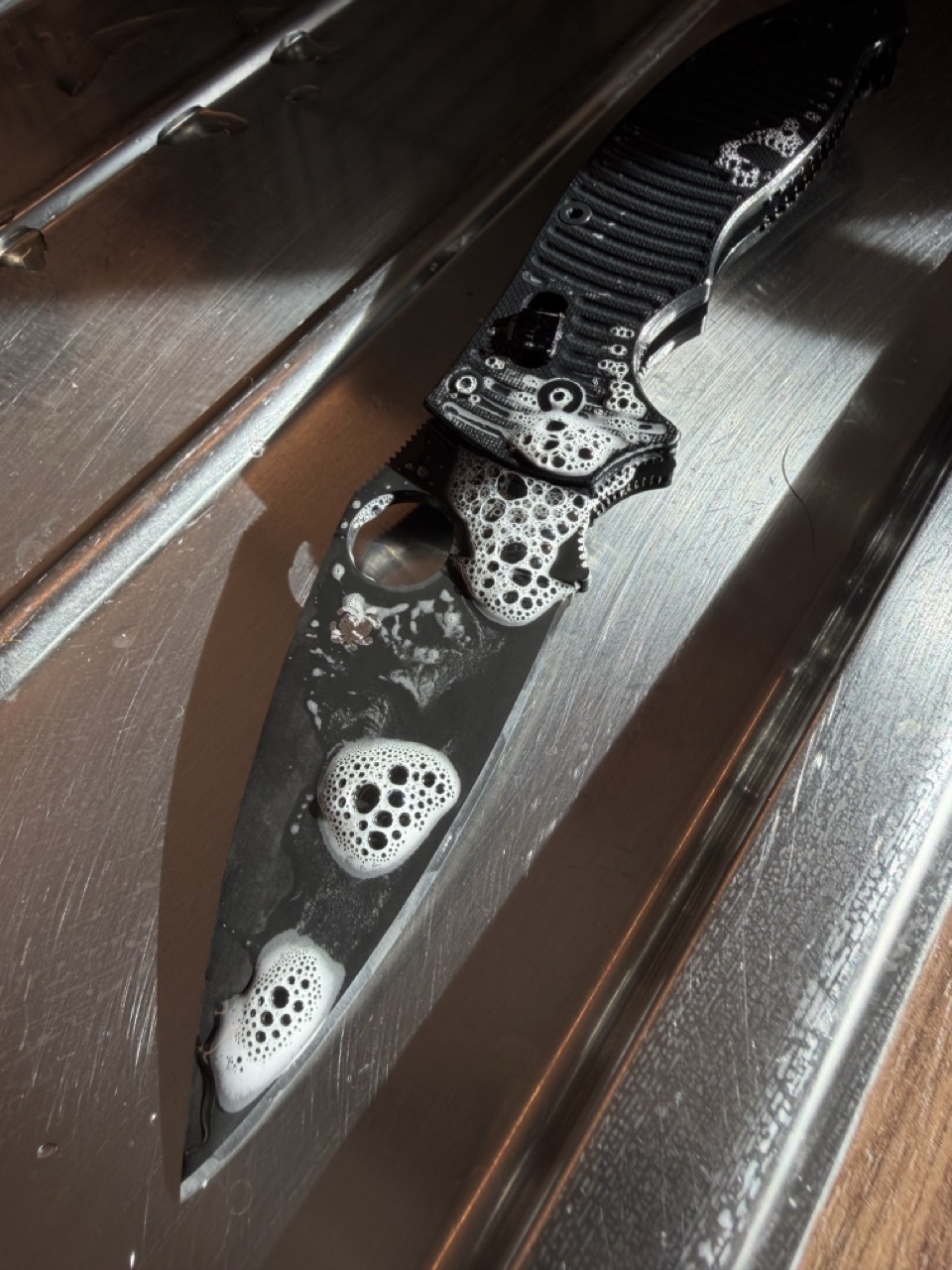
Nothing requires immediate cleaning because I forgot the knife in the sink after cooking.

That confidence is difficult to quantify, but it changes the relationship you have with your tool.

This is something few knives offer.

At around €200 (or about $200), the Military 2 Salt is hardly a budget knife, but I honestly think it’s a bargain for what you’re getting: a thoroughly refined design built around one of the most capable blade steels available today.

(A deep pocket carry clip is a must for a low profile attitude.)

That knife, it removes one more concern from everyday life.
You simply use it, rinse it if needed, strop it from time to time… and never worry about rust, corrosion or a reluctant pivot. No lock stick on mine actually. Just a smoooooth opening and closing.

The Military has always been a large folder. Well balanced and alive in your hand once opened.

But its pointy blade is undeniably imposing.

Yet the black and yellow Salt colors completely change the perception people have of it.

Instead of looking tactical, it looks… useful.

That yellow jacket Salt identity somehow soften its silhouette. It becomes an obvious tool before becoming a military weapon.

That surprised me.

I expected a big folder built with soldiers (of fortune), outdoorsmen and hard users in mind. And it is.

Instead I found one wasp of a folder that almost disappears into daily life despite its size.

Larger folders are often criticized for being excessive.

Sometimes that’s true. But excess is good in a sturdy piece of equipment.

I do love the Lil’Temperance in K390 which is a beast of a folder.
But when summer arrives and you’re slicing an entire watermelon, preparing vegetables for several people or working with large ingredients, blade length suddenly becomes an advantage rather than a compromise.

This is exactly where my UKPK Salt or even my Sage Salt begin to reach their limits. Blade length in the kitchen is defining the use of the knife.

These days, whenever I know I’m going to spend time doing wet work, I instinctively grab the Military 2 Salt.

If I’m cooking—or simply lending a hand in a friend’s kitchen—the Military 2 Salt usually travels in my bag, while a smaller Slipit, like the Urban, rides in my pocket. (Or a Microjimbo, Meerkat, Lil’Native…)


The same applies when I’m camping or travelling.

Peace of mind is priceless, and that’s exactly what Spyderco’s CPM Magnacut Salt knives give me.

Gurney comes along as well, bringing all the qualities I appreciate most: a high-tech blade, superb balance and effortless reliability.


Not because they’re the strongest folding knives I own.
But because they’re the ones I never have to worry about.
I know they’ll deliver—whether in terms of cutting performance, corrosion resistance or simple reliability.

Easy to deploy.
Easy to control.
Easy to clean and keep it dirty.
Easy to put back in the pocket.
Solid. Reliable. Efficient.
The Military 2 Salt has become exactly that.

A big folder to live with.
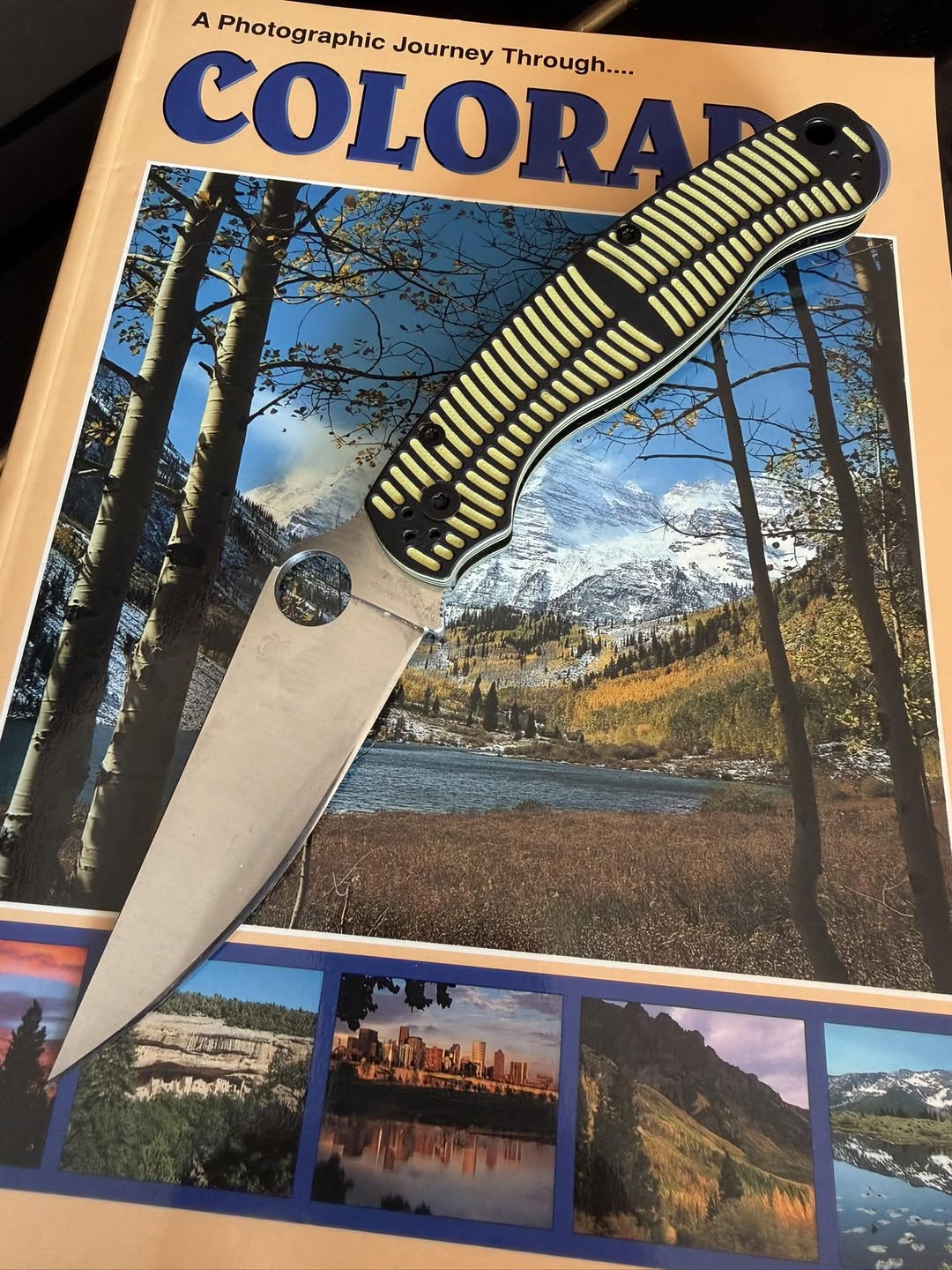
A little piece of Colorado in my pocket.

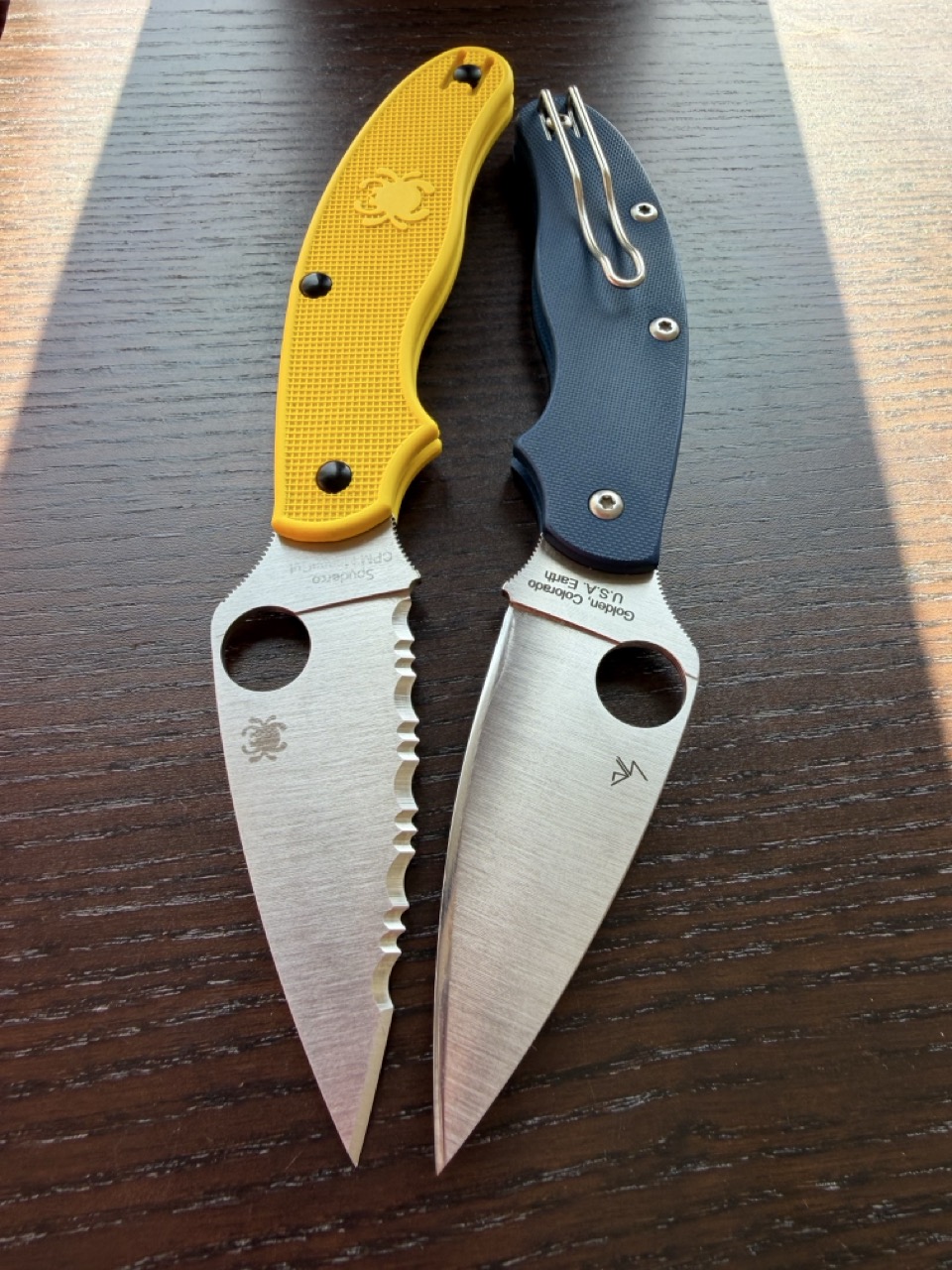
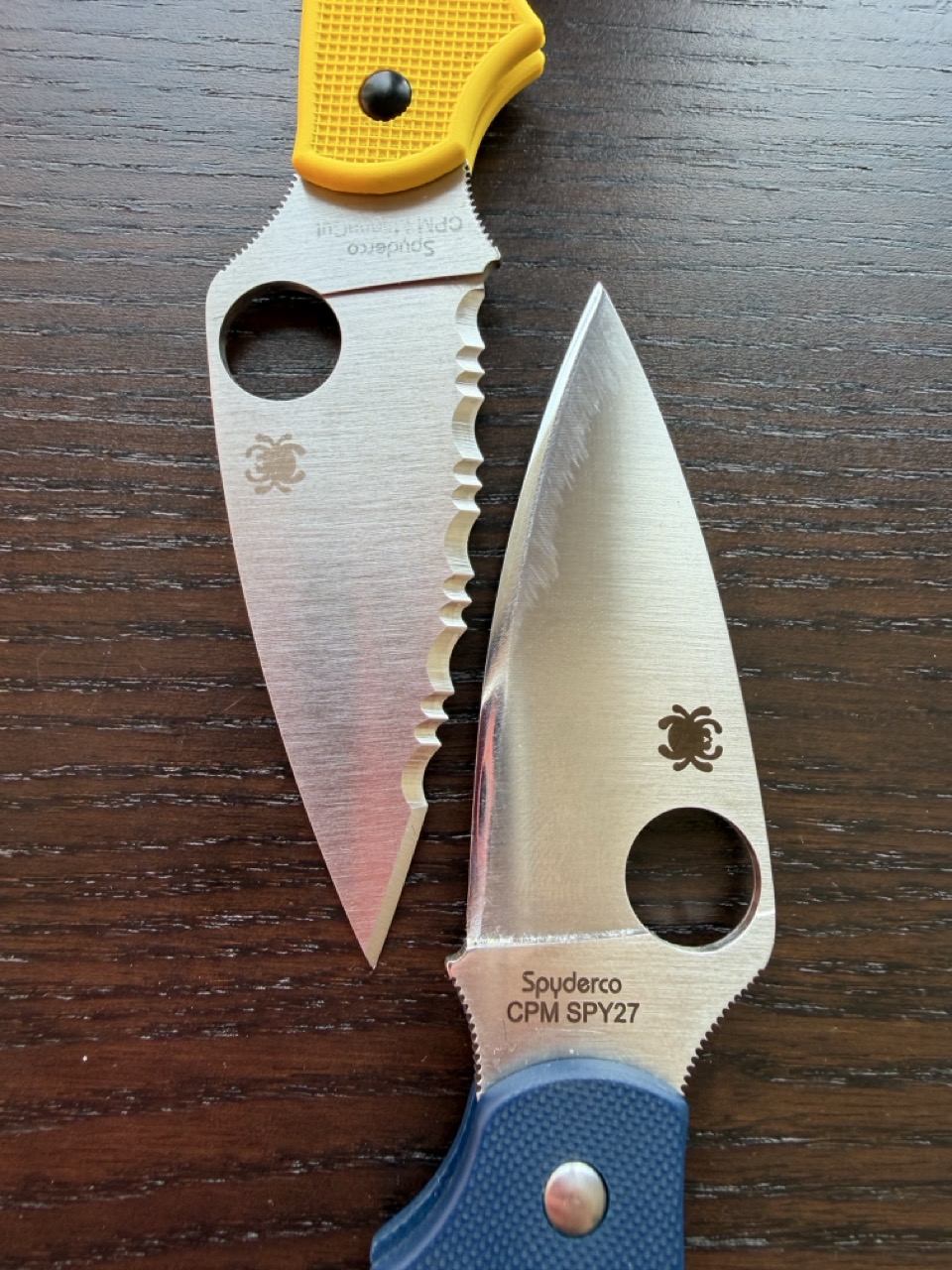
“Part The Matters For Me” – Spyderco UKPK Salt Serrated vs UKPK Sprint SPY27 Plain Edge – Teeth vs Razor.


I often come across very strong opinions when it comes to serrated versus plain edges. More often than not, users dismiss serrations outright—too ugly, too difficult to sharpen, ultimately useless, impossible to tune… usually without ever having truly put them to the test.

Consider this a brief attempt to set the record straight.

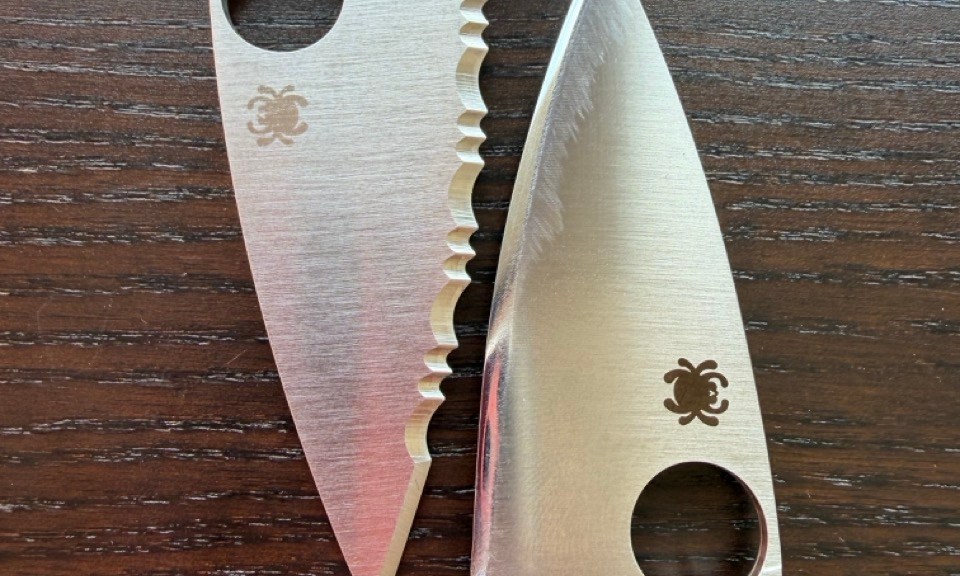
The Spydie UKPK Salt in Magnacut, here in its serrated form, is built for unforgiving environments : lightweight, corrosion-proof, and relentlessly efficient when conditions turn wet, fibrous, or hostile.

Facing it, the Spyderco UKPK Sprint Run in SPY27 with a plain edge embodies precision and control, offering a refined, razor-like cutting experience with effortless maintenance.

What do we got ? Two identical platforms, two radically different philosophies: one designed to endure, the other to excel.

Let’s first compare the steel. Two of my favorite high end alloys and luxury, in this case, does not come from polish or presentation. It comes from intent.

The UKPK Salt, dressed in serrations and armed with Magnacut, carries the modern obsession with resilience to its logical extreme. This is not a steel that negotiates. It exists in total defiance of the elements: saltwater, humidity, neglect. Where older stainless steels would stain, pit, or surrender their edge, Magnacut remains composed, almost indifferent. Its toughness borders on the improbable for something so corrosion-resistant, and yet it refuses to chase the last degree of razor refinement. Its edge is not delicate—it is enduring. One senses immediately that this is a steel designed not for the enthusiast’s bench, but for the long, indifferent stretch of real use.

Across from it, the Golden Child, blade of SPY27, a Sprint Run which offers a very different kind of luxury. Less demonstrative, more intimate. Designed in-house by Spyderco, COM-SPY27 feels less like a technological statement and more like a tuned instrument. It sharpens with ease, almost eagerly, taking on a ultra fine, ultra precise edge that invites control rather than brute persistence. Where Magnacut stands its ground, SPY27 moves—fluid, responsive, alive under the hand. It does not seek to dominate harsh environments; it refines the experience of cutting within them.

The distinction is subtle but decisive. Magnacut is a wonder steel that reassures. SPY27 is an exclusive steel that seduces.

Now about the edge shape…. Here, inevitably, the steel disappears. What remains is the edge—the only part that truly meets the world.

Like Moses said, “Part the matters for me”…
—oh wait, I meant the waters. 😉

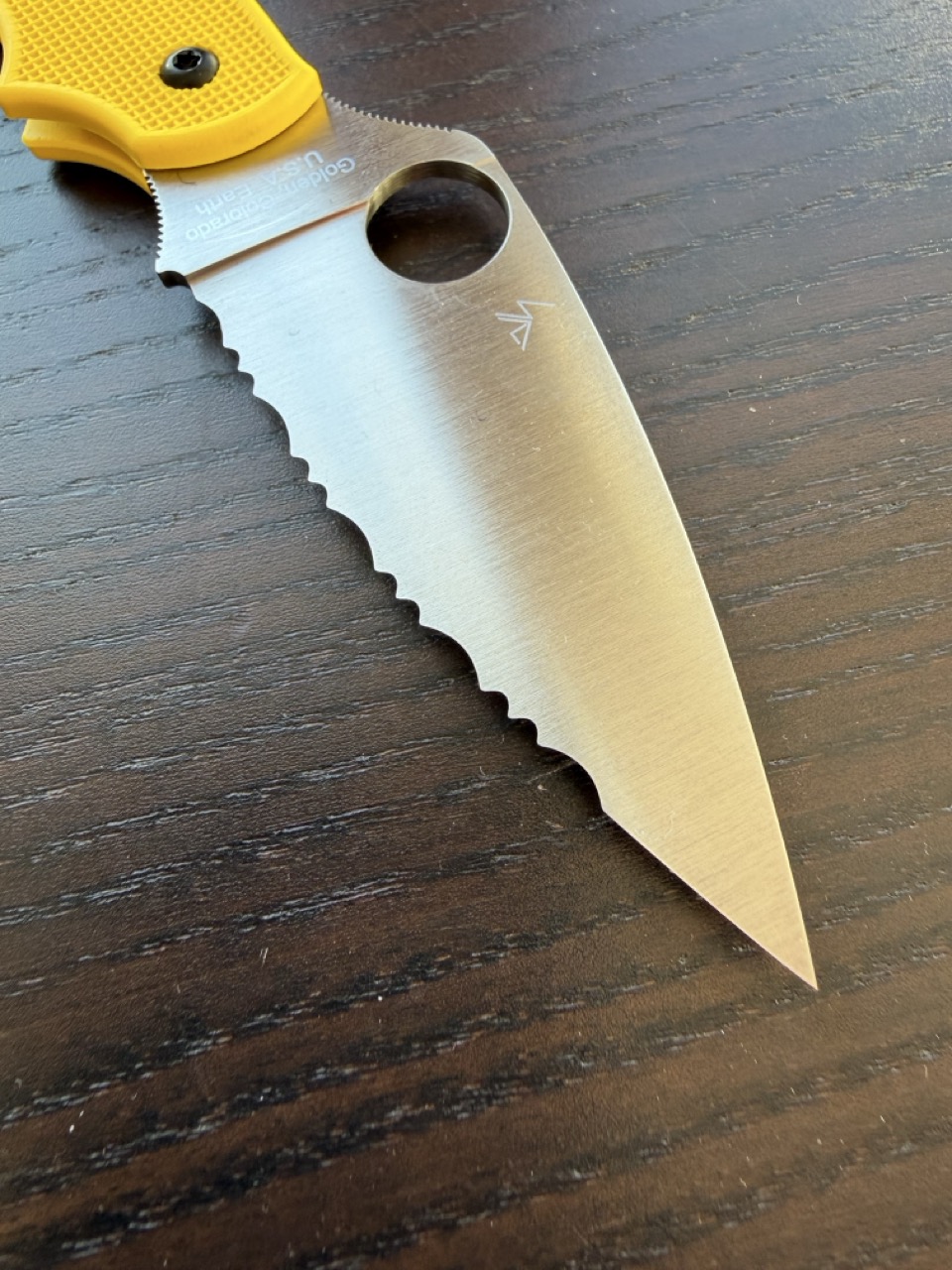
On the Salt, the serrated profile transforms the blade into something almost mechanical in its intent. It does not glide; it engages. Each tooth acts as a point of aggression, catching, pulling, tearing through resistant materials with an efficiency that borders on inevitability. Rope, fibrous plastics, anything damp or uncooperative—these are not challenges but confirmations of purpose.
You need to try it to understand it. Serrations aren’t saws—they’re teeth.
Even as the knife loses its initial sharpness, the serrations continue to function, each peak preserving a fragment of cutting power. It is a system designed to keep working long after refinement has faded.

But there is no illusion here. This is not a refined edge. It does not slice so much as it asserts itself. Precision is sacrificed for continuity of performance. Elegance yields to certainty.

To sharpen it, use the corner of a stone or a triangular rod, and treat it like a chisel-ground blade: work each serration individually, then simply remove the burr on the flat side. It’s done in minutes—easy, almost effortless.

The SPY27 Sprint Run, with its plain edge, follows the opposite philosophy. The cut is continuous, uninterrupted—a single line of intent from heel to tip. It can be tuned at will, from a coarse, aggressive bite to a razor’s whisper. There is no tearing, no hesitation. Materials part cleanly, almost silently, as if persuaded rather than forced. In wood, the blade tracks with uncanny precision; in food, it glides effortlessly; in finer tasks, it answers the slightest pressure. Here, SPY27 reveals its true nature—not through endurance, but through absolute fidelity to the cut.

And when the edge begins to soften, it does not resist restoration. A few passes on leather, a moment of attention, and the blade returns to form. There is a rhythm to it—a dialogue between user and steel that serrations, by their nature, cannot offer.

Placed side by side, these two UKPKs do not compete so much as they define a spectrum.

The Salt, in Magnacut and serrations, is a study in persistence. It is the knife that continues when conditions deteriorate, when maintenance is forgotten, when the environment becomes hostile. It asks little and gives consistency in return.

The SPY27 Sprint Run is something else entirely. It is not concerned with surviving neglect. It assumes presence, attention, a certain appreciation for the act itself. It rewards that attention with a level of precision and tactile satisfaction that borders on indulgence.

In the end, the choice is not between better or worse. It is between two forms of excellence.

One refuses to fail.
The other refuses to compromise.

And that review was also inspired (in the background) by that beautiful New Model Army song :


“We all get what we’ve got coming to us
The tide flows both ways across the seas
All following through on promises made
The roads are filled with fleeing slaves and refugees – singing

Part the waters for me

Now this motioning forward will never stop
We’re like sharks in the water, if we stop swimming we die
All coming out of the ruins bedraggled and worn
Like a people who stared too long, too long at the sun in the sky – singing

Part the waters for me

Any god will surely come, deliverance will surely come
On our knees by the stony shore, crack the sky and deliverance will come

Part the waters for me”


Screenshot

Spyderco Manix 2 Salt – A Welcome Overkill


The funniest part about using the Manix 2 Salt is remembering how this model first came into being at Spyderco—and how well it has matured over time, much like your humble narrator and its designer, Eric Glesser. We’re not getting any younger! 🙂
For that, you can refer back to my previous article dedicated to this knife.

“An extremely capable full-sized folder that is ready for the toughest challenges.”

It’s either a survival-kit essential or an EDC that has earned deep respect over the decades since its creation. And that’s pretty cool. This workhorse remains a bestseller at Spyderco because it radiates reliability and performance.

Its few drawbacks? The space it occupies in the pocket—which really deserves to be dedicated to it entirely—and the lack of tip-down carry. Which means no “Spyderdrop,” unlike the Military for example—one of the most elegant ways to open a Spyderco (Grab it by the Spyderhole!).

At its core, the Manix brings three key elements that truly make the difference: a blade clearly oriented toward performance—neither overly thick nor compromised, with a tall full flat grind; a rock-solid lock that effectively turns it into a fixed blade once engaged and a drop chuting action when closing; and ergonomics so well thought out that, no matter the wet and oily situation, this knife simply refuses to escape your hand.

Disclaimer: The Manix 2 Salt has been provided through Spyderco’s Ambassador Program, upon my own request. Thank you to the Spyderpeople for letting me review it.


The Manix 2 Salt black G-10 handle is fully peel-ply-textured (mixed with Spyderco’s signature Caribbean Bi-Directional Texture™ pattern) and exceptionally grippy and yet surprisingly never abrasive to my denim pocket’s seams — a balance made possible by a thoughtful clip placement because, really, on the paper I was certain that folder would be a competitive pocket shredder !!

That said, this very design becomes a limitation if one considers swapping to a deep-carry clip: the clip would no longer land on the scale’s soft flat spot, potentially creating unwanted friction against the pocket lip. For this reason, I chose to keep the original clip. In practice, it delivers remarkably smooth in-and-out pocket action—arguably even smoother than the Edgerati.
This is still a mystery to me but that ultra grippy Manix 2 Salt G10 is actually very pocket friendly !

Now, for the past few weeks, the Salt—which is arguably the most badass version of the Manix 2 (alongside the Crucarta, which elevates it beautifully in the patina departement, or perhaps a few Sprint runs like the mighty CPM-15V brown g-10 version)—has been jumping into my pocket for real use. As you know, the Edgerati, thanks to its novelty and sheer pleasure of use, has had a tendency to evict several knives from my rotation: the Military 2 in CPM-15V, the Caly 2, the Chief in Magnacut, the Sage Salt… and inevitably, the poor Manix 2 Salt G10, which had the bad luck of arriving at the same time.

But then it hit me: if I see the Edgerati as a BMW X3—powerful, lightweight, and all-terrain—then the Manix 2 Salt is clearly a Land Rover Defender. After all, it came here to suffer… so let’s make it suffer.

And so far, it comes out with flying colors.
Like a Tenacious, this knife is here to work—no matter the conditions.
It brings back that familiar, no-nonsense feeling I used to get from the old Cold Steel Recon 1 and its mighty Triad Lock.


About the Manix 2’s lock, I was worried the mechanism might seize up with dirt or mud, but since the Salt laughs at moisture, soaking it in water is a non-issue. In the kitchen, it also encountered oily situations. Once again, the new G10 scales on the Salt provide excellent traction when drawing it from the pocket—which is definitely not the case with my titanium Squeak, an outstanding little bar of soap when my fingers are wet or greasy…

I did notice a small “click” when opening. I have the same thing on the carbon fiber CPM S90V version, though it’s less pronounced. It’s not a problem at all—just the mechanism doing its thing.

There is also something I forgot to mention—and it is far from a minor detail. The Manix lock does not rely on a detent ball to keep the blade closed in the handle. Much like a traditional back lock, spring tension alone holds the blade securely shut. It may seem subtle, but the implication is significant: closing force is applied even if the blade is slightly out of position. This provides an additional layer of safety—one that should not be underestimated, especially in demanding or unpredictable conditions.
And as mentioned in my previous article on the Manix Salt, the very first Manix models were built around a Martial Blade Craft–grade back lock—thick, overbuilt, and driven by an exceptionally strong spring. That DNA is still there. The Manix 2 lock clearly inherits that same philosophy of power, security, and mechanical confidence.
This is also what makes the Ball Bearing Lock™ so reassuring: safety.


During my homemade bottle butt geometry test—driving the blade straight through the bottom of a plastic bottle, where the material is at its thickest—I found that the Manix 2 could do a tad better. Where the Edgerati (a thicker blade though) passed this test straight out of the box, the thinner Manix 2 Salt required a bit more encouragement. I therefore decided to de-shoulder the edge slightly to thin it out, and the improvement was immediately noticeable. As usual, in ten minutes, small adjustment, but one that significantly enhanced its geometry and cutting performance.
Also I have not been able to scratch that DLC blade so far.

It also made me wonder whether this knife could genuinely appeal to a diver. How intuitive would it be to deploy and use underwater? To answer that question properly, I decided to ask Geoffrey—the head of Normandeep, a professional diver and rescue specialist operating off the Normandy coast, near the D-Day beaches

“The relevance of folding knives in diving is not always obvious.
Accessibility and storage can be an issue, especially when wearing thick gloves.
That said, the Manix is probably the least compromised option, as its lock is the easiest to operate of them all—even with gloves on. For a travelling diver, it could make sense: a knife that transitions from backpack carry during walks to a diving knife clipped to a buoyancy compensator.

Beyond diving, there’s also the nautical world—sailors, fishermen, boating in general—where this kind of knife becomes genuinely relevant. In that context, it makes a lot of sense.”

In the end, the Manix 2 remains faithful to its original ambition: to be a tool first, without apology or compromise. It does not follow trends, nor does it seek to charm through superficial refinement. Its appeal lies elsewhere—in disciplined geometry, a locking system of unquestionable security, and ergonomics conceived to ensure the blade stays exactly where it should: firmly at work in the hand.

In its Salt configuration, these virtues are elevated rather than altered. Moisture, mud, oil, even neglect, fail to disturb its composure. It can be rinsed, returned to service, and trusted again without ritual or concern. Such quiet confidence is rare, and it explains why the Manix platform has not merely survived the years, but matured with them.

It may not be the most discreet companion, nor the most elegant silhouette in Spyderco’s catalogue. Yet when conditions degrade and reliability takes precedence over finesse, the Manix 2 asserts itself with calm authority. Like any true instrument of work, it earns respect not through promise, but through repetition.

And that, ultimately, is why the Manix 2 remains a reference—quietly indispensable, and entirely earned.

MILITARY™ 2 BROWN G-10 CPM® 15V® SPRINT RUN® – The Mother Of All Bears.

The Spyderco Military C36 entered my life before the turn of the millennium. Back then it was a CPM-440V (S60V) wonder, remarkable for its emphasis on lightness. With Fred Perrin, we called it a “quick reaction tool.” At the time, it was a genuinely innovative design: a folder with a nested liner and powder metallurgy steel, both cutting-edge features. It was a real breakthrough in the cutlery world, and a true Sal Glesser design — high performance on a light frame, or as Sal, a racing car enthusiast, would put it: a fast, efficient chassis built for speed and reliability.
The idea was simple:  “If your son were going into the military what folding knife would you send him with?”
(“Do you think we were born in peaceful time ? Put out the lights on the Age of Reason.” Justin Sullivan.)

The very thin, pointy blade and the long handle of the Military were not understood at first. I often heard: “I can break the point!” or “I don’t like the blade-to-handle ratio!”

But Sal’s vision was deliberate. The elongated handle provided a secure grip and safe operation of the knife — even when wearing gloves in harsh conditions. And that needle-like point, when not abused as a pry bar, proved to be a reliable, precise all-terrain tool. What first looked fragile was in fact purpose-built: a cutting instrument optimized for performance, not for reassuring looks.
I remember ESEE (the RAT) founder Jeff Randall having written a review of him bringing a CPM440V Military in the Peruvian Rain Forest. It was requested by Sal Glesser asking Jeff to use it hard in the equatorial zone.
The review has been published in Tactical Knives and on Randall site before he started his knifemaking business. Eventually Jeff Randall prefer the SERE 2000 in VG10 but:
I have zero complaints against the Military, but for the role I use a folder in, the new SERE is absolutley perfect. Actually in a tactical role, the Military is a little faster to deploy for me. I think the Military is a perfect crossover between survival and tactical, but the SERE is the perfect survival folder.”
The point is, the Military’s thin tip and liner lock were never an issue — even in the rainforest, where I pushed it hard.

Thanks to Spyderco’s CQI (Constant Quality Improvement) philosophy, the Military has been continuously refined over the decades. A titanium Reeve Integral Lock version was later released, giving a sturdier feeling but at the cost of the knife’s soul: it became heavy, losing that unique spirit of lightness and agility that made the original Millie so special. For the record, G10 is already a strong, proven material — it didn’t need titanium to inspire confidence.
Also Eric made his own hardchore liner lock folder: the Tenacious.
Spyderco will continue to promote well-made linerlocks especially those designed by Master Ed Schempp. His Bowie is a master piece.


The Military has always been a huge folder to carry casually, and even more so in the years after 9/11, when knives became heavily restricted and socially frowned upon. Yet, the C36 still managed to slip into pop culture: in Desperate Housewives, Season 2 Episode 8 (“The Sun Won’t Set”), Hector Ramos (played by Danny Trejo) nonchalantly peels an apple with a full-serrated C36 Military. A perfect Easter egg — a knife enthusiast immediately recognizes it, while most viewers just see “a big folding knife.”

It’s funny how pop culture sometimes normalizes what legislation and public opinion try to stigmatize: Trejo’s character wasn’t using it violently, but in the most domestic, innocent way possible — peeling fruit. That contrast says a lot about how the Military can be both a serious tactical tool and, at the same time, a simple everyday companion.

Then, the Market asked for a shorter version. Sal teamed up with Eric to design and produce the Paramilitary. A shorter version with a new strong lock developed for their Martial Blade Craft Line: the Compression Lock.
Then came the Paramilitary V2 or PM2 which stillis a huge success.
Then the Para3 (three inches blade) came for a more compact version and even a Lightweight version which is considered by Shawn Houston as a Compression Lock Delica.

It’s striking how pop culture can normalize what legislation and public opinion often stigmatize. After 9/11, carrying a large folder like the Military became suspect, even frowned upon. Yet in Desperate Housewives (Season 2, Episode 8: “The Sun Won’t Set”), Danny Trejo’s character Hector Ramos uses a fully serrated C36 not as a weapon, but in the most innocent domestic way imaginable — peeling an apple. That small scene perfectly captures the duality of the Military: a knife designed as a serious, high-performance tactical tool, yet just as capable of being a simple, everyday companion.

“More than 25 years after its original release, the eagerly anticipated Military 2 builds on that hard-earned reputation while incorporating several significant design improvements. Instead of a LinerLock, the Military 2’s full-flatground CPM® S30V® blade is supported by Spyderco’s signature Compression Lock® mechanism, which offers greater strength and even safer one-handed operation.” Quoting Spyderco.

To make it clear: the Military 2 is based on the Paramilitary 2 with a longer blade and handle. Is that simple ? It is a PM2 XL ! 😉

Designed in 1995, the first-generation Military (Mil1) came with a single clip option: tip-down carry. That choice wasn’t arbitrary — it was tied directly to Sal Glesser’s preferred opening method, the Spyderdrop. Pinch the hole between thumb and finger, give a flick, and let the weight of the handle swing the blade open. Faster than many switchblades, elegant, and utterly reliable. My Tenacious carries that same spirit: a knife built to be deployed quickly, smoothly, and without fuss — ready for work in an instant.
That opening style is less common today, as most users gravitate toward the “Spyderco flick” or “thumb flick.” But those techniques depend on tip-up carry — the clip has to be mounted at the rear of the handle, not near the pivot. That’s why the Military 2 was so eagerly awaited with its new configuration… yet curiously, it’s still sold tip-down!


The stainless steel liners that form the foundation of the lock are larger, giving the knife increased structural strength and anchoring its four-position pocket clip, which is configurable for left or right-side, tip-up or tip-down carry. “
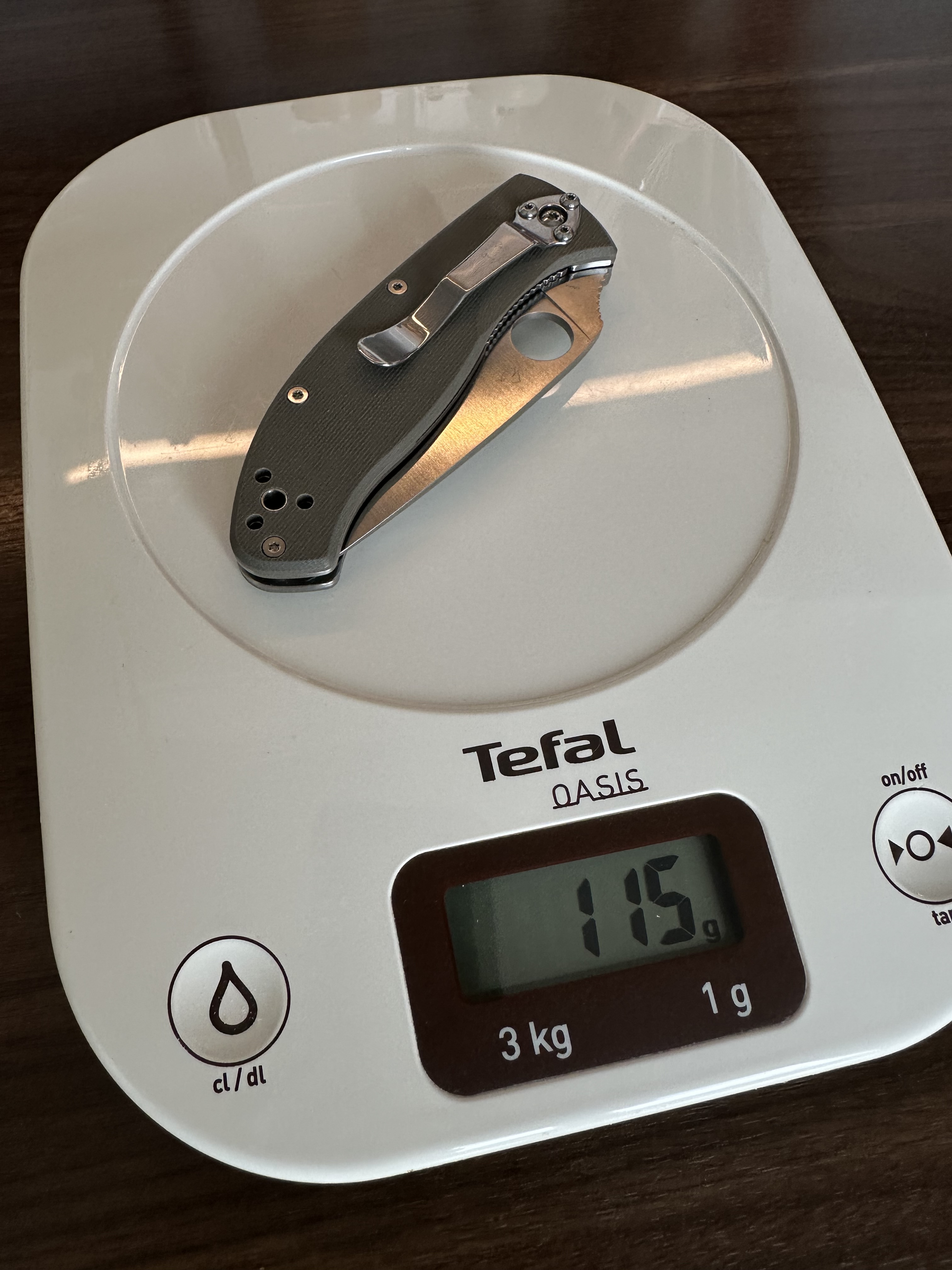
OK but comparing the weight between the C36 (128g) and the C36-2 (124g) the Military 2 is 4 grams lighter. (114 grammes on my kitchen scale !)

“The skeletonized liners are nested within peel-ply-textured G-10 scales to maintain a slim profile and complement its open-backed construction to reduce the knife’s overall weight.”

I have been waiting for a Sprint Run before to jump into the M2 wagon.
“C36GBN15V2″ ! (For the record, the first name of the Vanilla Military 2 is just C36G2, plain edge, and the new Mil 2 Salt is C36GMCBK2” and the Paramillie Salt is “C81GBKYLMC2” !…)
My two previous Millie were Gandalf with a CPM-Cruwear blade and grey handle, Ghost with a CPM-M4 blade and jade handle.
This one will bear the name of Gambit.

Now this one carries a CPM 15V blade — a state-of-the-art particle metallurgy tool steel with an extremely high vanadium content, heat treated according to Shawn Houston’s specifications. And 15V is nothing short of astonishing: its cutting ability and edge retention are absolutely breathtaking.
Even Sal himself acknowledged it on the forums:

“The flesh is weak.” That’s the very sentence that made me pull the trigger on the Military 2, right after ordering the Para 3 in CPM-15V. If you want to learn about 15V, this is the review to read: it’s an ultra-high-vanadium steel, heat treated according to Shawn Houston’s recipe — a carefully refined protocol that pushes the alloy to around 65 HRC. The result? Performance that is nothing short of otherworldly. Everyone in the community praises Shawn for his mastery of this steel.

So when the chance came to experience the Military 2 platform powered by such an extraordinary steel, heat treated with this level of care and “love,” it felt like a now or never opportunity. Especially knowing that Crucible, the producer of CPM-15V, has since been acquired.

The Military 2 stands as the new flagship of the Spyderco family, a knife signed by both father and son. And this Sprint Run is truly a gem — a piece that simply oozes quality.

The action on this Golden-made Military 2 is simply wonderful: smooth as silk. Mine has zero lock stick and the blade is perfectly centered. Despite being heavier than a PM2 or Para 3, the blade’s momentum makes opening and locking effortless and confident — and the same goes for closing. In fact, this big folder is as easy to operate as a Para 3, making it instantly ready for use and safely closed just as quickly. The flat profile of the handle helps it disappear in the pocket, meaning you can carry a versatile 4-inch blade while keeping it unobtrusive.

There has been some discussion about the choil evolution between V1 and V2. The Military 2 has a slightly more pronounced choil, but it doesn’t bother me at all. The knife falls naturally into my hand, opening with a smooth middle-finger flick, and its generous ergonomics unfold like origami. The squarish, gritty G10 handle fills the hand securely and confidently.

How does it feel under hard use? The compression lock can be a hotspot without gloves — my friend Pascal even got a blister cutting quinces with his PM2. Gloves can be a good precaution. This sort of discomfort is less of an issue with a backlock or liner lock. I’ve also swapped the pocket clip for a rear flat deep-pocket clip, which gives me better control around the pivot while keeping the knife accessible.

The G10 could use a touch of sanding for my taste, but it’s beautifully executed — and this time, I won’t touch it. The Military 2 “Gambit” is a true quick-reaction tool: you need just enough traction to put the blade in motion and maintain precise control over your cuts.

(I’ve installed titanium slabs on a PM2 before, and while it changed the feel of the knife, it didn’t enhance the reactive, instantaneous handling you get naturally with Gambit.)


One thing I’ve always loved on the Maxamet Para 3 — and now notice on the 15V family — is how the hot spots and angles on the spine are gently rounded. It makes the knife comfortable in prolonged use. Add to that the stonewashed finish of the blade, which gives the Military 2 a satisfying, tool-like aesthetic, and it feels immediately ready for work.

If you add a deep carry clip you got plenty of low profile carrying options.

Tip down carry for Spyderdrops.

A true Heir to the Military first version has always been the Tenacious.
It’s Eric’s answer to his father’s design, and what a brilliant evolution it is. The knife is a joy to Spyderdrop, and it feels incredible in hand during hard push cuts.

For the first time, the Gambit will be my Millie carried tip-up, and I can already tell it will change how I interact with the knife every day.

The clip doesn’t get in the way when I grip the knife firmly, thanks to the relatively long handle.

It also features a larger lanyard hole, similar to the Para 2, which adds versatility without compromising ergonomics.


The Gambit is designed as a worker, not a weapon — a reliable, high-performance 4-inch folder. While it’s not made for city carry, its design has always proven incredibly handy in the kitchen.


The Military 2 feels right at home in the woods, handling all chores during a hike or around the campfire — just as reliably as its father, the M1.
I’ve also noticed that the screws are now flat on this design, unlike the original Millie. (The Para 3 still has rounded screws.) I particularly love the large pivot screw on the Military 2 — bigger than many Spyderco pivots, including the Yojumbo and PM2 — giving the knife a solid, confident feel.

It is a bit longer than the excellent Native Chief.
And notice the larger pivot screw on Gambit.

The Military 2 Sprint Run is the new flagship — the culmination of decades of evolution on an already classic big folder.

A few things to keep in mind: the original Military V1 isn’t a knife to leave by the roadside. As Brock O. Lee pointed out — and I agree — the M1 still has some subtle advantages:

  • The broad, curved clip melts into the hand.
  • Chamfering on the handle is excellent.
  • smooth back with no compression-lock cutout hot spot.

The M2, however, is a strong evolution, built on the winning formula of the PM2. The compression lock is as strong as ever, though it can create hot spots between the thumb and index finger. Thankfully, the handle chamfering can be refined by hand, and the clip now allows for custom solutions.

This Sprint Run also introduces a steel that is extremely hard to beat in strength and edge retention. While I’m already enchanted by the PARA 3 in 15V, this “Mama Bear” folder brings massive cutting power in a light, flat, pocketable package. In terms of design and material, it’s an apex in modern cutlery.

Now the real testing begins — this review will be updated as I put it through its paces.

I don’t need a strong clip on such a long knife as it will rest gently in the pocket. Also a strong clip can ruin my pocket by shredding it.
This copycat of Lynch is just perfect in term of retention.

Now I need to convex the edge a little. The blade cannot go through the plastic bottle’s butt.

it could not reach the middle of the butt where the plastic is at its thickest… when the convexed Para3 or the Zero Ground Nilakka went through it.

Geometry wise nothing can beat the Nilakka.

Diamonds are a Bear’s best friends! You can see the line where I carefully pass the diamonds to slowly convex the edge. But CPM-15V, in my experience and with my tools, demands patience and tenacity.

To be updated and continued!

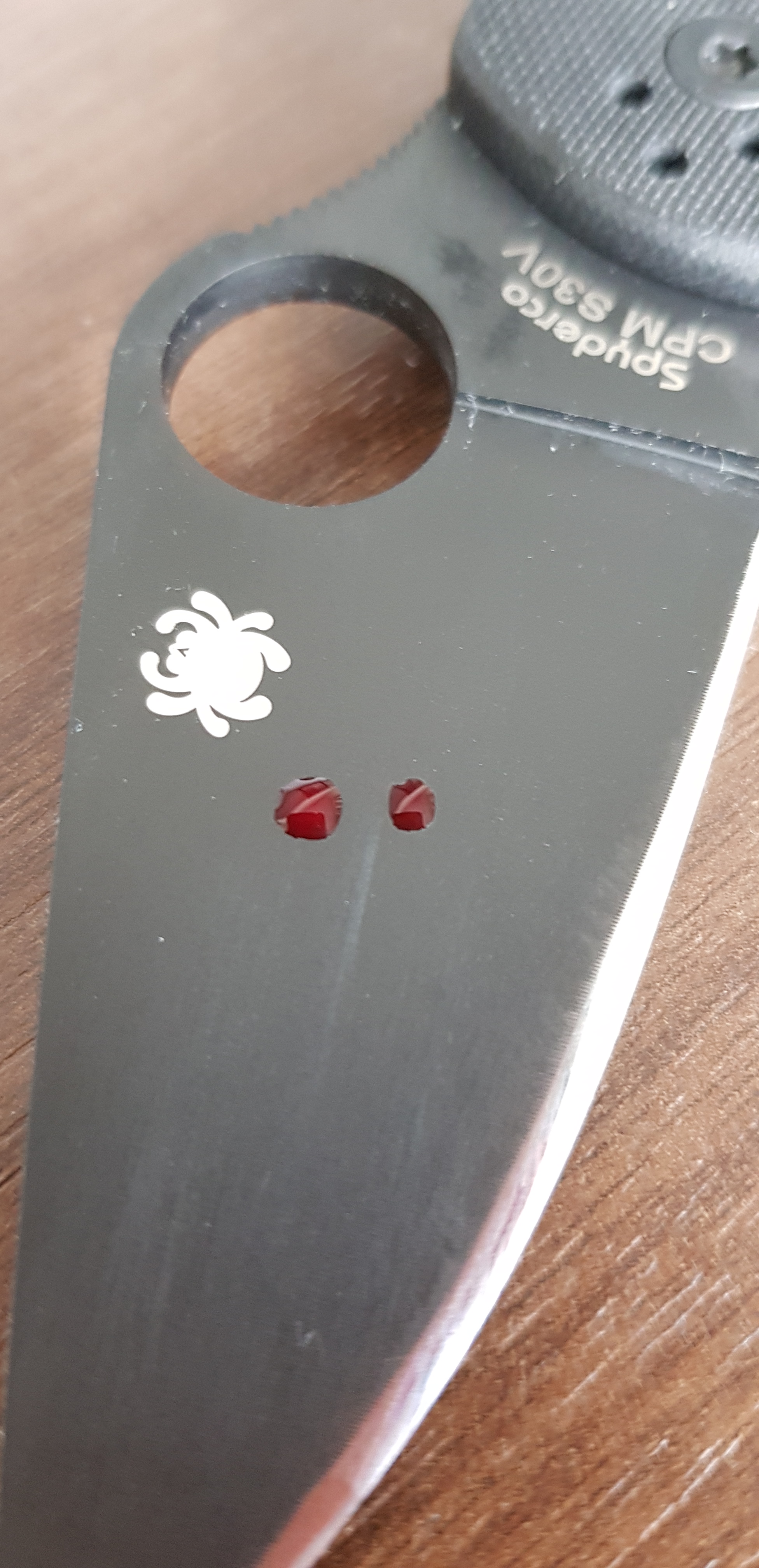
There will be blood ! Now it is christen.
That blade is a hair popping sharp razor right out of the box.

After deshouldering the edge, the geometry has improved dramatically — we’re really getting somewhere. On this long blade, the first third is incredibly precise, almost like carrying a scalpel from a smaller knife. With the Military 2, you truly have a highly versatile tool in your pocket.


I’ve loved the Military V1 for almost 30 years — it has long been one of my favorite workhorse folders. The CPM-15V blade, heat treated following Shawn Houston’s recipe, is just the icing on the bear. This Military 2 may well be the ultimate expression of the entire BBB 15V line.

Personally, I see this model as the pinnacle of an era: the most emblematic Spyderco design, paired with state-of-the-art heat-treated steel (Shawn wasn’t alone — big-name beta testers were involved), a proven geometry, and an incredibly versatile blade shape.

In short, I couldn’t miss it — especially since it’s a Sprint Run and, with the end of Crucible, everything about it feels historic.

So, “Gambit”, aka “C36GBN15V2” is really the “Mother Of All Bears” !

Spyderco -C94GCBL- UK PENKNIFE™ COBALT BLUE G-10 CPM® SPY27® – The Blue Djinn Who Loved Leather.

This is not the first UKPK I have reviewed in this blog. I was a very early adopter of this Sal Glesser’s approach of the modern slipjoint all made in Golden Colorado.
Some of my favorite are the Salt Versions in FRN: the Green LC200N and the Yellow CPM Magnacut. I even think, the serrated version of the Magnacut version could be an amazing legal travelling knife.

But they are FRN versions. I like FRN but I do love G10. Better, I’m a sucker for sanded G-10. Hence my love for the Heinnie Urban and its non-slip peel-ply texture.
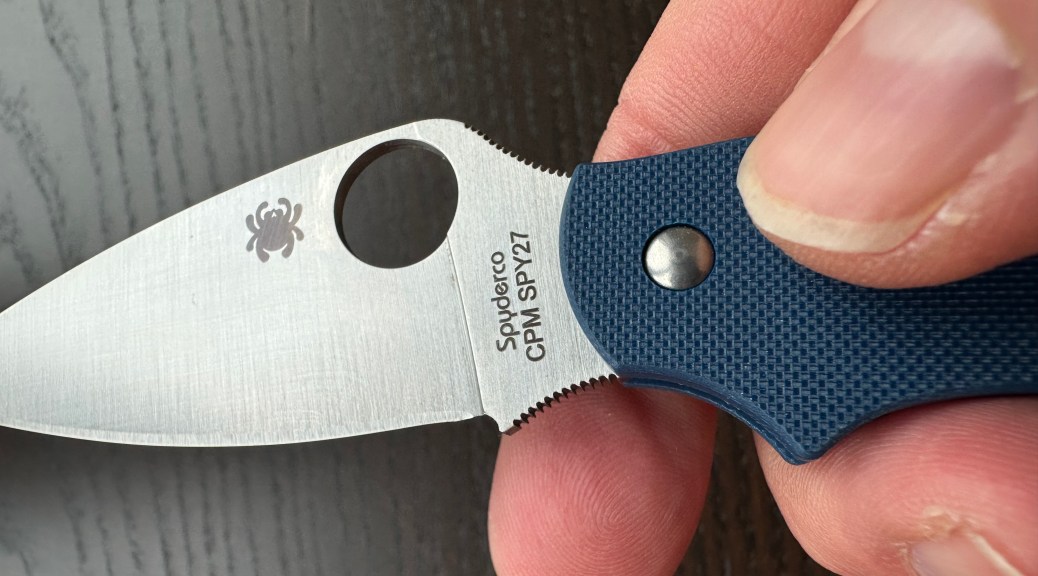
At first glance the satin-finished CPM SPY27 blade and signature cobalt blue peel-plytextured G-10 handle scales are juste gorgeous. Here are the full specs on Spyderco’s pages.

Like the Heinnie the skip joint got a strong mechanism. It is really a pleasure to feel this resistance which was totally absent from the very first drop point UKPK a decade ago. (Picture from Mr Blonde, Spydercollector site)

So far, I cannot imagine my self opening it with a flick like I was able to do on the LC200N FRN version. The Spring here on this G10 version is much stronger.

Let’s do some size comparaison. The UKPK is one of the long Slipit in Spyderco’s collection. It is almost a slipjoint Caly, even longer than a Chaparral. So you really don’t feel “underknifed” when you carry it in your pocket as your only EDC. It is also really handy and practical as a kitchen knife. The best thing is that this design keeps its blade length legal in most countries.

For cooking I often use a Native Chief.

The long leaf shaped blade is a must in the kitchen almost idea. It is pointy enough and its is enough for vegetables. Most of the works done in the kitchen like peeling potatoes, cutting oinions, you name it, was always done with a short full flat ground knife like a “Nogent Couteau d’Office”.

Something about the G-10 version is the spring/back spacer closing the handle of the knife when the FRN got an open handle easier to rinse.
But it is much more gorgeous and with a stronger spring for sure !

It also gives a little more heft to the knife. 48 grams for the FRN and 63 grams for the G10 version -> 31,25% heavier to be precise, almost a third ! But I do really love my heavy butt knives since my Schrade Sharpfinger.

Now this is my first CPM-SPY27 knife. Spy27 is a alloy recipe created in house with Crucible exclusively for Spyderco. It is a CPM ! So this is a premium super steel compared to VG10 or N690… In short it is a American Powder Metallurgy version of the Japanese VG10.

In Sal Glesser words:
“We offer many steels for several reasons;
1) We are Steel Junky’s (even Edge Junky’s) and we like to experience the different flavors and we try to do that.
2) We believe that many of our customers are also Steel Junky’s (even Edge Junky’s) and they too get to experience and play with and “taste” as you say, the many options.

I wanted a USA made “tweaked” version of Gingami 1 by Hitachi and after some effort with Carpenter, we have a powdered USA made steel called CTS-BD1N Which is a refinement of Gingami 1. I wanted a USA made “tweaked” version of Takefu’s VG-10 and now we have a powdered “tweaked” SPY27.

Carbone1.25%
Chrome14%
Molybdène2%
Vanadium2%
Niobium1%
Azote0.1%
Cobalt1.5%
Manganèse0.5%
Silicium0.5%


There is a very nice analysis in Knifesteelnerd and discussion here: https://forum.spyderco.com/viewtopic.php?t=94182

However, it should be noted that the SPY 27 Larrin used for testing was not heat treated by Spyderco. Some minor differences between Larrin’s heat treatment and Spyderco’s heat treatment can probably be expected. That being said, Larrin is the best source of consistent, objective data and metallurgical interpretation for steel comparisons.” To quote Karl_H in
https://forum.spyderco.com/viewtopic.php?t=87383

“SPY-27 will hold the fine edge longer… Its all about the stability of the fine edge, not the total wear resistance until fully dull. In this regard, SPY-27 can do what other stainless steels cant.” to quote Submicron in the same thread.

I am aware that Cobalt’s dust can be an health issue. Of course Rex 45 and Maxamet (10% of cobalt, 1,5% for SPY27) are the heavy weight steel in their tool steel category but the Spy27 (like VG-10), like all cobalt alloys needs to be carefully cleaned after a sharpening process.
(Cobalt may cause an asthma-like allergy. Future exposure can cause asthma attacks with shortness of breath, wheezing, cough, and/or chest tightness. * Cobalt may affect the heart, thyroid, liver and kidneys. * Repeated exposure to Cobalt dust can cause scarring of the lungs (fibrosis) even if no symptoms are noticed. According to https://nj.gov/health/eoh/rtkweb/documents/fs/0520.pdf)


Let say SPY-27 is in the same club as the S35VN steels in terms of performance and it especially loves fine ceramic and leather stropping. It gets easily a very crispy edge like VG10 or BD1N . ( Steel which are “leather super friendly” are also LC200N, 52100, VG10, AEB-L… )
This is a must and a real pleasure for me as I keep my knives sharp mostly with leather. A touch up and it makes flying hairs from my arm again.
And it seems true so far. I have not deshouldered the edge yet and intend to use it with the factory edge for some times but leather made it hair popping sharp. (Once deshouldered it is a straight razor with excellent edge retention… much better than S30V).
To quote Sal:
“SPY27 for some reason, seems to be punching above its weight.”

No crossroads, this Blue Djinn loves leather like the Bill Moran FB01 in VG10 loved it.

No need to use diamonds unless you want to reprofile the blade or round the shoulder then don’t forget to rinse the blade and to clean any dust.
But talking about dangerous dust, I have sanded the scales to preserve my pockets. Never breath that dust !!! Do it under water or wear a mask.
I got a neighbor who has been working around that kind of heavy dust and now he is breathing with two tubes in his nostrils. So be careful with your health.
This Blue G10 got a very nice texture under the thumb like some denim, textil like. It is really pleasant, almost like some Micarta found on the QSP Penguin.

So when you sand G10, just go outside in the wind or work under water. You don’t want to breath G10 dust made of fiberglass and epoxy.
Just rinse it under the tap to have it back to normal.
Once tuned at your hand, G10 is a very very nice material.

As you can notice the scales are even thicket than the blade and the blade is perfectly centered.

There is the famous middle/half stop when closing or opening the knife. It works like a safety measure. This knife is harder to close than to open.

The UKPK is a very ergonomic knife. It feels like it melt in the hand. It is so confortable for heavy cuts. Because this blade can work hard with zero play.

The “pistol grip” is common in many Sal Glesser design like the Endura or the Military. It is much more pronounced on the Massad Ayoob.

No hotspots for me a very safe handle, really, this lil slipjoint is screaming to be used hard.

It is even confortable edge up.

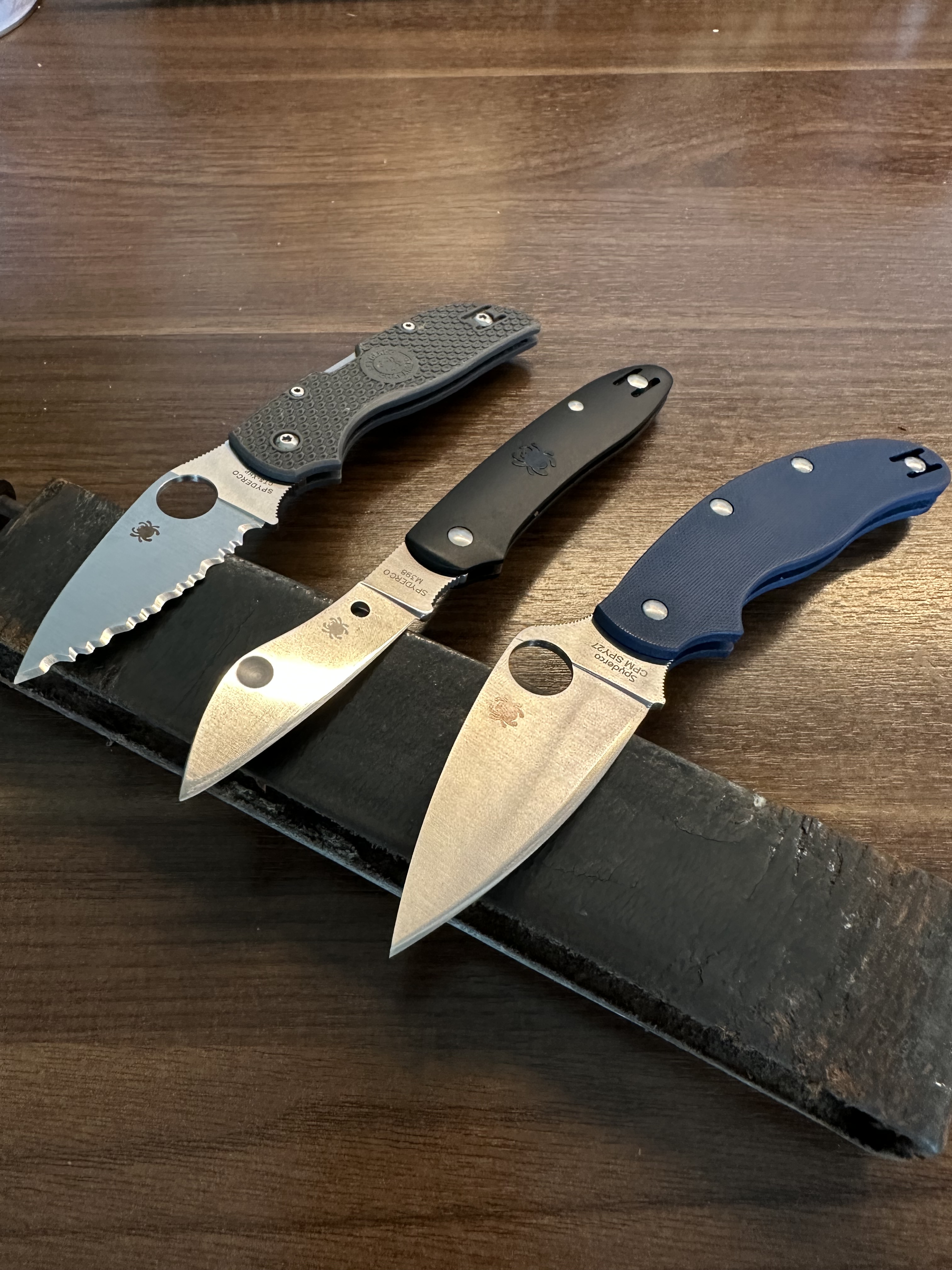
With the Roadie XL. Another great Slipit with a very low profile, almost like a pen in your shirt pocket.

And the mighty Chaparral serrated. Two of Sal’s best designs. Two wolves in sheep disguise thanks to their thin solid blades.

I have decided to de-shoulder the edge for a gentle convex result in the middle of the belly.

My old leather with some polish compound is ready again to smooth the edge to razor level.

Because I want a better touch on the leather, I usually keep the normal edge at the point to keep material there and near the ricasso as I use this portion for special shores like removing the aluminium cap on bottles.

The Coke Bottle Butt test is passed with flying colors. As you can notice the plastic is 3mm thick. Not a single scratch on the blade.

So what do we got so far ?
A master piece of knife design by monsieur Sal Glesser with a strong construction and state of the art in-house alloy serving a thin blade and an ergonomic handle.
My advice: try to grab one before they disappear, it seems that G10 version is not here to last and it is really a sapphire: a true blue jewel !

The Perfect Spyderco Native Exclusive AKA Spyderco C41GPCWBK5 Native 5 Folding Knife 3″ CPM-CruWear Black Plain Blade, Smooth Black G10 Handles, KnifeCenter Exclusive !

Seven years ago, I was already in love with a KnifeCenter Exclusive Native. The idea of offering a smooth G10 handle was, IMHO, a great EDC enhancement, as aggressive G10 can quickly turn any knife into a pocket shredder.

As you can notice, the Native 5 with its OEM clip can perfectly clip into a watch pocket.

I was certain I had missed the opportunity to own one of those smooth operators made exclusively for KCI when Alex, a fellow member of the Facebook Spyderco Fan Club France, pointed it out to me.
They were still in stock! HERE!!

I have known monsieur Howard Korn, the founder of KCI, since his early beginnings back in the 90s when he was operating almost alone. He even suggested that I design their logo. Howard was among the very first resellers to offer knives on a large scale using a very new medium at the time: the World Wide Web! What a venture… and eventually, what a success!
That was before Amazon, and Howard remains one of the true pioneers in spreading cutlery culture worldwide. Hence the excellent videos now produced in-house.
Once again, it was a smooth transaction from the USA to France thanks to great customer service for a fantastic exclusive. I may be biased, but after nearly 30 years of dealing with KnifeCenter, my experience has always been flawless and inspiring.

Eventually, I found out that I may have bought one of the very last examples of this Native Exclusive because 10 days after my order (June 2024), they were already out of stock.

So what do we have here?

I have written a lot about CPM CruWear!
But this tough and well-balanced alloy, capable of taking a crisp razor edge, is perfect on both small and large folders.
This is a true workhorse steel and one of the greatest high-tech alloys available in modern cutlery. I have even demonstrated how difficult it is to force a patina onto it. This time, with the DLC coating, neither patina nor rust should be a concern.
BTW, DLC (Diamond-Like Coating) is even used for medical implants. It is not toxic.

This all-black version of the Native is ready to be used in all weather conditions.

So here we have a very low-profile package with a non-threatening design, because black knives matter when confronted with sheeple who might otherwise label you a mall ninja carrying a dark saber.

These days, I am reluctant to carry long blades or large folders in the city, and my search for shorter, socially accepted knives — locking or non-locking — has become obvious.
I have previously written about knives suited for city use, and the Native is definitely one of them. The idea is maximum versatility in a tool that should not raise eyebrows: a friendly, non-threatening package. The kind of knife my grandfathers and father used to carry without a second thought — except on airplanes. 😉
When heading into the countryside, I do not restrict myself in terms of blade length, but in big cities I play a very low-profile game and most of the time strictly follow the law, even if I am not particularly worried about police checks.
Hence the Native: the same cockpit ergonomics as Hellboy, which gets a lot of kitchen use now that the Chief has turned into a Chef, but in a shorter format.

There is also a swedge on the blade spine of the Native that is not present on the Chief.

The action is smooth with zero blade play, and a true guillotine drop can be achieved simply by releasing the lock. I have already written about how top notch these Golden-made Natives are in terms of fit and finish, having used them since 2011.

This linerless version is, to me, the best Native design ever produced, and this Exclusive represents the best of the best. In these years dominated by titanium frame locks and Axis-style locks, the opportunity to own a truly great lockback feels precious.
And this one, for me, is the Last of the Mohicans!

C127GPRD SPYDERCO URBAN HEINNIE® EDITION – The S90 Urban UK Legal Wonder.

The Spyderco Urban, Squeak, and UKPK family are the most addictive slipjoint lineups in the modern knife world. I have already written about them on this blog. The UKPK Salt is simply one of the best modern folders available nowadays. The Squeak is totally sheeple-friendly, and of course the Urban was made for city carry and can be carried almost everywhere except on airlines.

Spyderco’s description:
“This Exclusive version of the Spyderco Urban™ was manufactured specifically for Heinnie Haynes (heinnie.com) and is available only through their sales channels.  Originally introduced in 2009 and later discontinued, the Urban remains a cult classic among devoted fans of Spyderco’s non-locking, one-hand-opening, clip-carried SLIPIT™ knives. This distinctive expression of it showcases a leaf-shaped blade crafted from premium CPM® S90V® particle metallurgy stainless steel. The PlainEdge™ blade is full-flat ground for exceptional edge geometry and is proudly laser engraved with the Heinnie Haynes logo.Not to be outdone, the handle of this knife features distinctive red G-10 scales with a non-slip peel-ply texture. They complement the jimping (textured grooves) on the blade’s thumb ramp and index-finger choil to ensure a positive grip and outstanding control during use. A reversible deep-pocket wire clip provides a choice of left or right-side tip-up carry, making every aspect of the design completely ambidextrous.”

This red one is my third Urban. The first one was in K390, the second one was in AEB-L and was named Cappuccino. All of them were eventually pushed out of my pocket because of the greatness of the UKPK Salt in LC200N.
Still, they have all been great companions during my travels in the UK, as they are fully legal: non-locking knives with blades under 3 inches (76 mm)…
Eventually, I started looking for a G10 version with a full stainless steel backspacer, and I found the Heinnie Haynes exclusive version available on their site. It is not a cheap knife, be aware of that, but it oozes quality both on paper and in hand.

First things first, this Urban features a CPM S90V blade, the same steel found on the Proficient bushcraft knife. S90V was previously known as CPM420V, and it remains one of Sal Glesser’s favorite steels ever produced by Crucible.

S90V is famous for its incredible edge retention, and after 25 years of using it, I can tell you that it can also be a bear to resharpen. Diamonds are its best friends, and even then it requires a lot of white ceramic work and stropping… Compared to non-stainless super steels like Maxamet, it can be quite tedious to bring back to a truly razor-sharp edge. But once sharp, its working edge seems to last forever.
This is exactly the opposite of my previous experience with Cappuccino, my AEB-L Urban. That knife was tough and incredibly easy to keep razor sharp, but it quickly lost its edge when used on abrasive materials like cardboard.
S90V eats brown cardboard for breakfast and stays sharp for a very long time, but it takes patience to bring it back to a crisp razor edge.
That is excellent when you need a long-lasting working knife on a trip where you did not plan to bring sharpening equipment. Sal Glesser trusts S90V enough to use that alloy on many of his own special Sprint Runs with carbon fiber handles.
I have never been disappointed by S90V. Even on fixed blades or on the Manly folders, it has always been a game changer in terms of long-lasting sharpness, and in my experience it even surpasses CPM 10V.
S90V is also highly stainless. Unless you plan to use your knife in the ocean, it can handle demanding work in the forest without needing immediate cleaning.
It has also been noticed that this S90V Urban features a slightly thinner blade: 0.23 cm instead of 0.29 cm. The blade is also slightly shorter than previous Urbans, although I have not noticed any difference in real-world utility.

This Urban was made in Italy, and in my personal experience, Maniago craftsmanship has never been a disappointment. Your mileage may vary, but this has been mine. I have always been happy with my Spytalians!

G10 is not a common material on Urbans, as FRN dominates the lineup, and the texture of this G10 is even more distinctive. At first, I considered turning this knife into a smooth “pebble,” but… nah! It is great as it is.
I only adjusted the feel slightly by sanding it, but overall this is a beautifully made, high-quality handle — once again, kudos to Maniago.
All Heinnie Haynes exclusives feature this red treatment on the handle; it is their signature. The G10 version also benefits from a longer steel backspacer that closes the handle construction more completely.

Now about the action: this Urban has the strongest spring of all my slipjoints! That is actually a very positive point. I can still open it with a quick wrist movement, but closing it requires real force, which is rather rare — even in Spyderco production. (The first UKPKs were “chewing gum soft,” to quote Guillaume, moderator of the Spyderco Fan Club.)
A strong spring combined with the absence of a lock makes it a great candidate for legal everyday carry nowadays.

Now regarding geometry, Maniago deserves another round of kudos! As you can see in the picture above, I was able to split a bottle bottom in a single pass with the factory edge. That is also rare! Even my beloved Hellboy needed some thinning before reaching that level. This is thin geometry straight out of the box!
The short drop-point blade makes it an excellent whittler, and Spyderco truly knows how to make little big knives. The hump and choil transmit your cutting force directly into the blade, sparing the handle, pivot, and mechanism. It is a clever design, inspired by the old San Francisco gambler’s knives. Sal’s first implementation of this “cockpit” concept dates back more than 30 years to the C36 Military.
The choil-and-hump combination is brilliant for preventing a non-locking blade from closing onto your fingers. To me, it is an absolute must-have!

So here we have a legal folder with a non-threatening blade, a strong non-locking spring, excellent cutting geometry, and stellar particle metallurgy steel.
What is there not to love about this wonderful Urban?

You can cut a pizza on your plate and use it as a steak knife without raising any eyebrows. I use my knives directly on plates, and I know how to avoid dulling them on ceramic. My mother-in-law never places a knife near my plate anymore — that is how I can spot where I am supposed to sit at her table.

The Urban also has the perfect size for carrying in a Levi’s 501 watch pocket, and as you can see, mine has been shredded over time by many aggressive G10 handles before extensive sanding.

So yes, I highly recommend this excellent exclusive little knife. Again, it is not cheap, but the quality is there from tip to clip.

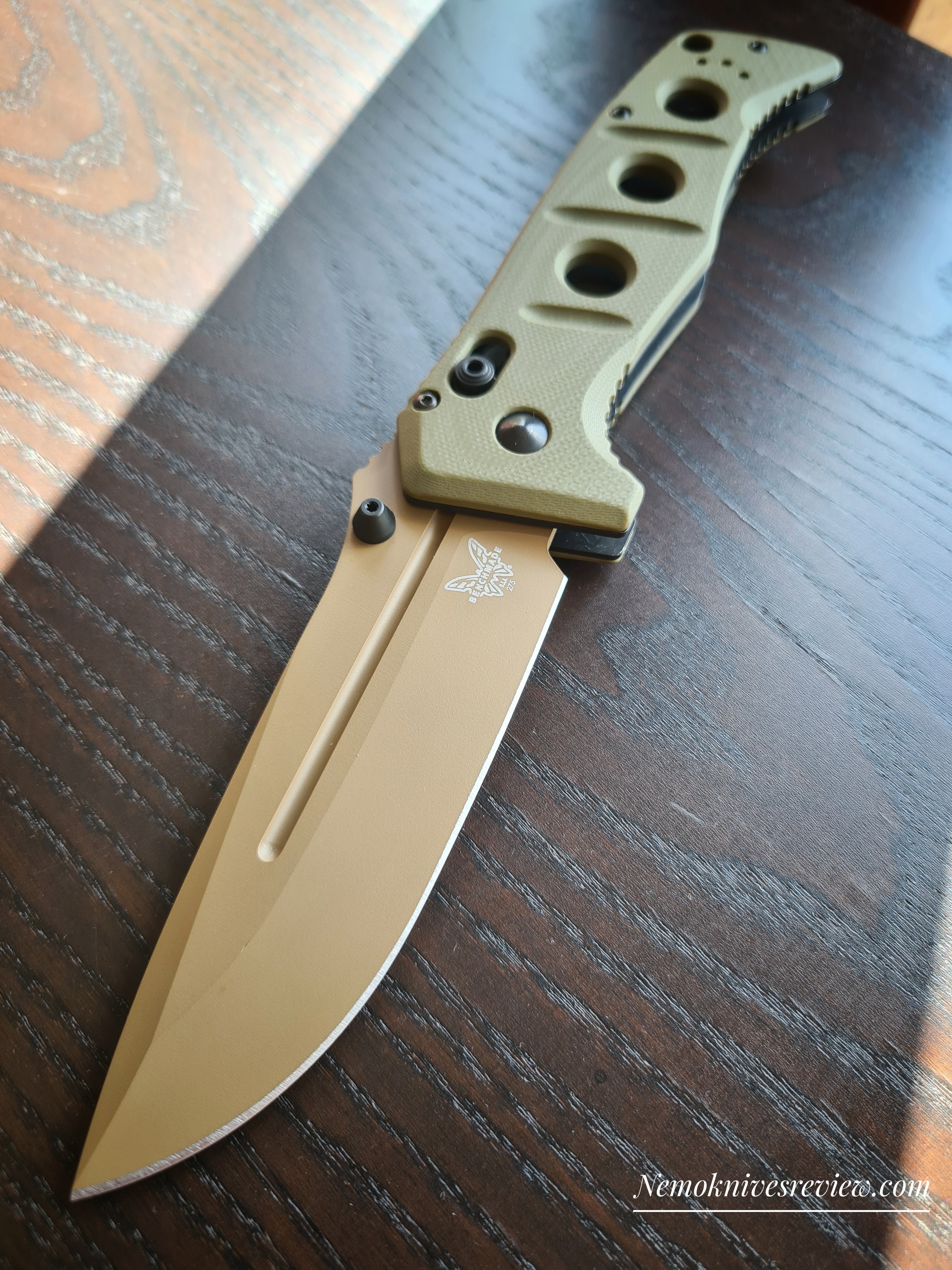
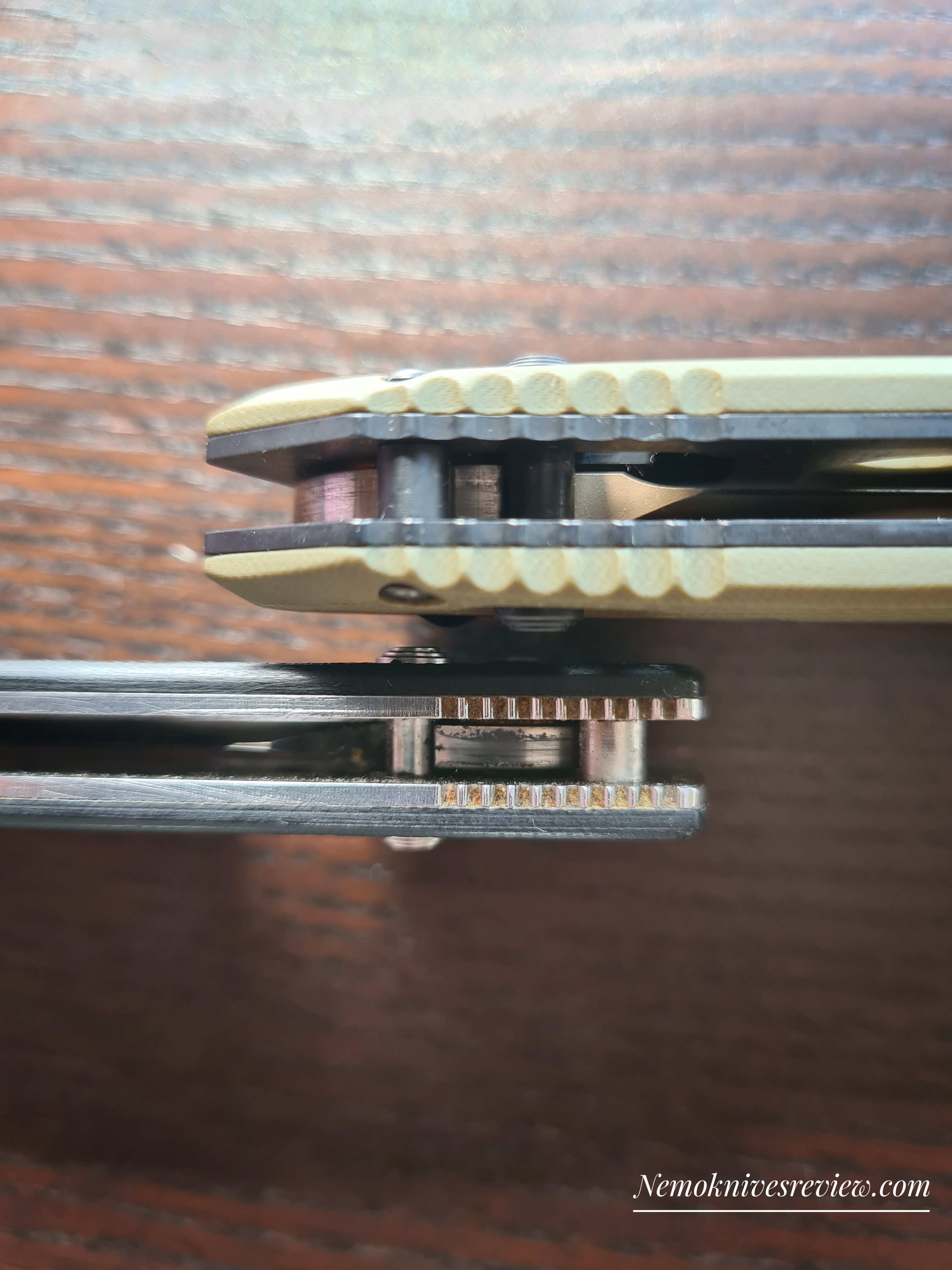
The mighty Benchmade Adamas BM275FE-2 CPM – Cruwear for Flat Earth ? First glance at that Heavy Metal Hardcore Folder.

Here it is the Benchmade Adamas second generation with its CPM Cruwear heavy duty blade.
It has been almost 20 years since I have reviewed one of Benchmade hardchore (made for the Military) folder. The last one was the AFCK Axis in D2 and I even think it was not upload even if it was my EDC for two years. I loved the AFCKs because, well, Sal Glesser was involved in its design with Chris Caracci and Les de Asis and Bob Terzuola and I simply appreciate Sal Glesser’s way to invent and design “matter separators”.

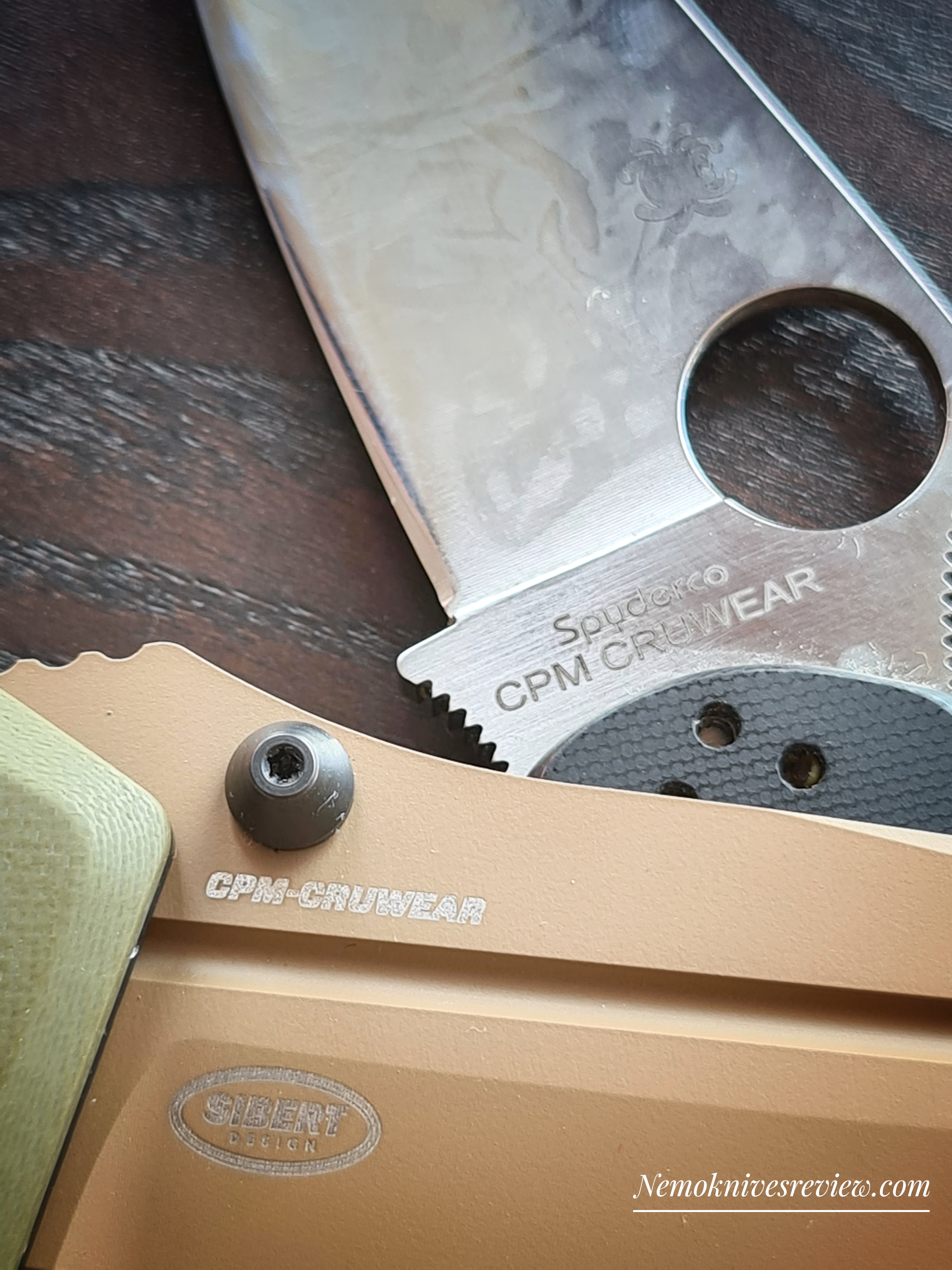
But here it is “Tabula Rasa” as far as I am concern ! Go figure: no hole in the blade, but holes in the handle, a gifted designer which I’m going to discover named Shane Sibert who has also designed the Bushcrafter for Benchmade… and Clive Owen’s knife in Sin City.
His signature seems to be fuller on his blade.
“I started making knives in 1994 with the idea of creating blade ware that is simple, practical and efficient. I have been a full-time knifemaker since 2004. Keeping with the theme of practicality, I avoid large metal guards, bolsters and heavy pommels to keep the knives balanced and agile in the hand. Materials have been carefully selected to ensure optimal edge retention and low maintenance. Although the knives incorporate slim handle slabs to decrease unwanted bulk and weight, the handles contour the hand for a synergistic fit. I strive to hold myself to high quality and design standards and produce a knife that will invoke pride of ownership and at the same time perform the task that it was designed for with exceptional ease.”
(quoted from Arizona Customs Knives)

You can notice slabs and hole on the handle.
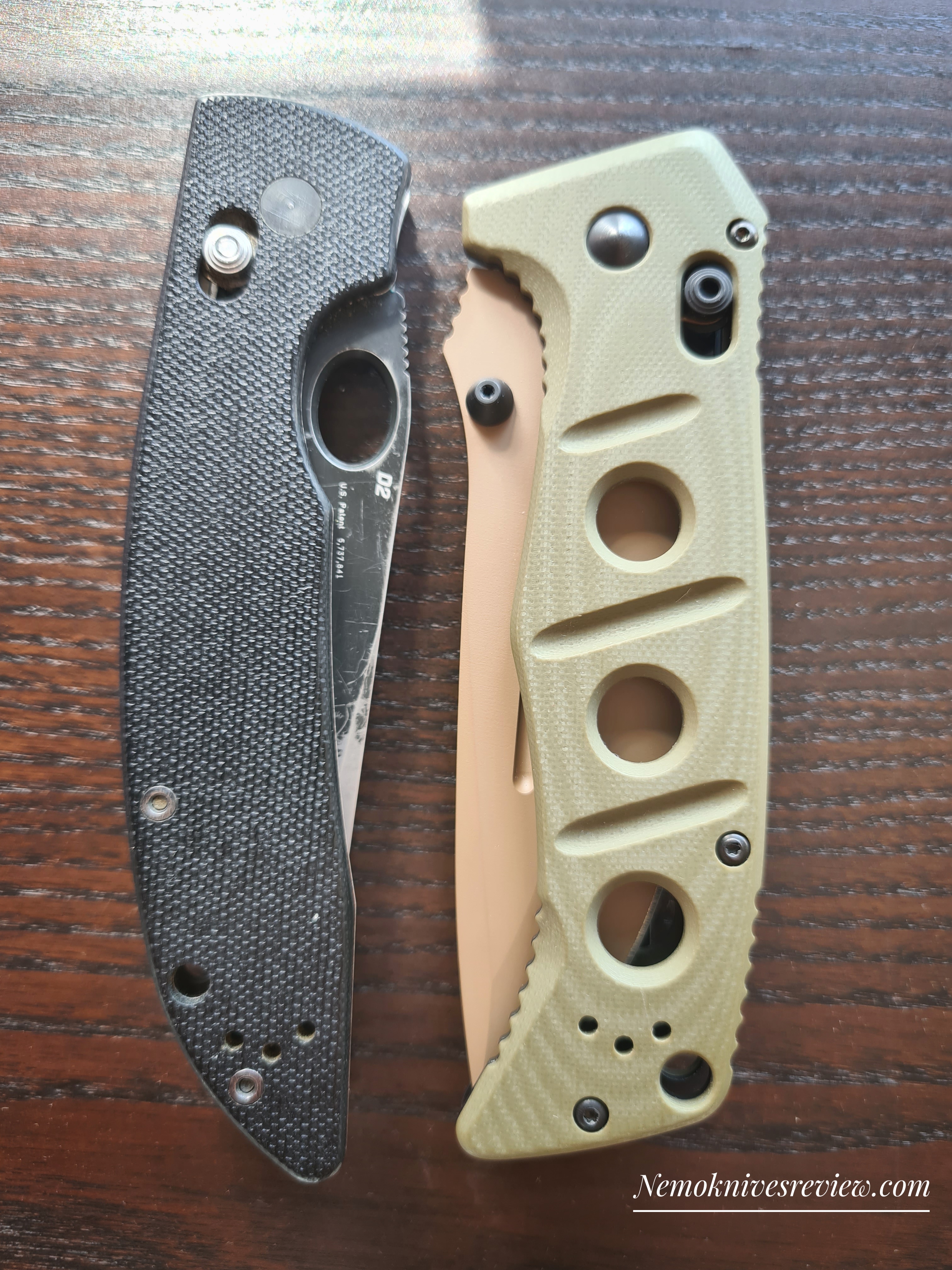
Actually for such a big knife the Adamas is not that big.
The first version was release in 2011 (you can see it here on Arizona Customs Knives) and was made of D2 the new version came ten years later and with its blade upgrade to CPM Cruwear.
This steel is known to be tough ! Less than CPM3V but with a better edge retention. The Cpm Cruwear Shaman was a big hit !
Here Benchmade has heat treated the CPM Cruwear to 63-65 HRC !
This is something I need to test as it is much harder than Spyderco HRC (61-62HRC) on their CPM Cruwear blades. (Sal tested his own blade at 61.1 HRC).

Cruwear Manix 2 – (63.2 – 63.7) HRC
Cruwear Military – 62.9 HRC
Cruwear Mule (re-release) – (62.1 -62.8) HRC
Cruwear Paramilitary 2 – (62 – 62.8) HRC
Cruwear Para 3 – 61.7 HRC
Cruwear Military – 61.1 HRC

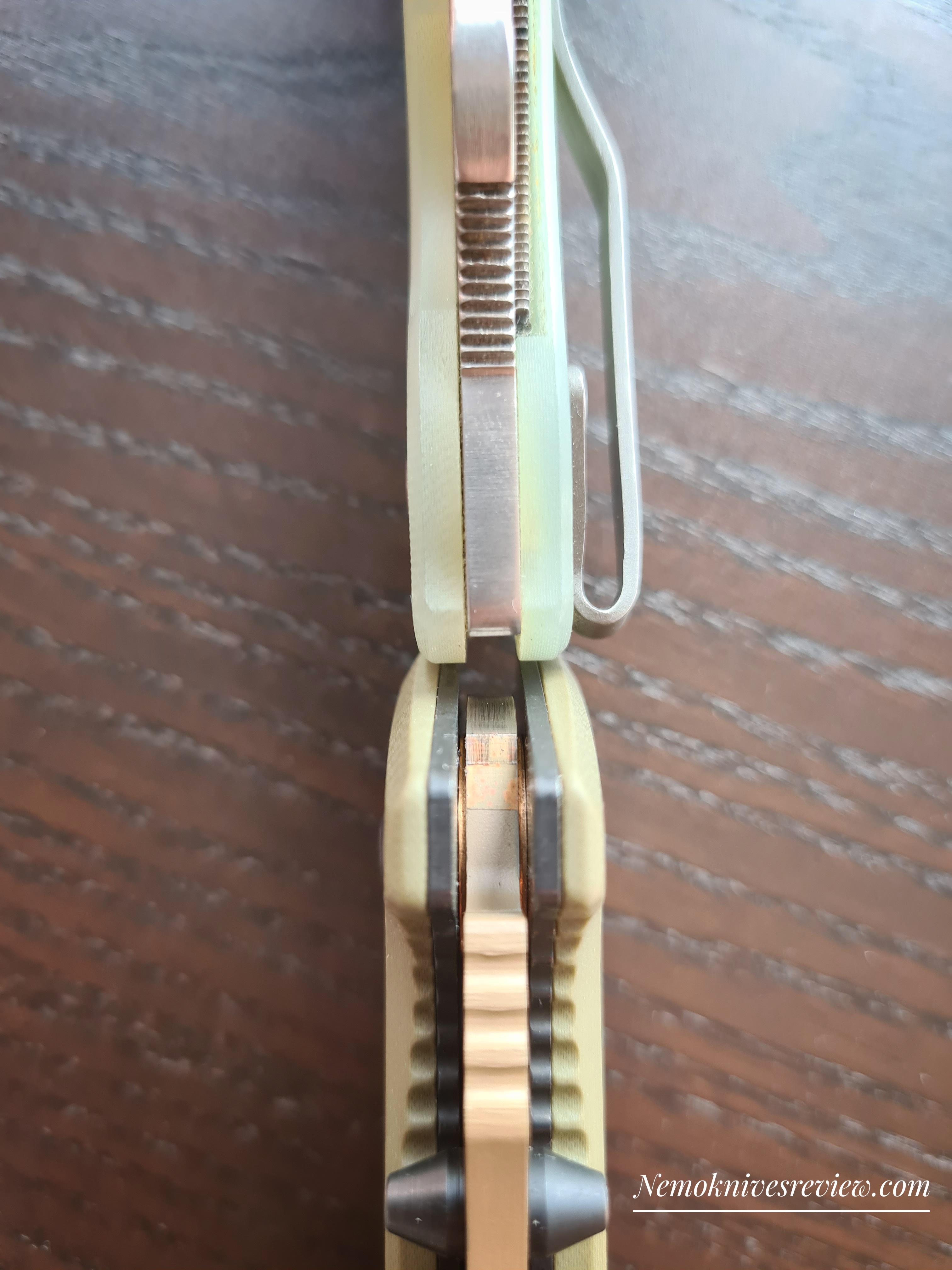
At first touch, the Adamas oozes quality and delicate attention to details. The Olive Drab G10 slabs are wonderfully tappered on both ends and the jimping is done perfectly in my book, not as aggressive as G10 Manix for example. It is palm friendly even when closed. Well done. The holes in the handle help my thumb to index the tool.. There is no hot spots. The handle is totally open and easy to clean and check for debris. It is created as a workhorse which can get dirty but still reliable.
Of course this is an expensive knife with a MRSP at $280.00 but you can see where your money has gone. It is manufactured with love.
The blade is perfectly centered on mine and there is zero blade play in any direction.
I love the Axis Lock concept since its very first Henry&Williams BM710 release.
I have never had any issue with its Omega Spring. It is easy to use with one finger when the SPyderco Cage Ball Bearing needs two finger to work. The Axis Lock makes any knife as fast as automatics. I have never had any play on mine and I have been using them since their very very first release.
I won’t do batonning with the lock engaged like some youtubers seems to do until lock failure. For record, you can do batoning with an opinel…
But engaged lock (any lock) does not like to schoked and a beating can damage an disengaged any lock even a butterfly. Knowing how to use tools in the right situation should be mandatory before doing really stupid things on video and if anyone want to use a folder for batonning some wood (stupid millennial fashion as far as I am concern) just do it with no lock engaged or learn how to bring a better tool…

But once deployed, with just a gentle flick of the wrist — axis lock with heavy blade are just extraordinary easy to deplay— the blade is shown in all its power. I understand why some youtubers would like to shove it in concrete or in bricks…. I’m not certain they will be able to peel an apple in public with it but for that kind of task a Mini Adamas has been released with the same blade thickness…. Oooh well I’m not certain the thick Mini Adamas is made for fruits either. F<or that there is another tool too: the Kapara
The Adamas offering a 0.14″ | 3.556mm thick blade, it is designed hardcore for hard chores for folders. How will it behave, that will be in our next article but that blade surely offers a lot of lateral strength.
For now it is just a very first glance.
All specs of the Adamas can be found on Benchmade here.
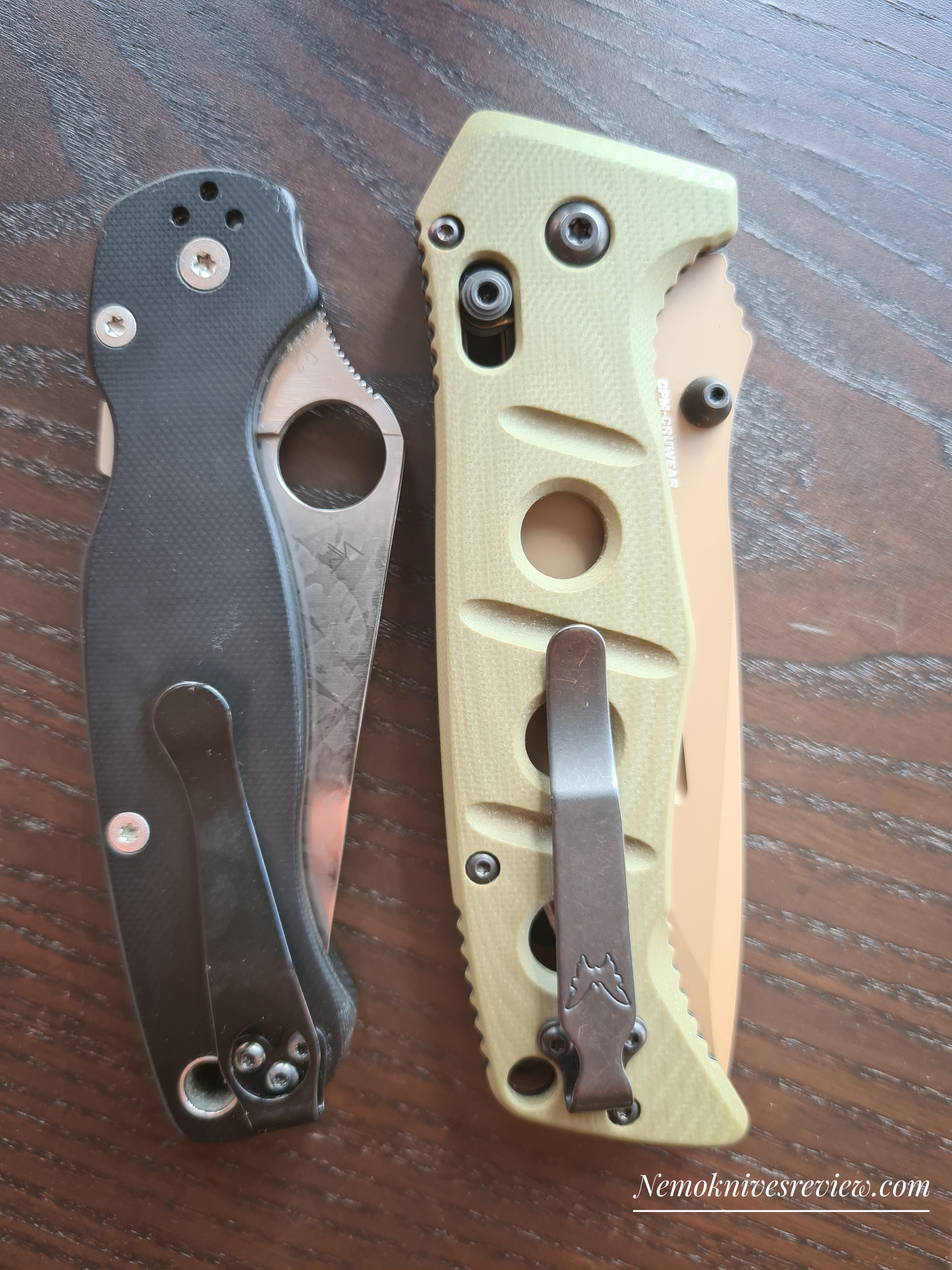
You can also notice on that picture its deep carry clip which can be a nice touch for such a big heavy folder. More on that later.
The action is smooth at the pivot but needs a little breaking at the lock release; nothing some nano oil can not fix.

This is a very beautiful folder which is very well balanced, its sweet point being just under the index finger when hold in hammer grip.
It is alive in my hands.
The axis lock makes it ambidextrous and you can notice on that picture the 3 points for adapting that clip or another three screw clip (not deep carry) if needed on both sides of the handle.

The blade handle ratio is almost to 1 with the Adamas compared to the Military C36 which is known for its long handle.
Of course the Adamas came very sharp out of the box, but not as sharp as I want. The blade is protected with cerakote coating Flat Earth colored which got excellent reputation in terms of tough protecting the CPM Cruwear from rusting. Cruwear can get a patina but it is not easy.
Here Benchmade and Shane Sibert have chosen to propose a stealthy look for the soldiers which need no blade reflection under the sun too.

It is also sold with a very nice sheath offering many carry options for soldiers and hunters alike.
The deep carry clip is perfect in term of retention and ease to retrieve the big and heavy knife.
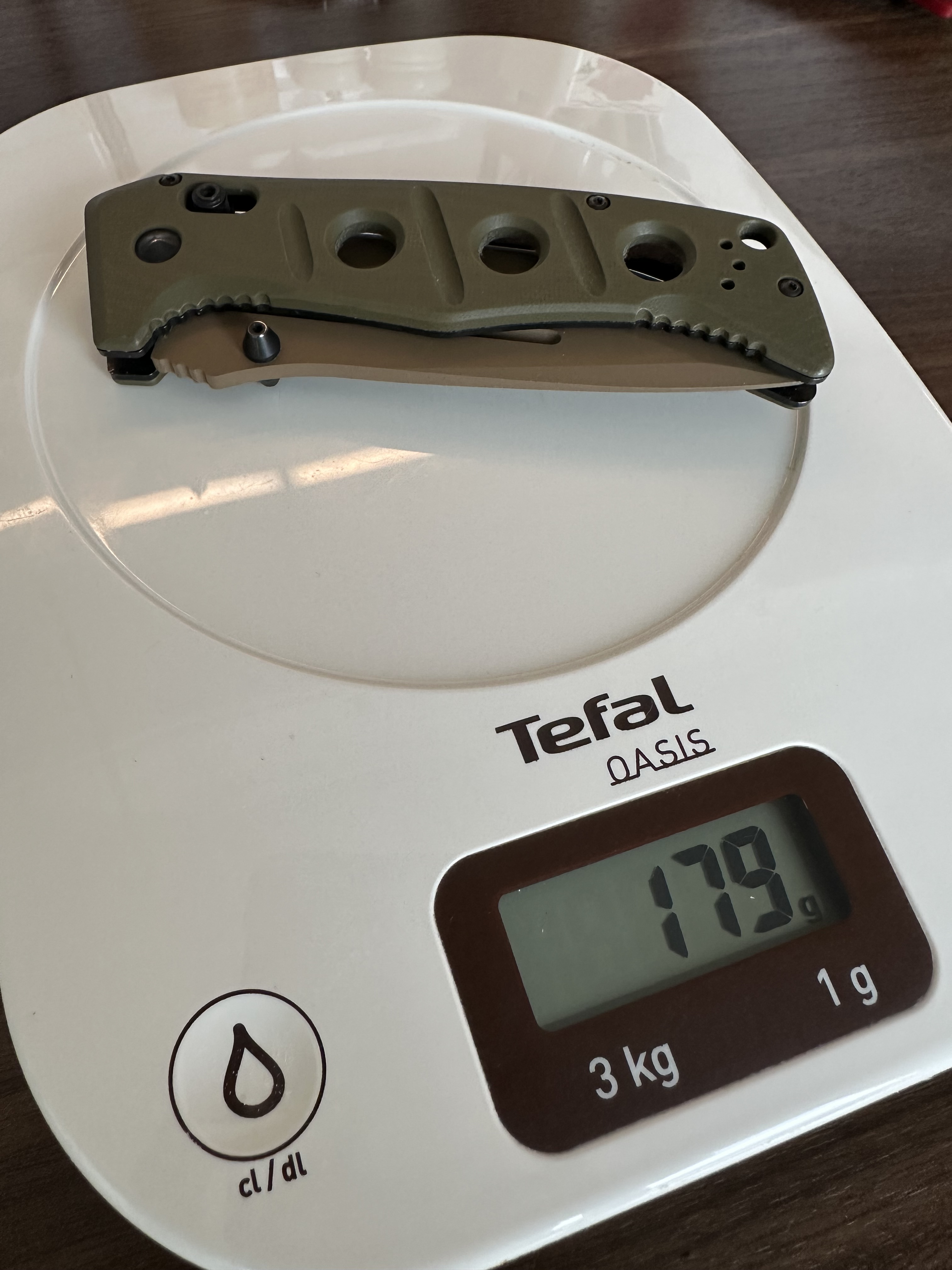
Oh it is 183 grams (5,45 oz) which is really heavy. The liners are stainless steel not titanium. This is Heavy Metal !

As you can notice the Adamas is much thicker than the C35 Military and much heavier too. Sal Glesser wanted his military to be as light as possible as a soldier got already many heavy things to carry.
Benchmade has taken another direction. The Adamas is beefierand thicker. Actually it can also been more confortable for long usage. We will see…

Another beefy released was the Shaman which almost has the same handle length. The Adamas provides a lot of edge.

Here is my good old AFCK Axis. It was used with a lot of love as you can notice. Zero issue with the lock BTW.

Now it is time to give some work to that Adamas designed to “deliver unrivaled performance throughout hard-use applications”. The next step will involve certainly some sharpening and reprofiling…
More to come soon…. But for now on, it is a knife which makes me grin when I open and close it. Kuddos to Benchmade and Shane Sibert for bringing this second gen of the mighty Adamas.

Spyderco PARA 3 G-10 Black on Black C223GBK — The Black Panther Cub

20180305_100418-01.jpeg

This is my first Para 3 and also my first black coated Spyderco blade.
According to Spyderco:

“For tactical end users who are concerned about light discipline or those who just prefer the look of a black blade, the Para 3 is now available with a tough Diamond Like Carbon (DLC) blade coating. This low-profile coating is permanently bonded to the premium CPM® S30V® stainless steel blade…”

Cool I do really love DLC as it’s really scratch resistant. The primary reason for blade coatings is to reduce the reflective properties of the steel. Shiny things draw the wrong kind of attention and in a military environment, can tend to get people shot. However, like anything else intended to be used in a military environment, coated blades are not immune to wearing off but DLC is really strong.

I also specifically love DLC for adding corrosion resistance. The area which normally rusts on an EDC is in the pivot area. No worries about that with a DLC coated blade!

The new Golden Co. factory is bringing some of the best quality in manufacturing to date. My Para3 is absolutely flawless: perfectly centered, perfect smooth action… I had noticed that rise in quality on my last sprint run Para2 in 52100 too. Now Golden is as good as Taichung in quality control – if not better. So kuddos Colorado! Also Eric told us during the last Minimeet that they have just hired two new engineers who will make a real difference. Spyderco has developed a speed training of their own engineers as no school had prepared them for the knife industry.

20180305_100217-01.jpeg

Like the Paramillie 2 was a son of the Millie, the Para 3 is really Millie’s grandson. Same “cockpit”, stout hardchore 3 inches blade, smooth Compression Lock.

20180305_100254-01.jpeg

My all black version is very discreet and the the short blade makes it even less threatening. A black “commando” feel on such a short folder is almost like an tribute to military blades. On a short knife like this baby millie the “cute” factor is very strong.

20180305_100349-01.jpeg


My hand fits perfectly on that handle. That infact was a big question mark prior to holding the Para 3. You feel this short version of the Millie is ready for any task.


The DLC coating is absolutely stunning. I have sanded the G10 and put a great deal of care so to not scratch the steel hardware.

20180305_140401.jpg

Here after some plastic cutting which scratched some of my other blades, there were no marks on the diamond hard coating. Let see how it will age.


At first I had mounted the clip for tip down carry (left pic) and experienced great spyderdrops. The Para3 is so smooth in its action, a middle finger is sufficient for opening.
As I got the opportunity to get a titanium clip from Massdrop (right pic), after transformation it’s now a tip up solution and a middle finger opening work best for me. After all, a black knife, even of that size, needs to be as discreet as possible.

20180305_115442-2.jpeg

Some thinning of the edge, from DC4 diamonds to white ceramic until leather stropping.

20180306_110853.jpg

It worked great as I was not able to scratch the DLC coating.

20180306_110508.jpg

I got much better performances on pushcuts into the thick plastic of this coke bottle butt.

Of course, I had soon christianized the knife with a fumble… Drawing blood means luck.

20180306_110929.jpg


The Maxamet PARA3 Review is here.

edited by Pascal – 14 march 2018.