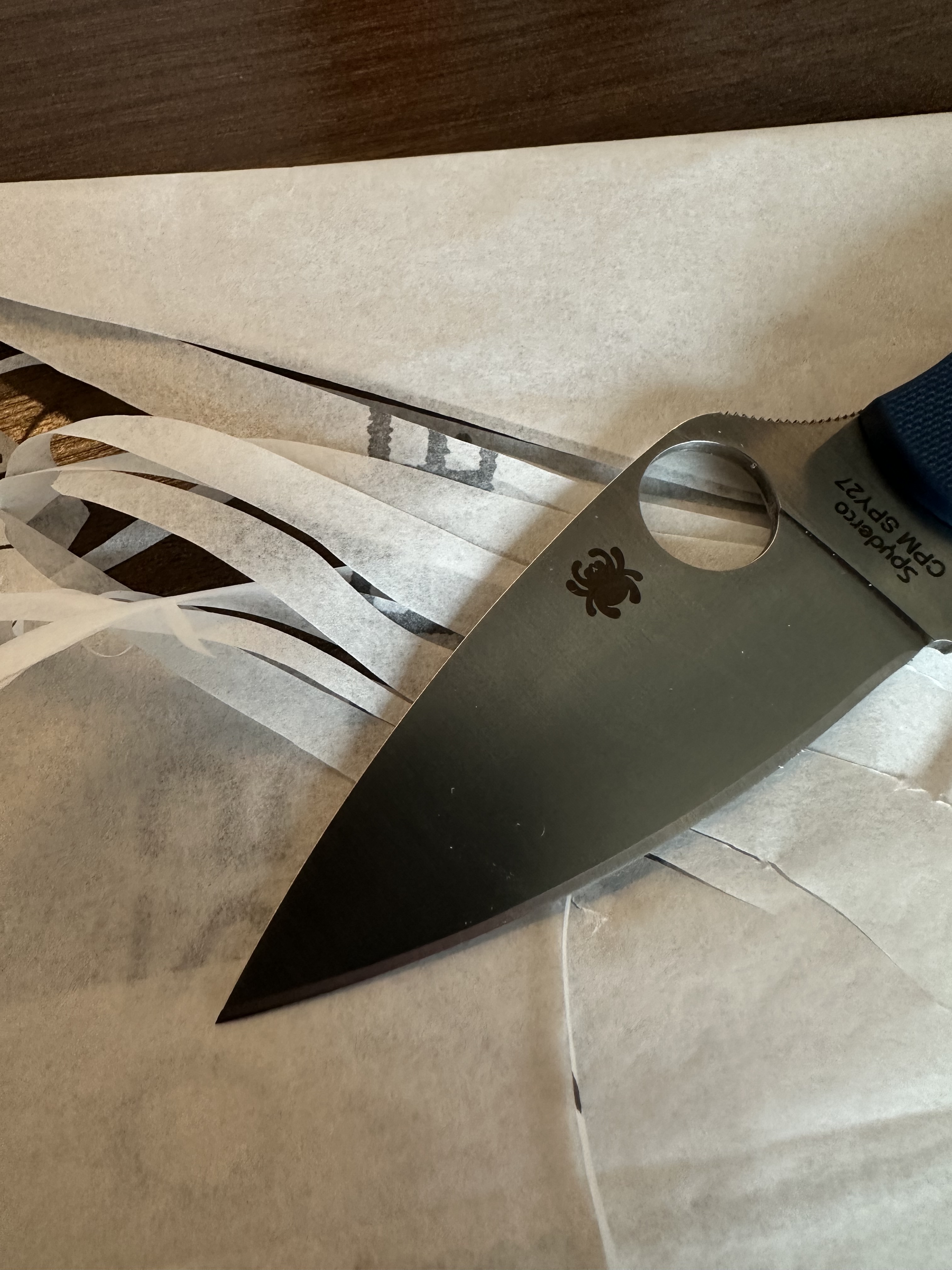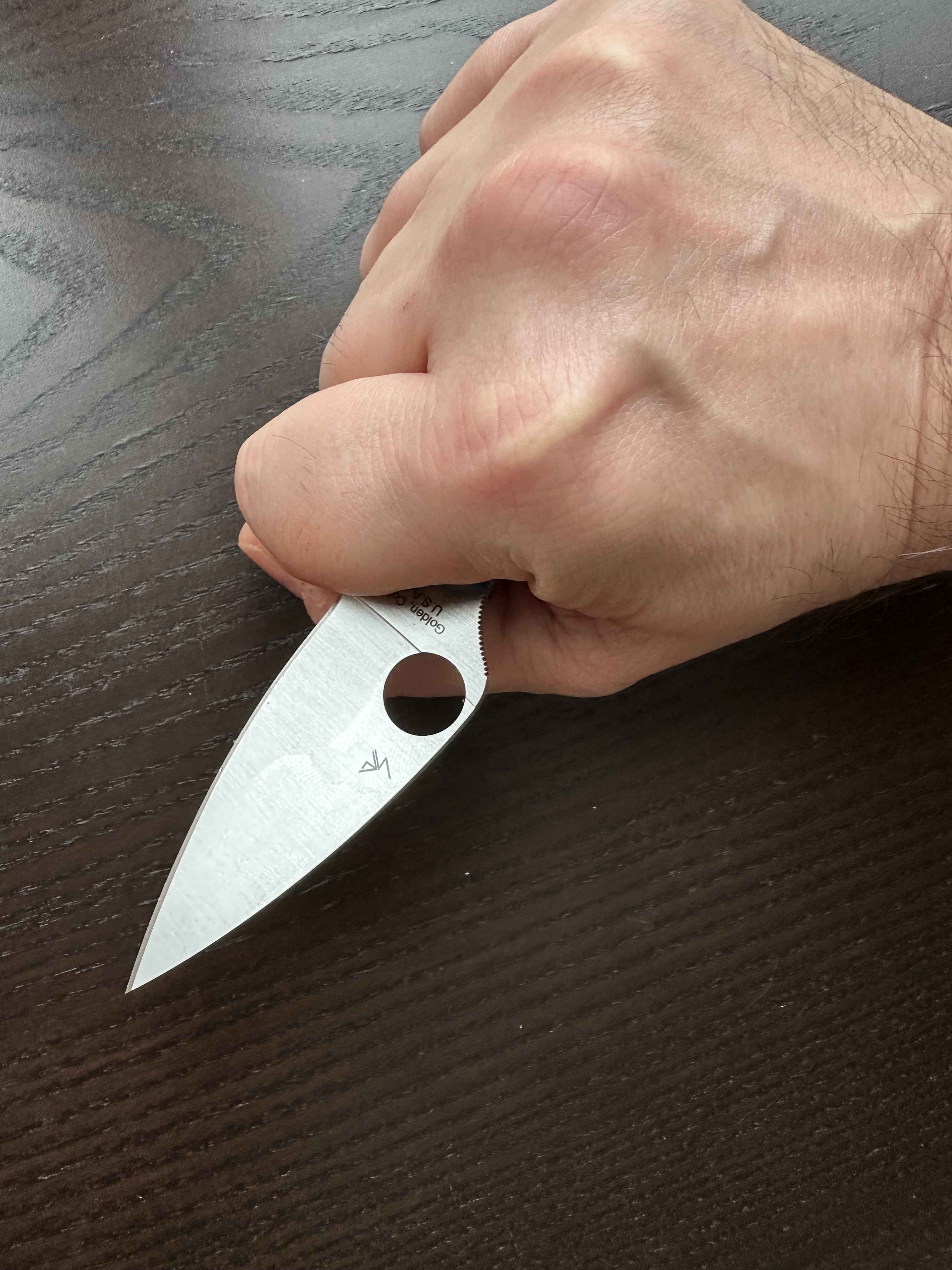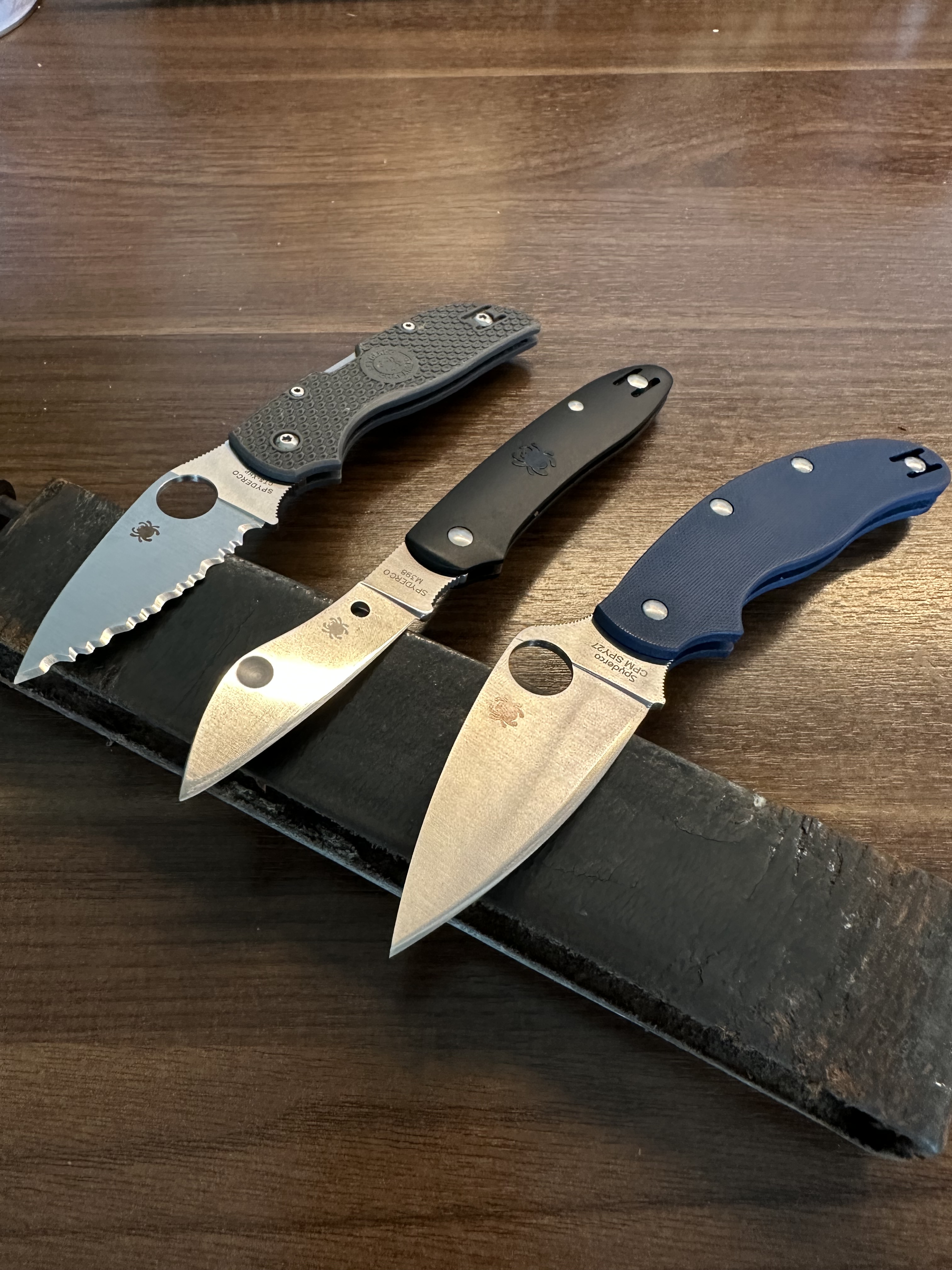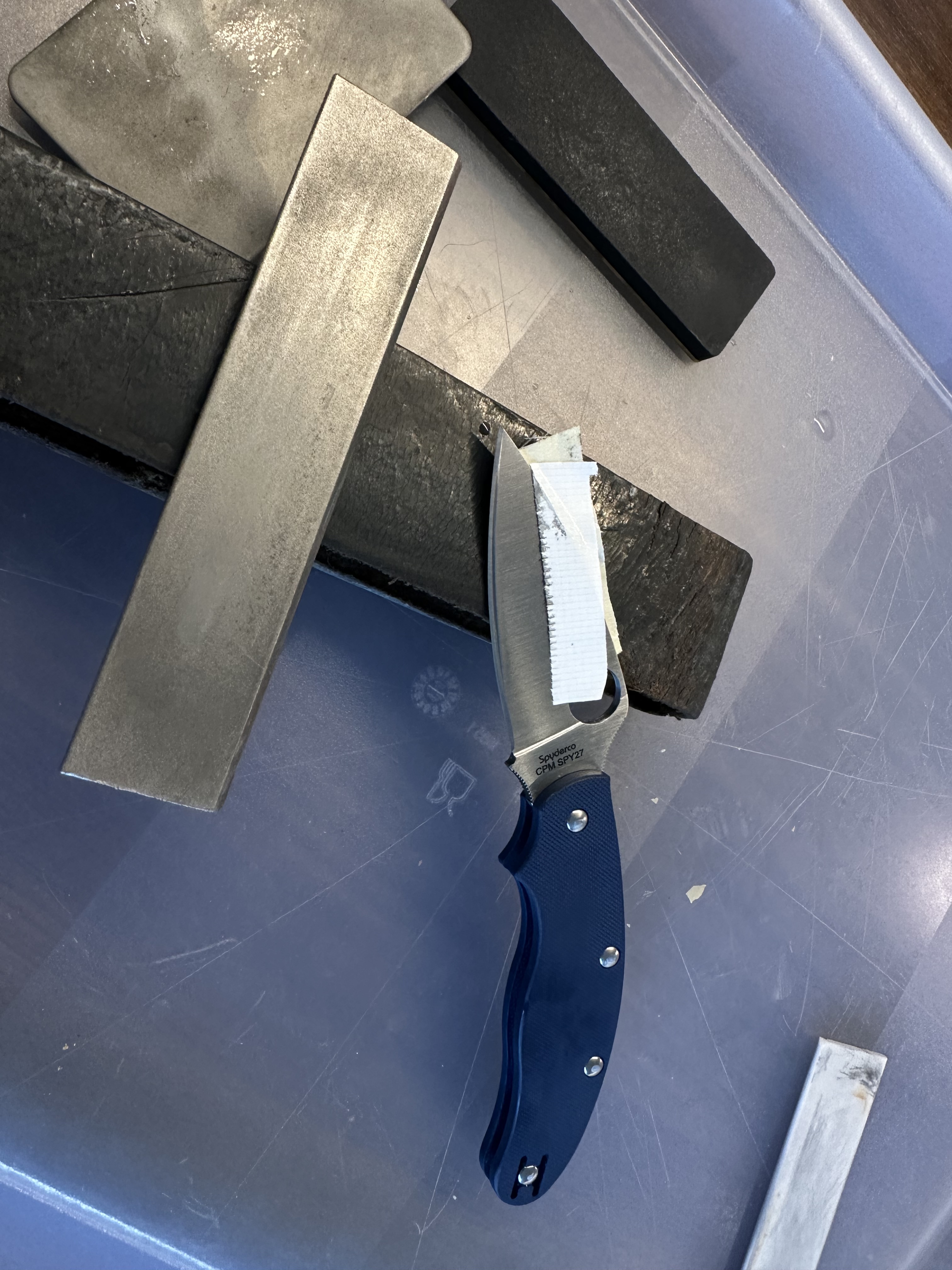
Tag Archives: CPM-SPY27

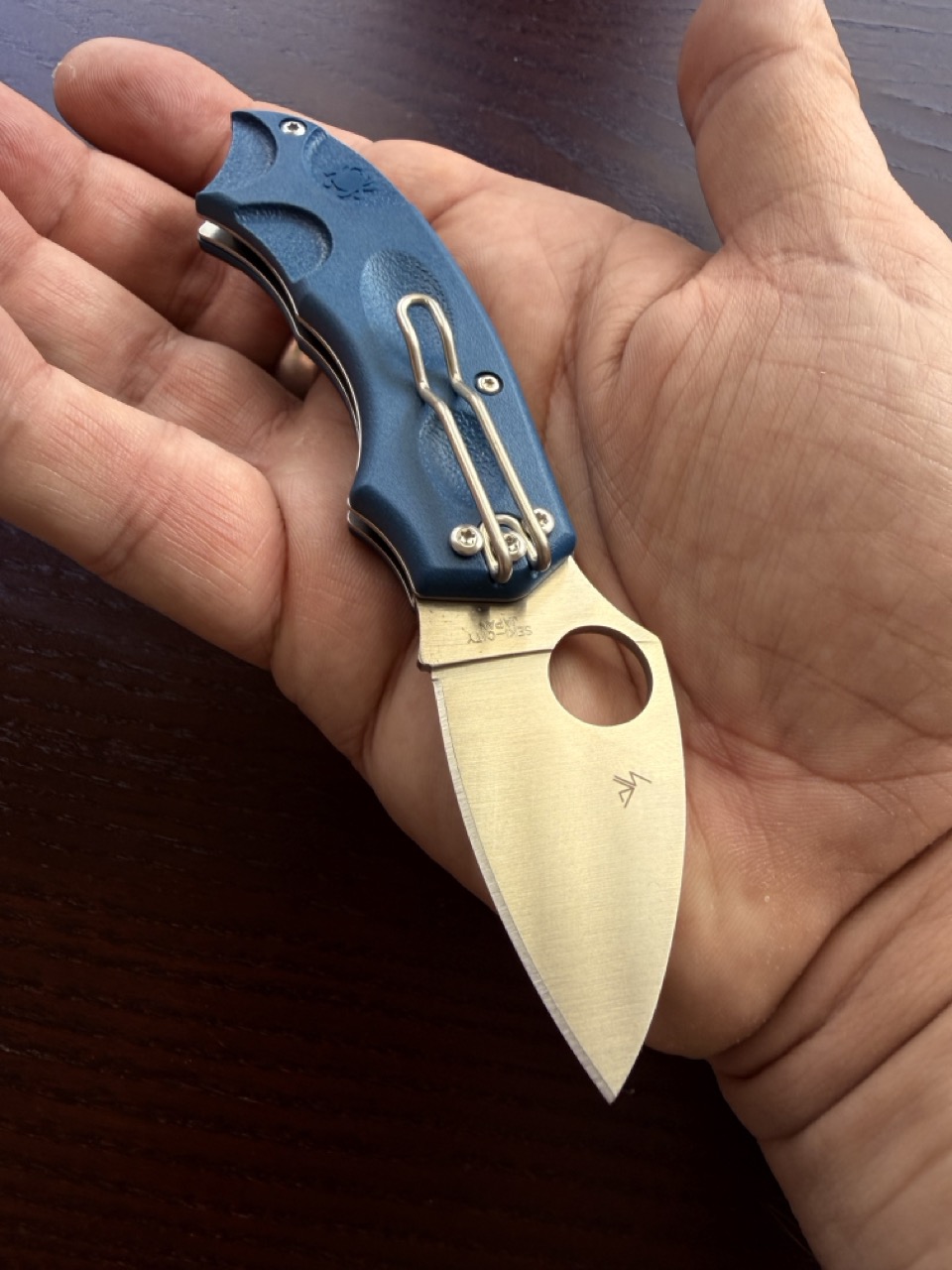
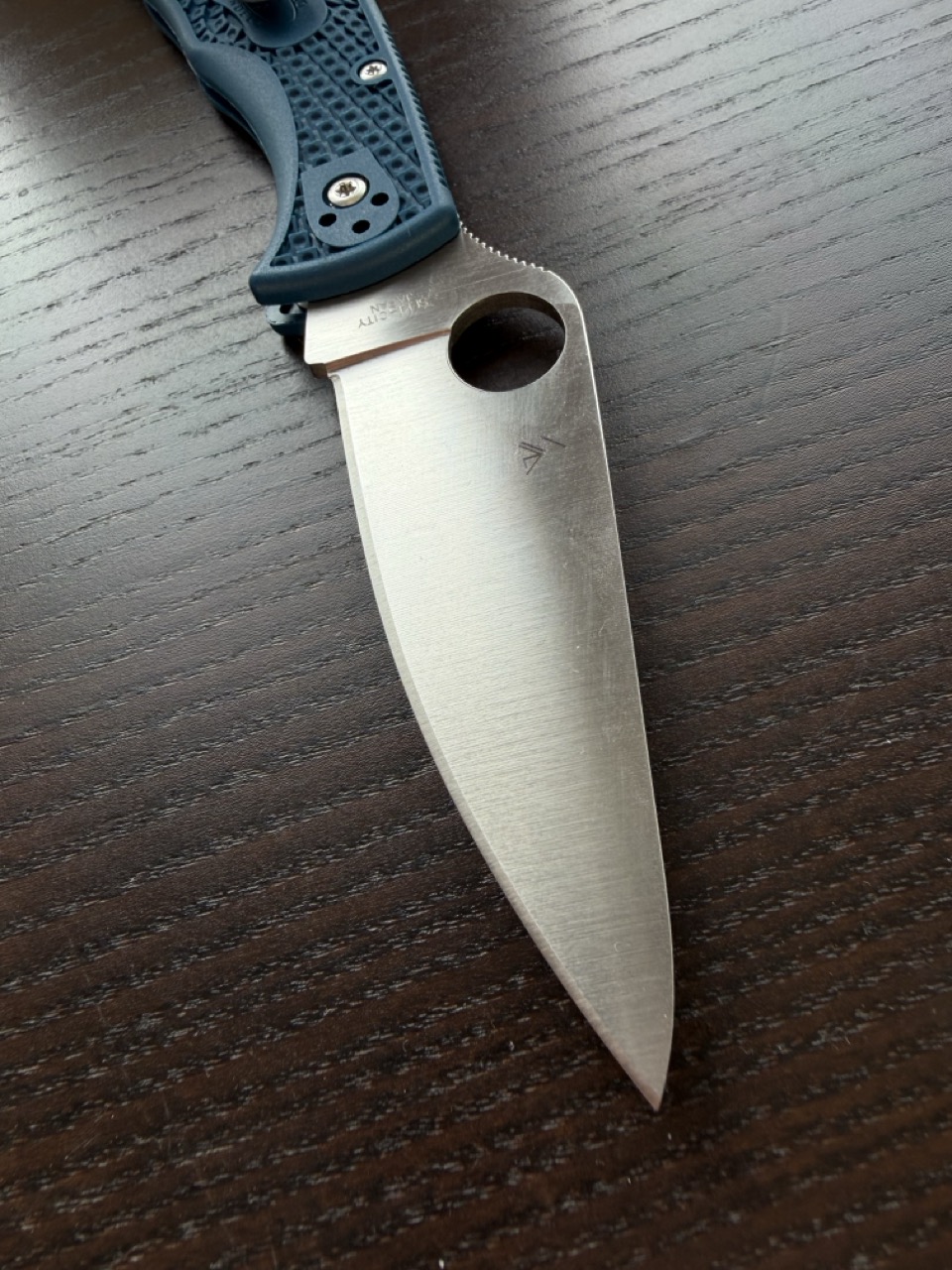
Spyderco Meerkat CPM-SPY27 Sprint Run – The Return of the Phantom’s Menace.


Ah, the Meerkat and its magical Phantom Lock… Ah ah ah!
This one takes me straight back to 2002. Back to the Future, Spyderco style.
The Meerkat is one of those knives that seems to have been designed for a single purpose: making knife enthusiasts scratch their heads.
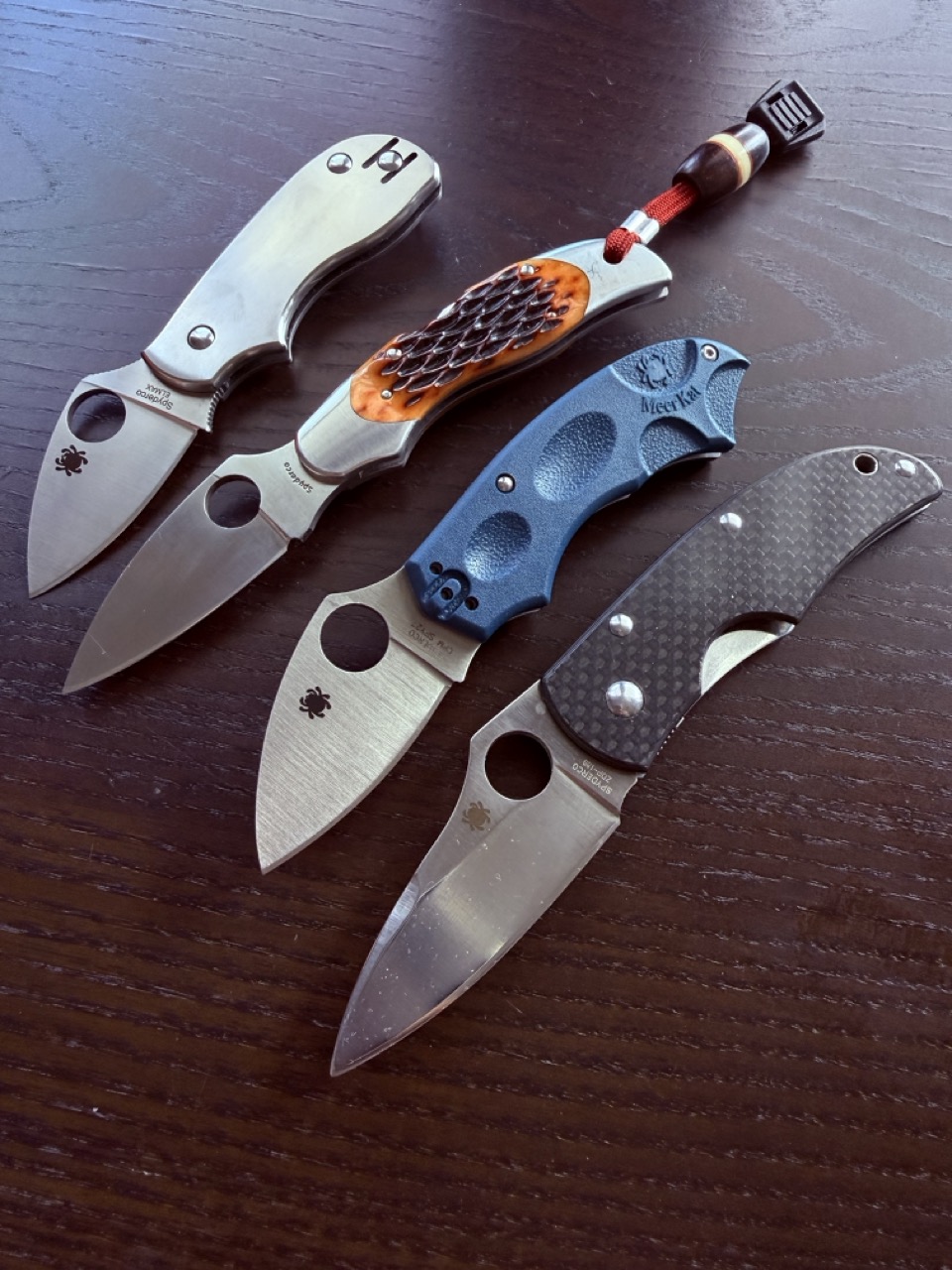
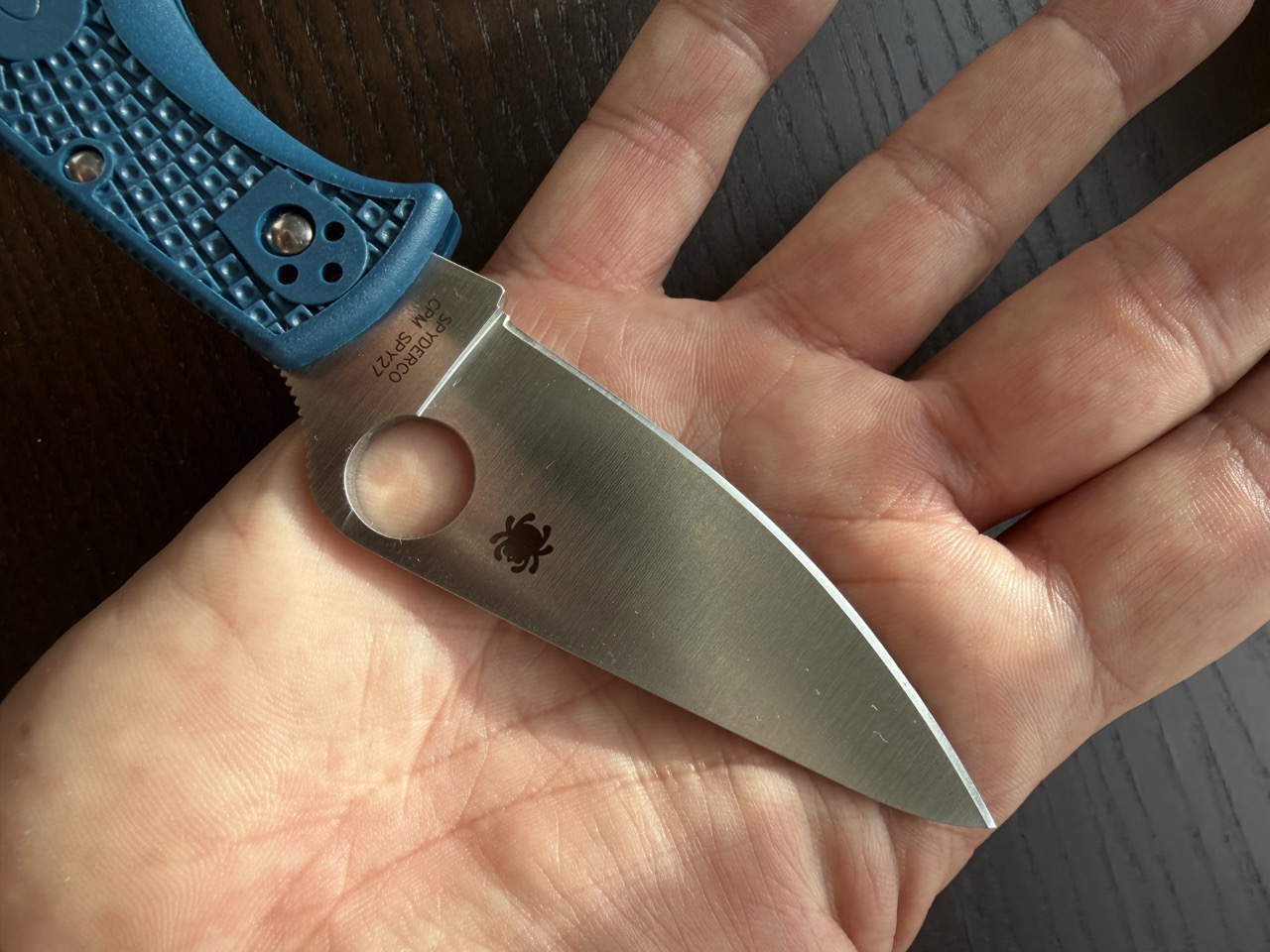
First impression? This is a very small knife. Even compared to the Chaparral.
The Chaparral owes much of its DNA to the C62 Navigator. It was a compact lockback with the same short blade (saber hollow grind) optimized for travel and office-friendly carry. It also carries forward the spirit of the C09 CoPilot, continuing Spyderco’s long tradition of creating small knives that cut far bigger than their dimensions would suggest.
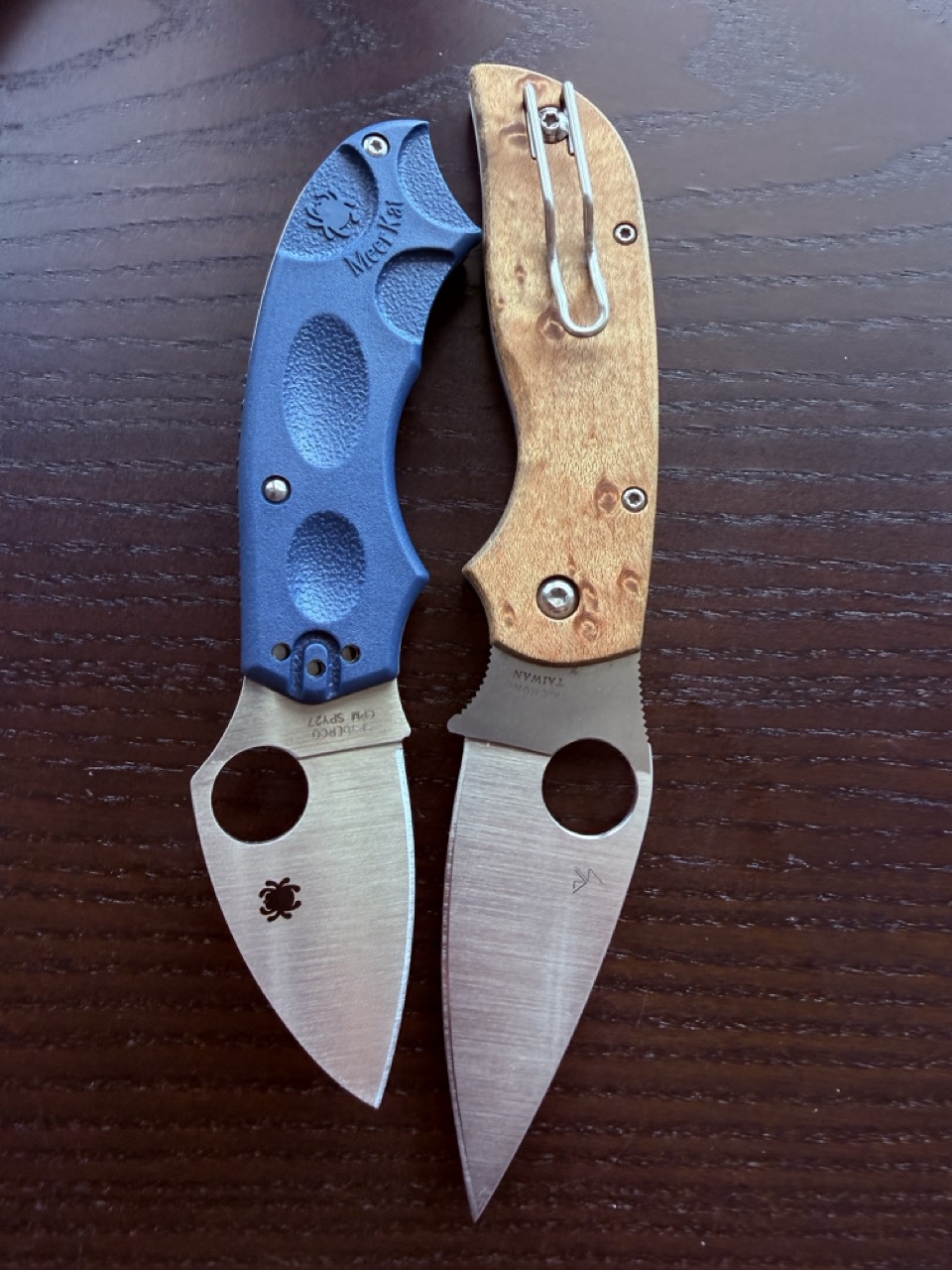
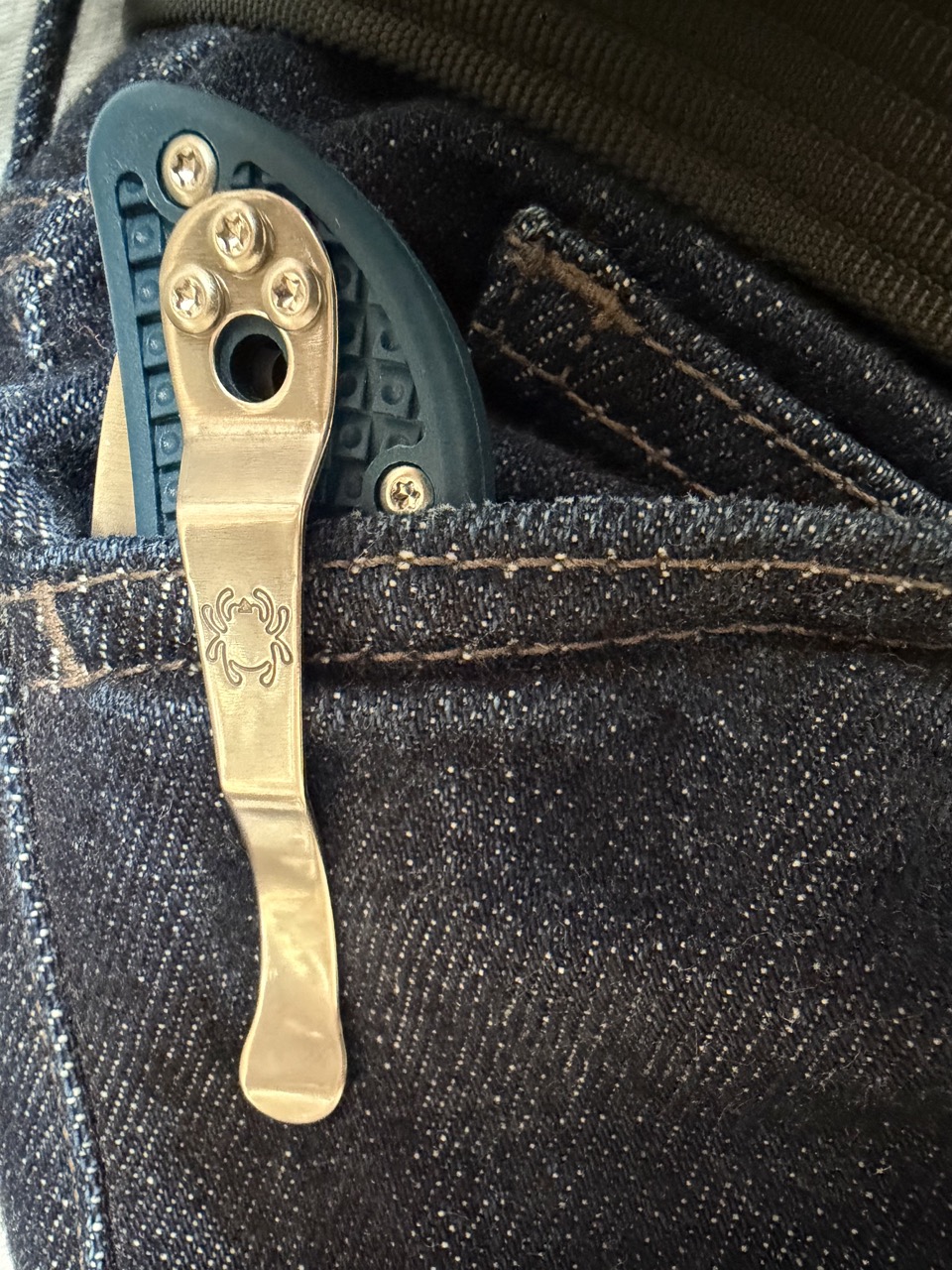
Naturally, I slipped the Meerkat into my fifth pocket, where it fits absolutely perfectly. In fact, it feels like it was designed for that role.
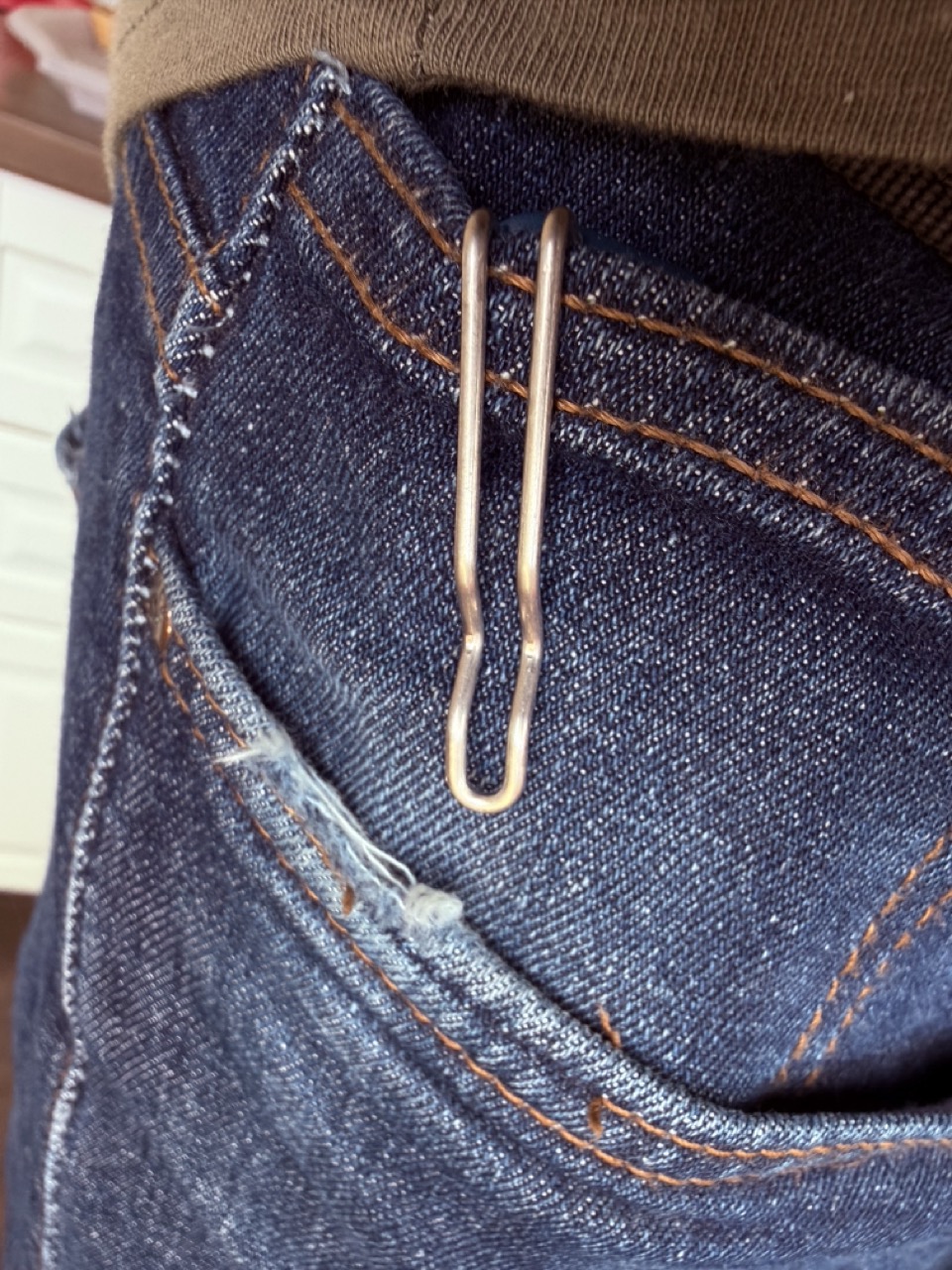
The second thing you notice is that this little oddball is set up for tip-down carry, just like the mighty Spyderco Military. And yes, you can still perform the classic Spyderco Drop without any issue ! 🙂
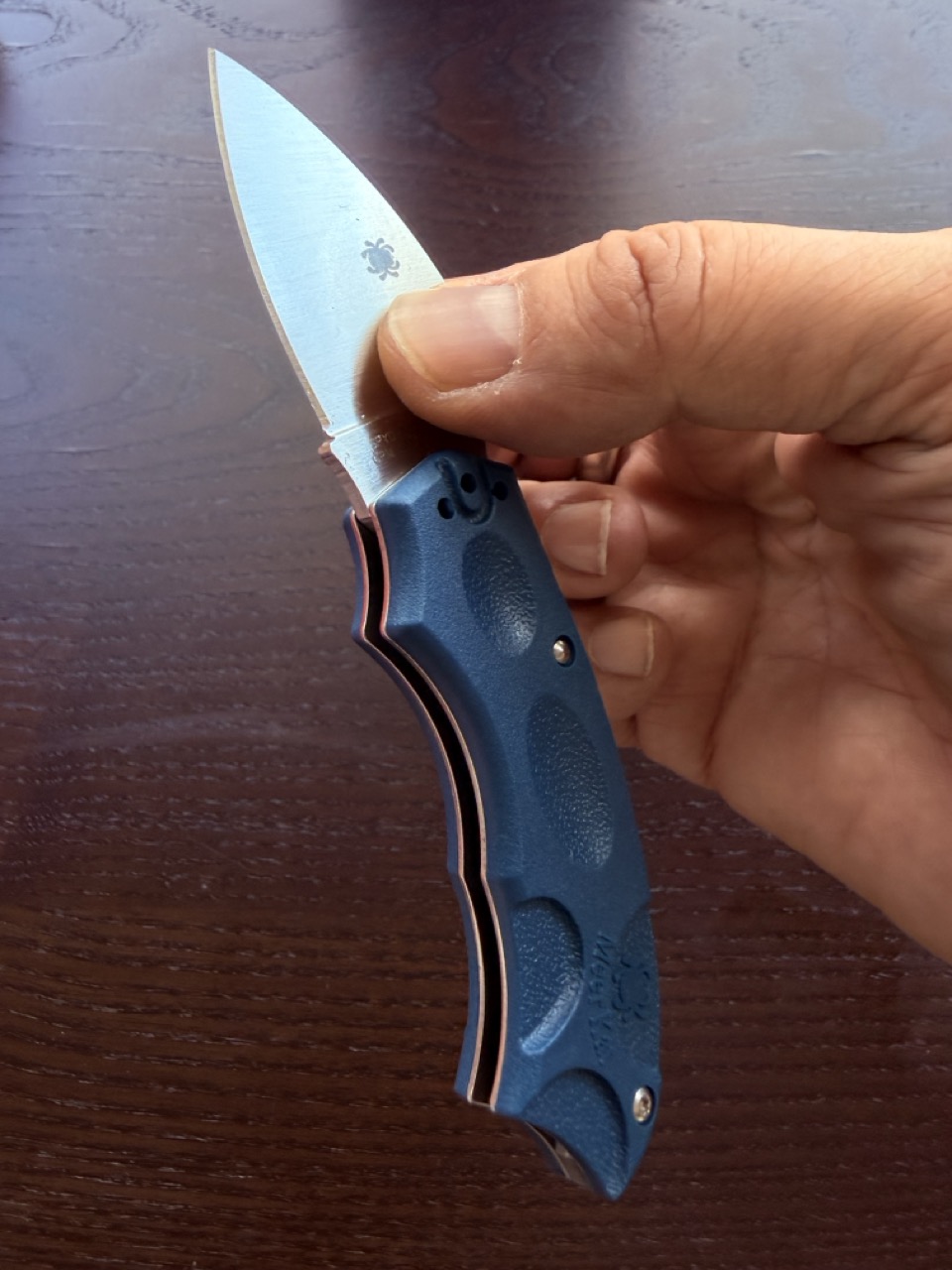
In hand, the Meerkat feels like a stout little worker. The action is firm, the lock-up is rock solid, and despite its compact size, there is nothing delicate about it. Everything feels purposeful and surprisingly robust.

Then comes the Phantom Lock. The Ghost in the Shell. 😉
I have just found that video made by Wouter (Spydercollector) 16 years ago !

Just hand the knife to another knife enthusiast and watch the show begin. They open it. They admire it.
Then they try to close it.

Confusion follows.
That’s when you starts smiling. 🙂
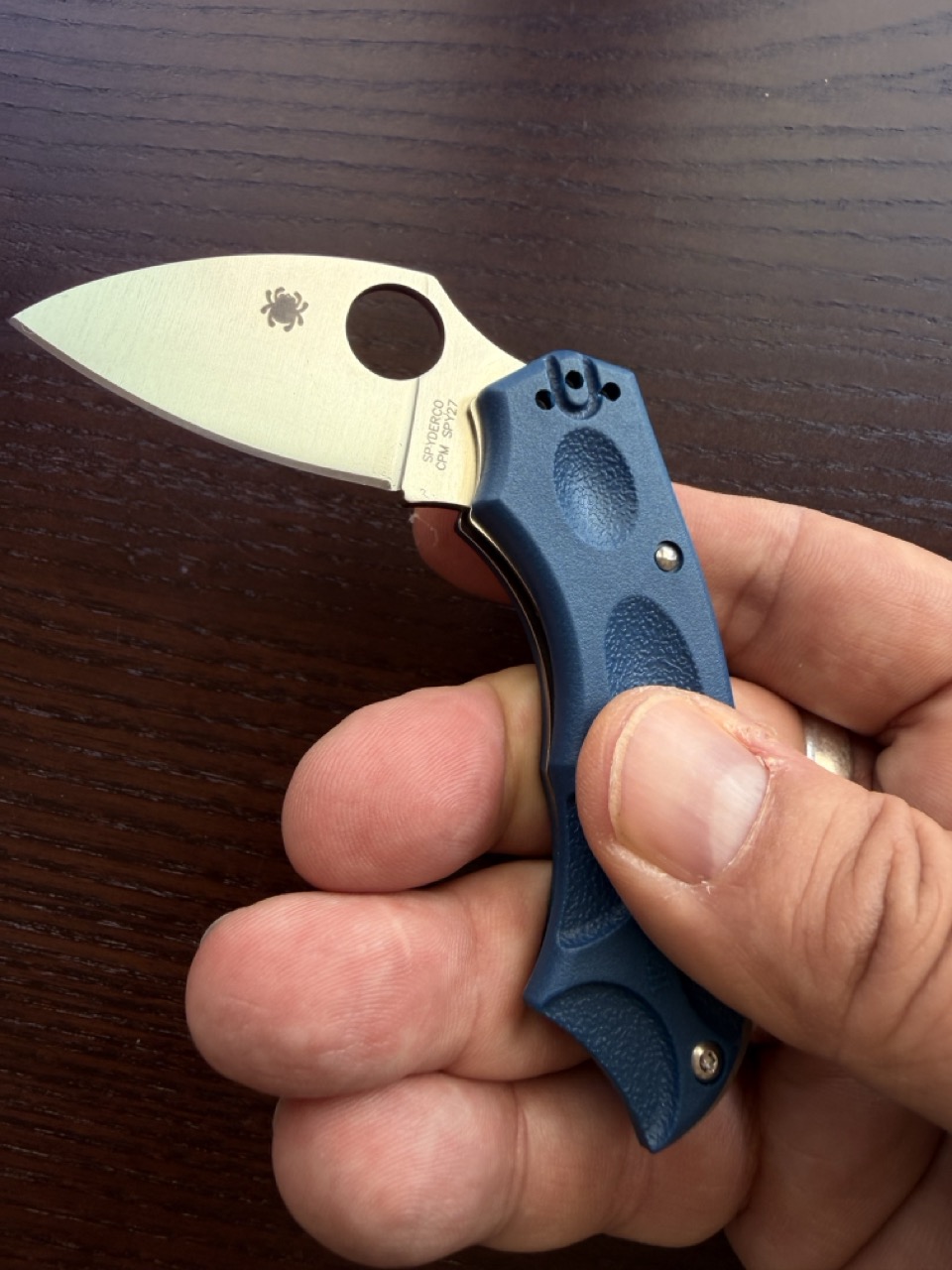
More than twenty years later, the Phantom Lock remains one of the cleverest and most entertaining locking mechanisms Spyderco has ever produced. It’s practical, it’s secure, and above all, it’s pure Spyderco: innovative, unconventional, and just a little bit crazy. 😄
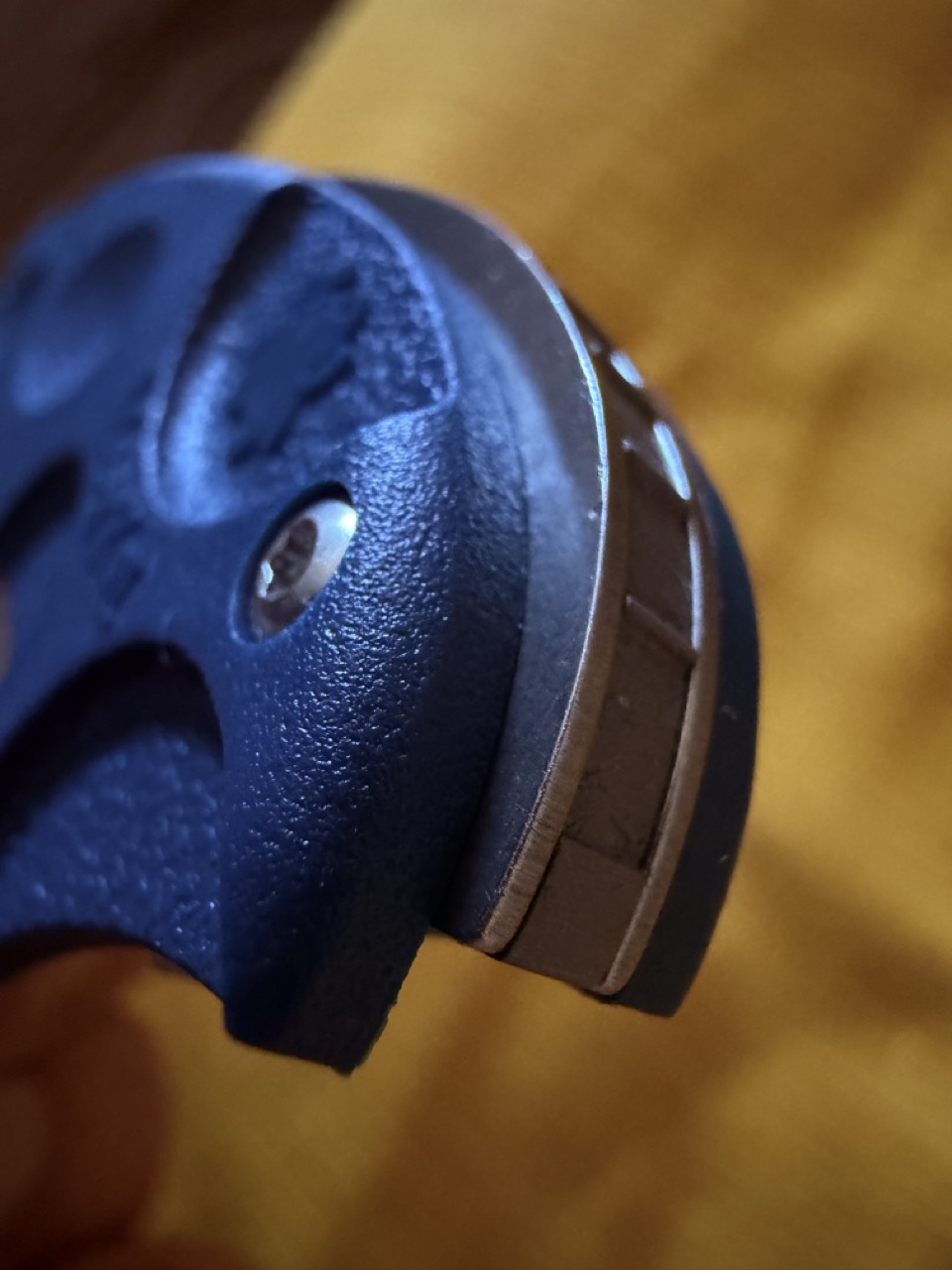
Sliding the scale to unlock the blade.

Yep, some knives are designed to sell with some tactical bells and whistles.
Others are designed to impress for their cleverness.
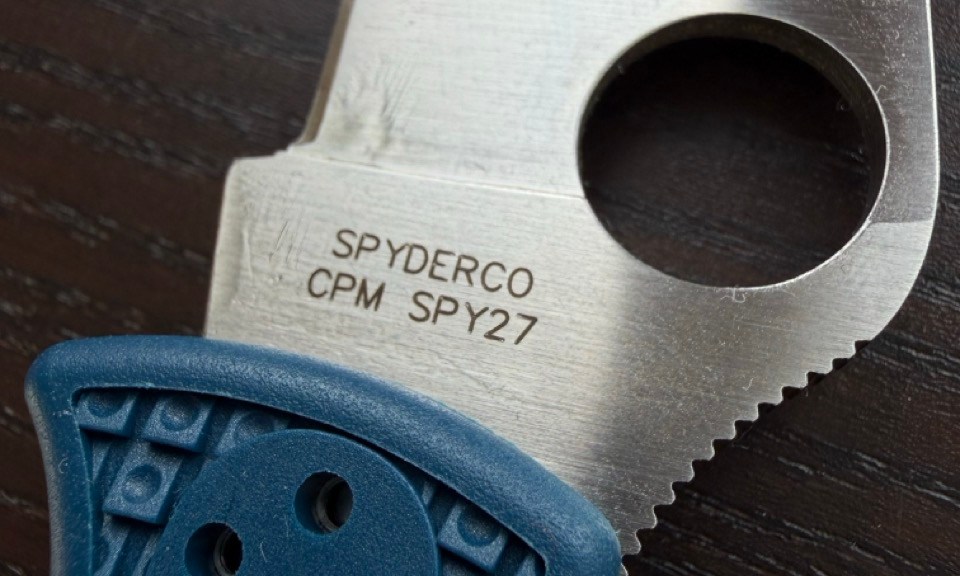
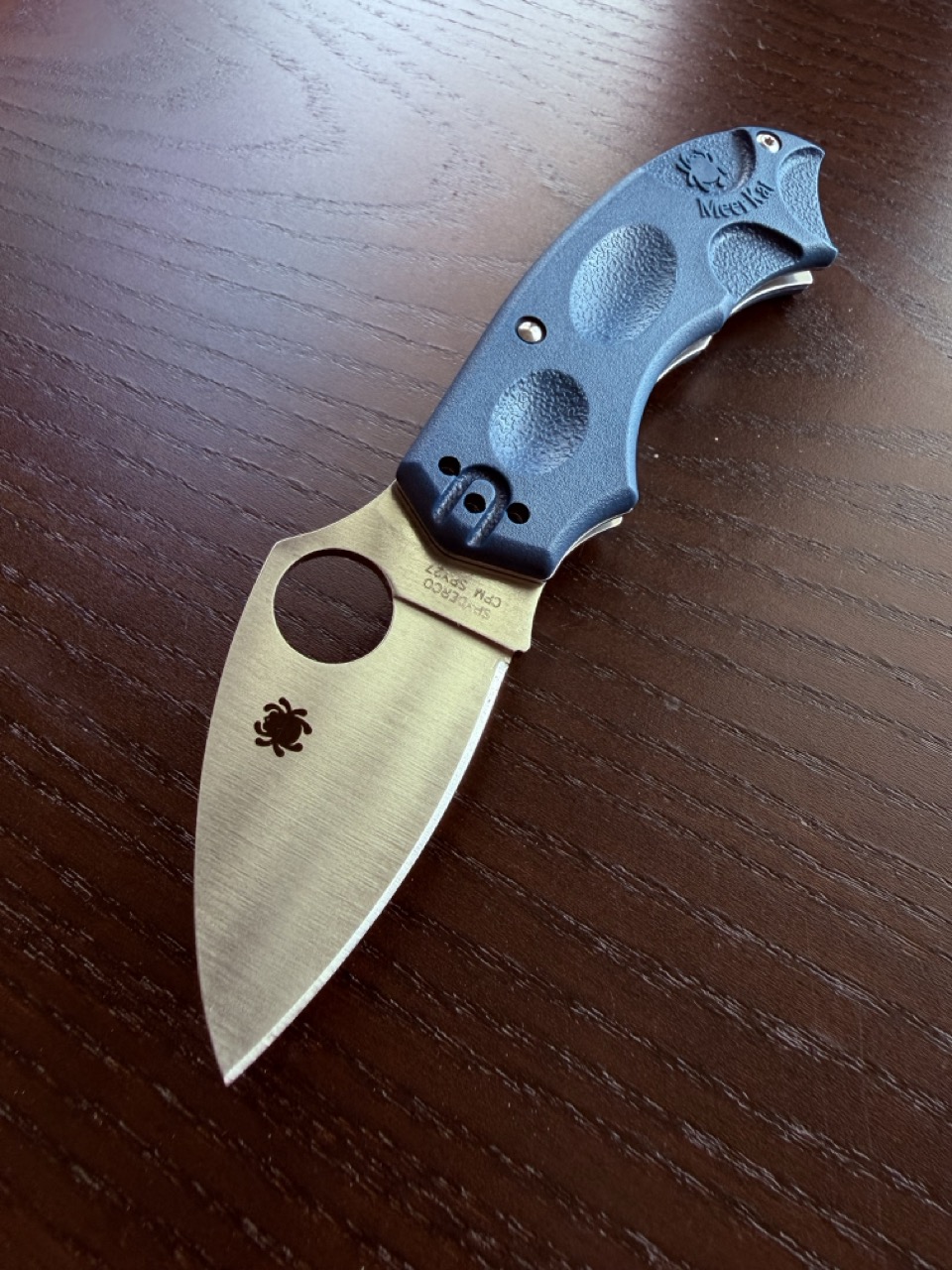
The Meerkat never became a mainstream Spyderco classic. It was too small for tactical enthusiasts, too weird for traditionalists, and too clever for its own good. Yet more than twenty years later, Spyderco decided to bring it back as a Sprint Run equipped with CPM-SPY27 steel and cobalt blue FRN scales.
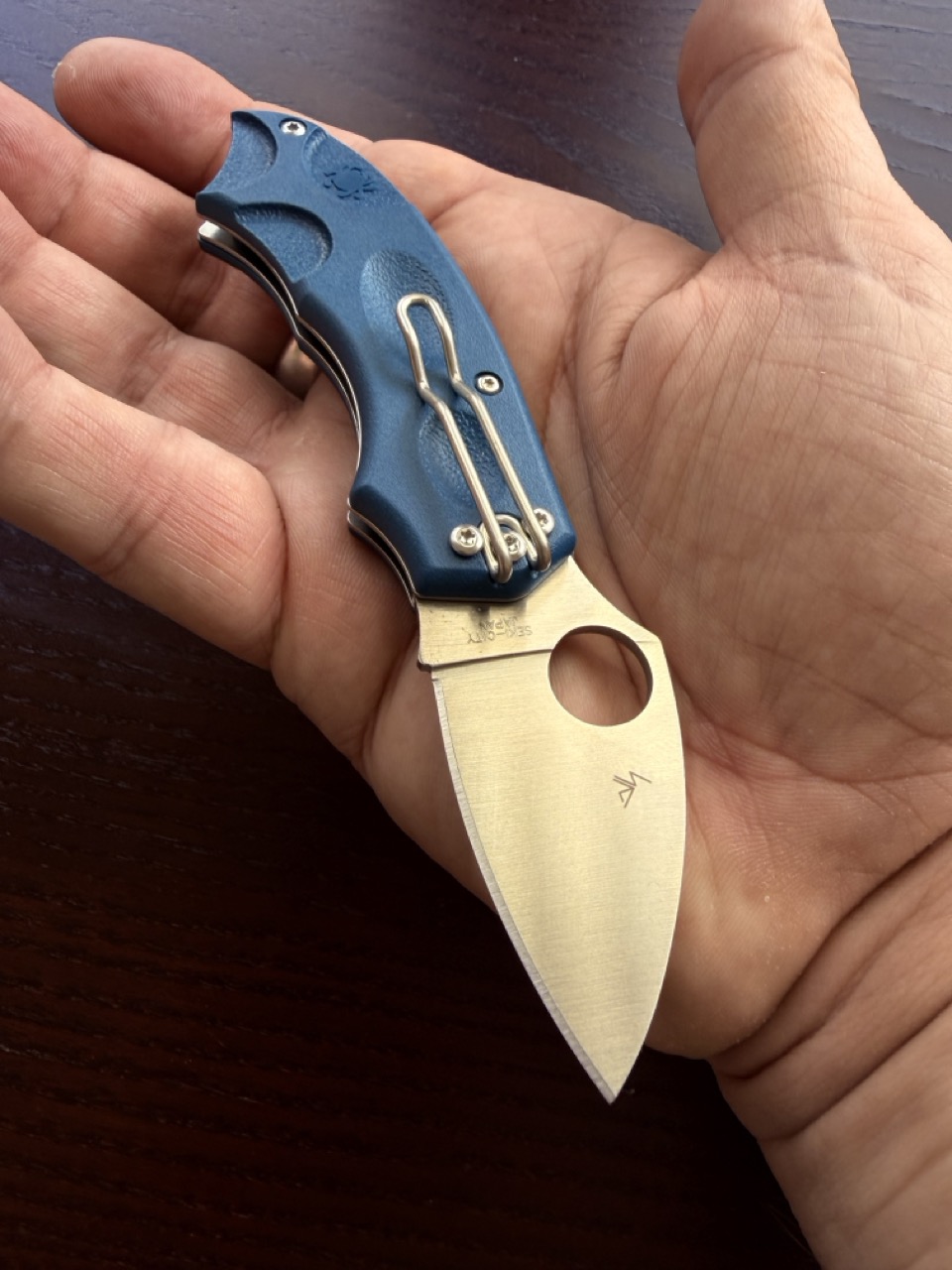
And honestly?
I’m so glad they did !
Because the Meerkat was a knife from the future, designed twenty years ago.

And it is cute !
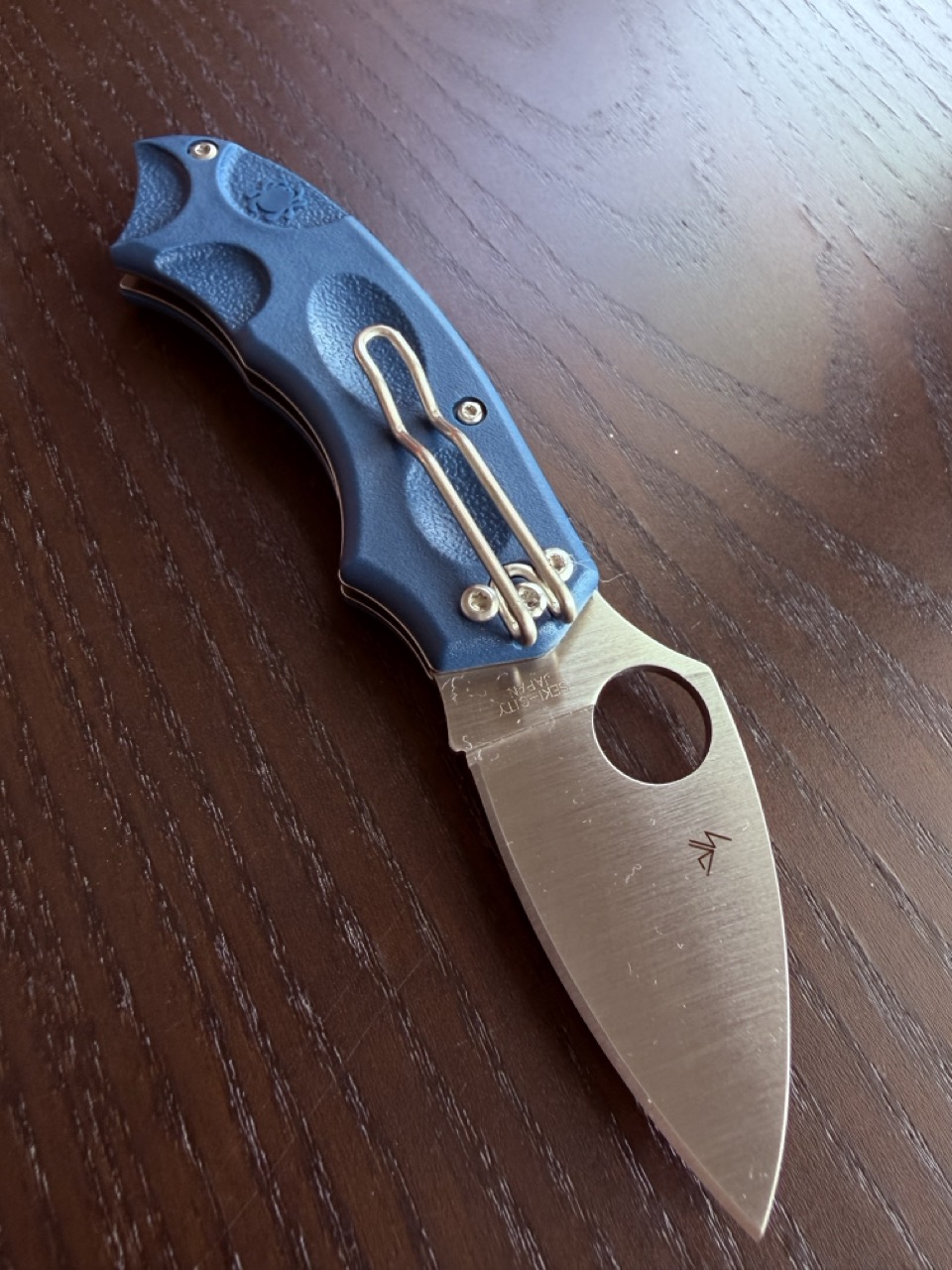
No, really, it remains one of the most futuristic designs ever released by Spyderco.
At first glance, it looks like a tiny leaf-shaped folder with a humpback silhouette and a blade barely longer than your thumb.
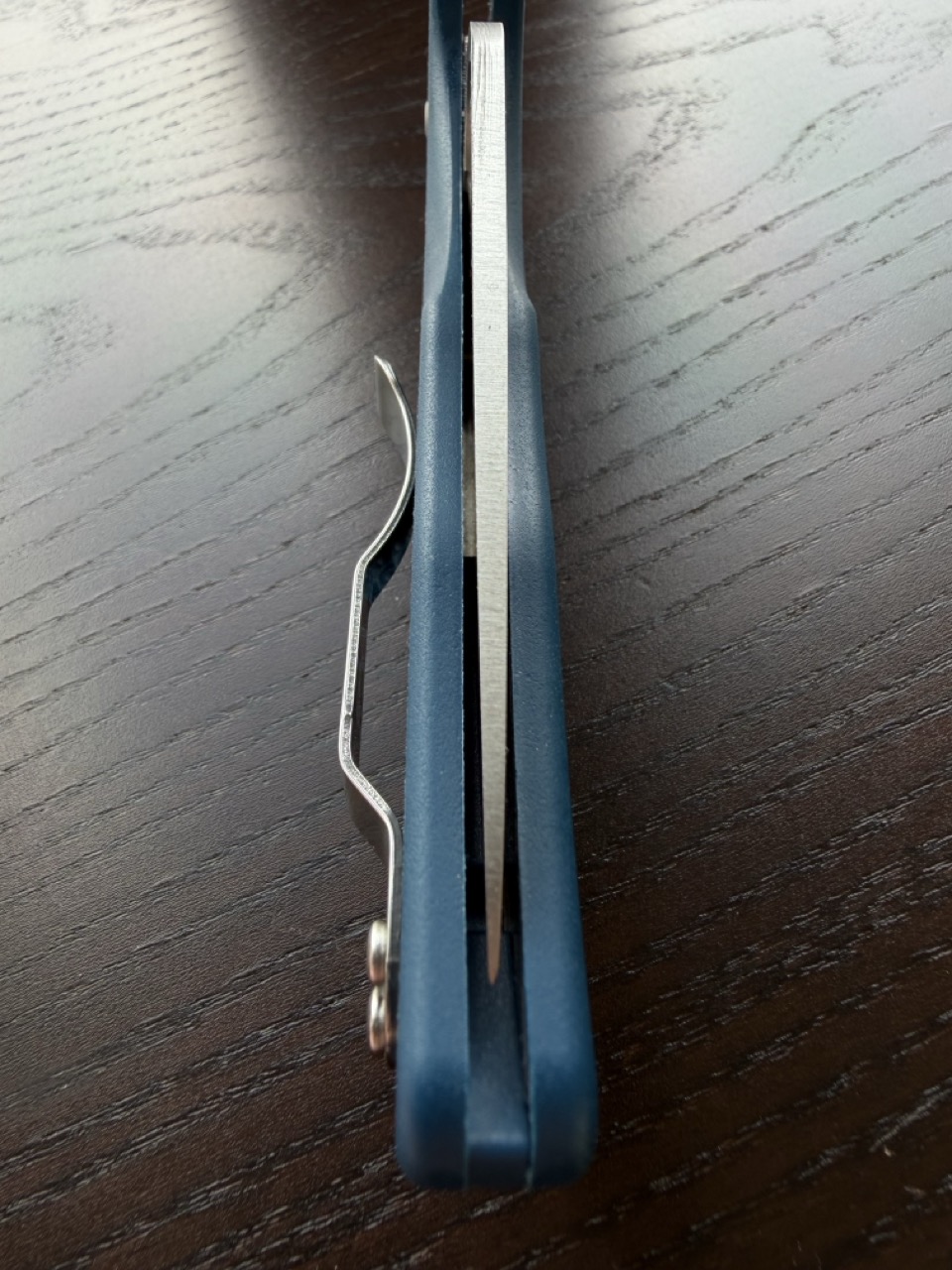
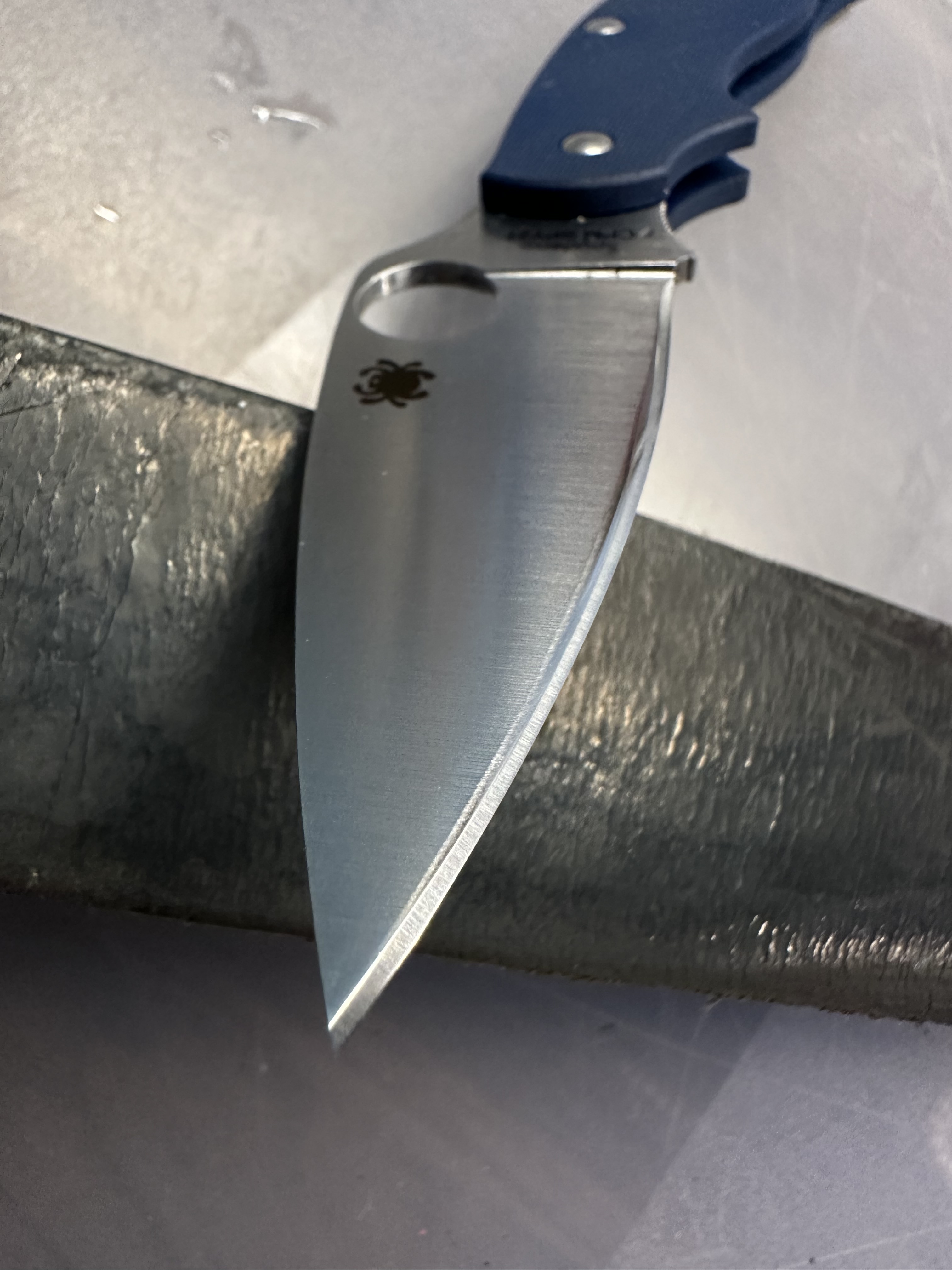
Full Flat Grind, the Spyderco Signature, deep carry clip
Then you discover the lock.
The famous Phantom Lock.
Unlike a traditional back lock, the Meerkat closes by slightly twisting the handle scales in opposite directions. The mechanism releases almost magically, making the knife feel more like a gadget from a science-fiction movie than a conventional EDC your grand’pa would have chosen in a gun show.. Even today, very few production knives offer anything remotely similar.
Sal Glesser is an inventor. He loves his craft. I still can hear his laugh when I have handing a Meerkat to a knife enthusiast, the reaction is the same: “Wait… how do you close this thing?”
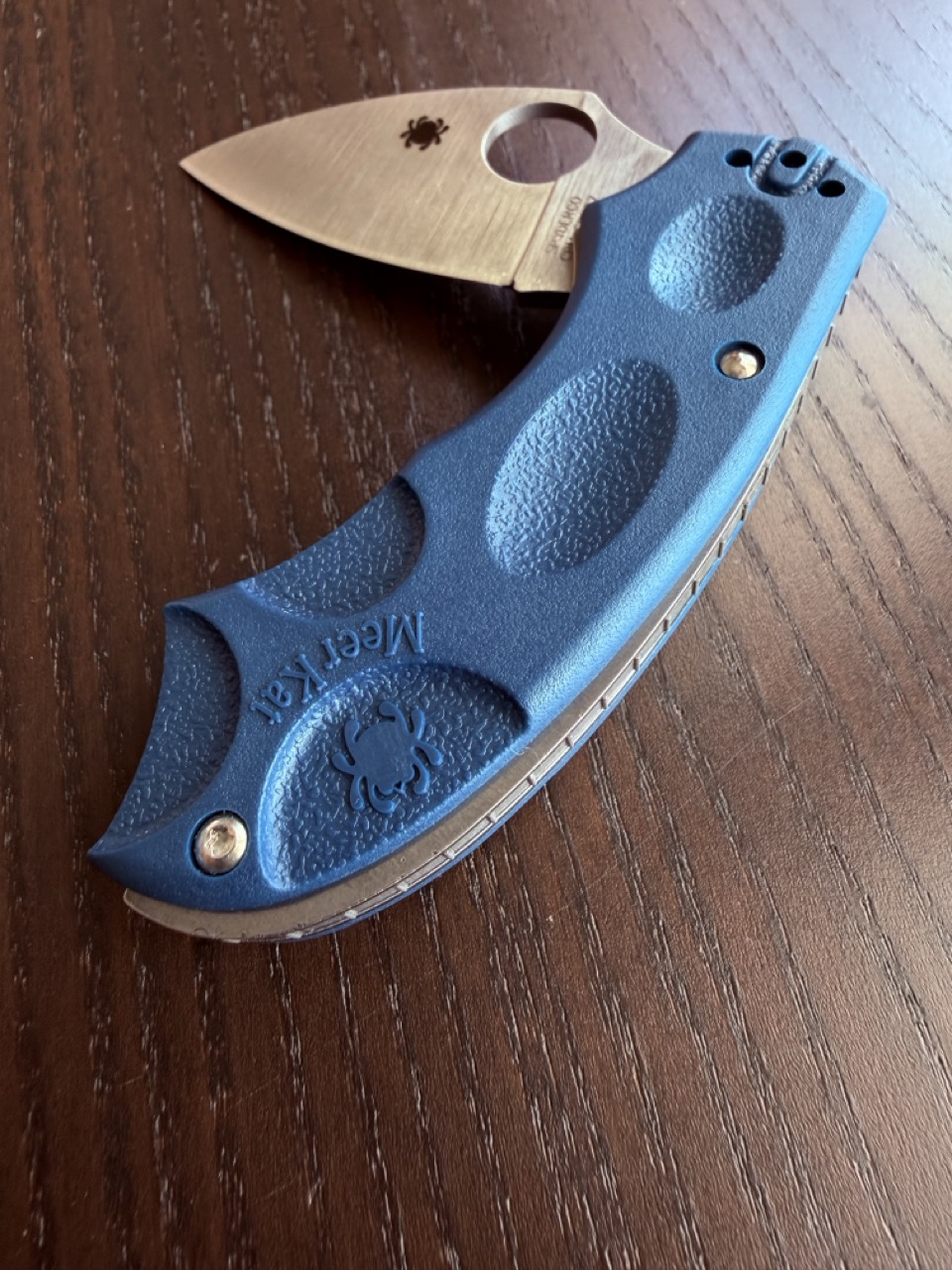
Mission accomplished ! (Still confused by the Phantom Lock? Don’t worry, you’re not the first. Just push on the Spyderco logo to slide the scale. Suddenly, the magic trick reveals its secret. And you’ll soon be able to operate it with one hand.)  😉

The Meerkat carries its fully flat-ground blade measuring just over 5 cm (2inches). On paper, that sounds ridiculously small.
In practice, it slices like a miniature lightlaser.
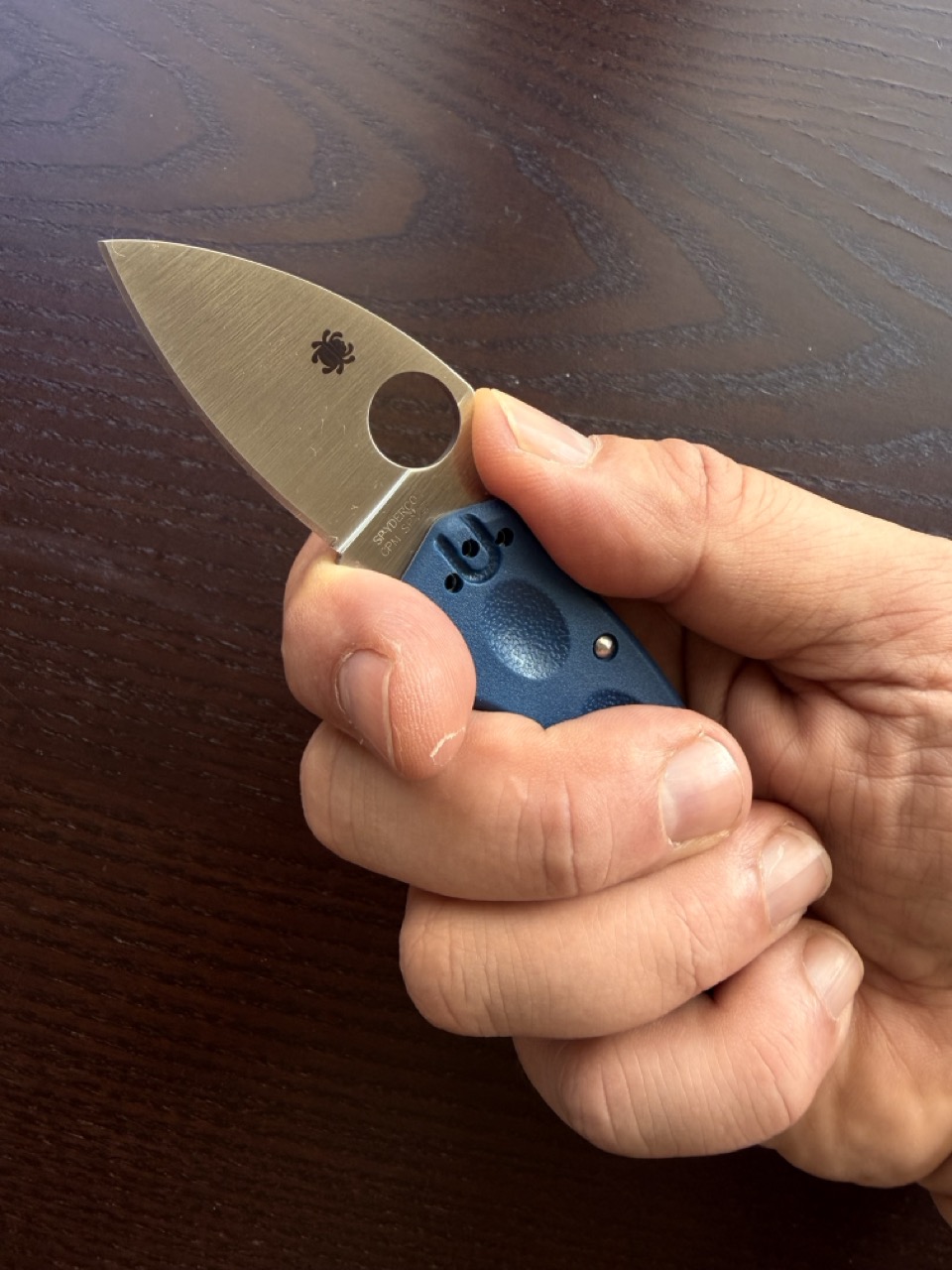
Spyderco’s leaf-shaped blade profile has always been one of the most efficient cutting geometries in the business. Give it a thin full-flat grind and suddenly this tiny folder starts behaving like a much larger knife.

Opening parcels. Food prep. Sharing a fruit. Breaking down cardboard. Removing parcel. Protect your family against enraged bear attacks.
You name it.
The Meerkat will perform all of these tasks with surprising authority.

The blade disappears in any pockets with its deep tip down carry system.
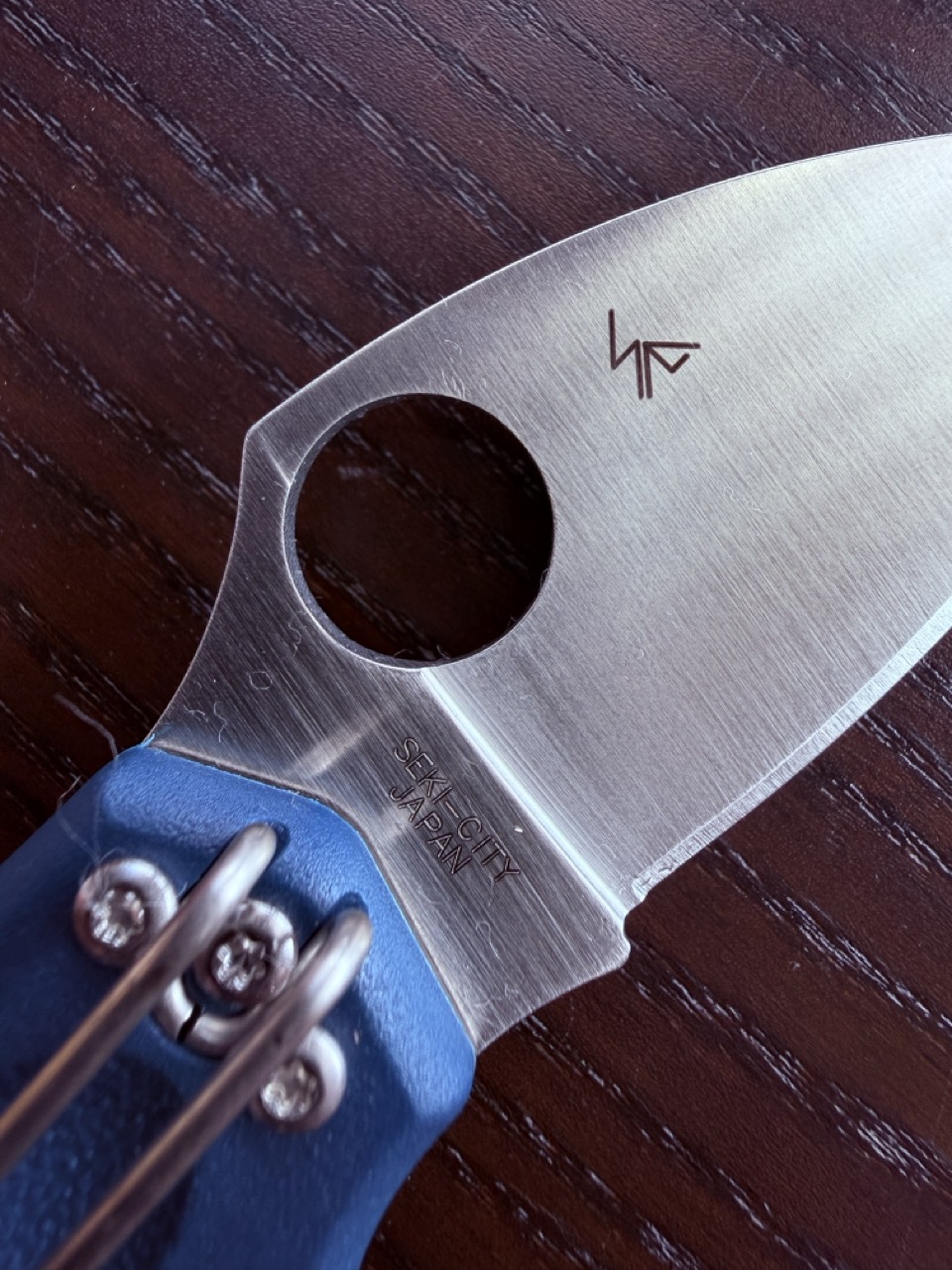

This Sprint Run upgrades the original steel to CPM-SPY27, Spyderco’s proprietary powder metallurgy stainless steel developed with Crucible. The goal was simple: create a steel offering a balance of edge retention, toughness, corrosion resistance and ease of sharpening.
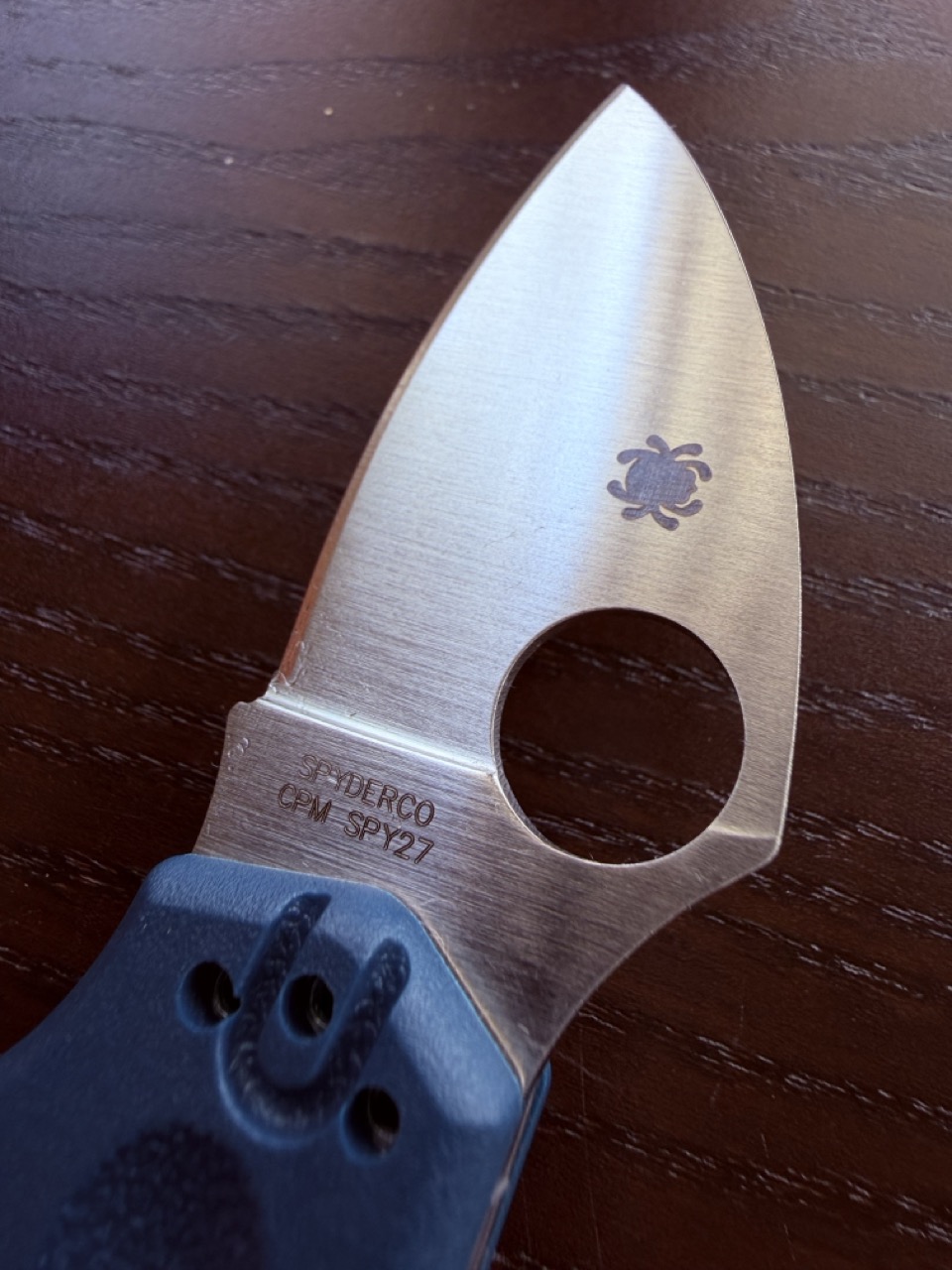
I’ve not used enough SPY27 on larger folders like a Bodacious or a Manix 2 XL to fully explore its limits, but I do understand what Spyderco was trying to achieve with what I often call their “powder metallurgy VG-10.”

My own experience with SPY27 comes mainly from a UKPK that I have nicknamed The Golden Child.

What I’ve discovered is this: SPY27 doesn’t try to win steel competitions. It simply works.
The edge stays keen for a long time, corrosion resistance is excellent, and maintenance remains refreshingly easy compared to some modern “super steels.” Much like Magnacut, SPY27 seems to love a leather strop. A few passes are often enough to bring back that crisp, shaving-sharp edge.

Many users compare its overall performance to S35VN, appreciating how straightforward it is to touch up. Perhaps they’re right. Personally, I don’t really care whether it lands closer to S30V, S35VN or S45VN.
What matters is that Spyderco consistently gets the recipe right.
Because a blade is never just an alloy.
A blade is alloy + heat treatment + geometry.

And Golden’s people understand that better than most.
What I want in 2026 is a blade steel that is easy on my mind.
A steel that won’t punish me for grabbing the wrong sharpening tool while travelling.

A steel that can be maintained without turning sharpening into a science project.

A forgiving steel.

At sixty years old, I find myself caring less about ultimate edge retention and more about living with a knife.
SPY27 feels like one of those steels that wants to work with its owner rather than against him.
For a compact EDC like the Meerkat, that balance is exactly what I want.

This is not a knife meant to chop down forests.
It is, however, a surprisingly capable whittler.
The generous belly, thin blade stock and full-flat grind simply devour wood. Whether shaping a tent peg, sharpening a stick for the barbecue or absent-mindedly carving curls while sitting by a campfire, the Meerkat performs far beyond what its dimensions would suggest.
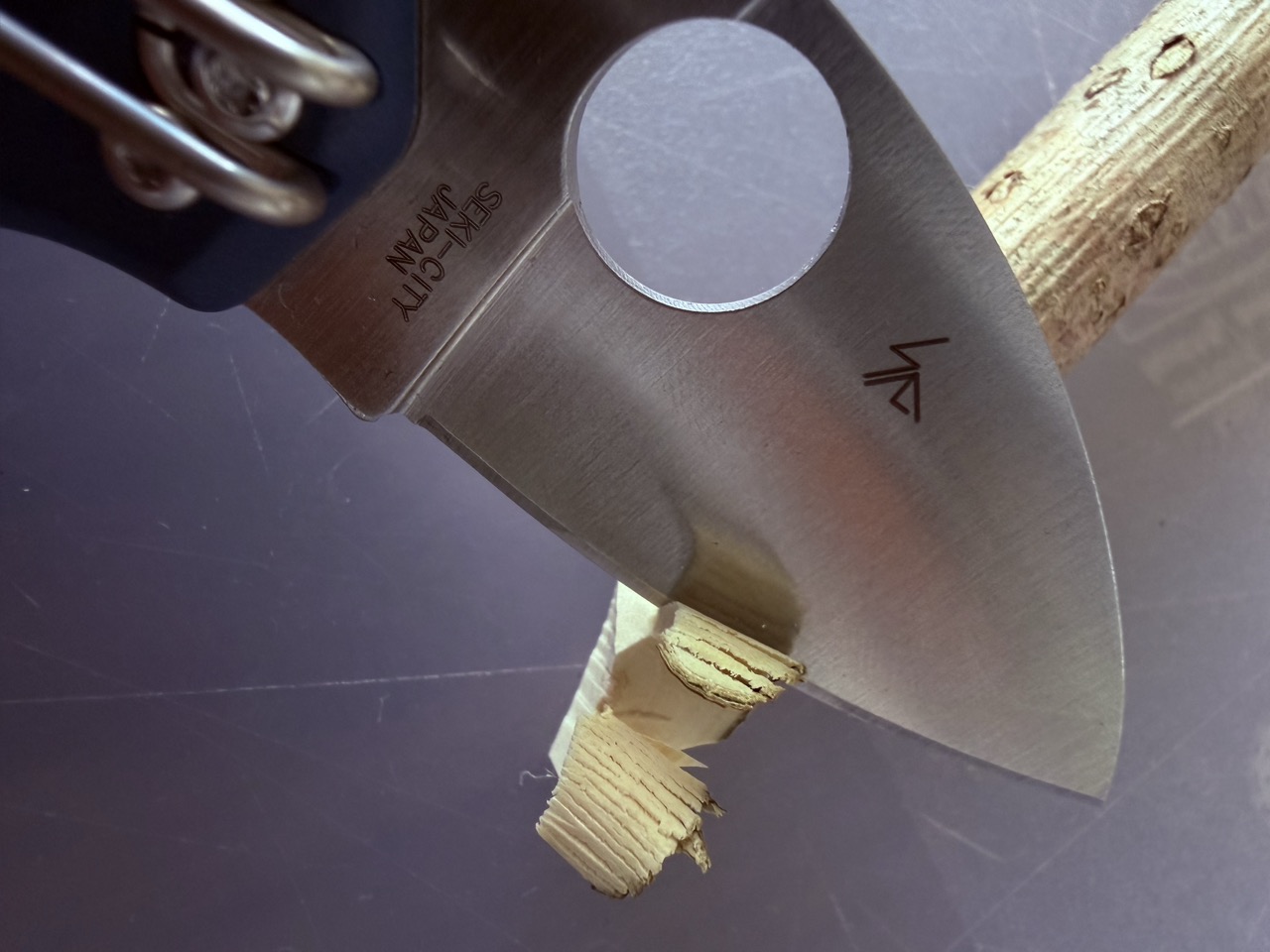
The blade bites eagerly, tracks predictably and leaves behind clean, controlled cuts.

Small knife.
Big appetite.
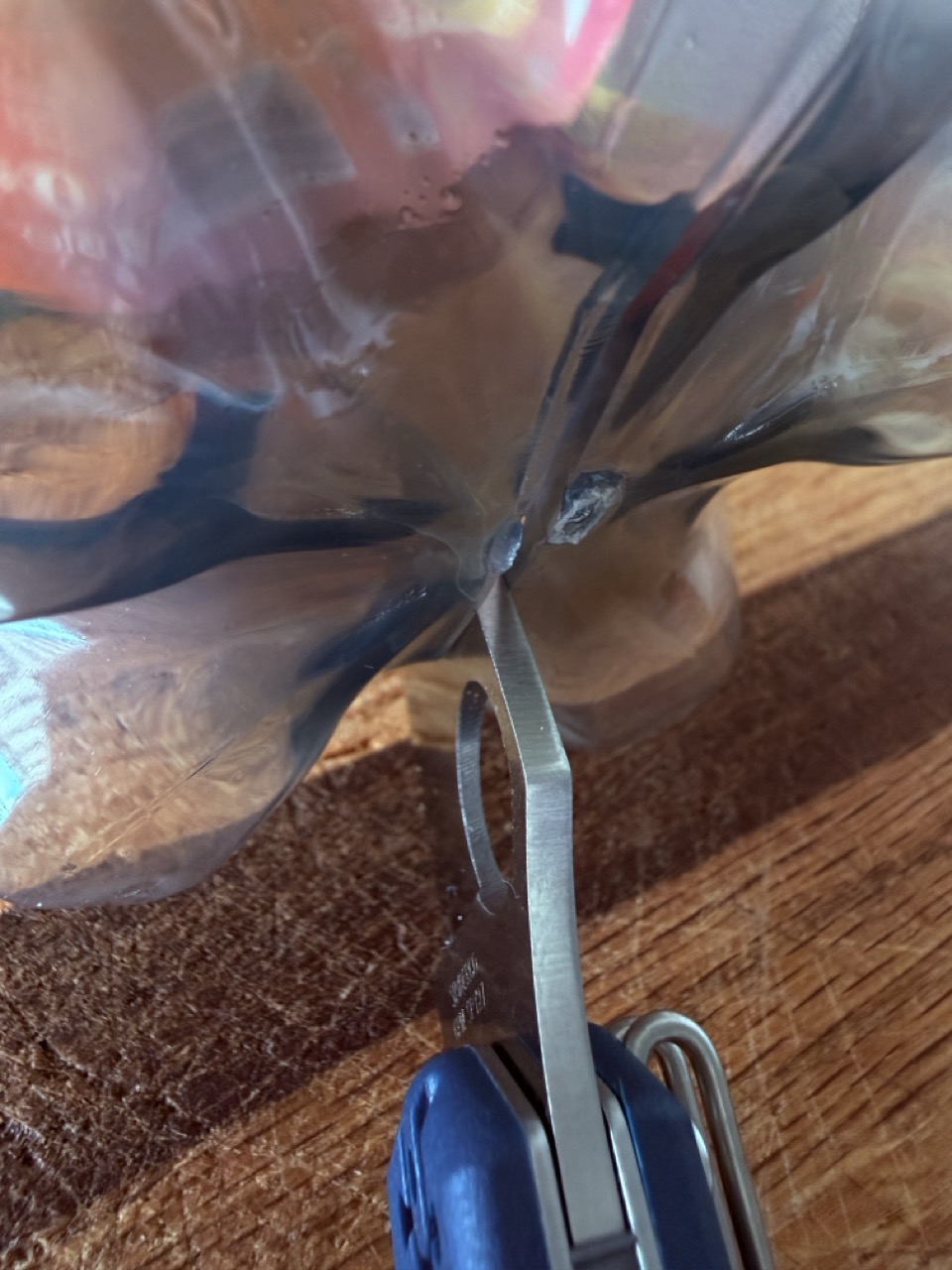
Yes, it really is that powerful.

The Meerkat is a knife meant to disappear into your fifth pocket and be forgotten.

Twenty years after its introduction, that’s still what impresses me most about the Meerkat: not the Phantom Lock, not the rarity, not the nostalgia.

The fact that such a small knife cuts so ridiculously well.
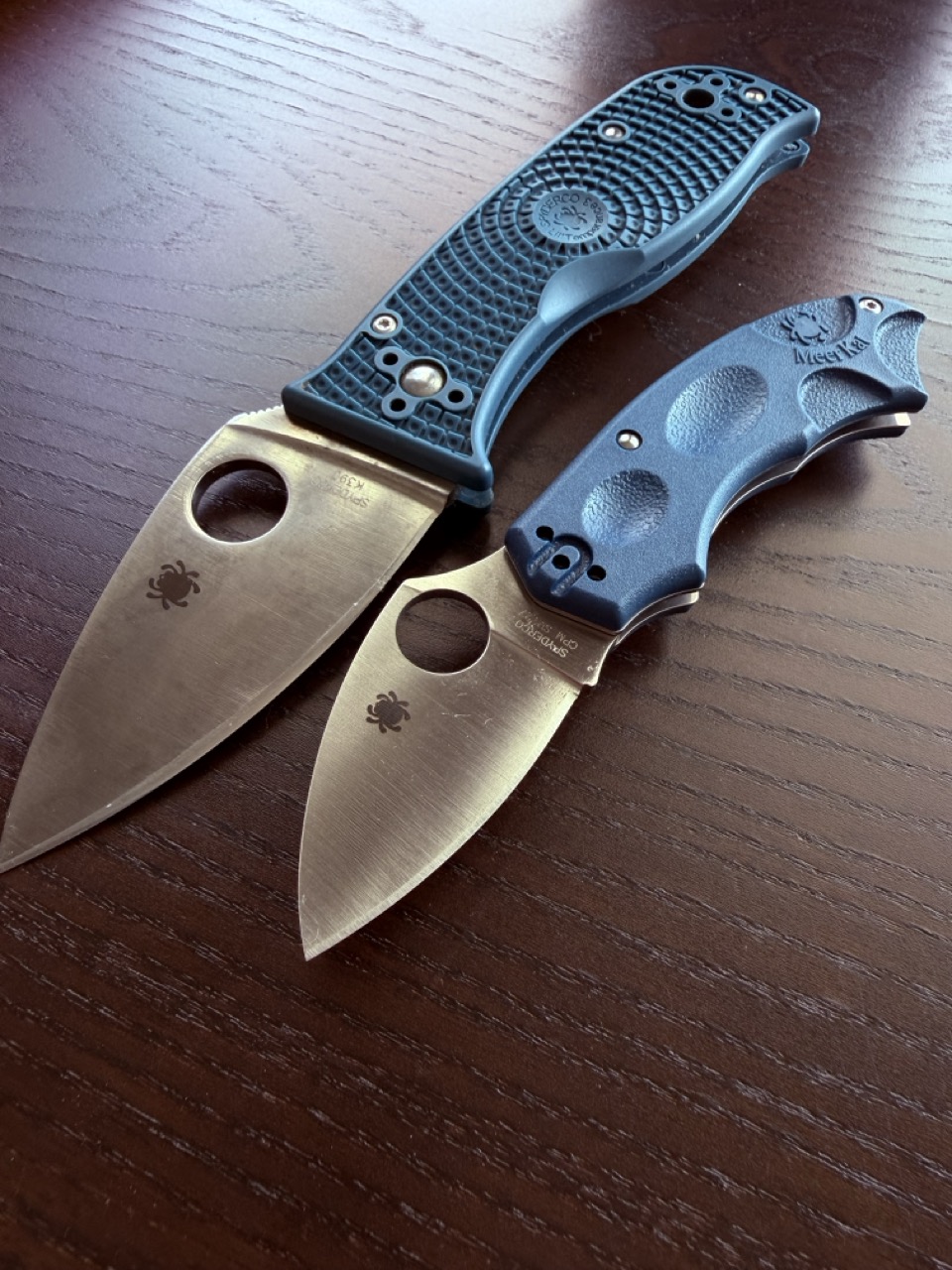
The knife represents an era when Spyderco was willing to experiment with strange concepts simply because they were interesting.

Today many manufacturers chase trends.
The Meerkat reminds us of a time when designers chased ideas.
Its unusual lock, compact dimensions and unmistakable silhouette make it instantly recognizable among hundreds of modern folders.

You don’t buy a Meerkat because it is the most practical knife.
You buy it because it is unmistakably a… Meerkat.
Cute, clever and sharp.
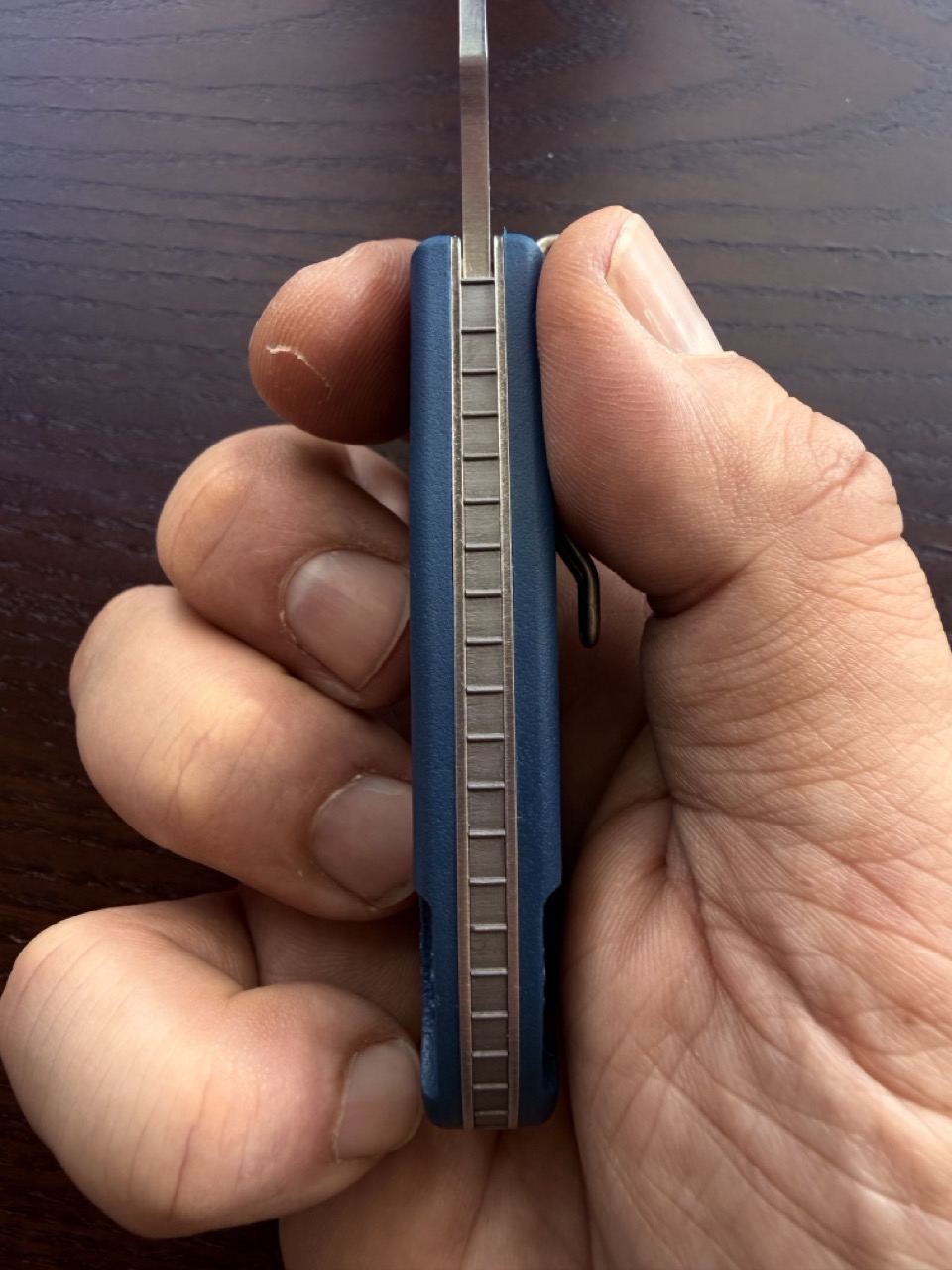
That SPY27 Sprint Run does not reinvent the Meerkat.
Fortunately.
It preserves everything that made the original memorable while upgrading the steel to something genuinely useful for modern everyday carry.
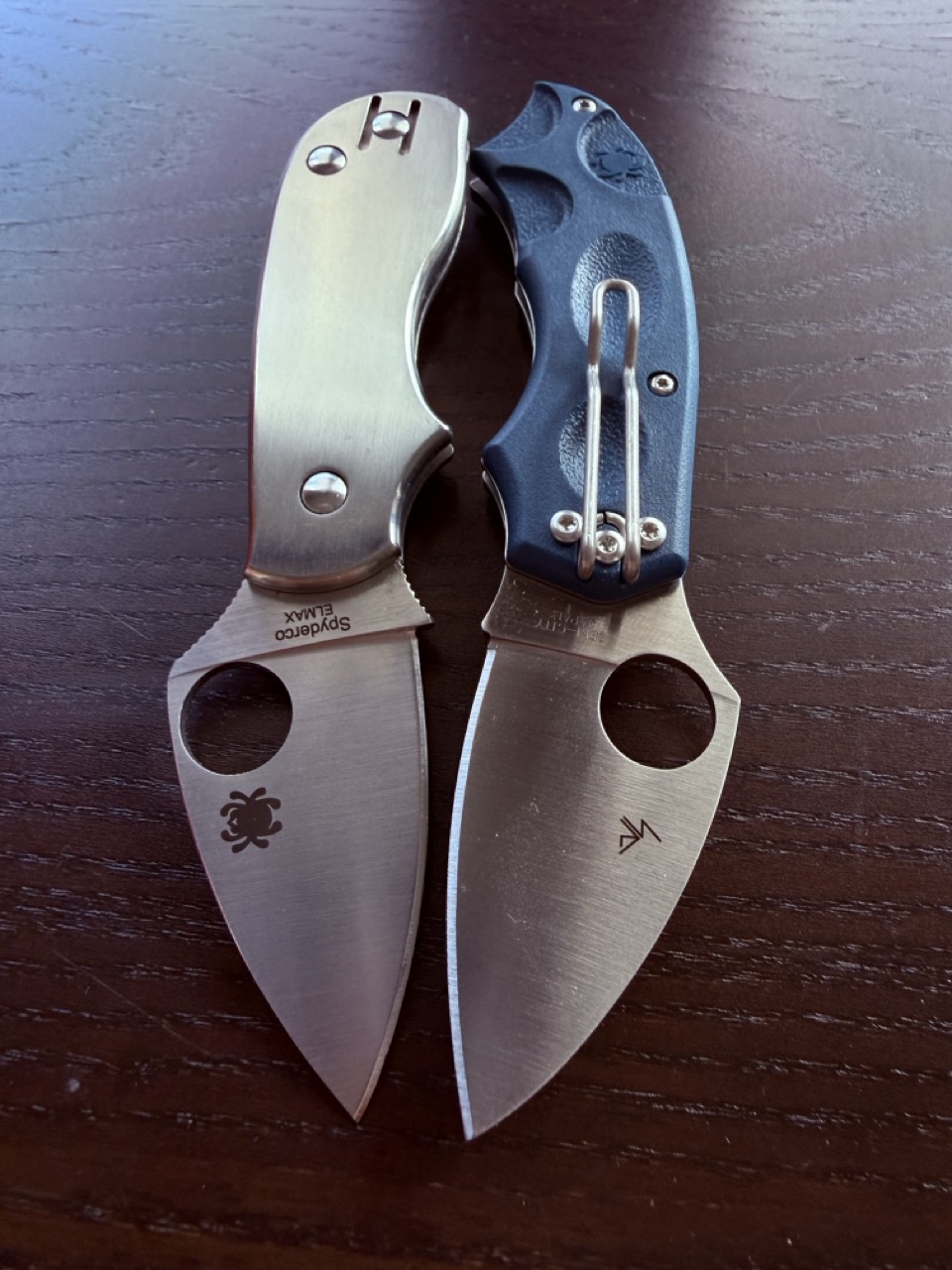
Tiny. Strange. Ingenious. Solid, Stout. Great ergonomics for a 2 inches blade. The Meerkat remains one of the most charming oddballs ever released by Spyderco.
And in a knife world increasingly filled with tactical clones and oversized pocket swords, that may be exactly what makes it special.
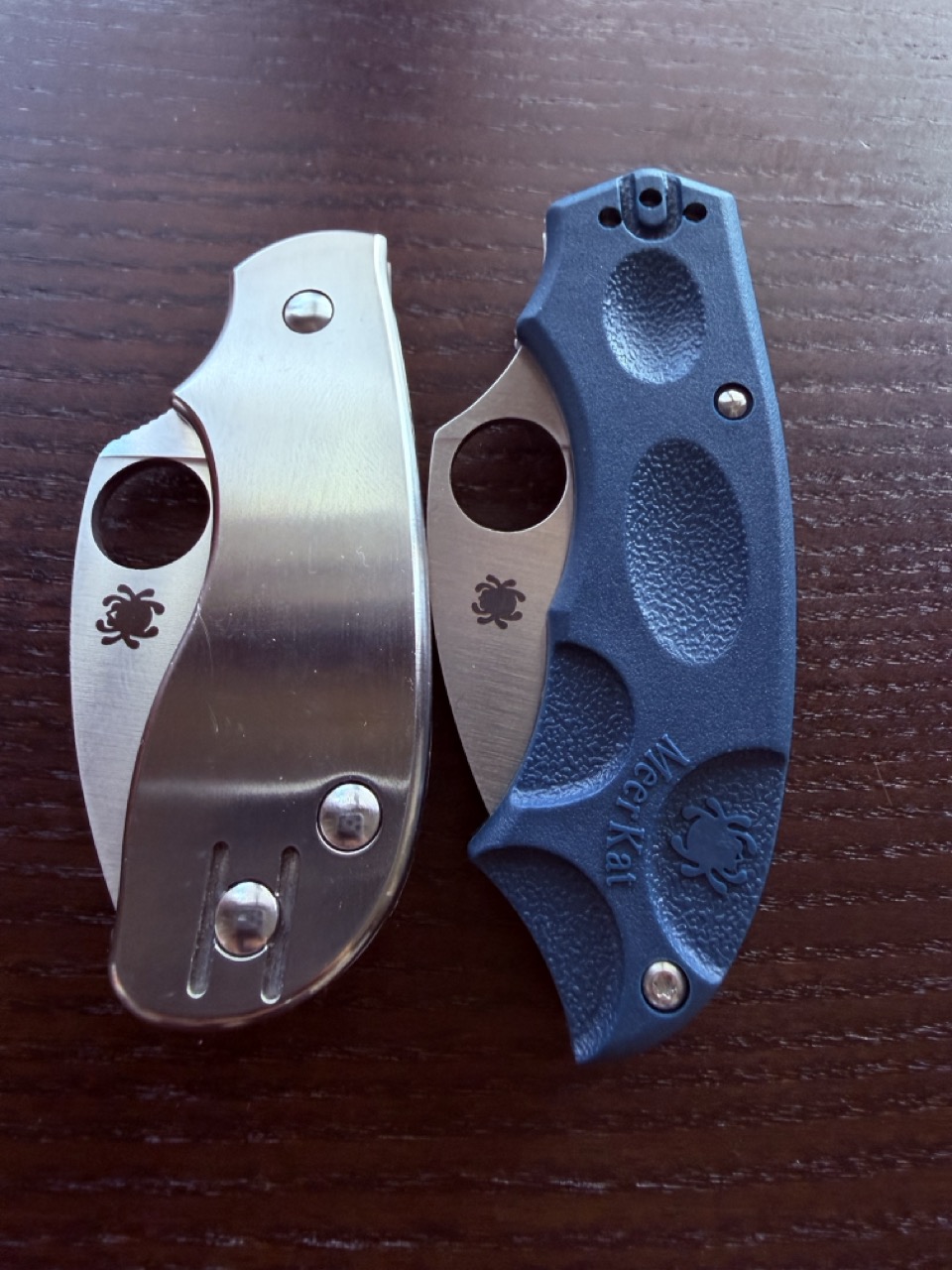
Not because it is perfect. Because nothing else feels quite like it.
Invention, innovation….
Open it. Read between the line and twist the scales to close it.

The Meerkat is a jewel of a user. The kind of little big knife you can clip into a pocket every morning and completely forget about—until you need a knife. Then it reminds you exactly why it’s there.

Much like the little African animal that inspired its name, the Meerkat has a habit of suddenly popping up when something interesting needs attention. That’s part of its charm.

Disclaimer: This knife has been provided through Spyderco’s Ambassador’s program and friendship. Thank you to them for letting me review it. It felt like welcoming back an old friend I hadn’t seen in over twenty years.

If the Meerkat has piqued your curiosity, do yourself a favor and visit the website of my friend Wouter (“Mr. Blonde”). Few people know Spyderco history better than he does::
https://spydercollector.wordpress.com/tag/meerkat/

Also, there is a great thread on the Spyderco Forums featuring information, anecdotes and historical details contributed by collectors (including my friend and contributor, Robin “Ramonade):
https://forum.spyderco.com/viewtopic.php?p=1885029#p1885029

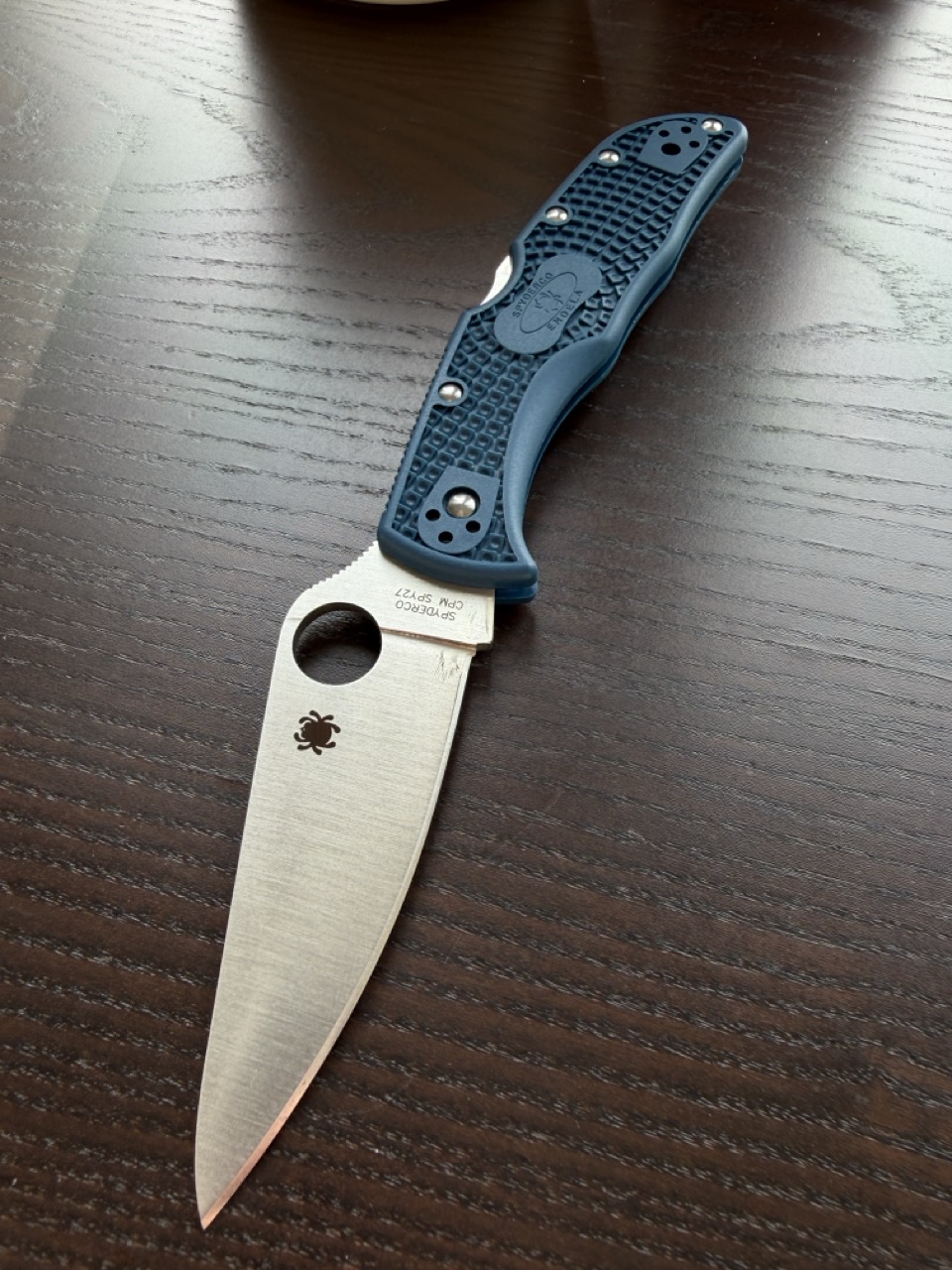
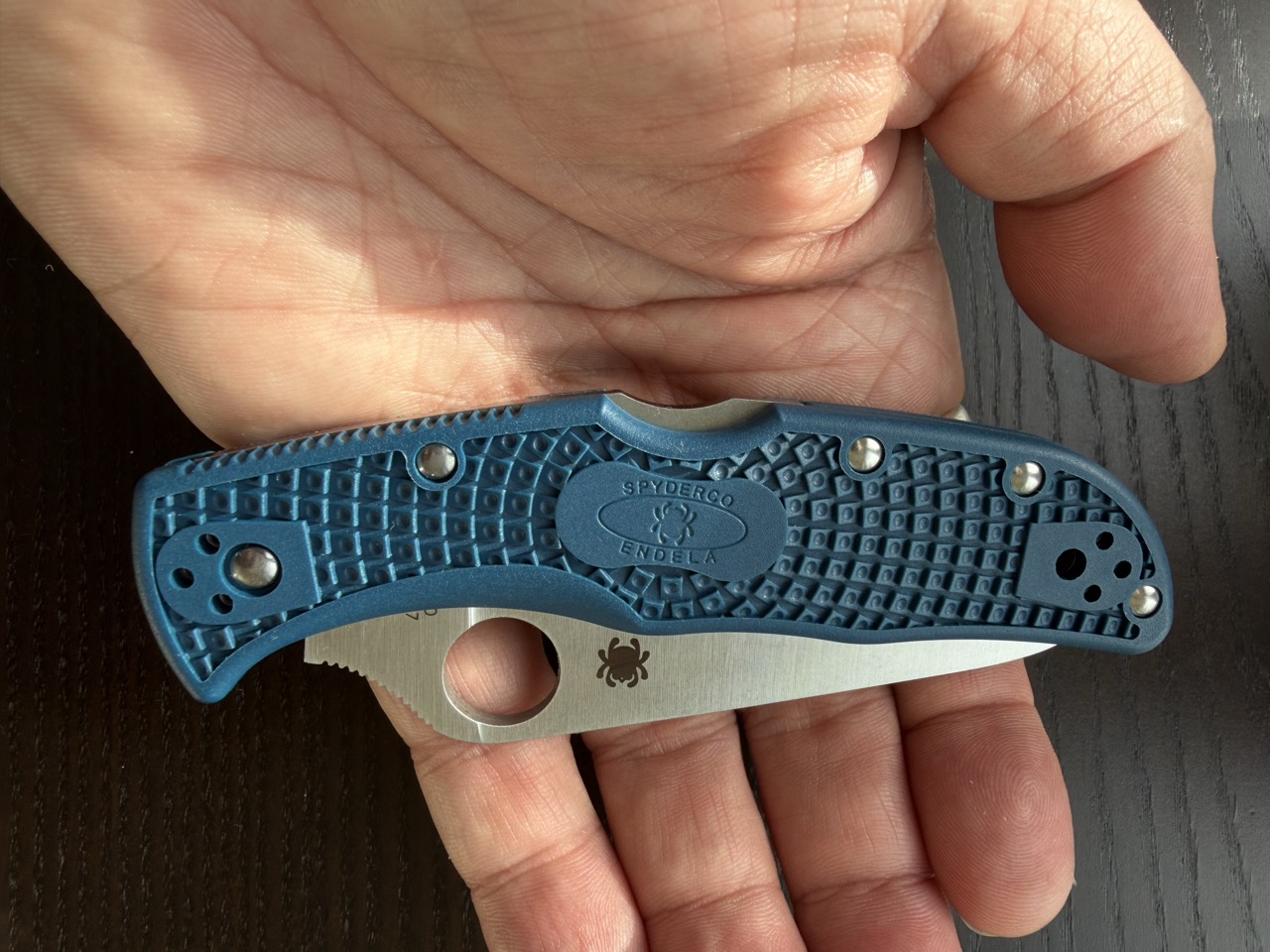
Spyderco Endela in Spy27 – 2026 Minimeet Gift.

In the rarefied world of enthusiast gatherings, certain objects transcend their function to become emblems. At the 19th Minimeet of 2026, that emblem arrived in a flash of satin steel and unmistakable silhouette: the Endela, rendered in CPM Spy27.

This year’s gift was no ordinary edition, no routine variation in a catalog of many. It was a gesture—considered, knowing, and deeply rooted in heritage. A gift that spoke fluent Spyderco from A to Z with a bit of Japanese.

Designed by Sal Glesser, the Endela, positioned between the compact Delica and the longer Endura, has always embodied balance: long enough to command presence, slim enough to disappear into a pocket. In this iteration, its lines were amplified by a full flat grind (FFG), that signature tapering geometry that flows from spine to edge in one continuous, purposeful plane. The result is a blade that slices with authority yet retains the structural confidence expected from a serious cutting tool.

But the true poetry lies in the steel which I have covered in my UKPK article AKA “the Golden Child”.

(I have taken this from Humint in that thread on the Bladeforums)

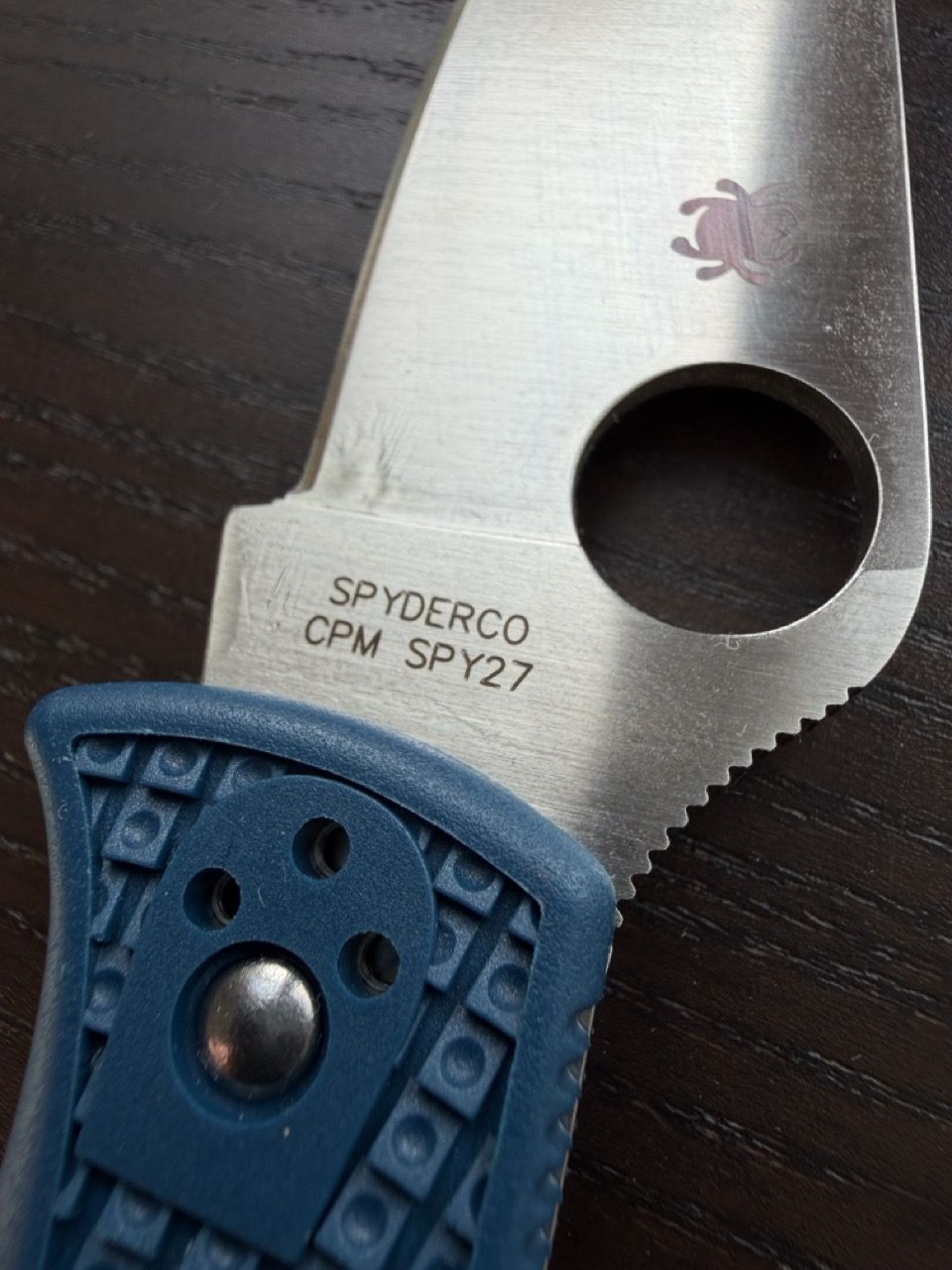
CPM Spy27 is not merely another powdered metallurgy alloy; it is an insider’s composition, born from collaboration and conviction. Developed as a proprietary formula, Spy27 was conceived as a modern evolution in performance stainless steel—often described as a powdered metallurgy answer to the spirit of VG-10, yet unmistakably contemporary in its balance of edge retention, corrosion resistance, and toughness. Engineered through Crucible’s particle metallurgy process—before the company’s bankruptcy reshaped the landscape—it stands as the product of a singular joint venture and a fleeting industrial moment.

Spy27 is, in many ways, a manifesto: a steel created not simply to follow trends, but to refine the brand’s own philosophy of practical performance. Fine carbides for clean, aggressive slicing. Stainless resilience for daily carry. A hardness profile that rewards precision sharpening while maintaining field durability. In hand, it feels deliberate—neither brittle nor indulgently soft. It is steel tuned to the cadence of real use. And God, it loves leather stropping.

You cannot get more “Spyderco’s roots” than this. Made in Japan (like in the 80’s), paired with the unmistakable round hole—Spyderco’s totemic opening device—and a “spoon clip” ready for pocket carry, the Endela in CPM Spy27 becomes more than a knife. It becomes a statement of identity. The FFG geometry ensures that the blade glides through material with elegant efficiency, while the ergonomics—subtle finger choil, textured scales, carefully considered weight—anchor the experience in control.

At a Minimeet, the gift is never just about value. It is about friendship. About shared language. About the unspoken understanding between those who appreciate grind lines, heat treatments, and the quiet satisfaction of a perfectly executed edge of our favorite performance knives.

The Endela came out of the box with the kind of edge that makes you pause for half a second before testing it. Not because you doubt it—but because you already know: this is the Way !

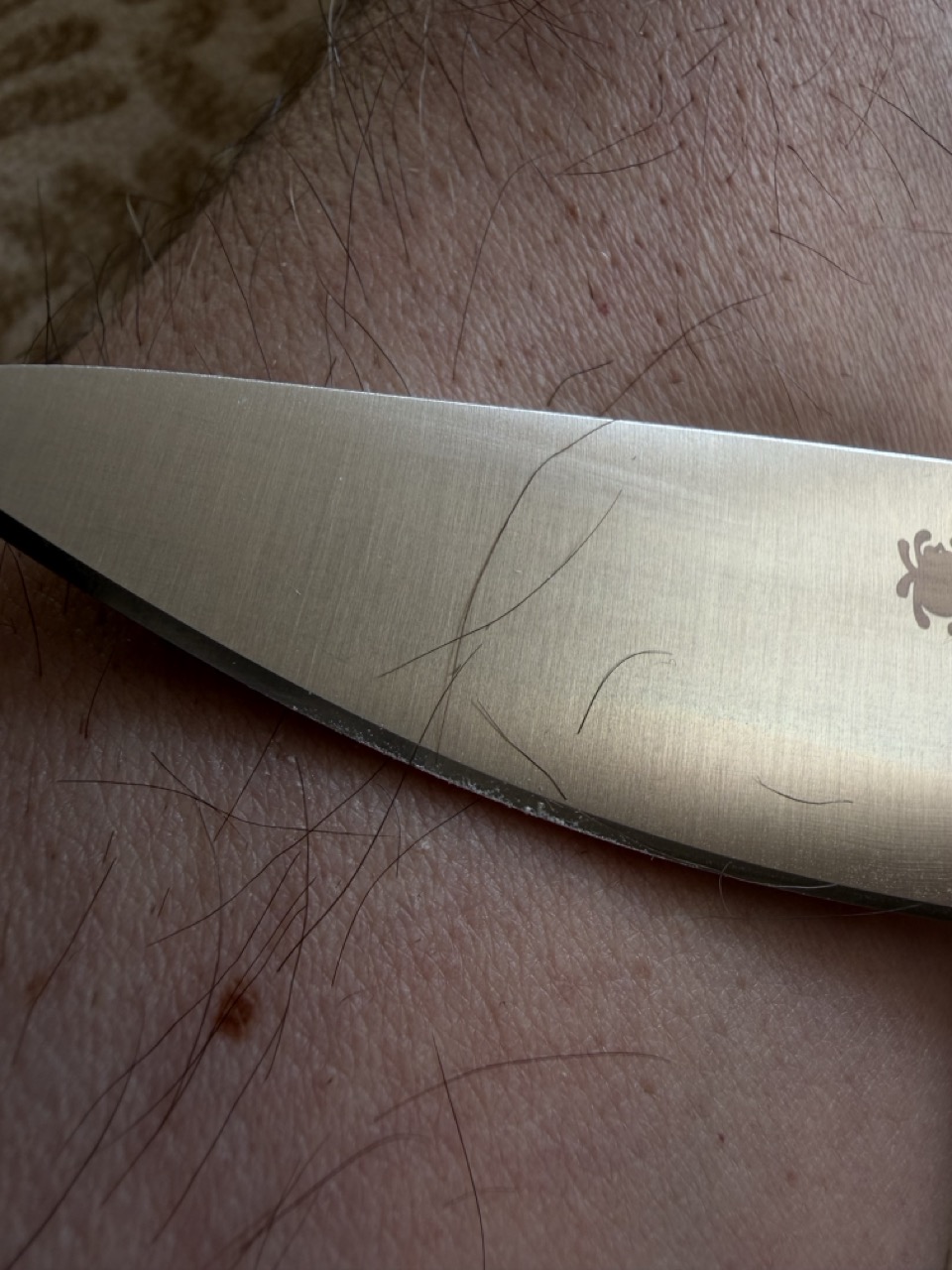
Factory sharpness can be a vague promise in this industry. Here, it was a statement. Kuddos to the Seki factory ! The blade arrived as an aggressive razor, keen and un-apolo-getic, the apex refined to the point where it would silently treetop arm hair without pressure. Not tear. Not tug. Simply pop. Hair fell away at the slightest whisper of contact.

This wasn’t just shaving sharp; it was hair-popping sharp.

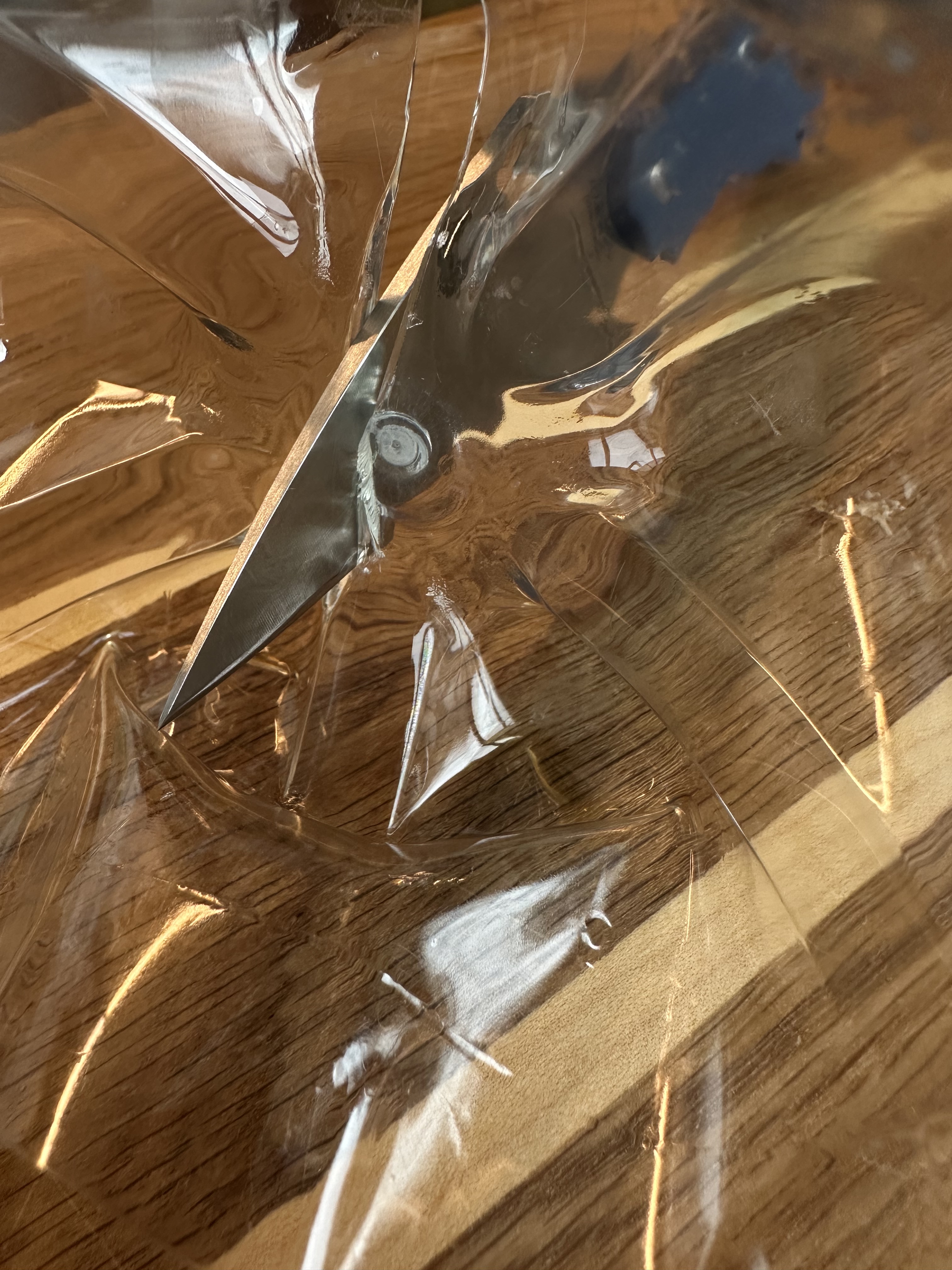
It slices through plastic as though the material had lost all resistance—gliding, parting, yielding without protest. There is a particular sound when a blade meets dense plastic packaging: usually a faint crackle, a hesitant drag. Here, there was only a smooth, uninterrupted whisper. The edge didn’t force its way in; it entered decisively and continued with almost disconcerting ease, as if the medium itself had become incidental.

That kind of performance is not accidental. It is the result of geometry meeting metallurgy in perfect accord.

As my friend Robin observed—accurately and without exaggeration—the level of sharpness coming out of the Seki factories has noticeably risen since the K390 batches. Something shifted during that era. Whether it was refinement in heat treatment protocols, greater consistency in final sharpening stages, or simply a renewed culture of precision, the outcome is tangible. Blades now leave the factory with an apex that feels more deliberate, more aggressive, more controlled.

The legacy of those early K390 runs set a new internal benchmark. What we’re seeing now is the continuation of that standard applied across steels—Spy27 included. The edges are cleaner, the bevels more disciplined, the bite more assertive right out of the box.

This year, which is also the 50th anniversary from Spyderco, that understanding came wrapped in Spy27.
So what do we got:
A steel born of collaboration.
A grind that defines a house style.
A silhouette instantly recognizable across continents.
For the 19th Minimeet of 2026, the Endela was not simply offered—it was bestowed.

And in doing so, it reaffirmed what true connoisseurs already know: luxury is not always gold and gloss. Sometimes, it is the cool, matte sheen of a perfectly ground blade, engineered with intent and carried with pride. Thank you for that beautiful gift.

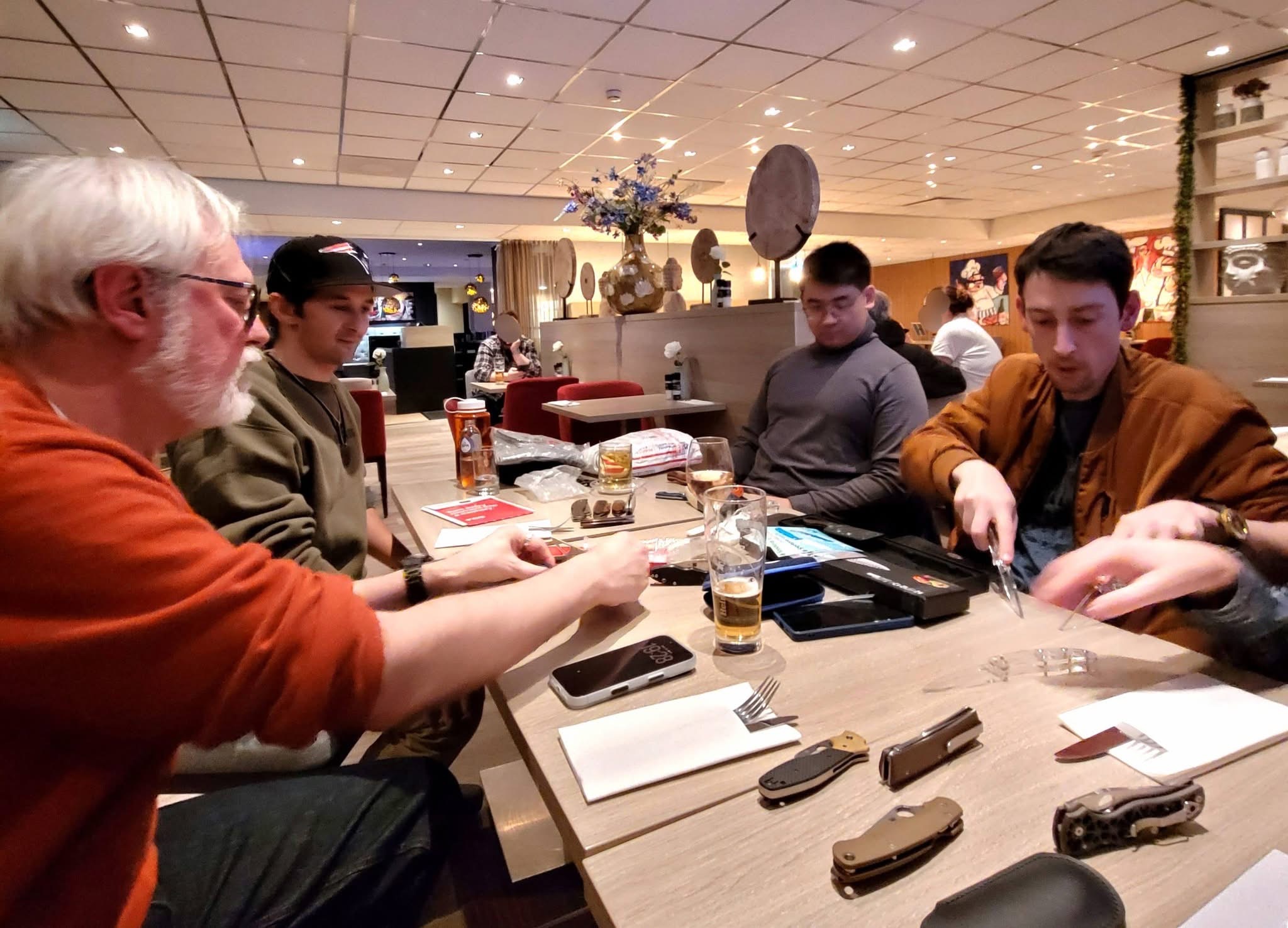
(Photos from the Minimeet by Guillaume GX)

Six months with the Golden Child – Spyderco -C94GCBL- UK PENKNIFE™ COBALT BLUE G-10 CPM® SPY27® – The Part 2

I have had the chance to buy that UKPK in G10 for 100 euros in January 2025.
Since, it has been my “go to the city” favorite folder.

Sometimes replaced by the Roadie XL for a lower profile or Dredd my Urban in S90V made in Maniago and exclusive to Heinie in the UK.


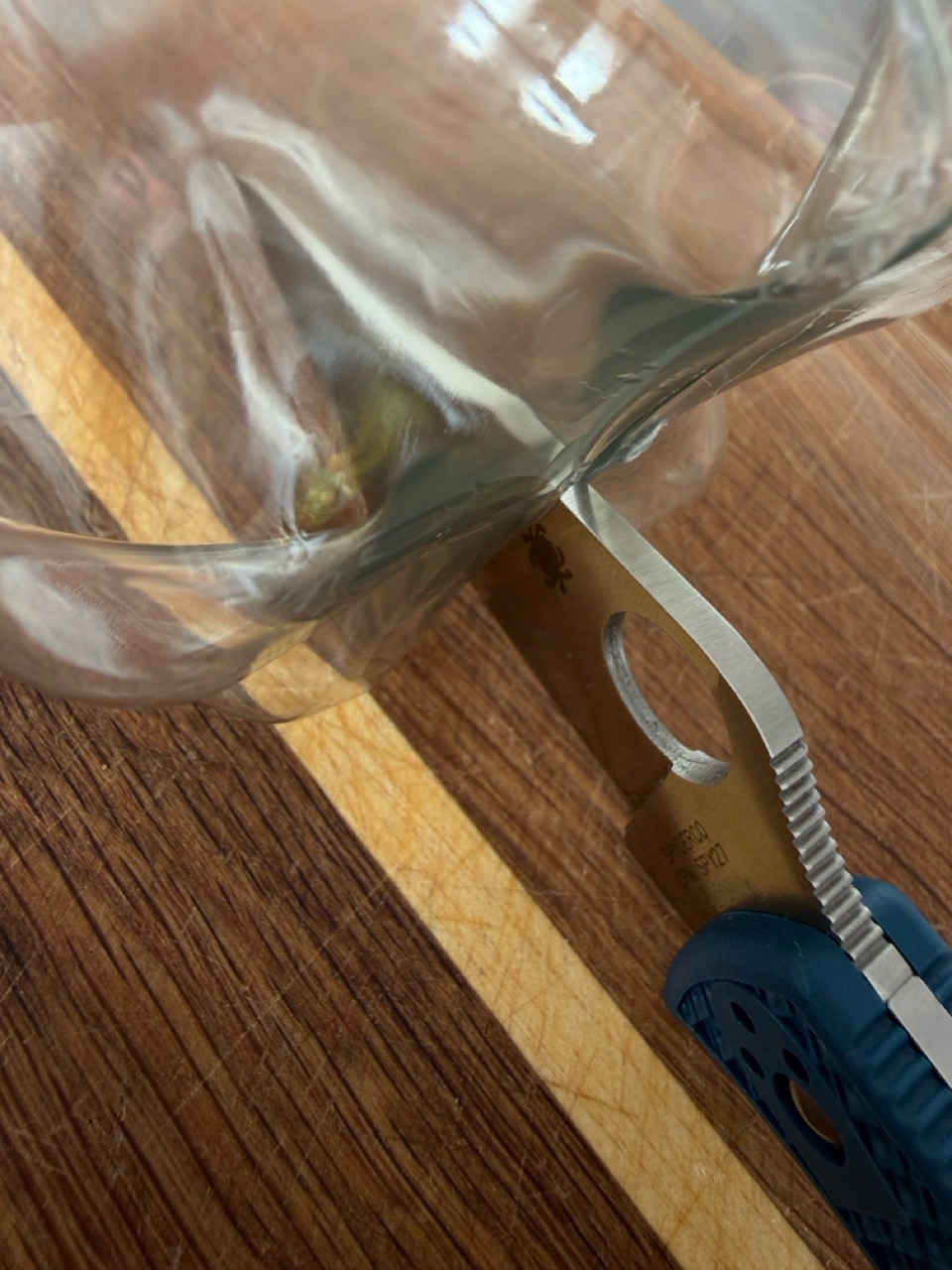
The UKPK is remarkably versatile, proving itself even in woodworking. Its strong, reliable mechanism keeps it ready for anything — all while remaining fully within legal limits. Stripping vines, carving rods, scraping, cutting — it handles everything with ease. The spring “lock” never falters, and the finger choil adds an extra layer of passive safety, even if it’s rarely needed.

Its thin yet strong CPM SPY27 blade is a true joy to use on wood. In this domain, the UKPK stands out as one of Spyderco’s best hidden gems across all categories made in Golden. And if I ever had to defend myself against an animal, I believe it would perform every bit as well as the legendary Calypso (all the story here).

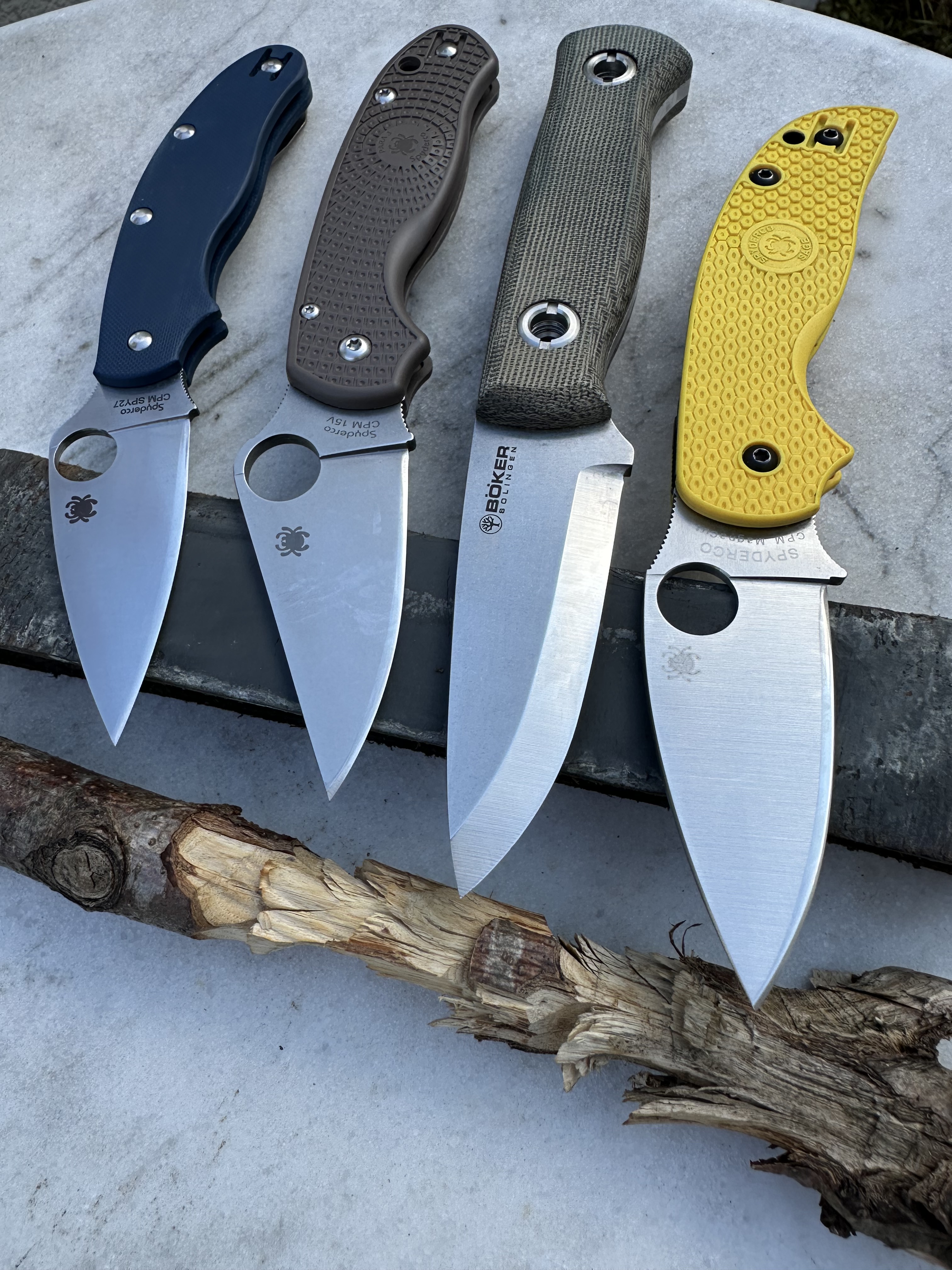
The tip has seen plenty of use, and all I can say is that Spyderco’s in-house SPY27 steel is extremely forgiving. You can push it hard with no damage to the edge. I’ve compared it with many of my favorite wood-cutting knives — including some specialized for woodworking — and it performs impressively in the same league.

One way I now measure the value of a pocket knife is by the pleasure I get from using it. The UKPK easily ranks among the top on my list. Strong, thin, and precise, it excels as a true “matter separator,” handling everything from everyday tasks to more demanding jobs like scraping paint.

There’s also a distinct joy in keeping the edge razor-sharp, and SPY27 has become my new favorite for that. Achieving a razor edge is a breeze. Being in the AEL-B class, it’s even easier to work on than Magnacut and is extremely leather-stropping friendly. After just a quick session on leather, SPY27 regained that legendary crisp edge — and it’s such a pleasure to use!

Hairs are flying and the convexed home made edge is shining like a mirror.
This is really part of the joy to use leather strops on a steel.

So it is a joy just to strop it again and again just to maintain this razor edge.

Then for forced push cuts, the geometry of the UKPK is just a killer.
It goes deep like a thin Opinel blade can go.

To keep the knife sharp, I’ve mostly relied on leather stropping, with occasional touch-ups on white ceramic, even after cutting cardboard, plastic, acidic food, and hard wood. The UKPK in SPY27 is a winner, offering a significant boost in edge retention and versatility. Maintaining its vorpal edge is even easier and more enjoyable than with the excellent Magnacut or LC200N versions.

It’s no wonder this steel has earned such a special place in my heart.

And I was not able to get any chipping or edge bending in six months.
It gives an hint about the high quality of the inhouse heat treatment on that inhouse steel.

Used in the plate, the SPY27’s core refused to be damaged:
no pitting, no rust, no stain. No damage on the plate ceramic too.
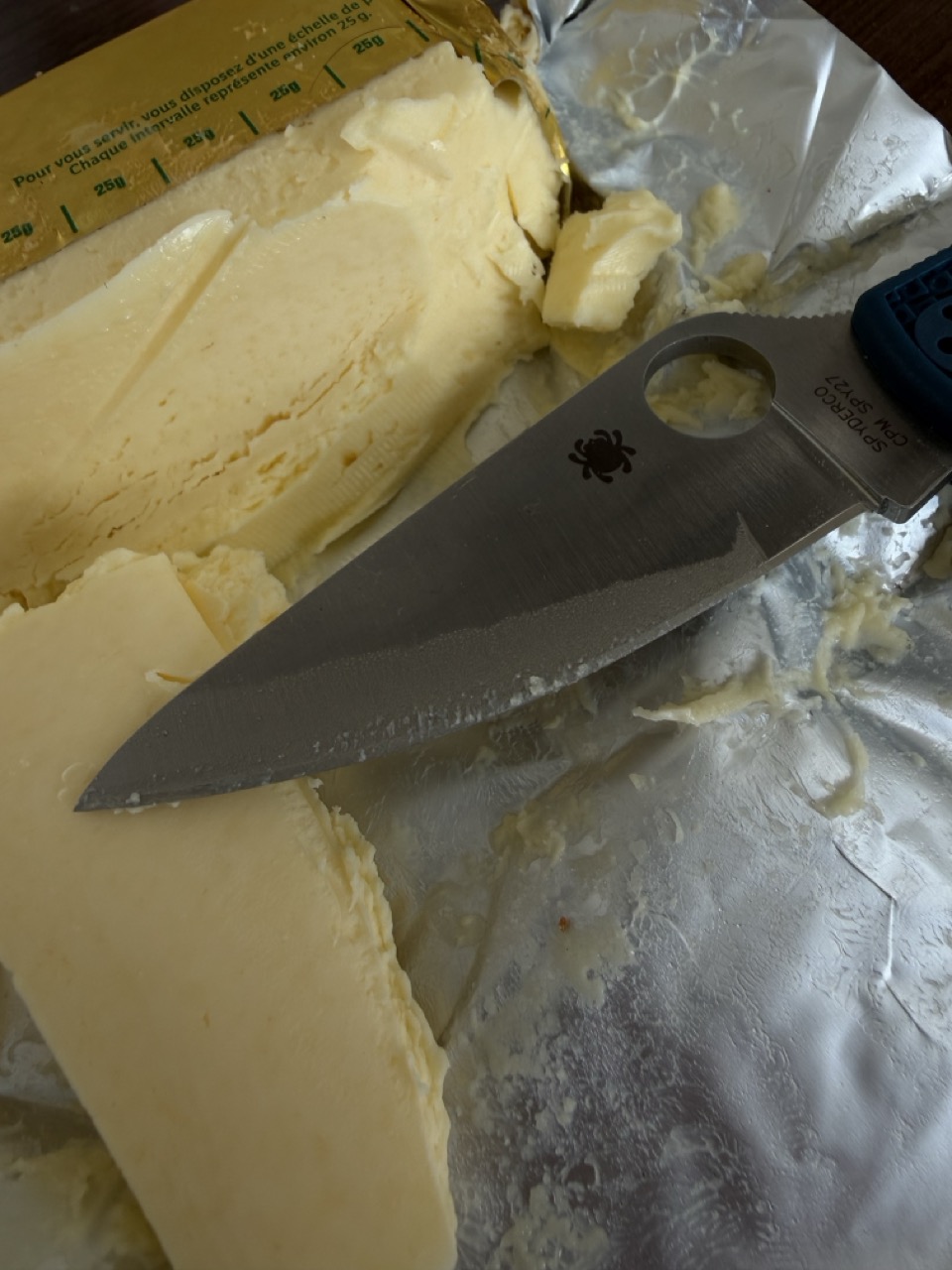
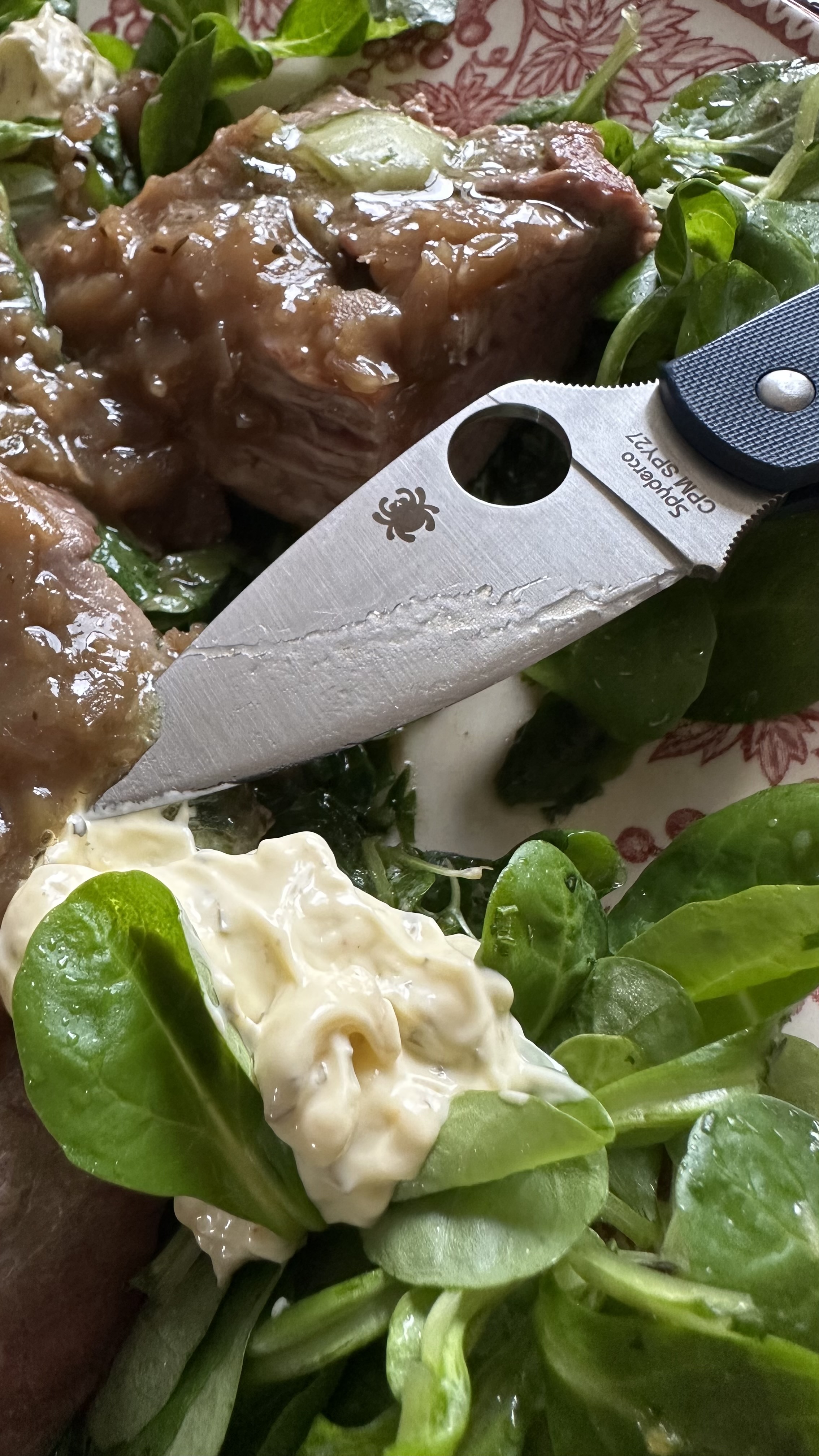
It a gourmet companion and a wonderful carnivorous friend.

In the kitchen, geometry-wise, the UKPK can compete with the best — for example, the Patrick Bonetta Kitchen Warrior. The G10 version is also a visual delight. I never felt “under-knifed” with my Urban, but the UKPK could easily be my one and only Spyderco. A three-inch, legal, high-performance sharp blade is a must-have for EDC, and such knives are surprisingly rare.

This is 100% Sal Glesser design. This Golden-made gem is the all-terrain pocket knife my grandfather would have dreamed of!
Hence its name The Golden Child. 😉

For an alternative you can now get The Metropolitan. Its little brother.

Spyderco -C94GCBL- UK PENKNIFE™ COBALT BLUE G-10 CPM® SPY27® – The Blue Djinn Who Loved Leather.

This is not the first UKPK I have reviewed in this blog. I was a very early adopter of this Sal Glesser’s approach of the modern slipjoint all made in Golden Colorado.
Some of my favorite are the Salt Versions in FRN: the Green LC200N and the Yellow CPM Magnacut. I even think, the serrated version of the Magnacut version could be an amazing legal travelling knife.

But they are FRN versions. I like FRN but I do love G10. Better, I’m a sucker for sanded G-10. Hence my love for the Heinnie Urban and its non-slip peel-ply texture.
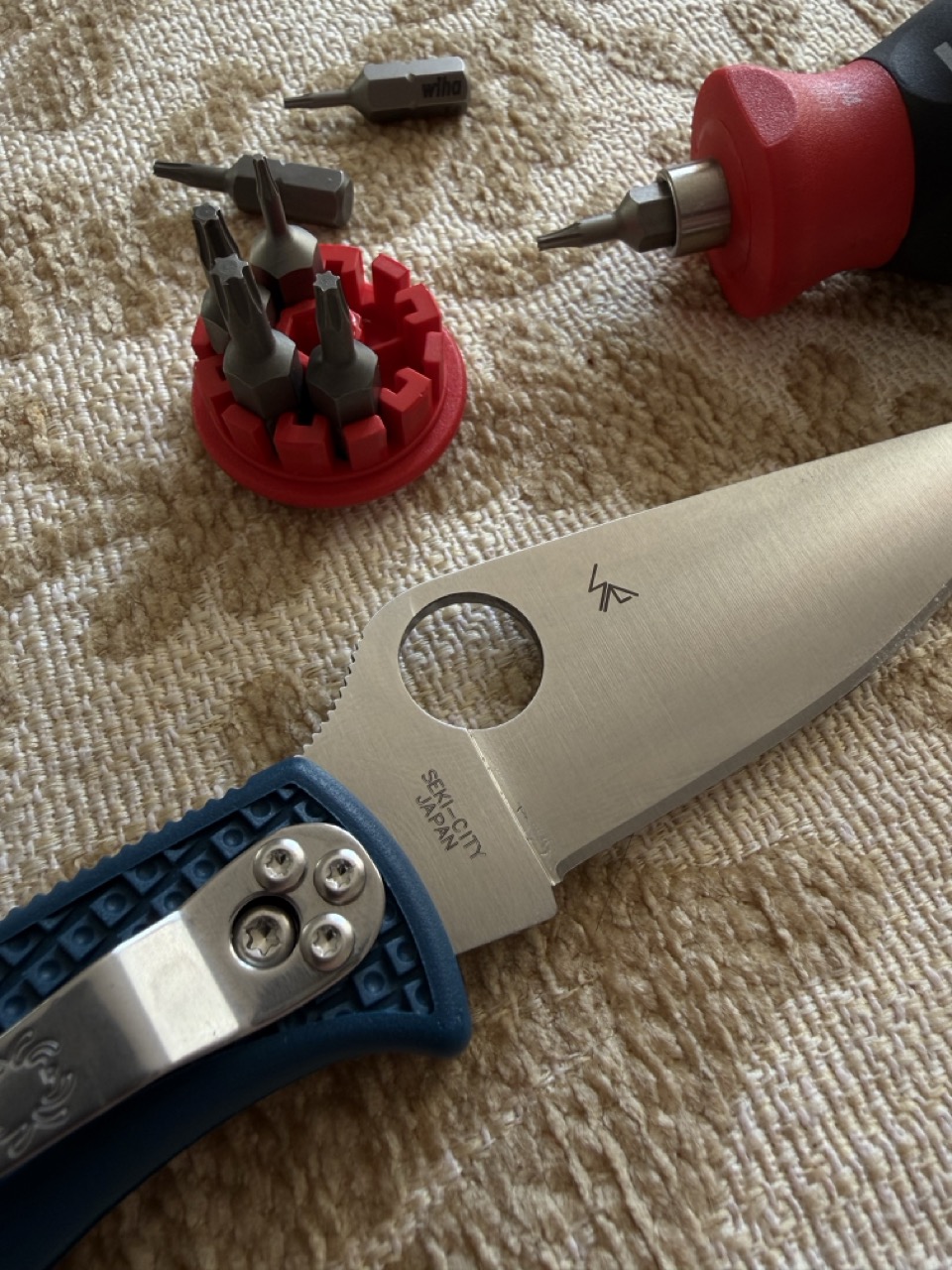
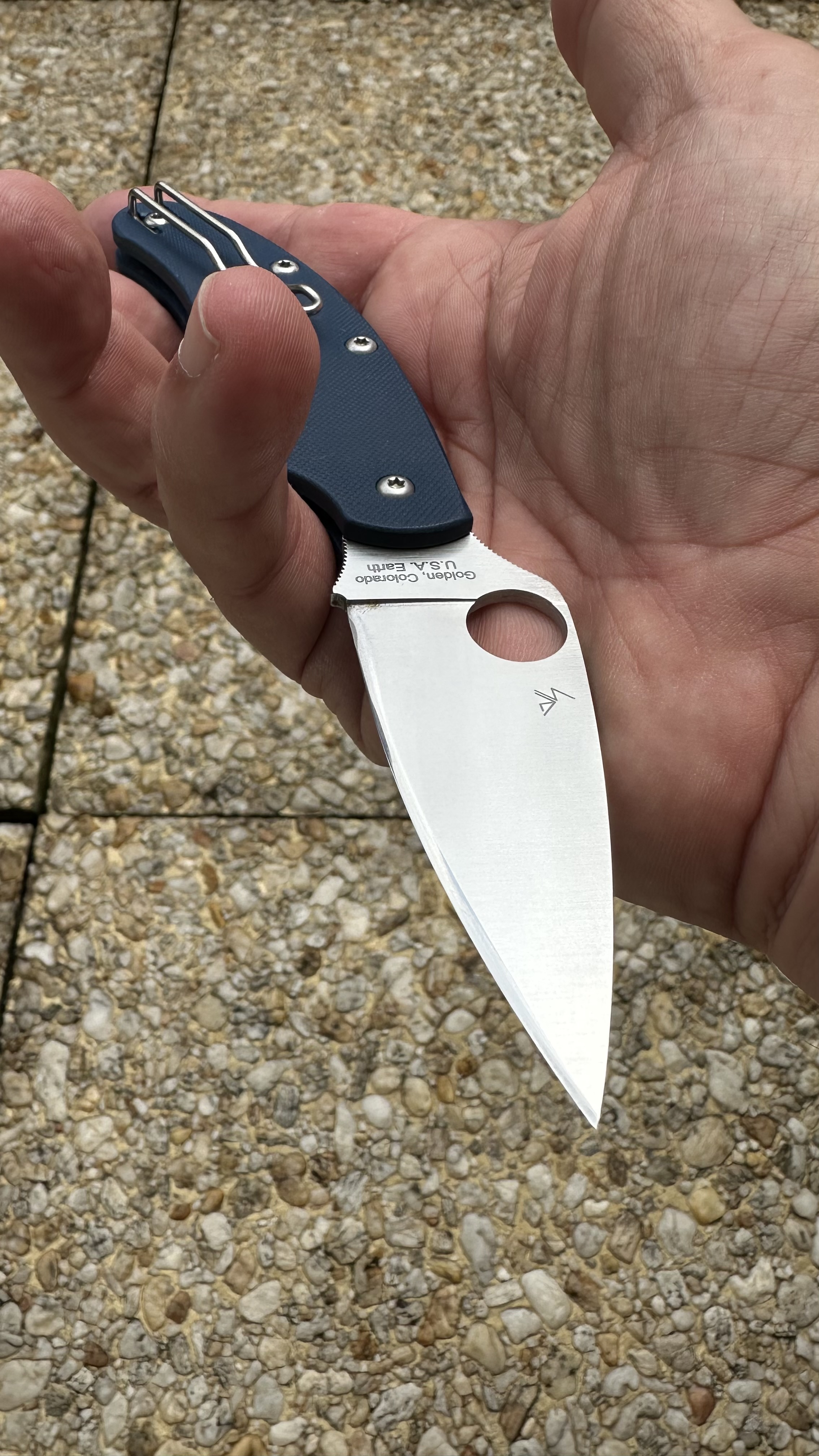
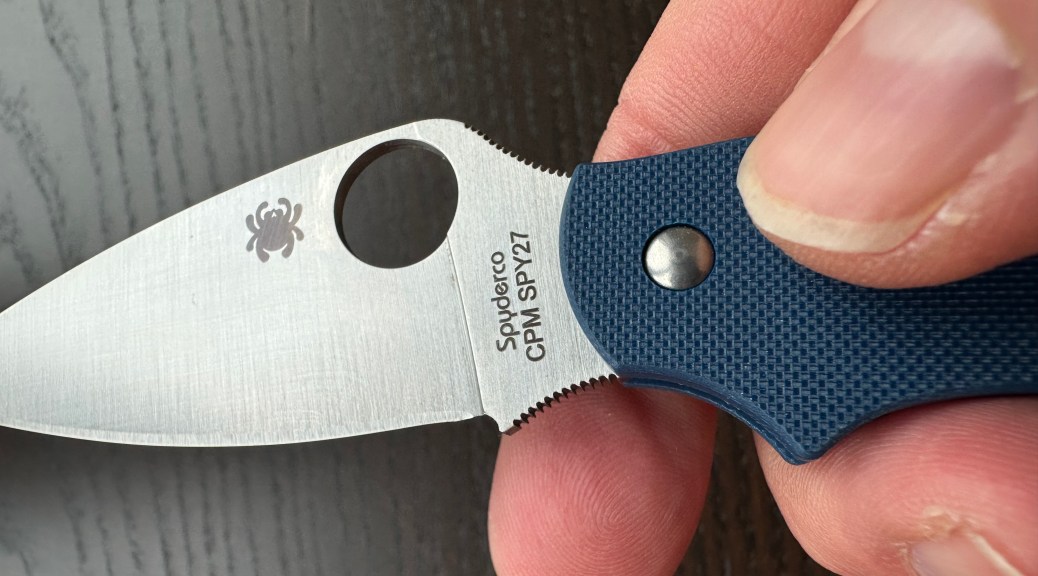
At first glance the satin-finished CPM SPY27 blade and signature cobalt blue peel-plytextured G-10 handle scales are juste gorgeous. Here are the full specs on Spyderco’s pages.

Like the Heinnie the skip joint got a strong mechanism. It is really a pleasure to feel this resistance which was totally absent from the very first drop point UKPK a decade ago. (Picture from Mr Blonde, Spydercollector site)

So far, I cannot imagine my self opening it with a flick like I was able to do on the LC200N FRN version. The Spring here on this G10 version is much stronger.

Let’s do some size comparaison. The UKPK is one of the long Slipit in Spyderco’s collection. It is almost a slipjoint Caly, even longer than a Chaparral. So you really don’t feel “underknifed” when you carry it in your pocket as your only EDC. It is also really handy and practical as a kitchen knife. The best thing is that this design keeps its blade length legal in most countries.

For cooking I often use a Native Chief.

The long leaf shaped blade is a must in the kitchen almost idea. It is pointy enough and its is enough for vegetables. Most of the works done in the kitchen like peeling potatoes, cutting oinions, you name it, was always done with a short full flat ground knife like a “Nogent Couteau d’Office”.

Something about the G-10 version is the spring/back spacer closing the handle of the knife when the FRN got an open handle easier to rinse.
But it is much more gorgeous and with a stronger spring for sure !

It also gives a little more heft to the knife. 48 grams for the FRN and 63 grams for the G10 version -> 31,25% heavier to be precise, almost a third ! But I do really love my heavy butt knives since my Schrade Sharpfinger.

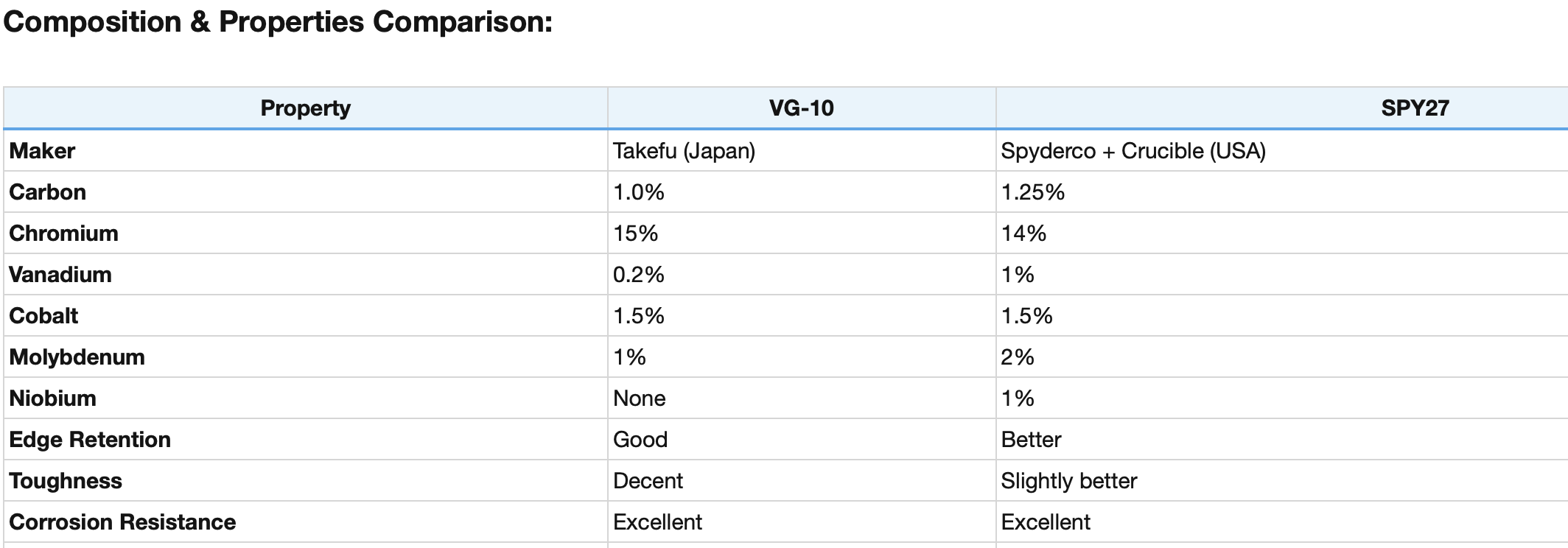
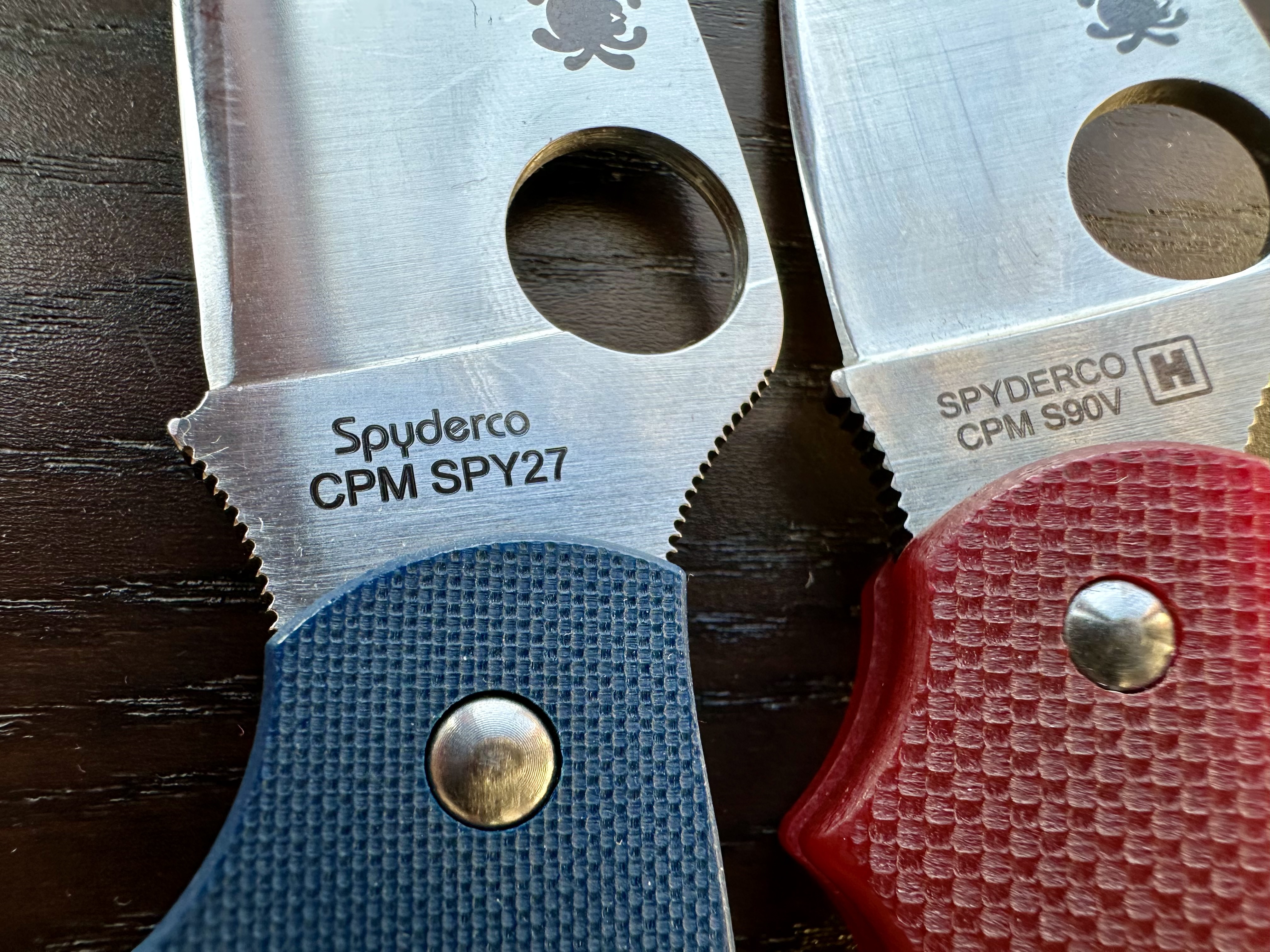
Now this is my first CPM-SPY27 knife. Spy27 is a alloy recipe created in house with Crucible exclusively for Spyderco. It is a CPM ! So this is a premium super steel compared to VG10 or N690… In short it is a American Powder Metallurgy version of the Japanese VG10.

In Sal Glesser words:
“We offer many steels for several reasons;
1) We are Steel Junky’s (even Edge Junky’s) and we like to experience the different flavors and we try to do that.
2) We believe that many of our customers are also Steel Junky’s (even Edge Junky’s) and they too get to experience and play with and “taste” as you say, the many options.

I wanted a USA made “tweaked” version of Gingami 1 by Hitachi and after some effort with Carpenter, we have a powdered USA made steel called CTS-BD1N Which is a refinement of Gingami 1. I wanted a USA made “tweaked” version of Takefu’s VG-10 and now we have a powdered “tweaked” SPY27.

Carbone1.25%
Chrome14%
Molybdène2%
Vanadium2%
Niobium1%
Azote0.1%
Cobalt1.5%
Manganèse0.5%
Silicium0.5%


There is a very nice analysis in Knifesteelnerd and discussion here: https://forum.spyderco.com/viewtopic.php?t=94182

However, it should be noted that the SPY 27 Larrin used for testing was not heat treated by Spyderco. Some minor differences between Larrin’s heat treatment and Spyderco’s heat treatment can probably be expected. That being said, Larrin is the best source of consistent, objective data and metallurgical interpretation for steel comparisons.” To quote Karl_H in
https://forum.spyderco.com/viewtopic.php?t=87383

“SPY-27 will hold the fine edge longer… Its all about the stability of the fine edge, not the total wear resistance until fully dull. In this regard, SPY-27 can do what other stainless steels cant.” to quote Submicron in the same thread.

I am aware that Cobalt’s dust can be an health issue. Of course Rex 45 and Maxamet (10% of cobalt, 1,5% for SPY27) are the heavy weight steel in their tool steel category but the Spy27 (like VG-10), like all cobalt alloys needs to be carefully cleaned after a sharpening process.
(Cobalt may cause an asthma-like allergy. Future exposure can cause asthma attacks with shortness of breath, wheezing, cough, and/or chest tightness. * Cobalt may affect the heart, thyroid, liver and kidneys. * Repeated exposure to Cobalt dust can cause scarring of the lungs (fibrosis) even if no symptoms are noticed. According to https://nj.gov/health/eoh/rtkweb/documents/fs/0520.pdf)


Let say SPY-27 is in the same club as the S35VN steels in terms of performance and it especially loves fine ceramic and leather stropping. It gets easily a very crispy edge like VG10 or BD1N . ( Steel which are “leather super friendly” are also LC200N, 52100, VG10, AEB-L… )
This is a must and a real pleasure for me as I keep my knives sharp mostly with leather. A touch up and it makes flying hairs from my arm again.
And it seems true so far. I have not deshouldered the edge yet and intend to use it with the factory edge for some times but leather made it hair popping sharp. (Once deshouldered it is a straight razor with excellent edge retention… much better than S30V).
To quote Sal:
“SPY27 for some reason, seems to be punching above its weight.”

No crossroads, this Blue Djinn loves leather like the Bill Moran FB01 in VG10 loved it.

No need to use diamonds unless you want to reprofile the blade or round the shoulder then don’t forget to rinse the blade and to clean any dust.
But talking about dangerous dust, I have sanded the scales to preserve my pockets. Never breath that dust !!! Do it under water or wear a mask.
I got a neighbor who has been working around that kind of heavy dust and now he is breathing with two tubes in his nostrils. So be careful with your health.
This Blue G10 got a very nice texture under the thumb like some denim, textil like. It is really pleasant, almost like some Micarta found on the QSP Penguin.

So when you sand G10, just go outside in the wind or work under water. You don’t want to breath G10 dust made of fiberglass and epoxy.
Just rinse it under the tap to have it back to normal.
Once tuned at your hand, G10 is a very very nice material.

As you can notice the scales are even thicket than the blade and the blade is perfectly centered.

There is the famous middle/half stop when closing or opening the knife. It works like a safety measure. This knife is harder to close than to open.

The UKPK is a very ergonomic knife. It feels like it melt in the hand. It is so confortable for heavy cuts. Because this blade can work hard with zero play.

The “pistol grip” is common in many Sal Glesser design like the Endura or the Military. It is much more pronounced on the Massad Ayoob.

No hotspots for me a very safe handle, really, this lil slipjoint is screaming to be used hard.

It is even confortable edge up.

With the Roadie XL. Another great Slipit with a very low profile, almost like a pen in your shirt pocket.

And the mighty Chaparral serrated. Two of Sal’s best designs. Two wolves in sheep disguise thanks to their thin solid blades.

I have decided to de-shoulder the edge for a gentle convex result in the middle of the belly.

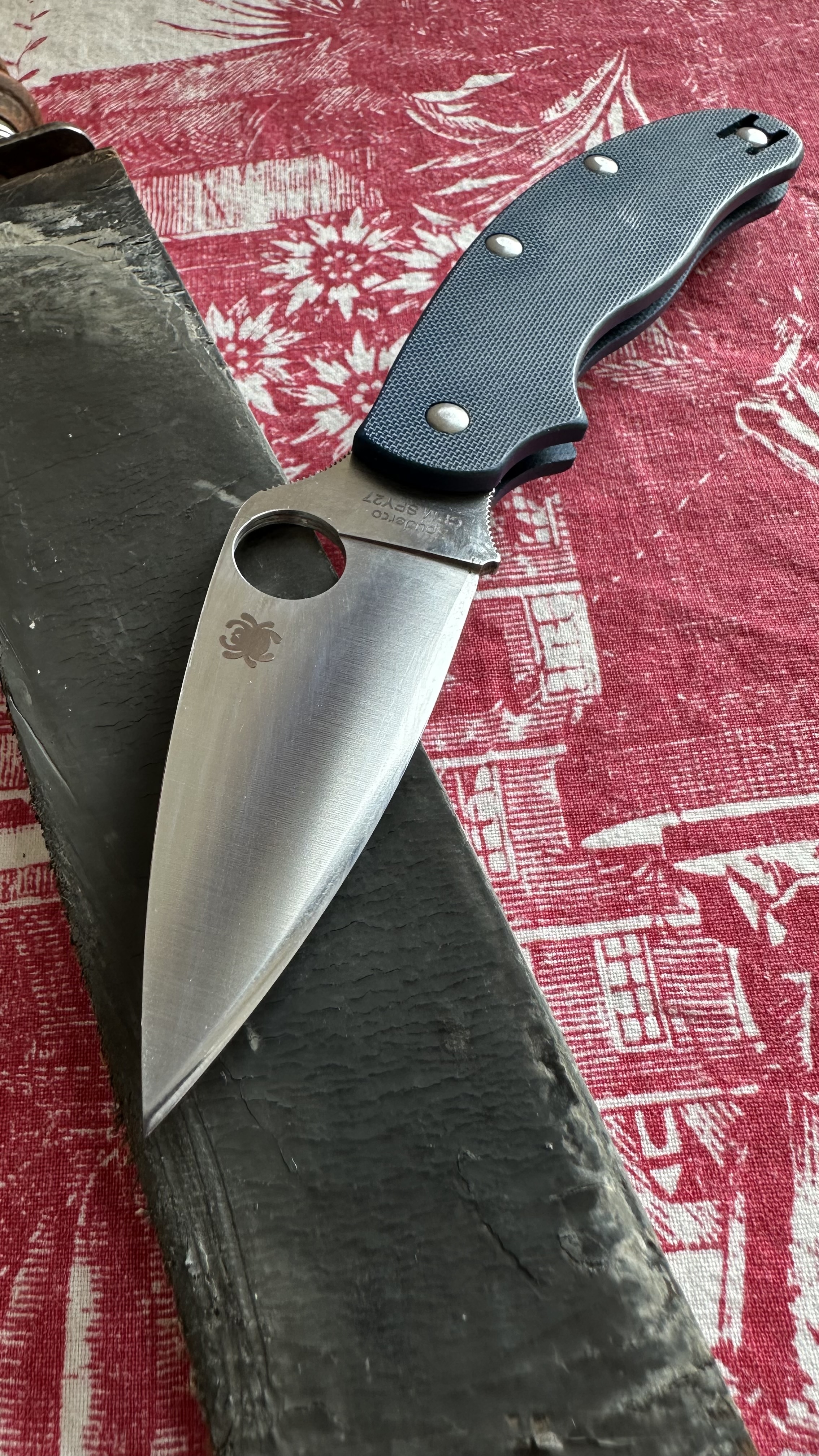
My old leather with some polish compound is ready again to smooth the edge to razor level.

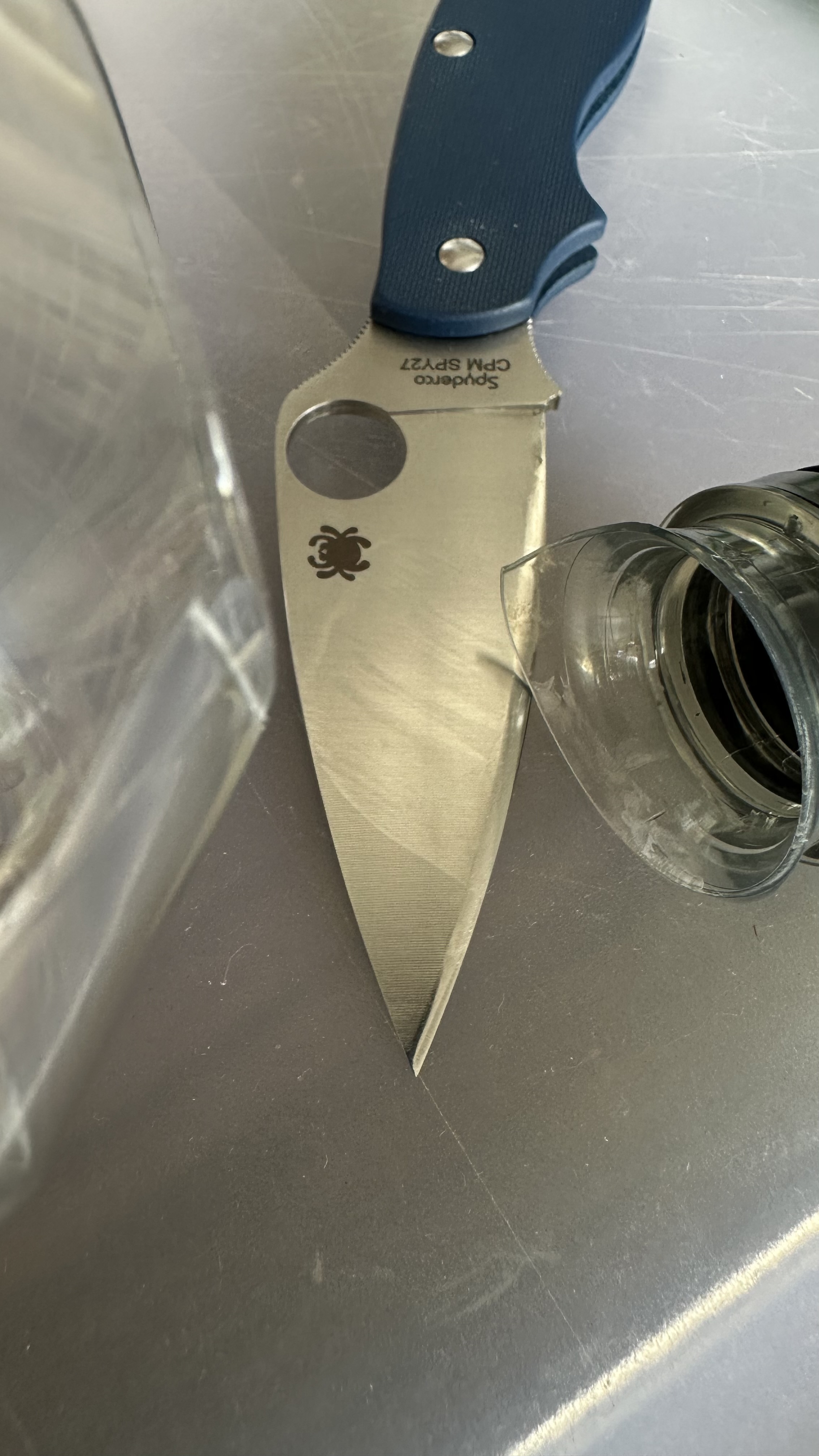
Because I want a better touch on the leather, I usually keep the normal edge at the point to keep material there and near the ricasso as I use this portion for special shores like removing the aluminium cap on bottles.

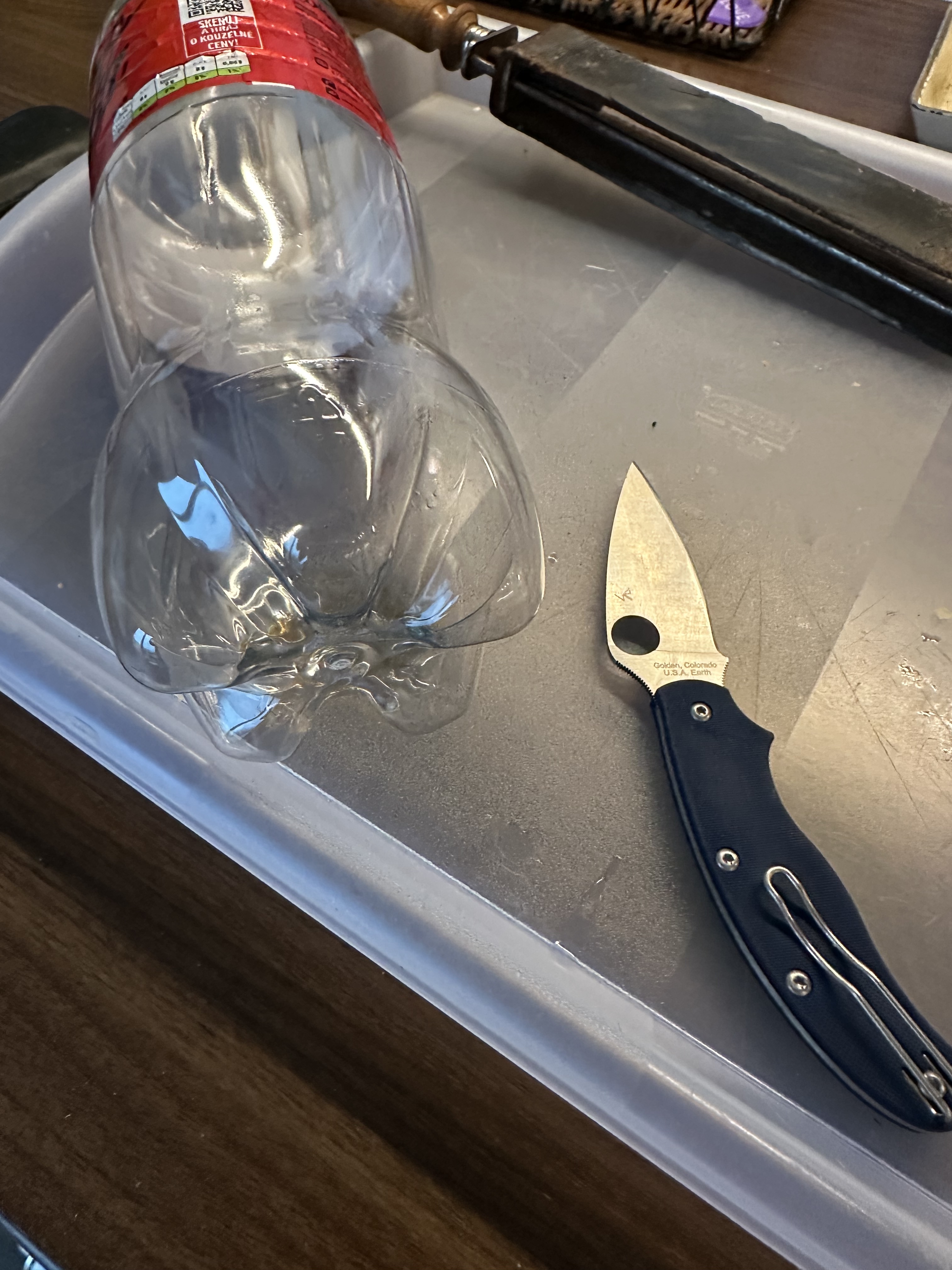
The Coke Bottle Butt test is passed with flying colors. As you can notice the plastic is 3mm thick. Not a single scratch on the blade.

So what do we got so far ?
A master piece of knife design by monsieur Sal Glesser with a strong construction and state of the art in-house alloy serving a thin blade and an ergonomic handle.
My advice: try to grab one before they disappear, it seems that G10 version is not here to last and it is really a sapphire: a true blue jewel !