Tag Archives: heinnie

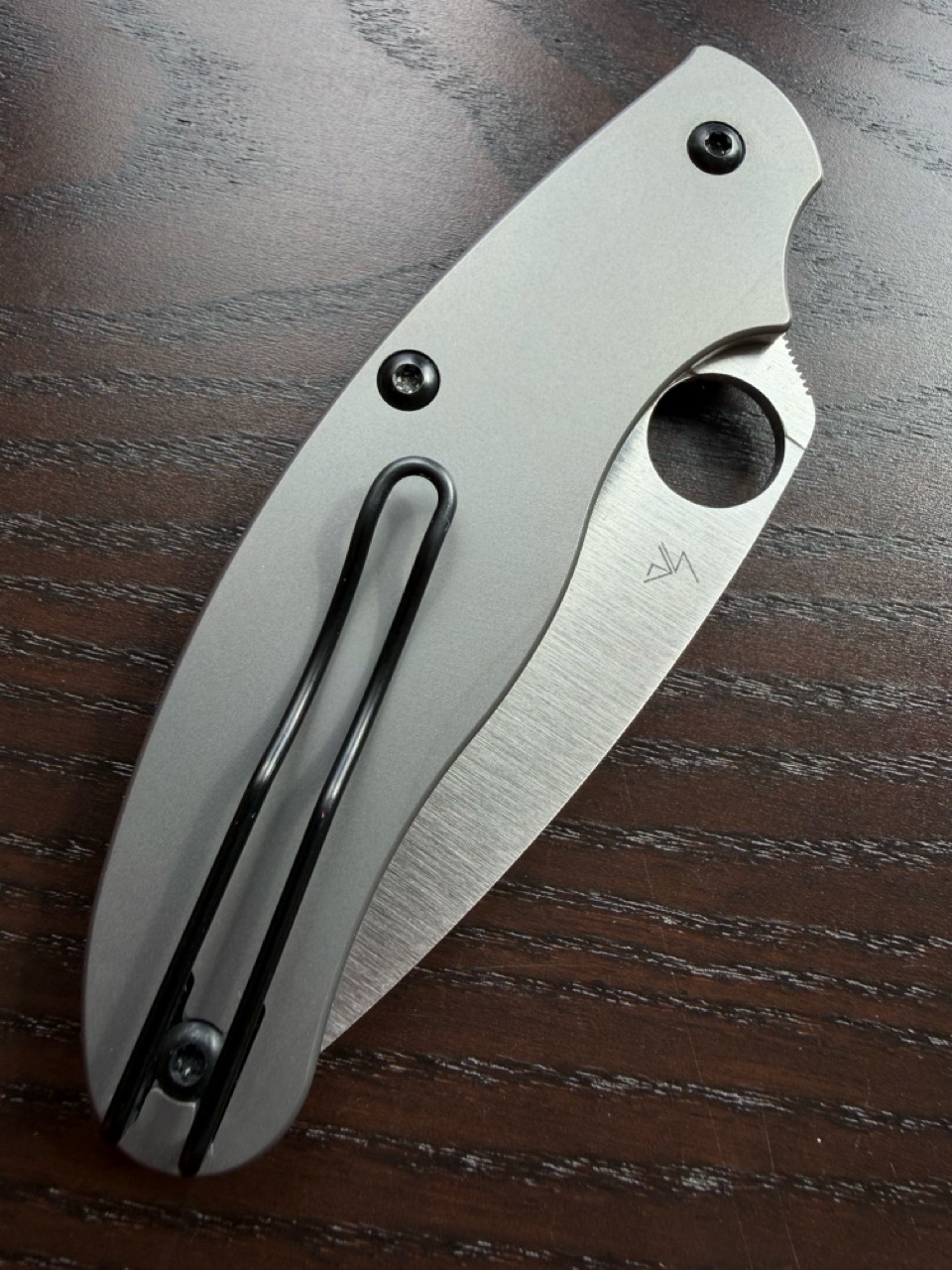
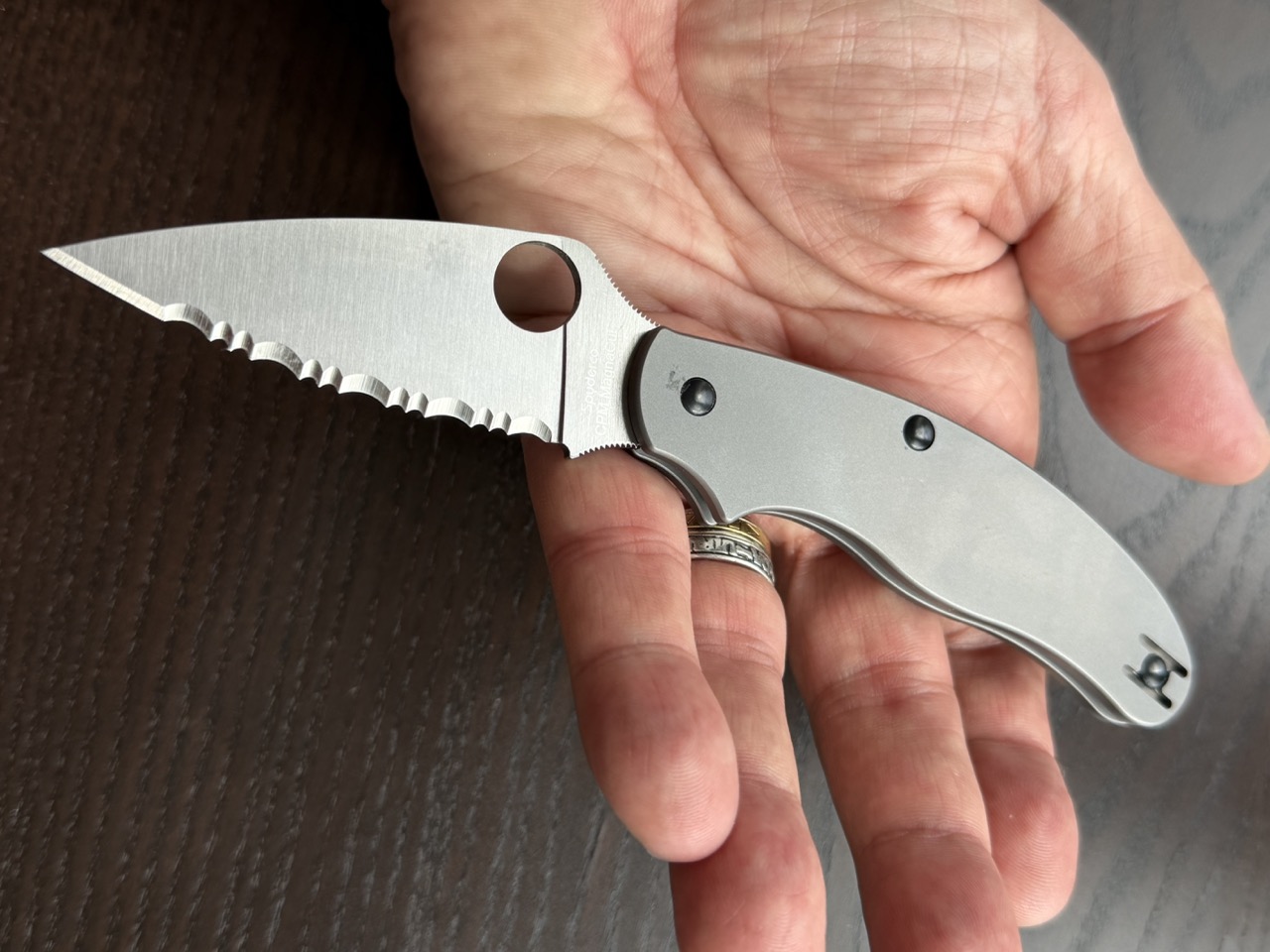
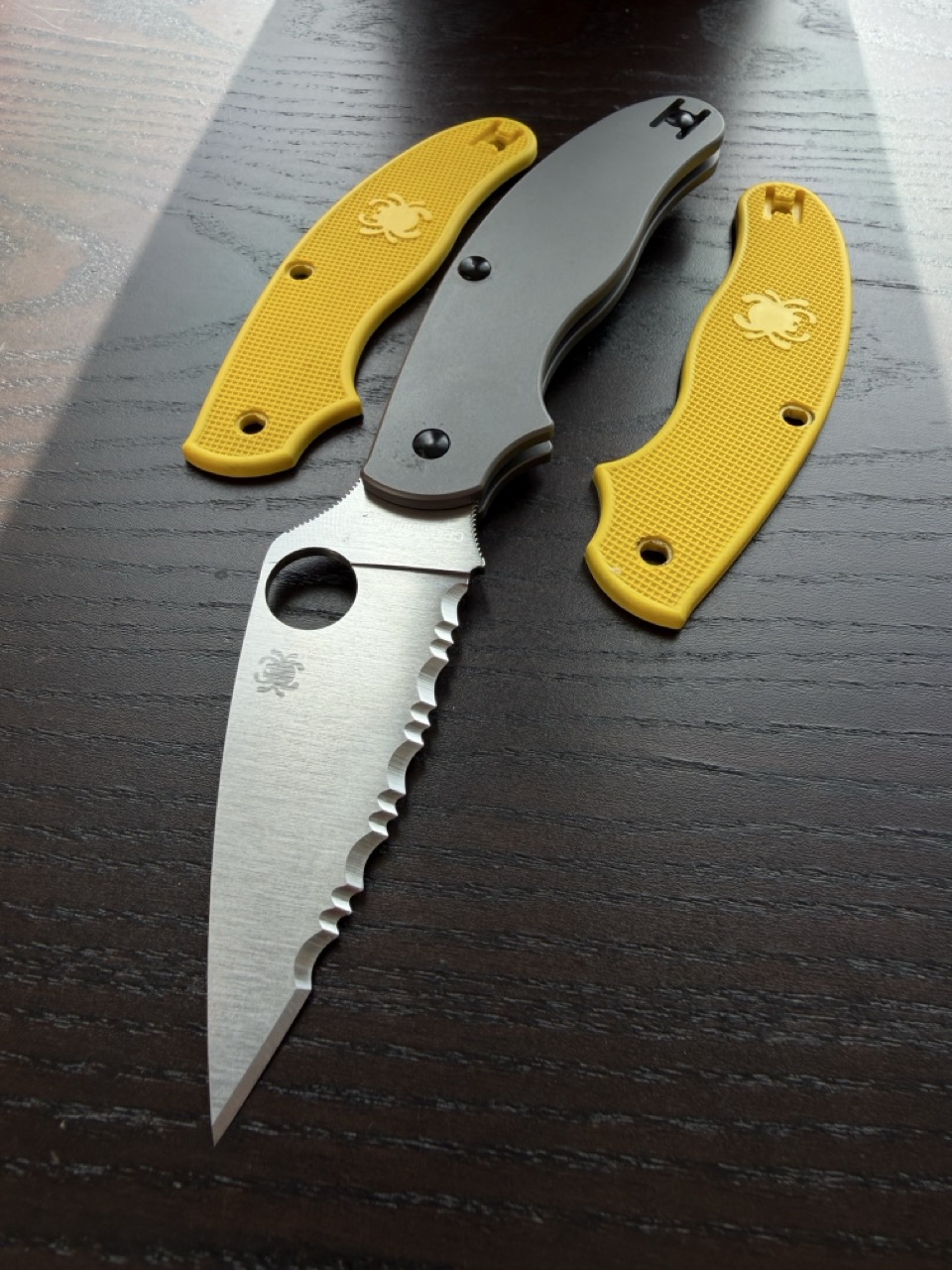
INSTALLING THE TITECH HEINNIE® EXCLUSIVE SPYDERCO UKPK TITANIUM SCALES.

Installing Titech titanium scales from Heinnie Haynes onto a Spyderco UKPK is less a mechanical operation than a quiet exercise in precision, patience, and restraint—something closer to watchmaking than simple knife maintenance. And I’m clumsy.
The UKPK, with its deceptively simple slipjoint construction, hides a strong and finely balanced backspring fork whose tension defines the entire character of the knife. Respecting that tension is the key to a successful transformation. And trust me, it asks for respect because it is strong !!
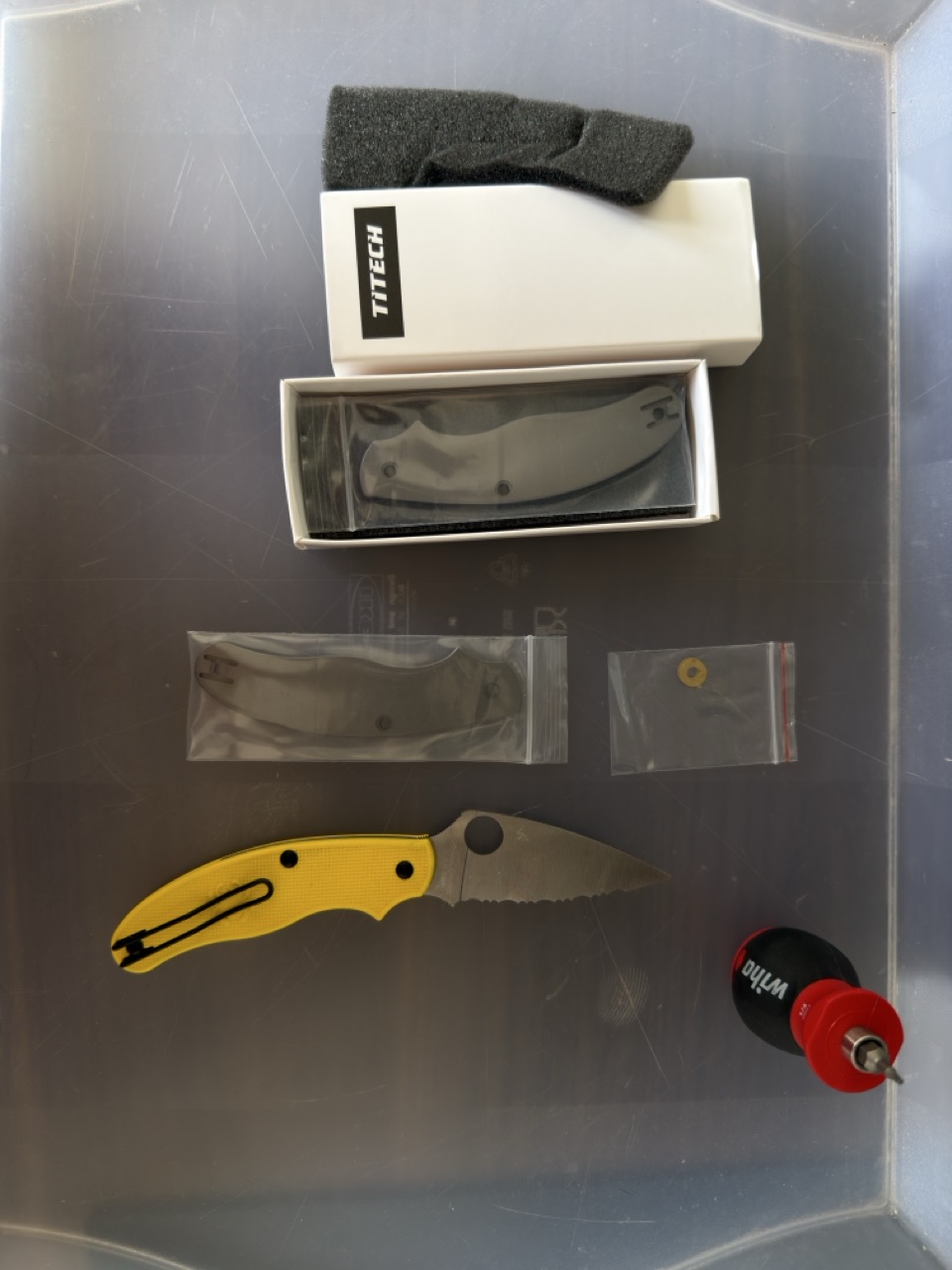
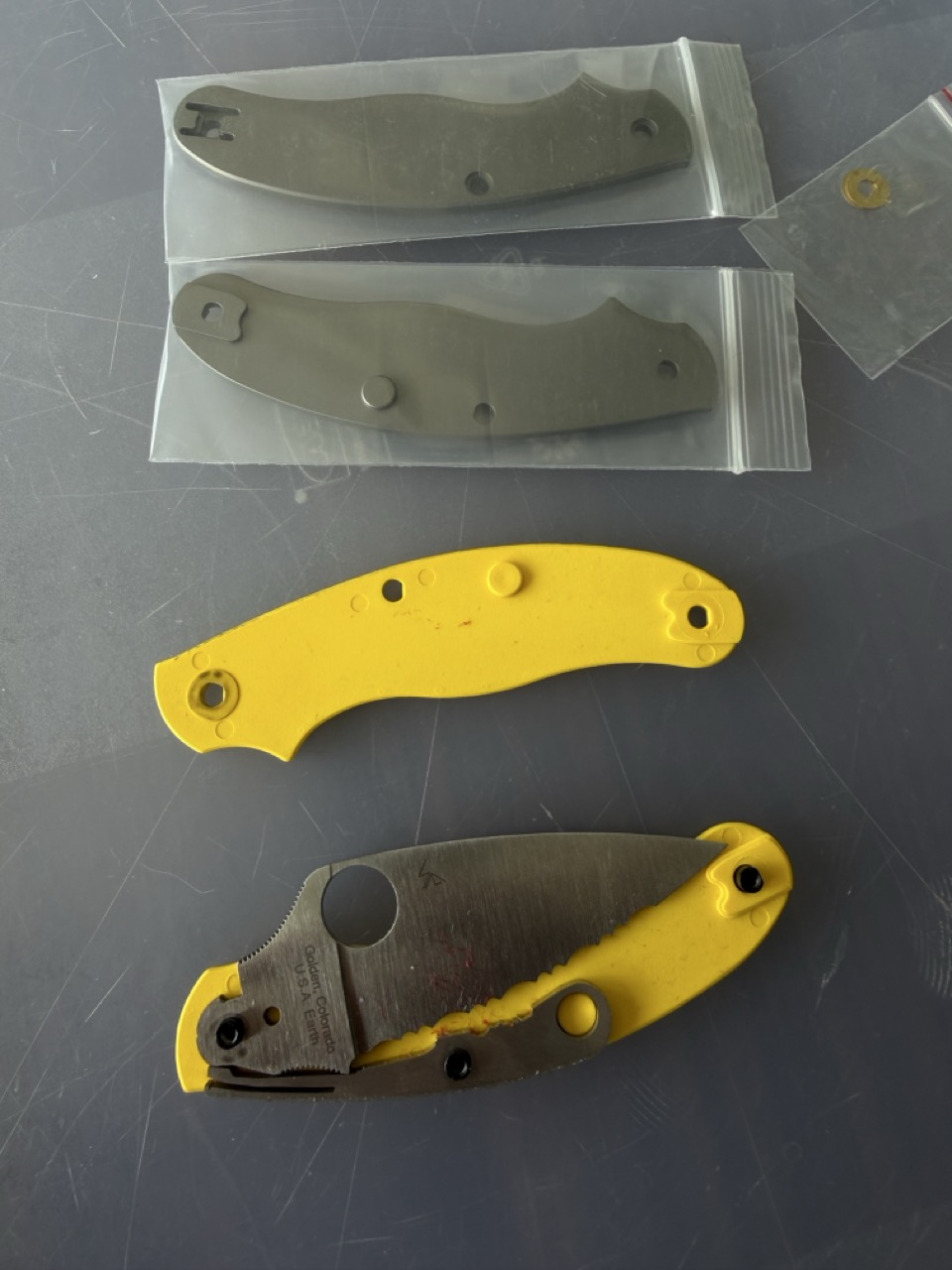
Begin by approaching the disassembly with intention rather than haste. A quality Torx driver is essential, not only to preserve the hardware but to maintain control over each movement. Remove the pocket clip screws first, then the body screws, and only then ease into the pivot. At this stage, the knife is still under spring tension, and it is important to keep a subtle, steady pressure on the handle as the scales begin to separate. The backspring should never be allowed to snap free; instead, it must be guided, almost persuaded, into release.

This moment defines whether the process remains controlled or becomes unnecessarily chaotic.
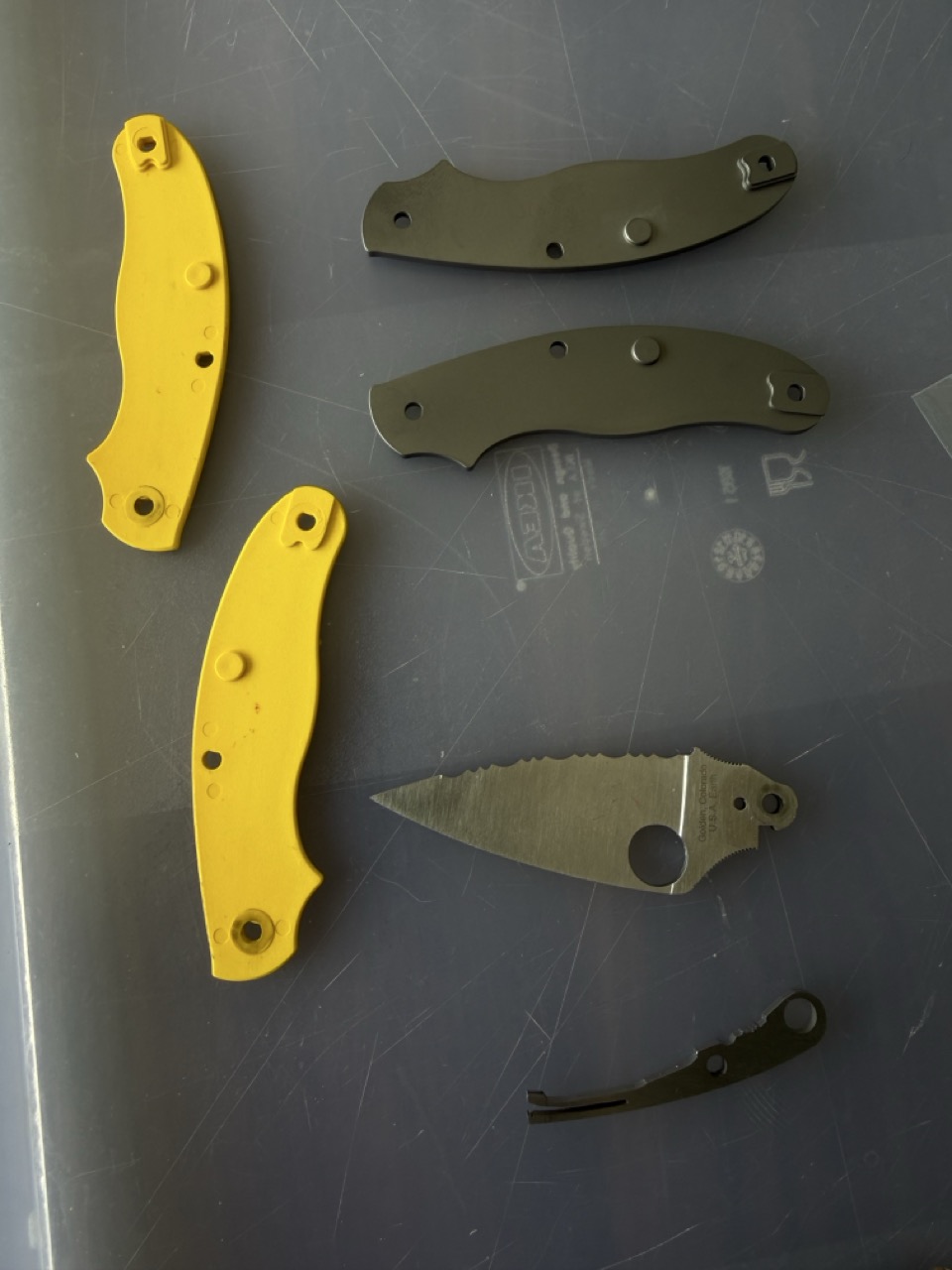
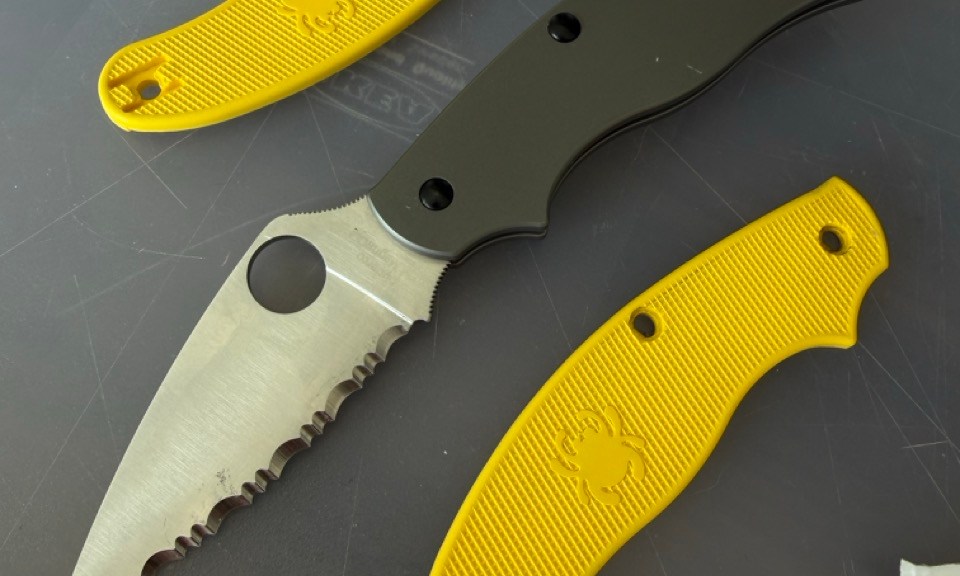
As the original FRN scales come away, the internal architecture of the UKPK reveals itself in a straightforward yet unforgiving layout: blade, backspring, stop pin, pivot barrel, and screws, all of which must be preserved and transferred. The most elegant way to proceed is to move components gradually, keeping their orientation intact, allowing the new titanium scale to receive them in a natural sequence rather than reconstructing everything from memory. The washers, often overlooked, are in fact central to the final action. They must sit perfectly flat on either side of the blade, aligned with the pivot, as even the slightest misplacement will translate into stiffness or uneven movement once assembled.
I have used gaffer tape to maintain the D Shape female screws in place while manipulating the scale.
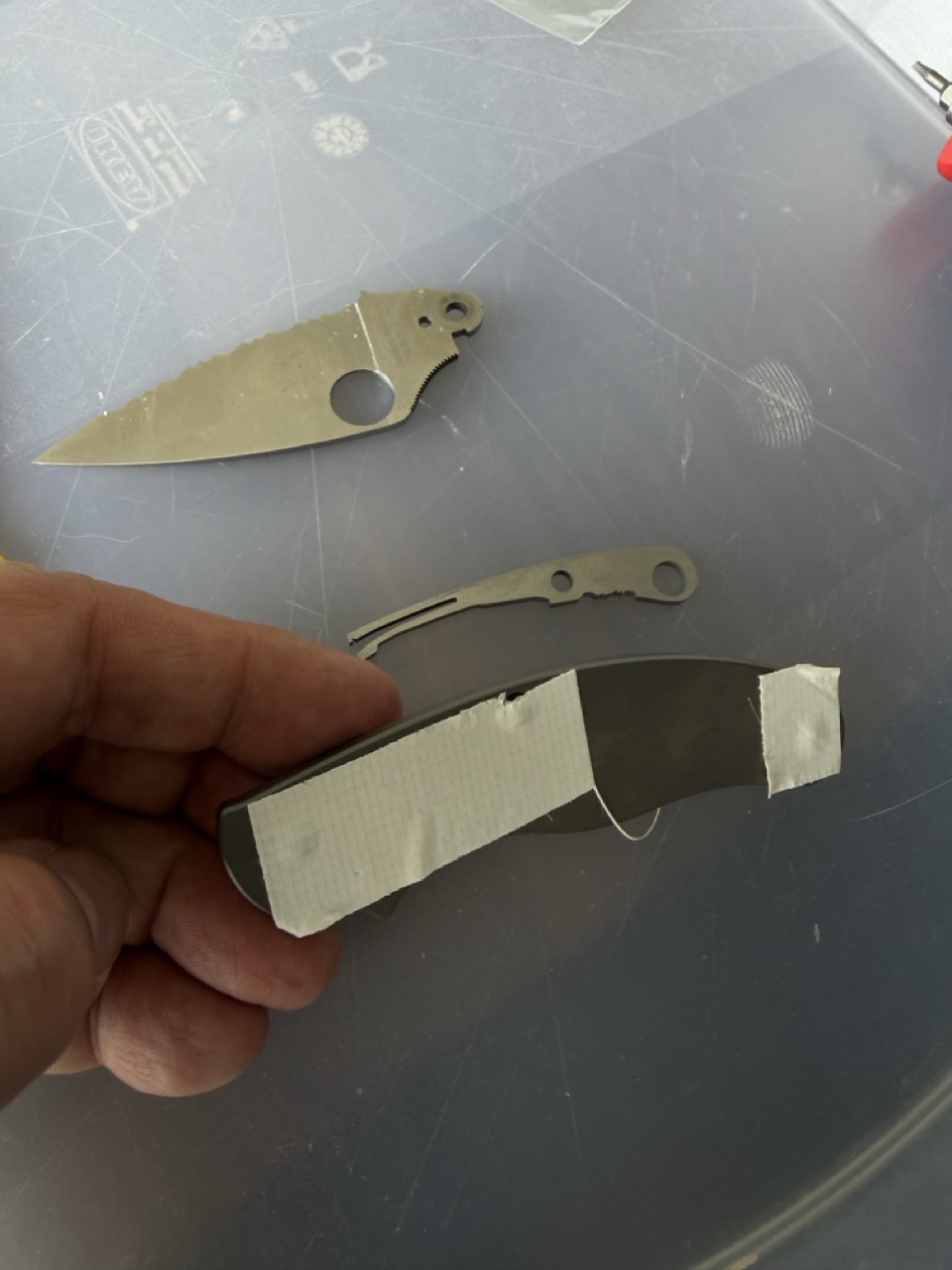
Reassembly is where the transformation begins to take shape. One titanium scale becomes the foundation upon which the blade and spring are seated, their relationship re-established with careful alignment. The second scale closes the structure, and the pivot is introduced not as a point of tension but as a placeholder, tightened only enough to hold the system together.
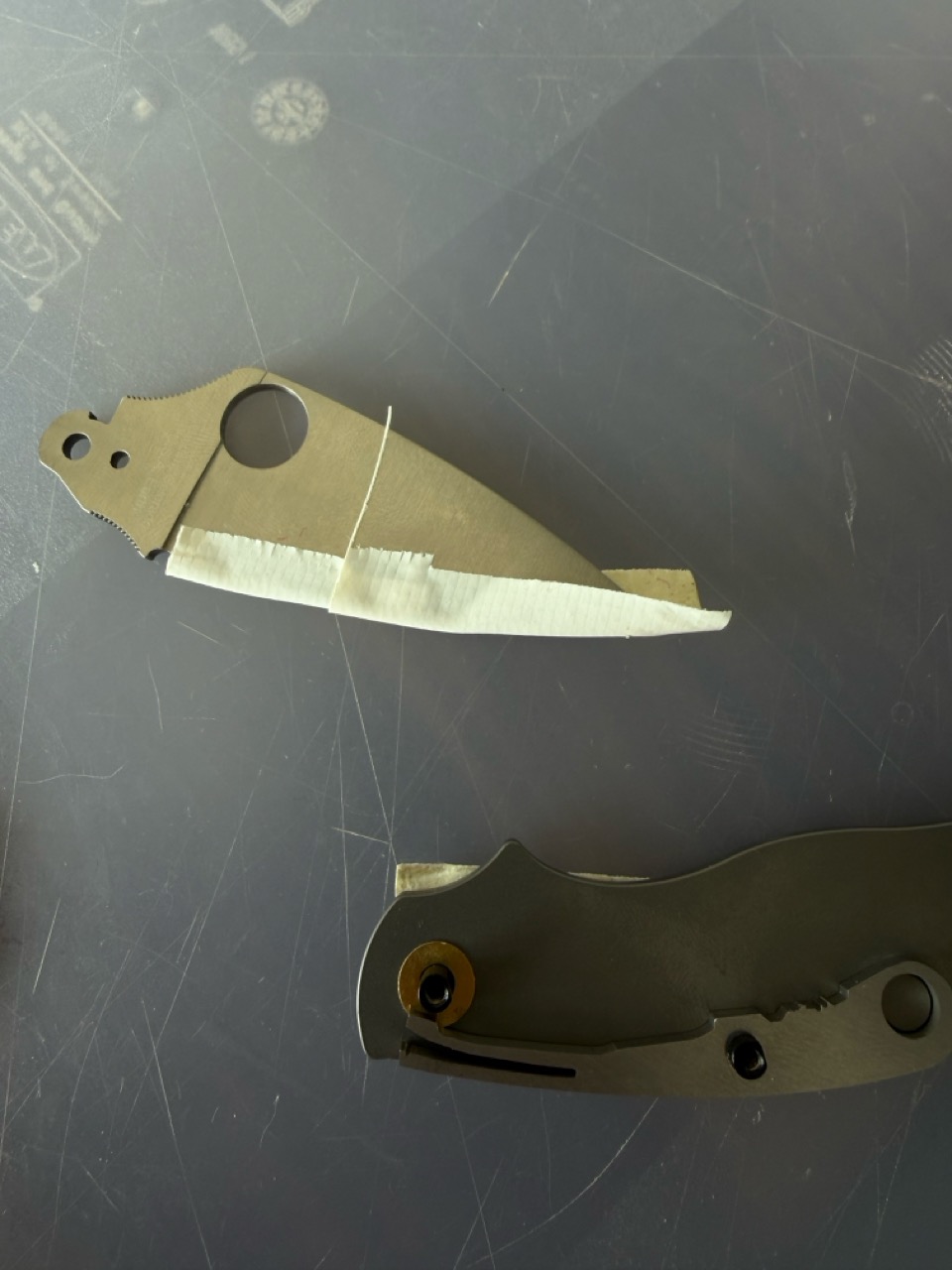
Insert the blade carefully into the fork of the backspring, ensuring it seats naturally without forcing the geometry; from that moment onward, the entire operation shifts to the opposite end of the spring, whose tail must be guided with precision into the recessed channel of the titanium scale, where it locks into place and defines the tension of the mechanism.
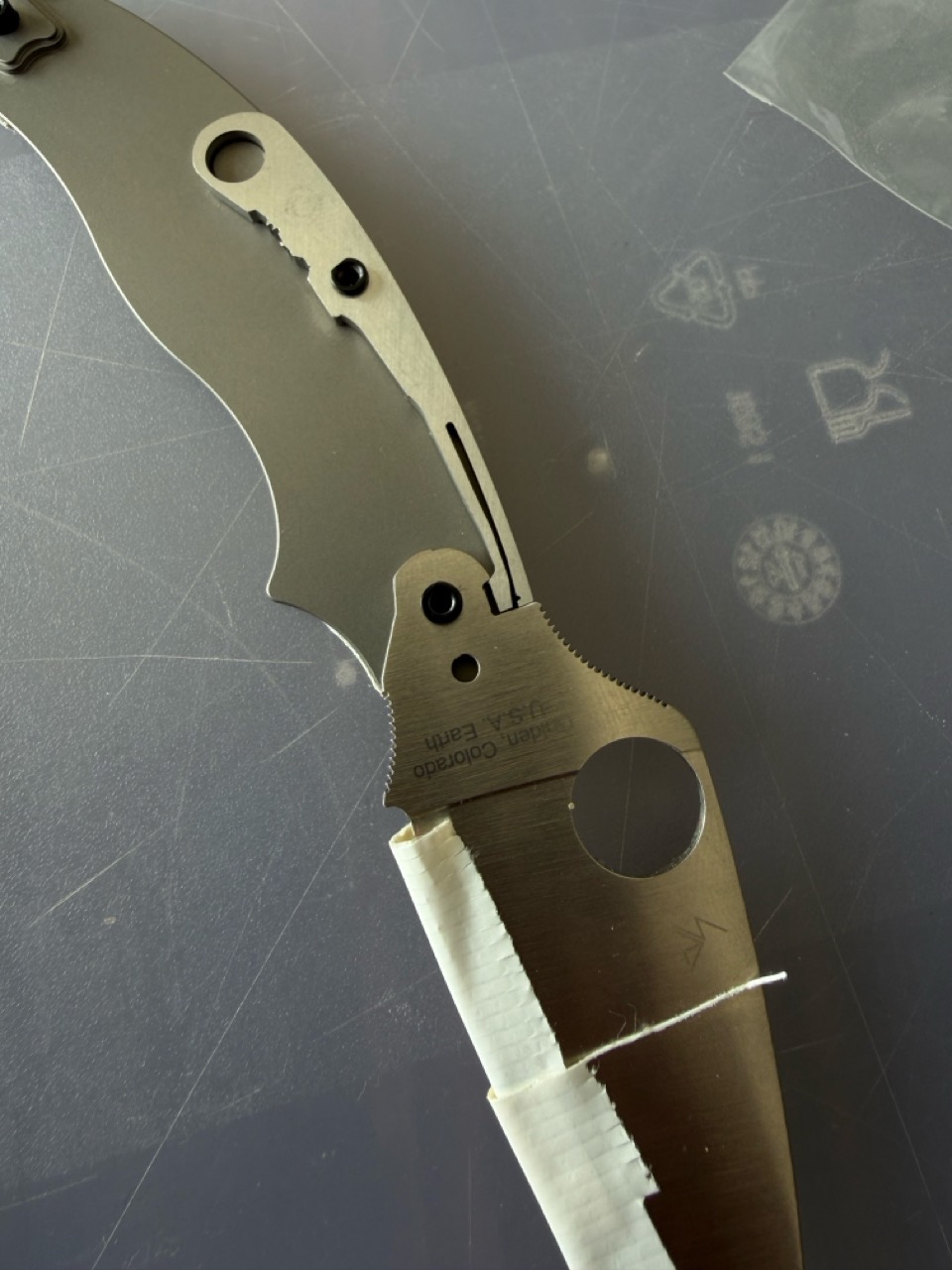

The body screws follow, also left deliberately loose. At this stage, the knife should feel unresolved, almost unfinished, and that is precisely the intention.

The refinement comes next, and it is here that the distinction between an average installation and an exceptional one is made. The body screws should be brought to tension first, gradually and evenly, allowing the frame to settle without distorting the spring. Only then should the pivot be adjusted, and even then with the lightest touch, in minute increments. The temptation to over-tighten must be resisted entirely. On a slipjoint like the UKPK, excessive force does not create solidity; it creates imbalance, increasing spring pressure artificially and compromising the fluidity of the action. In extreme cases, it risks stressing the spring itself, which is the heart of the mechanism.
Keeping the pivot loose with a touch of threadlocker is exactly the right instinct; it allows the mechanism to settle into its natural alignment before you commit to final tension.

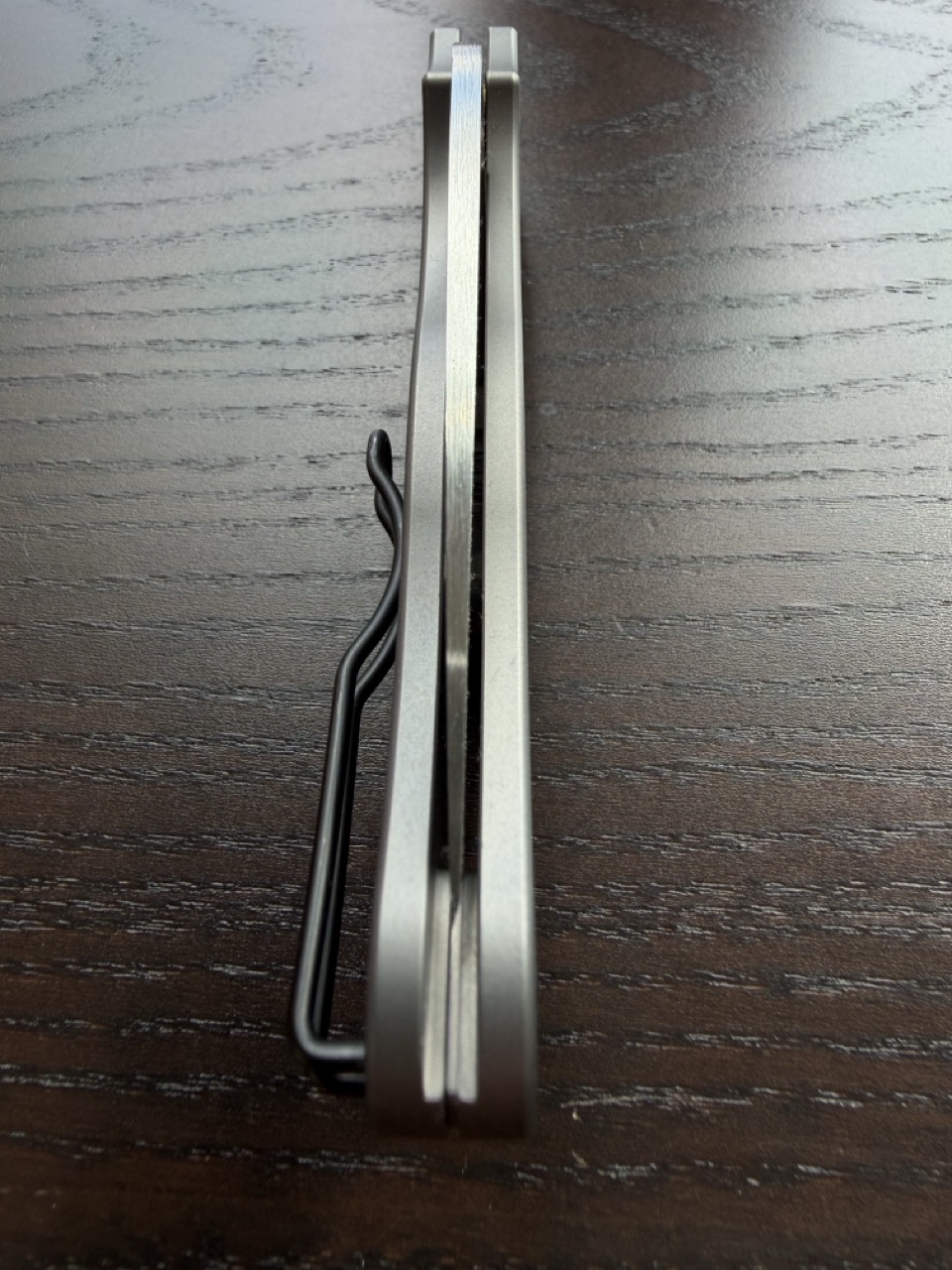
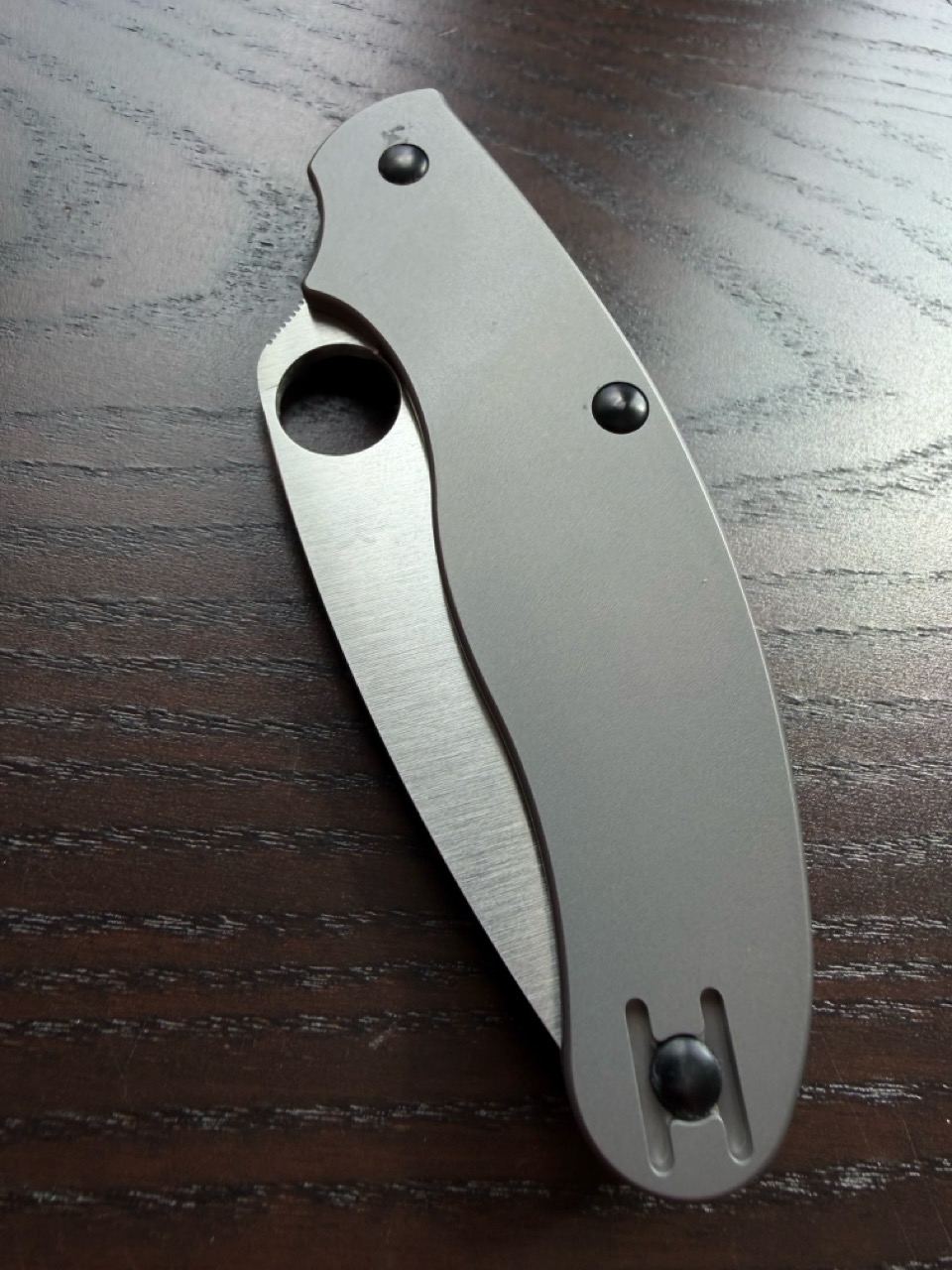
The final result: the UKPK gains a subtle weight, a cooler tactility, and a sense of structural integrity that the original FRN cannot provide.
I love the added heft—it enhances the feel while preserving the rustproof nature of the UKPK Salt.
t’s a rare upgrade where nothing essential is lost. Instead, everything is simply… tightened, deepened, and made more intentional.
And for around 57 euros, it feels like a genuine bargain.
Heinnie Haynes also offers brass and copper Titech scales, though they didn’t quite suit the spirit of my Spyderco UKPK Salt.
But if Sal Glesser ever releases a 52100 version of the UKPK, copper would suddenly make perfect sense. 🙂
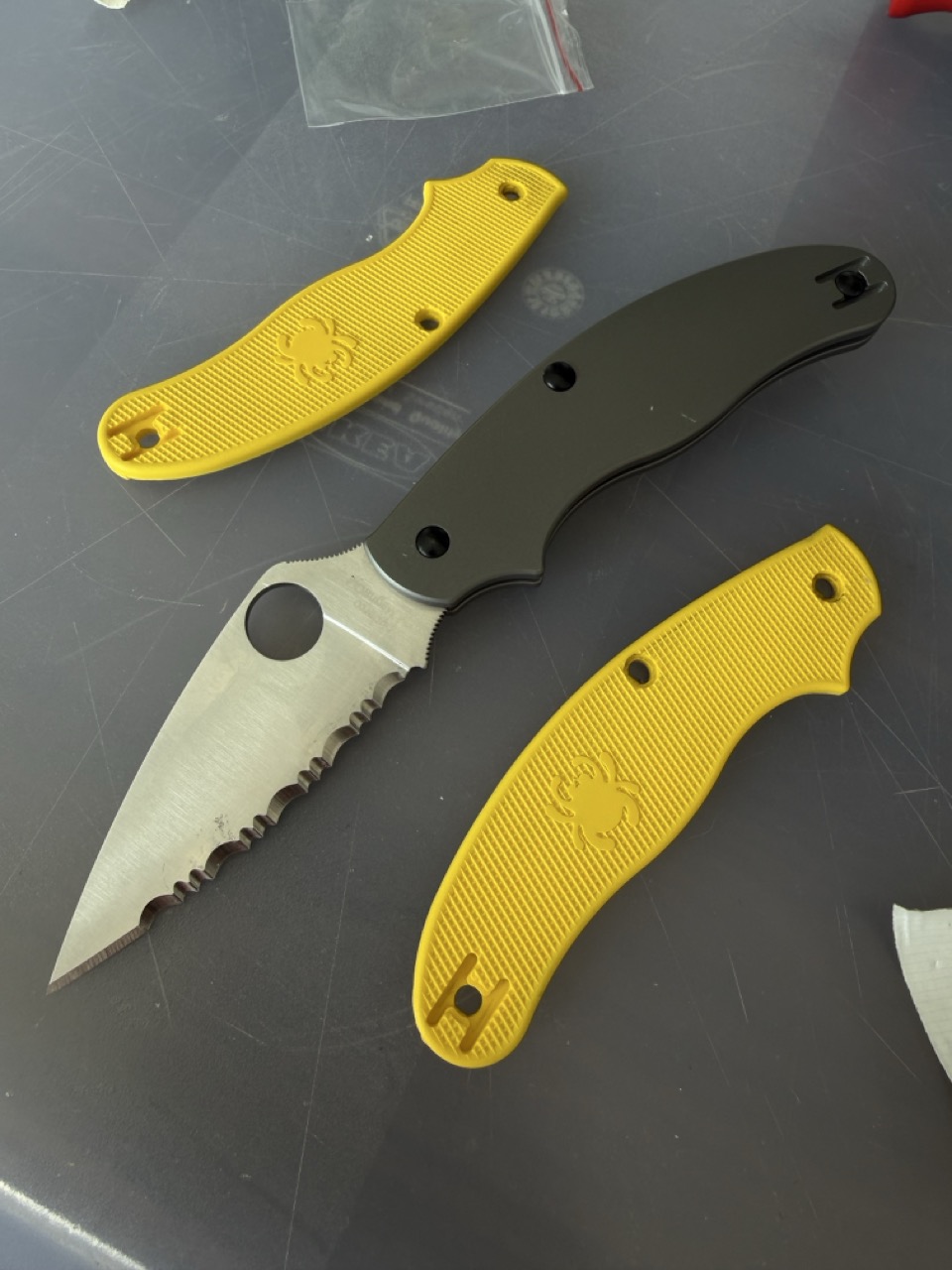
Now my Spyderco UKPK Salt has developed a beautifully smooth action paired with a reassuringly strong mechanism. The mid-stop produces a crisp, satisfying clang that subtly signals quality. It’s a pleasure to handle, with a confidently positive open position that inspires trust every time.
C127GPRD SPYDERCO URBAN HEINNIE® EDITION – The S90 Urban UK Legal Wonder.

The Spyderco Urban, Squeak, and UKPK family are the most addictive slipjoint lineups in the modern knife world. I have already written about them on this blog. The UKPK Salt is simply one of the best modern folders available nowadays. The Squeak is totally sheeple-friendly, and of course the Urban was made for city carry and can be carried almost everywhere except on airlines.

Spyderco’s description:
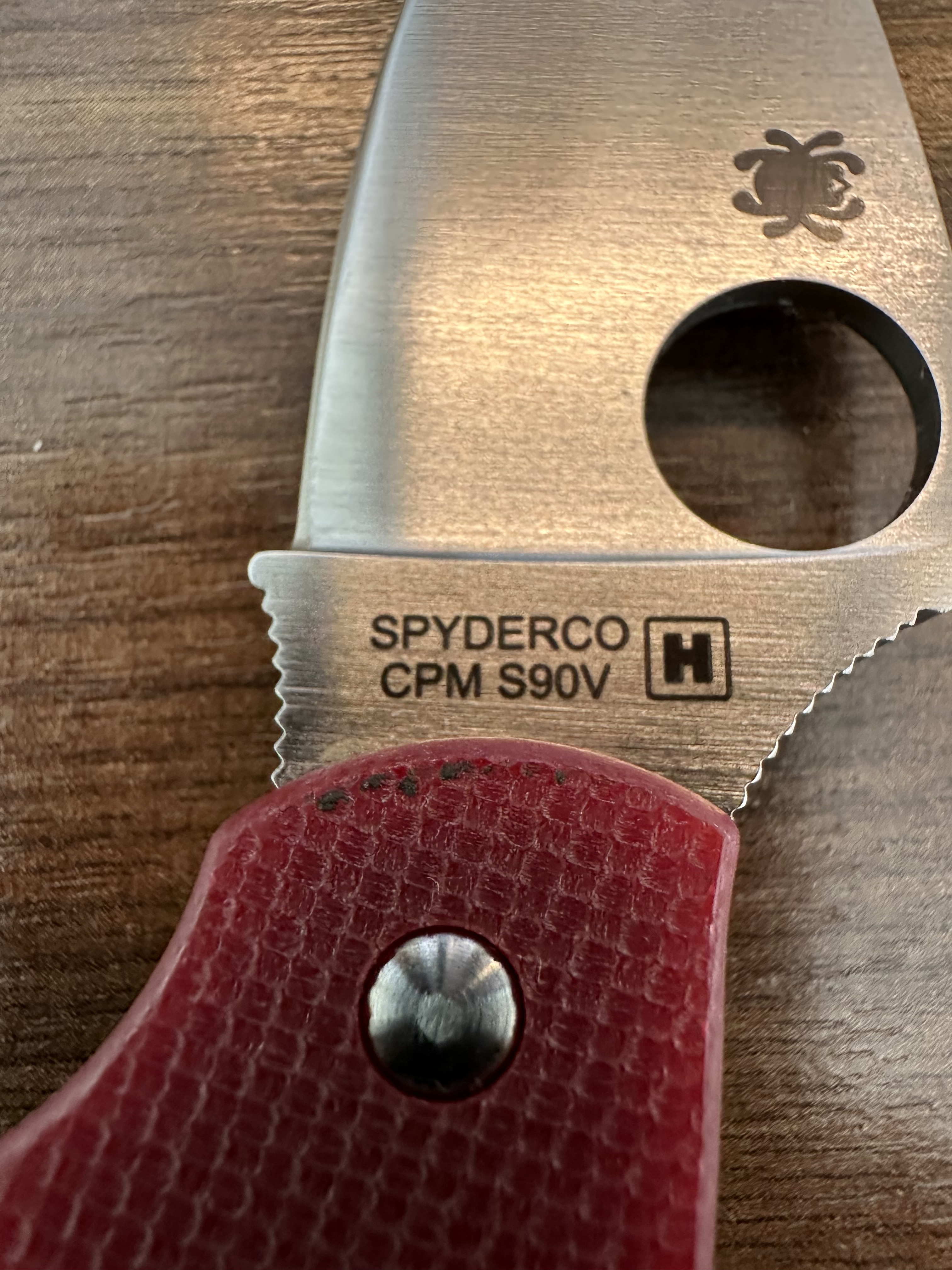
“This Exclusive version of the Spyderco Urban™ was manufactured specifically for Heinnie Haynes (heinnie.com) and is available only through their sales channels.  Originally introduced in 2009 and later discontinued, the Urban remains a cult classic among devoted fans of Spyderco’s non-locking, one-hand-opening, clip-carried SLIPIT™ knives. This distinctive expression of it showcases a leaf-shaped blade crafted from premium CPM® S90V® particle metallurgy stainless steel. The PlainEdge™ blade is full-flat ground for exceptional edge geometry and is proudly laser engraved with the Heinnie Haynes logo.Not to be outdone, the handle of this knife features distinctive red G-10 scales with a non-slip peel-ply texture. They complement the jimping (textured grooves) on the blade’s thumb ramp and index-finger choil to ensure a positive grip and outstanding control during use. A reversible deep-pocket wire clip provides a choice of left or right-side tip-up carry, making every aspect of the design completely ambidextrous.”

This red one is my third Urban. The first one was in K390, the second one was in AEB-L and was named Cappuccino. All of them were eventually pushed out of my pocket because of the greatness of the UKPK Salt in LC200N.
Still, they have all been great companions during my travels in the UK, as they are fully legal: non-locking knives with blades under 3 inches (76 mm)…
Eventually, I started looking for a G10 version with a full stainless steel backspacer, and I found the Heinnie Haynes exclusive version available on their site. It is not a cheap knife, be aware of that, but it oozes quality both on paper and in hand.

First things first, this Urban features a CPM S90V blade, the same steel found on the Proficient bushcraft knife. S90V was previously known as CPM420V, and it remains one of Sal Glesser’s favorite steels ever produced by Crucible.

S90V is famous for its incredible edge retention, and after 25 years of using it, I can tell you that it can also be a bear to resharpen. Diamonds are its best friends, and even then it requires a lot of white ceramic work and stropping… Compared to non-stainless super steels like Maxamet, it can be quite tedious to bring back to a truly razor-sharp edge. But once sharp, its working edge seems to last forever.
This is exactly the opposite of my previous experience with Cappuccino, my AEB-L Urban. That knife was tough and incredibly easy to keep razor sharp, but it quickly lost its edge when used on abrasive materials like cardboard.
S90V eats brown cardboard for breakfast and stays sharp for a very long time, but it takes patience to bring it back to a crisp razor edge.
That is excellent when you need a long-lasting working knife on a trip where you did not plan to bring sharpening equipment. Sal Glesser trusts S90V enough to use that alloy on many of his own special Sprint Runs with carbon fiber handles.
I have never been disappointed by S90V. Even on fixed blades or on the Manly folders, it has always been a game changer in terms of long-lasting sharpness, and in my experience it even surpasses CPM 10V.
S90V is also highly stainless. Unless you plan to use your knife in the ocean, it can handle demanding work in the forest without needing immediate cleaning.
It has also been noticed that this S90V Urban features a slightly thinner blade: 0.23 cm instead of 0.29 cm. The blade is also slightly shorter than previous Urbans, although I have not noticed any difference in real-world utility.

This Urban was made in Italy, and in my personal experience, Maniago craftsmanship has never been a disappointment. Your mileage may vary, but this has been mine. I have always been happy with my Spytalians!

G10 is not a common material on Urbans, as FRN dominates the lineup, and the texture of this G10 is even more distinctive. At first, I considered turning this knife into a smooth “pebble,” but… nah! It is great as it is.
I only adjusted the feel slightly by sanding it, but overall this is a beautifully made, high-quality handle — once again, kudos to Maniago.
All Heinnie Haynes exclusives feature this red treatment on the handle; it is their signature. The G10 version also benefits from a longer steel backspacer that closes the handle construction more completely.

Now about the action: this Urban has the strongest spring of all my slipjoints! That is actually a very positive point. I can still open it with a quick wrist movement, but closing it requires real force, which is rather rare — even in Spyderco production. (The first UKPKs were “chewing gum soft,” to quote Guillaume, moderator of the Spyderco Fan Club.)
A strong spring combined with the absence of a lock makes it a great candidate for legal everyday carry nowadays.

Now regarding geometry, Maniago deserves another round of kudos! As you can see in the picture above, I was able to split a bottle bottom in a single pass with the factory edge. That is also rare! Even my beloved Hellboy needed some thinning before reaching that level. This is thin geometry straight out of the box!
The short drop-point blade makes it an excellent whittler, and Spyderco truly knows how to make little big knives. The hump and choil transmit your cutting force directly into the blade, sparing the handle, pivot, and mechanism. It is a clever design, inspired by the old San Francisco gambler’s knives. Sal’s first implementation of this “cockpit” concept dates back more than 30 years to the C36 Military.
The choil-and-hump combination is brilliant for preventing a non-locking blade from closing onto your fingers. To me, it is an absolute must-have!

So here we have a legal folder with a non-threatening blade, a strong non-locking spring, excellent cutting geometry, and stellar particle metallurgy steel.
What is there not to love about this wonderful Urban?

You can cut a pizza on your plate and use it as a steak knife without raising any eyebrows. I use my knives directly on plates, and I know how to avoid dulling them on ceramic. My mother-in-law never places a knife near my plate anymore — that is how I can spot where I am supposed to sit at her table.

The Urban also has the perfect size for carrying in a Levi’s 501 watch pocket, and as you can see, mine has been shredded over time by many aggressive G10 handles before extensive sanding.

So yes, I highly recommend this excellent exclusive little knife. Again, it is not cheap, but the quality is there from tip to clip.