Tag Archives: serrated

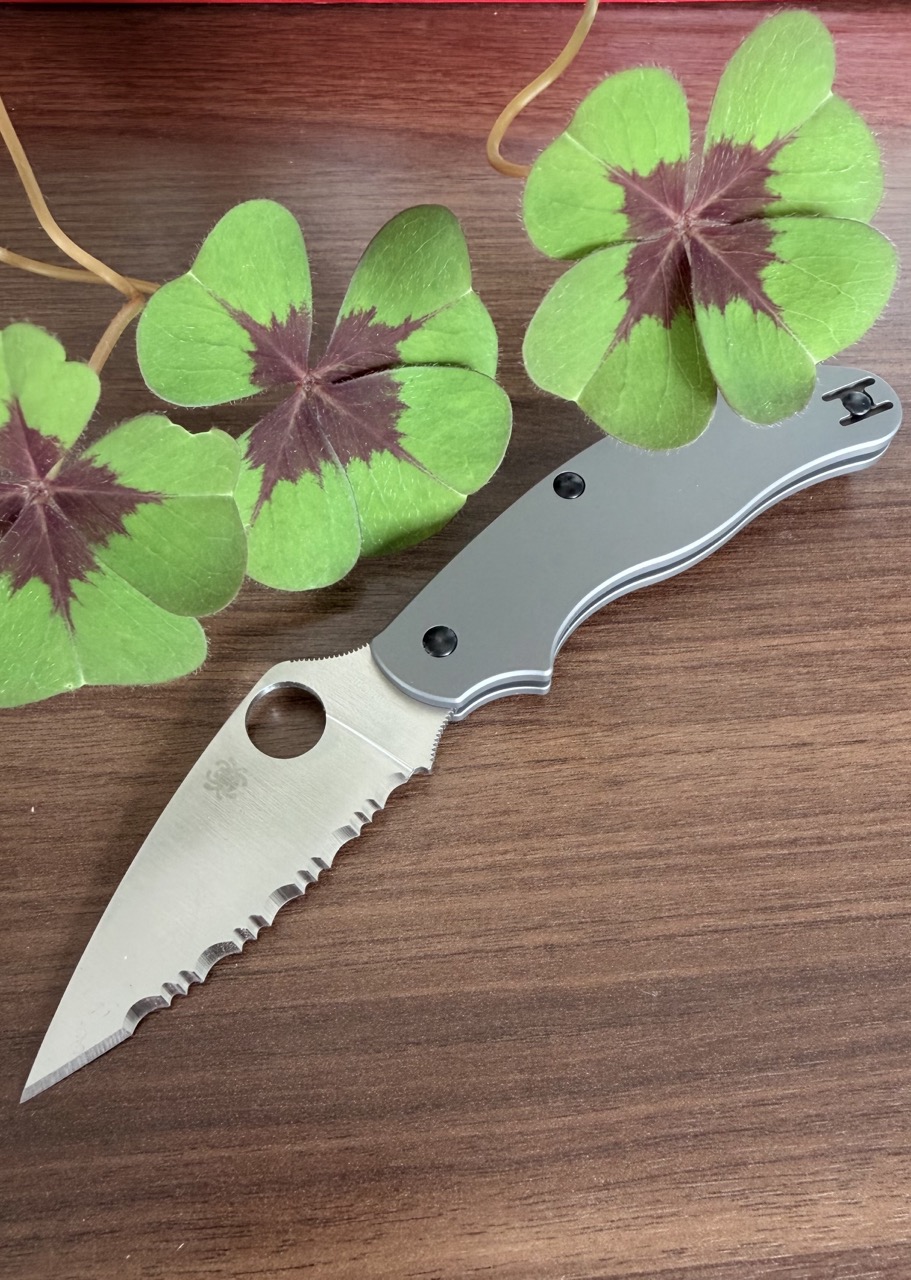
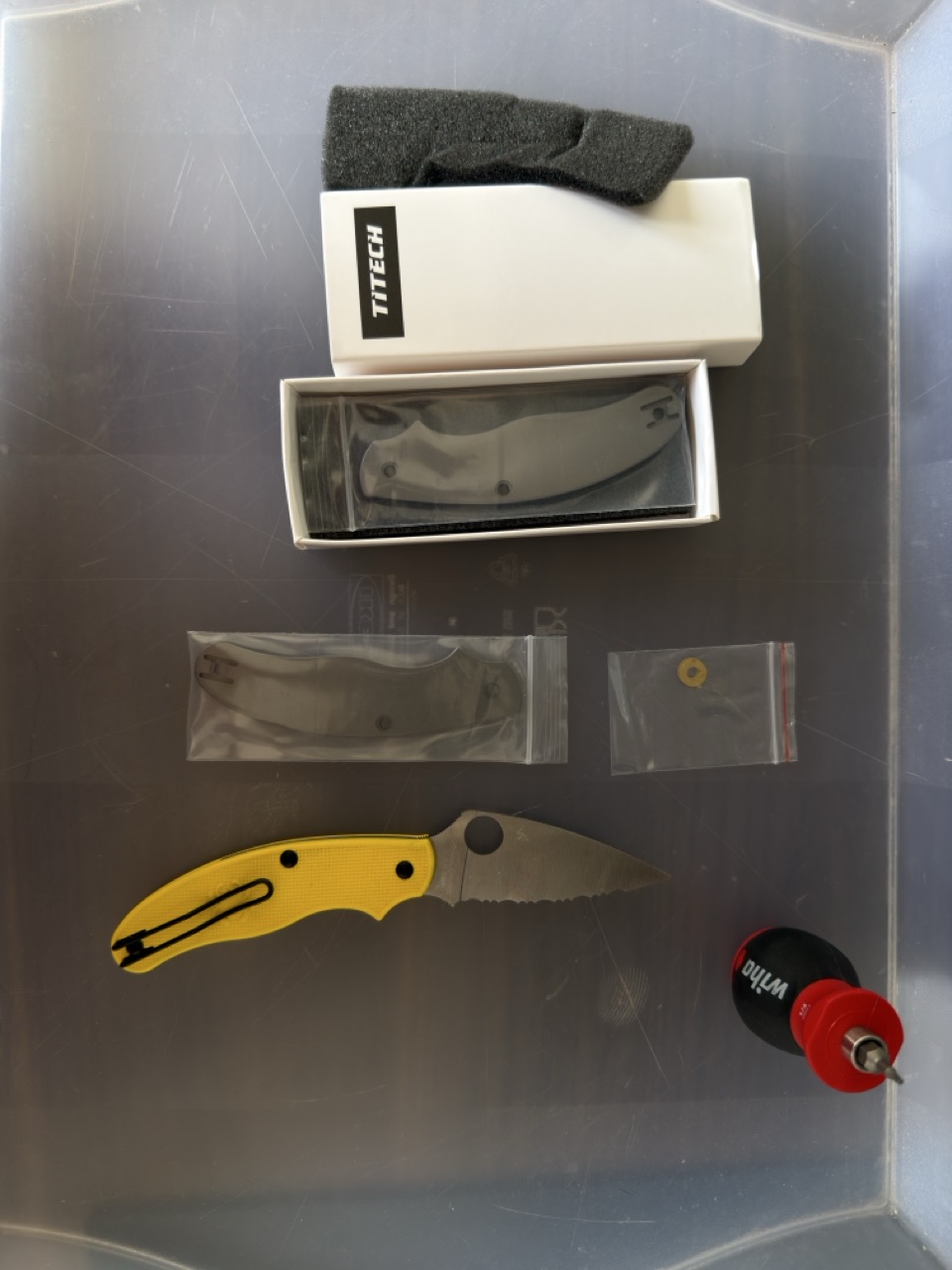
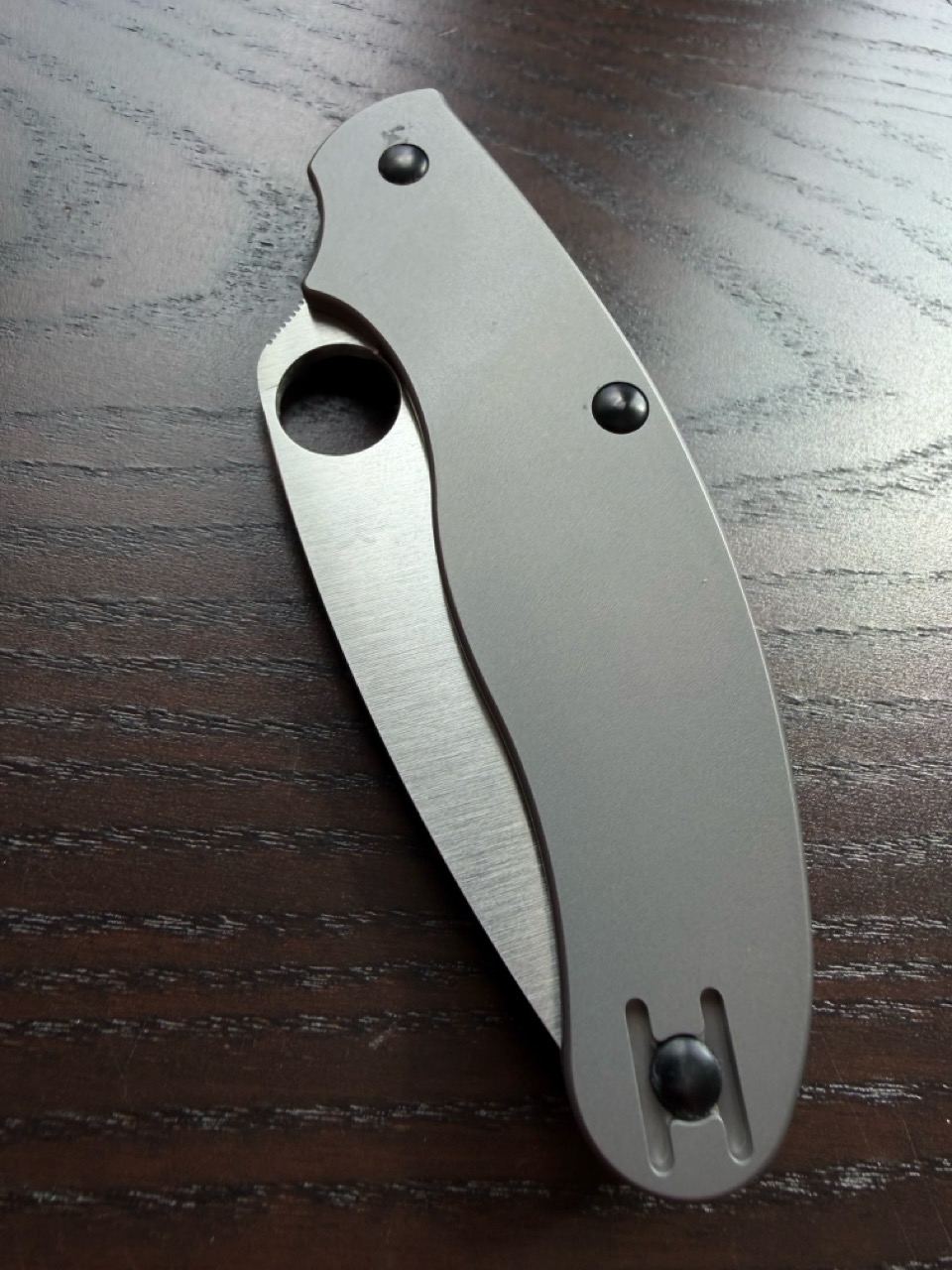
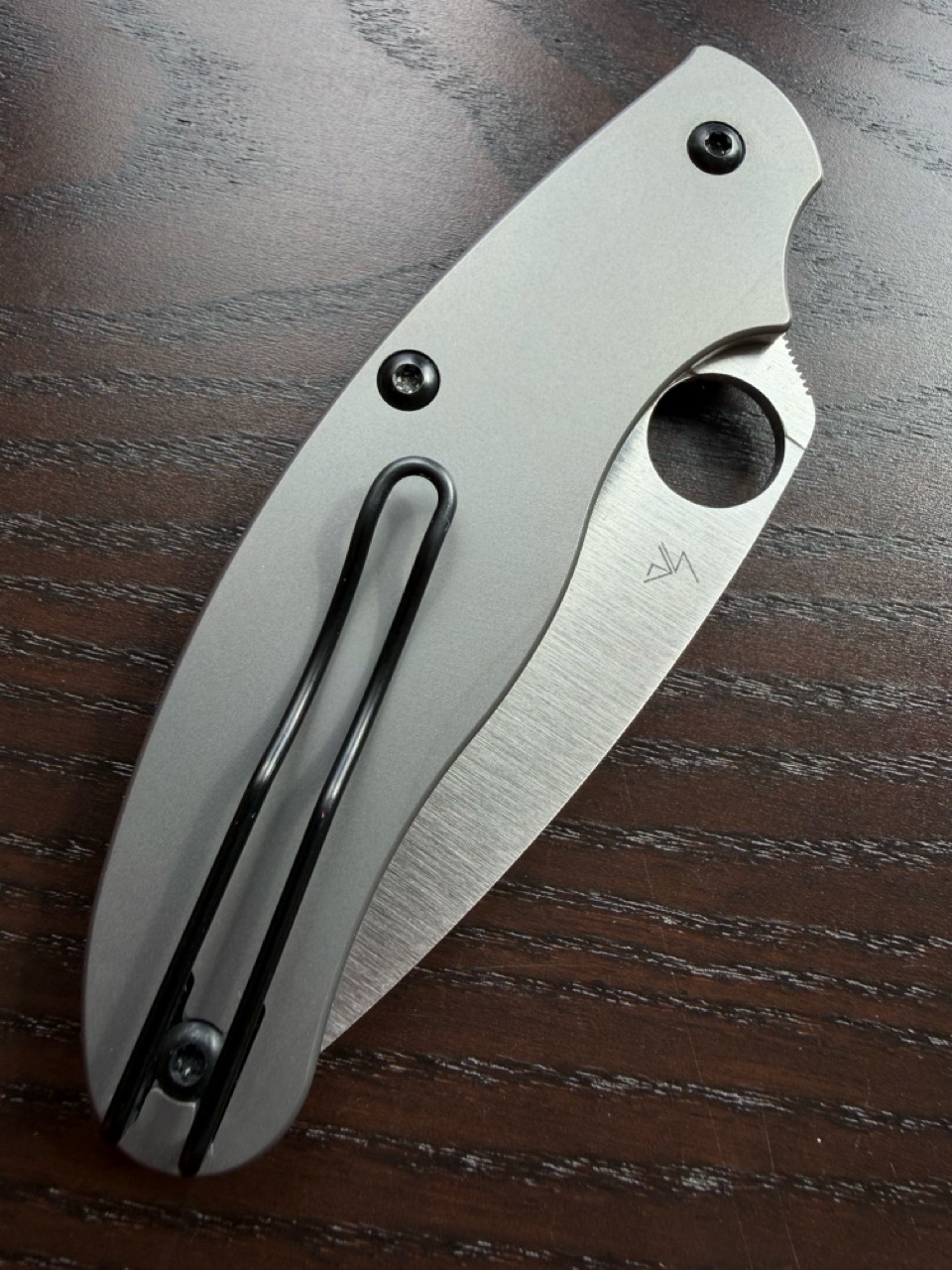
INSTALLING THE TITECH HEINNIE® EXCLUSIVE SPYDERCO UKPK TITANIUM SCALES.

Installing Titech titanium scales from Heinnie Haynes onto a Spyderco UKPK is less a mechanical operation than a quiet exercise in precision, patience, and restraint—something closer to watchmaking than simple knife maintenance. And I’m clumsy.
The UKPK, with its deceptively simple slipjoint construction, hides a strong and finely balanced backspring fork whose tension defines the entire character of the knife. Respecting that tension is the key to a successful transformation. And trust me, it asks for respect because it is strong !!

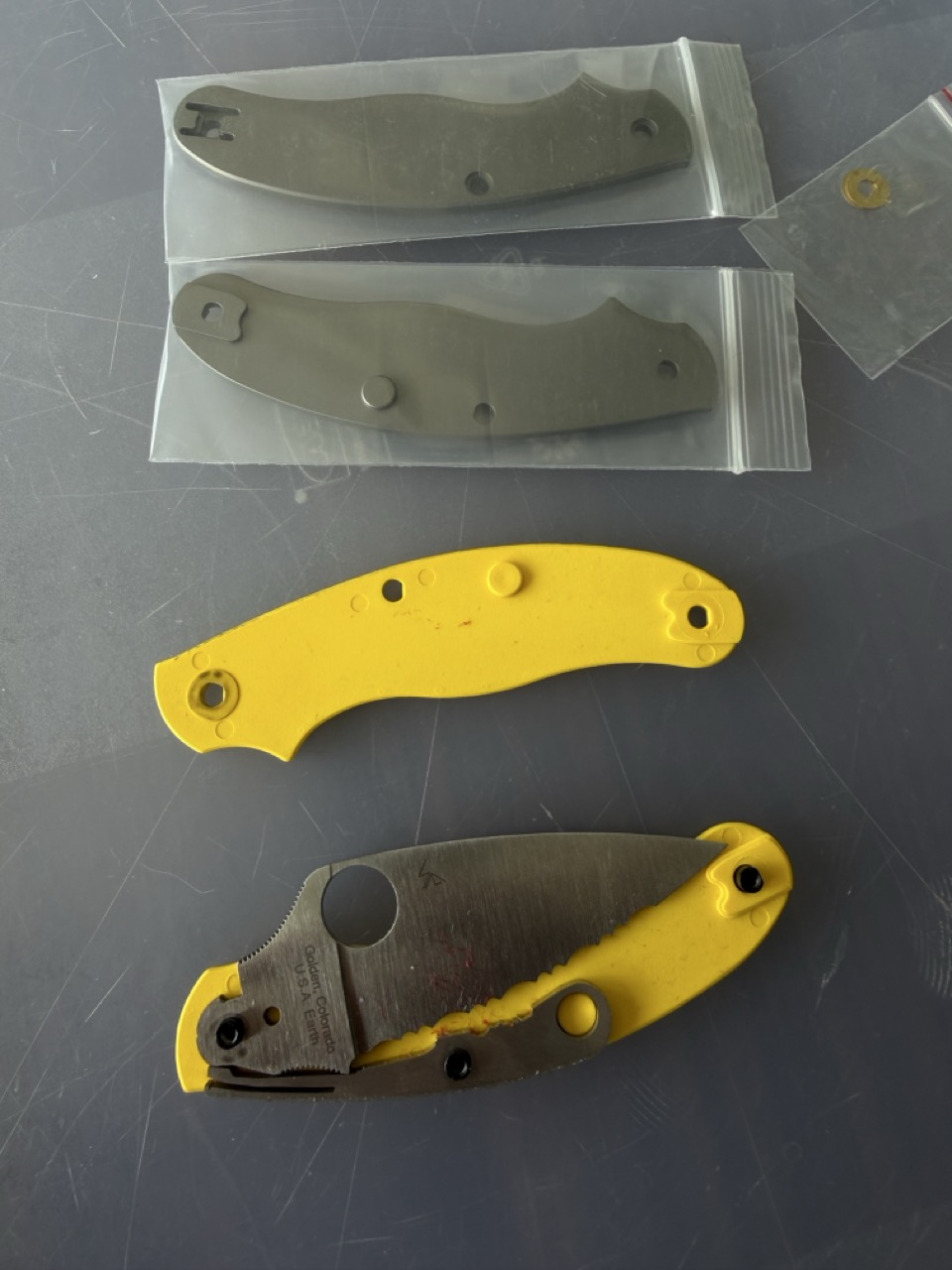
Begin by approaching the disassembly with intention rather than haste. A quality Torx driver is essential, not only to preserve the hardware but to maintain control over each movement. Remove the pocket clip screws first, then the body screws, and only then ease into the pivot. At this stage, the knife is still under spring tension, and it is important to keep a subtle, steady pressure on the handle as the scales begin to separate. The backspring should never be allowed to snap free; instead, it must be guided, almost persuaded, into release.

This moment defines whether the process remains controlled or becomes unnecessarily chaotic.

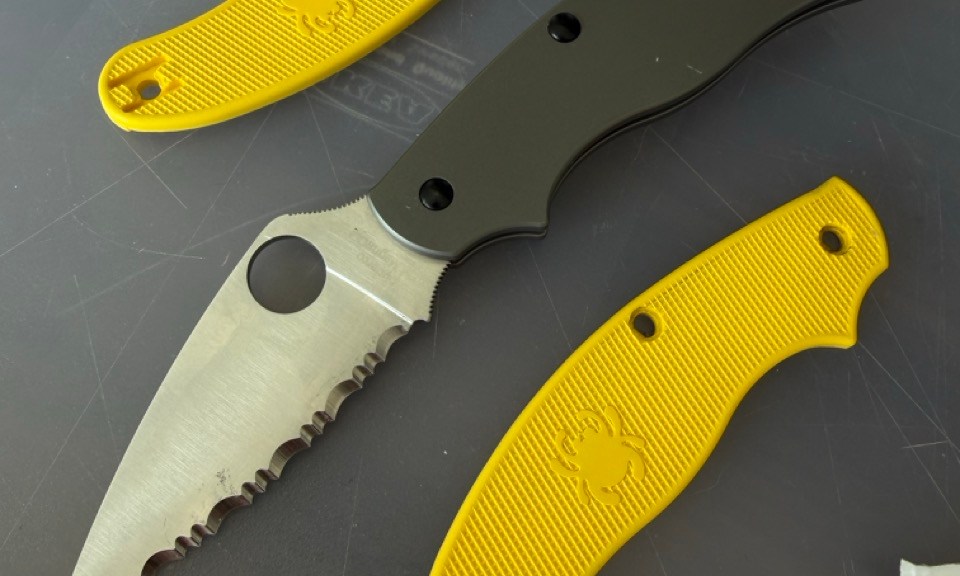
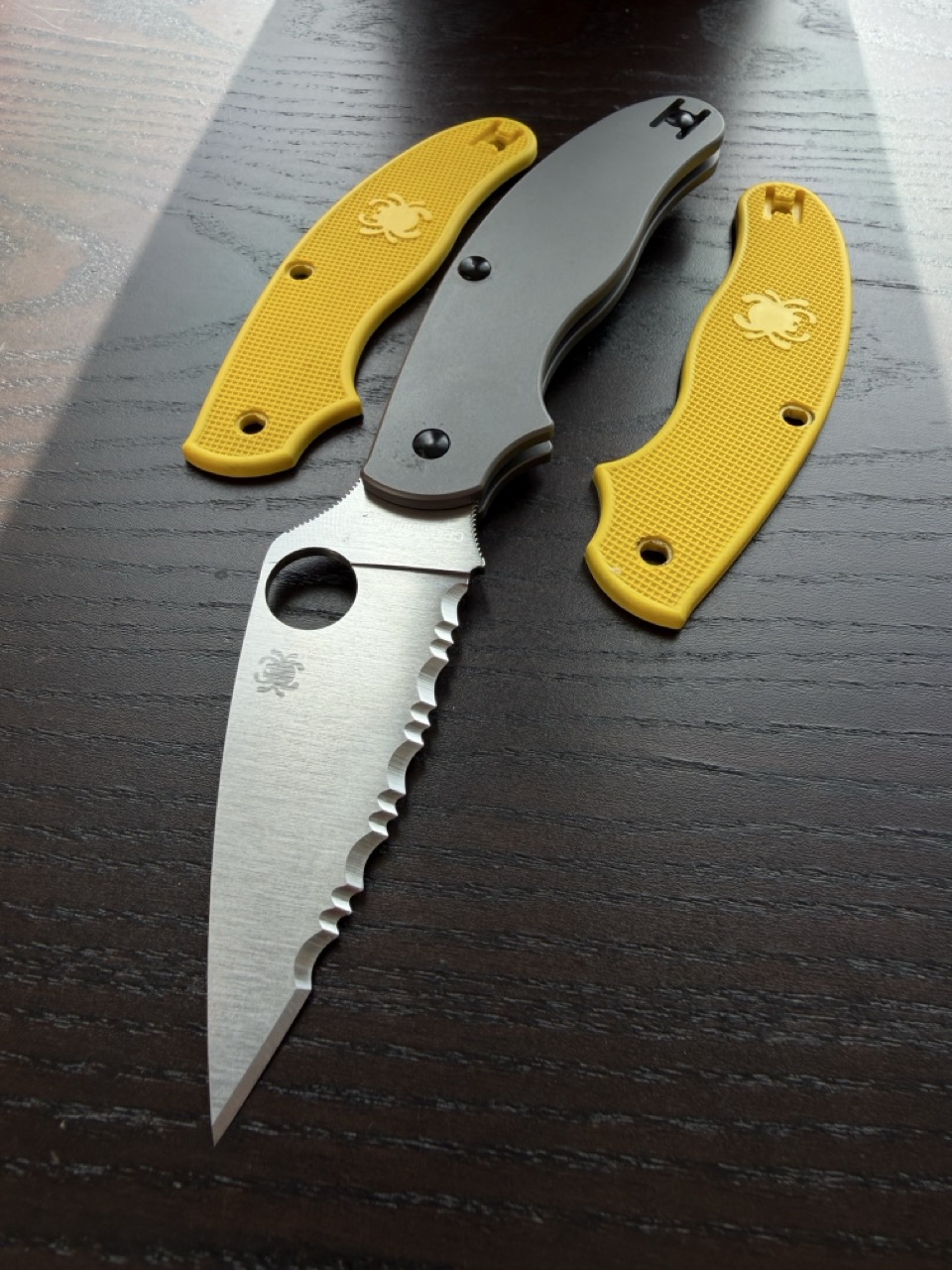
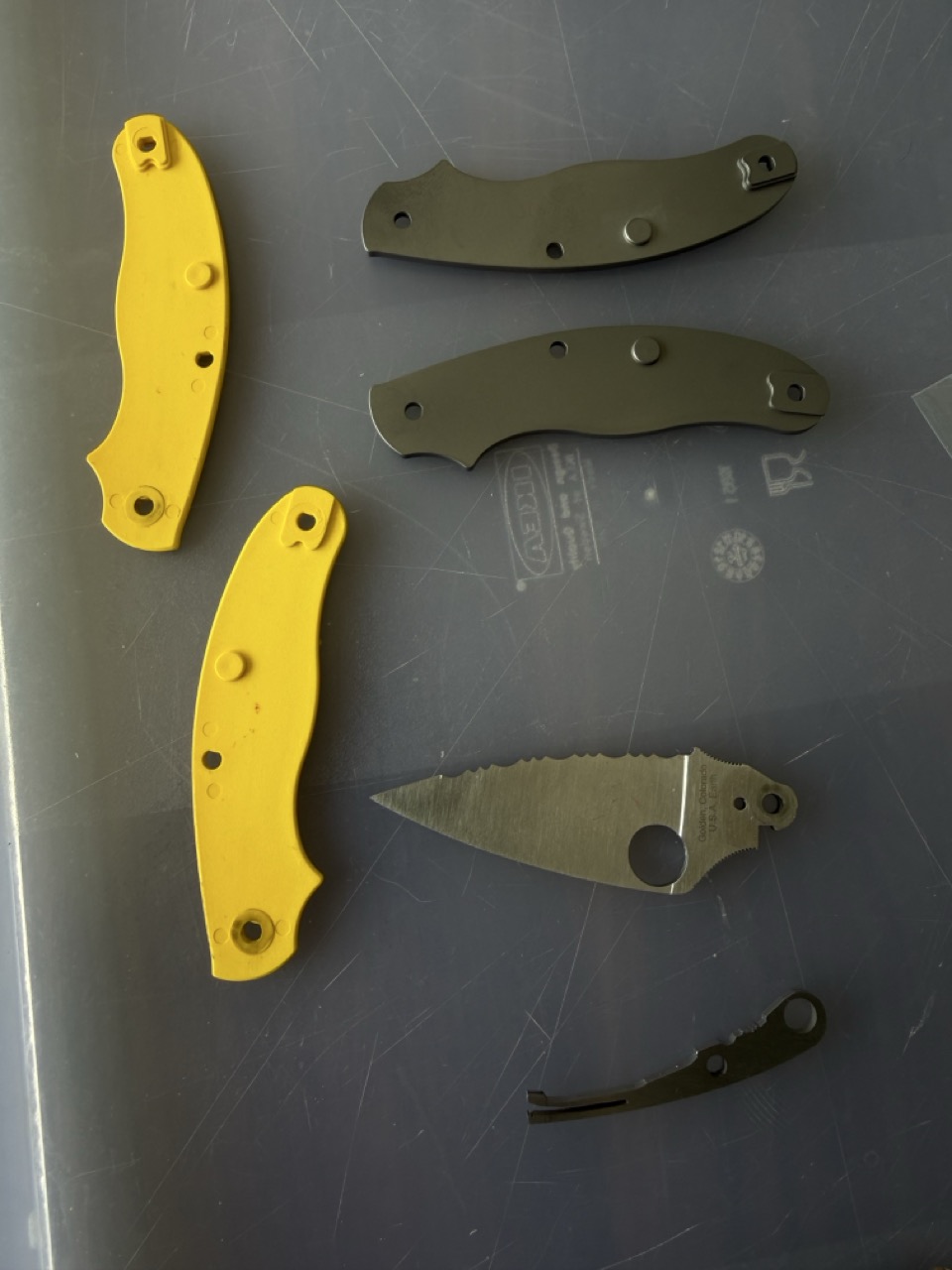
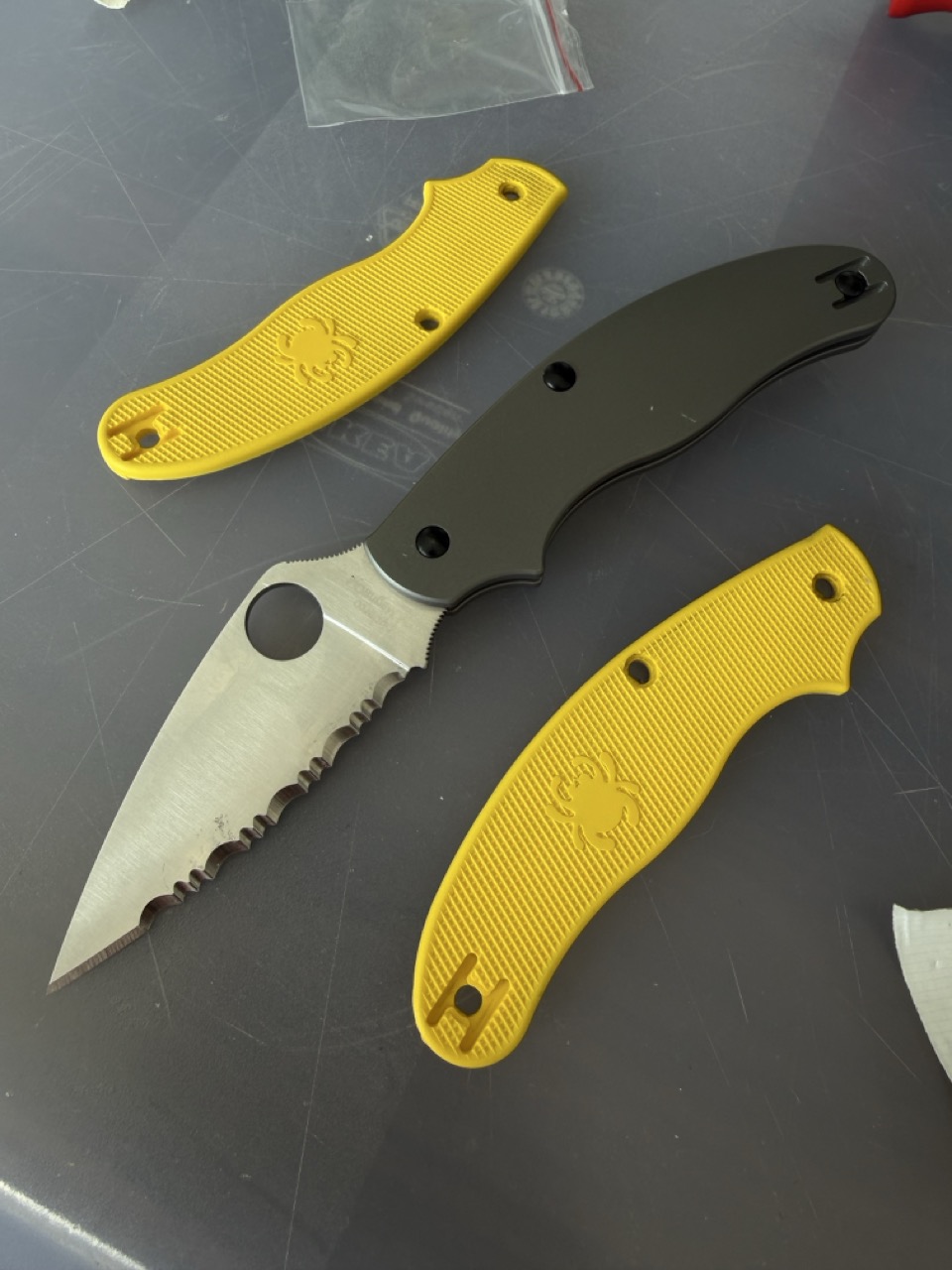
As the original FRN scales come away, the internal architecture of the UKPK reveals itself in a straightforward yet unforgiving layout: blade, backspring, stop pin, pivot barrel, and screws, all of which must be preserved and transferred. The most elegant way to proceed is to move components gradually, keeping their orientation intact, allowing the new titanium scale to receive them in a natural sequence rather than reconstructing everything from memory. The washers, often overlooked, are in fact central to the final action. They must sit perfectly flat on either side of the blade, aligned with the pivot, as even the slightest misplacement will translate into stiffness or uneven movement once assembled.
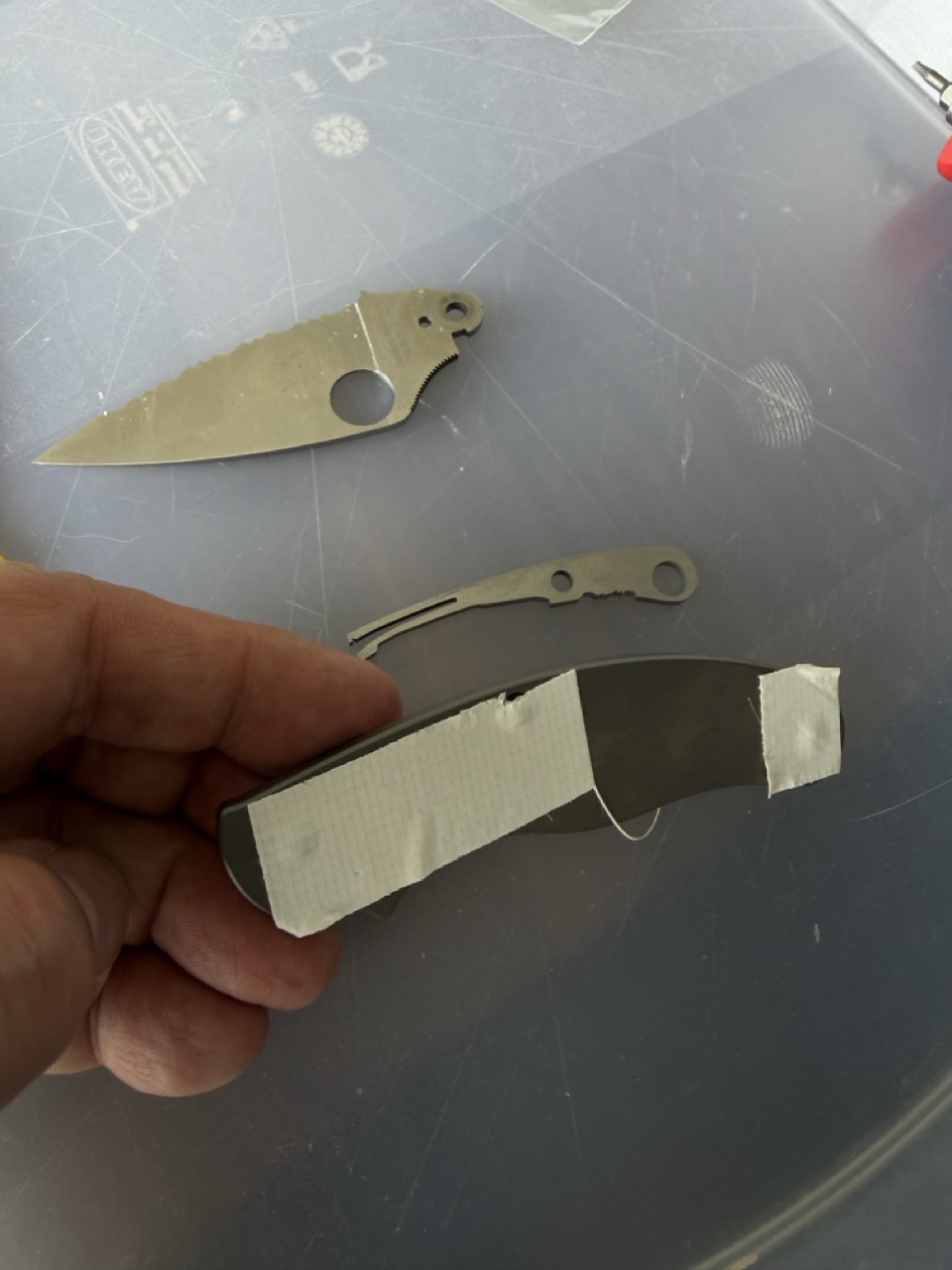
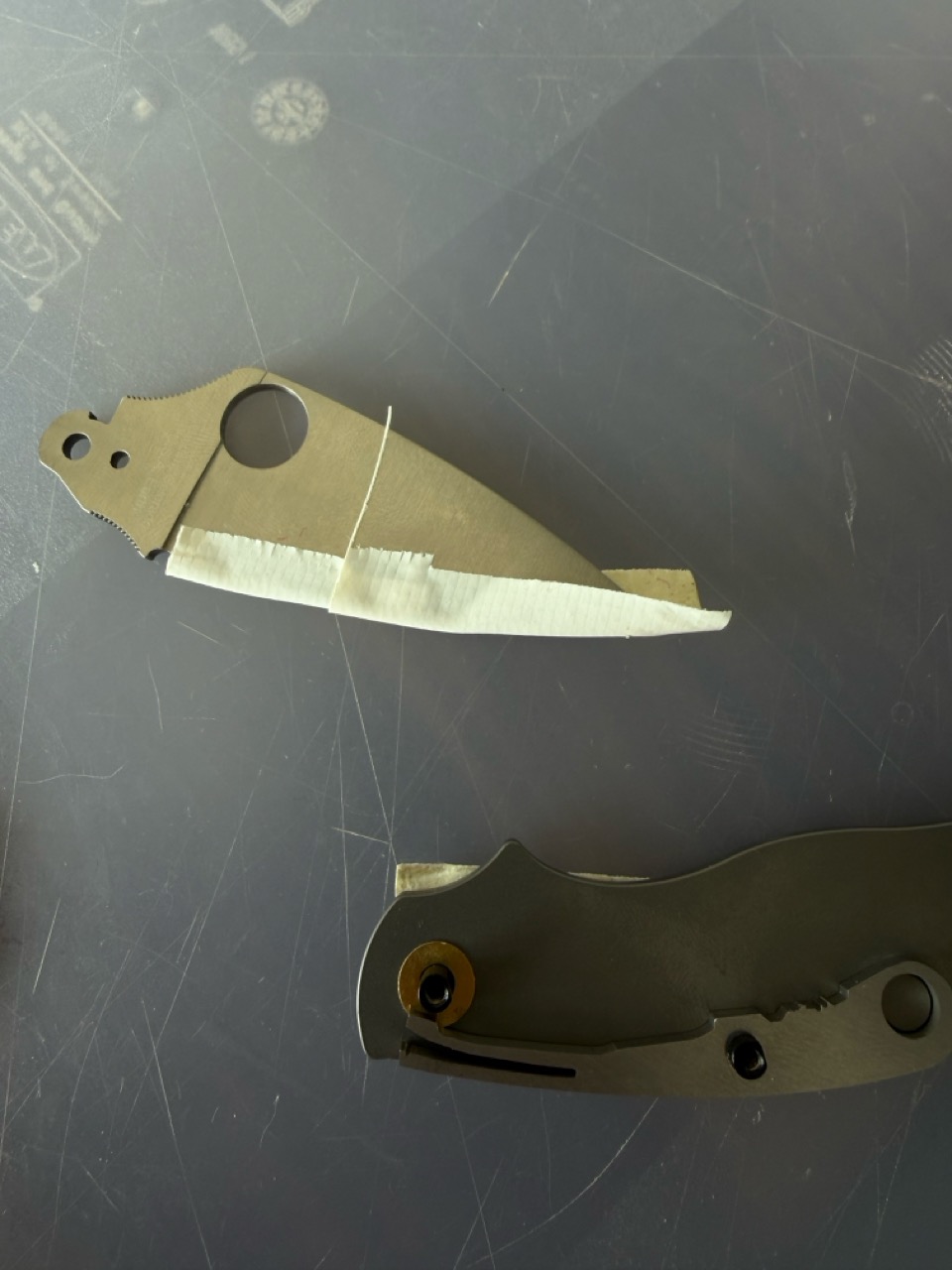
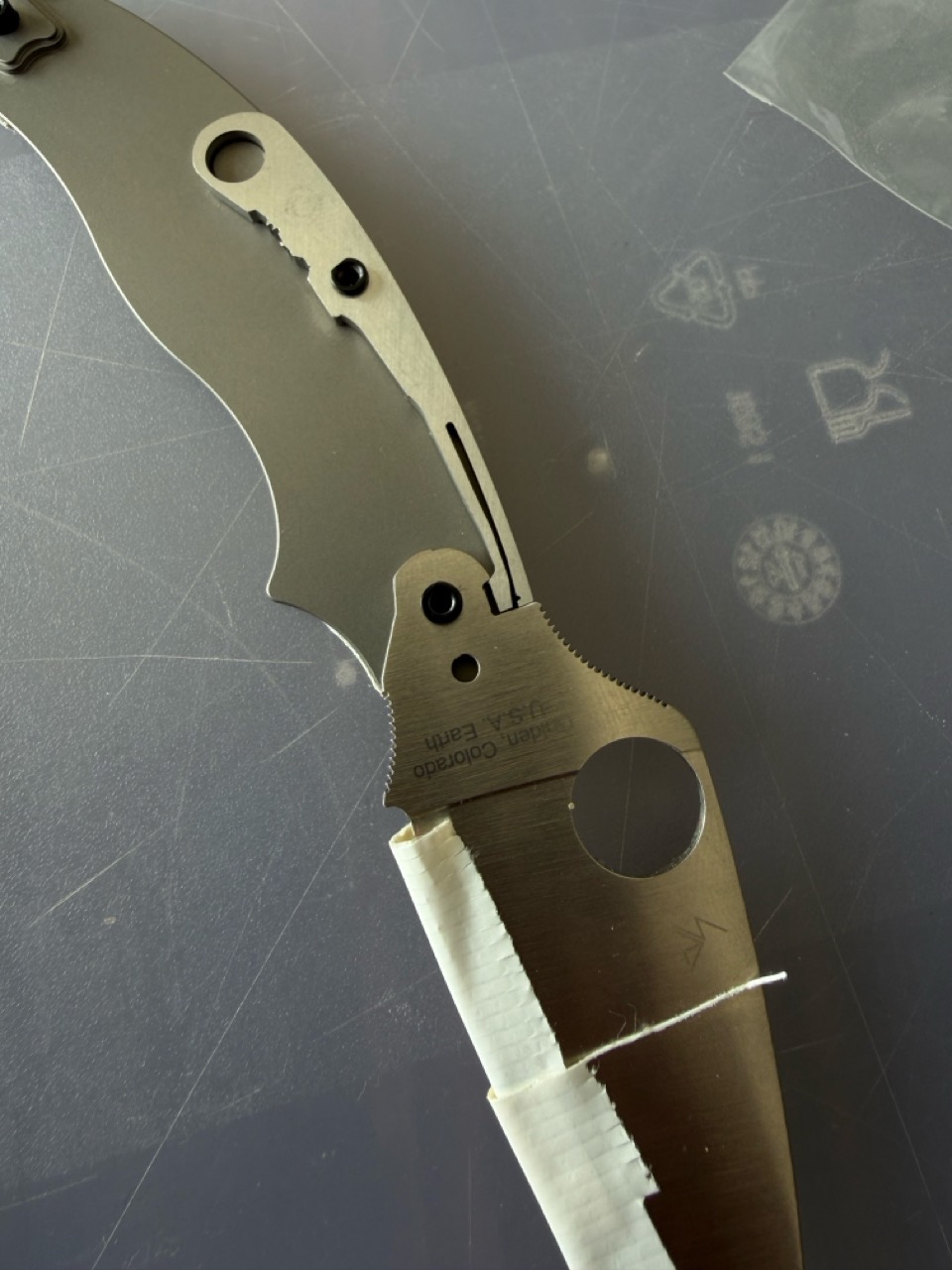
I have used gaffer tape to maintain the D Shape female screws in place while manipulating the scale.

Reassembly is where the transformation begins to take shape. One titanium scale becomes the foundation upon which the blade and spring are seated, their relationship re-established with careful alignment. The second scale closes the structure, and the pivot is introduced not as a point of tension but as a placeholder, tightened only enough to hold the system together.

Insert the blade carefully into the fork of the backspring, ensuring it seats naturally without forcing the geometry; from that moment onward, the entire operation shifts to the opposite end of the spring, whose tail must be guided with precision into the recessed channel of the titanium scale, where it locks into place and defines the tension of the mechanism.


The body screws follow, also left deliberately loose. At this stage, the knife should feel unresolved, almost unfinished, and that is precisely the intention.

The refinement comes next, and it is here that the distinction between an average installation and an exceptional one is made. The body screws should be brought to tension first, gradually and evenly, allowing the frame to settle without distorting the spring. Only then should the pivot be adjusted, and even then with the lightest touch, in minute increments. The temptation to over-tighten must be resisted entirely. On a slipjoint like the UKPK, excessive force does not create solidity; it creates imbalance, increasing spring pressure artificially and compromising the fluidity of the action. In extreme cases, it risks stressing the spring itself, which is the heart of the mechanism.
Keeping the pivot loose with a touch of threadlocker is exactly the right instinct; it allows the mechanism to settle into its natural alignment before you commit to final tension.

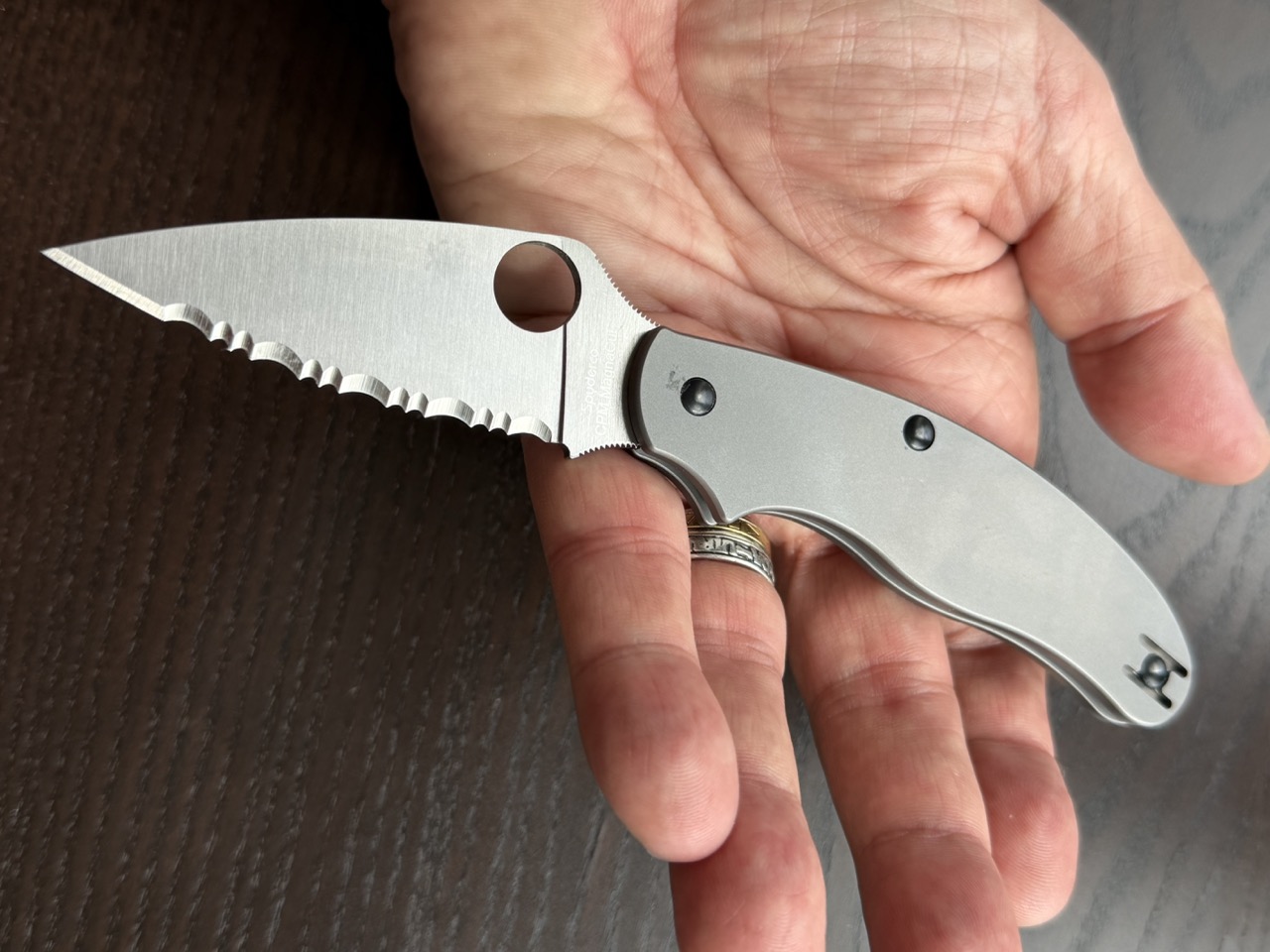
The final result: the UKPK gains a subtle weight, a cooler tactility, and a sense of structural integrity that the original FRN cannot provide.
I love the added heft—it enhances the feel while preserving the rustproof nature of the UKPK Salt.
t’s a rare upgrade where nothing essential is lost. Instead, everything is simply… tightened, deepened, and made more intentional.
And for around 57 euros, it feels like a genuine bargain.
Heinnie Haynes also offers brass and copper Titech scales, though they didn’t quite suit the spirit of my Spyderco UKPK Salt.
But if Sal Glesser ever releases a 52100 version of the UKPK, copper would suddenly make perfect sense. 🙂

Now my Spyderco UKPK Salt has developed a beautifully smooth action paired with a reassuringly strong mechanism. The mid-stop produces a crisp, satisfying clang that subtly signals quality. It’s a pleasure to handle, with a confidently positive open position that inspires trust every time.

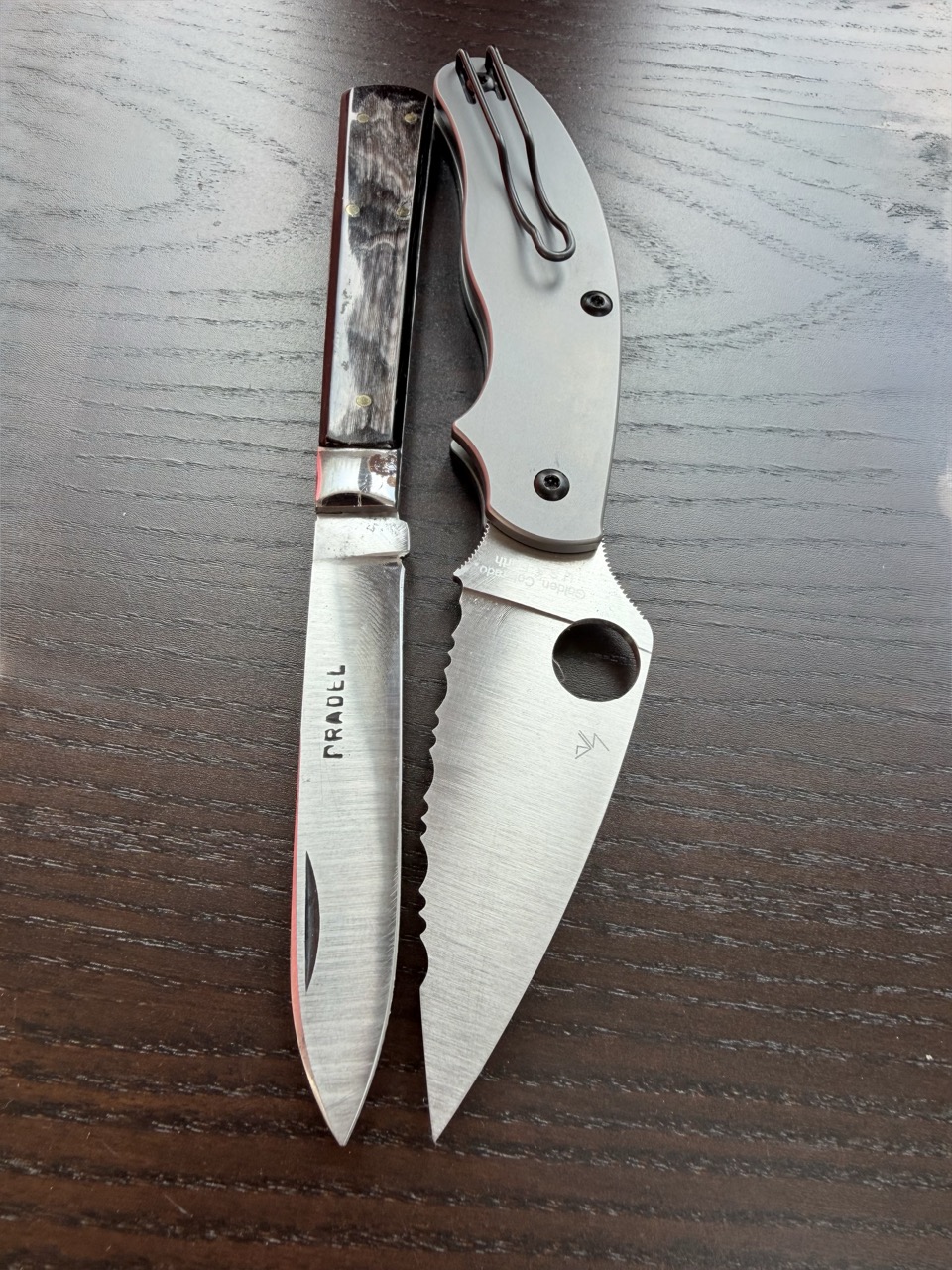
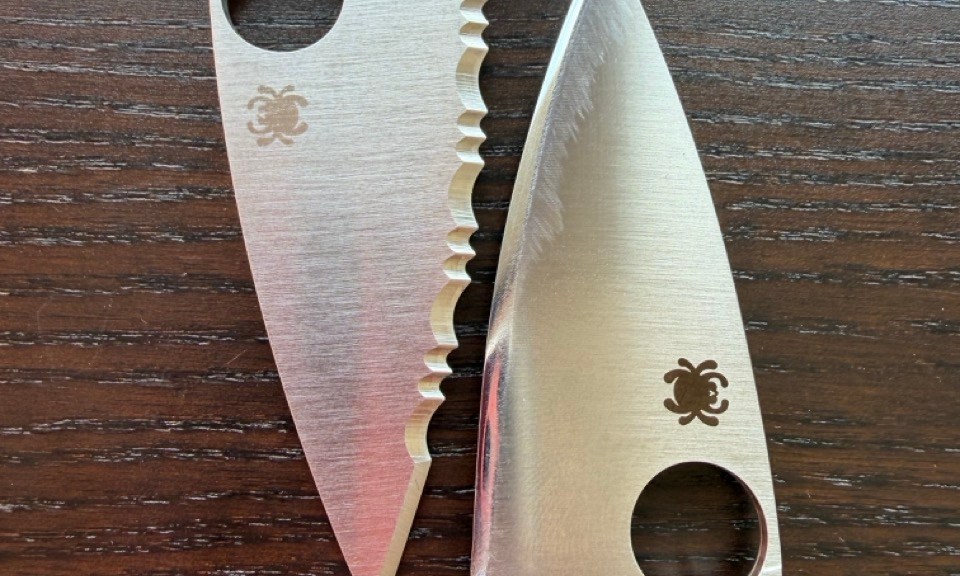
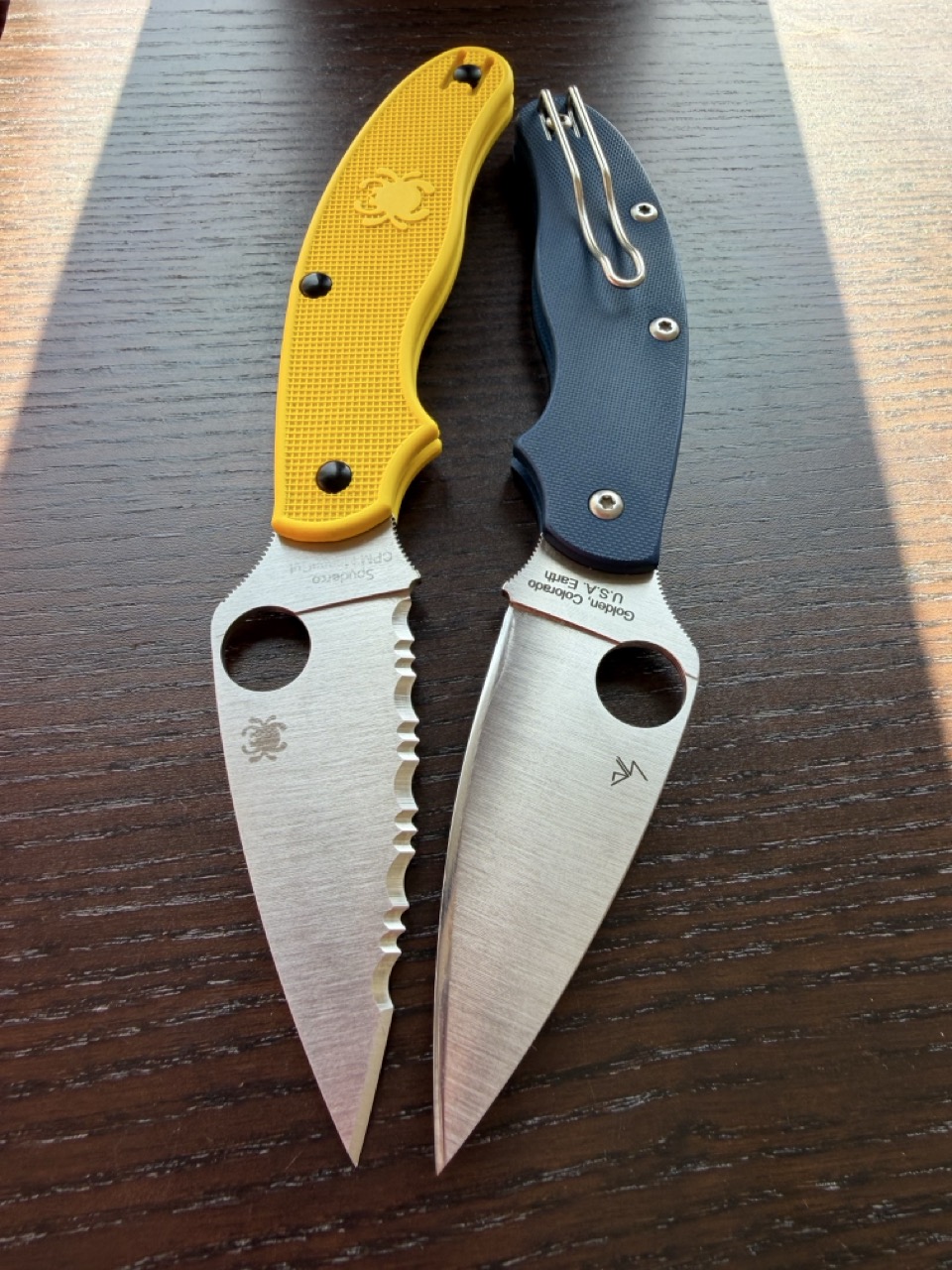
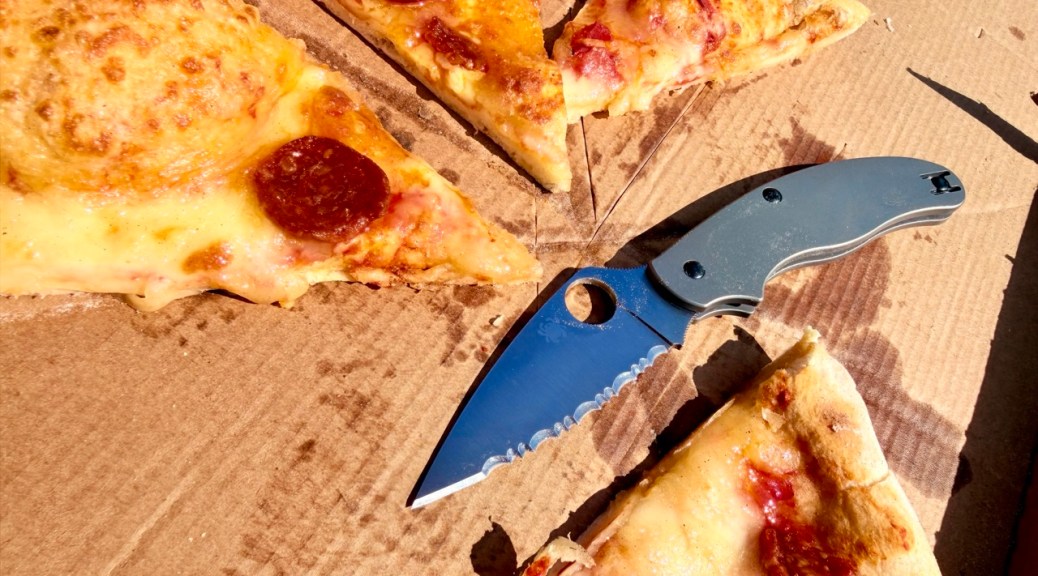
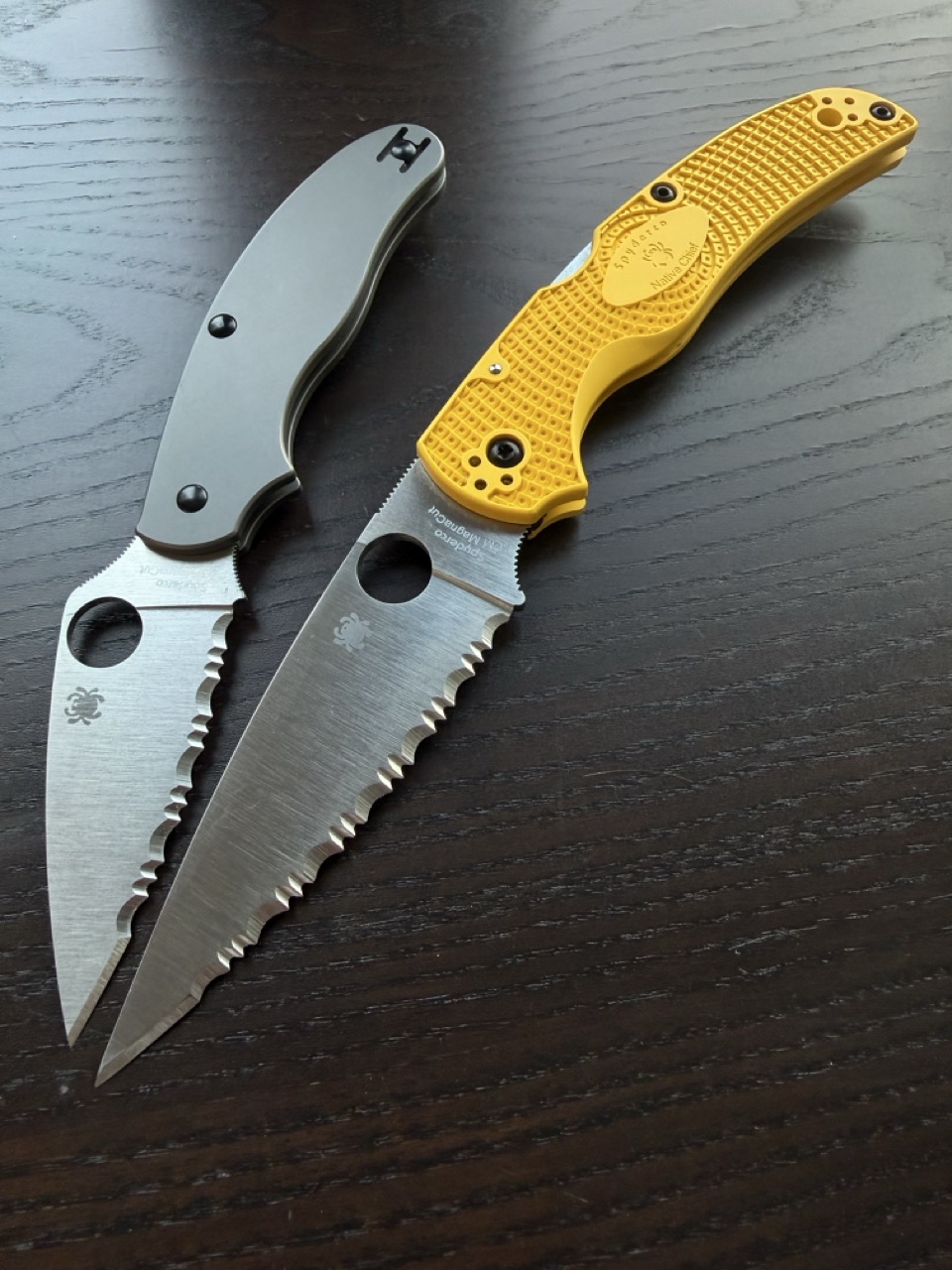
“Part The Matters For Me” – Spyderco UKPK Salt Serrated vs UKPK Sprint SPY27 Plain Edge – Teeth vs Razor.


I often come across very strong opinions when it comes to serrated versus plain edges. More often than not, users dismiss serrations outright—too ugly, too difficult to sharpen, ultimately useless, impossible to tune… usually without ever having truly put them to the test.

Consider this a brief attempt to set the record straight.

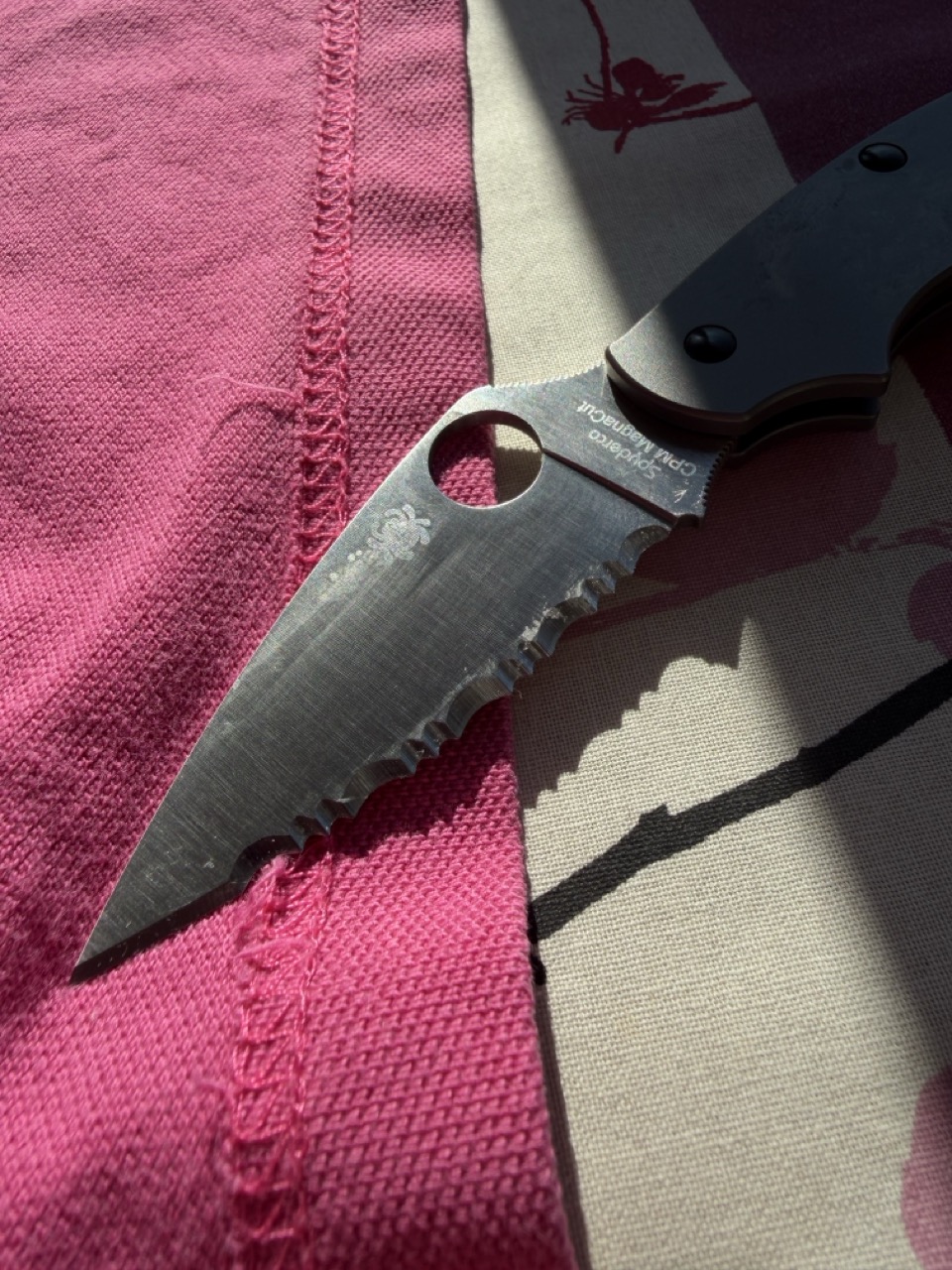
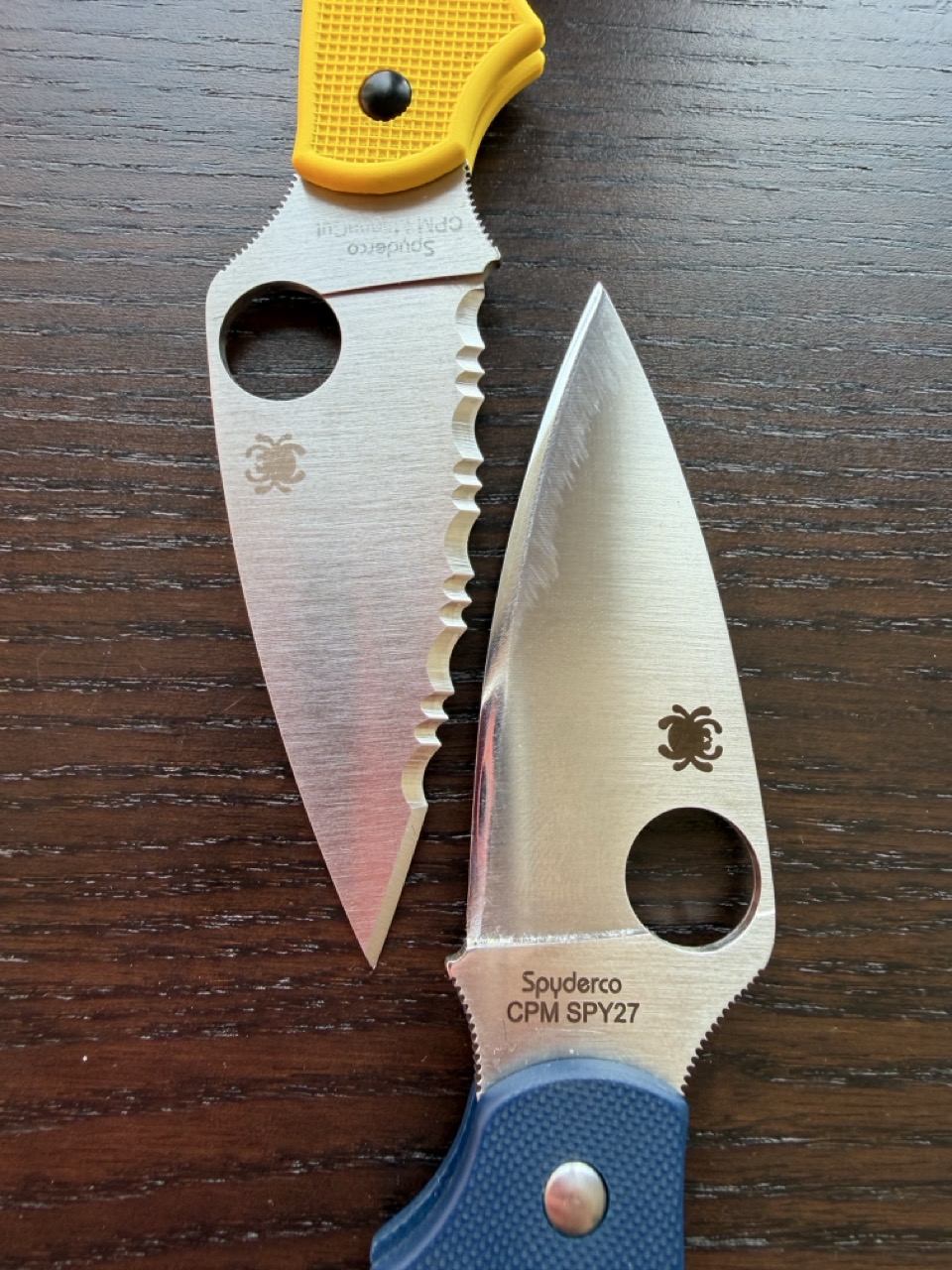
The Spydie UKPK Salt in Magnacut, here in its serrated form, is built for unforgiving environments : lightweight, corrosion-proof, and relentlessly efficient when conditions turn wet, fibrous, or hostile.

Facing it, the Spyderco UKPK Sprint Run in SPY27 with a plain edge embodies precision and control, offering a refined, razor-like cutting experience with effortless maintenance.

What do we got ? Two identical platforms, two radically different philosophies: one designed to endure, the other to excel.

Let’s first compare the steel. Two of my favorite high end alloys and luxury, in this case, does not come from polish or presentation. It comes from intent.

The UKPK Salt, dressed in serrations and armed with Magnacut, carries the modern obsession with resilience to its logical extreme. This is not a steel that negotiates. It exists in total defiance of the elements: saltwater, humidity, neglect. Where older stainless steels would stain, pit, or surrender their edge, Magnacut remains composed, almost indifferent. Its toughness borders on the improbable for something so corrosion-resistant, and yet it refuses to chase the last degree of razor refinement. Its edge is not delicate—it is enduring. One senses immediately that this is a steel designed not for the enthusiast’s bench, but for the long, indifferent stretch of real use.

Across from it, the Golden Child, blade of SPY27, a Sprint Run which offers a very different kind of luxury. Less demonstrative, more intimate. Designed in-house by Spyderco, COM-SPY27 feels less like a technological statement and more like a tuned instrument. It sharpens with ease, almost eagerly, taking on a ultra fine, ultra precise edge that invites control rather than brute persistence. Where Magnacut stands its ground, SPY27 moves—fluid, responsive, alive under the hand. It does not seek to dominate harsh environments; it refines the experience of cutting within them.

The distinction is subtle but decisive. Magnacut is a wonder steel that reassures. SPY27 is an exclusive steel that seduces.

Now about the edge shape…. Here, inevitably, the steel disappears. What remains is the edge—the only part that truly meets the world.

Like Moses said, “Part the matters for me”…
—oh wait, I meant the waters. 😉

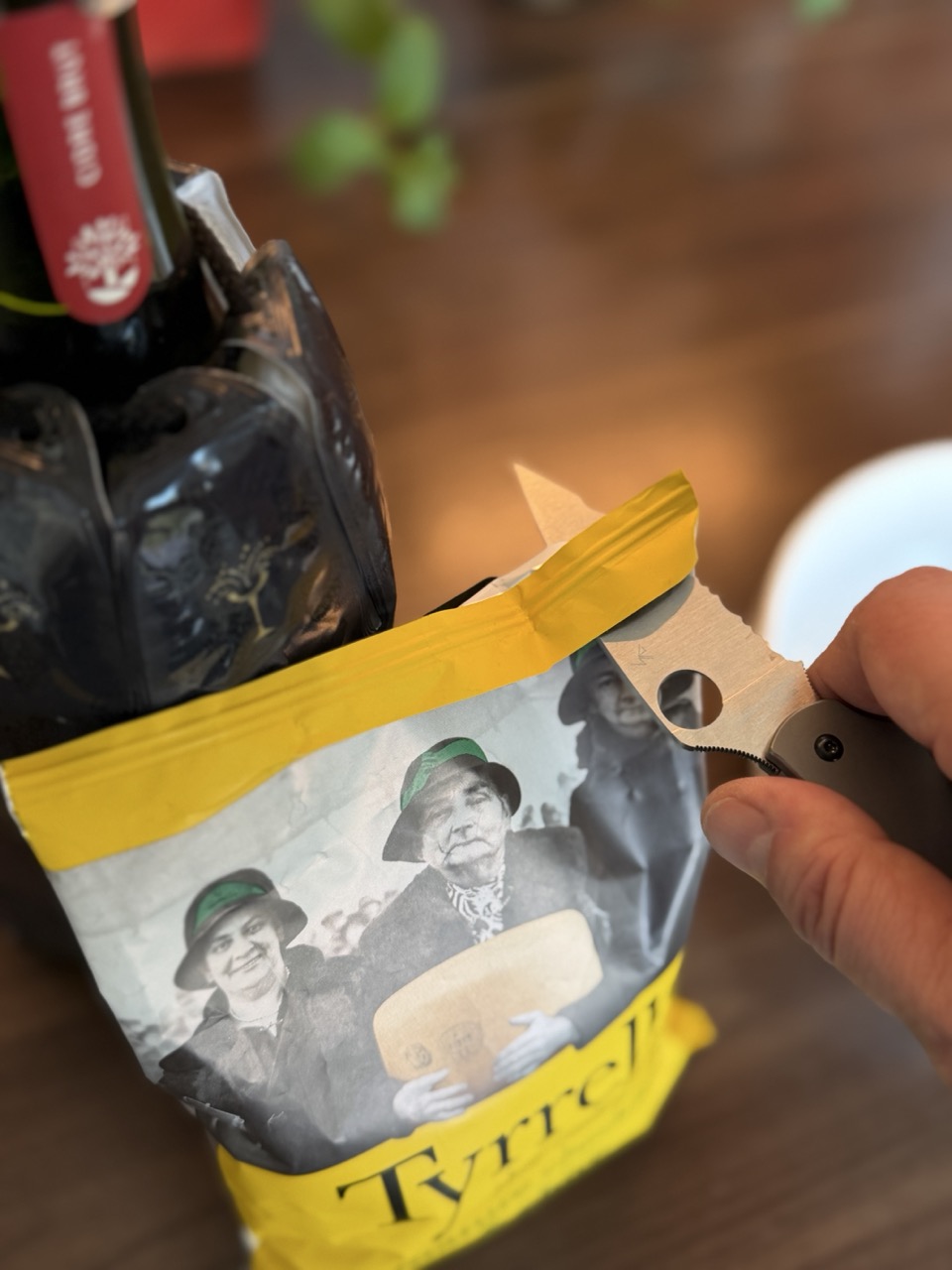
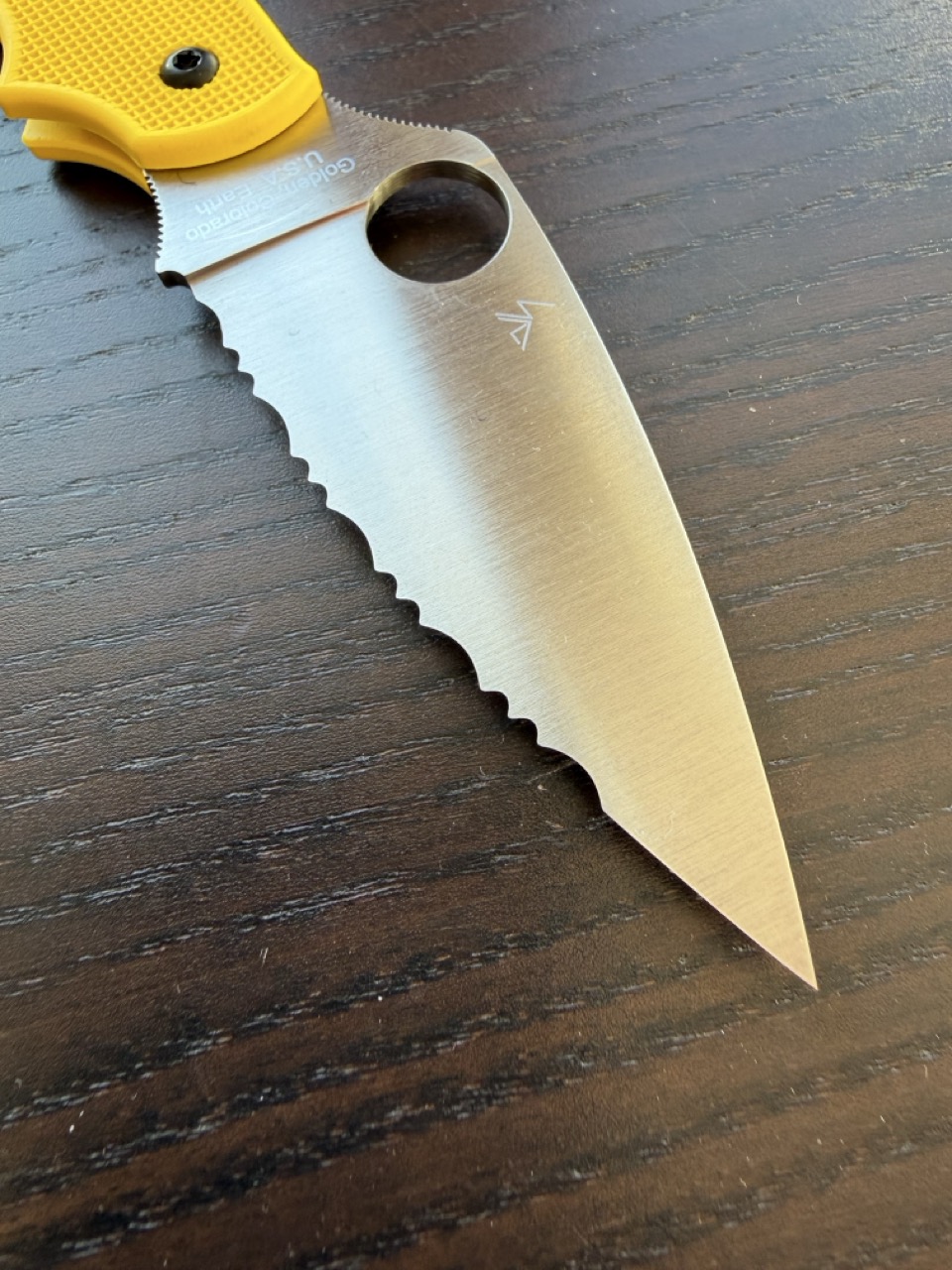
On the Salt, the serrated profile transforms the blade into something almost mechanical in its intent. It does not glide; it engages. Each tooth acts as a point of aggression, catching, pulling, tearing through resistant materials with an efficiency that borders on inevitability. Rope, fibrous plastics, anything damp or uncooperative—these are not challenges but confirmations of purpose.
You need to try it to understand it. Serrations aren’t saws—they’re teeth.
Even as the knife loses its initial sharpness, the serrations continue to function, each peak preserving a fragment of cutting power. It is a system designed to keep working long after refinement has faded.

But there is no illusion here. This is not a refined edge. It does not slice so much as it asserts itself. Precision is sacrificed for continuity of performance. Elegance yields to certainty.

To sharpen it, use the corner of a stone or a triangular rod, and treat it like a chisel-ground blade: work each serration individually, then simply remove the burr on the flat side. It’s done in minutes—easy, almost effortless.

The SPY27 Sprint Run, with its plain edge, follows the opposite philosophy. The cut is continuous, uninterrupted—a single line of intent from heel to tip. It can be tuned at will, from a coarse, aggressive bite to a razor’s whisper. There is no tearing, no hesitation. Materials part cleanly, almost silently, as if persuaded rather than forced. In wood, the blade tracks with uncanny precision; in food, it glides effortlessly; in finer tasks, it answers the slightest pressure. Here, SPY27 reveals its true nature—not through endurance, but through absolute fidelity to the cut.

And when the edge begins to soften, it does not resist restoration. A few passes on leather, a moment of attention, and the blade returns to form. There is a rhythm to it—a dialogue between user and steel that serrations, by their nature, cannot offer.

Placed side by side, these two UKPKs do not compete so much as they define a spectrum.

The Salt, in Magnacut and serrations, is a study in persistence. It is the knife that continues when conditions deteriorate, when maintenance is forgotten, when the environment becomes hostile. It asks little and gives consistency in return.

The SPY27 Sprint Run is something else entirely. It is not concerned with surviving neglect. It assumes presence, attention, a certain appreciation for the act itself. It rewards that attention with a level of precision and tactile satisfaction that borders on indulgence.

In the end, the choice is not between better or worse. It is between two forms of excellence.

One refuses to fail.
The other refuses to compromise.

And that review was also inspired (in the background) by that beautiful New Model Army song :


“We all get what we’ve got coming to us
The tide flows both ways across the seas
All following through on promises made
The roads are filled with fleeing slaves and refugees – singing

Part the waters for me

Now this motioning forward will never stop
We’re like sharks in the water, if we stop swimming we die
All coming out of the ruins bedraggled and worn
Like a people who stared too long, too long at the sun in the sky – singing

Part the waters for me

Any god will surely come, deliverance will surely come
On our knees by the stony shore, crack the sky and deliverance will come

Part the waters for me”


Screenshot

NATIVE CHIEF™ LIGHTWEIGHT SALT® CPM® MAGNACUT® — Part 2 — Every Day Teeth.

As I mentioned in my previous review of the Teeth for the Deep, the Chief Salt in Magnacut comes in two flavors: plain edge and serrated. The plain edge could be the ultimate traveler’s knife—light, versatile, and ready for anything (now that I have discovered the Edgerati, this is another great traveler knife, light and powerful but cost twice the Chief).
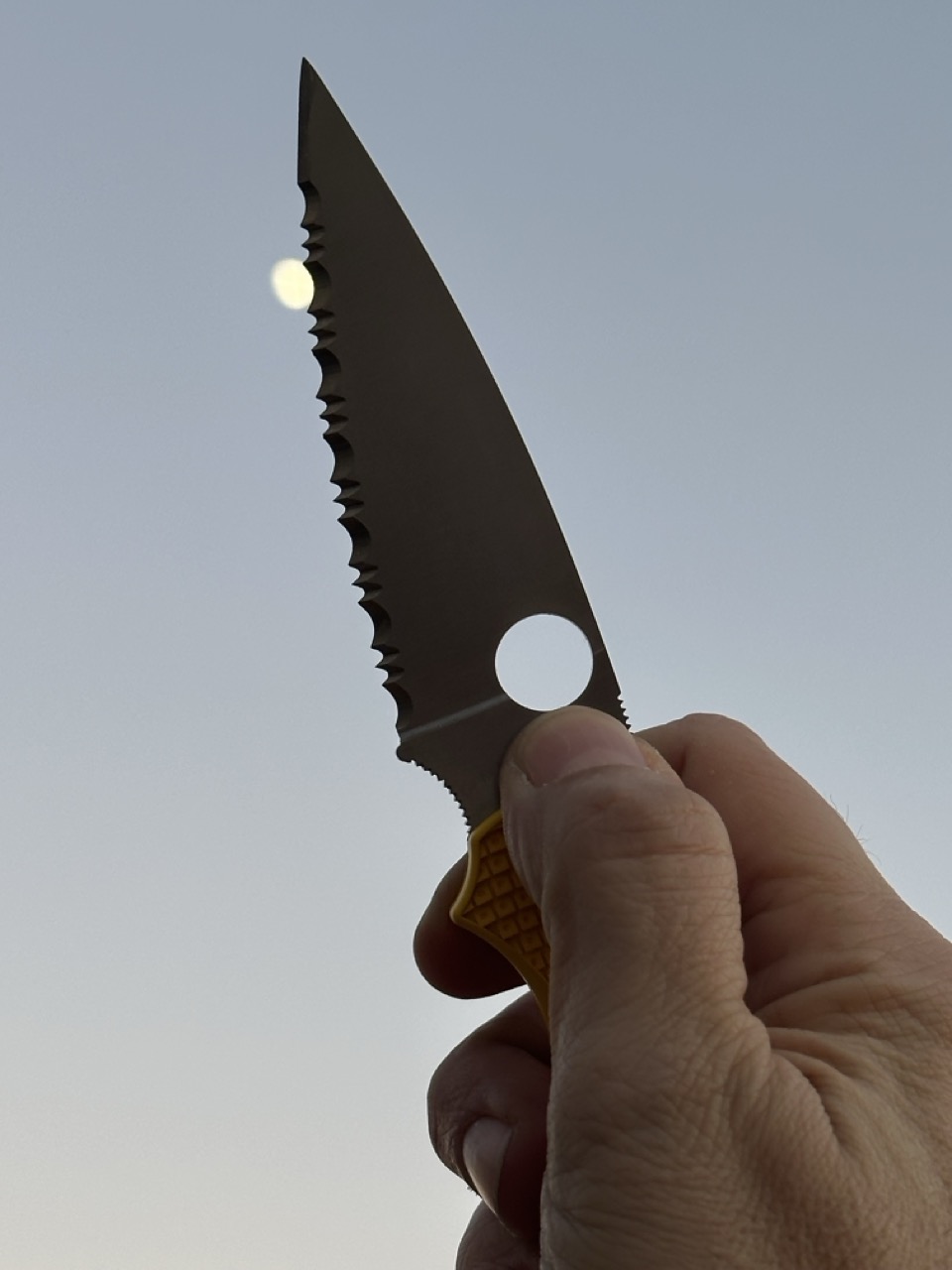
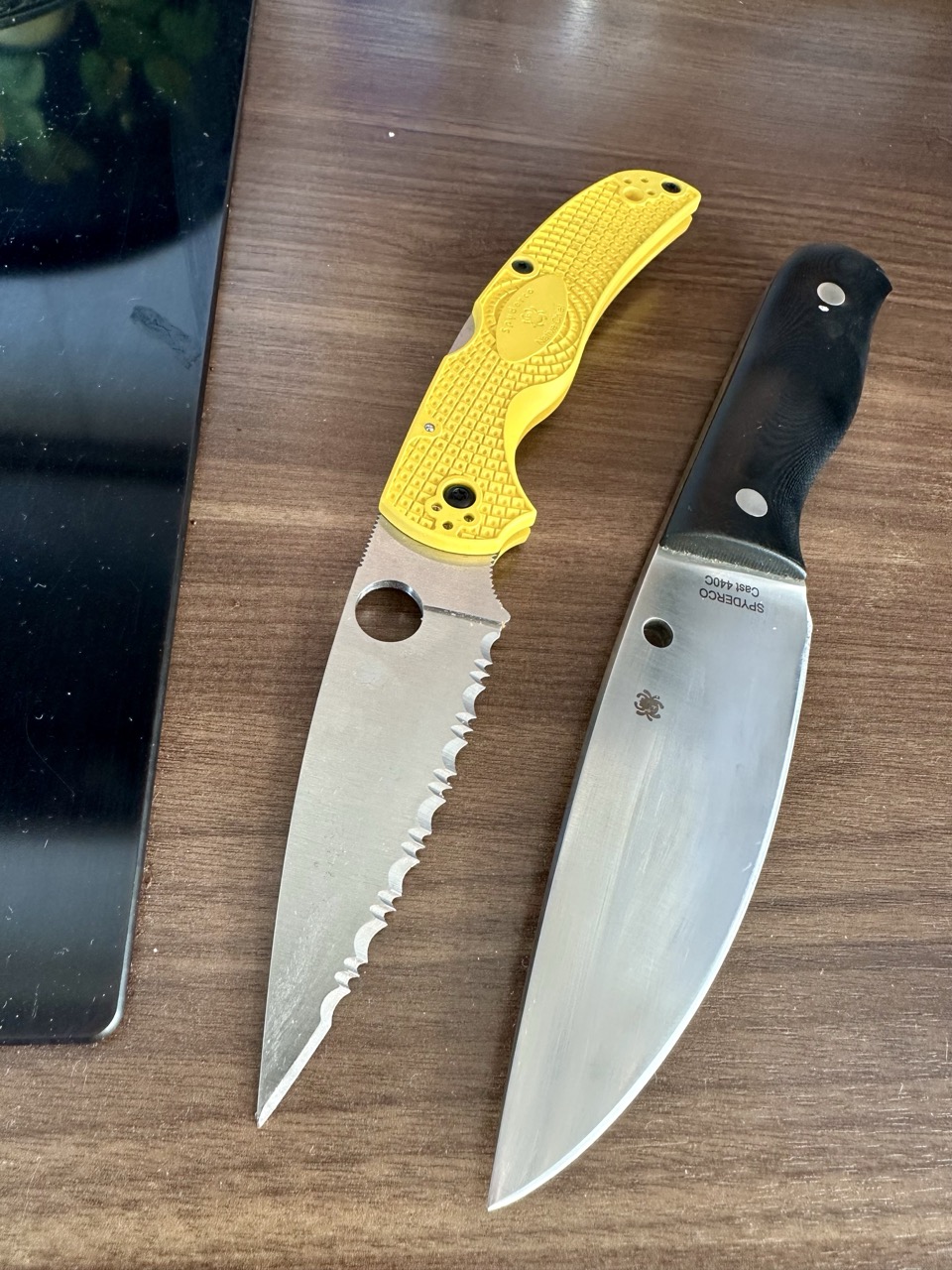
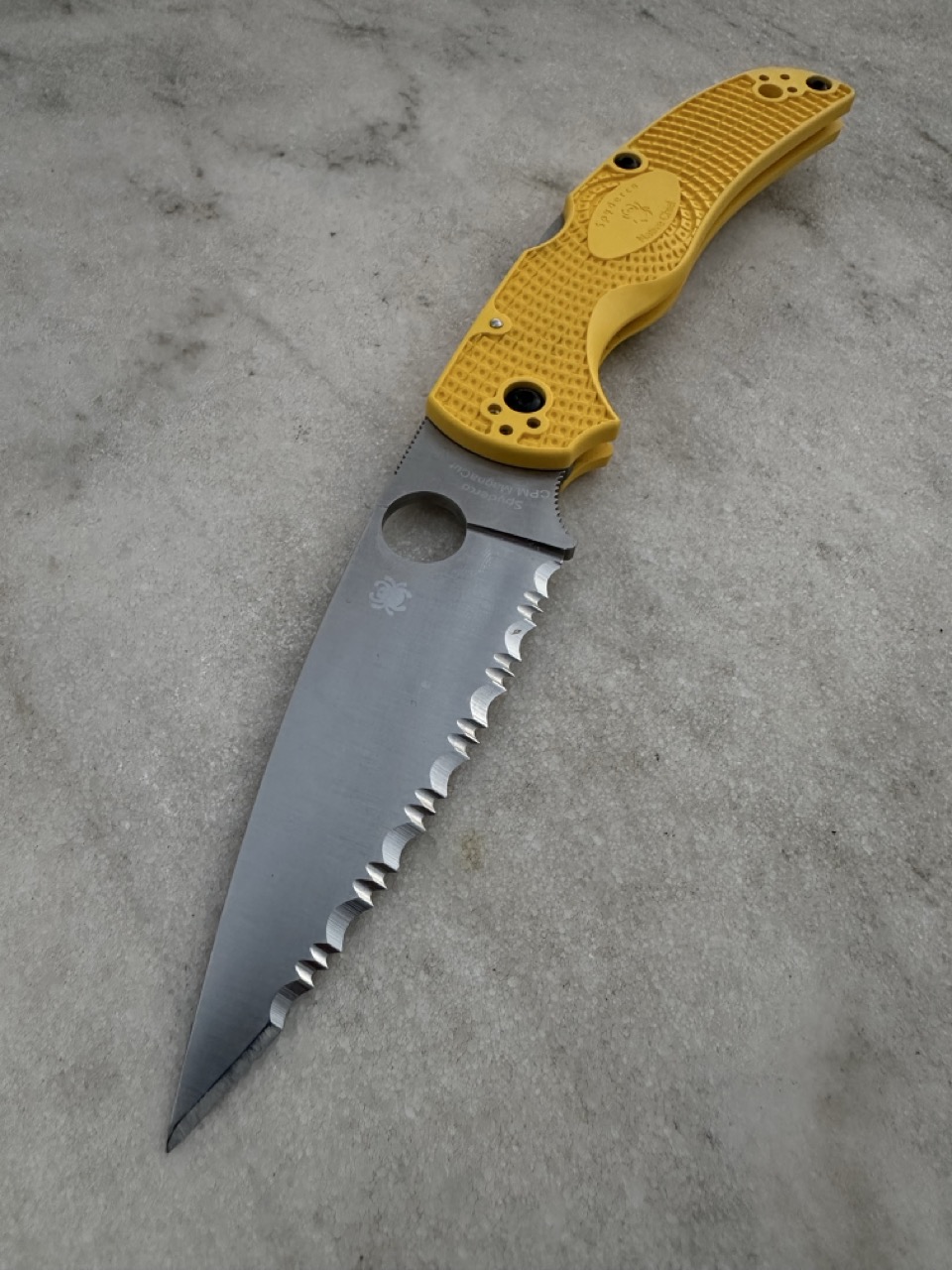
What about the Chief serrated version? That’s something else entirely. This is another animal. It takes the aggressive Spyderedge concept and stretches it across a long pointy blade, giving you both points and bites in one sleek package.
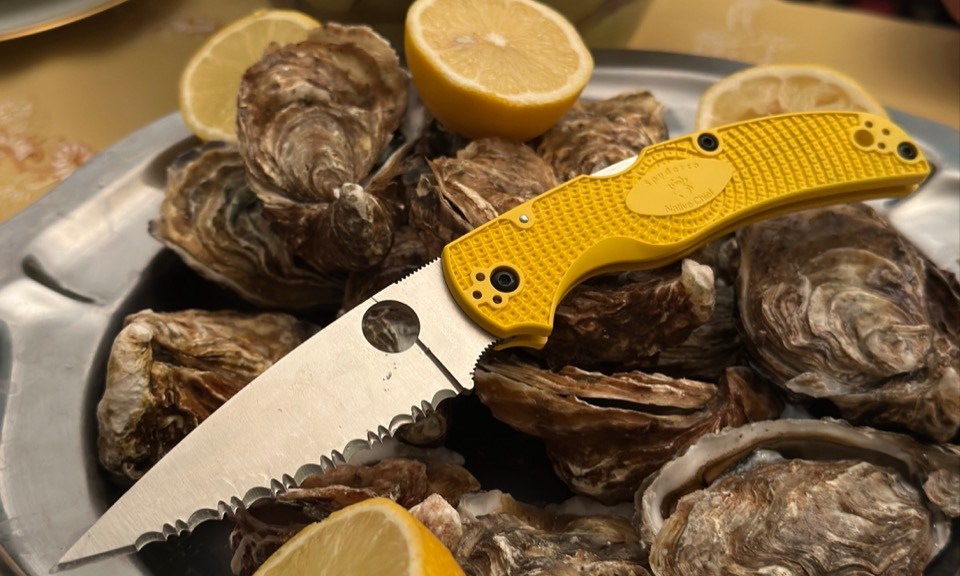
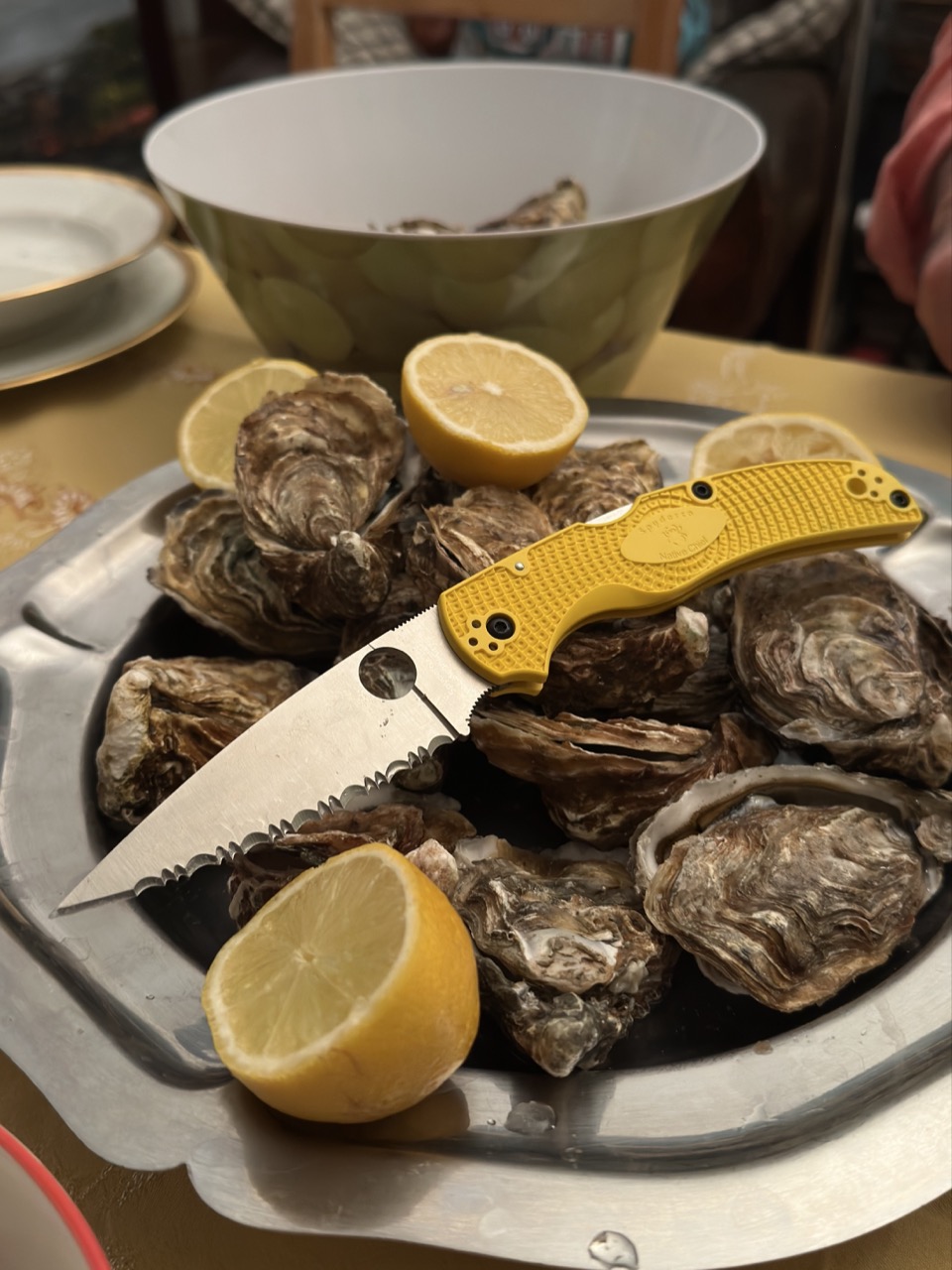
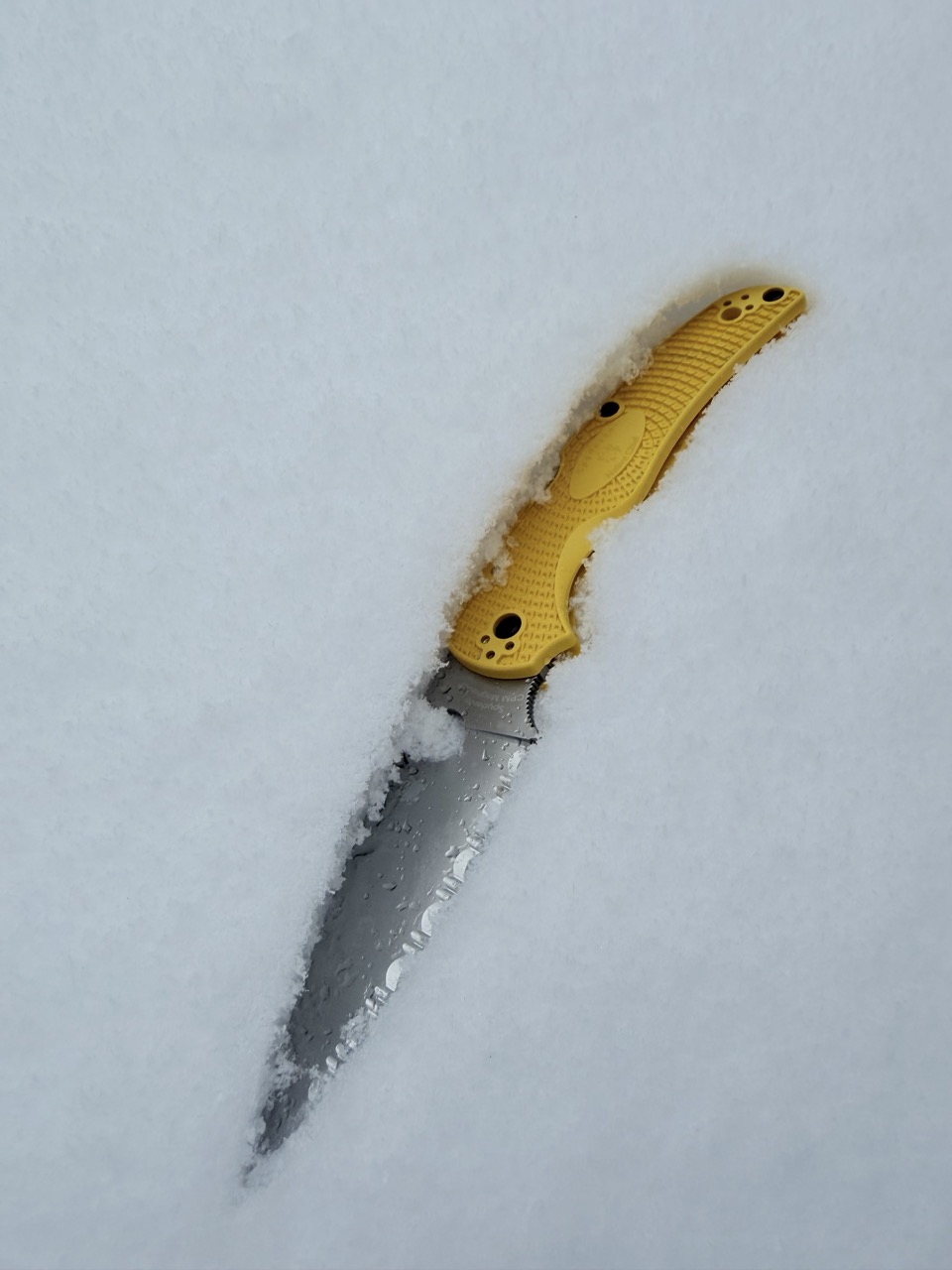
And no, you don’t open oysters with a Serrated Native Chief.
This picture is just for illustration. 😀

Having used the serrated Chaparral daily, I already knew how addictive a well-executed serration can be on a daily basis on a short and flat lady/gentleman folder. Scaling that up to the long Native Chief was something I had long wanted to put to the test again, and it doesn’t disappoint. Sal and Eric are true evangelists for serrations. Sal, in particular, is famous for collecting iconic knives and fitting them with custom serrated blades—the man knows how to get the max of performance in a portable package.

Now, let’s be honest: serrations aren’t for everyone—and that’s a shame. More often than not, it’s simply a matter of education and familiarity. No, serrations are not difficult to keep sharp; you just need the right tools for the job. And yes, you can push-cut into wood to strip branches from a rod when needed.

Some of my friends love meat but refuse to touch a serrated knife at the table. And while serrations are not the first choice for delicate whittling or ultra-precise cut, also the teeth are chisel-ground, so the cut can drift if you’re careless… But for true performance, fast and furious, serrations shine everywhere !
On the Chief Salt, they are sharp, a little too aggressive, and pointy: they bite hard into whatever you’re cutting, with a bit of drag, but they make short work of fibrous and demanding materials. The serrations of the Chaparral are more forgiving. The Chief Magnacut’s spyderedge will catch everything, keep it away from your skin !

Maintenance as mentionned earlier is simple. Especially with a triangle rod of a Sharpmaker.

” I designed the Sharpmaker to be able to sharpen serrations. It’s really easy to get good edge on a Spyderco serrated edge with a Sharpmaker. When sharpening a SE edge on the Sharp Maker should you also “push” the knife along the stones as well as pull? I feel like only pulling the edge along the stone would concentrate the contact of the stone on the front of each serration.”
Sal.
These serrations hold their edge very very well and, because of the chisel grind, you only need to sharpen only one side of the blade. And here’s a neat thing to know: serrations always give you more edge length than a plain edge of the same blade size. More edge’s length, more power.

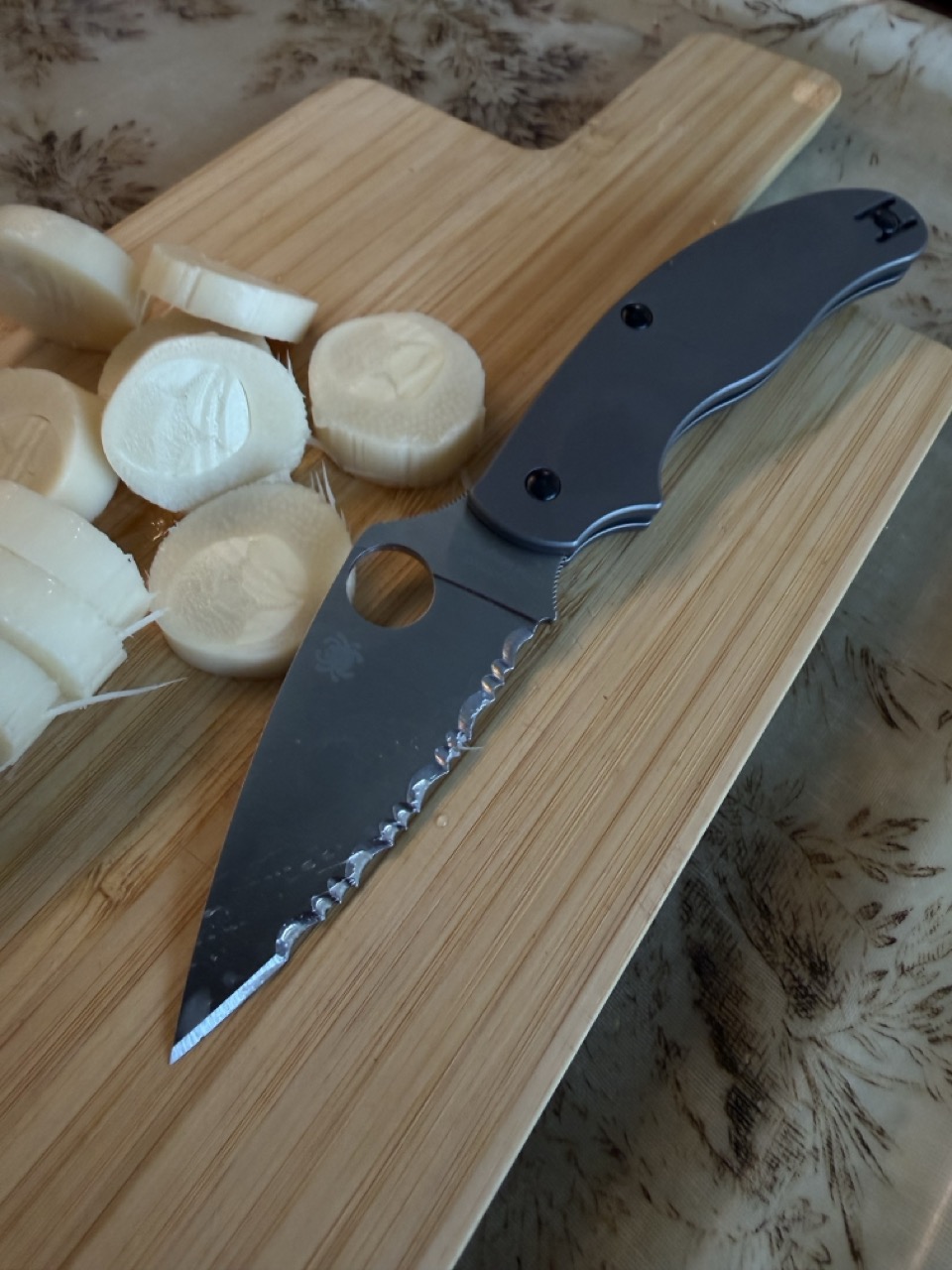
Using the serrated Chief changes the way I cut. On a wooden board, I often find myself relying mainly on the tip and the first 10% of the edge.
Making a wider angle with board, holding he knife higher…
If I cut parallel to the board, the serrations are so aggressive they generate sawdust!
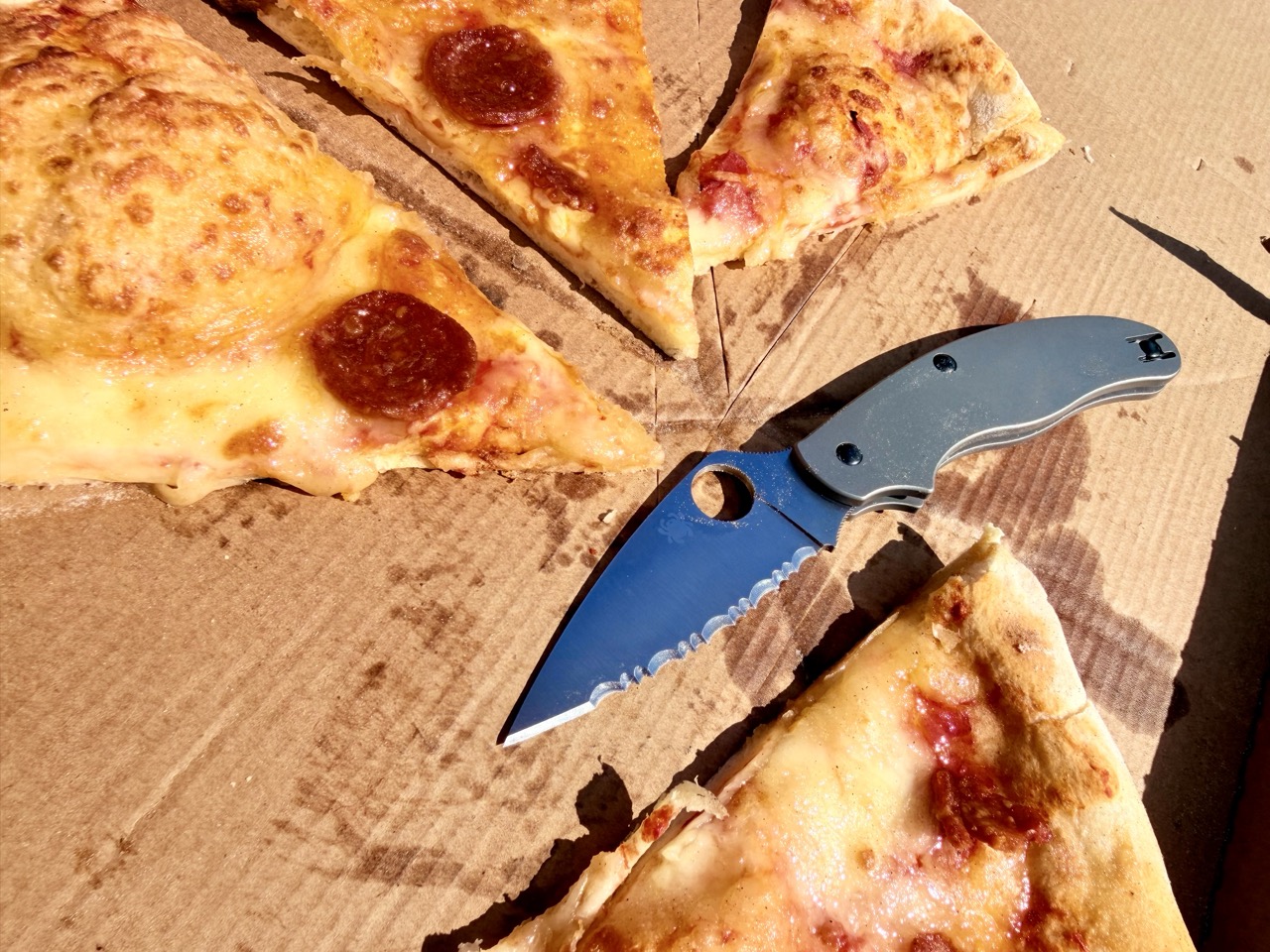
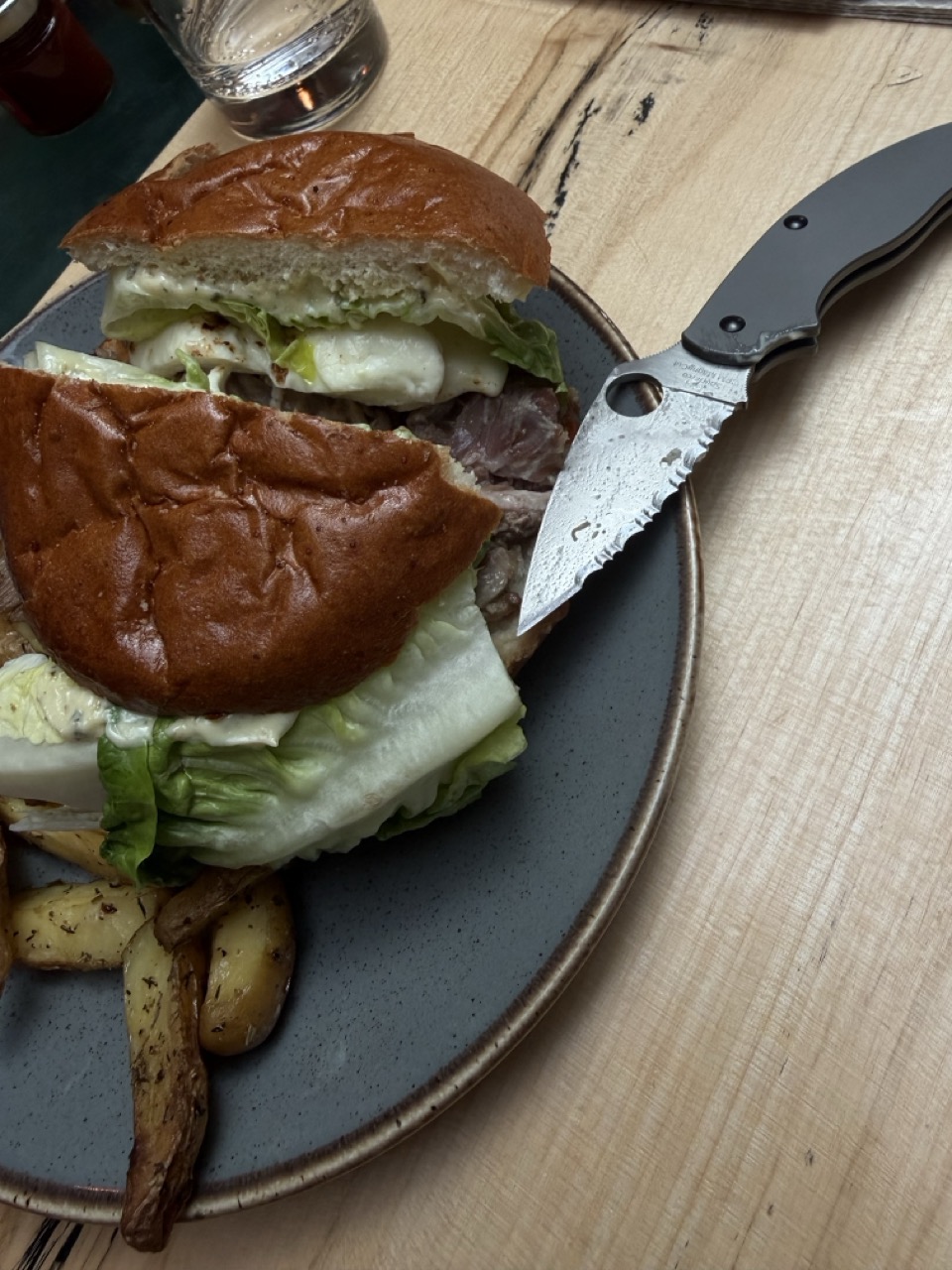
But in any professional kitchen, serrated knives make preparing sandwiches or slicing layered ingredients effortless—fast, clean, and without crushing delicate foods.

The mechanics of a serrated blade differ from a plain edge. Plain edges excel when you can push, slicing smoothly through the material. Serrations excel with a sawing motion, ideal for fibrous materials and when speed matters more than precision. Think of sawing through a branch versus whittling a stick: both cut, but only one does it efficiently under pressure, in emergency. Spyderco bigger folders were often considered as Pocket Chainsaws for that very reason.
Start using Spyderedge and you will see they are addictive !

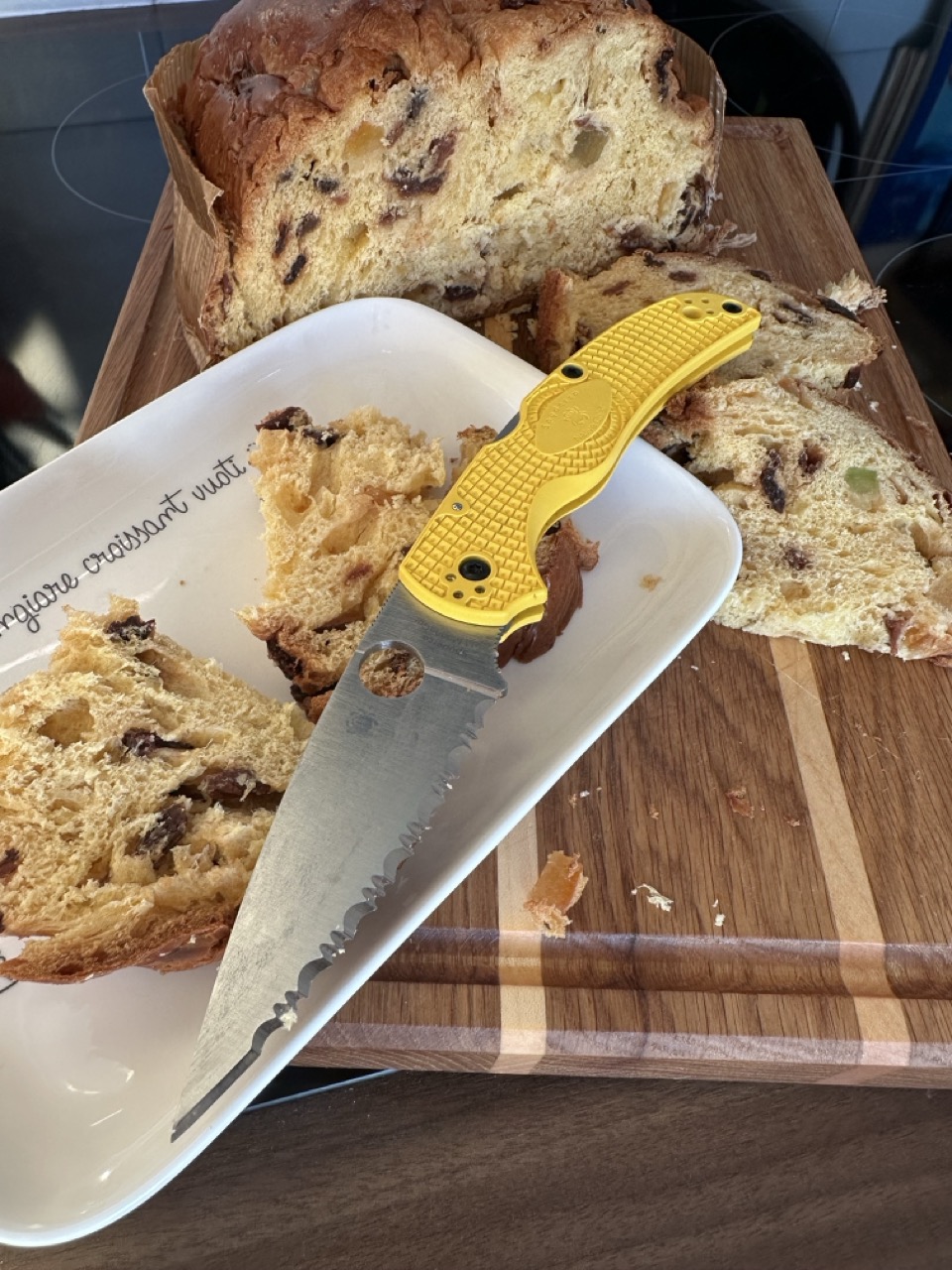
See ?

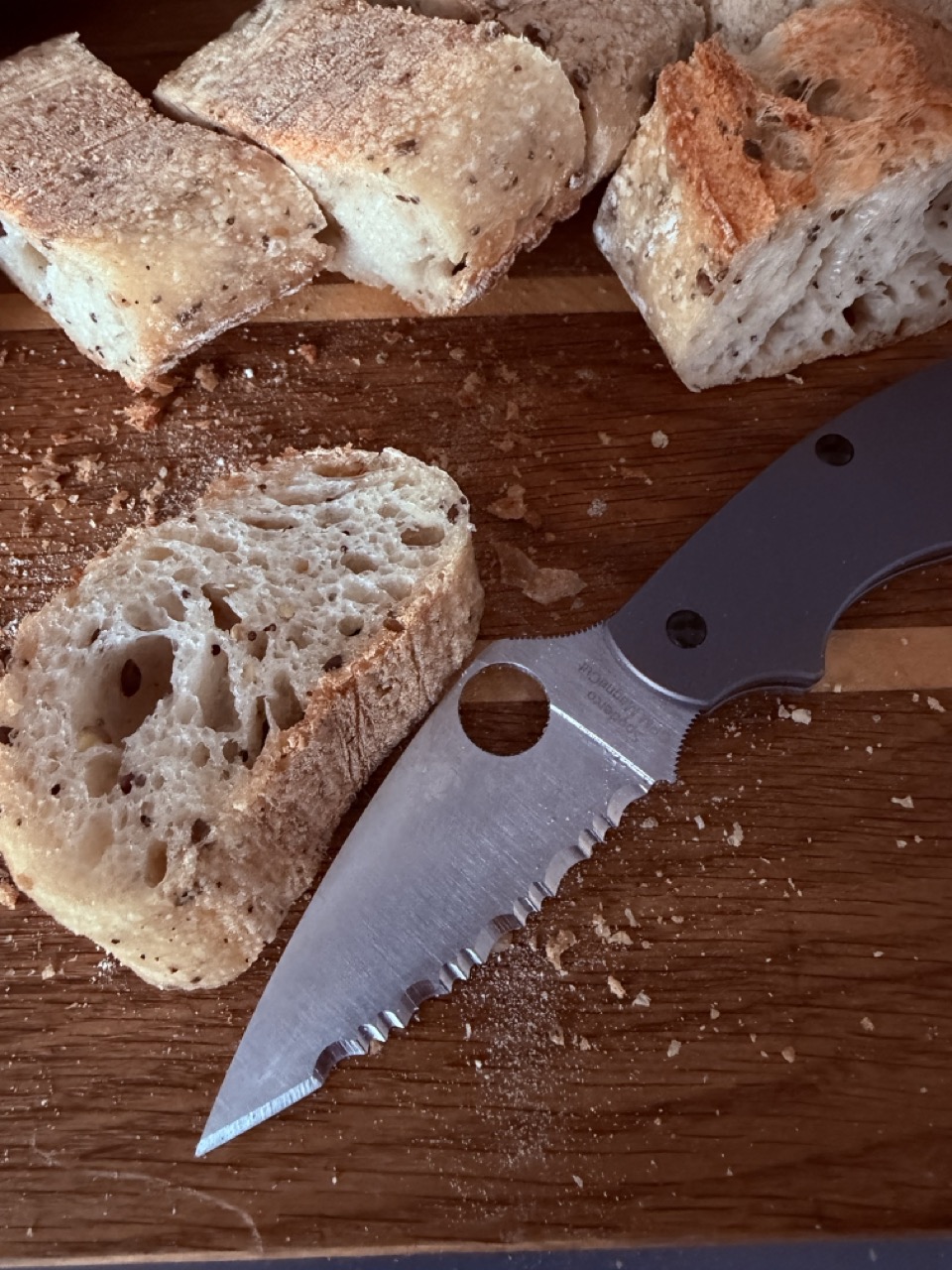
Slicing bread illustrates that point perfectly. Pushing with a flat blade (even a thin one) can squish a loaf, but a serrated edge will slice cleanly, scoring and dividing the material with minimal effort. A sharp serrated knife hooks, grips, and slices with real efficiency, unlike a dull serrated knife, which merely tears. Each teeth act like tiny scallop edge, biting, reaping through the material rather than forcing it apart. A real saw, is not really sharp, by contrast, removes shavings to create a kerf—a very different process altogether.

From a geometric point of view, that serrated Chief Salt is a masterclass in applied design. A true vector for serrations. Very aggressive yet easily controlled, fast yet precise enough for practical use in every day or emergency chores. It’s a light folding knife that turns hard work into satisfying results: you cut fast in all conditions, rain, snow, sea, mud, grease… That chief would even be a precious ally for an expedition in the rain forest. For anyone who wants to take with them everywhere the utility of a long, hard-working Spyderedge in a travel-friendly folding package, this is it. An toothy all terrain tool you can rely on in all circonstances. The fruit of fifty years into knife making observing Nature where serrations are legion.

“In our early testing, (Gail and my), we learned that a coarse edge cut more aggressively than a fine edge, but the coarse edge tended to dull more quickly. The way we decided to combine the coarse cutting and the fine edge longevity was with a serrated edge. The serration tooth is he “coarse” aspect and the “fine” inner edge, lasts longer. “
Sal Glesser.