Tag Archives: serrations

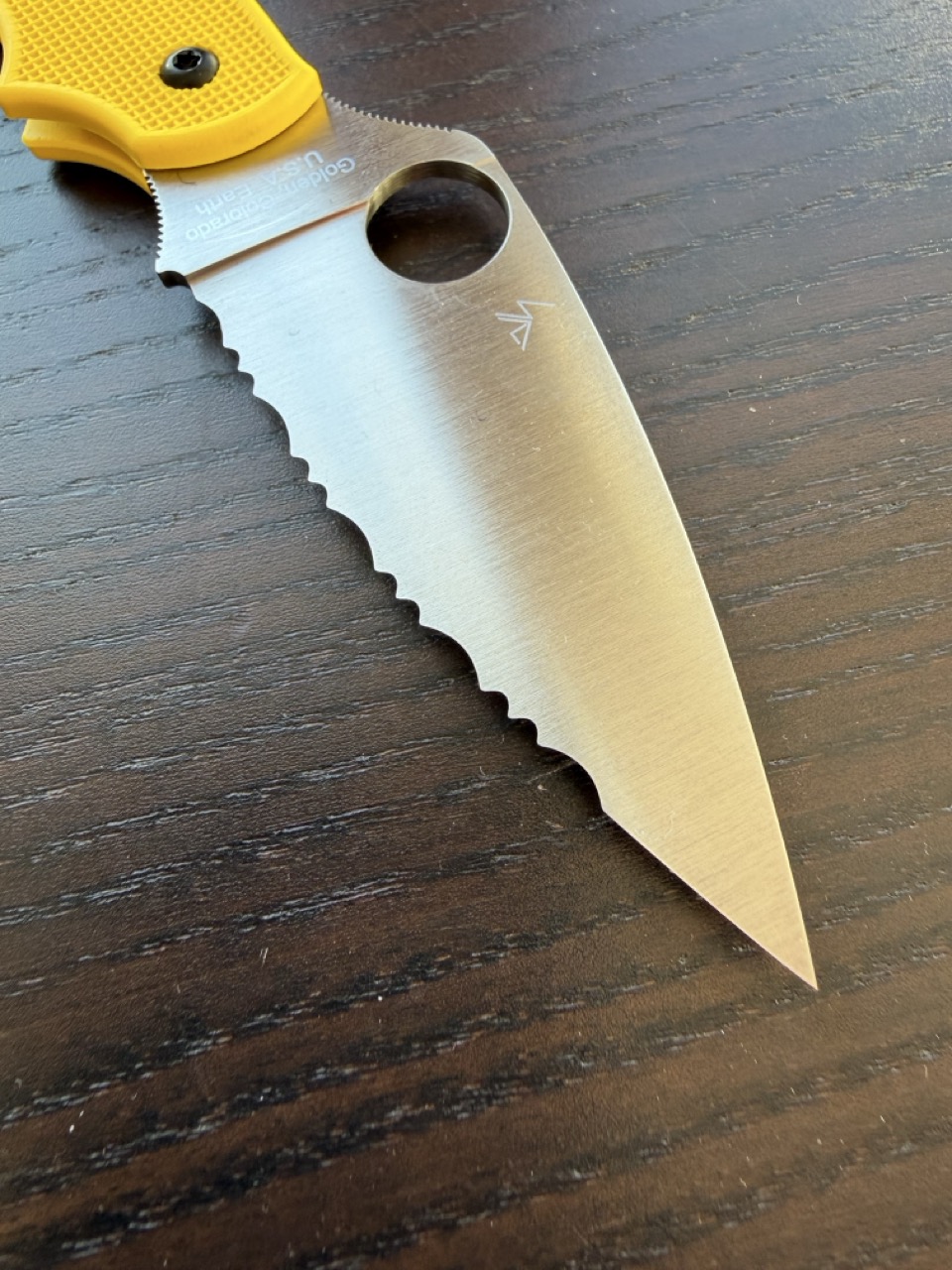
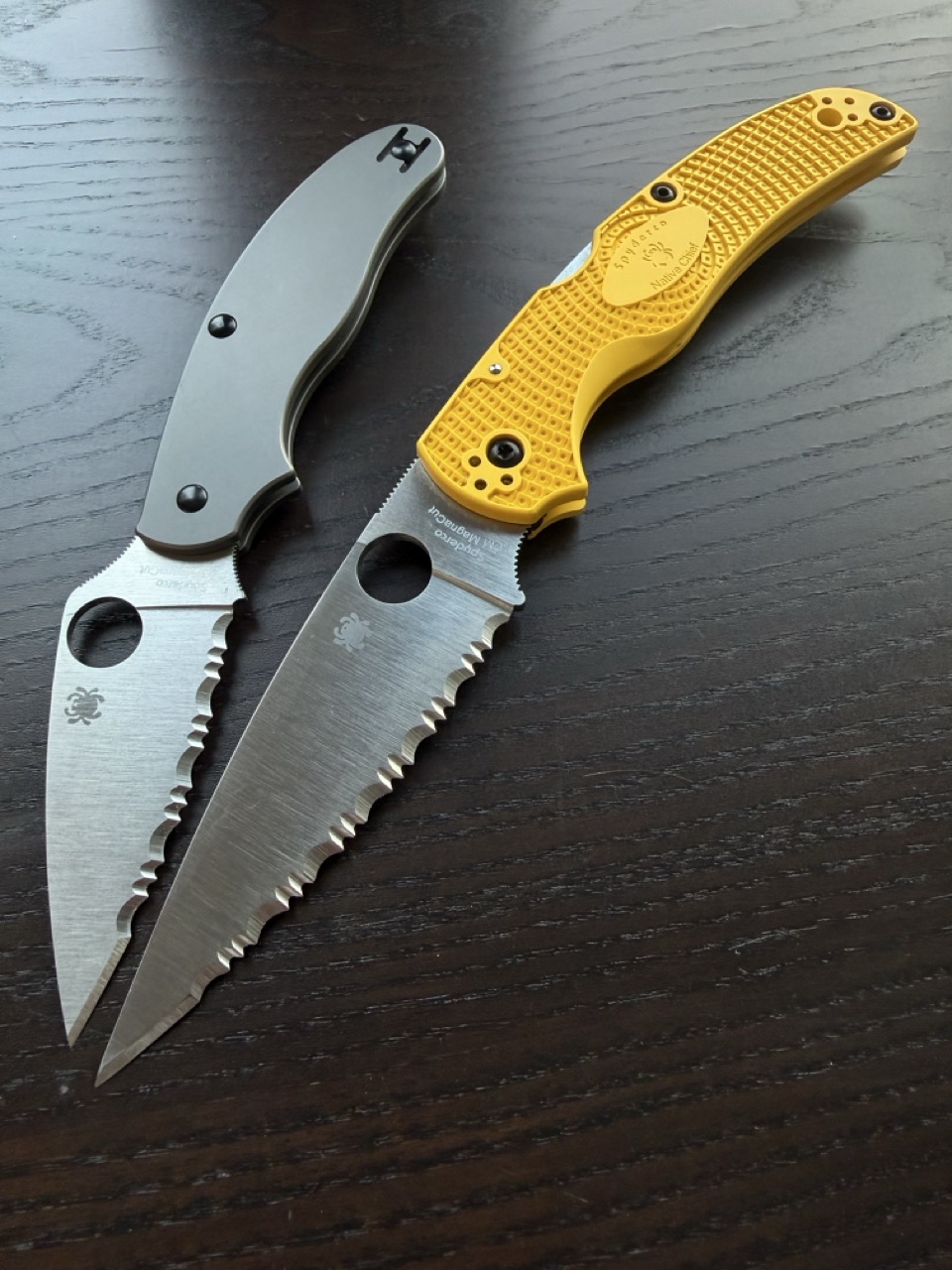
The Serrations of the Everyday — Notes on a Serrated Magnacut UKPK enhance with titanium scales.

There are objects we own, and others that, through use, quietly become extensions of our hand. The UKPK in Magnacut—here in its serrated form, dressed in Heinnie’s Titech titanium scales—belongs firmly to the latter. Not a piece to be admired at a distance, but one to be lived with. Everyday. Tested. Carried without ceremony.
This tool is low profile but with an hungry edge.
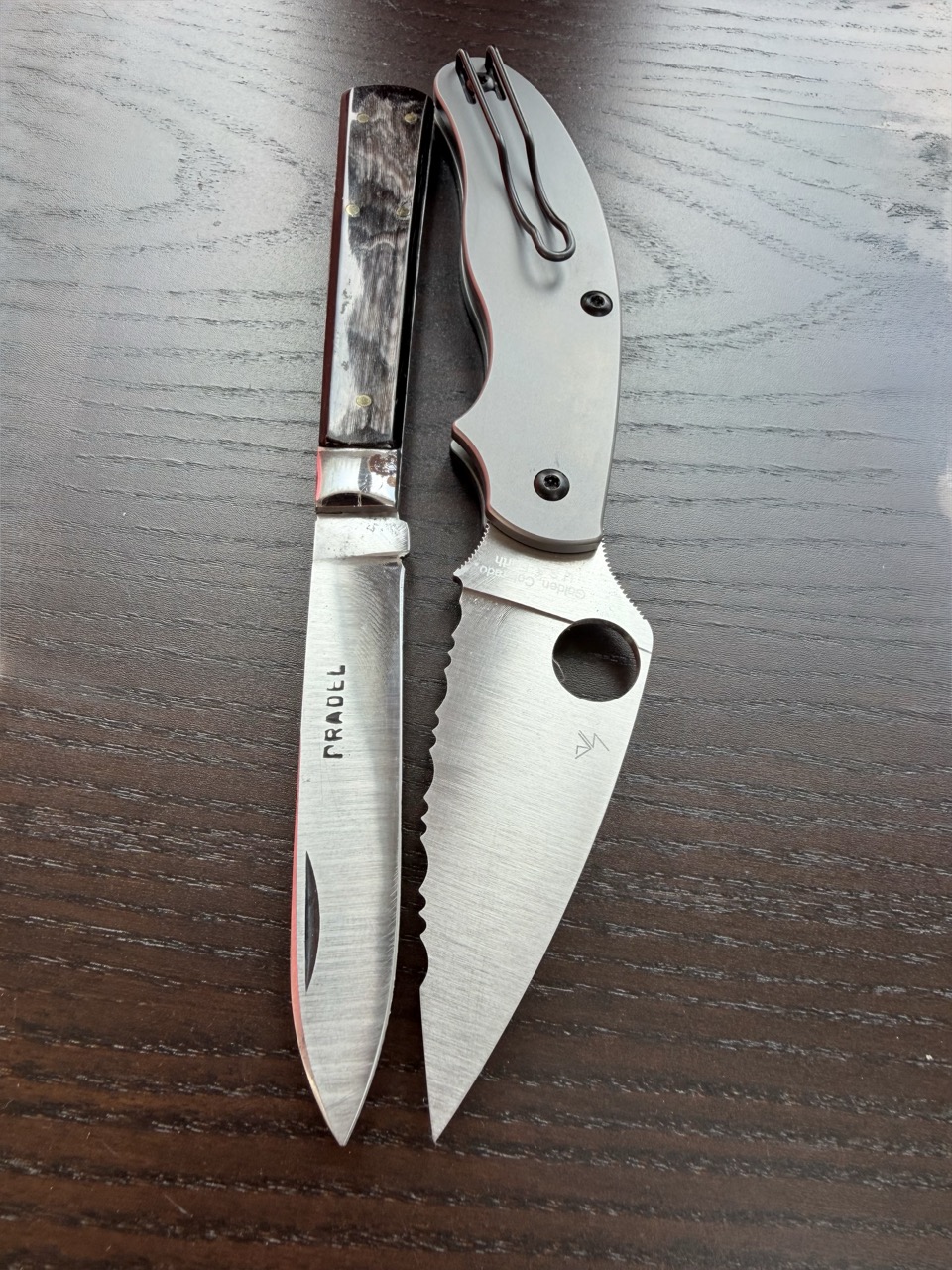
What strikes first is the paradox. A familiar, ergonomic silhouette—born from a will shaped by strict legal constraints—yet delivering a level of cutting performance that feels anything but limited. That serrated edge does not flatter at first glance. It unsettles some, even repels others. And that is precisely where its relevance begins.
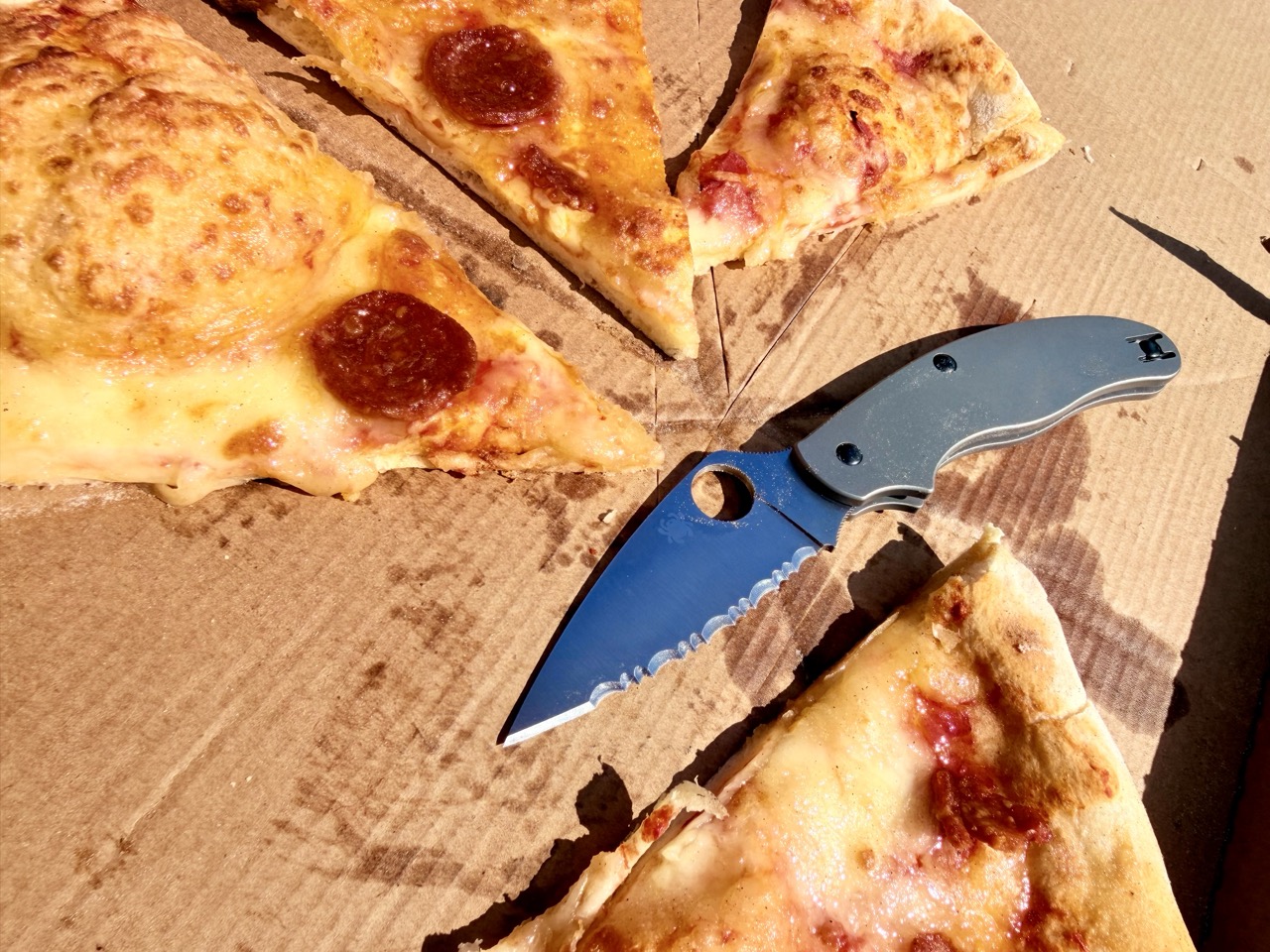
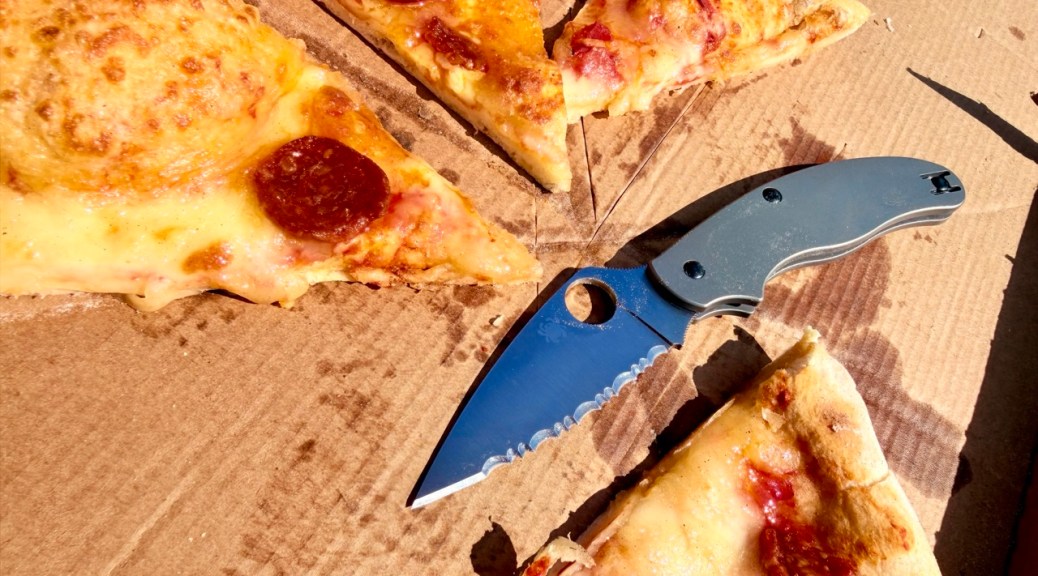
Because real life does not deal in ideal materials or perfect technique. A slice of cooling pizza, a stubborn thread, double-wall cardboard, an electrical cable—each offers a different resistance. Where a plain edge demands precision, serrations adapt. They bite and initiate cuts. From a caresse to firm push cuts, using thin SpyderEdge serrations is an escalation in my cutting intentions. I need that material to be cut fast !!
It helps a lot when you cut a label in a store without to be noticed (once you bought it of course…)
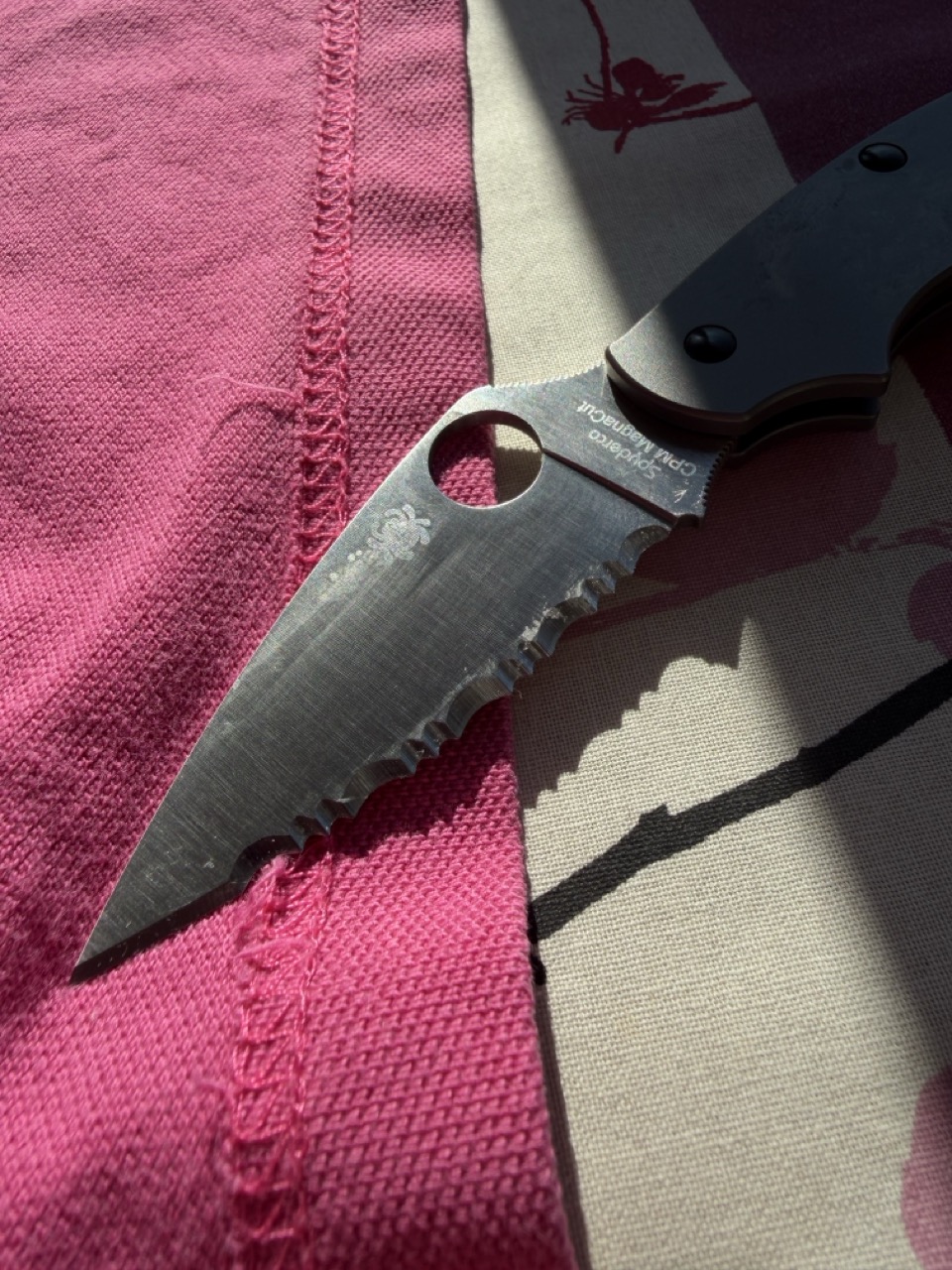
In this configuration, Magnacut reveals a deeper character. I had noticed it on the wonderful Chief Salt . Its reputation is well established, but it is in repetition—across mundane, unremarkable tasks—that it truly asserts itself. Edge retention ceases to be a technical metric and becomes something tangible.
Days pass, materials accumulate, and yet the initial sensation—a ready, immediate hungry bite—remains intact with a quiet, almost disconcerting consistency. That makes a real difference for an EDC.
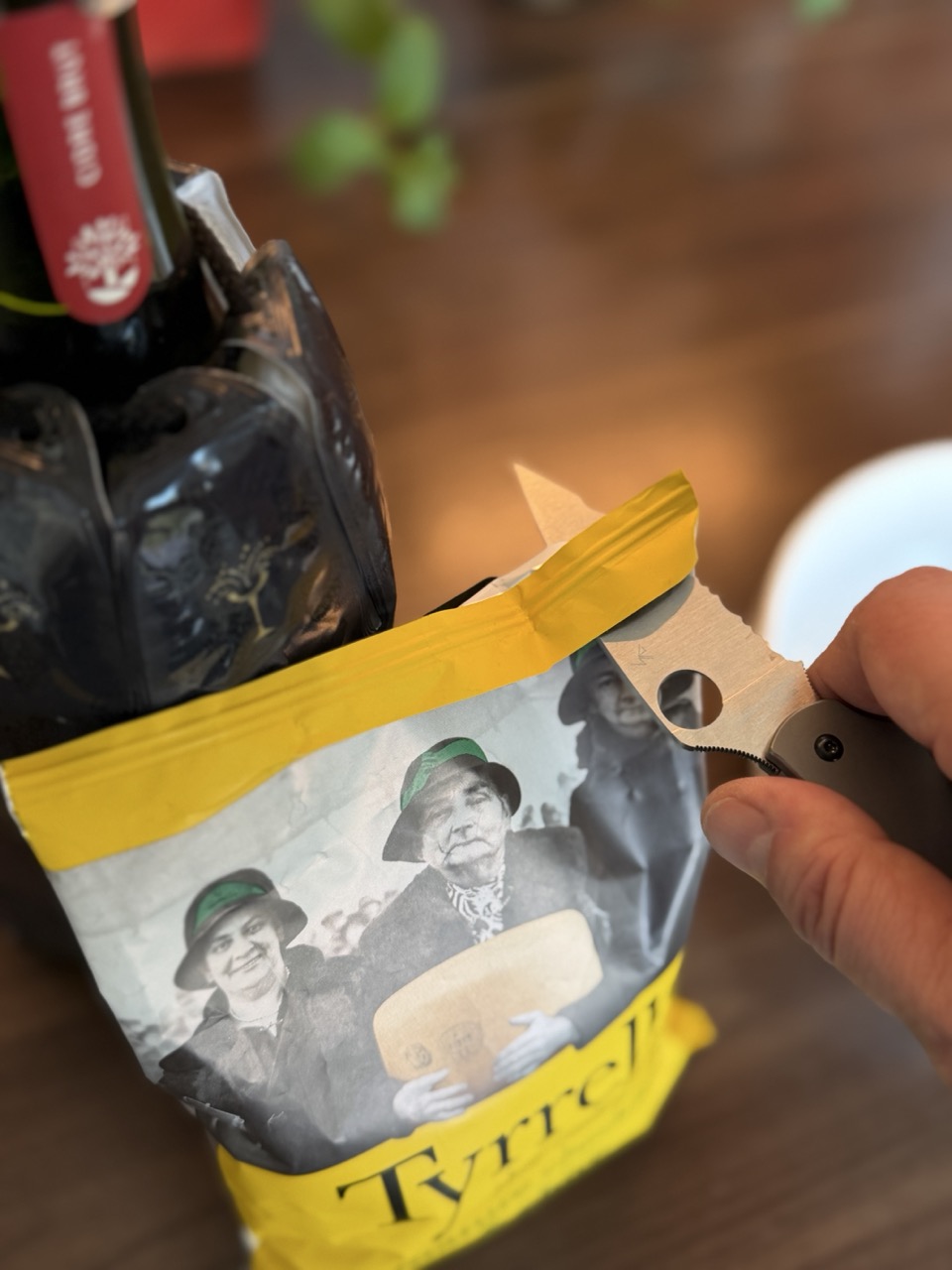
It is telling that even its own designer, Sal Glesser, found himself rediscovering the knife through this serrated Magnacut expression.
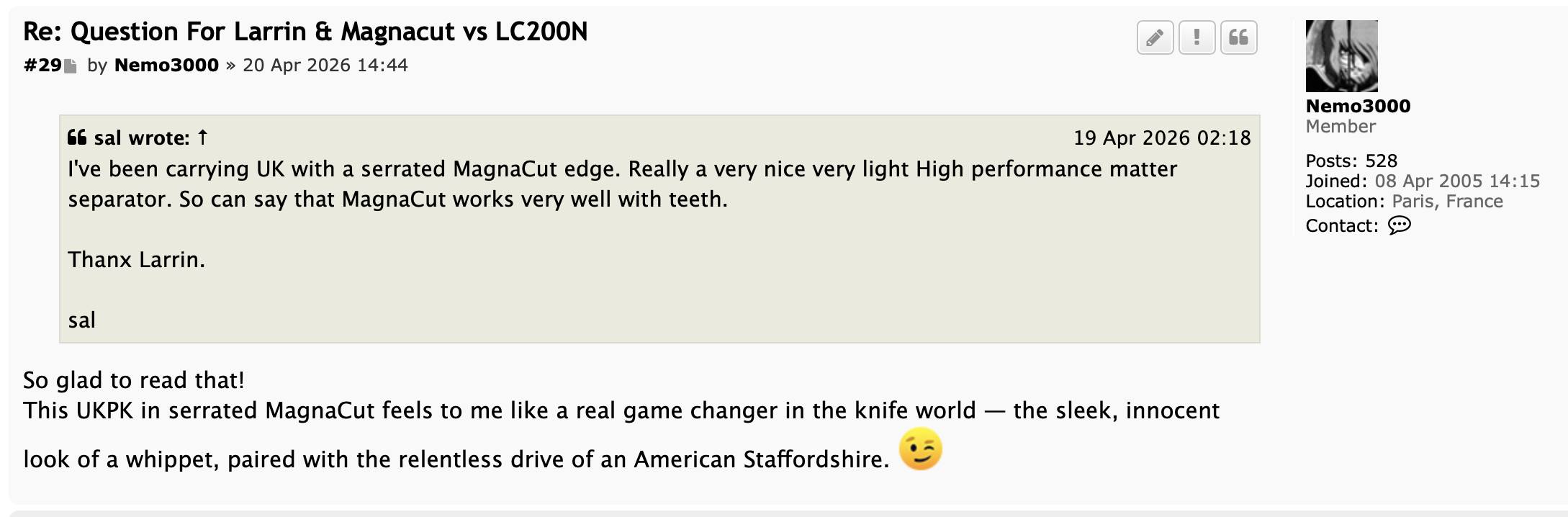
Notice my “preaching to the choir” post 😄

This is a genuine sense of surprise at the endurance of the edge, accompanied by a nod to Larrin Thomas, whose metallurgical work made this steel possible. This is more than technical acknowledgment; it is recognition of a rare alignment between design intent and material innovation.
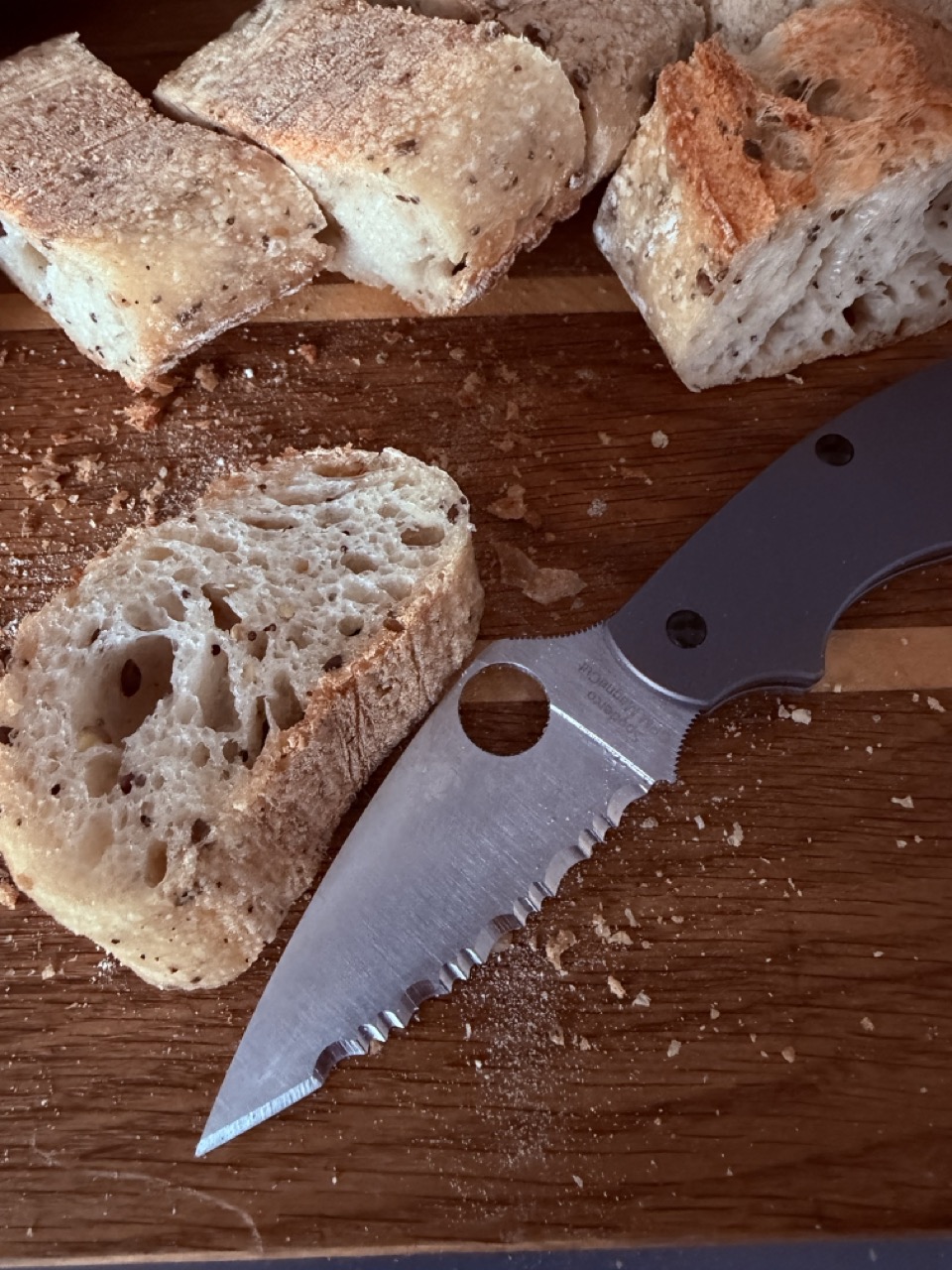
The titanium scales subtly shift the relationship further. The knife gains density, heft and presence. I just love that. It’s no more a lightweight though but the tactile experience becomes cooler, more deliberate. There is something almost architectural about it—a structure defined as much by its material honesty as by its purpose, ready to meet the unpredictability of daily use by sea, air or land.
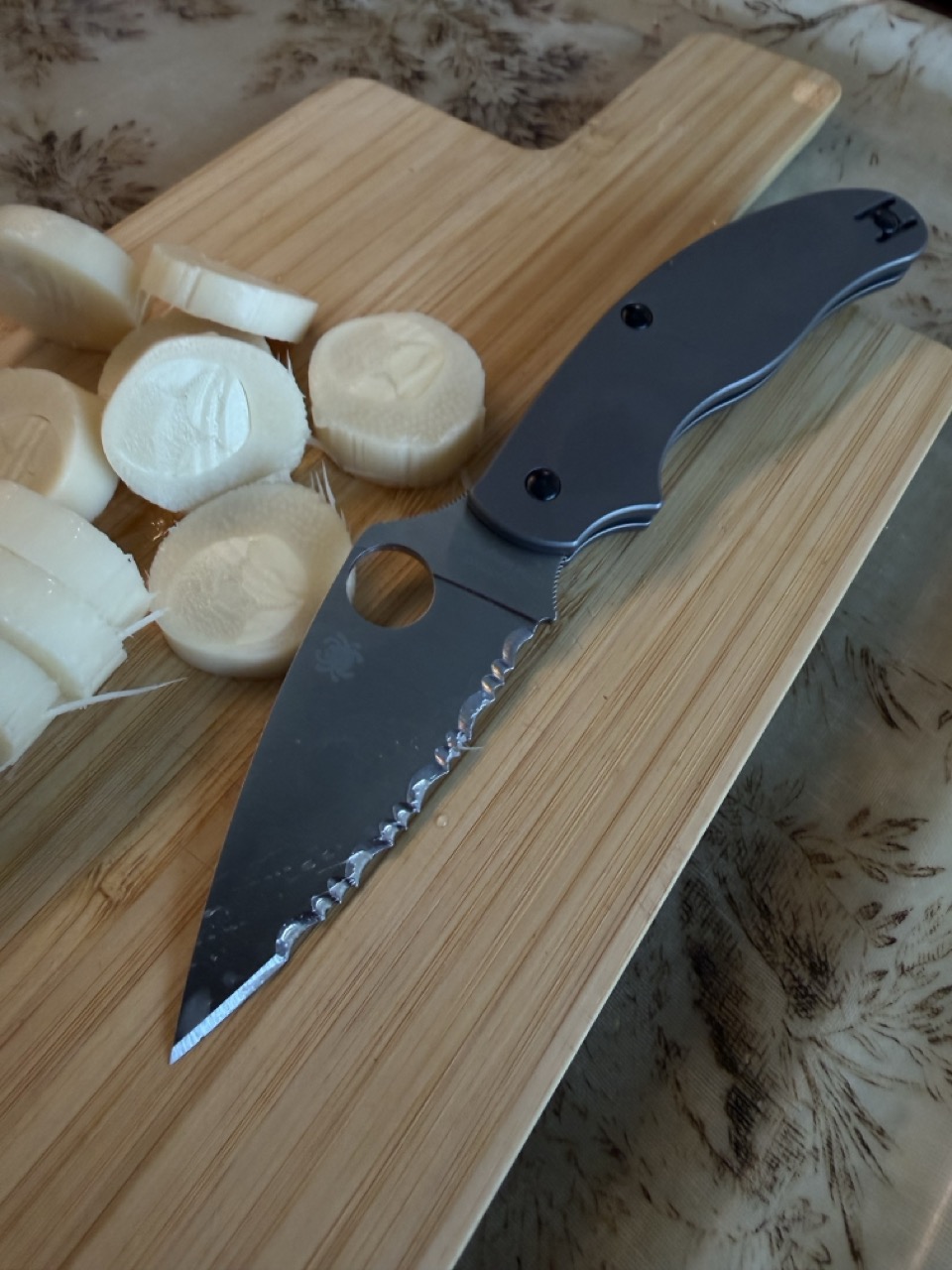
Over time, what emerges is a quiet redefinition of the serrated edge itself. Long confined to specialized roles—rescue, rope, marine environments—it finds here a broader legitimacy. Not as an alternative to the plain edge, but as a different philosophy of cutting. More instinctive. More pragmatic.

I have felt the same with the Chaparral serrated, offering those performance in a lady/gentleman format. The UKPK offers a longer blade but a legal solution.

The serrated Chaparral brings this same idea into a more restrained, almost tailored format—slim, discreet, almost polite in profile, yet unexpectedly serious once it starts working. It’s the kind of tool that disappears into a pocket and reappears only when needed, delivering performance without ever looking like it intends to.

The UKPK serrated Magnacut, on the other hand, pushes the concept further in a different direction. Same underlying logic, but with more reach, more cutting length, more immediate utility when the task scales up. It’s not trying to be more aggressive—it simply extends the capability envelope while staying within a legal framework that forces discipline into the design.

Put together, they sketch an interesting continuum rather than a category:
the thinner Chaparral as refined minimalism with bite, the thin UKPK as everyday legality stretched to its most useful expression.

Different formats, same underlying surprise: serrations stop being “special-purpose” and start behaving like a perfectly normal, highly efficient everyday cutting system !
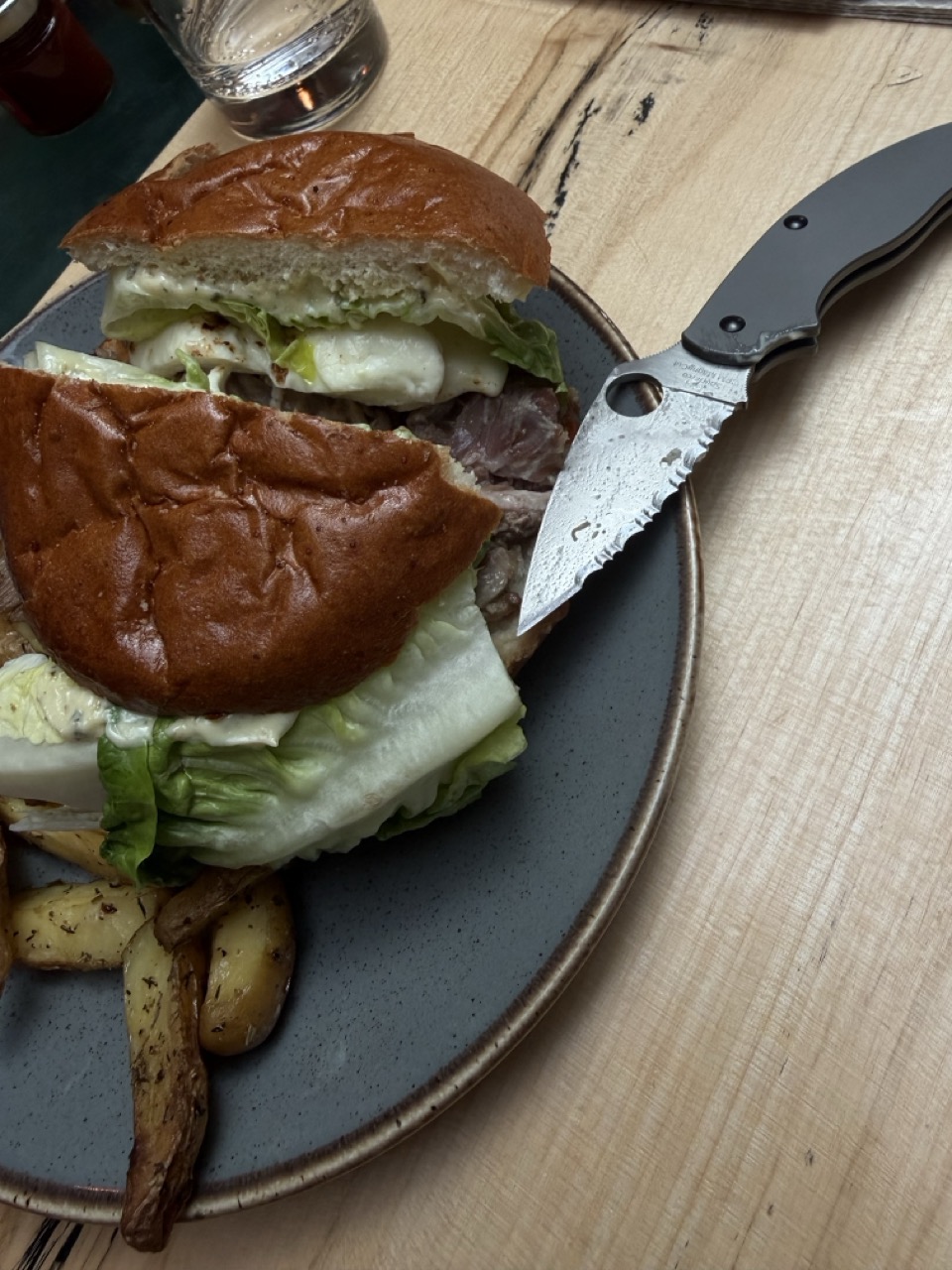
To reach for a serrated blade to cut burger or break down a box should no longer feel unusual. If anything, it is where this knife feels most at home. Its modernity lies not in spectacle, but in normalization—in making high performance feel natural within the ordinary.

The serrated Magnacut UKPK does not argue its case. It does not need to. It simply works—and in doing so, it quietly resets expectations.

Low-profile in the pocket, yet unmistakably assertive at the edge, it pairs a hungry, enduring bite with a reassuringly solid construction. All of it contained within a form that remains legally acceptable in many places—an understated balance of restraint and capability.
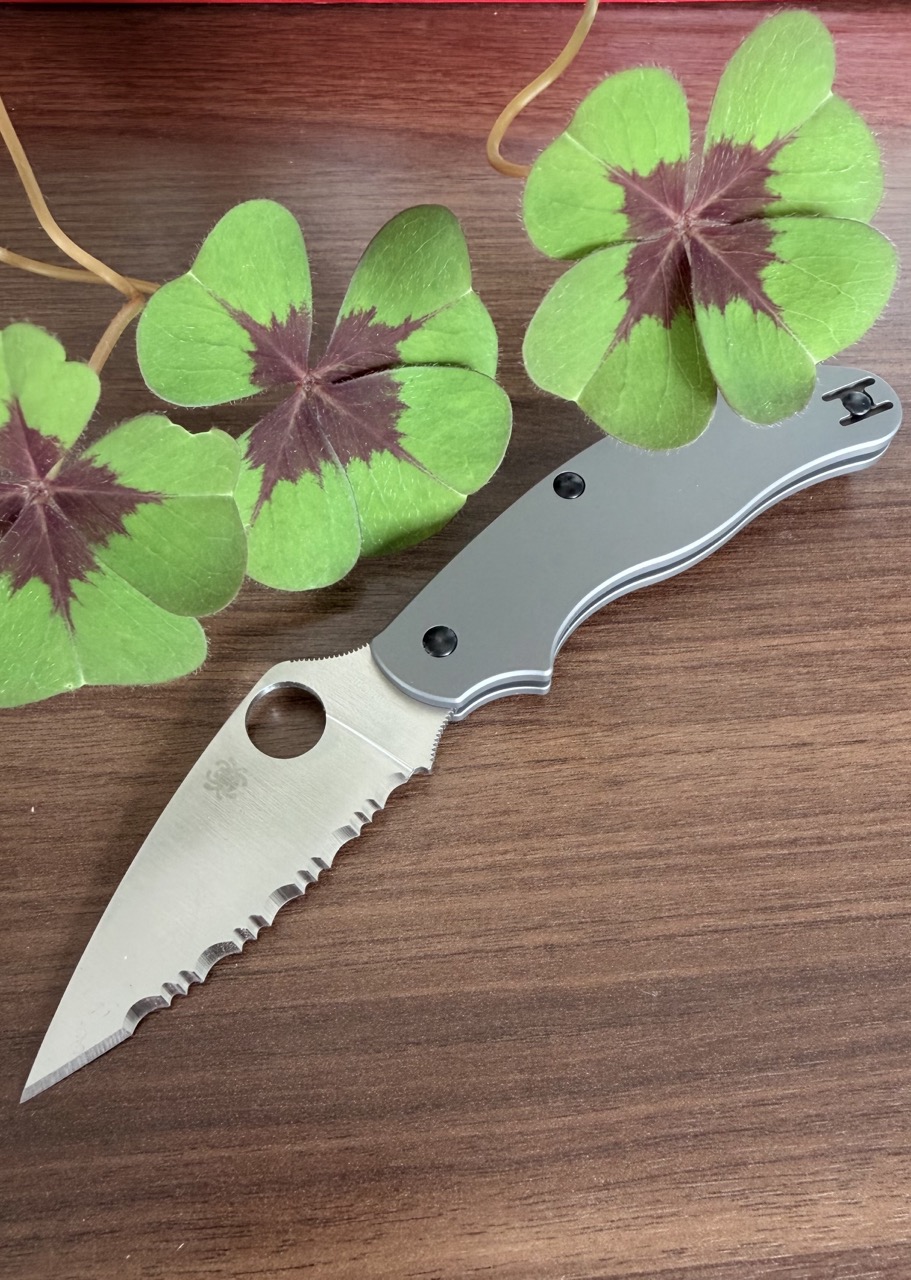
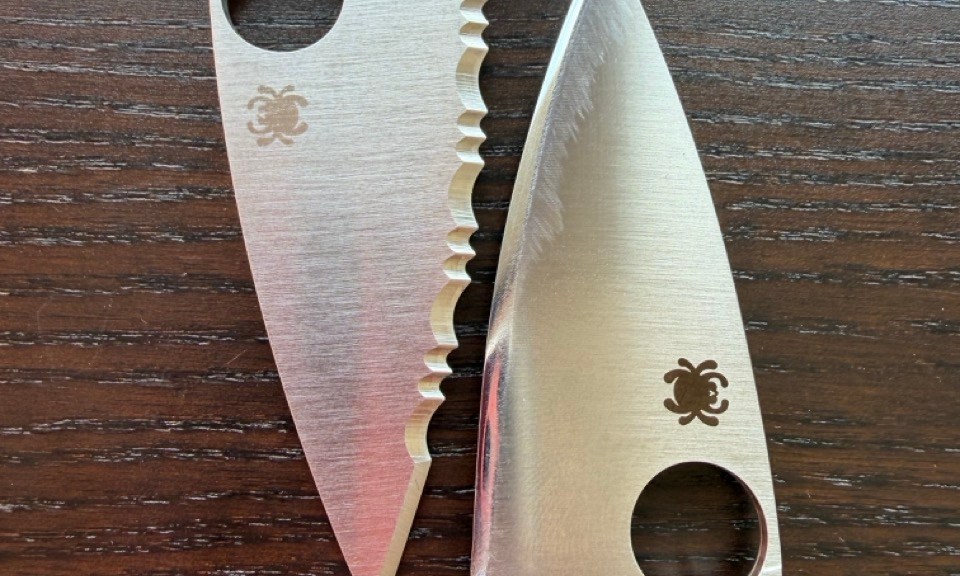
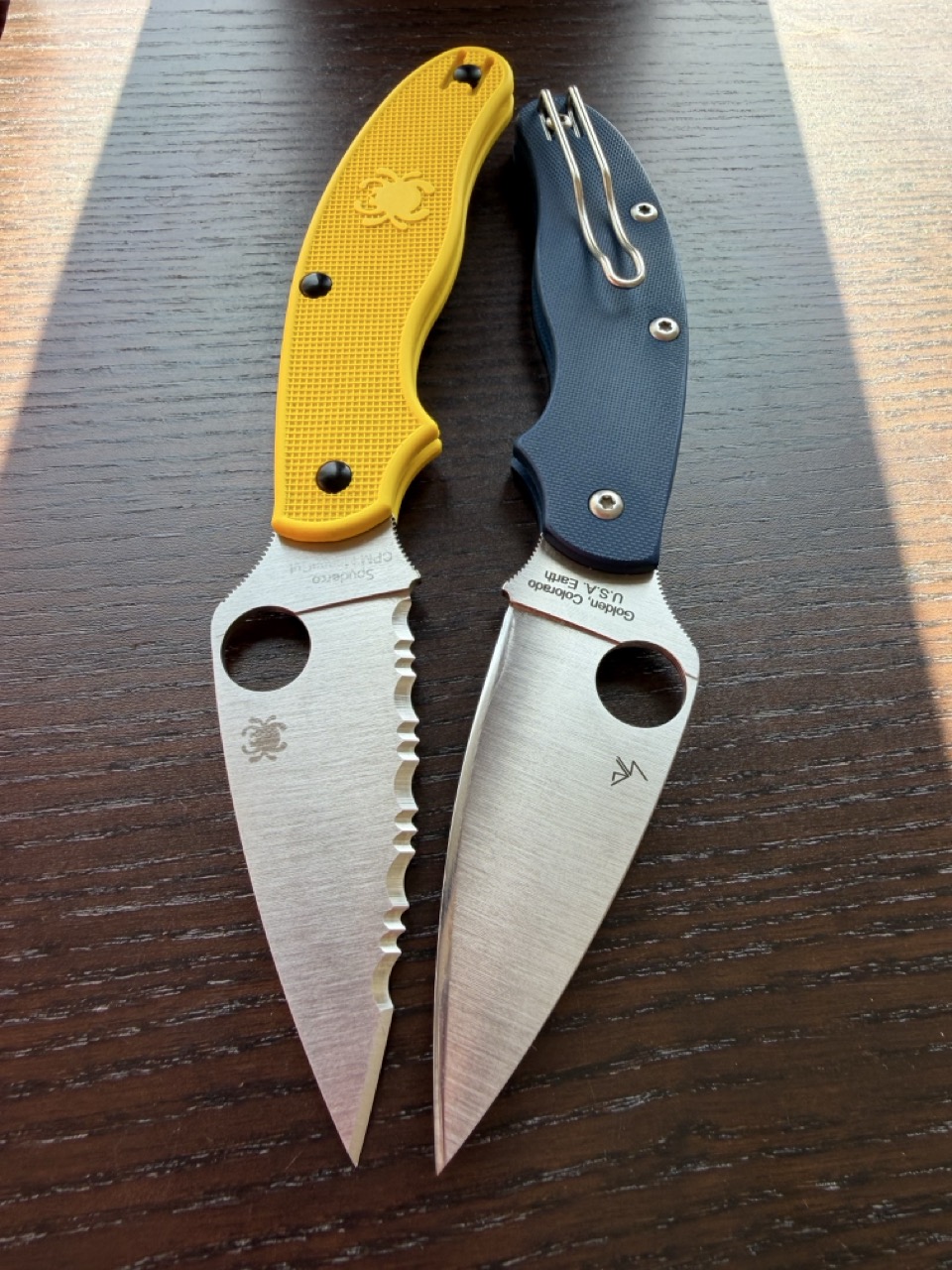
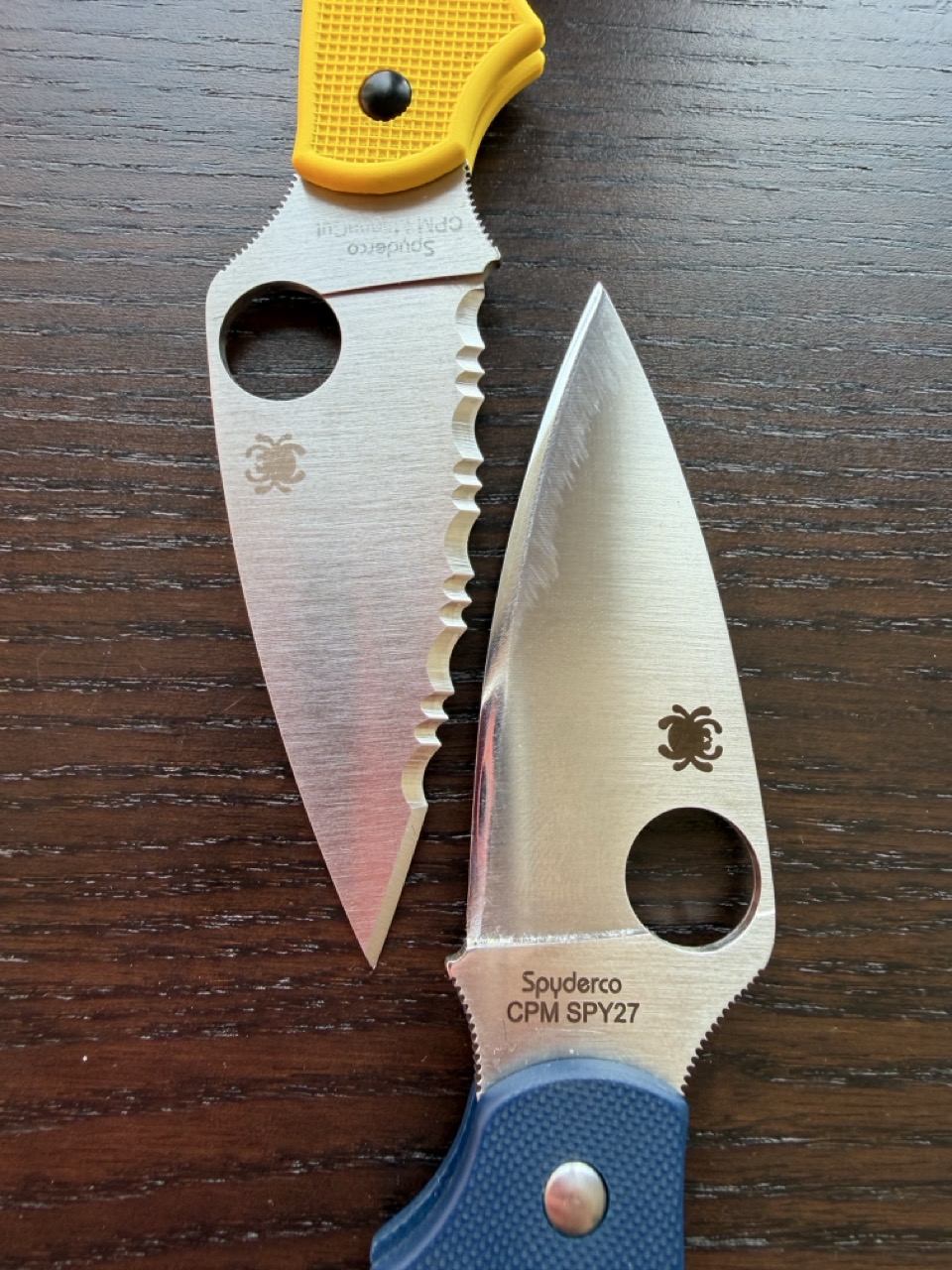
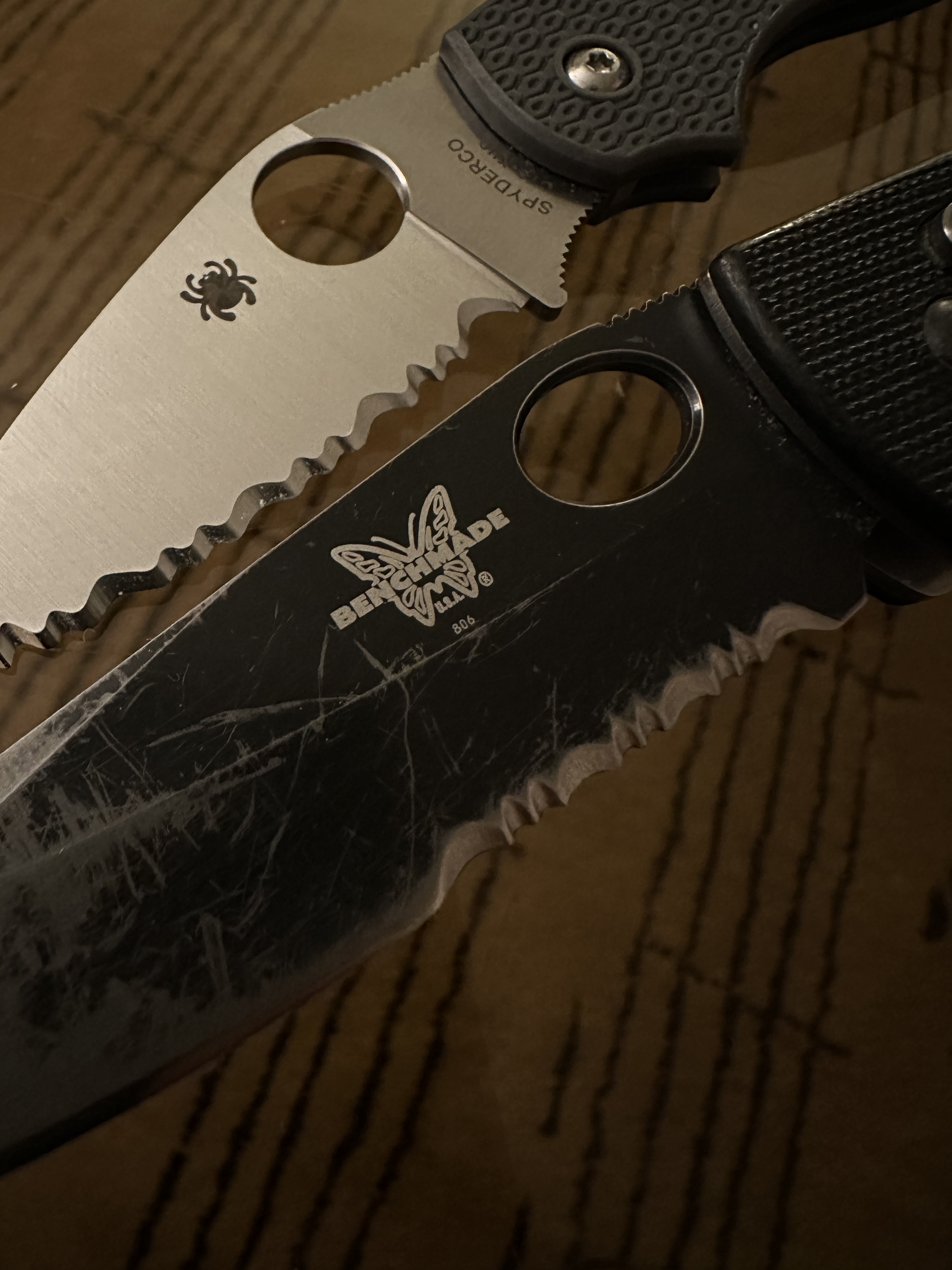
“Part The Matters For Me” – Spyderco UKPK Salt Serrated vs UKPK Sprint SPY27 Plain Edge – Teeth vs Razor.


I often come across very strong opinions when it comes to serrated versus plain edges. More often than not, users dismiss serrations outright—too ugly, too difficult to sharpen, ultimately useless, impossible to tune… usually without ever having truly put them to the test.

Consider this a brief attempt to set the record straight.

The Spydie UKPK Salt in Magnacut, here in its serrated form, is built for unforgiving environments : lightweight, corrosion-proof, and relentlessly efficient when conditions turn wet, fibrous, or hostile.

Facing it, the Spyderco UKPK Sprint Run in SPY27 with a plain edge embodies precision and control, offering a refined, razor-like cutting experience with effortless maintenance.

What do we got ? Two identical platforms, two radically different philosophies: one designed to endure, the other to excel.

Let’s first compare the steel. Two of my favorite high end alloys and luxury, in this case, does not come from polish or presentation. It comes from intent.

The UKPK Salt, dressed in serrations and armed with Magnacut, carries the modern obsession with resilience to its logical extreme. This is not a steel that negotiates. It exists in total defiance of the elements: saltwater, humidity, neglect. Where older stainless steels would stain, pit, or surrender their edge, Magnacut remains composed, almost indifferent. Its toughness borders on the improbable for something so corrosion-resistant, and yet it refuses to chase the last degree of razor refinement. Its edge is not delicate—it is enduring. One senses immediately that this is a steel designed not for the enthusiast’s bench, but for the long, indifferent stretch of real use.

Across from it, the Golden Child, blade of SPY27, a Sprint Run which offers a very different kind of luxury. Less demonstrative, more intimate. Designed in-house by Spyderco, COM-SPY27 feels less like a technological statement and more like a tuned instrument. It sharpens with ease, almost eagerly, taking on a ultra fine, ultra precise edge that invites control rather than brute persistence. Where Magnacut stands its ground, SPY27 moves—fluid, responsive, alive under the hand. It does not seek to dominate harsh environments; it refines the experience of cutting within them.

The distinction is subtle but decisive. Magnacut is a wonder steel that reassures. SPY27 is an exclusive steel that seduces.

Now about the edge shape…. Here, inevitably, the steel disappears. What remains is the edge—the only part that truly meets the world.

Like Moses said, “Part the matters for me”…
—oh wait, I meant the waters. 😉

On the Salt, the serrated profile transforms the blade into something almost mechanical in its intent. It does not glide; it engages. Each tooth acts as a point of aggression, catching, pulling, tearing through resistant materials with an efficiency that borders on inevitability. Rope, fibrous plastics, anything damp or uncooperative—these are not challenges but confirmations of purpose.
You need to try it to understand it. Serrations aren’t saws—they’re teeth.
Even as the knife loses its initial sharpness, the serrations continue to function, each peak preserving a fragment of cutting power. It is a system designed to keep working long after refinement has faded.

But there is no illusion here. This is not a refined edge. It does not slice so much as it asserts itself. Precision is sacrificed for continuity of performance. Elegance yields to certainty.

To sharpen it, use the corner of a stone or a triangular rod, and treat it like a chisel-ground blade: work each serration individually, then simply remove the burr on the flat side. It’s done in minutes—easy, almost effortless.

The SPY27 Sprint Run, with its plain edge, follows the opposite philosophy. The cut is continuous, uninterrupted—a single line of intent from heel to tip. It can be tuned at will, from a coarse, aggressive bite to a razor’s whisper. There is no tearing, no hesitation. Materials part cleanly, almost silently, as if persuaded rather than forced. In wood, the blade tracks with uncanny precision; in food, it glides effortlessly; in finer tasks, it answers the slightest pressure. Here, SPY27 reveals its true nature—not through endurance, but through absolute fidelity to the cut.

And when the edge begins to soften, it does not resist restoration. A few passes on leather, a moment of attention, and the blade returns to form. There is a rhythm to it—a dialogue between user and steel that serrations, by their nature, cannot offer.

Placed side by side, these two UKPKs do not compete so much as they define a spectrum.

The Salt, in Magnacut and serrations, is a study in persistence. It is the knife that continues when conditions deteriorate, when maintenance is forgotten, when the environment becomes hostile. It asks little and gives consistency in return.

The SPY27 Sprint Run is something else entirely. It is not concerned with surviving neglect. It assumes presence, attention, a certain appreciation for the act itself. It rewards that attention with a level of precision and tactile satisfaction that borders on indulgence.

In the end, the choice is not between better or worse. It is between two forms of excellence.

One refuses to fail.
The other refuses to compromise.

And that review was also inspired (in the background) by that beautiful New Model Army song :


“We all get what we’ve got coming to us
The tide flows both ways across the seas
All following through on promises made
The roads are filled with fleeing slaves and refugees – singing

Part the waters for me

Now this motioning forward will never stop
We’re like sharks in the water, if we stop swimming we die
All coming out of the ruins bedraggled and worn
Like a people who stared too long, too long at the sun in the sky – singing

Part the waters for me

Any god will surely come, deliverance will surely come
On our knees by the stony shore, crack the sky and deliverance will come

Part the waters for me”


Screenshot

Spyderco Chaparral C152SGY – For the Fierce and the Furious

Like I had mentioned in the glimpse review of the Serrated Chaparral, this little, thin folder is built to punch above its weight. Thanks to its sturdy construction and relatively strong stainless steel — the same type found on my Cold Steel Recon 1 XL — it can be tested and used like a much larger knife without compromising performance.

Solid steel, sturdy lock? Not much difference from a larger knife, in fact. 😉

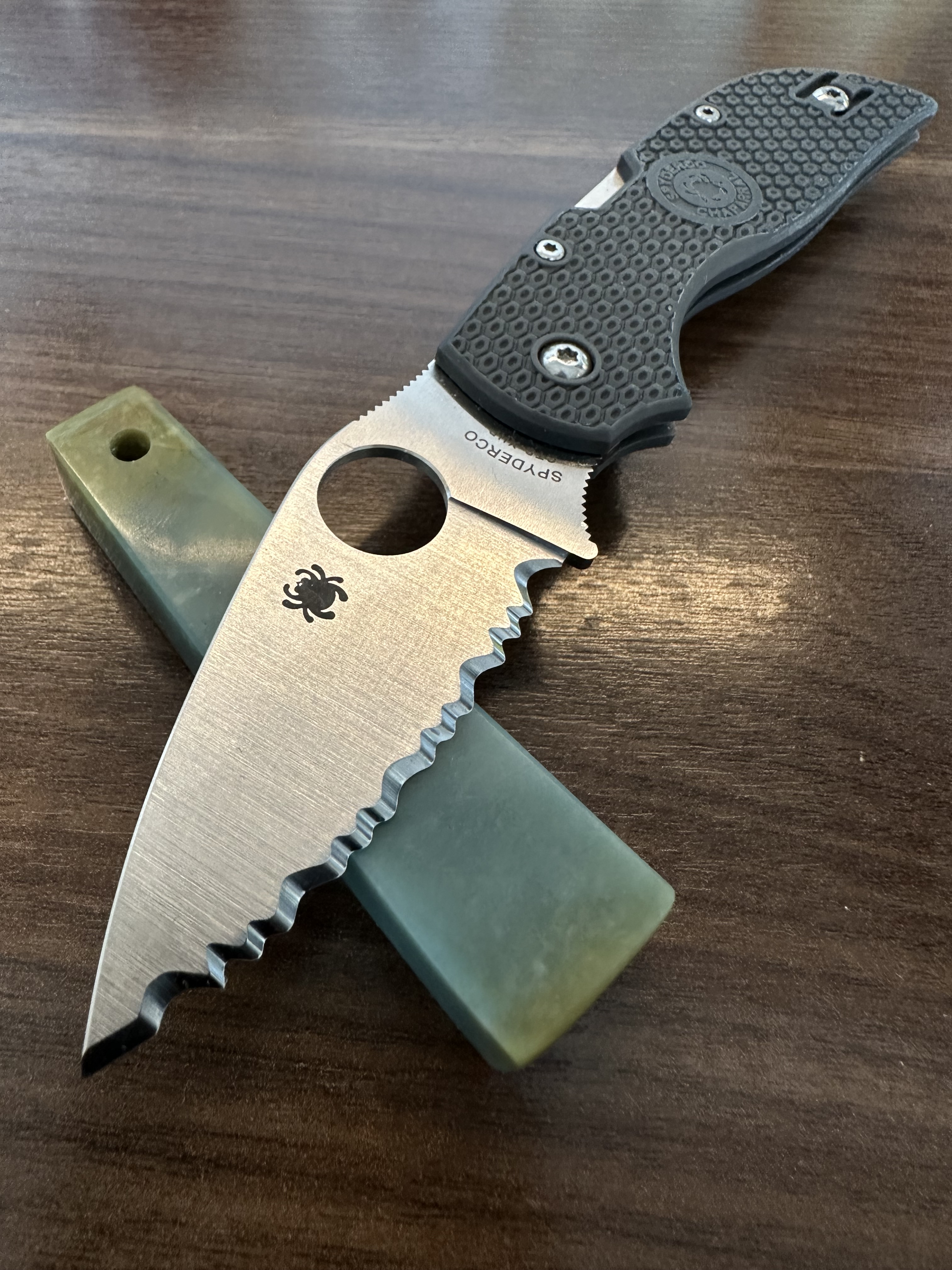
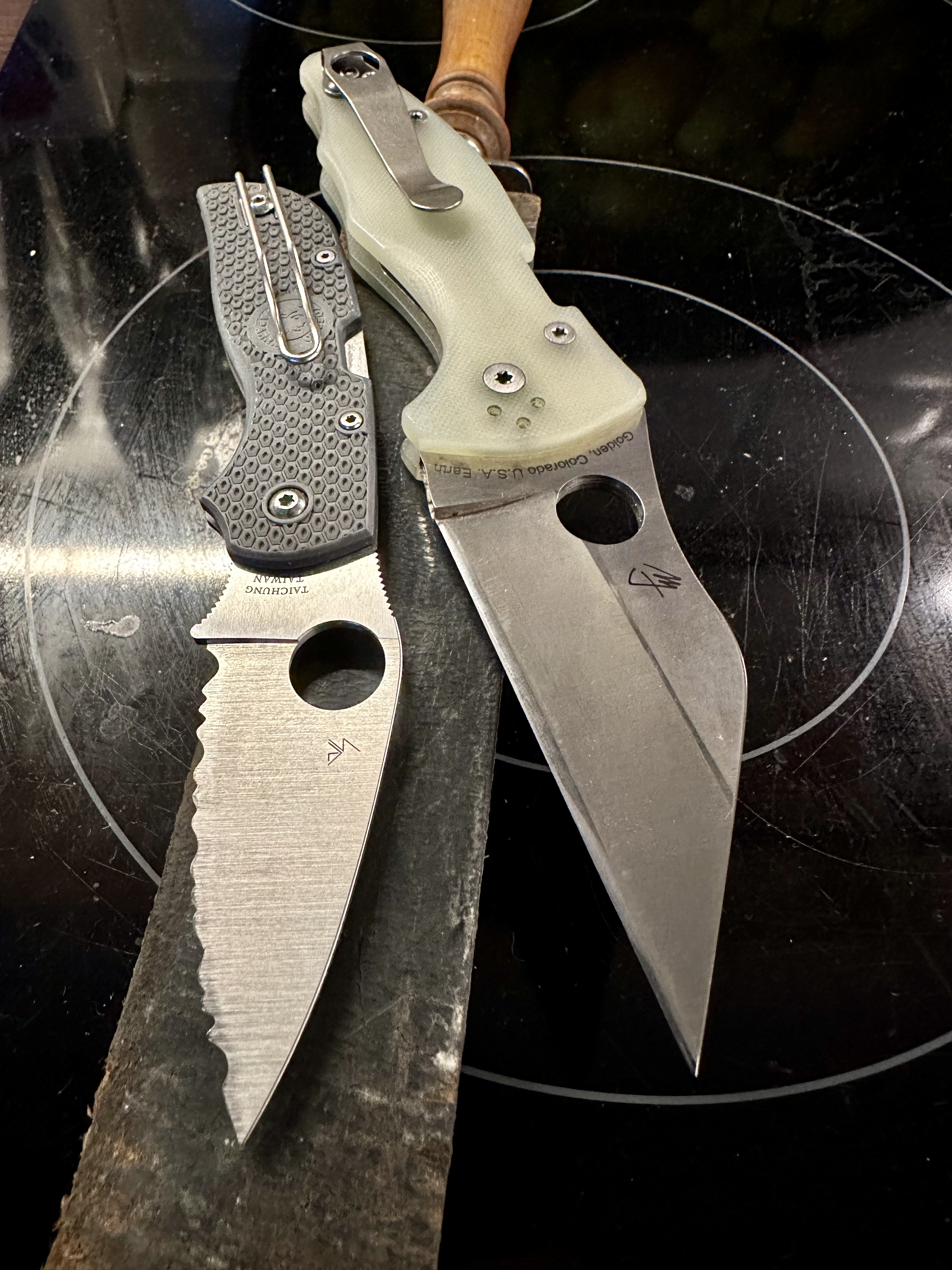
So far, I’ve put the knife through its paces, cutting anything I could, and maintaining the edge with some Jade stones (see first picture). The mechanism shows no signs of play in any direction — rock-solid performance.

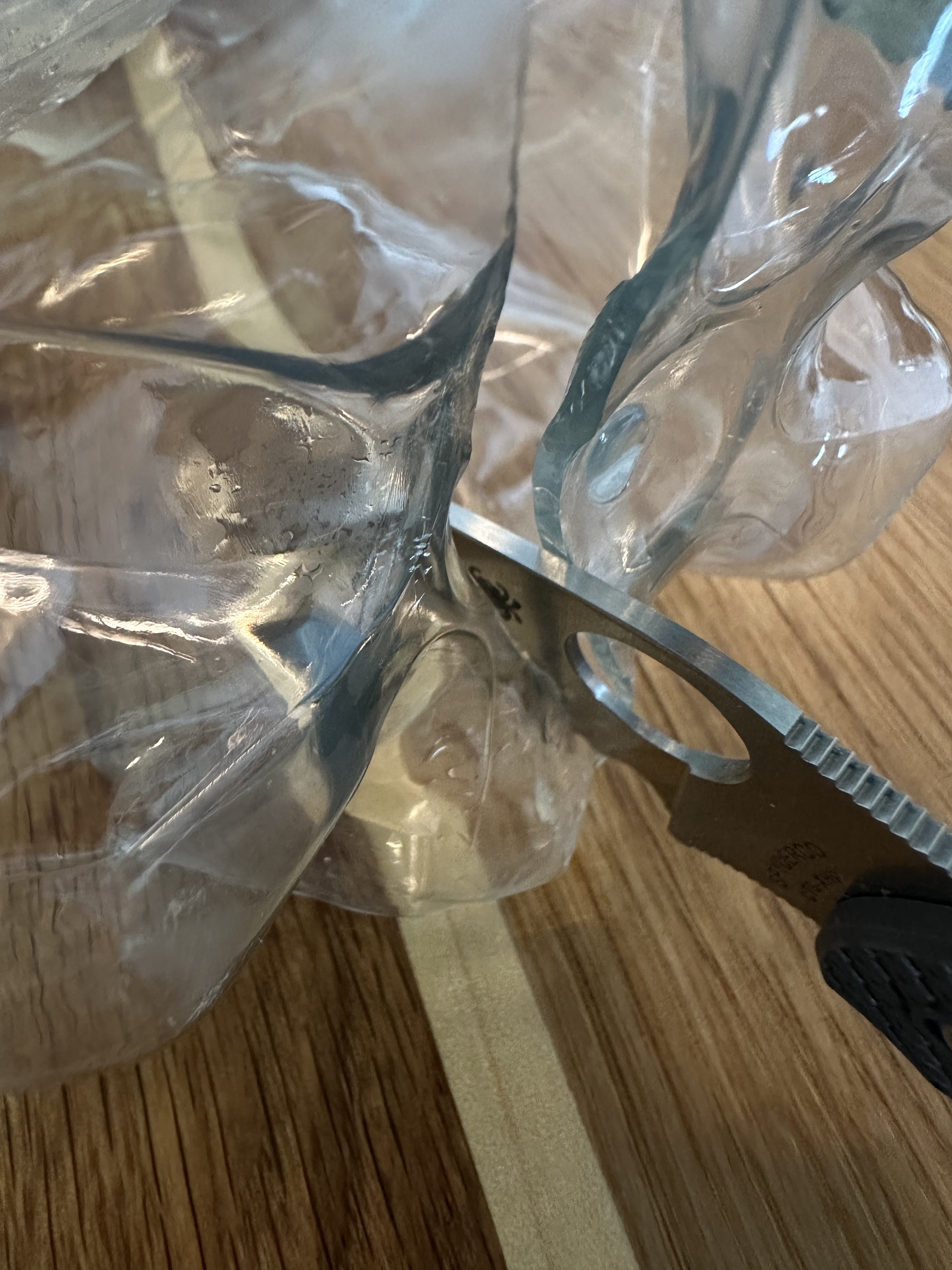
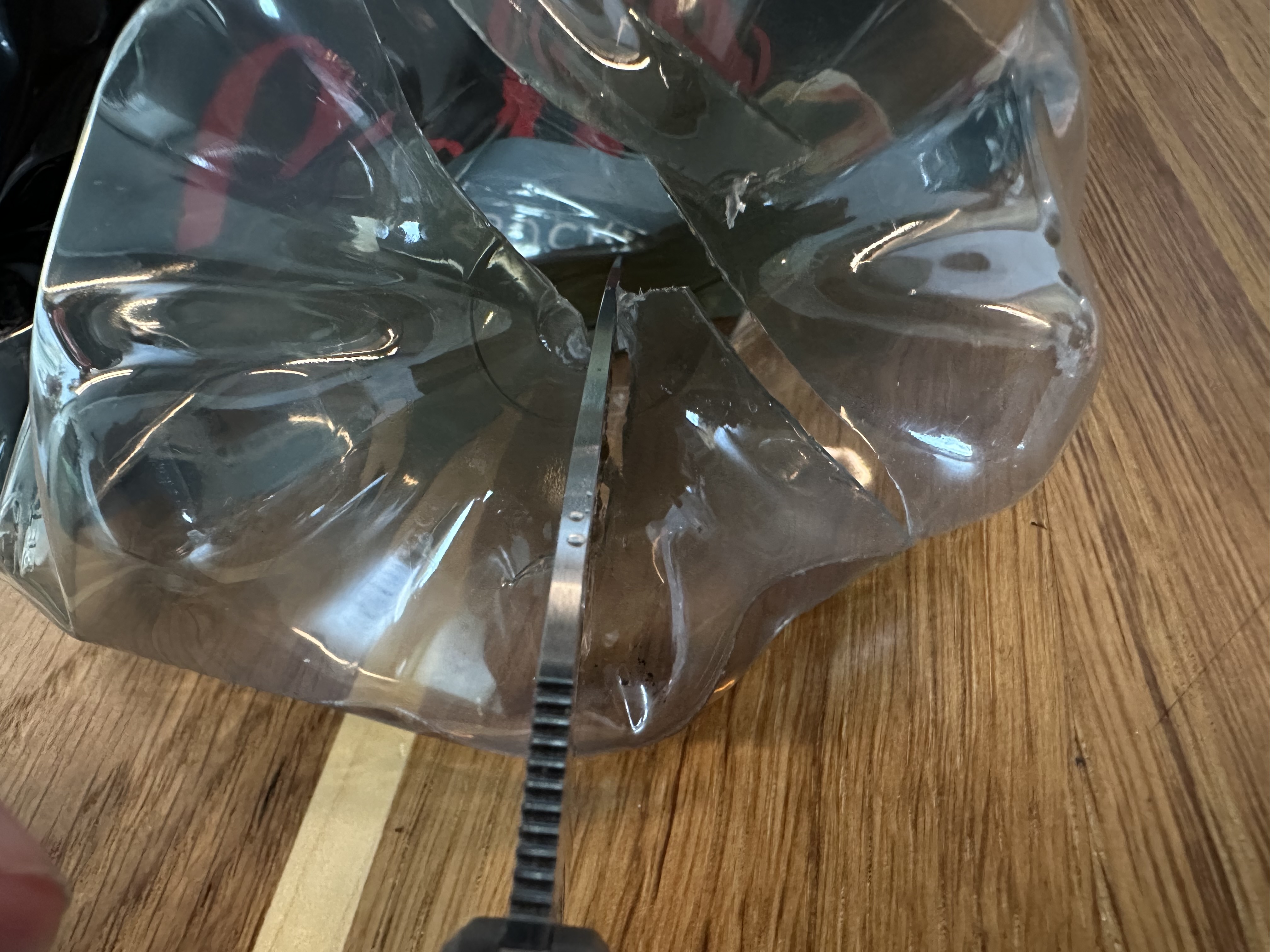
The plastic is thicker that the blade.

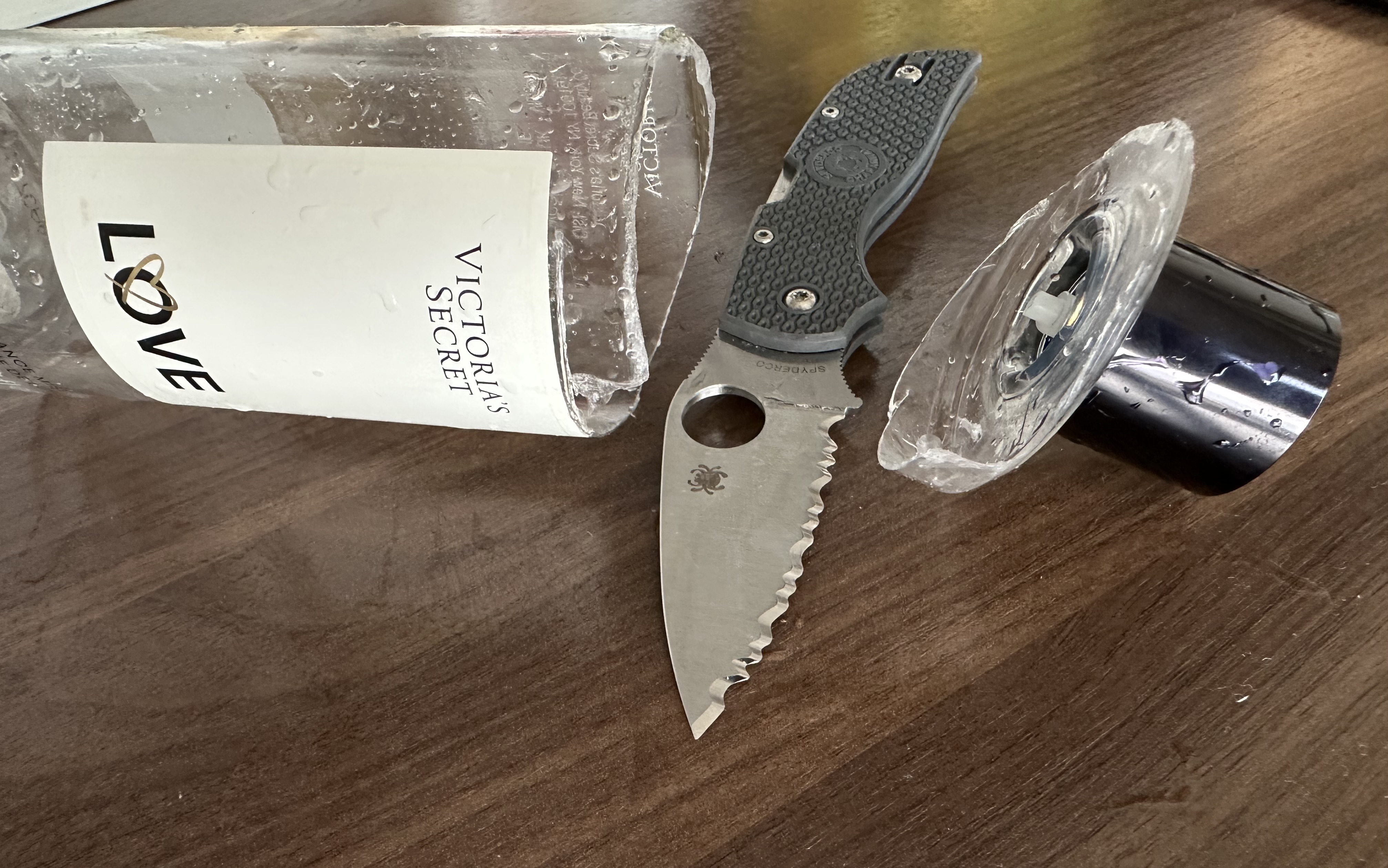
As you can see, the serrated edge is a chisel grind, which means it tends to deviate slightly to the right of the material being cut, much like a fin in water. I started the cuts with a bit of sawing, then transitioned to push cuts, and the knife effortlessly sliced through the thick plastic used to form the bottle.

This little knife is fierce in term of cutting performance. It is a lot of power in your pocket ! It is a pocket chainsaw !

The serrations really shine on the plate. You can push the knife hard against ceramic surfaces, and if the points ever need a touch-up, a few passes on a ceramic corner — or in my case, a jade corner — brings them back like new.

I have been able to reach razor level just by passing gently the Jade on it.

Actually it is fun to enhance the edge.

Actually, this is a bit of a comeback for me with serrations, dating back to my AFCK experience 25 years ago. Back then, I mostly used partly serrated edges, which helped initiate cuts on hard materials.

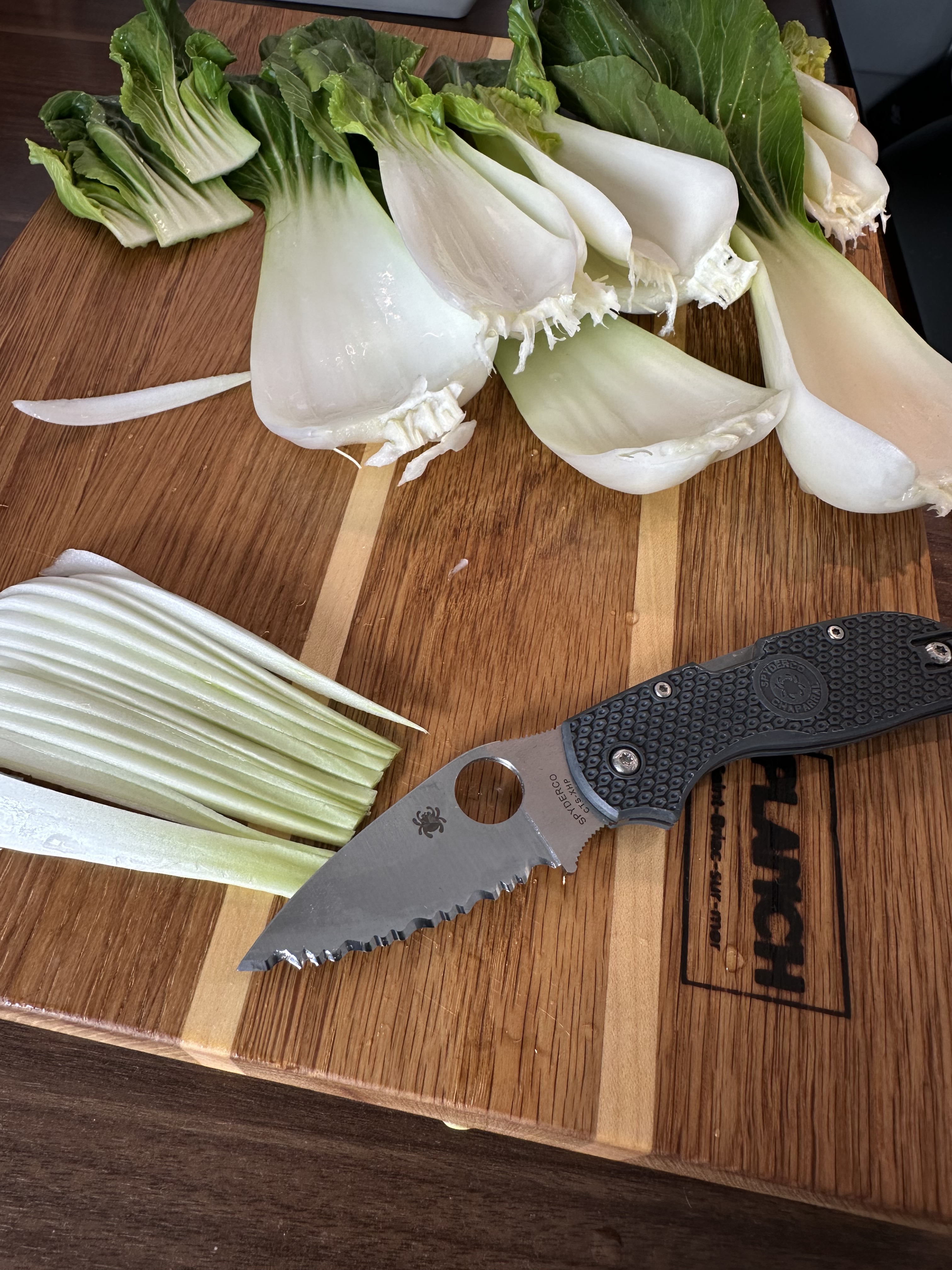
With a fully serrated thin blade and no plain edge, I initially wondered how useful it would be in the kitchen — especially since my wife’s favorite knives are Victorinox fruit knives (serrated). But it turns out, neither fruits nor vegetables can withstand the sharp, wavy edge of the Chaparral.

Funny enough I have been able to strop the edge of the Chap by using the side of the leather belt. CTS XHP is a steel which loves leather in my experience.

All in all, so far, so good. The Chaparral delivers impressive cutting power. Its thin, fully serrated edge is unique within the Spyderco line, pushing the design out of its comfort zone — and for a “knifeaholic” like me, that’s pure fun.

The next step is to trust this little knife enough to take it on a road trip in Italy — handling food prep, wood, and low-profile carry as my only pocketed folder. The Chaparral will make its return in May.