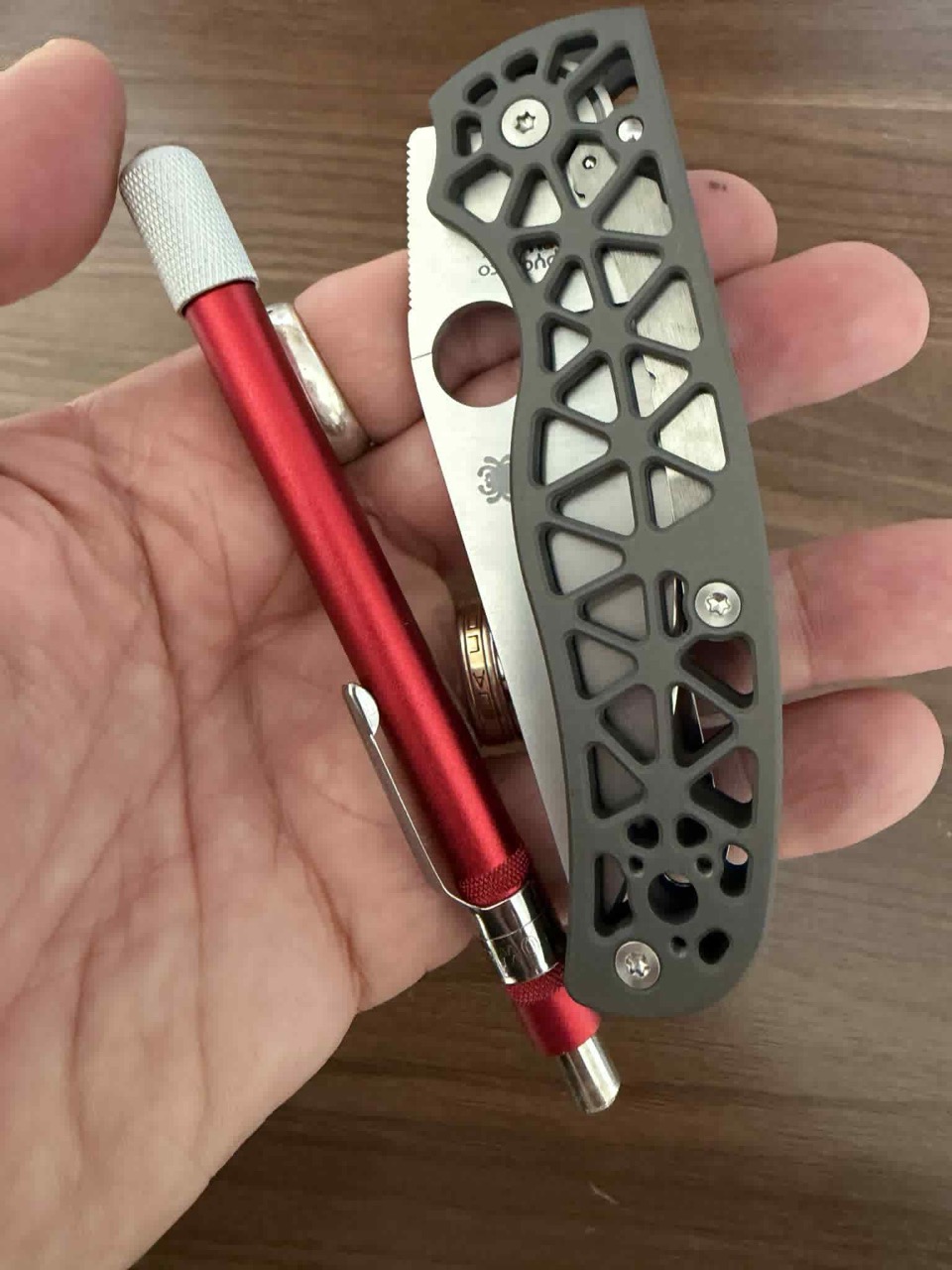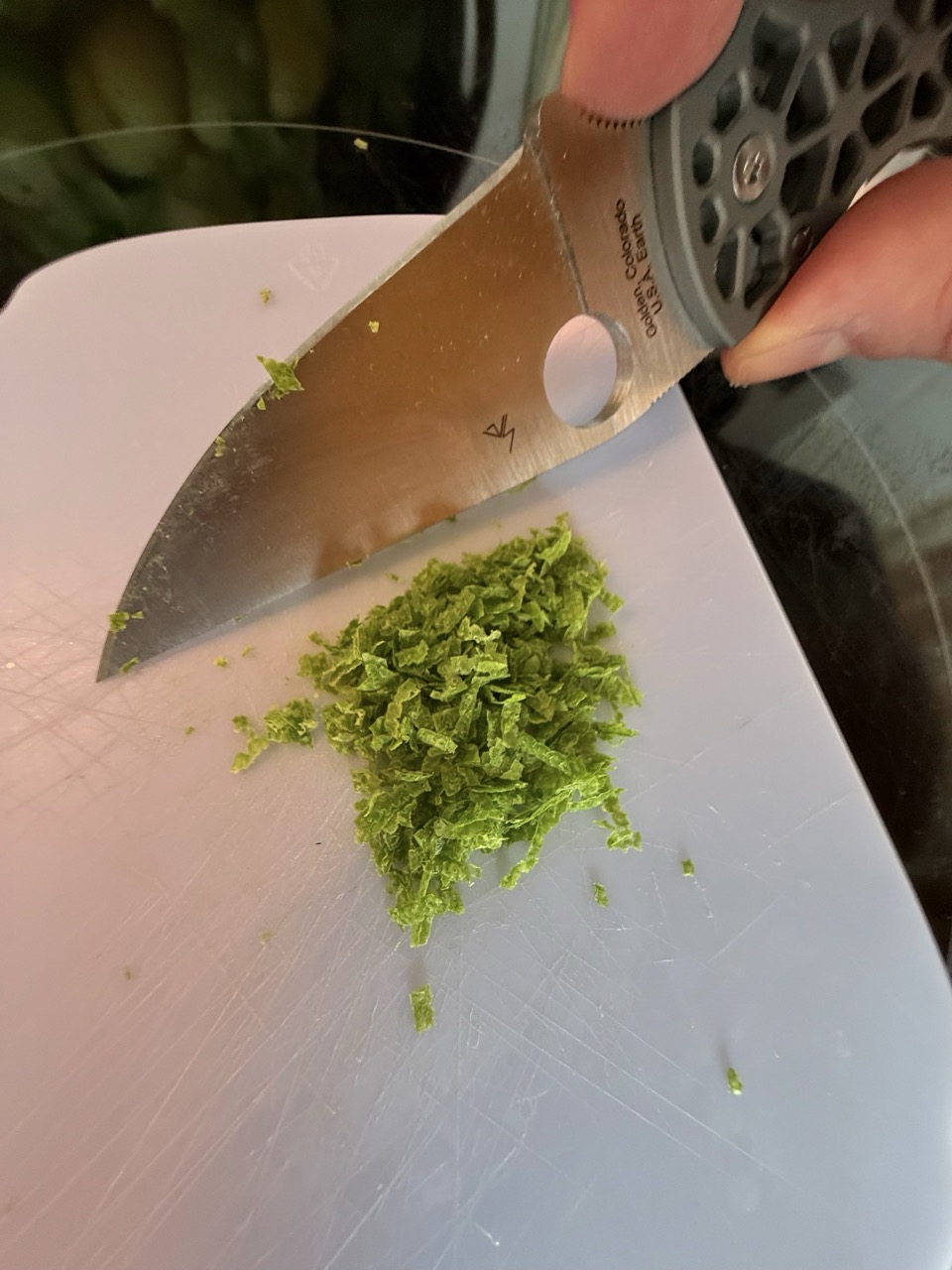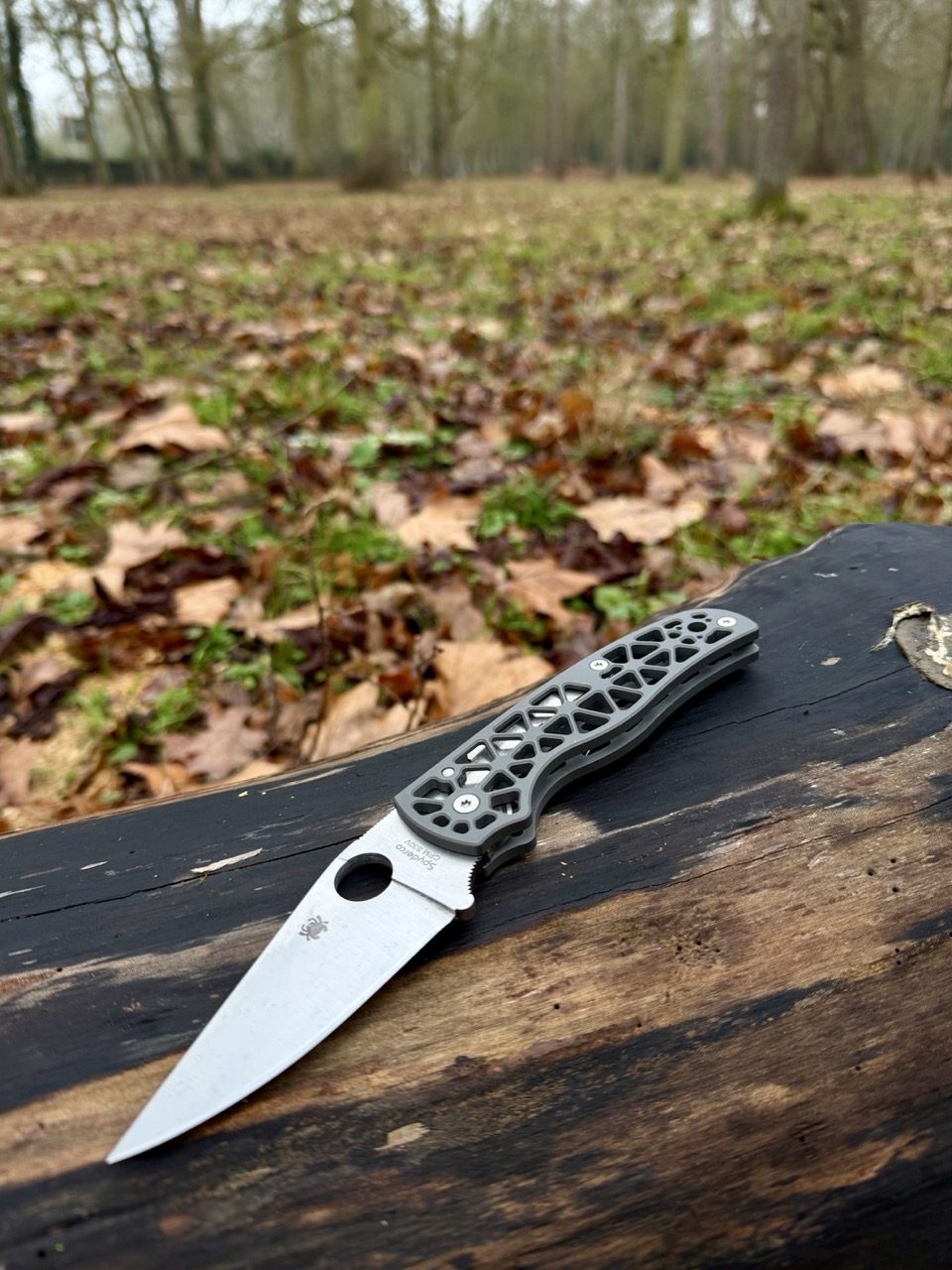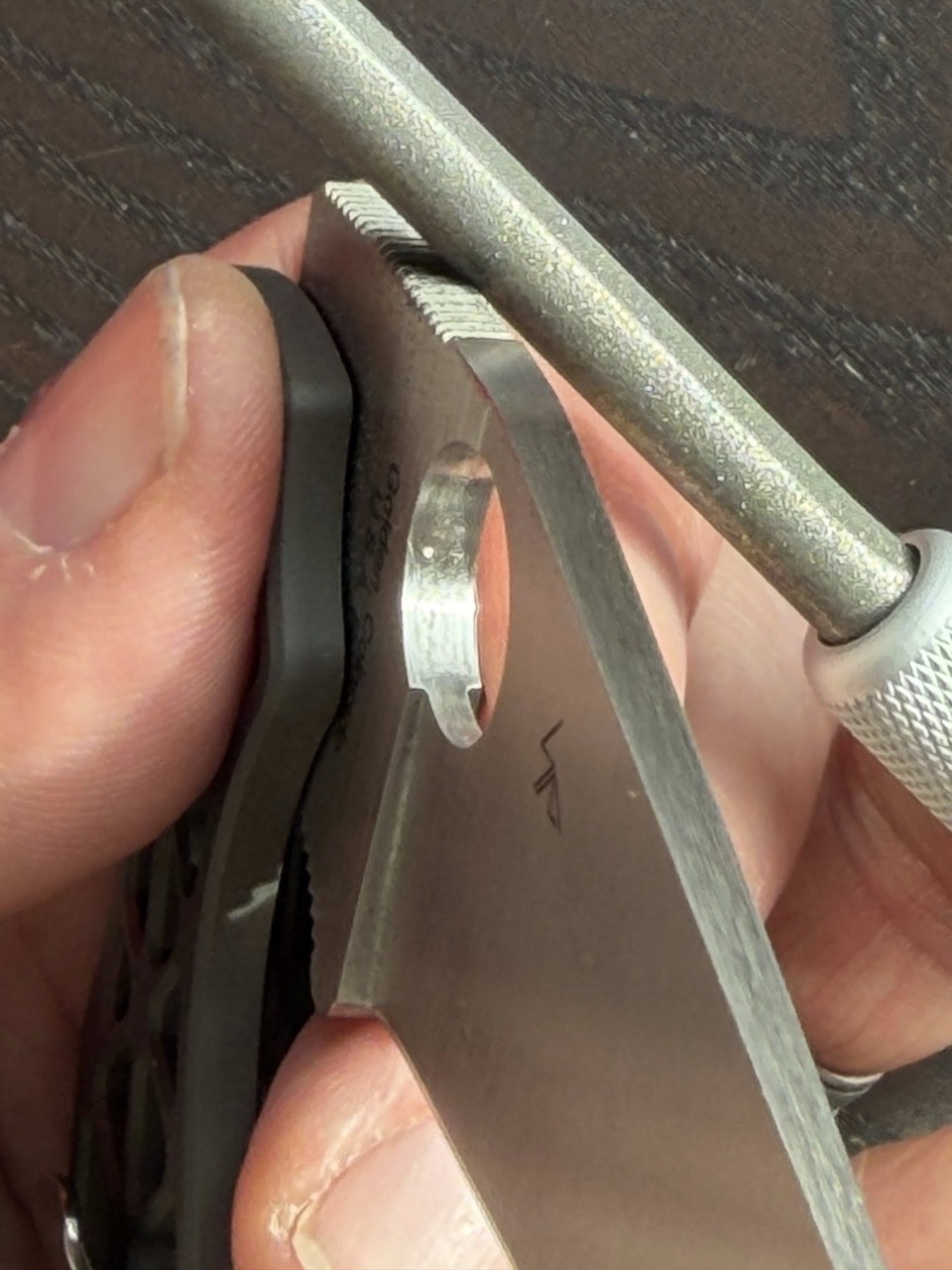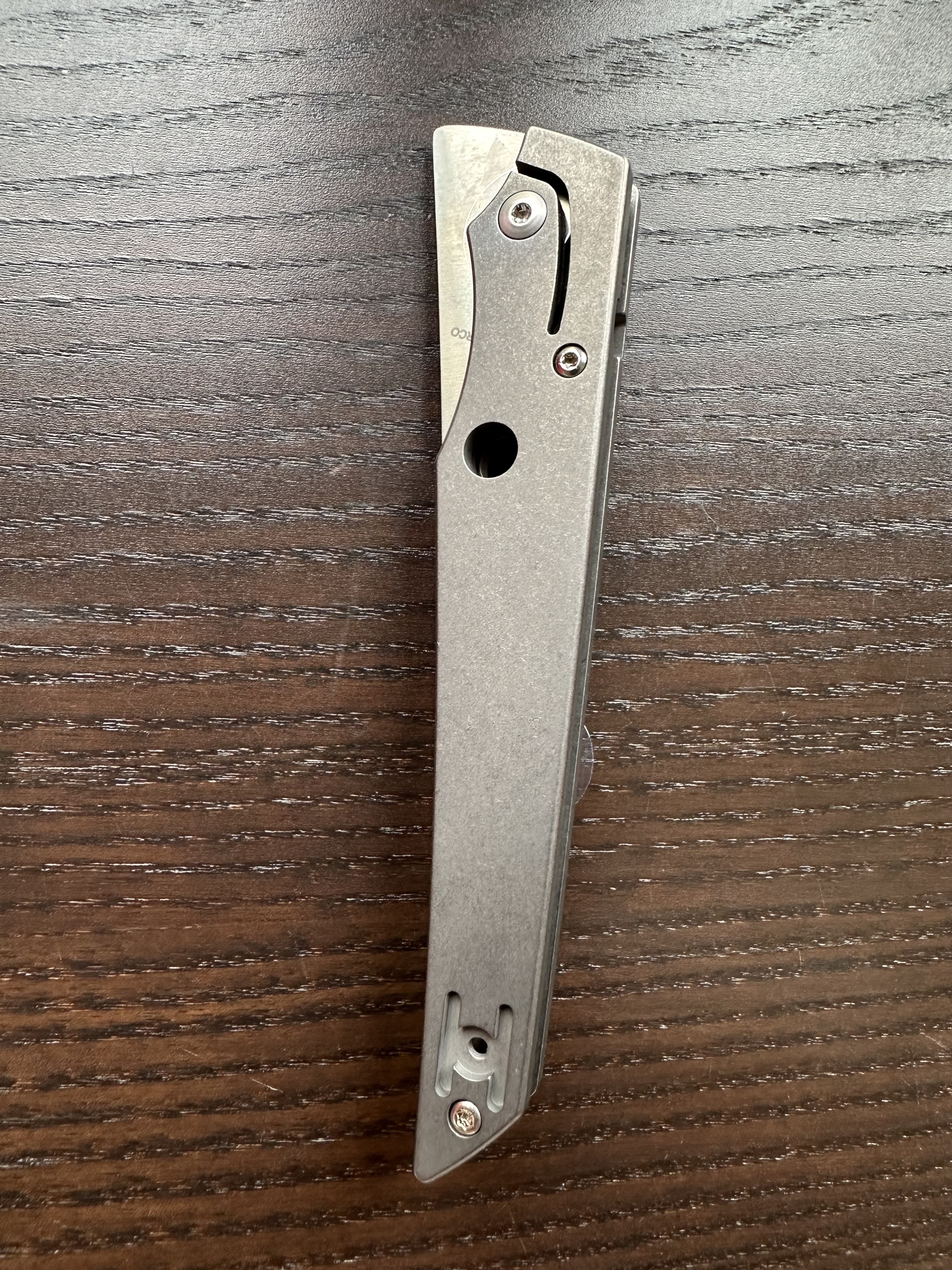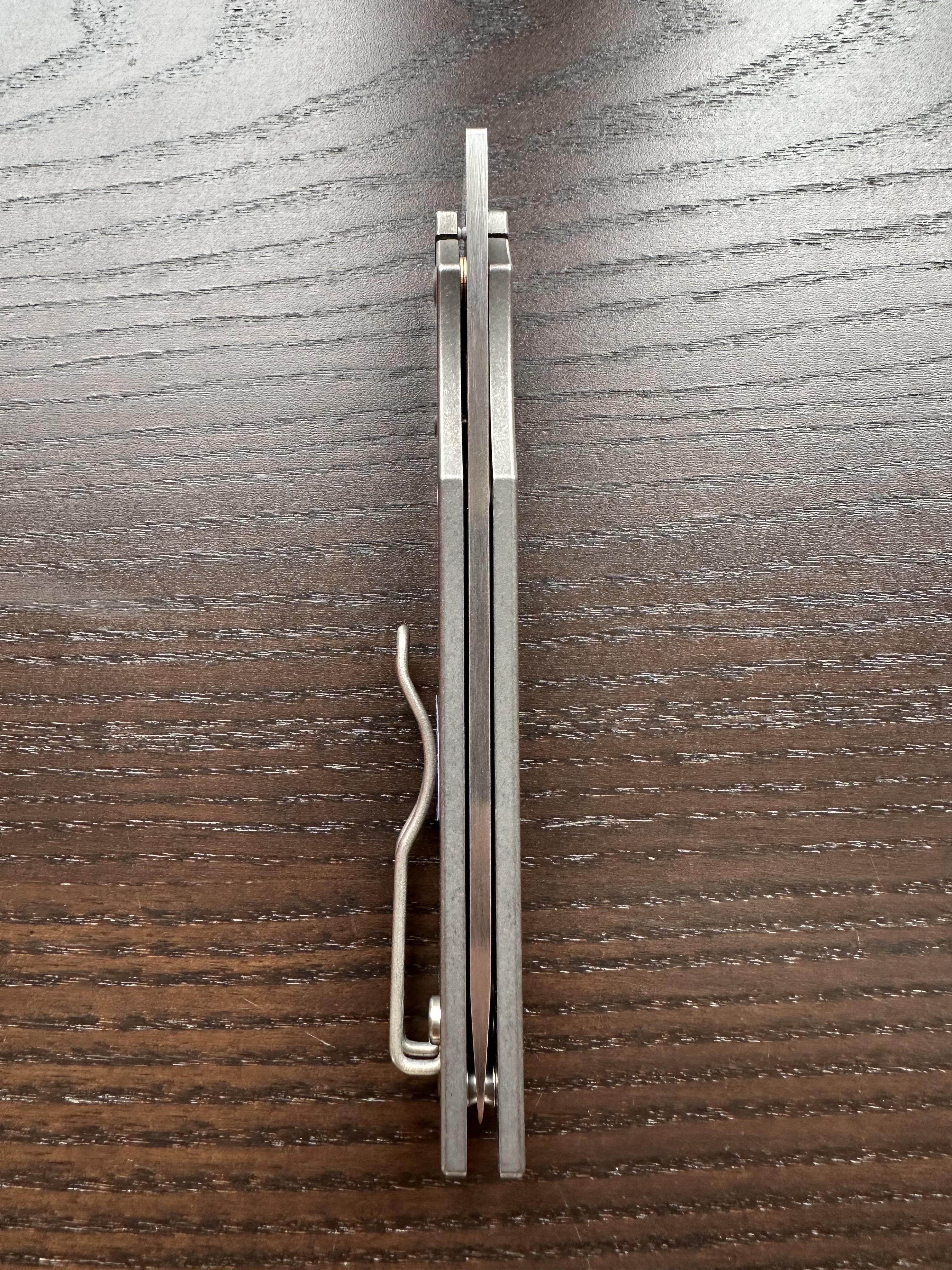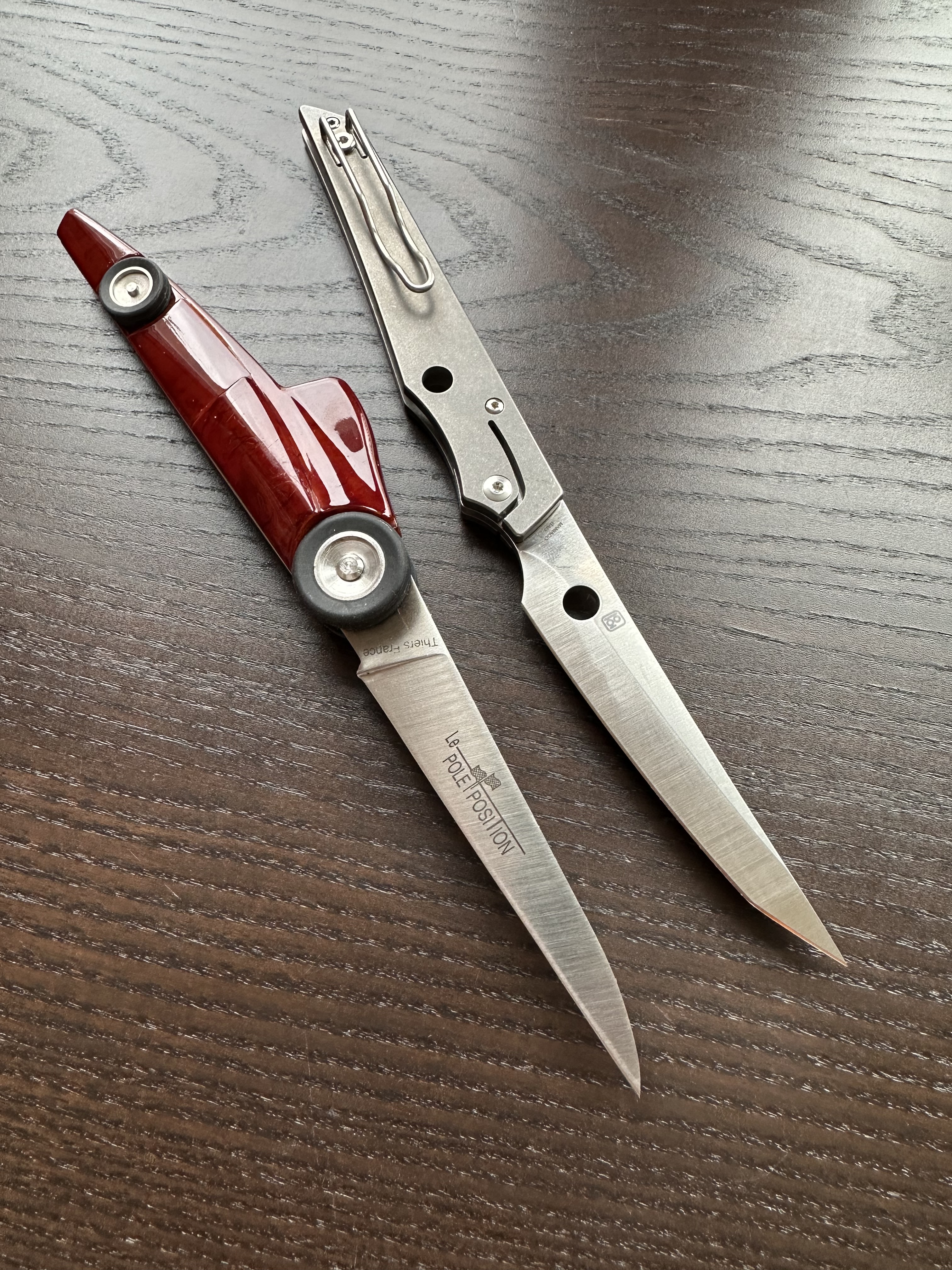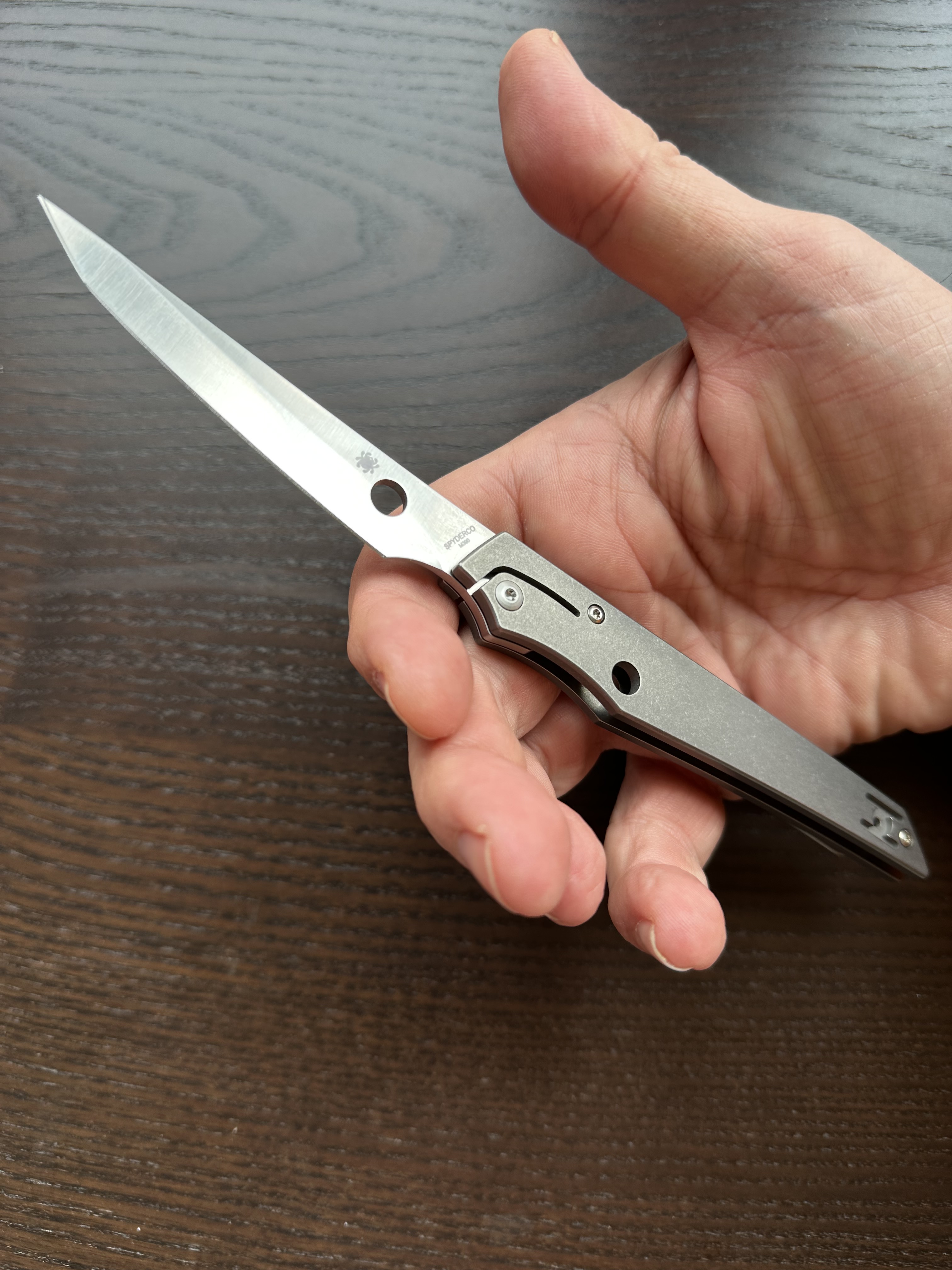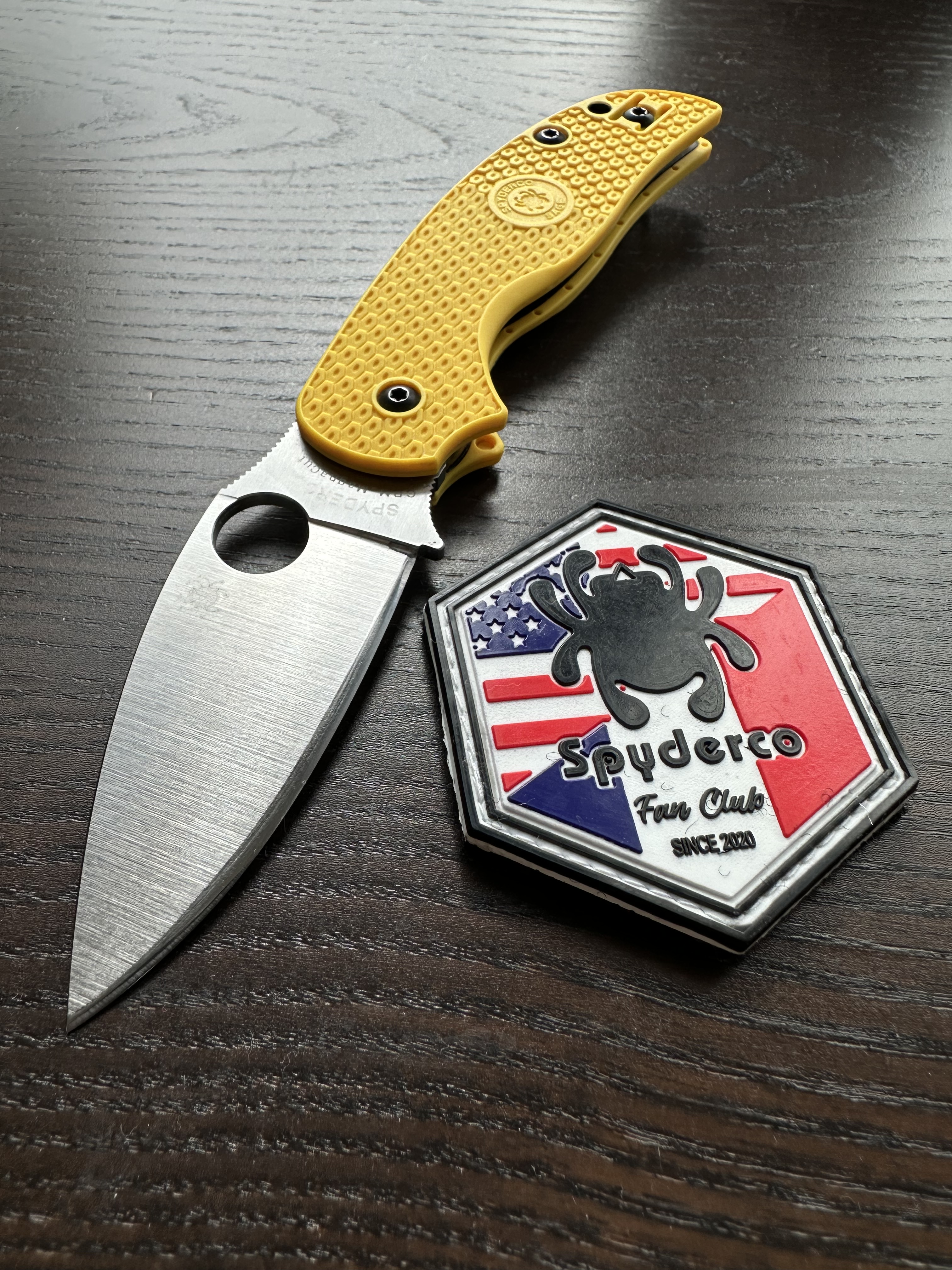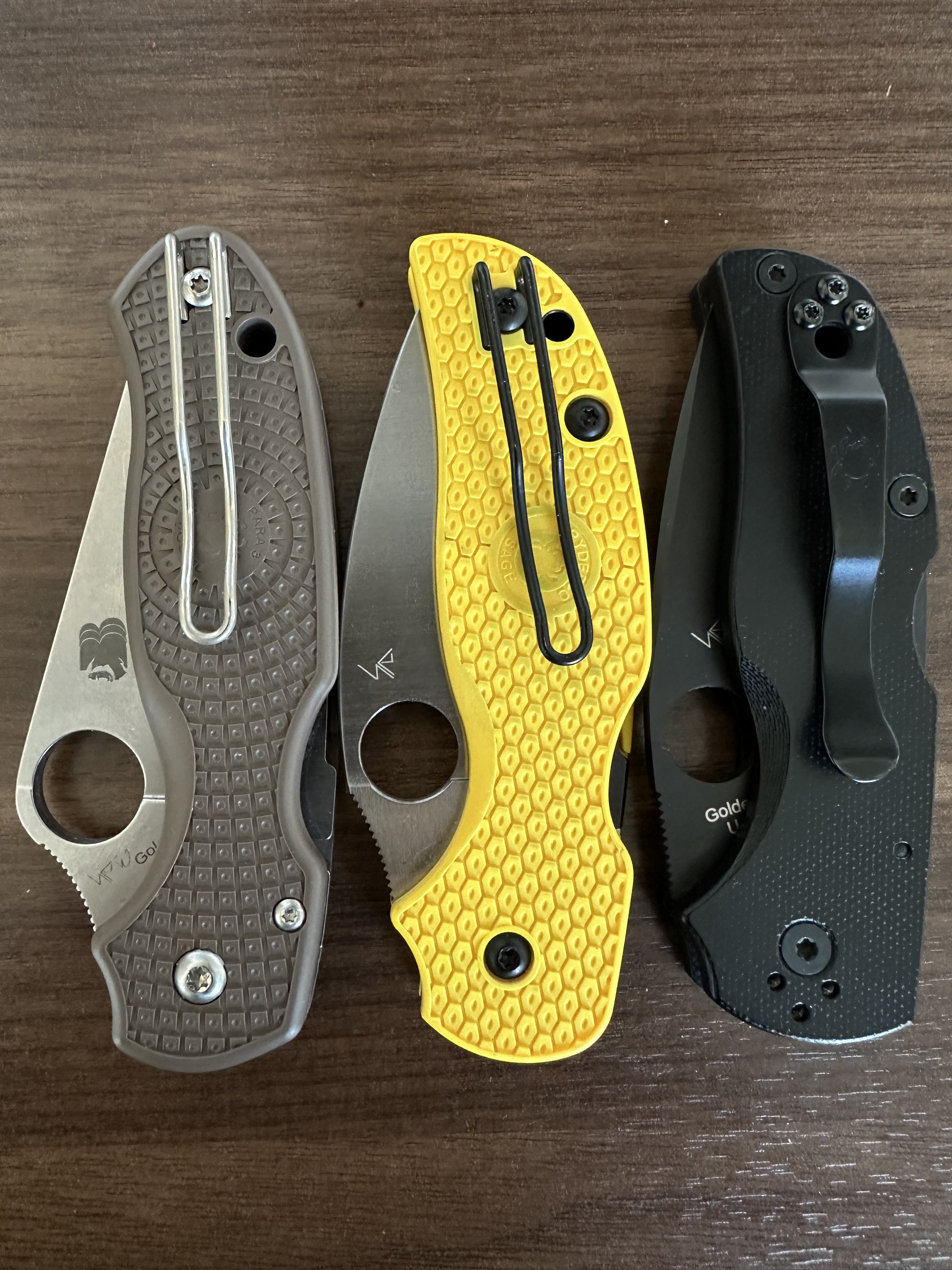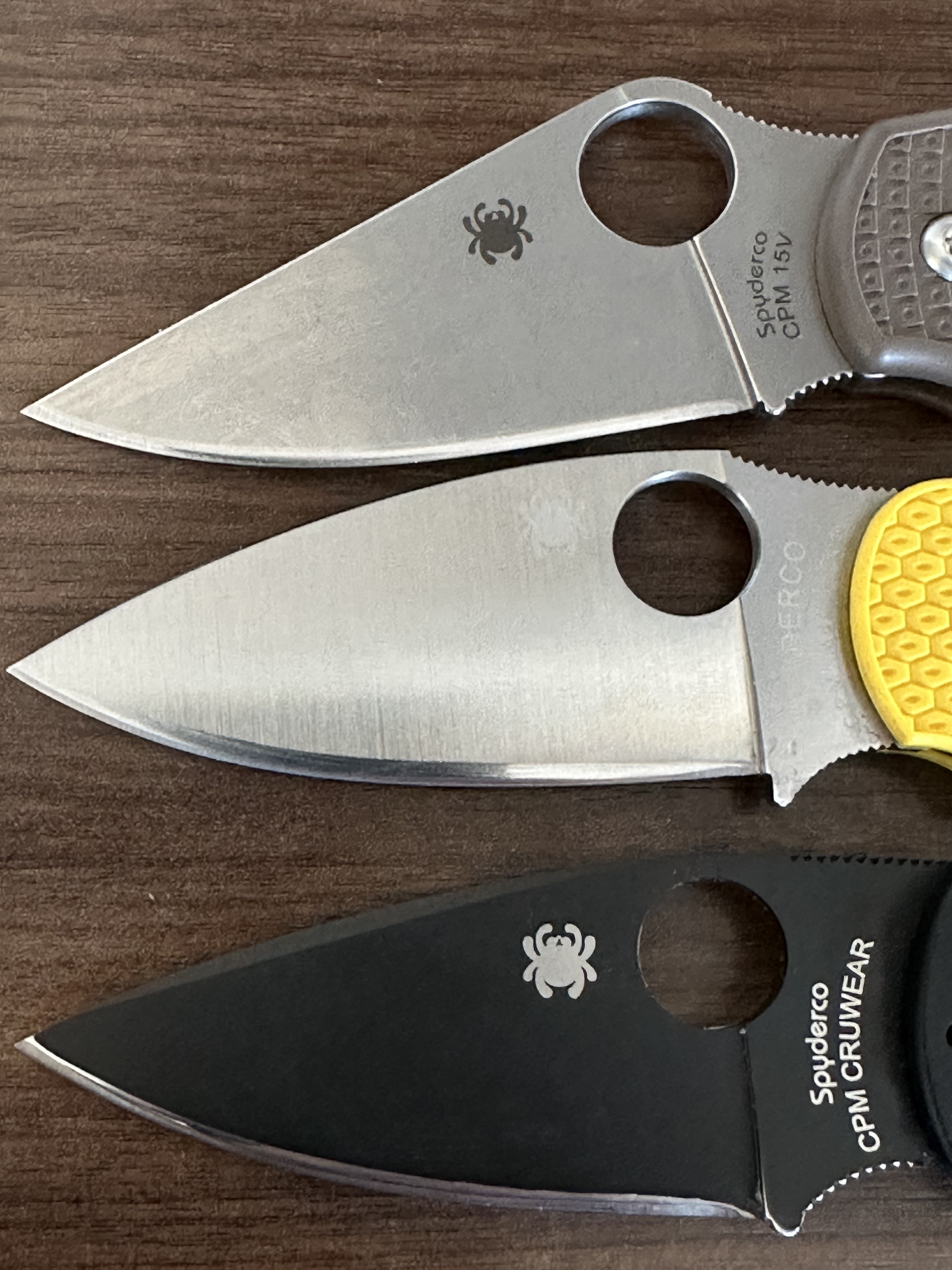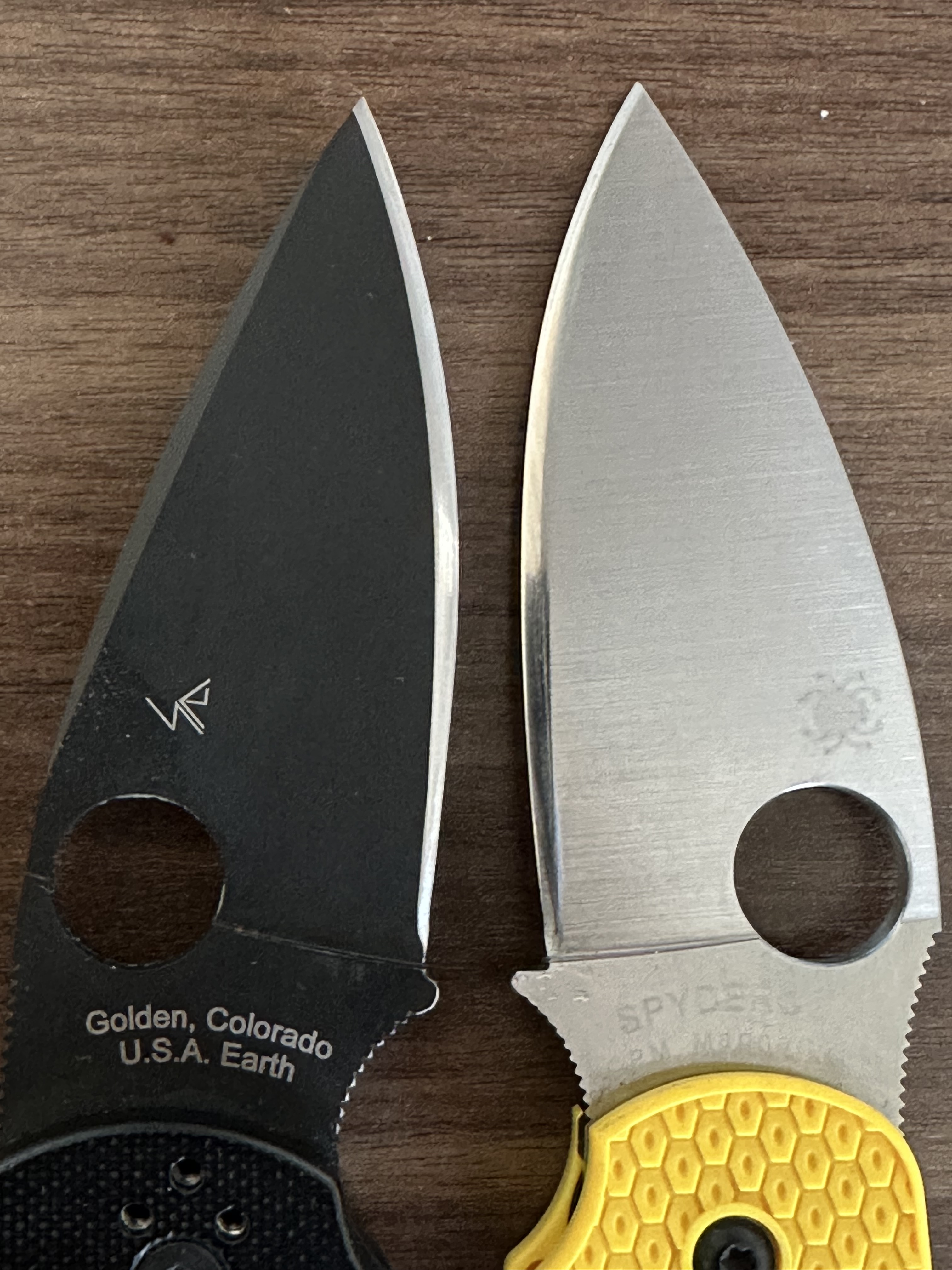
Category Archives: Advice

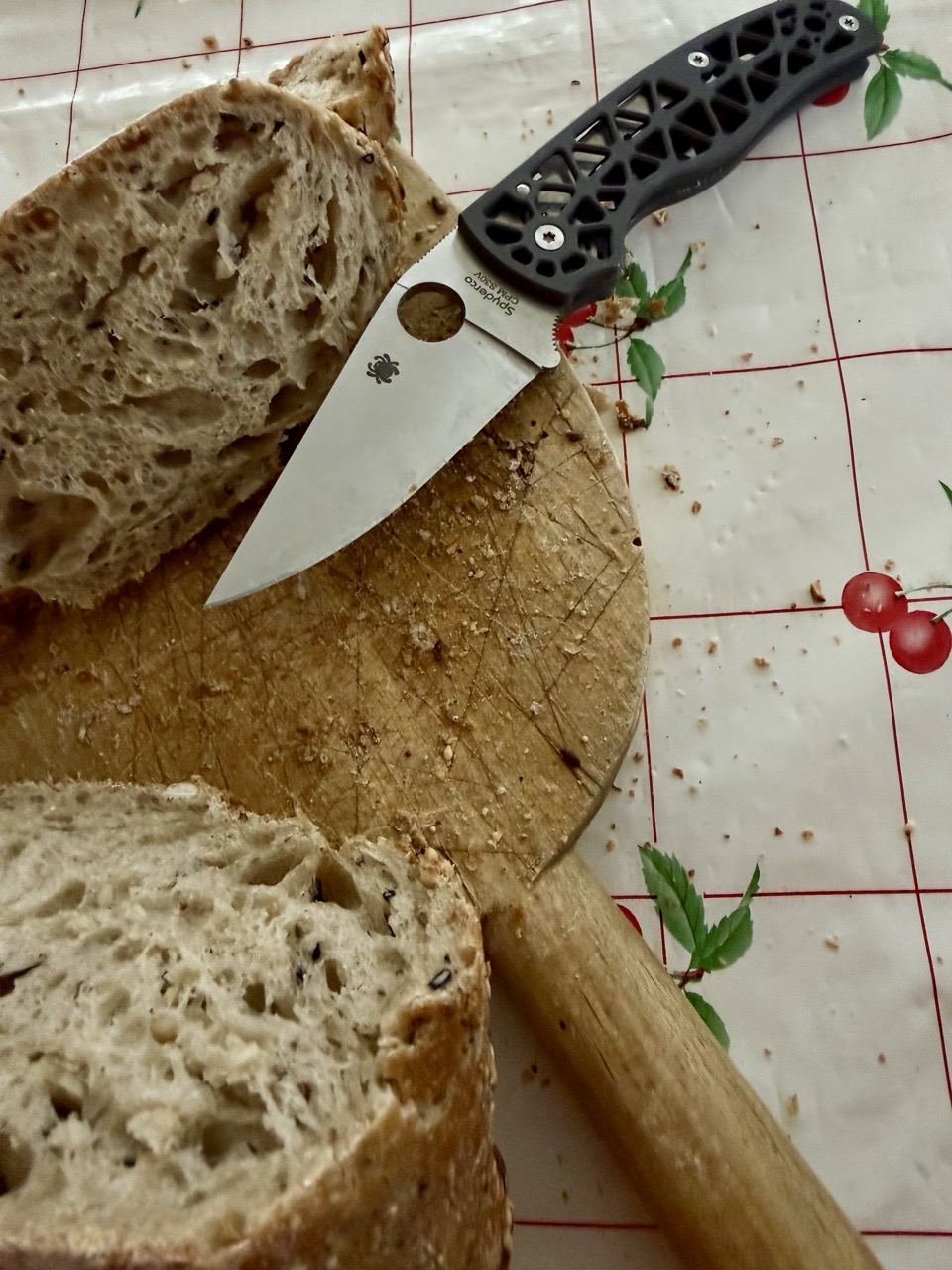
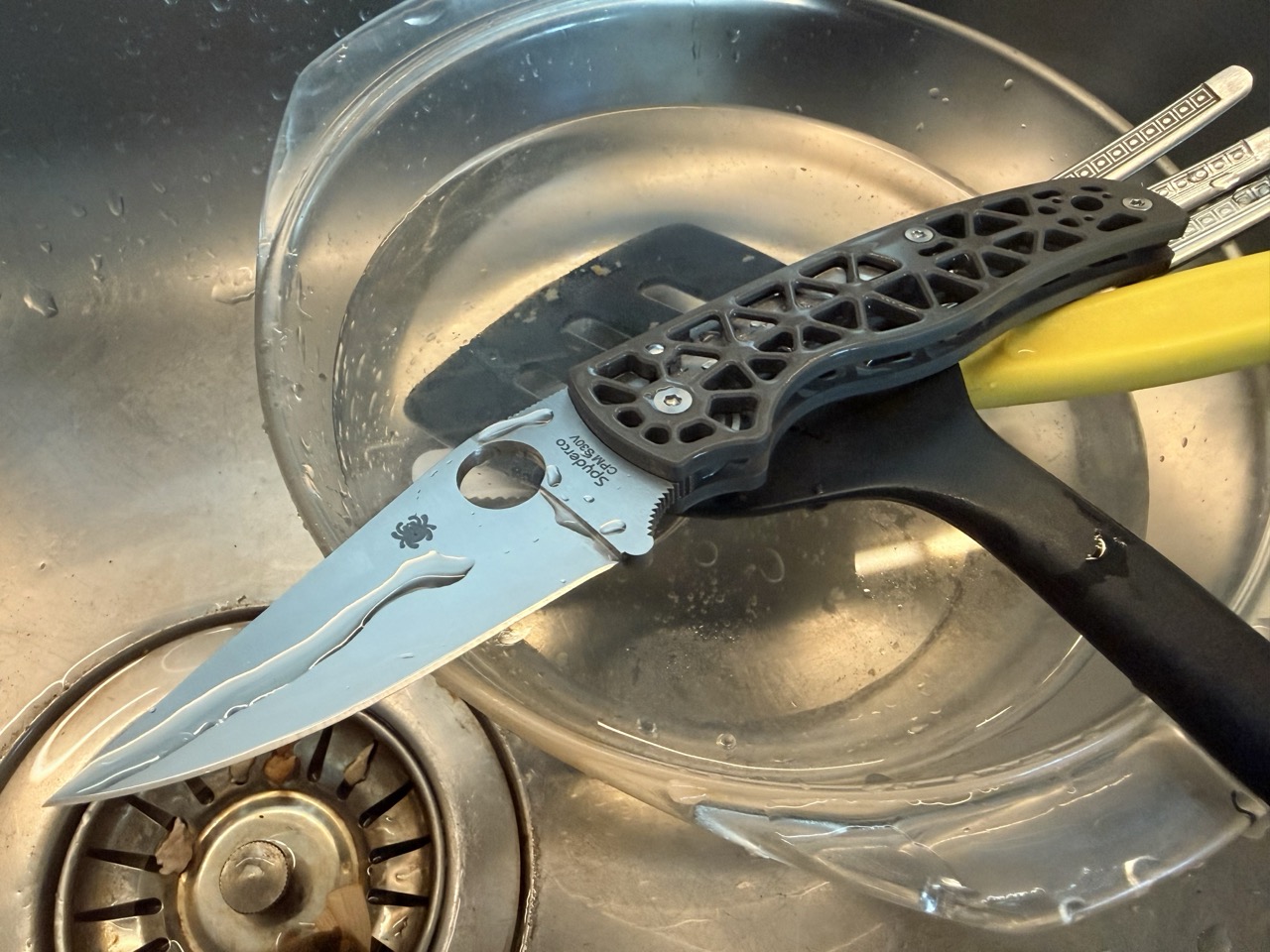
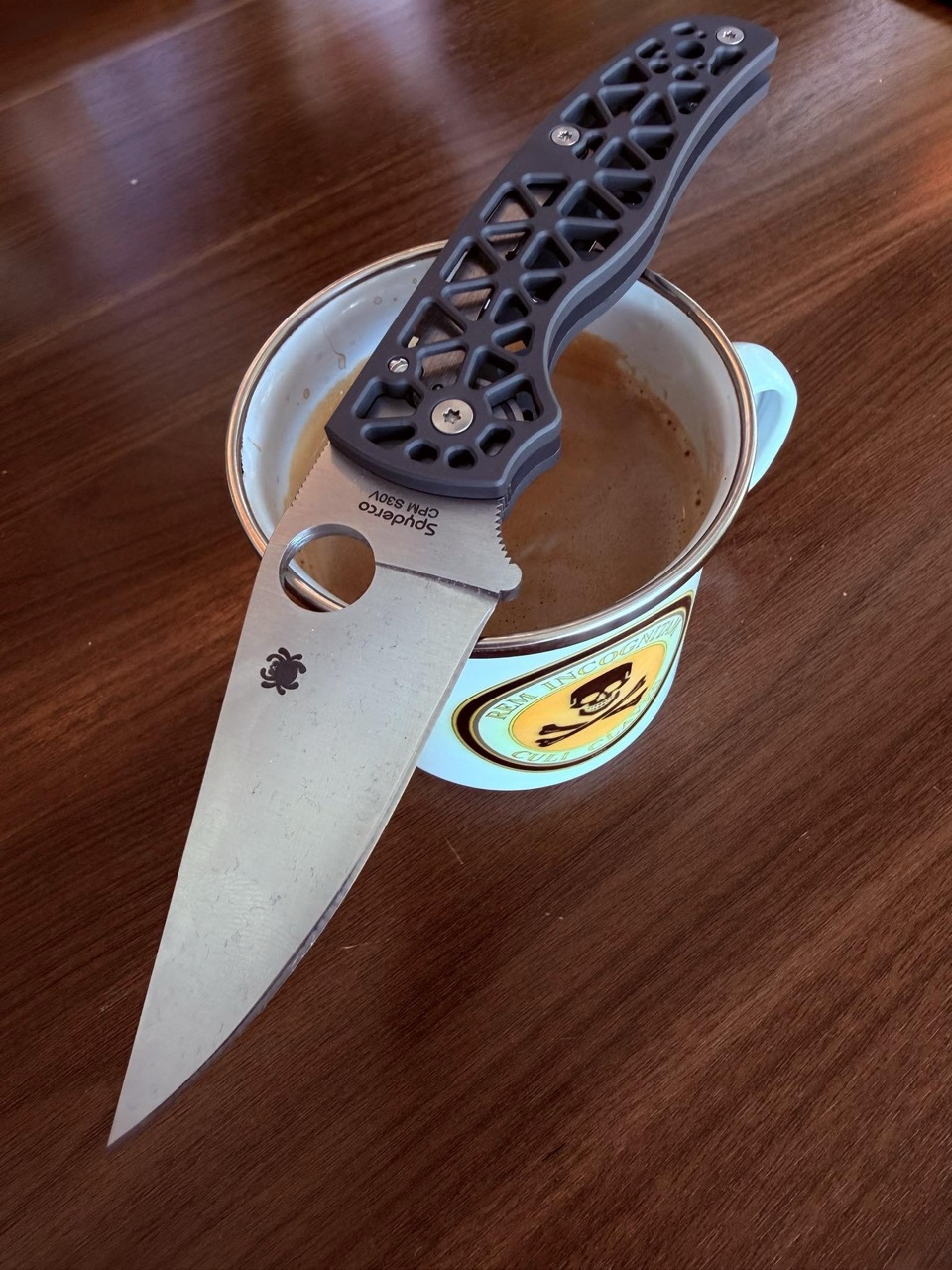
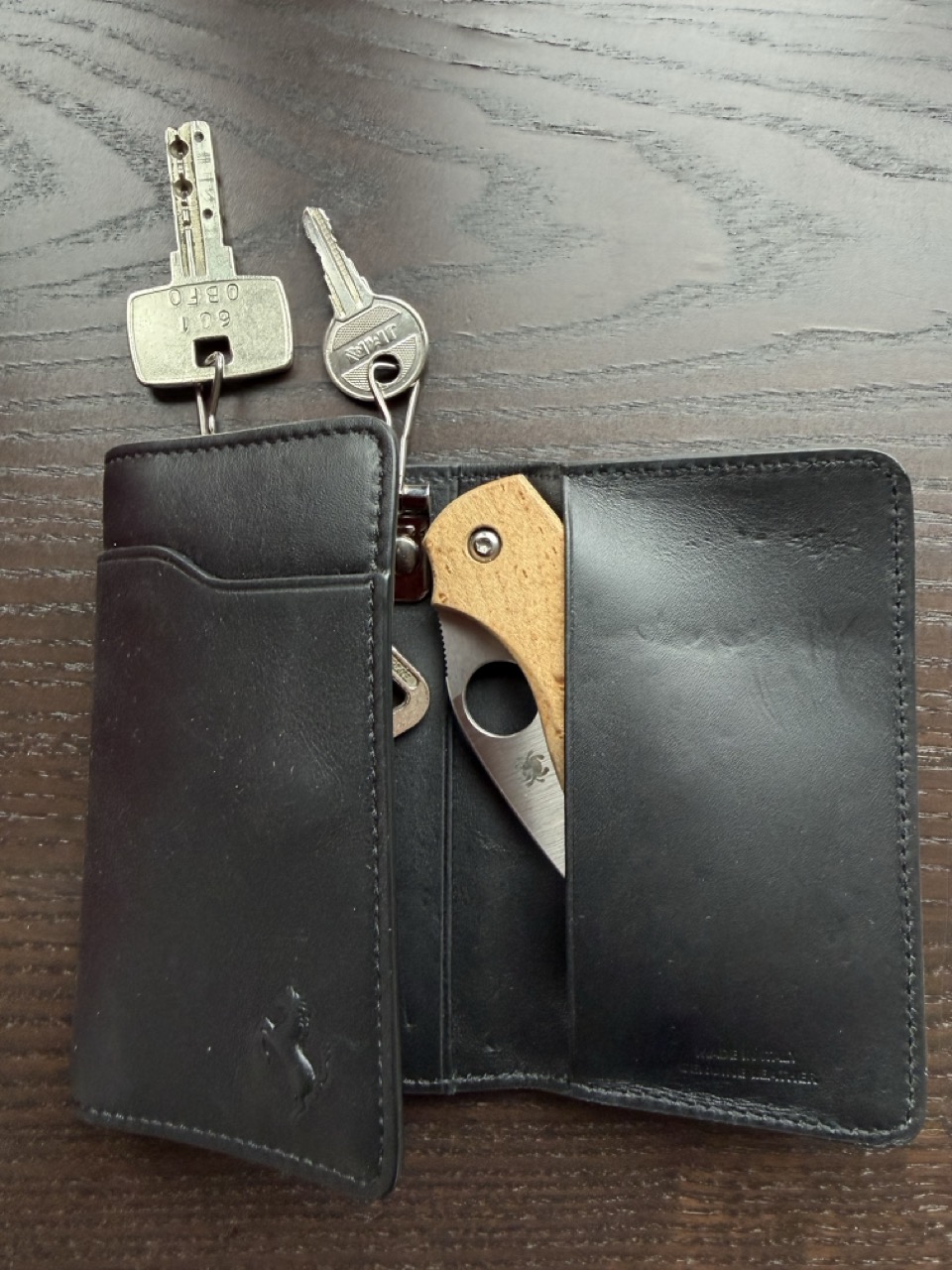
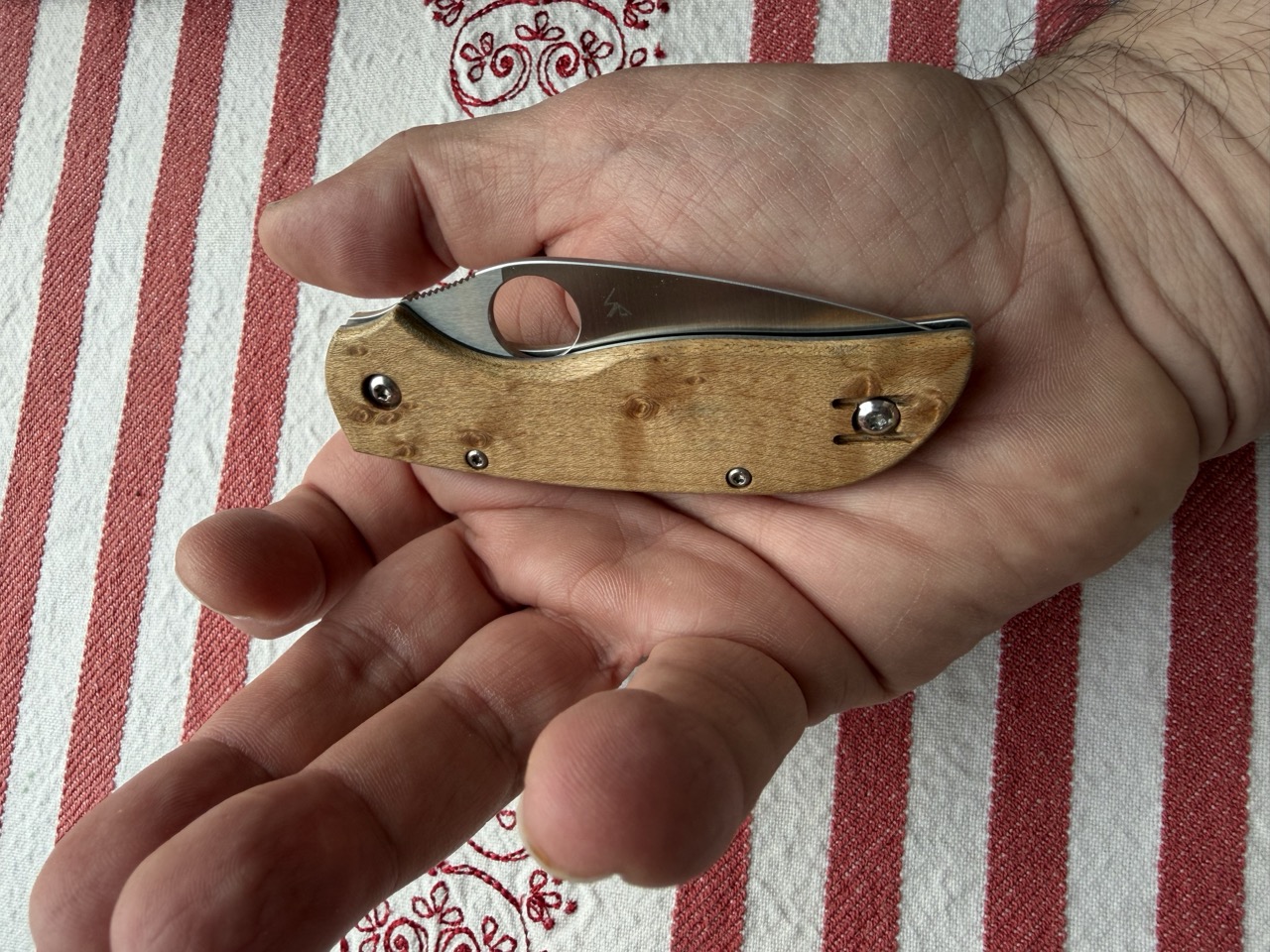
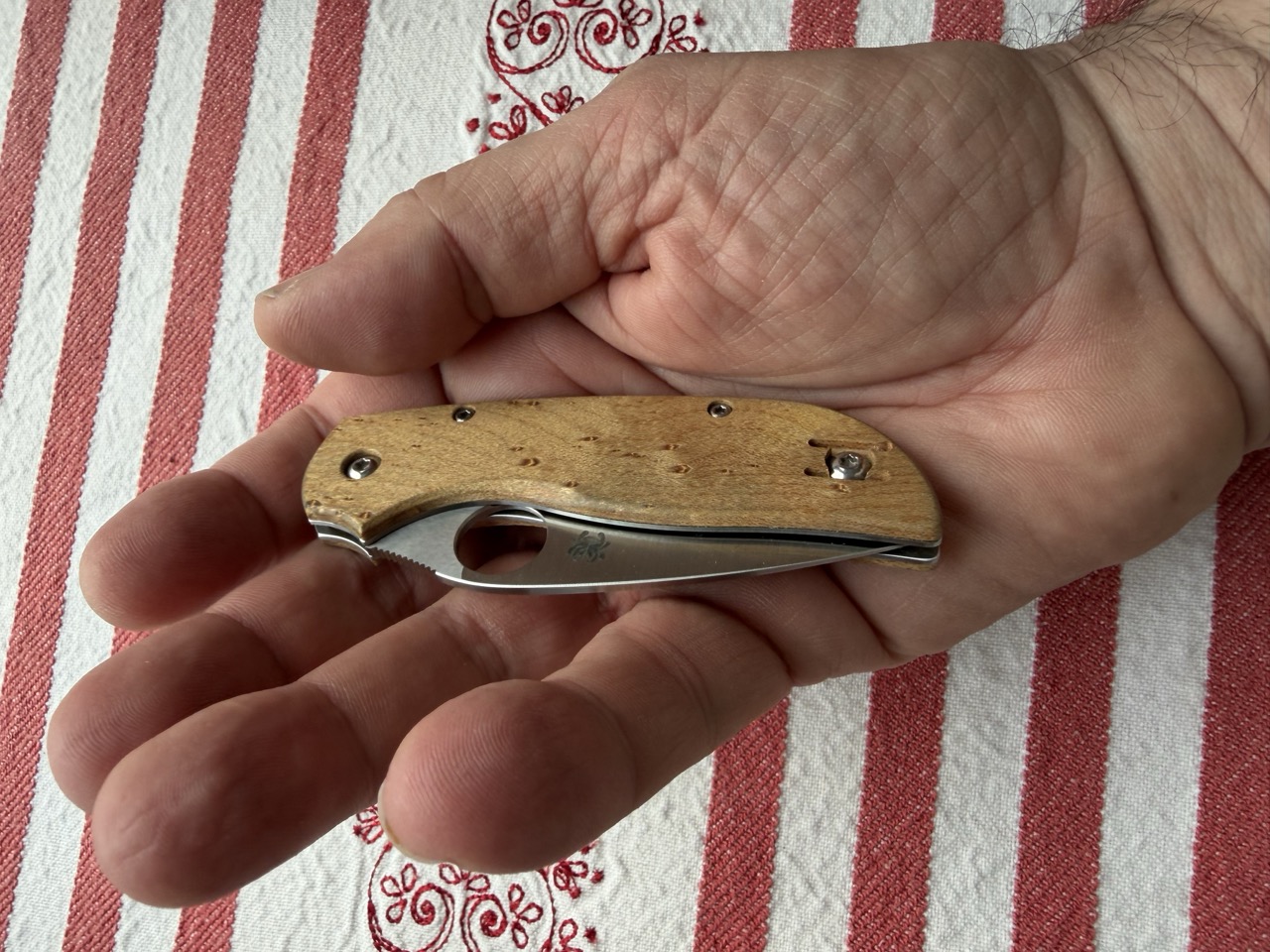
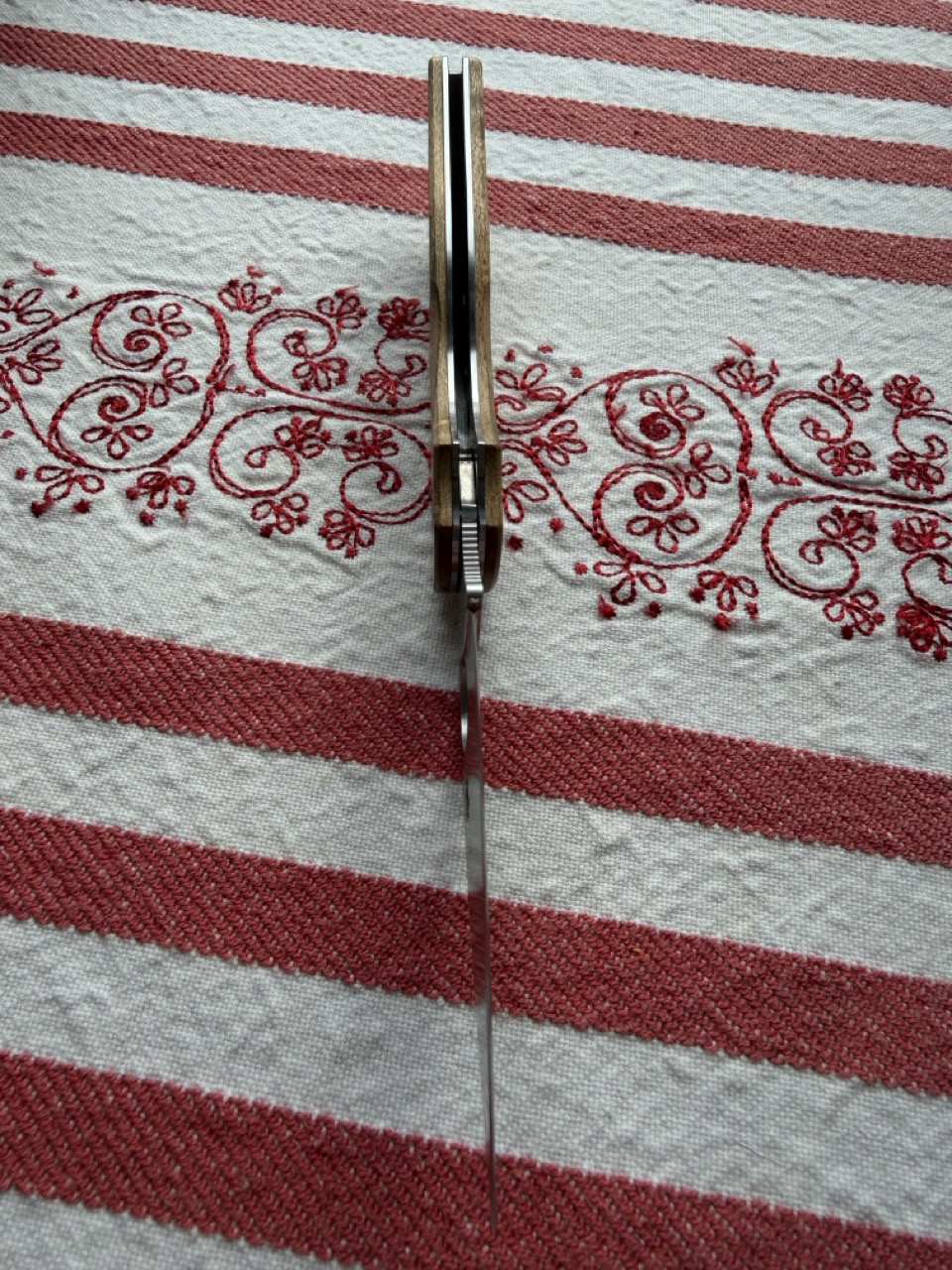
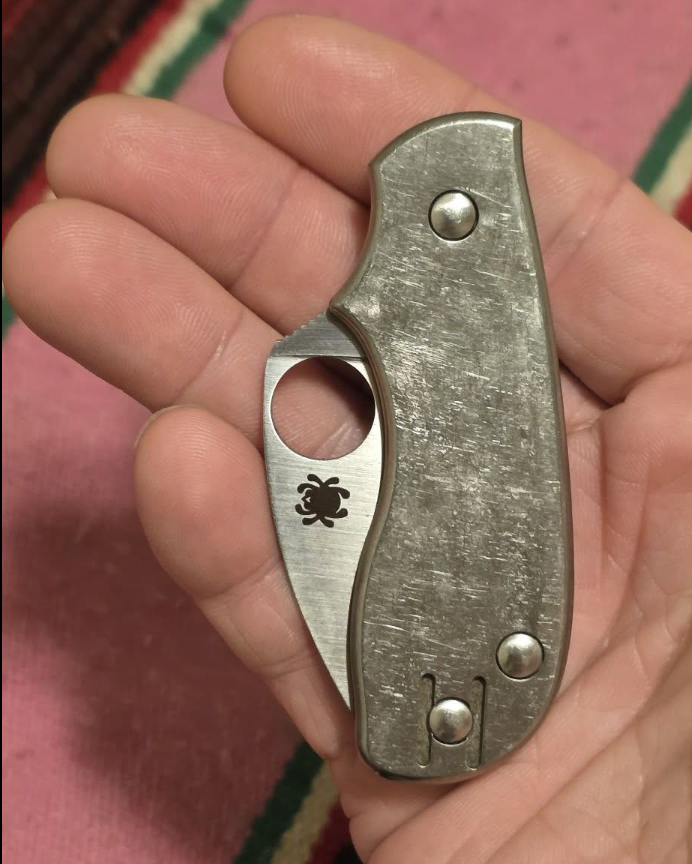
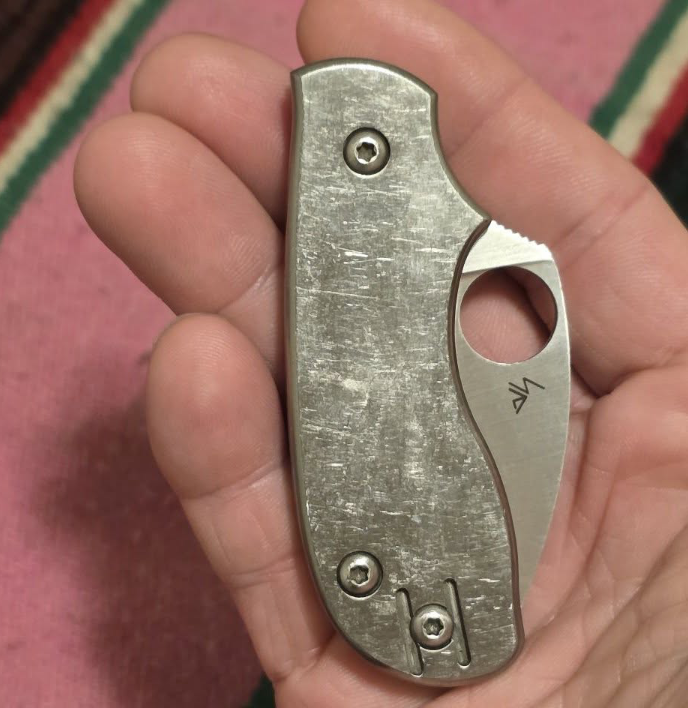
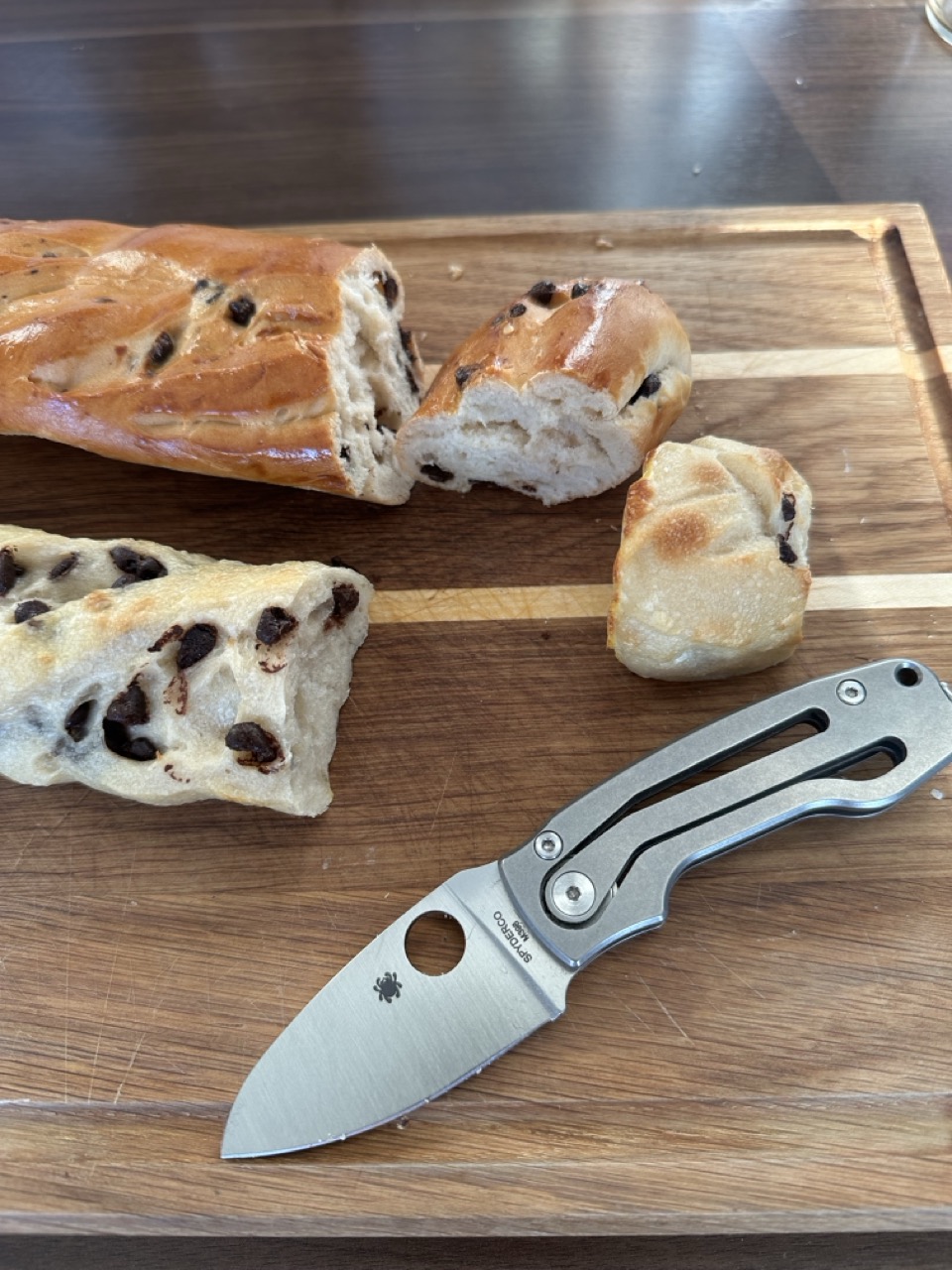
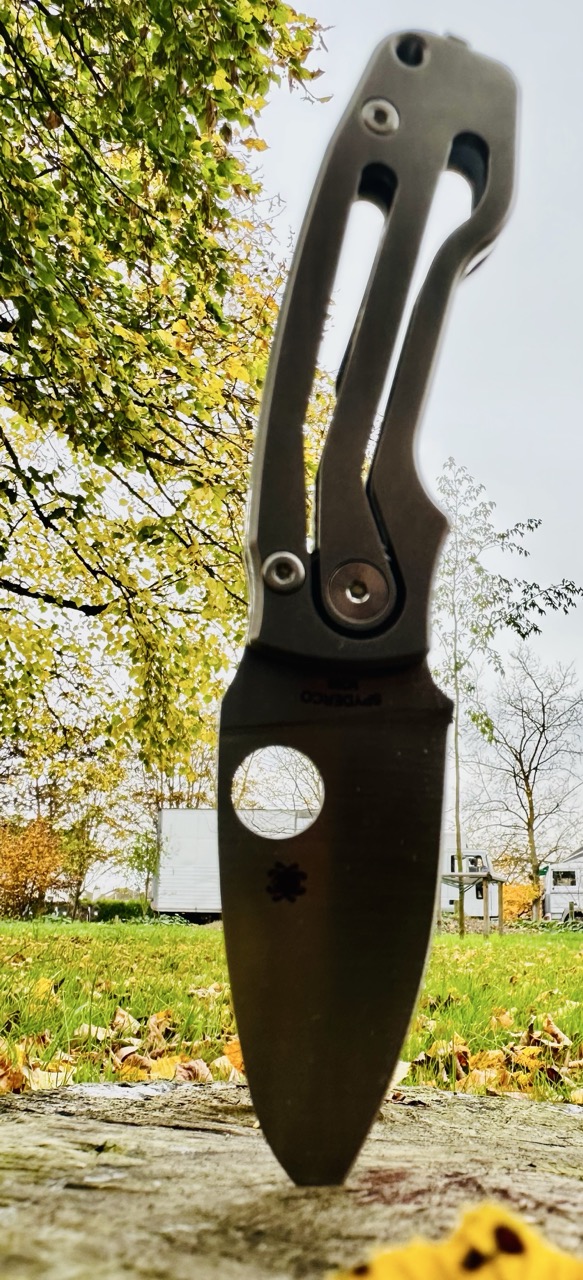
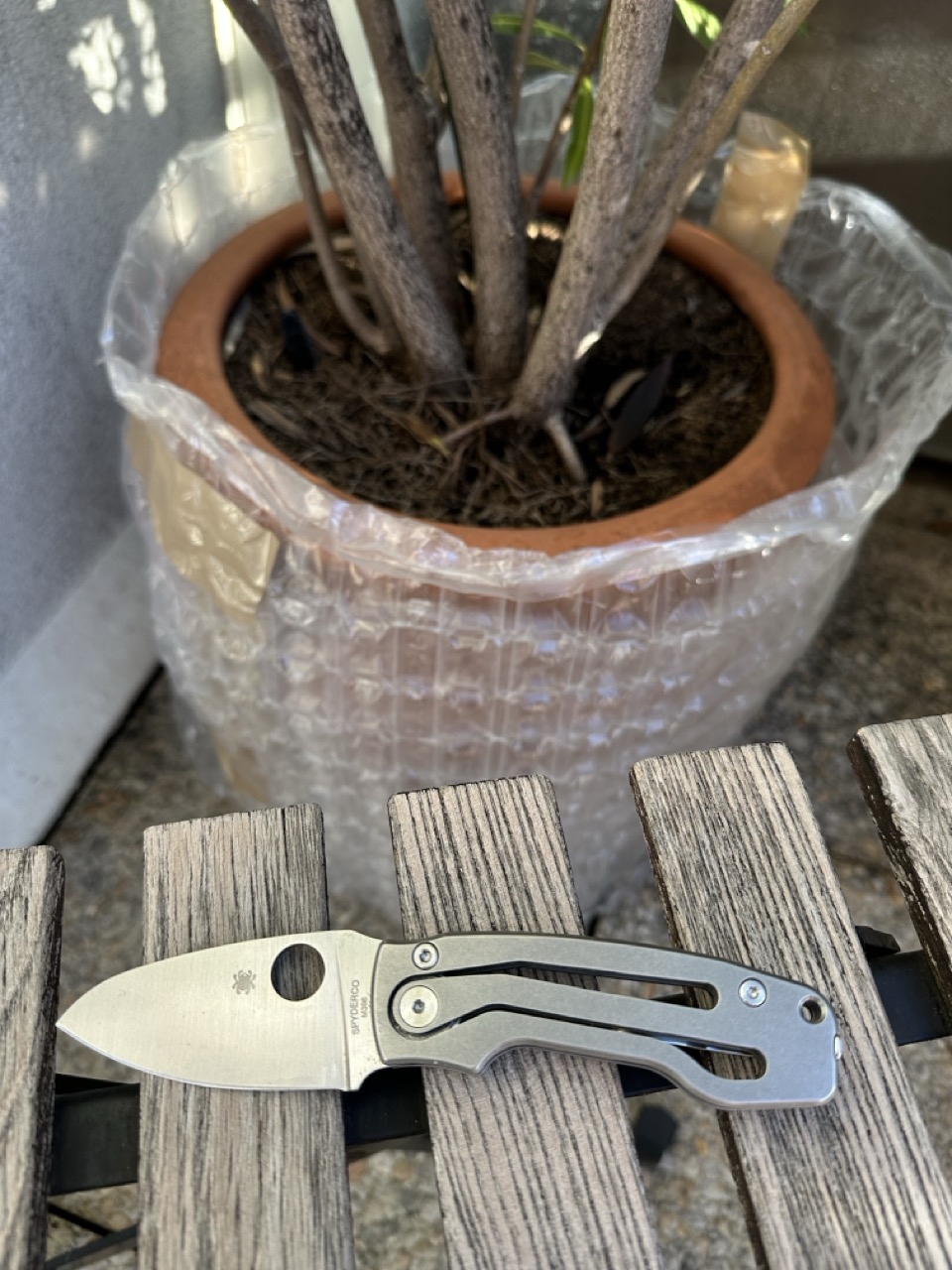
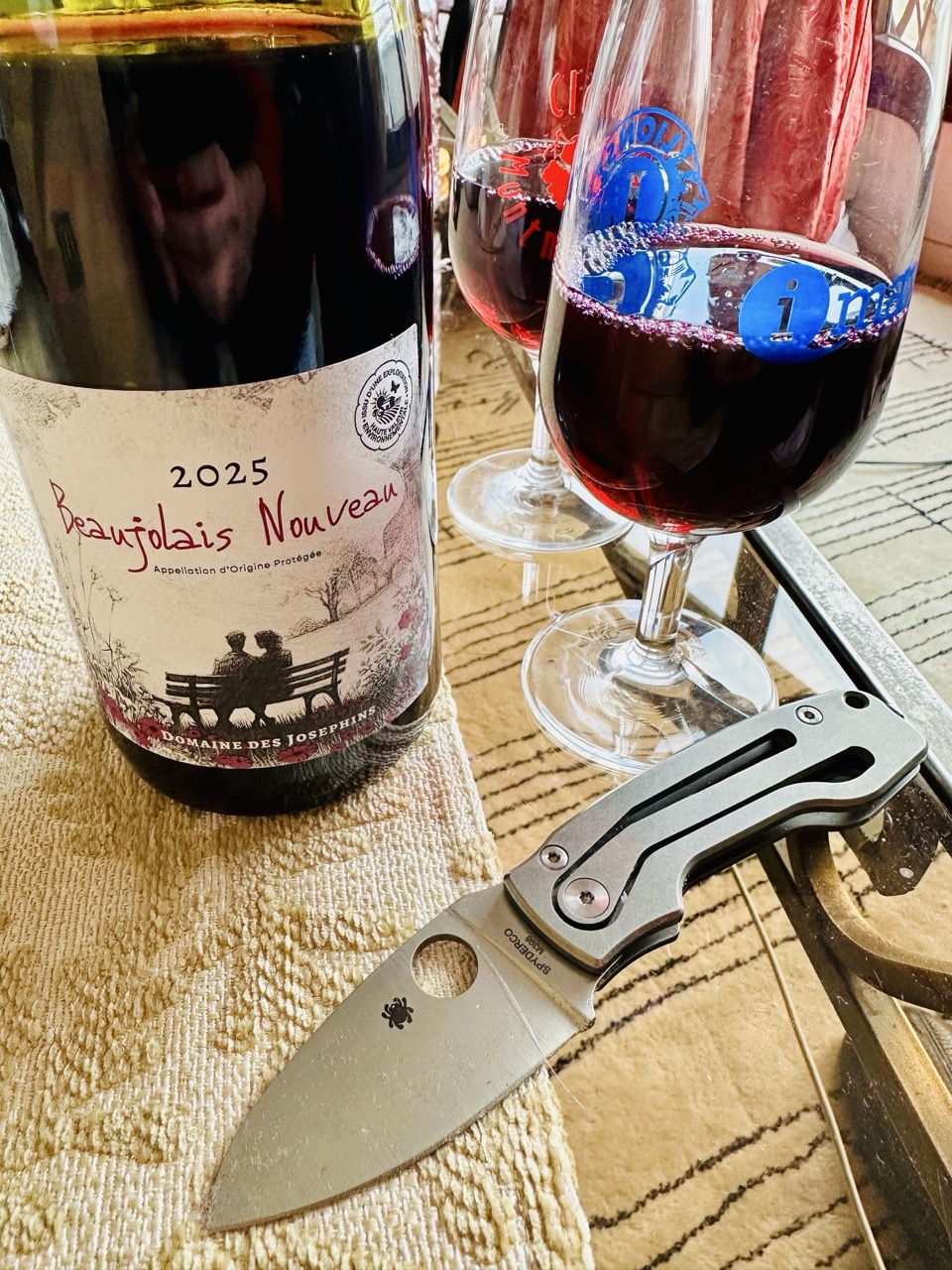
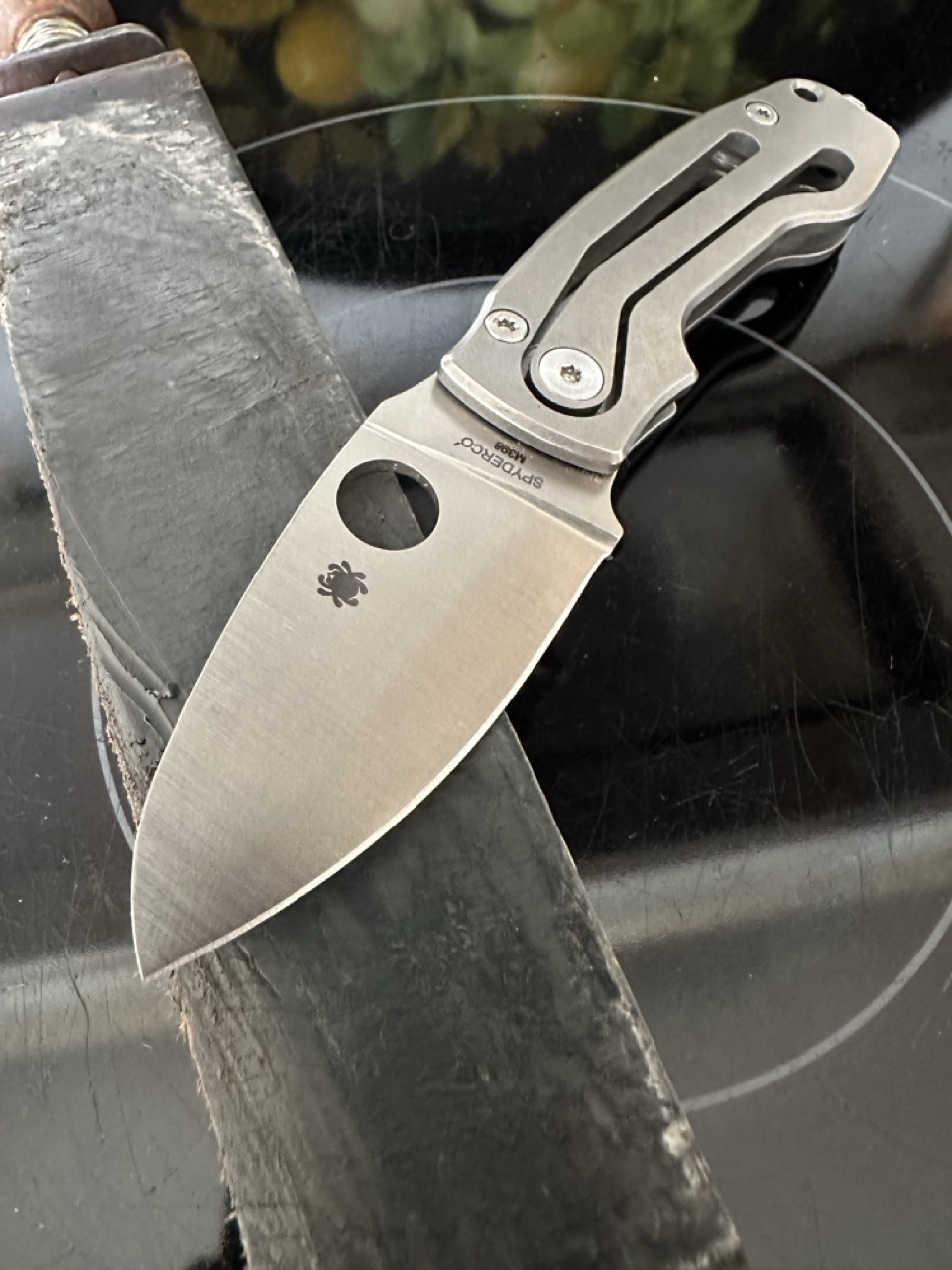
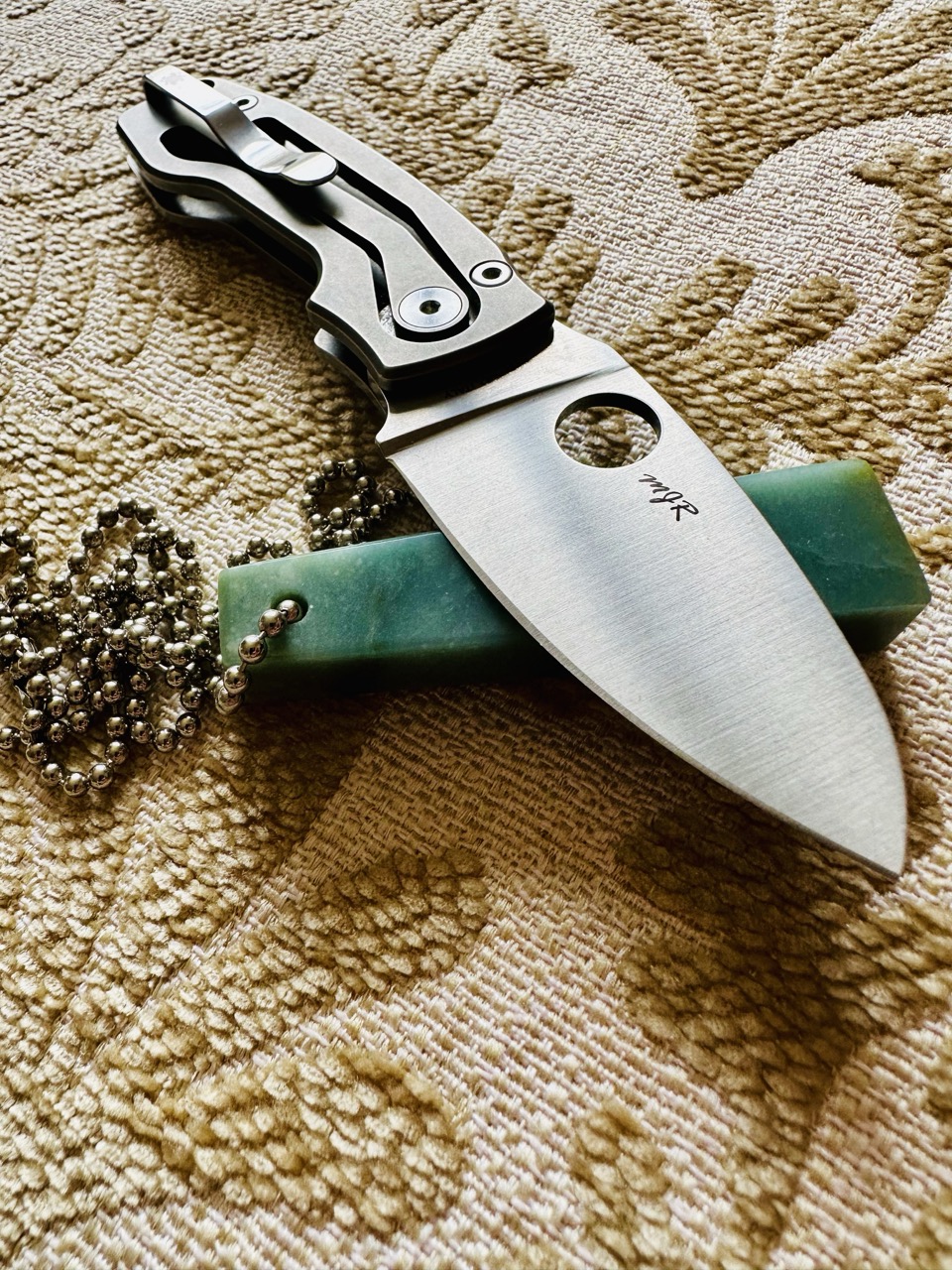
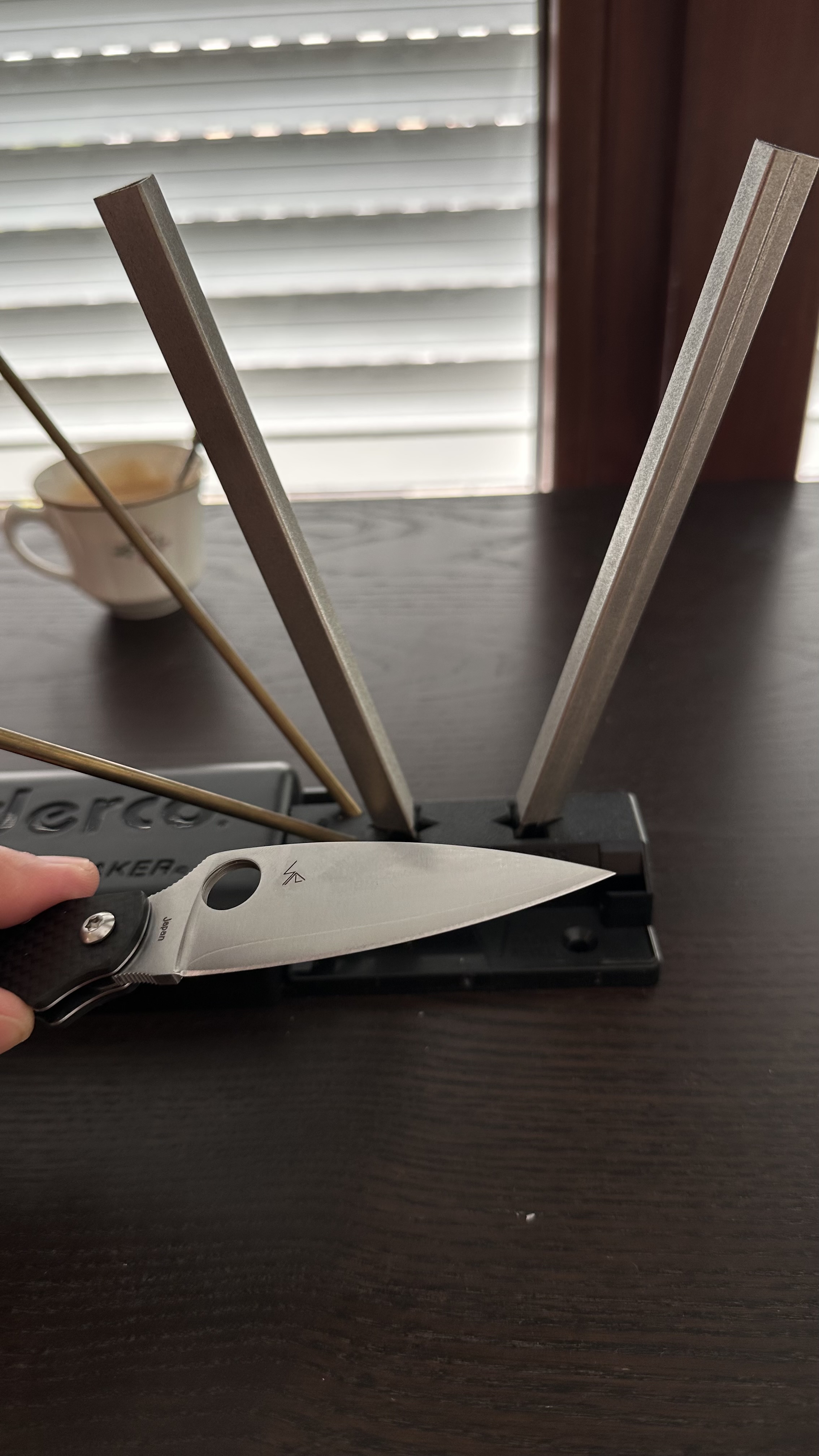
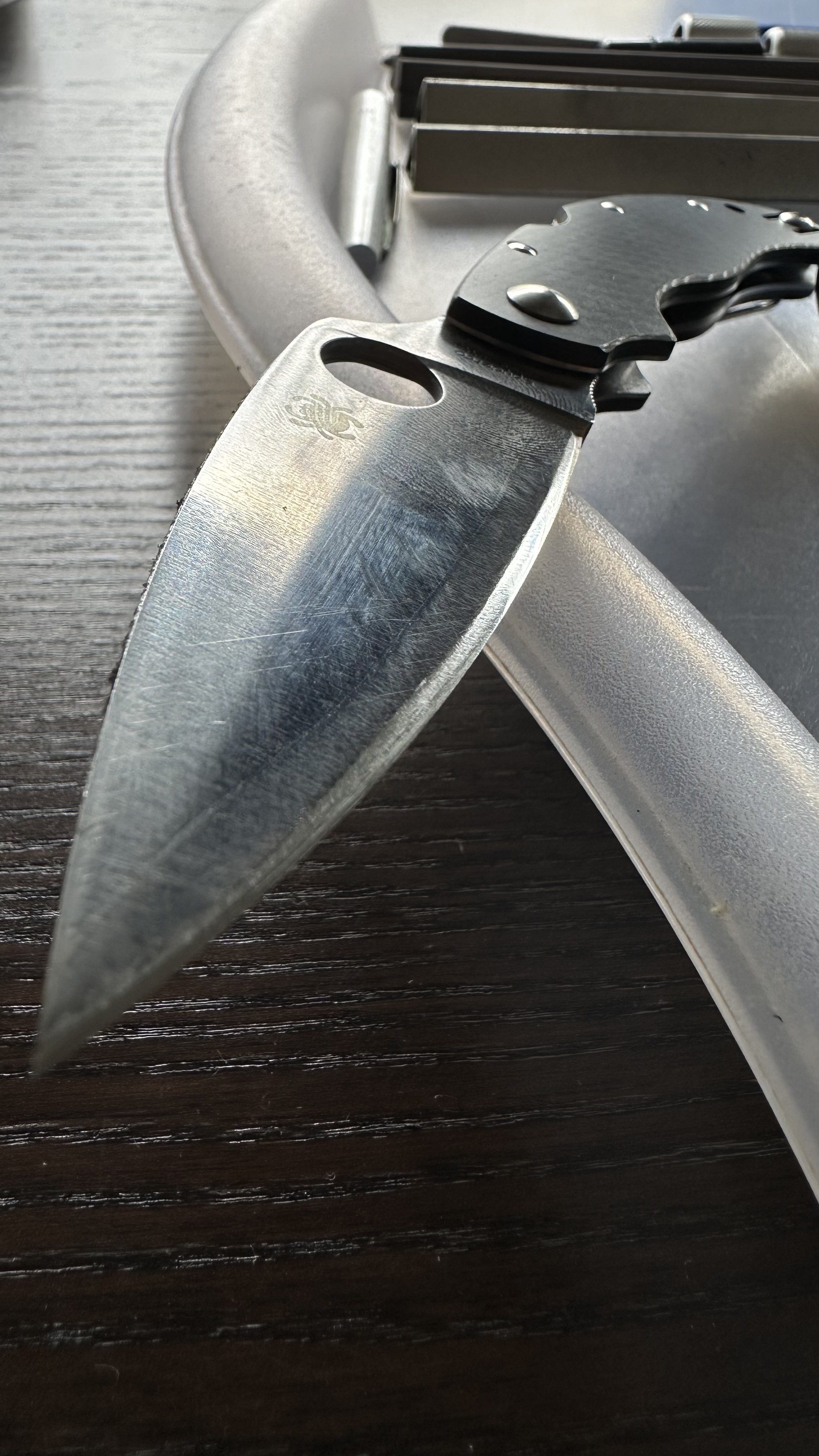
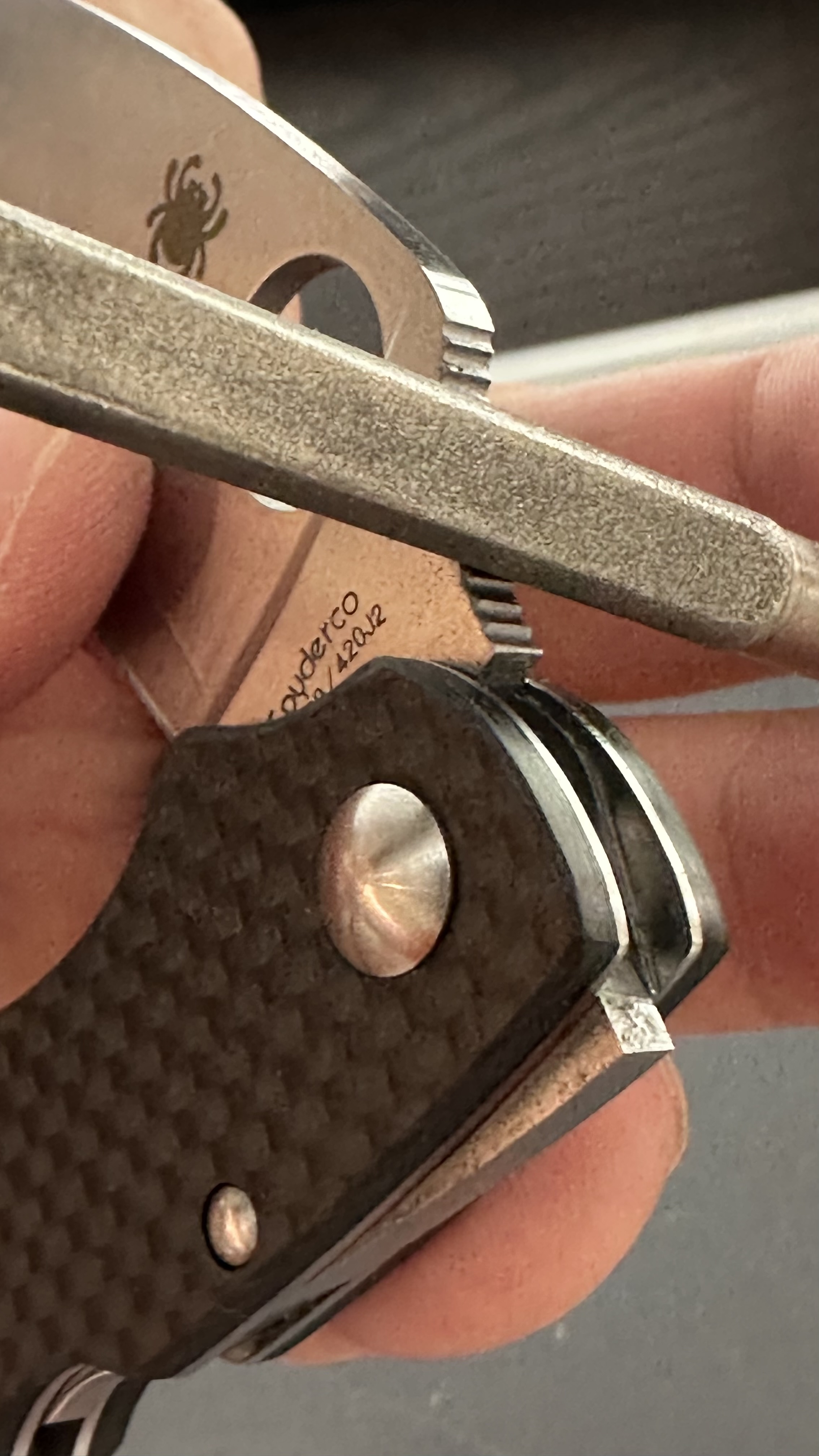
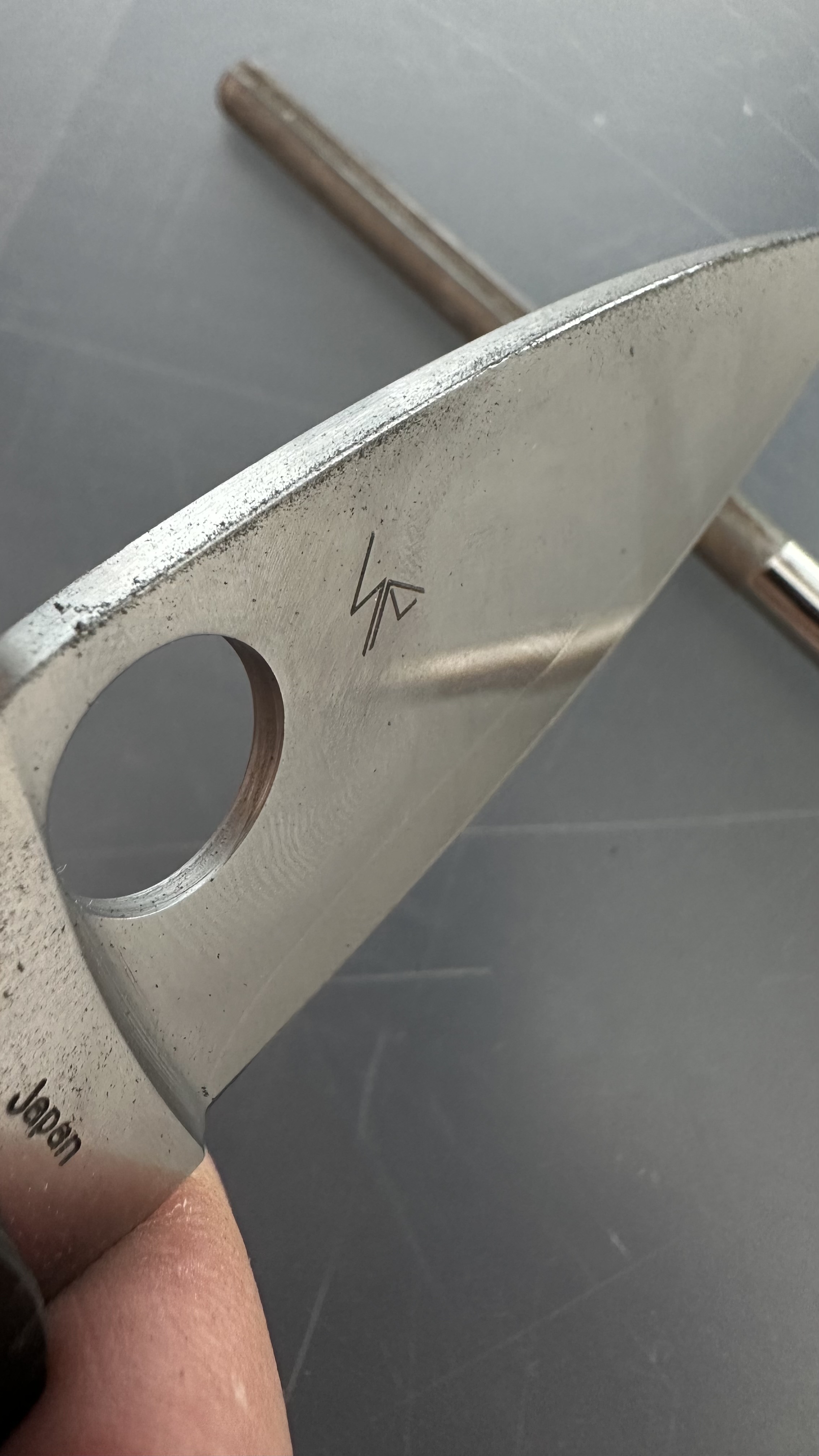
MIKE READ PITS™ 2 – C269TIP – Part 2 – Low Profile De Luxe SlipIt.

Digression: Did you think we were born in peaceful times?

In Western Europe today, amid increasing concerns over violence and insecurity, carrying a fixed blade — something I’ve done for decades with a short fixed blade — or even a locking folder can easily be misinterpreted.

And every single day, in the fall of 2025, the European newspapers report yet another knife attack or crime.

Knife attacks in the United Kingdom have shown a persistent and worrying upward trend in recent years. National data indicate that police recorded just over 53,000 knife‑enabled offences in the latest annual cycle, with assaults and robberies accounting for a substantial portion. While knife-related homicides represent a small percentage of overall offences, the absolute numbers remain high, with young people disproportionately affected. Offences involving the possession of bladed weapons have also risen, highlighting broader issues of accessibility and carrying habits in urban areas. Compared to a decade ago, knife-related violence has increased significantly.

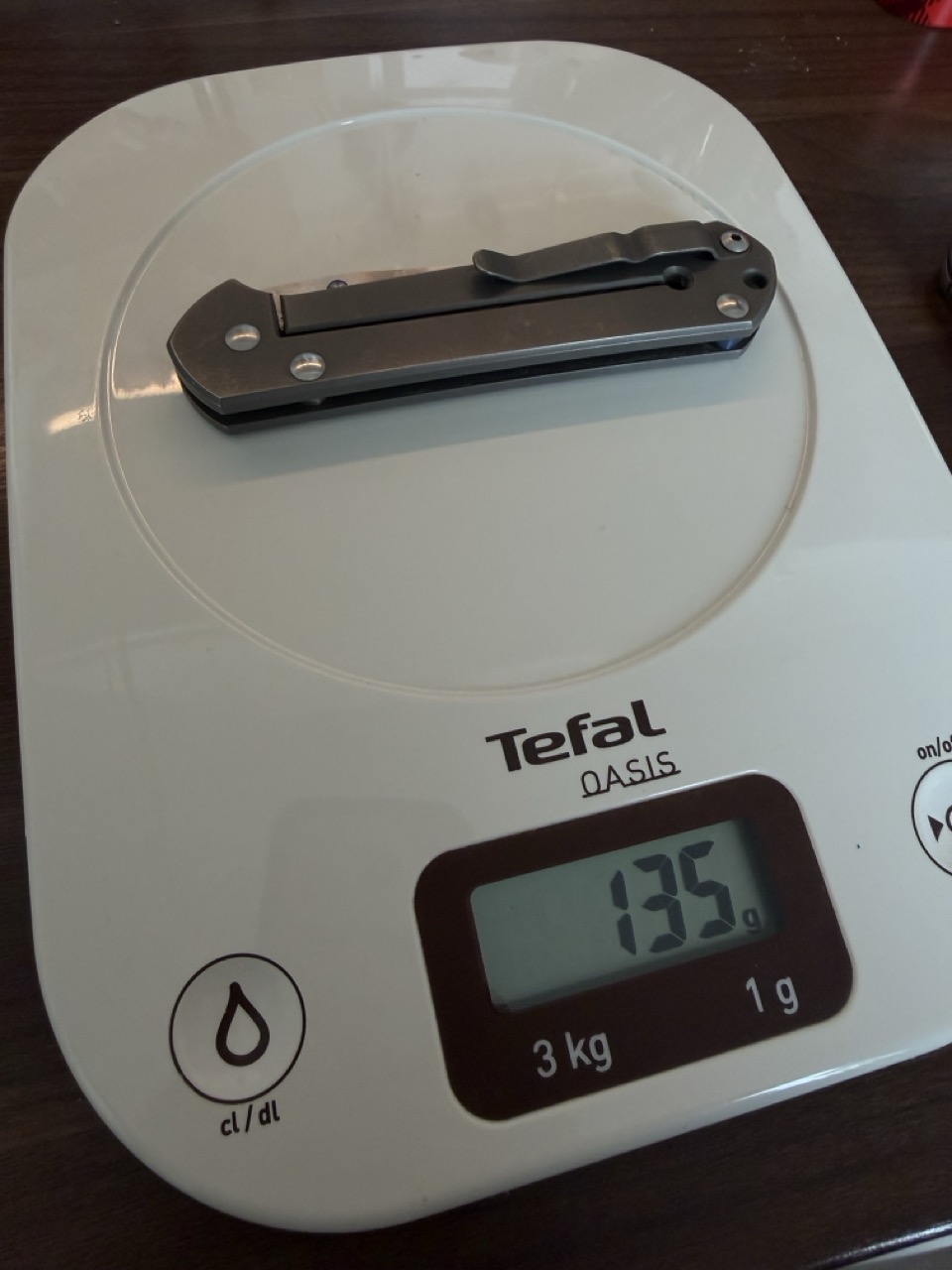
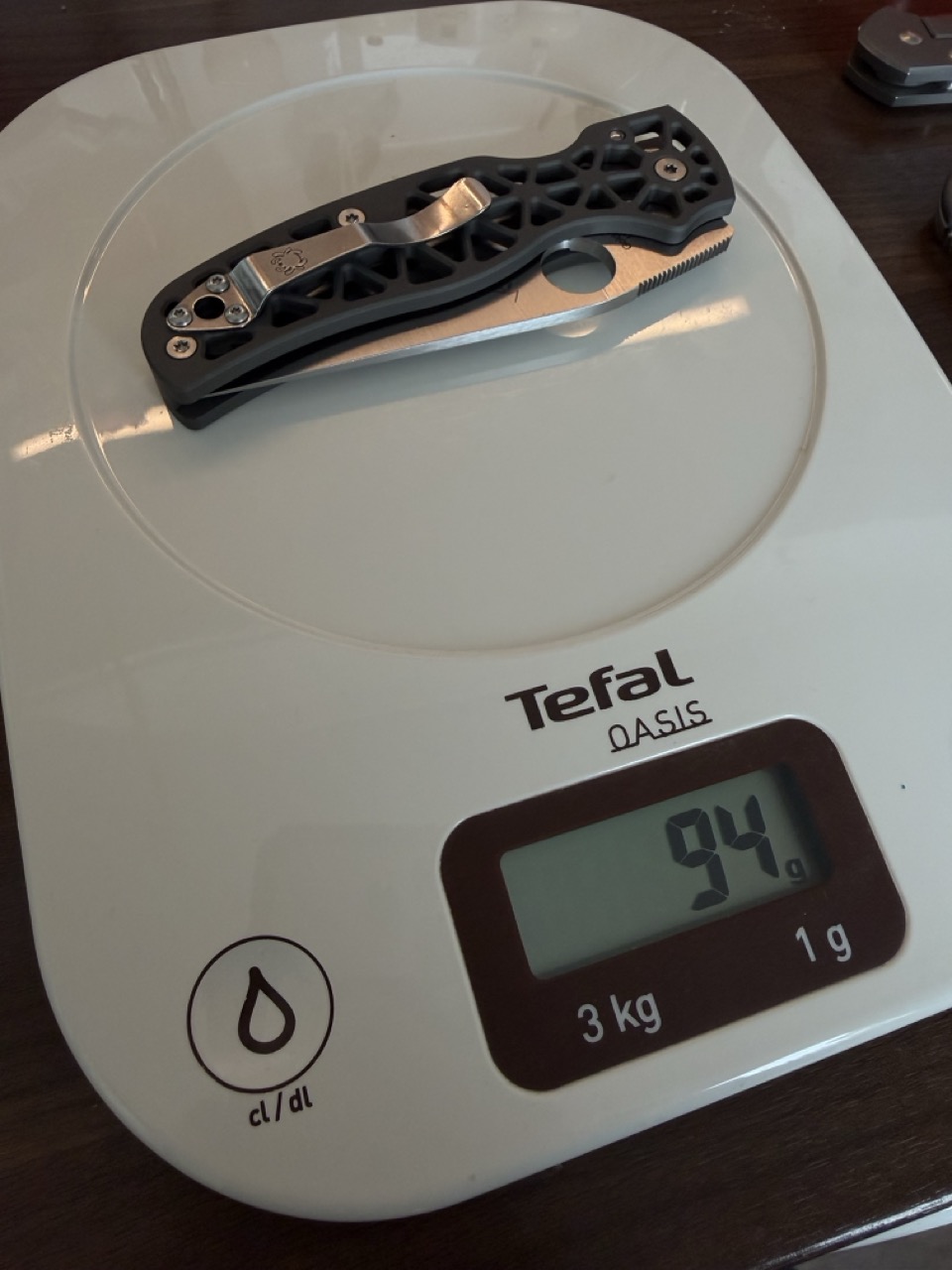
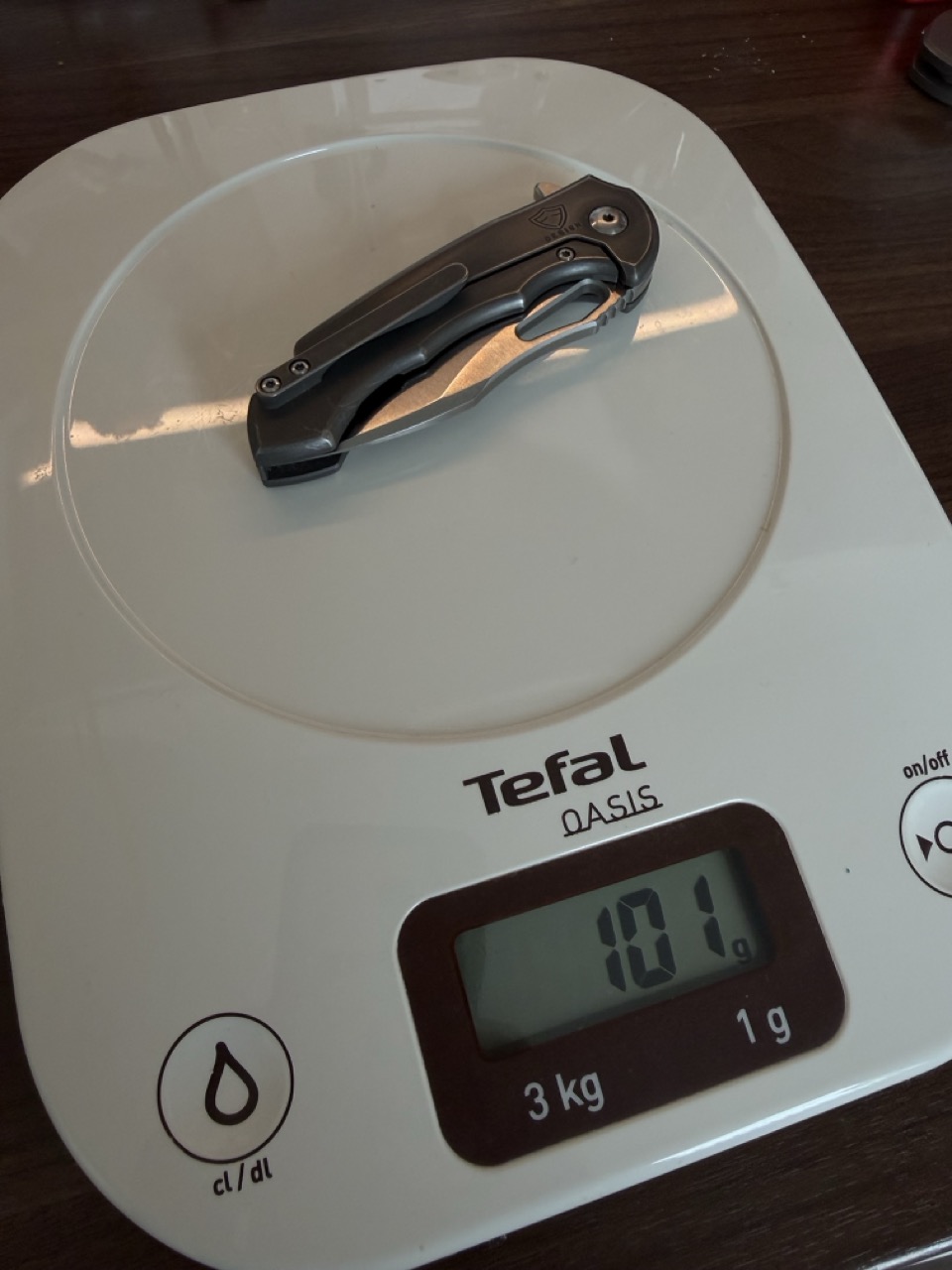
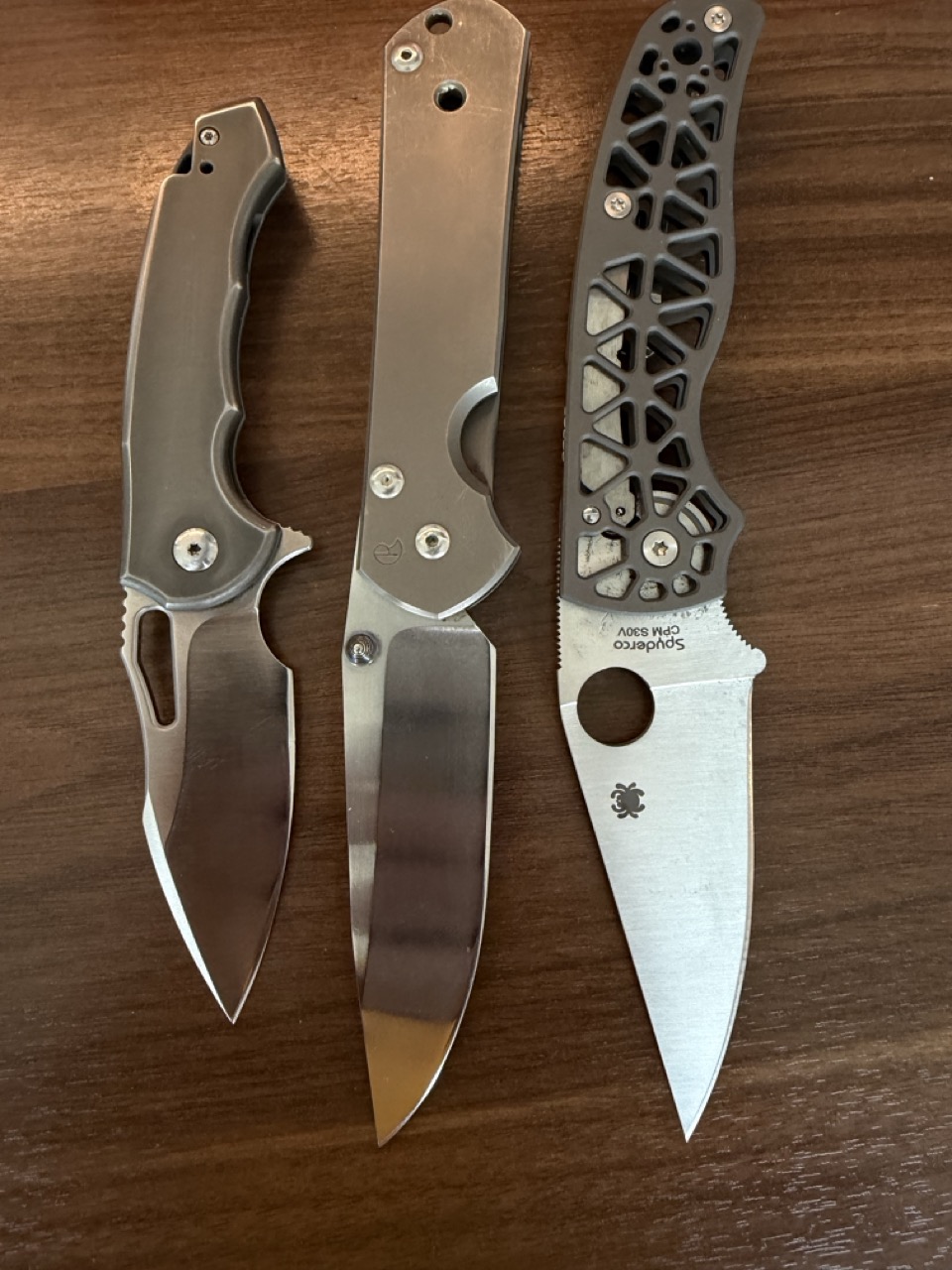
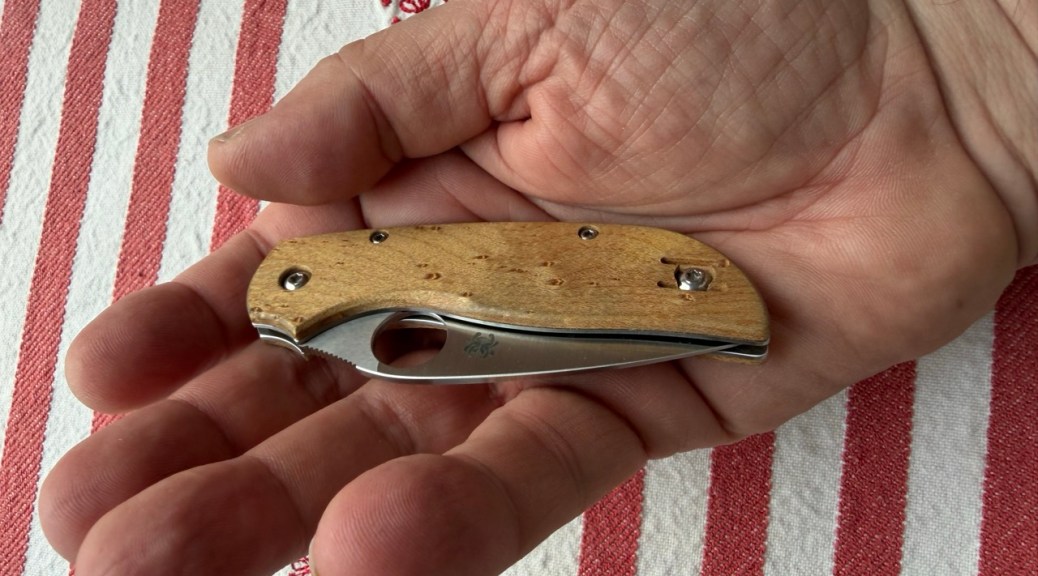
(From a locking folder to slipjoint folder…. Sign of the times ?)

Most knife crimes in the UK use everyday knives like kitchen knives, because they’re cheap and easy to access. But a significant minority of attacks involve more “exotic” or dangerous blades: like machetes !

In Germany, some state-level police offices estimated more than 21,000 knife attacks in 2022, which corresponds to about 60 knife attacks per day nationally.

In France, knife attacks also remain a major concern, with more than ten thousand recorded assaults involving bladed weapons in the most recent year across areas policed by the national force alone. This figure corresponds to roughly a few dozen attacks per day and does not include all regions or the gendarmerie’s jurisdiction. Schools in the Paris region reported over a hundred knife-related incidents within a year, highlighting a sharp increase in youth involvement and the normalization of carrying knives. Broader national indicators show rising attempted homicides and a high proportion of armed robberies committed with knives, underscoring the central role of bladed weapons in everyday violence.
French law places certain knives (e.g., automatic opening, butterfly/balisong knives, fixed-blades over a certain size, double-edged blades) into stricter categories (Category D weapons) when carried without legitimate reason. Folding pocket-knives of everyday use (e.g., classic French models) are more tolerated — they may be treated as tools rather than weapons if not used aggressively or carried without justification.

CountryEstimated Knife-Crime / Knife-Attack Rate (per 100,000)
England & Wales (UK)~89 / 100,000 (using ~55,008 knife-enabled offences and a population of ~61.8 M)
France~15 / 100,000 (based on ~10,397 reported “knife attacks” and a population of ~68.6 M)
Germany~10.7 / 100,000 (using ~8,951 knife-attack figure from 2023 data)


In the UK, the rules are straightforward: a non-locking knife with a blade under 3 inches.
But now it seems that one-hand-operated folders are no longer welcome;
For the record, one-hand operation is actually safer: not only for opening, but also for closing the knife. A closed folder is a safe folder, and being able to switch your tool into “safe mode” quickly is a genuine advantage.

In France, things are far murkier — everything hinges on intention and context of use. It’s almost a Minority Report situation.

Ironically, in the country of Opinel and Laguiole, we’re now backpedaling because of sheer stupidity. And I’m not blaming the criminals who use knives to hurt people — that’s obvious. I’m blaming the people who carry a knife for self‑defense.
After a search from the Police in front of an high school:
“Why do you bring this knife to school ?”
“To defend myself !”
A knife is not a self‑defense tool — it’s a catalyst for problems.
Awareness, on the other hand, is a self‑defense tool, and that’s something you really need to keep sharp.
Even something as simple as wearing AirPods can compromise your ability to stay safe, cutting you off from your surroundings.

Unless you’re a gangster settling scores with your own kin, a knife will never be your bodyguard — not even with training.
In fact, it can make things worse, especially if you think you’re “trained in knife fighting.” A knife as a weapon is a killer’s tool, meant for ambush and combat, not for duels.

(The only blade that might actually “help” you — for example in an attempted‑rape situation where you are physically overwhelmed, dominated, and restrained — is also the one that will almost certainly land you in even more trouble afterward. And if you ever reached that true last‑ditch moment, your best hope would ironically be a short serrated edge rather than a razor edge; under an adrenaline surge, an aggressor won’t even register a clean cut. The Spyderco Manbug Wharncliffe SpyderEdge comes to mind.
But even then, you would need the mindset to become the aggressor just to survive — and you must be prepared to defend your actions in court afterward.)

I remember reading about an elderly man who was being harassed by a gang of young men. In the confrontation, he slashed the hand of one of his aggressors with his Swiss Army Knife — and in the end, he was the one standing before the judges.
“To claim self‑defense, sir, there must be proportionality between the attack and the response.”

It’s also a mindset.
I’ve carried a knife since I was 9 and have never had the inclination to cut or stab someone.
It’s all about how you have been raised.”
Des Horn

So let’s remain ladies and gentlemen, and let’s be low profile in our EDC choices.
The knives we carry and appreciate are not pocket bodyguards — they’re tools we genuinely enjoy using for simple, everyday tasks.

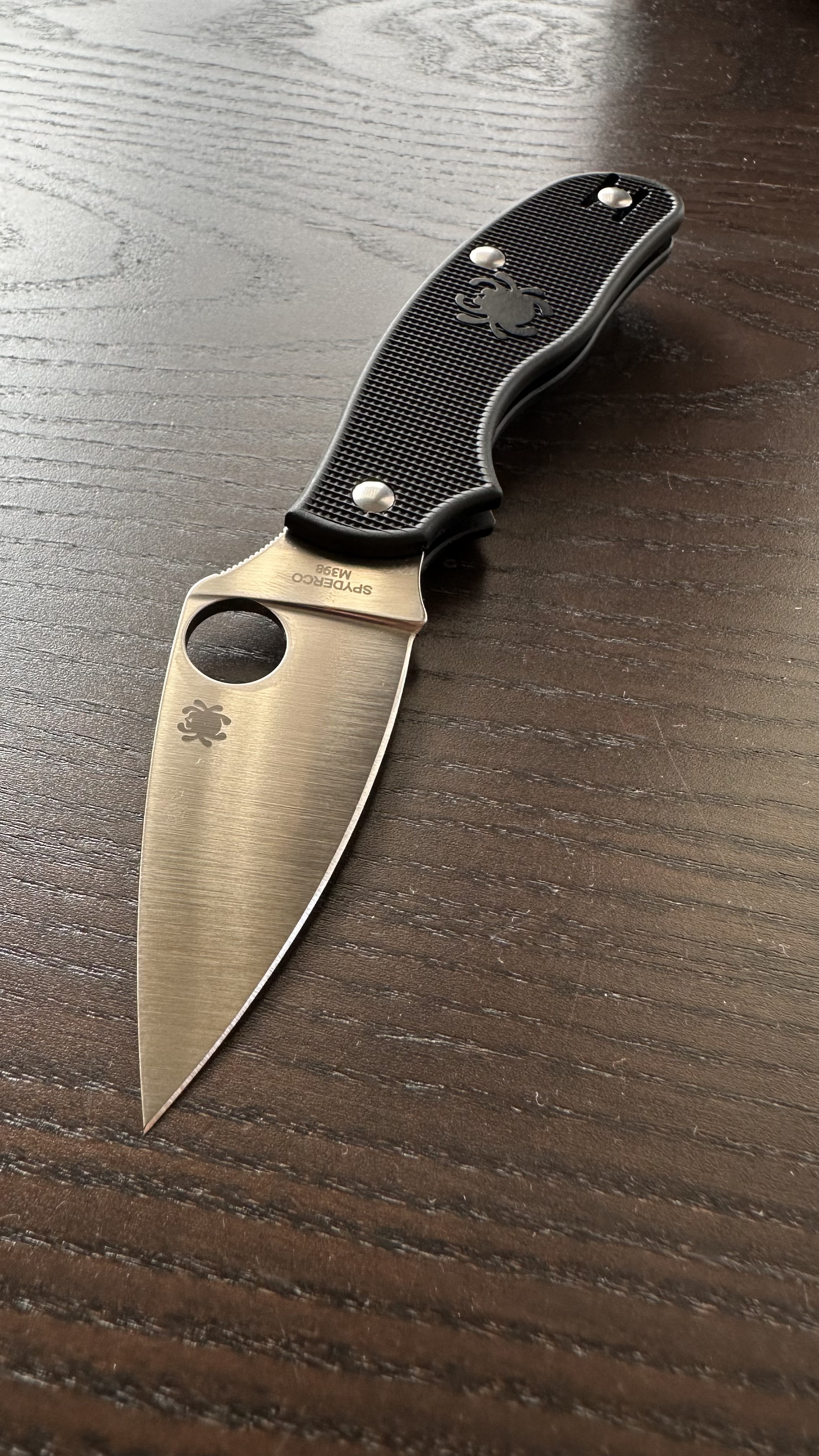
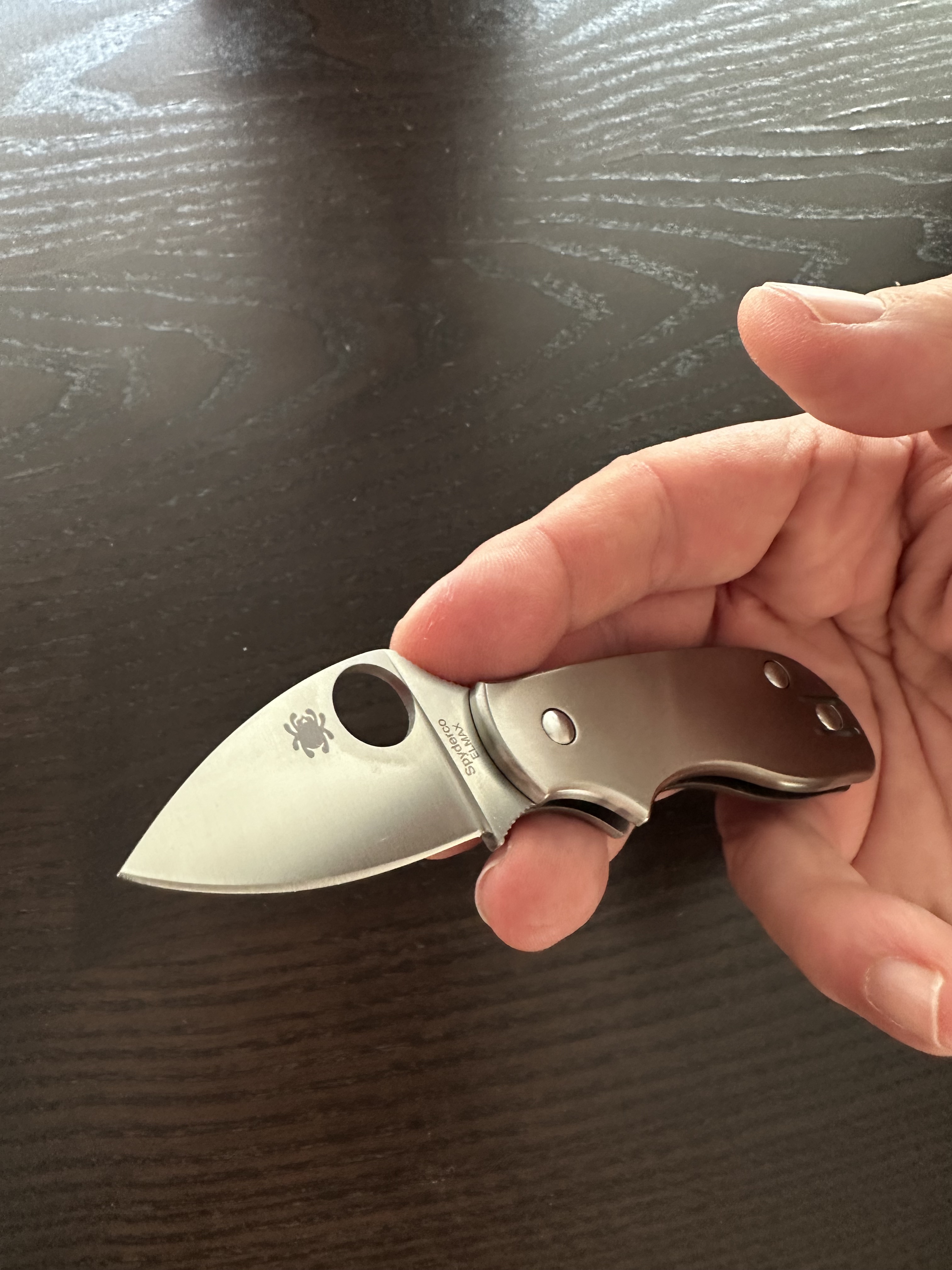
Enter the Alien/PITS2 and the whole generation of modern slipjoints.

Carrying a knife in today’s civilian world means opening parcels, prepping food, cooking, doing small repairs — being a handyman or -woman, or at least trying to be. I’ve written before about the modern slipjoints we now have access to: knives that benefit from three decades of “tactical” evolution. They offer deep-carry clips, true one-hand opening and closing, and high-performance steels refined for modern cutlery.

All of that is perfectly embodied in Spyderco’s SlipIt line.


So why would you choose a Mike Read folder? Is it better than a UKPK or an Urban?
Nope. The SlipIt flagship UKPK, for example, also has a thin edge, and you can even dress it up with titanium scales if you feel like it. Its mechanism is also stiffer, with a two-stage closing “safety” that makes the blade feel more controlled on the way down.

So why choose the PITS2?
It ultimately comes down to taste — your willingness to spend a bit more, your appreciation for the mechanism, the maker behind it, and of course a love for titanium and M398.

So what does the Alien/PITS2 truly bring in the long run?

In my case, I was genuinely surprised by how this “hard-to-open-one-handed” knife has grown on me.
That stiffness actually makes it reassuring to carry — you know the blade won’t pop open by accident. Especially when you carry it in the back right pocket.

First: it slides in and out of the pocket effortlessly.
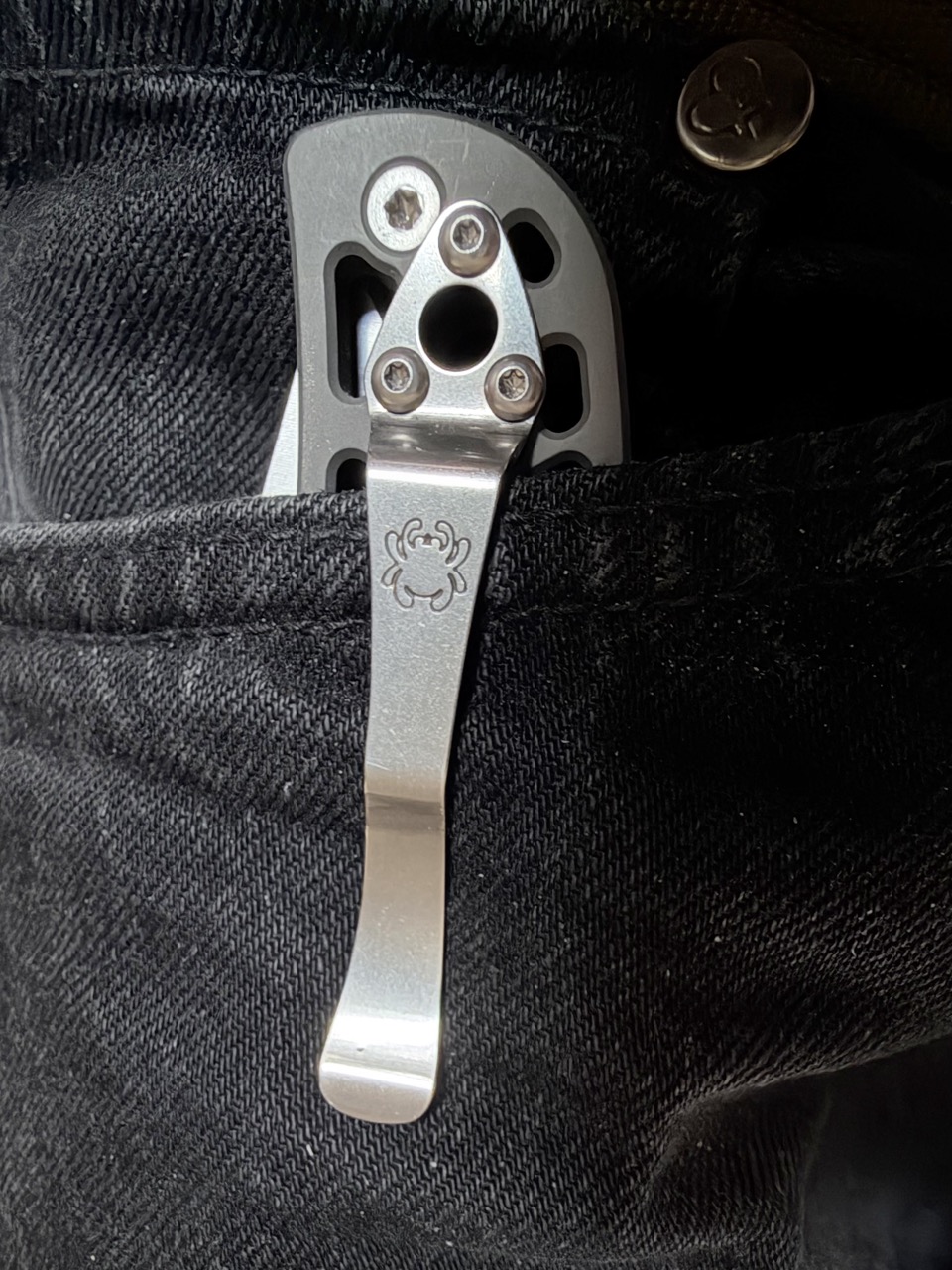
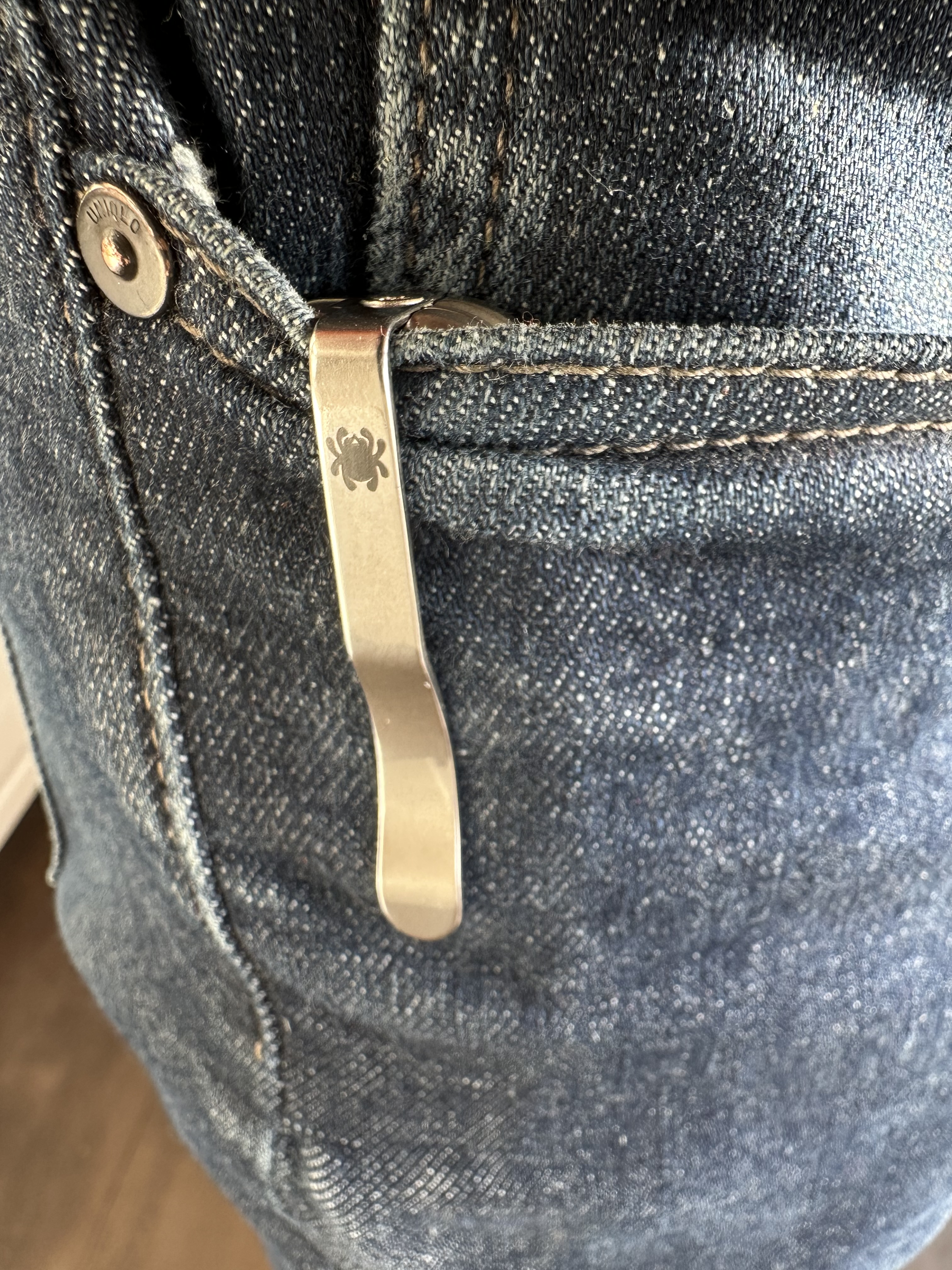
That deep-carry clip is a real asset. It reminds me of the C181GTIP Lil’ Lionspy — also made in Maniago — but this one is even better than a wire clip: smooth, secure, and gentle on pockets.

Even though it’s light, the PITS2 feels dense and substantial in the hand. If you love titanium, you immediately recognise that warm, almost organic sensation it gives in the palm. Chris Reeve was the first to offer that pure‑titanium tactile experience, and the PITS2 carries that same aura.

Then your thumb finds the hole. It’s stiffer than most Spydercos I know, but that final click when fully opened is immensely satisfying. Forget about using your ring finger — it’s your thumb or nothing.

The hole is sharp enough to allow a “Spyder‑Drop,” though it occurs in two deliberate steps rather than one smooth motion.

Another major advantage: the PITS2 cannot pinch your fingers during opening or closing — a problem that the PITS1 sometimes had.

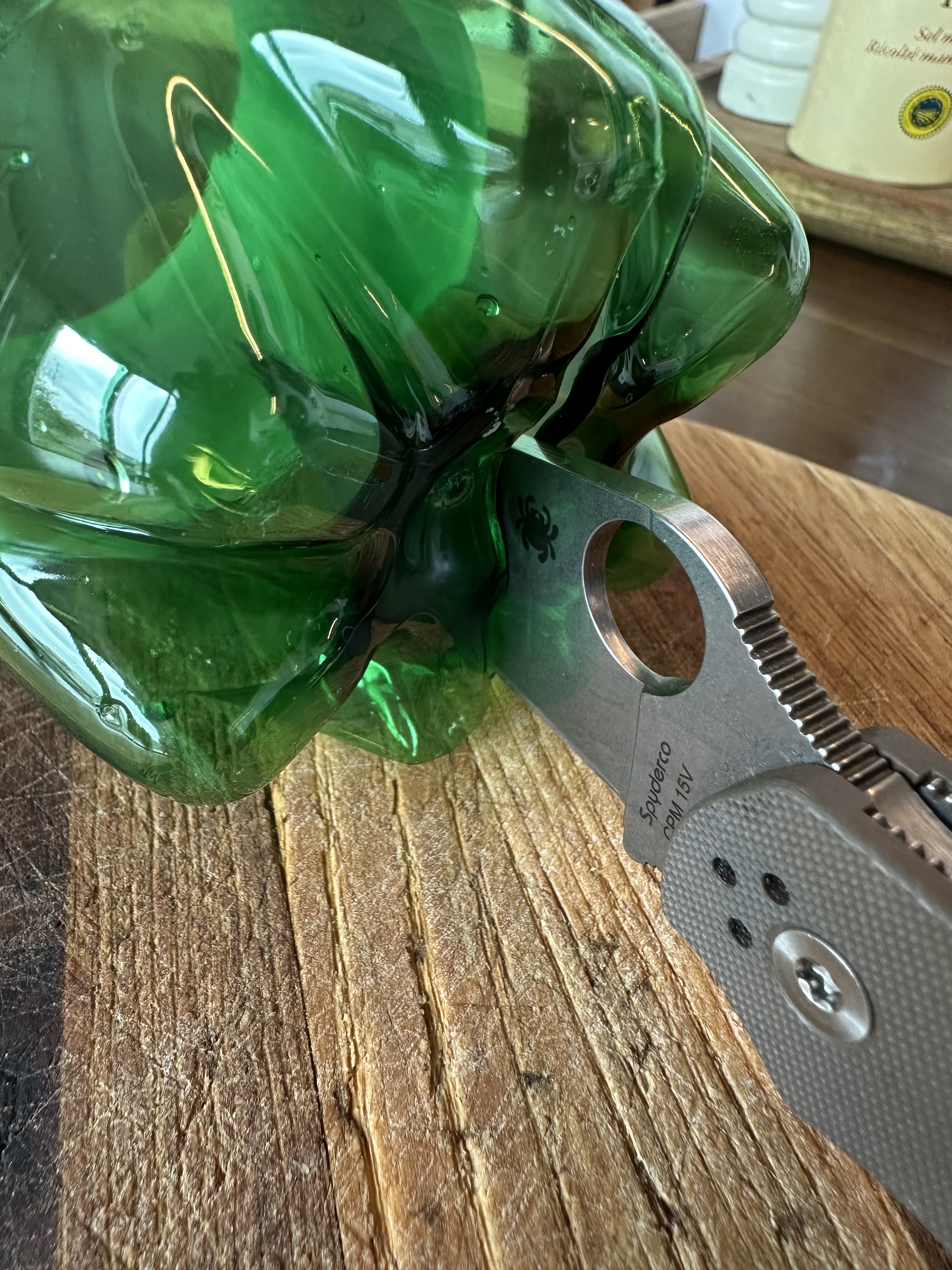
And, as I mentioned in the quick first‑look, that relatively tall blade comes with very thin geometry. This is the first Spyderco edge in a very long time—aside from my Chaparrals—that didn’t need to be convexed. I usually “de‑shoulder” everything to my taste and to my standard test: the plastic bottle butt.

This is where the PITS2 truly shines: pure cutting performance.
So far, it has never disappointed me. At first, I thought its more “gentle” blade tip wouldn’t be pointy enough for my tastes—especially since I’m used to the UKPK, Yojimbo 2 or the Microjimbo—but the PITS2’s tip is razor‑keen. It finds its way into soft or dense materials with nothing more than a light, controlled pass.

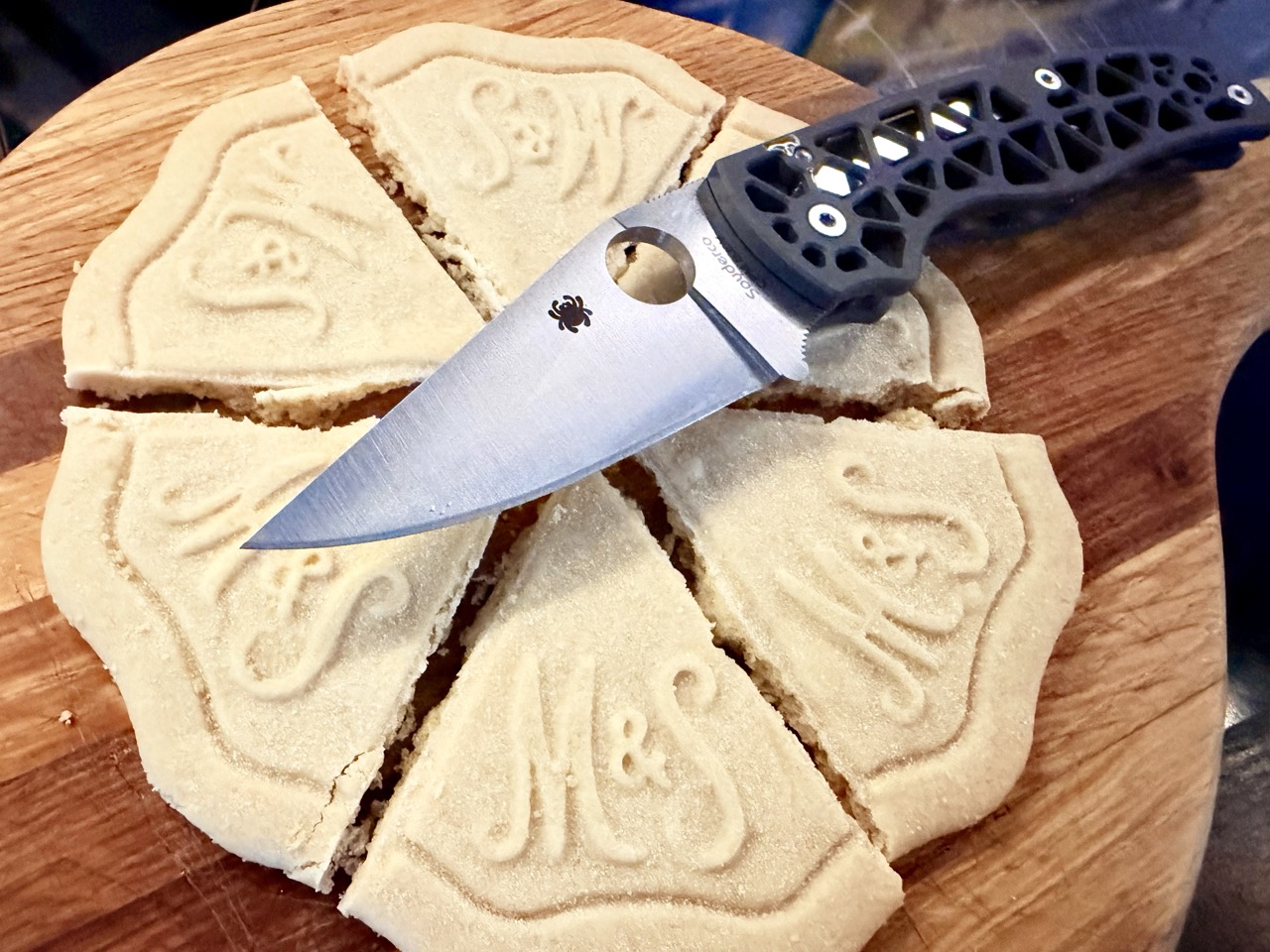
Actually, butter knives do not need to be sharp. 😉
The PITS2’s thin edge can slip effortlessly through delicate materials—like slicing a layered birthday cake without crushing it. And it can zip through cherry tomatoes, which is always a great test of geometry and edge aggressiveness. Tomato skin resists, tomato flesh is fragile; a good blade needs to pierce the first without mangling the second.

Well, well, well… go figure: tomatoes can be tricky — and a perfect opportunity to put your favorite edge to the test.
But honestly, what more could you ask for from a good EDC, superb slicing ability. A sharp knife is a safe knife.


M398 in that matter continues to surprise me. It reacts to leather like… K390 ! Amazing steel !
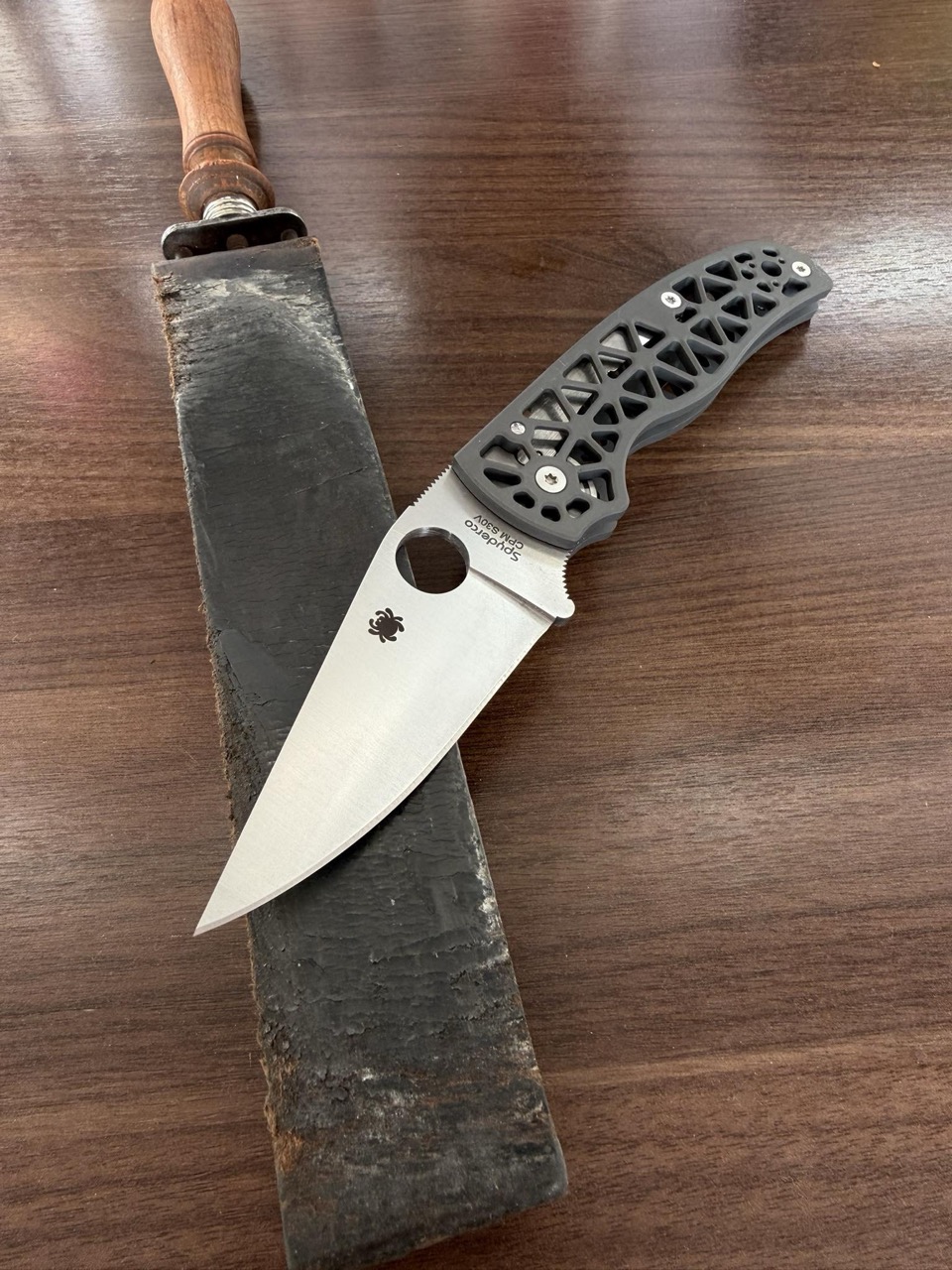
I’ve already used M398 on the Roadie XL and the Metropolitan, and it proved far more forgiving than I expected. I initially thought it would be brittle — especially after snapping about half a millimeter off the tip of my Roadie XL — but in everyday use it has shown itself to be an excellent alloy that also responds beautifully to stropping.


After some real use, I still haven’t managed to chip or even noticeably dull the PITS2’s thin edge. What’s remarkable is that it’s still as razor-sharp as it was right out of the box.


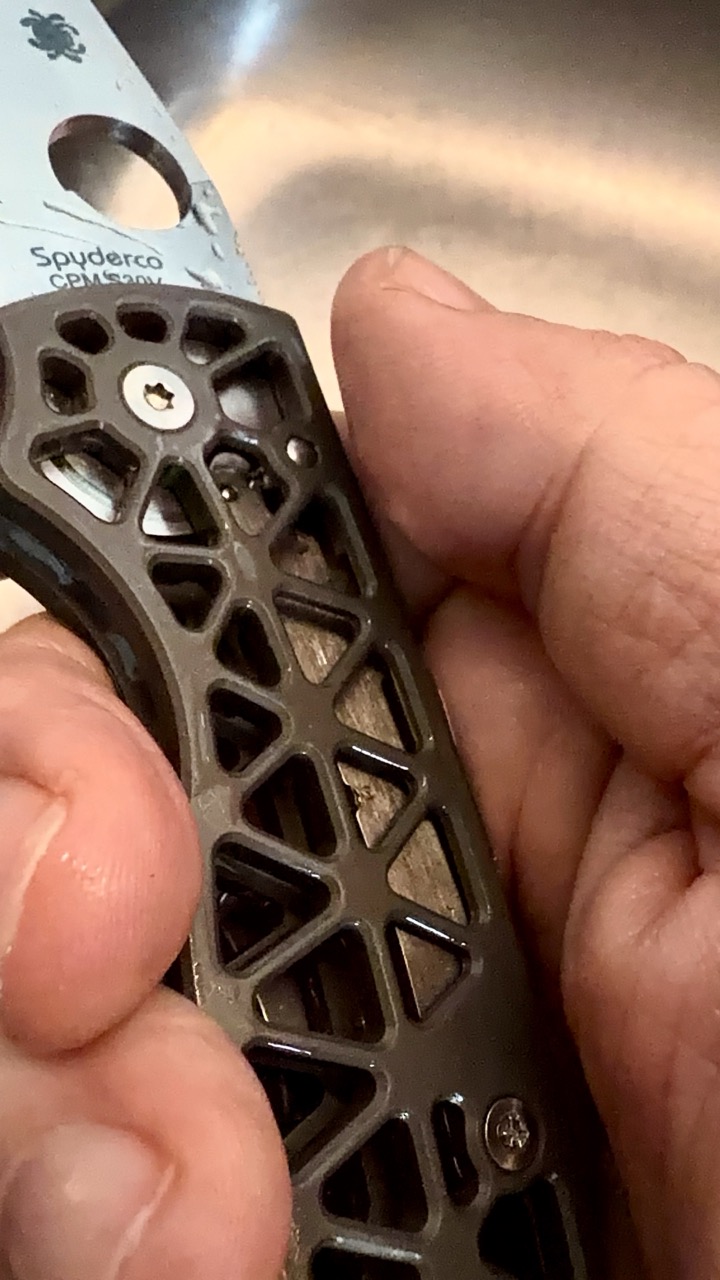
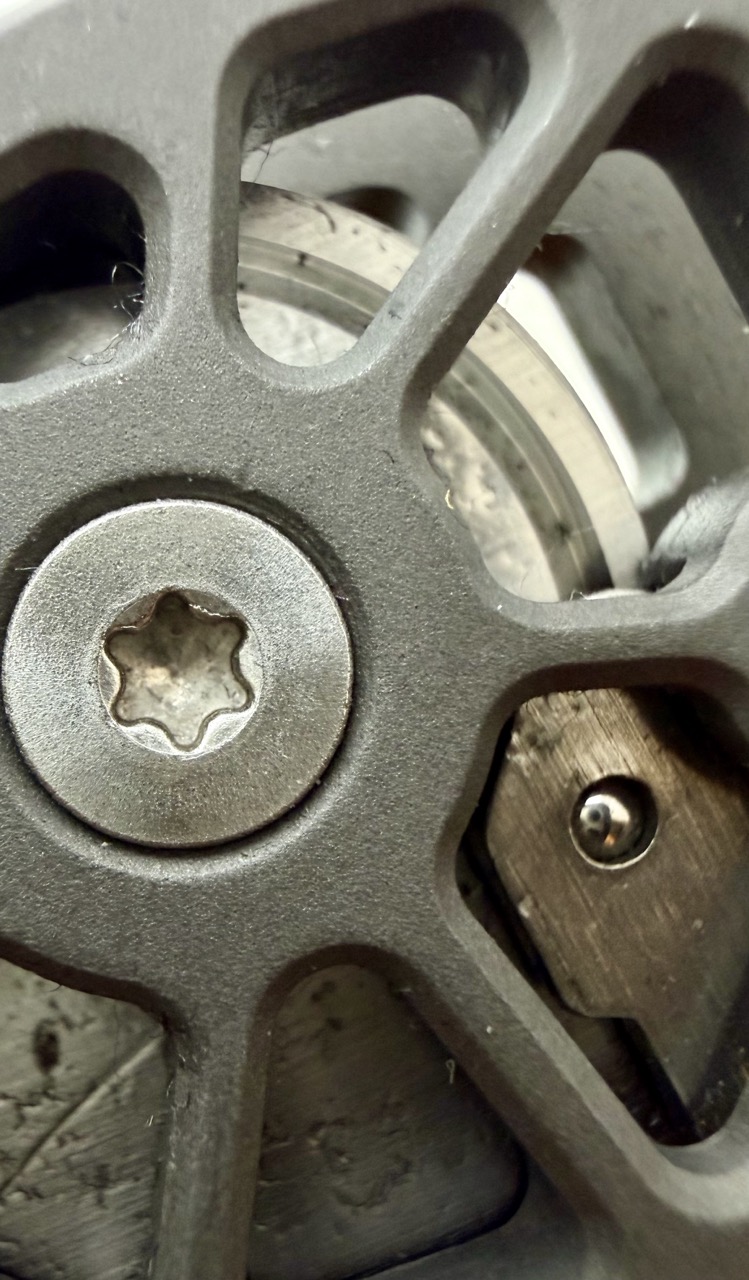
I also love how easy it is to check, clean, and oil the PITS2.
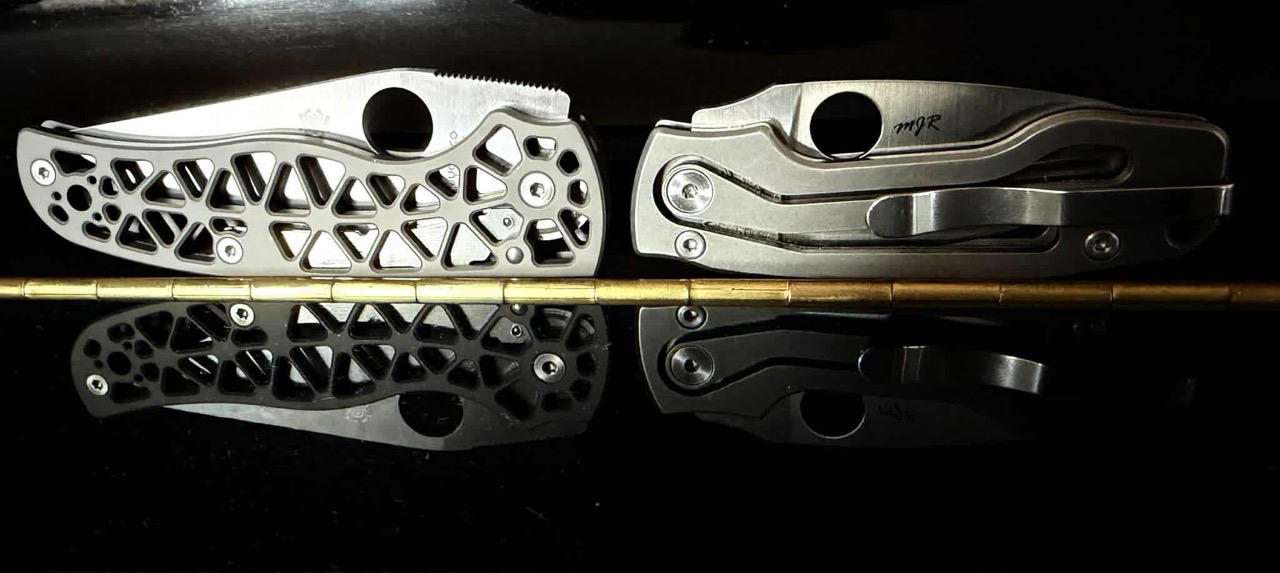
I can appreciate how skeletonized hidden liners have added lightness and strength to folding knives, but they also tend to become little nests for rust. For that reason, I really appreciate it when liners are DLC‑coated — and even better when they’re made of titanium.

Regarding the PITS2’s titanium handle, the absence of hotspots and the beautifully beveled edges make it a real pleasure to hold.

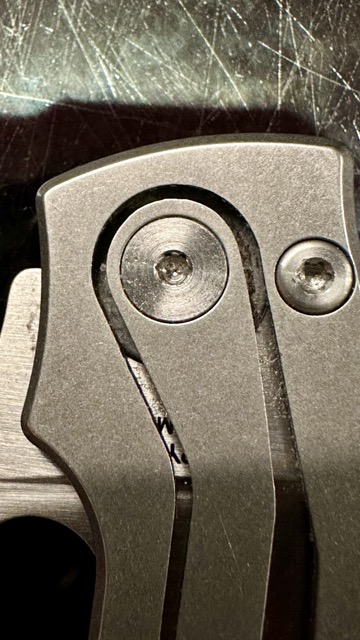
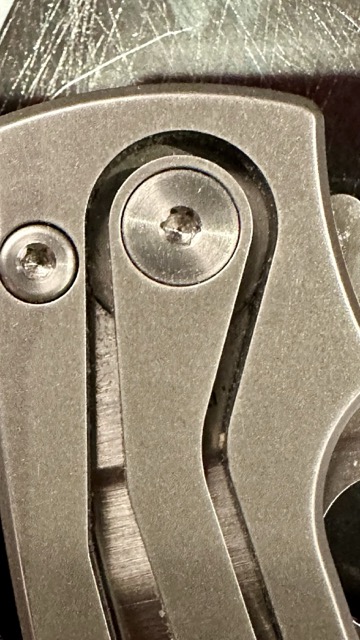
The cutout for the mechanism isn’t beveled, so you can feel its slightly sharper edge. I’ve also noticed that the two handle slabs are symmetrical, while the cutouts around the pivot are not identical.


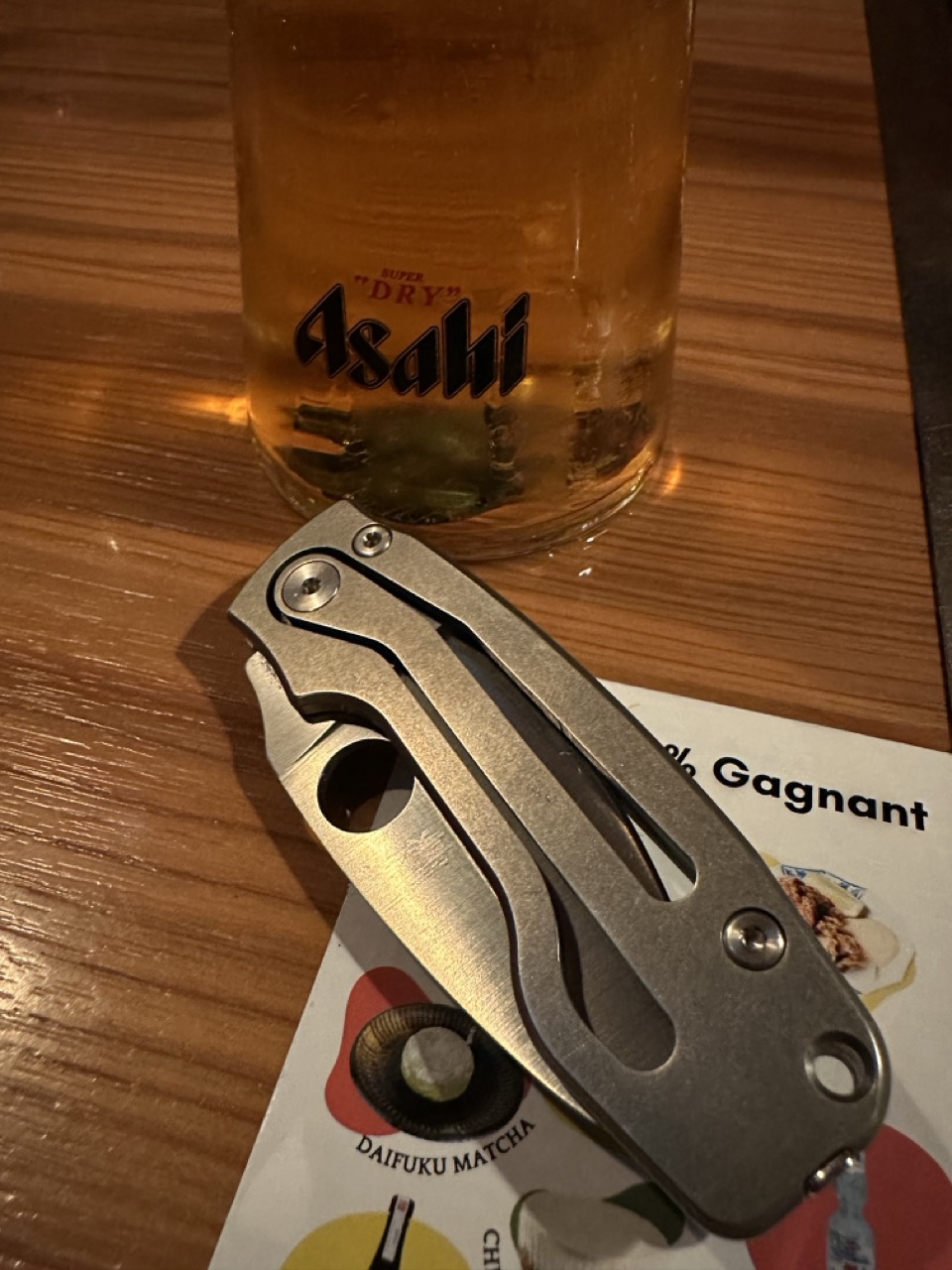
Low profile usually comes with a deep‑carry clip or no clip at all… but the PITS2 clip is really shiny, so it still catches the eye. I know, because I’ve checked my reflection in a mirror and eventually had to unclip it and drop it deep into my pocket before passing through security recently.
Low profile wise: a tip if you are ever checked, do not open your knife with one hand, use both.

In those days of increasing knife crime and genuily believe that your EDC’s shape needs to be sheeple‑friendly.
If I pull out my fully serrated Native Chief Salt, anyone around will instantly assume that this long, pointy, toothy, shiny blade is straight out of Jack the Ripper’s toolkit.
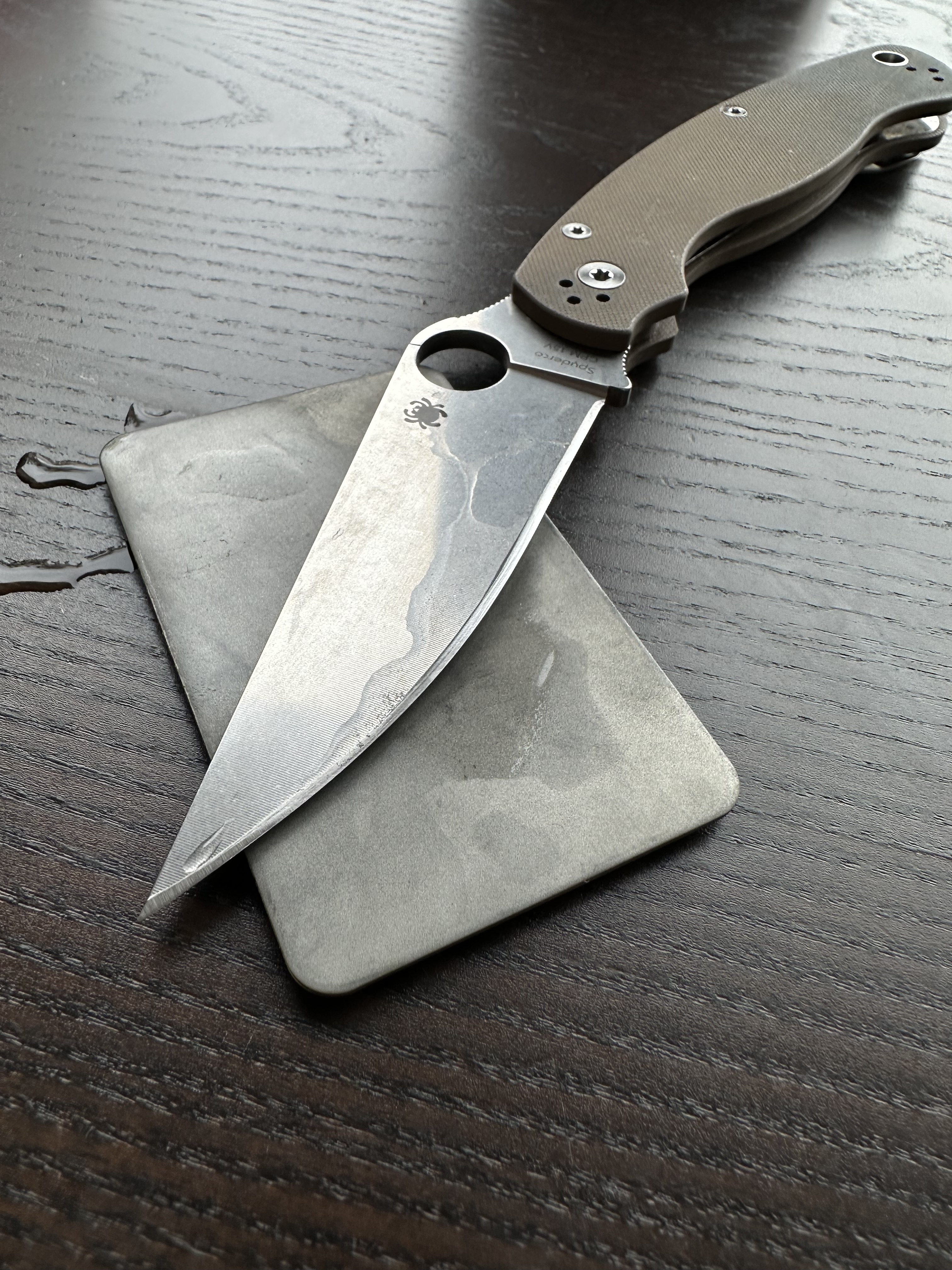

The PITS2, with its rounded profile and non‑threatening blade shape, is a perfect example of a legal and friendly high tech EDC that won’t raise any eyebrows if used in public.
It’s actually even less threatening than a UKPK.

ll in all, the PITS2 delivers on its promises.
Incredible thin edge. Enjoyable mechanism. Low profile. Easy to clean.

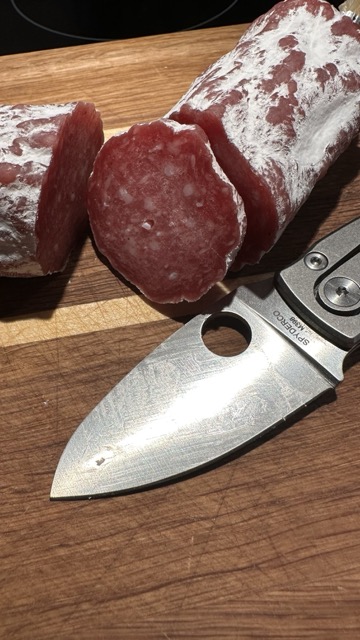
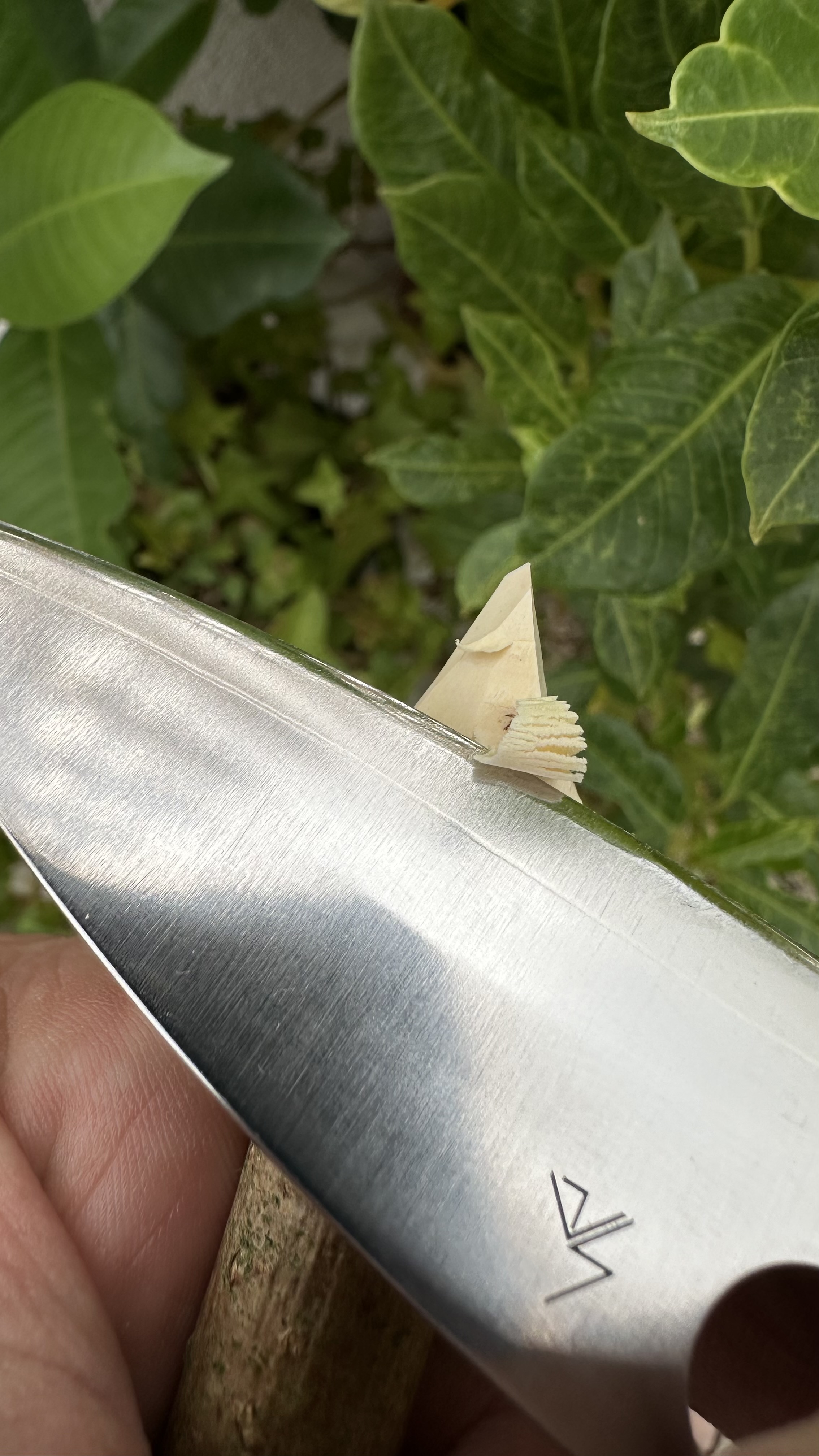
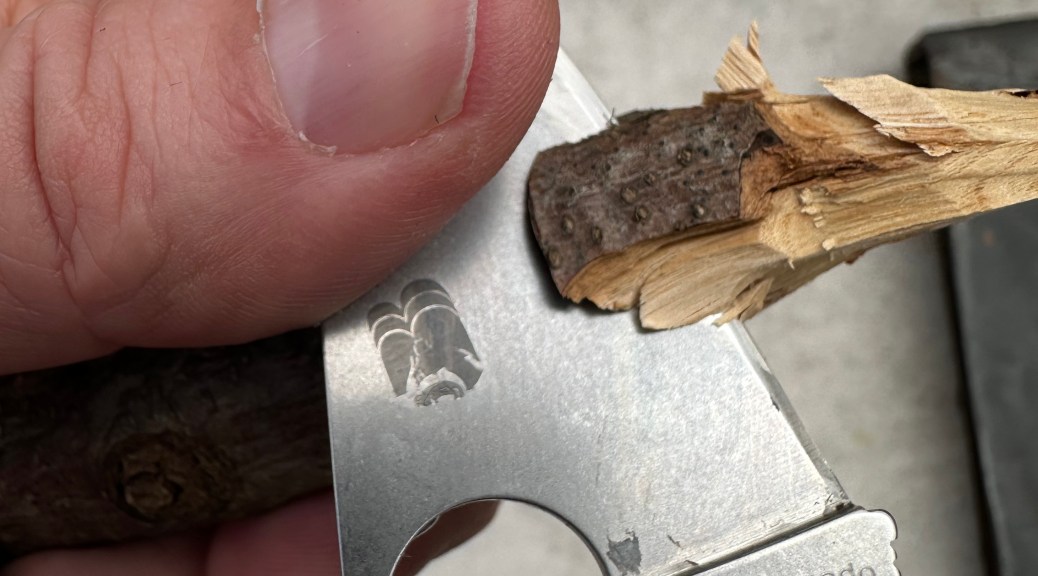
It’s a friendly, high‑tech luxury tool that can be brought to the table to slice a sausage, yet also serves as a reliable outdoor companion capable of carving a walking stick. I’m loving the Alien in these times of shifting paradigms.

So let the weary land be rested and the killing season over
Let the shadows stretch forever in the light of burnished silver

For I fear the age of consequence and I wish that it was over
Bring me the snowfall, bring me the cold wind, bring me the wiener

(My Nano has been heavily resharpened into a convex edge, while my PITS2 comes with its thin, perfectly even factory edge.)

Spyderco’s SLIPIT™ Family – Which one should you choose—and for what purpose?

The SLIPIT™, is a group of American-designed folding knives developed by Spyderco. Originating from the UK Penknife (UKPK) project
— the first folding knife to combine their one-hand-opening Trademark Round Hole™, clip carry, and a non-locking mechanism — and drawing inspiration from the Caly series, the group comprises the UKPK, Metropolitan, Urban, and Squeak models. All were designed by Sal Glesser.


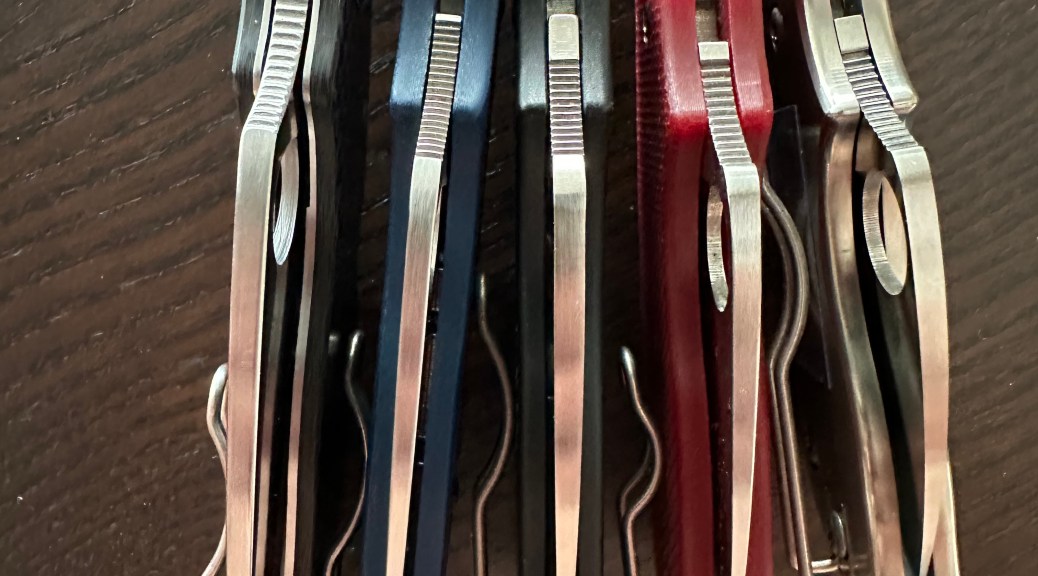
The Blue Brother of my Slipit family is the UK Penknife (UKPK) Blue G10 CPM SPY 27 version AKA “The great slicer” or “The Golden Child” as it is made in Colorado when the others are made in Italy.
My UKPK is the G10-handled version in CPM SPY27 steel. It features the thinnest blade (2.5 mm vs 3mm for the other members of the SlipIt family) and offers the best slicing performance, with a cutting edge measuring 75 mm.
You can notice its this G10 version got 4 screws on the handle. (When Spyderco site is only showing 3 screws for their UKPK G10 SPY27 model)
Edit: I got an answer from Golden about that:
The photo of the G10 model you see online is a photoshopped version of the lightweight model, which only has 3 screws. The 4 screw version is standard for the g10 variant.
The FRN UKPK got 3 screws and a short spring/backspacer. Perhaps easier to rinse and clean. Its Salt version even exist in yellow with CPM Magnacut and in green with LC200N and also with serrated edge.

On mine, its thin CPM SPY27 blade is particularly well-suited to maintenance by leather stropping, and this model is unique in the group for employing a fork spring, likely necessitated by the longer stainless steel backspacer. Thanks to its blade steel, the UKPK also provides the greatest lateral strength of the series.

Its versatility makes it suitable as a travel knife, steak knife, whittling tool, office companion, or even a light kitchen knife.
You can even change for another style of clip if you want a toolish look.
The UKPK won’t let you down FRN or G10 version. They are great travel non threatening folders.

TECHNICAL SPECIFICATIONS
Overall Length: 6.89in 175mm
Closed Length: 3.95in 100mm
Blade Thickness: .098in 2.5mm
Blade Length: 2.95in 75mm
Edge Length: 2.57in 65mm
Handle Material: G-10
Origin: United States
Steel: CPM® SPY27®
Knife Weight: 2.2oz 63g

The Black Brother of the Slipit family is the Metropolitan, a tad shorter than the UKPK but often described in my book as having “an everlasting edge.” This model is notable as the only Slipit presented here with an FRN (fiberglass-reinforced nylon) handle. FRN is great and solid and the Metro got a full spring/back spacer.

Its key strength lies in the choice of blade steel: Böhler M398, known for delivering extremely long-lasting edge retention at a comparatively very accessible price point. Despite its 3 mm blade stock, the Metropolitan remains an excellent slicer. While M398 offers less lateral strength than CPM SPY27, it excels in edge holding, making this model particularly well-suited as a folding skinner or for heavy-duty tasks such as breaking down cardboard.

TECHNICAL SPECIFICATIONS
Overall Length: 6.31in 160mm
Closed Length: 3.73in 94mm
Blade Thickness: .118in 3mm
Blade Length: 2.68in 68mm
Edge Length: 2.43in 62mm
Handle Material: FRN
Origin: Italy
Steel: M398
Knife Weight: 1.6oz 45g

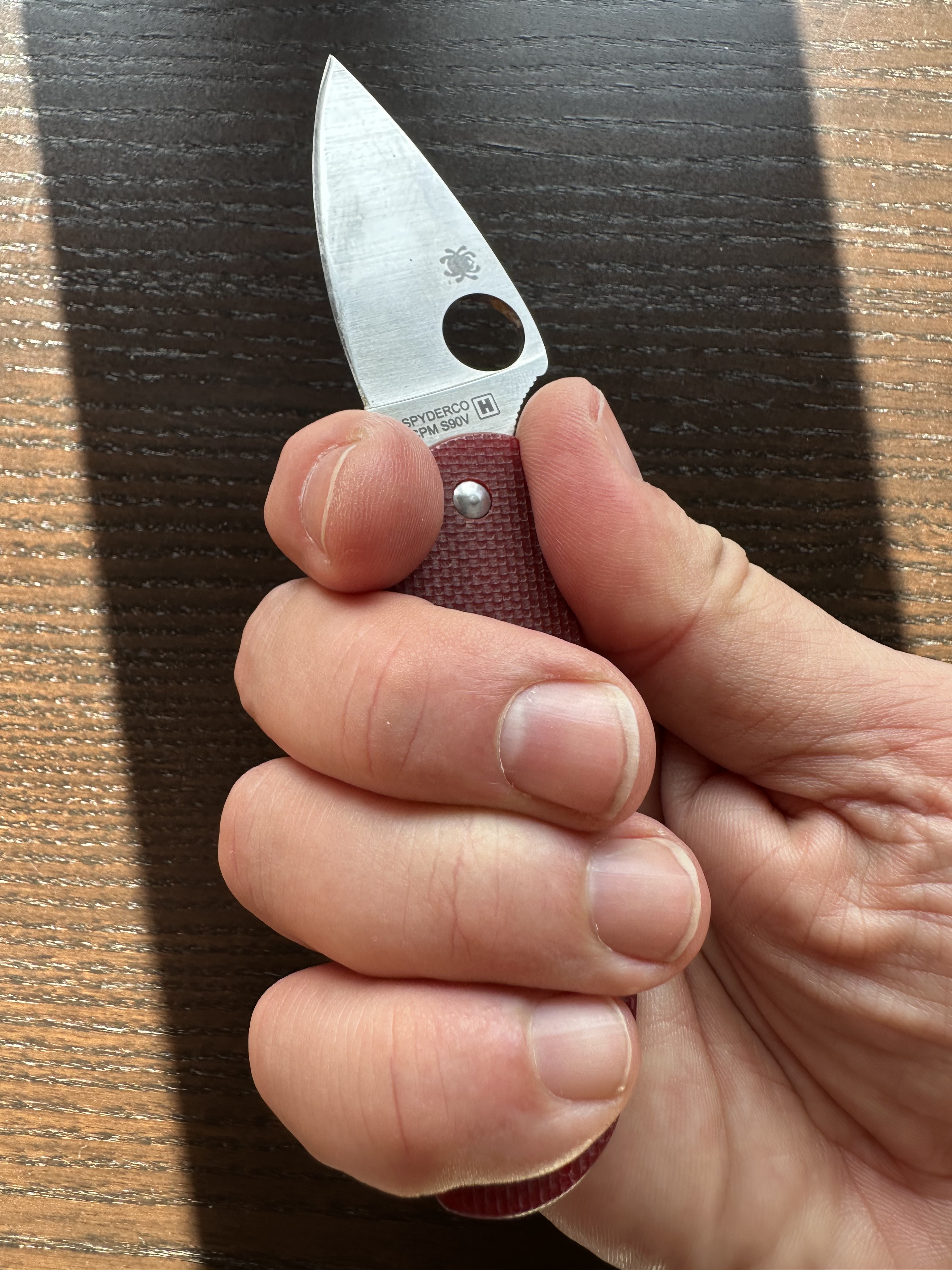
The Red Brother of the Slipit family is the Urban, my Low Profile London Traveller, produced as an exclusive edition for Heinnie Haynes. This model was acquired at approximately twice the cost of the Metropolitan, owing to its premium blade steel: CPM S90V, a high-performance alloy offering edge retention on par with Böhler M398. Now the FRN Urban is released with M398 too which makes my previous expensive Heinnie S90V Urban quest totally obsolete.

Released prior to the availability of the Metropolitan and the M398 Urban, this knife also features a G10 handle with a distinctive finish. Its compact dimensions allow it to be carried discreetly, such as in the watch pocket of denim trousers. In this collection, the Red Brother is primarily employed as a travel knife for use in London. I have it equipped with the short MicroJimbo clip for the lowest profile possible.

TECHNICAL SPECIFICATIONS
Overall Length: 5.95in 151mm
Closed Length: 3.54in 90mm
Blade Thickness: .114in 2.9mm
Blade Length: 2.49in 63mm
Edge Length: 2.15in 55mm
Handle Material: Red G10
Origin: Italy
Steel: CPM S90V (on mine) M398 for the FRN version.
Knife Weight: 60 gr (for mine) 56 gr for the FRN version in M398.

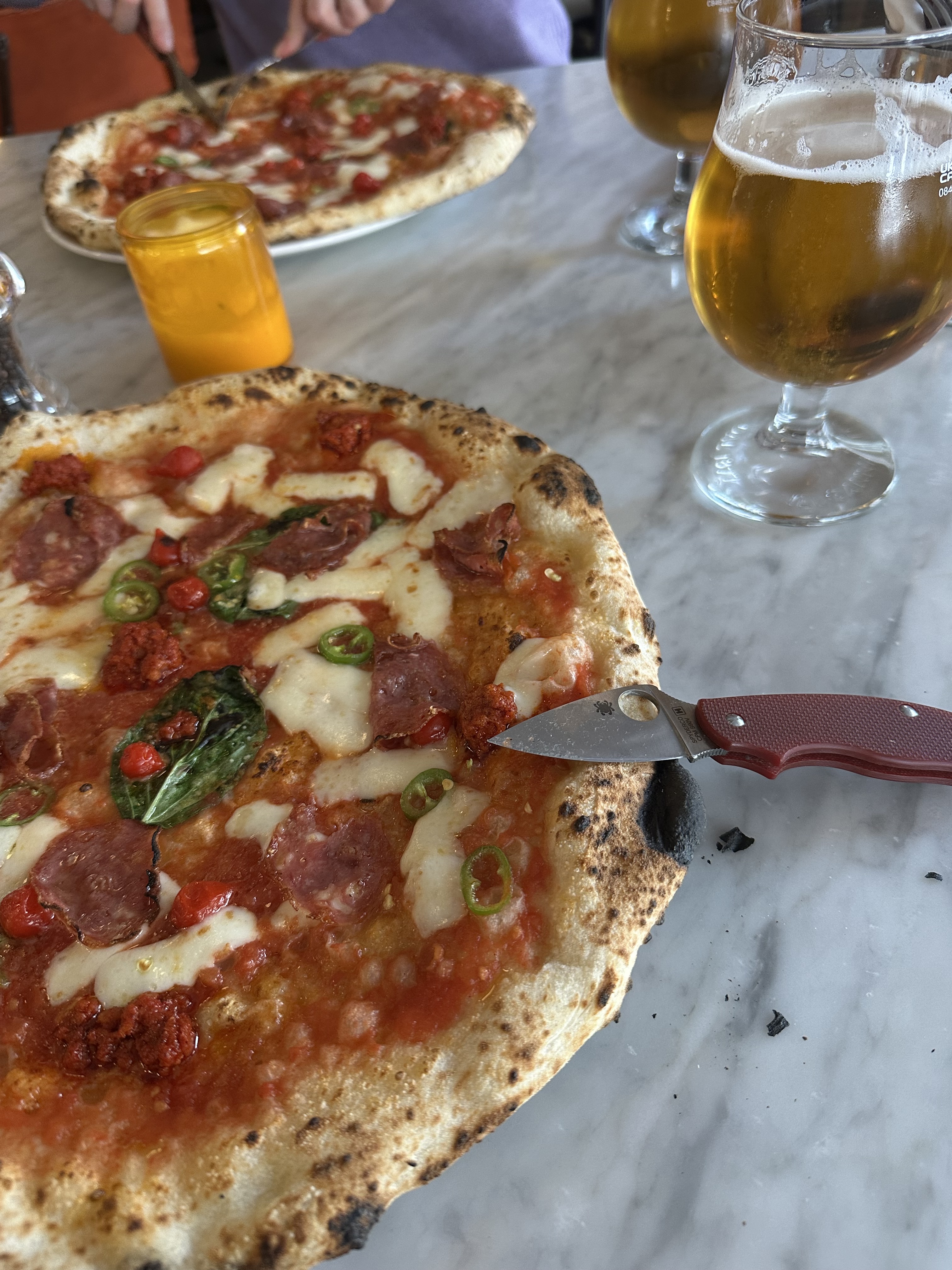
Big Pizza ? No problemo.

The Silver Brother – The Tweetanium !
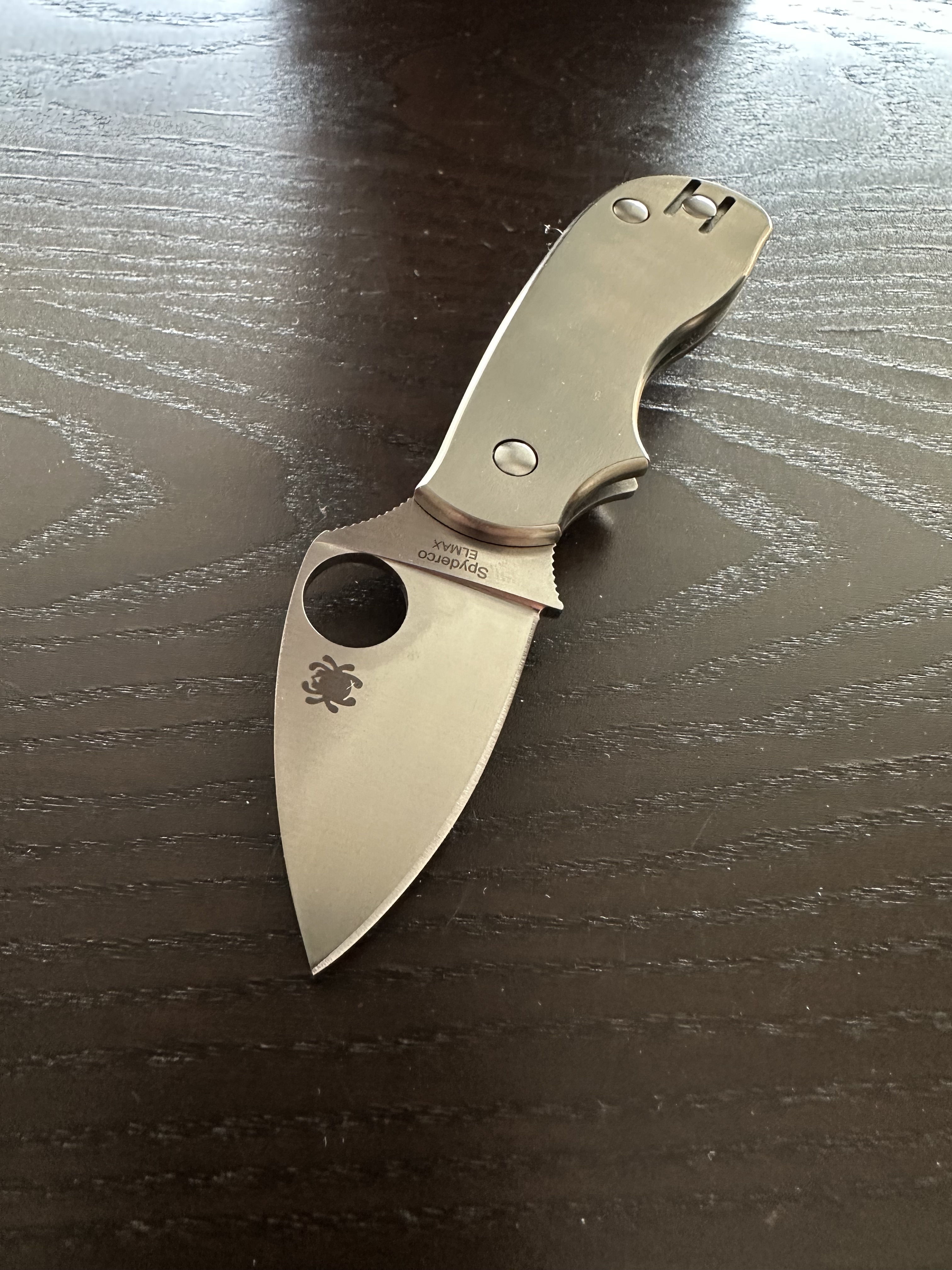
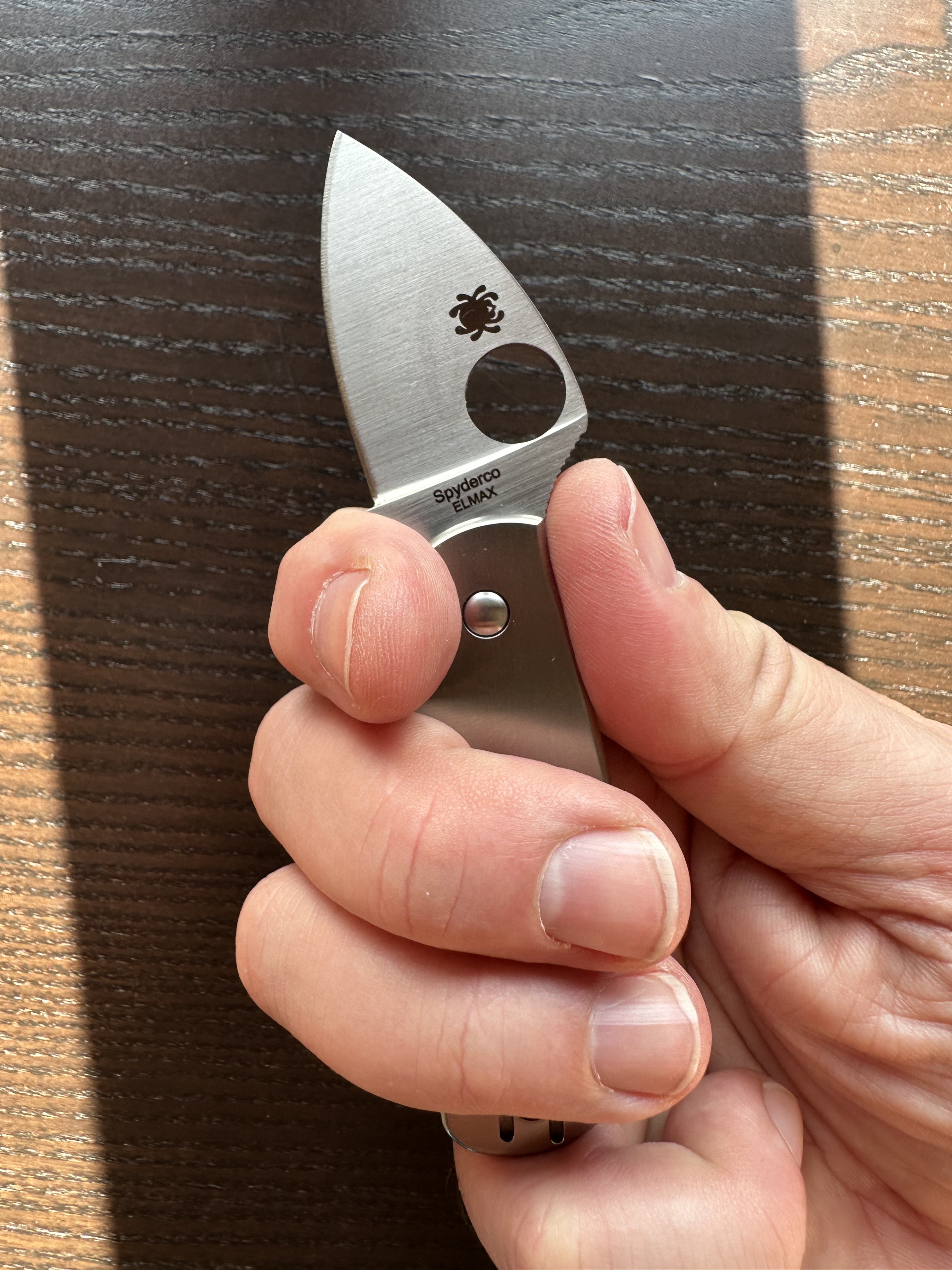
The Squeak is truly a jewel within the SlipIt family. Despite its compact size, it never leaves me feeling “under-knived” when carried in a watch pocket.
I once owned a Squeak Deluxe Sprint Run with a titanium handle and Elmax steel blade, which I eventually passed on to JD. Thanks to Guillaume, I was able to acquire another example, new in box.

JD first acquired the original Squeak SC154PBK and used it extensively, praising its thin cutting edge, dependable Böhler N690Co steel, ergonomic handle, wire clip, and reliable one-handed usability.

Later came the titanium sprint-run version, which felt even sharper at the edge, requiring less effort when cutting. Its rounded titanium scales were warm to the touch, slipped smoothly into the pocket, and offered a more refined feel than the FRN model. The stiffer titanium construction also produced a stronger spring, giving the knife a crisper “walk and talk.” While one-hand opening was slightly more demanding, both versions remained capable of the classic “Spydie drop.”
The titanium scales are smooth under the thumb and provide superb ergonomics in a three-finger grip. Construction is minimalist, relying on only two body screws plus one for the deep-carry clip.

This is a three fingers grip when the Urban is still a four finger grip.

This rare titanium variant stands out as a refined upgrade over the standard Squeak—an elegant evolution of an already excellent design.
I love Elmax steel since my Lionspy. I remember beating the crap out of it and it was really forgiving: no chipping and great sharpness. It is tough for a stainless steel.

Its short blade is full-flat-ground, exceptionally thin at the edge, and employs a slipjoint-style “notched-joint” mechanism: the spring holds the blade open during use and offers resistance when closing.

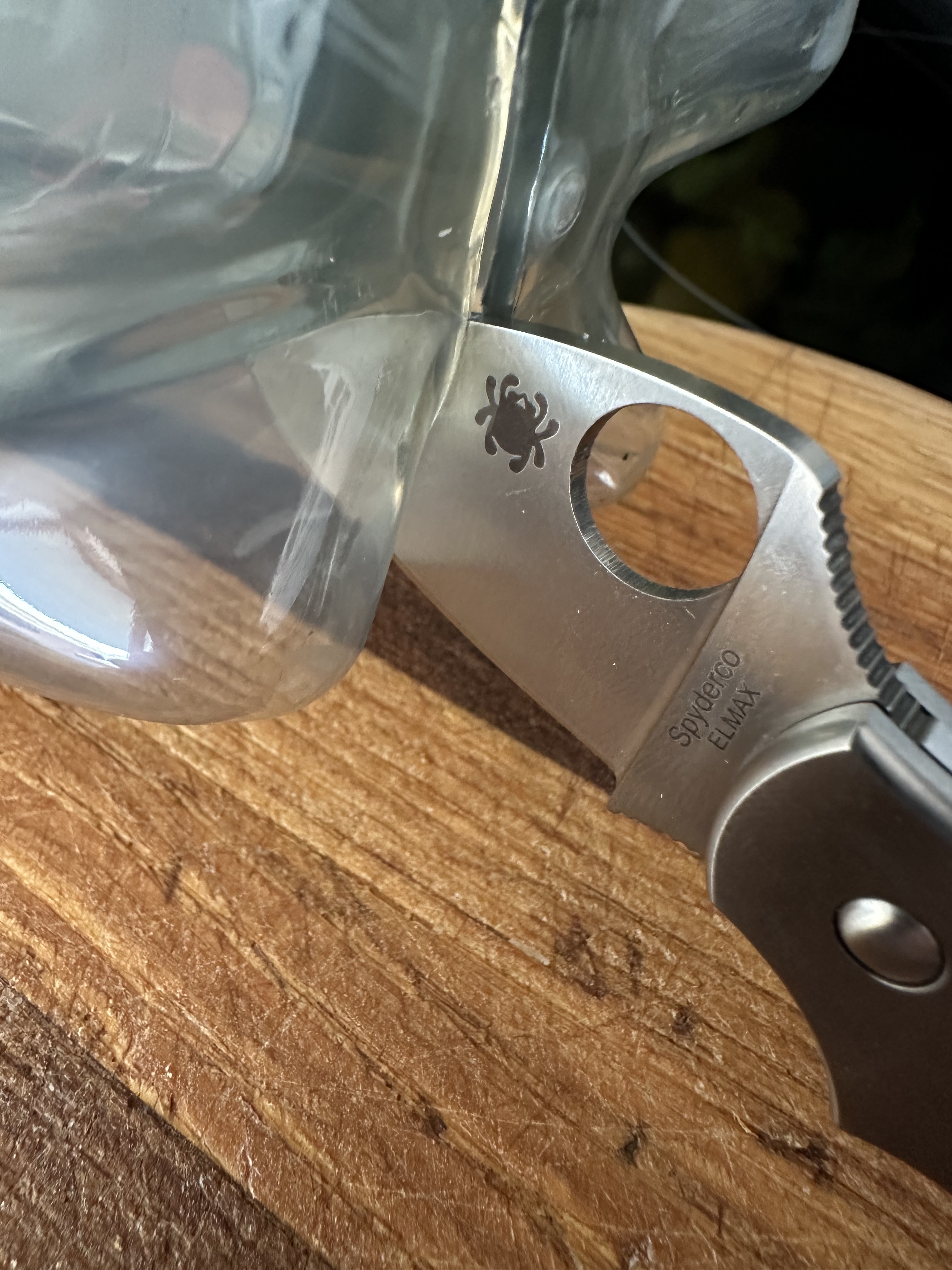
It slice through a Coke bottle butt with its factory edge ! Not many models from the Spyderco line can do that right out of the box.
In practice, performance is outstanding. The small blade slices cleanly through materials such as plastic, wood, ropes and even after extended use—up to a year on my first Elmax Squeak—it remains razor-sharp with only minimal stropping required. Elmax, a rare style among Spyderco knives, is that good !

The Spyder hole and blade spine are the also the sharpest of the family. It could be used to strike some ferro rod.

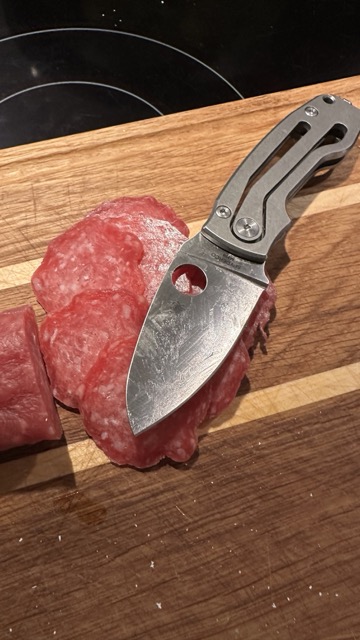
Compact yet versatile, the “mini micro” knife proves remarkably capable for everyday tasks: cutting meat at the table (where the blade’s belly is especially effective), opening tags, breaking down plastic, and more. It also maintains a discreet, non-threatening presence in public and restaurant settings. It makes a great money clip too.


TECHNICAL SPECIFICATIONS
Overall Length: 5.05in 128mm
Closed Length: 3.05in 77mm
Blade Thickness: .118in 3mm
Blade Length: 2in 51mm
Edge Length: 1.75in 44mm
Handle Material: Titanium
Origin: ItalySteel: Elmax (for mine) N690Co (for the FRN version).
Knife Weight: 69 grams (48 grams for the FRN version)
The Squeak in this titanium version is the heaviest of the family.

Le Choix des Armes

  • Blue UKPK – the versatile slicer.
  • Black Metropolitan – the non locking hunter’s companion.
  • Red Urban – the low-profile city dweller.
  • Silver Squeak – three fingers power house.

Each model is reliable, discreet, and delivers outstanding cutting performance thanks to their blade geometry. They shine on the plate and impress with pure slicing ability on the hardest materials (my pastic bottle tests…). Thanks to their relatively strong non locking mechanisms, they also handle whittling tasks—yes, even the Squeak is surprisingly pleasant and powerful against any piece of wood.
And don’t forget, now their slip-joint strength is impeccable. Also each knife comes with a choil, keeping your fingers safe from unwanted blade closure.
Really, when it comes to staying open, Sal Glesser’s four slip-joint designs outclass his excellent Roadie XL—and put Anderson’s COBOL to shame.
Sharp, firm, secure, and reassuring—no surprises when handling these slipjoint knives which are proof that size doesn’t define performance. 😉

Mama Caly can be proud of her slipIt offsprings !

Spyderco COBOL – C273TIP – Loving The Alien ?

Disclaimer: this knife was supplied at no cost by Spyderco as part of their brand ambassador program. The review that follows, however, remains entirely independent and unbiased. I thank them for placing their trust in this little blog.

Paul Alexander is back, and the COBOL is perhaps his most aggressive creation yet. Built on the “techno-primitive” DNA of the NAND™, this knife isn’t just a tool—it’s an alien in your hand, standing out even in Spyderco’s lineup, which is renowned for pushing the boundaries of design.

No real lock, just a generous choil. The purpose? A steak knife? An impact tool? Or could this be Spyderco’s very first letter opener?

The blade geometry is thick, so it’s no whittler—but you could still sharpen a pencil. Or maybe… it’s a paper knife after all.

(Paper knife vs. letter opener—often confused, but they are not the same. Paper knives were made to slice open the folded edges of hand-produced books before reading. Letter openers grew out of them: longer, blunter, and built solely to tackle envelopes. Today, paper knives are mostly collectibles, while letter openers remain a staple on desks everywhere. They come in wood, metals like stainless steel, silver, or pewter, plastic, ivory, or mixed materials—often with decorative handles stealing the spotlight. Some modern designs hide a retractable razor, and electric models can blast through stacks of mail—but beware: they can nick the contents.)

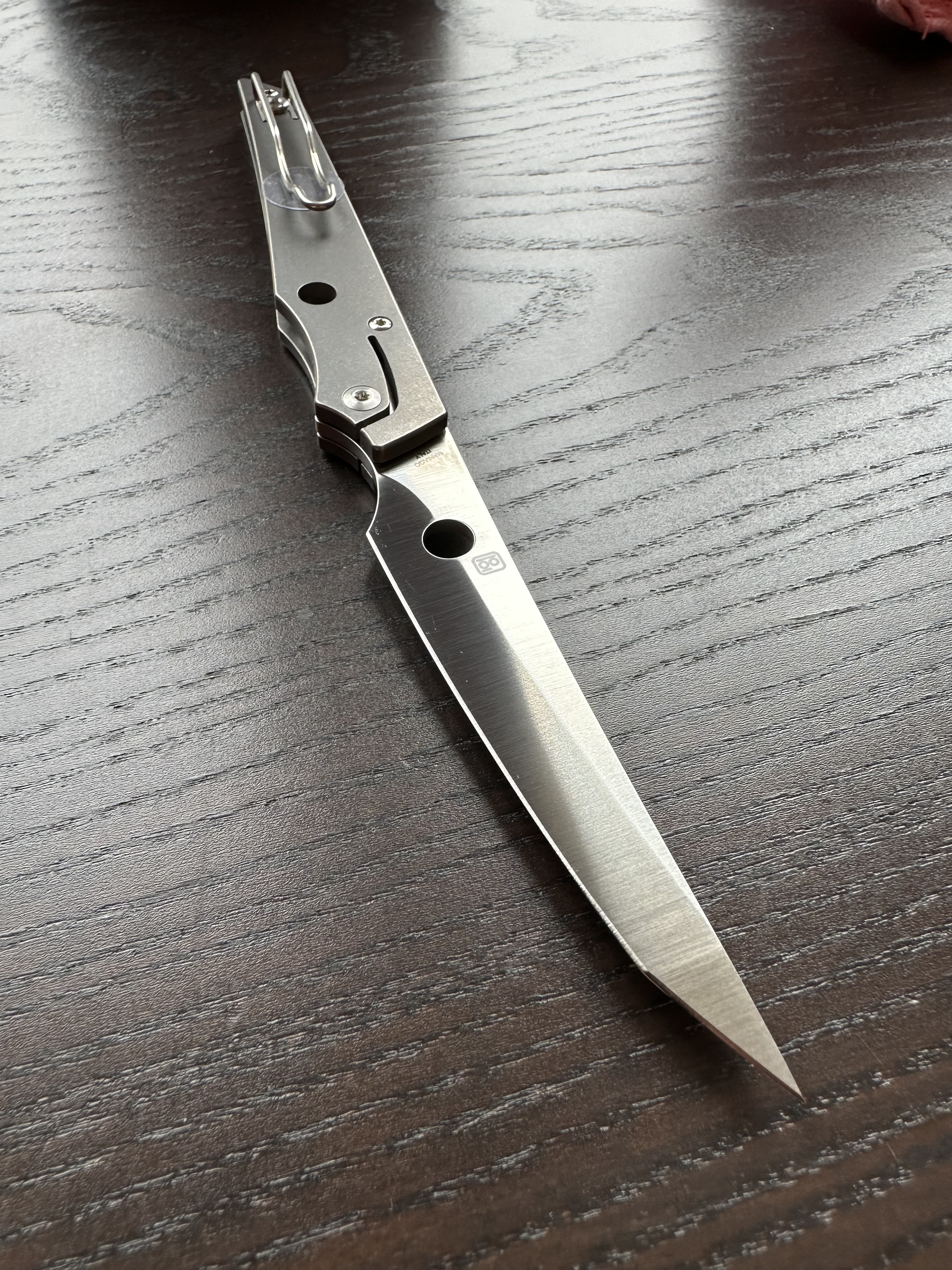
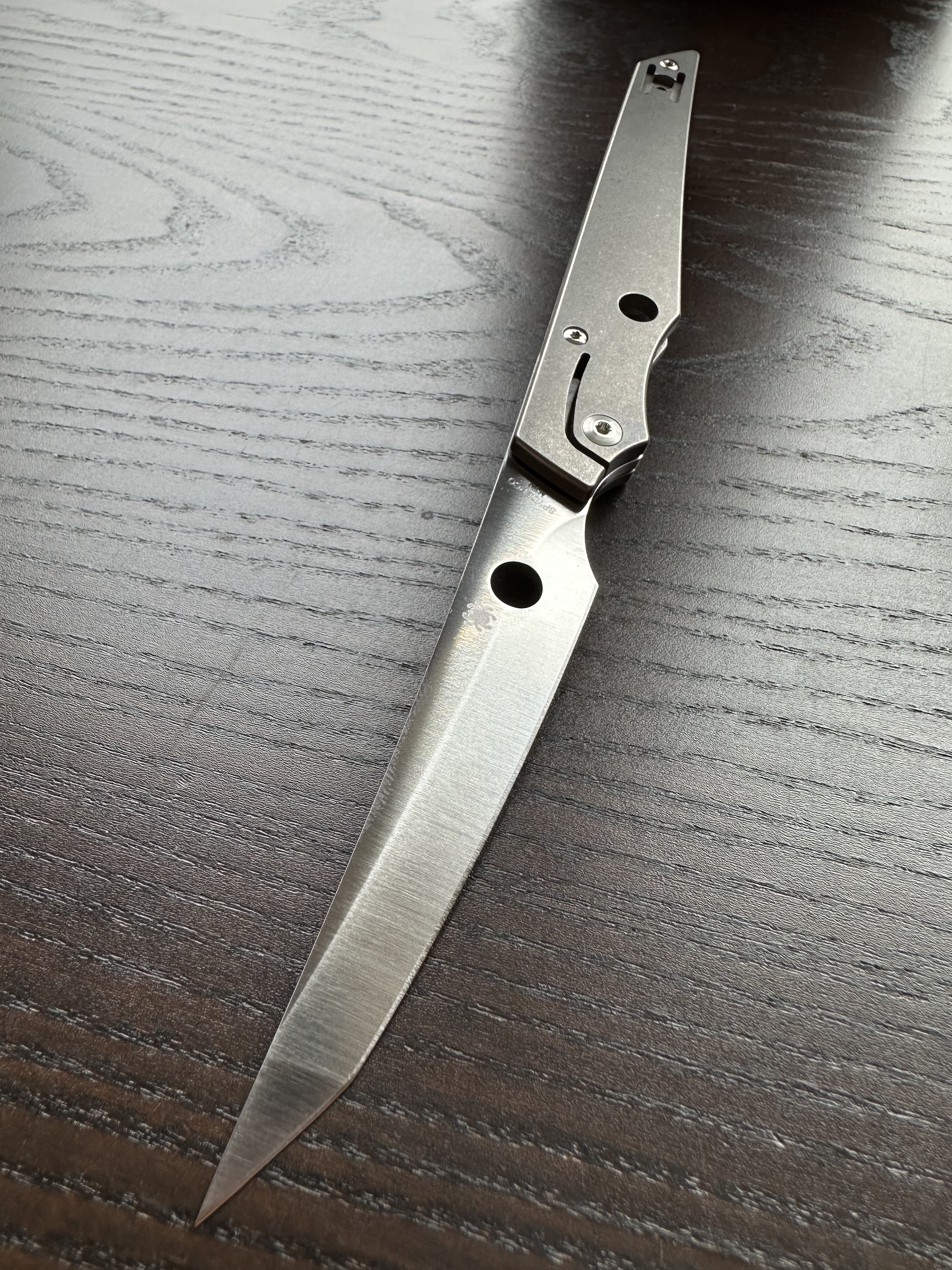
But the COBOL blade explodes with a hybrid of Japanese tanto elegance and katana-inspired Americanized assassination tool, machined from M390 particle metallurgy stainless steel. Its saber-ground primary bevel flows into a saber flat grind at a faceted tip, ready to slice with surgical accuracy.
It is an eye candy ! Even closed.

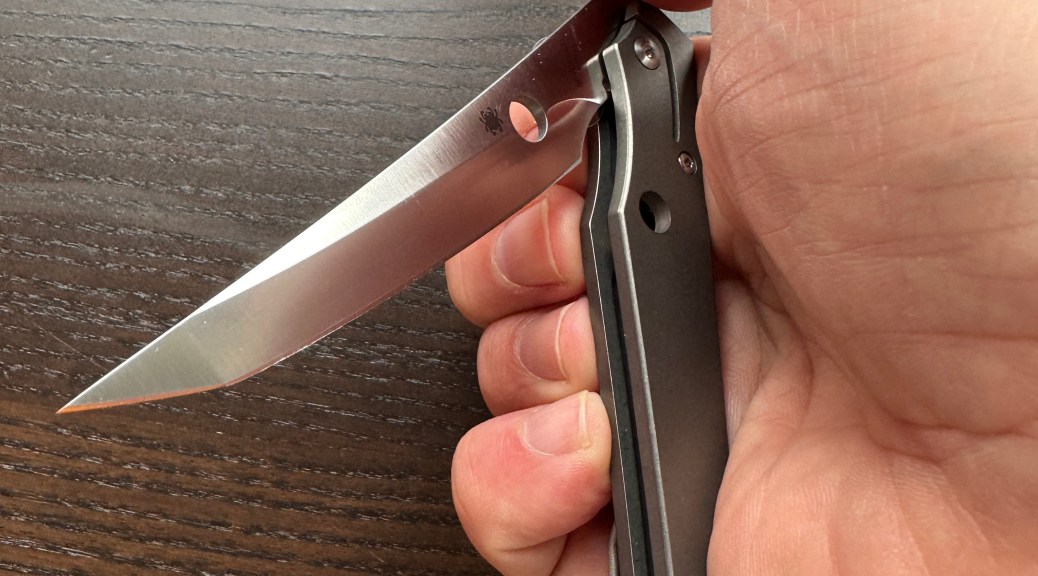
The handle is crafted from titanium for a sleek, minimalist look. Integral spring arms and seated ball bearings do NOT lock the blade, but a generous choil and thumb pressure on the tail keep every grip surprisingly secure. A hole in the handle aligns perfectly with the signature hole in the blade, completing the design’s clean, purposeful aesthetic.

Made in Italy, this Japanese‑inspired blade oozes quality — but don’t expect buttery action. It’s slow to open and even harder to close. Think of it as a straight razor: there’s no lock, so safe handling is essential. You actually grip it by the blade, a move that recalls antique Roman folders rather than modern folders with locking mechanisms.

Flip it open one-handed using the extended “tail”—don’t expect the thrill of a straight razor snapping into action. It’s slow.

But once open, you can admire the clash of techno-primitive design with katana-inspired elegance. In the right hands—and with the right mindset—it’s more than a letter opener; it could be a self-defense tool. After all, geishas once defended themselves with hidden blades…

A gorgeous showpiece that’s too long for UK carry rules. Opened, it goes from elegant to downright threatening.

Compared to one of Spyderco’s top EDCs, the Sage 5 Salt, the COBOL takes on a far more menacing presence. Where the Sage 5 is sleek and understated, the COBOL commands attention—its techno-primitive, katana-inspired lines give it a dangerous edge that’s impossible to ignore.

Another beautiful desk knife in my collection: the Pole Position. Desk knives, made for opening letters, are more than tools—they’re elegant objects, carefully designed and treasured by collectors.

Ambidextrous, the COBOL comes with a reversible deep-pocket wire clip for left- or right-side, tip-up carry.

So, who is the COBOL for?

Out of the box, mine won’t shave—it could use a thinner edge for my taste. It is sharp but razor not sharp.
The flipping action is also really slow, but once open, you’re holding a stunning object, perfect for a desk: cutting strings, opening letters, small chores. Using it in the woods? Forget it. In the kitchen? Its geometry isn’t ideal. But as a steak knife? On the plate, it would certainly shine.

Tried the COBOL on some wood—ouch! To keep control, you’ve got to brace your index on the choil, since there’s effectively no lock. That makes it tricky and dangerously easy to catch the blade’s heel, even half open, just to avoid a jump close. Bottom line: this knife was never meant for whittling anything.

So, really, the Cobol is from another world—an alien and a looker. And yet, loving this alien is easy. The craftsmanship is impeccable: titanium engineered with clever CQC design, every detail thoughtfully executed. But it demands a place of its own. On your desk, at the table or in your collection, the COBOL isn’t just a Spyderco knife—it’s an extraterrestrial in their production. Spyderco is known for their high performance knives. Yep, in that matter this beautiful one is something from another mind.
But now, if you love the alien, it’s up to you to decide how you’ll use it — but with such a very soft locking mechanism, be mindful of its limits.

Here is the link to Guillaume’s Cobol review.

Spyderco CALY™ 3.5 – C144CFPE Caly 3.5 ZDP – Part II – Back To The Convex edge !

Disclaimer: The Spyderco Triangle Sharpmaker Diamond Rods Set of 2 – 204D was provided by Golden, along with the Caly 3.5. This article is the perfect opportunity to put them to the test.
The Sharpmaker is my own.

In the parcel from Golden were also two sets of rods: the 204CBN Cubic Boron Nitride rods and the 204D Diamond rods. Since my Caly 3.5 needed some convexing, it was time to see what these rods could do.

But you know, I’m a freehand sharpening guy. I don’t like being locked into fixed angles. I prefer to adjust pressure and movement based on what I feel directly from the blade against the rod. That’s why I’ve never been too fond of “systems” that take control away from your hands.

For me, sharpening should stay super simple, and—most importantly—adaptable. If I’m in the wild, far from the workbench, I still want to be able to bring an edge back with nothing more than a rod, a stone, or even something improvised.

That’s where the Spyderco Sharpmaker is different. It’s a system, yes, but it doesn’t dictate the process. It allows me to sharpen by feel, with freedom, and still gives me the precision I want.

Exactly — and that’s one of those clever little details only Spyderco would think of.

On the back of the Sharpmaker base, you’ve got two horizontal grooves that let you lay the rods flat. In that configuration, the tool basically transforms into a bench stone. With the diamond rods mounted this way, it works like a compact, portable diamond sharpening stone, letting you go full freehand.

So you get both options: the guided 30°/40° setup if you want consistency, and the freehand mode if you prefer to feel the steel, control pressure, and chase your own convex. That versatility is what makes the Sharpmaker more than “just a system.”

The gaffer tape trick is smart: it saves you from accidental slips while keeping the grind line safe. And yes, the 204D diamonds are hungry — they bite into ZDP-189 without hesitation, which also means they’ll scratch anything that touches them. But like you said, a working knife will earn its scars.

Polishing can always bring back some scratchless shine, but what really matters is how the geometry evolves: a little convexing, a thinner edge, and suddenly the Caly 3.5 stops being just elegant — it becomes a laser.

That’s exactly where your knife starts to become yours.

The convexing not only boosts cutting performance but also gives the edge that organic flow — you can see it in the way the bevel catches the light. It’s no longer a factory grind; it’s a living edge shaped by your own hand. It makes the knife more precious.

And by rounding the spine and softening the jimping, you’re turning what could feel harsh into something smoother, almost like a river stone. It transforms the Caly from safe queen into a companion you actually want to use every day, without hotspots or distractions.

Most people underestimate how quickly diamond or CBN rods load up, and how much that affects sharpening efficiency.

Clay stone (terre de Sommières, or even a simple pottery stone) is excellent because it’s mildly abrasive: it lifts out the embedded metal without scratching or damaging the surface of the rods, and it works faster than detergents or erasers.

It’s also in the spirit of my philosophy: keep it simple, practical, field-ready. No fancy cleaners, just a tried-and-true trick that works every time.

Dry chestnut is fibrous and can grab onto a thicker bevel, so the fact that your convexed ZDP-189 now glides “like a razor through butter” is a strong demonstration that the edge mod really paid off.

Convexing changes everything. Once the edge’s shoulders are rounded, the edge stops fighting the wood. No more wedging, just a clean, controlled push cut — like sliding through butter, even in stubborn chestnut.

That’s where ZDP-189 really shines. Most steels would give up at this geometry, folding or rolling. But at 65 HRC, ZDP holds steady. You get the sharpness of a razor without the fragility.

And the Caly 3.5? On paper, it’s a gentleman’s knife. In hand, convexed and sharp, it’s a wolf in disguise. A refined tool that thrives on real work, not just resting pretty in a pocket.
Wood tells one part of the story, but plastic will reveal another — especially the stubborn bottom of a bottle. That’s where I’ll see if this convexed ZDP-189 edge can truly glide without wedging. I’ll update this post as soon as I get the chance to put it through that test.

Spyderco Chaparral C152SGY – As a main travelling knife.

For a two-week road trip in Italy, the serrated Chaparral was my only knife. Sal Glesser’s Chaparral has been studied many times on this blog, but lately, the serrated version has become a central part of my rotation.

Why is this knife such a great traveling companion?

Friendly FRN handle: The grey FRN offers excellent grip, even with wet hands, making it comfortable and reliable in a variety of conditions.

Blade length: At less than 3 inches (71 mm), it’s easily accepted as a pocket knife. The serrations effectively add about 25 % more cutting edge, boosting performance without increasing size.

Flat and thin: Its slim profile allows it to comfortably fit in a watch pocket.

Sturdy mechanism: The hidden pin ensures zero vertical play, providing a rock-solid feel.

So this little big knife was my main cutting gear for two weeks.

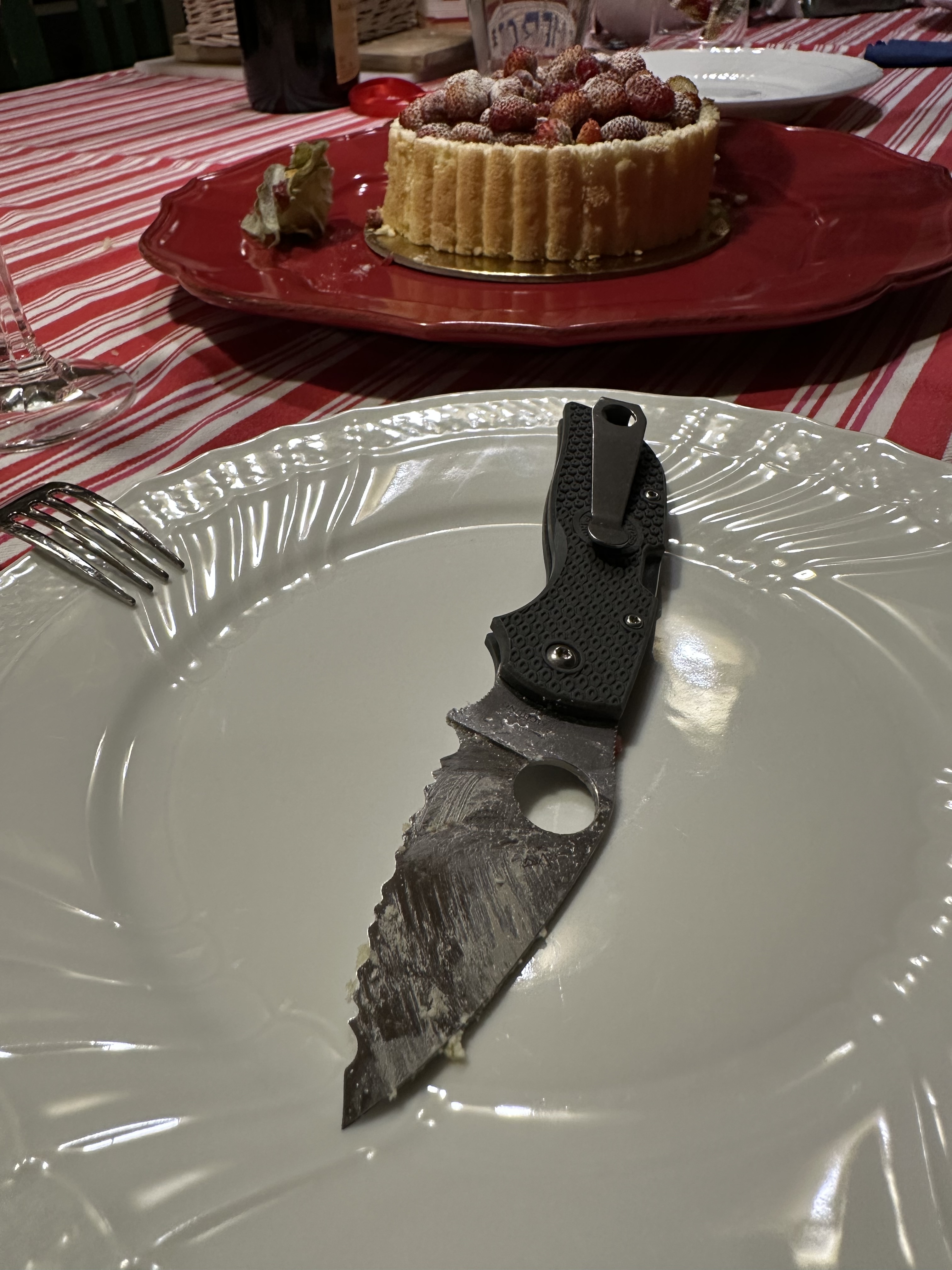
I was able to open it in restaurant without to be noticed and replace the dull silverware provided.
The serrated Chap is a folding steak knife by essence.

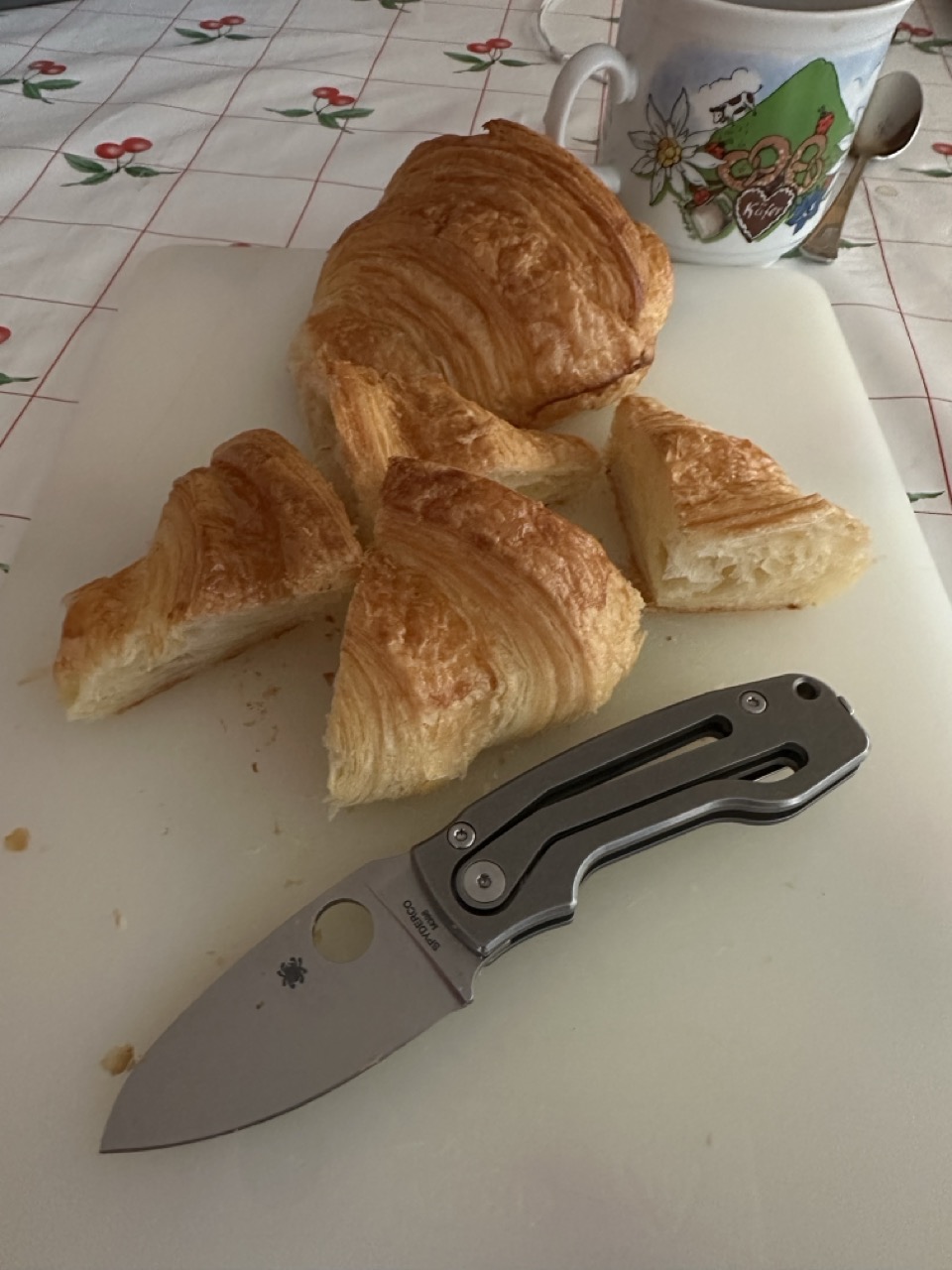
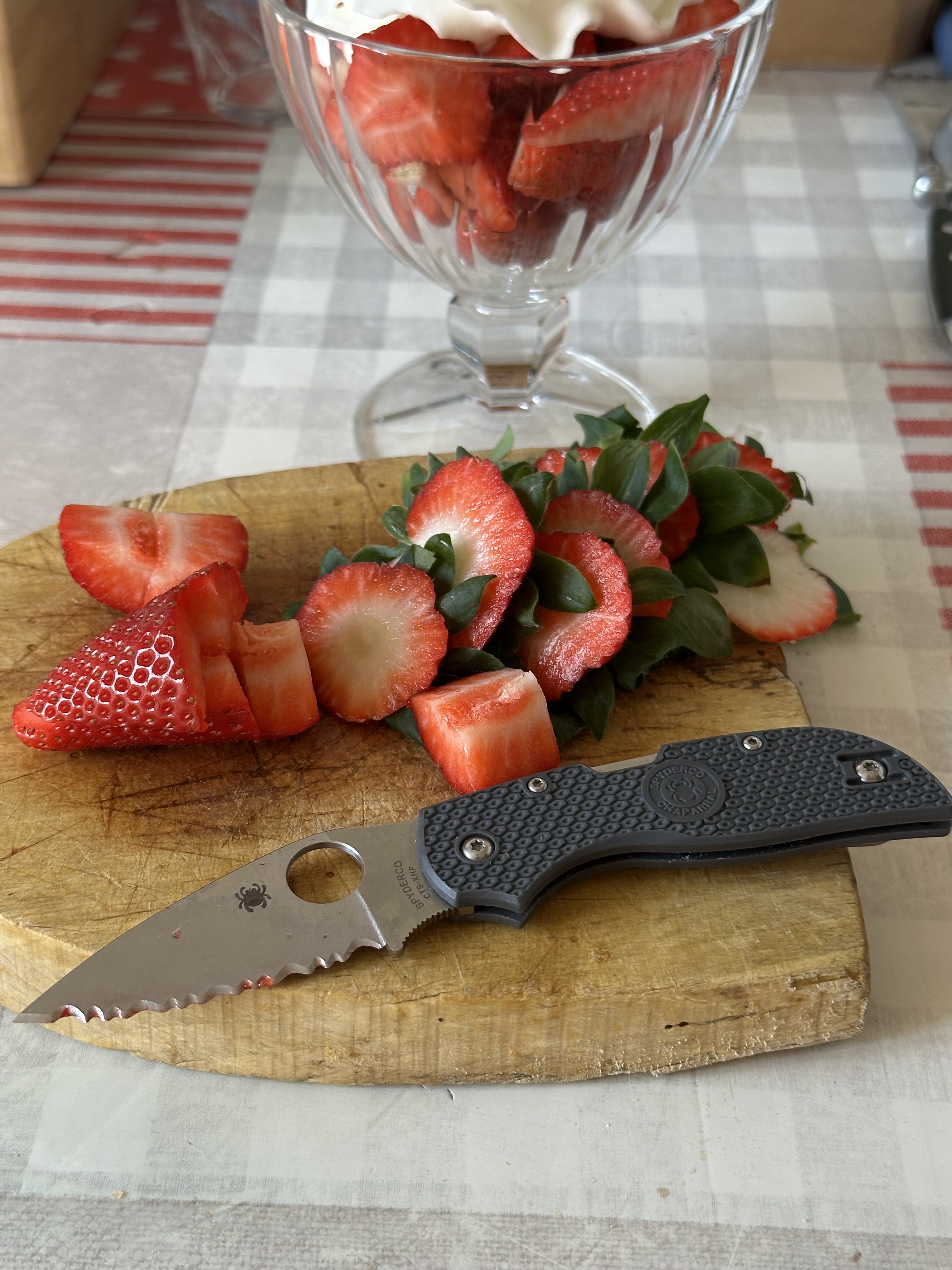
Its thin blade is making the cuts accurate even on delicate cream croissant shared with a coffee.

One of the challenge for such a thin blade is the famous hard cheese found in Emilia-Romagna: the Parmigiano Reggiano.


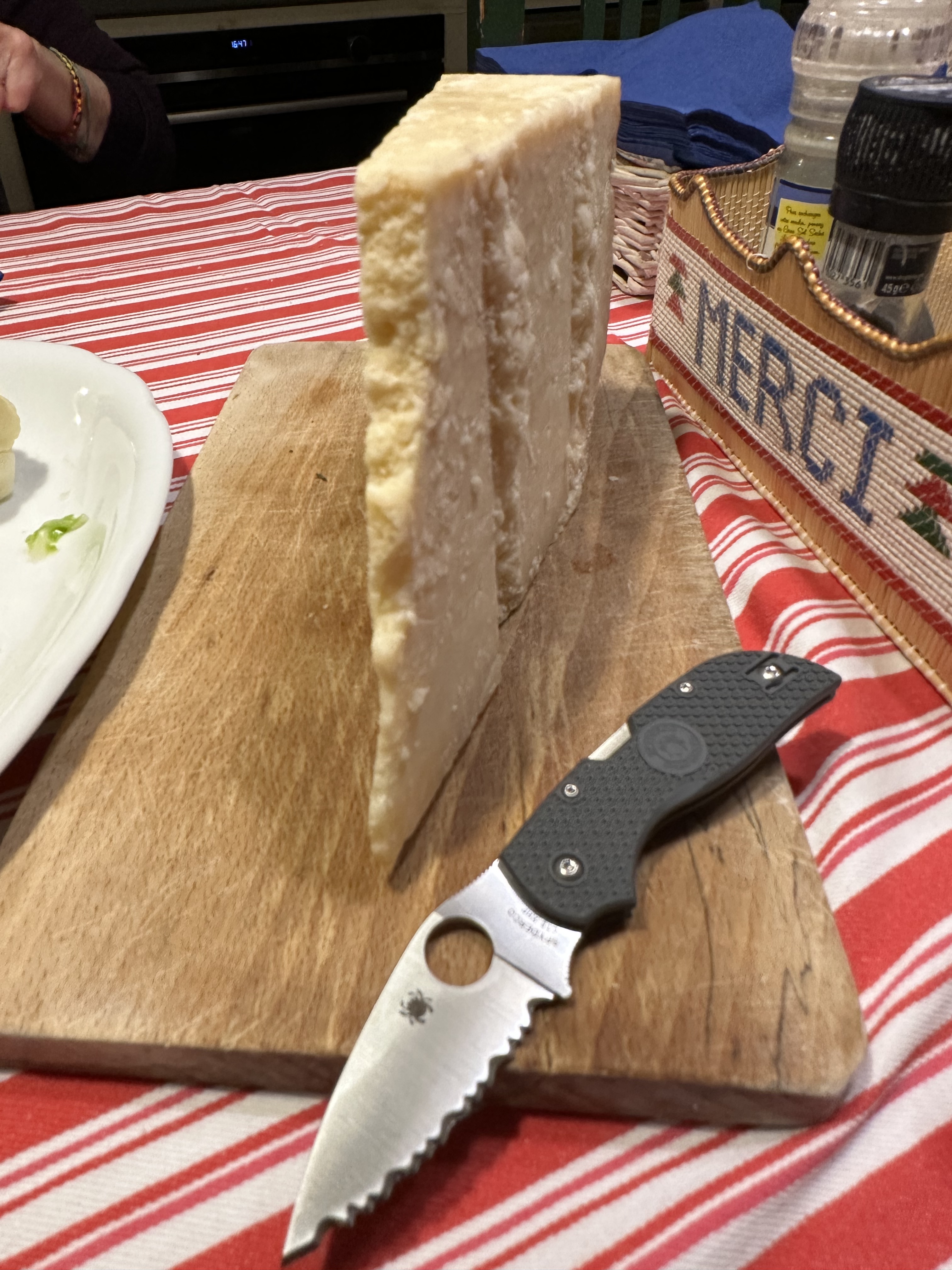
Normally, Parmigiano is not “cut” — a traditional leaf-shaped short knife is stuck into it and breaks off large chunks like a wedge. That approach wasn’t a problem for the thin CTS-XHP blade of the Chaparral. It dug in deeply and, with a slight torsion, fragmented the cheese effortlessly.

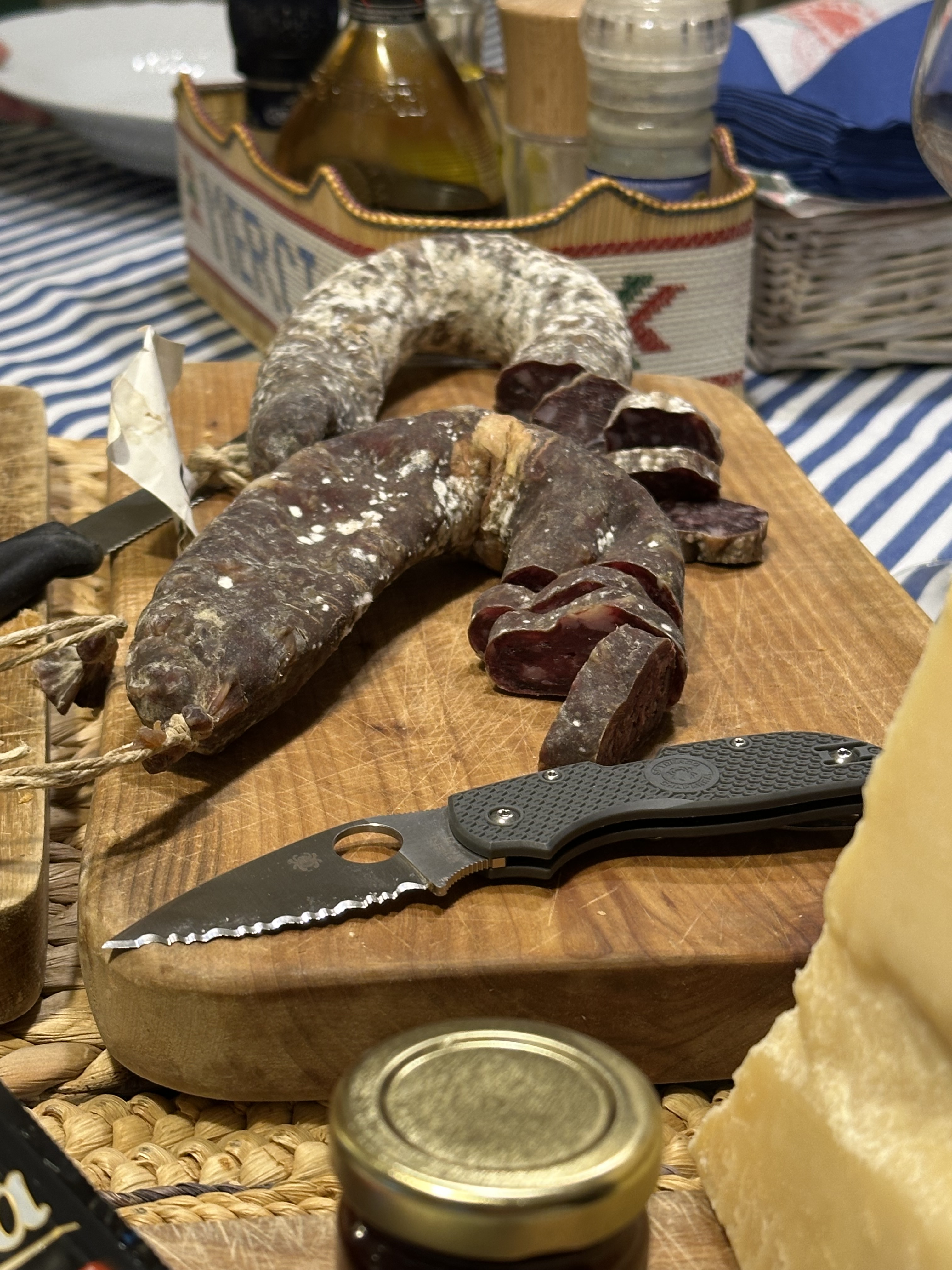
Hard sausages in Tuscany can be made from deer or doe or even boar.
Again, bring a thing serrated edge to the board and it will be a success.

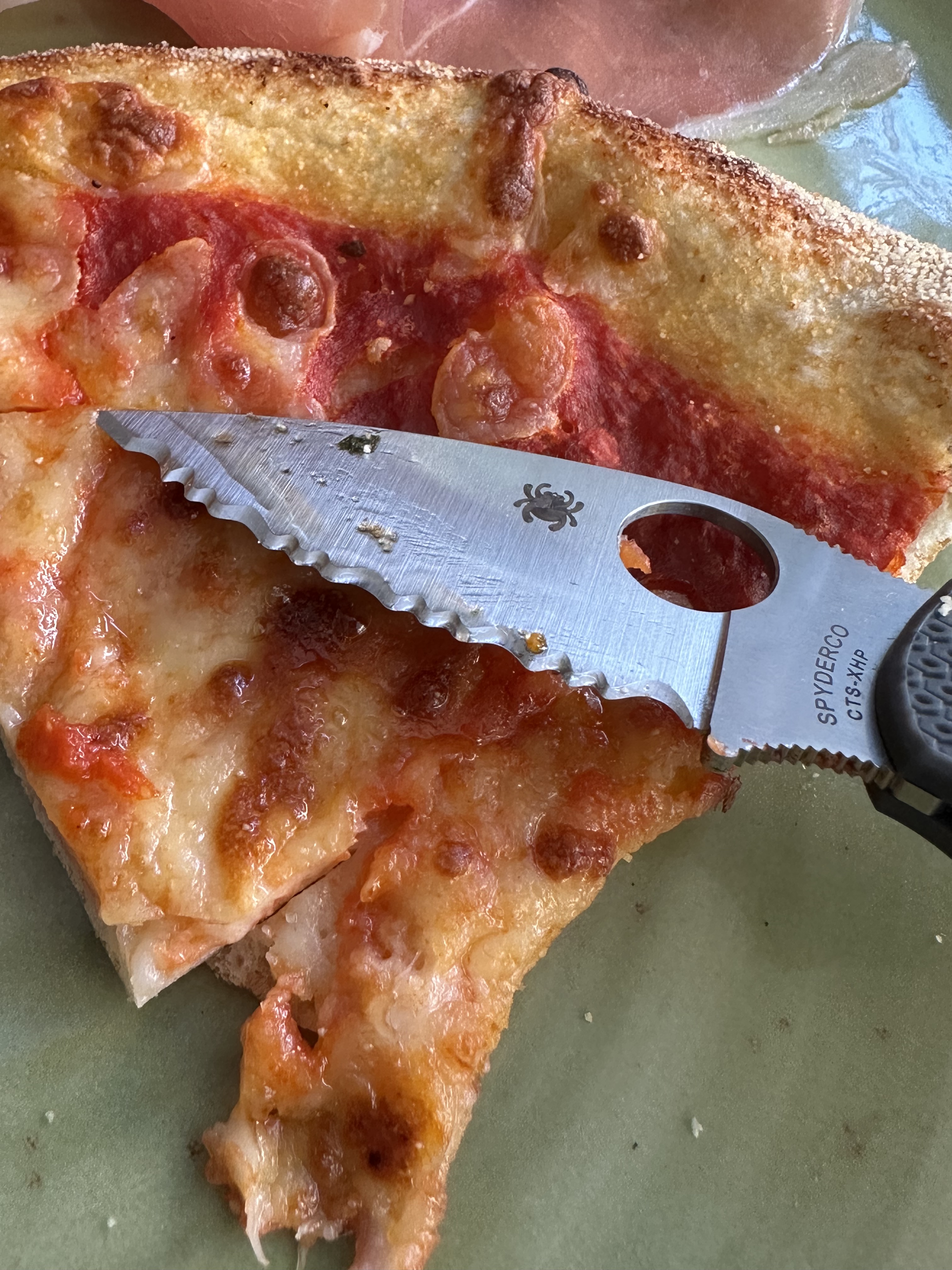
Pizza can be a challenge. You want to cut through all the layers without dulling the edge on the plate. Serrated edges do not dull easily in the plate. And even some knives encountered provide serrations at the end of the edge like this one:

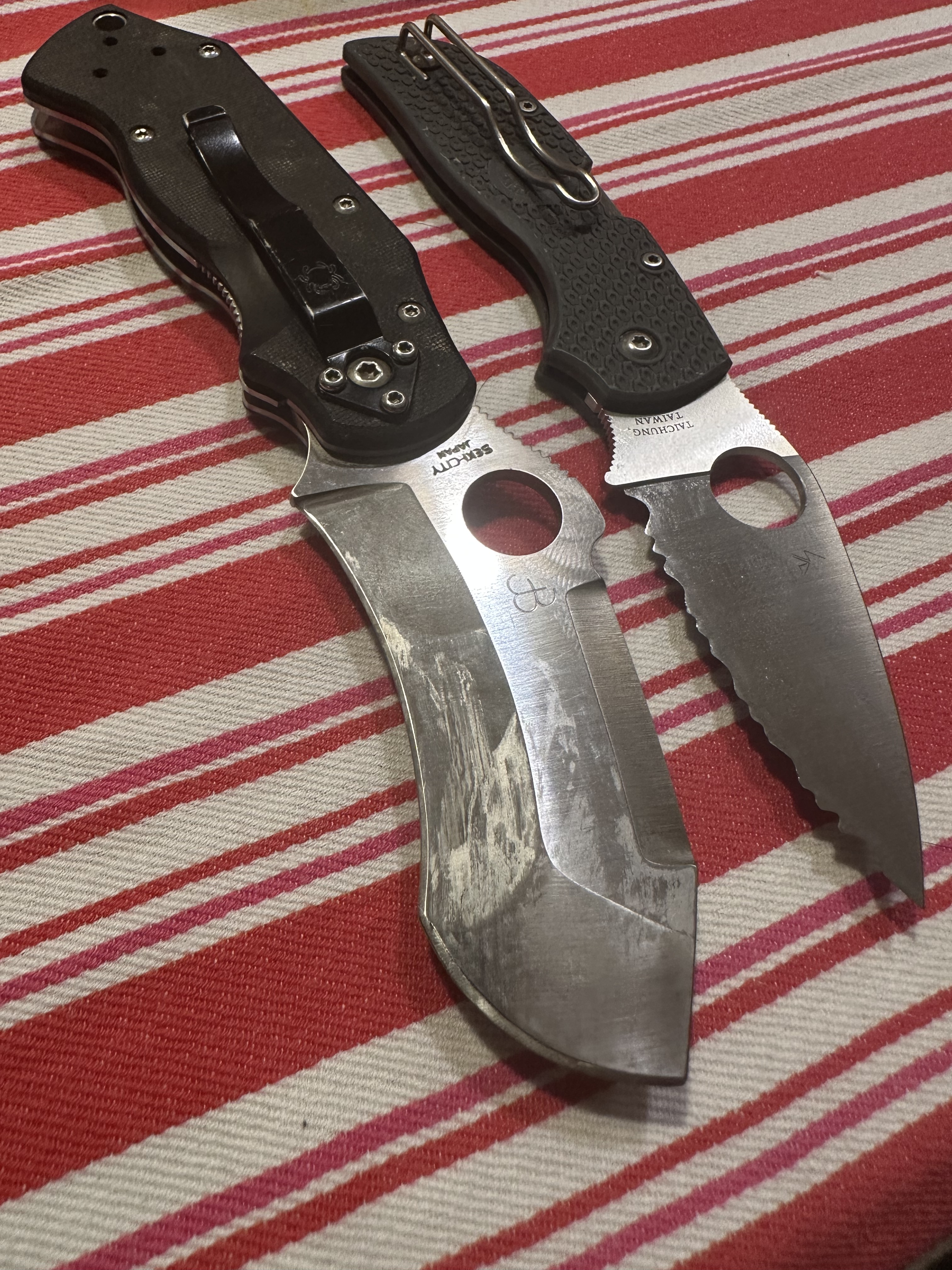
Here the Chap near a friend’s Captain which has been used to deal with mozzarella.

It feels good to be not the only Spyderco in the village.

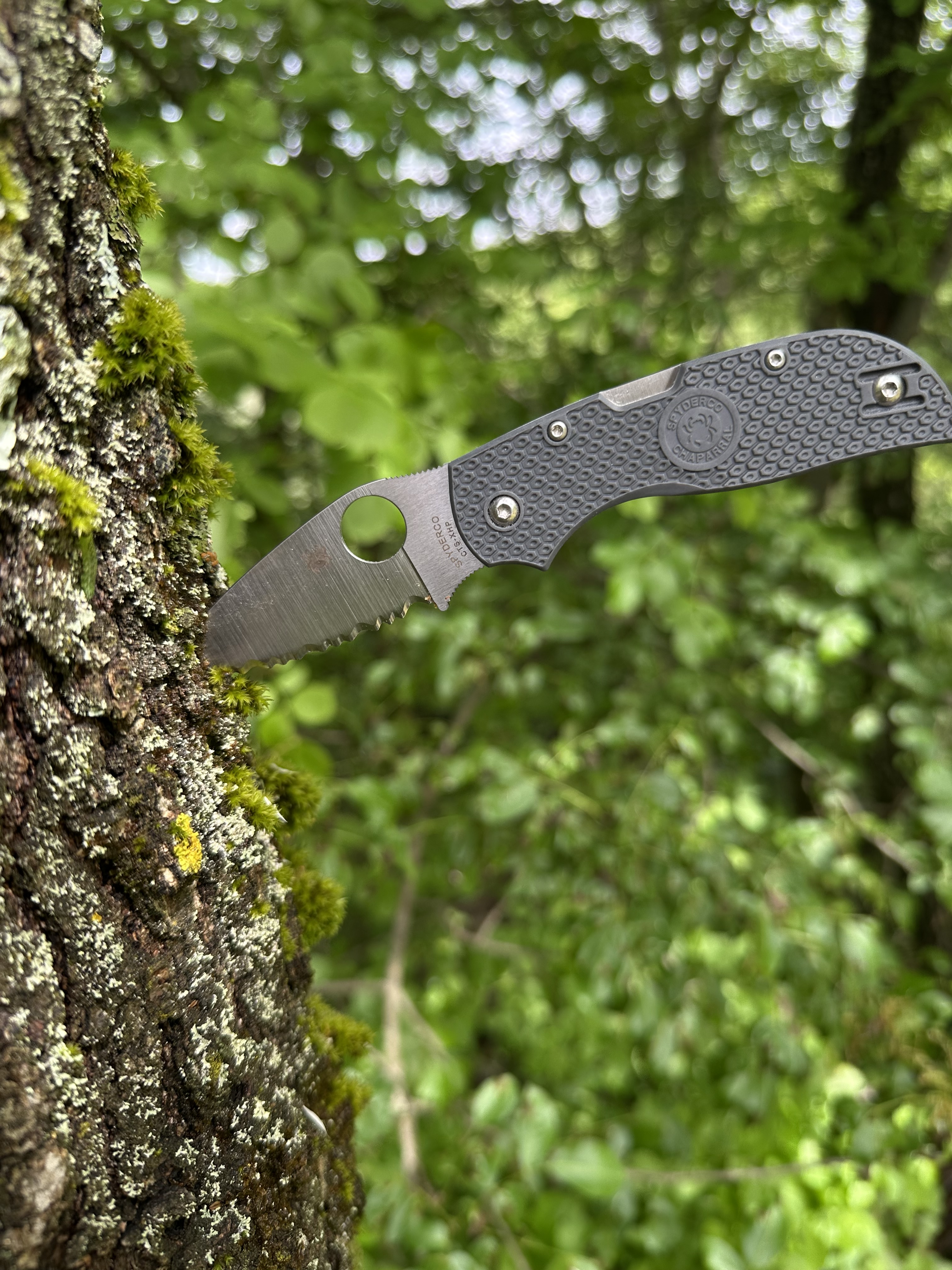
After two weeks with the Chaparral, I never felt “under-knifed.” It performed reliably in all conditions — rain, seashore, and forest — and remained socially unobtrusive. Its cutting power, thanks to the thin, hard CTS-XHP blade, proved that a pocket-sized chainsaw can be an essential part of any traveling kit.

After two weeks of use, the Chaparral showed no rust issues, no bent serrations, and no gritty mechanism. I simply rinsed it under the tap and let it dry in my pocket.

Even now, I don’t feel any need to resharpen the blade — the serrations are extremely difficult to dull. For a travel folder, I can confidently say: the Chaparral comes highly recommended!

If you want to see some spectacular moments from my two-week Italian road trip, I’ve released four video postcards on YouTube, all filmed and edited on the same iPhone 14 Pro that provided the photos for this article. If you enjoy them, feel free to give a thumbs up and subscribe to my Youtube channel.

https://www.youtube.com/@nemosandman

MILITARY™ 2 BROWN G-10 CPM® 15V® SPRINT RUN® – Part 2: Convexing the edge.

You know what ? It’s time to thin the edge of Gambit.
Pictures are better than thousand words.

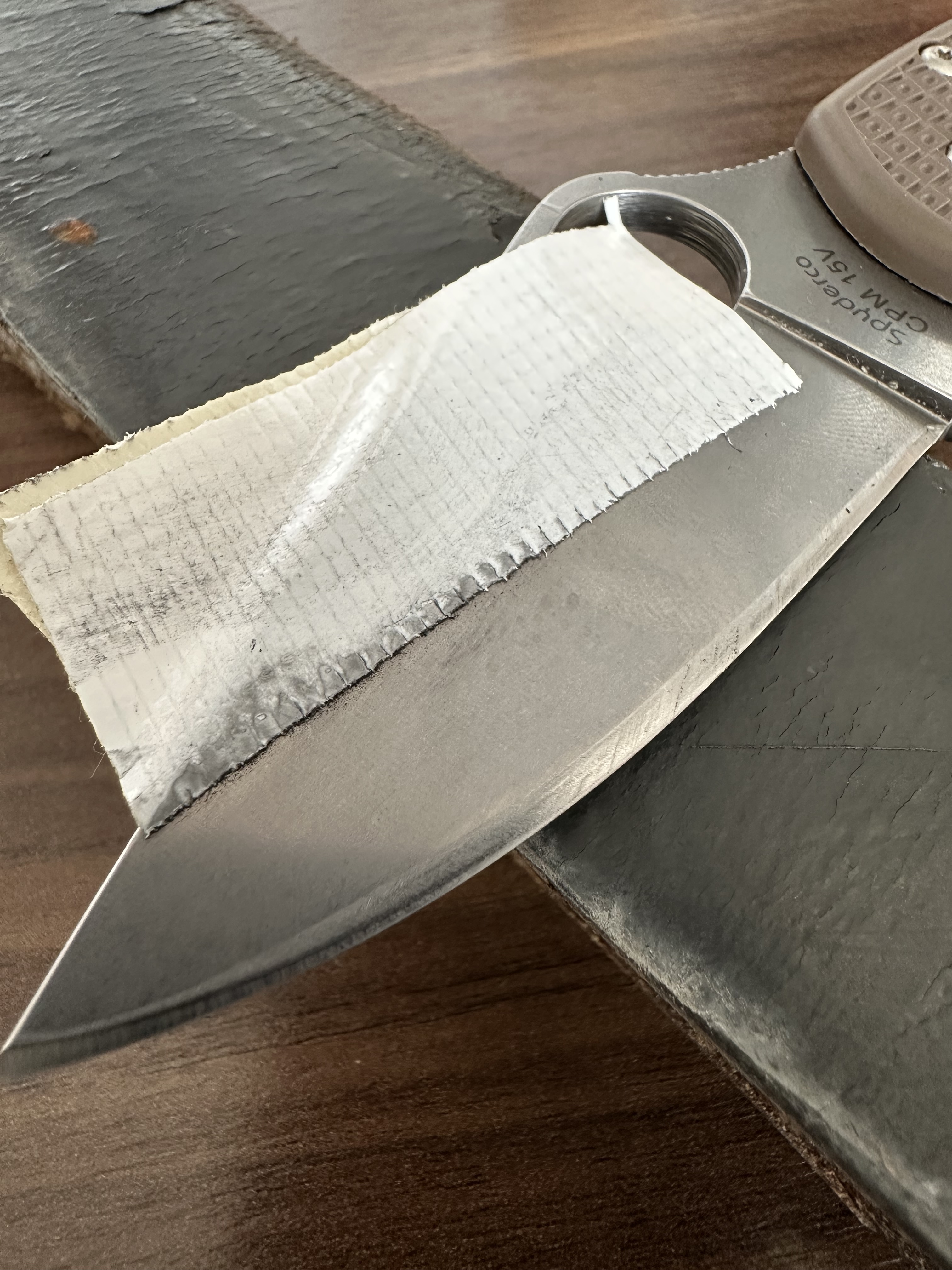
The gaffer is here to protect the blade against my clumsiness.

The Double Stuff 2 is the main tool. But it is old now.
It has lost some of its teeth in many many edges reprofiling…

But eventually it is a cheap Sharpy bought on Amazon which seems to be 15V best friend. It is 800 grit.
And it bites into 15V like no tomorrow.
So I was able to round the edge’s shoulder. Let’s test it.

It goes deep and steady.
There is real improvement. But gosh, 15V do not like to lose its particules. Compared to Magnacut or SPY27, CPM-15V is hellish.
Now I perhaps don’t have the best diamond tools for that.
But really, it is not a piece of cake in my book.

Now could it be a answer: The Military 2 reaching the 67 HRC ?
But that was exactly my impression after watching the YouTuber’s video — until Jake, a metallurgist for 14 years, left an exceptionally detailed, well-sourced comment under this review.
To quote his conclusion:

“… Spyderco did an amazing job getting a near custom level heat treatment on an amazing steel at an affordable price to many people who otherwise wouldn’t have been able to spend large sums of money on customs. But expecting 67Rc is a bit too much. Shawn has said it repeatedly that it isn’t realistic for a production knife company to hit hardness levels that high and also be able to work the material.

Many thanks to Jake for his eye-opening comment — truly appreciated!

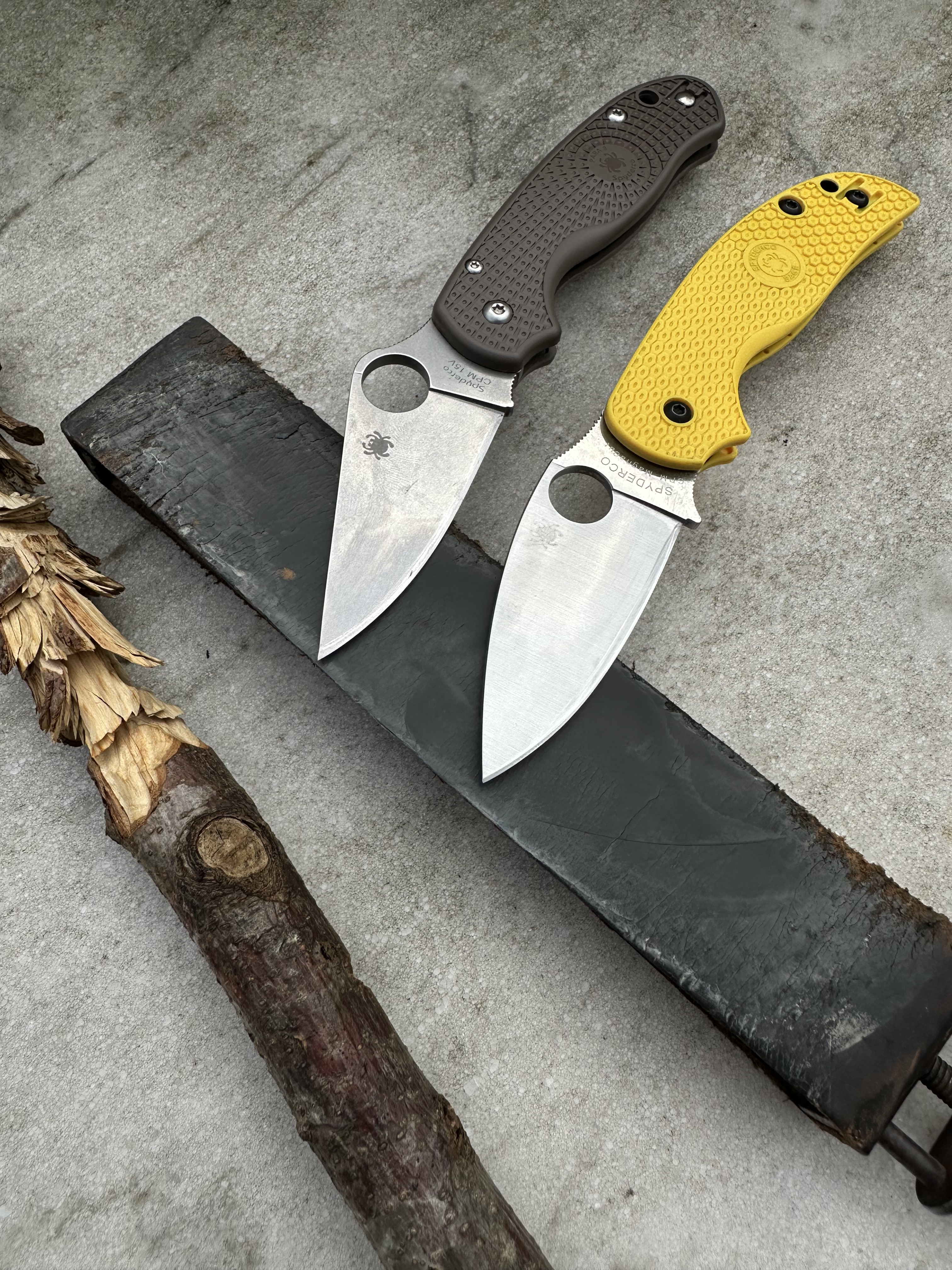
GETTING A CONVEX EDGE WITH THE CPM-15V BLADE OF THE HOULAHOULA PARA3 LIGHTWEIGHT PART 2.

Since the first try of convexing the Para 3, it is time now to reach the same level of de-shouldering as on my Sage 5 Salt.

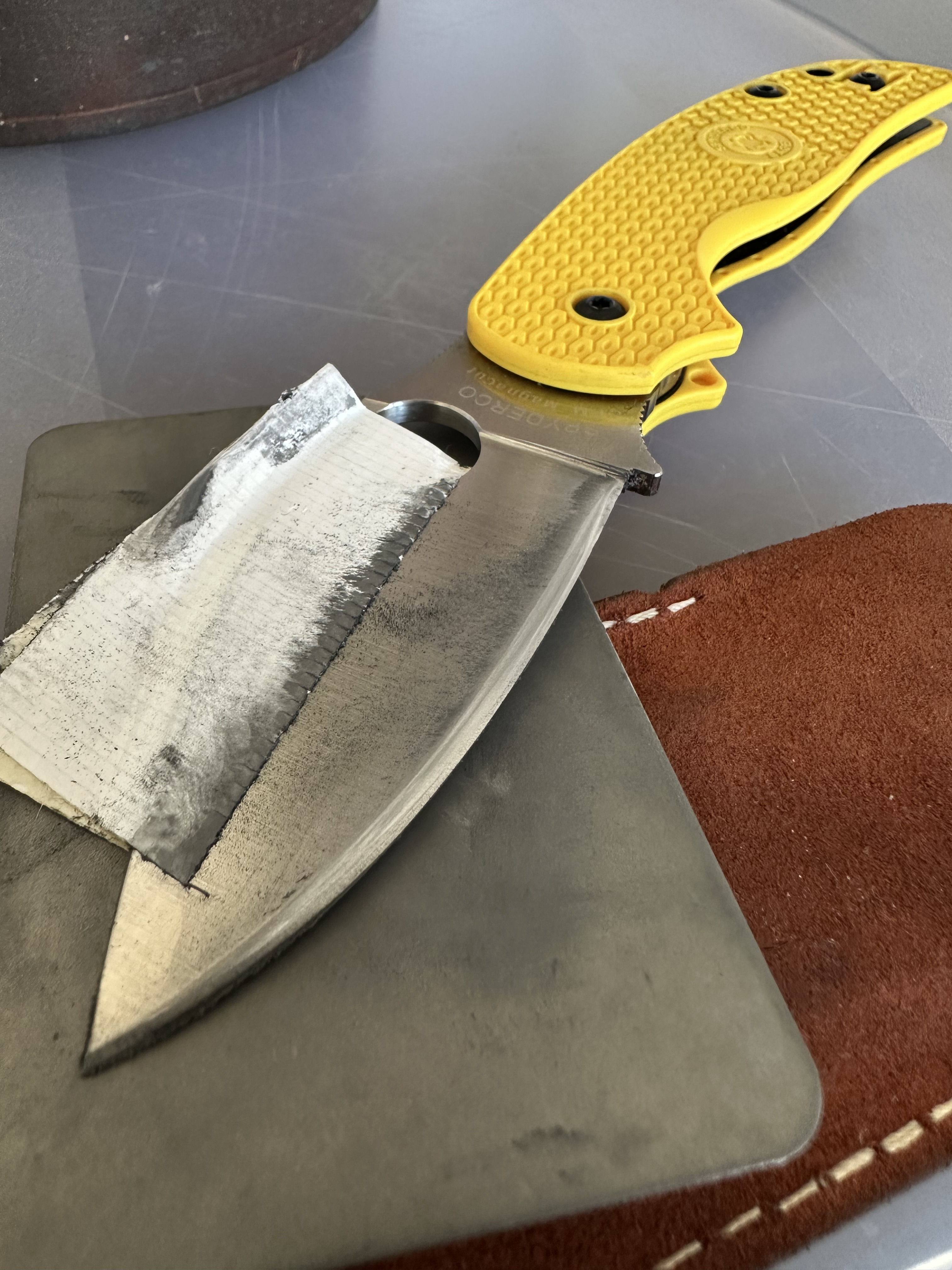
My goal here isn’t to touch the edge itself, but to smooth the border between the flat of the blade and the edge angle. This allows me to maintain the edge primarily on leather while reducing drag when cutting hard materials like plastic or wood.

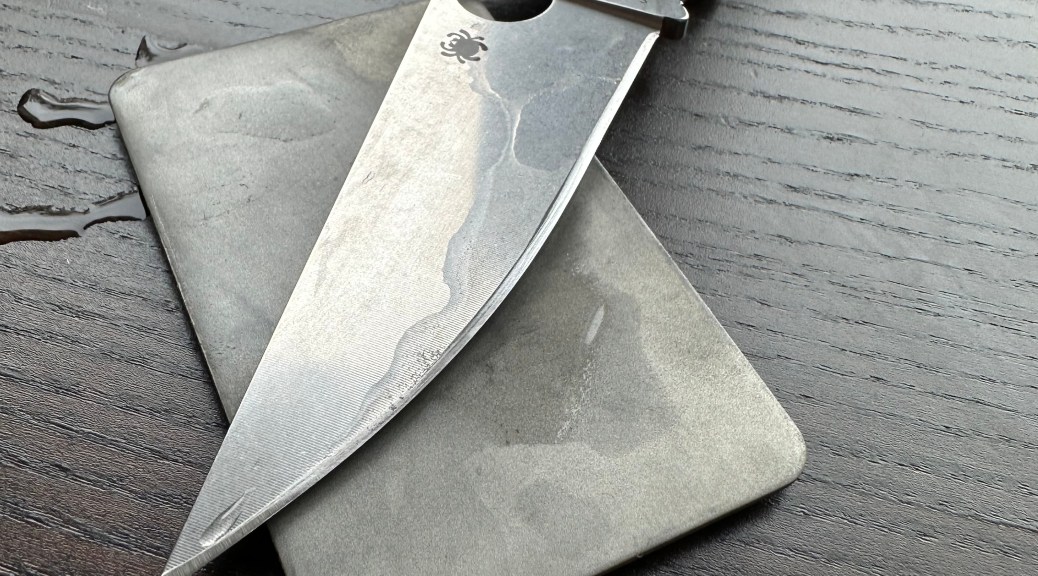
The equipment I used was again the Spyderco Double Stuff 2, focusing mainly on the diamond side. I experimented with gentle, round strokes on the flat diamond stone instead of always moving in the same direction — it seems to remove metal much faster.

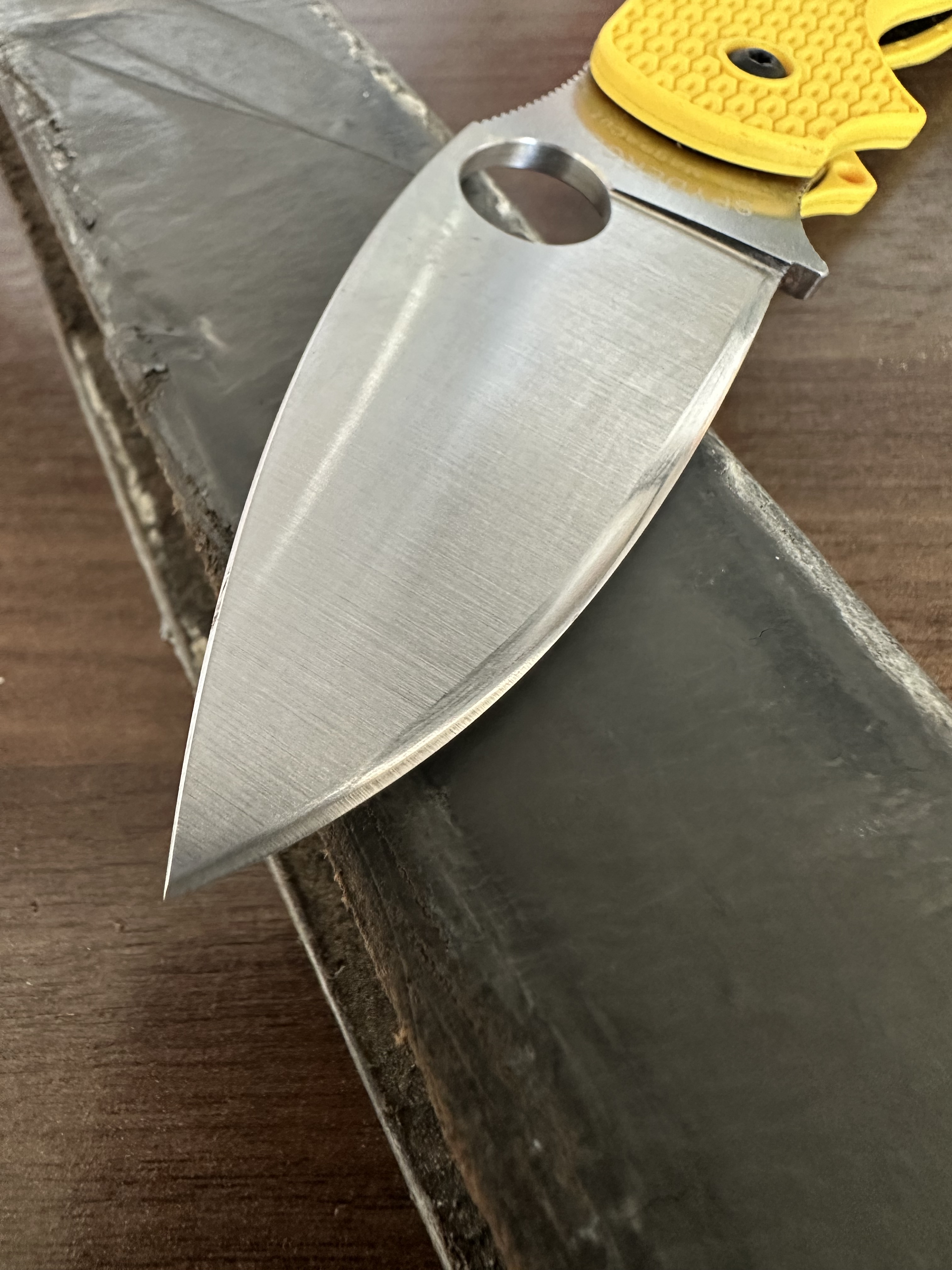
For aesthetics, I plan to follow up with white ceramic or jade stones to approach a mirror finish, similar to the Sage 5. Magnacut responds beautifully to polishing, whereas CPM-15V doesn’t particularly care.

The use of gaffer helps preventing any deep scratches on the blade finish.
It works great. The black dust is metal removed by the diamonds.
I do that outside in the wind. I don’t want to breath that dust.

Eventually this second round has gone so smoothly (compared to the first one linked at the start of this review) that i was on the verge to work on the Military 2.

Remember Sal saying:
The Edge is a Ghost. Always changing. Dying (dulling) being reborn (sharpened) split personality (angles and geometry changing). Think of the edge as gas in a vehicle. It runs out of gas and you put in more gas. We provide the format, materials, design for use, variety to avoid boredom and create interest, but the edge is your creation. The result of your understanding, education, experience and practice.

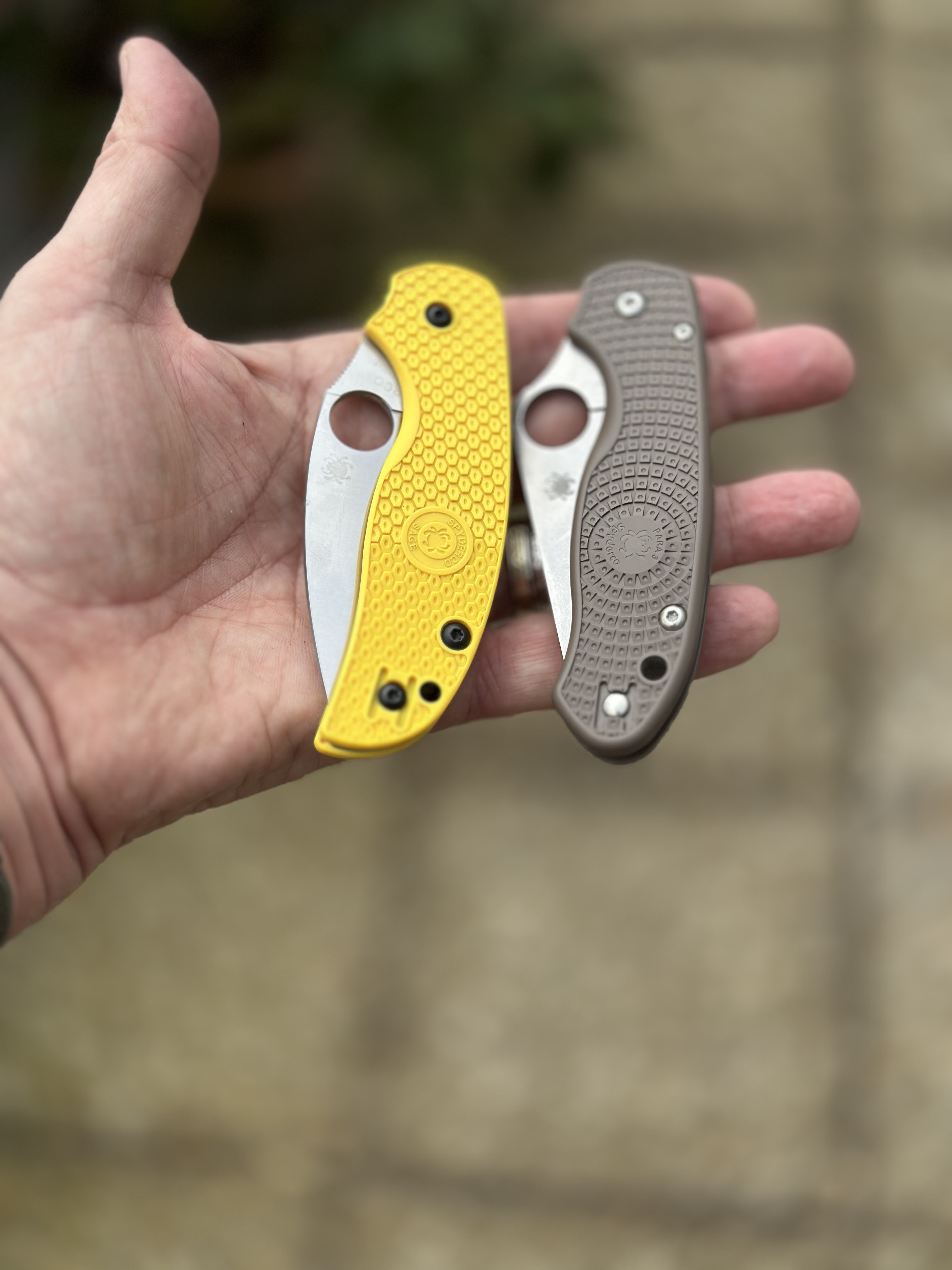
The comparison between the Sage 5 Salt and the Para 3 continues. In short: the Sage 5 has superior geometry thanks to its high 3 mm FFG blade, while the Para 3 features a sturdier blade, a thinner point, and is overall lighter (no steel liners).

It’s really your choice — both are highly capable and complement each other, coming from the same design mind. Shawn Houston even notes that the Para 3 carries “that Delica vibe.”

I’m impressed by the Sage 5’s exceptionally smooth action — one of the best among Spyderco’s compression lock knives. I love both knives. These days, the Sage Salt rides with me, but while both won’t let you down, the smooth Sage is more fidget-friendly. Both are great, but the Sage 5 is simply less popular… 😉

For another fistful of minutes – De-shouldering the Spyderco Sage Salt Part 2

Let’s go back to the same process but adding 15 minutes more can be a game changer in term of geometry. But let’s be clear this is typically the Pareto law which says: “The Pareto principle states that for many outcomes, roughly 80% of consequences come from 20% of causes.”
It means that in 15minutes + this new 15 minutes it is not the most efficient as 80% of the job was done during the 6 first minutes last time.
But those added fistful of minutes are a little bonus to even the bevels.

As you can notice I have concentrated my thinning process mainly on widing the bevel.

10 minutes later, I got a more even larger bevel which should go shining after some leather stropping.

On another fistful of minutes, I will work on the tip but I like to keep some material here.
Now I’m basically dealing with a flat grind with a convex edge at the end.
In Japanese a convex grind is also called a hamaguri grind. Literally this means: clam. This name comes from the convex way the side of the shell moves to the end. Exactly like the full convex edge. A full convex grind is sometimes also called an appleseed grind. Again because of the pointy tip of the seed of an apple.( I’m a fan of  アップルシードa Japanese manga series written and illustrated by Masamune Shirow.)
But for now it is much than satisfying in terms of whittling and dealing with hard maetrail to cut.
The edge goes deep in every push cuts and the high FFG blade five a lot of control for powerful results.

(Badge designed by Guillaume Xais)

So far my initial impression are confirmed: the Sage 5 Salt is a keeper and another 3 inches blade length Spyderco to rule them all like the Delica 4, the Native 5 or the Para 3 or even the UKPK ! All are Sal Glesser’s children (The Para 3 paternity is shared with Eric !)


It is perfect in all aspects – sharp thin blade, centered, strong detent compared to the Military 2, no blade play, suuuper smooth.
The Sage5 is the best implementation of a compression lock I have ever had… Perfect tolerances and no lock stick.


The open-backed construction allows easy cleaning. This Sage 5 is really asking to be used and, thanks to its yellow handle, retrieved even on the forest or ocean floor. Really a must have 3 inches knife for all occasions.
And I’m a huge fan of the Native 5 and the Para3. But this Sage 5 seems to lead the pack.

Yojimbo2 as EDC Workhorse ? Don’t be shy !

After using the Kapara all this summer I have decided to go the opposite way with a straight edge and flat handle !
And having a lot of fun with my Yojimbo2, I have decided to beat that dead horse again:
“This knife has been designed for Self Defense, It would not be a great EDC, especially in the kitchen.”

All famous SD tools were issued from agricultural items, from nunchakus to kerambits and since when straight sharp knives are not useful in the kitchen ?
So let’s broad the specter of usage of the good old Yo2.

The handle is flat and broad.
This is a real plus for indexing the knife but also to hold it by pivot area between the thum and the index. A very commode grip when carving pumpkins or just cutting on a board.


There is a hump on the handle’s back which fills the palm of the hand making the grip secured even with very wet hands. You can notice the same shape on the Kapara‘s handle.
In fact despite being flat the handle is almost all in curves and
looking at the Yo2, only the very edge is straight.


The blade is short thick but broad and keen. It is shorter than a Kapara’s blade which got almost the same handle length. But this a very powerful blade, able to withstand forceful pushcuts.
For that matter I have rounded the spine on mine. Personal preferences since my first Sebenza.


You can put all your weight on the spine to cut right through any matters. The wide blade goes through like in butter.
Also the Yojimbo2’s blade got a certain heft. It is thick on the spinde and feels hefty hence the sensation of power when cutting. This is not minor in the pleasure of using your tool. Thank kind of weight behind the spine makes it ooze of power.

The high blade can adopt the thin geometry needed for easy slices into cherry tomatoes, a simple chore which can be tricky and is an excellent test for sharpness. Tomatoe’s skin can be tricky and rough or razor edges are their best nemesis.
I also heard a lot: “The tip could be fragile.”

For the record, the Snody/Janich’s Ronin and first Yojimbo were much more thin on their tip. The Ronin being made of VG10, I had managed to break it.

To eliminate any risk I have chosen a stronger alloy on my Yojimbo2: CPM M4 and so far the needle tip is as pointy as Day One.

For that kind of jar, the easiest way to open it is by making a hole right in the middle of its cap. When I want to use the jar again, I will use more force or if stuck a twist of a leatherman’s flat screwdriver under it lips to balance the pressure.
With the Yo2, I have been able to remove staples in wood planks and even drill into hard wood which mean torsions for the drilling. No certain I would try that with S90V but S30V heat treated in Golden is strong enough for knife shores. The CPM M4 used here is just peace of mind even on thin sharp knives. Gayle Bradley has also chosen that steel for the exact same reason: strength.
But a knife will never replace a screwdriver apart perhaps for the infamous Ed Schempp’s Tuff.

Once broken, I have been able to regrind the tip of the Ronin which has been one of my favorite big little fixed blade.

The blade shape allow the Yojimbo2 to cut on a board but also the Wharncliff shape protect the edge from any contact with plate’s ceramic. Only the pointy tip get in contact ! It will make deep scars in your wooden planks if you are not careful.

Wharncliffs are great for whittling and also rope/string cutting. There is no belly for the cut material to run away.
They will be less handy as skinning knife where belly blades are mandatory.

The blade choked, only the tip remains for delicate work. In that matter it is as good as the Paramillie2.

The absence of real choil is not an issue. The place of the thumb on the “hump” gives a lot of controlled power.
As you can notice the flat handle around the pivot is wide and this is a real nice place to land your thumb. So it is great for indexingand always knowing where the edge is. On the opposite concept side of the cutlery world, an Opinel (great knife by the way) with its rounded handle need a double check to know where the edge is as the handle can turn in your grip). So this “thumb landing strip” around the pivot which is especially wide on Yo2 is a great asset for using this SD knife as an EDC tool.
(You can also notice than despite a single spot, I have not been able to get a real patina on that CPM M4 blade.)

In conclusion the Yo2 is really a great workhorse and should not be restricted to Martial Bladecraft. Also the more you use your knife in everyday life and the more your build your motor skills about deploying and closing the blade. The heft of the blade helps a lot for that. Use your Yojimbos hard and you will be surprised how they can handle any tasks !

The YO2 in the words of Michael Janich:
“When I designed the blade for the Yo2, I took a lot of inspiration from the Manix2, both because I like the way it cuts and because, as a Golden-made product, its manufacture respresented a known core competency for Spyderco. Combining a partial hollow grind with a thick, strong spine provides a great balance of edge geometry and strength. Moving the point up towards the blade’s centerline moves it toward the thicker part of the blade; however, if the hollow grind runs parallel to the edge all the way to the point, the resulting point thickness is functionally the same as what you get with a wharncliffe. 

The wharncliffe blade excels at cutting because it cuts with full power all the way to the tip. An acutely angled tip also provides superior penetration with minimal effort. 

From a utility standpoint, the Yo2’s tip is analogous to an X-Acto knife and is excellent for detail work. The heel of the blade, closer to the handle, is extremely strong and more than capable of tackling most cutting chores for which knives are appropriate tools. In general, if you focus on using the part of the blade that is most appropriate to the task at hand, you can perform a wide range of cutting chores without a problem. 

Having designed several wharncliffe blades now, I have also been privy to the warranty repair claims concerning these blades. In all honesty, broken tips are rare. The ones that do come in typically come with a story that begins “I dropped my knife on concrete/a hard tile floor….” or “I know I shouldn’t pry with a knife, but…” 

Like a box cutter, a wharncliffe cuts with both power and finesse because of its straight edge. If your style of utility knife use actually focuses on cutting, it will serve you well. If your utility knife use focuses on prying, digging, or using your knife as a jack handle, buy a knife that is better suited to that type of use–and don’t expect it to cut very well… 

I hope this helps. “

THE TREE REX Part 2 – Beveling THE SPINE.

The Tree Rex is certainly my favorite hard work folder from Spyderco. Sal Glesser has made a real beauty able to deliver a lot of power.
The handle is especially thicker and rounder than any other folders proposed by the Golden Company. The pseudo wooden slabs which can be rinsed in water with zero issues. (I have erased the smell with some alcohol solution) and the mighty blade made of a very lovely steel: REX45 got that “touch” of Speed Star aka M2HSS I have loved on Benchmade AFCKs and Nimravi. The steel is easy on leather and bites steady when whittling with control. The best wood chisels are made from M2HSS.

But they are some hot spots on the spine and on the choil. I use my thumb to pushcut in wood and a square spine is painful after a while.
Knowing the Rex45 is a 8% Cobalt steel, I have decided to send it in the wind and with some water to prevent dust. The very hard steel (66,5 HRC) was eventually rounded to my taste.

Rounding the spine to a be less aggressive was done using 600 grint sand paper. Eventually I have used the sand paper to do some convexing.
Soon a Jade stone will be tested for mirror finish on the edge.