Category Archives: Review

Amsterdam Spyderco Minimeet 2011 – The Forbidden Pictures !

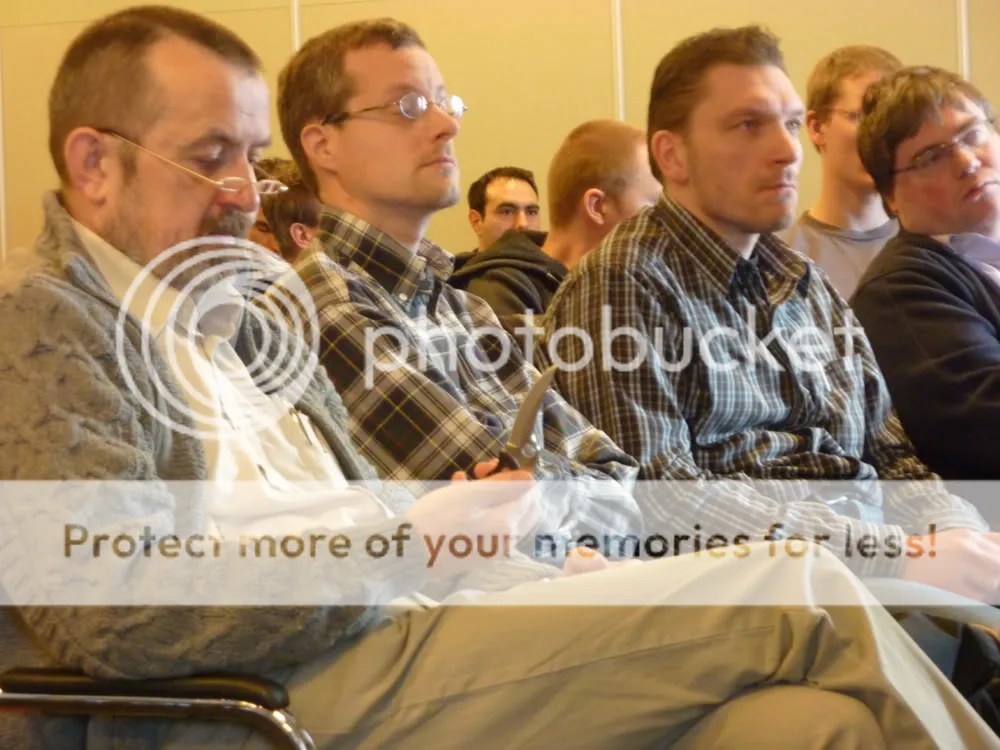
Only here, you will be able to see the forbidden pictures of the Am’dam Minimeet.
Here we go:

I’m everywhere ! 🙂
The Lucane and Eric and Sal Glesser
Sal, Eric and Jur looking at the Lucane prototype.
The Lucane and Eric and Sal Glesser
Sal taking a closer look.
Amsterdam Spyderco Minimeet 2011
The gathering of the spydernuts is starting !
Amsterdam Spyderco Minimeet 2011
Father and son…
Amsterdam Spyderco Minimeet 2011
JD and Sal !
Amsterdam Spyderco Minimeet 2011
Gail and Sal Glesser
Amsterdam Spyderco Minimeet 2011
The proto, the concepts all in one pic !
Amsterdam Spyderco Minimeet 2011
Jur (with his new Spyderbeat Sheath made by Emmanuel Amoreau) giving his last instructions to Sal. 😉

Amsterdam Spyderco Minimeet 2011
And all the feedbacks are welcome !
Amsterdam Spyderco Minimeet 2011
Gail, Sal and Eric.
Amsterdam Spyderco Minimeet 2011
Gail and Sal’s old van where Spyderco started last century…
Amsterdam Spyderco Minimeet 2011
The Massad Ayoob is inspected.
Amsterdam Spyderco Minimeet 2011
Eric explaining the raffinements of the new back lock !
Amsterdam Spyderco Minimeet 2011
The graph of the Spyderco Knives Breaking Machin !
Amsterdam Spyderco Minimeet 2011
Joyce Laituri chatting with Ted and friends…

Gail and the boys ! 🙂

All the knives came back on the table eventually.

JD and the Lucane.

A closer look at Jur sheath ! 😉

– End of line –

Edit 01/05/2017 There is a video made for BladeHQ “Meet Your Maker” using some part of this post and crediting the blog.
Here the link https://www.youtube.com/watch?v=mLcTWwh1Cpc

The Lucane by Jérôme “Torpen” Hovaere

We met Jérôme at last Paris Knive Show. This young gifted full time knifemaker just had received his Spyderhole licence from Golden. He’s a huge fan of Spyderco.
I immediatly fell in love with the radical lines of his Lucane Folder. An efficient powerfull blade and an ergonomic handle, this is a workhrose designed by a worker who needed a strong a practical knife as an EDC. It’s a knife to use for mondane task and even to eat with it. The back of the blade was especially though after pushing aliments on a plate without to dull the edge.
My prototype is made of 02 for the blade and G10 with SS liners for the handle. It was made to be shown around at Amsterdam Minimeet 2011.
This will be also the occasion to achieve one of Jérôme’s dream: to have his baby pictured in the hand of Sal Glesser.
More on it later.


All the pictures down under are (c) Jérôme Hovaere (so, you will notice the hand of the maker!)


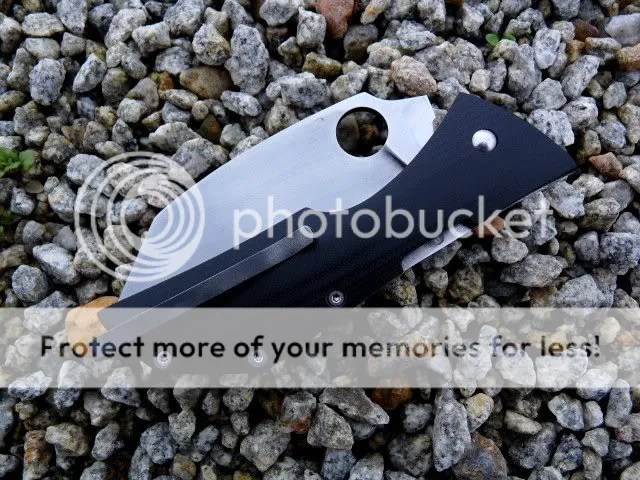
The G10 Proto with another clip.


The ergonomy is amazing thanks to its wasp shape handle.

A previous aluminium handle prototype. Notice how the lock release is not placed as on the G10 version.


The Lucane next to a Spyderco Tenacious

I have forgotten the specs:

Length: 203mm (with clip)
Blade length: 90mm
Once closed: 110mm
Blade thickness: 3,4 mm
Handle thickness: 16mm

Weight: 140 grammes

The steel on this proto is 90MCV8 which another name for O2.

Spyderco Paramilitary 2: the second son of Millie

Paramilitary

Being the son of a legend is not easy and it’s not because you are shorter that you need to develop some complex. Designed by Sal and Eric Glasser, the Paramillie 2 is simply gorgeous.
Since its first incarnation, it did not walk in dad’s footsteps: the smaller version was using another lock than the good old linerlock (I love liner locks !) but the Compression Lock developped for Martial BladeCraft. This was the kind of lock you could find on the Yojimbo and the Lil’ Temperance and on the Gunting (but mounted on the opposite liner). The Compression Lock is strong reliable, easy to clean and was a great addition. Also the knife is so well made, the blade can be flicked in close position just by releasing the lock. This is a gravity knife for closing purposes.
The second version of the Paramillie got a longer blade, some ergonic improvements and a bigger lanyard hole. This is a very well balanced and homogenic package who offers the same “cockpit” of the C36 Millitary in a more civilian way. The cuts are equally strong as with the C36: the Paramillie keeps the same geometry (with a lil’ even more belly) than its dad.(*)

Paramilitary

Anyway, The first thing I have made when I have received my Paramillie 2 was to turn it thick G10 handle into a more “trouser friendly” version: sanding the grippy G10! (Also I get so much used to Carbon Fiber that I wanted to have the same feel…)
I prefer my handles softer than the factory’s one. G10 can be used to file the linen of your pocket and I don’t want holes.
After sanding it (beware the micro dust of G10 which is highly toxic!) I have polished it. I’m happy with the result. Grippy handle can be handy but once sanded my handles keep a positive grip without the side effects of filing fiberglass.

I also found the shiny clip a little to shiny for my taste. So I have switched it with my Gayle Bradley bronze clip. The result is more stealth for the city.


The GB clip screws are a little longer (and the diameter is perharps a little thinner) but it worked perfectly. Also the Gayle Bradley’s clip is known to keep its appearance for a long time. (mine is one year old and looks like new!)
There is another plus with second version: you can positionned the clip in four ways. So As I want to use my Paramillie in the wood and hard material, I have decided to reposition the clip Tip Up / Left Handed way.
(I’m right handed)
Why ? Because there is no more metal clip against my palm: no more sore or hotspot.
And thanks to it very large blade hole I can even open it in reverse grip easily.

The balance on the Paramillie 2 is perfect. The knife is very “alive” in the hands. No bladeplay what so ever, great ergos…
I have already test it on my Bottle Butt test and it has passed it with flying colors !

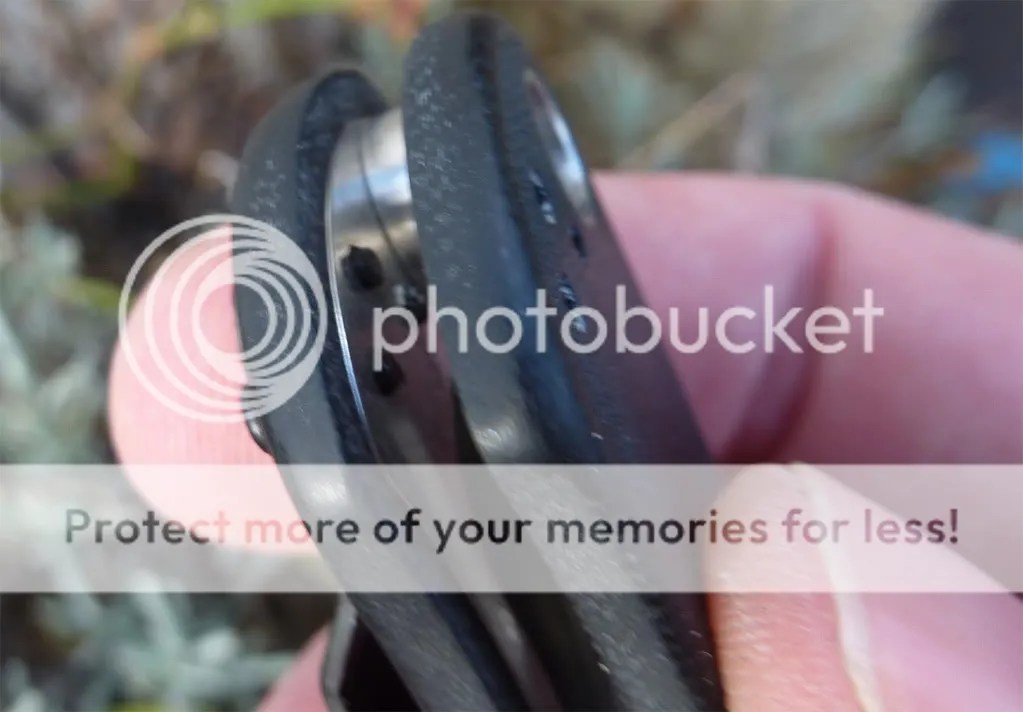
On this picture you can notice how the G10 looks once sanded. And also both signatures of Eric and his father Sal ! This is the very 1rst Spyderco knife which got both !
I will update this post later, but for now, I think I have found the perfect folding match for my G10 Bushcrafter.

Also I have gently convexed the edge like I have done on my Sage II.

**** edit****
(*) eventually a picture worse a thousand words:

Update of the 10th of March 2011.

Here are some pictures of the S90V/CF sprint run of the Paramillie 2. This is a dream come true folder: since the release of the C36 Military: a compact package and upgrade materials. I recognized to have been traumatized by Phil Wilson’s articles about S90V (CPM420V) in 1998…

Sprint run Paramilitary 2 CPM S-90V Carbon Fiber
I have gently sanded the Carbon Fiber handle just to remove the biting. I don’t want to get a polished handle like on the G10 version.
Sprint run Paramilitary 2 CPM S-90V Carbon Fiber

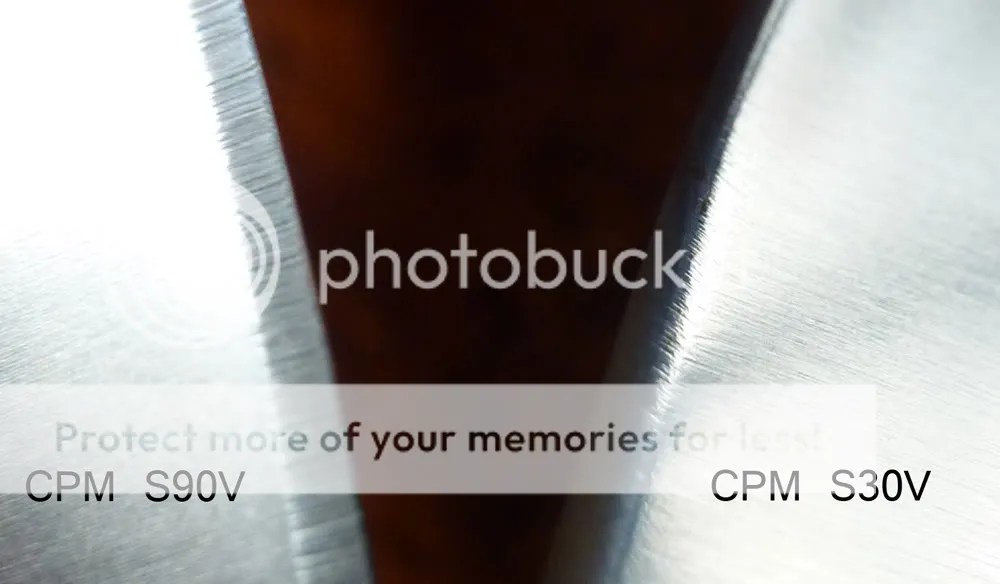
On this last picture you can compare the edge of my polished CPMS30V Paramillie 2 blade and the CPMS90V (HRC60) which has been stropped for four days without any polishing improvement but the edge is incredibly sharp.


The blade is cutting meat like hot butter…


This a folder which is meant to be used and get dirty !

I have sanded the handle to smooth it and also the “hump” which can file your trouser at each extraction of the knife frome the pocket:


Now I can carry it “Tip Down” and open it with the SPyderdrop which is IMHO the most elegant way to open a folder.

Rockstead Higo-J: Part III – Masamune in Winter

The Rockstead Higo-J # 102 continues to be worn and used daily as part of my testing of this high quality knife through the seasons in France.

The road so far:
“Rockstead Higo-J part I – A Folding Masamune in Paris”
“Rockstead Higo-J ZDP-189: Fears and Cures”
“Rockstead Higo-J In the woods”

Rockstead Higo-J ZDP

The mechanism did not show any sign of wear since I got the knife used daily. The feeling/sensation of holding a light fixed blade is real once open. The opening and closing is getting smoother (the retention ball was the main brake to the butter like opening provided by huge phosphoric bronze washers) the clip (despite its lip) was a great surprise in confort of carrying and did not caught anything.

Rockstead Higo-J

What is appreciated in the ergonomy of the Higo-J conceived as “a very pragmatic knife” is the natural way the fingers find their places on that very straight design.
The choil offers a very nice position for the index for any precise work. And the balance of that light knife makes it a natural extension of your hand. There is no issue or hot spot while using the knife even on hard wood.
Some bushcrafters friend of mine really appreciated its grind which is almost scandy. It seems to remove the bark of wood stick like a zipper: with a lot of control.
The Higo was also used in hunting dejointing and skinning and the ZDP grind and heattreated by Rockstead did not failed us.

Rockstead Higo-J

Now how the ZDP-189, hard as Rockstead like to treat it (HRC66,6) was a concern for me. The initial grind was a little to fragile and my regrind did not permit to recover the initial performance of the knife. This was an issue that many users of thin grind knives may have encountered: rolling edge on stainless can be messy.
Now with patience and elbow grease, the edge of the Higo-J has been restored and maintain to an excellent level of working sharpness.
As a very polish edge (I don’t see myself putting a toothy edge on it, sorry…) the knife shows a constance in performance: it cuts cuts and cuts with accuracy and reliability. Now I only strop it once a week with compound and leather and it enough to keep it sharp.
So I don’t use saw motions and mainly pushcuts. It’s easy to reproduce the demo of Hanada-San. even the “Schtock” sound of the repeating cutting is reproductible.
Also the encounter with some hard surface and even some stapples were not able to mark the edge: no nicks, nothing which could not be fixed with a light ceramic and a lot of stropping.

Rockstead Higo-J ZDP-189

The more I use it, the more it grows on me. It’s easy to use and very easy to clean. So you don’t mind getting dirty and use that beautiful blade on messy jobs.
I have even seen Hanada-San being able to put it apart in a matter of seconds: there is only two main screws on that incredible design.

I was not able also to scratch the mirror finish and only some little scars are visible witnessing the use of the Higo on hard material.
So far I’m still very impress by the overall quality of that expensive tool.
The handle don’t show any scratches or anything which could alter their beautiful lines. I’m conscient that, if the knife would fall on concrete it would be marked (when G10 or carbon Fiber are very shock/scratches friendly) but it did not occur to me. So far the Higo-J only fell on soils and was rinse after.
BTW the ZDP blade did not stain (that steel is known for being sometime easy to stain).
This is the end of my update. The Higo-J will be used on X-mas turkey and I will come back to it in 2011…
Rockstead Higo-J

Ladybug Hawkbill Sprintrun – The Real Cat Claw !

“Everybody wants to be a cat,
because a cat’s the only cat
who knows where it’s at…”

My friend Jur told me: “the older you’ll get the shorter the blades you will love.”
The first injection came from a baby Wayne Goddard, then the C22 Walker… now that little claw which is an amazing little tool !

Wolverine, Sabertooth are not the only one to produce some sharp claws in a blink of an eye ! You can do it too and with a very sheeple friendly (and invisible) Spyderco knife. There is a little Ladybug which got all the attribute of a feline “blade”: the “LBKS3HB”. Of course it’s a limited edition but soon it will be (re)release in a H1 and yellow handle version !

What I love about that little knife is its smoothness and the quality of construction. This is the shortest knife I can “Spyderdrop” and close by releasing the lock with a smooth flick of the wrist. So, it’s short, serrated, powerfull, handy, secured in the hand (thanks to the little fob provided by Jurphaas.)
This is the kind of knife I love to use in the city: removing labels on clothes, opening parcels, cutting plastic, strings, paper and even bread !
With a baguette this is a great knife to make the long incision for some ham !

Also, this little knife can be a real contender as a last ditch self defense tool aiming at the hands or the face !
The serrated edge can make painful and bleeding wounds with a swift caress of the blade.

Invisible, fast to put in service, performant… a real Cat Claw indeed !

Thea

Thea checking the knife.

Mini mini mini !

Confortable in various grip !

Closed, it’s almost got a grin !

This is VG10, baby !

Thea approves it !


And this is the H1 version of a Ladybug !

Rockstead Higo-J ZDP-189: fears and cures

My ZDP189 Higo blade was “chipping” today (!!!) quite badly on the tip (Arrrrgh!!!). So I have decided to passe it gently on a Spyderco white ceramic rod before to strop it for a good hour on leather and compound.
Now it’s much sharper than before (!) and I know my edge is stronger with a little convexing which should prevent it from rolling…
Amazing grind ! Amazing steel !
ZDP-189 is very forgiving.
I don’t know how the chipping appeared as I did not use the knife hard (yet). I think it came from the very thin hard edge on the tip and perharps one fumble of mine.
Now it’s “cured” and fixed !
(I did not pictured it when it was a mess as I was much to concern about fixing it.
Perhaps the edge touch something hard I did not notice ?
I don’t know.
Anyway:

Notice how the “chipping” on the edge start to be erased by the ceramic shouldering.

now it’s all fixed:

The more I think about it (and when I see how I could fix it)
I think it was the very edge which rolled “chaotically” giving the look of a bad chipping but which could be fixed with a light sharpening (without removing matter)
The edge has touched something hard (it’s happen at the tip and this could have happen without me to notice it)
It happen once to me with another knife (mirror finish, thin and stainless) I was testing by cutting bambu and I completly ruined the edge: it was almost serrated after my ten cuts…. but I was able to realigned the edge and the damage was almost invisible after and the high sharpness restored.

My other ZDP-189 blade is the Chris Walker which is not as “smooth” sharp as the Higo but so far di not rool or chip. (It’s not as hard as the Higo-J though)

“The bottom of this blade edge is 30 degrees, and it’s continuously change to top of the blade.The top edge’s angle is 24 degrees.”
30 degree (15 by 15) with a very hard steel can be tricky when the edge is brend new.

Anyway I gently realigned the edge with white ceramique and strop it a lot.
I my have created a secondary (and stronger) edge, but the stropping should minimize its effect in pure sharpness loss.

Any knives are made to be used. It’s easy to hit something which alter the edge. A good tool should be able to withstand that, get fixed and ask for more.
The Higo-J, as an excellent tool, is no exception.
Bob Terzuola says: “If you knife is still sharp, it means you don’t use it enough !”
So let’s use it !

Researching the Rockstead site:
“We realized the best edge angle near the haft of the blade is 30 degrees and in the point of the blade 24 degrees.(We adjusted the angle to 30 degrees in the haft side because power was most concentrated there, which improved toughness, and 24 degrees at the tip of the blade, where power was low. The angle changes continuously.)”

Ok the angle at the tip is shallower (24°)… that’s why the tip is more fragile … Good to know.

The road so far:
“Rockstead Higo-J part I – A Folding Masamune in Paris”
“Rockstead Higo-J In the woods”
“Rockstead Higo-J: Part III – Masamune in Winter”

Rockstead Higo #102 ZDP-189 – A folding Masamune in Paris (Part I)

Rockstead is worldwide famous for delivering the most exquisite hard polished blades in the industrial knife world. All made by CNC machines in Japan and painfully polished by gifted hands, those extraordinary blades are shown able to be used hundred of times on hard bamboo and still being able to cut paper like razors ! It’s made by hardening the blade to HRC67 and even beyond and being almost obsessed by edge angles!
So cutting with a Rockstead is like driving a Lamborghini: you pay for the best materials and the best performances.
Rockstead Higo in its balsa crate
The balsa wood crate with the wrench and the certificate.

Thanks to Hanada San, director and display pilot of Rockstead knives, I will have the chance to test and review on the long run one knife he choosed for me on his table: one of his Higo knife, #102 with ZDP189 (HRC 66,6 I wonder why I have baptised it “Diablo” …) with Duralum handle and an integral lock.

Rockstead Higo in the rain
Notice how the edge is perfectly ground ! Amazing !…

First thing you notice when you reveal the blade to the light is the exquisite attention to details. The edge is mirror polished and perfectly symetrical on both sides.
The hole in the blade (with a gauge) is the signature of Rockstead. It’s found on all their knives designed by Takeshi Saji. It gives some kind of high tech sci fi look to a very sober design.

Rockstead Higo
The infamous Saucisson test !

OK. the description of this knife as it’s found on their site is also spectacular: HIGO-J-ZDP BLADE / SHINOGIZUKURI
Full length : 213mm
Blade : 89mm
Material : ZDP 189
Thickness : 3.2mm
Weight : 104g
Hardness : around HRc67 !!!!


At that hardness…this can be used as a glass breaker !

Scale : A2024(duralumin)Hard-anolized treatment
Spring to chip : SKD11HRc61 (*)
Rockstead Higo Lock
(*) Because the sliding liner of the integral lock is termined by a chip of hard steel (HRc 61) like some unharded titanium lock can be more and more found.

Rockstead Higo CLosed
Perfect size for an EDC knife.

After the bamboo is cut and beat with this knife and Manila rope is cut 350 times, you can slice the paper. This easy maintenance knife is an easy-to-use knife that cuts well. The handle of the duralumin is light and is strong.The bottom of this blade edge is 30 degrees, and it’s continuously change to top of the blade.The top edge’s angle is 24 degrees. The change in this angle is a result of ROCKSTEAD that pursues sharpness. This is a knife of preeminent sharpness. You can enjoy its strong cutting capabilities for a long time. This scale is fixed with two screws and the resolution is easy. After cutting the fish and the animal, you can easily clean it.

Rockstead Higo
The tuscany ham was cut as thin as it desserved.

The straight folder is easily clipped on the front right trouser pocket. The Duralum handle is easy on the fabric and the clip is well positionned and all package is low profile. This is mandatory for an EDC.
The knife is absolutly well balanced in hand. Light and fast. Holding it in your hand is a pleasure. This knife exude pure perfection. It’s very straight and very versatile. The edge can be used up side down for skinning purpose.


Thea inspecting the balance of the knife. One centimeter behind the pivot.

Skinning ?!
Wait a minute, who is going to use a 1000 euros folding knife for skinning ?!

Rockstead Higo
The over size thumb lugs are very confortable to use and far enough not to be in the way.

Let’s not be fooled by the price of that jewel. The Higo-J is 400% performance oriented. It’s easy to clean and even is provided with a wrench if you need to take it apart. (Like Chris Reeve’s Sebenza). this the proof how the trust the designer has in their work. It’s of course an expensive tool but it has been designed to be used.
Remember the Emerson CQC6 craze 15 years ago ? They were as expensive as the Higo nowadays and some people used them hard.

Rockstead Higo

Of course, Hanada San is the first to display the unearthly cutting qualities of his knives. They are hard but they will not chip and they will cut and cut and cut until you strop them. Rockstead knives are mainly strop on compound. No need to scratch the beautiful finish.
That suit me perfectly as I love to refresh my edges on leather.   Mine did not get used enough to be stropped yet and I’m heading forward touching up its edge this way.

Rockstead Higo
Cutting a well done cheese is not the easiest talk. The mirror finish helped a lot !

As you can see the Higo has first been acclimated to our Whine Ham & Cheese country. And it passed that first test with flying colors.
Cutting fresh hot bread, Tuscanian delicate ham and all-done Saint Nectaire’s cheese were no problem for this beautiful folder. It get dirty but also get clean easily.
It’s sheeple friendly as its mirror and elegant edge is not as “scary” as on some other thick tactical folders.

The grind is saber with flat (almost convex) sides. It’s so gorgeous you can look at it fir hours and still be amazed but the worksmanship. The cut is powerful and easily control. All in all, it’s like a gentleman folder with a very very strong attitude which screams to be used !

The edge is pure razor. You could not expect less. So it goes through hard bread crust in a a breeze making thin slices by only pushcutting it. The only knife which can reach that performance out of the box was the mighty little C22 Walker which is also a ZDP189 knife and made in Japan…
(Oh yes, ZDP189 is new powder steel with 3% of carbon and 20% of chrome. At HRc 66,6 this is not a knife you want/can to get dull ! It will hold an edge and just ask some attention on a stropping belt to continue on and on… )

OK after that little civilized warm up, the beautiful Higo-J will now be confronted to hunting season and the joy of woodcraft.
Wood cutting do not lie…

The infamous cutting plastic bottle test… like in butter !

To be continued ! (and updated…)
Rockstead Higo Blade
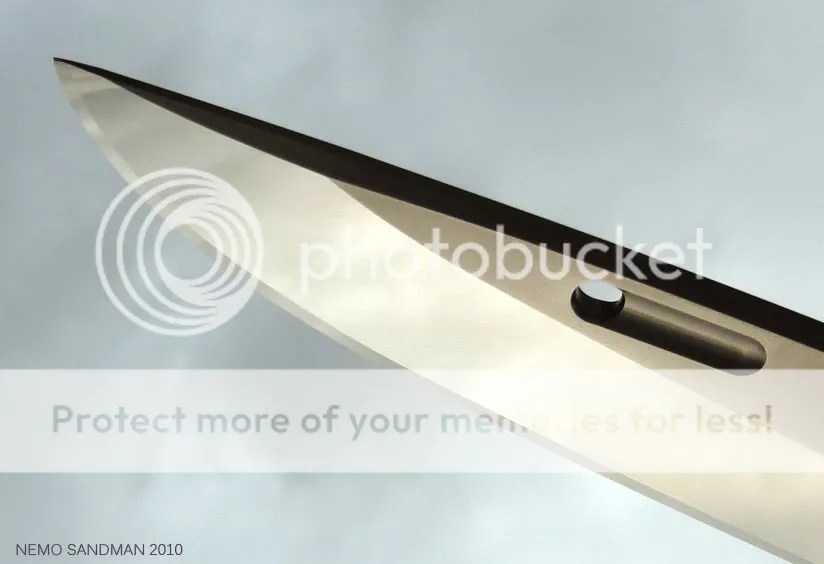
Beautiful reflection of the clouds on the Higo’s mighty blade.

The road so far:

“Rockstead Higo-J ZDP-189: Fears and Cures”
“Rockstead Higo-J In the woods”
“Rockstead Higo-J: Part III – Masamune in Winter”

Spyderco C22 Walker : Sky The Limit !

Thea and the C22CF
Thank to Jurphaas from Spyderco, I got the chance to own one little wonder of that limited production ! Thea loves it too and she’s in charge of the technical review…
The Michael Walker C22CF is not a new pattern in the Spyderco line.
The first C22 were produced in Switzerland 18 years ago. They were the first industrial folders with Carbon Fiber handles !
This Sprint Run got a gorgeous thin blade made of Hitachi Super Steel ZDP189.
The 67 mm long blade is wide and 2,5mm thick offering incredible performance in pushcuts.
The Hollow grind is so well executed by Seki City craftmen, you know by holding it between your thumb, it’s so thin, it could be almost transparent.

Black and Wlaker

Opening the C22 is not as smooth as a Sage (for example) but the positive force used to deploy the blade give a feeling of tough tool to this gentleman blade.
The knife is so light but feels so solid, it screams to be used ! And then, it’s like piloting a small racing car. The cuts are accurate and outstanding in their power.
My Plastic Butt’s test was passed with flying colors in one push cut. The C22 was even better than my reliable Gayle Bradley in that matter which is really remarquable !
The ergonomy on that little knife is so great, the strenght is directly transmit to the edge. And hidden choil give also a big sentiment ot security as you can keep your fore finger next to the edge for delicate/strong cutting.

The liner lock is also very “manly”: you need to push hard to disengaged it. The spring is very strong.
The carbon fibers handle is ultra smooth and you trousers will thank you for that.
Using the knife with greasy hands is not an issue as it anchors well in your palm.
So what do we got here ?

A light little big knife ! Carried like a breeze. Sharper and harder than many bigger knives. Pure efficiency in a small package.
It’s like driving a Lotus Seven on steroids. This little tool is really representing well the brandname “Spyder”co !
It cuts cuts cuts… and super powder steel ZDP189 if strop often enough is a great steel to use in EDC situations.
The C22cf is really a knife which make you smile once you have used it as you are amazed by the power of this pocket lightsaber.

C22CF

More to come as I will complete this review later. I’m now carrying that little blade every day with a gorgeous borrowed Rockstead Higo (I will review on a longer run), together they are forming a great daishō of ZDP189. Two examples of ultra high perfomance of modern cutlery.
Rockstead Higo J + Michael Walker C22CF

A little example of the raw cutting power of that incredible beast:

The plastic of that 1,5 liter Coke bottle is almost as thick as its blade and it passes through in one push cut (no sawing necessary!)
It was like in butter !!! Incredible !!!

Here is Valter reviw of this knife used as a skinner.

Here is a link of the Walker 6 years after skinning used.

Spyderco Sage II – The Wise Choice

Sage II and Tie Millie

And if the alternative of the a Tie Millie was not a Tie Paramilitary (which is not yet born) but the SC123TIP: the Spyderco Sage II ?

The Sage line is a collection made in Taiwan (now a high quality of execution guarantee). and “represents Spyderco’s 30-year pledge to knife crafting and learning to make better knives at every available opportunity. The plan is to offer an ongoing series of Sage Folders with many of the different and ingenious locking devices and mechanisms the knife industry has to offer.” (sic)

The Sage I was a carbon fiber handle linerlock, an hommage to Michael Walker. The Sage II is a titanium handle integral lock, an hommage to Chris Reeve.

Let’s give a quick look at the design of that folder: not to big, flat, beautiful lines, taking in consideration a lot of Spyderco unique improvements — the wire clip, the choil, the full falt ground leaf blade… The C123 is standing on the shoulders of many great spyderknives, taking the best.

Tie Millie and Sage II closed

Comparing the Sage II (up) and the Tie Military there is an obvious family ressemblance. Full flat ground blade, integral lock and choil. The “cockpits” on both knives are very similar. The construction is rock solid, the titanium handles are offering enough grip for a smooth surface which is very “gentle” with your trouser pockets (where you gonna clip those knives eventually). The Sage could be a civilian version of the Tie Millie as the fact to go in the city with a long gorgeous knife like a C36 is not the best way to be “reasonnable” in regard of the laws, the sage while offering many of the great features of his big cousin but it will be more pratical to go with it “under the radar”.

Clipped Sage II
The silver wire clip on a black trouser. This is the max visibility you will have from the Sage II once clipped.

The wire clip, for example, with its deep carrying positing is almost invisible and got no flashing names on it telling to every one: this is a knife !!!
Similar to pen clips and with almost no handle to tell tale, your Sage is following you and he’s easy forgettable.
The Millie is a very compact package and car easily find a place on your person, but the Sage looks like a wise choice to go light.

Handles
A close look at the handle of the Sage II (left) and  Tie Millie (right)

How the Sage II will handle “hard use” in the country side ? There is a lot of way to qualify what “hard use” means. Folders knives are not prybars or even fixed blade knives. The folder which are designed to be used as prybar often offers bad performance in the cutting departement. The grind here is flat and the blade relatively thin and I have noticed the Taiwanese edge grind is not flat but already gently convexed. This is amazing as your Sage II only needs some pass of gently stropping on a leather belt to get absolutely vorpal ! The cutting power has been already demonstrated in some video. They are some French videos torturing a “La Redoute catalog” with Bast2a, and American one with BLUNTRUTH4U reviewing a Sage 1 (same blade diffrent handles and locks) and they are very impressive. Cutting wood the Sage 2, the blade goes deep.
Now I like to do pushcuts with my thumb on the back of the blade and the Sage got almost sharp edge there: great for obtaining sparks from a fire rod but eventually painful without gloves. I have used some diamonds rods to blunt mine and really you can notice the difference in confort when you start to work by hand on that CPM S30V blade how much that steel is damn hard ! I would love to have a ruonded back and perharps will try to round it more a little bit. But here, without a backstand, you can notice how hard the steel is…
Anyway, you got a 3mm thin high flat ground blade with a convexed edge: all the condition for a great slicer and ideal folding friendly tool for bushcrafters. The belly of the blade improves the cuts in hard matter, working like a guillotine. (My best wood cutter is still the incredible Spyderco Dodo with its S edge which cant be compare to none as a “wood eater” !)

Sage II Nemo cutting test
My favorite cutting test: going through the butt of a cola plastic bottle. you will be surprised how many great designs cant do it… The Sage passed it with flying colors !
Many so called “hard used” folders with really thick blade cannot pass that test at all.

Esee 3 and Sage II
The  ESEE 3 and the Sage II make a great high performance compact combo for going in the woods BTW.
Also the open construction on the Sage II and the simple reliable mechanism improved by Chris Reeve on his Sebenza Line is a breeze to get clean.

As the handle is not straight but gently curved to spouse the palm of your hand, there is no need for an abbrasive matter (like G10) to get and conserve a positive grip even with wet and slippy hands. There is a lot of intuitive security in that design. The choil and the jimping for example are so great to communicat direct force to the blade without to stress the pivot. This is a great feature which was first developped on the C36 Military and which is now used in the Slipjoint line of Spyderco: even with no lock your hand and fingers are safe.

For a reason unknown, when I have received my Sage II it was not smooth and the lock was sticky. No blade play in any direction though. This problem was easily worked around by adjusting the pivot and gently bend the lock beyond the handle to rub some pencil on the locking surface. Now the knife is as smooth as my Gayle Bradley and the “galling” (sticky lock) absolutly disappeared. The cute Sage II got something of a jewell and I have noticed many owner who first decided to baby it and use it only on weekend then eventually happilly use them very hard everyday.

There is a lot of wisdom behind the design of  the Sage collection. The choice to get a worker knives collection all performance oriented in the legal non threatning package is the wisest.  And the first designs so far are really workhorse. The carbon fibers on the Sage I for example can take a beating without to get marked or scratched and the frame lock on the second give a you a lot of confidence in your tool just by squizing the handle you know the blade won’t fold.  Eventually the Sage II got everything I love in a knife: reliability, beauty, efficiency and sheeple friendship. And my trousers love them too. The Sage II is simply a great knife to EDC.

Balanced Sage II

Tha handle gives to four fingers a very confortable grip. The open ended construction while easy to clean would get painful for long hard cut. Gloves can help.

One sage said: “Think twice and cut once…”

Later, I was tempted to slightly convex the blade of my Sage II. The improvement in pure performance worse the time passed with sandpaper.
The discussion is located here on the Bladeforums
Sage COnvexed
Sage Convexed