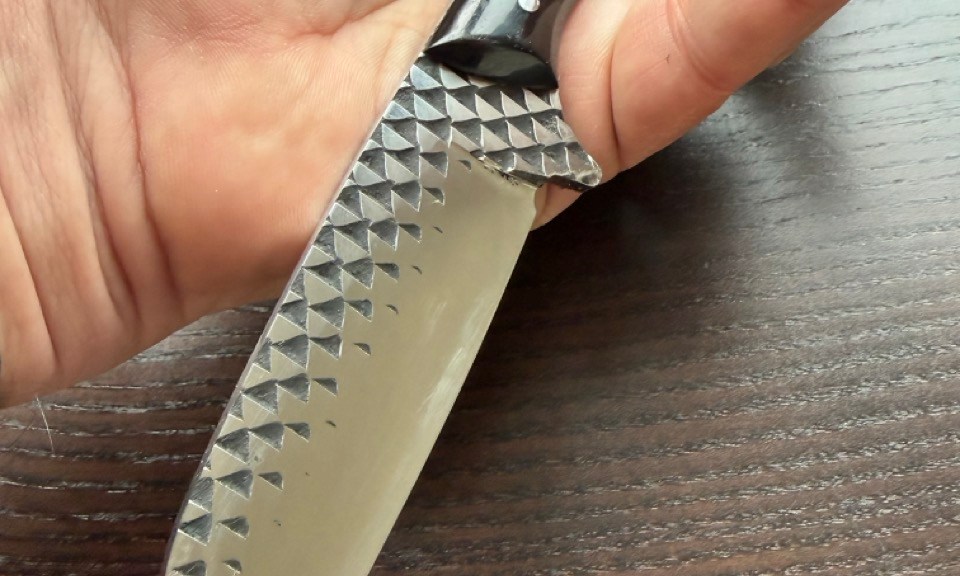
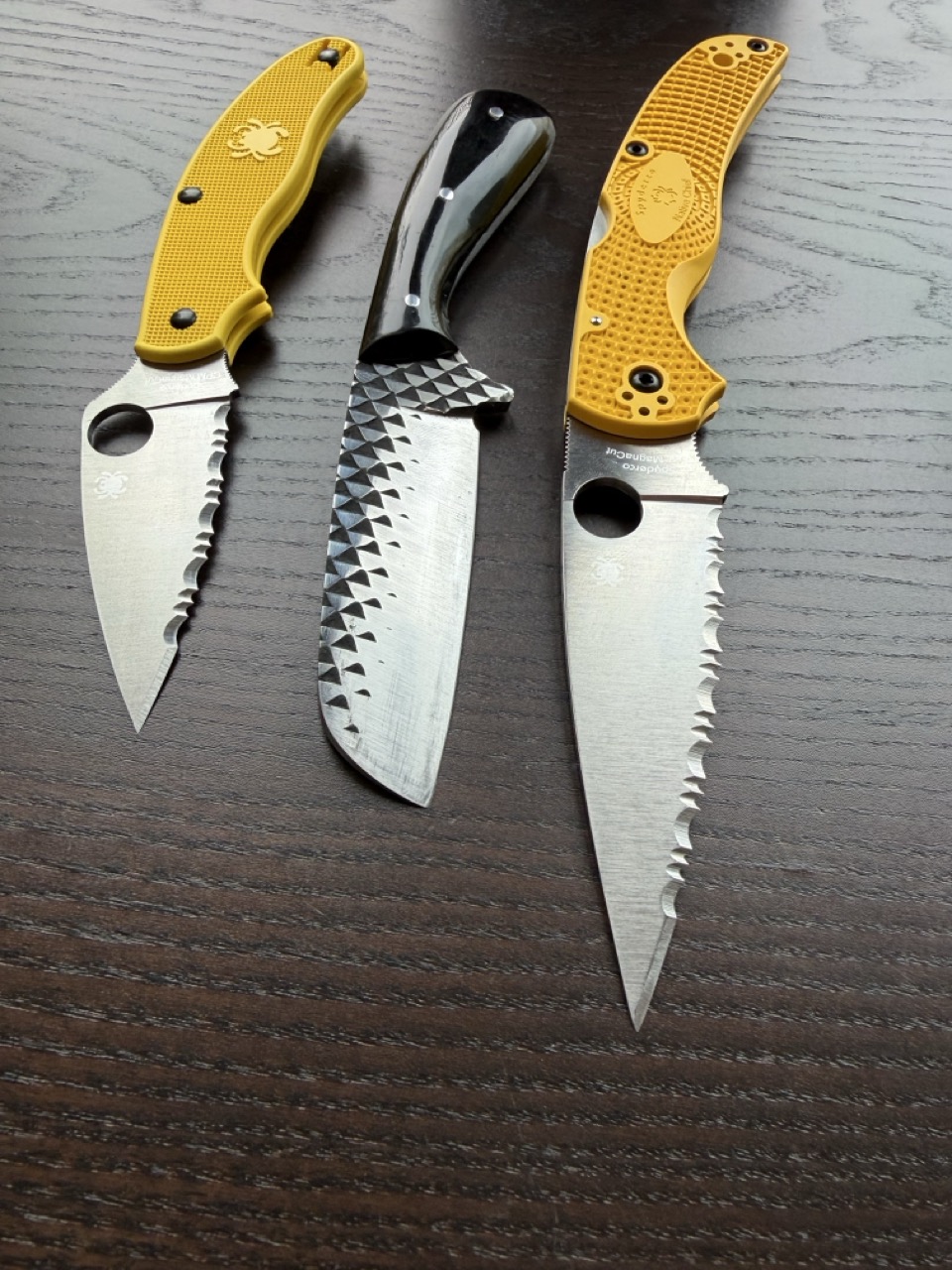
There are teeth… and then there are teeth.
Serrations — and rasp.
Let’s get one thing straight.
This is not a “knife made from a rasp.”
This is a farrier rasp that refused to die.
(A farrier takes care of the feet and hooves of equines, whether donkeys, ponies or horses. He takes care of fitting and trimming the shoes.)
And when the knifemaker knows exactly what he’s doing — and here, Robin Medina Thomas from La Coutellerie de la Vallée clearly does — you end up with a blade that doesn’t just cut. It commits. Playfully.
Carrying its inheritance in both form and function.
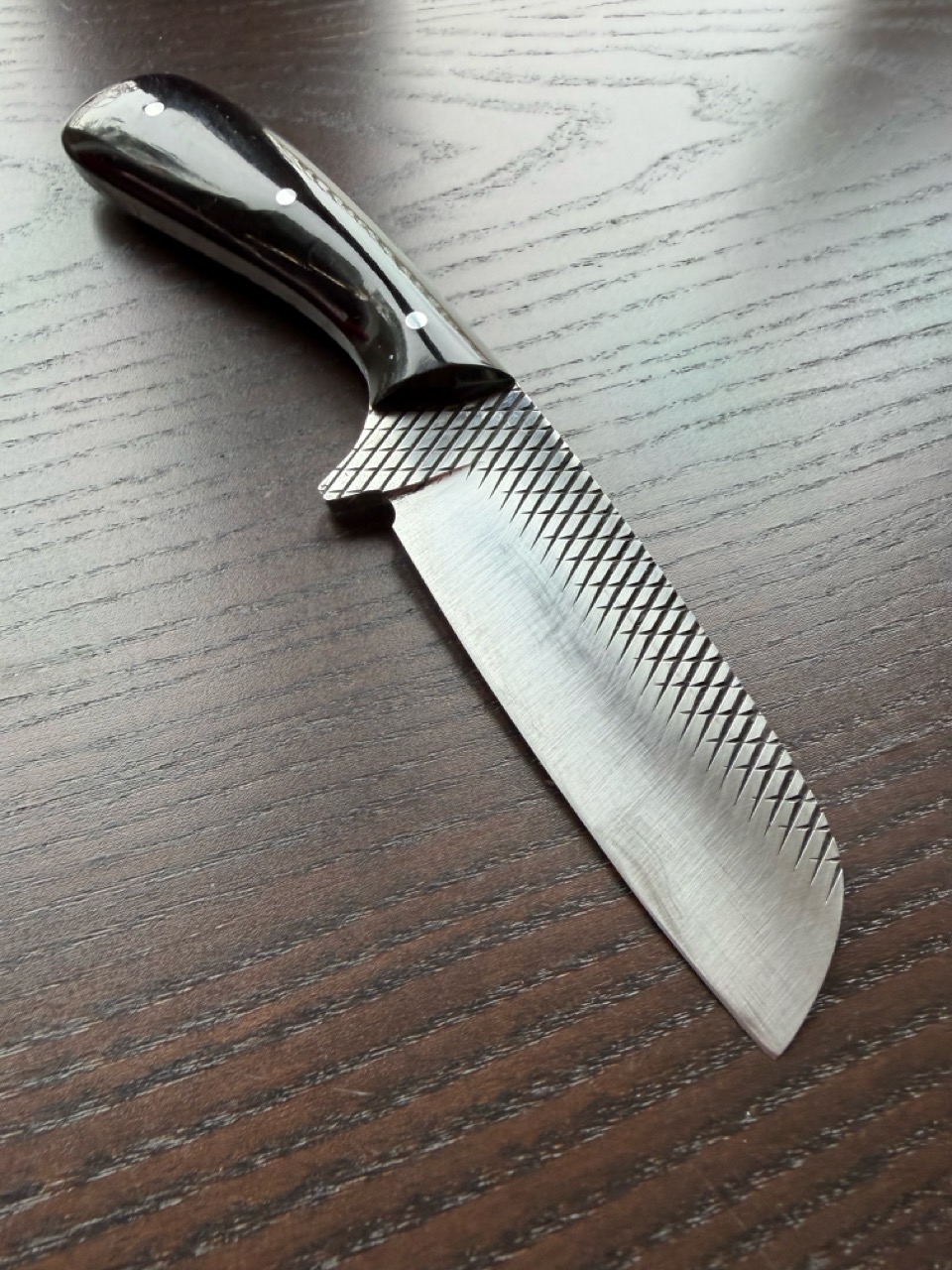
The blade retains the unmistakable imprint of its former rasp life.
A thick spine, yet a remarkably fine cutting geometry. Along the upper section, the rasp’s triangular teeth remain smoothed — not as ornament, but as a deliberate act of preservation… a generous spine that offers a wide, comfortable track for the thumb.
These elements speak of force.
From abrasion to raw, unapologetic function.
And then, just below, everything shifts — through transformation.
In an age of excess and waste, this feels almost essential.
Not just recycling, but refinement.
A second life !
Rasp steel is high-carbon steel, typically around 1% carbon.
An old-timer alloy — simple, proven, and unforgiving if mishandled. No modern complexity.
Just steel that responds directly to heat, to grinding, to use.
And when treated right, it delivers exactly what matters:
Edge, bite, and honesty — with a potential remarkable tolerance for abuse.
That’s why this kind of steel has long been favored for expedition and field knives (TOPS, ESEE…). It has proven itself where it matters most: in wood, in weather, in real use.
Not in theory.
In the field.
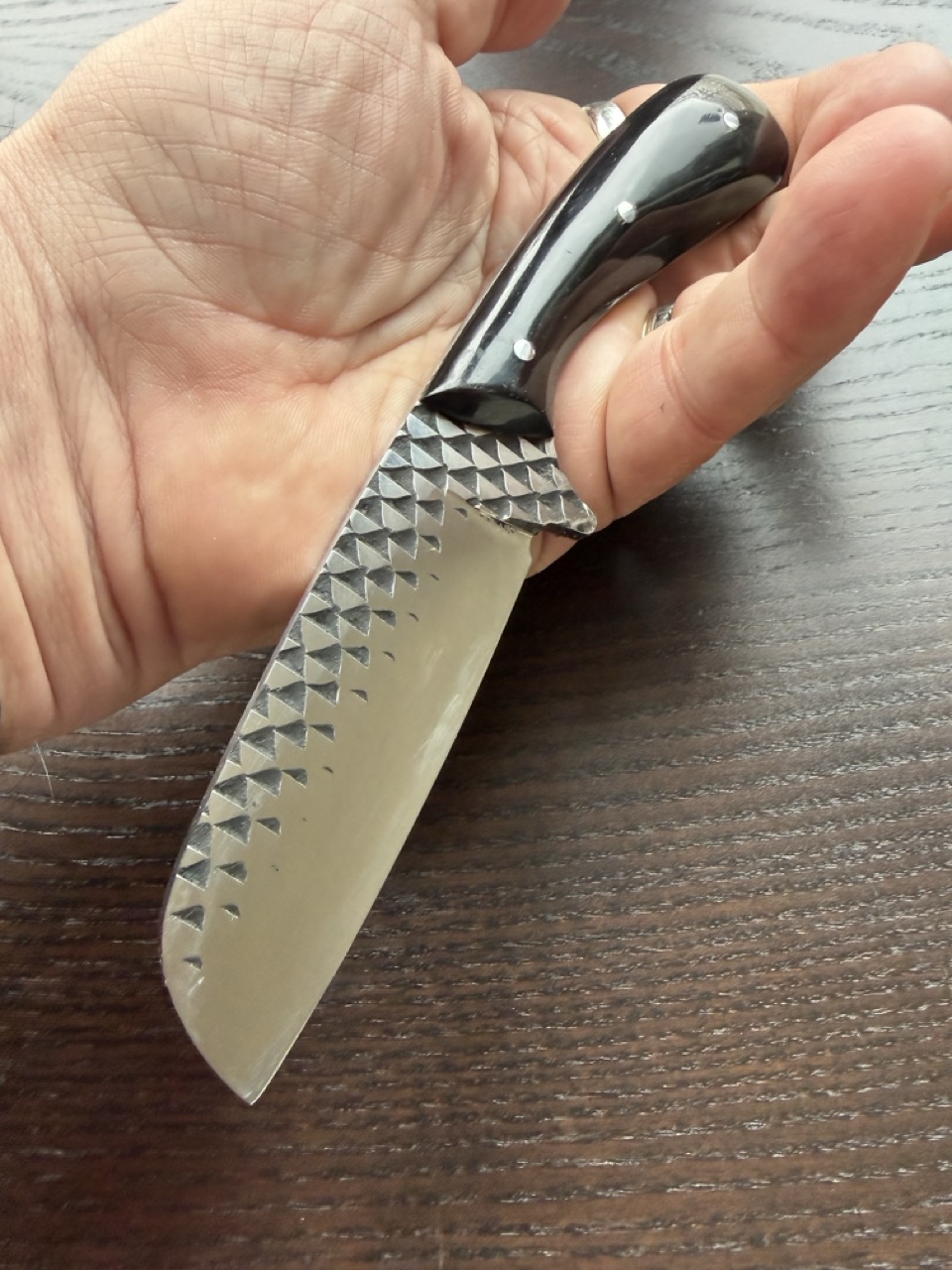
Deep, smooth, almost liquid in its reflection, the zebu horn handle creates a striking contrast with the blade’s aggressive texture — a dialogue between softness and bite.
The transition is not only visual. It is tactile. Almost sensual.
Oh, this is a tool made with love, and a companion, still becoming.
And you feel it immediately in the balance and ergonomics.
The fingers and palm find their place naturally — no adjustment, no hesitation, no hot spots.
The spine is just right for controlled push cuts, offering both comfort and precision.
This is, above all, an excellent trimming knife.
It can also find its place in bushcraft.
Easy to bring back to a razor edge, and forgiving in use — a knife that works with you, not against you.
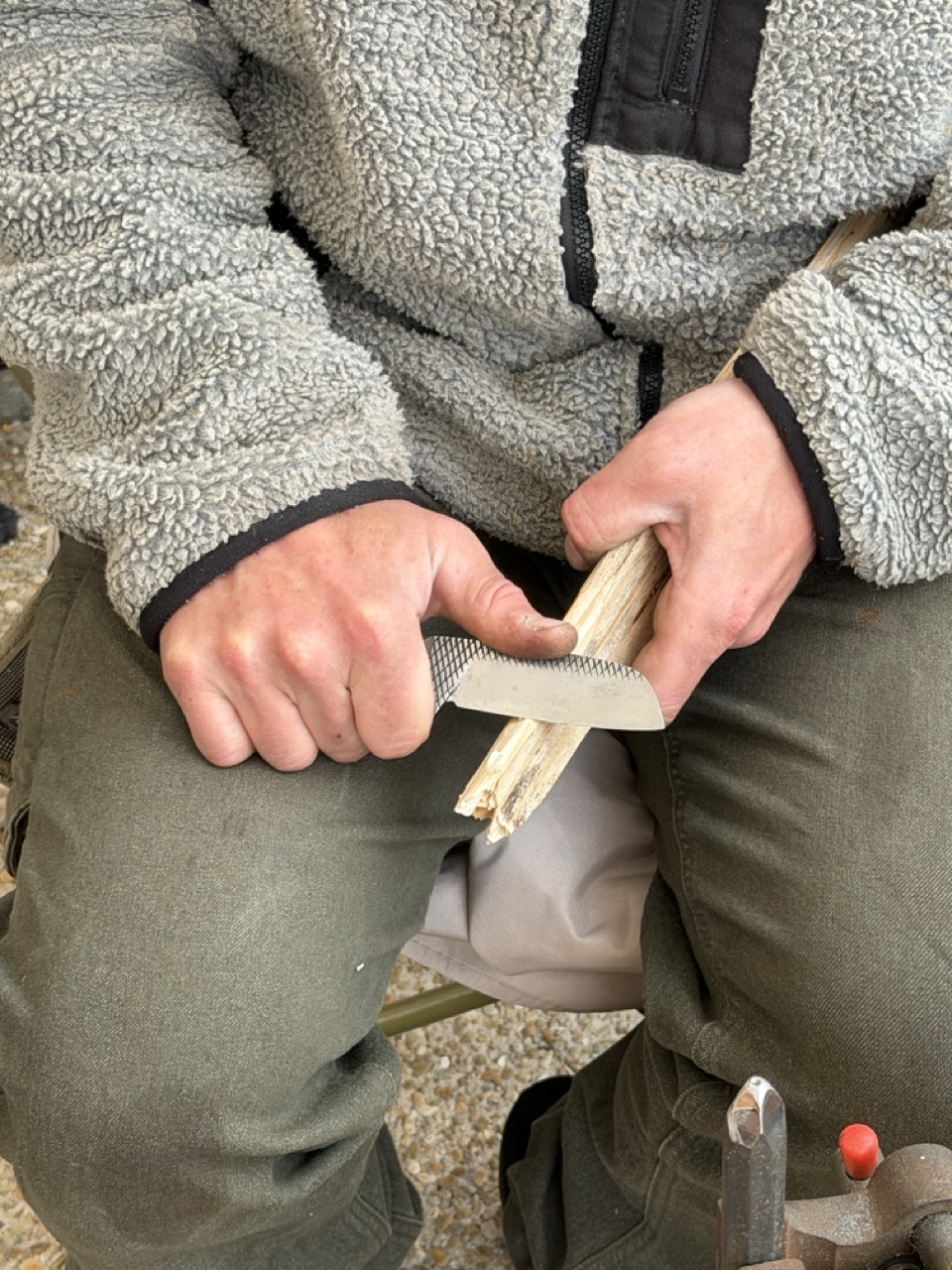
The profile remains restrained.
A compact geometry, balanced, with a gentle curvature that favors control over demonstration. The bevel is generous, inviting engagement without excess resistance.
Used in wood, the blade reveals its true character. It confirms the visual promise: entry is immediate, the cut remains stable, the material yields without fracture
As a bonus:
Carbon steel and zebu horn share a common trait: they will change.
The steel will soon take on a patina, marking time and use.
The dark brown horn will slowly deepen, its surface already showing and gaining subtle complexity.
These are not signs of wear. These are the continuation of the object.
And Robin’s Bull Cutter is really a knife made to be enjoyed in the woods. He will see a lot of kitchen times too because the sheepfoot blade is non-threatening, almost reassuring — even to those who don’t speak the language of knives, as they are drawn to the story of a farrier’s rasp given a second life.
The guard locks the hand in place with quiet confidence, and the thin edge invites controlled push cuts with ease.
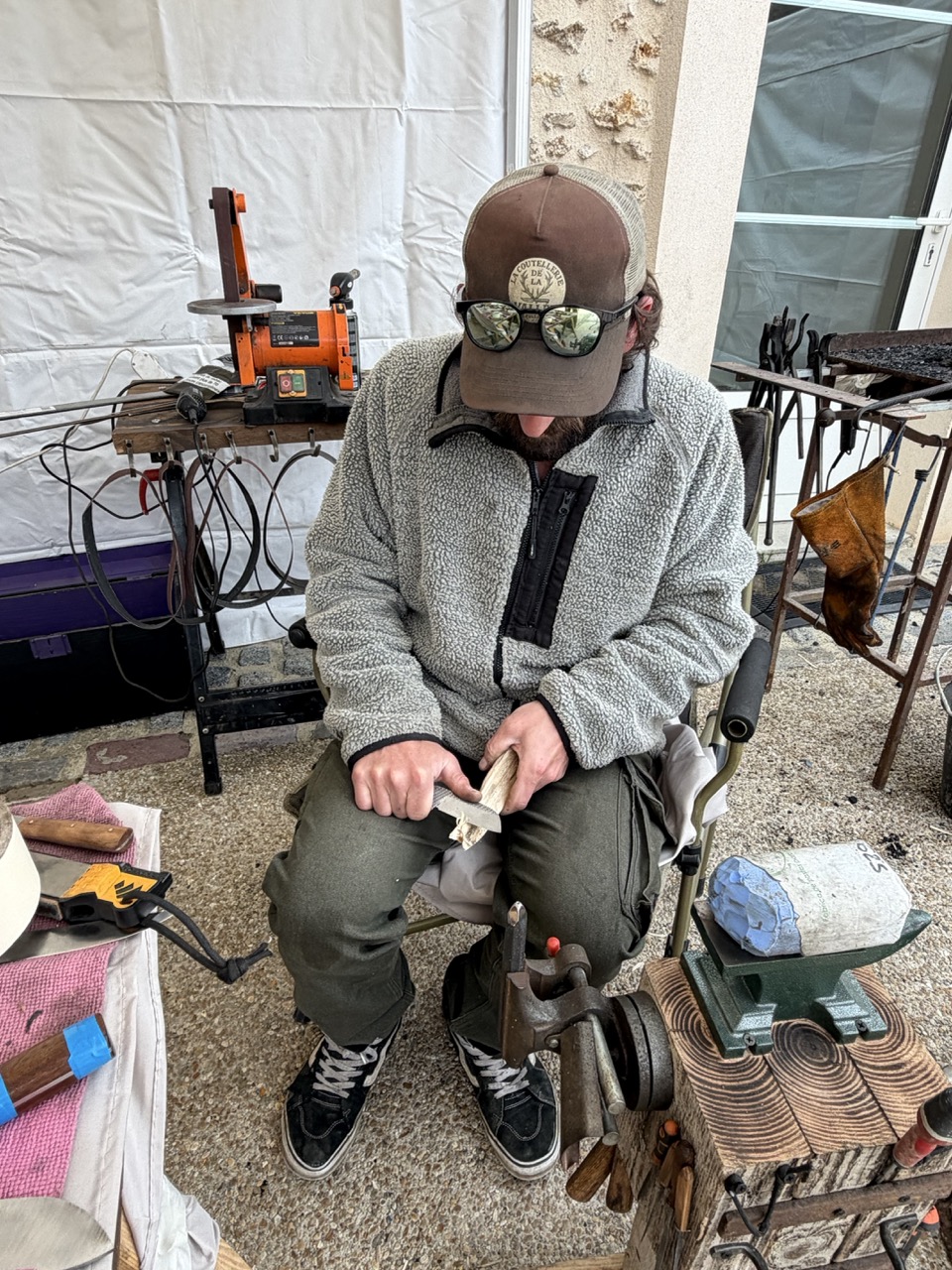
Robin made this knife for his own enjoyment — and you can feel it.
There is substance here. A certain heft in the hand, just enough to carry momentum when working light branches. It’s not meant for show — it’s meant to be used.
A compact blade with presence.
A small tank, stripped of frills and completely free of tacticool pretension.
Instead, it carries something rarer:
There is an old-timer aura….
The kind of knife that feels familiar the moment you pick it up as if that steel had already lived a looong life before reaching your hand.
It also echoes my long-standing appreciation for Schrade Old Timer fixed blades: the same kind of steel, the same pragmatic lineage.
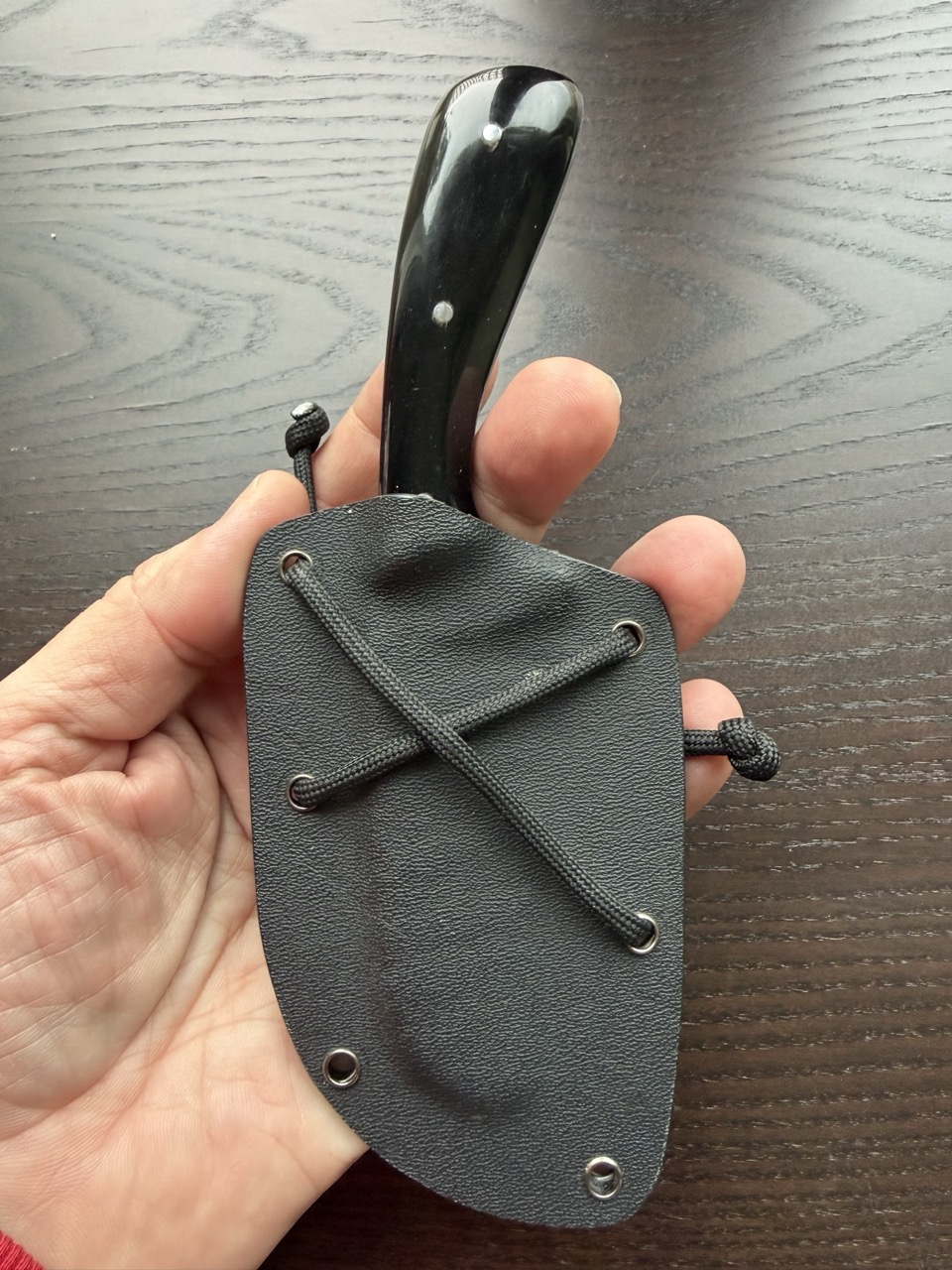
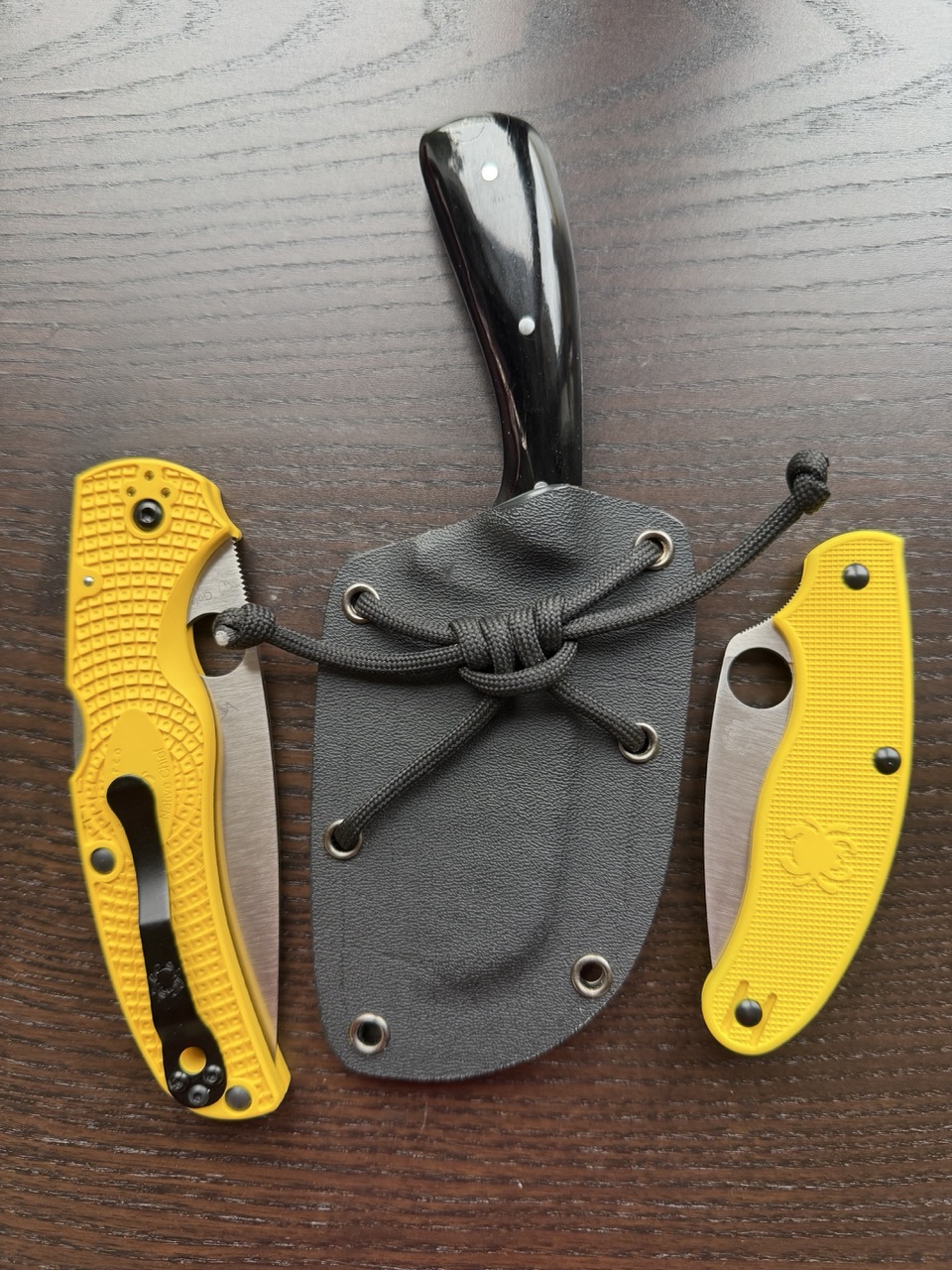
And then there is the sheath. Modern. Minimal. Black. Functional.
No unnecessary flourish — just a pancake kydex shell, shaped tight to the blade, held by a simple cord system that lets you adapt carry without overthinking it.
Your knife is a tool, destined to be in your pocket, belt or bag, when you go in the woods.
This kind of sheath are indestructible and they dry easy.
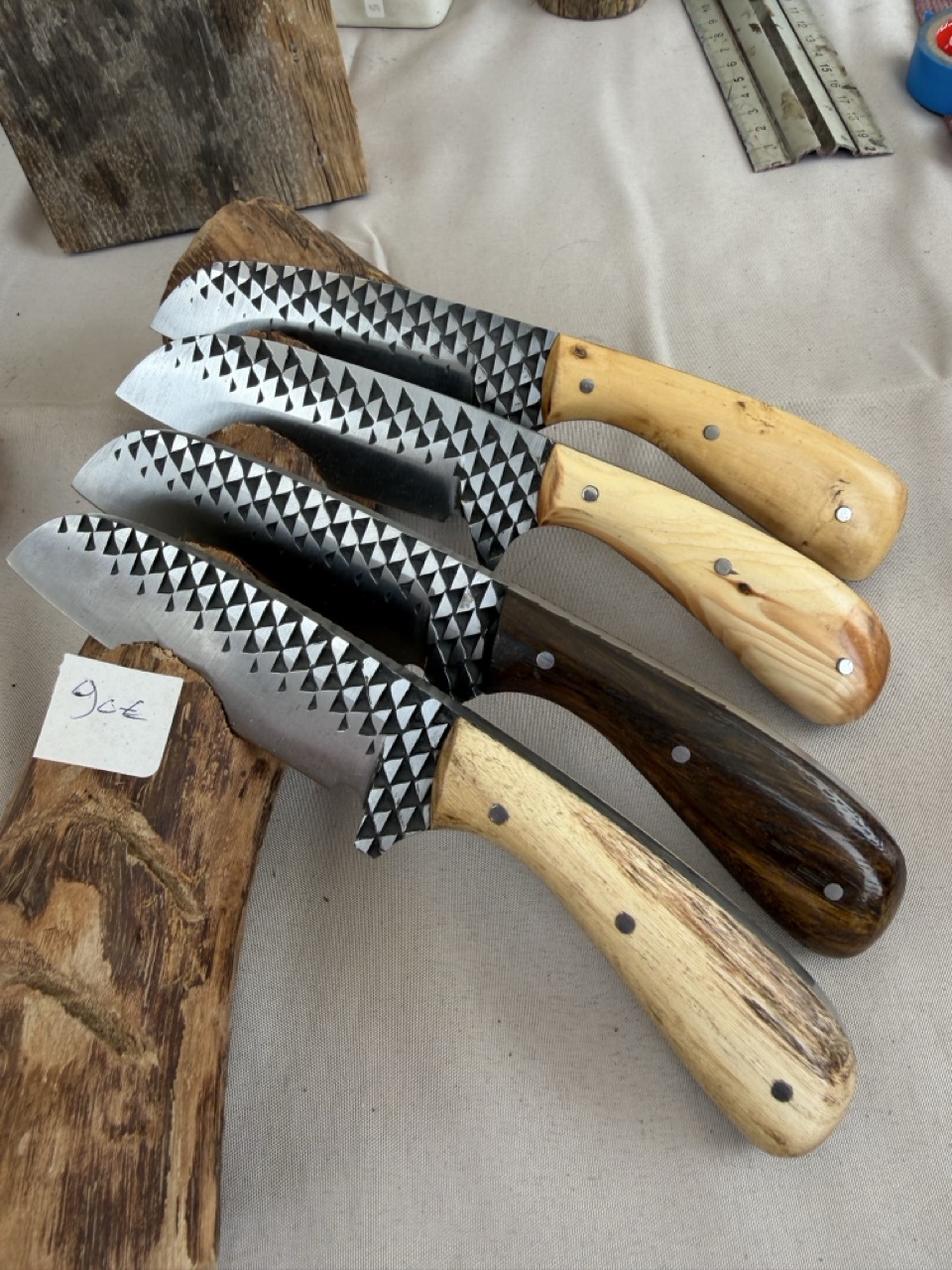
The handle can be crafted from a selection of carefully chosen woods and natural materials, each bringing its own character and depth:
- Curly Birch — light-toned and finely figured, with subtle flame patterns that shift under the light, offering both elegance and warmth.
- Boxwood — dense and smooth, with a pale golden hue that evokes traditional European craftsmanship and understated refinement.
- Yew — rich in contrast, blending warm amber tones with darker veins, a wood long associated with heritage and resilience.
- Yellow Locust (Black Locust) — robust and naturally durable, with a deep, earthy coloration that speaks of strength and longevity.
- Rosewood — dark, luxurious, and complex, with deep reddish-brown tones and a natural luster that brings a sense of quiet opulence.
- The list goes on…
For around 100 euros (mine was 110), the Bull Cutter doesn’t belong in a display case. This is Robin’s favorite design and best seller. It belongs in the forest — in valleys of green and grey, following the rivers as they meander through the land.
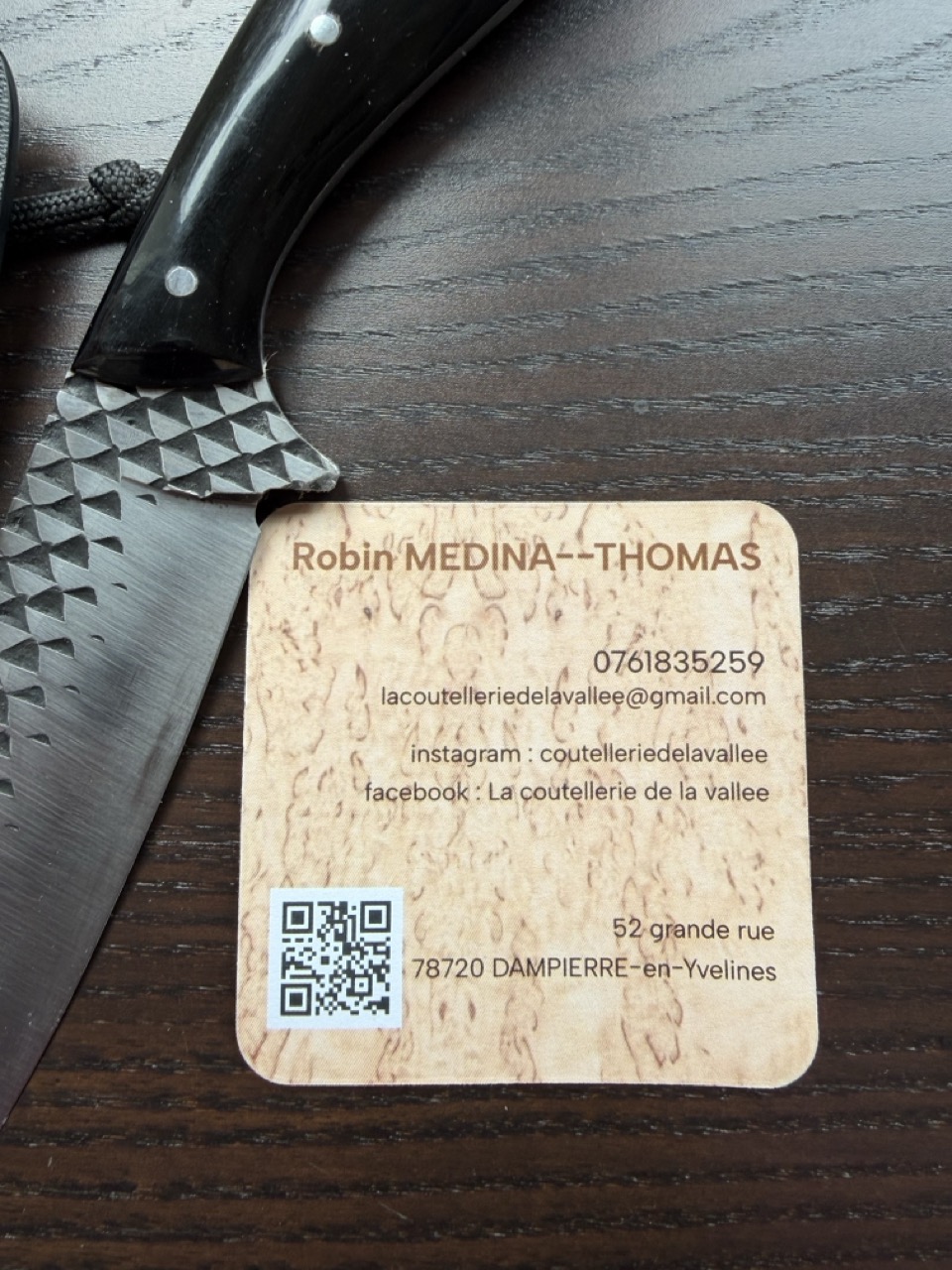
It is a coup de cœur for me — and my kind of tribute to a young, gifted knifemaker.
In use. This rasp steel was born to remove matter.
It still does in a new sharp shape.
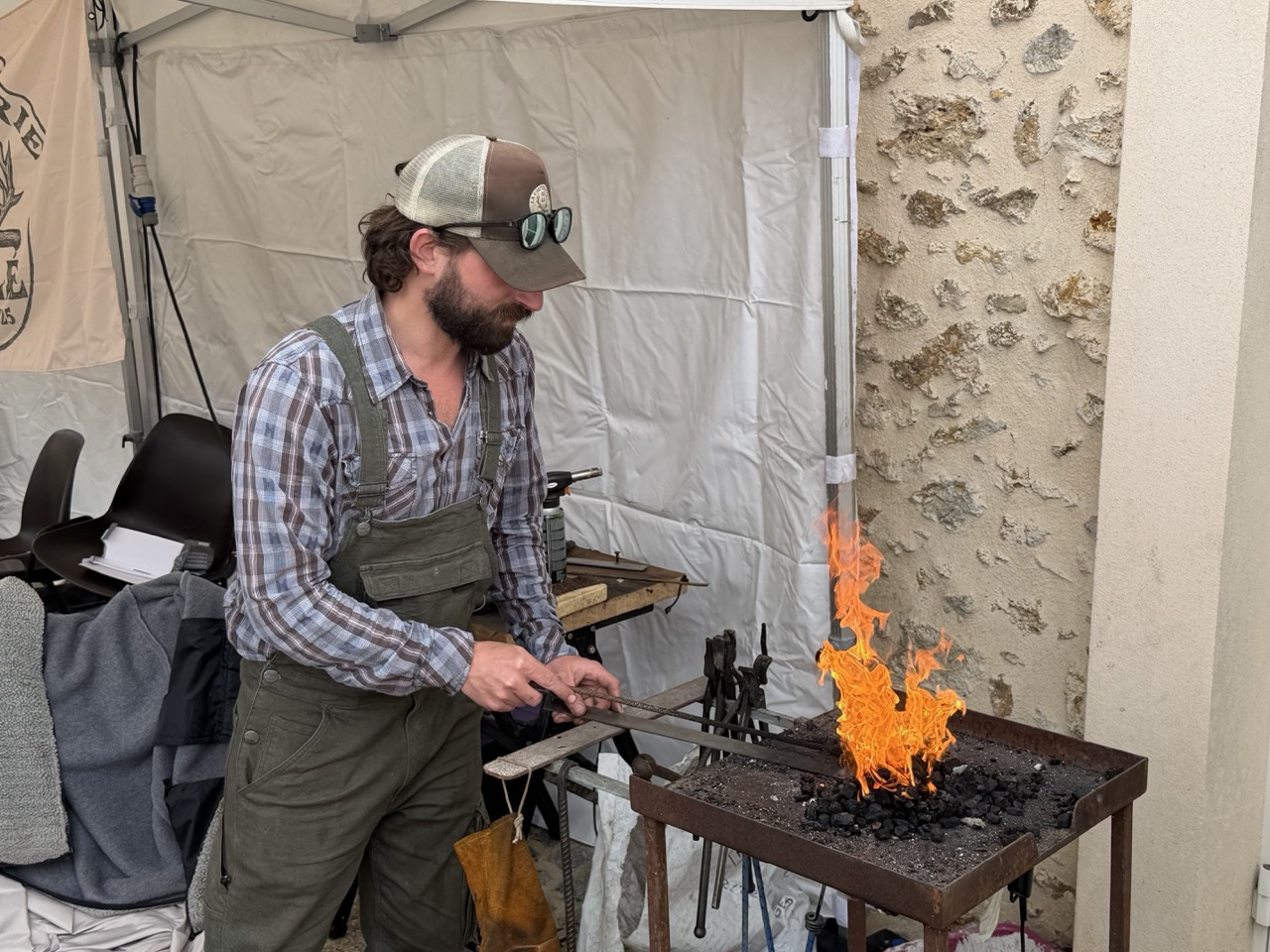
La Coutellerie de la Vallée
Dampierre-en-Yvelines, France
An artisan workshop dedicated to the crafting of bespoke knives and the art of fine sharpening.
Each piece is shaped with care, guided by tradition, and made to endure in use.
📞 +33 7 61 83 52 59
 NemoKnivesReview