
I’ve been an early adopter of the Chaparral. Nearly 13 years ago, I called it the “Extra Flat Companion” in my first review from 2012. Back then, the Chaparral was designed to serve as a platform to test different handle materials, while the Sage (another model “made in Taichung”) showcased various lock designs used in folders.
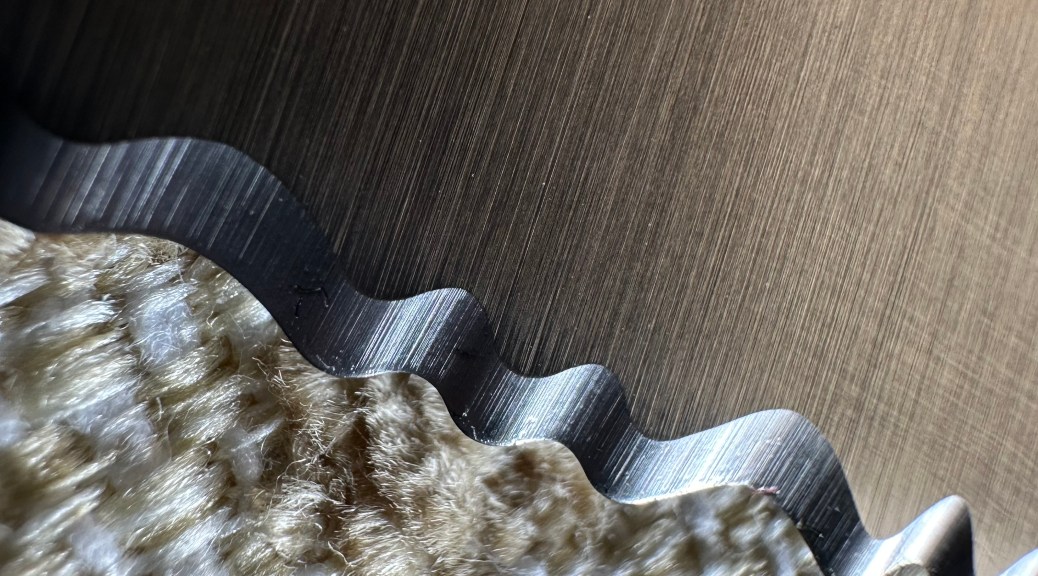
Twelve years later, Spyderco has introduced a major improvement to the Chap’s blade: their famous serrations. The brand is, of course, known for its Spyderhole, its clips, and… the performance of its serrated edges. Sal Glesser has long advocated the superior cutting performance of Spyderco’s sserrations. Scallops, moon quarters, and thin chisel geometry all work together to create the ultimate “matter separator,” making tough cutting tasks effortless.
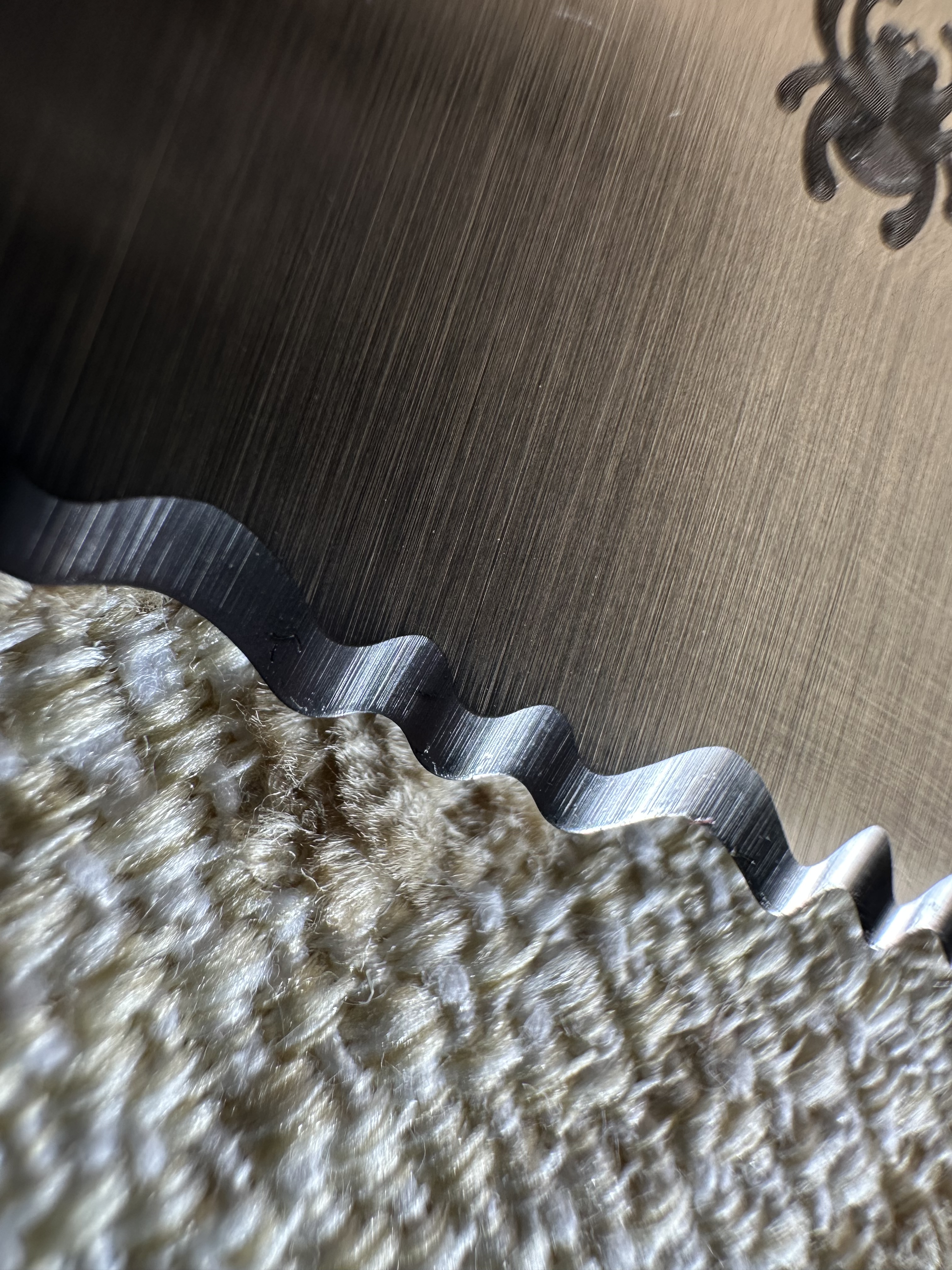
Sal has refined his serrations into a recognized patterns and created the Spyderedge: “Spyderco’s two-step serration patterns consist of one large and two small serrations. The pattern increases the cutting edge’s surface area by up to 24%”.
On the Chaparral, the serration are even better as they are rounded to avoid snagging when cutting. Those same enhanced serrations can be found on another serrated folder made in Taichung for Spyderco: the LC200N made Caribbean.
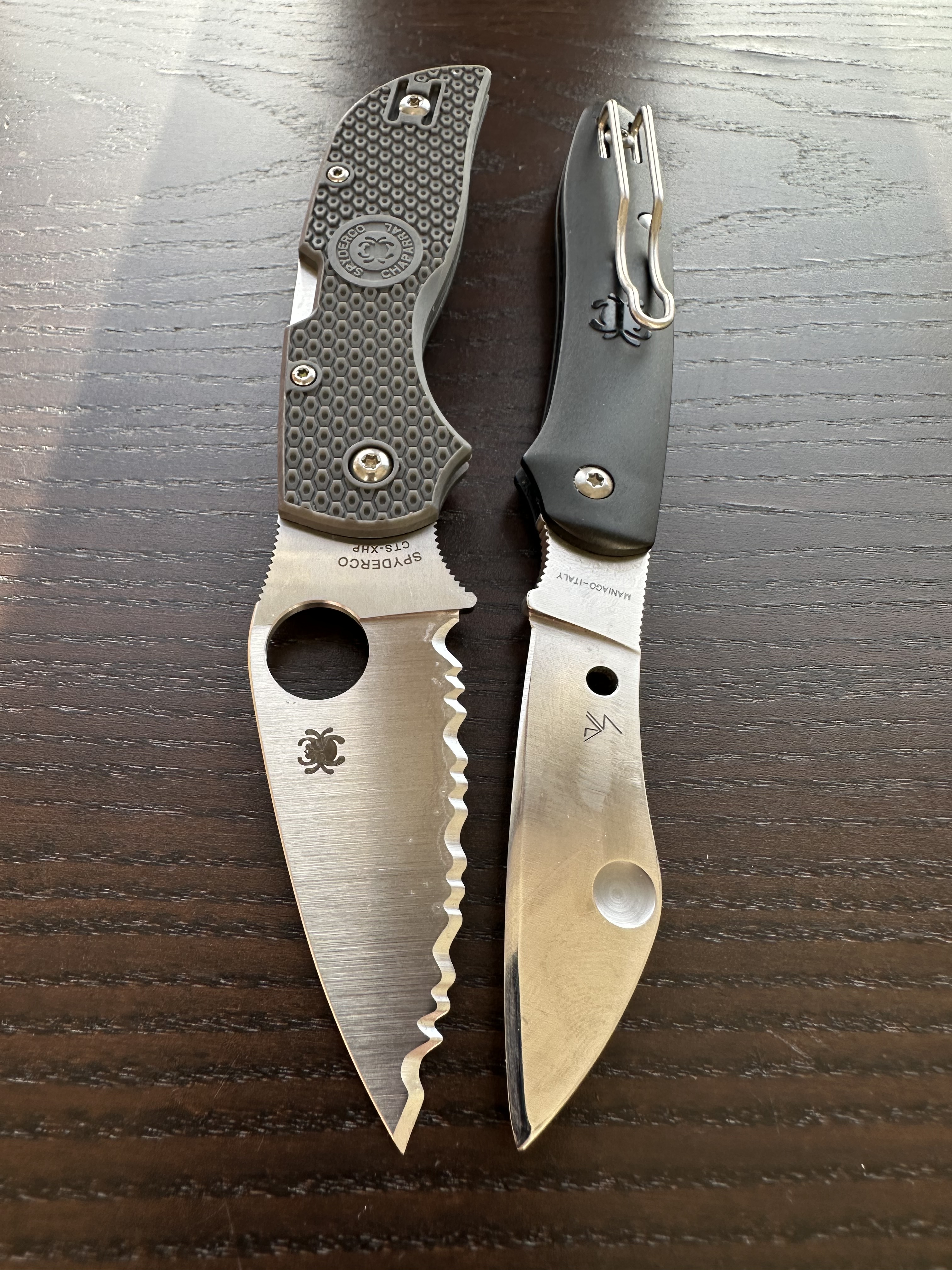
I’am not a serration’s fan. I prefer a short convexed blade like my Roadie XL to EDC but this is the opportunity to pocket a serrated knife designed to be low profile folder easily displayed in the middle of the sheeples.
The Chaparral is another Lil’ Big Knife in disguise. Go figure, his lock is equipped with an hidden pin which gives a lot of strength and stability. This improved backlock is also found on the Sage 4 but do not worry about vertical play.

Also the Chaparral’s blade is only 2 mm thick. A razor blade with serrations ? It should be interesting !
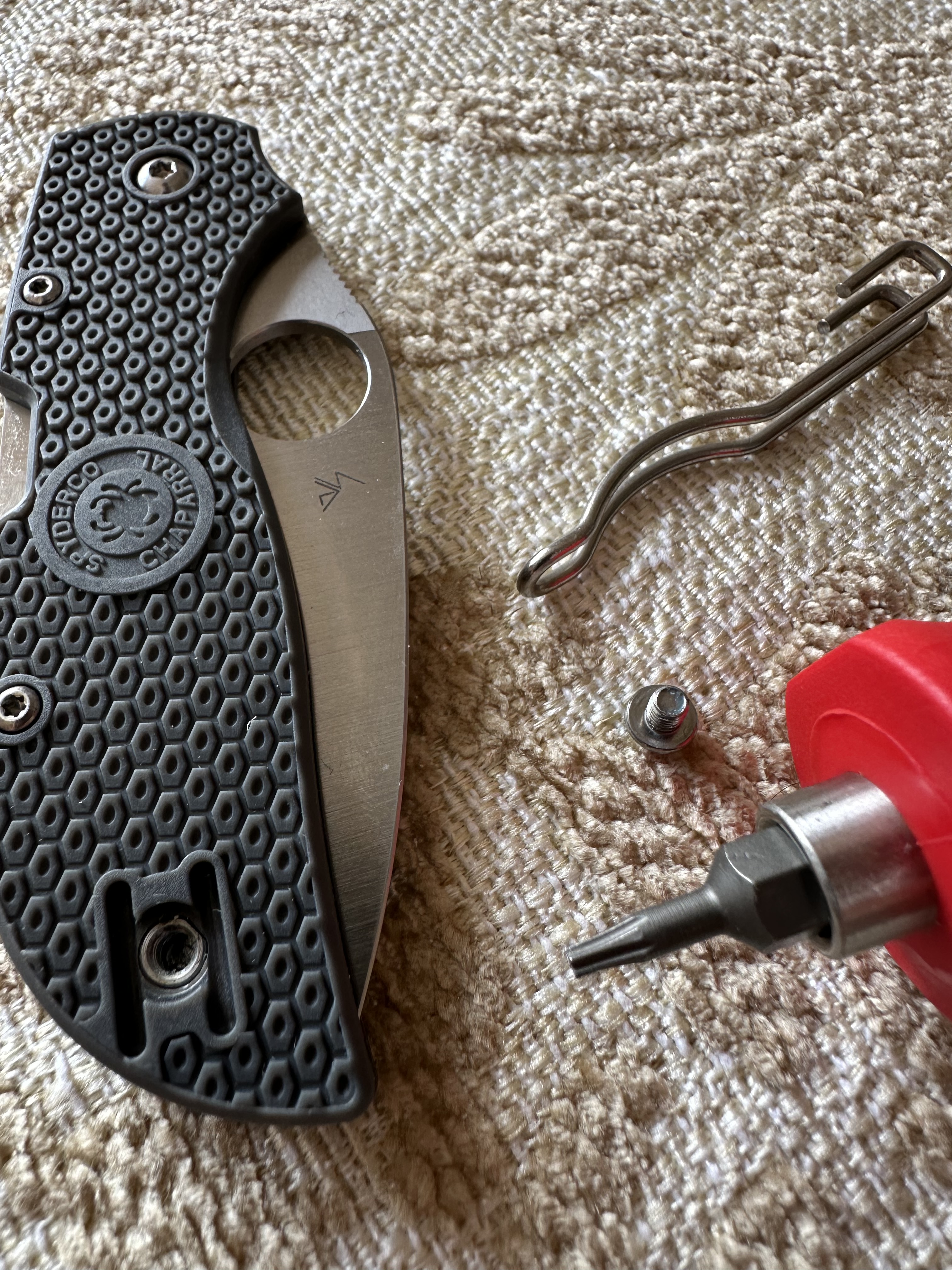
It even has teeth on its handle. The FRN scales feel almost like shark skin, which can be tough on pockets. My first step was to temporarily remove the pocket clip, then sand the scales to smooth them out.

The FRN doesn’t react as quickly as G10 when sanded. I still ended up with a slightly toothy handle, but it’s much more acceptable to me. Of course, this is a matter of personal taste — many users will appreciate the aggressive grip the pattern provides. I, however, prefer not to carry a pocket shredder anymore.
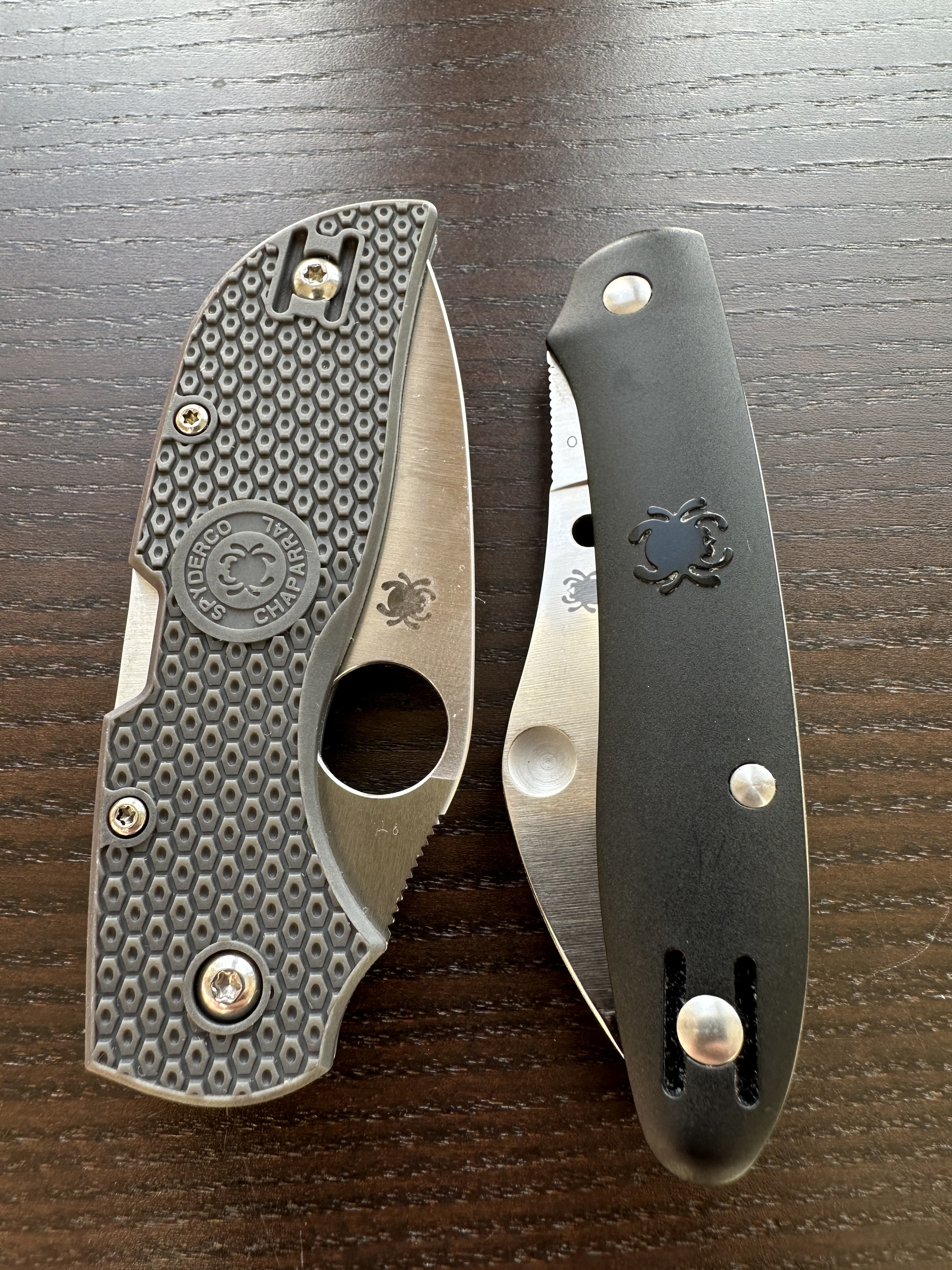
Lately, I’ve discovered that I really enjoy knives I can carry in my denim watch pocket. The Roadie XL, which I can now flick open with a wrist, is the king of that pocket and I use it hard despite its small size.
But this little “Tooth Faerie”, the Serrated Chaparral, also demands heavy use — and beware of its cutting power! Its steel, CTS-XHP, is known for being extremely reliable, even on thin edges. I’ve used it in many knives, including some Cold Steel Voyager XLs, and it never disappoints.
It will be very interesting to see how the Chaparral Light platform, equipped with a top-performance factory edge and an improved backlock, performs as a true workhorse — pushing the envelope of what the Chap’ can do. Spyderco has also just released a Slipit (non-locking) Chaparral, sold at nearly double the price of the FRN serrated version. Clearly, this one isn’t marketed as a “precious” collectible but as a pure performance tool. Spyderco has supercharged the Chaparral to be a user’s knife.
To summarize:
- 2 mm thick blade — this is thin !
- Backlock enhanced with a hidden pin — zero vertical play !
- Rounded, anti-snag SpyderEdge.
- Sheeple-friendly design.
- Made in Taiwan with attention to details.
Yes, the Chap is back… with teeth … in its next chapter:
“FOR THE FIERCE AND THE FURIOUS“

 NemoKnivesReview