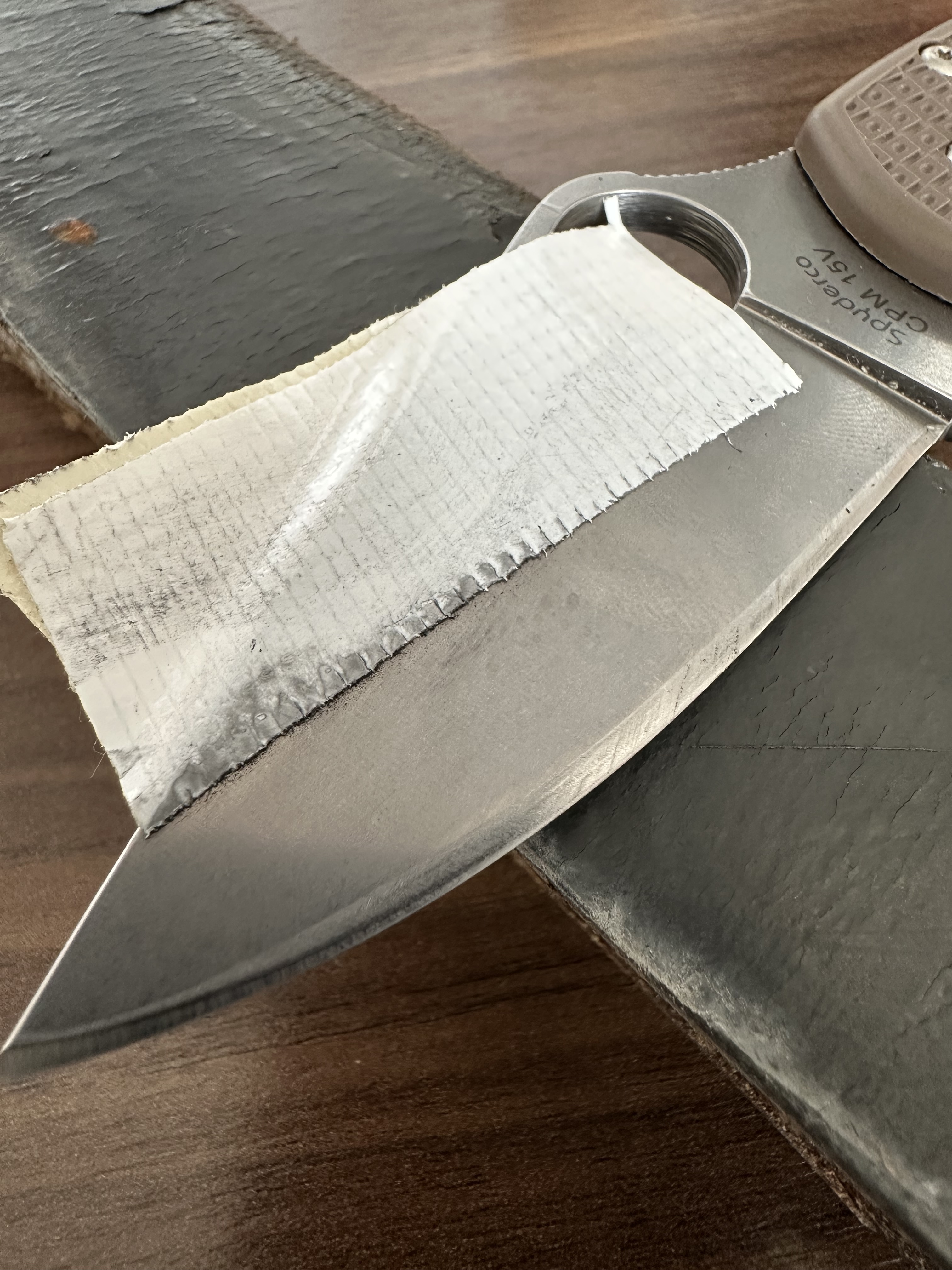
You know what ? It’s time to thin the edge of Gambit. Pictures are better than thousand words.
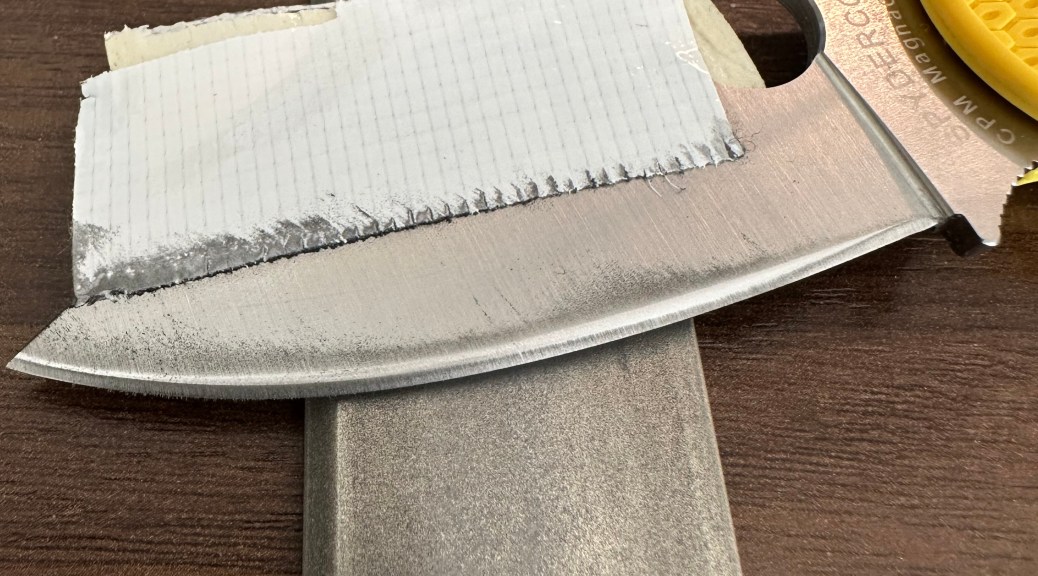
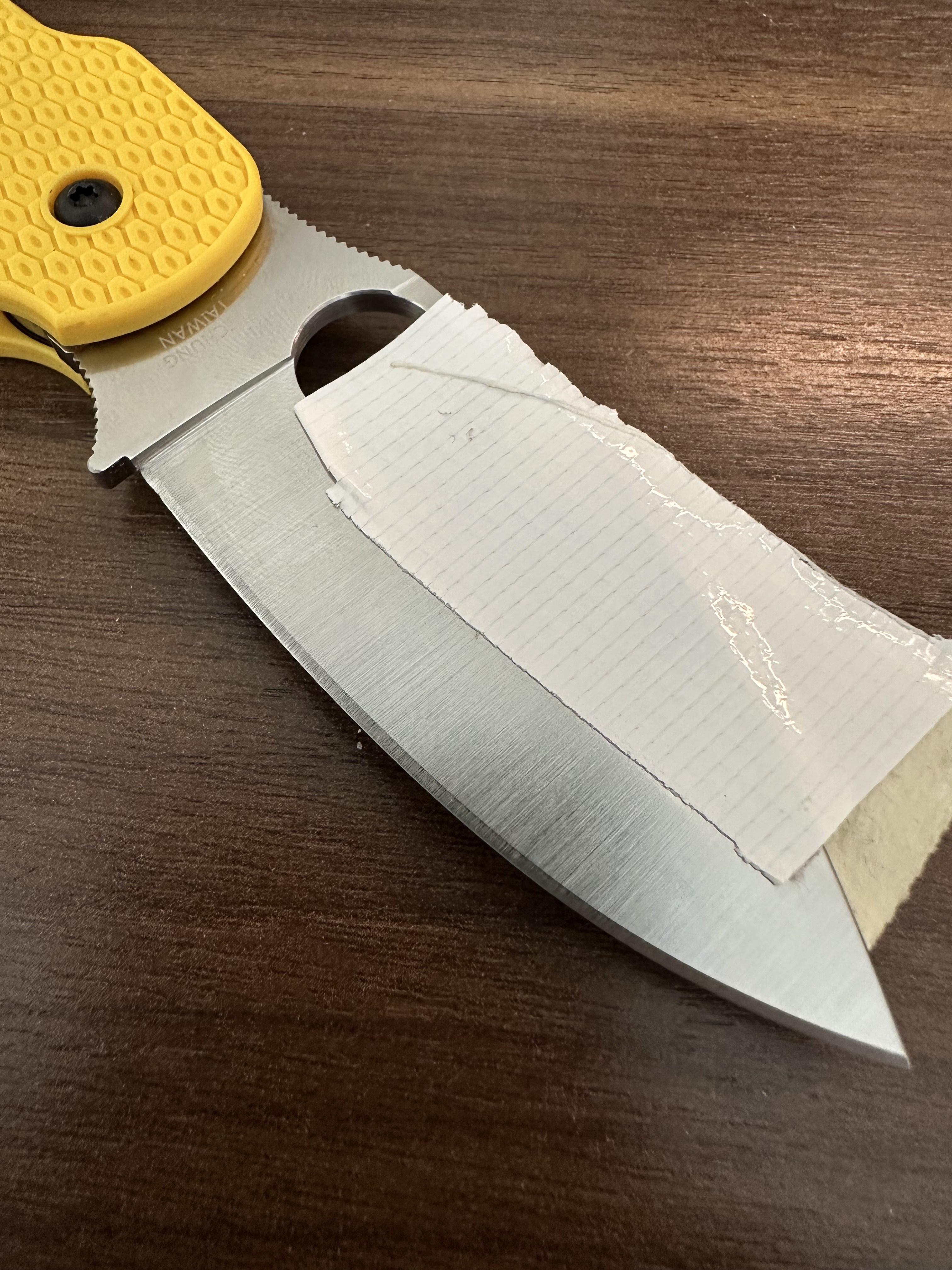
The gaffer is here to protect the blade against my clumsiness.
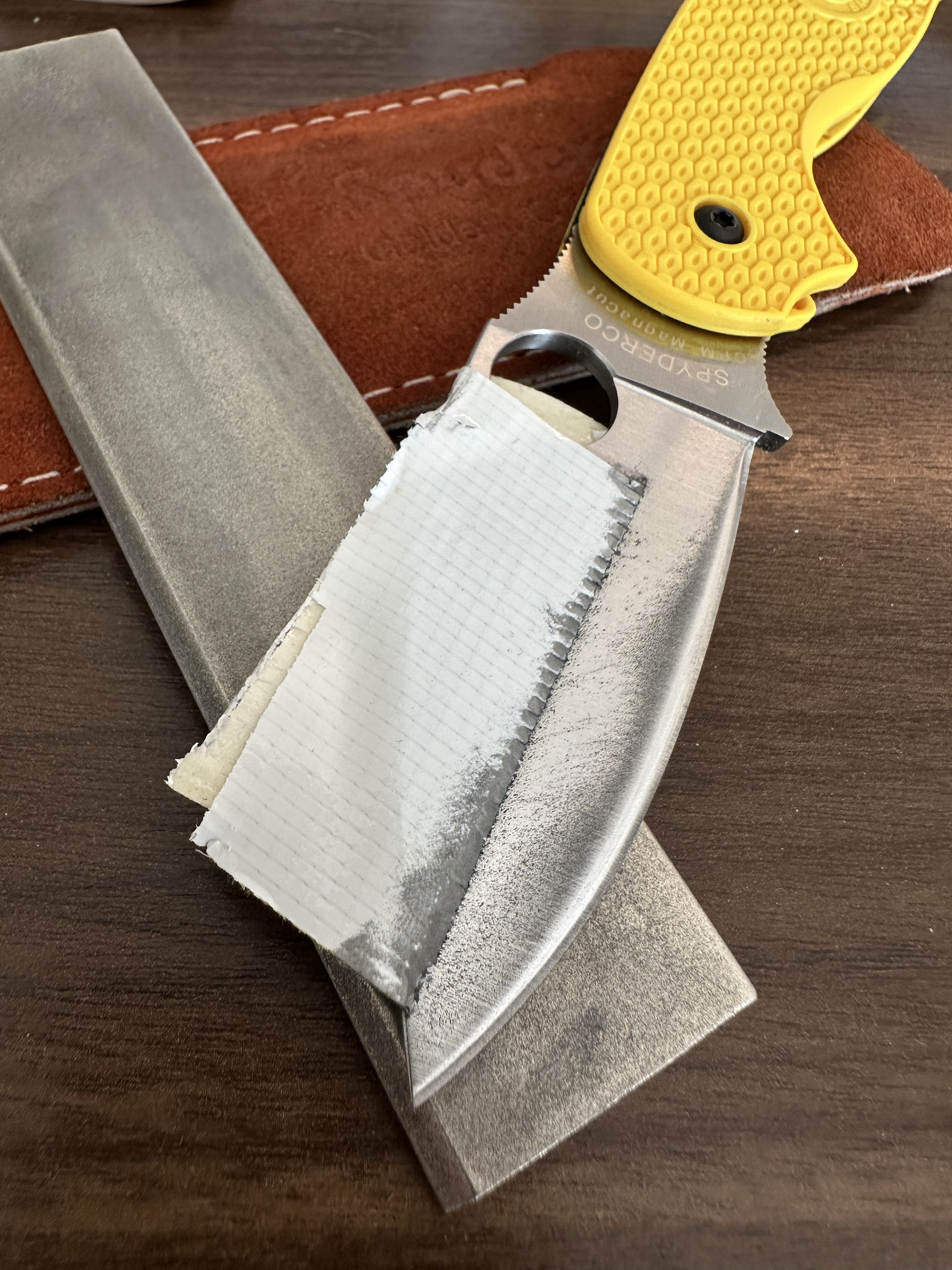
The Double Stuff 2 is the main tool. But it is old now. It has lost some of its teeth in many many edges reprofiling…
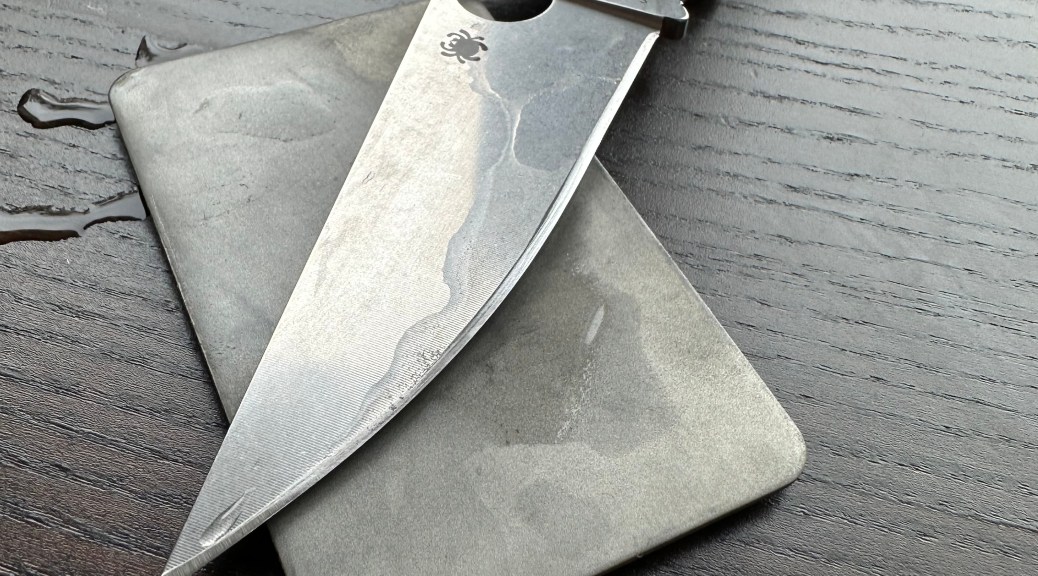
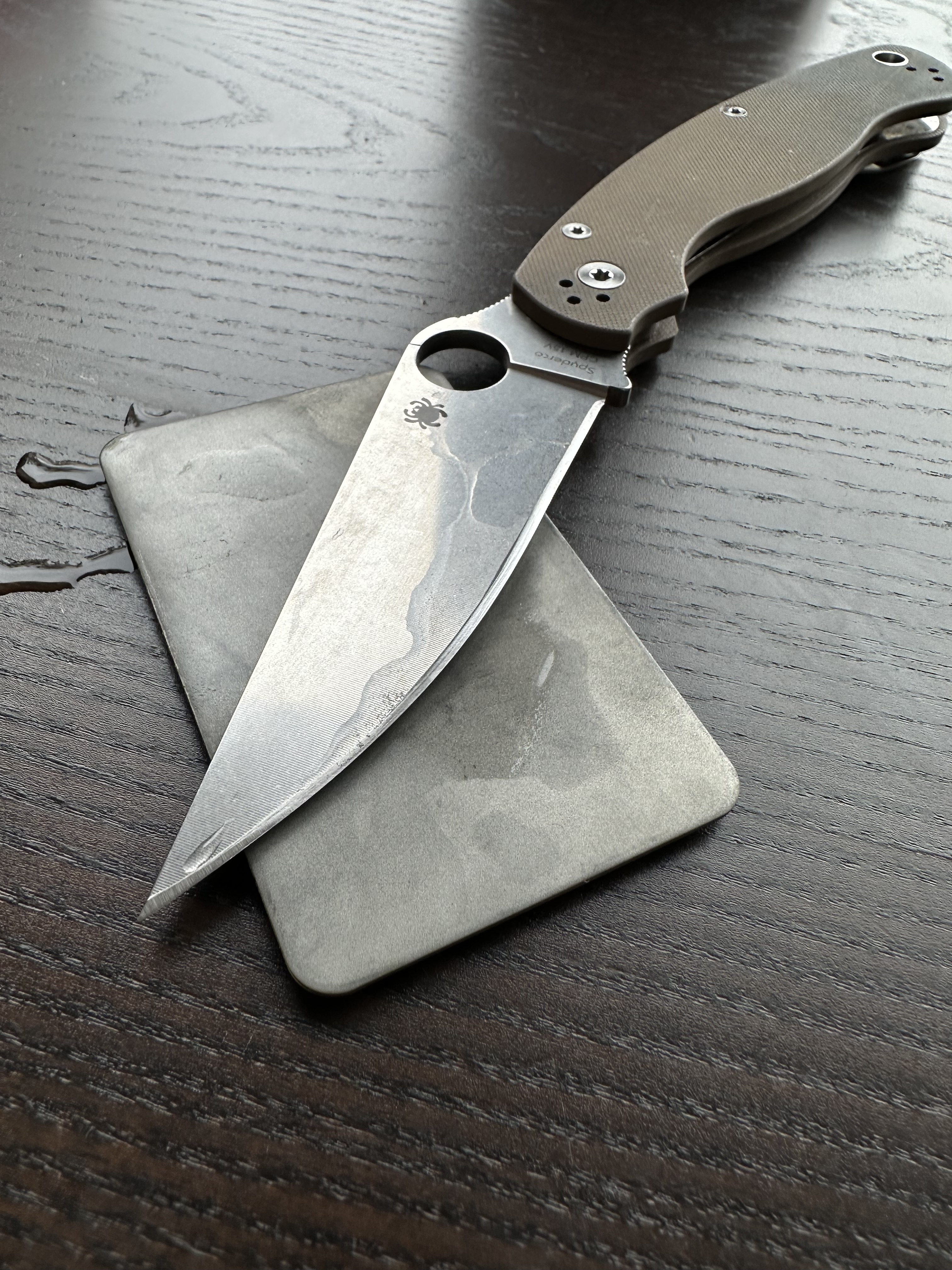
But eventually it is a cheap Sharpy bought on Amazon which seems to be 15V best friend. It is 800 grit. And it bites into 15V like no tomorrow. So I was able to round the edge’s shoulder. Let’s test it.
It goes deep and steady. There is real improvement. But gosh, 15V do not like to lose its particules. Compared to Magnacut or SPY27, CPM-15V is hellish. Now I perhaps don’t have the best diamond tools for that. But really, it is not a piece of cake in my book.
Now could it be a answer: The Military 2 reaching the 67 HRC ? But that was exactly my impression after watching the YouTuber’s video — until Jake, a metallurgist for 14 years, left an exceptionally detailed, well-sourced comment under this review. To quote his conclusion:
“… Spyderco did an amazing job getting a near custom level heat treatment on an amazing steel at an affordable price to many people who otherwise wouldn’t have been able to spend large sums of money on customs. But expecting 67Rc is a bit too much. Shawn has said it repeatedly that it isn’t realistic for a production knife company to hit hardness levels that high and also be able to work the material.“
Many thanks to Jake for his eye-opening comment — truly appreciated!
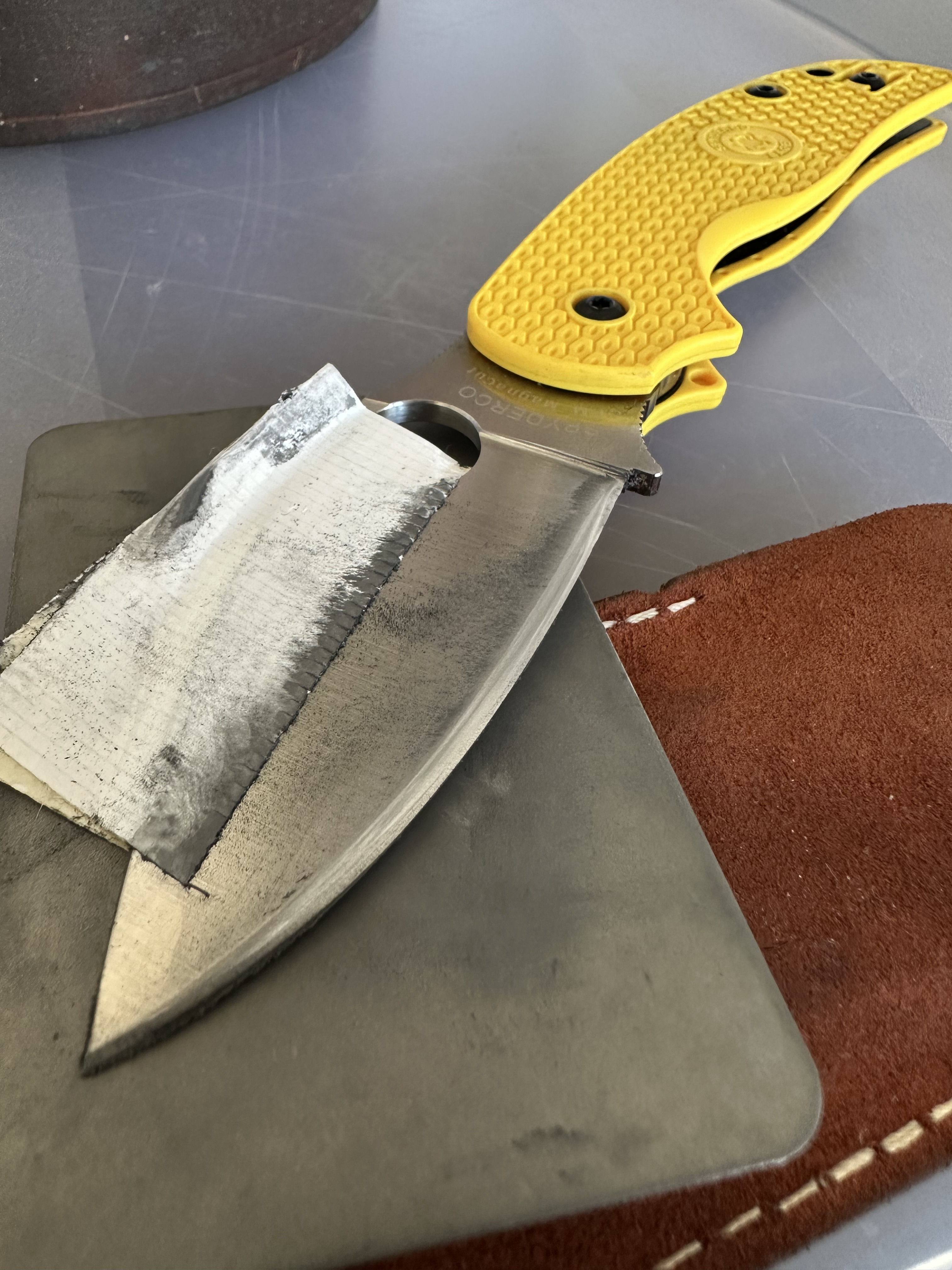
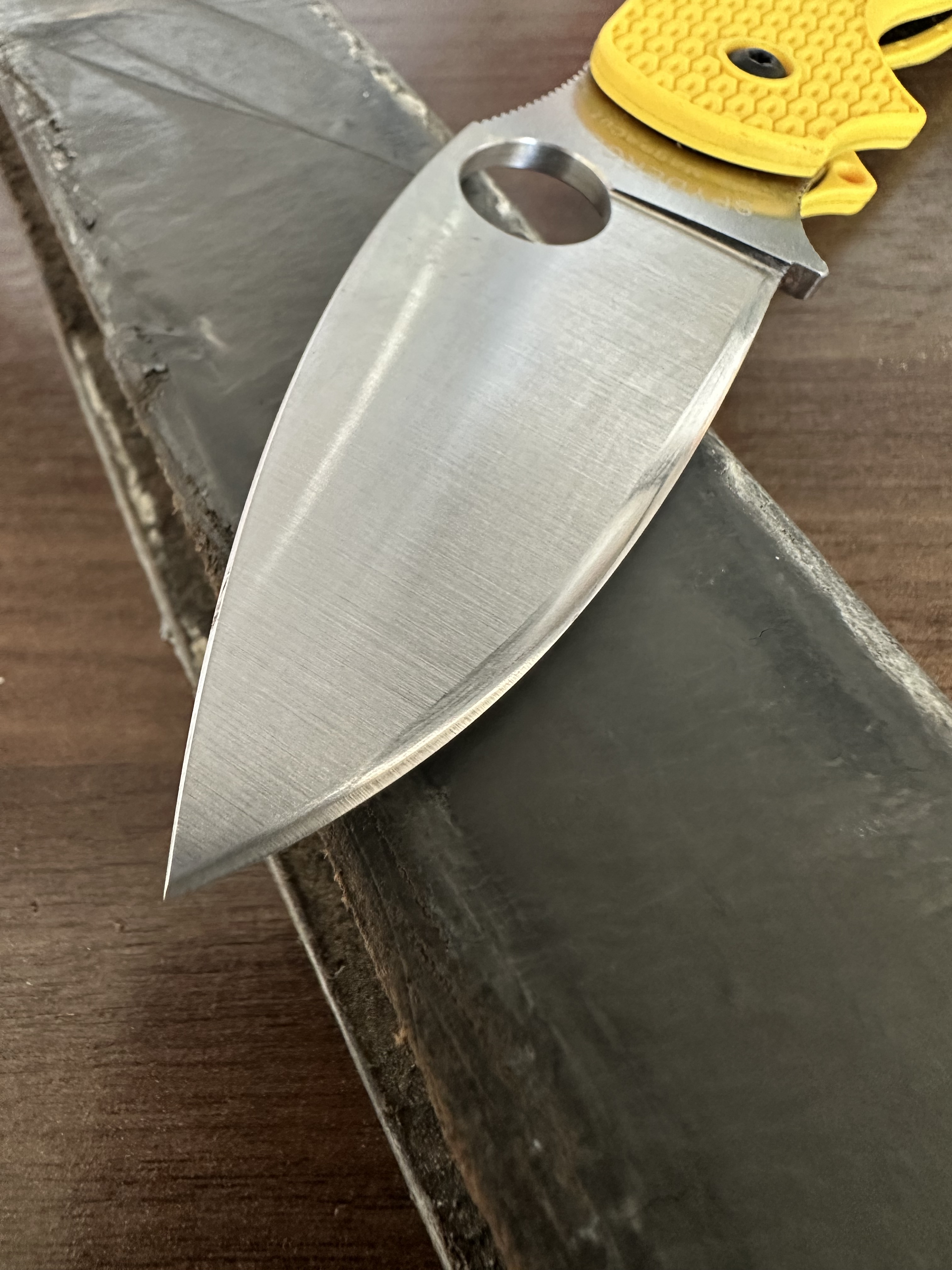
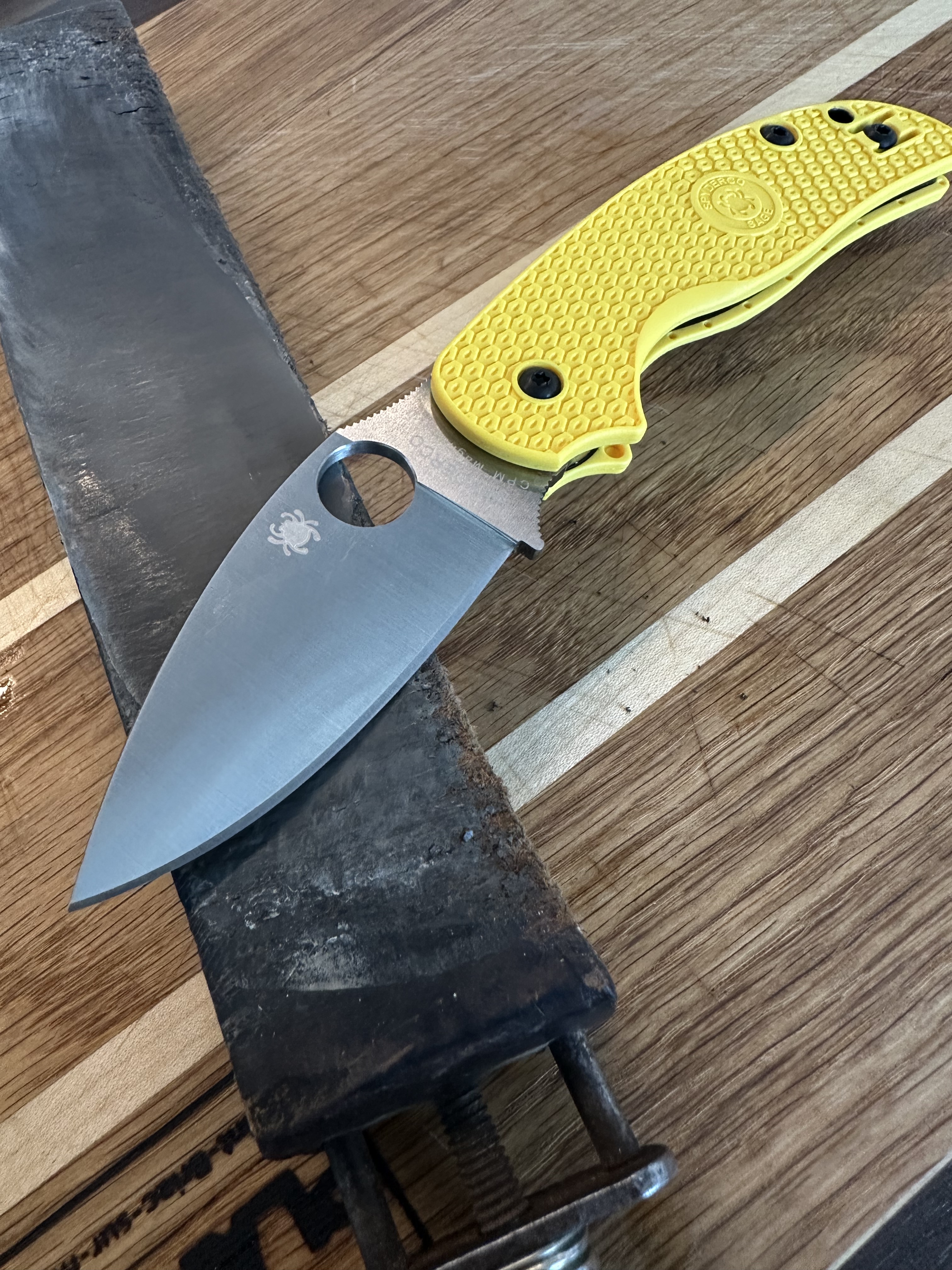
My goal here isn’t to touch the edge itself, but to smooth the border between the flat of the blade and the edge angle. This allows me to maintain the edge primarily on leather while reducing drag when cutting hard materials like plastic or wood.
The equipment I used was again the Spyderco Double Stuff 2, focusing mainly on the diamond side. I experimented with gentle, round strokes on the flat diamond stone instead of always moving in the same direction — it seems to remove metal much faster.
For aesthetics, I plan to follow up with white ceramic or jade stones to approach a mirror finish, similar to the Sage 5. Magnacut responds beautifully to polishing, whereas CPM-15V doesn’t particularly care.
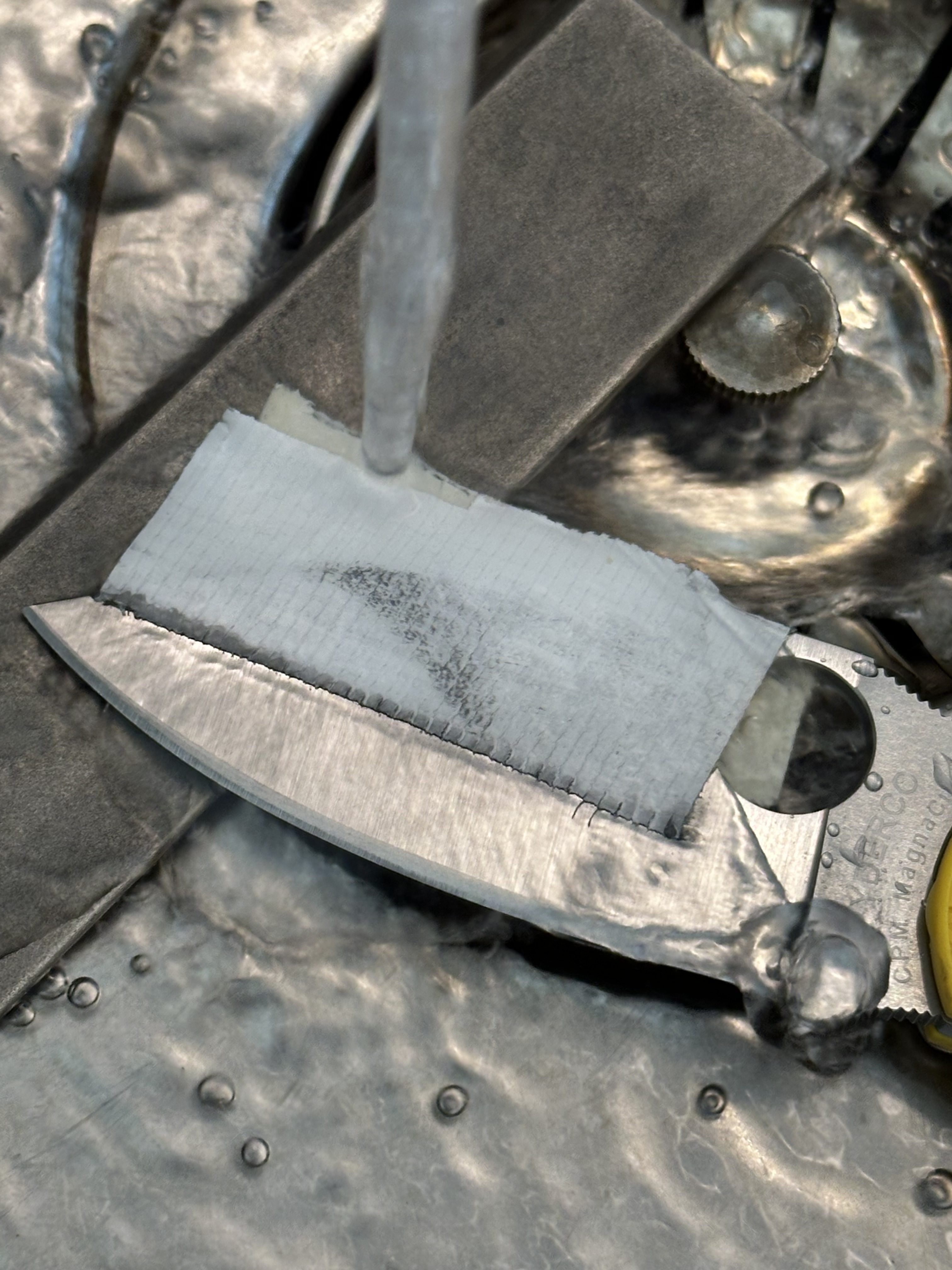
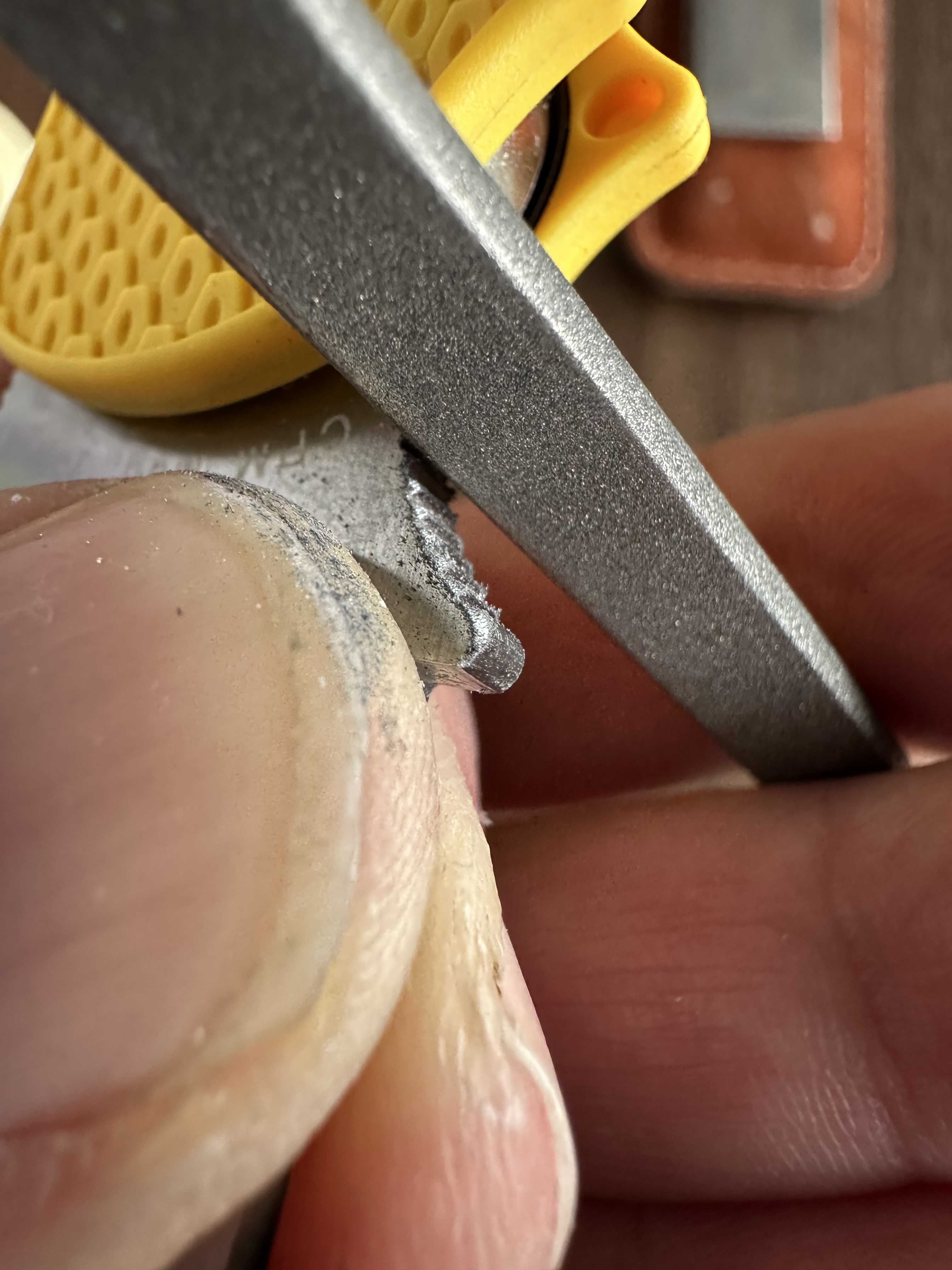
The use of gaffer helps preventing any deep scratches on the blade finish. It works great. The black dust is metal removed by the diamonds. I do that outside in the wind. I don’t want to breath that dust.
Eventually this second round has gone so smoothly (compared to the first one linked at the start of this review) that i was on the verge to work on the Military 2.
Remember Sal saying: “The Edge is a Ghost. Always changing. Dying (dulling) being reborn (sharpened) split personality (angles and geometry changing). Think of the edge as gas in a vehicle. It runs out of gas and you put in more gas. We provide the format, materials, design for use, variety to avoid boredom and create interest, but the edge is your creation. The result of your understanding, education, experience and practice.“
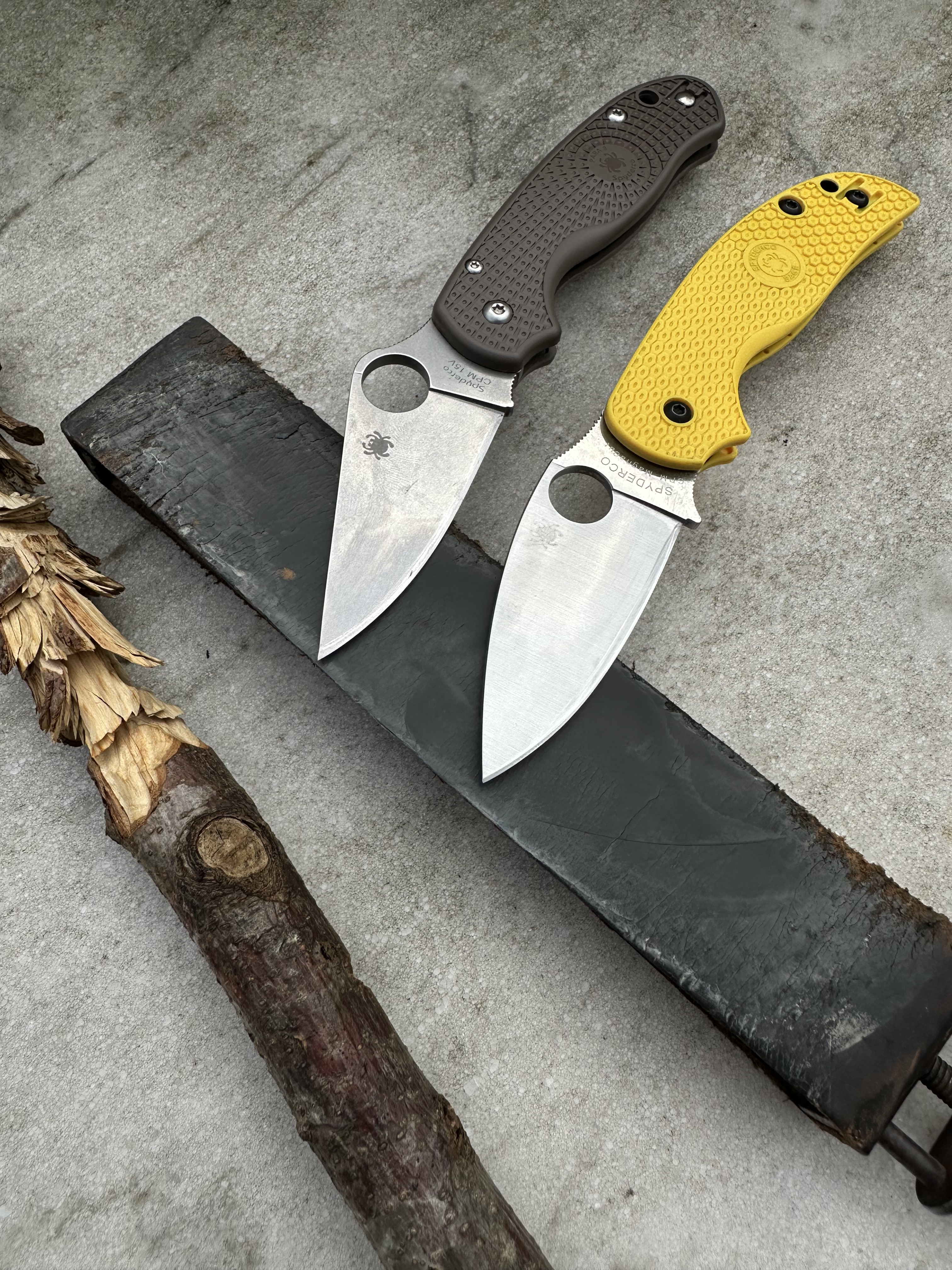
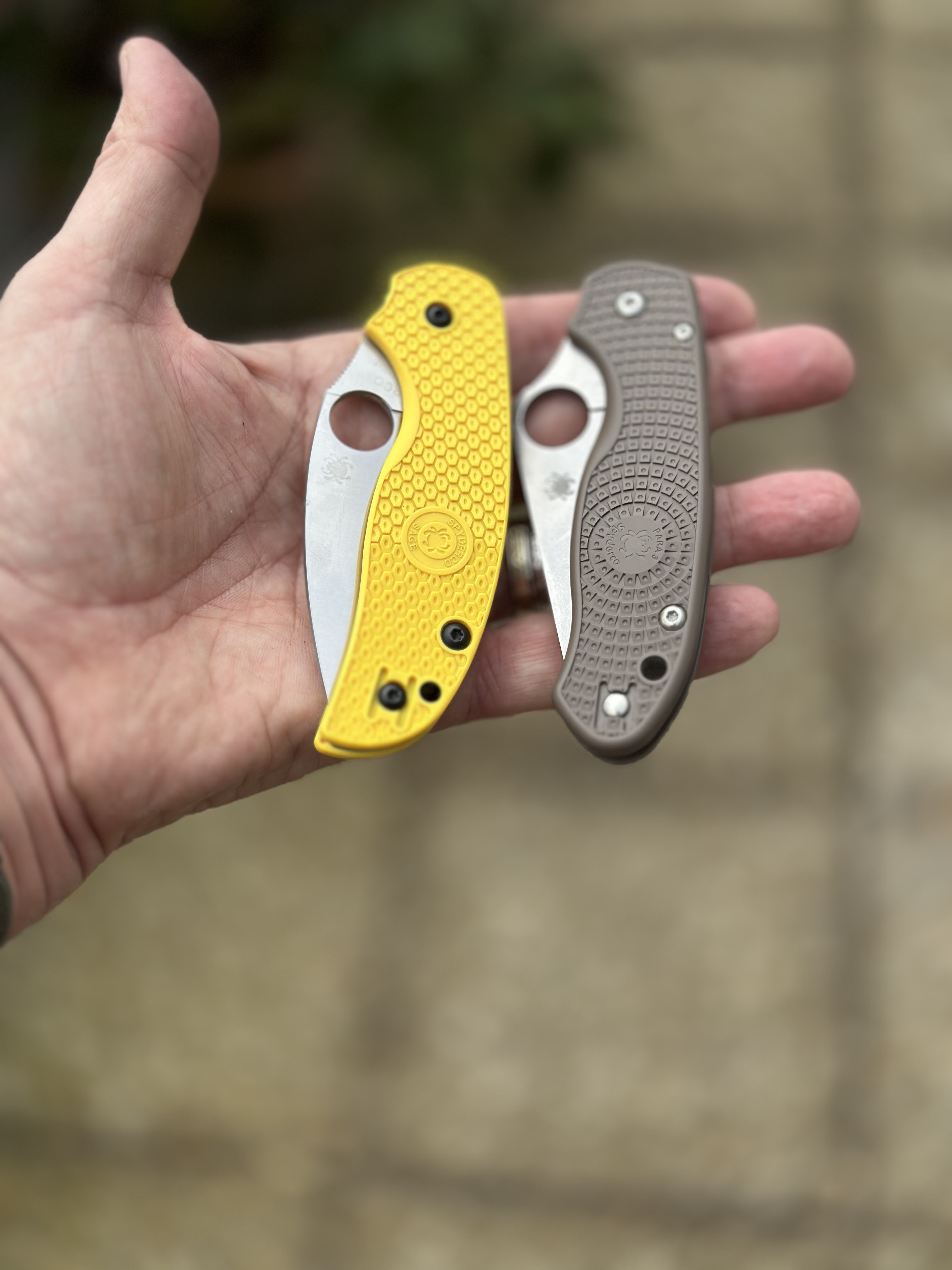
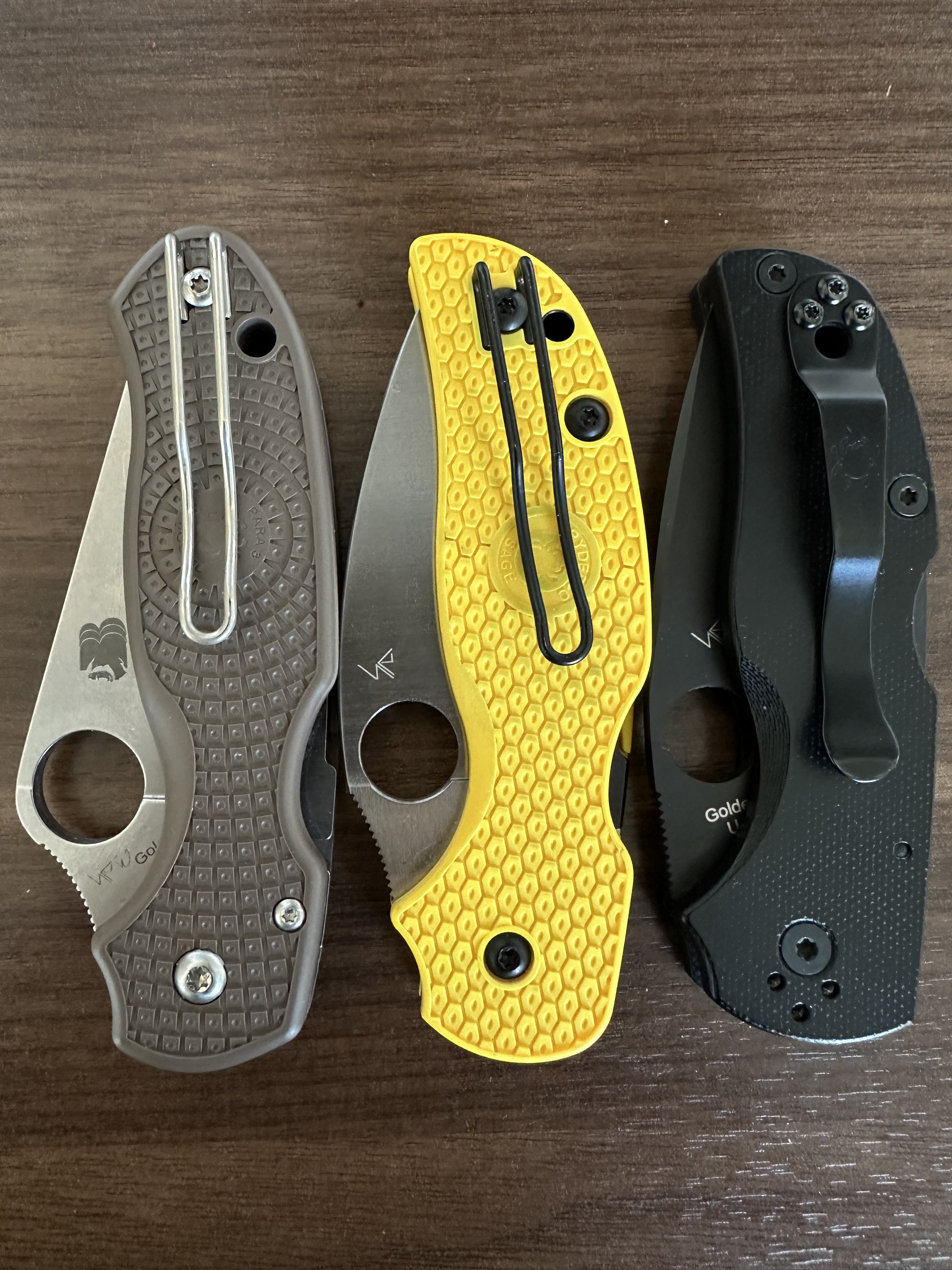
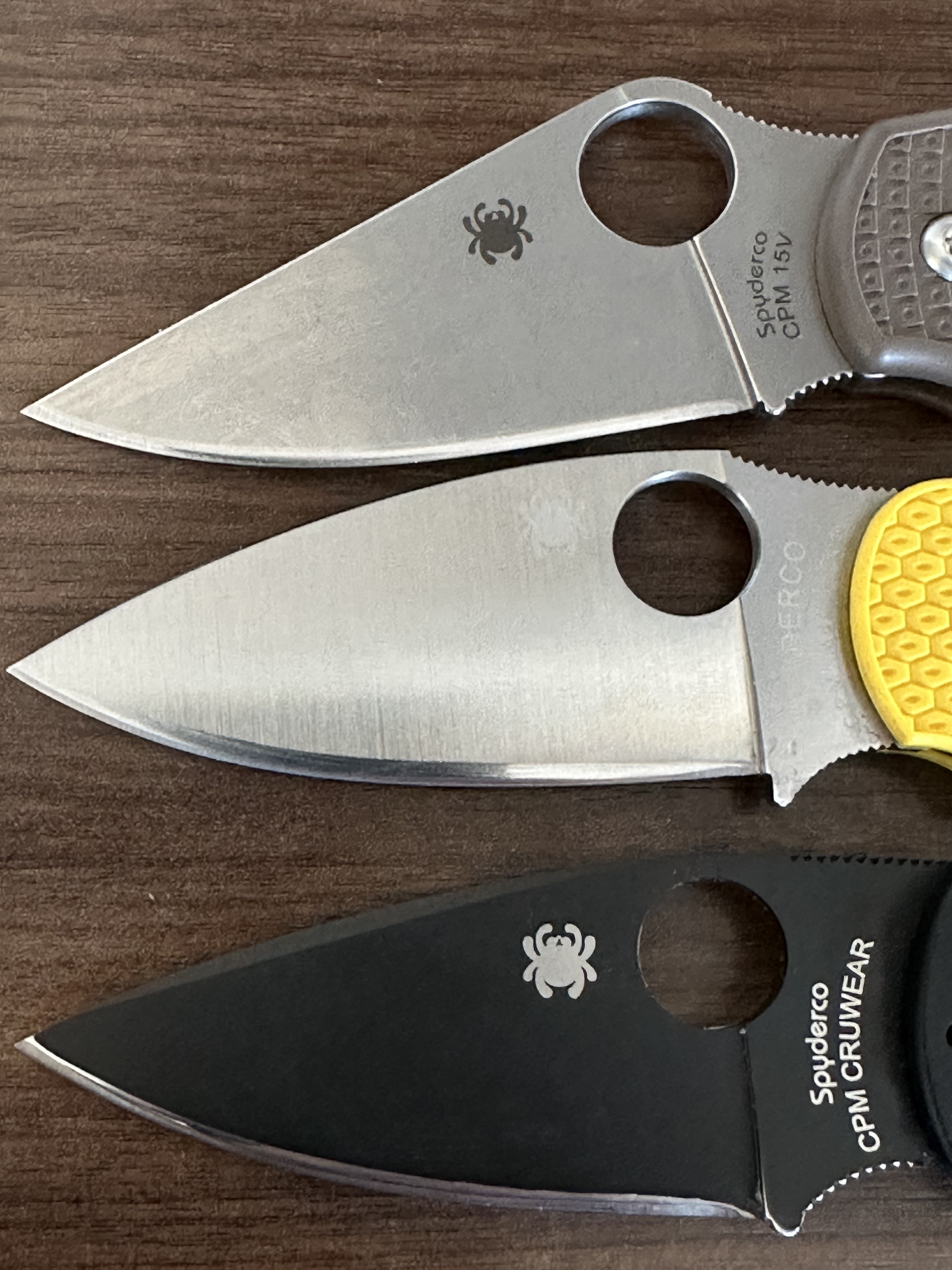
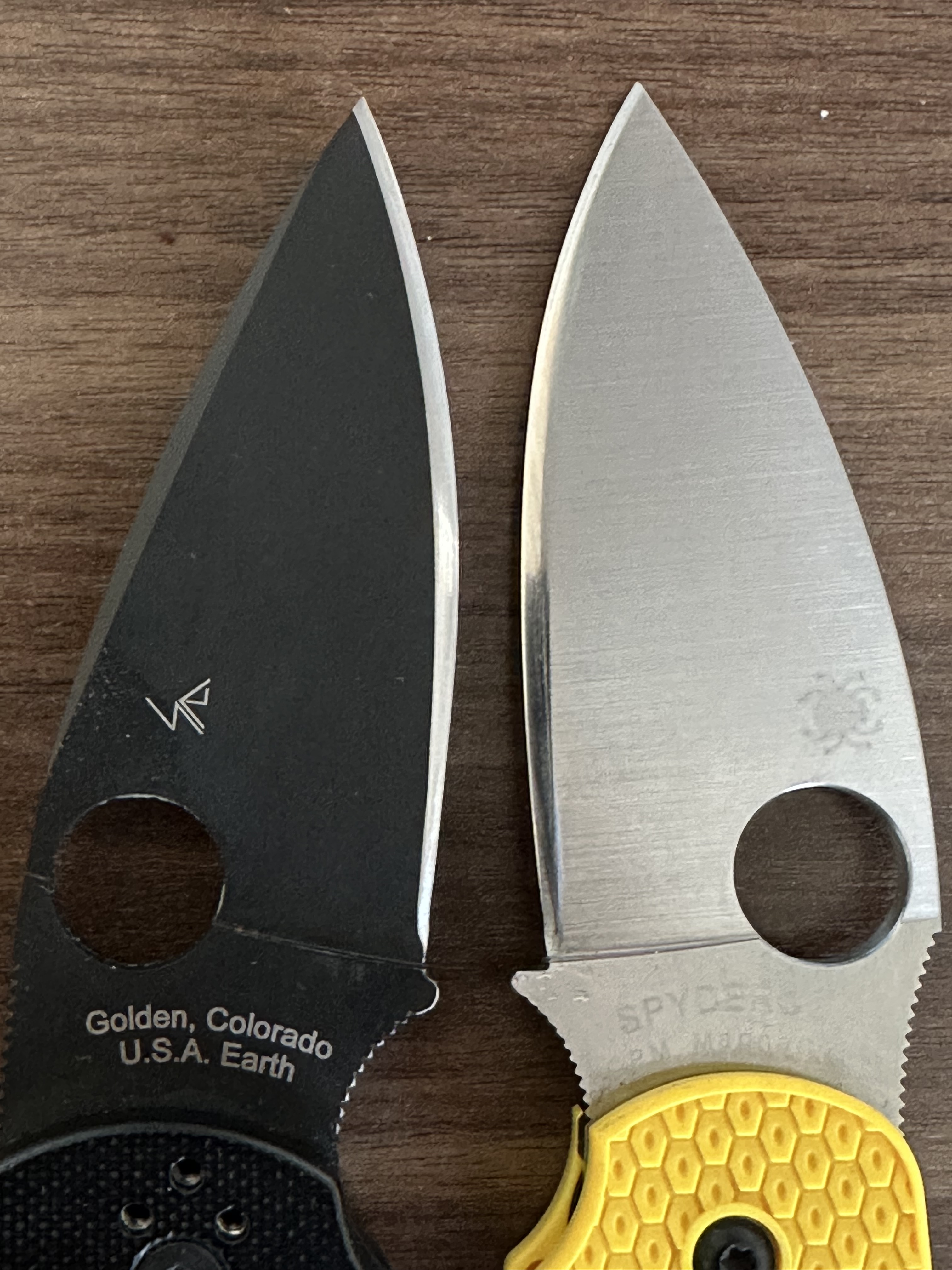
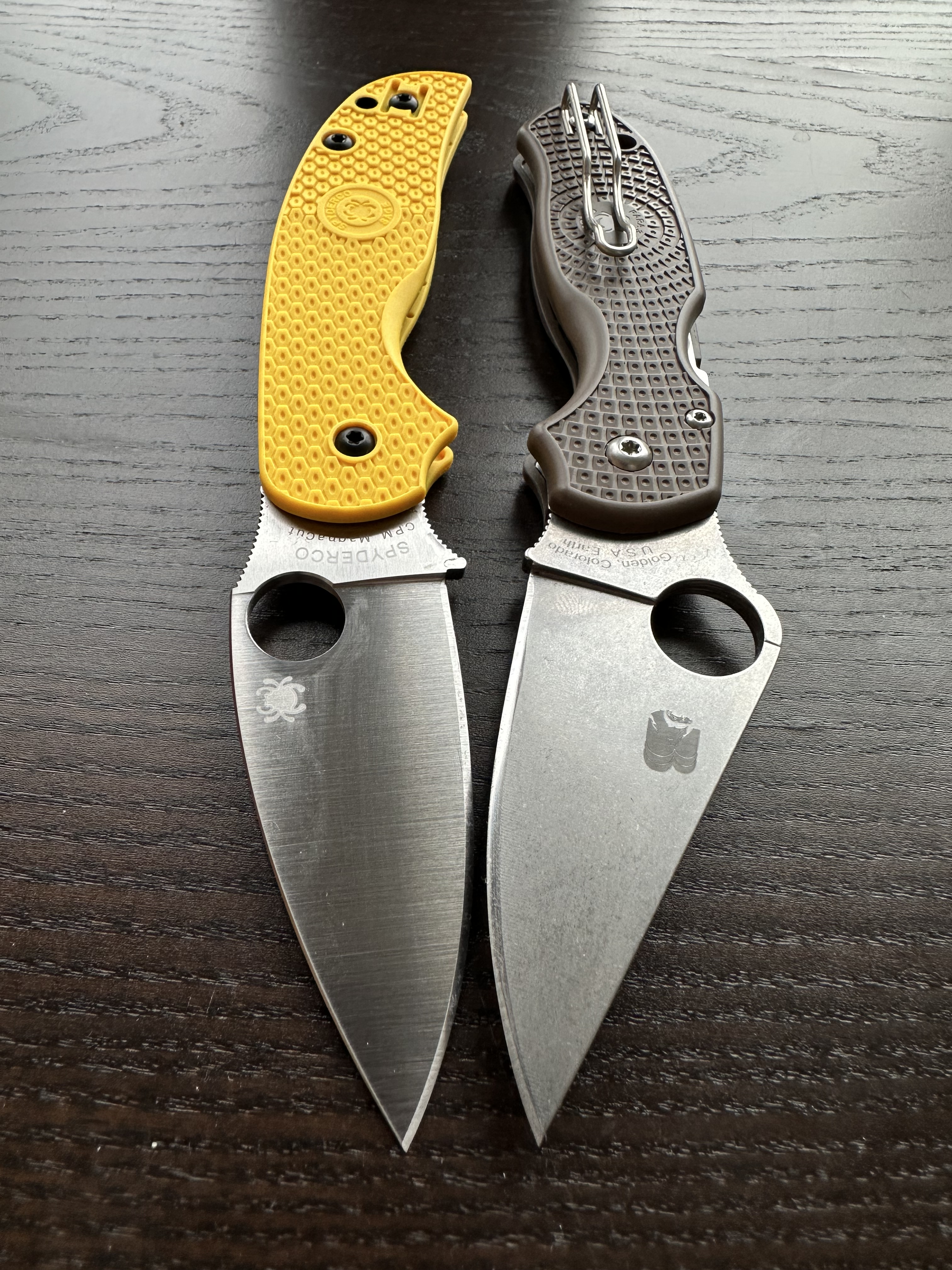
The comparison between the Sage 5 Salt and the Para 3 continues. In short: the Sage 5 has superior geometry thanks to its high 3 mm FFG blade, while the Para 3 features a sturdier blade, a thinner point, and is overall lighter (no steel liners).
It’s really your choice — both are highly capable and complement each other, coming from the same design mind. Shawn Houston even notes that the Para 3 carries “that Delica vibe.”
I’m impressed by the Sage 5’s exceptionally smooth action — one of the best among Spyderco’s compression lock knives. I love both knives. These days, the Sage Salt rides with me, but while both won’t let you down, the smooth Sage is more fidget-friendly. Both are great, but the Sage 5 is simply less popular… 😉
Let’s go back to the same process but adding 15 minutes more can be a game changer in term of geometry. But let’s be clear this is typically the Pareto law which says: “The Pareto principle states that for many outcomes, roughly 80% of consequences come from 20% of causes.” It means that in 15minutes + this new 15 minutes it is not the most efficient as 80% of the job was done during the 6 first minutes last time. But those added fistful of minutes are a little bonus to even the bevels.
As you can notice I have concentrated my thinning process mainly on widing the bevel.
10 minutes later, I got a more even larger bevel which should go shining after some leather stropping.
On another fistful of minutes, I will work on the tip but I like to keep some material here. Now I’m basically dealing with a flat grind with a convex edge at the end. In Japanese a convex grind is also called a hamaguri grind. Literally this means: clam. This name comes from the convex way the side of the shell moves to the end. Exactly like the full convex edge. A full convex grind is sometimes also called an appleseed grind. Again because of the pointy tip of the seed of an apple.( I’m a fan of アップルシードa Japanese manga series written and illustrated by Masamune Shirow.) But for now it is much than satisfying in terms of whittling and dealing with hard maetrail to cut. The edge goes deep in every push cuts and the high FFG blade five a lot of control for powerful results.
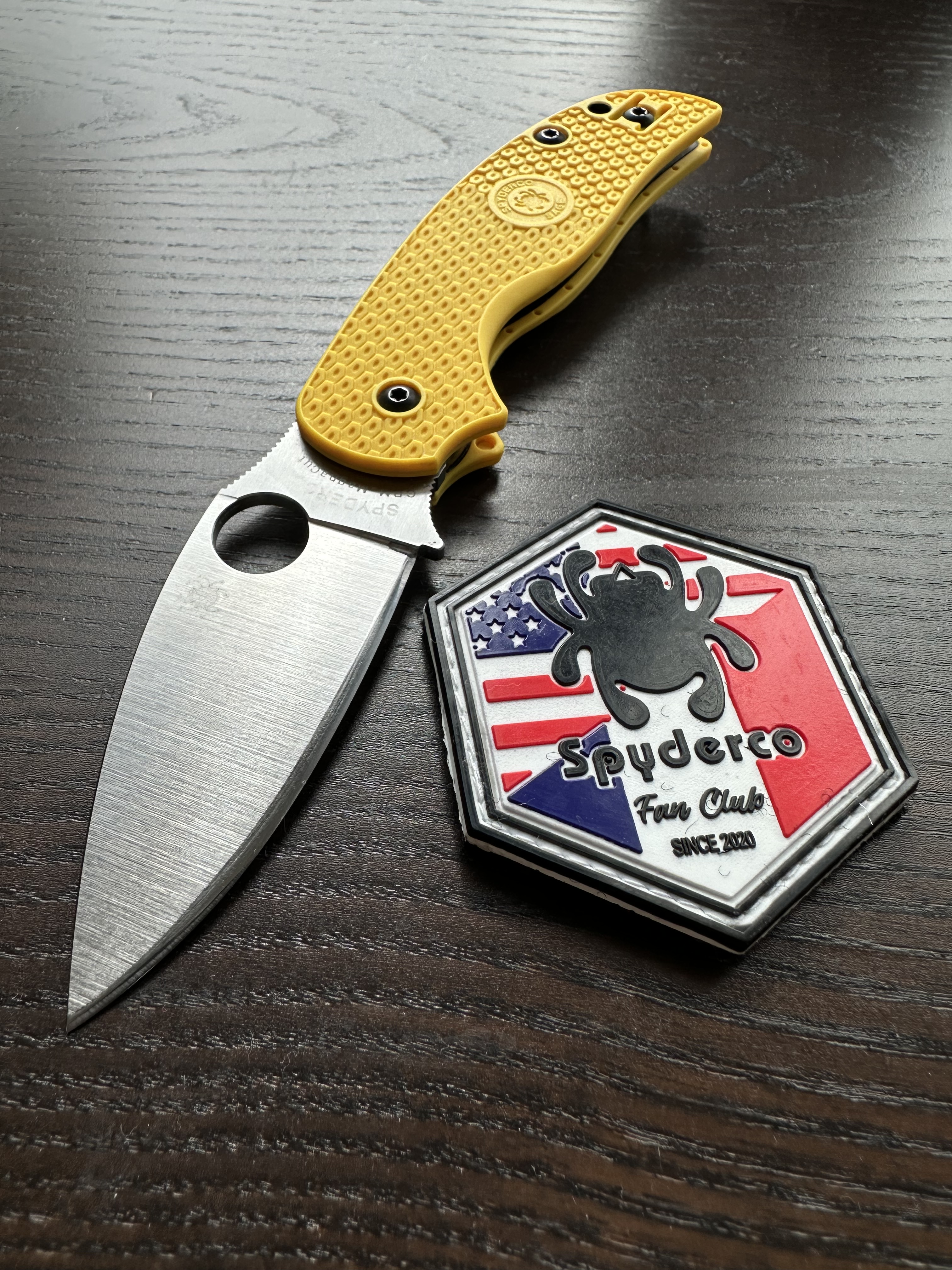
(Badge designed by Guillaume Xais)
So far my initial impression are confirmed: the Sage 5 Salt is a keeper and another 3 inches blade length Spyderco to rule them all like the Delica 4, the Native 5 or the Para 3 or even the UKPK ! All are Sal Glesser’s children (The Para 3 paternity is shared with Eric !)
It is perfect in all aspects – sharp thin blade, centered, strong detent compared to the Military 2, no blade play, suuuper smooth. The Sage5 is the best implementation of a compression lock I have ever had… Perfect tolerances and no lock stick.
The open-backed construction allows easy cleaning. This Sage 5 is really asking to be used and, thanks to its yellow handle, retrieved even on the forest or ocean floor. Really a must have 3 inches knife for all occasions. And I’m a huge fan of the Native 5 and the Para3. But this Sage 5 seems to lead the pack.
The new Sage 5 Salt got a great geometry but I love convex edges. I like to remove the shoulder on the edge and with diamonds it is only a matter of minutes.
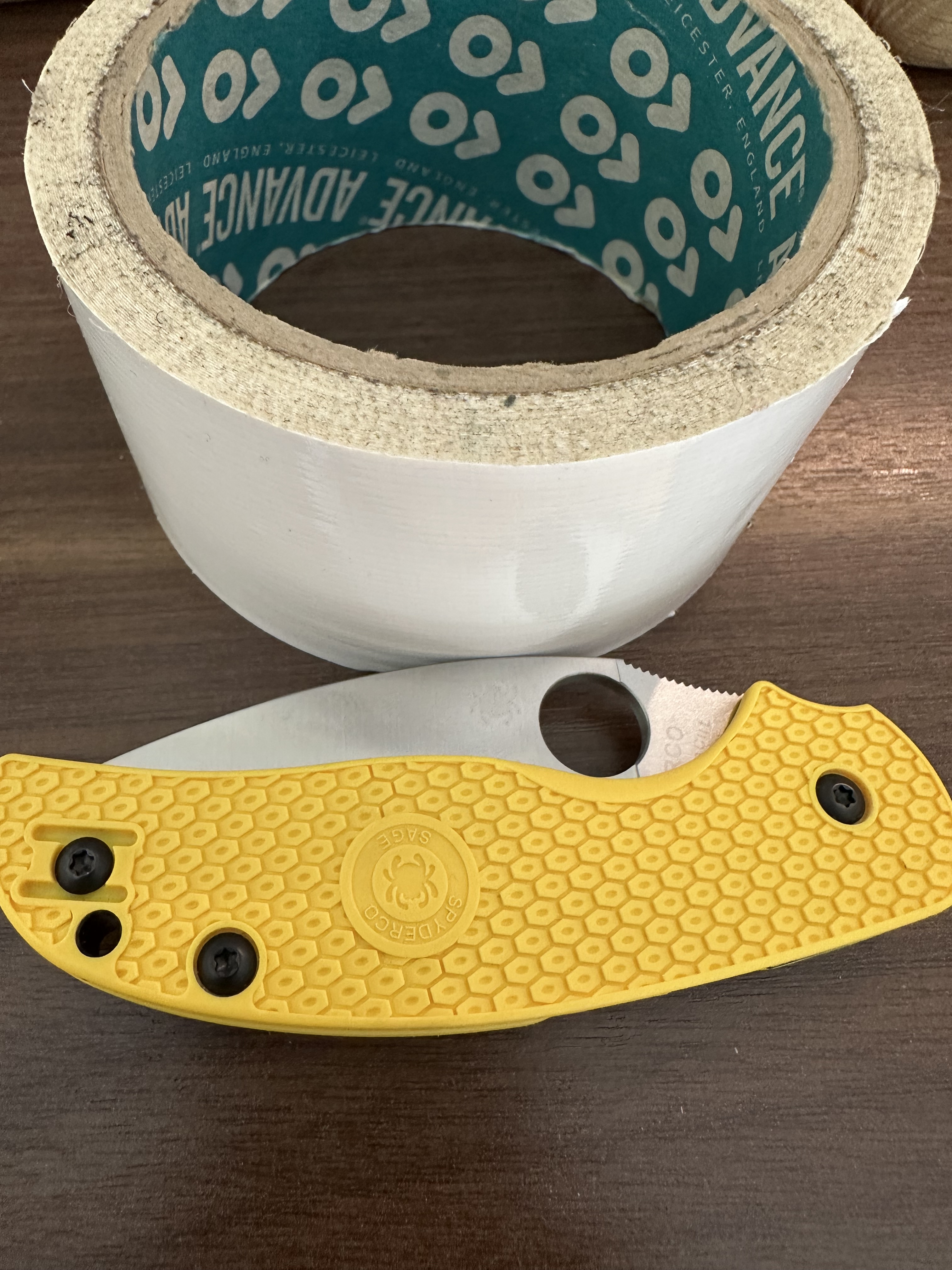
First thing. I do protect the sides of the blade to avoid scratching because I’m clumsy. I use thick duct tape AKA gaffer used to fix everything on the movie sets for everything including marks on the floor or information on magazines.
A two-sided pocket stone has long been the sharpening tool of choice for fishermen, outdoorsmen, and other knife users who needed a handy, versatile sharpener for touch-ups in the field.
In 7 minutes I got that result. I do not touch up the edge, my angle is aim toward the shoulder of the edge to thin it. You can see the edge is styill the factory edge.
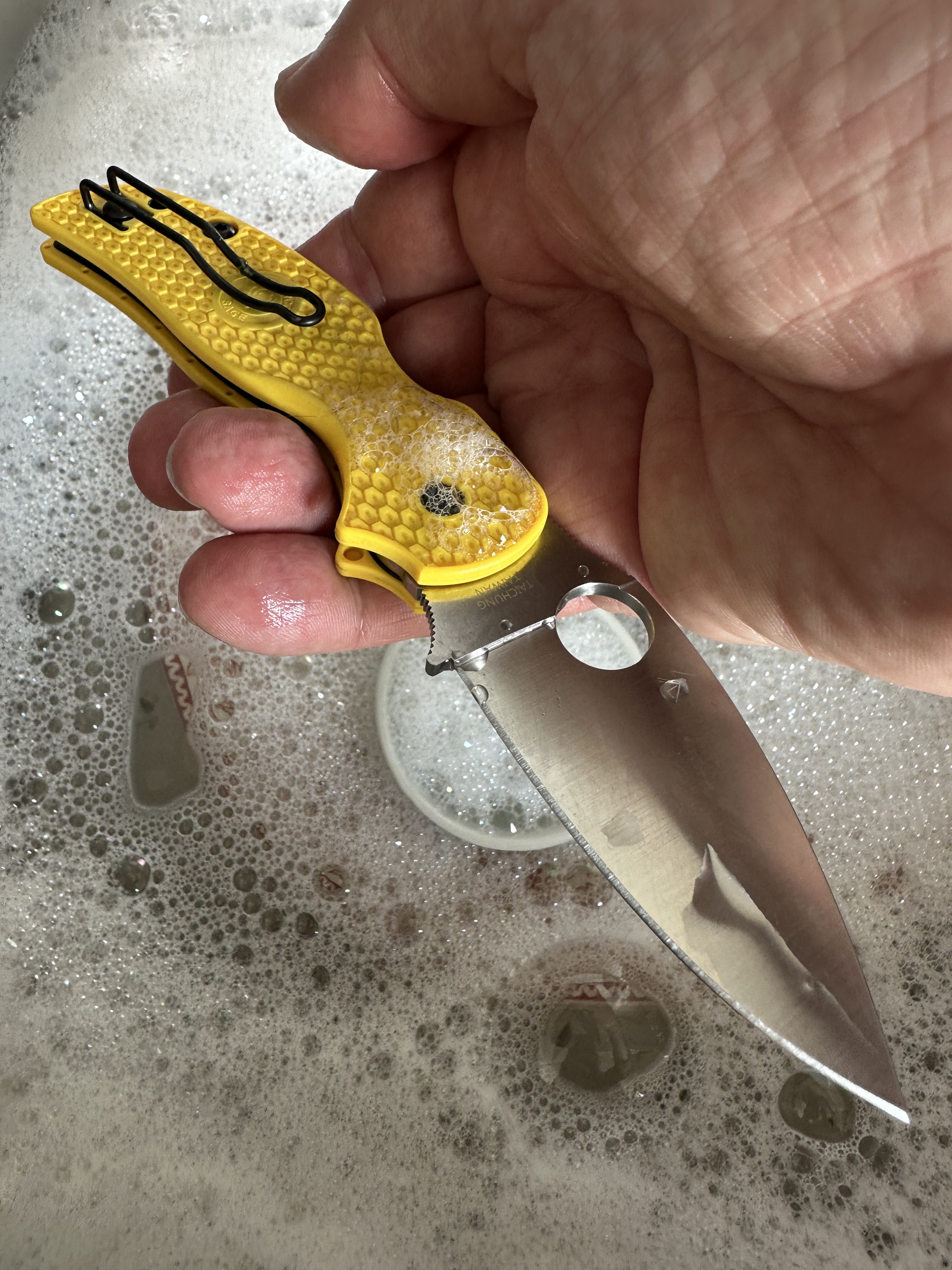
Now it is just a matter to rinse it.
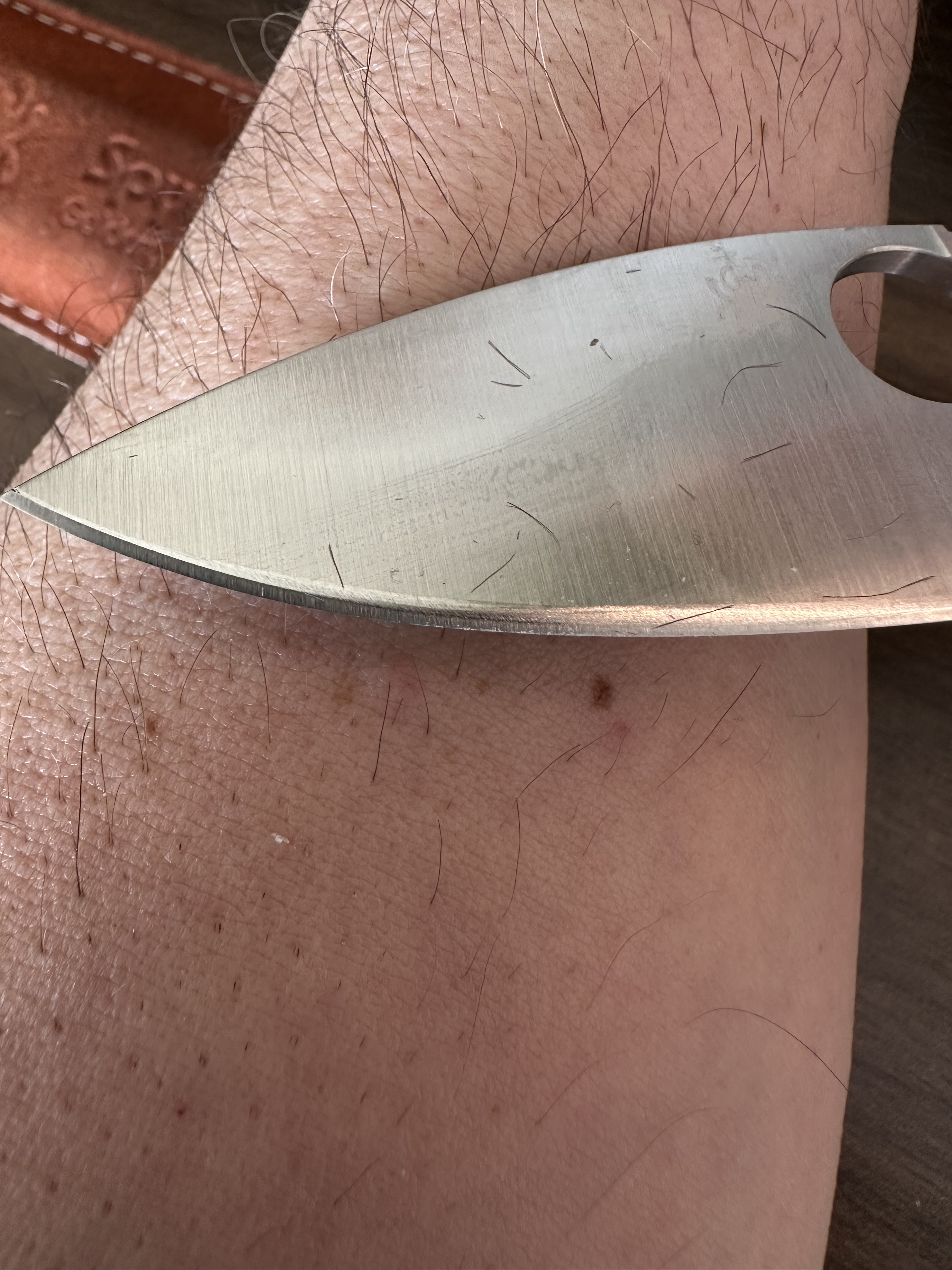
The factory edge still is razor sharp. But the geometry is improved and it cuts much more easily into hard matter. In 15 minutes I got an edge like I want. This was made on my Sage Magnacut.
Now with a more convex edge it is easier to strop it on leather. Magnacut behave a lot like Cruwear and both love leather. It won’t be that easy on CPM – 15V which needs much more patience ! Anyway a part 2 is now available.
First of all, thank you to Guillaume Xais who has convinced me to try the Sage 5 Salt. I have found a deal under 200 euros. In the past, I have owned some Sage(s) from the Sage 2 to the Sage 4 actually. You still can find the reviewss by clicking the links. The Sage 2 was a Sebenza killer when all the crave was about Christopher Reeves Integral Lock and titanium slabs. The Sage 3 was the Blue Brother. The Sage 4 was a masterpiece with its Front Lock and titanium Bolster never reviewed because too much a jewel of a knife.
(Picture by Guillaume Xais – instagram Spydigex_knives)
I wasn’t particularly interested in the Sage 5 Compression Lock, and even less in the Sage 5 Lightweight. Yet both the Sage 5 G10 and Lightweight versions proved so popular and well-regarded that Spyderco expanded the lineup into Maxamet, SPY27, REX 121, Magnacut, and CPM-M4 (thanks to Guillaume for the editing).
With the vanilla S30V, the Sage 5 was offered in six different alloys — some of the most impressive in terms of performance — demonstrating just how versatile and capable this design can be. “The Sage 5 Lightweight has also proven itself to be a perfect platform for showcasing the elite properties of high-performance blade steels.”
(Picture by Guillaume Xais – instagram Spydigex_knives)
For the record the Sage Series has traditionally expressed the same iconic design with different lock mechanisms, paying homage to the innovative designers who created them. Also Spyderco donates approximately 5% of sales of the Sage line to the National Alzheimer’s Association Denver, Colorado Chapter. (A Sage 6 is soon coming with a button/compression lock as found on the Smock.) So I have asked to Guillaume in the Spyderco Fan Club France, why should I invest in a Sage 5 Salt Lightweight in the first place ?
(Picture by Guillaume Xais – instagram Spydigex_knives)
“Its action, like any self-respecting Sage LW, is dazzling! This yellow contrasts with the hardware, the clip, and the deep black of the liners, like a Black Mamba face… I love it! My first Magnacut, by the way… I fish and am quite often at the seaside, it will complement my Ukpk salt (which is also very good). My favorites, however, remain the 2 and 4, true works of art!
For me, it does everything better than a Para3: handling, fluidity, less fragile tip, less tactical image, more rewarding feel of the FRN… there’s no comparison (from my point of view, of course). Add to that the Taichung Quality and Magna’versatility… they’re worth it, right?“
I was convinced !
First impressions: there’s some real heft to this lightweight — thanks to the full liners. I love it. The blade is perfectly centered, and the lock doesn’t stick.
The detent is impressively strong, almost magnetic — stronger than the detents on my recent Para 3 and Military 2. Go figure! And the action is smooth as oily butter. Classic, perfect Taichung craftsmanship.
The FRN pattern is hard, grippy and catchy I even got some issue to put in my pocket. It the same issue I had with my Chaparral Lightweight.
A passage under the sandpaper would be perhaps mandatory ? Let’s see what Papa Sal would advice in my case of protecting my pockets: “You can lessen the tension on the clip as an easy solution. Some sand the scales bit.”Sal in the Forums.
Some gaffer to protect the black screws when using sandpaper. Then cleaned under the tap and it’s good to go.
Well… it is so compact it can eventually be carried inside the pocket watch. But Sal was right like always, bending the clip a little has completely changed the way it clipped and for the better.
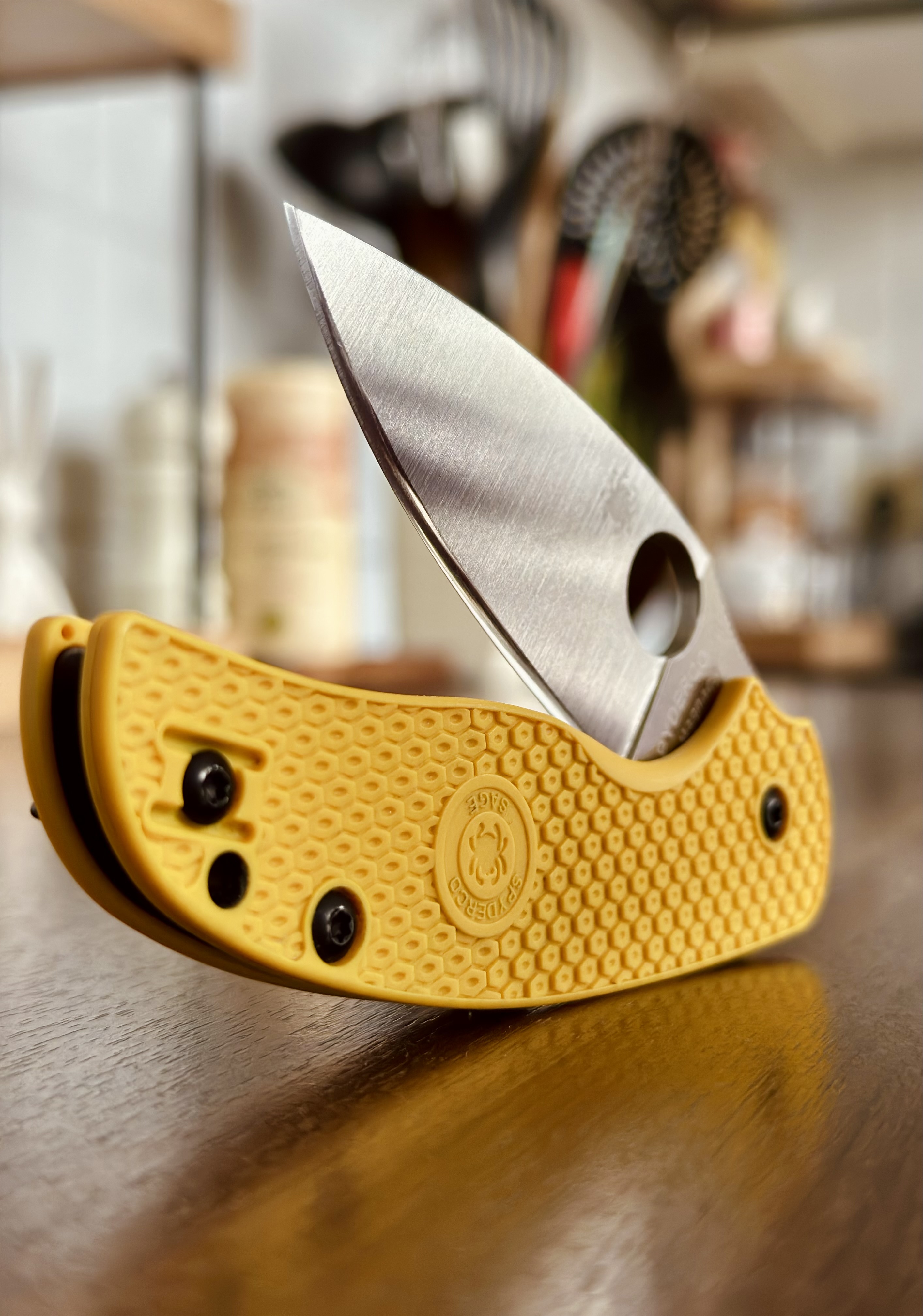
The metal hardware is all black certainly PVD coated. “Like all Salt Series folders, the clip, liners, and all handle hardware are also crafted from marine-grade materials.” said Spyderco. And Guillaume is right, the contrast between the black and yellow is an eye candy.
I have found a little hot spot on the choil which I felt under my index finger. Nothing a little diamond file won’t eliminate in a matter of minutes.
The Para3 is a really light package because there is almost no liner.
64 grams.
78 grams for the Sage 5 with its nested steel liners
The FRN is smoother on the Para3 as it is not the same pattern. Being a Salt the Sage 5 is destined to be used with wet hands.
The Sage 5 has a thinner 3 mm blade, and the chamfered edges on its spine are just stunning — smooth under the thumb and a true Taichung signature. Even the Spyderhole is gently finished.
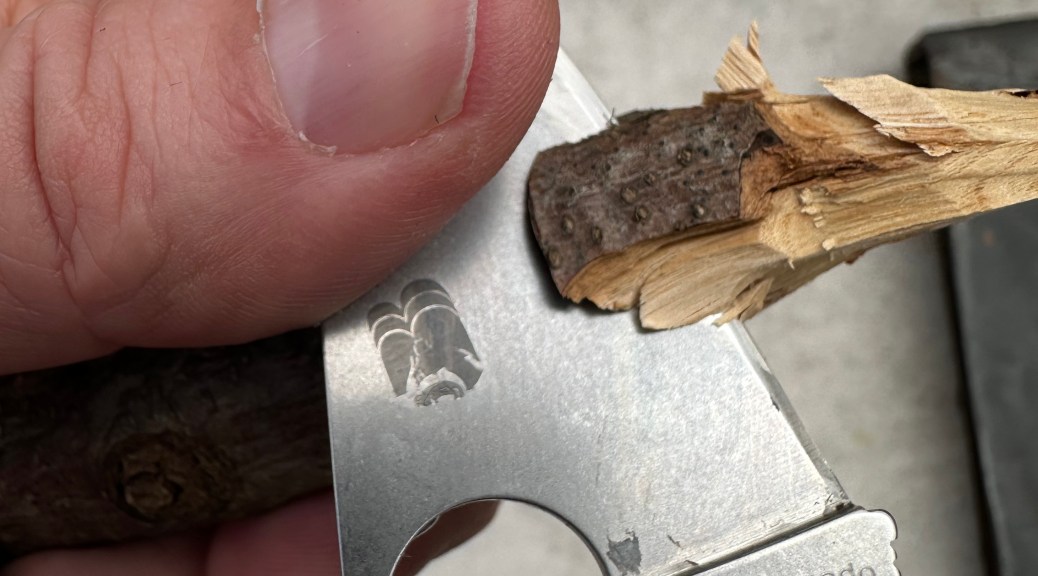
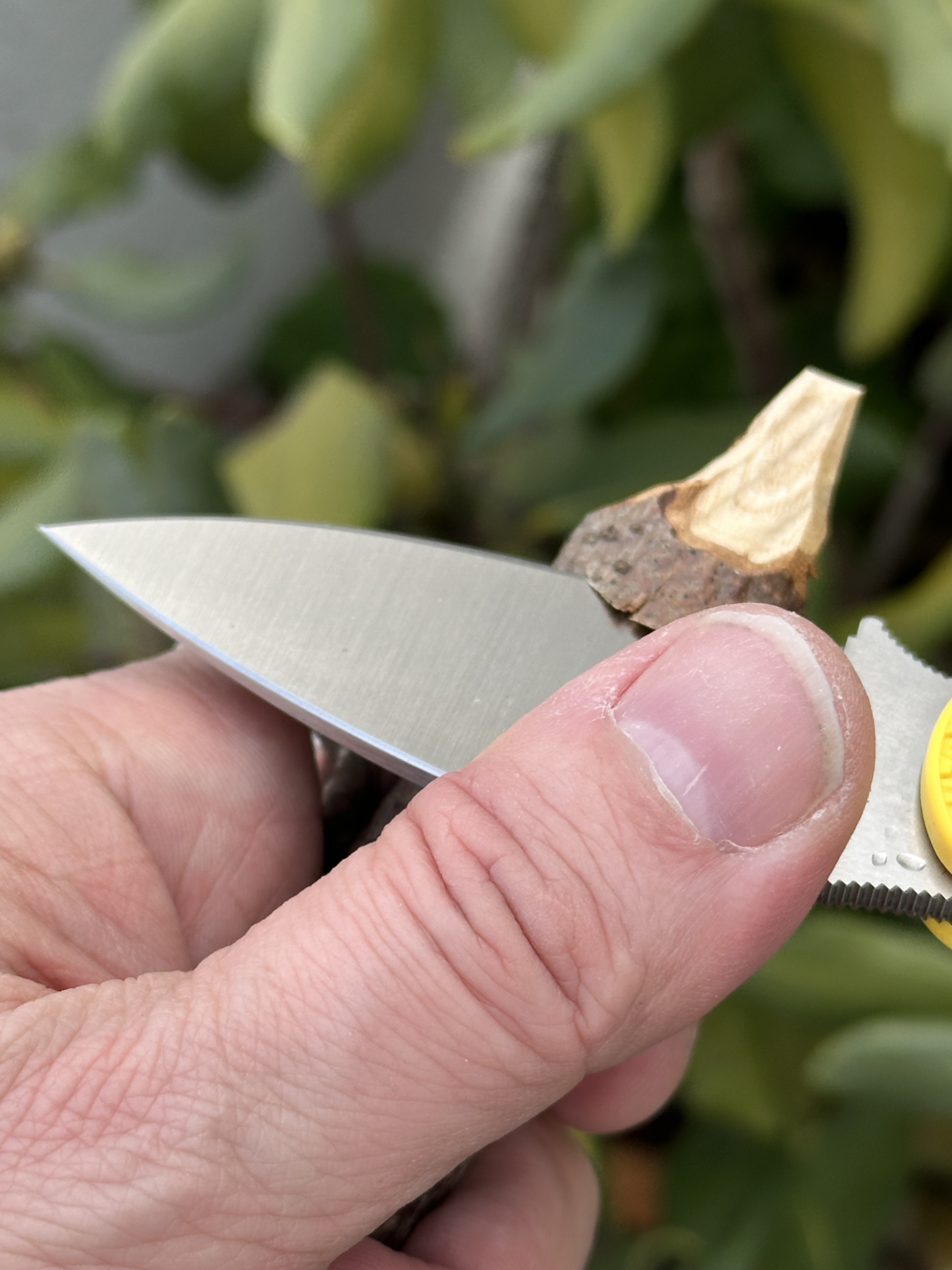
A major plus for whittling is how easily my left-hand thumb finds a comfortable spot on the blade spine. With the Para 3, the thumb doesn’t have a proper ramp parallel to the cut. On the Sage 5, the parabolic spine of the leaf-shaped bladelets the thumb push comfortably in the middle of the spine, which makes a real difference during whittling.
Same blade length, but a different spine shape. The Para 3’s Spyderhole is especially suited for use with gloves.
Is the Sage more of a civilian EDC and the Para 3 more tactical? Not entirely certain. The Sage feels more solid in the hand and has more heft, while the Para 3 feels like a light, quick-reaction tool, and the Sage 5 is an all-terrain EDC.
The Sage handle is more compact and can be carried in the watch pocket, thanks to its grippy FRN and strong clip.
Grip is essential when working around water or with wet hands. The Para 3 is gentler on pocket edges, while the Sage out of the box can be a pocket shredder. Following Sal Glesser’s advice, I flexed the clip slightly for lighter retention — now it’s perfect.
Next, let’s take a look at the Sage’s geometry straight out of the box.
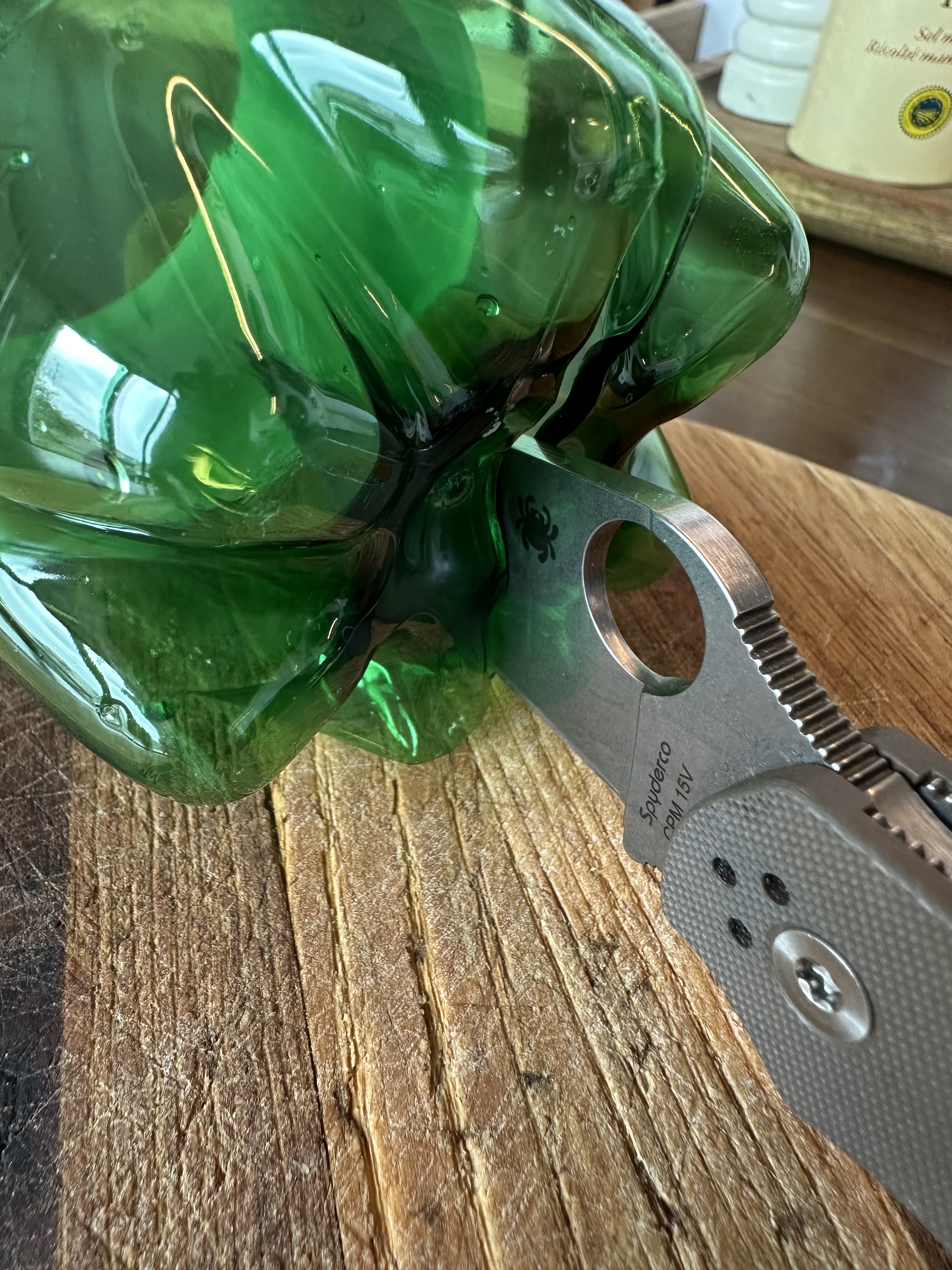
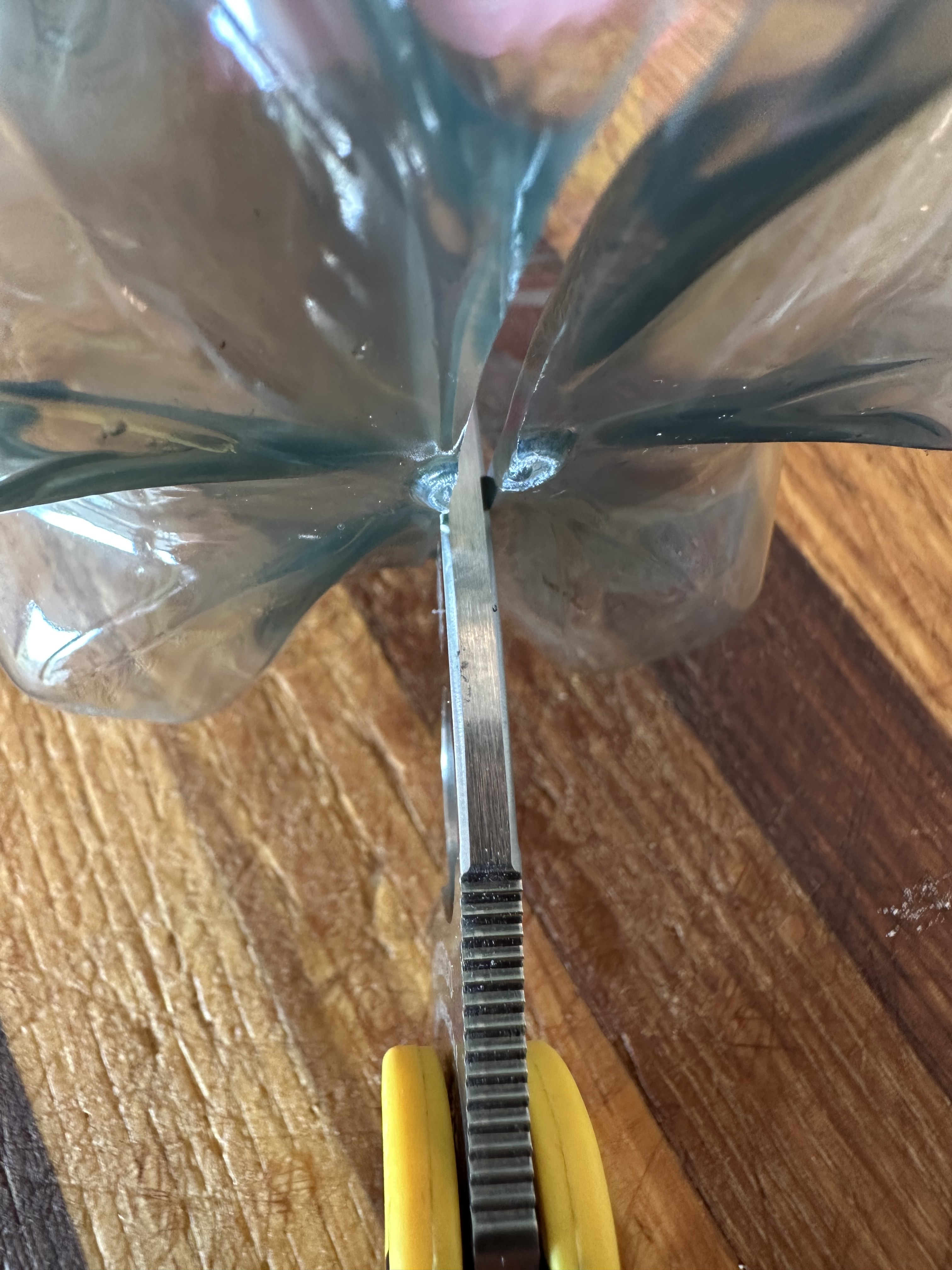
I was able to cut through the plastic without having de-shouldered the edge yet. It will be done in the next chapters. For the record, I was not able to get a clean cut with the factory geometry of my new Para3 and Military2 in CPM 15V.
So this blade has excellent geometry right out of the box: this is really impressive ! Without any touchup of the factory edge it goes deep in any material, soft or hard.
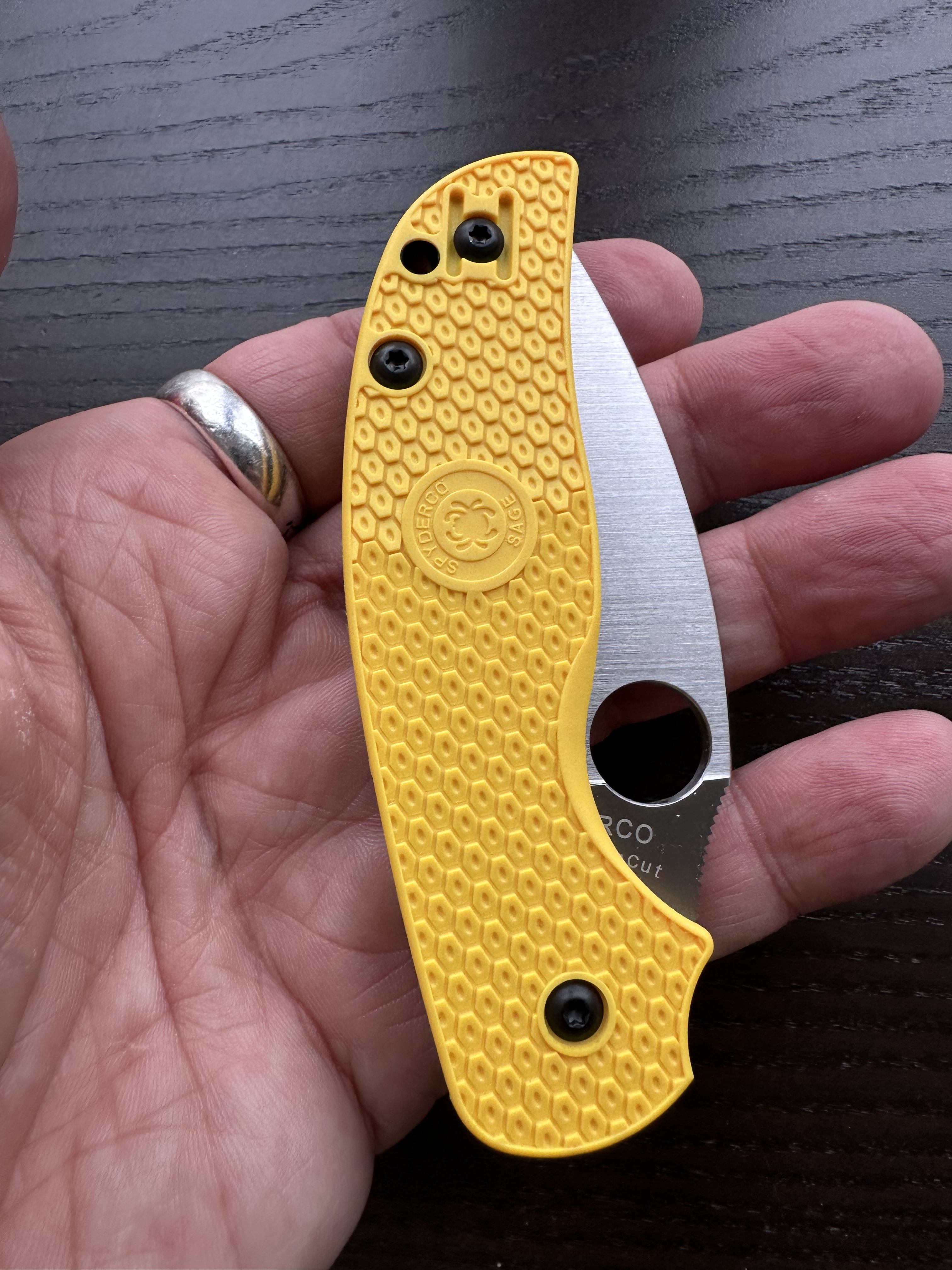
The Sage 5 Salt is a pure Sal Glesser design with its iconic leaf-shaped blade. Fun fact: the letters S‑A‑G‑E appear in order in his name!
This great folder is made in Taichung, Taiwan, renowned for its exquisite manufacturing and quality control. The blade is chamfered, and the jimping is soft under the thumb, making it a joy to handle.
Ultimately, this is a Highlander knife: “In the end, there can be only one.” The Sage 5 Salt feels like a Spyderco to rule them all — the only one I’d ever need in terms of portability, reliability, and performance.
Purely stainless from blade to screws, it is a true all terrain tool. I mean, you won’t need another knife as this one is totally impervious to salt water and boast that CPM Magnacut blade known for its great performance: “a revolutionary particle metallurgy steel that offers an exceptional balance of edge retention, toughness, and the extreme corrosion resistance.” It is true when properly heat treated and with the best geometry. (Again all those green marks are links to previous review or sources of this review.)
Polishing the Sage’s edge on a leather strap — aka stropping — removes the final imperfections, leaving an even razor-sharp edge. Magnacut, in particular, responds beautifully to leather stropping.
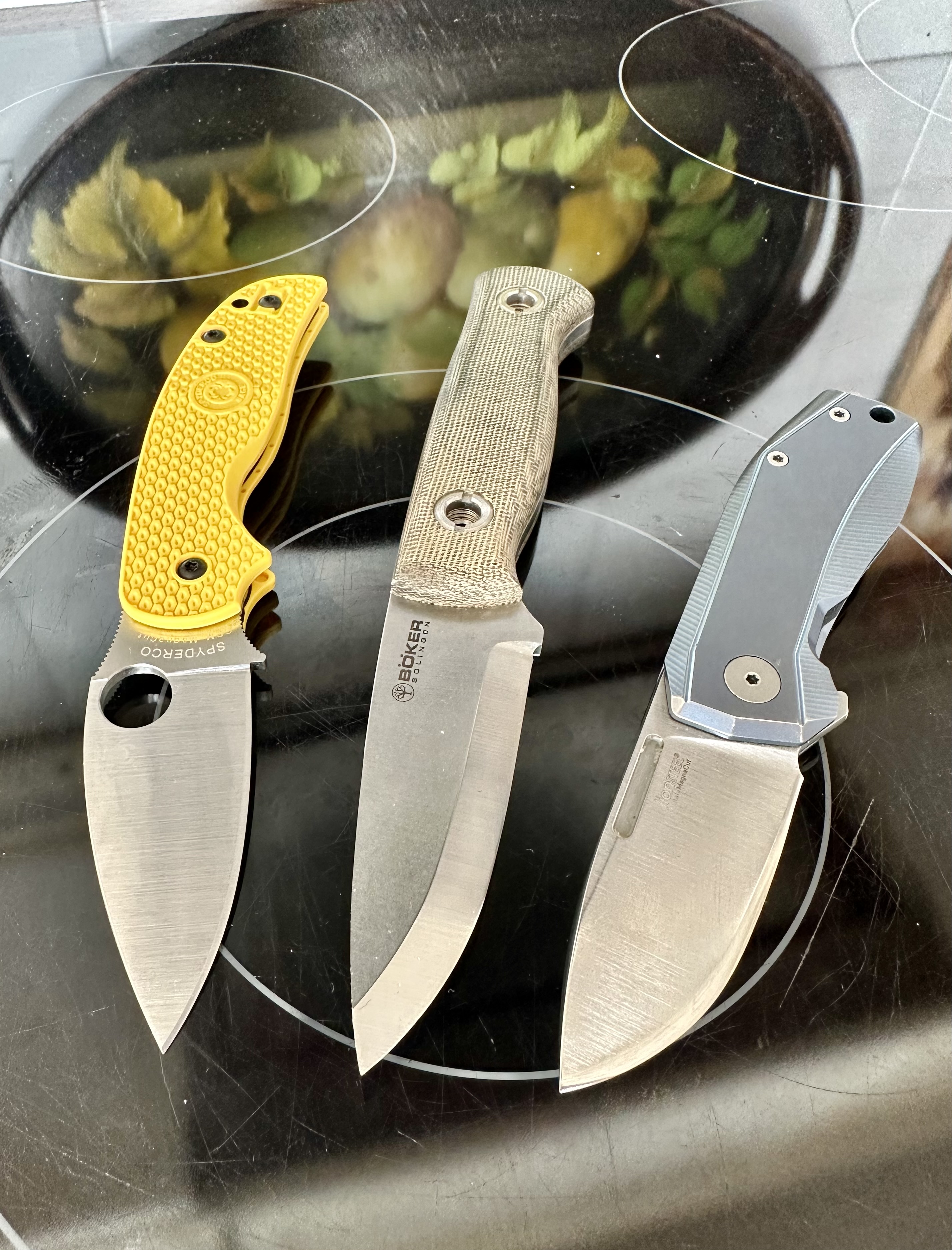
With the Vigtig and the Nano. I managed to get these three knives for under €200: the Sage 5 at €194, the Vigtig at €130, and the Nano at €192.
This means that, as of March 2025, CPM Magnacut knives can be found for as low as €130 — a good deal, though it may not last. The UKPK in CPM Magnacut should be in a similar price range, which I’m looking forward to.
So far, first impressions are excellent! The yellow handle makes it feel less threatening — more like an everyday tool than a “ninja mall weapon,” which is a definite plus these days.
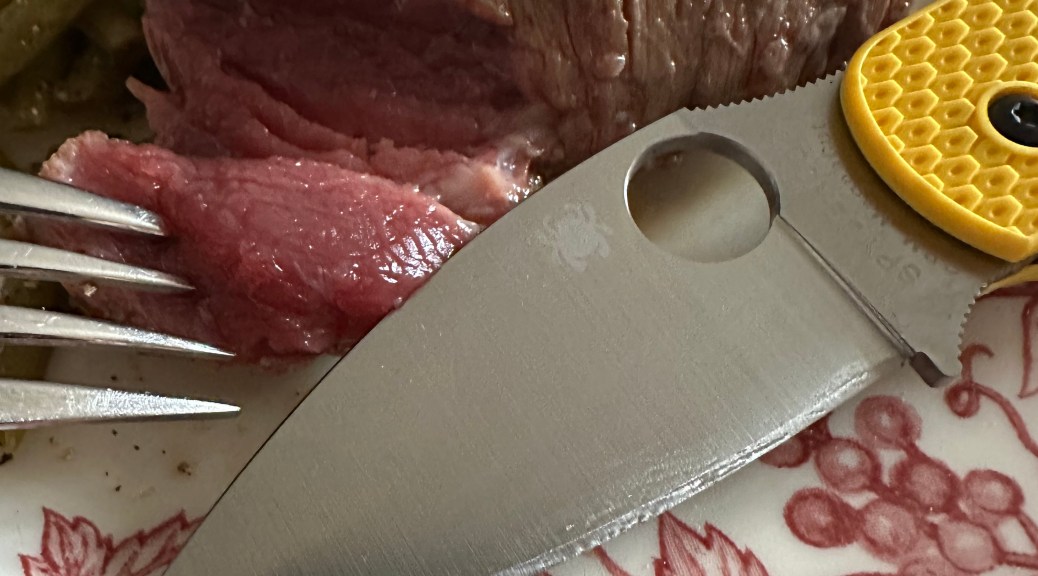
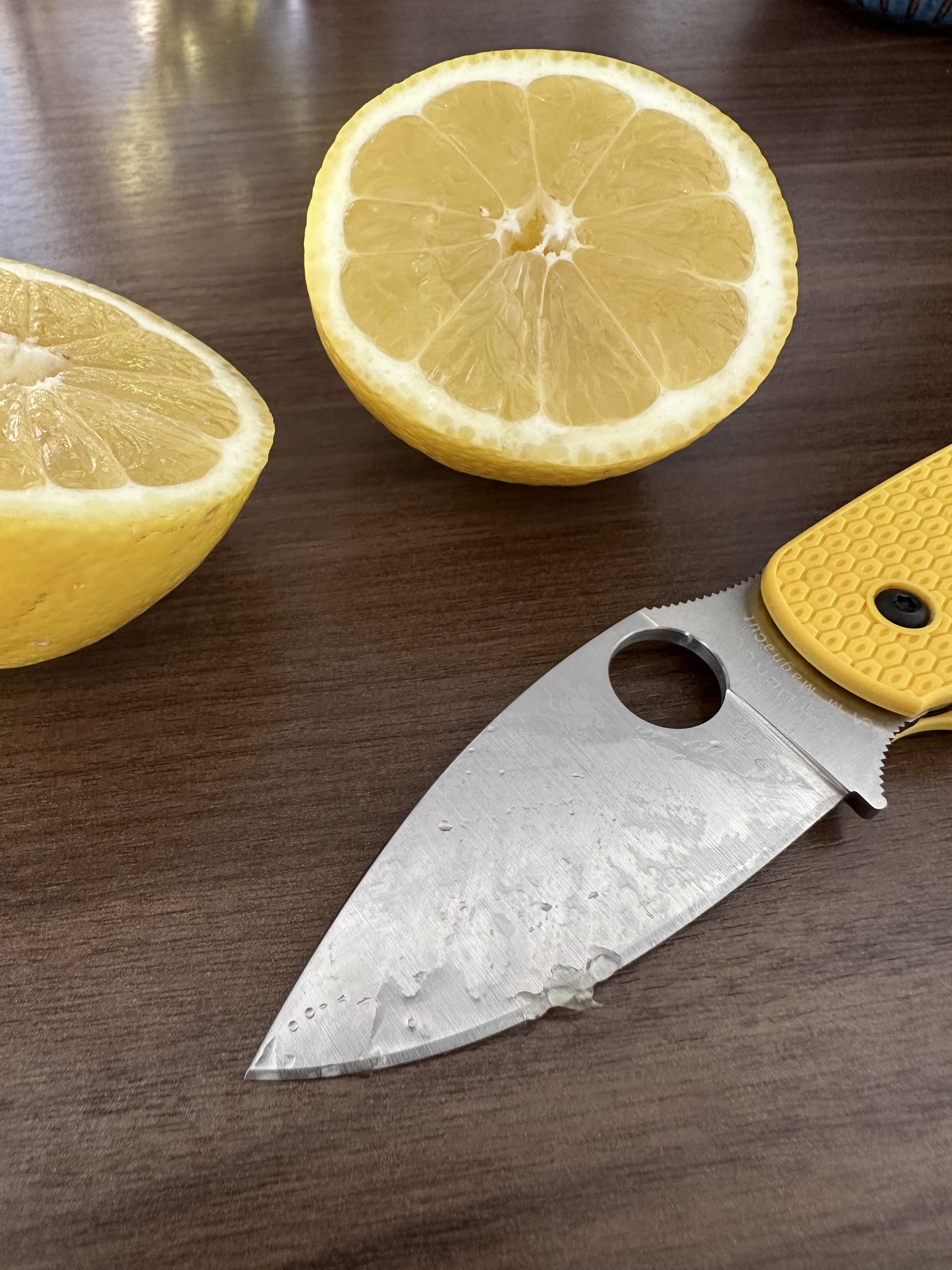
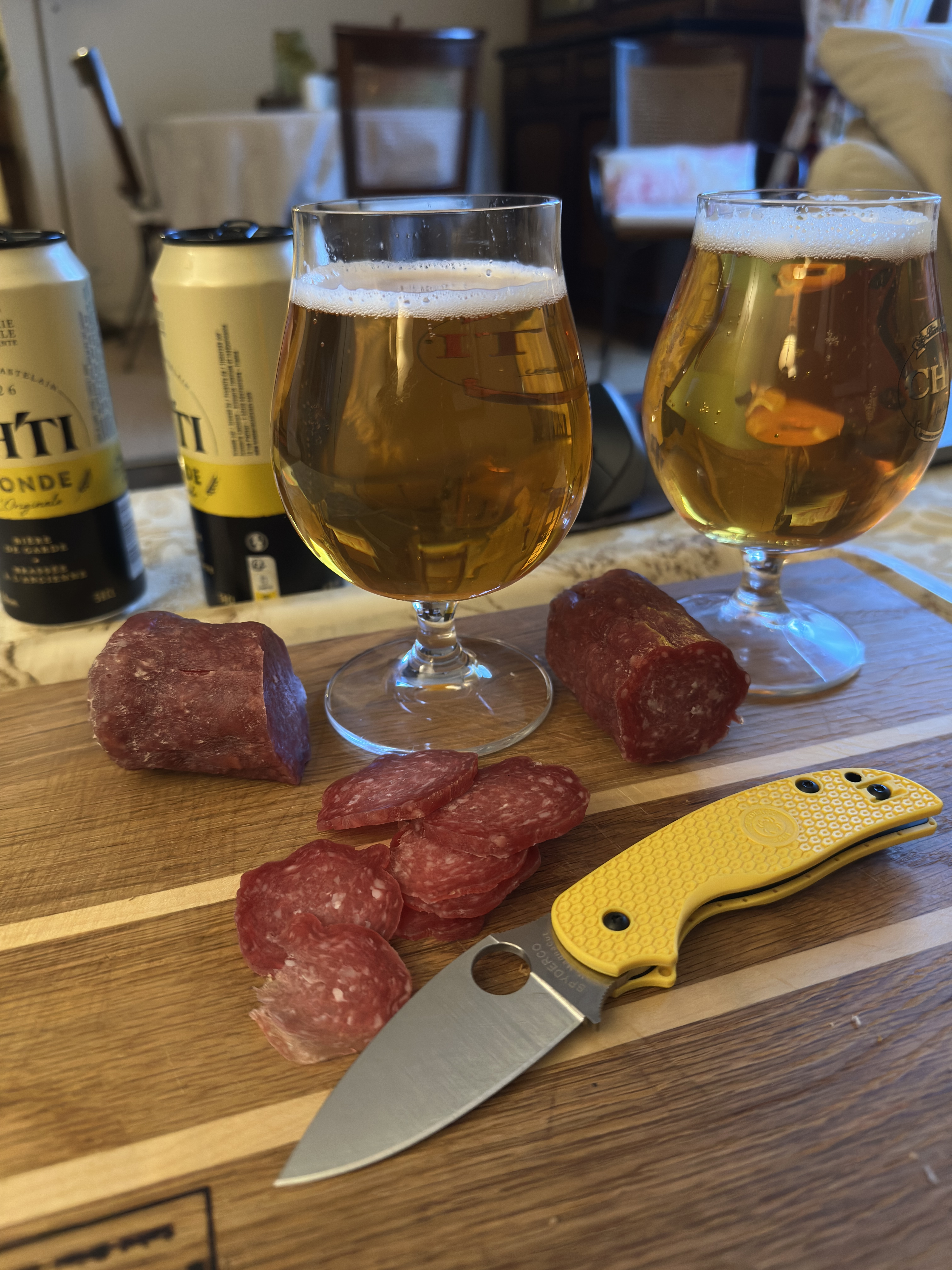
It’s also ready for kitchen use, thanks to a strong edge that isn’t afraid of ceramic plates. Magnacut takes a razor-sharp edge easily with just a bit of ceramic and leather work. No need for diamond paste like on the mighty CPM 15V.
The amphibious Sage 5 is a perfect traveling companion — from mountain rivers to the ocean. It delivers impressive cutting power for its size, biting into hard wood effortlessly. The blade spine is very comfortable for push cuts, making it a reliable all-terrain tool.
It’s a dream knife for fishermen and woodcrafters, capable of accompanying you in virtually any environment. So far the Spyderco Salt serie is enlarged to very nice plateforms with Military flavours and civilian purposes.
First impressions of the Sage 5 are excellent — in terms of action, geometry, and ergonomics. This is a great EDC that’s fearlessly corrosion-resistant.
Thanks to Guillaume for the tip! Now time to convex it !
























 NemoKnivesReview