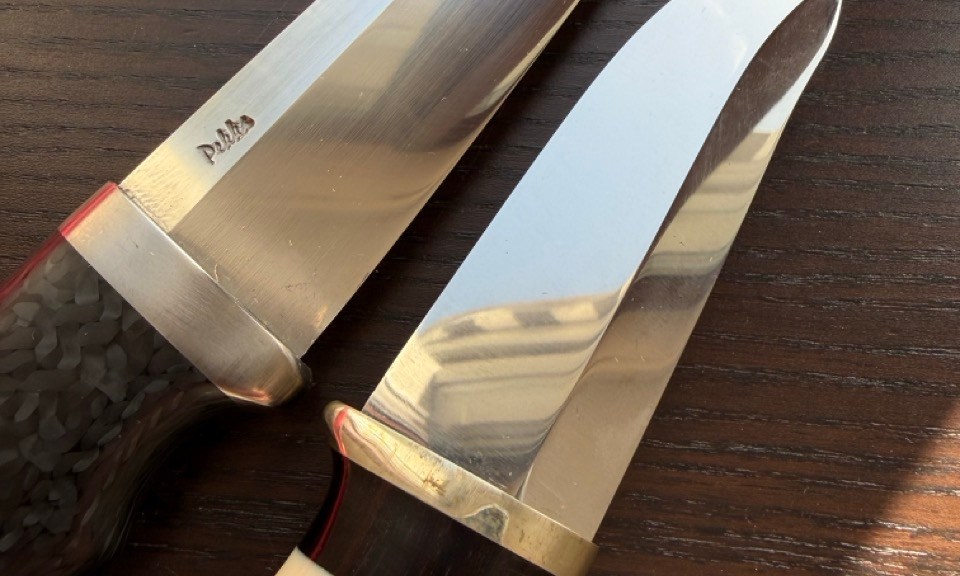
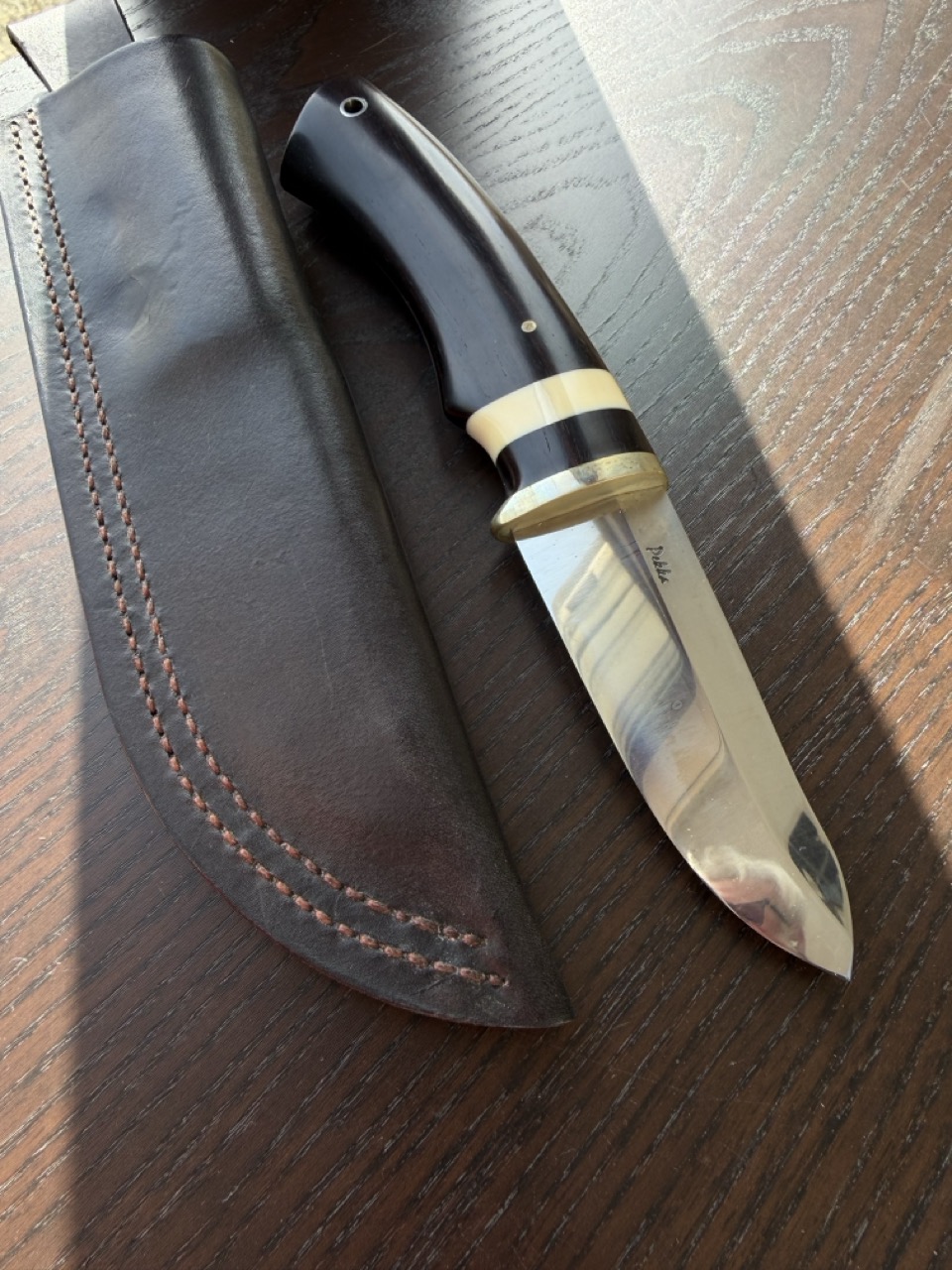
It was upon receiving one of my friend Jur’s knives — a superb hunting knife by Pekka Tuominen dating from 2012, forged in Silversteel and fitted with a handle incorporating walrus ivory — that I felt compelled to turn my attention back to Pekka Tuominen.
People often ask me: who is Pekka?
Consider this, then, a renewed portrait.
Because in Finland, a knife is never just a knife.
And the snow is never just the snow.
In the deep boreal forests where autumn means moose season and winter hardens the earth into something resembling iron, blades are not judged under showroom lights but against bone, sinew, cold, and time. It is in this demanding landscape that Pekka Tuominen has built his reputation — quietly, methodically, without spectacle.
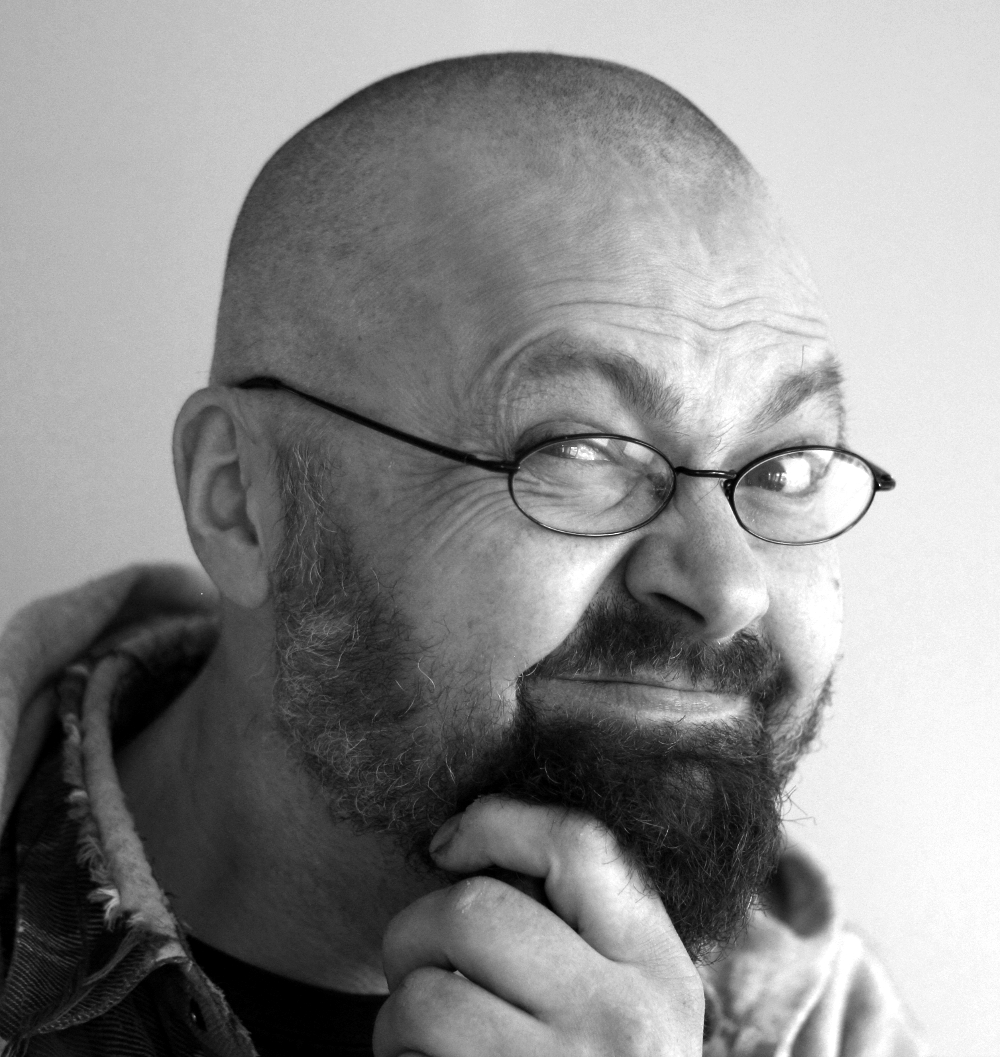
He is not a factory. He is not a brand machine inflated by marketing departments and limited drops. He is a craftsman in the most literal sense of the word. And among serious Nordic hunters, his name circulates with a particular, understated respect.
Pekka’s relationship with knives began before memory. His grandfather, a part-time blacksmith, forged blades; his father worked as a carpenter. He received his first knife before the age of five. For him, the object was never exotic — it was elemental.
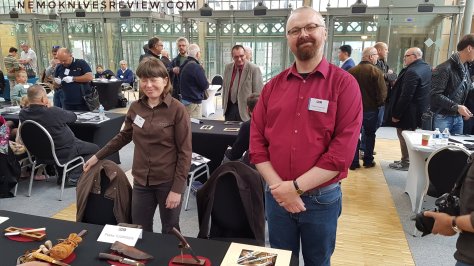
As a teenager immersed in scouting and outdoor life, he reached a simple conclusion about survival: the most important tool in the wilderness is a knife. Naturally, in Finland, that meant a puukko. At eighteen, he studied in Inari, in northern Lapland, training as a wilderness guide. There, he learned the fundamentals of puukko making. That period marked the true beginning of his craft.
A decisive intellectual influence came earlier, when he first read Sakari Palsi’s 1955 book Puukko. The text, he recalls, opened his eyes. It clarified what truly defines a puukko — not ornament, not material excess, but proportion and line.
For Pekka, a knife unites tool, design, and art in a single object. He cannot imagine life without one.
I have written a long review here about it.
Ask him to describe his ideal puukko — as a user rather than a maker — and he returns to simplicity. A blade of approximately 90 millimeters, paired with a 110 millimeter handle. Dimensions rooted in tradition, refined by use. Multipurpose, balanced, restrained.

He appreciates steels such as 115CrV3, often referred to as Silversteel, RWL34, and 52100. Yet he insists on a hierarchy that reveals the seriousness of his approach: the steel matters, but heat treatment matters more.
He is no rigid purist. One of his own heavily used test knives pairs stabilized black ash burl with a CPM S30V blade. He admits to having “wrongly” used it — and to grinding it down repeatedly as a result. For Tuominen, a knife that remains pristine has not yet fulfilled its purpose.
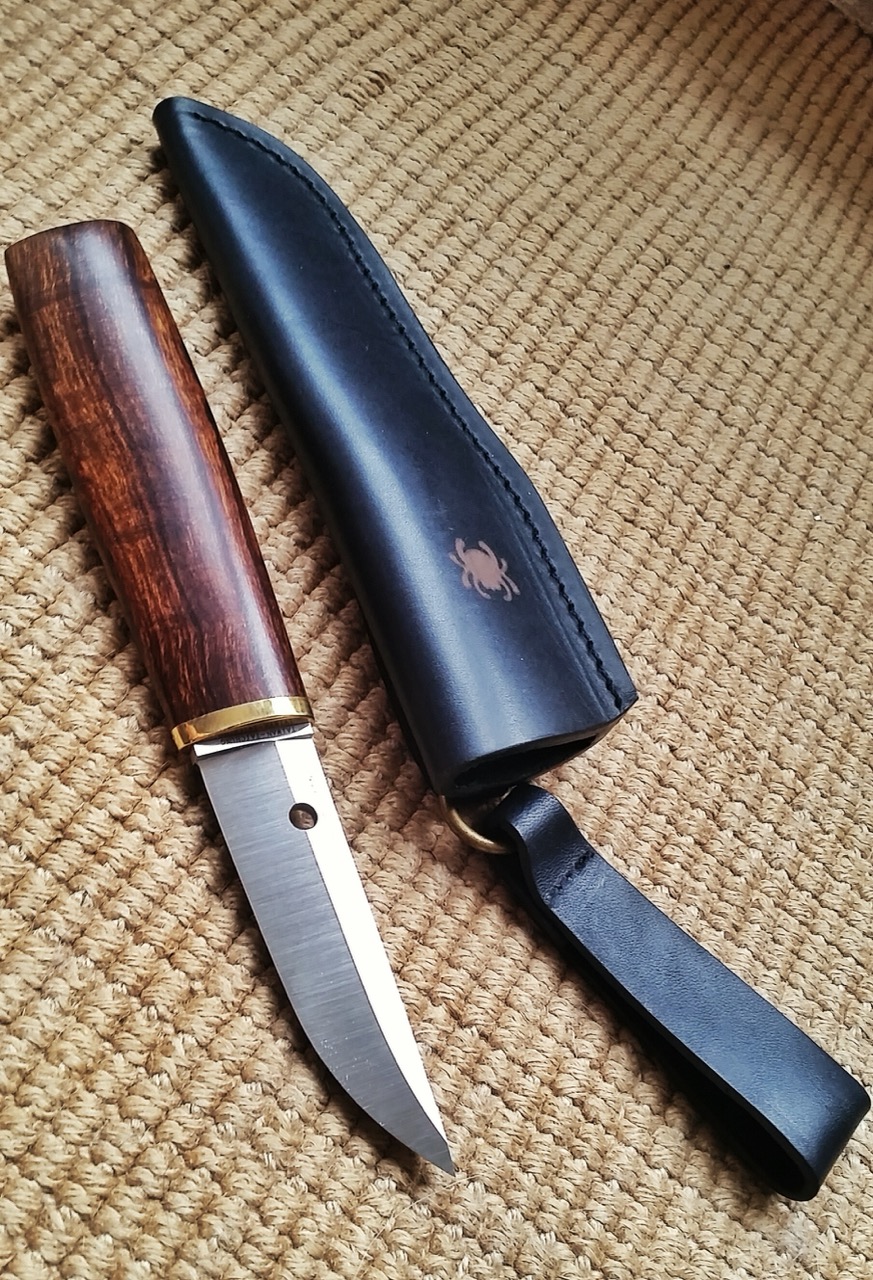
In an age of aggressive silhouettes and theatrical grinds, Tuominen defends restraint. A true puukko is defined by a relatively short, straightforward blade; a handle without finger guards; no exaggerated pommel; and clean, continuous lines that flow from tip to sheath.

He favors birch bark for its warmth and grip, but also works with curly birch and Micarta. His sheaths are hand-stitched, typically from vegetable-tanned leather. He admires traditional Finnish patterns — Tommi, Pekanpää, Kokemäen — whose differences lie more in decoration than in structure. The essential design language remains consistent across regions.
“The material does not make a puukko,” he says. “The design does.”
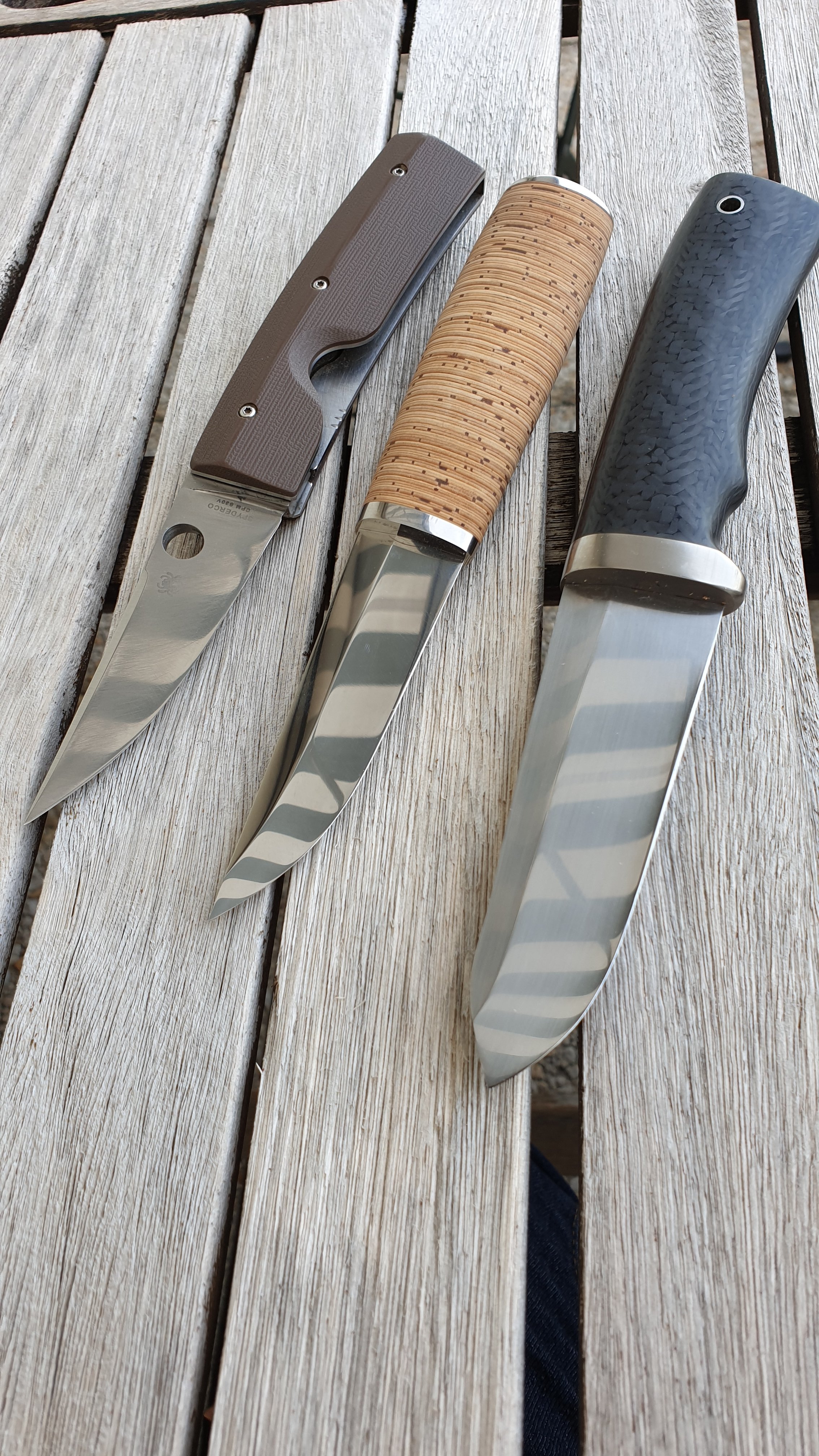
In Finland, the word puukkoseppä carries weight. It does not describe someone who merely grinds blades. It denotes a professional who forges, heat treats, shapes, finishes, and sews — who understands the knife as a complete entity.
Tuominen forges Silversteel and 52100, as well as his own Damascus from 15N20 and 1090. Stainless steels such as RWL34 are ground rather than forged. In every case, he performs the heat treatment himself.
This decision is not romanticism. It is control.
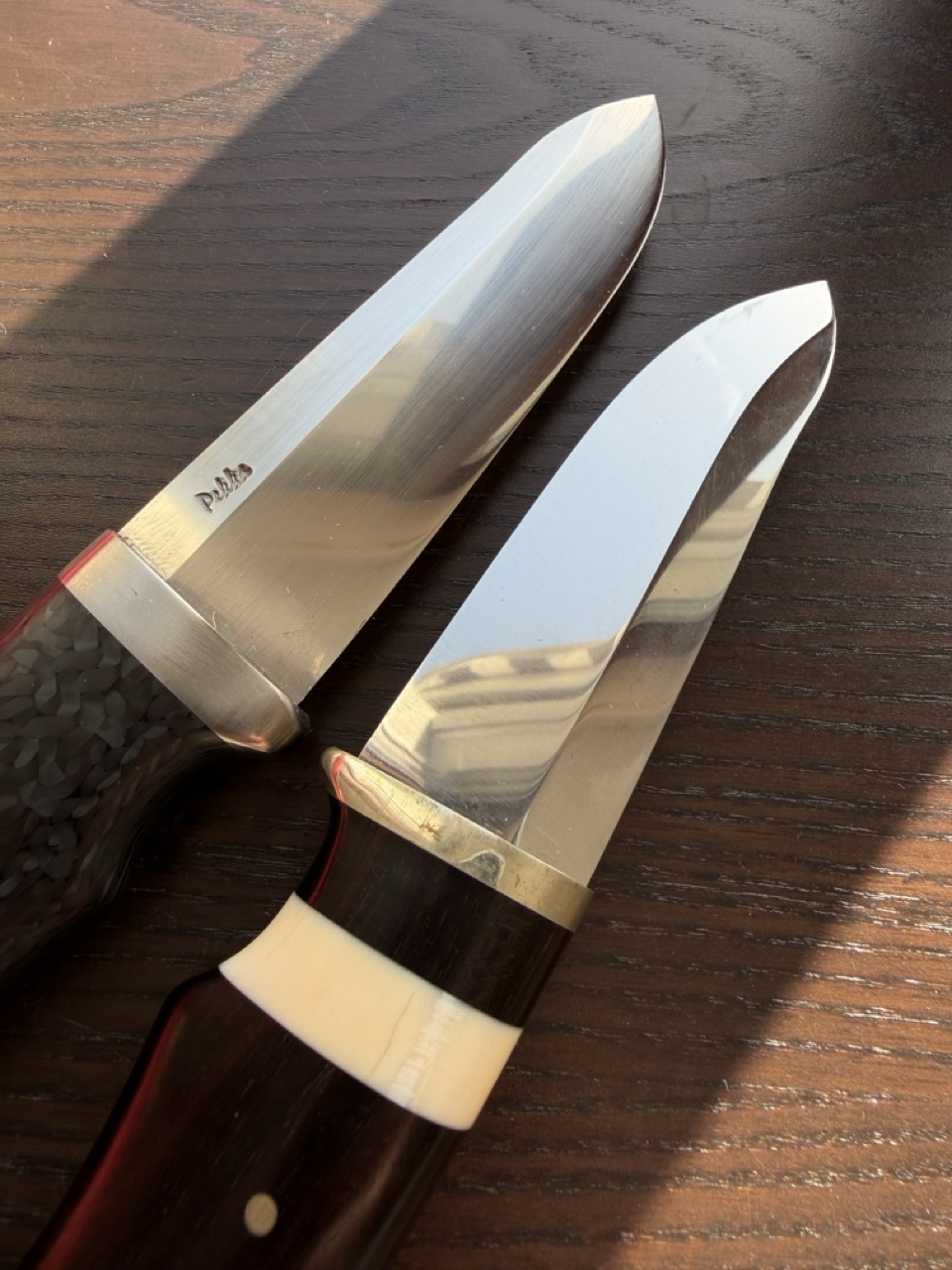
Heat treatment determines hardness, toughness, edge retention, resistance to chipping, sharpening behavior — in short, character. By managing austenitizing temperatures, quench timing, temper cycles, and when appropriate cryogenic steps, he tunes each blade for hunting reality rather than laboratory extremity. He does not chase maximum HRC for marketing appeal. He pursues balance.
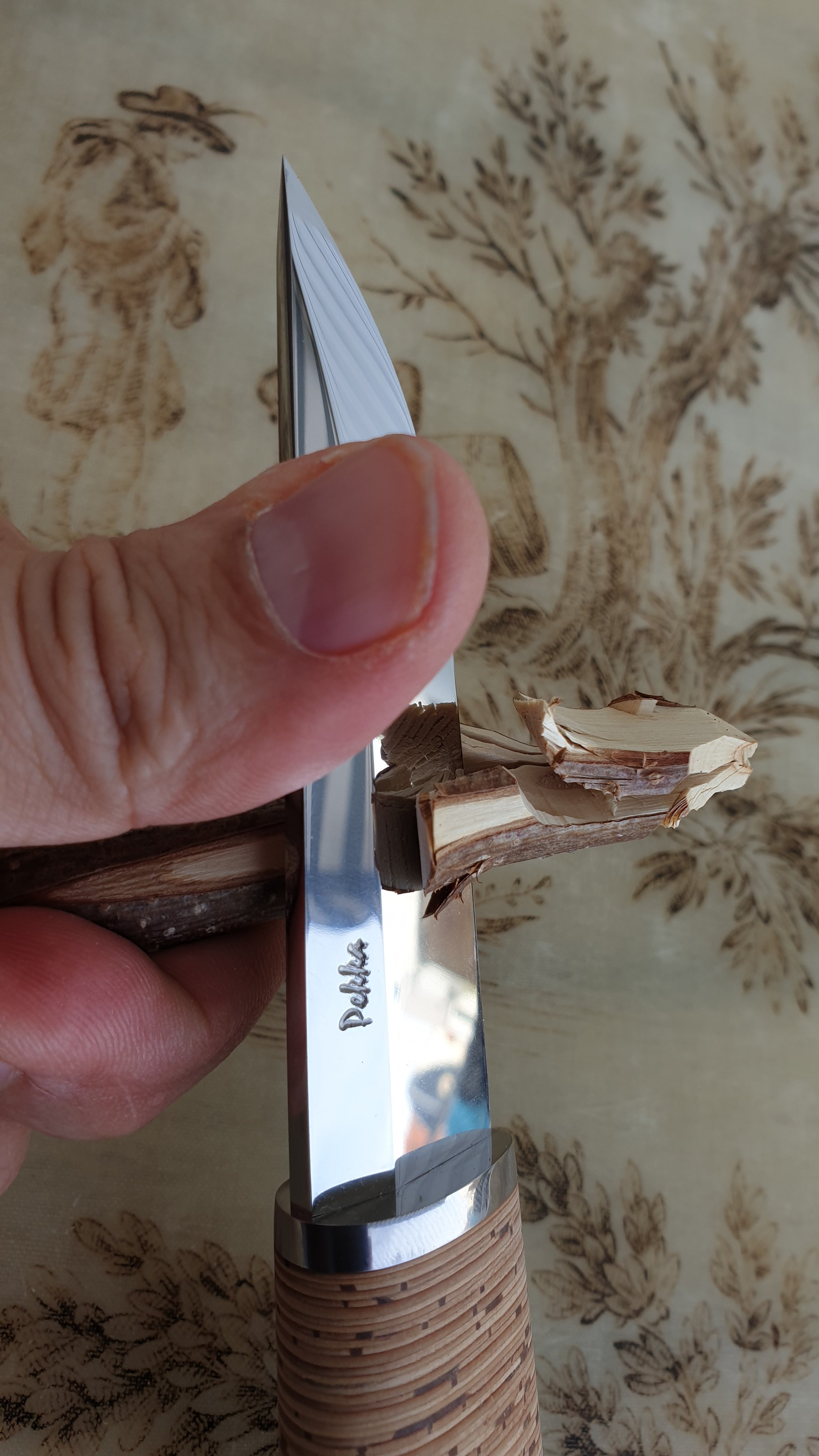
The difference is felt not in specifications but in seasons.
One Finnish hunter wrote on a forum, after two moose seasons with his knife, that he had done nothing more than strop it. A Swedish outdoorsman described the sharpening behavior as clean and predictable, “no surprises.” The praise is never flamboyant. It is consistent. Stability, reliability, endurance.
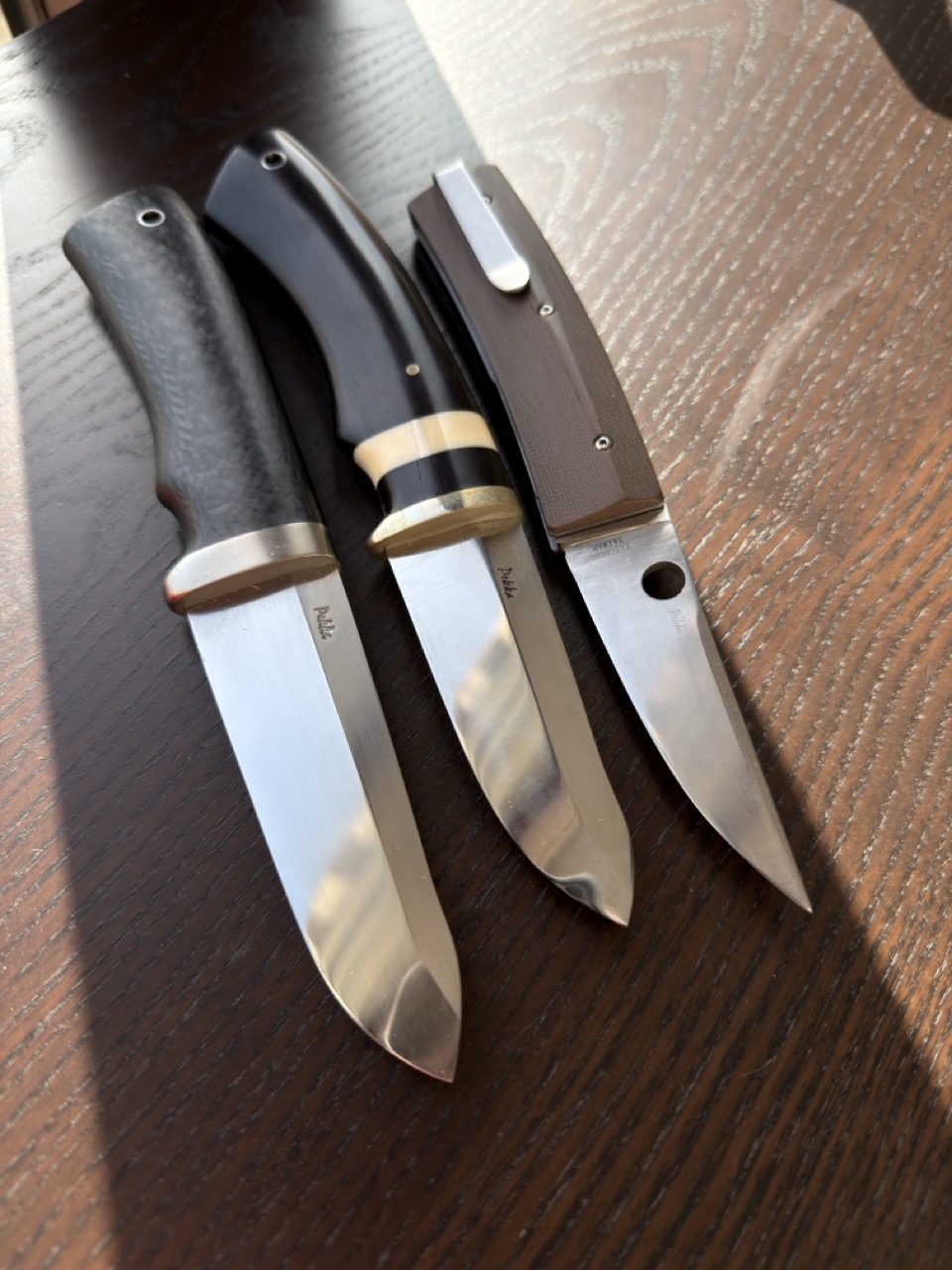
While many outside Scandinavia associate Finnish craft primarily with the puukko, Tuominen’s strongest following among experienced outdoorsmen is tied to his dedicated hunting knives. These are not nostalgic reinterpretations of folklore. They are instruments designed for skinning and field dressing large game in cold climates.
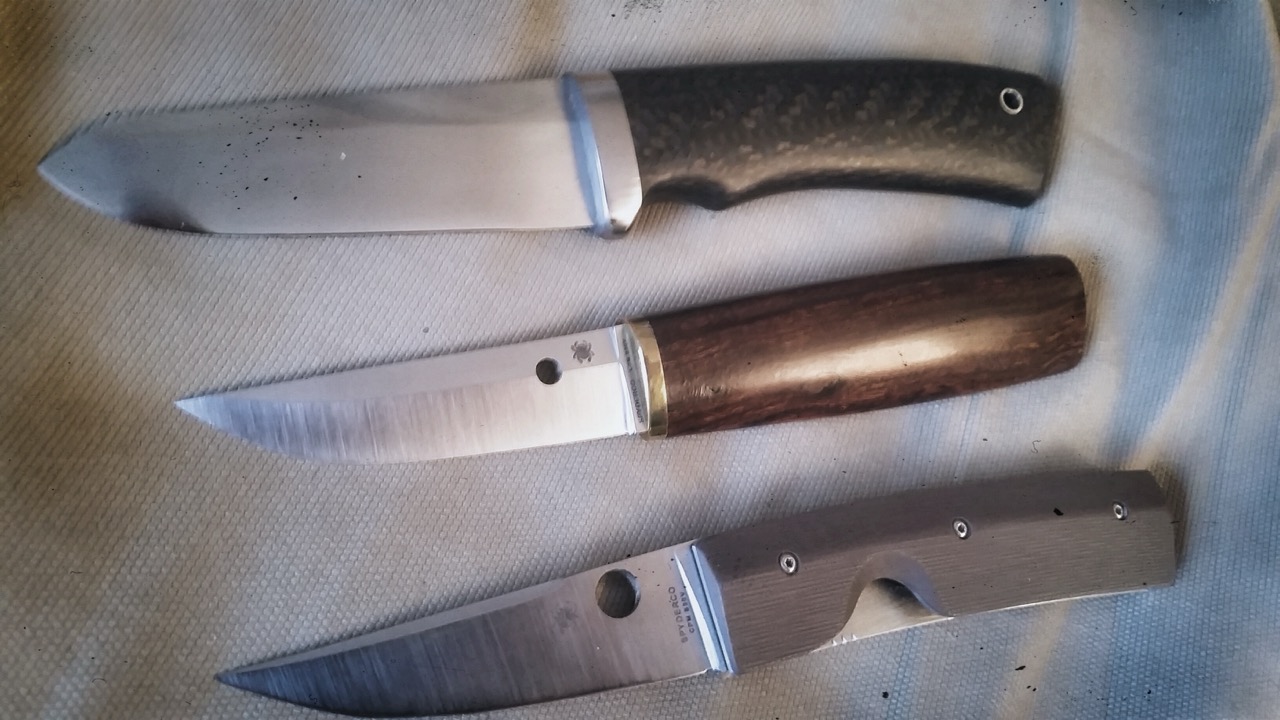
Their geometry avoids ego. Clean drop points, disciplined grinds, carefully judged balance. No theatrical belly, no tactical posturing. In hand, they feel neutral — and that neutrality becomes invaluable during extended work. Fatigue diminishes. Control increases.
In sub-zero conditions, poorly treated steel reveals itself quickly. Edges chip, roll, or turn brittle. Tuominen’s blades are repeatedly described as stable. It is a modest word, but in the field it is decisive.
Finland formalizes its craft traditions through national qualifications overseen by the Ministry of Education. Tuominen earned the title puukkoseppämestari, Master Blade Smith, after passing rigorous examinations and presenting a master’s work to a jury. At the time of his certification, only seven craftsmen in the country held that distinction.
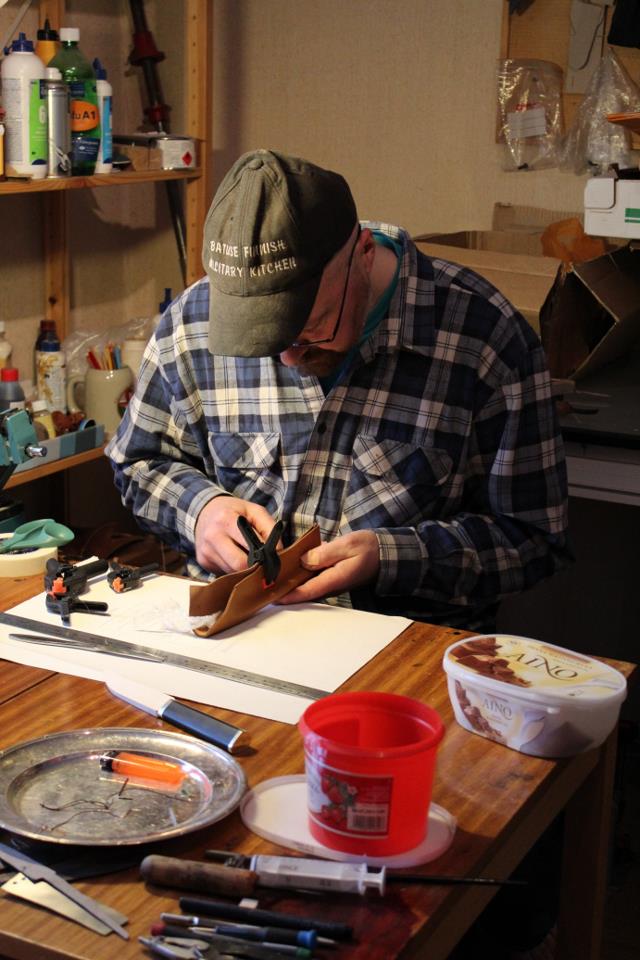
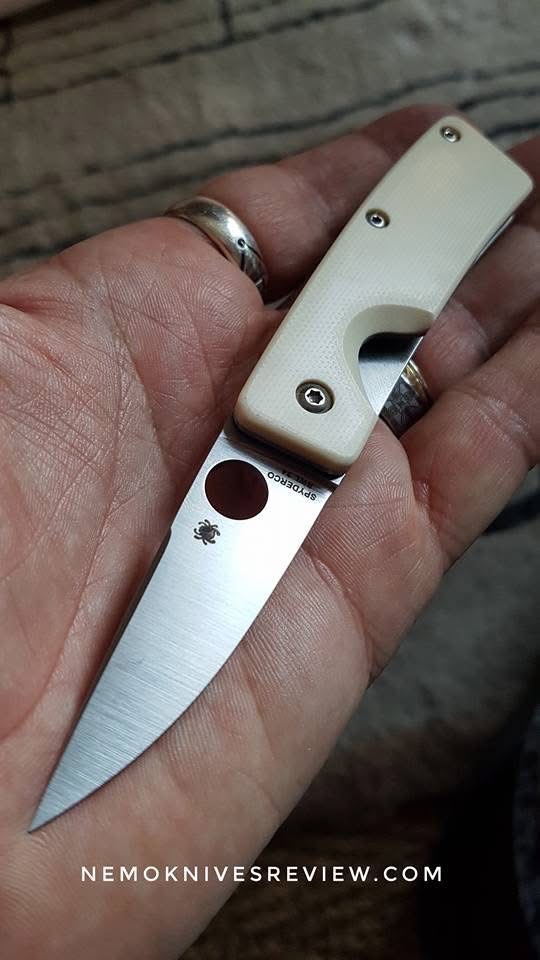
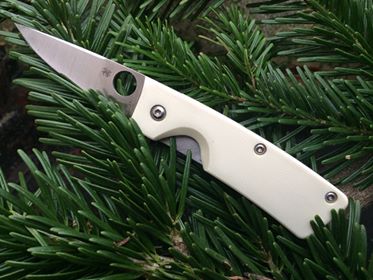
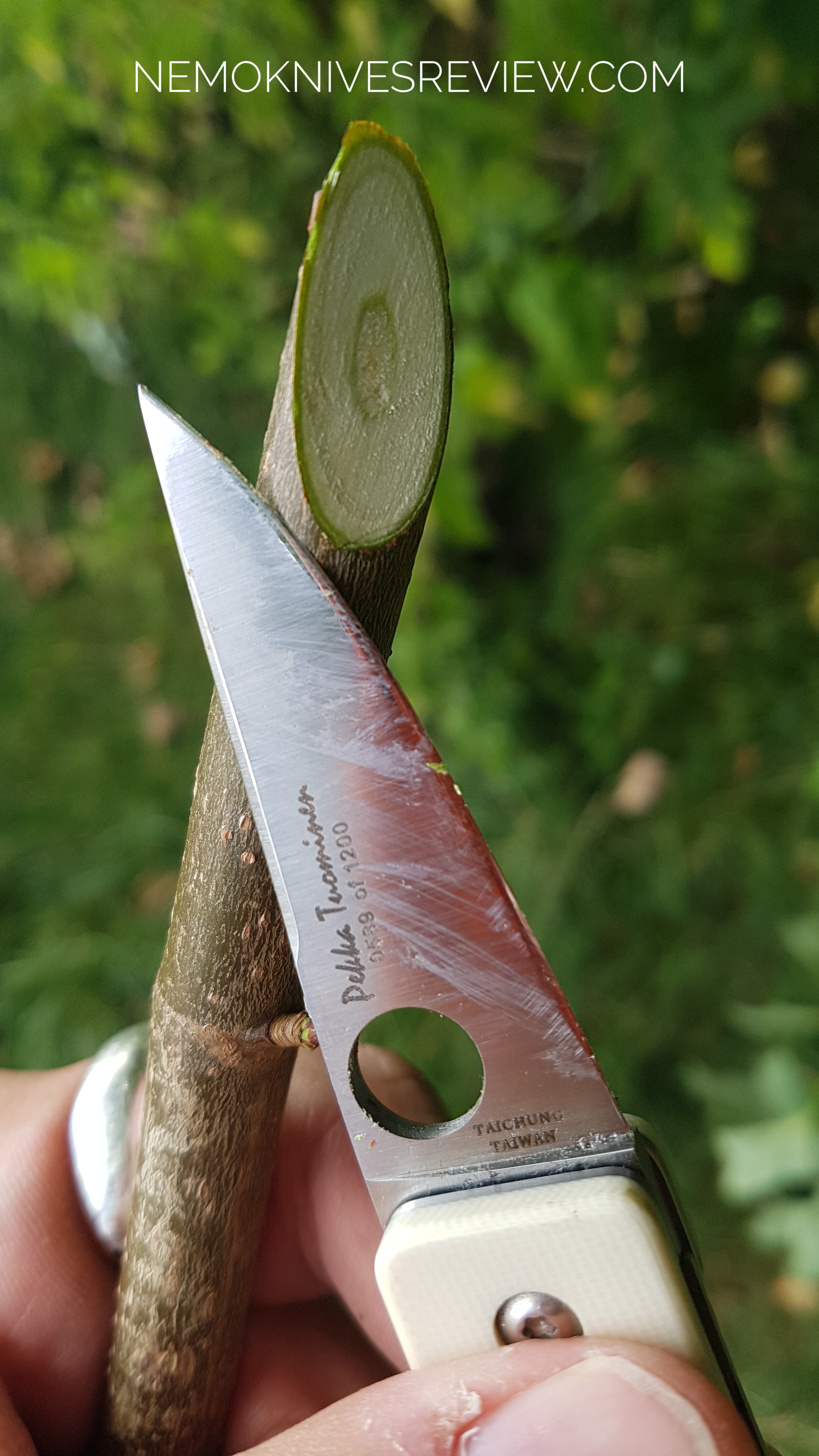
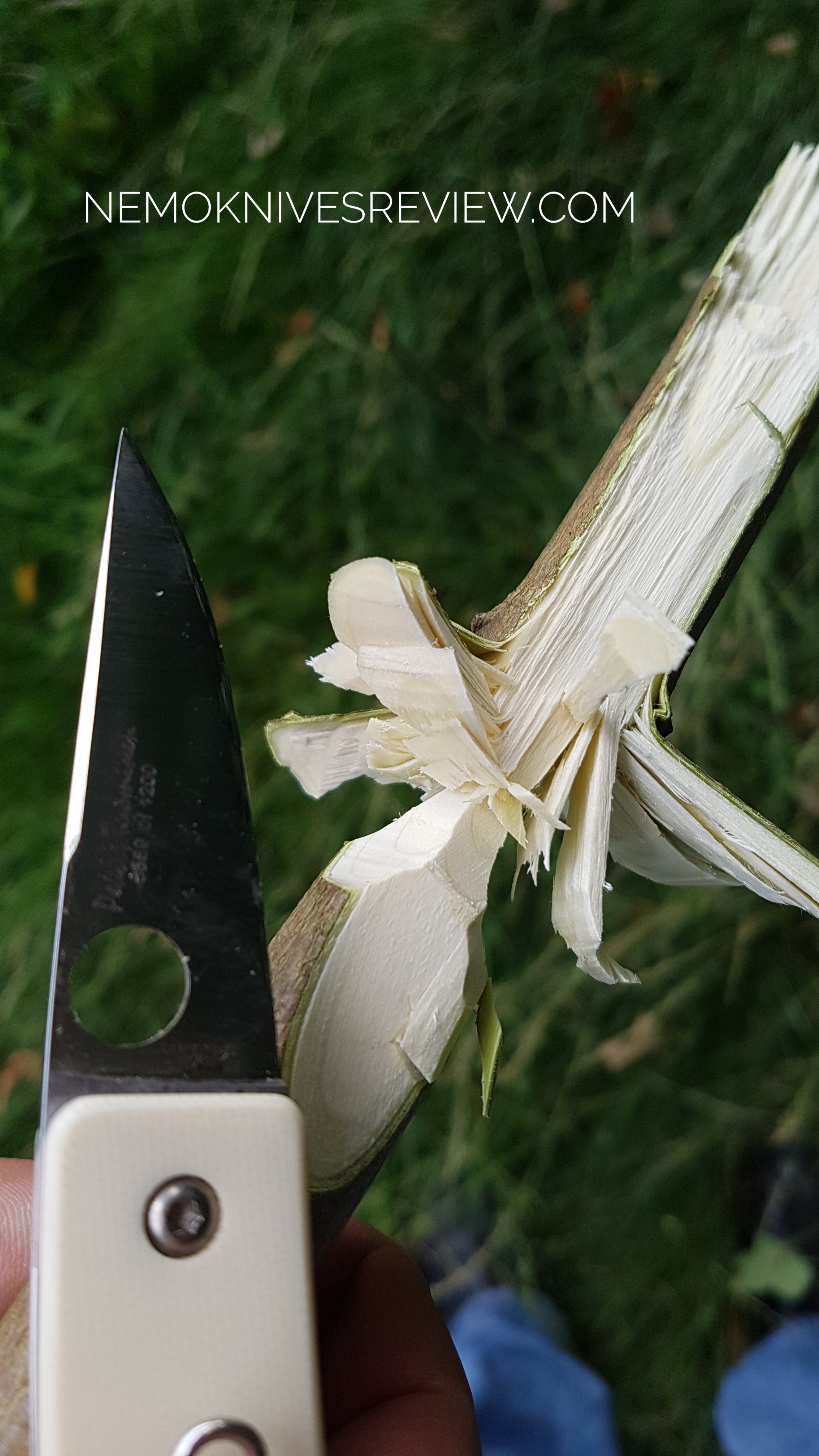
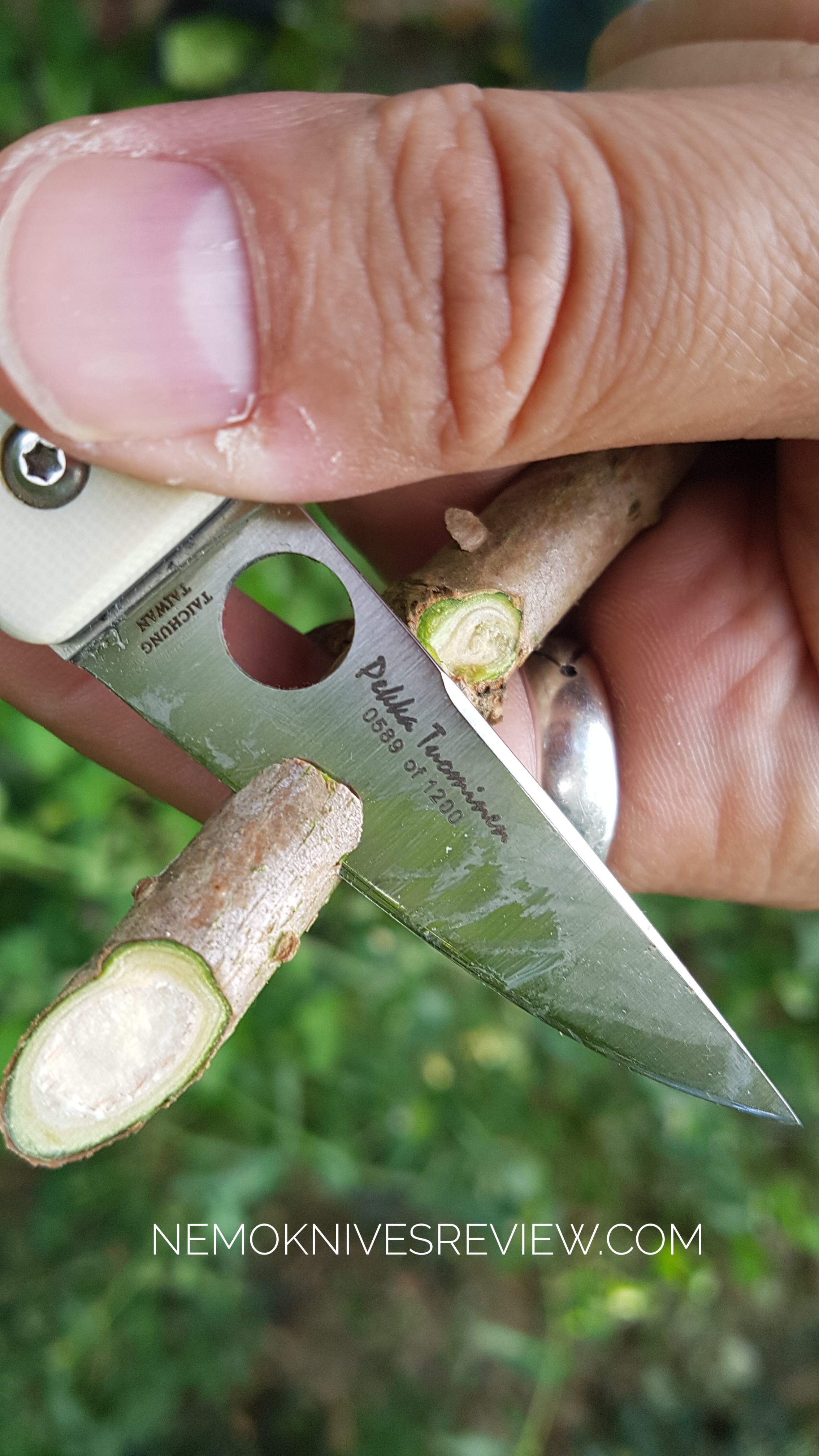
Today, knife making occupies the vast majority of his time. His waiting list extends roughly a year. Collaborations, including work with Spyderco, have broadened his international presence. Yet when asked about ambition, his answer remains almost disarmingly modest: he wants to become a better knife maker.
He considers craftsmanship a lifelong education — one in which imperfections are not failures but invitations to improve.
In a global knife culture increasingly captivated by spectacle, Pekka Tuominen’s work stands apart for its restraint. He works alone. He grinds, heat treats, shapes, and stitches himself. From blade to sheath, the knife remains under one set of hands.
He often summarizes his philosophy with a line that sounds simple enough: a simple man makes simple knives.
In Finland, however, simplicity is never simplistic. It is discipline. It is proportion. It is respect for the task at hand.
And in the forest, that is what endures.
Pekka’s site: https://pekkatck.fi
More articles about Pekka: HERE
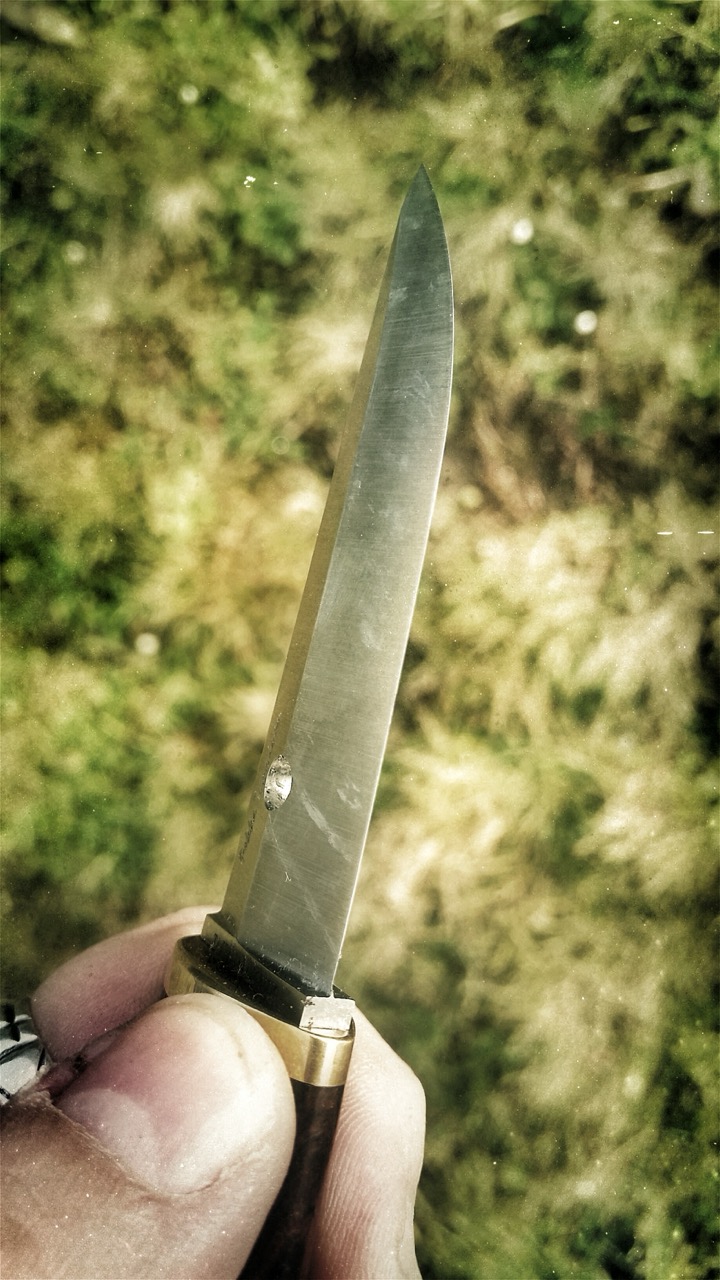


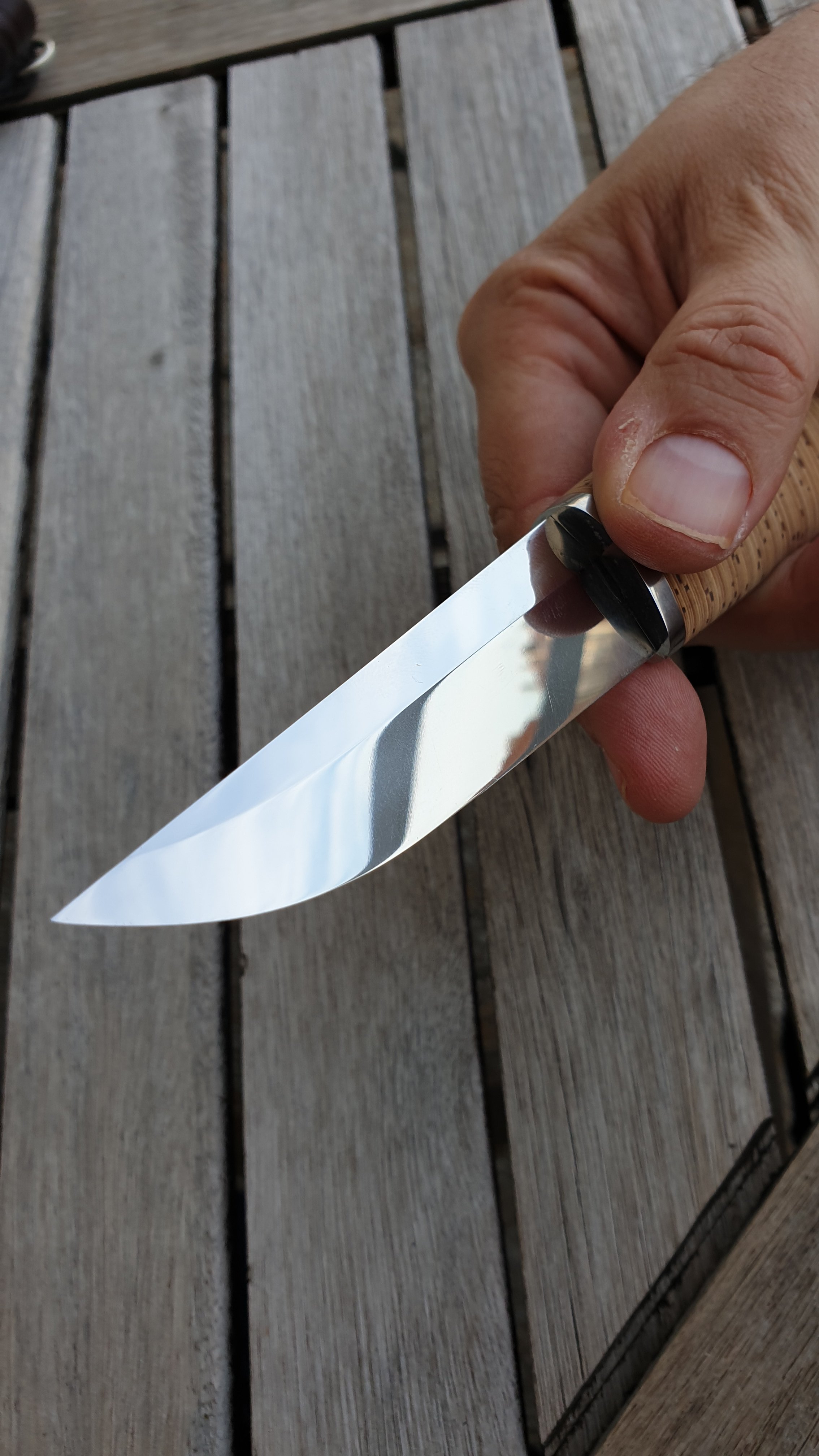


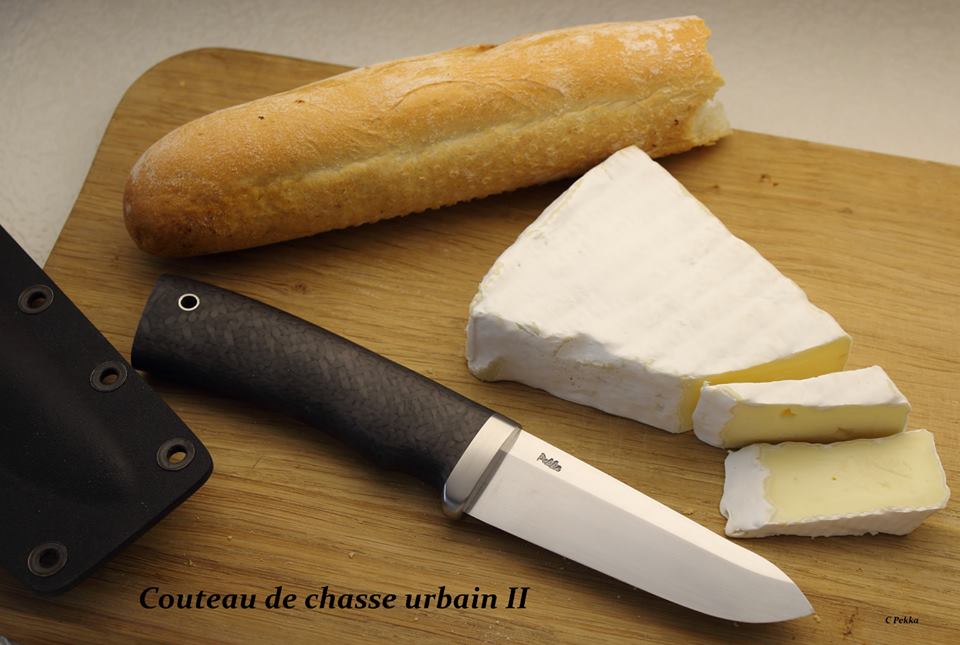
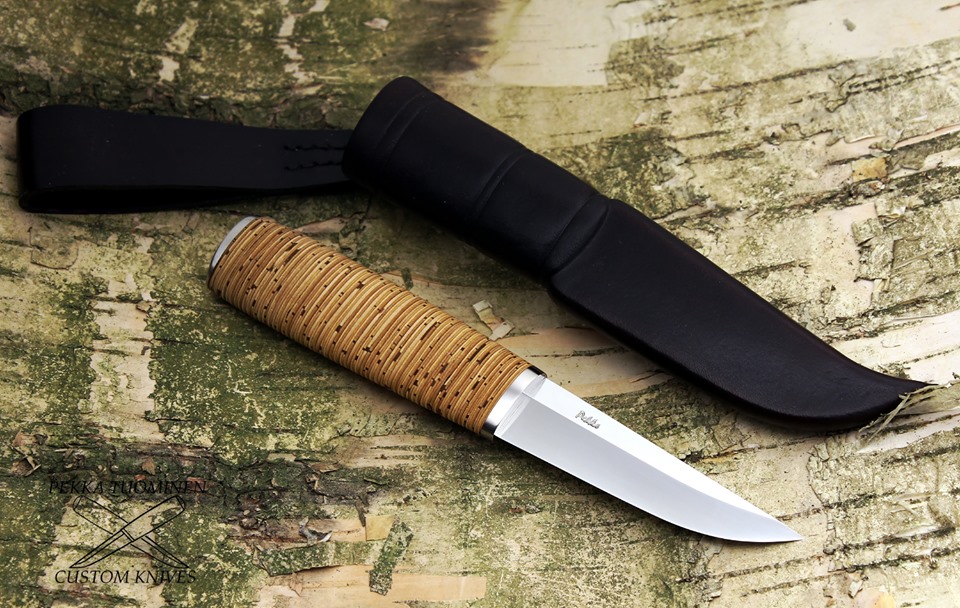 A picture of my Puukko by Pekka. The handle is like a finger print. 🙂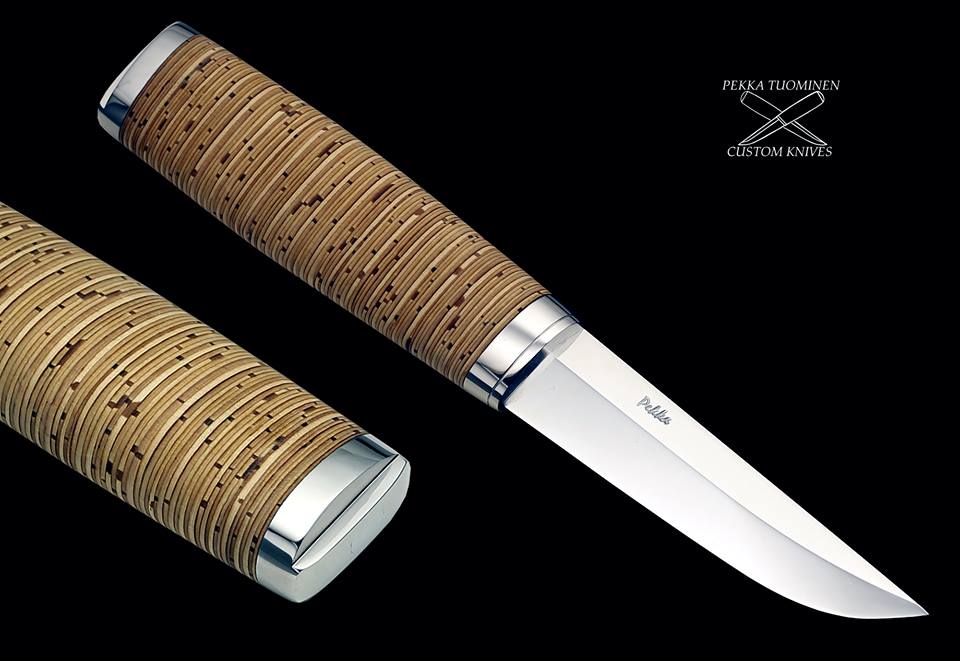

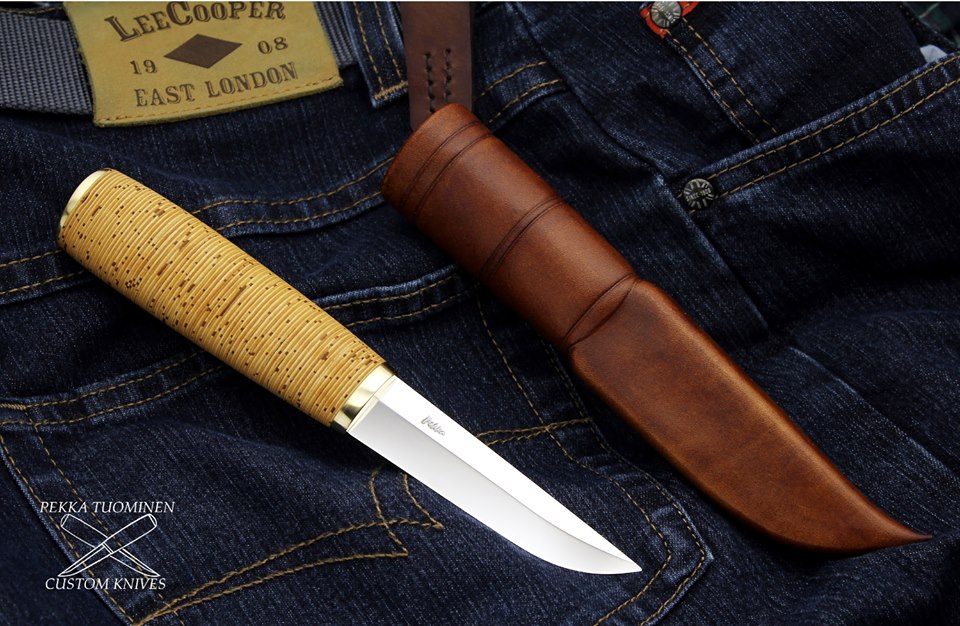 A sistership with brass bolster.
 That could be Pascal’s hunter.
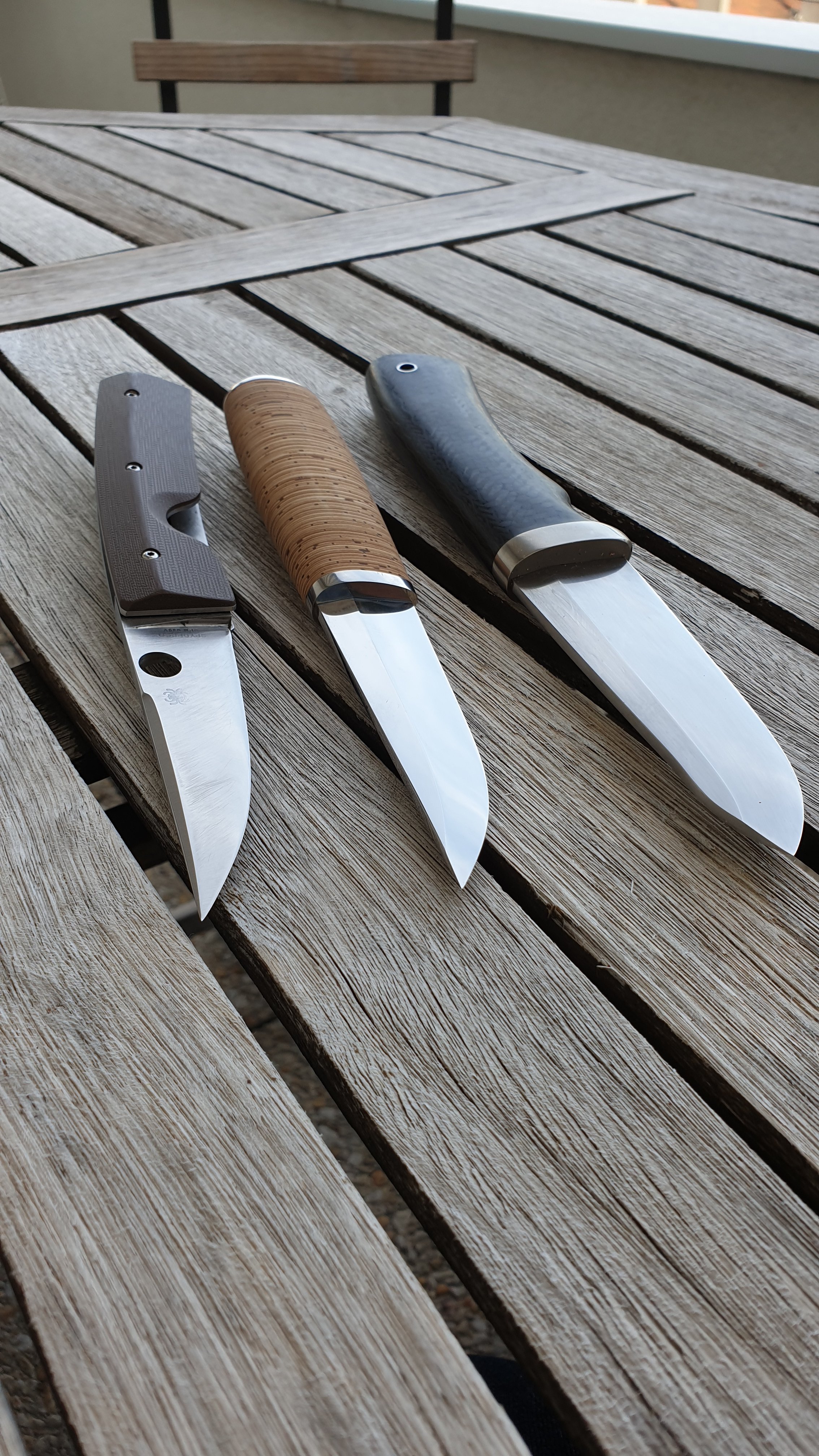
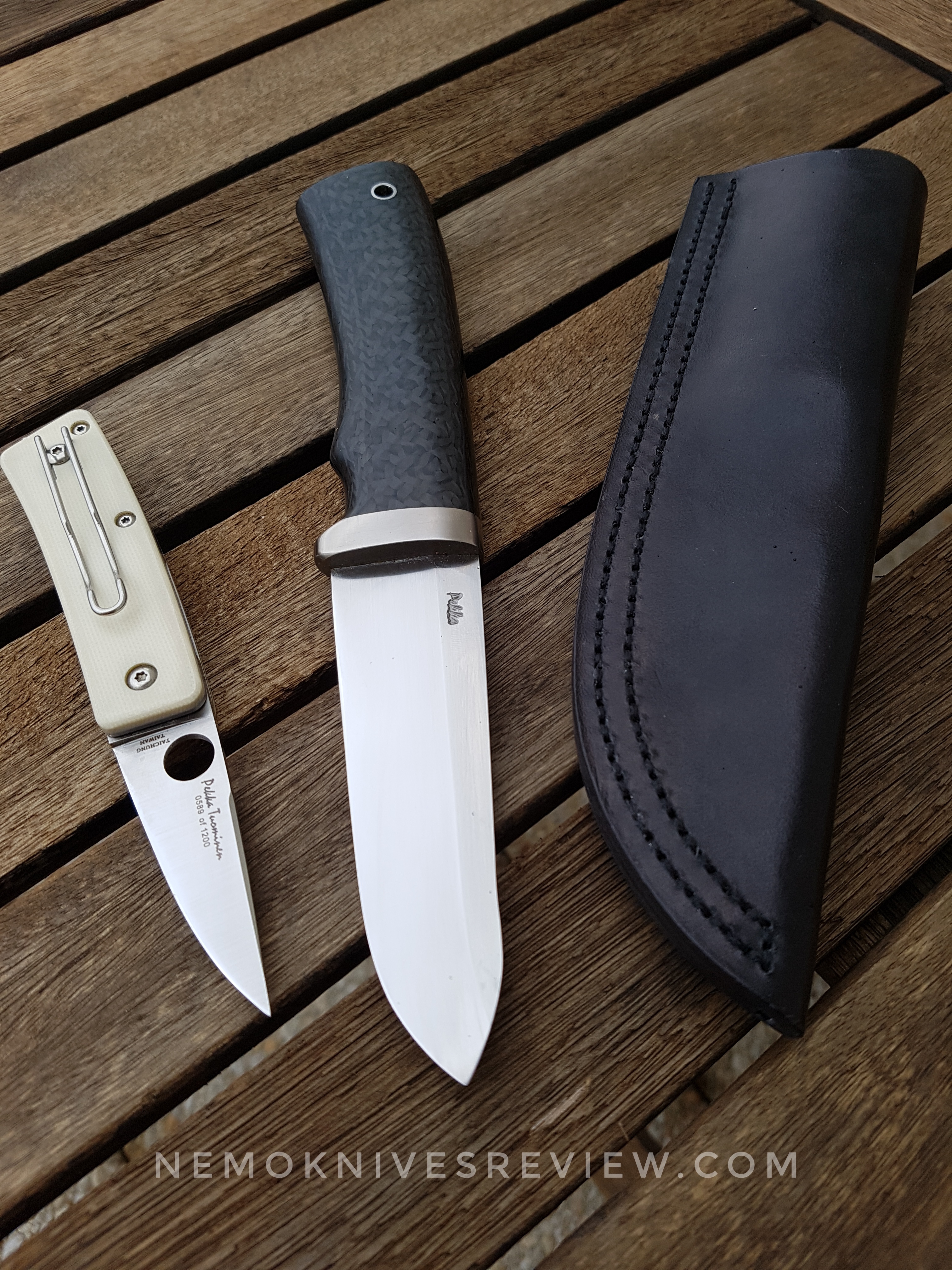
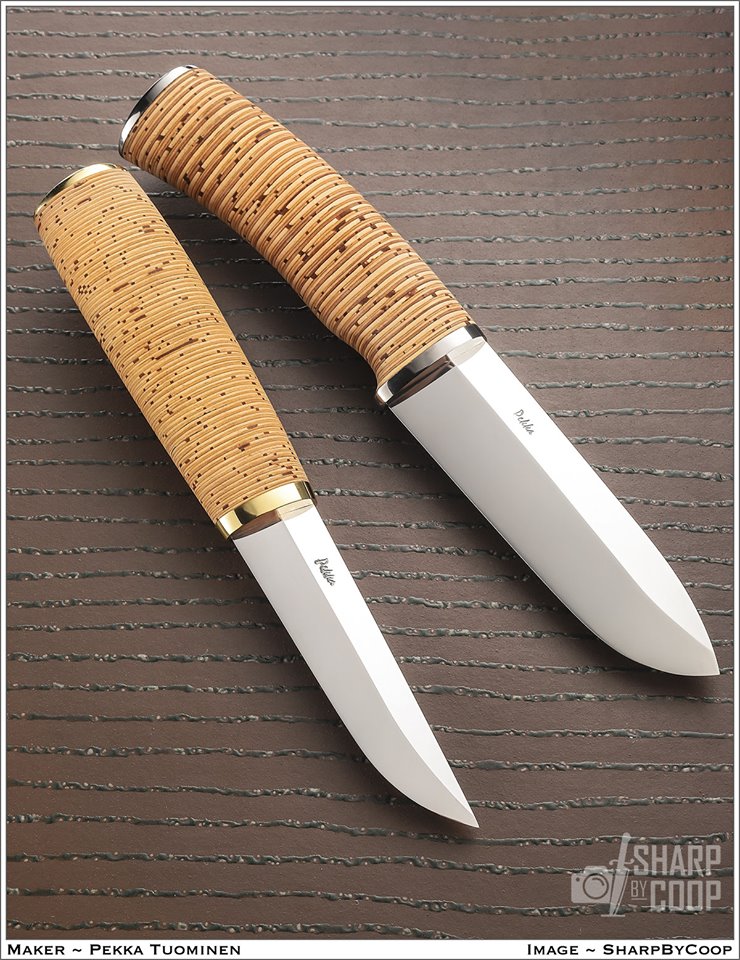 A Hunter and a Puukko.
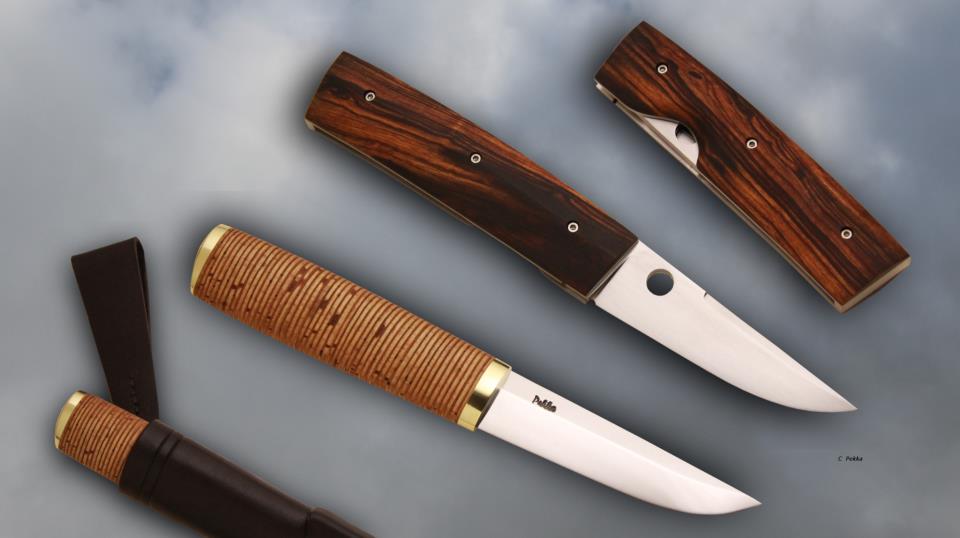






 NemoKnivesReview