The funniest part about using the Manix 2 Salt is remembering how this model first came into being at Spyderco—and how well it has matured over time, much like your humble narrator and its designer, Eric Glesser. We’re not getting any younger! 🙂
For that, you can refer back to my previous article dedicated to this knife.
“An extremely capable full-sized folder that is ready for the toughest challenges.”
It’s either a survival-kit essential or an EDC that has earned deep respect over the decades since its creation. And that’s pretty cool. This workhorse remains a bestseller at Spyderco because it radiates reliability and performance.
Its few drawbacks? The space it occupies in the pocket—which really deserves to be dedicated to it entirely—and the lack of tip-down carry. Which means no “Spyderdrop,” unlike the Military for example—one of the most elegant ways to open a Spyderco (Grab it by the Spyderhole!).
At its core, the Manix brings three key elements that truly make the difference: a blade clearly oriented toward performance—neither overly thick nor compromised, with a tall full flat grind; a rock-solid lock that effectively turns it into a fixed blade once engaged and a drop chuting action when closing; and ergonomics so well thought out that, no matter the wet and oily situation, this knife simply refuses to escape your hand.
Disclaimer: The Manix 2 Salt has been provided through Spyderco’s Ambassador Program, upon my own request. Thank you to the Spyderpeople for letting me review it.
The Manix 2 Salt black G-10 handle is fully peel-ply-textured (mixed with Spyderco’s signature Caribbean Bi-Directional Texture™ pattern) and exceptionally grippy and yet surprisingly never abrasive to my denim pocket’s seams — a balance made possible by a thoughtful clip placement because, really, on the paper I was certain that folder would be a competitive pocket shredder !!
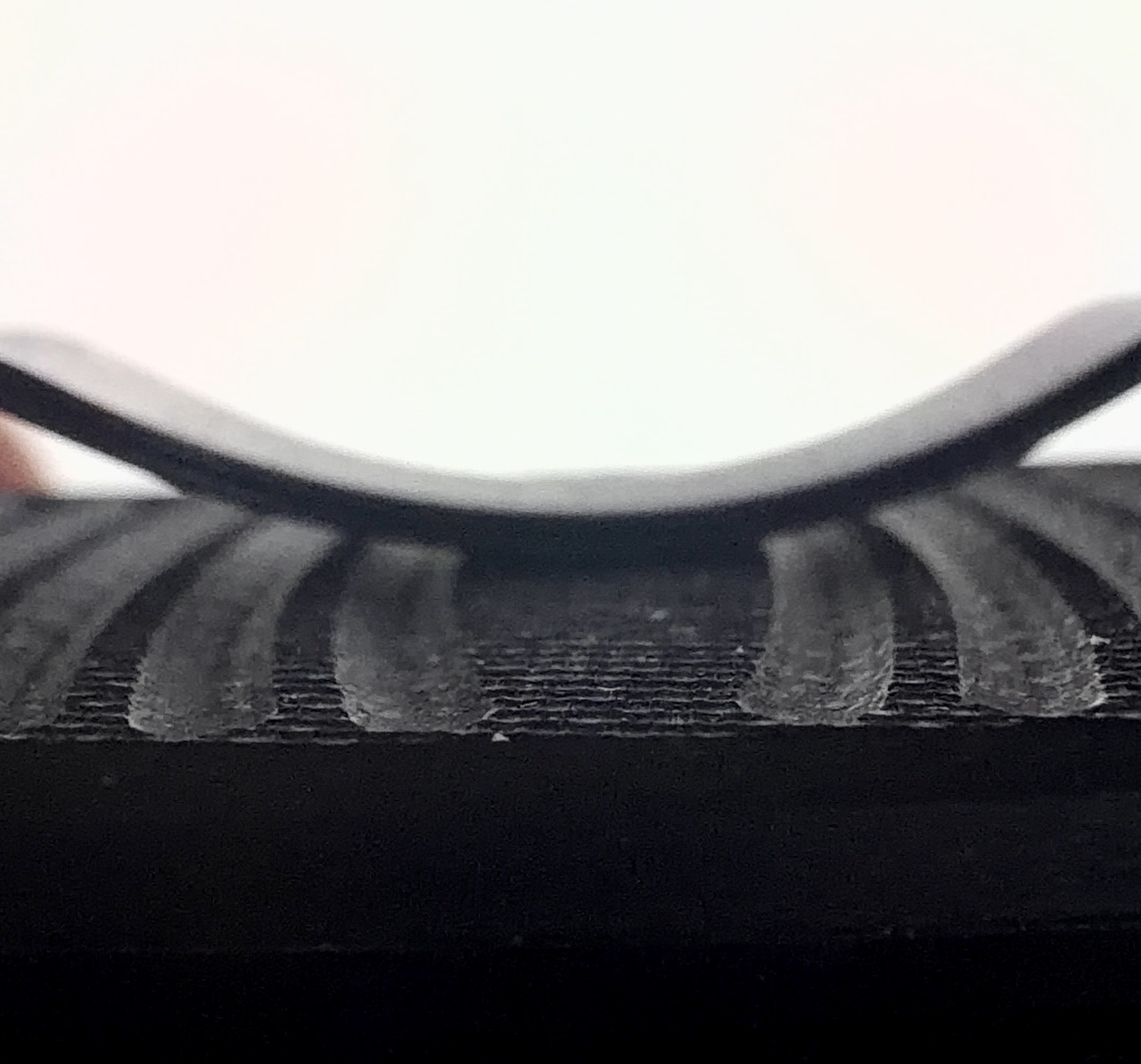
That said, this very design becomes a limitation if one considers swapping to a deep-carry clip: the clip would no longer land on the scale’s soft flat spot, potentially creating unwanted friction against the pocket lip. For this reason, I chose to keep the original clip. In practice, it delivers remarkably smooth in-and-out pocket action—arguably even smoother than the Edgerati.
This is still a mystery to me but that ultra grippy Manix 2 Salt G10 is actually very pocket friendly !
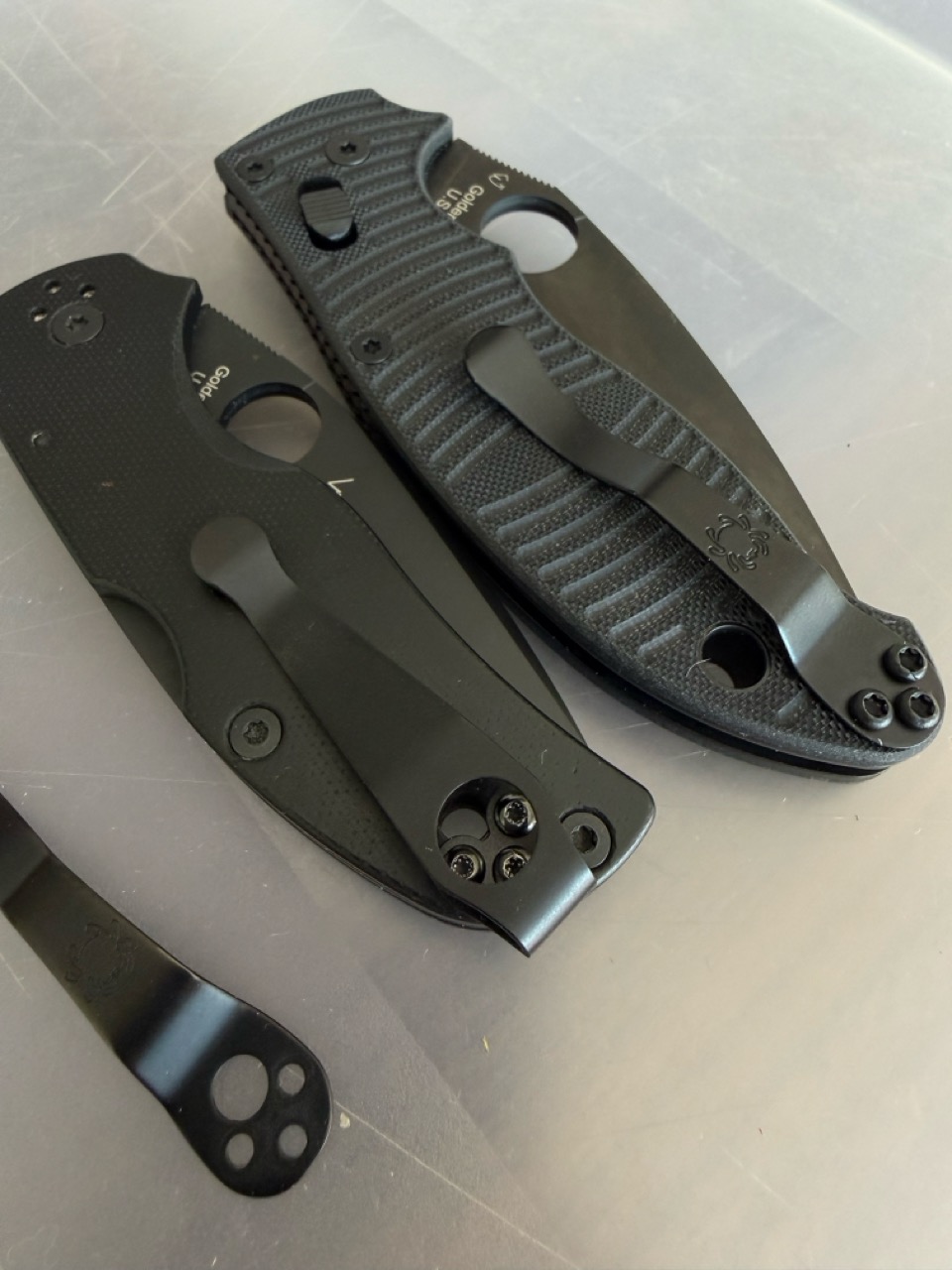
Now, for the past few weeks, the Salt—which is arguably the most badass version of the Manix 2 (alongside the Crucarta, which elevates it beautifully in the patina departement, or perhaps a few Sprint runs like the mighty CPM-15V brown g-10 version)—has been jumping into my pocket for real use. As you know, the Edgerati, thanks to its novelty and sheer pleasure of use, has had a tendency to evict several knives from my rotation: the Military 2 in CPM-15V, the Caly 2, the Chief in Magnacut, the Sage Salt… and inevitably, the poor Manix 2 Salt G10, which had the bad luck of arriving at the same time.
But then it hit me: if I see the Edgerati as a BMW X3—powerful, lightweight, and all-terrain—then the Manix 2 Salt is clearly a Land Rover Defender. After all, it came here to suffer… so let’s make it suffer.
And so far, it comes out with flying colors.
Like a Tenacious, this knife is here to work—no matter the conditions.
It brings back that familiar, no-nonsense feeling I used to get from the old Cold Steel Recon 1 and its mighty Triad Lock.
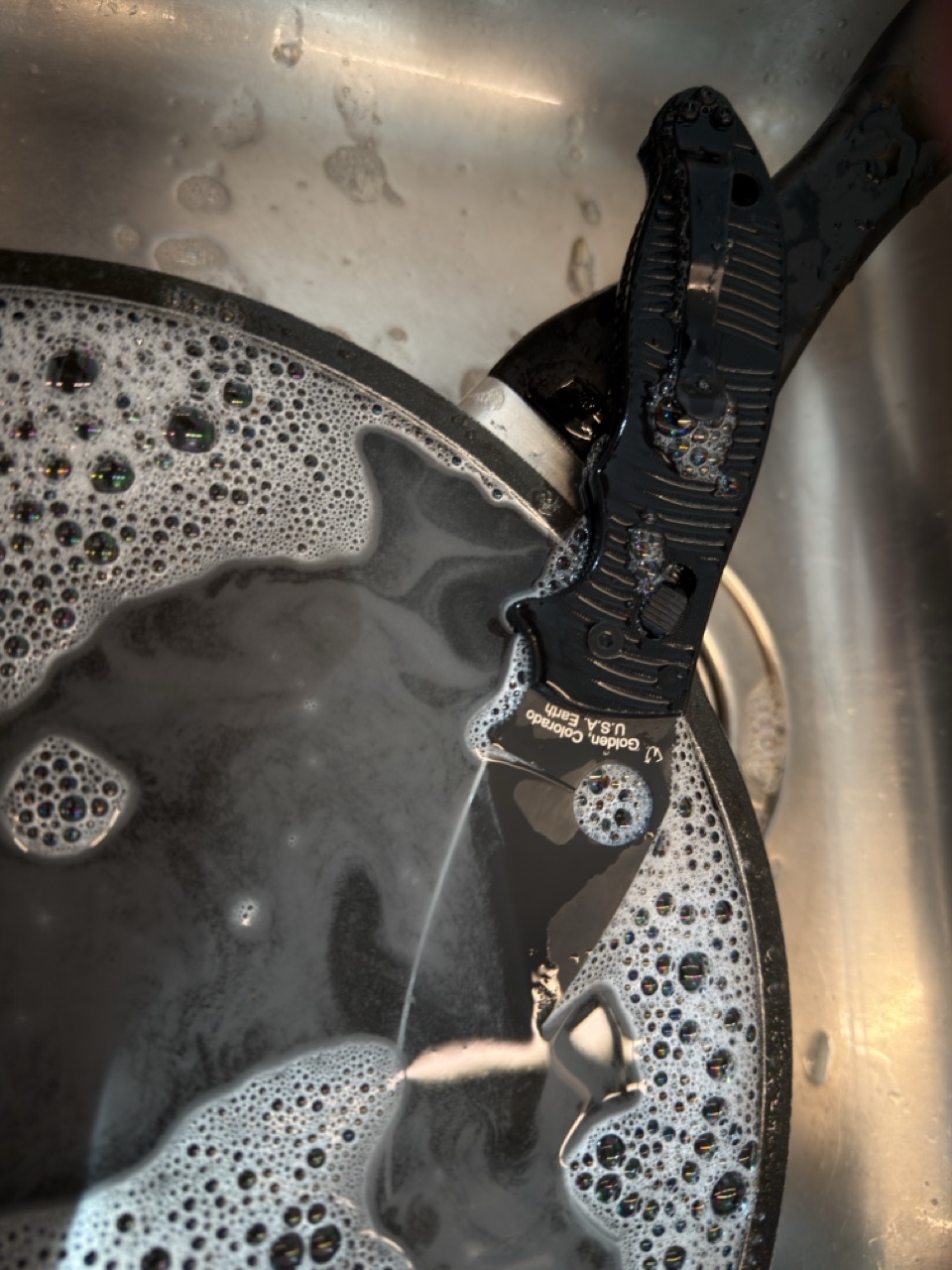
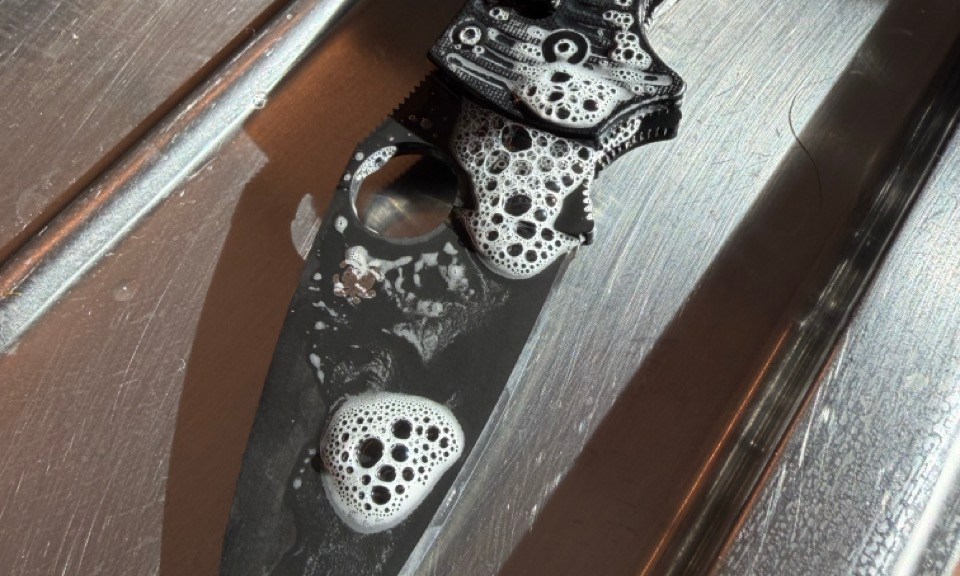
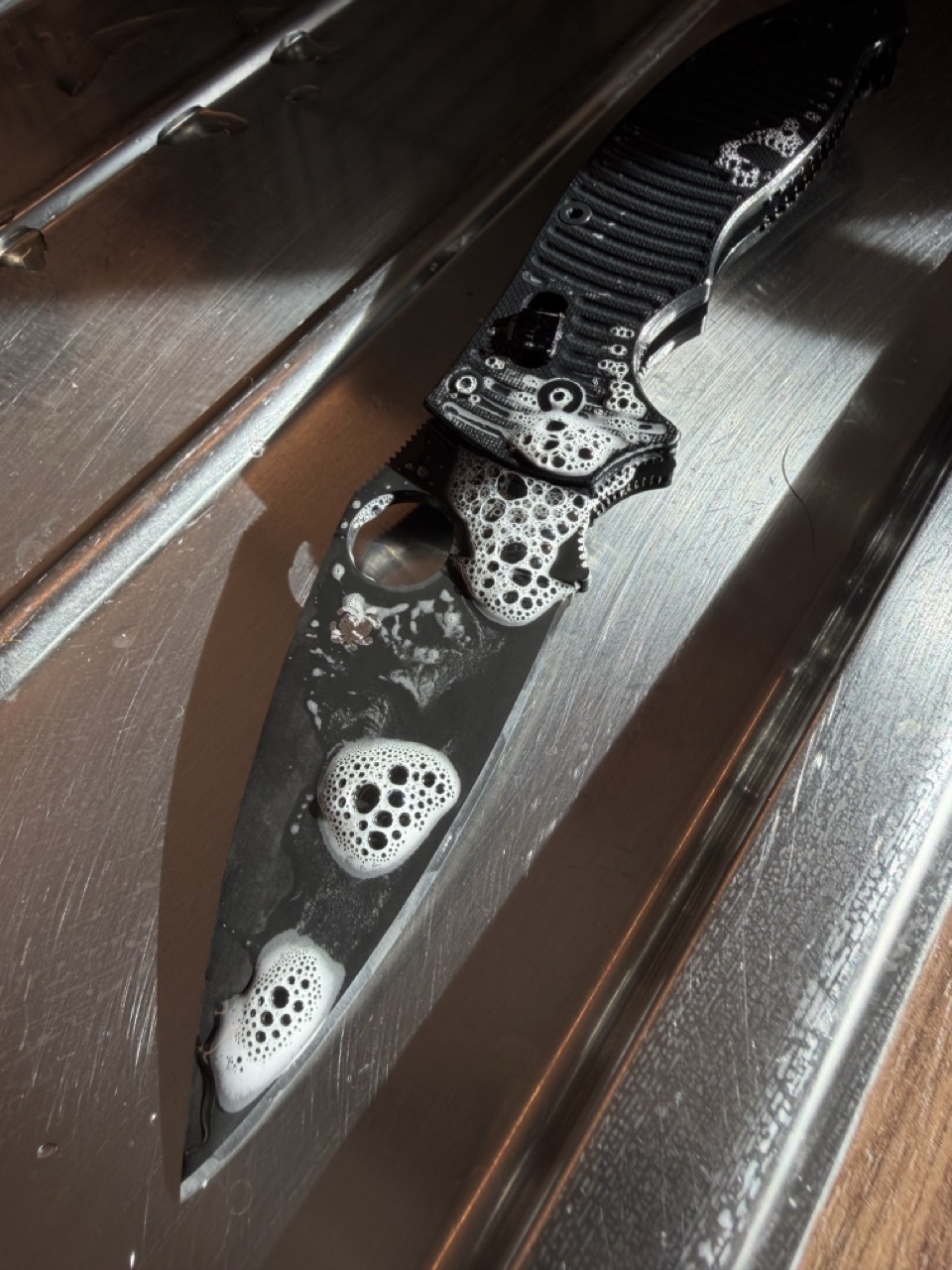
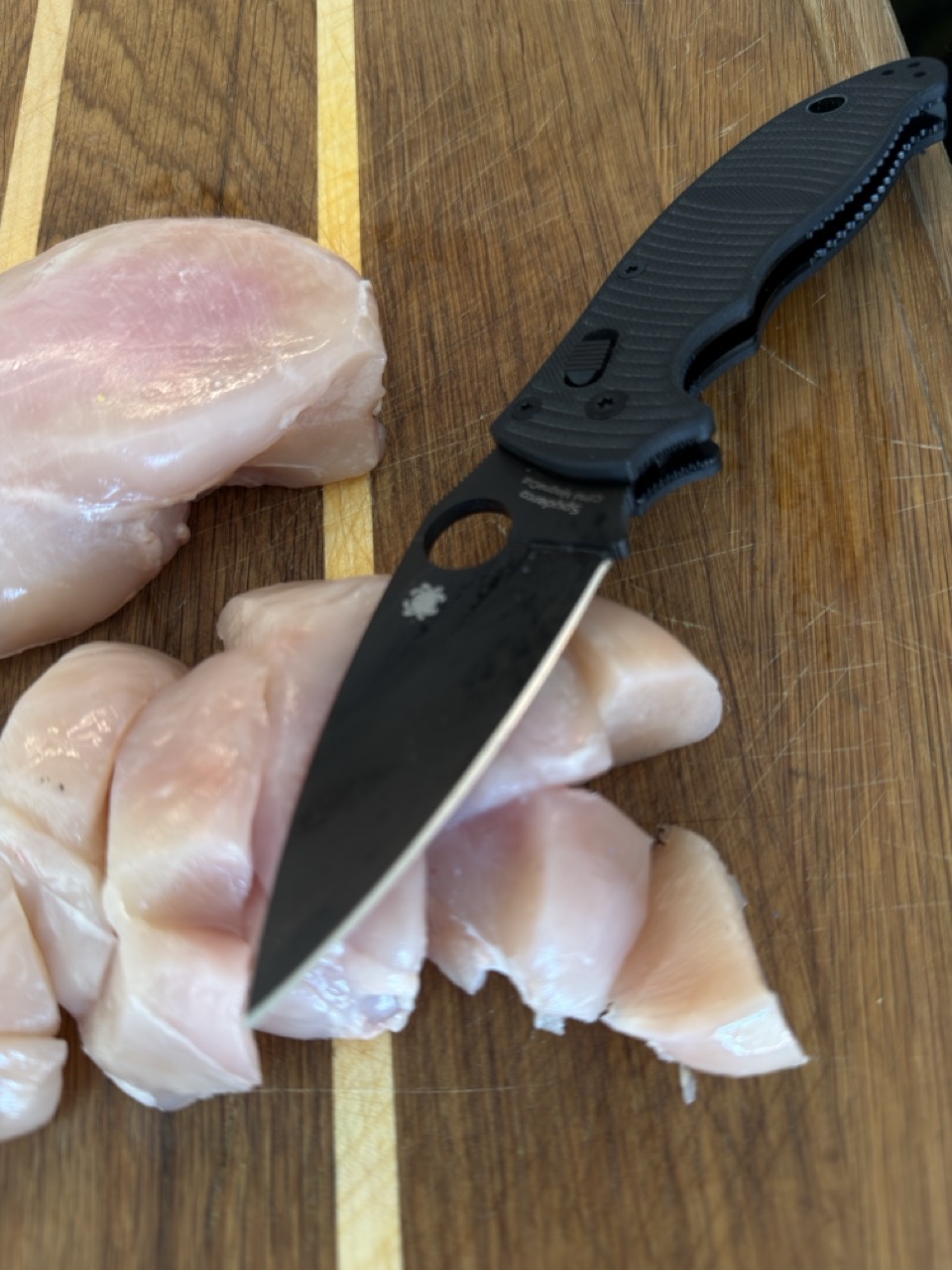
About the Manix 2’s lock, I was worried the mechanism might seize up with dirt or mud, but since the Salt laughs at moisture, soaking it in water is a non-issue. In the kitchen, it also encountered oily situations. Once again, the new G10 scales on the Salt provide excellent traction when drawing it from the pocket—which is definitely not the case with my titanium Squeak, an outstanding little bar of soap when my fingers are wet or greasy…
I did notice a small “click” when opening. I have the same thing on the carbon fiber CPM S90V version, though it’s less pronounced. It’s not a problem at all—just the mechanism doing its thing.
There is also something I forgot to mention—and it is far from a minor detail. The Manix lock does not rely on a detent ball to keep the blade closed in the handle. Much like a traditional back lock, spring tension alone holds the blade securely shut. It may seem subtle, but the implication is significant: closing force is applied even if the blade is slightly out of position. This provides an additional layer of safety—one that should not be underestimated, especially in demanding or unpredictable conditions.
And as mentioned in my previous article on the Manix Salt, the very first Manix models were built around a Martial Blade Craft–grade back lock—thick, overbuilt, and driven by an exceptionally strong spring. That DNA is still there. The Manix 2 lock clearly inherits that same philosophy of power, security, and mechanical confidence.
This is also what makes the Ball Bearing Lock™ so reassuring: safety.
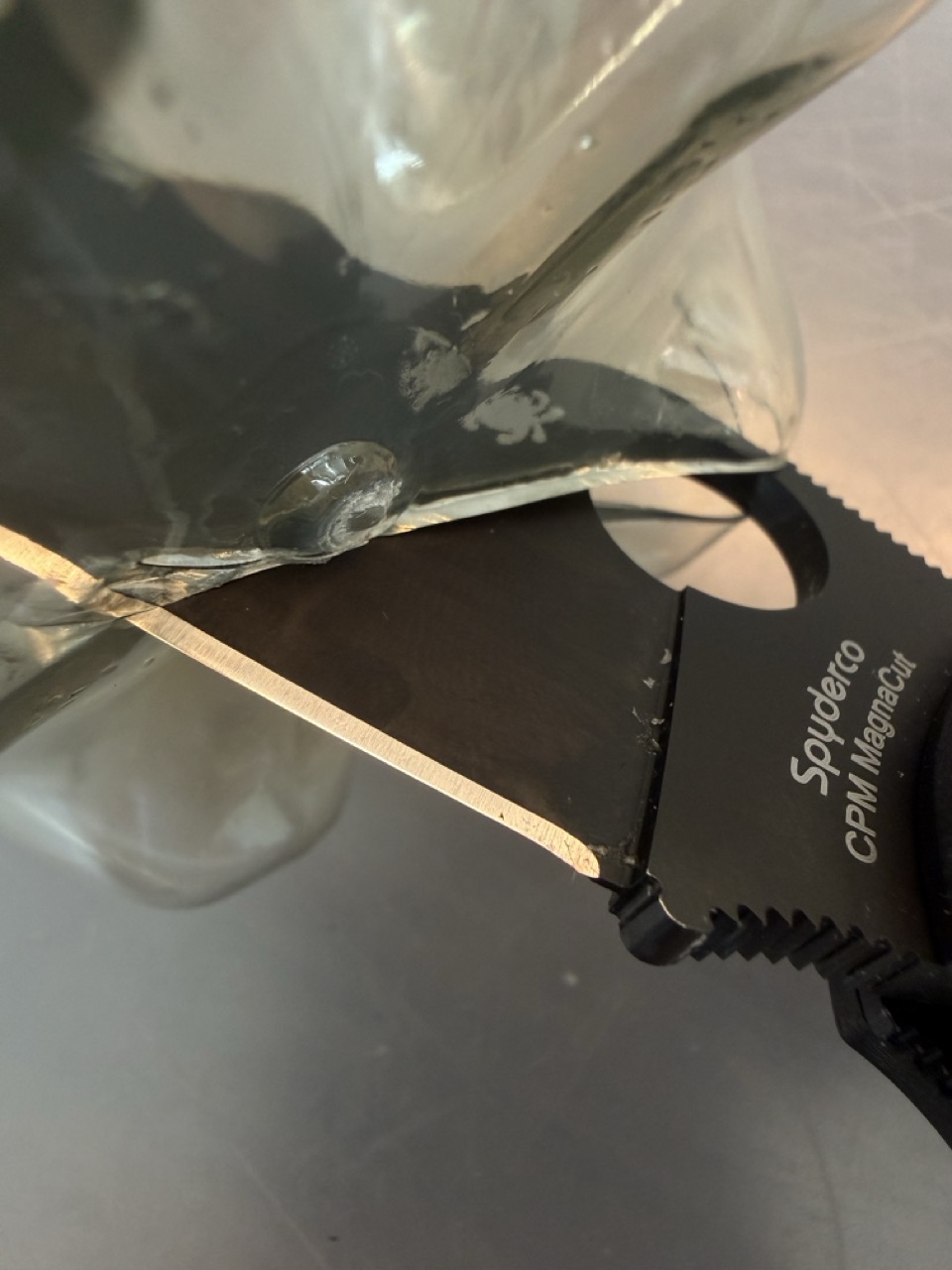
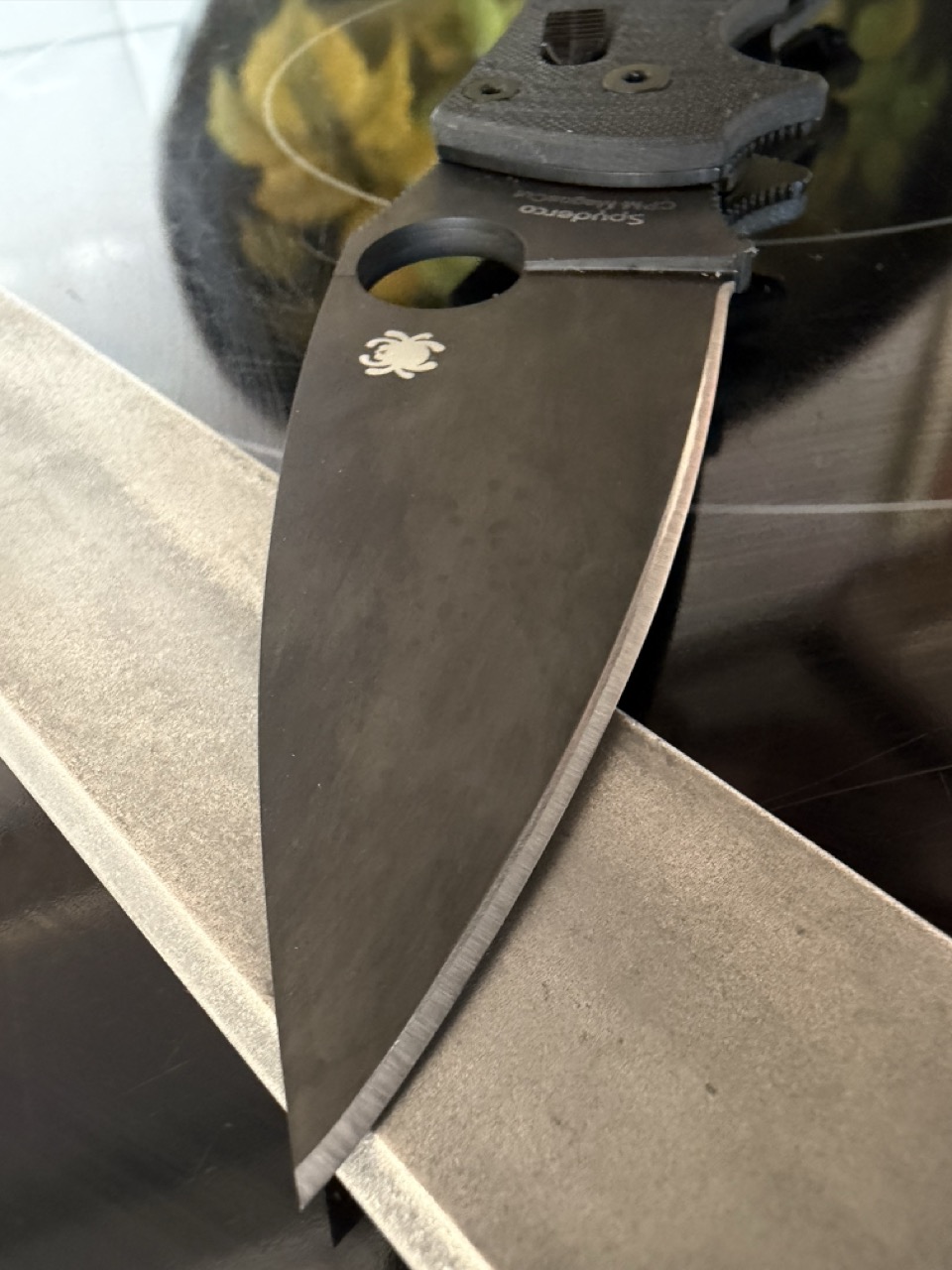
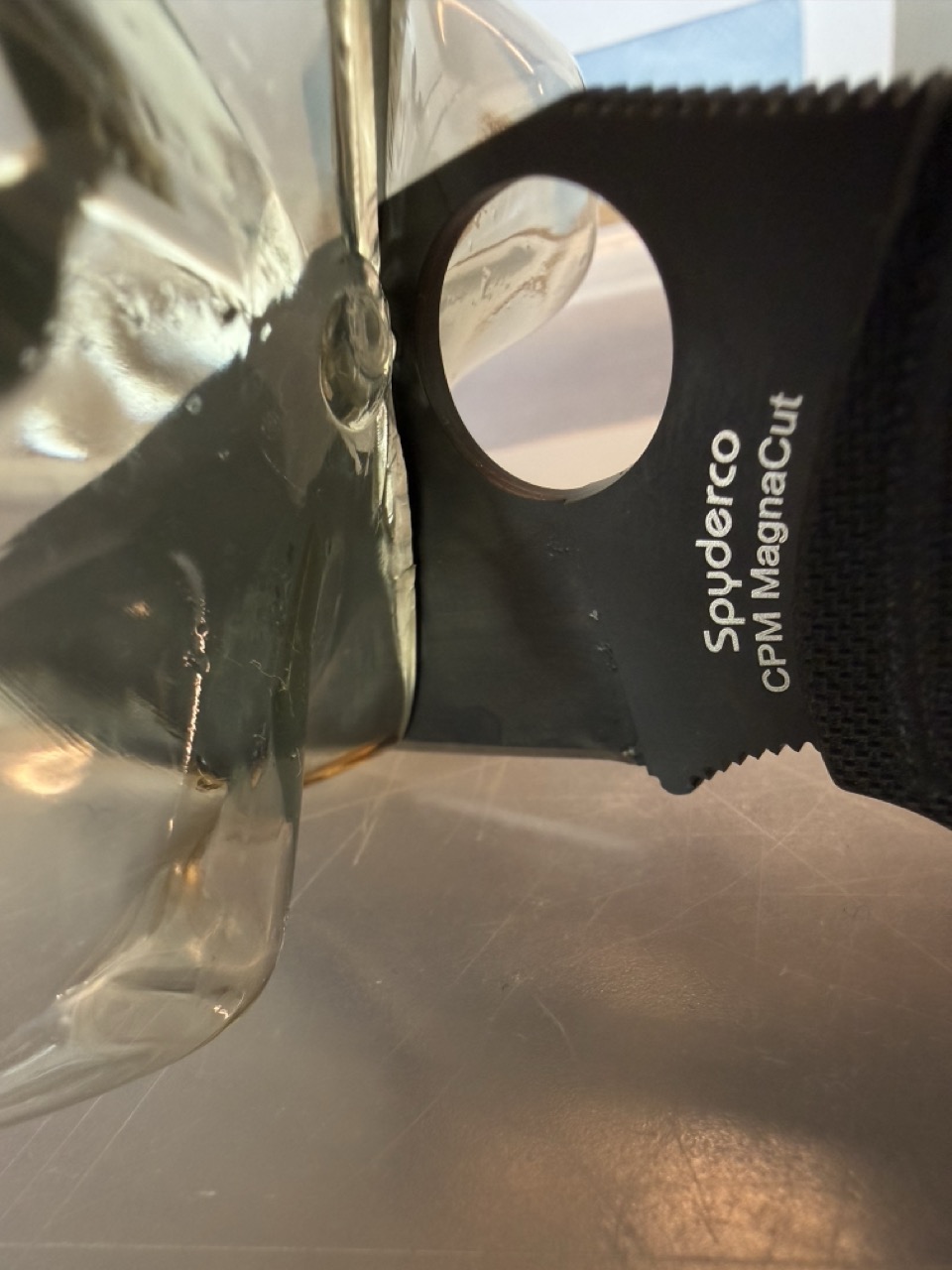
During my homemade bottle butt geometry test—driving the blade straight through the bottom of a plastic bottle, where the material is at its thickest—I found that the Manix 2 could do a tad better. Where the Edgerati (a thicker blade though) passed this test straight out of the box, the thinner Manix 2 Salt required a bit more encouragement. I therefore decided to de-shoulder the edge slightly to thin it out, and the improvement was immediately noticeable. As usual, in ten minutes, small adjustment, but one that significantly enhanced its geometry and cutting performance.
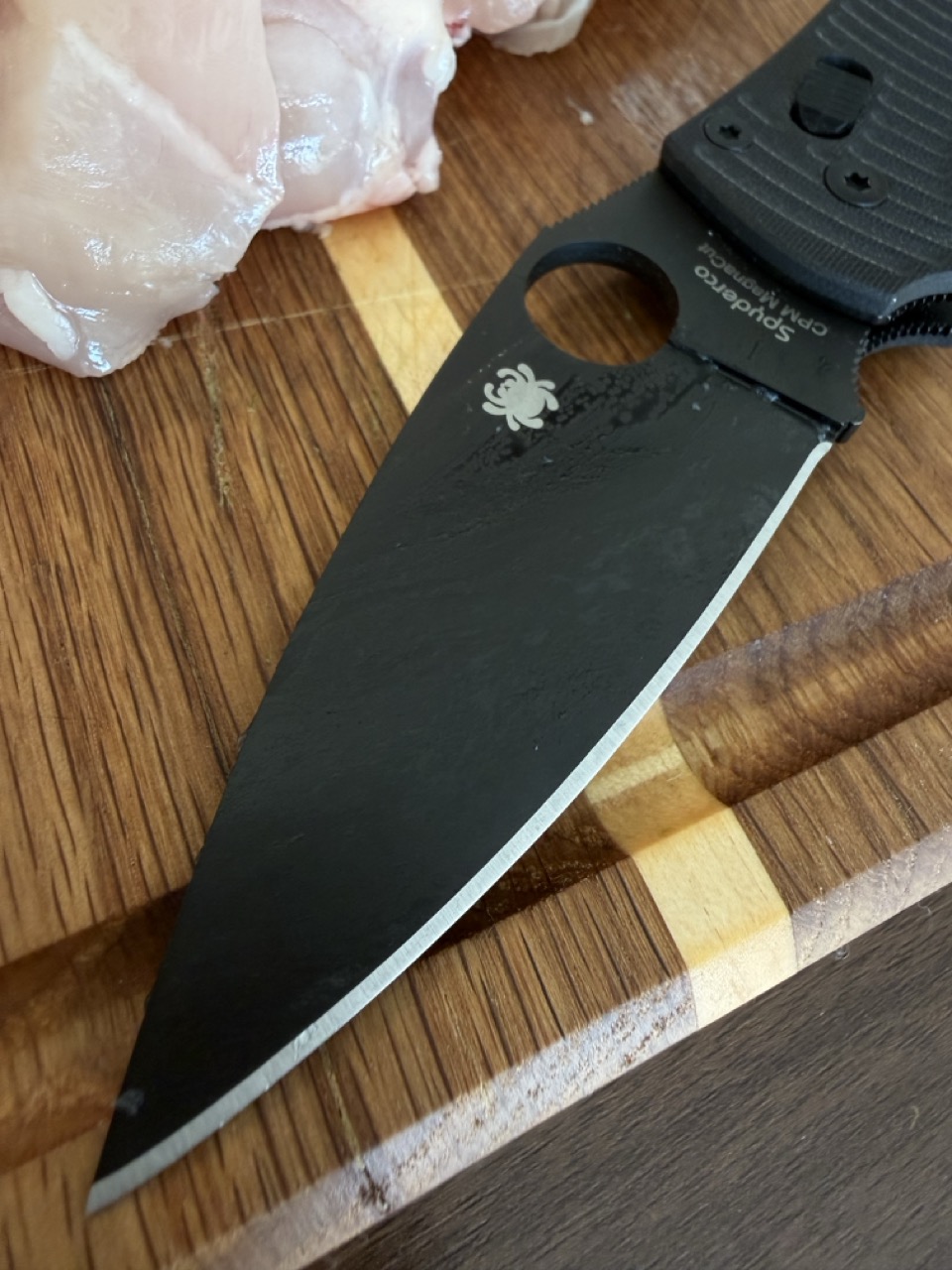
Also I have not been able to scratch that DLC blade so far.
It also made me wonder whether this knife could genuinely appeal to a diver. How intuitive would it be to deploy and use underwater? To answer that question properly, I decided to ask Geoffrey—the head of Normandeep, a professional diver and rescue specialist operating off the Normandy coast, near the D-Day beaches
“The relevance of folding knives in diving is not always obvious.
Accessibility and storage can be an issue, especially when wearing thick gloves.
That said, the Manix is probably the least compromised option, as its lock is the easiest to operate of them all—even with gloves on. For a travelling diver, it could make sense: a knife that transitions from backpack carry during walks to a diving knife clipped to a buoyancy compensator.Beyond diving, there’s also the nautical world—sailors, fishermen, boating in general—where this kind of knife becomes genuinely relevant. In that context, it makes a lot of sense.”
In the end, the Manix 2 remains faithful to its original ambition: to be a tool first, without apology or compromise. It does not follow trends, nor does it seek to charm through superficial refinement. Its appeal lies elsewhere—in disciplined geometry, a locking system of unquestionable security, and ergonomics conceived to ensure the blade stays exactly where it should: firmly at work in the hand.
In its Salt configuration, these virtues are elevated rather than altered. Moisture, mud, oil, even neglect, fail to disturb its composure. It can be rinsed, returned to service, and trusted again without ritual or concern. Such quiet confidence is rare, and it explains why the Manix platform has not merely survived the years, but matured with them.
It may not be the most discreet companion, nor the most elegant silhouette in Spyderco’s catalogue. Yet when conditions degrade and reliability takes precedence over finesse, the Manix 2 asserts itself with calm authority. Like any true instrument of work, it earns respect not through promise, but through repetition.
And that, ultimately, is why the Manix 2 remains a reference—quietly indispensable, and entirely earned.
 NemoKnivesReview
Thankyou for the Manix – it goes everywhere with me!
Brian
LikeLiked by 1 person
You are welcomed my friend, yours is a rare overkill built-like-a-tank (full steel liners) Manix 1 😉 !
LikeLike