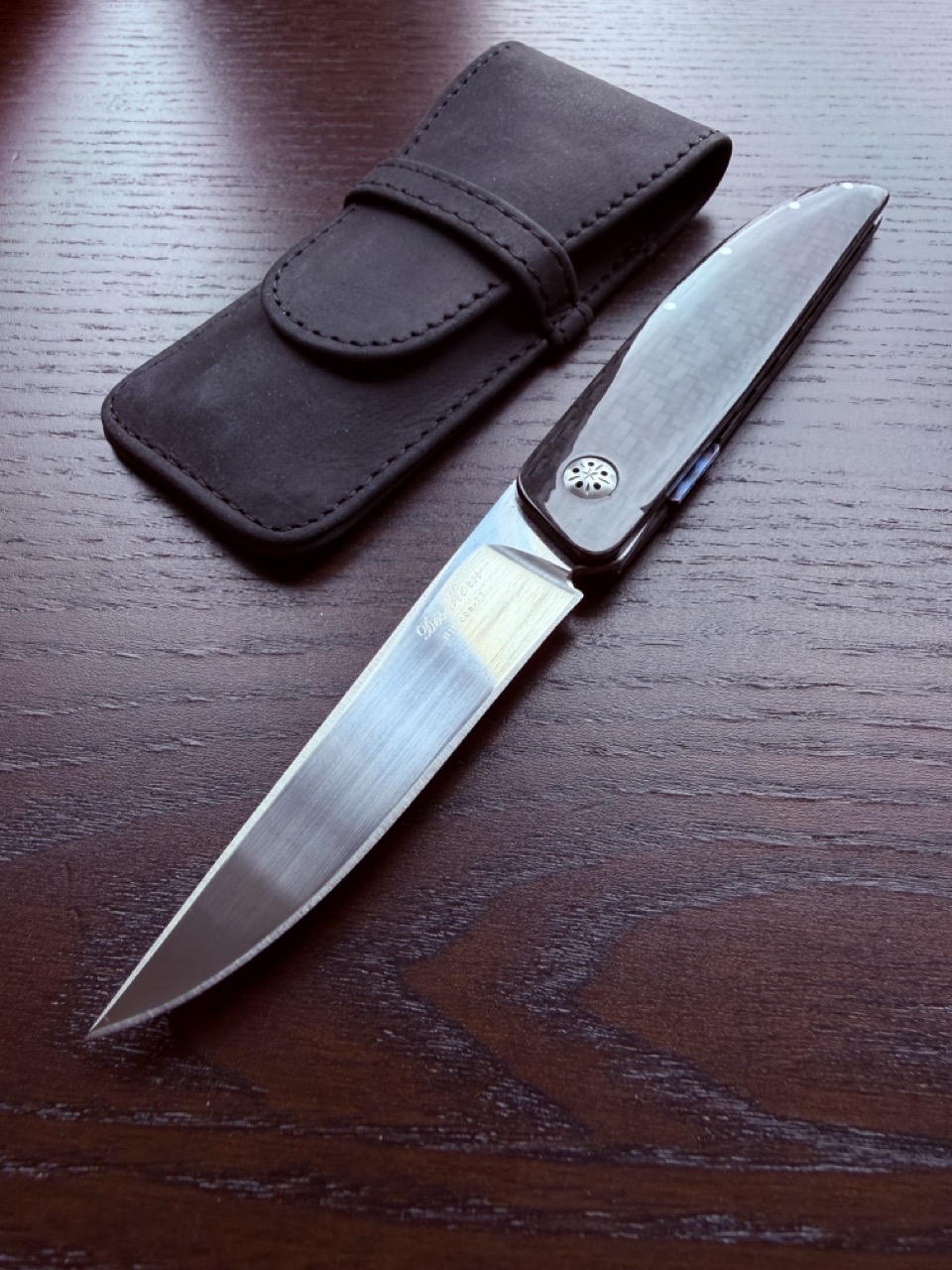
“Spirit” – Des Horn 450# – A Whisper of Steel in a World Obsessed with Noise

In the rarefied atmosphere of high-end custom knives, true elegance rarely announces itself loudly. It reveals itself slowly — through proportion, restraint, tactility, and detail. The Des Horn 450# belongs to this vanishing category of objects: creations that do not merely impress, but seduce.
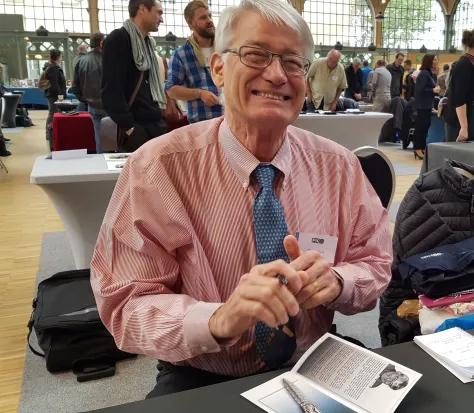
This is my second folder from my friend Des Horn. (I have known Des and Linda for nearly twenty years now. Des Horn is a true legend in knifemaking — a master of his craft, and above all, a gentleman.)
The first folder was a beautiful Imvubu that was unfortunately confiscated at airport security after traveling clandestinely beneath my wallet. I was absolutely convinced my pockets were knifeless — until the metal detector disagreed.
Watching it disappear into the security tray was genuinely heartbreaking. Losing such an elegant piece because I was sprinting to catch a flight for a TF1 reportage made the whole scene feel even more absurd. Some objects are replaceable. A Des Horn never truly is.

Des knew about this very first-world tragedy, and after nearly ten years I finally decided it was time to own another of his beautiful knives. I asked him which folder, among all his creations, was his personal favorite.
His answer came immediately: “The 450#. My favorite.”
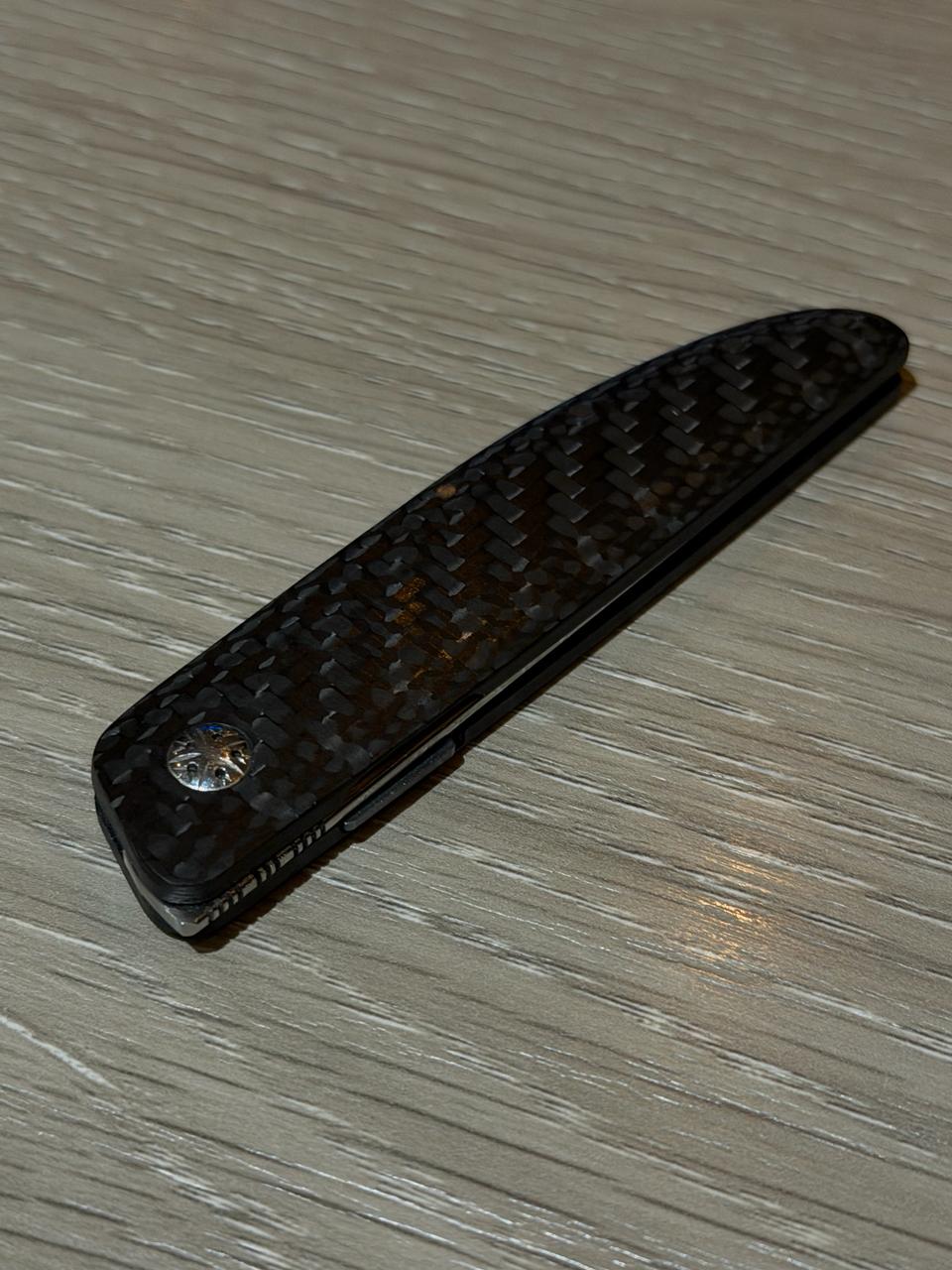

(Pictured here is the 450# my friend Jan Dirk has bought from him 15 years ago. Perhaps JD’s favorite in all his collection. Actually Pascal Jaffre also have one…)

He told me he would find a particularly unusual piece of carbon fiber for it and also:
This one has a “2K” finish .
Very tough and durable and is used on exotic cars to finish the carbon fibre. It was the only one I had finished without a clip.”
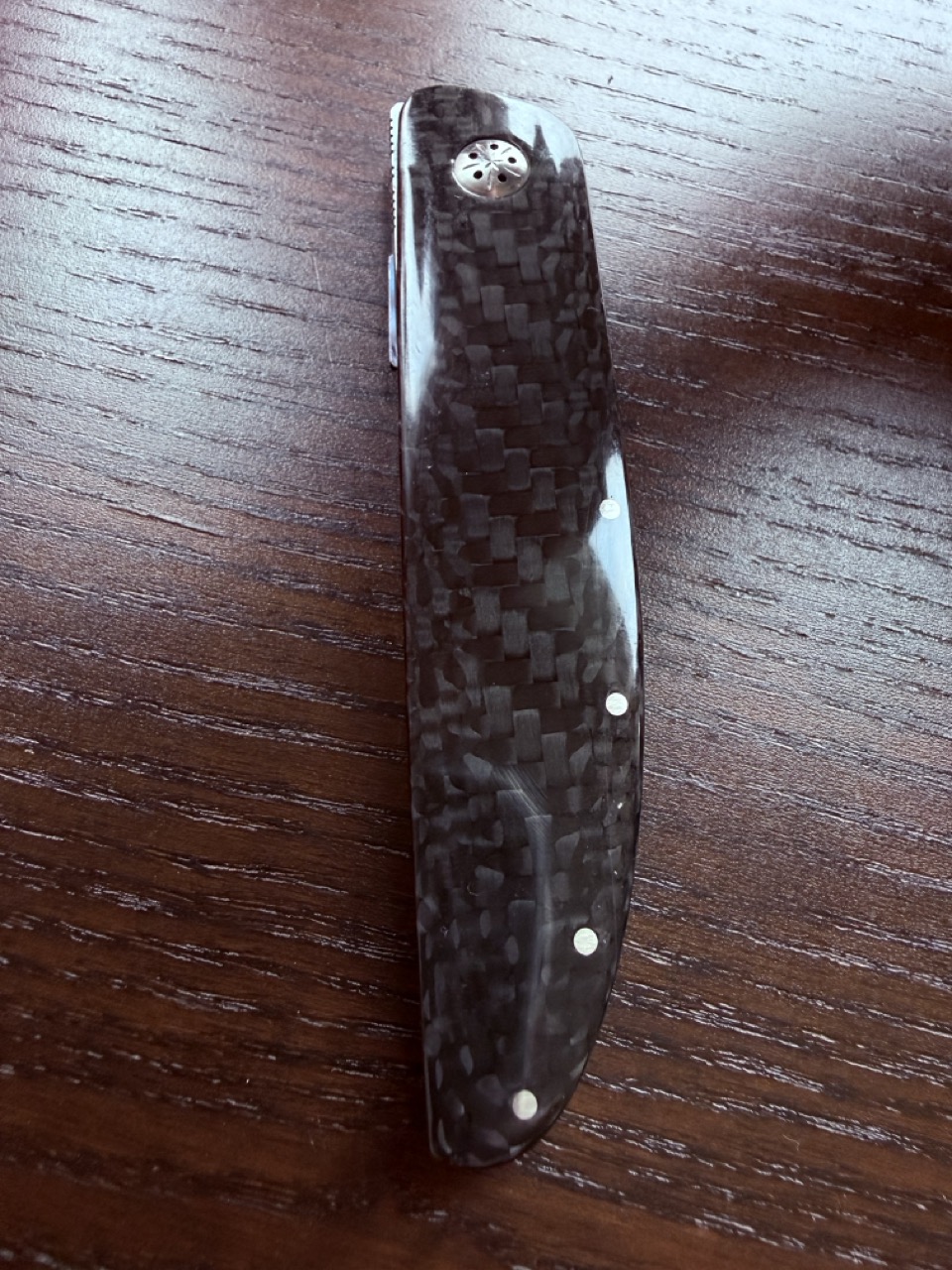

And then came the part that genuinely left me speechless: this special 450# was a gift from Des Horn for my 60th birthday !!!
In a world where so many luxury objects are reduced to transactions, gestures like this carry something infinitely more valuable: humanity, generosity, and the quiet bond between two friends.
I will remain forever grateful. Thank you Des and Linda.
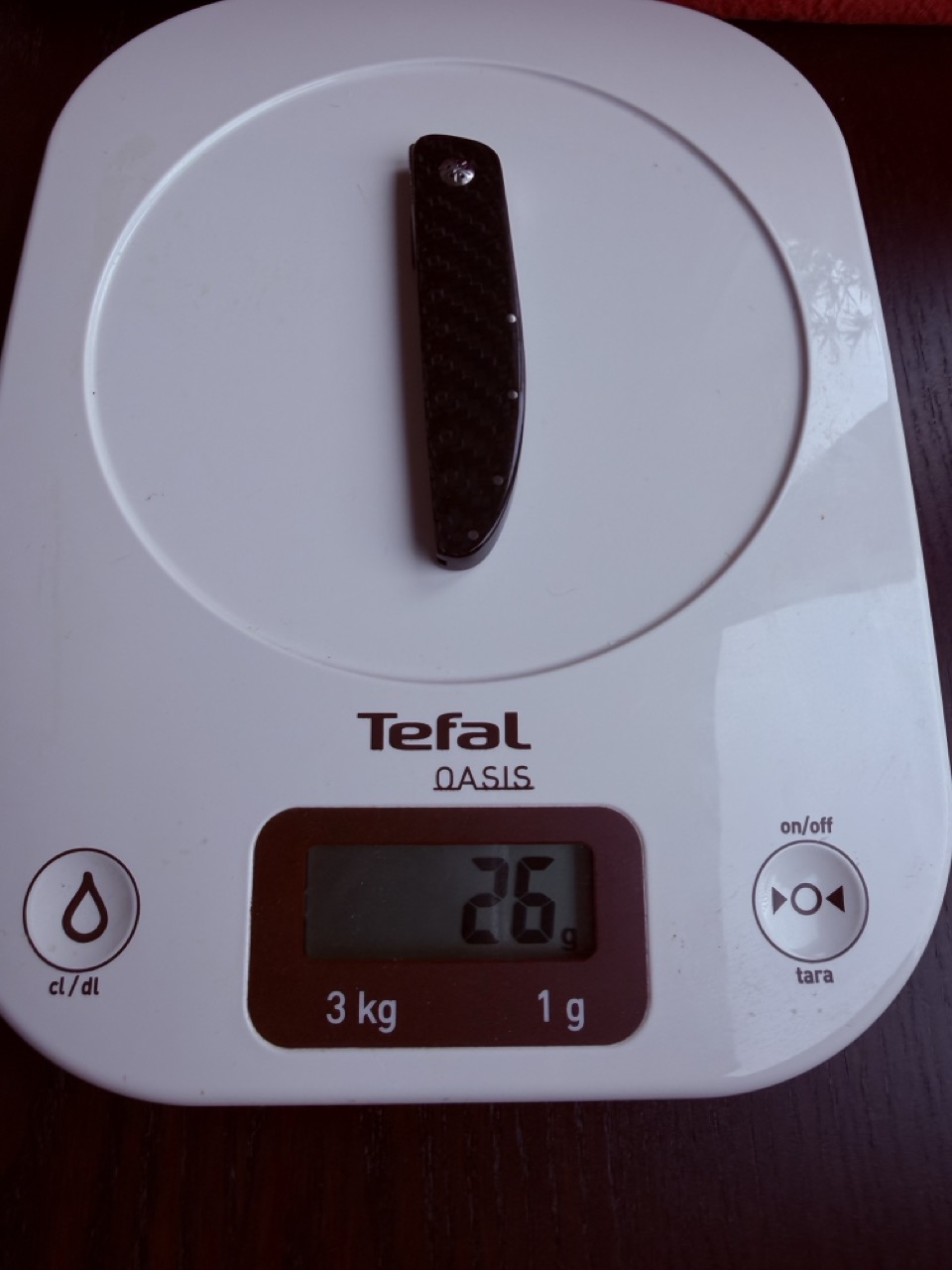
At just 26 grams, the knife found its name almost immediately: Spirit. Spirit of Cape Town.
Partly for its impossible lightness, as if the knife itself barely belonged to the physical world. And partly for what the French so beautifully call la part des anges — the angel’s share — that invisible portion reserved for time, memory, and things too precious to truly possess. A knife this light almost feels immaterial. A gift like this certainly does like a whisper of steel…
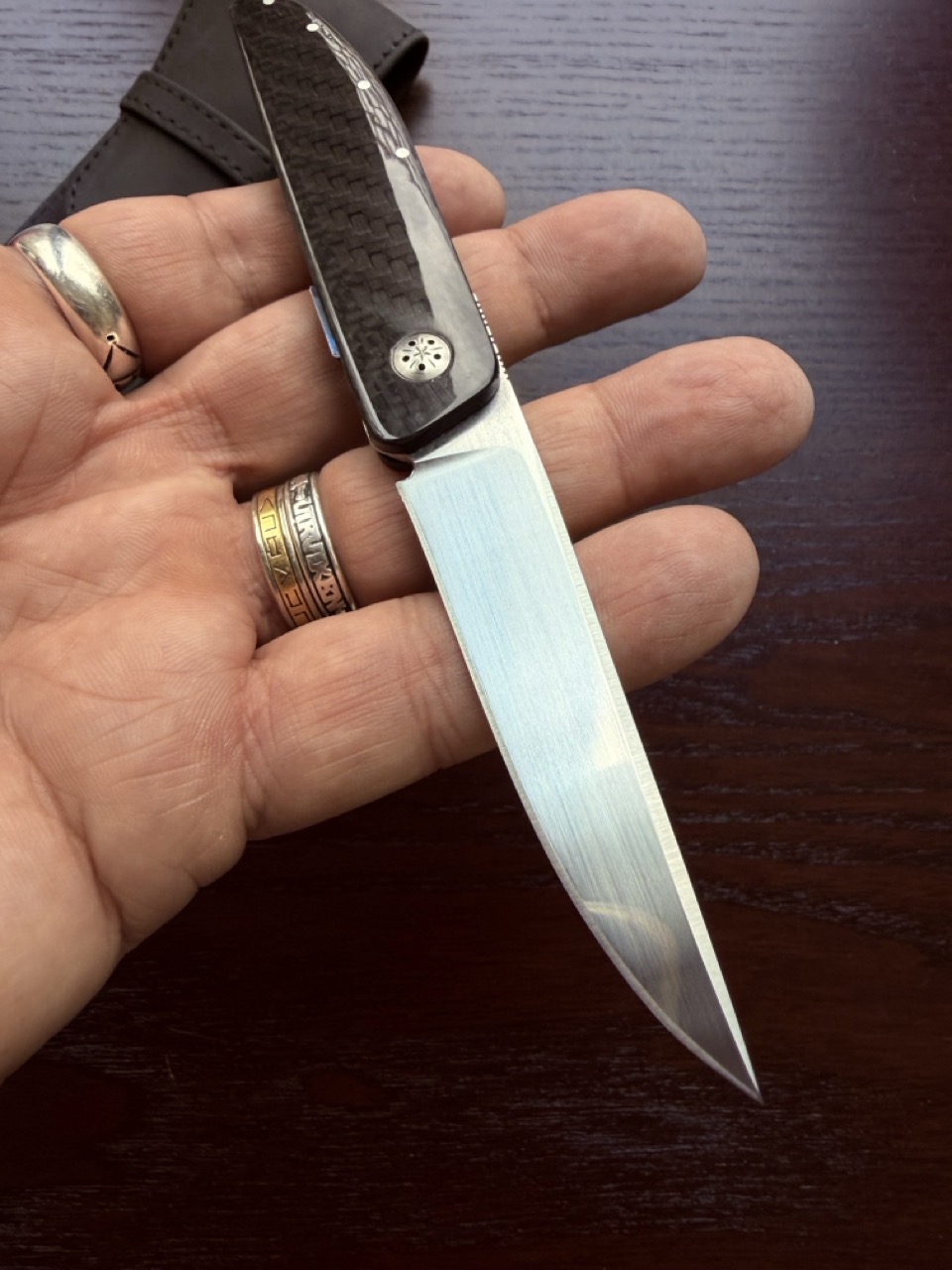

Spirit is less a cutting instrument than a study in modern aristocratic design. At first glance, it appears almost understated. There are no aggressive lines, no tactical theatrics, no oversized hardware screaming for attention. Instead, the knife radiates the confidence of an object that knows exactly what it is.

And what it is, precisely, is one of the most refined lady and gentleman’s folders ever conceived.

The first sensation delivered by the 450# is disbelief.

Lift it, and the knife nearly disappears in the hand. Versions executed in marbled carbon fiber and Nitrobe 77 steel have achieved almost mythical status among collectors for their featherlight construction — a level of portability more often associated with luxury writing instruments than with precision folders. Yet despite its ethereal mass, the knife feels structurally complete, almost architectural.

This paradox defines the genius of Des Horn.

Spirit (like all 450#) is not designed around brute force. It is designed around intelligent refinement. Every millimeter exists for a reason. The slim silhouette slips effortlessly into tailored trousers or the inner pocket of a cashmere jacket, becoming part of the wearer rather than an accessory imposed upon him.
In an era obsessed with excess, the 450# celebrates discretion.
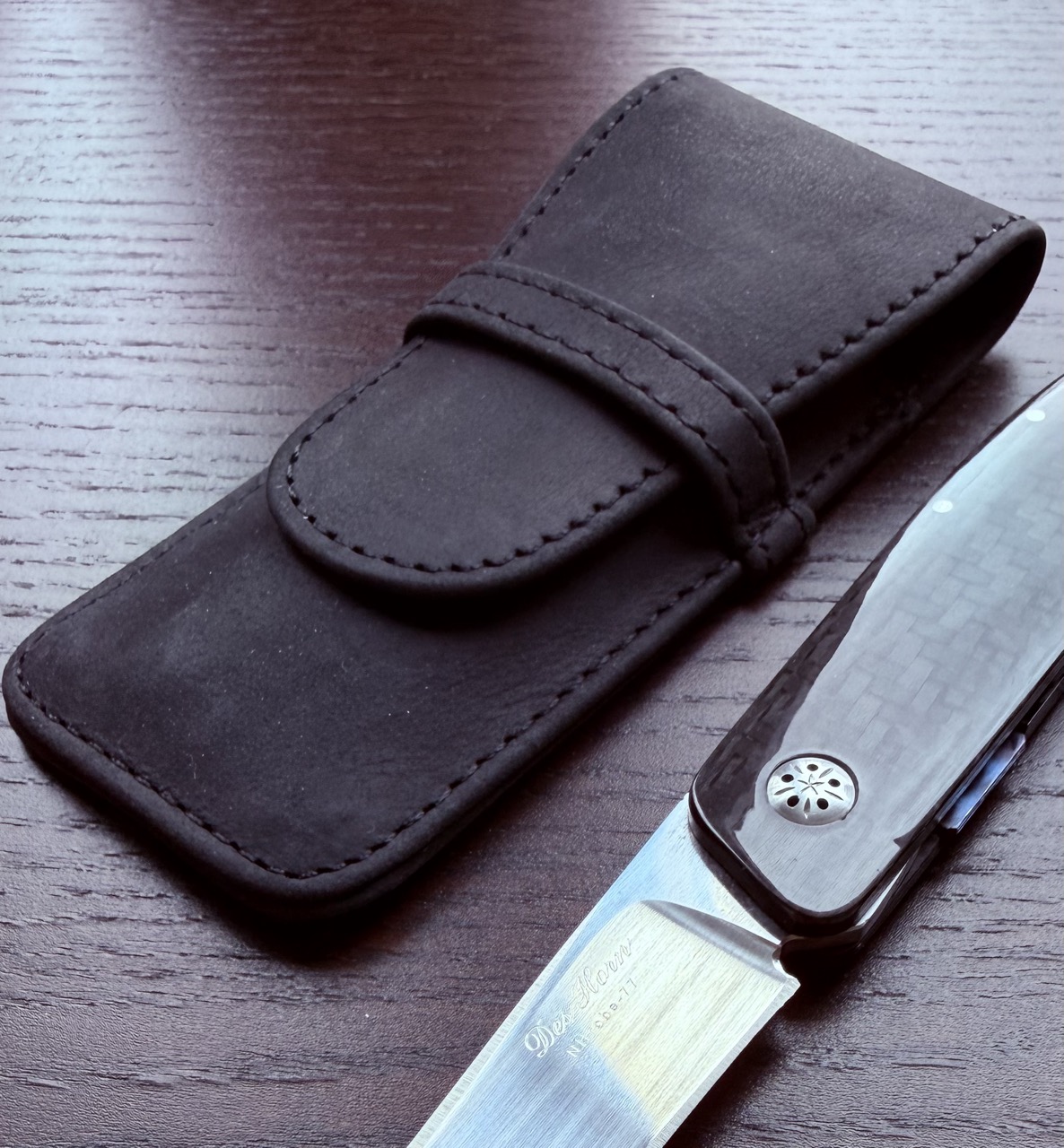
It is housed in a beautiful buffalo leather pouch, a cocoon-like case designed to protect it from pocket dust and daily abrasion. Simple, tactile, and perfectly in tune with the object it carries — an understated sheath for something already defined by discretion and refinement.

Once in your hand, the action itself is an exercise in restraint.
Unlike modern folders engineered for theatrical deployment, the 450# front flipper unfolds with subtle precision. The movement feels intimate, almost private — a mechanism intended for connoisseurs rather than spectators. The blade opens with silky assurance, revealing tolerances that reflect decades of accumulated craftsmanship.
It is also fully ambidextrous — intuitive, balanced, and genuinely enjoyable to handle. That sense of play is not incidental; it is part of the design language.
Because beyond precision and materials, pleasure matters. Fun, tactile satisfaction, and the simple desire to interact with the object are essential parts of how I evaluate and experience it.
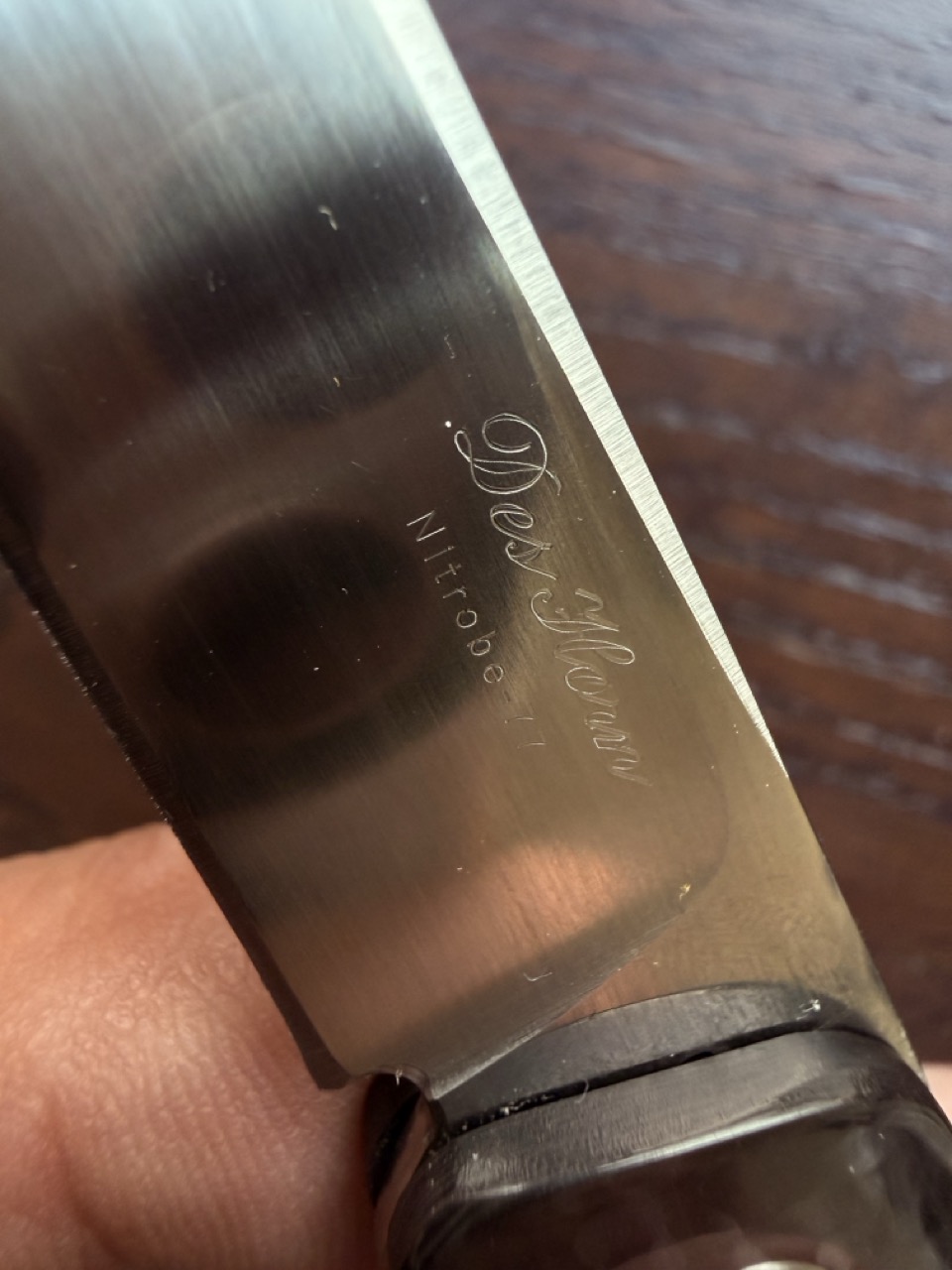
The blade is crafted from Nitrobe 77.
Ah… another legendary steel.
Revered among enthusiasts for its extraordinary corrosion resistance and exceptional cutting performance, Nitrobe 77 manages to combine qualities that rarely coexist: hardness, toughness, edge retention, and remarkable flexibility.
It takes — and keeps — an incredibly sharp edge, while remaining astonishingly resilient under stress. Des himself has demonstrated its elasticity in some videos that almost seem unreal the first time you watch them. And for those familiar with the world of performance steels, seeing Shawn Houston — the magician behind CPM 15V heat treatments for Spyderco — speak highly of Nitrobe 77 says a great deal about the material’s reputation among serious knife people.


Quoting Shawn on the Bladeforums:

“Nitrobe77 has 0.9% wt N which it uses some of to make nitrogen martensite like lc200n. Some of that nitrogen total is locked up as Cr2N that dissolves at the temperatures N77 requires to harden. That nitrogen put in solution will become nitrogen martensite when quenched. The nitrogen that did not dissolve stayed behind in a nice, small compliment of Niobium rich nitrides (MN type/NbN) which don’t dissolve in the Chromium and Austenite as readily as the Vanadium at the temperatures required to harden Hence why we have Nb dominant MN type. These Nitrides are just not at enough volume to make this steel a “rope killer”

The Nitrobe 77 is unique thanks to it’s ability to get harder than the other Nitrogen martensite rich steels like Lc200n thanks to being designed for precipitation strengthening. Using liquid nitrogen cryogenics and multiple high tempers after quenching allows the steel to raise up in HRC each cycle after hardening thanks to converting retained austenite that didn’t transform from quenching to hard martensite and also the nitrides precipitating from the martensite and coarsening to the necessary sizes to strengthen the steel to resist displacement and make up for the shrinking of martensite.

It is possibly the best sharpening steel in the world and can operate at 62-64rc, The Nitriding process combined with this chemistry and volume makes a fine structured steel. The wear resistance is not super high however.

Nitrobe77 is one of my favorite steels but unfortunately due to cost, difficulty making at the steel mill and it not being cost effective to heat treat mass production. It has finally been discontinued by Damasteel as of 2018, they kept it alive for a long while.

I feel Des Horn has done some amazing work with Nitrobe 77 and had helped the steel persist for a long time @Deshorn”

Des Horn heat-treated the Nitrobe 77 blade through a triple-cycle process, each stage followed by a carefully controlled cryogenic quench in liquid nitrogen. Three heat treatments. Three deep freezes. A complex sequence designed for pure performance — pushing Nitrobe 77 to its best toughness, and edge stability.
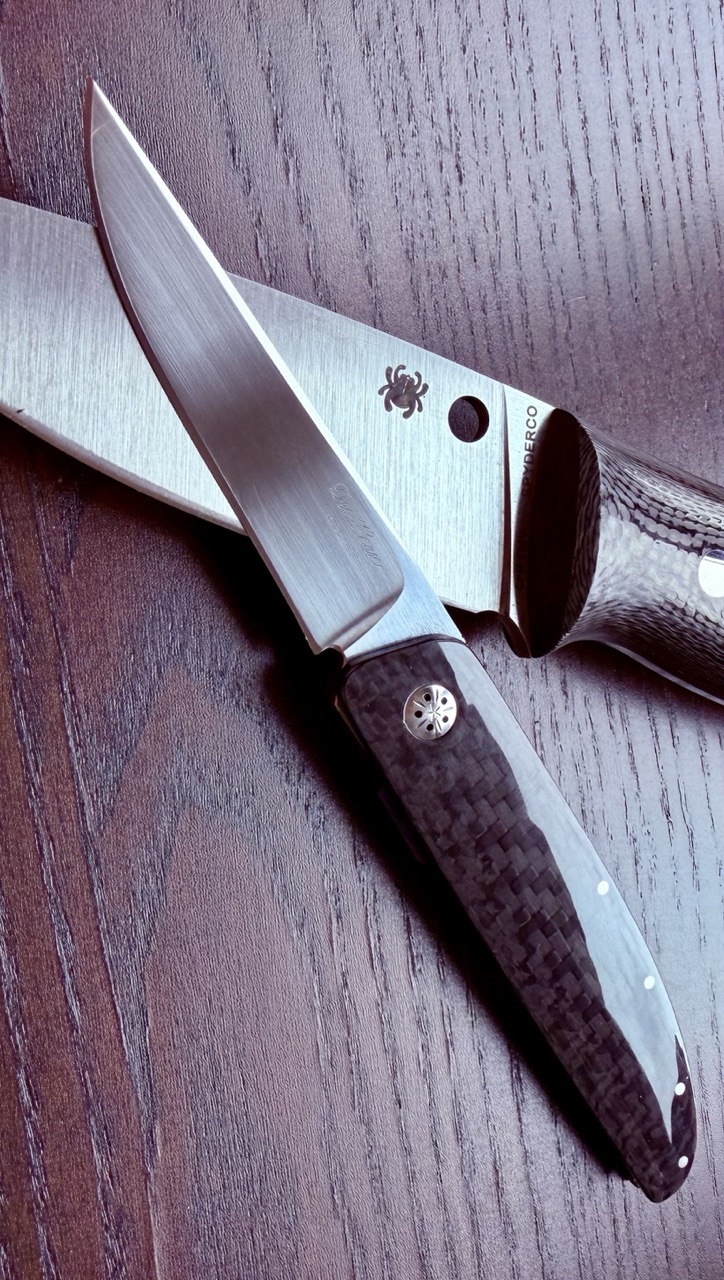
The phrase “gentleman’s folder” has become tragically diluted in recent years, attached indiscriminately to any small knife wearing carbon fiber. I feel like that 450# restores dignity to the term.
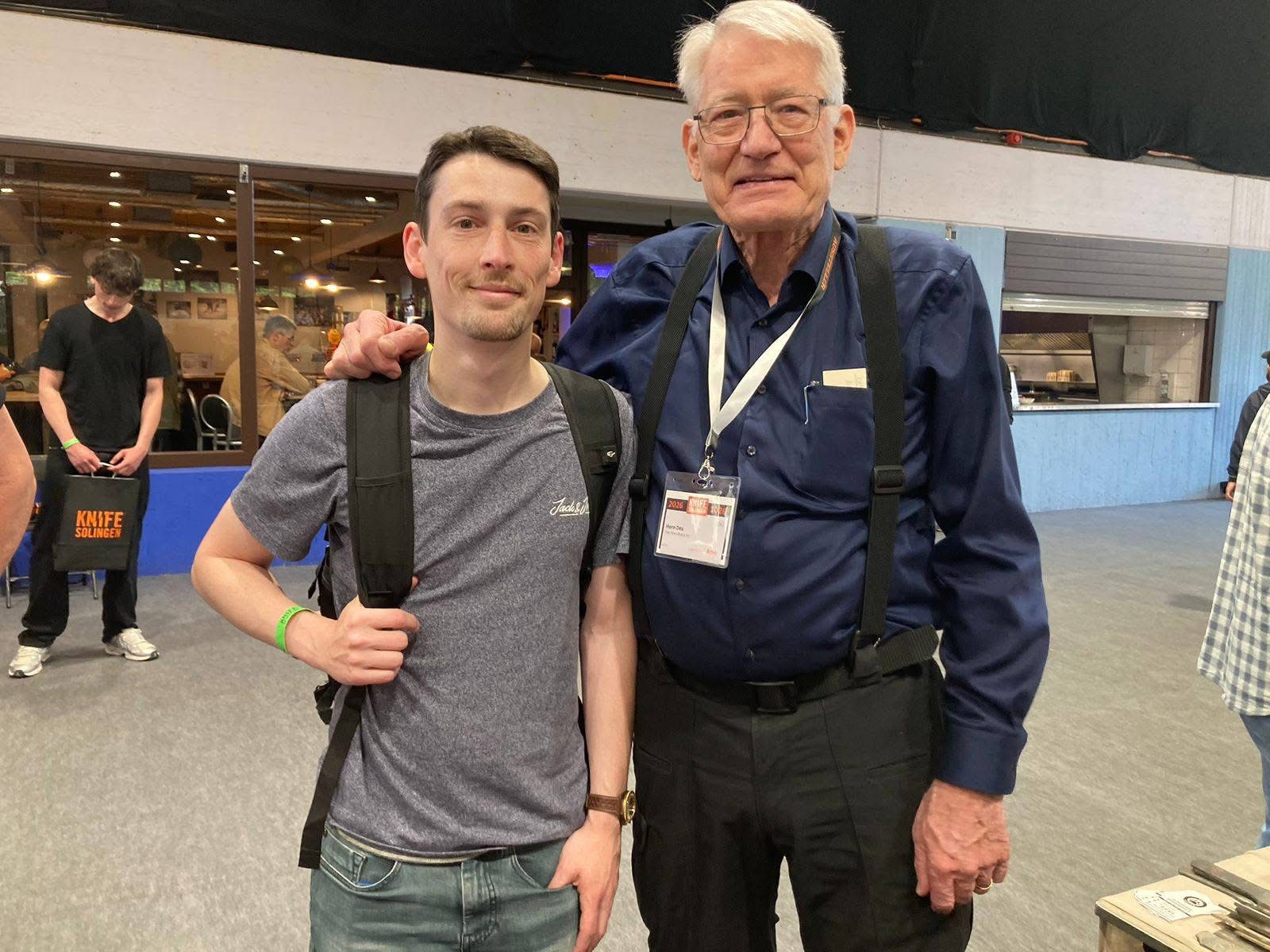
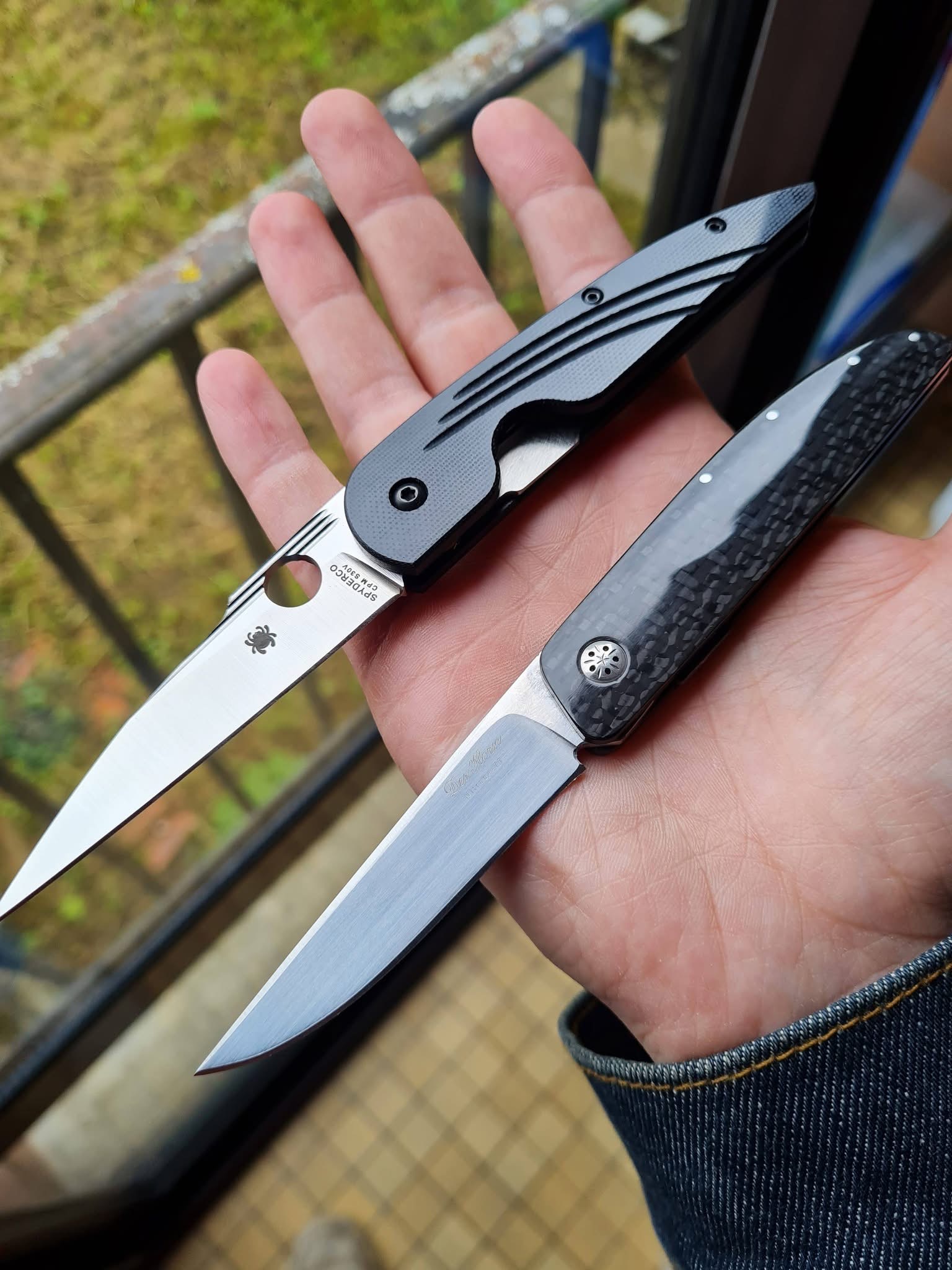
(My friend Robin had the opportunity to meet Des at Solingen 2026 Knife Show. He was the one who brought “Spirit” to me.
He even made a pic comparing the Spyderco C153GP and the custom made 450#.)
The 450# is a knife conceived for cultivated environments: the desk of an architect in Capetown, the leather seat of an Aston Martin crossing Mayfair, the quiet ritual of opening correspondence in a private office lined with walnut and books.
It is the kind of personal knife John Steed or Emma Peel might have carried — discreetly elegant, technically refined, and perfectly at home beside a tailored suit or inside the glove compartment of a vintage Bentley.
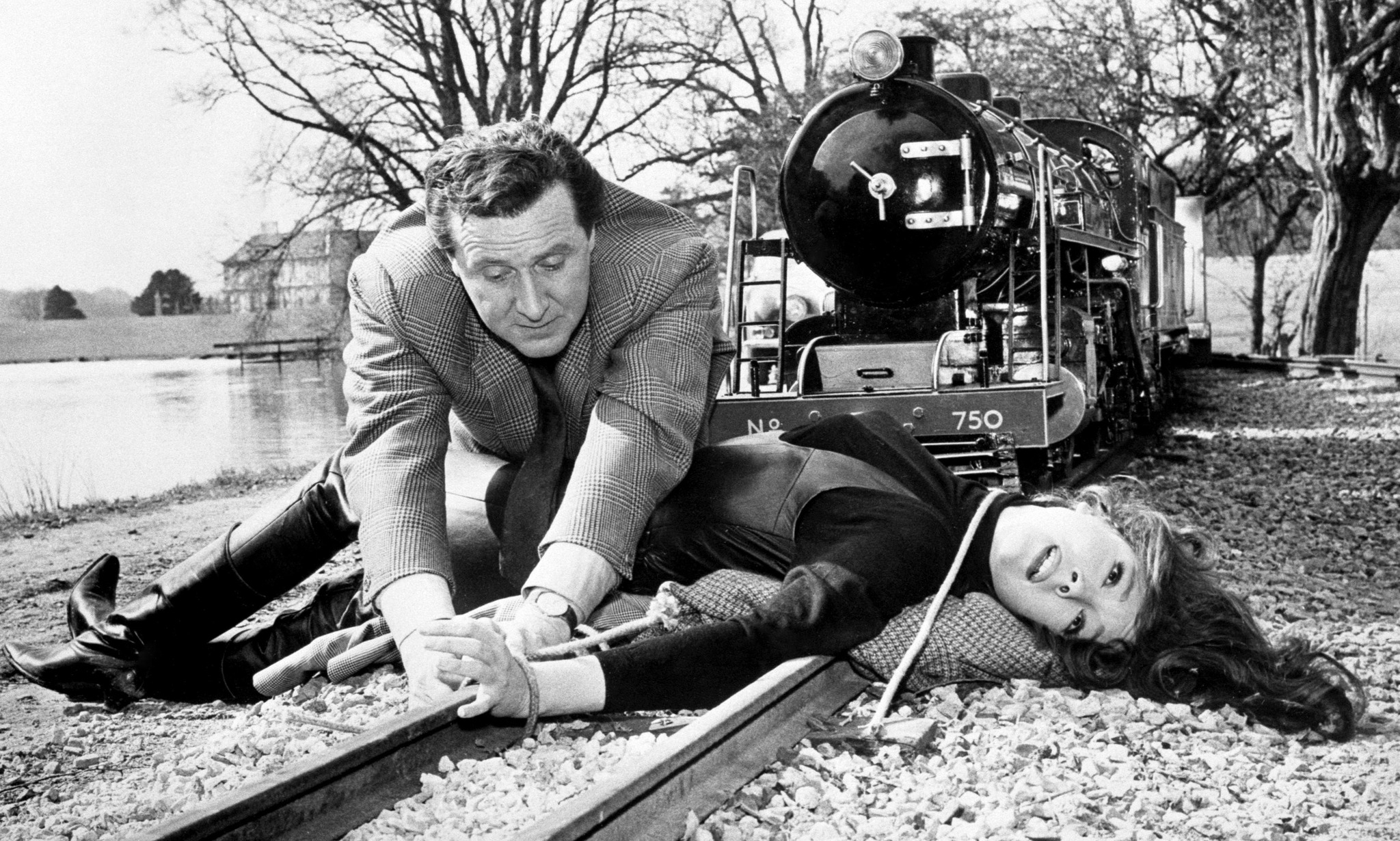
But like in The Avengers, one should never confuse kindness with weakness.
John Steed and Emma Peel always carried themselves with a kind of effortless civility that concealed something far more formidable beneath the surface.
Spirit follows the same logic.
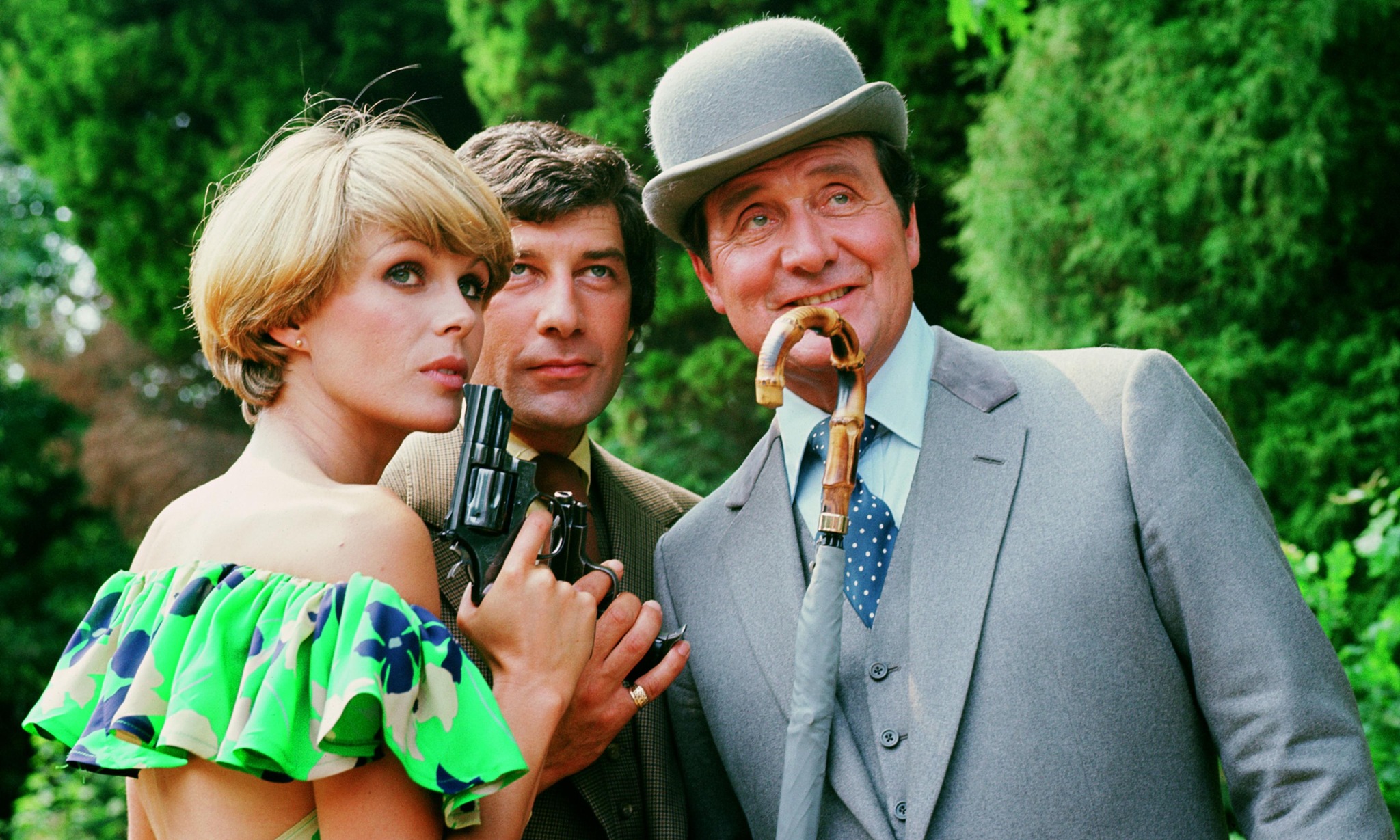
(And what about the New Avengers? A testament to that spirit is the collaborative work Des has done with James Purdey & Sons, creating a knife truly worthy of the Purdey name. Fans of Joanna Lumley will especially appreciate the reference.)
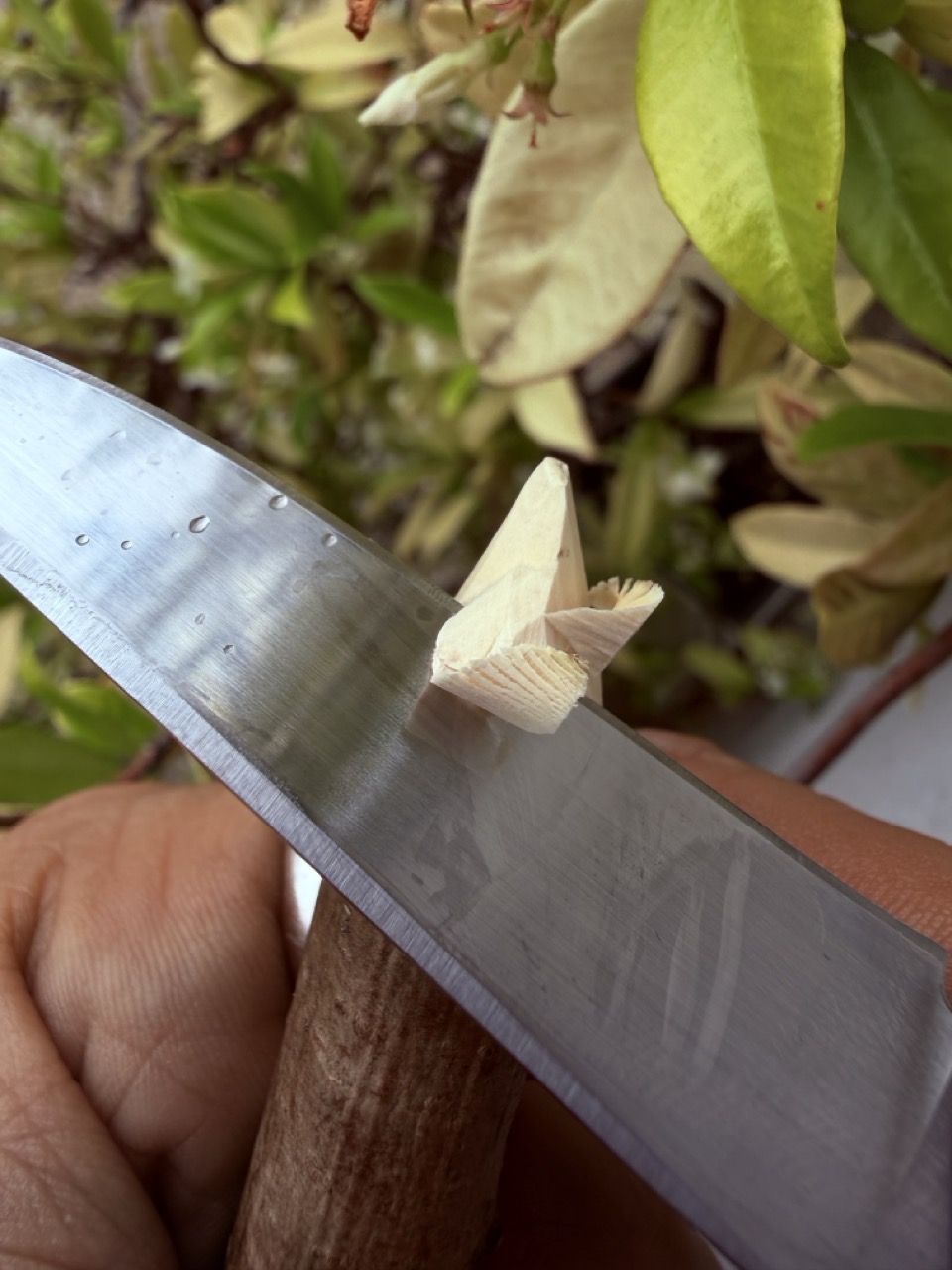

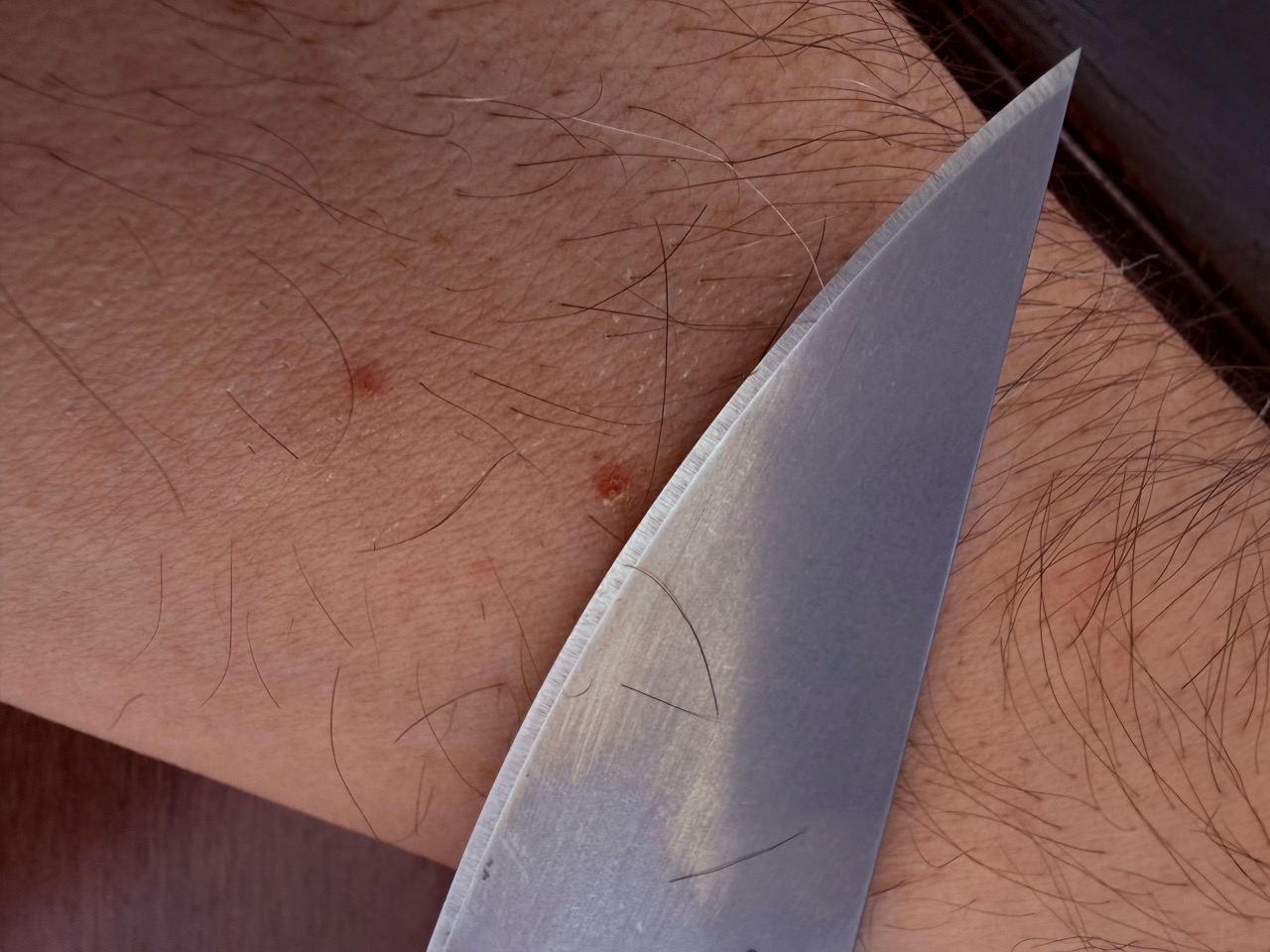
It may be feather-light in the hand, but it is anything but fragile. The marriage of advanced carbon fiber and Nitrobe 77 gives it a structural toughness that belies its weight. This is not delicacy — it is engineered resilience, refined to the point of invisibility. Hard as a nail, yes — but with the composure of something that never needs to prove it.
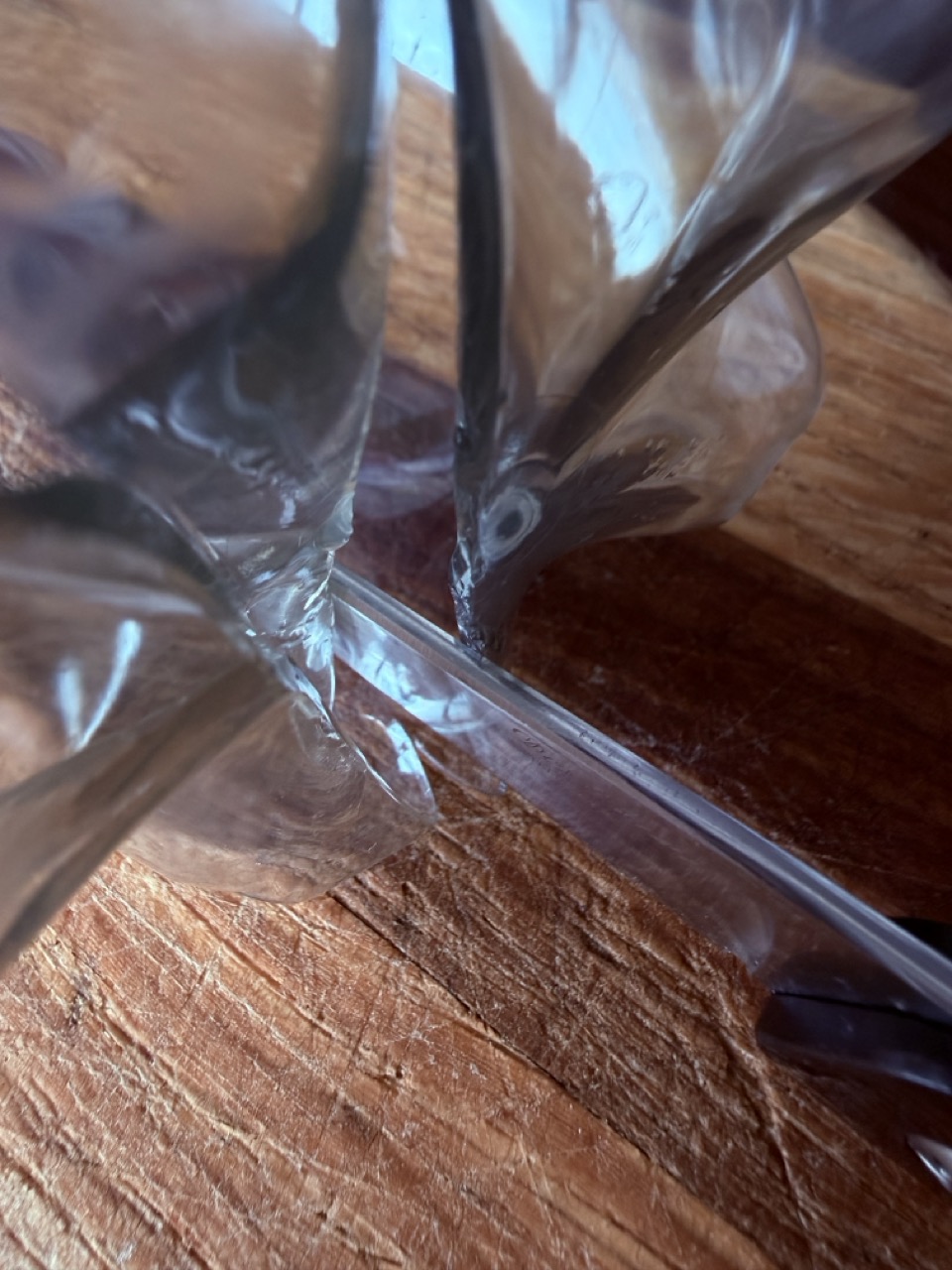
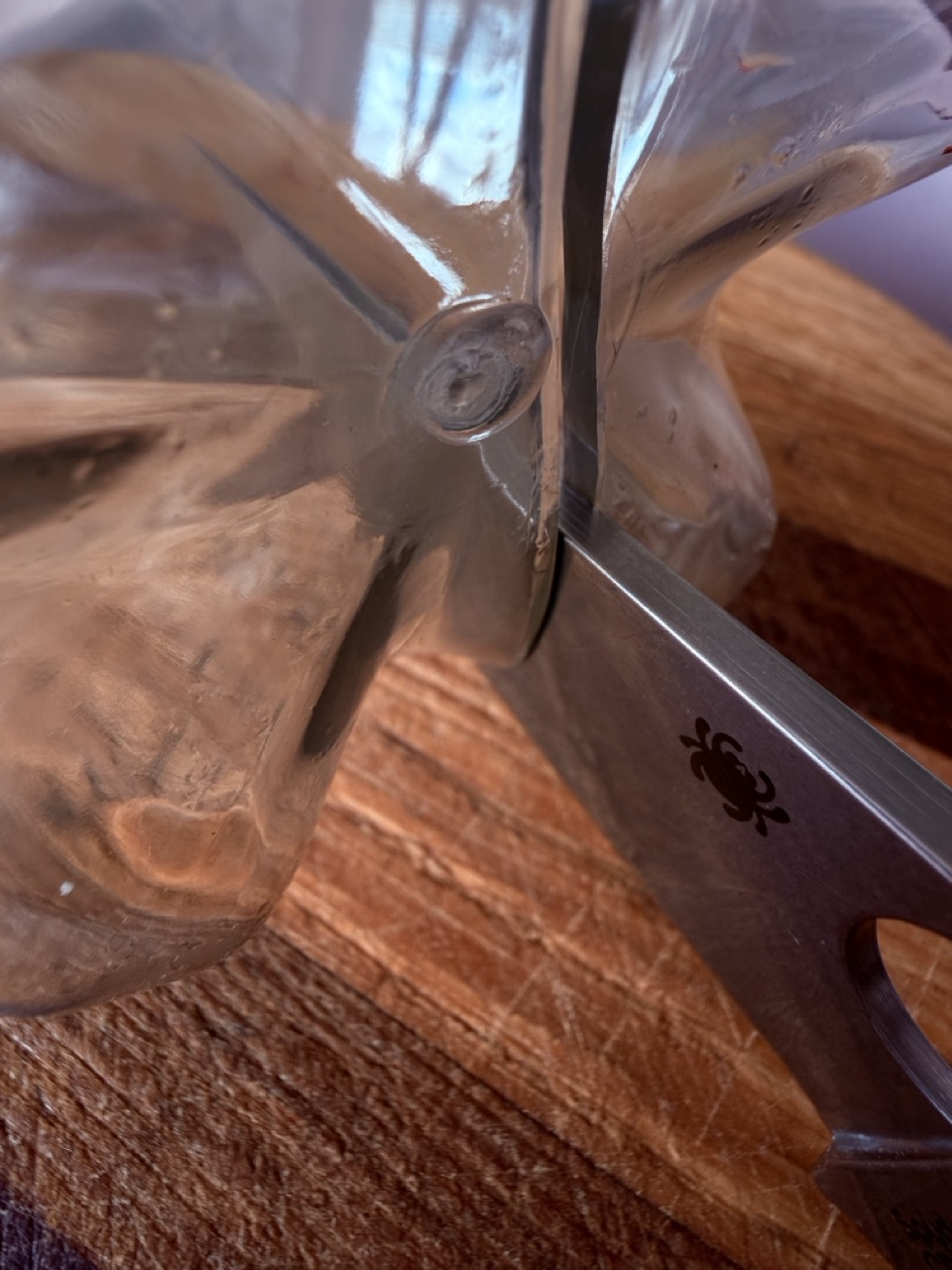
(And yes, it slices through plastic bottle bottoms like they’re made of warm butter…)

Ironically, its liner lock would also make it thoroughly unlawful in today’s UK. And yet, beneath its understated sophistication lies some remarkably serious engineering. The lock bar itself is crafted from Grade 5 titanium and fitted with a silicon nitride detent ball rated at an astonishing HRC 93. Tiny details perhaps — but precisely the kind that reveal the obsessive level of refinement behind a Des Horn folder.
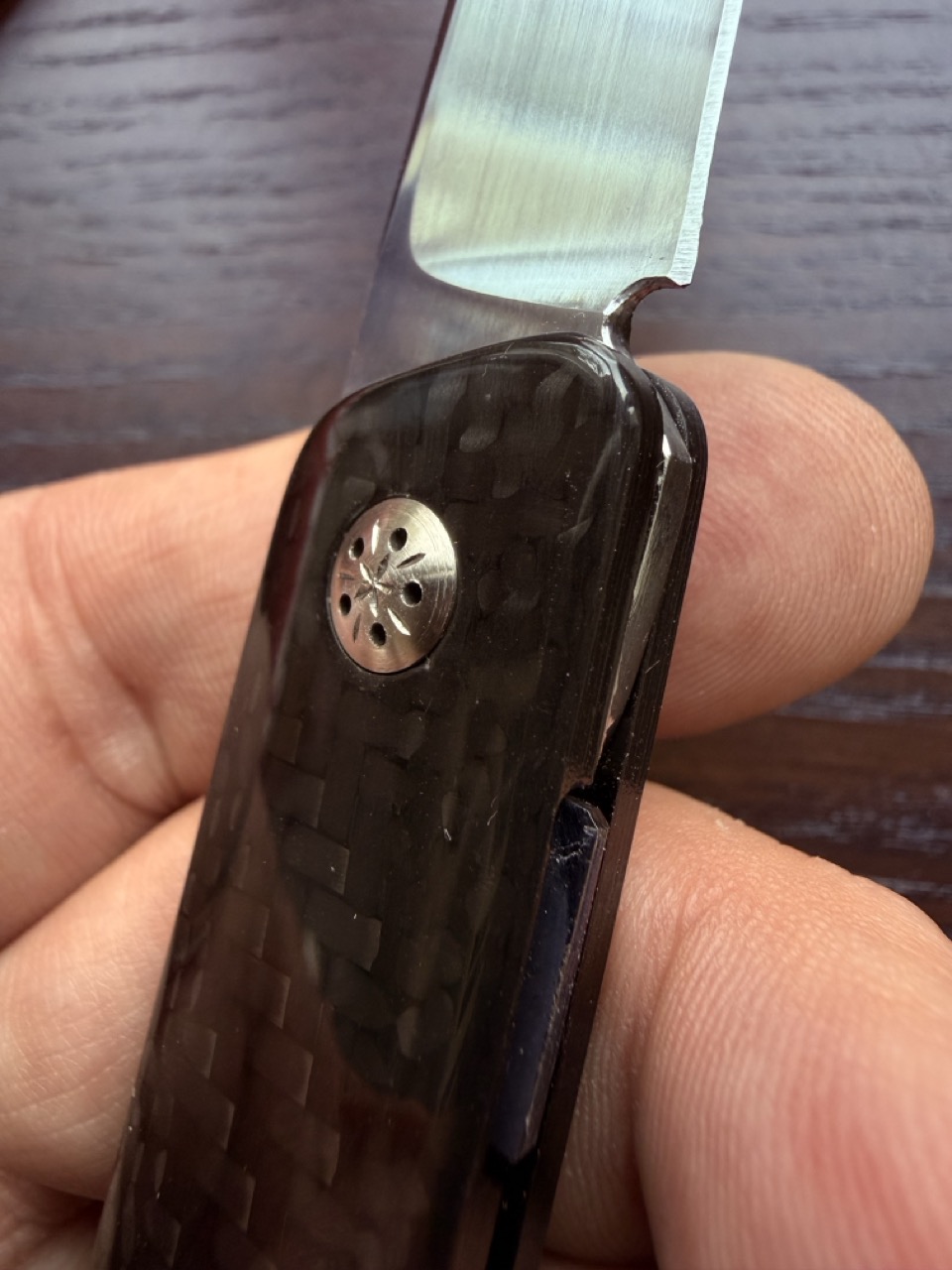
And like all great luxury objects, it communicates identity.
Carrying a Des Horn does not suggest aggression or preparedness.
It suggests discernment.

I heard that among serious collectors, the 450# has acquired an almost cult-like reputation precisely because it avoids spectacle. Owners speak of the knife with unusual affection, describing it less as gear and more as a companion piece — something lived with daily and appreciated continuously.
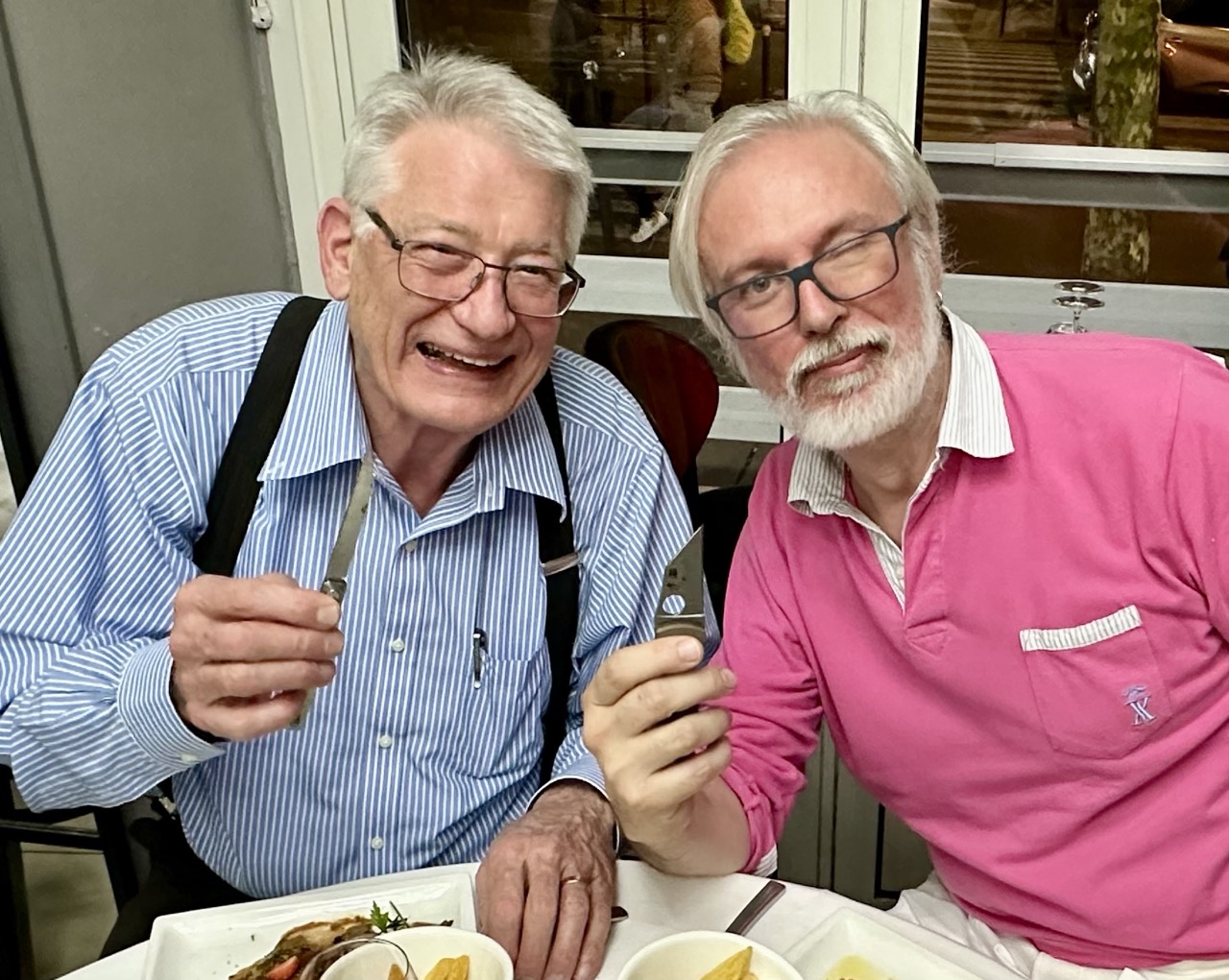
(Des holding his personal 450# at a dinner after the SICAC 2025 in Paris…)

Over more than four decades, Des Horn has developed a design language that blends technical mastery with sculptural sensitivity. His work often incorporates rare materials sourced from Africa itself: Gibeon meteorite, pietersite gemstones, mammoth ivory, hand-engraved titanium, and complex Damascus steels. (His workshop is so clean you could eat on the floor.)

Yet despite these exotic ingredients, his 450# never descends into ornament for ornament’s sake. Even the most elaborate versions retain purity of line and proportion.
That discipline is what separates luxury from mere decoration.
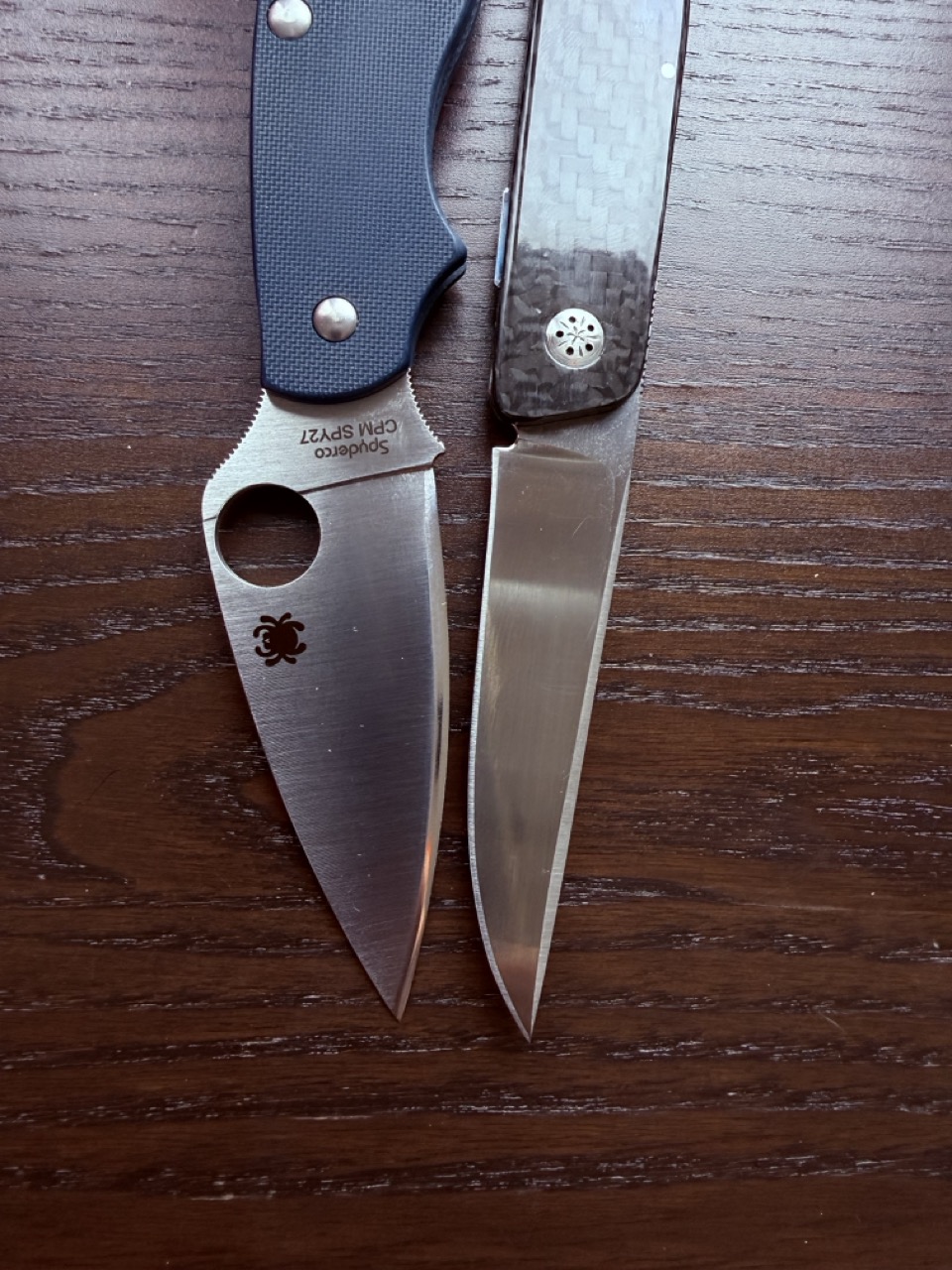
(With no choil, Spirit actually offers more usable edge length than the Golden Child.)

Because true luxury has never been about being seen. It has always been about knowing.
And Des Horn knows.
He understands la part des anges — that invisible fraction of perfection that can never be fully owned, only sensed. He understands the spirit of a blade not as an object, but as a living balance of steel, geometry, heat, and intention.
And perhaps that is what sets his work apart: not just mastery of materials, but an almost philosophical restraint — the ability to let excellence remain quiet.
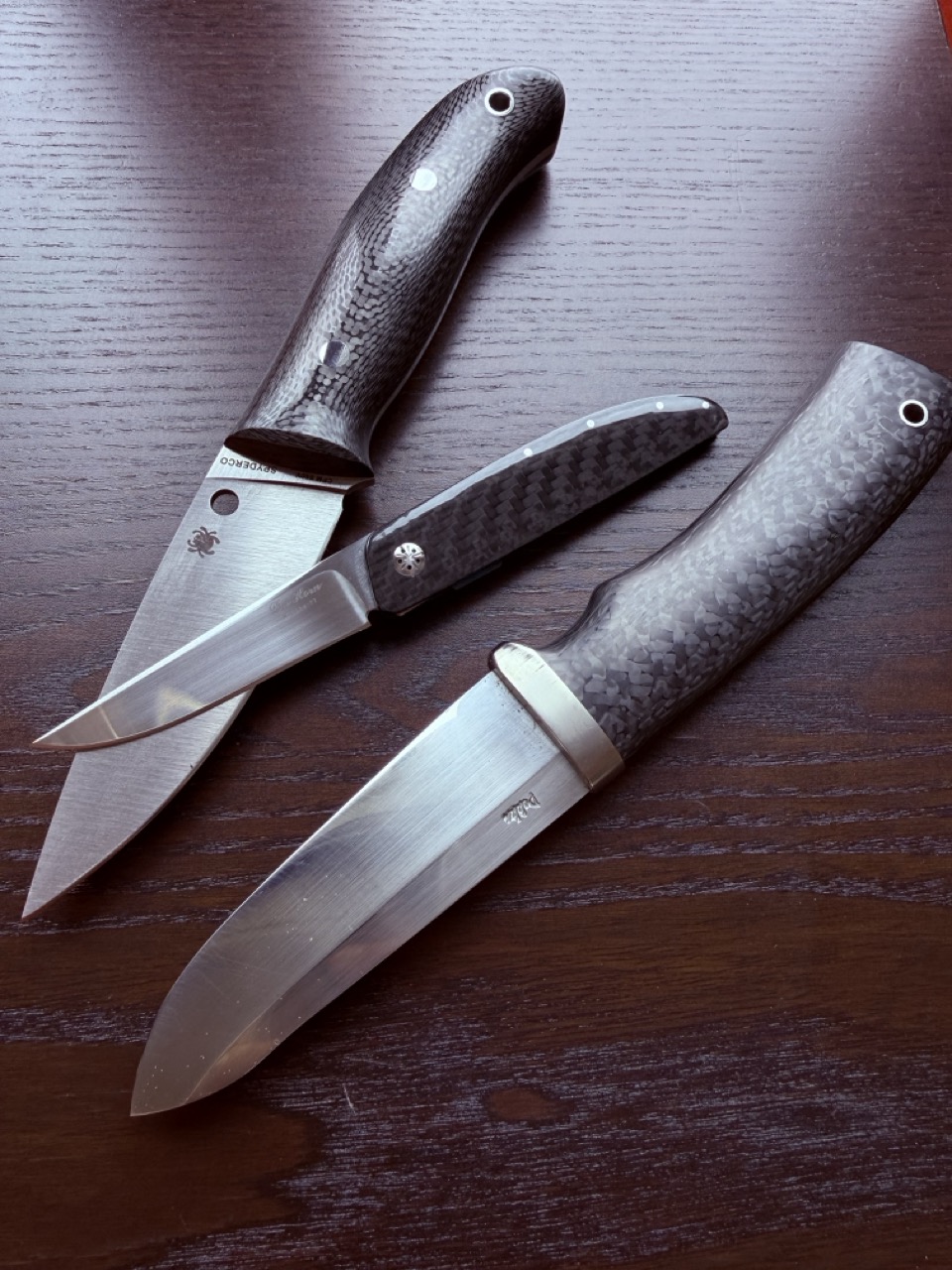
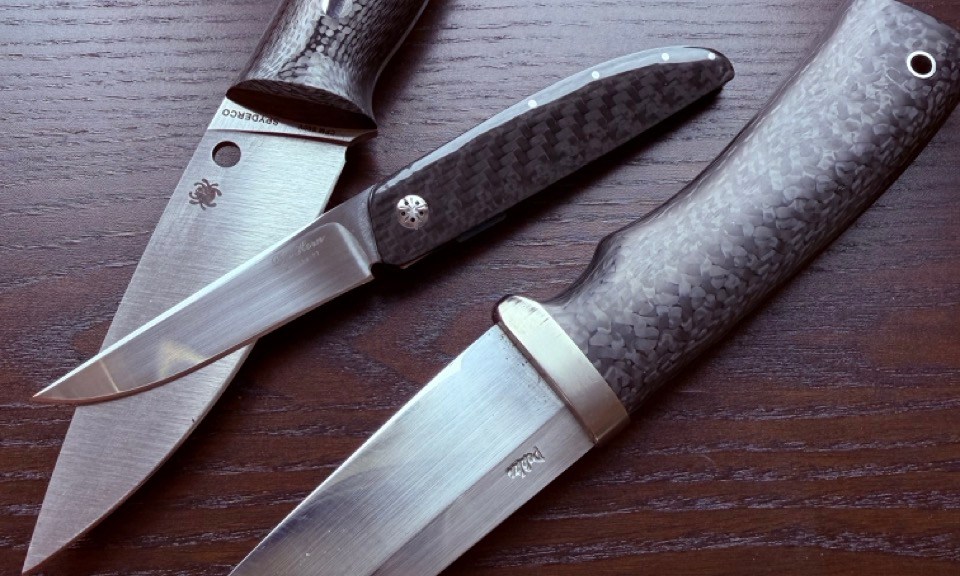
Spirit pictured between a Spyderco Proficient and Pekka Tuominen Urban II.

Des Horn showcasing one of his true gems of a knife.
PARA MILITARY® 2 LIGHTWEIGHT BROWN CPM 15V® SPRINT RUN® — Let there be light again ! Part 1

There are knives that become products, and there are knives that become dialects.
The Spyderco Para Military 2 since its inception belongs firmly to the second category.

For sixteen years, the PM2 has occupied a rare position in the knife world: not merely respected, but culturally embedded. Made in Golden Colorado USA Earth, designed in the lineage of the original C36 Military model and its offspring the Paramilitary 1 from 2004, the Paramilitary 2 refined the formula into something more agile, more urban, more universally wearable.
Key improvements introduced in 2010 were:
Ergonomics: Thinner, refined G-10 handle.
Mechanism: New Bushing Pivot System for smoother action.
Clip: 4-position pocket spoon clip.
Blade: Slightly thinner blade profile with an elongated tip.
From there, the Spyderco Paramilitary 2 quickly established itself as a modern classic in the knife industry. It also became the most compelling ambassador for Spyderco’s in-house Compression Lock system, turning simple fidgeting into something unexpectedly addictive.

Its full-flat, leaf-shaped blade geometry delivers near-universal utility — a fine, precise tip paired with a confident, efficient cutting edge. In use, it feels less like compromise and more like calibration.

And then there is the ergonomics: that unmistakable Spyderco palm swell and forward choil, which transform hard tasks into something almost composed, almost effortless.

Even AI now generates imaginary PM2 variants — sometimes hilariously inaccurate ones with back locks — which says a lot about how deeply the Spyderco Paramilitary 2 has embedded itself into modern knife/EDC culture.

Because the PM2 was never just a tactical folder. It became the Porsche 911 of contemporary EDC: instantly recognizable across a room, endlessly reinterpreted, yet impossible to mistake for anything else but one of the Spyderco Millie family.

And yet, for all its success, the classic PM2 always carried a subtle contradiction.
It was a knife celebrated for everyday carry that still weighed like a “serious” tool. A tool which floats like a butterfly but sting like a bee.
So, the same process which turned its little brother Para3 G10 into Para3 Lightweight has been applied: get rid of G10 scales and bring the Fiber Renforced Resin / FRN !


The new Spyderco Paramilitary 2 Lightweight changes that entirely.

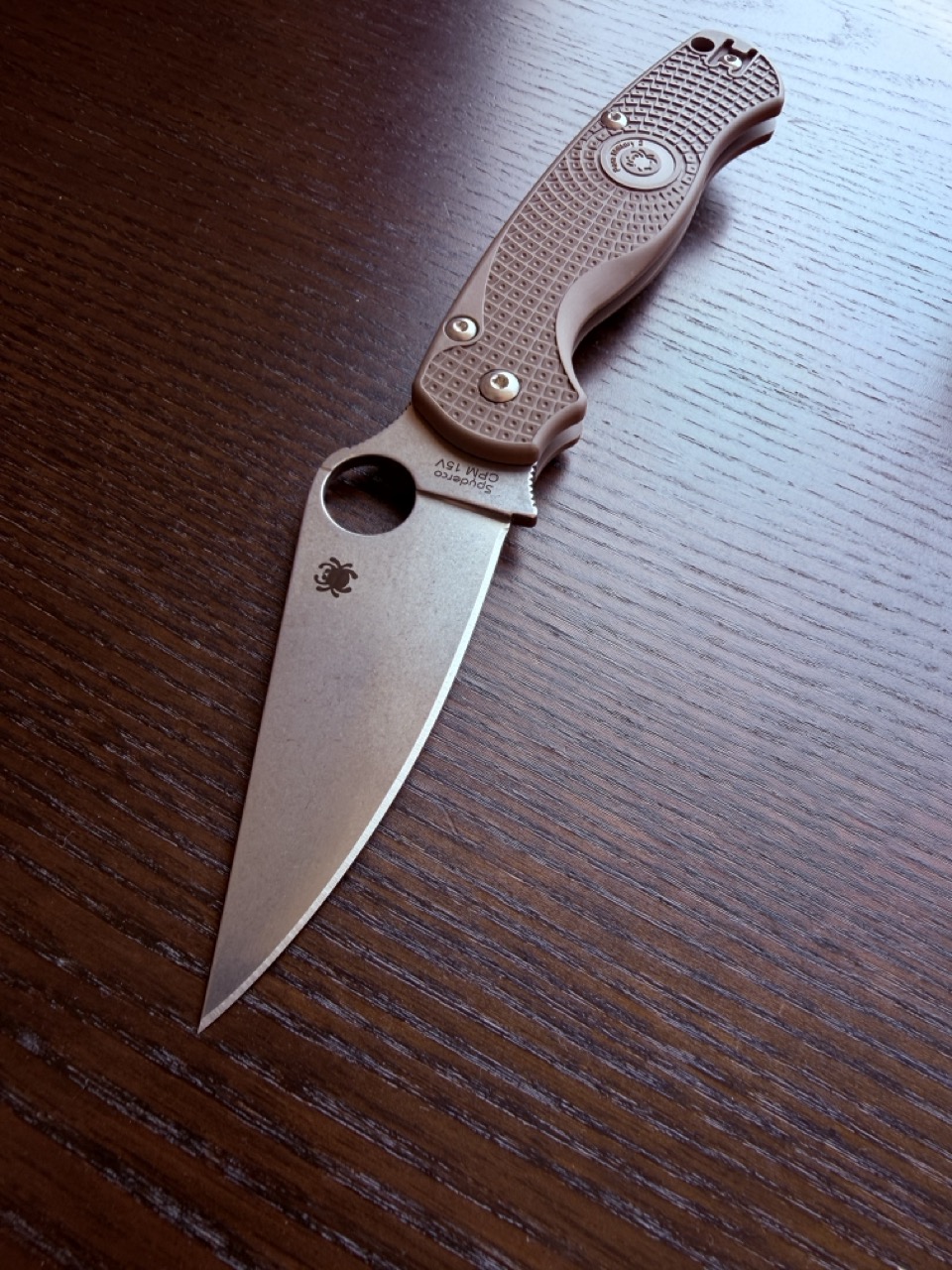
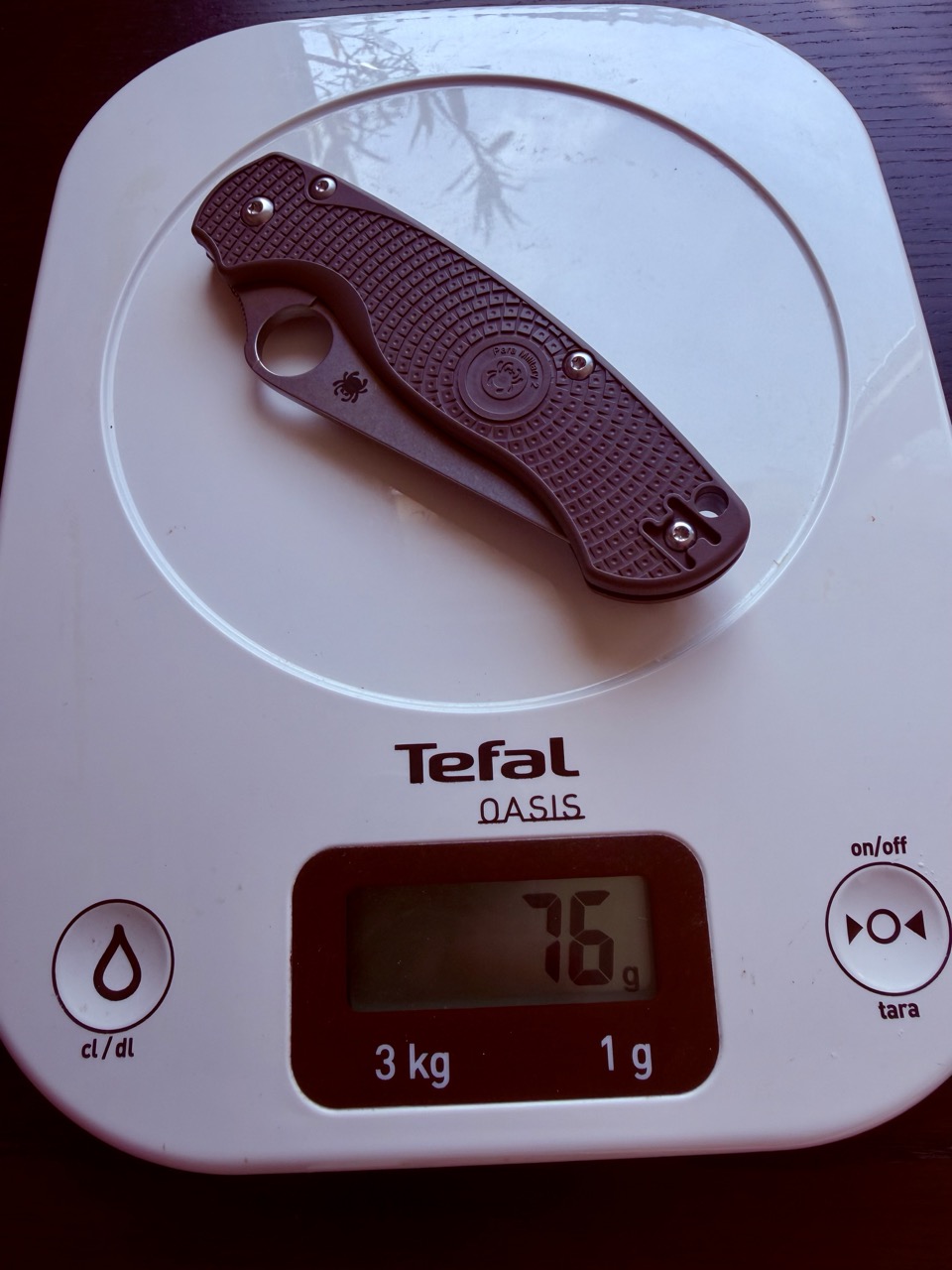
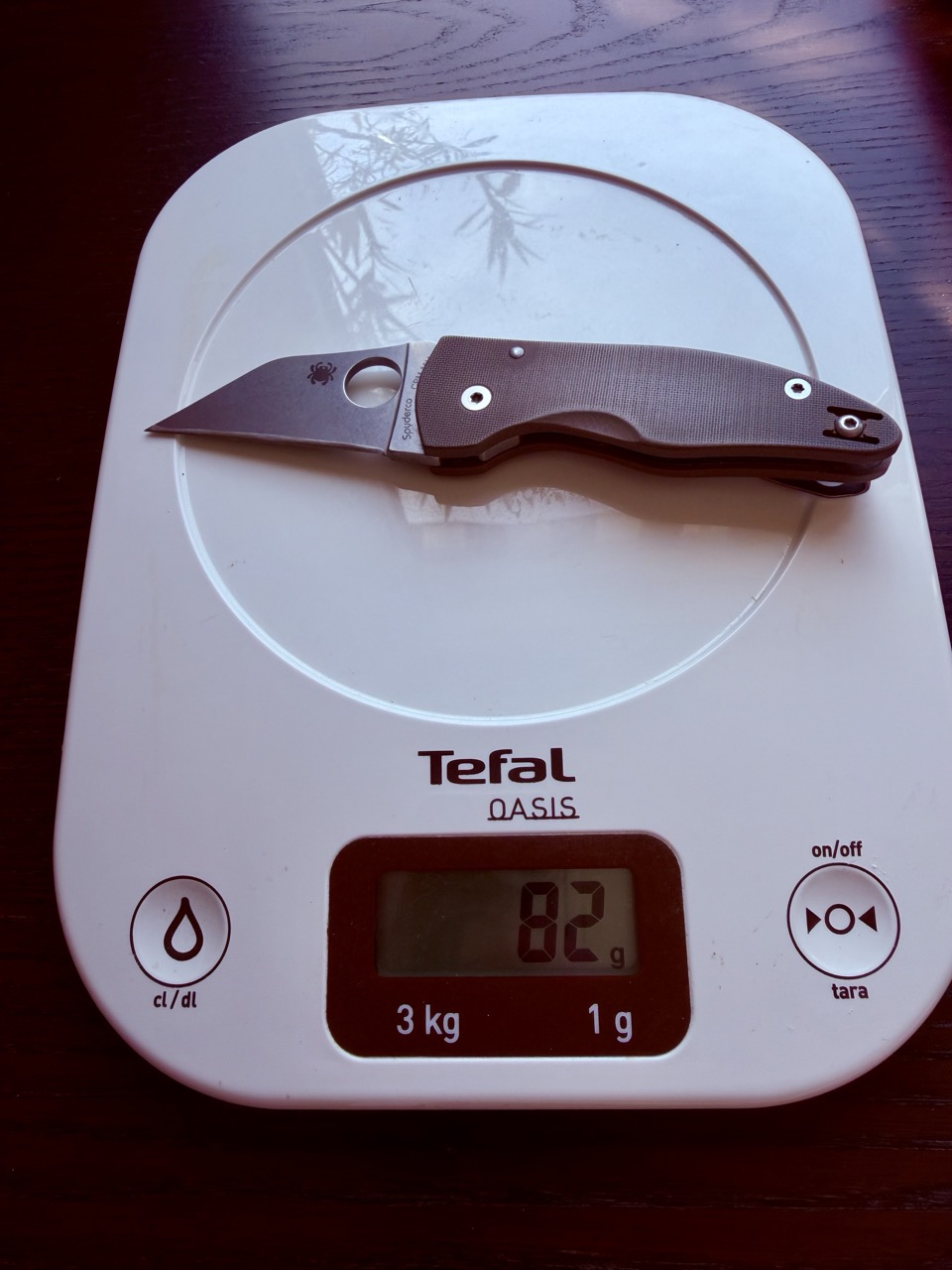
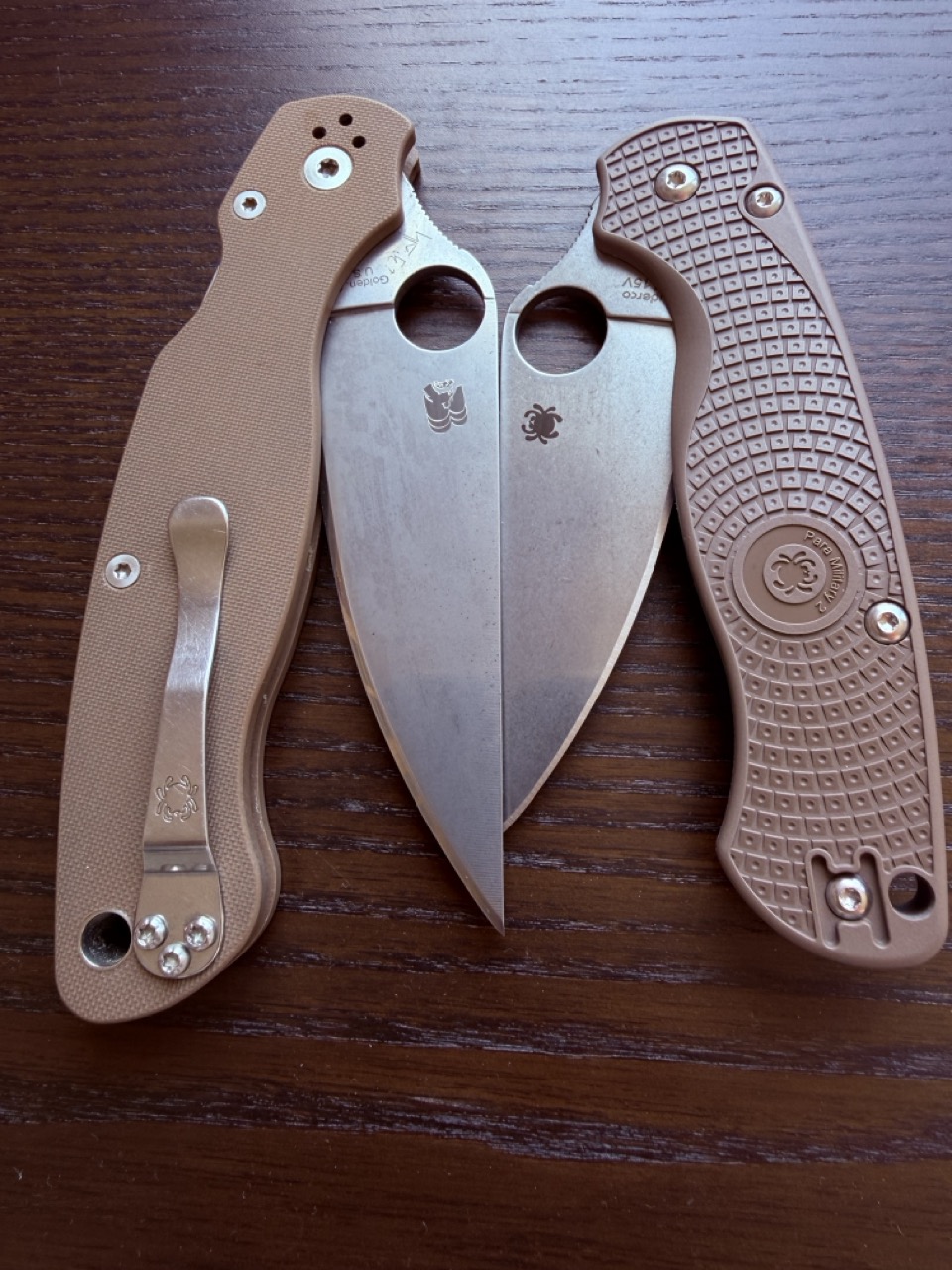
At roughly 76 grams, the PM2 LW does not feel like a trimmed-down PM2.
It feels like an entirely different interpretation of the design.
To put that into perspective, it is even 16 grams lighter than the Spyderco MicroJimbo — a knife already considered compact and featherweight by EDC standards.

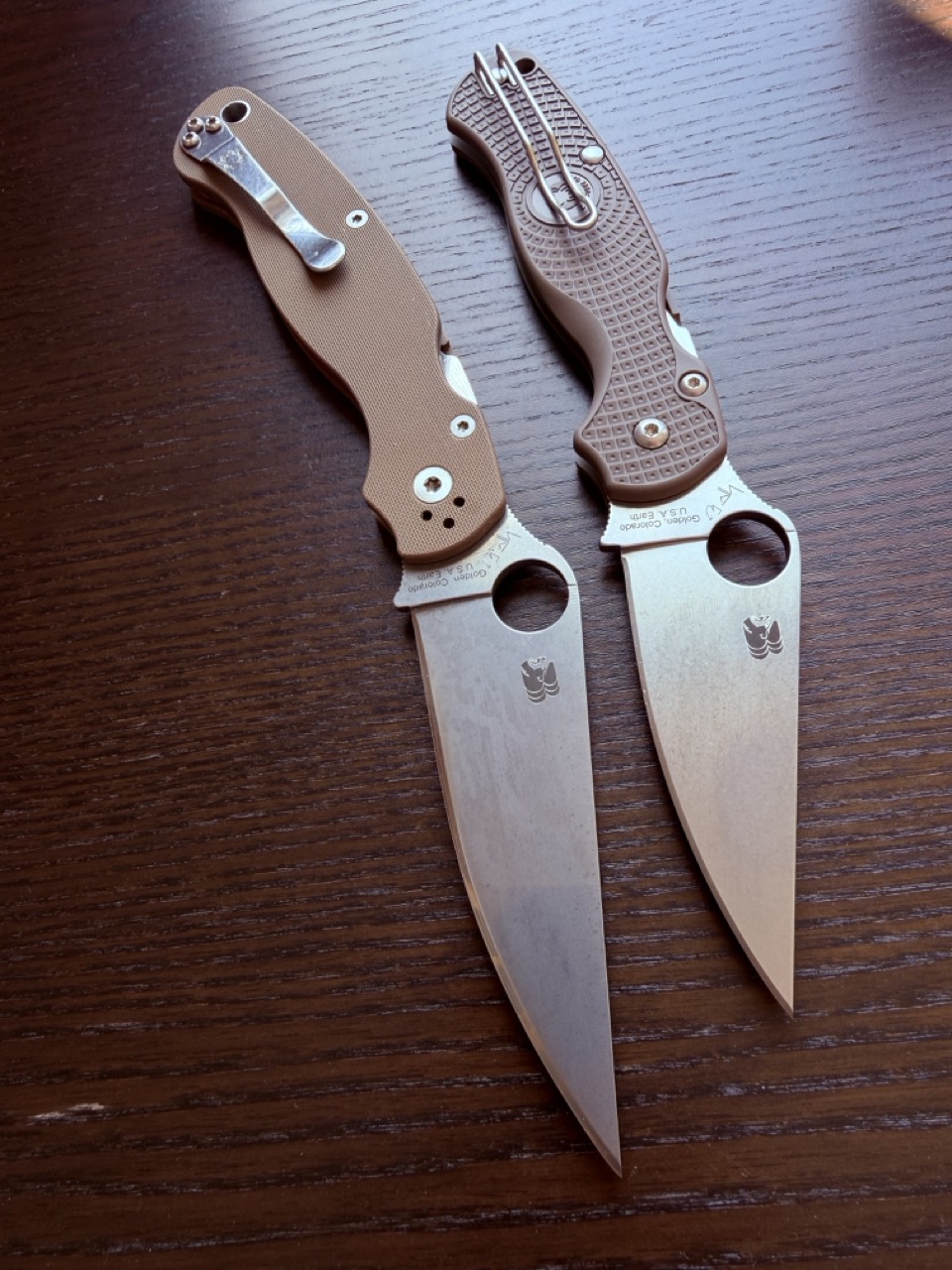
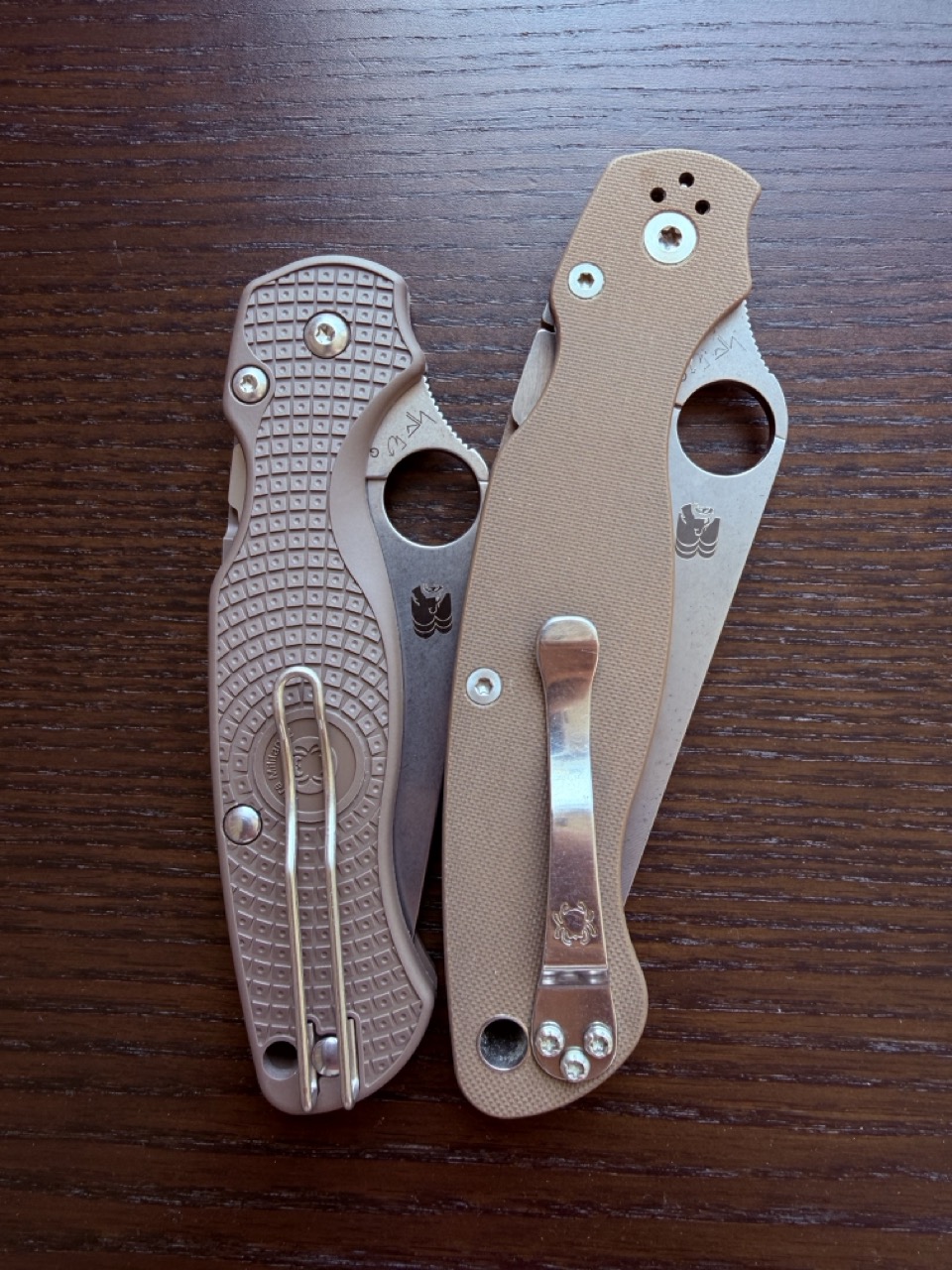
Compared to the classic G-10 PM2, the difference becomes almost startling: 32 grams gone, dropping from 108 grams to just 76.
That is nearly a 30% reduction in weight.

Edge-wise, the blade-to-weight ratio is remarkable — and decisively in favour of the Spyderco Paramilitary 2. 😉
Oh well, I’m joking — these two knives were never meant to compete.
They simply occupy different territories of utility, and both earn their place in my pocket for different reasons.
Still, this new Lightweight feels like the moment Spyderco finally allowed the PM2 to become what it was always destined to be: not merely lighter, but almost spectral. The Para3 LW vibes haves been compared to the Delica. The PM2 got the Endura’s: a ghost of a knife you completely forget is clipped to your pocket… until the exact second you need it.
Another clue?
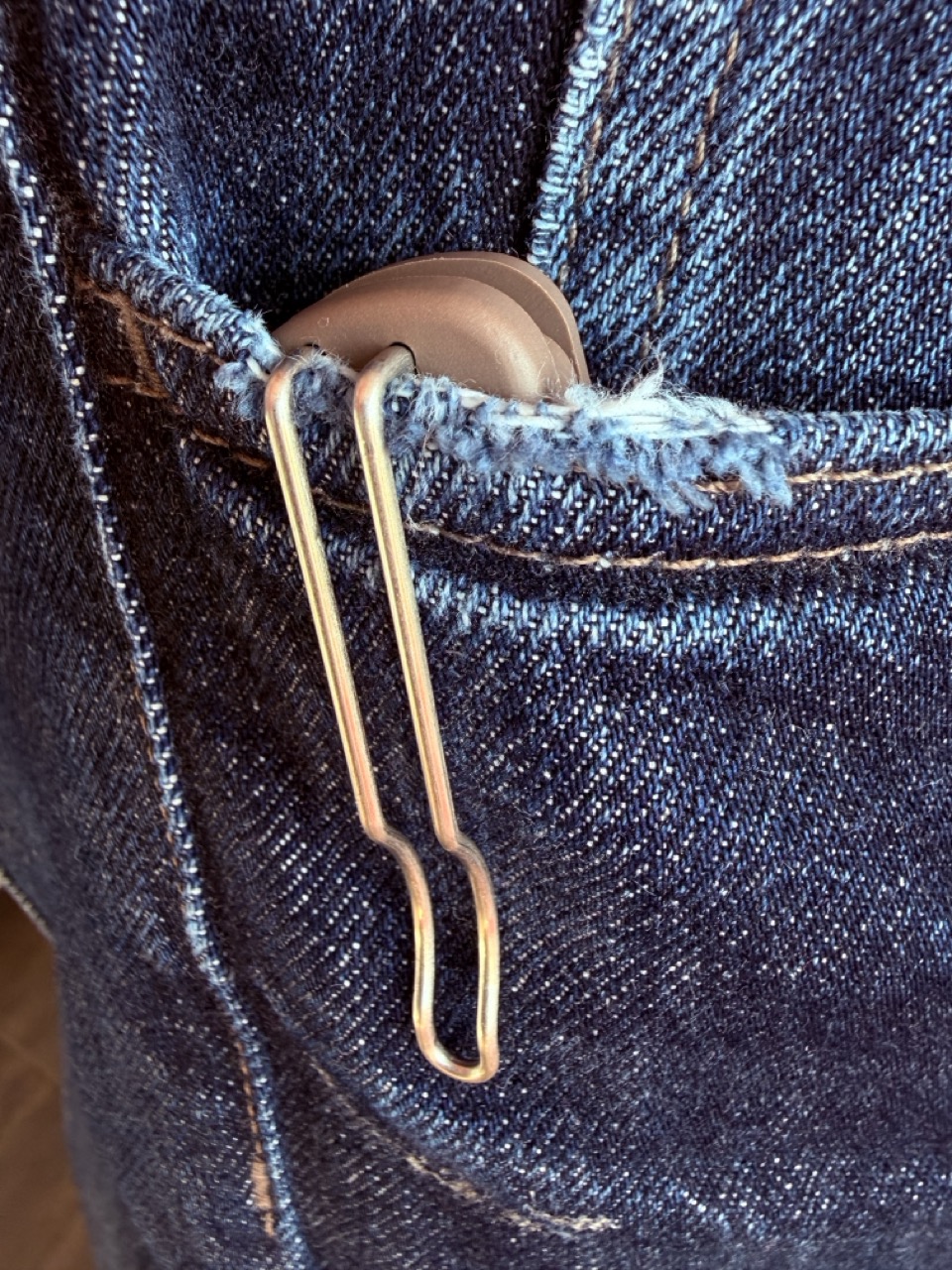
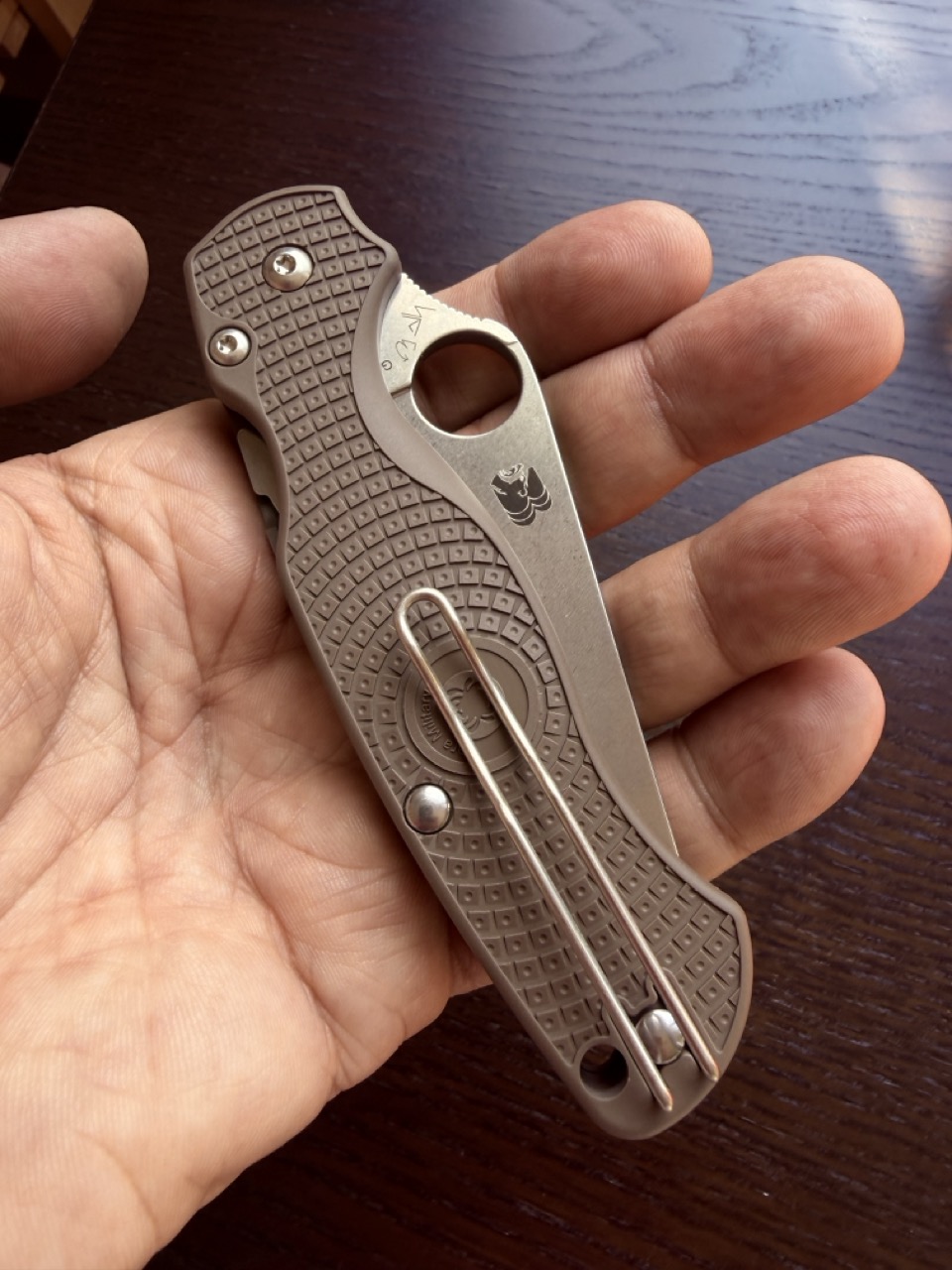
The clip.
Look closely.

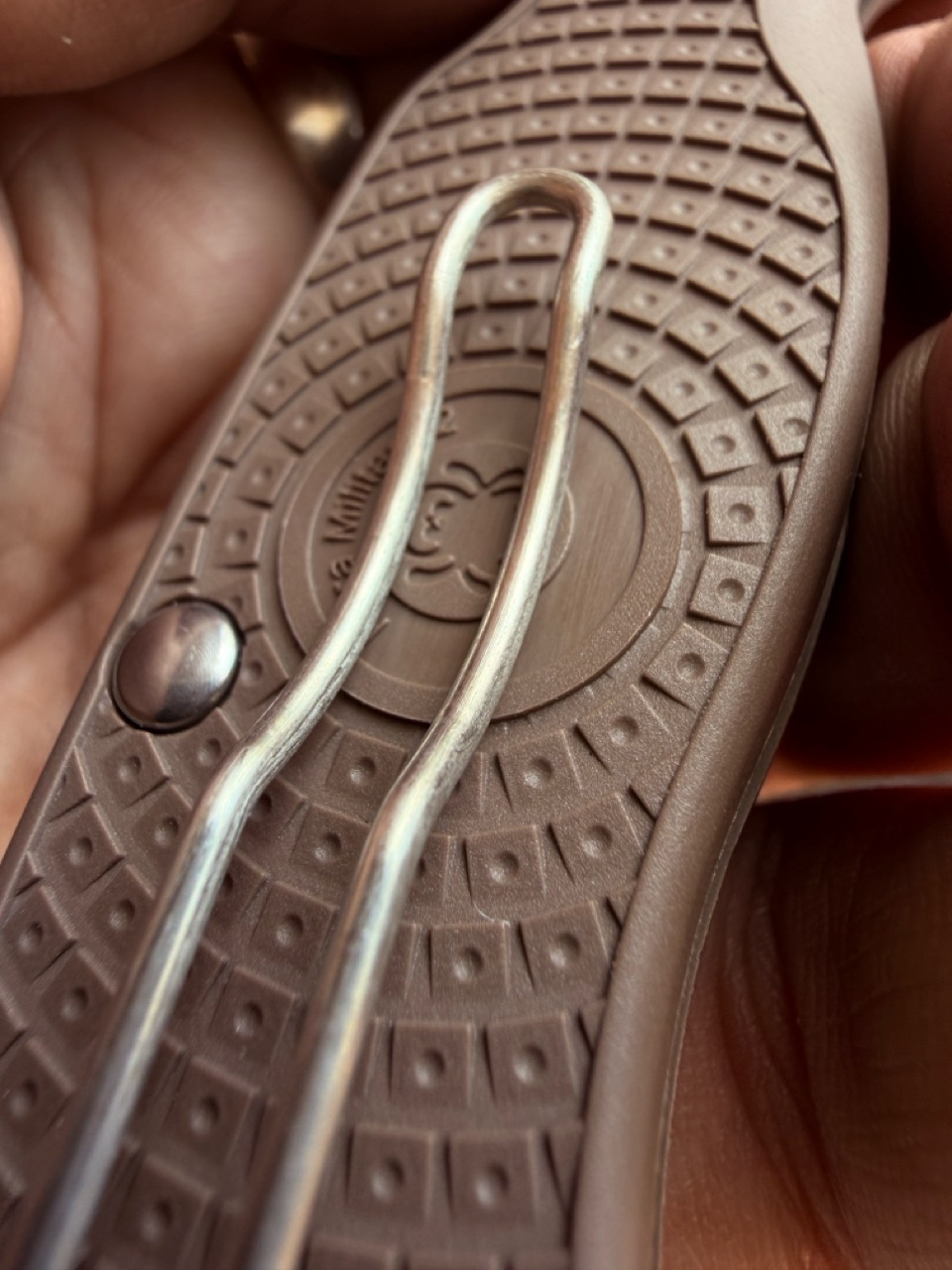
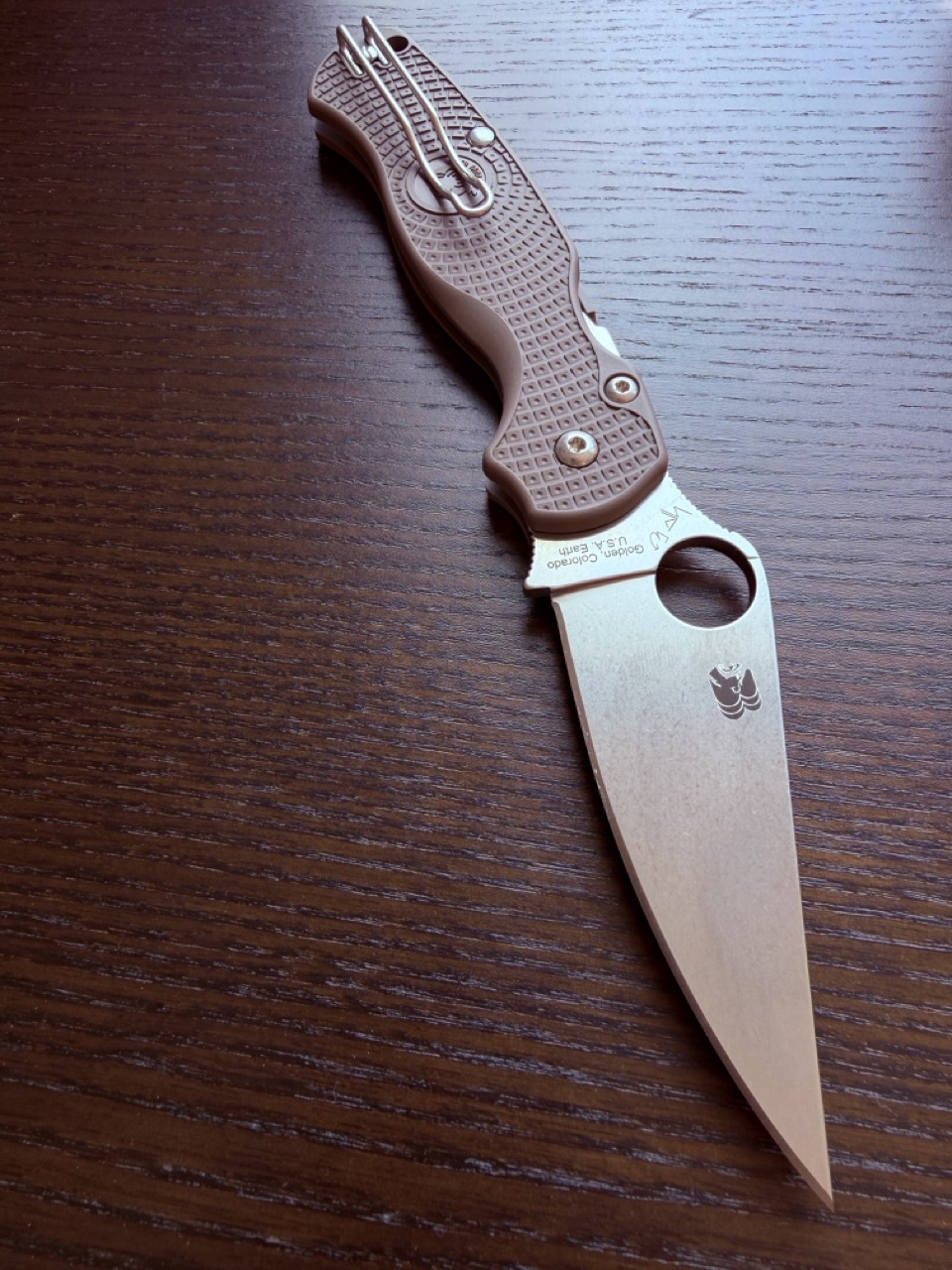
The deep-carry clip makes the knife feel even stealthier in the pocket, almost invisible in daily carry.
Tip-up only, though.
It’s not exactly a pocket shredder, but it’s not the gentlest on pocket seams either — even if the clip geometry and FRN patterning have clearly been tuned to make deployment and carry as smooth as possible.

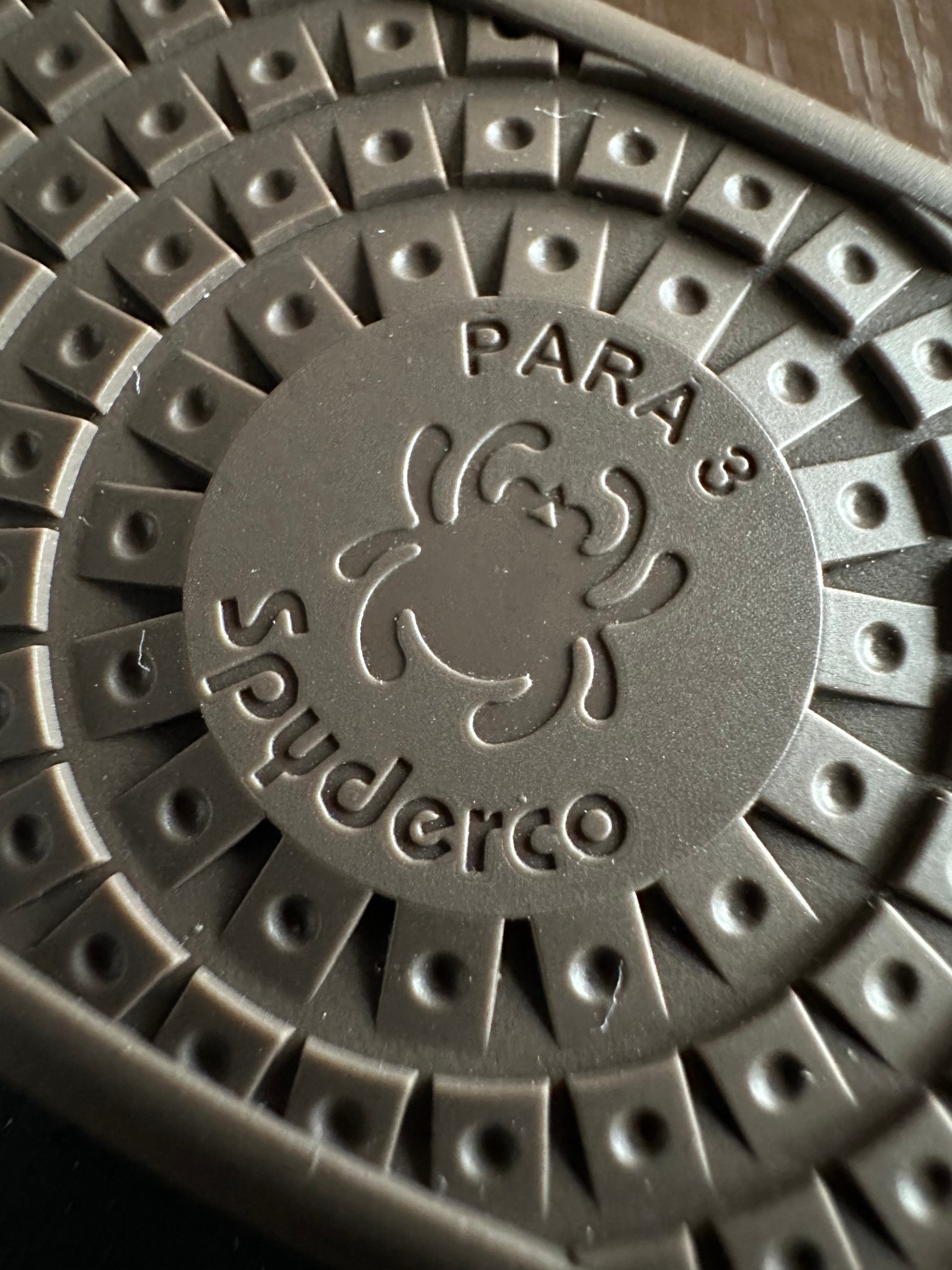
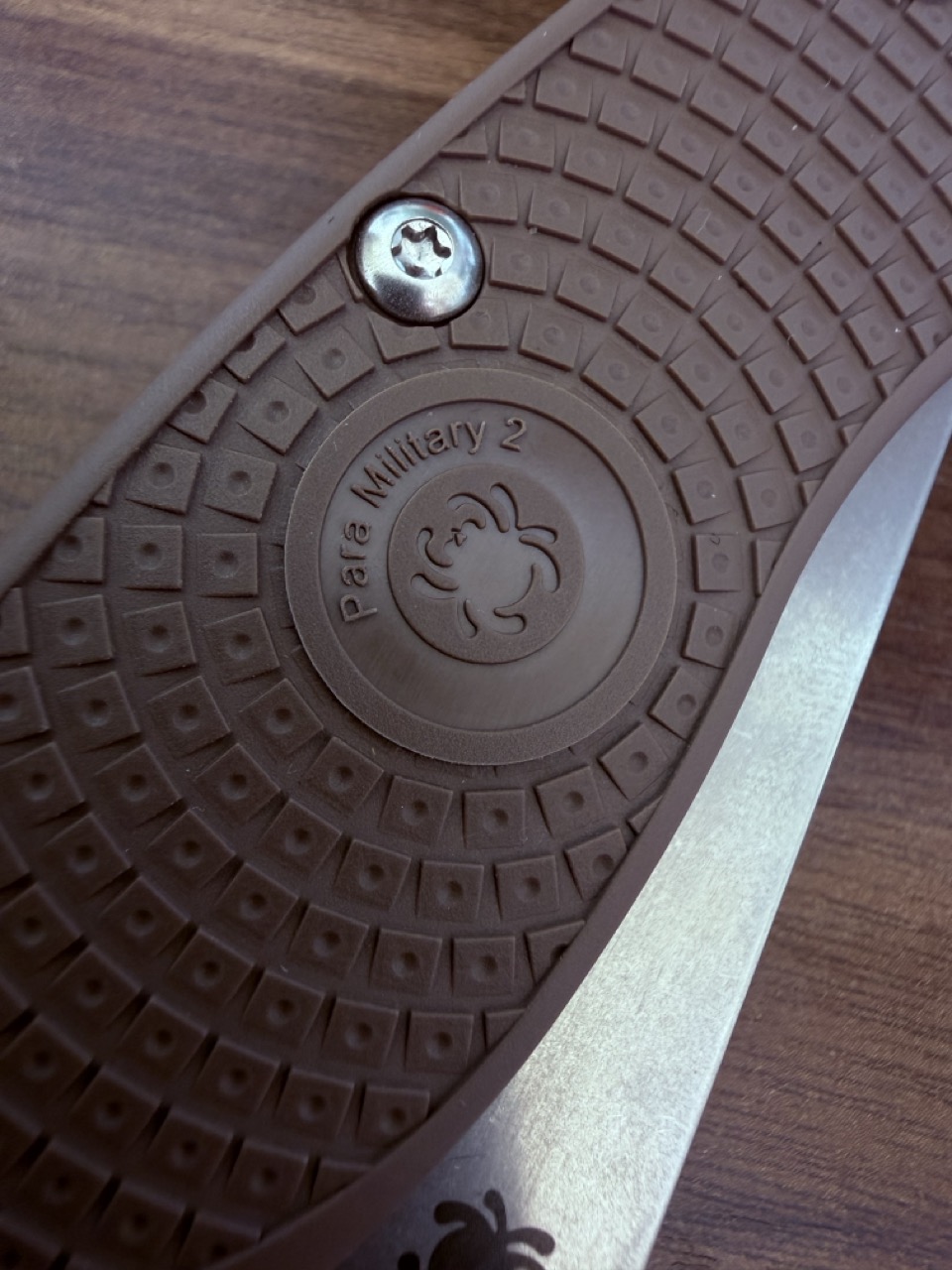
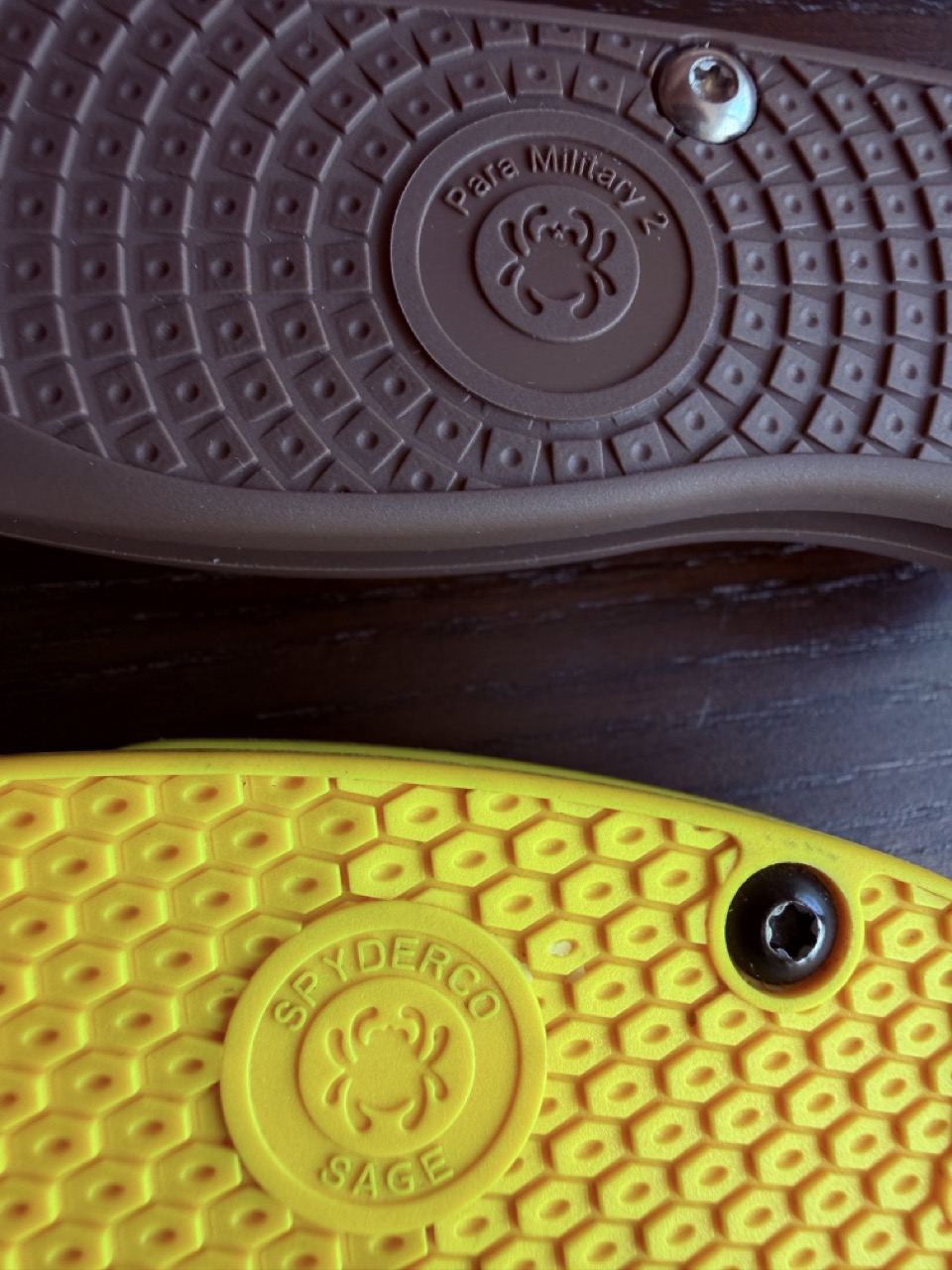
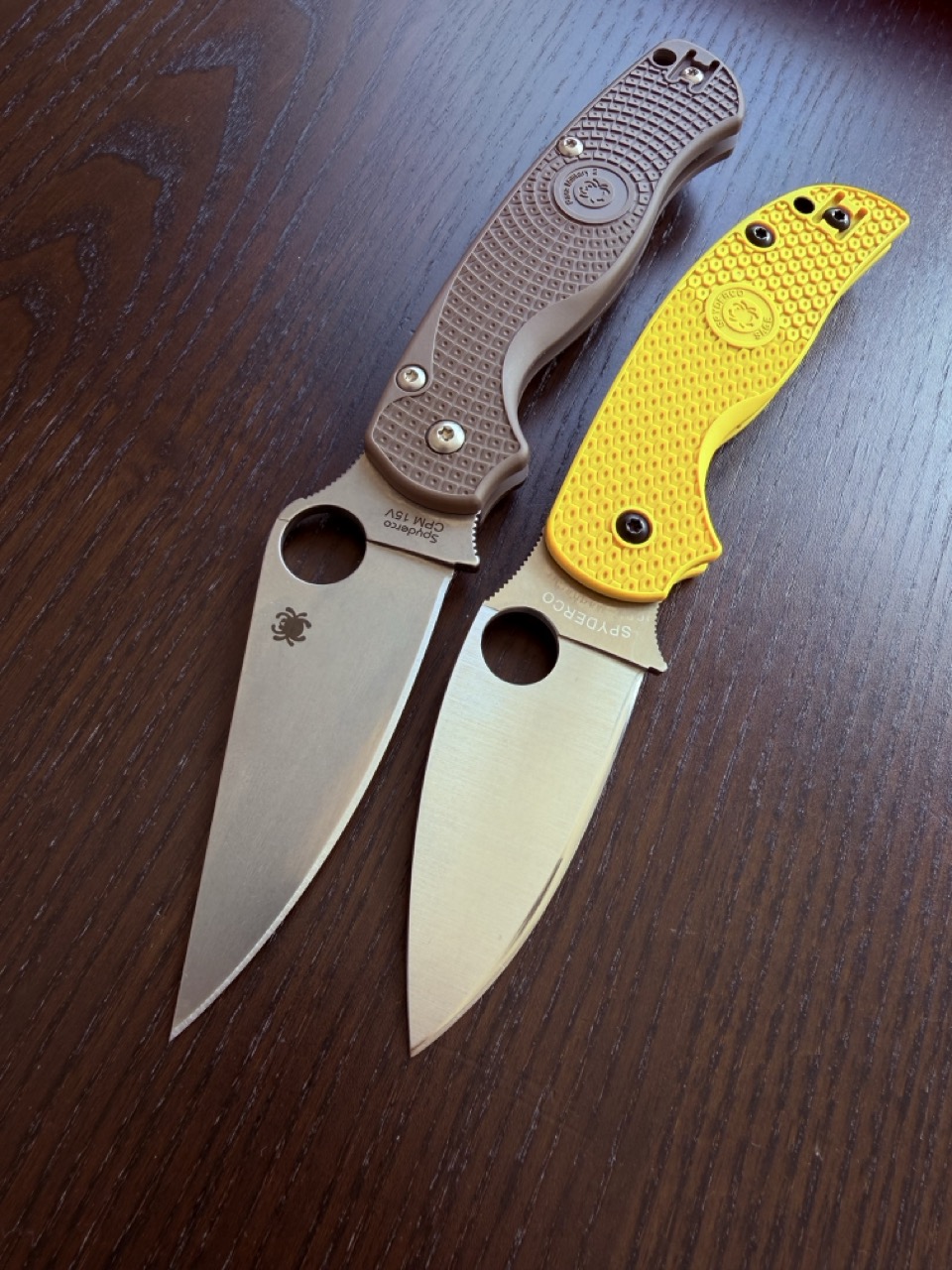
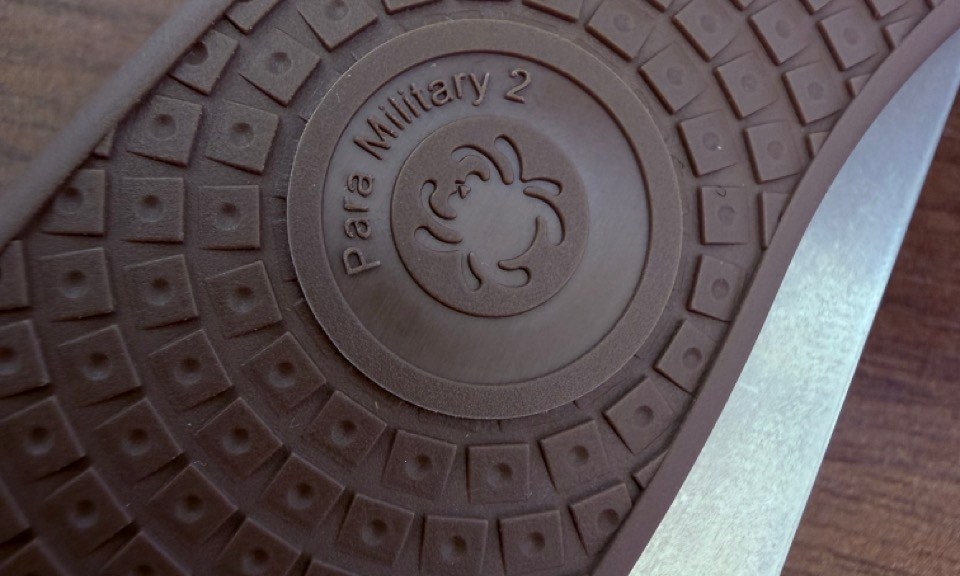
In my view, the central “medallion” on the Spyderco Para 3 (pictured here) feels more refined and better resolved visually. It has a cleaner, more intentional integration into the design.

Here, on the PM2, it simply reads “Para Military 2” — which feels oddly understated. Curiously, the Spyderco name itself is nowhere to be found on that element, a surprising omission for such an iconic model.

But then again, this is exactly the kind of detail enthusiasts obsess over.

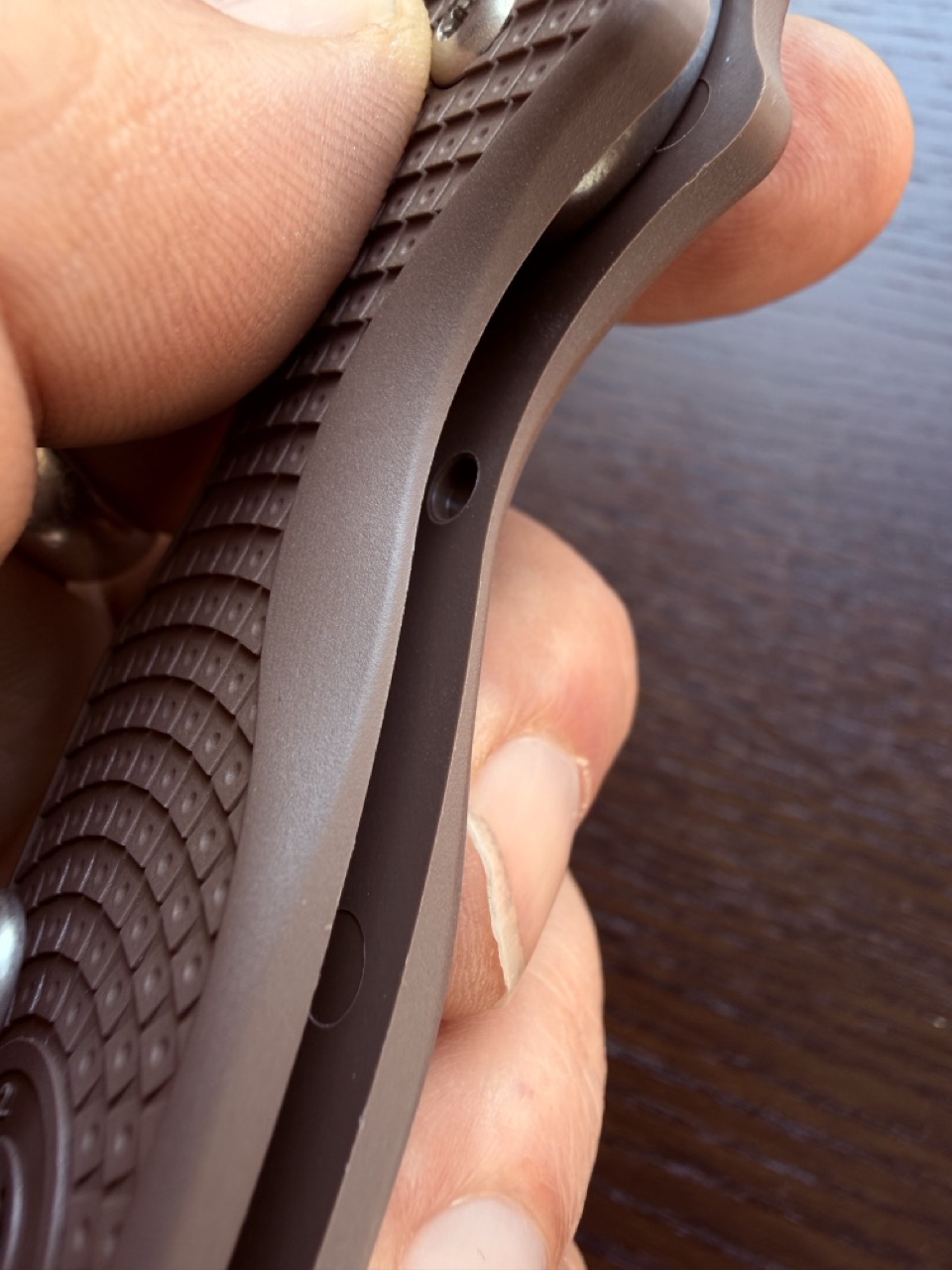
Personally, I prefer the FRN molding of the Spyderco Para 3 Lightweight in the epicenter of the pattern — it feels slightly more refined and cohesive. On the other hand, I find the Spyderco Paramilitary 2 Lightweight superior around the Compression Lock interface and the access to the Spyderhole, both of which feel more open, more natural, and ultimately more satisfying in use.

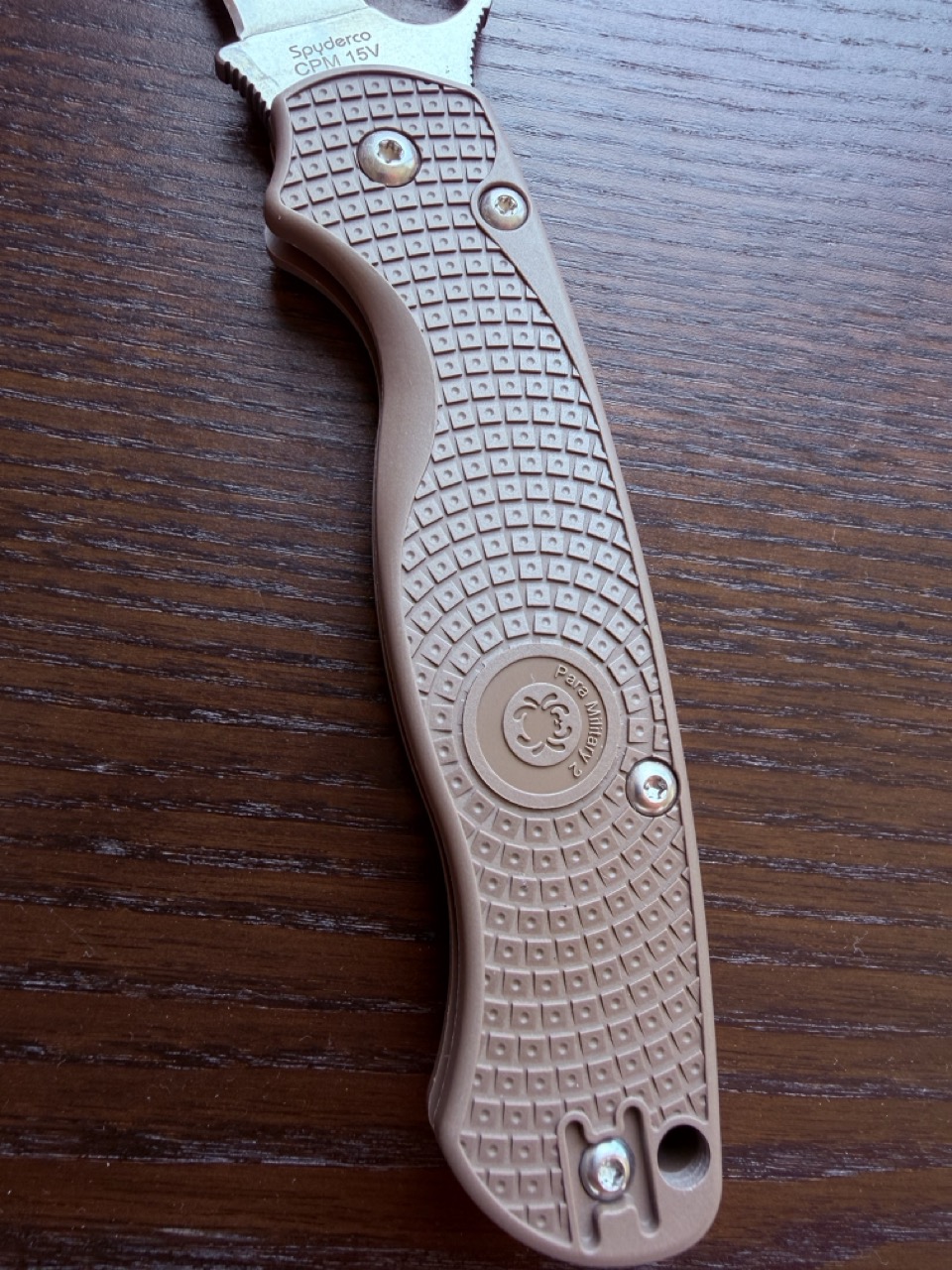
The handle transformation comes primarily through the FRN handle — fiberglass reinforced nylon — a material longtime knife enthusiasts still love to debate with almost religious intensity. Traditionalists often associate premium folders with layered G-10, titanium, or carbon fiber. FRN, by comparison, can seem almost too practical, too honest about its intentions. Forums discussions around Spyderco’s lightweight models reveal the familiar divide: some users still perceive FRN as less luxurious, while others praise its traction, comfort, and remarkable reduction in carry fatigue.
One thing is certain: FRN brings a significant leap in ergonomics.

You can see how the design has been subtly refined to erase the boxy, almost overbuilt feel of the G-10 version.
Spyderco’s history with FRN stretches back through legendary lightweight models like the Spyderco Delica, Spyderco Endura and the Spyderco Salt Series — knives that became icons precisely because they vanished into the pocket while remaining utterly dependable in dirty, wet, unforgiving environments.
The people at Golden has spent decades refining FRN into something uniquely their own. On a Spyderco, FRN is not budget plastic. It is engineered utility.
The texture, invented by Sal Glesser, is the key.

That bidirectional pattern grips the hand with a kind of mechanical confidence — less refined than blasted titanium perhaps, but more secure when life becomes sweaty, cold, rushed, or imperfect.

What makes the Spyderco Paramilitary 2 Lightweight genuinely fascinating is not merely its weight reduction, but the engineering compromise Spyderco somehow refused to make.
Because removing mass from a back lock or liner lock is relatively straightforward.
Removing mass from a Compression Lock platform is something else entirely.
The Compression Lock is one of the defining mechanical signatures of Spyderco — a brilliantly elegant system designed by Sal Glesser that combines strength, fluidity and one-handed safety with an almost addictive tactile character. But unlike simpler locking systems, it traditionally depends on nested steel liners and a rigid chassis architecture.

In other words: it was never meant to live inside an ultralight FRN body.
That is the hidden tour de force of the PM2 Lightweight.

Spyderco did not simply shave material away from the classic design. They had to rethink how the Compression Lock itself could survive — and still feel reassuringly precise — inside a platform whose entire philosophy is flexibility, lightness and minimal structure.

FRN has a very different mechanical behavior from G-10.
It flexes differently. Resonates differently. Carries load differently.
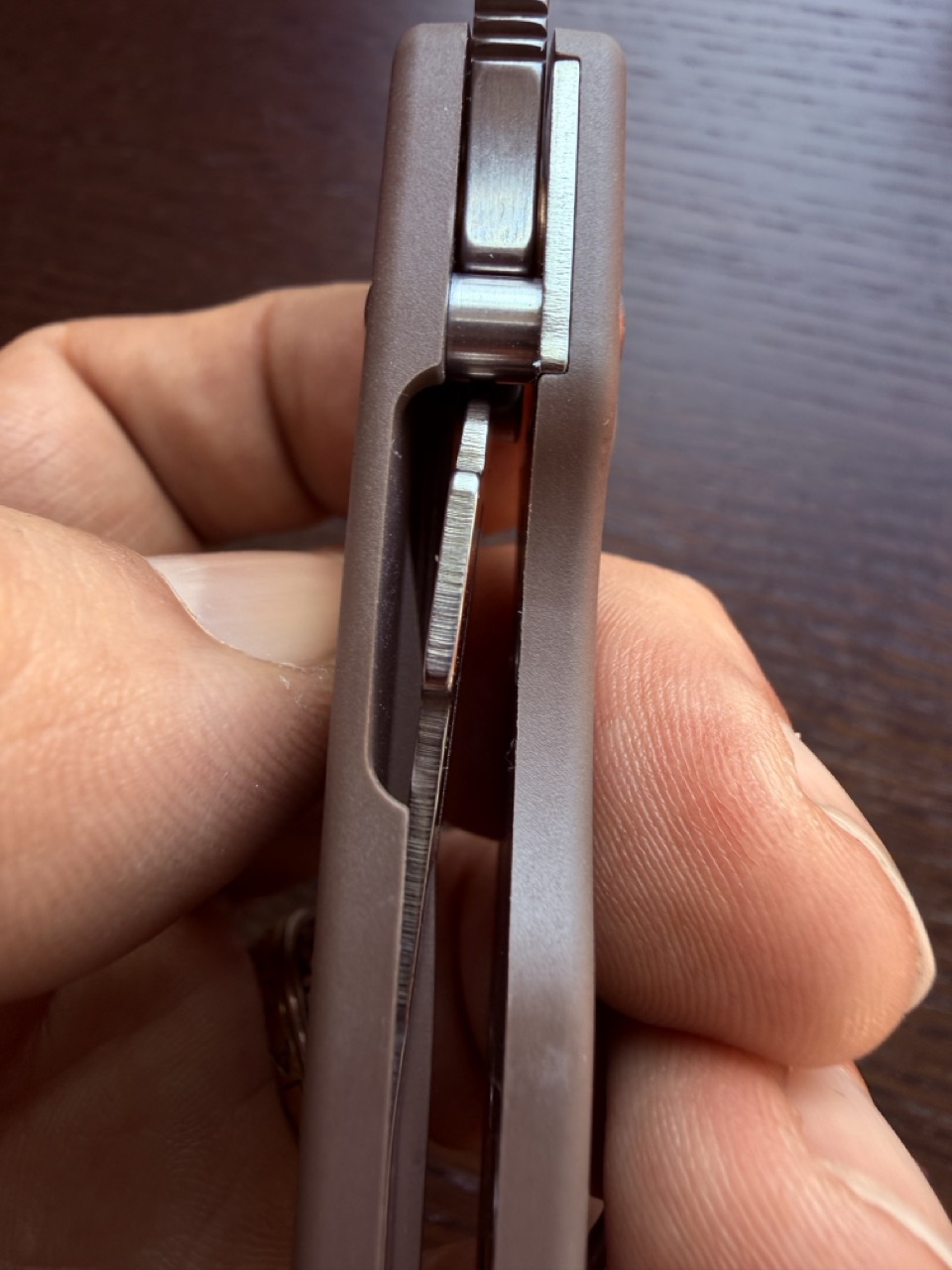
The scale’s edges can feel a touch sharp/aggressive out of the box, but I usually knock the initial bite down slightly with my thumbnail.
Not a big deal.

And yet, in hand, the PM2 LW still delivers that familiar Compression Lock experience: the sharp metallic click, the secure lockup, the controlled drop-shut feel, the confidence under pressure. The knife retains the mechanical identity of a “real” PM2 despite having shed nearly a third of its weight.

That balance is far harder to achieve than most users realize.

Too much liner removal, and the knife begins to feel hollow or vague.
Too much FRN flex, and the lock loses its aura of precision.
Too much steel reinforcement, and the entire Lightweight philosophy collapses under its own contradiction.

Spyderco somehow threaded the needle.
In hand, the result is fascinating because the PM2 LW does not feel cheap, nor stripped-down. It feels optimized — almost industrially purified. As though the designers kept asking themselves a brutal question:
“How little knife can we leave… before it stops feeling like a PM2?”
And the answer, apparently, was 76 grams.

So who, exactly, is this new Spyderco Paramilitary 2 Lightweight really made for?
Not the collector seeking desk-jewel materials.
Not the enthusiast who wants maximal heft and polished mechanical theater.
This PM2 is for people who actually carry a knife every day and do not want to feel it in their pocket. Like a ghost… a spirit.
For the light traveler, moving through the world in technical fabrics and ultralight luggage — absolutely yes. The Spyderco Paramilitary 2 Lightweight is exactly on point.
For the architect, photographer, paramedic, cyclist, climber, sailor, or city commuter who notices every unnecessary gram.
For those in the field where every gram really matters — soldiers, paratroopers, operators, and anyone carrying their world on their person — the Spyderco Paramilitary 2 Lightweight makes immediate sense.
For the those who slips a knife into athletic shorts and forgets it exists until the moment it is needed.
And when needed, the action remains fluid , smooth and effortless, while the absence of heft is almost disorienting at first. This is where the name Lightweight stops being a designation and becomes an identity — carried here to its purest, most unapologetic expression.
Yes—there is something almost pure in handling this Spyderco Paramilitary 2 Lightweight, something slightly disorienting in its lightness. Almost paradoxical.
Elegant, refined, stripped to essentials — and yet fully present in the hand.
It doesn’t try to impress through mass or presence anymore. Instead, it disappears, and that absence becomes the experience itself.
As the late Mark Hollis (*) once suggested, “Only silence is more beautiful than music…” and in a strange way, that idea translates surprisingly well here.
This almost weightless refinement might be the closest thing cutlery has to silence: a design so resolved it no longer insists on its own existence, only its function.

The genius of the Lightweight is psychological as much as physical. A heavy knife asks for commitment. A 76 grams PM2 becomes invisible — and invisibility is the highest achievement in EDC design.

Ironically, reducing the weight also sharpens the very essence of the PM2 itself. The famous blade suddenly feels more dominant, more alive. Several early owners have described the sensation as though “all the weight is in the blade,” giving the knife a startling immediacy in hand.

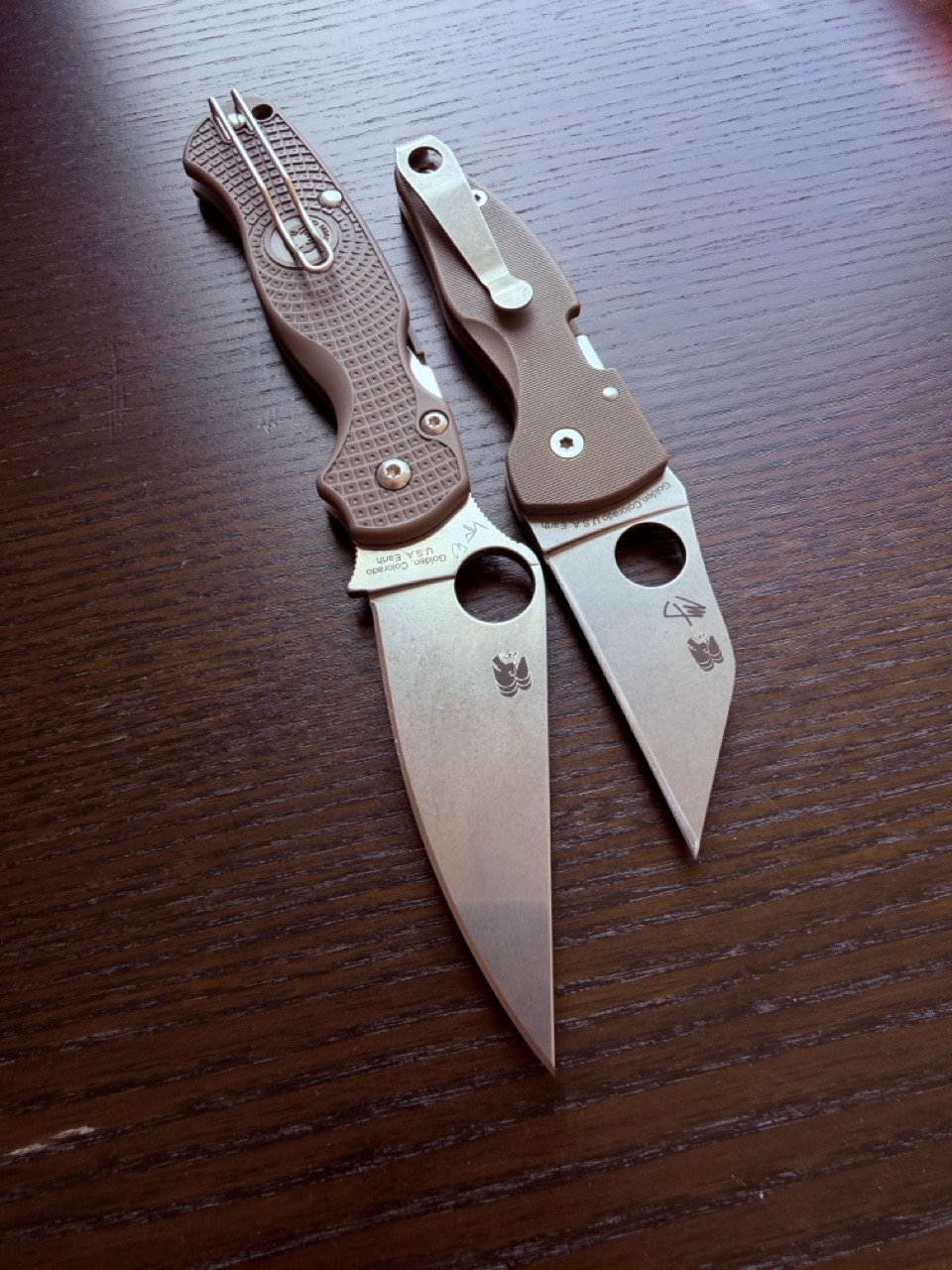
Pictured beside a 120-gram Spyderco Military 2, the contrast becomes almost absurd.
Of course, the Lightweight will not seduce everyone.

Some users will always prefer the denser, almost bank-vault solidity of G-10 scales and full steel liners. Others simply enjoy the tactile indulgence of heavier materials. (I once installed Flytanium bronze scales on a Spyderco Para 3. The result was magnificent — and roughly as subtle as carrying a ship anchor.)

And that is perfectly fair, because the classic G-10 Spyderco Paramilitary 2 remains one of the greatest production folders ever created.

But the Lightweight introduces something unexpectedly contemporary to the platform: efficiency without compromise.

This particular example happens to be a Sprint Run equipped with CPM 15V — a truly high-octane alloy. Yet the steel is almost secondary to the broader philosophy behind the knife. Much like the celebrated 15V Para 3 Lightweight before it, this PM2 LW pairs one of the most extreme high-performance steels available with an astonishingly light 76-gram platform.


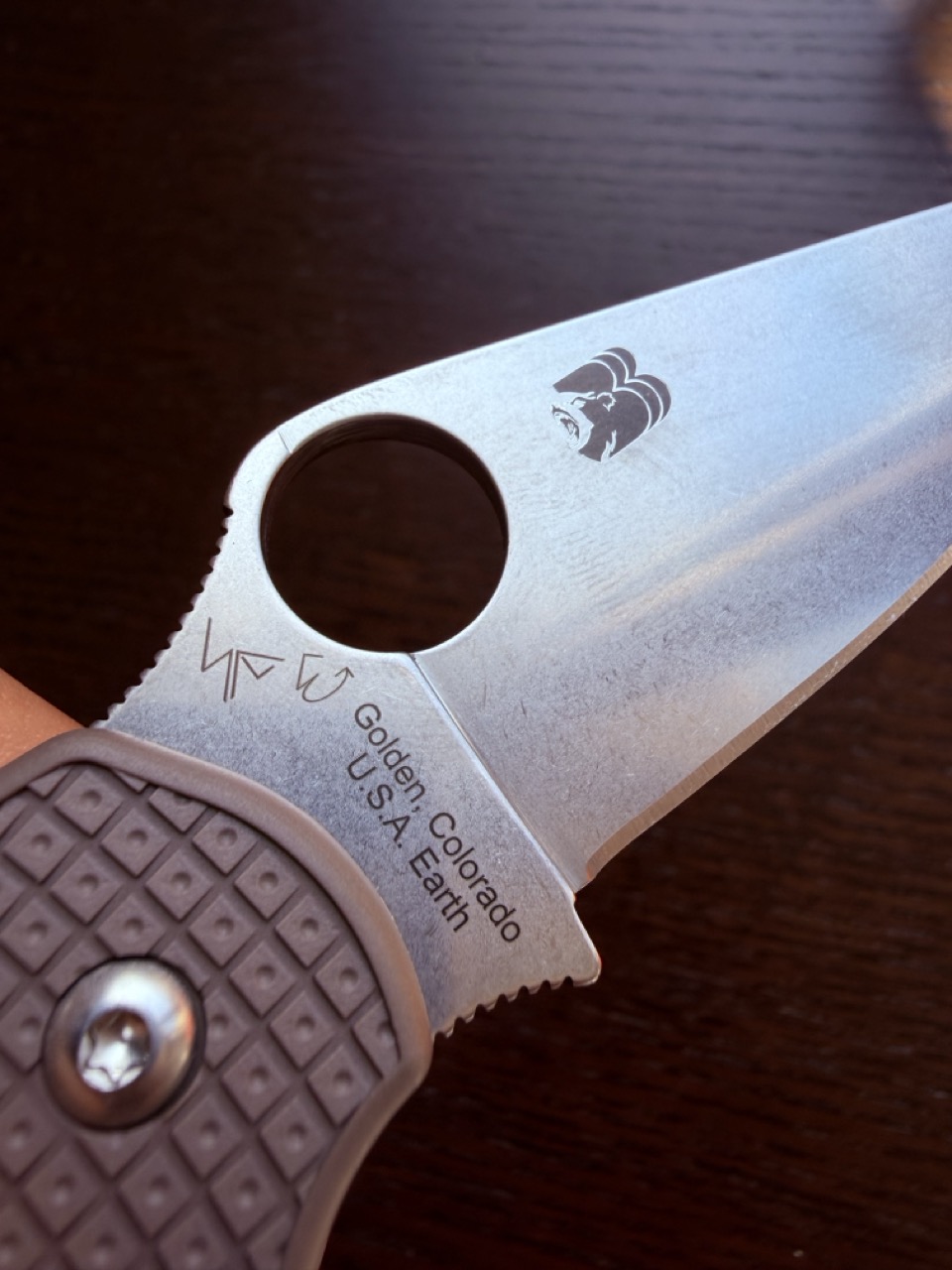
The CPM 15V Sprint Run is the enthusiast’s reading of the idea — a limited-production exercise in maximum performance taken to its logical edge. 15V itself borders on the extreme in the best possible way. With an unusually high vanadium content of nearly 15%, it was developed for exceptional wear resistance and outstanding edge retention. In Spyderco’s implementation, it is further elevated by Shawn Houston’s specialised heat treatment, identifiable by the discreet “Triple B” mark engraved on the blade.

The beautifully stonewashed blade arrives with an edge that is immediately convincing — thin, precise, and unmistakably sharp straight out of the box. In my experience, it may well be one of the finest factory edges Spyderco has ever delivered. Hair-popping performance is effortless, almost casual, and geometrically speaking, even the informal “bottle” or light push-cut tests feel almost trivial. Much better than on my Para 3.

Oh well, the exotic steel may attract the headlines.
(As a bit of a steel enthusiast, CTS-BD1N on the “vanilla” Spyderco Paramilitary 2 Lightweight doesn’t really excite me — it’s solid, reliable, easy to keep razor sharp, forgiving but uninspiring. I wouldn’t seek it out like I would CPM Cruwear steel, but I’d never pass on a great design just because of it.)

But the real story lies elsewhere: the revelation that one of the most iconic hard-use folders ever produced can suddenly feel almost effortless, friction less… pure.

Not diminished.
Distilled.
Purified.
And distillation brings spirit.
Spirit is light.
And this purity is no lie.

Part II is here:
https://nemoknivesreview.com/2026/06/01/para-military-2-lightweight-brown-cpm-15v-sprint-run-part-ii-a-major-improvement-spotted-by-robin/

Disclaimer: This knife has been provided through Spyderco’s Ambassador Program, upon my own request. Thank you to the Spyderpeople for letting me review it. 

(*) For a musician and singer, Mark Hollis is unusually interested in silence, in what could be described as the gaps and intervals between notes. To listen to Spirt of Eden (1988) and Laughing Stock(1991), the last two albums by Talk Talk, the band of which he was singer and principal songwriter for more than a decade, is to encounter a music of fragments and dissolution, his murmured vocals often simply fading away as a song does not so much end as expire.