Nope, it is not.
At first glance, the Jess Horn in CPM CruWear looks like a knife from another era. And that is a huge part of its charm. There is something wonderfully timeless about this folder—and I’m totally in love with it.
Oh, and I’ll take carbon fiber over just about anything, any day! These scales are absolutely gorgeous. Seriously gorgeous. The weave, the depth, the way they catch the light… I just love that sense of sheer quality.
Ah, those elegant lines, the slender blade, the big flat axis screw, the understated proportions—it immediately brings to mind the kind of traditional pocket knife that could have been carried decades ago. That is what makes the Jess Horn feel so timeless: its design relies on proportion, simplicity, and function rather than fashion. Nothing is exaggerated, nothing is trying too hard to look modern. There is nothing aggressive or overtly tactical about it. No futuristic geometry, no exaggerated blade shape, no visual statement about the technology hidden inside. Just a beautifully proportioned folder whose design could have existed decades ago and would still look right decades from now. Its quiet simplicity is precisely what gives it character.
But look closer, and the story changes completely.
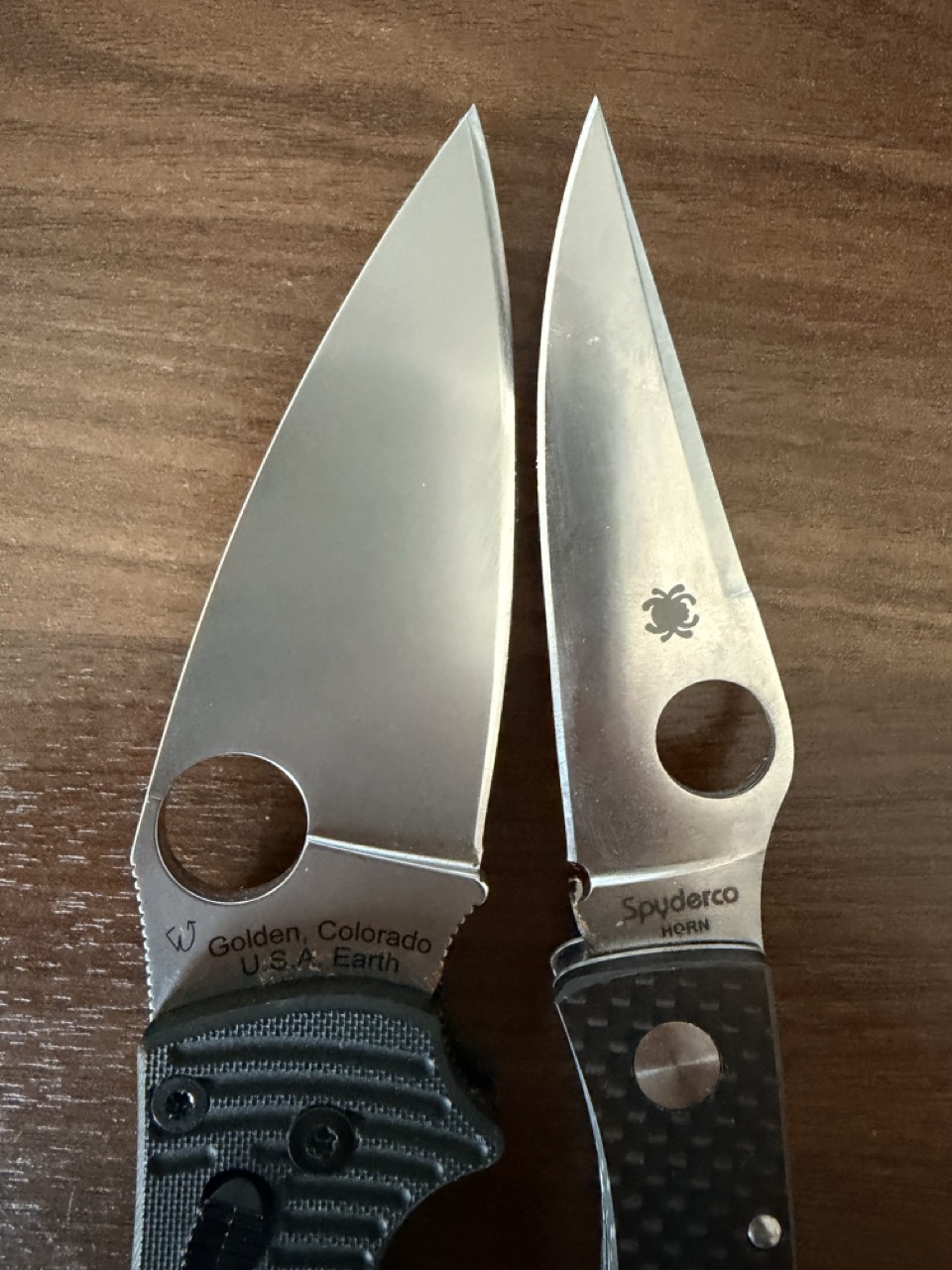
Just look at the edge length—it’s basically the same as a Manix 2. You’re getting a serious amount of cutting power in such a slim package. And the lock is rock solid, with absolutely zero blade play. Honestly… wow.
The secret ingredients? A healthy dose of CQI, a handful of clever choices !
Because putting a steel like CPM CruWear into such a thin, traditionally styled blade creates something that is, in many ways, remarkably modern. The real magic of this knife is the combination of old-school geometry and contemporary metallurgy.
I love CPM CruWear. It’s an exceptionally well-balanced tool steel, offering that peculiar combination of toughness, wear resistance and edge stability that makes it particularly well suited to the Jess Horn thin cutting blade that is meant to be also used. And for an everyday-carry knife, that balance is even more valuable. You get excellent edge retention without moving into the extreme territory of steels that are difficult to sharpen or prone to chipping, and enough toughness to trust a thin pointy blade in real-world use. More importantly, CruWear is really pleasant to maintain. A leather strop, a ceramic rod, a piece of jade… that’s often all it takes to bring the edge straight back to razor sharpness. For an EDC knife that gets carried, used, touched up and used again, that ease of maintenance is a huge advantage. A knife should not only perform when it is new—it should remain a pleasure to use and maintain week after week, and CruWear makes that sooooo easy.
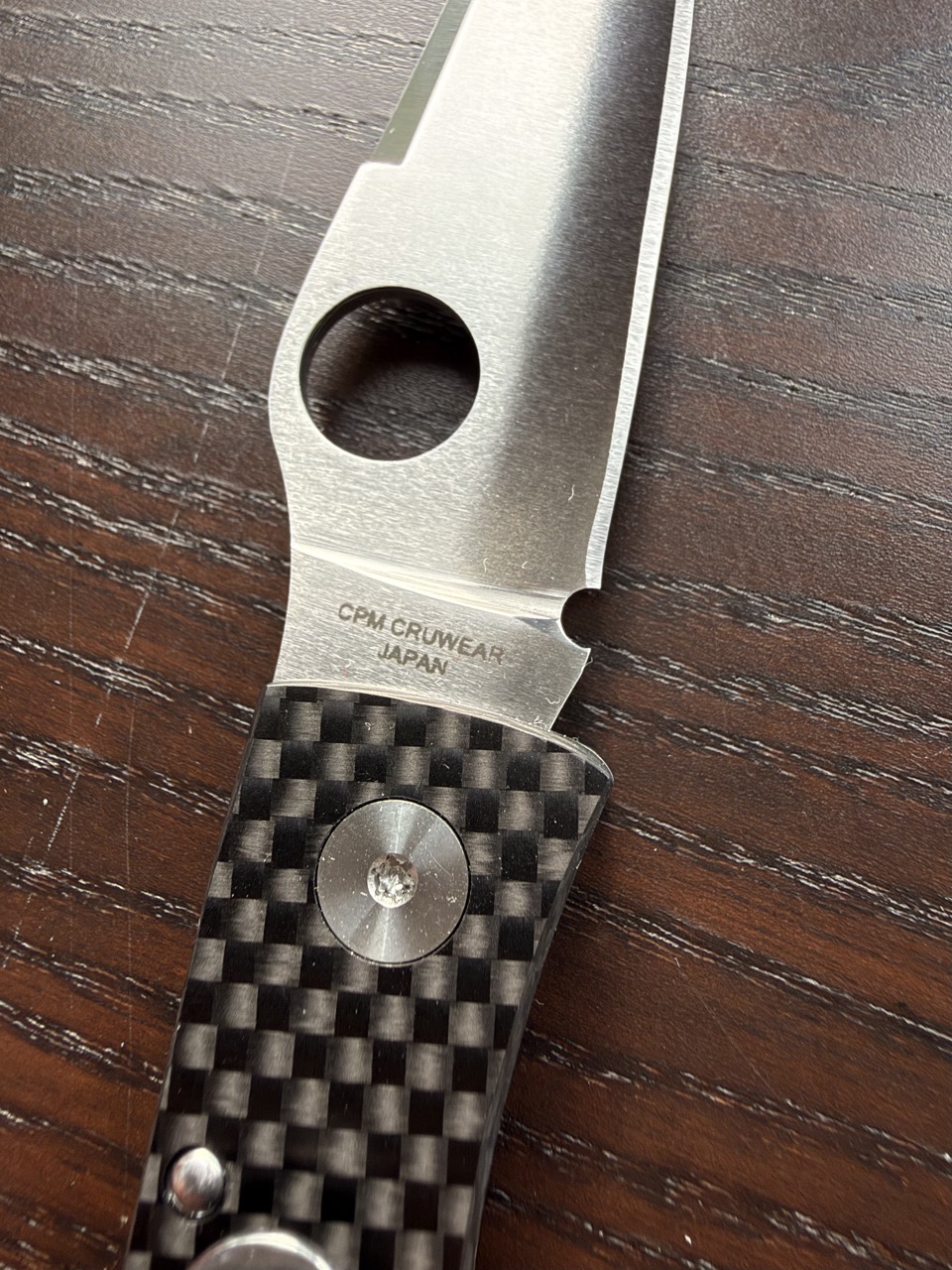
CPM Cru-Wear has a history that goes back long before our current obsession with “super-steels.” Its roots lie in the Vasco Die family of tool steels developed by Vasco Metals in the 1960s, originally for hot-forging dies rather than knives. Vasco later developed grades such as Vasco Tuf and Vasco Wear, the latter designed to combine wear resistance with useful toughness.
Crucible eventually developed its own version, Cru(cible)-Wear, introducing it in 1994 and later producing it through the Crucible Particle Metallurgy (CPM) process. The result is a steel containing around 1.1% carbon, 7.5% chromium, 1.6% molybdenum, 1% tungsten and 2.4% vanadium, with roughly 10% carbide volume. But the numbers only tell part of the story. What really matters is the fine and uniform distribution of those carbides (thanks to the CPM process). Compared with the tougher CPM 3V, which has a lower carbide volume (around 5%) and prioritizes toughness, Cru-Wear gives up some impact resistance in exchange for better wear resistance and edge retention. Compared with CPM 15V, however, it contains far fewer carbides and is therefore much less demanding when it comes to sharpening and generally less prone to chipping.
So, CPM Cru-Wear doesn’t try to win the edge-retention contest at any cost. Instead, it gives the user that praise very stable, durable edge that can take a very very fine apex, withstand hard cutting without constantly threatening to chip, and still be sharpened without turning the job into an rocket engineering project. What else ?
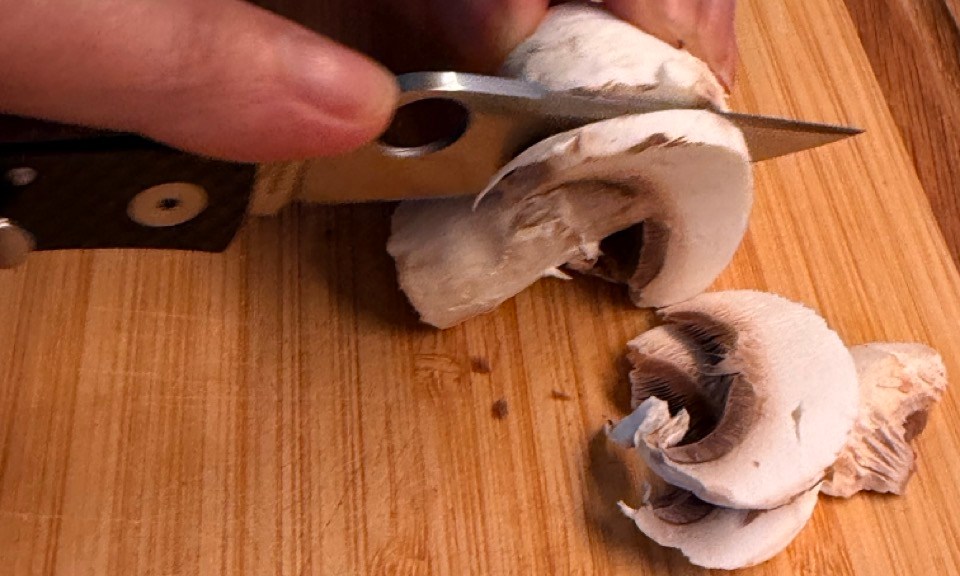
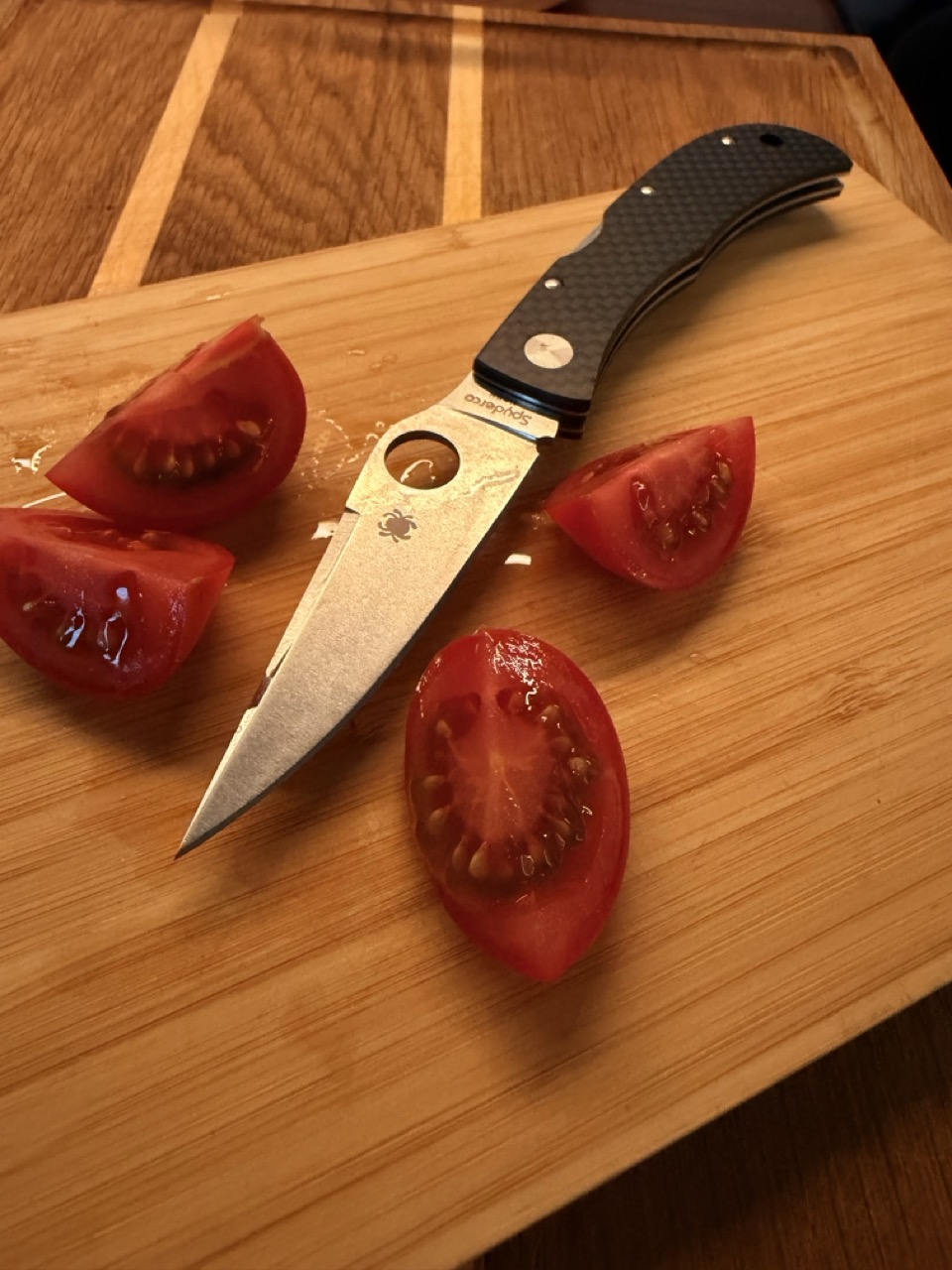
I’ve been using Horny in the kitchen, much like Cliff did with his ZDP-189 version some twenty years ago. I got it wet, rinsed it off, didn’t even oil it—and while cutting butter, I was practically greasing the blade anyway. A quick wipe with a paper towel and it was good to go.
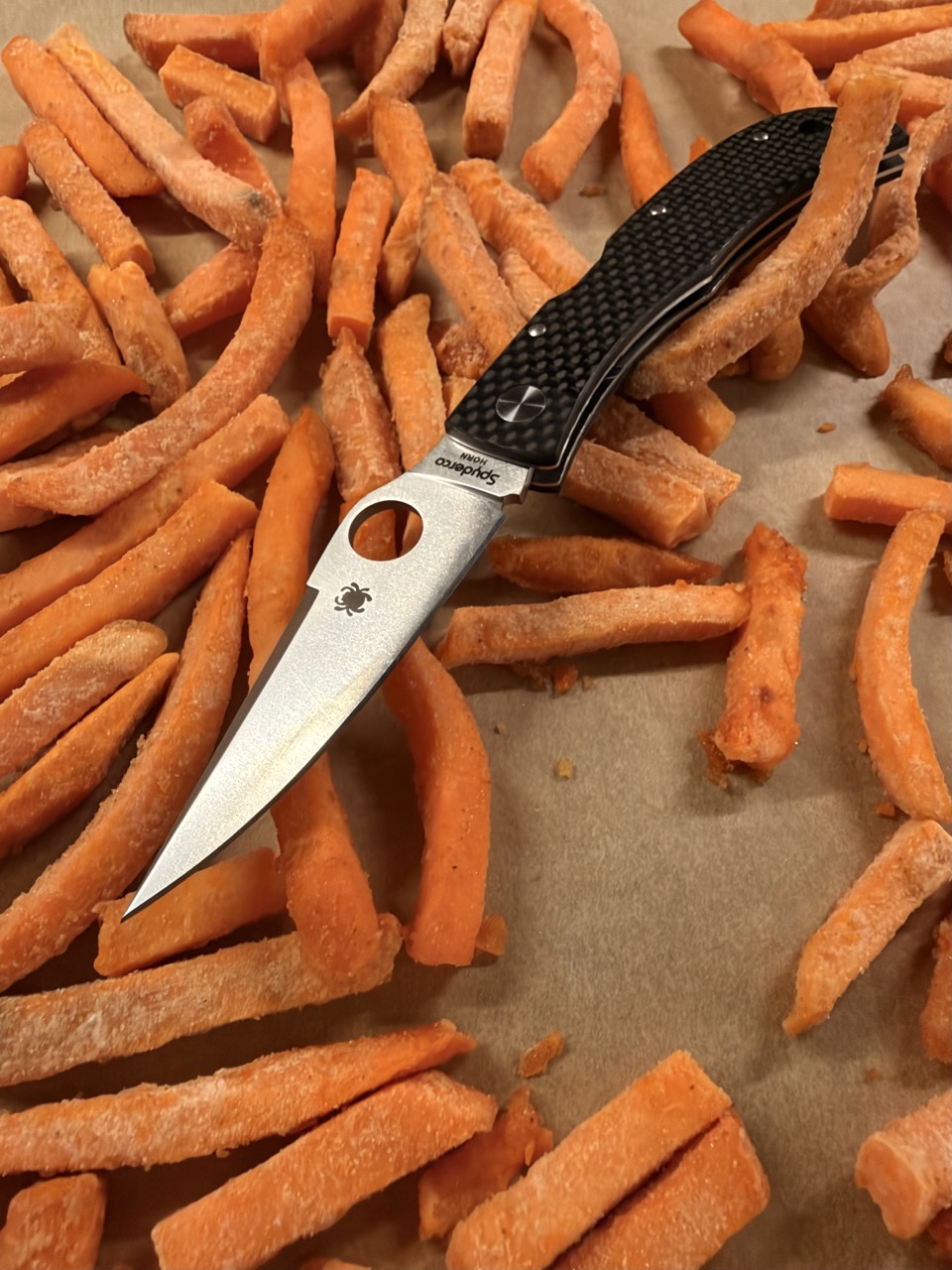
And what a wonderful little kitchen knife, my friends! What a chef’s lightsaber! Its needle-like tip opens packages with barely a whisper, while the thin blade has more than enough authority to deal with cartons, plastic and all the usual packaging before it goes into the trash. And when it comes to actual food preparation, its precision is simply delightful. The thin, keen edge slips through vegetables, meat, butter and all sorts of ingredients with an almost surgical feel.
This is one of those knives that makes you want to keep finding things to cut—not because you have to, but because using it is just so damn satisfying.
The handle is somewhat square in cross-section, and the exposed liners are a little sharp. I’ll probably give them a light pass with a diamond abrasive, but honestly, it doesn’t bother me much. If anything, the angular profile gives me a useful indexing reference: unlike a perfectly round handle such as an Opinel, I always know how the knife is oriented in my hand and where the edge is pointing. For precise cutting, that’s a real advantage.
The handle is also fully enclosed, with that steel backspacer requiring a quick inspection after rinsing the knife under hot water. But none of that got in the way of its mission in the kitchen. It simply did the job, every single time.
And that kind of reliability is always welcome.
Ah, it is not stainless—the 7.5% chromium content is nowhere near enough for that—so it deserves a little care around moisture and corrosive environments. But for someone who actually uses a knife rather than simply admiring its steel designation, CPM Cru-Wear makes a tremendous amount of sense. It is one of those steels where the whole is greater than the individual numbers: excellent edge stability, very good wear resistance, high toughness, and reasonable sharpening effort, all in the same blade. And this is what I like about Cru-Wear ! It isn’t about having the most extreme steel on paper. It is about having a steel that makes an extremely good and pleasant knife in the real world.
And pleasure in holding, using, and cutting with force and precision is mandatory in my own appreciation of a knife. That matters just as much as the metallurgy itself. A knife can have outstanding specifications, but if it doesn’t feel right in the hand, if the edge doesn’t invite you to cut and pierce, or if using it simply isn’t enjoyable, then something is really missing.
Long story short: I don’t judge a knife only by what its steel can do—I judge it by how much I enjoy deploying it, holding it, and actually using it.
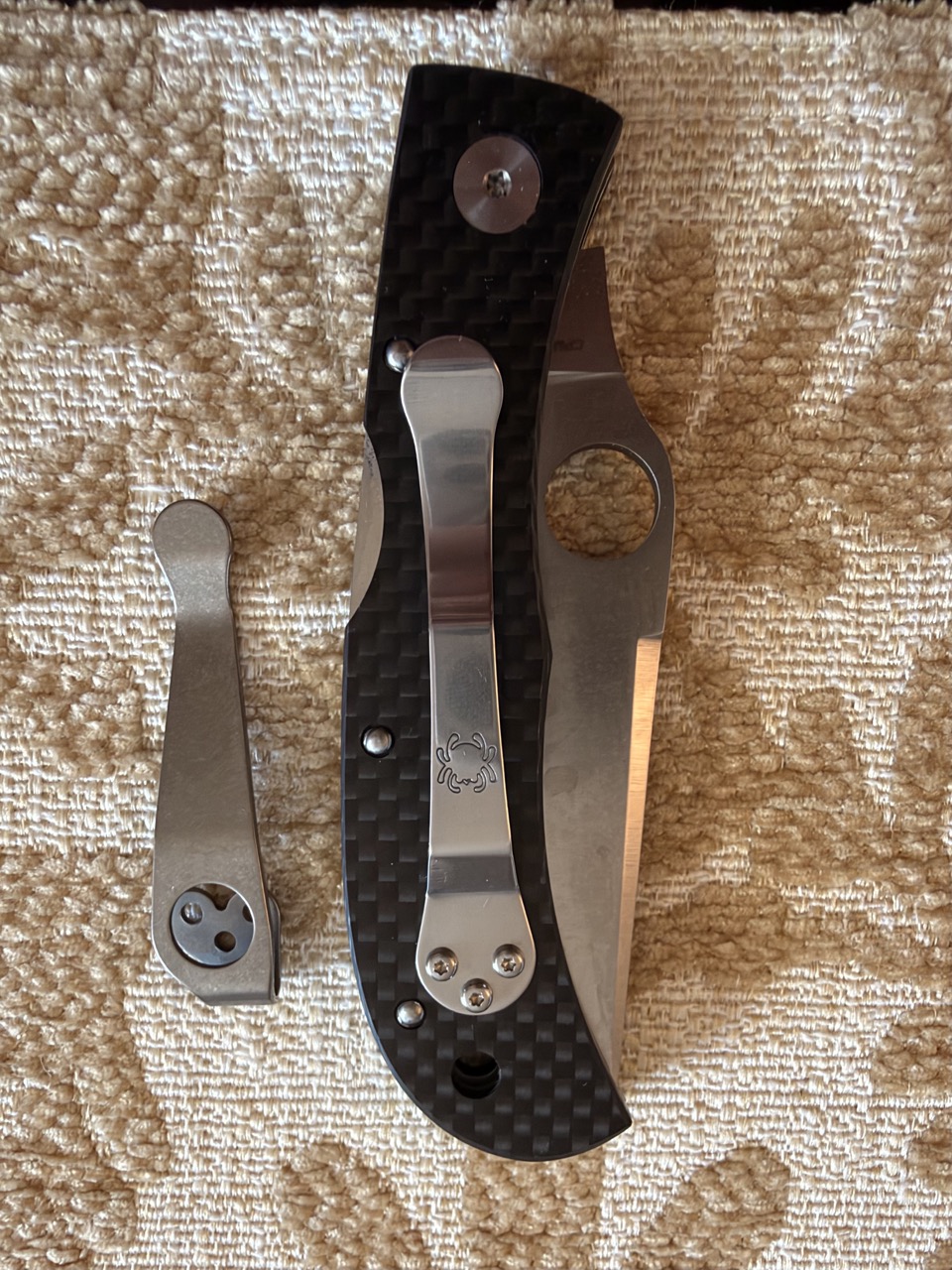
And I’m getting used to the clip position too. In the end, maybe it’s a good thing for a knife to have a bit of character in the way it carries. I tried fitting a deep-carry clip, but once installed, the screws couldn’t get enough purchase—the clip was just slightly too thick. No big deal. I’m even considering removing the clip altogether and carrying the knife in a dedicated pocket of my sling bag. To be honest, I rather like the idea. This Jess Horn is starting to feel less like something I simply carry and more like a knife I’ve given its own little place in my everyday life.
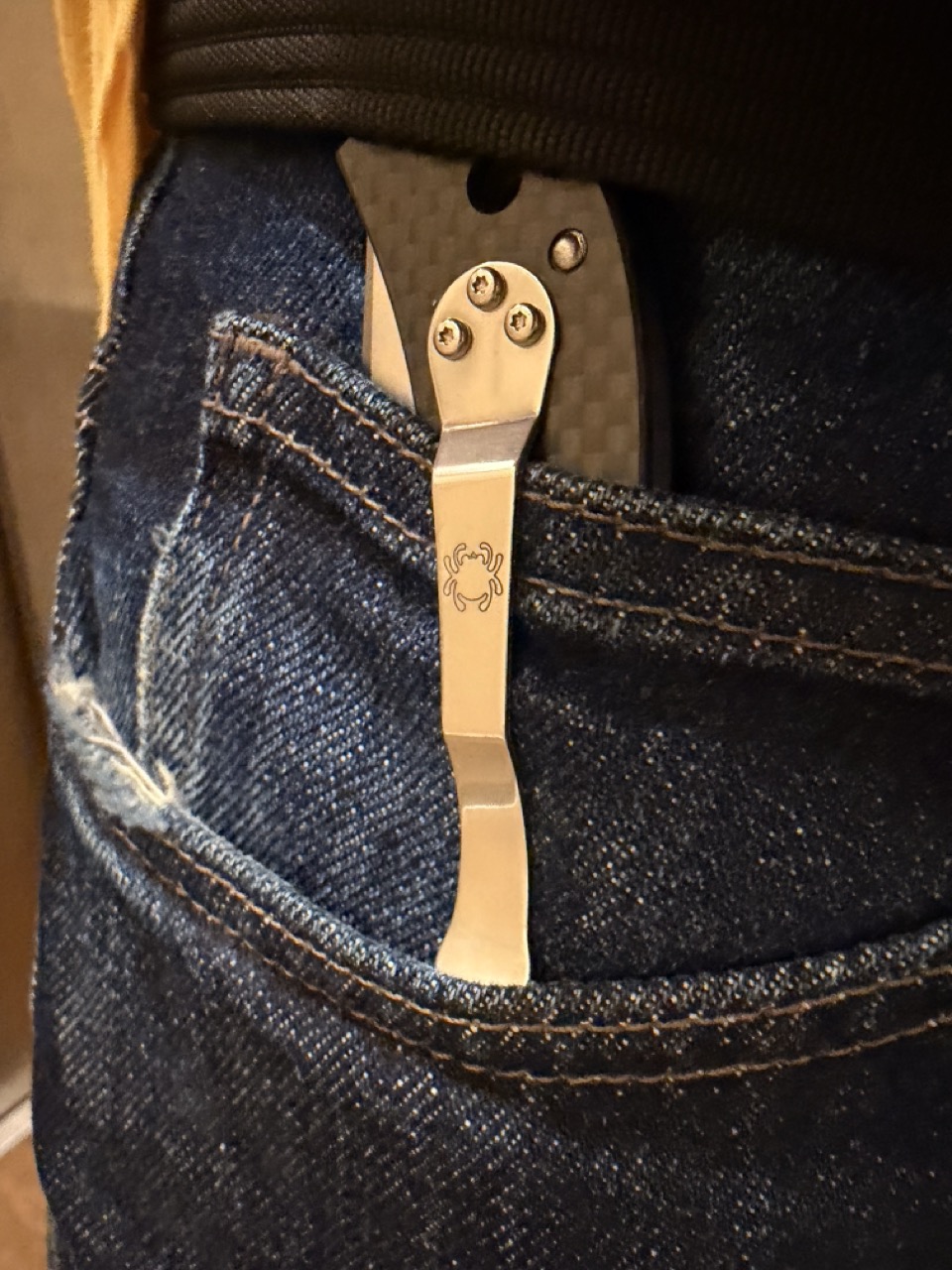
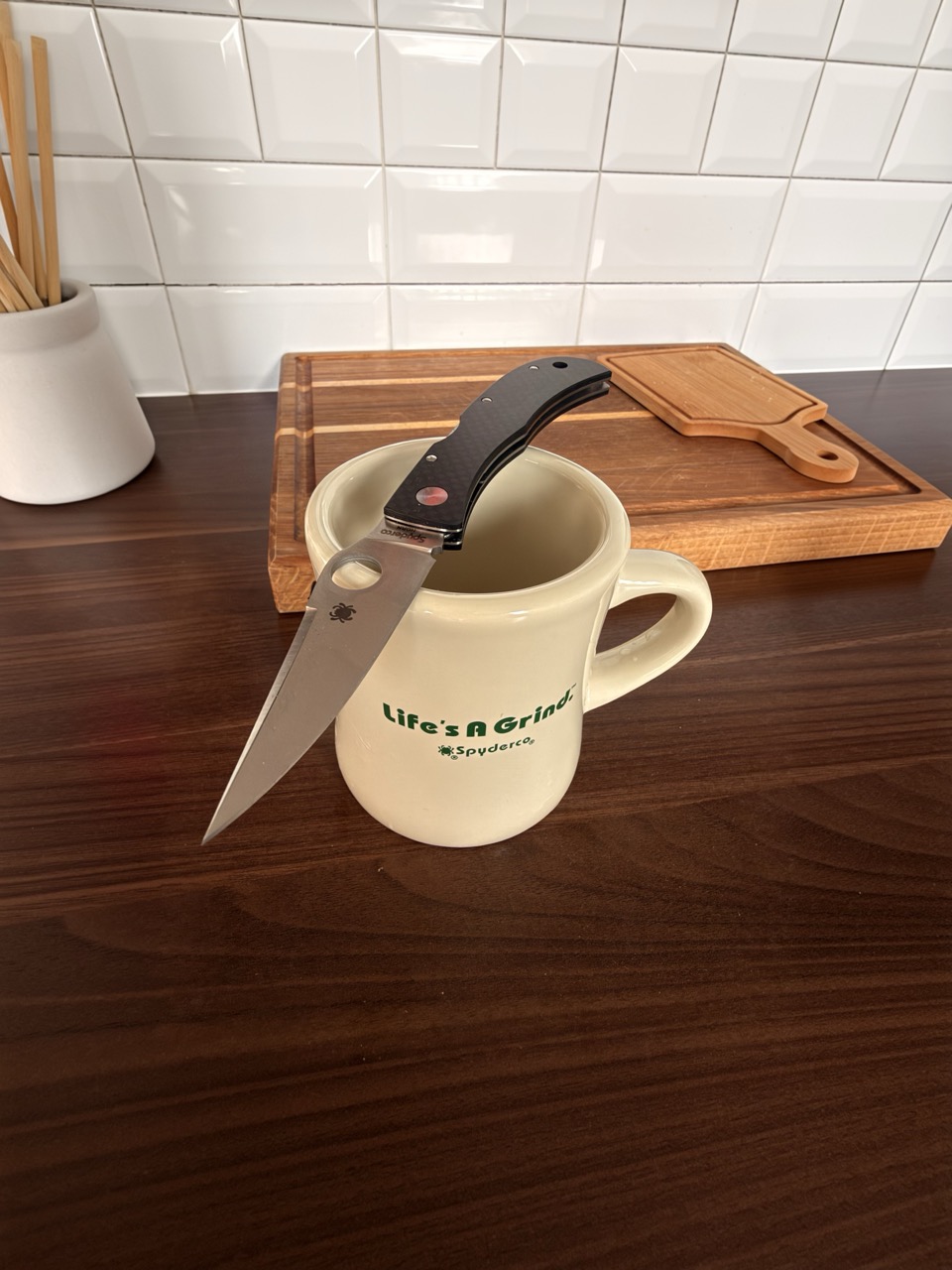
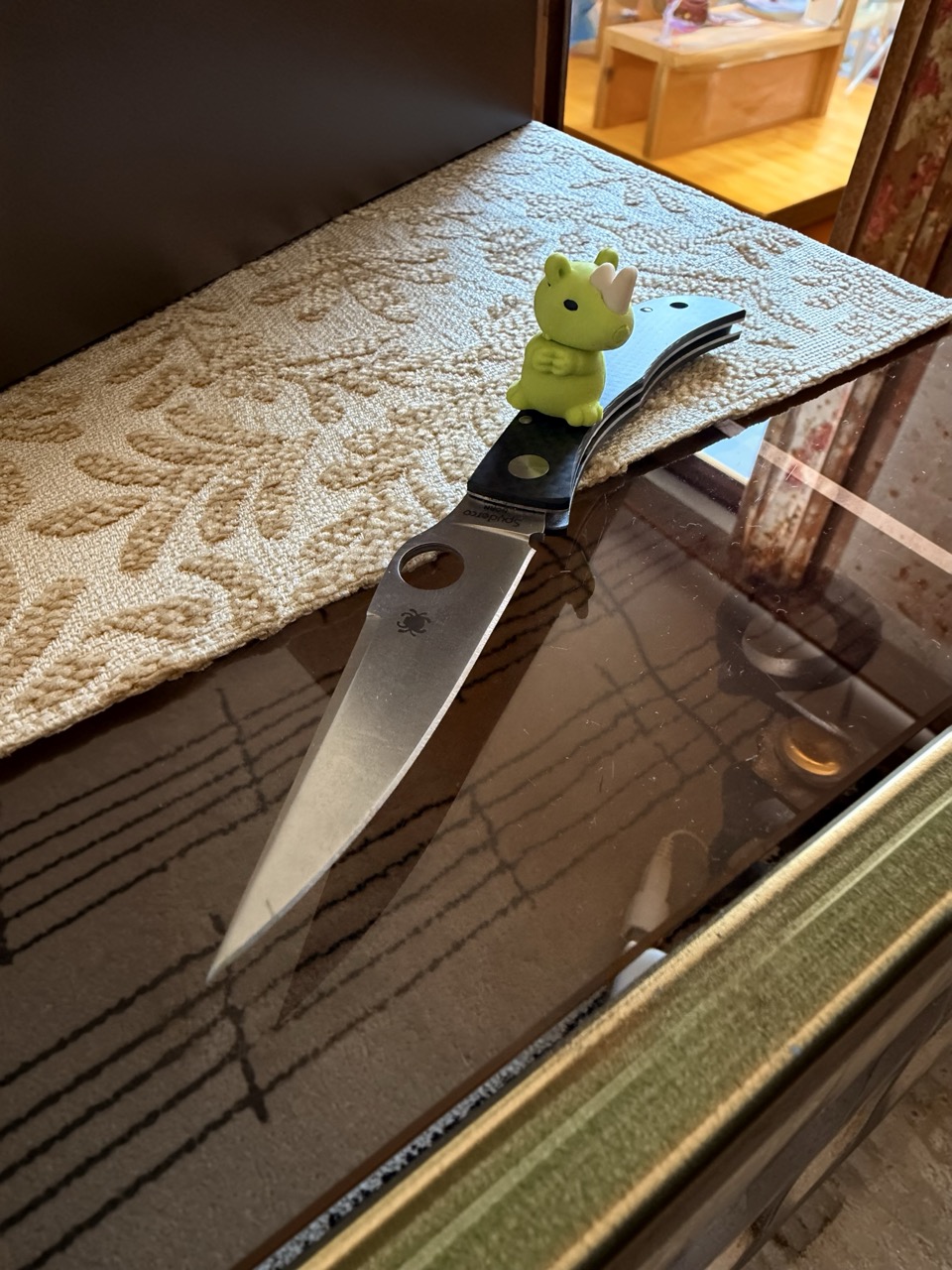
One rather nice thing about the clip is that I can actually rest the knife on it when my worktop is wet. The clip is flat, fairly large, and positioned right in the middle of the handle, so it acts almost like a little stand and keeps the handle and blade away from the wet surface.
You always discover little tricks like this when you learn to work with your tools rather than against them.
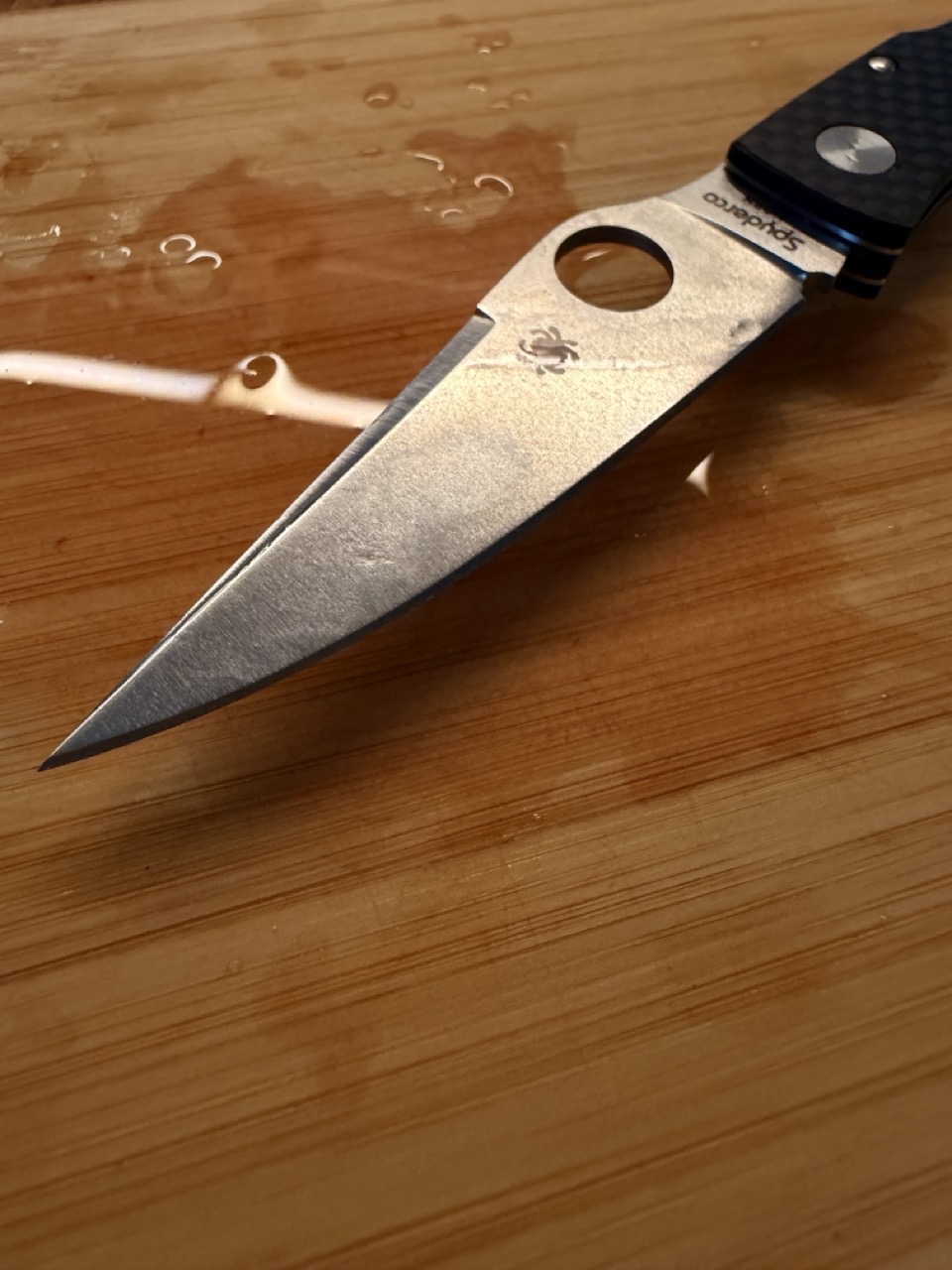
“USE ME! FOR GOD’S SAKE!” screamed the deployed Jess Horn.
And that thin blade is just… asking to be used ! Its geometry gives you effortless cutting performance, but it also means that the steel has to be able to support that geometry. A brittle or overly wear-resistant steel would make the concept much less appealing. CruWear brings a different balance: it is tough enough to tolerate real-world use while still offering excellent edge retention.
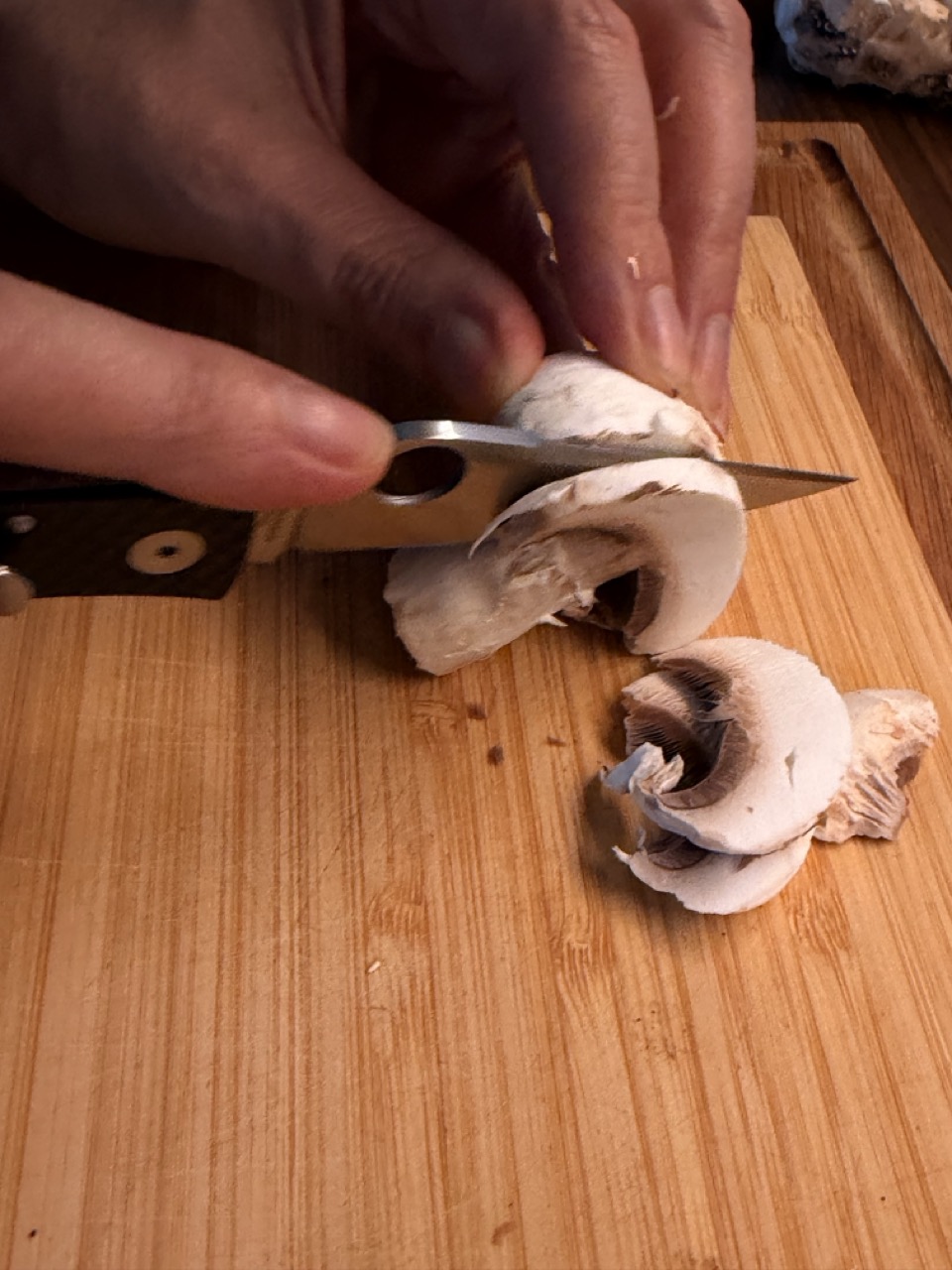
And when the edge eventually needs attention, CruWear is refreshingly easy to bring back.
It takes an extremely sharp edge without becoming a nightmare to sharpen. With the right stones and a good technique, bringing the Jess Horn back to a genuinely razor-sharp condition is almost part of the pleasure of owning it.
That is where the apparent contradiction becomes particularly interesting.
The blade doesn’t need to be thick and overbuilt. It doesn’t need a spectacular tactical design. It doesn’t need to advertise its strength.
Its technology is hidden in the steel.
That is perhaps what makes the Jess Horn so compelling. Its modernity is almost invisible. You don’t experience it by looking at the knife. You experience it when you really cut into something, when you feel how effortlessly that thin blade passes through any material. Even mushrooms !:D
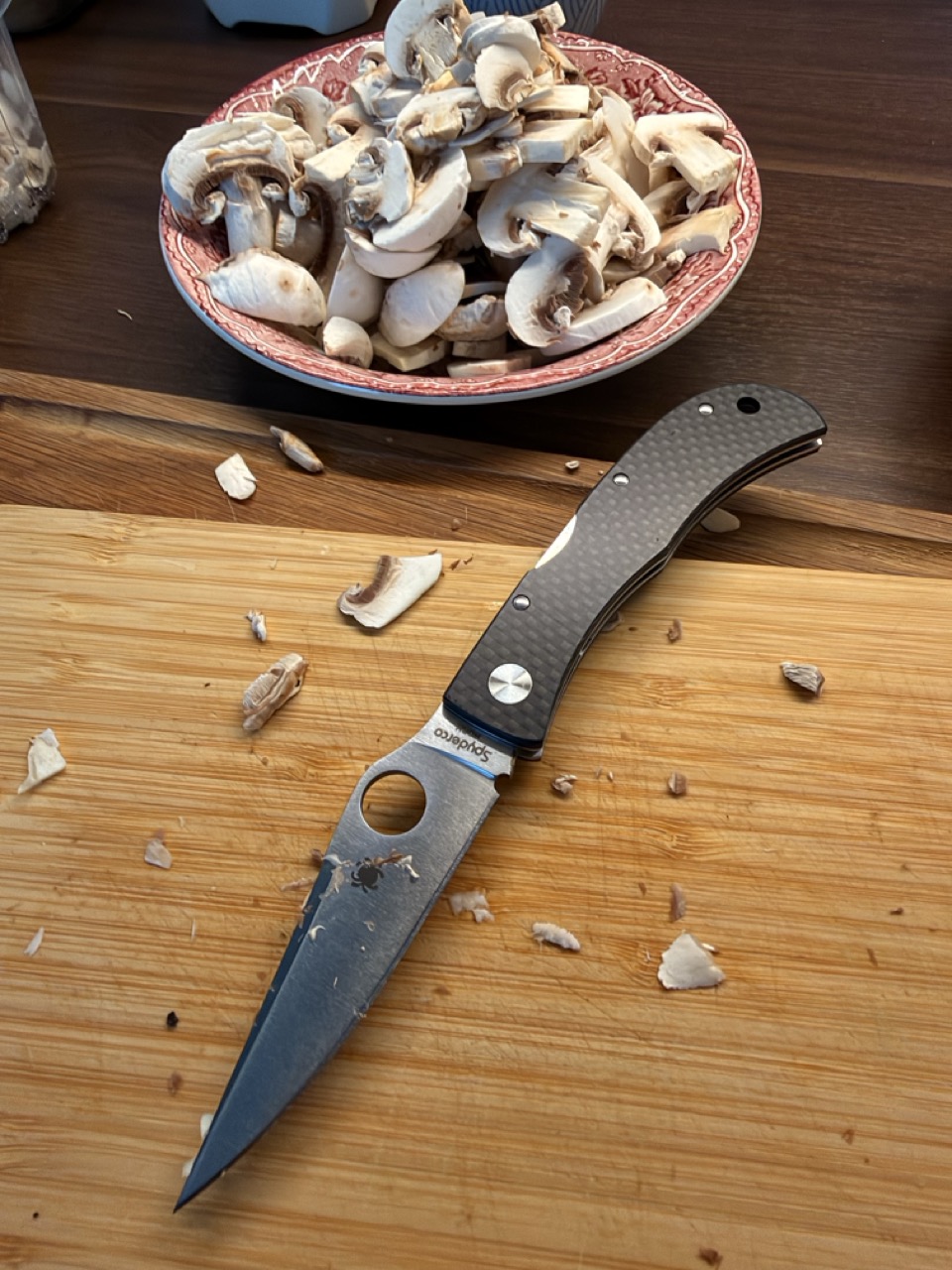
In a sense, the Jess Horn is a perfect example of how modern knife technology has evolved in the right direction.
We tend to think, myself included, of technological progress as a race toward ever-greater complexity: more intriguing parts, more micro-mechanisms, more unwanted features, more white-coat engineering. But real progress sometimes lies in the exact opposite direction—doing more with less, and making something simpler, more reliable, and genuinely useful. Take another Horn, Des Horn “450#” for example (link here)
Another example is the evolution of knife locks. Instead of adding more parts, springs, buttons, and mechanisms, clever engineering can achieve exceptional strength and reliability with remarkably few, precisely tuned components. Less complexity, more intelligent design, means fewer things to go wrong—and, ultimately, a knife that simply works when you need it.
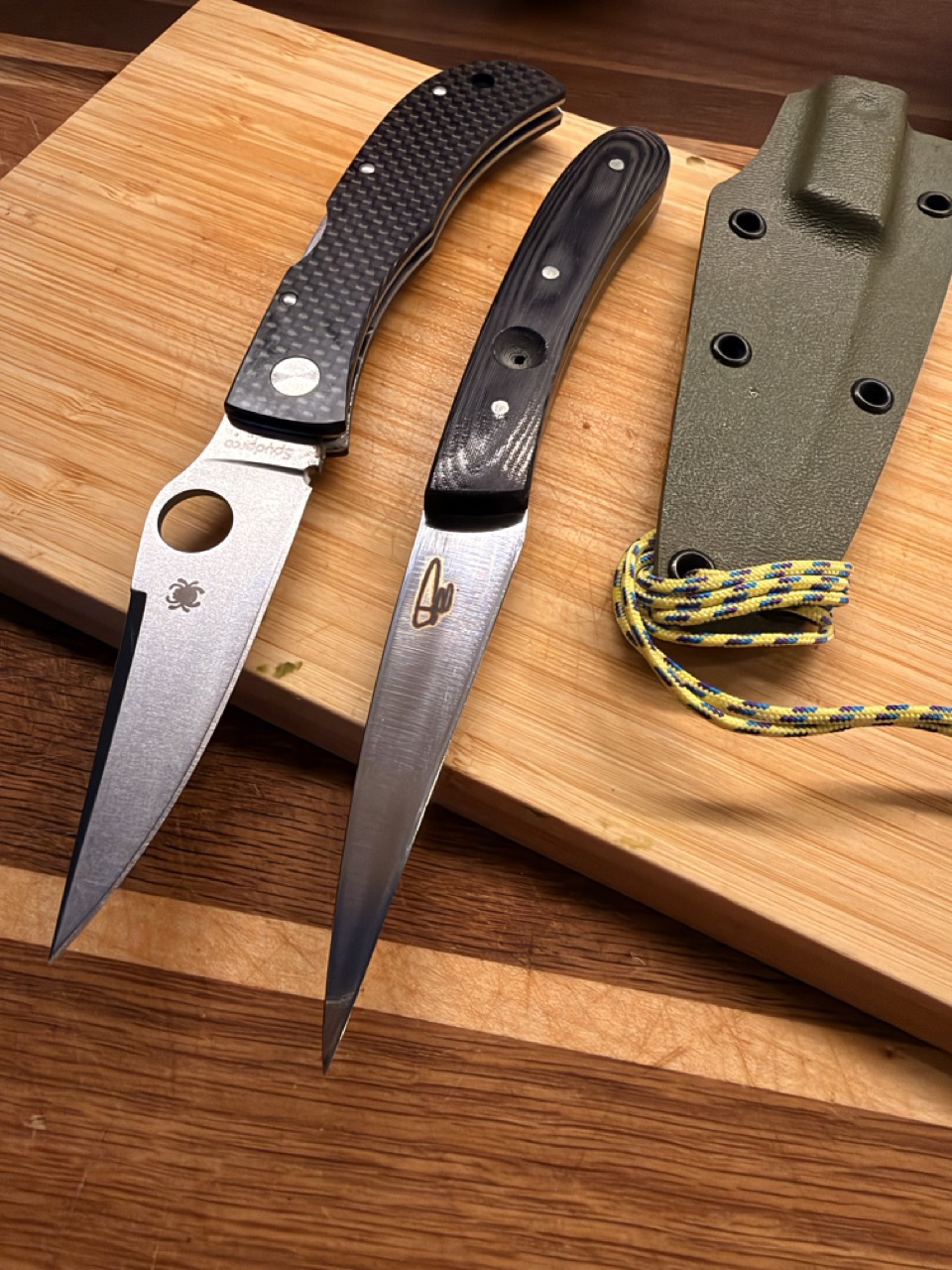
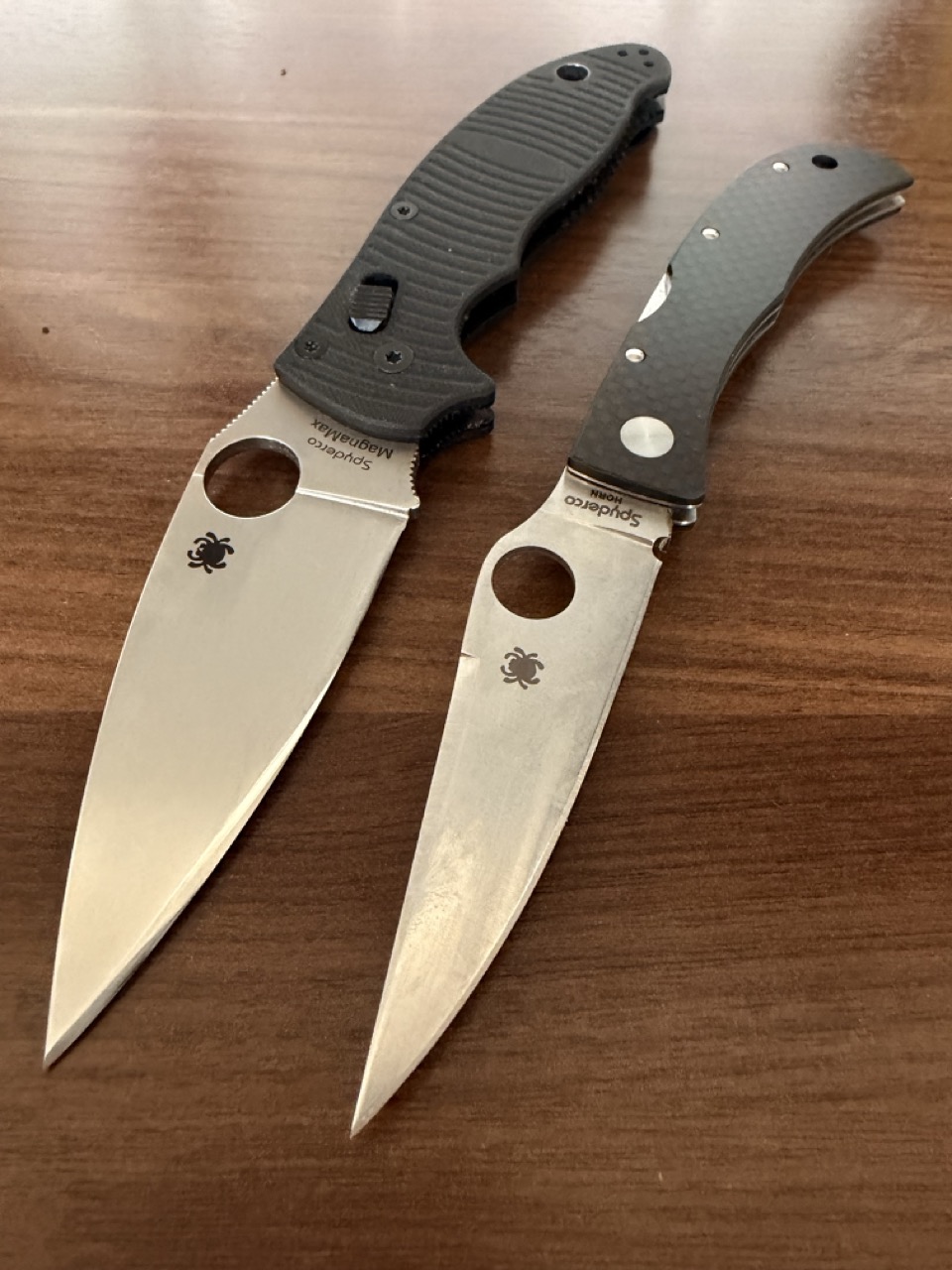
That thin, elegant blade (pictured here next to Patrick Bonetta Kitchen Warrior) can remain thin and elegant because modern metallurgy gives it that extra push in the right direction, providing a combination of properties that simply wasn’t available a few decades ago.
So yes, the Exclusive Jess Horn looks like an old-school knife. But underneath that vintage personality is a very modern piece of engineering.
Horny is not an old-fashioned knife made with modern steel. It is a modern knife deliberately disguised as an old-fashioned one.


One thought on “The Exclusive Jess Horn is NOT Old Fashioned.”