Tag Archives: CPM-15V

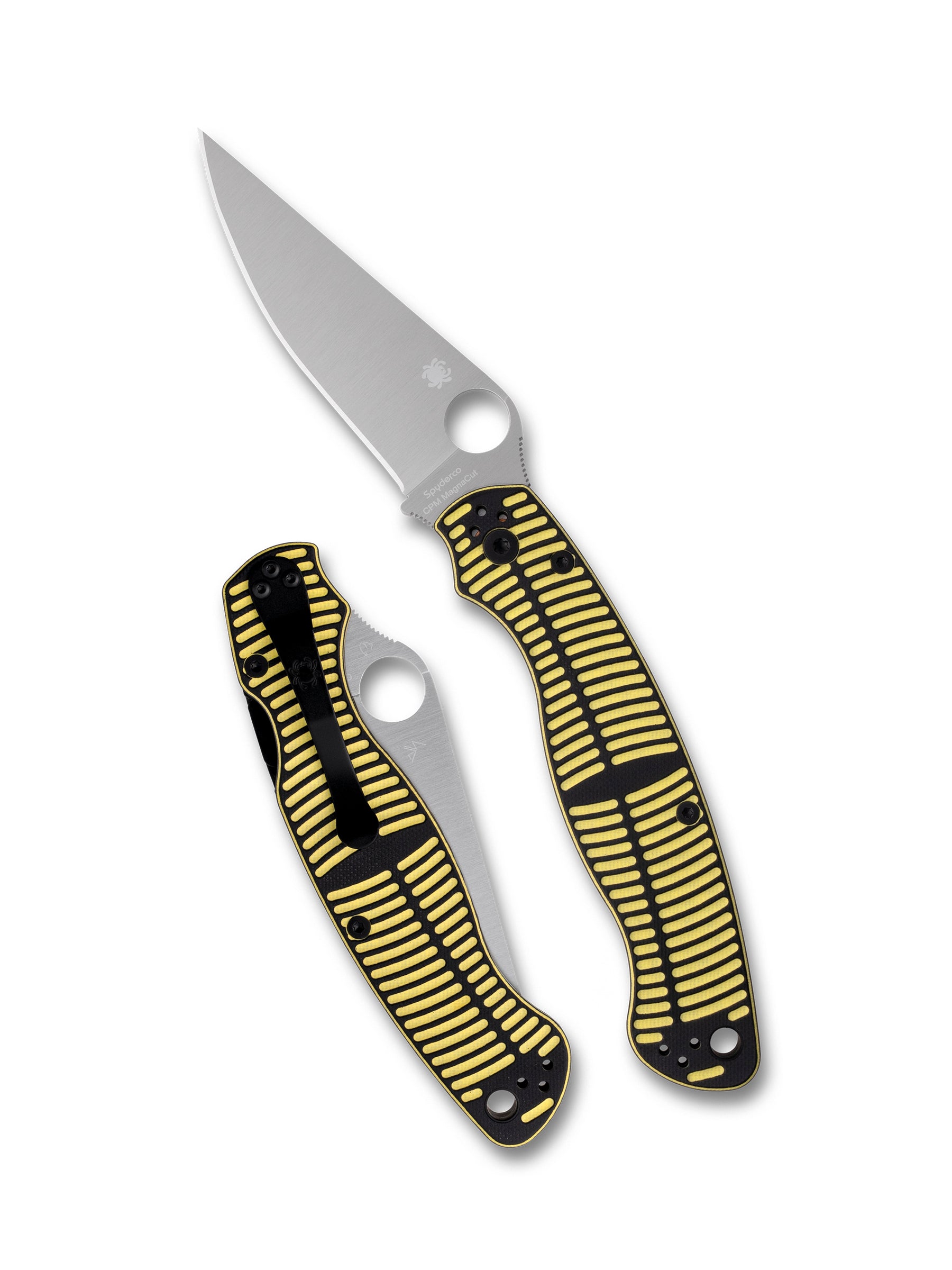
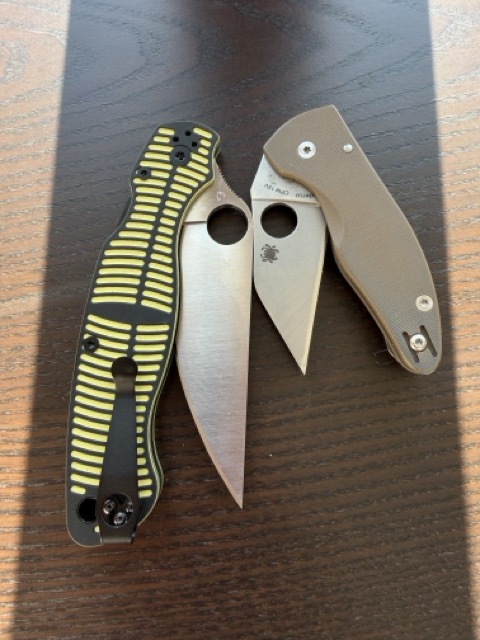
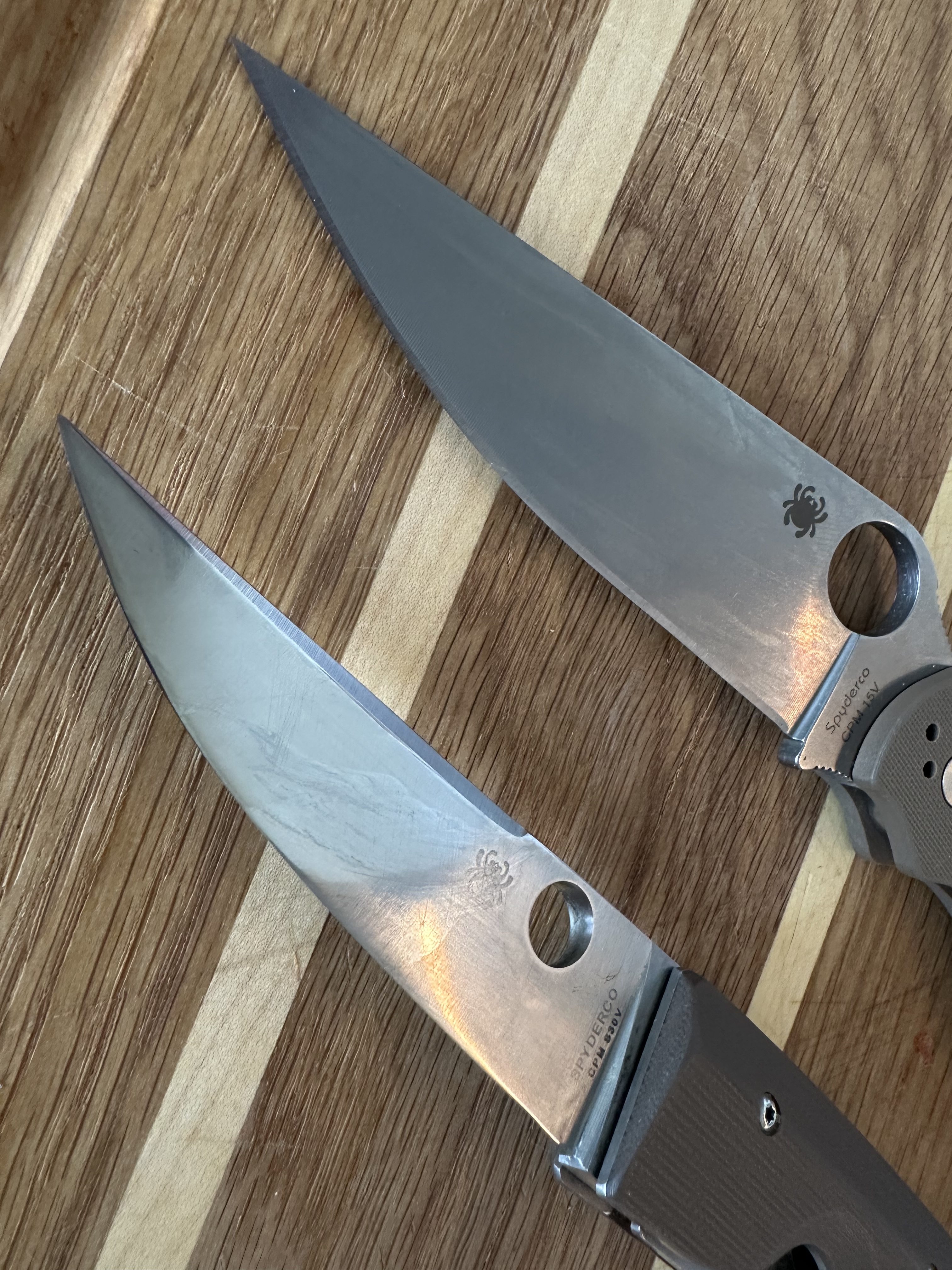
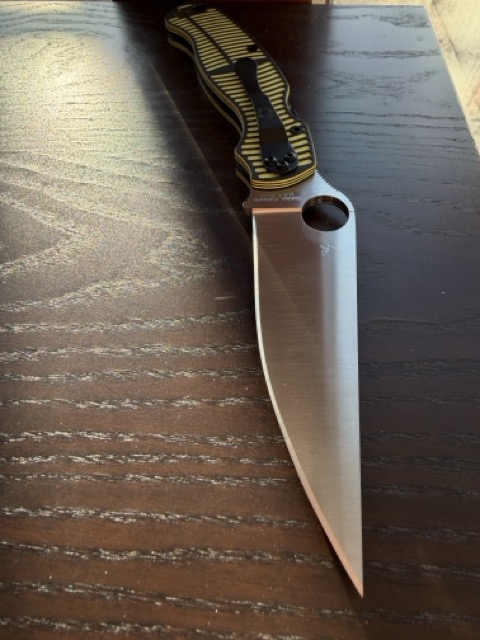
The Gambit of the Military 2 CPM 15V

I sold my Military 2 in CPM-15V back in August. Yes I did !
Why? Because, for me, it was an overkill design. I could never quite get that 15V edge where I wanted it with my equipment, and—more importantly—I was almost afraid to use it hard. Such a Sprint Run deserved to be kept pristine for later…
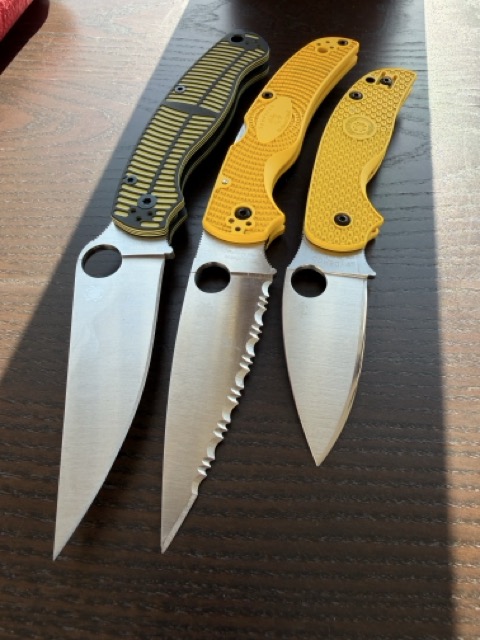
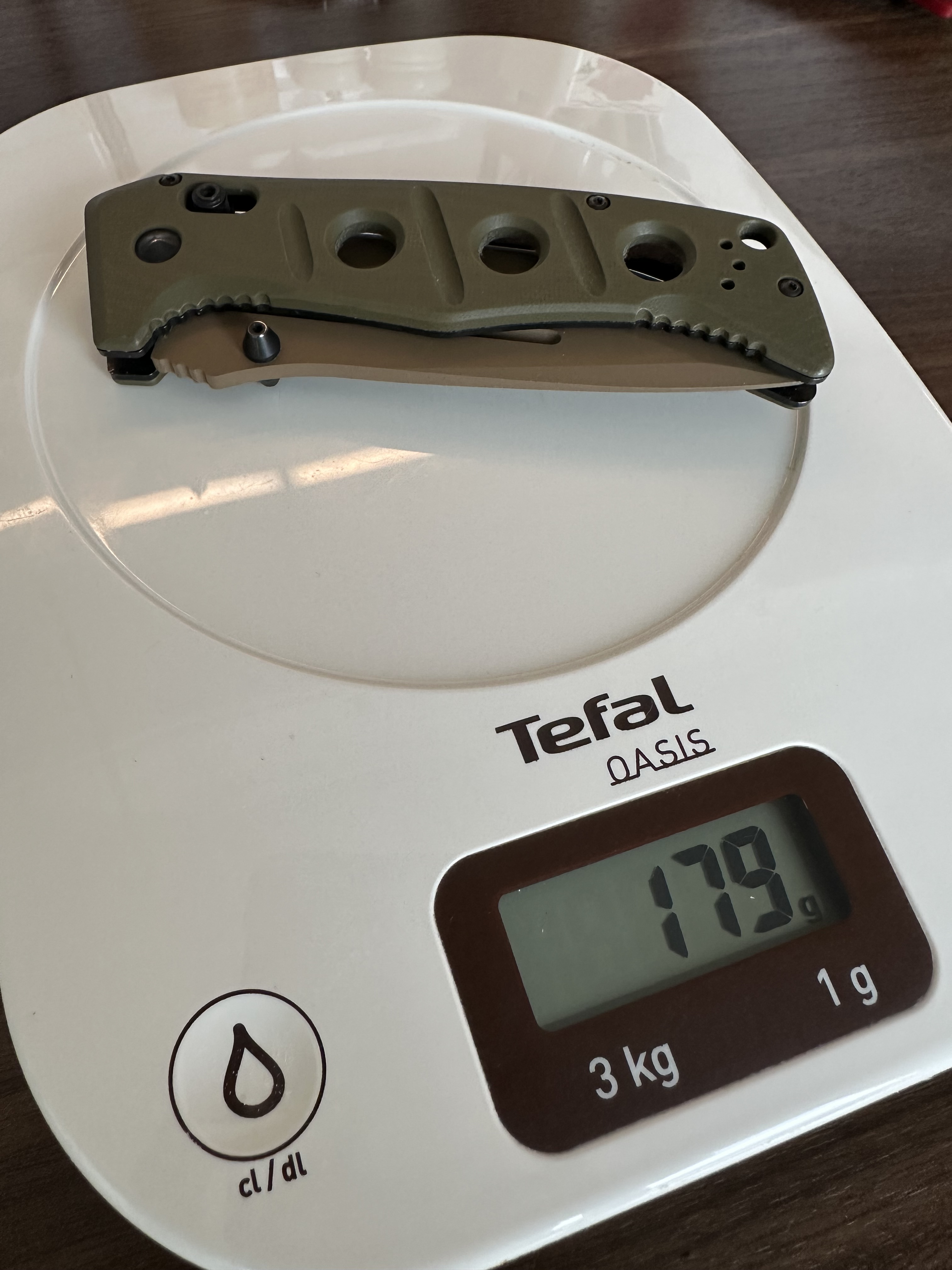
In my knife rotation, that niche of hard use folders was already well-covered by my Lil’ Temperance in K390, my Adamas in CPM-CruWear, and even my semi-serrated Tenacious in CPM-M4. The Military 2 felt like nothing more than an rare XXL Para 3, or at best a precious XL Paramilitary 2.

So I sold it to a friend, who was thrilled with the convex edge I had put on it.
And with the money, I invested in a Microjimbo in CPM-15V—nicknamed Shard.

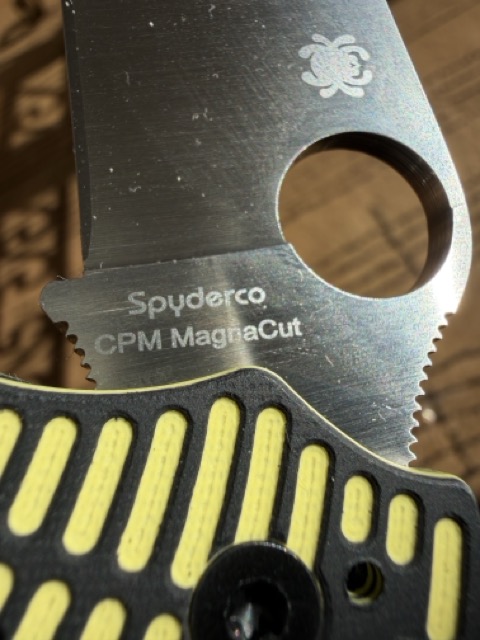
But then I kept catching myself looking at the Military 2 Salt, which in my book might be the best “military-style” folder ever designed: light, stainless, and equipped with a Magnacut blade. Then I even drifted toward the Manix 2 XL Salt… not released yet…
Eventually, I had to admit it: I was missing the big boy that is the Military 2.

As you know, for reasons I can’t fully explain, I give names to my EDC knives. The habit probably comes from my youth, devouring Michael Moorcock’s Elric saga and Fritz Leiber’s Swords cycle.
My CruWear Military was named Gandalf (grey handle).
The CPM-M4 with jade G-10 was Ghost.
My Military 2 in 15V was Gambit—after the chess term meaning to sacrifice material for positional advantage.

Well… I sacrificed Gambit.
To invest in Gambit again.

A friend was selling his own M2 in 15V—bought after reading my reviews—because, just like me, the knife lived in a drawer and never found a place in his rotation. I immediately noticed he had put painfully a superb edge on it, better than the one I had given mine. So I bought it back. Somehow Gambit returned—sacrificed once, resurrected better.

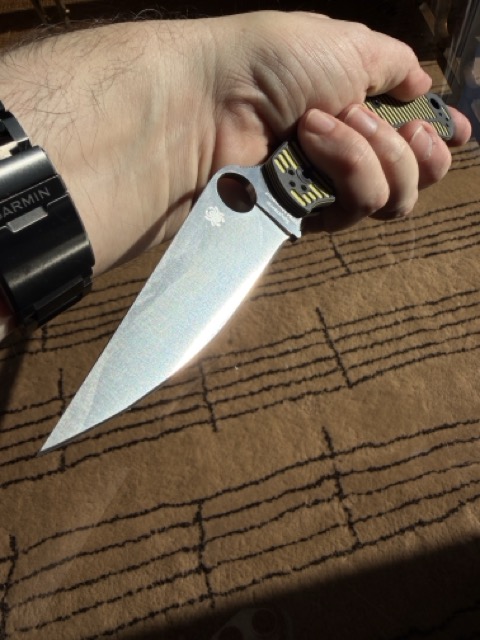
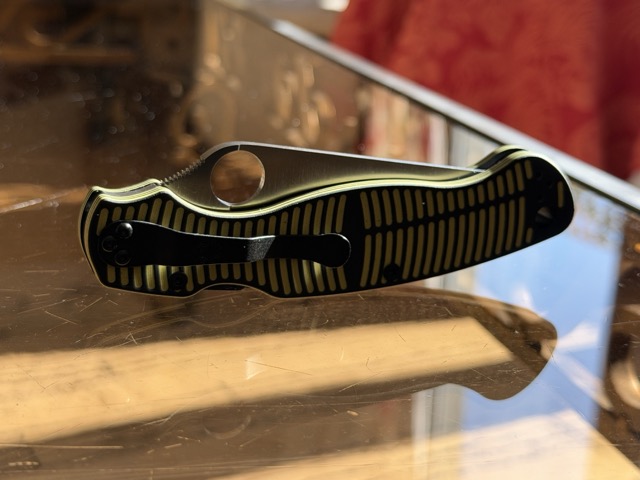
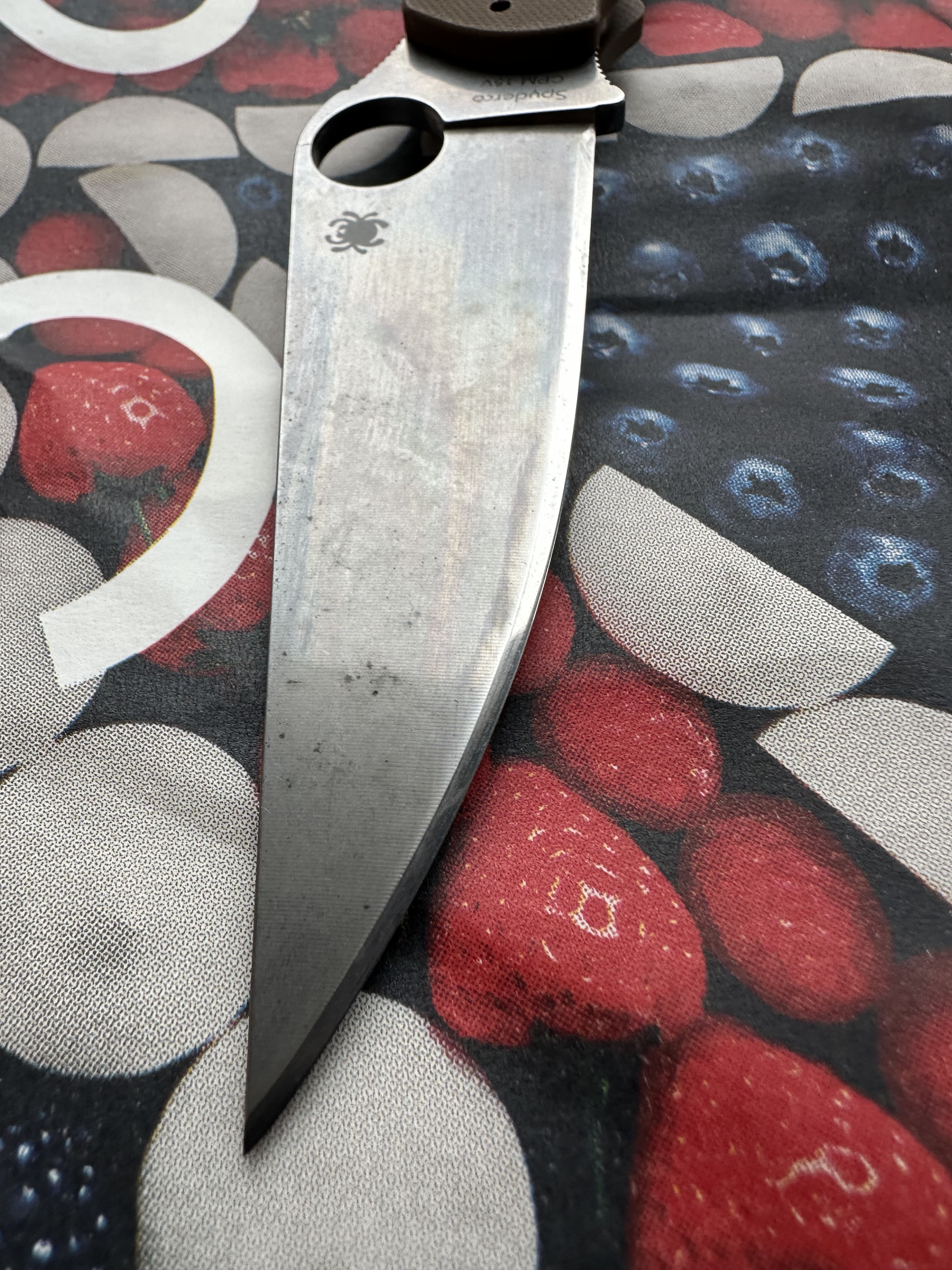
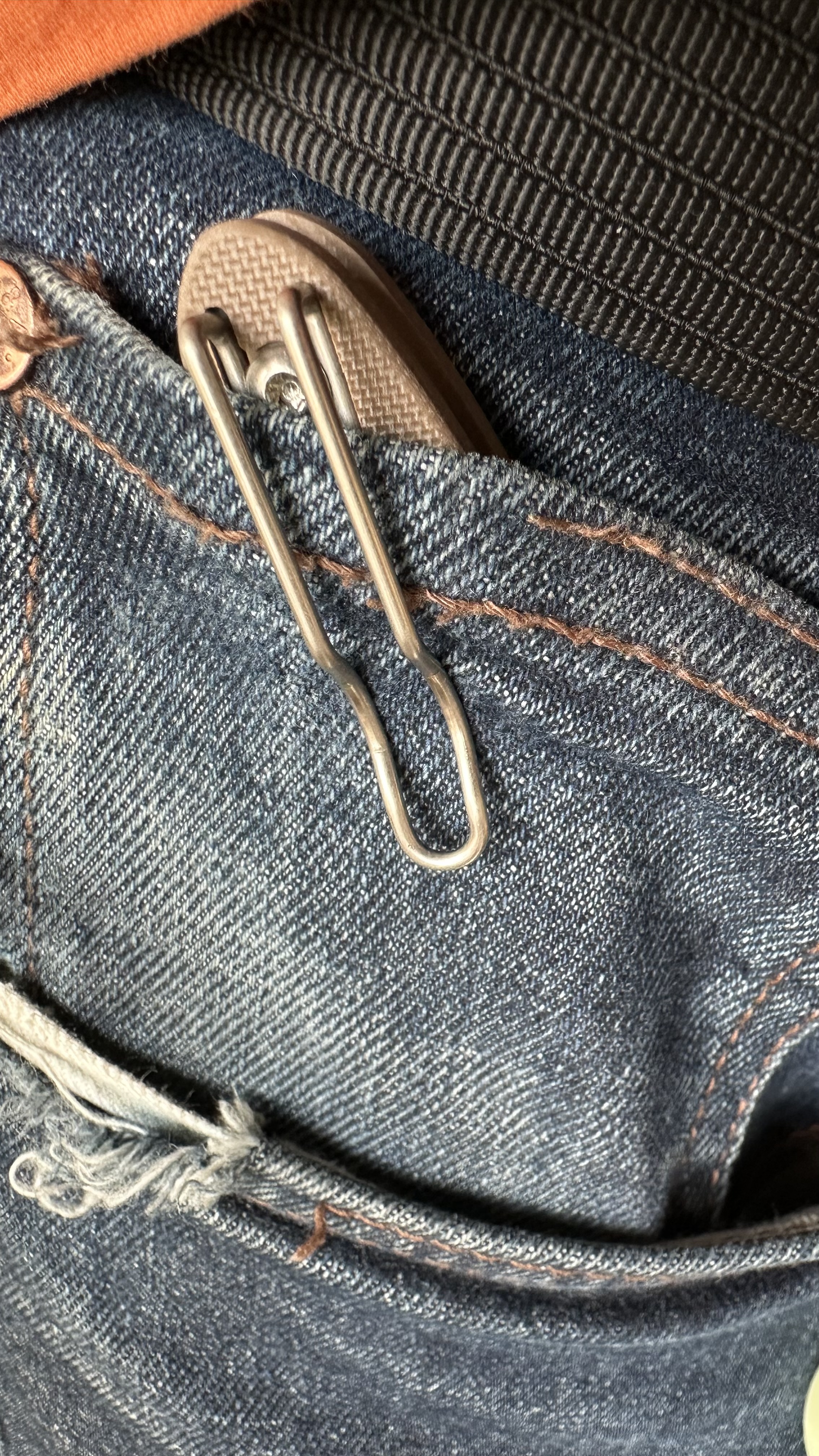
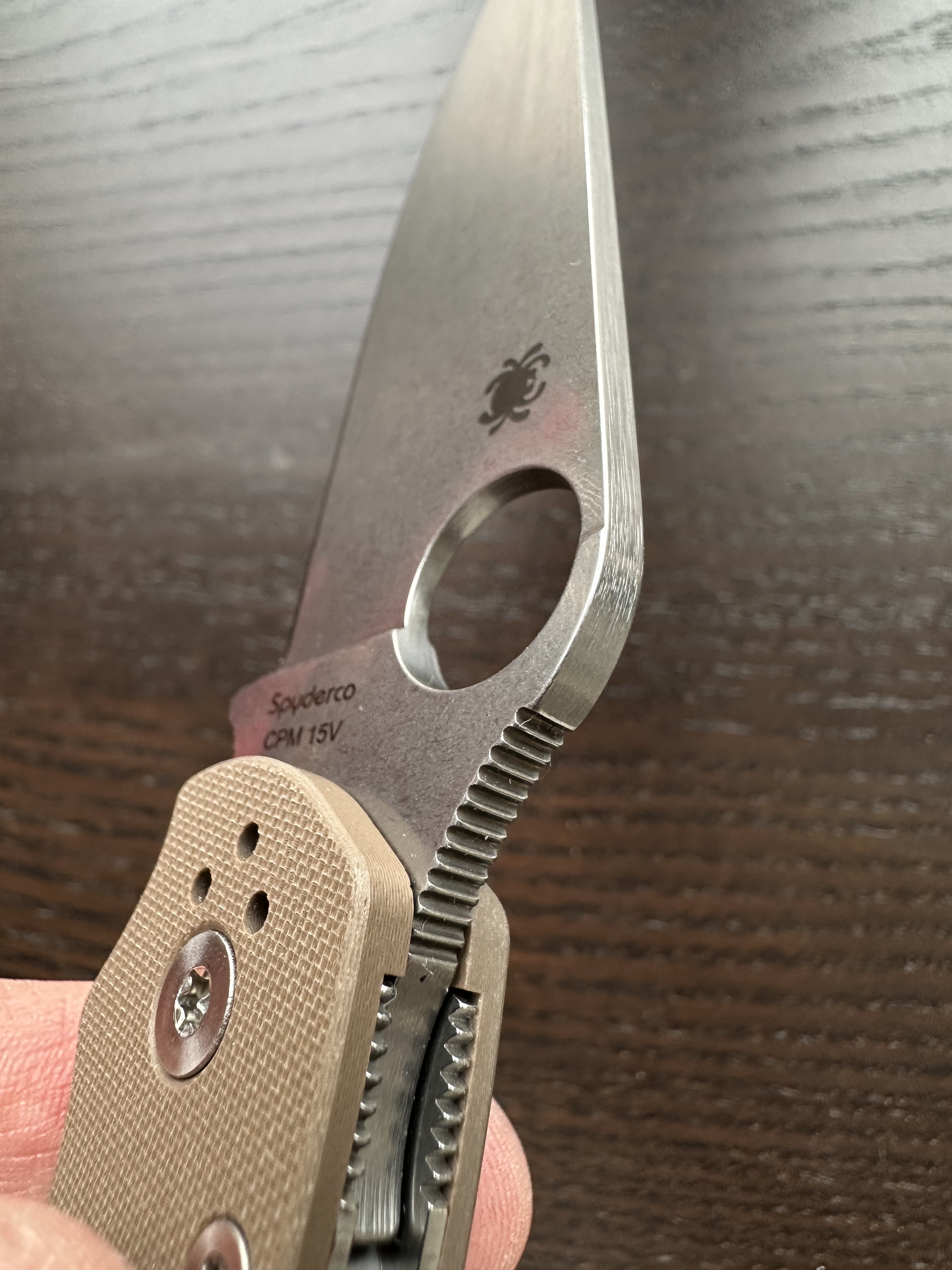
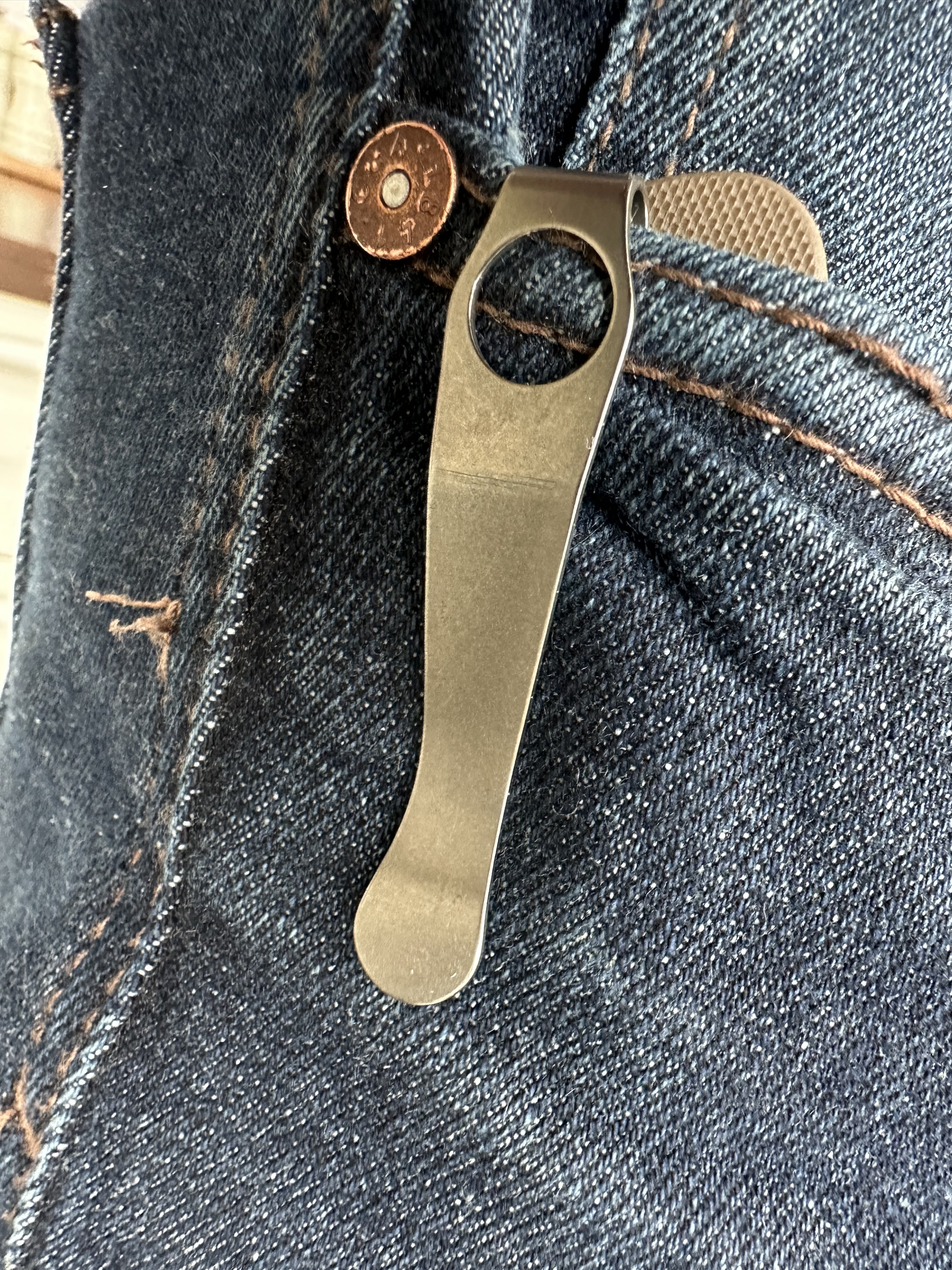
This time, I have decided to use it hard. The blade already has patina and even some pitting. It will be a user, not a safe queen. I have reinstalled a deep-carry clip, dropped it into my pocket, and off I go.
Go figure, in those days on “Knife Angst”, I even carry it in the city—I don’t care. If I need to enter a museum, I just drop it in my bag with my keys. Again this is not a weapon, this is a tool. Always been. All those dreams of self defense with a knife are just marketing nightmares.

And as for mundane tasks being “unworthy” of such a mighty blade… I don’t care either. Cake, rose stems, cardboard with staples, plastic zips—bring it on. The geometry on that knife makes it brutally efficient.

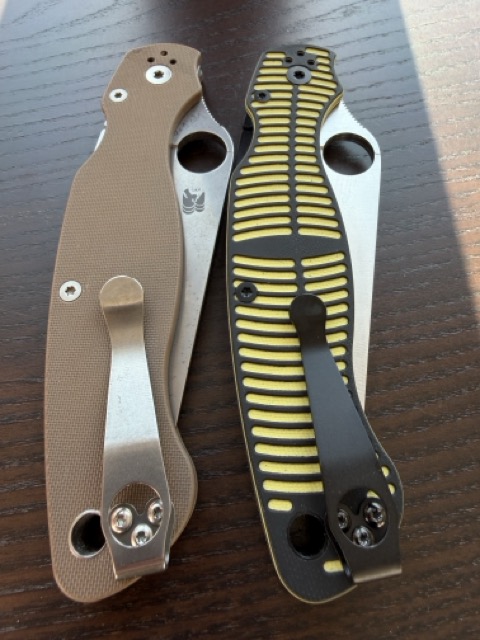
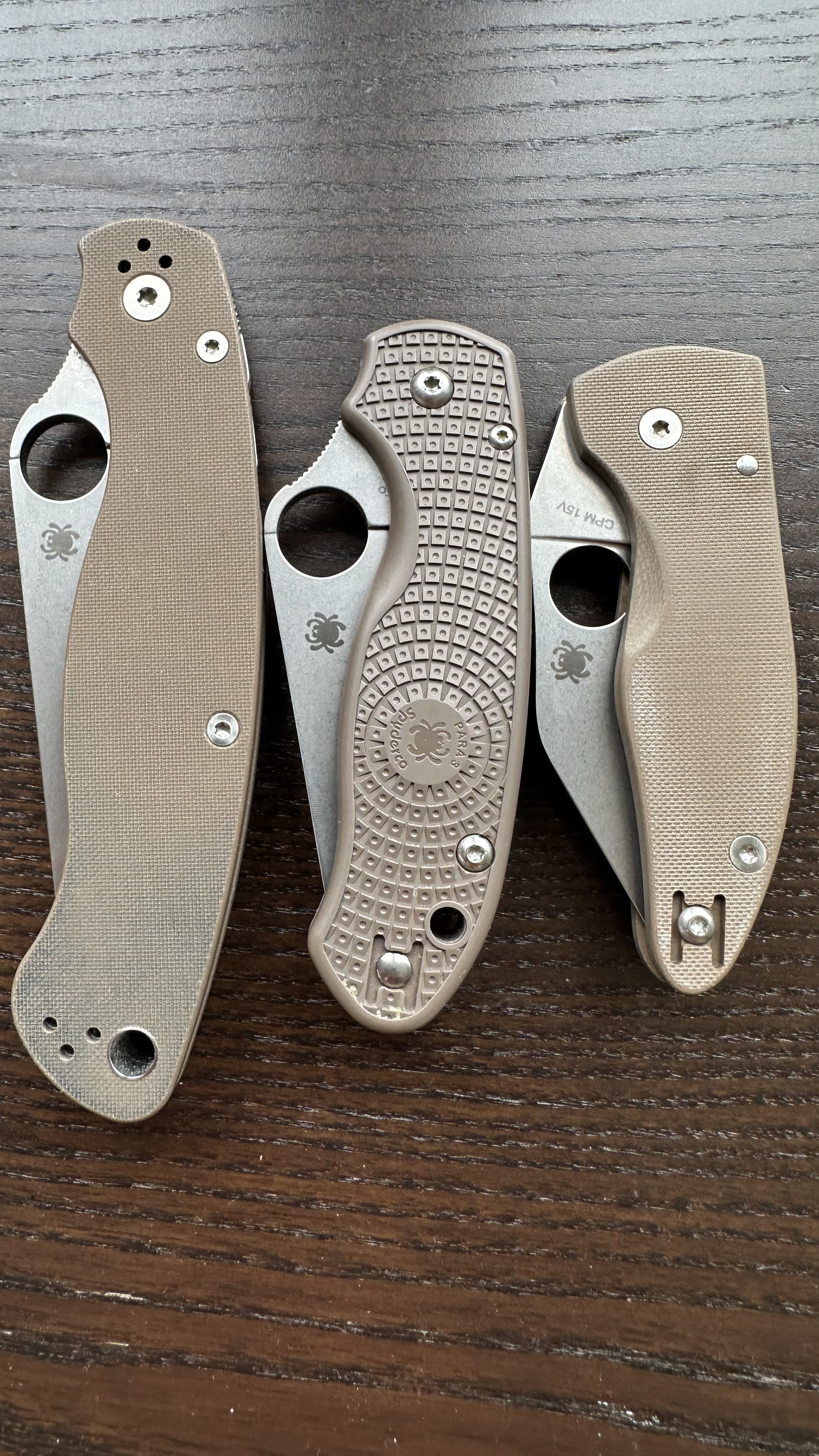
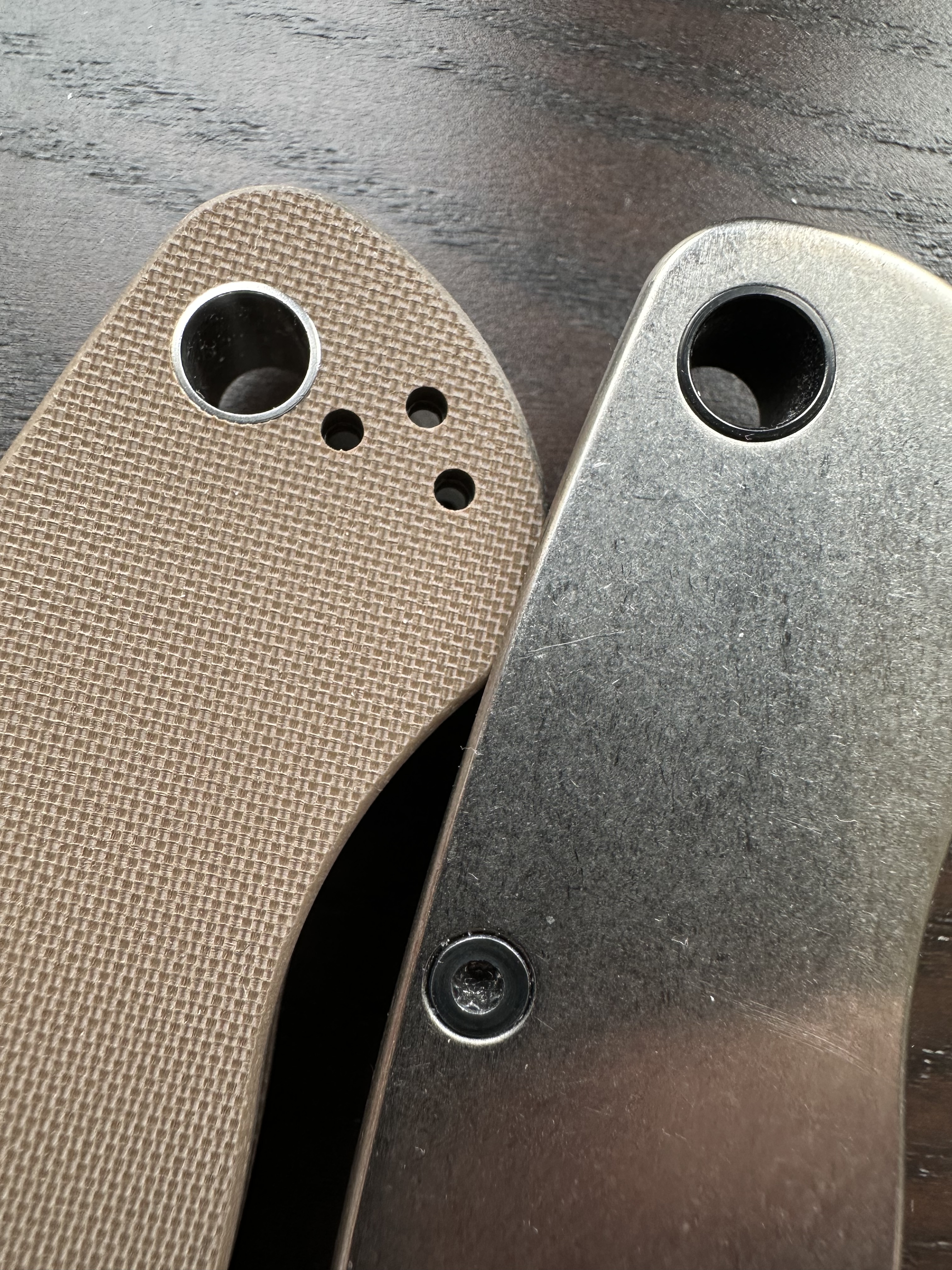
One detail I especially love: the oversized pivot screw on the Military 2. Compared to the Bodacious or the Paramilitary 2, it gives the knife a wonderfully toolish, purposeful look.

Nano Oil is a great way to keep the action smooth.
And so far I only use leather to keep it super sharp.
So the Military 15V is back in action and will be used also as a benchmark in military tactical knives production.

Spyderco Microjimbo Sprint Run CPM-15V – The Evil Baby Brown Benjamin

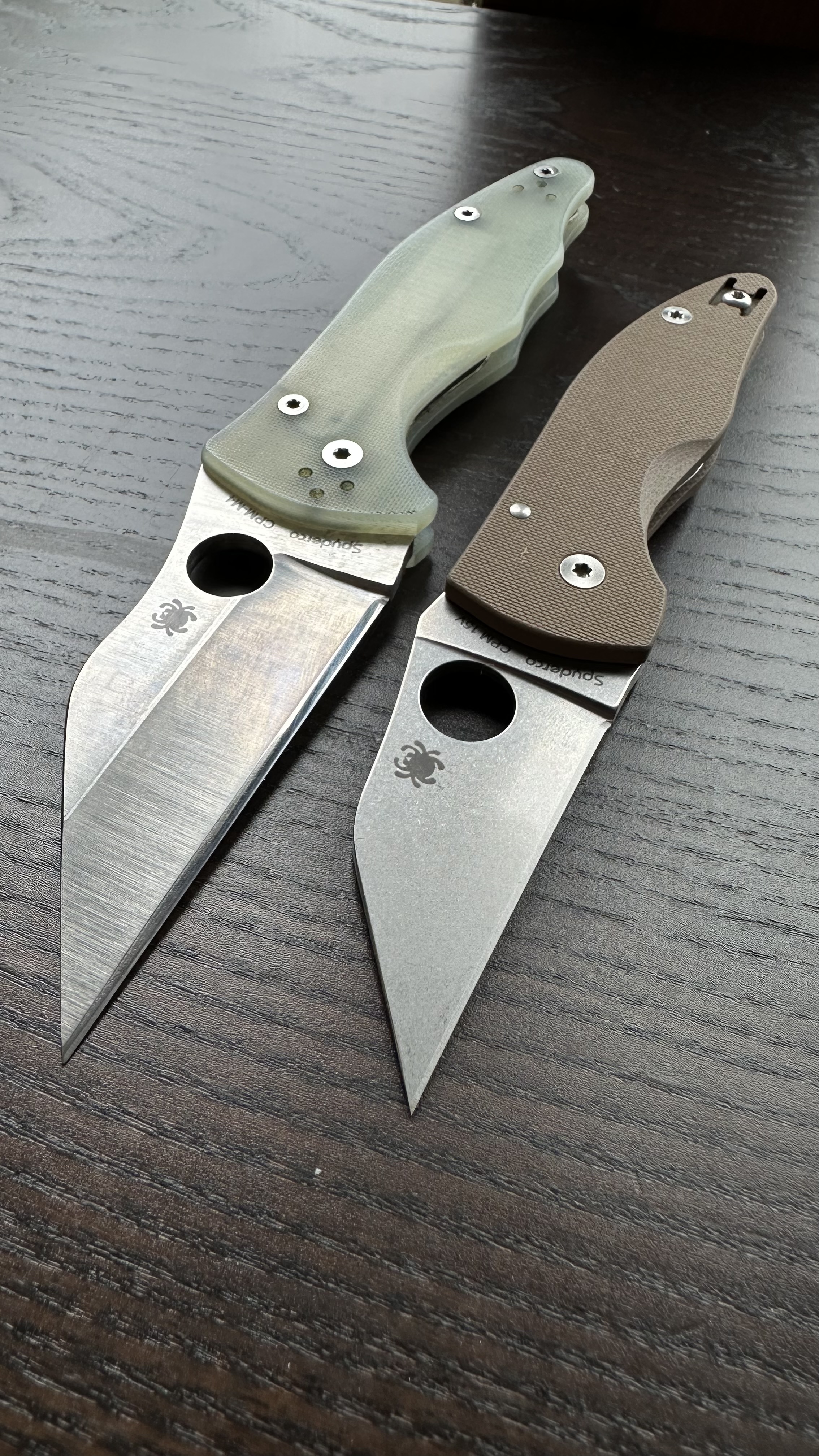
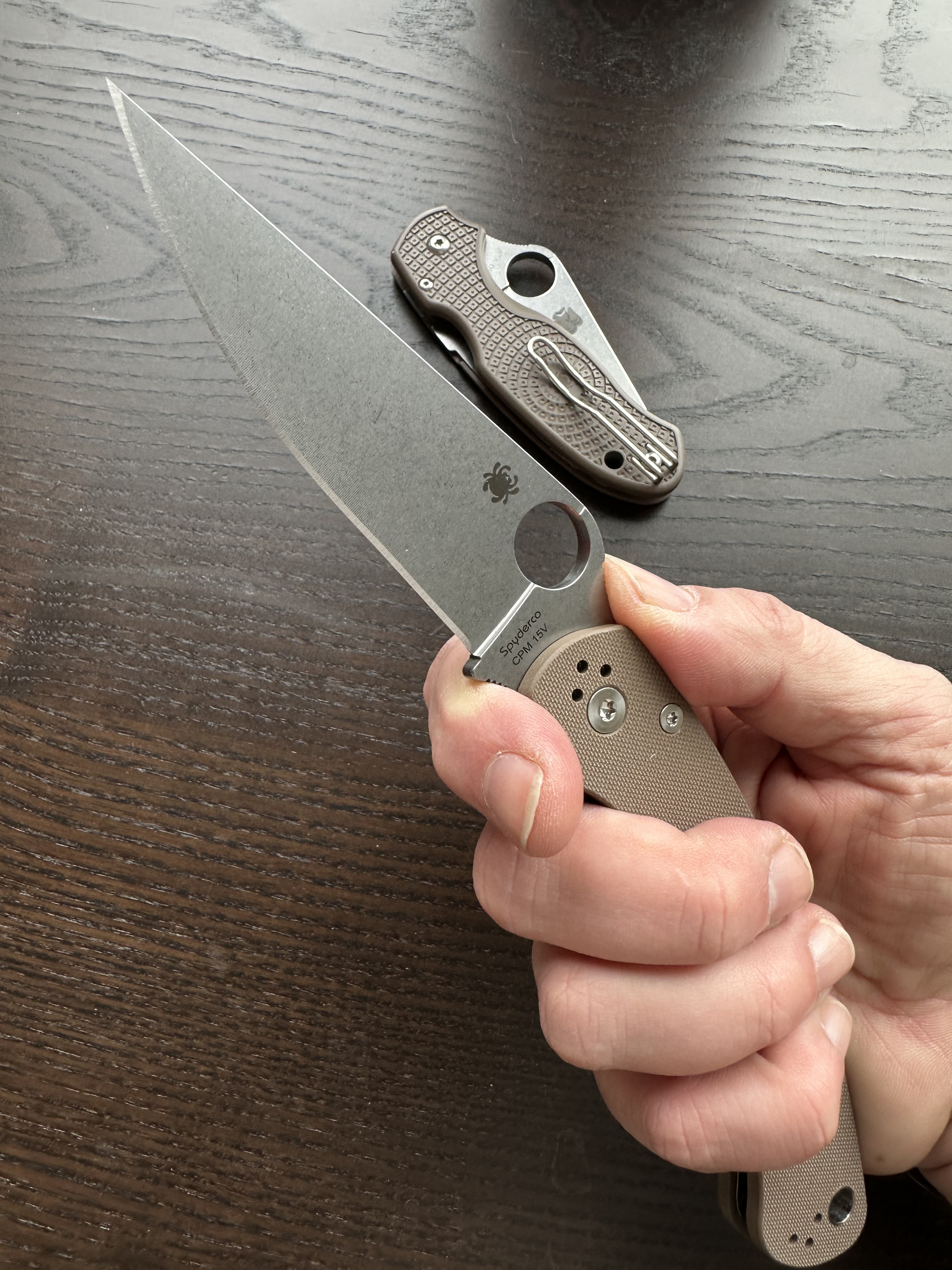
Created by Michael Janich, the MicroJimbo takes the iconic Yojimbo 2 design but in a smaller form, making it more legally and practically usable for everyday carry (EDC).
This piece is a true jewel. With an MSRP of $300, it ranks among the most expensive Spydercos when measured by cost per millimeter of edge: just 57 mm. That’s a scale of value I may have to start considering. On the Microjimbo in 15V, for example, each millimeter of edge comes to $5.26, whereas on an Endura in VG10 it’s only $1.56 per millimeter.

Of course, CPM 15V is costly, and two signatures on the blade mean royalties. It’s a jewel, yes—but also a gem in its own right.
No disclaimer on this one, as it was bought by myself at Lamnia in Finland for 237 euros. Great service and it was delivered in France 5 days later.

Action wise, the detent on mine is quite strong, with no lock stick, and the blade drops freely back into the handle. This little folder practically oozes quality.

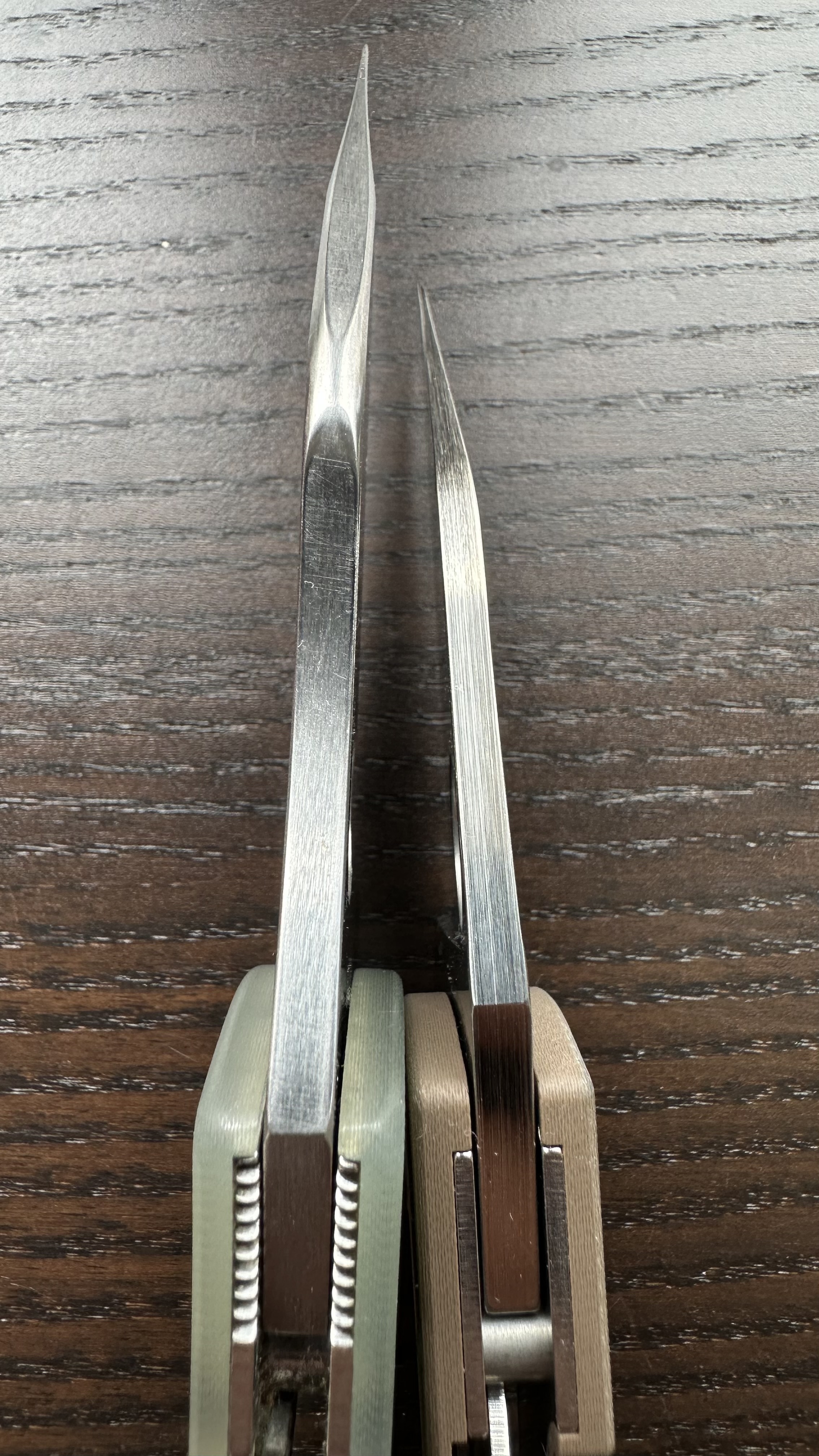
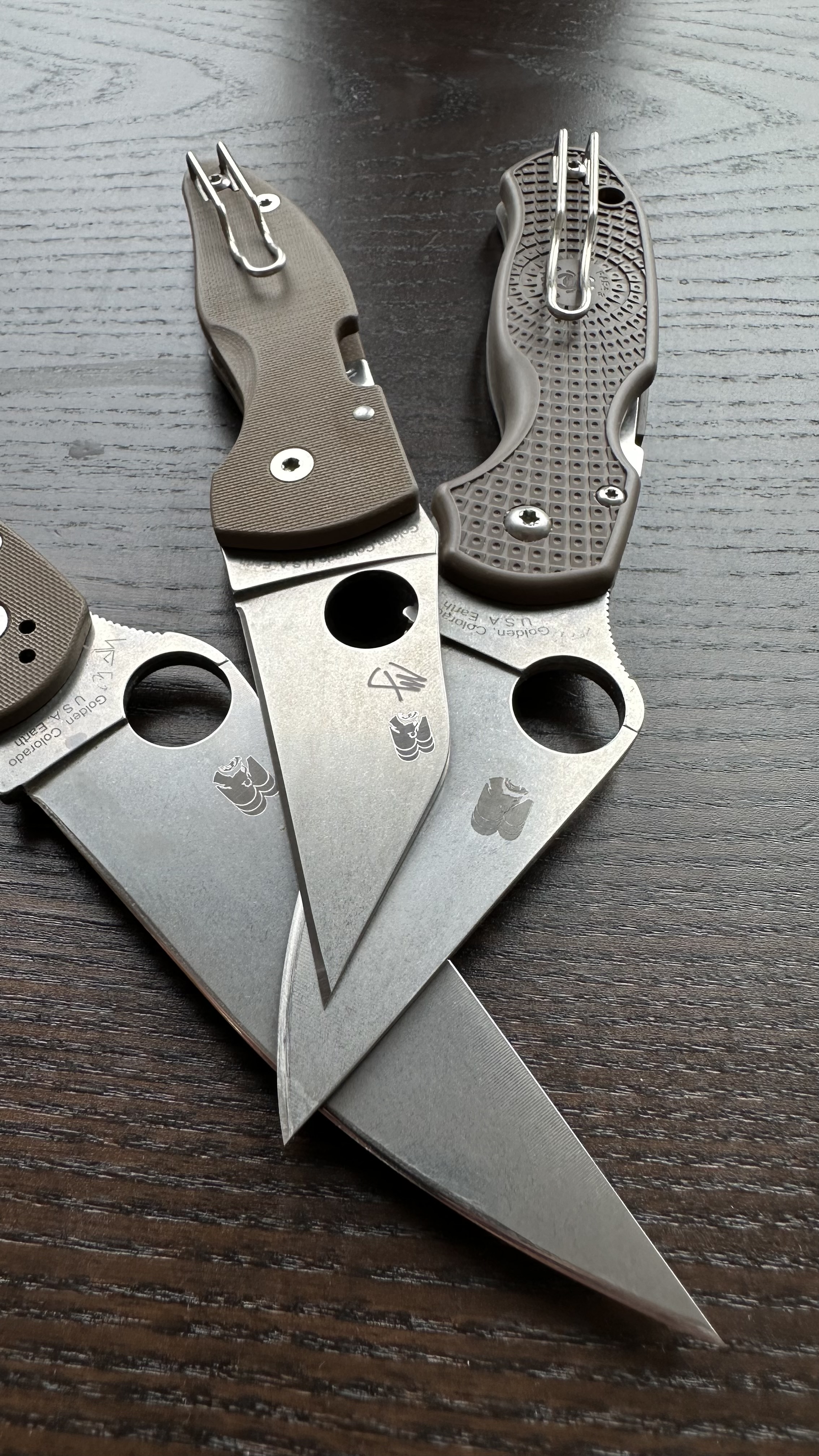
Compared to my Yojimbo 2, the Microjimbo features a full flat–ground blade with a distal taper—very reminiscent of the first Yojimbo in that regard but with full-flat-ground Wharncliffe style blade, roughly 2.45 inches long.

It is made of Made from CPM-15V, a cold-work tool steel with nearly 15% vanadium, prized for insane wear resistance and edge retention.
The blade is heat-treated using a protocol developed by Shawn Houston, further enhancing its performance with a HRC of 65 (more or less but that’s a lot !).

Ambidextrous, tip-up carry only for the MJ and its reversible deep-pocket short wire clip.

It is equipped with Spyderco’s reliable Compression Lock.

The 3.7 mm thick, stonewashed blade is a beauty—short, sharp, and full of character. The edges aren’t perfectly even toward the tip, but that doesn’t bother me; sooner or later it will be convexed anyway.
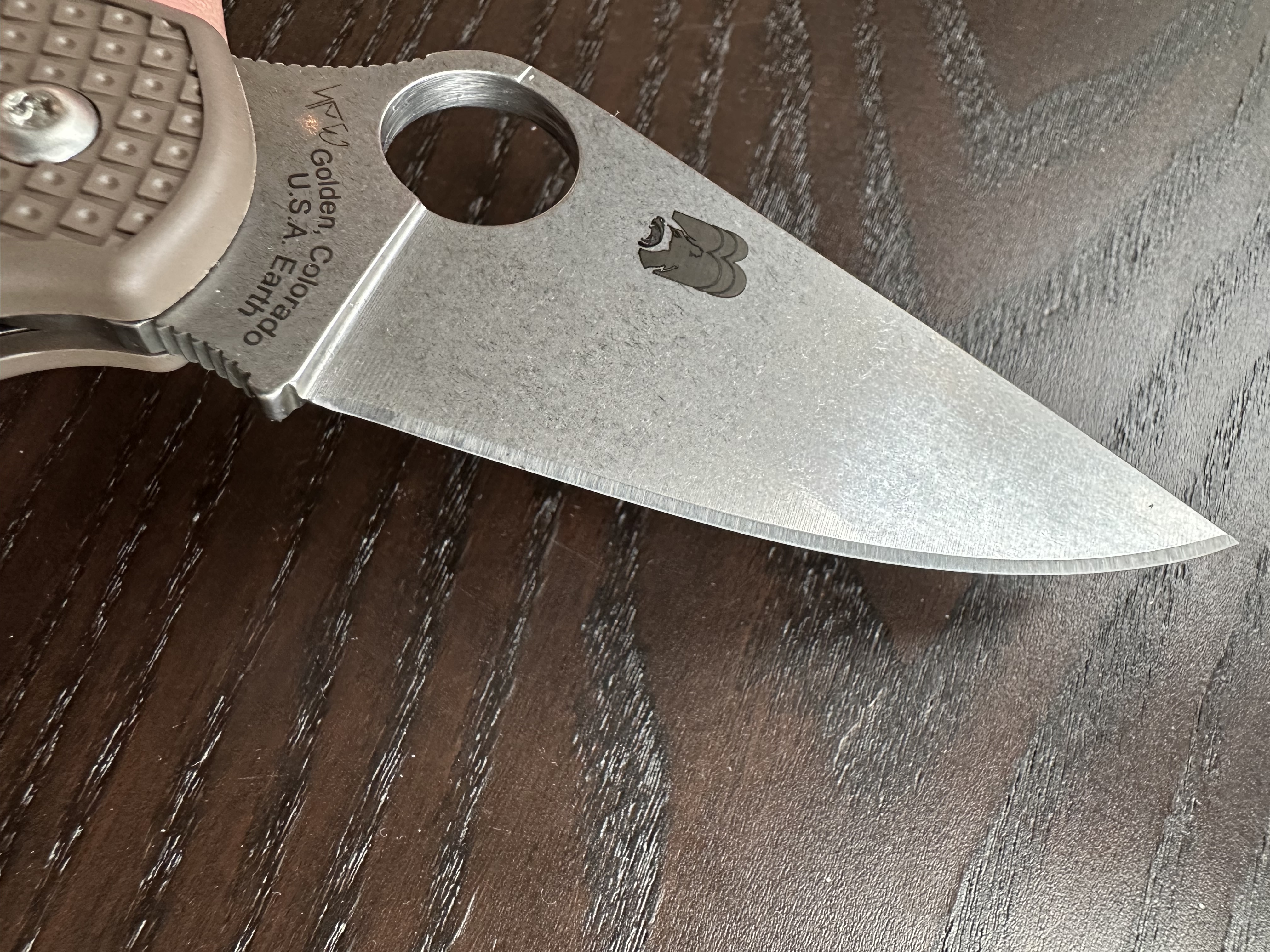
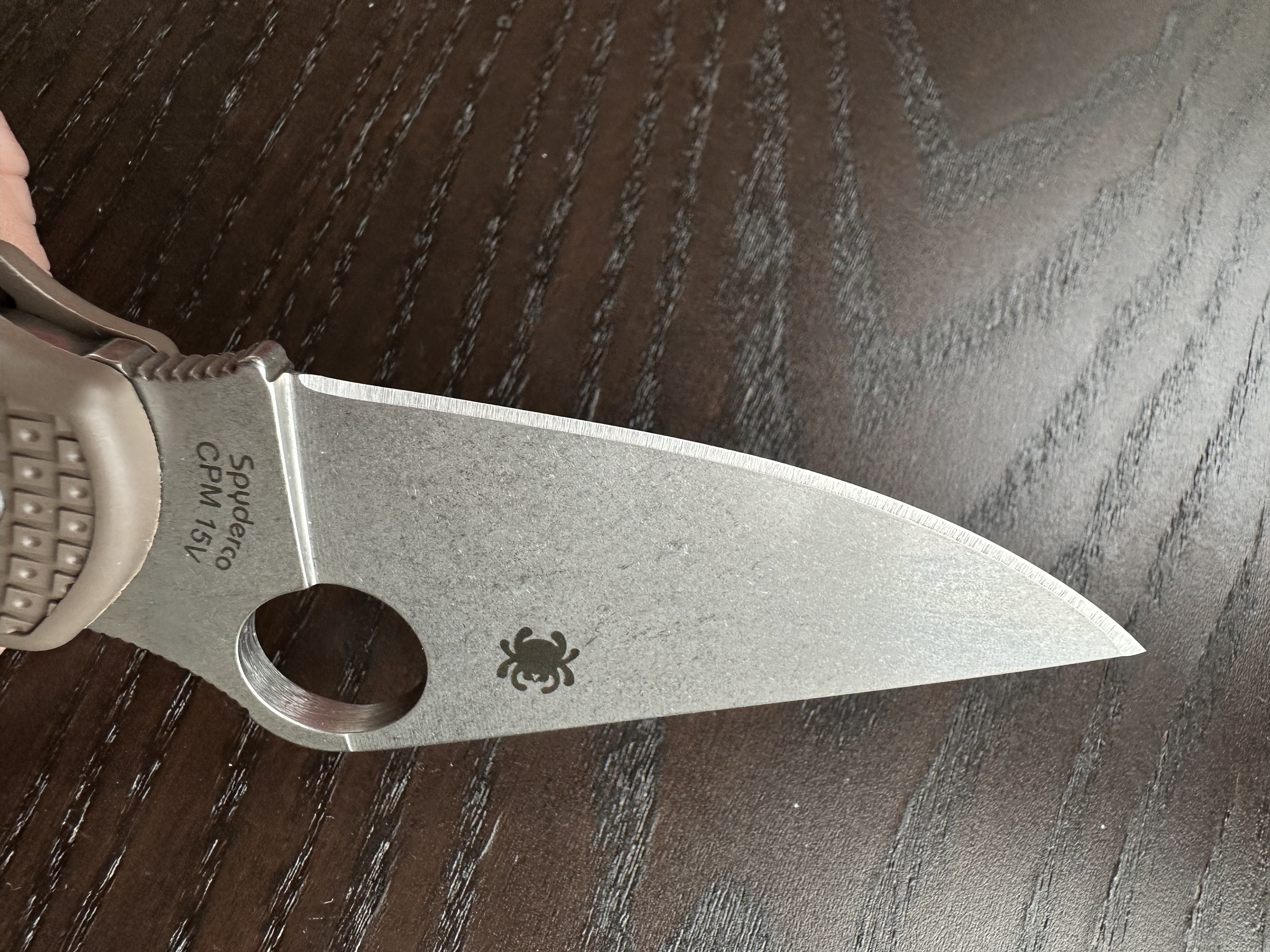
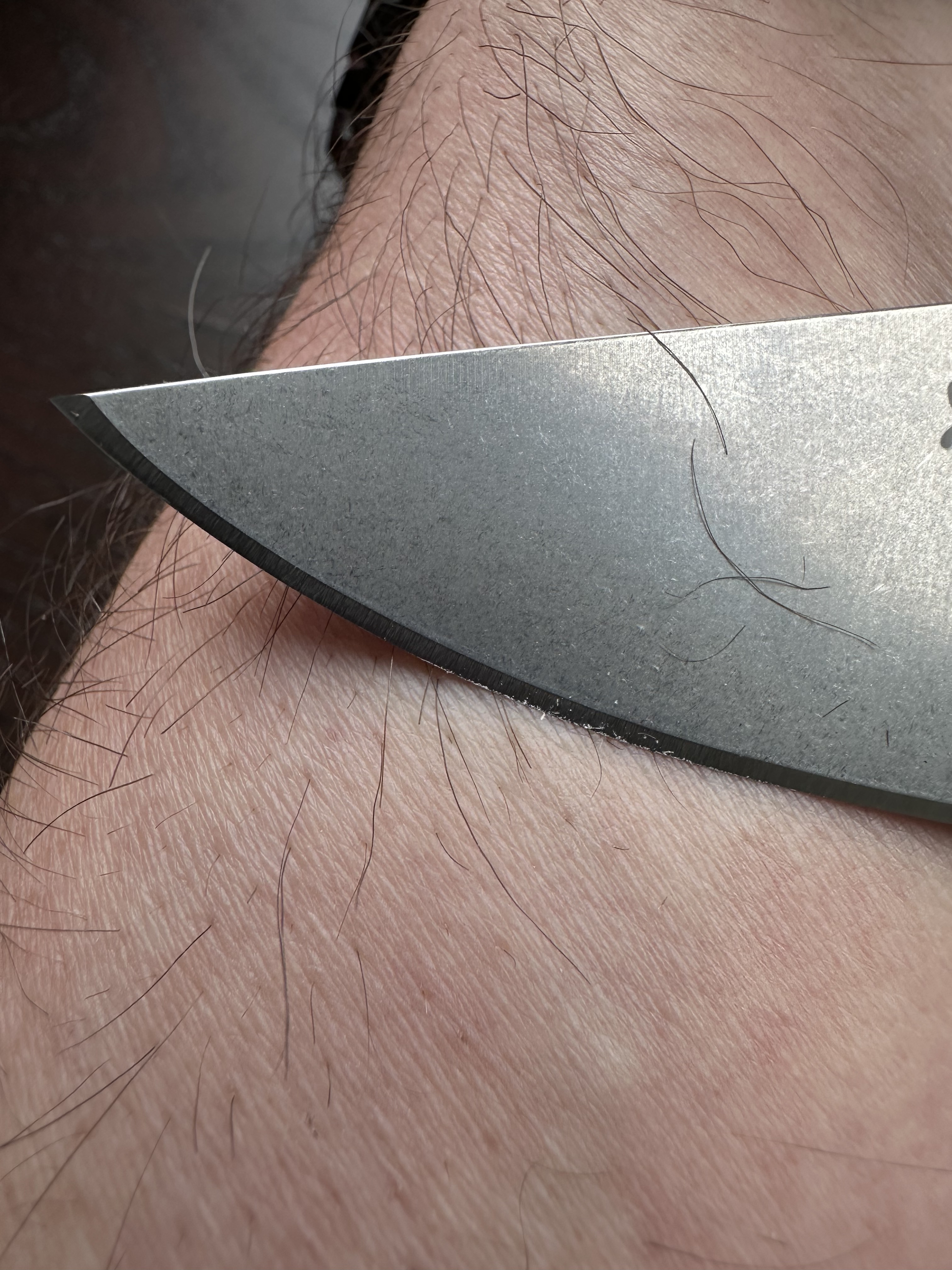
After just a couple of passes on leather, the Microjimbo was already delivering a crisp, razor-sharp edge, effortlessly shaving arm hair. And for once with CPM-15V, I was pleasantly surprised at how well the steel responded to stropping.

In my CPM-15V family this little folder is not the one to underestimate.
That blade shape as proven to be incredibly powerful.
This knife feels like Lotus Seven equipped with a V8.

The Microjimbo 15V, with its self-defense pedigree, actually falls into the same MBC category as the Lil’ Temperance. With such a compact edge, it’s more of a last-ditch option—a tool that could still deter a threat. It won’t reach vital organs, but it could sever an artery. That said, knives remain one of the worst possible choices for self-defense in my book.
Knives are ambush/backstabbing weapons.

Another last-ditch, highly capable small folder is the Chaparral Serrated. Its serrations can be extremely painful—an advantage in self-defense situations when you need to break a hold and get away.


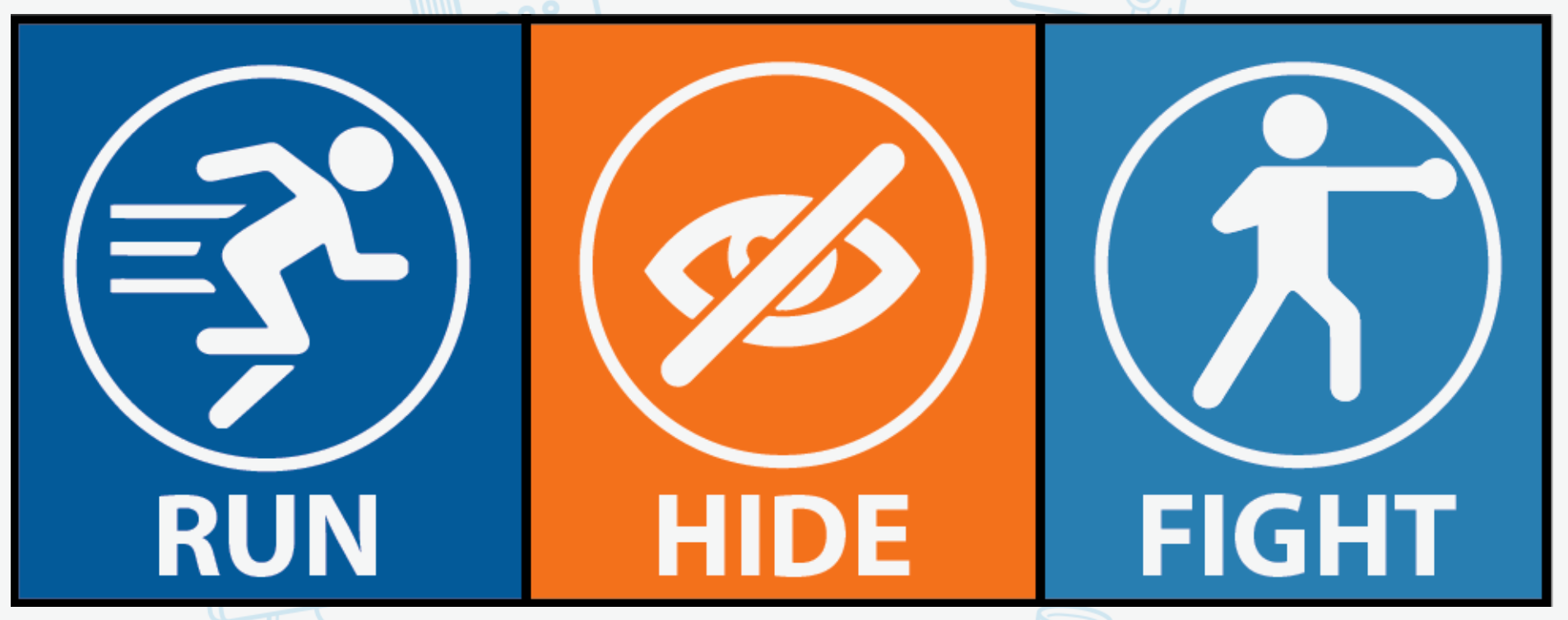
Remember: 1 – Run, 2 – Hide, 3 – Fight.
Fighting should always be your last option!

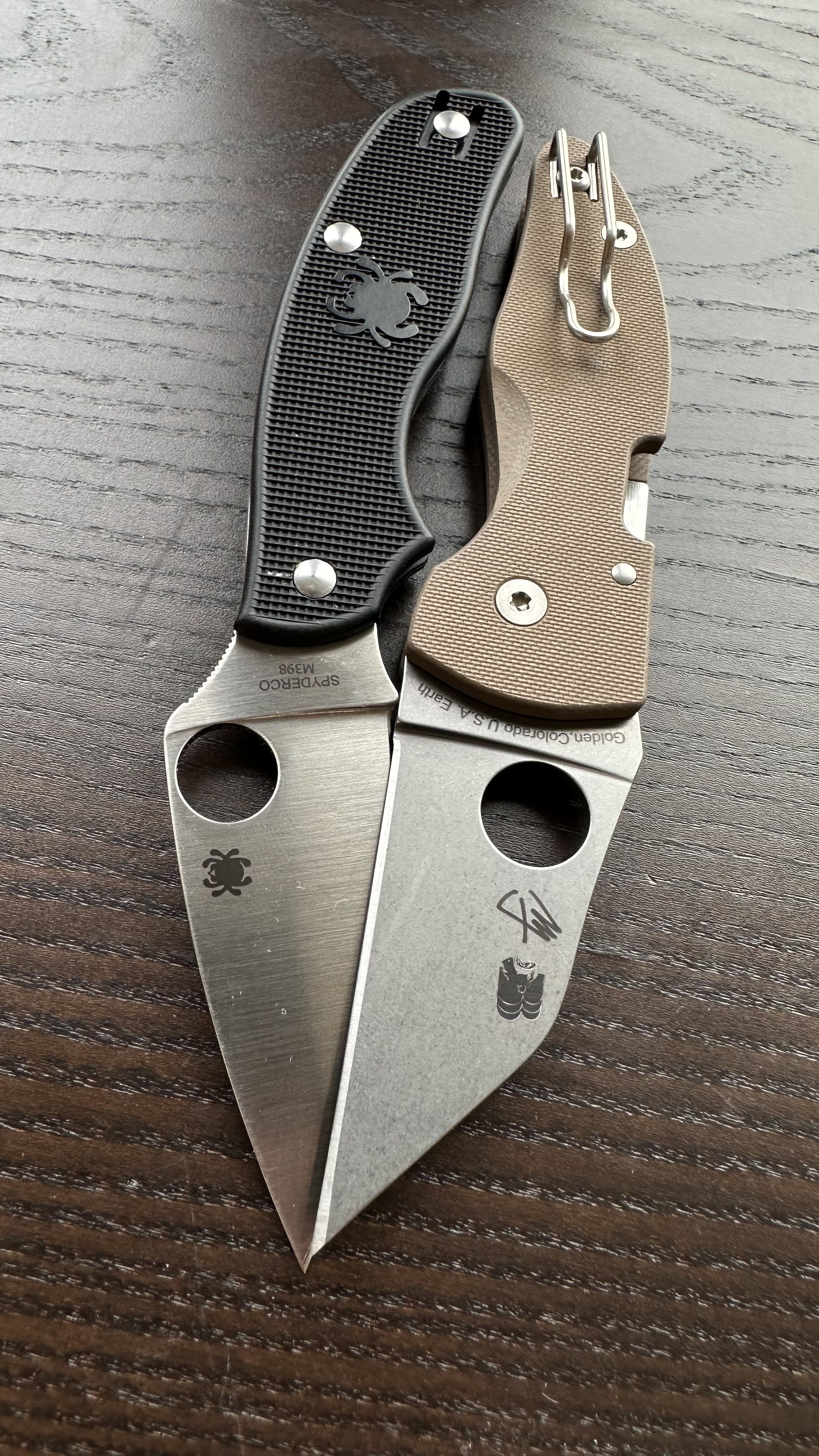
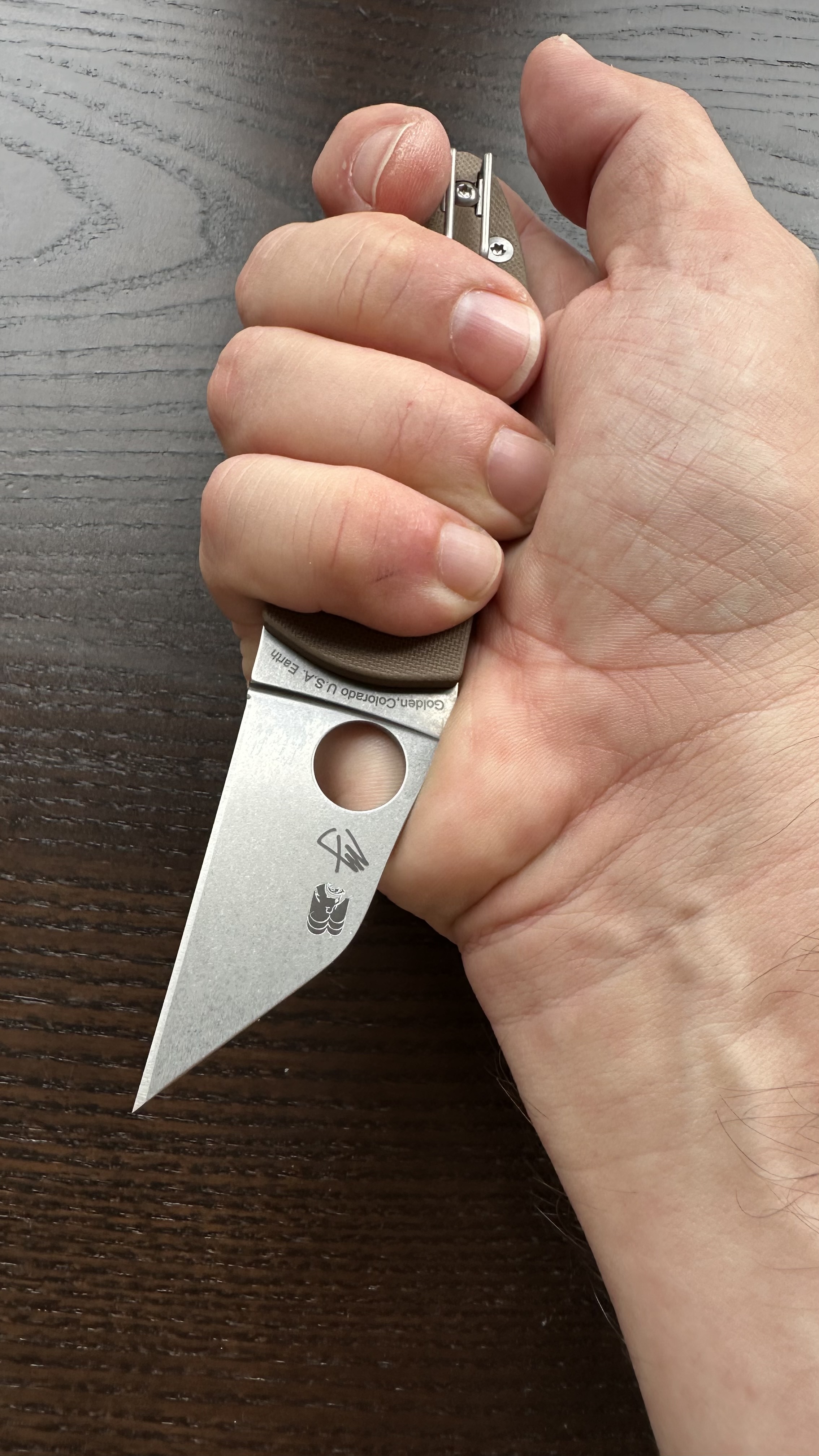
For three times the price of a Metropolitan, you get the same edge length but in a heavier package. Once in hand, it feels remarkably secure—despite having neither guard nor choil—almost like holding a small fixed blade.

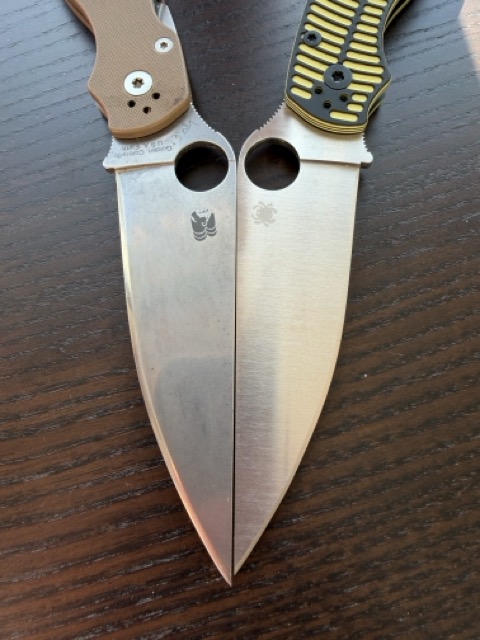
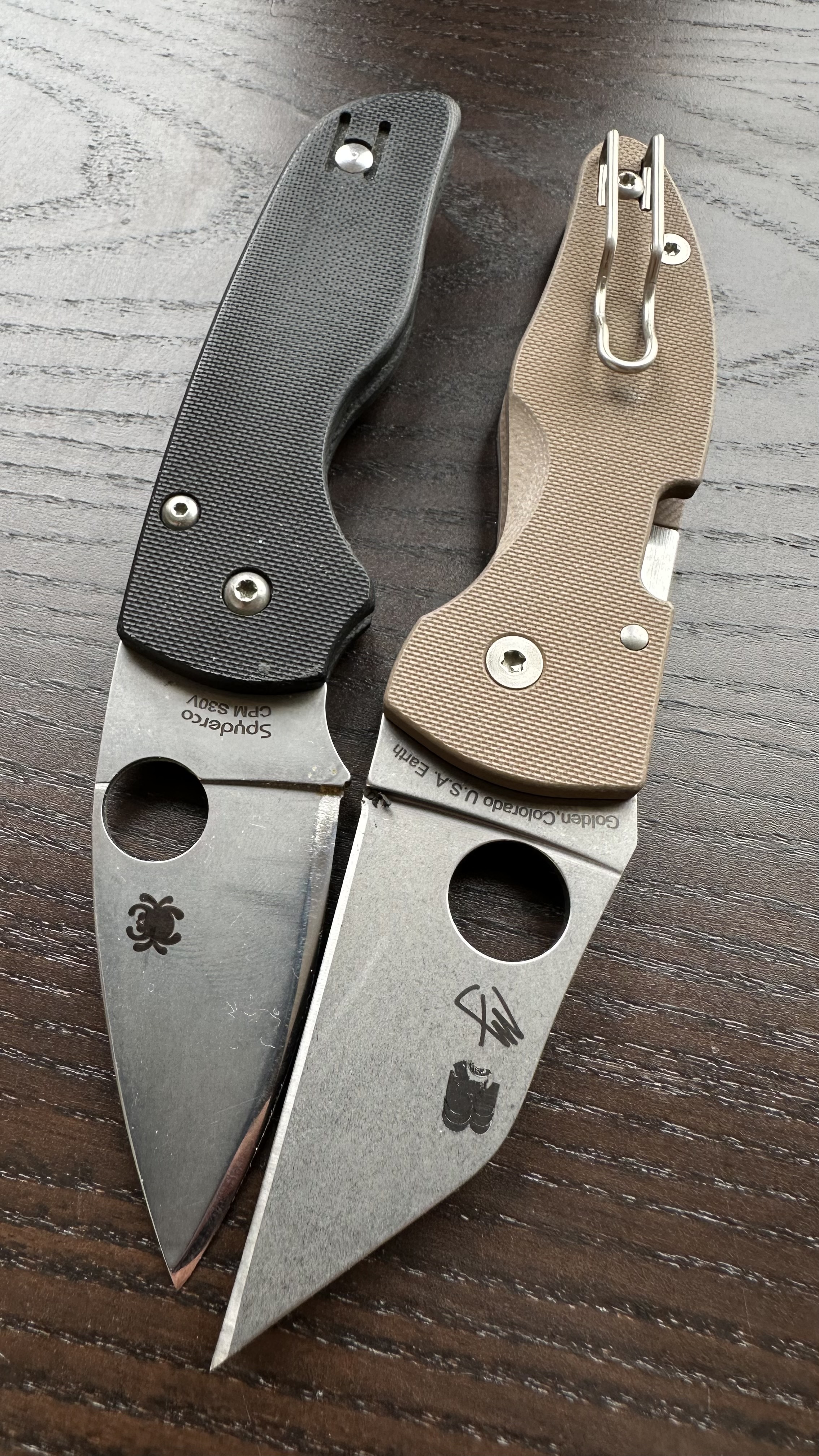
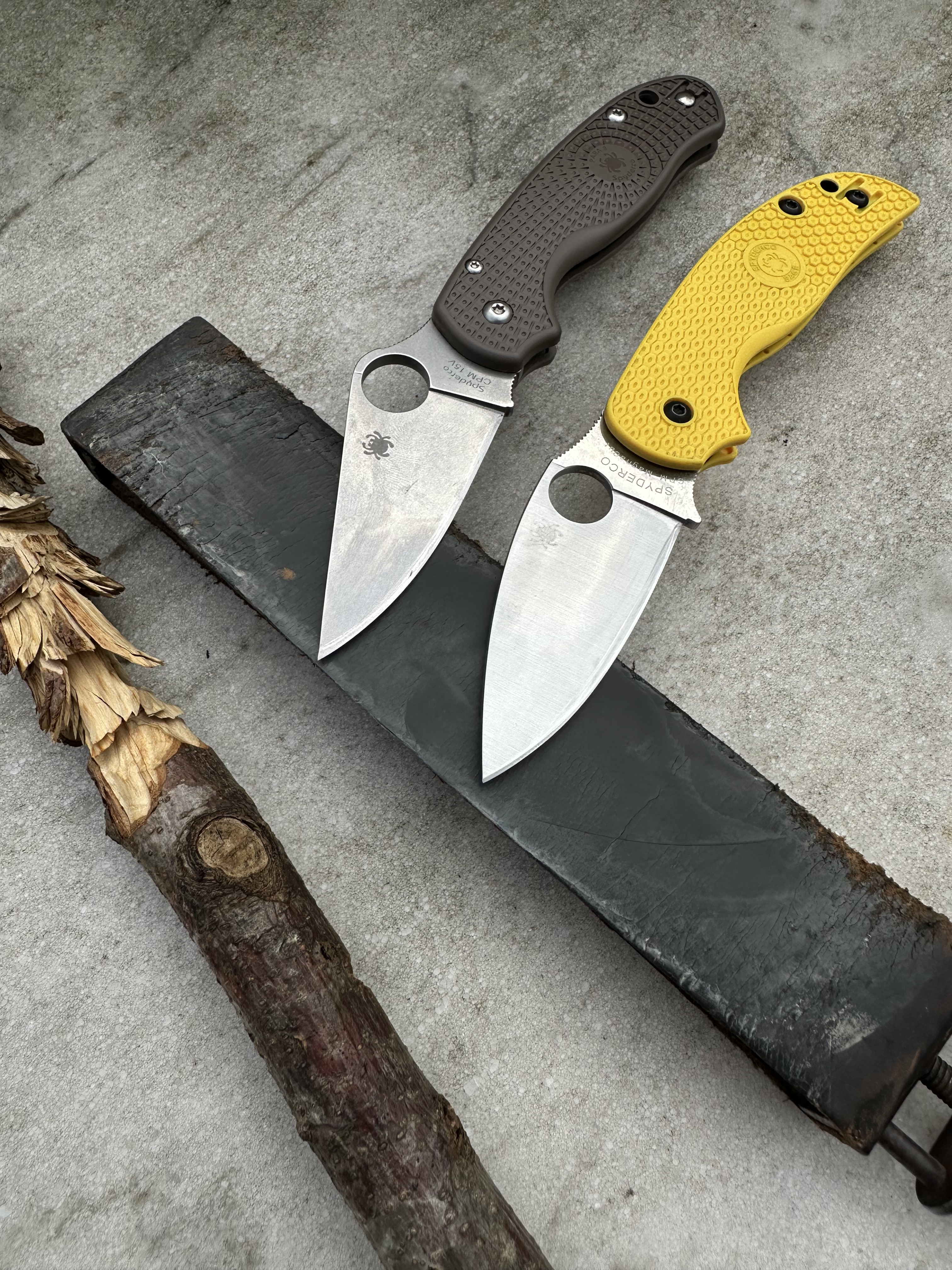
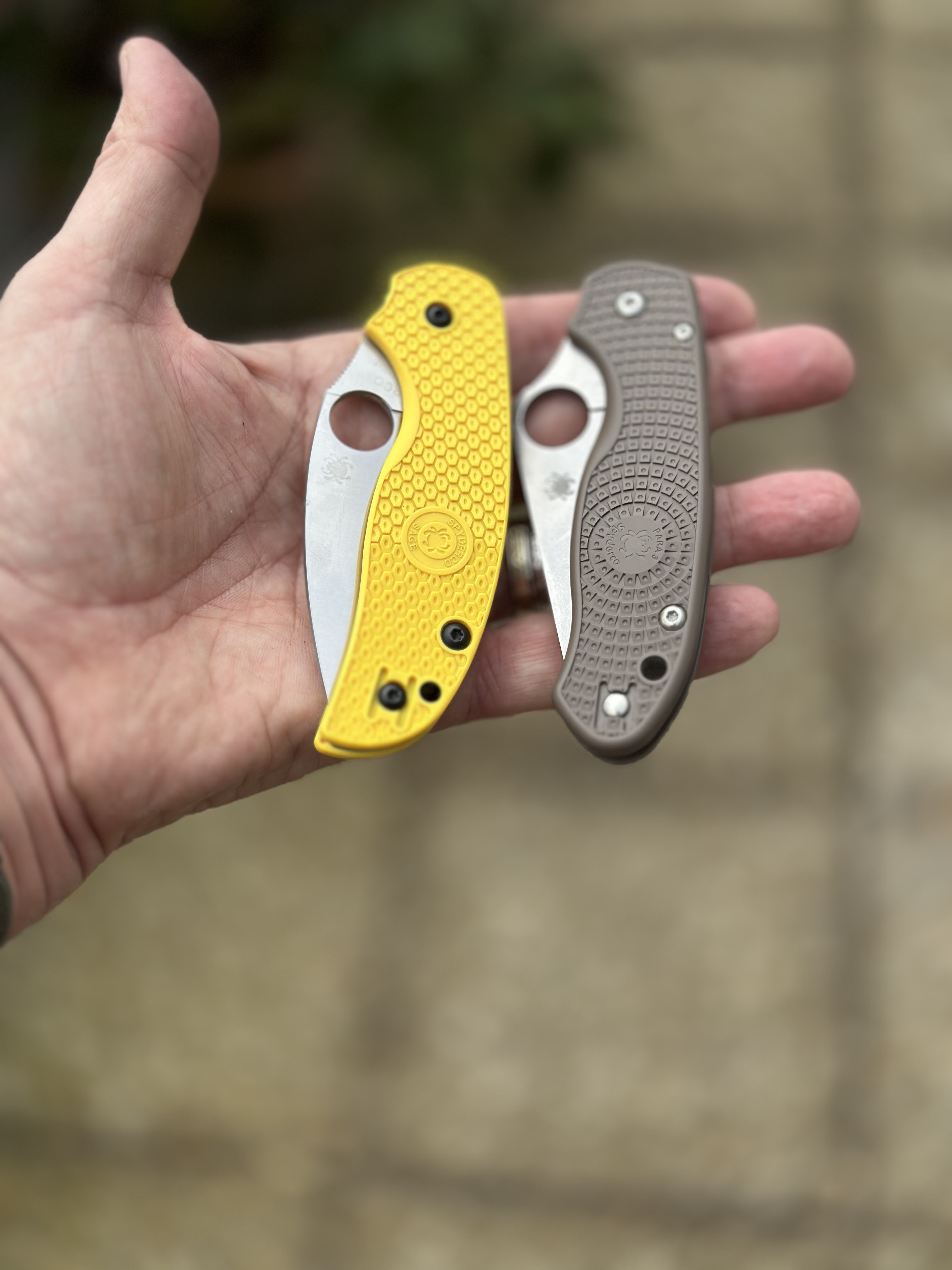
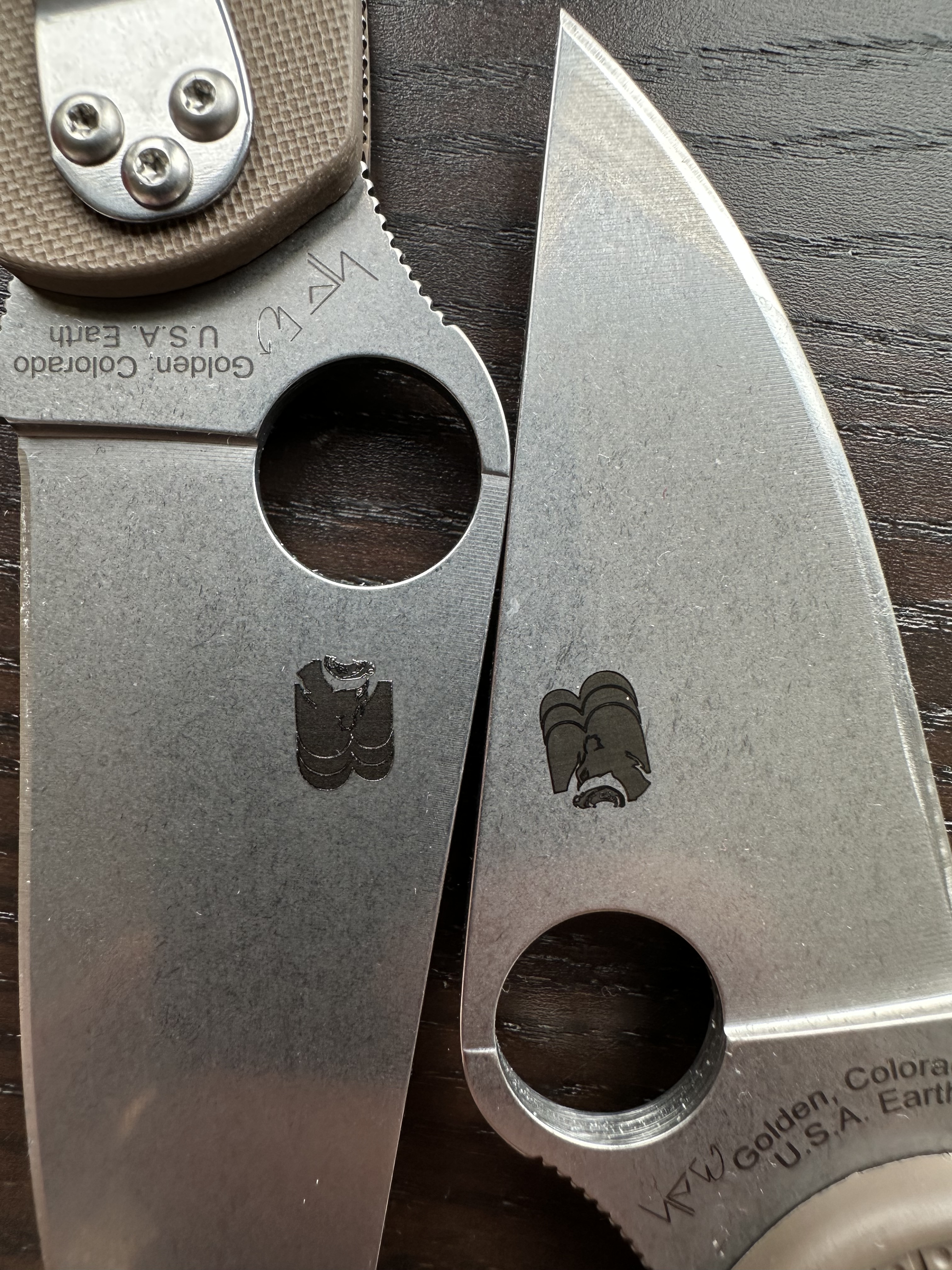
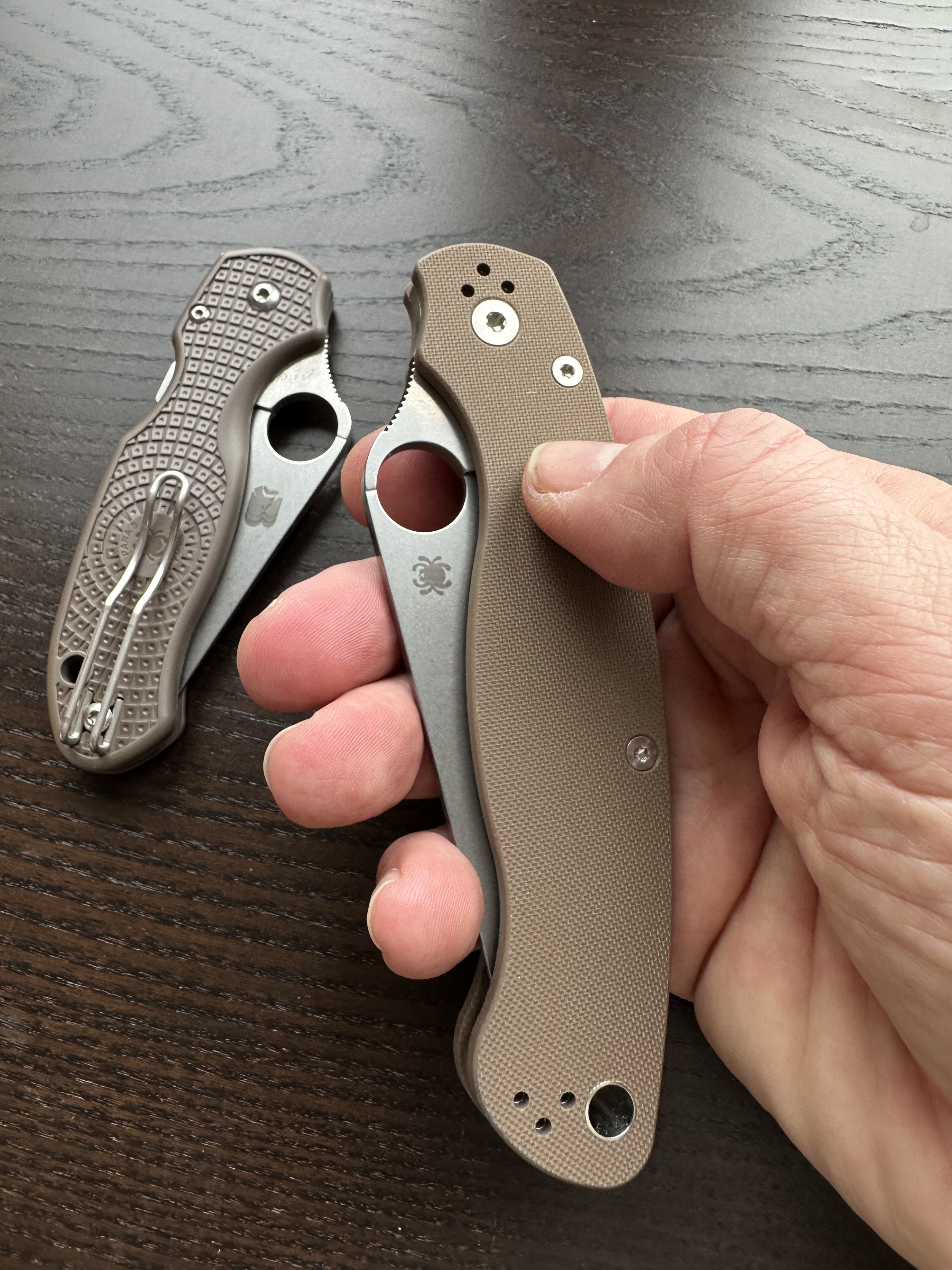
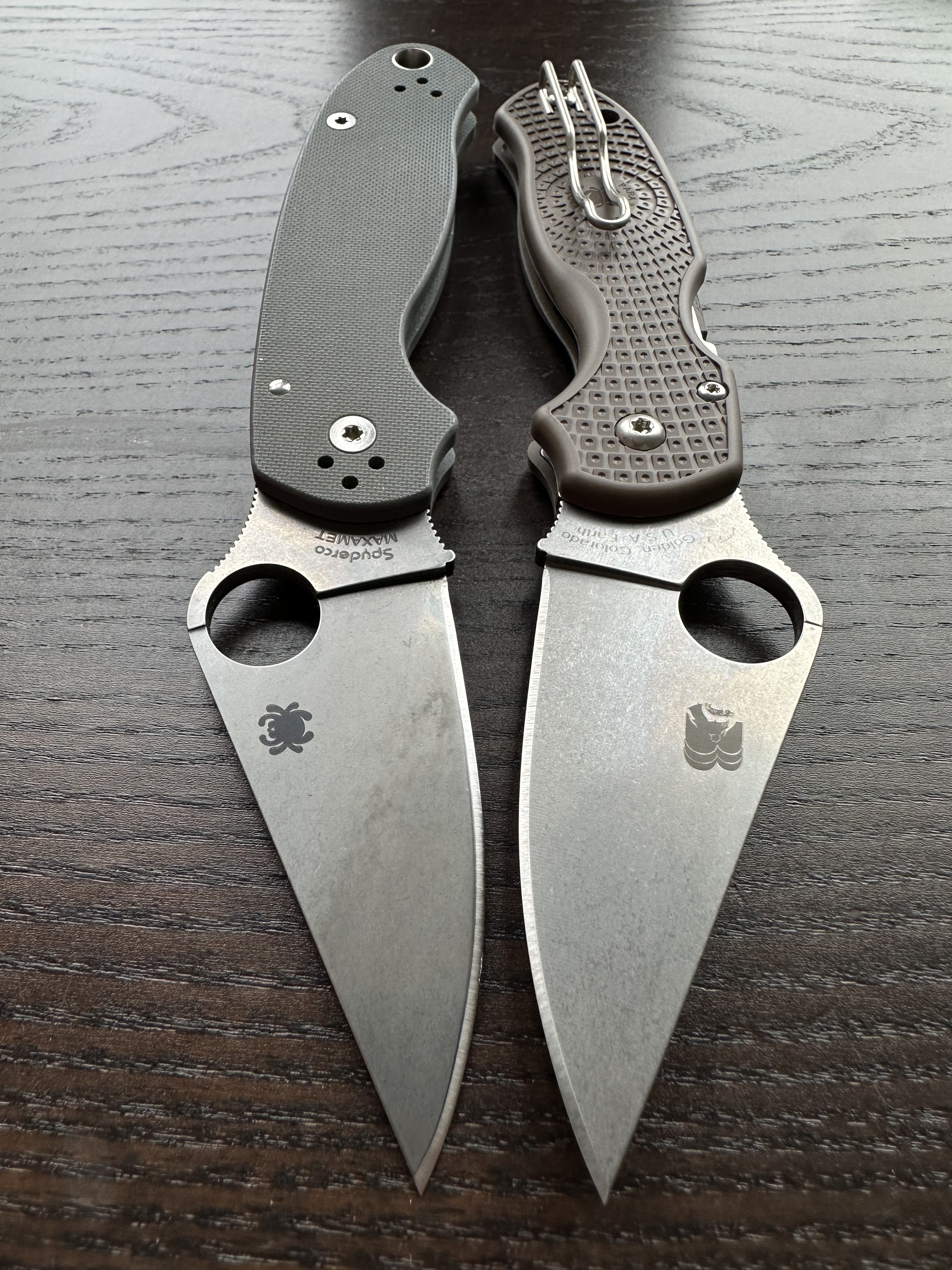
Another comparaison shot: the Lil Native convexed by Jan Dirk feels much smaller and stubby than the Microjimbo. But on the picture there is no real difference. Both are reliable lil’big knives with strong blades and strong locks.

There’s no jimping on the handle or the blade, yet indexing the knife is effortless. You always know exactly where the edge is, allowing for precise, controlled cuts.
That G10 definitely leans toward the pocket-shredder side.

I prefer my G10 with a smoother finish, so I used 400-grit sandpaper to tone it down—taking care to avoid inhaling the hazardous G10 dust.

I’m able to carry the Microjimbo in my watch pocket. I appreciate the strong detent—it keeps the blade securely closed while in my pocket. However, because it’s so strong, it’s difficult to open with any finger other than the thumb. No easy Spyderflick on this one.

The Microjimbo isn’t out of place on the kitchen cutting board. In fact, this will likely be its main battlefield, as I use my pocket knives extensively in the kitchen. I do need to be careful, though—its pointed tip tends to catch the flesh with a predator-like hunger.

Once razor-sharp, I haven’t been able to dull any of my CPM-15V blades so far, even after cutting cardboard and other abrasive materials. I’m glad to carry such a compact yet robust folder as I continue to explore this remarkable alloy.

Michael Janich has clearly done his homework on this little knife. Designing smaller blades is always tricky, and this one is a pure gem. The choice of a full-flat-ground blade is fully justified by the placement of the Spyderhole, and the geometry remains uncompromised.

I’m looking forward to putting this little knife through its paces.

MILITARY™ 2 BROWN G-10 CPM® 15V® SPRINT RUN® – Part 2: Convexing the edge.

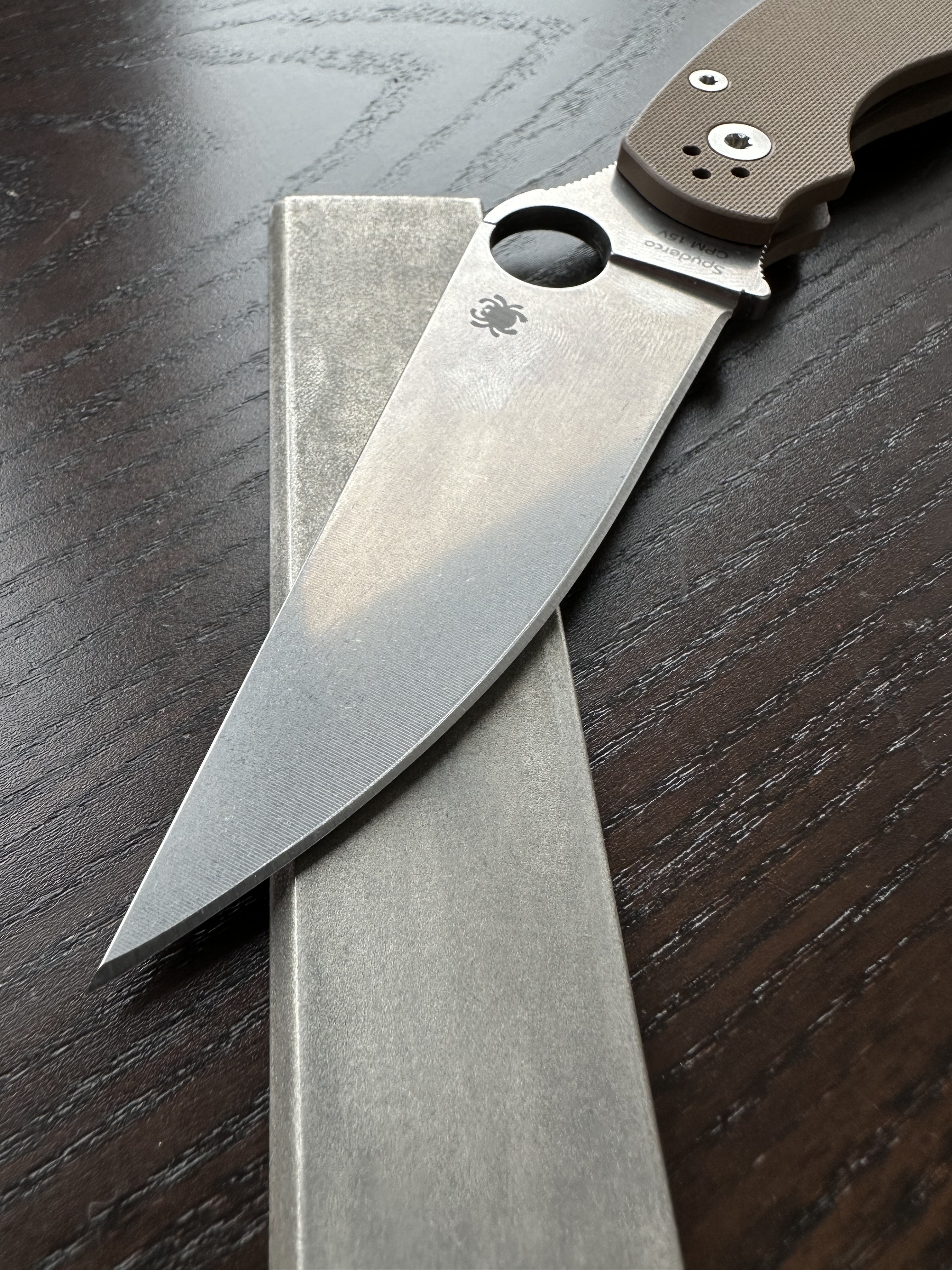
You know what ? It’s time to thin the edge of Gambit.
Pictures are better than thousand words.

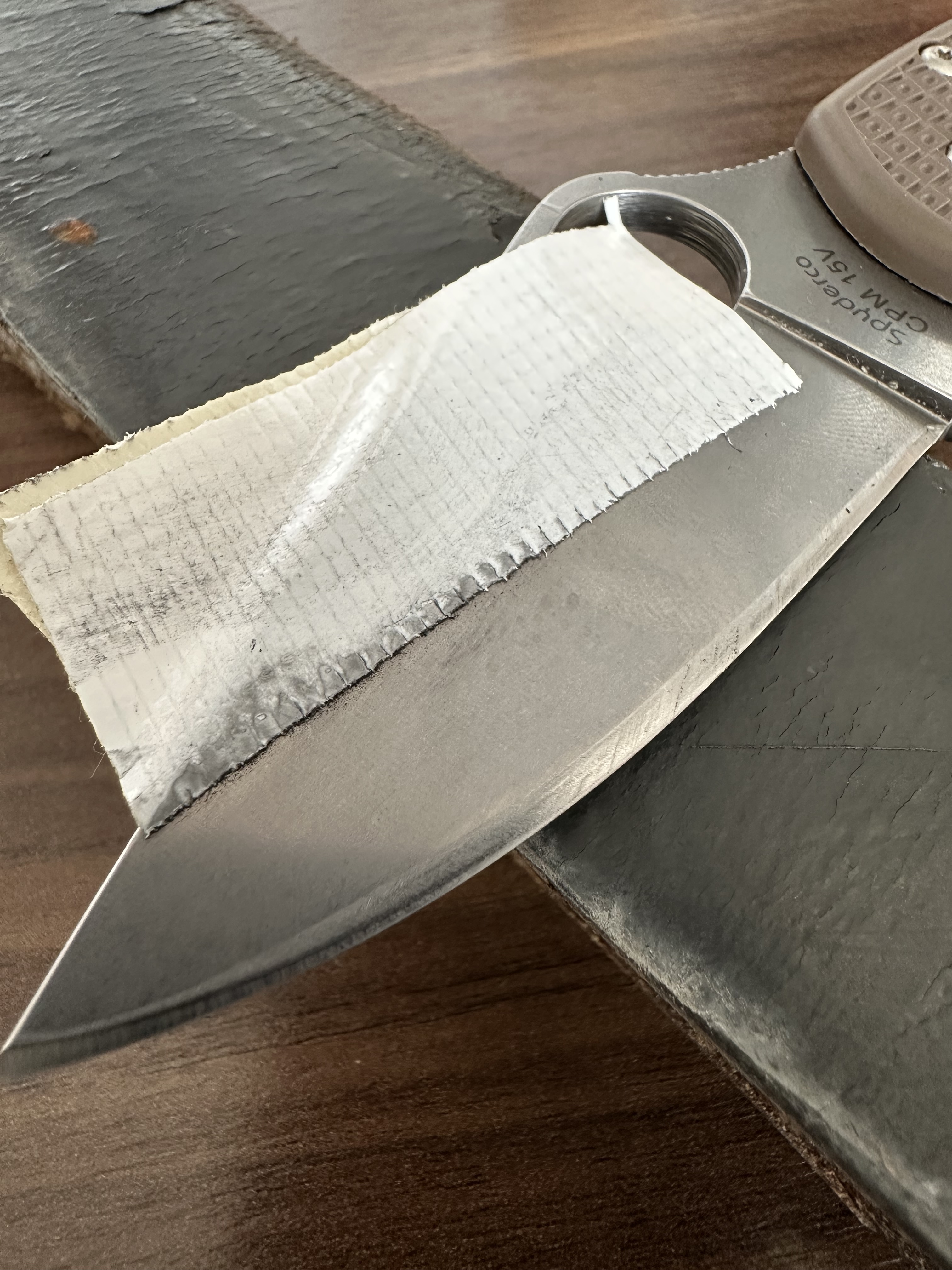
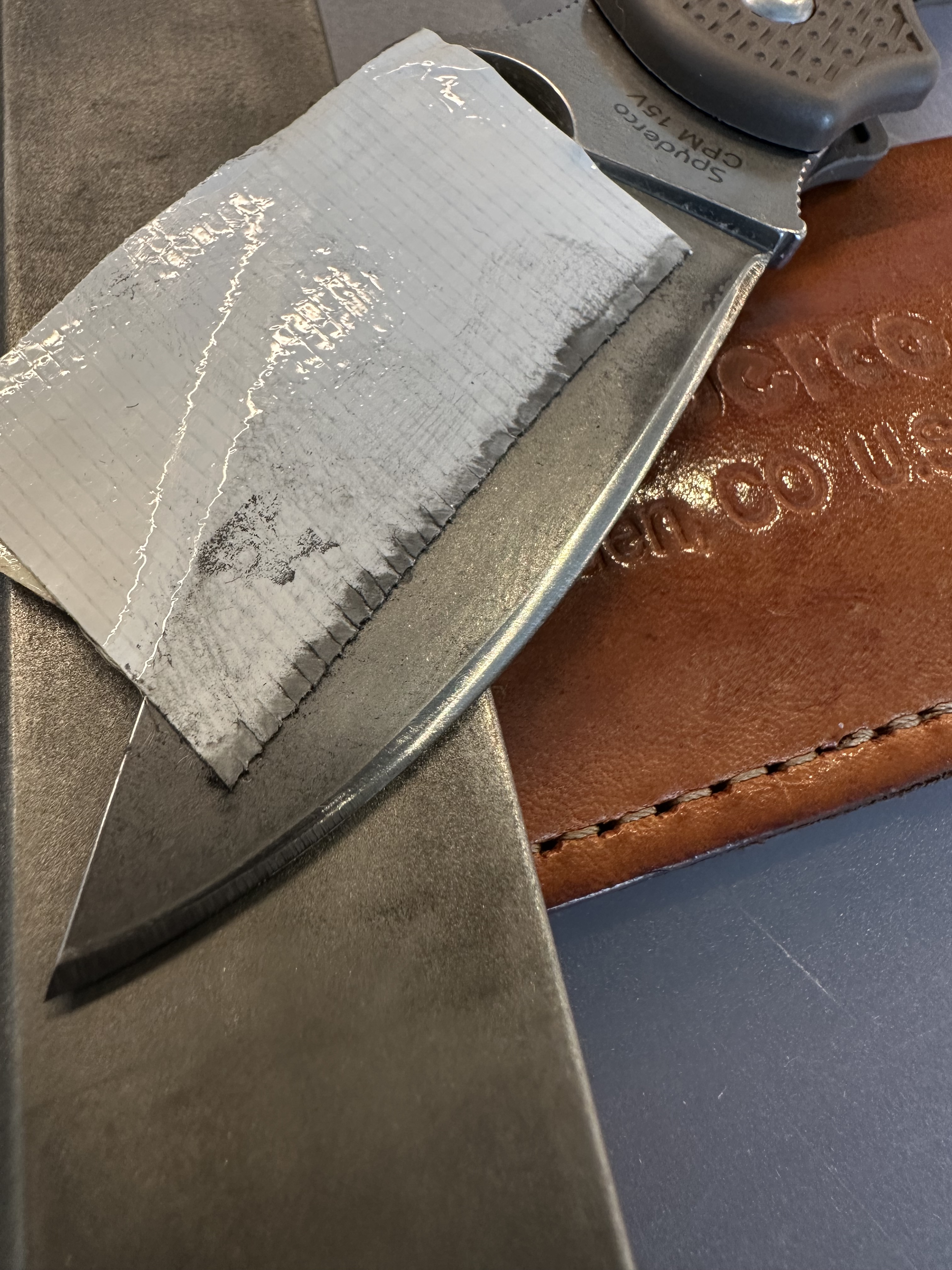
The gaffer is here to protect the blade against my clumsiness.

The Double Stuff 2 is the main tool. But it is old now.
It has lost some of its teeth in many many edges reprofiling…

But eventually it is a cheap Sharpy bought on Amazon which seems to be 15V best friend. It is 800 grit.
And it bites into 15V like no tomorrow.
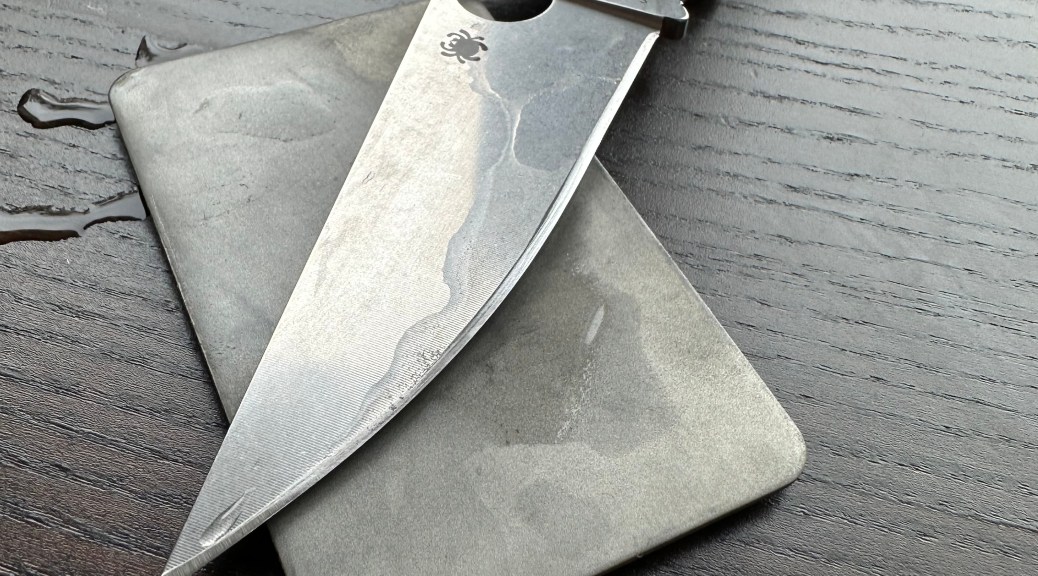
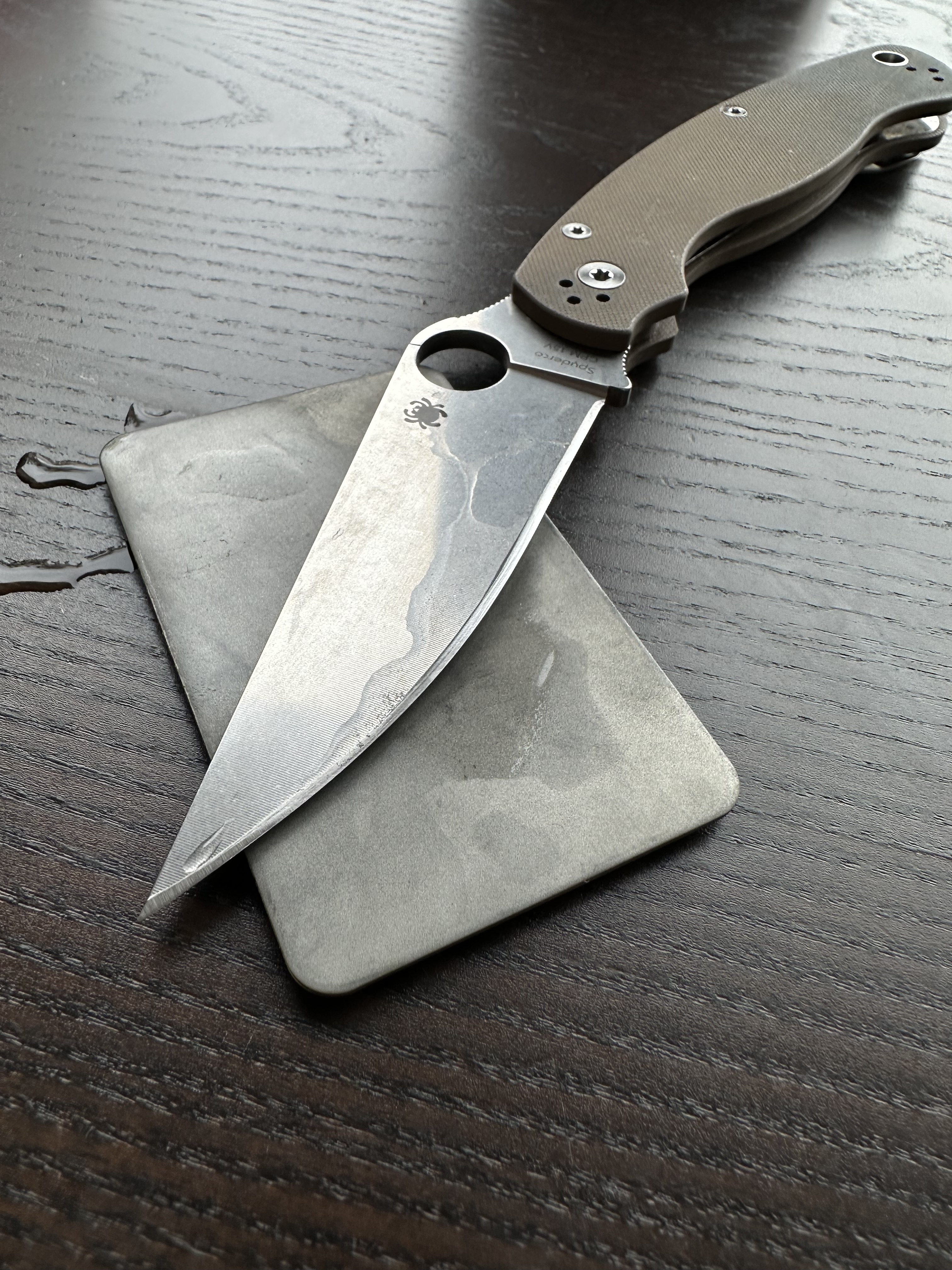
So I was able to round the edge’s shoulder. Let’s test it.

It goes deep and steady.
There is real improvement. But gosh, 15V do not like to lose its particules. Compared to Magnacut or SPY27, CPM-15V is hellish.
Now I perhaps don’t have the best diamond tools for that.
But really, it is not a piece of cake in my book.

Now could it be a answer: The Military 2 reaching the 67 HRC ?
But that was exactly my impression after watching the YouTuber’s video — until Jake, a metallurgist for 14 years, left an exceptionally detailed, well-sourced comment under this review.
To quote his conclusion:

“… Spyderco did an amazing job getting a near custom level heat treatment on an amazing steel at an affordable price to many people who otherwise wouldn’t have been able to spend large sums of money on customs. But expecting 67Rc is a bit too much. Shawn has said it repeatedly that it isn’t realistic for a production knife company to hit hardness levels that high and also be able to work the material.

Many thanks to Jake for his eye-opening comment — truly appreciated!

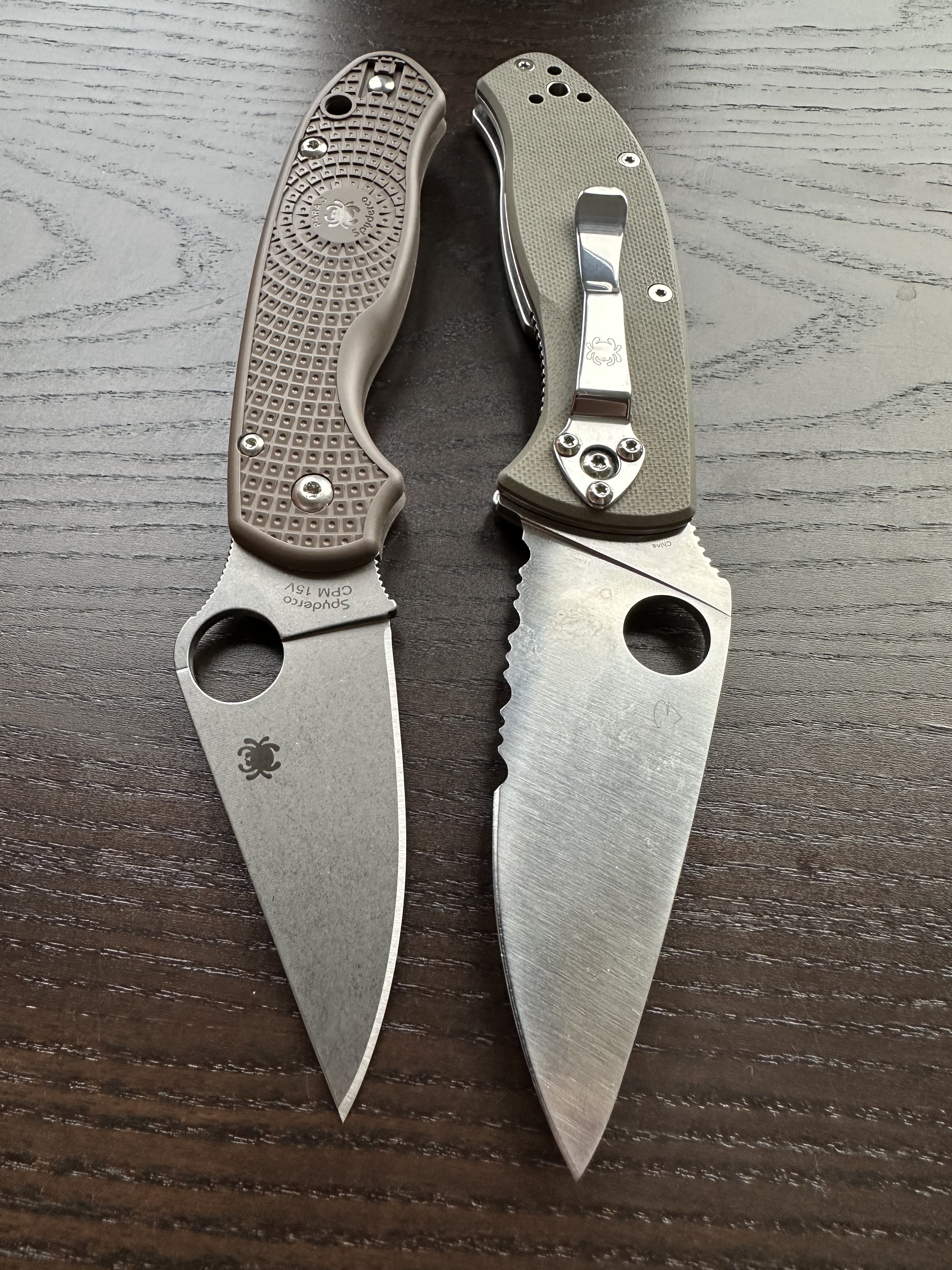
GETTING A CONVEX EDGE WITH THE CPM-15V BLADE OF THE HOULAHOULA PARA3 LIGHTWEIGHT PART 2.

Since the first try of convexing the Para 3, it is time now to reach the same level of de-shouldering as on my Sage 5 Salt.

My goal here isn’t to touch the edge itself, but to smooth the border between the flat of the blade and the edge angle. This allows me to maintain the edge primarily on leather while reducing drag when cutting hard materials like plastic or wood.

The equipment I used was again the Spyderco Double Stuff 2, focusing mainly on the diamond side. I experimented with gentle, round strokes on the flat diamond stone instead of always moving in the same direction — it seems to remove metal much faster.

For aesthetics, I plan to follow up with white ceramic or jade stones to approach a mirror finish, similar to the Sage 5. Magnacut responds beautifully to polishing, whereas CPM-15V doesn’t particularly care.

The use of gaffer helps preventing any deep scratches on the blade finish.
It works great. The black dust is metal removed by the diamonds.
I do that outside in the wind. I don’t want to breath that dust.

Eventually this second round has gone so smoothly (compared to the first one linked at the start of this review) that i was on the verge to work on the Military 2.

Remember Sal saying:
The Edge is a Ghost. Always changing. Dying (dulling) being reborn (sharpened) split personality (angles and geometry changing). Think of the edge as gas in a vehicle. It runs out of gas and you put in more gas. We provide the format, materials, design for use, variety to avoid boredom and create interest, but the edge is your creation. The result of your understanding, education, experience and practice.

The comparison between the Sage 5 Salt and the Para 3 continues. In short: the Sage 5 has superior geometry thanks to its high 3 mm FFG blade, while the Para 3 features a sturdier blade, a thinner point, and is overall lighter (no steel liners).

It’s really your choice — both are highly capable and complement each other, coming from the same design mind. Shawn Houston even notes that the Para 3 carries “that Delica vibe.”

I’m impressed by the Sage 5’s exceptionally smooth action — one of the best among Spyderco’s compression lock knives. I love both knives. These days, the Sage Salt rides with me, but while both won’t let you down, the smooth Sage is more fidget-friendly. Both are great, but the Sage 5 is simply less popular… 😉

MILITARY™ 2 BROWN G-10 CPM® 15V® SPRINT RUN® – The Mother Of All Bears.

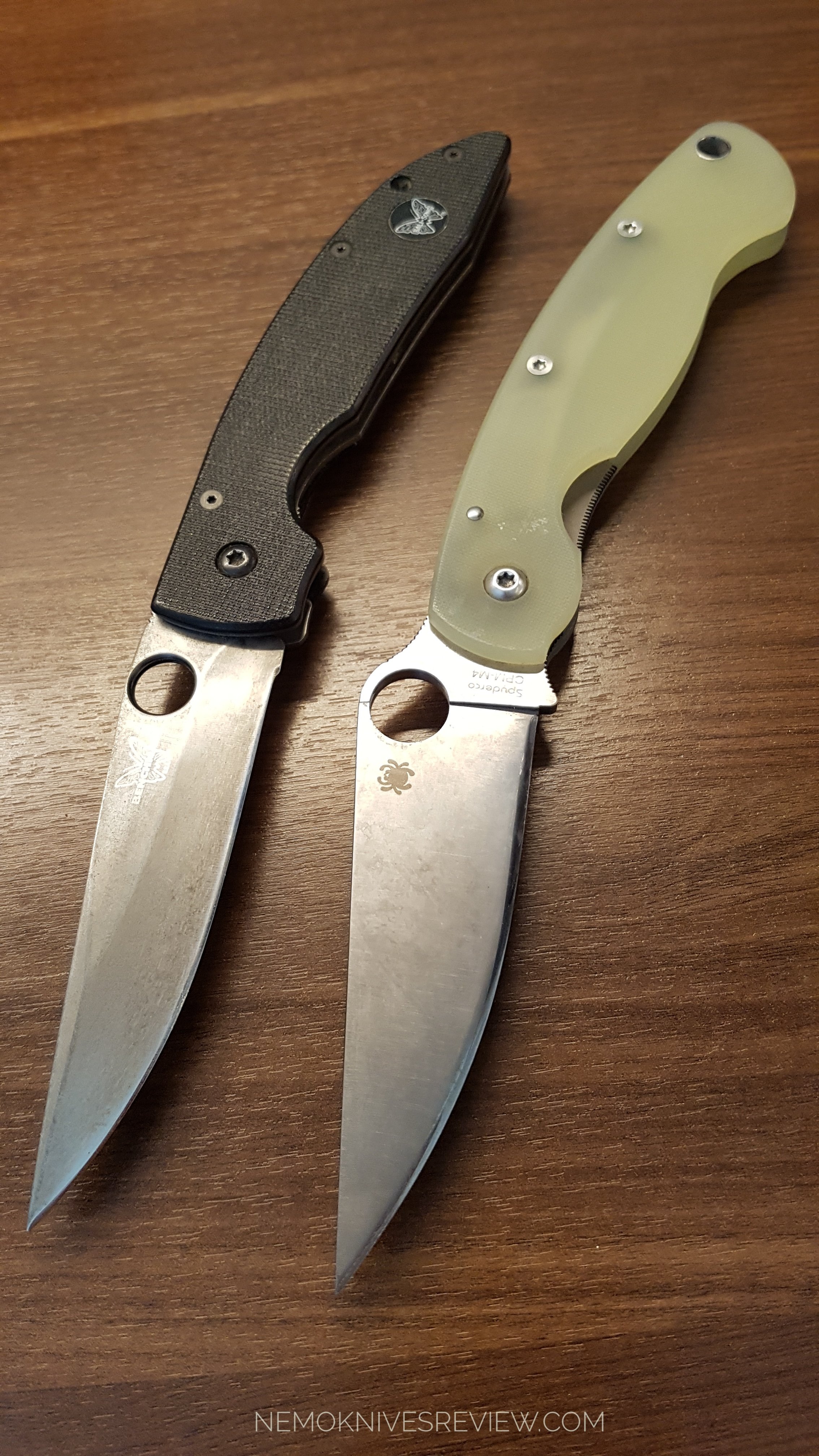
The Spyderco Military C36 entered my life before the turn of the millennium. Back then it was a CPM-440V (S60V) wonder, remarkable for its emphasis on lightness. With Fred Perrin, we called it a “quick reaction tool.” At the time, it was a genuinely innovative design: a folder with a nested liner and powder metallurgy steel, both cutting-edge features. It was a real breakthrough in the cutlery world, and a true Sal Glesser design — high performance on a light frame, or as Sal, a racing car enthusiast, would put it: a fast, efficient chassis built for speed and reliability.
The idea was simple:  “If your son were going into the military what folding knife would you send him with?”
(“Do you think we were born in peaceful time ? Put out the lights on the Age of Reason.” Justin Sullivan.)

The very thin, pointy blade and the long handle of the Military were not understood at first. I often heard: “I can break the point!” or “I don’t like the blade-to-handle ratio!”

But Sal’s vision was deliberate. The elongated handle provided a secure grip and safe operation of the knife — even when wearing gloves in harsh conditions. And that needle-like point, when not abused as a pry bar, proved to be a reliable, precise all-terrain tool. What first looked fragile was in fact purpose-built: a cutting instrument optimized for performance, not for reassuring looks.
I remember ESEE (the RAT) founder Jeff Randall having written a review of him bringing a CPM440V Military in the Peruvian Rain Forest. It was requested by Sal Glesser asking Jeff to use it hard in the equatorial zone.
The review has been published in Tactical Knives and on Randall site before he started his knifemaking business. Eventually Jeff Randall prefer the SERE 2000 in VG10 but:
I have zero complaints against the Military, but for the role I use a folder in, the new SERE is absolutley perfect. Actually in a tactical role, the Military is a little faster to deploy for me. I think the Military is a perfect crossover between survival and tactical, but the SERE is the perfect survival folder.”
The point is, the Military’s thin tip and liner lock were never an issue — even in the rainforest, where I pushed it hard.

Thanks to Spyderco’s CQI (Constant Quality Improvement) philosophy, the Military has been continuously refined over the decades. A titanium Reeve Integral Lock version was later released, giving a sturdier feeling but at the cost of the knife’s soul: it became heavy, losing that unique spirit of lightness and agility that made the original Millie so special. For the record, G10 is already a strong, proven material — it didn’t need titanium to inspire confidence.
Also Eric made his own hardchore liner lock folder: the Tenacious.
Spyderco will continue to promote well-made linerlocks especially those designed by Master Ed Schempp. His Bowie is a master piece.


The Military has always been a huge folder to carry casually, and even more so in the years after 9/11, when knives became heavily restricted and socially frowned upon. Yet, the C36 still managed to slip into pop culture: in Desperate Housewives, Season 2 Episode 8 (“The Sun Won’t Set”), Hector Ramos (played by Danny Trejo) nonchalantly peels an apple with a full-serrated C36 Military. A perfect Easter egg — a knife enthusiast immediately recognizes it, while most viewers just see “a big folding knife.”

It’s funny how pop culture sometimes normalizes what legislation and public opinion try to stigmatize: Trejo’s character wasn’t using it violently, but in the most domestic, innocent way possible — peeling fruit. That contrast says a lot about how the Military can be both a serious tactical tool and, at the same time, a simple everyday companion.

Then, the Market asked for a shorter version. Sal teamed up with Eric to design and produce the Paramilitary. A shorter version with a new strong lock developed for their Martial Blade Craft Line: the Compression Lock.
Then came the Paramilitary V2 or PM2 which stillis a huge success.
Then the Para3 (three inches blade) came for a more compact version and even a Lightweight version which is considered by Shawn Houston as a Compression Lock Delica.

It’s striking how pop culture can normalize what legislation and public opinion often stigmatize. After 9/11, carrying a large folder like the Military became suspect, even frowned upon. Yet in Desperate Housewives (Season 2, Episode 8: “The Sun Won’t Set”), Danny Trejo’s character Hector Ramos uses a fully serrated C36 not as a weapon, but in the most innocent domestic way imaginable — peeling an apple. That small scene perfectly captures the duality of the Military: a knife designed as a serious, high-performance tactical tool, yet just as capable of being a simple, everyday companion.

“More than 25 years after its original release, the eagerly anticipated Military 2 builds on that hard-earned reputation while incorporating several significant design improvements. Instead of a LinerLock, the Military 2’s full-flatground CPM® S30V® blade is supported by Spyderco’s signature Compression Lock® mechanism, which offers greater strength and even safer one-handed operation.” Quoting Spyderco.

To make it clear: the Military 2 is based on the Paramilitary 2 with a longer blade and handle. Is that simple ? It is a PM2 XL ! 😉

Designed in 1995, the first-generation Military (Mil1) came with a single clip option: tip-down carry. That choice wasn’t arbitrary — it was tied directly to Sal Glesser’s preferred opening method, the Spyderdrop. Pinch the hole between thumb and finger, give a flick, and let the weight of the handle swing the blade open. Faster than many switchblades, elegant, and utterly reliable. My Tenacious carries that same spirit: a knife built to be deployed quickly, smoothly, and without fuss — ready for work in an instant.
That opening style is less common today, as most users gravitate toward the “Spyderco flick” or “thumb flick.” But those techniques depend on tip-up carry — the clip has to be mounted at the rear of the handle, not near the pivot. That’s why the Military 2 was so eagerly awaited with its new configuration… yet curiously, it’s still sold tip-down!

The stainless steel liners that form the foundation of the lock are larger, giving the knife increased structural strength and anchoring its four-position pocket clip, which is configurable for left or right-side, tip-up or tip-down carry. “
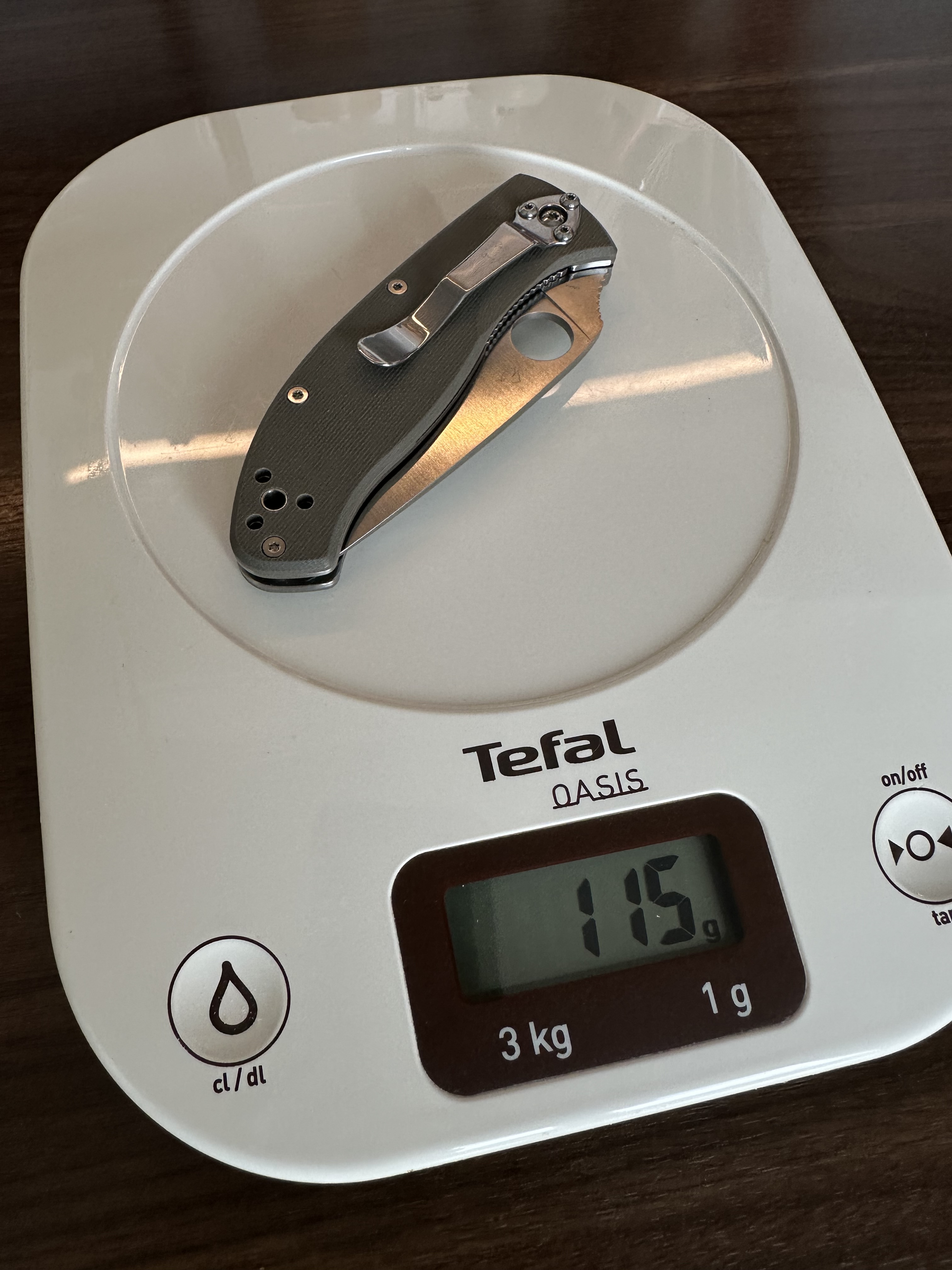
OK but comparing the weight between the C36 (128g) and the C36-2 (124g) the Military 2 is 4 grams lighter. (114 grammes on my kitchen scale !)

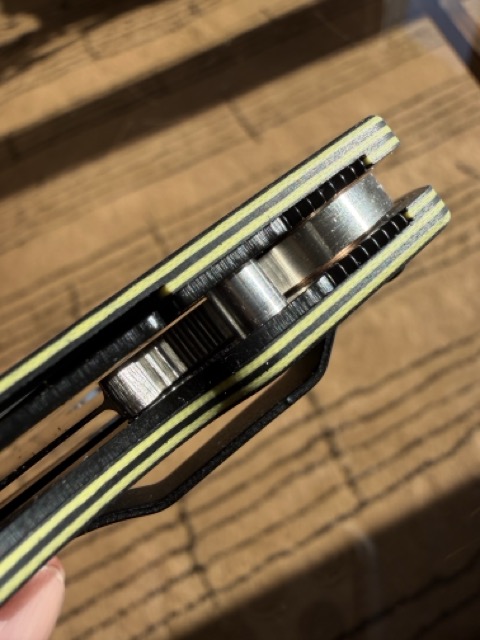
“The skeletonized liners are nested within peel-ply-textured G-10 scales to maintain a slim profile and complement its open-backed construction to reduce the knife’s overall weight.”

I have been waiting for a Sprint Run before to jump into the M2 wagon.
“C36GBN15V2″ ! (For the record, the first name of the Vanilla Military 2 is just C36G2, plain edge, and the new Mil 2 Salt is C36GMCBK2” and the Paramillie Salt is “C81GBKYLMC2” !…)
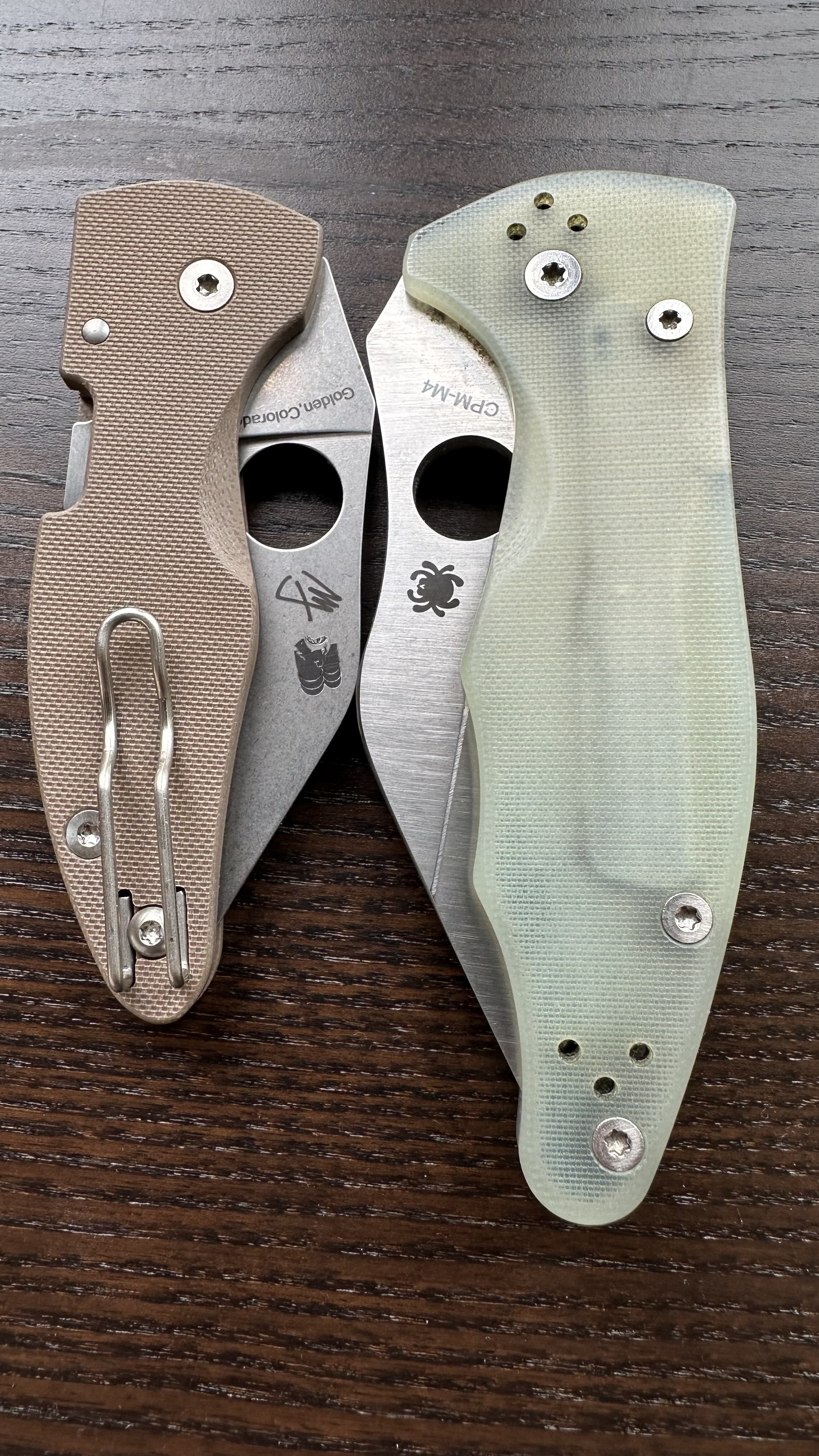
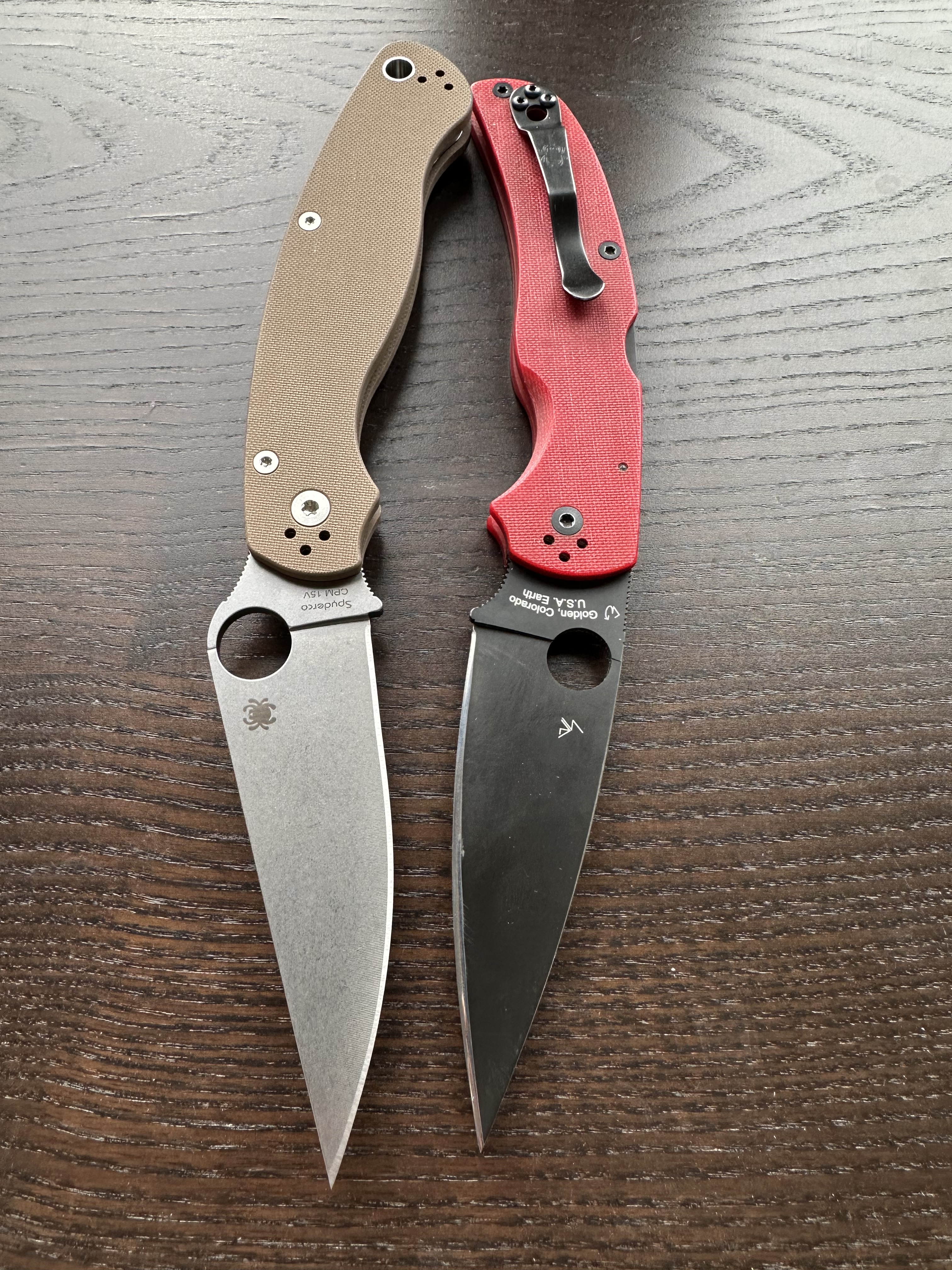
My two previous Millie were Gandalf with a CPM-Cruwear blade and grey handle, Ghost with a CPM-M4 blade and jade handle.
This one will bear the name of Gambit.

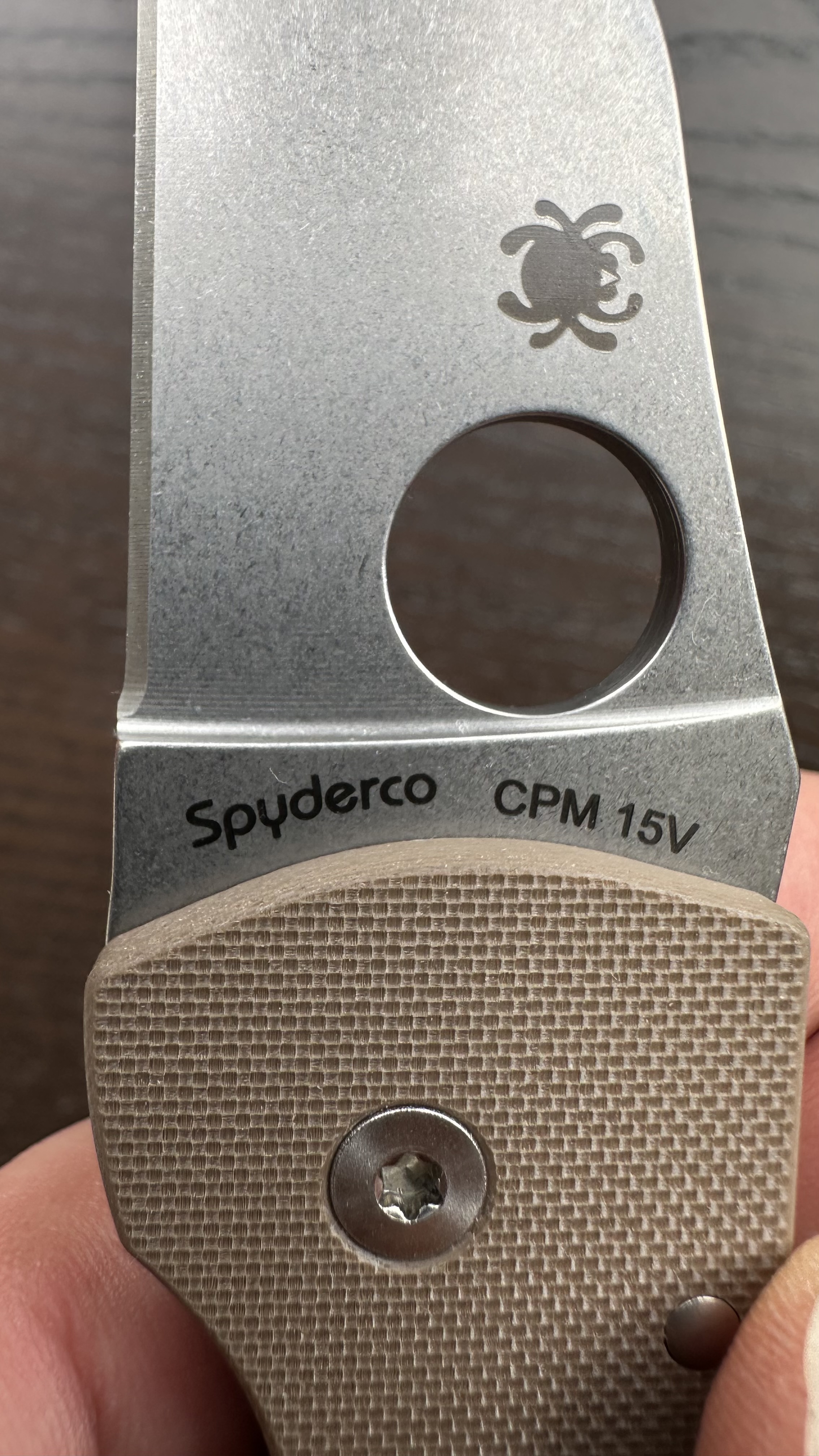
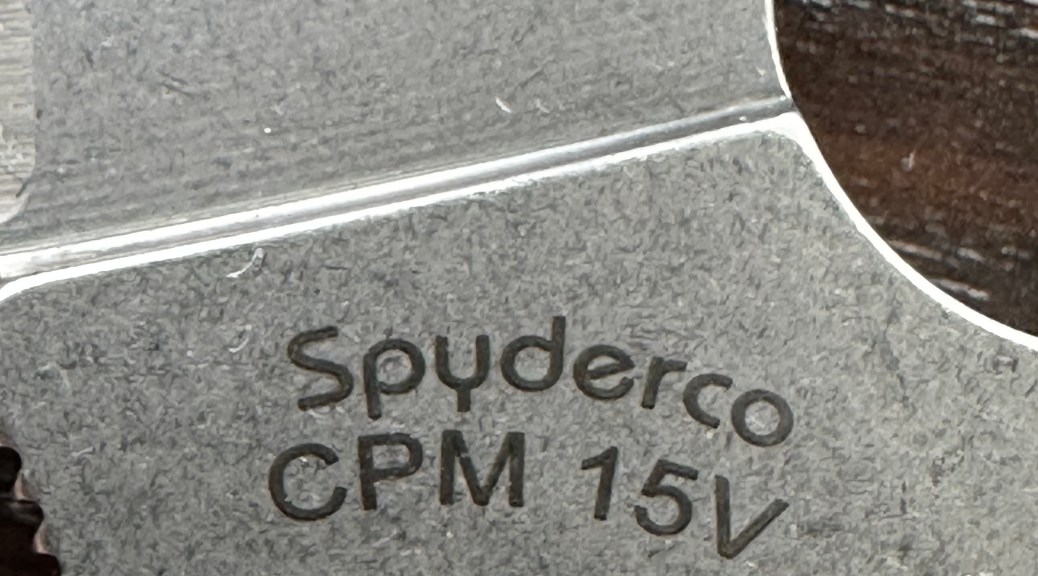
Now this one carries a CPM 15V blade — a state-of-the-art particle metallurgy tool steel with an extremely high vanadium content, heat treated according to Shawn Houston’s specifications. And 15V is nothing short of astonishing: its cutting ability and edge retention are absolutely breathtaking.
Even Sal himself acknowledged it on the forums:

“The flesh is weak.” That’s the very sentence that made me pull the trigger on the Military 2, right after ordering the Para 3 in CPM-15V. If you want to learn about 15V, this is the review to read: it’s an ultra-high-vanadium steel, heat treated according to Shawn Houston’s recipe — a carefully refined protocol that pushes the alloy to around 65 HRC. The result? Performance that is nothing short of otherworldly. Everyone in the community praises Shawn for his mastery of this steel.

So when the chance came to experience the Military 2 platform powered by such an extraordinary steel, heat treated with this level of care and “love,” it felt like a now or never opportunity. Especially knowing that Crucible, the producer of CPM-15V, has since been acquired.

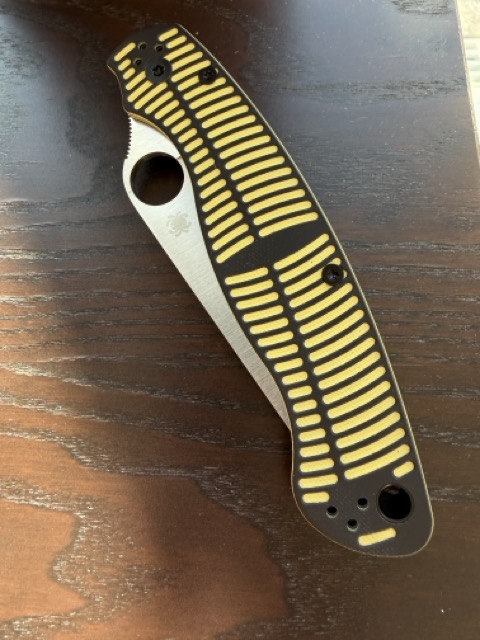
The Military 2 stands as the new flagship of the Spyderco family, a knife signed by both father and son. And this Sprint Run is truly a gem — a piece that simply oozes quality.

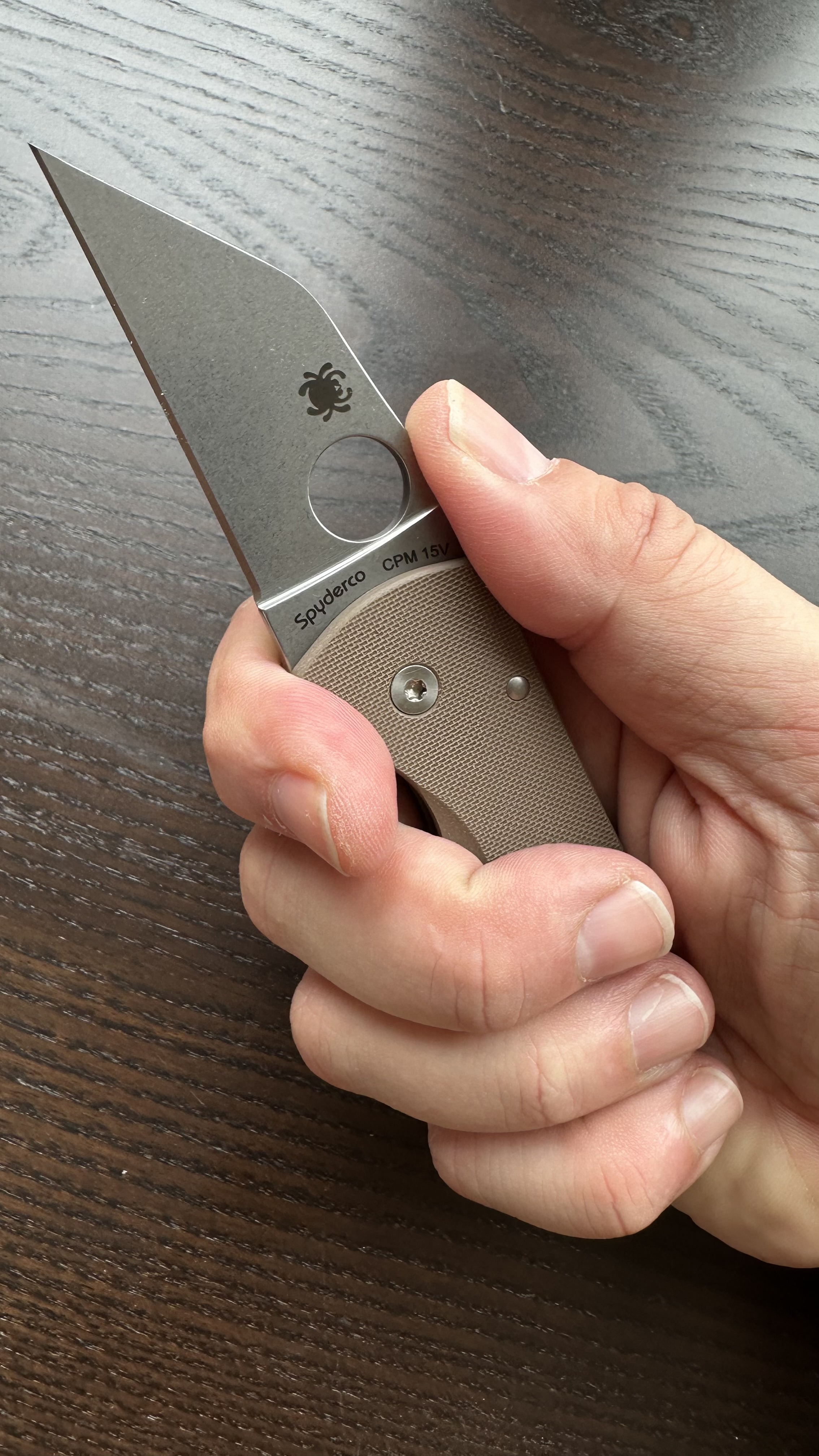
The action on this Golden-made Military 2 is simply wonderful: smooth as silk. Mine has zero lock stick and the blade is perfectly centered. Despite being heavier than a PM2 or Para 3, the blade’s momentum makes opening and locking effortless and confident — and the same goes for closing. In fact, this big folder is as easy to operate as a Para 3, making it instantly ready for use and safely closed just as quickly. The flat profile of the handle helps it disappear in the pocket, meaning you can carry a versatile 4-inch blade while keeping it unobtrusive.

There has been some discussion about the choil evolution between V1 and V2. The Military 2 has a slightly more pronounced choil, but it doesn’t bother me at all. The knife falls naturally into my hand, opening with a smooth middle-finger flick, and its generous ergonomics unfold like origami. The squarish, gritty G10 handle fills the hand securely and confidently.

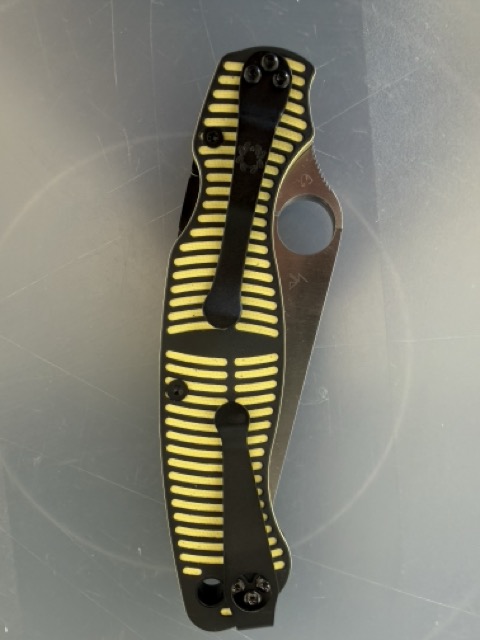
How does it feel under hard use? The compression lock can be a hotspot without gloves — my friend Pascal even got a blister cutting quinces with his PM2. Gloves can be a good precaution. This sort of discomfort is less of an issue with a backlock or liner lock. I’ve also swapped the pocket clip for a rear flat deep-pocket clip, which gives me better control around the pivot while keeping the knife accessible.

The G10 could use a touch of sanding for my taste, but it’s beautifully executed — and this time, I won’t touch it. The Military 2 “Gambit” is a true quick-reaction tool: you need just enough traction to put the blade in motion and maintain precise control over your cuts.

(I’ve installed titanium slabs on a PM2 before, and while it changed the feel of the knife, it didn’t enhance the reactive, instantaneous handling you get naturally with Gambit.)


One thing I’ve always loved on the Maxamet Para 3 — and now notice on the 15V family — is how the hot spots and angles on the spine are gently rounded. It makes the knife comfortable in prolonged use. Add to that the stonewashed finish of the blade, which gives the Military 2 a satisfying, tool-like aesthetic, and it feels immediately ready for work.

If you add a deep carry clip you got plenty of low profile carrying options.

Tip down carry for Spyderdrops.

A true Heir to the Military first version has always been the Tenacious.
It’s Eric’s answer to his father’s design, and what a brilliant evolution it is. The knife is a joy to Spyderdrop, and it feels incredible in hand during hard push cuts.

For the first time, the Gambit will be my Millie carried tip-up, and I can already tell it will change how I interact with the knife every day.

The clip doesn’t get in the way when I grip the knife firmly, thanks to the relatively long handle.

It also features a larger lanyard hole, similar to the Para 2, which adds versatility without compromising ergonomics.


The Gambit is designed as a worker, not a weapon — a reliable, high-performance 4-inch folder. While it’s not made for city carry, its design has always proven incredibly handy in the kitchen.


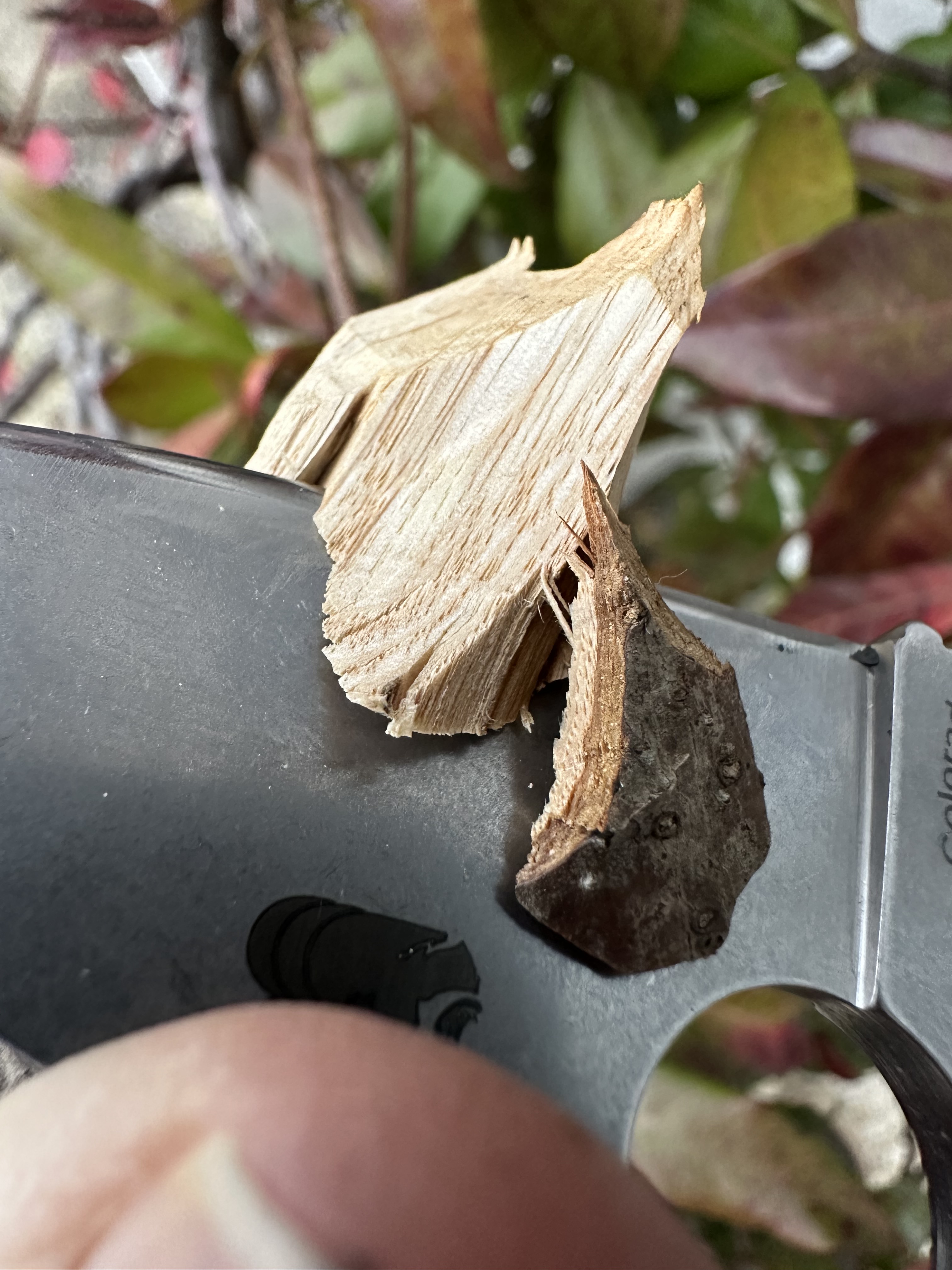
The Military 2 feels right at home in the woods, handling all chores during a hike or around the campfire — just as reliably as its father, the M1.

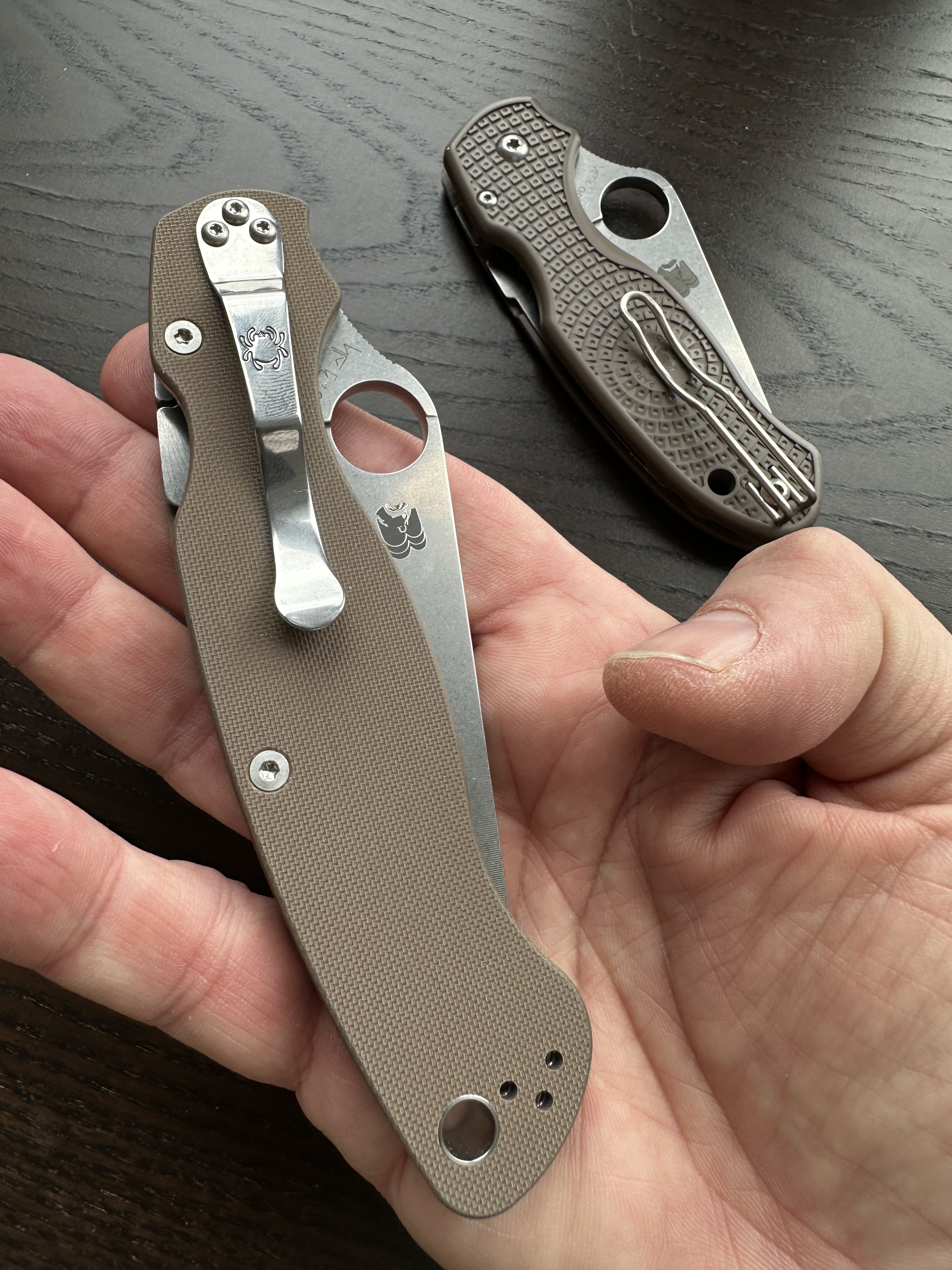
I’ve also noticed that the screws are now flat on this design, unlike the original Millie. (The Para 3 still has rounded screws.) I particularly love the large pivot screw on the Military 2 — bigger than many Spyderco pivots, including the Yojumbo and PM2 — giving the knife a solid, confident feel.

It is a bit longer than the excellent Native Chief.
And notice the larger pivot screw on Gambit.

The Military 2 Sprint Run is the new flagship — the culmination of decades of evolution on an already classic big folder.

A few things to keep in mind: the original Military V1 isn’t a knife to leave by the roadside. As Brock O. Lee pointed out — and I agree — the M1 still has some subtle advantages:

  • The broad, curved clip melts into the hand.
  • Chamfering on the handle is excellent.
  • smooth back with no compression-lock cutout hot spot.

The M2, however, is a strong evolution, built on the winning formula of the PM2. The compression lock is as strong as ever, though it can create hot spots between the thumb and index finger. Thankfully, the handle chamfering can be refined by hand, and the clip now allows for custom solutions.

This Sprint Run also introduces a steel that is extremely hard to beat in strength and edge retention. While I’m already enchanted by the PARA 3 in 15V, this “Mama Bear” folder brings massive cutting power in a light, flat, pocketable package. In terms of design and material, it’s an apex in modern cutlery.

Now the real testing begins — this review will be updated as I put it through its paces.

I don’t need a strong clip on such a long knife as it will rest gently in the pocket. Also a strong clip can ruin my pocket by shredding it.
This copycat of Lynch is just perfect in term of retention.

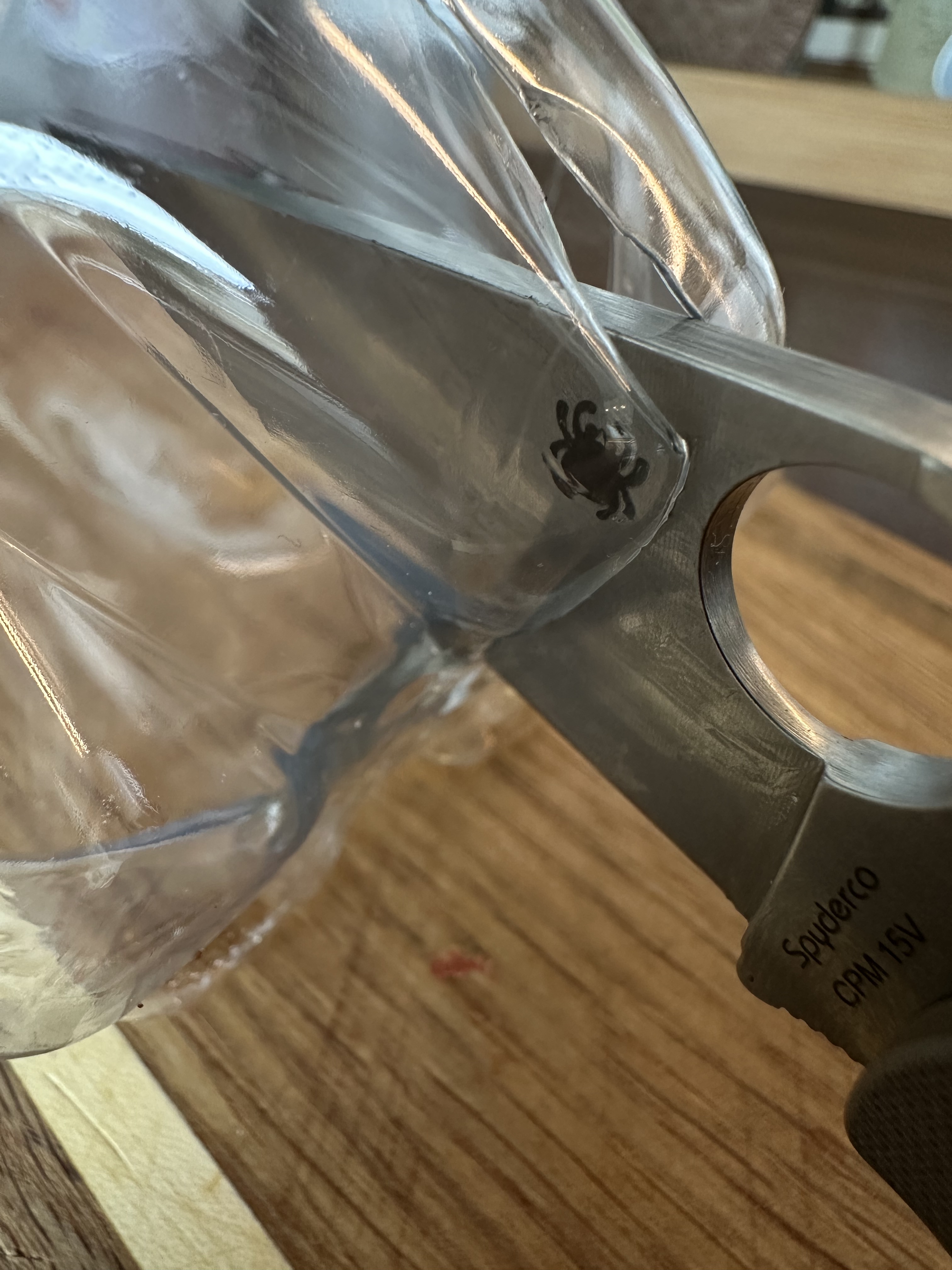
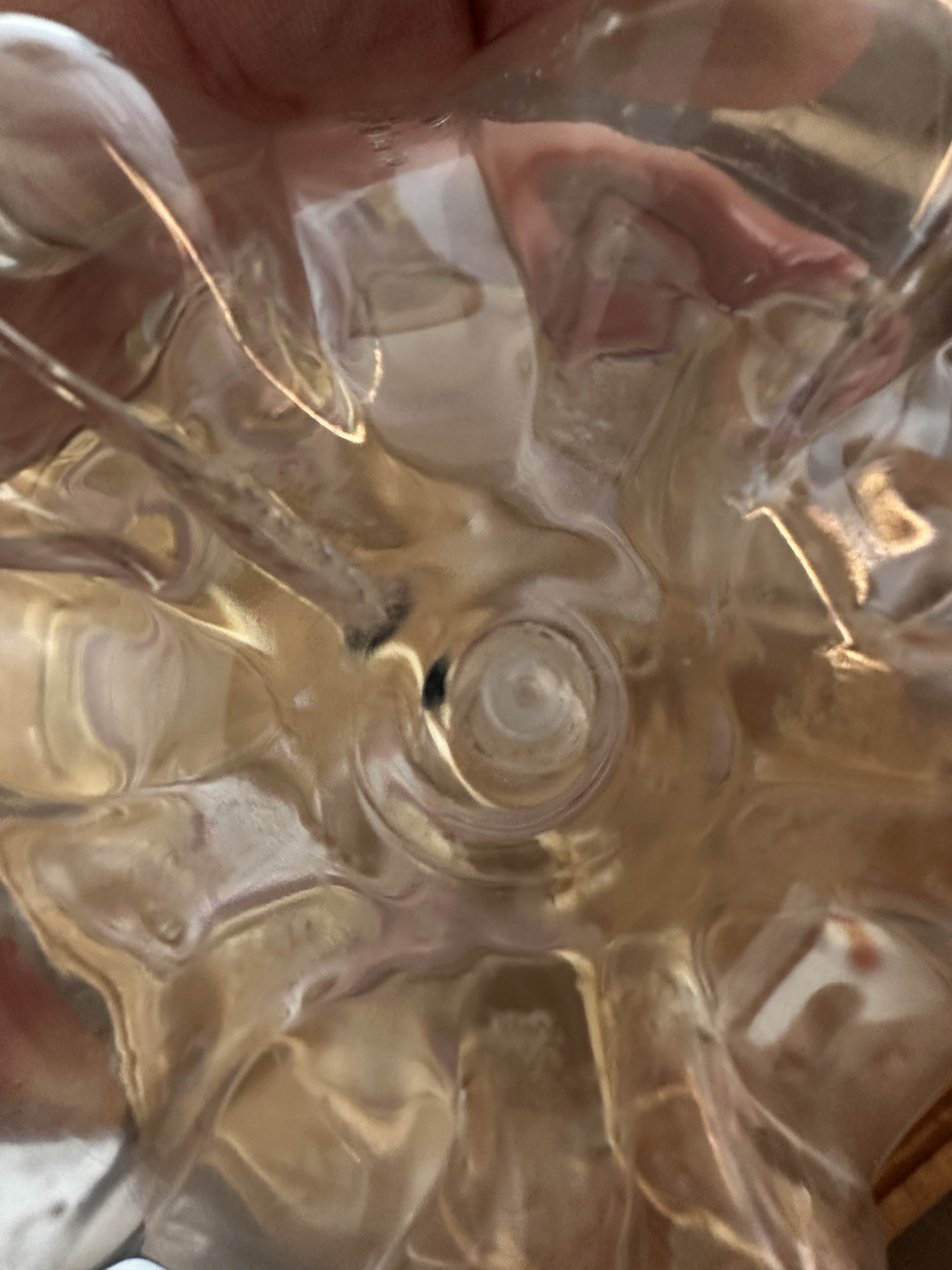
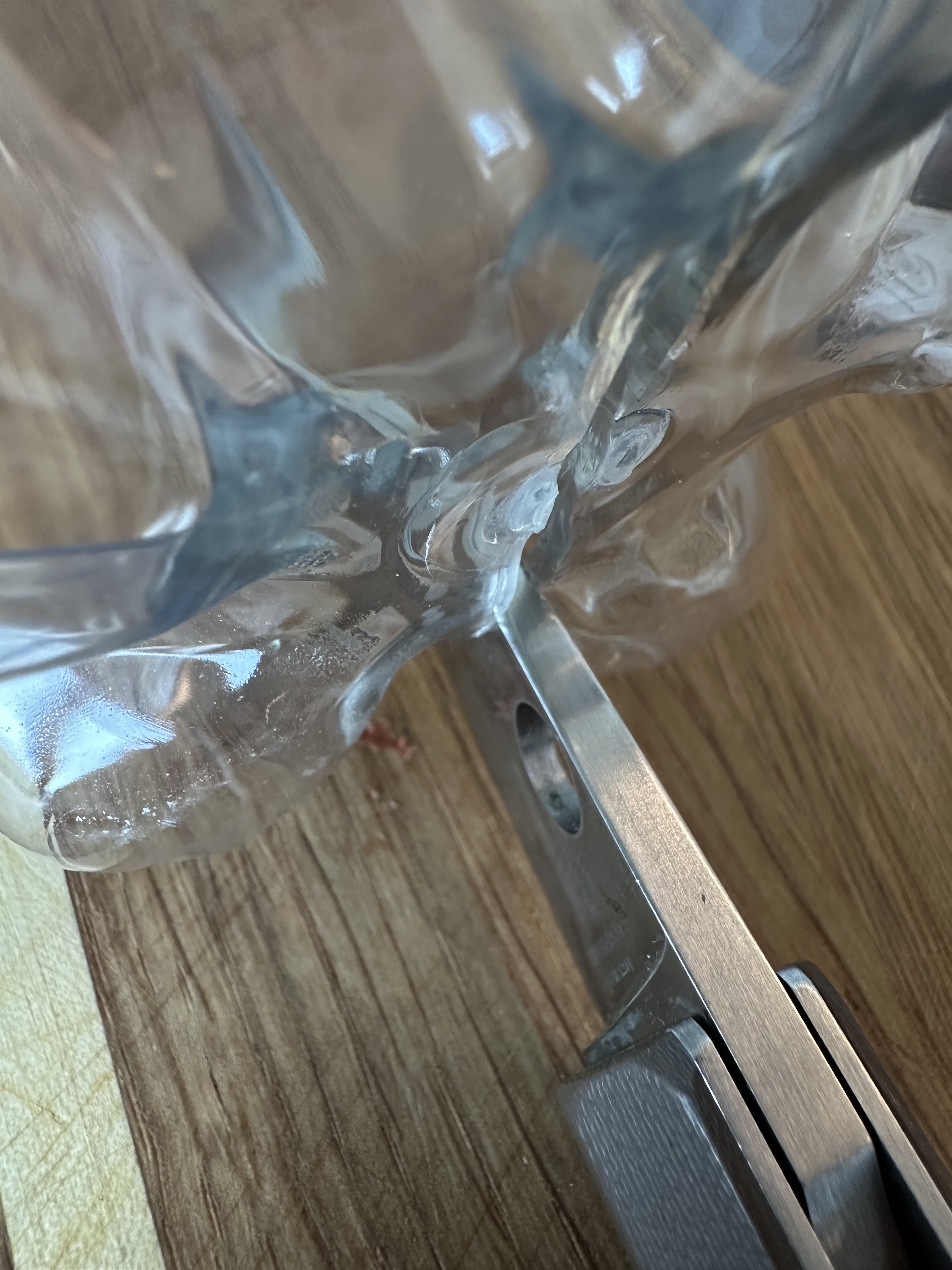
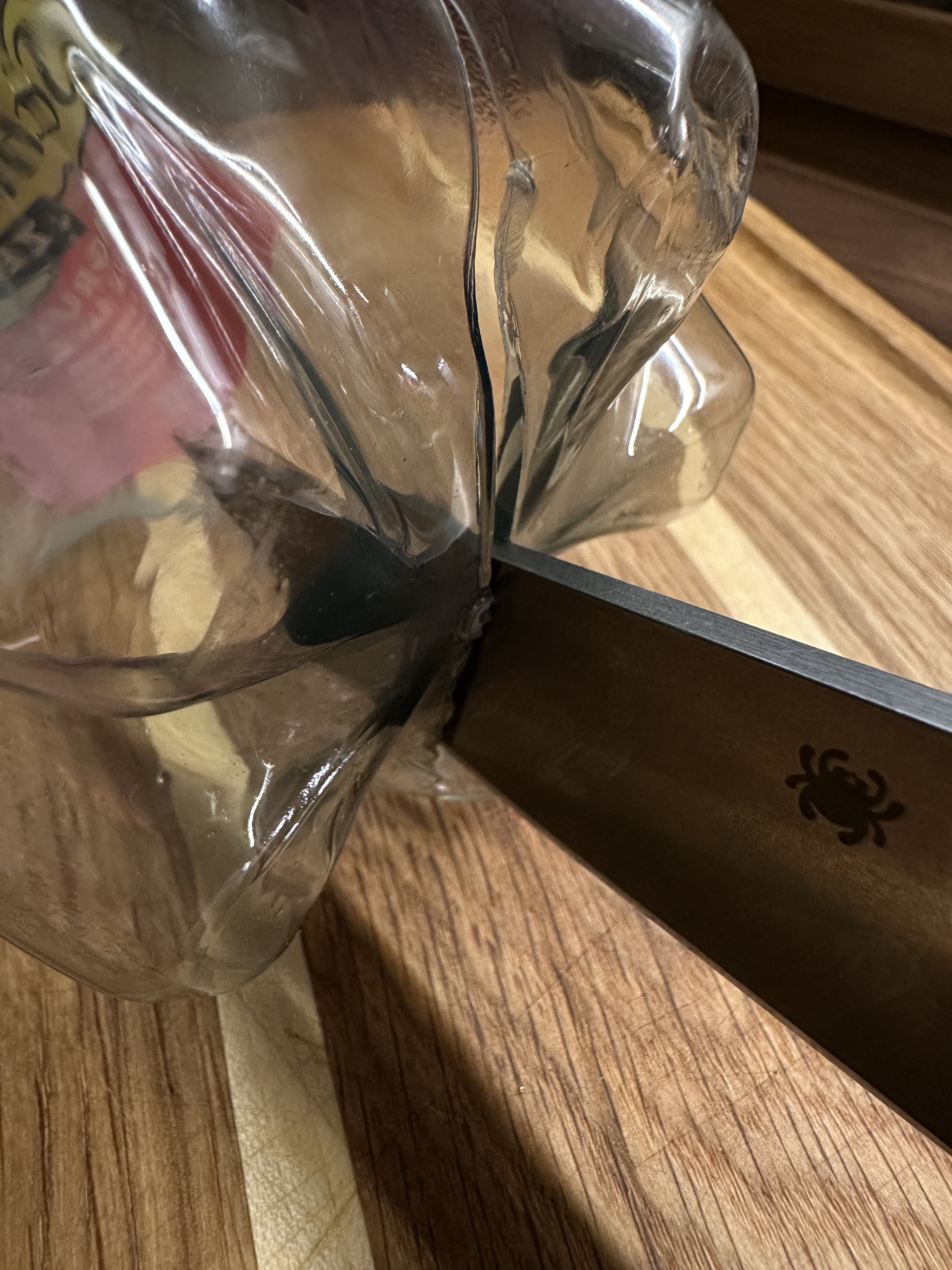
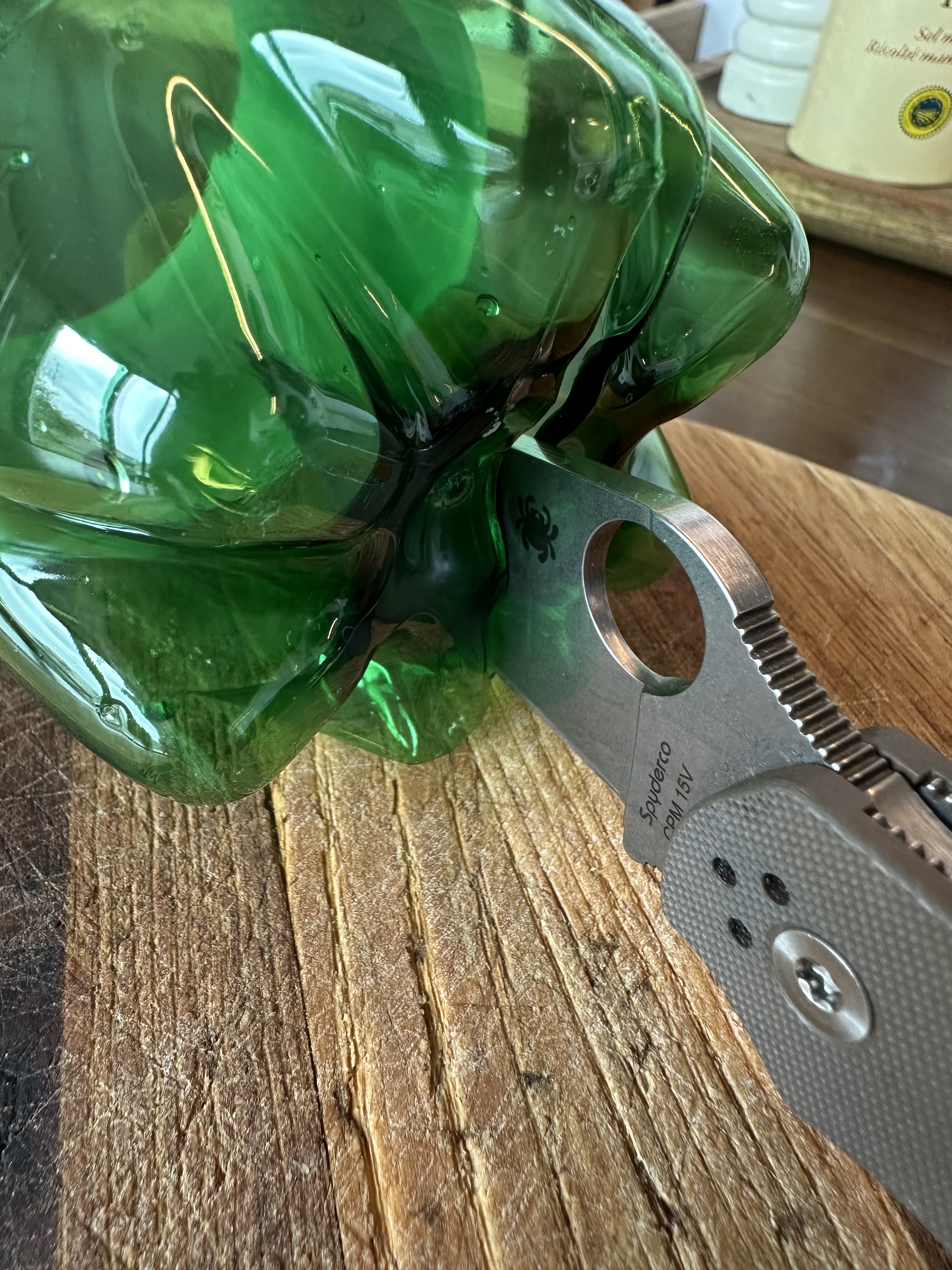
Now I need to convex the edge a little. The blade cannot go through the plastic bottle’s butt.

it could not reach the middle of the butt where the plastic is at its thickest… when the convexed Para3 or the Zero Ground Nilakka went through it.

Geometry wise nothing can beat the Nilakka.

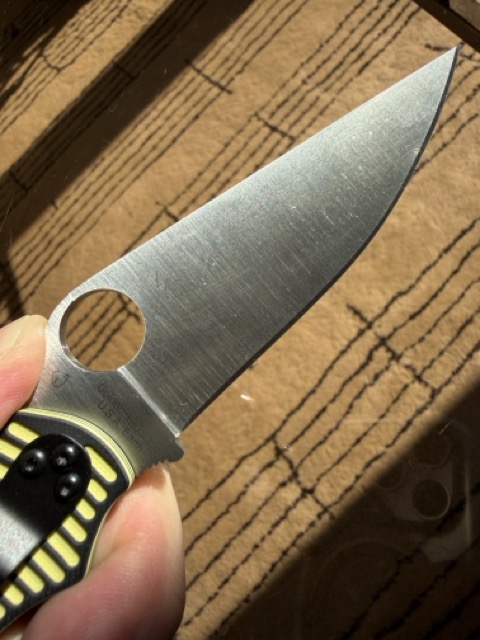
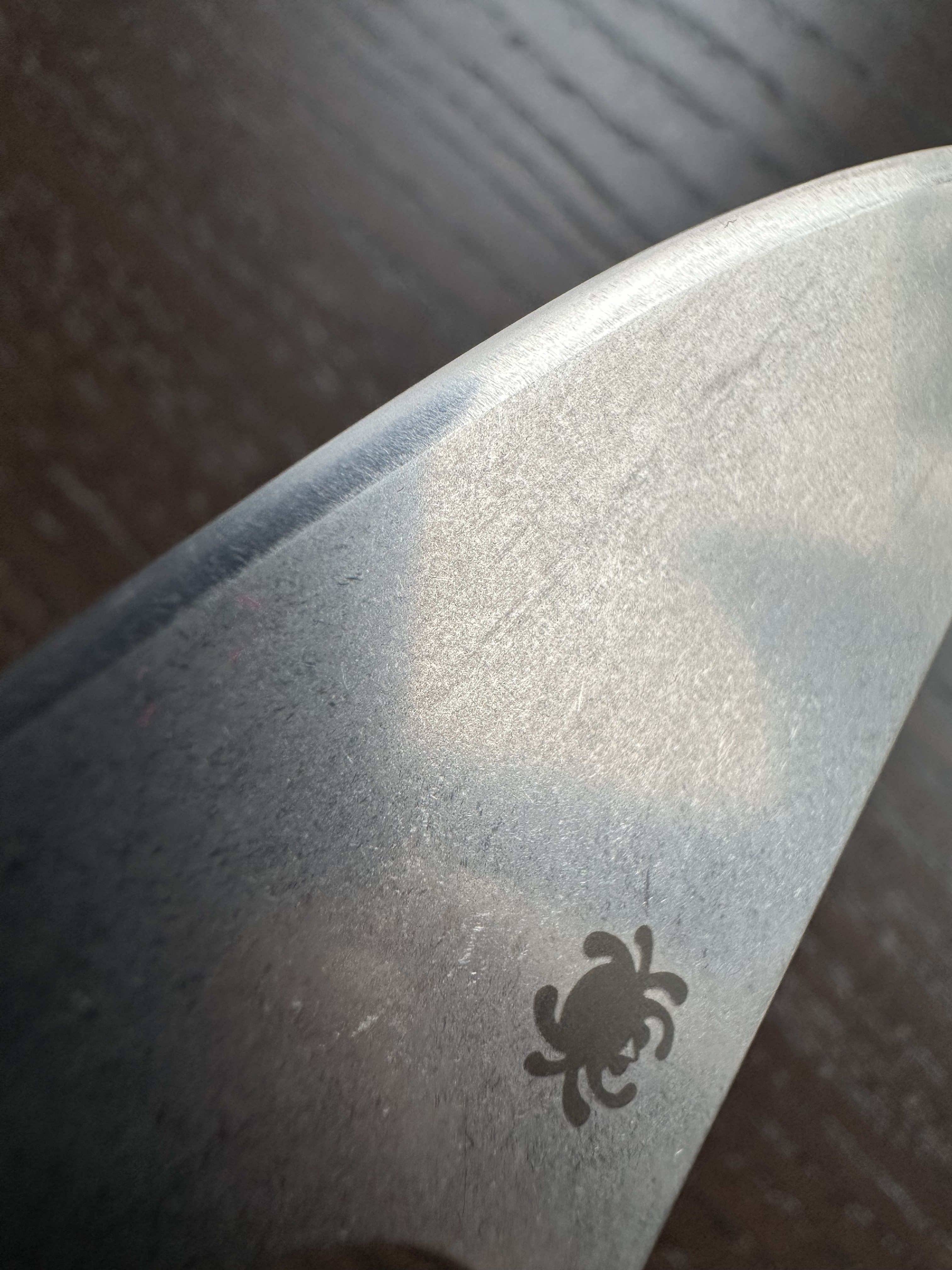
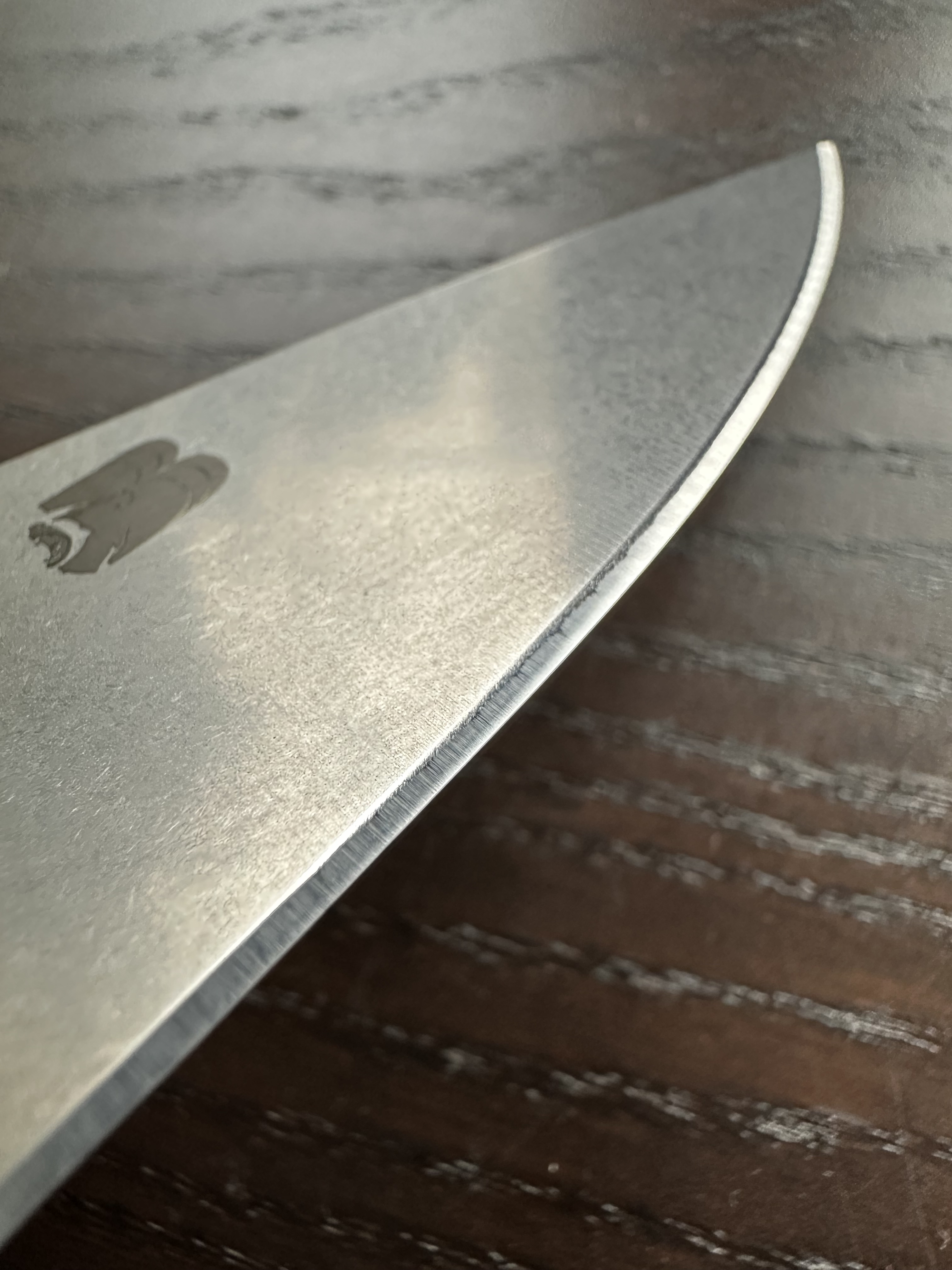
Diamonds are a Bear’s best friends! You can see the line where I carefully pass the diamonds to slowly convex the edge. But CPM-15V, in my experience and with my tools, demands patience and tenacity.

To be updated and continued!

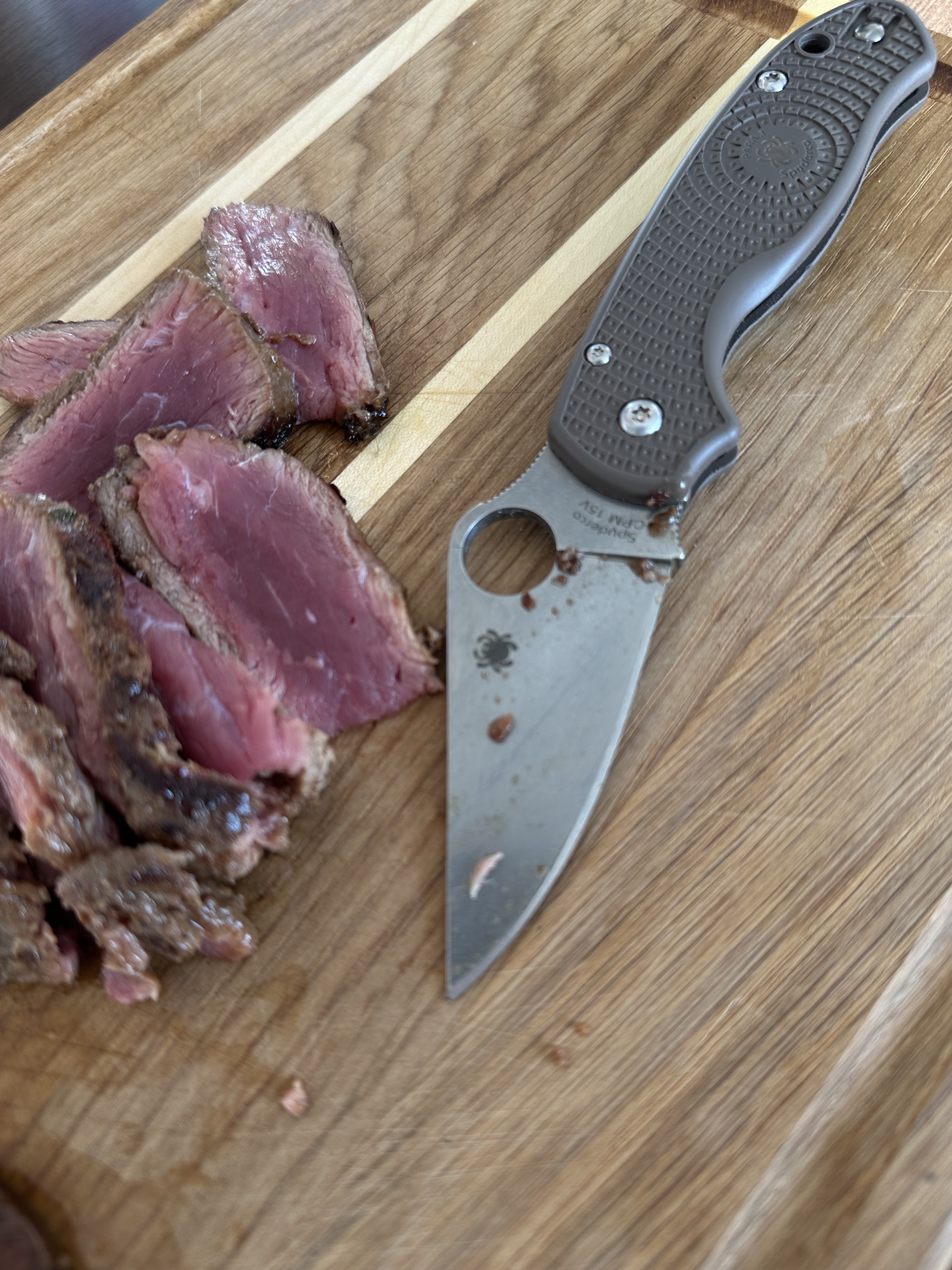
There will be blood ! Now it is christen.
That blade is a hair popping sharp razor right out of the box.

After deshouldering the edge, the geometry has improved dramatically — we’re really getting somewhere. On this long blade, the first third is incredibly precise, almost like carrying a scalpel from a smaller knife. With the Military 2, you truly have a highly versatile tool in your pocket.


I’ve loved the Military V1 for almost 30 years — it has long been one of my favorite workhorse folders. The CPM-15V blade, heat treated following Shawn Houston’s recipe, is just the icing on the bear. This Military 2 may well be the ultimate expression of the entire BBB 15V line.

Personally, I see this model as the pinnacle of an era: the most emblematic Spyderco design, paired with state-of-the-art heat-treated steel (Shawn wasn’t alone — big-name beta testers were involved), a proven geometry, and an incredibly versatile blade shape.

In short, I couldn’t miss it — especially since it’s a Sprint Run and, with the end of Crucible, everything about it feels historic.

So, “Gambit”, aka “C36GBN15V2” is really the “Mother Of All Bears” !

Getting a convex edge with the CPM-15V blade of the Houlahoula Para3 Lightweight.

I have enjoyed the Para3 in CPM15V for a week now and after the first pictures, one of my friend Alexandre wrote to me “Looking forward for a convex edge”.
And I have answered to him that I was not in a hurry to do it on this little wonder of modern cutlery. The steel seemed so hard !
But guess what ? What’s bred in the bone will come out in the flesh.
After a week of frustration trying to get any good (spectacular) result on leather and white ceramic….

Some gaffer is on the blade to protect it from any scratches.
My goal is just to “de-shoulder” the edge, to round it for a better leather stropping experience.

It is not rocket science and I’m clumsy and impatient.
So I’m not helped by natural tendencies.
As you can notice the edge near the guard will have less attention.
My friend JD is able to go even but I’m not to his level in making beautiful edges.

But as you can notice it is getting better.
I use a Double Stuff 2 from Spyderco. Mine is old and the glue between the ceramic slate has gone. The diamond slate is not as efficient as some decades ago but it should bite into CPM15V despite its humungous pourcentage of vanadium.

Since CPM 15V has a high volume (23%) of vanadium carbides (87 HRC) which are harder than the ceramic alumina abrasives. (79 HRC)

That means 23% of the overall microstructure is being pulverized, burnished and adhesively worn to shape rather than cut at the apex.

Over the years I’ve observed a pattern in some folks complaining that these types of steels cannot get very sharp yet the same folks seemingly would refuse to use the abrasive that will cut the remaining 23% of that microstructure cleanly.

I do think that would be fascinating to do a controlled test and look at the differences between the starting sharpness and how that sharpness dies off with cut testing and then compare the loss of sharpness between the two with the same amount of cuts.

I’ve certainly seen this behavior in my personal experience, however, I’ve not documented and shared data publicly.

I’ve mentioned many times that my current favorites for sharpening are the bonded super abrasives rather than the electroplated abrasives. However, there is a cost difference, but in my experience it certainly pays for itself and has better performance.
Shawn Houston on the Spyderco Forums

First look at the result.

Humm it needs to go one more round.

Ah, I am starting to enjoy the result and how the steel takes the light on the belly of the blade.

Now time to put some white compound polish on the leather.

Again I’m not focusing on getting it sharper it but just to polish the edge and remove any scratches. I want a better geometry like I use to have on the Para3 in M390.

CPM15V does not like to give away its particules.
When I have been able to get mirror edges on D2, 52100 or SPY27 I’m not able to get it on 15V. I need certainly to upgrade my equipement and my game for that.
I will polish it on Jade stone and post better results in the coming weeks.
So far I’m happy with the result. More to come later as 15V is not as easy as I thought to work on (JD adviced me “I think diamond past would help with the stropping. Diamonds or cbn can cut the vanadium carbides, of with this steel has a lot”. Not impossible, especially with diamonds but easy. Maxamet on the other side has proven to be much easier to restore even after catastrophic damages.
But I’m very happy with that Para3 which could be the HoulaHoula (*) of folding knives.


(*) Houlahoula are little birds with big balls and when they land they sing “Houla ! Houla !


On the Spyderco Forums Shawn Houston was kind enough to give some advice about how to get a mirror edge on CPM 15V:

“I recommend skipping the White Ceramic and Jade.
23% of the matrix in the 15V is harder than those abrasives.
A bonded diamond/cBN stone should help with the desired finish.


You deburr the best you can with light alternating passes on the stone. From here, the edge should be sharp enough to cut paper cleanly before moving on. Afterwards, go to a leather strop loaded with 1um Gunny Juice and use alternating edge trailing passes.

This is a good benchmark; keeps the “bite” at the edge without smoothing out the slicing effect. It also helps keep the “grab” at the edge for draw cuts but still keen enough for push cuts.

There’s different kinds of stones. They’re not all created equal.
You can take a diamond stone with the same abrasive and the same grit and it will leave a different surface roughness depending on the construction of the stone.
Yes, there are three major types of bonded stone.

Metallic, resin and vitrified.

There’s even some that are hybrids. However, these are not the same as electroplated diamond abrasives.The work more like regular water stones with better surface finishes.

“Diamond or CBN are the way. You can put a functional edge on 15V with ceramics, but if you’re wanting the real performance 15V has to offer, you need to sharpen with abrasives that will cut the carbides in the steel.”
Wandering_About on the Forums has sum it up.

Shawn Houston was also kind enough to share an AI summary of Instagram Reviews.

Based on the latest set of reviews, BBB CPM 15V steel demonstrates exceptional performance and user satisfaction.

Performance:
* Excellent edge retention: Maintains a sharp edge for extended periods, even with demanding use (e.g., cutting blackberry roots, heavy use).
* High edge stability: Resistant to chipping and rolling, even with hard use.
* Versatile: Performs well with different edge angles and finishes (from toothy to mirror).

Comparisons:
* Compared to K390, Maxamet, S90V: Sharpening is considered easier than K390 and Maxamet.
* Compared to M4: Sharpening is considered comparable in difficulty to M4.

Key findings:
* Sharpening Ease: Despite its high hardness and carbide content, 15V is surprisingly easy to sharpen. Users report successful sharpening experiences on a variety of tools, from diamond stones and CBN plates to simpler systems. Burr removal is consistently described as effortless.
* Edge Retention and Stability: 15V exhibits excellent edge retention, maintaining sharpness through demanding tasks and heavy use. It also demonstrates high edge stability, showing resistance to chipping and rolling.

* Versatility: The steel is versatile, capable of achieving both aggressive, toothy edges and refined, smooth edges.
* User Enthusiasm: Many users express high levels of satisfaction with 15V, with some even considering it their favorite steel.
Overall:
BBB CPM 15V appears to be a top-tier steel that effectively balances exceptional performance with user-friendly sharpening characteristics. Its combination of edge retention, stability, and ease of use makes it a strong contender for demanding tasks and a highly recommended choice for knife enthusiasts.”
 

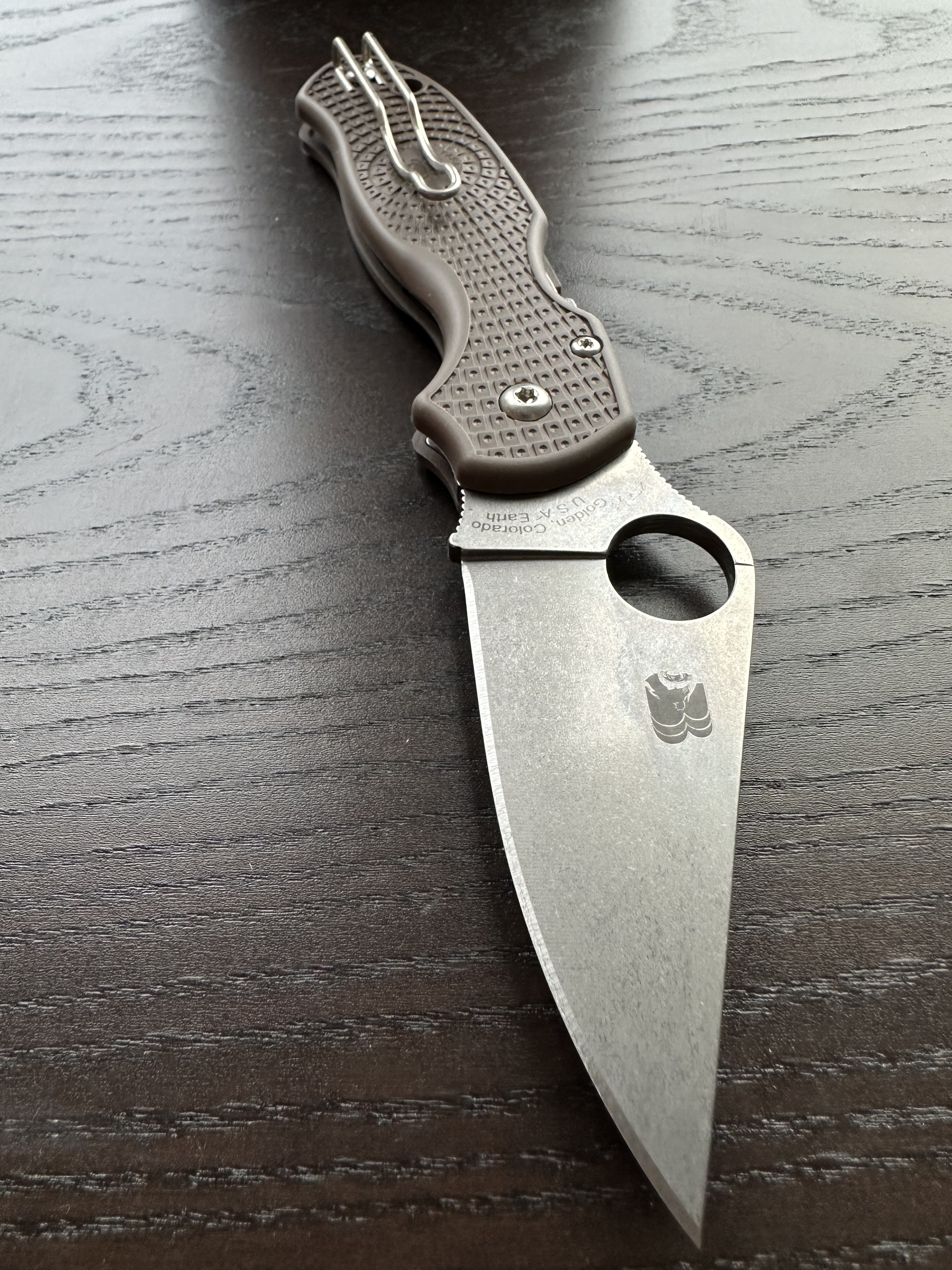
Spyderco Para 3 Lightweight 15V Sprint Run – C223PBN15V – First glimpse at the Lil’Brown Bear !

Jumping on the Para® 3 Lightweight Brown CPM® 15V® Sprint Run® wagon was an easy choice after a month of watching our American friends review this new CPM-15V batch.

Following the Manix 2 release two years ago, showcased in the Reveal 11, and a Paramilitary Brown version, here is the chance to test this remarkable steel on a lightweight platform: the Para 3 in brown FRN.


For record CPM 15V is “Boasting almost a 15 percent vanadium content, this remarkable material offers the highest wear resistance of any cold work tool steel available today. The full-flat-ground, satin-finished blade of this knife is further enhanced by a specialized heat-treating protocol developed by acclaimed custom knifemaker Shawn Houston. The result is a blade that offers extreme sharpness and unparalleled edge retention.”

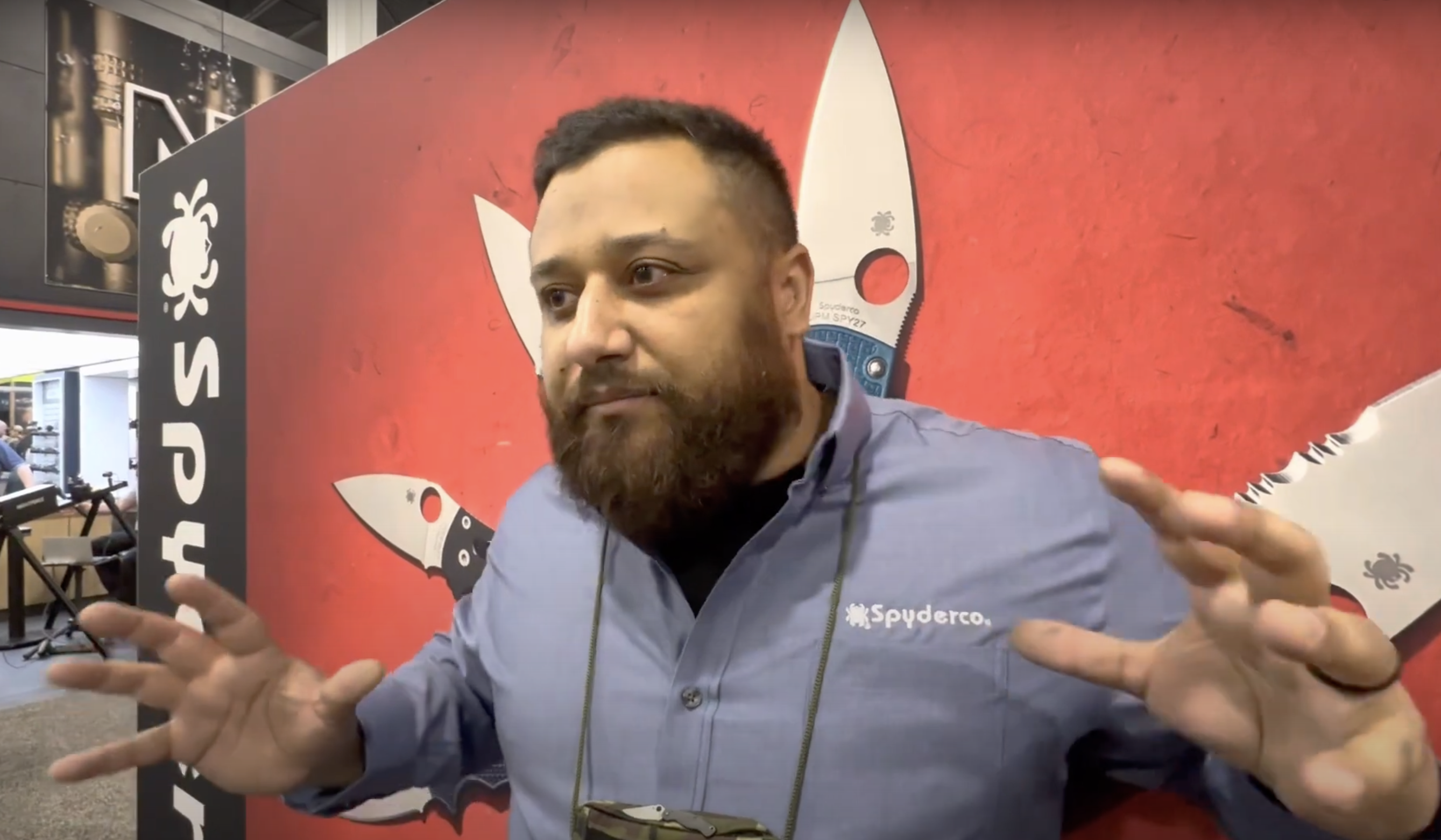
Shawn Houston is known as Big Brown Bear on youtube and his skills in metallurgy and knifemaking as drawn the attention of the Glesser’s family.

In 2018, he has written on the Spyderco Forums that request:
Sal, Can we get CPM 15v?
I like this steel. It’s easier to work with then Maxamet and Rex121.
Takes a killer edge and seems to be more stable then s110v.


Larrin Thomas even answered:
“You guys are crazy. But with Spyderco anything is possible.”

And in 2022 a first Spyderco knife designed by Shawn Houston in 15V with his own heat treat protocol was proposed. Eric’s Manix 2.

“The CPM 15V Sprint run was supposed to be a surprise treat.
Eric wanted to share the CPM 15V with the custom heat treatment I worked on for my folder design.
His idea was to use a standard model so people can get their hands on the steel. Which I thought was really, REALLY cool of him to do that.
Working with Crucible and Niagara Specialty Metal we were able to select a specific melt of the CPM 15V that would respond best to this specially developed custom heat treatment. 
So, Eric and Sal really went all the way on this, no other production knife company on the planet would do something like this. Eric and Sal are one of a kind. 
You guys need to understand this is very unique having actual knife/steel/sharpening/edge people running a knife company that can cater to enthusiasts. 
Originally, I was given options for different handle scales for the Manix but the most important priority was to get the CPM 15V Manix out as soon as possible so it didn’t make any sense to use exotic scale materials.
G10 is a great material to work with and brown g10 was selected because “Big Brown Bear” aka Triplebhandmade. (Me)
I am aware as many others that brown g10 is not unique to this model.
But the color of the handle scales and the handle scale material are irrelevant to edge performance and the most important priority was getting this out to you guys as soon as possible.
Looks like the price is great too, if we used carbon fiber etc cost would have been higher.
So, I hope you guys can respect that.
The folder collaboration design was being pushed back due to production capacity being completely full at Golden.
Please understand that I’ve been very persistent at wanting the knife made in Golden come **** or high water; I would wait until the
stars burned out.
Spyderco has been very busy increasing the size of their golden factory to meet the insane demand of the current knife industry after the global pandemic.
Keep in mind, when a new product comes through the factory, they have to train the staff on how to make them, and what the best procedures are for creating that specific model in high volume with maximum efficiency. So, there is hidden effort when new designs come through at Spyderco.
Folks need to remember if we want this folder made in Golden (my favorite factory) we have to be patient. 
My dream is to have a Golden folder we can all experience together.

I’ve gotten a chance to meet the people from the Golden factory I must say I’m even more excited about the idea of it being made in Golden. I’ve talked to the people that do grinding and heat treatment and there’s just something special about being able to talk to the folks that make your collaboration knife design.
So, I keep pretty quiet about the folder because I don’t feel it’s necessary to see get people excited about something that doesn’t have a clearly set date of exactly when it can be expected and I don’t want to put any undue pressure on Spyderco because they’ve been working very very hard over the past couple years to get things that sometimes people take for granted and expect to magically appear on the shelves to buy.
While I haven’t been posting in this thread everyday, I really appreciate you guys making sure to let Spyderco know this is something you want.
So, thanks for always updating this thread and talking about it on social media.I really think you guys will like this knife and I can’t wait to get one in my pocket one day.

-Shawn

Now this is new batch including Microjimbo, Yojumbo, Yojimbo2, Native, Military 2, Para3 G10 and Para3 Lightweight.

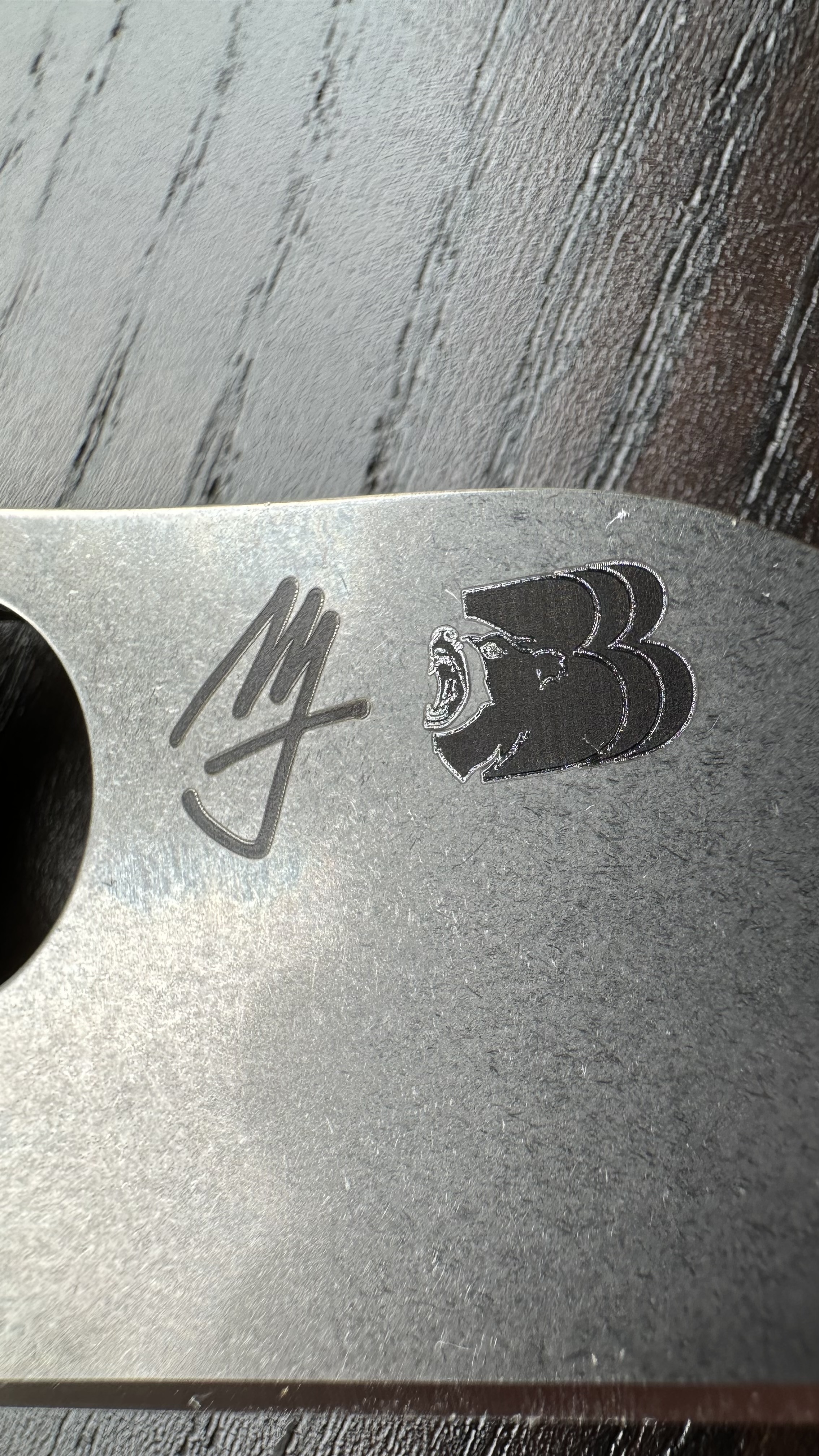
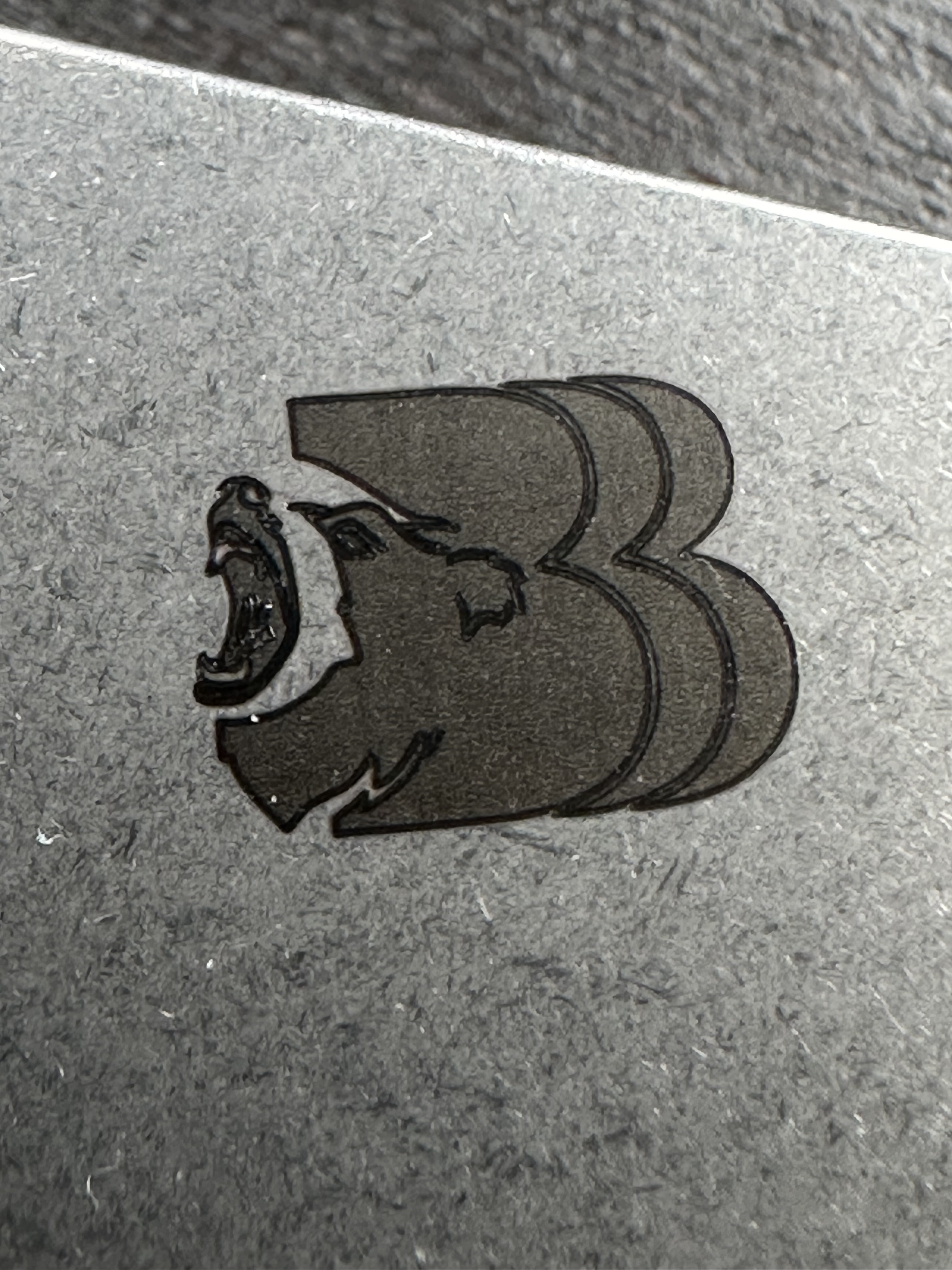
Like all its brothers and sisters it boast the BBB logo proving that the blade has followed Shawn Houston heat treatment.

In his excellent vidéo Shawn share his first impressions and also check the hardness of his Para3 and the result is 65.4 HRC ! Impressive !

Framed from his video: he performed five separate hardness tests just to be sure. It’s well known that Shawn Houston’s special heat treatment — refined over years and tested by renowned professionals — brings out the quintessence of CPM-15V, elevating its performance to exceptional levels.

“Well, most heat treatment protocols are for tooling, like the ones in datasheets — not really optimized for things like edge stability.”
— Shawn Houston, on his own heat treatment

In practical tests, Pete from the Cedric and Ada Gear and Outdoors was able to cut through a rope 2,000 times without compromising the edge.

The action on my new Para 3 is perfectly smooth. I notice a little lock sticking but this is not an issue in my book.


And smooth enough that nothing unscrews on it — the blade closes like glass, effortlessly and precisely.

My Para 3 arrived perfectly centered, but with some burrs on the scales.
(A burr is a raised edge or small piece of material that remains attached to a workpiece after a modification process.)

You can feel these tiny imperfections under your finger along the FRN edges.

I have “deburr” it with some diamonds rod. Nothing fancy but now the handle is fine. I don’t remember having that issue on my previous Para 3 review.

The edge is even.

I don’t see myself working on a convex edge on this one. Not for the moment.

The sharpness is high and that blade is a hair popping sharp razor right out of the box.

I have already cut my self with its very pointy point. My Para 3 is baptized !

Now it is truly mind.

It is said that CPM-15V loves leather for a crispy edge.
(S90V or M398 for example don’t care about stropping…)

I’m curious how its 68 grams will compete with my Maxamet Para 3 G10 (98 grams) — sturdy yet smooth as velvet.

According to Spyderco:

“The term ‘lightweight,’ or the use of injection-molded handle components on a Spyderco folder, isn’t just about how the knife tips the scale. It’s about taking full advantage of the remarkable properties of FRN and FRCP, as well as our decades of experience as an industry leader in their use.”

So yes, this is a “light” saber.

The edge appears ground thinner than on the notoriously brittle Maxamet blade. Both blades receive special attention: the spine is smooth under the thumb, and the edges are expertly bevelled.

The chance to have such a steel on a lightweight folder would make it a great hunting knife like the Michael Walker ZDP-189 was in his days.
The game’s fur is very abbrasive. CPM-15V could be even stronger than ZDP189 on the joints, more permissive.

Ericasedc has made a video about that:

She seems really happy with her Para 3 since she has received it. You can see all the videos she has made on her channel about the Para 3 15V.

Anyway, going in the woods equipped with a Tenacious CPM M4 and a Para 3 in 15V would be a great combo nowadays.


Now that I can carry the mighty CPM-15V steel in my pocket, I’m eager to test its performance over the long run. Stay tuned for updates on this page or in another chapter.

Having a featherweight folder equipped with such a formidable blade and steel is uncanny — it packs remarkable power in a pocket-sized package. I still remember fitting the Maxamet blade on my red FRN Para 3 just to experience that sensation of a powerful engine on a lightweight platform.

This Para 3 Sprint Run is already a triumph, offering the chance to experience a remarkable steel crafted by passionate knifeaholics.

As mentioned, I have no intention of convexing the edge for now — I’m trusting Shawn’s expertise. Unlike AEB-L, which can be thinned while remaining strong, CPM-15V is packed with carbides, so I’ll stick with the angle specified by Spyderco and Shawn, which is already thinner than Maxamet.

But now, the real fun begins: testing!
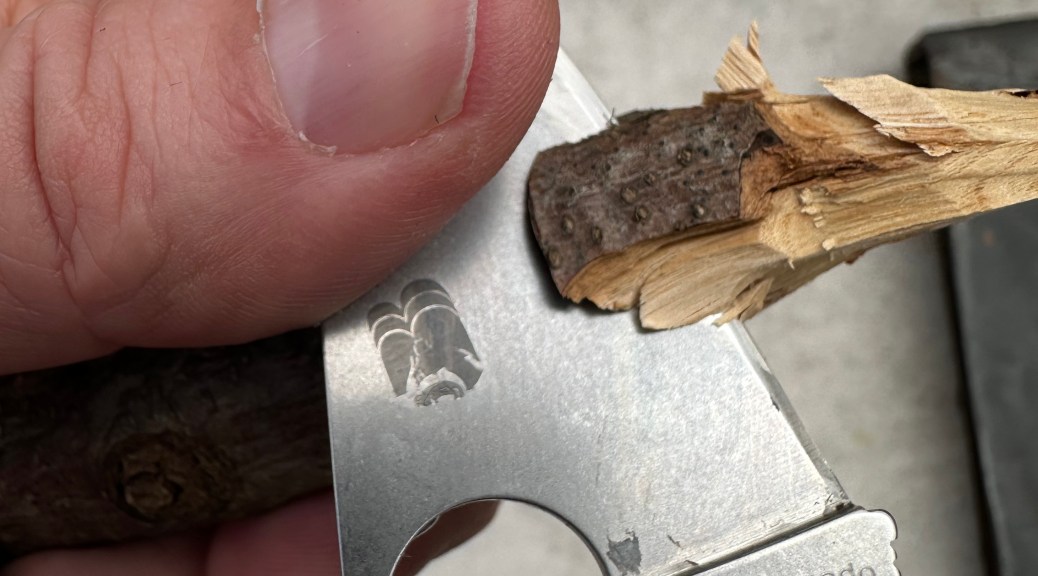
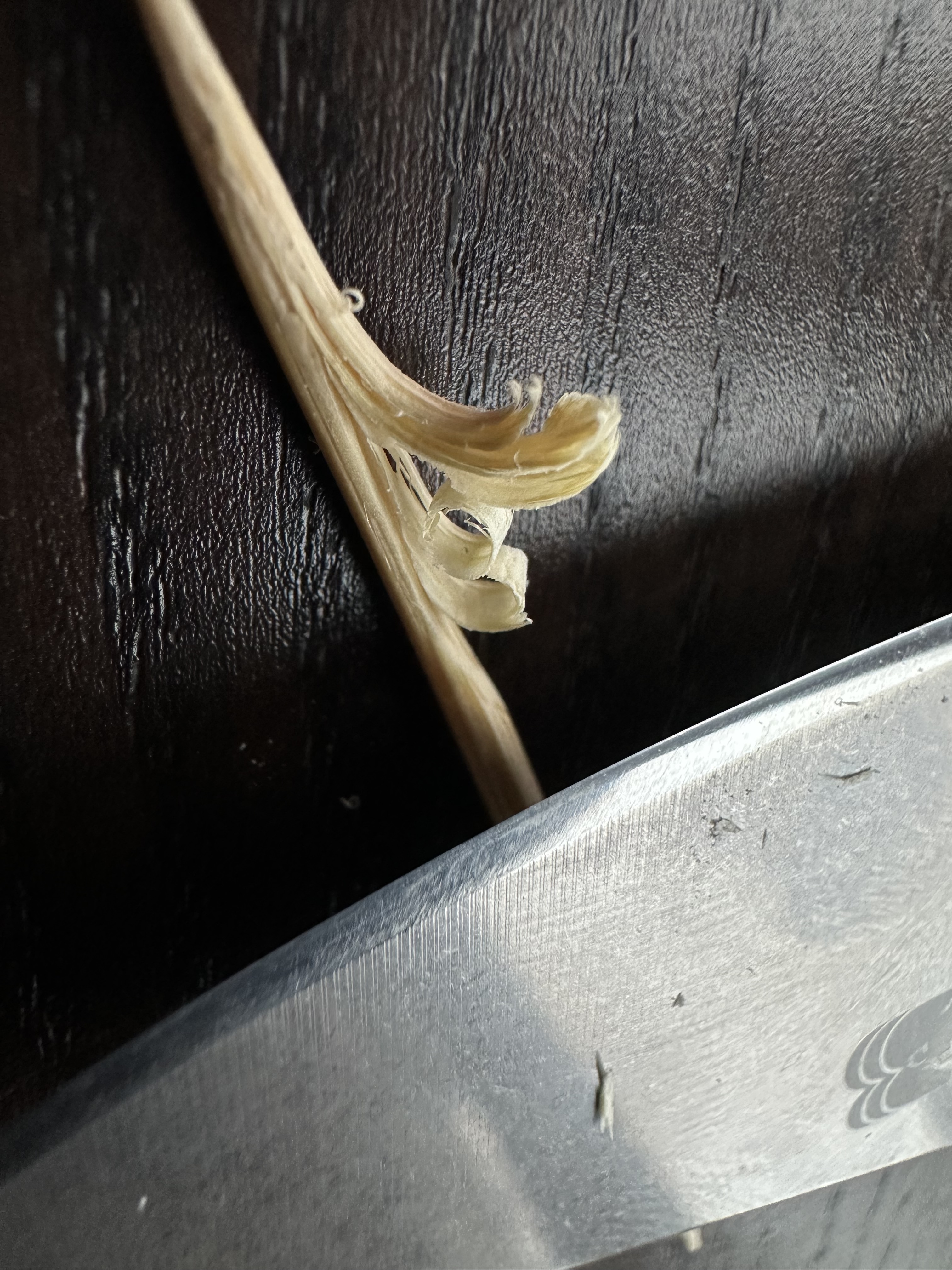
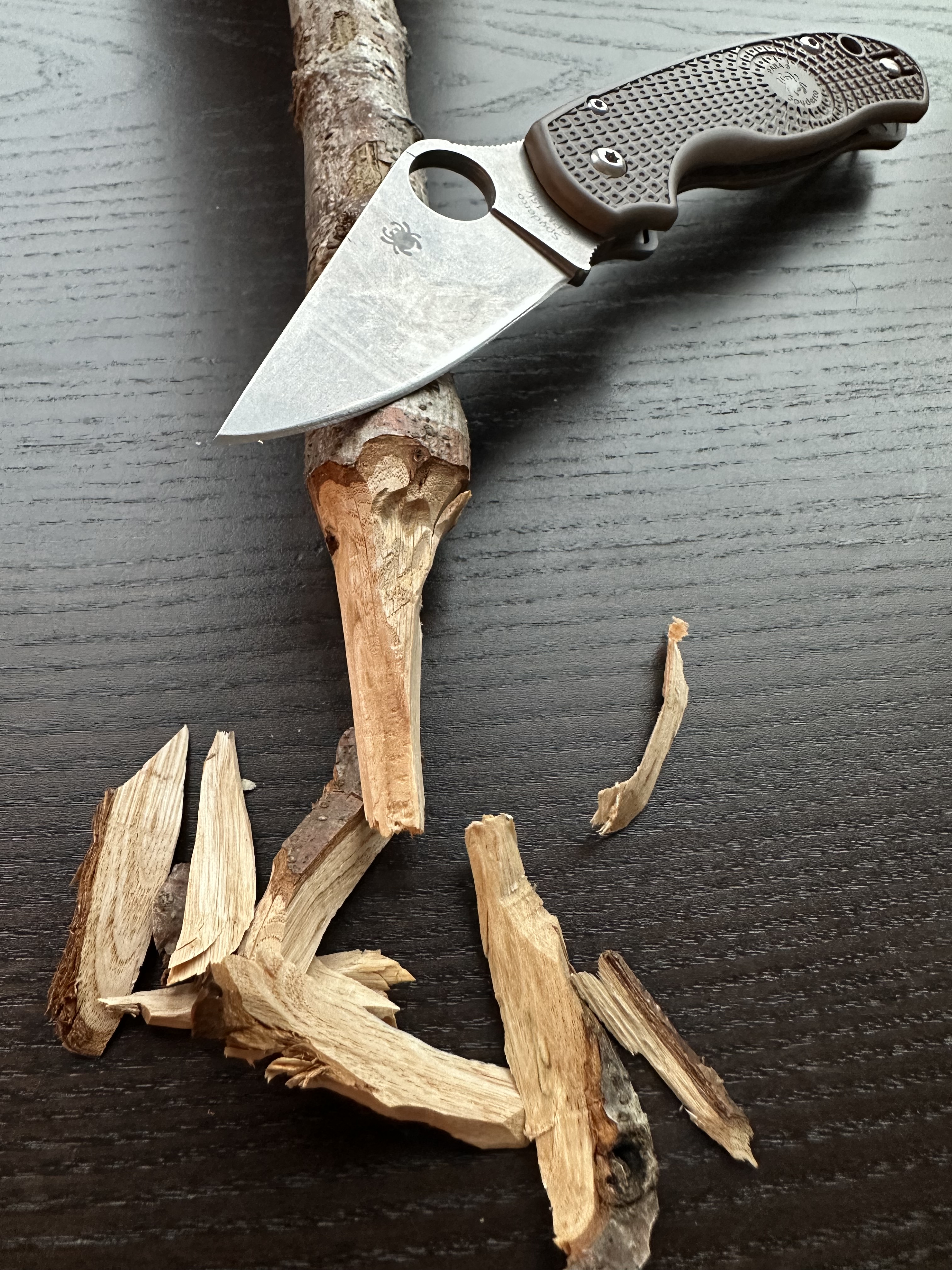
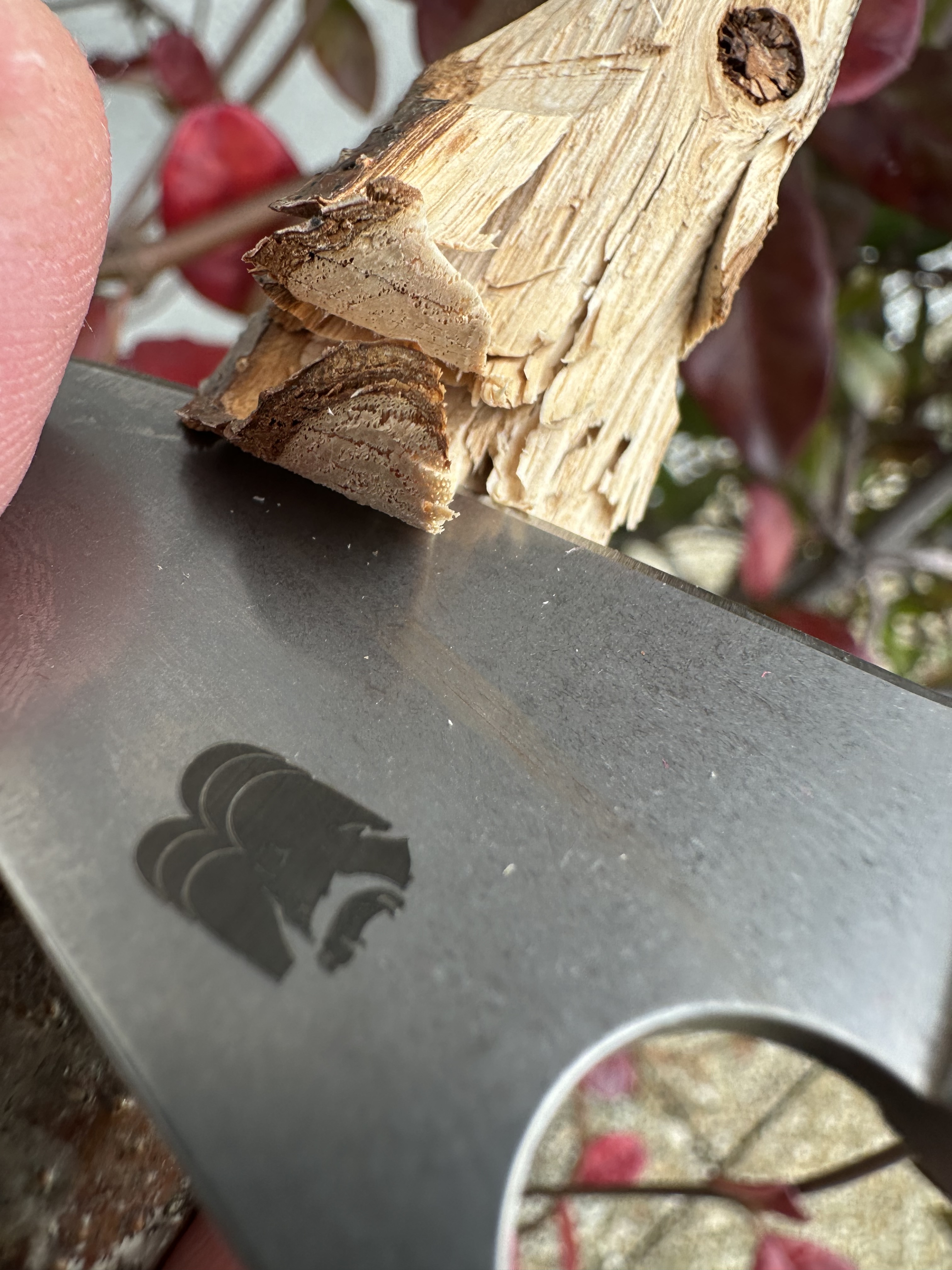
Spoiler: the combination of geometry and steel makes it an excellent whittler — the blade cuts deep, and the wood feels incredibly smooth under the cut.


Final word of this review are from Shawn Houston who was quoting and answering to Todd from Scienceofsharp.com about 15V (as Todd’s goal is to increase our understanding of the role of carbides in cutting performance and how different sharpening techniques “interact” with the carbide):
““tremendous pleasure in using an extremely sharp knife or tool (and satisfaction when you have sharpened it yourself). Even though it is often a fleeting experience”
That’s the “idée fixe” of it all.
The little smile and feeling of elation when the edge lasers through material with zero effort.
The stones, geometries, steels, heat treatments and the techniques.
Chasing those fleeting moments of joy with high performance and riding the line between madness and clarity in trying to understand at the most intricate levels how it all really works.
An insatiable quest.

The Edge is a Ghost. Always changing. Dying (dulling) being reborn (sharpened) split personality (angles and geometry changing).

Think of the edge as gas in a vehicle. It runs out of gas and you put in more gas. We provide the format, materials, design for use, variety to avoid boredom and create interest, but the edge is your creation. The result of your understanding, education, experience and practice.”

Sal

CPM 15V is a very difficult steel to manufacturer, so it may not always be available in the future.
Crucible Industries LLC went to great lengths to produce the steel, it puts a great amount of wear and tear on the ceramic refractory designed to hold the super heated liquid steel during melting. This is necessary to dissolve the vanadium carbides to the very fine sizes that we see in the finished product.
It’s quite a marvel that’s not often appreciated.
15V is basically the commercial limit for how much carbon and vandium they can get in a steel for production sizes batches.
The benefits of this to the end user combined with excellent heat treatment is a enjoyable, lasting cutting experience that also touches up at the edge nicely with proper abrasives and sharpening experience.”

Shawn Houston on Spyderco Forums