
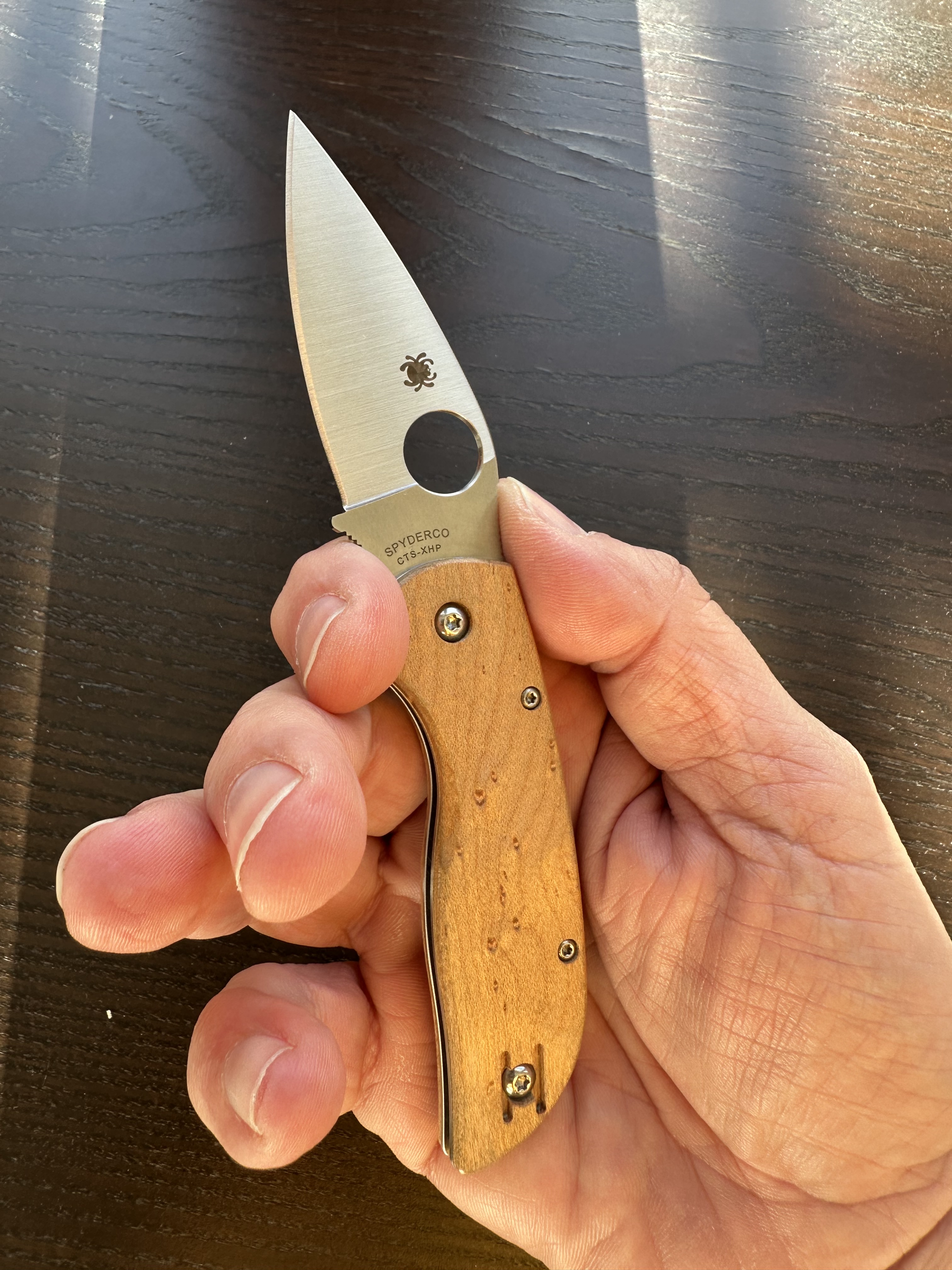
The Chaparral series is quite unique in Spyderco’s catalog. Originally designed to showcase different handle materials on the same platform, it has evolved into a performance-driven tool for one simple reason: the blade stock is exceptionally thin.
That thinness means it cuts deep with minimal effort.
It is even thinner than the UKPK which is the thinnest of the SlipIt Family.
(“SLIPIT®” is Spyderco’s trademark name for non-locking folding knives.
These knives stay open through spring tension rather than a mechanical lock.)
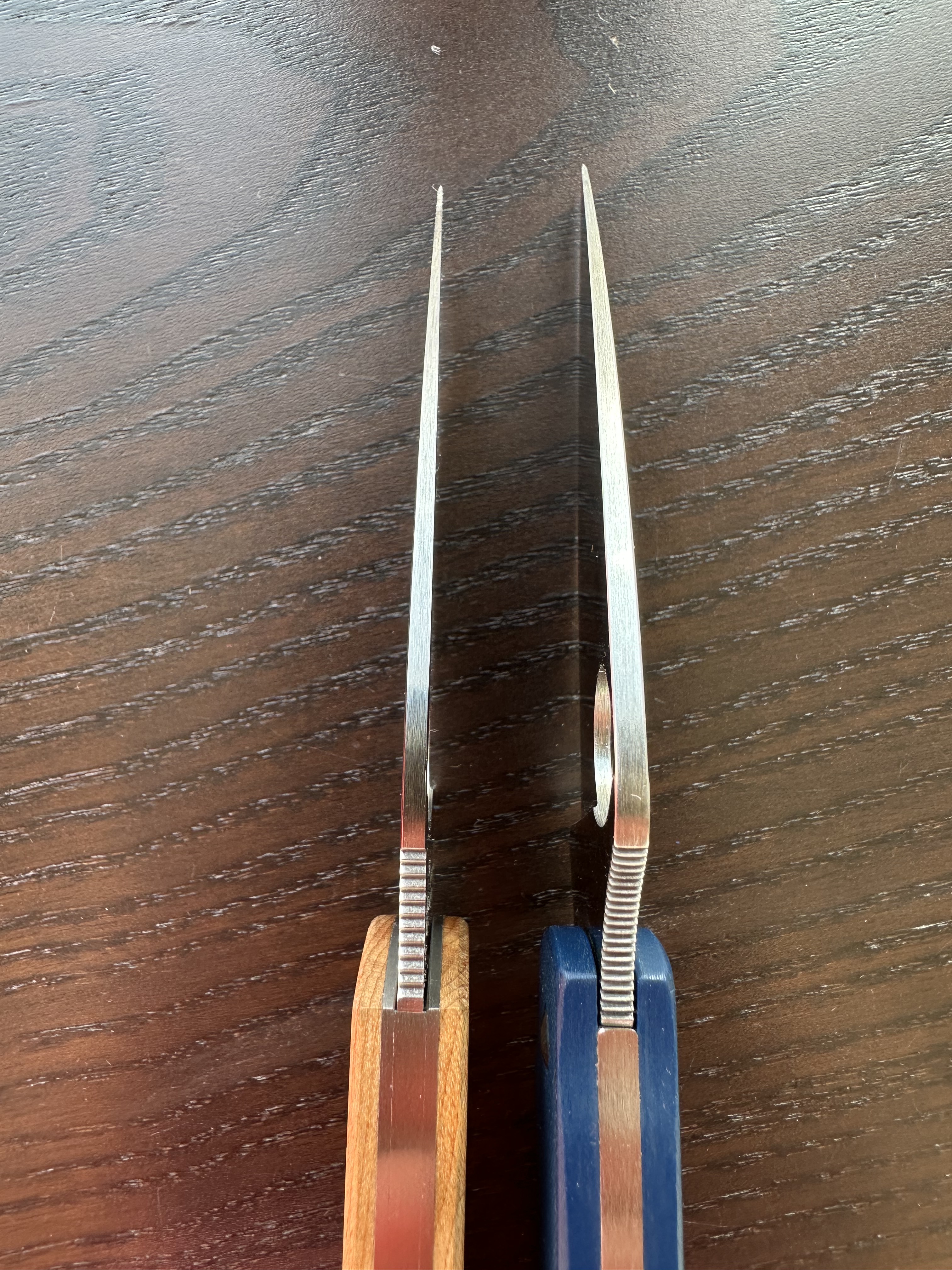
2mm for the Chap and 2,5 for the UKPK.
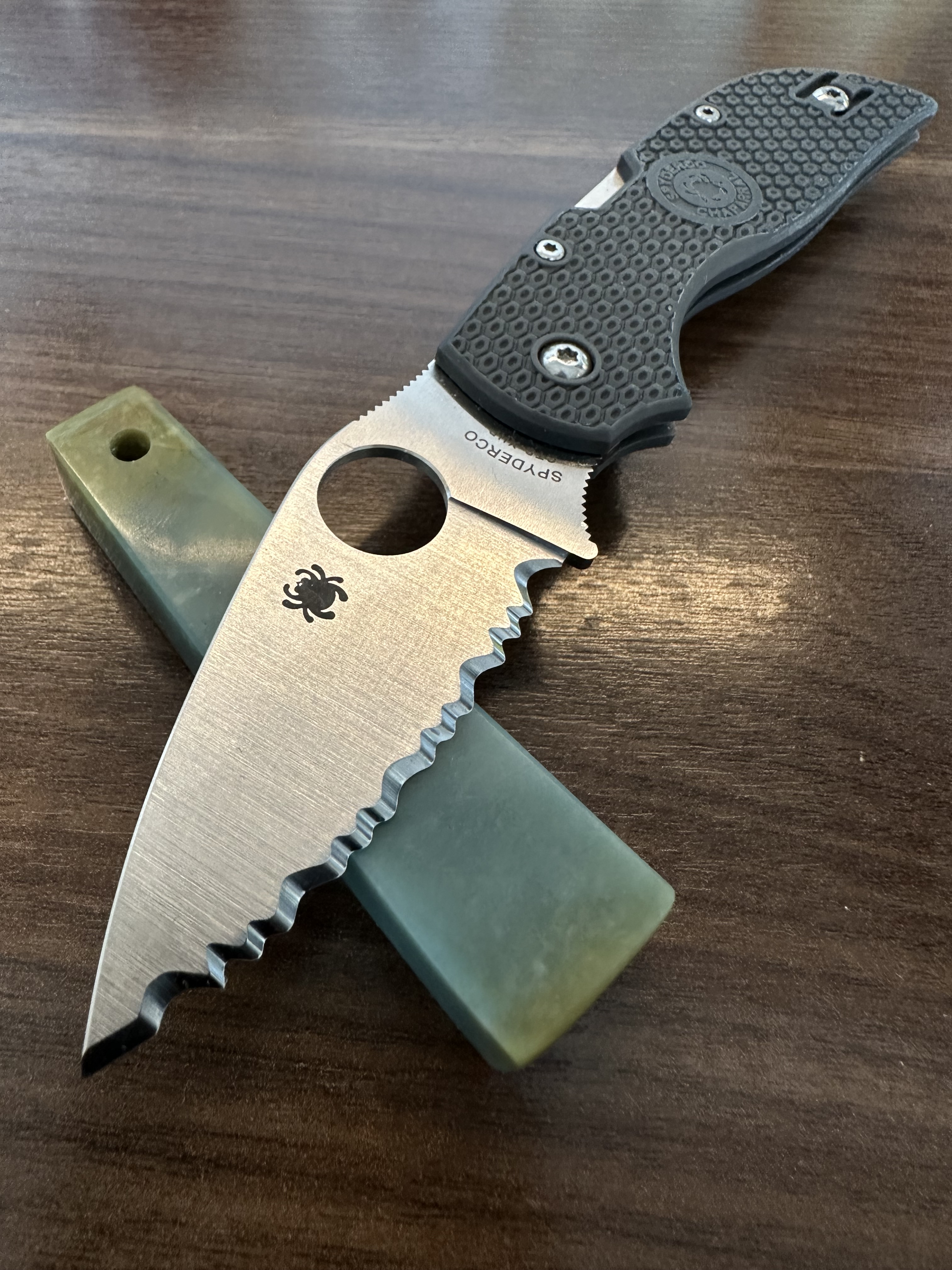
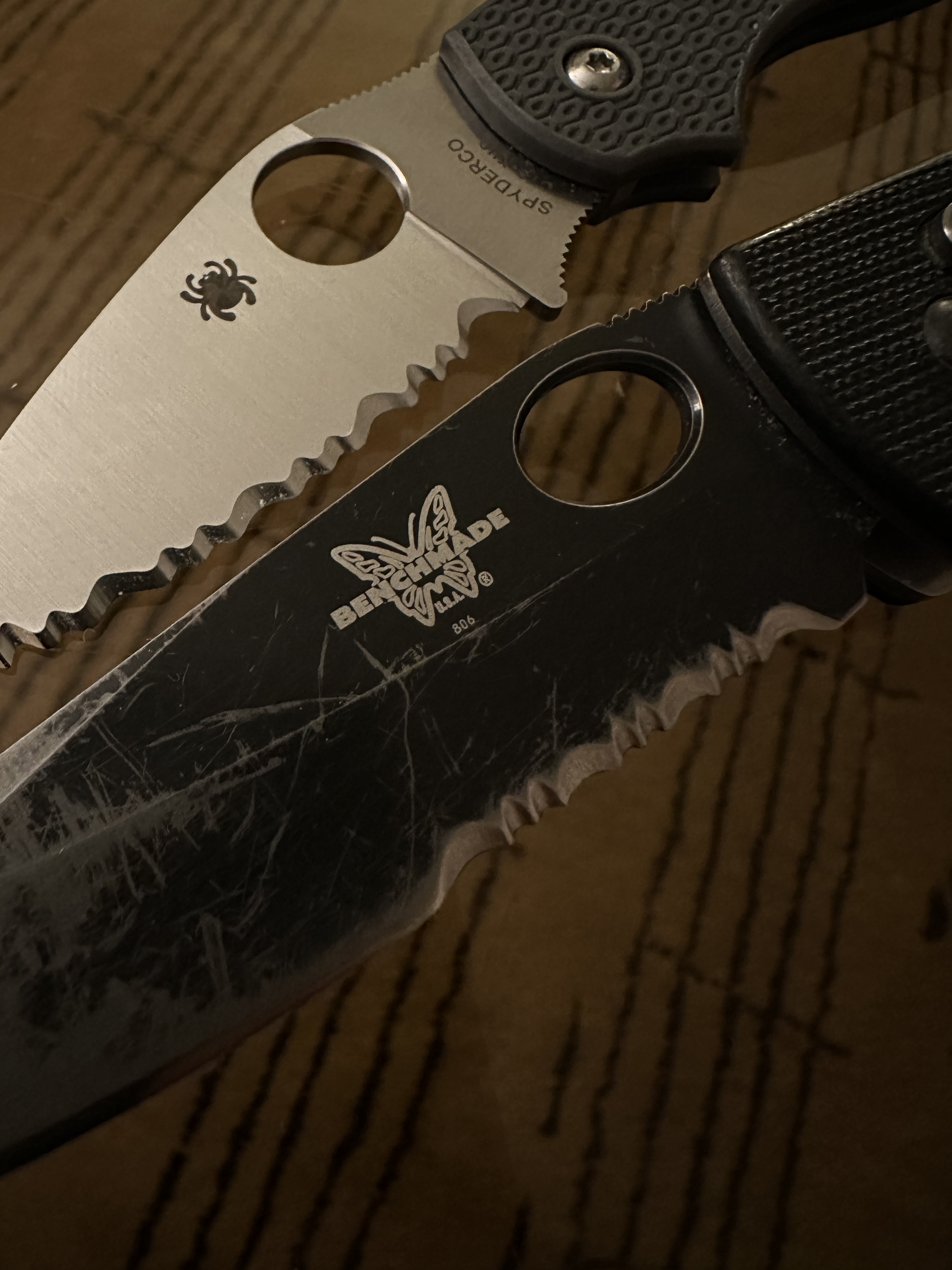
I’ve owned the original carbon fiber version, and earlier this year I reviewed the Lightweight serrated model — still one of the most efficient “matter separators” you can carry in your pocket.
Now, thanks to the Spyderco Ambassador Program, I’ve had the great opportunity to test the Slipjoint Chaparral.
It’s worth pointing out that the Chaparral is far from an entry-level model. It’s the premium, Taiwanese-built sibling in the SlipIt family — and at about twice the price of most SlipIt knives, it clearly plays in a higher class.
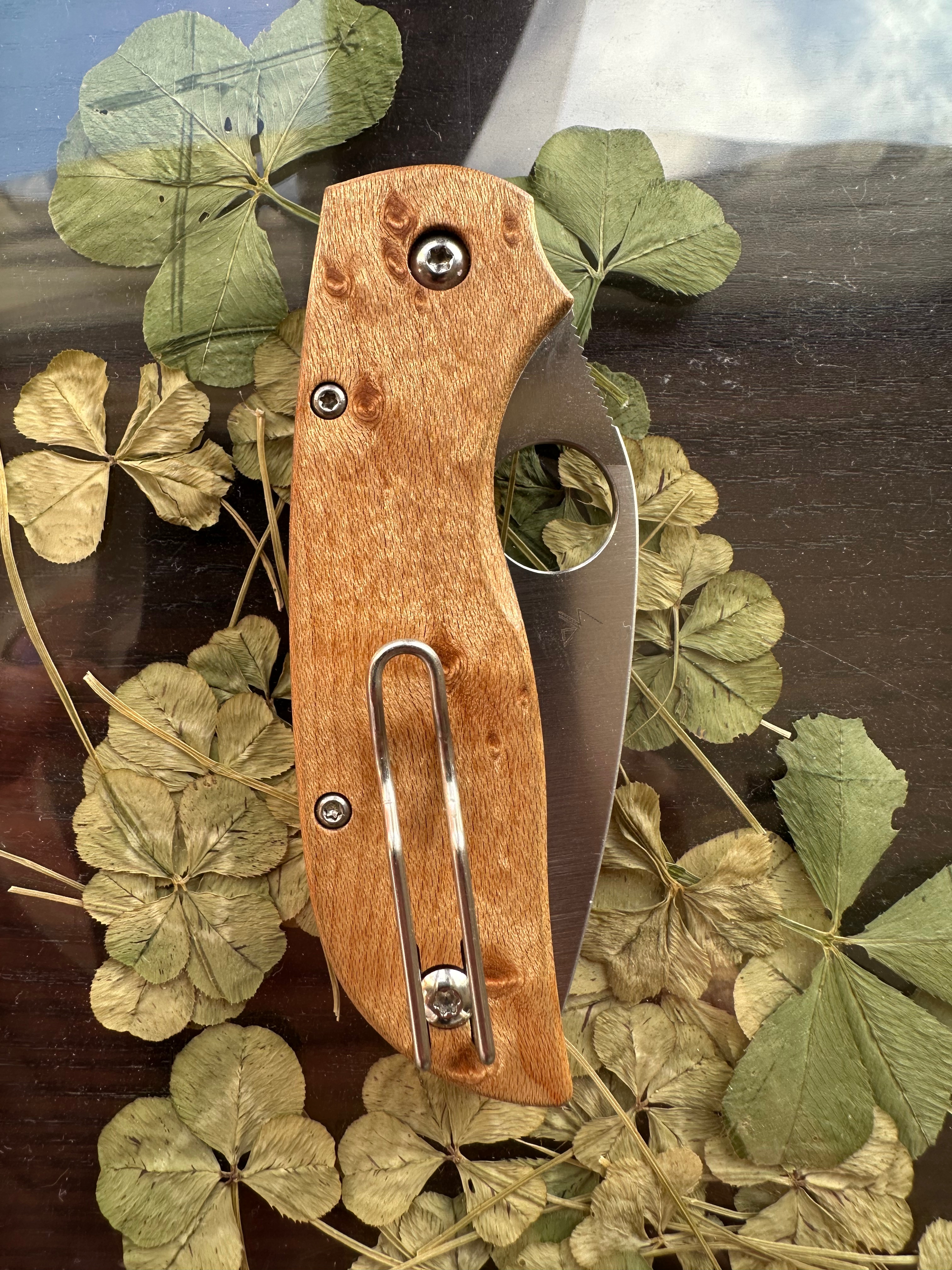
And this is an eye candy:

You can notice that Spyderco even includes a transparent protector over the clip area to prevent the handle from the clip during transport.

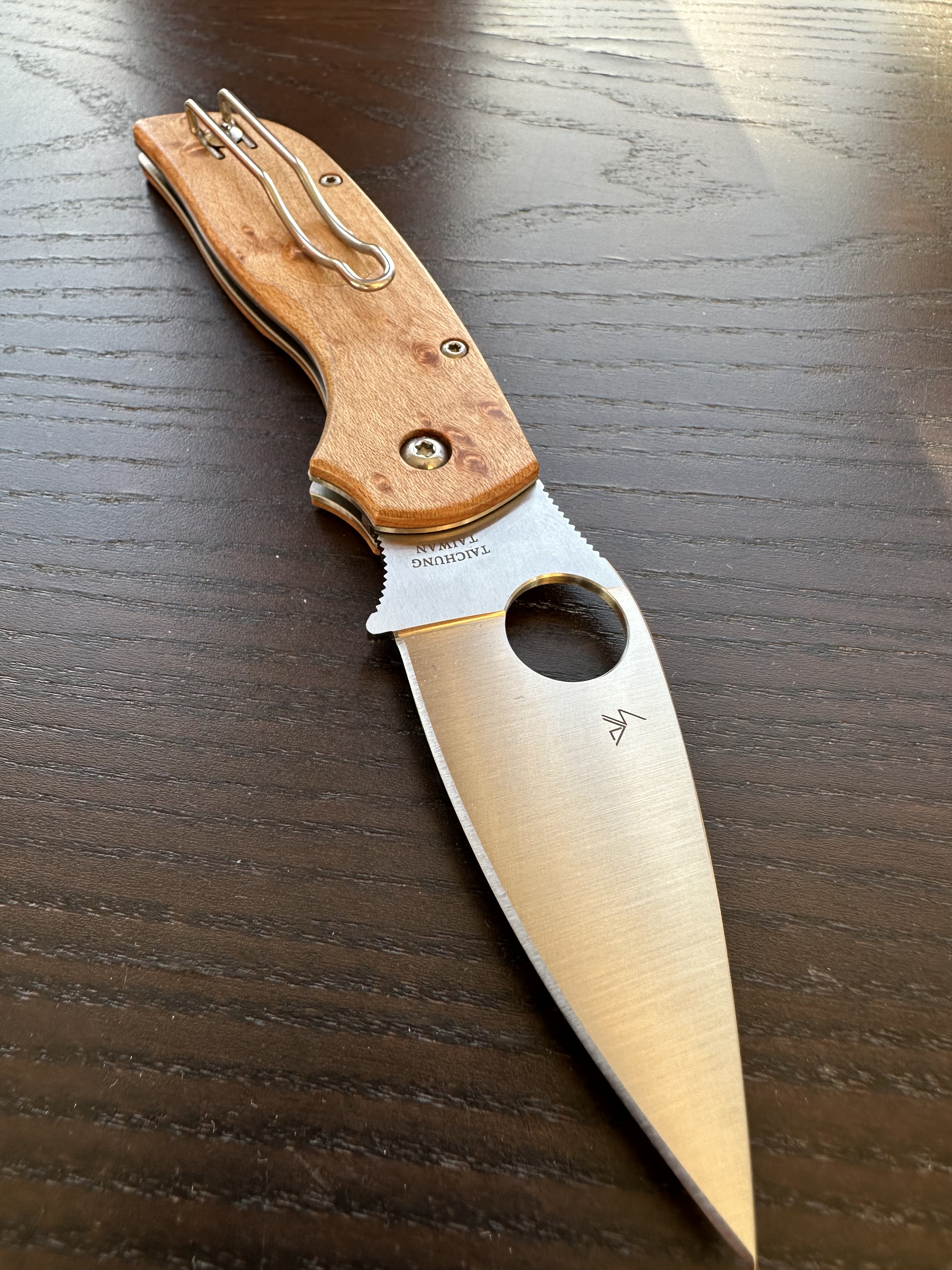
The knife arrived sealed in a plastic bag, likely to protect the wooden handles from changes in humidity.
Made in Taichung, Taiwan, and shipped to Golden, Colorado, this precaution makes perfect sense — Golden’s dry climate has been known to affect wood scales before (as seen with their Bushcraft fixed blade).
The handles themselves are beautiful. Carrying a piece of wood in your pocket almost feels like carrying a good luck charm.
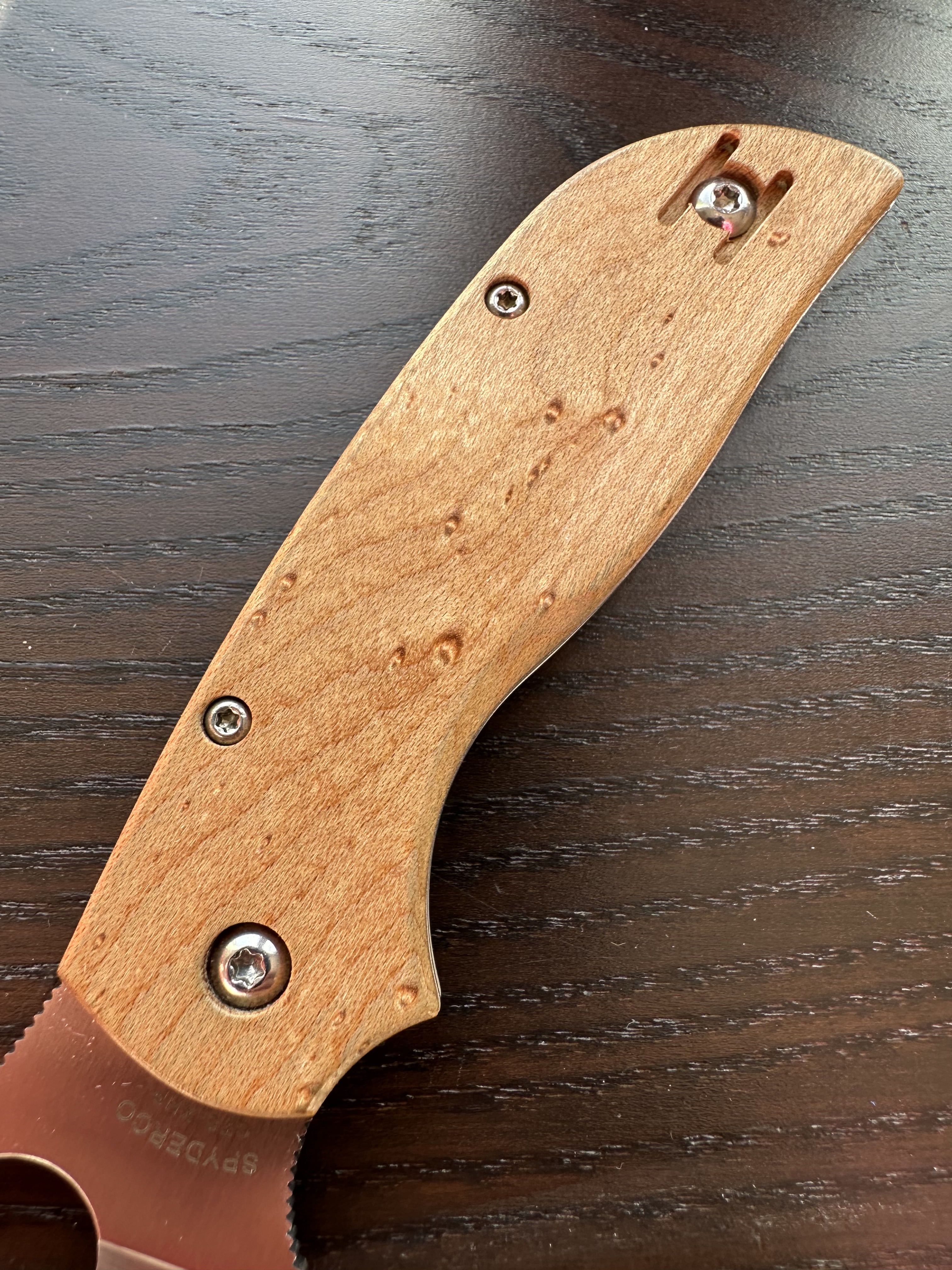
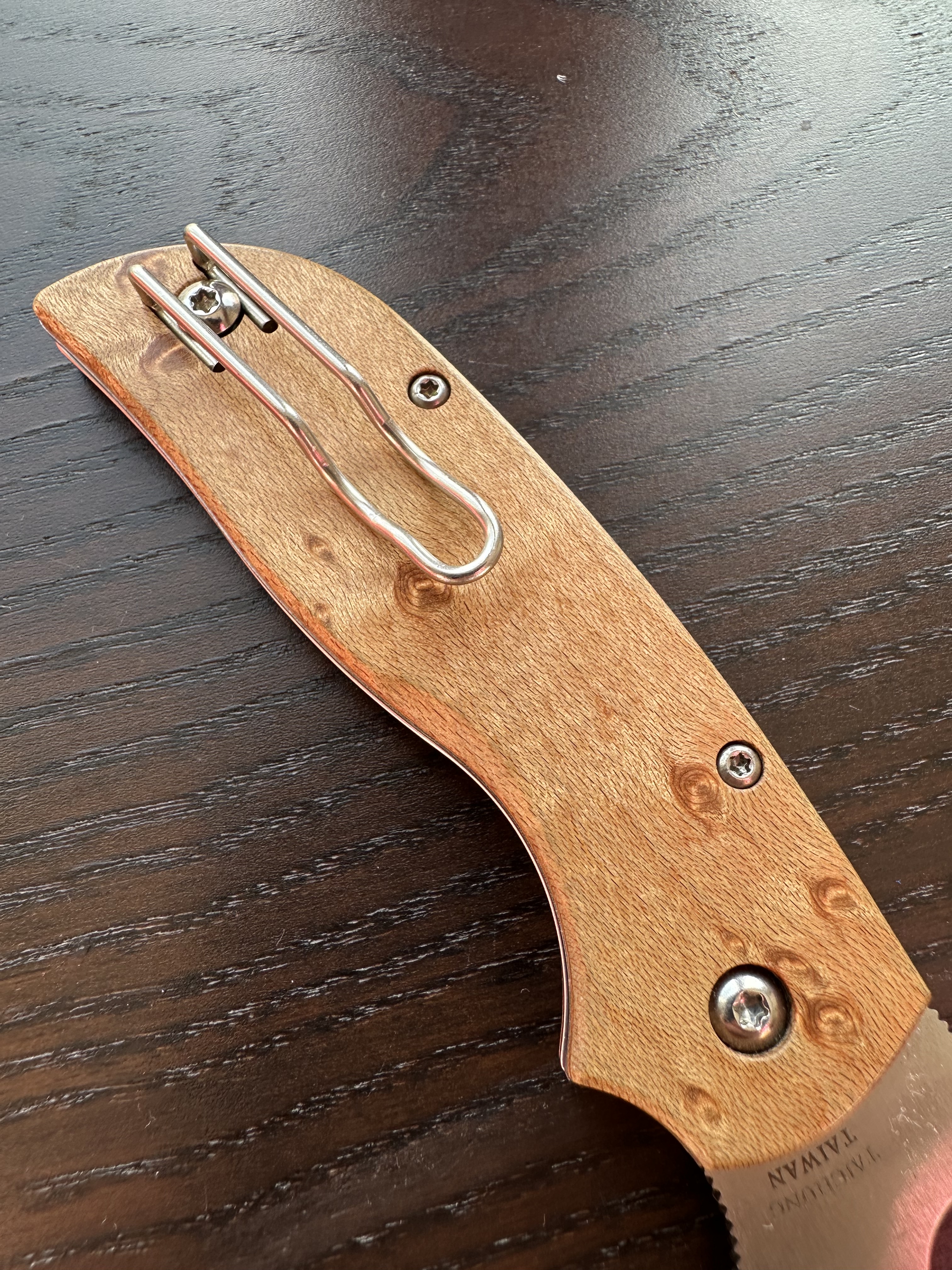

This is my first Spyderco folder with wooden scales, and I must say — it has real charm.

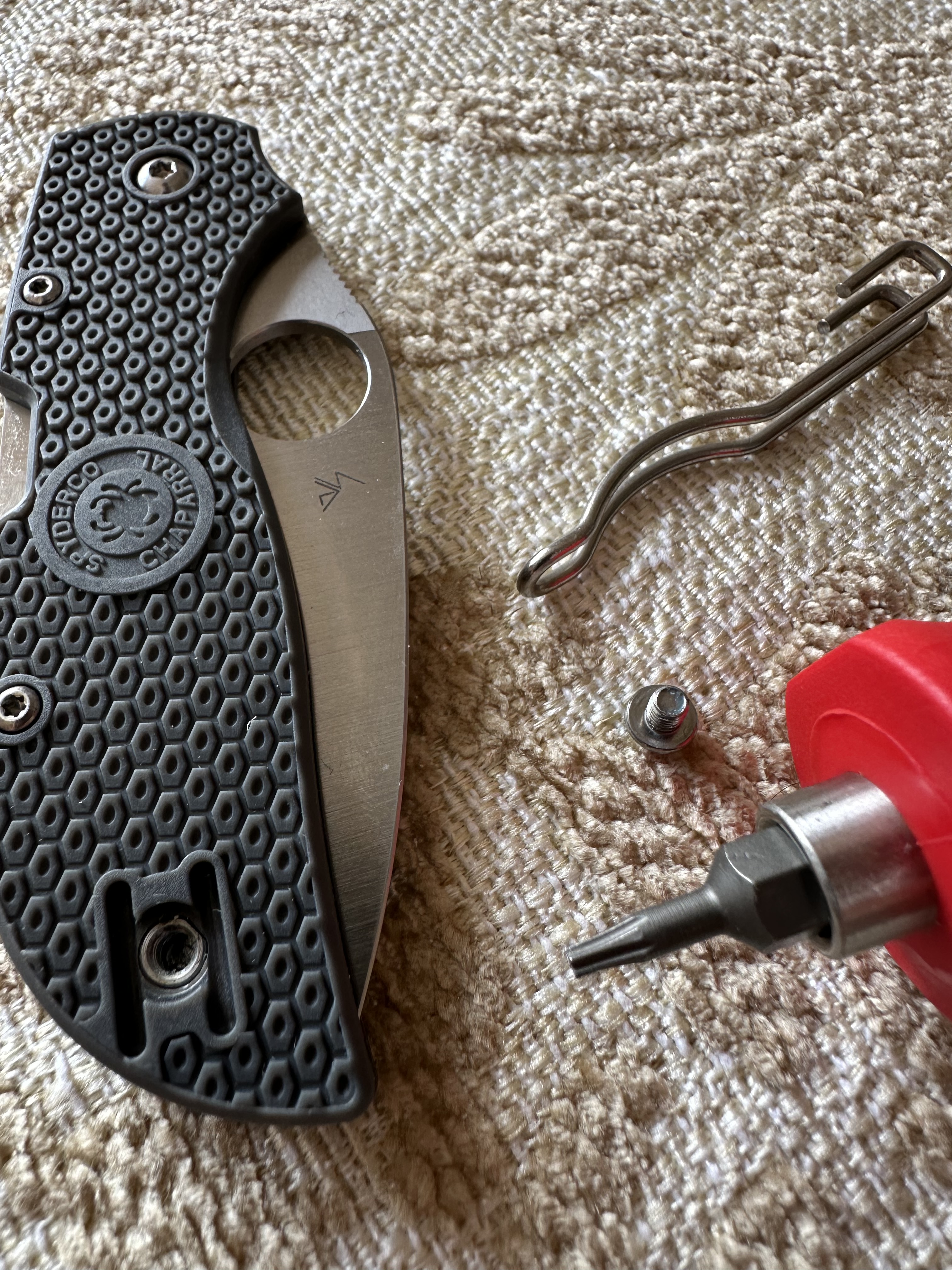
The knife comes with Spyderco’s standard wire clip, but I have swapped it out for the shorter clip used on the MicroJimbo, Lil’ Native, or Dragonfly — it’s more discreet and I wanted to do it before leaving any mark on the wood.

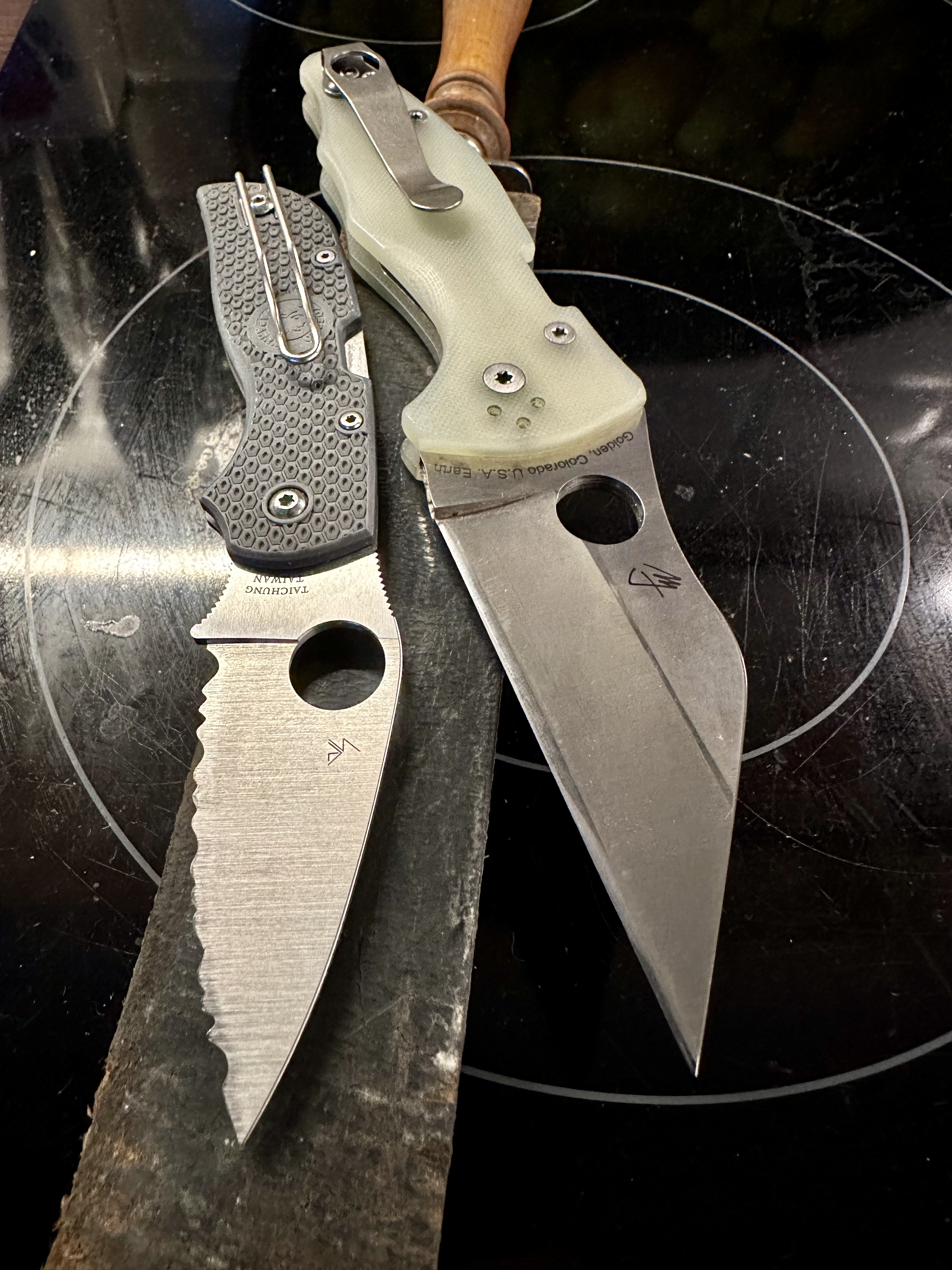
Here pictured with the Metropolitan and with the microclip mounted on.
A downside of the wire clip is that it can create a “hotspot”, or point of discomfort, when applying significant pressure.
That’s why I prefer that shorter clip cannibalized from another folder — it helps avoid this issue. When doing extended wood prep or cutting in the field, where downward force is applied, ergonomics really matter.
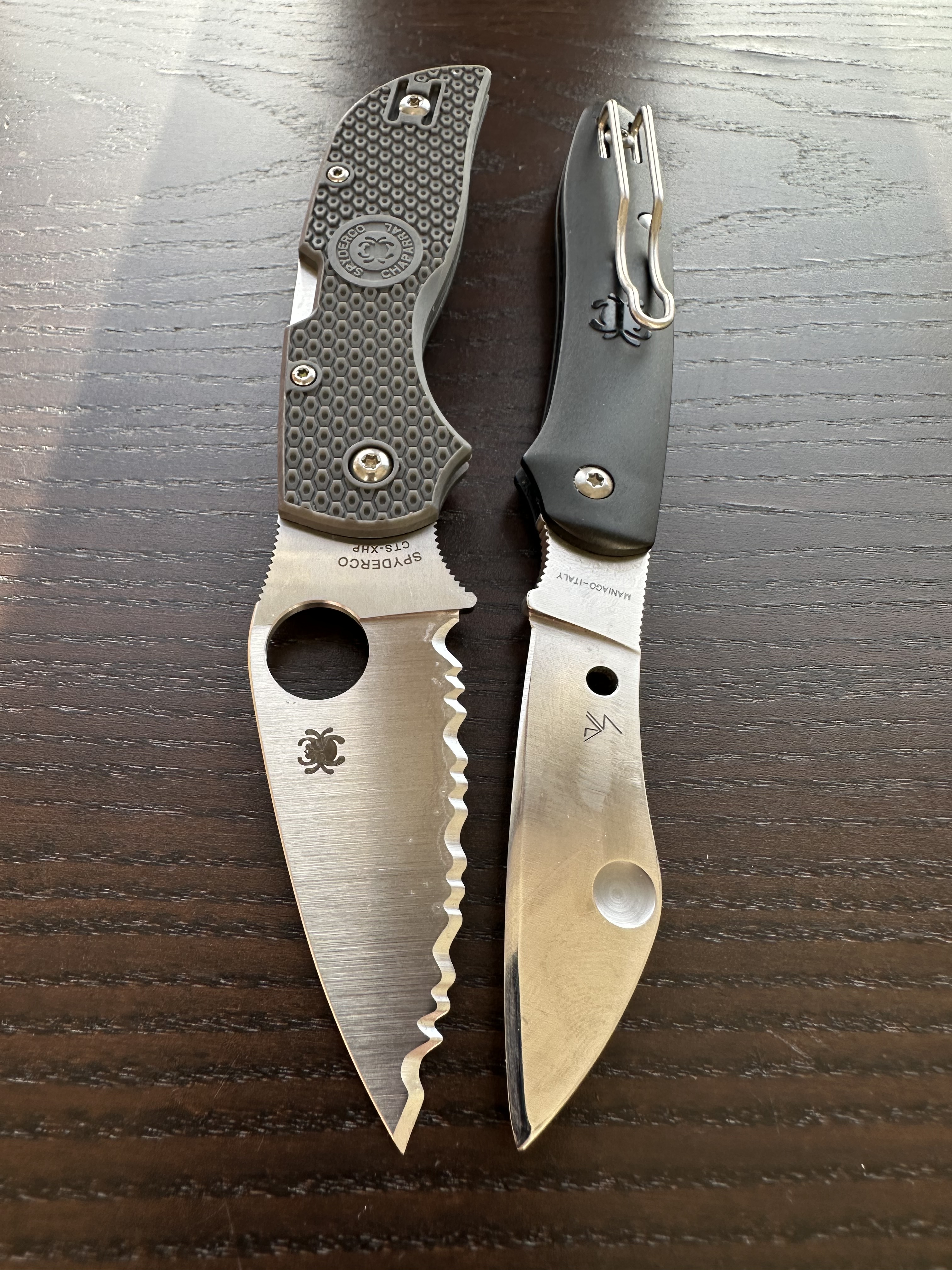
BTW the Metropolitan pictured above costs about half the price of the Chaparral, and while both fall into the same blade-length category, the Met’s blade is roughly 33% thicker. The Metropolitan’s M398 blade is impressive when it comes to edge retention, but the CTS-XHP used on the Chaparral has proven to be a reliable, all-terrain stainless steel that performs beautifully on that exceptionally thin blade stock. An M398 blade at just 2 mm thick would certainly be too brittle for practical use.

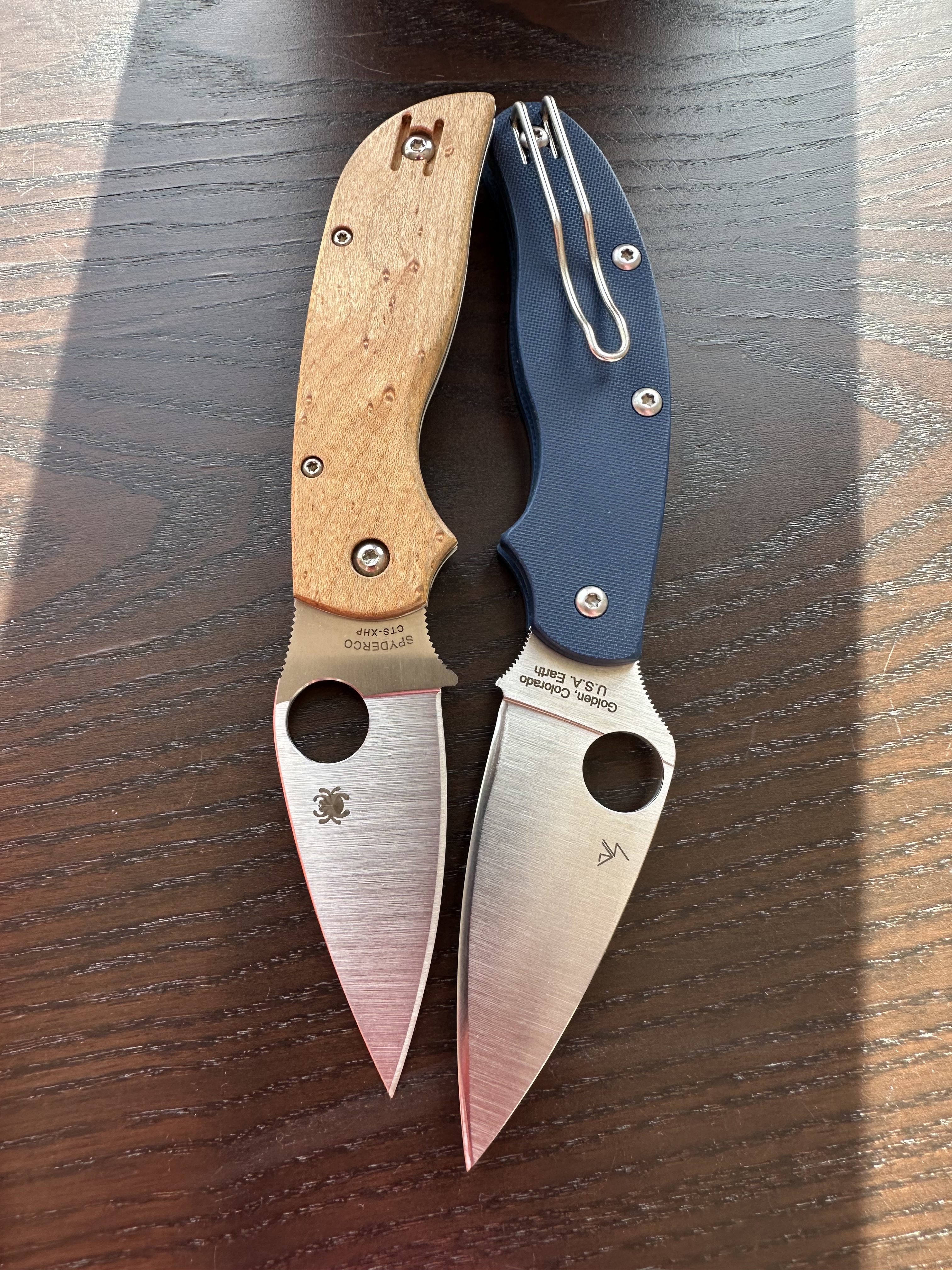
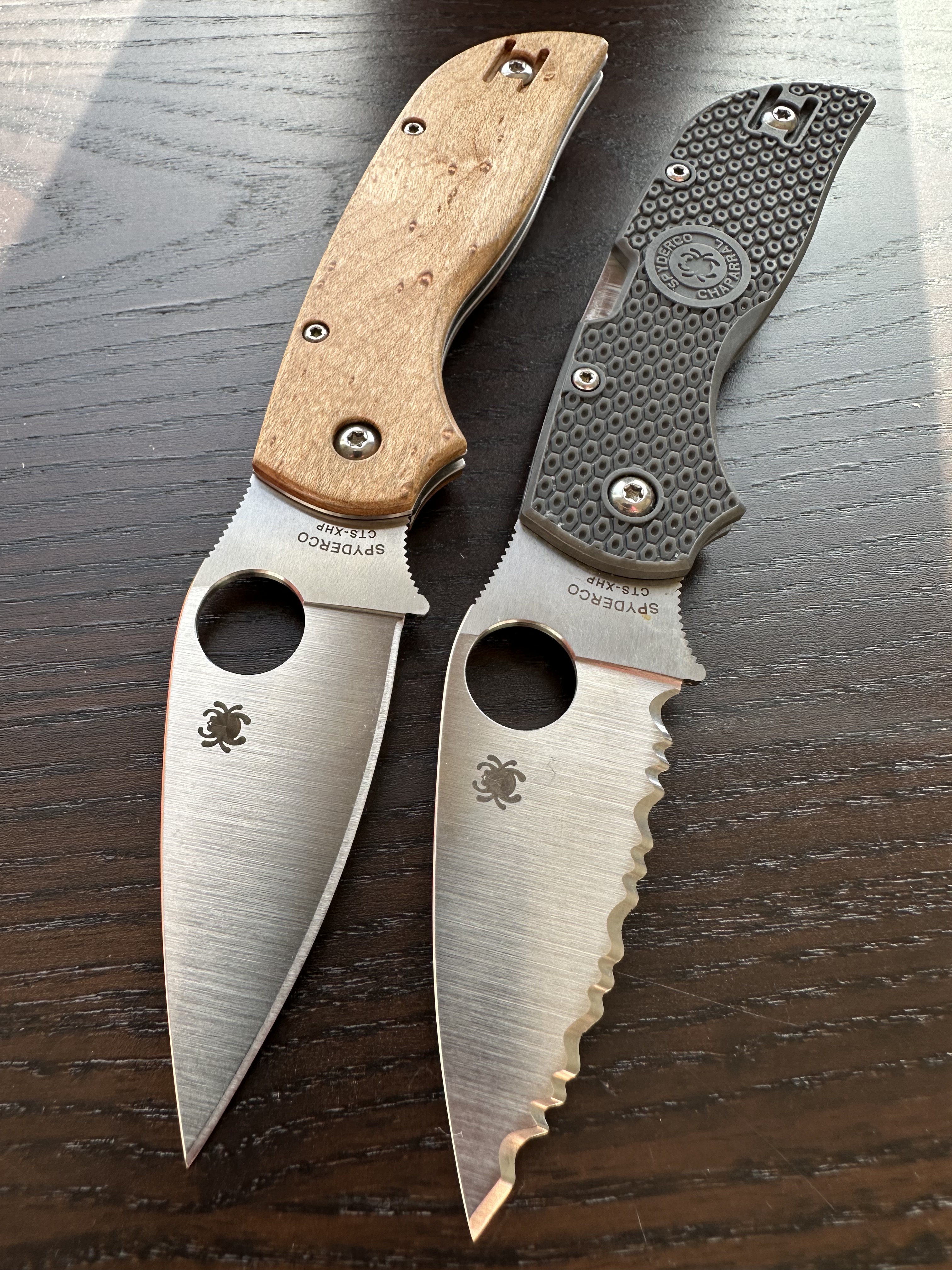


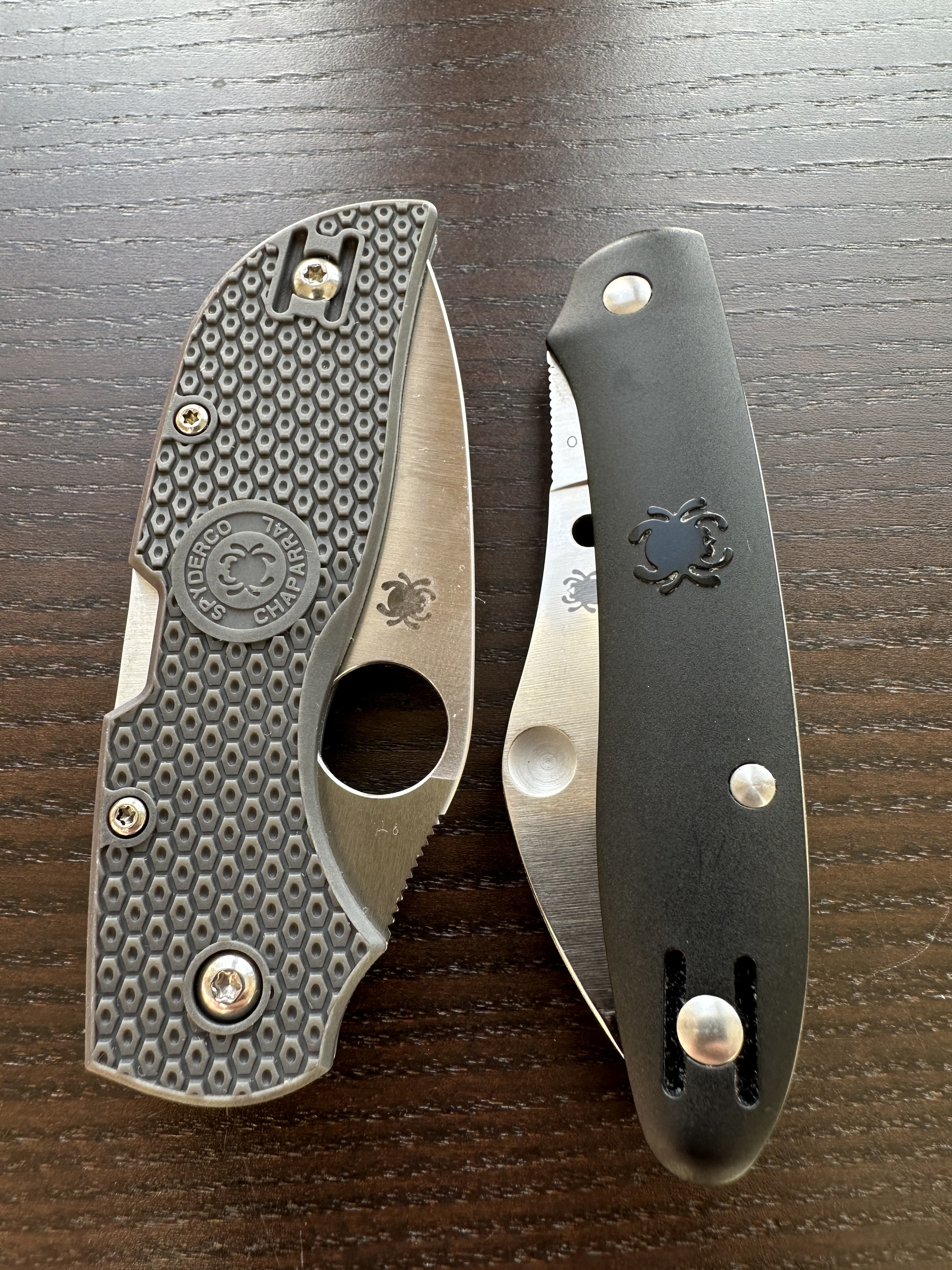
Here is the Chap pictured with the MicroJimbo, the UKPK, the Serrated Chap, the Wasp and the Roadie XL.
Now, about the mechanics:
The Chaparral SLIPIT specifically replaces the usual Chaparral’s back-lock with this “notch-joint” spring system. The Chaparral backlock is also unique in the Spyderco catalog as it get an hidden pin for zero vertical play .
Most Spyderco slipjoints close in two stages — first, disengaging the spring tension, then a mid-stop for safety.
Not the Chaparral. Once you disengage the spring, the blade flows smoothly all the way to the closed position.
(Compare that to the Manly Wasp (pictured in orange) or Comrade, which both have four distinct steps!)
That said, disengaging the blade on the Chaparral requires a bit of effort — which is actually a good thing, especially for whittling. Feeling a blade start to close while it’s wedged in wood is never pleasant.
I’ve had that experience with the beautiful COBOL, and it’s not something I’d want to repeat.
Compared to other SlipIt models, the Chaparral is not in the same range of spring tension. I was initially afraid the action might feel too soft.
It is not soft but noticeably less hard than my UKPK, Urban, Squeak or Metropolitan. My strongest being my Heinnie G10 Urban.

All in all, the Chaparral is a very capable tool — not just a pretty face.
While its aesthetics are undeniably strong (especially with those bird’s-eye maple scales), some users have raised concerns about the stability and durability of the wood in moist or wet environments.
Naturally, a wooden handle requires a bit of care — you don’t want to let it soak in the sink. (Buy a UKPK Salt instead !)
Wood isn’t G10 or FRN; its warmth and character come at a small cost in terms of maintenance and environmental sensitivity.
If you need something very rugged (wet/humid environments, rough carry), it might not be the best choice or you might pick a version with more durable scales.
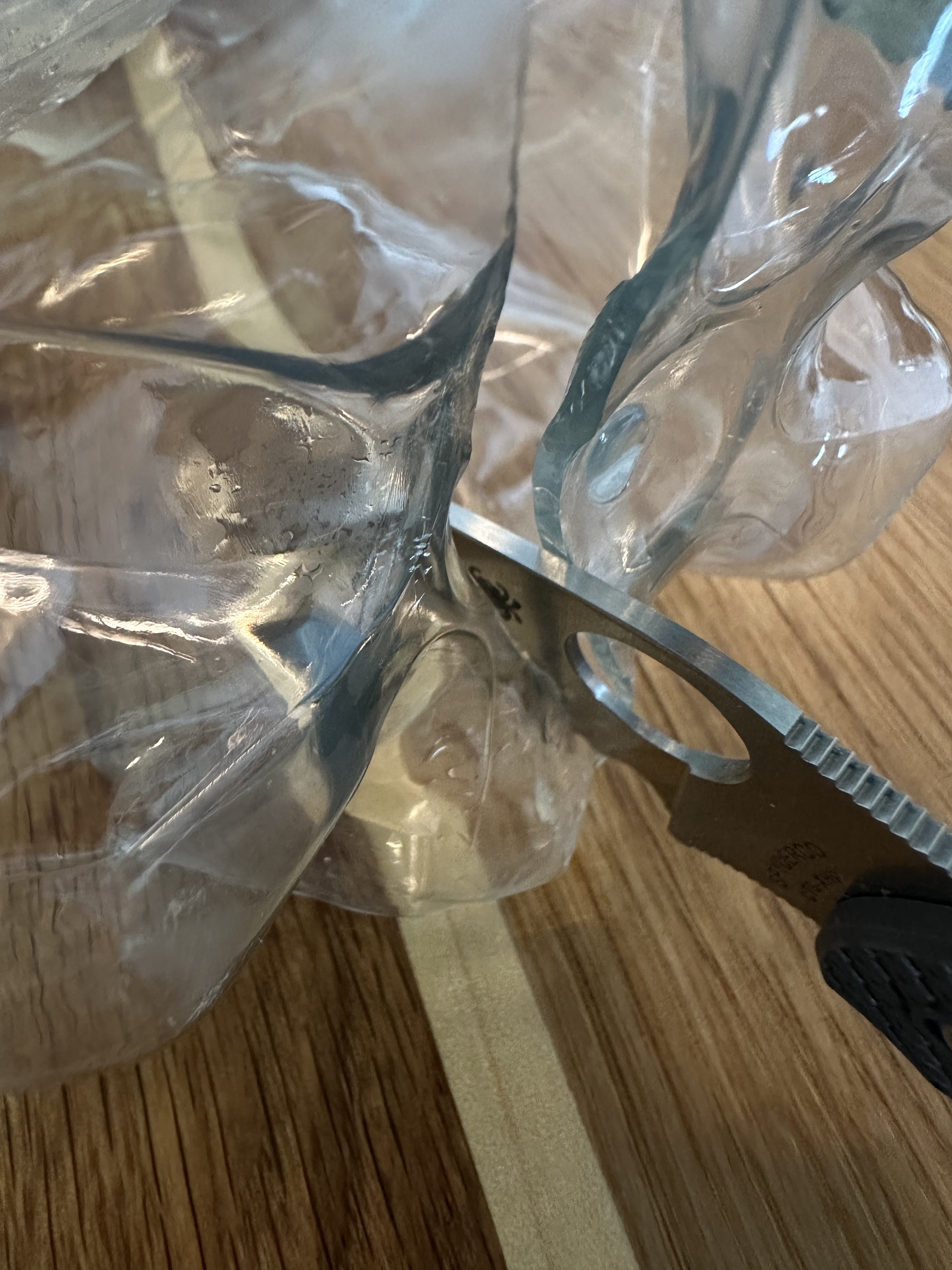
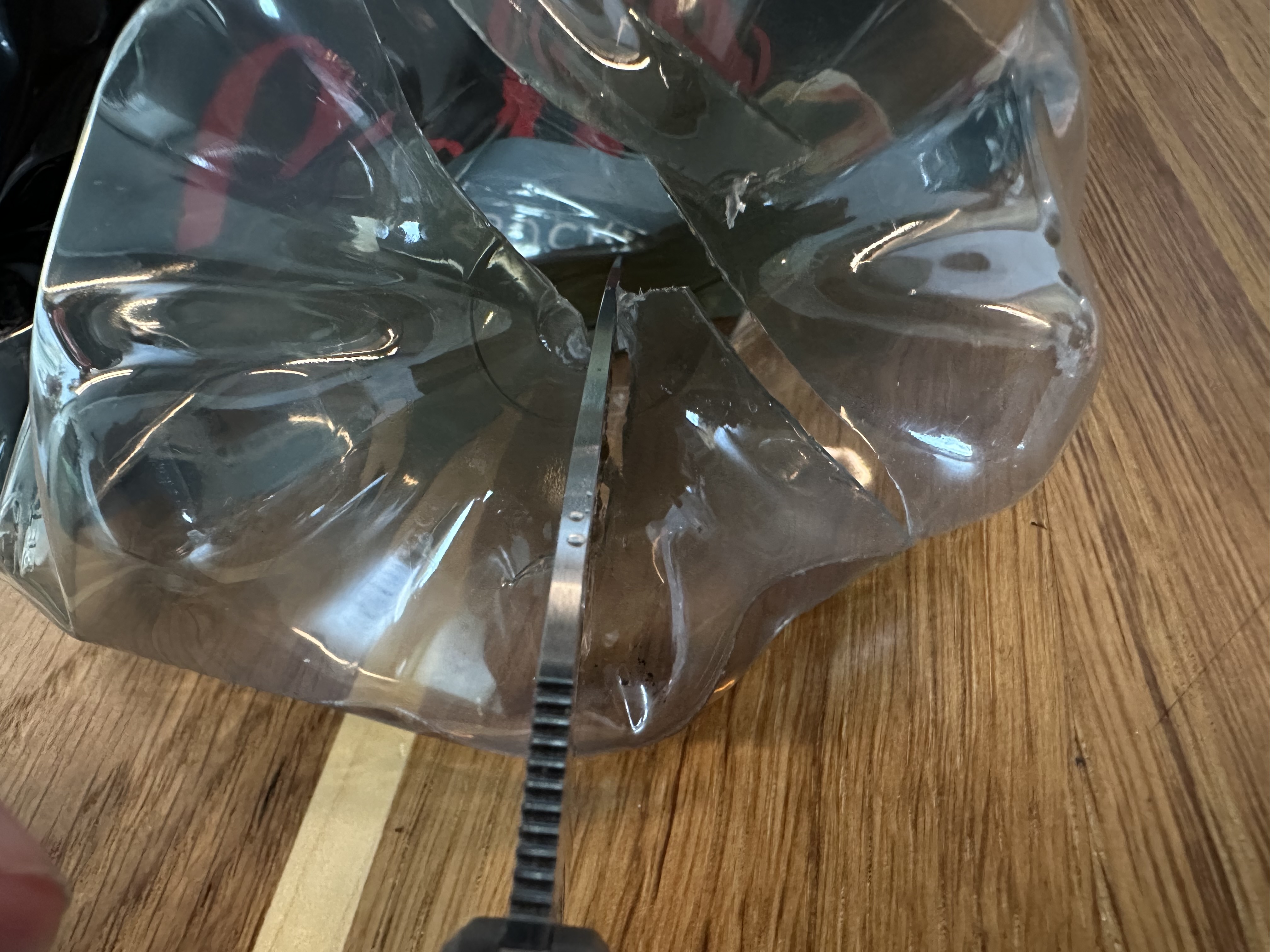
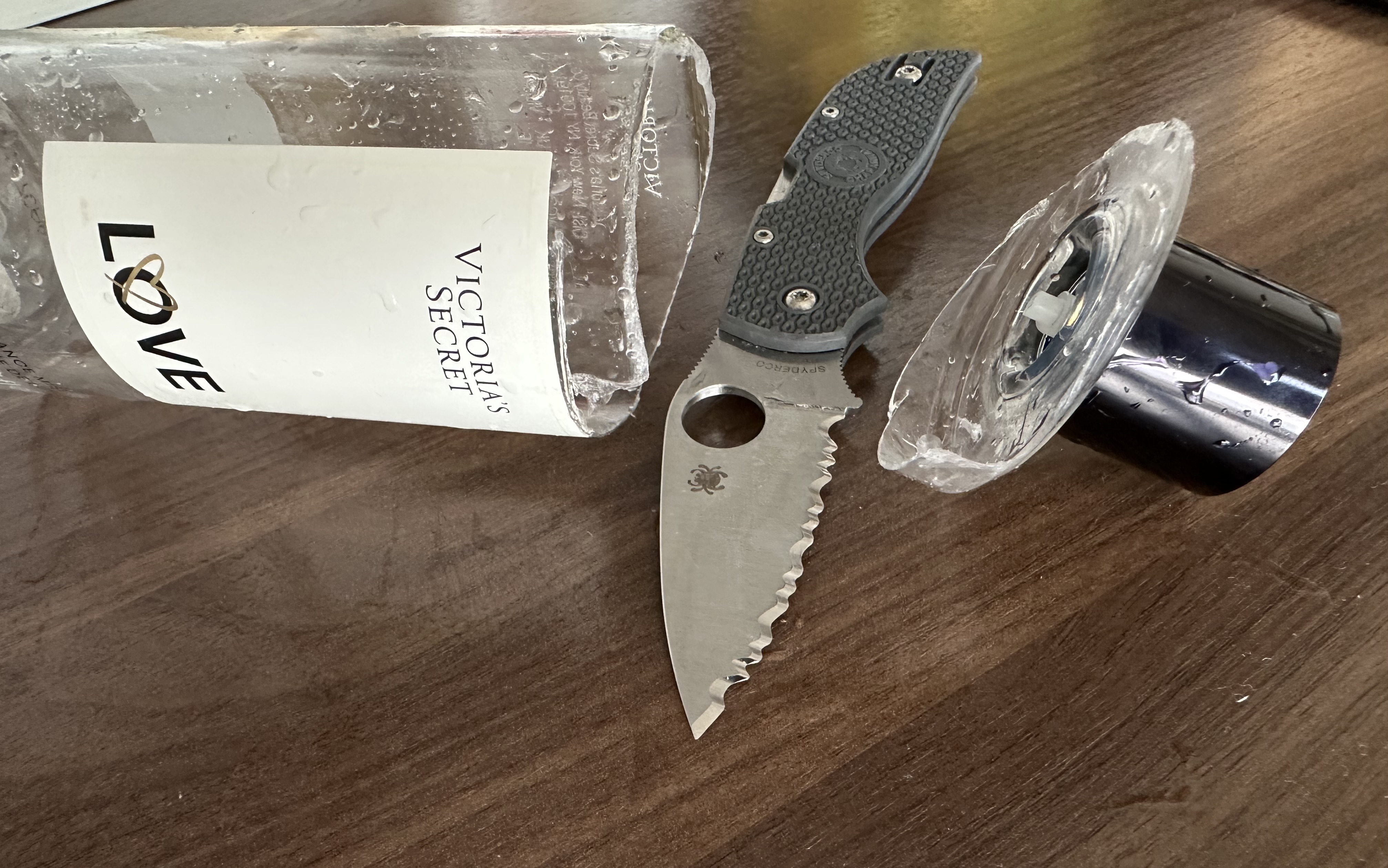
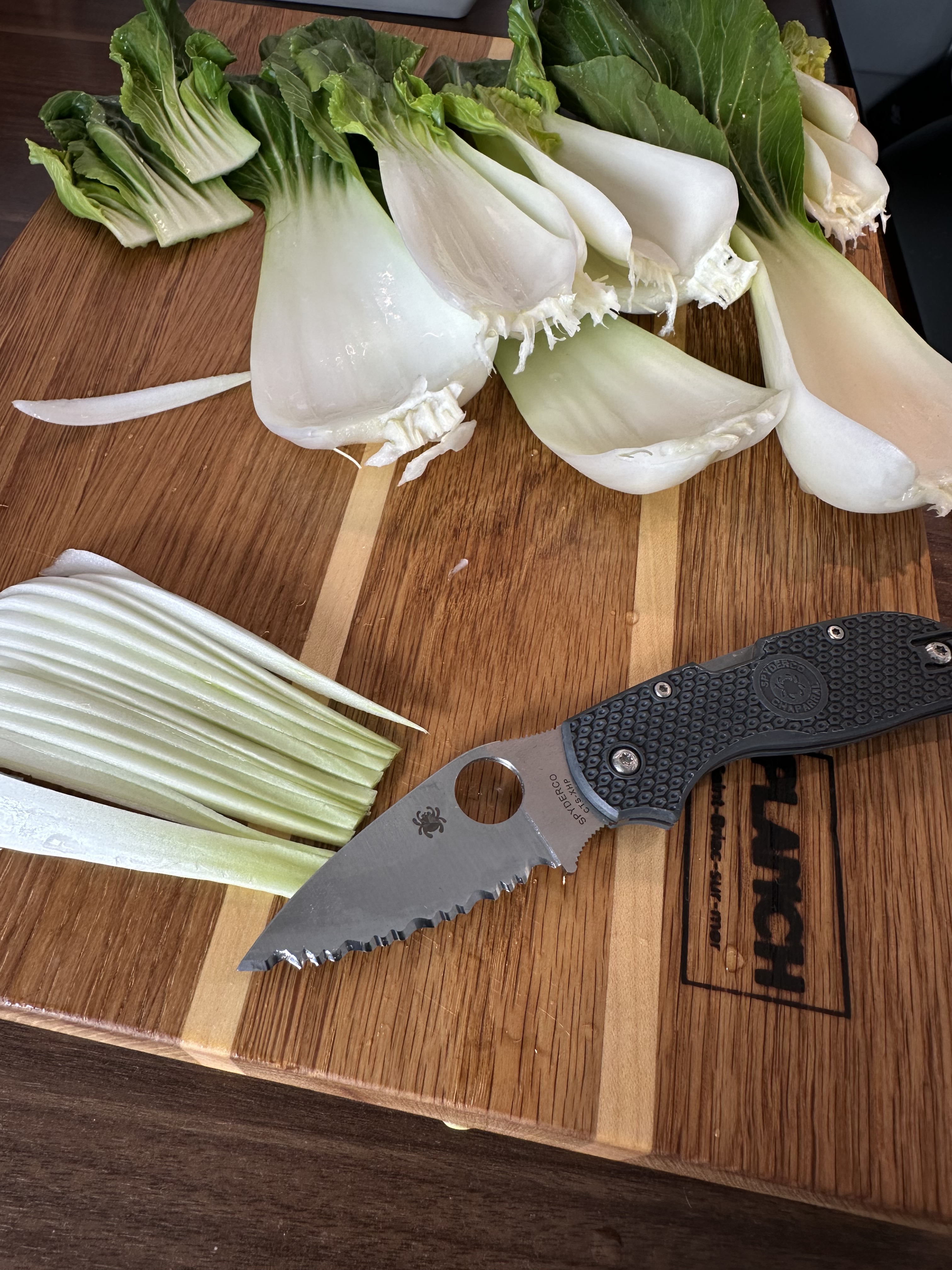
And again, that blade stock is so super thin which makes it an incredible slicer. Opinel class ! You need to experience it to believe it.
That’s the case for all Chaparral anyway, nothing new about that.

The fit and finish is near perfect. Notice how the spine and handle are gently bevelled as always with Taichung’s !
This is little folder for users who prioritize slicing performance, sharpness, and elegance, the Chaparral SLIPIT is just appropriate for EDC/“gentleman, lady” use.
The non-locking SLIPIT mechanism is suited for jurisdictions (including Europe/UK) where locking blades may be restricted — that adds to its appeal. If you want also a knife that carries lightly, looks premium, and doesn’t feel like a bulky tactical folder, this hits that niche. But you may want to treat its maple scales carefully and avoid heavy moisture.
I will rinse my Chap under the tap but immediately wipe it dry, this is as simple as that. I will see if wood will change on the long run and it will surely add some character. No worry.
The non-locking SLIPIT mechanism may not feel as secure as a lock-back, and the “no half-stop” means the feel is really different that other SlipIt designed by Sal Glesser.
Anyway any Chaparral will teach you a lesson on the importance of grind and thin geometry but this one will keep it legal in many countries.
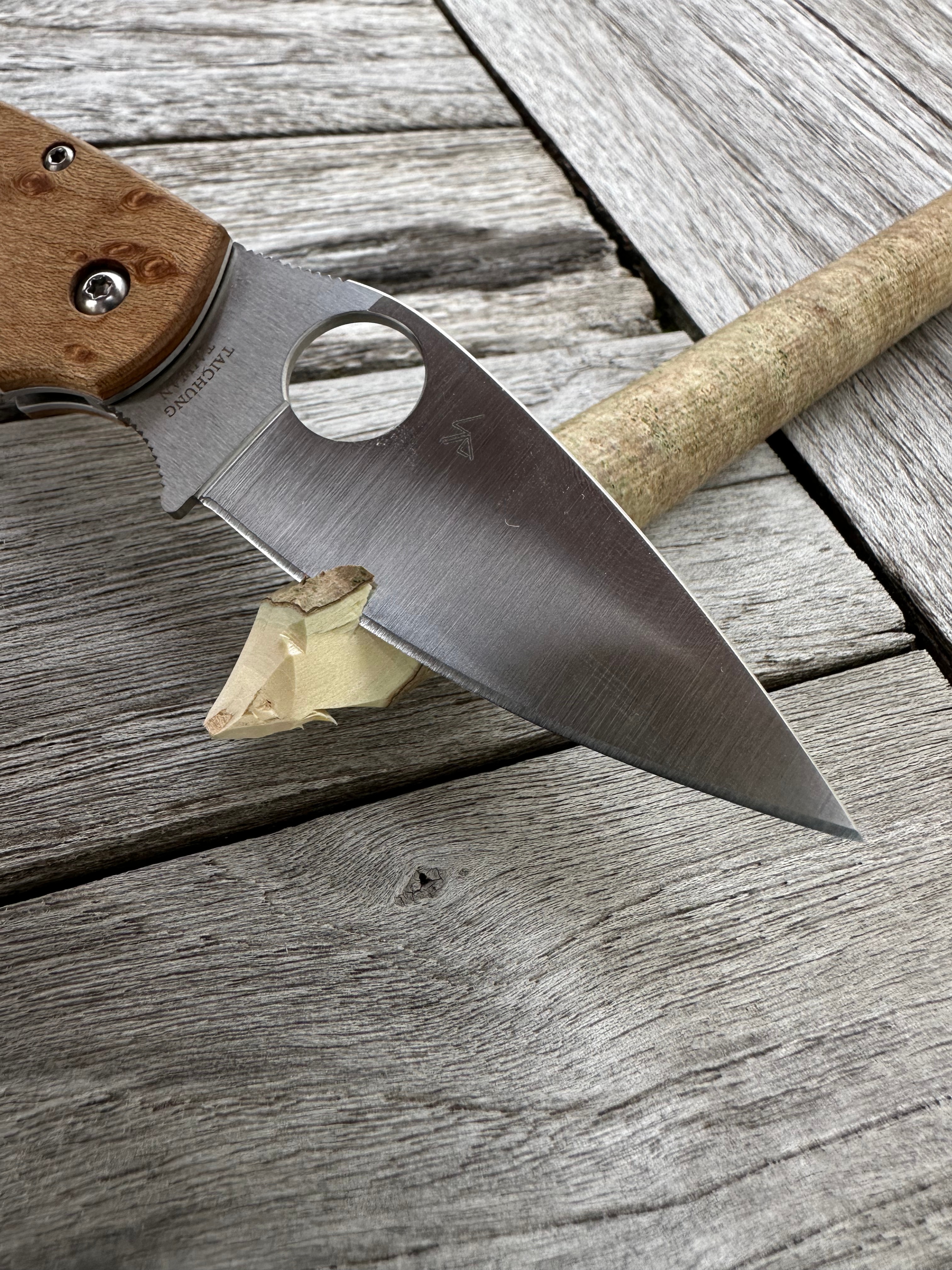
If you’re seeking a precise, elegant everyday-carry folder with top-tier steel, superb slicing geometry, refined looks and minimal pocket presence — the Chaparral SLIPIT delivers strongly.
Oh boy does it slice, hell yes.
And it brings luck.












 NemoKnivesReview