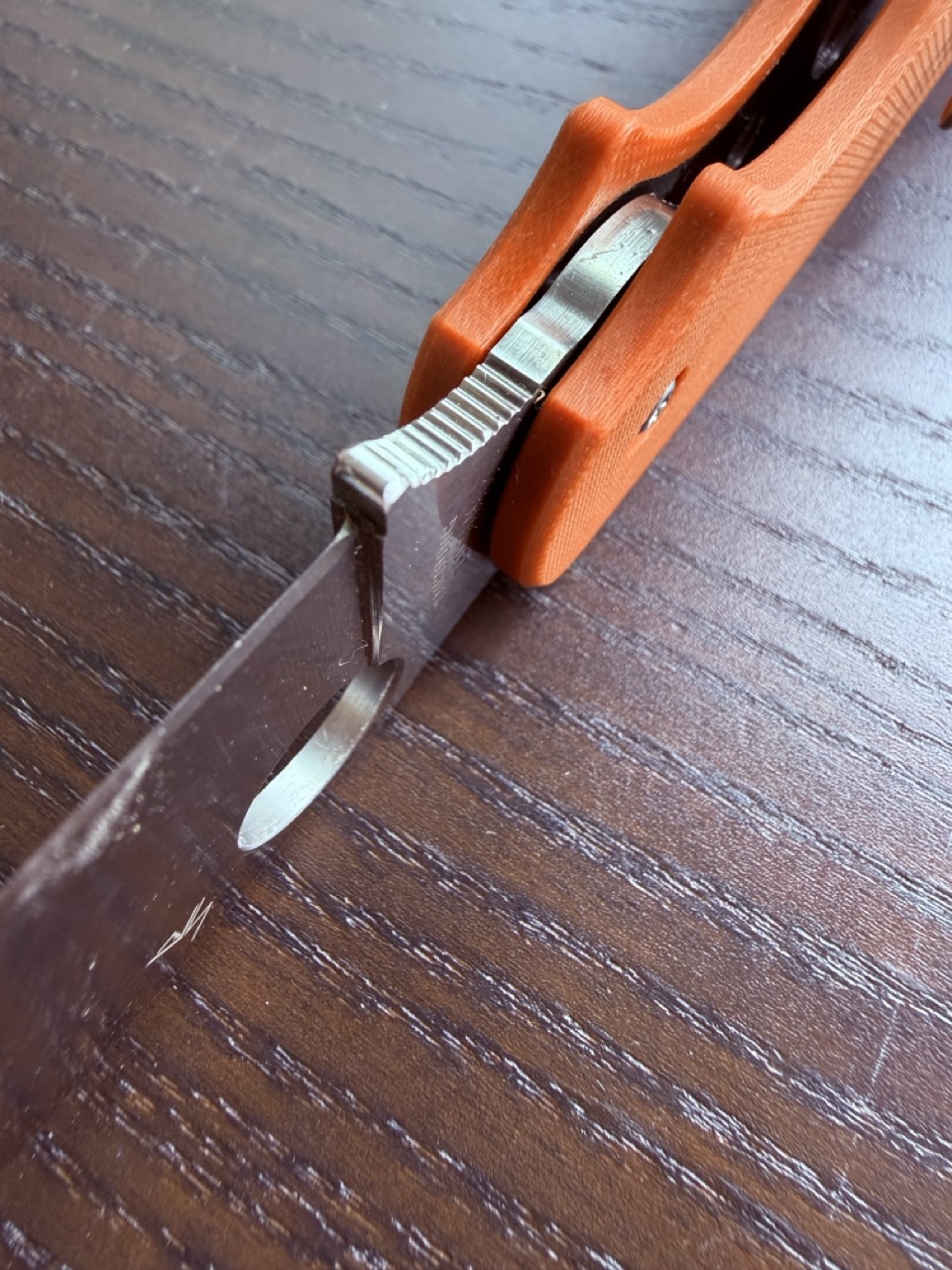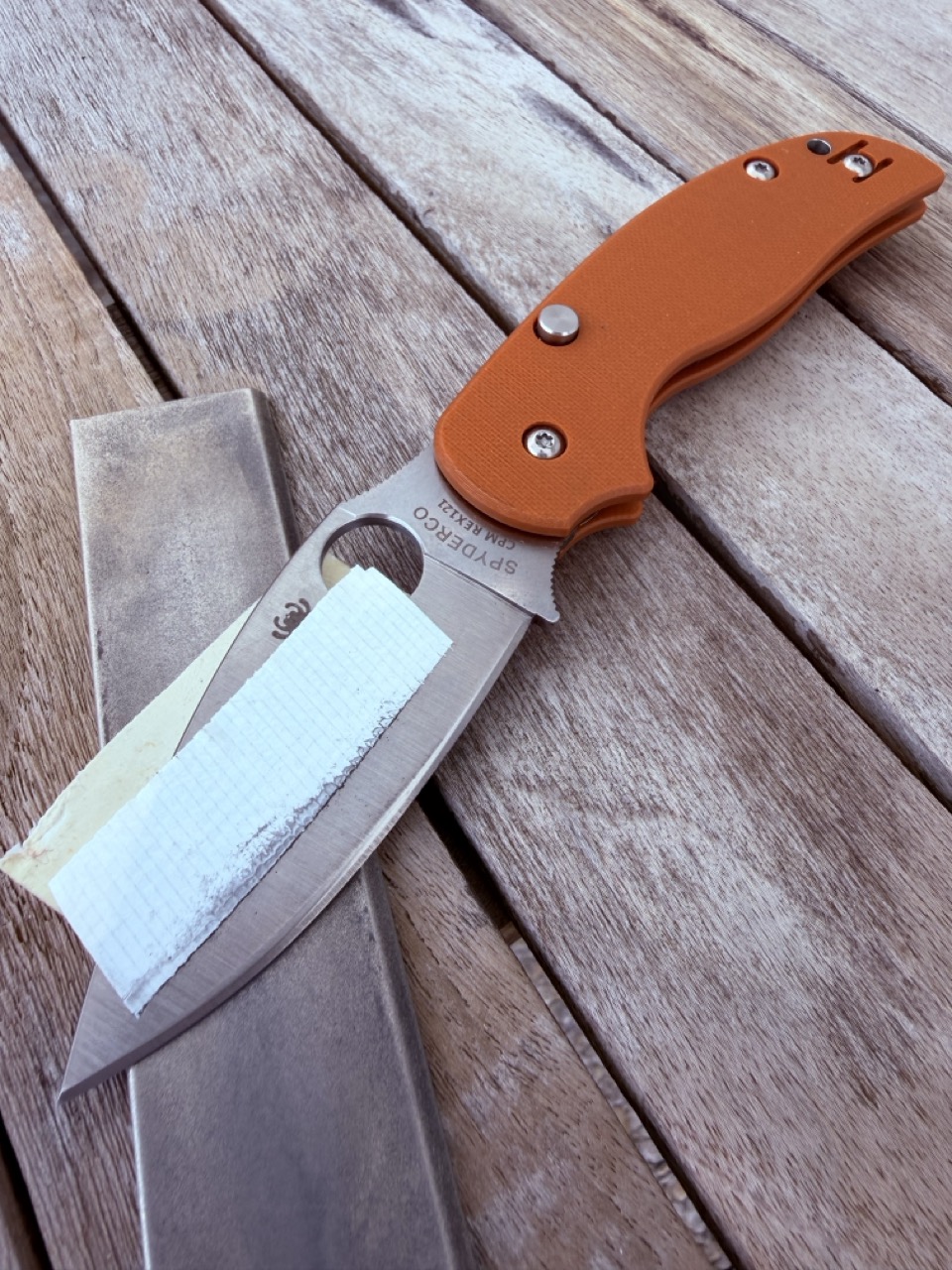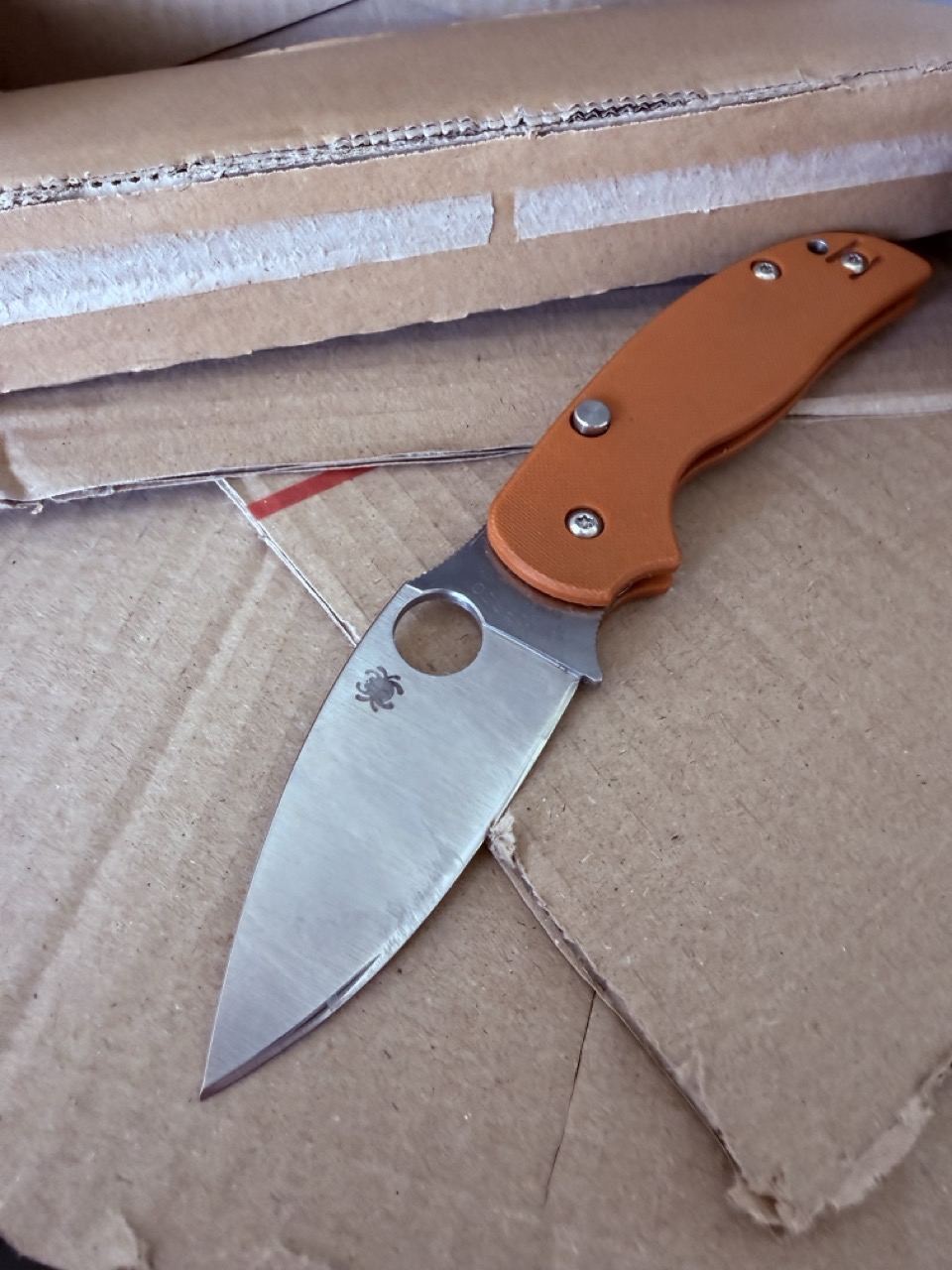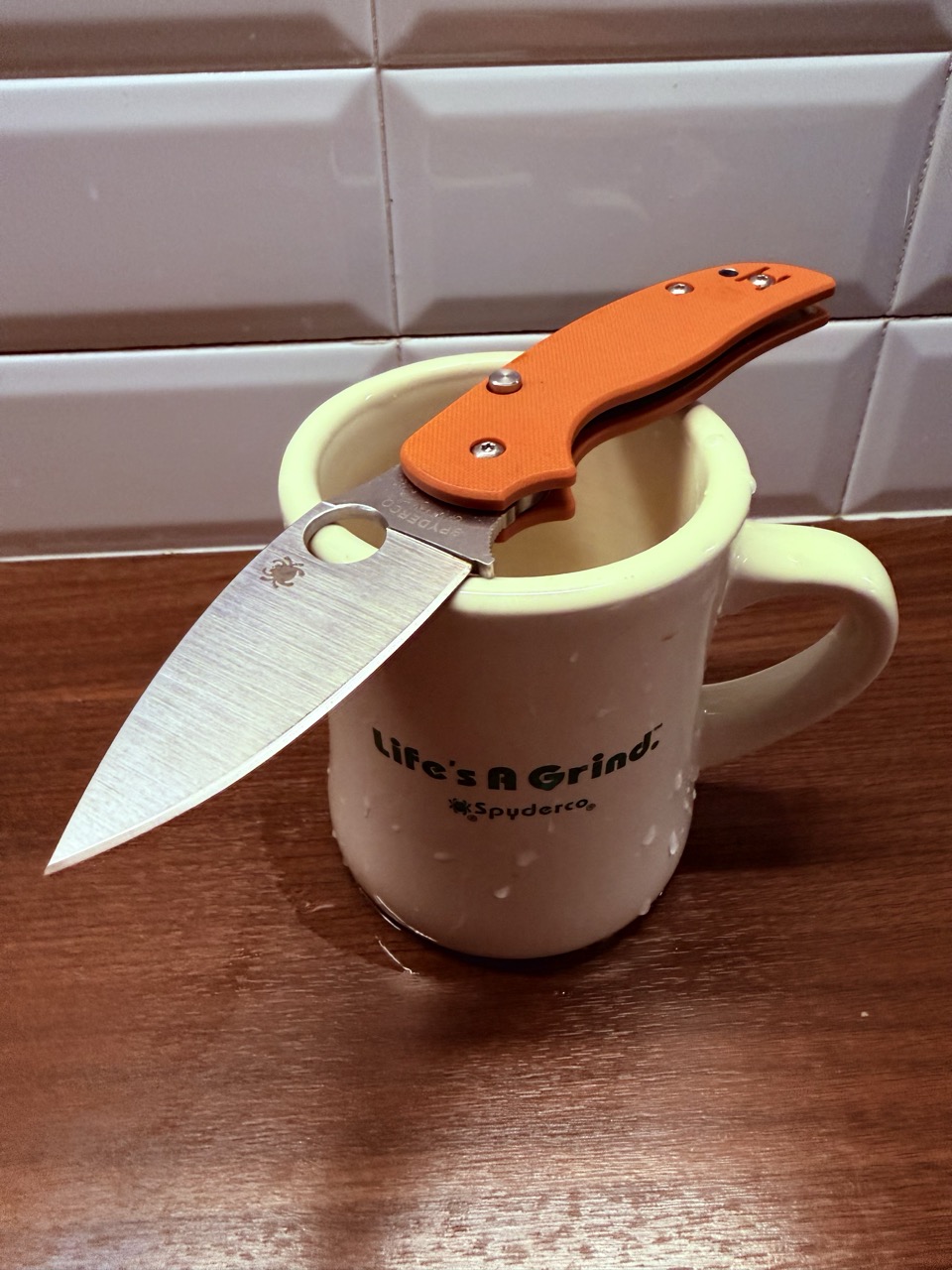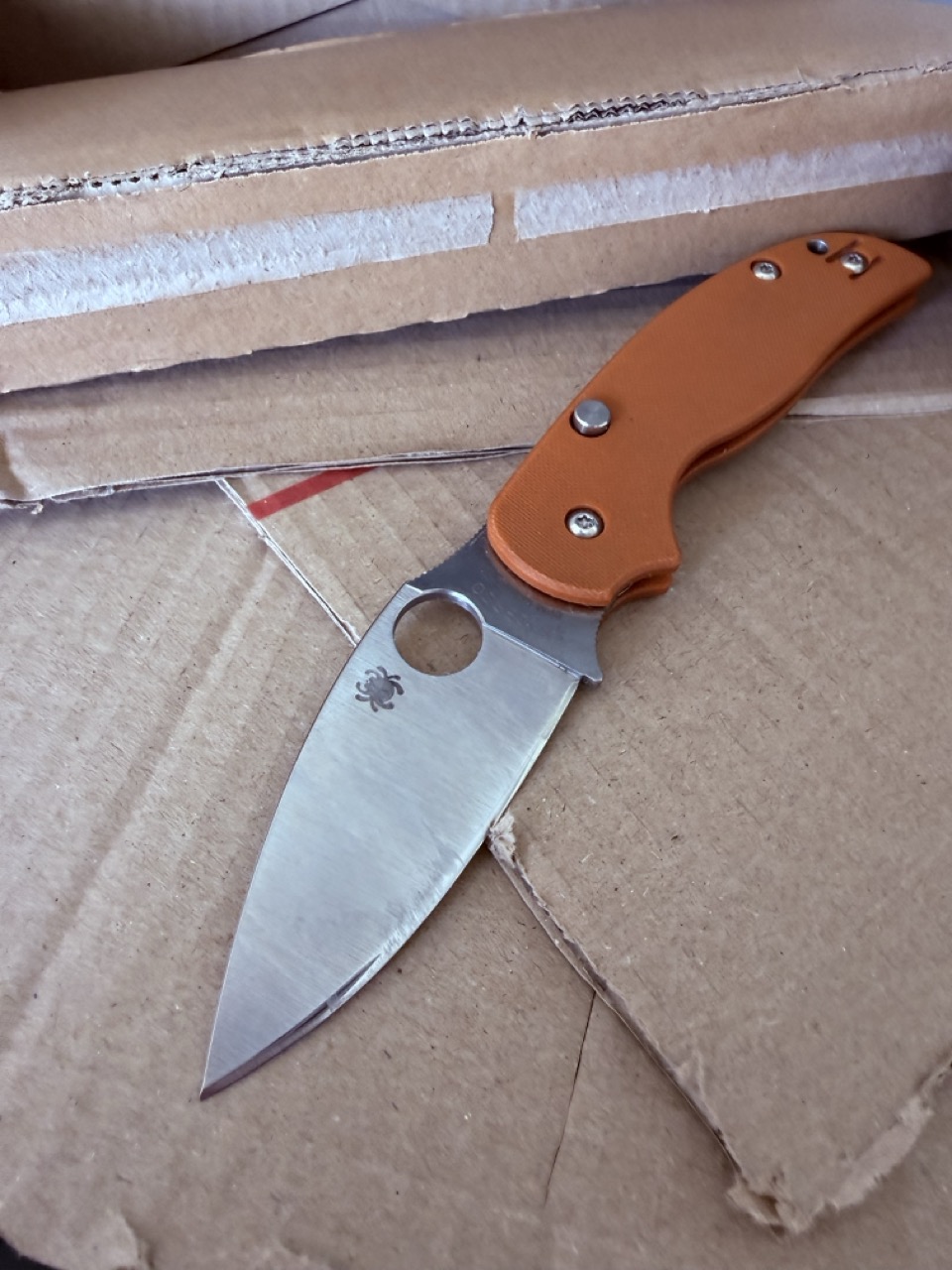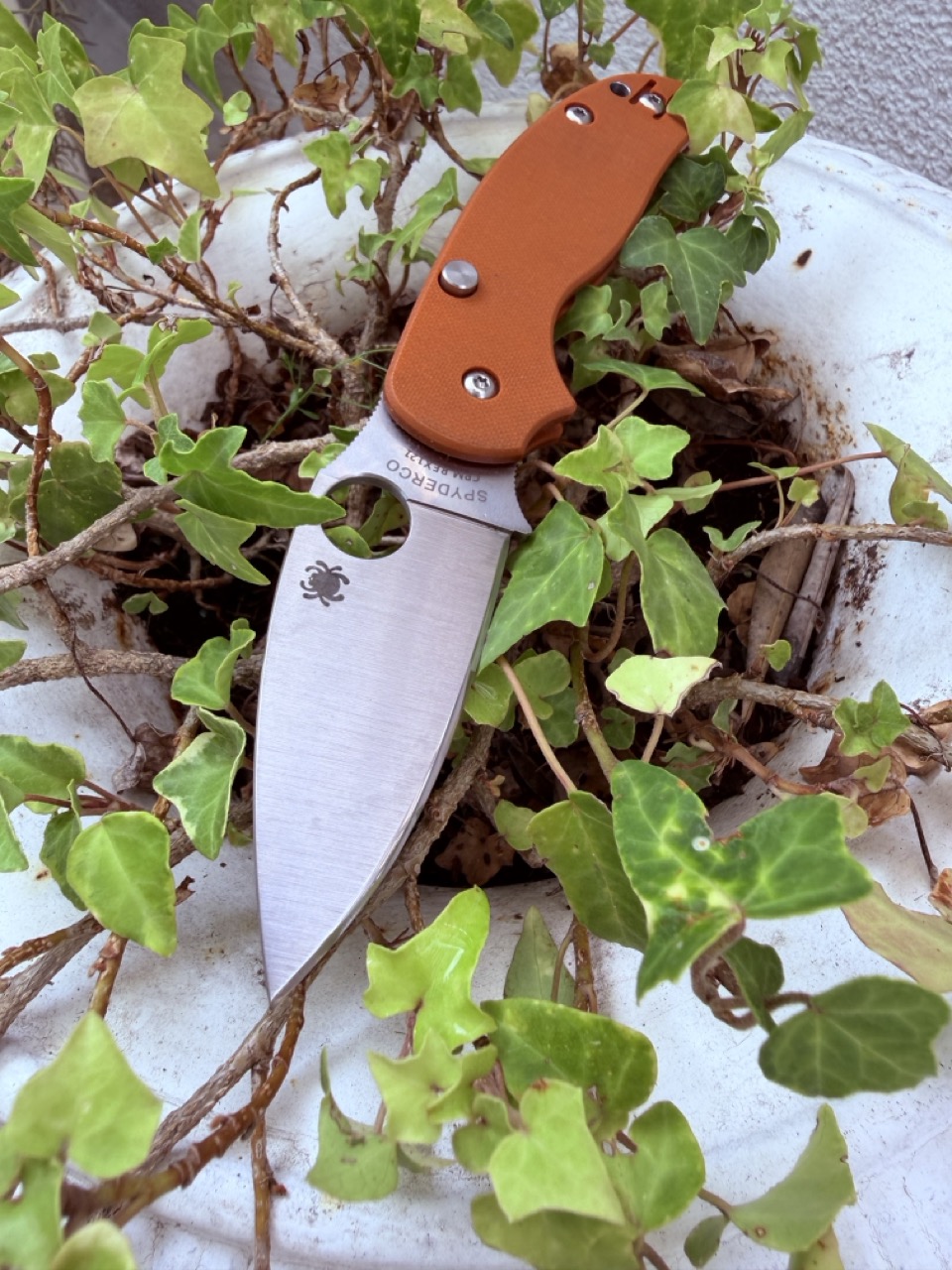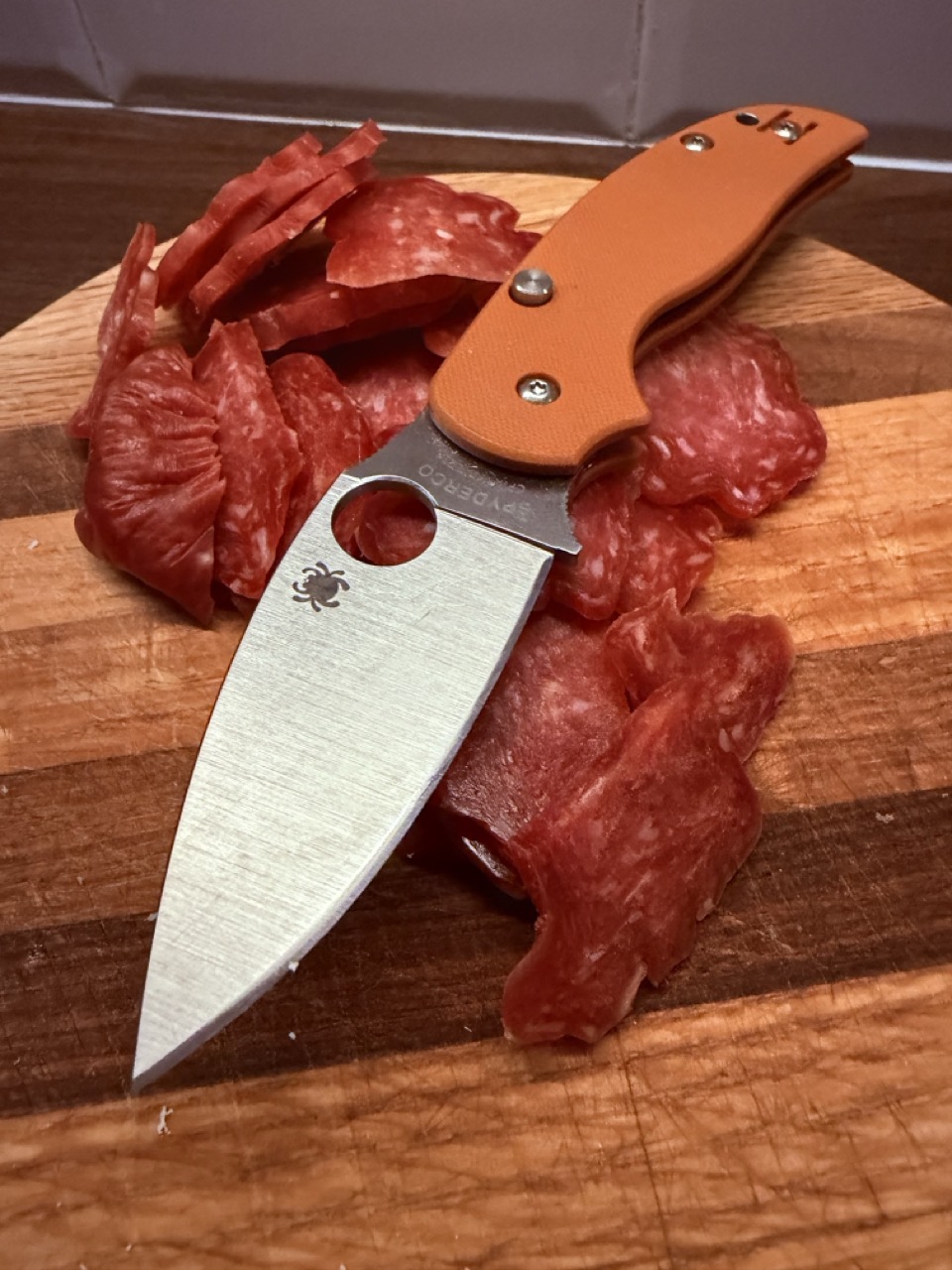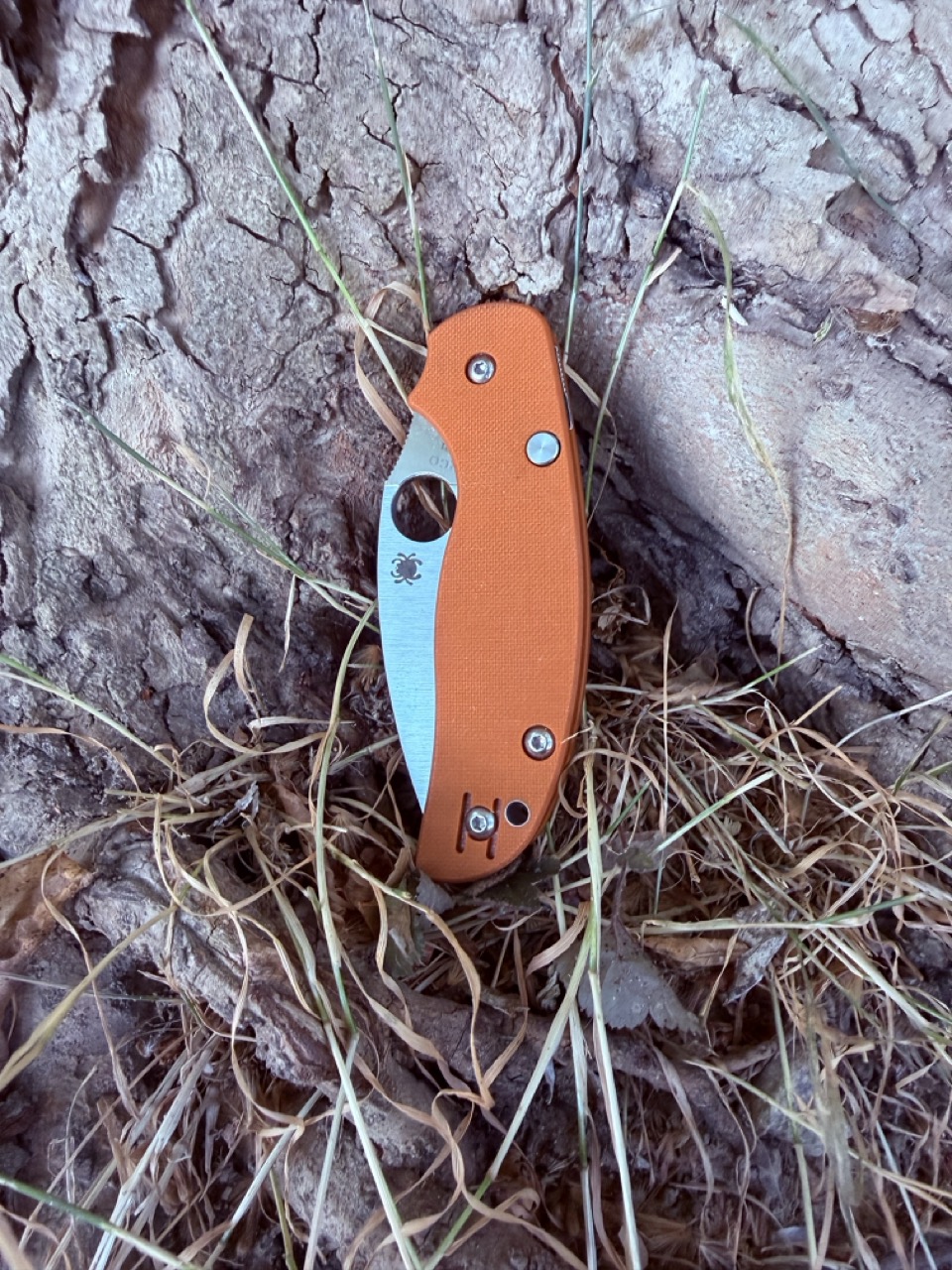
Fourteen days in Italy. One very special knife. No sharpening.
Spoiler alert: actually, no need for it. 😉
And this isn’t the first time I’ve gone to Tuscany with only one Spyderco.
The first time, it was the Tuff by Ed Schempp. Last year, it was the Serrated Chaparral, which turned out to be Walter‘s favourite knife after 6 years of using the Michael Walker in ZDP189.
That was the new experiment. The new road sheet. The new main bearing.
Is Rex 121 too fragile to withstand normal EDC in the countryside?
At twice the price of other super tool steel folders, I wanted to know.
Especially after seeing broken Rex 121 blades on Reddit…
“I was just cutting cardboard…” Tu parles !
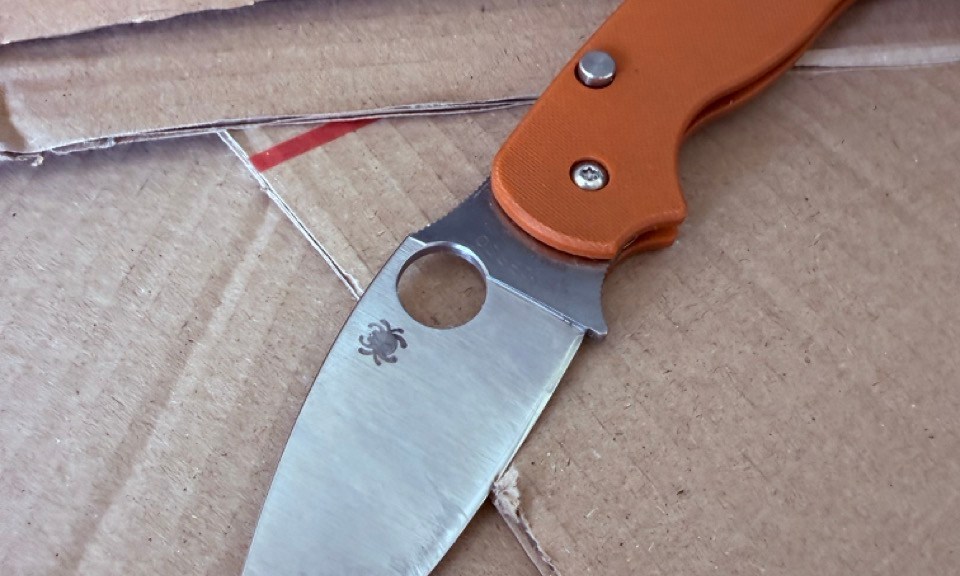
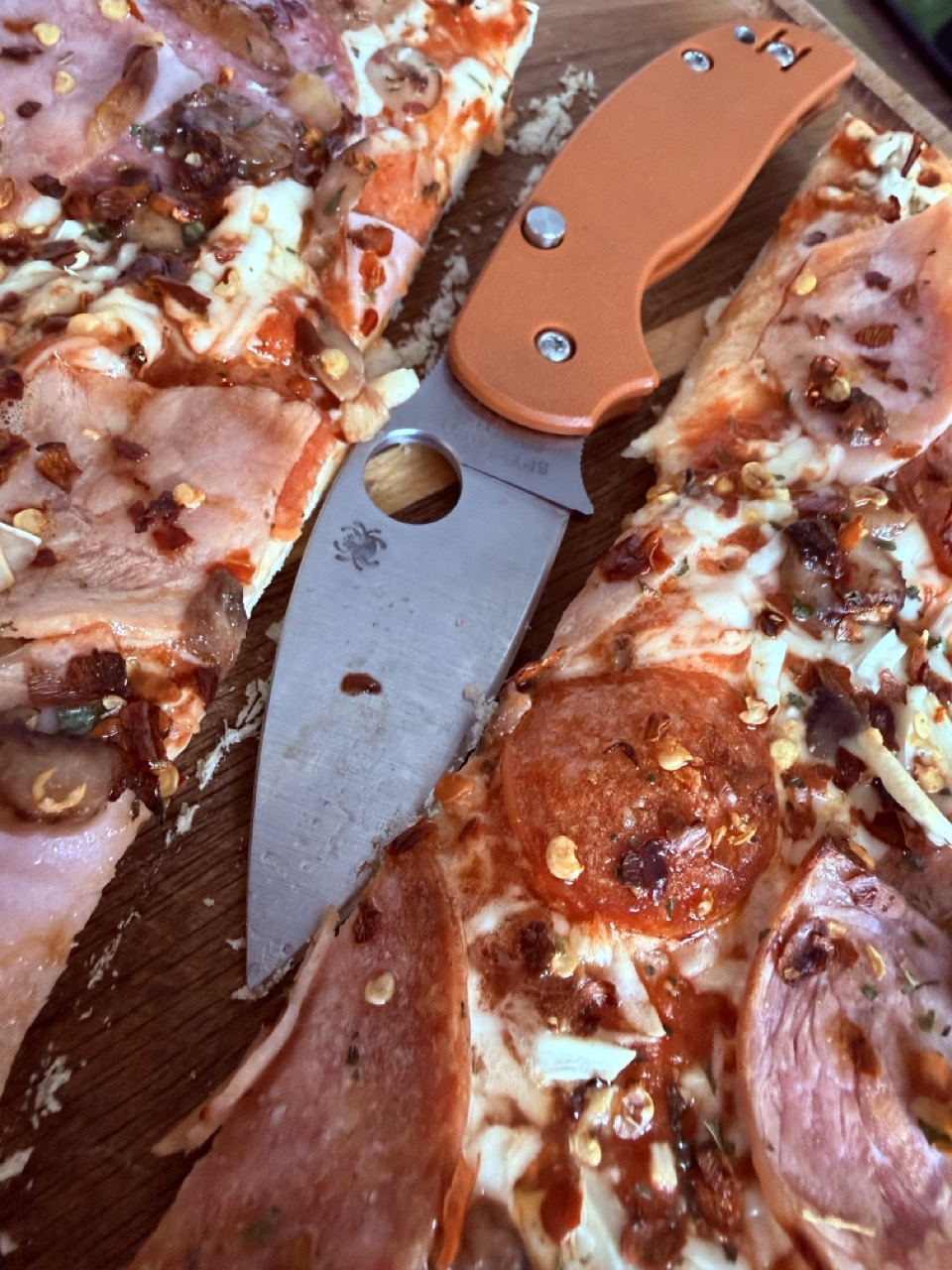
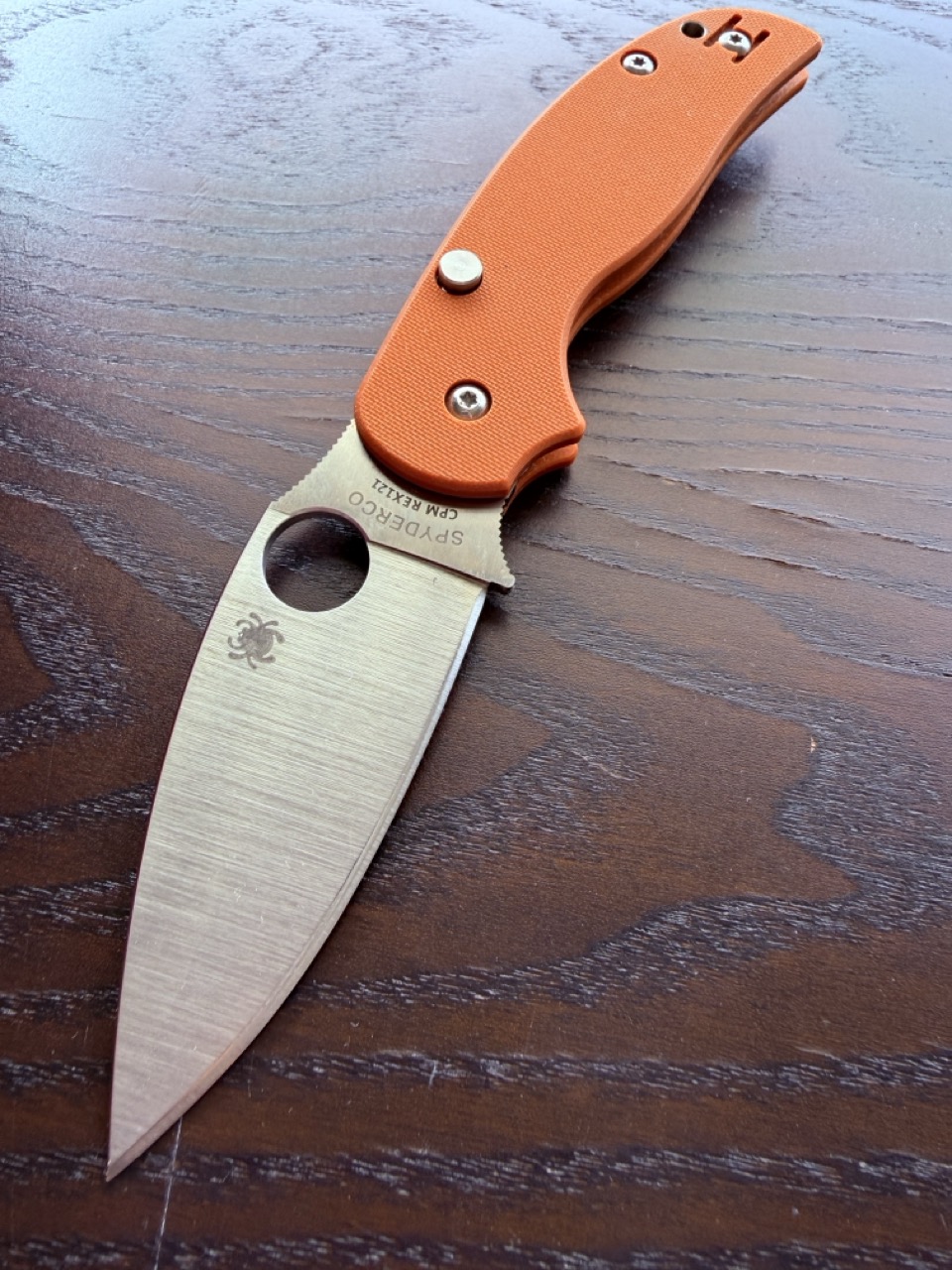
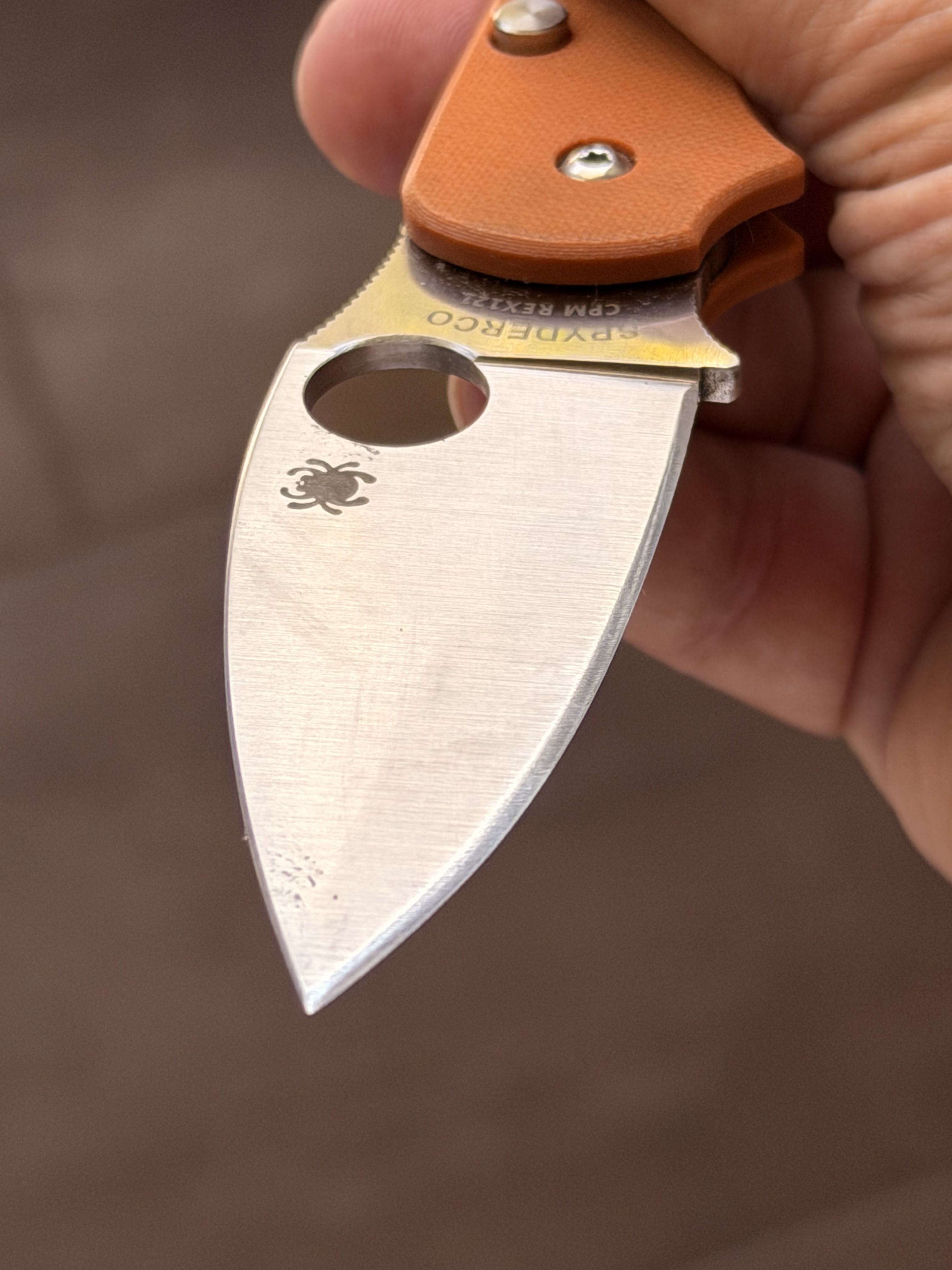
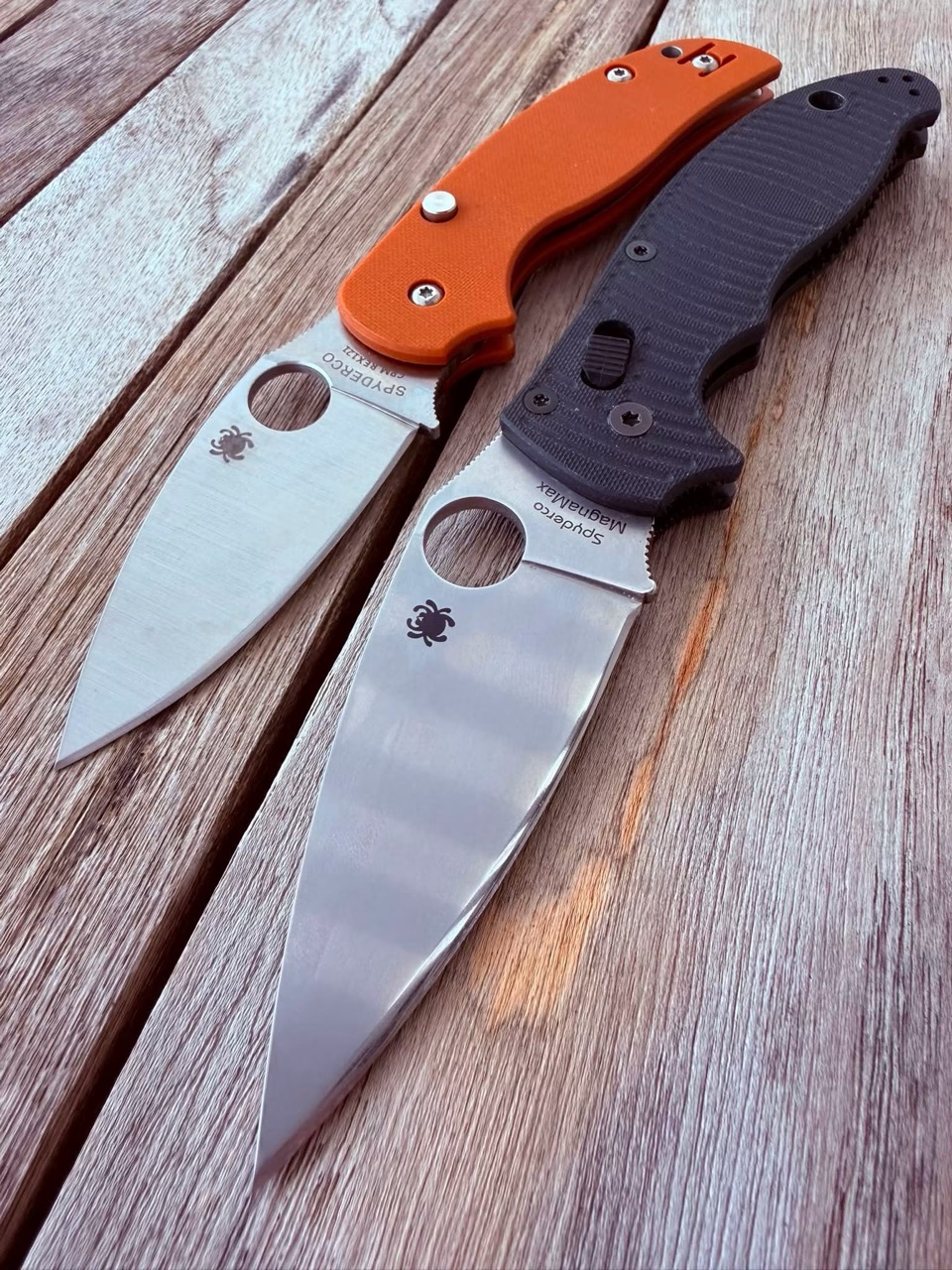
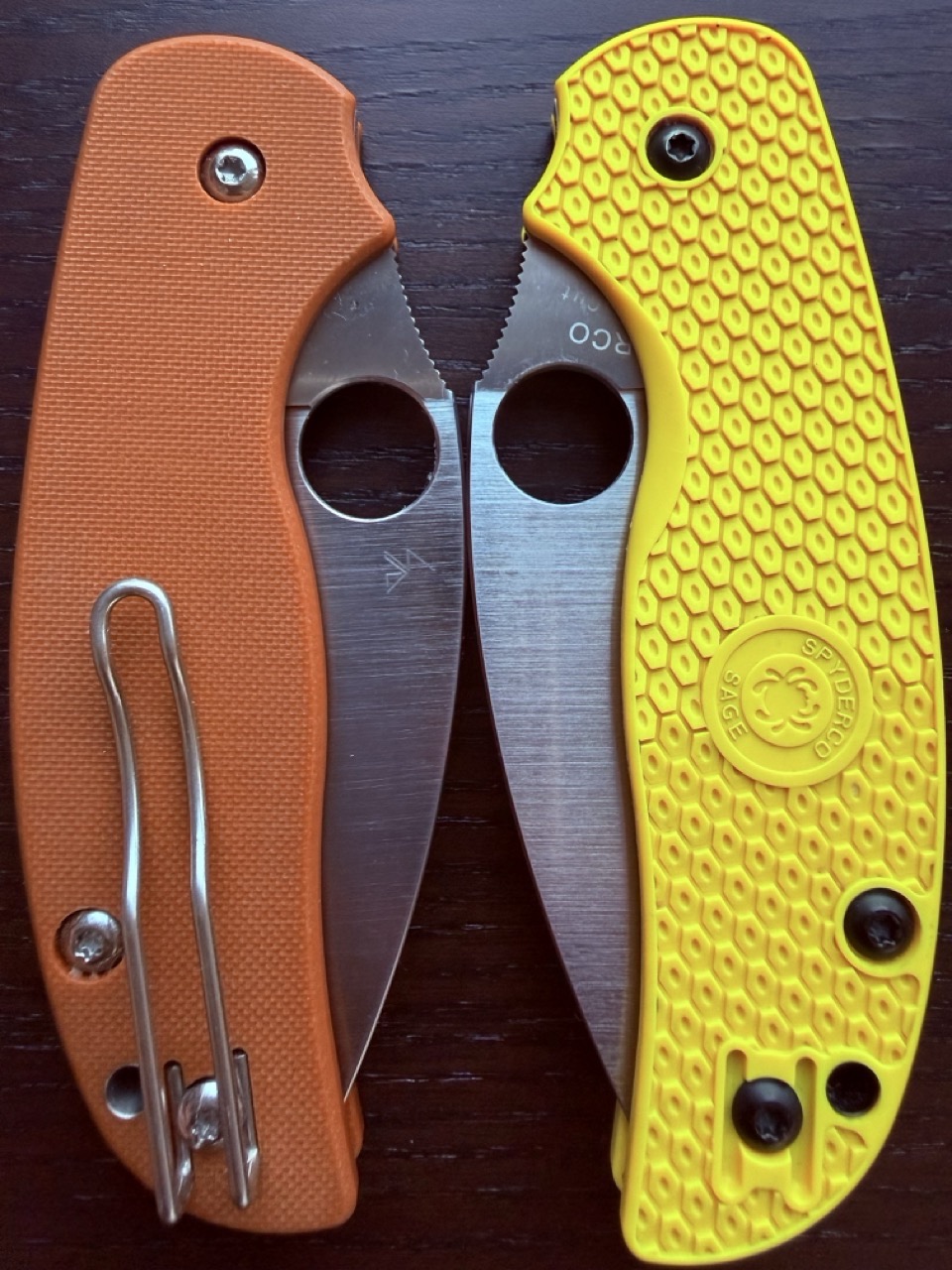
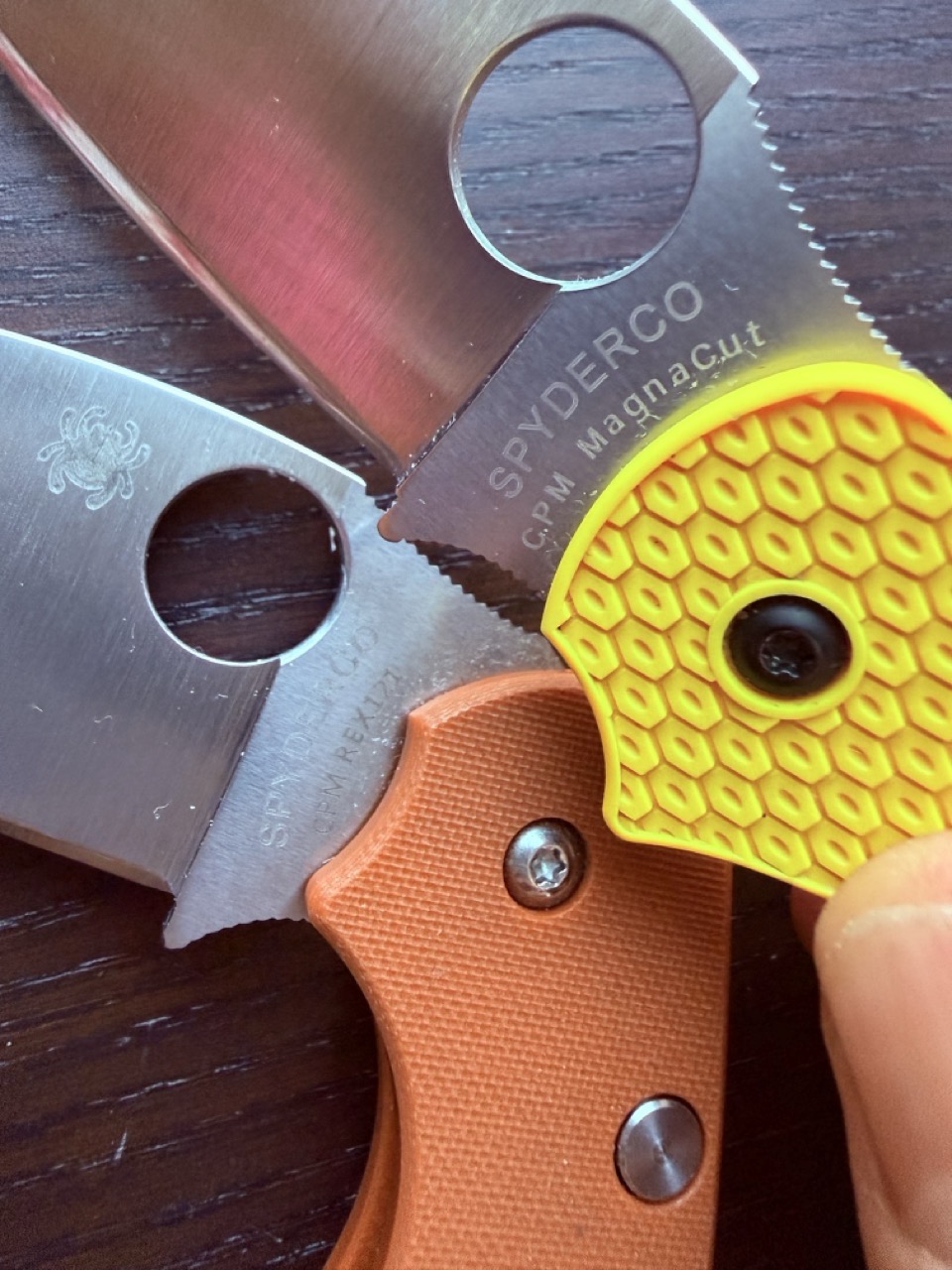
When I left for Italy, the only knife I took with me was Tango, my Spyderco Sage 6 in Rex 121.
And for me Rex 121 is the Jack Reacher of tool steels !
And I can tell you, I had spent quite a bit of time getting its edge exactly where I wanted it before the trip.
The idea was simple: use it. Really use it. For two full weeks. For everything. And, whatever happened, never touch the edge again.
No sharpening stone in my bag. No guided touch-up. No diamond stones. Not even a piece of brown cardboard to strop the edge.
Even if the idea crossed my mind more than once during the trip…
Just the freshly sharpened knife, whatever I happened to ask it to do, and fourteen days of real-world use.
And I deliberately didn’t make things easy for it. The Sage 6 in Rex121 is a Lamborghini. But a Lambo isn’t built for rough mountain roads.
So the question was simple: could this one handle them?
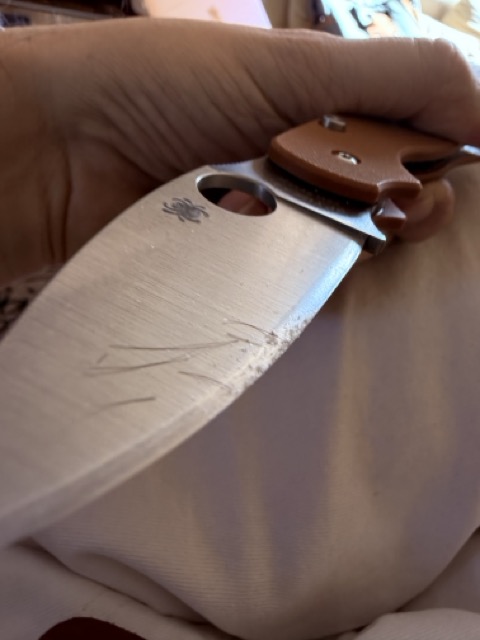
Getting the edge right (for me).
Yes. Right for me. Testing with my thumb’s nail. As seen on my previous review, anyone who has been confronted with Rex 121 knows that sharpening this very specific steel is not exactly a relaxing Sunday afternoon activity. Even with diamonds and a good dose of elbow grease.
That alien of a steel is extremely hard and extremely wear-resistant.
So getting a new geometry — as thin as I wanted it on the Sage 6 — took time, patience, and quite a bit of work. Going back to the blade again and again, almost a week of daily touch-ups, trying again and again, and — above all — trying to avoid creating a recurve, which I almost managed to create by flattening the belly.
Damned!!
Sal Glesser, for example, have taken the edge down to around 10 degrees per side on his Sage 6 Rex121.
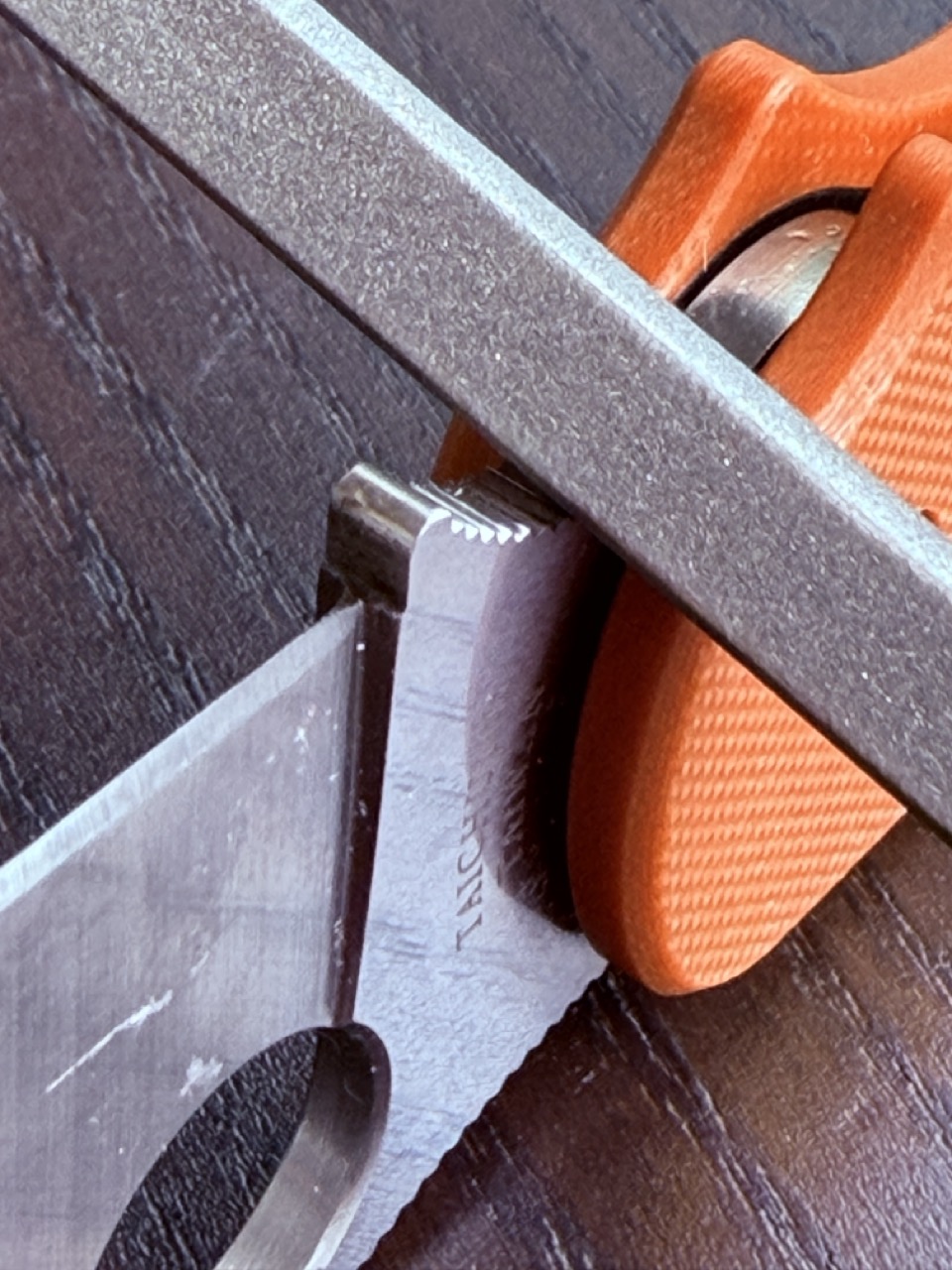
With all my courage, I decided to go with 15 degrees per side.
That was the geometry I wanted for this particular experiment: still extremely aggressive, but with a little more margin for the kind of abuse a travelling knife can encounter.
And I didn’t polish the edge. On purpose. Following Sal’s own recipe.
Microteeth are our friends.
And believe me, I love polished edges. I’m not usually a fan of rough edges.
But this time, after the diamonds, Tango was different: toothy, aggressive, and sharp as my mother-in-law’s tongue.
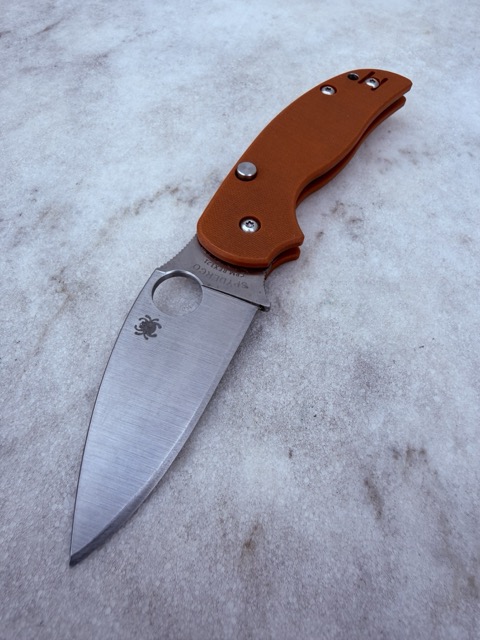
I wanted to take advantage of the way Rex 121 behaves with a fine but slightly rough, aggressive apex. Instead of chasing a mirror-polished edge, I left it with the kind of toothy finish that can give a high-performance cutting steel a very particular character — and, hopefully, very high performance.
Scary performance.
And finally, I had exactly what I wanted.
Beware of what you wish for, as they say.
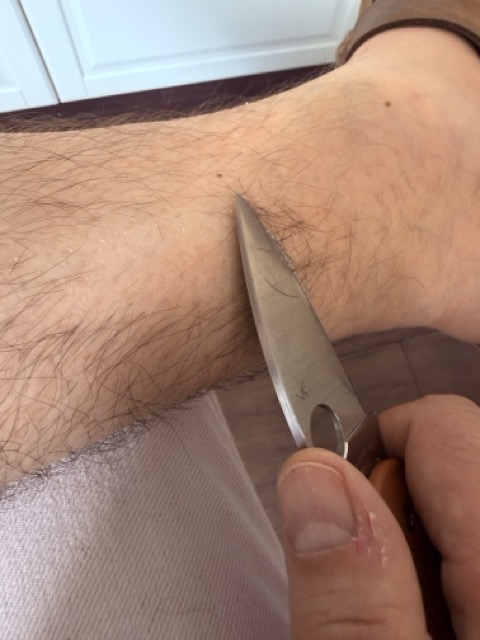
A rough-edged razor. Ready to cut your skin like the caress of a great white shark.
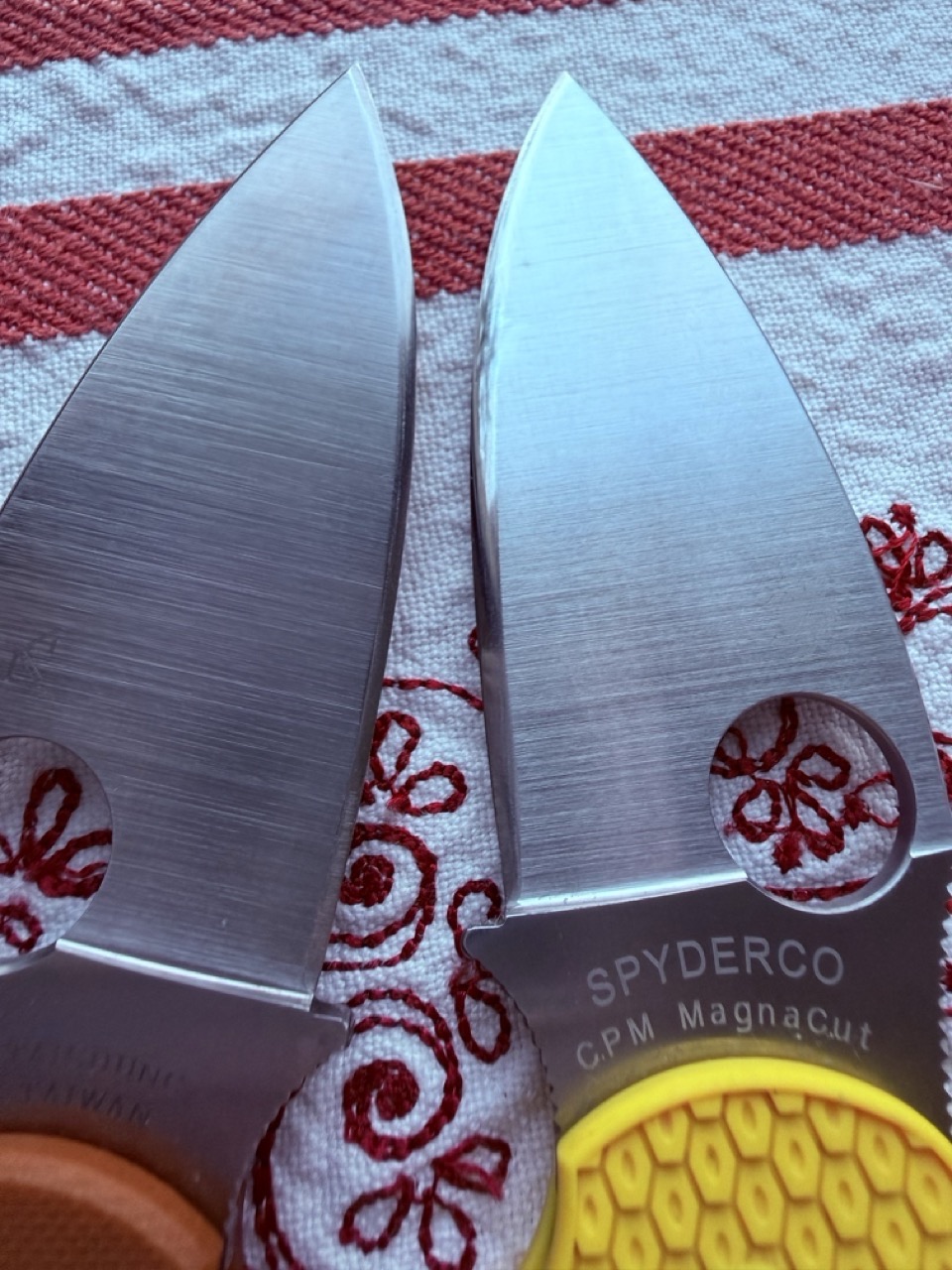
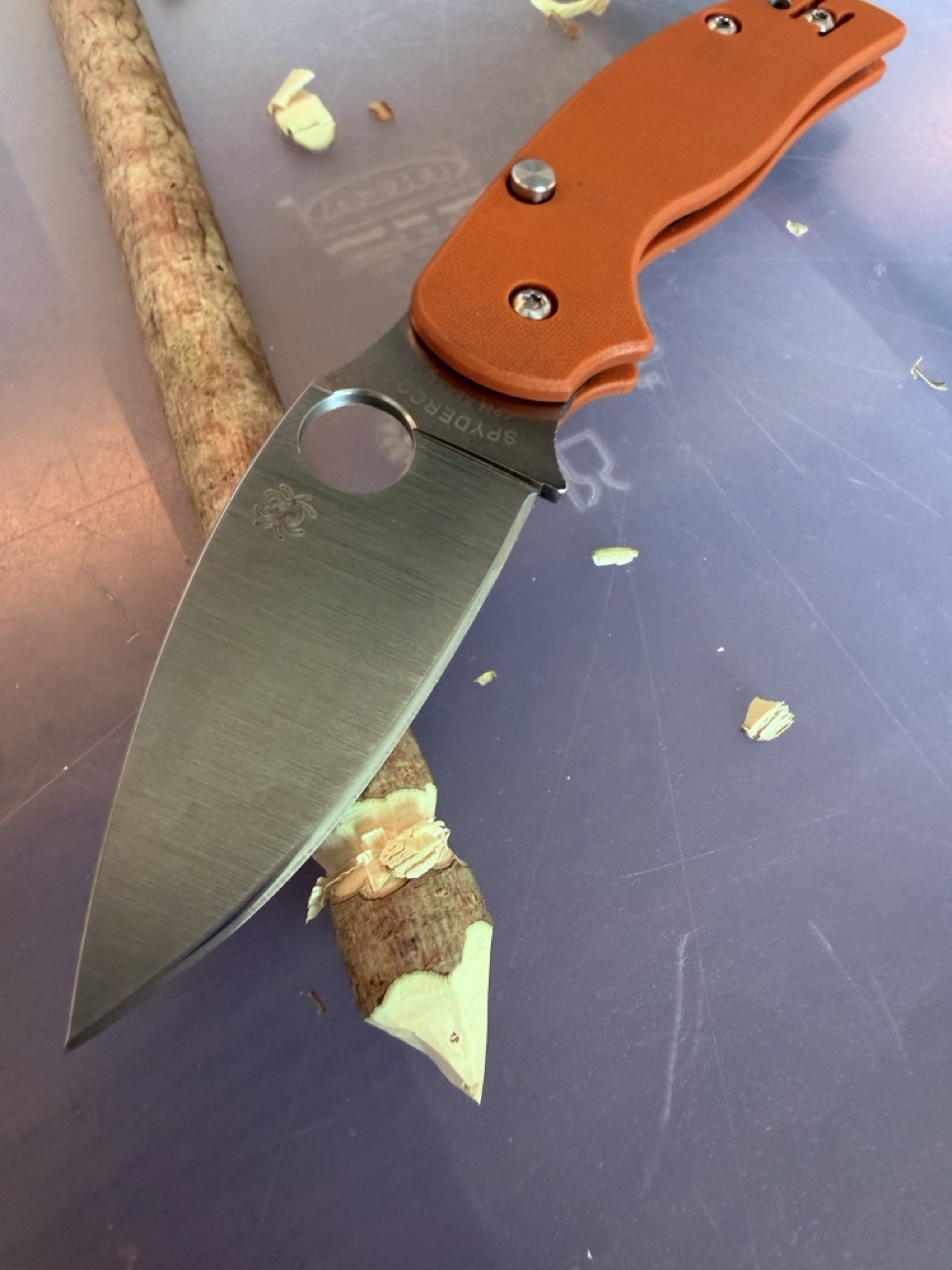
The geometry was still right for comfortable whittling. The Sage 6 has a blade shape that works particularly well for wood carving, especially when I use my left thumb to push the blade through the wood.
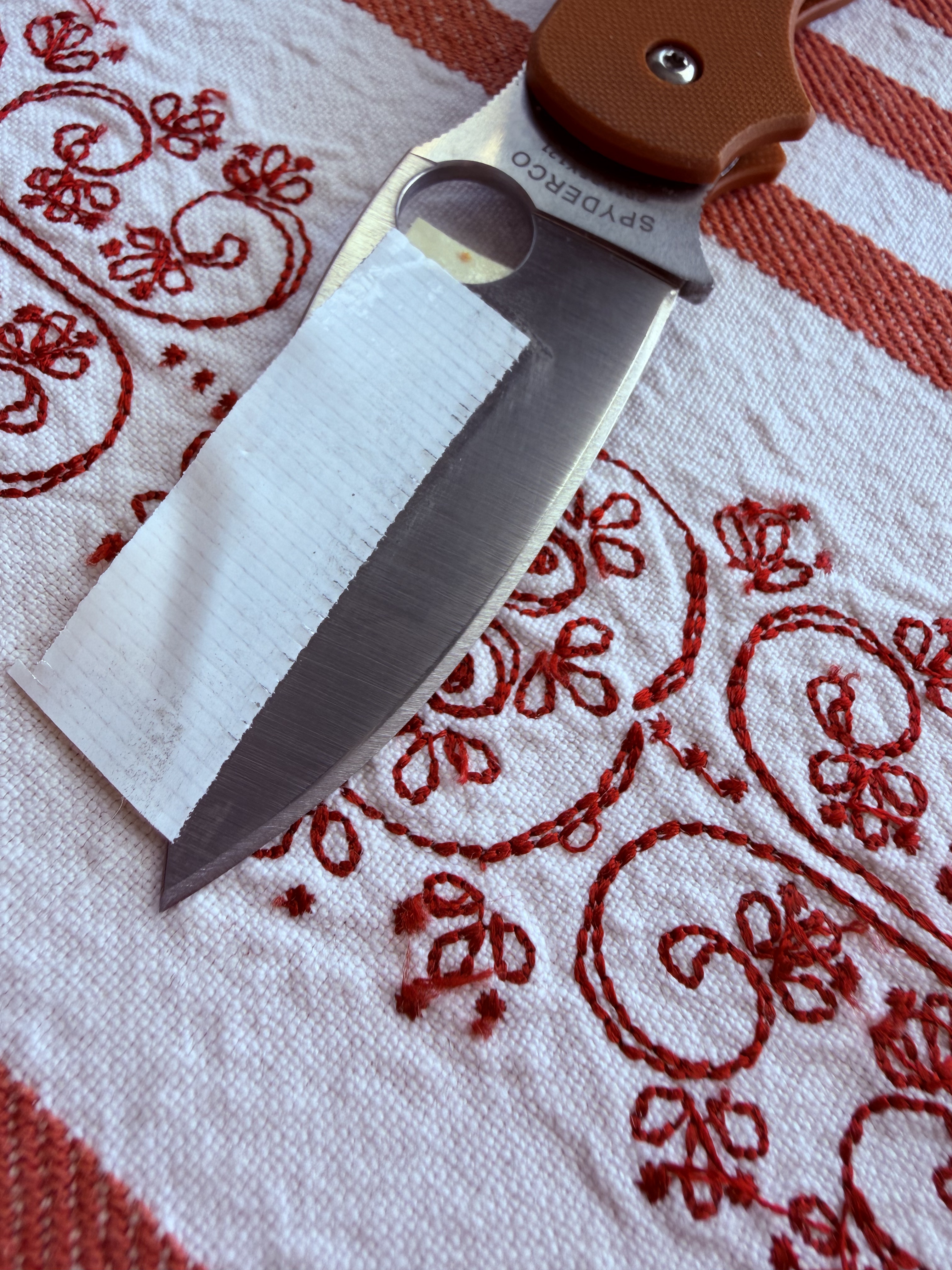
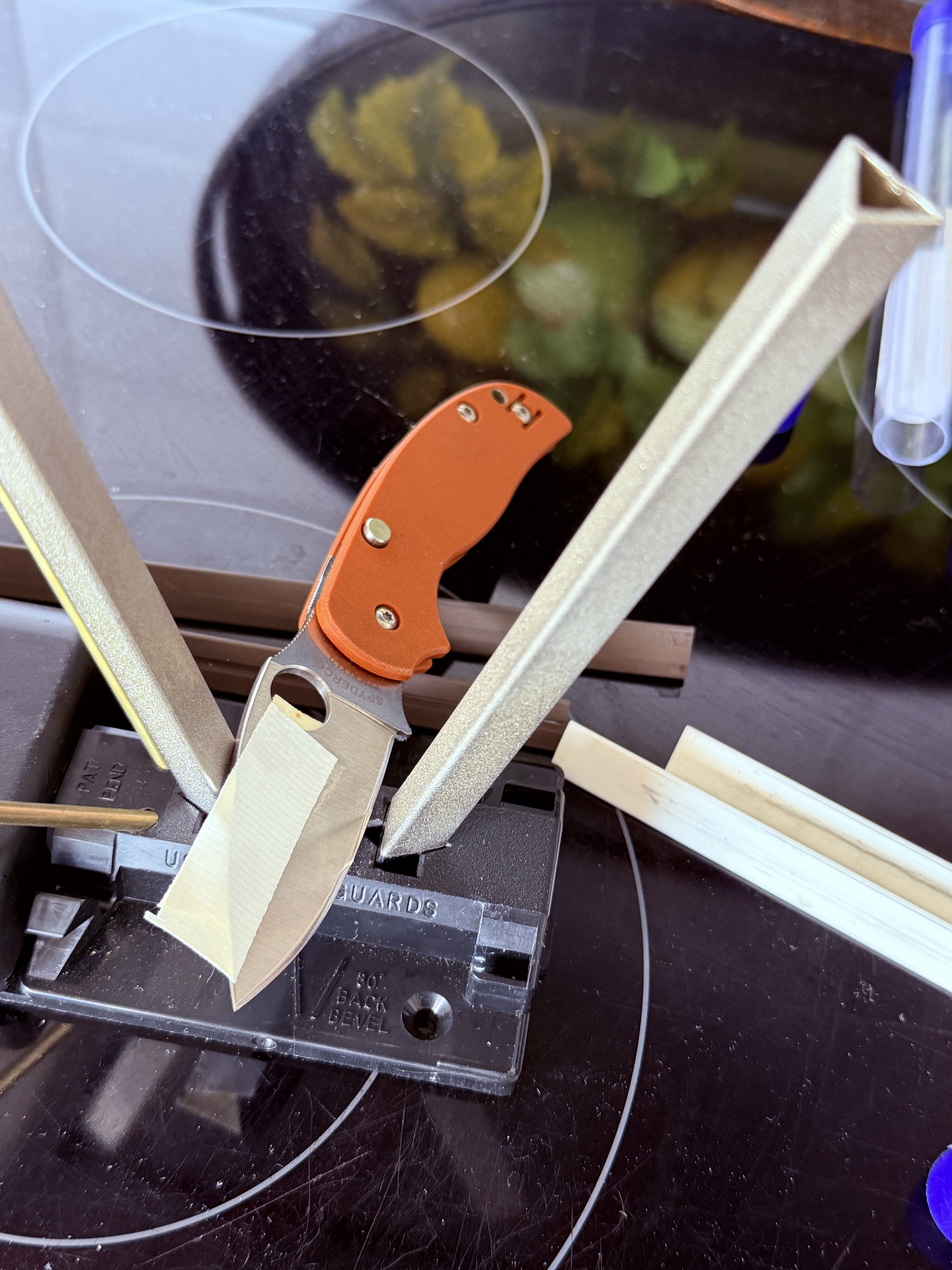
The angle was, I hoped, right and regular. I had used the Sharpmaker at 15 degrees per side, with the diamond triangle rods.
But yes, that edge was not pretty but it was an extremely rough, aggressive kind of vibroblade.
And, most importantly, it would shave the hair from my forearm
, legs and hands.
Right.
Time to go to Italy. In Tuscany. In La Noce du Francesca in Caiano.
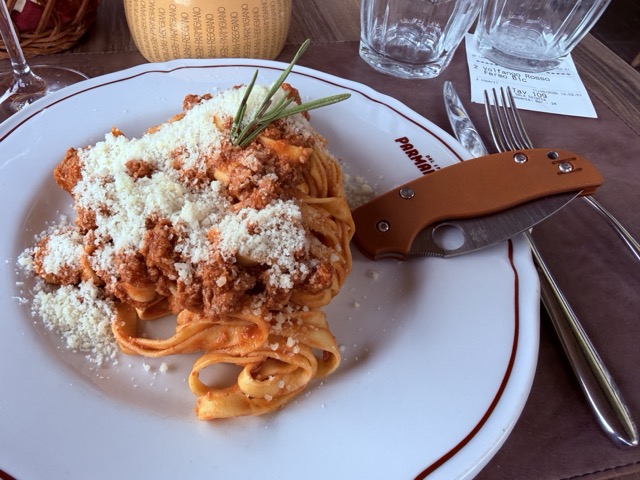
Fourteen Days of Everything — And Everything Goes
And I know Tango.
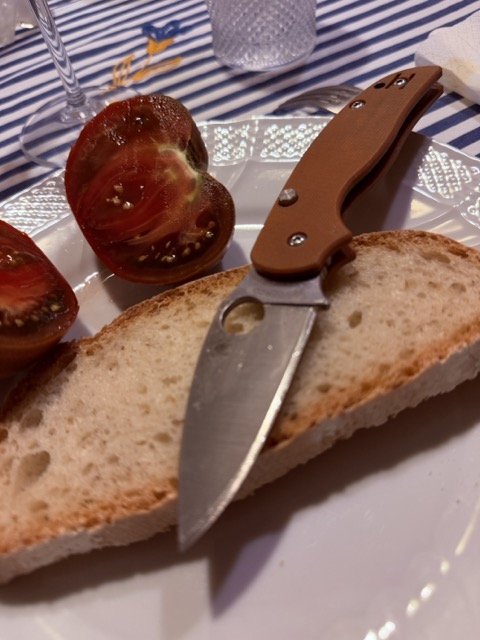
It cut food.
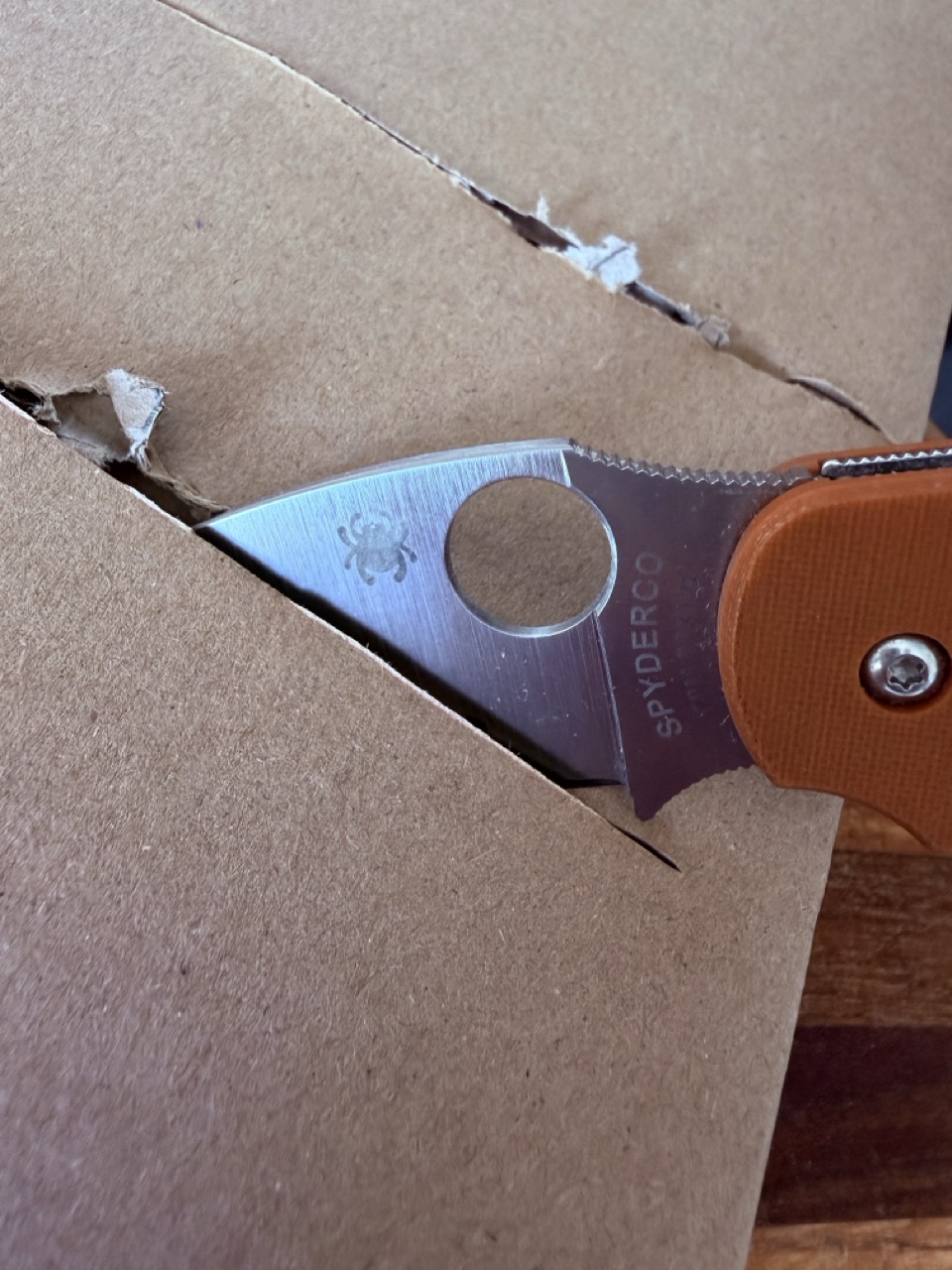
It cut cardboard.
It cut packaging.
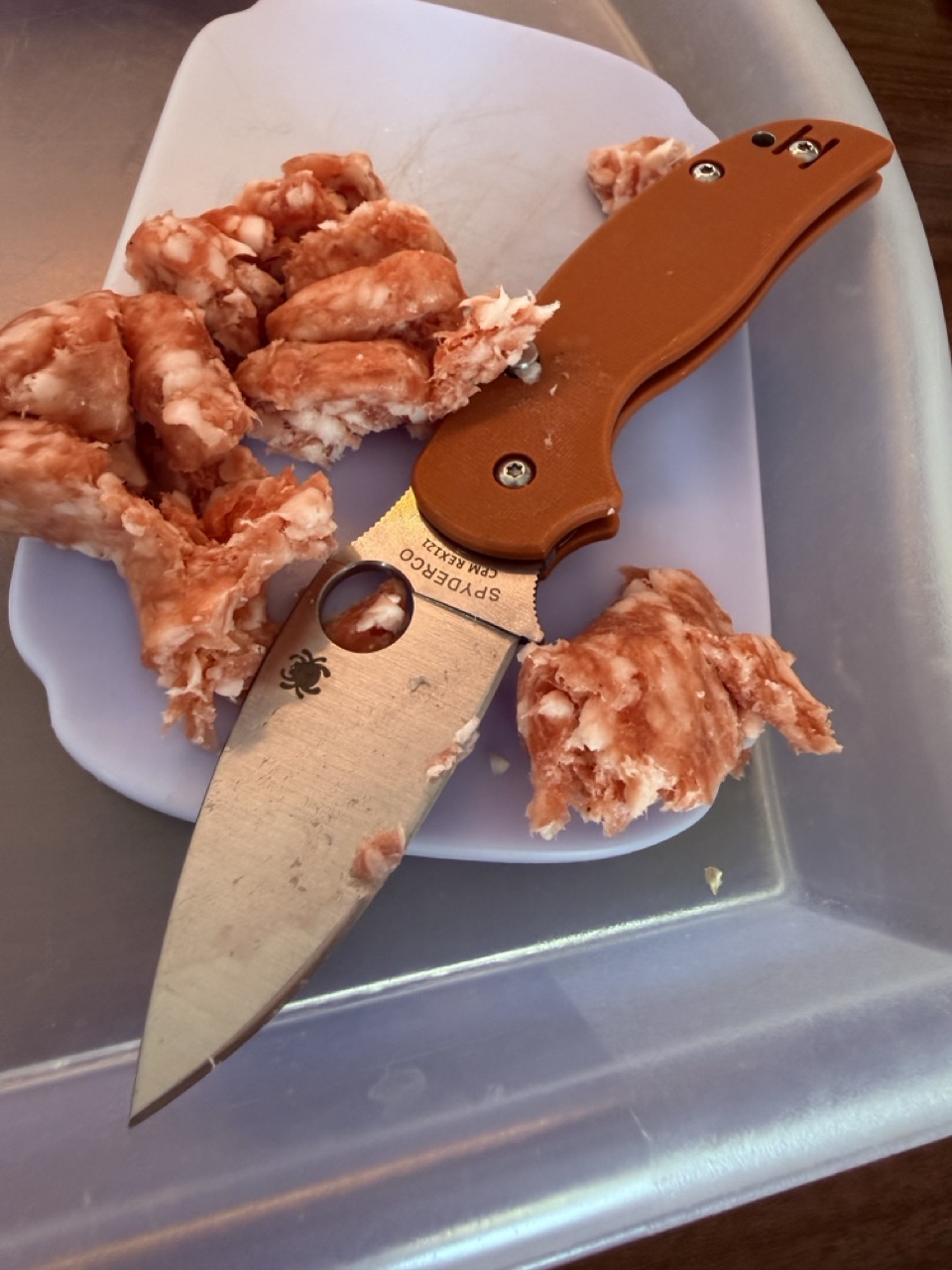
It cut meat.
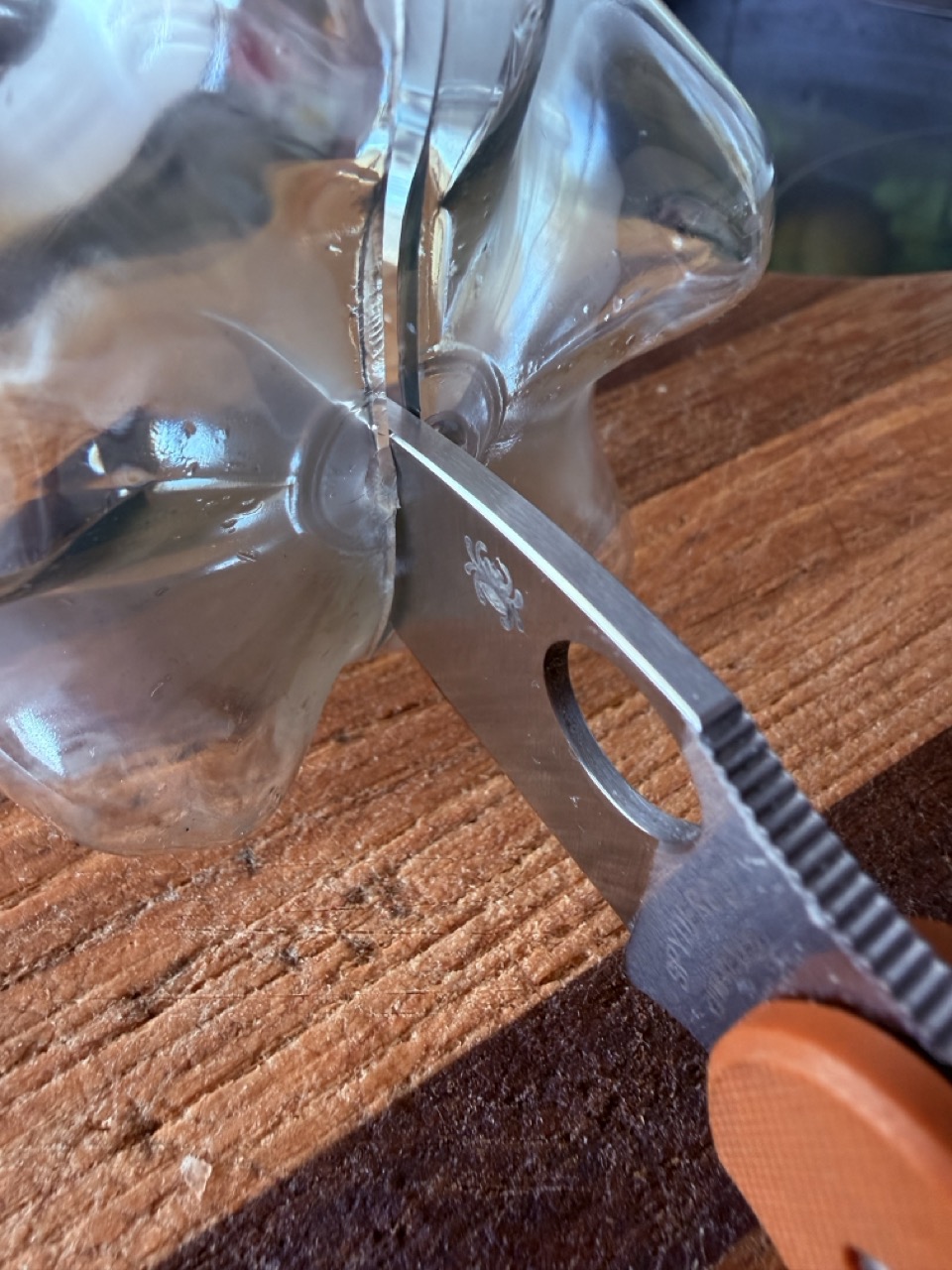
It cut hard plastic.
It cut bread with crust as strong as oak wood.
It cut a lot of wood.
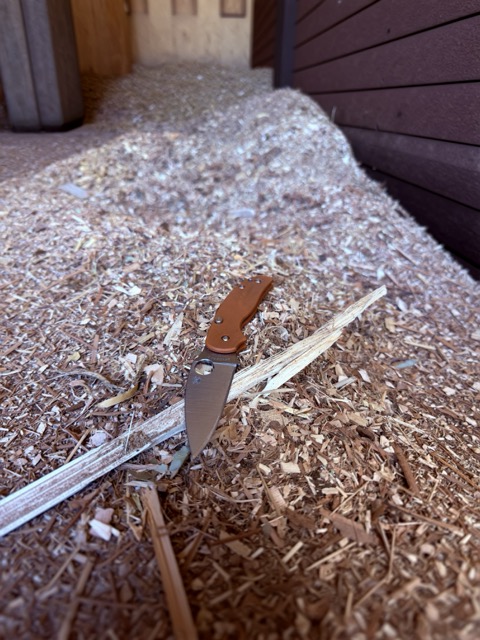
And it spent quite a bit of time doing what I particularly enjoy with a knife: whittling. It goes through dry wood like the famous lightsaber in butter.
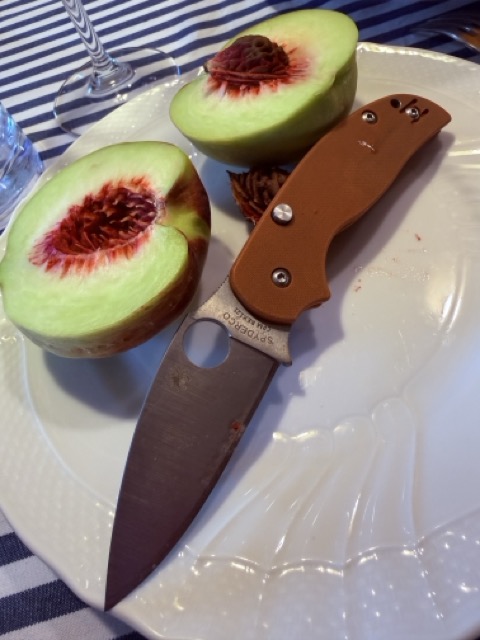
There is something very revealing about using a knife on wood. You immediately feel what the edge is doing. A good edge doesn’t simply cut — it bites, tracks and gives you control over the material. You feel the cut under your thumb and see how the wood fibers look.
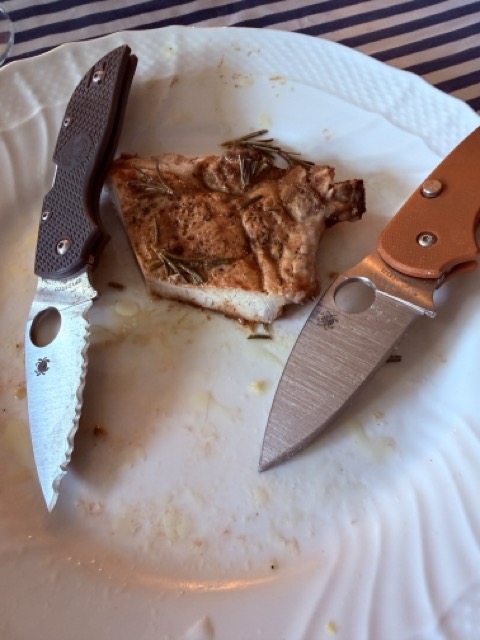
The Rex 121 was excellent at it. Just as impressive on meat, cutting almost like a serrated edge. That vanadium-tungsten-and-cobalt supercharged matrix means business.
But there was another element to the experiment that was perhaps even more interesting.
Other people used the knife.
Non-knife people. Clumsy people. Butchers. Cooks. Teenagers.
Anyone who has travelled with a good knife knows exactly what this means.
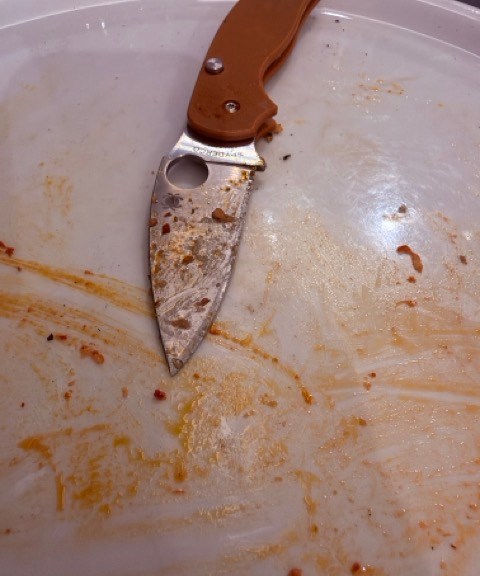
You hand it to somebody at the table and, before you have time to say anything, they are cutting something on a ceramic plate.
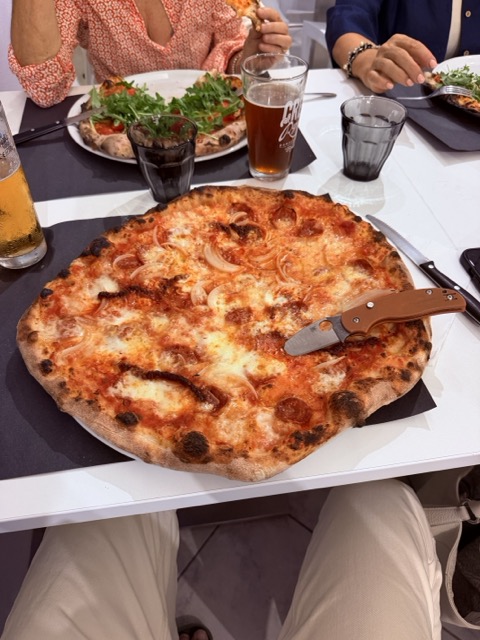
And ceramic is about as far from knife-friendly as you can get.
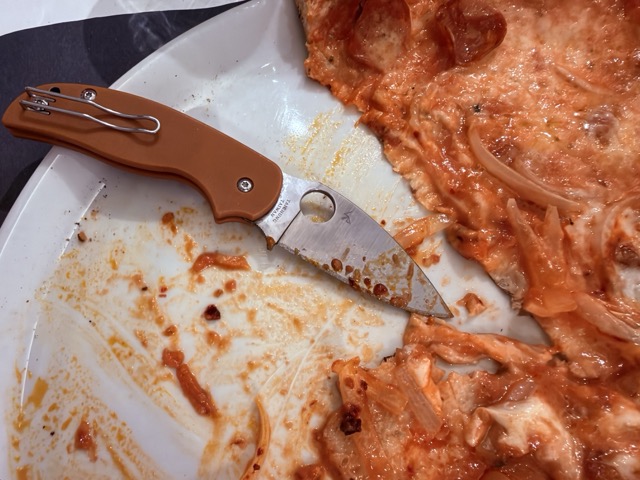
There were moments when I watched my beautiful Rex 121 edge being dragged across plates and thought: Well, that’s another few microns gone.
I was wrong.
The plate suffered. Not the knife. Hé hé ! 🙂
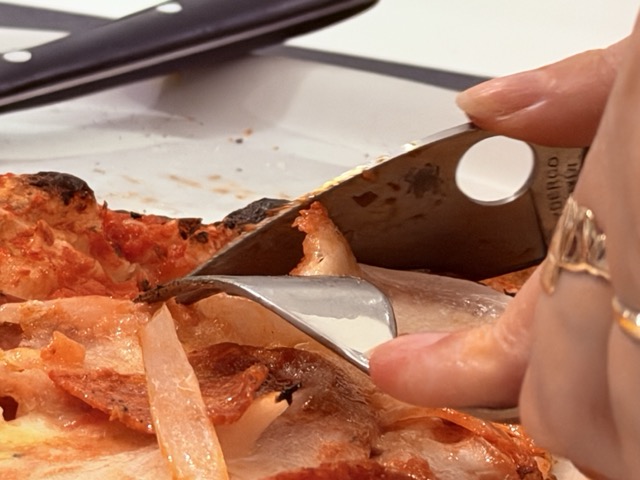
Anyway, I wasn’t going to sharpen it.
Whatever happened, happened.
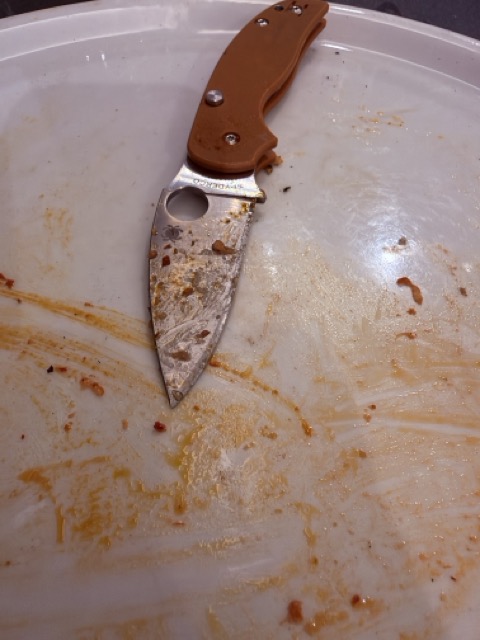
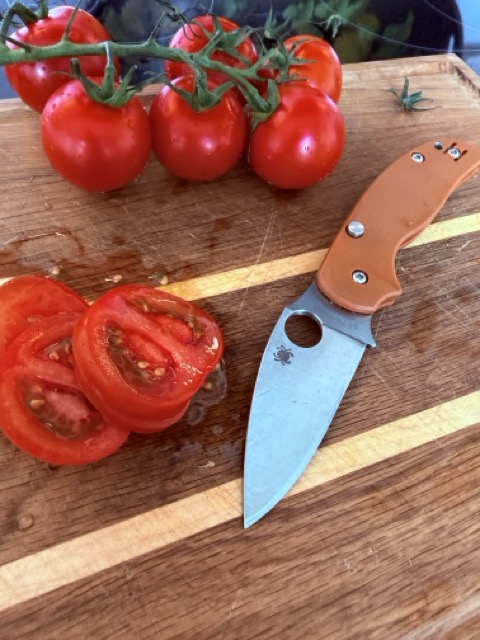
A little bit of tomato juice. A little bit of vinegar.
(Like the song Mambo N°5, this would be Tango N°5 !!)
A little bit of bones in my life
A little bit of frozen food by my side
A little bit of hard cheese‘s all I need (cut on the plate)
A little bit of crusty bread‘s what I see (short blade for big piece of bread !)
A little bit of citrus in the sun, and it dries on the blade.
A little bit of fennel all day long
A little bit of pits, here I am
A little bit of ceramic makes me a man
I also decided to treat the Sage 6 slightly like I would treat a Manix 2 Salt !
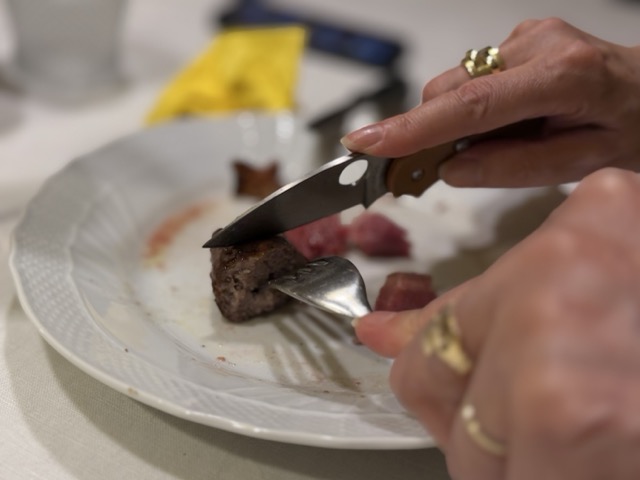
Not because Rex 121 is suddenly a stainless steel miracle — it isn’t — but because I wanted to see how it behaved when I simply stopped worrying about it.
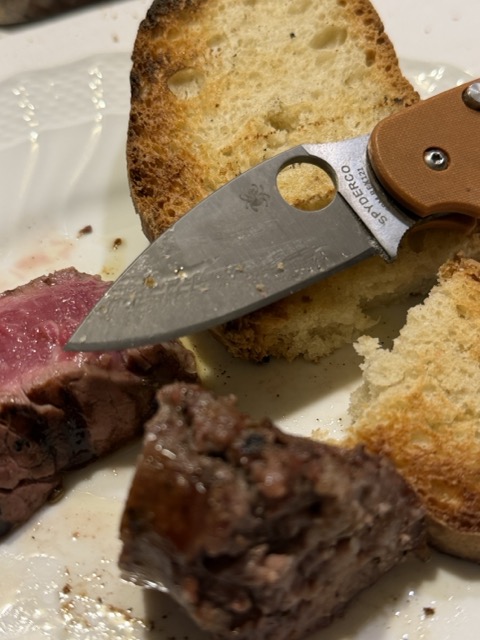
Sometimes vinegar.
Sometimes there was tomato juice on the blade.
Sometimes I didn’t clean it immediately.
Sometimes olive oil or the grease from the meat were coating the blade anyway…
I would occasionally rinse my Tango under running water, mainly because I still wanted a clean knife that I could use for food.
But I wasn’t obsessively wiping the blade down after every use.
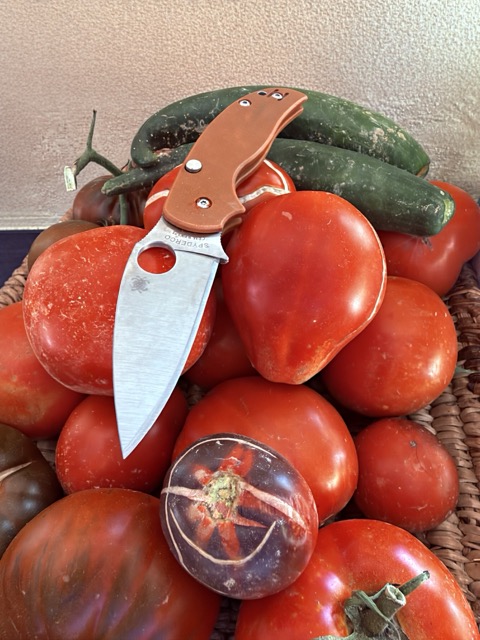
The knife was travelling.
It was being used. And yet, it wasn’t developing any real patina.
That surprised me.
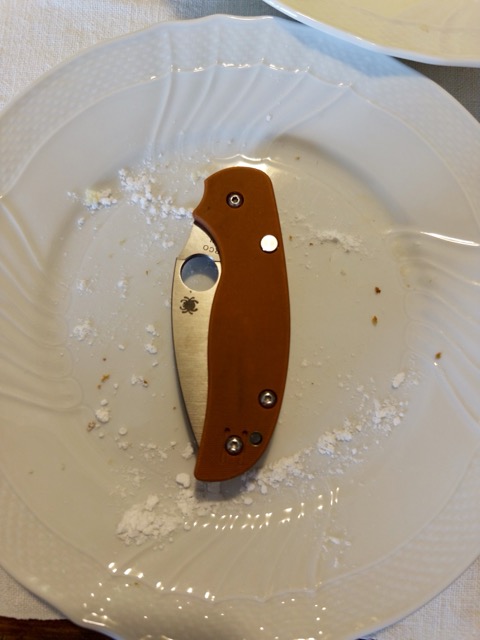
Even when it was being left alone.
But that was the point.
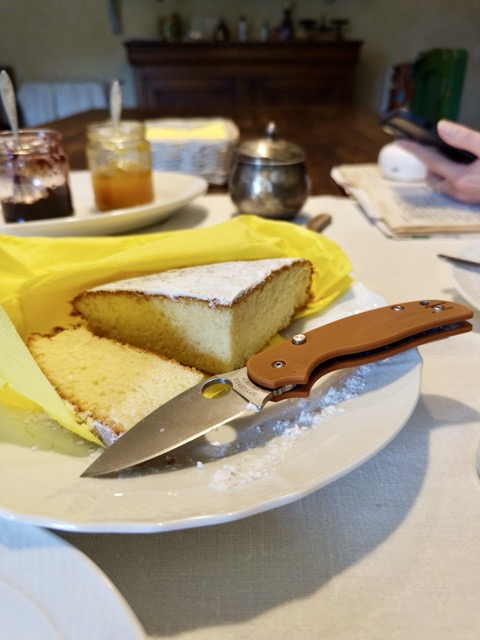
And then I came home…
After fourteen days, I finally had the opportunity to really examine what had happened to the edge.
And this is where the story became interesting.
I had expected the knife to be tired.
I had expected some degradation.
I had certainly expected that the edge would no longer shave.
It was not.
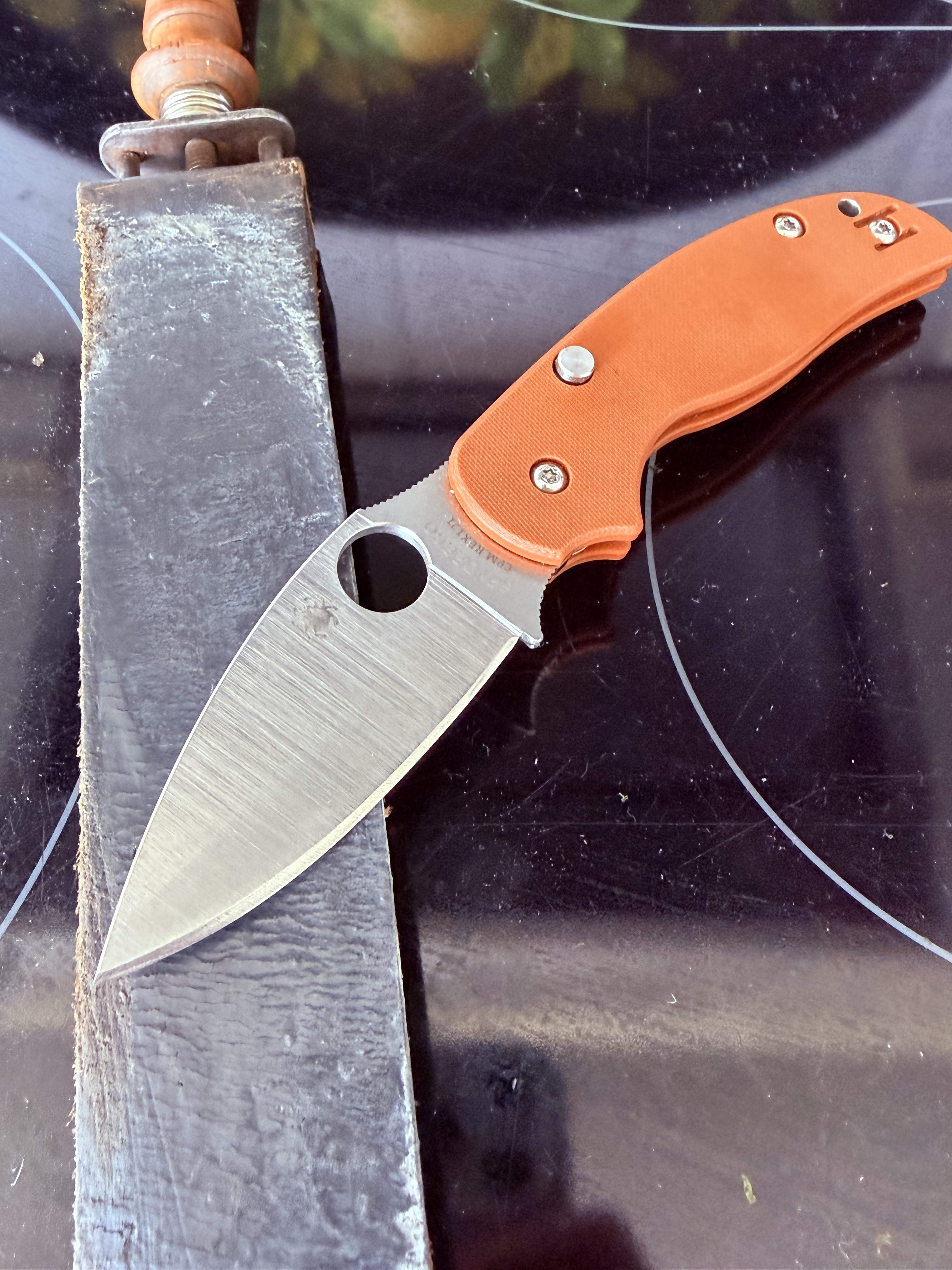
But I gave it a little time on my barber’s leather strop.
That’s it.
No cardboard.
No stones.
No jade.
No ceramic.
No diamond.
Just a few passes on that very old charged leather.
Then I tried it on the hair of my forearm.
It shaved again.
Not just technically.
It was still an extremely aggressive, extremely fine cutting edge.
And that was the moment when the whole experiment made sense.
The advantage of not polishing Rex 121
I think the finish of the edge was an important part of the result.
Those micro-teeth are harder to kill on hard surfaces like ceramic plates.
And the leather strop was enough to bring it back to life.
That’s what impressed me most.
The knife didn’t need to be resharpened.
It simply needed to be refreshed.
There is a significant difference between the two.
Rex 121 in the real world
This little experiment also changed the way I look at Rex 121.
On paper, Rex 121 can seem almost absurd.
Extreme hardness.
Extreme wear resistance.
A reputation for being difficult to sharpen.
And yes, sharpening it is hard work.
But once you have put the geometry where you want it, the steel starts to make a lot more sense.
The Sage 6 carried an extremely acute, highly aggressive edge into a fourteen-day trip, and I simply used it.
I didn’t baby it.
I didn’t carry a second knife as a backup (but Sardin, which is always with me)
I didn’t sharpen it halfway through the trip.
I didn’t even particularly protect it from the kind of everyday situations that would make most knife enthusiasts wince.
And when I came home, the edge was still there.
Not perfect.
Not untouched.
But there.
A few passes on leather, and the Sage 6 was back to shaving.
Fourteen days. One knife.
That was ultimately the most satisfying part of the experiment.
The Sage 6 wasn’t sitting in a display case.
It was doing exactly what a pocket knife is supposed to do.
It prepared food.
It opened things.
It cut cardboard.
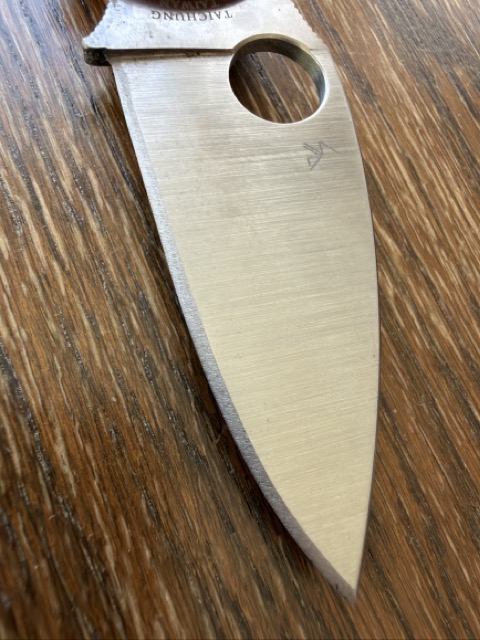
When I finally put it back on the leather, the Rex 121 reminded me why this steel has such a reputation.
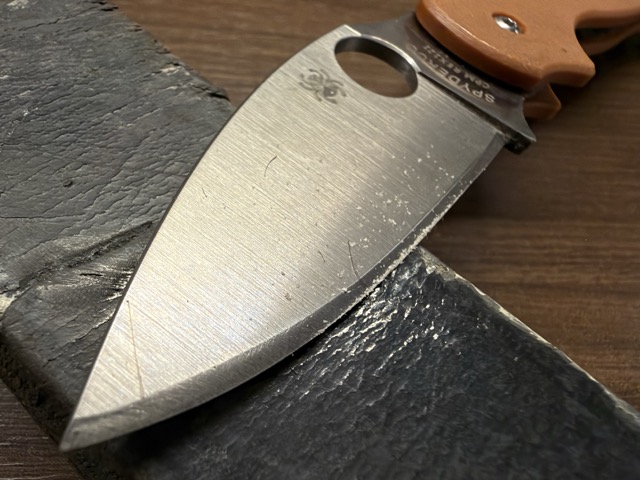
That edge can be remarkably persistent.
Tango came back from Italy not looking like a laboratory specimen, but like a knife that had actually lived and been used.
It proved to be a remarkably reliable piece of equipment. No rust. No stains. And an edge that simply laughed at whatever material I threw at it.
The kind of knife that makes all your other knives redundant.
And that’s painful when you think about all the others that are now going to collect dust…
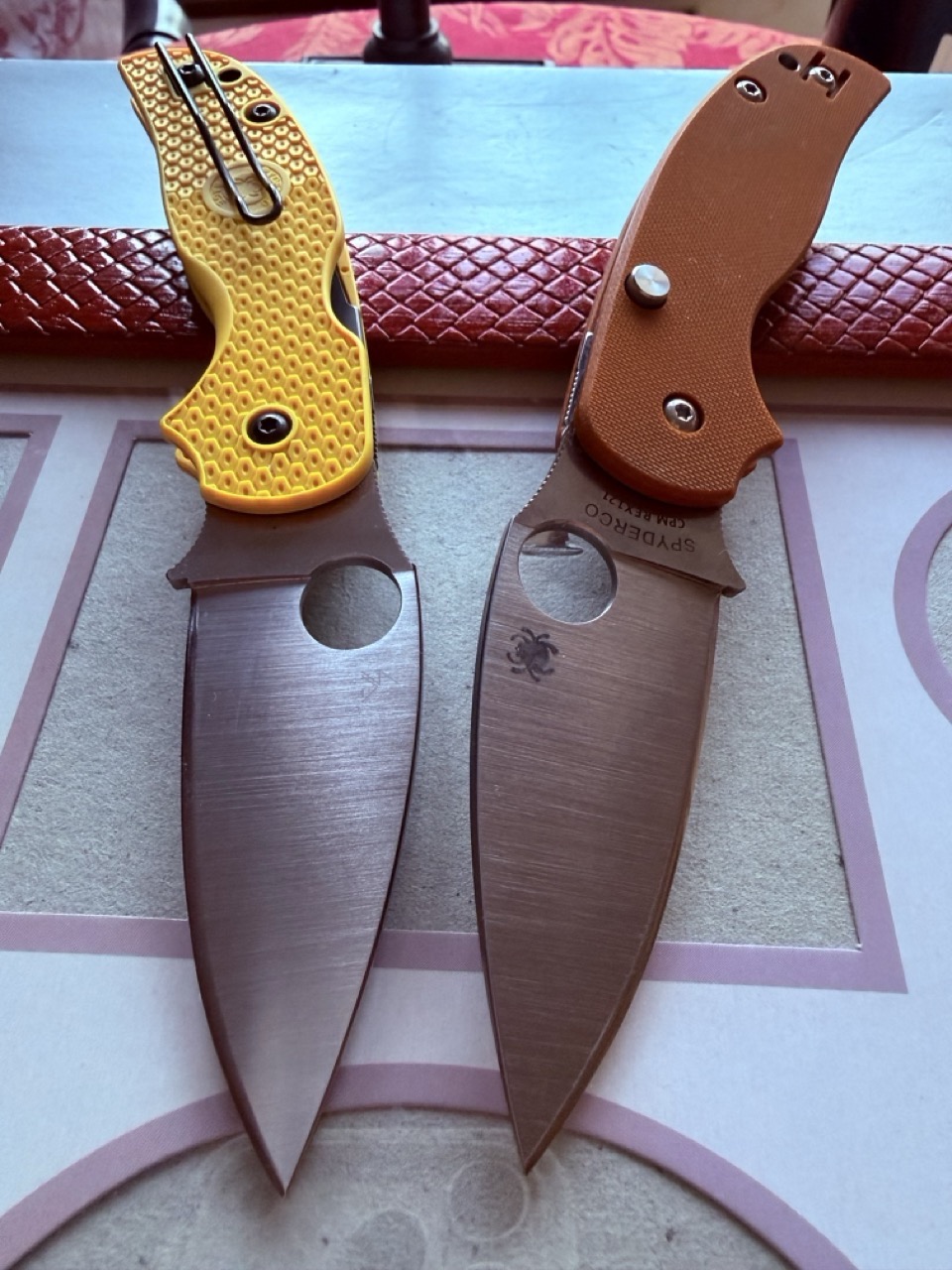
So yes, a Rex 121 blade on a Sage 6 — or a Sage 5 — makes for a fantastic EDC.
It can cut, and cut, and cut, and keep that working edge — no longer razor-sharp, but still seriously sharp — on and on and on.
And this is a fantastic experience.
No rust. No chipping. No stains. I’m amazed!
This is a beast of an EDC!
Thanks to the Spyderco Ambassador Program (*), I didn’t have to pay for this wonderful folder. But perhaps that was the best respect I could pay it: I actually used it.
Real luxury is quality. And in the knife world, quality is meant to be used.
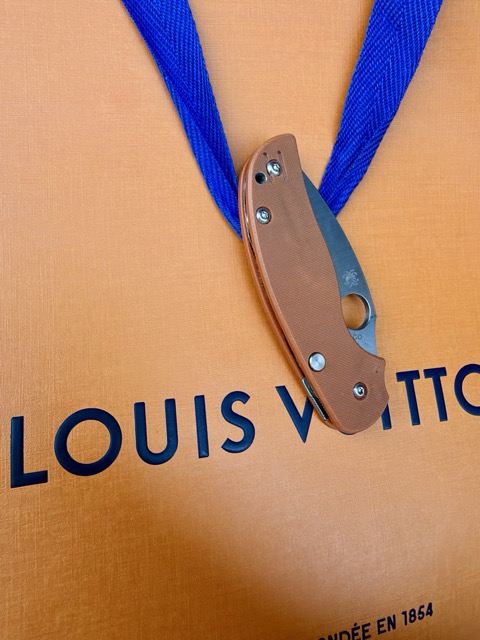
(*) Disclosure: Tango is that Sage 6 REX 121 provided by Spyderco as a complimentary review sample through the Spyderco Ambassador Program. Receiving this amazing knife does not influence my opinions. Spyderco does not preview, edit, or approve my reviews, and all conclusions are based solely on my own testing and experience.