Tag Archives: ZDP189

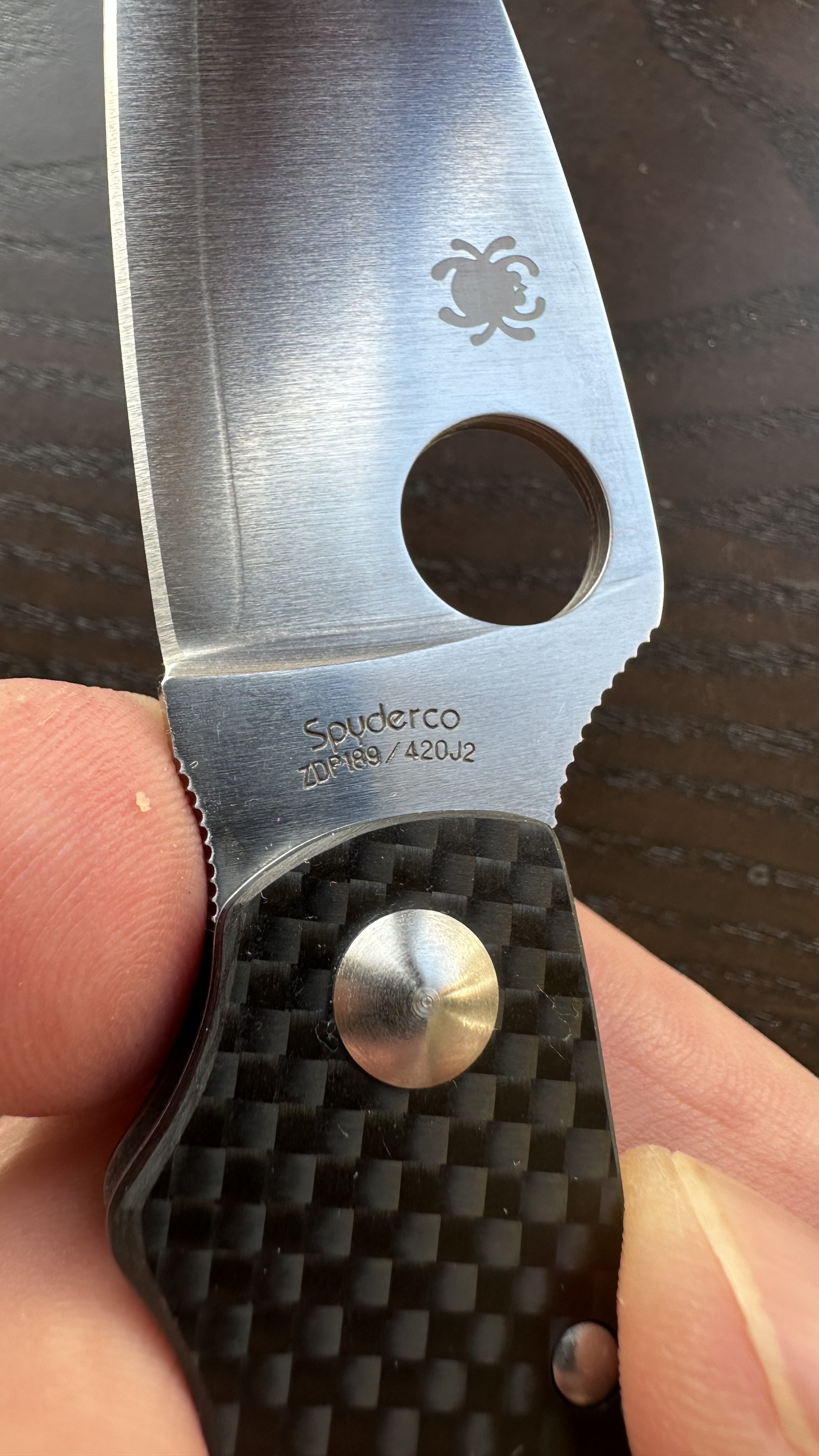
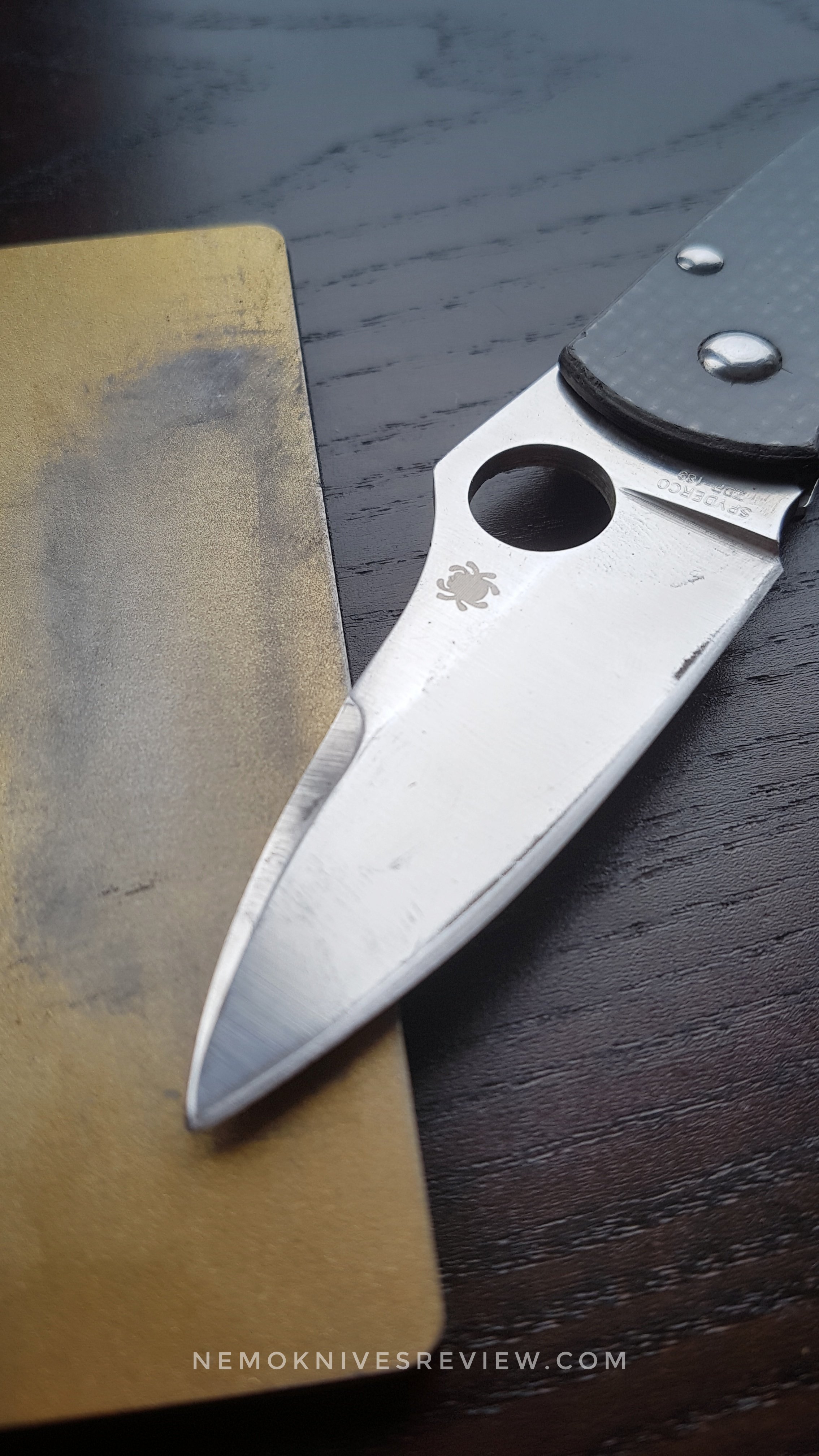
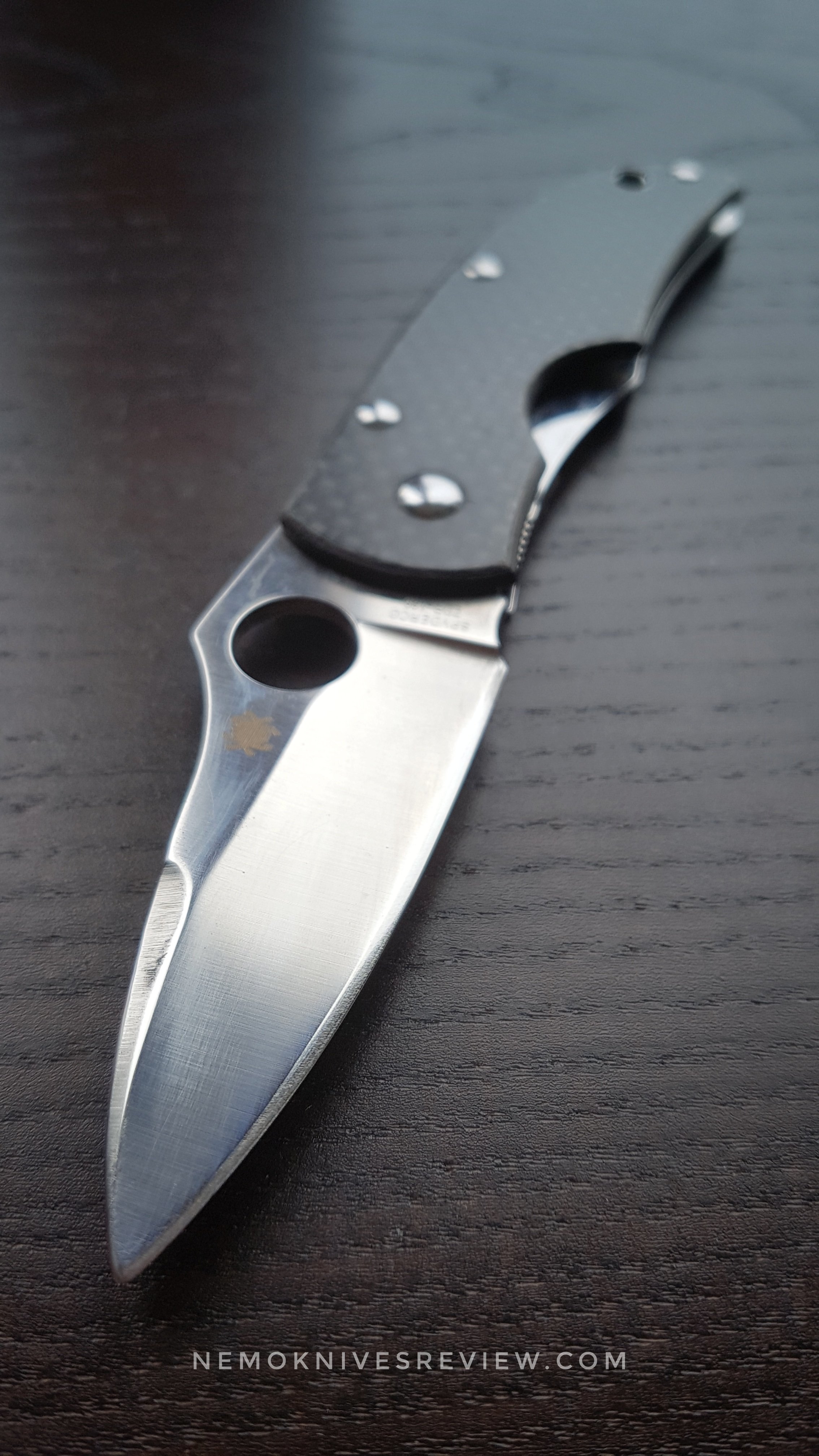
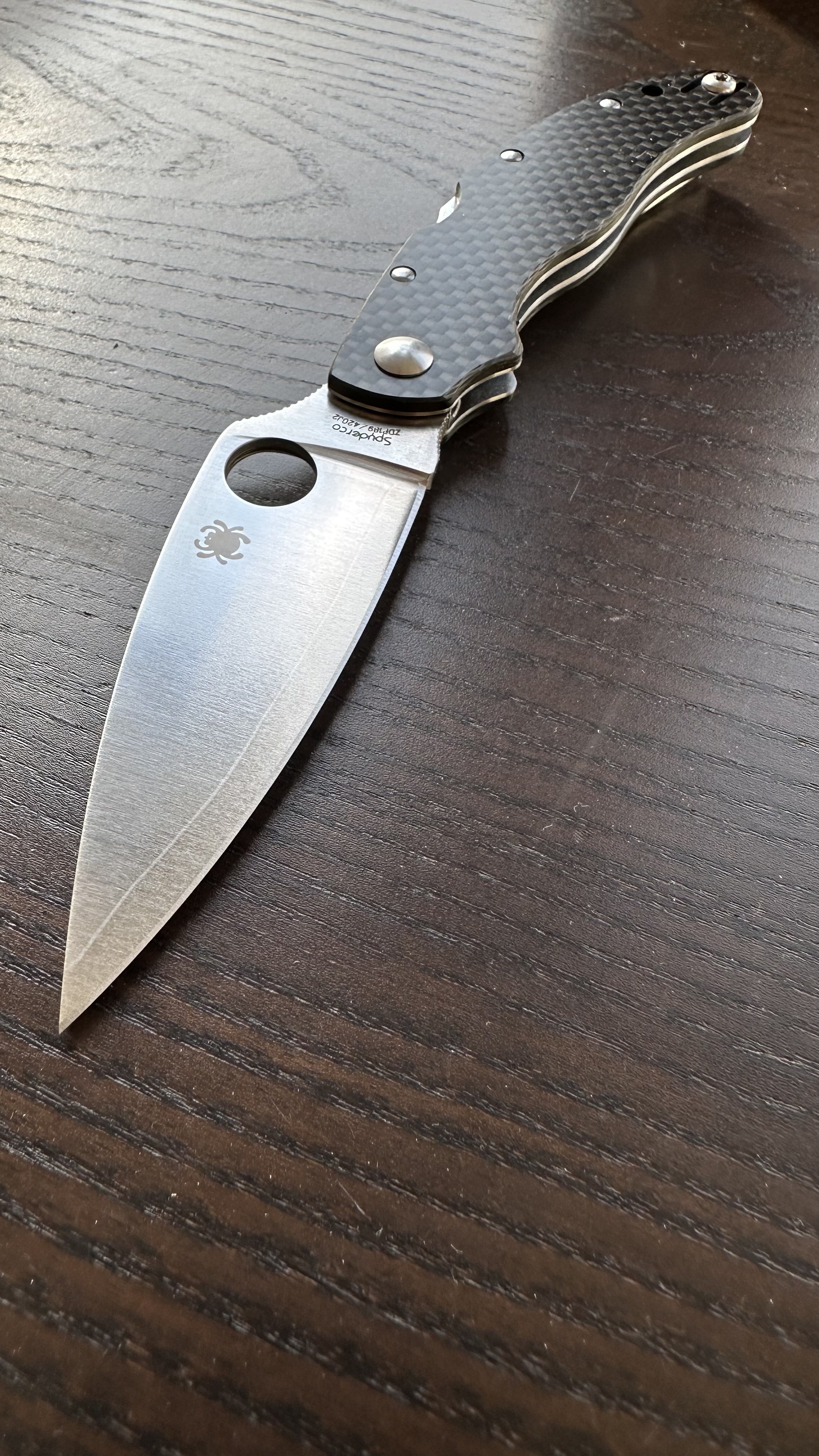
Spyderco CALY™ 3.5 – C144CFPE Caly 3.5 ZDP – Back To The Future !

Disclaimer: this knife was supplied at no cost by Spyderco as part of their brand ambassador program. The review that follows, however, remains entirely independent and unbiased. I thank them for placing their trust in this little blog.

Let’s take a walk back to 2010! It was a year marked by major natural and environmental disasters—the Haiti earthquake, the Deepwater Horizon oil spill, and the Chile earthquake. The swine flu pandemic, which had begun the year before, finally dissipated. On the cultural side, Lady Gaga made history with 13 VMA nominations (the most ever at the time), plus another 5 for her contribution to Beyoncé’s Video Phone. Meanwhile, Justin Bieber won Best New Artist, becoming the youngest person ever to claim a VMA.

But enough about disasters!

In 2010, ZDP-189 was the new kid on the block. The big questions were: does it stain? Is it brittle? What’s its exact composition? And carbon fiber—once a rare luxury—was suddenly being mass-produced for knife handles and had become the must-have material. I was 45.
It was the year I got a wonderful gift from Rockstead: their Higo to review in ZDP189.
The Michael Walker in ZDP189 was neatly carried in my watch pocket.
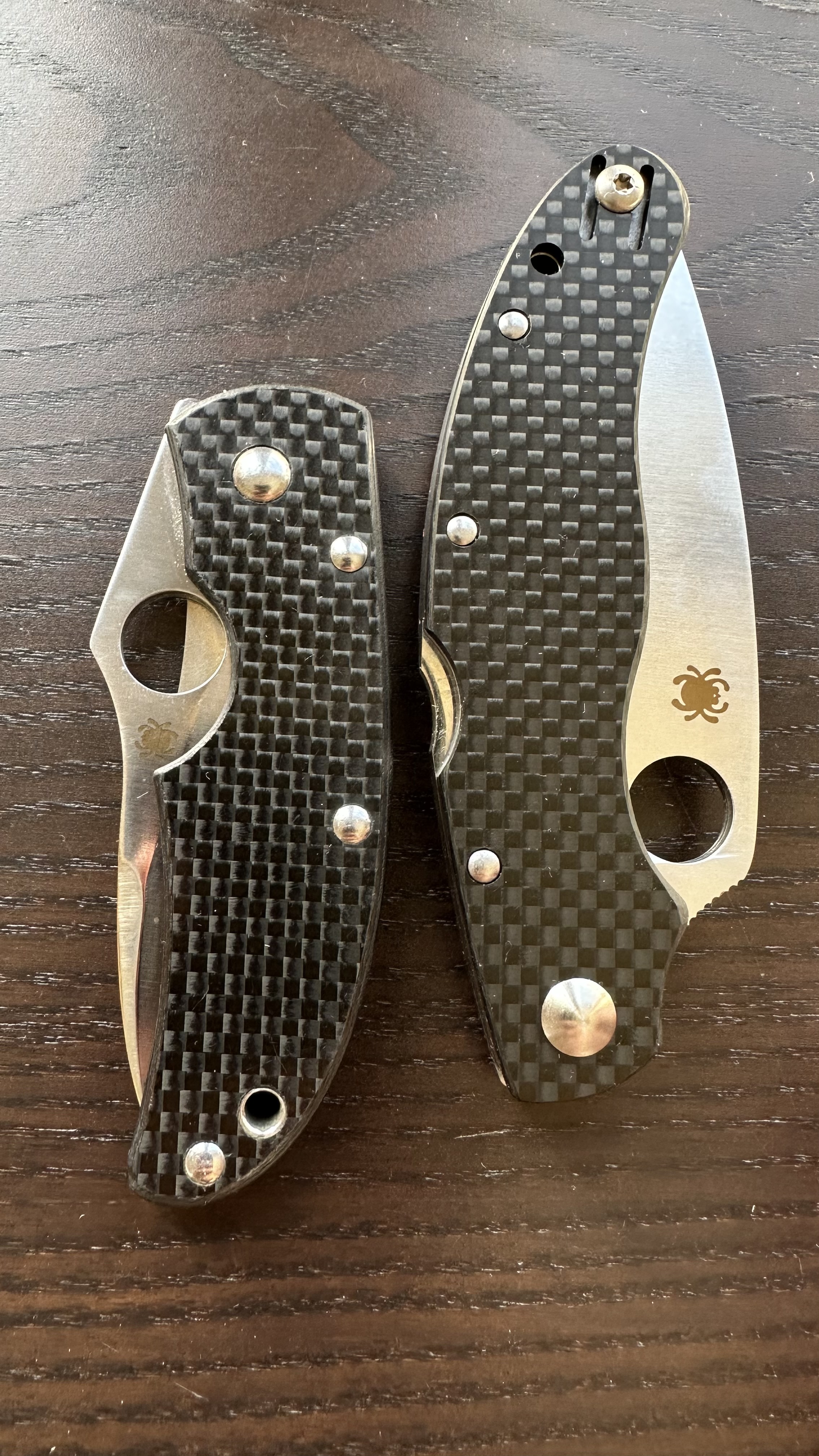

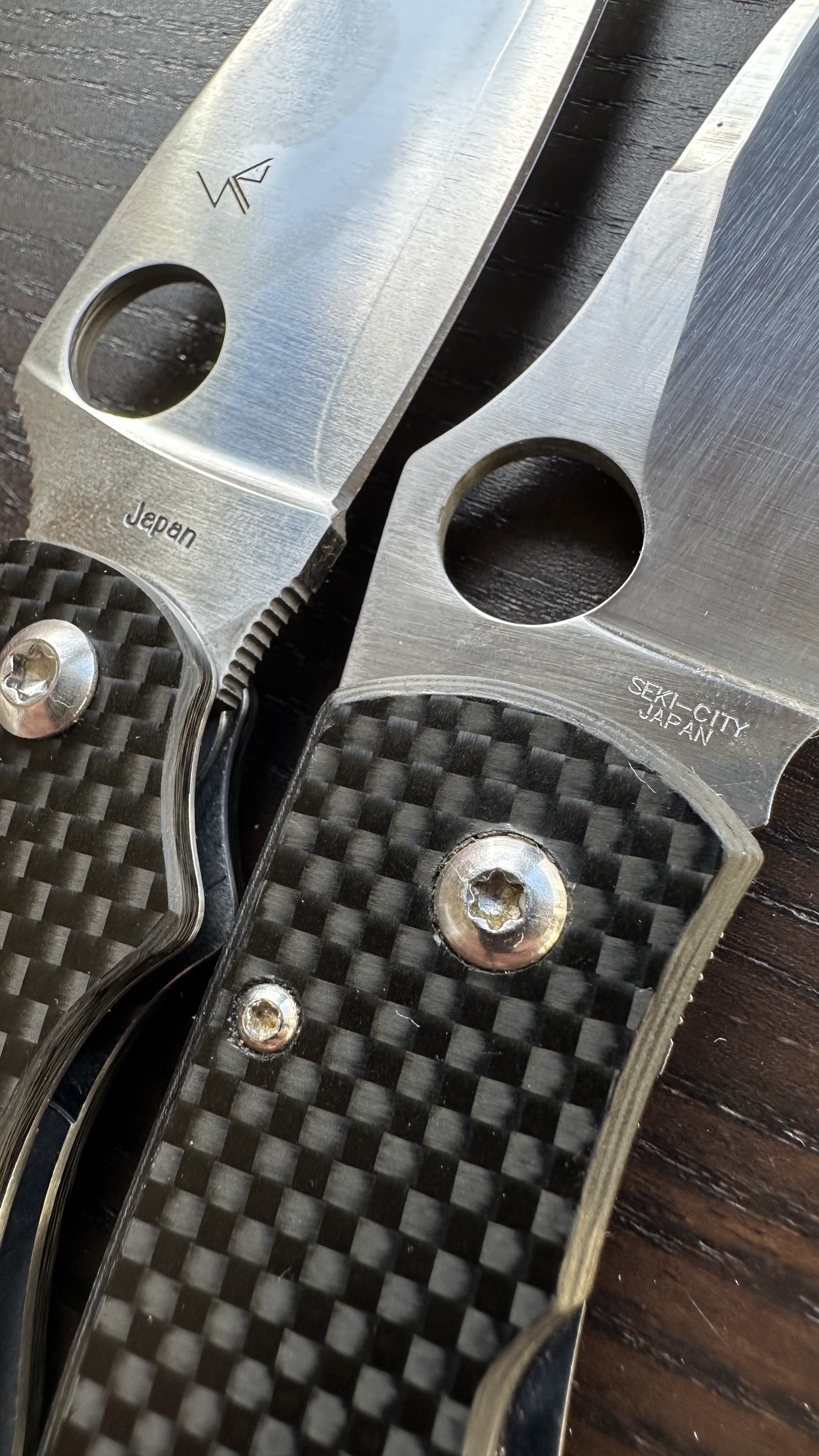
Proudly made in Japan.
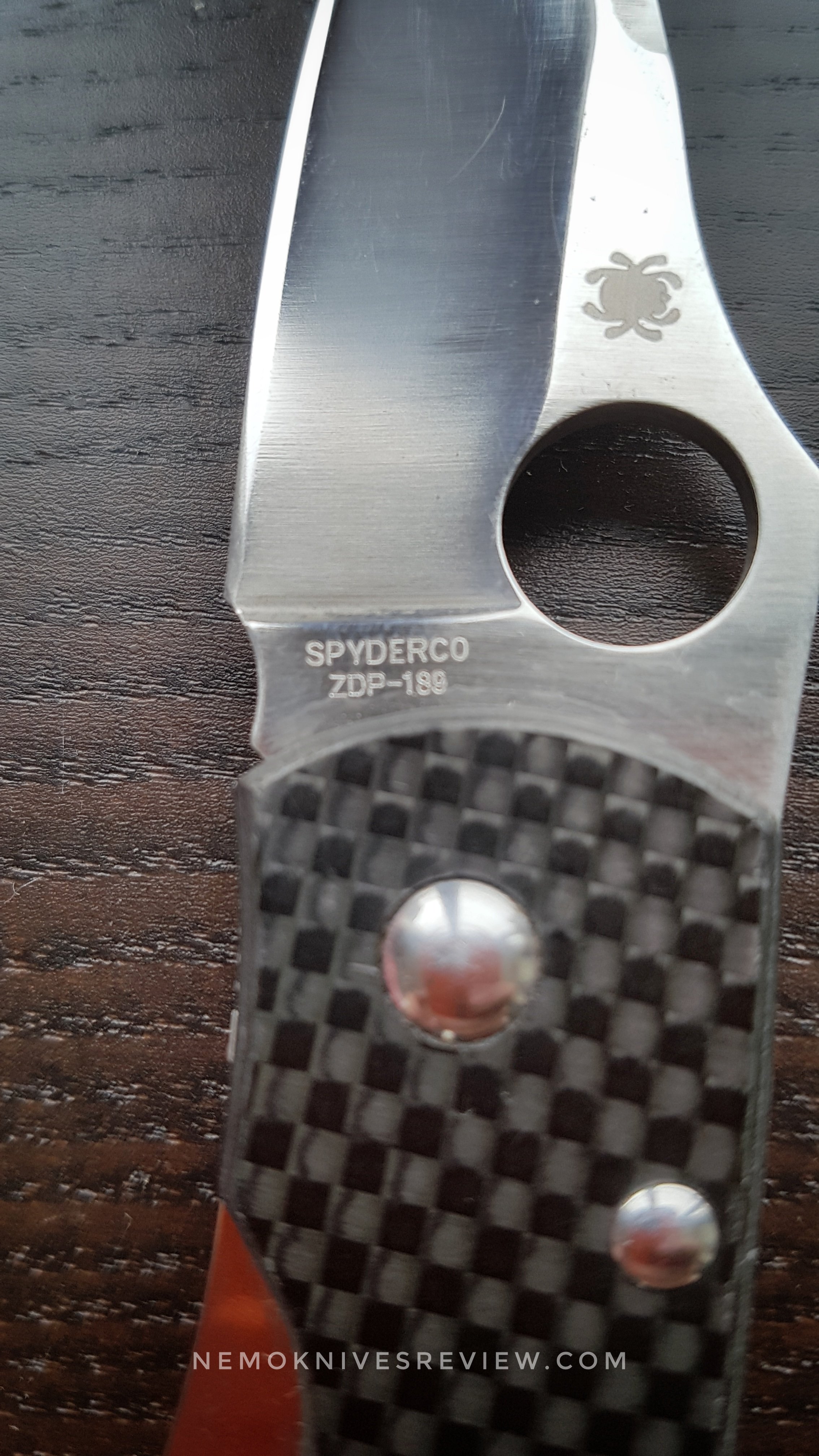
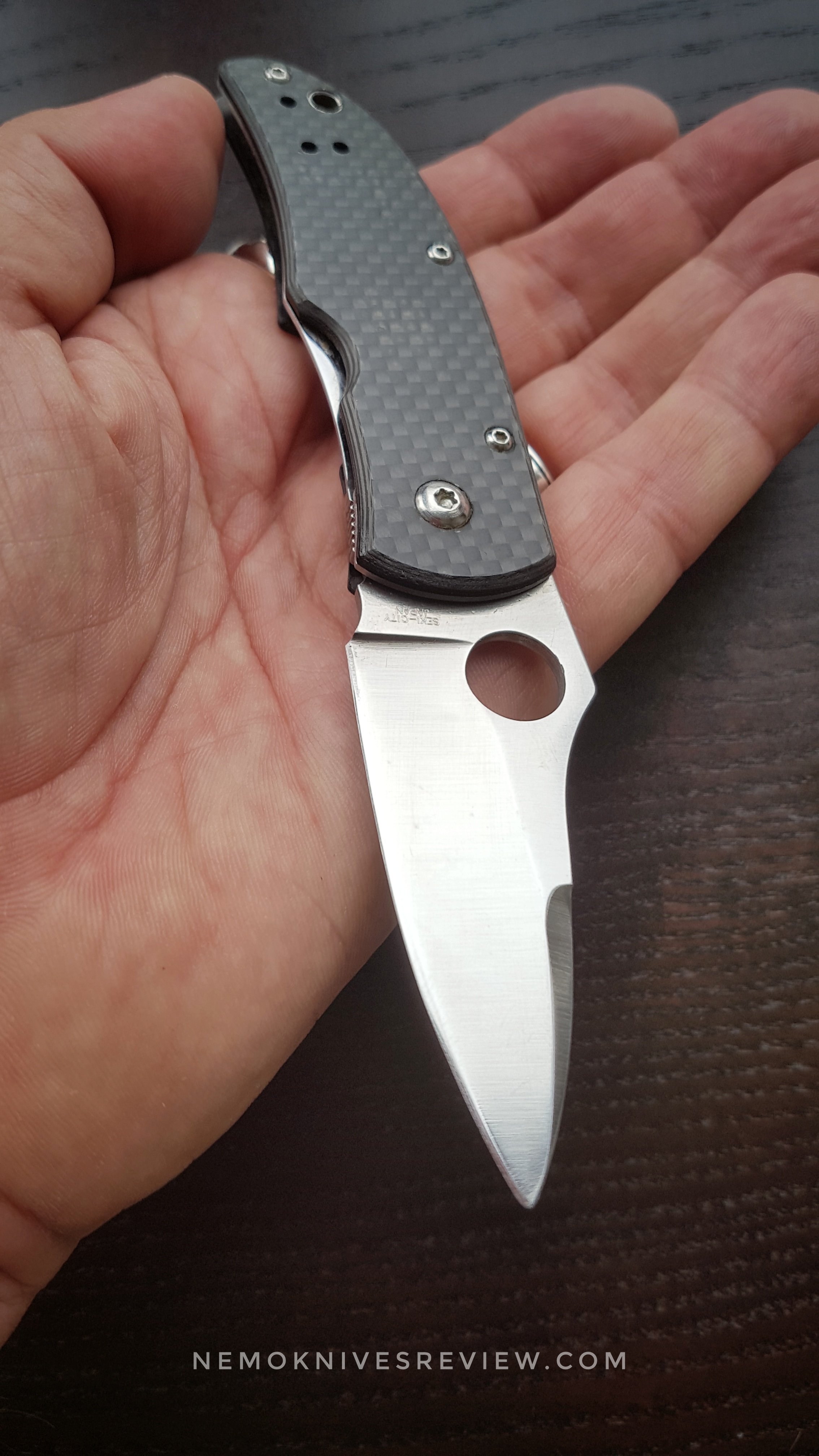
Fifteen years later, a parcel lands at my door. Inside: a blast from the past—the Caly 3.5. Or should I say, the Mighty Caly. Clad ZDP-189 steel, proud axis screws, and that unmistakable aura. A gentleman’s knife that decided to play the outlaw with its 3.5-inch locking blade.

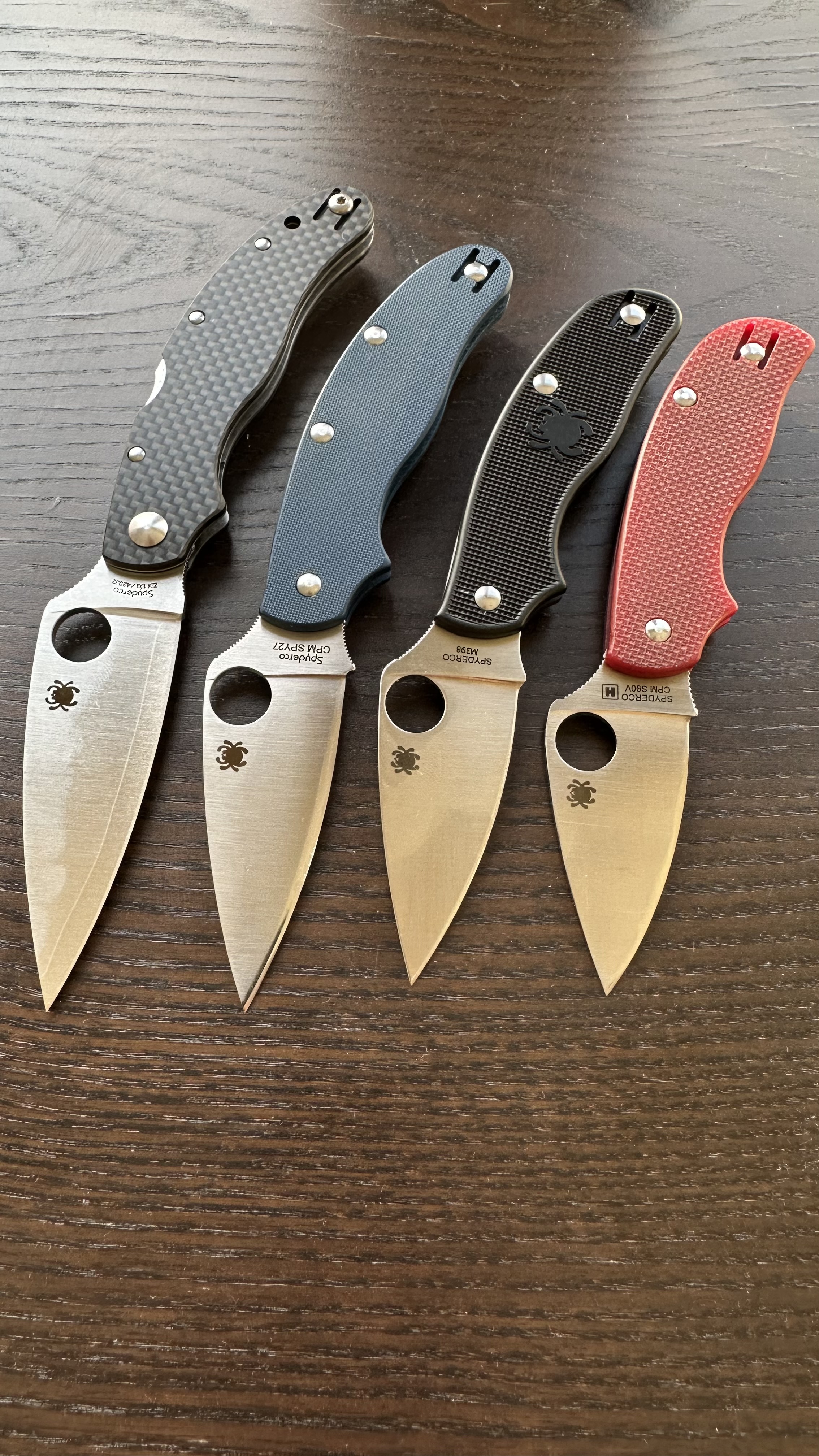
The father of the UKPK.

And many of the ClipIt offsprings:
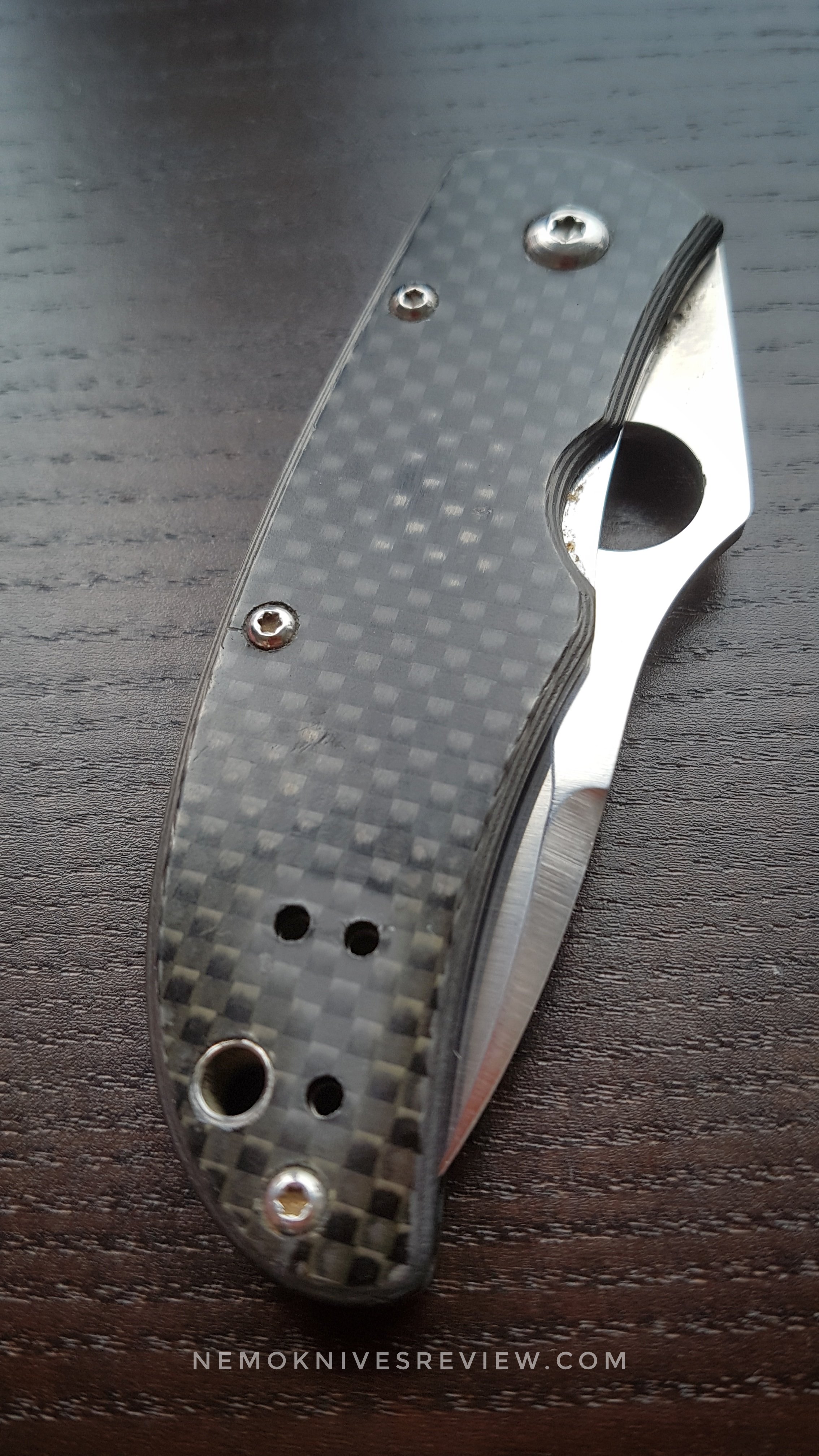
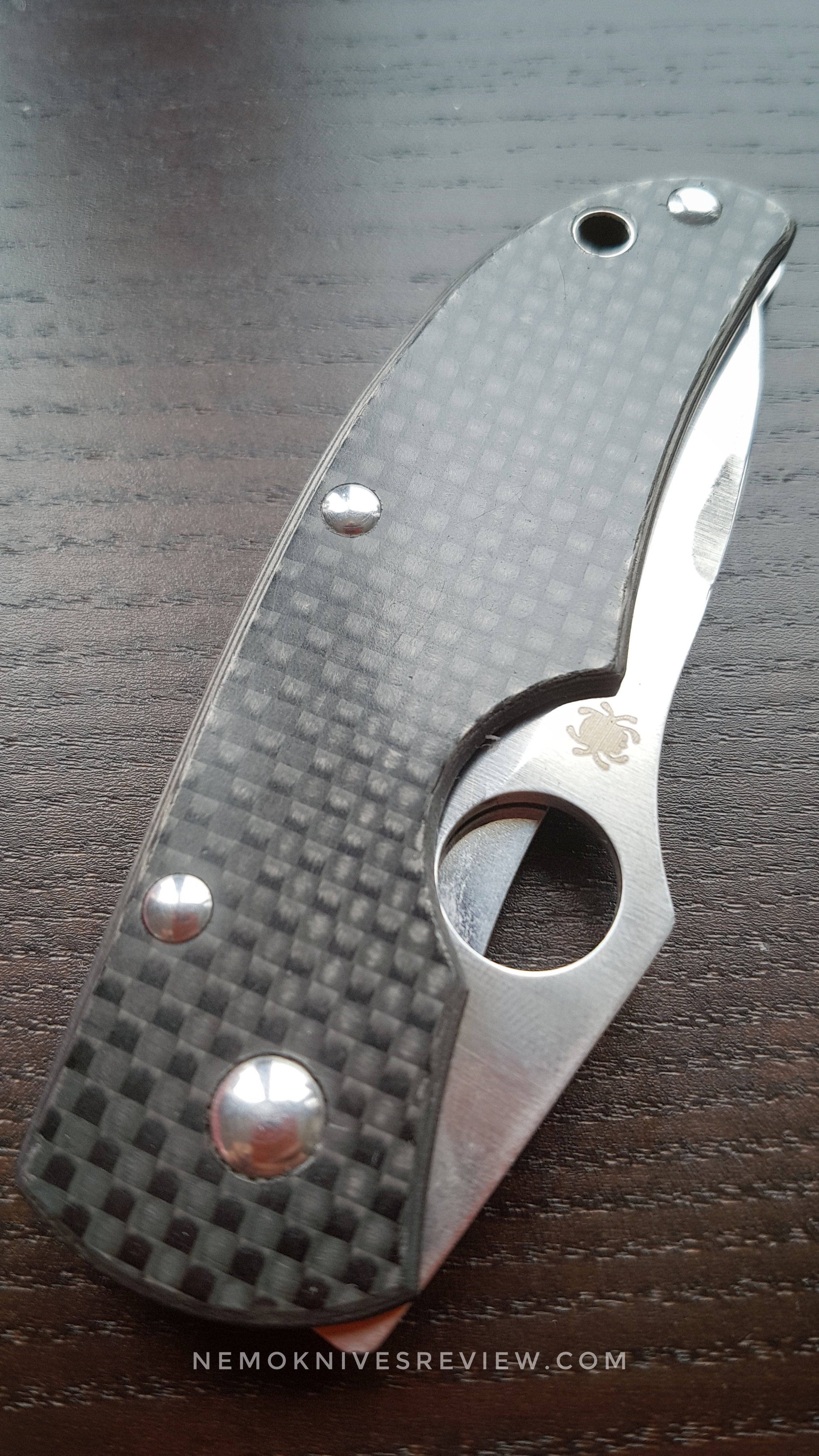
Out of the box, the Caly 3.5 is incredibly pocket-friendly. The smooth carbon fiber scales make it glide in and out effortlessly, adding to its everyday usability.

This is one thing I won’t need to polish on the Caly. 😉

Now, the Caly is one of the rare Spyderco models that hasn’t been converted to full screw construction in 2025. It still carries those three rivets on the handle, radiating an unmistakable early-2000s vibe.

Most modern folders are assembled with screws, which makes them easy to disassemble and service. The Caly 3.5, by contrast, is riveted—apart from the pivot and clip screw—which means full disassembly isn’t really an option.

I understand why some people have a visceral dislike for rivets. But in my experience, they work reliably and don’t loosen over time—an important factor when you’re using a knife in remote places for long stretches. A friend of mine, once a hunter’s guide in the African rainforest, swore by riveted knives for exactly that reason: nothing to rattle loose, nothing to lose.

Personally, I won’t be field-dressing game or digging in the mud with my Caly. For me, the lack of full disassembly isn’t an issue. Cleaning with hot soapy water, a rinse, and a blast of compressed air is more than enough. No worries at all.
But to quote a user back in 2013: “Disassembly for cleaning is as simple as the design: Open blade, Remove pivot pin screw, Depress lock bar, Pull out pivot and the blade falls out. Voila, that’s as far as it breaks down. No washers, nothing falls out, etc. Reassembly, just reverse the process.”
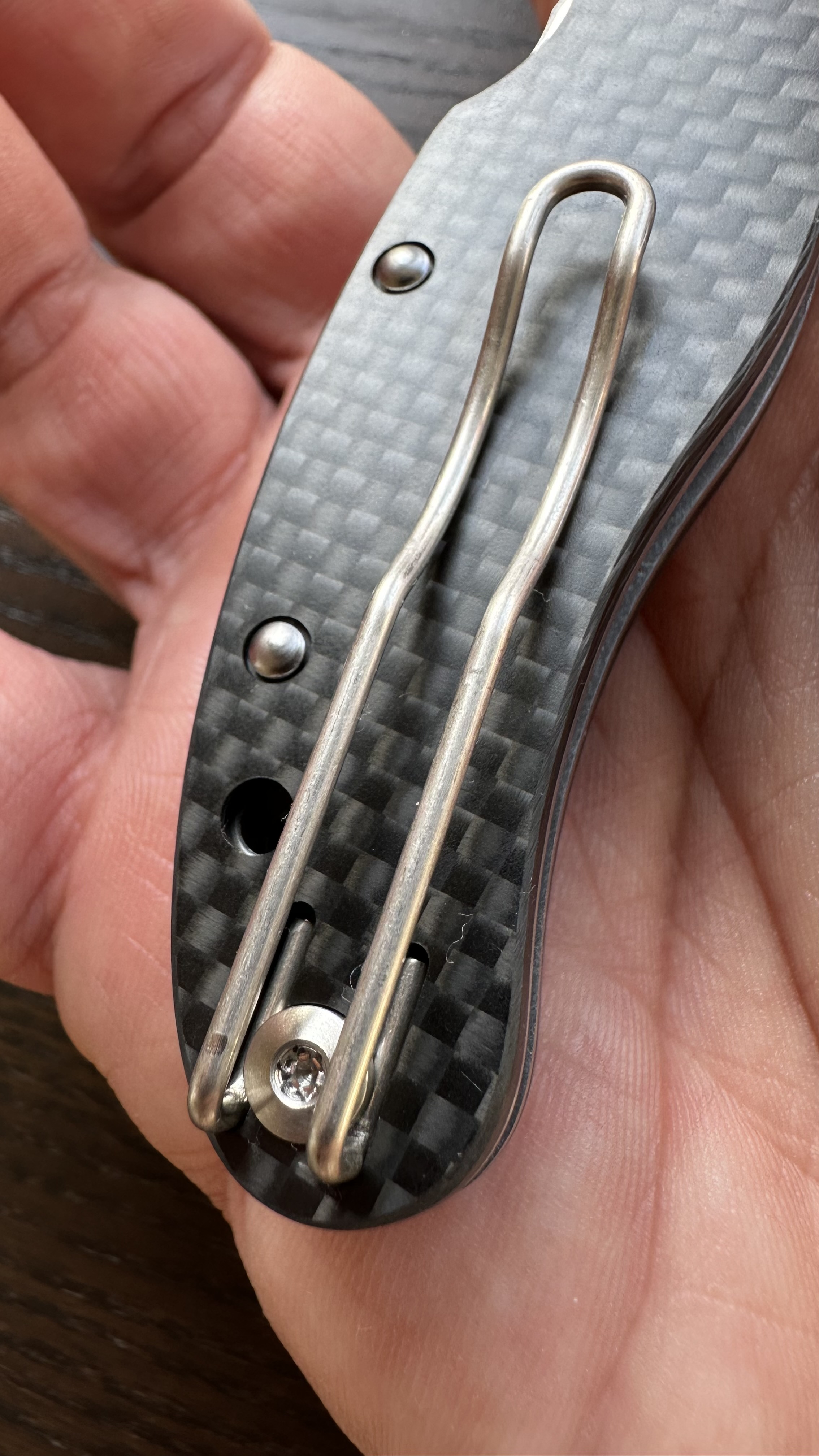
And then there’s the BIG pivot screw—so bold it practically becomes the Caly’s signature.

This is pure Sal Glesser design: a knife that melts into your hand. The carbon fiber slabs are smooth, almost glassy, while that oversized pivot not only anchors the construction but also serves as a subtle functional detail. It works as a natural index point on the handle—almost like a thumb guard, without ever creating a hot spot.

It’s not just practical; it’s a stylistic stamp. You see the same oversized pivot screw on the Michael Walker, another hallmark of Spyderco’s design language from that era.

Now, let’s talk about ZDP-189—a steel I’ve reviewed many times over the years.

ZDP-189 is a Japanese premium stainless steel produced by Hitachi through powder metallurgy. It’s one of the landmark developments in that field, known for pushing the limits of what stainless steel can do. With an unusually high chromium and around carbon, it achieves extreme hardness, excellent corrosion resistance, and outstanding wear resistance.

While it’s most often found in high-end kitchen knives, ZDP-189 has also carved out a place in EDC designs. My own Higo J from Rockstead, for example, proudly measures in at 66.6 HRC—a testament to how hard this steel can go when heat-treated to its full potential.
(ZDP-189 steel can reach a maximum hardness of 67 HRC, which is well above the values of average mass-production knives.)

ElementPortionEffect
Chromium20.0%Improves wear resistance, heat resistance and scale resistance. It increases tensile strength because it acts as a carbide former. Use of rust-proof or stainless steel, as it increases corrosion resistance from a mass proportion of 12.2%. Reduction in weldability.
Carbon3.0%Increasing hardness and tensile strength. In larger quantities, increase in brittleness and a reduction in forgeability and weldability.
Manganese0.5%Improves hardness and tensile strength.
Molybdenum1.4%Improves hardenability, tensile strength and weldability. Reduction in forgeability and ductility.
Silicon0.4%Improves strength.
Vanadium0.1%Increasing hardness, increasing wear resistance and improving tempering resistance.
Wolfram0.6%Increase in heat strength, tempering resistance and wear resistance at high temperatures up to red heat.


The magic of ZDP-189 lies in its unusual recipe. With about 3% carbon—a huge amount compared to most steels—and a massive 20% chromium, it pushes the limits of what stainless steel can be. That mix makes it harder, more wear-resistant, and more corrosion-resistant than almost anything else in the pocketknife world.
If you’ve ever used knives made from softer steels (well below 60 HRC), you know the frustration: the edge dulls quickly. Instead of chipping, the steel tends to roll, with the fine cutting edge flattening under pressure and losing its bite. A few quick passes through a sharpener will bring it back, but the cycle repeats too often.
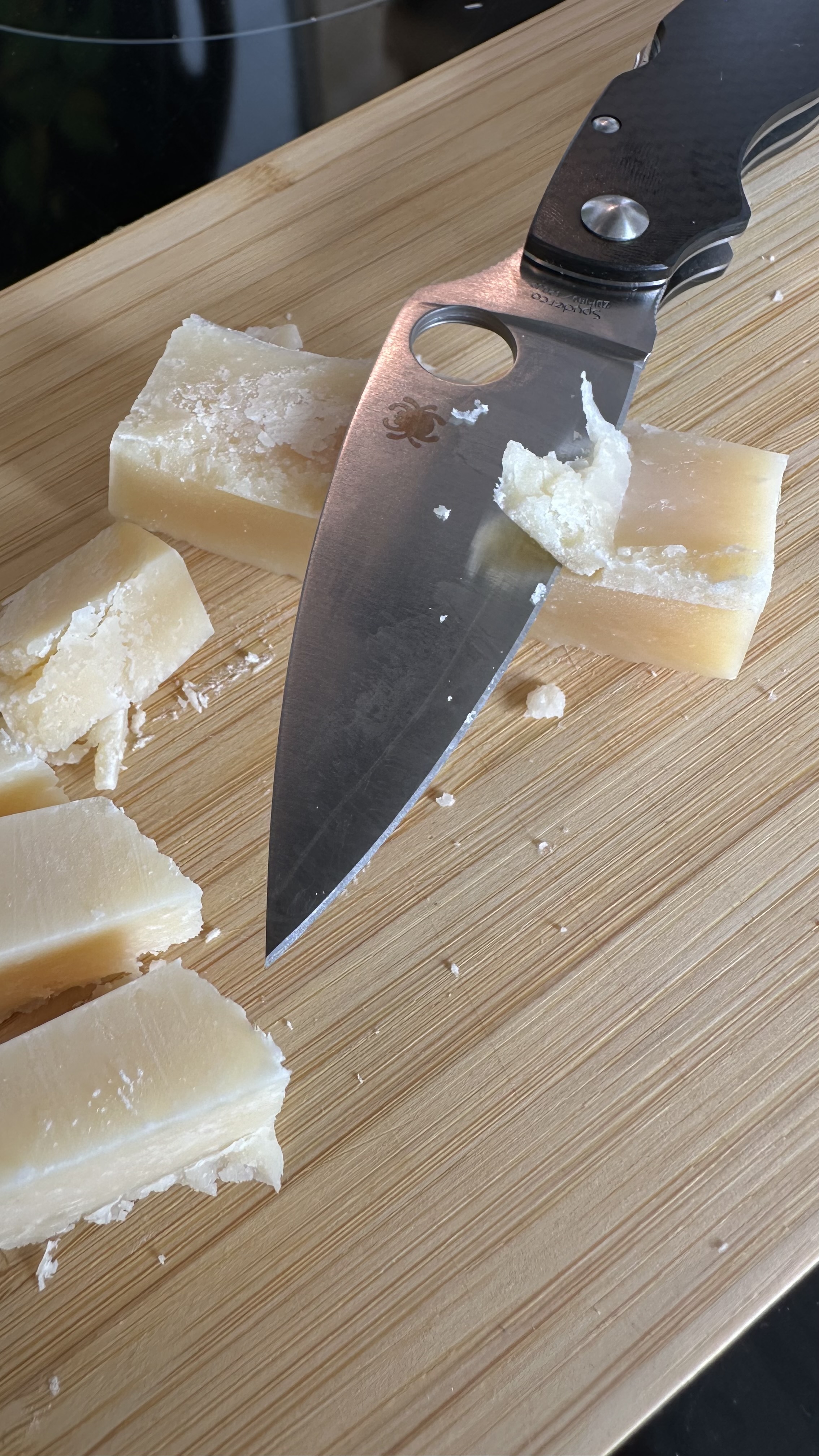
With a harder steel like ZDP-189, the story is different. Edges don’t roll nearly as easily, which means the blade keeps its razor-sharp performance for far longer, even under demanding use. That’s where ZDP-189 really shines in 2010 and still shines in 2025—it holds a cutting edge like almost no other stainless steel in the EDC world.
But beware as ZDP189 is also known for chipping especially on factory edges..
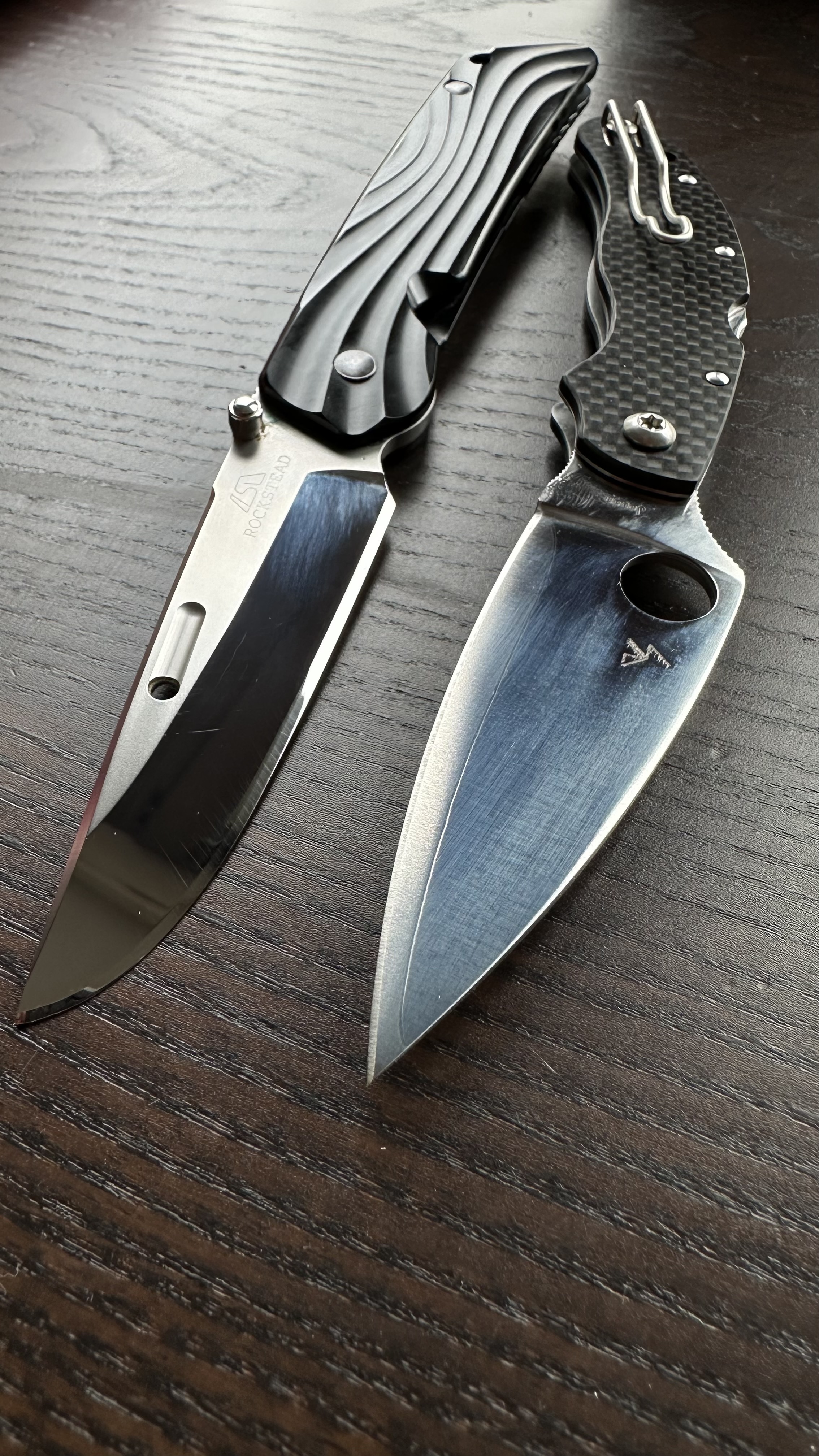

15 years ago my ZDP-189 Higo gave me a scare: its factory convexe edge started chipping quite badly (arrrgh!). I hadn’t been using it hard, so it caught me off guard. My guess is that the ultra-thin edge at the tip, maybe combined with a careless fumble or contact with something hard, was the culprit.
The tip may have contacted something hard, which can happen without noticing. I’ve had a similar experience with another knife: a mirror-finished, thin stainless blade I was testing on bamboo. After just ten cuts, the edge looked almost serrated—but I realigned it, and the damage became nearly invisible while restoring high sharpness.

To bring it back to new, I gave it many gentle pass on a Spyderco white ceramic rod, then spent a solid hour stropping on leather with compound. The result? The knife came back sharper than ever, and with a touch of convexing the edge now feels stronger and less prone to be damaged. For all its hardness, ZDP-189 is surprisingly forgiving.
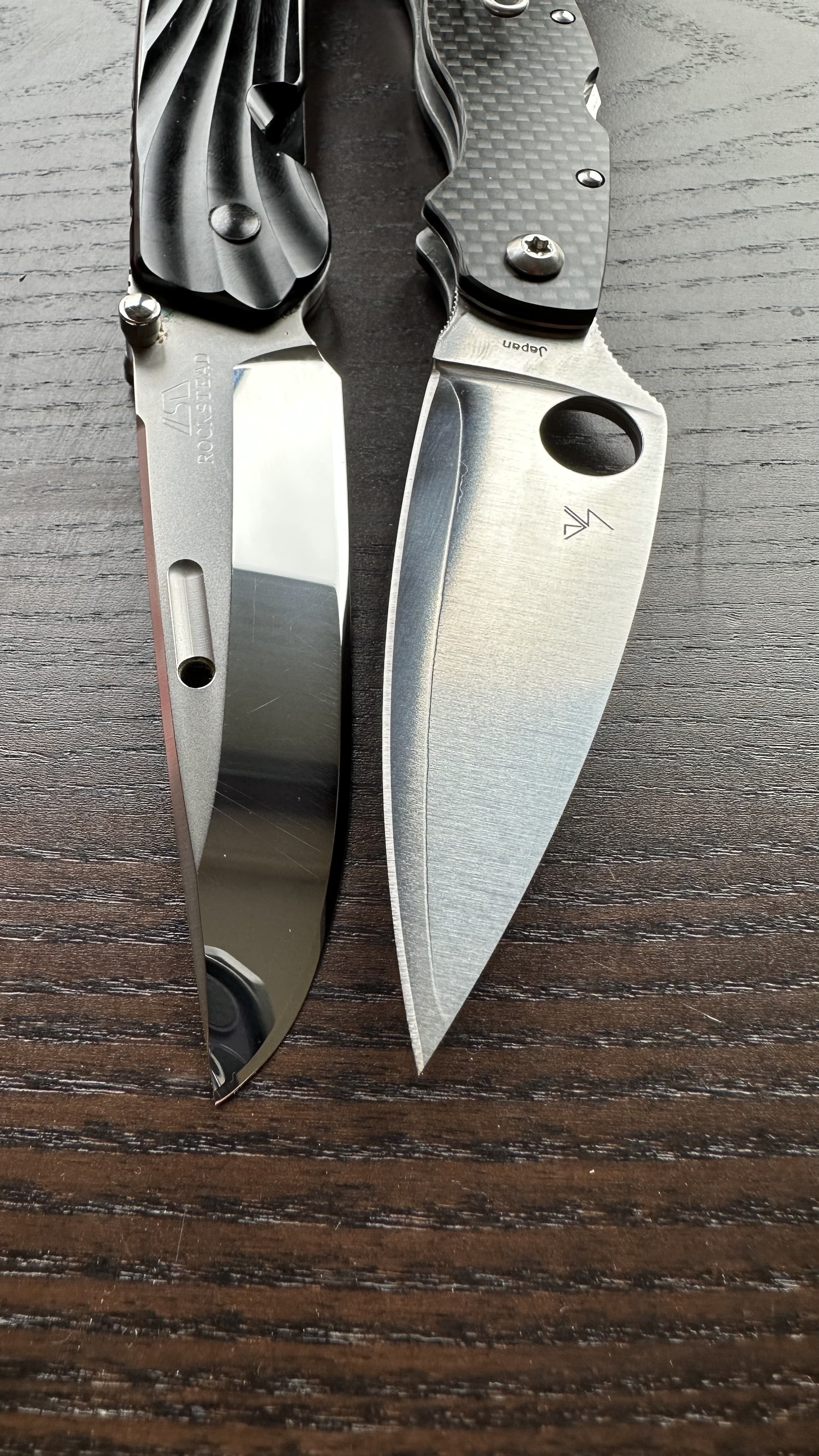
My other ZDP-189 blade ,back in 2010, the Michael Walker, hasn’t rolled or chipped, though it isn’t as “smooth” sharp as the Higo. It’s also slightly less hard than the Higo-J.
It will be the same story with the Caly 3.5. I also feel that its beautiful full-flat-ground blade, with its already even edge, could benefit from a bit of convexing. Doing so would create a safety net against potential chipping, making the blade even more durable in everyday use.
Sooner or later I will also smooth the blade’s spine. Good news the 420J2 steel is soft to work.


Why does the Caly 3.5 have a laminated blade made of ZDP-189/420J2?

The inner core is ZDP-189, while the outer shell is 420J2. The idea behind a laminated or “clad” blade is simple: the inner core provides a very hard, high-performance edge, while the outer layers are softer and more corrosion-resistant. This combination gives you the best of both worlds: excellent edge retention from the ZDP-189, and a tougher, more flexible spine that helps prevent damage when pressure is applied.

The softer 420J2  outer layer will scratch over time but it will be easy to polish back. It also improves corrosion resistance, especially near the pivot area. Even though ZDP-189 has a very high chromium content, it can still stain, but won’t rust like other hard laminated steels such as HAP40. The cladding adds a bit of toughness to the overall blade, compensating for the fact that ZDP-189 is not the toughest stainless steel in case of torsion.

Carrying the Caly 3.5 is another smooth experience—it practically disappears in your pocket. The deep-carry clip, smooth handle, and thin profile combine to make it a true pocket ghost.
But deployment is definitely the Caly 3.5’s vintage characteristic, especially compared to modern compression-lock knives like the Microjimbo. The action is less smooth and a bit slow—which, in fairness, suits a gentleman’s (or lady’s) folder. Out of the box, it was quite grippy, but a few drops of nano oil helped.
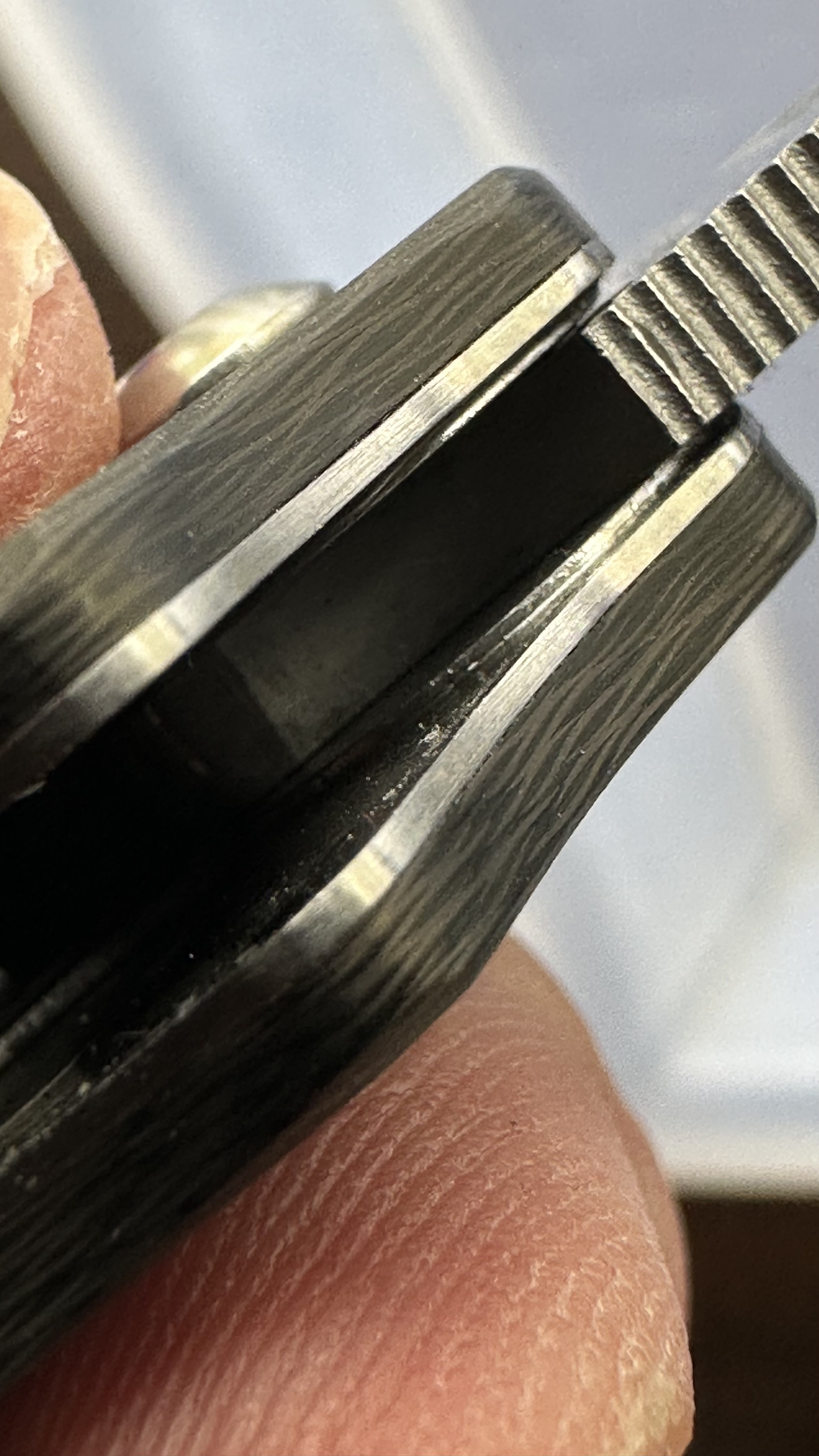

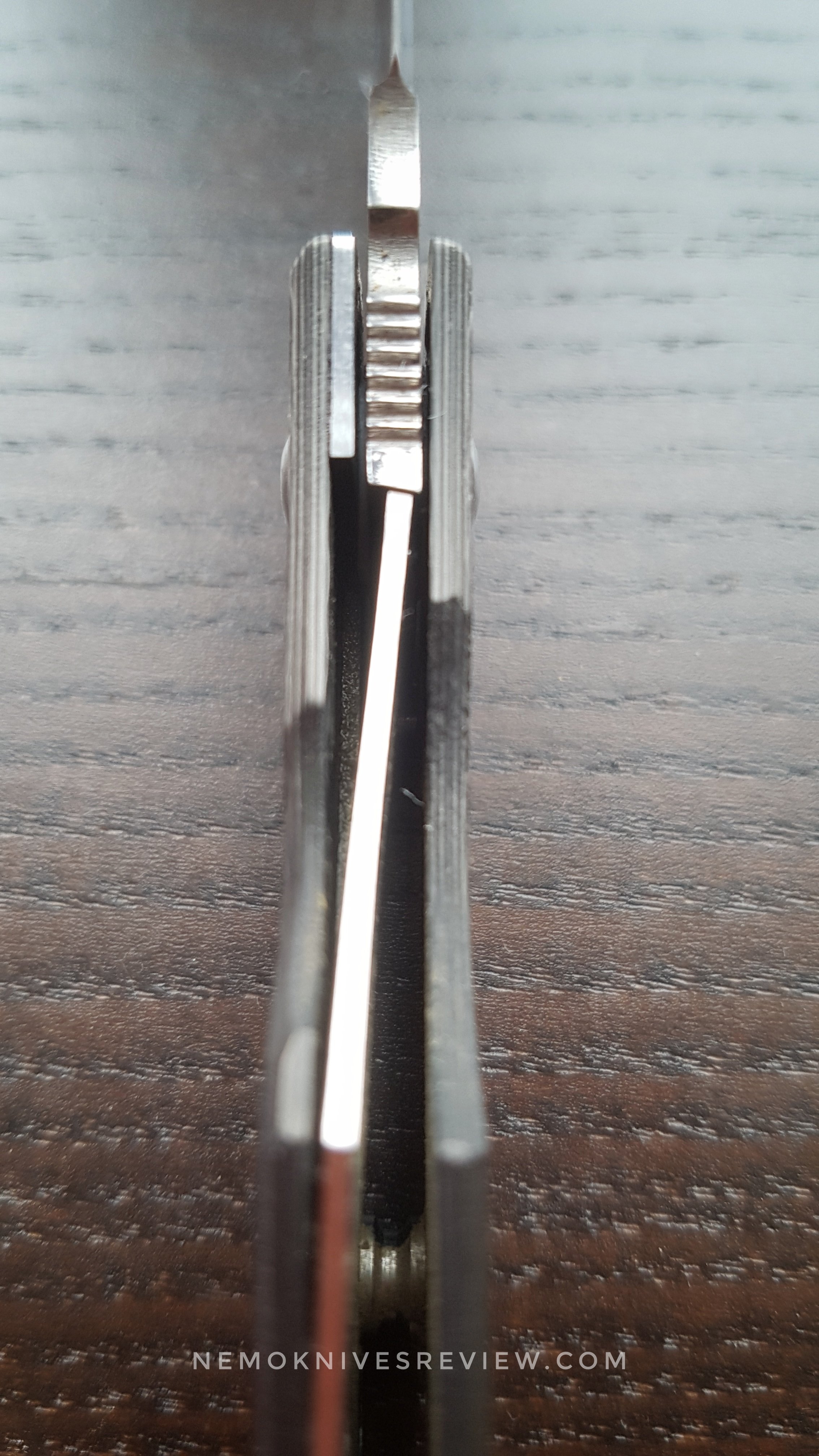
One reason for this feel is that the knife lacks washers. The blade and stainless liners are polished at the Seki factory to minimize friction, but they remain in direct contact. Over time, the blade gradually leaves “traces” at the pivot where it rubs against the liners, which is normal for this type of construction. With a little oil, there is no issue.


Using, carrying, and deploying the Caly 3.5 is like going from a 2025 electric Kia to a classic common-rail diesel BMW. It’s rougher, yes, but still comfortable, reliable, and full of character—part of its undeniable charm. And it gets better and better…
One big asset is how easy to goes in and out of my pockets where it’s disappears like a much smaller knife. This is purely the opposite of a pocket shredder. It makes the carrying experience pleasant and confortable.

Details like Boyle’s dent on the lock (which flushes with hand), the proud liners and the full stainless steel spacer held by rivets add to that vintage appeal. My Caly 3.5 exhibits zero vertical play, giving the same solid backlock experience I enjoy on my Police 4 in K390. This is rock-solid.
And that 3 mm-thick blade contributes significant lateral strength, meaning the Caly can be used harder than its elegant appearance might suggest.
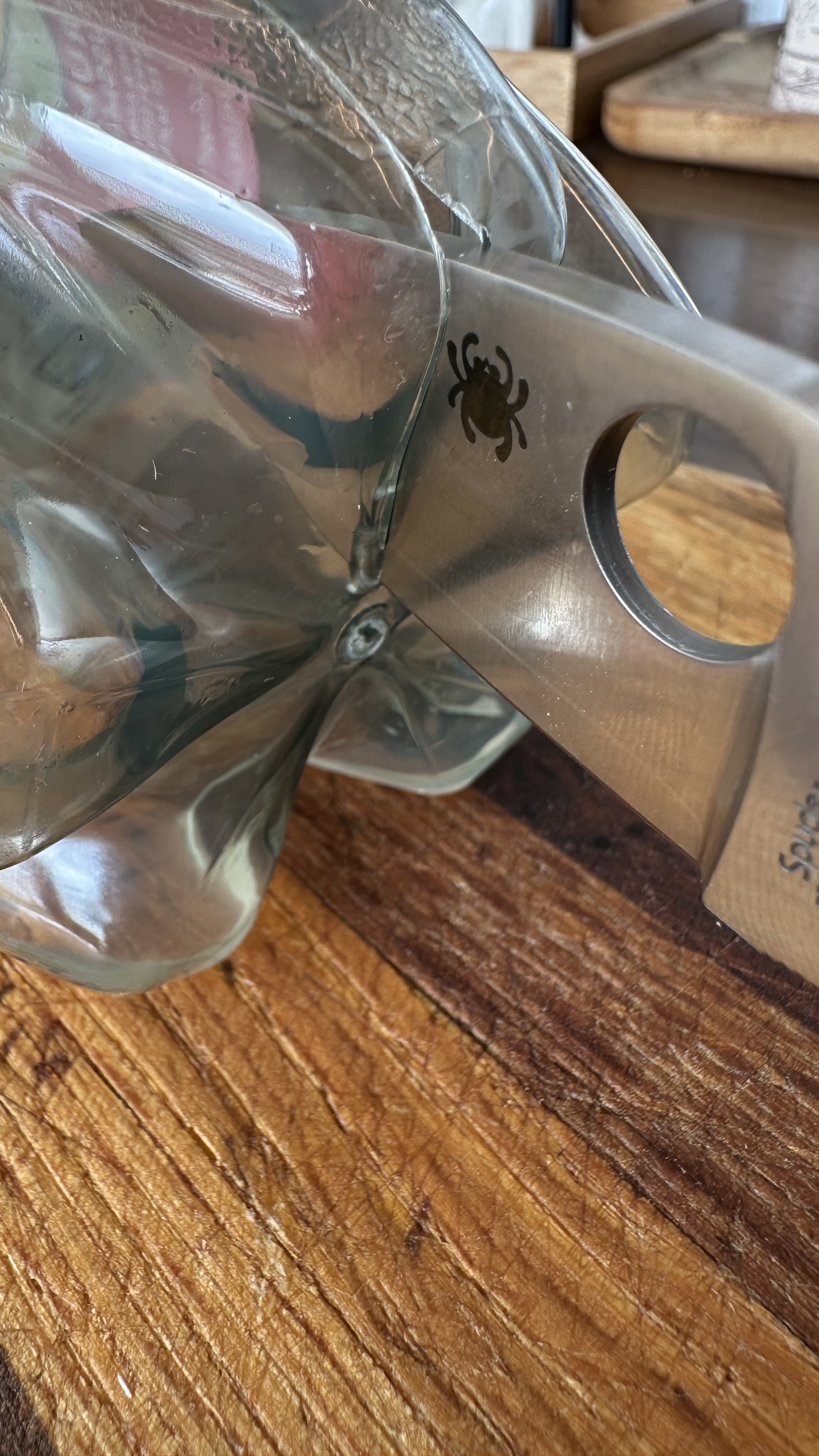
The factory edge is a bit on the thick side, so its performance doesn’t fully meet my needs. At the moment, the Caly 3.5  can’t even slide cleanly through the base of a plastic bottle.

So for my personal taste, I’ll likely smooth the spine, convex the edge, and round that blade jimping (a real hot spot for hard cutting), as well as soften the handle edges until they feel like a pebble. But this will take time—I don’t want to compromise the overall beauty of the Caly 3.5. It’s a true looker, eye candy for anyone who appreciates Sal Glesser’s designs.

But as Bob Terzuola always says: “If your knife is still sharp, it means you don’t use it enough!”
So let’s put that Caly 3.5 to work. First step: rounding the angles.

Link to the Caly 3.5 used to save a child from mountain lion on Blade Magazine.

EDIT from 24th of October 2025:

I have installed a shorted clip:

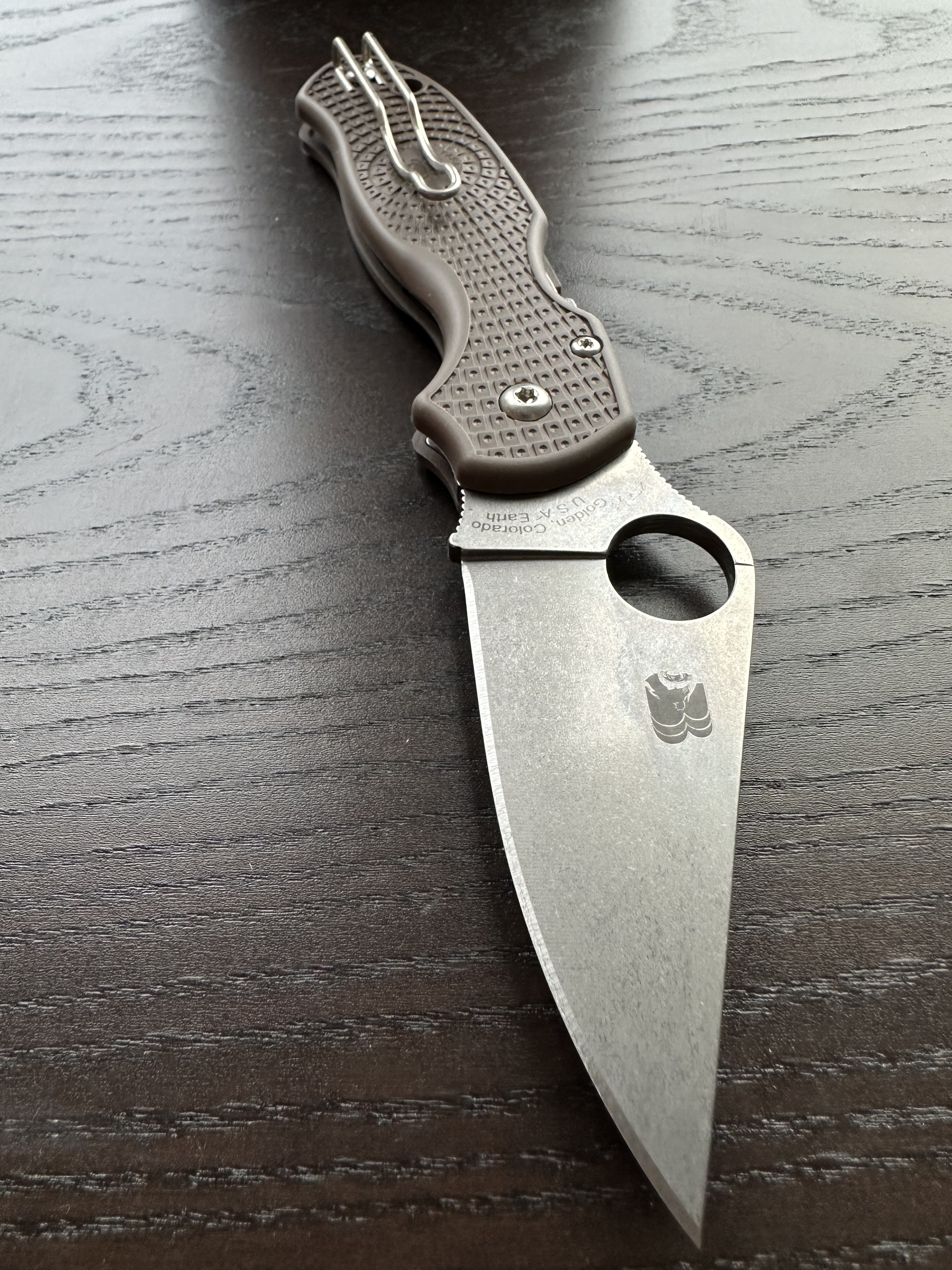
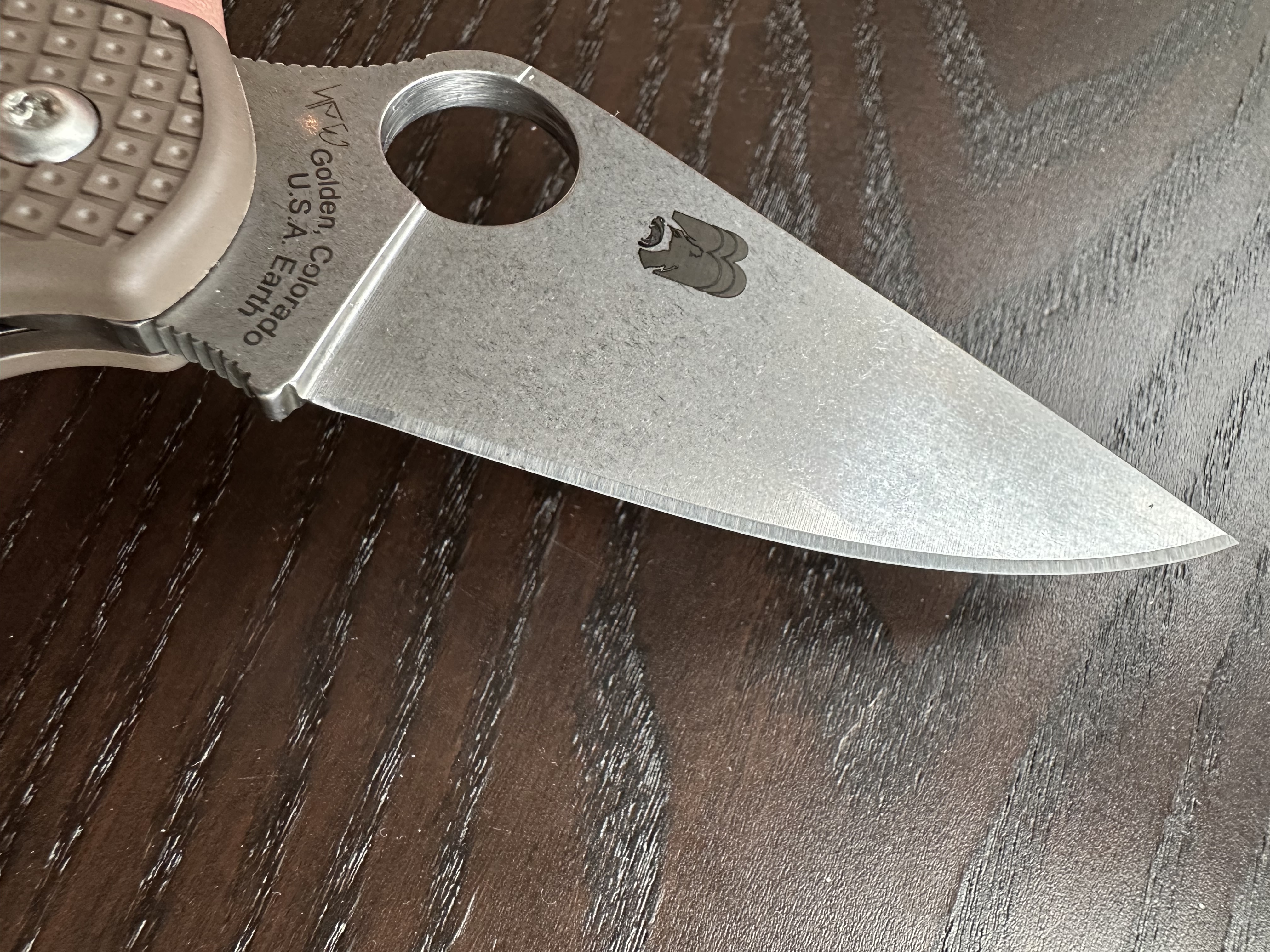
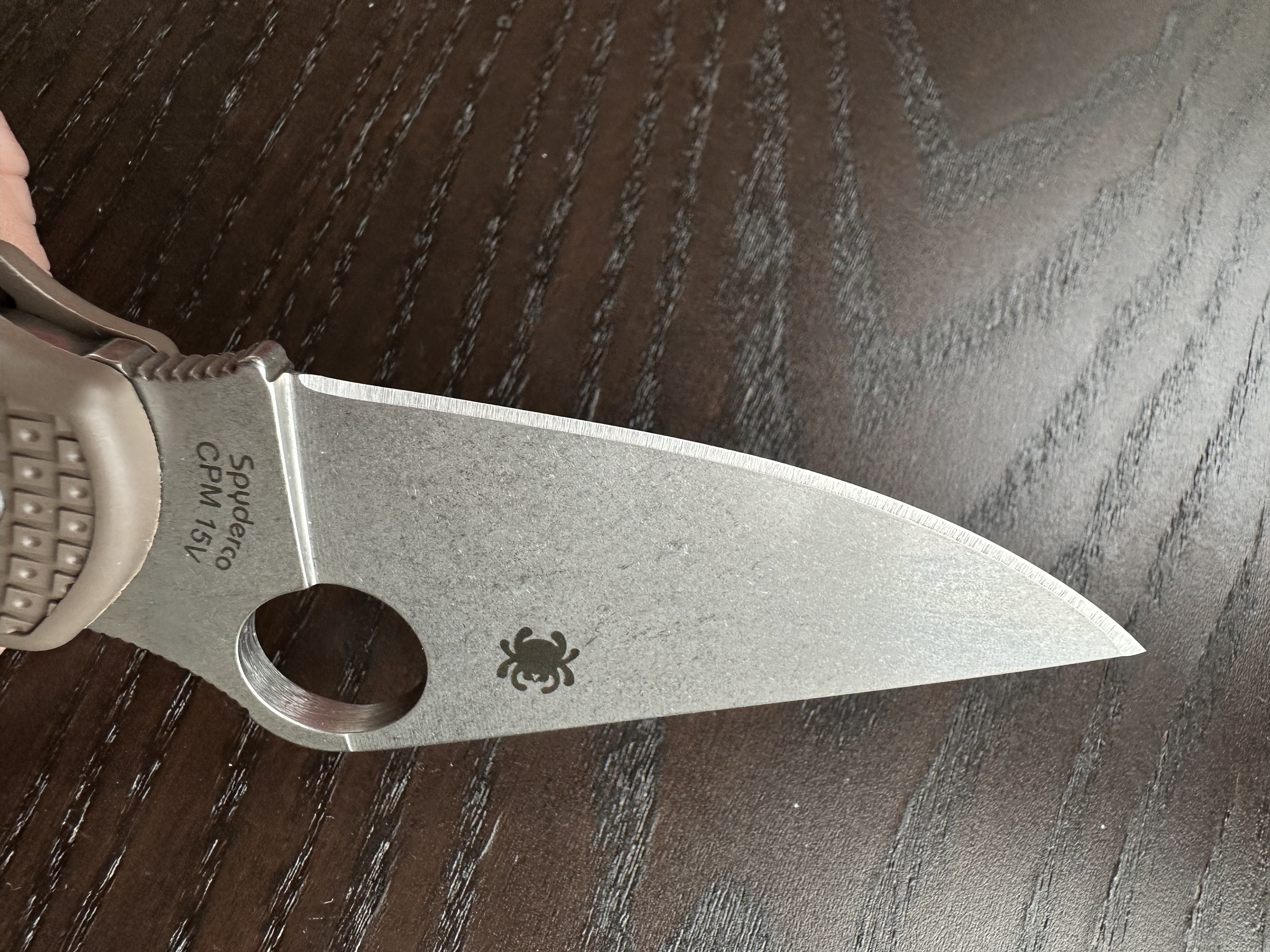
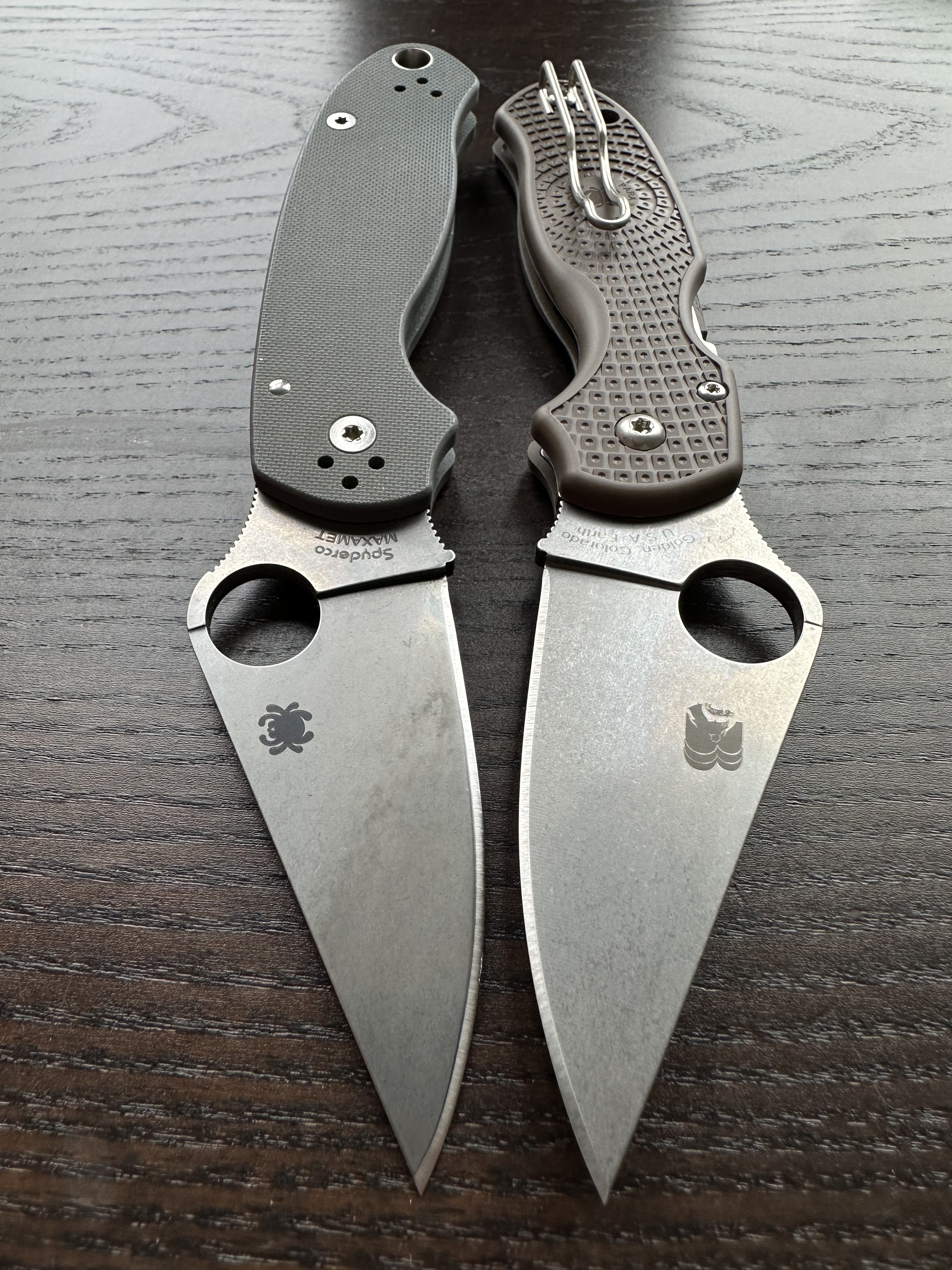
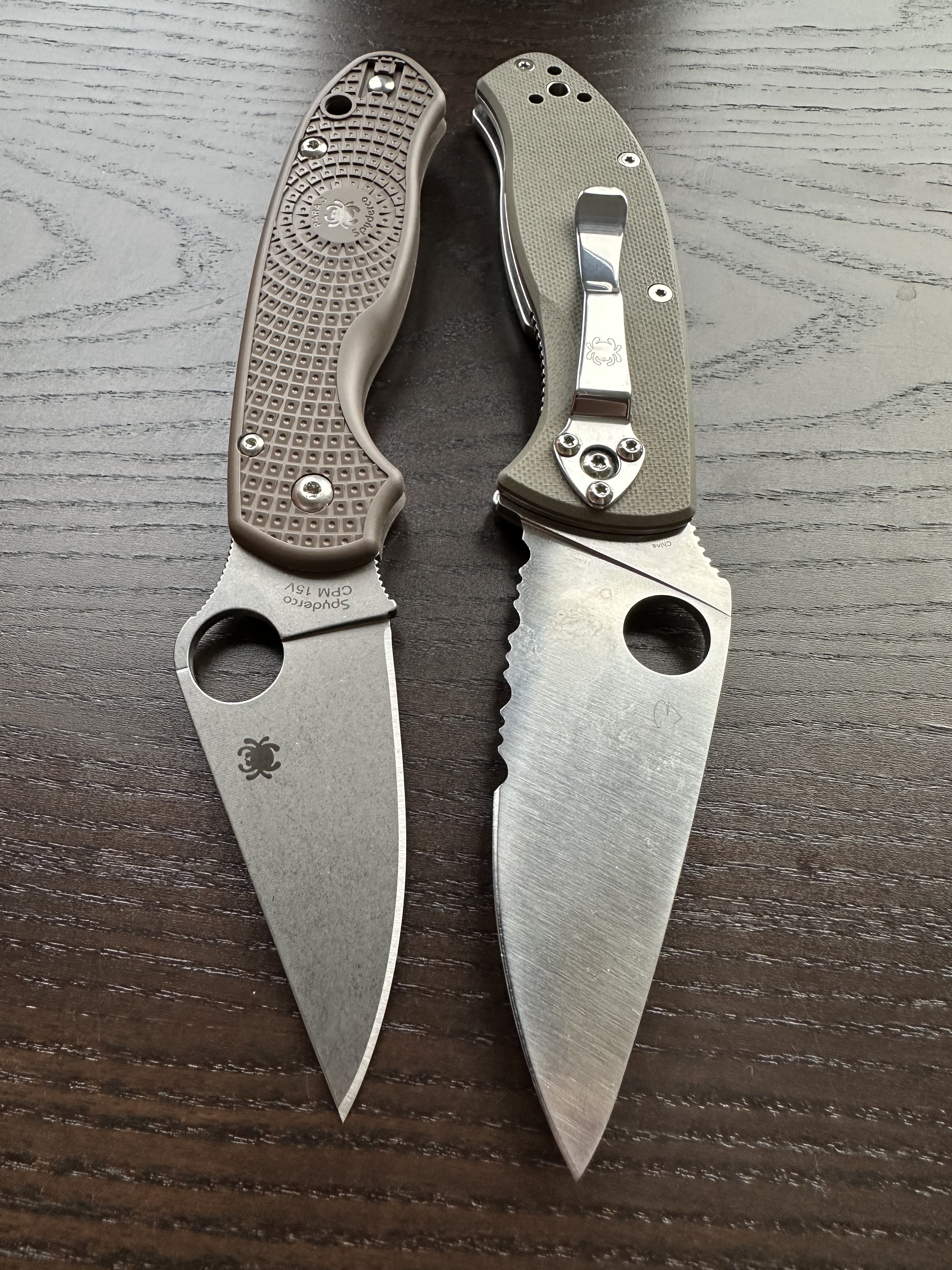
Spyderco Para 3 Lightweight 15V Sprint Run – C223PBN15V – First glimpse at the Lil’Brown Bear !

Jumping on the Para® 3 Lightweight Brown CPM® 15V® Sprint Run® wagon was an easy choice after a month of watching our American friends review this new CPM-15V batch.

Following the Manix 2 release two years ago, showcased in the Reveal 11, and a Paramilitary Brown version, here is the chance to test this remarkable steel on a lightweight platform: the Para 3 in brown FRN.


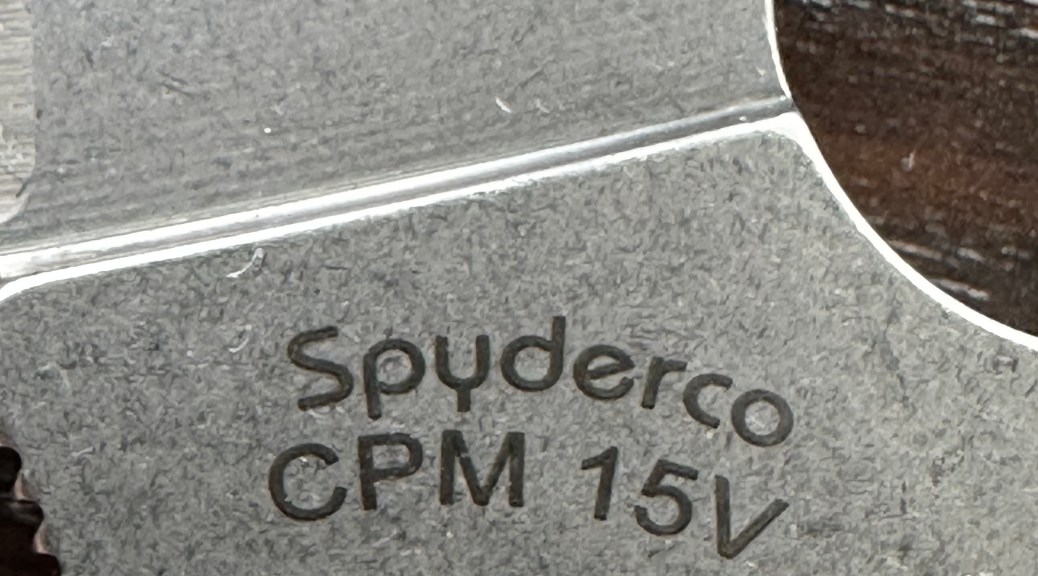
For record CPM 15V is “Boasting almost a 15 percent vanadium content, this remarkable material offers the highest wear resistance of any cold work tool steel available today. The full-flat-ground, satin-finished blade of this knife is further enhanced by a specialized heat-treating protocol developed by acclaimed custom knifemaker Shawn Houston. The result is a blade that offers extreme sharpness and unparalleled edge retention.”

Shawn Houston is known as Big Brown Bear on youtube and his skills in metallurgy and knifemaking as drawn the attention of the Glesser’s family.

In 2018, he has written on the Spyderco Forums that request:
Sal, Can we get CPM 15v?
I like this steel. It’s easier to work with then Maxamet and Rex121.
Takes a killer edge and seems to be more stable then s110v.


Larrin Thomas even answered:
“You guys are crazy. But with Spyderco anything is possible.”

And in 2022 a first Spyderco knife designed by Shawn Houston in 15V with his own heat treat protocol was proposed. Eric’s Manix 2.

“The CPM 15V Sprint run was supposed to be a surprise treat.
Eric wanted to share the CPM 15V with the custom heat treatment I worked on for my folder design.
His idea was to use a standard model so people can get their hands on the steel. Which I thought was really, REALLY cool of him to do that.
Working with Crucible and Niagara Specialty Metal we were able to select a specific melt of the CPM 15V that would respond best to this specially developed custom heat treatment. 
So, Eric and Sal really went all the way on this, no other production knife company on the planet would do something like this. Eric and Sal are one of a kind. 
You guys need to understand this is very unique having actual knife/steel/sharpening/edge people running a knife company that can cater to enthusiasts. 
Originally, I was given options for different handle scales for the Manix but the most important priority was to get the CPM 15V Manix out as soon as possible so it didn’t make any sense to use exotic scale materials.
G10 is a great material to work with and brown g10 was selected because “Big Brown Bear” aka Triplebhandmade. (Me)
I am aware as many others that brown g10 is not unique to this model.
But the color of the handle scales and the handle scale material are irrelevant to edge performance and the most important priority was getting this out to you guys as soon as possible.
Looks like the price is great too, if we used carbon fiber etc cost would have been higher.
So, I hope you guys can respect that.
The folder collaboration design was being pushed back due to production capacity being completely full at Golden.
Please understand that I’ve been very persistent at wanting the knife made in Golden come **** or high water; I would wait until the
stars burned out.
Spyderco has been very busy increasing the size of their golden factory to meet the insane demand of the current knife industry after the global pandemic.
Keep in mind, when a new product comes through the factory, they have to train the staff on how to make them, and what the best procedures are for creating that specific model in high volume with maximum efficiency. So, there is hidden effort when new designs come through at Spyderco.
Folks need to remember if we want this folder made in Golden (my favorite factory) we have to be patient. 
My dream is to have a Golden folder we can all experience together.

I’ve gotten a chance to meet the people from the Golden factory I must say I’m even more excited about the idea of it being made in Golden. I’ve talked to the people that do grinding and heat treatment and there’s just something special about being able to talk to the folks that make your collaboration knife design.
So, I keep pretty quiet about the folder because I don’t feel it’s necessary to see get people excited about something that doesn’t have a clearly set date of exactly when it can be expected and I don’t want to put any undue pressure on Spyderco because they’ve been working very very hard over the past couple years to get things that sometimes people take for granted and expect to magically appear on the shelves to buy.
While I haven’t been posting in this thread everyday, I really appreciate you guys making sure to let Spyderco know this is something you want.
So, thanks for always updating this thread and talking about it on social media.I really think you guys will like this knife and I can’t wait to get one in my pocket one day.

-Shawn

Now this is new batch including Microjimbo, Yojumbo, Yojimbo2, Native, Military 2, Para3 G10 and Para3 Lightweight.

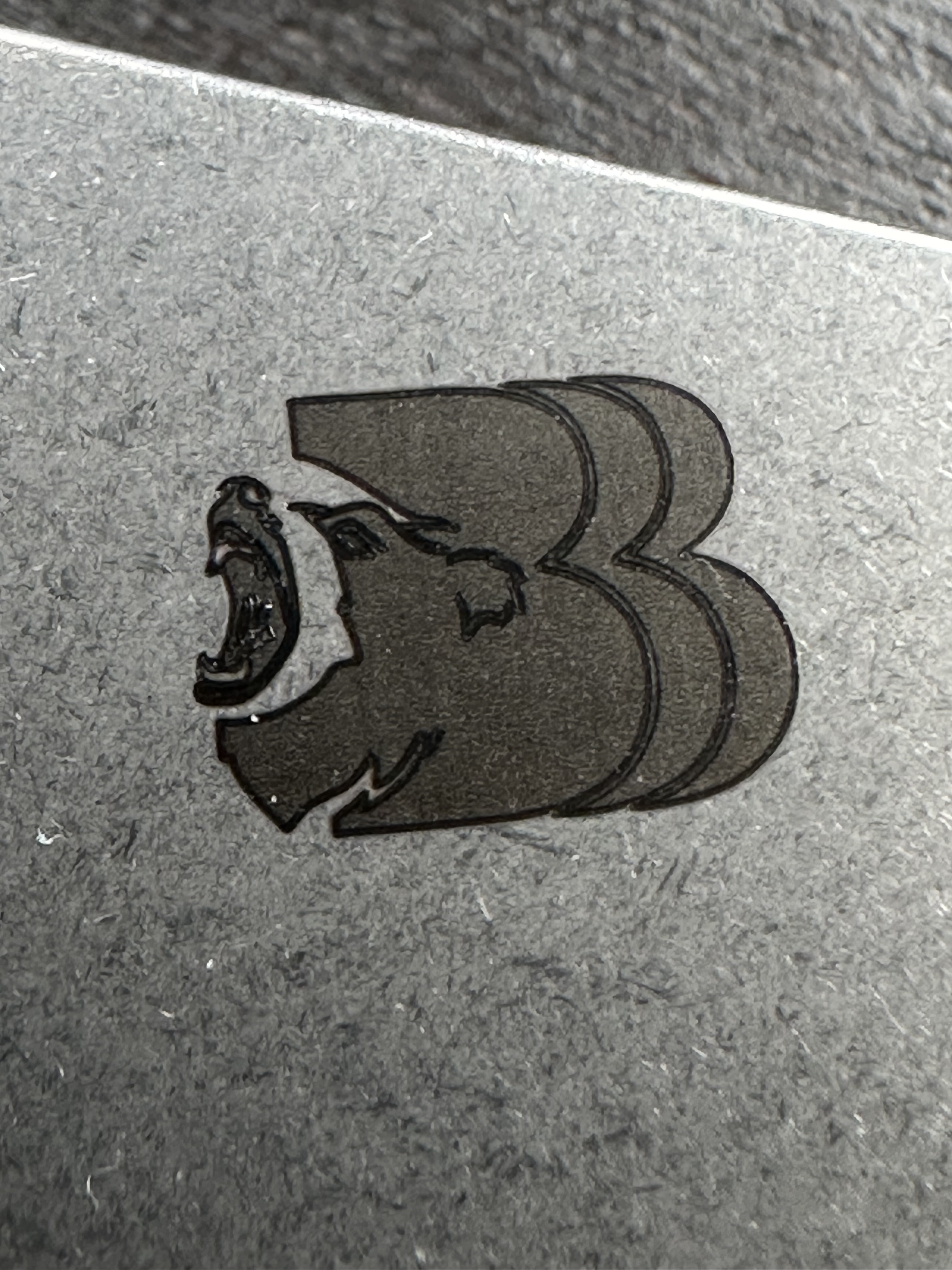
Like all its brothers and sisters it boast the BBB logo proving that the blade has followed Shawn Houston heat treatment.

In his excellent vidéo Shawn share his first impressions and also check the hardness of his Para3 and the result is 65.4 HRC ! Impressive !

Framed from his video: he performed five separate hardness tests just to be sure. It’s well known that Shawn Houston’s special heat treatment — refined over years and tested by renowned professionals — brings out the quintessence of CPM-15V, elevating its performance to exceptional levels.

“Well, most heat treatment protocols are for tooling, like the ones in datasheets — not really optimized for things like edge stability.”
— Shawn Houston, on his own heat treatment

In practical tests, Pete from the Cedric and Ada Gear and Outdoors was able to cut through a rope 2,000 times without compromising the edge.

The action on my new Para 3 is perfectly smooth. I notice a little lock sticking but this is not an issue in my book.


And smooth enough that nothing unscrews on it — the blade closes like glass, effortlessly and precisely.

My Para 3 arrived perfectly centered, but with some burrs on the scales.
(A burr is a raised edge or small piece of material that remains attached to a workpiece after a modification process.)

You can feel these tiny imperfections under your finger along the FRN edges.

I have “deburr” it with some diamonds rod. Nothing fancy but now the handle is fine. I don’t remember having that issue on my previous Para 3 review.

The edge is even.

I don’t see myself working on a convex edge on this one. Not for the moment.

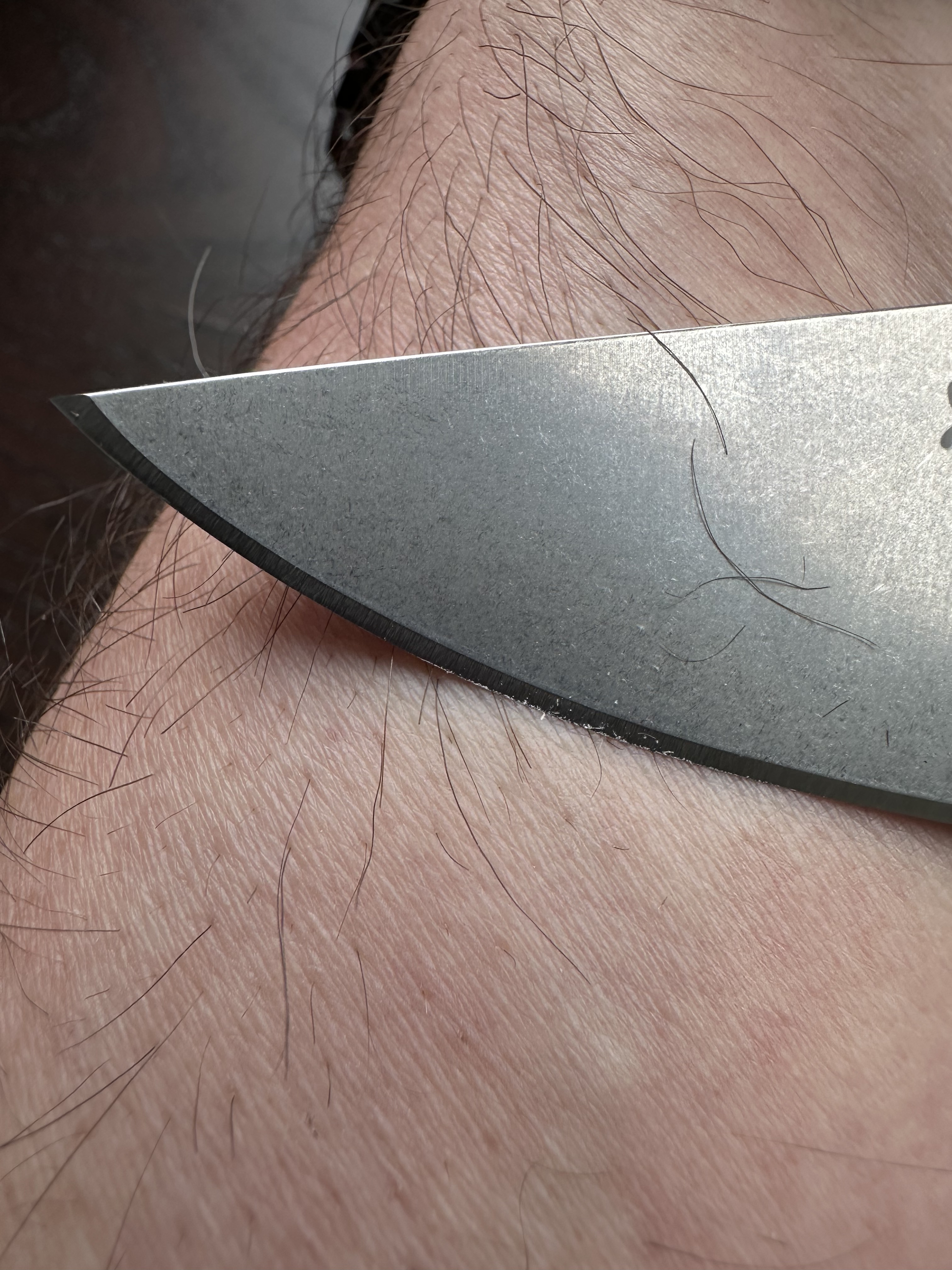
The sharpness is high and that blade is a hair popping sharp razor right out of the box.

I have already cut my self with its very pointy point. My Para 3 is baptized !

Now it is truly mind.

It is said that CPM-15V loves leather for a crispy edge.
(S90V or M398 for example don’t care about stropping…)

I’m curious how its 68 grams will compete with my Maxamet Para 3 G10 (98 grams) — sturdy yet smooth as velvet.

According to Spyderco:

“The term ‘lightweight,’ or the use of injection-molded handle components on a Spyderco folder, isn’t just about how the knife tips the scale. It’s about taking full advantage of the remarkable properties of FRN and FRCP, as well as our decades of experience as an industry leader in their use.”

So yes, this is a “light” saber.

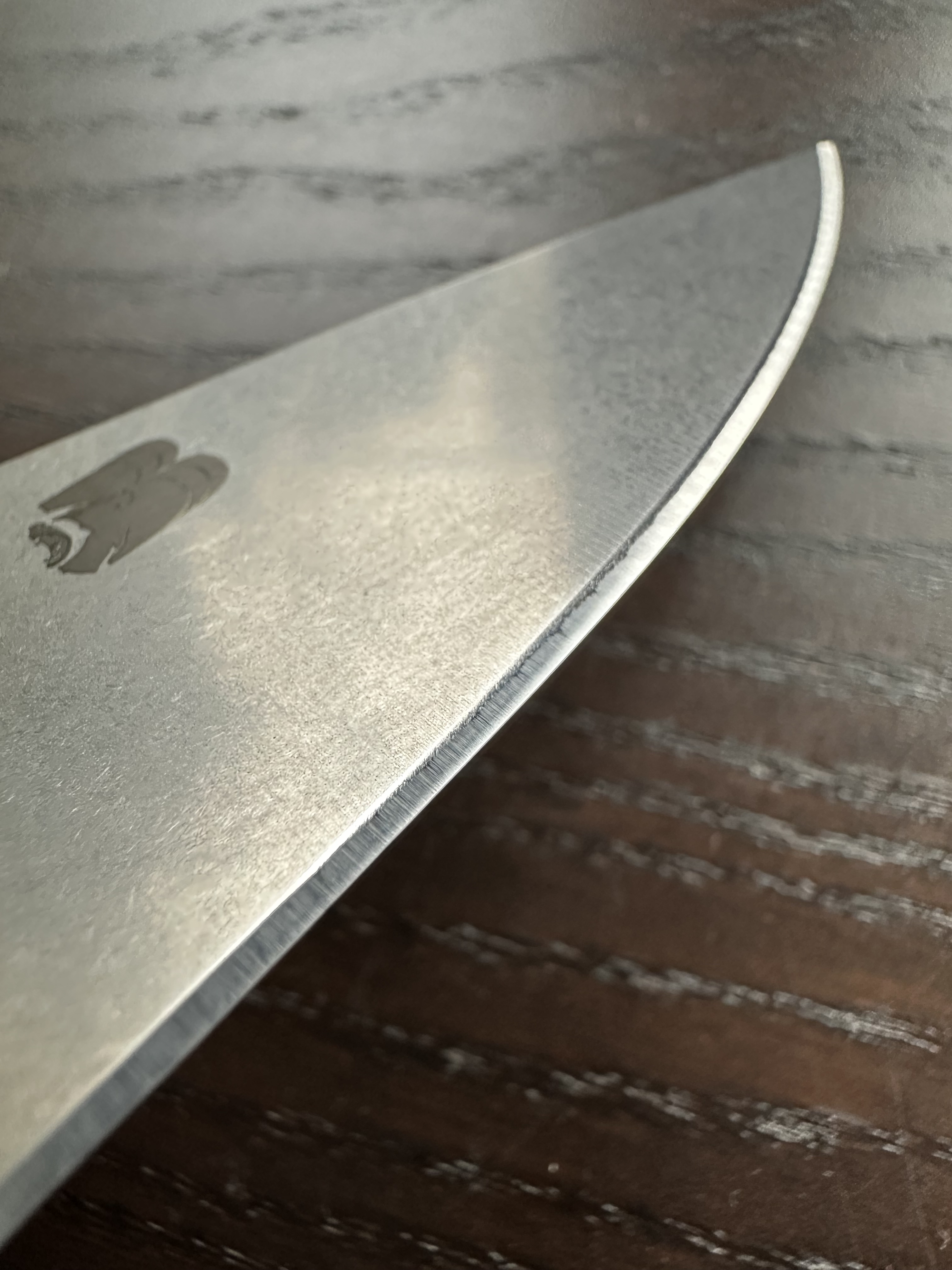
The edge appears ground thinner than on the notoriously brittle Maxamet blade. Both blades receive special attention: the spine is smooth under the thumb, and the edges are expertly bevelled.

The chance to have such a steel on a lightweight folder would make it a great hunting knife like the Michael Walker ZDP-189 was in his days.
The game’s fur is very abbrasive. CPM-15V could be even stronger than ZDP189 on the joints, more permissive.

Ericasedc has made a video about that:

She seems really happy with her Para 3 since she has received it. You can see all the videos she has made on her channel about the Para 3 15V.

Anyway, going in the woods equipped with a Tenacious CPM M4 and a Para 3 in 15V would be a great combo nowadays.


Now that I can carry the mighty CPM-15V steel in my pocket, I’m eager to test its performance over the long run. Stay tuned for updates on this page or in another chapter.

Having a featherweight folder equipped with such a formidable blade and steel is uncanny — it packs remarkable power in a pocket-sized package. I still remember fitting the Maxamet blade on my red FRN Para 3 just to experience that sensation of a powerful engine on a lightweight platform.

This Para 3 Sprint Run is already a triumph, offering the chance to experience a remarkable steel crafted by passionate knifeaholics.

As mentioned, I have no intention of convexing the edge for now — I’m trusting Shawn’s expertise. Unlike AEB-L, which can be thinned while remaining strong, CPM-15V is packed with carbides, so I’ll stick with the angle specified by Spyderco and Shawn, which is already thinner than Maxamet.

But now, the real fun begins: testing!
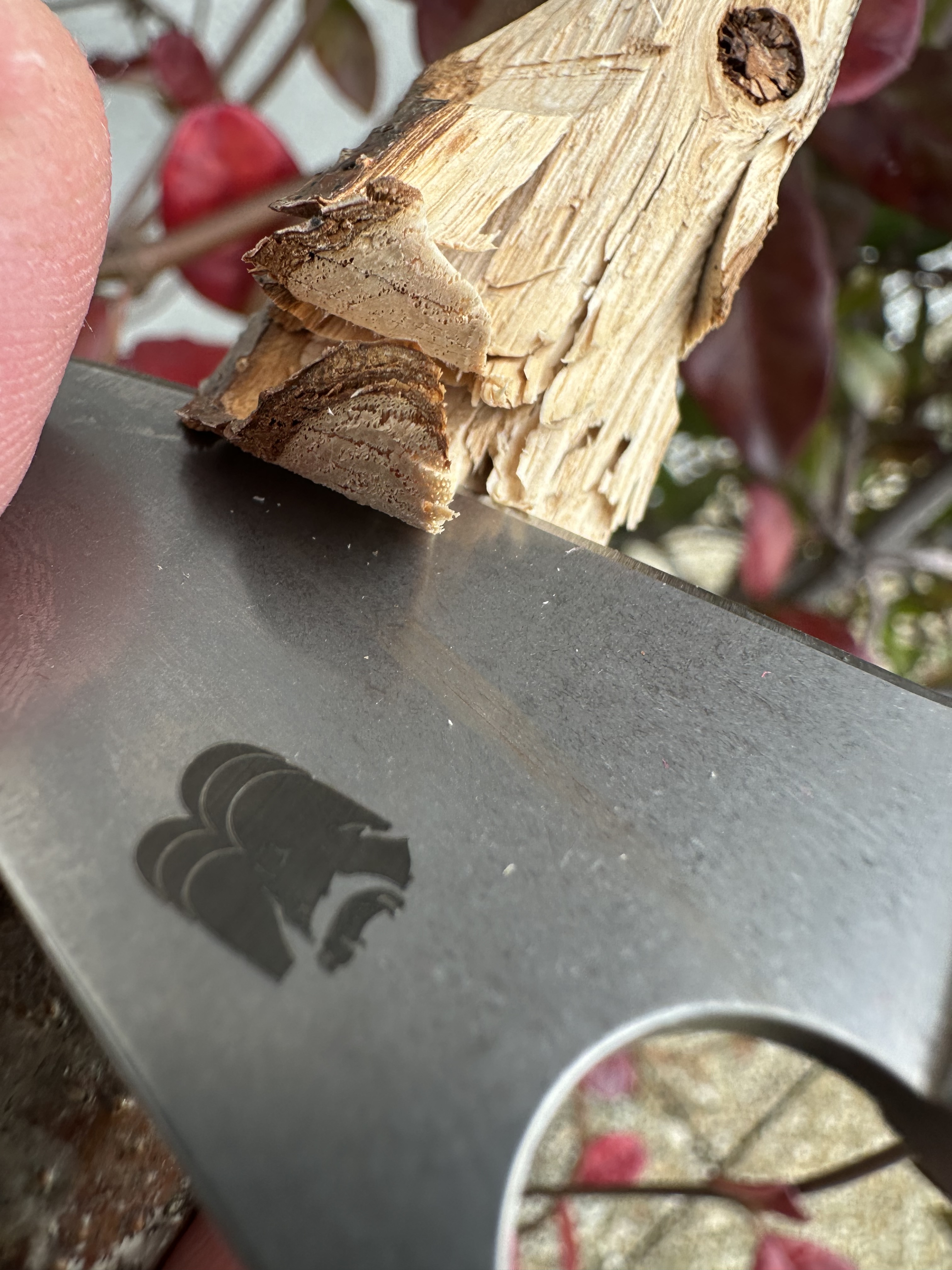
Spoiler: the combination of geometry and steel makes it an excellent whittler — the blade cuts deep, and the wood feels incredibly smooth under the cut.


Final word of this review are from Shawn Houston who was quoting and answering to Todd from Scienceofsharp.com about 15V (as Todd’s goal is to increase our understanding of the role of carbides in cutting performance and how different sharpening techniques “interact” with the carbide):
““tremendous pleasure in using an extremely sharp knife or tool (and satisfaction when you have sharpened it yourself). Even though it is often a fleeting experience”
That’s the “idée fixe” of it all.
The little smile and feeling of elation when the edge lasers through material with zero effort.
The stones, geometries, steels, heat treatments and the techniques.
Chasing those fleeting moments of joy with high performance and riding the line between madness and clarity in trying to understand at the most intricate levels how it all really works.
An insatiable quest.

The Edge is a Ghost. Always changing. Dying (dulling) being reborn (sharpened) split personality (angles and geometry changing).

Think of the edge as gas in a vehicle. It runs out of gas and you put in more gas. We provide the format, materials, design for use, variety to avoid boredom and create interest, but the edge is your creation. The result of your understanding, education, experience and practice.”

Sal

CPM 15V is a very difficult steel to manufacturer, so it may not always be available in the future.
Crucible Industries LLC went to great lengths to produce the steel, it puts a great amount of wear and tear on the ceramic refractory designed to hold the super heated liquid steel during melting. This is necessary to dissolve the vanadium carbides to the very fine sizes that we see in the finished product.
It’s quite a marvel that’s not often appreciated.
15V is basically the commercial limit for how much carbon and vandium they can get in a steel for production sizes batches.
The benefits of this to the end user combined with excellent heat treatment is a enjoyable, lasting cutting experience that also touches up at the edge nicely with proper abrasives and sharpening experience.”

Shawn Houston on Spyderco Forums

Spyderco C22 in ZDP189 — Amazing After Six Years Hunting in Tuscany !

Six years ago, my friend Valter Nencetti took my Walker for a one year mission which turned into a six years journey. It was his favorite knife for hunting and he reported that to me in this article:  https://nemoknivesreview.com/2012/12/30/spyderco-c22-in-zdp189-italian-hunter-update-by-valter-nencetti/

This year, he has given it back to me after I had offered him my Native 5 in 110V which is IMHO an upgrade for Hare Hunting. The Backlock of a Native 5 is a perfect lock for that kind of use, but you can notice the Walker lock as not travel very far. The curved concave notch prevents it to go further.
There is absolutly no play !

For the record skinning hares is not an easy task for an edge as the hairs and the skin are ruining the sharpness very fast. There is a lot of dirt which acts as abbrasive. I have made a video and soon will put it on line.

Being used everyday, Valter eventually broke the clip which is a very fragile part of the walker compared to spoon clips used noawadays in spyderco line. You can also see it was not clean everyday and used as an EDC in the countryside of his beloved national Park in the North of Florence in Italy.

You notice the normal wear on the handle but Carbon fibers is incredibly sturdy as an slob material. It can be easily cure with some 1000 sandpaper work.

There were also no pitting on the blade or on the liner lock. ZDP189 is known for pitting strangely with its 3% of carbon and 20% of chromium. But here anyway, no issues.

I have started to clean the marks on the blade with some sandpaper.

Then I have restored the edge to razor.

No chipping.
No pitting.
No blade play.
No marks on the handle.
A broken clip.

Valter used his knife with no afterthoughts. I know it was not used on wood but mainly as a skinning tool. It has processed hares but also been used on boars and deers. Also it was used on plastic and everyday mondane tasks as Walter is breeding hunting dogs.

That’s not bad for a little gentleman knife which is a true workhorse.

Spyderco Stretch C90CF – Part III – EDC of high performance

Spyderco C90CF ZDP189

So after the initial impressions and the convexed edge enhancement how the C90CF is performing on a daily basis ?

The first thing wich stands out in this folder is how flat and confortable it is to pocket. This is the kind of knives you totally forget once clipped.
The second thing is how easy it is to put in action. The oversize hole and the relatively heavy butt handle and the smooth action make it a great spyder drop opener if your carry it (like myself) with the clip mounted near the pivot. The grap the hole between the thumb end the index and in a fluid motion the knife is open in your hand, ready for any chore.

Spyderco C90CF ZDP189

Now the thin blade is a laser. Again the thin cuts through all materials submitted to it with ease and, good news, the little vertical play of the backlock seems to have disappeared with the breaking in and the constant use. Now the knife feels rock solid. Also the thin edge on the thin blade doesn’t need a lot of force to cut deep.
The ZDP 189 edge seems to lose its hair popping sharp sharpness fast but the working edge seems to last forever. Another good news, leather bely and compound is enough to bring back the hair popping edge in a matter of seconds. So far I was not able to ruin the edge: no chipping, no bending, no excessive dulling. My edge is polished and convexed and it cuts, cuts, cuts:

Spyderco C90CF ZDP189

Some very hard cardboard tube is no match for the Stretch thin blade.
Also I got no discoloration or pitting on a ZDP189 blade which has been used a lot in the kitchen. It has been cleaned by rinsing under water and wipe just after.

All in all the Stretch is an incredible high performer. It’s relatively long blade makes it really useful for a wide specter of chore and his polyvalence will be hard to match. This is really great folder to EDC.

Spyderco Stretch C90CF – Part II Stretch on the Bench.

I was testing my Stretch when I got the urge to compare it to the Daddy of all my Spydies: my M390 Millie.

My M390 got a very thin factory edge and I was able to maintain mainly by stropping on leather. it cuts like a laser.
Compared to my new Stretch the difference was hug. The C90 with a thinner blade got a thick edge. I was not able to measure it but it’s a good 40°…

So I have decided to convex the edge of that thin full flat ground blade, even if ZDP 189 is a bear to sharp.
My first step has been with Lansky diamond pads for eliminating the shoulder of the thick edge. I was able to do it with out scratch the flat of the blade.
Then I have stropped the blade on leather with white compound until I got a mirror finish.

Stretch on the bench

Nemo Convexed edge on Stretch

The performance is night and day. I will check now how the ZDP189 convexed edge will behave, but I had applied the same treatment with a Michael Walker which is now used every week end as a skinning knife. Anyway, I have been able to cut through a plastic bottle’s butt is one pushcut. My C90CF is now laser sharp. As sharp as my Gayle Bradley but certainly not as strong. We will check that later.


Talking about sharpness. The jimping is really sharp and hurting the hand. Again diamonds has given me the possibility to eliminate those teeths. The new version of the Stretch got better jimping, the same as those applied on the choil.

So now, my Stretch is ready for more tests, tonight it will tomatoes slicing time.

Conclusion in the Part 3.


Oh yes it cuts…

Spyderco C90CF – Sal Glesser’s gentleman bushcraft folder

Nemo Stretch C90CF

For twice these last months, I was considering myself being able to announce my best “EDC ever”. After the Sage 2 Sebenza inheritance, the “hard to get razor” rare Spyderco Paramillie in S90V, the megasharp little Michael Walker, the solid and forgiving Gayle Bradley, the wonderfully engineered Native, the minimalist friendly Pointu, the chopping solid Lionspy, the Techno which is a pure flawless stout companion and lately the Spyderco Southard which is such a great flipping friend served by a crapped clip. I love all of them and I considered myself spoiled. My case is closed.

Now what would be Sal Glesser favorite EDC ?
I knew the Stretch was a special project developped by Sal “in house” for his own needs and I was able to notice how the Stretch was continuing to continued into a Spyderco classic, providing one of the best high tech steel into a lightweight package: the discontinuated C90 and C90BL and the new Green Arrow: C90PGRE.
“The C90 Stretch started as a pet-project lockback knife design. Spyderco’s owner and chief designer made it for his personal use, incorporating features he wanted. He wanted high performance blade steel with edge retention super-powers for outdoor cutting: things like wood, rope and anything encountered in the wild. It had to work equally well indoors on cardboard, mail and fingernails. He sized it so it wouldn’t scare non’knife people and made it look slick on the off chance he’d someday have to wear a suit.”
Isn’t it exiting ? The Spyderpapa has invented a knife for his own needs and no one else. Remember, the famous C36 Military has been design for his son Eric for example… But this very C90 has been designed for no one else but Sal. “The Stretch has been a 25 year work-in-progress and we’d like to continue to make it better. The ZDP FRN version finds a lot of my pocket time.”

So I got now the great opportunity to pocket a Stretch. This one is the one with the handle in peel-ply carbon fiber, with a four-way clip, left/right-hand and tip-up/tip-down and a full flat ground blade of solid ZDP-189.
Quoting my friend Wouter: “Stretch II is IMO a perfect knife for the connoisseur. Its looks might be plain, the blade might seem too thin, but for the knowledgeable knife enthusiast it’s a very impressive folder.”

Ah, ZDP 189 ! I like it on my Rockstead Higo but I love it on my C22CF. On both knife I have been able to cure its chipping with ease and to convex gently their edge. Here we got a 3mm thick blade on a very thin handle: pocket easy. Despite his hourglass clip the Stretch could be the father of my Chaparral. A gentleman folder with an outdoors purpose. The Stretch is incredibly thin and oozing quality. No blade play. Smooth opening. Extraflat design. The Stretch got a James Bond’s appeal.
Mine, after twenty strops on my leather belt is now sharp as my Bushcrafter. So time to test it and to fall in love again.

But quoting Spoonrobot: “Writing about a specific hobby always brings some inherent problems, there are only so many ways to praise a folding knife. I recently made the mistake of declaring a knife “the sharpest out of the box I’ve ever seen.” Only to have the next two knives prove to be even sharper. This makes it quite hard to be taken seriously, so in light of this I’ve decided to make slightly less grandiose claims when describing my newest slicey thing.”

Part II: improving the Stretch’s edge.

Spyderco C22 in ZDP189 Italian Hunter Update by Valter Nencetti

Valter Nencetti

Dear Nemo,

here is the review on the knife you have given to me to test. It has passed all the tests with flying colors during the hunting season. I thought it would chip but it has not happen. Of course I have not abuse it. I think your reprofiling of the edge is perfect. The maker (Spyderco) will be happy.

See you soon,
Valter.”

Valter Nencetti

Every year for more than two decades I have been welcomed by Walter, Francesca and all the Nencetti family in their beautiful mountains at the East of Florence in Tuscany. Walter is an avid hunter but also is a doctor in genetics working as a researcher at the University. A bear of a man, he is a true landlord knowledgeable in nature and the art of woodcraft even if he won’t use that word for something he consider as natural as breathing. He was even able to save and promote a breed of high performance hunting dogs “Segugio dell’Appennino”. (click on the name for an English article he wrote on it).
Here the link to my initial review.
Here the Michael Walker six years after.

Valter Nencetti Dogs

Those dogs are incredible: they are able to track alone in the valley as the hunter is waiting on the hill. It’s their constant barking which keep the hunter in touch with them. The way they bark gives him all the information needed as the dogs have found tracks, are now tracking and are bringing back the hare or the boar to be shot. The dogs need to be very smart to track an hare. This nocturnal big rabbit got a very special moving pattern to leave a minimum of tracks behind him. He systematically leaves dead end before to go back on his track and to go in another direction. The dogs need to be very clever to know when the heir has made a U Turn and especially to find the direction it has taken. Those dogs are high performance dogs, really.

Valter Nencetti

Valter goes hunting as soon as he got some times on his hands and he uses his hunting knives for skinning hares, deers and boars.
I have been able to offer him Spyderco knives since 2000. His favorite so far was a Paramillie of the first génération.The S30V full flat ground pointy blade has him main skinning knife.
So I have decided to gave him “Sky” my C22 in ZDP189 for good measure. (I have kept another one as a Safe’s Queen…).
As I had reviewed it before, this is the best pushcutter ever made by Spyderco with the wonderful Gayle Bradley.
So here is his review in Italian (translation are a click away with your fav translator on the Net)

Francesca e Valter in la Noce Di Francesca
(And if you want to know where Valter is living, here is also the link to his wife agriturismo:
http://www.lanocedifrancesca.com/)

Here is his review in Italian.

Spyderco C22 ZDP-189 Seki-City Japan

Agile, elegante, leggero ma al contempo robusto ed efficiente, Spyderco C22 ZDP-189 è un piccolo coltello a serramanico che riesce a sintetizzare in 54,4 g di peso un condensato di alta tecnologia a servizio della funzionalità.
Immediatamente riconoscibile l’appartenenza al marchio Spyderco, non solo per il foro nella lama ma anche per la linea inconfondibile, questo coltello si differenzia però dagli altri della serie per la maggiore leggerezza ottenuta con un’impugnatura ben bilanciata, realizzata con materiali leggeri ma di elevata resistenza e soprattutto con una lama sottile e durissima. E’ proprio quest’ultima che rappresenta una importante innovazione rispetto alle classiche, in genere adottate dalla casa costruttrice, ma anche da molte altre produttrici di coltelli. E’ noto infatti che la capacità di taglio, a parità di affilatura, è superiore nelle lame meno spesse, basta pensare al bisturi del chirurgo o anche al rasoio o lametta da barba, o anche a piccoli coltelli da cucina o per eseguire innesti in agricoltura.

Spyderco C22 si adegua perfettamente alle esigenze del cacciatore italiano che, al contrario di quello che si può immaginare, non ha bisogno di grossi e robusti coltelli per intendersi “tipo Rambo”, ma di un utensile funzionale che gli permetta anche di sbucciare una mela, oltre che spellare una lepre, un capriolo o un cinghiale. Riguardo a questi ultimi, una piccola lama affilata, come quella del coltello in questione, in mani sapienti è più che sufficiente per le normali esigenze. Occorre tener presente che il cacciatore deve muoversi rapidamente su terreni spesso impervi ed è limitato in questo dall’equipaggiamento (fucile, munizioni, scarponi e vestiario) che non può essere ulteriormente appesantito da un inutile “coltello da sopravvivenza” che comunque non risolve il problema dello spezzamento delle ossa (cinghiale, capriolo, cervo, daino) per le quali occorrono ben altri tipi di utensili.

In Italia, in genere, i grossi coltelli vengono utilizzati da cacciatori principianti, per lo più per incidere bastoni mentre sono alla posta per sparare al cinghiale; cittadini, più che campagnoli, che spesso non sanno neanche camminare nel bosco e che, il più delle volte, devono essere soccorsi, poichè si perdono nella foresta, magari nei medesimi luoghi di caccia frequentati da tempo.

Spyderco C22, durante un’intera stagione di caccia alla lepre e al capriolo, si è dimostrato un coltello particolarmente affidabile, imperdibile grazie alla sua Spyderco-clip di sicurezza, la sua lama si è mantenuta perfettamente affilata, utilizzando di tanto in tanto il cuoio per la rifinitura, non si è intaccata, nonostante la durezza dell’acciaio, forse anche per il particolare tipo di affilatura di cui era dotata e anche per la cura prestata al coltello. Un vero cacciatore, infatti non può pretendere che il suo coltello rimanga perfettamente affilato dopo un cattivo uso dello stesso e deve essere in grado di mantenerlo sempre tagliente, pronto all’uso.

Tutti i coltelli a serramanico Spyderco sono adatti alla caccia, poiché tutti sono di giuste dimensioni per il cacciatore Italiano. ZDP-189, del quale non avverti la presenza per la sua leggerezza e minimo ingombro, la mattina, quando ti metti i pantaloni per andare in ufficio al posto di quelli per la caccia, ti assicuri di riporlo gelosamente nella tasca poiché sai che ti potrà essere utile.

Valter Nencetti Carlo Boni
Carlo Boni and Valter Nencetti inspecting the knife.

SPyderco C22 Valter Nencetti

Spyderco C22 Valter Nencetti
With the Hare of the day.

Bisteca a la Fiorentina
Feeding the family with some Bisteca a la Fiorentina…

Spyderco Paramillie
Valter’s Paramillie 1 used mainly as skinning knife.

Paramillie

Paramilitary
A Paramillie 1st edition well used….

Valter Paramillie

The French version is here:
Agile, élégant, léger mais en même temps, robuste et efficace, Spyderco C22 est un petit couteau qui est capable de condenser en 54,4 g un concentré de haute technologie au service de la fonctionnalité.
Immédiatement reconnaissable de la marque Spyderco, non seulement pour le trou dans la lame, mais aussi pour la ligne unique, ce couteau se distingue des autres de la série, cependant, par plus de légèreté obtenue avec un manche bien équilibré, fabriqué avec des matériaux légers, mais d’une résistance élevée et surtout par une lame mince et très dure. C’est justemznt cette dernière qui une avancée majeure par rapport aux modèles classiques, généralement prisées par le fabricant, mais également par de nombreux autres fabricants de couteaux. Et à noter en fait que la capacité de couper, avec le même affûtage, est plus élevée avec les lames moins épaisses, Il suffit de penser au bistouri du chirurgien ou à la lame de rasoir ou la lame de barbier, ou même un petit couteau de cuisine ou pour effectuer des greffes dans l’agriculture .

Le Spyderco C22 s’adapte parfaitement aux exigences du chasseur italien qui, contrairement à ce que vous pouvez l’imaginer, n’a pas besoin de grands couteaux robustes destinés au “type Rambo», mais d’un outil fonctionnel qui lui permet également de peler une pomme, ainsi que de dépouiller un lapin, un chevreuil ou un sanglier. Sur ces derniers points, une petite lame pointue, comme celle du couteau en question, entre des mains expertes est plus que suffisant pour les besoins normaux. Veuillez noter que le chasseur doit se déplacer rapidement sur des terrains souvent inaccessibles et est donc limité en cela par l’équipement (fusil, munitions, bottes et vêtements) qui ne peuvent pas encore être appesantis par un «couteau de survie” inutile qui de toute façon ne résout pas le problème du désossement (sangliers, chevreuils, cerfs, daims) qui ont besoin de types très différents d’outils.

En Italie, en général, les grands couteaux sont utilisés par les chasseurs débutants, la plupart du temps pour couper des bâtons tandis qu’ils sont en poste pour tirer sur les sangliers; les citadins, au contraire des paysans , qui souvent ne savent même pas marcher dans les bois et, plus d’une fois, doivent être secourus, car ils sont perdus dans la forêt, peut-être dans les mêmes lieux fréquentés par temps de chasse.

Le Spyderco, au cours d’une saison entière de chasse au lièvre et au chevreuil, s’est révélé être un couteau particulièrement fiable, imanquablement grâce à son clip-Spyderco de sécurité, à sa lame qui est restée parfaitement afilée, en utilisant de temps en temps le cuir d’affutage, ne s’est pas abimée, en dépit de la dureté de l’acier, peut-être aussi grâce au type particulier de l’émouture dont il a été équipé de et également pour le soin apporté à la lame. Un vrai chasseur, en fait ne peut pas prétendre que son couteau reste parfaitement afuté, après un tel usage de maltraitance et doit être capable de le garder doit être en mesure de le garder toujours tranchant, prêt à l’emploi.

Tous les couteaux pliants de Spyderco sont adaptés pour la chasse, car ils sont tous juste là a bonne taille pour le chasseur italien. Le C22, qui ne signale pas sa présence par sa légèreté et sa petite taille, le matin, quand vous mettez votre pantalon pour aller travailler au bureau au lieu de ceux de la chasse, assurez-vous de le mettre dans votre poche jalousement parce que vous savez qu’il pourra vous être utile.

Rockstead Higo-J in the spring time

I don’t have cherry trees or I would have pictured the Higo with some cherry tree blossoming… but here we got roses almost a month earlier !
So it was the occasion to picture the blade in the middle of them.
As you can notice, the Rockstead quality is something you can mesure in time. The knives which has been included in my EDC rotation and my hicking in the woods, did not suffered from his chores. The mirror polished blade is still perfectly intact. The lock up is secure and there is no play.
Now ZDP-189 is a very nice steel on the long run. I mean by “nice”…. “gentle” !
Using a Paramilitary 2 Sprint Run with a blade S90V, this last is a bear to get sharp. As Sal Glesser said S90V do not want to give away molecules.
ZDP-189 which I EDC with the Michael Walker and the Rockstead is “gentle” as I can polish it. (I was not able to do that yet with S90V.
The Higo is a very pragmatic knife, it is made to get dirty and to be clean easily. WIth his incredibely hard blade, I did not have any issue to keep it razor sharp in the woods. The choil makes it a very precise knife for wood cutting. You can applied a lot of force in confidence and the handle is very confortable despite it’s open fram structure.

Spring is the time for cleaning. I have used my Higo to cut hard plastic before to have it recycle. I was able to try to compare ZDP with S90V.
I’m very confident, even with a 66,6 HRC ZDP when I’m still very careful with S90V at 60HRC. S90V is like a “alien” steel, it can stay as sharp for “strange” reason I can not quantify even if I can qualify it, knowing how the steel carbid matrix is reinforced by vanadium…
ZDP on the other side both on the Michael Walker and the Rockstead got at first some micro chipping issue, but once resharpen never shown any more unreliability.
Oslo I was not able to get any patina on ZDP and my main way to keep it sharp is some white compound on a leather belt.
It’s razor and don’t want to give up.

My only little complaint is the shape of the clip but this is really not a big issue as I have prevent any scratches it could have done. (That was not the case on my various Sebenza clips wich has been very nasty on car paint…).
All in all after eight months of use, the Higo-J is still like a new knife. I was not able to scratch the handle, despite my rings on my left hands. The blade stay sharp with easy maintenance. The lock up is secure and the feeling of using a fixed blade is very strong.

Rockstead Higo #102 ZDP-189 – A folding Masamune in Paris (Part I)

Rockstead is worldwide famous for delivering the most exquisite hard polished blades in the industrial knife world. All made by CNC machines in Japan and painfully polished by gifted hands, those extraordinary blades are shown able to be used hundred of times on hard bamboo and still being able to cut paper like razors ! It’s made by hardening the blade to HRC67 and even beyond and being almost obsessed by edge angles!
So cutting with a Rockstead is like driving a Lamborghini: you pay for the best materials and the best performances.
Rockstead Higo in its balsa crate
The balsa wood crate with the wrench and the certificate.

Thanks to Hanada San, director and display pilot of Rockstead knives, I will have the chance to test and review on the long run one knife he choosed for me on his table: one of his Higo knife, #102 with ZDP189 (HRC 66,6 I wonder why I have baptised it “Diablo” …) with Duralum handle and an integral lock.

Rockstead Higo in the rain
Notice how the edge is perfectly ground ! Amazing !

First thing you notice when you reveal the blade to the light is the exquisite attention to details. The edge is mirror polished and perfectly symetrical on both sides.
The hole in the blade (with a gauge) is the signature of Rockstead. It’s found on all their knives designed by Takeshi Saji. It gives some kind of high tech sci fi look to a very sober design.

Rockstead Higo
The infamous Saucisson test !

OK. the description of this knife as it’s found on their site is also spectacular: HIGO-J-ZDP BLADE / SHINOGIZUKURI
Full length : 213mm
Blade : 89mm
Material : ZDP 189
Thickness : 3.2mm
Weight : 104g
Hardness : around HRc67 !!!!


At that hardness…this can be used as a glass breaker !

Scale : A2024(duralumin)Hard-anolized treatment
Spring to chip : SKD11HRc61 (*)
Rockstead Higo Lock
(*) Because the sliding liner of the integral lock is termined by a chip of hard steel (HRc 61) like some unharded titanium lock can be more and more found.

Rockstead Higo CLosed
Perfect size for an EDC knife.

After the bamboo is cut and beat with this knife and Manila rope is cut 350 times, you can slice the paper. This easy maintenance knife is an easy-to-use knife that cuts well. The handle of the duralumin is light and is strong.The bottom of this blade edge is 30 degrees, and it’s continuously change to top of the blade.The top edge’s angle is 24 degrees. The change in this angle is a result of ROCKSTEAD that pursues sharpness. This is a knife of preeminent sharpness. You can enjoy its strong cutting capabilities for a long time. This scale is fixed with two screws and the resolution is easy. After cutting the fish and the animal, you can easily clean it.

Rockstead Higo
The tuscany ham was cut as thin as it desserved.

The straight folder is easily clipped on the front right trouser pocket. The Duralum handle is easy on the fabric and the clip is well positionned and all package is low profile. This is mandatory for an EDC.
The knife is absolutly well balanced in hand. Light and fast. Holding it in your hand is a pleasure. This knife exude pure perfection. It’s very straight and very versatile. The edge can be used up side down for skinning purpose.


Thea inspecting the balance of the knife. One centimeter behind the pivot.

Skinning ?!
Wait a minute, who is going to use a 1000 euros folding knife for skinning ?!

Rockstead Higo
The over size thumb lugs are very confortable to use and far enough not to be in the way.

Let’s not be fooled by the price of that jewel. The Higo-J is 400% performance oriented. It’s easy to clean and even is provided with a wrench if you need to take it apart. (Like Chris Reeve’s Sebenza). this the proof how the trust the designer has in their work. It’s of course an expensive tool but it has been designed to be used.
Remember the Emerson CQC6 craze 15 years ago ? They were as expensive as the Higo nowadays and some people used them hard.

Rockstead Higo

Of course, Hanada San is the first to display the unearthly cutting qualities of his knives. They are hard but they will not chip and they will cut and cut and cut until you strop them. Rockstead knives are mainly strop on compound. No need to scratch the beautiful finish.
That suit me perfectly as I love to refresh my edges on leather.   Mine did not get used enough to be stropped yet and I’m heading forward touching up its edge this way.

Rockstead Higo
Cutting a well done cheese is not the easiest talk. The mirror finish helped a lot !

As you can see the Higo has first been acclimated to our Whine Ham & Cheese country. And it passed that first test with flying colors.
Cutting fresh hot bread, Tuscanian delicate ham and all-done Saint Nectaire’s cheese were no problem for this beautiful folder. It get dirty but also get clean easily.
It’s sheeple friendly as its mirror and elegant edge is not as “scary” as on some other thick tactical folders.

The grind is saber with flat (almost convex) sides. It’s so gorgeous you can look at it fir hours and still be amazed but the worksmanship. The cut is powerful and easily control. All in all, it’s like a gentleman folder with a very very strong attitude which screams to be used !

The edge is pure razor. You could not expect less. So it goes through hard bread crust in a a breeze making thin slices by only pushcutting it. The only knife which can reach that performance out of the box was the mighty little C22 Walker which is also a ZDP189 knife and made in Japan…
(Oh yes, ZDP189 is new powder steel with 3% of carbon and 20% of chrome. At HRc 66,6 this is not a knife you want/can to get dull ! It will hold an edge and just ask some attention on a stropping belt to continue on and on… )

OK after that little civilized warm up, the beautiful Higo-J will now be confronted to hunting season and the joy of woodcraft.
Wood cutting do not lie…

The infamous cutting plastic bottle test… like in butter !

To be continued ! (and updated…)

Rockstead Higo Blade
Beautiful reflection of the clouds on the Higo’s mighty blade.

The road so far:

“Rockstead Higo-J ZDP-189: Fears and Cures”
“Rockstead Higo-J In the woods”
“Rockstead Higo-J: Part III – Masamune in Winter”

Spyderco C22 Walker : Sky The Limit !

Thea and the C22CF
Thank to Jurphaas from Spyderco, I got the chance to own one little wonder of that limited production ! Thea loves it too and she’s in charge of the technical review…
The Michael Walker C22CF is not a new pattern in the Spyderco line.
The first C22 were produced in Switzerland 18 years ago. They were the first industrial folders with Carbon Fiber handles !
This Sprint Run got a gorgeous thin blade made of Hitachi Super Steel ZDP189.
The 67 mm long blade is wide and 2,5mm thick offering incredible performance in pushcuts.
The Hollow grind is so well executed by Seki City craftmen, you know by holding it between your thumb, it’s so thin, it could be almost transparent.

Black and Wlaker

Opening the C22 is not as smooth as a Sage (for example) but the positive force used to deploy the blade give a feeling of tough tool to this gentleman blade.
The knife is so light but feels so solid, it screams to be used ! And then, it’s like piloting a small racing car. The cuts are accurate and outstanding in their power.
My Plastic Butt’s test was passed with flying colors in one push cut. The C22 was even better than my reliable Gayle Bradley in that matter which is really remarquable !
The ergonomy on that little knife is so great, the strenght is directly transmit to the edge. And hidden choil give also a big sentiment ot security as you can keep your fore finger next to the edge for delicate/strong cutting.

The liner lock is also very “manly”: you need to push hard to disengaged it. The spring is very strong.
The carbon fibers handle is ultra smooth and you trousers will thank you for that.
Using the knife with greasy hands is not an issue as it anchors well in your palm.
So what do we got here ?

A light little big knife ! Carried like a breeze. Sharper and harder than many bigger knives. Pure efficiency in a small package.
It’s like driving a Lotus Seven on steroids. This little tool is really representing well the brandname “Spyder”co !
It cuts cuts cuts… and super powder steel ZDP189 if strop often enough is a great steel to use in EDC situations.
The C22cf is really a knife which make you smile once you have used it as you are amazed by the power of this pocket lightsaber.

C22CF

More to come as I will complete this review later. I’m now carrying that little blade every day with a gorgeous borrowed Rockstead Higo (I will review on a longer run), together they are forming a great daishō of ZDP189. Two examples of ultra high perfomance of modern cutlery.
Rockstead Higo J + Michael Walker C22CF

A little example of the raw cutting power of that incredible beast:

The plastic of that 1,5 liter Coke bottle is almost as thick as its blade and it passes through in one push cut (no sawing necessary!)
It was like in butter !!! Incredible !!!

Here is Valter reviw of this knife used as a skinner.

Here is a link of the Walker 6 years after skinning used.