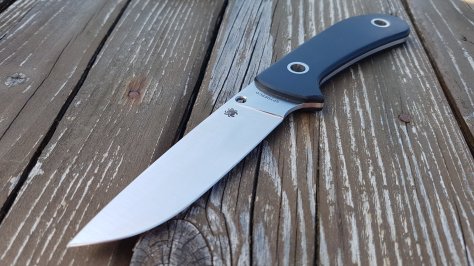
 It has all started when I wanted to review the Spyderco Gayle Bradley Junction. It’s a great design for an EDC fixed blade which can be used for everything. Easy to carry in its pancake constructed bolteron sheath. But the edge was just too thick for my own use.
 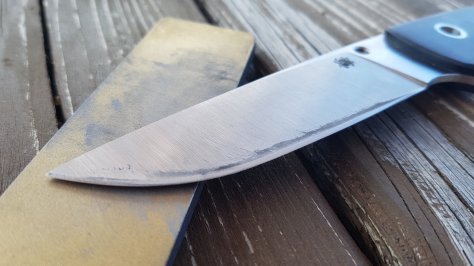 To my knowledge, SPF27 is some kind of CPM D2 steel. A lot of carbon 1.5% and not a lot of chromium around 12%. Not the easiest on the stone as a semi stainless. It was not very soft under the diamonds compared to another blade in N690 HRC59 I got with me. And it was not really easy to remove the shoulder to create a gentle convex edge. Patience… In sharpening is important. And I often lack of it but I was able to improve it.
 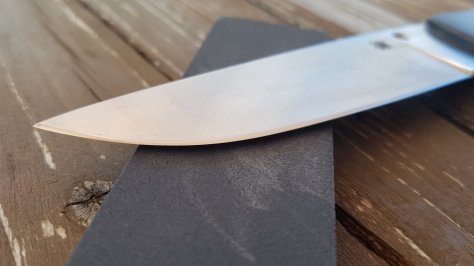 Next some black stone mostly to remove the scratches.
  And then the white ceramic to get a better finish and a razor steel.
 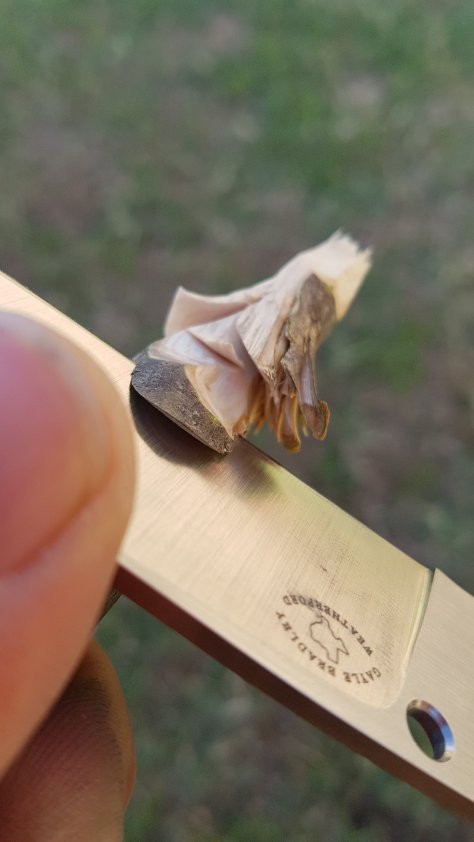 You can notice the chamfered signature hole on the Junction. A première. The cuts were deeper. It was better! Much more enjoyable.
  But the spine was too sharp for my thumb and diamonds came handy to rounded the angles. It would never be a Sebenza spine….
  Again the control during whittling was much much better. One should never be scared to round the edges for suiting your own needs.
  The handle is very flat on that knife. It’s an attention for people who wish to stash their knife in a pocket or a backpack without leaving a print.
  But a flat knife is not the most comfortable in the palm of your hand… Especially when cutting hard things for a long time.
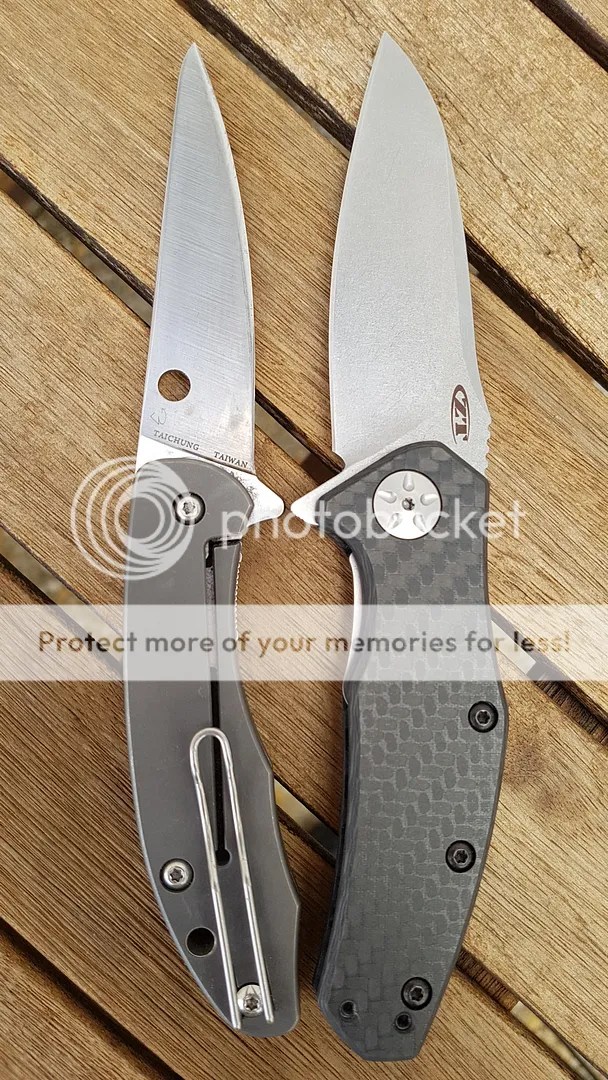
 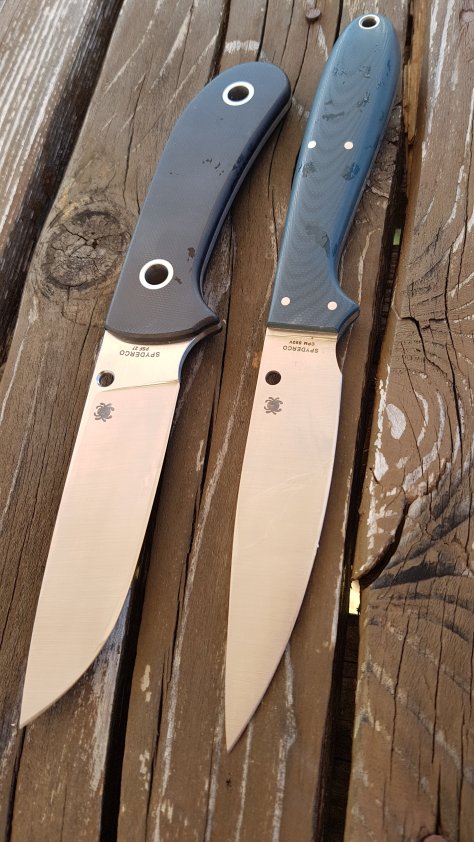 I decided to make a quick comparison with the Spyderco Sprig which is a pleasure to use.
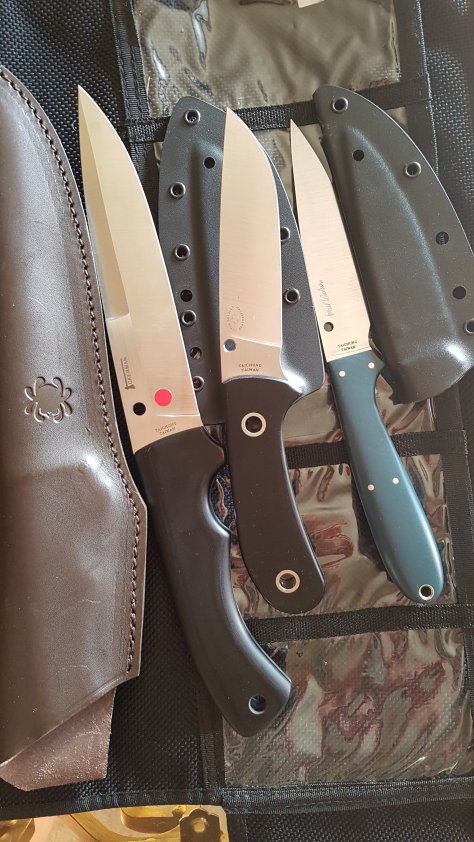
  You can notice how the Phil Wilson’s Sprig got a thicker handle. And it change everything when cutting hard things. Also Phil Wilson’s is all about performances. Its geometry is stellar.
  It immediately cuts deep in wood without any real improvement needed….
 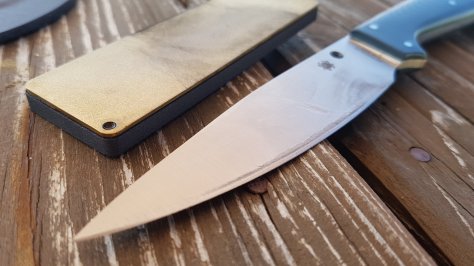 But diamonds were there to be usef. 🙂
  I was able to get thin regular cuts into the wood. So I have decided to try the diamonds on the Gayle Bradley Bowie I have brought with me. This one got a thicker geometry and is made if the same pulverized alloy as the Junction
 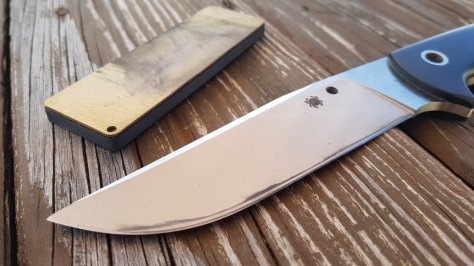 You can always improve an edge.
  Used as a light chopper it worked just fine.
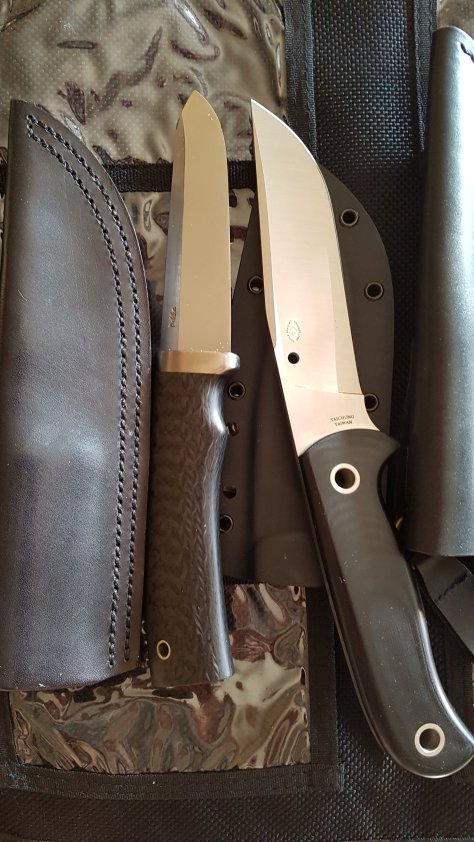
  Gayle Bradley has provided a great compact Bowie which can be used as a light camp knife.
 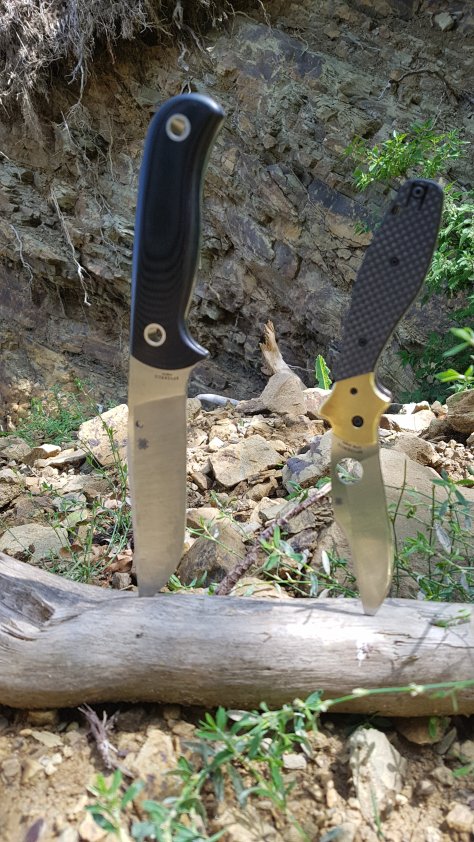 You can see: it’s not a lot bigger compared to my Ed Chempp Bowie.
  And the edge once thinned is honorable.
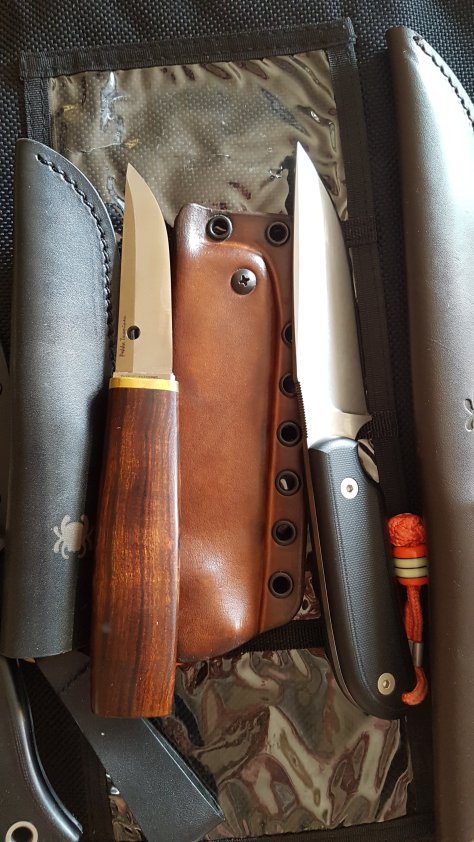
 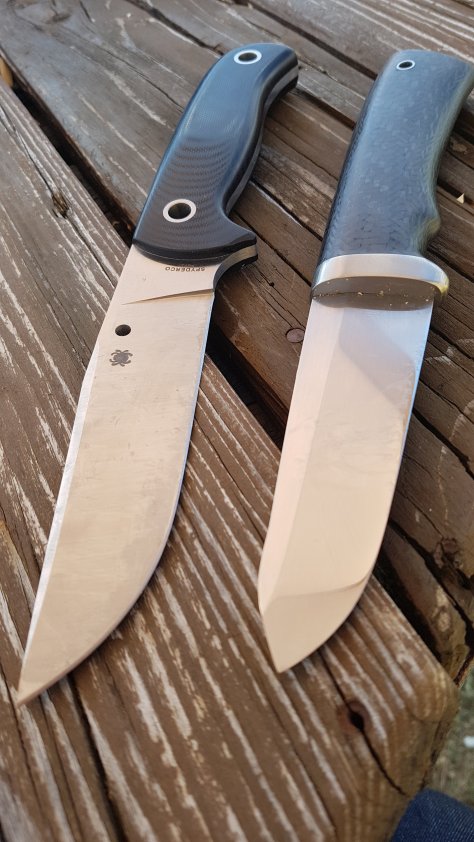 Of course it is not as thin as my Pekka Tuominen Urban II for example. And not as aggressive as the Sprig…
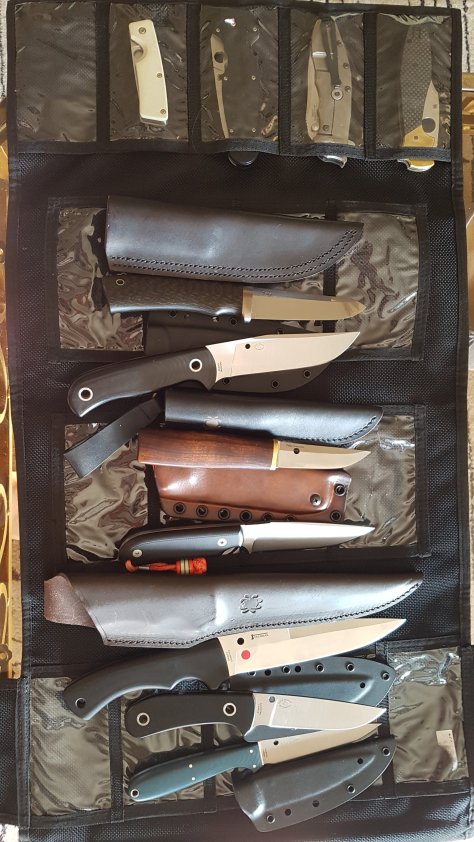
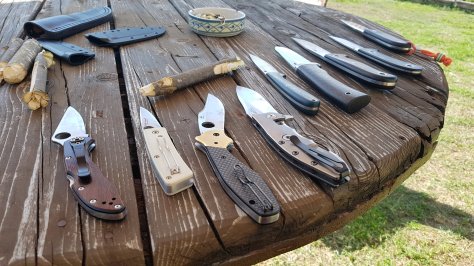 I got…. too much knives on my table…
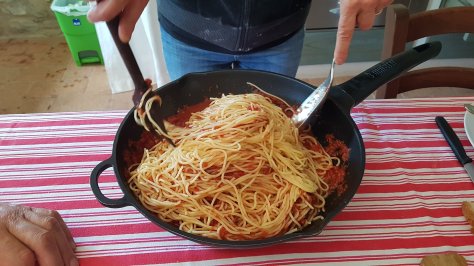 An Francesca knows how to prepare the pasta with pomodori.
  Crostini a la Toscane. Poultry liver, oignons, red wine, bread and a Bowie.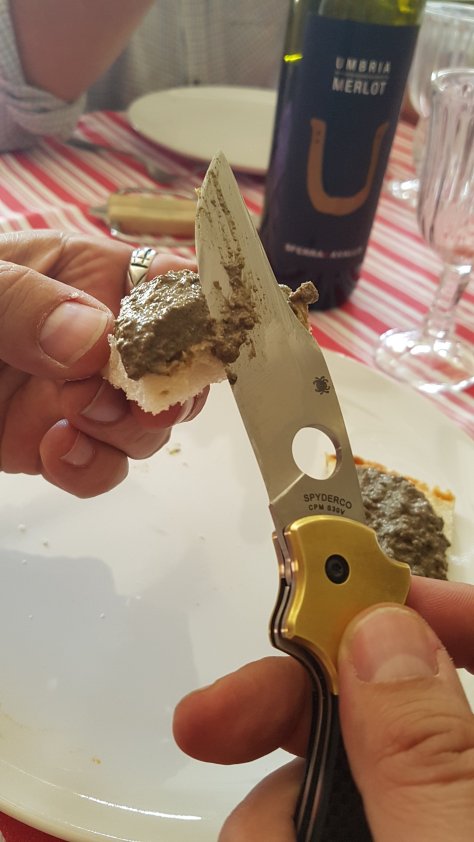
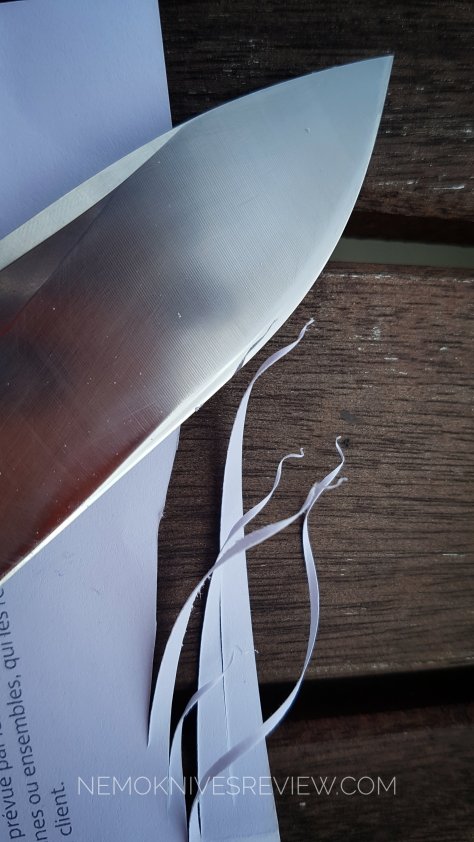
 Back in the outside I was thinking of a simple way to see the “impact” of good geometry on whittling. On the right, a single cut if the thin Delica and, on the left, a single cut of the thicker ZT0562CF. The Delica cuts deeper on a more open angle. Better geometry. But the ZT was pleasant to use even if it was not as fast at the job.
  Also the Delica was able to cut from the ricasso to the point without any hard pressure. In the end, I had noticed that the Junction was less good than the Sprig and the Delica was still the best whittler in the batch. No matter the steel, for wood cutting, geometry is queen. So I have taken my Bowie back to the diamonds and put a keener edge. Tomorrow it will be hunting day.


 My first Zero Tolerance was


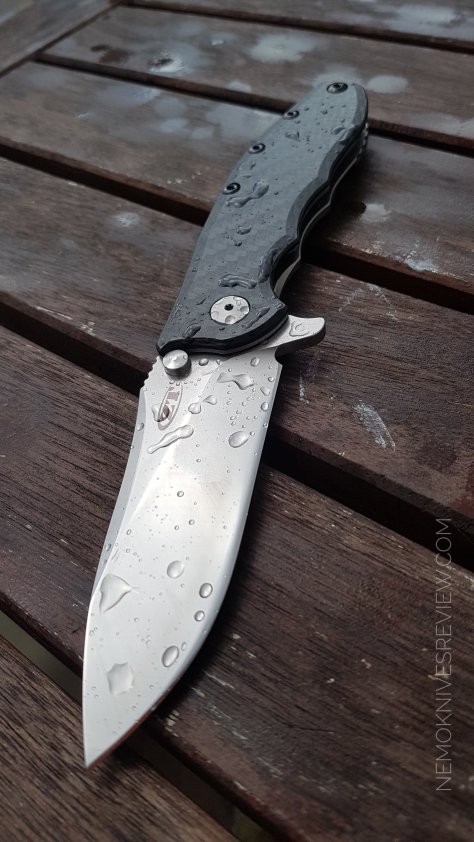
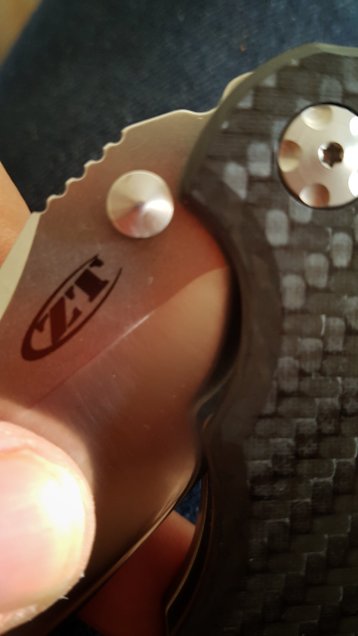 As you can notice, it’s easy to pinch your finger between the stud and the handle when opening the blade. So really, it’s a true flipper made to be open in that way. And here the experience is wonderful. The smooth KVT ball-bearing opening system. A washer with caged ball bearings surrounds the pivot and makes opening the knife nearly frictionless. Only the detent ball brings some minor friction actually. But it’s really minimal. The knife opens every time. The balance is perfect, just behind the pivot. So the blade is alive in my hand.
  What you noticed first when handling the ZT0562CF is her smooth Carbon Fibers scale and butter like action. It’s 156 grams heavy compared to my Military 120 grams (titanium clip)… You fee the heft. And that’s exactly what I wanted. The corners are chanfered and there is no hot spots even the clip is not felt in hammer grip. I love the details on the blade: the stonewashed flat side and the satine grind.
  It offers alsmot the same working edge. It carries tip up and it’s not as fast to draw as the Millie even with its titanium deep carry clip. The blade is made of CPM 20CV but it was first offered in
  You can notice the different surface works on that picture. But as far as the blade was beautiful I felt the edge was thick compared to what I’m used too.


 I have started with the diamonds of the Fallkniven DC4. It was not easy as I felt the thumb studs was going in the way. eventually I was able to de-shoulder the edge and even to scratch the blade. That “Hinderer flat-ground “slicer” grind” that should provide both slicing efficiency and a tough point was not easy to get at first.
  Against the scratches I has used a P1000 Sandpaper and they were erased. No big deal. They have disappeared just but doing an 90° motion. I have treated all the blade for good measure.
 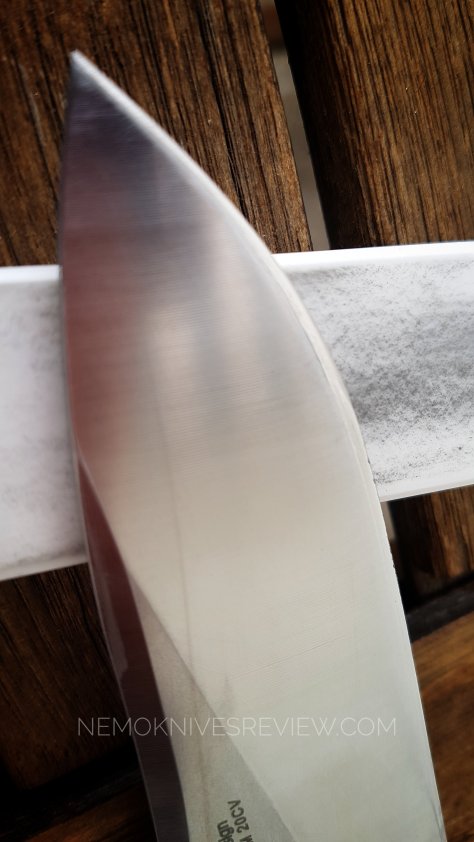 Then came the work on the brown stone, the brown ceramic and the white ceramic. My edge was slowly going convexed. My favorite one for stropping. Soon CPM-20CV was back to razor. I was amazed by the way the steel react under the ceramic. It was much easier than I thought. I had the same excellent experience with my


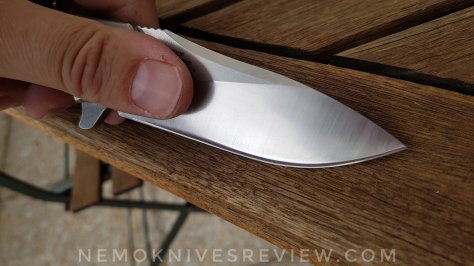
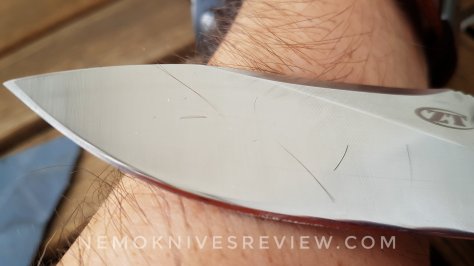 True convex razor as the hairs were jumping on the blade.








 NemoKnivesReview