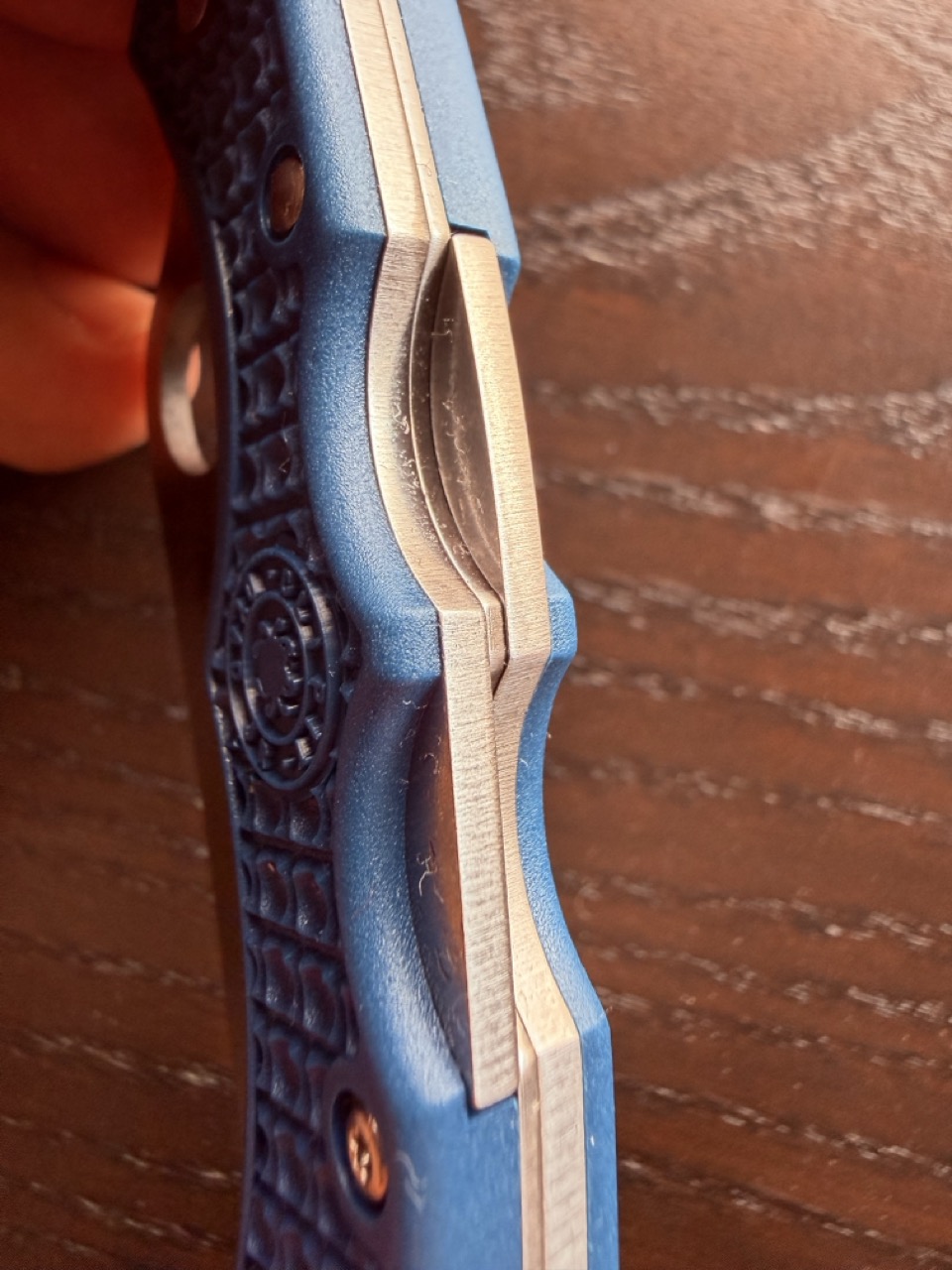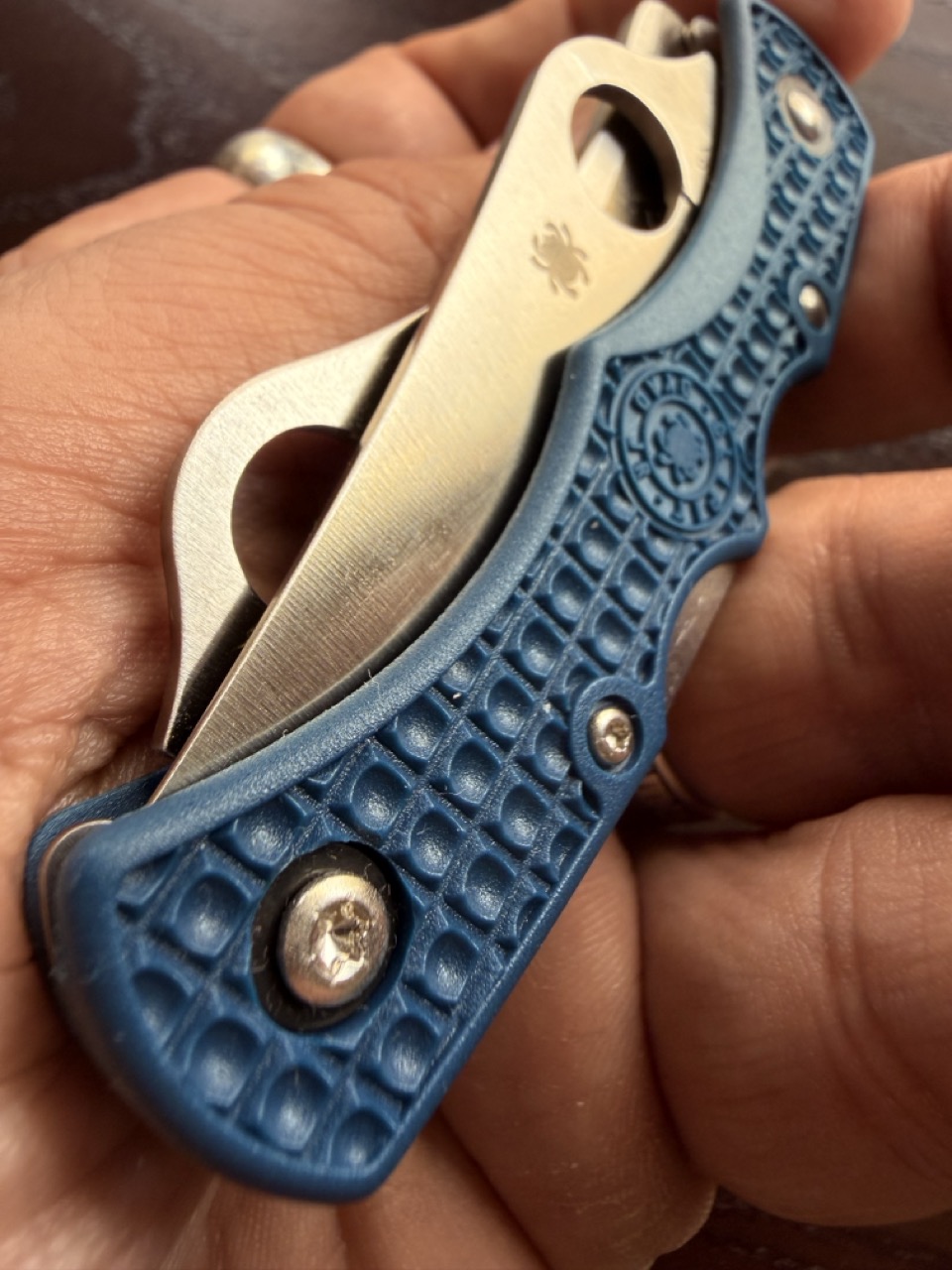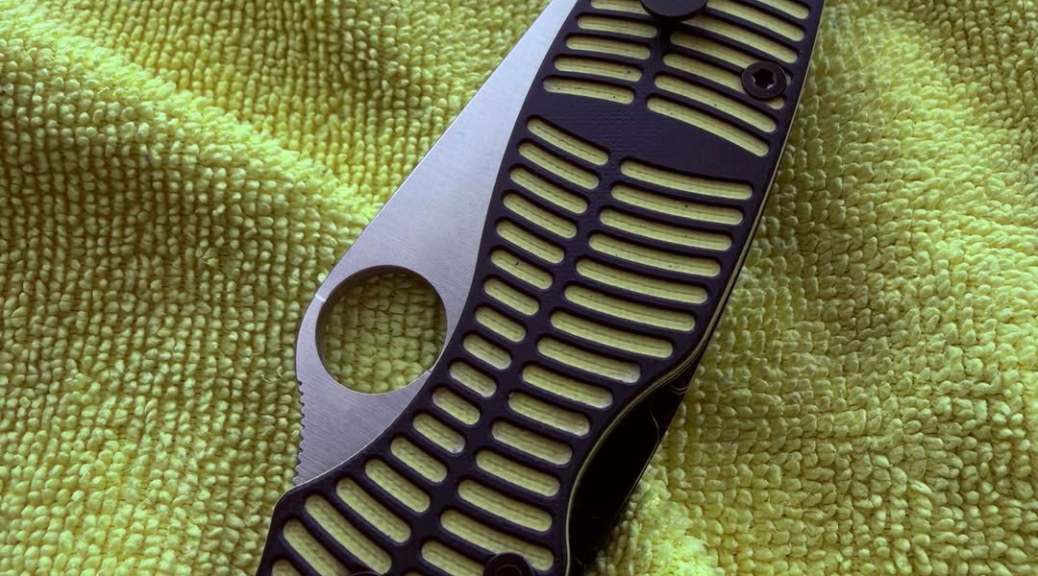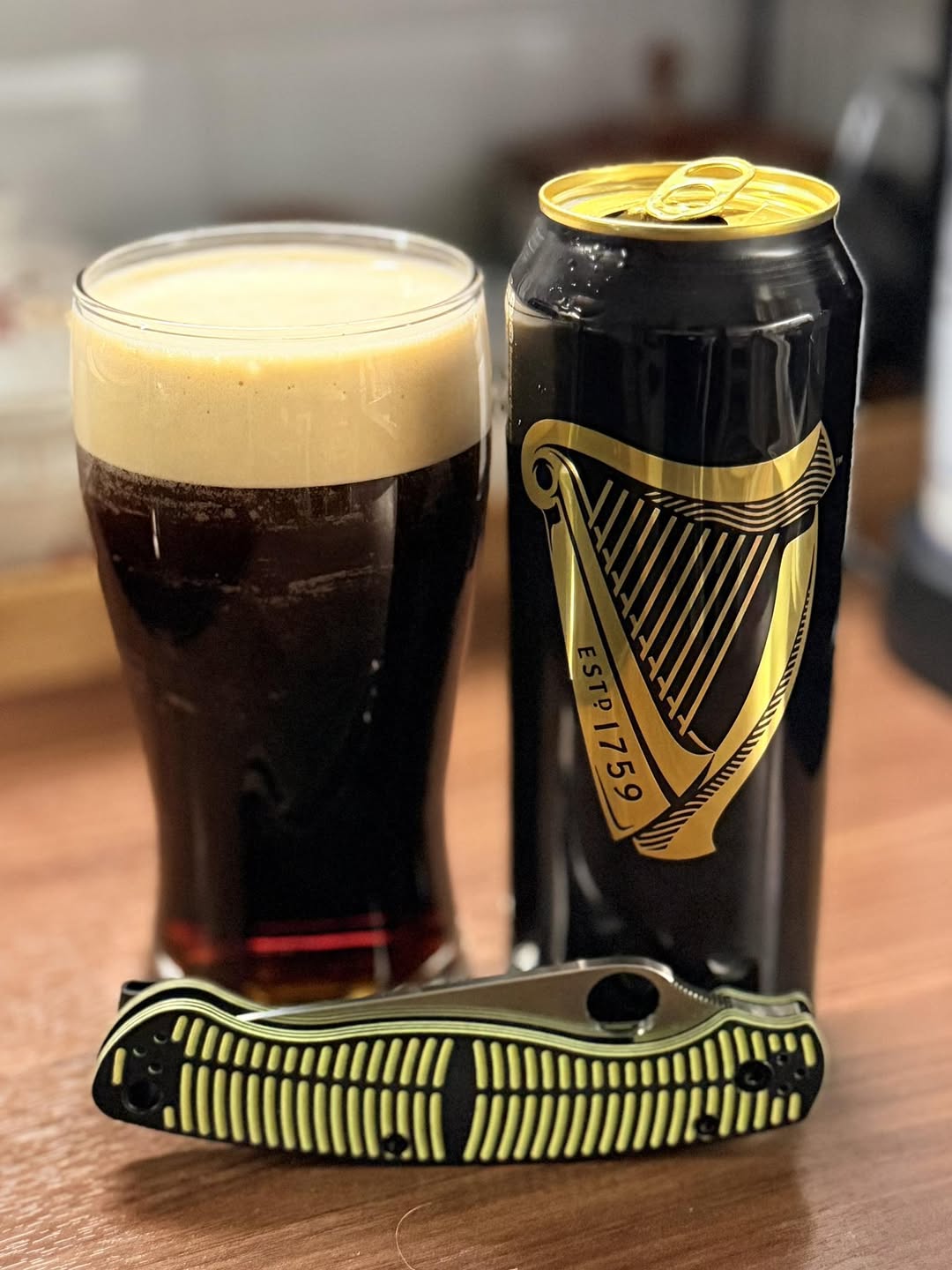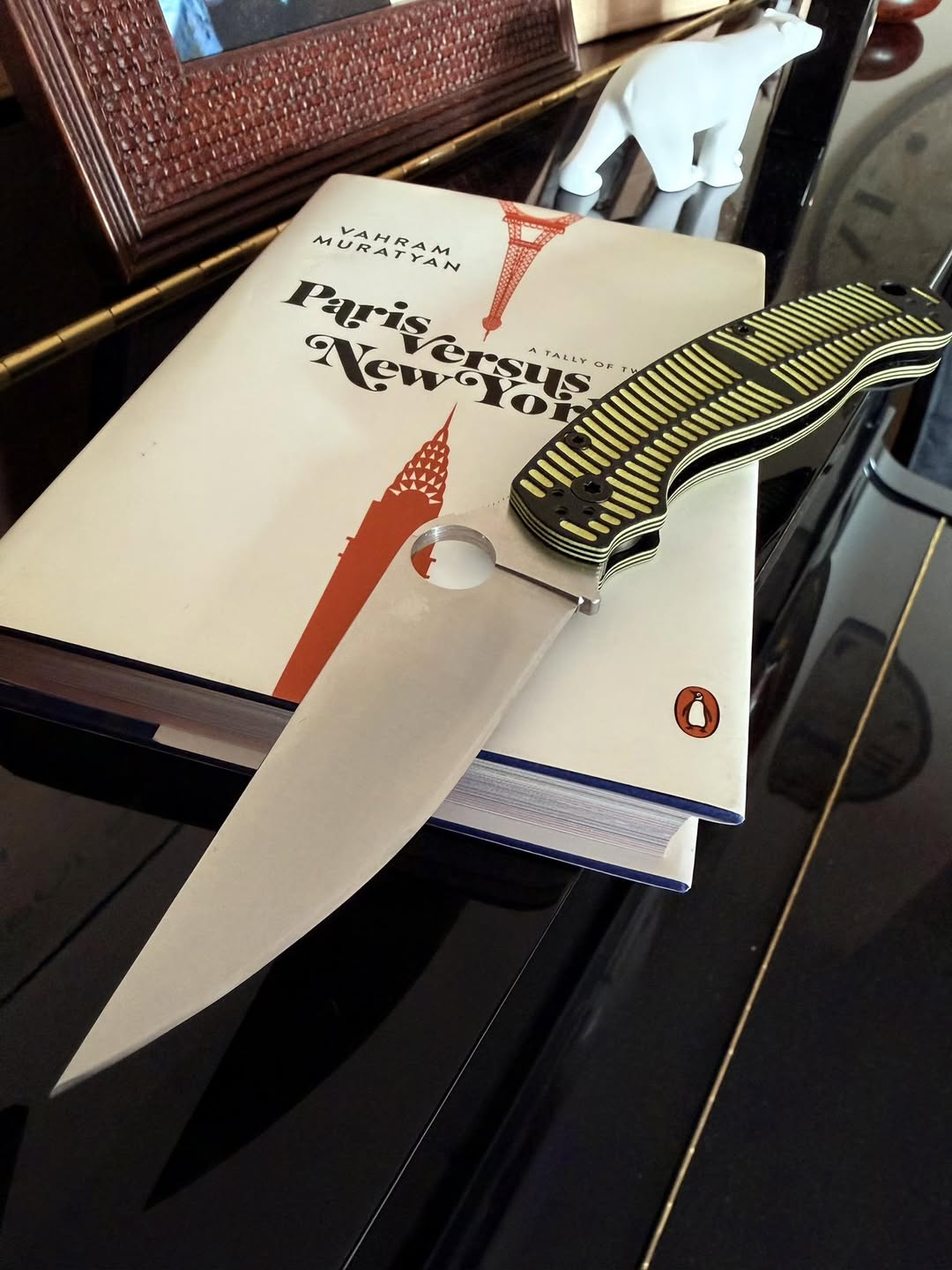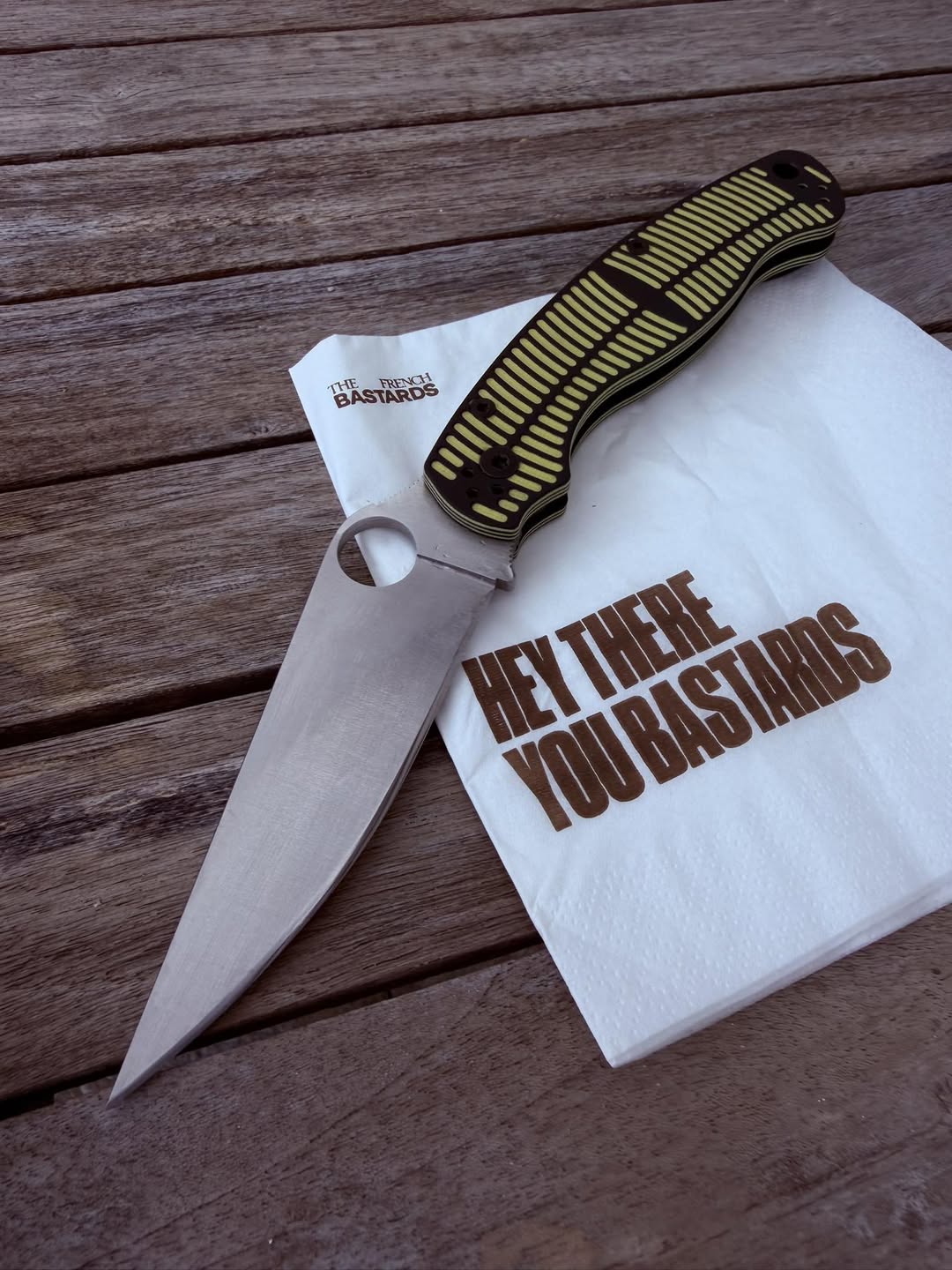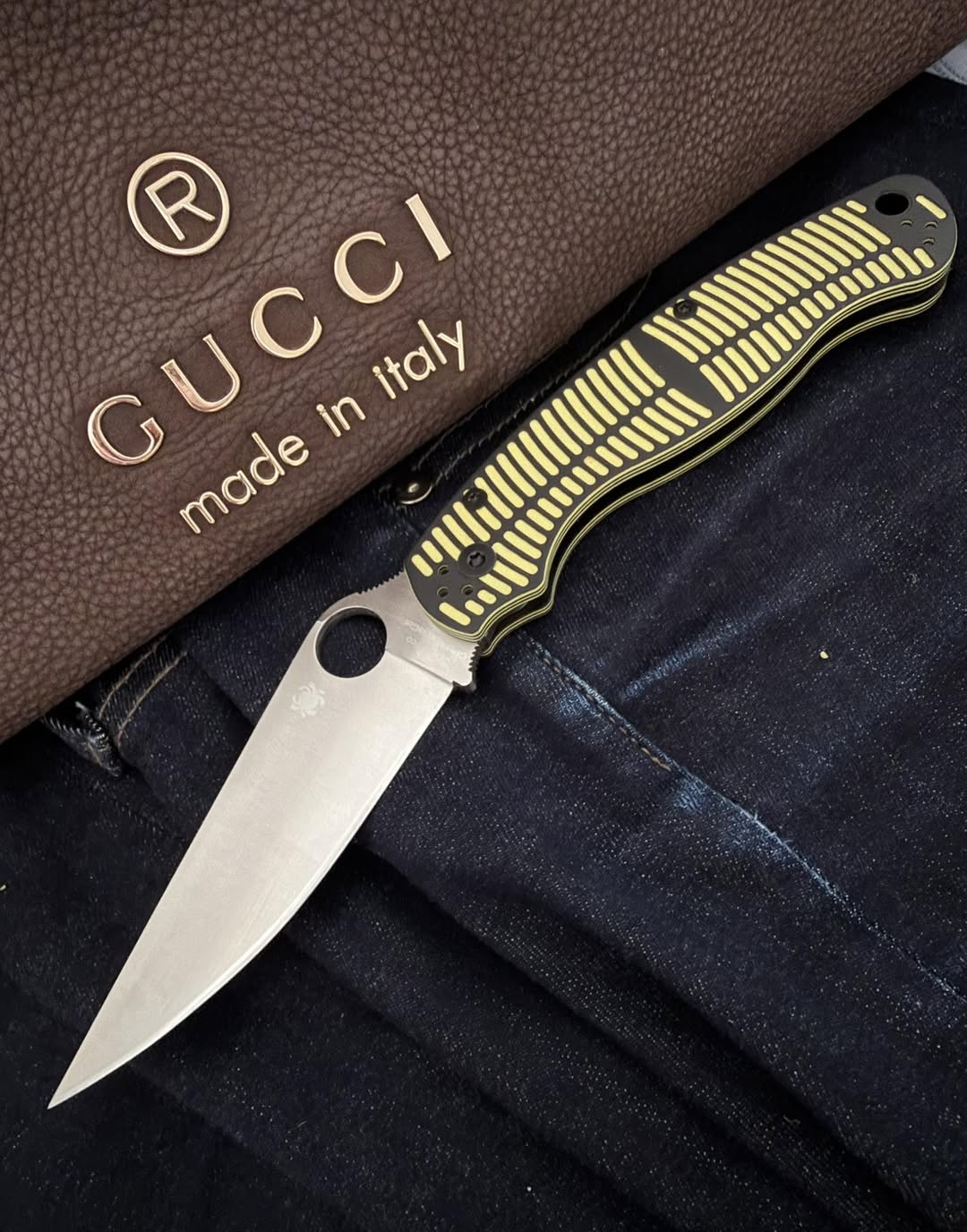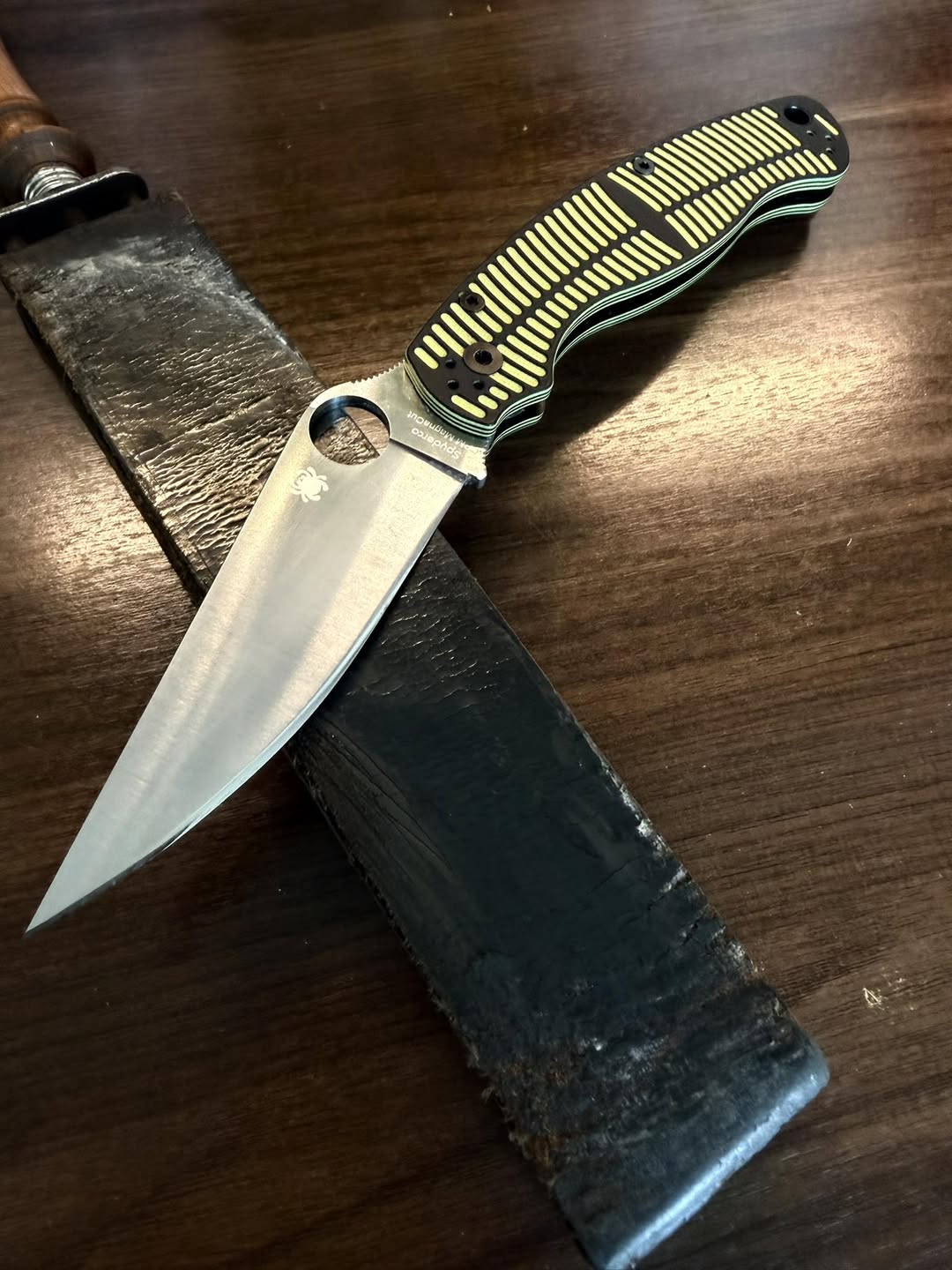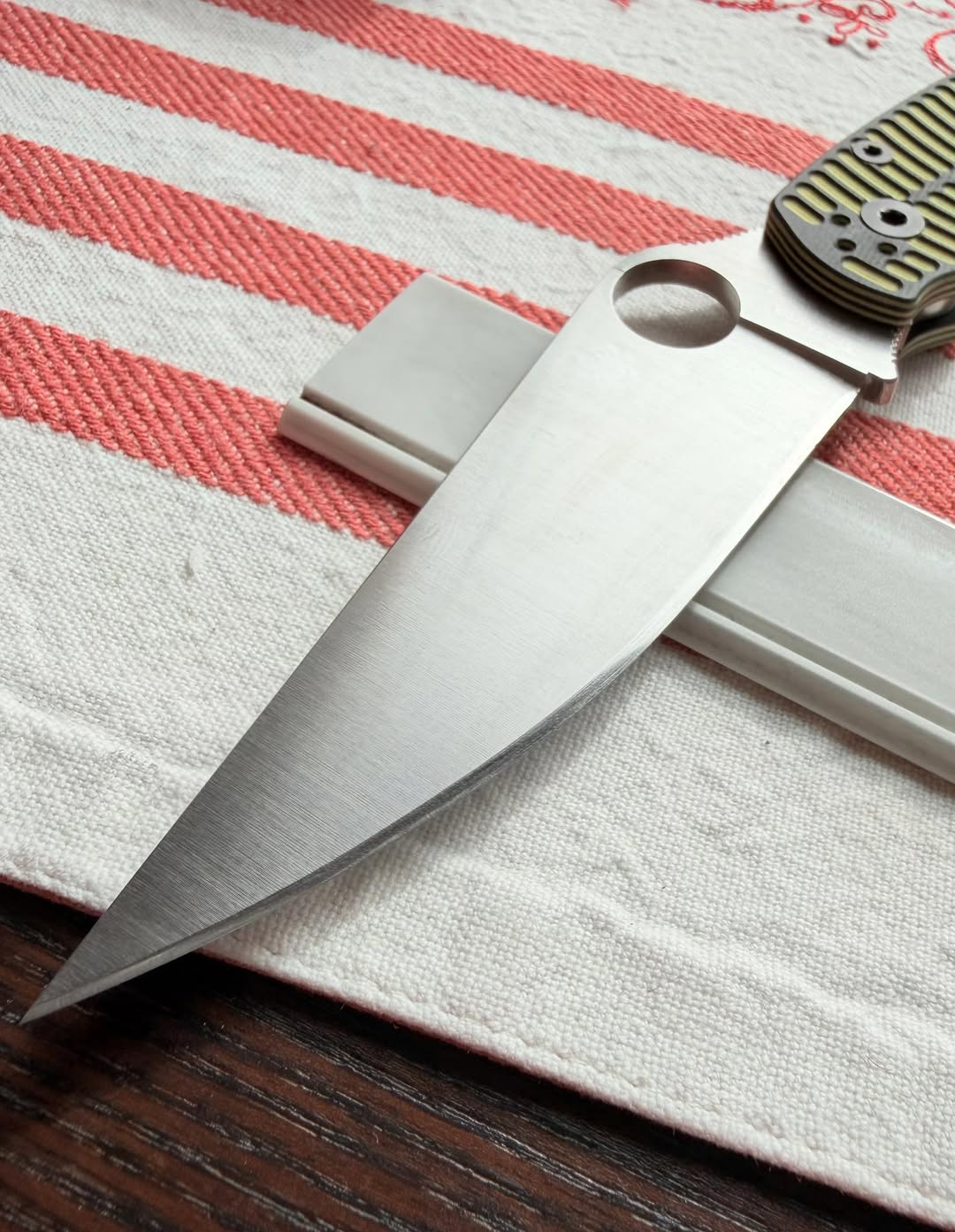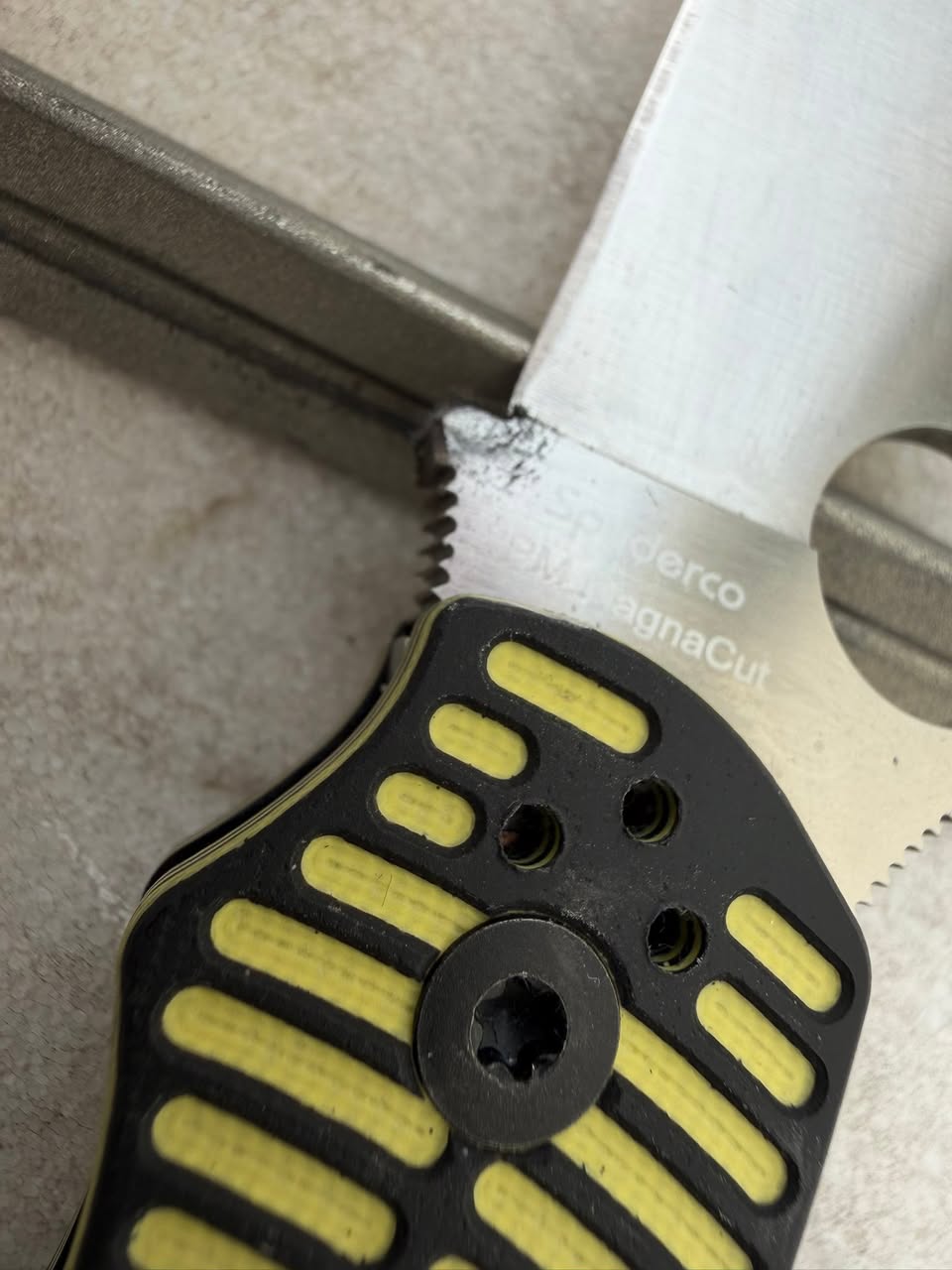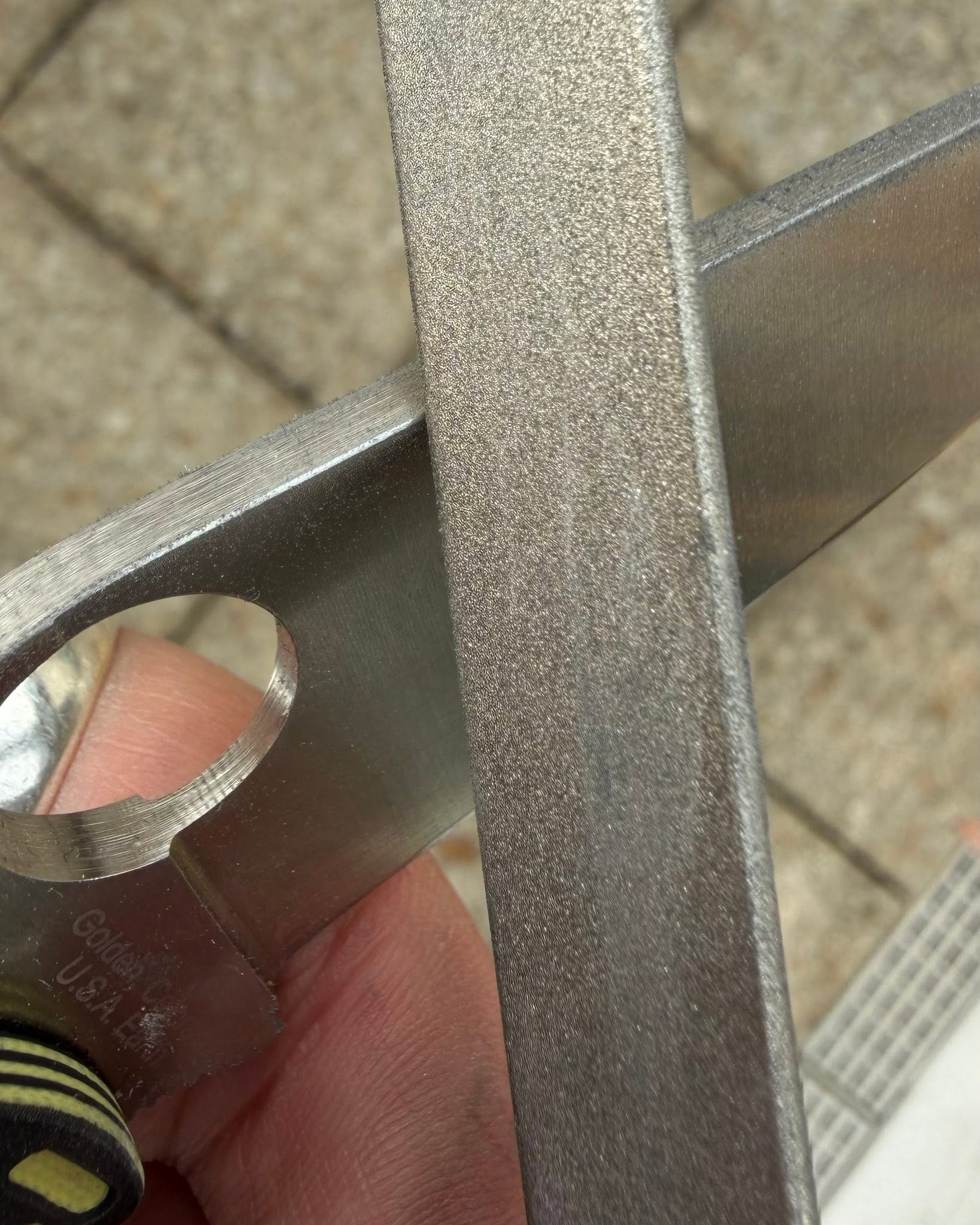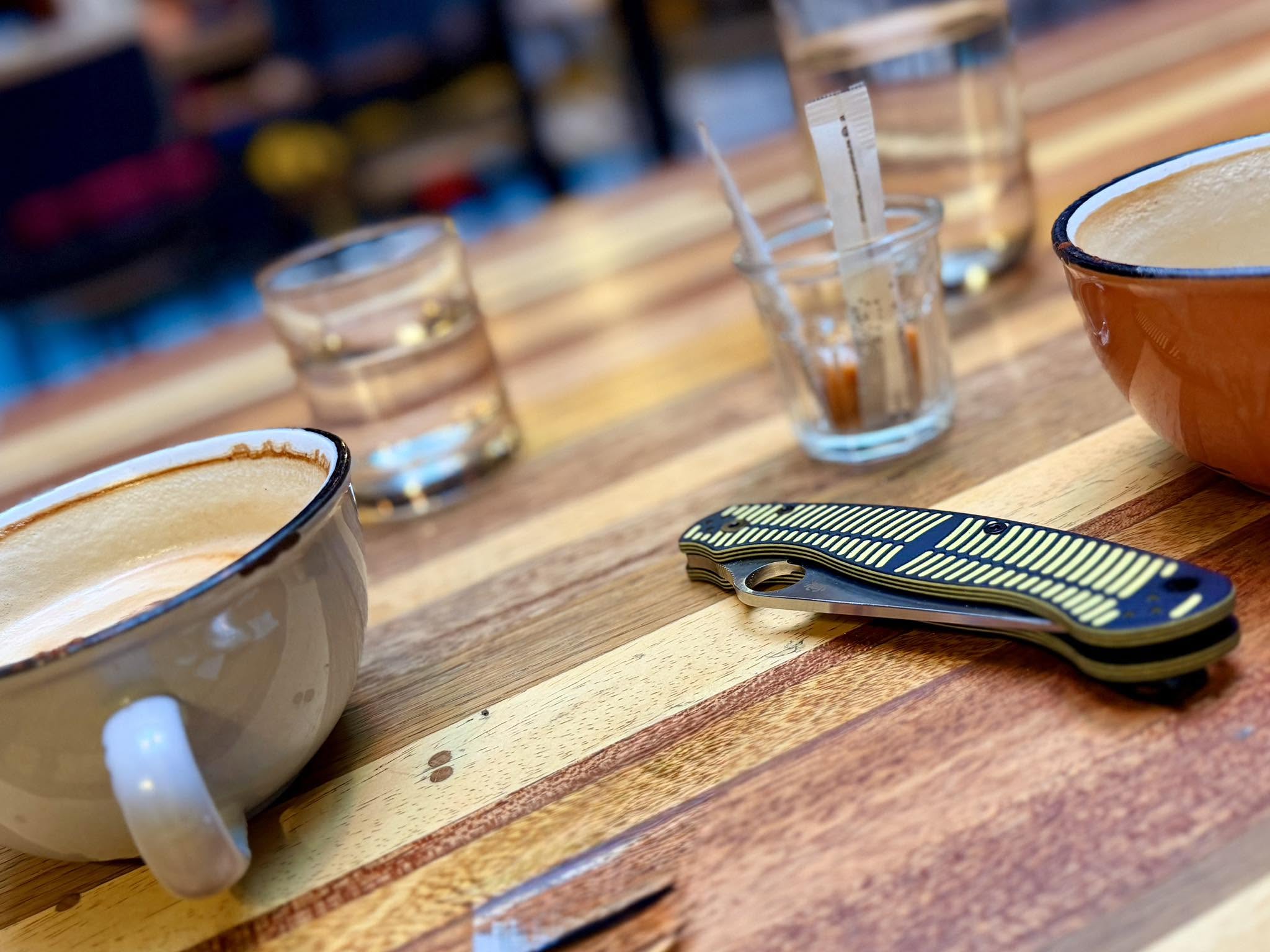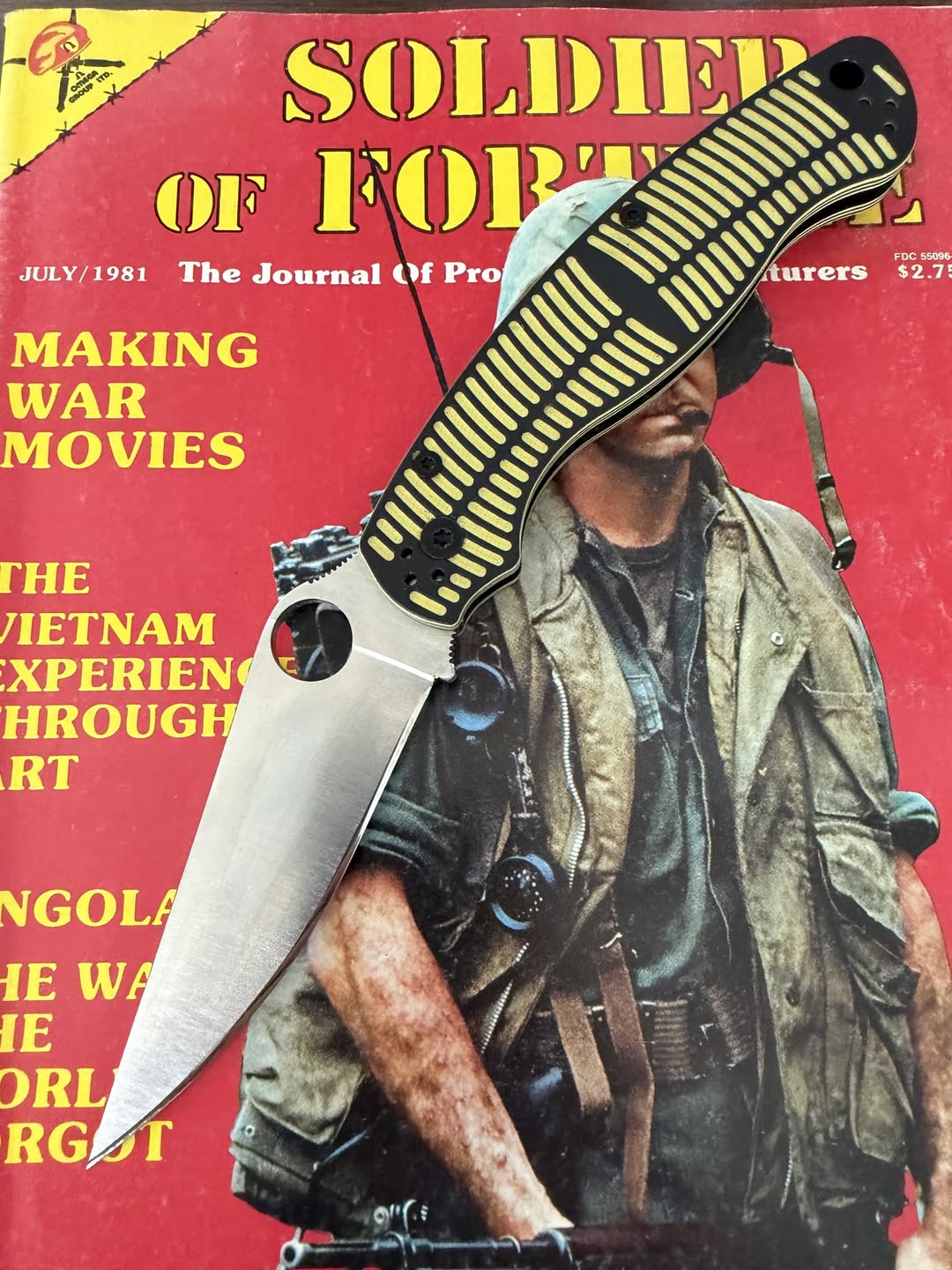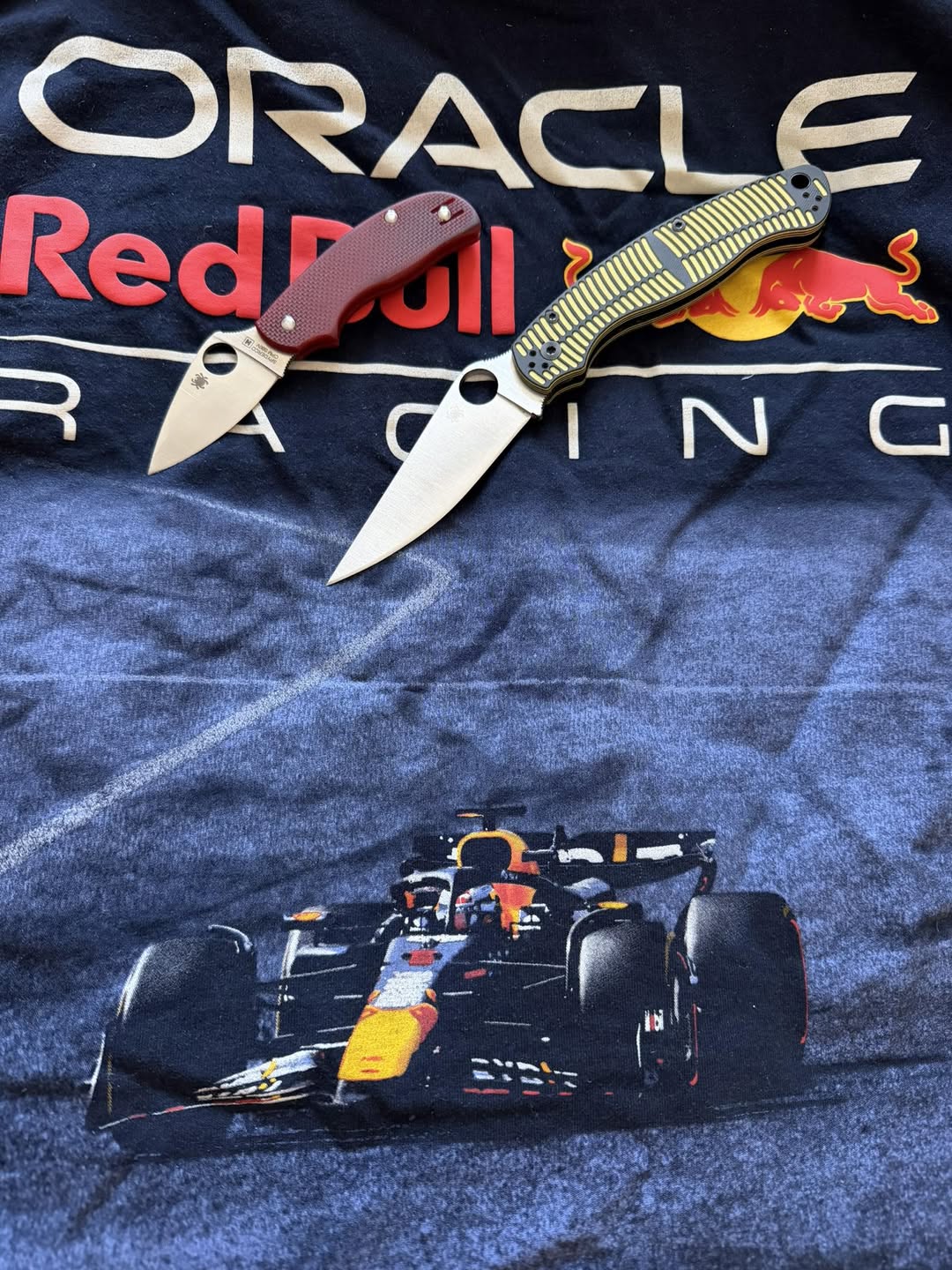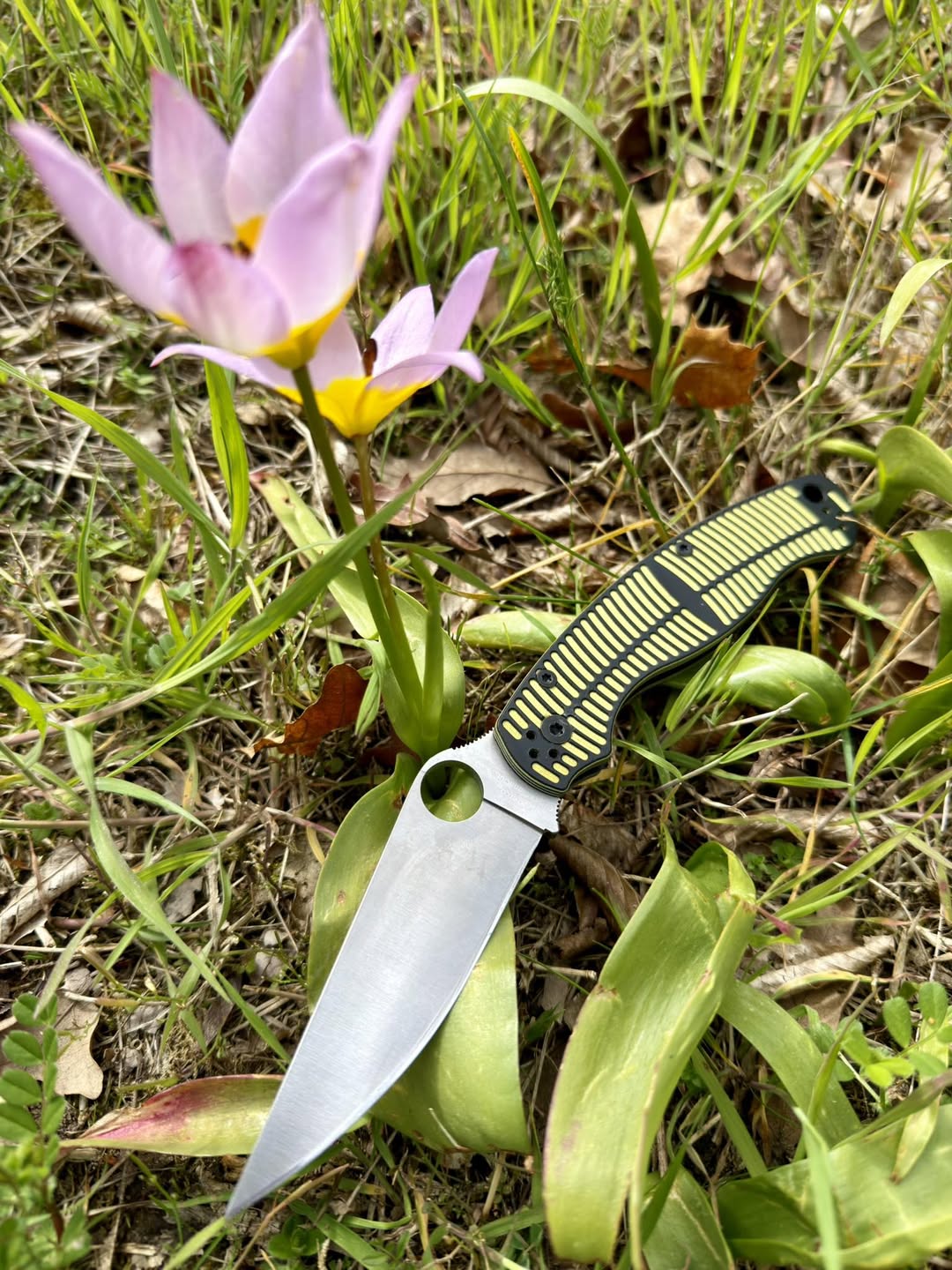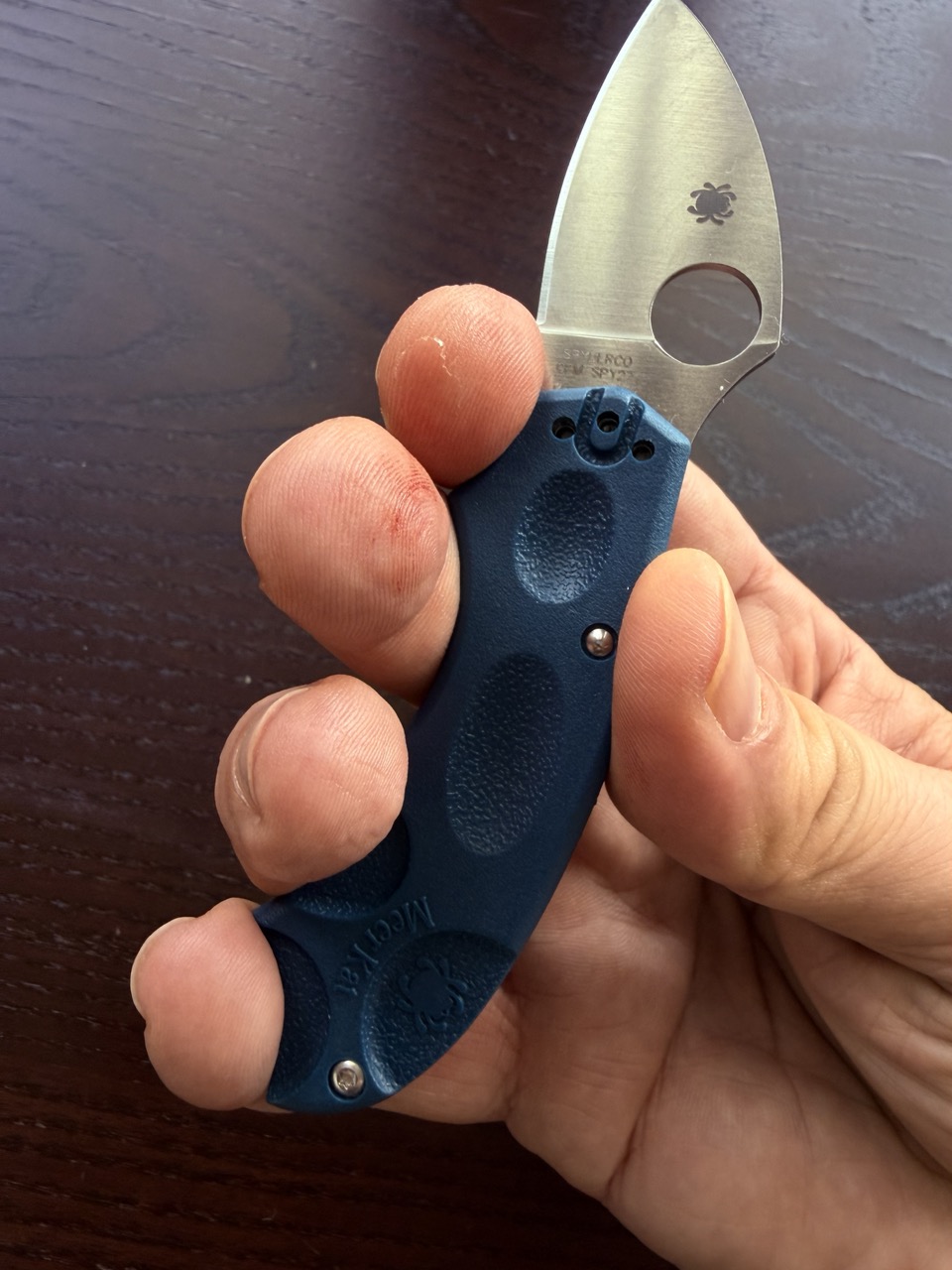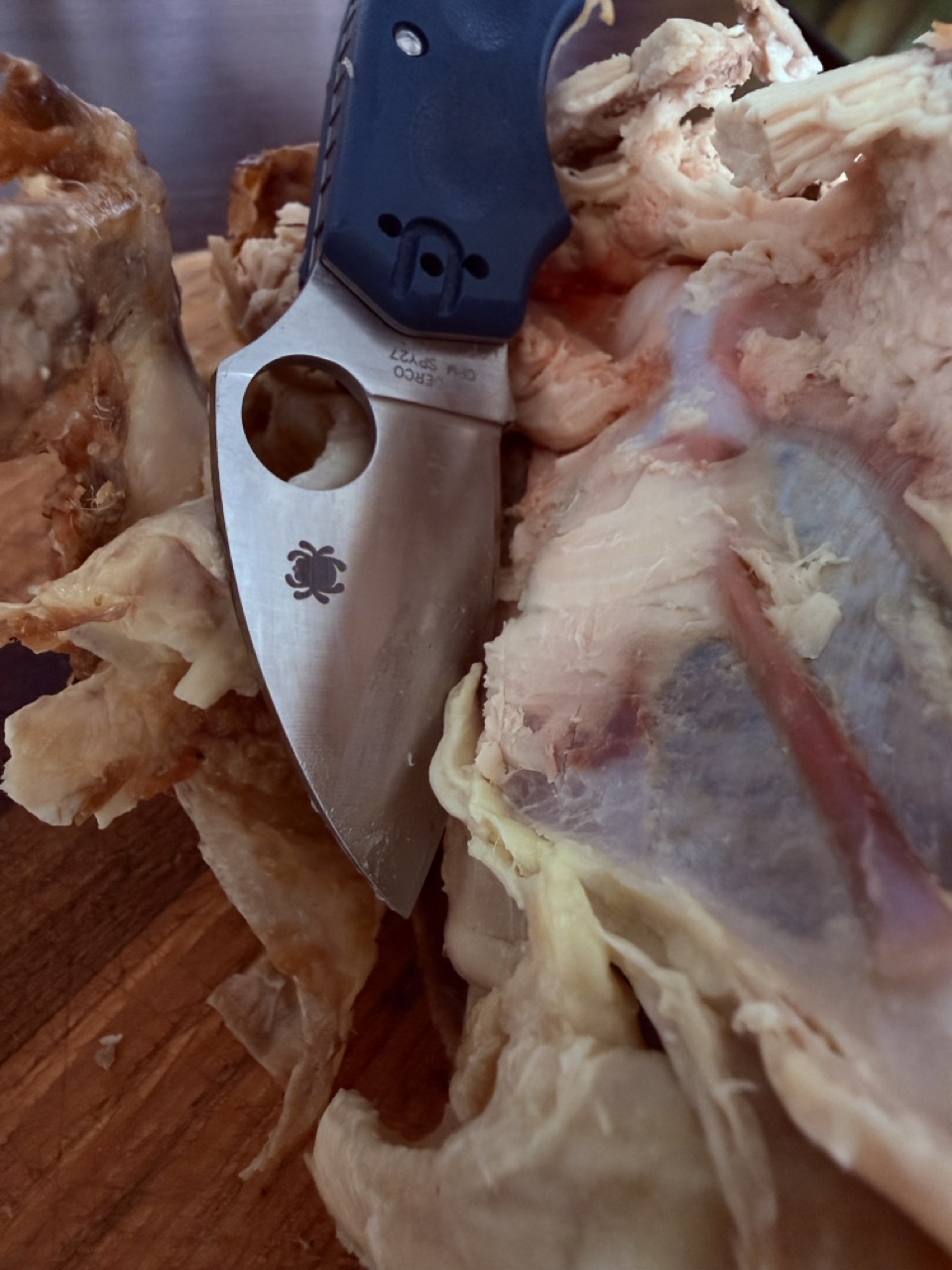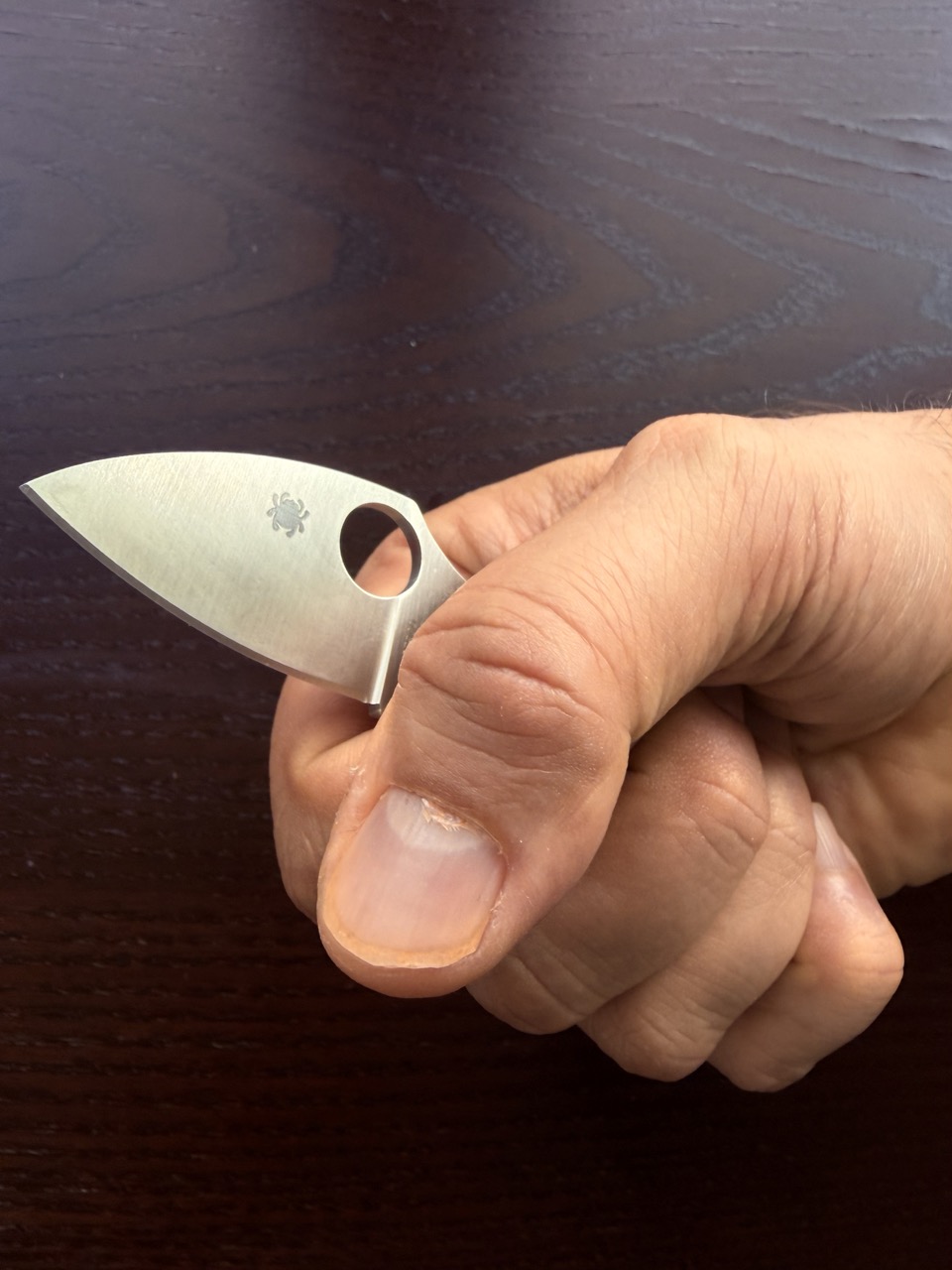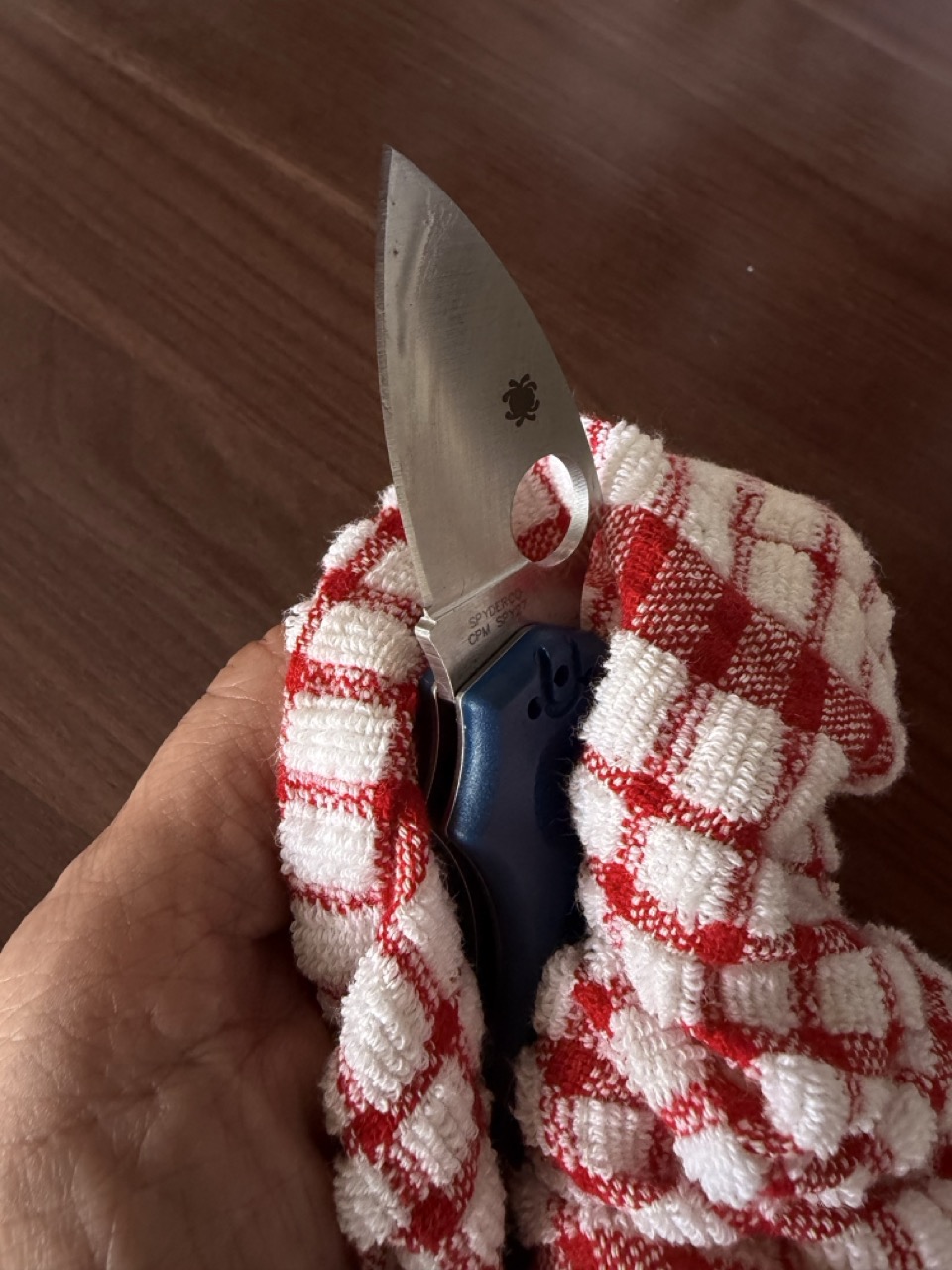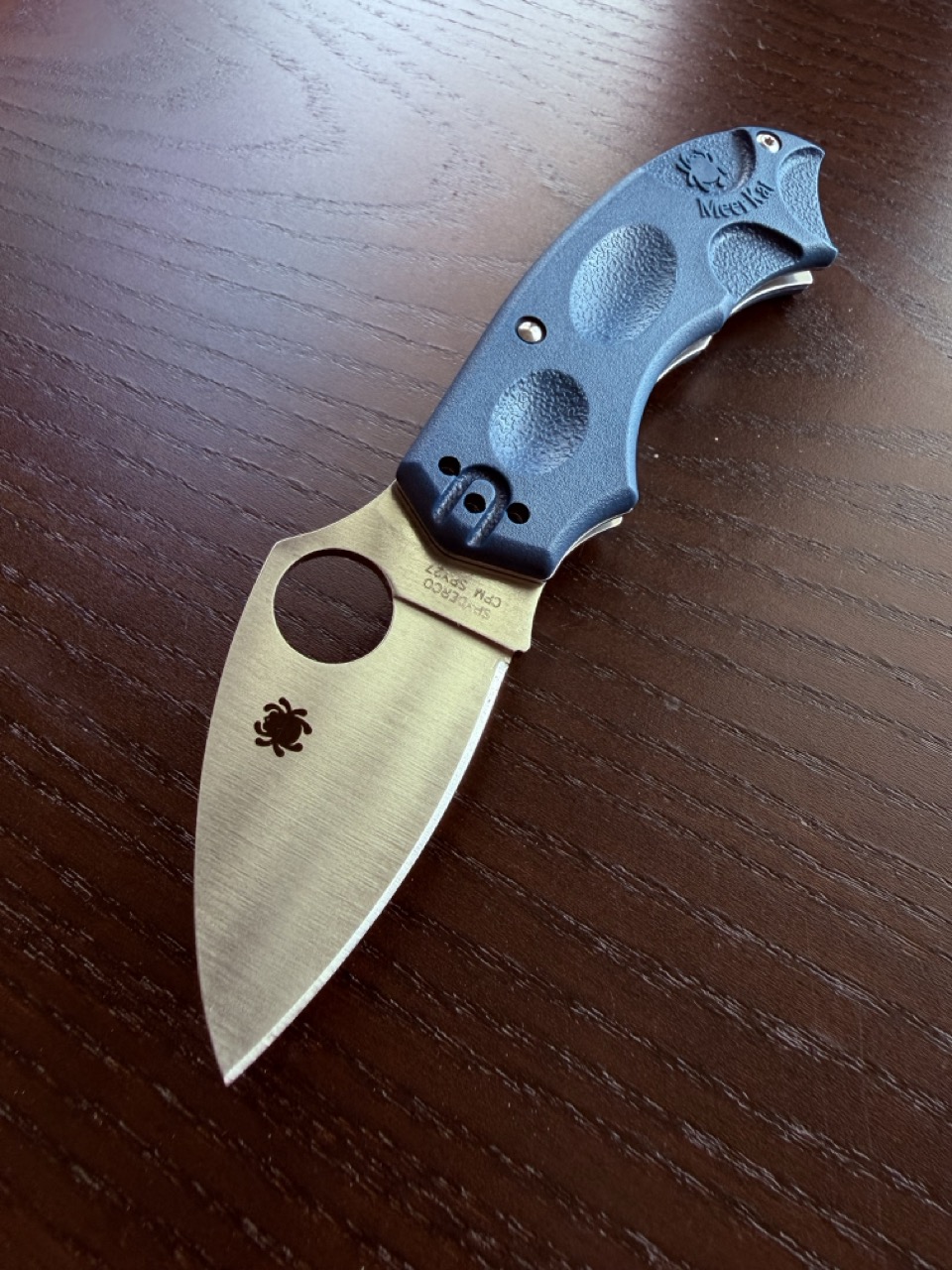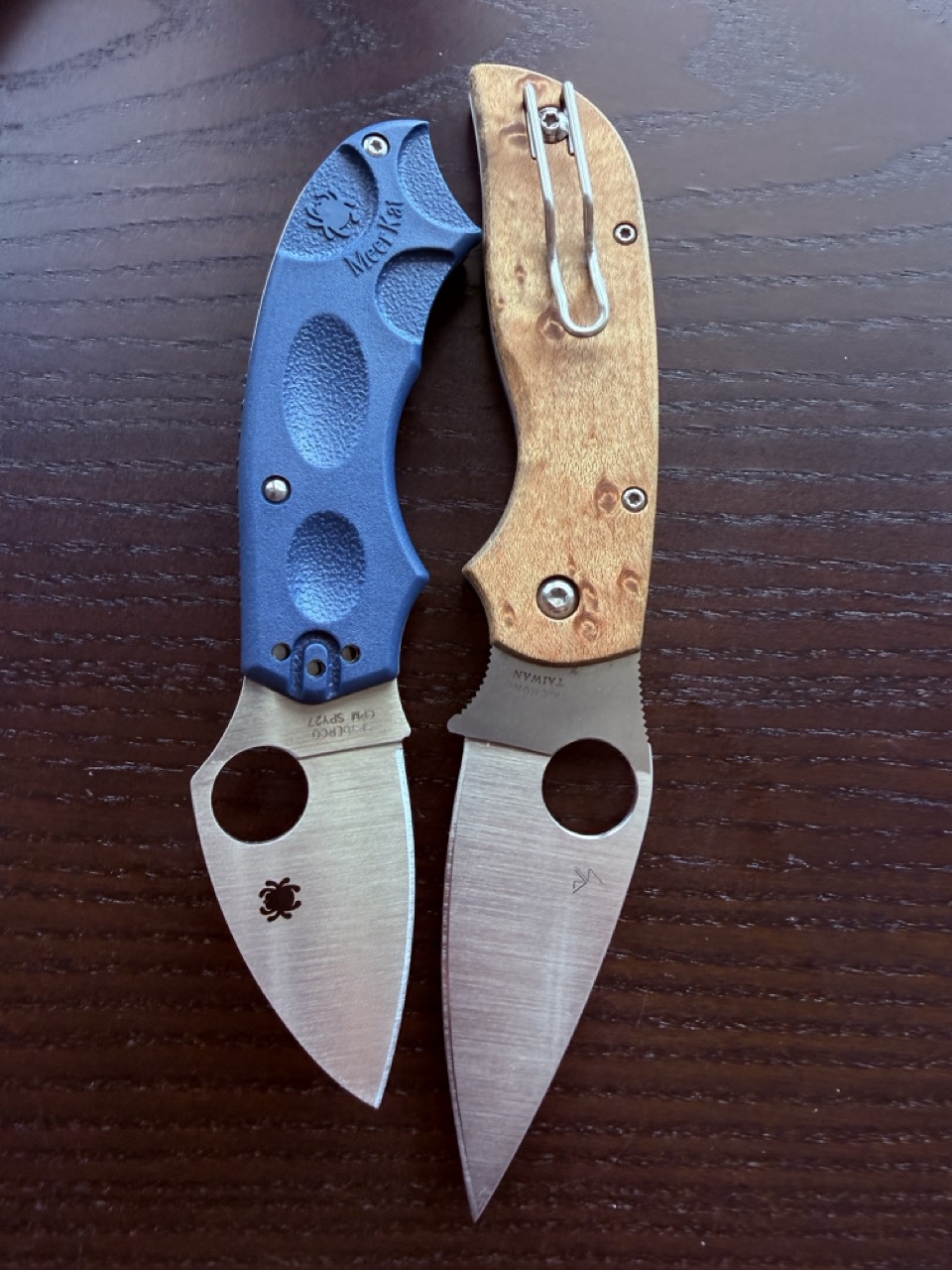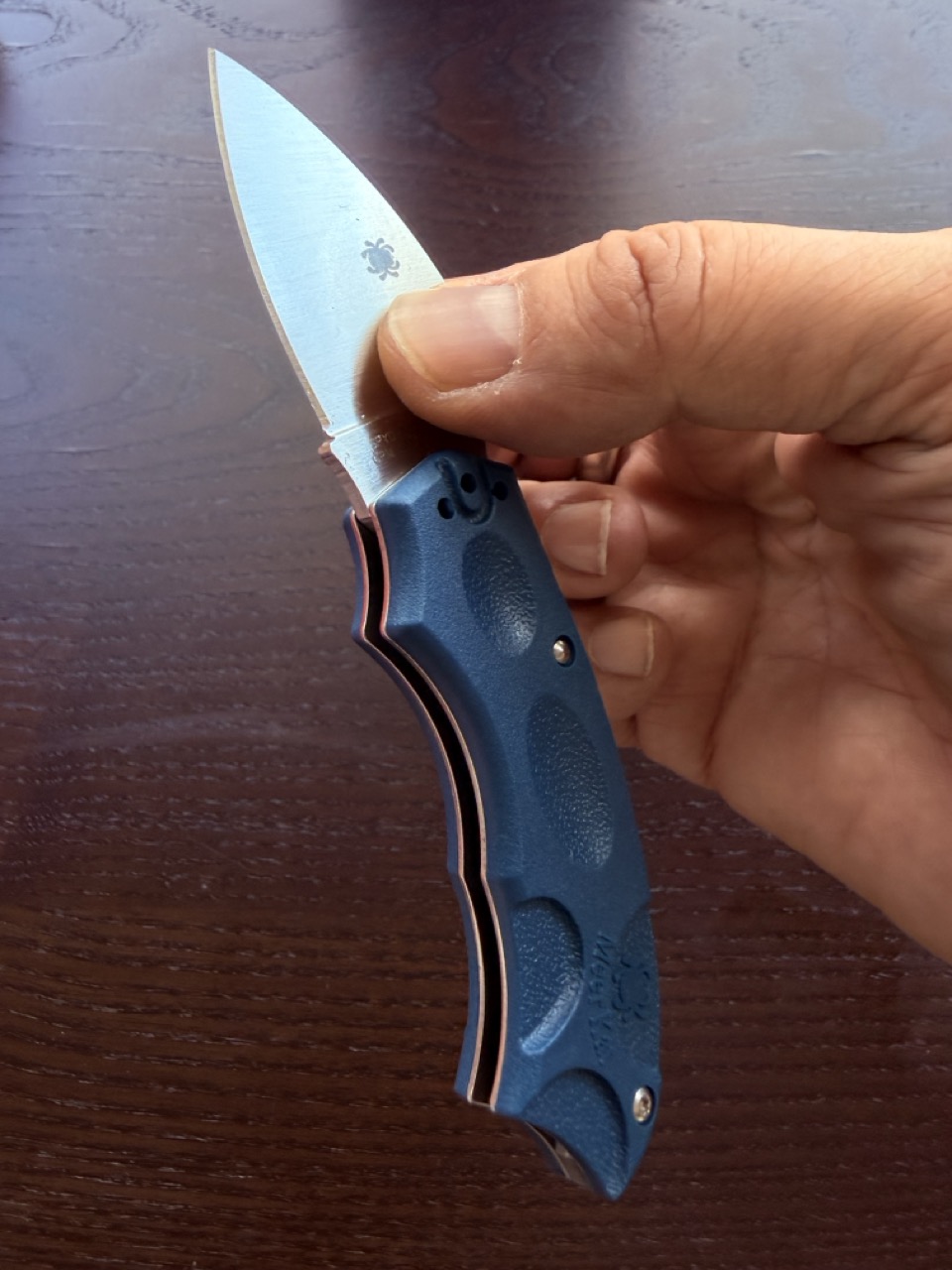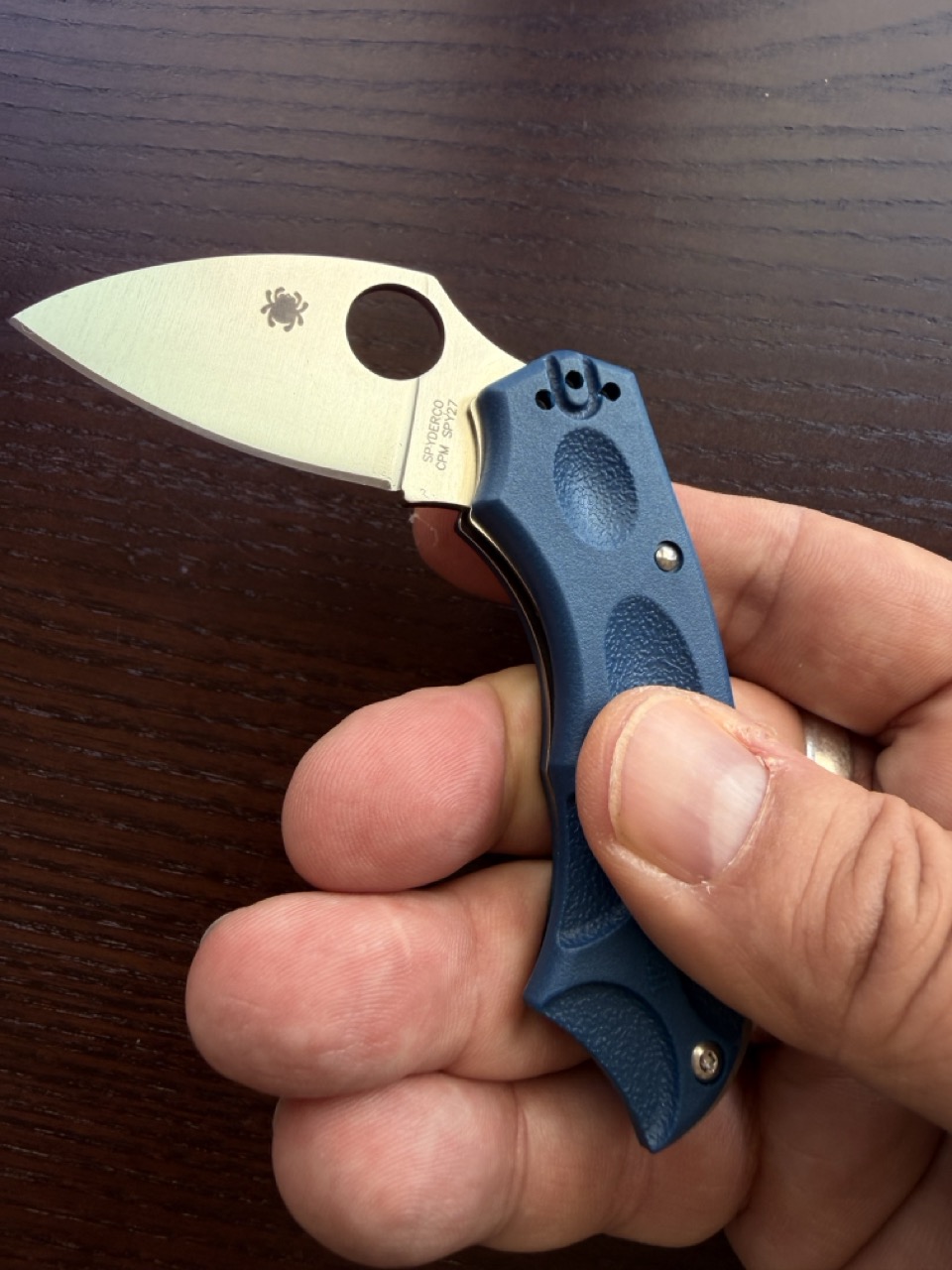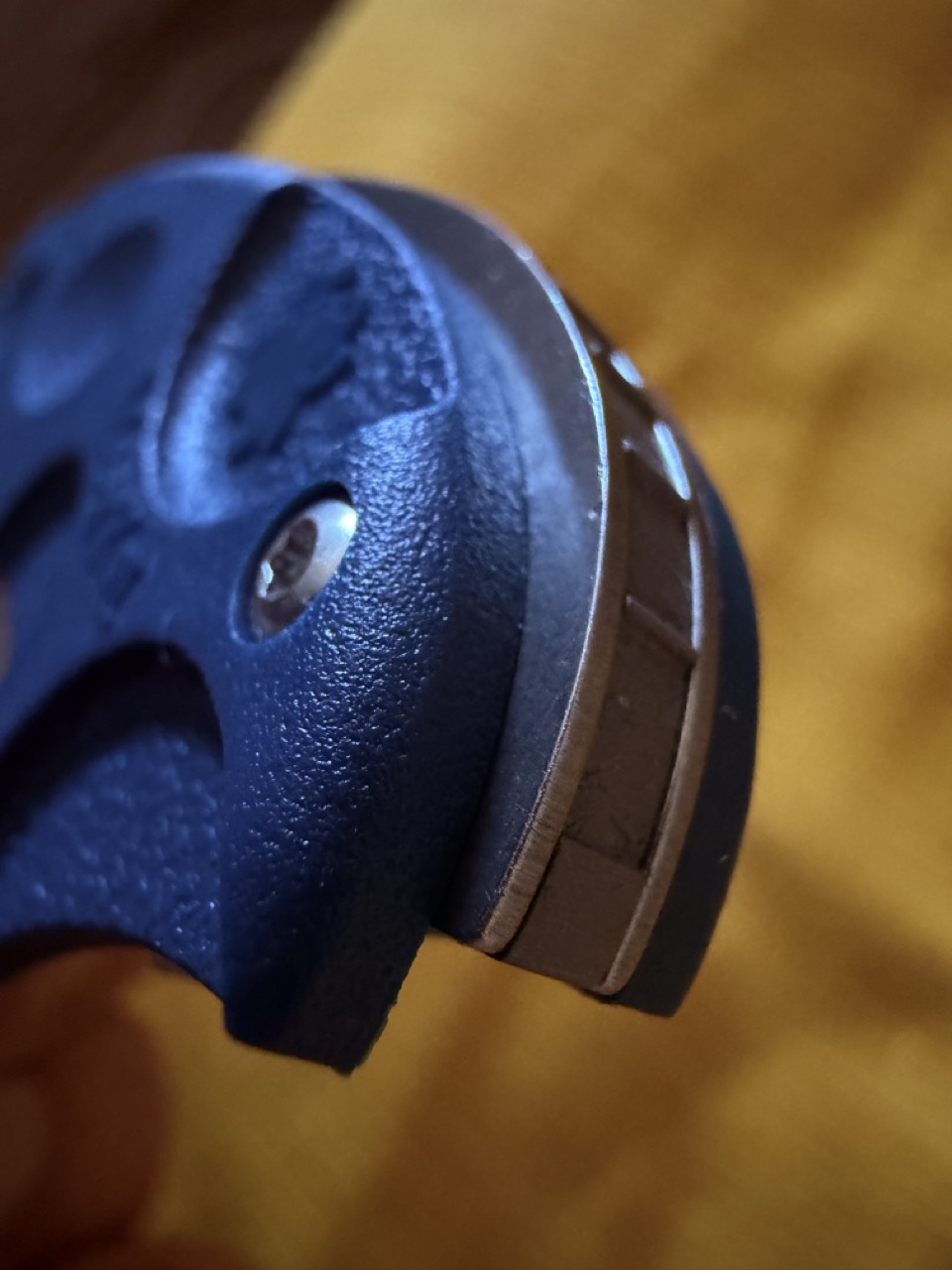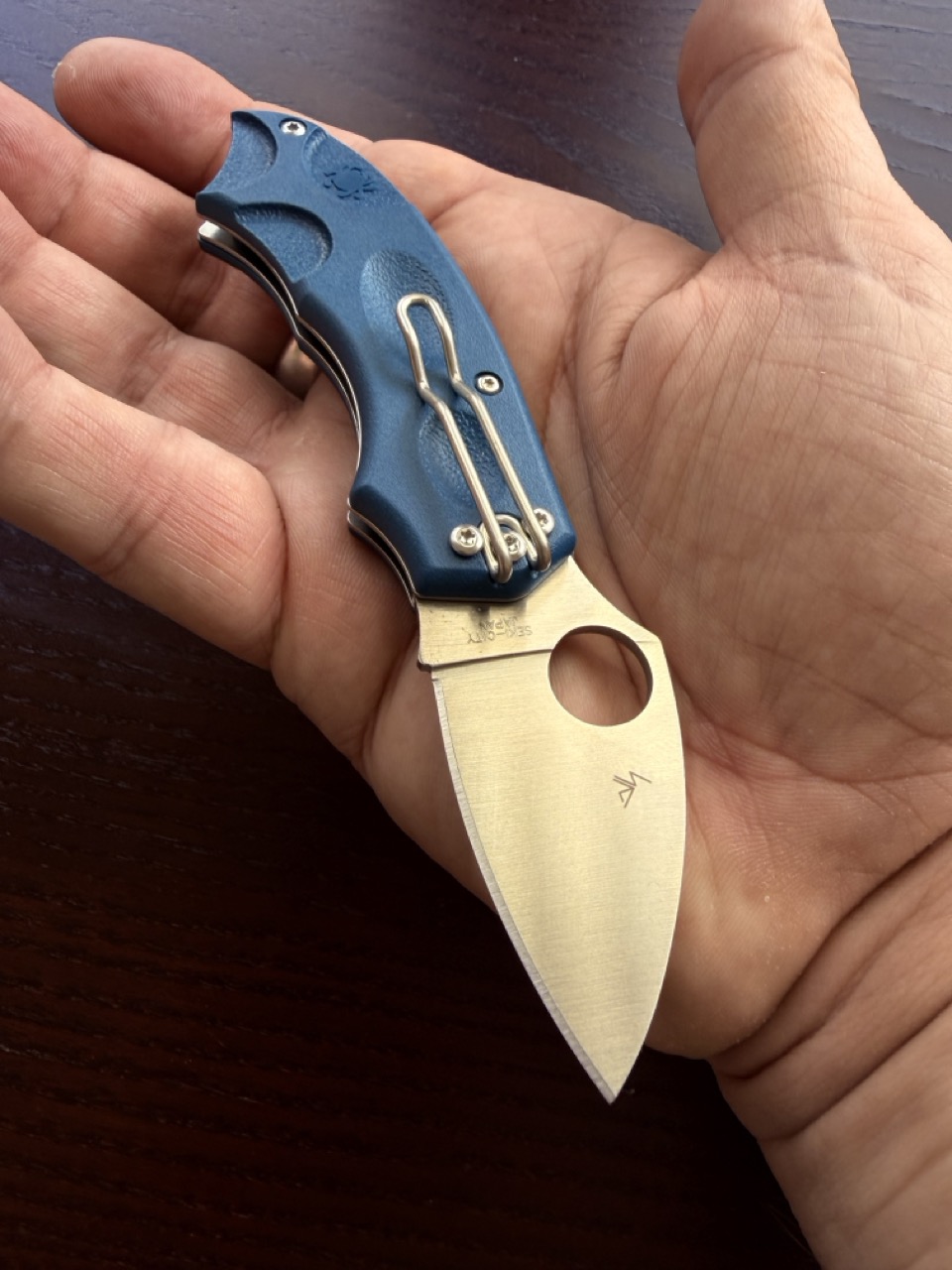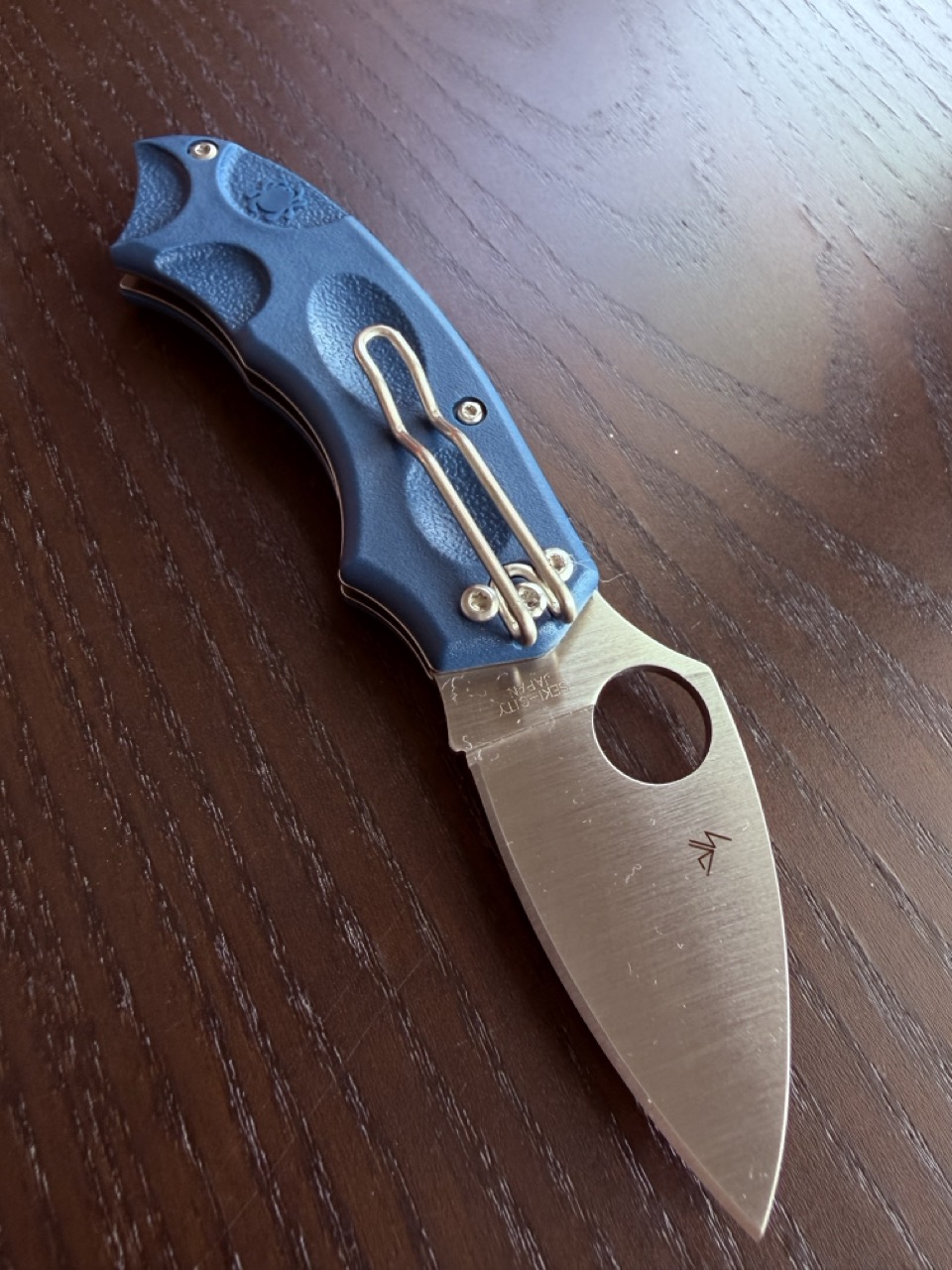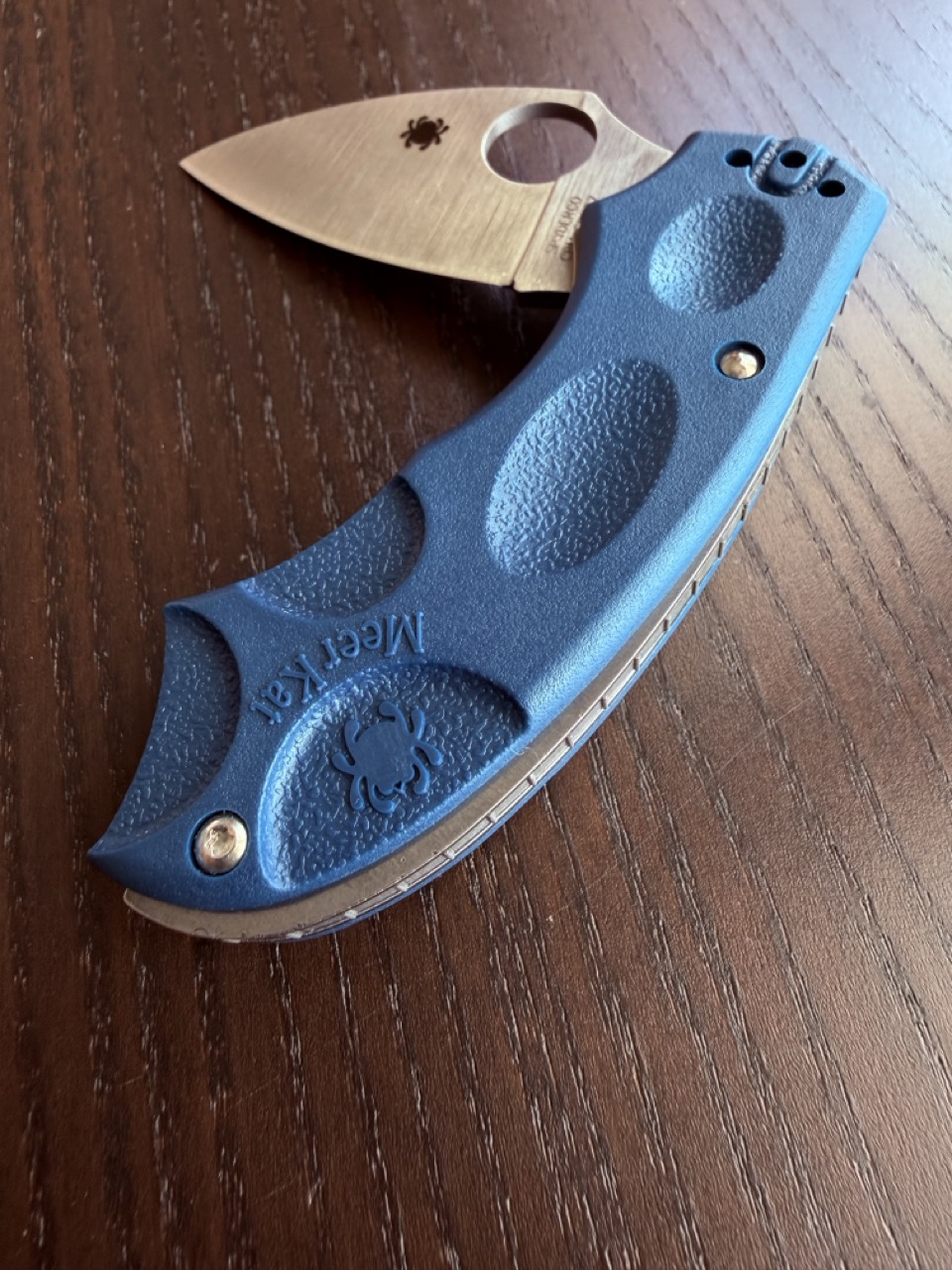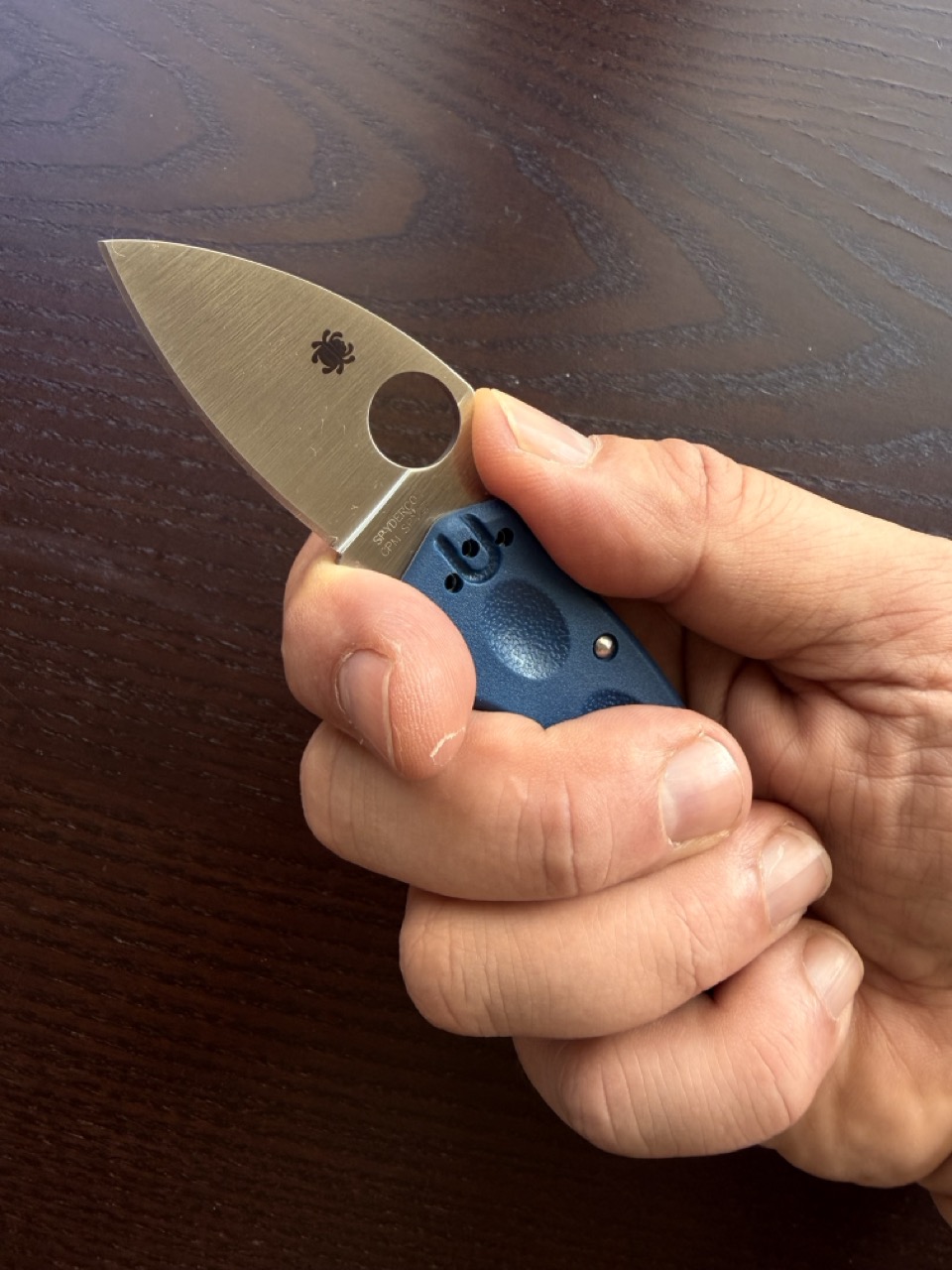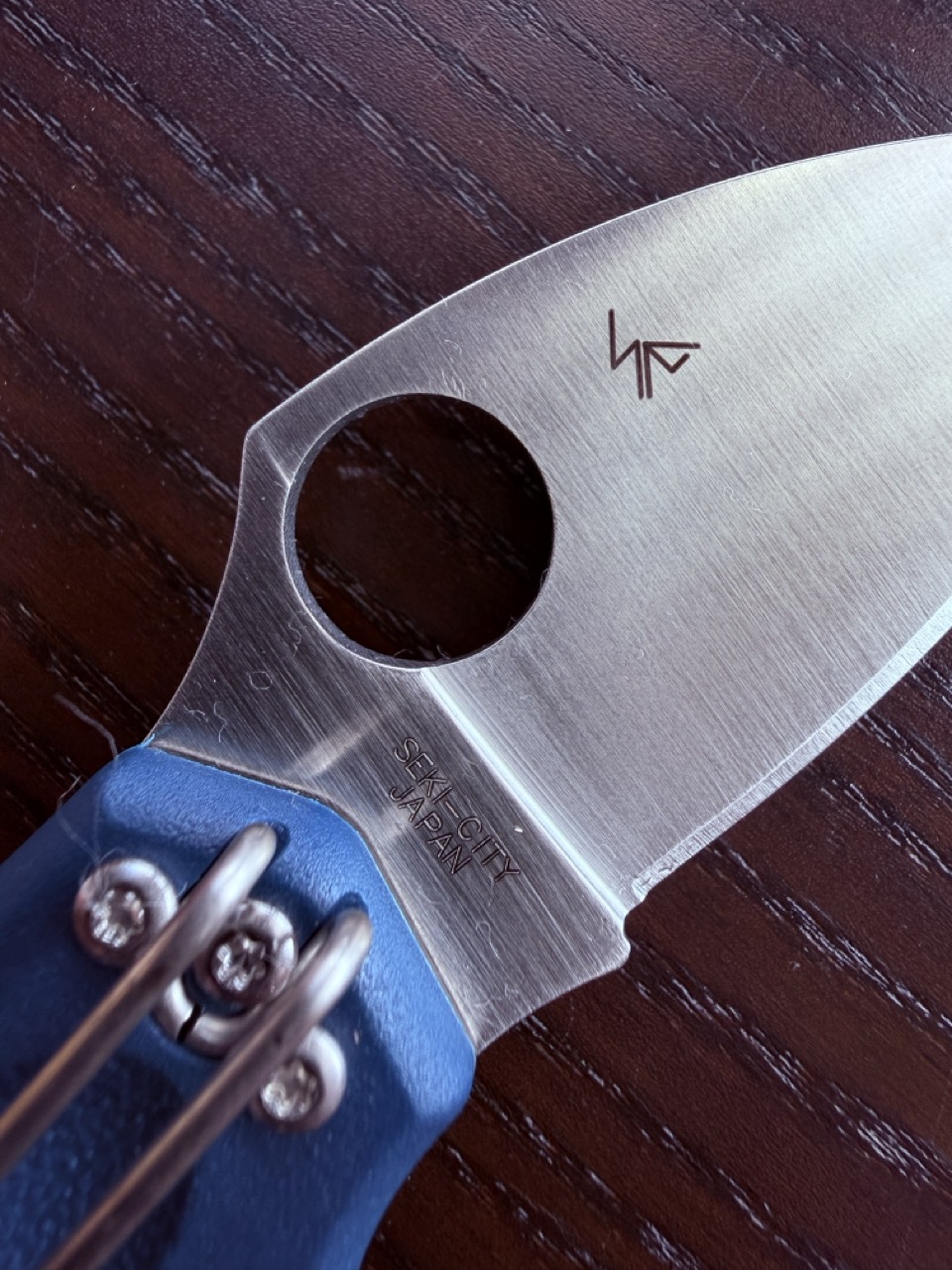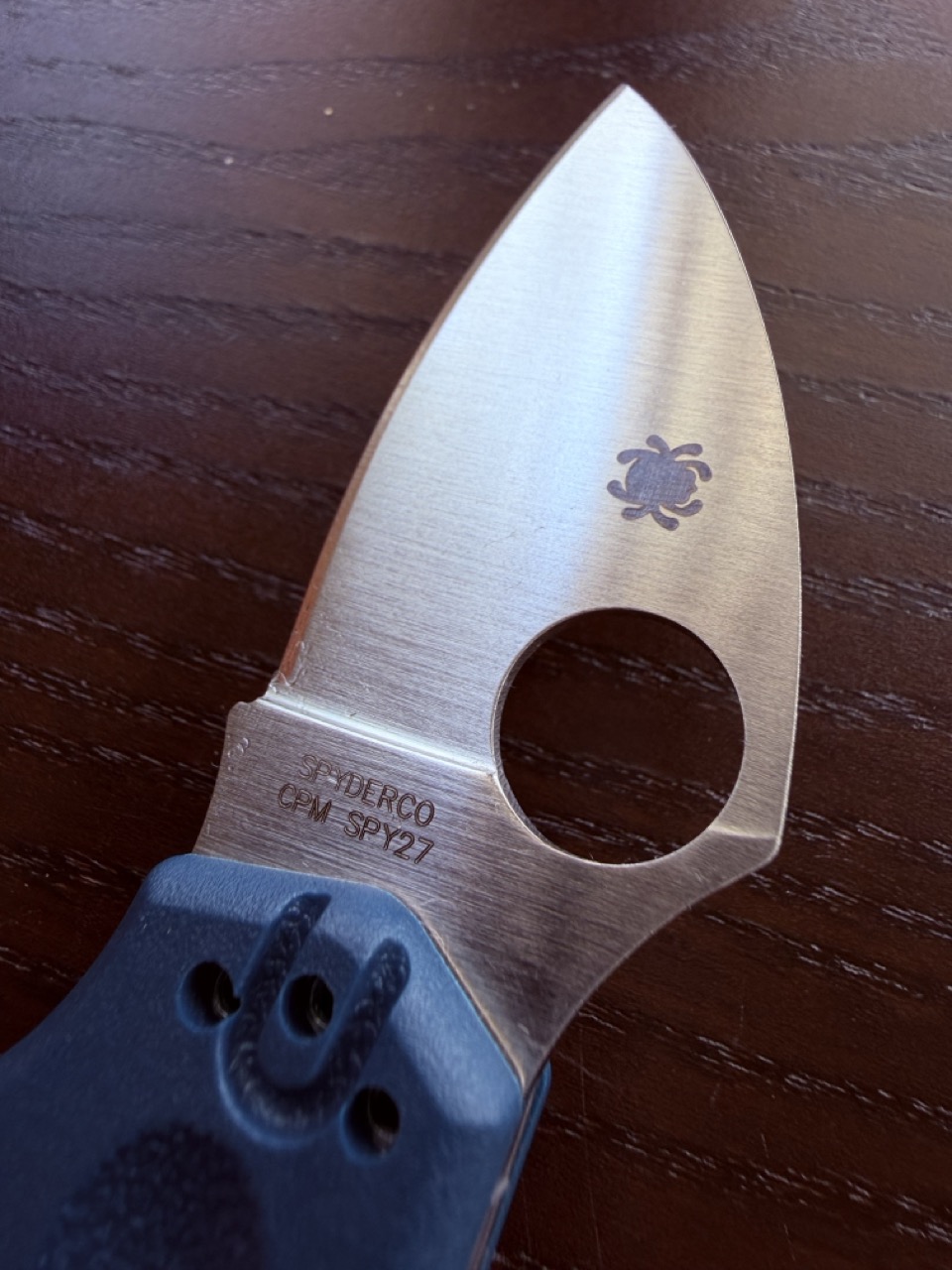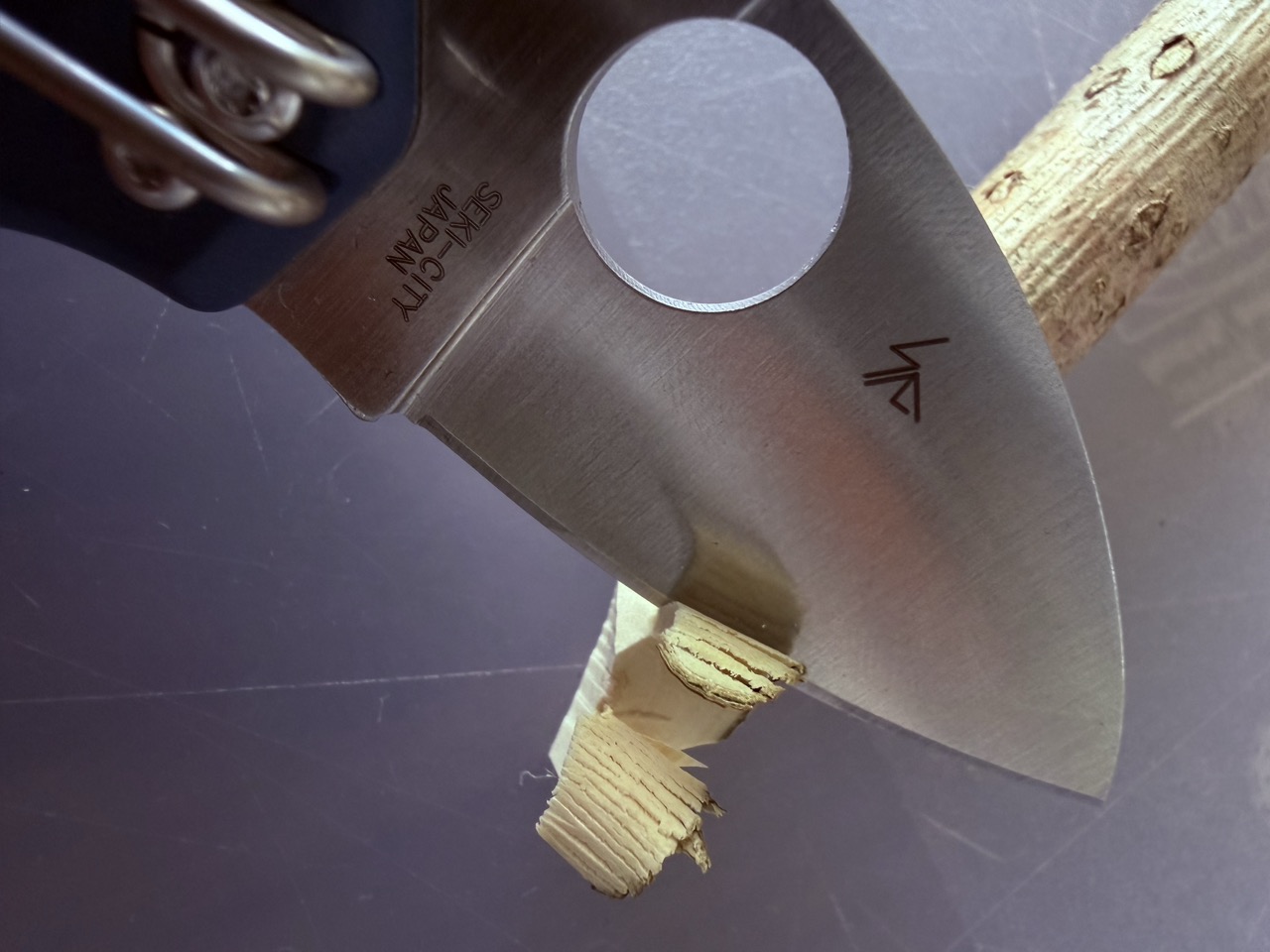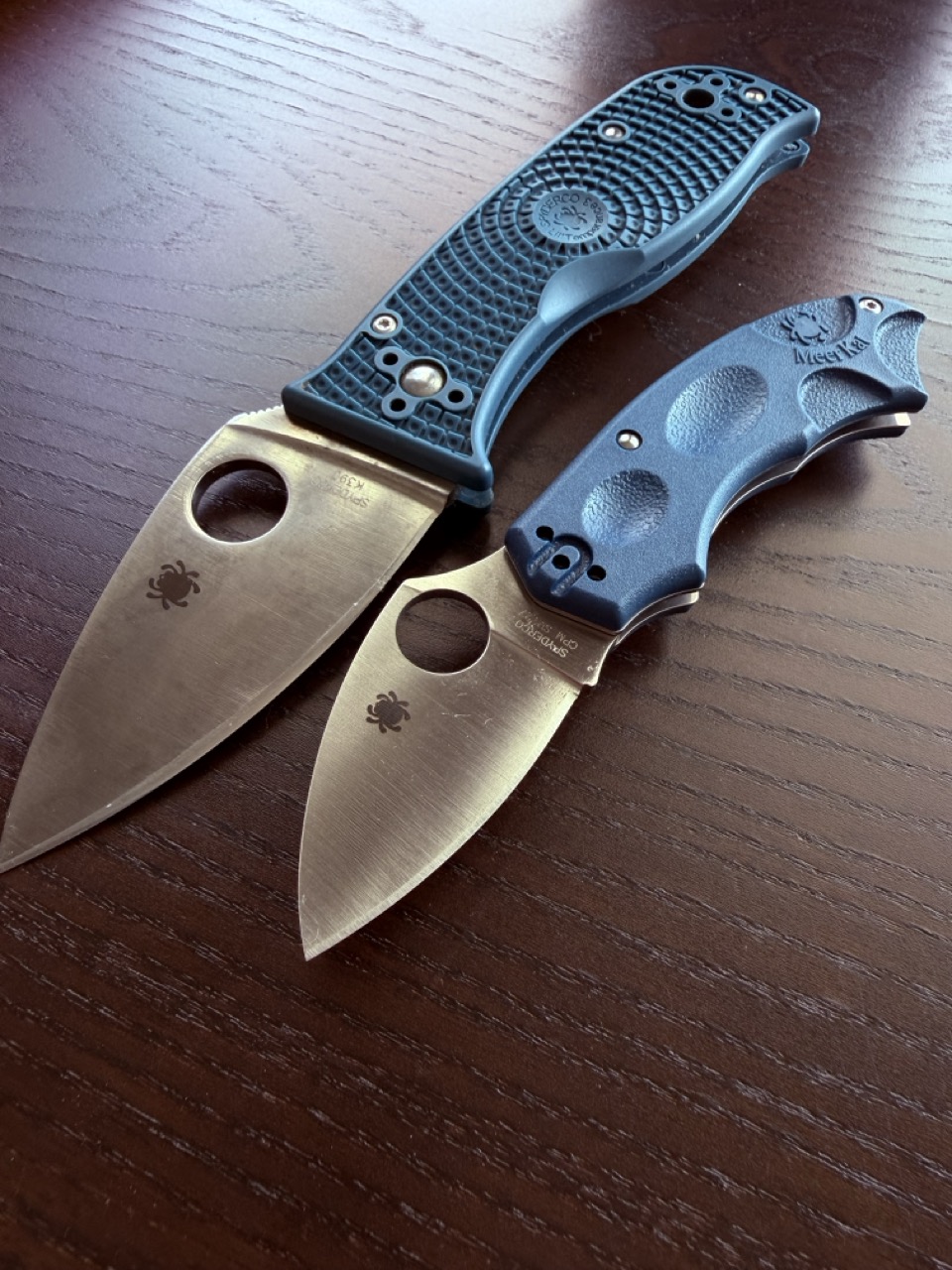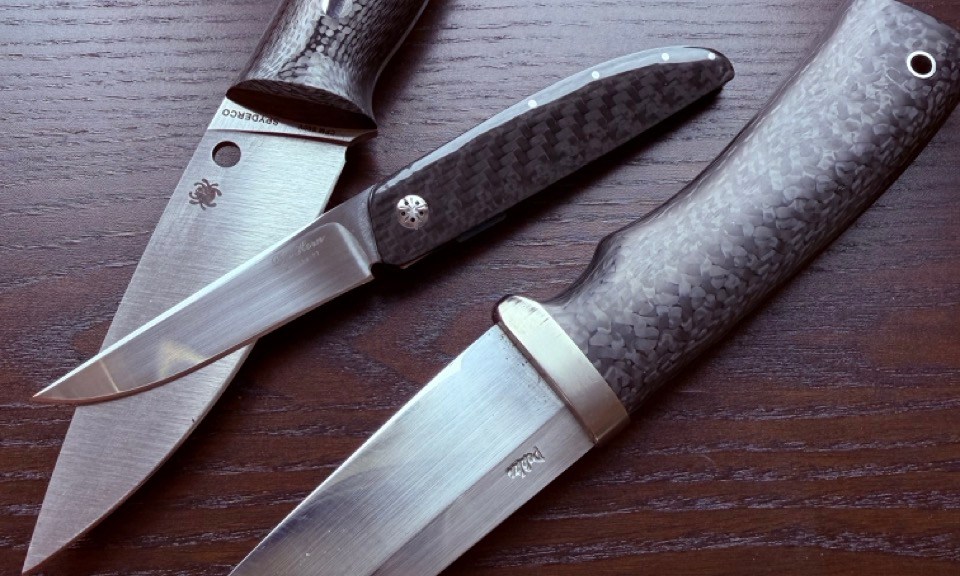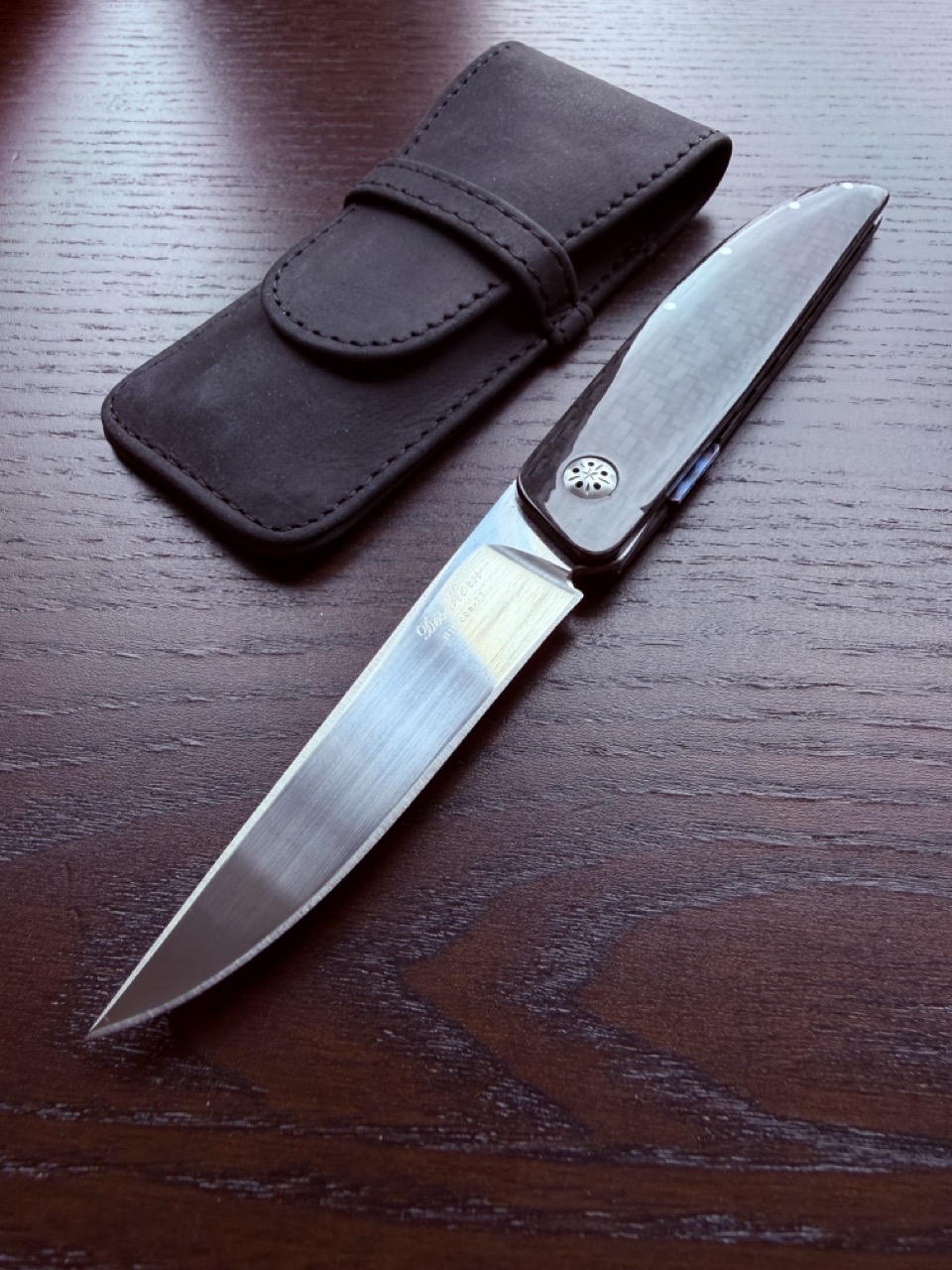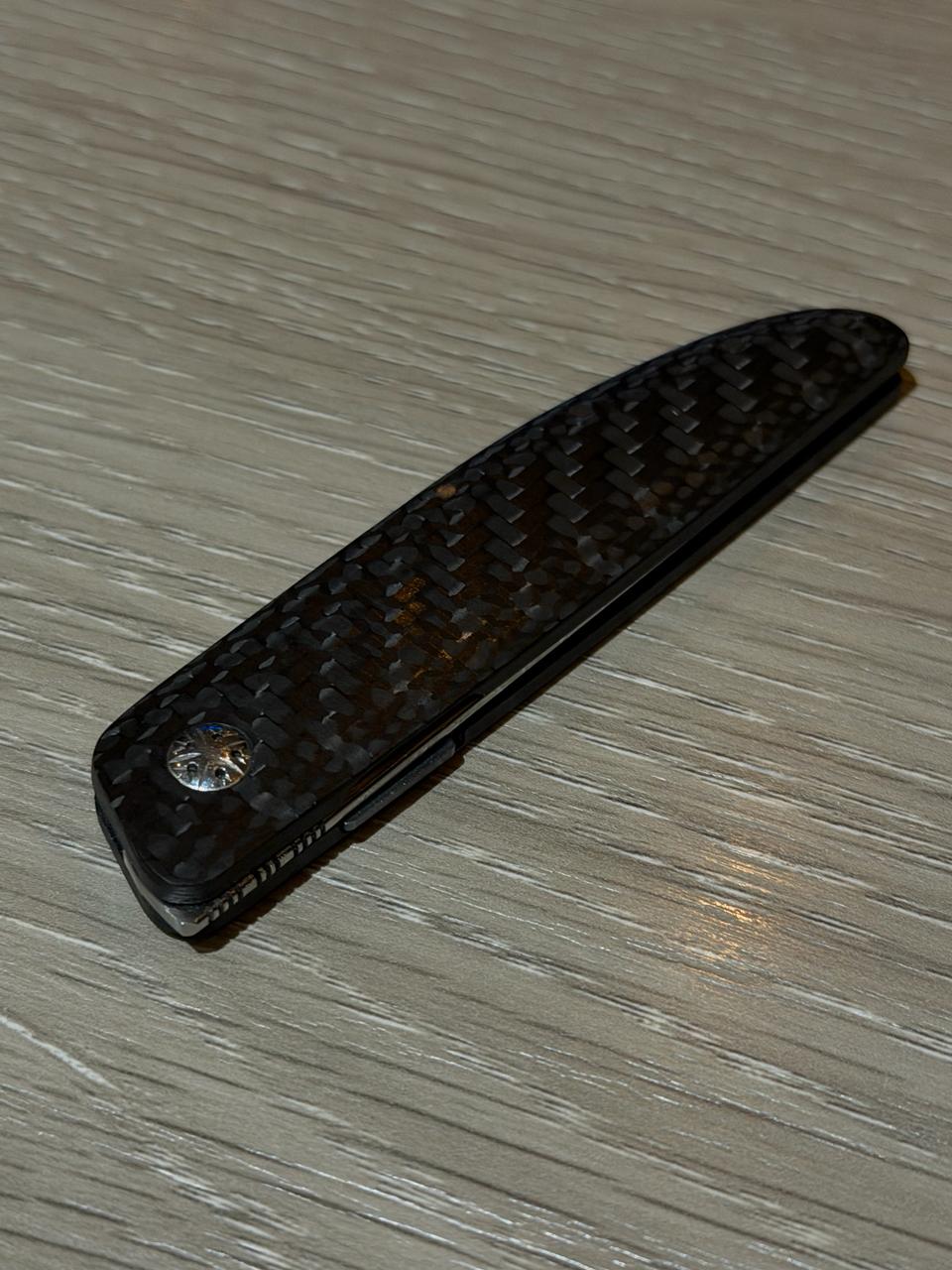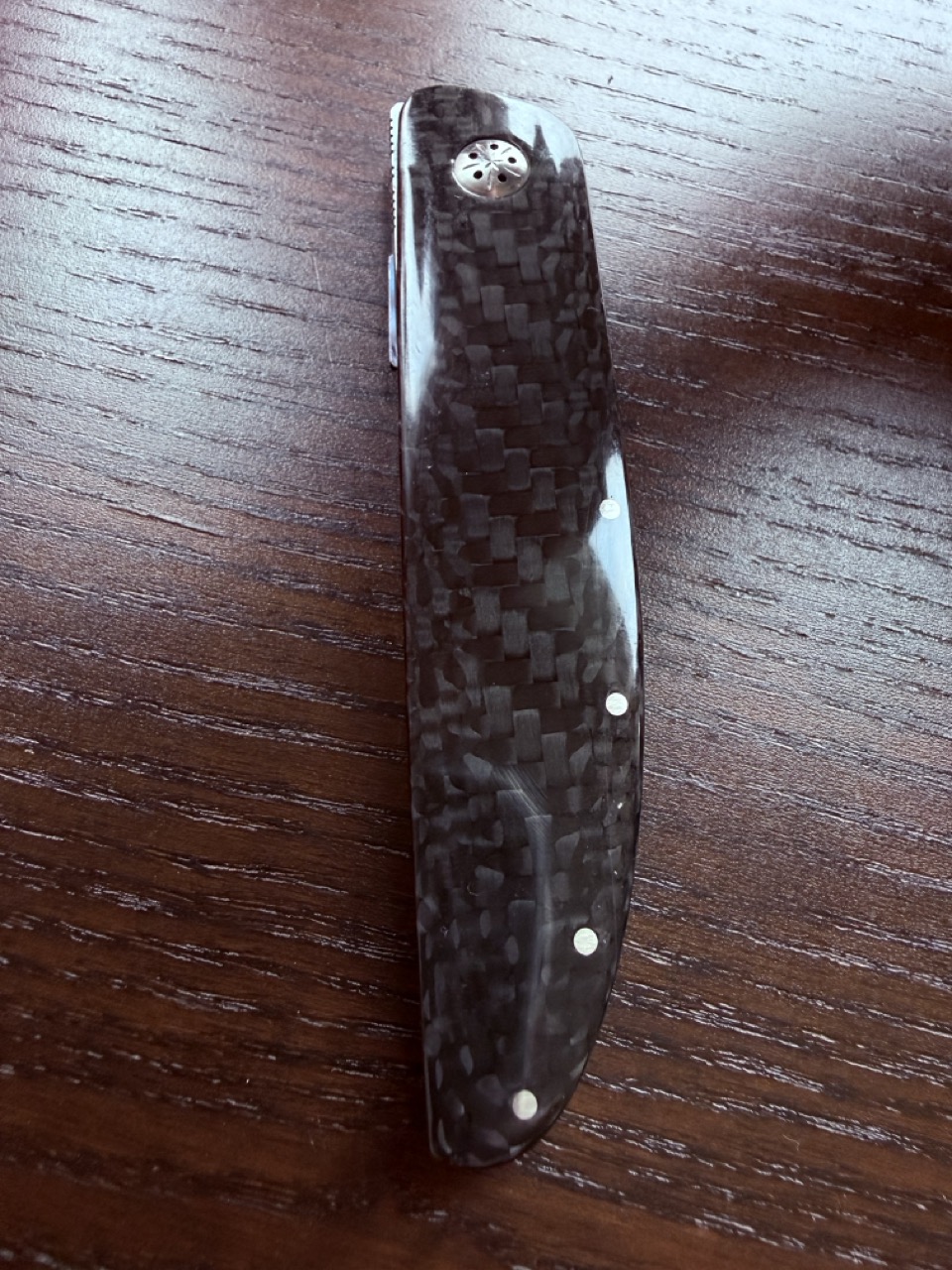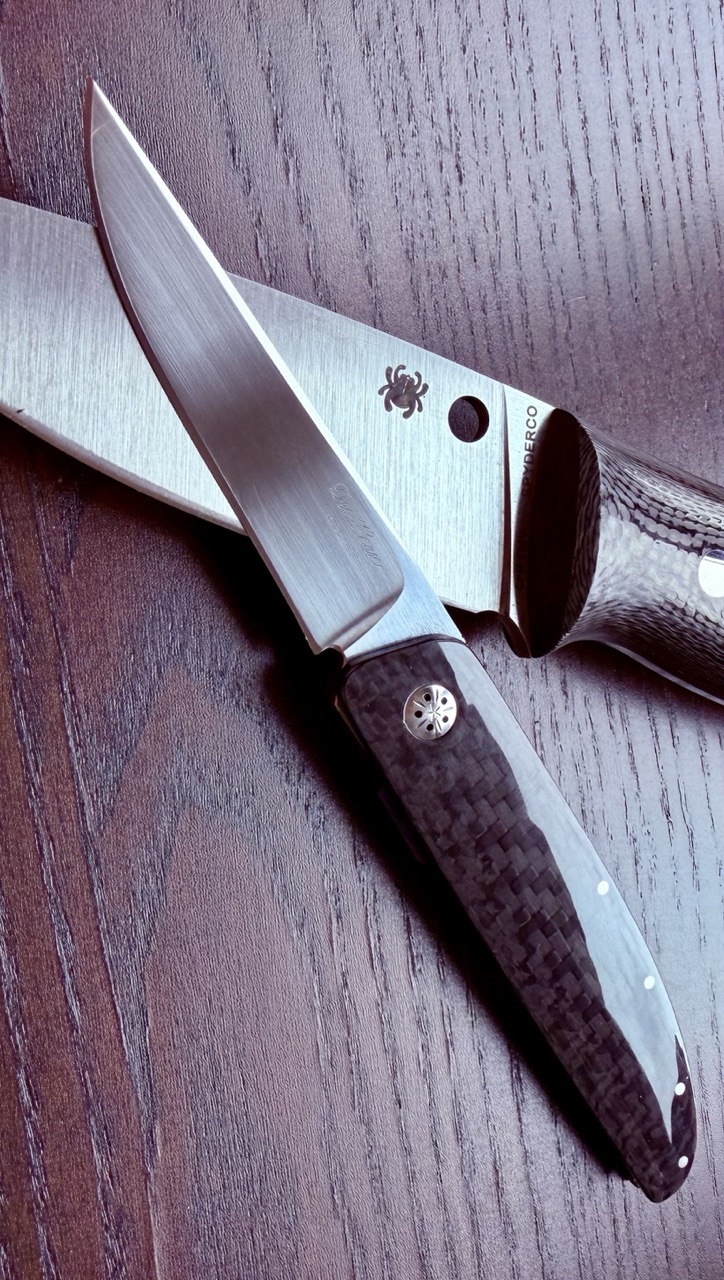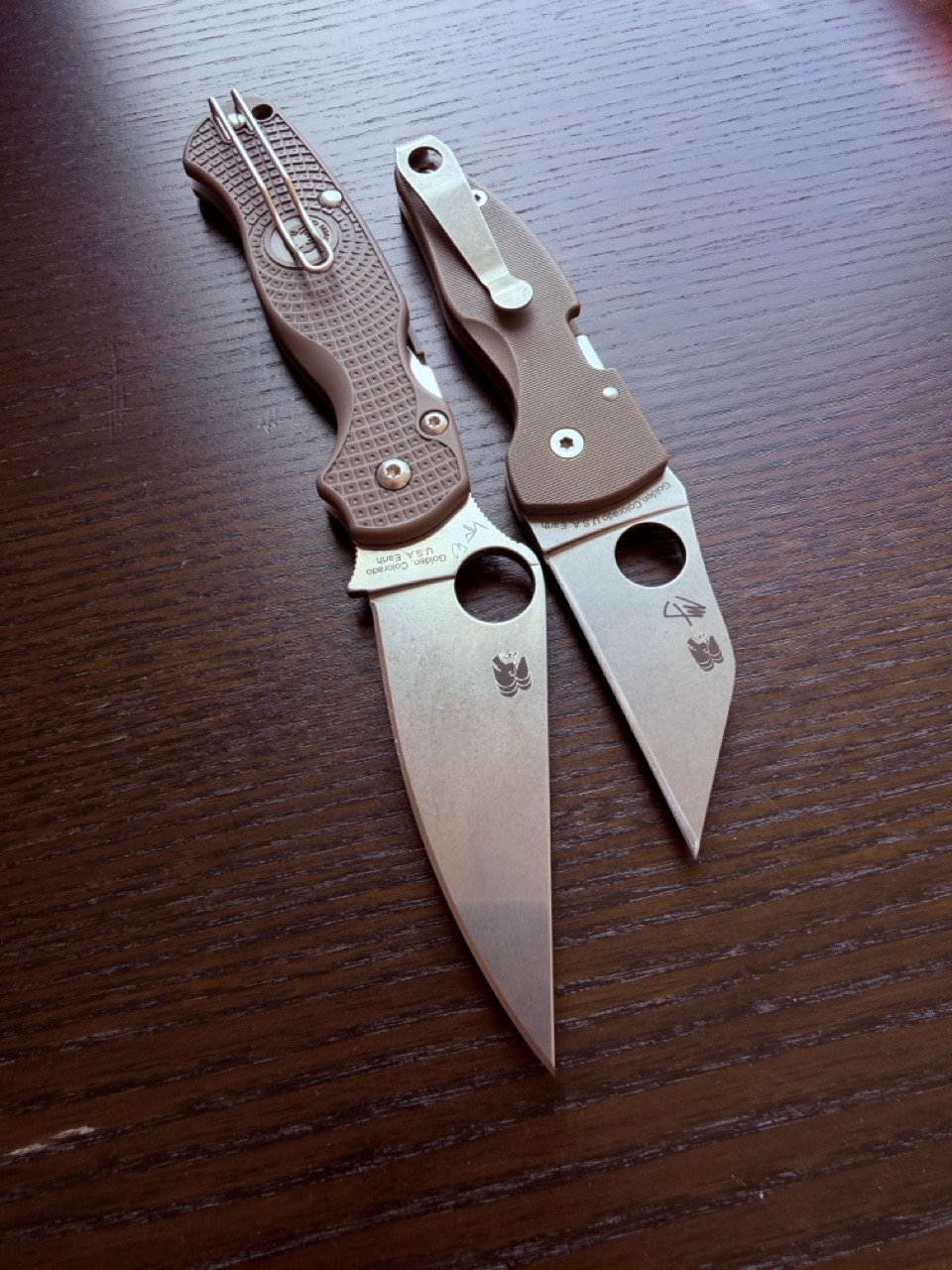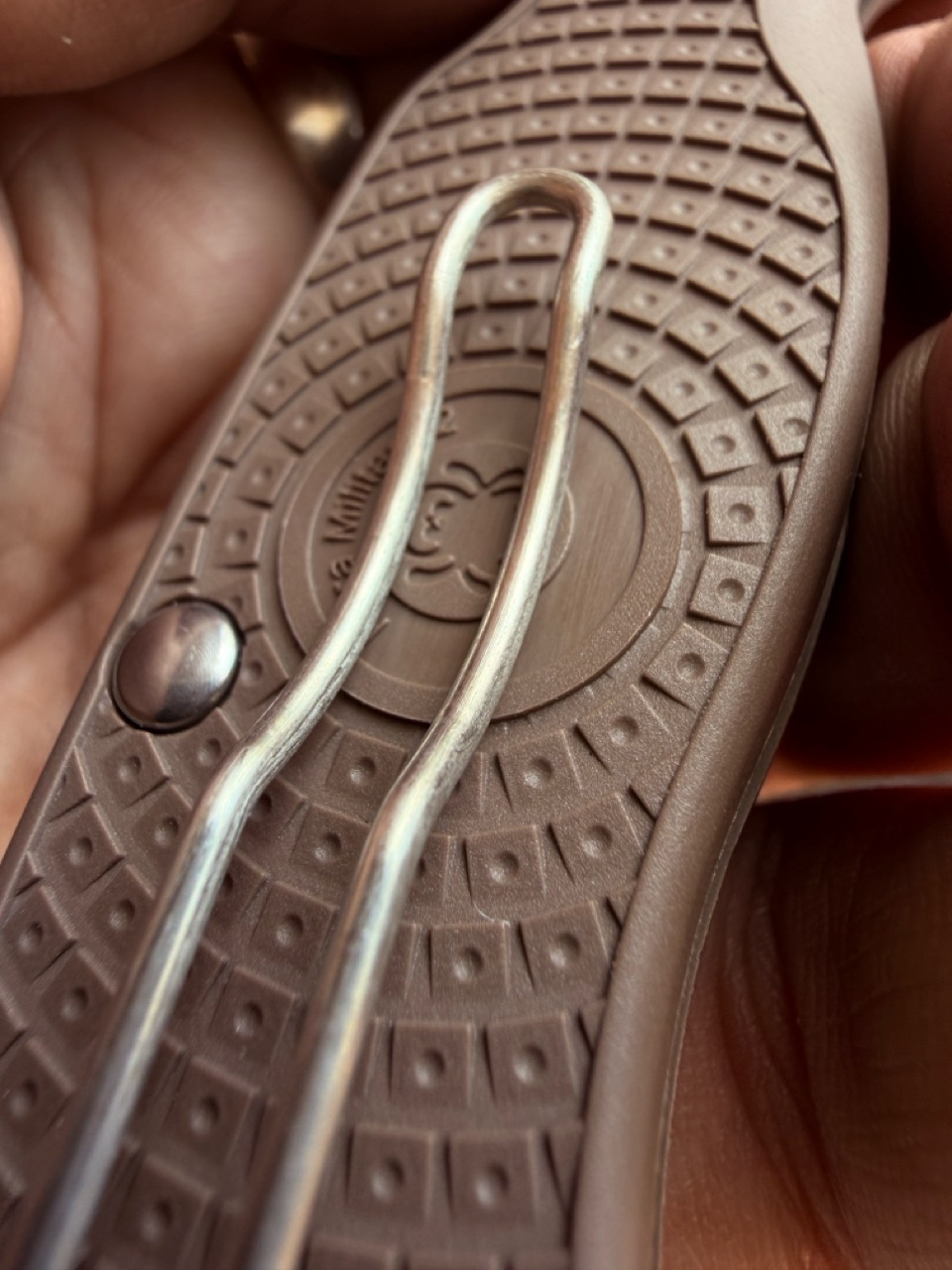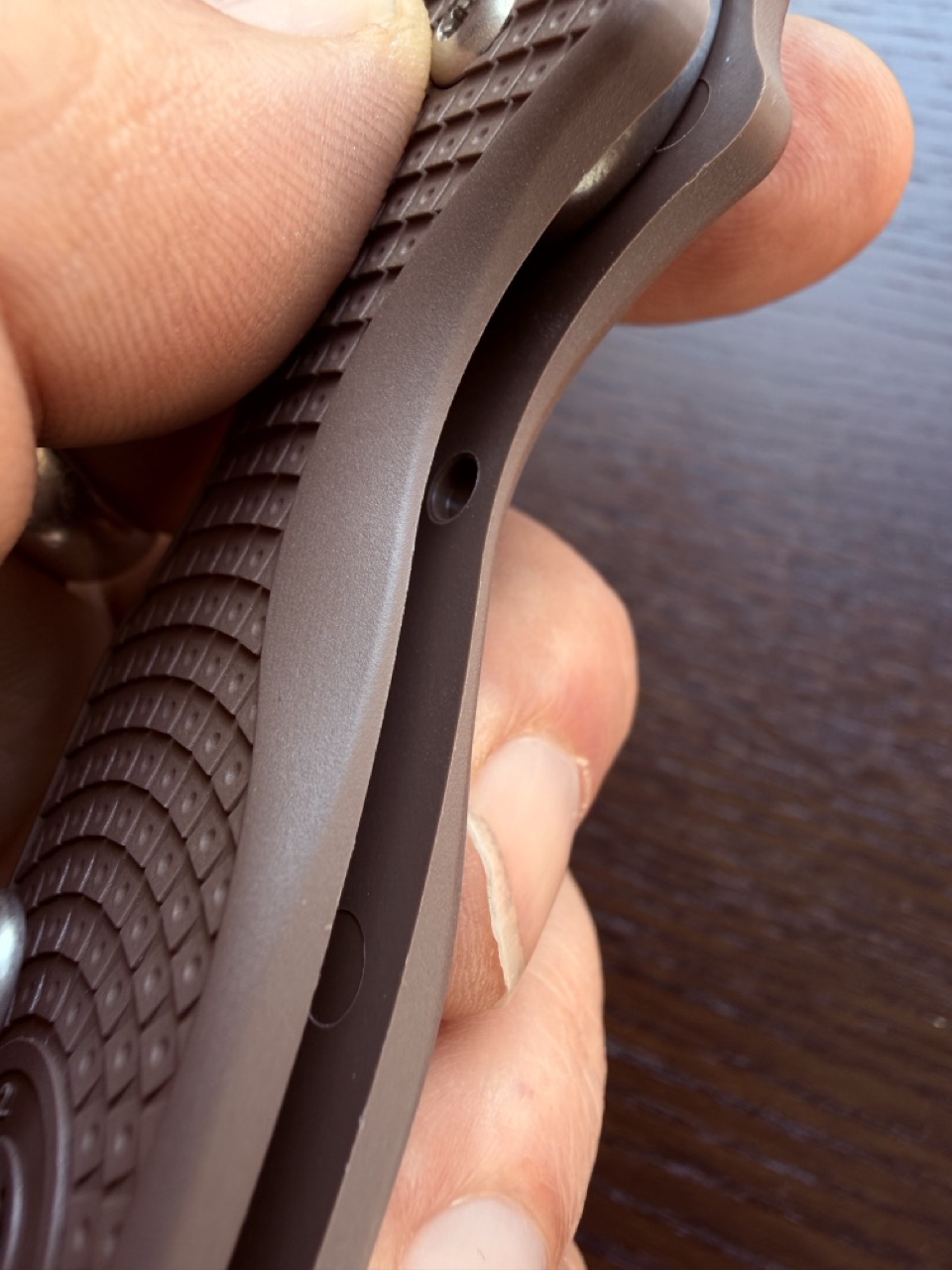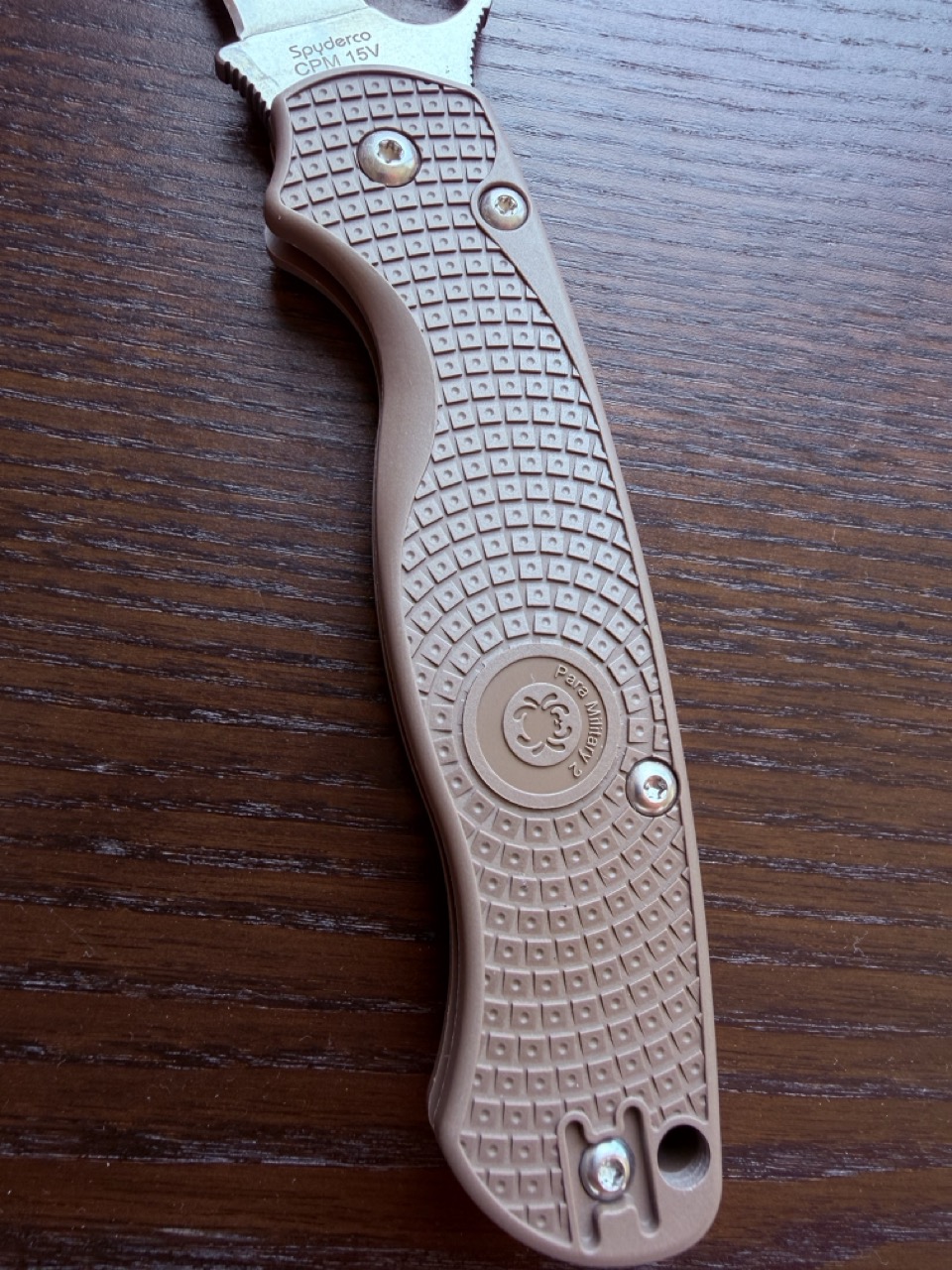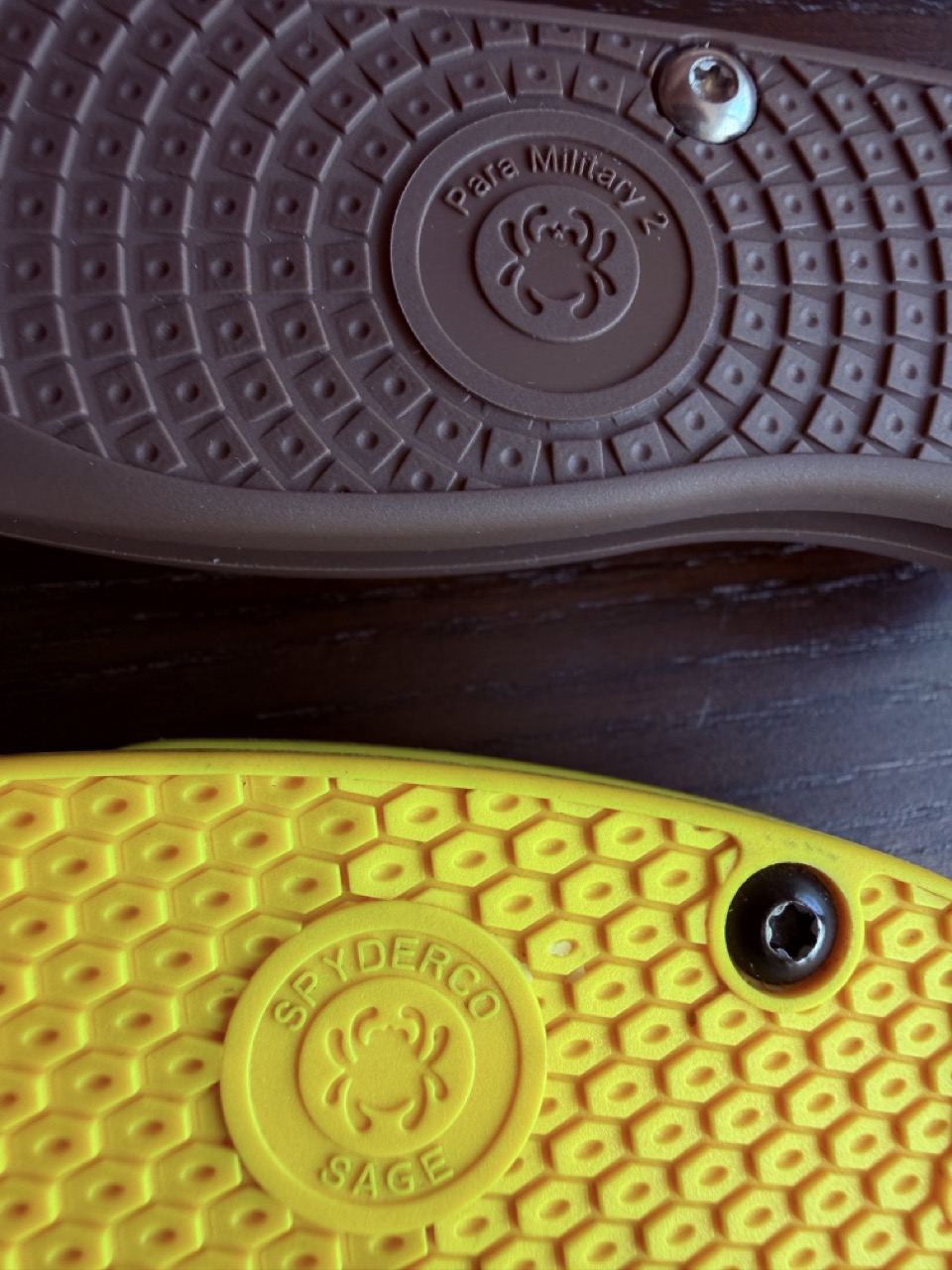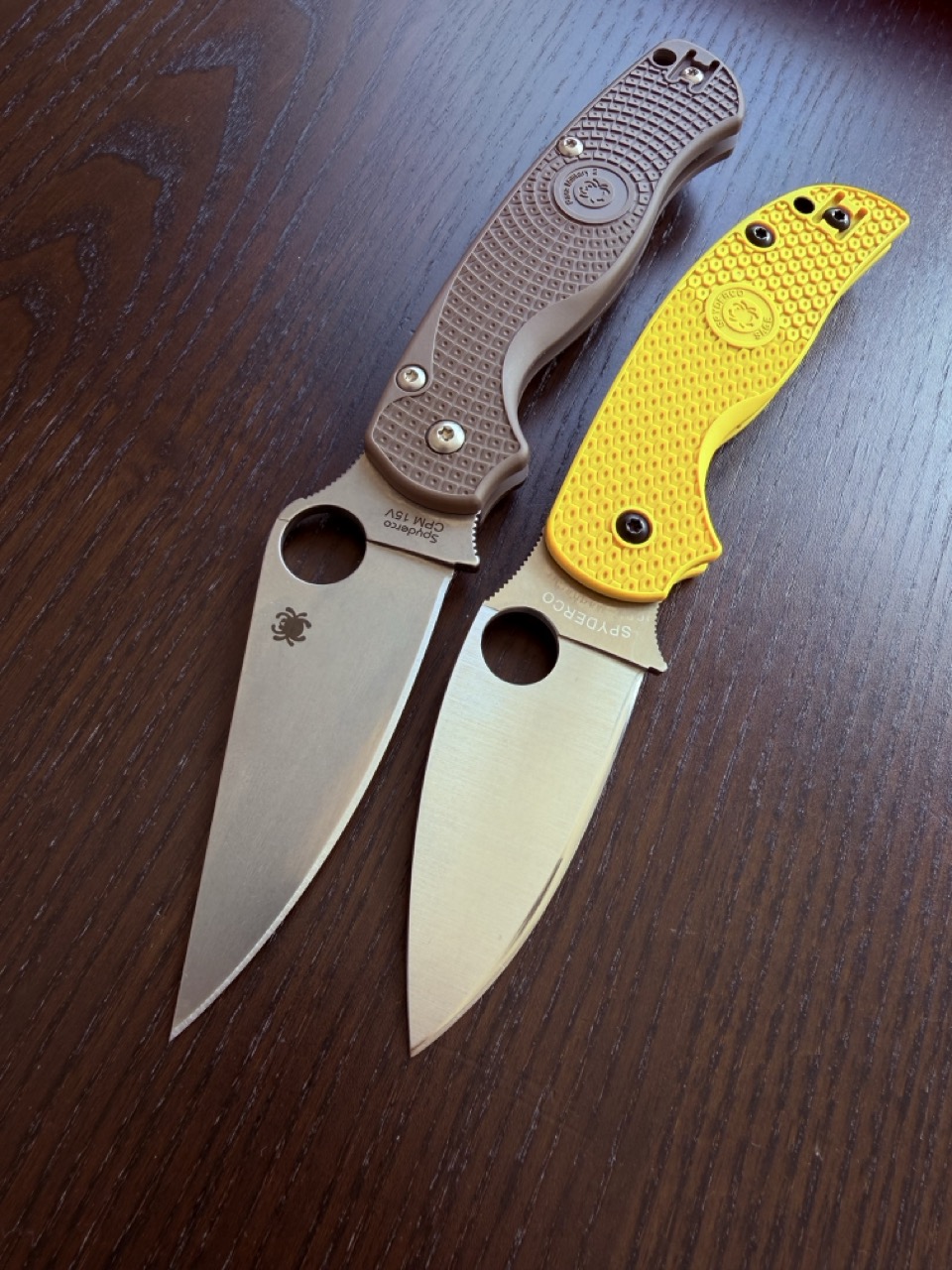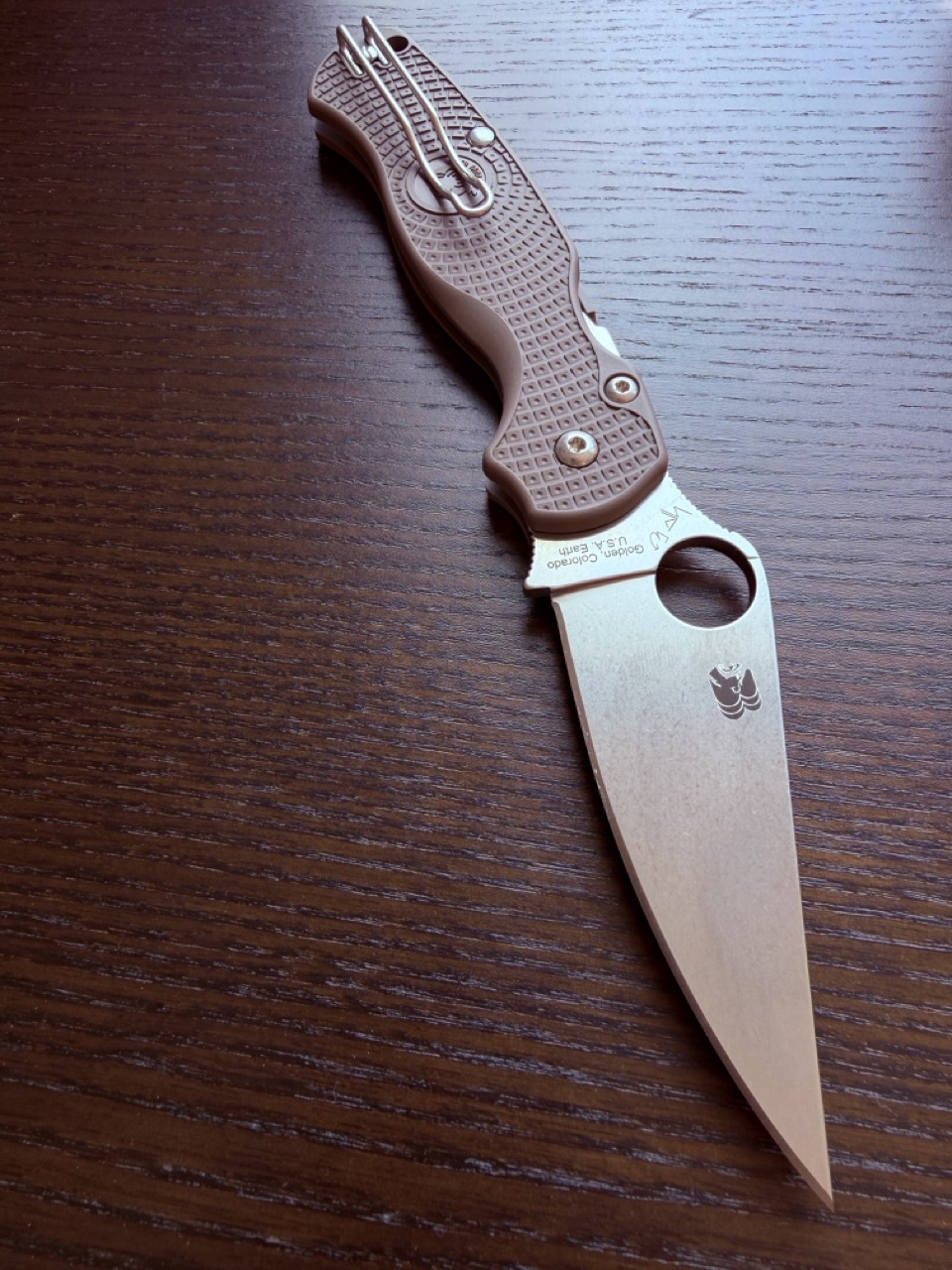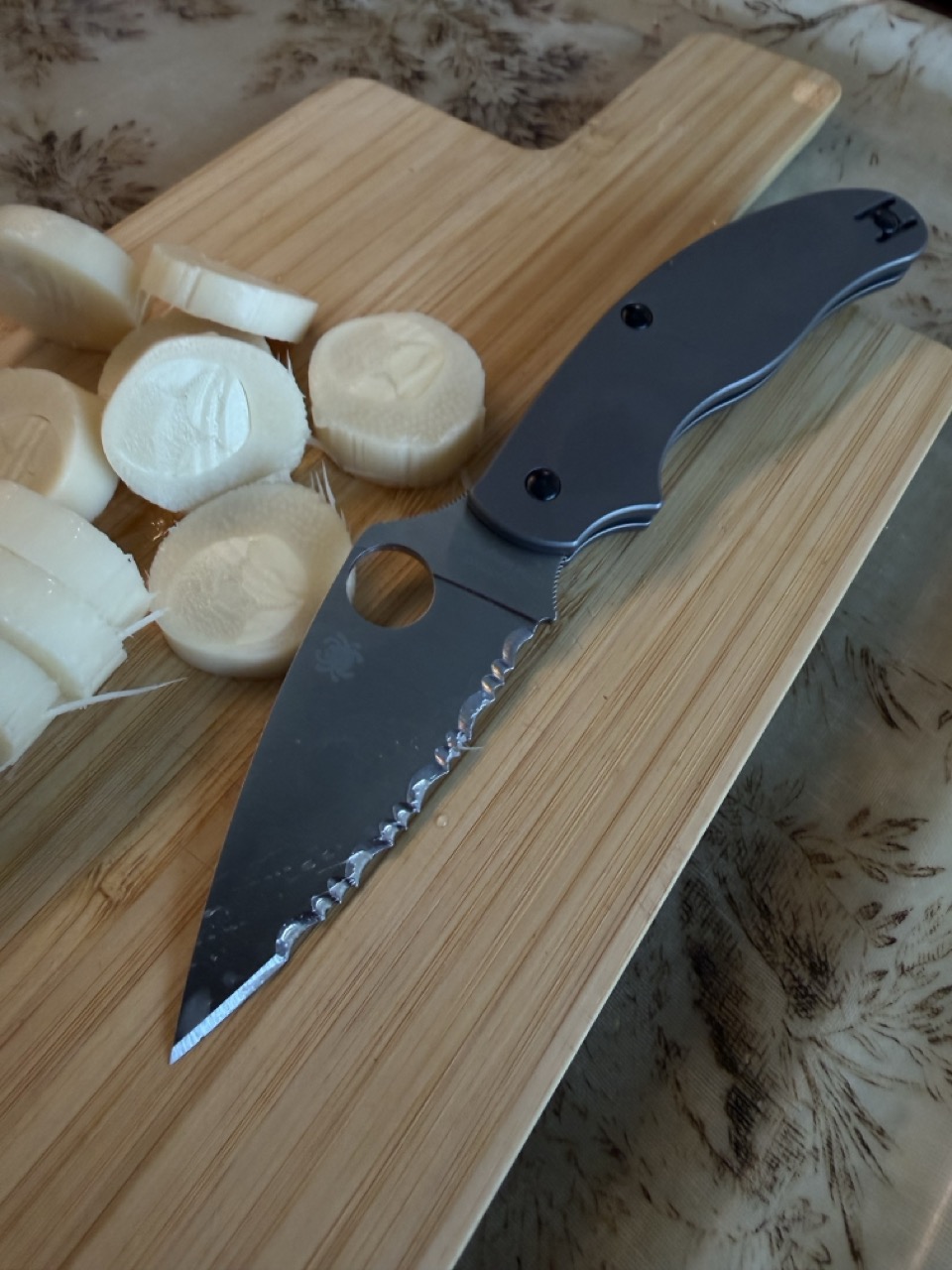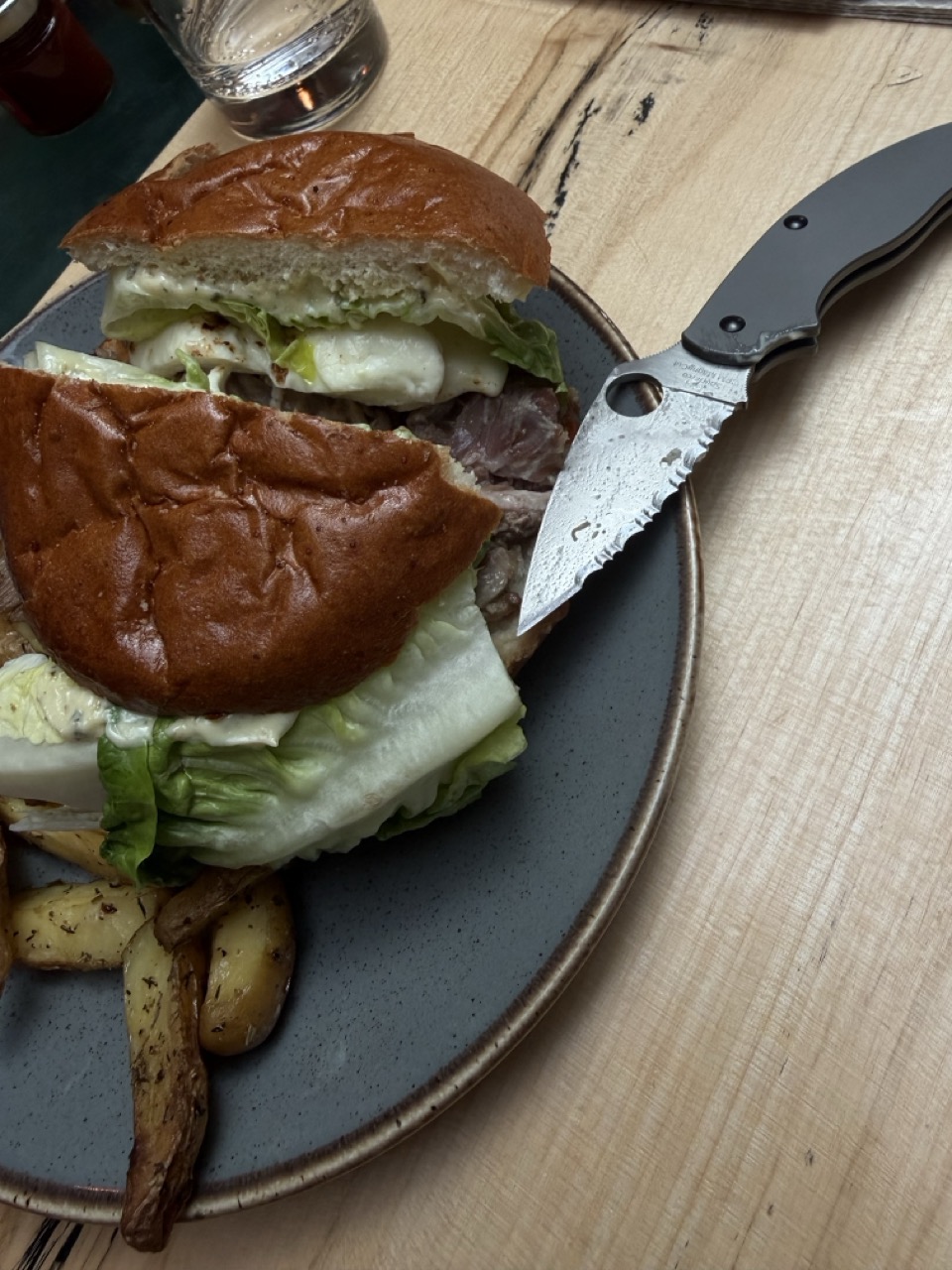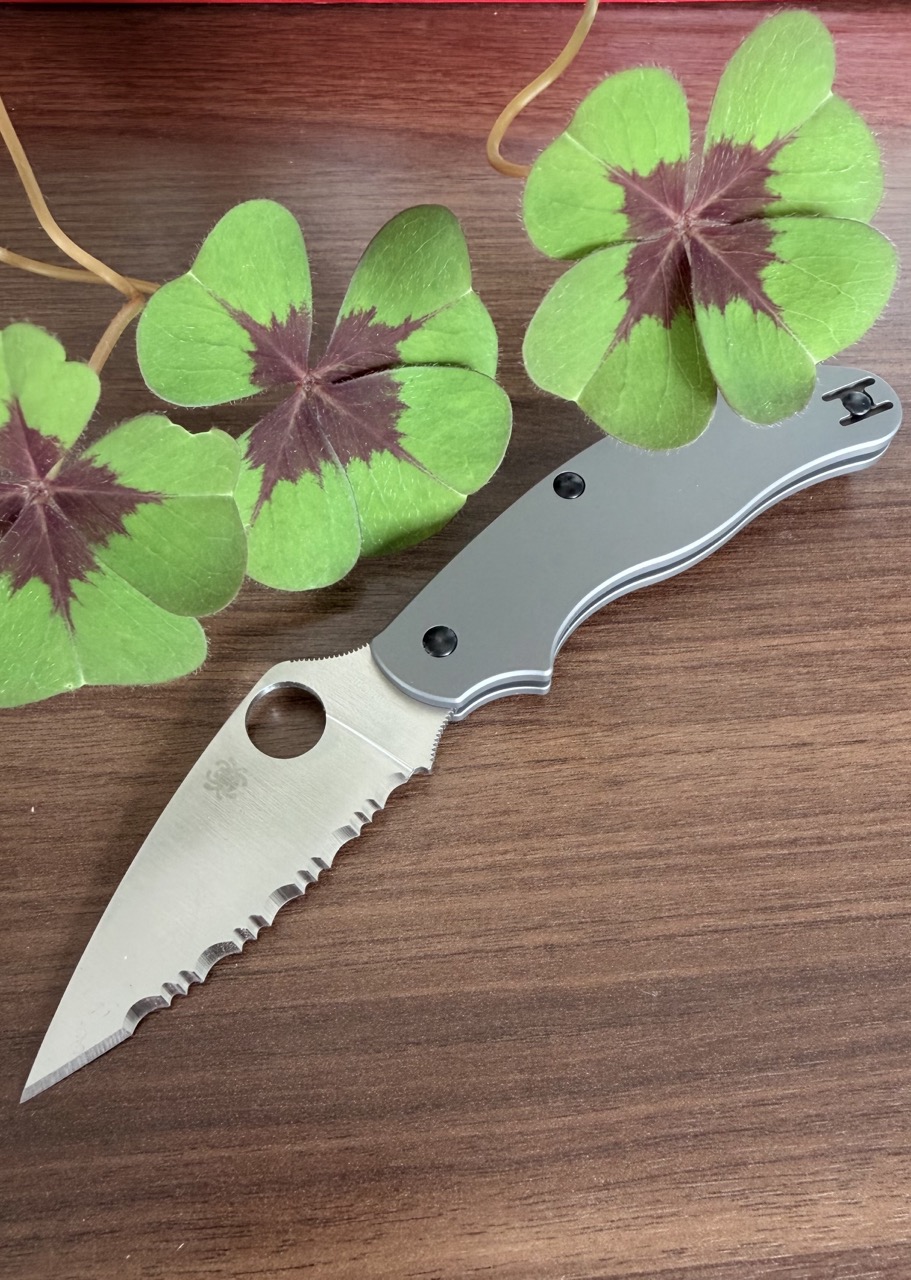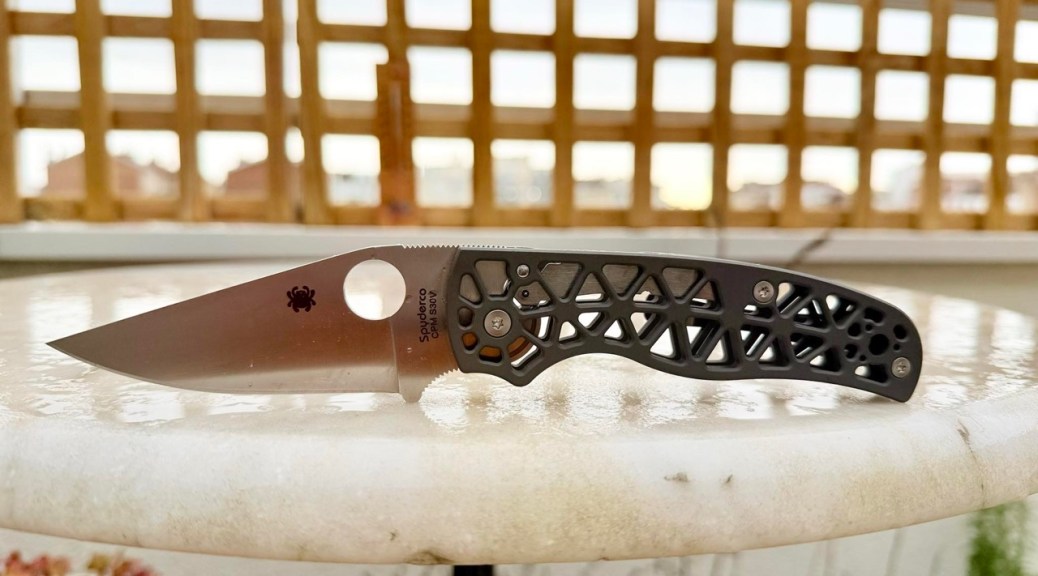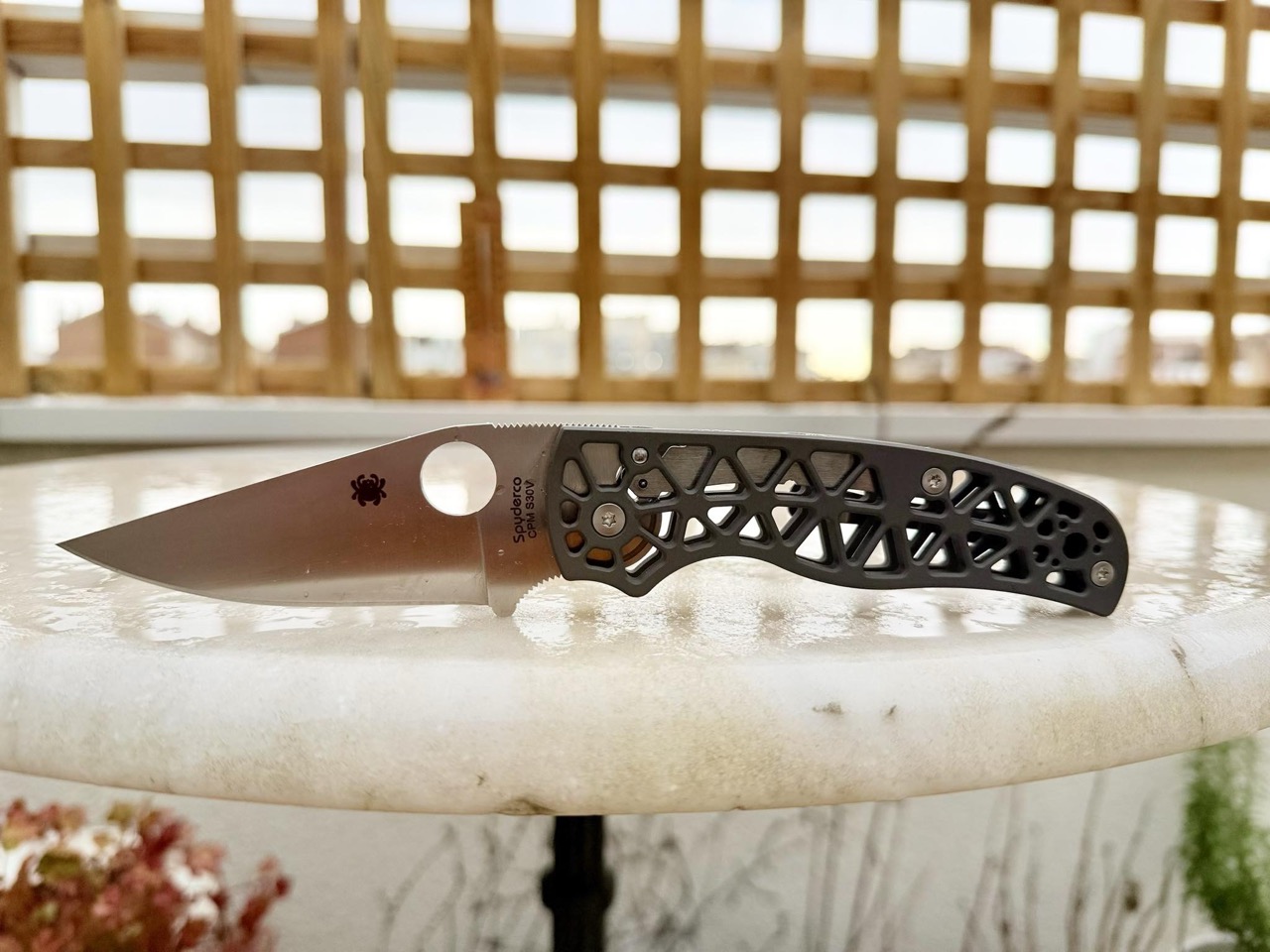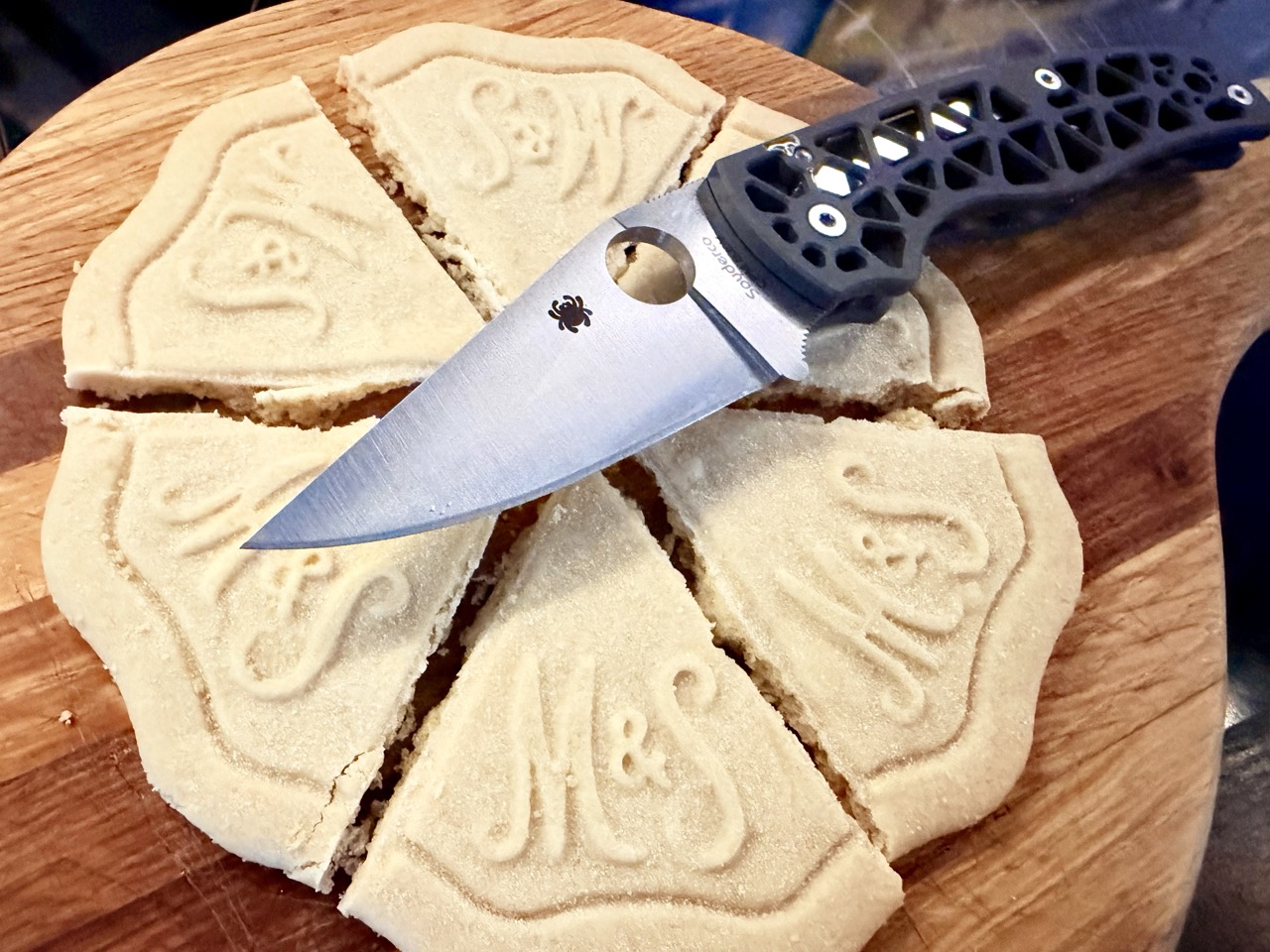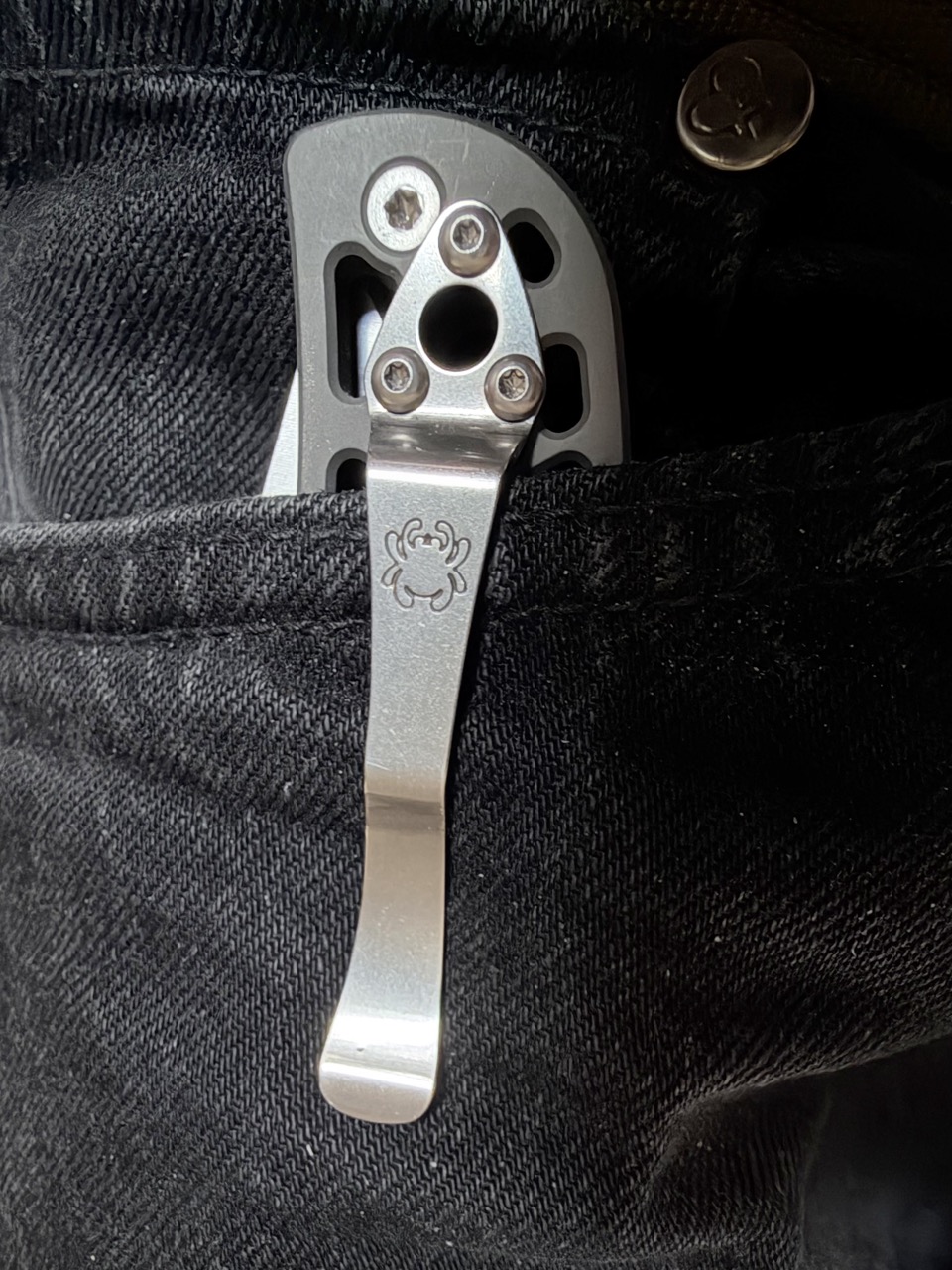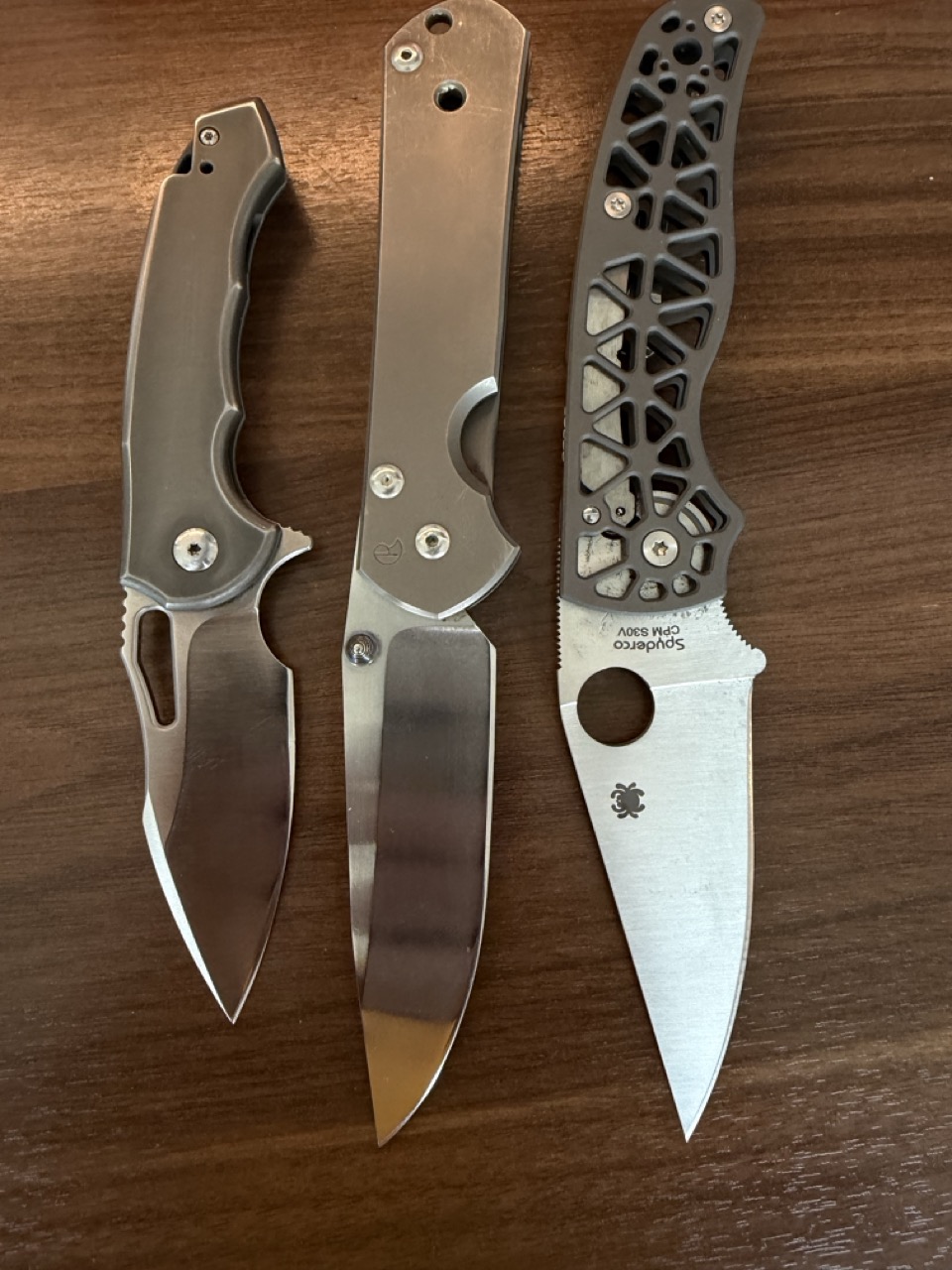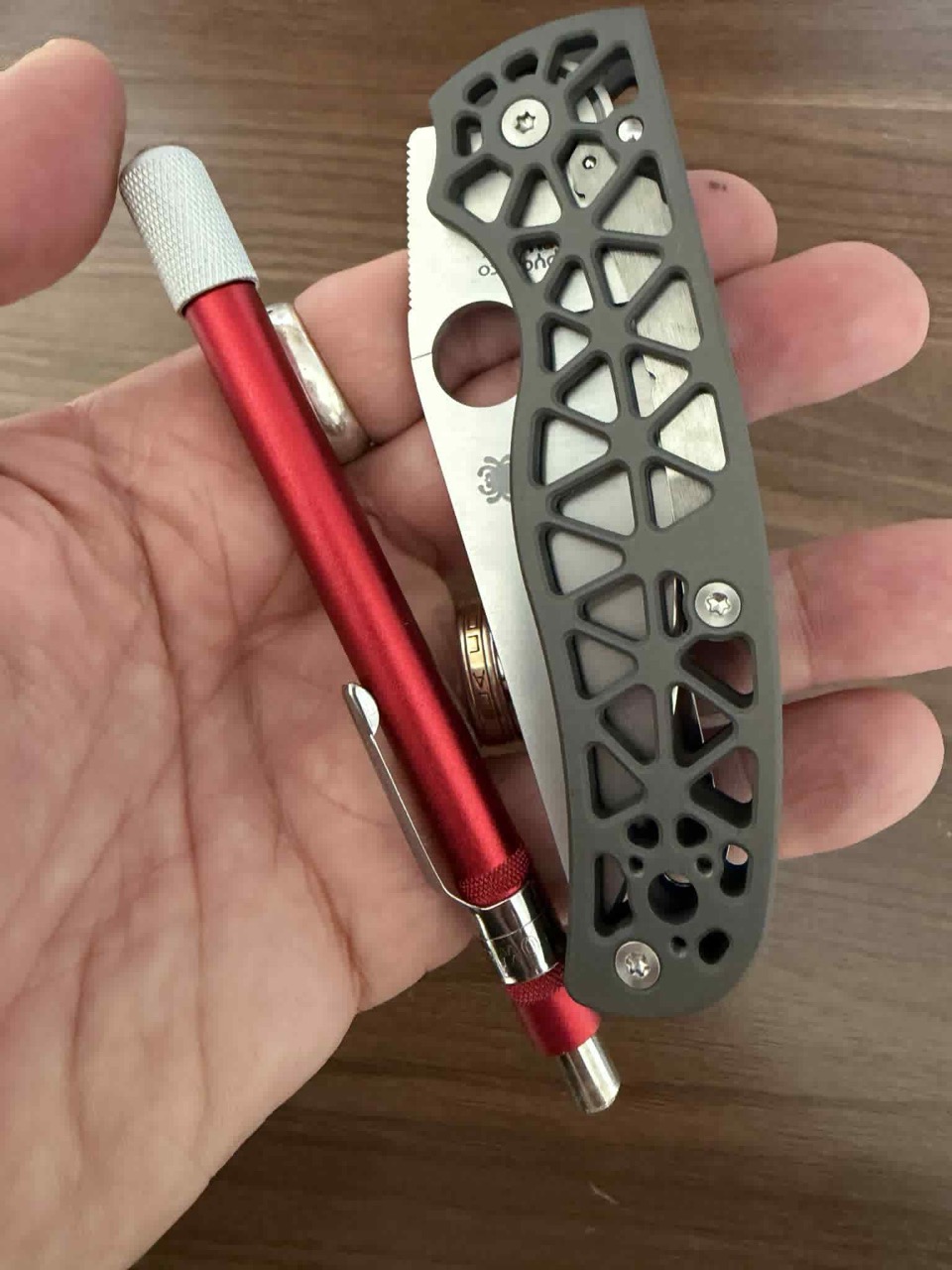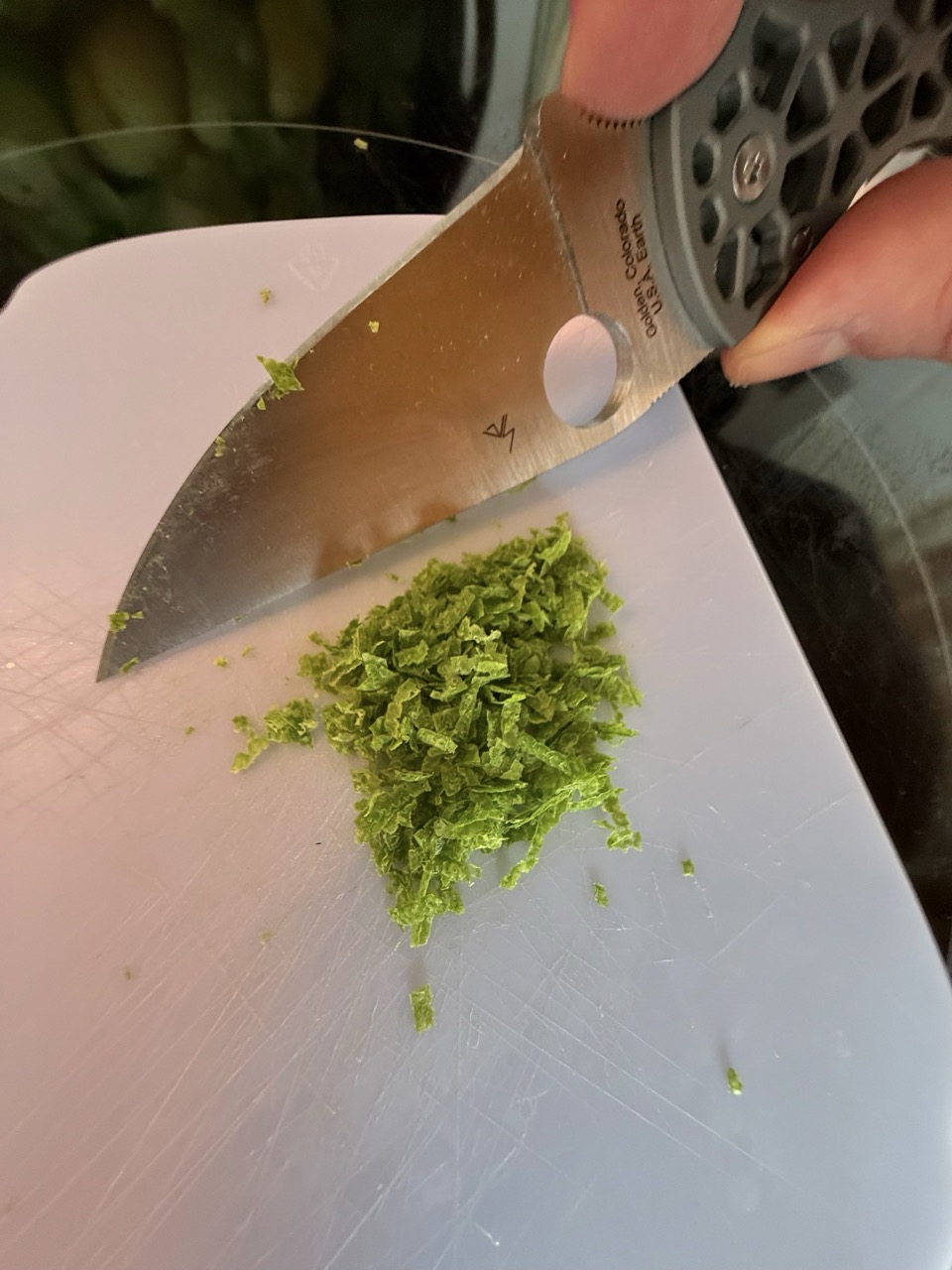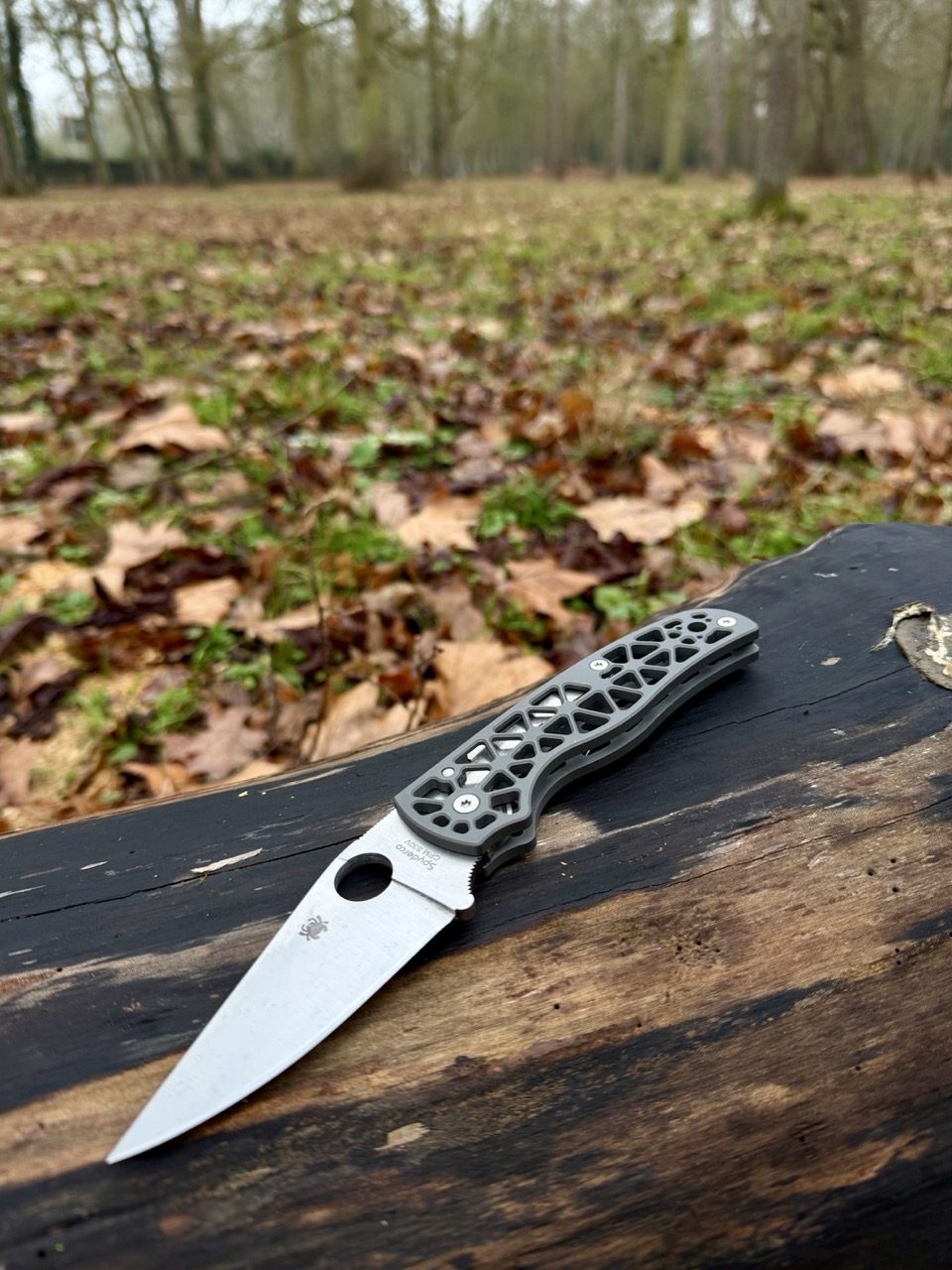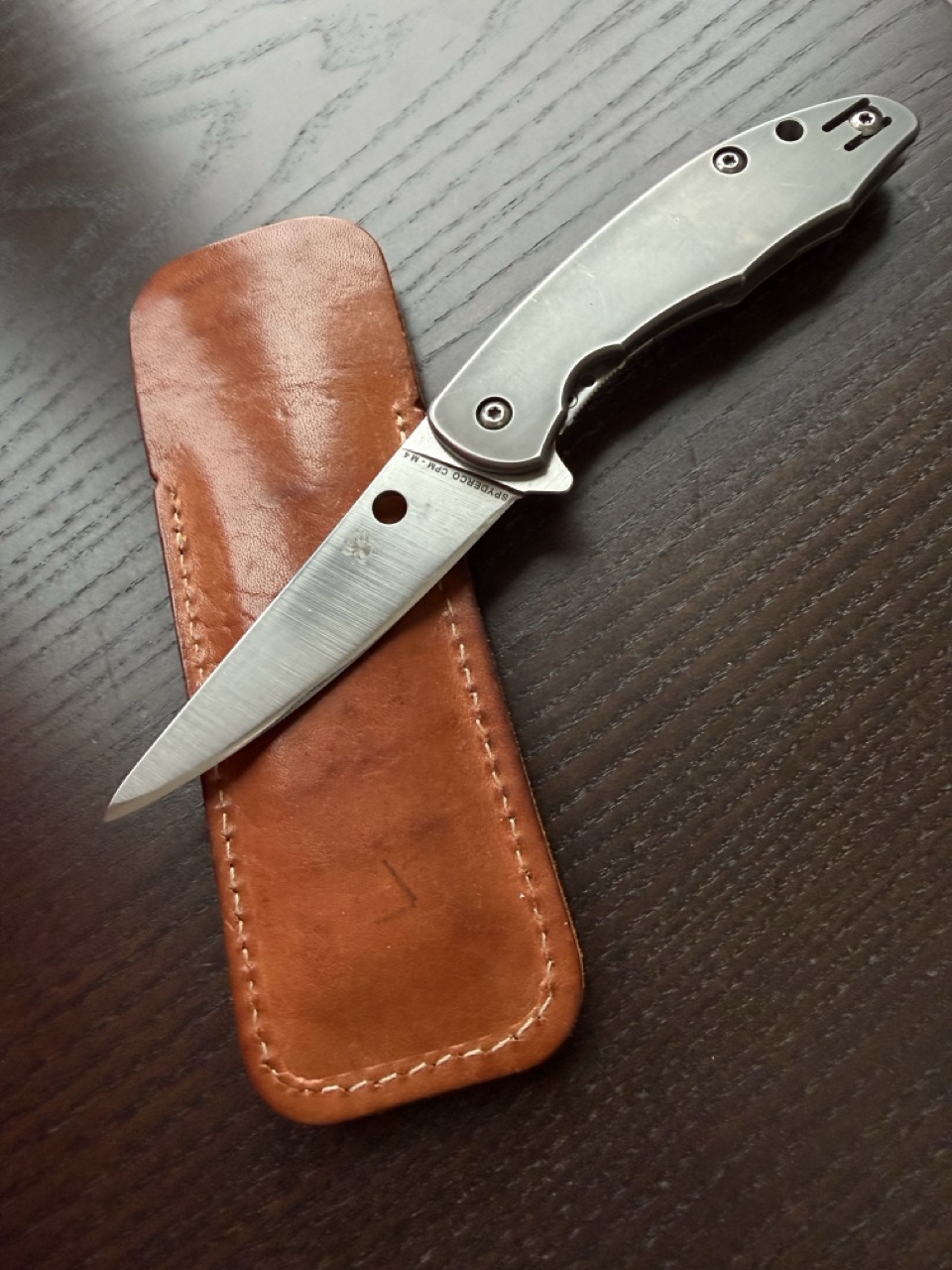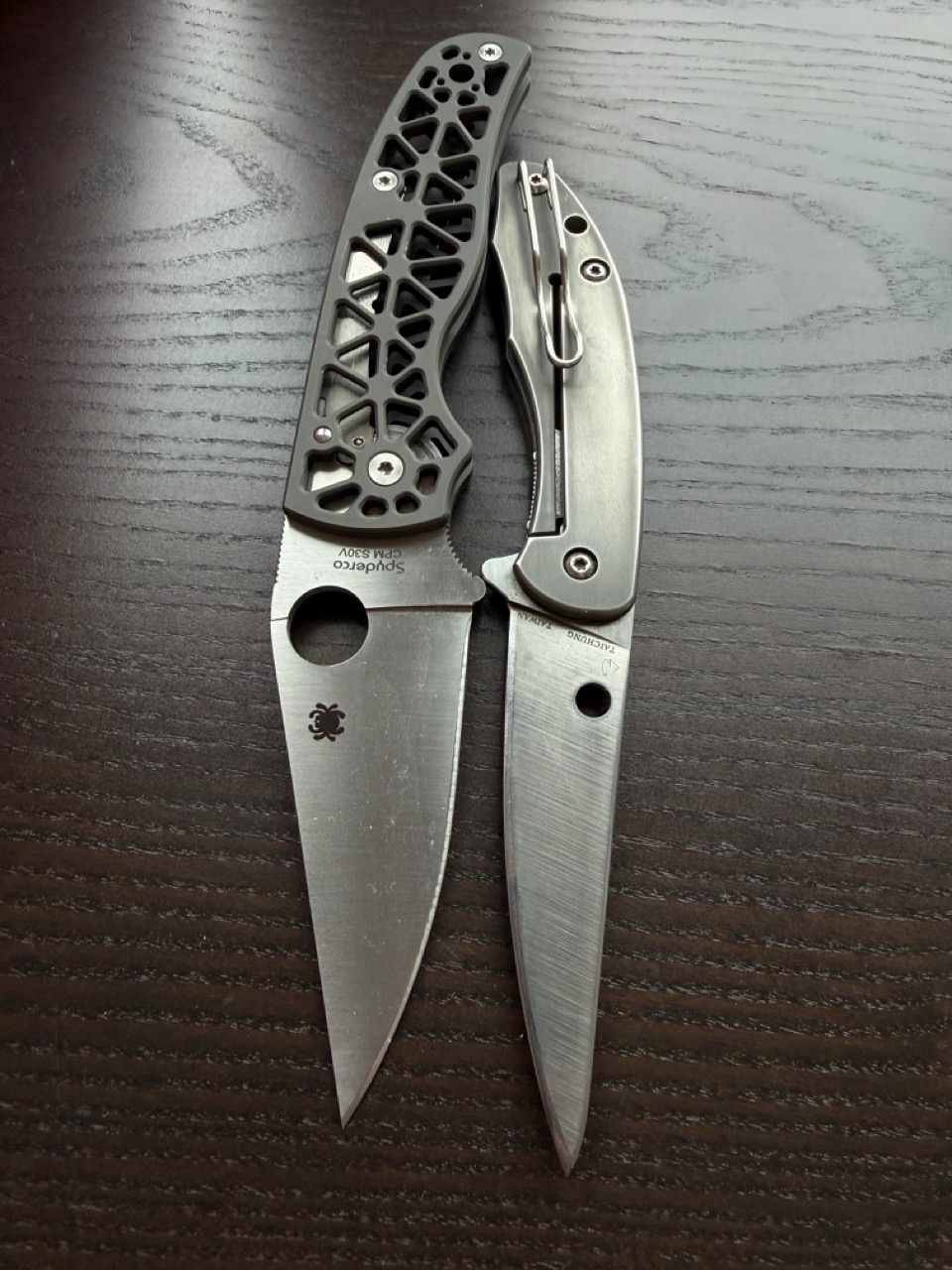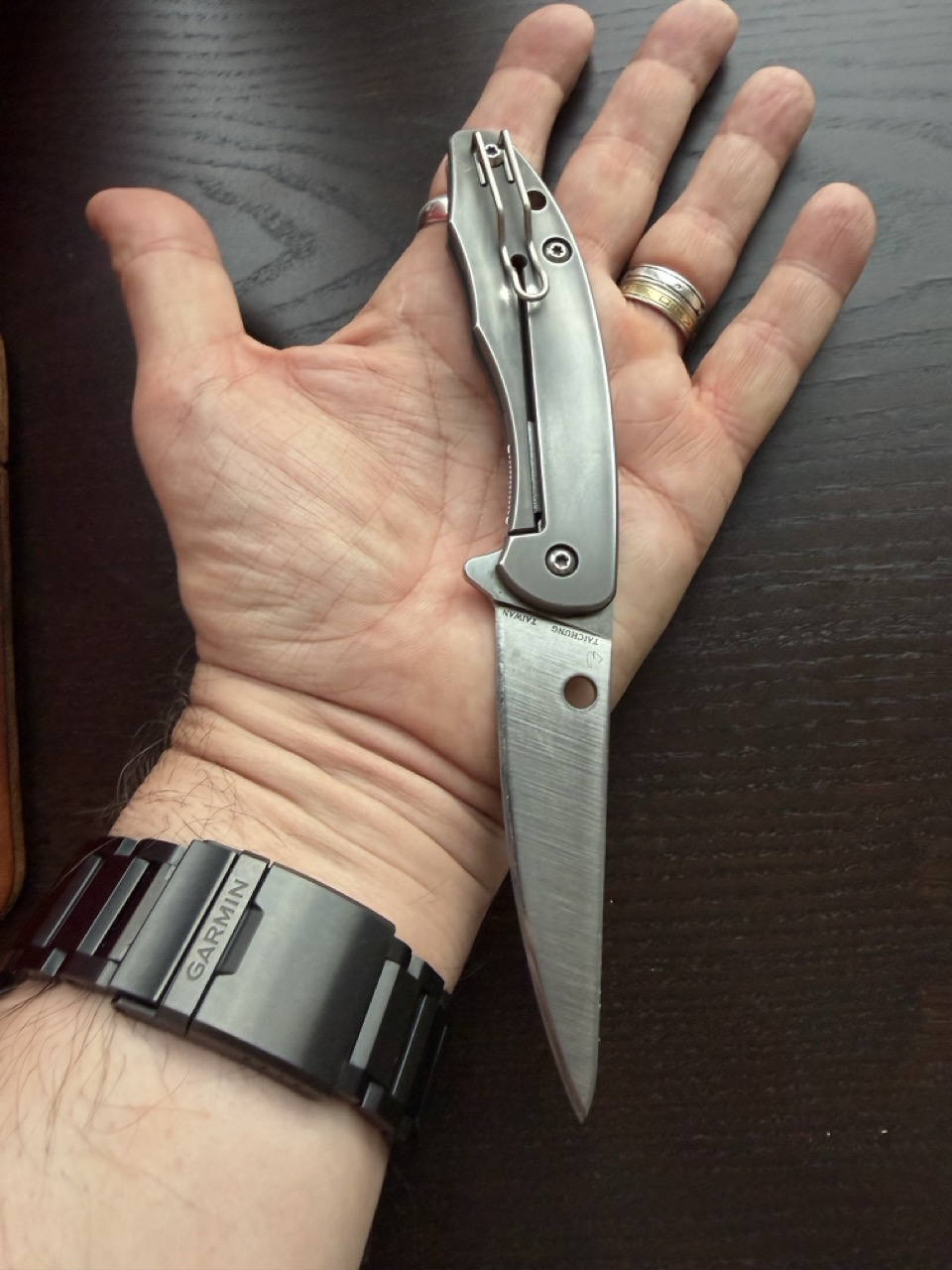
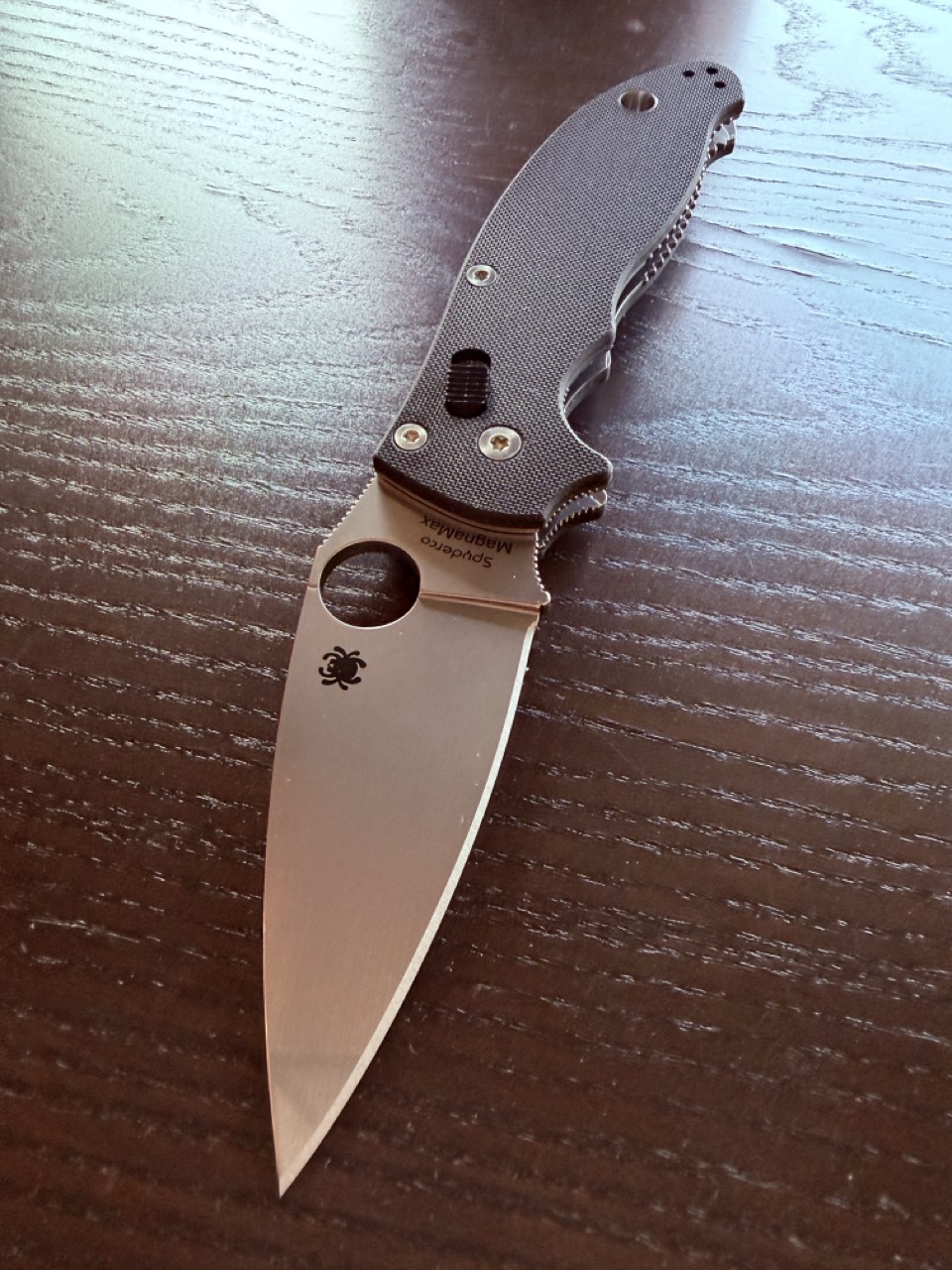
As with some of my previous Spyderco reviews, I would like to begin with a brief disclaimer. Spyderco kindly provided this knife for evaluation at my request as part of the Spyderco Ambassador Program. As always, receiving a sample does not influence my opinions. Every review published on Nemo Knives Review reflects my own experience after carrying and using the knife.
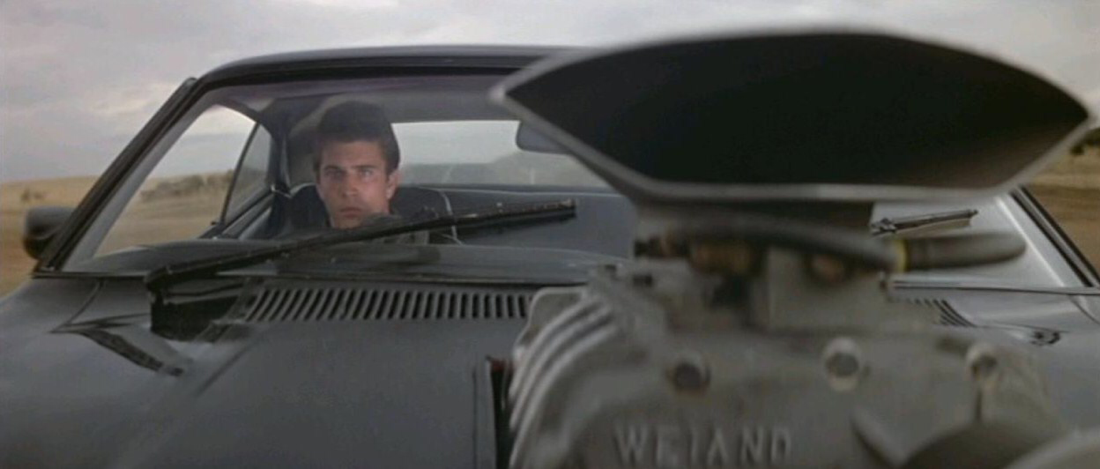
Goose: “You can shut the gate on this one, Maxie… it’s the duck’s guts!”
Barry (MFP mechanic): “Yeah, she’s the last of the V8s! She sucks nitro… with Phase 4 heads, twin overhead cams, 600 horsepower through the wheels! She’s meanness put to music and the bitch is born to run!”
Goose: “He’s in a coma, man!”
— From the screenplay of Mad Max (1979), written by George Miller and James McCausland.
First Impressions
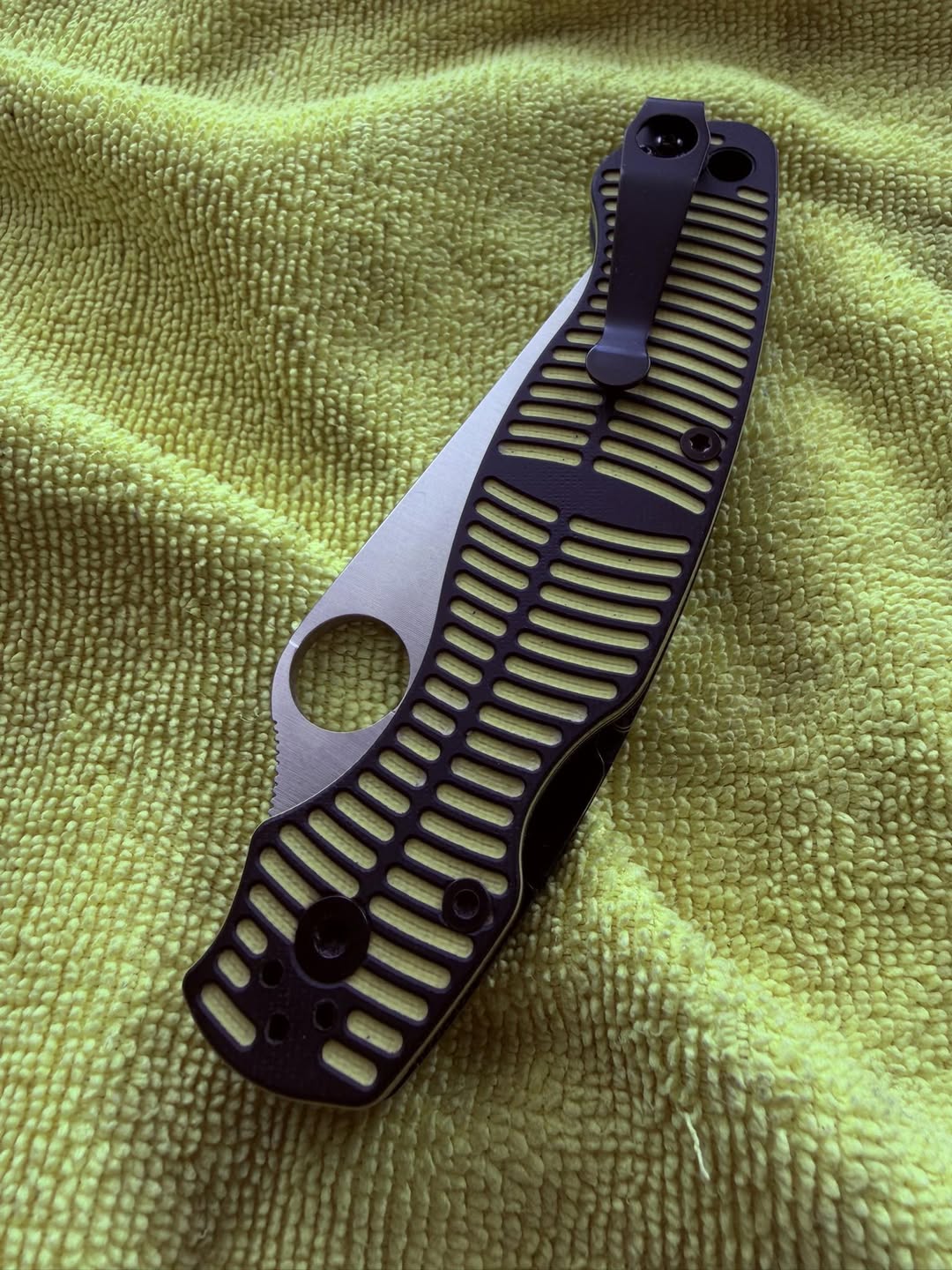
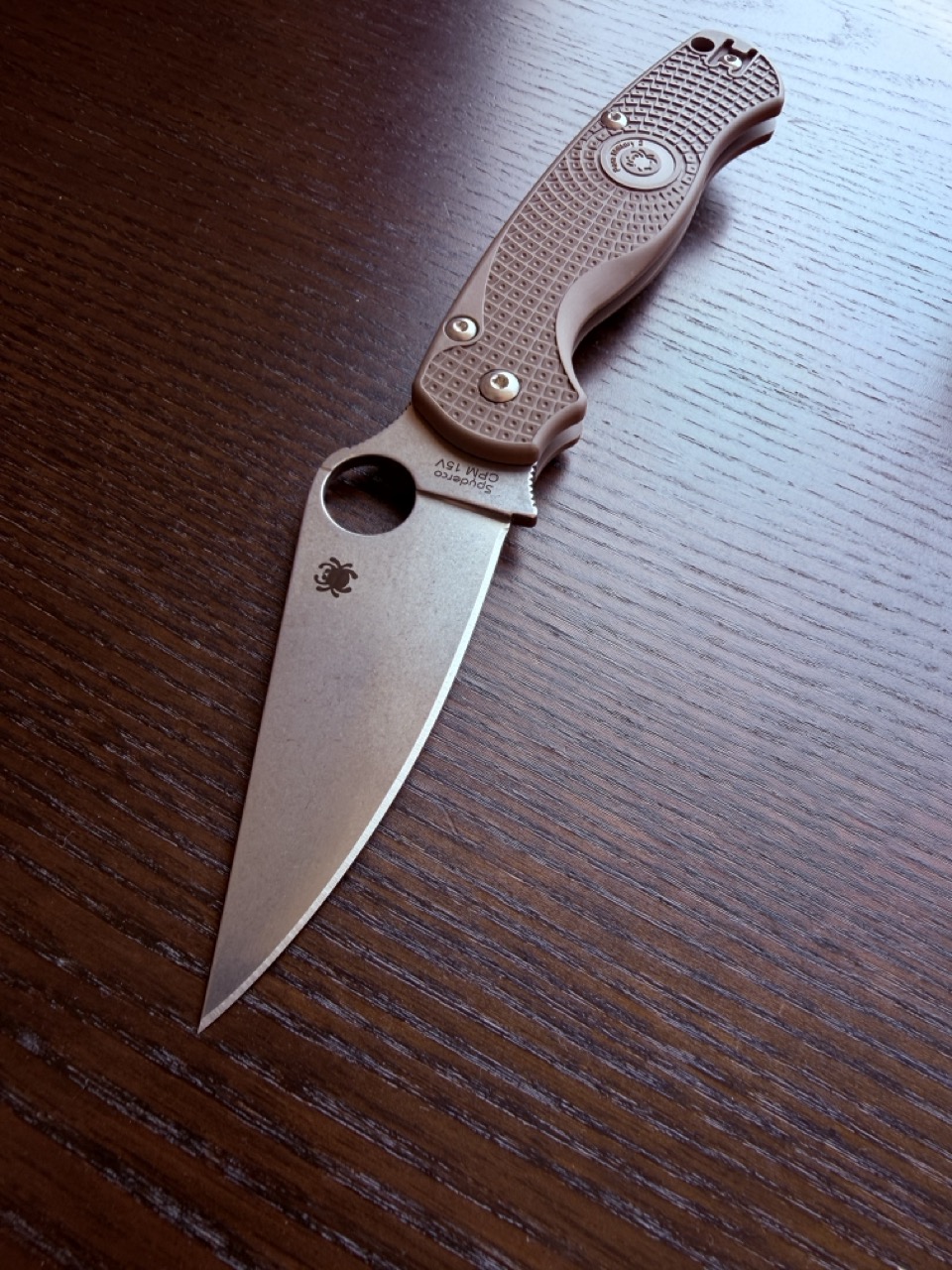
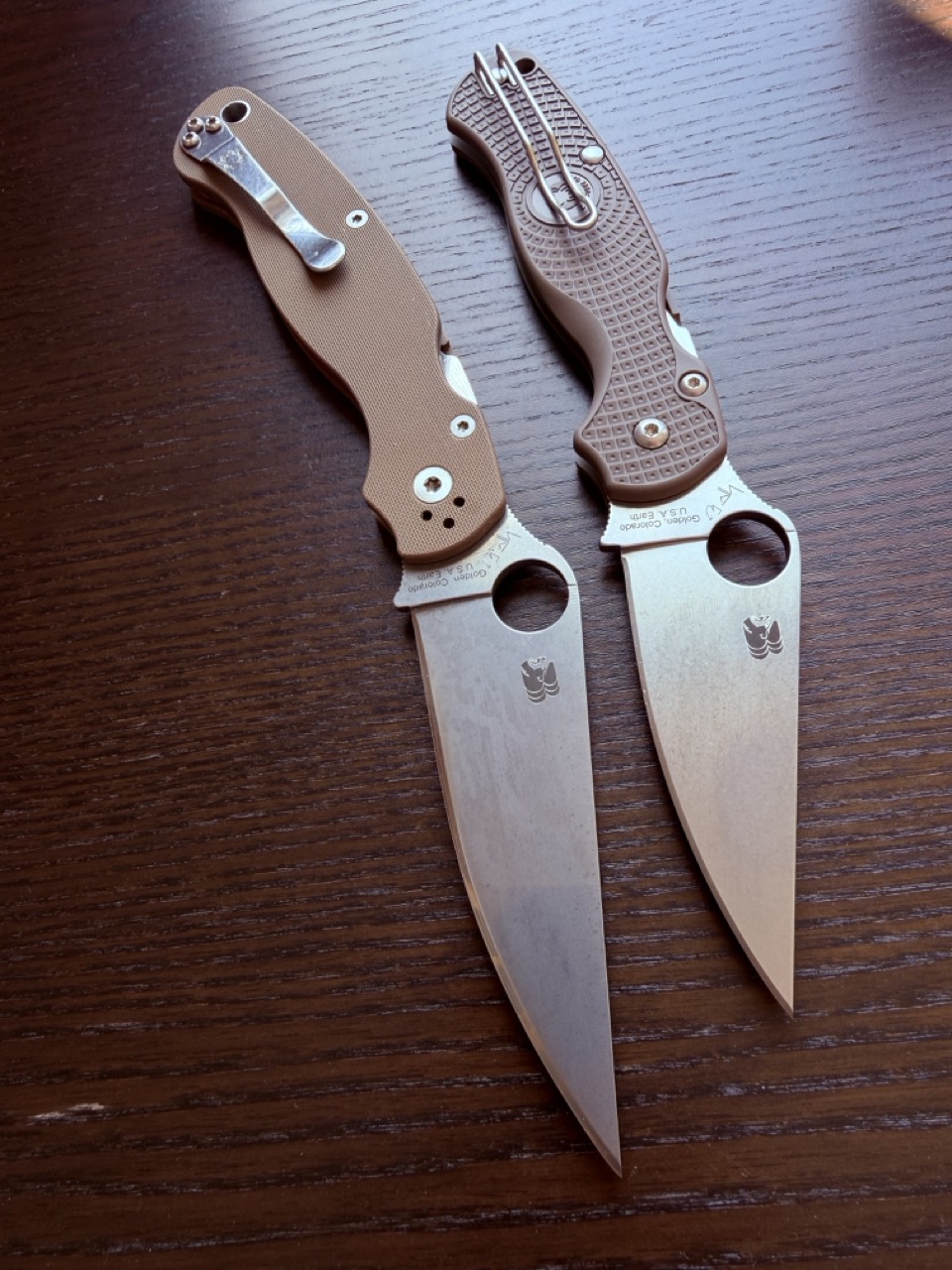
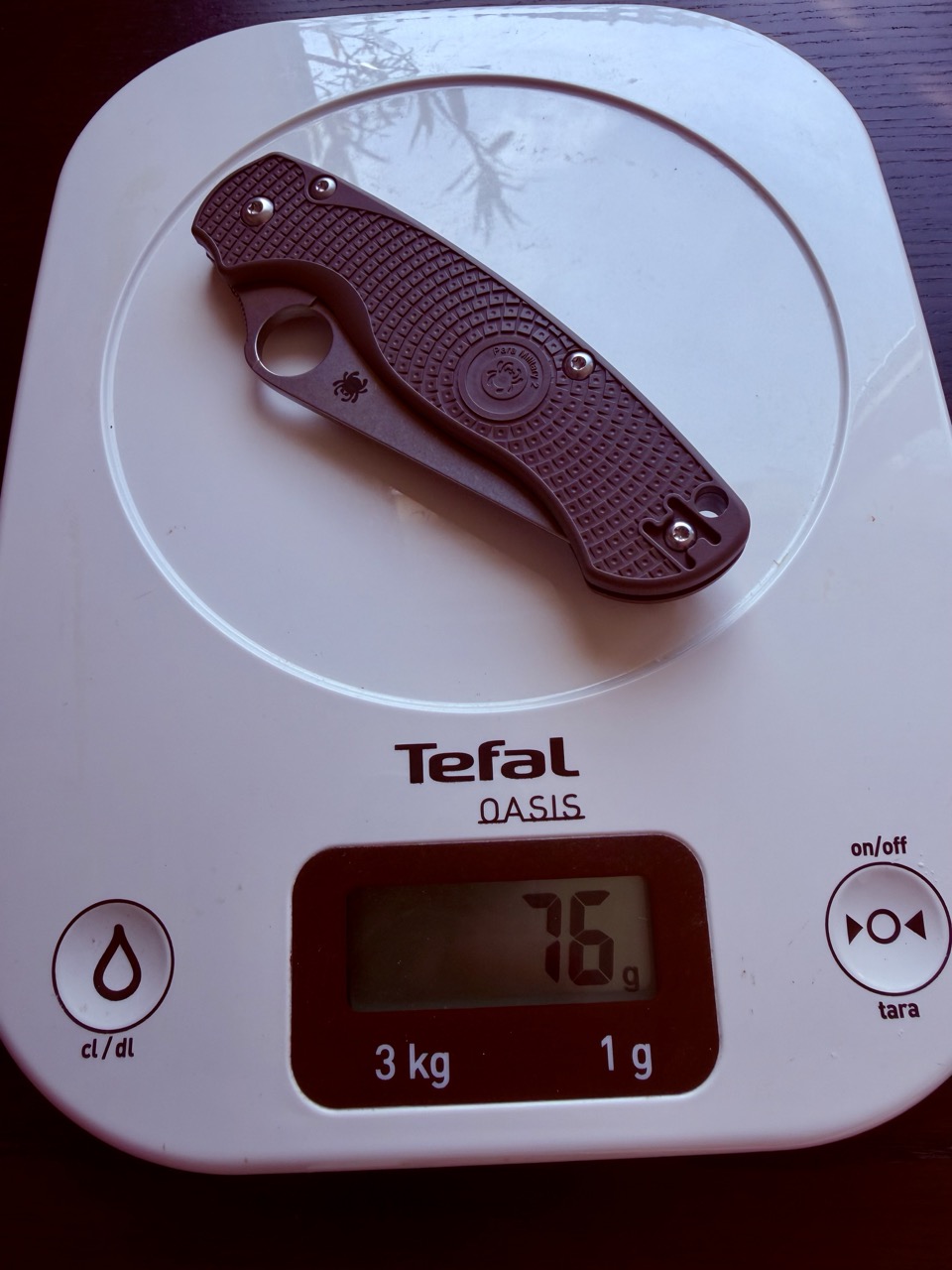
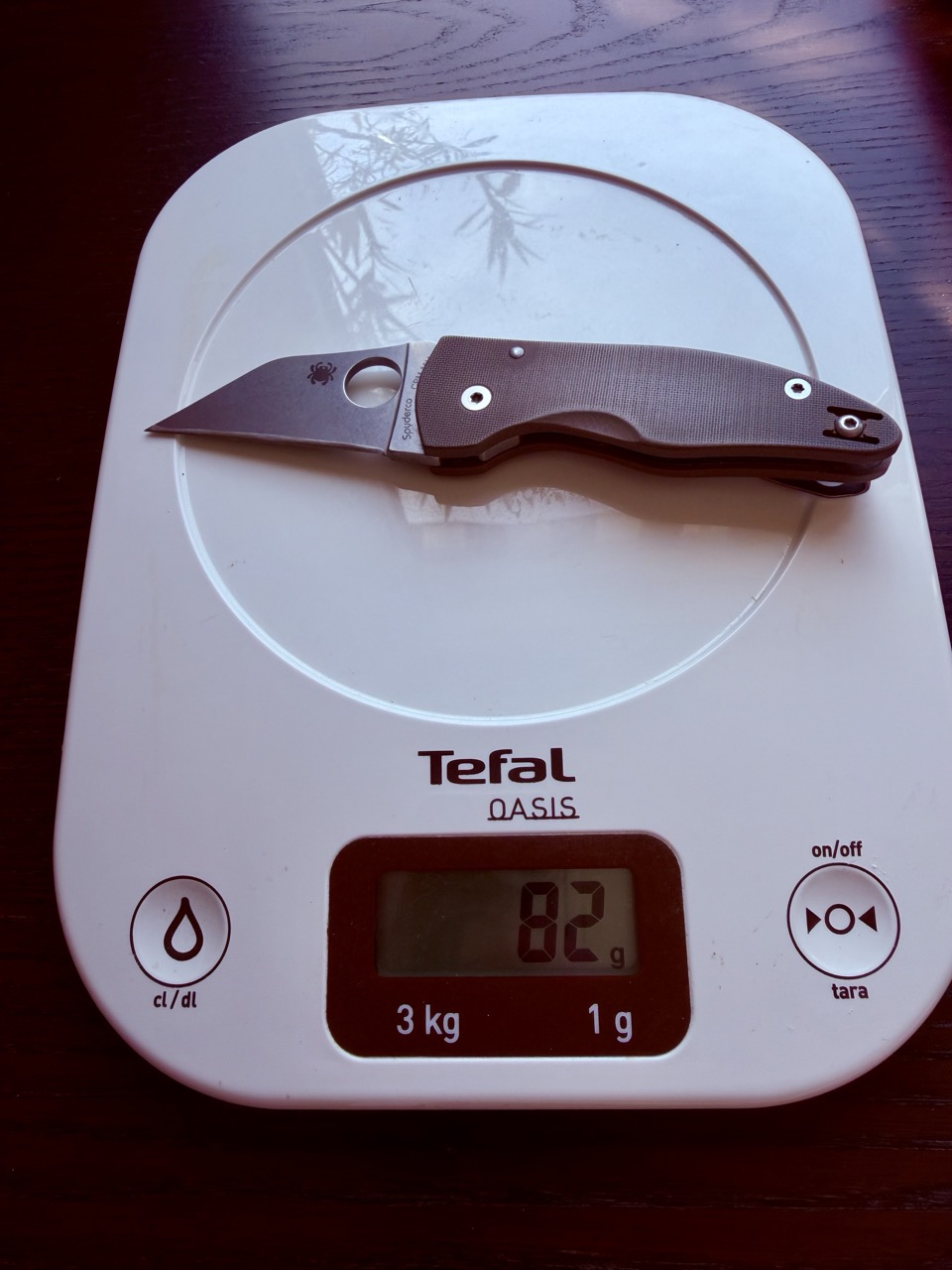
The very first thing that struck me wasn’t the impeccable fit and finish—those are exactly what I’ve come to expect from Spyderco. It was the weight. Those days I mainly review Lightweight FRN folders but there is something about that Manix 2…
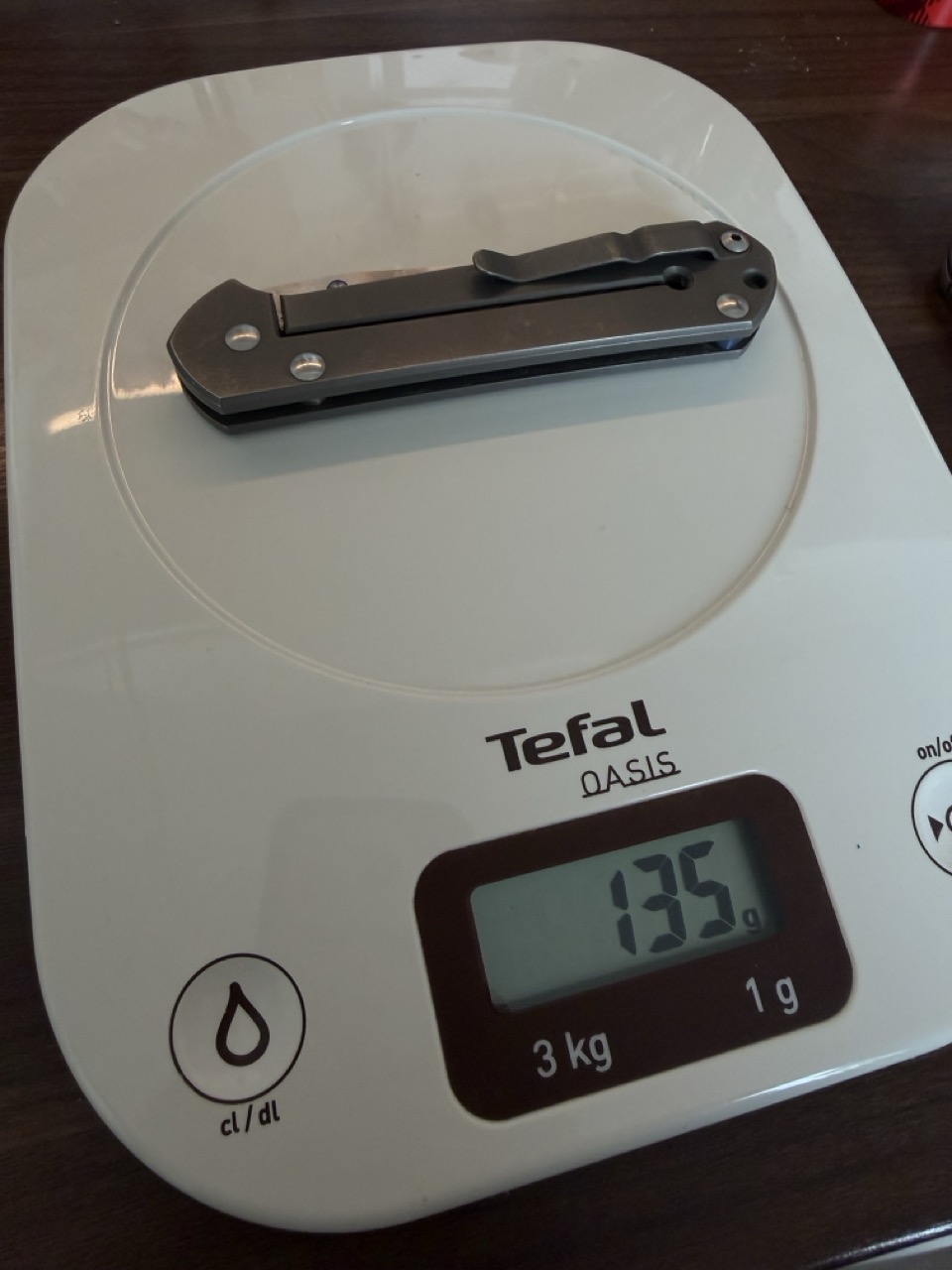
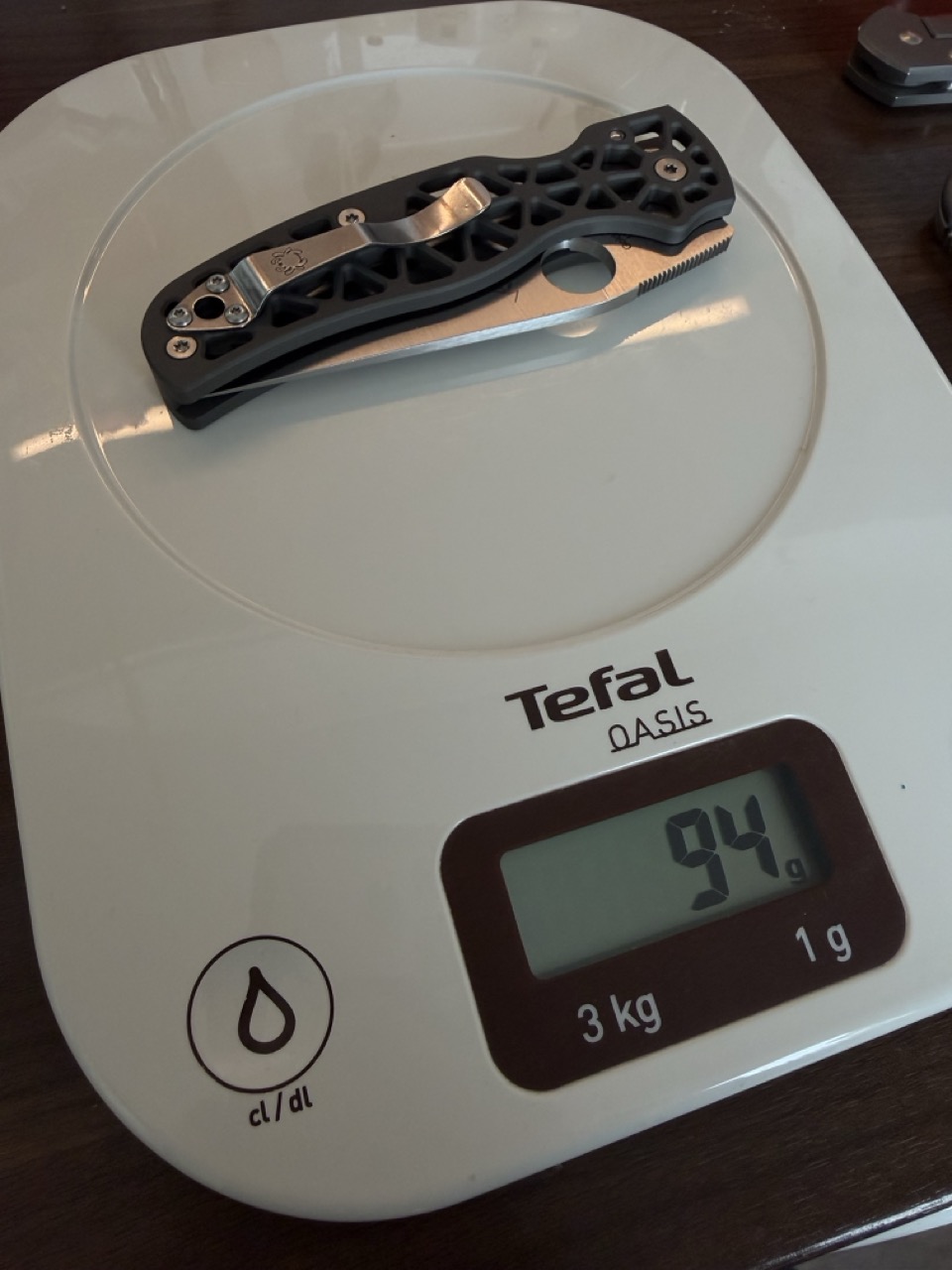
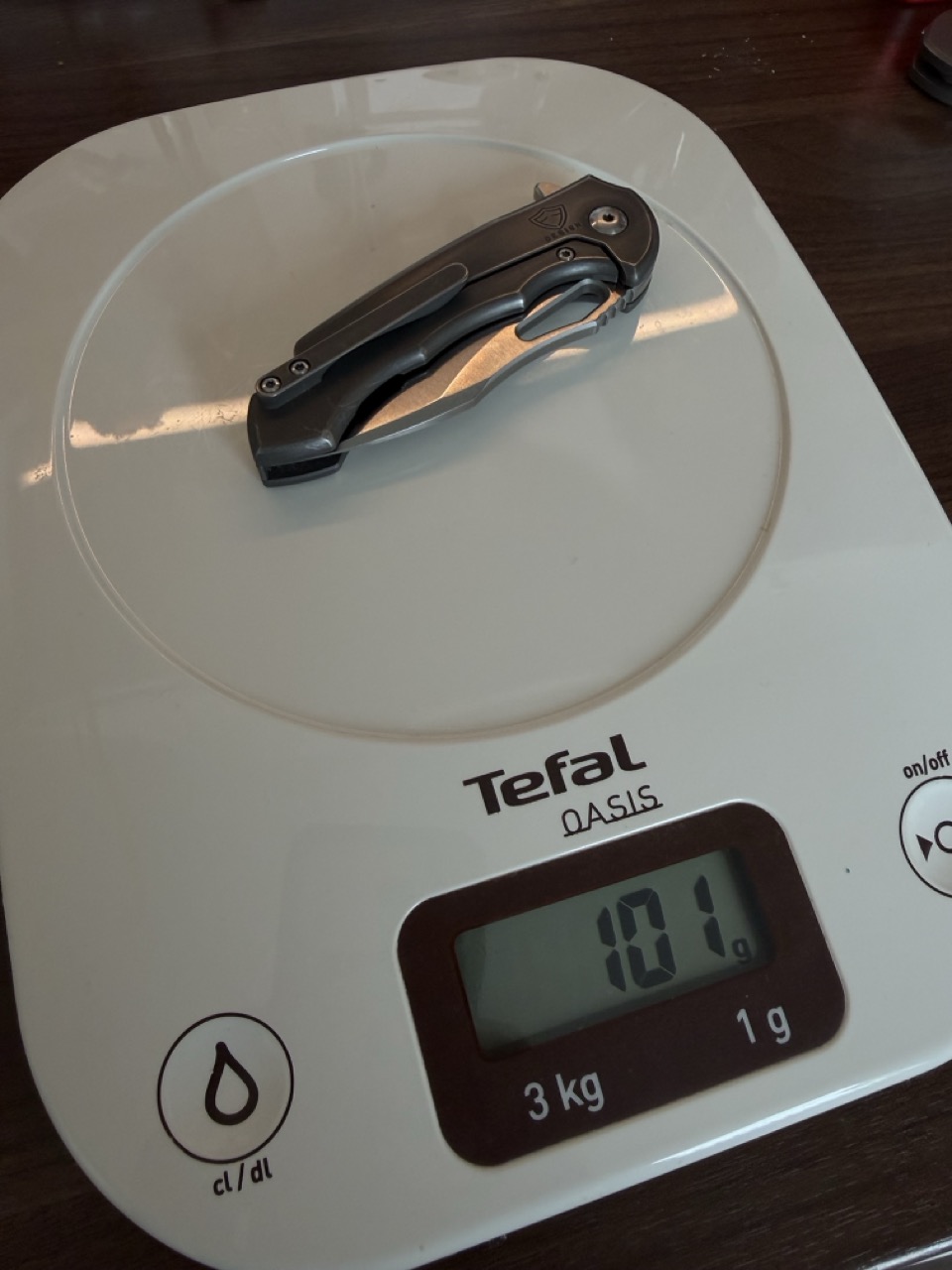
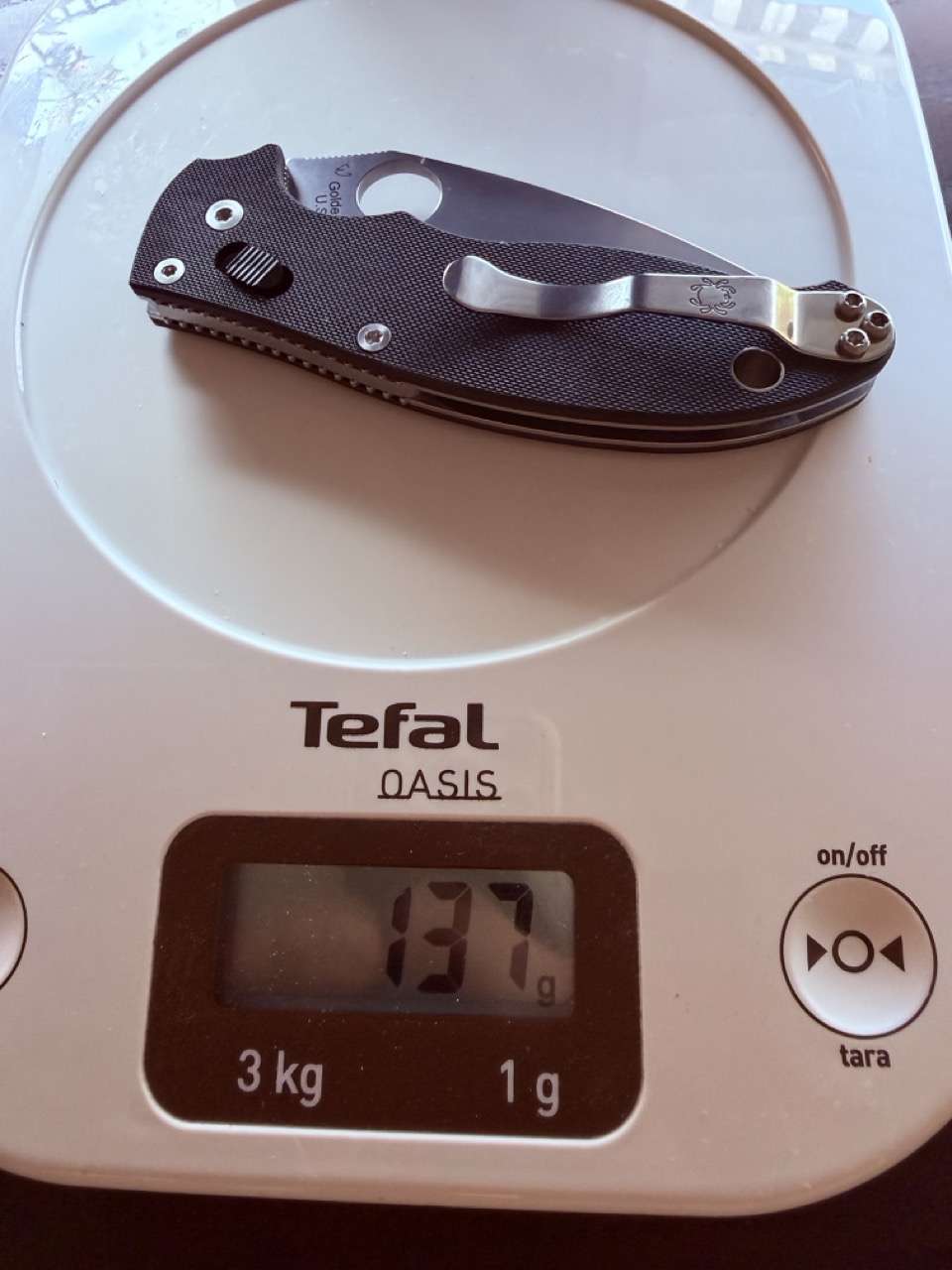
This MagnaMax version weighs 136 grams on my kitchen scale, roughly 20 grams heavier than both of my previous Manix 2 models. The additional mass is noticeable in hand, but rather than feeling cumbersome, it reinforces the impression that this is an exceptionally robust working knife. It feels dense and built to withstand years of hard use.
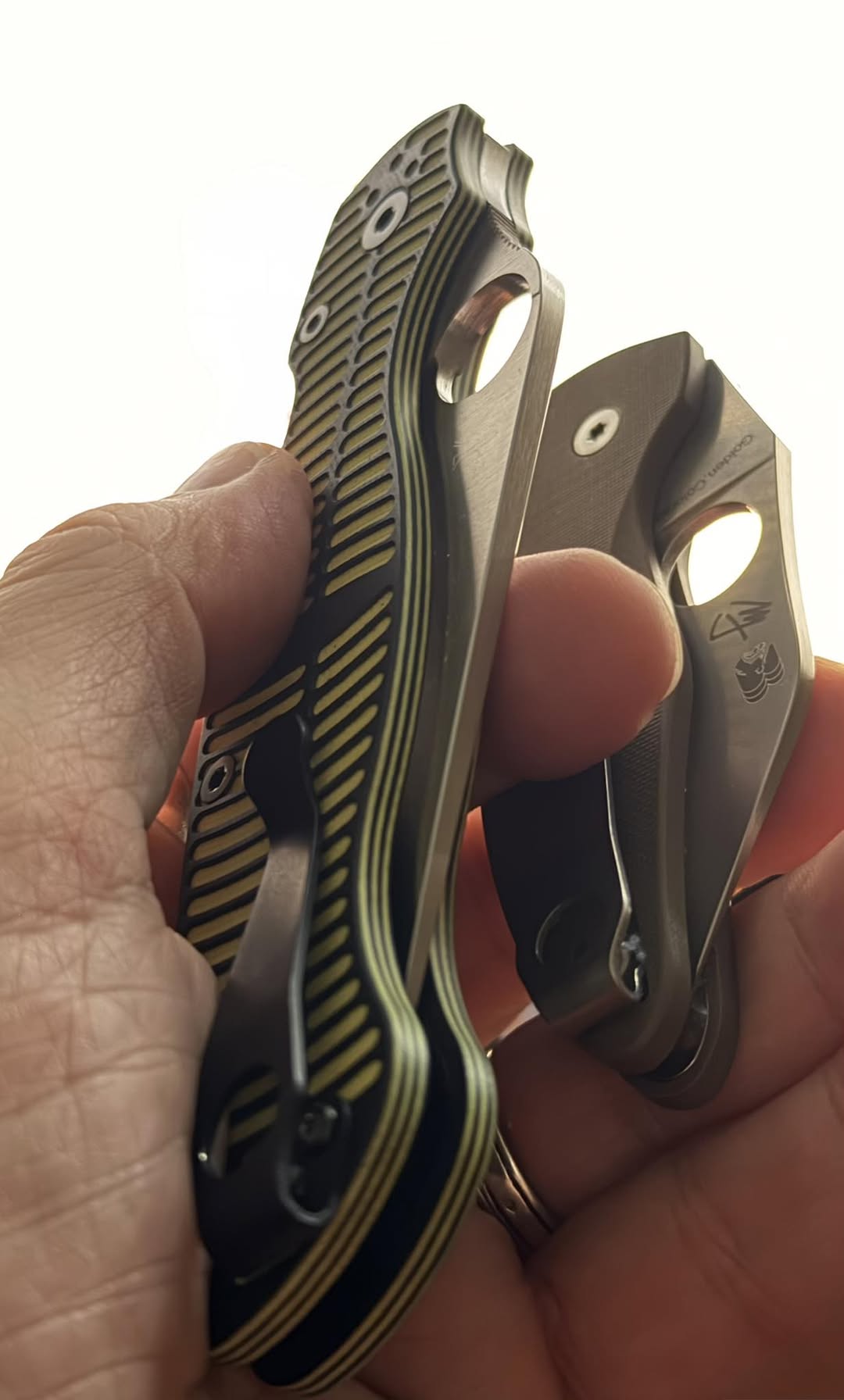
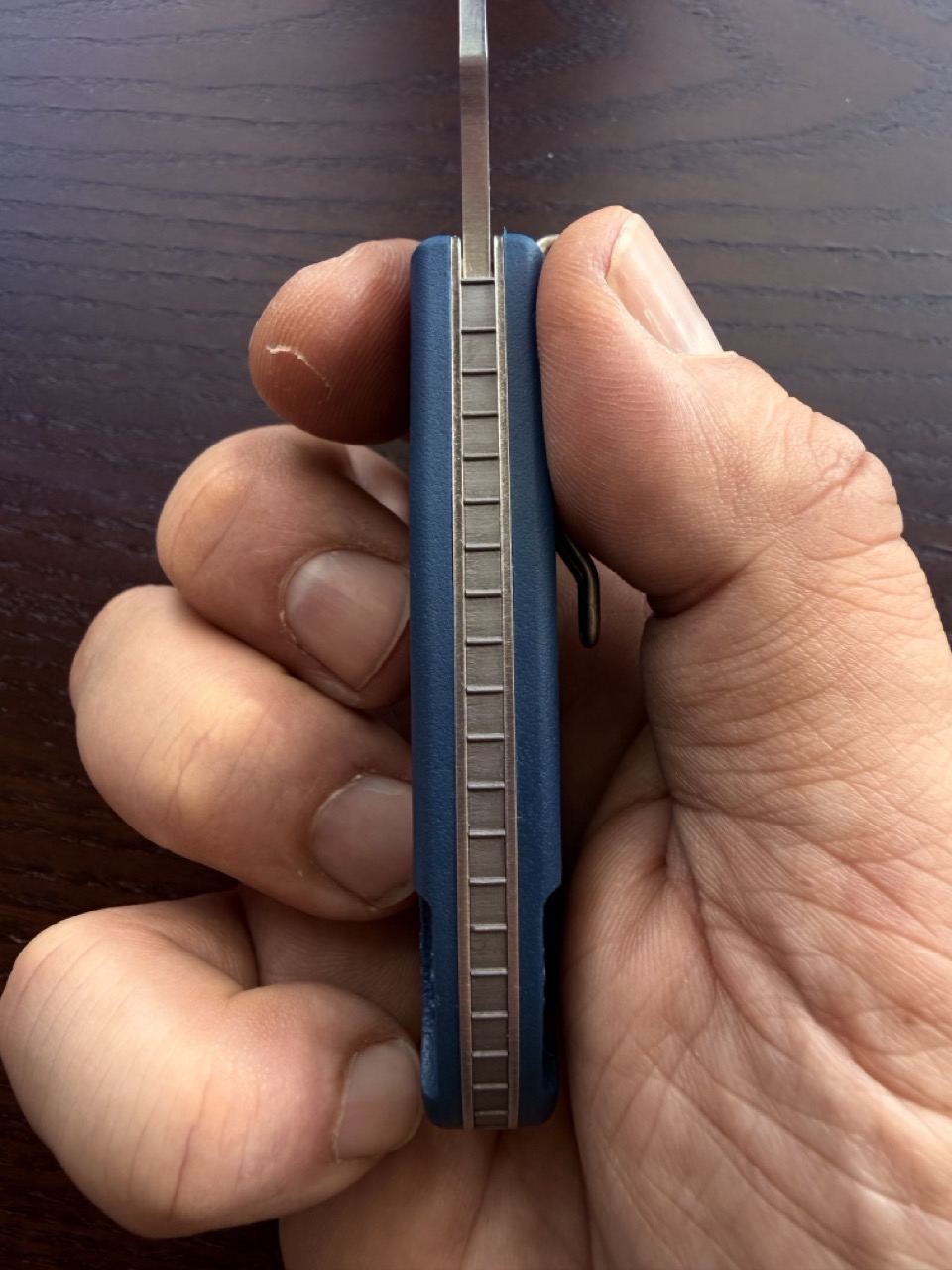
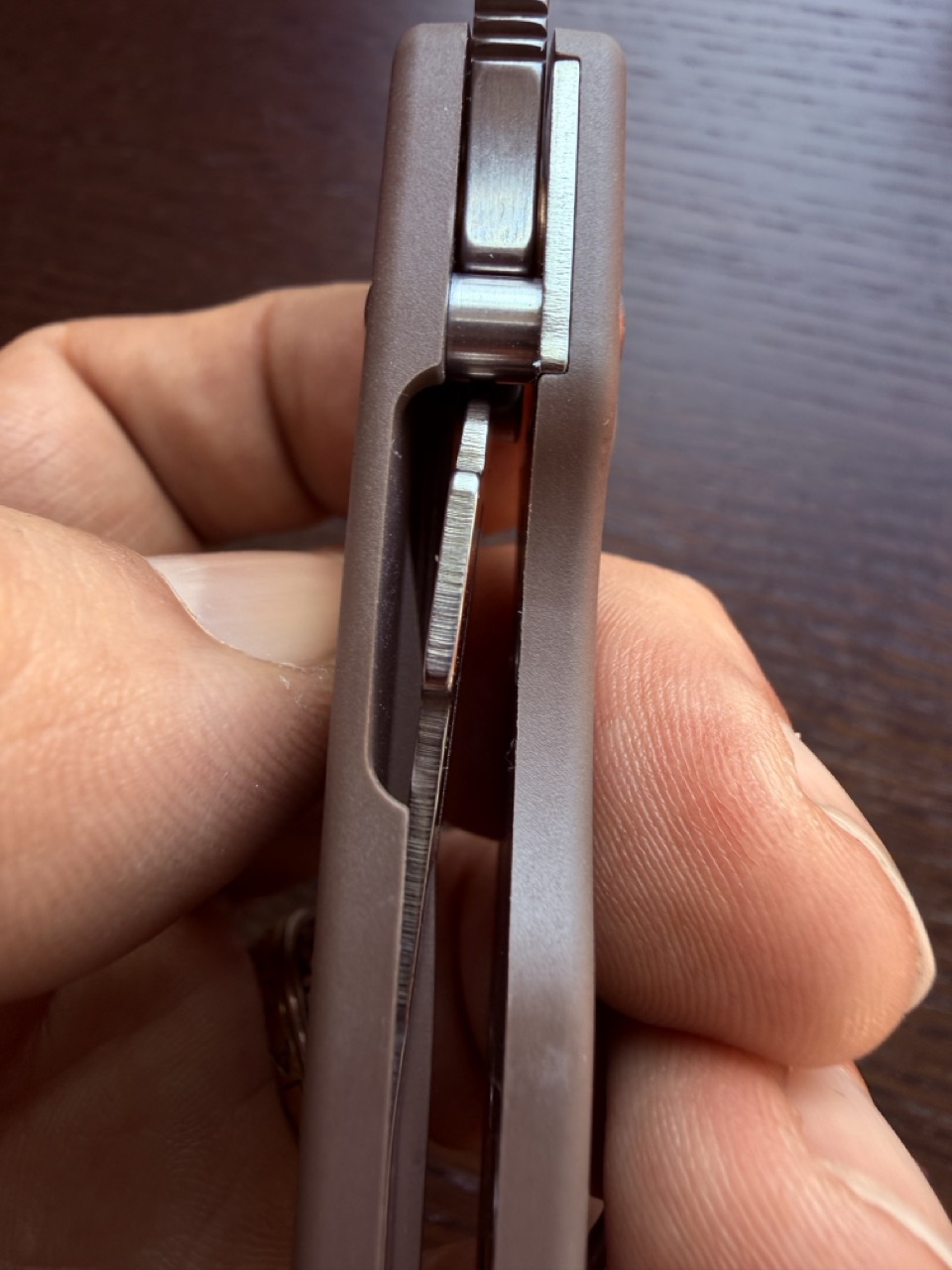
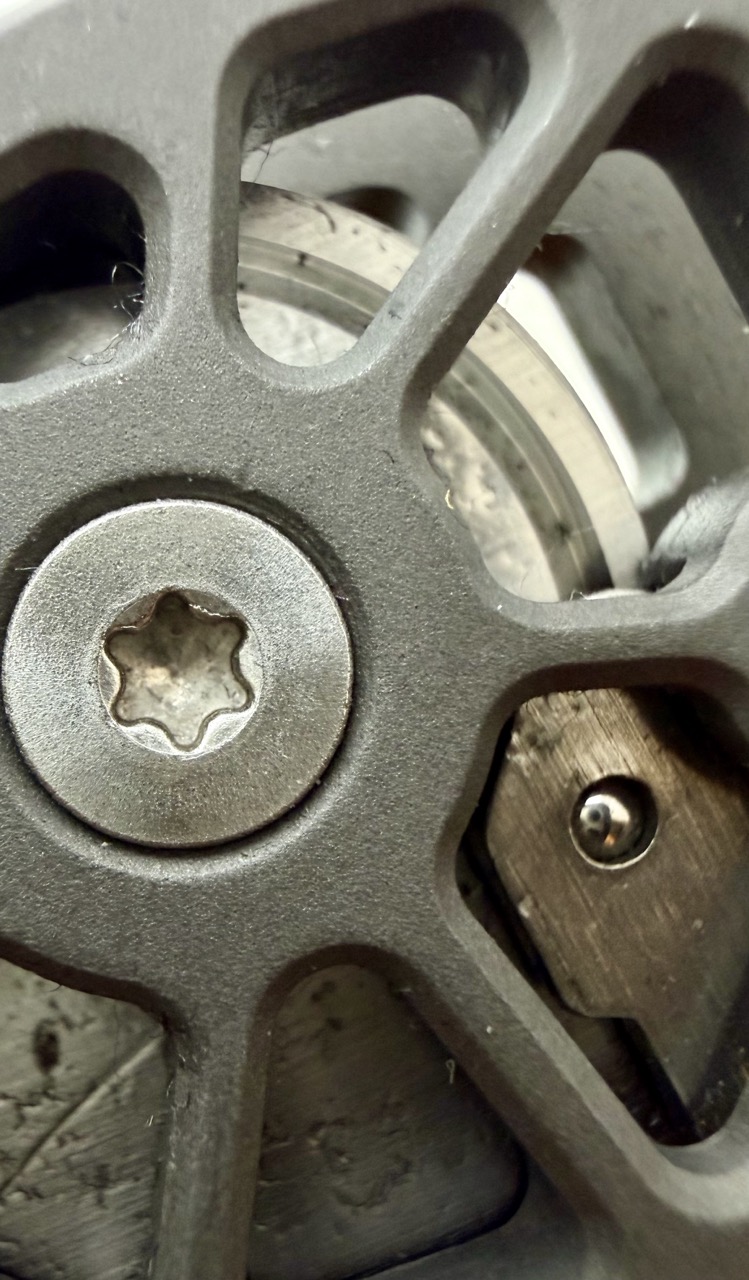
Thanks to a hint from Robin, the mystery behind the extra weight turned out to be quite simple: this Manix 2 features full stainless steel liners. Unlike some previous versions that use skeletonized liners to reduce weight, these are solid throughout, adding approximately 20 grams to the knife. The difference is immediately noticeable in hand, giving the MagnaMax version an exceptionally robust, confidence-inspiring feel.
So I went back through the Manix’s history to understand why.
Back to the Origins
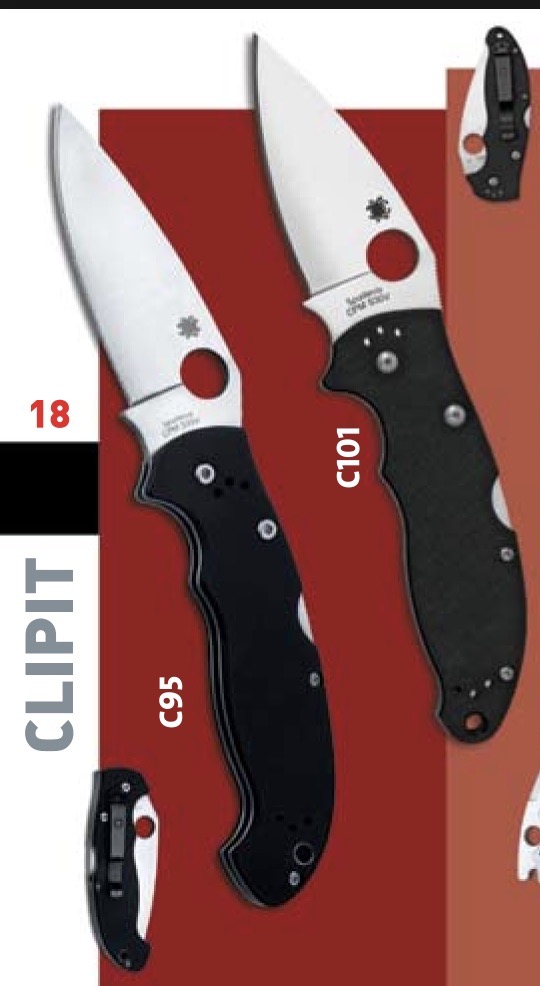
Looking back to 2004, Spyderco released two remarkably robust folders. First came the Chinook, designed by Master-at-Arms James Keating around a Bowie-style blade capable of powerful back cuts. Then, following the same philosophy but with Spyderco’s signature leaf-shaped blade, came the C95 Manix.
Few folding knives have blurred the line between folder and fixed blade as convincingly as the Spyderco Manix. When the original C95 was introduced, it quickly earned a reputation for almost overbuilt strength. Designed to withstand relentless abuse, it inspired confidence in the harshest conditions and became a favorite among users who valued absolute reliability. Its only real compromises were a slight amount of vertical blade play inherent to its lock design and its considerable weight. At 154 grams, the original Manix felt reassuringly robust, but it was anything but discreet in the pocket.
My friend Brian, a retired U.S. Navy helicopter pilot and avid hunter, has carried the original C95 Manix as his primary EDC since its release in 2004.
“My Manix goes everywhere with me. It’s the first knife I put on in the morning and the last one I take off at night,” he wrote to me yesterday.
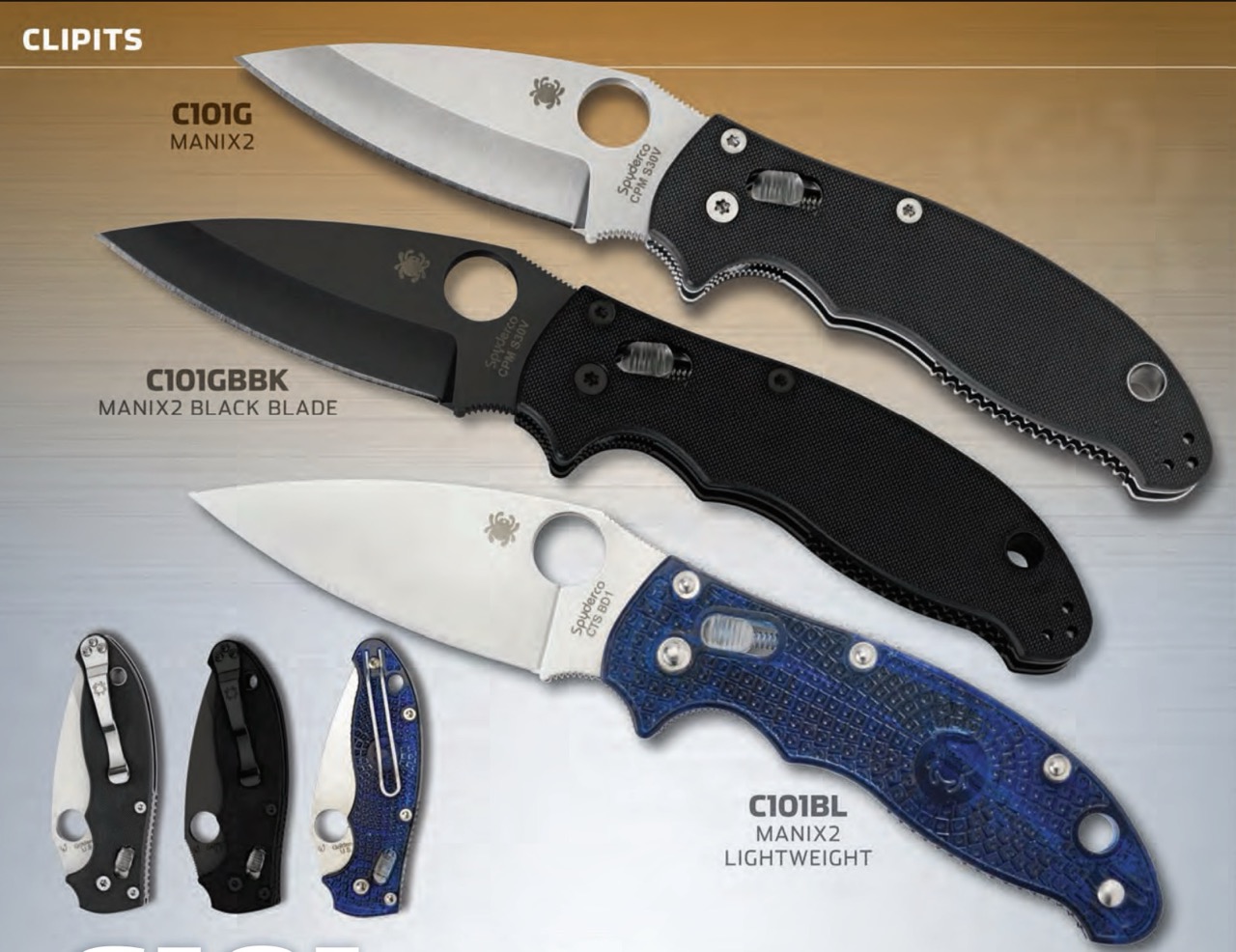
Five years after introducing the caged Ball Bearing Lock on the Dodo, Eric Glesser chose not to simply refresh the Manix, but to rethink it from the ground up. Introduced in 2009, the Manix 2 was conceived around a deceptively simple challenge: retain everything that made the original so exceptionally strong while reducing its weight by roughly ten percent. Achieving that balance required far more than trimming a few grams. The knife received a redesigned handle with more refined ergonomics, creating a tool that cut better, carried easier, and felt noticeably more natural in hand without sacrificing the confidence-inspiring durability that had defined the original Manix.
The heart of this transformation was the lock itself. The original Ball Bearing Lock, invented by Sal Glesser to satisfy the demanding standards of MBC (Martial Blade Craft), was already one of the strongest and most innovative locking systems in the folding knife world. Eric Glesser refined that concept even further by developing and patenting the Caged Ball Bearing Lock specifically for the Manix 2. By enclosing the ball bearing within a precision-machined polymer cage, Spyderco was able to use a smaller bearing while preserving the lock’s remarkable strength. The result was a mechanism that operated more smoothly, improved everyday ergonomics, simplified assembly, and remained exceptionally resistant to wear—all while making the design significantly more difficult to copy.
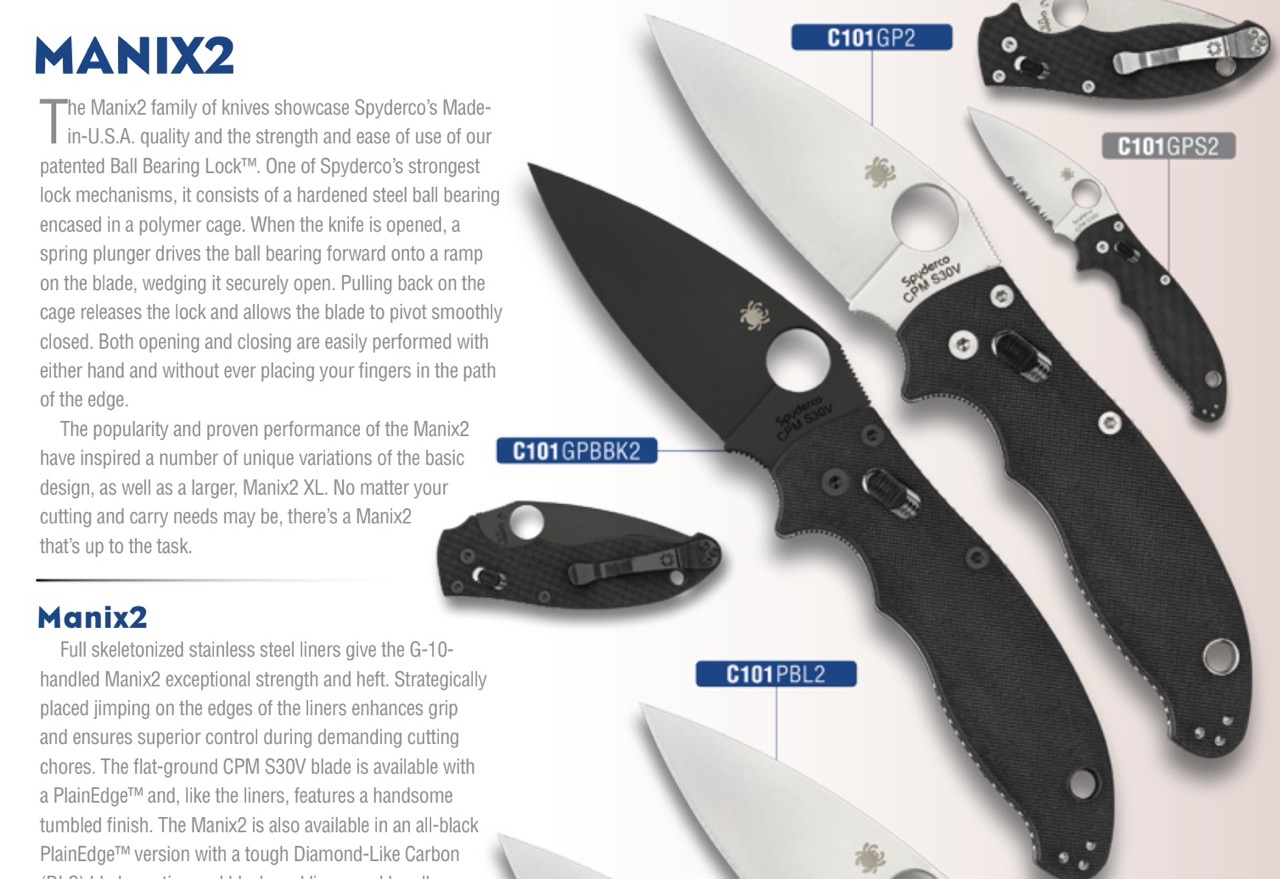
In 2014 in Spyderco Catalogue it is written:
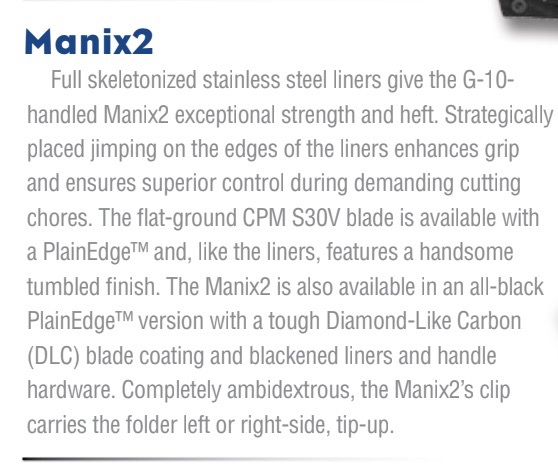
“Manix2
Full skeletonized stainless steel liners give the G-10-handled Manix2 exceptional strength and heft...
The Full Liner Mystery
Spyderco has used both full and skeletonized liners throughout the Manix 2’s history, depending on the production period and model. Although skeletonized liners were used on many versions to reduce weight, the standard Black G10 Manix 2 had already returned to full stainless steel liners before the introduction of MagnaMax. Rather than marking a return to full liners, the MagnaMax version continues that robust, hard-use philosophy.
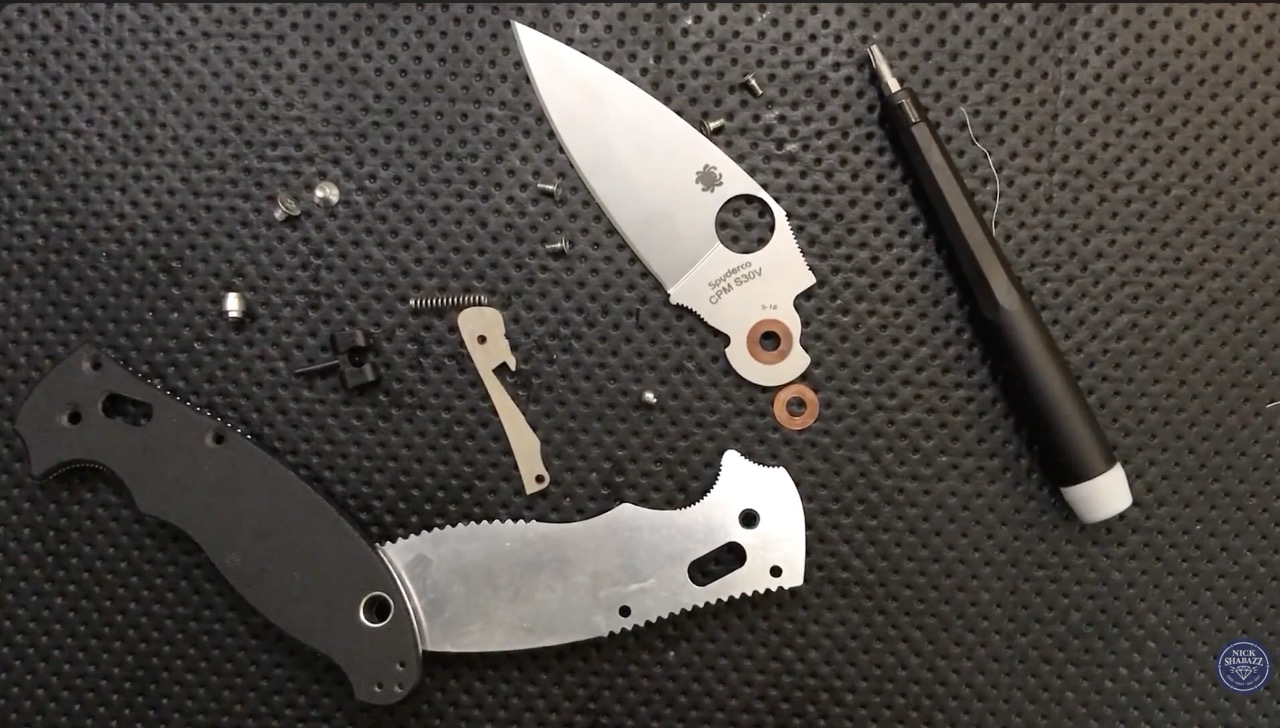
(Screenshot from Nick Shabazz video published eight years ago. )
Nick himself noted, on the day the video was released, “This video is an antique, one of the oldest in my backlog,” suggesting that the knife had actually been filmed several years earlier.
Robin (AKA Ramonade) later commented on the Spyderco Forum, “On Shabazz’s video, it’s from 2015, just like mine.”
Thanks again to Robin for taking the time to disassemble his Manix 2—and, more importantly, for putting it back together without launching the spring or the Ball Bearing Lock across the room!
Then again, that’s probably no surprise. He’s a talented young knifemaker with a very promising future ahead of him.
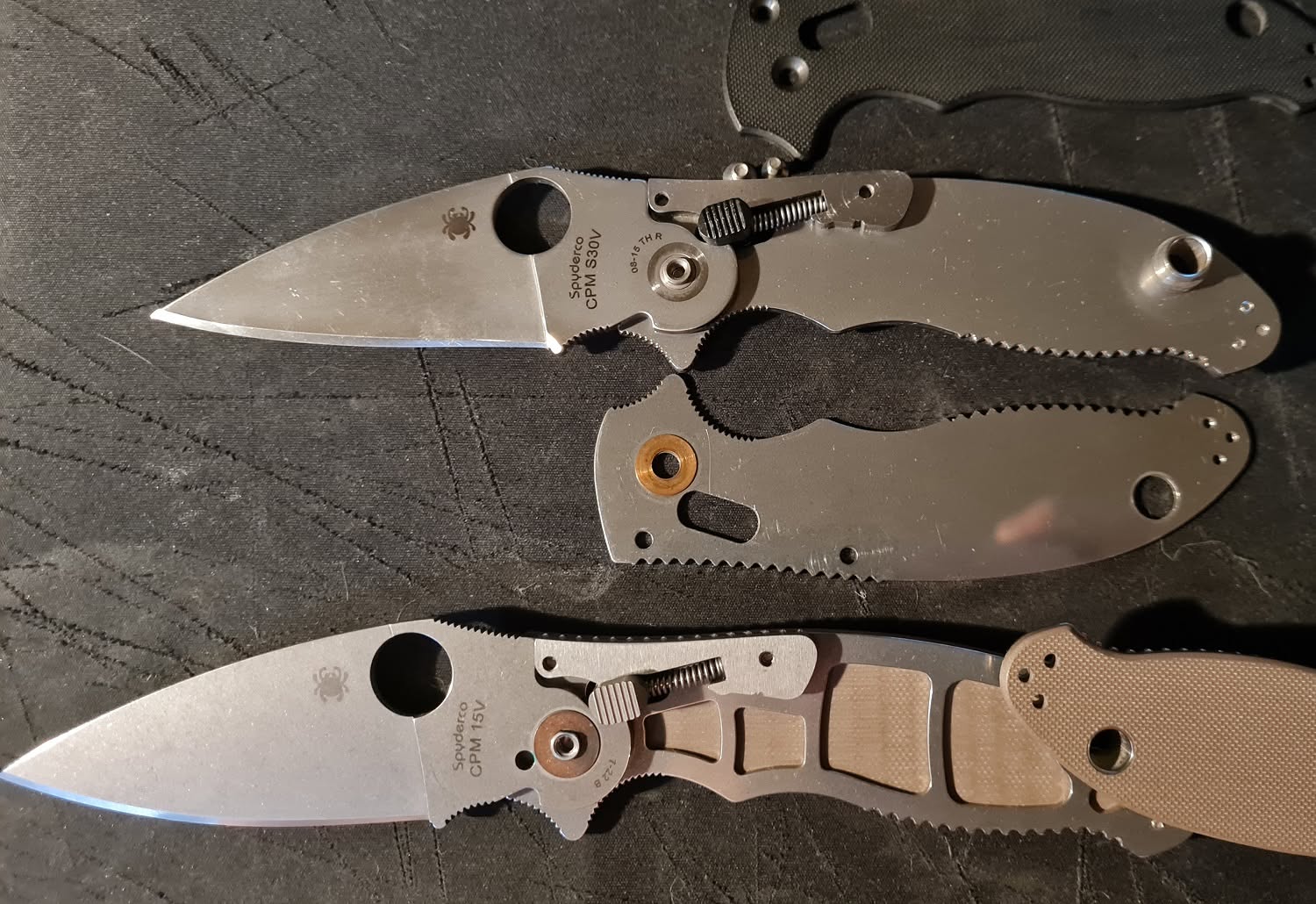
(Two Manix 2s disassembled by Robin to verify the manufacturing dates hidden beneath the blades, helping make this review as accurate as possible.)
Robin also pointed out another important detail: the Manix 2 Salt G-10 in MagnaCut is not a Sprint Run but a regular production model. It therefore demonstrates that Spyderco has also used skeletonized liners on a standard production Manix 2, rather than limiting them exclusively to Sprint Runs. This further could highlight that liner construction has varied depending on the specific model and intended purpose, rather than following a single rule across the entire Manix 2 family.
Spyderco has used both full and skeletonized liners throughout the Manix 2’s history, depending on the production period and model. Although skeletonized liners were used on many versions to reduce weight, the standard Black G10 Manix 2 had already returned to full stainless steel liners before the introduction of MagnaMax. Rather than marking a return to full liners, the MagnaMax version continues that robust, hard-use philosophy.
But I do love the extra heft and the bottom-heavy balance of this MagnaMa(ni)x. It anchors the knife securely in my palm, making it feel incredibly stable and controlled during use. Rather than feeling bulky, the additional weight inspires confidence.
Looking back at the discussion, I realize my perspective was strongly influenced by the Manix Sprint Runs I own and use most often—namely that 2009 S90V Sprint Run and the new Salt G-10. Several Spyderco Forum members rightly pointed out that, for the standard G-10 Manix 2, full liners have actually been the norm for years. That’s a fair observation and an important distinction.
It is also worth mentioning that some members suggested that full liners may slightly reduce manufacturing costs by eliminating the skeletonizing process.
Yes I know, I may sound like I’m splitting hairs, but this whole Manix 2 weight story is actually quite fascinating. After all, one of Eric Glesser’s original goals in 2009, when replacing the original Manix’s back lock with the Ball Bearing Lock, was to reduce the knife’s overall weight. Spyderco’s 2014 Product Guide even described the standard G10 Manix 2 as featuring skeletonized stainless steel liners. That’s what makes the full stainless steel liners—and the additional heft—of the MagnaMax version particularly intriguing.
To me, it gives the impression that Spyderco was willing to prioritize strength over shaving off a few extra grams. Whether that decision was driven purely by design philosophy, manufacturing considerations, or a combination of both is something only Spyderco could answer.
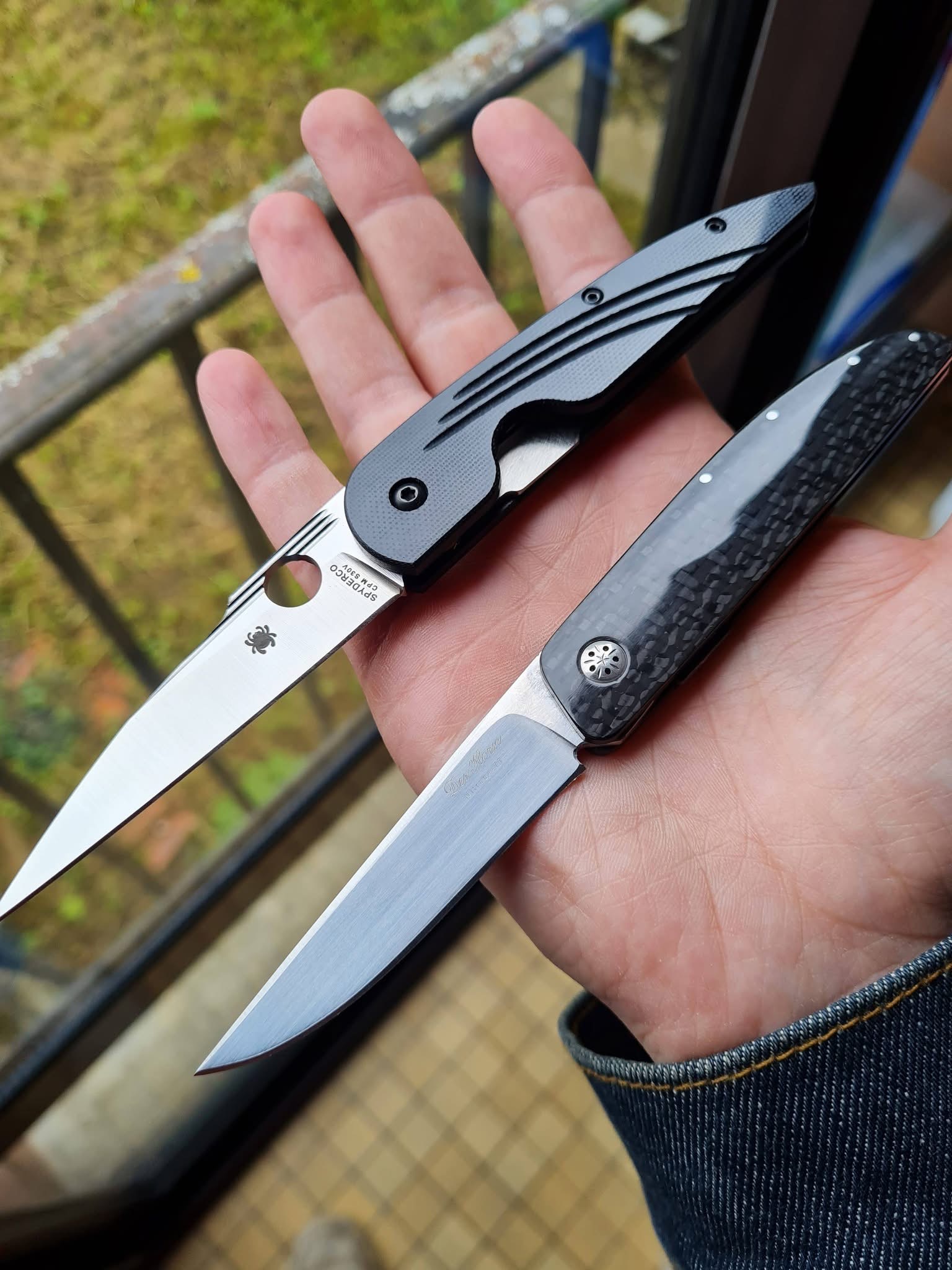
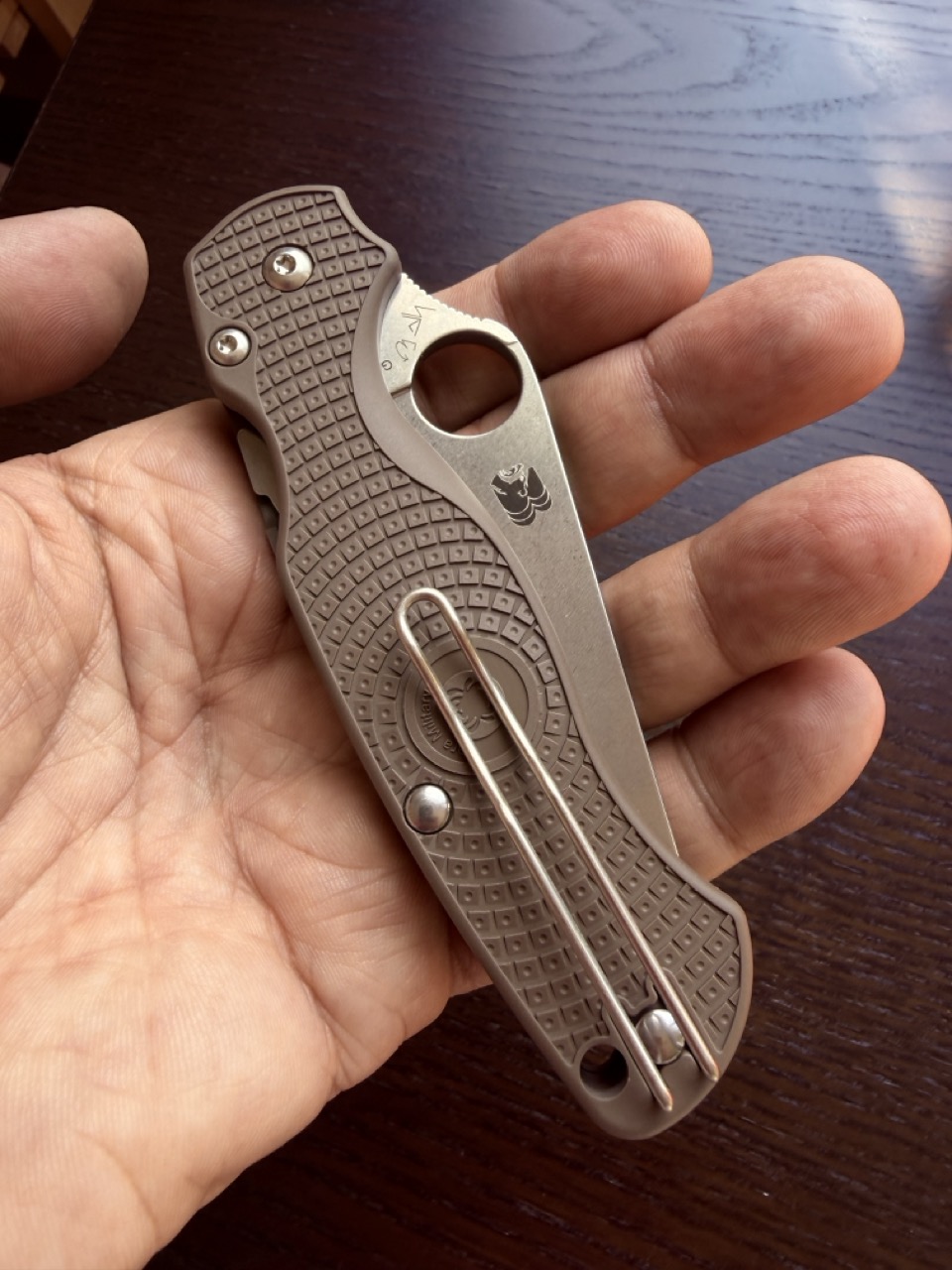
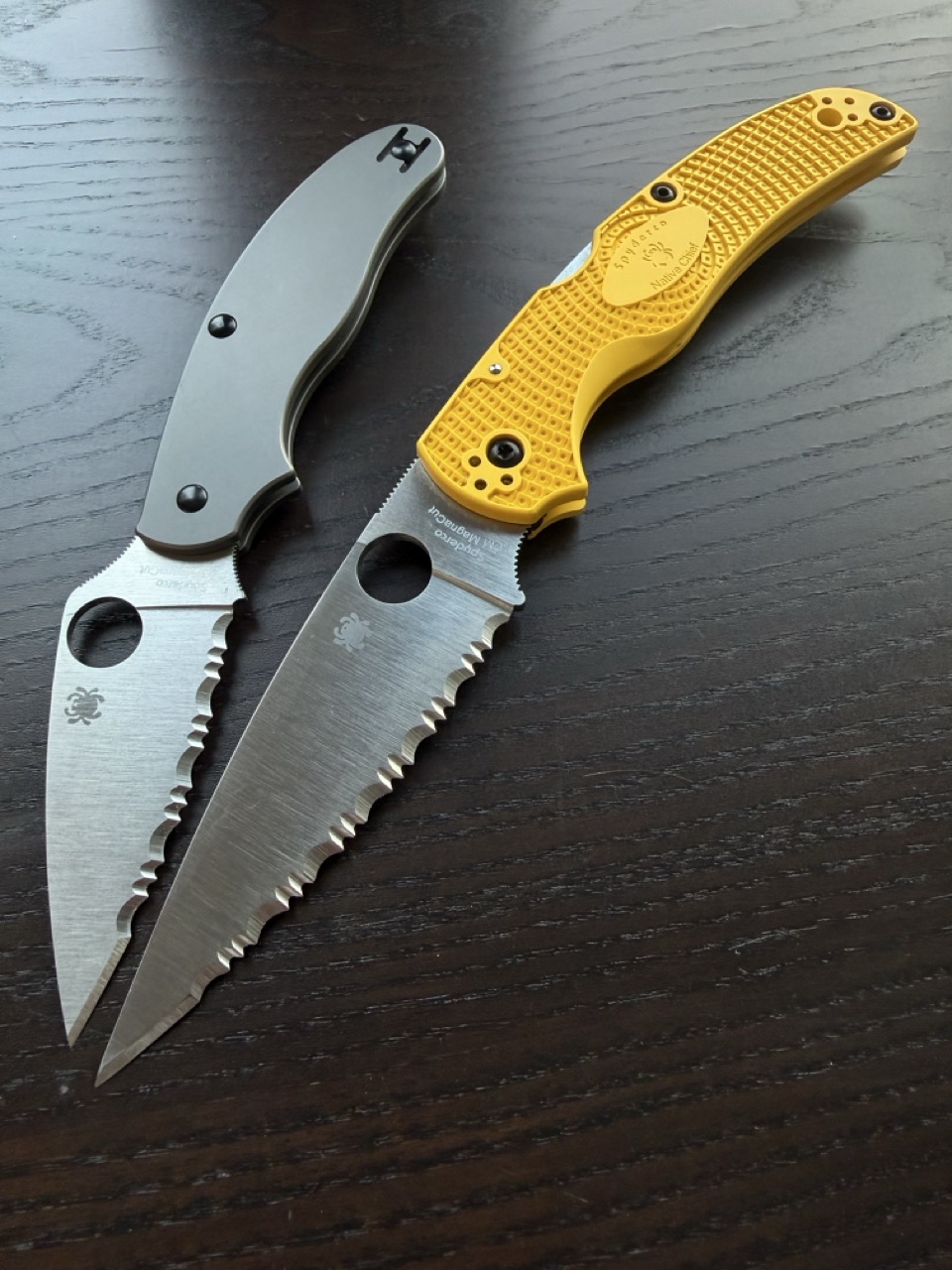
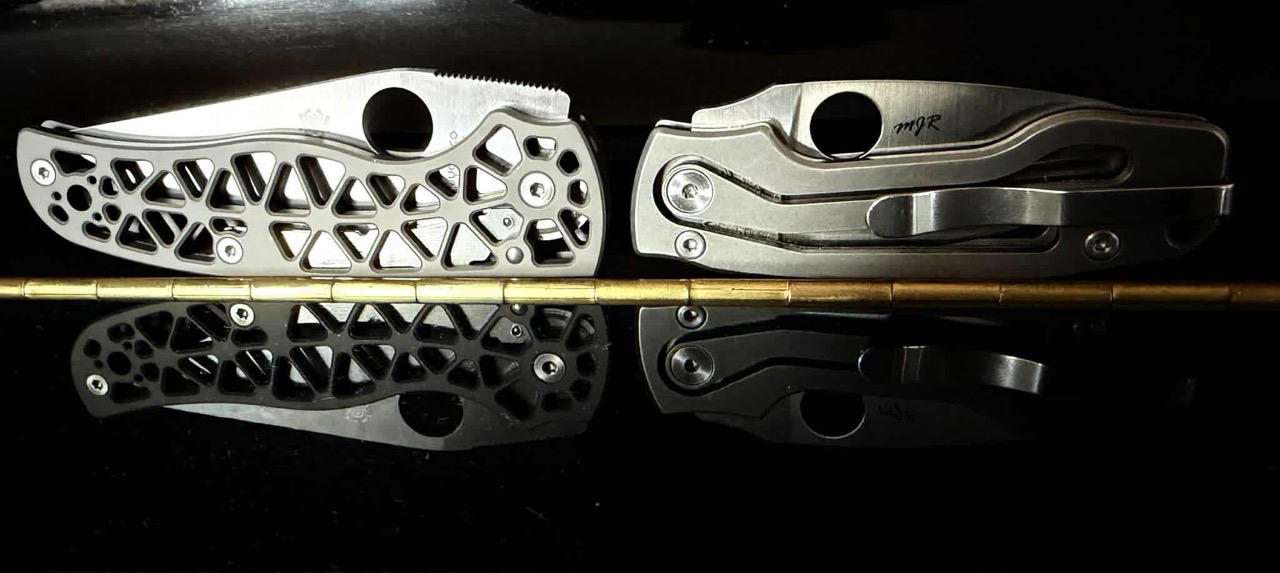
Anyway, skeletonized liners date back to at least 2009—my own C101CFP has them.
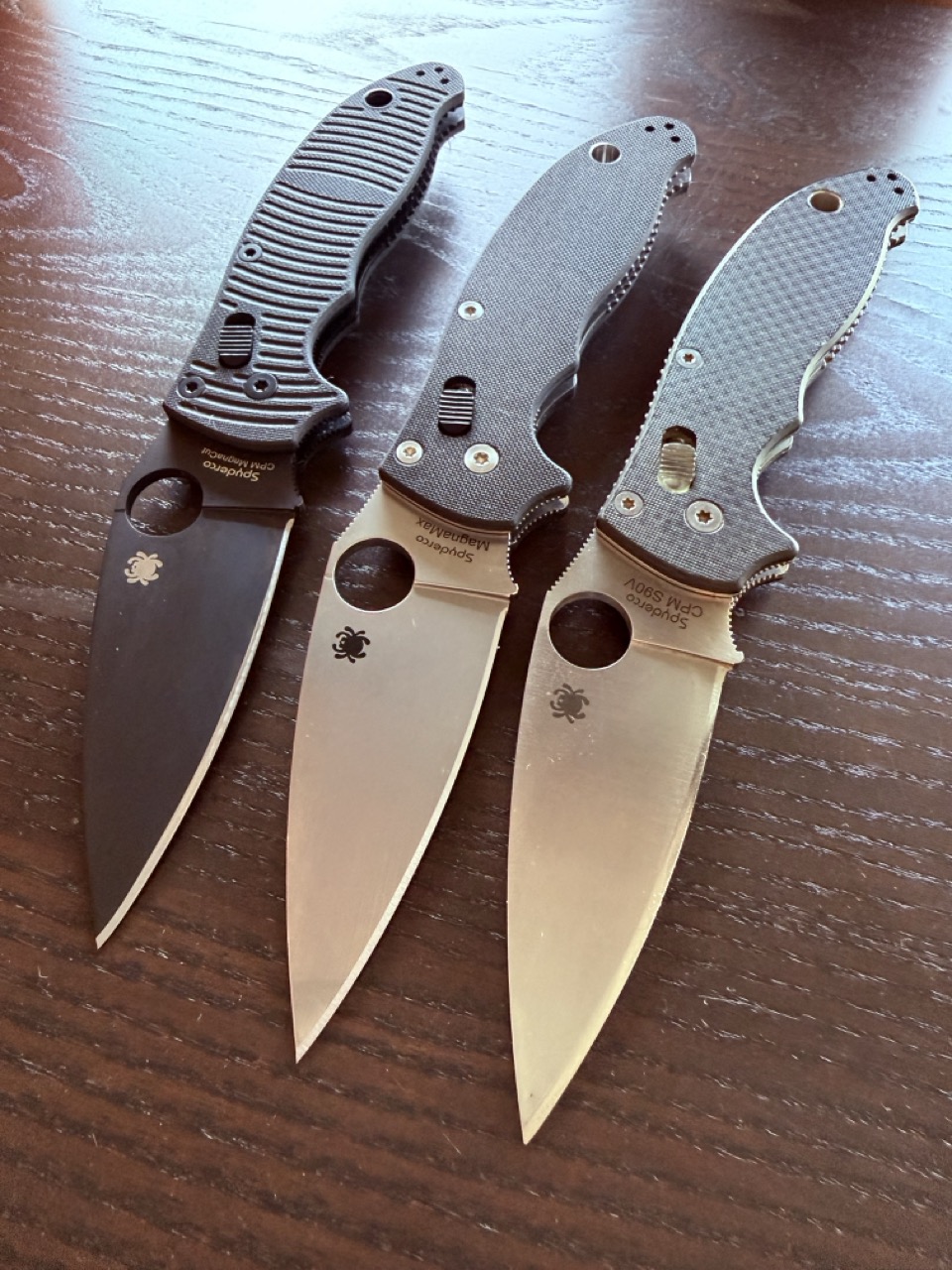
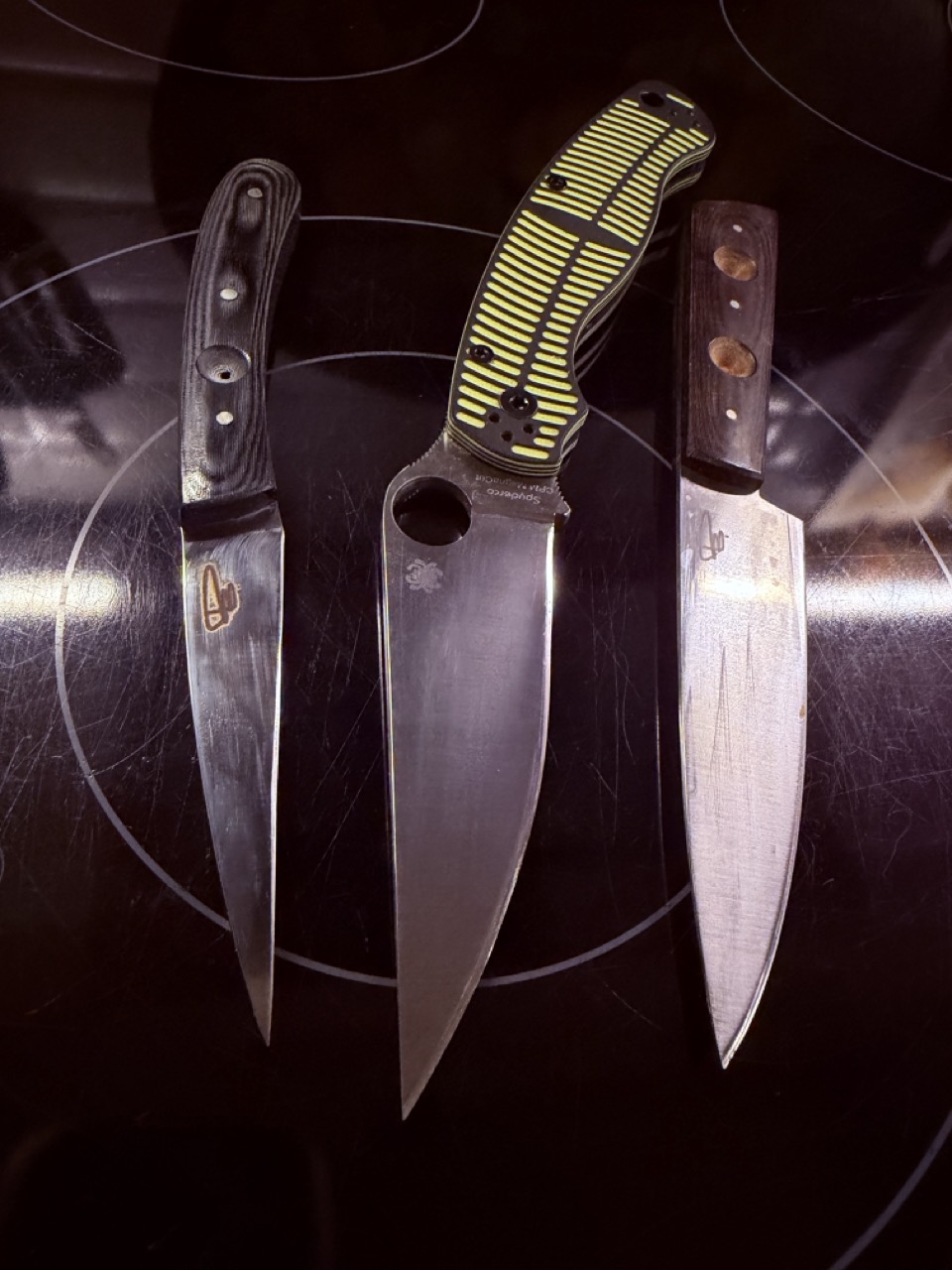
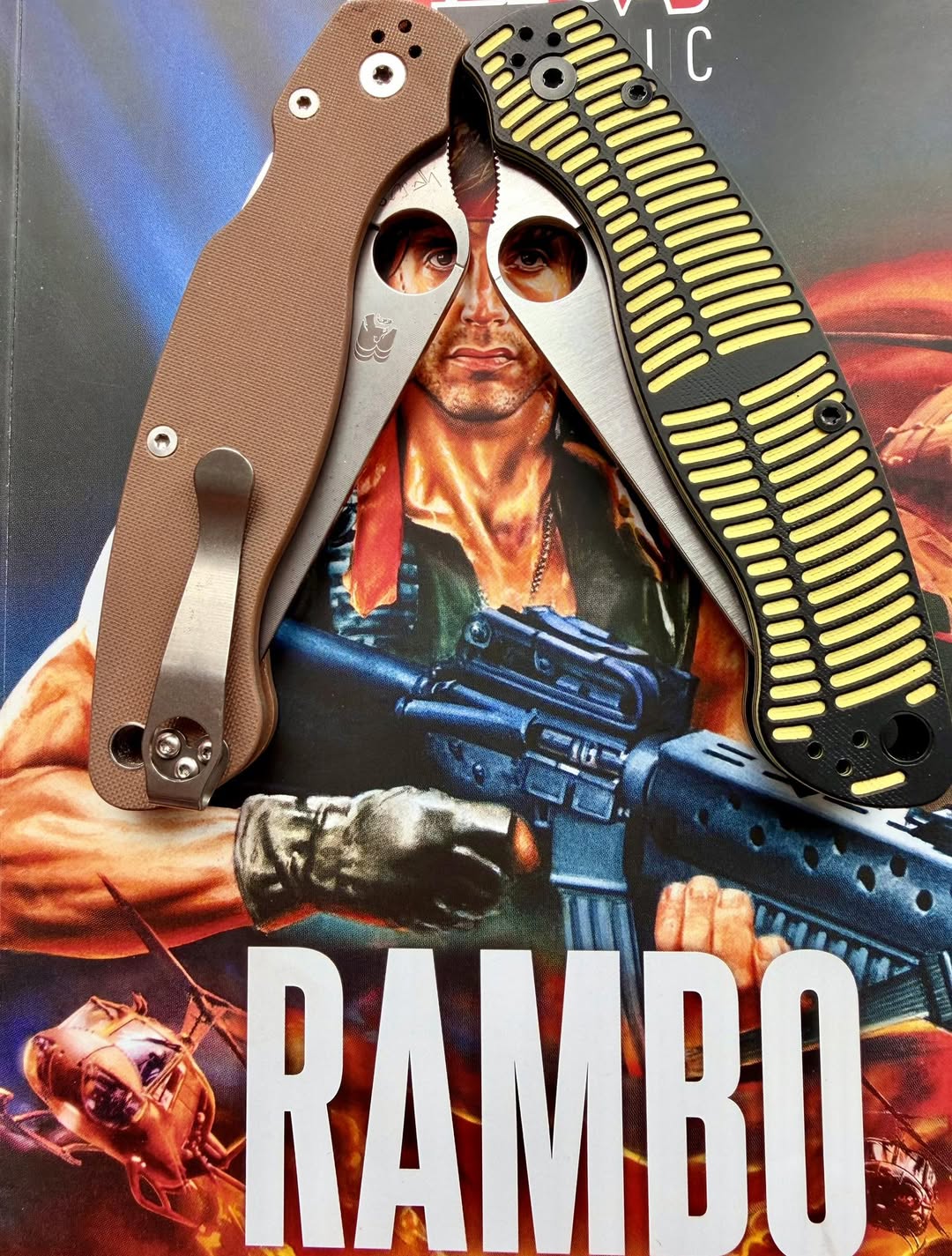
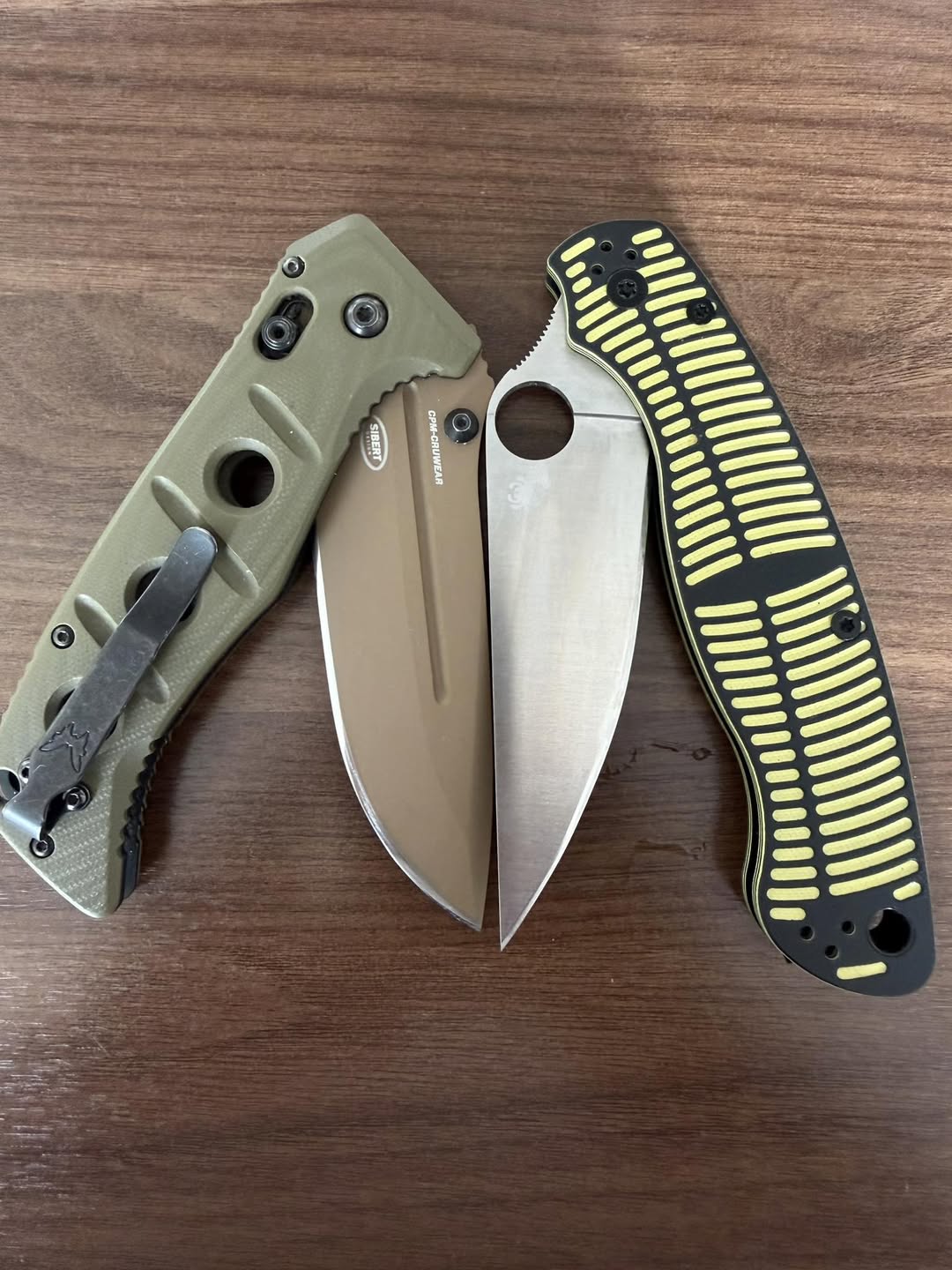
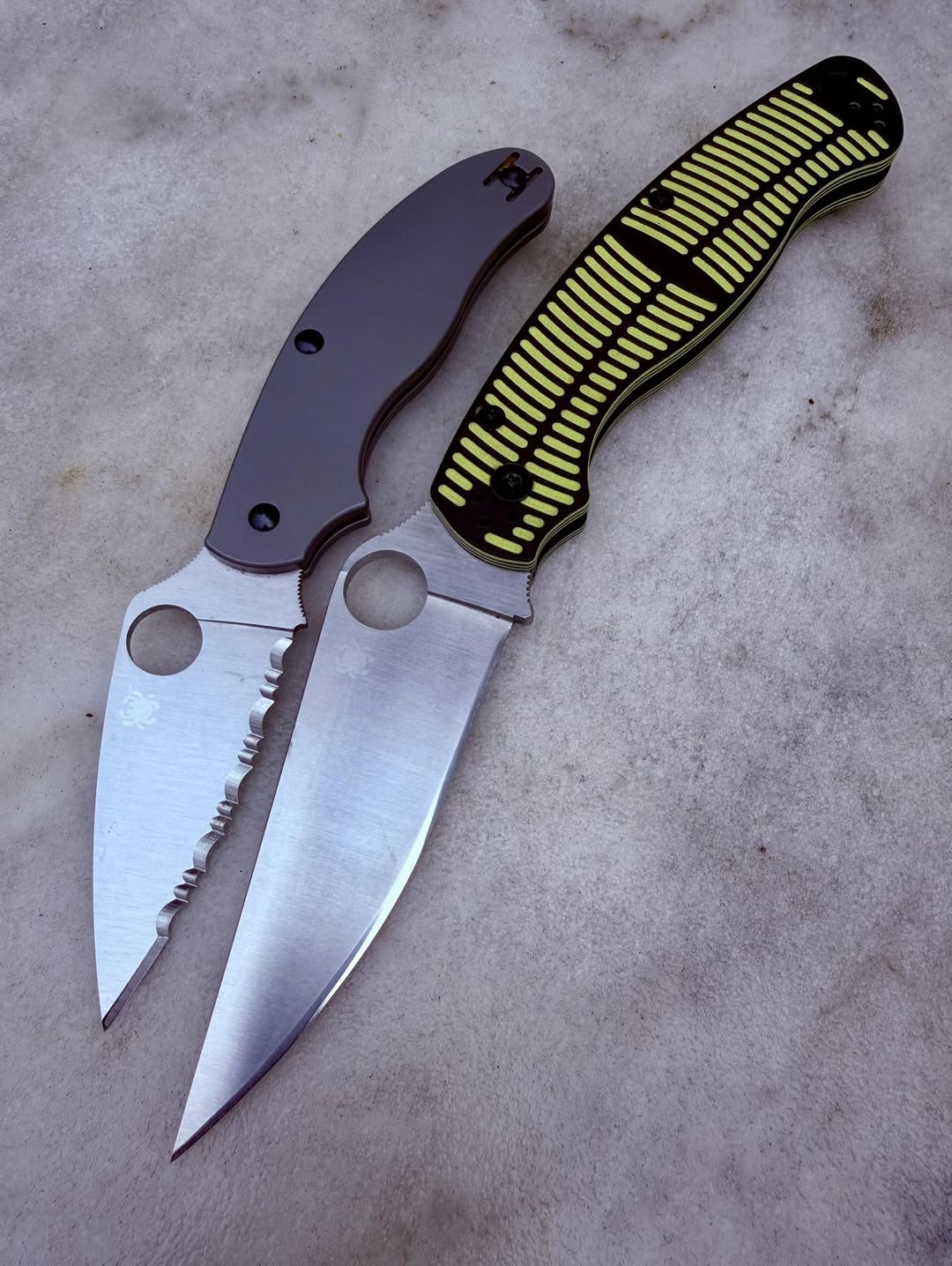
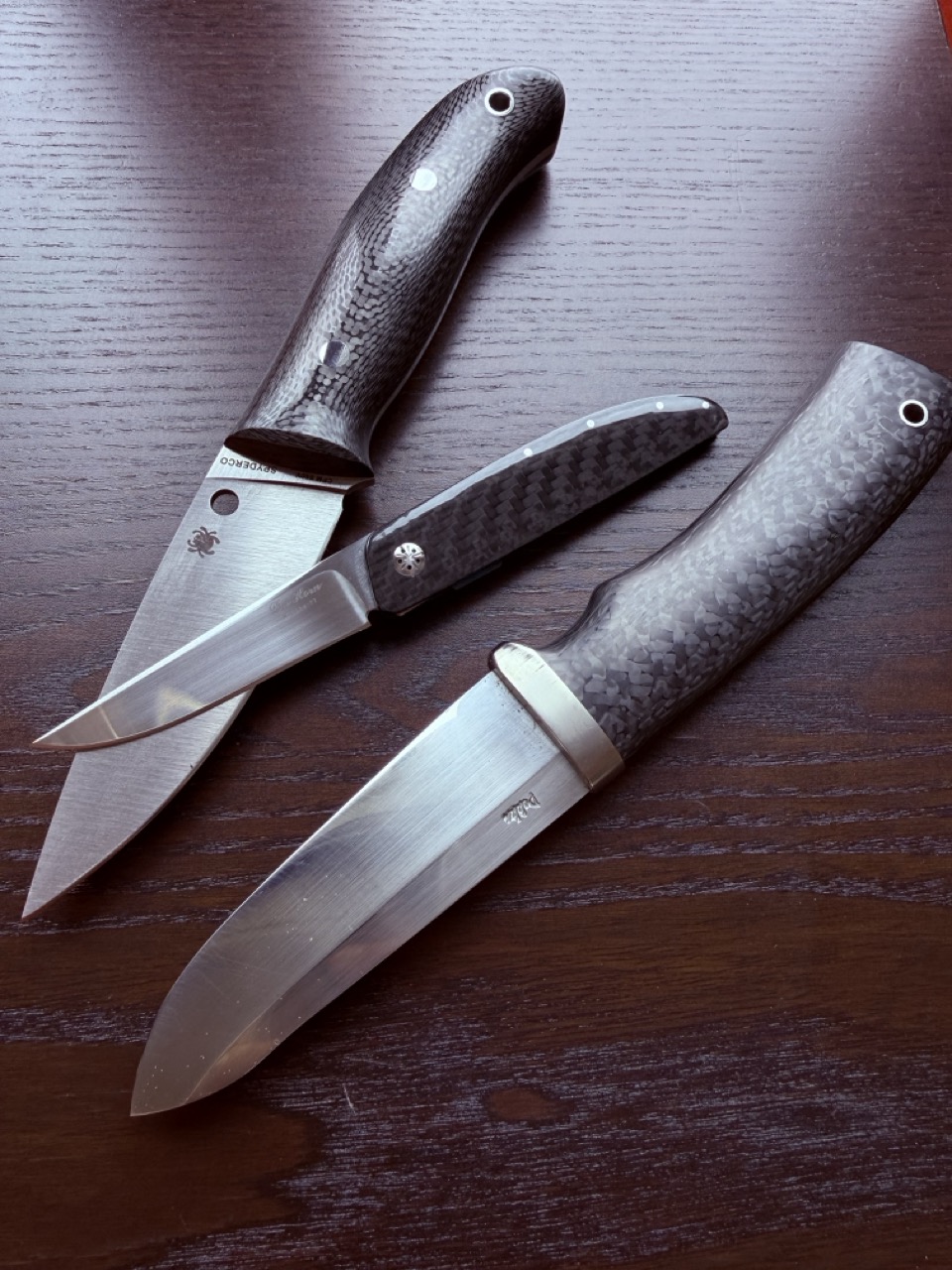
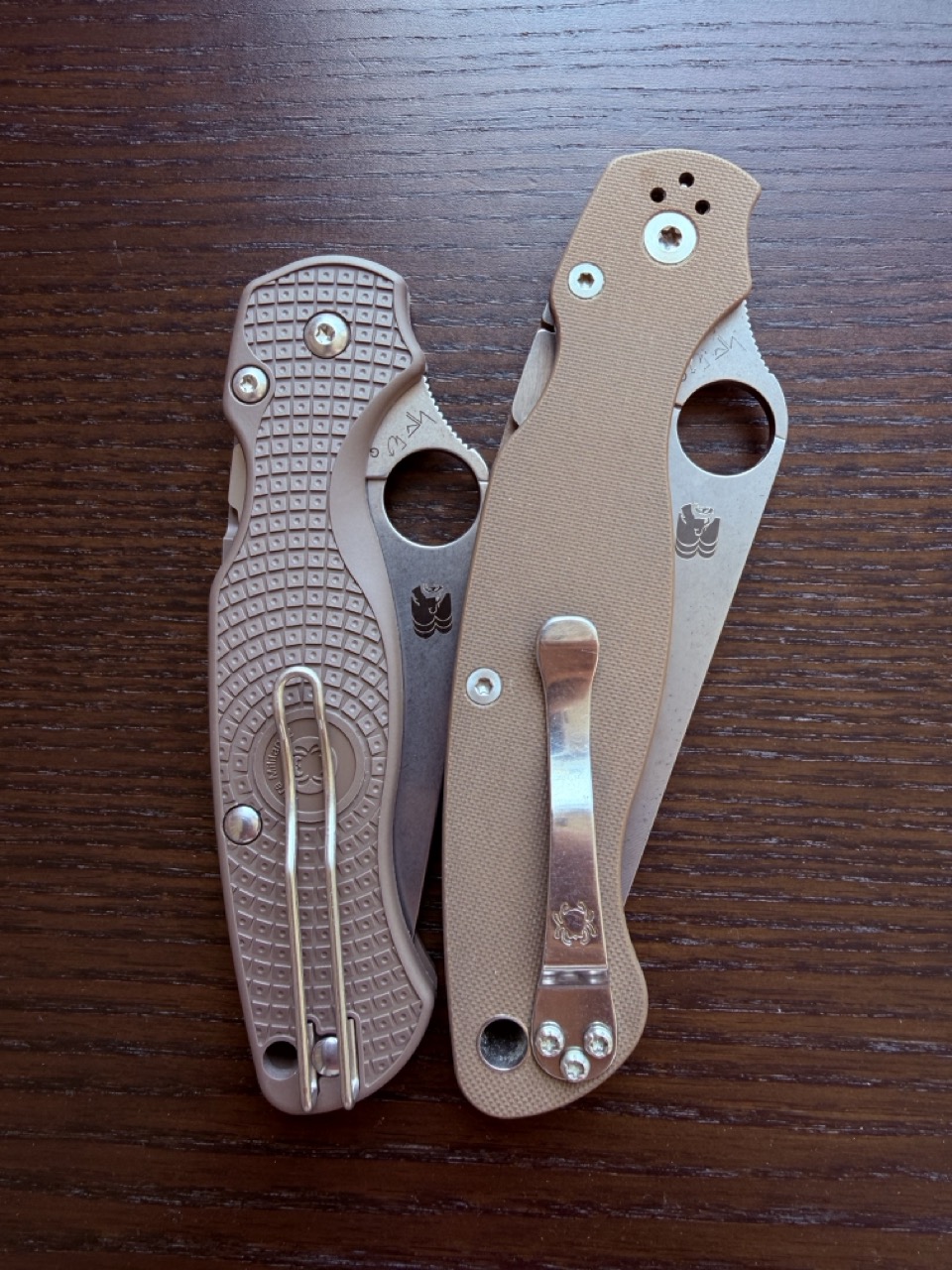
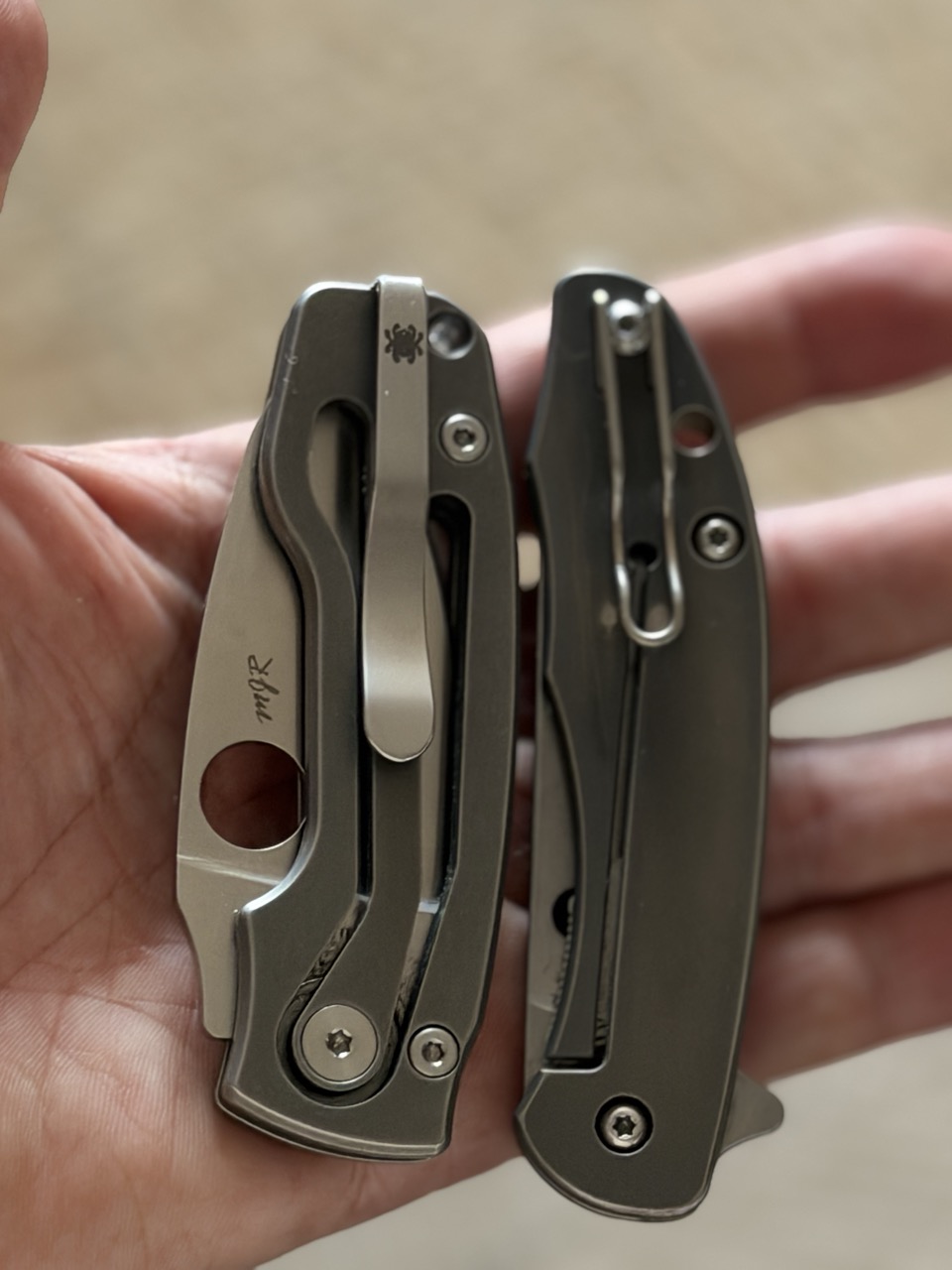
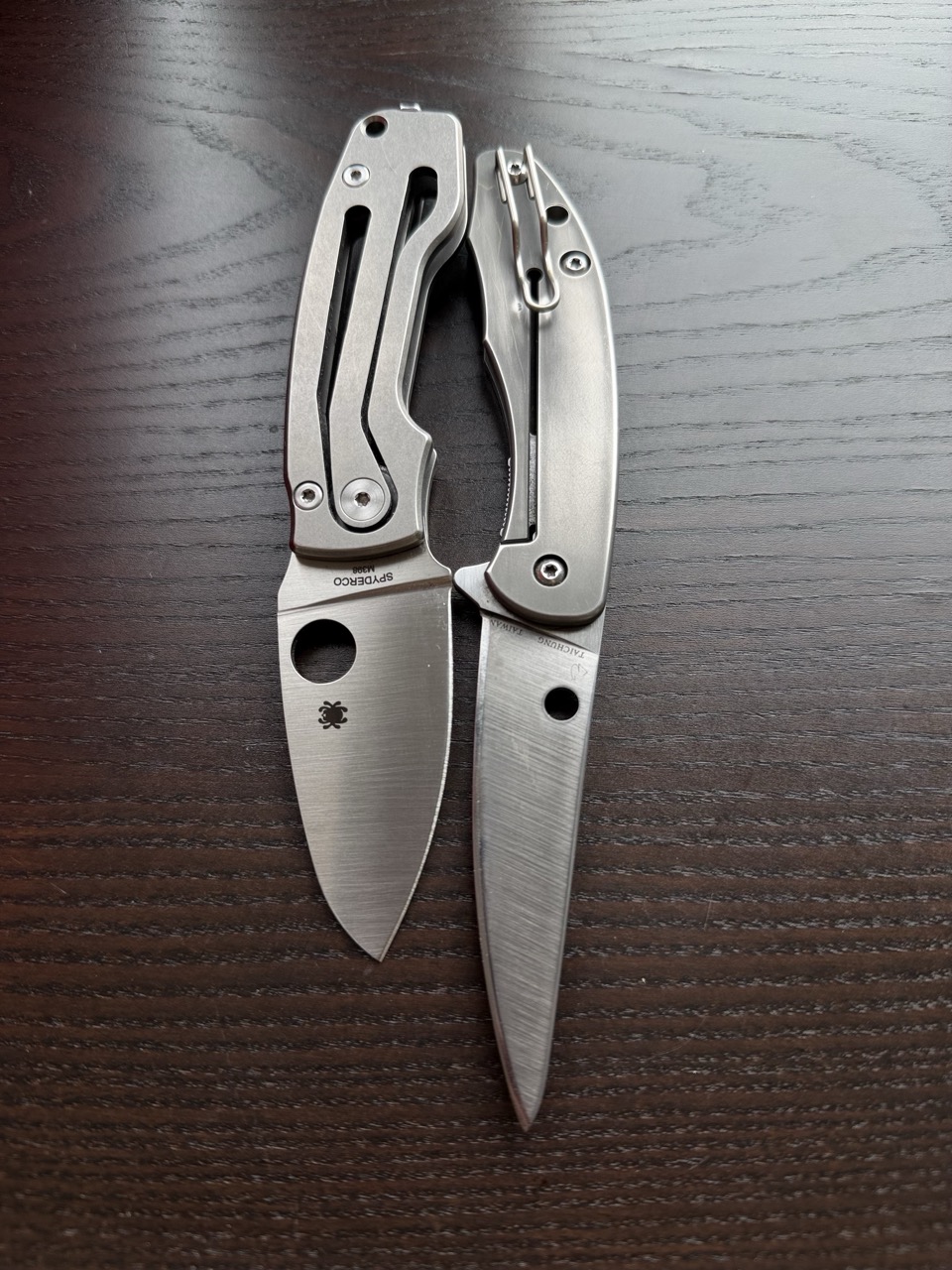
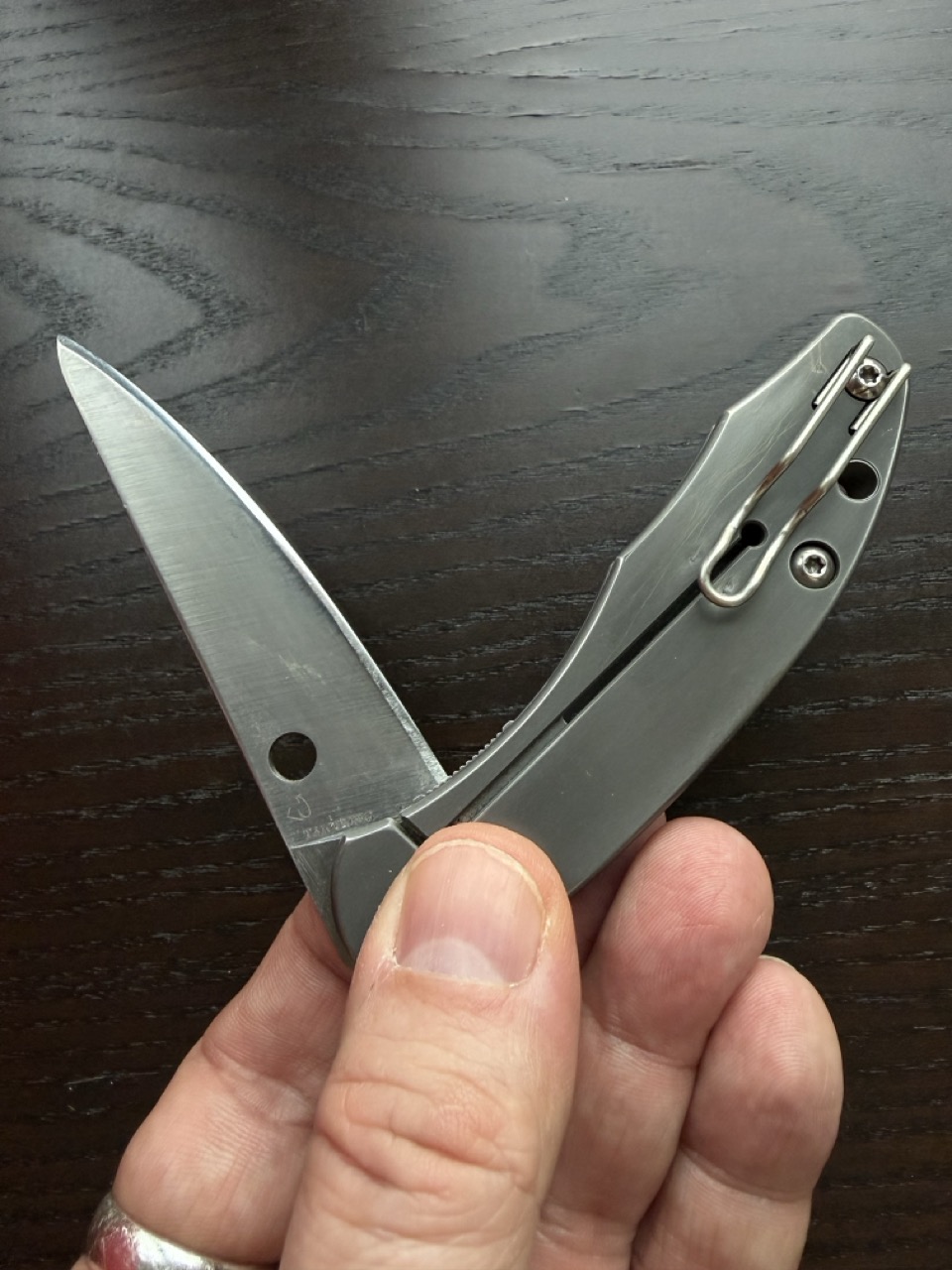
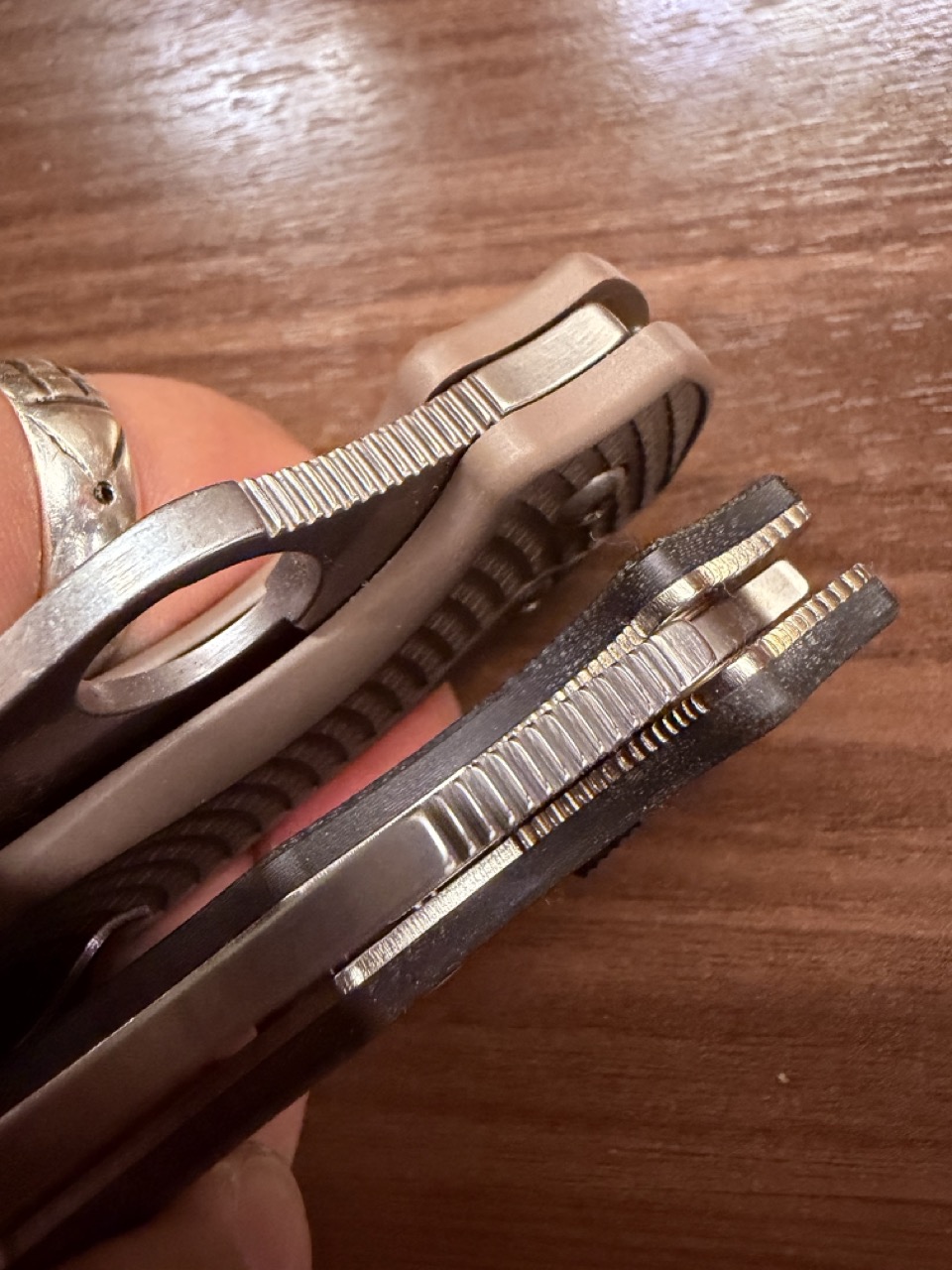
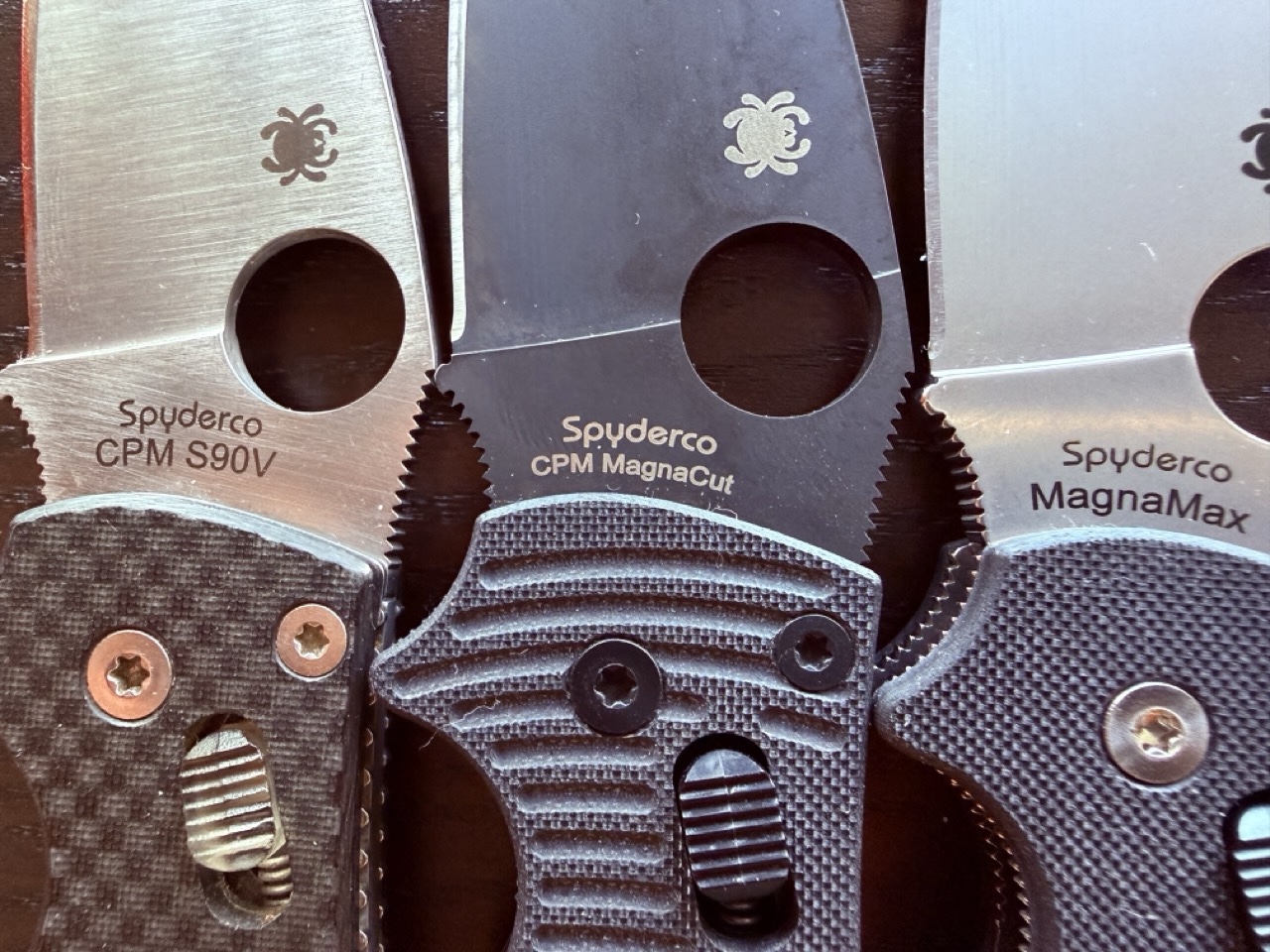
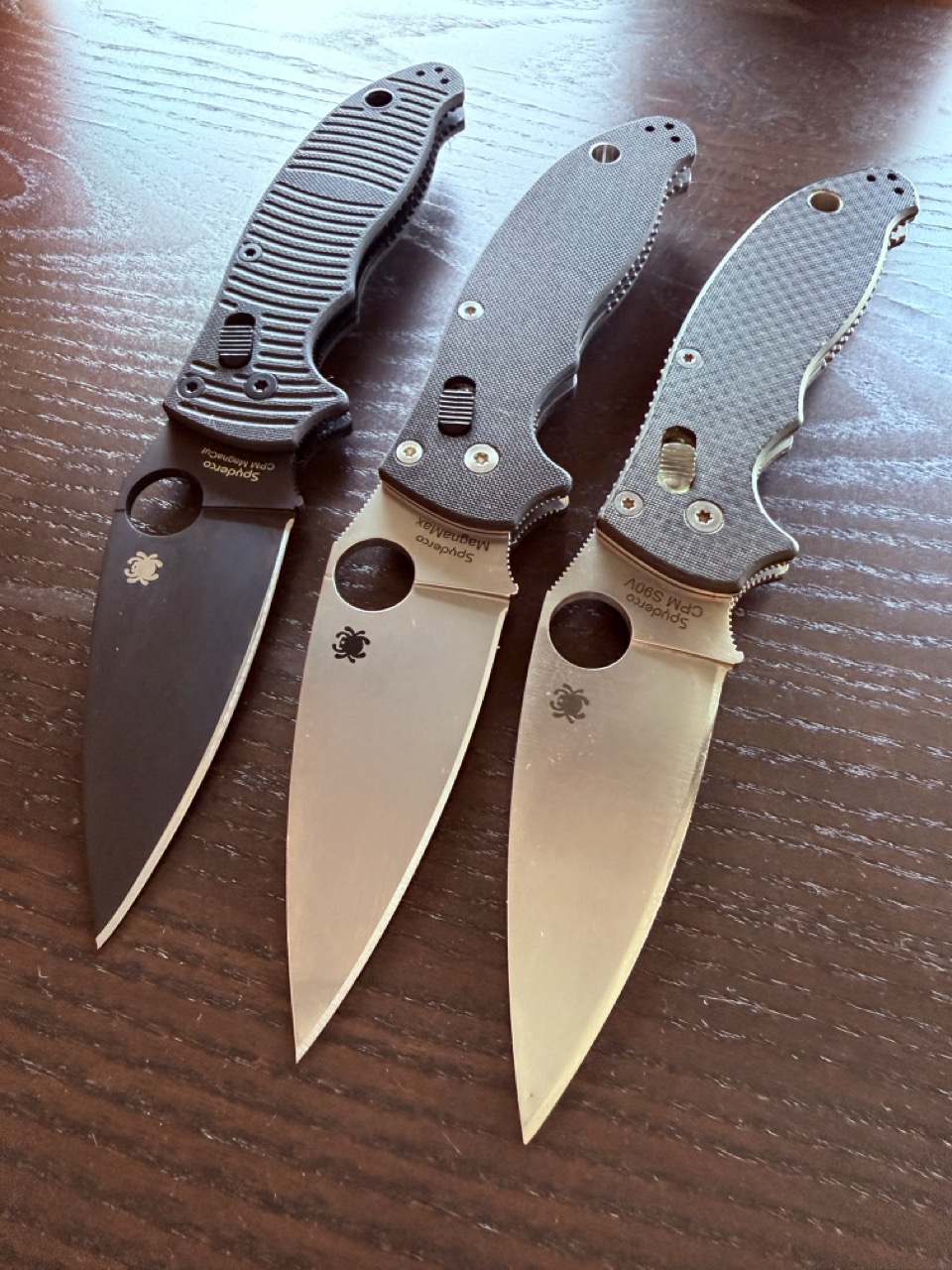
Here’s my summer 2009 C101CFP (announced by Eric Glesser on August 5, 2009), pictured alongside the MagnaMax and the MagnaCut. As discussed in the article.
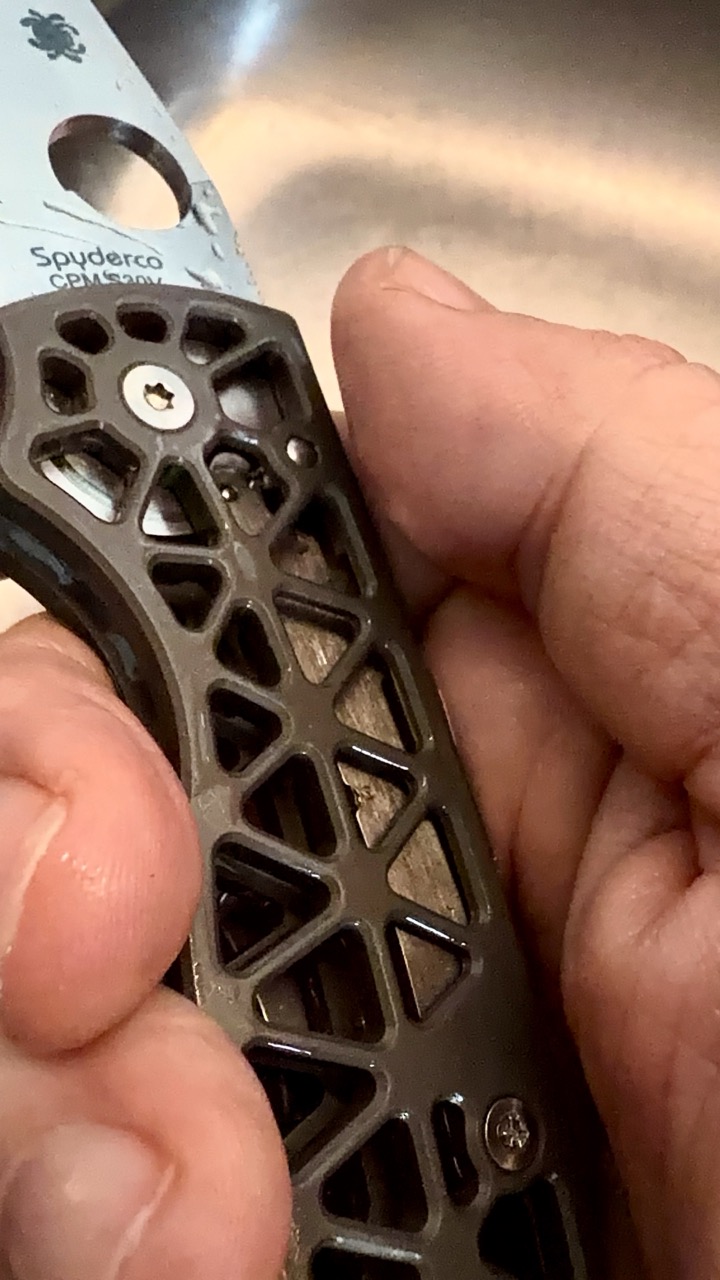
Because there are fewer hidden cavities beneath the scales, full liners also offer fewer places for moisture and debris to accumulate, potentially reducing the risk of hidden corrosion over the long term.
Since those liners are left uncoated, they are easy to inspect, clean, and apply a light coat of oil whenever needed. (Of course, coated skeletonized liners, such as those found on the Salt G-10, are also a premium solution—they simply reflect a different design philosophy.)
It all reinforces my impression that this Manix 2 MagnaMax was designed first and foremost as a dependable workhorse.
I remember this excellent BushcraftUK review of the CPM-M4 Manix 2, where the author Xavierdoc from Wales wrote:
“I don’t know how long the lock mechanism will resist the onslaught of pocket crud and the skeletonised liners are a potential blood/muck magnet.”
It raises an interesting point. Skeletonized liners undoubtedly save weight, but they also create additional cavities where mud, blood, wood dust or other debris can accumulate. Full liners may be heavier, yet they could prove easier to clean after messy outdoor tasks—something that hunters and game processors might particularly appreciate.
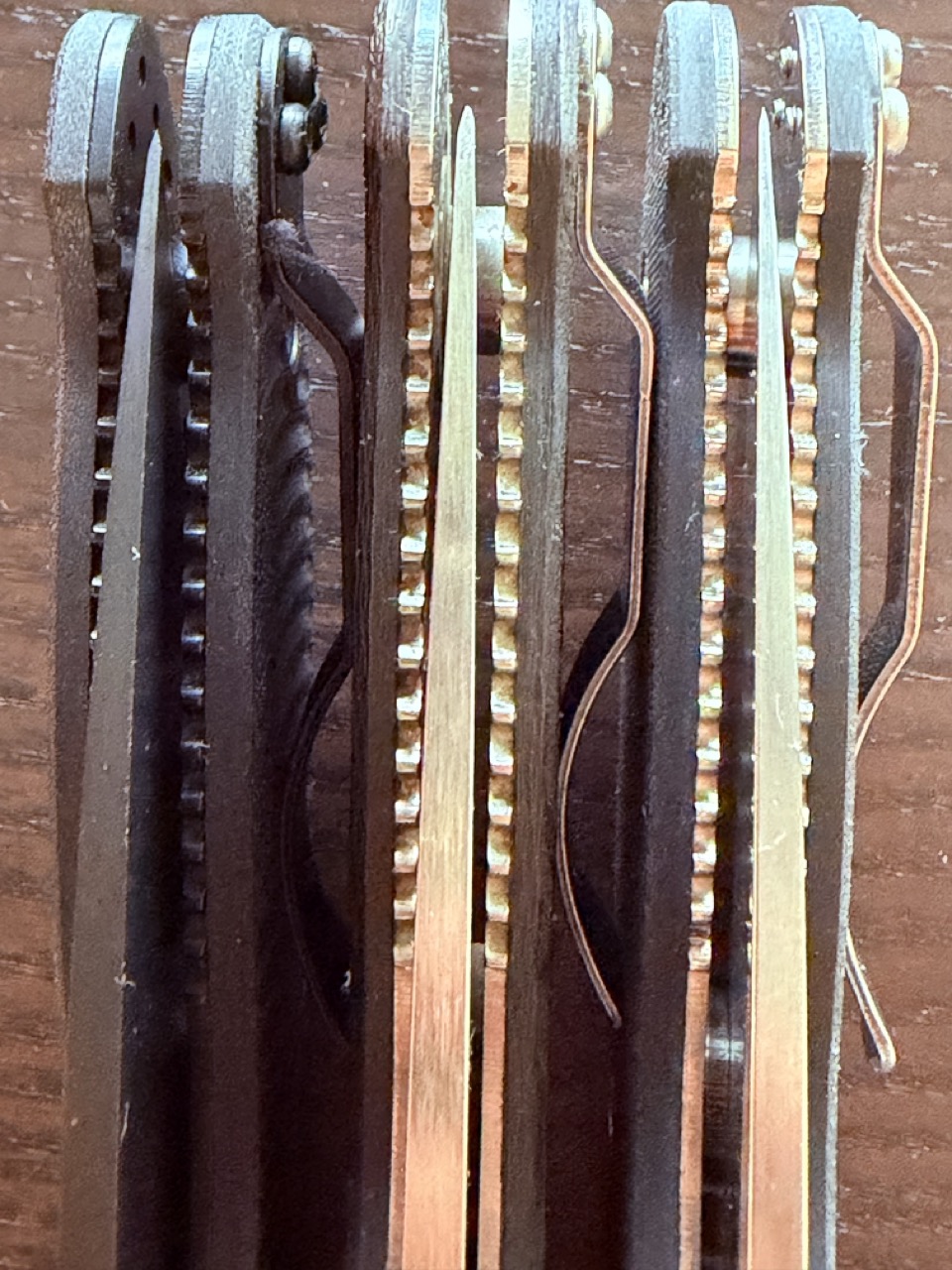
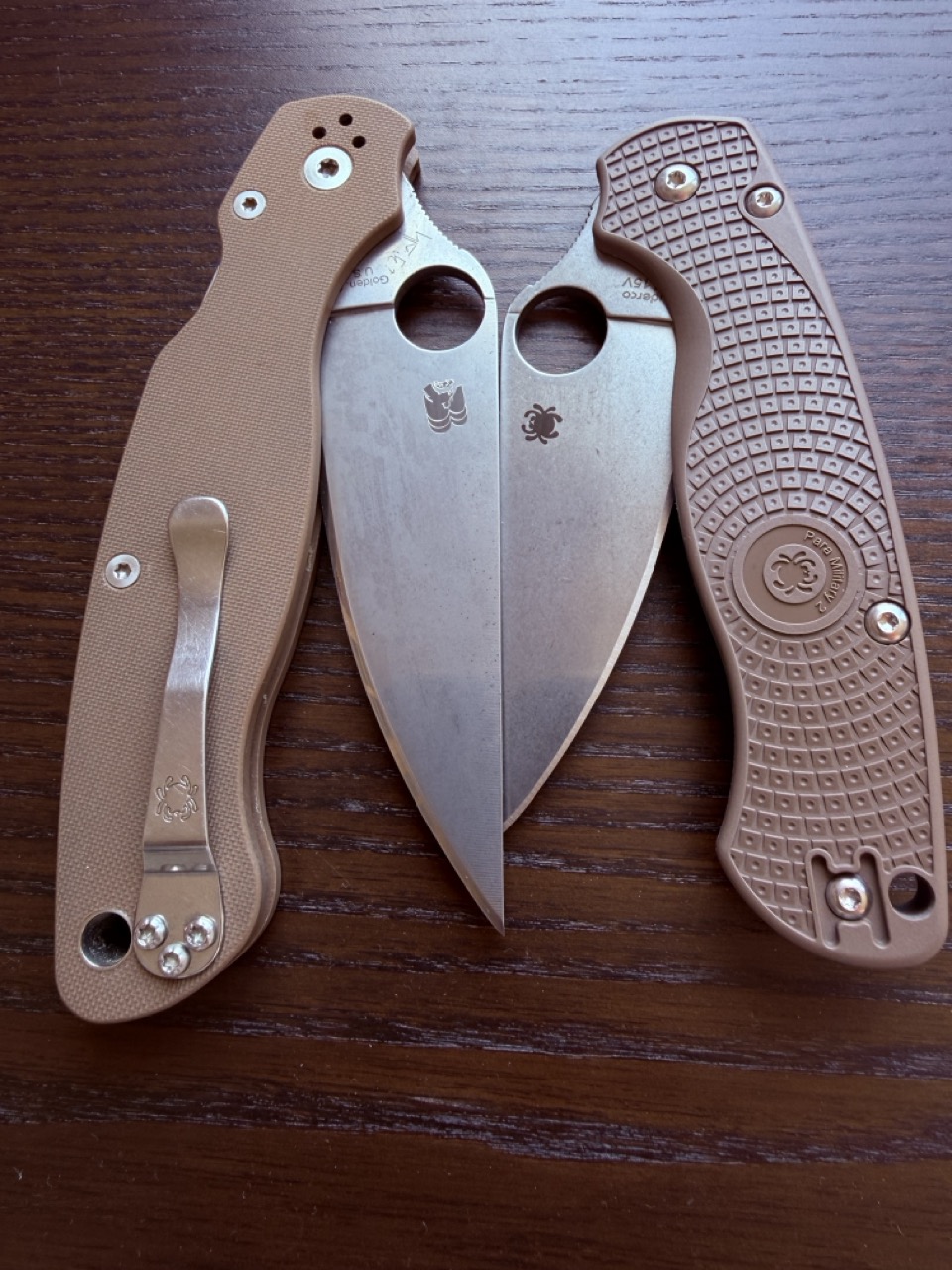
(The S90V is in the middle of the picture, MagnaMax on the right, Magnacut on the left)
A Blade That Speaks of Confidence
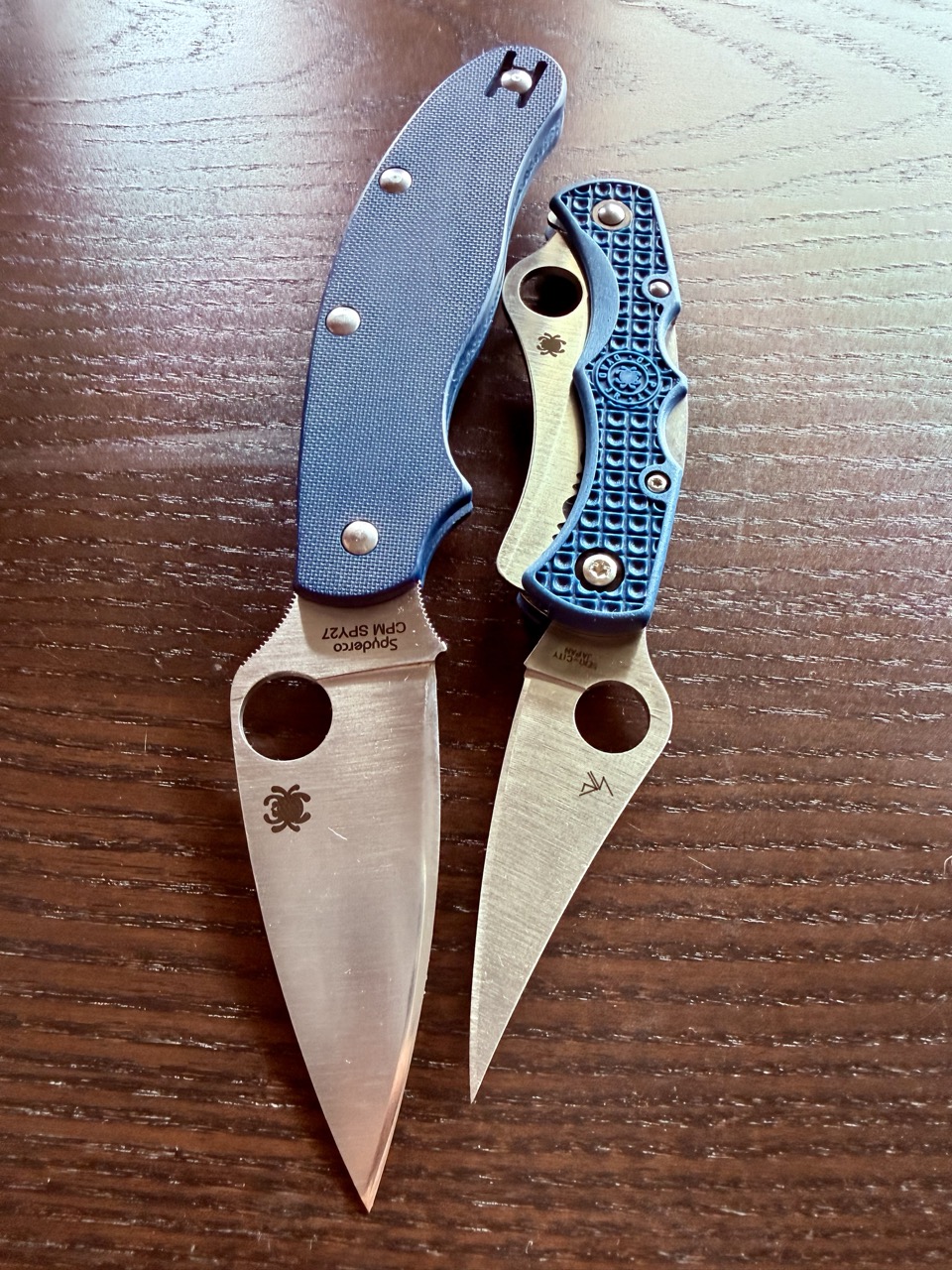
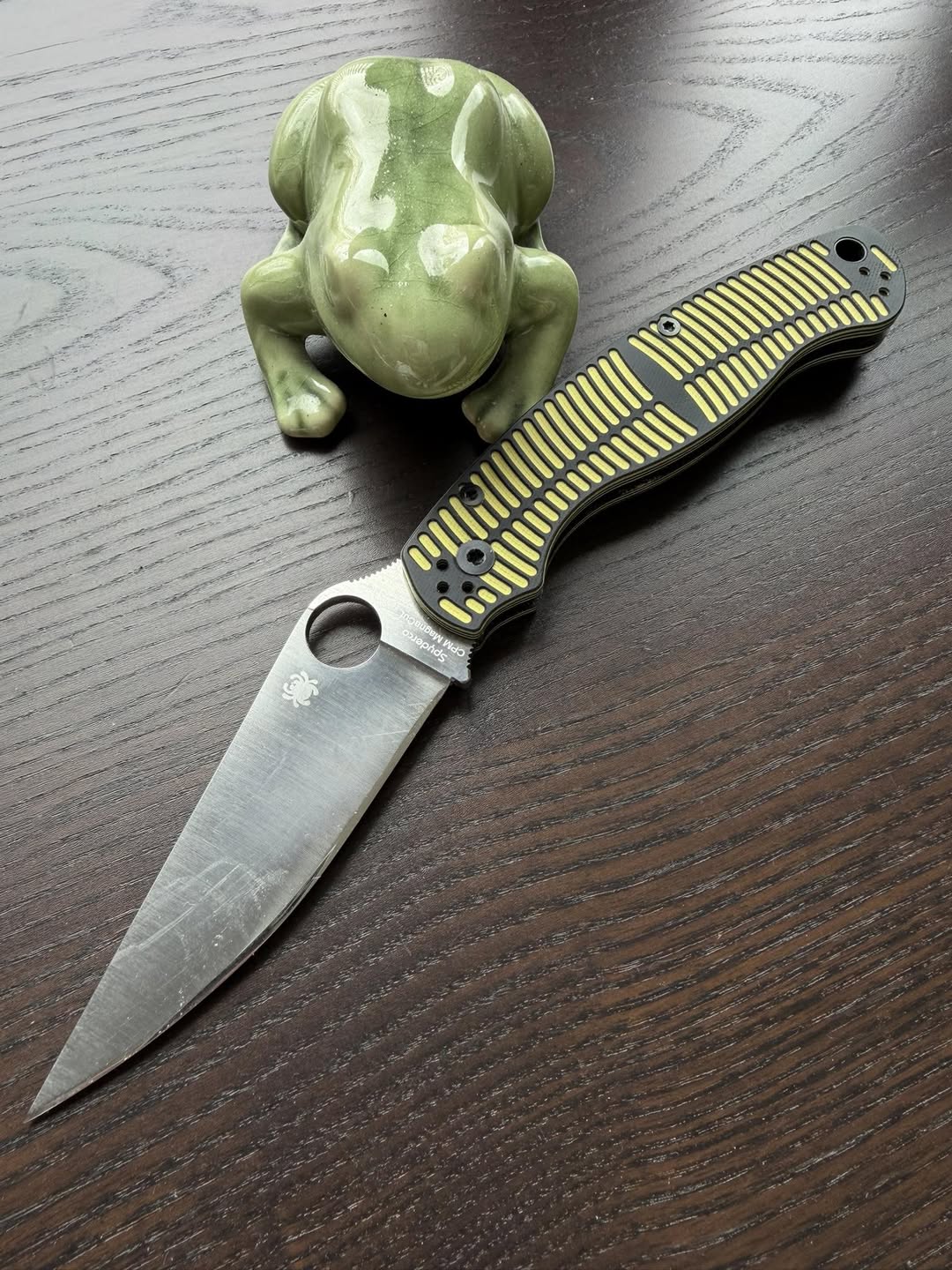
Looking more closely, I noticed that the blade tapers more aggressively toward the tip than my original S90V Manix 2 and is even thinner than the MagnaCut version. That finer tip should provide greater precision for detailed cutting tasks while still aiming to preserve the strength expected from the Manix platform.
More importantly, this refined blade geometry reflects the confidence that Eric Glesser, Sal Glesser, and the Spyderco team have placed in the remarkable capabilities of MagnaMax.
Edited July 7: As forum member Wartstein rightly pointed out, a finer tip also represents a trade-off. If the Manix is viewed as a hard-use folder, a thinner tip could potentially limit some of its abuse tolerance. Whether MagnaMax’s toughness fully compensates for this change remains to be seen in long-term use.
Lock-Up and Action
Like all my Manix 2s, everything feels perfectly assembled, with the precise action and rock-solid lock-up that have made the Manix 2 one of Spyderco’s most respected designs. There is no blade play whatsoever, yet the blade remains perfectly centered and drop-chute when unlocked. The only difference I immediately noticed is that the Ball Bearing Lock feels slightly stiffer than on my older Manix 2s, most likely due to a stronger spring ? Since the knife is brand new, I’ll reserve my final judgment until it has been properly broken in. At the moment, the Ball Bearing Lock spring feels just as stiff as on my MagnaCut G10 Salt.
A stronger spring makes the action feel more deliberate and virtually eliminates any gravity-assisted opening. A wrist flick is still possible, in reverse grip, but it takes significantly more commitment than with my other older Manix 2s. Whether this is intentional or simply the result of a brand-new spring remains to be seen, but it certainly reinforces the impression of a knife built with security and reliability in mind.
I know some users would prefer a lighter spring tension, and some even trim or replace the spring to make the lock easier to operate. That’s entirely a matter of personal preference.
I’ve also never really managed to close a Manix 2 without pulling back both sides of the lock, unlike all of my Axis-Lock Benchmades. My Adamas, for example, have an exceptionally smooth Axis Lock, and even my old AFCK (the Axis Lock version) is much more easier to operate pulling back only one side of the lock.
I remember some self-defense instructors criticizing Benchmade’s original AXIS Lock on the BM710, arguing that an opponent might be able to disengage the lock during a struggle by pulling back on the lock bar. Whether or not that concern was realistic, it was an interesting argument at the time.
The Manix 2, originally developed with Spyderco’s Martial Blade Craft philosophy in mind, has always felt deliberately more secure to me. The Ball Bearing Lock demands a more deliberate action, making accidental disengagement seem considerably less likely.
As for me, I like the reassuring feeling that my knife is not going to open accidentally in my pocket. In a way, it reminds me of shifting gears in an old Porsche Carrera with a manual gearbox—you don’t do it with hesitation, you do it with purpose. That’s exactly how I approach the Ball Bearing Lock on this MagnaMa(ni)x.
The downside is that it can be a bit more challenging to operate with wet or greasy fingers. That’s probably one of the reasons why some users replace the factory polymer cage with an aftermarket aluminum or titanium version, which often provides a more positive grip. Fortunately, the Manix 2 is one of the most customizable production folders on the market, with an impressive range of third-party parts available.
Small Details That Matter
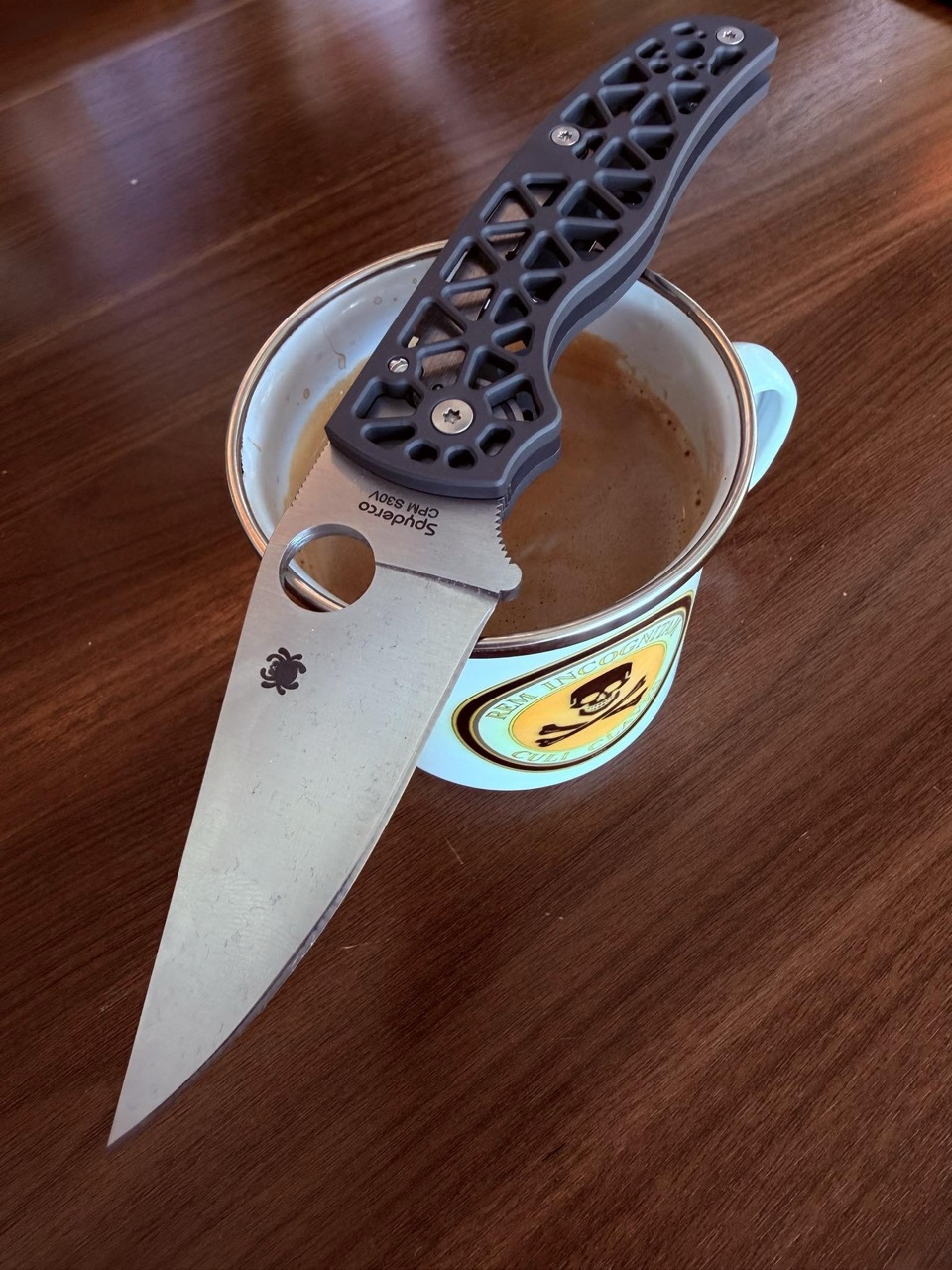
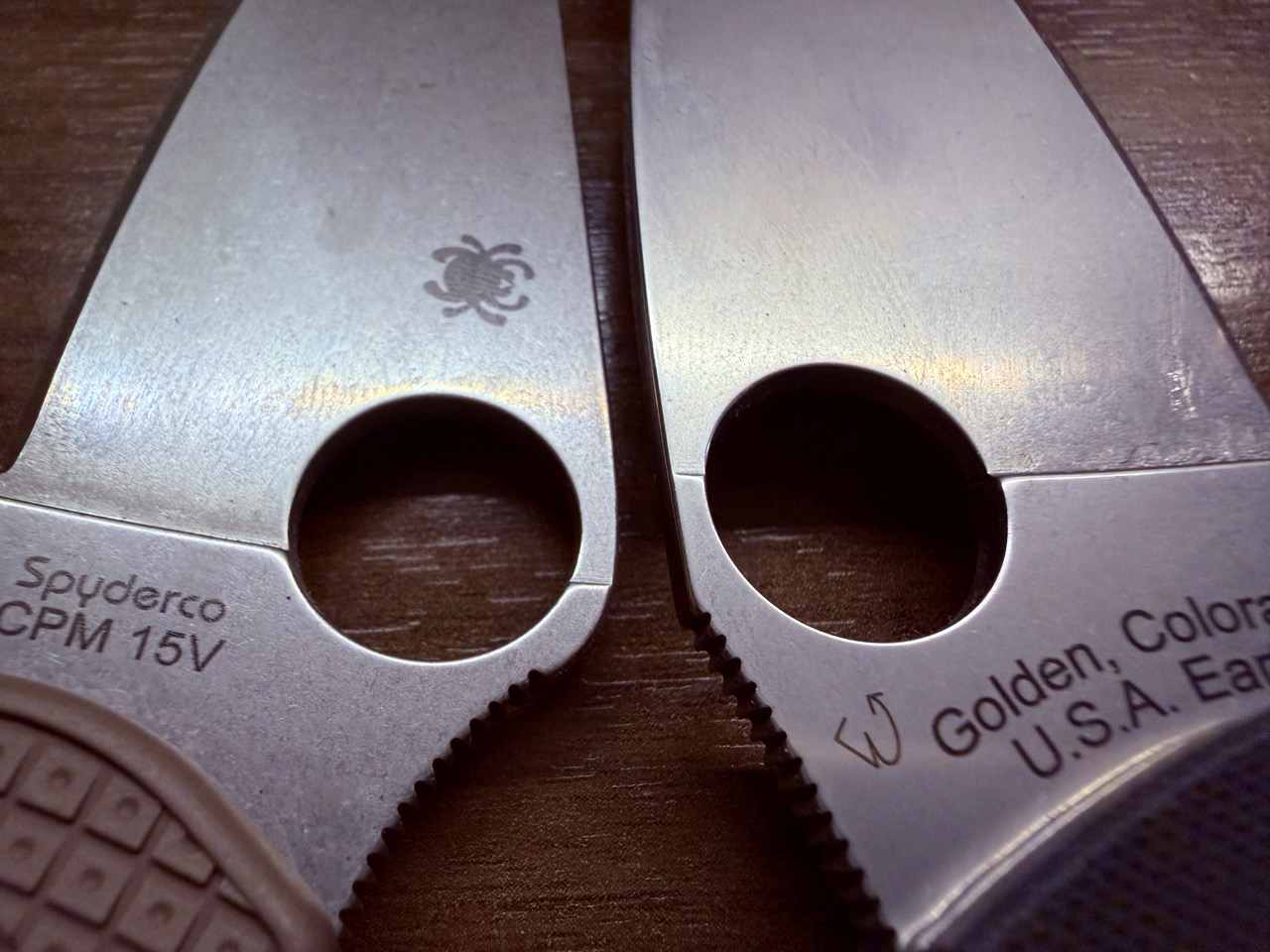
Now, from a purely cosmetic standpoint, the blade appears to have received a slightly more pronounced tumble, resulting in an almost stonewashed finish. It seems a little less pronounced than on the CPM 15V Sprint Run, but the resemblance is striking.
Really, this is a beautiful blade !
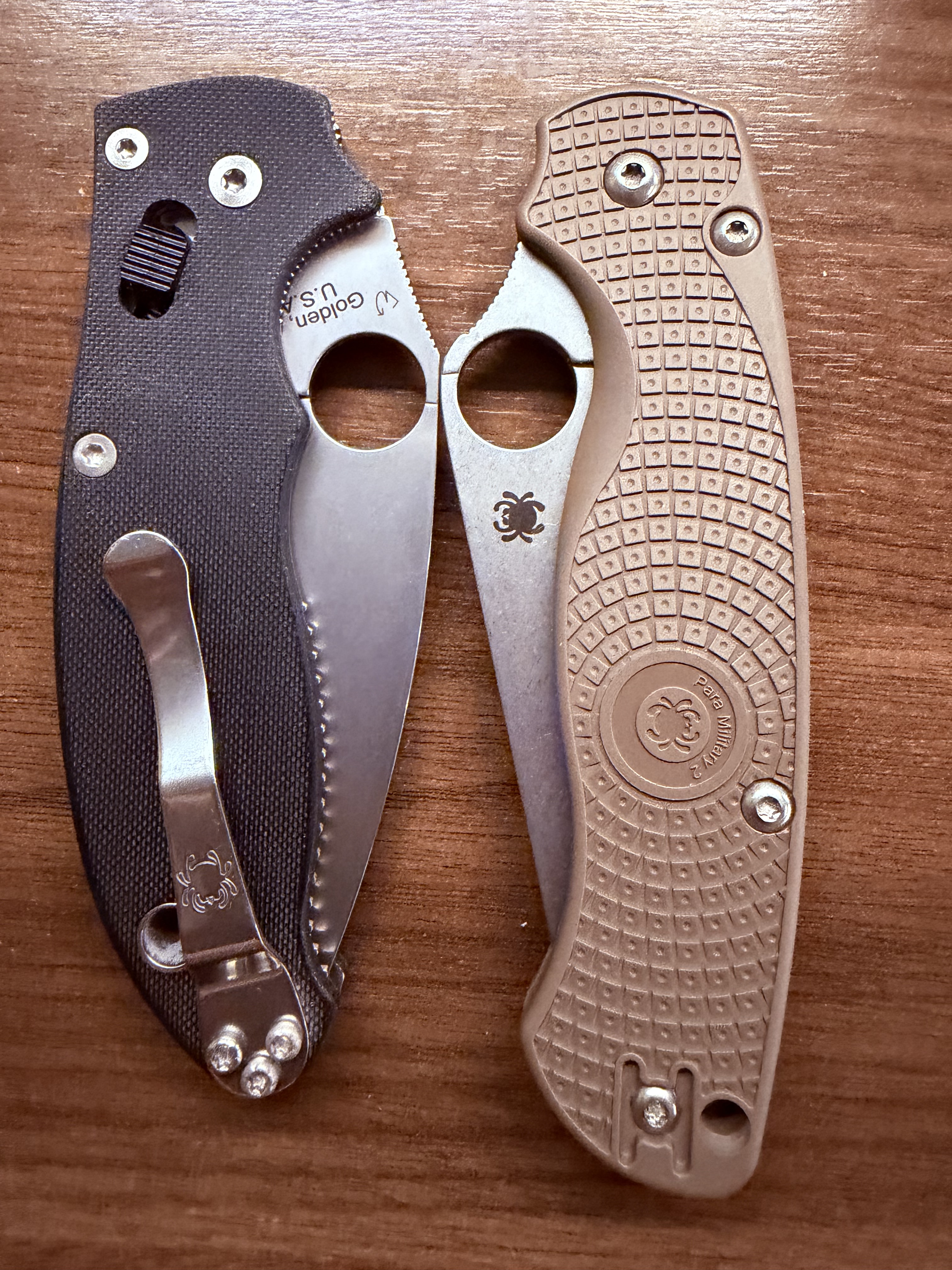
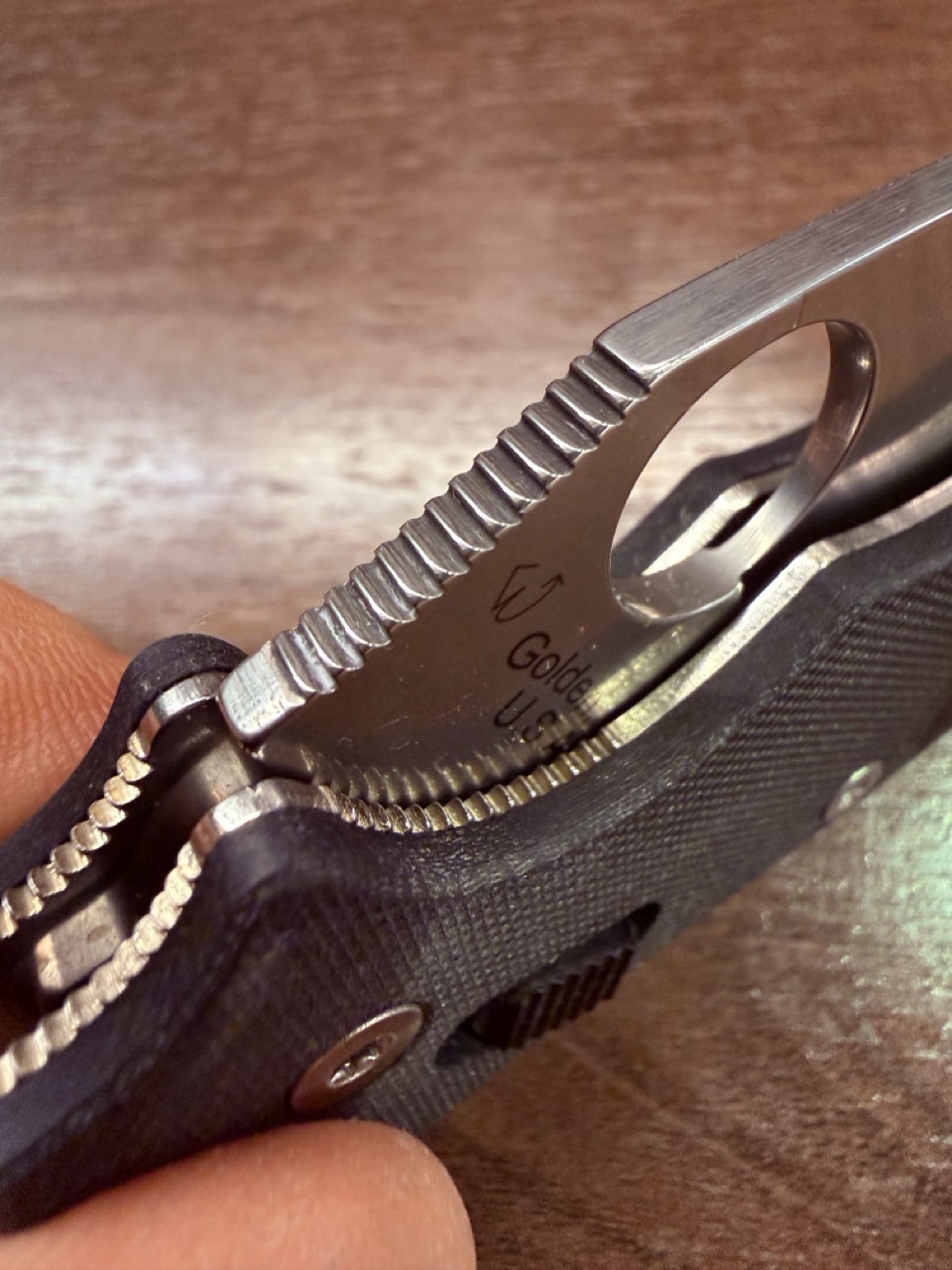
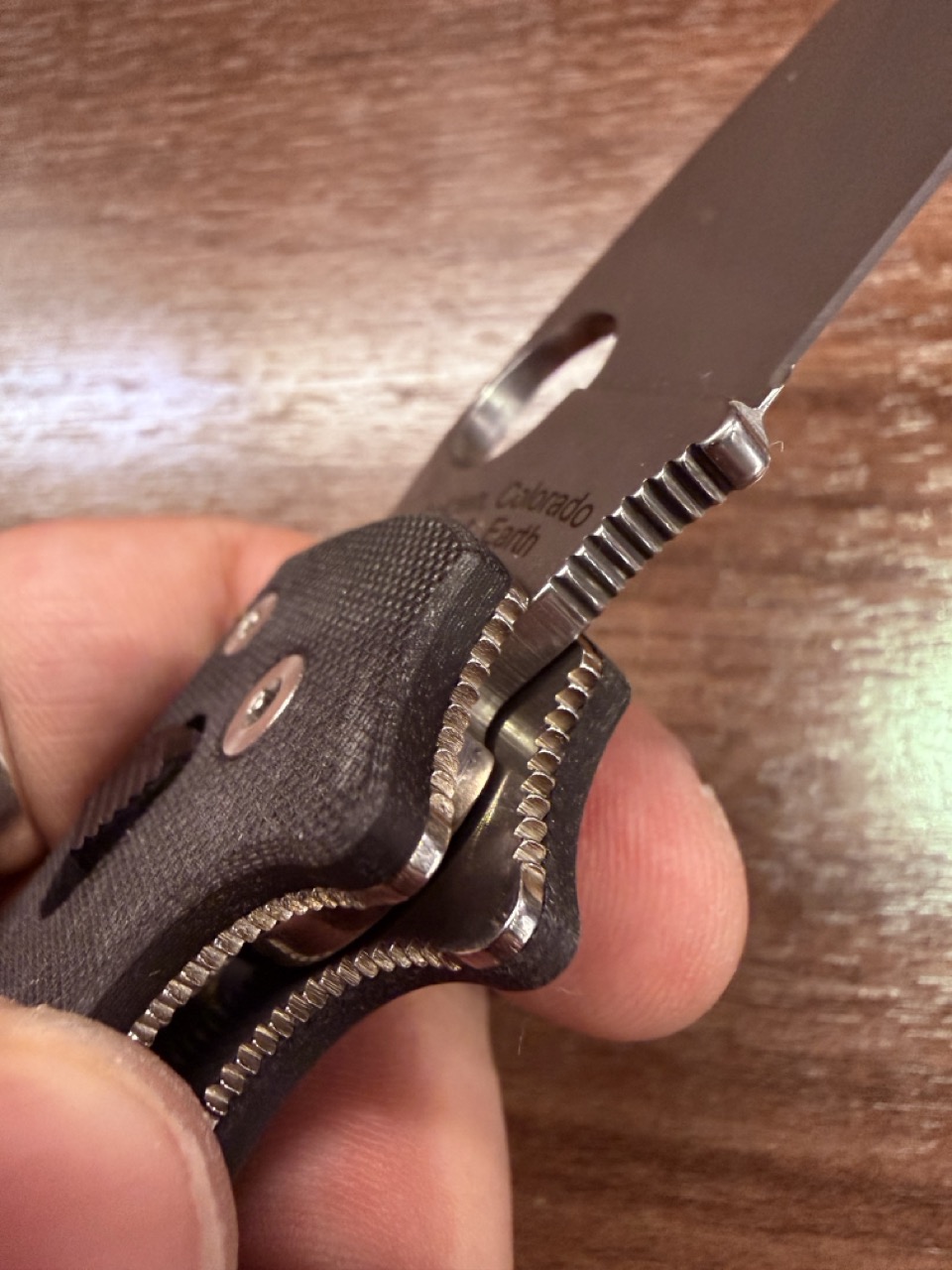
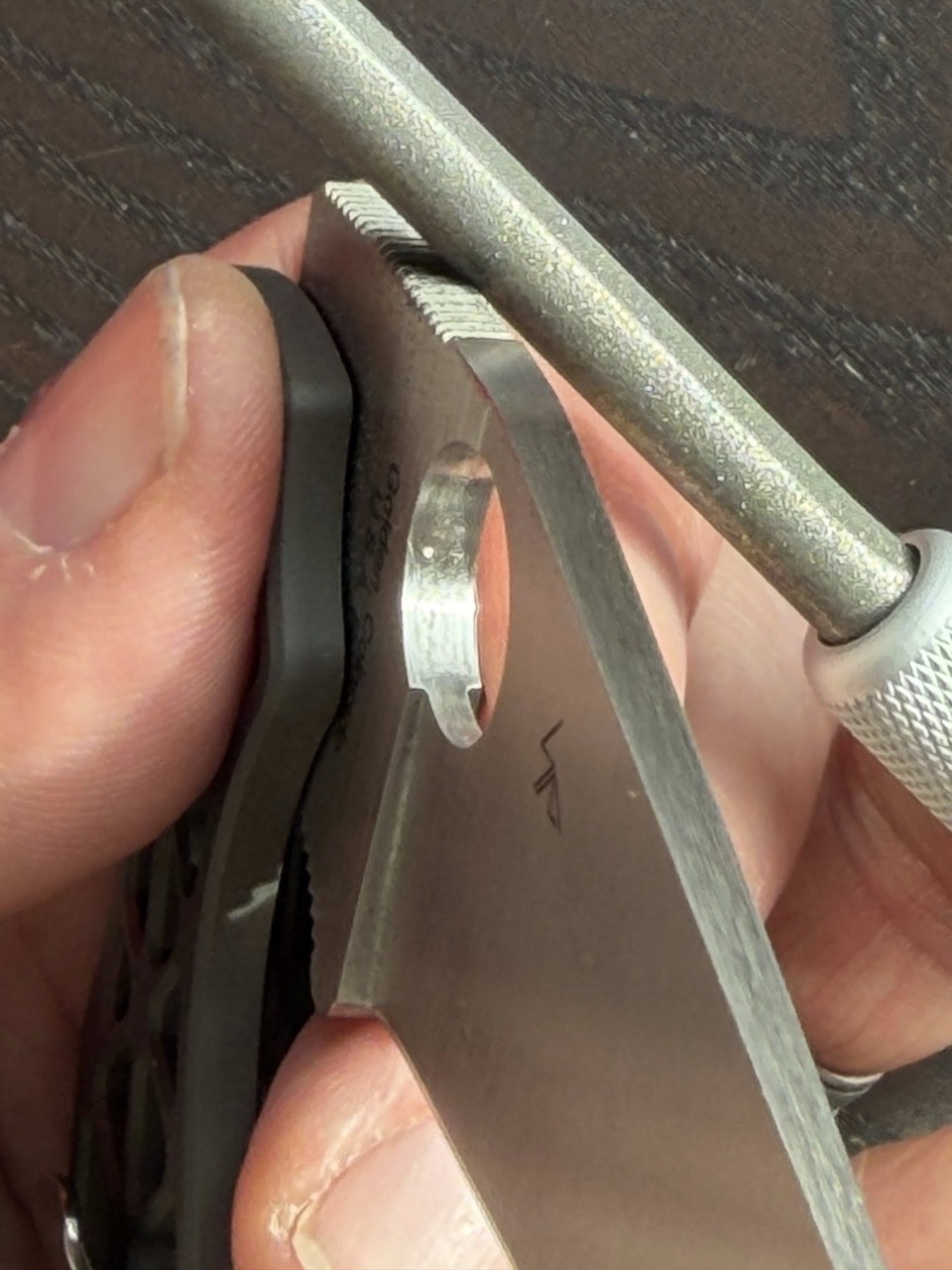
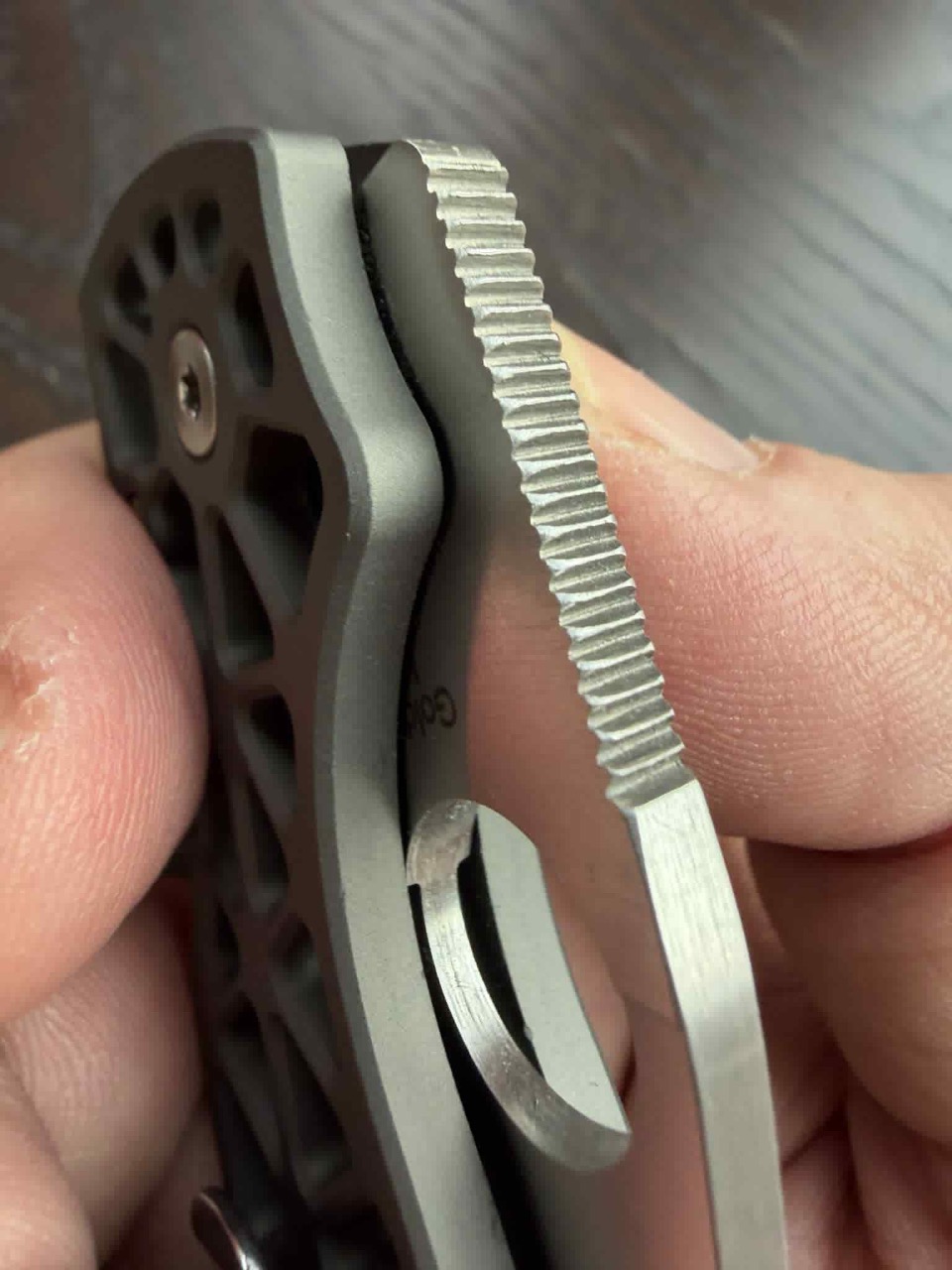
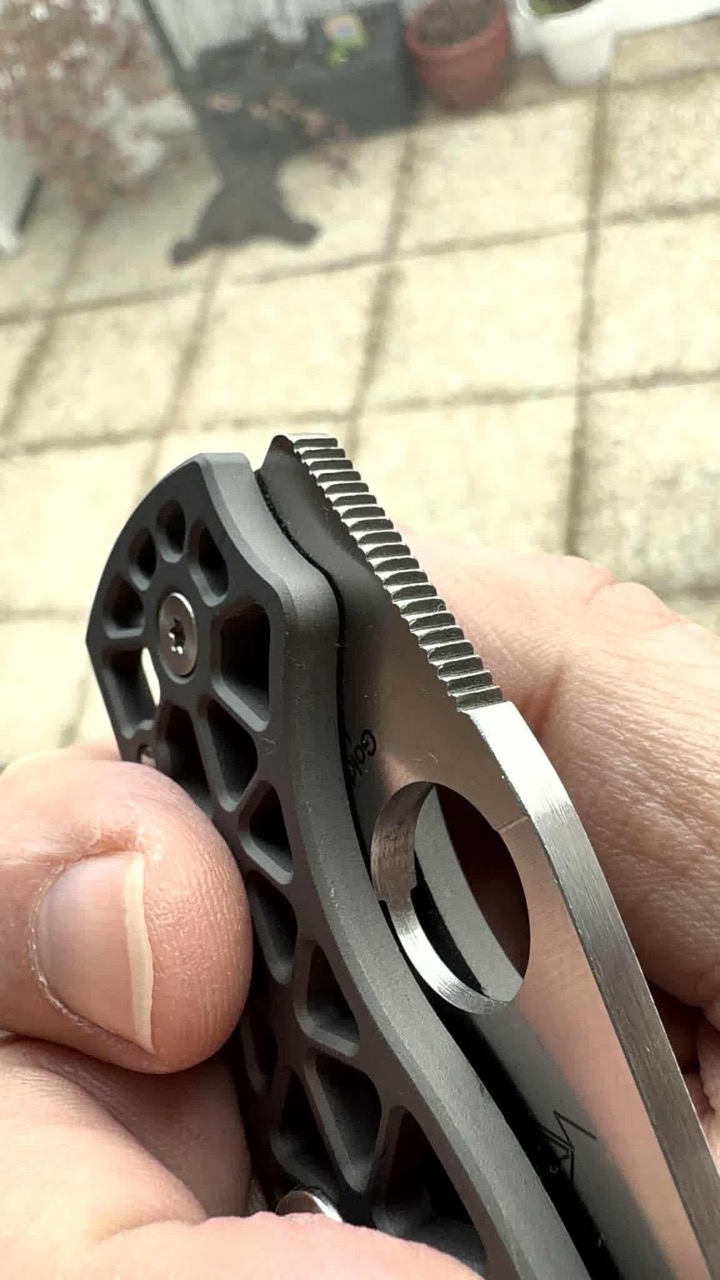
Another pleasant surprise was the jimping. I immediately noticed that the edges of the thumb ramp and choil jimping have been subtly beveled. It’s a small detail, but one that makes a noticeable difference in comfort without sacrificing grip. Ironically, this is one of the first modifications I usually make myself with a diamond rod. This time, Spyderco has already done it for me. 🙂
So, what do we have so far ? A slightly heavier Manix 2, a strong Ball Bearing Lock spring, flawless action, and impeccable fit and finish and great attention to details. So far, what’s not to like?
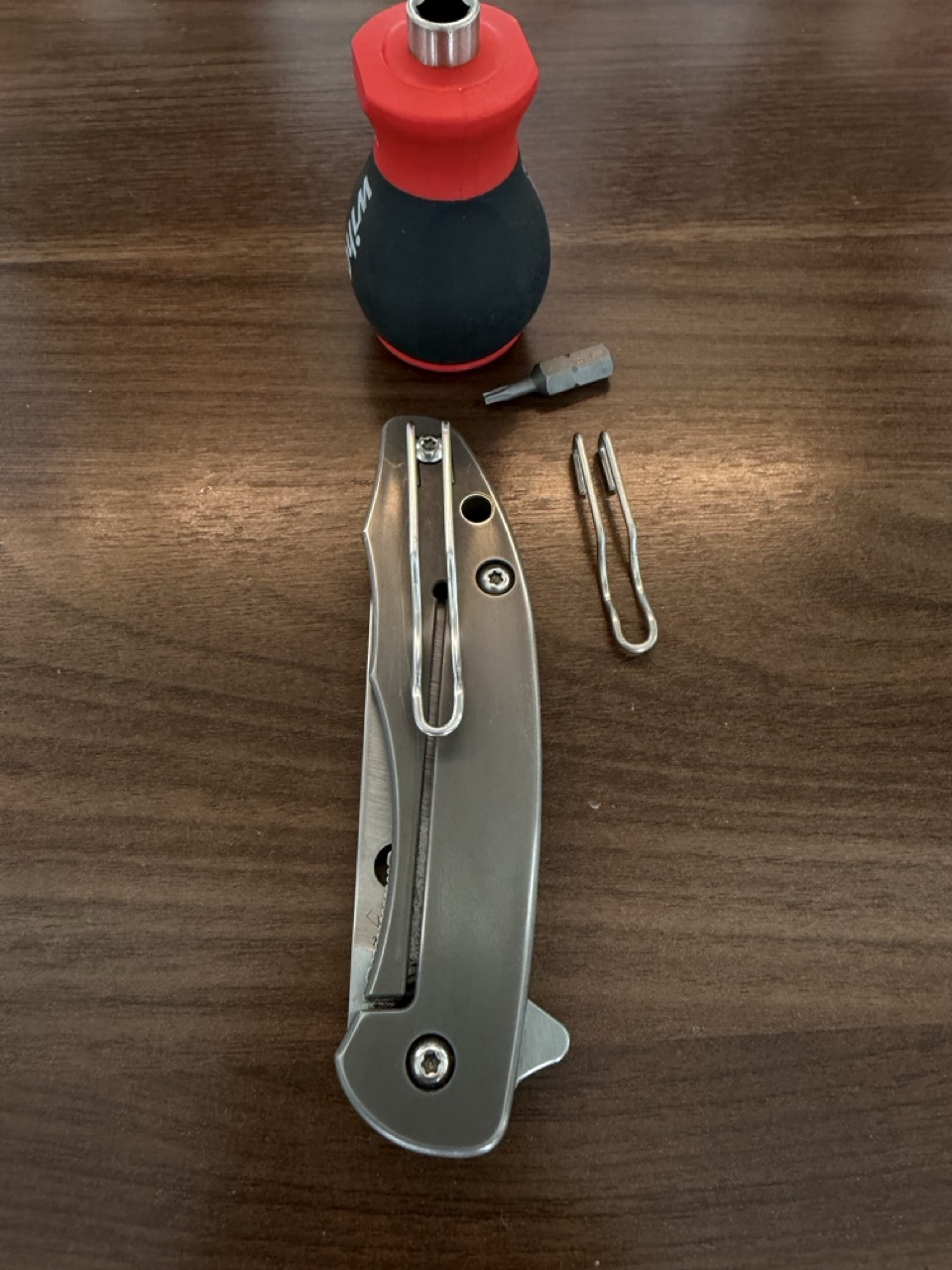
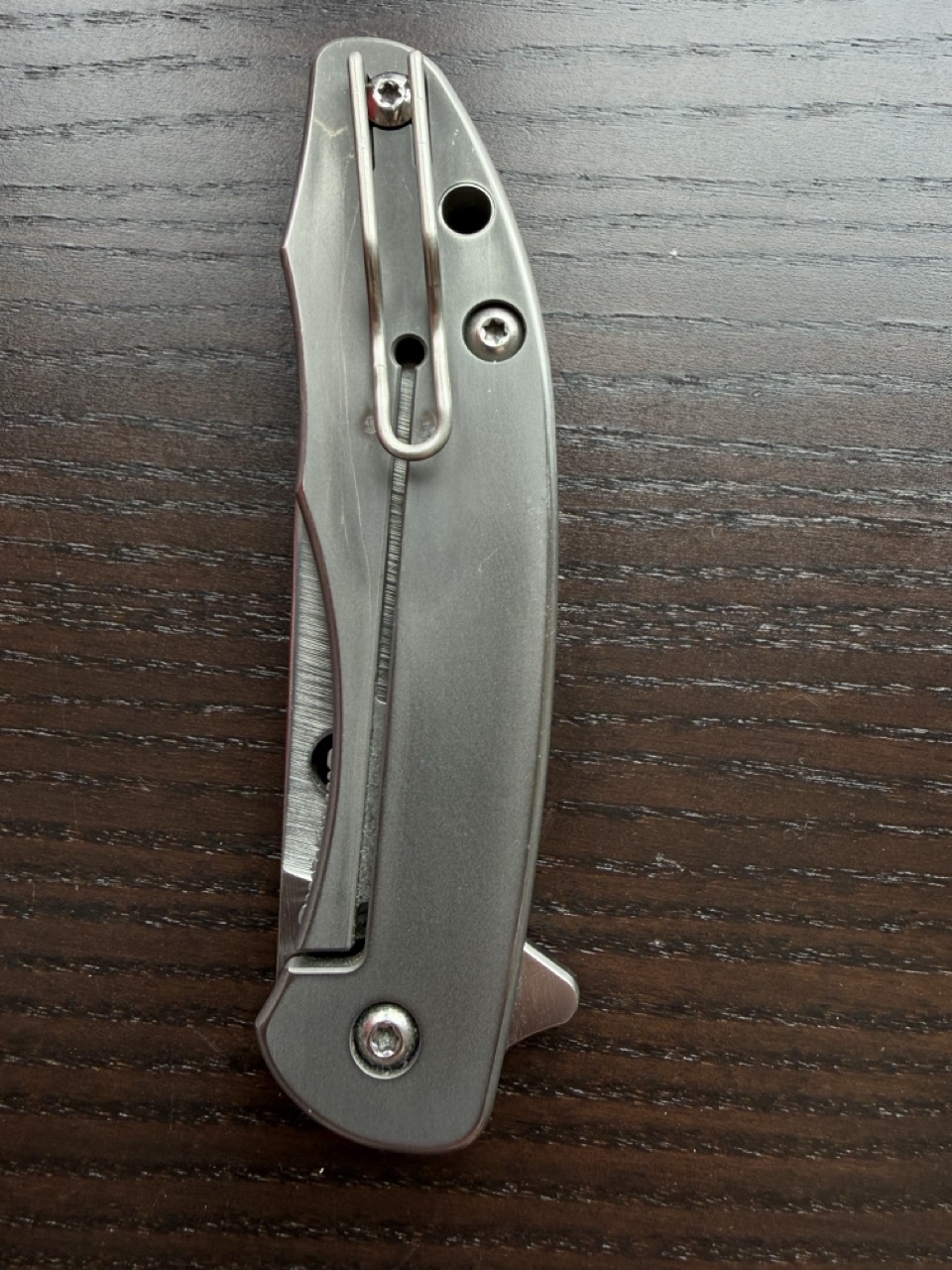
One small modification I made was to lightly sand the clip-side G-10 with 400-grit sandpaper. I prefer a smoother texture there to avoid turning the knife into a pocket shredder. I do that on every knives.
Personally, I’d liked my G-10 a little more refined (smooth like the Knifecenter Exclusives), especially since the Manix already provides plenty of grip through its excellent jimping. Softening only the clip-side scale slightly doesn’t compromise control for me—it simply makes the knife much kinder to my pockets, period. 😉
And my wife is grateful too… it means one more pair of trousers survives the Manix. 😉
But this knife isn’t just about that.
The real story begins with the steel itself.
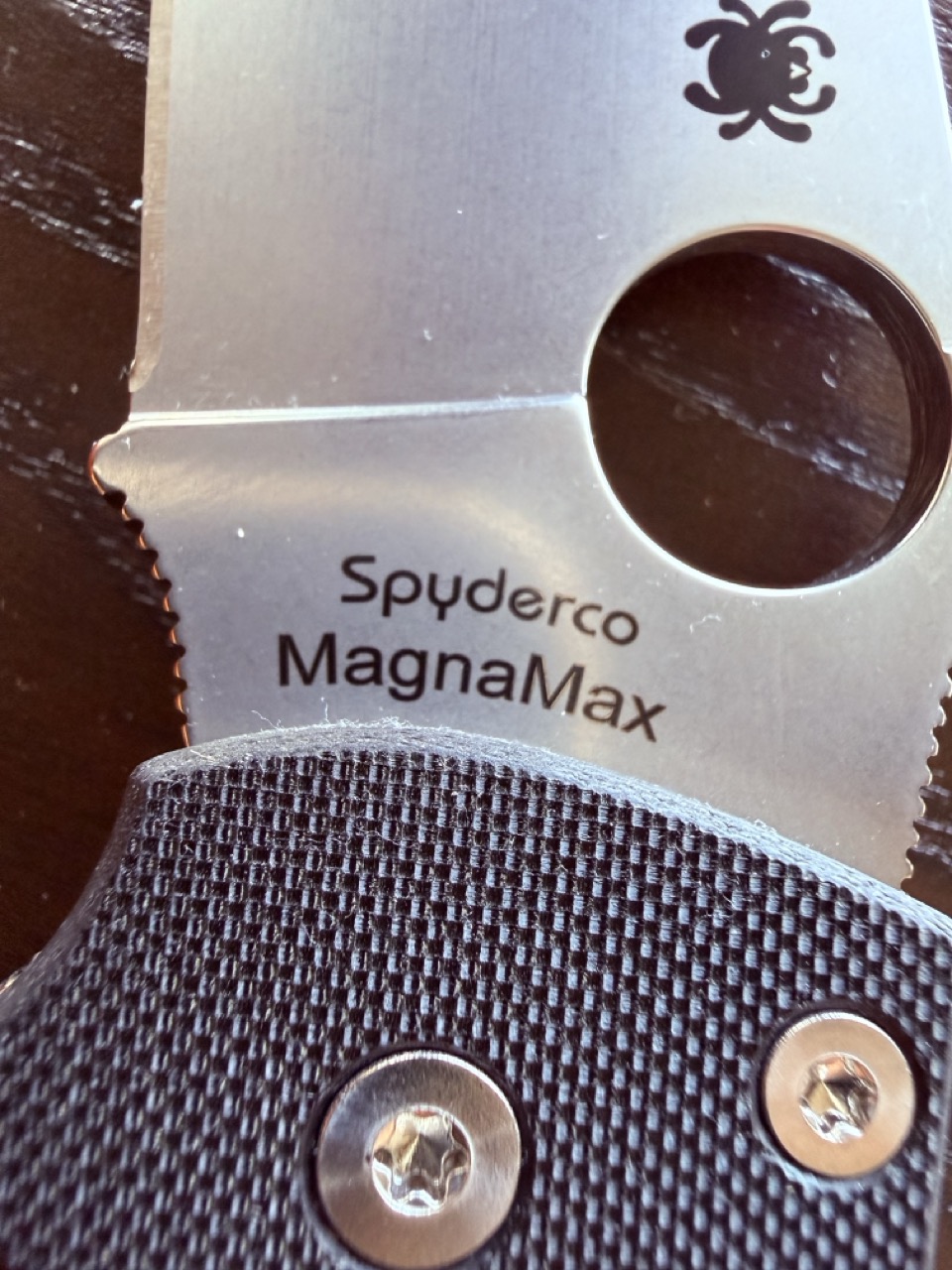
Meet MagnaMax
Now about MagnaMax which is core of this release:
As of July 2026, if we set aside Spyderco’s Mule Team test platform, the MagnaMa(ni)x stands as the first true production folder to introduce this remarkable steel to the broader knife community.
MagnaMax is one of the newest high-performance stainless steels developed by metallurgist Dr. Larrin Thomas. Building upon the innovations introduced with MagnaCut, its goal is to push the balance between toughness, wear resistance, edge retention, and corrosion resistance even further. Rather than maximizing a single property, MagnaMax aims to deliver exceptional overall performance, making it particularly attractive for hard-use folding knives. It represents the latest step in the evolution of modern powder metallurgy steels designed specifically for real-world cutting performance.
| Chromium (Cr) | Vanadium (V) | Molybdenum (Mo) | Tungsten  | Cobalt (Co) | Niobium (Nb) | Nitrogen (N) | ||
|---|---|---|---|---|---|---|---|---|
| MagnaMax | ~1.15% | ~10.5% | ~3.5% | ~2.0% | ~1.0% | ~7.5% | ~1.5% | – |
| MagnaCut | 1.15% | 10.7% | 4.0% | 2.0% | – | – | 2.0% | 0.20% |
| CPM S90V | 2.30% | 14.0% | 9.0% | 1.0% | – | – | – | – |
| K390 | 2.47% | 4.2% | 9.0% | – | 2.0% | 2.0% | – | – |
- MagnaMax – Designed to deliver an exceptional balance of toughness, wear resistance, edge retention, and corrosion resistance. The addition of cobalt and tungsten further enhances its overall performance.
- MagnaCut – One of the most balanced stainless knife steels ever developed, combining excellent toughness with outstanding corrosion resistance.
- CPM S90V – Famous for its exceptional edge retention thanks to its very high vanadium content, though it is less tough and more difficult to sharpen.
- K390 – An outstanding non-stainless tool steel with phenomenal edge retention and wear resistance, intended for demanding cutting tasks but requiring regular maintenance to prevent corrosion.
| Criterion | MagnaMax vs MagnaCut |
|---|---|
| Edge retention | Notably superior (K390/Vanadis 8 level) |
| Corrosion resistance | Equivalent, very good |
| Toughness | Slightly lower |
| Sharpening | Harder (standard stones), diamond recommended |
| Availability (2026) | Very limited, near-boutique |
MagnaMax in Context
In terms of performance, MagnaMax should offer edge retention comparable to K390 and Vanadis 8, placing it in the same general class as CPM-10V and CPM-S110V, while outperforming steels such as M390, ZDP-189, S60V, S30V, and CPM-M4 in wear resistance.
In toughness, it appears to sit just above Vanax, S35VN, CPM-154, and CTS-XHP… slightly below MagnaCut, yet still in the upper tier of stainless knife steels.
I was not one of the lucky MagnaMax Spyderco Mule owners but the consensus emerging from discussions on the Spyderco Forum is that MagnaMax is viewed as a specialized, edge-retention-focused premium steel. It seems particularly well suited to EDC and repetitive cutting tasks where wear resistance is paramount.
For bushcraft or survival use, however, where toughness often takes precedence, many members still favor MagnaCut, Cru-Wear, CPM-3V or CPM-M4.
As the Manix is a folder rather than a fixed blade, I don’t expect to subject it to heavy bushcraft. Still, many users happily rely on the Manix 2 in the woods.
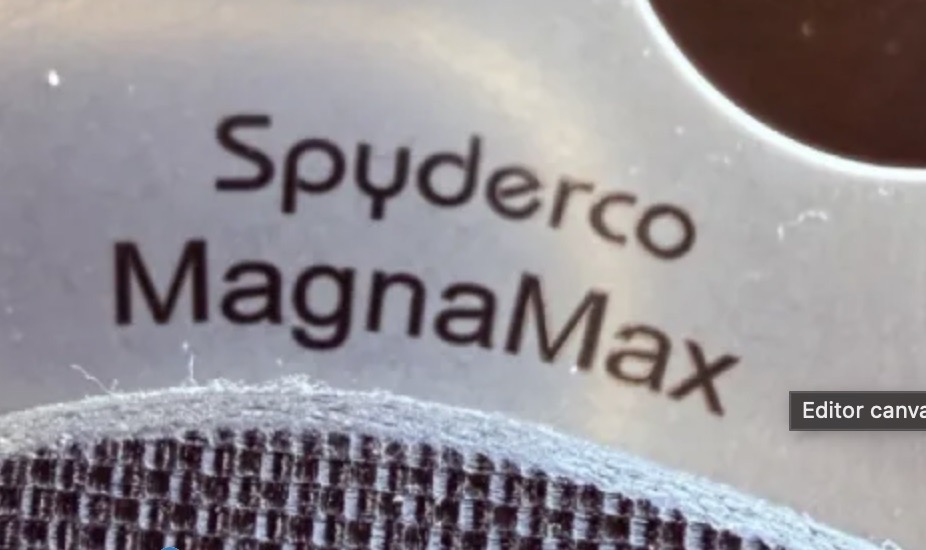
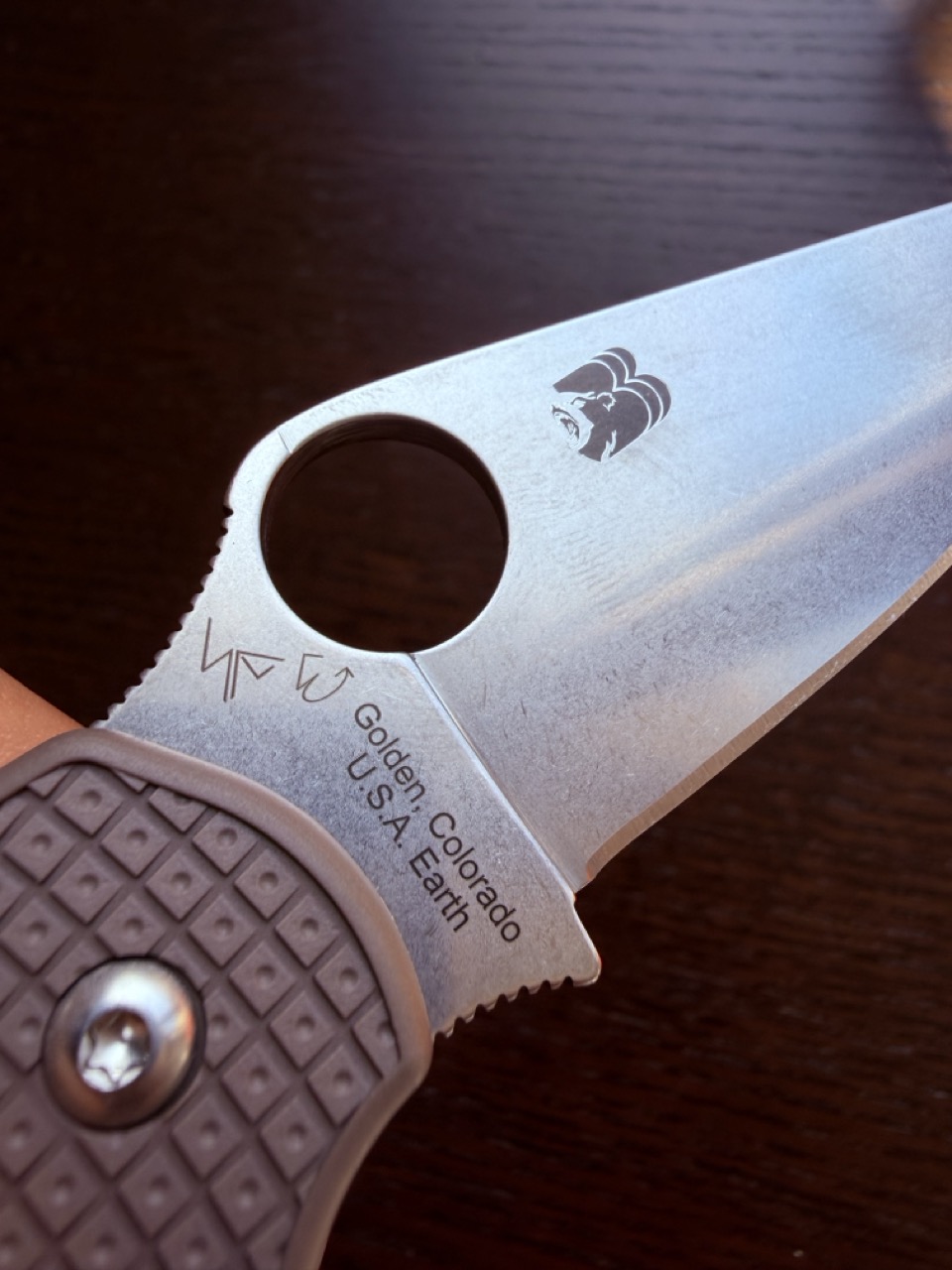
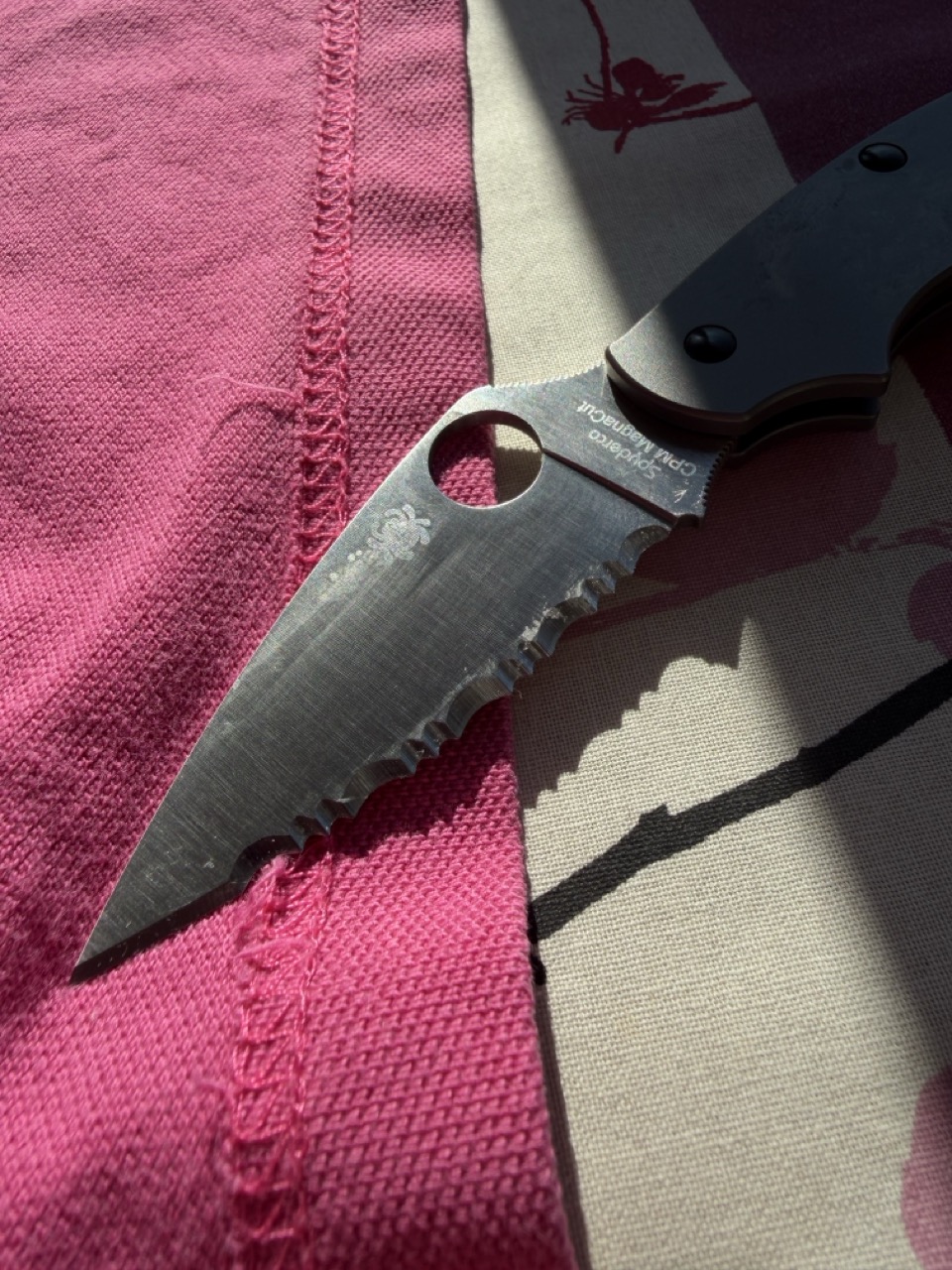
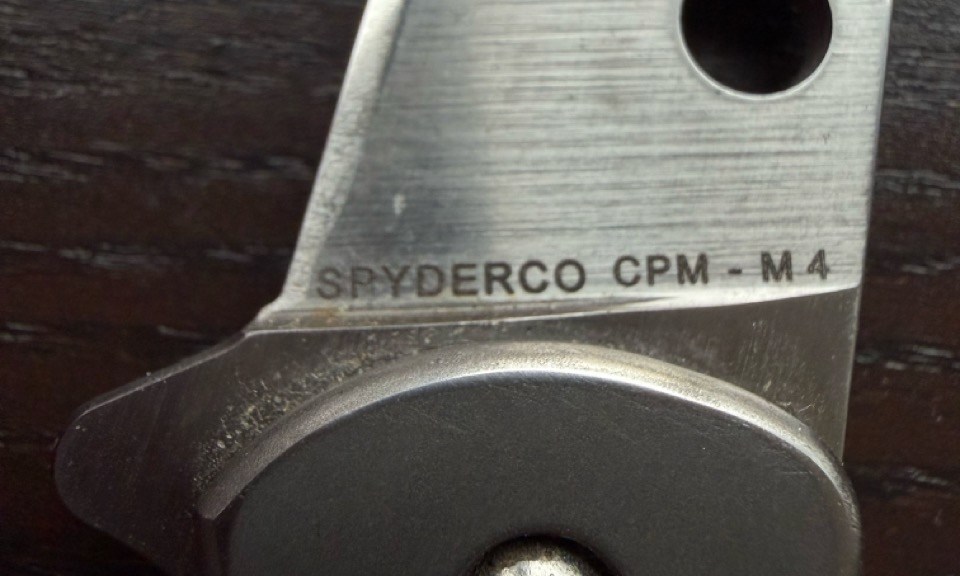
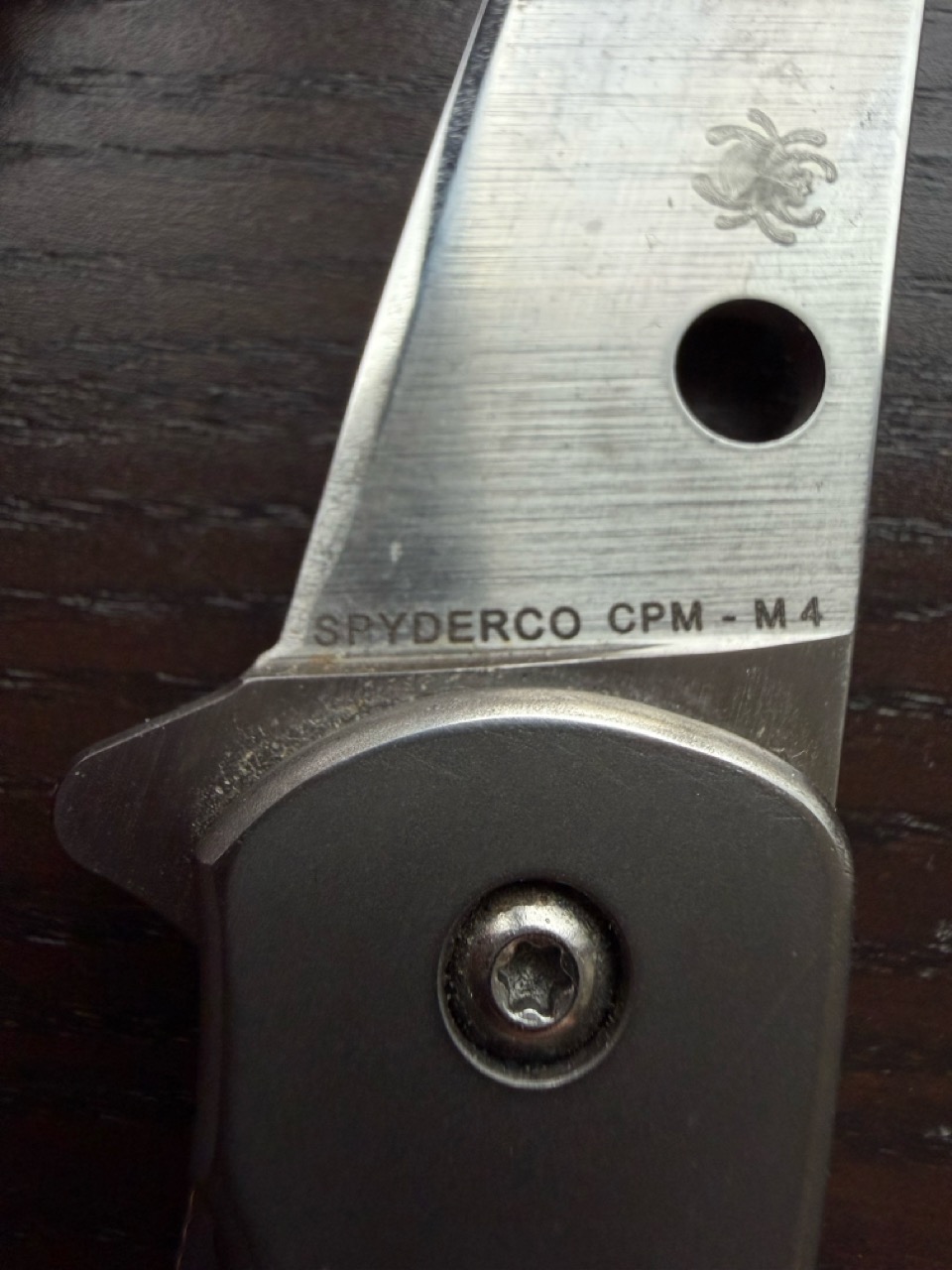
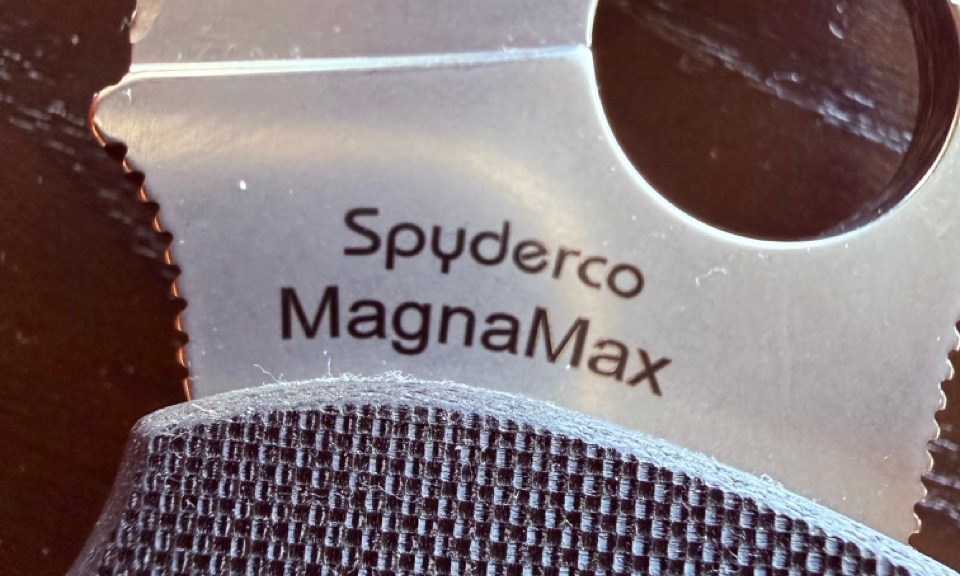
As you may have noticed, the “CPM” marking has disappeared from the blade. That’s no coincidence. Following the closure of Crucible Industries, Spyderco has dropped the CPM designation from its blade markings. While the steel itself remains the focus, this small detail quietly marks the end of an era in the history of modern knife steels. 😦
In many ways, MagnaMax feels like the offspring of MagnaCut and K390. It aims to combine MagnaCut’s outstanding balance of toughness and corrosion resistance with the exceptional wear resistance and edge retention that have made K390 legendary among knife enthusiasts. While it is not literally derived from either steel, its design philosophy seems to bridge the gap between these two outstanding performers.

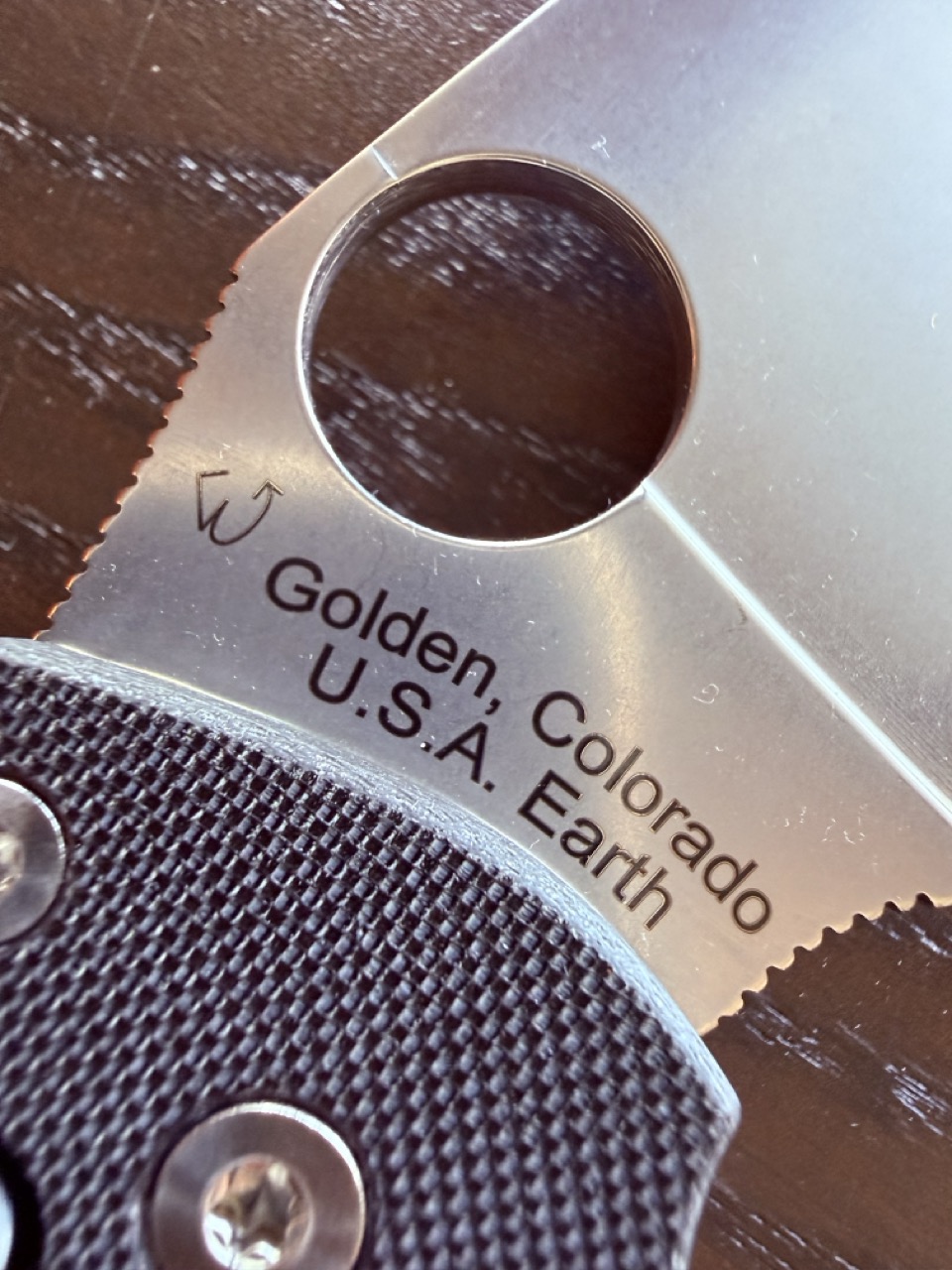
One interesting clue to Spyderco’s confidence in MagnaMax came from Eric Glesser during the Amsterdam Meet 2026, where he suggested that MagnaMax could eventually replace CPM S30V/CPM S45VN in Golden, Colorado-made folders. If that transition takes place, it would position MagnaMax as Spyderco’s new premium all-around stainless steel for many production models.
It is more than just a steel upgrade; it marks the beginning of a new era for Spyderco.
Ergonomics That Stand the Test of Time
The ergonomics of the Manix 2 platform have already been covered extensively in my previous review of the Manix 2 Salt G10. The outstanding handle design, aggressive jimping, Ball Bearing Lock, and exceptional grip remain unchanged here. MagnaMax does not alter what has always been one of the strongest aspects of this design.
The familiar combination of textured G10 scales, full stainless steel liners, and Spyderco’s proven hardware gives this knife an unmistakable feeling of strength. Combined with its additional weight, the knife inspires confidence the moment it is picked up. This is a tool that feels engineered for demanding work rather than simply everyday pocket carry.
Ready for Work
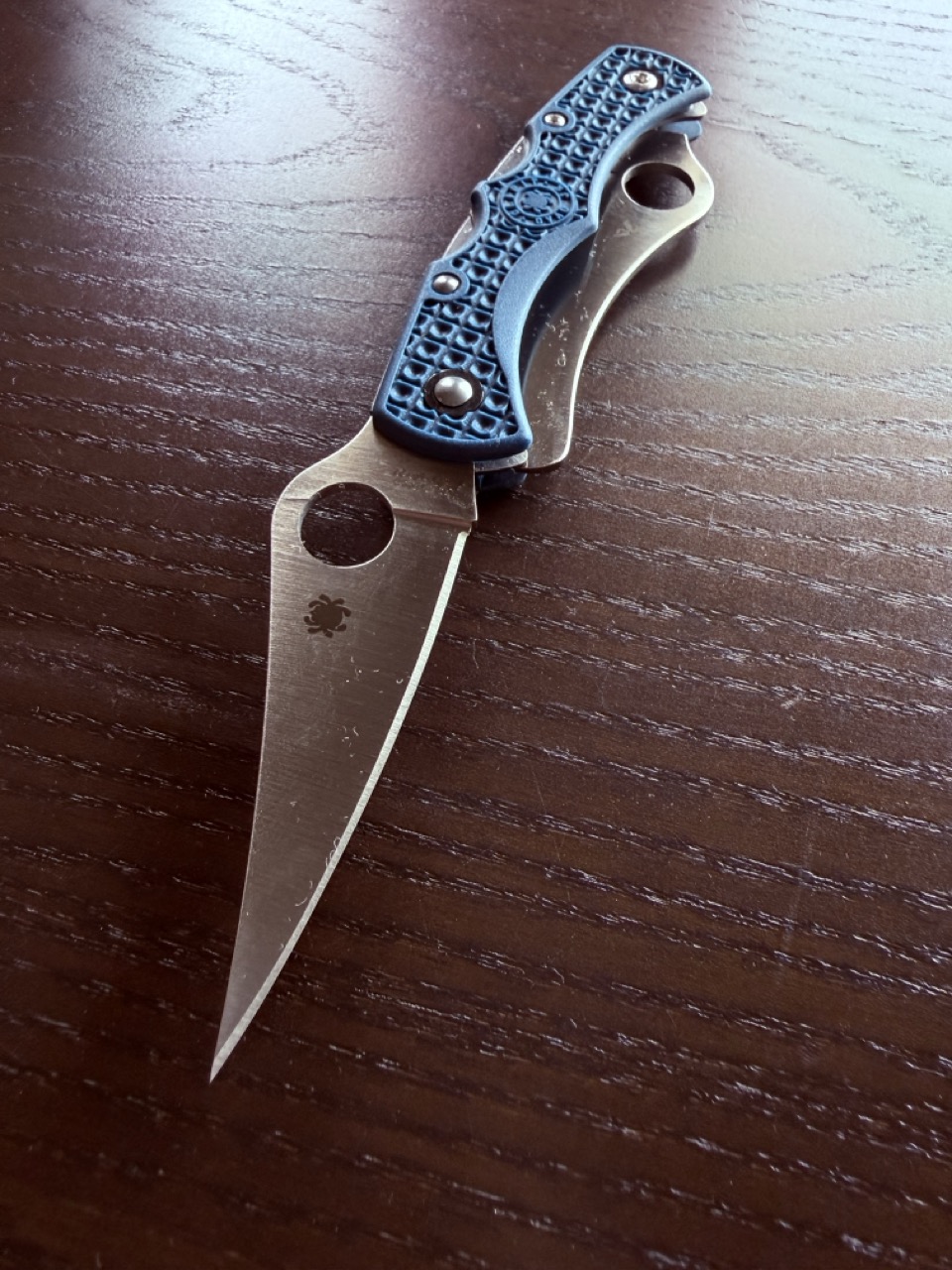
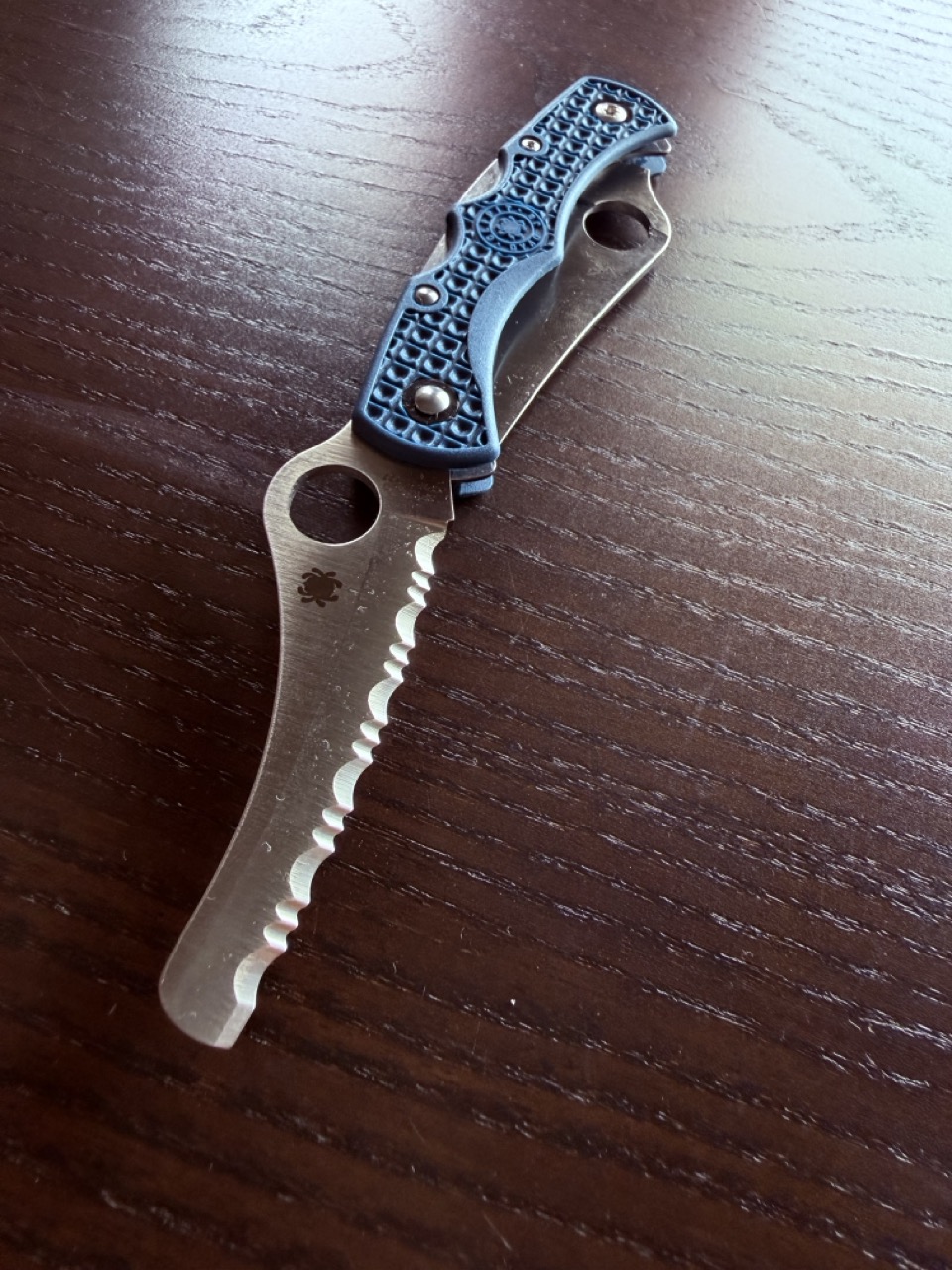
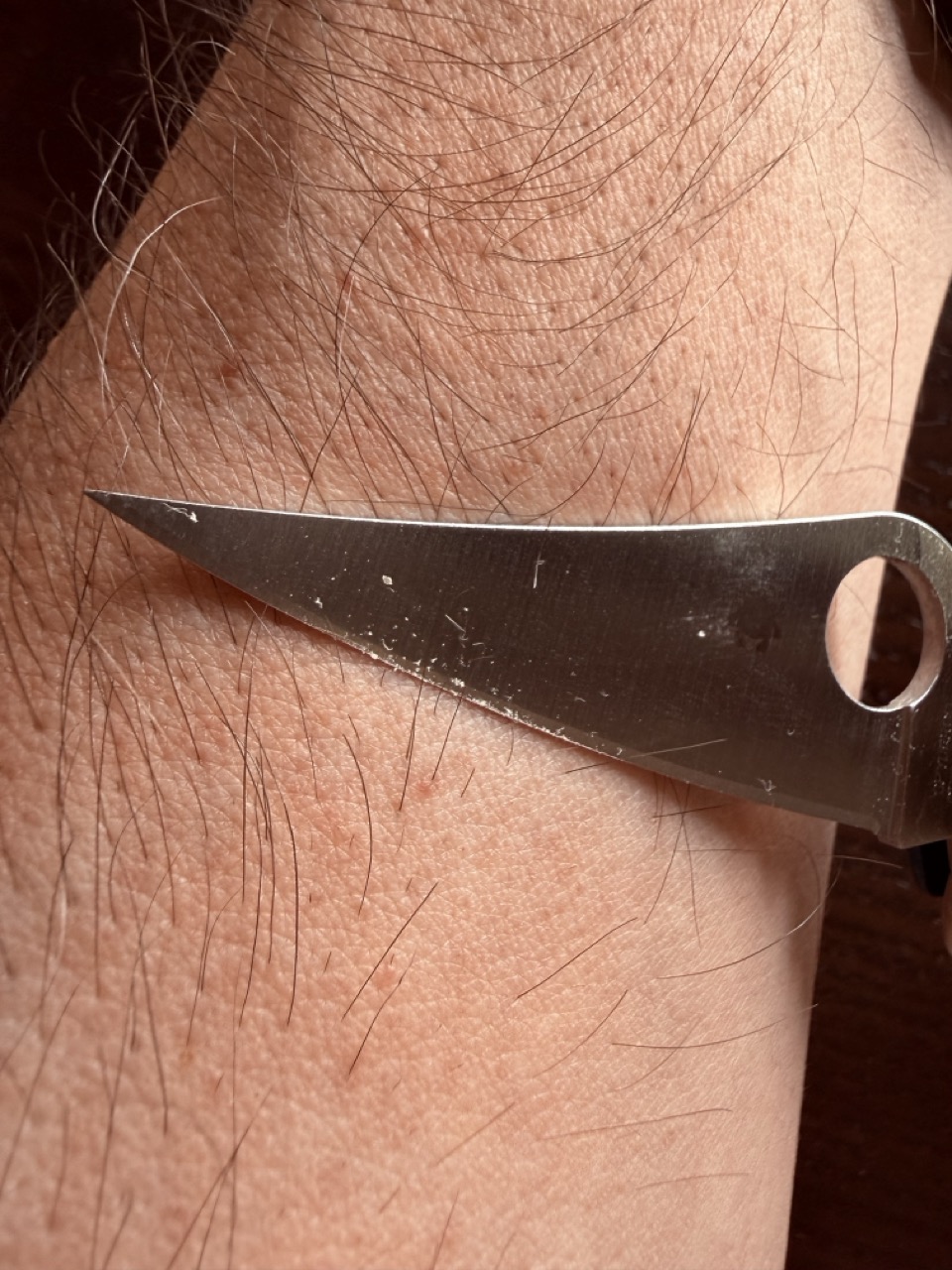
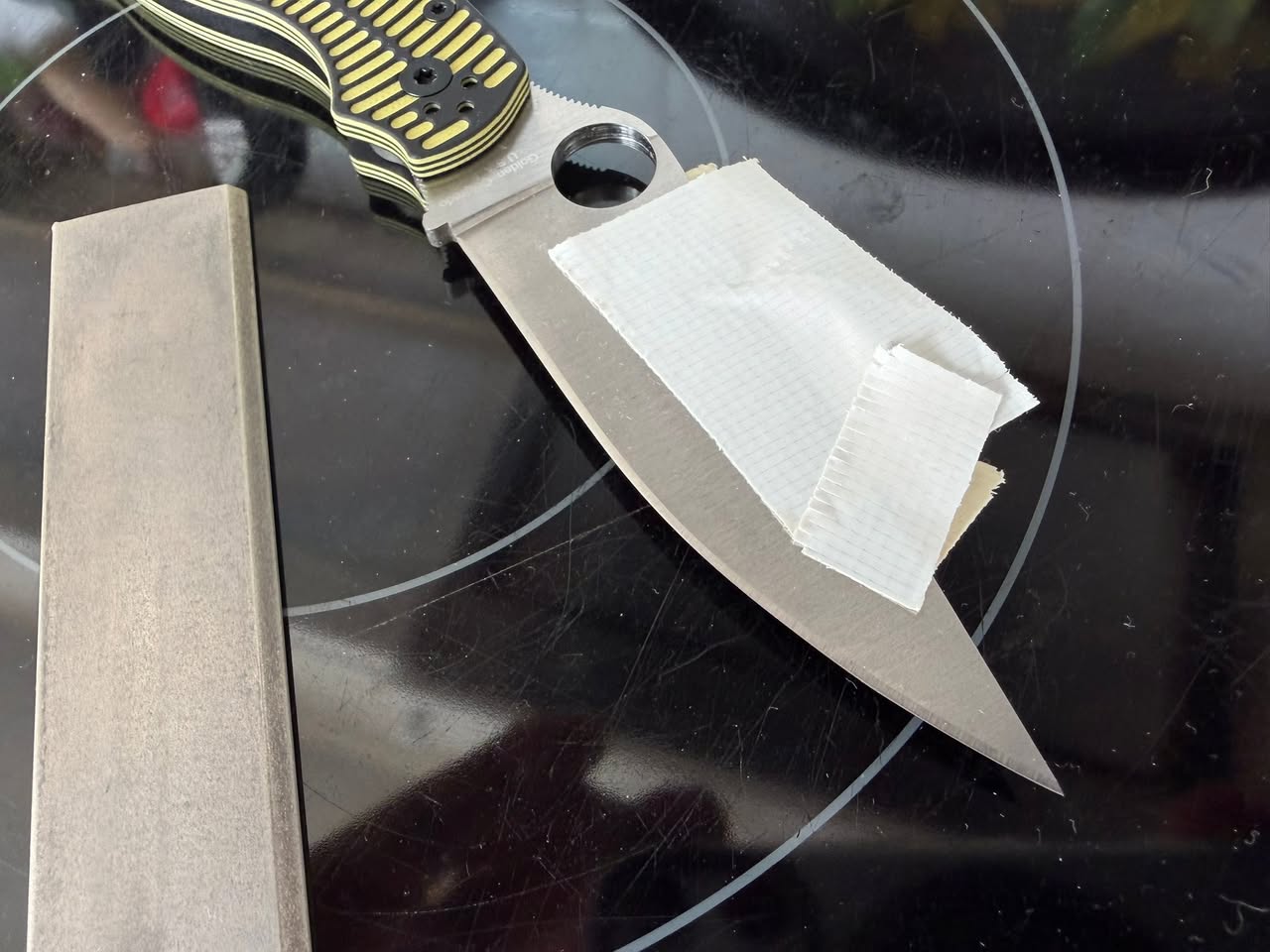
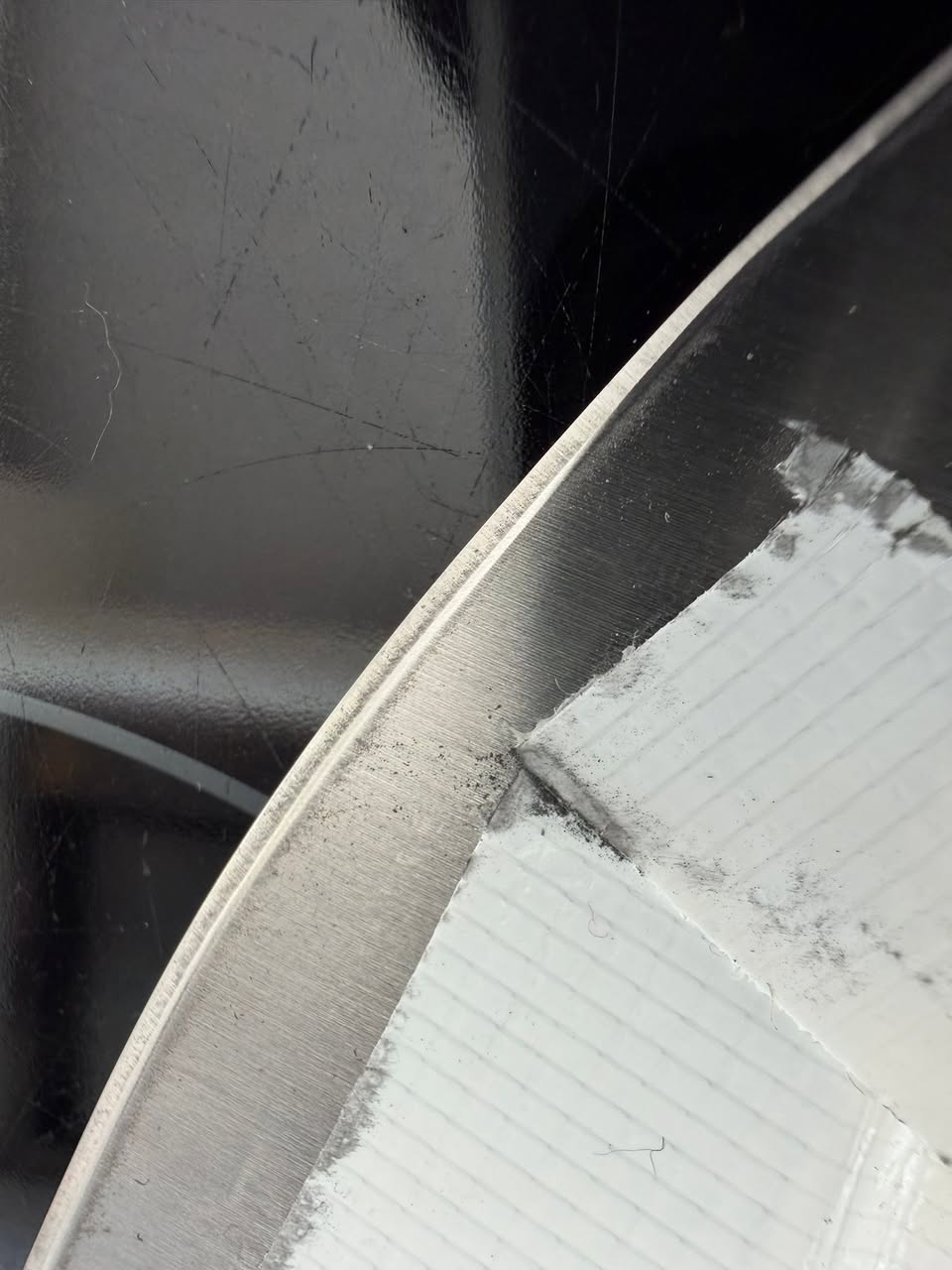
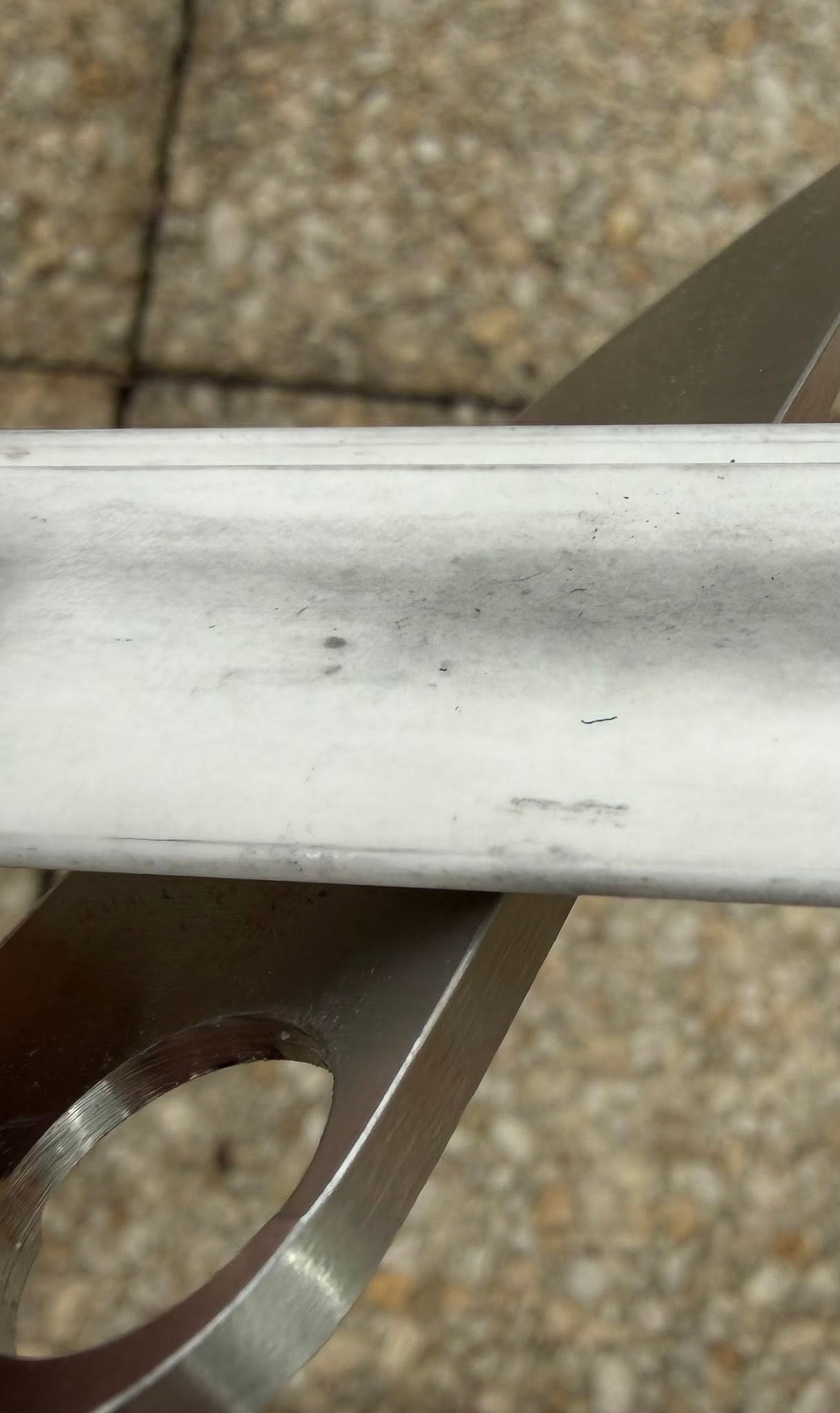
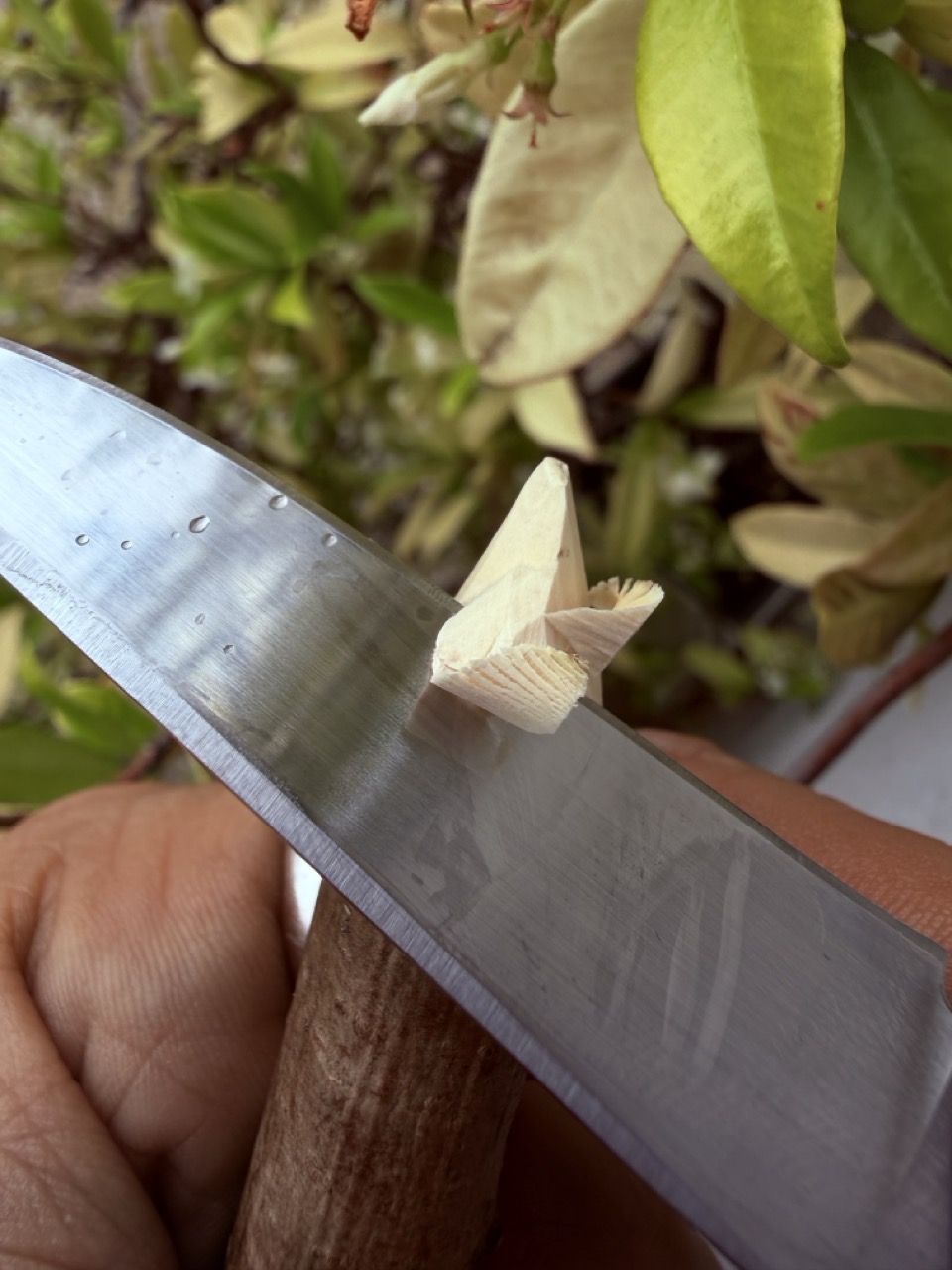
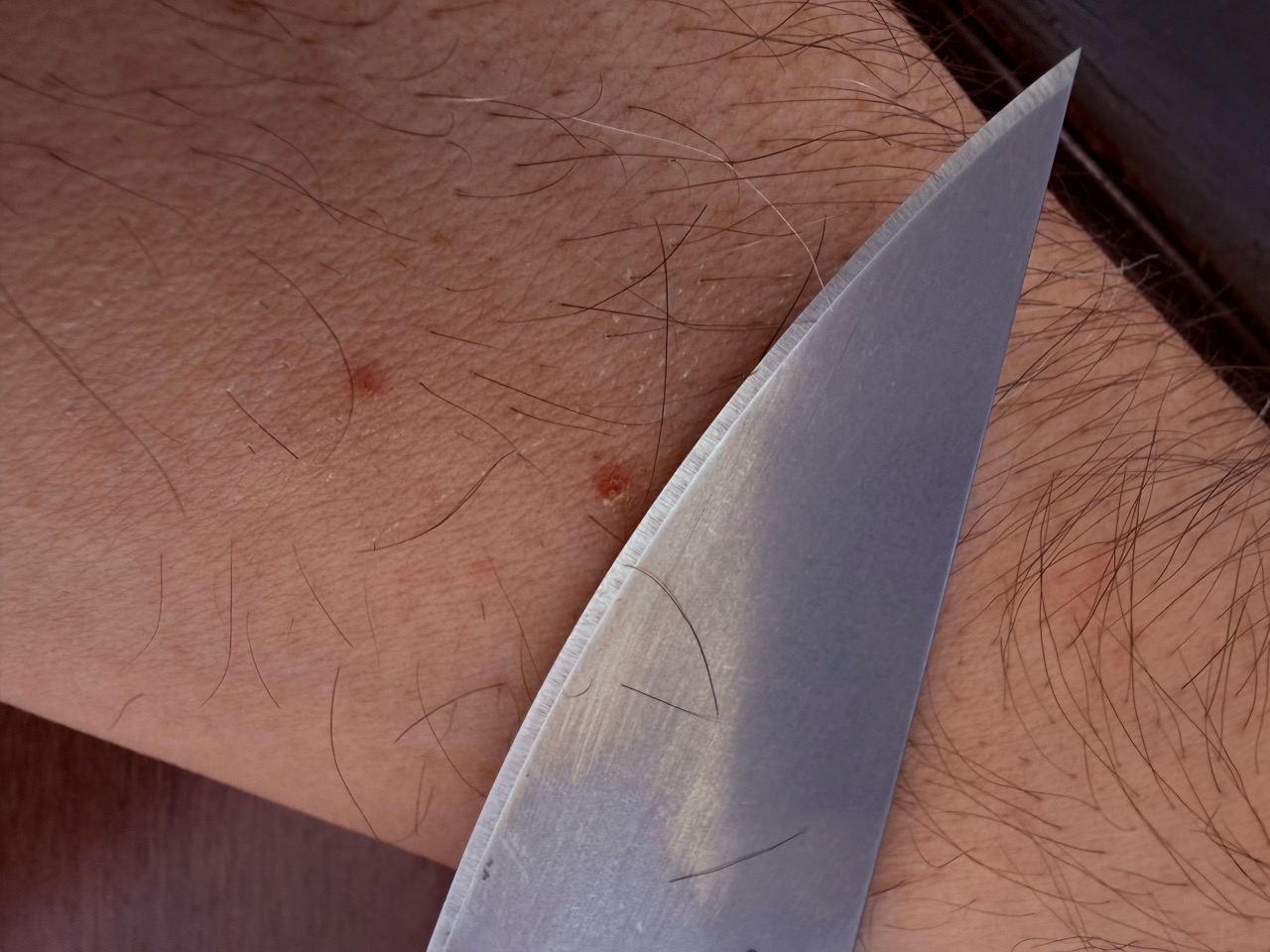
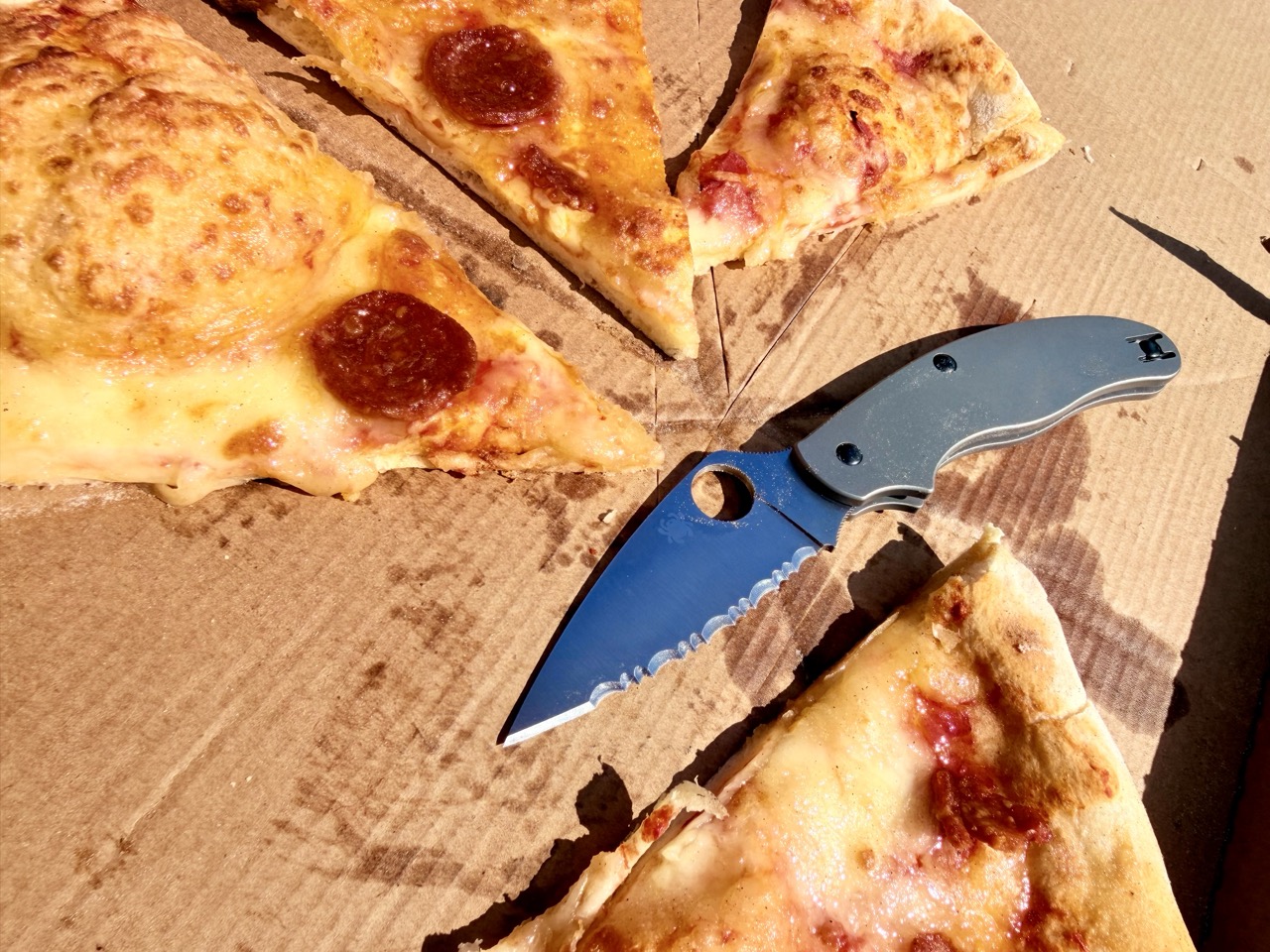
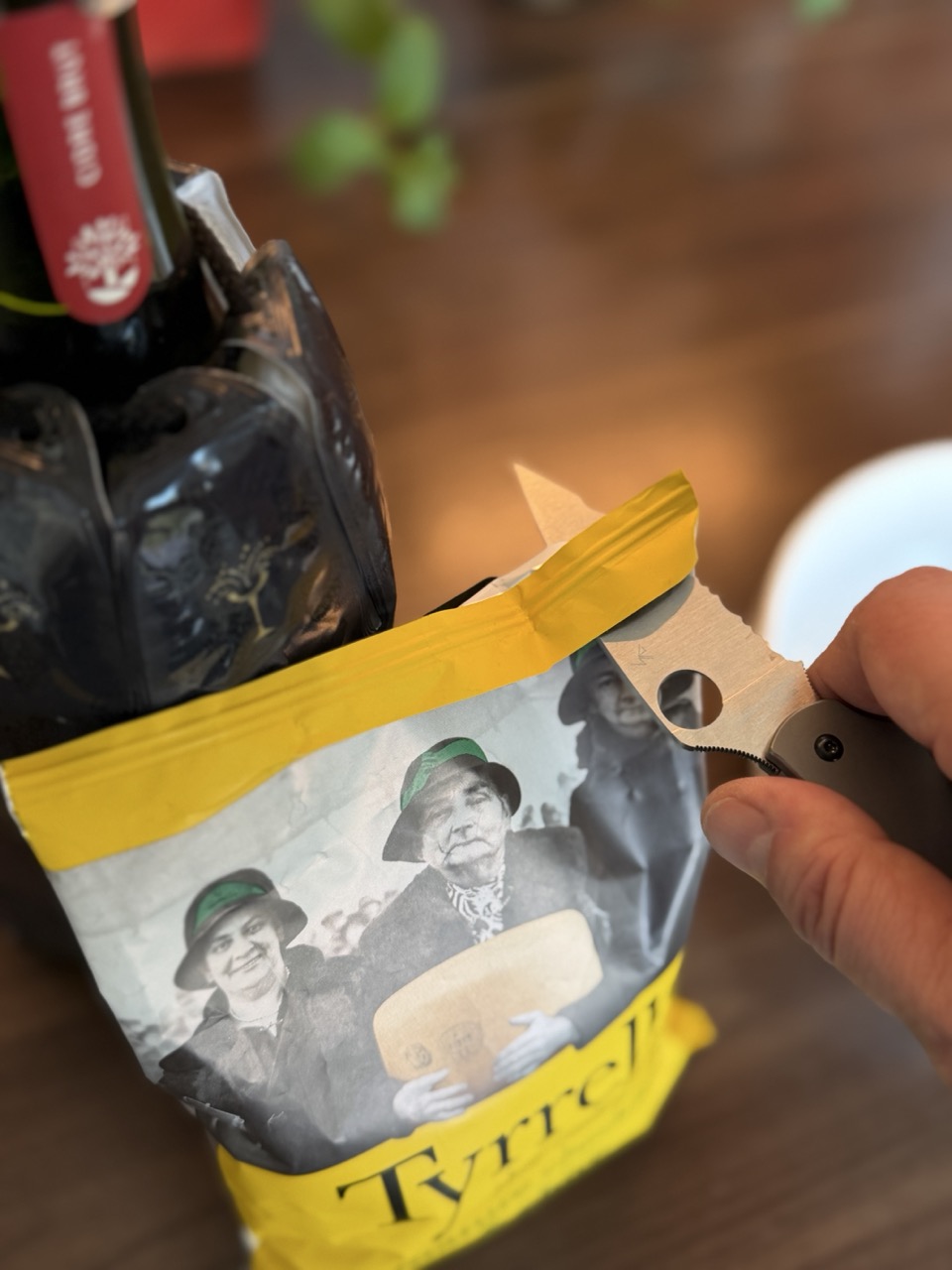
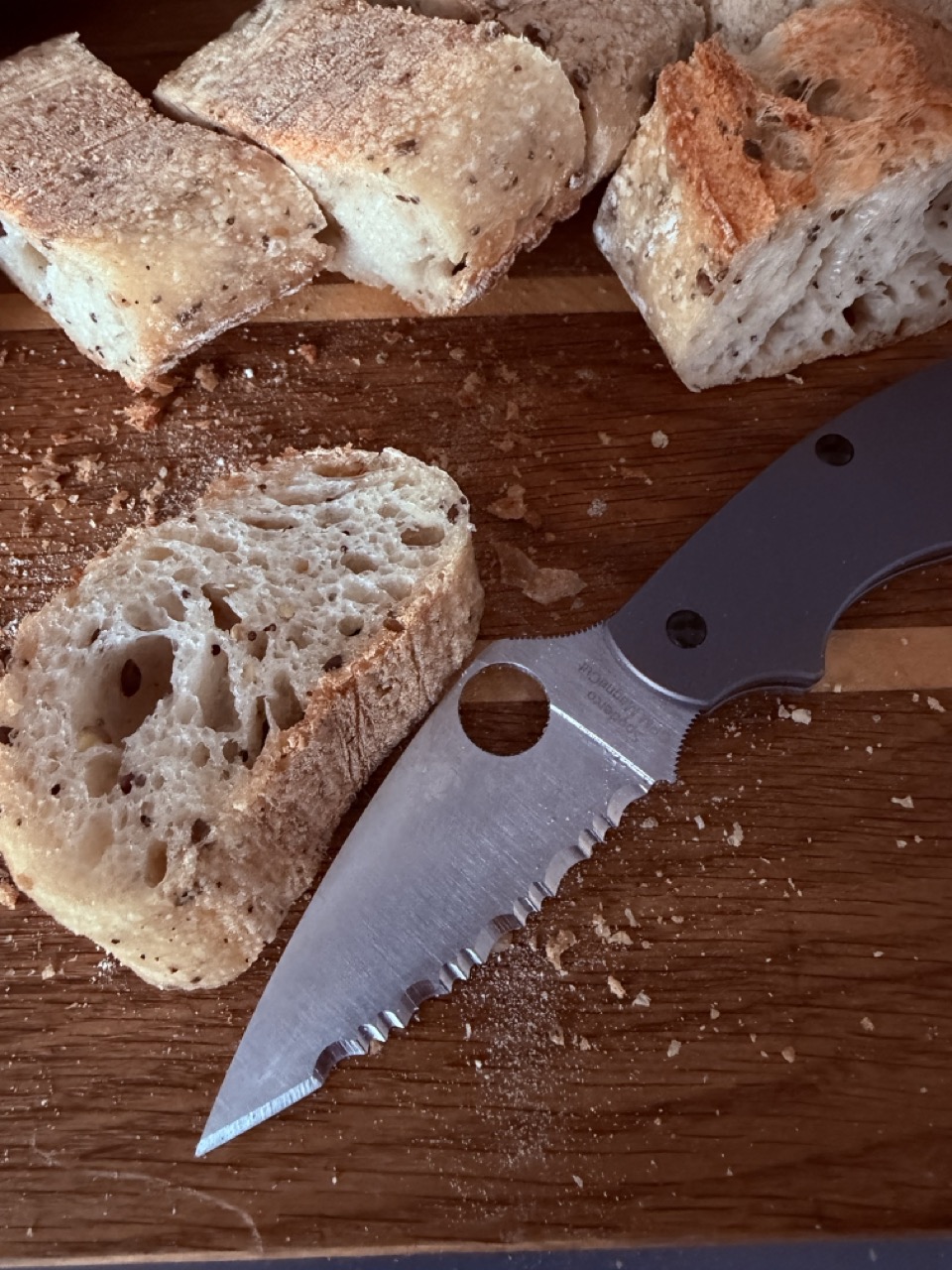
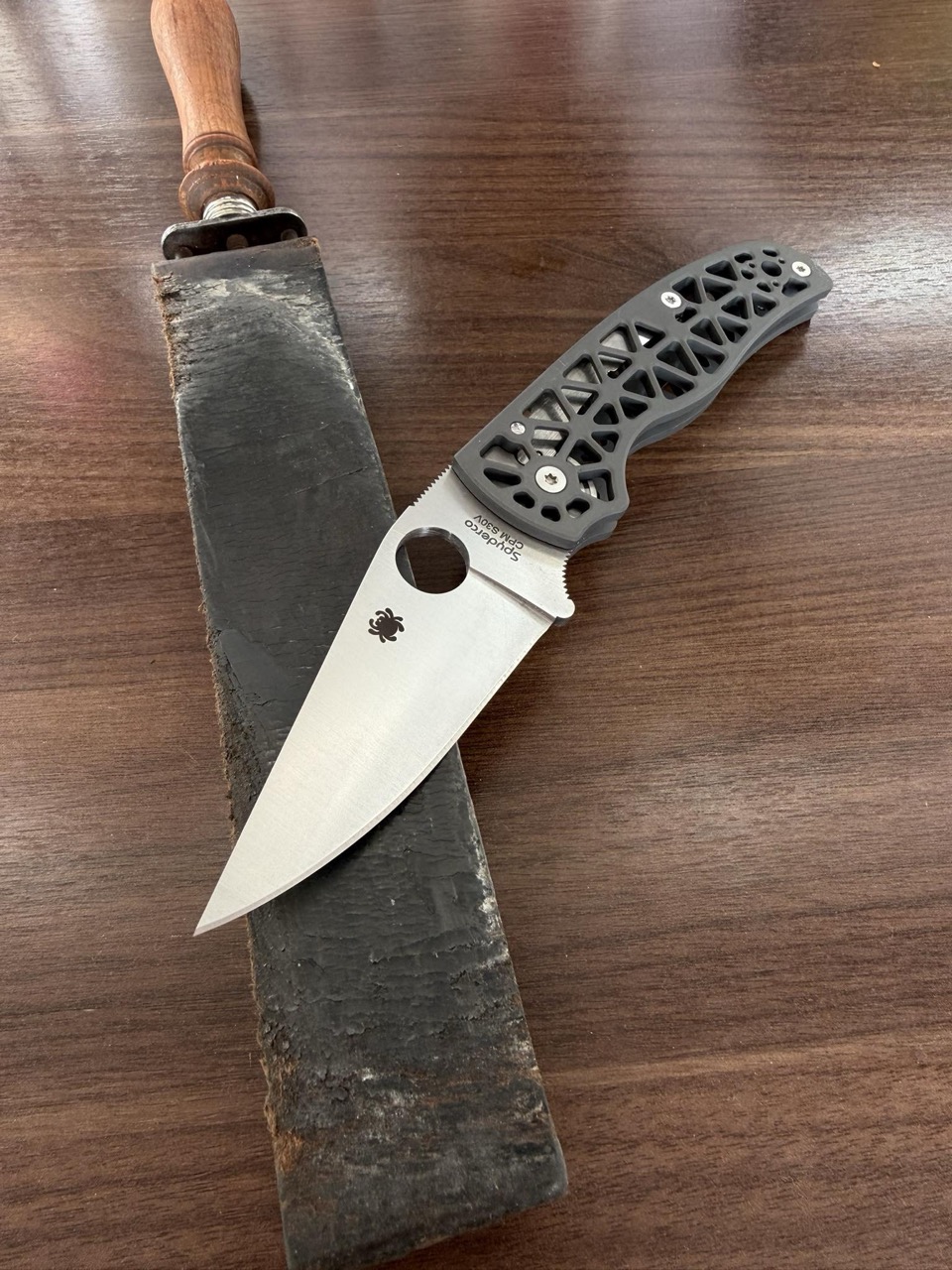
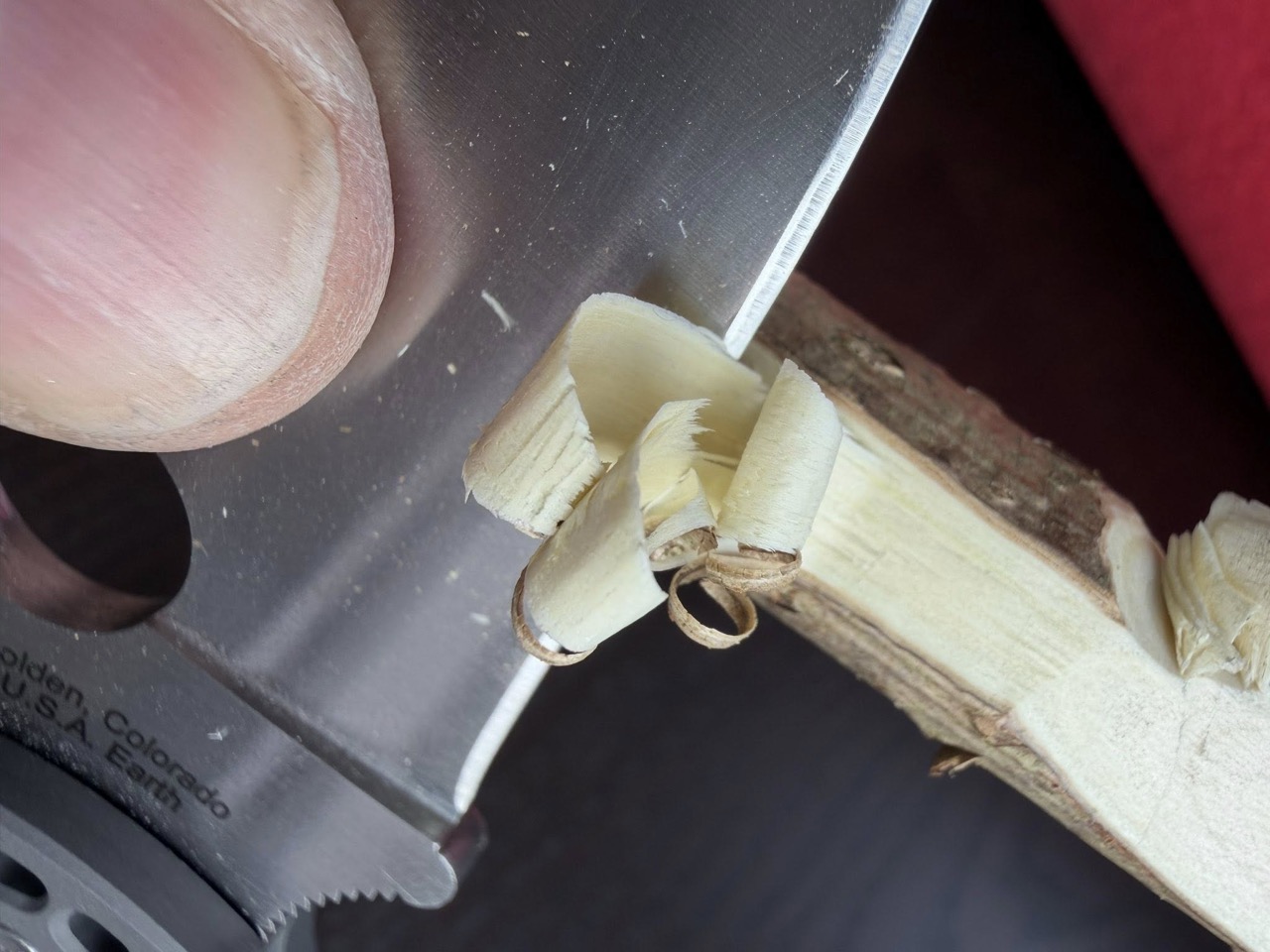
Out of the box, the edge is razor sharp. The factory sharpening is excellent, producing a clean, aggressive cutting edge that easily meets Spyderco’s reputation for outstanding factory grinds. The accompanying photographs speak for themselves.
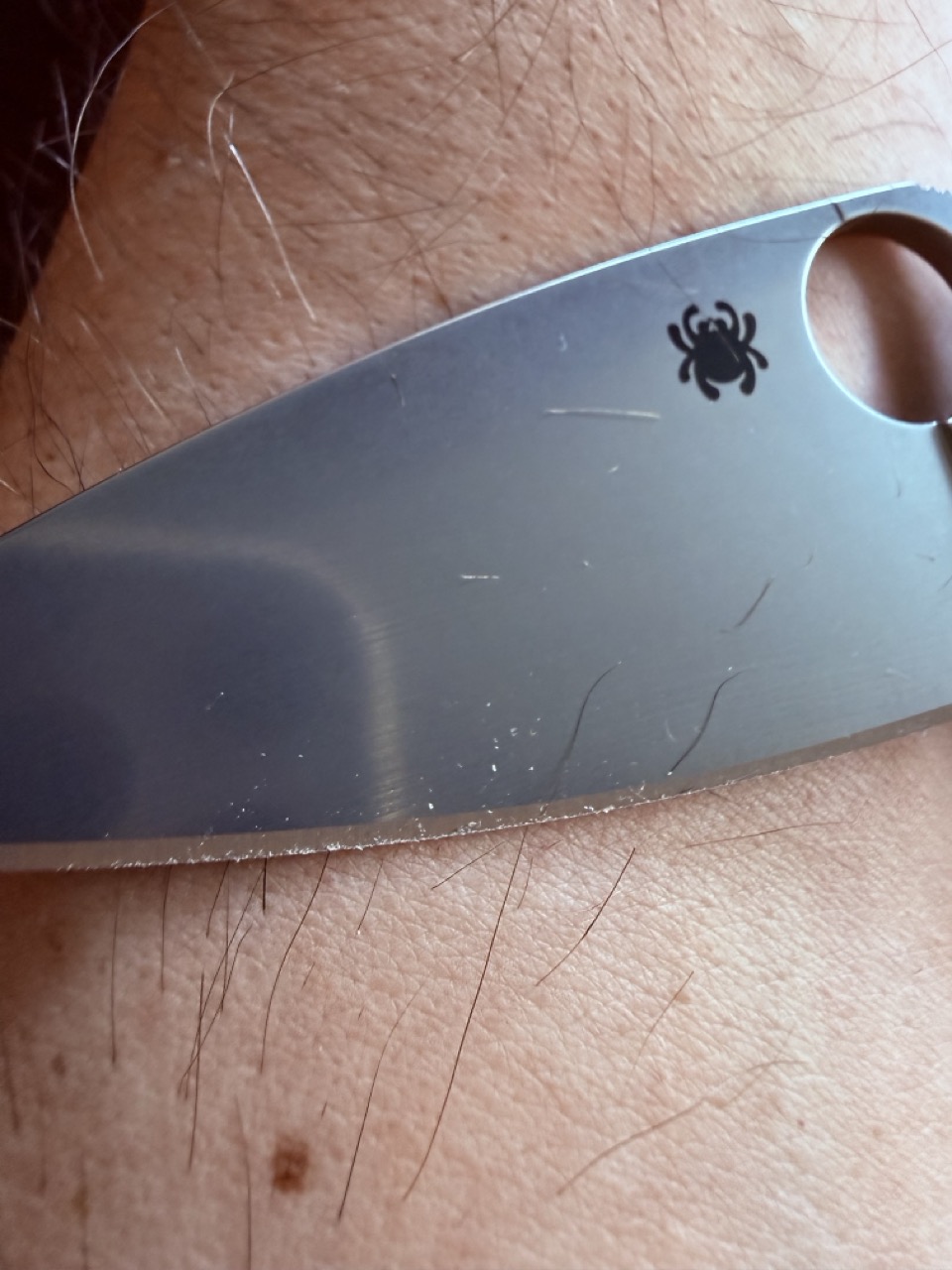
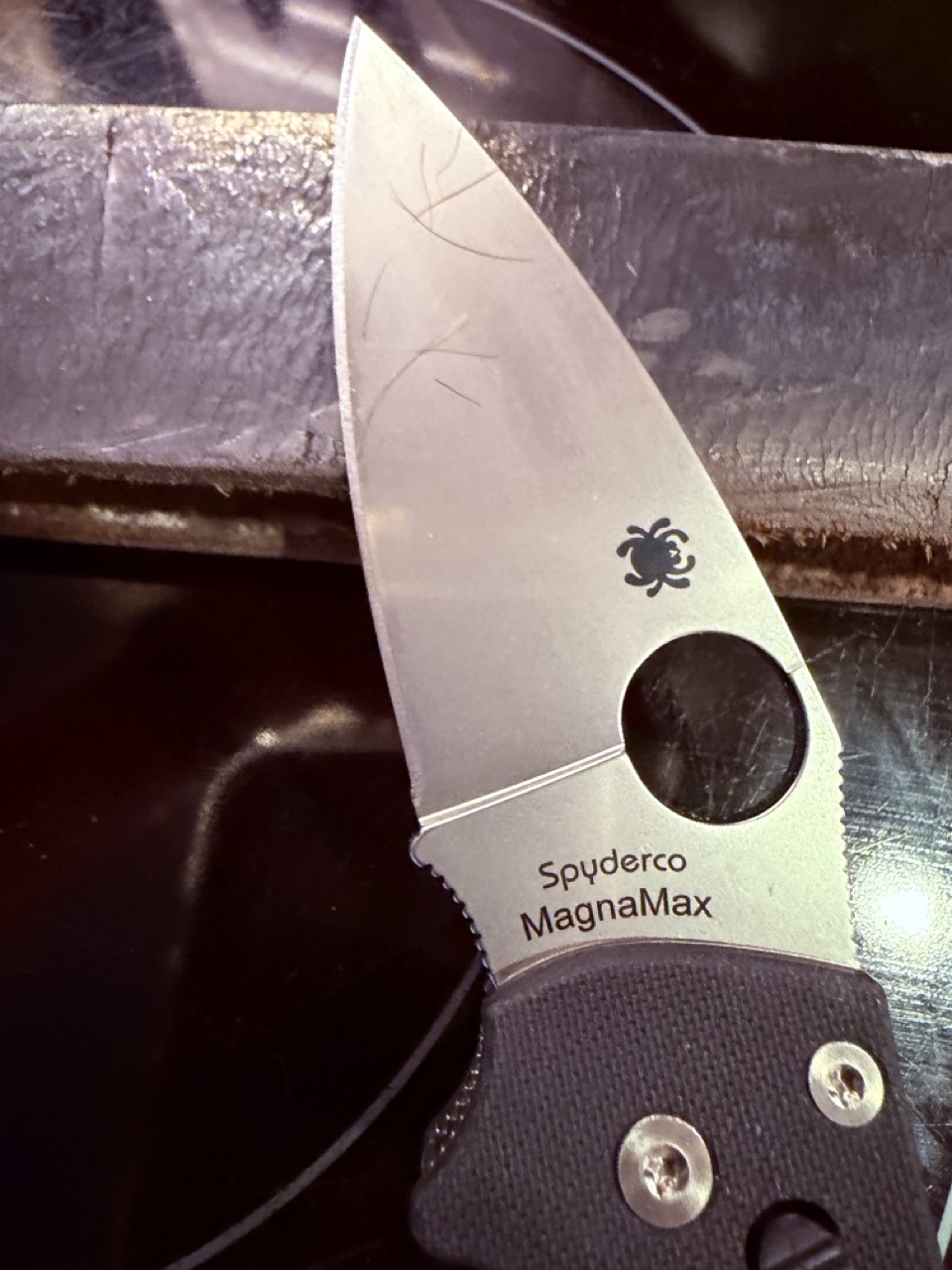
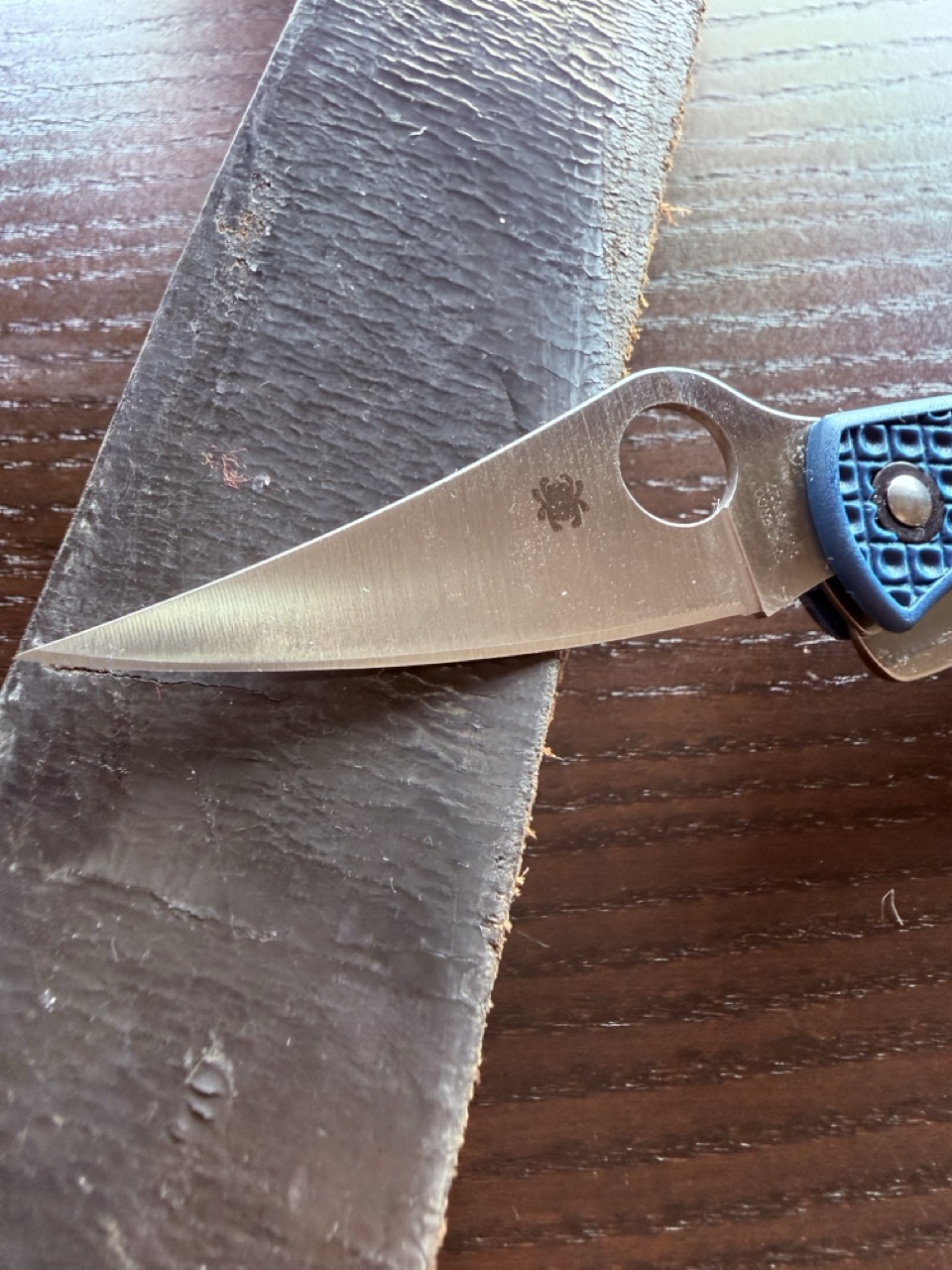
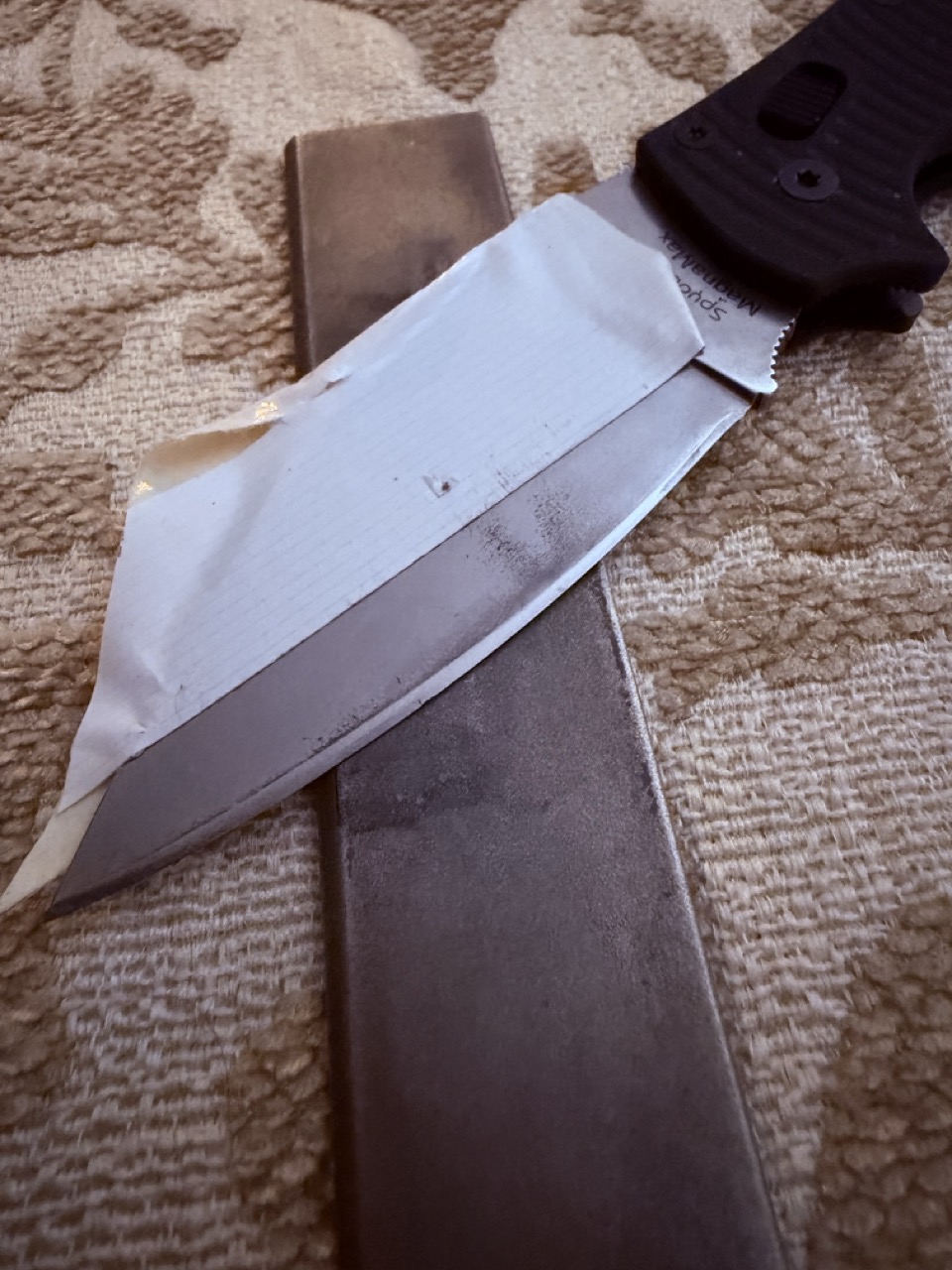
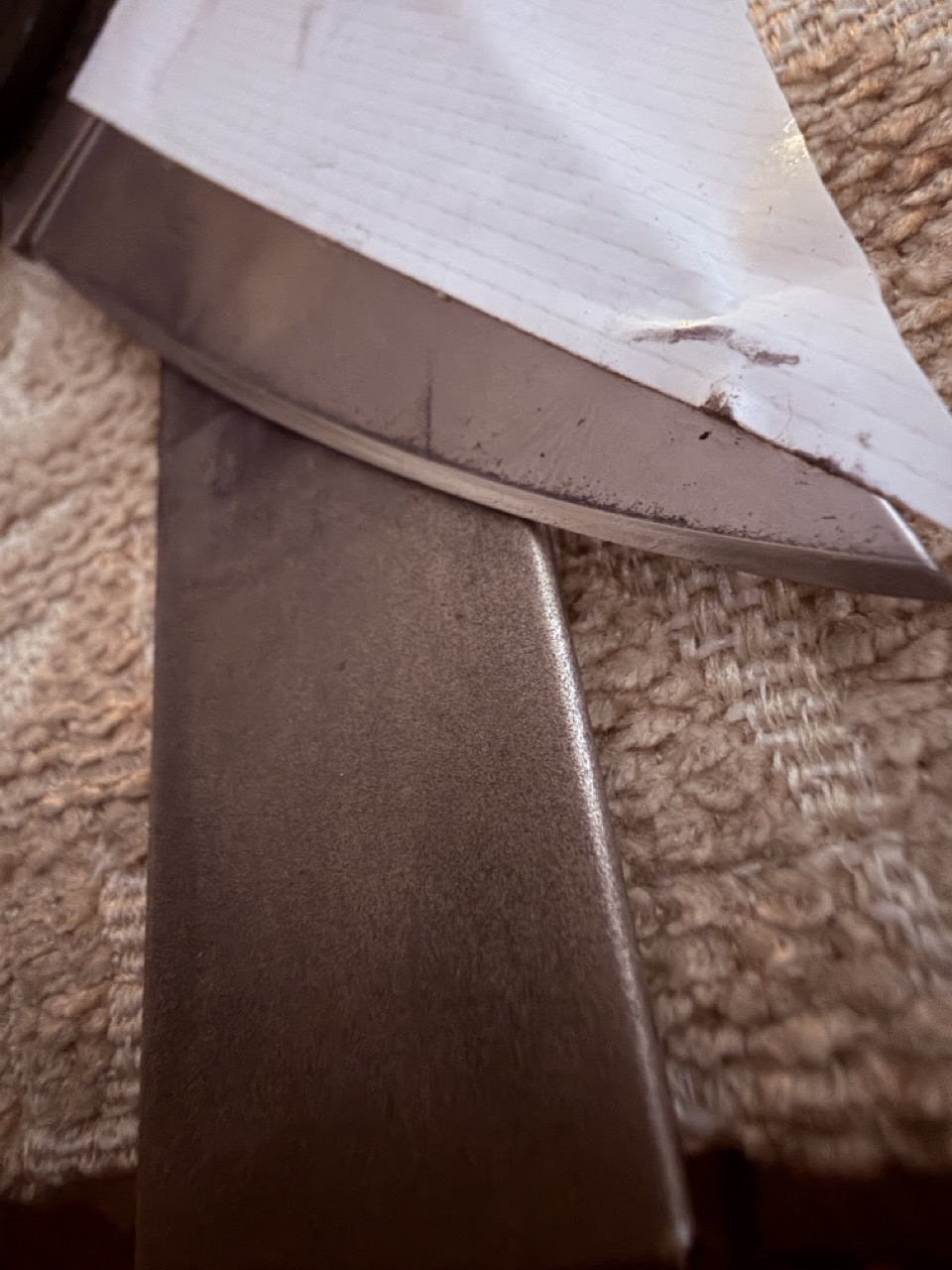
Yes, the factory edge is absolutely razor sharp. After just a few light passes on a leather strop, the edge became even keener. Hair-whittling? Not quite—but hairs were flying effortlessly with the slightest touch. An excellent factory edge !

First Verdict
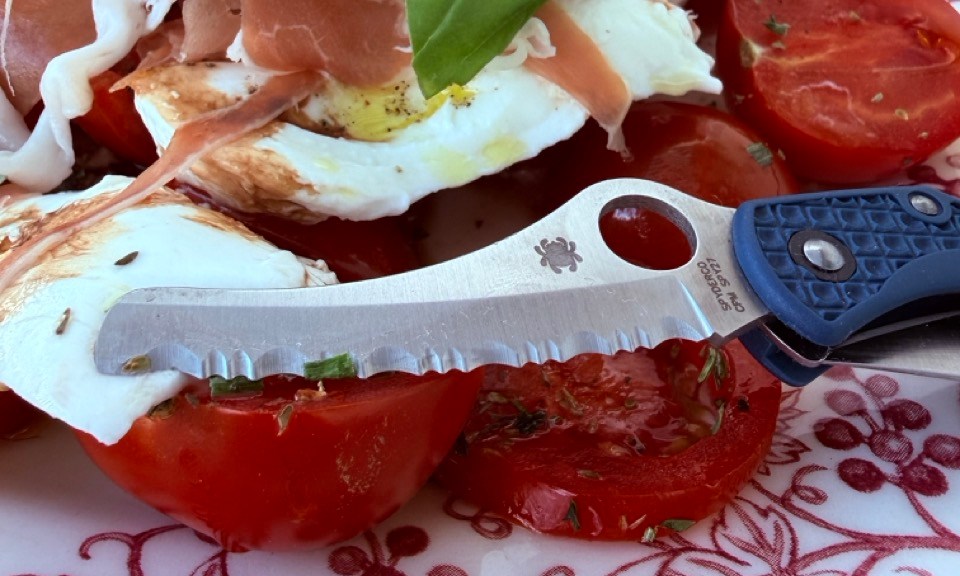
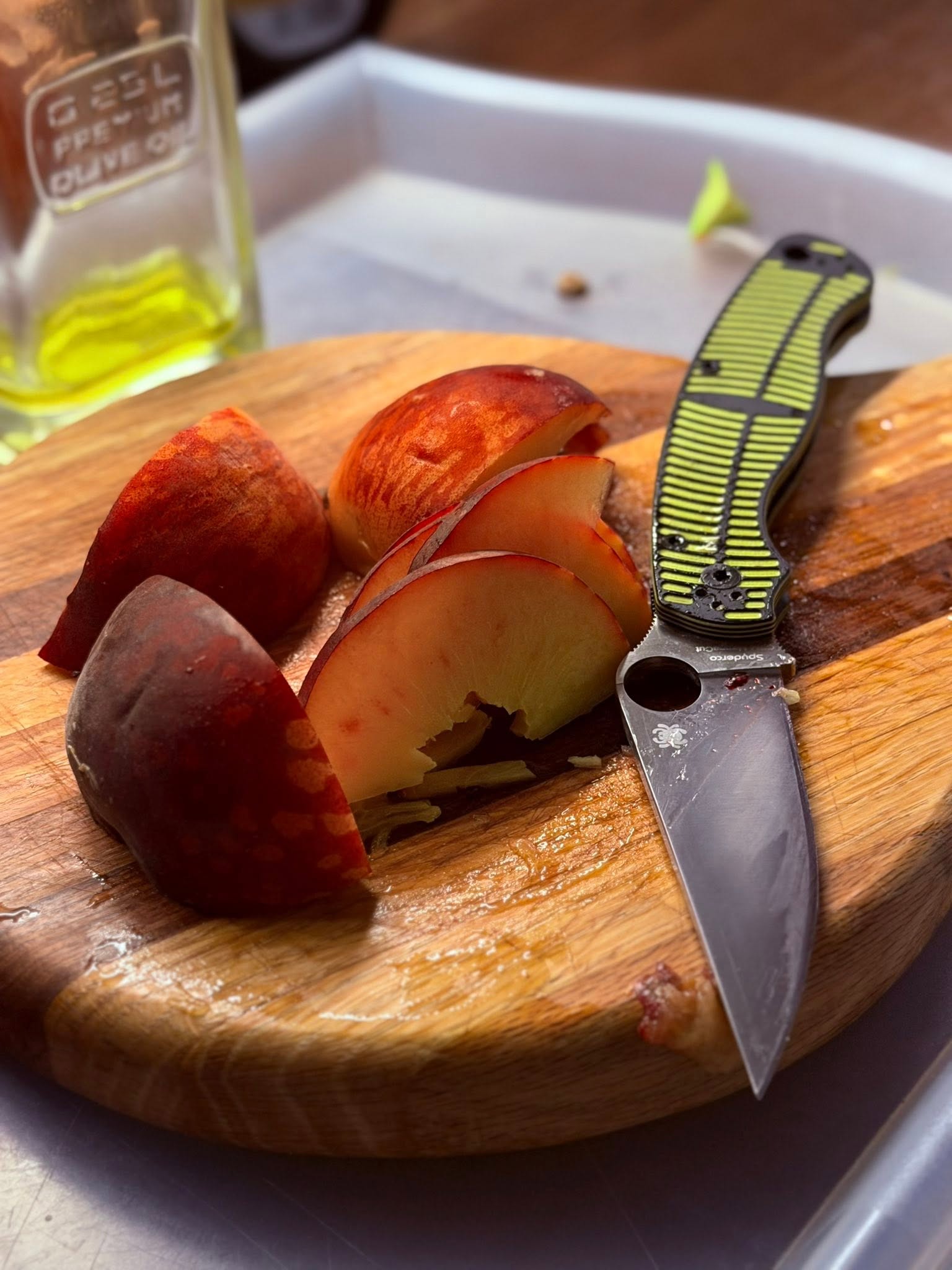
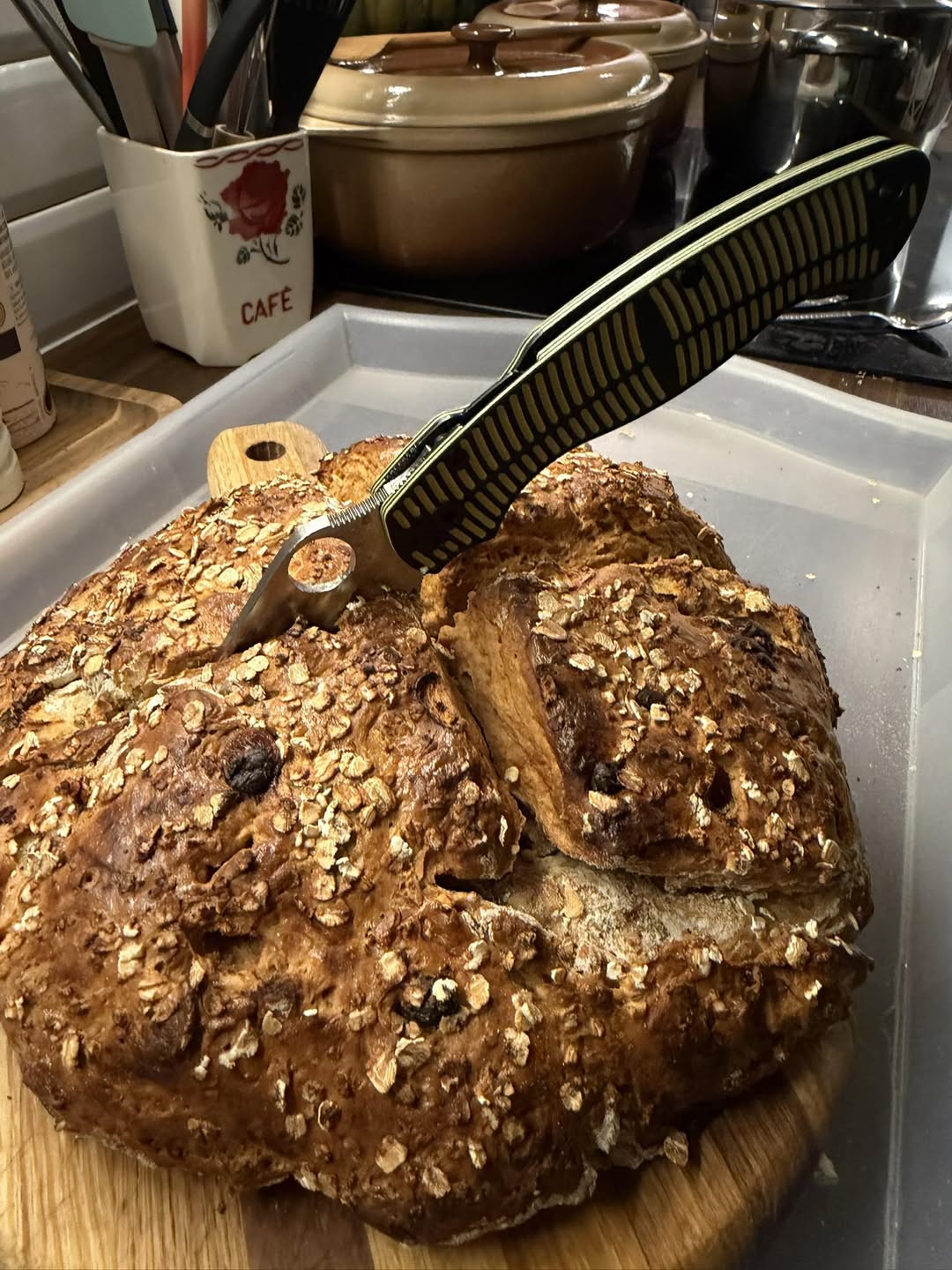
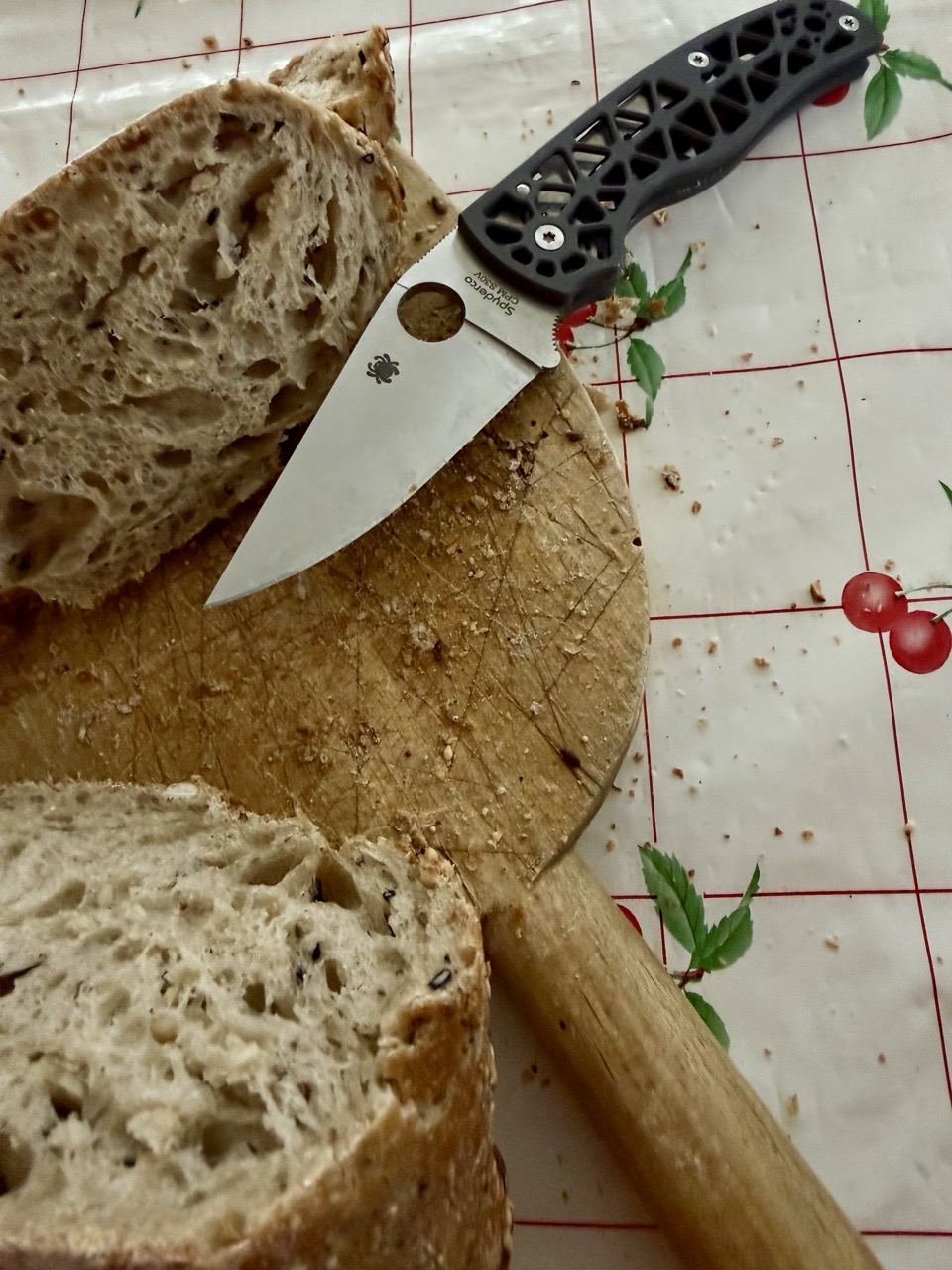
Eric’s Manix 2 MagnaMax appears to be one of the most versatile folding knives Spyderco currently offers. Its combination of toughness, ergonomic comfort, and strong lock makes it equally at home as an everyday carry knife, an outdoor companion, a workshop tool, or even a capable kitchen slicer. It is the kind of knife that encourages you to use it without constantly worrying about damaging it.
As this knife has just arrived, I want to evaluate it exactly as Spyderco intended before making any personal modifications, such as totally rounding the spine or applying one of my convex edges.
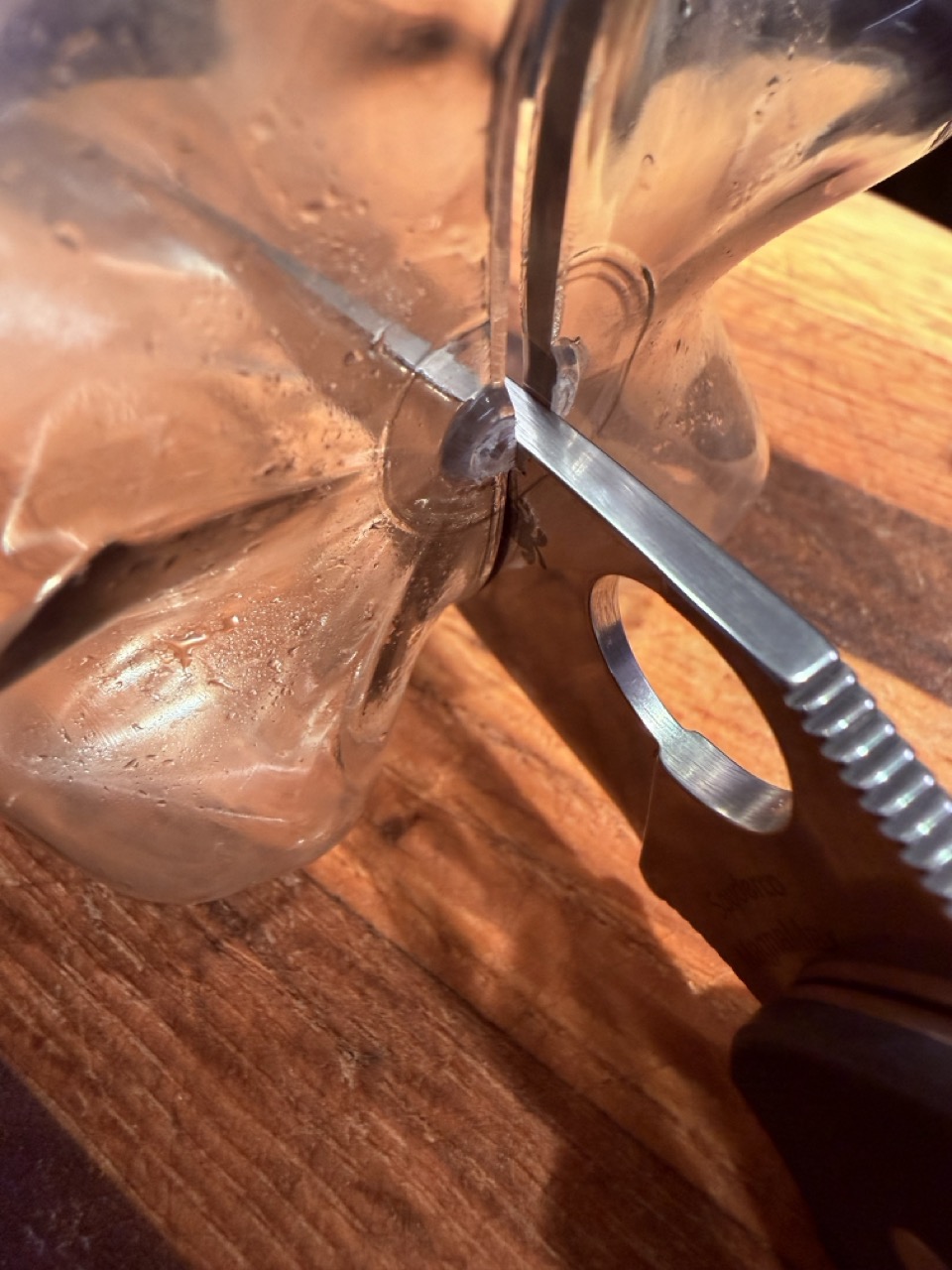
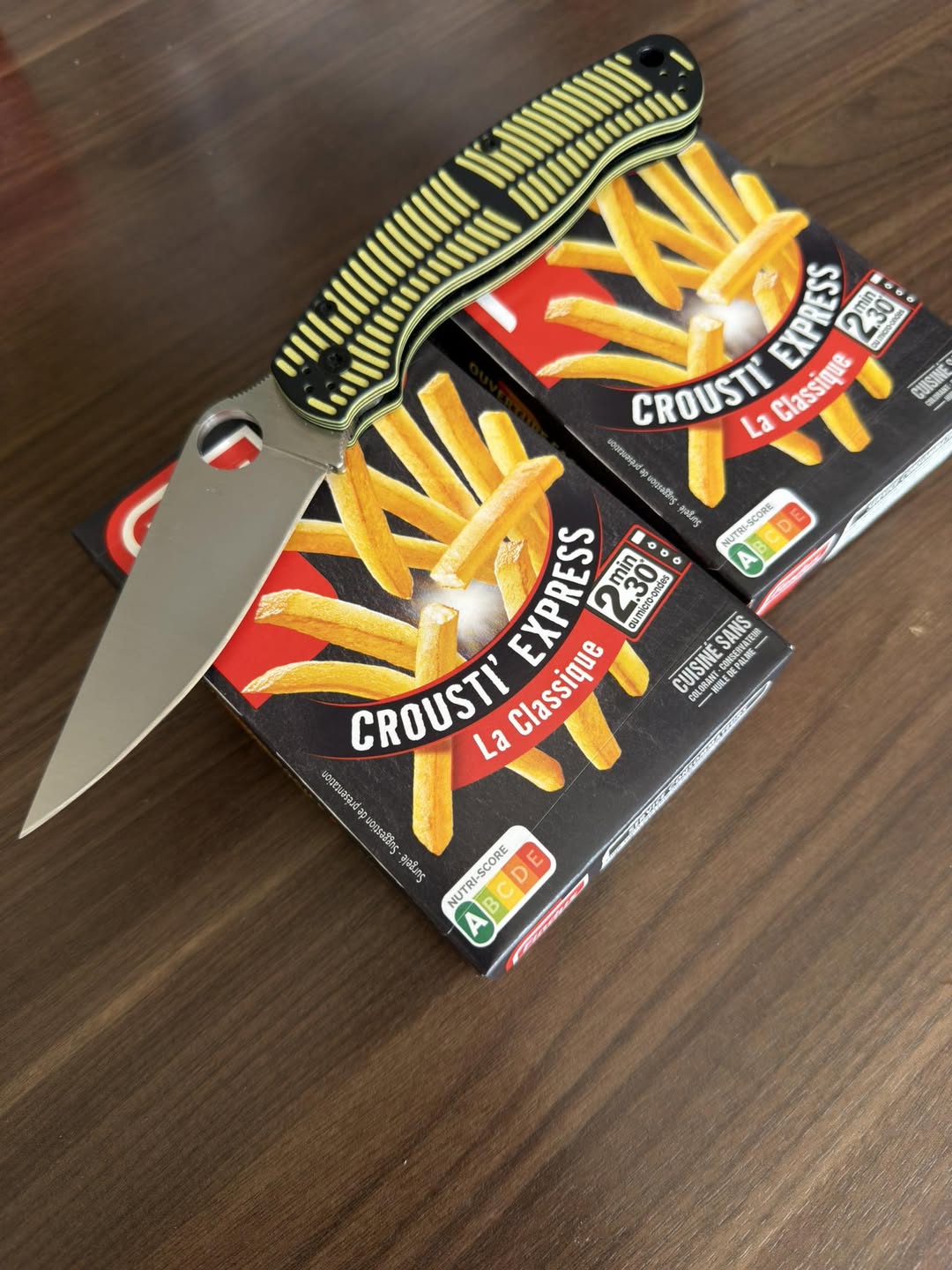
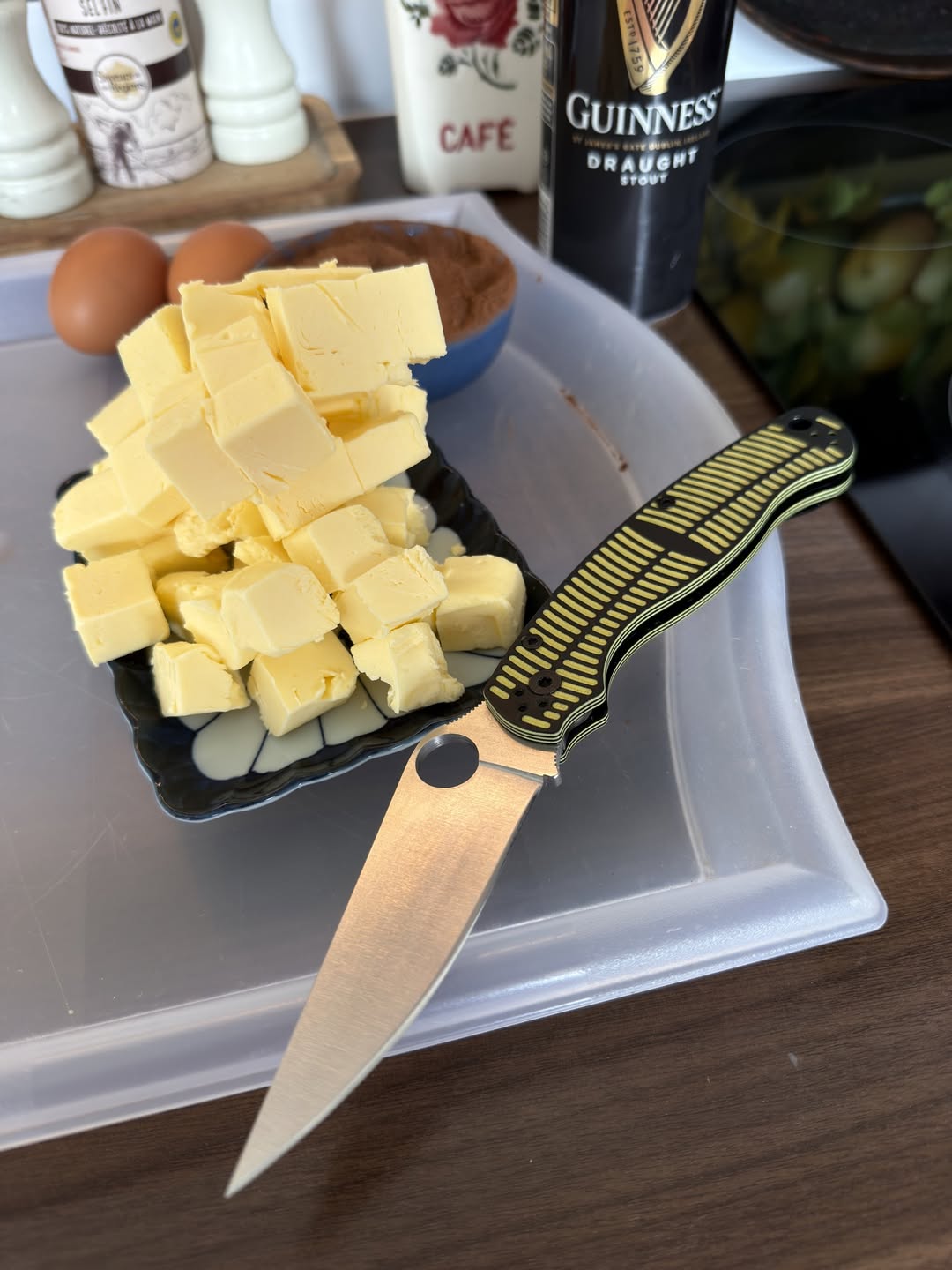
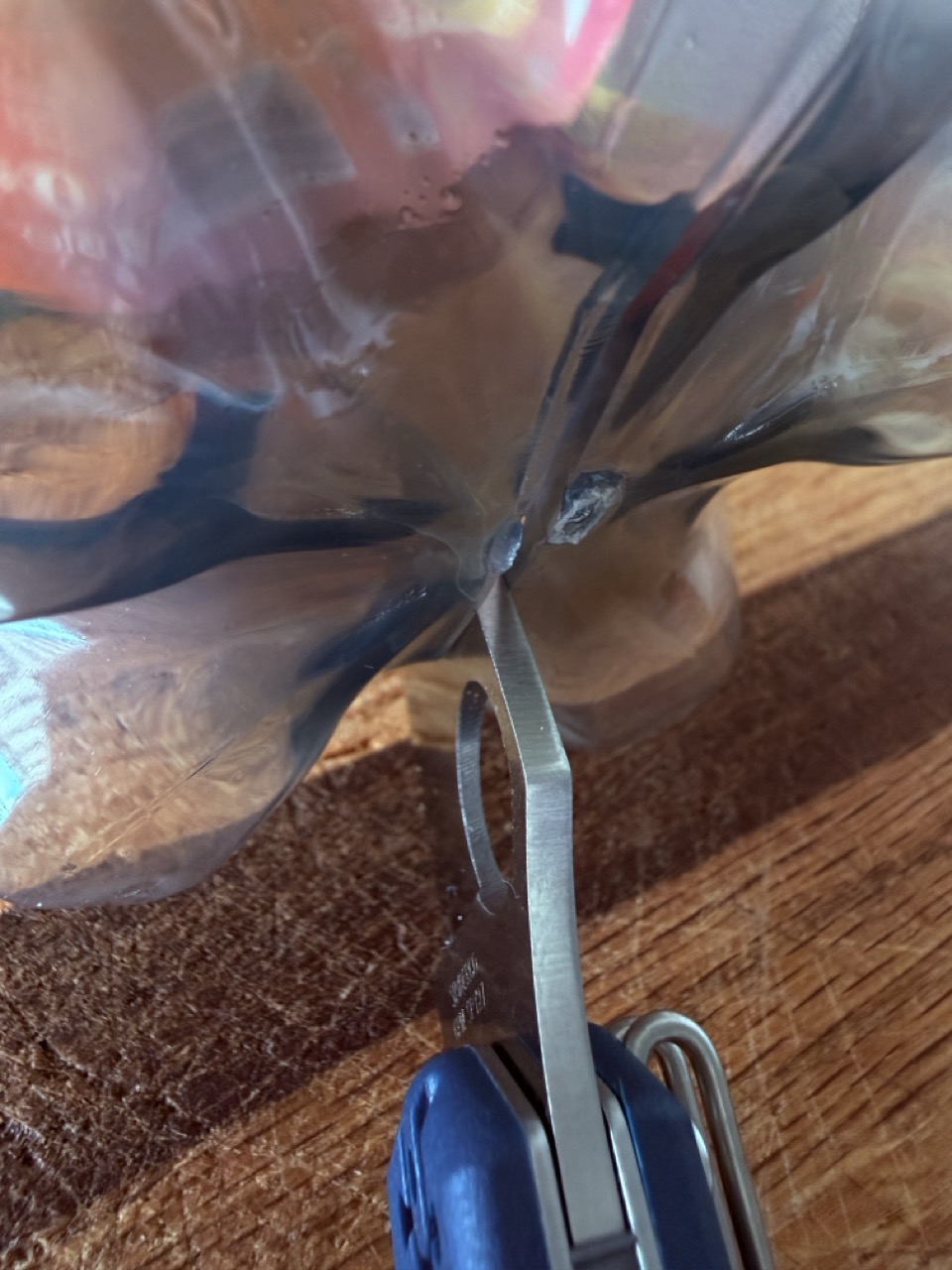
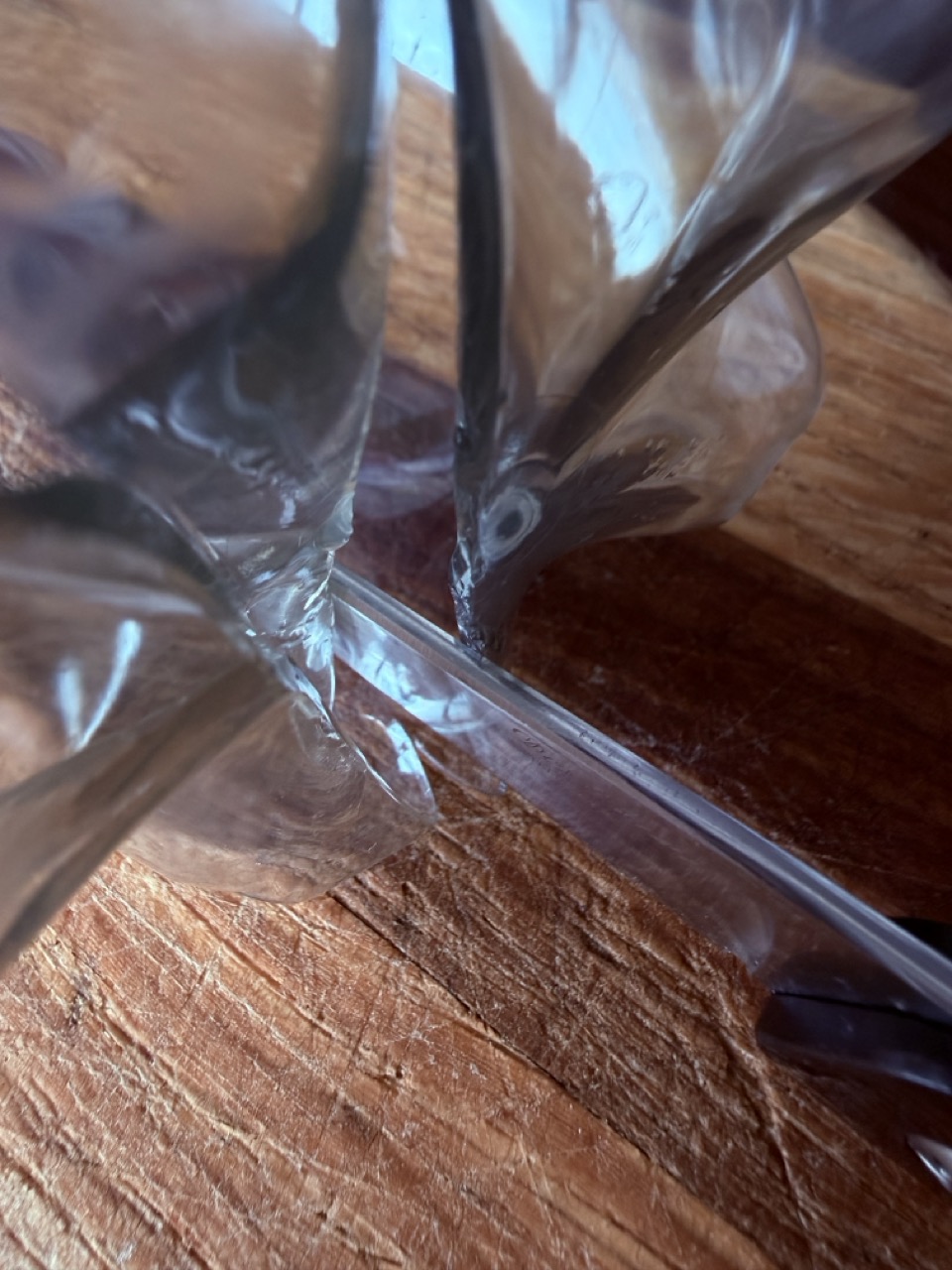
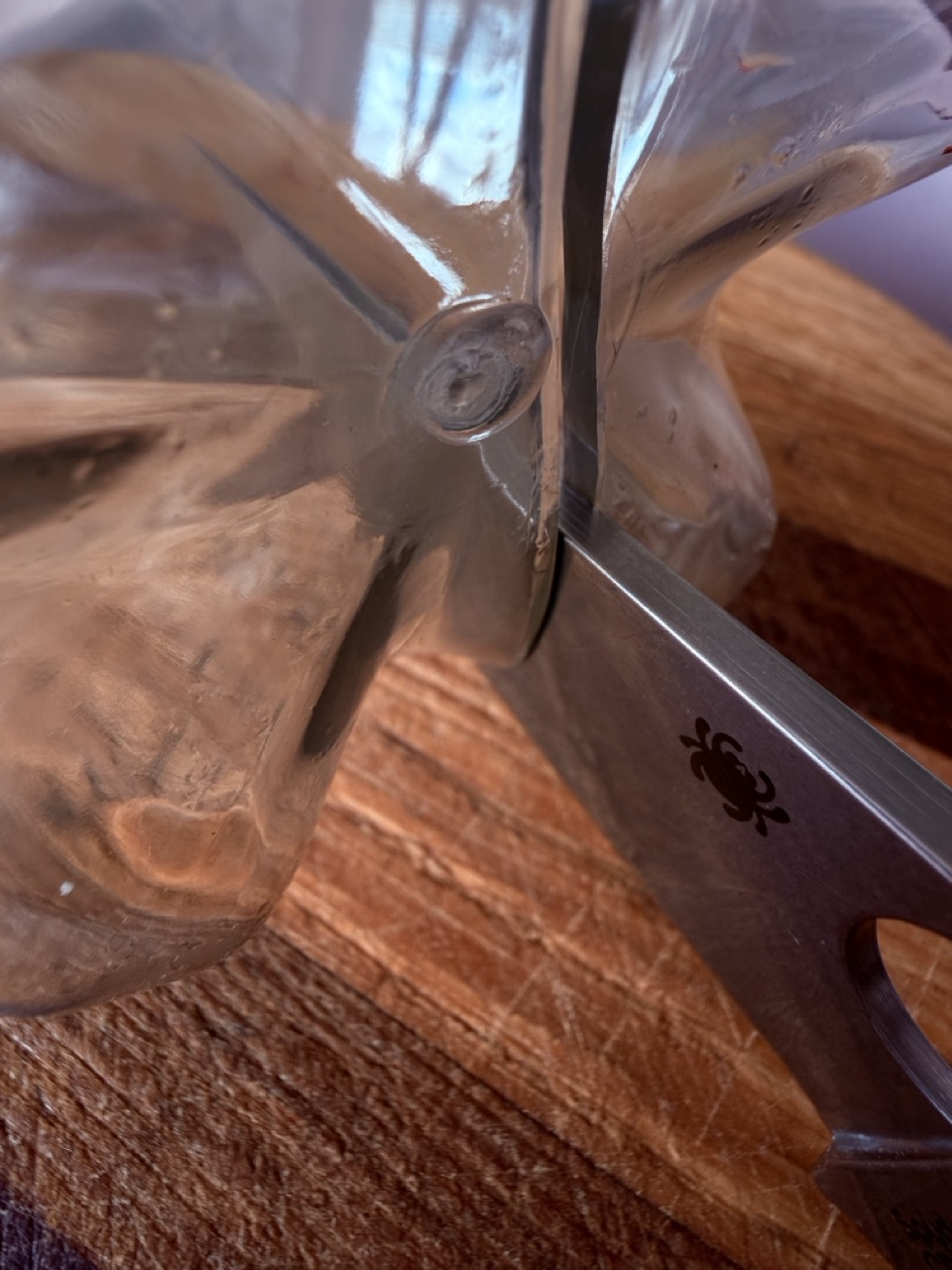
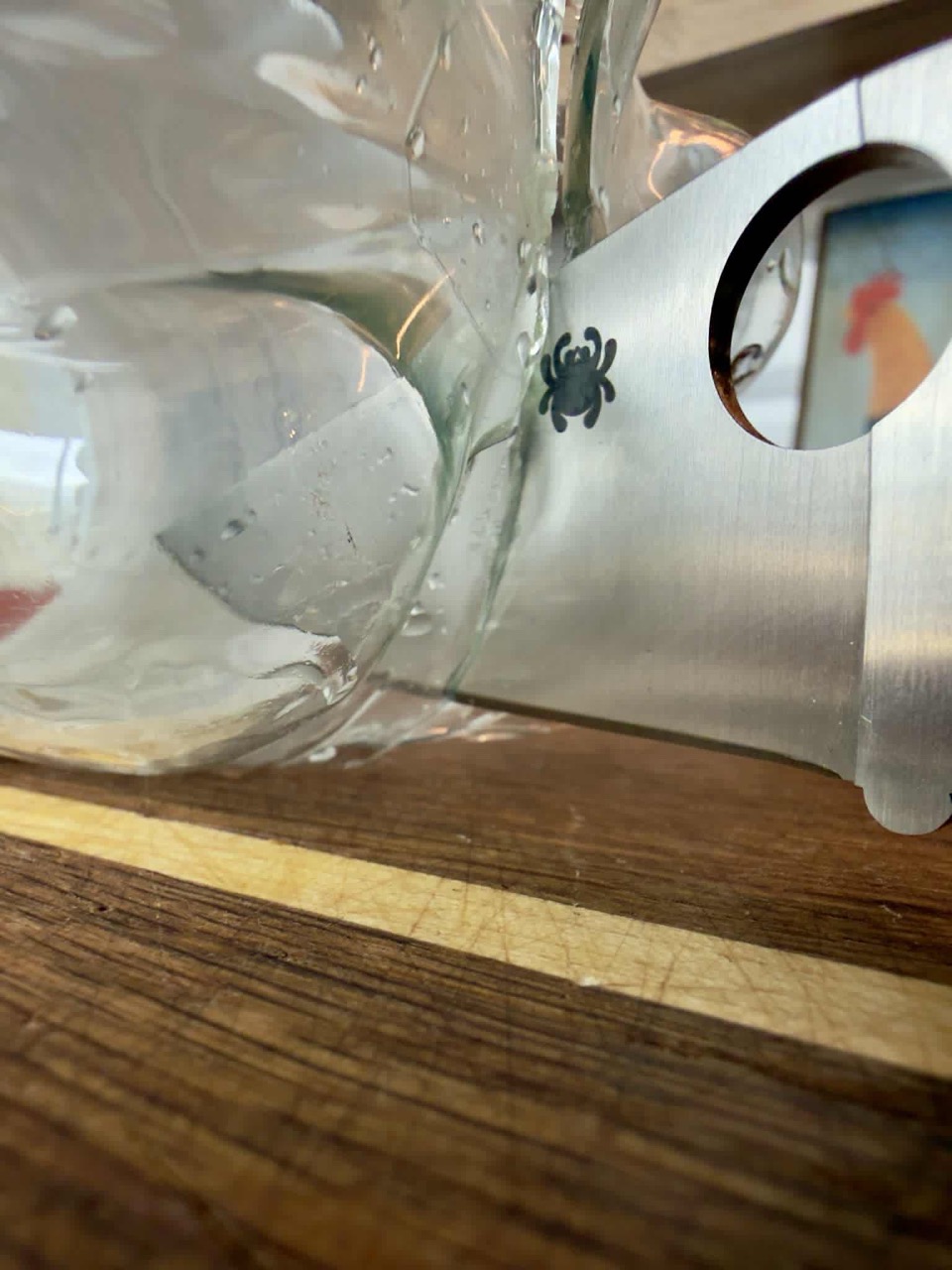
That said, I couldn’t resist giving the factory edge a quick test. Right out of the box, it sliced cleanly through the butt of a Coke plastic bottle like a hot knife through salted butter. If that’s any indication, Spyderco has absolutely nailed the factory edge on this MagnaMax Manix 2.
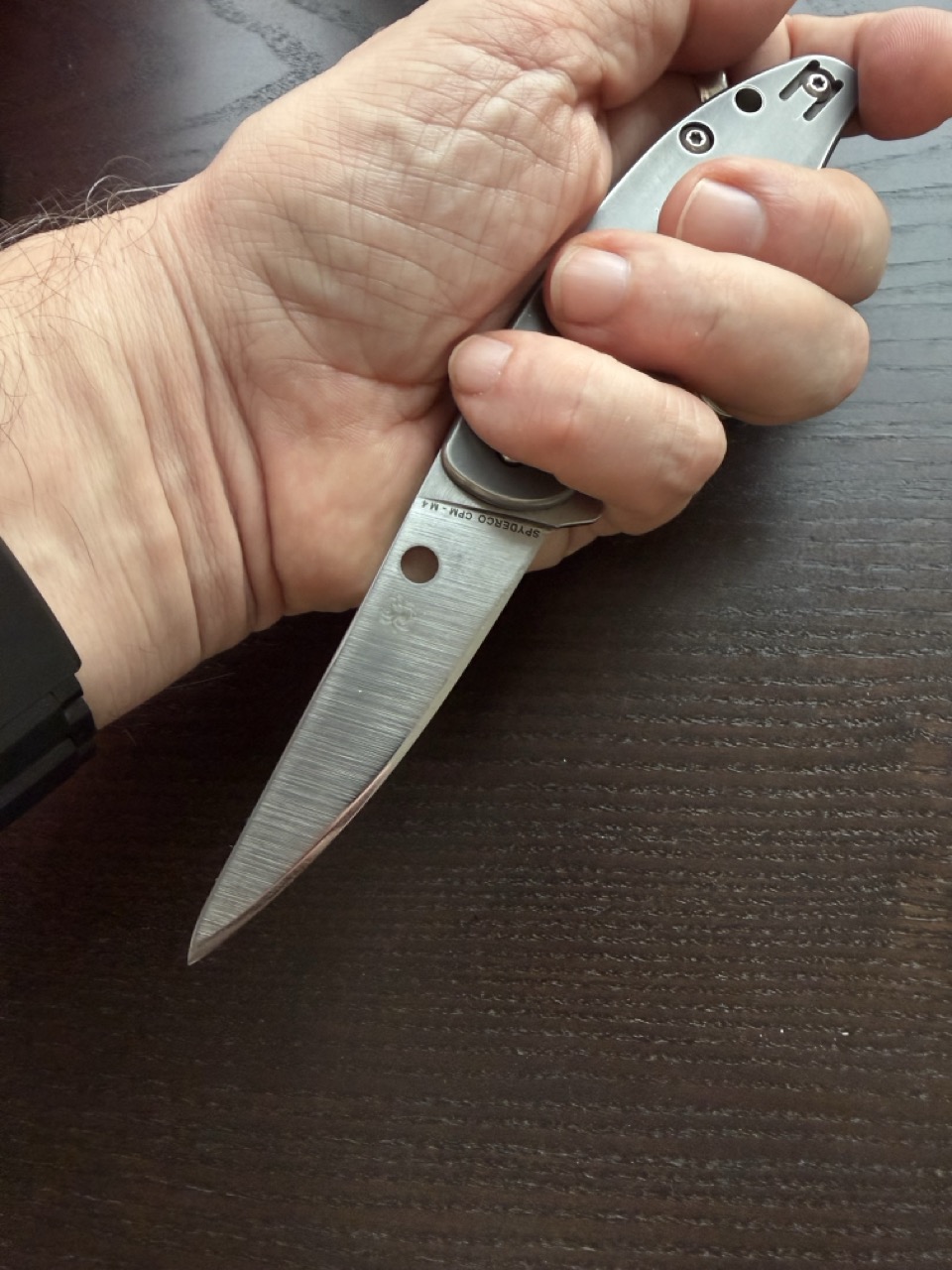
(Notice in the photo the smoothly chamfered blade spine and softened jimping, just like those found on the CPM 15V Sprint Runs.)
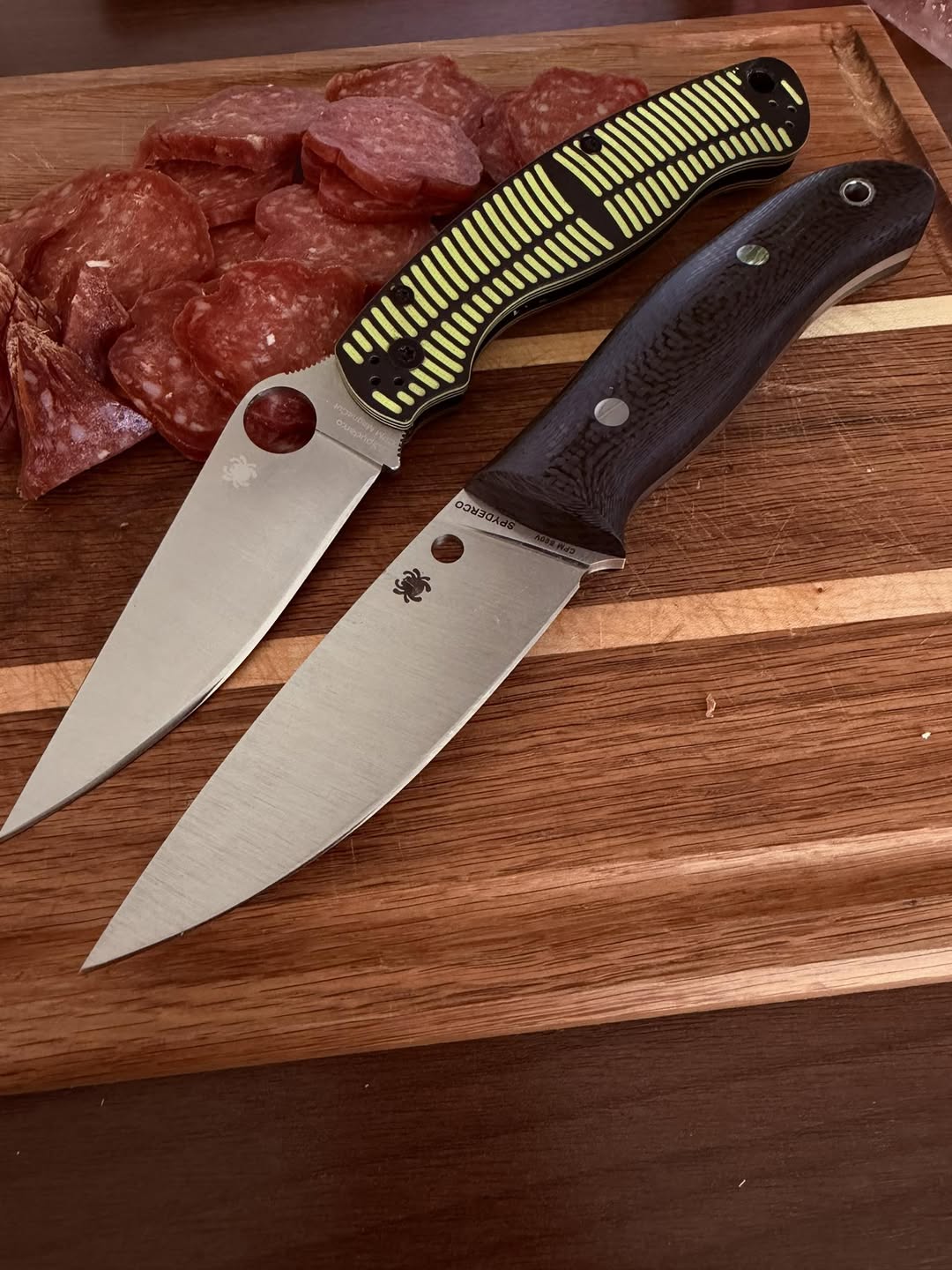
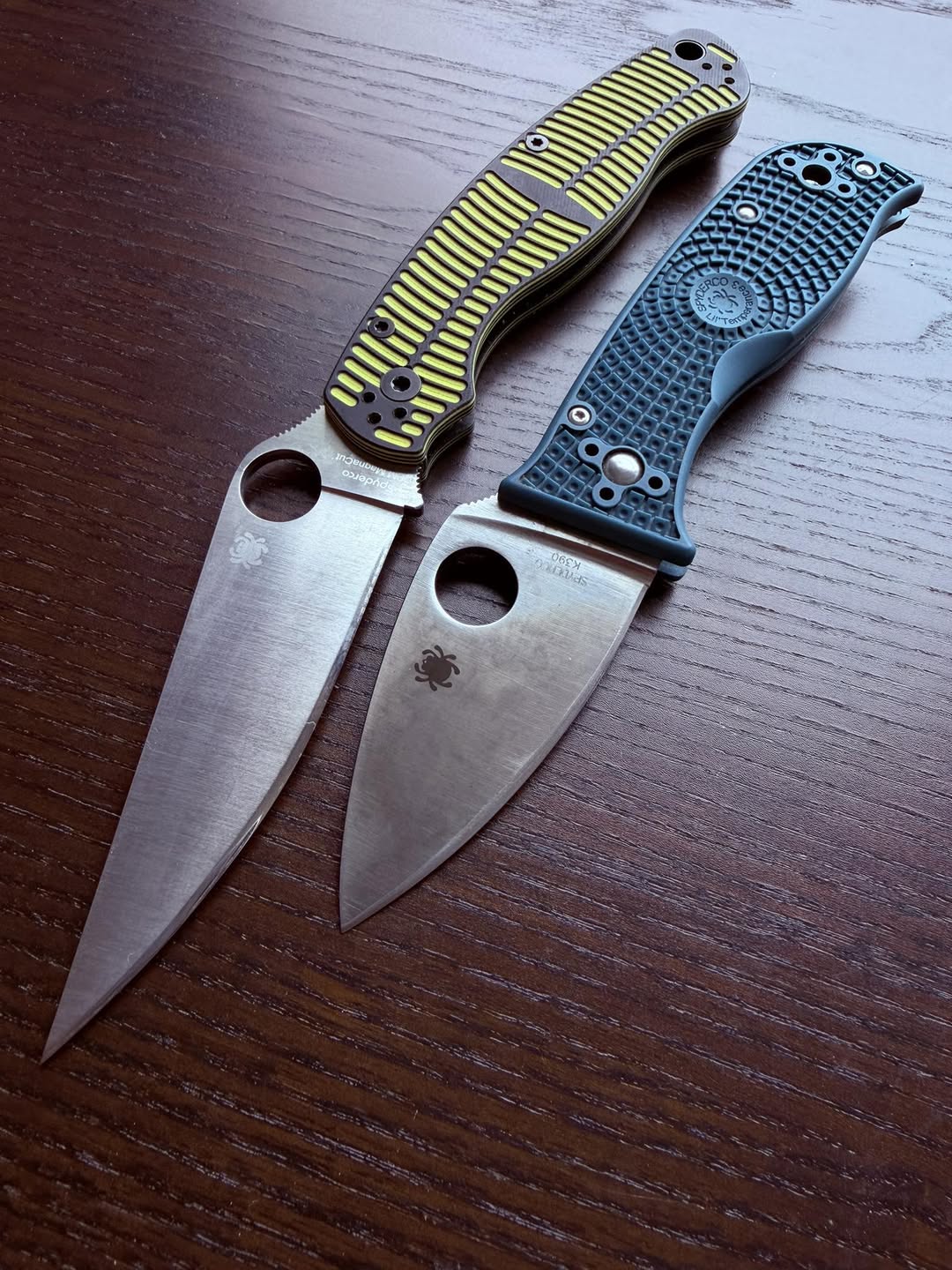
Direct comparisons with my Manix 2 CPM-S90V, the Manix 2 Salt CPM MagnaCut, the Paramilitary 2, and the Military 2 Salt would deserve an article of their own. Each represents a different philosophy, and MagnaMax may well redefine where the Manix 2 sits within Spyderco’s lineup.
After only a short time in hand, the Manix 2 MagnaMax already feels like one of the most compelling versions Spyderco has ever produced. It combines the legendary ergonomics of the Manix platform with one of the most advanced stainless steels currently available, while everything else has been subtly reinforced to create an uncompromising workhorse. Full stainless steel liners, a stronger Ball Bearing Lock spring, reassuring heft, and flawless fit and finish all contribute to a knife that feels built for a lifetime of hard use.
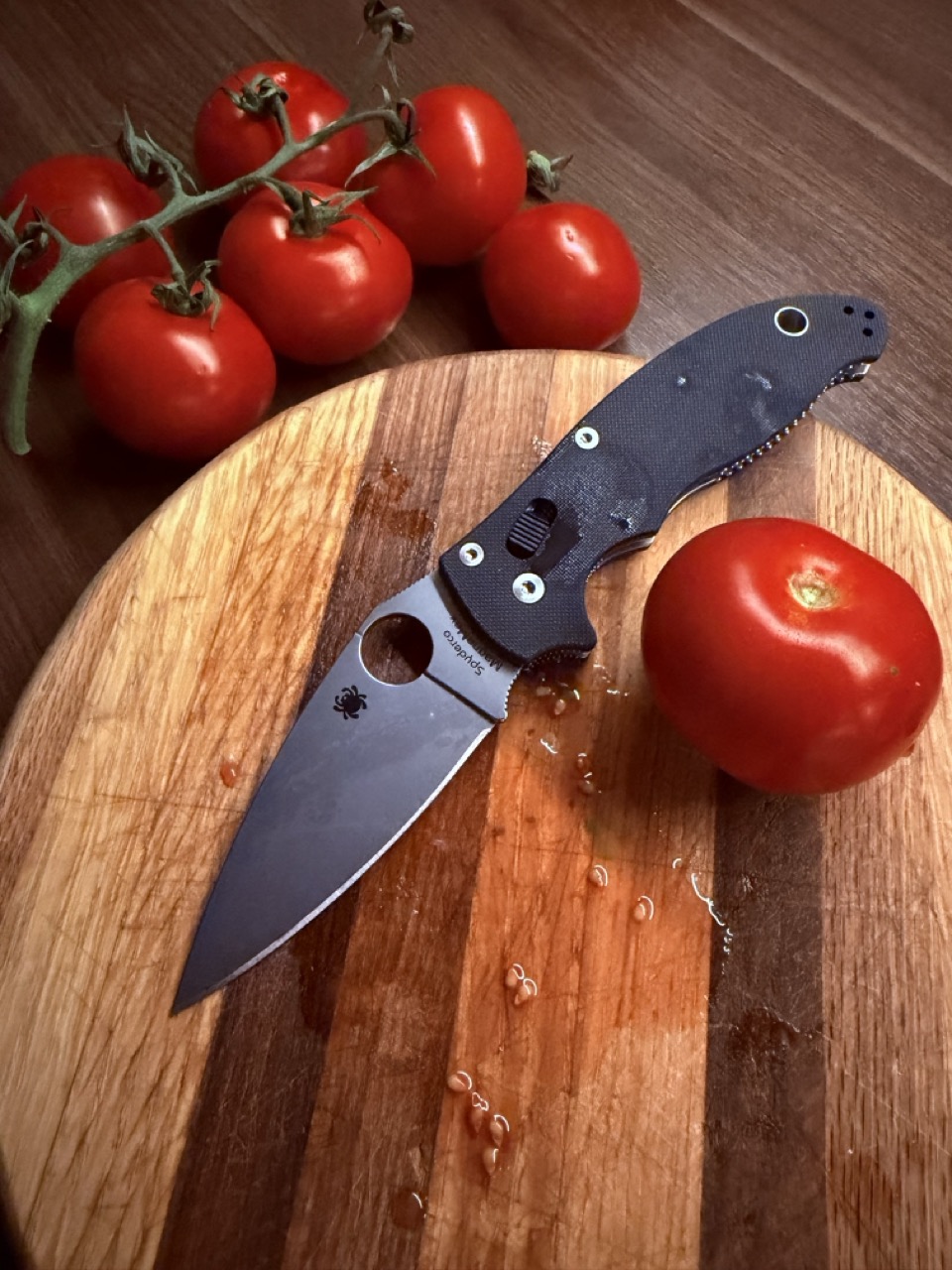
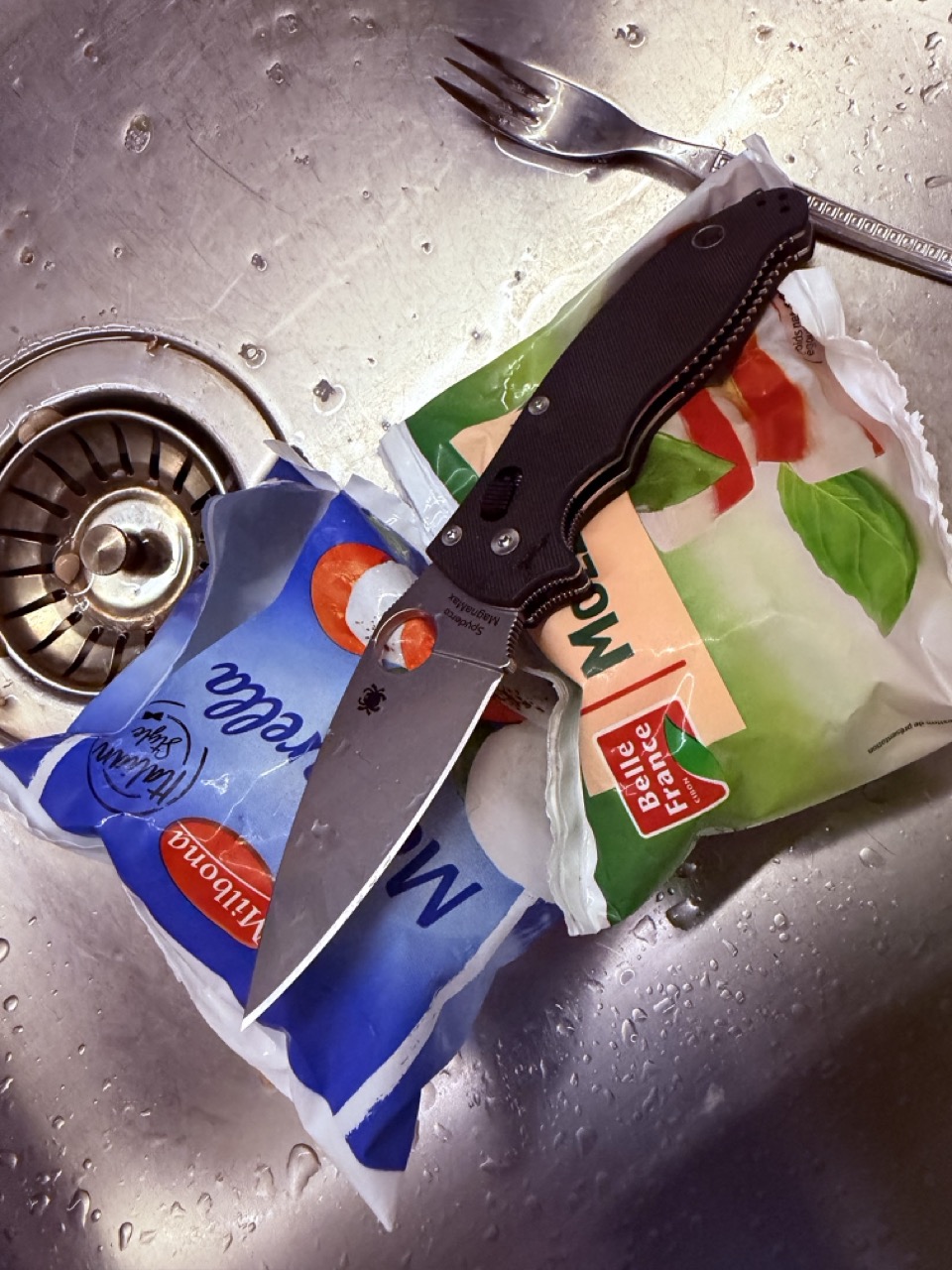
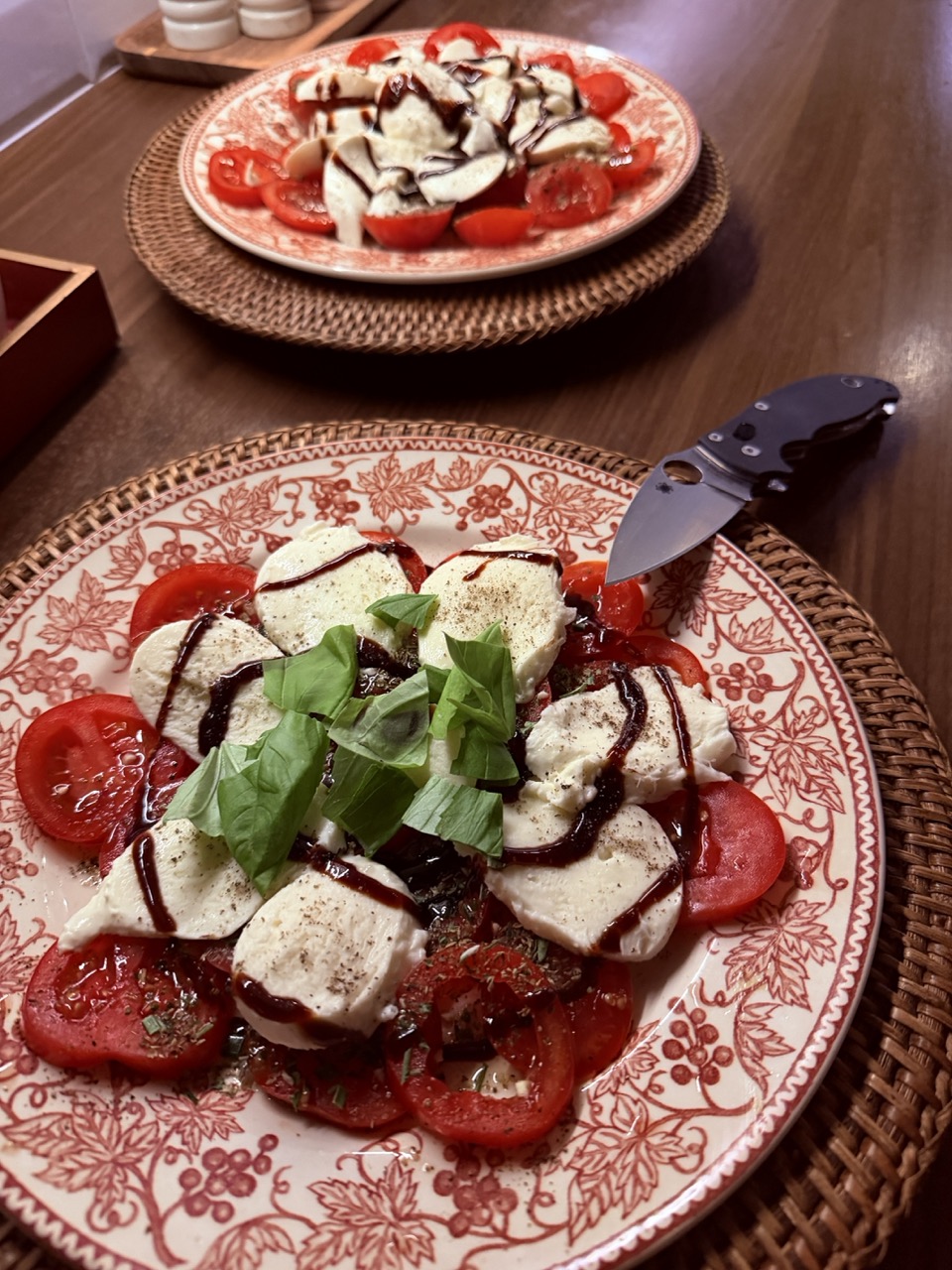
If long-term testing confirms these first impressions, this could become one of the finest all-around production folding knives in Spyderco’s catalog—a knife designed not to excel in only one area, but to perform exceptionally well in almost every situation.
This MagnaMa(ni)x feels like one of the last great V8 interceptors—a machine with real character and a touch of history. Black G10 scales, full stainless steel liners, a stout Ball Bearing Lock spring… everything about it conveys strength and purpose.
For its very first production folder in MagnaMax, Spyderco clearly didn’t hold back.
They went full throttle!
A Blade Swap for Wet Work
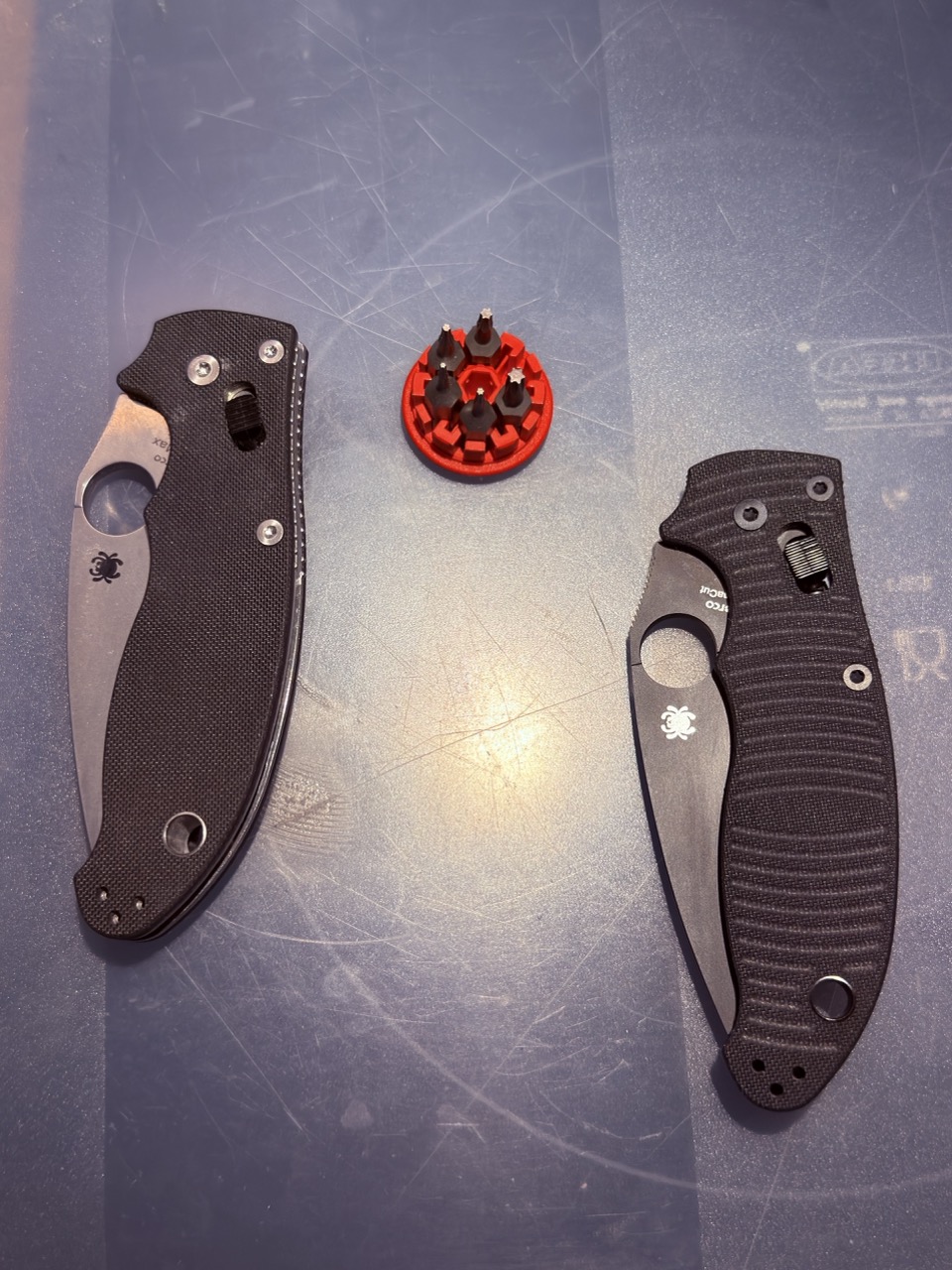
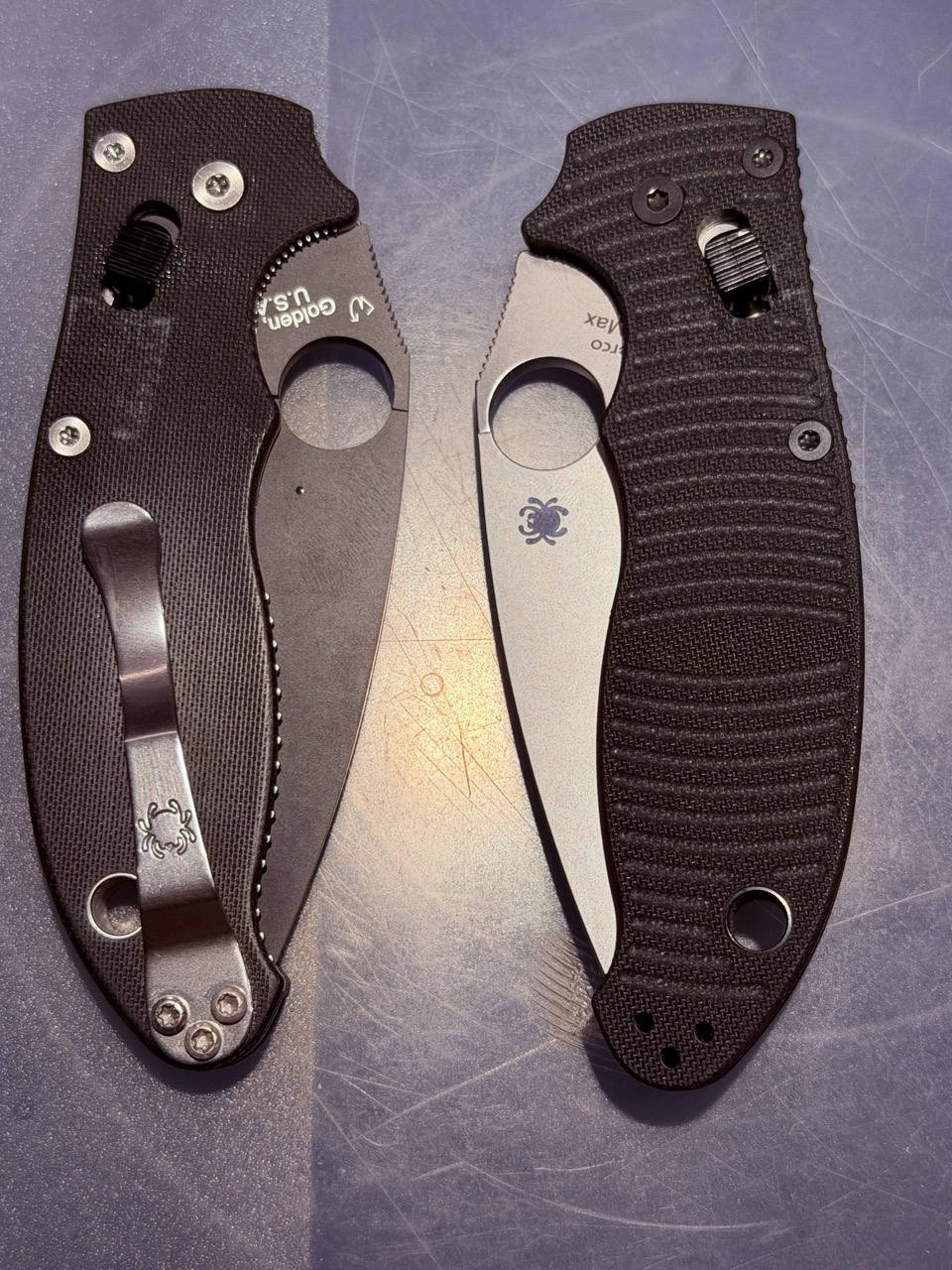
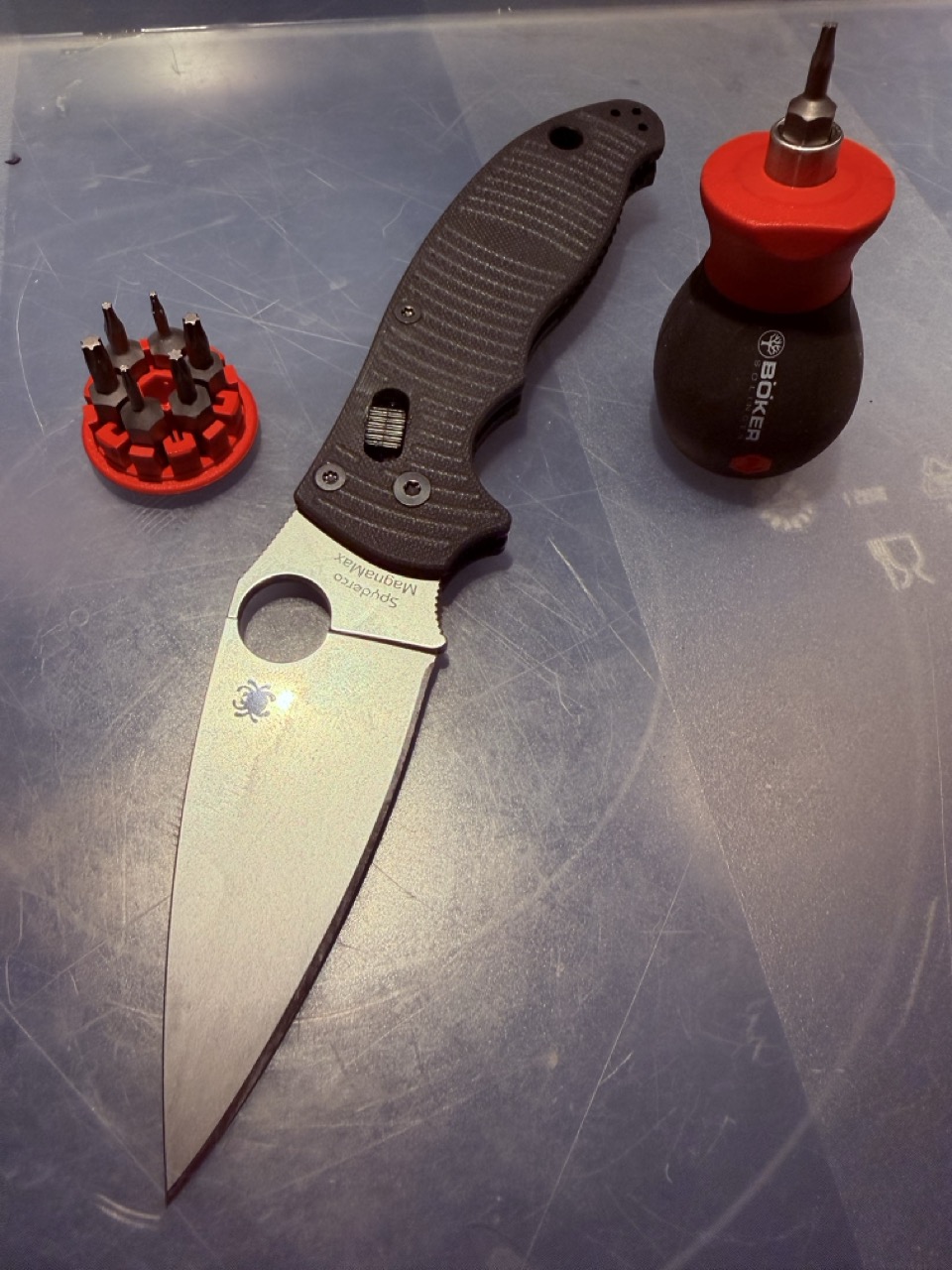
Since I intend to put MagnaMax through extensive testing in wet environments, I decided to take advantage of all the corrosion-resistant hardware from the Manix 2 Salt G10—its coated liners, black screws, and ceramic Ball Bearing Lock—so that the only component I’ll need to keep an eye on is the blade itself.
To avoid wrestling with the notoriously stubborn lanyard tube, I also kept the Salt’s G-10 scales. They only needed a light touch with 600-grit sandpaper to tame their aggressive texture and avoid carrying what was essentially a championship-grade pocket shredder. 😀
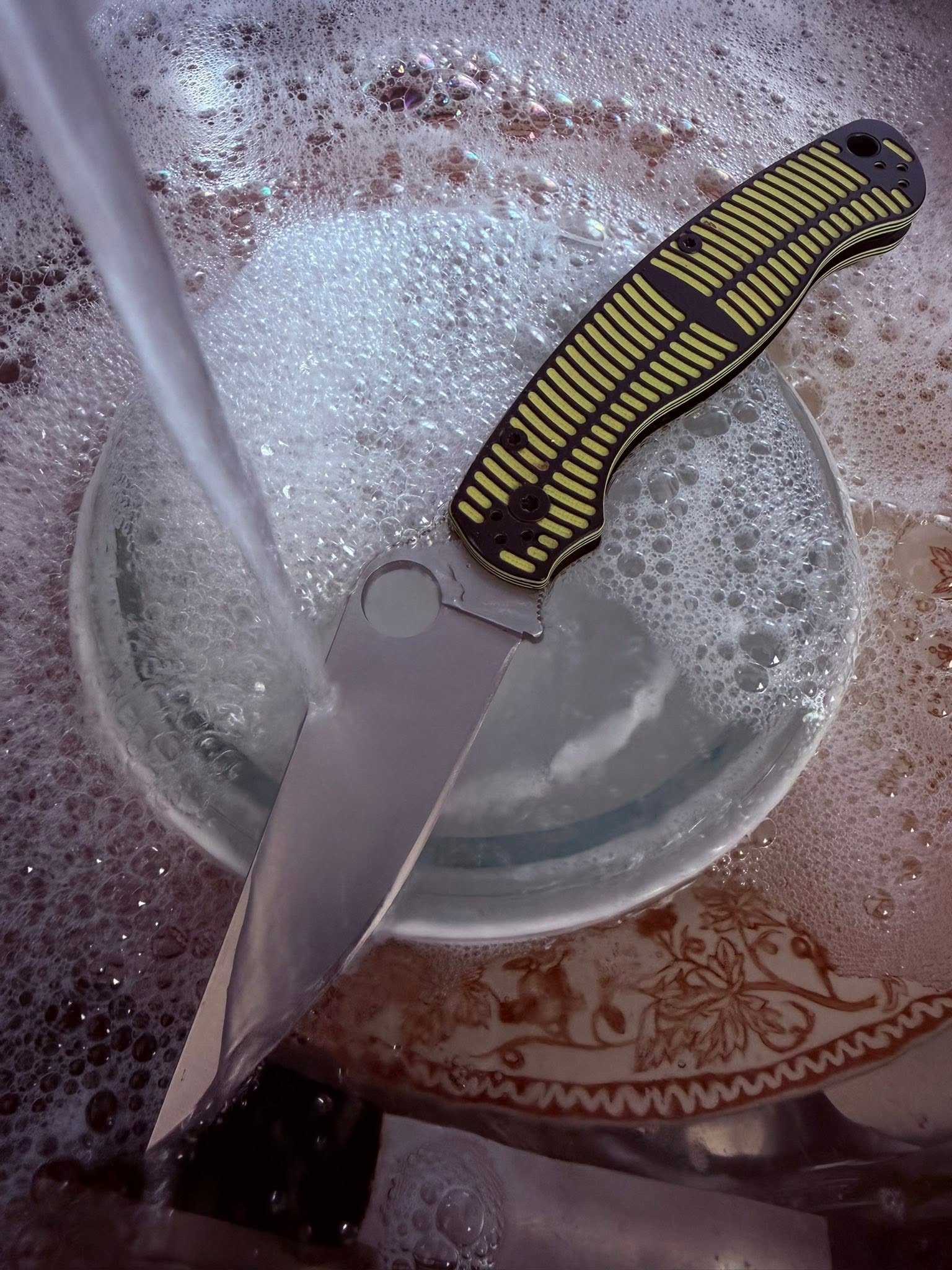
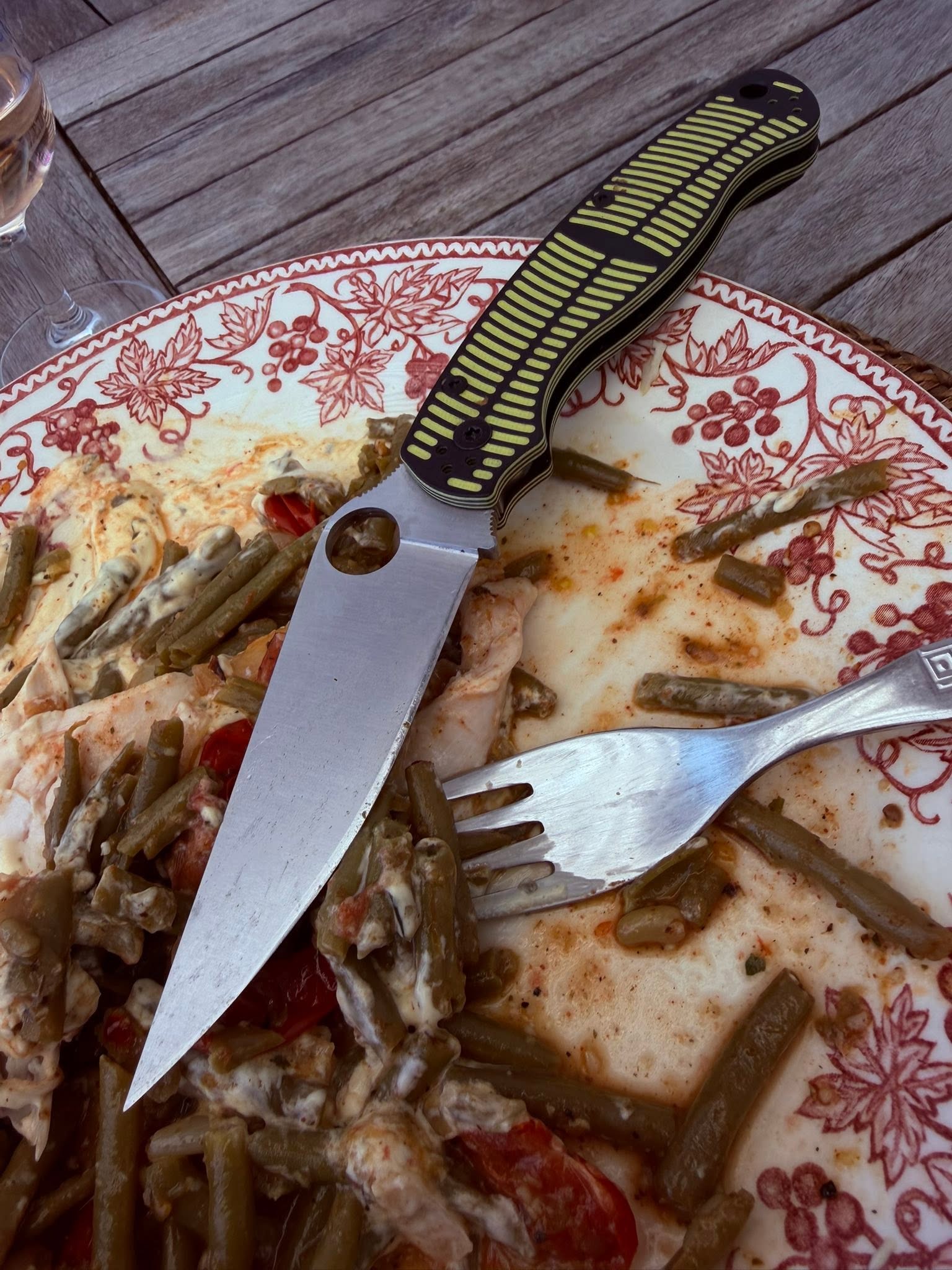
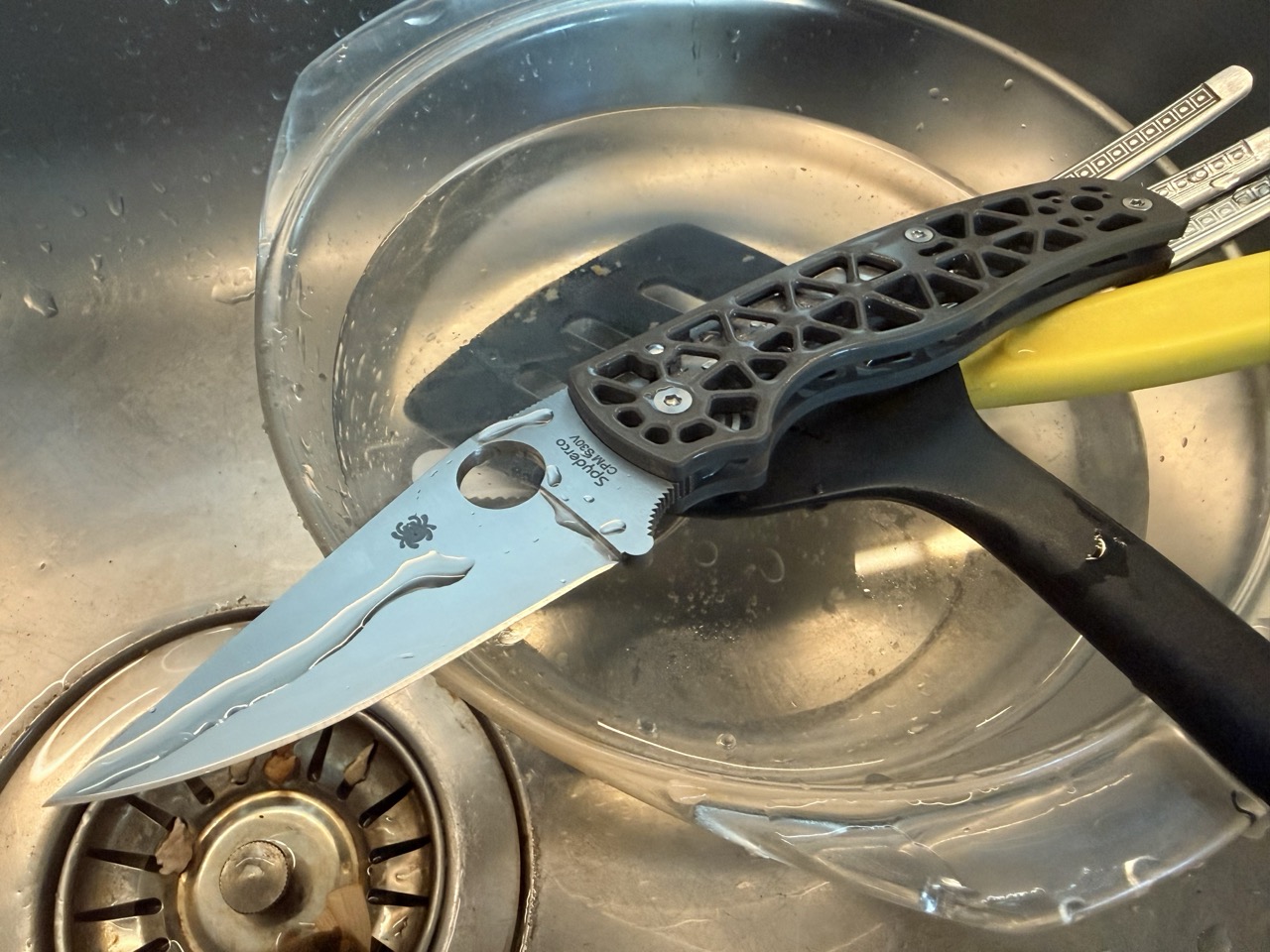
This way, I’ll be able to see how well MagnaMax stands up to every kind of wet work I can throw at it, whether in the kitchen, out in the woods, by the river, or even in the ocean.
Swapping the blades was a pleasure in itself. It gave me the opportunity to appreciate just how cleverly the Manix 2 is engineered and how impressively tight Spyderco’s manufacturing tolerances are.
The only minor hiccup involved the pivot. Each blade appears to be individually fitted to its own pivot, so the MagnaMax pivot wasn’t compatible with the DLC-coated MagnaCut blade. Reinstalling each blade with its original pivot solved the issue immediately. In the end, I swapped not only the blades but also their respective pivots—and, if memory serves me right, perhaps even the washers!
After the swap, the knife feels like the Manix 2 Spyderco never made. The MagnaMax blade paired with the Salt G-10 chassis combines exceptional edge retention with the corrosion-resistant hardware of the Salt series. Lockup remains rock solid, blade centering is perfect, and the action is every bit as smooth as the factory configuration. If there is such a thing as the ultimate production Manix 2, this custom hybrid comes remarkably close.
I’ve decided to keep the original polymer cage. The current black version is considerably tougher than the translucent cages used on the earliest Manix 2 models, so I see no reason to replace it.
I’ve also decided to keep the factory clip. It rests perfectly on the Salt G-10 scale’s sweet spot and carries comfortably exactly as Spyderco intended.

The Manix 2 has already proved itself over nearly two decades. The real question is no longer the platform—it is MagnaMax. If this steel delivers in everyday use what its design promises on paper, Spyderco may have introduced one of the most significant production blade steels of the decade. The next few months will tell.
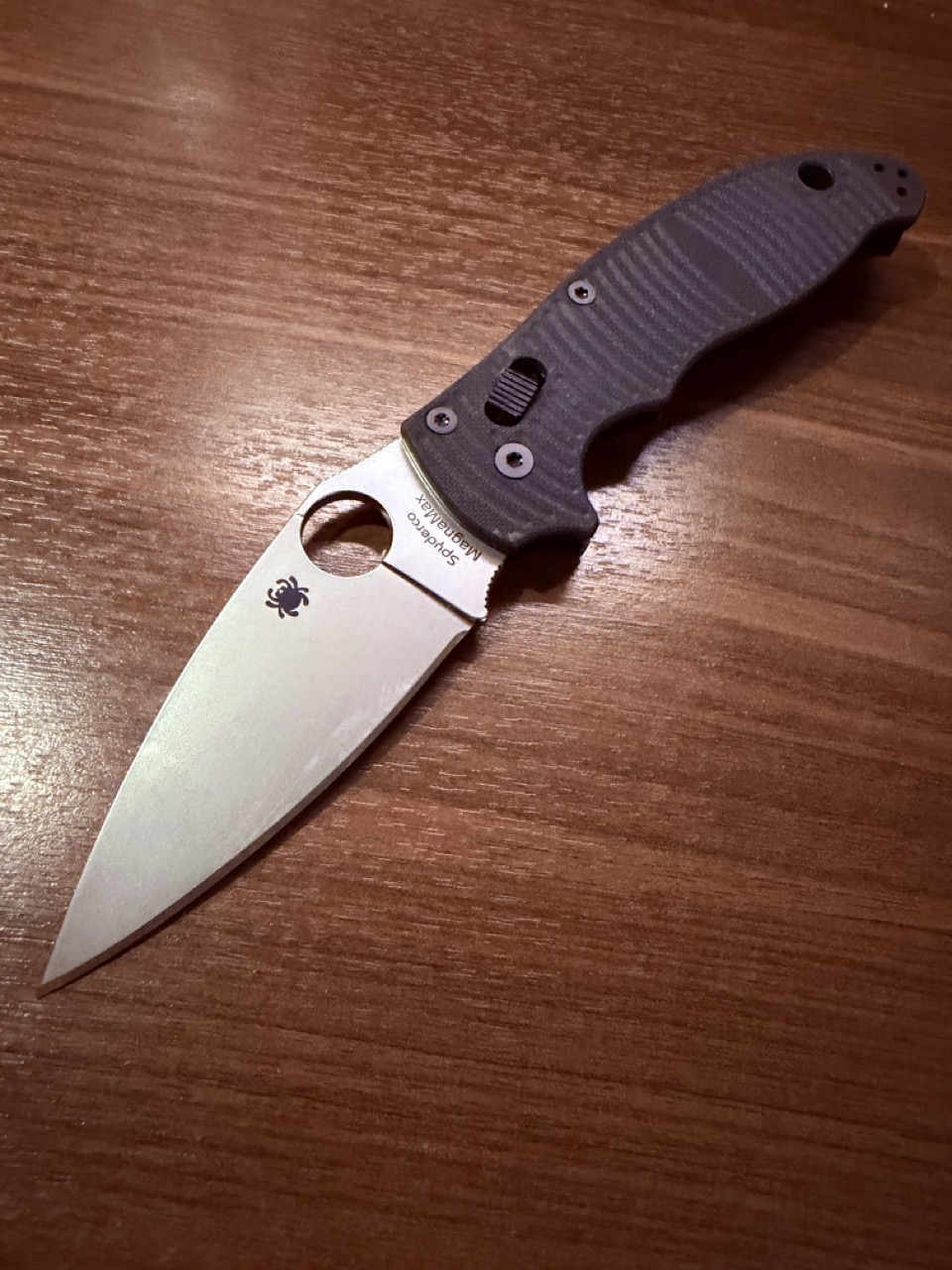

V8
Every knife I truly bond with eventually earns a name. This one was an obvious choice: I’ll call this Manix MagnaMax “V8.”
Like the legendary Pursuit Special from Mad Max, this knife feels unapologetically overbuilt and full of character. Black G10 scales and a stout Ball Bearing Lock spring—it has the soul of a machine built to survive the Wasteland, cutting deep and true long after lesser blades have given up.
And now you understand the hint at the beginning of this review. 😉
The Part 2 is here:
https://nemoknivesreview.com/2026/07/24/magnamax-manix-salt-v8-the-road-test/