Tag Archives: nemoknivesreview

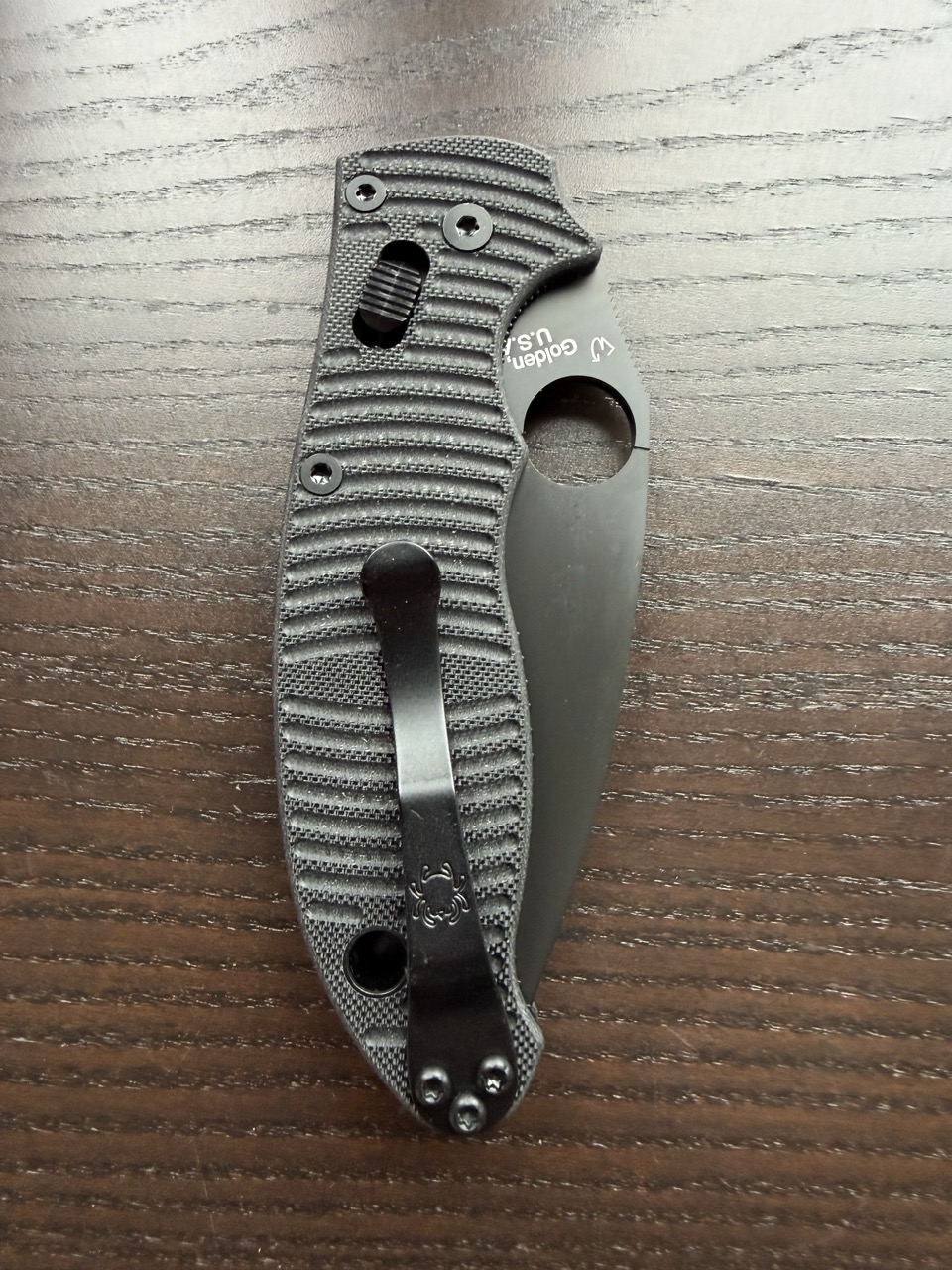
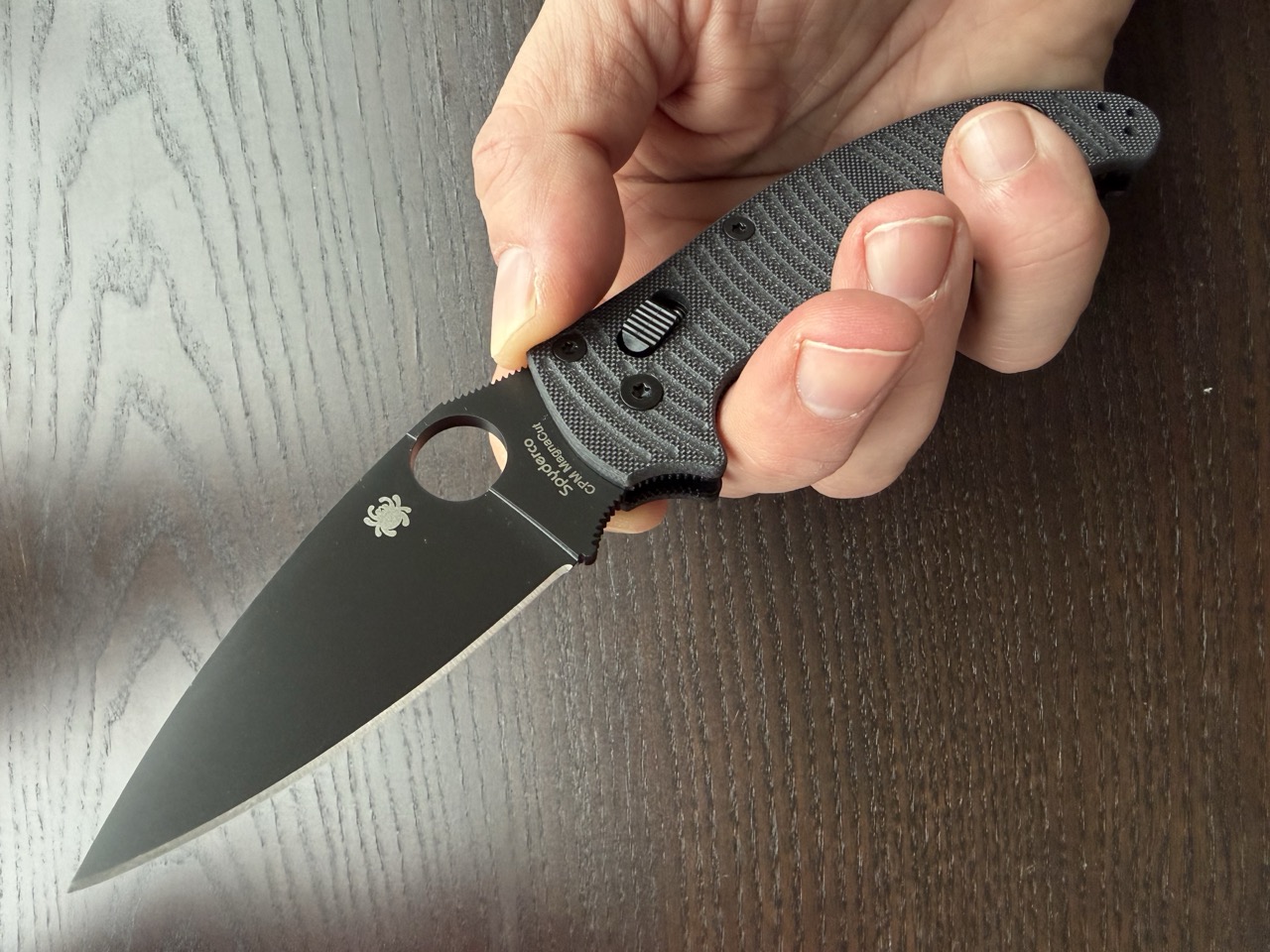
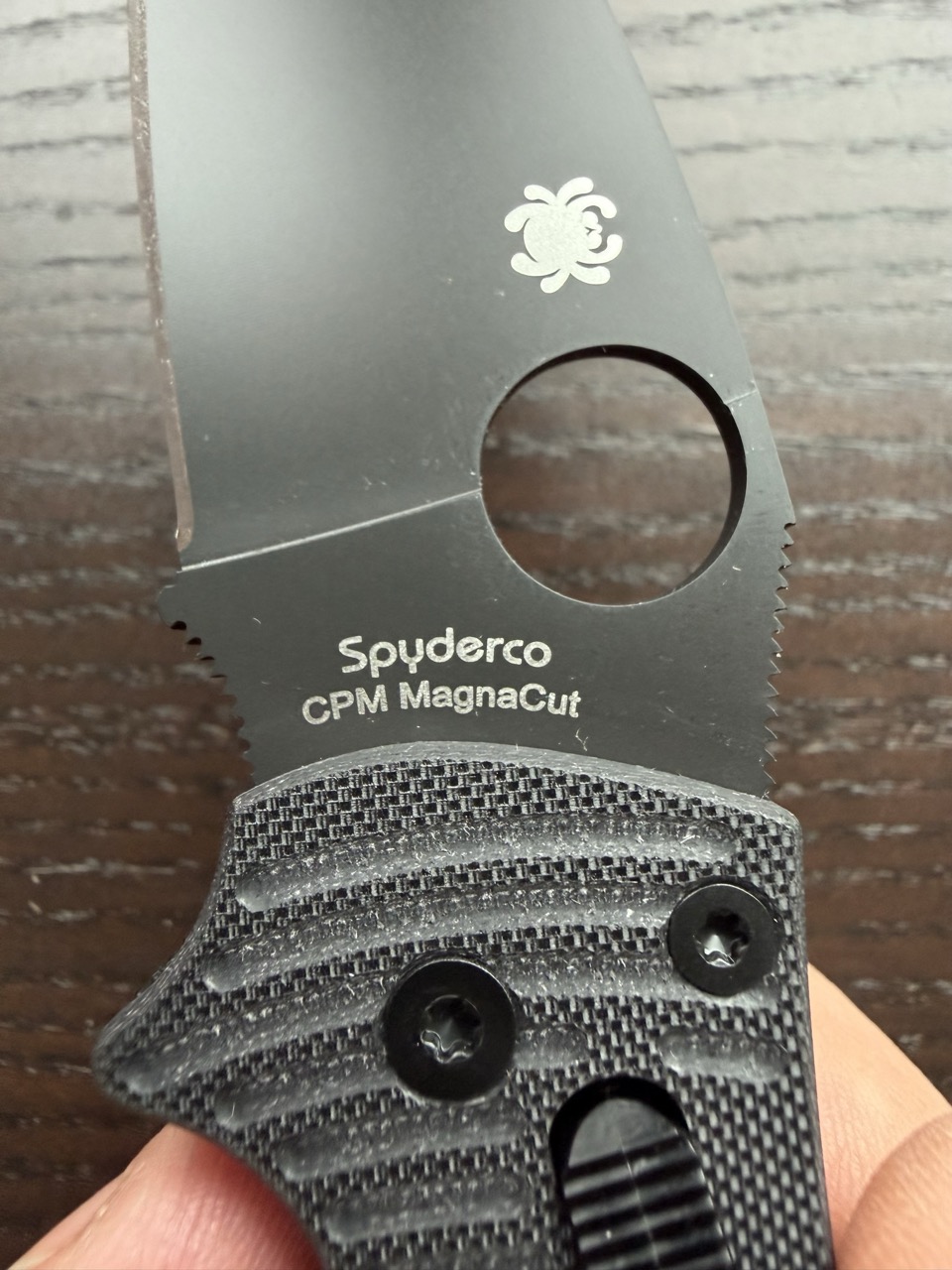
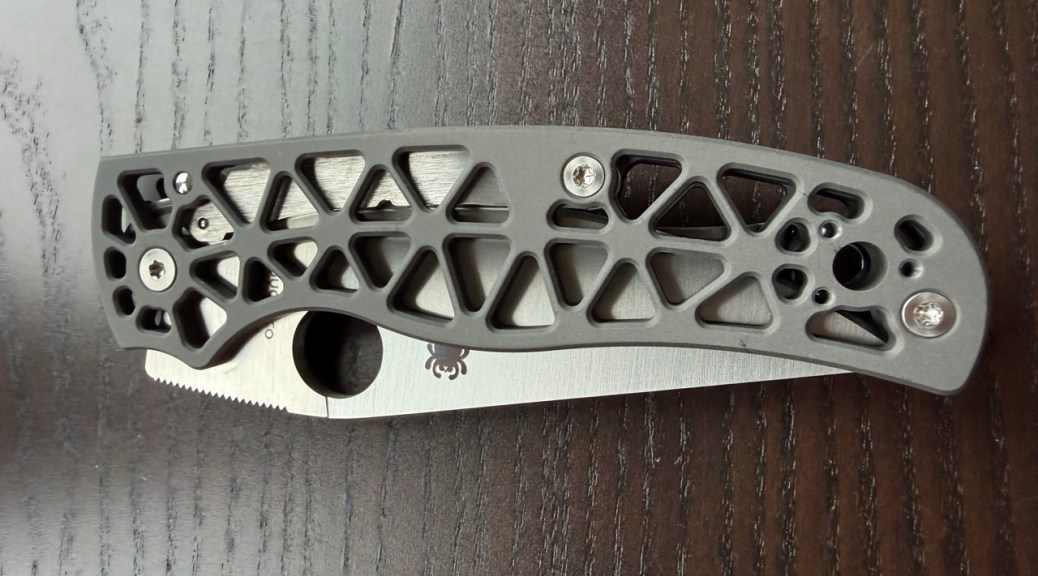
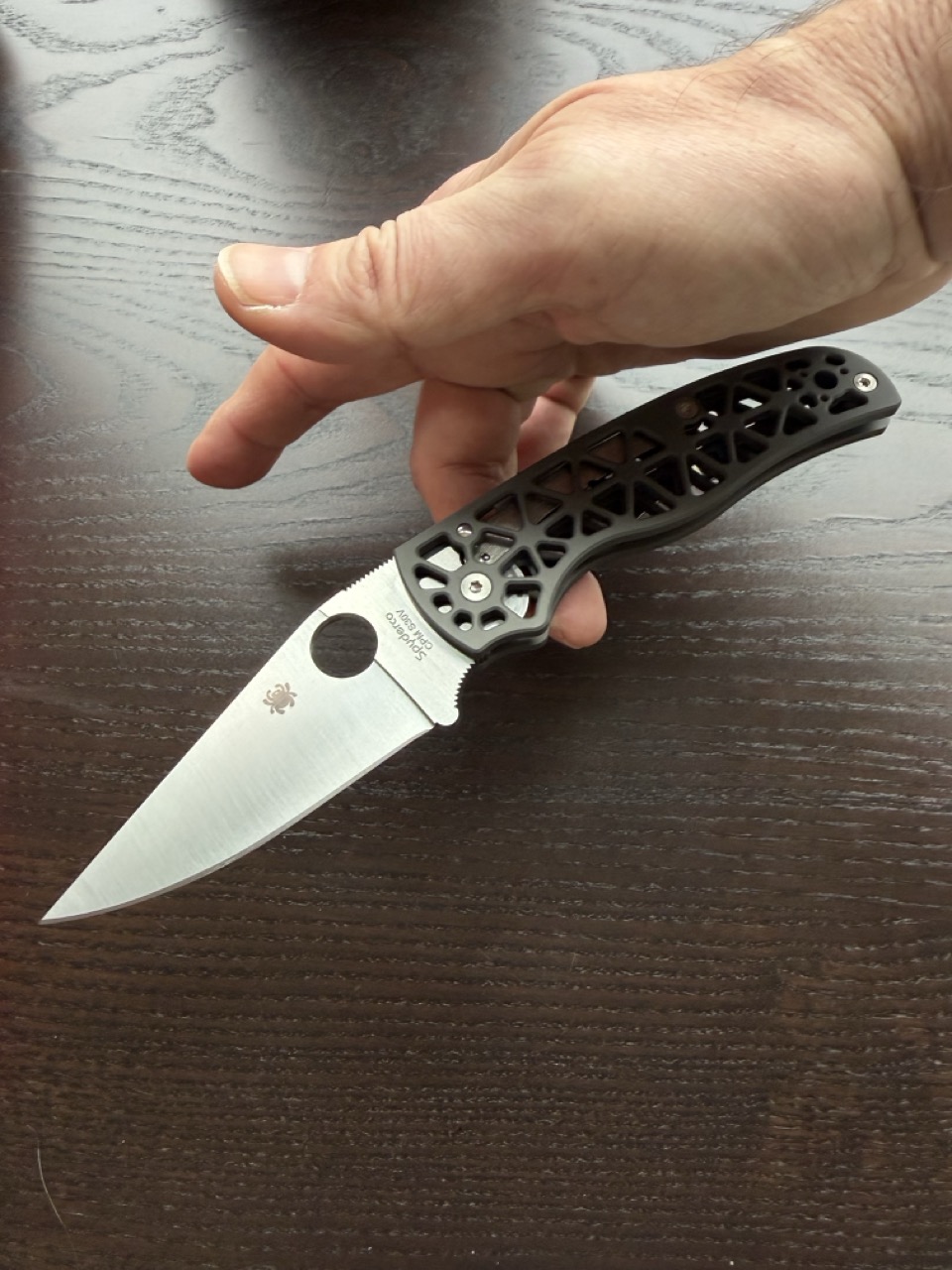
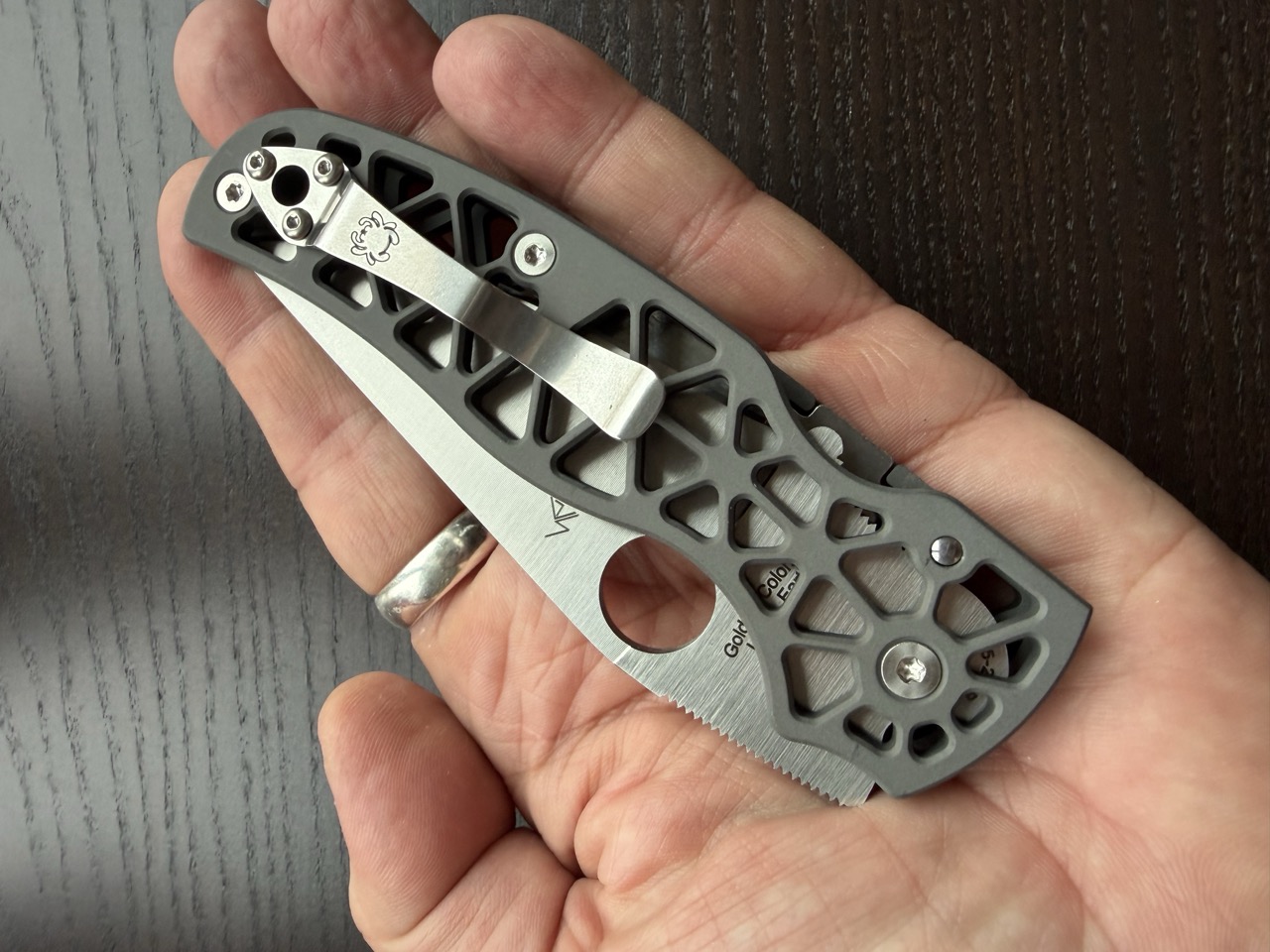
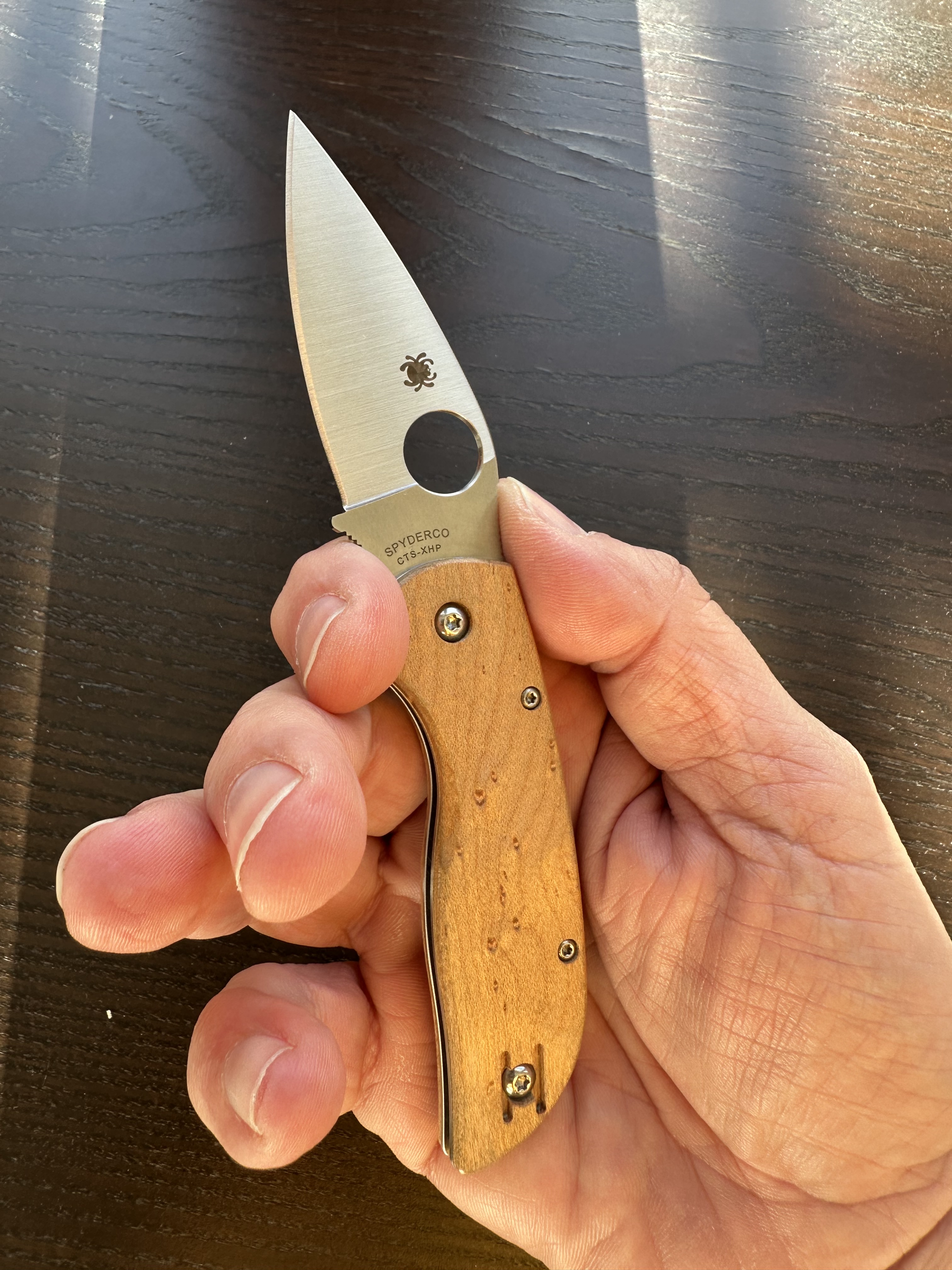
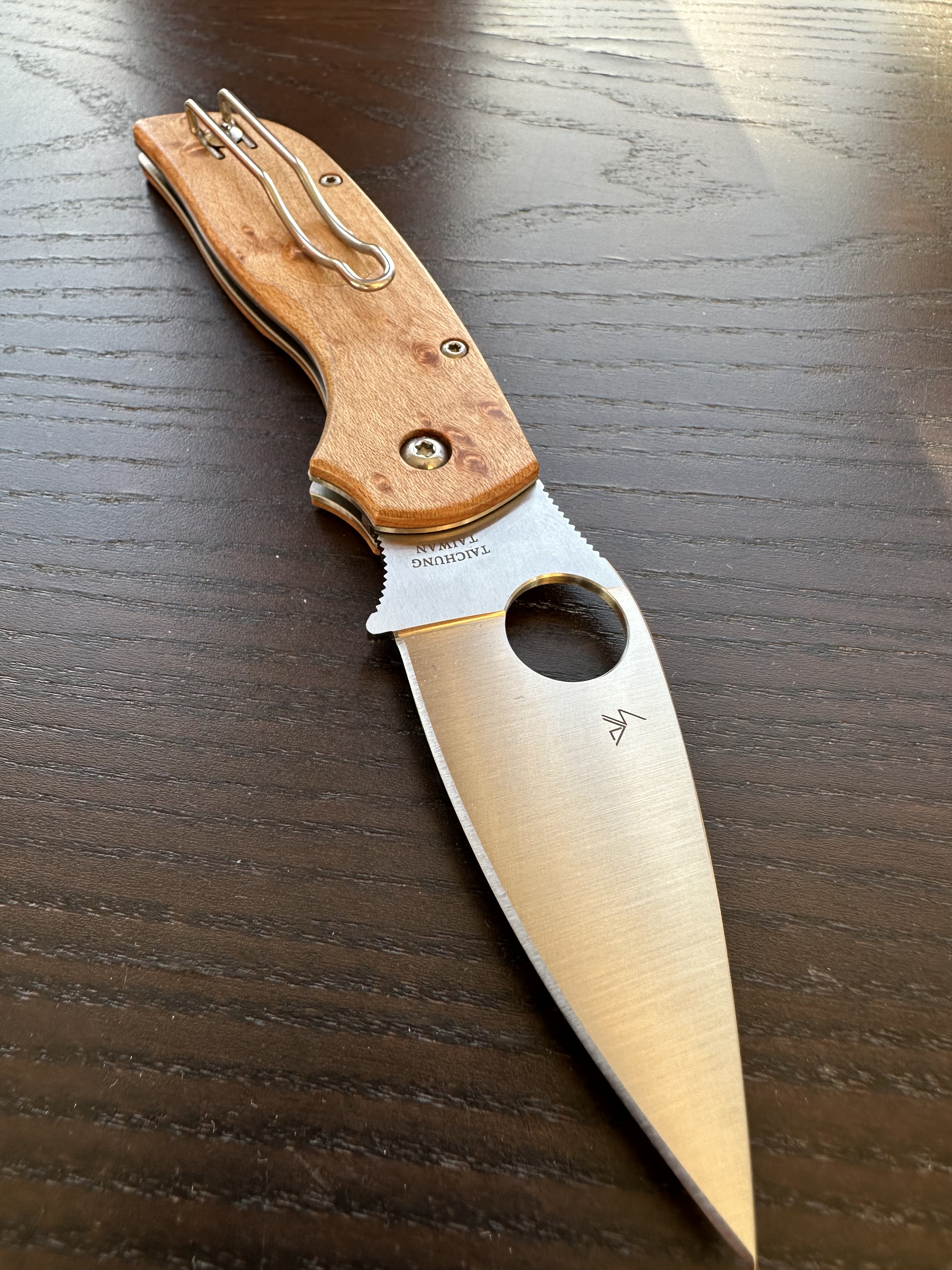
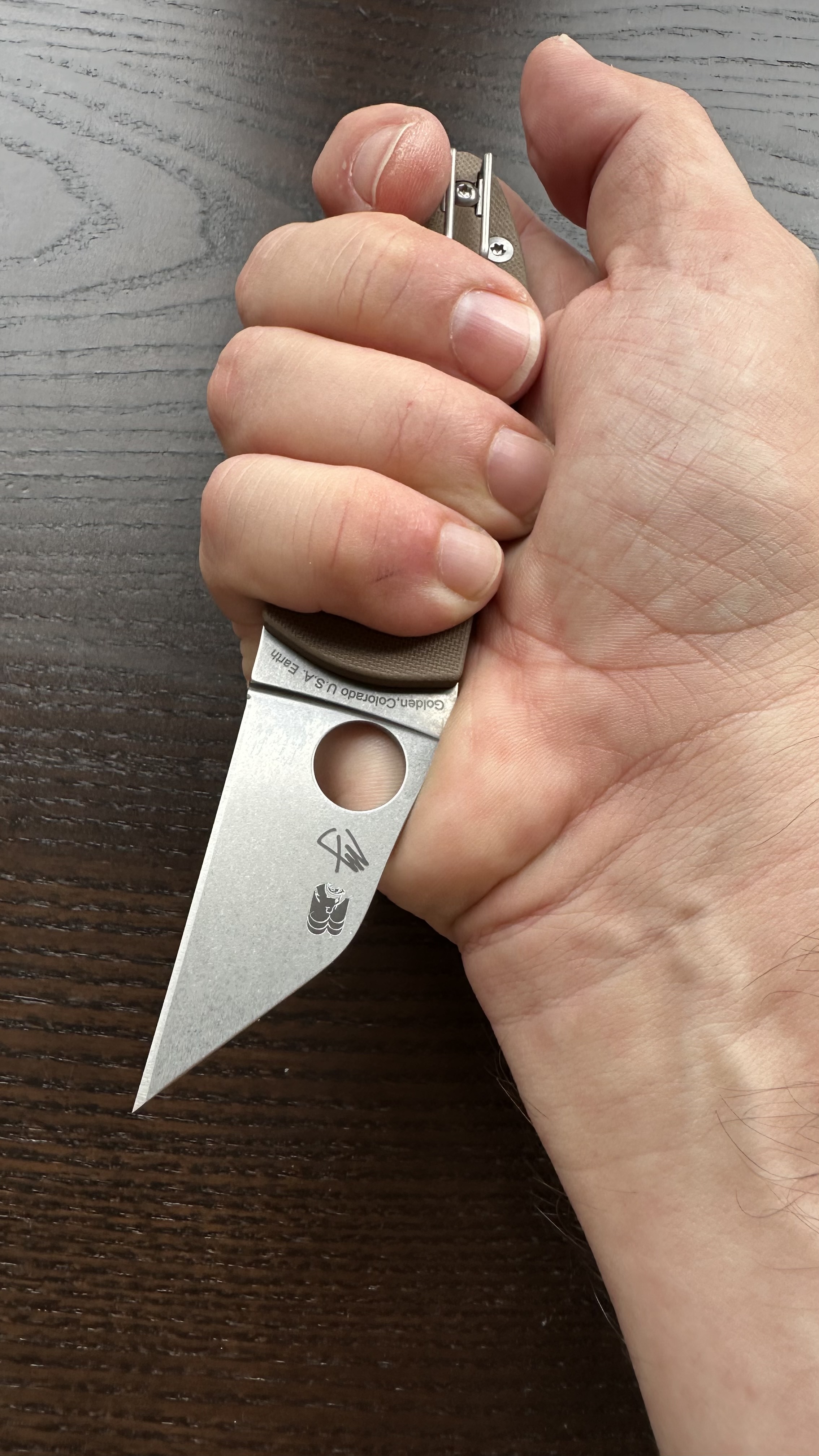
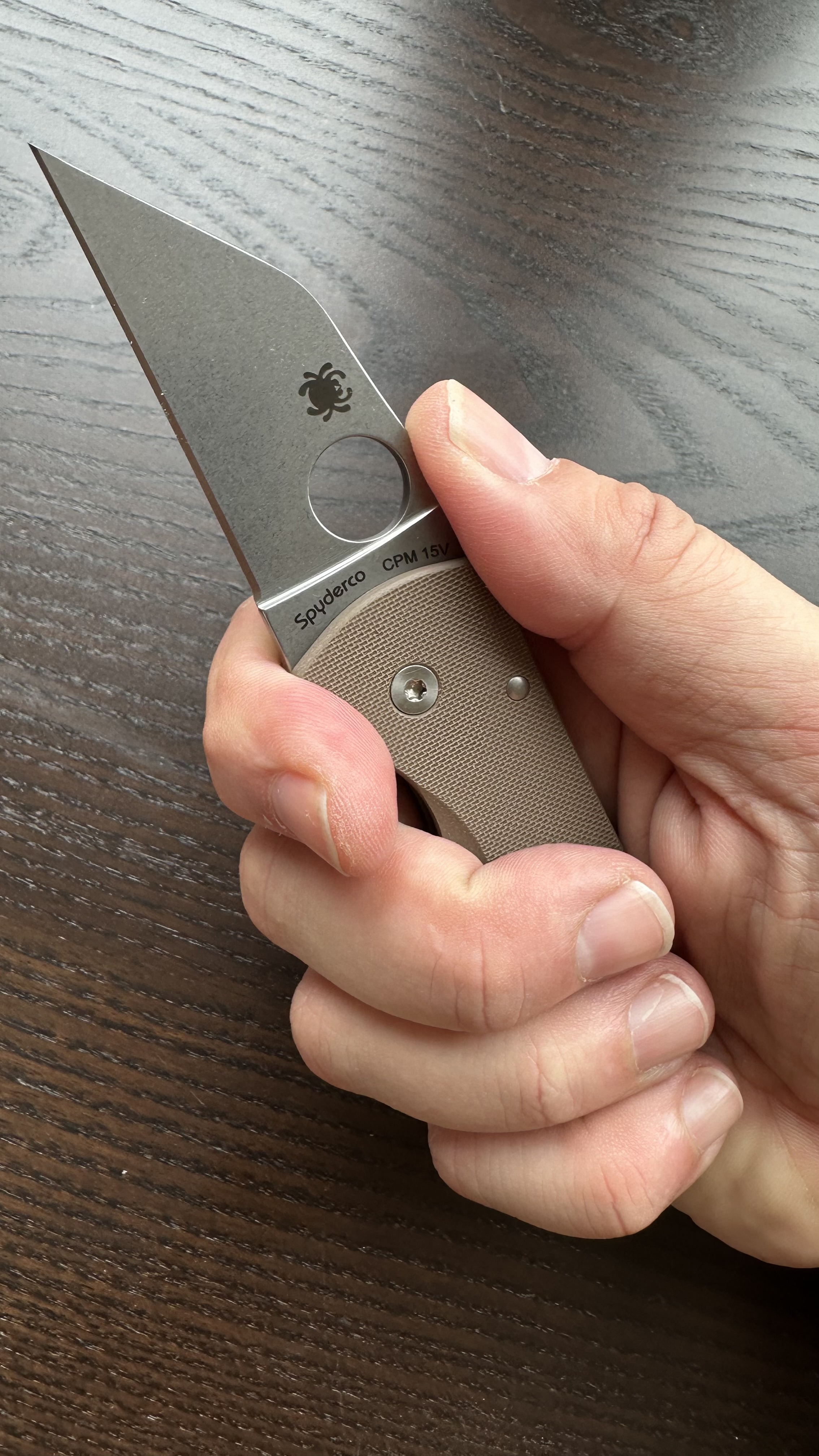
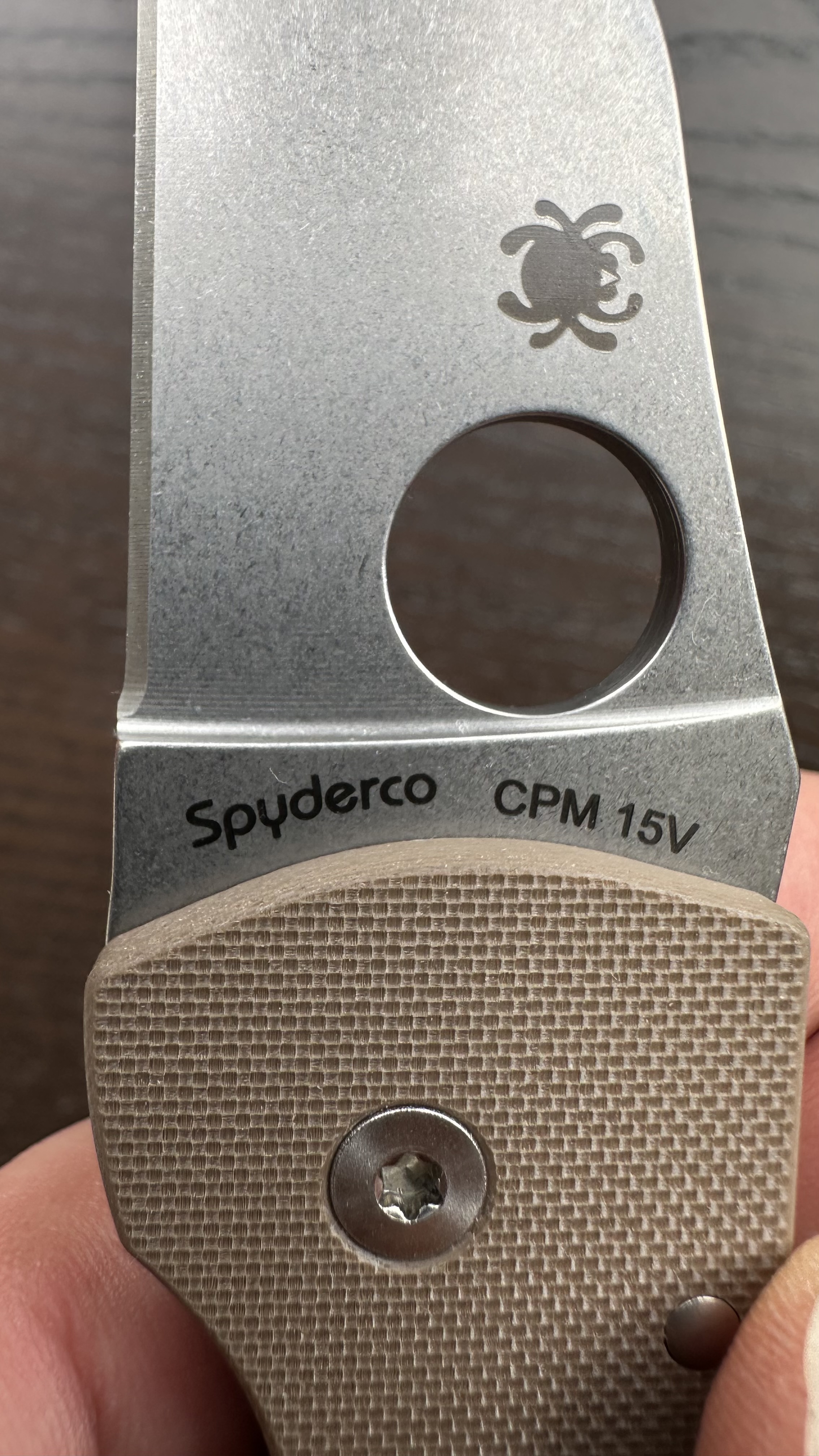
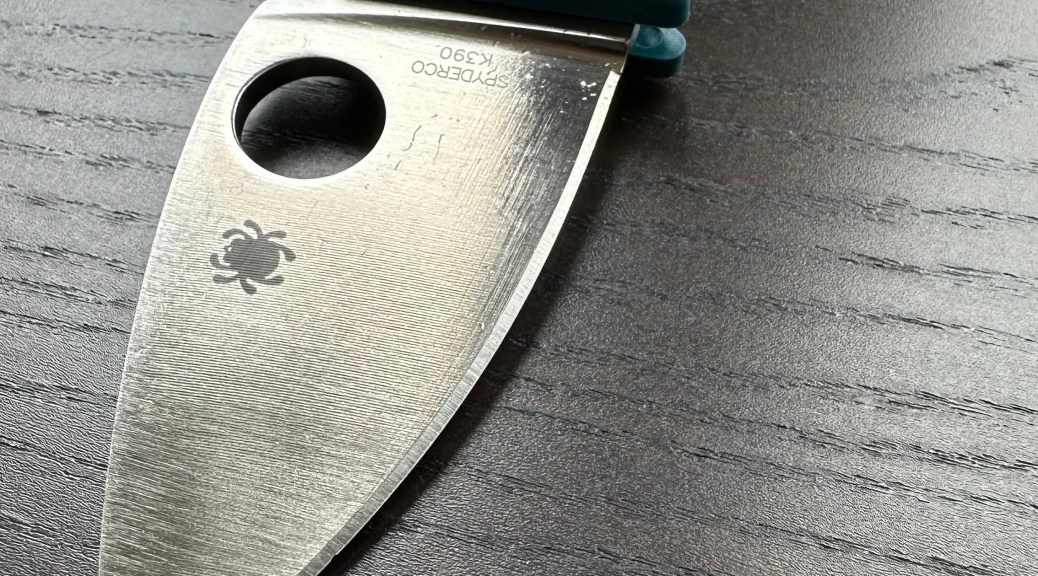
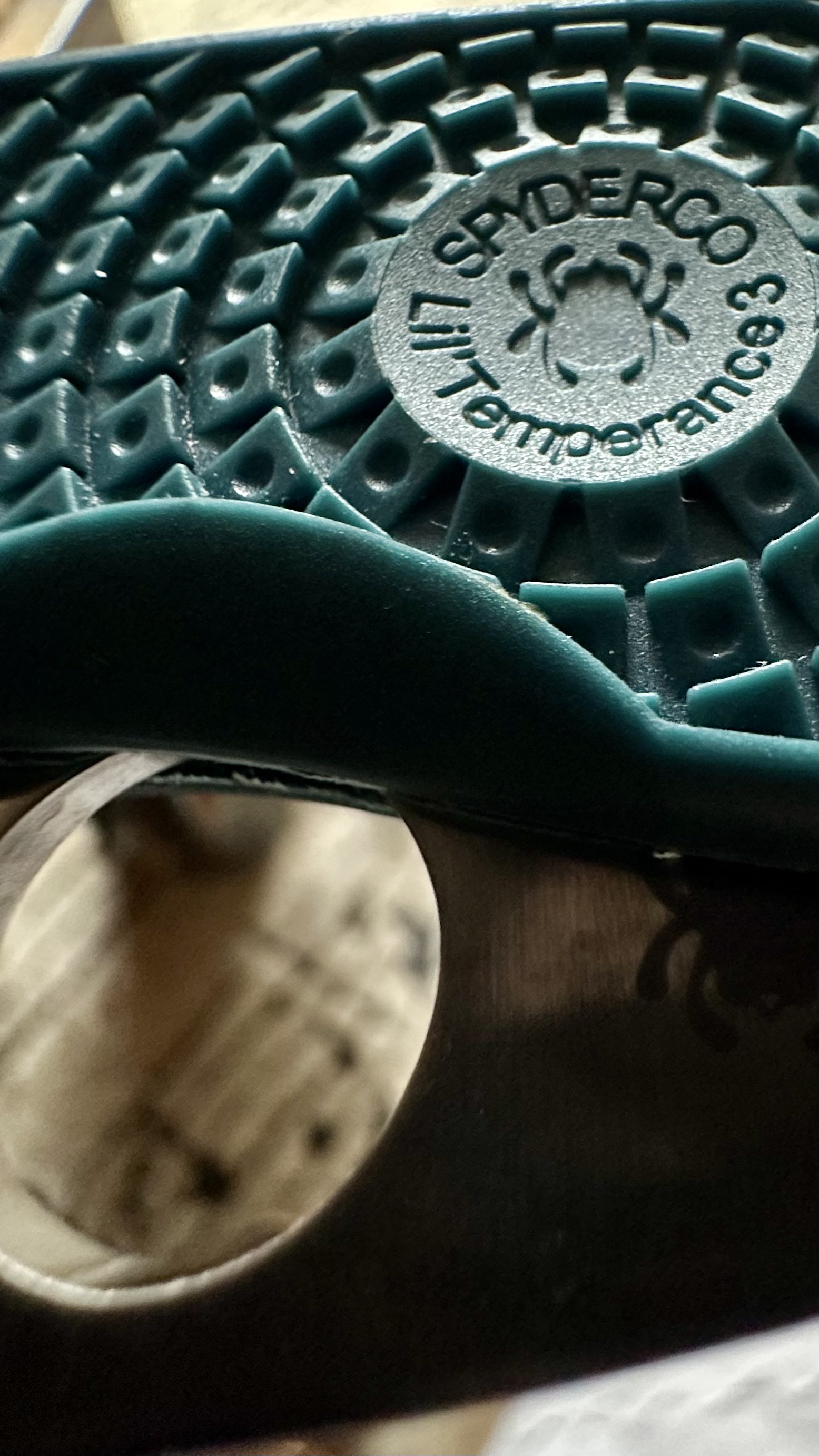
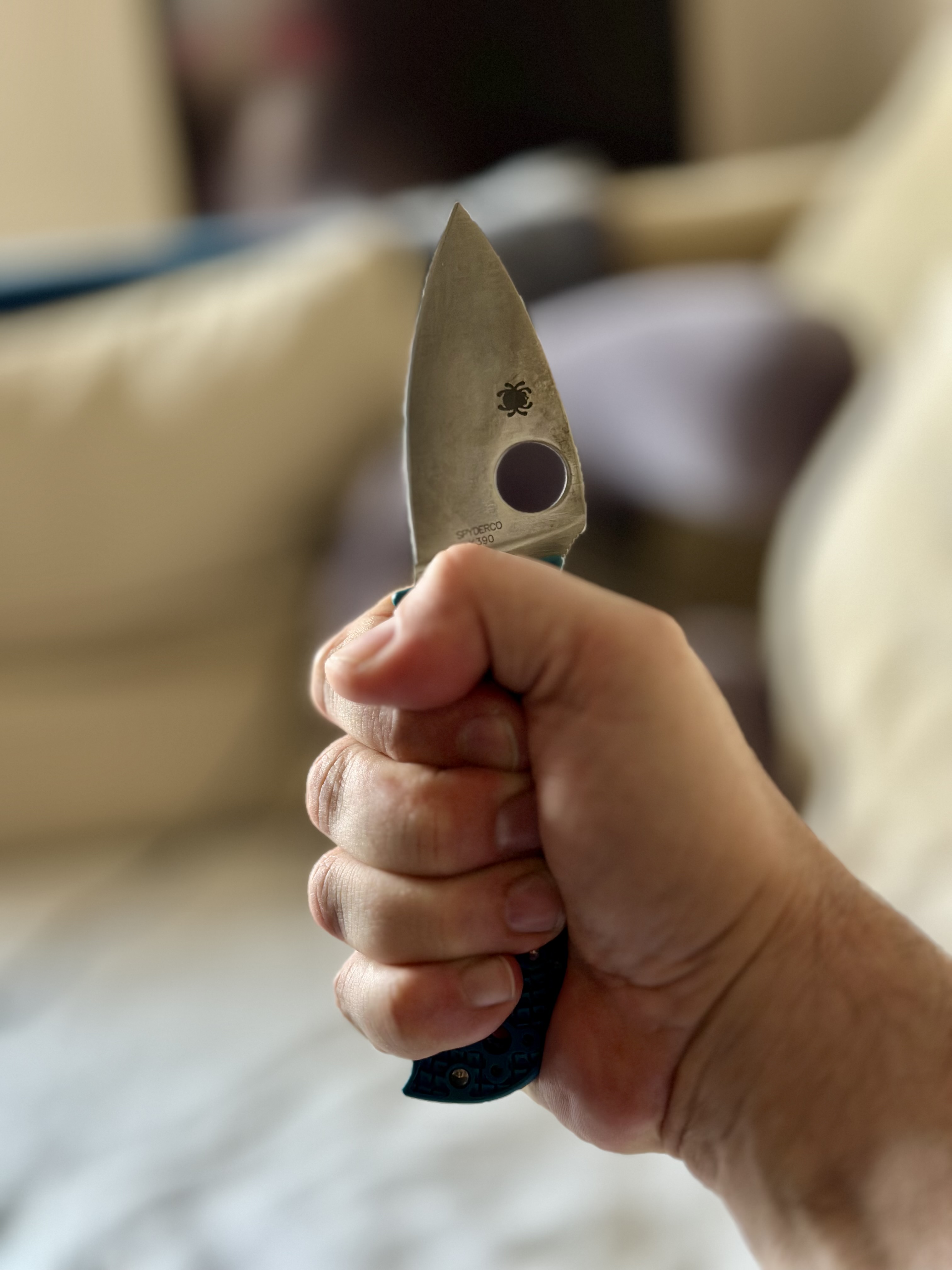
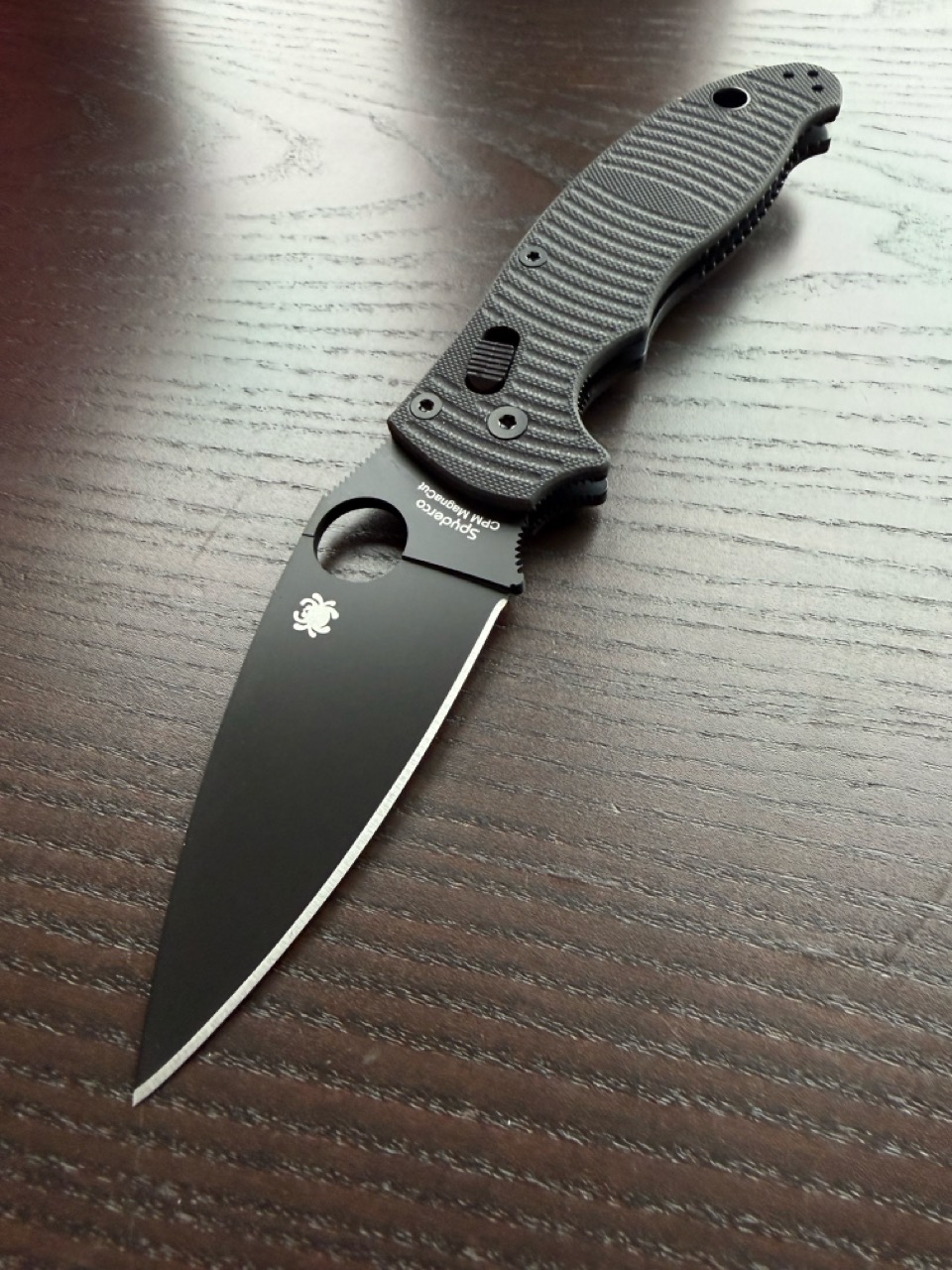
SAGE™ 5 LIGHTWEIGHT SALT® – C123YL – The Magnacut Amphibian EDC –

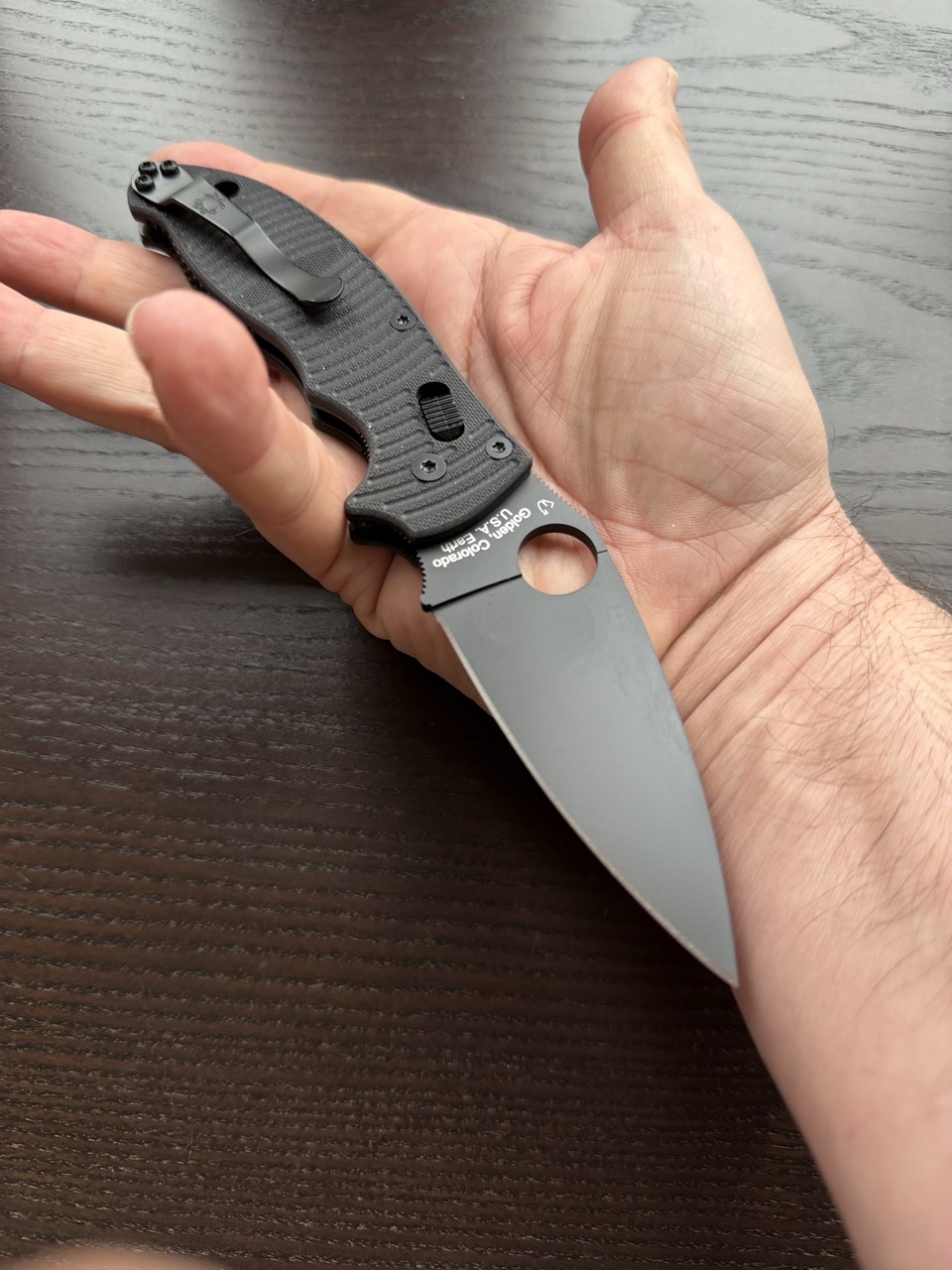
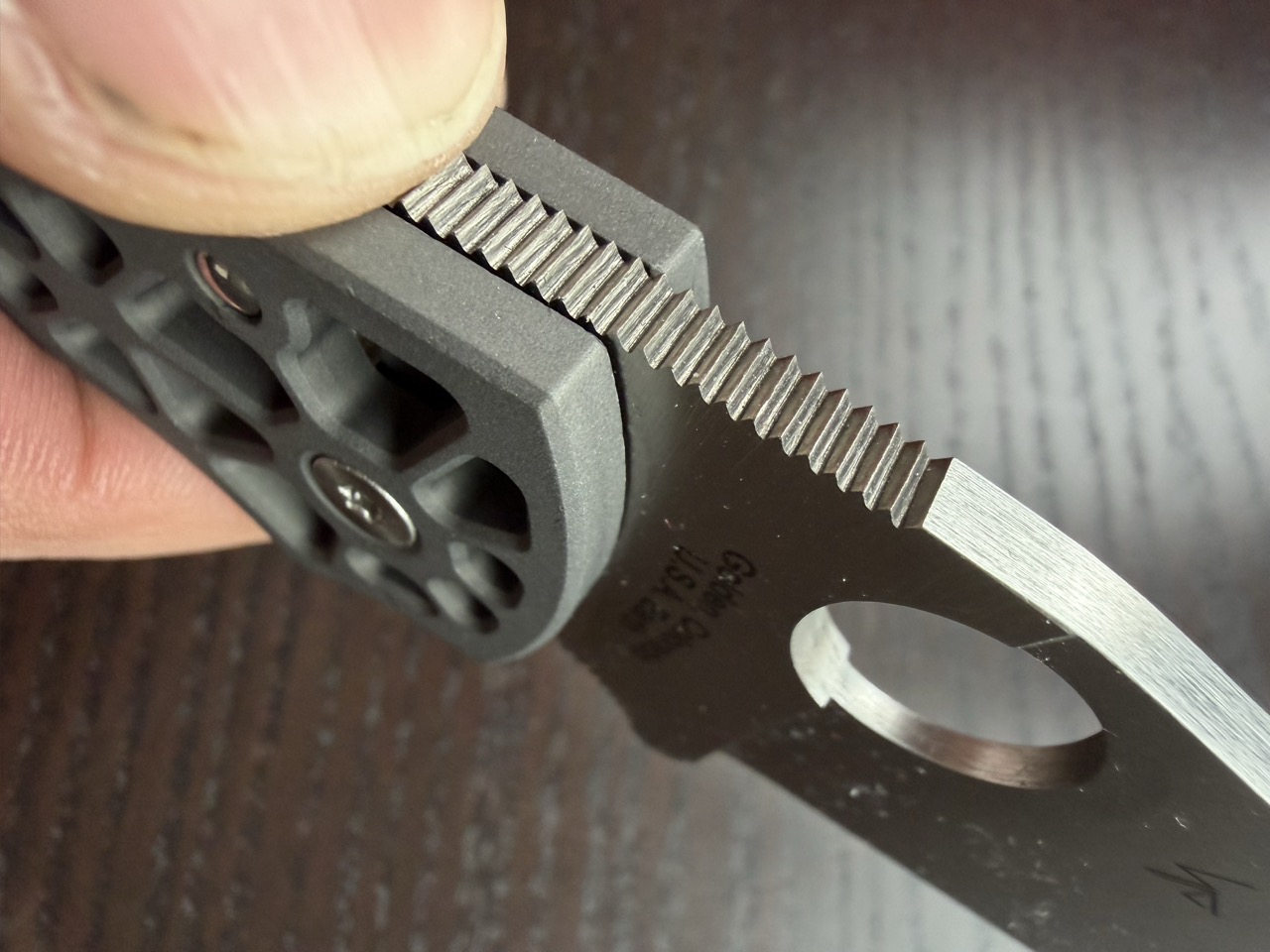
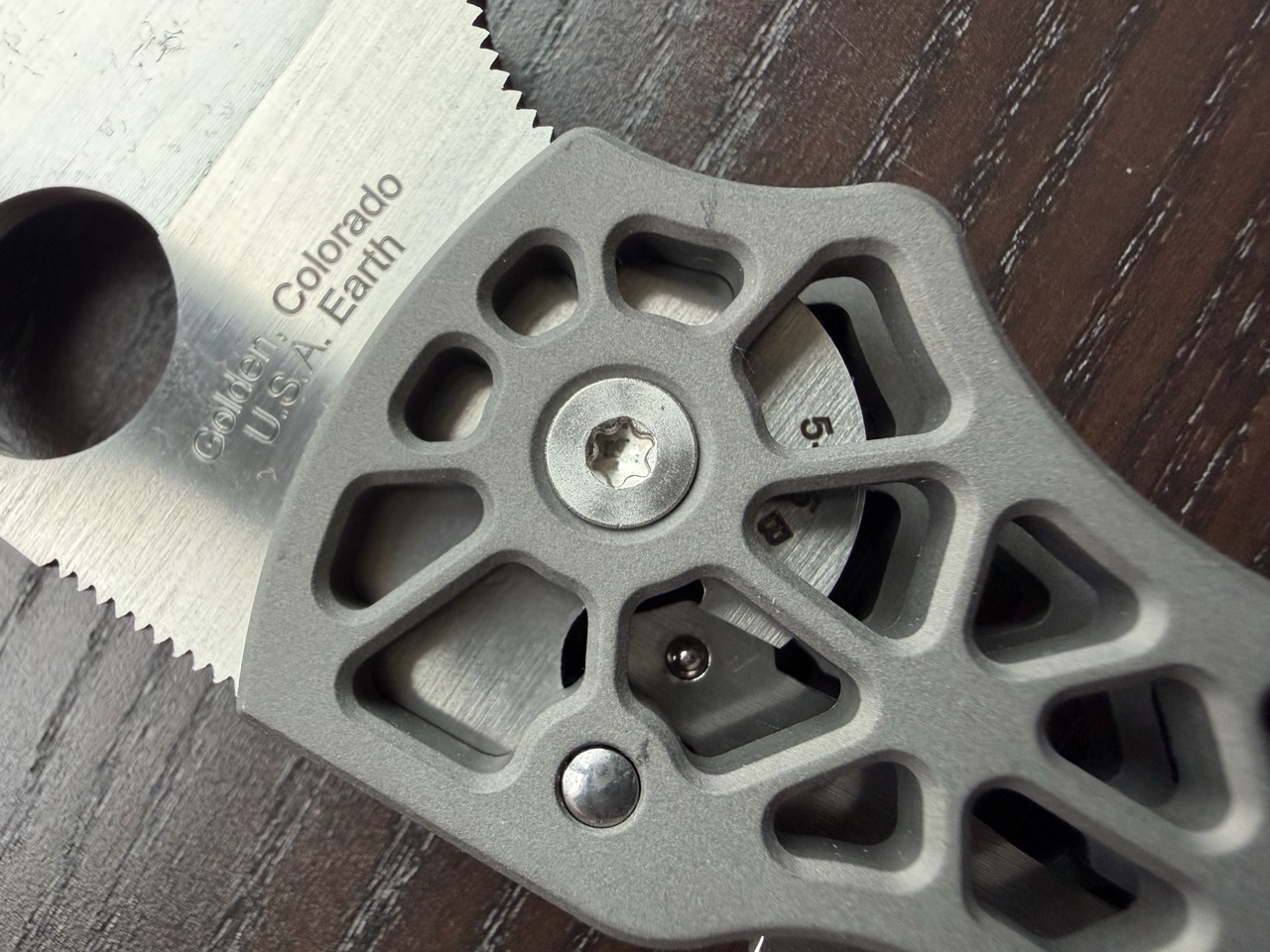
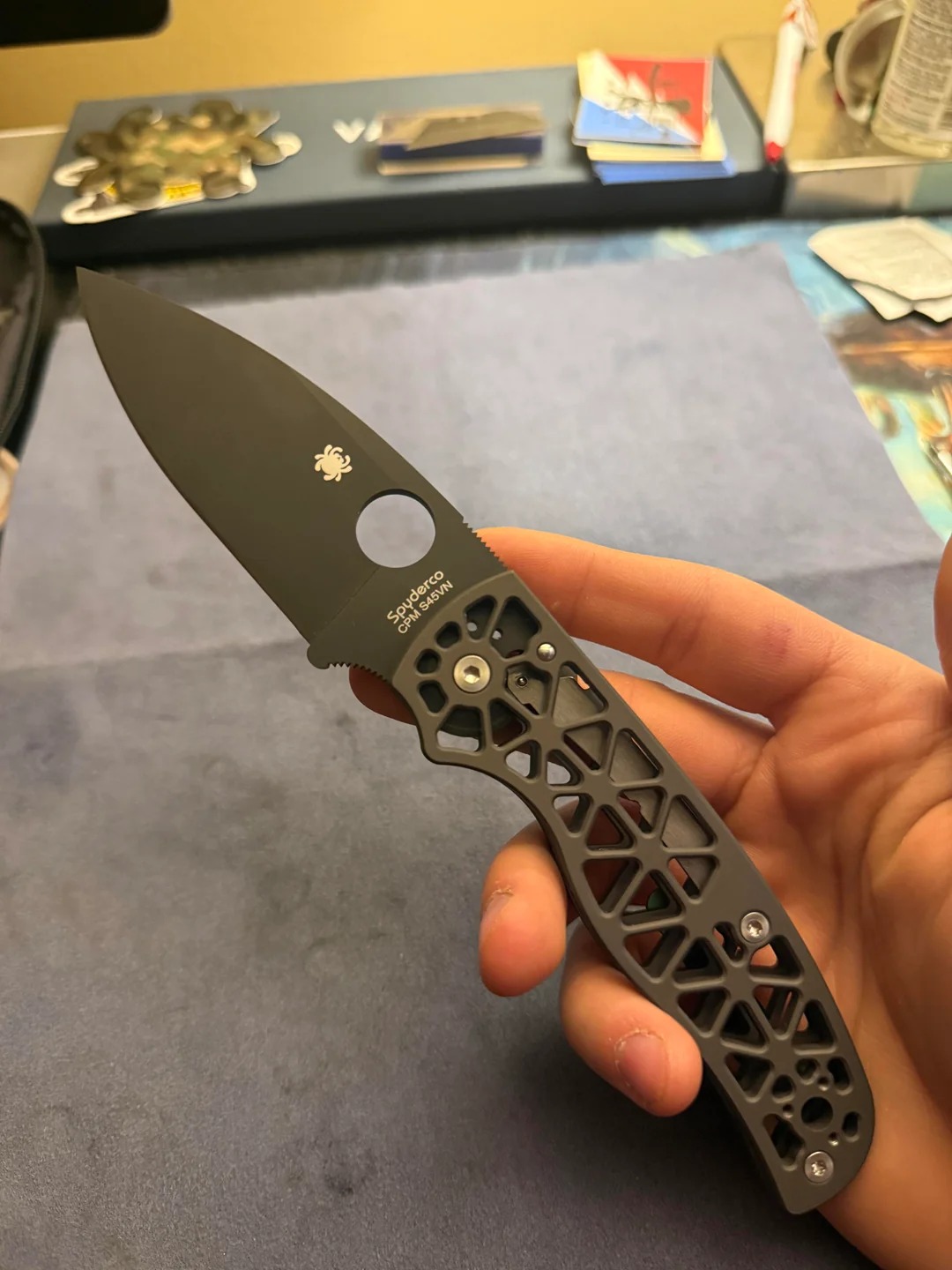
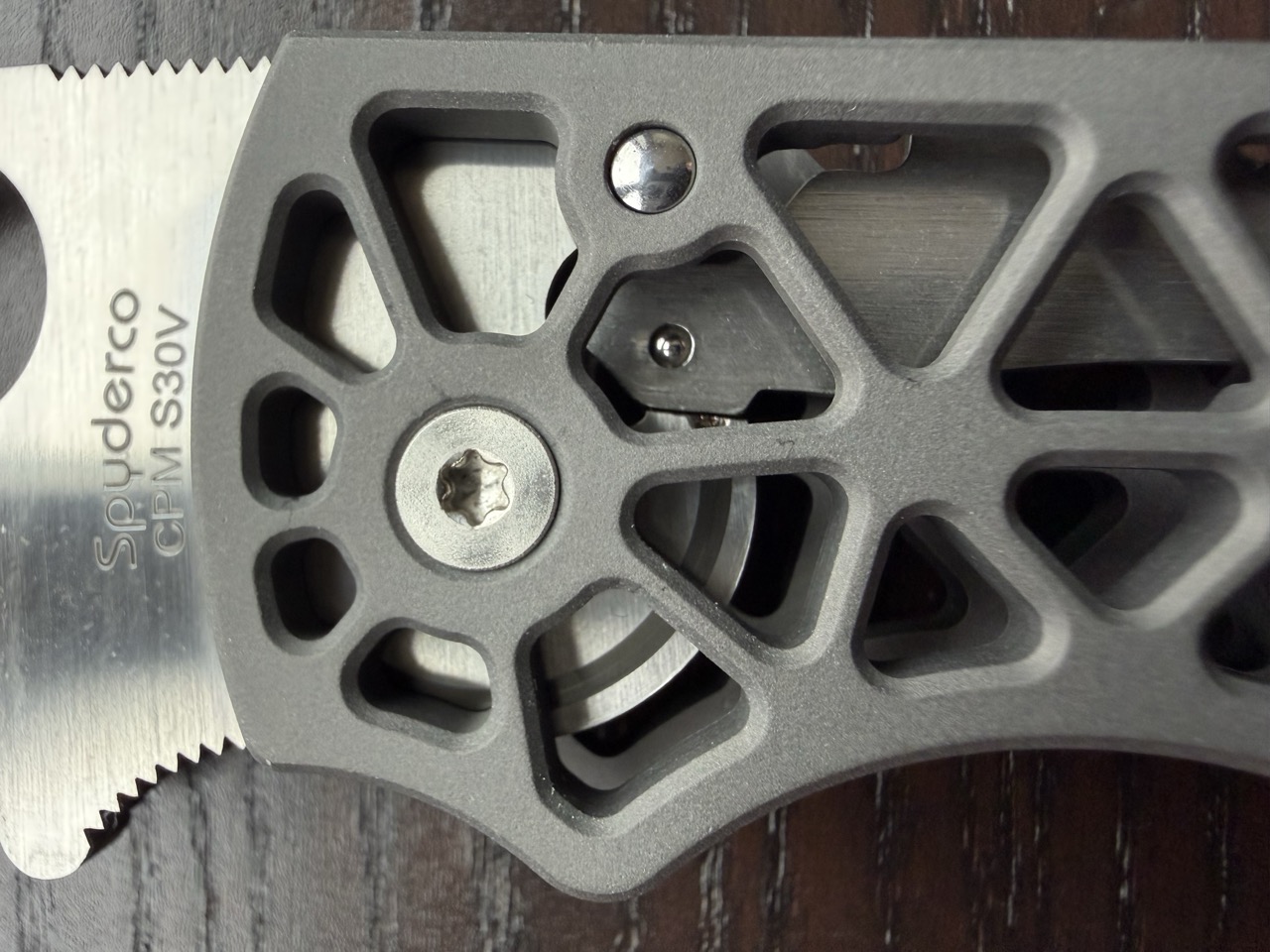
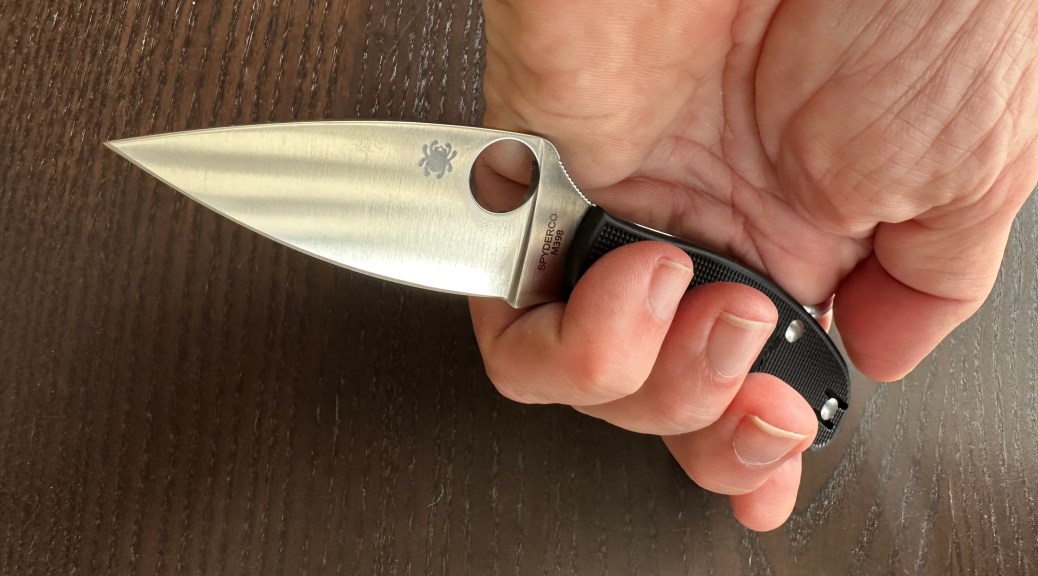
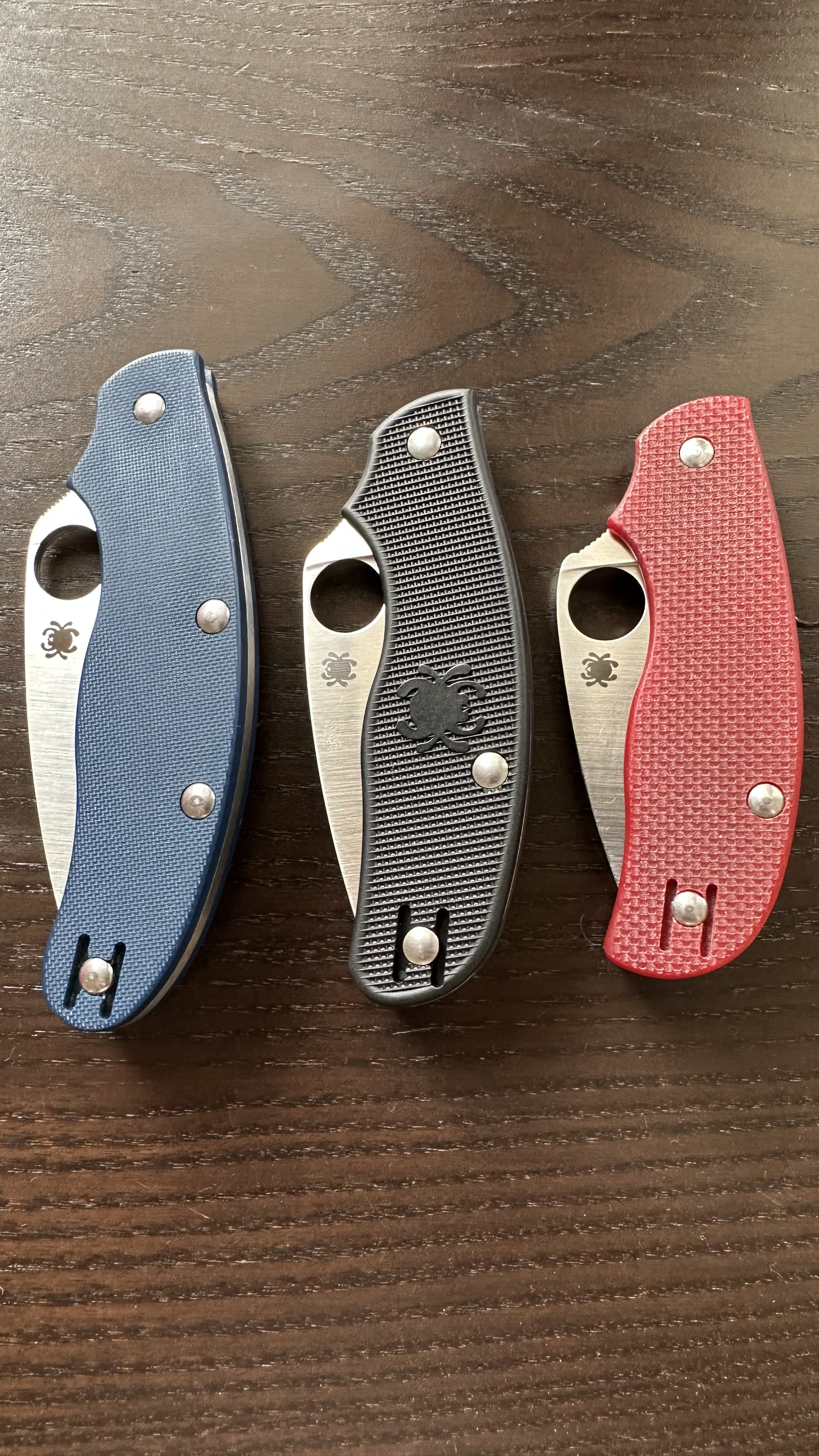
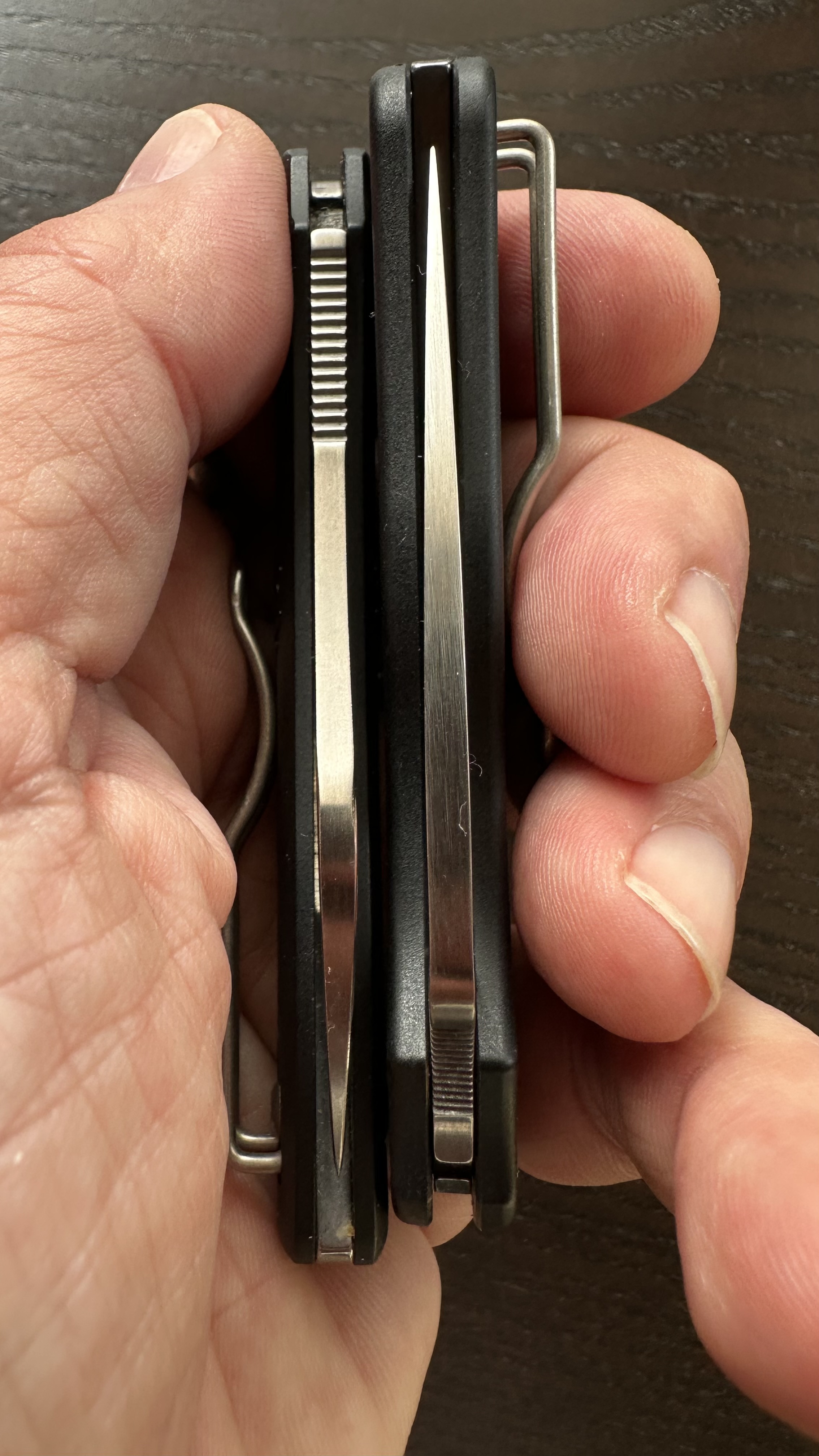
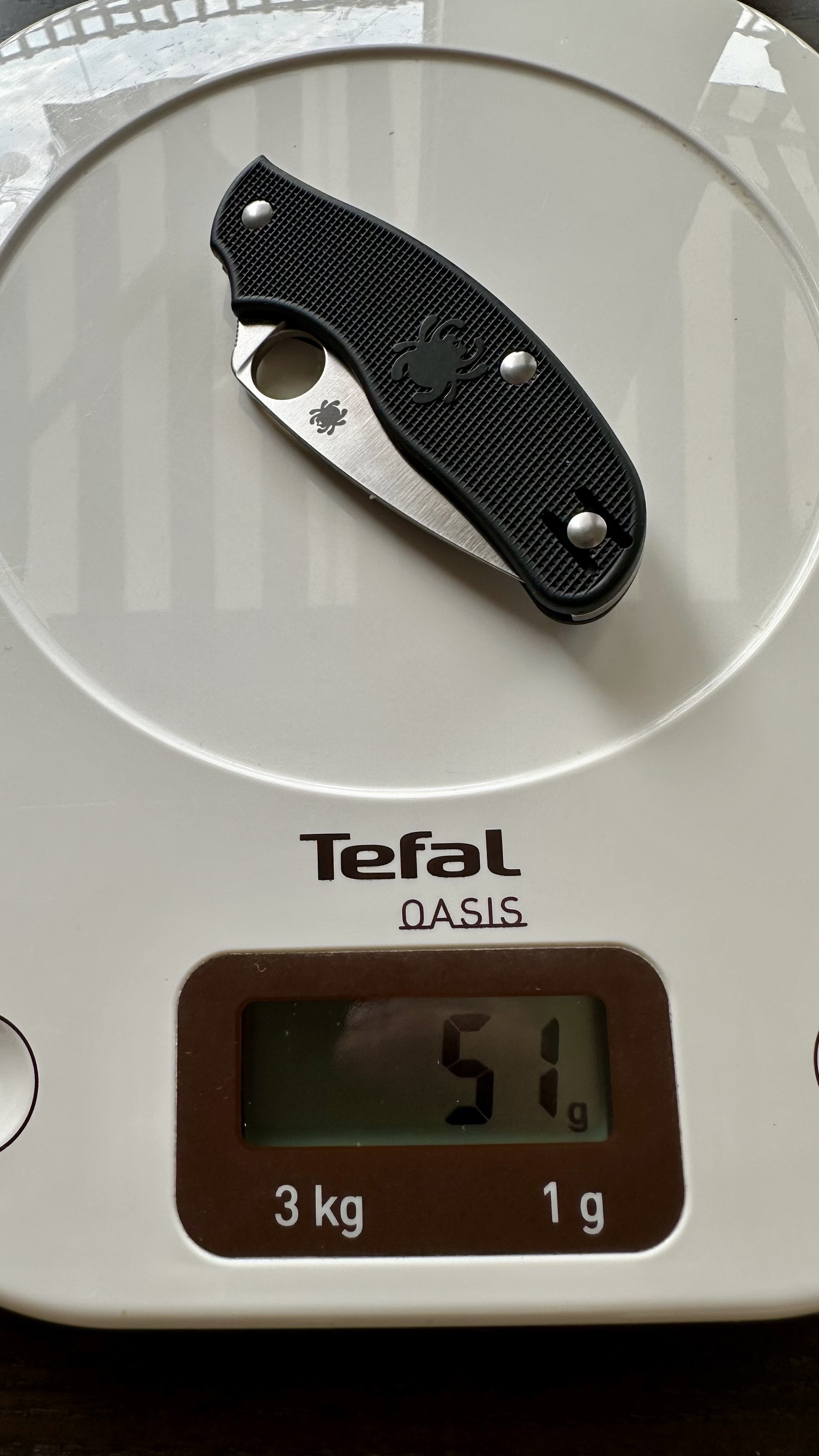
First of all, thank you to Guillaume Xais who has convinced me to try the Sage 5 Salt. I have found a deal under 200 euros.
In the past, I have owned some Sage(s) from the Sage 2 to the Sage 4 actually.
You still can find the reviewss by clicking the links.
The Sage 2 was a Sebenza killer when all the crave was about Christopher Reeves Integral Lock and titanium slabs.
The Sage 3 was the Blue Brother.
The Sage 4 was a masterpiece with its Front Lock and titanium Bolster never reviewed because too much a jewel of a knife.

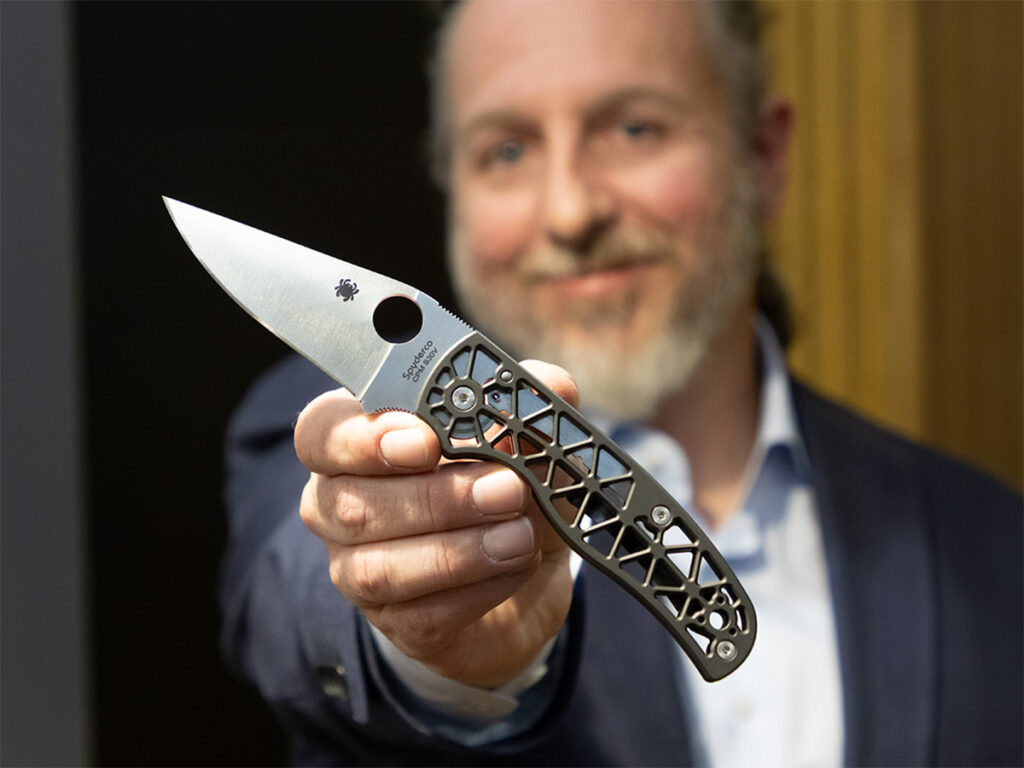
(Picture by Guillaume Xais – instagram Spydigex_knives)

I wasn’t particularly interested in the Sage 5 Compression Lock, and even less in the Sage 5 Lightweight. Yet both the Sage 5 G10 and Lightweight versions proved so popular and well-regarded that Spyderco expanded the lineup into Maxamet, SPY27, REX 121, Magnacut, and CPM-M4 (thanks to Guillaume for the editing).

With the vanilla S30V, the Sage 5 was offered in six different alloys — some of the most impressive in terms of performance — demonstrating just how versatile and capable this design can be.
 “The Sage 5 Lightweight has also proven itself to be a perfect platform for showcasing the elite properties of high-performance blade steels.”

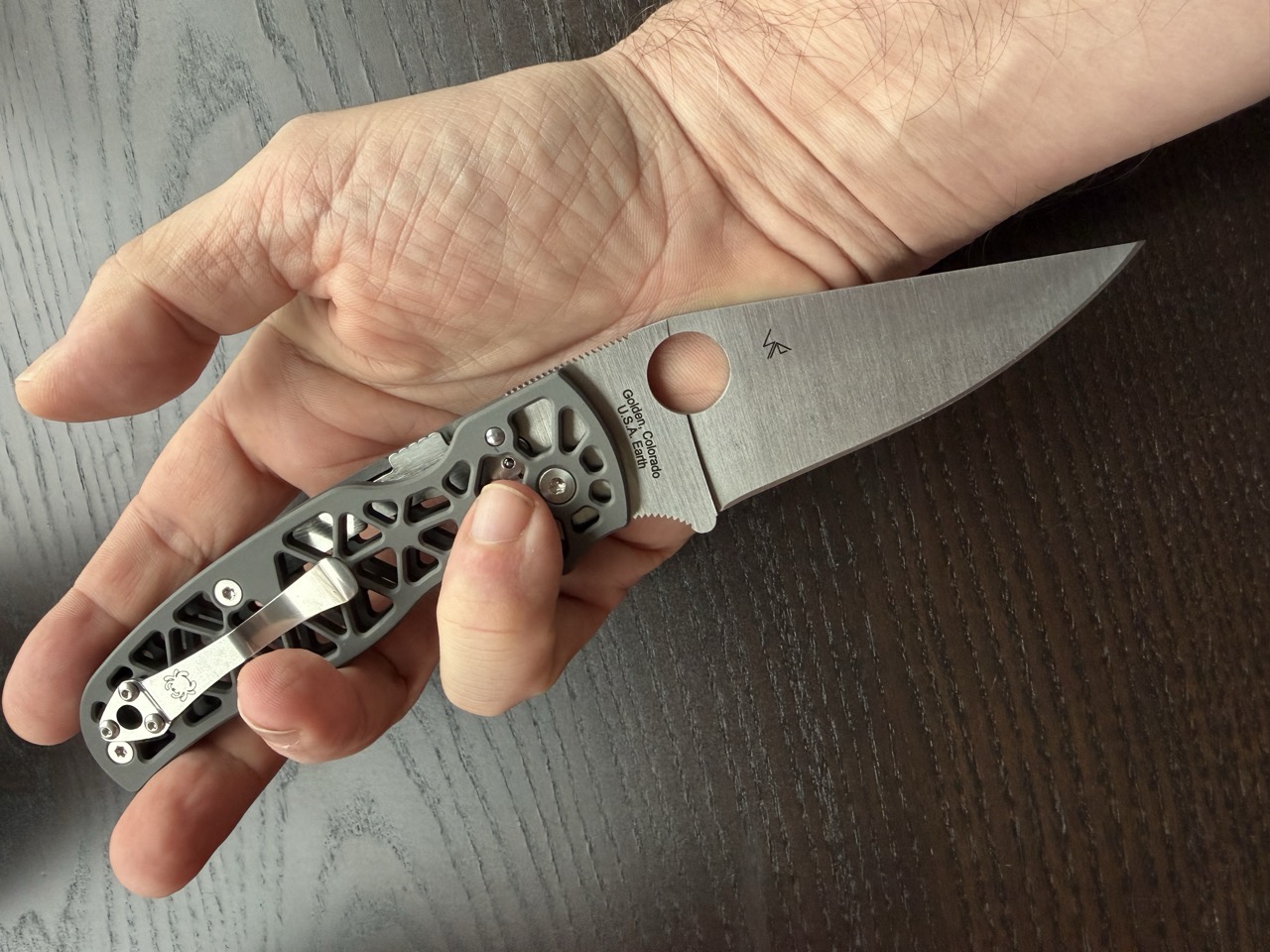
(Picture by Guillaume Xais – instagram Spydigex_knives)


For the record the Sage Series has traditionally expressed the same iconic design with different lock mechanisms, paying homage to the innovative designers who created them. Also Spyderco donates approximately 5% of sales of the Sage line to the National Alzheimer’s Association Denver, Colorado Chapter.
(A Sage 6 is soon coming with a button/compression lock as found on the Smock.)
So I have asked to Guillaume in the Spyderco Fan Club France, why should I invest in a Sage 5 Salt Lightweight in the first place ?

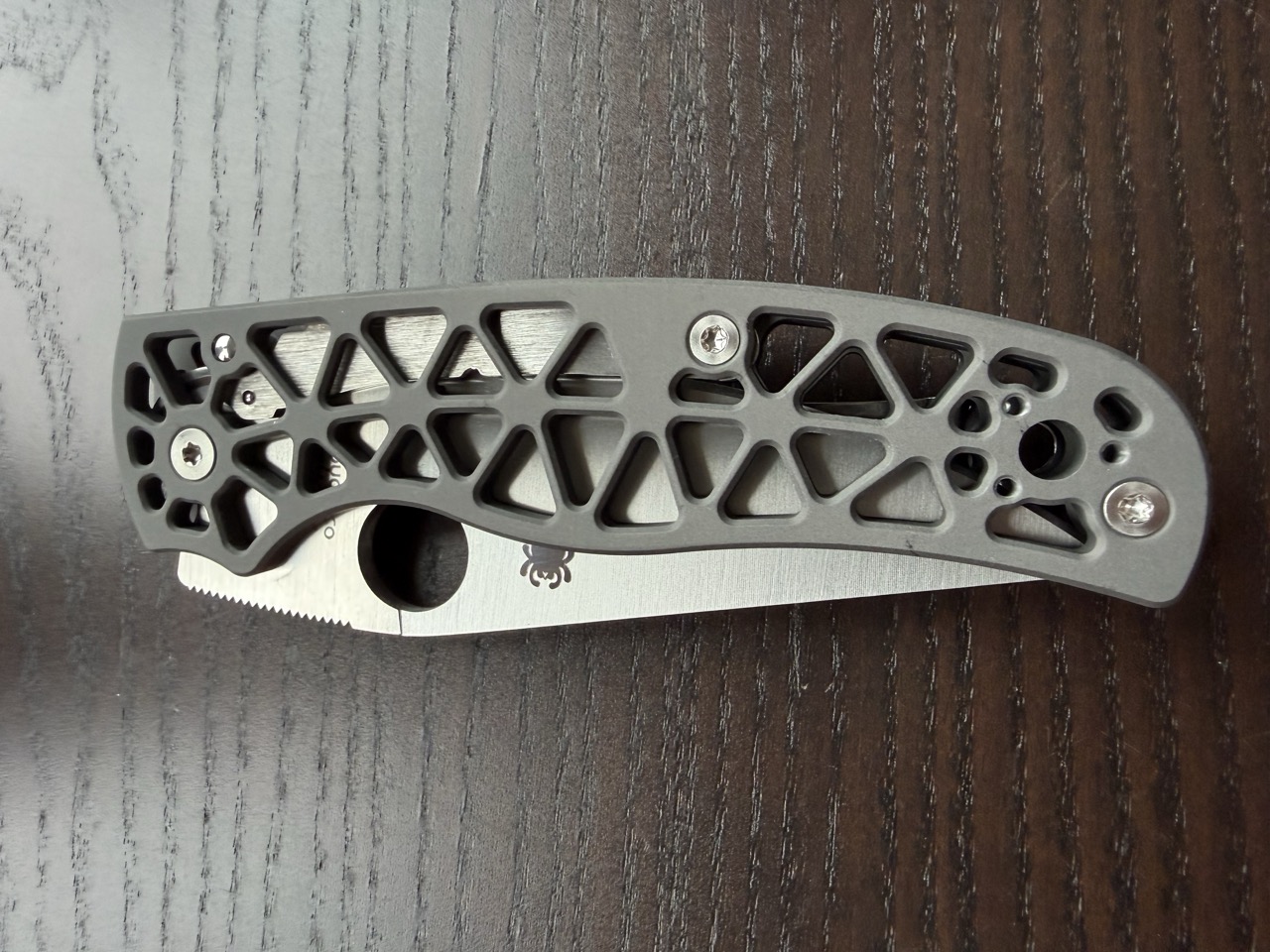
(Picture by Guillaume Xais – instagram Spydigex_knives)

“Its action, like any self-respecting Sage LW, is dazzling!
This yellow contrasts with the hardware, the clip, and the deep black of the liners, like a Black Mamba face… I love it!
My first Magnacut, by the way… I fish and am quite often at the seaside, it will complement my Ukpk salt (which is also very good).
My favorites, however, remain the 2 and 4, true works of art!

For me, it does everything better than a Para3: handling, fluidity, less fragile tip, less tactical image, more rewarding feel of the FRN… there’s no comparison (from my point of view, of course).
Add to that the Taichung Quality and Magna’versatility… they’re worth it, right?

I was convinced !

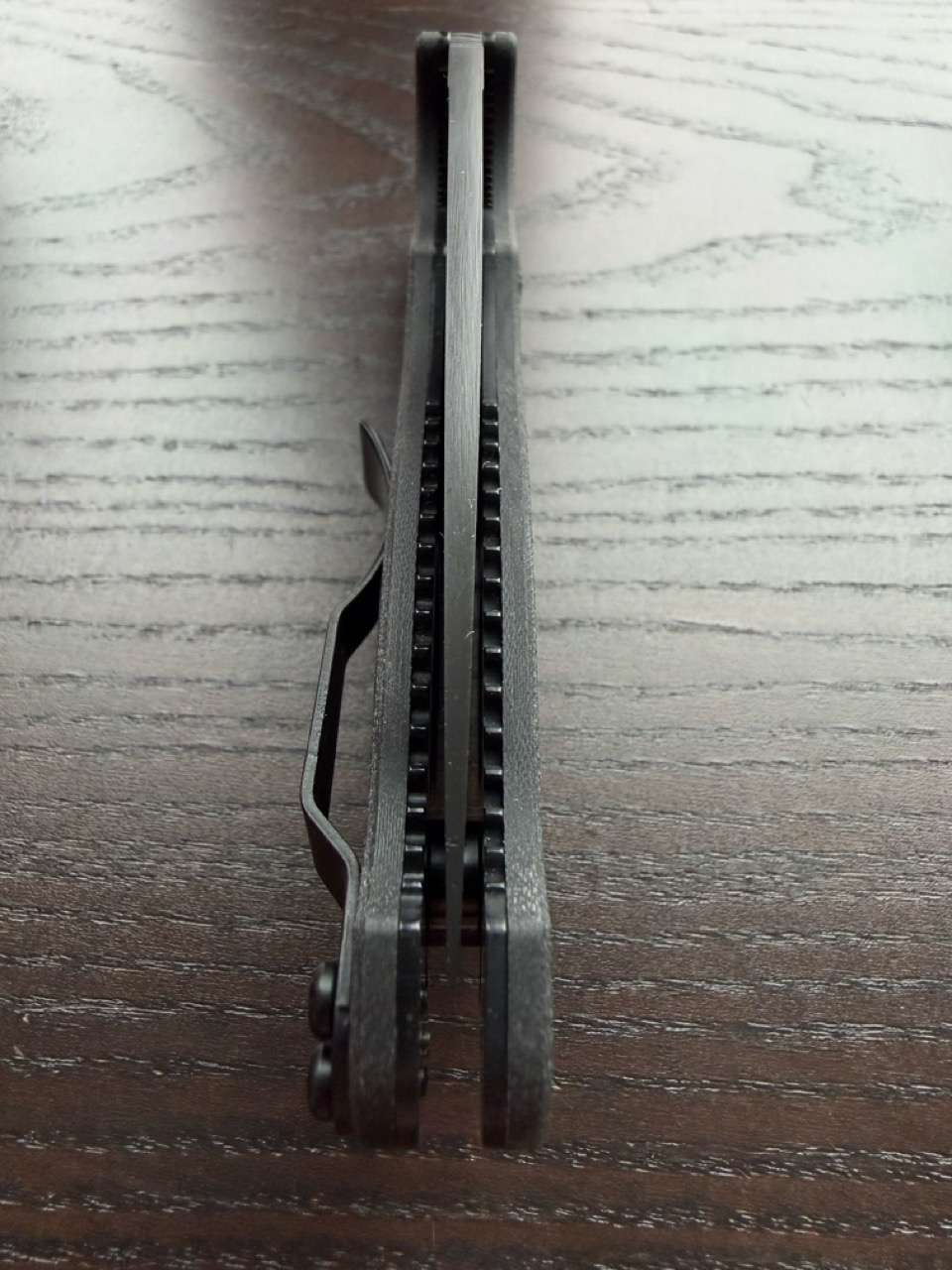
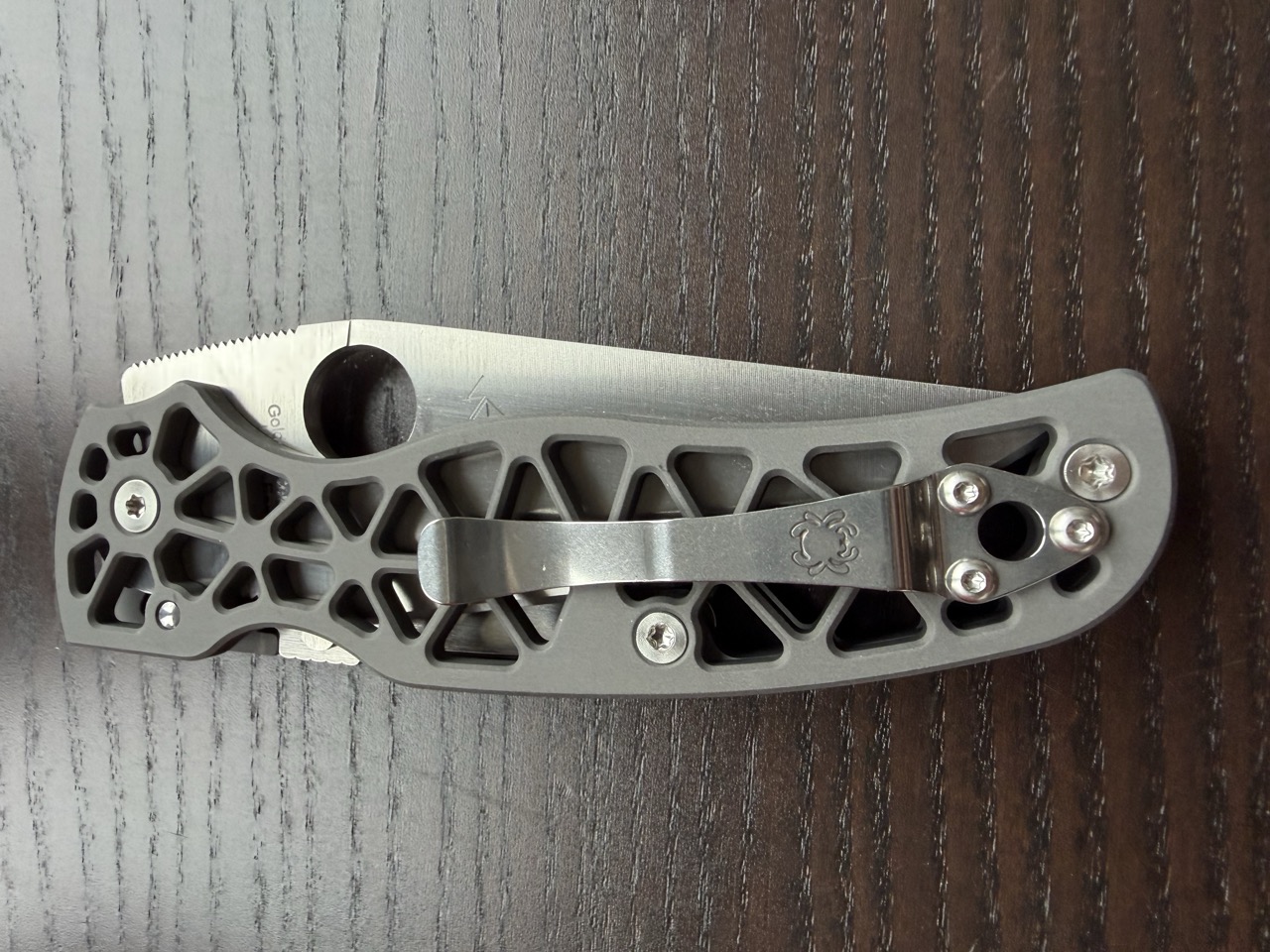
First impressions: there’s some real heft to this lightweight — thanks to the full liners. I love it. The blade is perfectly centered, and the lock doesn’t stick.

The detent is impressively strong, almost magnetic — stronger than the detents on my recent Para 3 and Military 2. Go figure! And the action is smooth as oily butter. Classic, perfect Taichung craftsmanship.

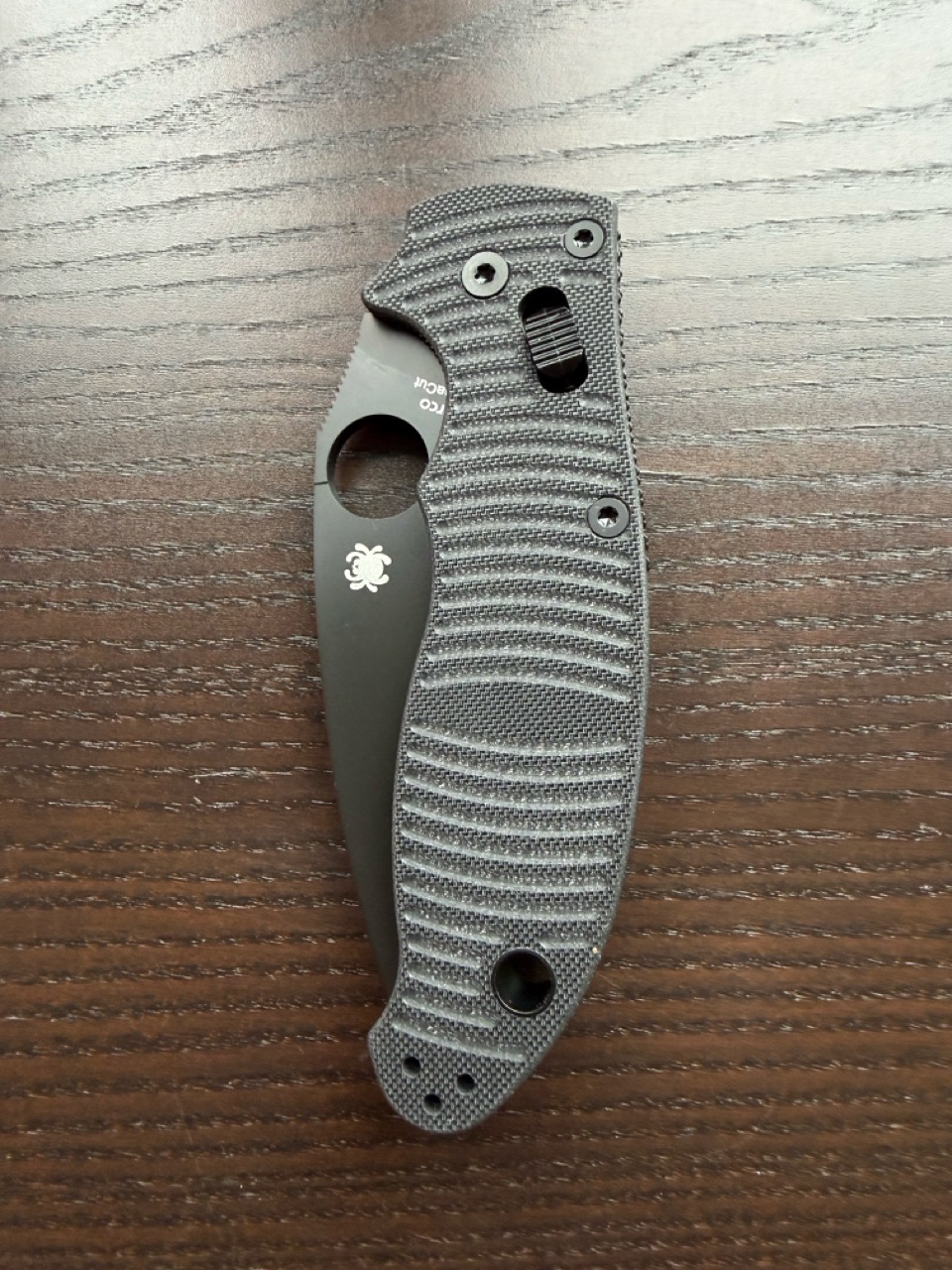
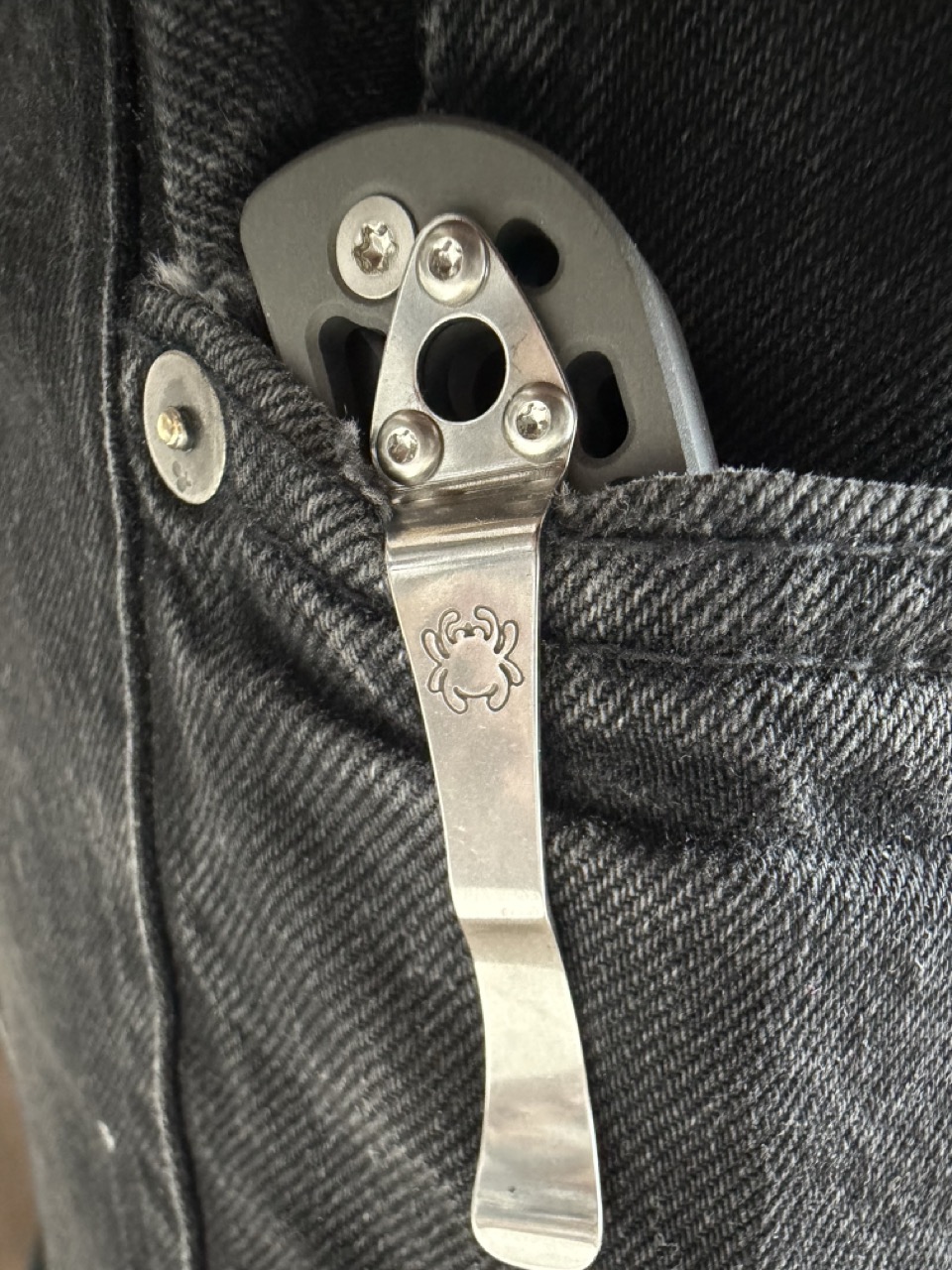
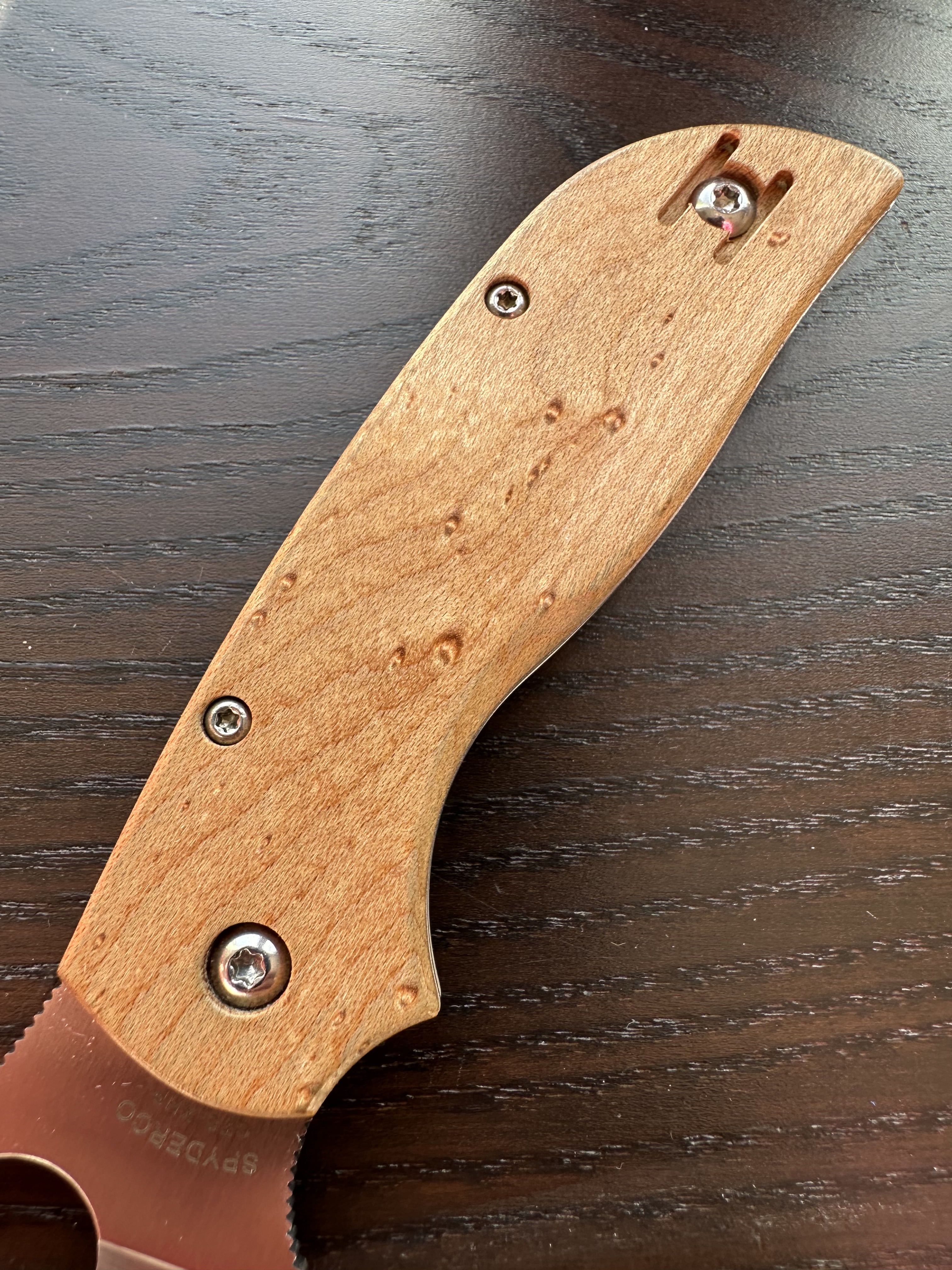
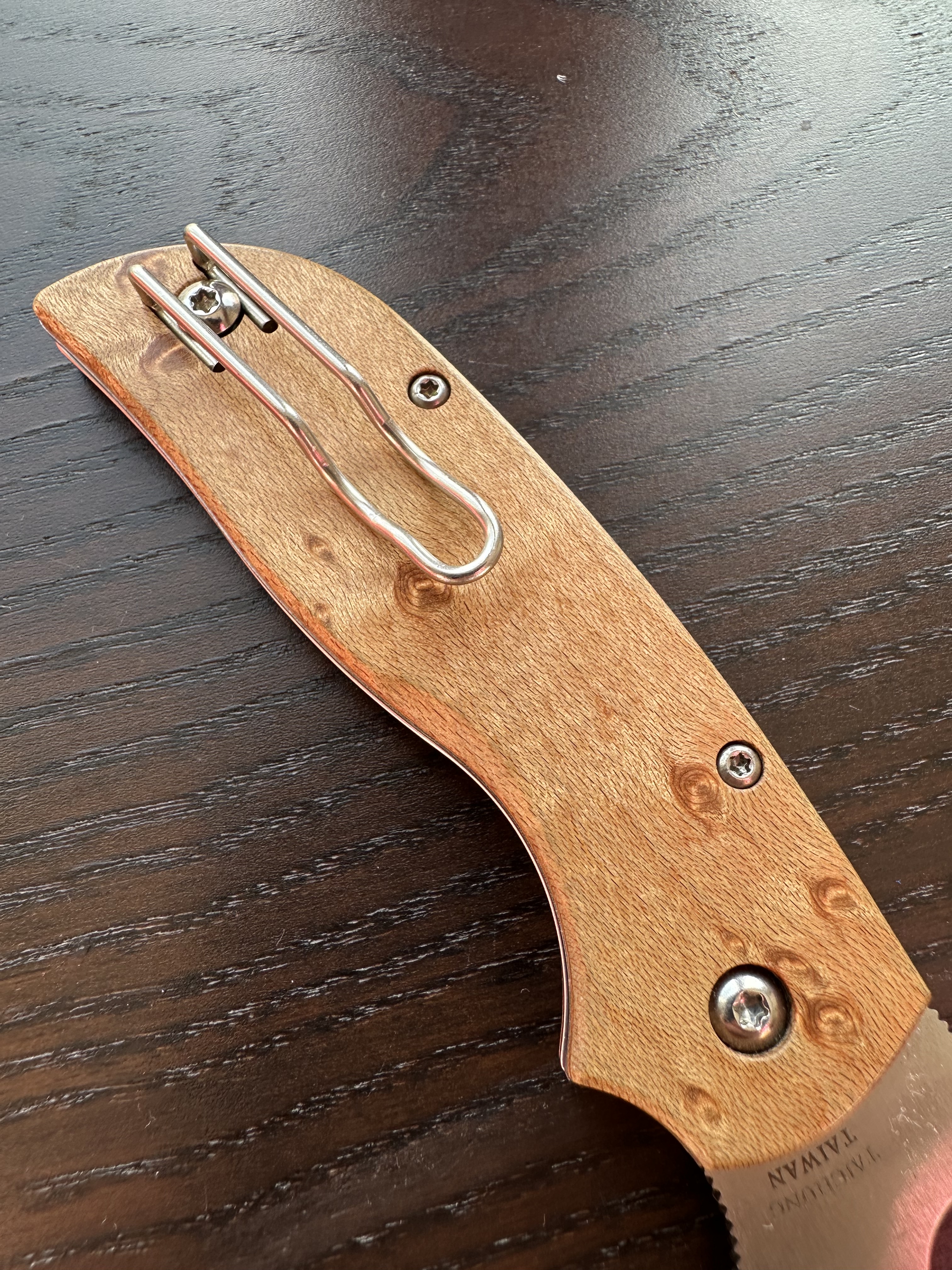
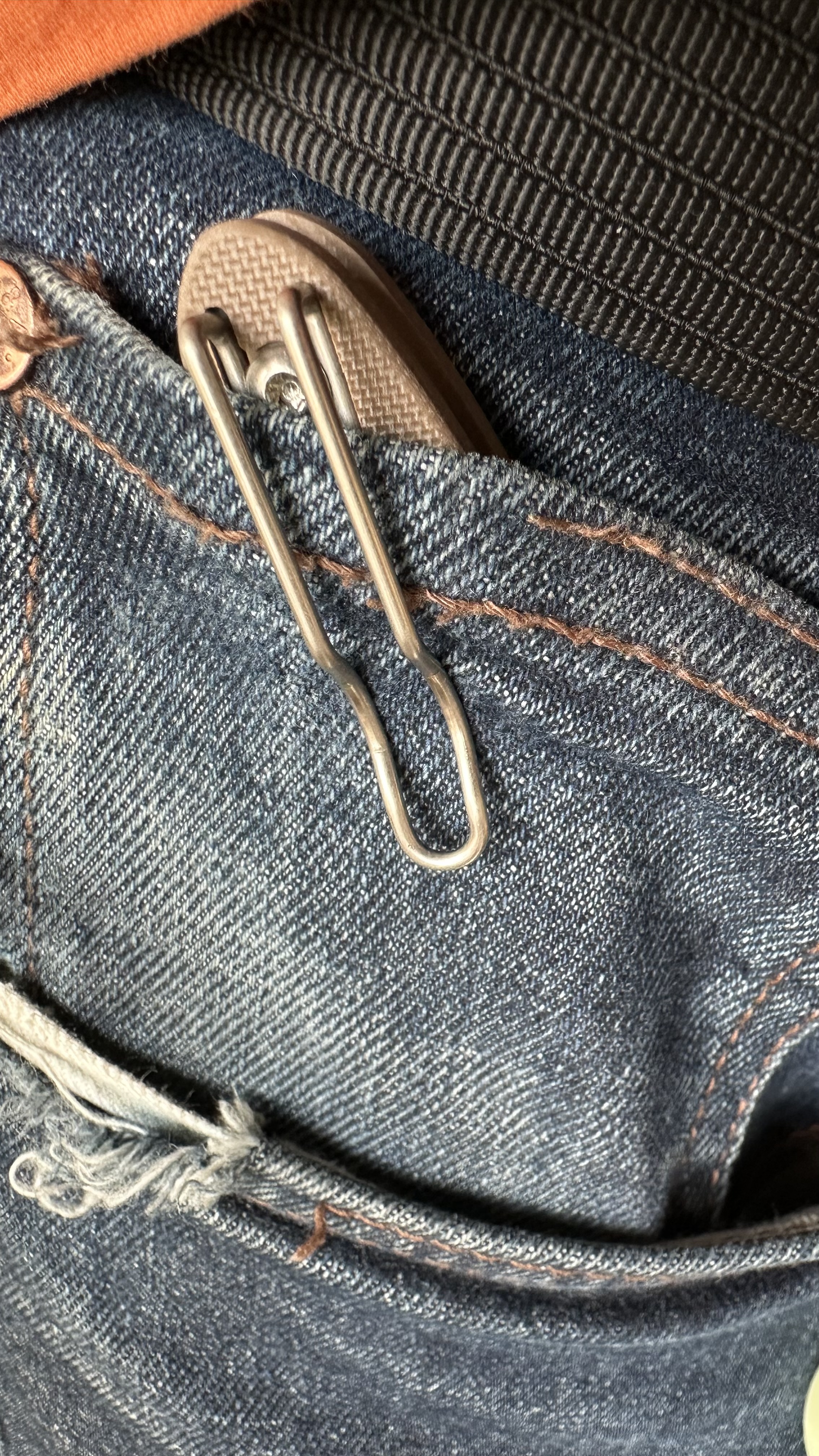
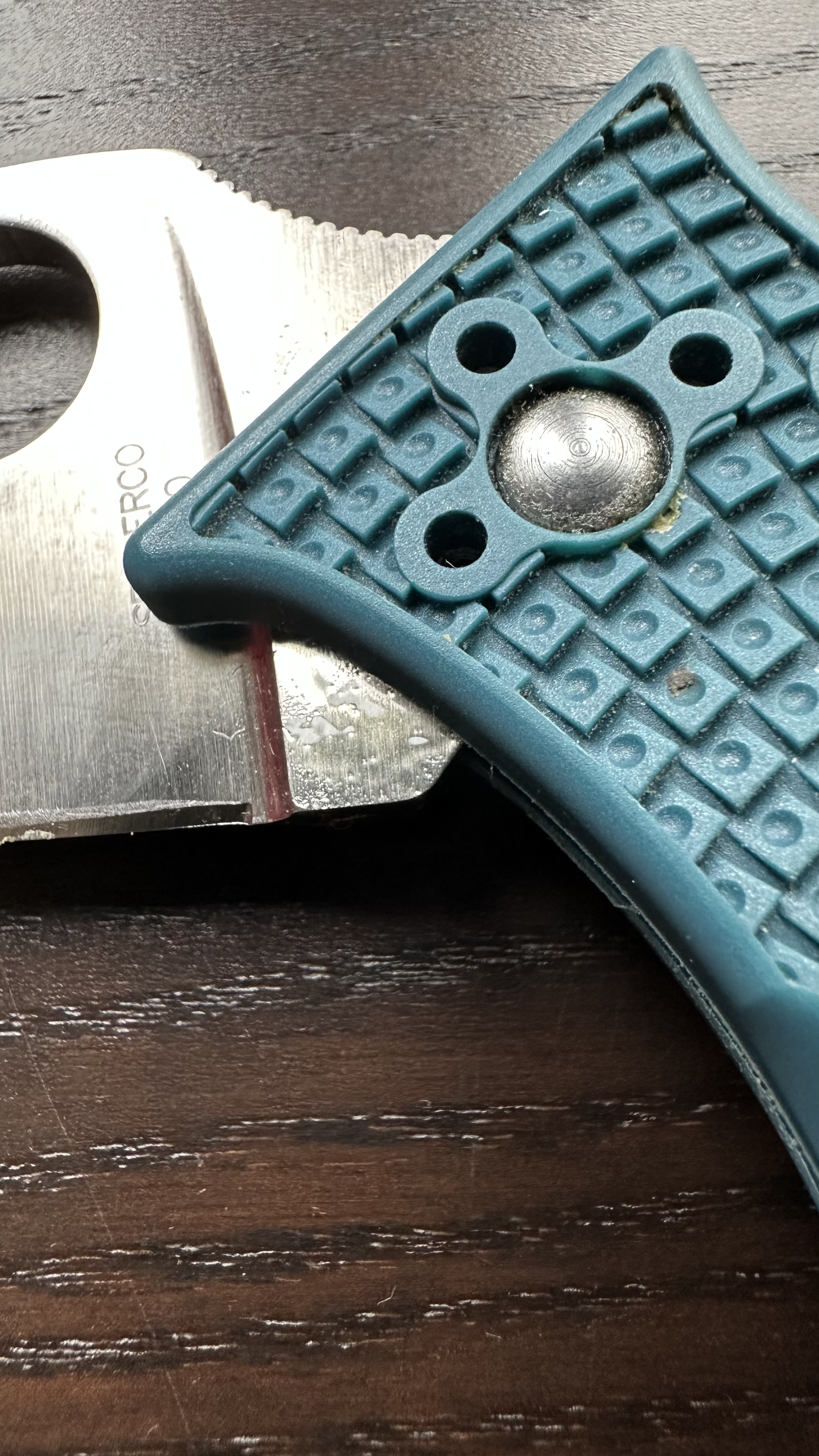
The FRN pattern is hard, grippy and catchy I even got some issue to put in my pocket.
It the same issue I had with my Chaparral Lightweight.


A passage under the sandpaper would be perhaps mandatory ? Let’s see what Papa Sal would advice in my case of protecting my pockets:
“You can lessen the tension on the clip as an easy solution. Some sand the scales bit.” Sal in the Forums.

Some gaffer to protect the black screws when using sandpaper.
Then cleaned under the tap and it’s good to go.

Well… it is so compact it can eventually be carried inside the pocket watch.
But Sal was right like always, bending the clip a little has completely changed the way it clipped and for the better.

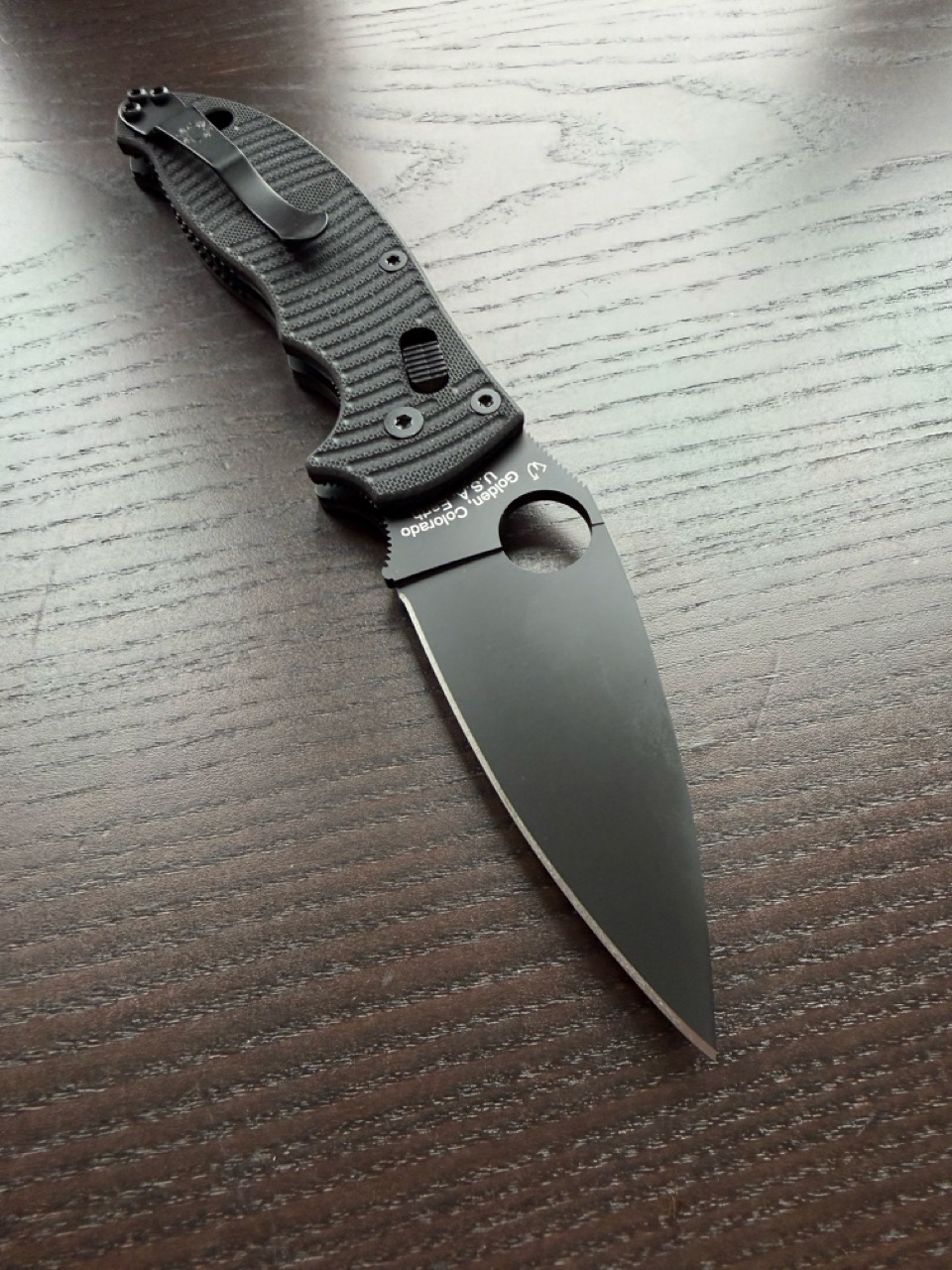
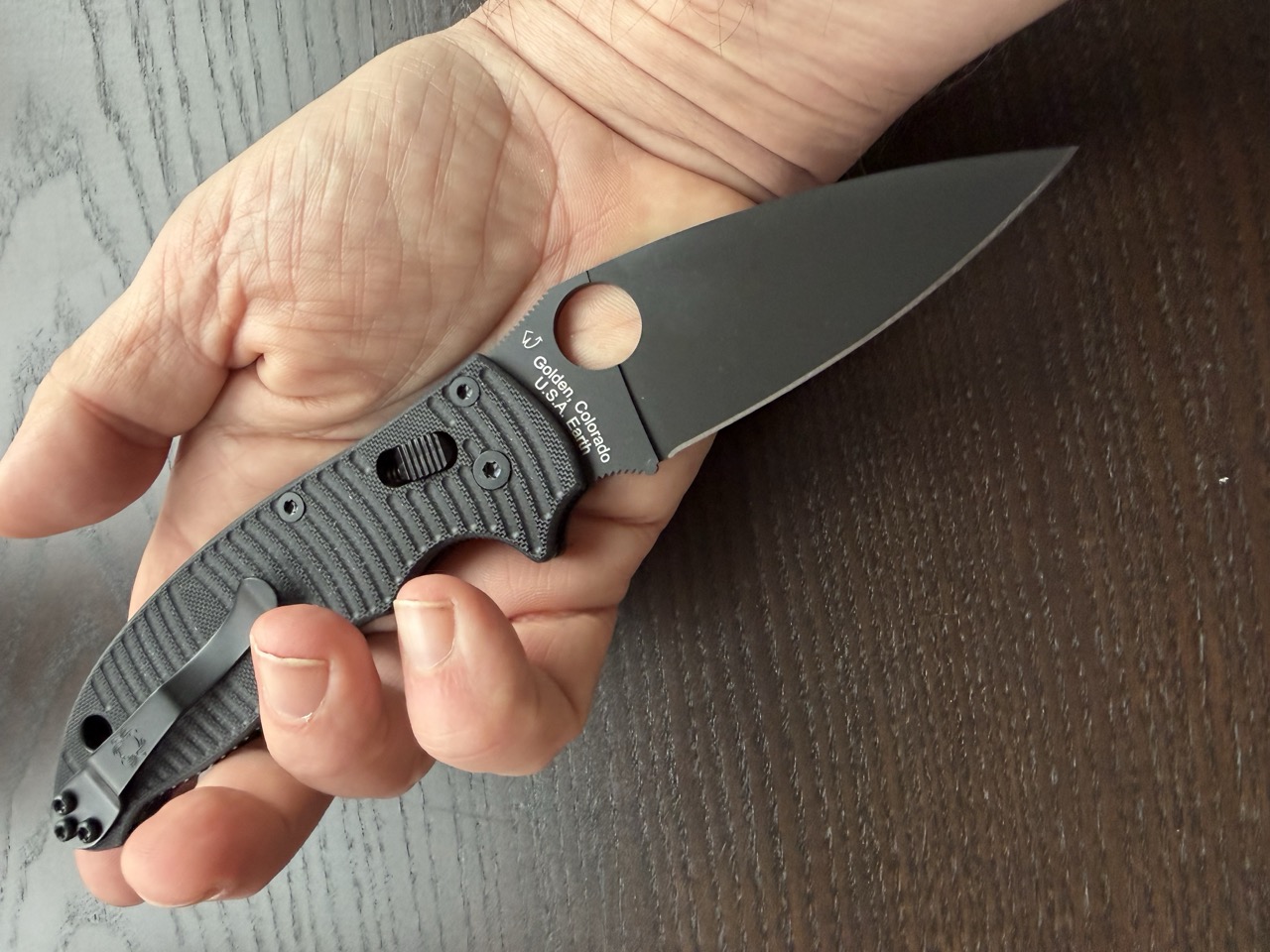
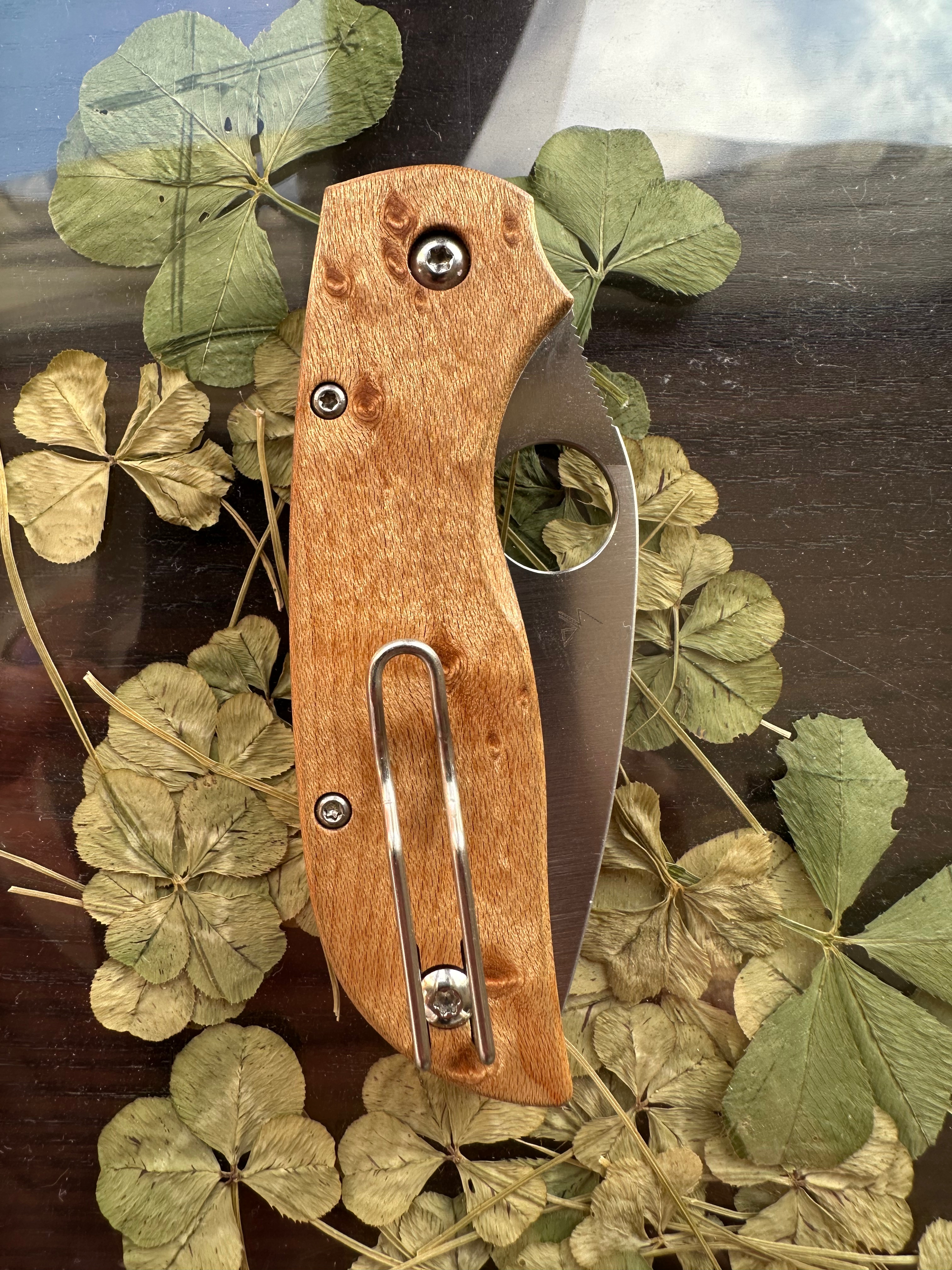
The metal hardware is all black certainly PVD coated.  “Like all Salt Series folders, the clip, liners, and all handle hardware are also crafted from marine-grade materials.” said Spyderco.
And Guillaume is right, the contrast between the black and yellow is an eye candy.

I have found a little hot spot on the choil which I felt under my index finger. Nothing a little diamond file won’t eliminate in a matter of minutes.

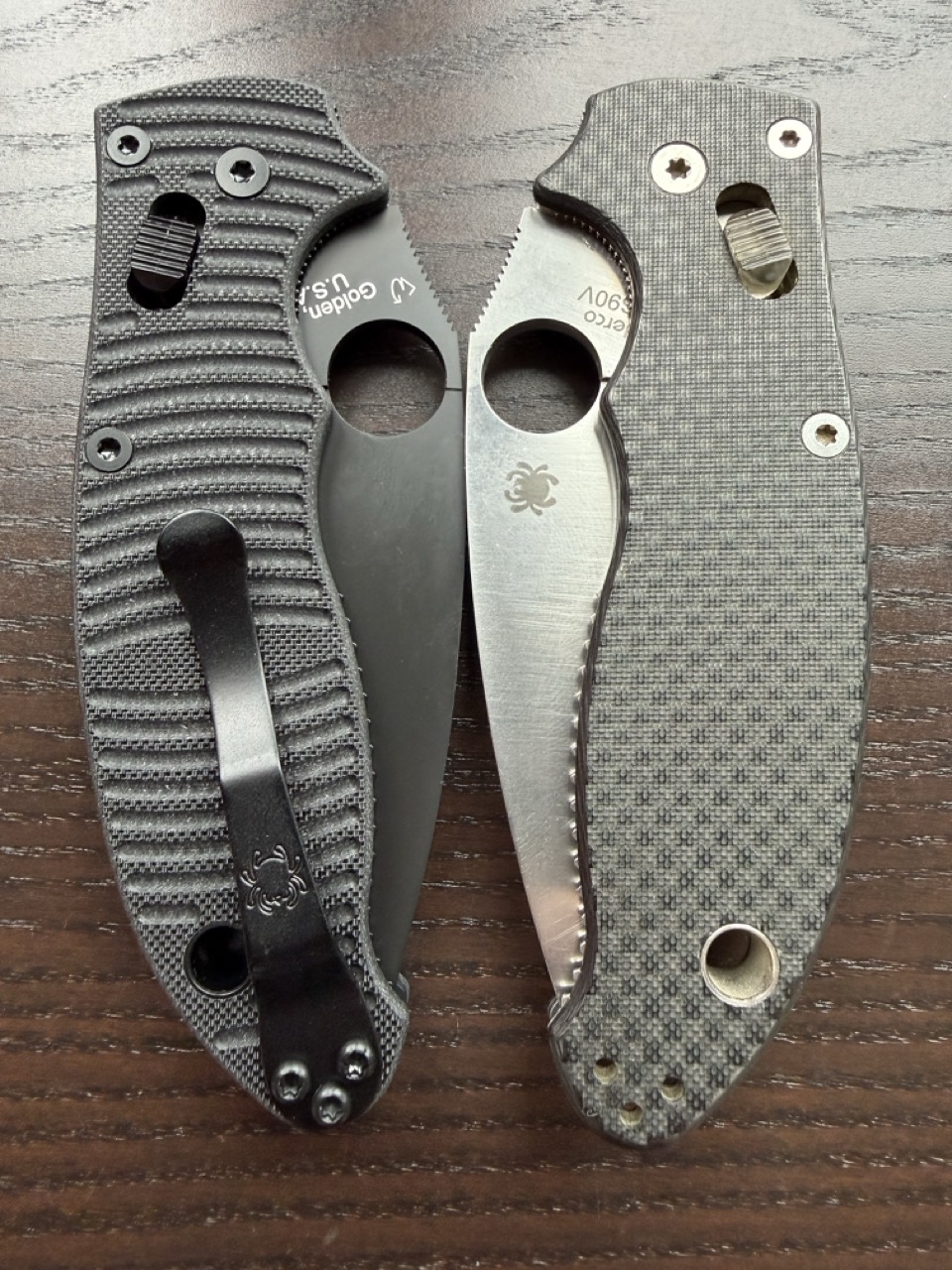
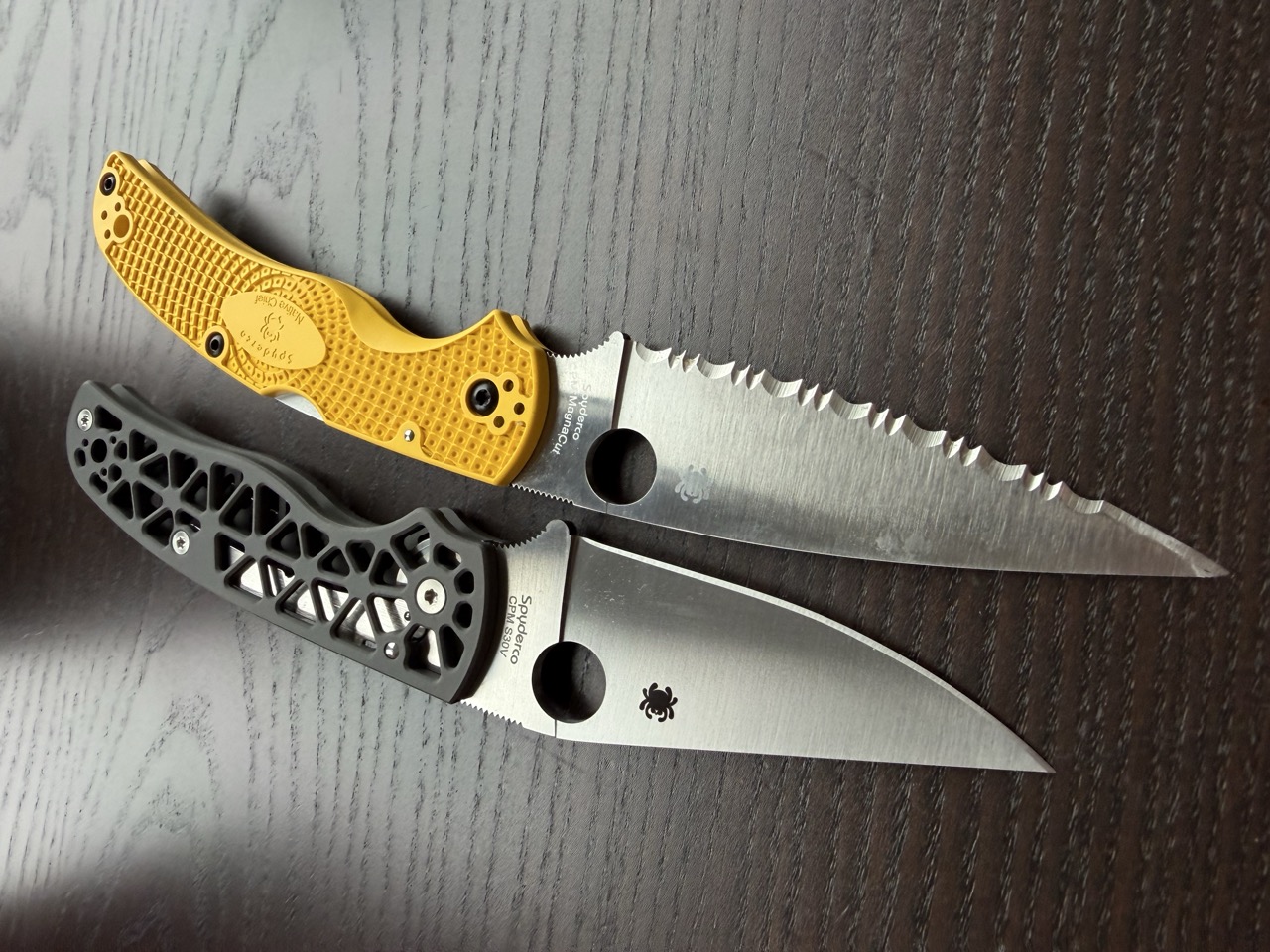
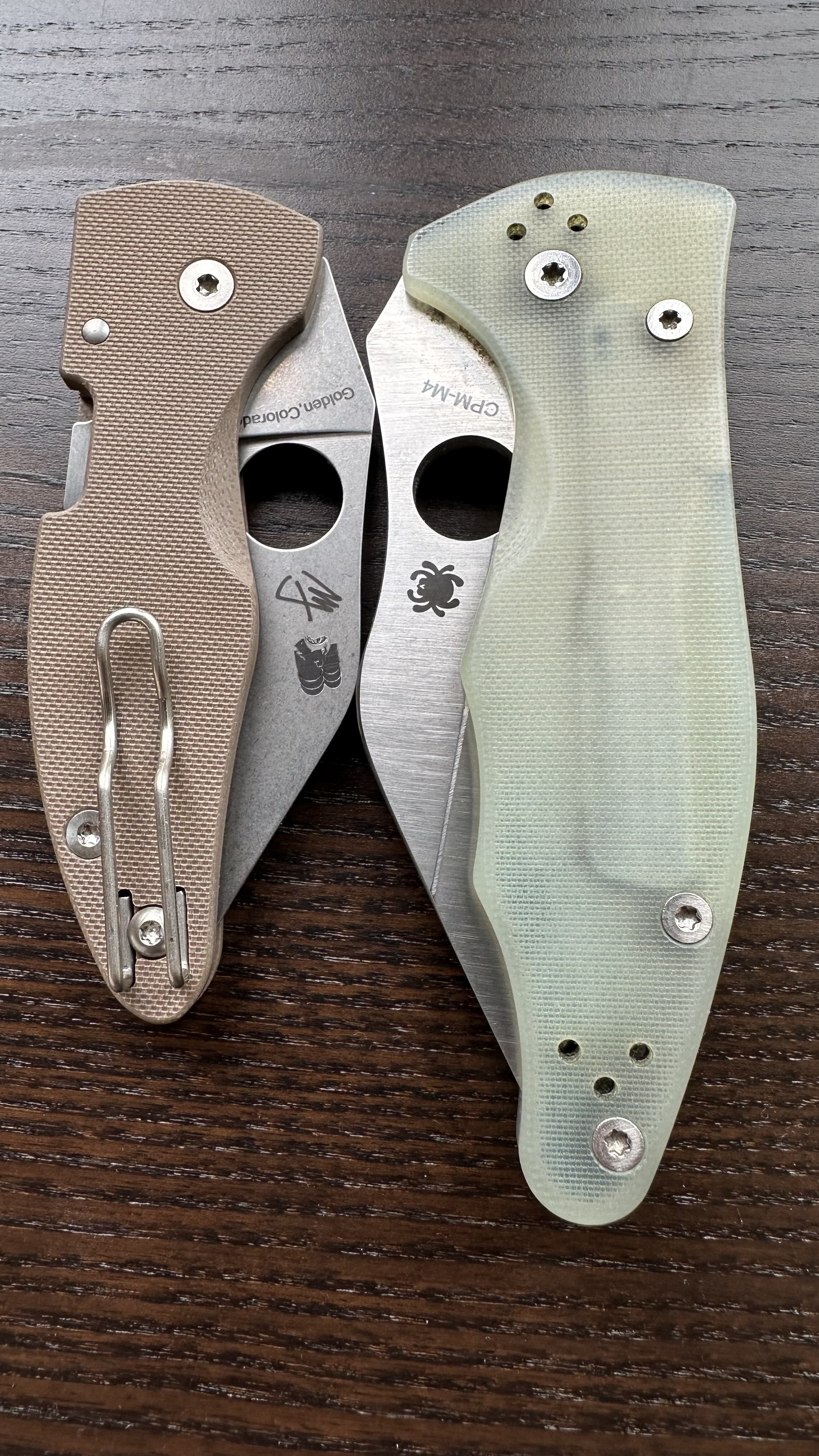
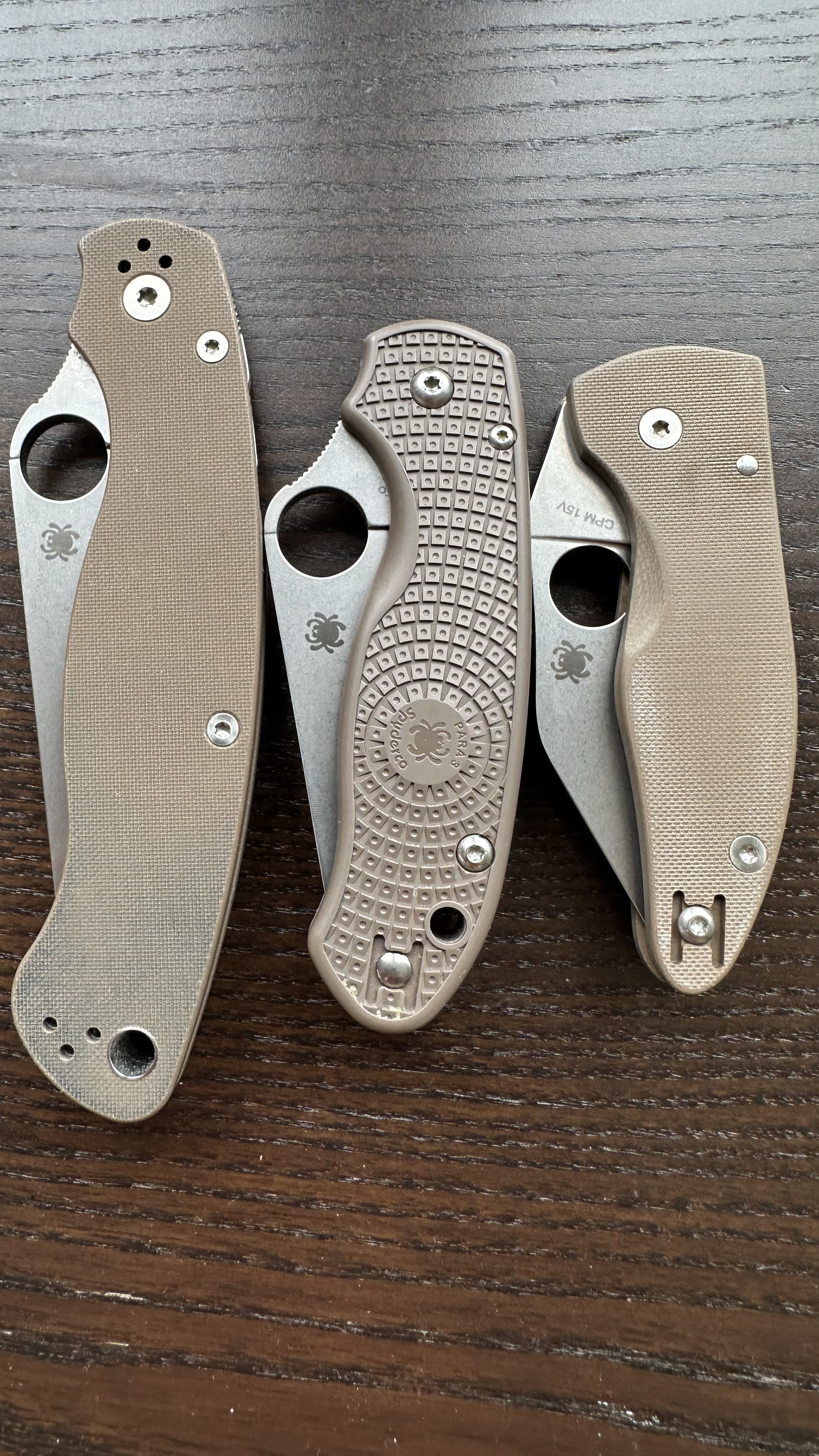
Now let’s compare it to the Para3 Lightweight.

The Para3 is a really light package because there is almost no liner.

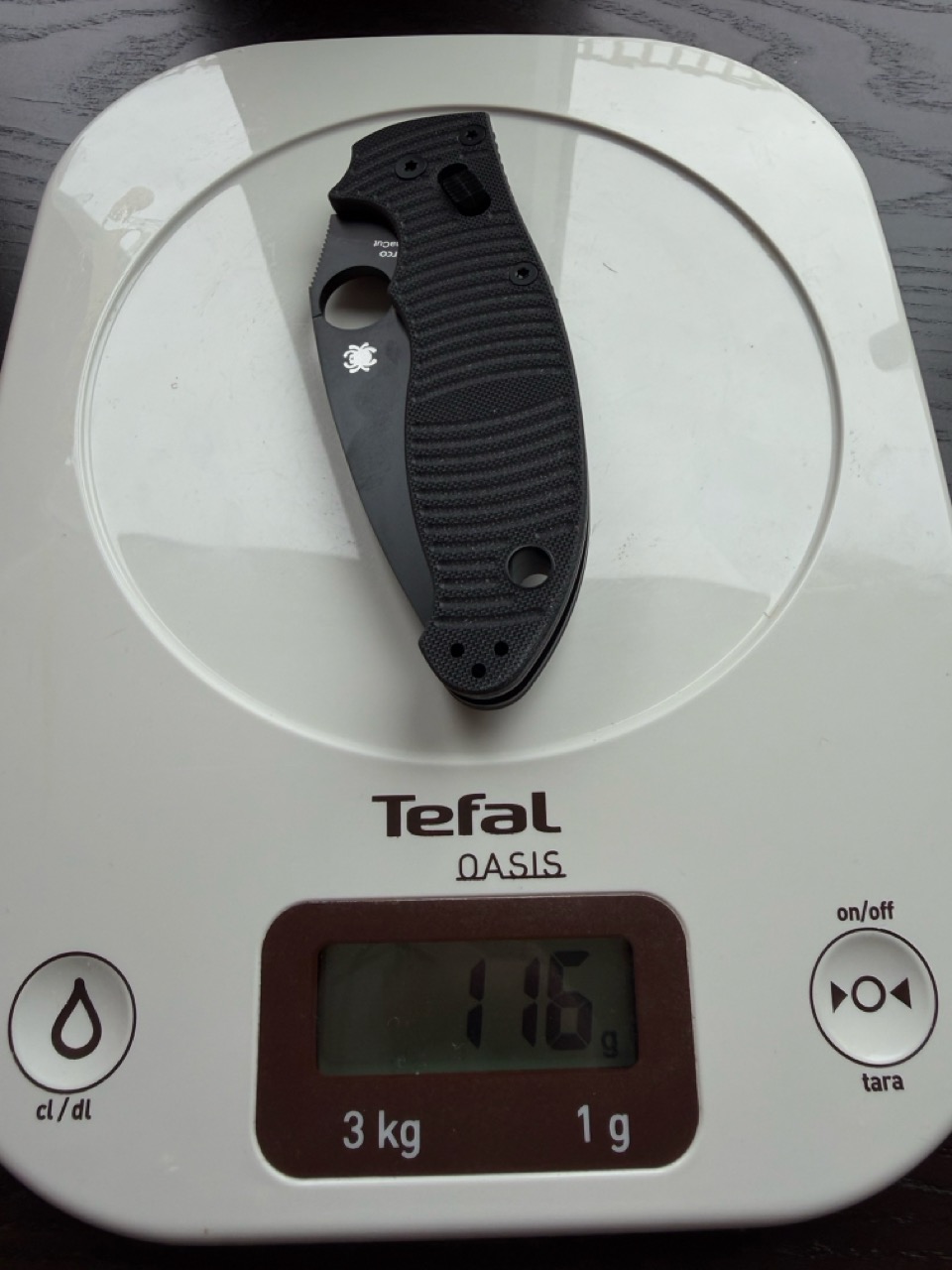
64 grams.

78 grams for the Sage 5 with its nested steel liners

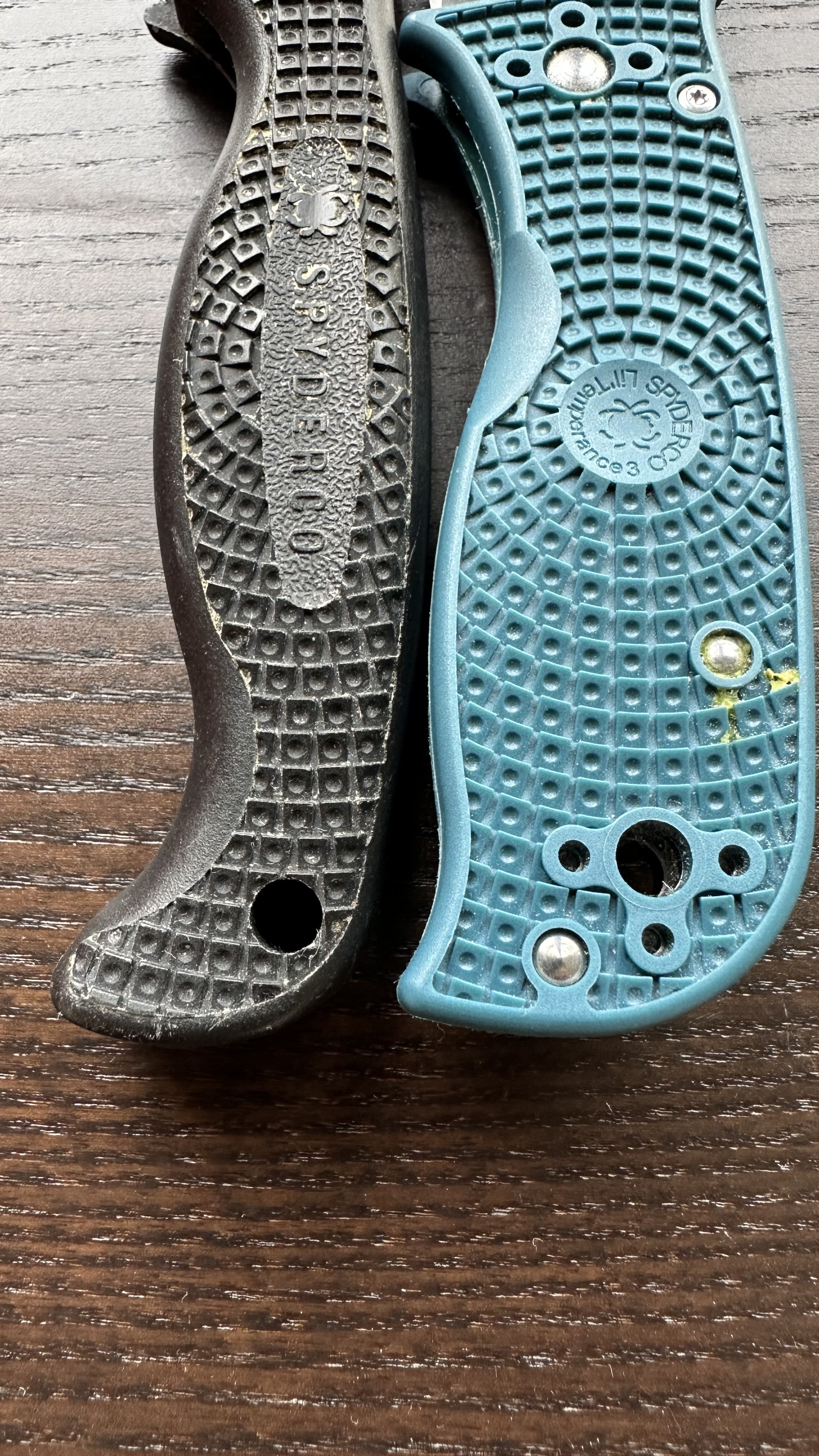
The FRN is smoother on the Para3 as it is not the same pattern.
Being a Salt the Sage 5 is destined to be used with wet hands.

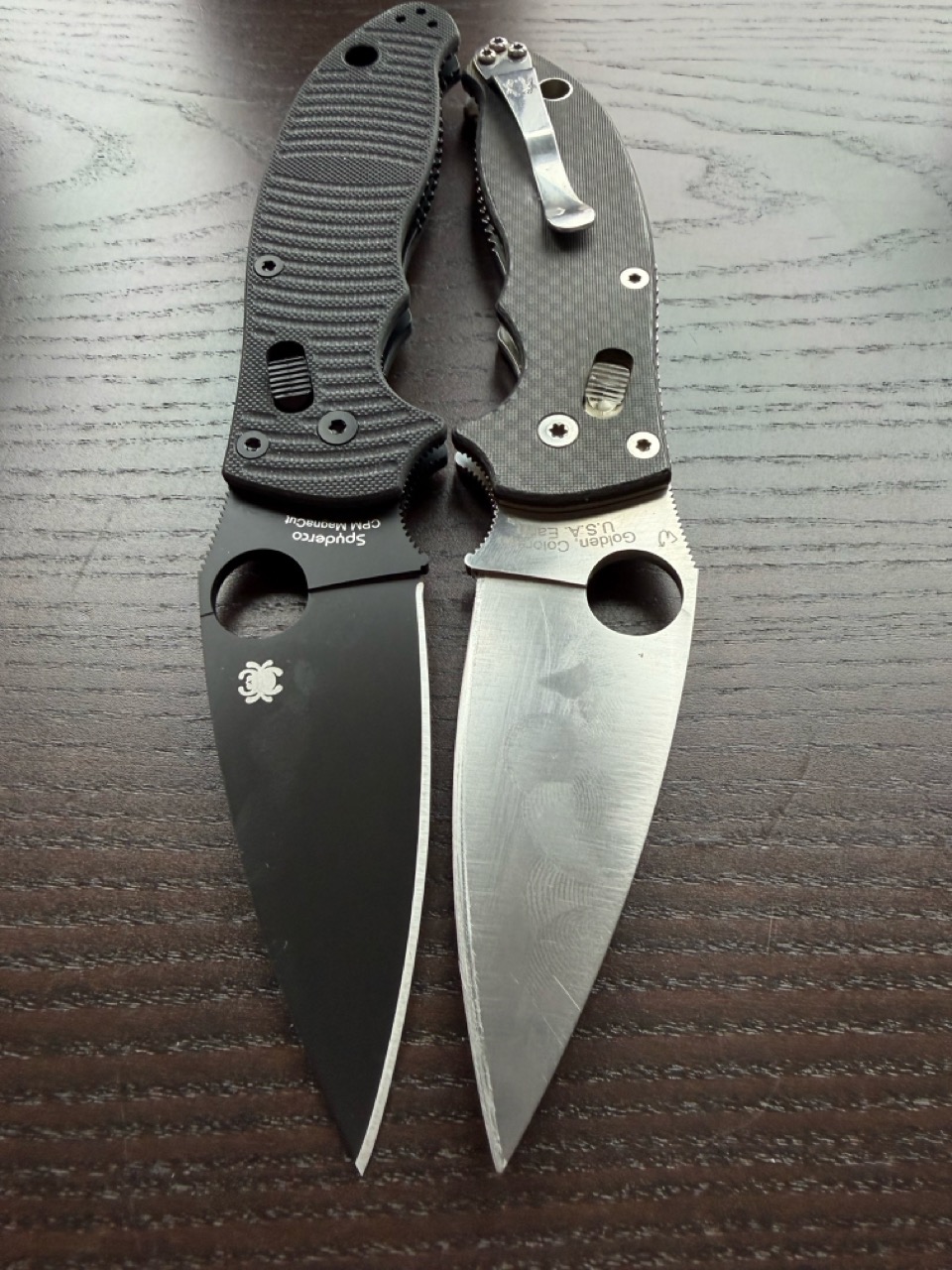
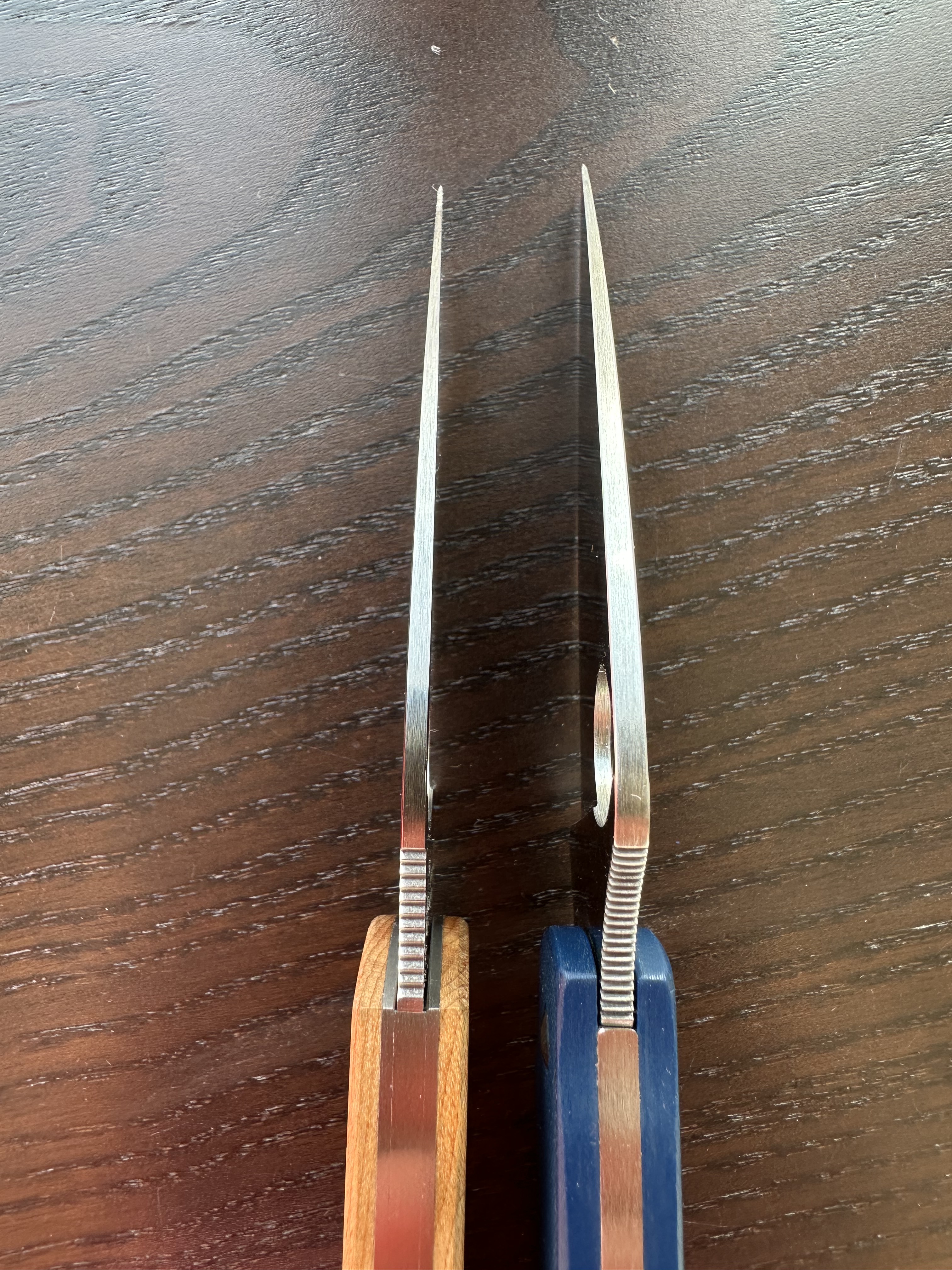
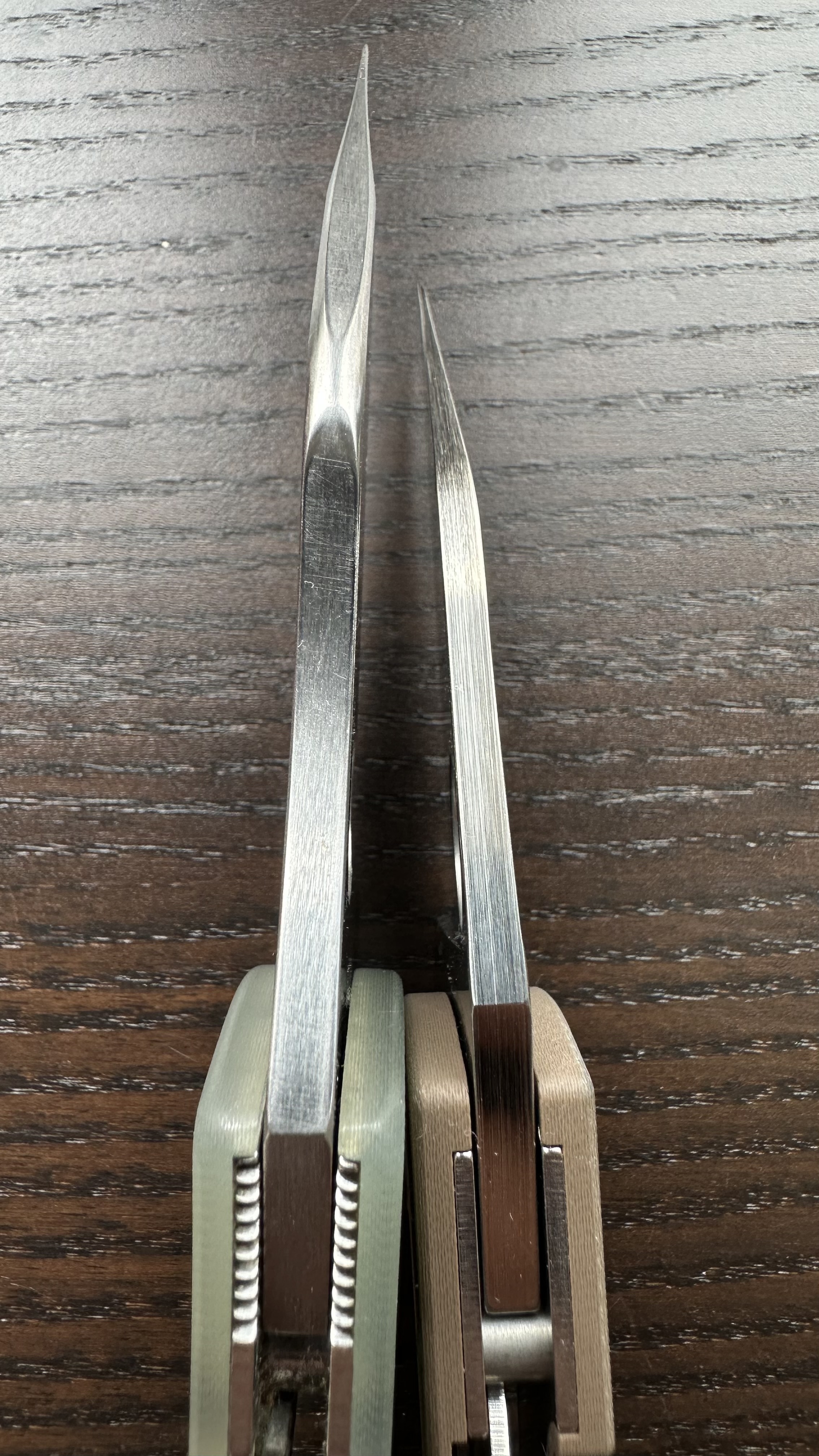
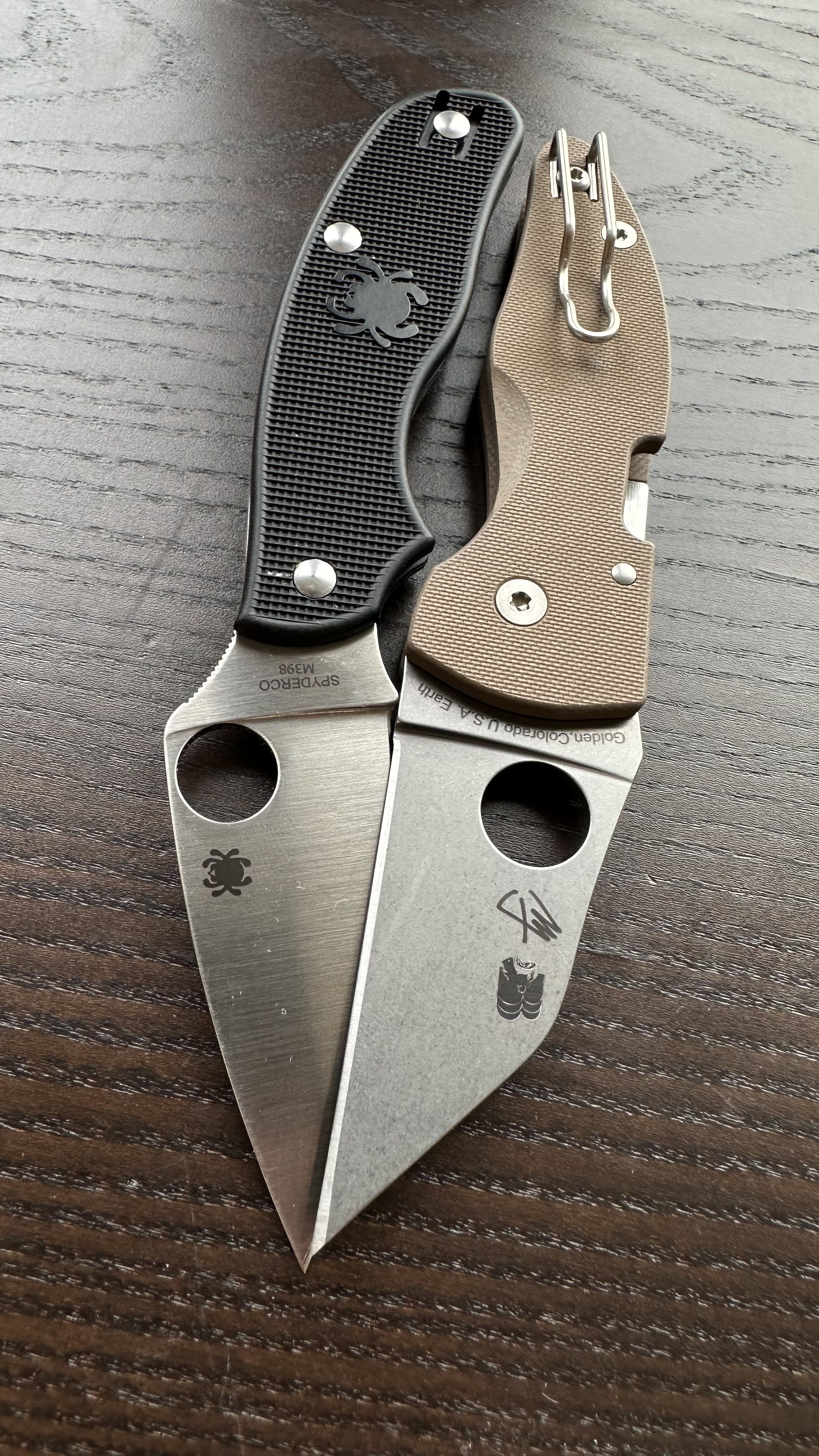
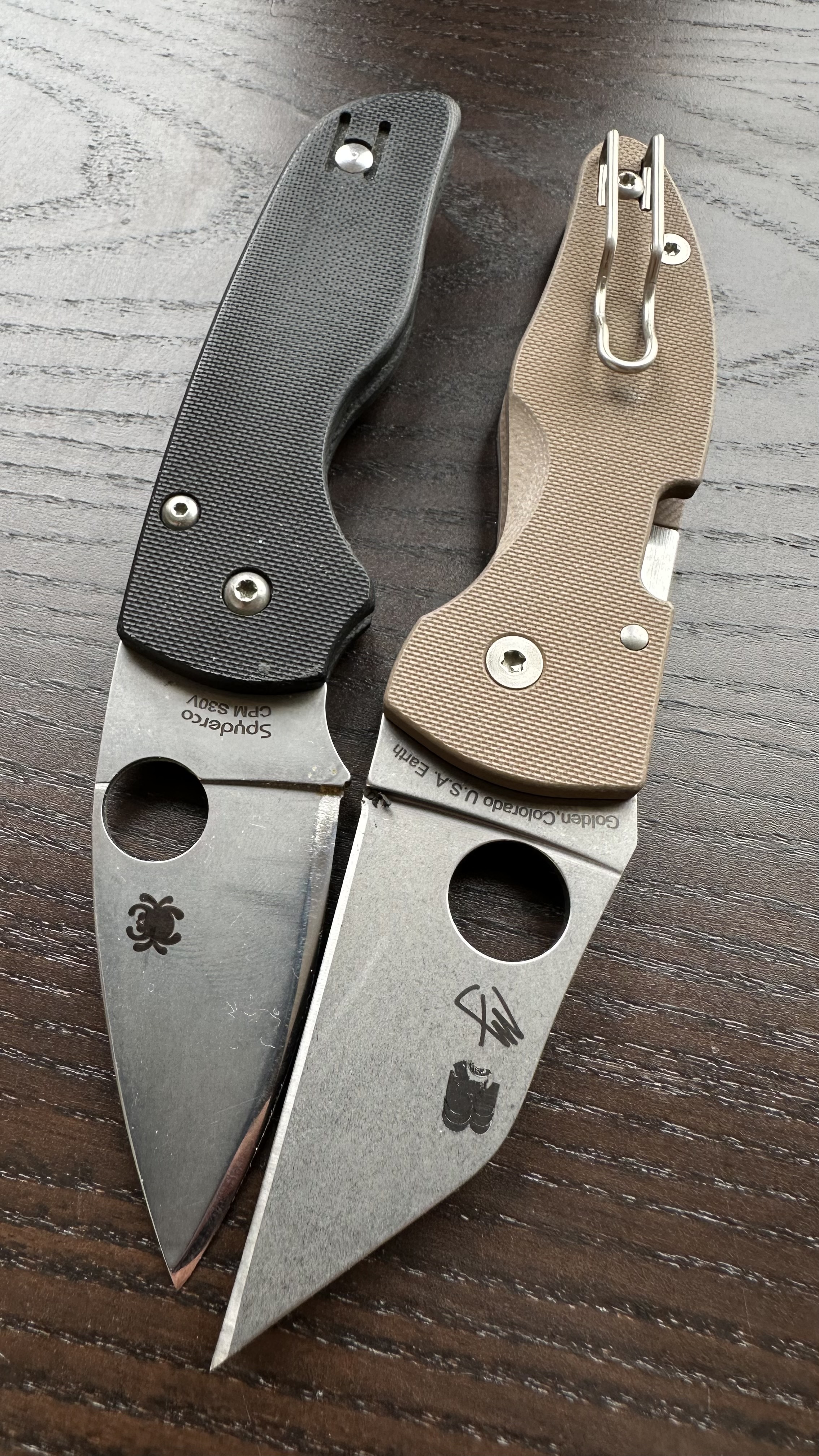
The Sage 5 has a thinner 3 mm blade, and the chamfered edges on its spine are just stunning — smooth under the thumb and a true Taichung signature. Even the Spyderhole is gently finished.

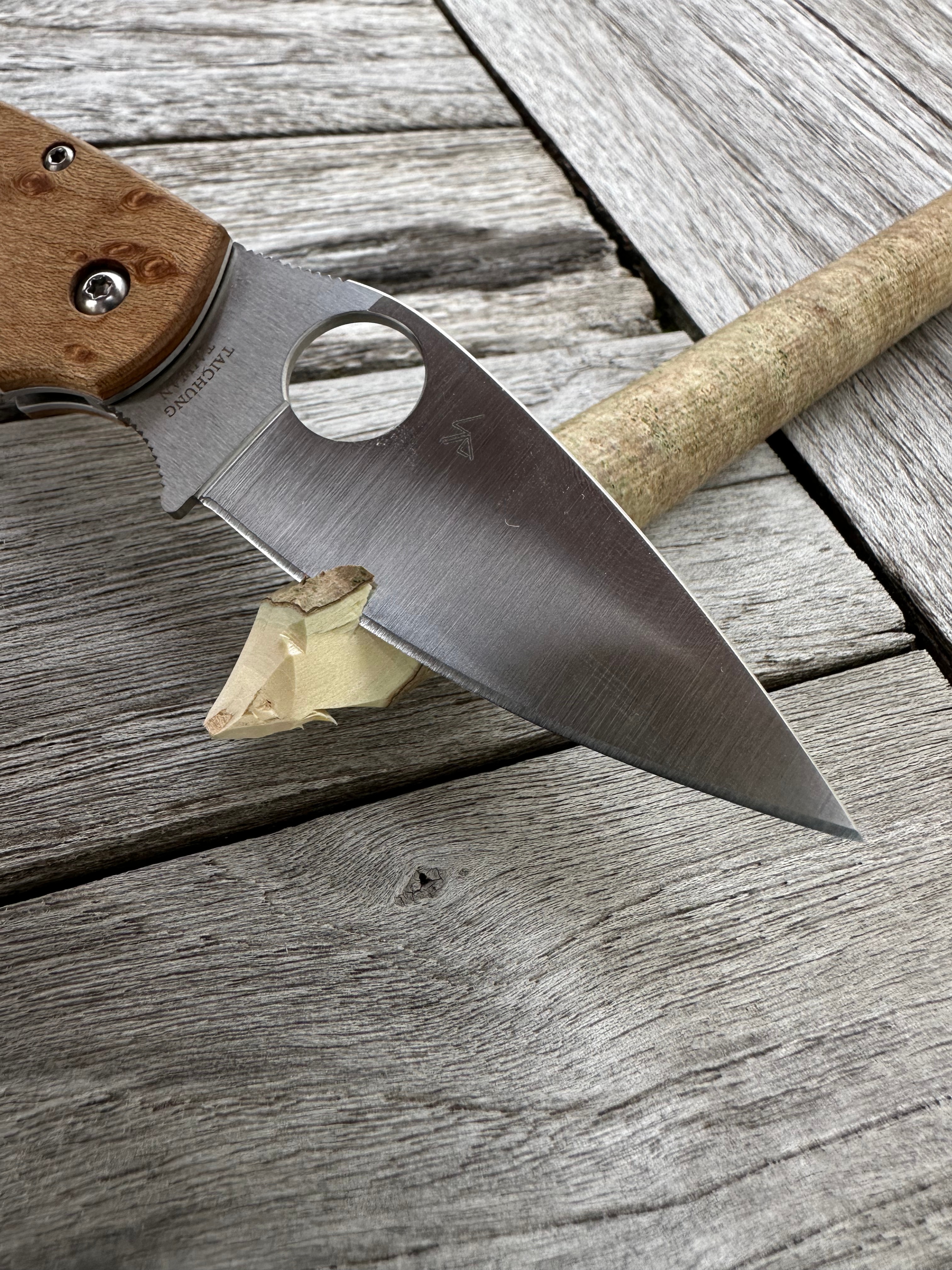
A major plus for whittling is how easily my left-hand thumb finds a comfortable spot on the blade spine. With the Para 3, the thumb doesn’t have a proper ramp parallel to the cut. On the Sage 5, the parabolic spine of the leaf-shaped bladelets the thumb push comfortably in the middle of the spine, which makes a real difference during whittling.

Same blade length, but a different spine shape. The Para 3’s Spyderhole is especially suited for use with gloves.

Is the Sage more of a civilian EDC and the Para 3 more tactical? Not entirely certain. The Sage feels more solid in the hand and has more heft, while the Para 3 feels like a light, quick-reaction tool, and the Sage 5 is an all-terrain EDC.

The Sage handle is more compact and can be carried in the watch pocket, thanks to its grippy FRN and strong clip.

Grip is essential when working around water or with wet hands. The Para 3 is gentler on pocket edges, while the Sage out of the box can be a pocket shredder. Following Sal Glesser’s advice, I flexed the clip slightly for lighter retention — now it’s perfect.

Next, let’s take a look at the Sage’s geometry straight out of the box.

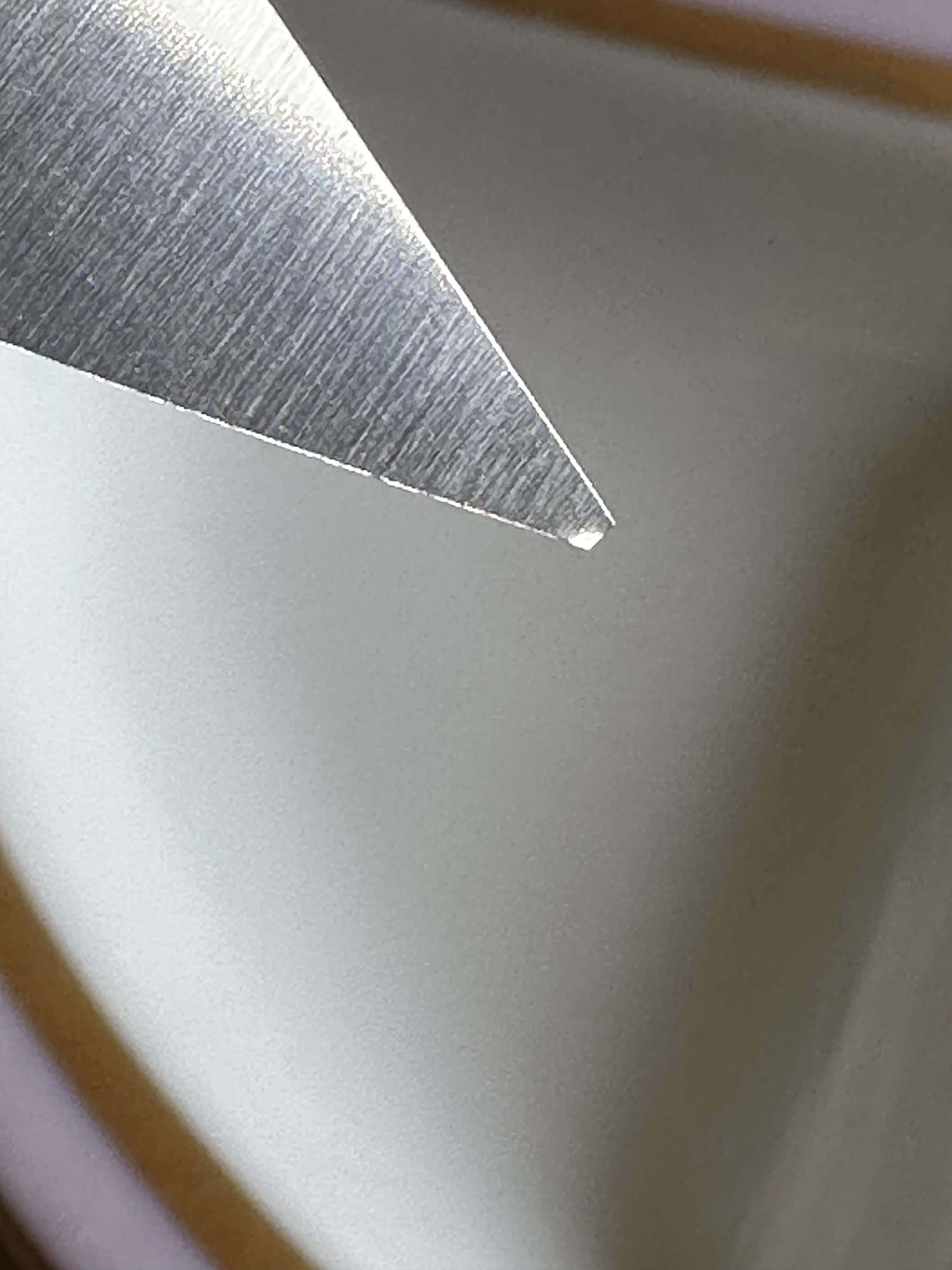
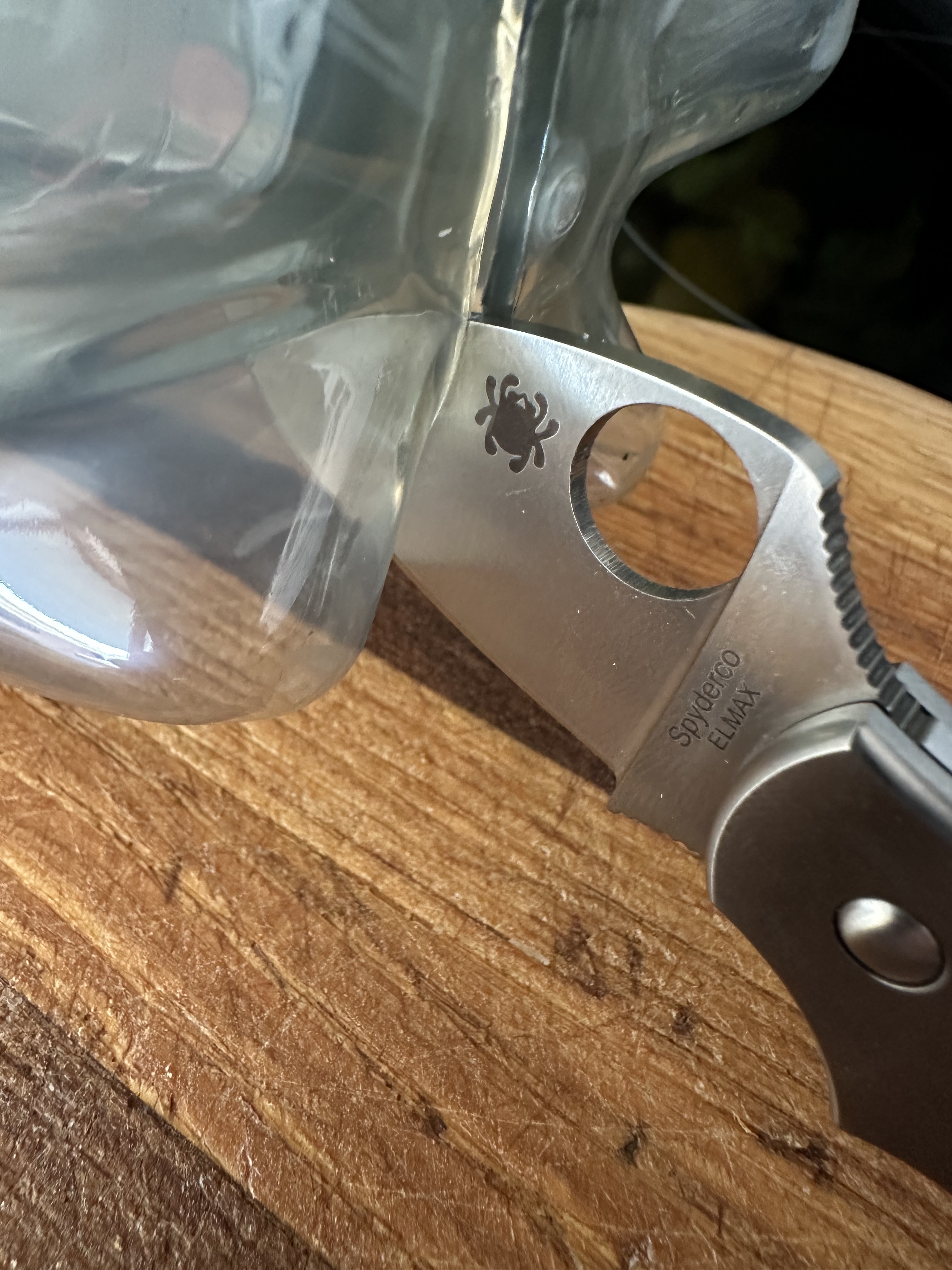
I was able to cut through the plastic without having de-shouldered the edge yet. It will be done in the next chapters. For the record, I was not able to get a clean cut with the factory geometry of my new Para3 and Military2 in CPM 15V.


So this blade has excellent geometry right out of the box: this is really impressive ! Without any touchup of the factory edge it goes deep in any material, soft or hard.

The Sage 5 Salt is a pure Sal Glesser design with its iconic leaf-shaped blade. Fun fact: the letters S‑A‑G‑E appear in order in his name!

This great folder is made in Taichung, Taiwan, renowned for its exquisite manufacturing and quality control. The blade is chamfered, and the jimping is soft under the thumb, making it a joy to handle.

Ultimately, this is a Highlander knife“In the end, there can be only one.” The Sage 5 Salt feels like a Spyderco to rule them all — the only one I’d ever need in terms of portability, reliability, and performance.


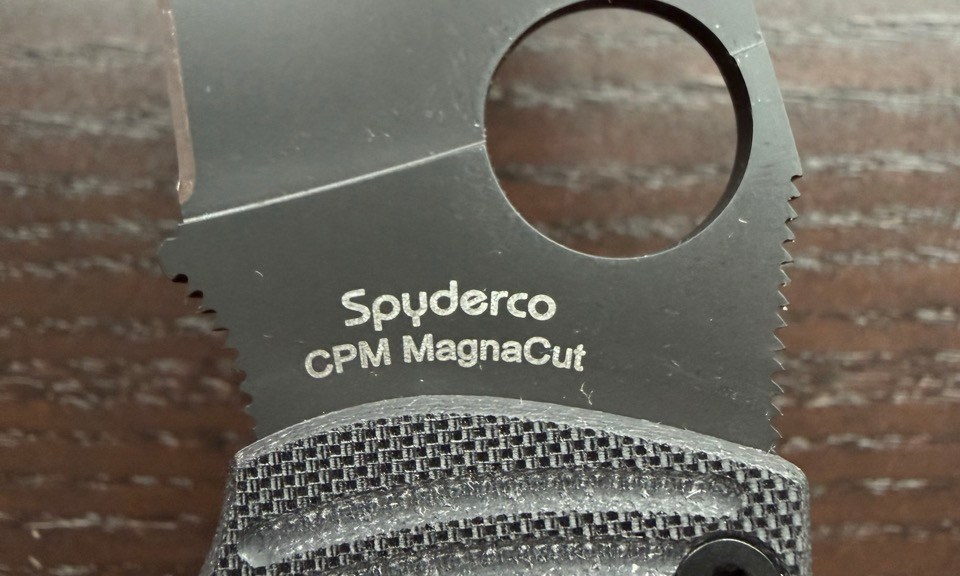
Purely stainless from blade to screws, it is a true all terrain tool. I mean, you won’t need another knife as this one is totally impervious to salt water and boast that CPM Magnacut blade known for its great performance: “a revolutionary particle metallurgy steel that offers an exceptional balance of edge retention, toughness, and the extreme corrosion resistance.” It is true when properly heat treated and with the best geometry.
(Again all those green marks are links to previous review or sources of this review.)


Polishing the Sage’s edge on a leather strap — aka stropping — removes the final imperfections, leaving an even razor-sharp edge. Magnacut, in particular, responds beautifully to leather stropping.

With the Vigtig and the Nano. I managed to get these three knives for under €200: the Sage 5 at €194, the Vigtig at €130, and the Nano at €192.

This means that, as of March 2025, CPM Magnacut knives can be found for as low as €130 — a good deal, though it may not last. The UKPK in CPM Magnacut should be in a similar price range, which I’m looking forward to.


So far, first impressions are excellent! The yellow handle makes it feel less threatening — more like an everyday tool than a “ninja mall weapon,” which is a definite plus these days.

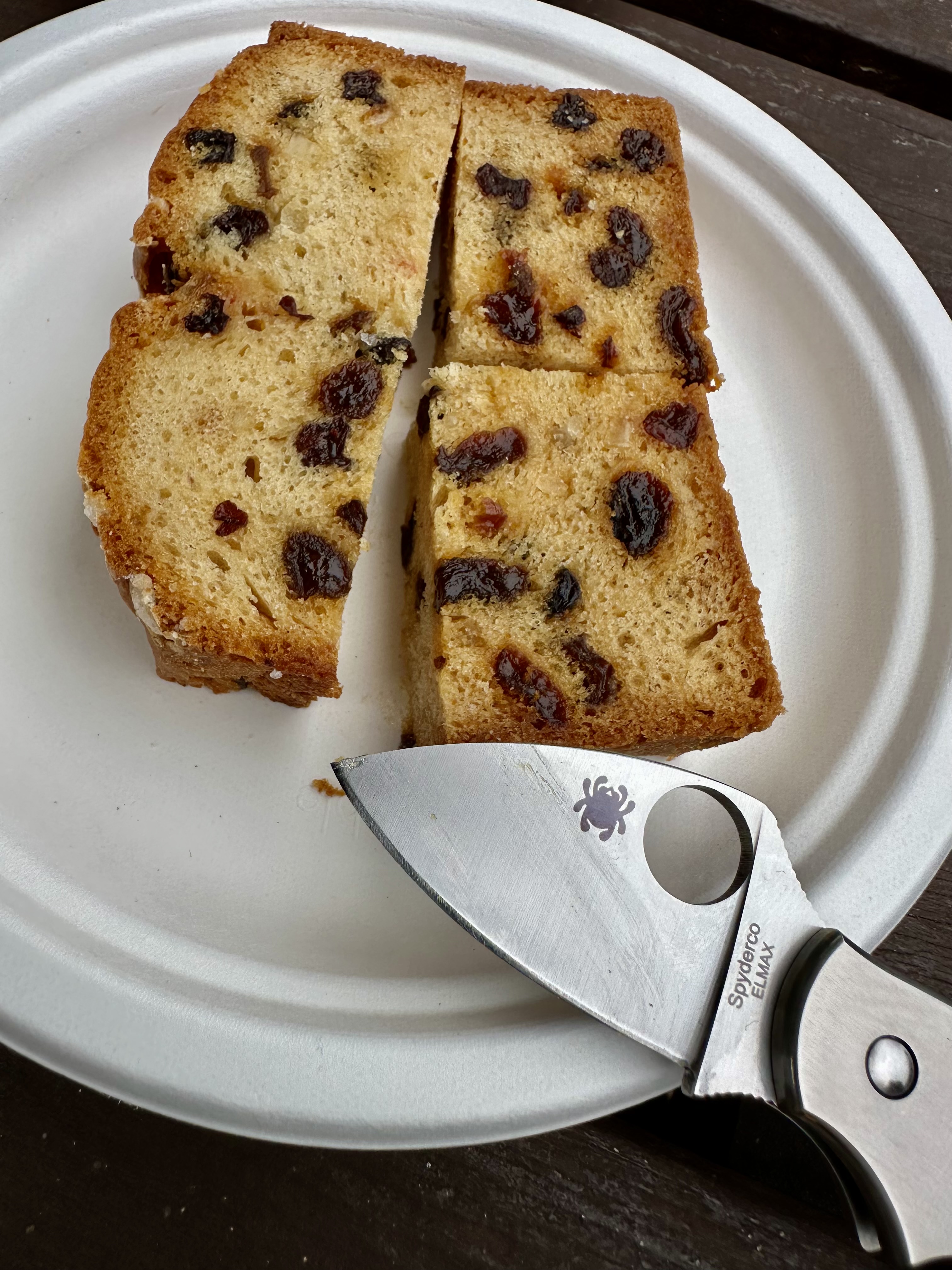
It’s also ready for kitchen use, thanks to a strong edge that isn’t afraid of ceramic plates. Magnacut takes a razor-sharp edge easily with just a bit of ceramic and leather work. No need for diamond paste like on the mighty CPM 15V.


The amphibious Sage 5 is a perfect traveling companion — from mountain rivers to the ocean. It delivers impressive cutting power for its size, biting into hard wood effortlessly. The blade spine is very comfortable for push cuts, making it a reliable all-terrain tool.

It’s a dream knife for fishermen and woodcrafters, capable of accompanying you in virtually any environment.
So far the Spyderco Salt serie is enlarged to very nice plateforms with Military flavours and civilian purposes.


First impressions of the Sage 5 are excellent — in terms of action, geometry, and ergonomics. This is a great EDC that’s fearlessly corrosion-resistant.

Thanks to Guillaume for the tip!
Now time to convex it !

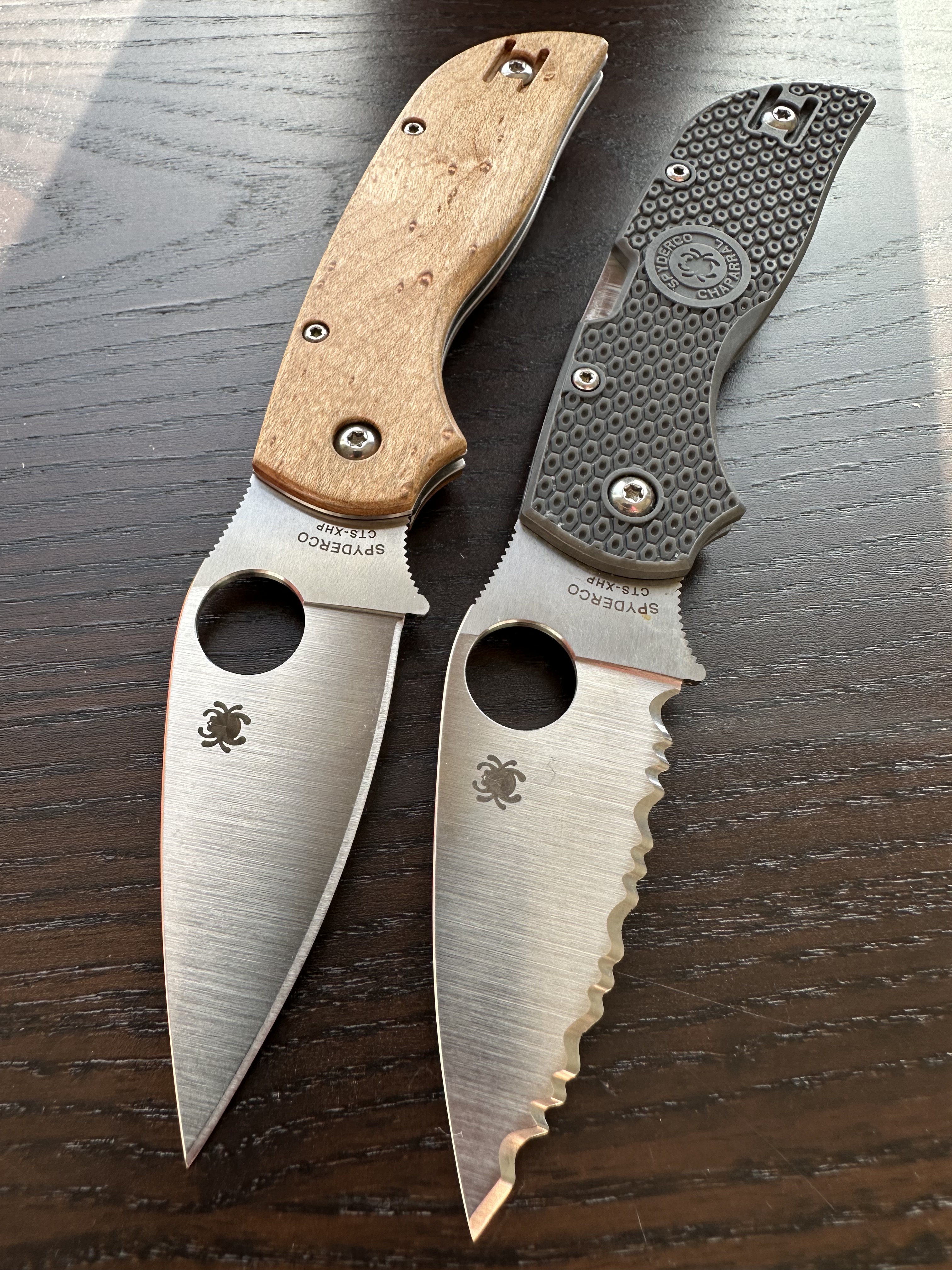
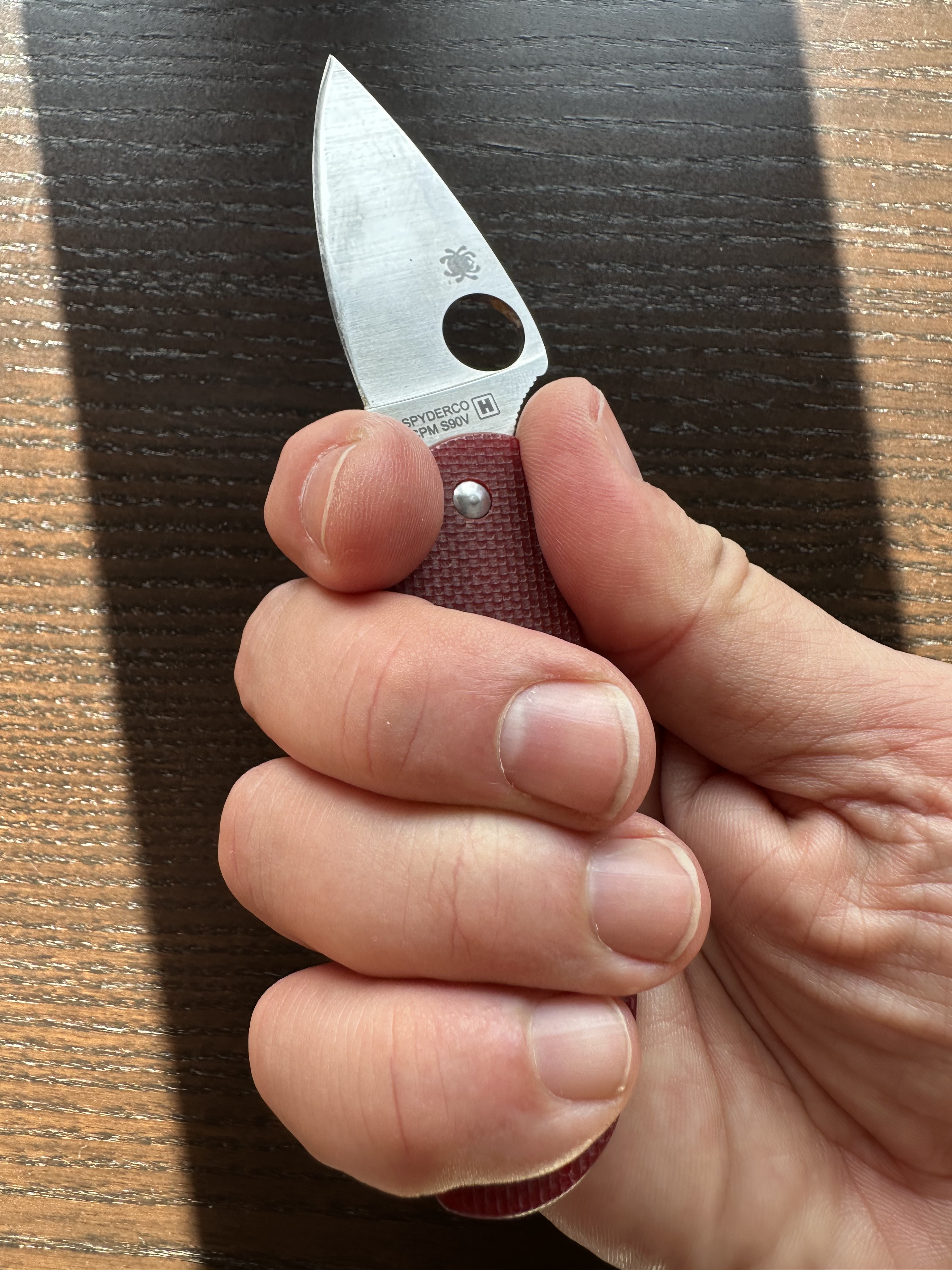
Spyderco Chaparral C152SGY – For the Fierce and the Furious

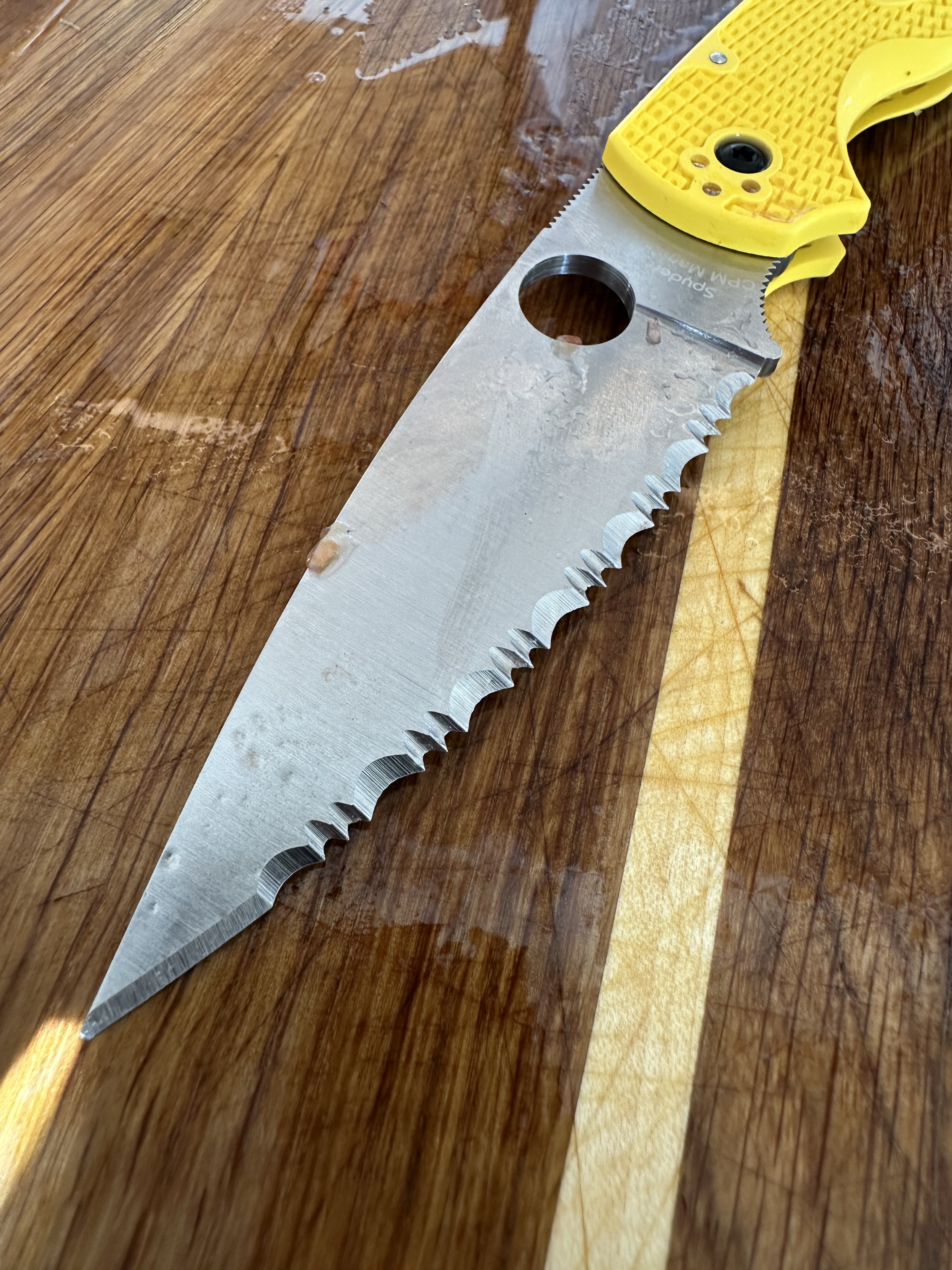
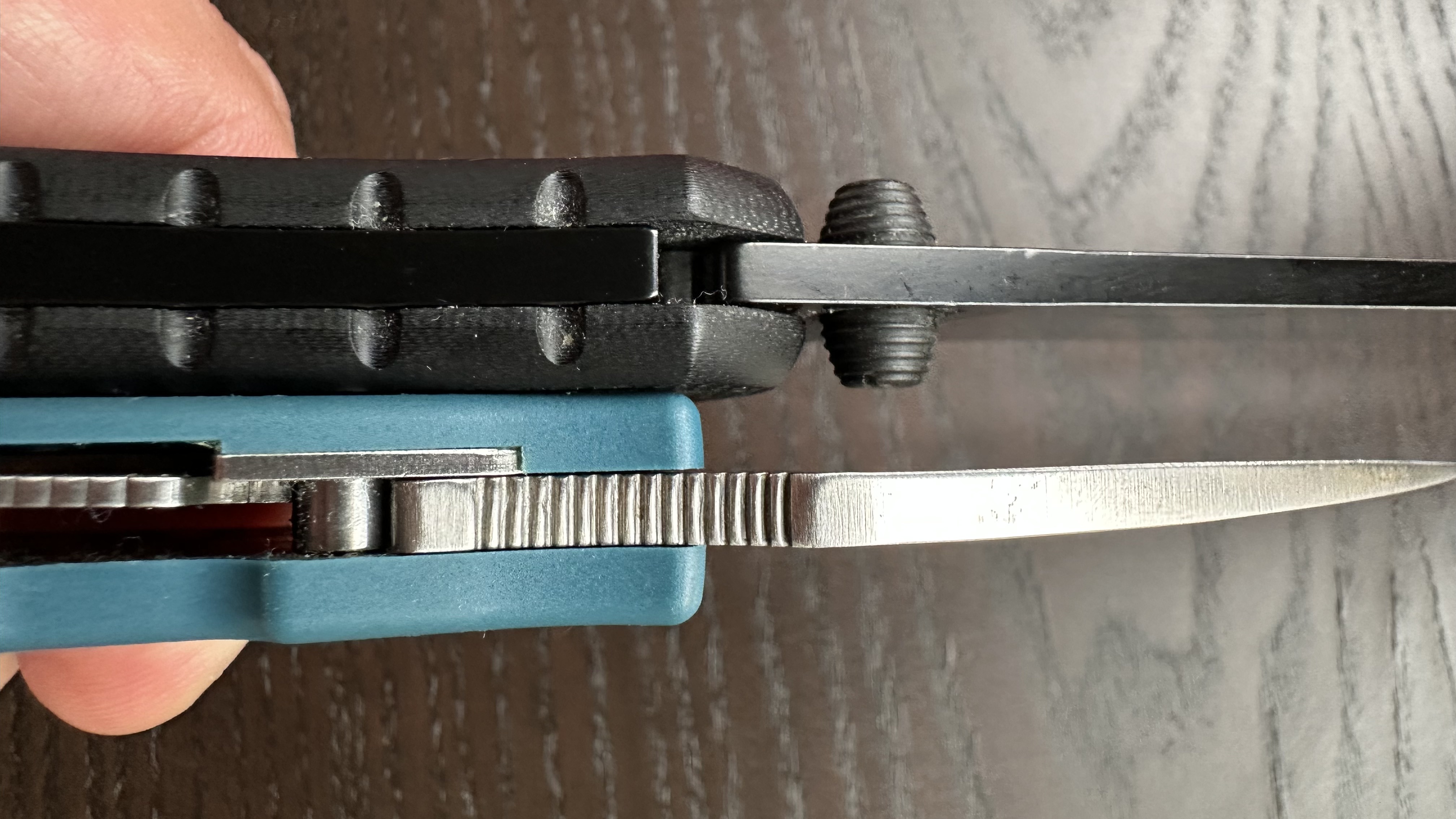
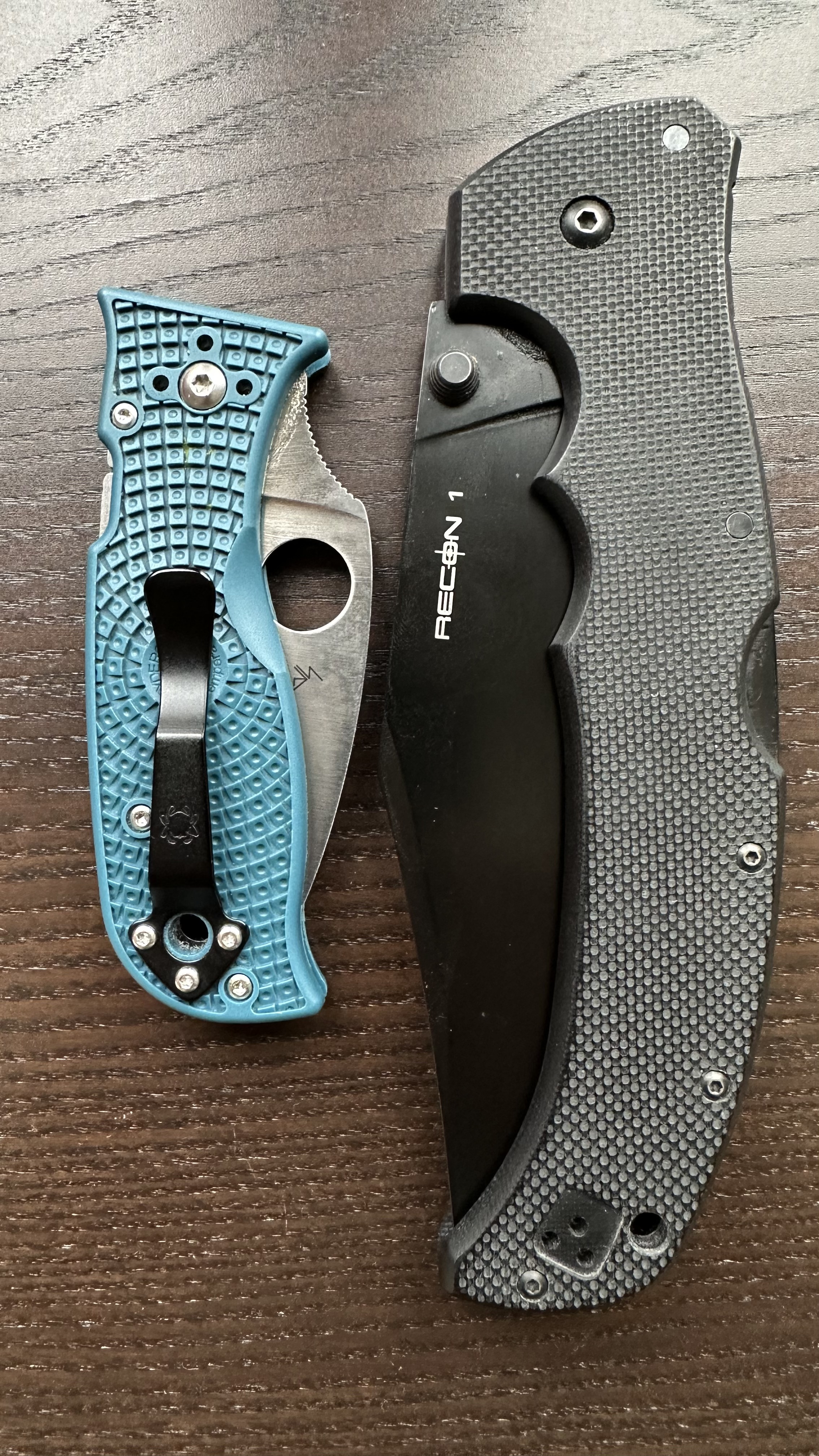
Like I had mentioned in the glimpse review of the Serrated Chaparral, this little, thin folder is built to punch above its weight. Thanks to its sturdy construction and relatively strong stainless steel — the same type found on my Cold Steel Recon 1 XL — it can be tested and used like a much larger knife without compromising performance.

Solid steel, sturdy lock? Not much difference from a larger knife, in fact. 😉

So far, I’ve put the knife through its paces, cutting anything I could, and maintaining the edge with some Jade stones (see first picture). The mechanism shows no signs of play in any direction — rock-solid performance.

The plastic is thicker that the blade.

As you can see, the serrated edge is a chisel grind, which means it tends to deviate slightly to the right of the material being cut, much like a fin in water. I started the cuts with a bit of sawing, then transitioned to push cuts, and the knife effortlessly sliced through the thick plastic used to form the bottle.

This little knife is fierce in term of cutting performance. It is a lot of power in your pocket ! It is a pocket chainsaw !

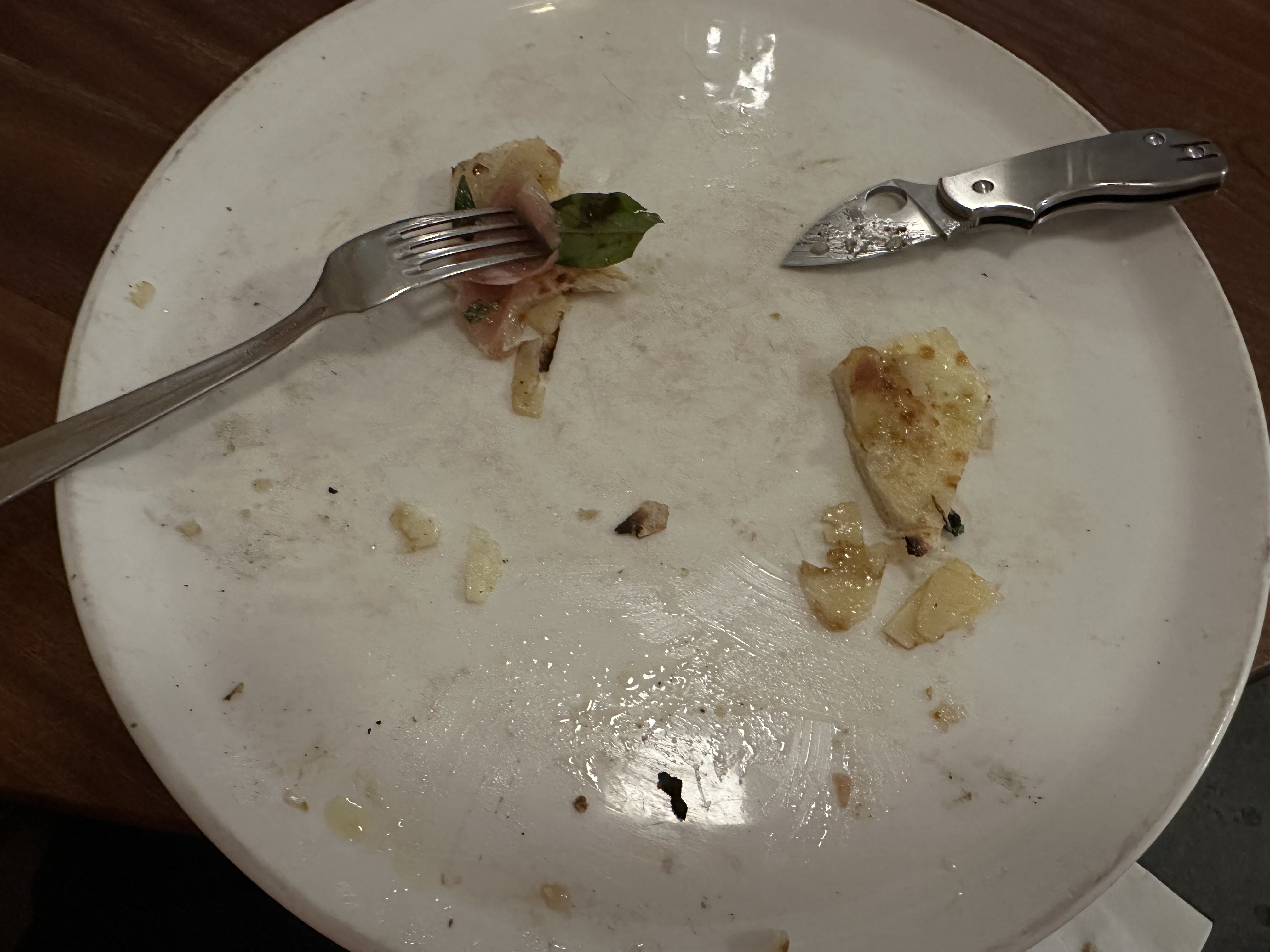
The serrations really shine on the plate. You can push the knife hard against ceramic surfaces, and if the points ever need a touch-up, a few passes on a ceramic corner — or in my case, a jade corner — brings them back like new.

I have been able to reach razor level just by passing gently the Jade on it.

Actually it is fun to enhance the edge.

Actually, this is a bit of a comeback for me with serrations, dating back to my AFCK experience 25 years ago. Back then, I mostly used partly serrated edges, which helped initiate cuts on hard materials.

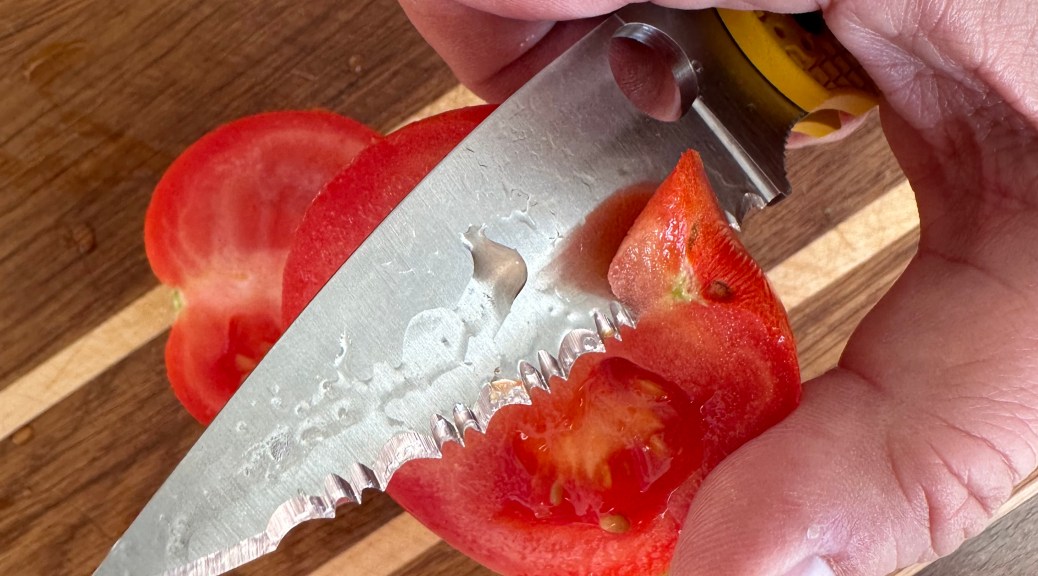
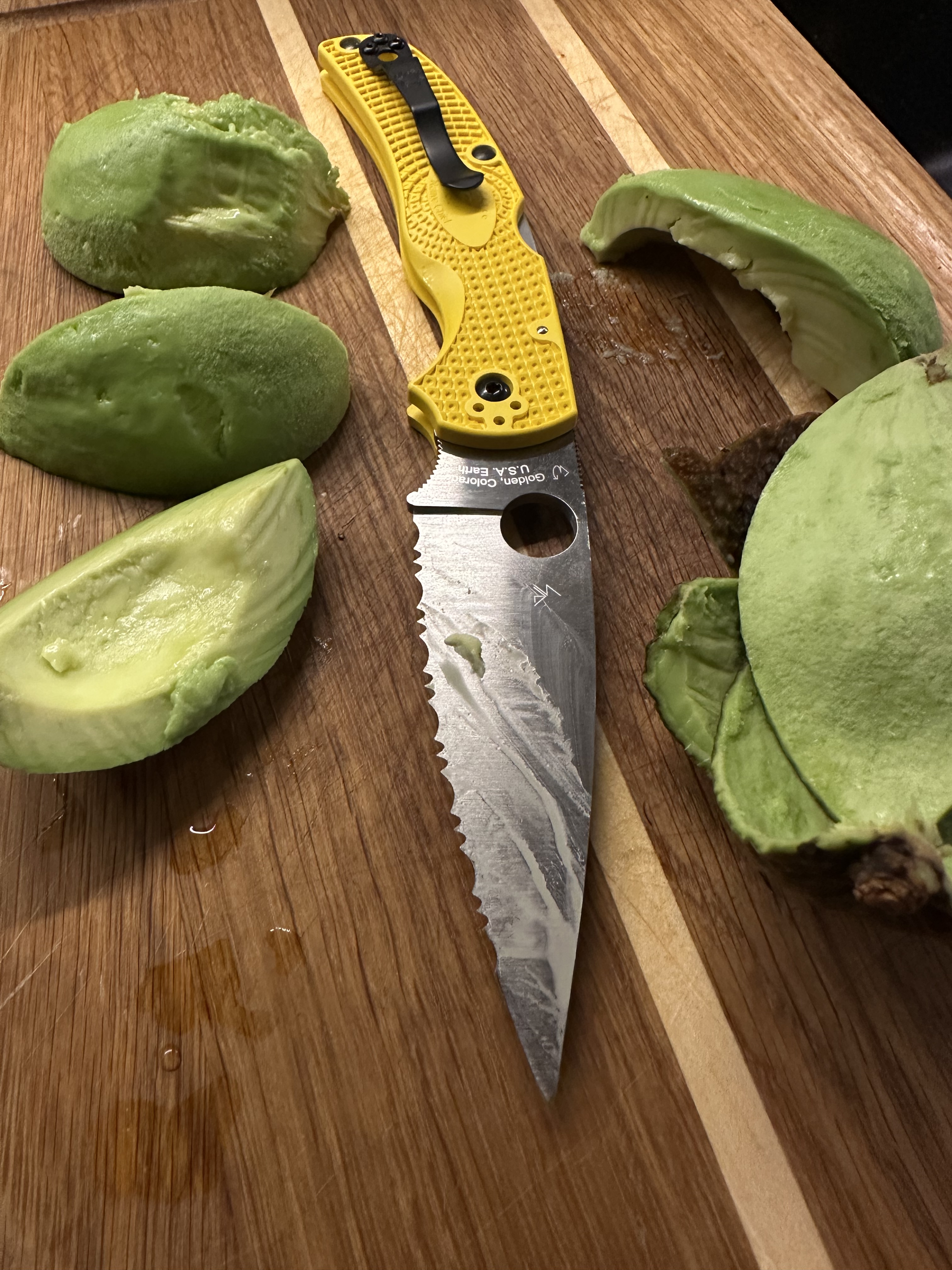
With a fully serrated thin blade and no plain edge, I initially wondered how useful it would be in the kitchen — especially since my wife’s favorite knives are Victorinox fruit knives (serrated). But it turns out, neither fruits nor vegetables can withstand the sharp, wavy edge of the Chaparral.

Funny enough I have been able to strop the edge of the Chap by using the side of the leather belt. CTS XHP is a steel which loves leather in my experience.

All in all, so far, so good. The Chaparral delivers impressive cutting power. Its thin, fully serrated edge is unique within the Spyderco line, pushing the design out of its comfort zone — and for a “knifeaholic” like me, that’s pure fun.

The next step is to trust this little knife enough to take it on a road trip in Italy — handling food prep, wood, and low-profile carry as my only pocketed folder. The Chaparral will make its return in May.

Spyderco Roadie XL C267BK – Size matters

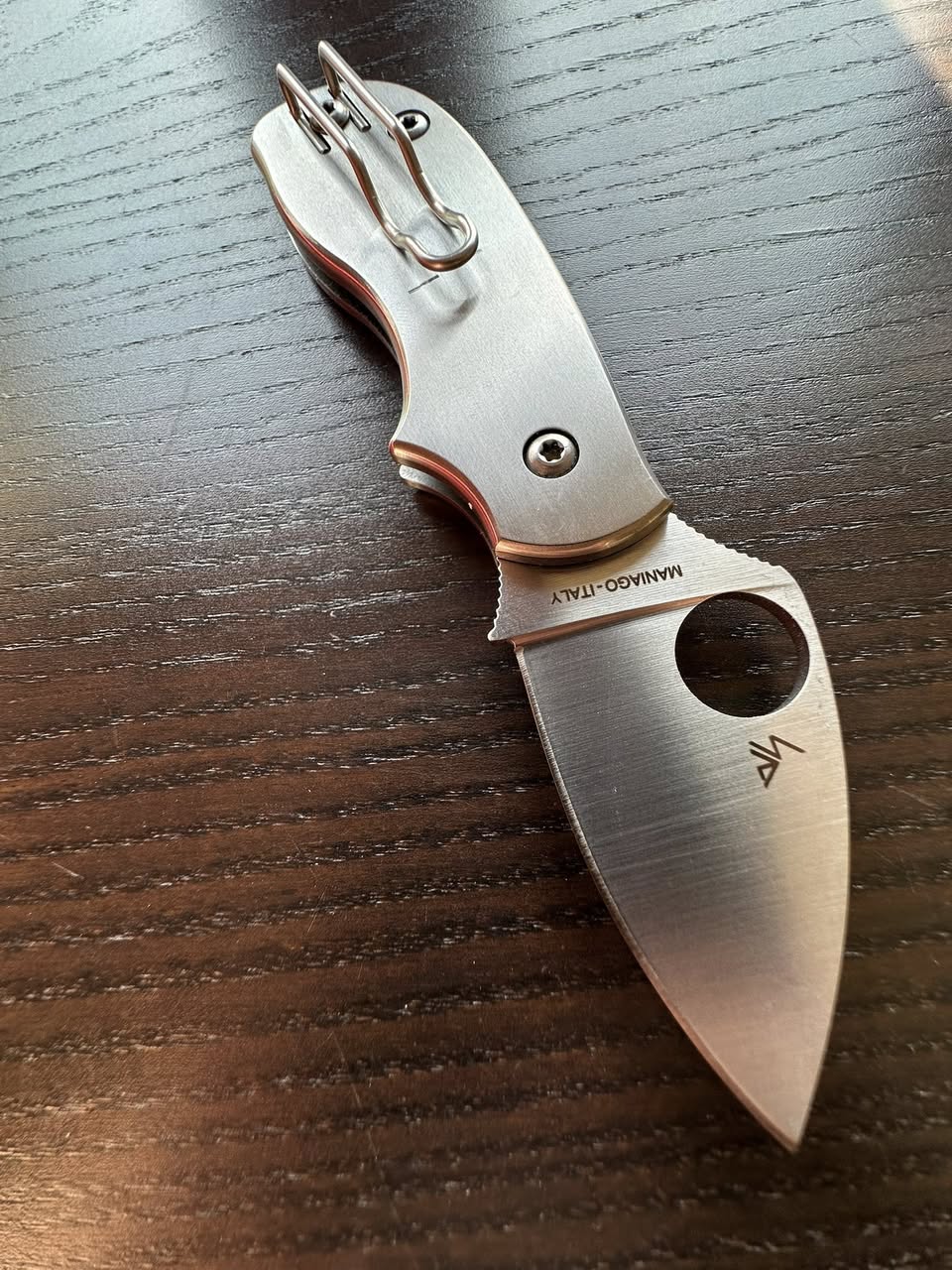
Six years ago, I reviewed the Working Poney, also known as the Roadie. Mine had been reprofiled by Jan Dirk, and even at its tiny scale, it proved to be an outstanding performer. For six years, it quietly stayed in my pocket, accompanying me across the UK, Vietnam, and countless places where knives were frowned upon.

Then, in 2024, I noticed the announcement of an XL version — the C267BK — featuring upgraded steel and a clip. Right away, I saw the new pointed blade, replacing the classic sheepfoot-style blade, now ground from Böhler-Uddeholm N690Co. Even more exciting, the XL uses M398, an exotic steel reserved for flash batches — a serious step up in performance and collector appeal.

And so, here it is: Ladies and gentlemen, the Roadie XL!

Back to the Roadie XL: it is made in Maniago, Italy, like my Nano and many other excellent modern knives. The Maniago factory remains one of the world leaders in precision and manufacturing quality.

Specifications:

  • Overall Length: 6.51″ (165mm)
  • Blade Length: 2.74″ (70mm)
  • Steel: M398
  • Closed Length: 3.76″ (95mm)
  • Edge Length: 2.31″ (59mm)
  • Weight: 1.5oz (43g)
  • Blade Thickness: 0.108″ (2.8mm)

Its shape and size make it extremely pocket-friendly, easily fitting into the watch pocket of jeans thanks to its deep-carry wire clip. You could remove the clip, but why? It keeps the knife perfectly secured at the pocket’s edge. The clip is also reversible, though that is not essential for a two-handed opening folder.

With its thin profile and light weight, combined with the clip, the Roadie XL can even be carried in a shirt pocket like a pen. In short, it is a knife designed to remain on you almost unnoticed.

The action is smooth, with two detents before the blade fully opens. In practice, it feels smoother than my Urban, which deploys with a single motion.

With a slightly longer blade than the Urban, the Roadie XL remains legal to carry in countries such as Denmark, the UK, or Germany. Mine arrived razor sharp straight out of the box, so I am not in any hurry to convex the edge.

Mine came razor sharp straight out of the box, so I’m not in any particular hurry to convex its edge.

You can immediately recognize Sal Glesser’s signature design — a clear mark of his inventive approach. Sal is an inventor at heart, and it is always impressive to see how he manages to create clever, practical tools. Quoting him directly:

“When the Transportation Security Administration (TSA) briefly considered allowing the carry of knives on airplanes again, Spyderco designed the Roadie™ to fit their guidelines. We created an incredibly popular modern expression of the classic penknife. Since bigger can indeed be better, the Roadie now has a big brother: the Roadie XL. It faithfully offers all the defining features of its smaller counterpart — including a non-locking “notched-joint” mechanism, a textured index-finger choil, and contoured, injection-molded handle scales. Its full-flat-ground sheepfoot-style blade is crafted from M398 stainless steel and features our distinctive “Double Dent™” — a pair of symmetrical dimples in the blade that provide a solid purchase for fingernail-free, two-handed opening. In addition to its larger size, the Roadie XL also adds a deep-pocket wire clip for convenient top-of-the-pocket carry.”

Now, let’s talk about M398, one of Spyderco’s premium powder metallurgy steels, produced in limited flash batches in Maniago, Italy.

From what I understand, M398 is closer to CPM-90V than to M390. Quoting Darrin Thomas’s analysis:

“The original M390 has a reported carbide volume of 20.5%, and the new M398 has about 30%, so there has been an increase in carbide of almost 50%… [text unchanged] …”

When M398 was used in a previous flash batch for the SpyMyto, I was not particularly excited — it felt like overkill for a folder intended for hard use. The Myto is essentially the big brother of my Nano in CPM Magnacut, and a SpyNano in M398 is also on the bench. In comparison, Magnacut is far tougher than M398, making it better suited for wider, workhorse blades.

On the Roadie XL, however, it is a different story. Like with my Heinie Urban in S90V, these small blades are not intended for bushcraft — although skilled users can achieve remarkable results even with a 2-inch slipjoint, as shown in an inspiring video I recently watched.

Slipjoints are gentle companions for both ladies and gentlemen. For those with long nails, the Roadie XL features its distinctive “Double Dent™” — a pair of symmetrical dimples in the blade that provide a secure grip for fingernail-free, two-handed opening.

Its high wear resistance is useful, as these small blades often encounter cardboard, which can be surprisingly abrasive. I also recall Roger, my father-in-law, using his old Pradel slipjoint like a crowbar or screwdriver without hesitation. Older users often treated knives as true tools until they were worn down to almost nothing.

I am confident the Roadie XL, with its M398 blade, would make an excellent hare skinner — fur full of sand can destroy an edge very quickly. Tuscan hare hunters would likely appreciate its durability. The high wear-resistant alloy makes perfect sense here, and the blade is also relatively thick at 2.8 mm, reducing the risk of damage.

Ergonomically, the Roadie works beautifully for a slipjoint because you can use the choil for control — a feature rarely found in traditional designs. Even most Swiss Army Knives do not offer that level of security. As Spyderco notes:

“Unlike traditional penknives, the Roadie also features a subtle index-finger choil that increases control of the knife during use and acts as a safeguard against unintentional closure.”

There is no undue pressure on the pivot, often the most fragile part of folding knives. If you avoid twisting the tip in wood, the Roadie XL can handle direct cutting force on the blade. This makes it another “Lil Big Blade” — small, but highly capable.

It can serve as a steak knife, whittler, label remover, balloon popper, nail cleaner, or cardboard cutter. Cardboard is especially abrasive, but not for a steel like M398, rich in carbide content.

And in today’s world, one final advantage: it is extremely sheeple-friendly. It looks like a pocket knife, not a tactical weapon — discreet, elegant, and highly functional.

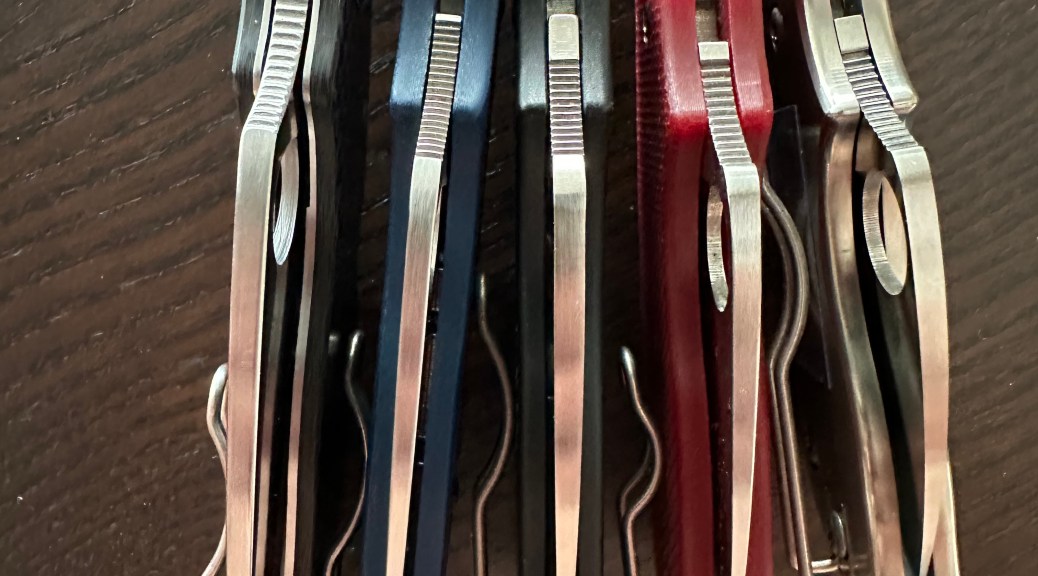
Roadie, K390 Pingo, S90V G10 Urban, and Roadie XL (all green links refer to full reviews).

Beauty is in the eye of the beholder, but to me, this blade — shaped like a scaled-down cutlass — is pure eye candy.

Interestingly, I can open it one-handed in two different ways:

  1. A quick wrist flick while holding the blade.
  2. By gripping the blade between thumb and index finger while pushing the handle away with the remaining fingers.

So even though it was not designed as a one-hand opener, the Roadie XL can still function surprisingly well as one.

Compared to a traditional sheepfoot slipjoint, the Roadie XL is incredibly light while offering a premium alloy blade. (Since August 2025, another M398 slipjoint has joined the lineup: the Metropolitan.)

At under 100 euros, the Roadie XL is an exceptional bargain for what it delivers.

This is one of Sal Glesser’s finest EDC designs — a perfect balance of elegance, utility, and performance. And for once, size really matters with a Roadie. No wonder it sold out so quickly on the Golden site!
Part II is here.

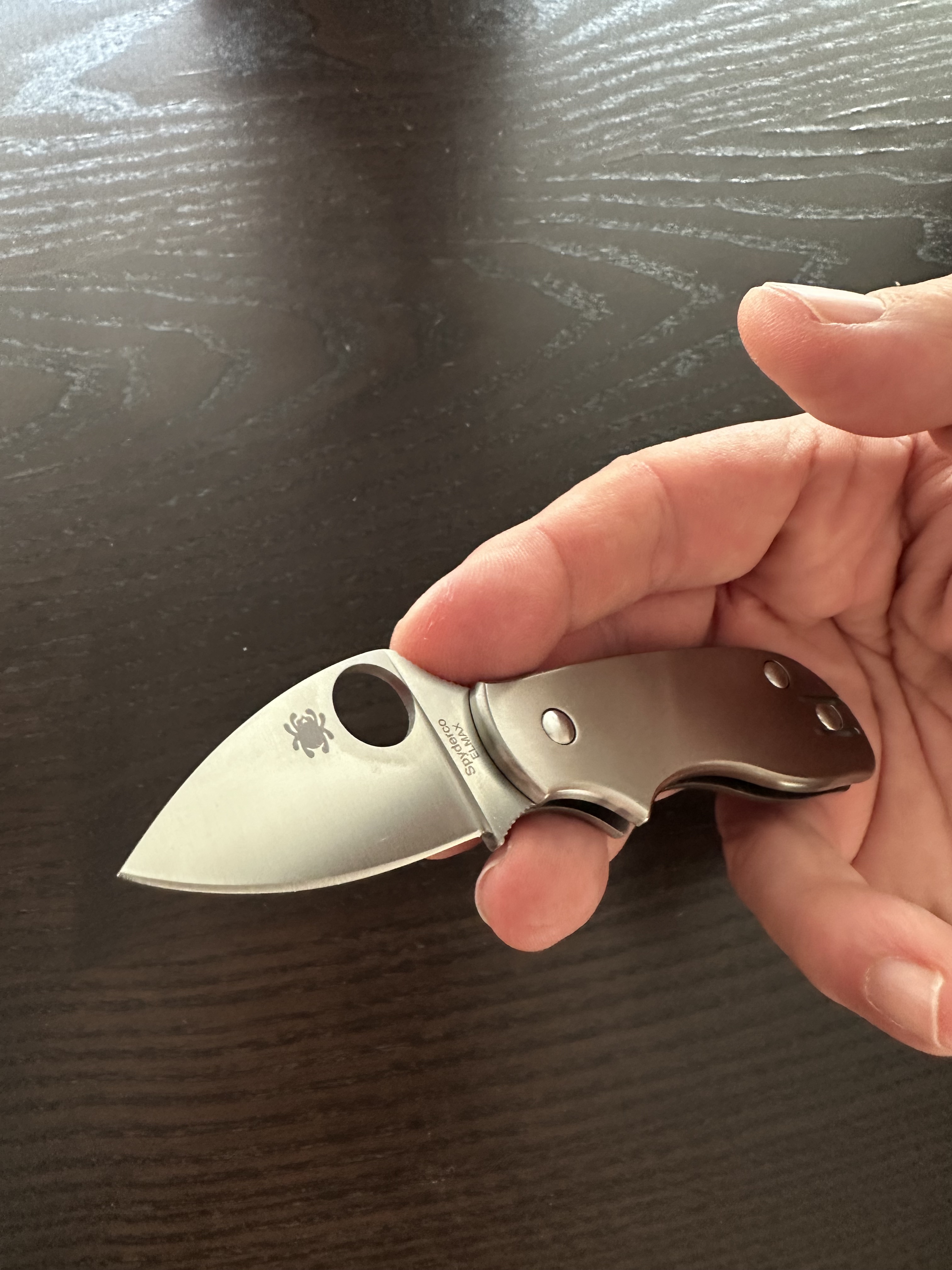
CRICKET™ STAINLESS STEEL TATTOO

C29T – “When You Wish Upon a Star”

I’ve known Jiminy Cricket since 1994. I even owned a pink version of this little bugger back in the last millennium.

Today, during a small pilgrimage to the famous Kindal cutlery shop in Paris,

Mme Kindal showed me one of the treasures on display, next to a Janisong and a titanium Military…

It was love at first sight for this blast-from-the-past little big knife. A compact piece with surprising presence—perfect for another New Old Stock adventure.

The Tattoo version of the Cricket is a true jewel—both to look at and to use. It has been cleverly designed in-house by Sal Glesser (though I wouldn’t be surprised if Ed Schempp also influenced it).

Based on the stainless steel Cricket platform, it is a beautifully executed piece of cutlery.

Folded, the C29T forms a smooth, rounded package that disappears almost completely in the pocket. The clip is tip-down (right-hand), but also works as a tie clip or even a money clip. The anodized artwork gives it a refined, elegant touch.

The stainless steel construction with a Chris Reeve Integral Lock keeps the knife extremely thin and easy to carry—even in a shirt pocket.

The tip-down carry allows a very fast and elegant Spyderdrop opening, bringing its reverse “S” blade into action instantly.

The 2 mm thick, 48 mm long blade is deceptively capable thanks to its S-shape. You effectively gain extra cutting edge length in a very compact format.

Like Eric Glesser’s Dodo, the Cricket is a geometric trickster: the cutting angle is rarely 90°, creating a sinusoïdal slicing effect. It is surprisingly powerful—hence its “little big knife” reputation in the Spyderco world.

The Cricket is a joy to use in the garden on tougher materials…

…and equally effective on softer ones.

But beware: that S-shaped beak loves to grab anything in its path. Your thumb included—so be careful, it can bite fast.

The beak penetrates plastic with surprising aggression, making package opening effortless.

Not everyone likes S-shaped or recurved blades. But this form is inspired by nature—claws, talons, beaks, and teeth.

Sharpened on a rounded ceramic and finished on leather, the Cricket easily returns to a razor edge (VG10 is not difficult to maintain).

Here I’m using a jade stone: I sharpen the belly on the flat and the beak on the edges.

The open design also makes it extremely easy to clean under running water.

I highly recommend the Cricket as an EDC knife. It is a small but powerful “matter separator,” ideal for both men and women in daily use. It can be clipped to a purse, a pocket, or even a bra.

I once knew a former French Marine—six-foot-four, heavily built—who carried a pink Cricket as his daily EDC. Go figure. That’s the kind of knife that truly makes you wish upon a star.

Spyderco Native Chief: HELLBOY 2 – The Kitchen Army

Since the reception of my Chief Native I have found that he was a sole survivor from a Xmas Mystery Box bought in Spyderco’s plant in Golden in December.
In that box were different items and a rare Sprint Run Second Factory which was destined to end in my pocket and considered by myself IMHO as the perfect realisation of Sal and Eric ideas about pocket knives. In fact I think it is my favorite Spyderco ever.
I have written a first review here.
And now it is time for a second approach of Hellboy which has succeeded in kicking other knives from my pocket and quench my thirst for novelty.

So why ?

First the Native family feature an absence of hump on the blade making them very slick and beautiful.

Even the Shaman benefits from that.

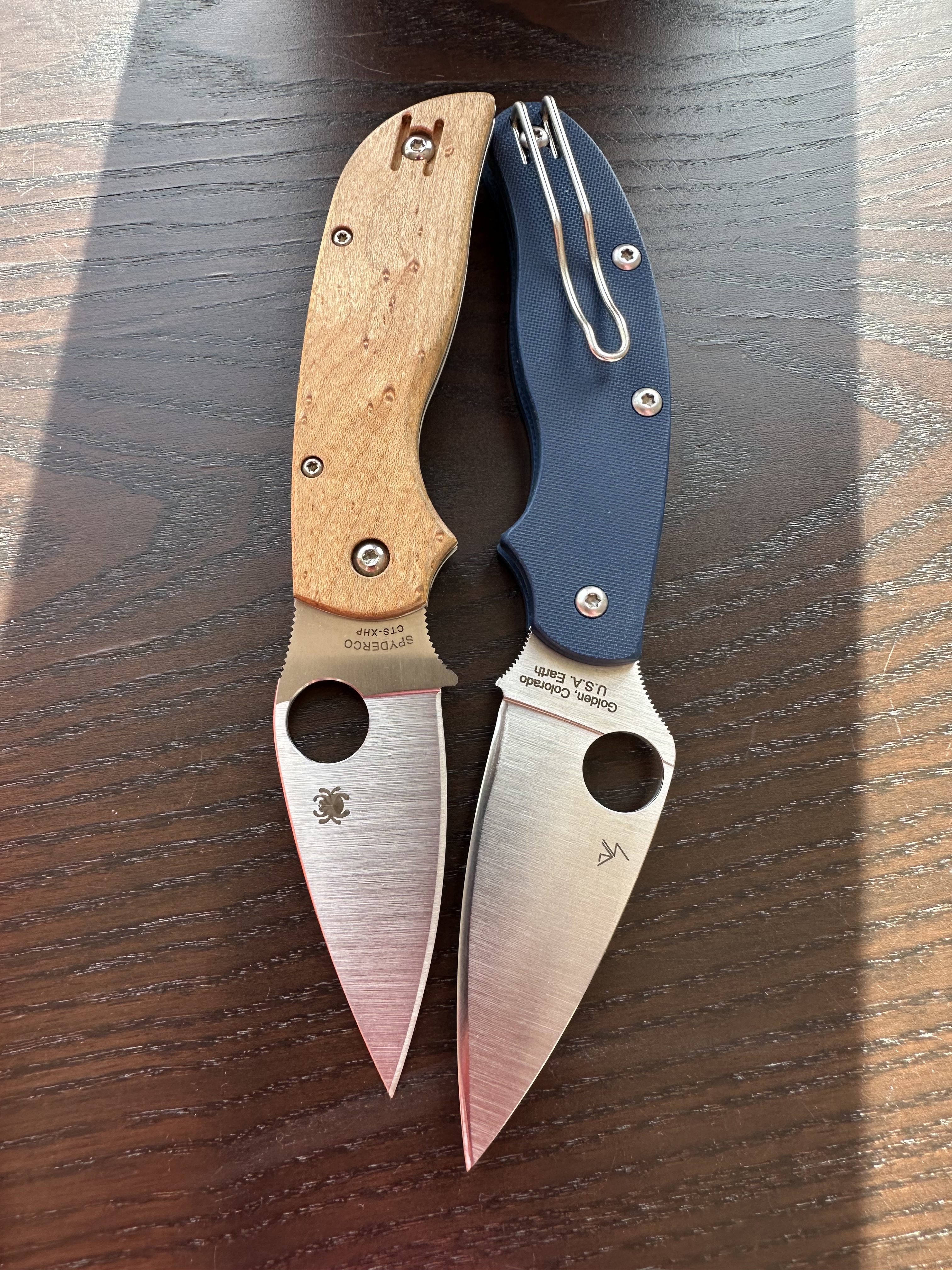
The Chief is on the left and the Shaman on the right.

As you can notice the design of the Native Chief is really close to one of my favorite design: the AFCK.
Sal Glesser was no stranger in the Benchmade BM800 AFCK back in the 90’s. He helped Les De Asis founder of Benchmade on it. They had both learned how to make Michael Walker’s linerlocks at Bob Terzuola shop.
Both company were accelerating on the tactical lane in close formation.

As you can notice, my AFCKs (Advanced Folding Combat Knife) which was also designed by Chris Caracci a former Navy SEaL have been used a lot. The first version got a Spydiehole and the second version got an oval hole and an axislock.
This design was one of my favorite for a big folding knife as EDC.
And back then I was really in love with concept of tool highspeed steel on a modern plateform.

The same happend with that special Native Chief which got a very special alloy for its blade: CPM-4V.
With that steel, the edge is strong and the thin blade is very solid.
It gives a lot of confidence when cutting on a plate made of ceramic of glass. No chipping can happen.
Hellboy has been used a lot for cutting pies and cake on glass plates and the edge behavior was not disappointing. When I have noticed a little shiny spot, some white ceramic was able to put everything back on line but it was really minor.

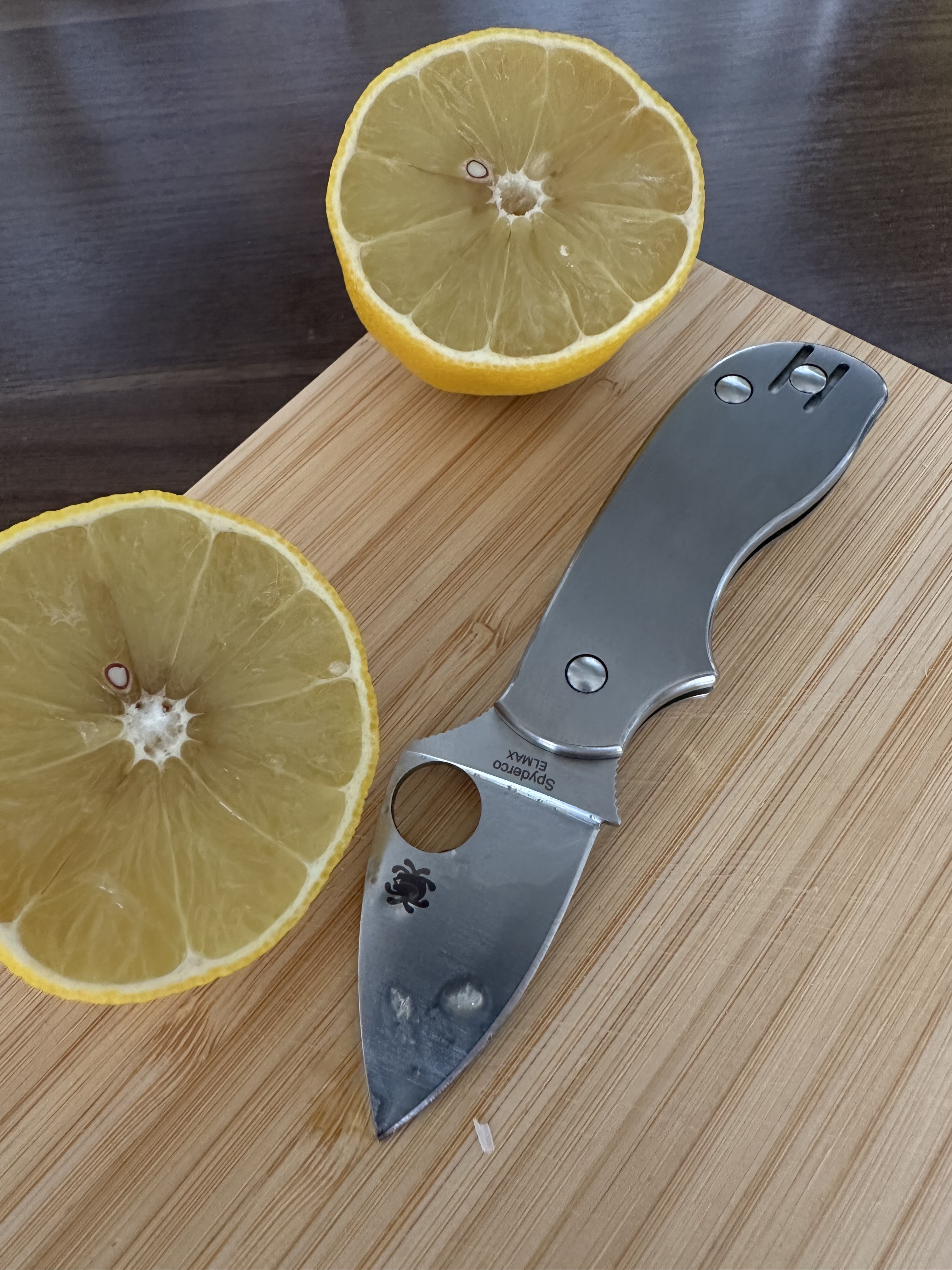
Now CPM4V is not stainless. It will form a patina or, worst, rust very quick and easily when used in acidic matters like cutting lemons and being used on a salad with vinegar.
DLC coating is really welcome for that kind of behavior. Back in the 90’s Benchmade was offering only PVD coating which is really inferior to Diamond Like Coating. So far the blade of my Chief is not marked and scar by it various cutting tasks even when cutting.
My previous Chief was a naked Rex45 blade and it was another story told here.

Even strawberries can darken the edge of CPM 4V.

But cheese is a great way to notice how DLC is making the surface of the blade less sticky but more stinky.

The Chief was not always used on gentle medium like wood.

It was also used on plate with vinegar salsa. Here it is basamic vinegar from Modena.

In the kitchen the knife is really behaving like an paring knife. It is really handy on fruits and vegetables. Its very pointy blade is great to carve.
.The mechanism has never suffered from being wet and rinsed under water. The knife was smooth through and through its various wet works.

Now I like to have chamfered and smooth handles and blade spine. The Chief is known to be very square everywhere. The G10 has been easy to smooth with sandpaper used wet to avoid toxical dust.
Now the blade spine is DLC coated and it was my esthetic choice to remove the coating on all the length of its spine.

I love the result.

It has been done with some diamond rods.
Now the spine is much more confortable for my thumb in case of push cuts.

CPM 4V on that Native Chief platform is really the bread and butter for a strong thin folder. I’m not afraid to use hard on wood and plastic.
And it is a must in the kitchen various missions.
It has been also test on different hard wood and compared (geometry speaking) with many other knives I got.
One of my champion is the Swayback in term of smooth pushcuts.
But also the Wolfspyder and the Yojimbo.

My Chief needed more convexing and thinning to go to the level I was expecting. Again diamonds has been used handfree to remove the shoulder of the edge.
CPM 4V keeps a very very crispy edge and bites in the wood very aggressively.

CPM M4 is a stunning alloy which is prefered on fixed blade but it is a gem on a long and thin folder. It makes it super solid with a very permissive edge.

Quoting Larrin Thomas Phd:

Some will argue that toughness is not important in folders or fine slicing knives and feel that only edge retention matters in that case because they don’t use their knives in aggressive ways which are likely to lead to chipping. However, broken tips are still common on small knives and kitchen knives. And with higher toughness, the knives are better able to handle thin, low angle edges without chipping. And they can be heat treated to higher hardness to help prevent edge rolling and deformation, while still maintaining good toughness. This means that, indirectly, higher toughness can lead to better cutting performance because of the possibility of thinner edges.

The good news is that CPM Magnacut has been copied on CPM 4V behavior.

Spyderco Proficient FB36CFP — The Nasa Lamborghini Bushcrafter – Part 1

Article written by Nemo Sandman – Edited the 5th of November 2025.
All rights (pictures and text) reserved.

Have you ever wondered why so many Spyderco Sprint Runs seem to appear out of nowhere, featuring gorgeous carbon fiber handles and impressive CPM S90V blades?

It’s simple — Sal Glesser loves both materials.

For him, carbon fiber reflects his lifelong passion for motorsports, while S90V stands out as a stainless steel in a league of its own, combining high performance and outstanding reliability.

So, long story short:
Full Flat Grind + Carbon Fiber + S90V = Sal Glesser’s favorite combo!

And to quote my friend Spydercollector:

“When the Bushcraft fixed blade was first announced, Sal also planned to do a so-called NASA version; a version of the Bushcraft knife with all high-tech materials. I believe NASA is a protected name, but Endeavour still evokes the high-tech approach most people associate with the famous space agency. The Endeavour features a full flat grind S90V blade and full sculpted carbon fiber handles. It was a beautiful knife with a grip that had me looking around for stuff to cut.”

https://spydercollector.wordpress.com/tag/chris-claycomb-endeavour-prototype/

Here is the Proficient: it is designed by wilderness expert Chris Claycomb of Bushcraft UK, the Proficient functions perfectly with traditional bushcraft skills and cutting methods. Carefully contoured and polished to eliminate hot spots and ensure maximum comfort during prolonged use.

https://www.spyderco.com/catalog/details/FB36CF/Proficient-trade-/943

Bushcraft knives are defined by specific parameters — typically featuring blades between 4 and 6 inches. Spyderco’s Bushcraft model fits perfectly within that tradition: a 4-inch, full-tang blade with no handguard, purpose-built for control and versatility.

In true Bushcraft spirit, users generally favor high-carbon tool steels over stainless options, prioritizing edge retention and cutting performance rather than corrosion resistance. The O-1 tool steel used here, with its high carbon content, delivers excellent long-term sharpness while remaining easy to resharpen in the field.

Carried on the belt or strap in a leather sheath, this knife is blueprinted for wilderness chores — slicing, chopping, whittling, and processing game — all in the traditional Bushcraft style.

To quote Spyderco:
The Spyderco Proficient takes the concept of the traditional “do-all” bushcraft knife and elevates it to new levels of performance with state-of-the-art materials and manufacturing methods. Designed by wilderness expert Chris Claycomb of Bushcraft UK, the Proficient functions perfectly with traditional bushcraft skills and cutting methods while offering superior durability, edge retention, cutting performance, and corrosion resistance
Instead of traditional carbon steel and an axe-like “Scandi” (Scandinavian) grind, the Proficient’s blade is crafted from vanadium-rich CPM®S90V particle-metallurgy stainless steel and boasts a full-flat grind for low-friction cutting performance.

This concept of a stainless blade paired with a black polished handle has, ten years later, been fully embraced — a perfect example being the Casström No.10 Swedish Forest Knife in Black Micarta with a 14C28N flat grind.

I first discovered CPM S90V back when it was still known as CPM 420V, thanks to Darrel Ralph (RIP) and his beautiful Apogee folder. The blade was astonishingly wear-resistant — so much so that, without diamond abrasives, only a backstand could bring it from dull to sharp. It was a bear to sharpen then… and still is today.

The difference is, as end-line users, we now have easy access to industrial diamond tools, making steels like S90V finally practical to maintain at their full potential.


I have written a lot about S90V. This alloy has proven it can be tough enough as a stainless steel to be used in any all terrain tools; especially since it is available on Manly folders which got the reputation of using a very fine thin geometry on their blades.
Modern Bushcrafters (like the Benchmade Puukko) are focused on toughness with the use of the very tough CPM 3V.

What does CPM S90V bring to the table?

It’s incredibly wear-resistant.
This steel is notoriously hard to dull, even when cutting abrasive materials like brown cardboard loaded with silica. It keeps its edge far longer than most steels, making it ideal for demanding, real-world use.
Also the full flat grind is a must in a matter separator specialized in wood works. As much as I love Scandi Grind found on Woodlore clones (first designed by Ray Mears).
I have found that especially in the wonderful Spyderco Sprig full flat ground knives can be really efficient on hard wood.
(BTW when the writing appears in green: it is a link !! and I have tested them here.)

It’s stainless!
Even if you (like me) enjoy the patina that forms on a great carbon steel blade, there’s real peace of mind in using a reliable stainless steel — especially when working near water, in the rain, or by the sea.

The Sprig was an impressive tool in terms of pure geometry. Designed as a hunting and fishing knife, it was a real wood eater — a beaver of a blade, cutting deep and effortlessly.

Guess what? The Proficient shares the same profile, especially after a bit of convexing — which I’ll be covering soon in a second article.

So far, that contoured handle is an absolute delight to use, and I’ll be putting it to the test in the upcoming piece. While the old O1 Bushcrafter had enough heft for light chopping, the Proficient excels at powerful push cuts — a completely different experience.

Interestingly, the Proficient isn’t a big knife. Once sheathed, it can disappear into the front pocket of a pair of denim jeans — no need to let it dangle from a belt.
So what do we got ? Imagine the plateforme of the Bushcrafter (link) a solid companion, a reliable 4×4 and you just turn it into some Urus from Lamborghini: stellar alloy and lighter tougher handle.
The Proficient is Sal Glesser’s gambit — a bold move in a world where the bushcraft community traditionally favors carbon steel and natural wooden handles. This knife dares to break from that norm.

Of course, this jewel comes at a price, and most bushcrafters aren’t Wall Street sharks. They use OpinelMora, or at best a €100 fixed blade — unless they’re ready to splurge on an original Woodlore.

So, the “stealth wealth” of this NASA-grade bushcrafter isn’t for everyone.
It’s like a Lamborghini — not the most practical, but a statement of refined performance and engineering excellence.
Because in the end, real performance comes at a price.

Article written by Nemo Sandman – Edited on November 5th, 2025.
All rights (pictures and text) reserved.

Spyderco UK Penknife Salt – All terrain slipjoint Part II

Prologue: “Seeing what I believe.”
On one of the social networks an happy owner of a new Spydiechef in LC200N steel (like the UKPK) was displaying some pictures of his new acquisition. And there go the comments, mostly to congratulate him and share experiences… when I have noticed some young guy’s: “Too bad this knife is provided with a steel softer than the wooden board it is displayed on.”
I thought to myself: could LC200N have a reputation of being soft ?
Immediately I have checked the Rockwell of Spyderco’s LC200N found on various sites and apart the LC200N Mule being at 56 HRC, it is known to be currently at 58 HRC.
So I have asked to young guy (very proud of its REX45 collection) what LC200N knife he has had such a bad experience with, sharing with him my own mostly excelelnt experience with LC200N I own.
After a very long passive-aggressive answer from him (we know how people are such a d1ck with a keyboard under their fingers…) about how he was so knowledgable by just watching videos on youtube he then wrote me that he had never owned any knife in LC200N.
So eventually this guy was pissing on the parade with zero knowledge of the subject. It is typically the kind of behavior we can notice on the social networks those days. Some so called “experts” don’t believe what they see but only they only see what they believe. The armchairs specialists are long disappeared and here comes the arrogance of the “believers”.
This is the plague of our time: not being your own source. Not checking twice. And not experiencing first hand what is put as a statement.
This is some kind of Reign of Assumptions with its digital garden where flourish fake informations in all subjects. This is not something to be taken lightly. And the only cure is being your own source then read, check and cross opinions.


Anyway…
Is LC200N as soft as wood ? Certainly not. It is even much better than H1 in terms of edge holding. (H1 being the other steel on the Salt Serie).
But H1 is excellent on serration blade, as it is getting harder during the serrating process like 67HRC. (H1 being a work hardened steel, the process that grinds the SE blades hardens the edge to 67, while the PE blades are 58.) Also you can’t have flat ground blade with H1 but you can with LC200N.
So far, LC200N as 58HRC has amazed me. Of course it is not in the range of Maxamet or 20CV but it is worry free good edge holding and not chipping edge’s steel.


Also I have notice how people believe cutting wood is the ultimate edge holding challenge. Nope. Cutting clean piece of wood is not challenging in my own experience. I have found different grain of steel react on different grain of wood. M2HSS (Speedstar steel) gave me soft surface on chestnut cuts for example. The challenging media to cut through are brown cardboard for example because of sand in it. Cardboard and also great way to refresh an edge by stropping the blade on it.
You can have a look at my journey in Tuscany with the Spydiechef.

Back on the UKPK. I have “unshouldered” my edge to get to a gentle convex, keeping the manufactured edge with its microserrations. I always do that when I love a knife as my favorite way to refresh my edge is using an old barber leather bought in Tuscany on a garage sale 15 years ago.

The blade stays “lock” in open position when stropping and this is much better that previous version of the UKPK like I have stated in the first glimpse. The razor’s level of sharpness is easily restored and the thin blade goes steadily into all material it has encountered.
One great enemy of a fine edge is the plate under the meal. Many times I have given an angle to my knife to avoid touching the ceramic at a 90° angle. With the UKPK I have not given a shoot. I have use it as my steak knife like they were no tomorrow. Also the the yellow knife has been friendly approved by the rest of the family who has used it also on plates and stuff without any sign of pity.
The edge near the point has rolled but nothing I could not fix in less than 5 seconds on a ceramic rod. Eventually the rest of the blade was mostly as razor as before. On short blades mostly the point and the very first part of the blade are used on board/plate cutting. It is also a part I have less convexed to keep some useful thickness there.
Of course cutting lemons and any acid food will never bring any sign of patina on LC200N and many times I have fold it dirty when it was not just quickly rinsed under the tap.
The UKPK also offers a very pointy blade which proves to be very useful in many task. LC200N being very forgiving it is sturdy enough for not having any concern about it. Of course I won’t use a slipjoint like a bushcrafter or even the great Wolfspyder but still, old timers used to go in the wood only with Swiss Army Knives or Pradel slipjoints folders and were able to use them for many camp tasks. The choil and hump of the UKPK’blade working as quillions you can apply a lot of force directly to the blade as I have also been whittling with it.

The thin spine makes it not really confortable for thumb pushing cuts though. In that game of pushcuts the Yojimbo 2 is king with its 4mm spine.
But the UKPK goes deep in its cut without much pressure on the spine.
Also when the blade is stuck in the wood it has no tendencies to fold on your finger like previous version of it. This is a great relief.
The yellow handle looks like plastic but those FRN slabs are very rigid. There is no play and it gives you a felling of confidence in your tool. Also the “pro-sheeple” general look helps a lot when using the UKPK in public.
So far it has developed zero plays which is enjoyable.

Quick draw: a friend has challenged me to open the knife using my major finger. At first I thought it would not be possible unless being Check Norris. Eventually:

But this is in Spyderdrop that the UKPK is steadily open: holding the knife by the hole and with a flick of the wrist.
So it is a slipjoint with a very fast draw opening.
The previous Spyderco Splijoint as fast as this one is my Pingo which can be open by inertia as the momentum of the thick blade helps a lot.

So far the UKPK has proven to be a fun knife to use. It is easy to deploy and reliable on the tasks. It can be a primary knife in the city and secondary knife in the woods and its lightness makes it easy to keep in the pocket. It will also find a place to be clipped on any swimsuit and that what makes it so unique. Fishermen will be very glad also as it is so easy to clean and to spot. The opening of the 3 screws montage on this UPKP (some other G10 UKPK got a longer spring/backspacer and 4 screws) make it a breeze to rinse. It is a Gentleman/Lady knife with an all terrain attitude and a very reliable positive semi locking system which can sustain a lot of power cuts. Really a unique gem !

Yellow and black works well together…

Flytanium on Cruwear PM2 – a sweet customization

Disassembling the Cruwear Knifecenter edition has been a child play once I have found how to use some pliers to keep some rounds spacers from turning by gripping them.

Eventually, the Flytanium scales are perfectly adjusted. No surprises at all.
The action is as smooth as before, no worry.

The sweet point of balance is a little back further.

I have ordered deeper clips for Xmas but the OEM works great !

The feel is heftier and softer. It works well with the PM design. It gives some full metal signature to a usually light design. This scales exists also in brass and copper. titanium sounded perfect and it is under the thumb. The stonewashed finish is absolutely beautiful !


20181113_1711058057864771192678199.jpg

The original weight was 111 grammes, so it is now 28 grammes heavier.

For those who want to know how I have made that patina: here the link.

Spyderco C135CFP PPT — Portable Praetorian Tool.

20180326_172840-01.jpeg

The first PPT was release eight years ago. It was the mind child of Sacha Thiel and Philippe Perotti. For the record Philippe Perotti aka “PP” was Fred P.’s student in knife making (and PP being an instructor in handguns and fire arms). I still own one of PP’s Streetbowie made in D2 and also one of his great great Commander knife made with Sacha Thiel and produced in Maniago which looks a lot like the Spyderco Streetbowie.

20180326_193321-01.jpeg

Now the design’s goes in the stardom with a luxury amazing S90V / Carbon Fibers corrugated stunning handle.
This rude boy is a beauty like Marlon Brando in a Streetcar Named Desire or Tom Hardy in Taboo. It’s heavy in your palm. But this weight is a pleasure exactly like the Sharpfinger.  Marc Animal McYoung in his book “Knives, Knife Fighting and Related Hassles” was choosing a butt heavy short knife over any other. The weight is like an anchor in your hand as the knife handle is cuddling inside your palm. You find the same idea of weight distribution on heavy butt  first Streetbeat.

20180326_172946-01.jpeg

Talking about the handle, this macro-texturing shows a wild side of this tool.

20180326_173400-01.jpeg
On this picture you can notice the unique clever sturdy lock. It’s made to be secured once the handle is hold tight.

20180326_172905-01.jpeg

The steel liners and the full steel back spacer, the full steel construction, while sturdy, makes for a dense carry.  Being able to use the “pommel” as a crowd pleasure won’t be a surprise. Anyway it’s a lil hammer which can certainly be used to drive a nail in a plank.

20180326_173656-01.jpeg20180326_173708-01.jpeg

Balance wise, let’s just compare it with a titanium folder, the Spydiechef.

20180326_173044-01.jpeg

It’s a matter of taste but I love it as the butt heavy balance suits me.

In eight years the Taiwanese manufacturer has refined his production.

20180326_173014-01.jpeg

The choil used to be a hotspot in the first version I had handled back then. No more now, there is absolutely no hot spot but… the infamous clip.

20180326_173227-01.jpeg

The way it’s stand with a point prouddly high …it’s really not the best Spyderco clip just compared with for example… the Lil’ Lionspy great great spoon deep carry clip !!
The pointy end of that clip needs to be parallel to the handle as this one is an invitation to scratches cars doors and catches things.
20180326_173426-01.jpeg
But its zips easily inside the pocket. It’s a no brainer.
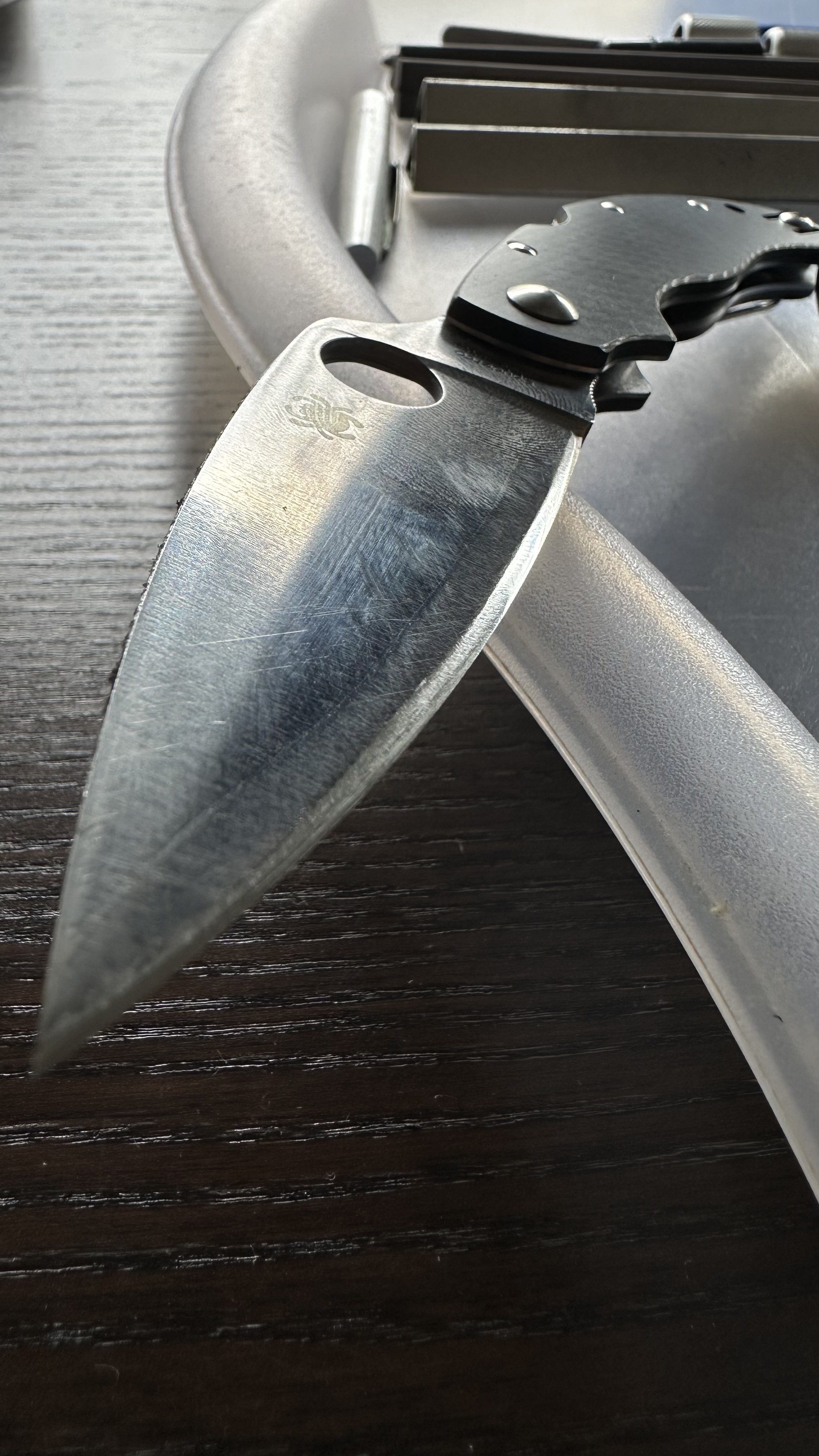
Like the Spydiechef the design of the PPT notice how it give you a lot of power in case of cutting on a board. But the PPT won’t be as easy to clean with it’s squeleton thick liners but nothing which cannot resist to some hot tap water.
This new incarnation got a very thin edge. Those full flat ground blade in S90V provided by Spyderco lately are a pleasure to use and performance oriented.

20180326_183925-01.jpeg

But its true brother in law could be the Yojimbo 2.

The PPT got a very strong spirit, mix that with Sacha Thiel attention to details and Philippe Perotti pragmatism and you got a very powerful EDC which can be used by soldiers, firefighters, hunters, cooks, collectors and bushcrafters.

A little edit: after some EDC carrying and using.
Of course I have started to de-shoulder the edge and gives the PPT a more friendly way to get strop on leather.
Ergo wise, this heavy butt is really addictive. It works like a magnet because of that handgun handle. It makes your tool almost jumped in your hand and really anchored it in your palm while the perfect radius of opening makes it a very fast and safe opener. The meat of your finger is caught by the sharp hole and SHLACK !! It’s really one of my fastest tip up carry opener so far.
Why is the PPT a tip up carry ? I remember Fred bitching about the way some newcomers (back in 90’s)  who were providing RIL locks with a tip down carry: the clip was in the way. What I loved in the RIL lock on the Sebenza was the way the hand will secure the lock just by holding it tight. With a clip attached near the pivot, you could not squeeze the handle anymore and secure the lock.
So the PPT reflect all those years. It’s a real biker friendly design, like the La Griffe has always been. Bikers are modern world horse riders. The PPT would a horse rider best friend too.
In the part 2 the rider could be a nightrider ?

20180326_174932.jpg

Spyderco PARA 3 G-10 Black on Black C223GBK — The Black Panther Cub

20180305_100418-01.jpeg

This is my first Para 3 and also my first black coated Spyderco blade.
According to Spyderco:

“For tactical end users who are concerned about light discipline or those who just prefer the look of a black blade, the Para 3 is now available with a tough Diamond Like Carbon (DLC) blade coating. This low-profile coating is permanently bonded to the premium CPM® S30V® stainless steel blade…”

Cool I do really love DLC as it’s really scratch resistant. The primary reason for blade coatings is to reduce the reflective properties of the steel. Shiny things draw the wrong kind of attention and in a military environment, can tend to get people shot. However, like anything else intended to be used in a military environment, coated blades are not immune to wearing off but DLC is really strong.

I also specifically love DLC for adding corrosion resistance. The area which normally rusts on an EDC is in the pivot area. No worries about that with a DLC coated blade!

The new Golden Co. factory is bringing some of the best quality in manufacturing to date. My Para3 is absolutely flawless: perfectly centered, perfect smooth action… I had noticed that rise in quality on my last sprint run Para2 in 52100 too. Now Golden is as good as Taichung in quality control – if not better. So kuddos Colorado! Also Eric told us during the last Minimeet that they have just hired two new engineers who will make a real difference. Spyderco has developed a speed training of their own engineers as no school had prepared them for the knife industry.

20180305_100217-01.jpeg

Like the Paramillie 2 was a son of the Millie, the Para 3 is really Millie’s grandson. Same “cockpit”, stout hardchore 3 inches blade, smooth Compression Lock.

20180305_100254-01.jpeg

My all black version is very discreet and the the short blade makes it even less threatening. A black “commando” feel on such a short folder is almost like an tribute to military blades. On a short knife like this baby millie the “cute” factor is very strong.

20180305_100349-01.jpeg


My hand fits perfectly on that handle. That infact was a big question mark prior to holding the Para 3. You feel this short version of the Millie is ready for any task.


The DLC coating is absolutely stunning. I have sanded the G10 and put a great deal of care so to not scratch the steel hardware.

20180305_140401.jpg

Here after some plastic cutting which scratched some of my other blades, there were no marks on the diamond hard coating. Let see how it will age.


At first I had mounted the clip for tip down carry (left pic) and experienced great spyderdrops. The Para3 is so smooth in its action, a middle finger is sufficient for opening.
As I got the opportunity to get a titanium clip from Massdrop (right pic), after transformation it’s now a tip up solution and a middle finger opening work best for me. After all, a black knife, even of that size, needs to be as discreet as possible.

20180305_115442-2.jpeg

Some thinning of the edge, from DC4 diamonds to white ceramic until leather stropping.

20180306_110853.jpg

It worked great as I was not able to scratch the DLC coating.

20180306_110508.jpg

I got much better performances on pushcuts into the thick plastic of this coke bottle butt.

Of course, I had soon christianized the knife with a fumble… Drawing blood means luck.

20180306_110929.jpg


The Maxamet PARA3 Review is here.

edited by Pascal – 14 march 2018.