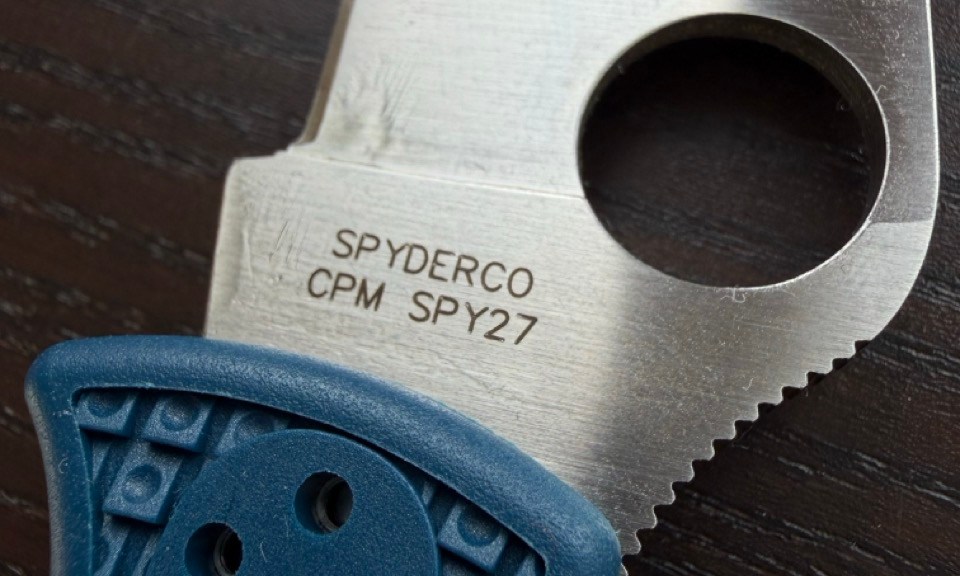
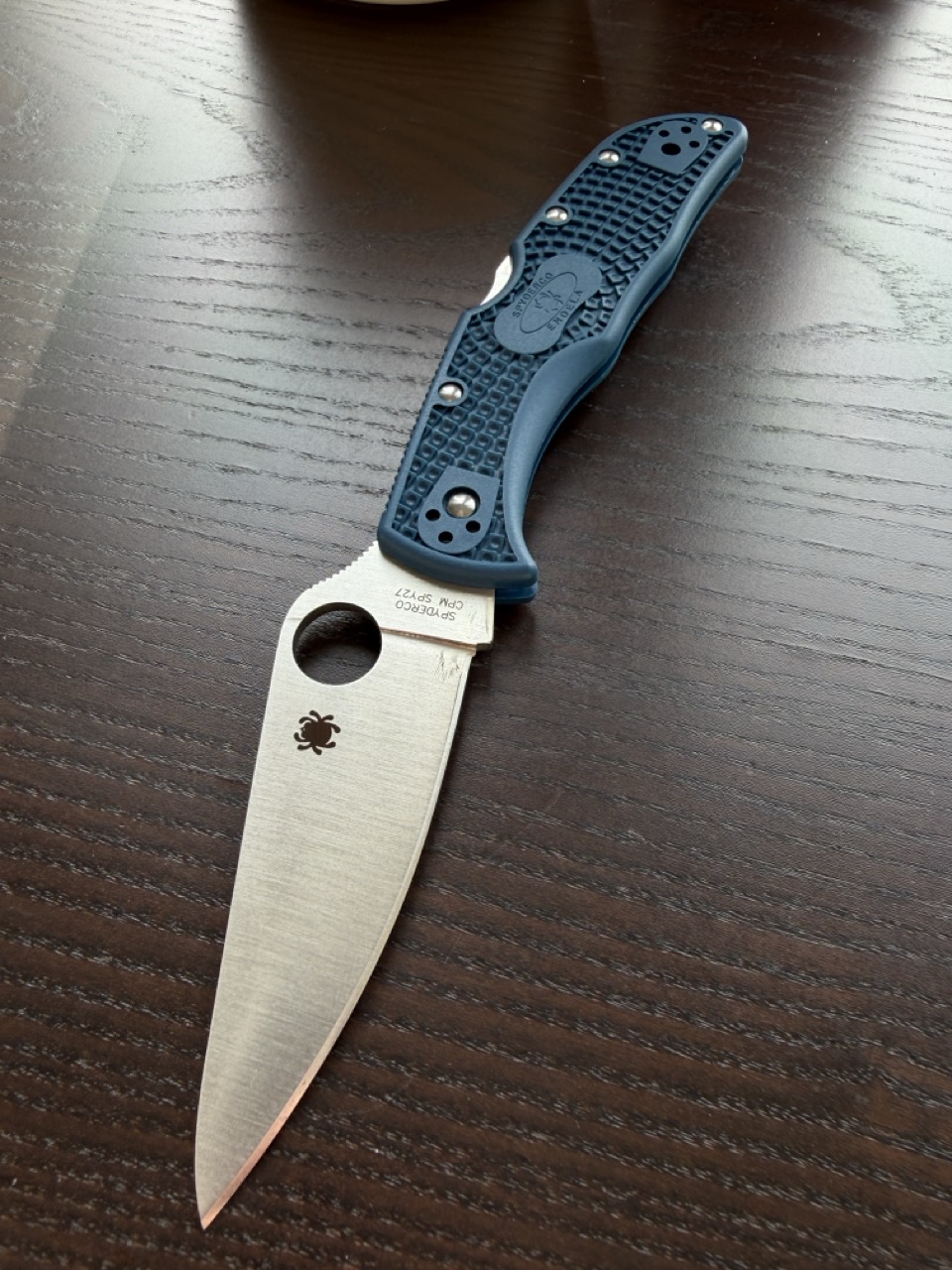
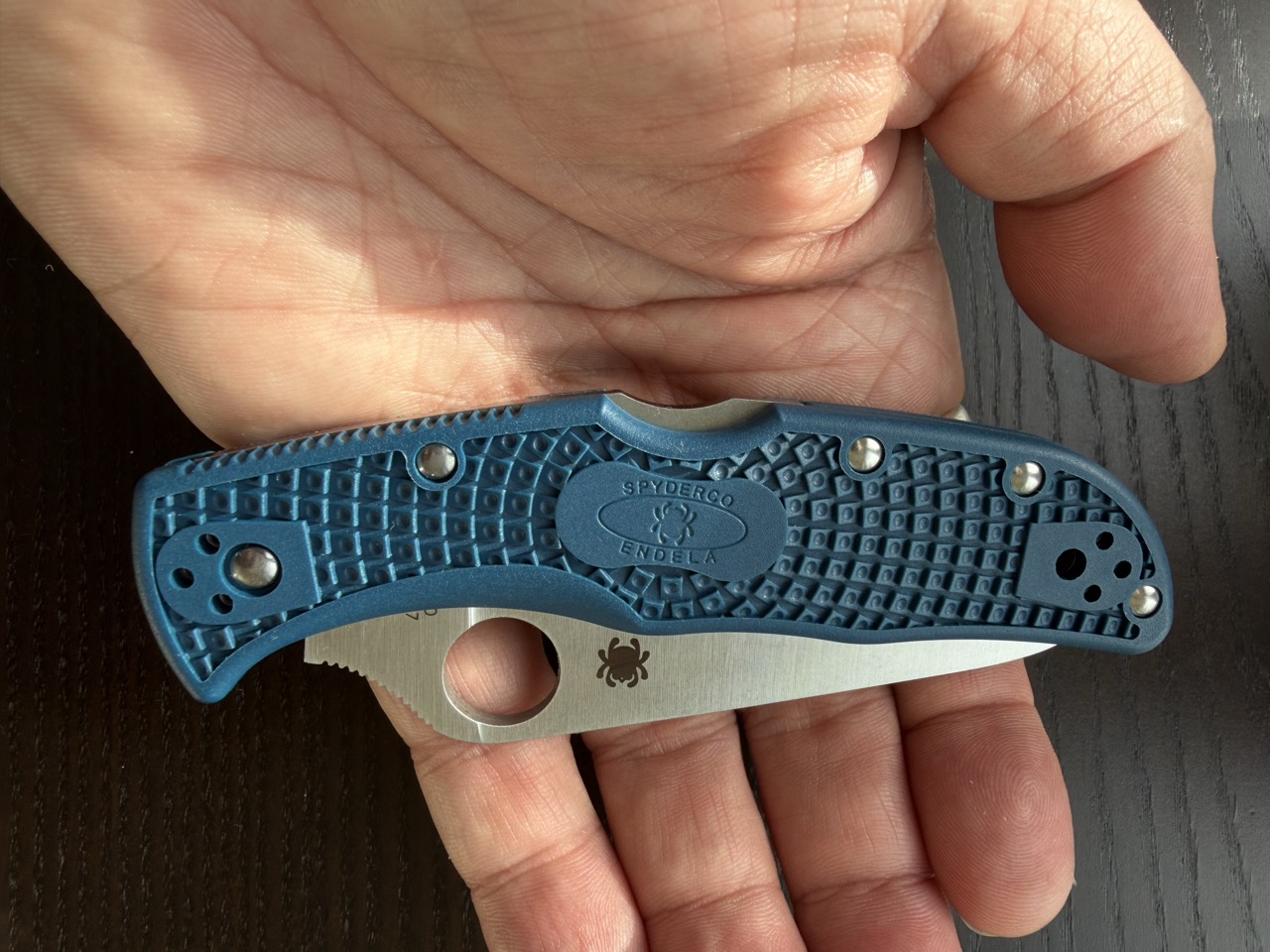
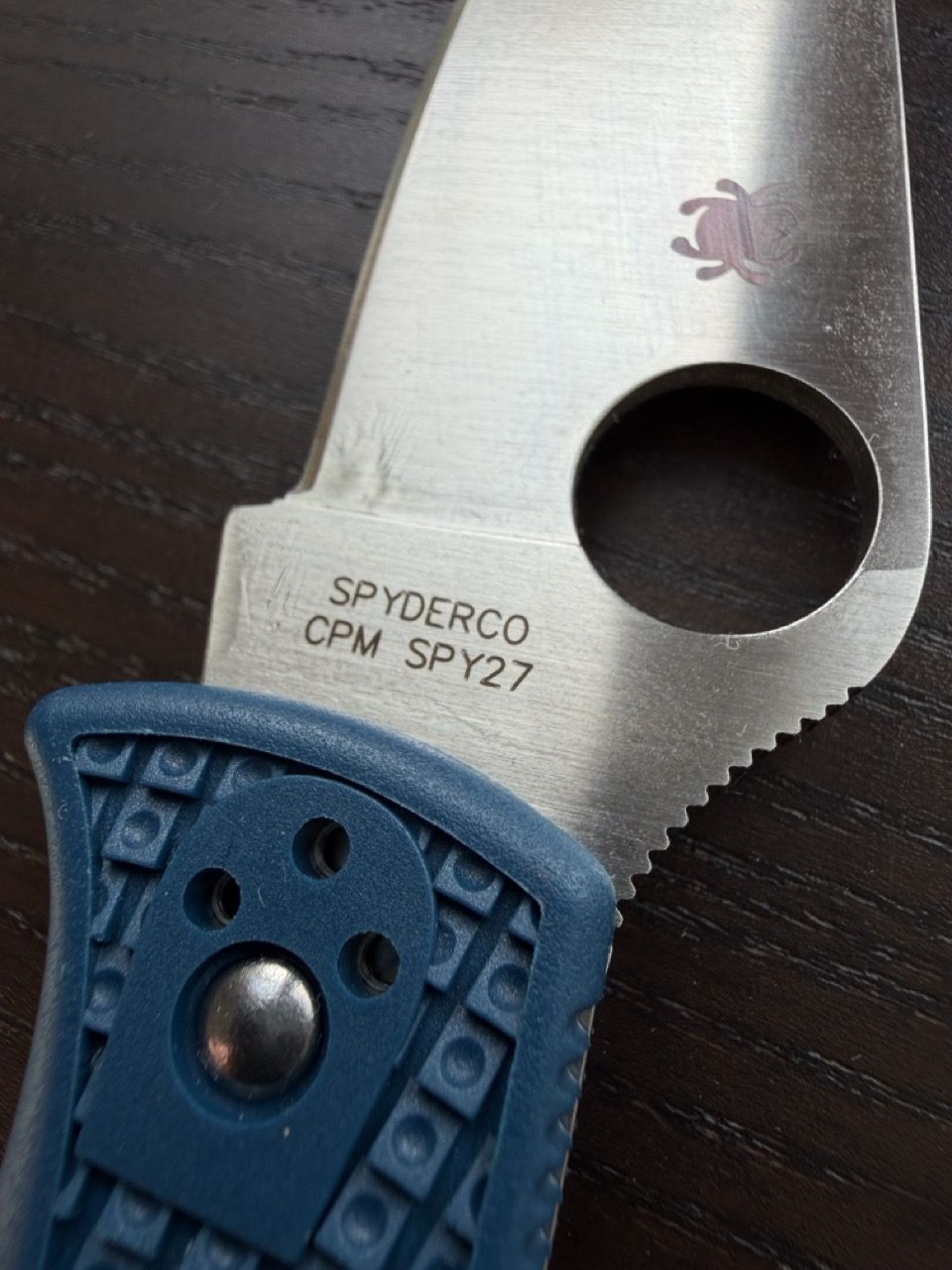
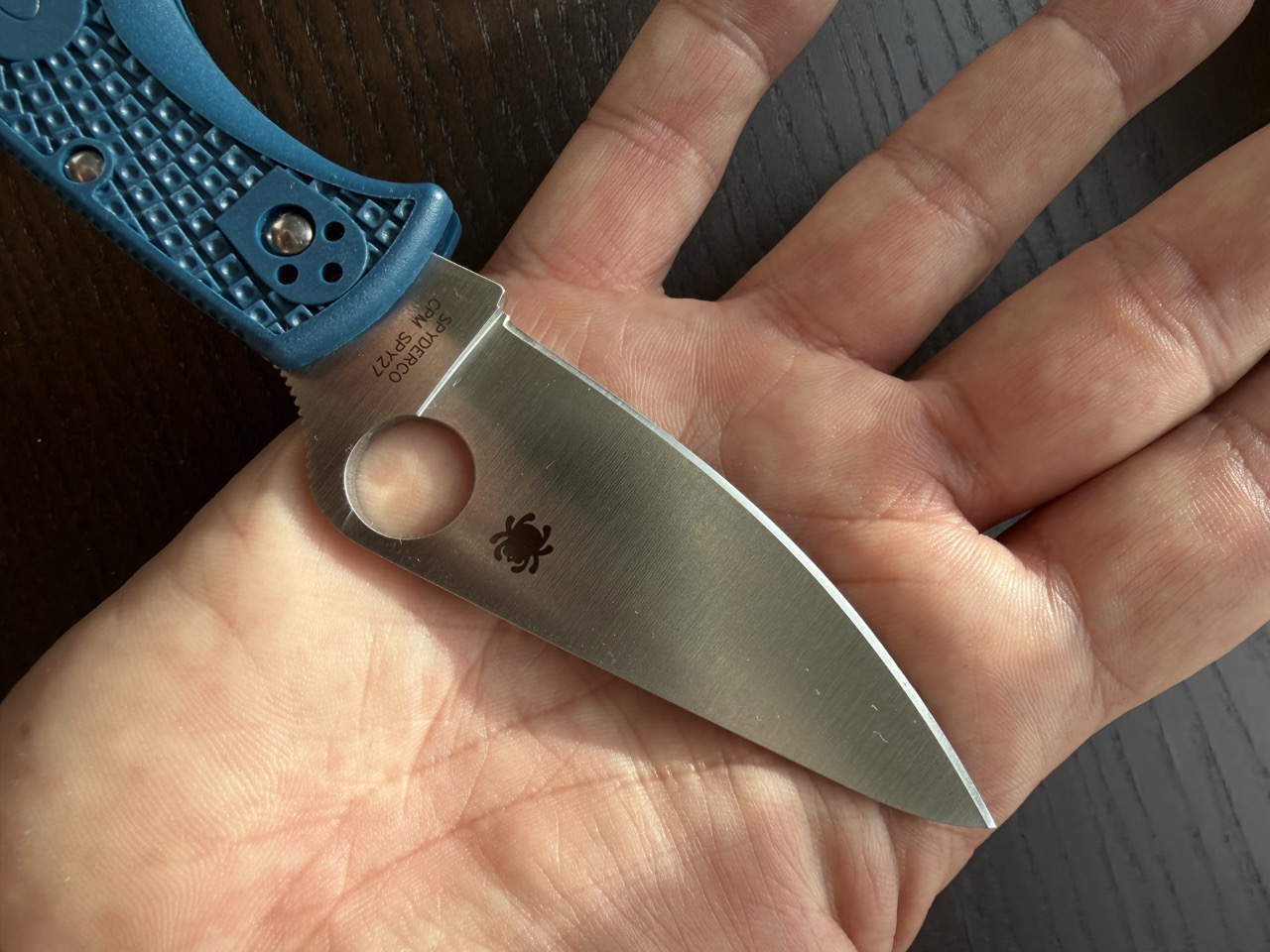
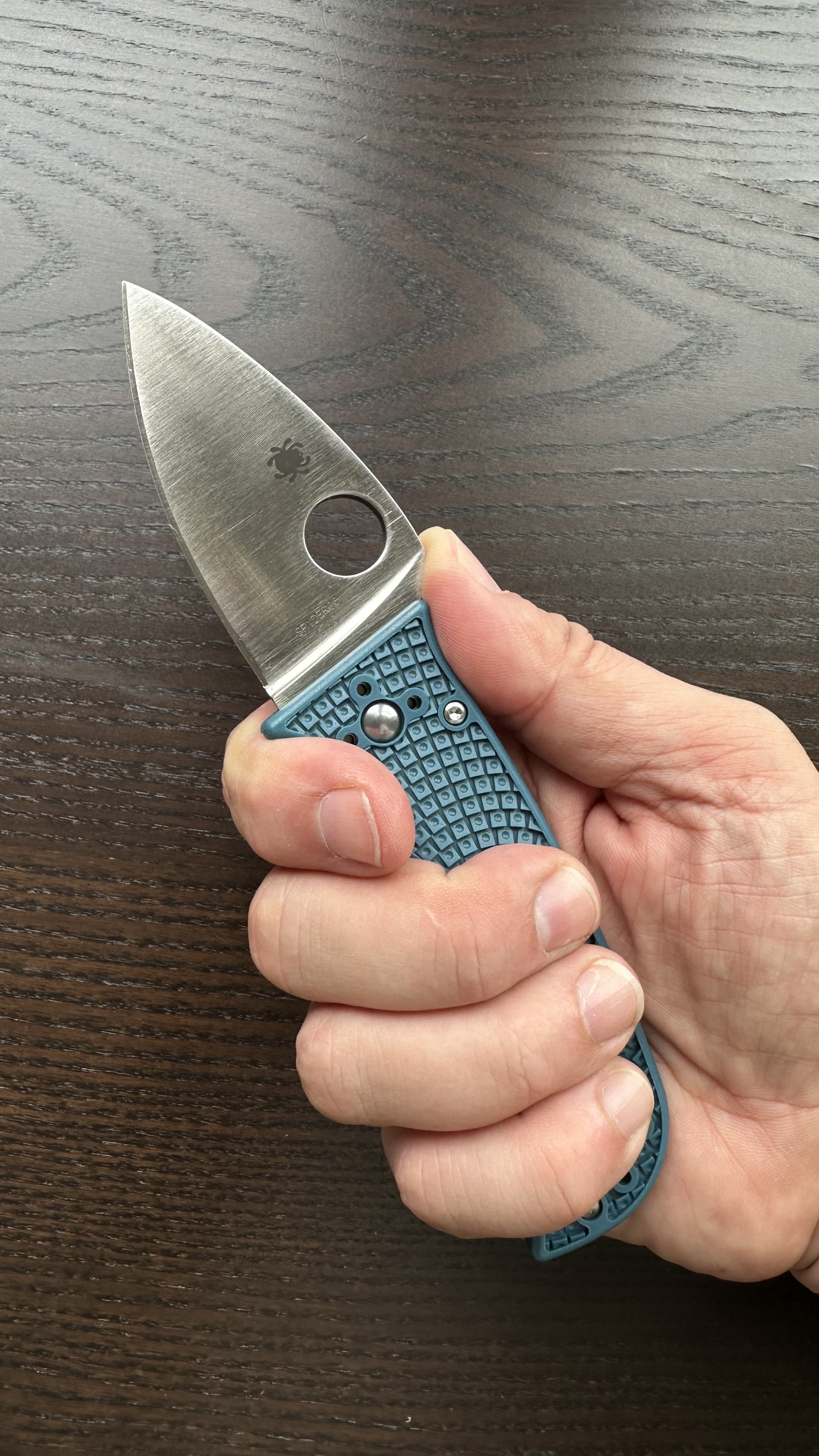
In the rarefied world of enthusiast gatherings, certain objects transcend their function to become emblems. At the 19th Minimeet of 2026, that emblem arrived in a flash of satin steel and unmistakable silhouette: the Endela, rendered in CPM Spy27.
This year’s gift was no ordinary edition, no routine variation in a catalog of many. It was a gesture—considered, knowing, and deeply rooted in heritage. A gift that spoke fluent Spyderco from A to Z with a bit of Japanese.
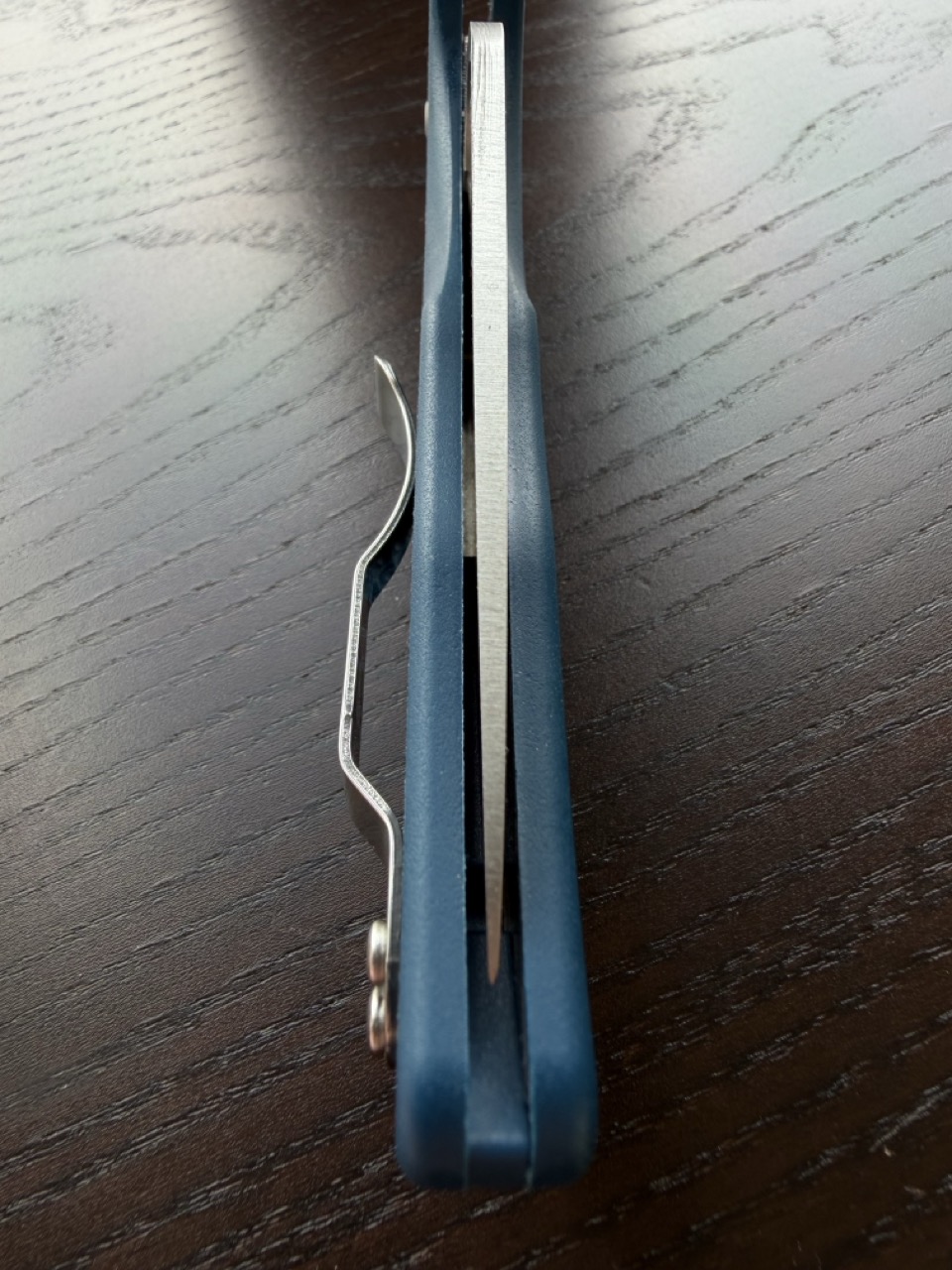
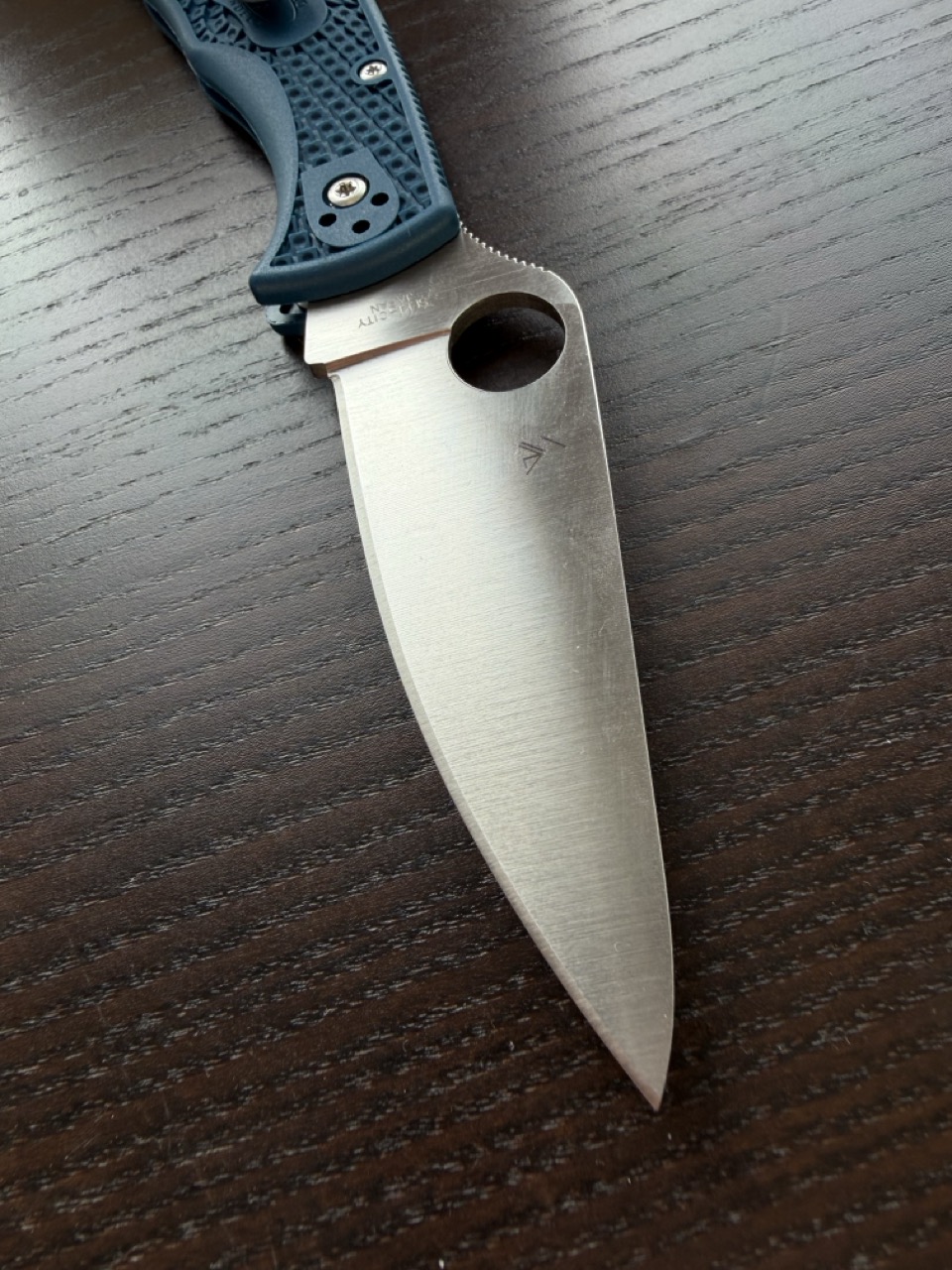
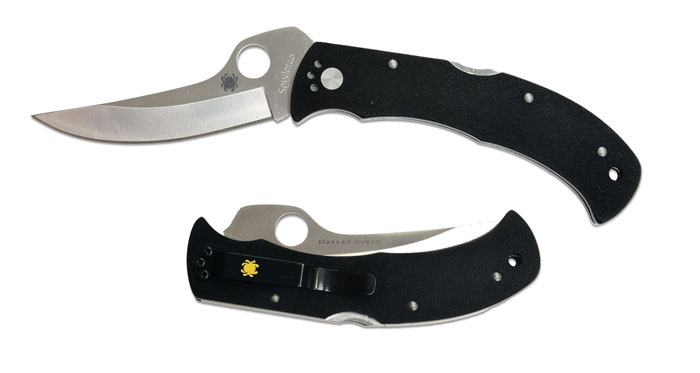
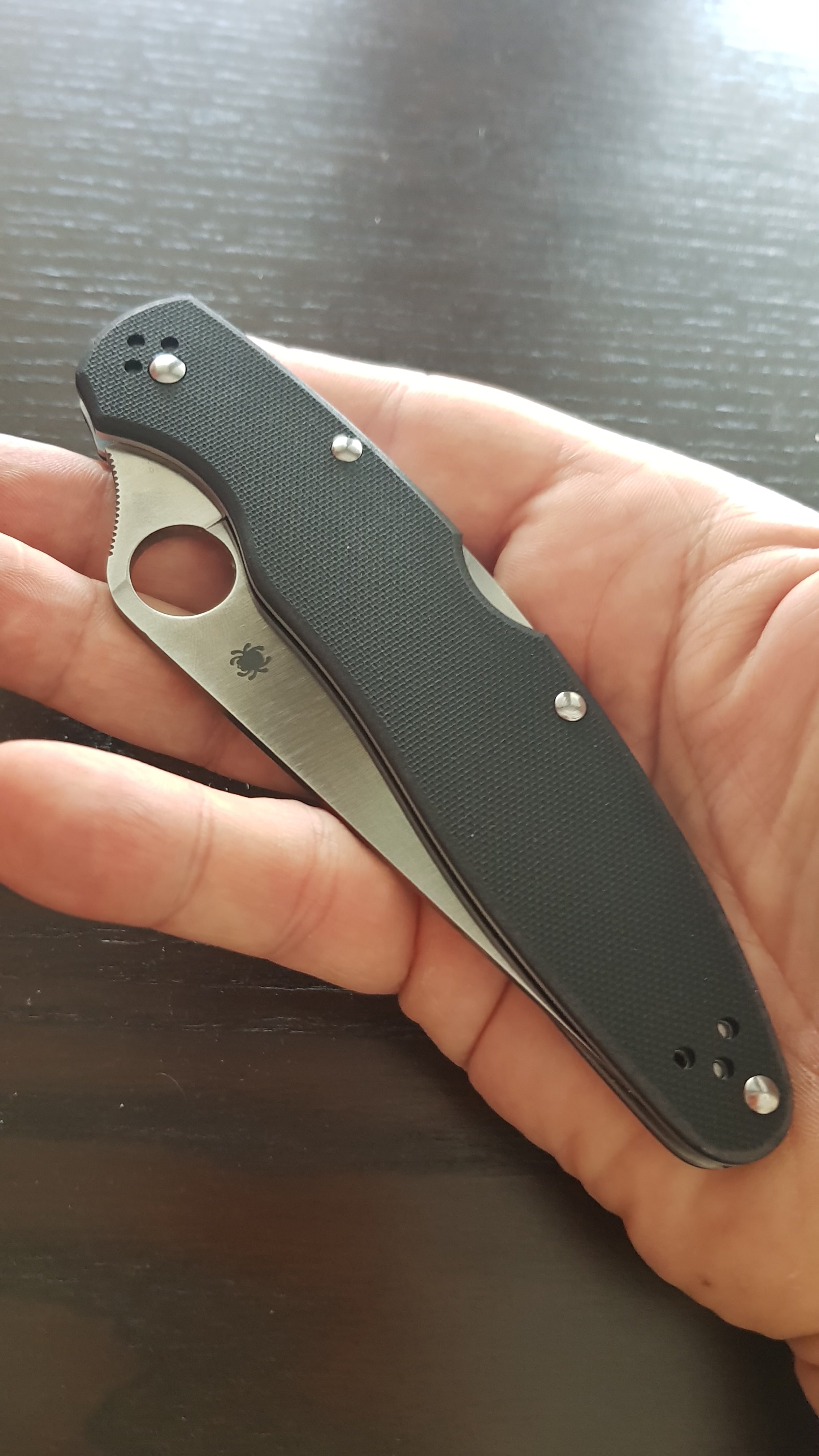
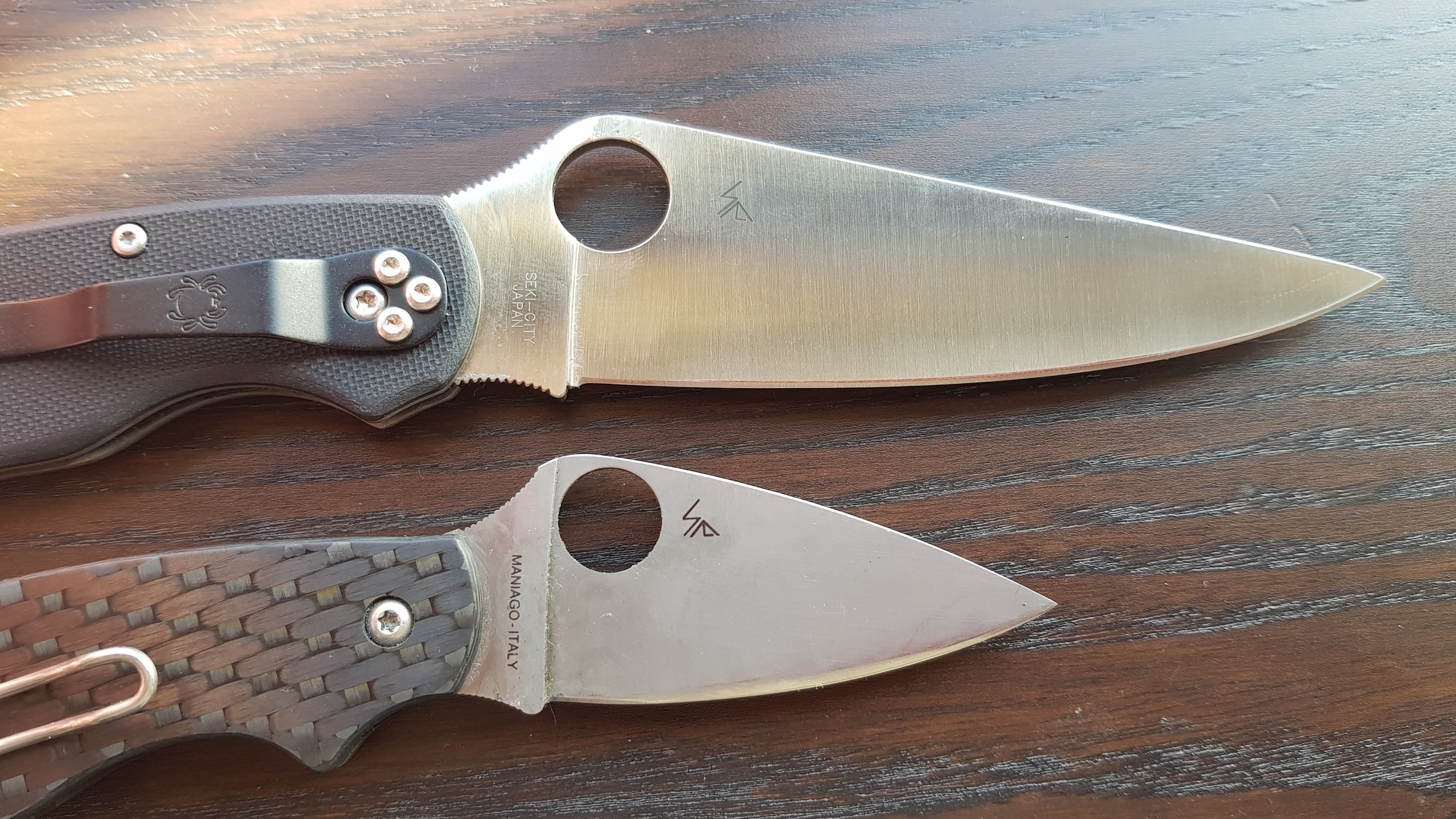
Designed by Sal Glesser, the Endela, positioned between the compact Delica and the longer Endura, has always embodied balance: long enough to command presence, slim enough to disappear into a pocket. In this iteration, its lines were amplified by a full flat grind (FFG), that signature tapering geometry that flows from spine to edge in one continuous, purposeful plane. The result is a blade that slices with authority yet retains the structural confidence expected from a serious cutting tool.
But the true poetry lies in the steel which I have covered in my UKPK article AKA “the Golden Child”.
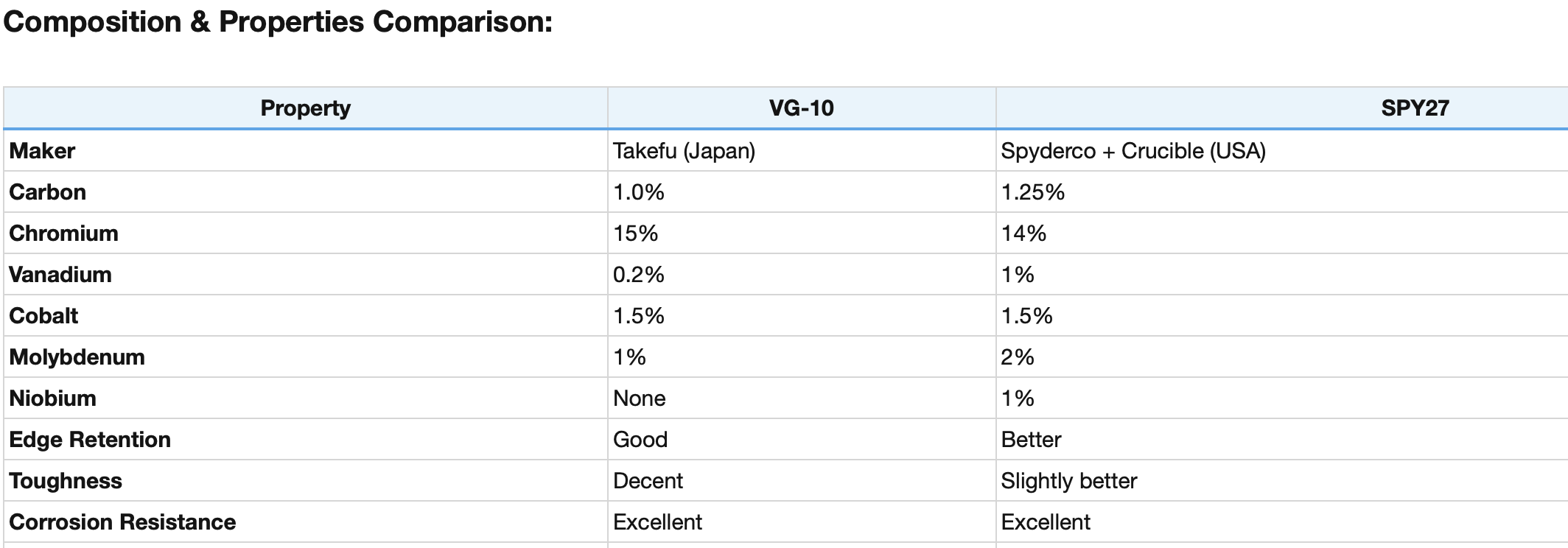
CPM Spy27 is not merely another powdered metallurgy alloy; it is an insider’s composition, born from collaboration and conviction. Developed as a proprietary formula, Spy27 was conceived as a modern evolution in performance stainless steel—often described as a powdered metallurgy answer to the spirit of VG-10, yet unmistakably contemporary in its balance of edge retention, corrosion resistance, and toughness. Engineered through Crucible’s particle metallurgy process—before the company’s bankruptcy reshaped the landscape—it stands as the product of a singular joint venture and a fleeting industrial moment.
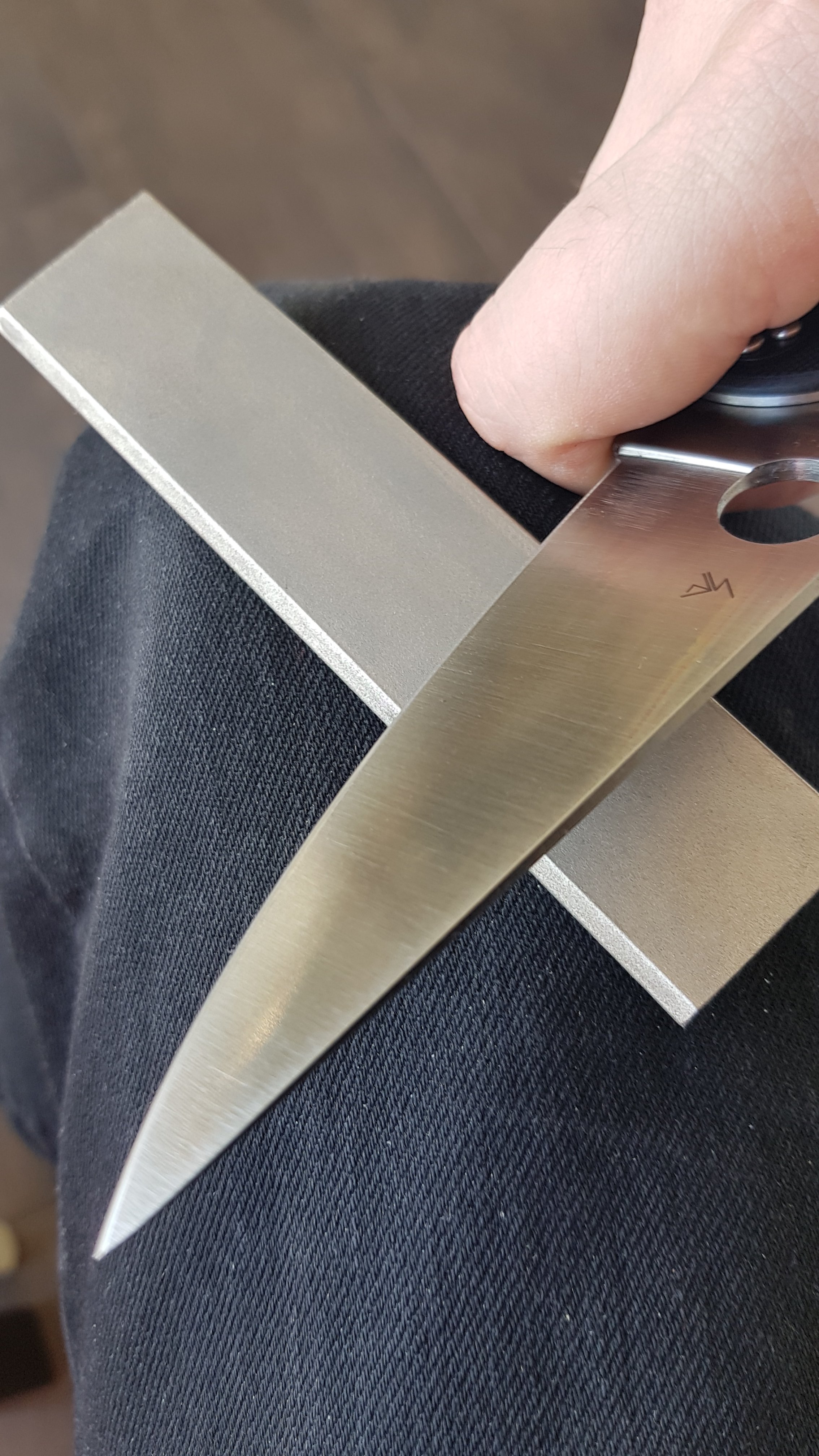
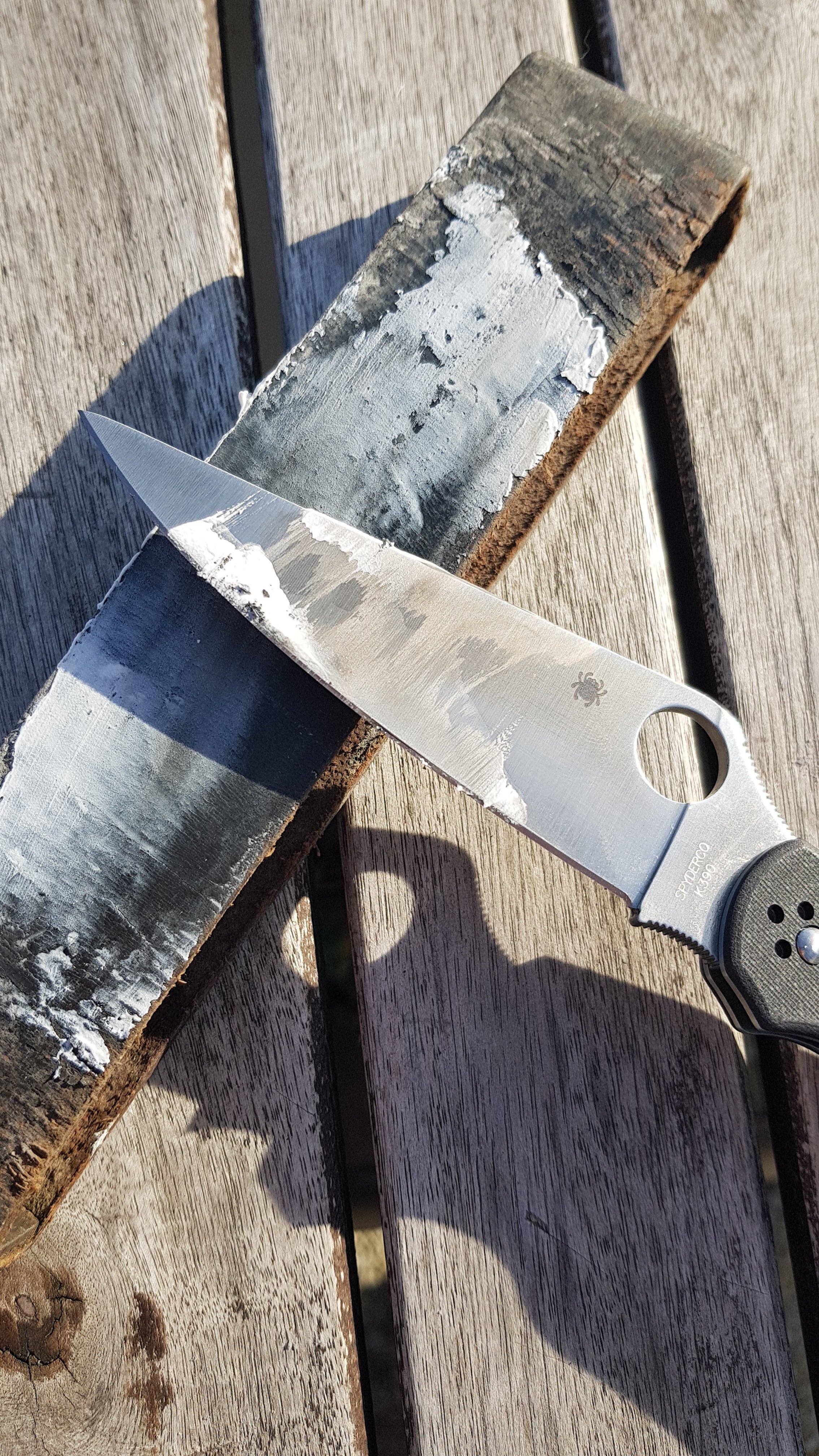
Spy27 is, in many ways, a manifesto: a steel created not simply to follow trends, but to refine the brand’s own philosophy of practical performance. Fine carbides for clean, aggressive slicing. Stainless resilience for daily carry. A hardness profile that rewards precision sharpening while maintaining field durability. In hand, it feels deliberate—neither brittle nor indulgently soft. It is steel tuned to the cadence of real use. And God, it loves leather stropping.
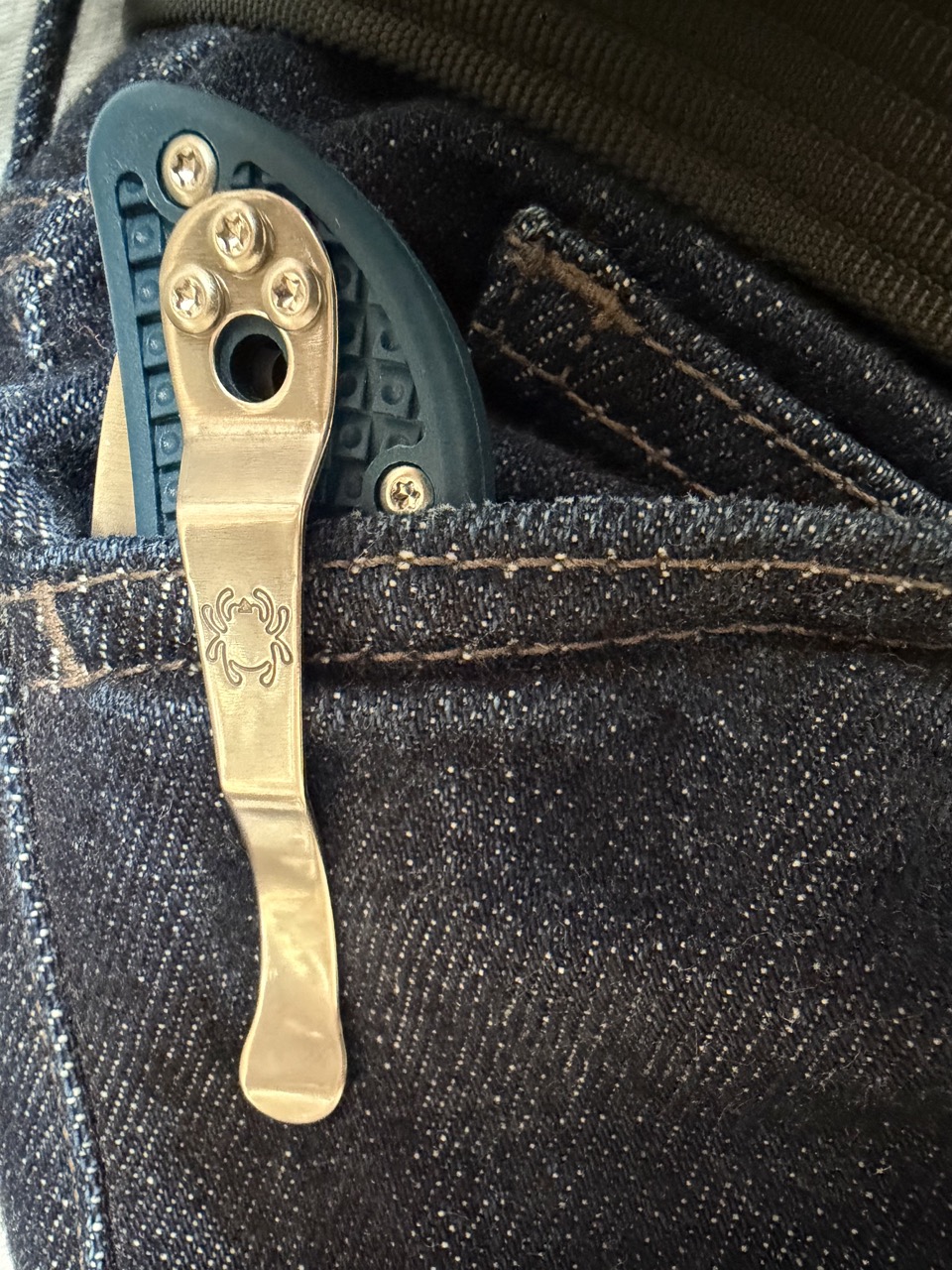
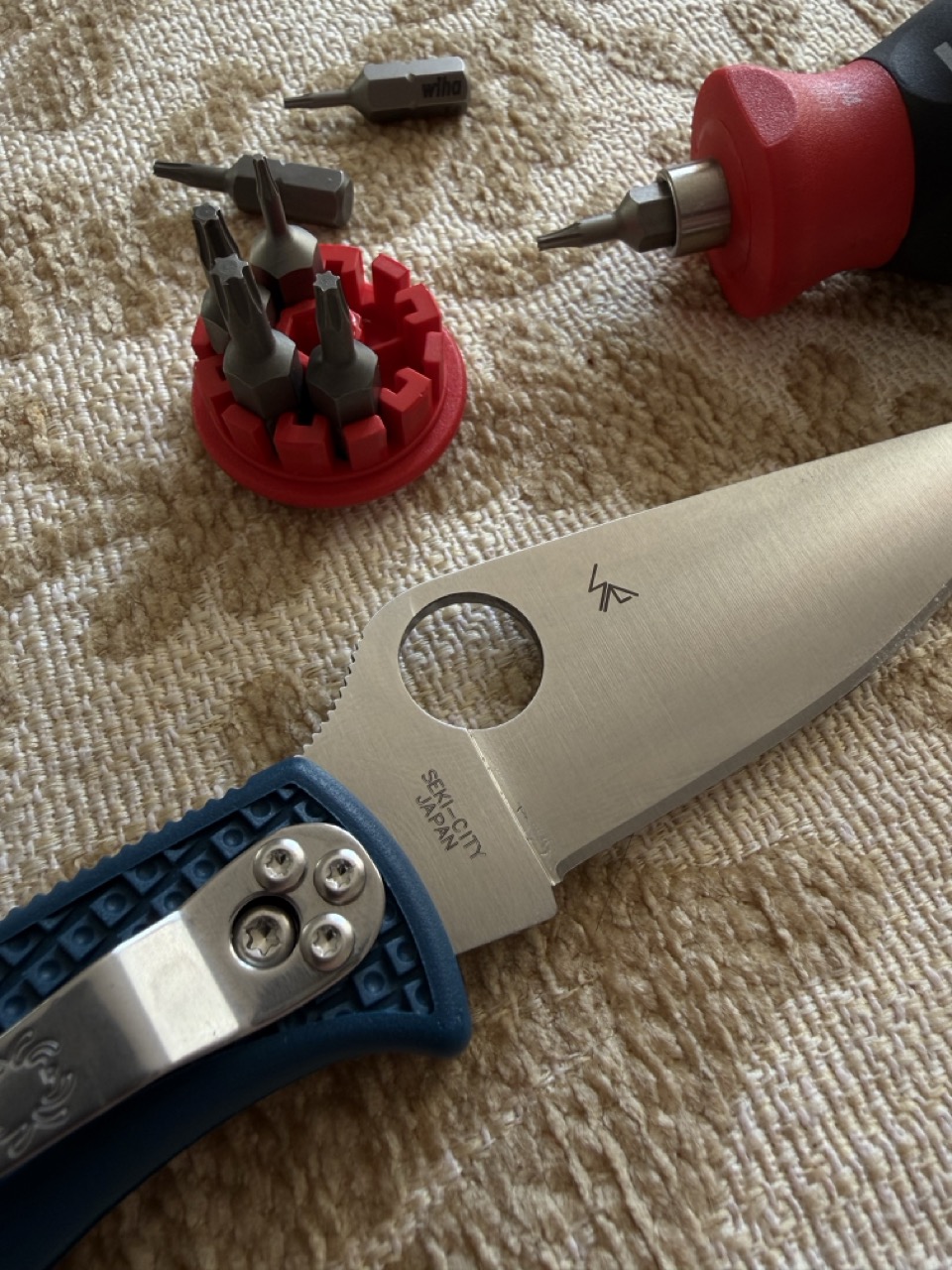
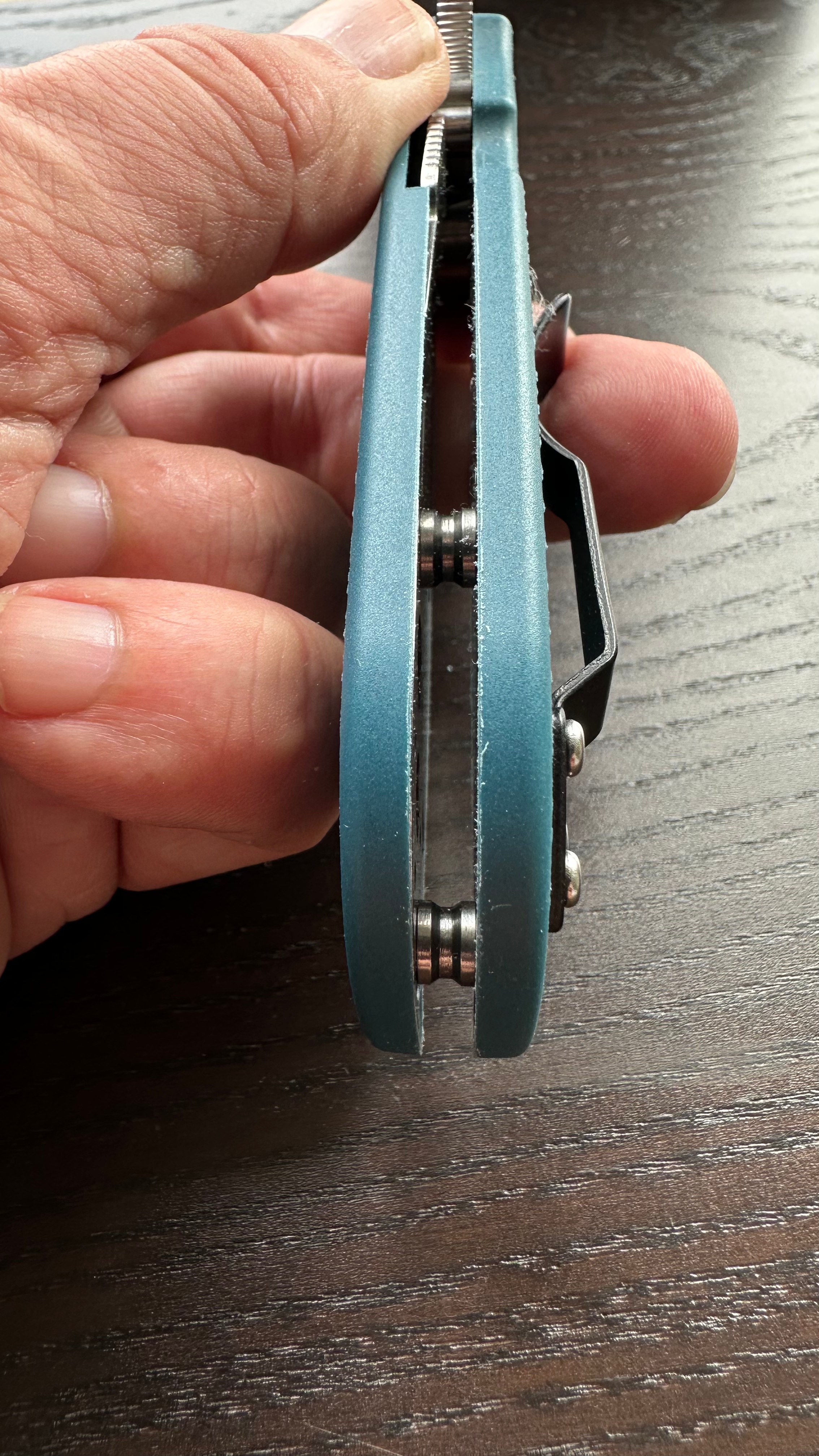
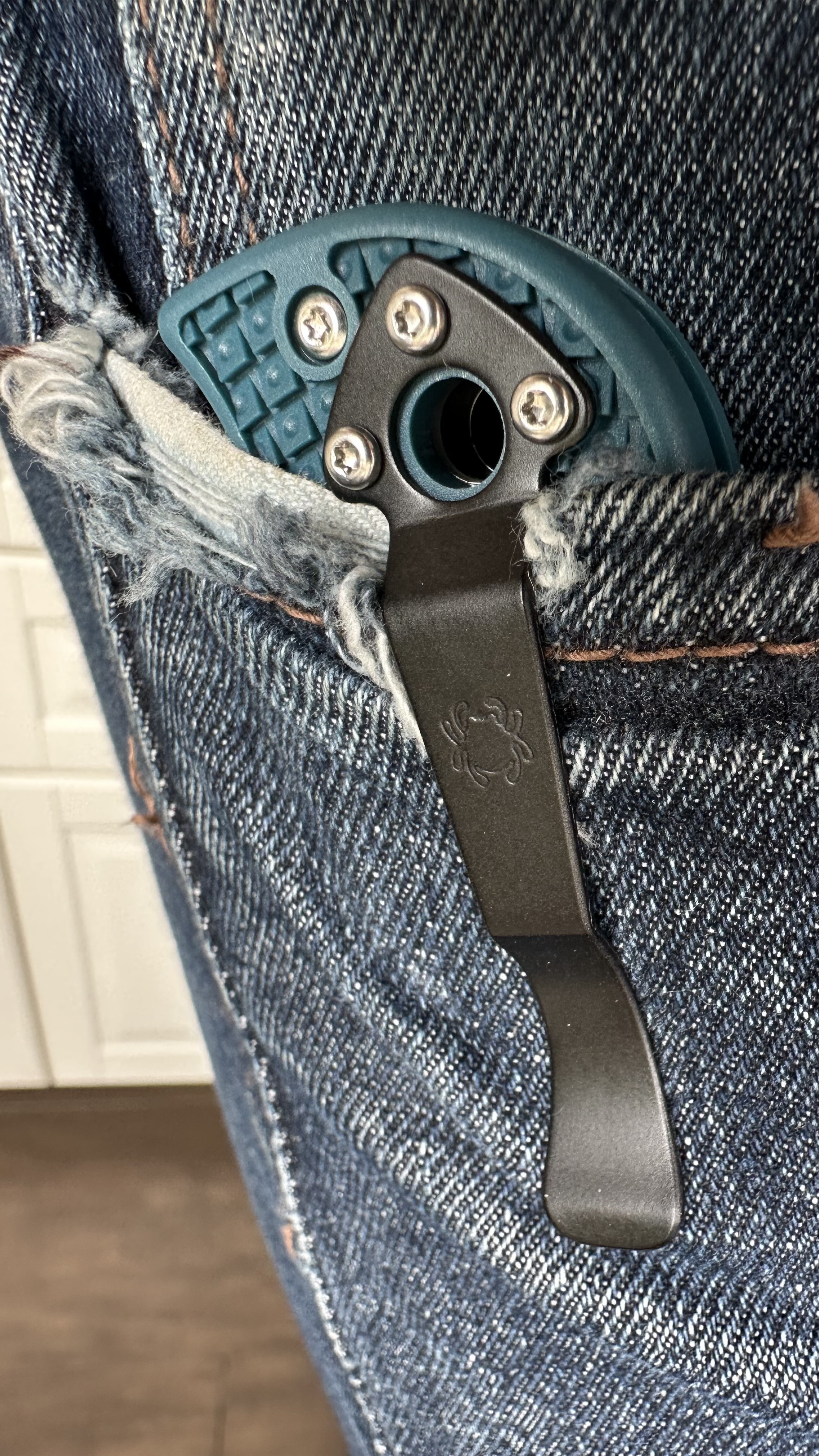
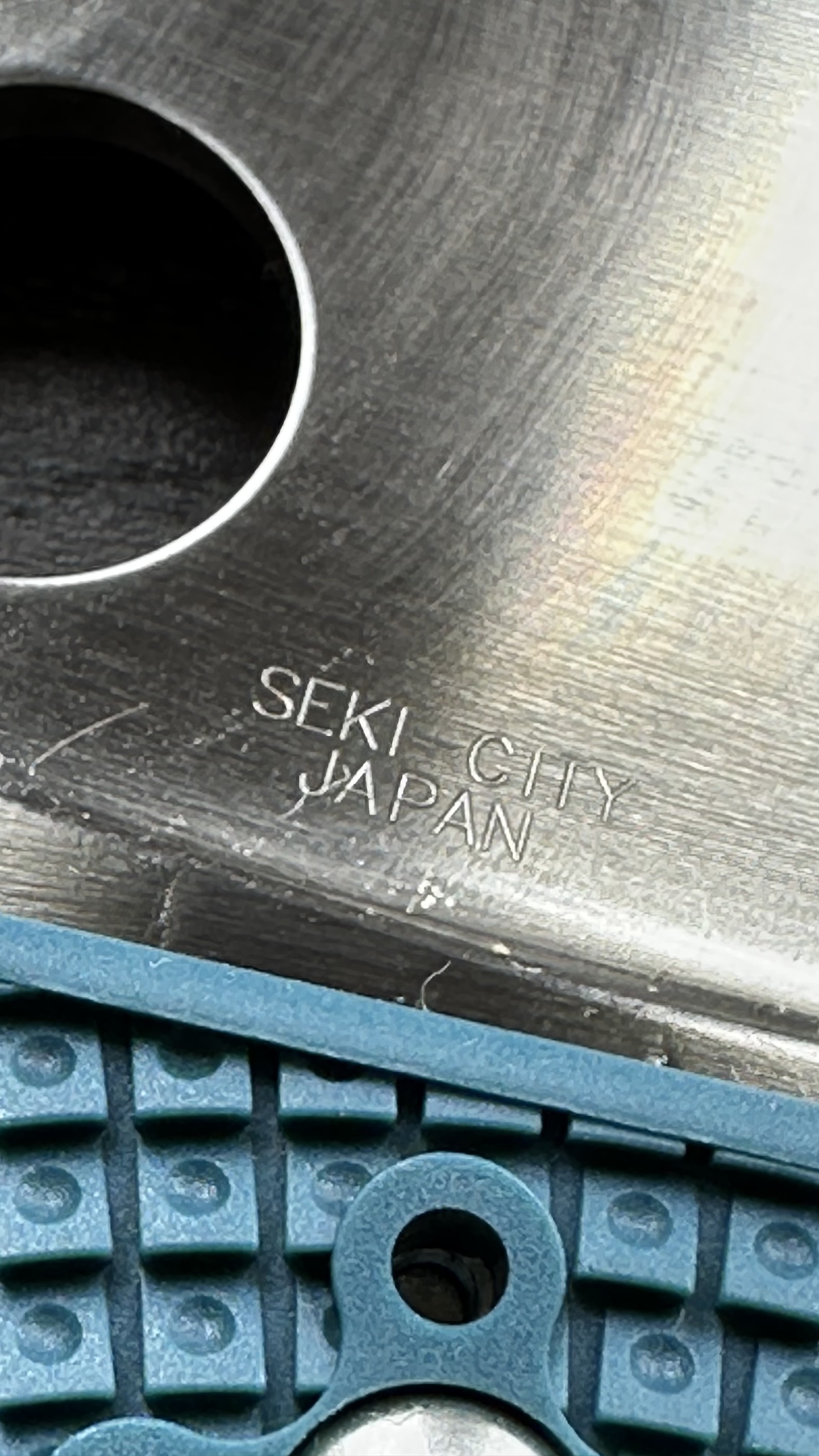
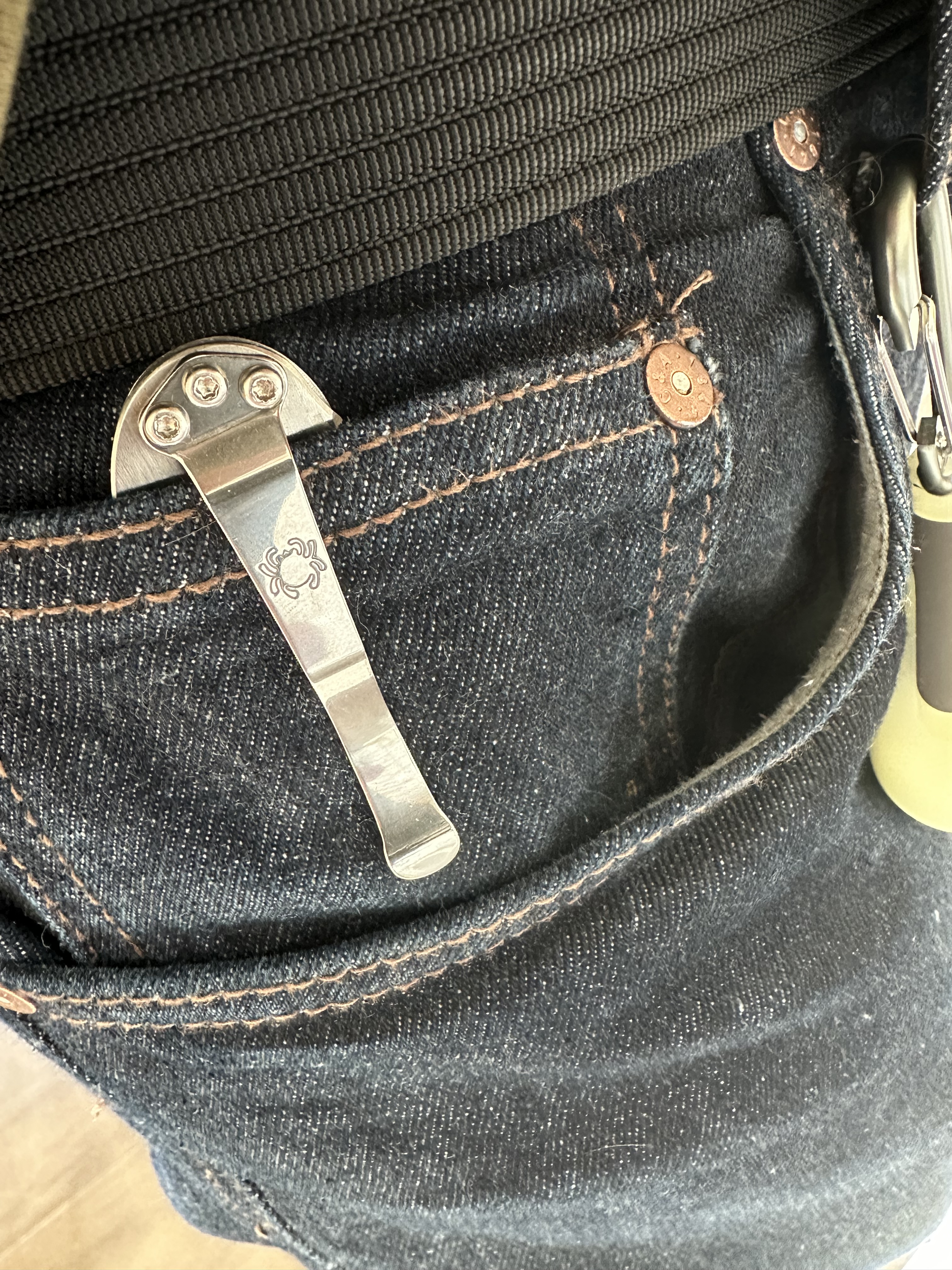
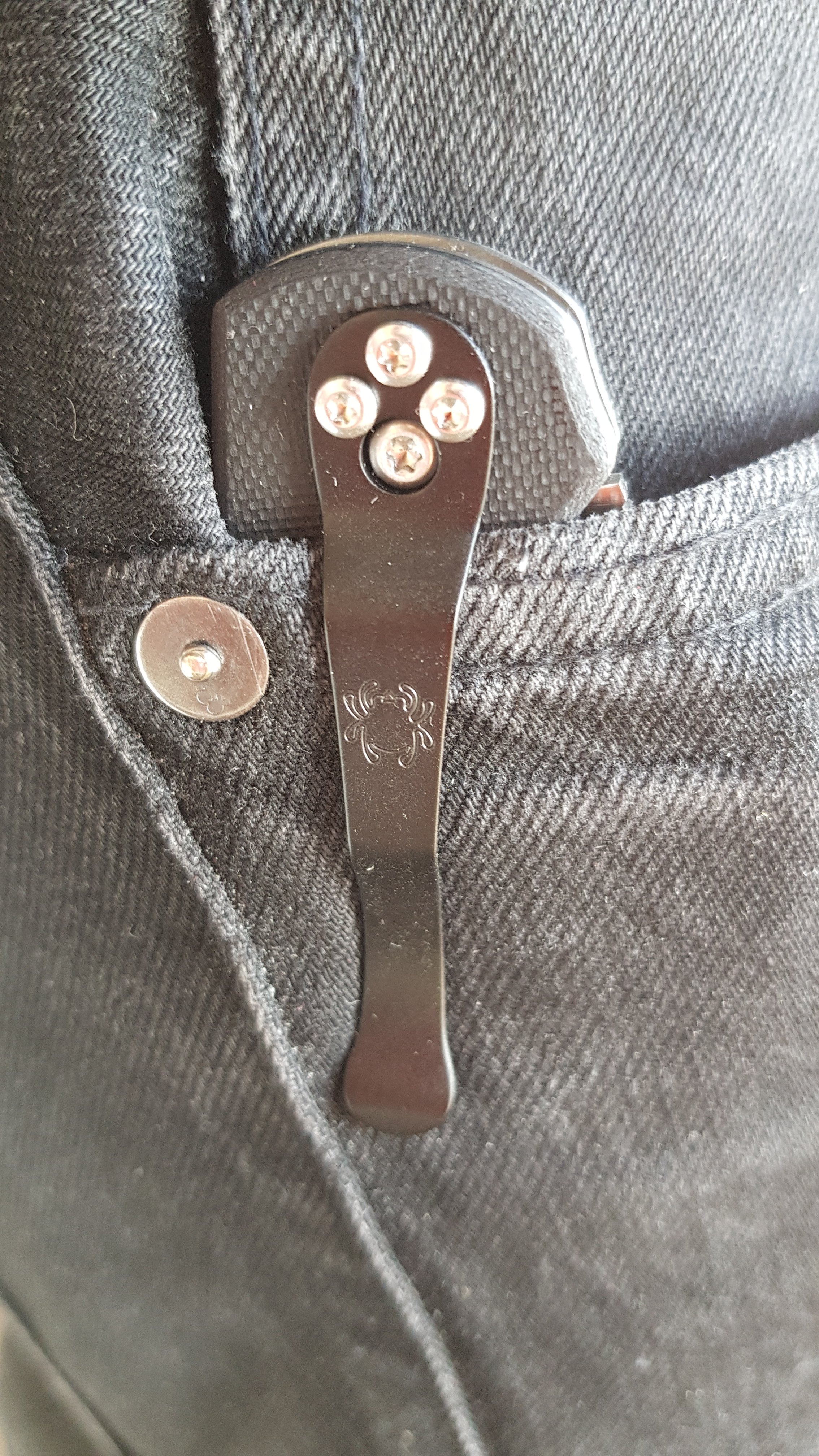
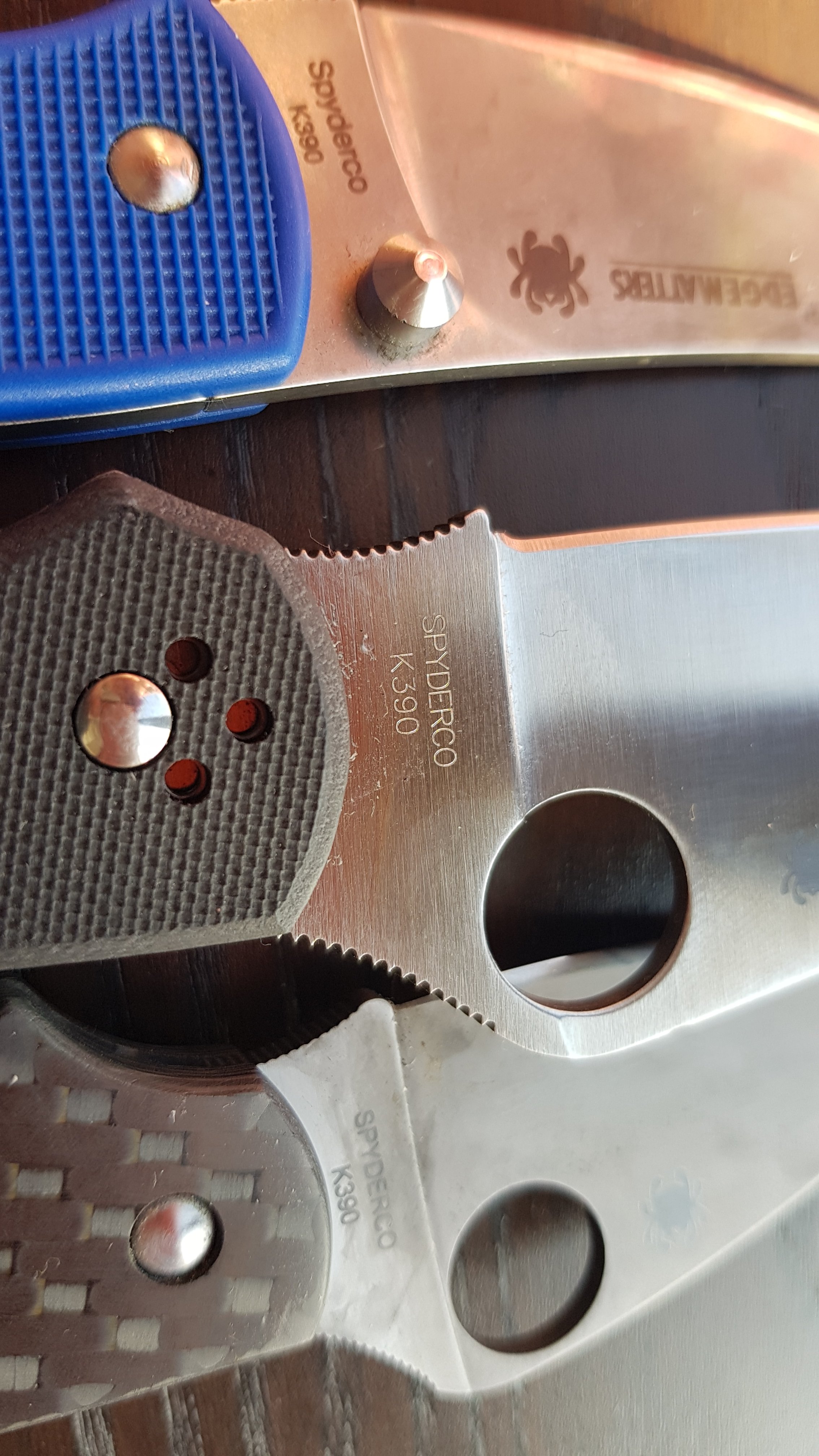
You cannot get more “Spyderco’s roots” than this. Made in Japan (like in the 80’s), paired with the unmistakable round hole—Spyderco’s totemic opening device—and a “spoon clip” ready for pocket carry, the Endela in CPM Spy27 becomes more than a knife. It becomes a statement of identity. The FFG geometry ensures that the blade glides through material with elegant efficiency, while the ergonomics—subtle finger choil, textured scales, carefully considered weight—anchor the experience in control.
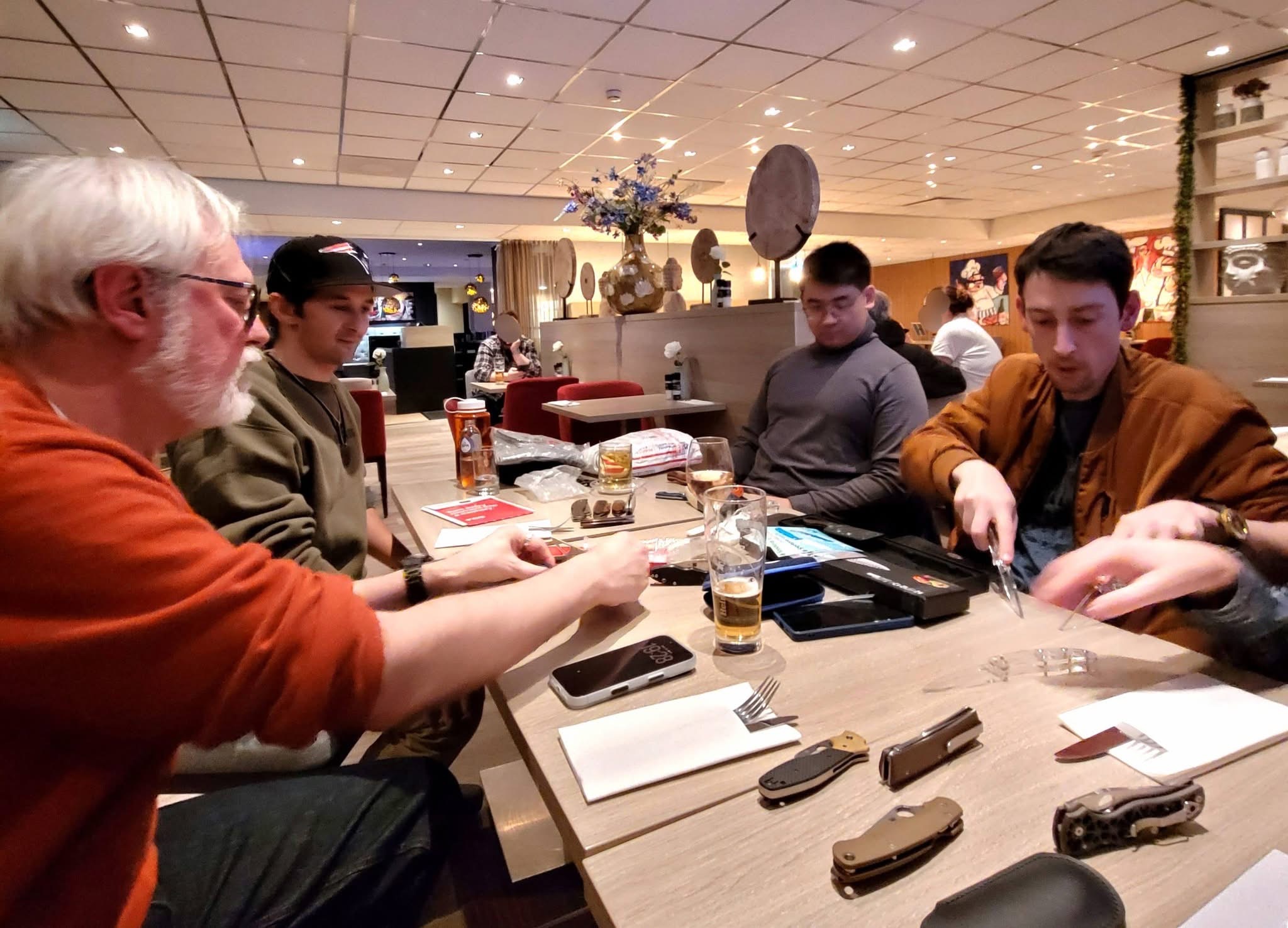
At a Minimeet, the gift is never just about value. It is about friendship. About shared language. About the unspoken understanding between those who appreciate grind lines, heat treatments, and the quiet satisfaction of a perfectly executed edge of our favorite performance knives.
The Endela came out of the box with the kind of edge that makes you pause for half a second before testing it. Not because you doubt it—but because you already know: this is the Way !
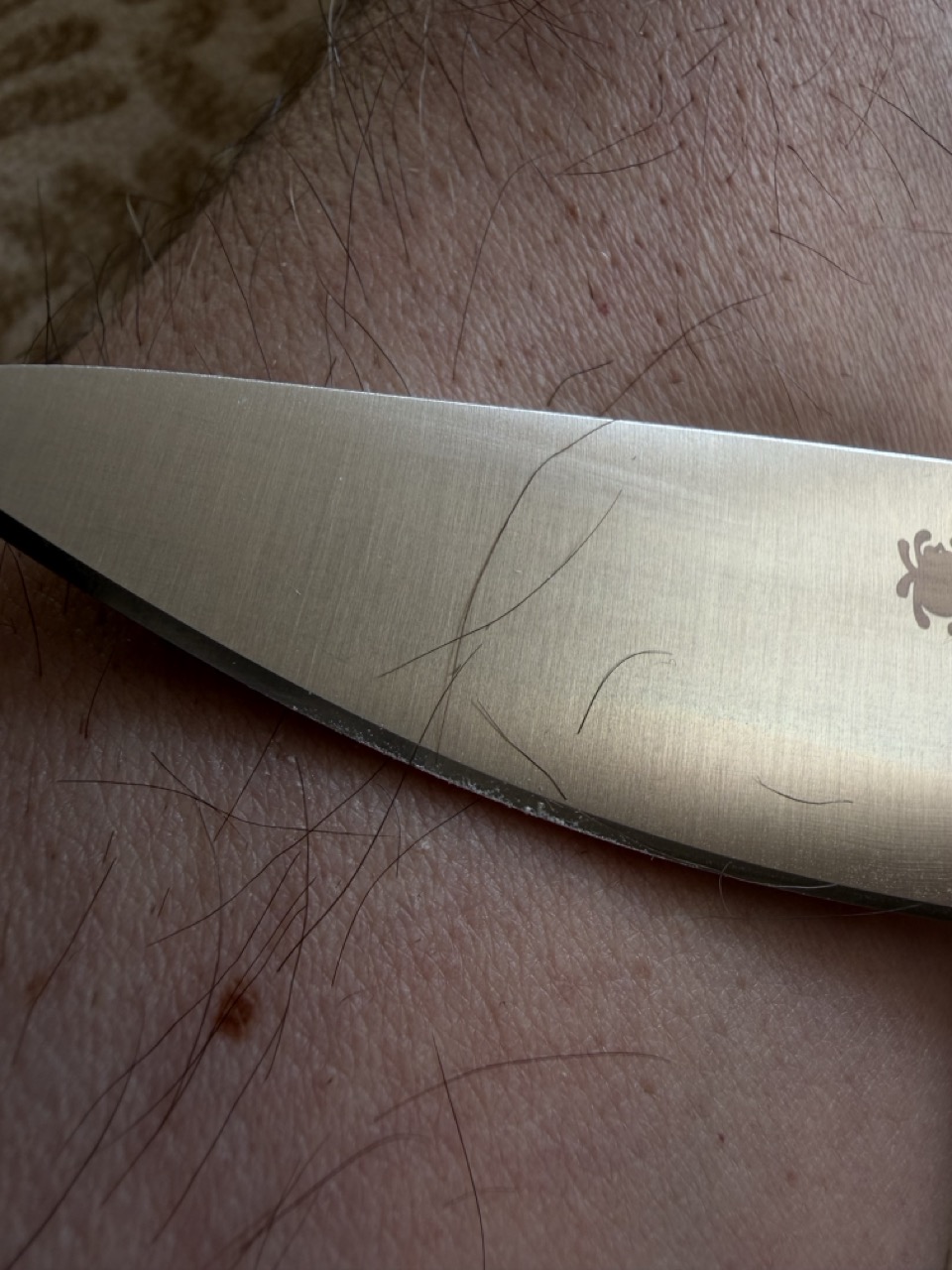
Factory sharpness can be a vague promise in this industry. Here, it was a statement. Kuddos to the Seki factory ! The blade arrived as an aggressive razor, keen and un-apolo-getic, the apex refined to the point where it would silently treetop arm hair without pressure. Not tear. Not tug. Simply pop. Hair fell away at the slightest whisper of contact.
This wasn’t just shaving sharp; it was hair-popping sharp.
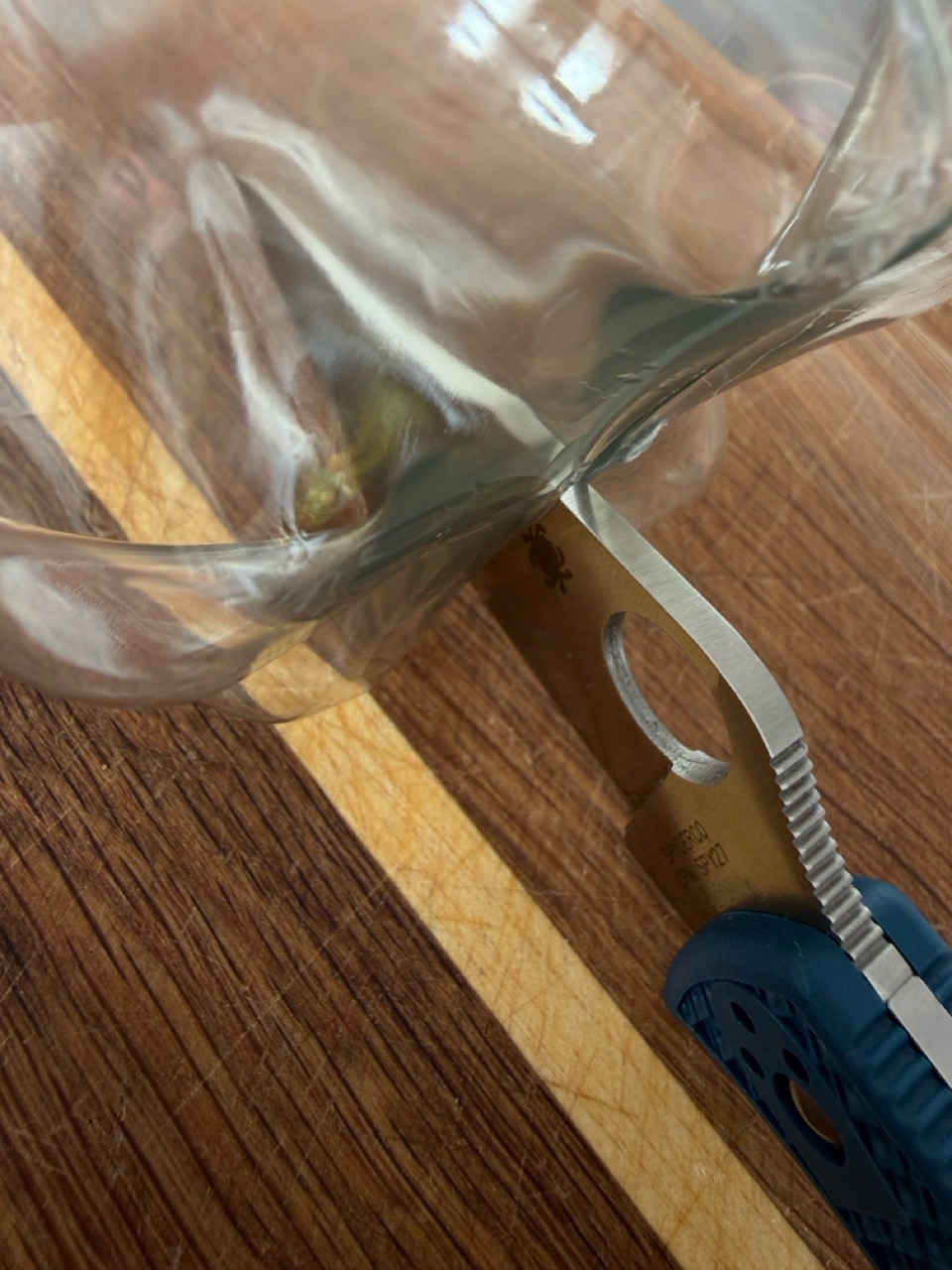
It slices through plastic as though the material had lost all resistance—gliding, parting, yielding without protest. There is a particular sound when a blade meets dense plastic packaging: usually a faint crackle, a hesitant drag. Here, there was only a smooth, uninterrupted whisper. The edge didn’t force its way in; it entered decisively and continued with almost disconcerting ease, as if the medium itself had become incidental.
That kind of performance is not accidental. It is the result of geometry meeting metallurgy in perfect accord.
As my friend Robin observed—accurately and without exaggeration—the level of sharpness coming out of the Seki factories has noticeably risen since the K390 batches. Something shifted during that era. Whether it was refinement in heat treatment protocols, greater consistency in final sharpening stages, or simply a renewed culture of precision, the outcome is tangible. Blades now leave the factory with an apex that feels more deliberate, more aggressive, more controlled.
The legacy of those early K390 runs set a new internal benchmark. What we’re seeing now is the continuation of that standard applied across steels—Spy27 included. The edges are cleaner, the bevels more disciplined, the bite more assertive right out of the box.
This year, which is also the 50th anniversary from Spyderco, that understanding came wrapped in Spy27. So what do we got: A steel born of collaboration. A grind that defines a house style. A silhouette instantly recognizable across continents. For the 19th Minimeet of 2026, the Endela was not simply offered—it was bestowed.
And in doing so, it reaffirmed what true connoisseurs already know: luxury is not always gold and gloss. Sometimes, it is the cool, matte sheen of a perfectly ground blade, engineered with intent and carried with pride. Thank you for that beautiful gift.
Disclaimer: before going further I need to precise that this knife has been sent to me for free by Golden as part of their brand ambassador program. I thank Spyderco for choosing this little blog and for their trust in my reviews.
“The Lil’ Temperance has been a 20 year personal project. We planned an FRN version 10 years ago, but because it is a smaller market to serve, and I wanted to epitomize the concept, the progress was slow. We changed the design, locks, clips, patterns, etc. Made many prototypes over the years.
The “Spirit” of the design has remained the same. Essentially, a tough, legal 3″ blade MBC folder. Along with my own experience, I had input from James Keating (the Riddle of Steel), Bob Taylor (Warrior designer), Mike Janich (whom we all trust and revere), Bram Frank, Craig Douglas and Laci Szabo.
The first runs made for an interesting design, that was effective for two grips. Then I altered the design to also serve Pikal concepts (forward edge up and reverse edge in.), which was not incorporated in the original design. I’m looking forward to the FRN version. sal“
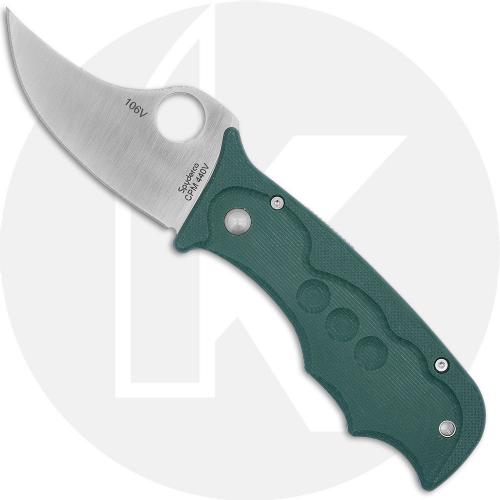
My first Lil’ Temperance was a “Rhino” — the nickname for the C69 full-flat-ground trailing point blade. That model was released 25 years ago. At the time, I also gave it another nickname: the Lil’ Chinook, after James Keating’s Chinook — a stout folder with a thick trailing-point blade made from CPM440V.
I even found a picture from Knives Plus to document it:
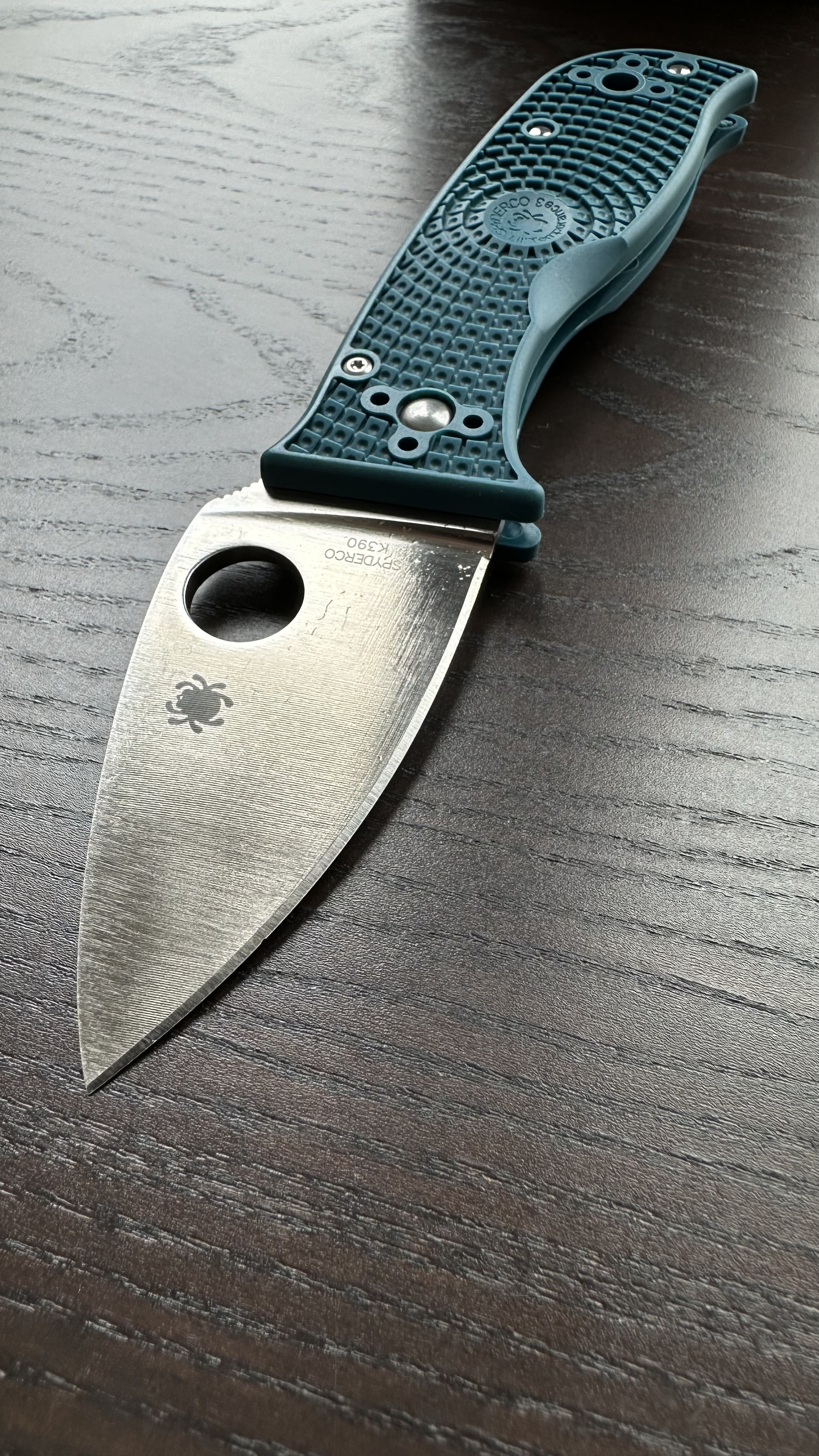
That folder was also available in Leaf Shape Blade like this new K390 just received from Golden today.
Twenty-five years ago, Sal Glesser was deeply influenced by the Martial Blade Craft approach. During that period, he designed the FB05 Temperance, a fixed blade in VG10 made in Japan with combat applications in mind. A trainer version was also available, featuring a red handle and a dull, skeletonized blade.
Sal also created a folding companion: the very stout Lil’ Temp C69, made in S60V (440V) in Golden. It was marketed as “a compact yet heavy-duty folding knife suitable for defensive use.”
Both the FB05 and the Lil’ Temp C69 featured round marks in their handles to facilitate quick grip changes — for example, transitioning from an icepick grip to a hammer grip — a key element in knife fighting. The C69 even had a special clip designed to match its three craters, showcasing the new in-house Compression Lock. The first iteration was extremely strong, often painfully pinching the skin between thumb and index, but in every other way, it was a true “folder on steroids.”
I don’t advocate using knives for defense; they should be a last-ditch option — the very last weapon you’d want to rely on. Historically, knives have always been tools of attack, from backstabbing to throat cutting, not instruments for self-preservation.That’s why I was glad to see that the Temperance II shifted toward a more “camp utility–oriented” design. The current Sprint Run of the Lil’ Temp I features a CPM Cruwear blade, which emphasizes tooling performance over combat potential. Unlike a VG10 blade, which could be used as a weapon, Cruwear is designed to stay sharp reliably over time — a knife for work, not just to be sharp once and used in aggression.
The K390 version of the Lil’ Temperance 3, following the path of the VG10 model, continues this shift from weapon to tool. Gone are the rotating points on the clip and handle; the focus is now purely on utility. With K390 steel, the knife becomes a genuinely tough, long-lasting edge tool — a folder built for work rather than combat.
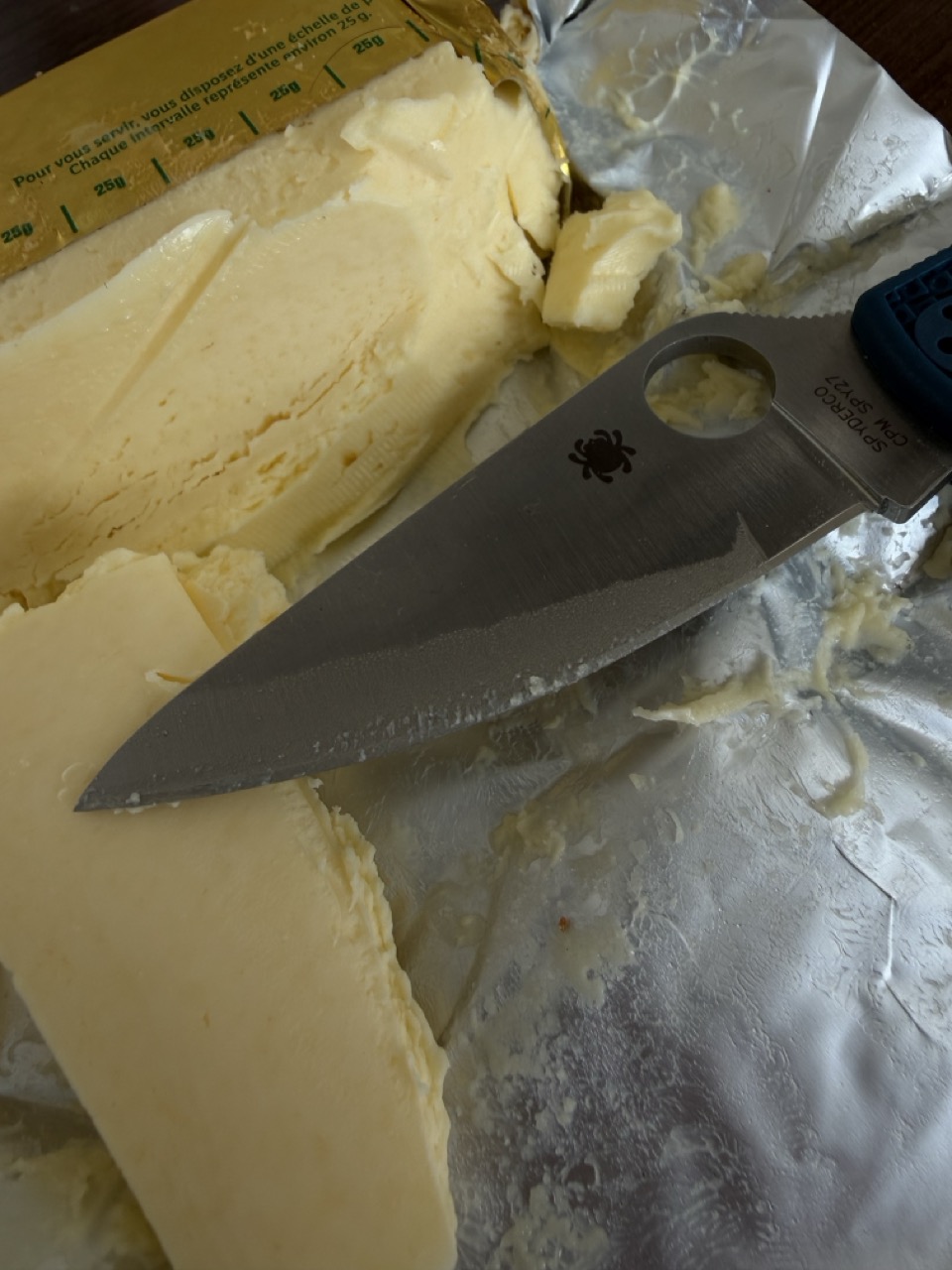
That 4 mm-thick blade with its high full-flat grind really begs to be used hard — it inspires confidence in every cut. Its leaf-shaped profile would even make it an excellent Parmigiano knife, allowing you to twist the blade into the cheese to fragment it with ease. 😉 For reference, the Millie and Shaman feature slightly thinner blades at 3.7 mm.
K390 is simply a great steel. Period. I’ve already written extensively about it — for those interested, here’s a link to one of my detailed reviews.
In short, K390 is a high-vanadium tool steel with outstanding wear resistance. It can hold an edge through extended wood carving, feathersticking, or fire prep. Although K390 is non-stainless and will develop a patina, it is forgiving, strong, and maintains a razor-sharp edge for a very long time.
K390 is made for workers who need a reliable tool and know how to care for their blade. It responds exceptionally well to leather stropping, which helps maintain its edge. (For reference, the upcoming CPM Magnamax is expected to be a stainless version of K390, similar to how CPM Magnacut relates to CPM 4V.)
Keep in mind that K390 loves to patina and will rust if left unprotected. A light coating of mineral oil — like the kind sold by Ikea for cutting boards — is an easy and effective way to keep corrosion at bay.
I noticed a small nick on the out-of-box factory edge. No big deal — it happens, especially since the knife had just been “chipped” to France. 😉
To fix it, I reached for my Spyderco Stuff 2 and Fällkniven DC4 diamond stones. I worked the blade carefully, avoiding the edge on leather, until the nick was no longer visible. A few passes on a white ceramic rod brought the edge back to razor sharpness. Ten minutes later… the Lil’ Temp was ready for action.
It’s now impossible to spot the chipping — or maybe it was a slight bend. Either way, it’s fixed. I’ve seen the same issue with my Tenacious in M4 after it hit a stone floor, and once again, diamond stones worked their magic.
K390 behaves similarly to CPM-M4: it’s forgiving and easy to maintain despite being a stellar alloy. While I love CPM-15V for its toughness, it’s a bear to sharpen, whereas K390 is much easier to fix.
That said, K390 is still non-stainless: it will pit and rust if neglected. Take care of it. I know plenty of people who would struggle — they throw their knives in a toolbox and never clean them. K390 is not for them. But for those who maintain their tools, it’s a super duper steel that rewards proper care.
The Lil’ Temp has no choil, which means you rely entirely on the handle for grip and control. I love choils on slipjoints, where there’s no lock and you often grab the folder by the blade. But on a reliable locking folder, a zero choil works perfectly.
The Compression Lock is ultra-reliable, strong, and designed to prevent accidental disengagement. You can depend on it completely — there’s no fumbling, no second-guessing.
That thumb ramp is wide and a perfect comfy spot for your thumb or for that tender web skin between the thumb and the index finger. The action is smooth but as smooth as the Sage5 or the Millie 2. No vertical play. No pinching. Drop chute after a little wrist flick. The opening arc is a little wider on this one due to the placement of the hole a little far from the axis but the Spyderflick is easily done. It is fidget pleasant folder ! I don’t think it is good for tip down carry and “spyderdrops” as the guard is a little to wide. But for tip up carry and middle finger’s flips, it is perfect. The relatively thick handle is really comfy even when squeezed. So far I have not find any hot spot. I will certainly sand the edge off the FRN but nothing is really needed, it is just my taste in smoothing everything.
Lightweight ? Not really at 108 grams for a 3 each blade. Only 5 grams less than the G10 version. This “Lightweight” version has kept its two recessed skeletonized stainless steel liners (when the Para3 Lightweight, for example, ditched them). Here, only the G-10 scales has been replaced by two beautiful thick blue scales. This color is really sheeple friendly and the wife already likes it. The black clip is also a very nice touch. This folder oozes some very toolish scents: this is a work poney !
The open construction of the Lil’ Temp also makes it very easy to keep clean. You can rinse it and quickly check for any dirt or debris, which is especially useful after outdoor or kitchen use.
The heavy-duty clip is built for work. That FRN handle can be a pocket shredder — no doubt about it. Sanding the FRN scales doesn’t change that in my experience. This is a true blue-collar folder, meant to be clipped in solid pockets and relied upon day after day.
The knife is enough compact to jump into the watch pocket !
« I bend the clip slightly on almost every knife I carry.
I usually take something wedge shaped and slide it under the clip a small amount at a time until I get the bend I like. Not everyone will like the same bend so incremental bending works best. I like very little resistance in retrieving my knife from my Right-Front-Pocket. Just enough to keep it from falling out of my pocket. YMMV.
sal » That’s a game changer and pocket savior once you have found the sweet spot of clip retention.
Once a samurai, now a wandering ronin. Once a self-defense knife, now a powerful tool. Regardless of its past, the Lil’ Temp is a true gem — thoughtfully designed, finely crafted, and made in Japan.
“The maker said it was a very difficult model to make, and for him to say that, I’m guessing it’s true. They’ve been making our knives since 1980. I worked with the Grand Father and the Father and Eric works with the son. I think we’re fortunate to be able to bring the model to you.
Sal“
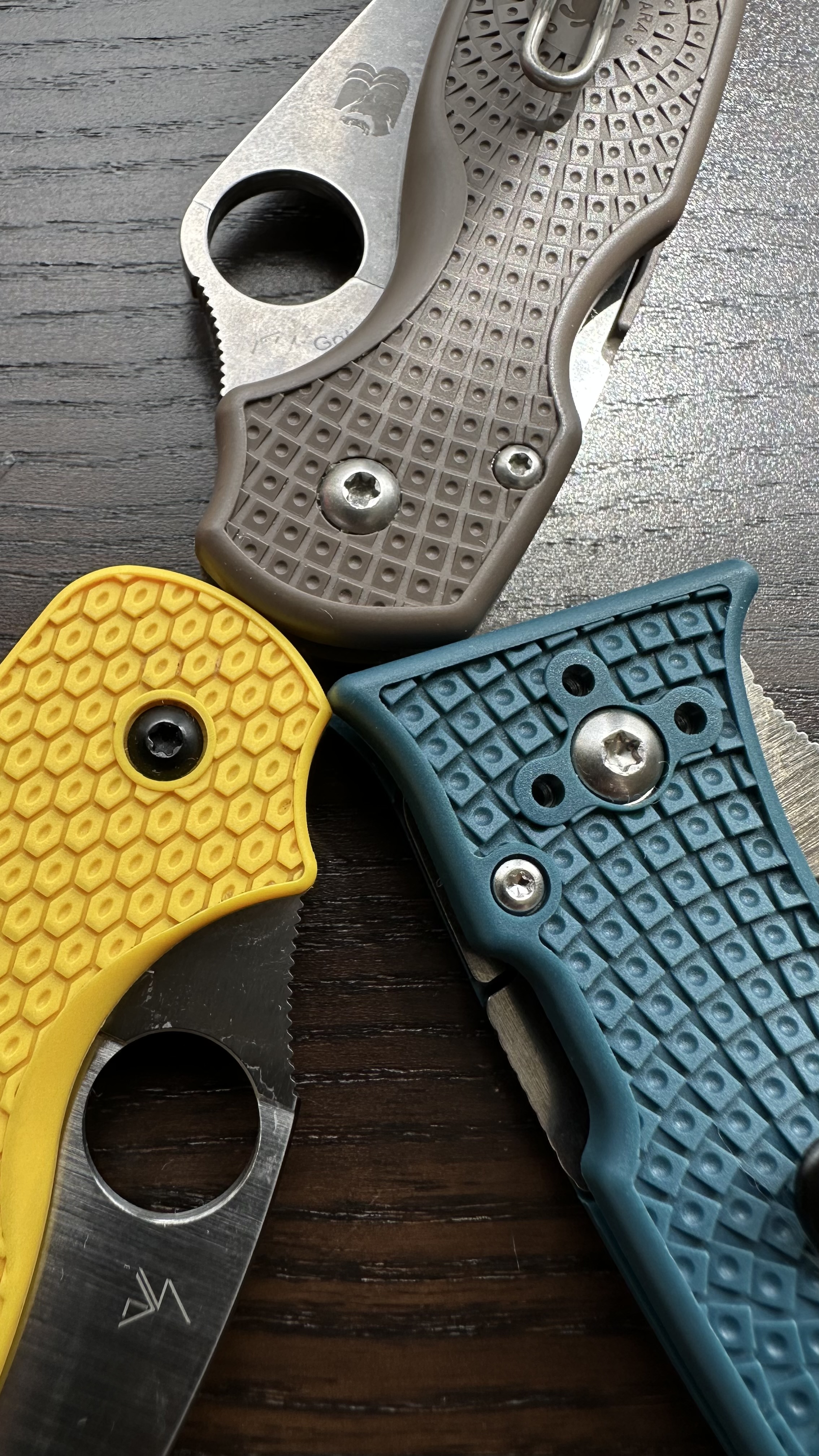
Sharing the same FRN pattern as the Golden-made folders, the Lil’ Temperance features a larger pivot screw than the Para 3 and Sage 5 (made in Taichung). Despite its small size, the lack of a choil gives it plenty of usable edge.
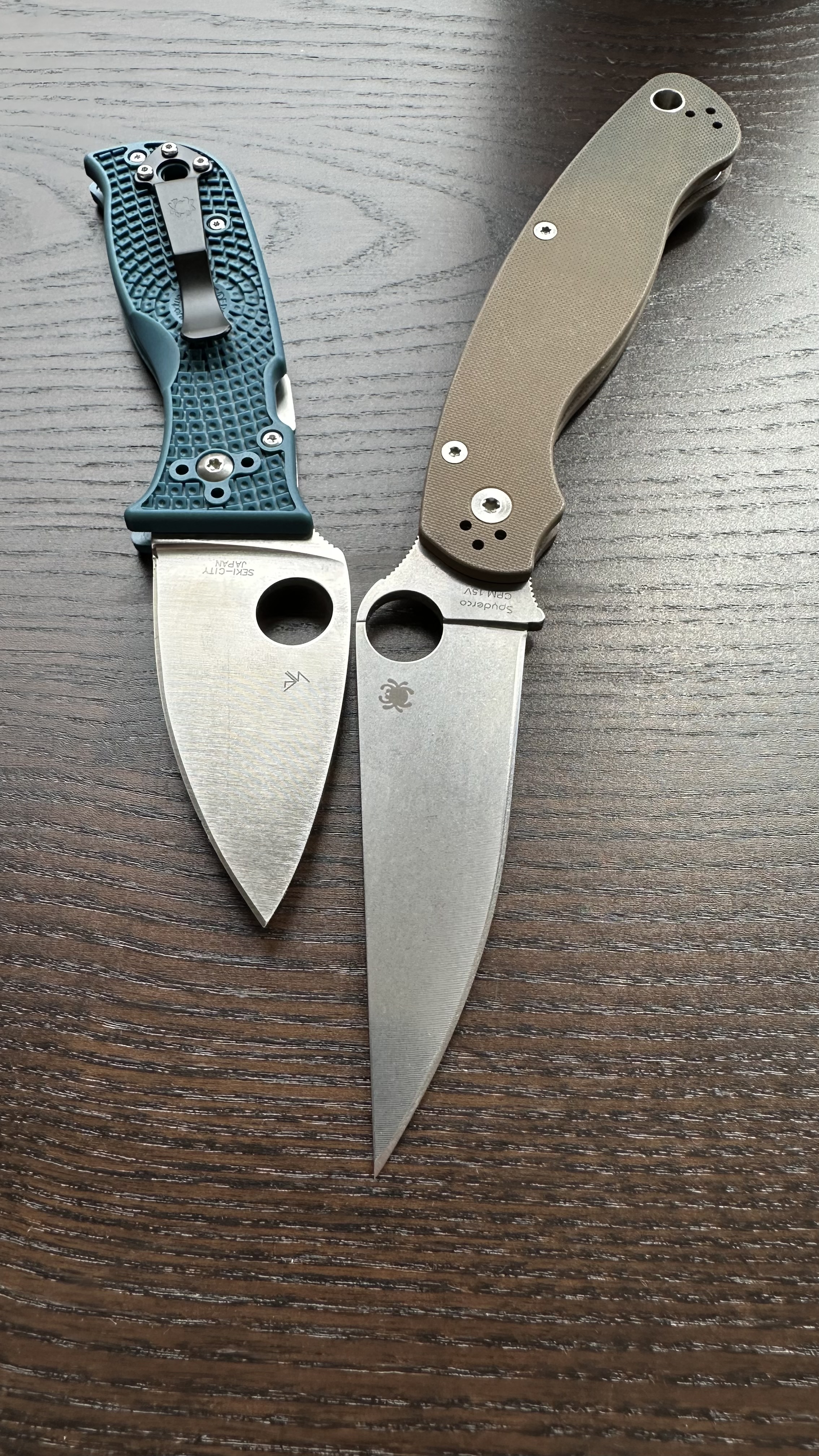
Edge-wise, it’s impressive: the Lil’ Temp offers virtually the same cutting edge length as the larger and heavier Manix 2, all within a form factor similar to the Para 3. Its “no choil” design is reminiscent of my Tenacious, maximizing the usable blade while keeping the knife compact.
The blade length is just shorter than 3 inches with 74mm. It is not designed to reach the heart between the ribs. It is designed to work hard on various materials. It is designed as a formidable “hard use” cutting tool.
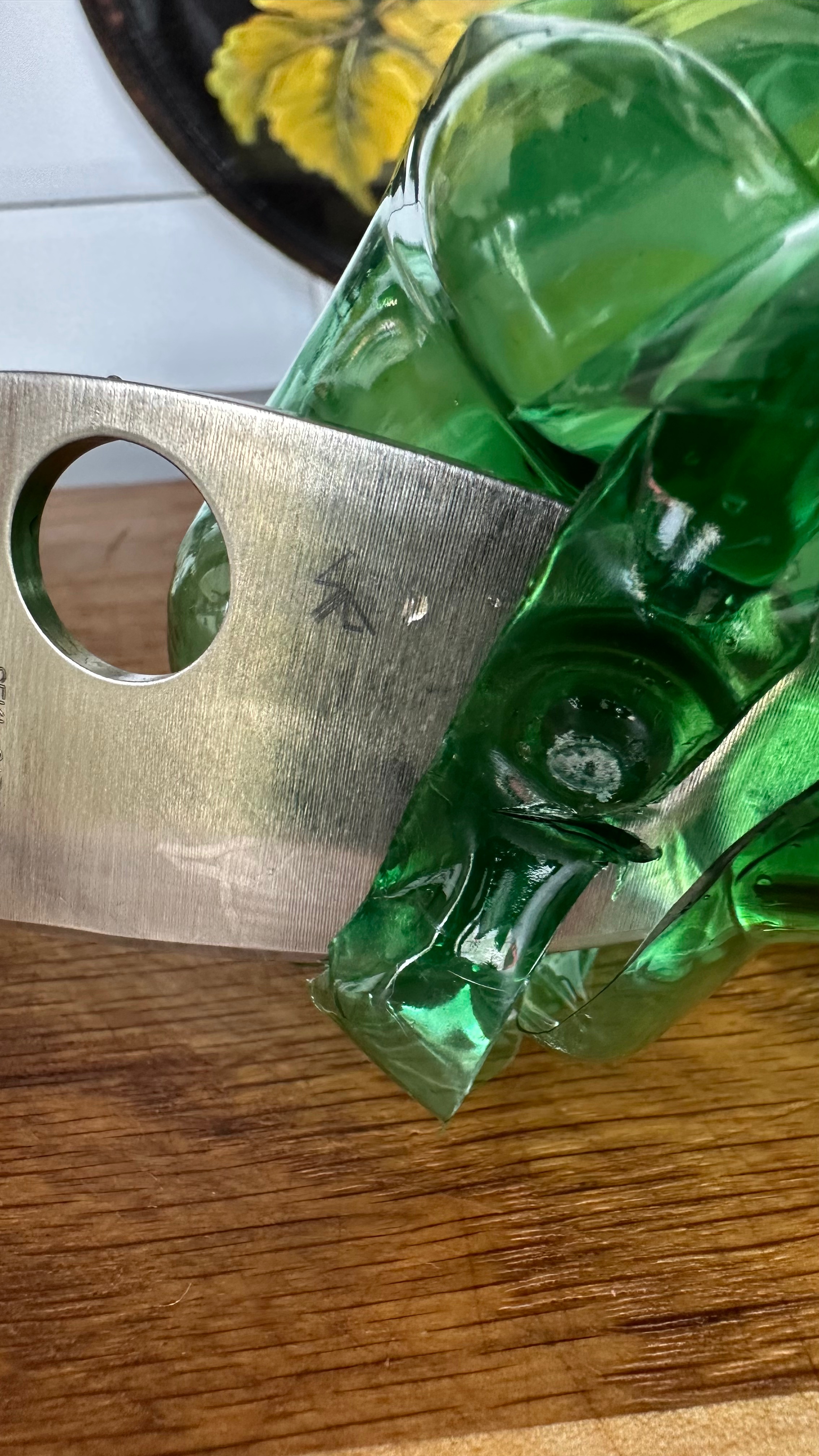
See how the poor bottle falls apart under the Lil’ Temp’s edge!
I remember seeing the Spyderco Police showcasing K390 — a knife originally oriented toward martial use, gradually drifting into more practical, tool-like applications. I’m glad to see the same evolution with the Lil’ Temperance: “Although rooted in Martial Blade Craft design, it provides reliable, full-service performance for any cutting task.”
And it doesn’t hide its abilities. Compact though it is, it’s unapologetically loud about its cutting power.
I couldn’t agree more — this is shaping up to be a truly tough, little big knife, perfect for Part 3 of my adventures. But don’t forget the Part 2, first.
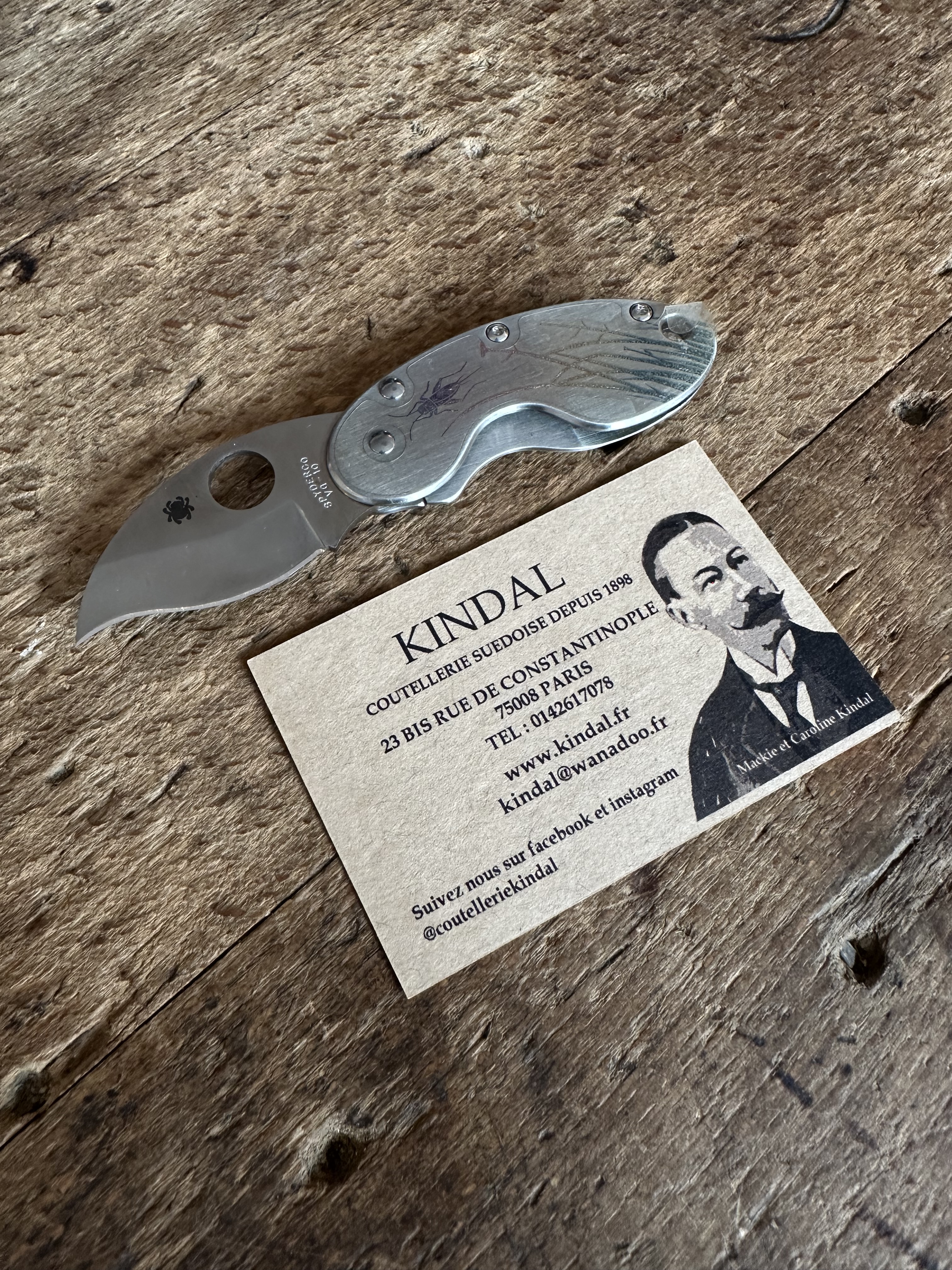
I know Jiminy (Cricket) since 1994. I even have used to have a pink version of this little bugger in the last millenium. Today, while making a little pilgrimage in famous Kindal cutlery shop in Paris,
Mme Kindal has displayed me one of her many treasures displayed, next to a Janisong and a Military titanium… It was love at first sight for that blast from the past little big knife. Because there is a lot of power in that compact package, it was the chance to carry another one of those New Old Stock.
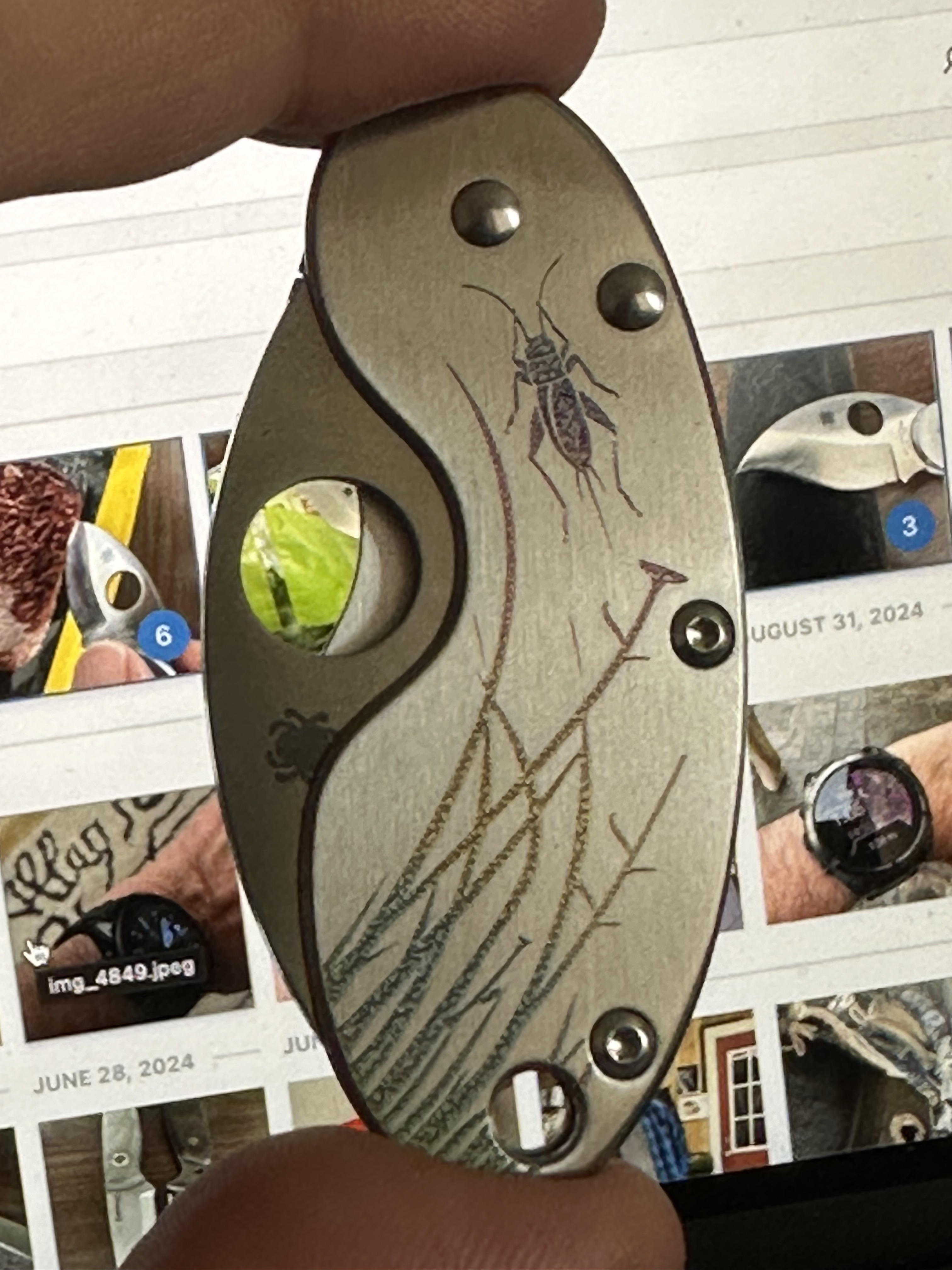
It is true, the Tattoo version of the Cricket is a pure jewel and delight to look at and to use. It has been cleverly designed in House by Sal Glesser (but I won’t be surprise if Ed Schempp would have been also its inspiration). Based on the stainless steel version of the Cricket Tattoo it is really well made piece of cutlery.
Folded the C29T creates a rounded package that carries nearly invisibly in the pocket. The pocket clip carries right-handed tip-down but also attaches to a tie or makes a fashionable money clip. The anodized illustration is really elegant.
The Stainless Steel design using a Chris Reeve Integral Lock makes it really thin and easy to wear even in a shirt pocket.
It is a tip down carry which allow a very fast an elegant Spyderdrop opening. So its reverse “S” shaped blade get in action very very fast.
Its 2mm thick and 48mm long blade is tricky, thanks to its “S” shape: you got a longer edge to use. And like Eric Glesser’s Dodo, Sal Glesser Cricket is a geometrical trickster: the cutting angle is almost never at 90° to the separated material, acting like a sinusoïdal guillotine. It is very powerful. For a knife of its length, the Cricket is packing a lot of cutting power hence the name “Little Big Knife” used for that kind of Spyderco.
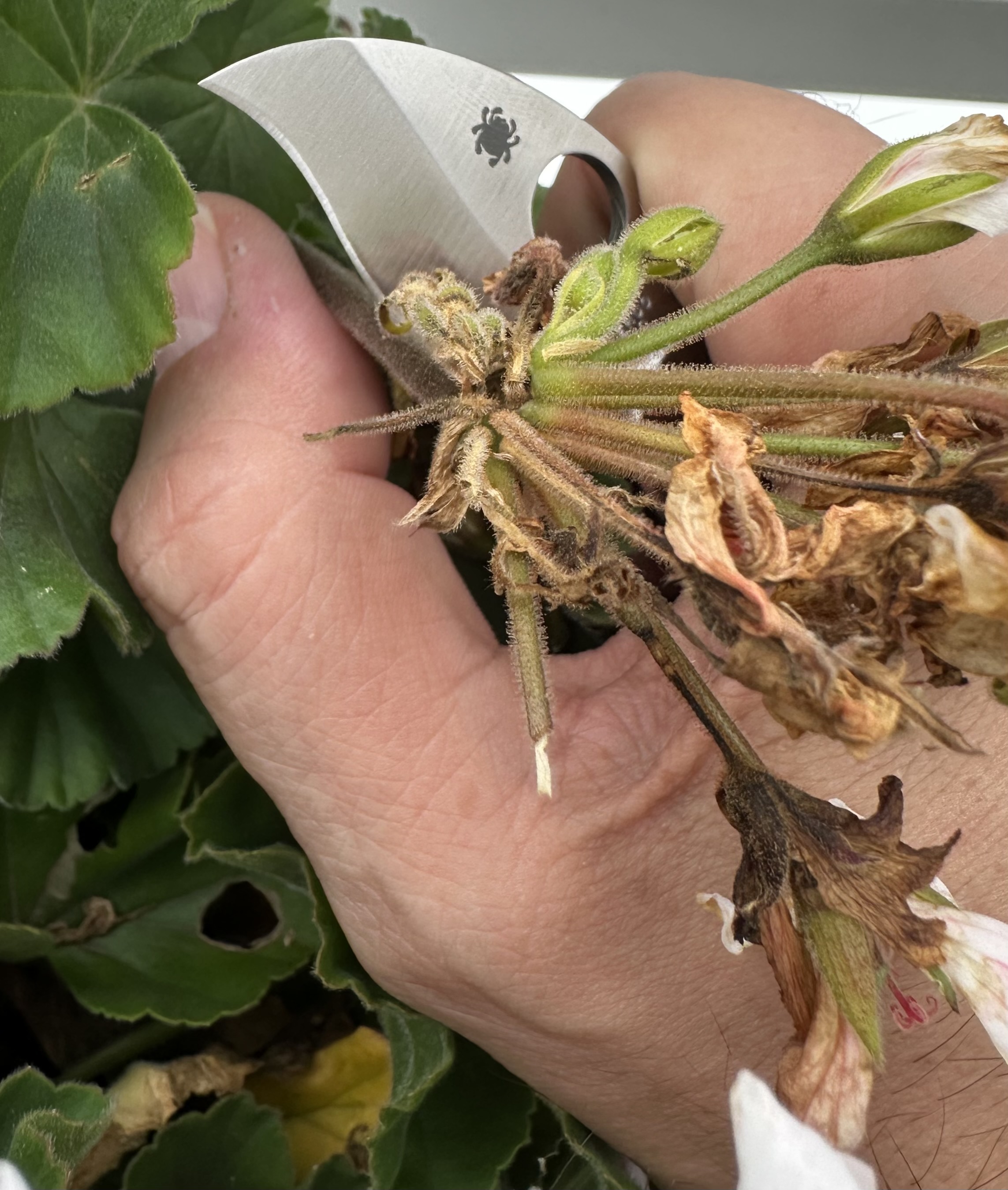
The Cricket is a joy to use in the garden on hard material…
… and on soft material.
Beware of that S Shape, beak or claw design, loves to catch anything around, you thumb for example can bleed in a blink of the eye.
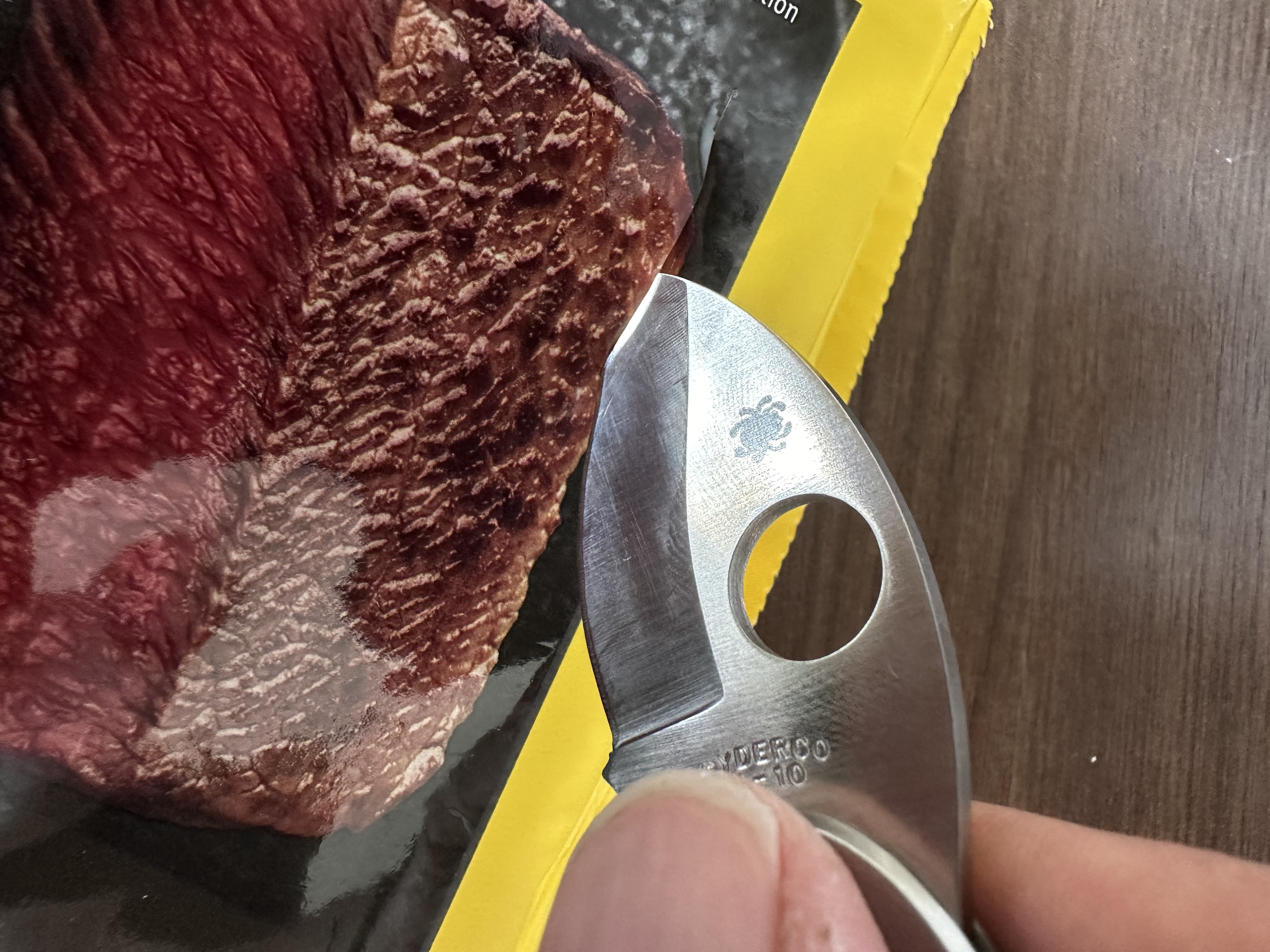
The beak penetrates in any plastic sheet very aggressively. It is even surprising how easy it can open packages.
Some people are not fans of S Shape blade or any blade with recurved edge. It is a natural shape found in claws, talons, teeth and beaks. But by using a rounded ceramic (VG10 is not difficult to get back to razor) and the corner of the leather pad, the Cricket keep its razor edge.
Here is with a Jade sharpener. I sharp the belly on the flat and the beak on the corners.
It opened design makes it a breeze to clean under the tap.
I highly recommend the Cricket as an EDC knife. It is a little but powerful “matter separator” destined for Ladies or Gentlemen for daily duties which can be clipped to a purse, a pocket even a bra. I also knew a former French Marines, six-foot-four and full of muscle, who had adopted the Pink Cricket as his main EDC. Go figure how this little knife makes you wish upon a star !
Here is a Spyderco Folder designed by a Massad Ayoob the famous gun instructor and destined to be a Self Defense folding knife. An ineptia as far as I am concern. Any screwdriver could be used the same way, the rest is just marketing in a country with a huge personal arm market. Not for me. But if I were wrong ?
Massad Ayoob is an established authority, LEO (Law Enforcement Officer… a Cop) and a writer on firearms and (sometimes) on knives. For more than four decades he has also taught defensive knife and firearm programs and appears frequently as an expert witness in trials involving edged weapons.
It’s not the same problem for professionals, those, in the line of duty, who are confronted to knife attacks, cops and soldiers to name a few. But lambda civilians learning to defend themselves with a short blade tool (not “from” a blade) ?…. well this would be a very last solution of a very messy situation which certainly could have been avoid in the first place. Better than any edge tools to cut in ribbon an threat are “awareness” and mobility.
As a design, I always loved the C60 especially the ergonomy. Certainly not as a edge weapon but as a cutting tool. It functioned so well as a kitchen and general work knife. In fact the C60 was ranked as one of the best baguette opener in my folder world. Especially with my serrated version. Even when knowing the C60’s blade was especially made to fit between the ribs and penetrate deep into the human chest cavity, lacerating lungs, heart and other vital organs… (Puncturing weapons are legion if you look at any tool from wood chisels to crowbars, thrusting weapons are all around us. So I was never impressed by those marketing quotes especially when a wider blade can be turned at 90° to pass between the ribs… Oh well, tools of violence are as old as Abel’s murder by Cain.) Spyderco is no stranger to that self defense niche: Canis, Matriarch, Carahawk, P’kal, Chinook, Civilian, Yojimbos…
Blast from the past. Back in the 90’s, I had the chance to be one of the first European reviewers of the Master of Defense’s knives back in the 90’s. Jim Watson, James Keating, Massad Ayoob, Graziela Casillas and Michael Keating were the five instructors being part of that venture. Massad Ayoob was the only one providing a fixed blade: the MoD Razorback. The quick draw from its kydex sheath in reverse grip was its main asset. Massad was also timing himself to show how quick he could draw his knife. I actually love that fixed blade concept but its was all marketed and designed as a thrusting weapon, not a cutting knife. This is something which is also found on the C60: more penetrating than slashing compared to a Yojimbo 2 which is as pointy as slashy, 50%/50%.
The Razorback prototype is pictured in the middle and Michael Janich’s Tempest is on the right bottom, featuring his Filipino Grip.
Back on the Sprint Run, Michael Janich has written about the C60: “From a utilitarian standpoint, the negative angle of the blade definitely increases cutting power and leverage, allowing the user to maintain a straighter, stronger wrist orientation. Similarly, for piercing, it does align the blade with the axis of the forearm, allowing for a direct transfer of energy. If those qualities allow it to work better for your individual needs, I understand and respect your appreciation of the design. While you’re waiting for a Sprint Run, I also strongly encourage you to invest in a Schempp Bowie, as it offers all the same qualities for all the same reasons.”
That odd pistol angle: of the C60 was explained by its designer Massad Ayoob in those terms: “With a typical knife, thrusting lifts the blade’s point above the line of the forearm, like a boat prow going through water. The faster, harder or more resistance encountered, the higher the prow rises deviating the blade off course from its original target which can mitigate the depth of the cut.”
Its grip angle that is more comfortable and familiar to handgun shooters. That design is trying to be as much of a push dagger as possible without being a push dagger. The “dropped” handle design which is also a signature feature of many Ed Schempp designs also added power to the cut. Let me tell you something: this pistol grip makes great steak knives ! 😉
Quoting Massad Ayoob:
“The C60’s radical angle brings the blade into line with the long bones of the forearm, channeling the body’s force directly behind the line of the cut resulting in minimized blade deviation and maximized accuracy. The blade is directly in line with the radius bone of the forearm when the average human wrist is in the “locked” position, which puts the middle knuckle of the hand directly in line with the axis of the forearm.
This is what gives the C60 its superior stabbing accuracy, and it also gives tremendously more penetration, because it aligns the skeleto-muscular support structure of the arm with the point (number one), and therefore with anyone who knows how to put his weight behind a punch, gets the entire body’s force going directly behind the point.“
In 2001, twenty one years ago, I had the chance to test the very first batch. The handle was made of aluminium coated in black and the blade got that short opening arc. It felt like some kind of sharp pistol and it balance made it very pleasant to use. That smooth thin handle curved handle was really pocket friendly. But… it has a serious but. Its vertical play was unbearable. I mean, I try to enjoy it with it but eventually, it was drawing me back to small fixed blades, no mechanism, no blade play. I hate to feel the blade moving when I cut on a board.
Long story short: thet 2022 C60 Sprint Run got also some vertical play. But you need to push quite hard on a cutting board to feel it. I first thought this “rocking lock” would ruin the experience but eventually it is not as dramatic as on the first batch in 2001.
As you can notice the 2001 version was a rivet construction with 3 rivets on the handle. It is not the case of the 2022 sprint run with an all screw construction on G10 slabs instead of aluminium.
How that almite coated handle has survived after 20 years of service ?
This is a picture from C60 #356 from my friend, Joyce Laituri, at Spyderco. Isn’t it a beauty in the patina departement ?I love well used tools and Joyce considers her C60 with serrated edge as her personal favorite Spyderco.
“…I‘m delighted to see the enthusiasm for the C60.Changes? I wouldn’t care to see it thicker: the comfortable ride in pocket or waistband was one of its signature features. I’m partial to G10. As others have noted, I think we got the overall design and blade configuration right the first time. Steel? I’ve been very happy with the VG-10 in every respect after carrying the C60 for about 18 years now and using it daily. However, Sal knows WAY more about blade steel than I do, and if he has a supersteel he thinks will work better, I’ll defer to him...”
It is an immense success and the serrated version is even selling faster than the plain edge version. Go figure !
A Japanese Story: The C60 is a knife all made in Japan (using now an American steel when the first batch was made in Japanese Steel VG10) Sal Glesser has also explain the story behind that whole C60 2022 project and the Japanese family in charge of it:
“We began working with this maker in 1988. At the time, they were considered by most experts, even in Japan to be THE premier quality knife maker in the world. It is/was a small family business consisting of the “Old Man”, who was the driving force. He had more than 80 patents on his designs and they produced a small number pieces. The “Old Man’s” wife handled the office. There were two sons. One handled sales (#2 son) and one handled the factory with his father (#1 son). His wife also helped with the office. Then one day, with no warning, the Father had a stroke and was no longer able to work. The Father’s wife had to stop working to take care of the Father. Now the sons are running the company with the Patriarch and the Patriarch’s Wife no longer involved. Very challenging, even devastating. They had one major lower quality customer (A Hardware chain) that carried the company. A few special customers like Spyderco and their normal consumer direct line. Then “The Rains came”. In one year, the Father passed away. The Mother passed away. #1 son had a stroke, and #1’s son’s wife passed away. Now the Grandson is running the factory and he really wasn’t ready. Then the main Hardware chain found a less expensive supplier. The family was devastated. We brought the Grandson to our factory in Golden to try to get him better trained and brought into the 21st Century manufacturing. Ir has been a long road and they are beginning to get back on track which pleases us and we’re helping…” https://forum.spyderco.com/viewtopic.php?p=1647803#p1647803
This is what I always loved in Spyderco and the Glesser family: the way they take care of their friends and how faithful they are in friendship.
This new Sprint C60 got his blade made of CPM Cruwear. This is a wonderful steel. Just click on the link to see all my articles about it but, really, this is a steel which is hard to stain, very hard to chip and very toothy even when strop. It is a tough alloy.
CPM Cruwear has been a benediction on thin pointy thin models like the SpydercoMillie and Paramilitary bringing strength to their tapered blade. It also found on Benchmade Adamas and Shaman Sprint Runs both hard users with a lot of lateral strength.
Looking at the C60 new edition, we got a relatively thick blade. It sturdy. You feel it is a blade you could use to pry something without second thought. You would use that pointy blade to open a paint pot or pry letterbox. It is stepping on the Adamas hardcore class but in a thinner package.
That’s interesting because “Mas”, as a cop, has designed a tool with Law Enforcement Officers in his mind knowing how they use their knives on patrol for many more things than just cutting. They even use knives as screwdrivers, prybars or ID plate scrappers. It is the same reflection I had about the Tatanka: a thick folder destined to be used hard and dirty even when applying lateral forces.
Back to my 2022 C60: its factory edge was sharp out of the box but it could not cut through a plastic bottle but. This is a pure geometry issue: a thick saber ground blade cannot perform like an Opinel blade. For better performance, reprofiling is mandatory and diamond (Spyderco Stuff 2) was used because CPM Cruwear loves diamonds even if it takes a lot of time to do it right without any backstand.
BTW CPM Cruwear is not easy on the Patina in my book. (Link provided) I use this speciality alloy since the Military in Cruwear with zero pitting on the blade. To avoid that, my knives are often used in the kitchen and grease is always there to coat their blade.
Duck is a fat meat… So we got that thick edge tough narrow blade…. Not my cup of tea actually. I prefer leaf shape full flat grind or razor sharp hollow ground wharncliffe. So I need to reprofile it and it will take some patience.
Also that Massad Ayoob design proposes no choil. I love choils since Sal Glesser has explained he was inspired by boot knives: you hold your folding knife by the blade and it is a great security for your fingers. The absence of choil is not an absence of hot spots…
As you can notice the blade falls gently on the index finger when unlocked. The action is smooth but that guard with beveled G10 and sharp liners is problematic. More on this later. One thing which is remarquable is the choice of the lock. ” It has a notably strong lock-back with a David Boye style release lever that helps ensure safe lock-up. “ The lock-back allow also a very thin handle construction. Thinness means easy for a waistband carry. This is very thoughtful.
Smooth action thanks to bronze washers ? Nope. Who needs washers ? Actually there is no washer. No bronze, no nylon: nothing. The Moki factory is known for that washerless high tolerance constructions and the liners are providing some kind of “integrated washers”. Very impressive !
Without washers, well, there is no lateral play. The knife feels rock solid. And it is all screw construction with a steel backspace.
Quoting Massad Ayoob: “The handle-to-blade angle puts much more force behind a slash as well as a stab. Instead of the blade “skimming” over the target as it hits hard resistance such as bone, the 90 degree angle of the blade when held in reverse grip (and KEPT there by a handle shape that allows the thumb to lock it at that angle) the C60 is more likely to shear directly through whatever resistance it encounters. Because of the design features, something very similar happens with a slash from the conventional saber or pekal grasp.”
The handle got bevelled grey G10 slabs. G-10 has been used instead of the previous 2001 aluminium. Mas actually said on “Glocktalk” that he preferred the G-10 handles to the original handle. Personnaly I prefer the original handle better as it was providing a pocket friendly solution. A smooth handle suits me but I understand it won’t suit from a “tactical” point of view. To smooth it a bit, I have sanded mine (with 400 grit) especially under the clip to avoid any pocket destruction by filing them with such a coarse G-10. Oh, there is another visible improvement of that Sprint Run: the possibility to switch the position of the clip: left or right, tip up or tip down. Nice touch.
To quote Massad Ayoob: “As to the tip-down carry: I’m one of those early Spyderco fans whom Sal calls “Clipiteers,” who started their Spyderco experience with the original Police model, learned to open it with a pinch-snap, and discovered we could win bets beating guys with bali-songs and even “automatic knives” in opening speed. The pinch snap uses the gross motor movement of the closed hand instead of the more fine-motor skill of using the thumb to open the blade via the original design intent of the “Spyder-hole.
I’m one of Sal’s early “Clipiteers” who liked the speed of a momentum pinch-snap opening, and remain a big fan of tip-down carry for that reason. Wouldn’t hurt if Sal came up with a design offering the choice, it was already set up for ambi and more choices for the user is good. Plain edge, serrated edge, or a bit of each is entirely up to Sal. In the first production run, on my end the plain edge far outsold the serrated, but Sal of course has a better handle on sales nationwide than I do. Sal’s call, of course. I’m hoping the sprint run happens. Thanks to all who requested it from Sal!”
There I will be agree with Massad Ayoob. Actually it seems like back in 2000, Mas was turned into a “Spyderdrop” fan and a Clipiteer like advertised on the original Military C36. It’s a fast way to deploy a blade even quicker than a switchblade or automatic knife. You just grab your knife inside the pocket by the opening hole and by a gentle flick of the wrist, you open it. The spyderdrop just works great on the C36 as it was a liner lock with a big opening Hole. Once passed the detent ball nothing prevents the blade to open. Certainly Sal Glesser demo caught the eyes of Massad Ayoob who was much more a fan of a fiexed blade quick draw as on its previous design: the Razeoback. On a backlock folder, though, there is a constant pressure from the spring and no need of a detent ball per se. You need two things to get an easy spyderdrop: a heavier handle for the momentum and, a speciality of the C60 design: a short opening arc.
Something important to keep in mind, the 2001 version was a lower rider. Its clip was much higher on the handle making it disappearing in the pocket. this is less the case with the 2022 Sprint Run.
So, as the C36 is a game to open with just a flick of the major finger, thanks to its shorter opening arc and its negative angle. It is fast. The jimping on the blade needs a little filing as it could wear the pocket, but the opening hole and the big hump, the stainless steel spacer assing more momentum ease the spyderdrop. They are fast and reliable. The negative angle and its shorter opening arc could make it the queen of spyderdropping.
Handle wise, I have found the steel liners edges much too sharp. I have used some diamond file to smooth them but for a knife that price, it hurts… the fingers too. There is a real hot spot near the axis. In case of hard push cut the blade jimping is also another hot spot. It hurts that skin between the thumb and the pointer named the “first web space”. Again this is not a tool for bushcrafters. The C60 is a slick flat knife destined to LEO. It needs to get in action very fast. The Police 4 is in the same category of knife. Flat, easy to carry, a little on the heavy side and solid but not the best for long cutting chore unless personal customization involving a file and some sandpaper…
I have changed the spoon clip to a deep carry one and notice the screws are not torx but crosstip. Very old school ! Just for those who want a taste of that Golden Era at the turn of the Millenium. The mark on the handle came from me sanding under the clip in tip up carry, which was not the best way to carry it. Look at the shape of the C60:
There is Banana shape and a curve which is great when carried tip down inside my right front pocket. It leave a lot of place.
With a depp carry clip, you can notice only the “guard” is visible. It is very easy to reach the opening hole for a spyderdrop.
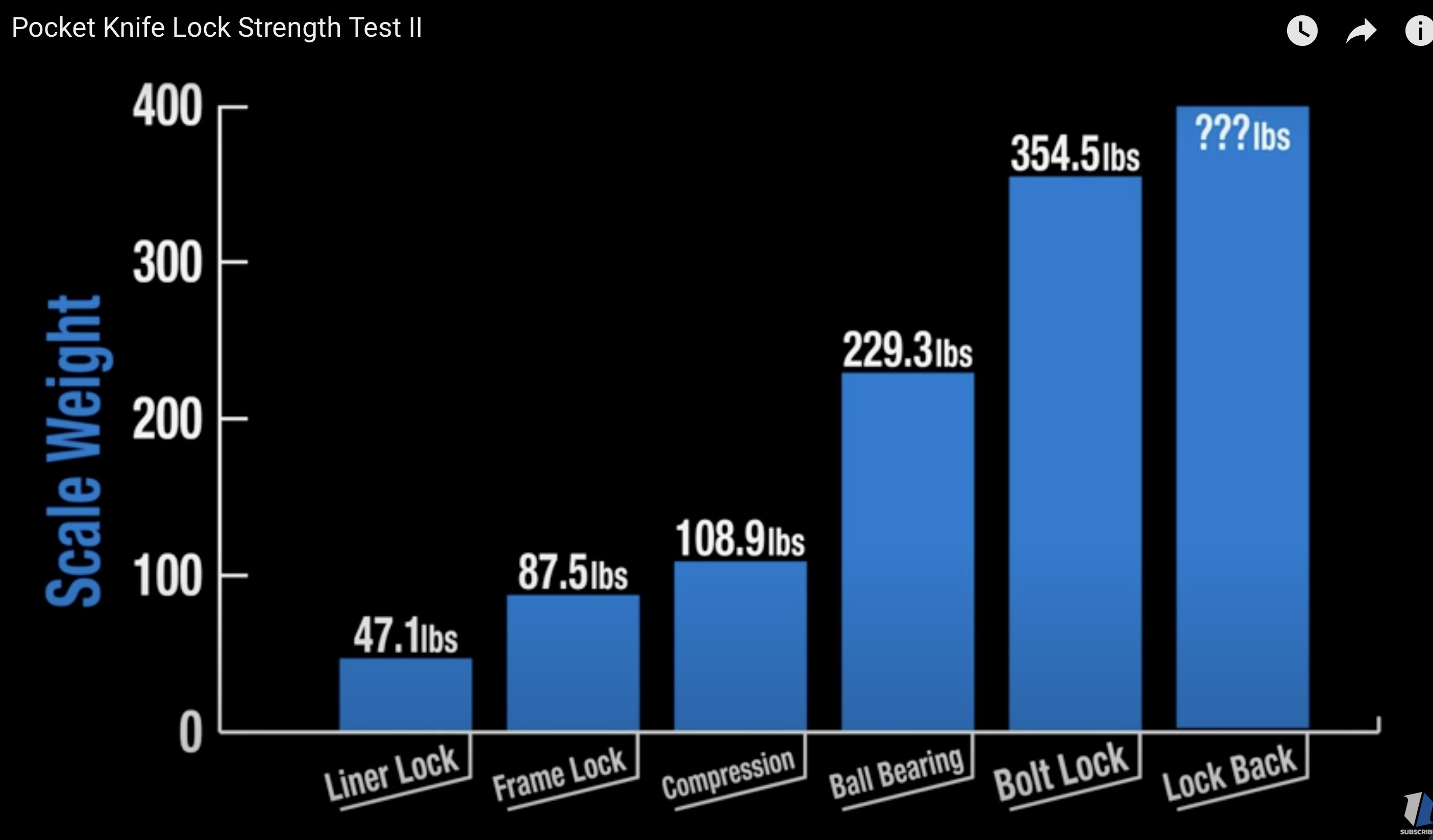
The mid lockback (with that wonderful old school Boye Dent) of the C60 is beefy even if thinner than a beefy liner lock, compression lock or beefy even integral lock, and is one of the sturdier locks ever designed. This one was ranked high on Spyderco’s standarts back in 2001. The original C60 lock was already rated as “hard use”. The 2022 Sprint Run should be rated as “Martial Blade Craft” level, the strongest in the Spyderco line thanks to their Constant Quality Improvement. Again even with some “rock lock” or “vertical play” only felt when cutting on a board, backlocks are really hard to beat in term of pure strength, often the handle will break before the lock as shown on some tests made by Blade HQ: https://youtu.be/ERxHUXAFVs4
Conclusion: this is a cutting tool oriented Self Defense, with fast deployment and sturdy blade and mechanism. It is not the best cutter, not the best ergos for long works without gloves even if it shine for quick response and tactical needs. I have read some users are using Massad Ayoob to filet some fish. In my book a filet knife is thin… Also I have found some hunters have used their C60 on games for skinning purpose. That knife is really not design for that but why not ? The hand is mightier than the tool.
For me the C60 is made to work hard anyway. It got a very sturdy penetrating blade which can find a lot of utility even for light prying. Also CPM Cruwear is tougher than VG10 (the 2001 version).
But more important, this Massad Ayoob folder reborn is also a nice symbol of trust between the Moki factory in Japan and the Golden factory in the USA. A trust which goes beyond continent, beyond civilisation. This “scratch my back, I’ll scratch yours” involvement of the Glesser Family toward the Japan Family is a proof of their generosity toward fellow knifemakers and end line users. This is precious in those volatile times. Sal Glesser knows how to create “matter separators” but he is also able to build very solid bridges too.
Like I have said in my previous review of that venerable folding knife :
It has taken me a very long time before to get any interest in the Police model.
My first real step in the wide Spyderco world was the Terzuola Starmate and the Millie. The Starmate was equipped with some super new steel the CPMS60V named CPM440V then. It was the beginning of the powder steels and Spyderco was experimenting on a bold plateforme even using (like the Millie) hidden nested liners !
The actual Police with its “non nested” liners is thinner than the Terzuola C55.
Steel wise:
Meanwhile in the 90’s, new Japanese steel VG-10 was used on their first fixed blade “the Moran” and the Seki made Police was then “stuck in GIN-1 or GIN-2″… Ah, I was and I’m still a “steel whore” (a term of self qualification of Sal Glesser) after all. I was unfaithful and really attracted by M2HSS version of the AFCK… Not for the patina (as they were PVD covered) but for the benefits of getting a thin pointy blade with more lateral strength than usual stainless steels of that time. As much as I loved the AFCK, the long version BM800 was “plagued” by a titanium linerlock which was less solid than the short version with its stainless liners.
I have later used (a lot) an “oval hole” BM806 with a much stronger lock and D2 tool steel blade.
K390 is a wonderful steel. Strong even not as strong as CPM3V found in the Tuff. I have used the 4th Police as an Ice pick with no fear of breakage.
Like the famous Opinel: thin blades are such a joy to use. A super K390 gives strength to a thin ground blade and turns the “old LEO tool” into a workhorse designed for ranchers. I was disappointed the Spyderco Powerlock was not used in the new Police but, well, the Police feels so solid: I can’t complain.
Now I would do a maximum of lobbyism to get a Nilakka Sprint Run using K390. This steel used is purely a pleasure to keep razor sharp only by stropping it on leather.
Now for the con, I have found the grind is not really even. There is some sort of wave on both side of the blade. I have found it when I was convexing the edge and on light reflexion. This is purely cosmetic.
Let’s keep in mind, K390 is certainly a very hard steel to work on. I have noticed the same waving on my Pingo…
Anyway I can explain now that passionated new love for that venerable knife. It is too long to be acceptable for the Law abide citizen but, what a great tool ! It is much better than my beloved K2: less hot spots and much better blade design from Sal.
This is the same kind of love I got with the extraordinary Bowie from Ed Schempp which shares the same thinness blade wise. I would militate for a K390 Bowie sprint run ! But it seems “Made In Taiwan” sprint runs are rare.
Thinness is good ! Look at that Strudel ! 😉
Here we got a “potentially staining” steel with great (extraordinary) qualities enhanced by a thin thin blade and thin thin geometry saved by a great heat treatment, all is delivered in a slim rock solid package hence the Steel Cheetah’s nickname from my initial review.
This 4th incarnation is an outstanding heir of a great 1980’s design. Sal Glesser is pushing the limits of folding cutlery quietly and gently:
“Integrity is being good when no one is watching.” Such an inheritance !
“The original Police model was a response to a request from Police for a Mariner with a point. I saw that as an opportunity to create a new design that was closer to what I personally liked. I thought to call it “LaSalle”, but in the end, i pushed the ego out and called it the Police model. As the design evolved, details changed and from those changes I was able to see what I didn’t like and went from there. As you said, it was decades in the development.”
Sal Glesser
I remember one of the very first advertising of the Clip It collection of Spyderco. The Police was presented in its stainless handle serrated edge version of that time (80’s…) and it was written something like: “Pure Performance” … The cheetah is a good example of incredible fast and lean animal and as this knife, it is thin and light and totally performance oriented.
The venerable Police model designed by Sal Glesser is at its 4th version. Born in the early 80’s it is now part of Spyderco’s Legendary knives. I remember seeing some models with “Pride Integrity and Guts” engraved on their blade: they were the very first. This knife can be spotted in so many Hollywood movies, mostly in the hands of bad guys and even in the excellent classical Spike Jonze’s musical video for the Beastie Boys: Sabotage ! The stainless serrated hollow ground blade was really catching the lights hence it’s success for a dramatic entry in various films !
I was never a real fan of the first 3 versions of the Police models even if I recognized it has a valuable tool. In my book, the Tantaka was the true heir of those years. The fourth version caught my eye as it was promoting a new steel the KC390.
Many times I had noticed some vertical play on “Made In Japan” folders from Spyderco and decided to buy one if only I could test it before.
But this one came from a Massdrop sale and I was very happy to get one with zero blade play in any direction. Mine feels solid and knowing how strong a good backlock is, this flat long folder is really impressive. So it was about time to review this venerable classic folder which is delivered with a plain edge only and K390 … but why choosing a “staining “steel high performance steel when the Police as always been serrated and stainless ?
“We make quite a few designs for the Law Enforcement market at this time, so the design for Police use is (not?) necessarily the case anymore, like it was in 1984. I designed the Police 4 to include what I would like in a knife, more than what a LEO might like. It’s still a kissing cousin, and large for most people. I widened the blade, enlarged the hole and selected a steel that I like to use. The design’s success in the marketplace is unknown at this time. But I get to have one. ” Sal Glesser on Spyderco Forums in 2016.
Also the blade is perfectly centered. The construction is the same as my Endura and Delica, sandwiching the steel liners with the handle material. Here it’s black G10 on skeletonized liners: the knife doesn’t feel heavy at all but very well balanced and fast in the hands.
The long flat blade is still intimidating while deployed. Let’s see some comparaison pictures. Notice the black could of forming patina in the middle.
Here with Ed Schempp’s Bowie which is one of the best blade/handle ratio folder in the Spyderco collection, full flat ground versus high saber flat ground. The Bowie has been convexed to my taste. The large choil on the police is confortable though.
Here compared to the wonderful Manly Peak, another thin backlock lightsaber. The Manly has not been really convexed; it is really thin ground ! With its S90V blade, better edge/handle ratio and zero blade play construction, it is a real contender to the fourth version of the Police.
They share the same thin stock blade. The Manly (on the right) is even pushing the envelop a little further by proposing hidden nested liners for the same handle thickness.
It is obvious the Delica and the Police are sharing the same DNA even if the Delica main difference is the absence of real choil to choke up the blade. I have both in tip down carry position for easy spyderdrops opening. Here is the Knifecenter special edition of the Delica.
The Delica still got the Boy indentation on the lock when the Police is now leaner. This raffinement has never made a real difference to me. The spring on the Police model is quite strong actually so no worry about unlocking it will chocking the handle.
Here you can notice how longer the Millie handle is compared to the Police. Also the belly of the Millie is much more pronounced. I think now the Police 4 has been also designed to be used while wearing gloves (one of the Military plusses). Both finger holes are equally wide with a very pronounced blade’s hump. The Police’s choil is even wider than the Millie’s !
Also the Military blade is thicker as is its handle. The Police is perhaps more “urban” oriented: it is a large folder easy to wear with any suits.
Here you can admire how the Police is a steel cheetah: lean and mean. The clip was mounted that way and I was tempted to add a deep carry clip but eventually, the spyderdrop is the more handy way to open that large folder so the clip is now mounted near the pivot.
This thin blade enhanced by a great steel (K390) is pushing that venerable model to new heights. We are far from the serrated hollow ground model of the 80’s which was respecting special requirements from the LEO. “It was designed to have an as large as possible blade built into a thin, equally sized handle. Because of this, Save and Serve professionals continue buying the Police Model as an essential tool for their trade.” From Spydiwiki.
It is a flat and elegant design with a very clever purpose: to insert easily the knife inside the pocket when tip down carried.
Some sanding was required to get the handle even smoother for easier pocketing.
Aerodynamism is one thing, pocketodynamism is another.
Again, never breath that dust it is toxic for your lungs.
“”The benefits of G-10 as a handle material are many. It can support a building, be drilled and sawed. It’s doesn’t retain heat or cold, shuns chemicals, discoloration and peeling. “
And that makes it long folder which can easily be pocketed. Carried tip down, the handle shape pushes my wallet away when inserted and allow very quick and positive spyderdrop openings. They are four positions to mount the clip on the Police since the 3rd version in 2008.
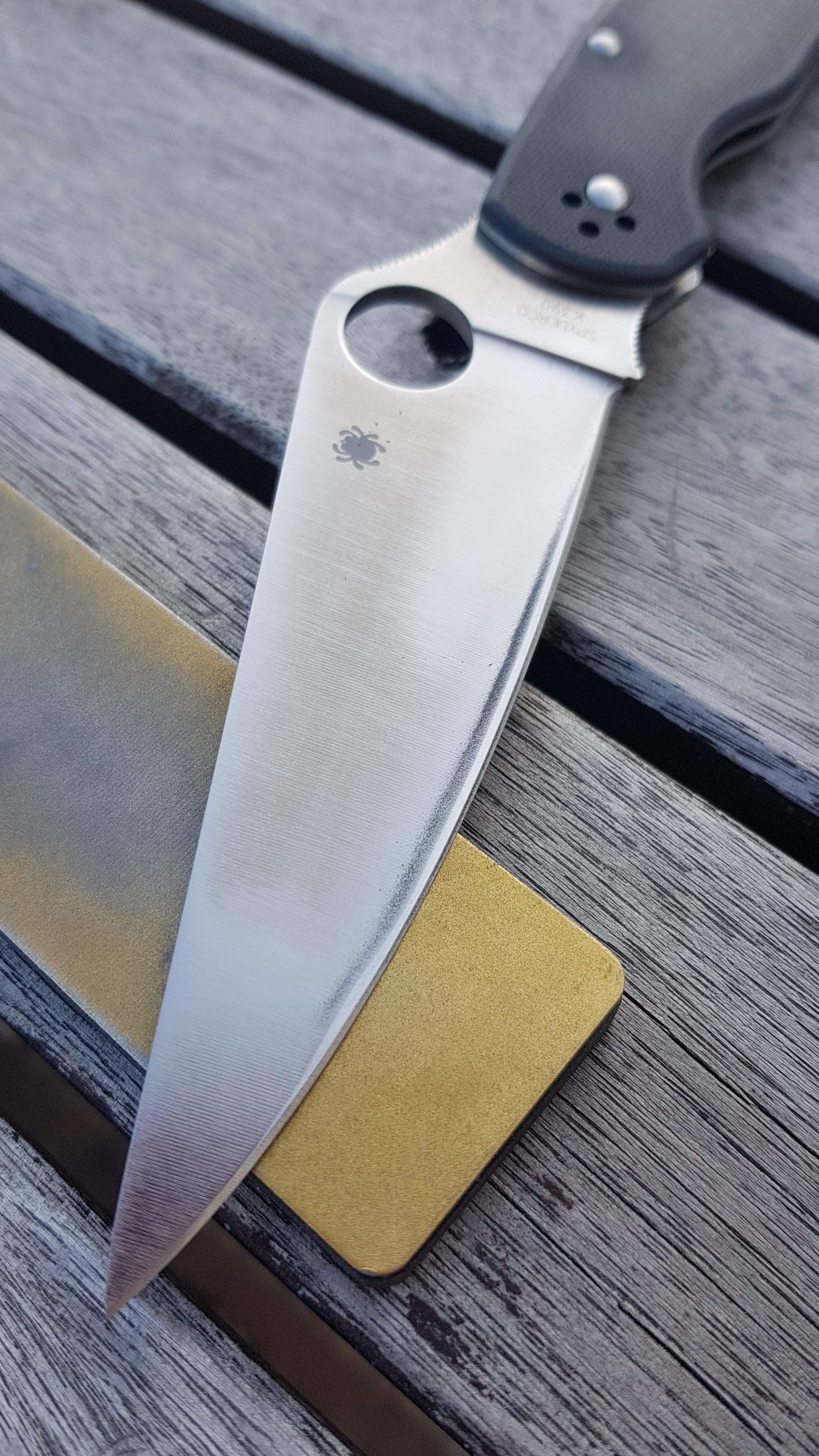
Next step, with some diamonds, it was time to reprofile the blade to a Manly Peak level and to thin the edge by “deshouldering”. Not an easy task as K390 is a bear to sharpen.
The occasion to picture the blade before to scratch it.
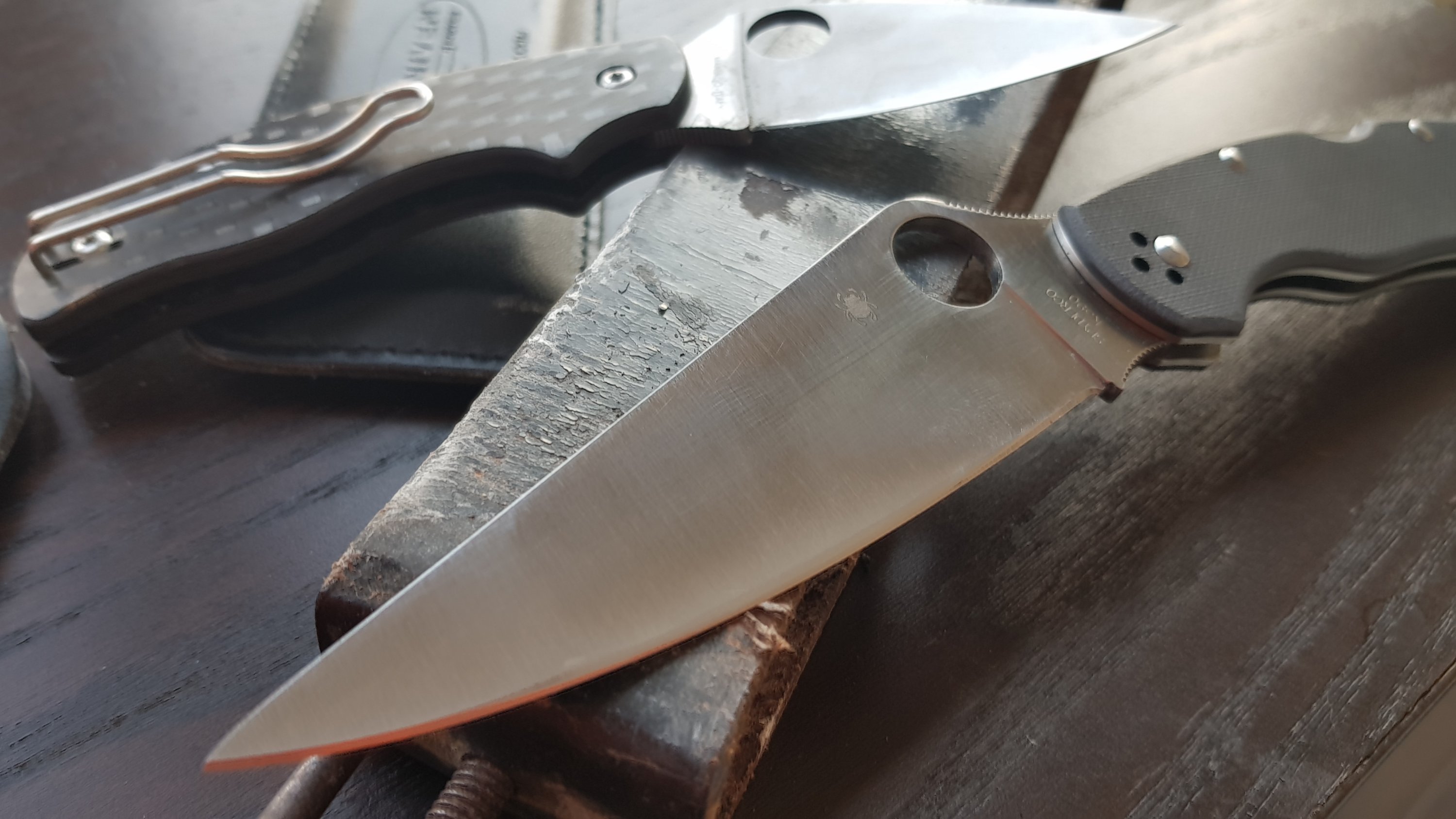
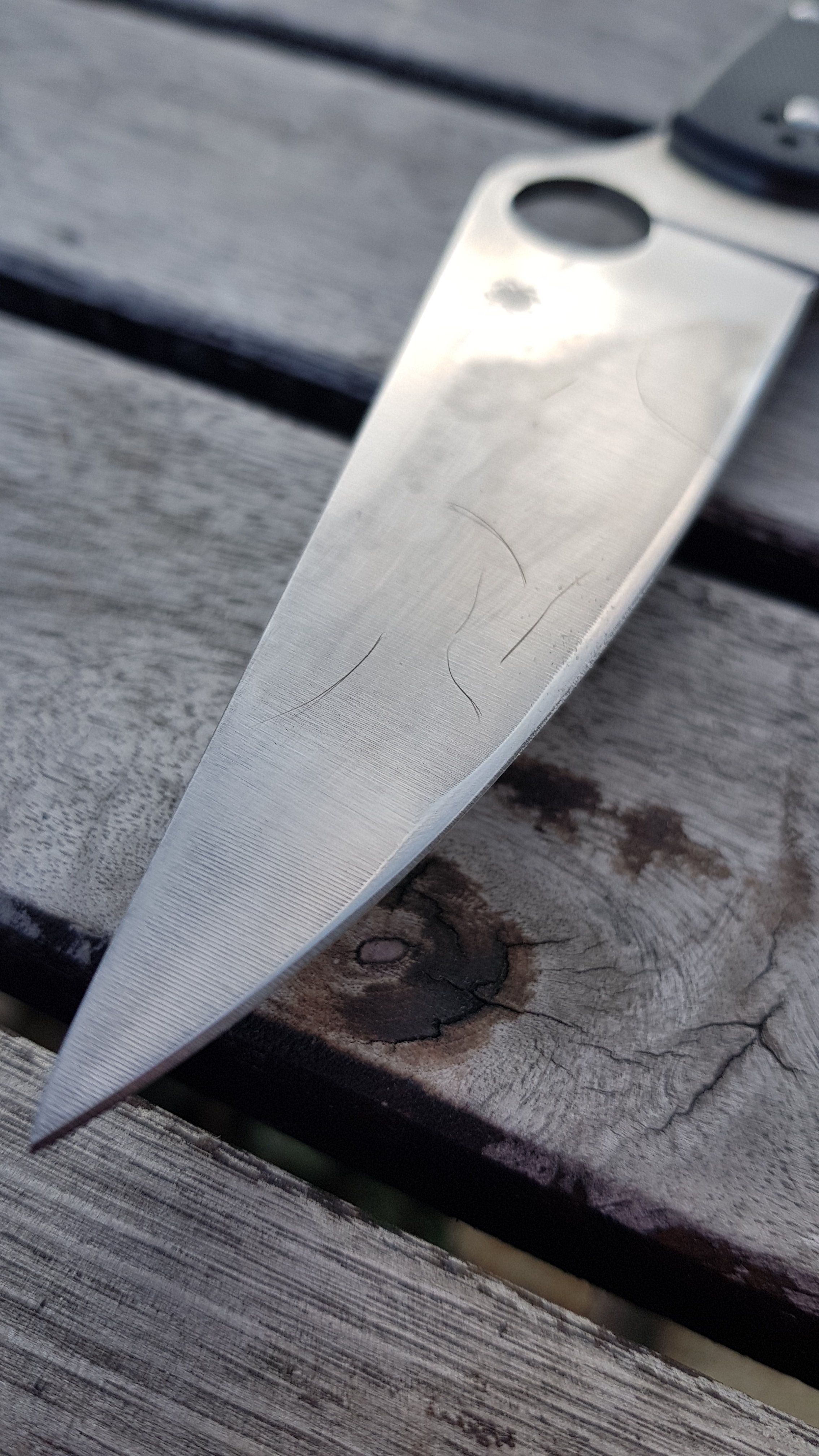
The light reflections on the blade shows it has already started a mild patina while being stored.
K390 develops naturally a beautiful patina like storm clouds. Here is the Police with my Pingo and Urban.
Funny how it is hard to catch on photography but the Urban got the convexed grind I want to achieve for the Police. Both knives are signed by Sal Glesser’s logo.
I have check how the patina was easy to remove before going back to sharpening.
Here you can see the dust formed by the diamonds of a DC4.
K390 is a very wear resistant steel…
Here what Phil Wilson said about it in the Spyderco Forums: “I have been using K390 from the start ever since it was introduced by Bohler and I got some small samples to try. A bit of history is that it is the European version of CPM 10V but not the exact chemistry (about 1% less V plus small addition of a few others). That is because the CPM 10V chemistry was protected by patent at the time. If you check the K390 data sheet it claims that the bit less V gives K 390 a little boost in impact toughness. It also can be heat treated at a lower temp. than 10v. So it is pretty much the same as the A11 grade but different in a few small details. It is hard to tell the difference between CPM 10v and BU K390 in the real world in my experience. I like both grades and they are the base line (along with Vanadius 10 and K294) from which I measure wear resistance. The 5 chrome is there to make them all air hardening among other things and does not contribute much to corrosion resistance. It is going to make a killer knife in the new offering and be another classic. Phil”
So slowly it is deshouldered but I will be obliged to go back to the blade later. It is, for me, like painting a ceiling… I always come back for another layer… 😉
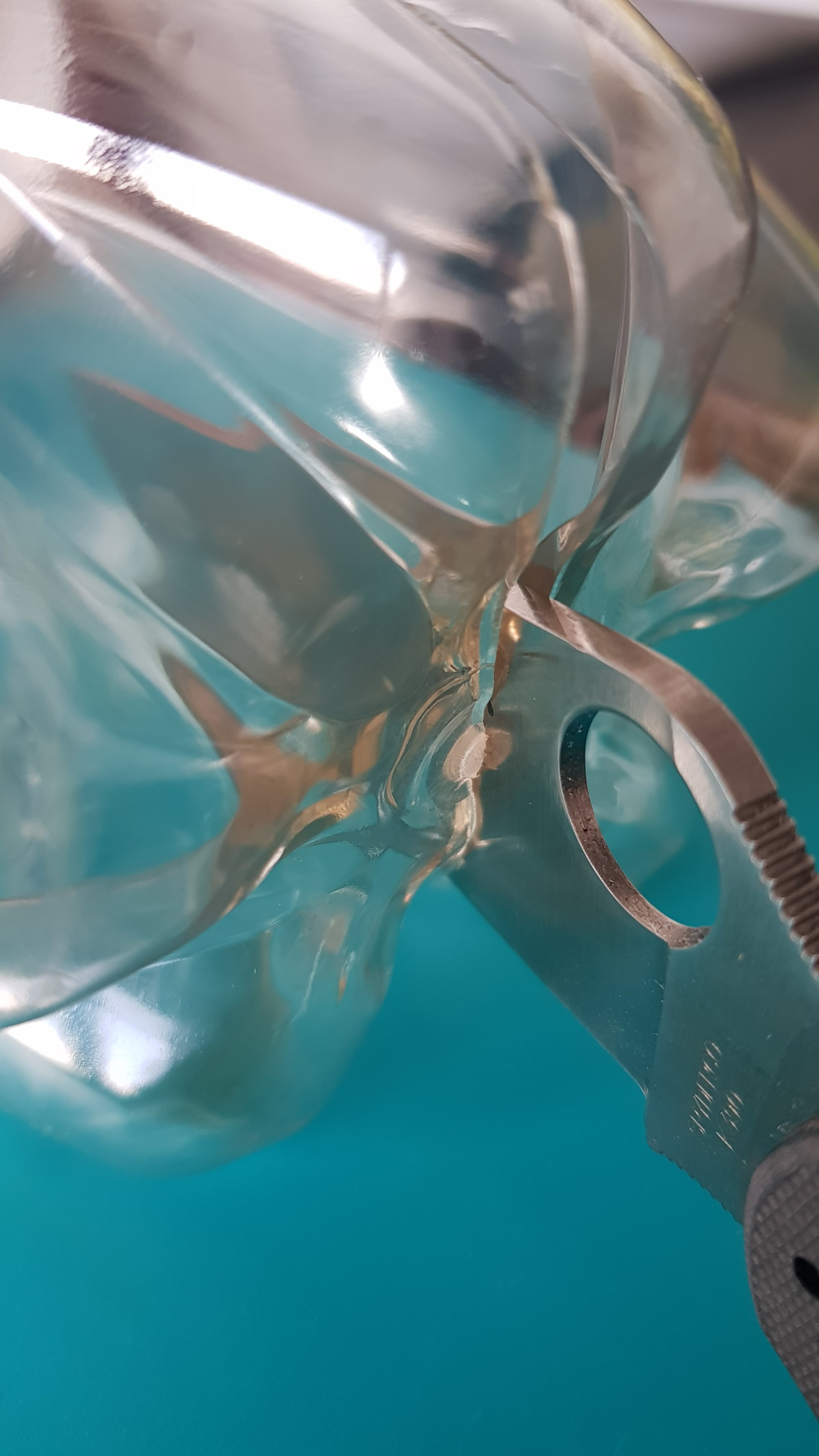
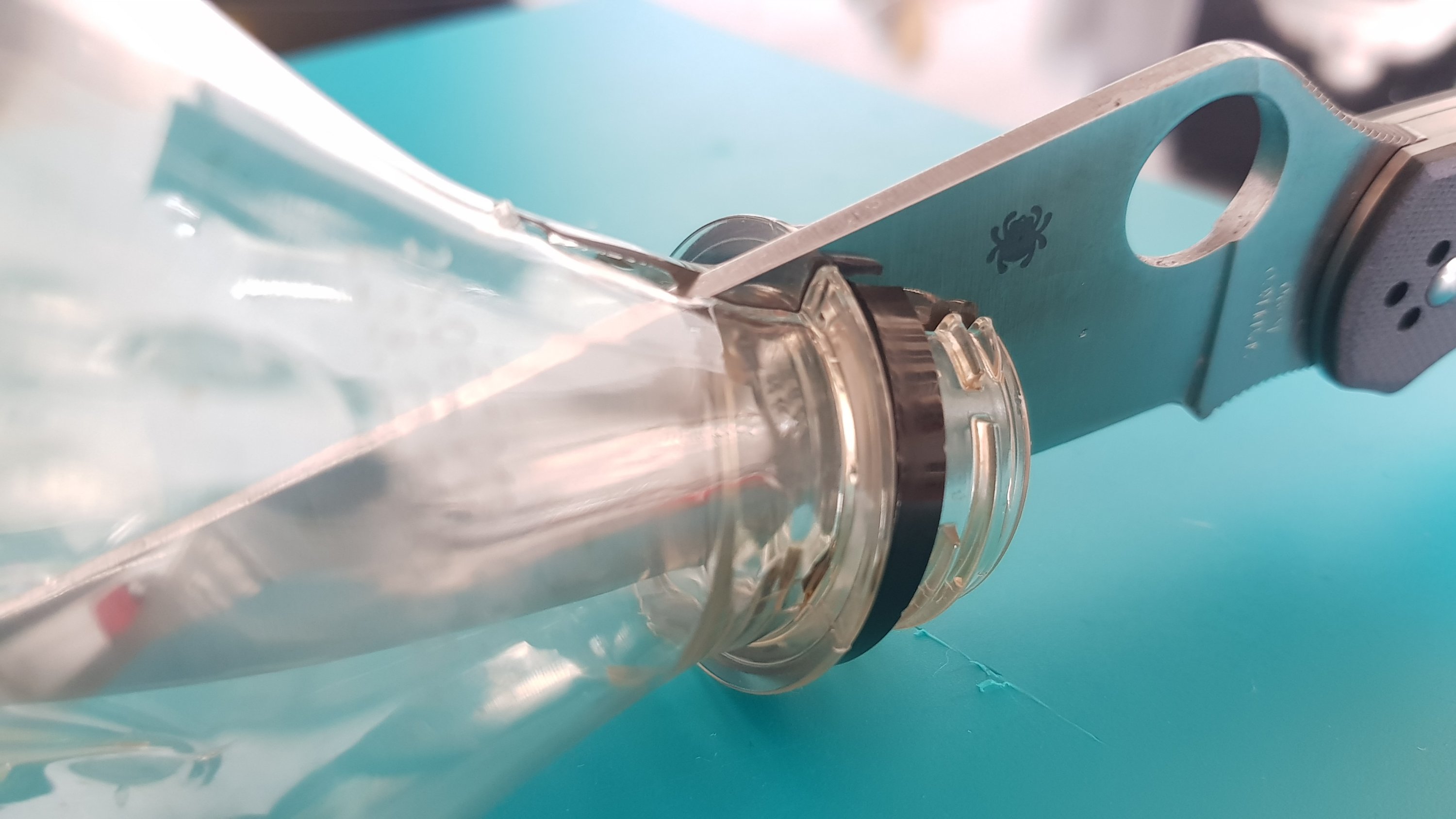
All right, the performance are already promising. The plastic Bottle Butt is as thick as the blade itself but it has been able to got through it right in the middle. Again, zero blade play on that huge folder: very happy. Same punition for the bottle neck. The Police shows how powerful it is and that the recipe of “thin blade + super steel” is always a winner for high performance knives. More to come, as this one is going to be user !
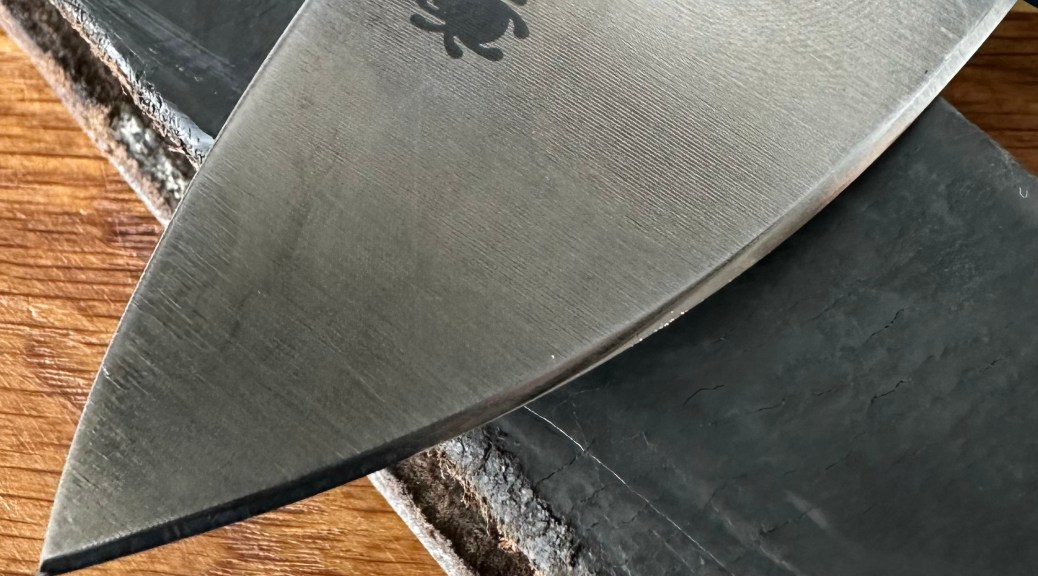


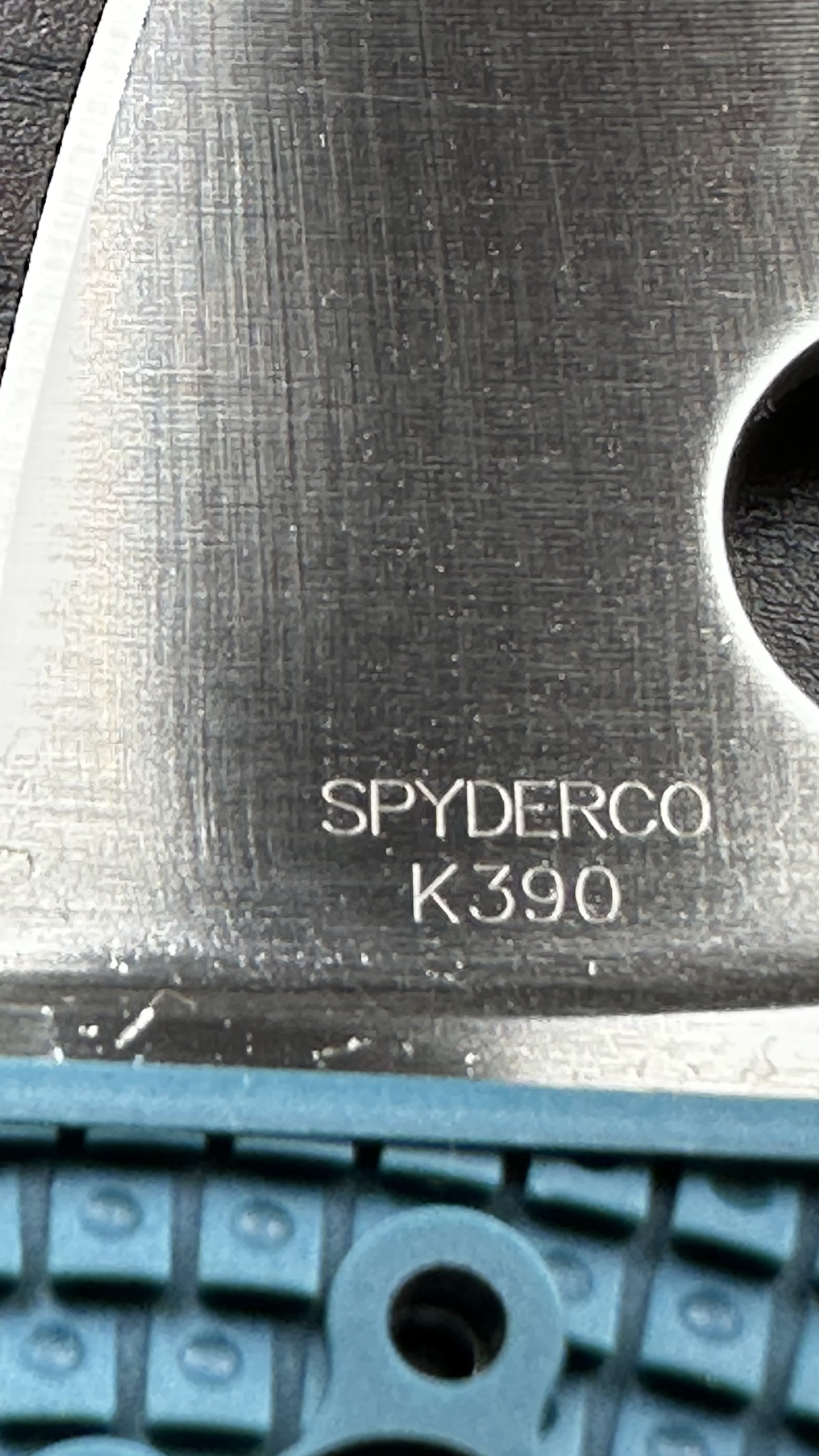


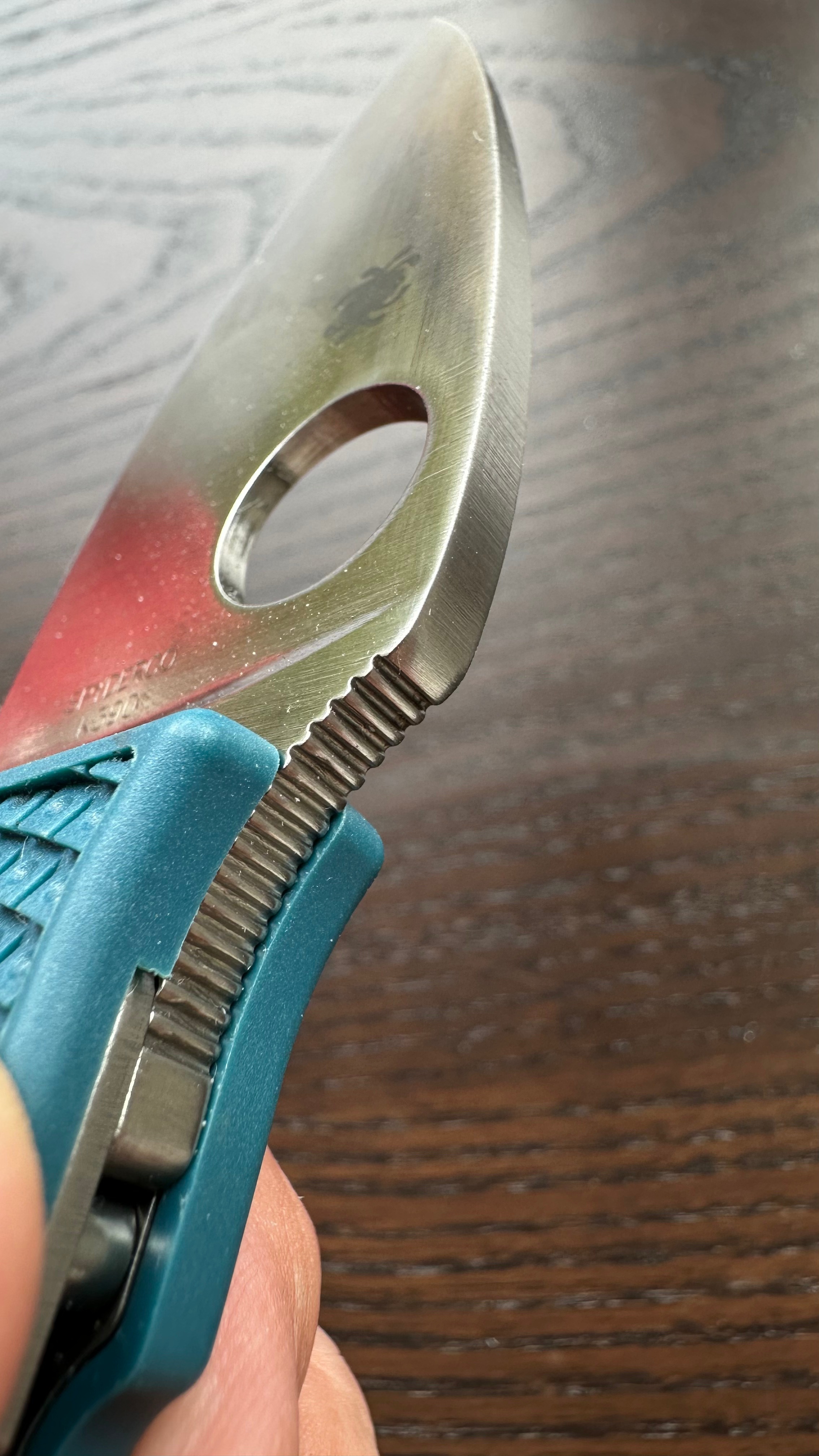
















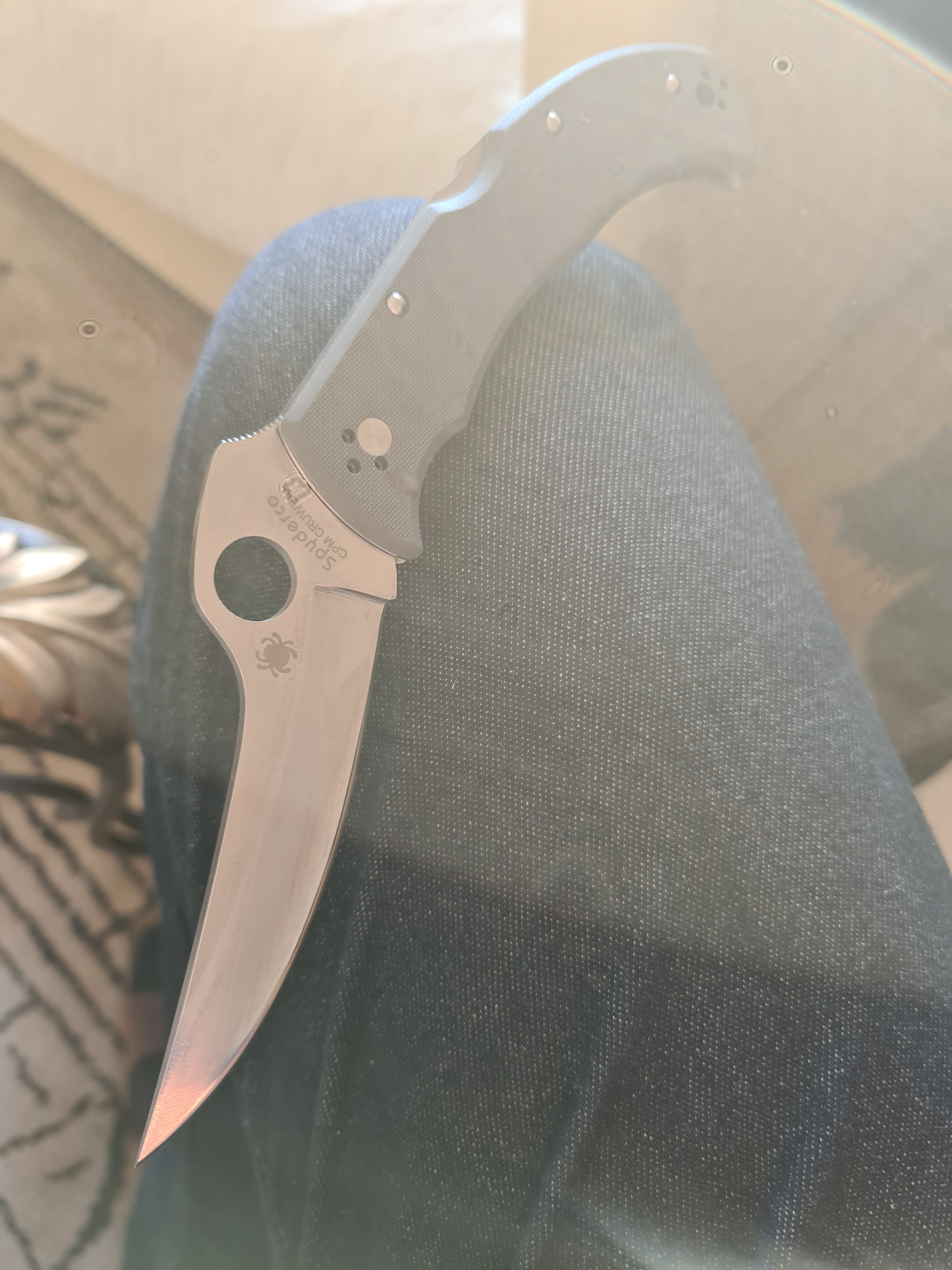


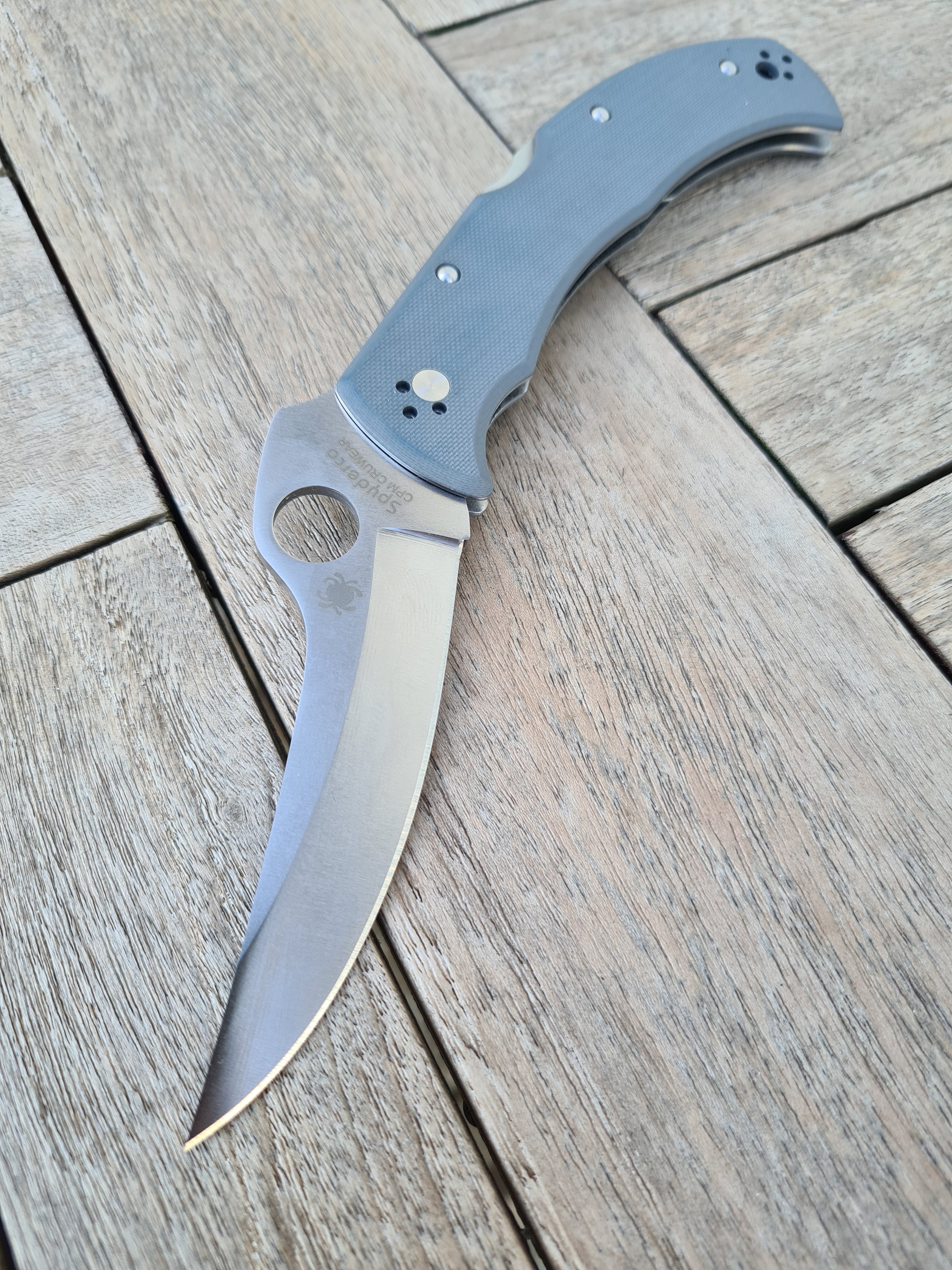



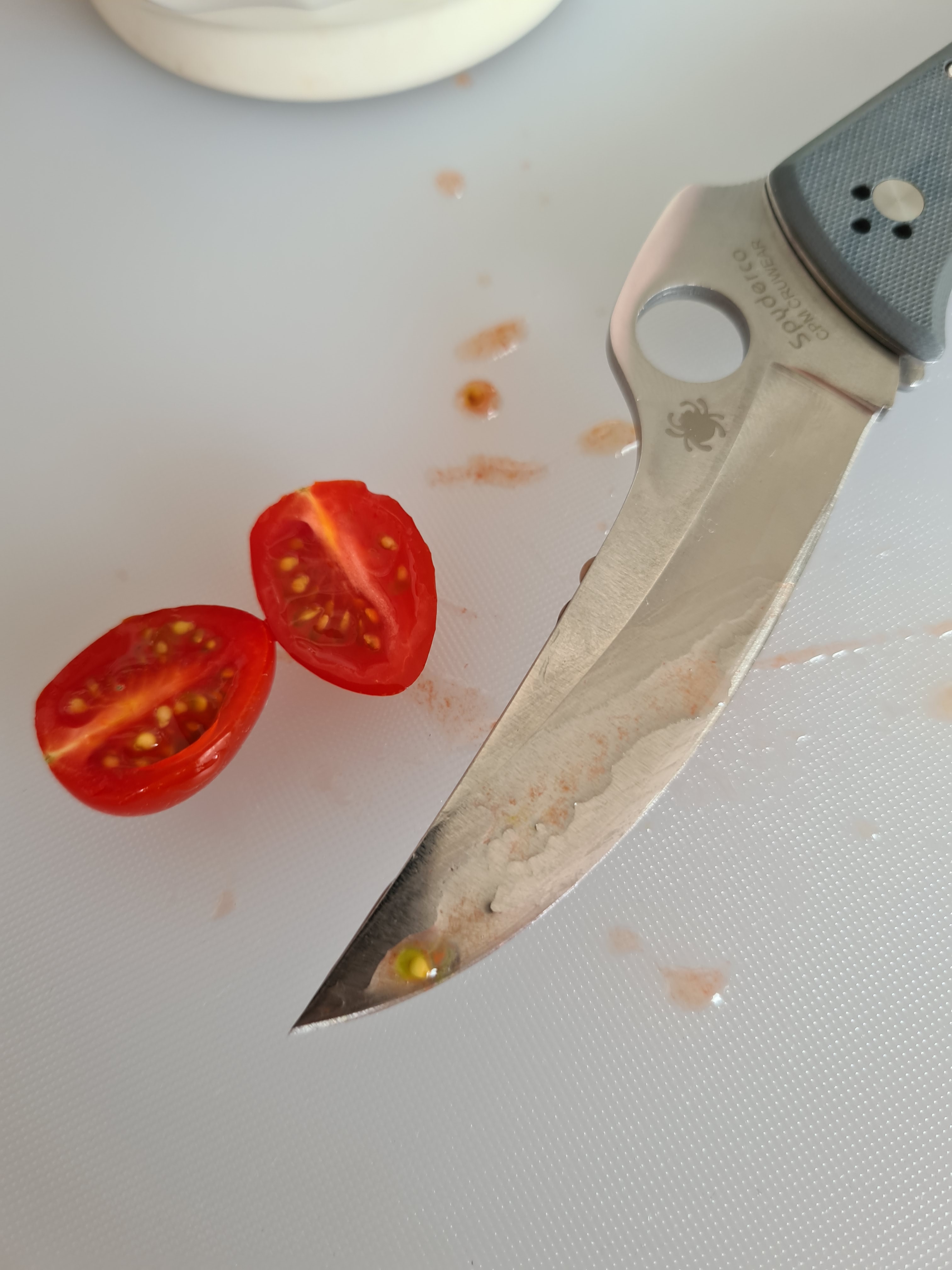


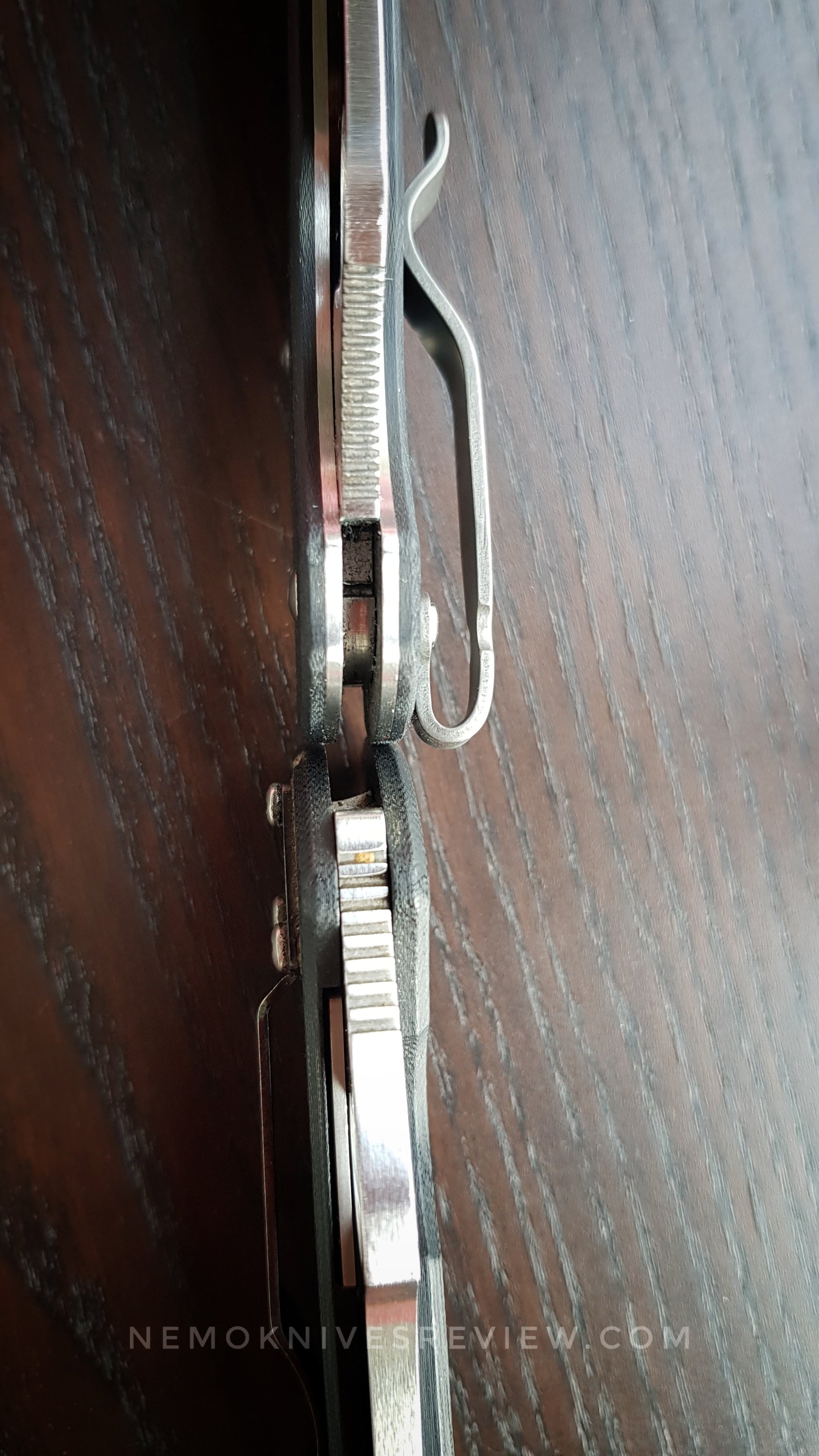

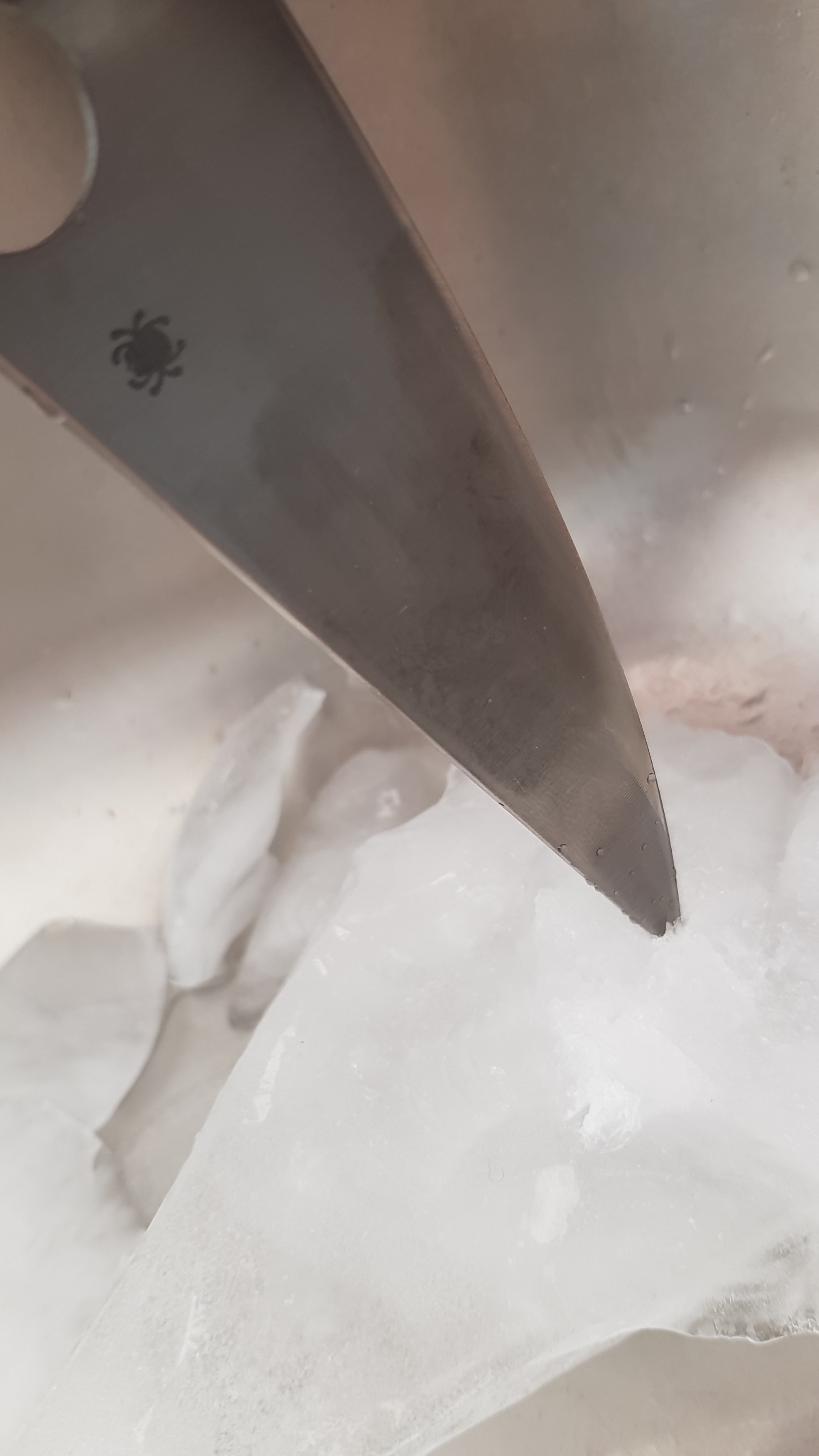

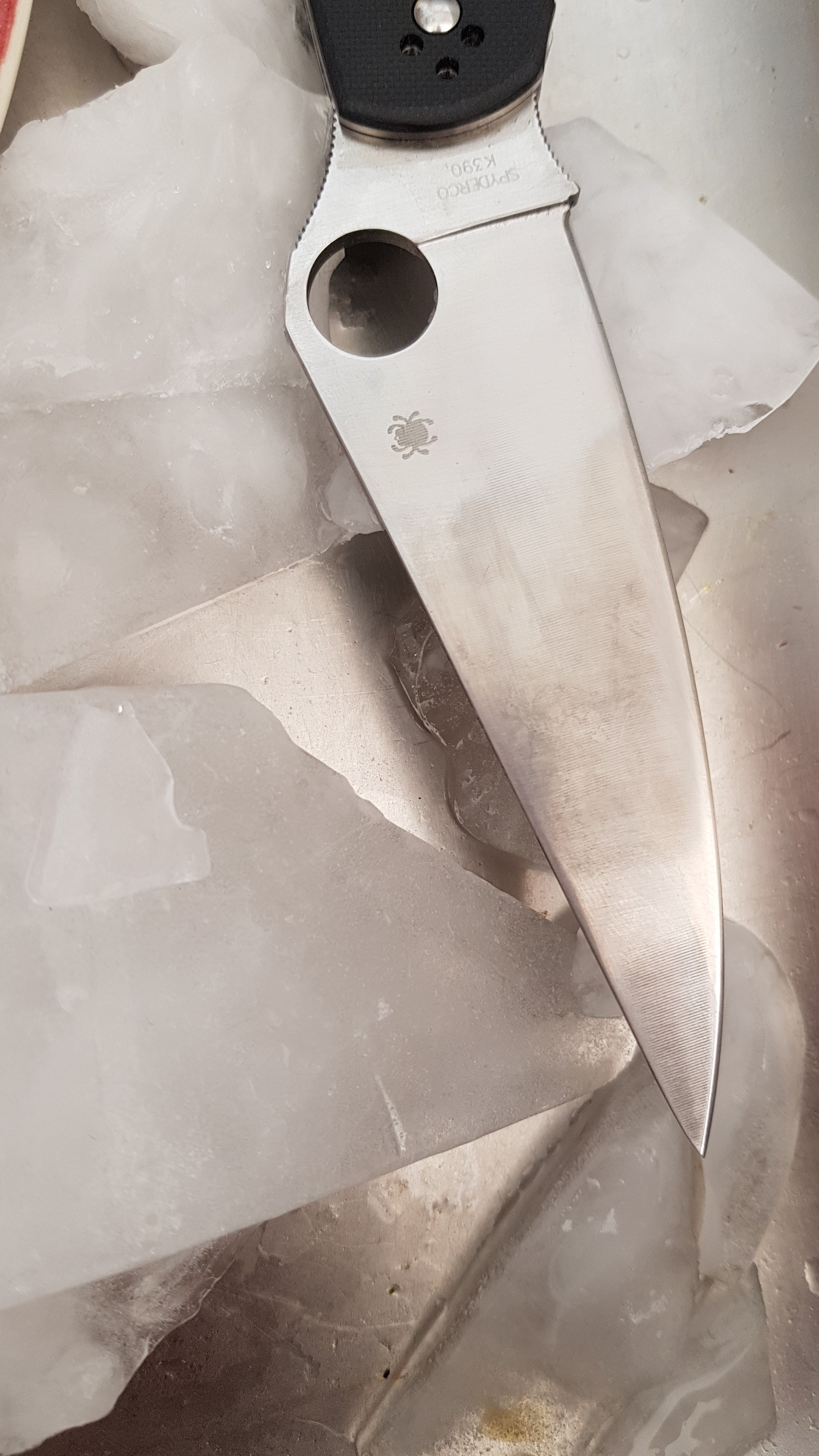


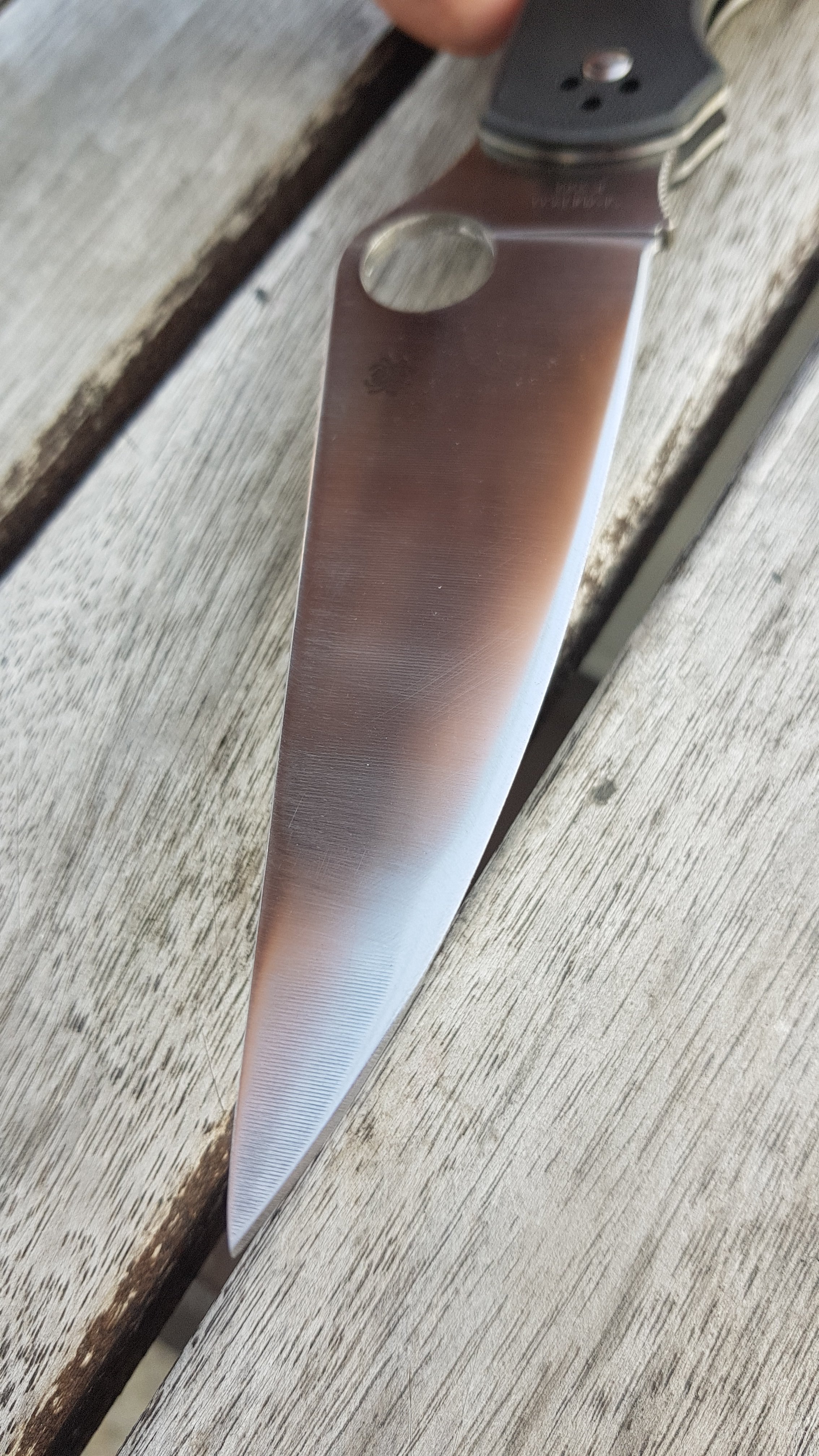
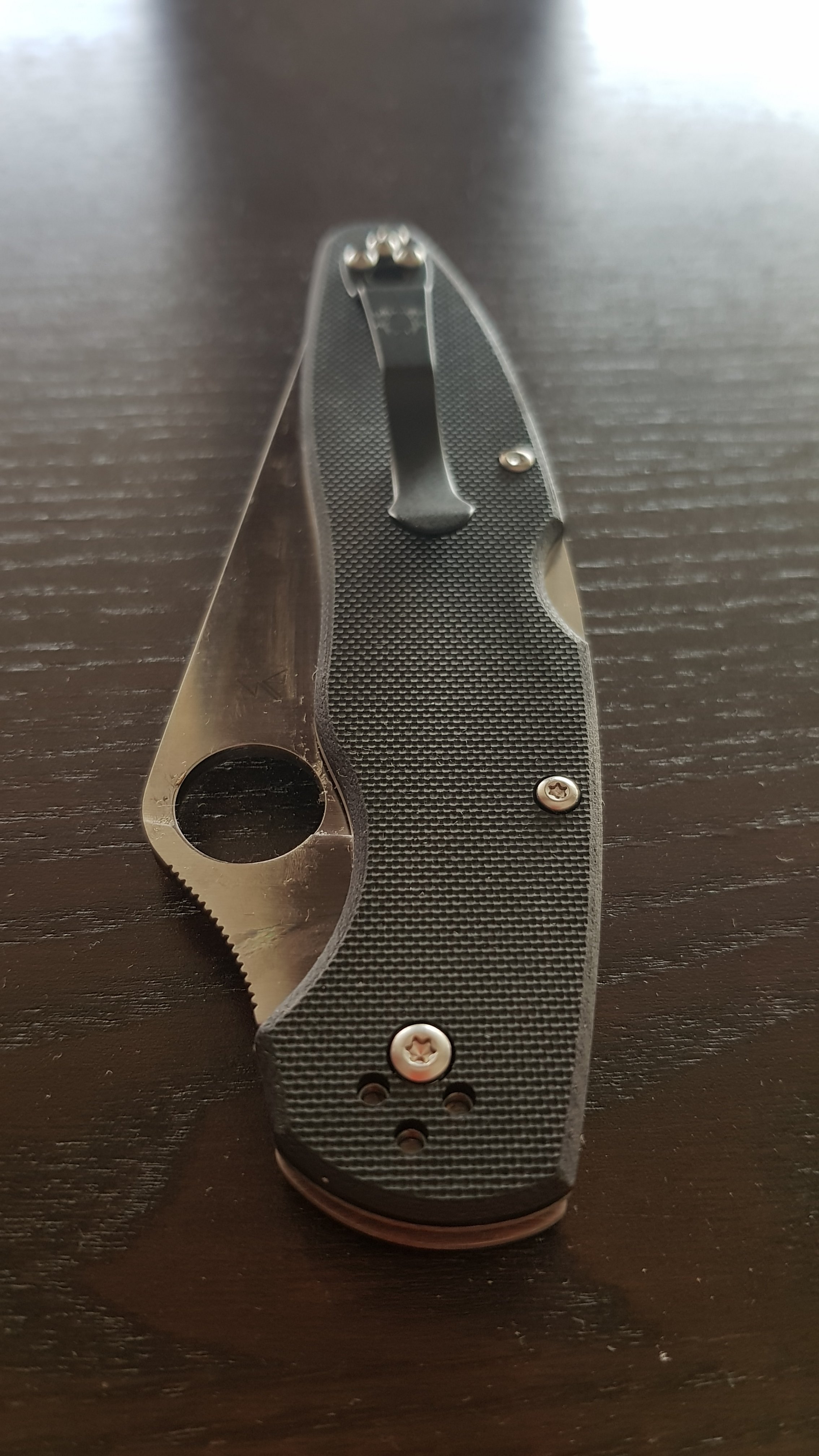


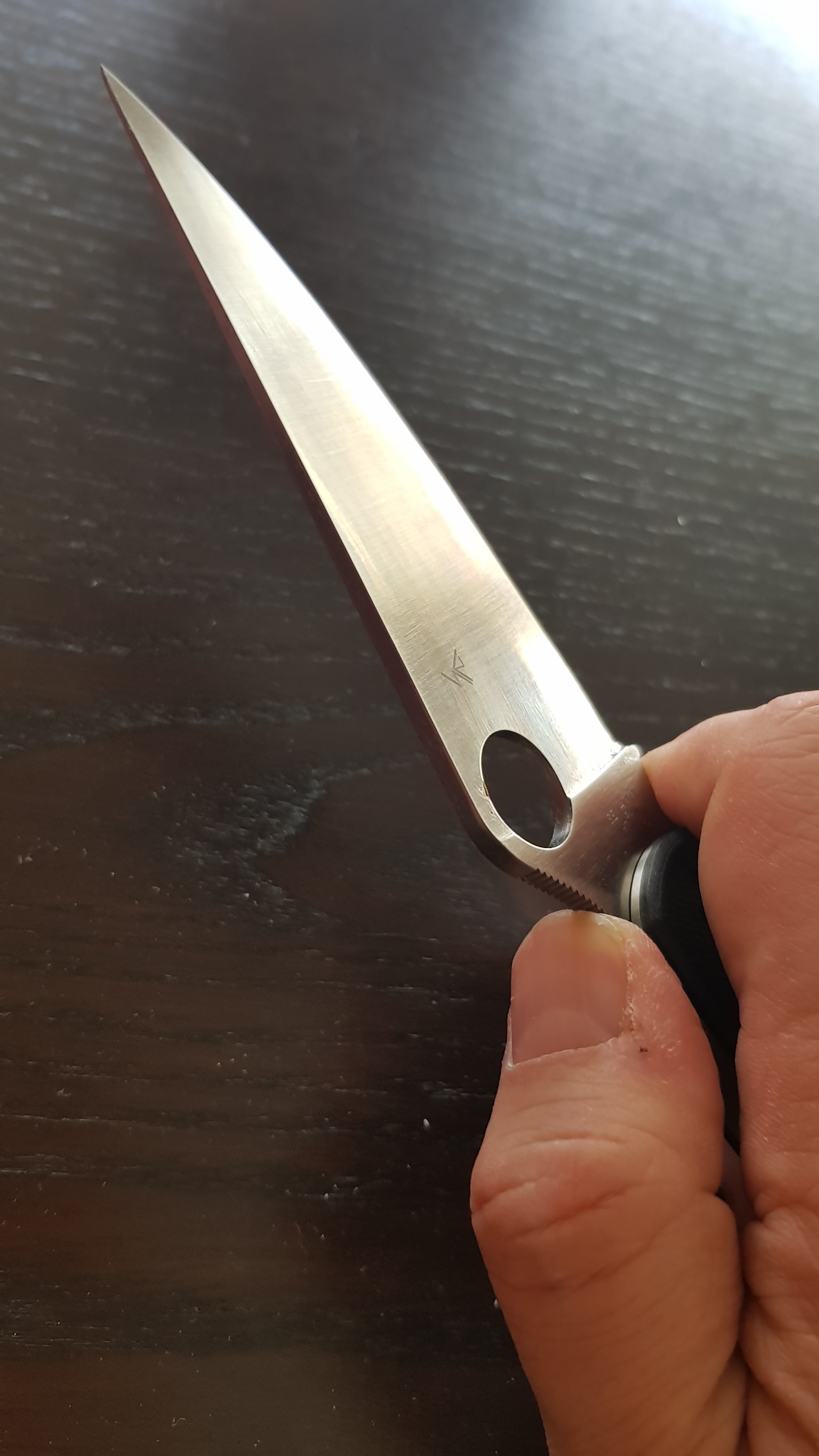


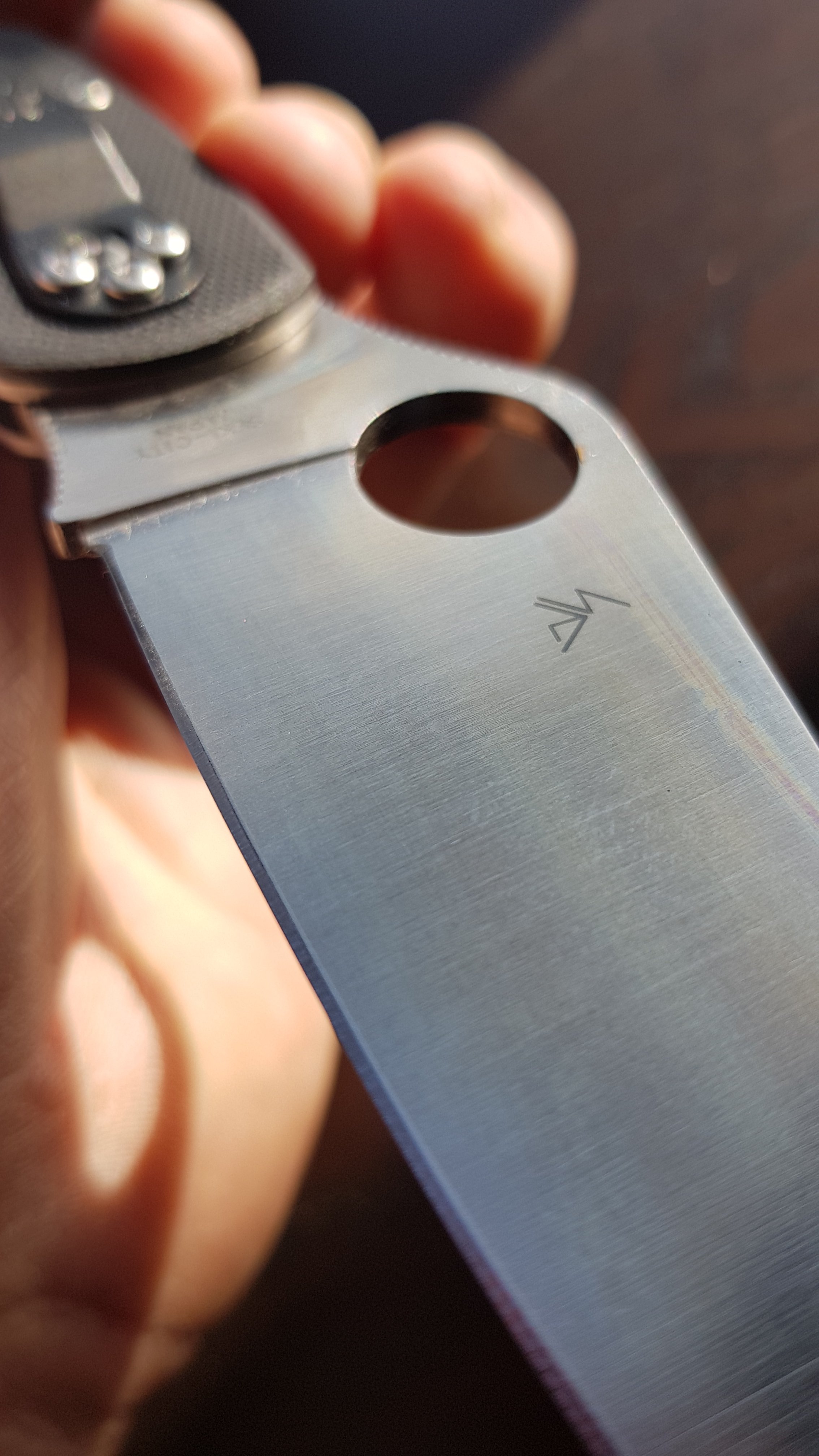
 The light reflections on the blade shows it has already started a mild patina while being stored.



 NemoKnivesReview