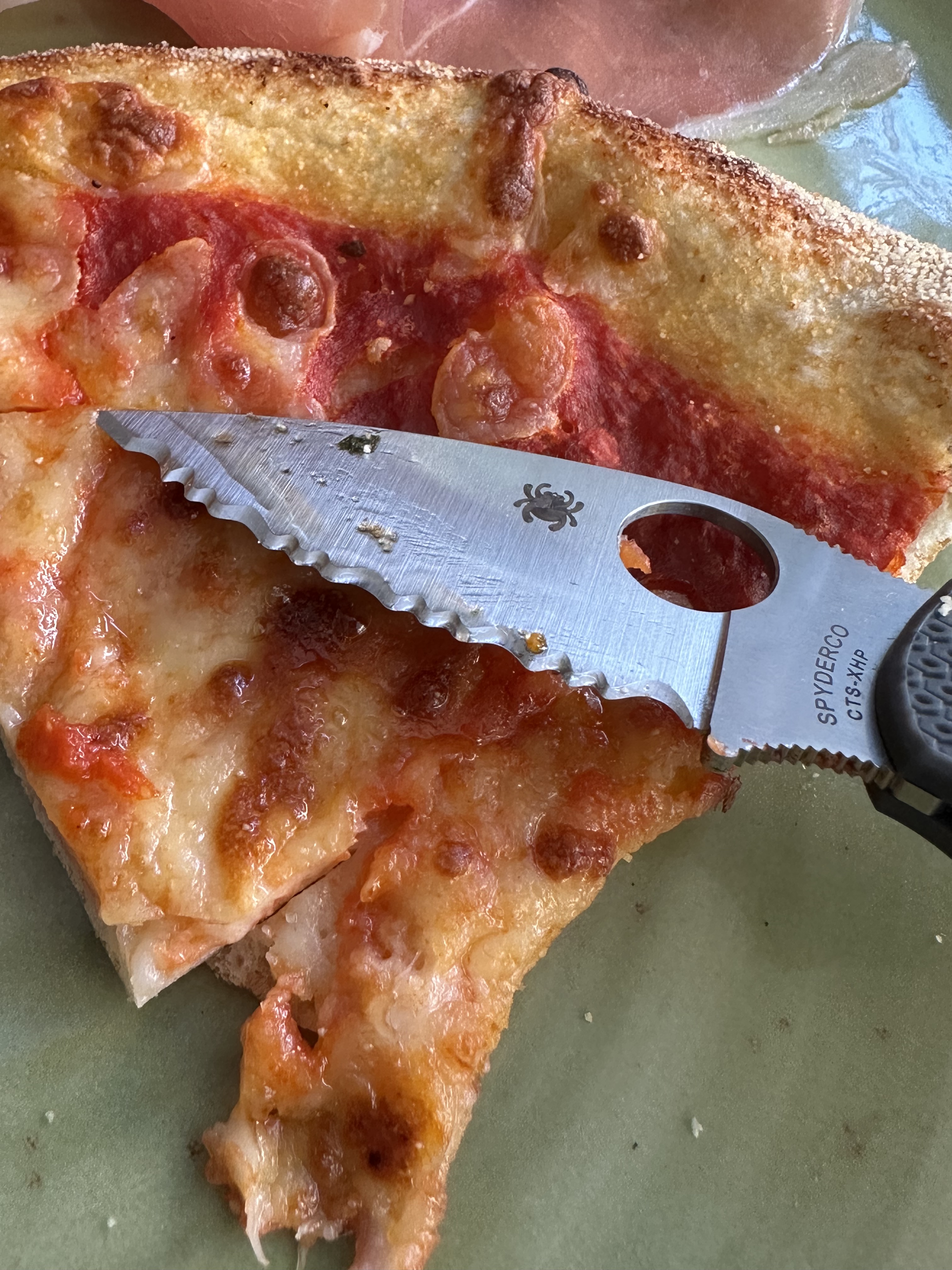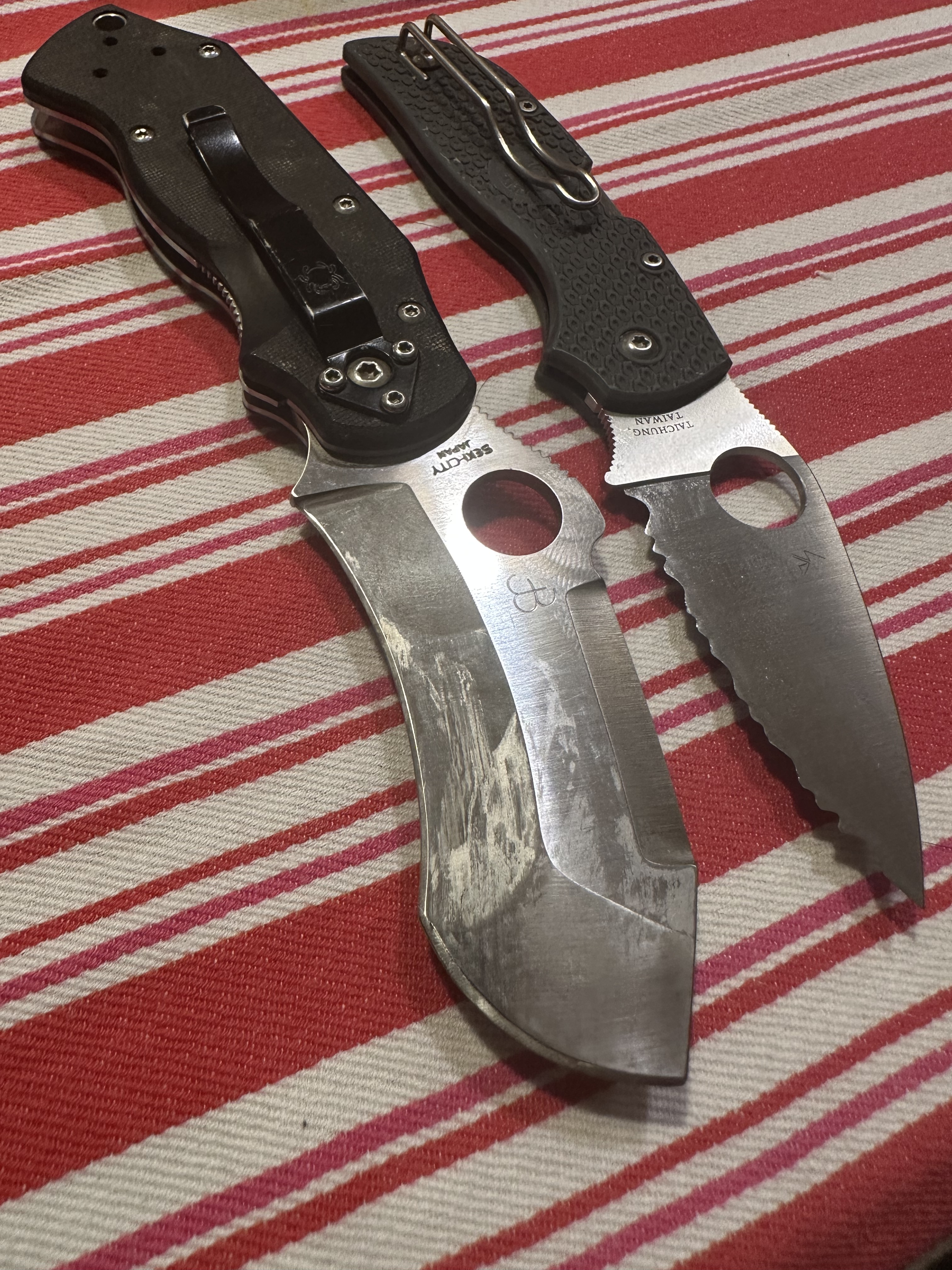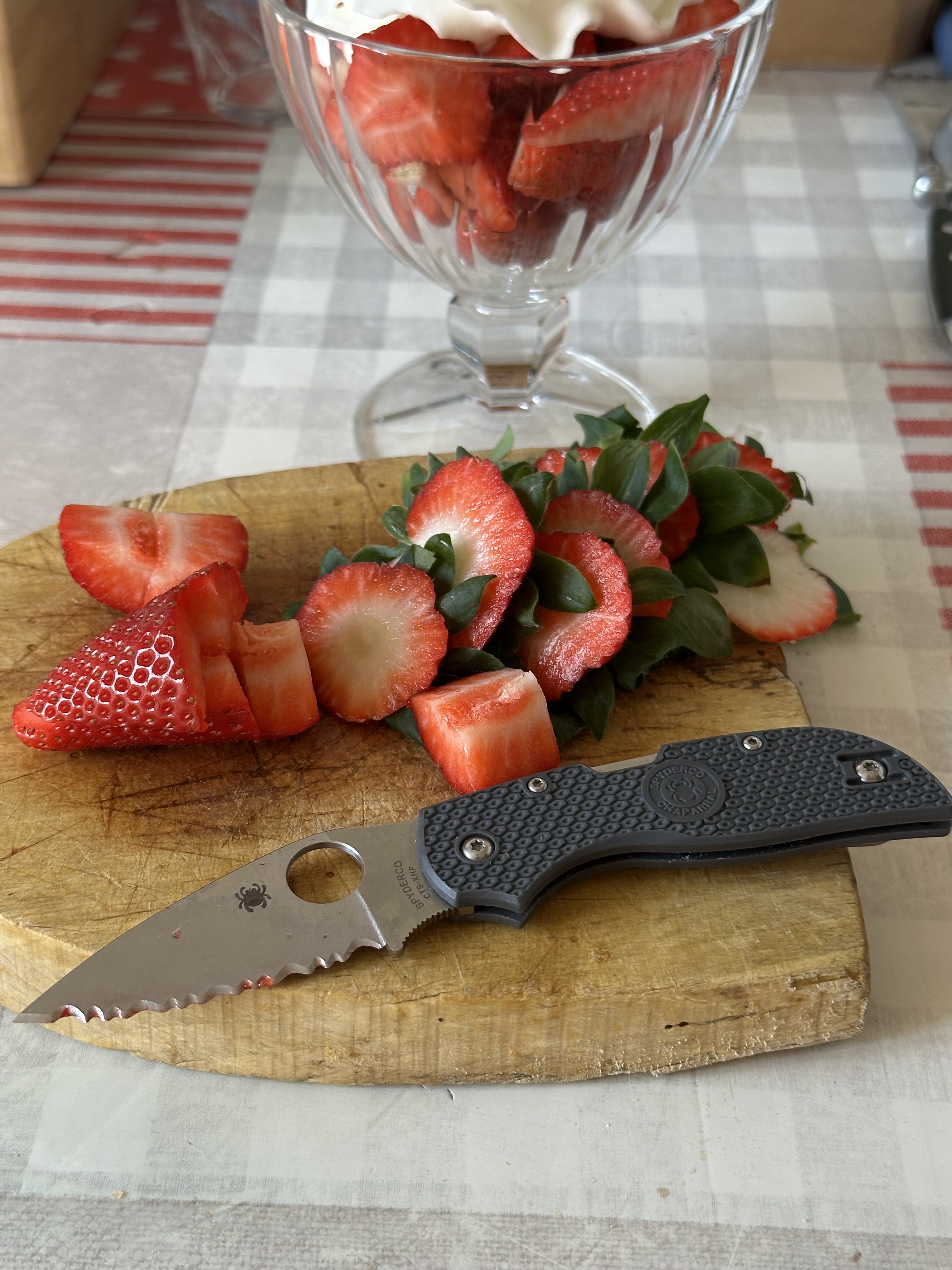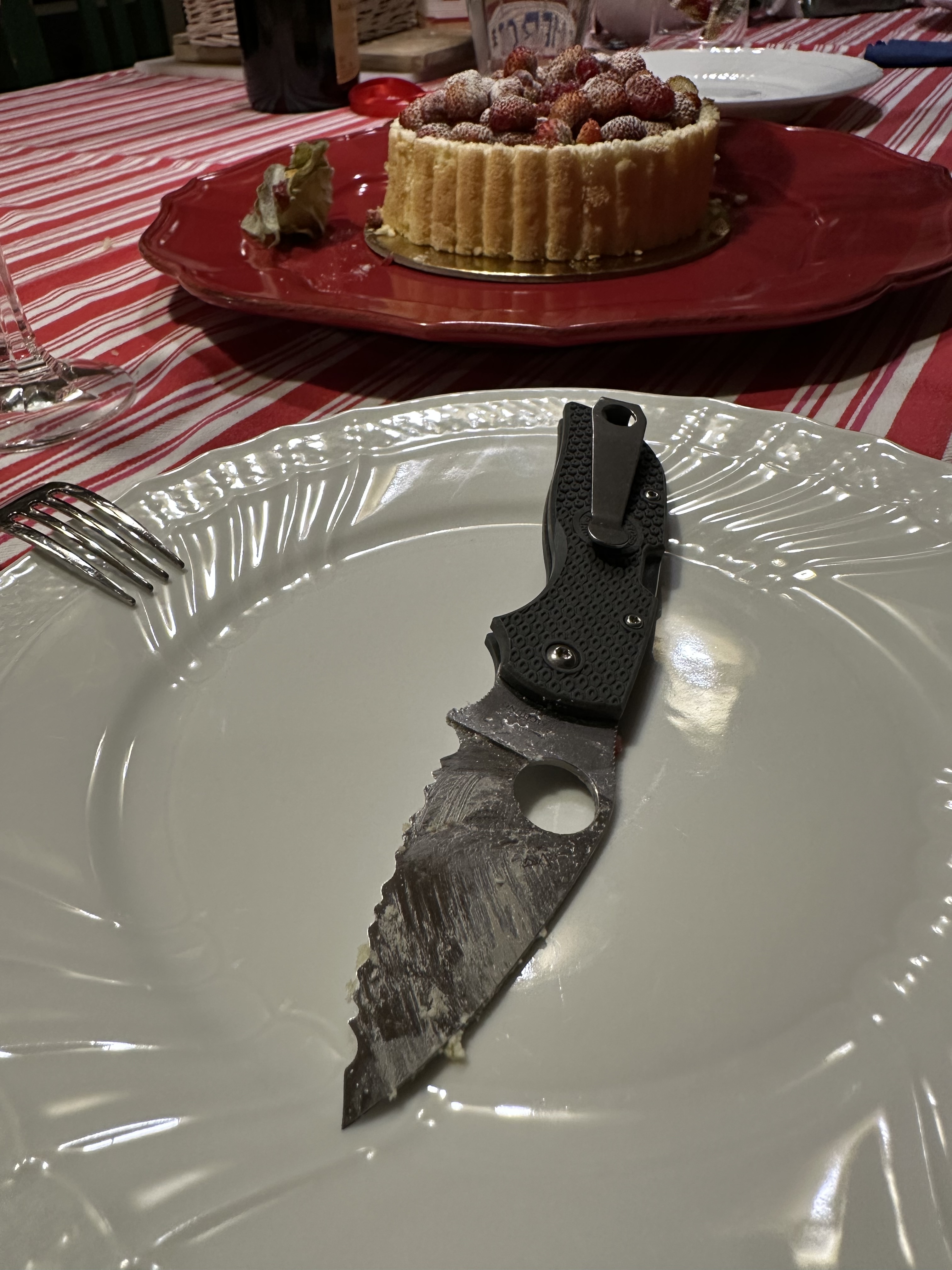
Tag Archives: Spyderco

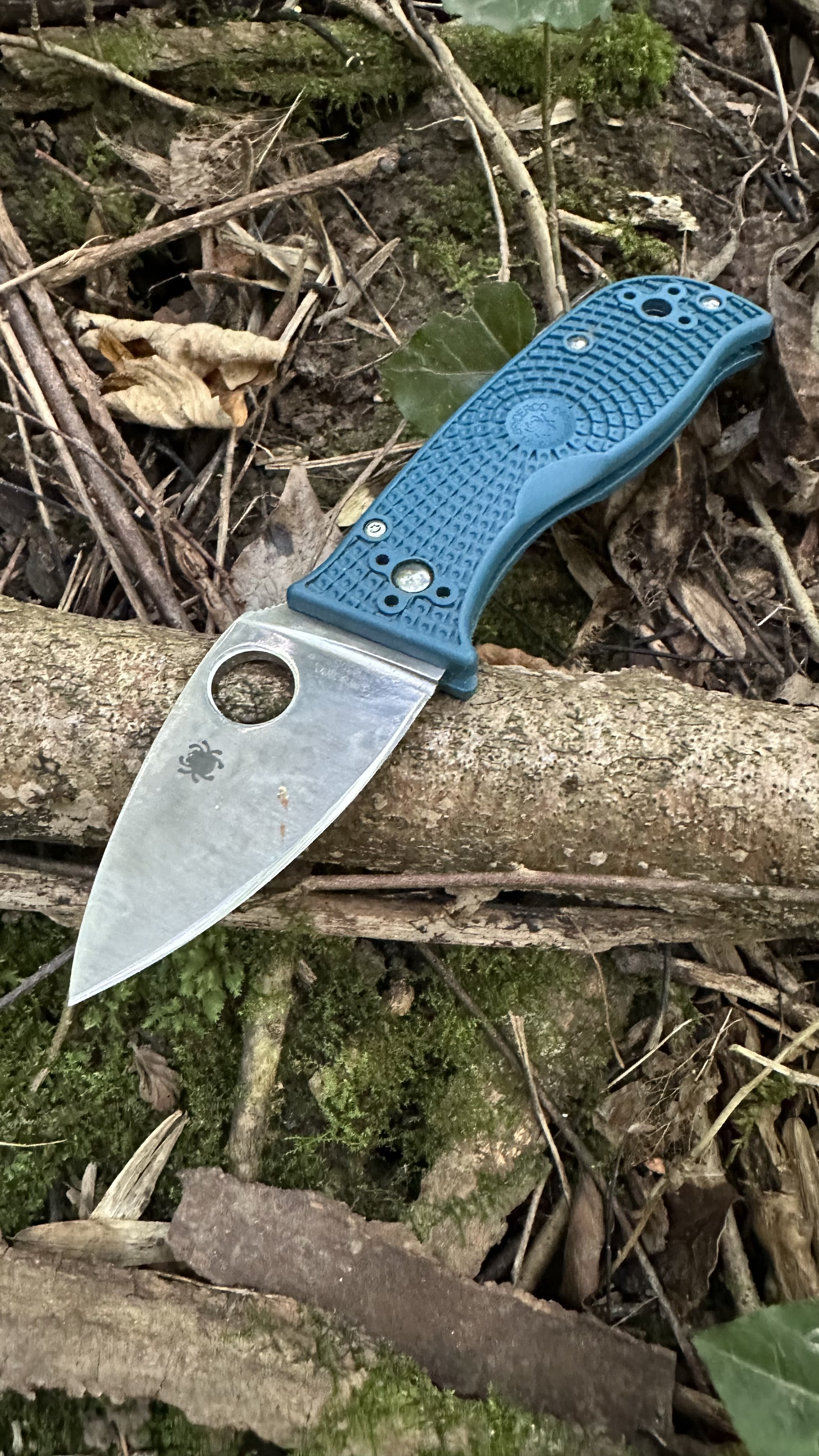
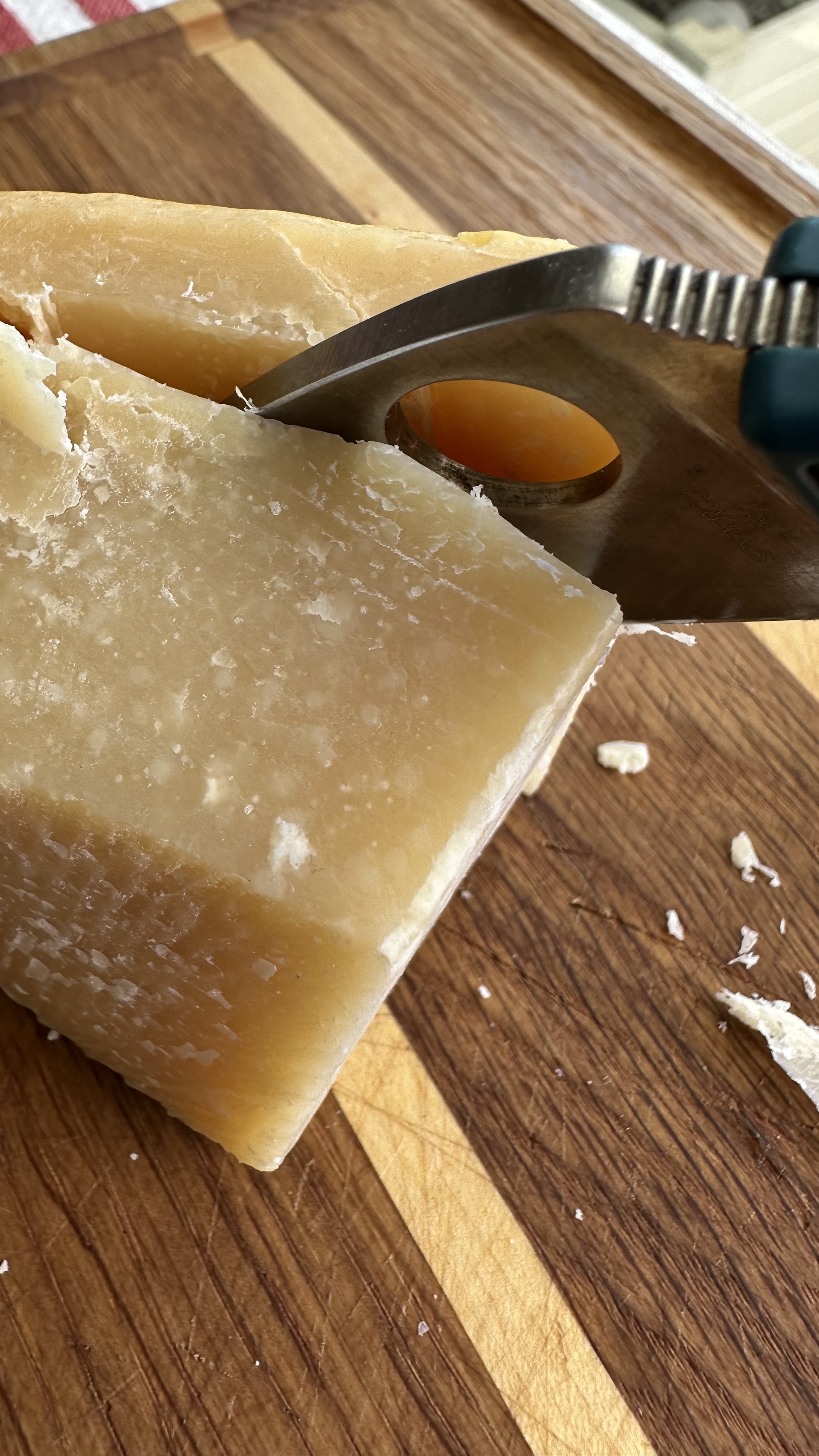
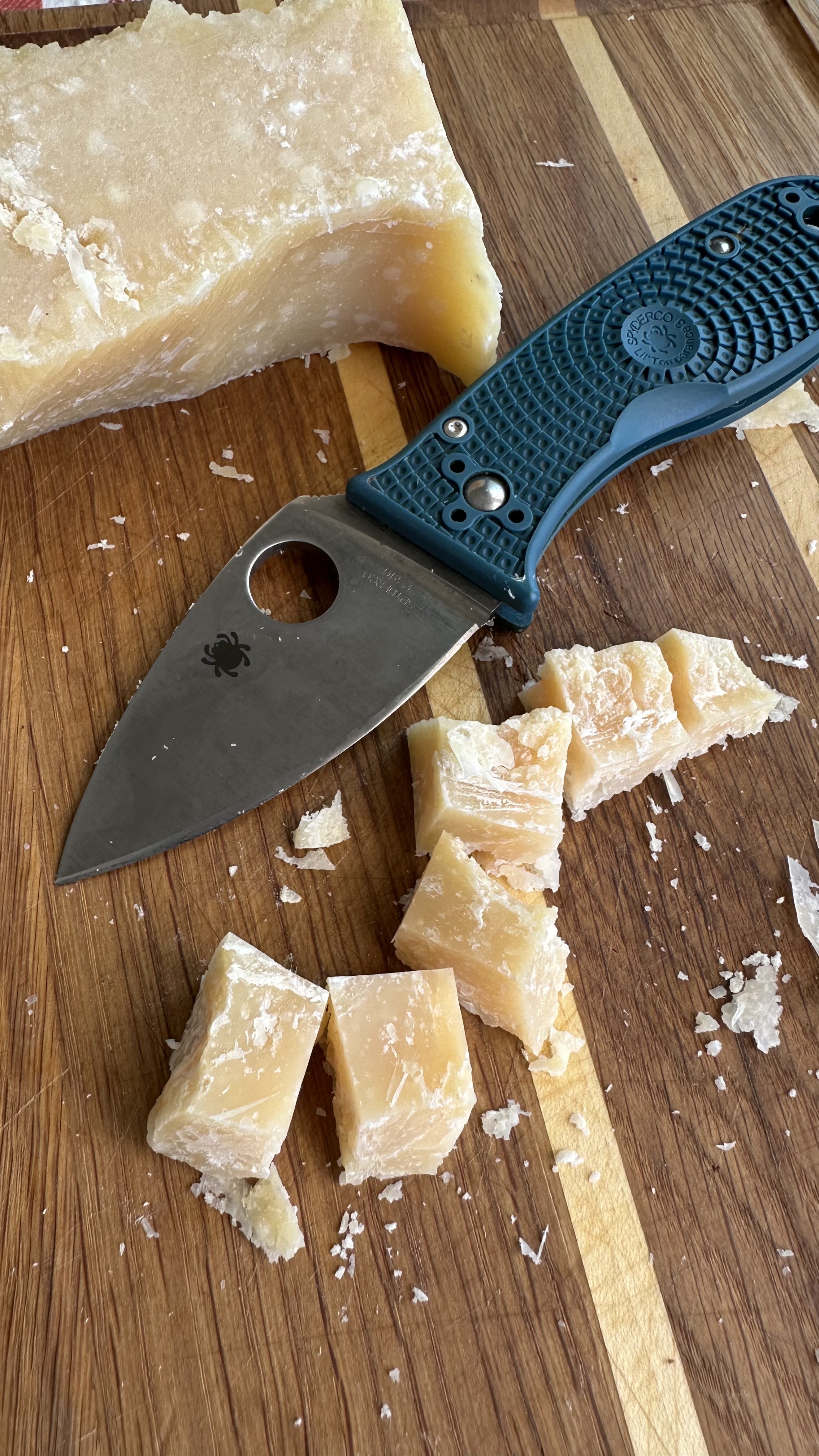
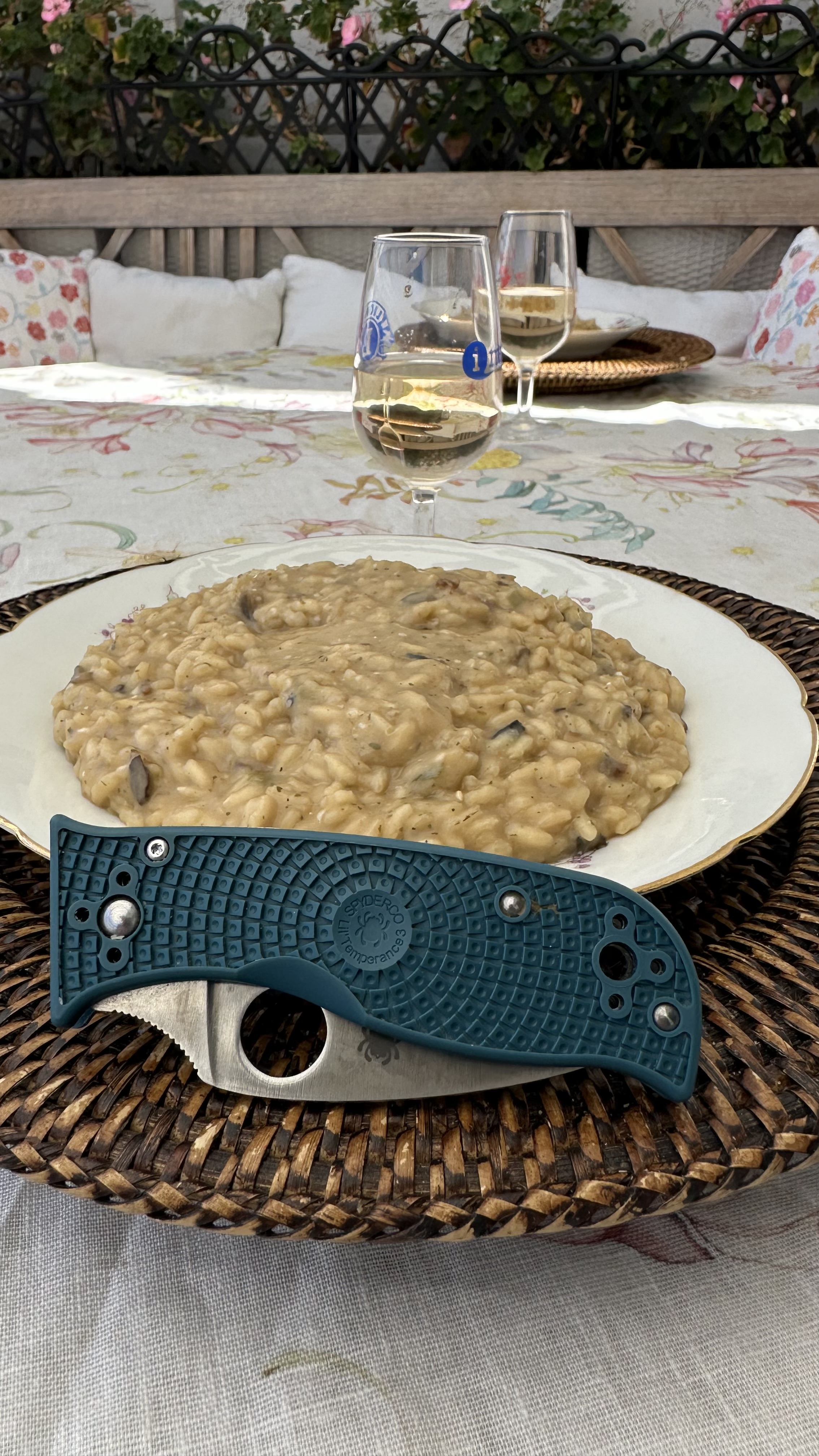
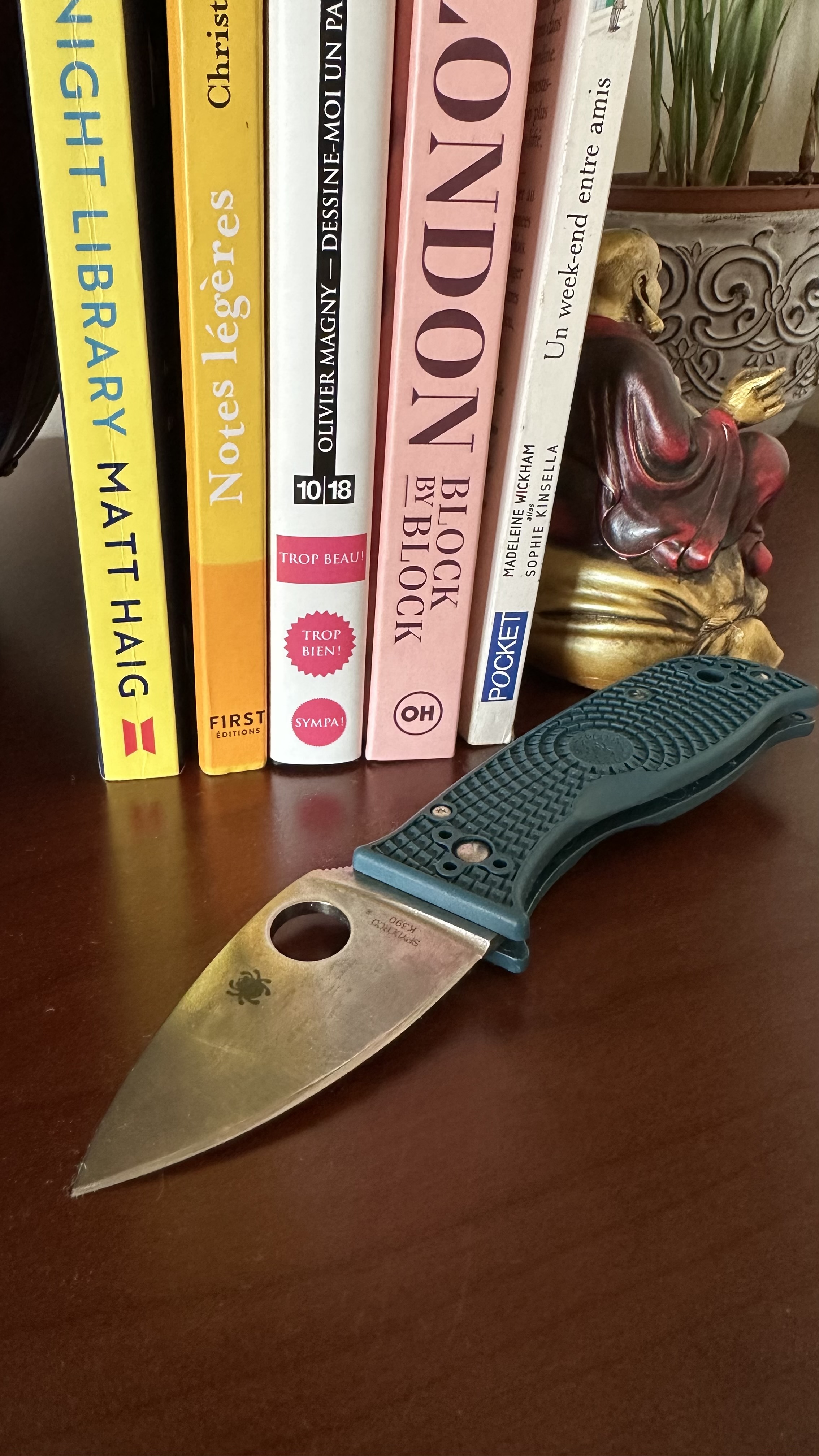
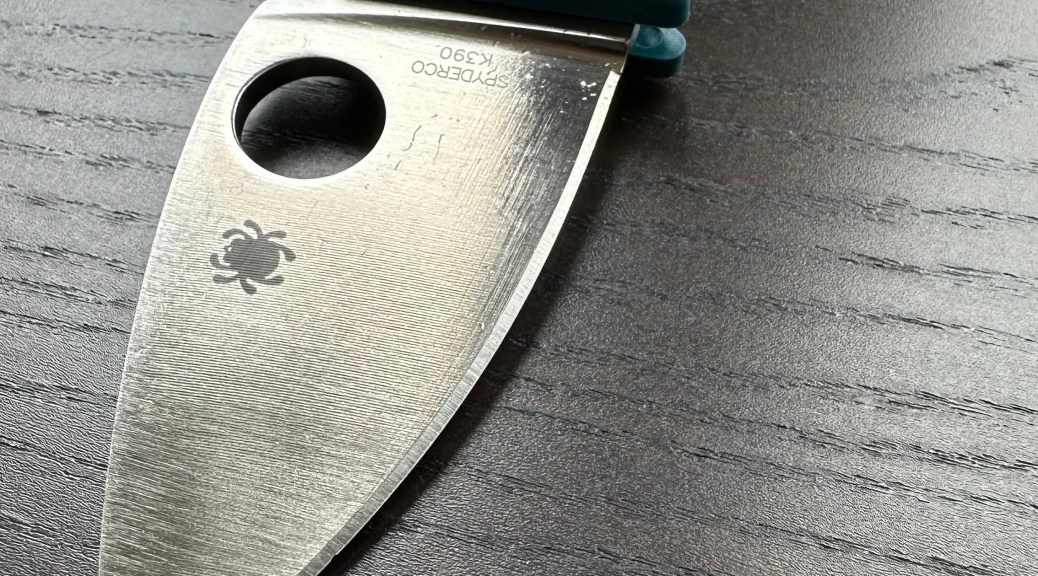
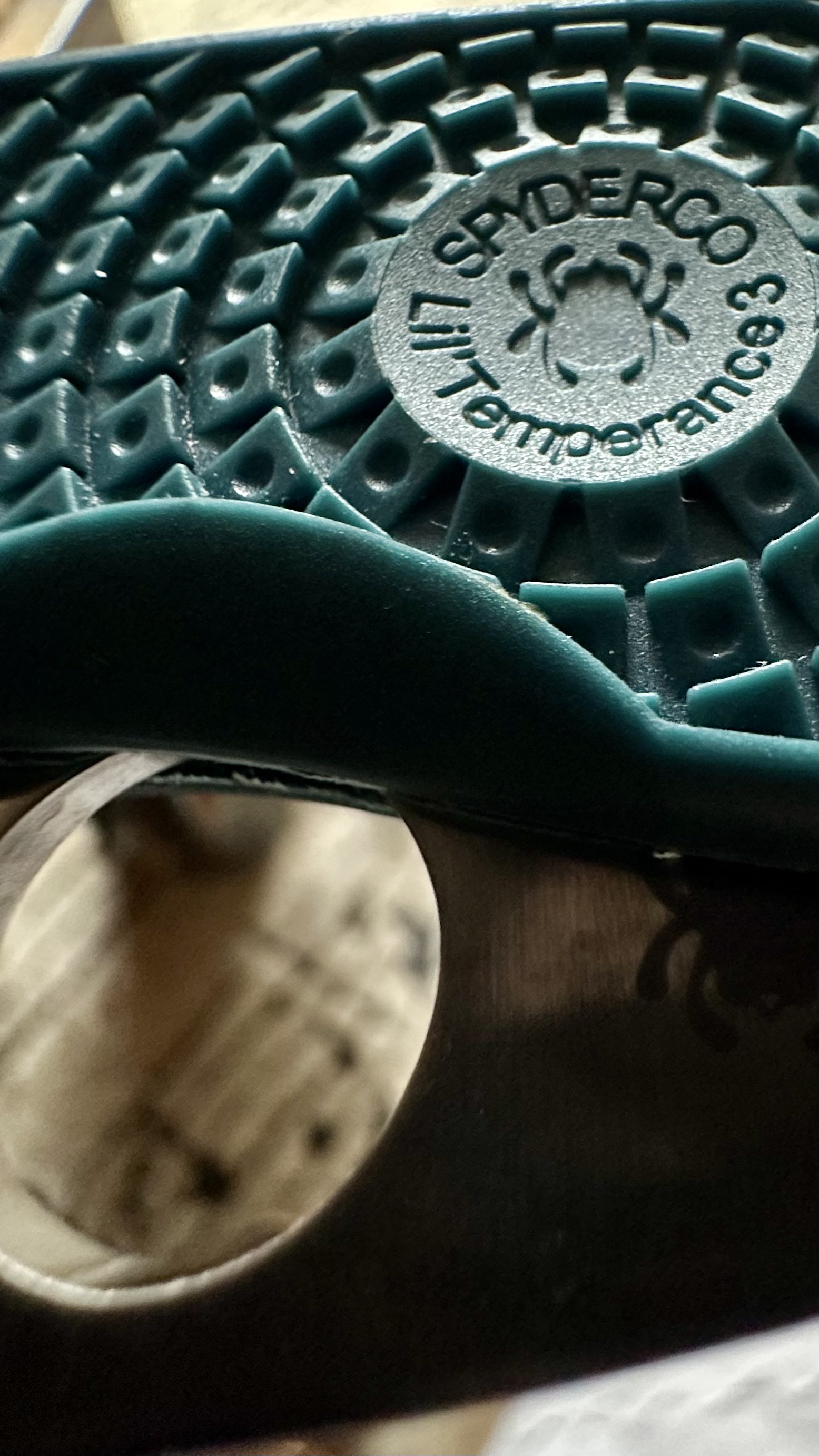
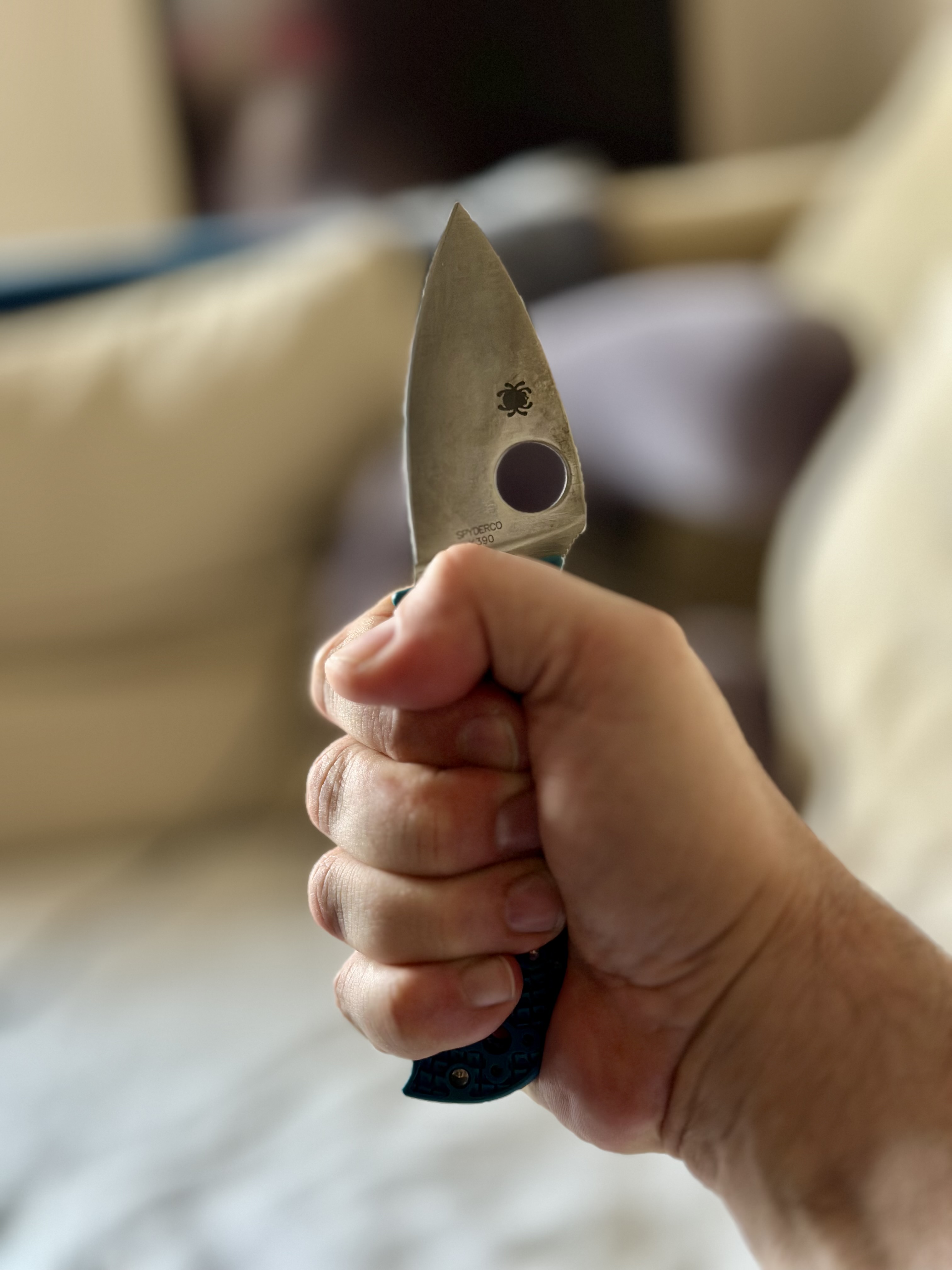
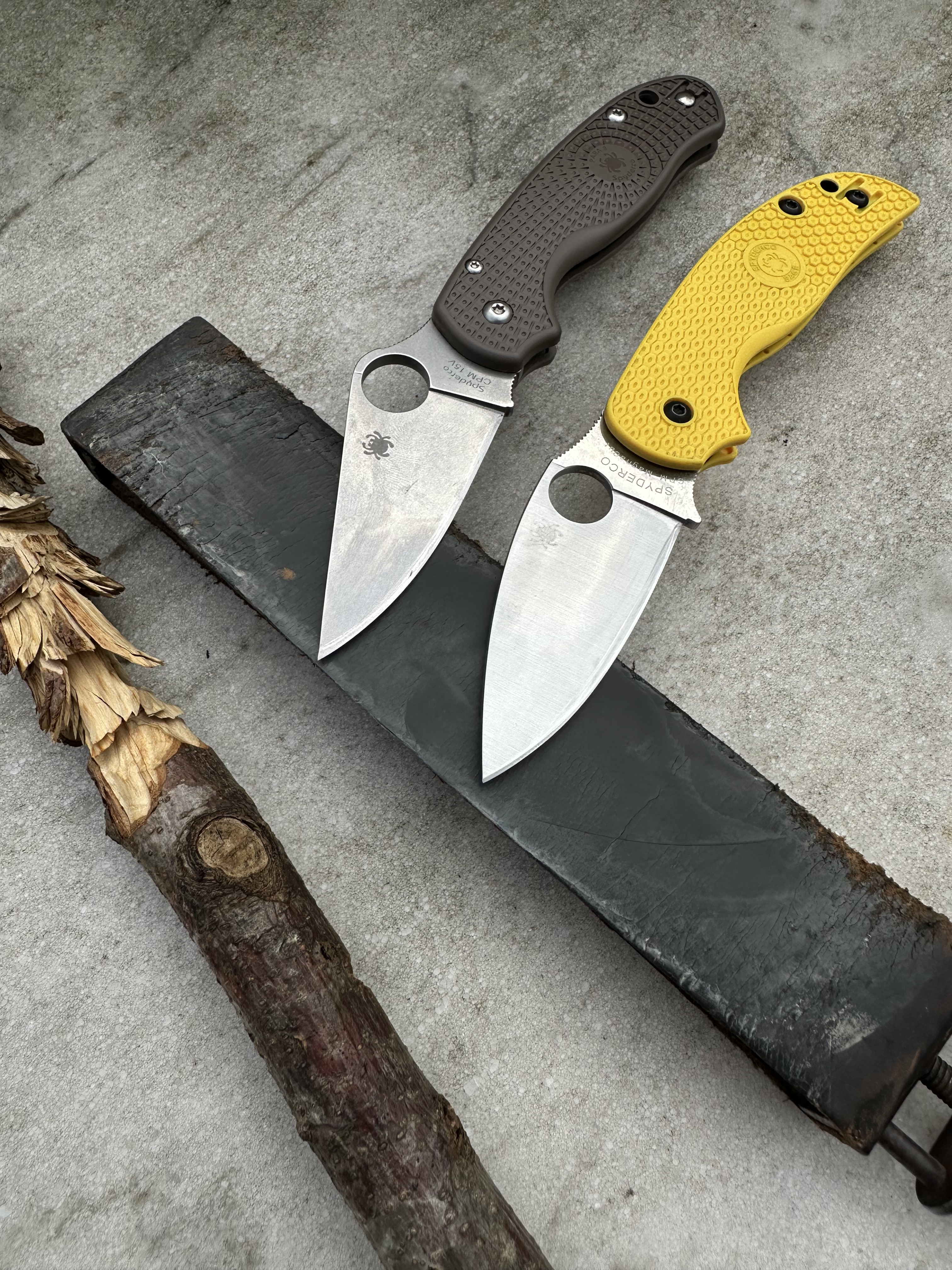
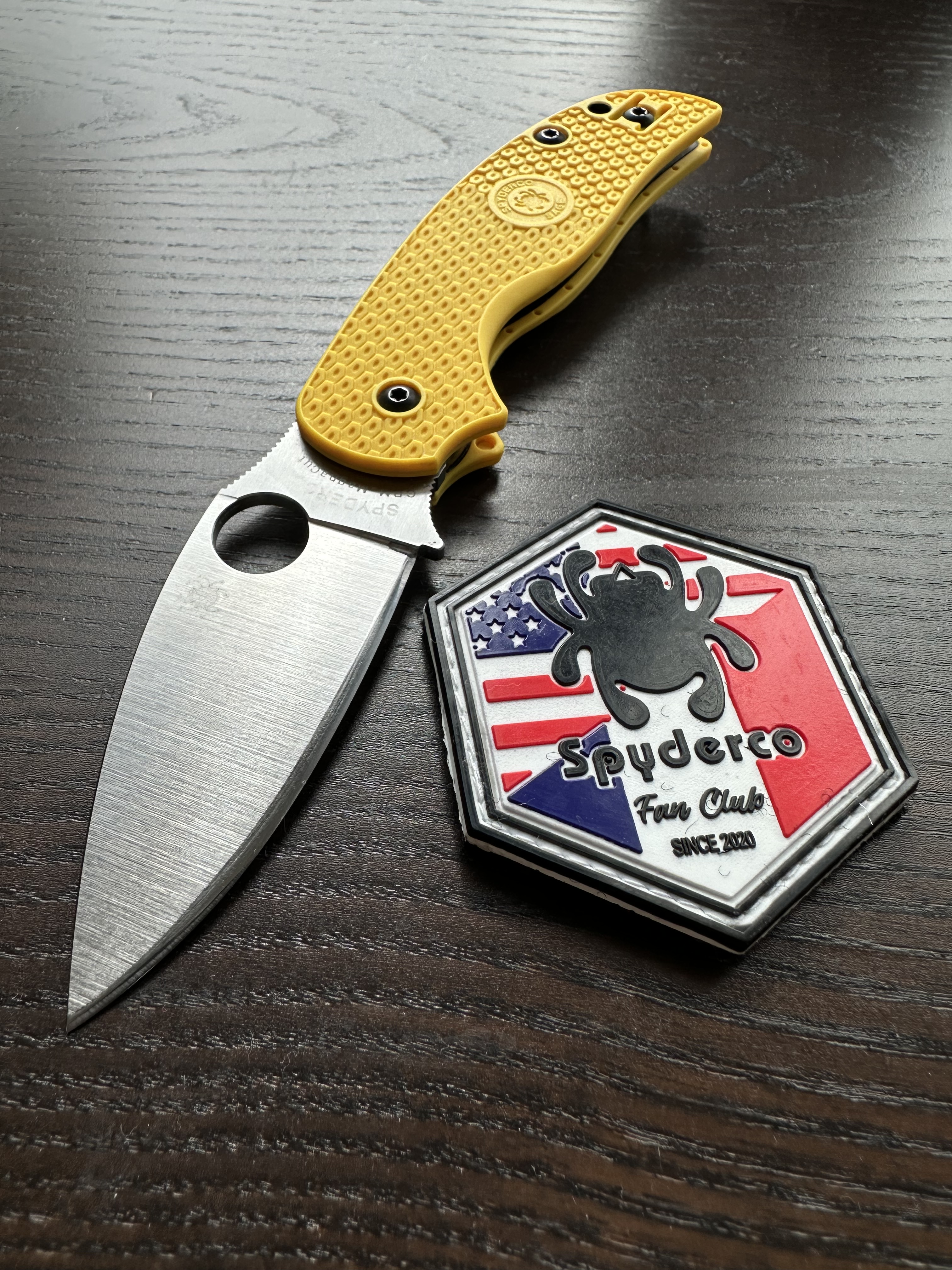
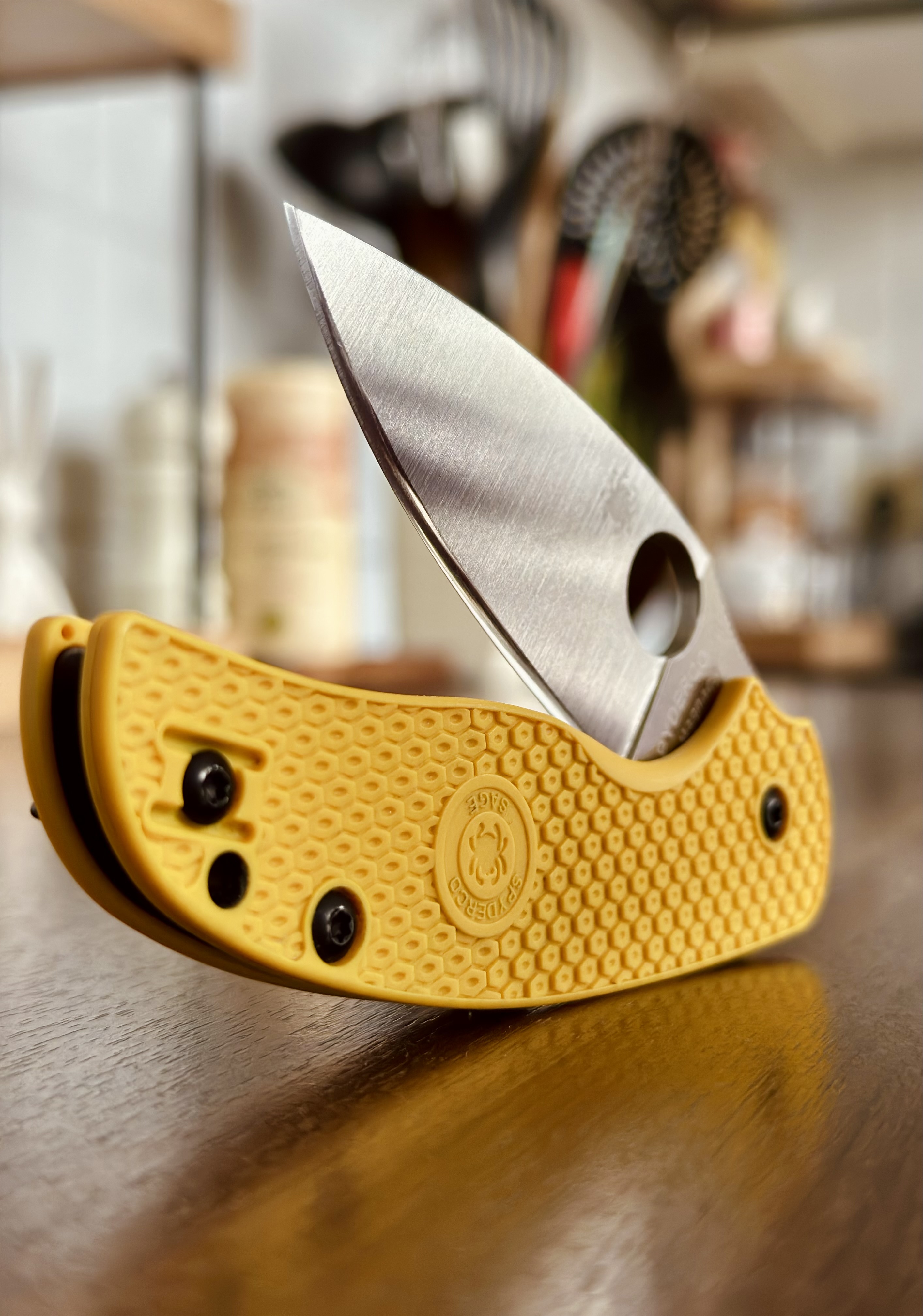
SAGE™ 5 LIGHTWEIGHT SALT® – C123YL – The Magnacut Amphibian EDC –

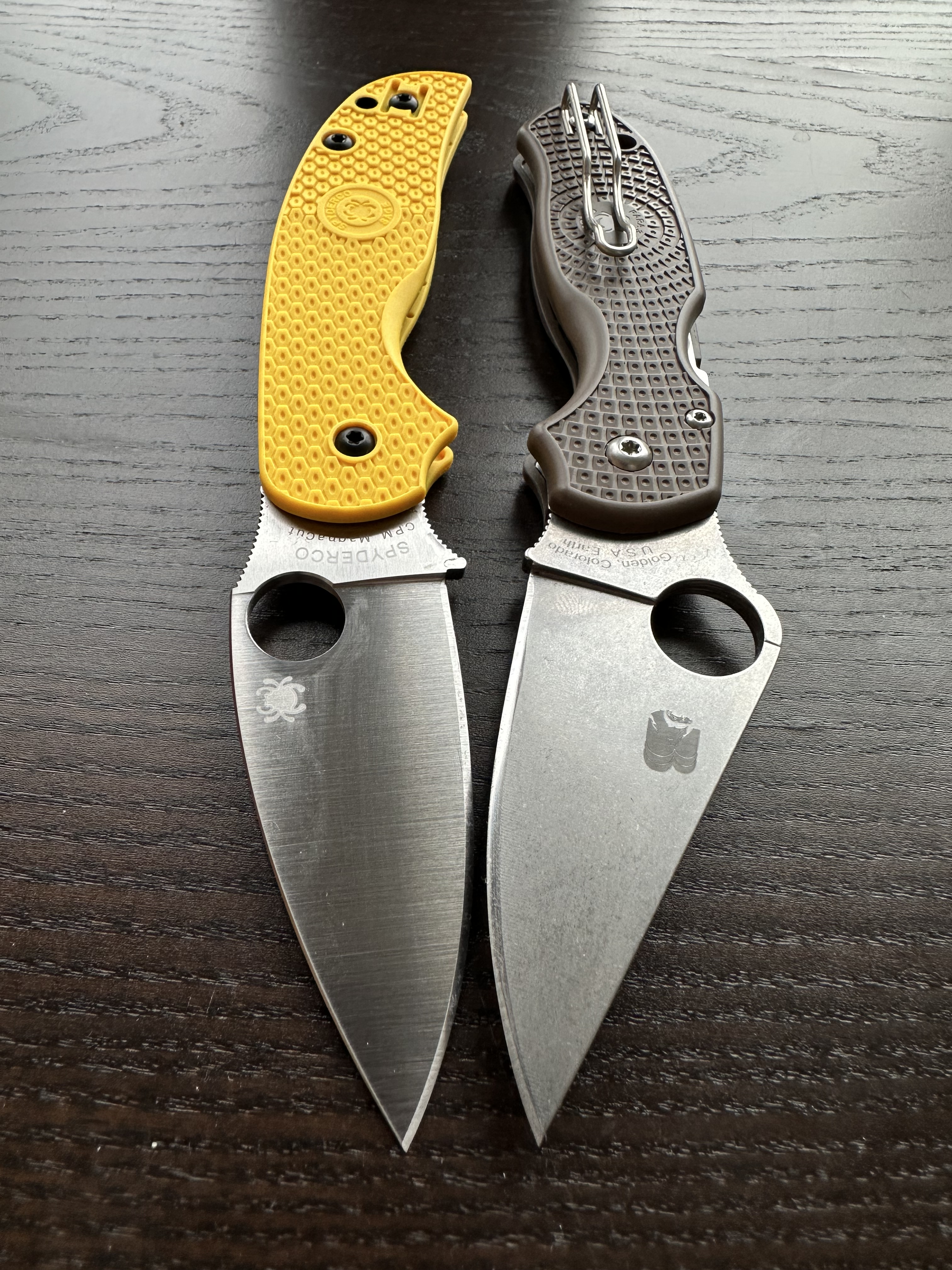
First of all, thank you to Guillaume Xais who has convinced me to try the Sage 5 Salt. I have found a deal under 200 euros.
In the past, I have owned some Sage(s) from the Sage 2 to the Sage 4 actually.
You still can find the reviewss by clicking the links.
The Sage 2 was a Sebenza killer when all the crave was about Christopher Reeves Integral Lock and titanium slabs.
The Sage 3 was the Blue Brother.
The Sage 4 was a masterpiece with its Front Lock and titanium Bolster never reviewed because too much a jewel of a knife.

(Picture by Guillaume Xais – instagram Spydigex_knives)

I wasn’t particularly interested in the Sage 5 Compression Lock, and even less in the Sage 5 Lightweight. Yet both the Sage 5 G10 and Lightweight versions proved so popular and well-regarded that Spyderco expanded the lineup into Maxamet, SPY27, REX 121, Magnacut, and CPM-M4 (thanks to Guillaume for the editing).

With the vanilla S30V, the Sage 5 was offered in six different alloys — some of the most impressive in terms of performance — demonstrating just how versatile and capable this design can be.
 “The Sage 5 Lightweight has also proven itself to be a perfect platform for showcasing the elite properties of high-performance blade steels.”

(Picture by Guillaume Xais – instagram Spydigex_knives)


For the record the Sage Series has traditionally expressed the same iconic design with different lock mechanisms, paying homage to the innovative designers who created them. Also Spyderco donates approximately 5% of sales of the Sage line to the National Alzheimer’s Association Denver, Colorado Chapter.
(A Sage 6 is soon coming with a button/compression lock as found on the Smock.)
So I have asked to Guillaume in the Spyderco Fan Club France, why should I invest in a Sage 5 Salt Lightweight in the first place ?

(Picture by Guillaume Xais – instagram Spydigex_knives)

“Its action, like any self-respecting Sage LW, is dazzling!
This yellow contrasts with the hardware, the clip, and the deep black of the liners, like a Black Mamba face… I love it!
My first Magnacut, by the way… I fish and am quite often at the seaside, it will complement my Ukpk salt (which is also very good).
My favorites, however, remain the 2 and 4, true works of art!

For me, it does everything better than a Para3: handling, fluidity, less fragile tip, less tactical image, more rewarding feel of the FRN… there’s no comparison (from my point of view, of course).
Add to that the Taichung Quality and Magna’versatility… they’re worth it, right?

I was convinced !

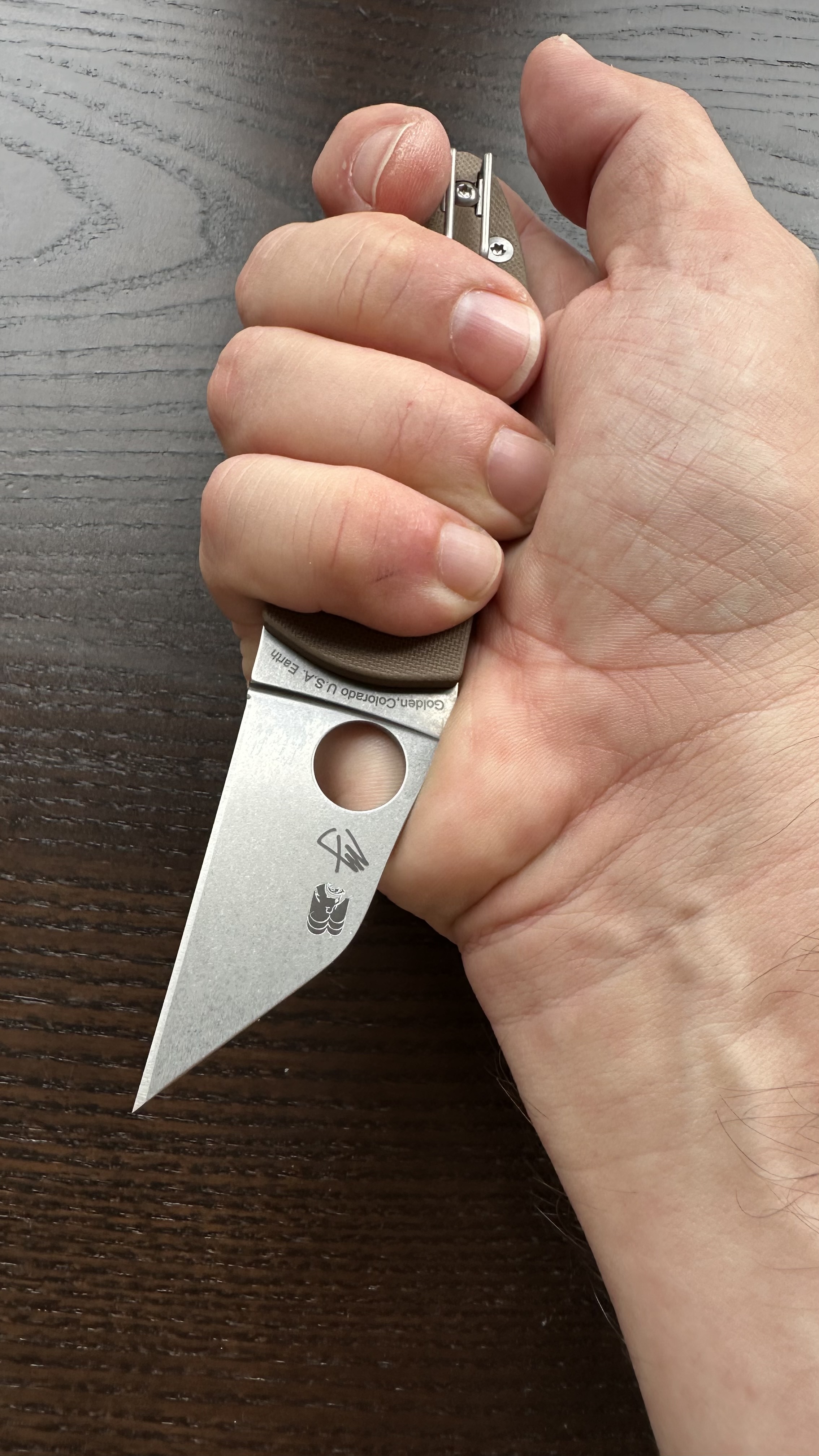
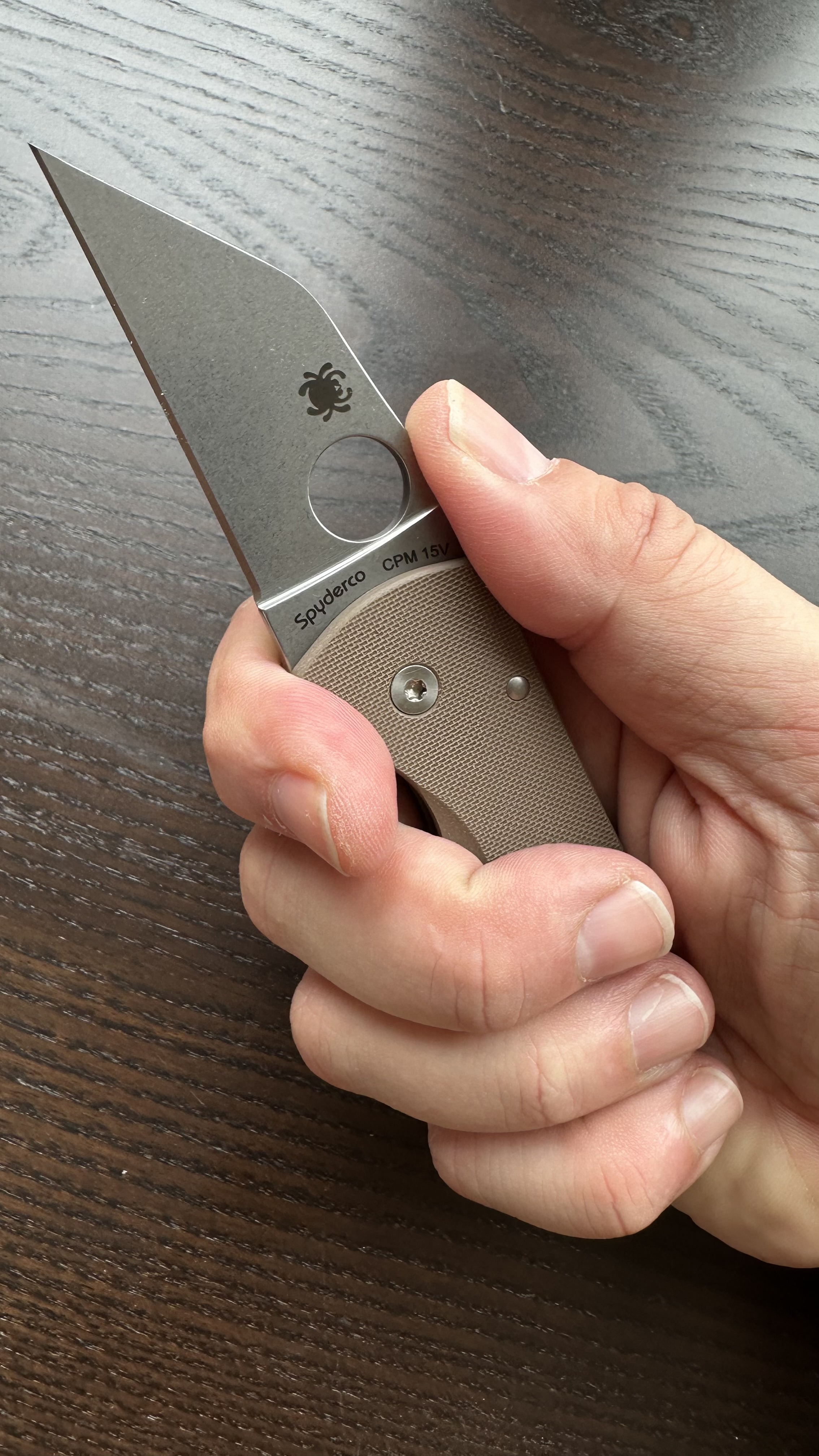
First impressions: there’s some real heft to this lightweight — thanks to the full liners. I love it. The blade is perfectly centered, and the lock doesn’t stick.

The detent is impressively strong, almost magnetic — stronger than the detents on my recent Para 3 and Military 2. Go figure! And the action is smooth as oily butter. Classic, perfect Taichung craftsmanship.

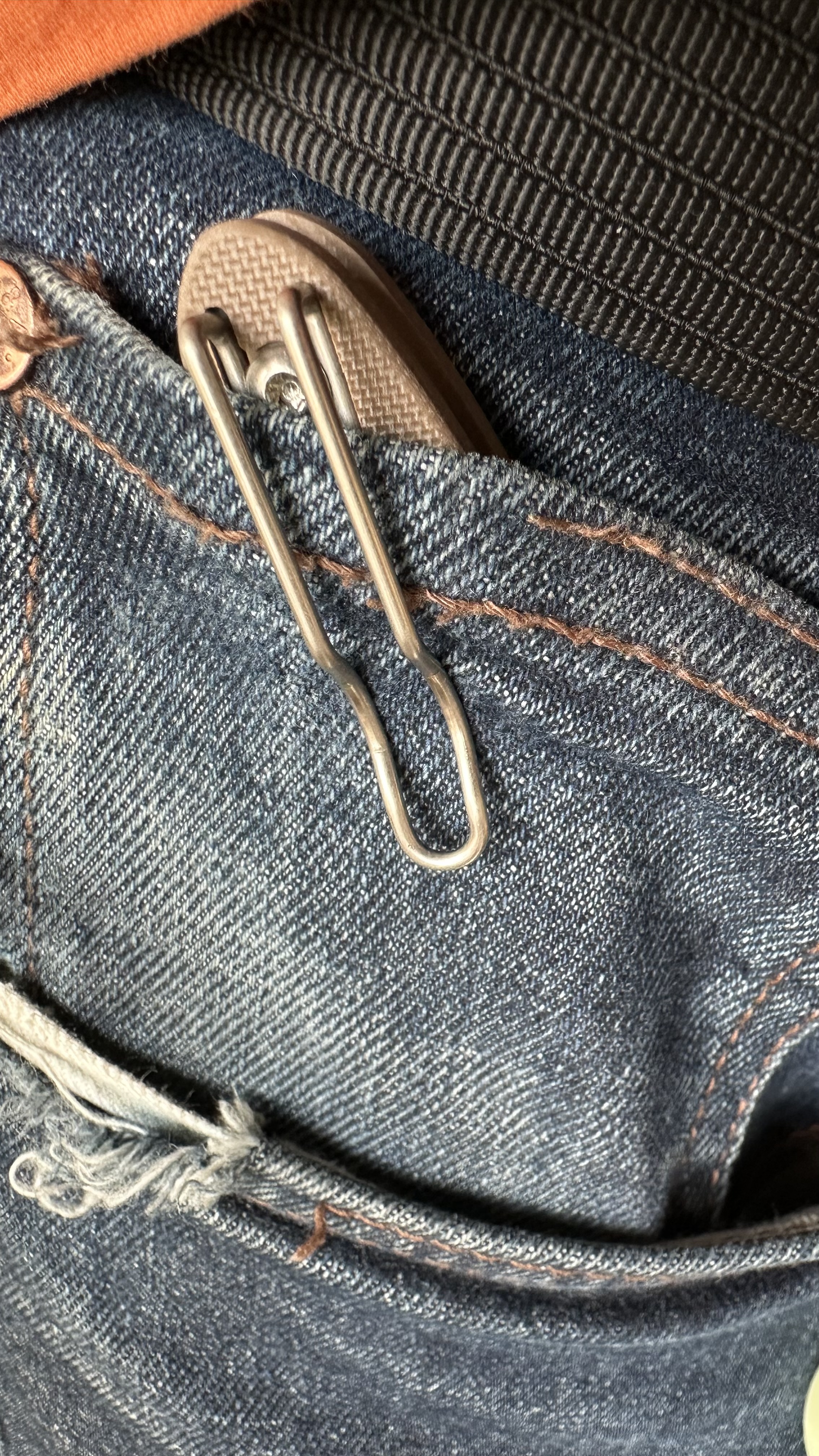
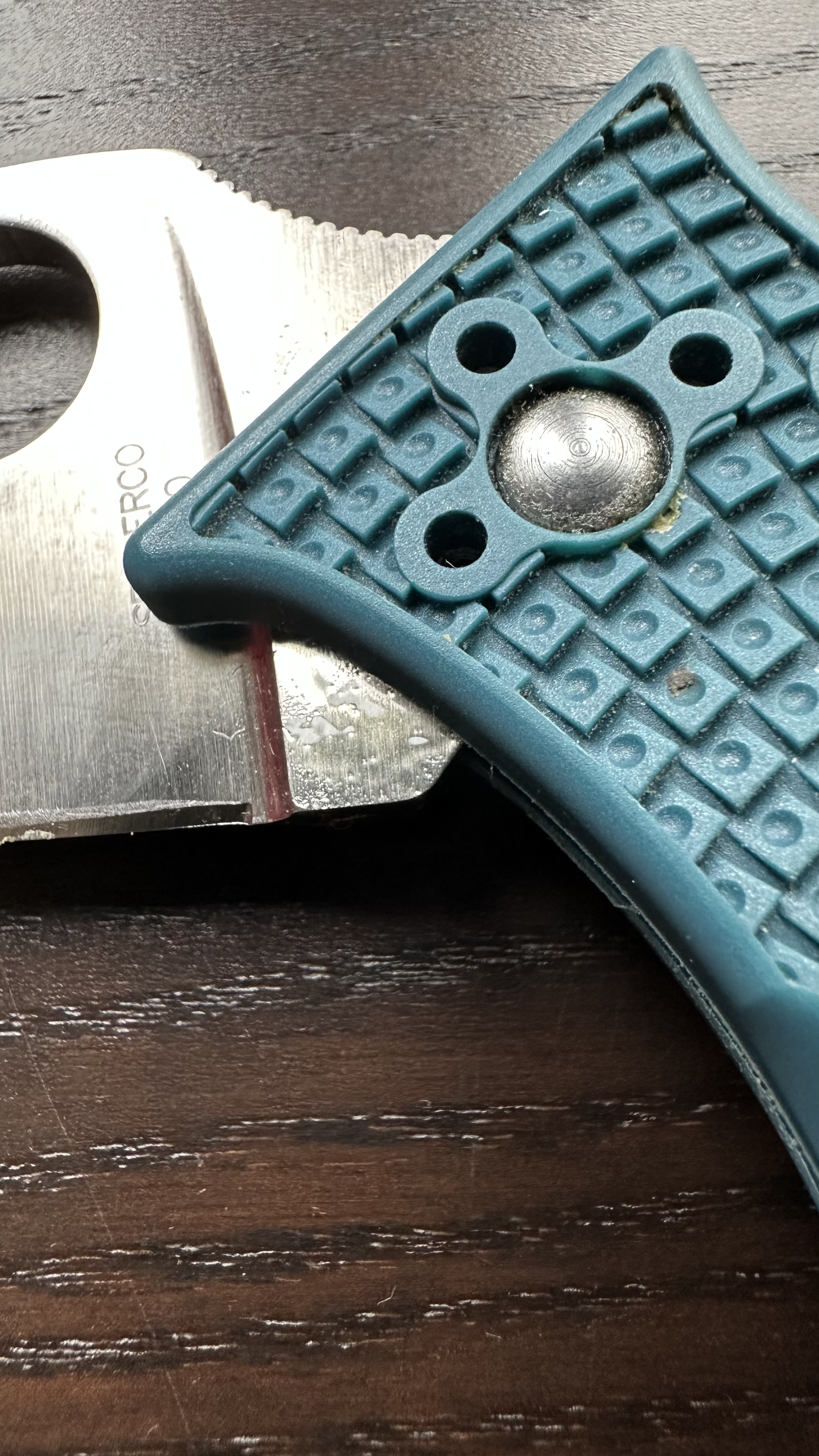
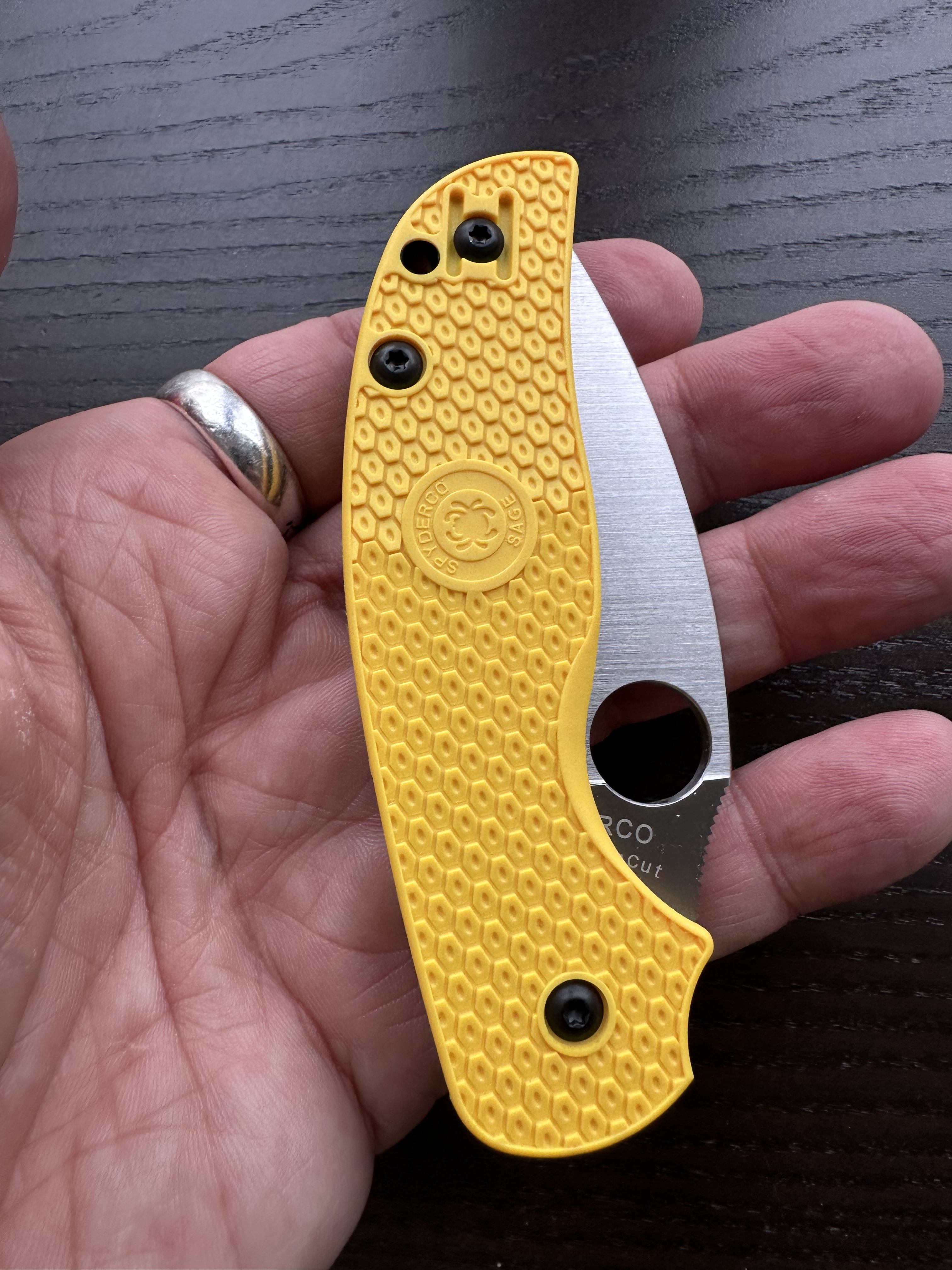
The FRN pattern is hard, grippy and catchy I even got some issue to put in my pocket.
It the same issue I had with my Chaparral Lightweight.


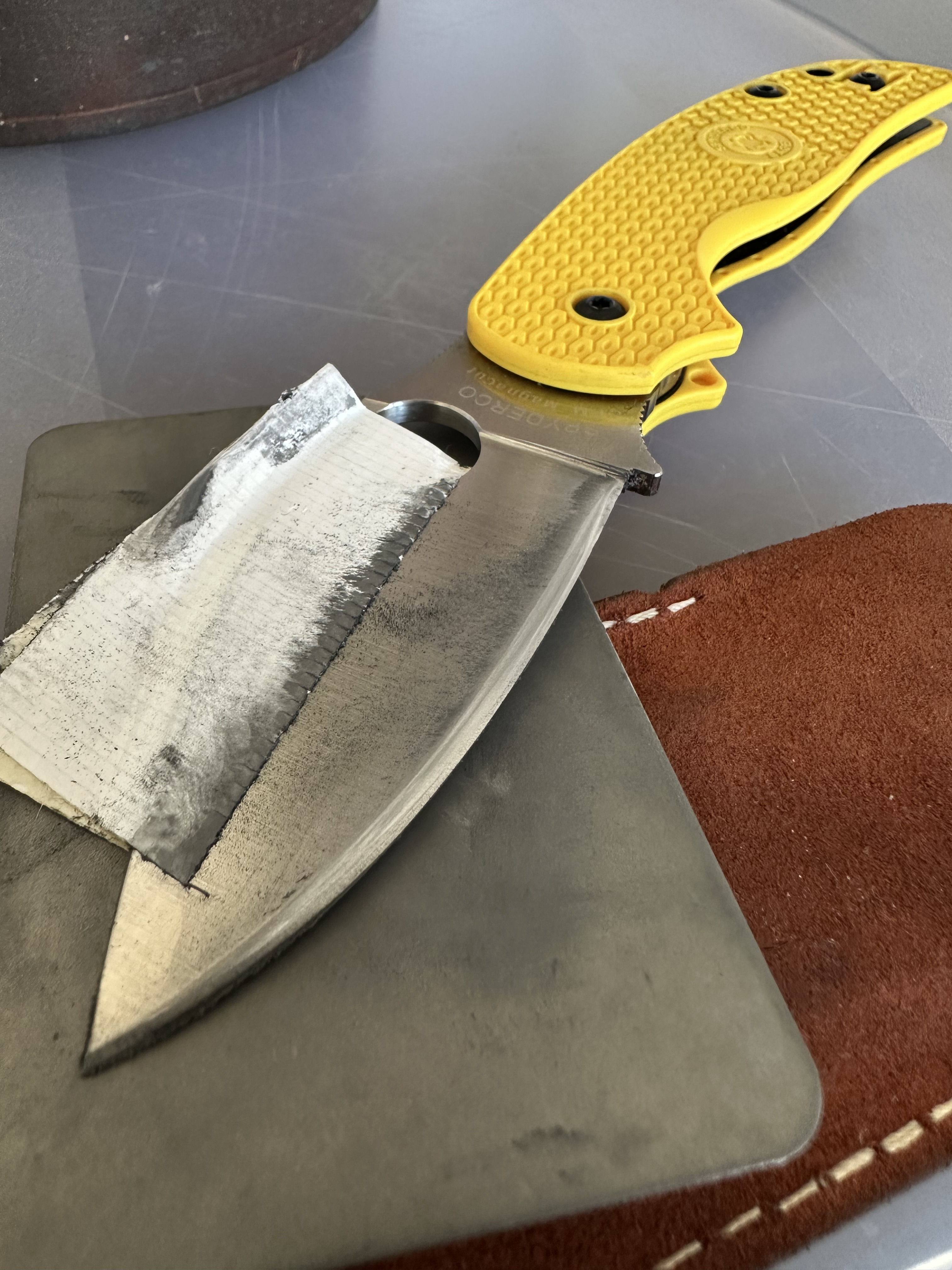
A passage under the sandpaper would be perhaps mandatory ? Let’s see what Papa Sal would advice in my case of protecting my pockets:
“You can lessen the tension on the clip as an easy solution. Some sand the scales bit.” Sal in the Forums.

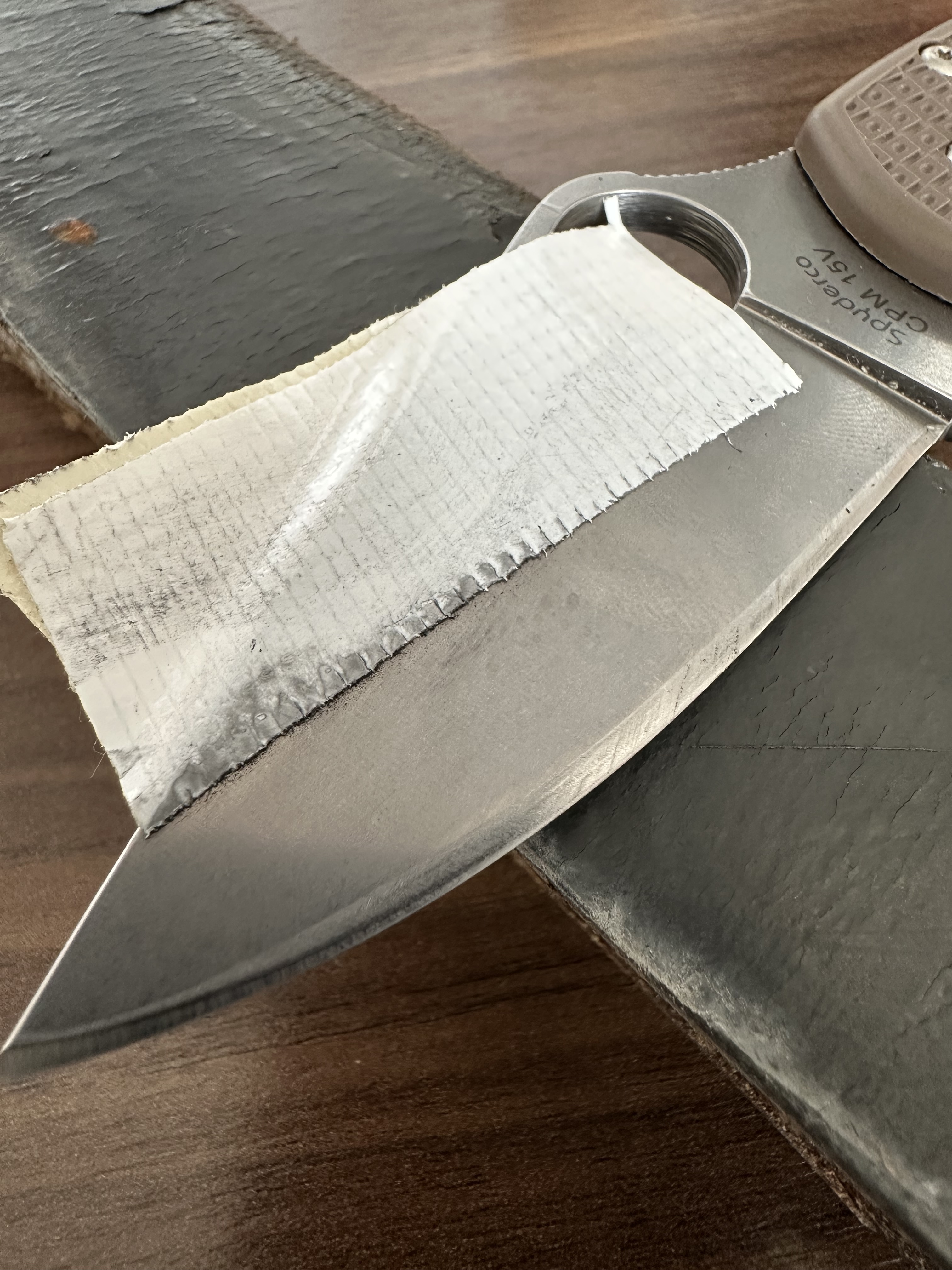
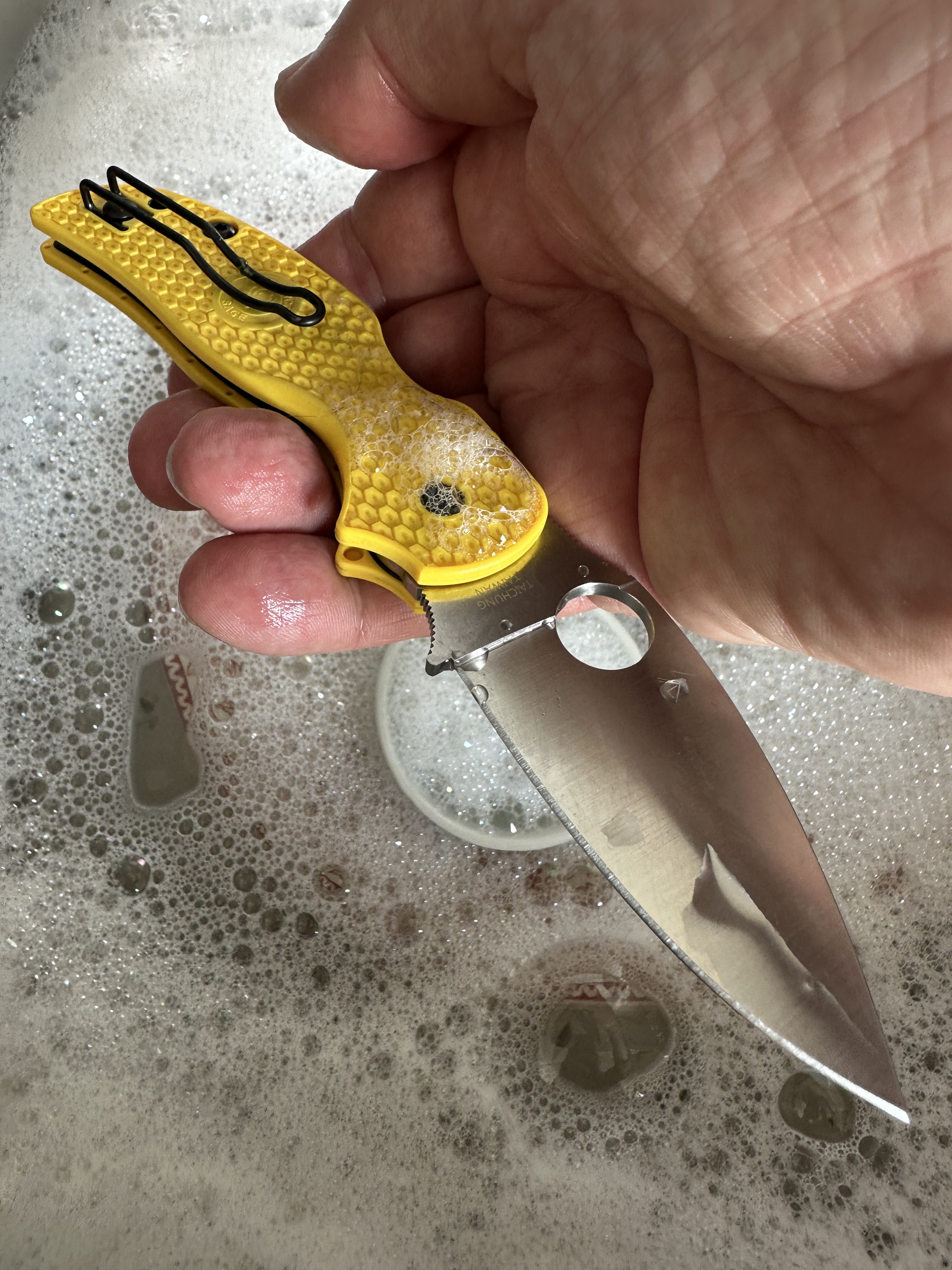
Some gaffer to protect the black screws when using sandpaper.
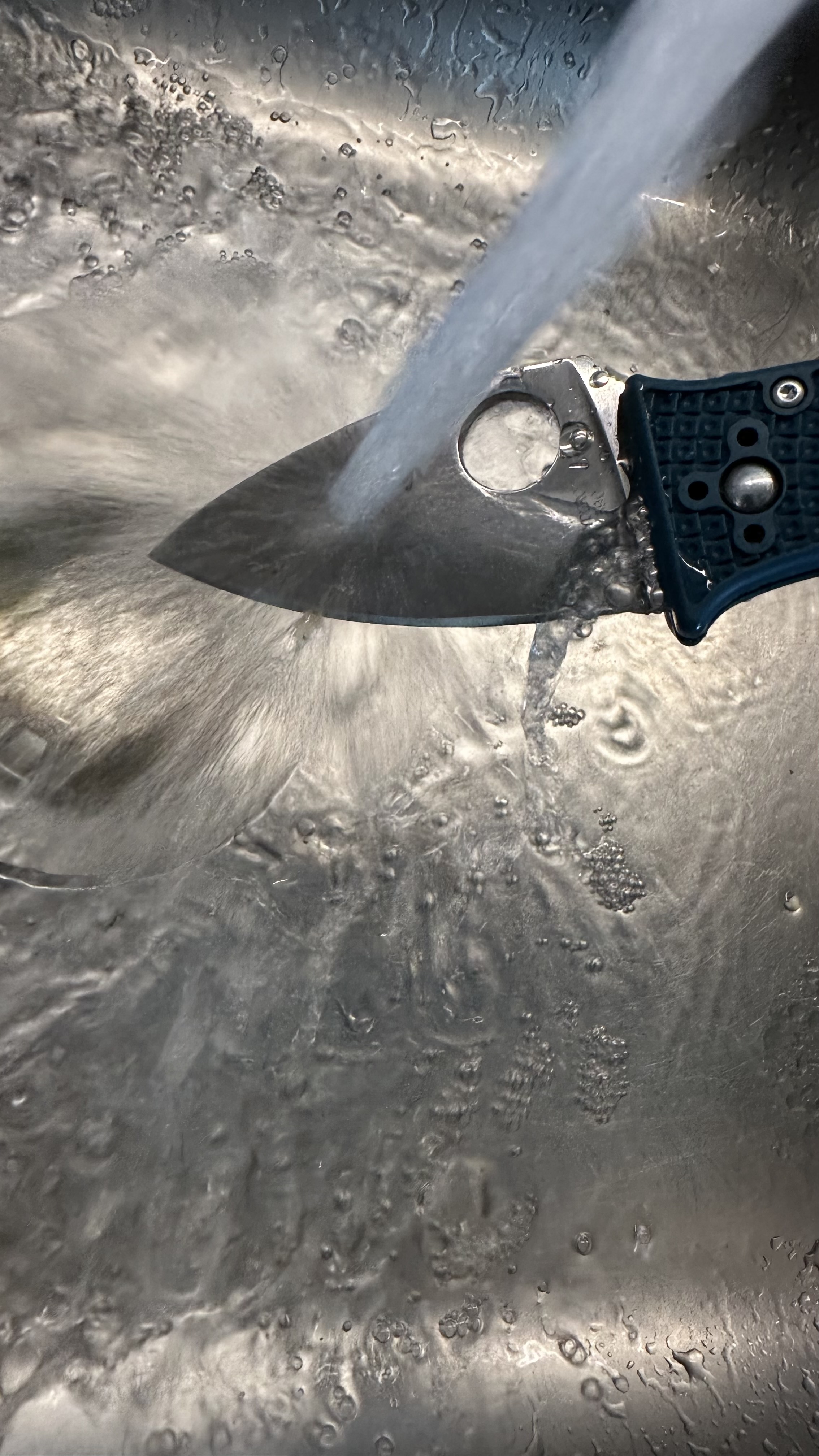
Then cleaned under the tap and it’s good to go.

Well… it is so compact it can eventually be carried inside the pocket watch.
But Sal was right like always, bending the clip a little has completely changed the way it clipped and for the better.

The metal hardware is all black certainly PVD coated.  “Like all Salt Series folders, the clip, liners, and all handle hardware are also crafted from marine-grade materials.” said Spyderco.
And Guillaume is right, the contrast between the black and yellow is an eye candy.

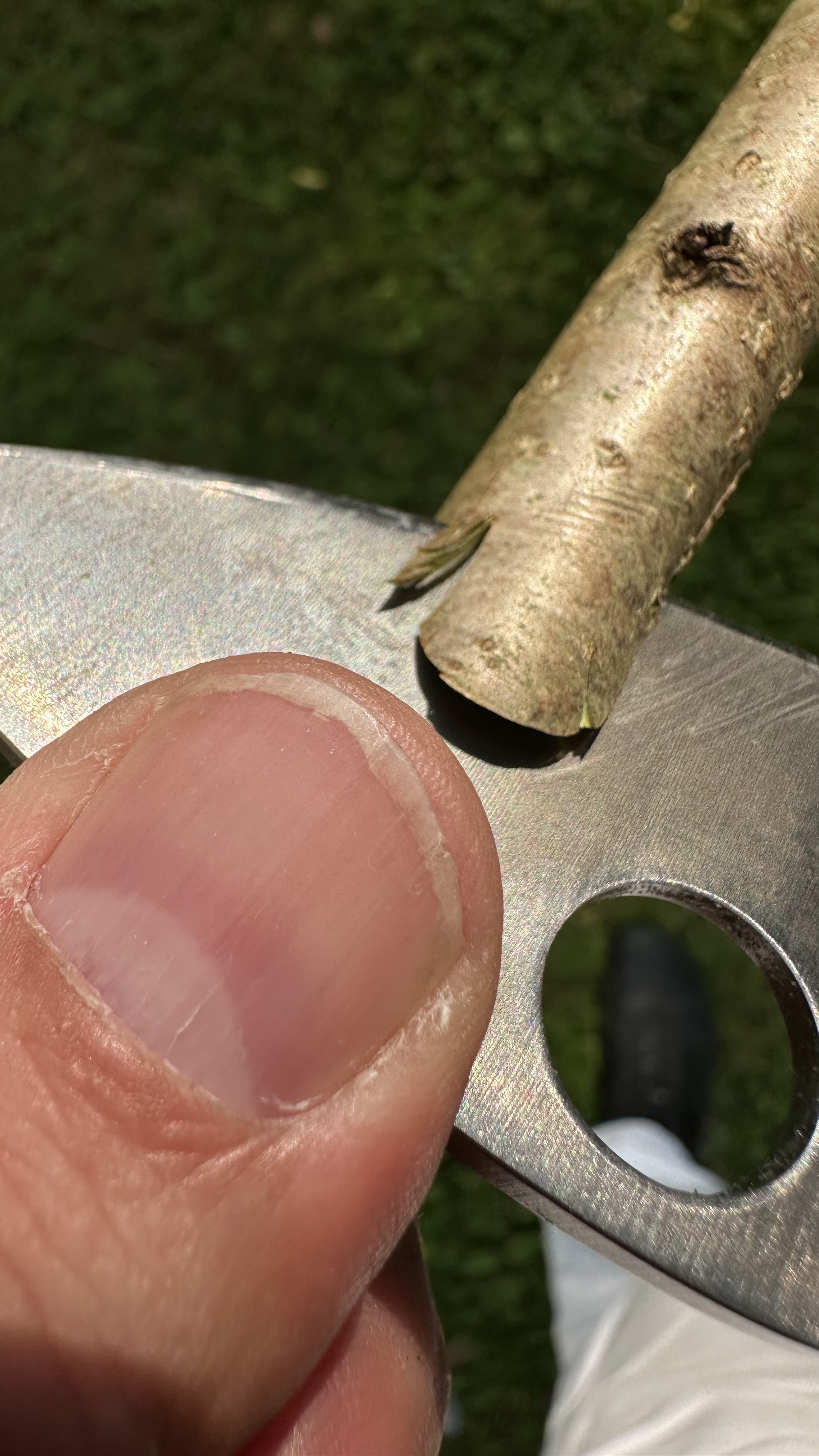
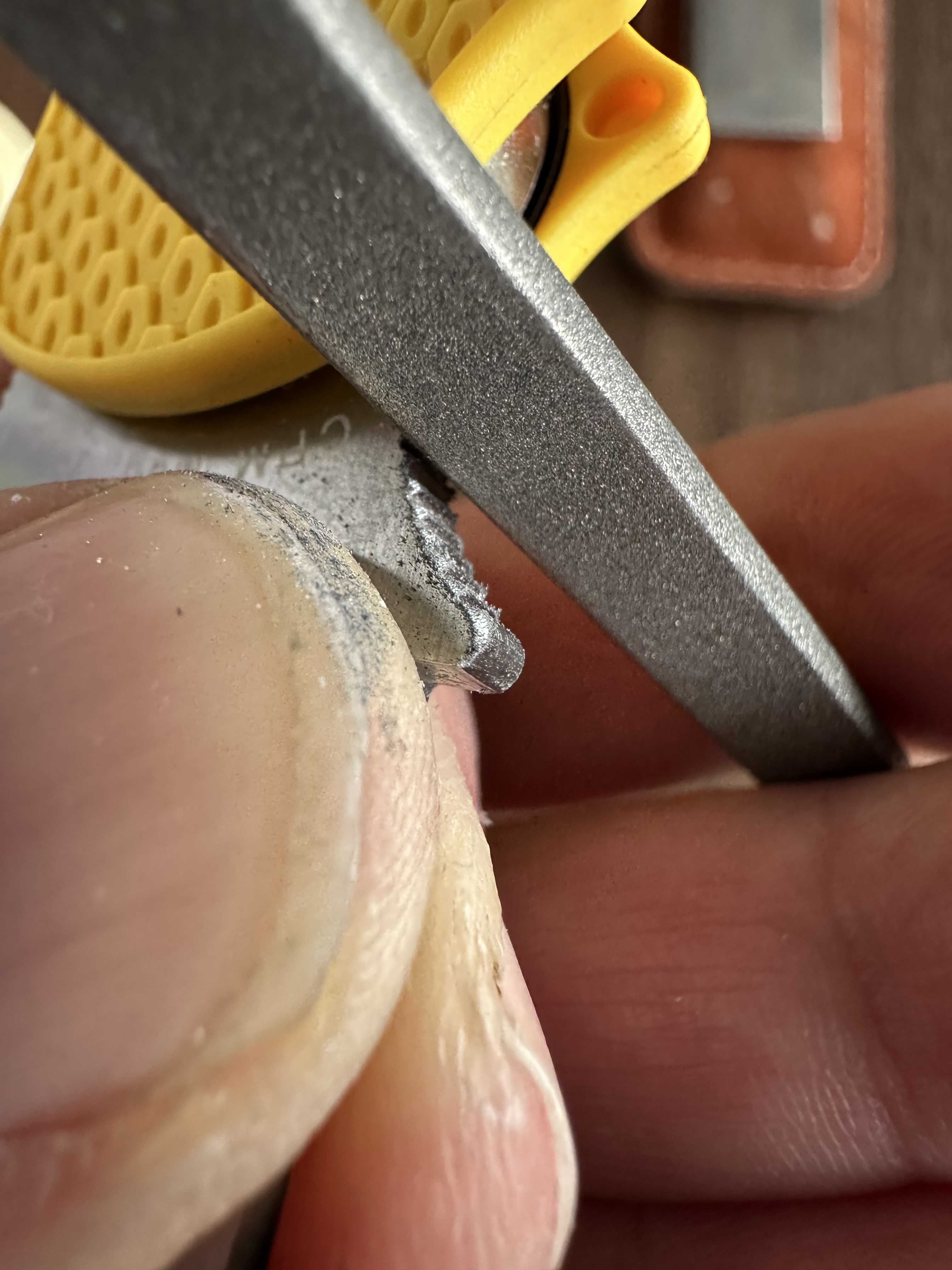
I have found a little hot spot on the choil which I felt under my index finger. Nothing a little diamond file won’t eliminate in a matter of minutes.
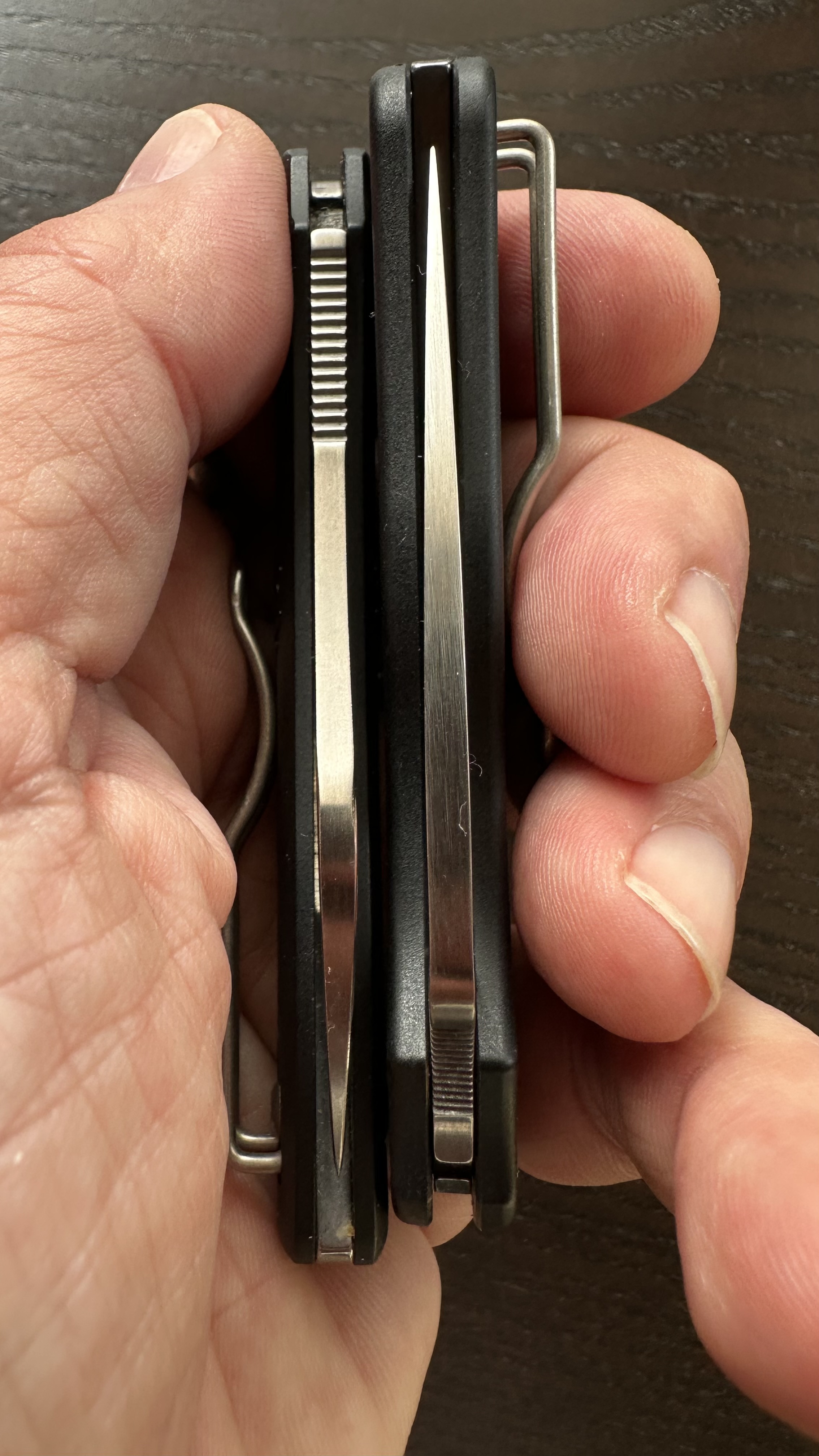
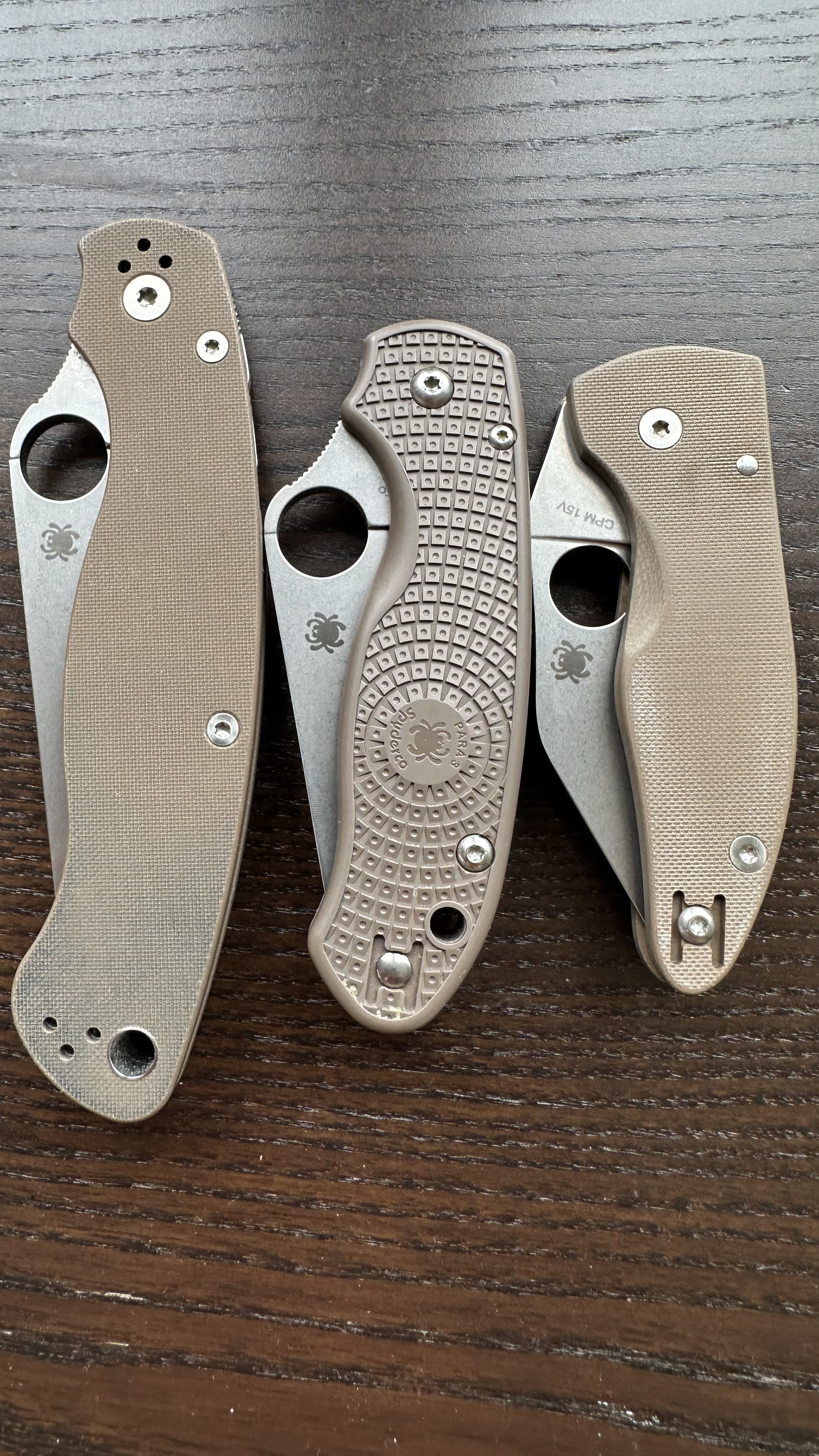
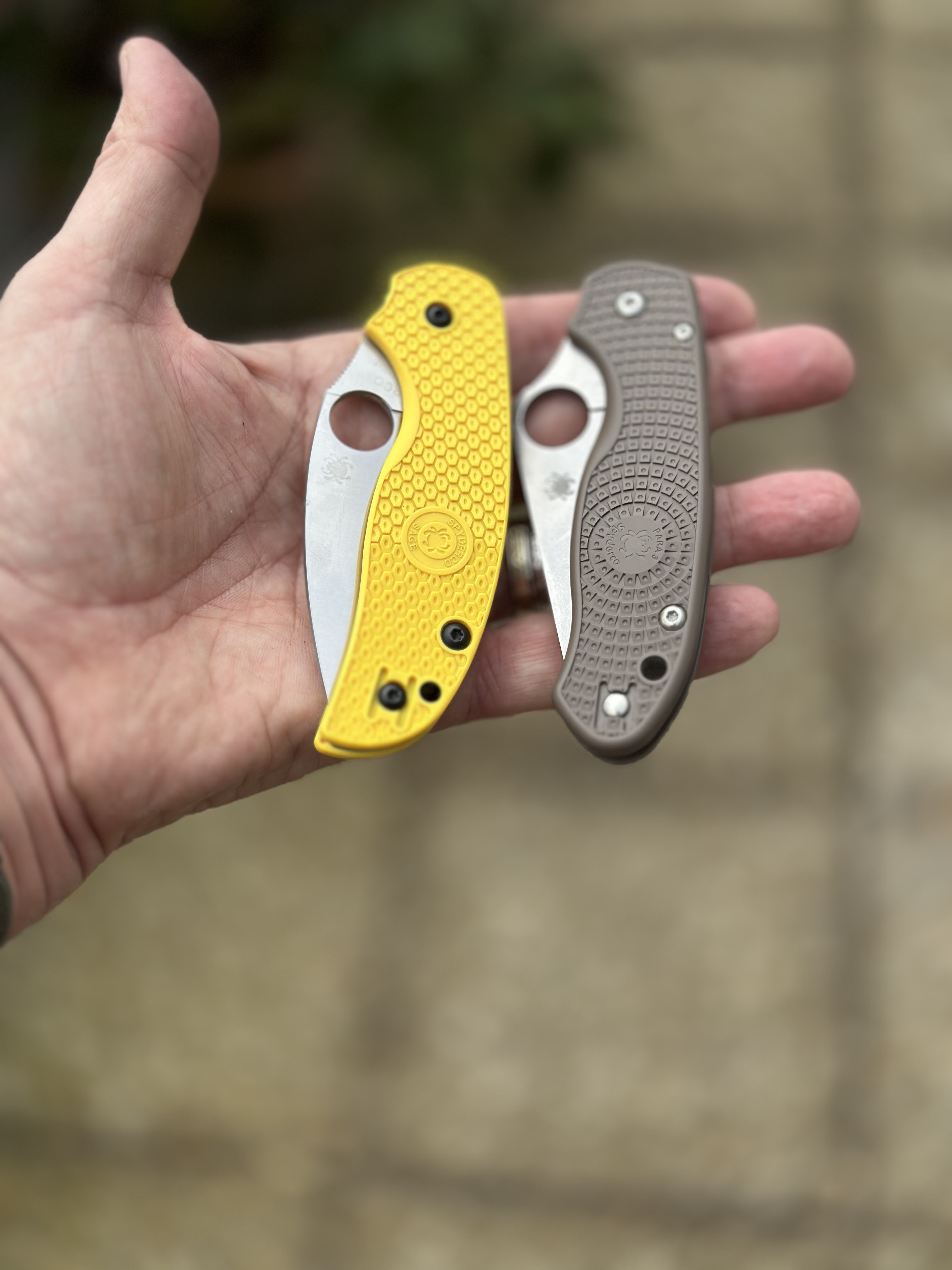
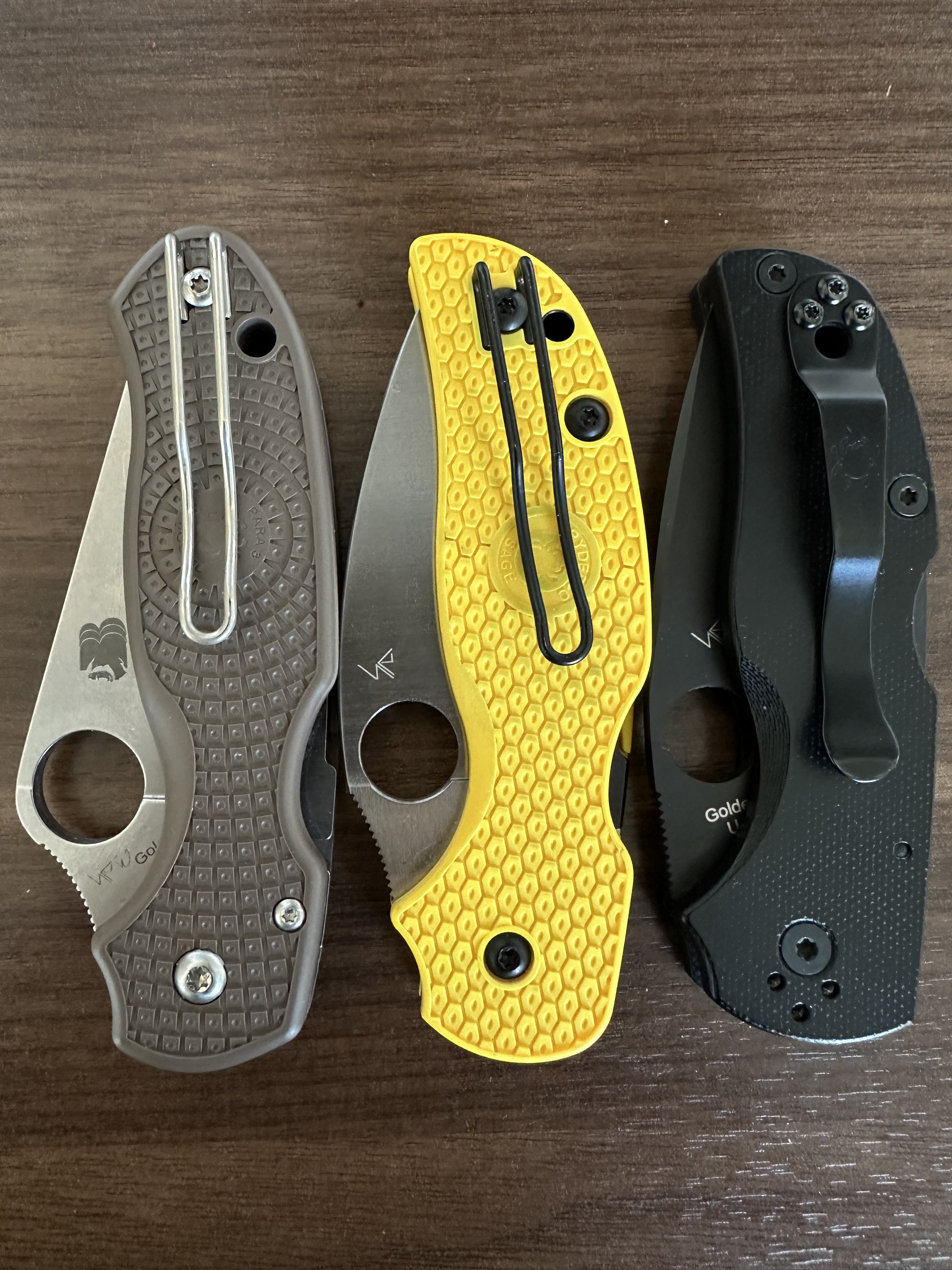
Now let’s compare it to the Para3 Lightweight.

The Para3 is a really light package because there is almost no liner.

64 grams.

78 grams for the Sage 5 with its nested steel liners

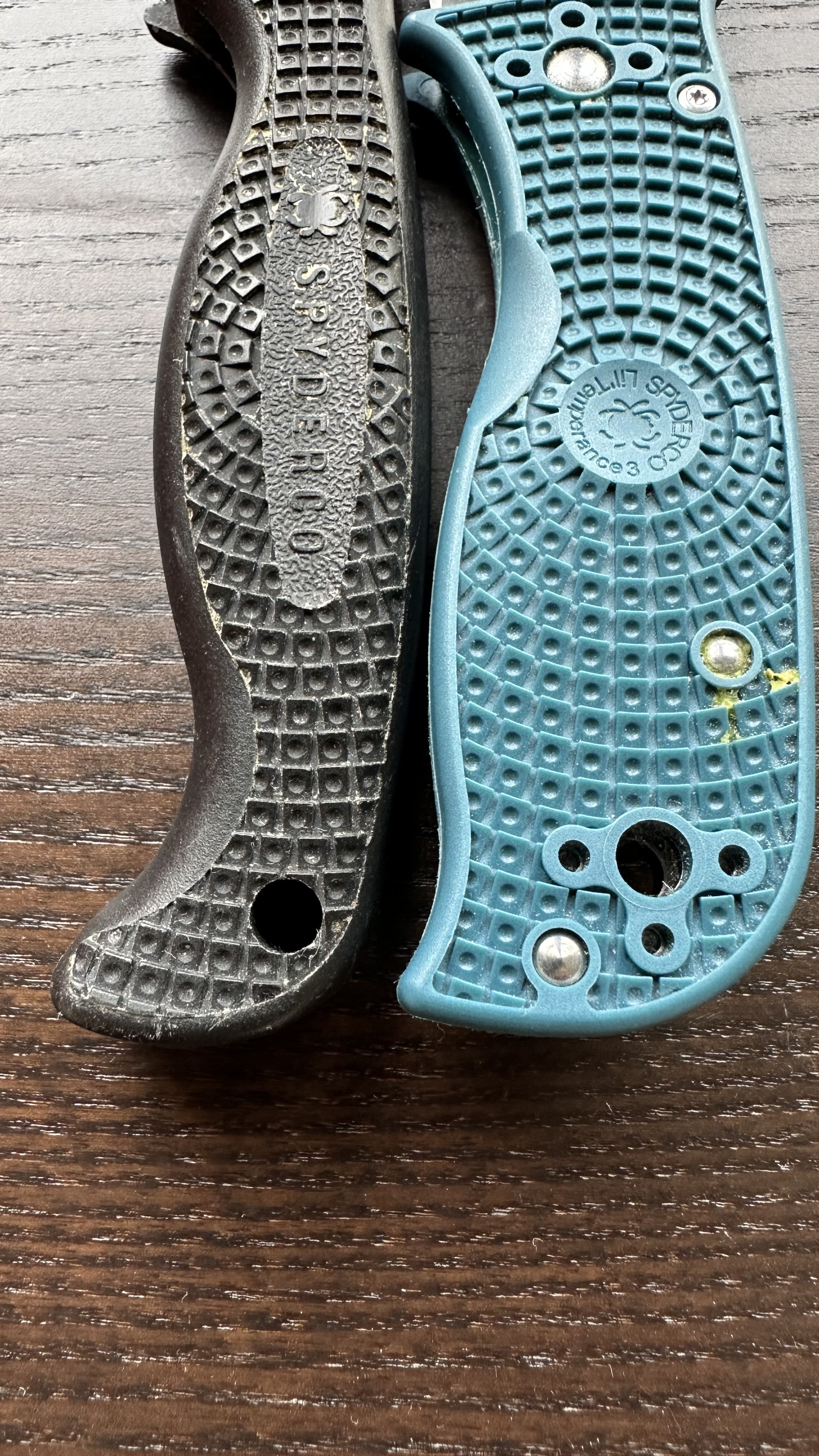
The FRN is smoother on the Para3 as it is not the same pattern.
Being a Salt the Sage 5 is destined to be used with wet hands.

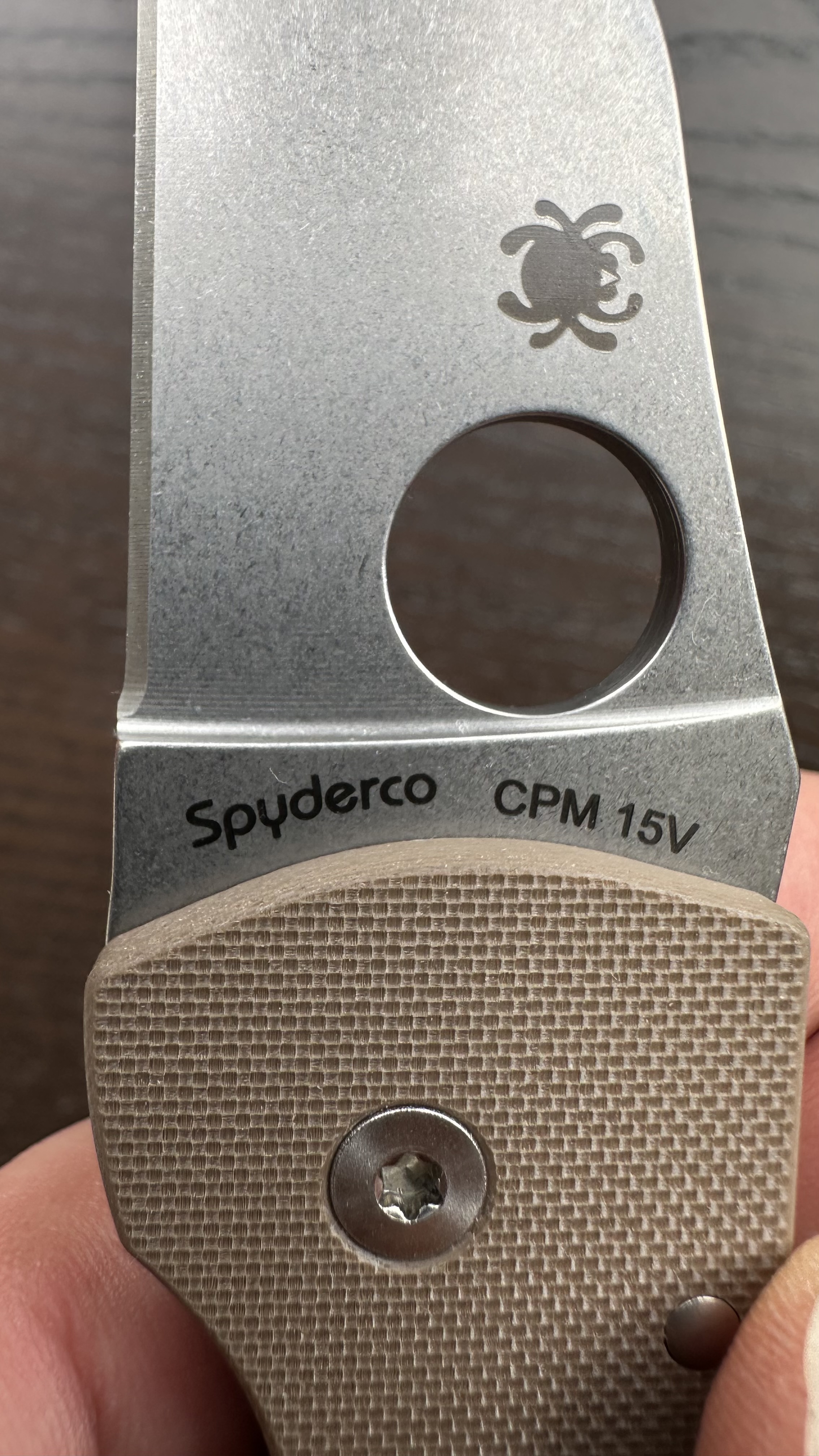
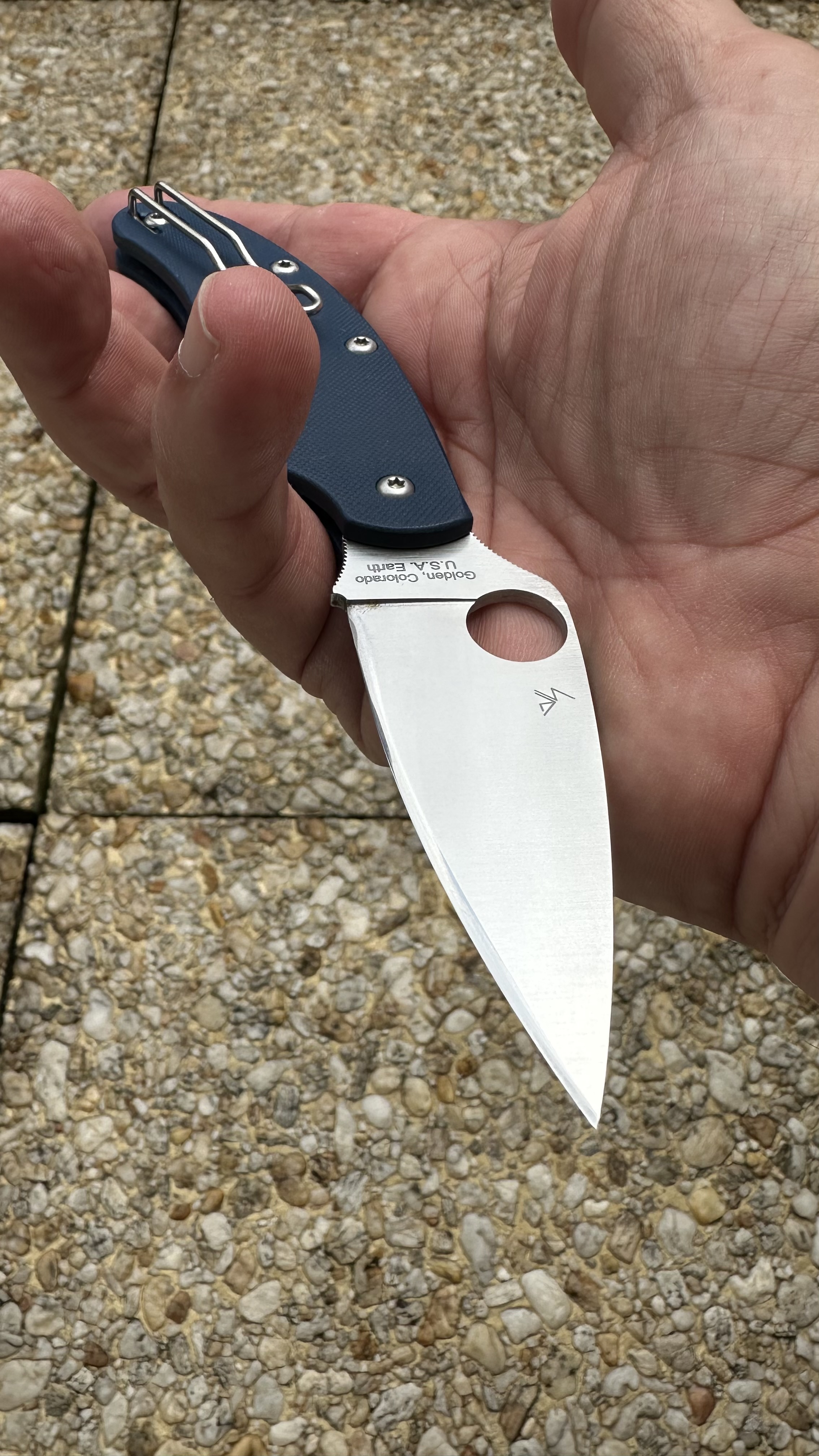
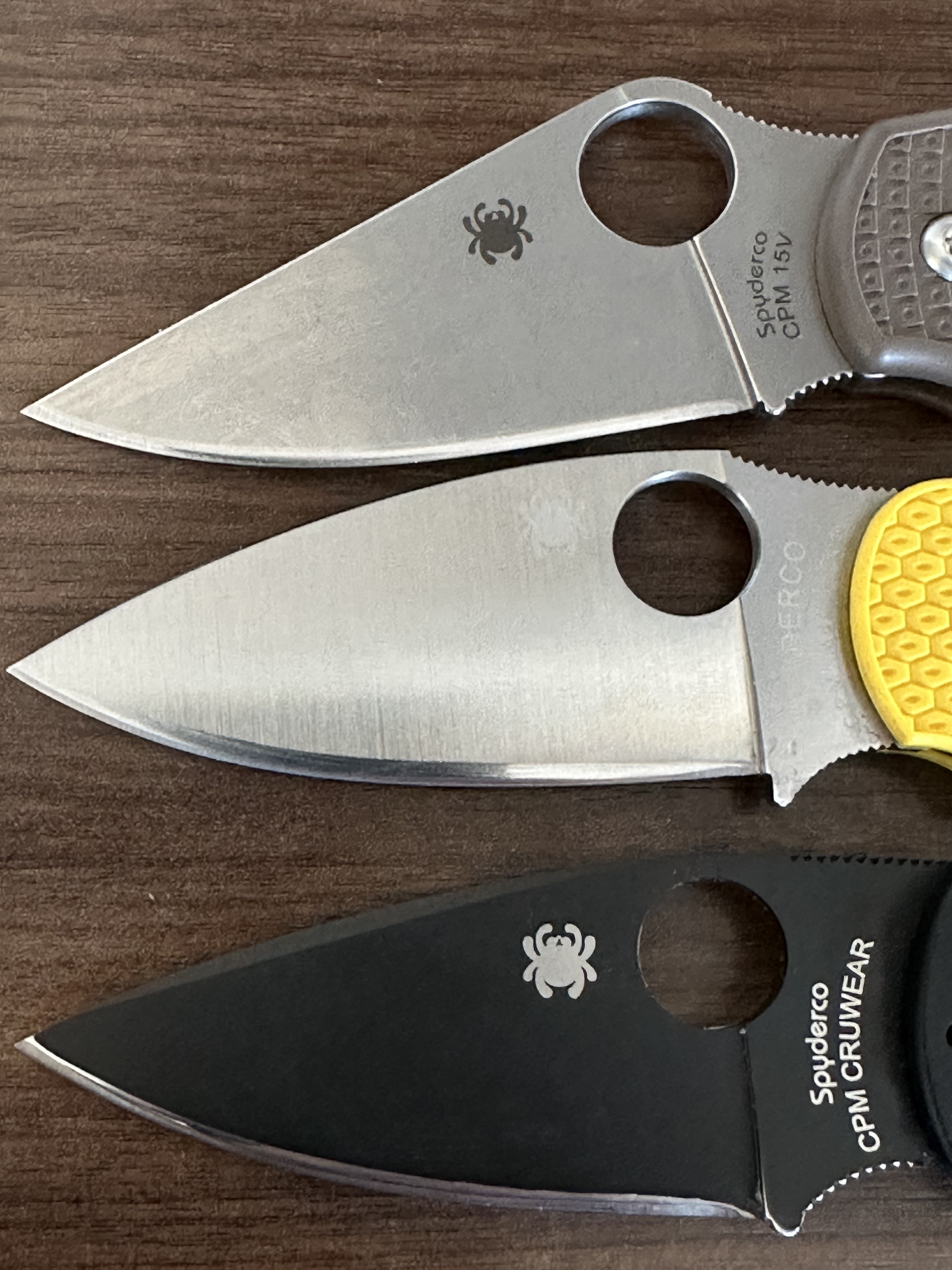
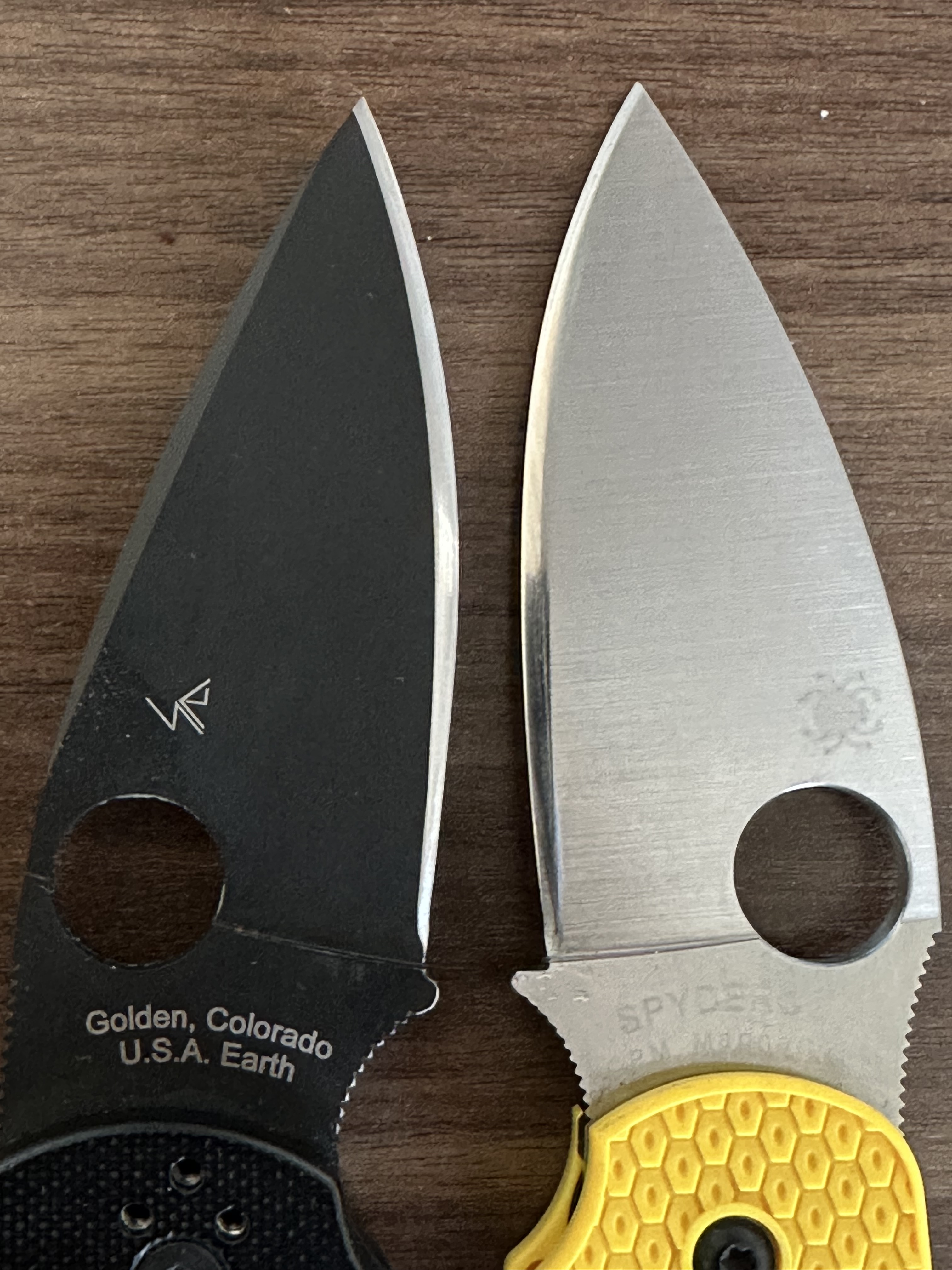
The Sage 5 has a thinner 3 mm blade, and the chamfered edges on its spine are just stunning — smooth under the thumb and a true Taichung signature. Even the Spyderhole is gently finished.

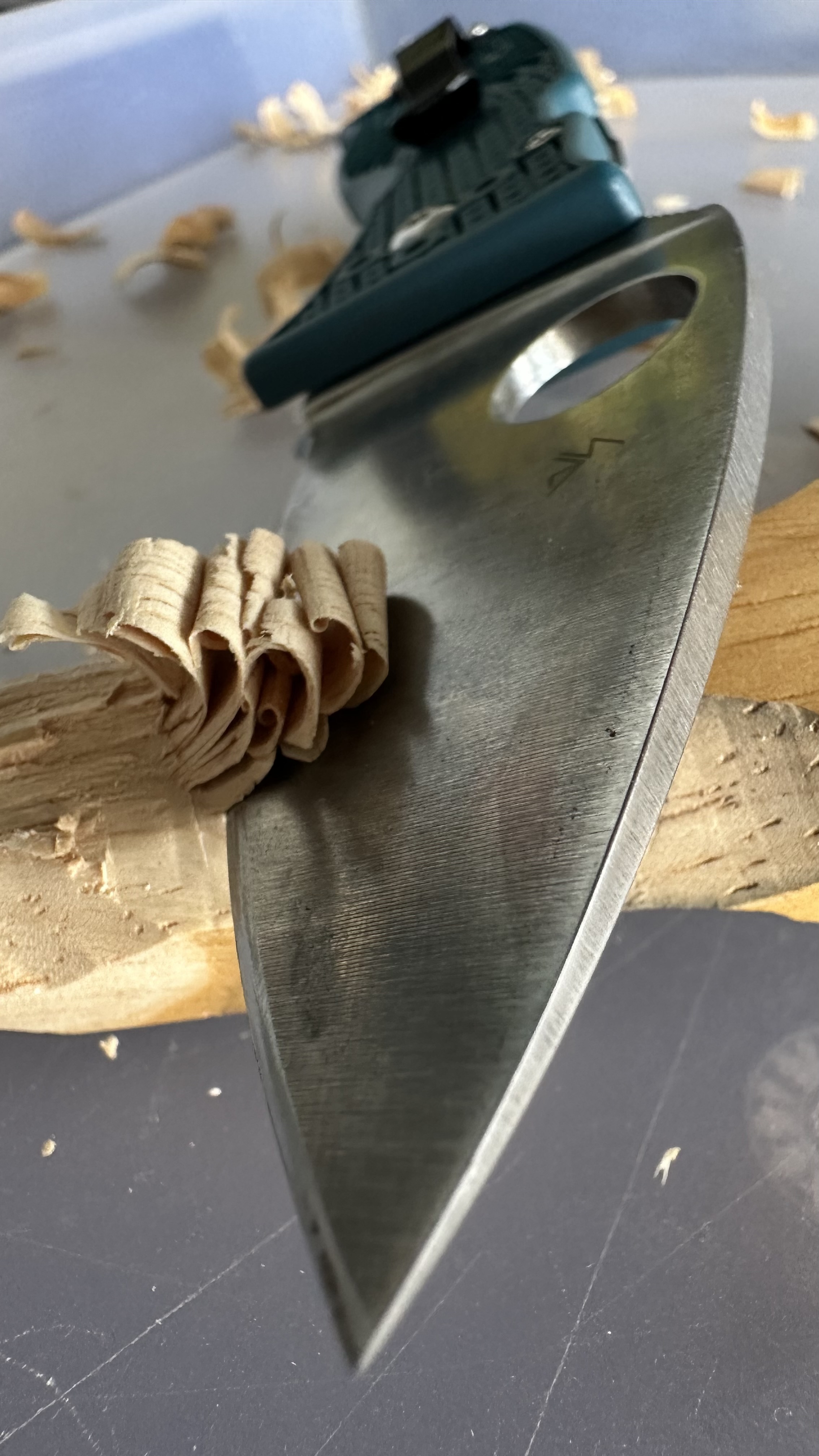
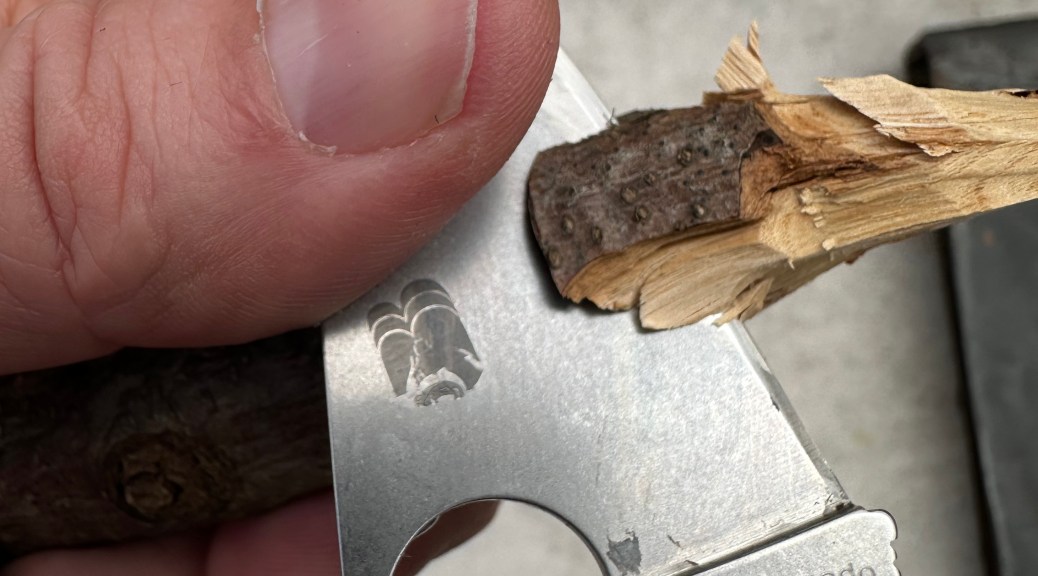
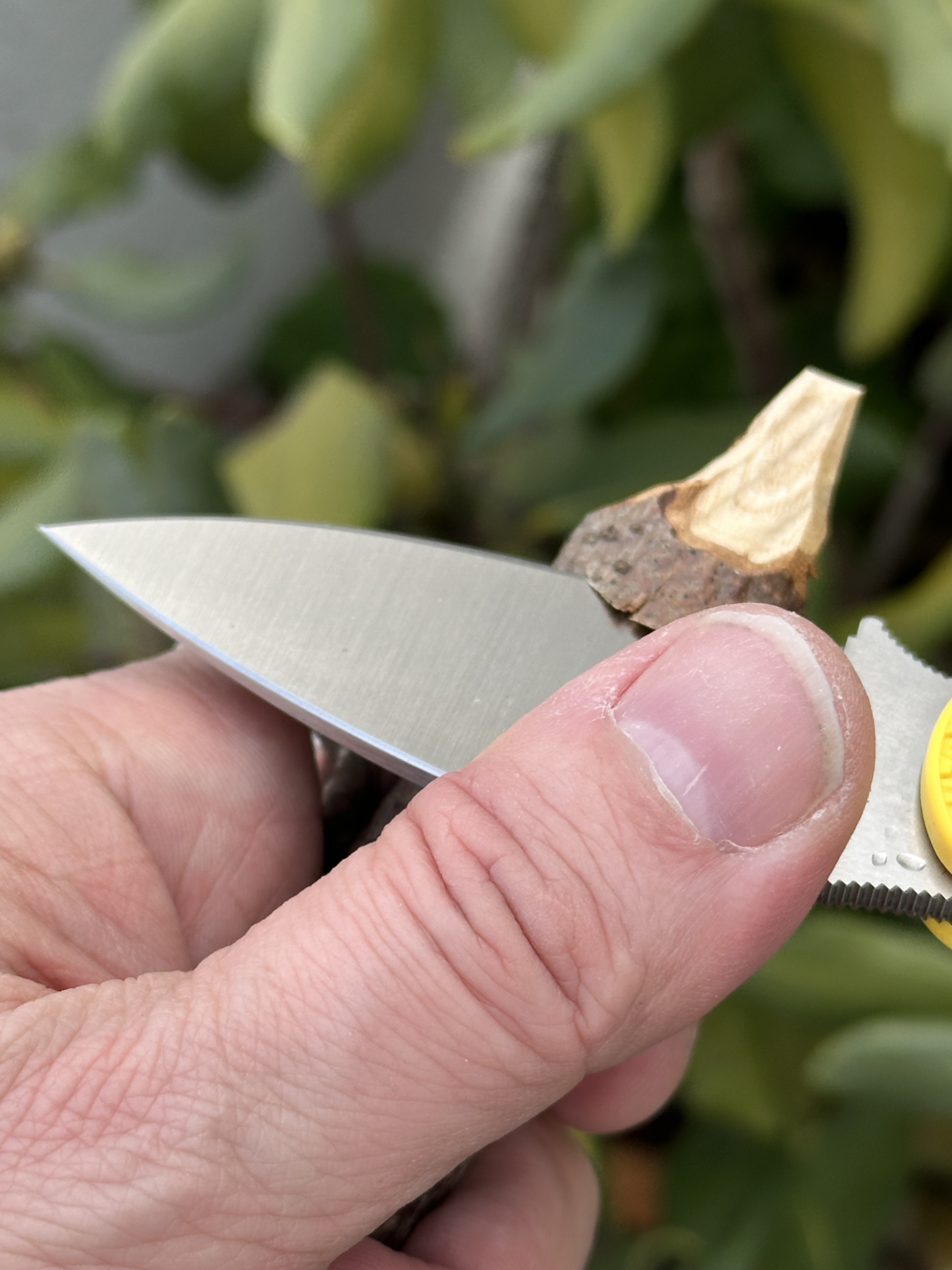
A major plus for whittling is how easily my left-hand thumb finds a comfortable spot on the blade spine. With the Para 3, the thumb doesn’t have a proper ramp parallel to the cut. On the Sage 5, the parabolic spine of the leaf-shaped bladelets the thumb push comfortably in the middle of the spine, which makes a real difference during whittling.

Same blade length, but a different spine shape. The Para 3’s Spyderhole is especially suited for use with gloves.
Is the Sage more of a civilian EDC and the Para 3 more tactical? Not entirely certain. The Sage feels more solid in the hand and has more heft, while the Para 3 feels like a light, quick-reaction tool, and the Sage 5 is an all-terrain EDC.

The Sage handle is more compact and can be carried in the watch pocket, thanks to its grippy FRN and strong clip.

Grip is essential when working around water or with wet hands. The Para 3 is gentler on pocket edges, while the Sage out of the box can be a pocket shredder. Following Sal Glesser’s advice, I flexed the clip slightly for lighter retention — now it’s perfect.

Next, let’s take a look at the Sage’s geometry straight out of the box.

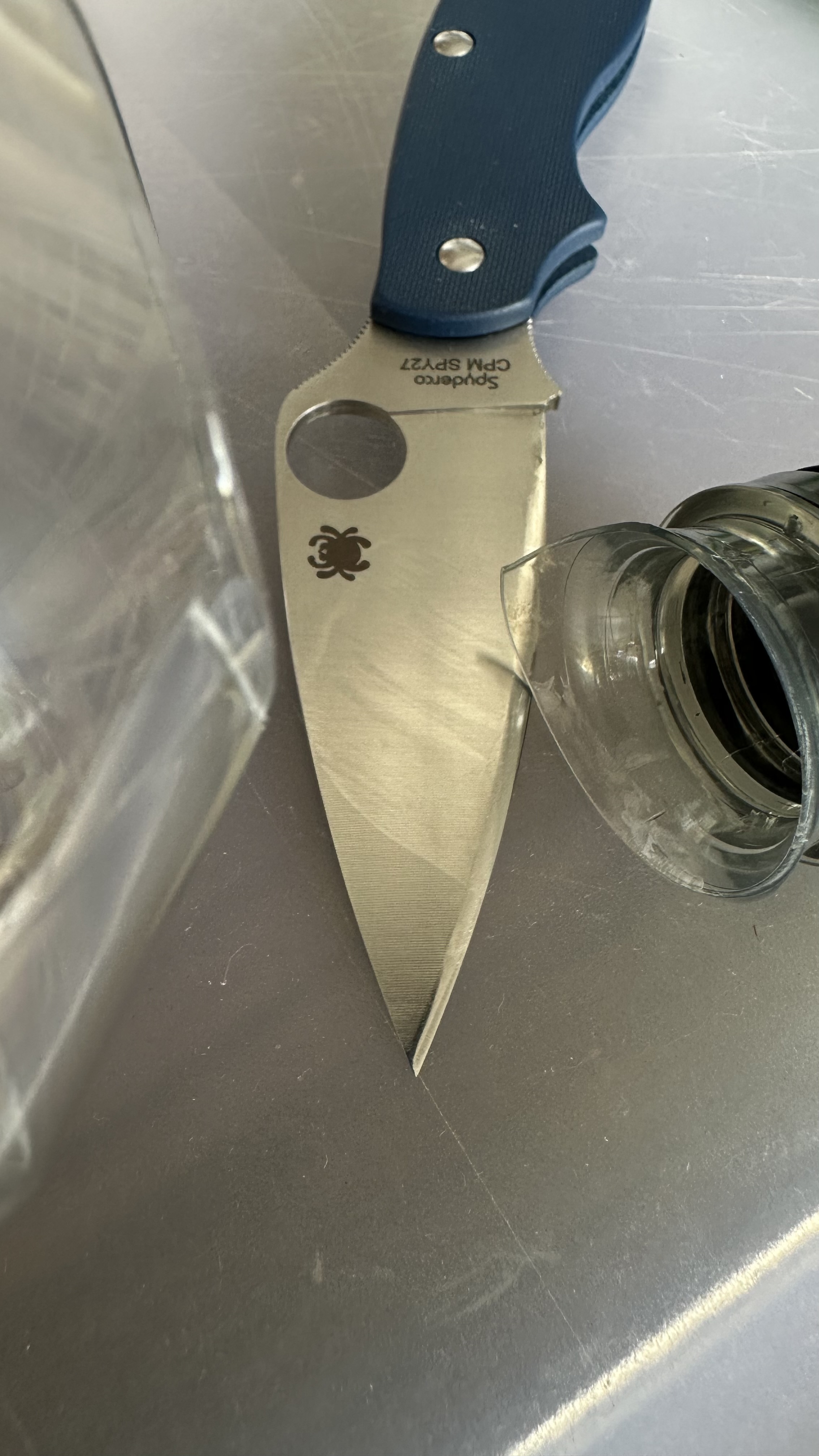
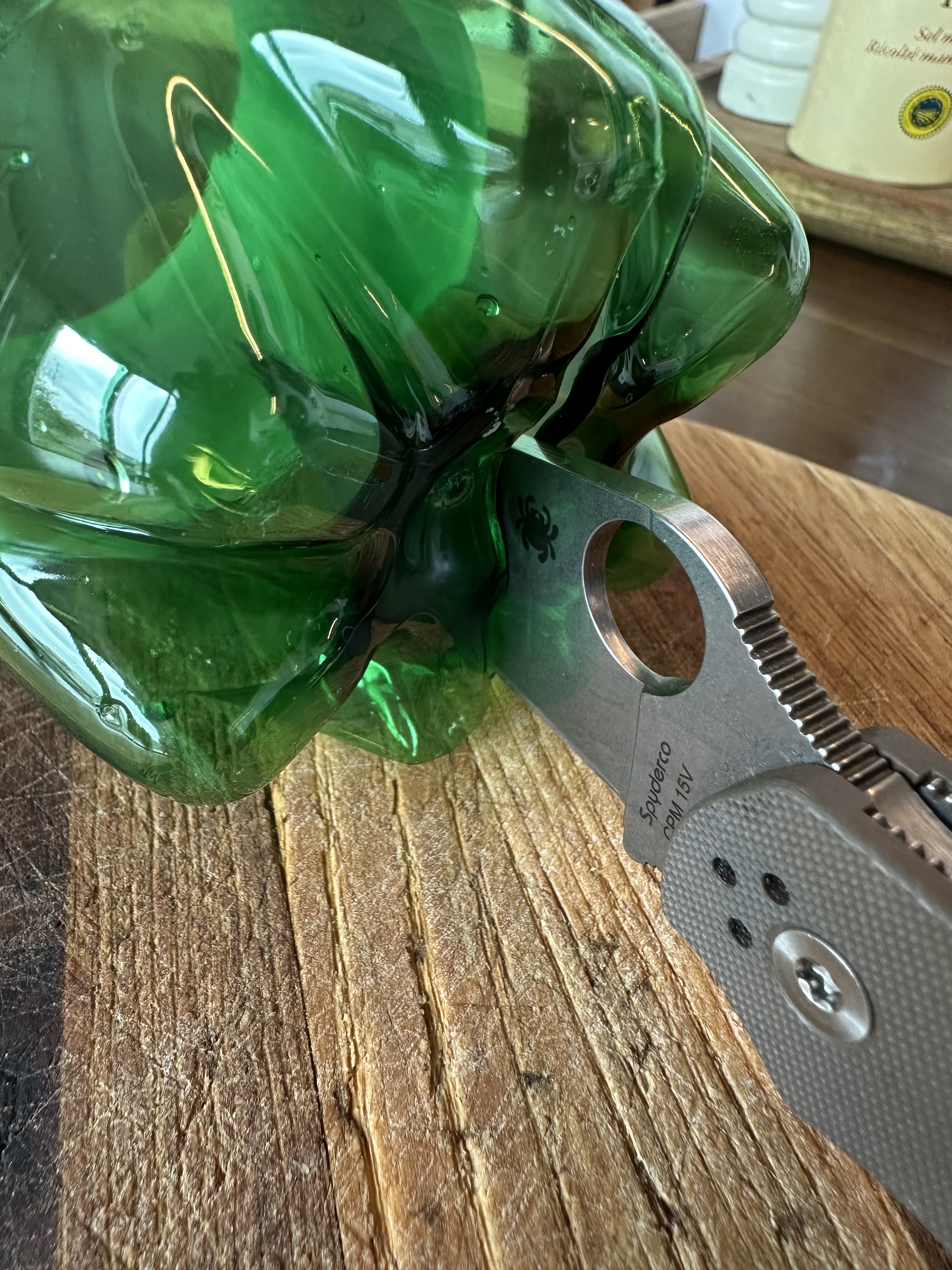
I was able to cut through the plastic without having de-shouldered the edge yet. It will be done in the next chapters. For the record, I was not able to get a clean cut with the factory geometry of my new Para3 and Military2 in CPM 15V.


So this blade has excellent geometry right out of the box: this is really impressive ! Without any touchup of the factory edge it goes deep in any material, soft or hard.

The Sage 5 Salt is a pure Sal Glesser design with its iconic leaf-shaped blade. Fun fact: the letters S‑A‑G‑E appear in order in his name!

This great folder is made in Taichung, Taiwan, renowned for its exquisite manufacturing and quality control. The blade is chamfered, and the jimping is soft under the thumb, making it a joy to handle.

Ultimately, this is a Highlander knife“In the end, there can be only one.” The Sage 5 Salt feels like a Spyderco to rule them all — the only one I’d ever need in terms of portability, reliability, and performance.


Purely stainless from blade to screws, it is a true all terrain tool. I mean, you won’t need another knife as this one is totally impervious to salt water and boast that CPM Magnacut blade known for its great performance: “a revolutionary particle metallurgy steel that offers an exceptional balance of edge retention, toughness, and the extreme corrosion resistance.” It is true when properly heat treated and with the best geometry.
(Again all those green marks are links to previous review or sources of this review.)


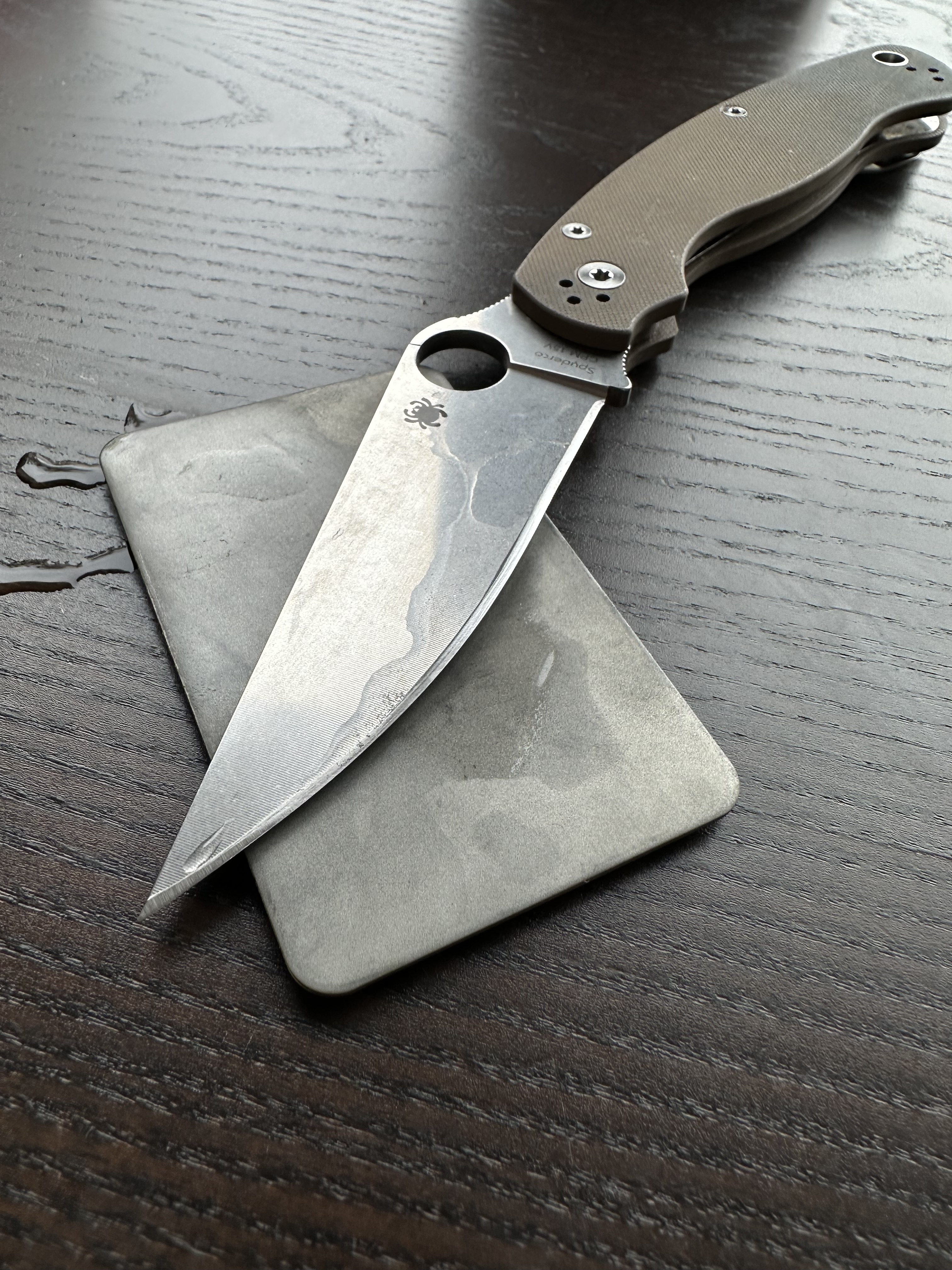
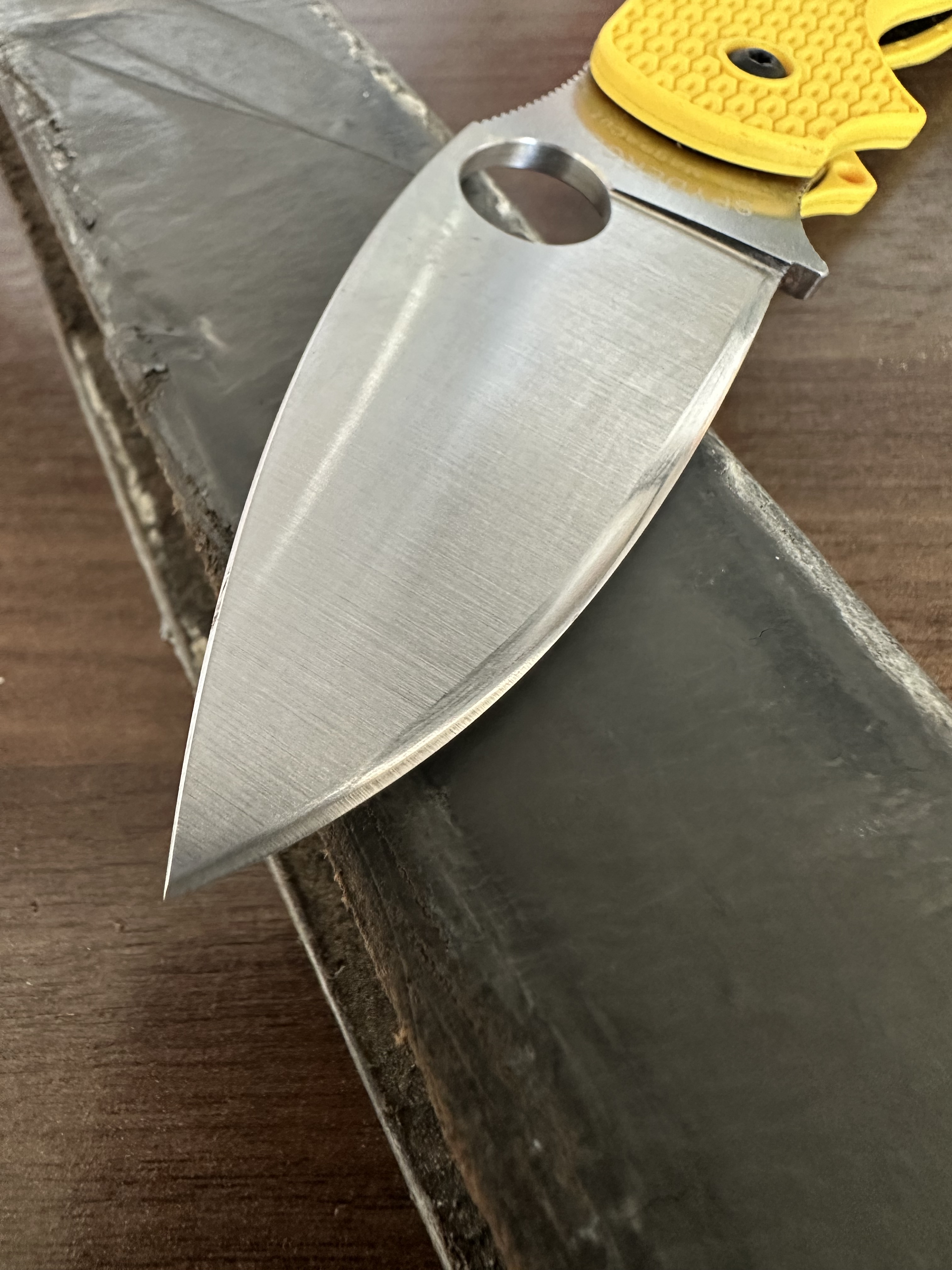
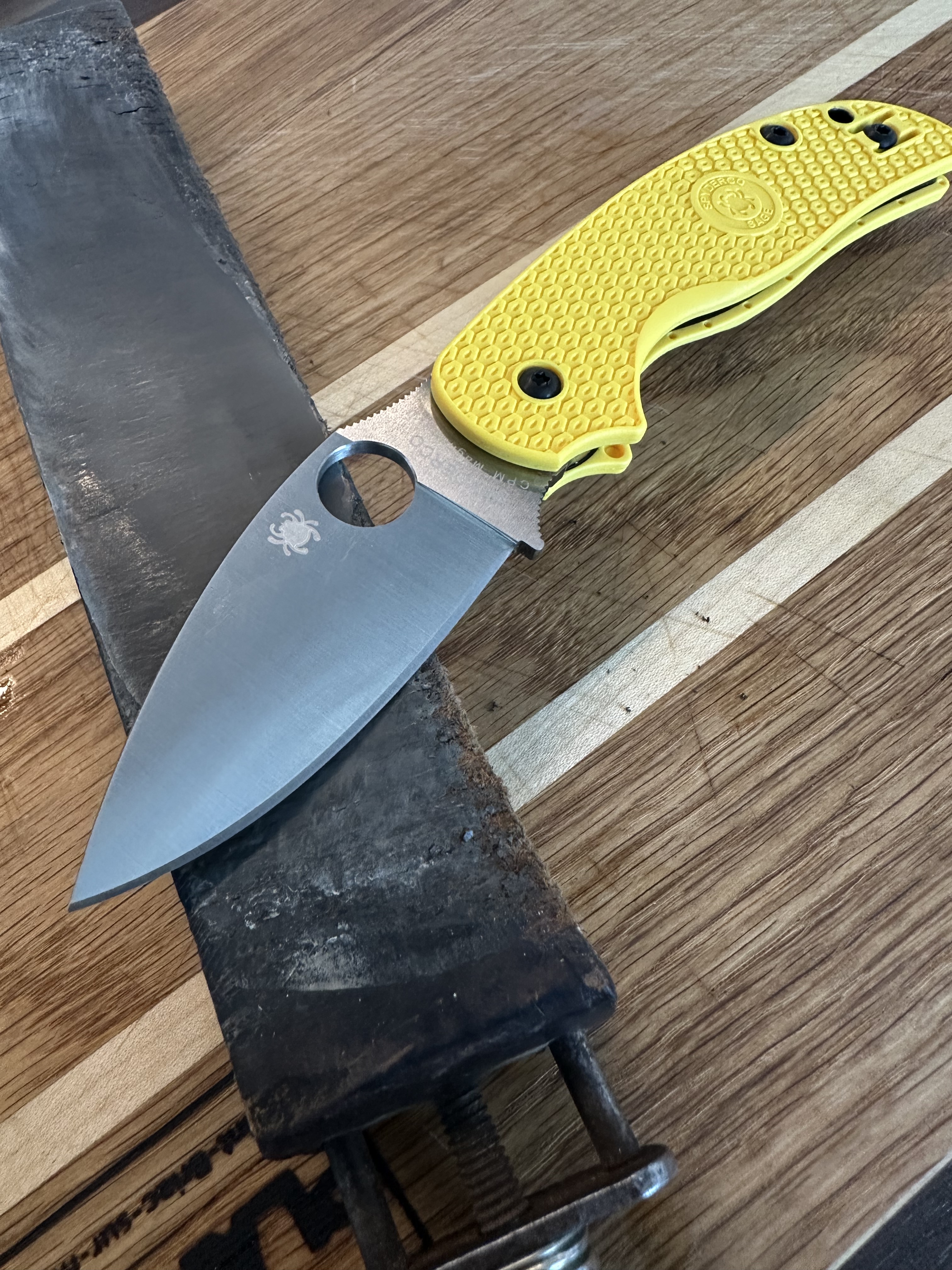
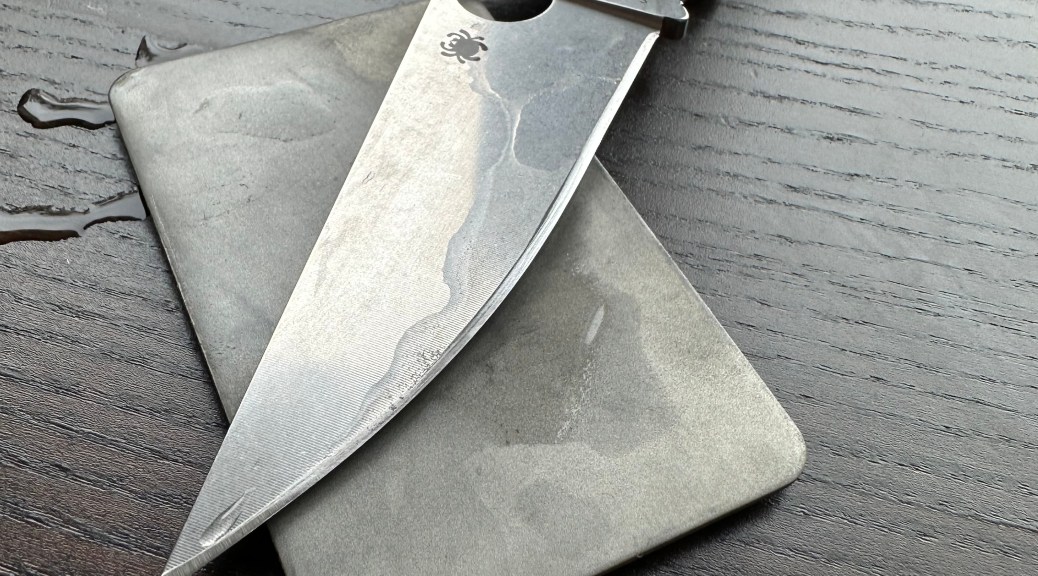
Polishing the Sage’s edge on a leather strap — aka stropping — removes the final imperfections, leaving an even razor-sharp edge. Magnacut, in particular, responds beautifully to leather stropping.

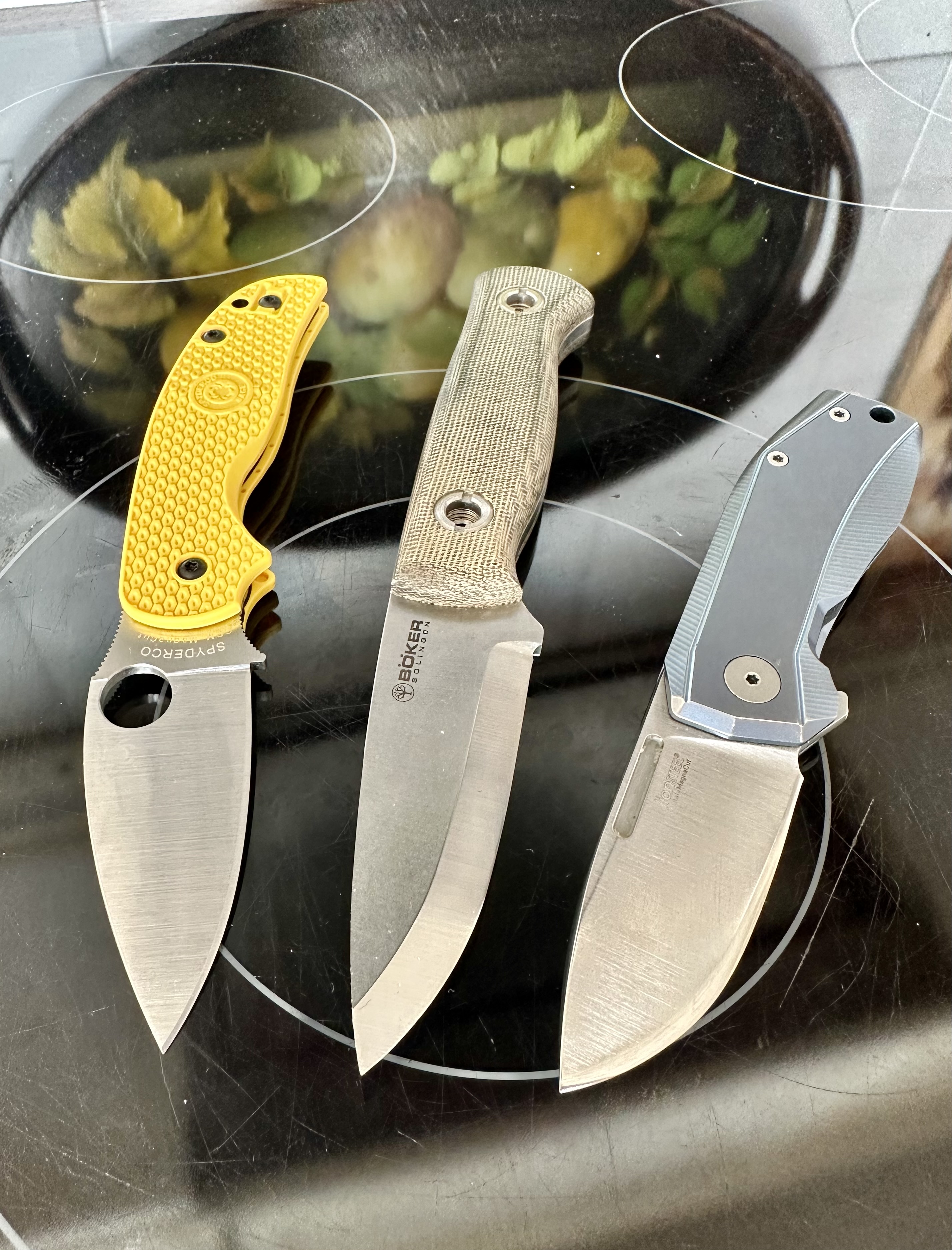
With the Vigtig and the Nano. I managed to get these three knives for under €200: the Sage 5 at €194, the Vigtig at €130, and the Nano at €192.

This means that, as of March 2025, CPM Magnacut knives can be found for as low as €130 — a good deal, though it may not last. The UKPK in CPM Magnacut should be in a similar price range, which I’m looking forward to.


So far, first impressions are excellent! The yellow handle makes it feel less threatening — more like an everyday tool than a “ninja mall weapon,” which is a definite plus these days.

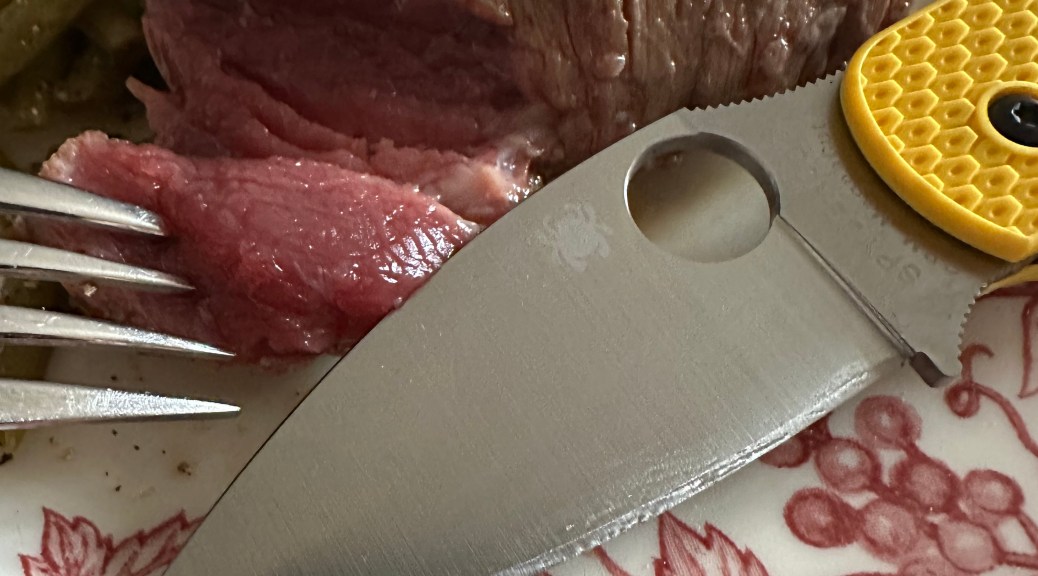
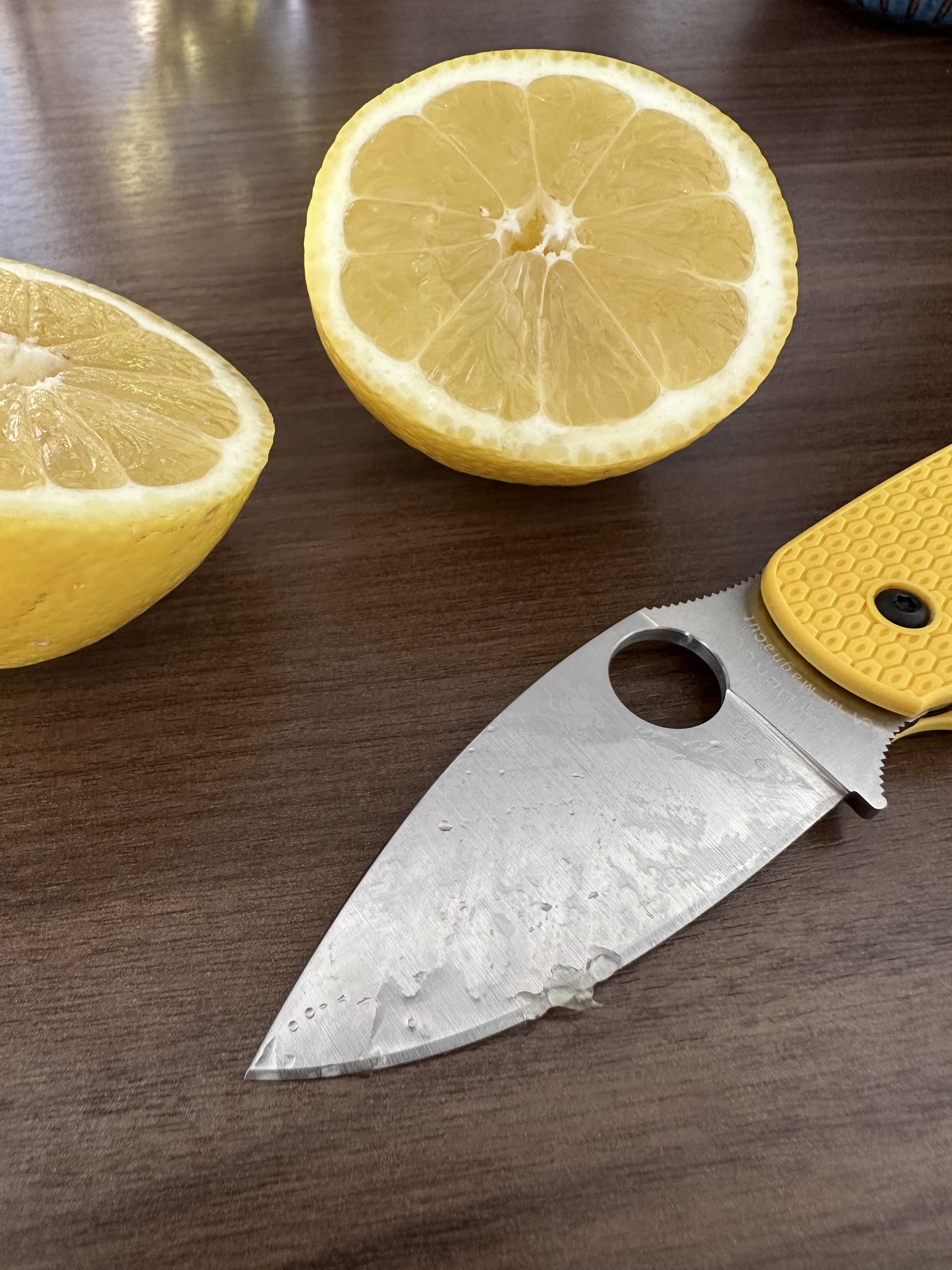
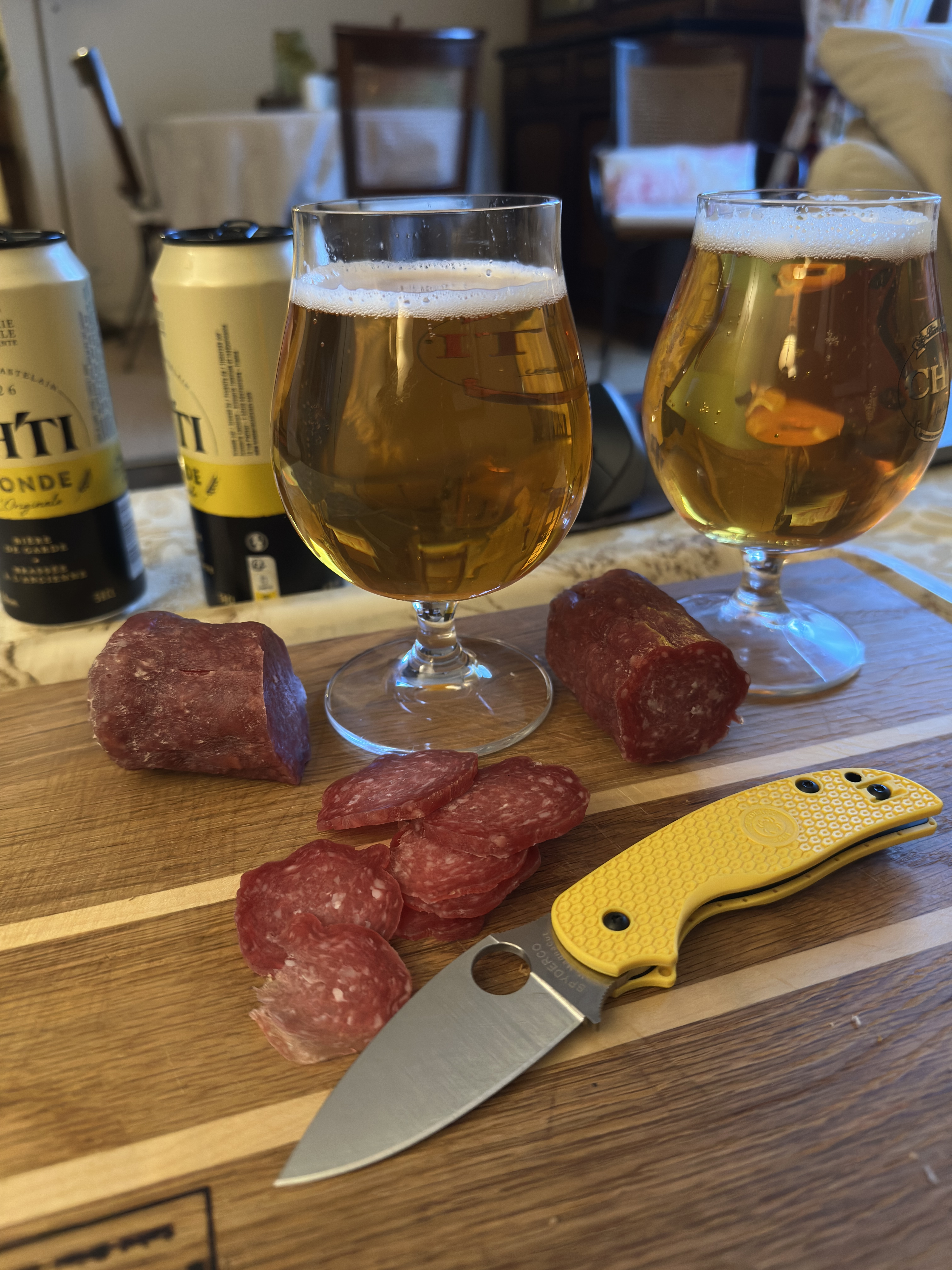
It’s also ready for kitchen use, thanks to a strong edge that isn’t afraid of ceramic plates. Magnacut takes a razor-sharp edge easily with just a bit of ceramic and leather work. No need for diamond paste like on the mighty CPM 15V.


The amphibious Sage 5 is a perfect traveling companion — from mountain rivers to the ocean. It delivers impressive cutting power for its size, biting into hard wood effortlessly. The blade spine is very comfortable for push cuts, making it a reliable all-terrain tool.

It’s a dream knife for fishermen and woodcrafters, capable of accompanying you in virtually any environment.
So far the Spyderco Salt serie is enlarged to very nice plateforms with Military flavours and civilian purposes.


First impressions of the Sage 5 are excellent — in terms of action, geometry, and ergonomics. This is a great EDC that’s fearlessly corrosion-resistant.

Thanks to Guillaume for the tip!
Now time to convex it !

Spyderco Tenacious C122GBNM4PS – CPM-M4 with Serrations – Pure Workhorse

I’ve been tenacious — truly tenacious — in resisting the C122 Tenacious, even though I’d had my eye on that folder since 2008. After 17 years of flirtation, I finally ordered one. Why the delay? Its main weakness was always the less-than-stellar steel compared to the high-end knives I already owned.

Now, the CPM-M4 version is here to quench that long-standing thirst.

I don’t have much memory of a CPM-M4 serrated edge, except with another Eric Glesser design: the Dodo Exclusivefrom Blade HQ (C80GM4S). The Dodo was a real wood slasher — its S-shaped blade trimmed vines deeper and faster than almost any other, and the comfortable handle was perfect for power cuts.

Opportunities to play with a serrated CPM-M4 edge have been rare — until now. Here it is.

Back in 2008, when the Tenacious have been released it was a success.

Eric Glesser’s design was appealing to many for a simple reason: it was a well-thought-out, tough workhorse knifeavailable for around €30 (or less). A true blue-collar tool — built to be used and abused, like a modern-day Buck 110 for the pocket.


The best thing about the Tenacious was that it offered a thick, sturdy, well-built liner lock at a time when liner locks were falling out of fashion. Easy to display, easy to use, this no-choil, long-edge, compact working folder from Eric Glesser was a hit — and one of the best ways to catch the Spydervirus.


Now there is a FRN version in CPM S35VN. But it is as heavy as the G10 version and I’m not really a fan of FRN… Even if I absolutely love the FRN scales of my Serrated Chaparral.

I remember Bushcrafters being the first to sing the praises of the Tenacious. An example:

I’ve thrown it, dropped it, batoned wood as thick as my wrist, chipped the edge multiple times (didn’t think 8cr13mov could chip, thought it was too soft but was wrong), I’ve left in outside ONCE in the rain overnight because I forgot I placed it on my front porch the previous day, I have spine whacked it (just don’t, I most likely have an impulse problem… lol … same problem that causes me to buy a lot of knives) I’ve dug holes, stabbed the ground to cut weed roots out, and much much more...

I think by now you get the point. I treated the tenacious as if I got it for free and had 1000 more to replace it if something happened. I treated this knife as if I hated it.

The result? 4 years later, the Tenacious opens smoother than it ever has, not a speck of rust since I purchased it, I have oiled the blade a couple times but I can guarantee it was less than 20 times total in the last 4 years, lockup is a bit less solid, BARELY any blade play from side to side, even less blade play from front to back, g10 scales look smoothed over and scarred, but to be honest there is still plenty of traction.
All in all, this knife is much more than what most of you need from a folder.”

My Persistence experience was excellent as described in my 2012 review (green words lead to link) but eventually I was disappointed with their steel. 8Cr13MoV can get sharp but lose sharpness much too fast for my uses. It was frustratring. I still got 8Cr13MoV knives like the Clipitool which is a great oyster knife. 8Cr13MoV is tough for a stainless steel, no surprise it was chosen for the Tenacious line.

The Tenacious is a sturdy well made liner lock folder with a super tool steel blade.

“This remarkable expression of the Tenacious® elevates this best-selling design to all-new heights with a blade crafted from American-made CPM M4 tool steel. Produced by the particle metallurgy process, CPM M4’s sophisticated alloy composition, high vanadium content, and extremely fine grain structure give it exceptional wear resistance and toughness-properties that translate to outstanding edge retention and impact resistance in knife blades. This knife’s full-flat-ground blade is available in both PlainEdge™ and CombinationEdge™ formats and is housed in a handle featuring brown peel-ply-textured G-10 scales.

I have written many reviews about that fabulous alloy CPM-M4 it has never disappointed me and since I have sold my CPM-M4 Military and kept my Yojimbo 2 and Mantra 2 (reviewed and sharpened by JD) and use them hard, I know it is reliable and get a nice patina.

A lil’oil will prevent rust. CPM M4 is not 52100 and the patina will come slowly after cutting some lemons…
CPM M4 has good edge holding, sharpening ease, toughness, strength, and is not a rust monster…” to quote Rangodash.

Now a blade is 1/3 steel, 1/3 Heat Treatment and 1/3 geometry.

The Coke butt bottle pushing cutting test has been done with the factory edge right out of the box. It is thin behind the edge.  It’s a good blade thickness for more nuanced jobs, but there is added strength from the thicker spine. 

The knife sliced right in the middle were the materiel is thicker.
This is just outstanding !

There are a great geometry and a thin edge on that tough CPM-M4 blade. The result is a sturdy matter separator.

It is not an exploit to cut into some tin can but the same “shallow”, “non snaggy” kind of serrations as the Chaparral made it easy.

Again, this is a “performance oriented” knife. The blade is not too thick like some “tactical” toys. It is made to perform not to show off.

“For notching, serrated edges work great. Feathersticking, maybe, maybe not. Serrated edges are ground on the show side, so they actually work better when used left-handed for cuts like that. I carry a serrated K390 Police4 all the time for rough work. It goes through little volunteer elm trees like a chainsaw. A SharpMaker makes it a breeze to maintain the edge.” to quote Yablanowitz.

The liner lock is thick in the same spirit of Gayle Bradley’s folders.
The knife opens with a loud KLAK! — no blade play in any direction. The detent is strong but slightly “elastic,” meaning the blade moves a little before the release/tipping point engages. This makes it very secure, with no risk of accidental opening. I’ve noticed the same elasticity on the titanium version of the Tenacious. It’s important to note: this is not a weak detent — the blade won’t open without a deliberate, serious force.

Using the knife in Spyderdrop mode, a flick of the wrist catches the blade in the Spyderhole with no issue. Closing remains perfectly secure. There’s a tiny squeak out of the box, but a few drops of nano oil should mute it. The action isn’t buttery smooth like a compression lock on ball bearings, but after a bit of breaking-in and running-in, it will be wonderful.

The solid clip is delivered mounted in Tip Down carry, which suits well this knife for the Spyderco Drop featured on the Military 1 which got the same kind of “around the pivot” clip.

I have no intention of using tip-up carry or a deep-carry clip. This knife is a tool, meant for easy access rather than a stealthy edge. The Tenacious is always noticeable in the pocket, but that sturdy clip guarantees quick availability — reminding me of Massad Ayoob’s teachings.

Spyderdropping is an extremely fast way to get the blade into action — faster than many switchblades. Sal Glesser was already demonstrating this skill almost 30 years ago: grab the knife by the Spyderhole and SCHLAK! — it’s open and ready to cut.

The Tenacious features full steel liners, unlike the nested liners on the Military line. There are no backspacers, making it easy to clean under running water. At 120 grams, it’s not a lightweight folder — I appreciate a bit of heft on a working tool. (For reference, the new titanium version is 93 grams.)

Notice how perfectly centered the blade is right out of the box. The quality control on this “made in China” folder is impressively high.

(Sal’s Titanium Catbird (only 200 were made) next to Eric’s Tenacious.)

Eric and Sal have taken their time with the Byrd Line and their budget line to get the best from a family of makers in China. The Glessers have moved slowly but steadily, developing a trustworthy and excellent relationship with the knifemakers there.


To quote JustinRose40 on the forums in 2011:
“Yes, every time I show someone my Tenacious I have to say “well it’s made in China but it’s not a China Knife, it’s still a Spyderco”. To which they usually say something like, “yeah I could tell that as soon as you handed to me”.

Since 2011, China has made huge leaps in knife manufacturing quality, and this steady improvement is clearly noticeable in the “new” rendition of the venerable Tenacious.

On Eric’s designs, there’s sometimes no choil, but you can notice a clever feature: a “proto-flipper” that acts as a quillon or guard to protect your fingers in case the lock ever failed.

Since 2008, I haven’t heard of any critical lock failures on the Tenacious or the larger Resilience. The Tenacious has earned its legendary status for a reason.

Another Eric design with an excellent blade-to-handle ratio is the Mantra 2, which uses a flipper. (I’m not a fan of that little opening hole — dirt always collects there!) Still, it’s a great design. The Mantra 1, with an opening hole, feels like the Taichung-made “uncle” of the M4 Tenacious.

The peel-ply-textured G10 scales don’t need sanding; they’re well balanced and won’t shred pockets. The brown color makes it feel less threatening, in my book.

Let’s put it to use while the satin blade is still silver.

The knife bites into wood like no tomorrow. The serrated CPM-M4 edge is a joy to use — it goes deep and steady, putting a smile on my face every time.

Blast from the past: the last combo-edge/semi-serrated knife I used was over 20 years ago — a Pre-Production D2 AFCK. As you can see, it’s been heavily used, and its geometry, steel, and blade-to-handle ratio aren’t nearly as refined as the Tenacious.

That macro shot shows the very smooth way to go from chisel ground serrations to plain edge.

“Serrated edges aren’t for everyone, and you may not like them, but you’ve got to get at least one just to try! Keep it around for nasty work, wet abrasive rope, zip-ties, yardwork, or playtime like in the pool, or at the lake or beach. Not to mention fishing duties.” to quote Benben.

The difference in cutting efficiency between a saber grind and a full flat grind is obvious. I don’t need to tiptoe around it — the advantage is clear.

Now let’s compare the Tenacious with various folders and fixed blades.

The Tenacious got a better blade/handle ratio than the Paramilitary 2 and a longer blade for a shorter handle. This is one key of the success of that design.

Almost the same length as the Chief.

No choil on the Wolfspyder too.

Since I play with Bushcraft here a nice combo to go in the wood. The Proficient is a masterpiece.

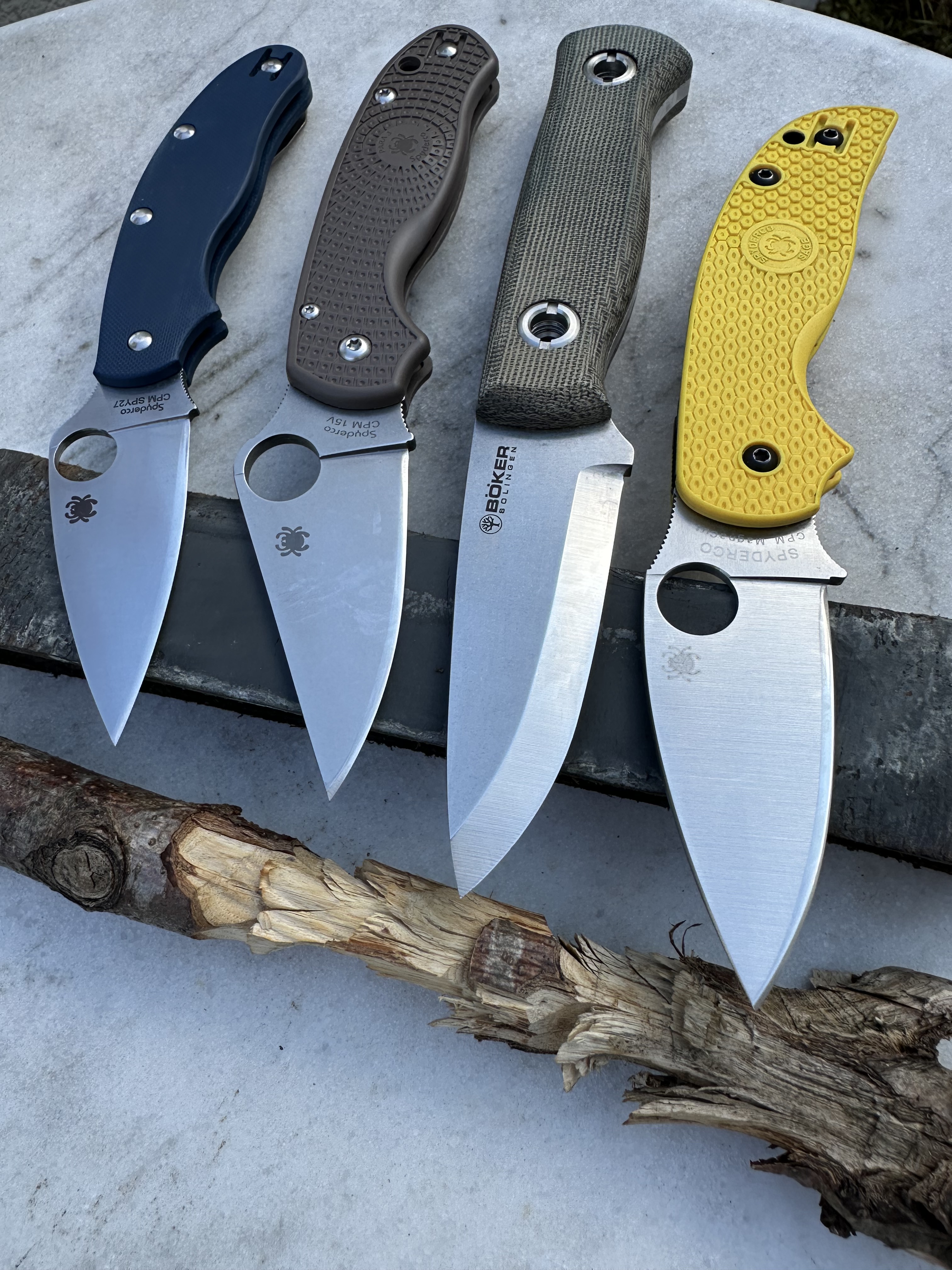
And with the ultra solide Boker in Magnacut. The 8,6 centimeter long blade of the Tenacious is generous edge wise.

Of course, I’ll strop that partially serrated blade on leather — no fear at all. I have my method for serrations, using the corner of the leather pad.

Maintaining the combo edge won’t be an issue; I’ll keep it sharp with cornered ceramic and jade stones.

So what do you get for €139 — the price I paid at the Coutellerie Champenoise? I’m really happy with my purchase. I plan to use the Tenacious a lot and on anything, simply for the pleasure of testing it on various materials. This knife isn’t afraid of plastic, wood, food, bones, cardboard, or aluminum.

This CPM-M4 version is set to show the full potential of one of the beefier EDC knives, especially with its serrated half-edge carved from super tool steel. Over 17 years, the Tenacious has proven it can withstand a lot of abuse.

  The CPM-M4 Tenacious is not only a workhorse but a warhorse, like the pictured Adamas. I can easily imagine any soldier being glad to have such a reliable knife at this budget.

It’s slightly larger than small pocket knives, but smaller than the oversized ones some carry just to show off. The Tenacious would make an excellent day-hiking knife — a folder ready for the great outdoors. I’d take it on a trip to Africa or on a photo safari in the natural parks of Tuscany.

(this will often dull the blade’s edge with a little shining spot. Not here… Thanks to the serrations again ! )

This CPM-M4 Tenacious is sold at roughly double the price of the standard version, but in my opinion, it’s a rare chance to have this alloy on that knife. CPM-M4 pushes the boundaries of reliability and is a real pleasure to keep razor-sharp.

CPM-M4 will not chip and stays sharp for long. It’s a steel that has been used in cutting competitions. While Tuff Glideand various oils can keep it spotless, I prefer the protection of a gentle natural patina.

For twice the price of the vanilla Tenacious, this upgraded version delivers another level of performance in terms of toughness and edge retention.

“Old school cool with the Walker lock and satin finish. Well done Eric Glesser!” to quote Clay H on the Forums.
My brown Tenacious looks gorgeous in its “beautility”, practically begging to be used across all terrains — sand, rain, or more. All in all, this beater is a beefed-up workhorse, built to be used hard and carried proudly.


Spyderco Chaparral C152SGY – For the Fierce and the Furious

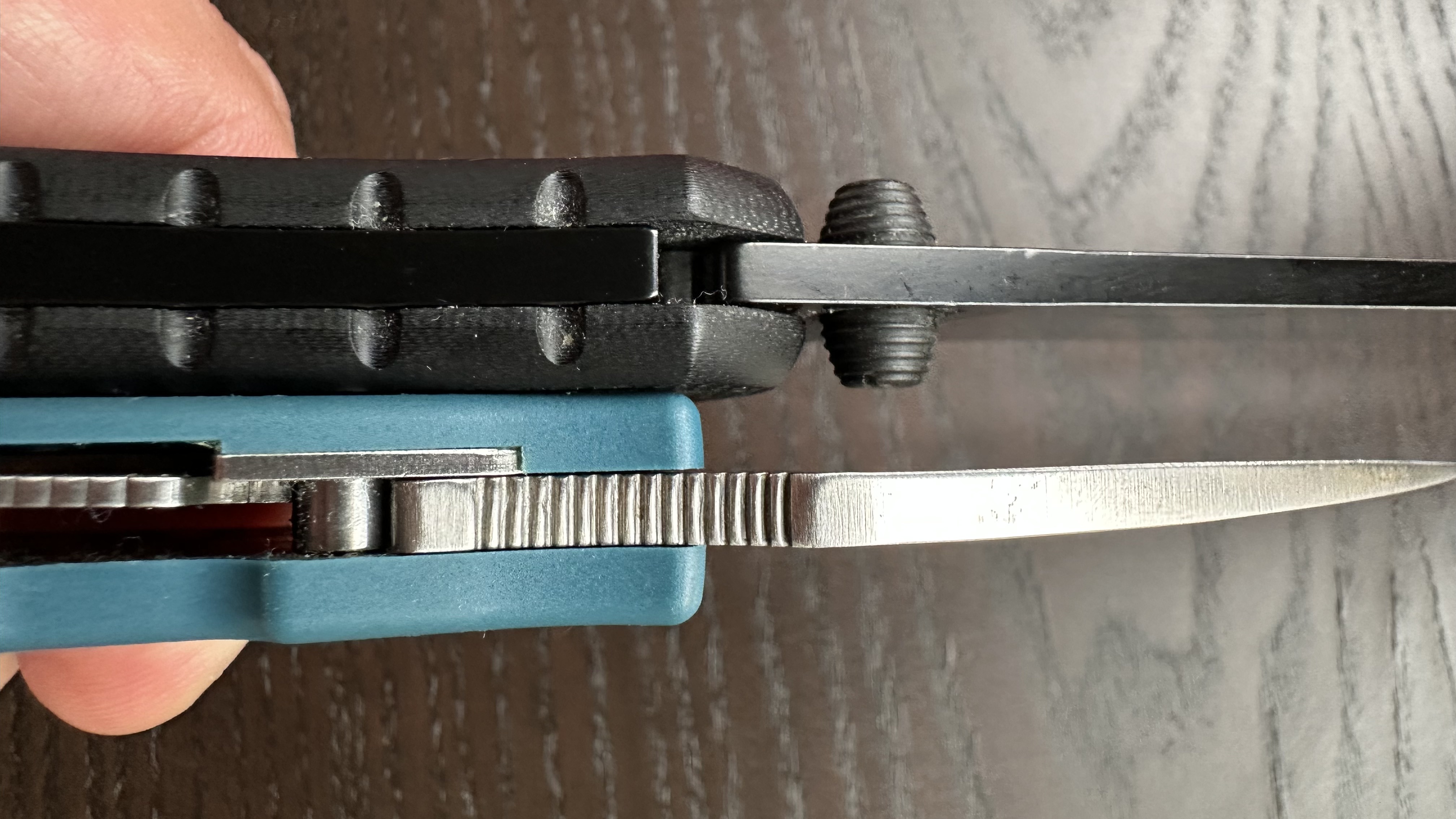
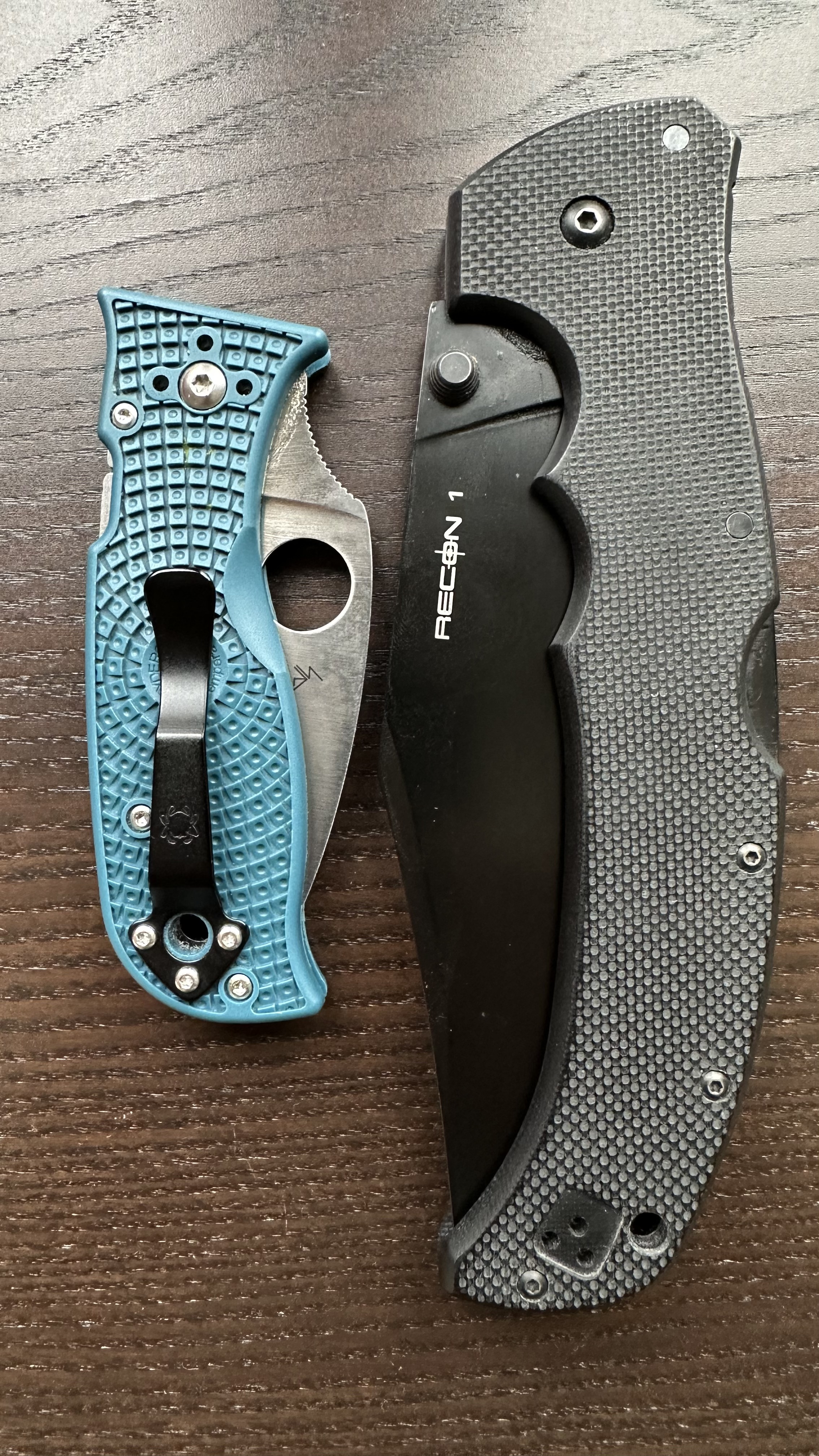
Like I had mentioned in the glimpse review of the Serrated Chaparral, this little, thin folder is built to punch above its weight. Thanks to its sturdy construction and relatively strong stainless steel — the same type found on my Cold Steel Recon 1 XL — it can be tested and used like a much larger knife without compromising performance.

Solid steel, sturdy lock? Not much difference from a larger knife, in fact. 😉

So far, I’ve put the knife through its paces, cutting anything I could, and maintaining the edge with some Jade stones (see first picture). The mechanism shows no signs of play in any direction — rock-solid performance.

The plastic is thicker that the blade.

As you can see, the serrated edge is a chisel grind, which means it tends to deviate slightly to the right of the material being cut, much like a fin in water. I started the cuts with a bit of sawing, then transitioned to push cuts, and the knife effortlessly sliced through the thick plastic used to form the bottle.

This little knife is fierce in term of cutting performance. It is a lot of power in your pocket ! It is a pocket chainsaw !

The serrations really shine on the plate. You can push the knife hard against ceramic surfaces, and if the points ever need a touch-up, a few passes on a ceramic corner — or in my case, a jade corner — brings them back like new.

I have been able to reach razor level just by passing gently the Jade on it.

Actually it is fun to enhance the edge.

Actually, this is a bit of a comeback for me with serrations, dating back to my AFCK experience 25 years ago. Back then, I mostly used partly serrated edges, which helped initiate cuts on hard materials.

With a fully serrated thin blade and no plain edge, I initially wondered how useful it would be in the kitchen — especially since my wife’s favorite knives are Victorinox fruit knives (serrated). But it turns out, neither fruits nor vegetables can withstand the sharp, wavy edge of the Chaparral.

Funny enough I have been able to strop the edge of the Chap by using the side of the leather belt. CTS XHP is a steel which loves leather in my experience.

All in all, so far, so good. The Chaparral delivers impressive cutting power. Its thin, fully serrated edge is unique within the Spyderco line, pushing the design out of its comfort zone — and for a “knifeaholic” like me, that’s pure fun.

The next step is to trust this little knife enough to take it on a road trip in Italy — handling food prep, wood, and low-profile carry as my only pocketed folder. The Chaparral will make its return in May.

Spyderco Roadie XL C267BK – Part II – Shattered Tip.

M398 is a fragile steel compared to M390. The encounter of the tip of the Roadie XL with a tile of my kitchen has been definitive. One mm has been shattered and now I got a micro flat screwdriver as a tip.
OK. Diamonds are steels best friend.
I’m able to form a new tip in a diamond shape.

For now I won’t baby that Roadie XL anymore. I decide to thin the edge.

The best way is to protect the blade to avoid any big scratches.

Then it is time to play with industrial diamonds.

I will also use some diamond rod to round the jimping.

Of course I’m enough clumsy to scratch the blade twice and I’m obliged to use some diamond paste to treat the surface.

Then some polishing paste on the leather to slowly makes it like a mirror.

I’m quite happy with the result.

Time to test this new geometry. The edge has been convexed and thinned it should cut much better.

One of the most difficult task is to cut in two the butt of a two liters plastic bottle. This is a test my Scandi blades fail all the time. Any Opinel is king in that. Or the Manly Wasp ! My favorite being the Nilakka.

As a whittler it goes deep in wood.

As a steak knife, the shape of the blade brings only the new tip in contact with the ceramic of the plate.

That new tip is strong enough to be able to pierce a metal lid of a green bean jar. A hole pierce help the release of the lid on some jar.
No damage no more.
Now the Roadie XL cuts much butter.

Spyderco Roadie XL C267BK – Size matters

Six years ago, I reviewed the Working Poney, also known as the Roadie. Mine had been reprofiled by Jan Dirk, and even on its tiny scale, it proved to be an outstanding performer. For six years, it quietly stowed away, accompanying me across the UK, Vietnam, and countless places where knives were frowned upon.

Then, in 2024, I noticed the announcement of an XL version — the C267BK — featuring a better steel and a clip. Right away, I saw the new pointed blade, replacing the classic sheepfoot-style blade, now ground from Böhler-Uddeholm N690Co. Even more exciting, the XL uses M398, an exotic steel reserved for flashbatches — a serious step up in terms of performance and collector appeal.

And so, here it is: Ladies and gentlemen, the Roadie XL !

They say an image is worth a thousand words, so here you have 4,000 words with no syntax or spelling errors.

Back to the Roadie XL: it is made in Maniago, Italy, just like my Nano and many other excellent knives these days. The Maniago plant remains one of the best worldwide in terms of quality and precision.

Specifications:

  • Overall Length: 6.51″ (165mm)
  • Blade Length: 2.74″ (70mm)
  • Steel: M398
  • Closed Length: 3.76″ (95mm)
  • Edge Length: 2.31″ (59mm)
  • Weight: 1.5oz (43g)
  • Blade Thickness: 0.108″ (2.8mm)

Its shape and size make it extremely pocket-friendly, easily fitting into the watch pocket of a pair of denim jeans thanks to its deep-carry wire clip. You could remove the clip, but why? It keeps the knife perfectly on the pocket’s lip. The clip is also reversible, though that’s not mandatory for a two-handed opening folder.

With its thin profile and light weight, combined with the clip, the Roadie XL can even be carried in a shirt pocket like a pen. In short, it’s a knife meant to stay on your person almost unnoticed.

The action is smooth, with two stops/steps before the blade fully opens. In practice, it feels smoother than my Urban, which only requires a single hand to deploy.

With a slightly longer blade than the Urban, the Roadie XL remains legal to carry in countries such as Denmark, the UK, or Germany. Mine arrived razor sharp straight out of the box, so I’m in no particular hurry to convex the edge.

Mine came razor sharp right out of the box. So I’m not in a special hurry to convex its edge.

You can immediately recognize Sal Glesser’s signature design—a clear mark that it’s his invention. Sal is an inventor, and it’s always impressive to see how he manages to create clever, practical tools. Quoting him directly:

“When the Transportation Security Administration (TSA) briefly considered allowing the carry of knives on airplanes again, Spyderco designed the Roadie™ to fit their guidelines. We created an incredibly popular modern expression of the classic penknife. Since bigger can indeed be better, the Roadie now has a big brother: the Roadie XL. It faithfully offers all the defining features of its smaller counterpart—including a non-locking “notched-joint” mechanism, a textured index-finger choil, and contoured, injection-molded handle scales. Its full-flat-ground sheepfoot-style blade is crafted from M398 stainless steel and features our distinctive “Double Dent™”—a pair of symmetrical dimples in the blade that provide a solid purchase for a fingernail-free two-handed opening. In addition to its larger size, the Roadie XL also adds a deep-pocket wire clip for convenient top-of-the-pocket carry.”

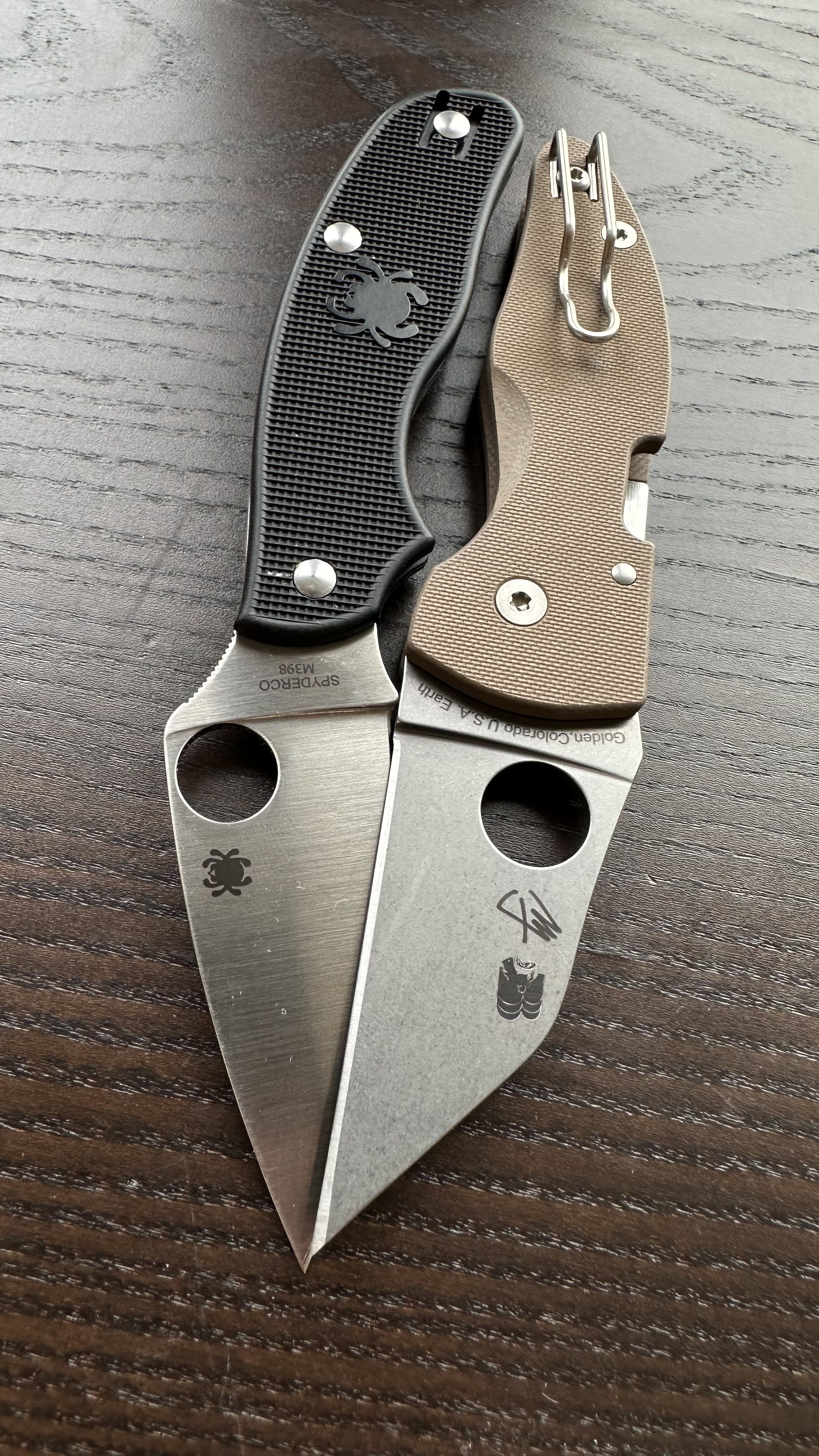
Now, let’s talk about M398, one of Spyderco’s premium powder metallurgy steels, only available in limited flash batches, all made in Maniago, Italy.

From what I understand, M398 is closer to CPM-90V than to M390. Quoting Darrin Thomas’s analysis (which is worth reading in full):

“The original M390 has a reported carbide volume of 20.5%, and the new M398 has about 30%, so there has been an increase in carbide of almost 50%. We would expect this to lead to a significant reduction in toughness along with an increase in wear resistance. The datasheet shows that the toughness of M398 is only about a third of M390, though at somewhat higher hardness. So it is apparent that the design of M398 is all about wear resistance and essentially ignores toughness. M390 has only slightly lower toughness than K390 with similar carbide volume (though K390 was tested at 62 Rc). M398, on the other hand, has significantly less toughness than the similar carbide volume S290. However, M398 does have some positive traits, such as increased hardness and reduced retained austenite relative to M390. I’m personally not all that interested in yet another high edge-retention steel that sacrifices toughness, ease in sharpening, and workability. We had other options and this initial look doesn’t make M398 appear to be an improvement over the other available steels. M398 was a relatively simple modification of M390 and I can’t help but think that a more optimized version could be made. M390 did offer similar toughness to cold-work tool steels like K390 with a similar carbide volume, but M398 has significantly lower toughness than the similar carbide volume S290. So M398 doesn’t appear to be over-performing relative to its composition and carbide content. I wrote about some Bohler-patented high wear resistance steels using niobium instead that look very interesting but haven’t seen a commercial release. Those steels would be breaking new ground and potentially offering new property combinations not previously available. But if Bohler pushes out M398 more broadly it will be interesting to see how knifemakers utilize the steel for applications that benefit from high wear resistance and edge retention.”

When M398 was used in a previous flash batch for the SpyMyto, I wasn’t particularly excited—it felt like overkill for a folder that seemed built for hard use. The Myto is essentially the big brother of my Nano made in CPM Magnacut, and a SpyNano in M398 is also on the bench. In comparison, Magnacut is far tougher than M398, making it more suitable for wide, workhorse blades.

On the Roadie XL, though, this is a different story. Like with my Heinie Urban in S90V, these small blades are not intended for bushcraft—but some highly skilled bushcrafters can make miracles with even a 2-inch slipjoint, as shown in an inspiring video I recently saw.


Slip-joints are gentle companions for both ladies and gentlemen. For those with long nails, the Roadie XL is equipped with its distinctive “Double Dent™”—a pair of symmetrical dimples in the blade that provide a solid purchase for a fingernail-free, two-handed opening.

Its high wear resistance comes in handy, as these small blades often encounter cardboard, which can be surprisingly abrasive. I also recall Roger, my father-in-law, wielding his old Pradel slip-joint like a crowbar or flat screwdriver, without a second thought. Old-timers often treated knives mercilessly, using them until the blade was as thin as a needle.

I’m confident the Roadie XL with its M398 blade would make an excellent hare skinner—the fur is full of sand that can destroy an edge almost instantly. Tuscan hare hunters would likely appreciate its durability. Its high wear-resistant alloy makes perfect sense here. Additionally, the blade is relatively thick at 2.8 mm, which would otherwise be prone to breakage.

Ergonomically, the Roadie works beautifully for a slip-joint because you can hold the blade by its choil—a feature rarely found on traditional slip-joints. Even most Swiss Army Knives lack that level of security, and with M398’s toughness, the blade cannot close on your fingers. As Spyderco notes:

“Unlike traditional penknives, the Roadie also features a subtle index-finger choil that increases control of the knife during use and acts as a safeguard against unintentional closure.”

There’s no undue pressure on the pivot, often the most delicate part of many folding knives. If you are careful not to twist the point in wood, the Roadie XL can withstand applied force directly to the blade. This makes it another “Lil Big Blade”—small but versatile.

It can serve as a steak knife, whittler, label remover, balloon popper, nail cleaner, or cardboard cutter. Brown cardboard is notorious for edge damage, but not for an alloy like M398, packed with carbides.

And in today’s world, one more practical advantage: it is extremely sheeple-friendly. The Roadie XL looks like a pocket knife, not a tactical or soldier’s tool, making it socially unobtrusive yet highly capable.

Roadie, K390 Pingo, S90V G10-Urban and Roadie XL (all green letters mean they are linked to their reviews)

Beauty is in the eye of the beholder, but to me, this blade—shaped almost like a scaled-down cutlass—is pure eye candy.

Interestingly, I’ve discovered that I can open it one-handed in two distinct ways:

  1. A fast wrist flick while holding the blade itself.
  2. By gripping the blade with thumb and index finger and gently pushing the handle away with the middle and ring fingers.

So, even though it wasn’t designed as a one-hand opener, the Roadie XL can function surprisingly well as a one-handed knife in either technique.

Compared to a traditional sheepfoot slipjoint, the Roadie XL is incredibly light yet sports a premium alloy blade (Since August 2025 another slipjoint with M398 is available: The Metropolitan.).
And at under 100 euros, the Roadie XL is an exceptional bargain for what it offers.

This is one of Sal Glesser’s finest EDC designs—a true Every Day Carry folder that balances elegance, utility, and performance. And for once, size really matters with a Roadie. No wonder it’s already sold out on the Golden site!
There is part II here.

CRICKET™ STAINLESS STEEL TATTOO

C29T – “When You Wish Upon a Star”

I know Jiminy (Cricket) since 1994. I even have used to have a pink version of this little bugger in the last millenium.
Today, while making a little pilgrimage in famous Kindal cutlery shop in Paris,

Mme Kindal has displayed me one of her many treasures displayed, next to a Janisong and a Military titanium…
It was love at first sight for that blast from the past little big knife.
Because there is a lot of power in that compact package, it was the chance to carry another one of those New Old Stock.

It is true, the Tattoo version of the Cricket is a pure jewel and delight to look at and to use. It has been cleverly designed in House by Sal Glesser (but I won’t be surprise if Ed Schempp would have been also its inspiration).
Based on the stainless steel version of the Cricket Tattoo it is really well made piece of cutlery.

Folded the C29T creates a rounded package that carries nearly invisibly in the pocket. The pocket clip carries right-handed tip-down but also attaches to a tie or makes a fashionable money clip. The anodized illustration is really elegant.


The Stainless Steel design using a Chris Reeve Integral Lock makes it really thin and easy to wear even in a shirt pocket.


It is a tip down carry which allow a very fast an elegant Spyderdrop opening. So its reverse “S” shaped blade get in action very very fast.

Its 2mm thick and 48mm long blade is tricky, thanks to its “S” shape: you got a longer edge to use. And like Eric Glesser’s Dodo, Sal Glesser Cricket is a geometrical trickster: the cutting angle is almost never at 90° to the separated material, acting like a sinusoïdal guillotine. It is very powerful. For a knife of its length, the Cricket is packing a lot of cutting power hence the name “Little Big Knife” used for that kind of Spyderco.

The Cricket is a joy to use in the garden on hard material…

… and on soft material.

Beware of that S Shape, beak or claw design, loves to catch anything around, you thumb for example can bleed in a blink of the eye.

The beak penetrates in any plastic sheet very aggressively. It is even surprising how easy it can open packages.

Some people are not fans of S Shape blade or any blade with recurved edge. It is a natural shape found in claws, talons, teeth and beaks.
But by using a rounded ceramic (VG10 is not difficult to get back to razor) and the corner of the leather pad, the Cricket keep its razor edge.

Here is with a Jade sharpener. I sharp the belly on the flat and the beak on the corners.

It opened design makes it a breeze to clean under the tap.

I highly recommend the Cricket as an EDC knife. It is a little but powerful “matter separator” destined for Ladies or Gentlemen for daily duties which can be clipped to a purse, a pocket even a bra. I also knew a former French Marines, six-foot-four and full of muscle, who had adopted the Pink Cricket as his main EDC. Go figure how this little knife makes you wish upon a star !

The Perfect Spyderco Native Exclusive AKA Spyderco C41GPCWBK5 Native 5 Folding Knife 3″ CPM-CruWear Black Plain Blade, Smooth Black G10 Handles, KnifeCenter Exclusive !

Seven years ago I was already in love with a KnifeCenter Exclusive Native. The idea to propose a smooth G10 handle was IMHO a great EDC enhancement as G10 can turn any knife into a pocket shredder.

As you can notice the Native 5 with its OEM clip can perfectly be clipped to a watch pocket.

I was certain I have missed the opportunity to own one of those smooth operators exclusively made for the KCI when, Alex, a fellow member of the Facebook Spyderco Fan Club France has pointed it to me.
They were still in stock ! HERE !!

I know monsieur Howard Korn, the founder of the KCI, since his very beginnings back in the 90’s when he was all alone, and suggested me to design their logo. Howard was the very first reseller to propose knives on a big scale using a very new medium: the world wide web ! What a venture ! And eventually what a success !
It was before Amazon and Howard is one of the pioneers in terms of spreading the cutlery’s culture worldwide. Hence now the great videos which are produced in house.
Again, it has been a smooth transaction from the USA to France thanks to a great customer service for a great exclusive. I may be biased but this is my customer experience for almost 30 years with the Knife Center: flawless and inspiring.

Eventually I have found out I have bought perhaps the very last one of those Native Exclusive as 10 days later my order (June2024) they are now out of stock.

So what do we got here ?

I have written a lot about CPM Cruwear !
But this tough and well balanced alloy which can provide a crispy razor edge is perfect on small or long folders.
This is a workhorse steel and one of the greatest high tech alloy available in modern cutlery. I have even proved how hard it was to get a patina on it. This time with DLC coating no patina or rusting will be feared.
BTW DLC Diamond Like Coating is used from implants. It is not toxic.

This all black version of the Native is ready to be used in all weather conditions.

So here we got a very low profile package with a none threatening design as black knives matter when confronted to sheeples who could point you as a Mall Ninja with a dark saber.

These days I am reluctent to carry in the city a long blade/folder and my search for accepted shorter knives, locking or not locking is evident.
I have previously studied knives which can be used in the city and the Native is one of them. The idea is a maximum of polyvalence for a tool which should raise eyebrows. A friendly not threatening package. The knid of knives my grandfathers and father used to carry without any after thoughts but in planes. 😉
When heading for the countryside, I don’t restrict my self in terms of blade length but for a big city, I play a very low profile game and most of the time I do strictly follow the Law even if I’m not fearing any kind of Police check.
Hence the Native: same cockpit as Hellboy which is used a lot in the kitchen as the Chief as turned into a Chef but shorter.

There is also a swedge or on the blade spine on the Native which is not present on the Chief.

The action is smooth with zero blade play as chute drop is obtain by releasing the lock. I have already written and how those Golden Native are top notch in term of fit and finish, using them since 2011.

This version with no liner is for me the best design and this Exclusive the best of the best. In those years of titanium frame locks and axis locks, the chance to own a great lockback is precious. And this one is for me: the Last of The Mohicans !

Spyderco Native Chief: HELLBOY 2 – The Kitchen Army

Since the reception of my Chief Native I have found that he was a sole survivor from a Xmas Mystery Box bought in Spyderco’s plant in Golden in December.
In that box were different items and a rare Sprint Run Second Factory which was destined to end in my pocket and considered by myself IMHO as the perfect realisation of Sal and Eric ideas about pocket knives. In fact I think it is my favorite Spyderco ever.
I have written a first review here.
And now it is time for a second approach of Hellboy which has succeeded in kicking other knives from my pocket and quench my thirst for novelty.

So why ?

First the Native family feature an absence of hump on the blade making them very slick and beautiful.

Even the Shaman benefits from that.

The Chief is on the left and the Shaman on the right.

As you can notice the design of the Native Chief is really close to one of my favorite design: the AFCK.
Sal Glesser was no stranger in the Benchmade BM800 AFCK back in the 90’s. He helped Les De Asis founder of Benchmade on it. They had both learned how to make Michael Walker’s linerlocks at Bob Terzuola shop.
Both company were accelerating on the tactical lane in close formation.

As you can notice, my AFCKs (Advanced Folding Combat Knife) which was also designed by Chris Caracci a former Navy SEaL have been used a lot. The first version got a Spydiehole and the second version got an oval hole and an axislock.
This design was one of my favorite for a big folding knife as EDC.
And back then I was really in love with concept of tool highspeed steel on a modern plateform.

The same happend with that special Native Chief which got a very special alloy for its blade: CPM-4V.
With that steel, the edge is strong and the thin blade is very solid.
It gives a lot of confidence when cutting on a plate made of ceramic of glass. No chipping can happen.
Hellboy has been used a lot for cutting pies and cake on glass plates and the edge behavior was not disappointing. When I have noticed a little shiny spot, some white ceramic was able to put everything back on line but it was really minor.

Now CPM4V is not stainless. It will form a patina or, worst, rust very quick and easily when used in acidic matters like cutting lemons and being used on a salad with vinegar.
DLC coating is really welcome for that kind of behavior. Back in the 90’s Benchmade was offering only PVD coating which is really inferior to Diamond Like Coating. So far the blade of my Chief is not marked and scar by it various cutting tasks even when cutting.
My previous Chief was a naked Rex45 blade and it was another story told here.

Even strawberries can darken the edge of CPM 4V.

But cheese is a great way to notice how DLC is making the surface of the blade less sticky but more stinky.

The Chief was not always used on gentle medium like wood.

It was also used on plate with vinegar salsa. Here it is basamic vinegar from Modena.

In the kitchen the knife is really behaving like an paring knife. It is really handy on fruits and vegetables. Its very pointy blade is great to carve.
.The mechanism has never suffered from being wet and rinsed under water. The knife was smooth through and through its various wet works.

Now I like to have chamfered and smooth handles and blade spine. The Chief is known to be very square everywhere. The G10 has been easy to smooth with sandpaper used wet to avoid toxical dust.
Now the blade spine is DLC coated and it was my esthetic choice to remove the coating on all the length of its spine.

I love the result.

It has been done with some diamond rods.
Now the spine is much more confortable for my thumb in case of push cuts.

CPM 4V on that Native Chief platform is really the bread and butter for a strong thin folder. I’m not afraid to use hard on wood and plastic.
And it is a must in the kitchen various missions.
It has been also test on different hard wood and compared (geometry speaking) with many other knives I got.
One of my champion is the Swayback in term of smooth pushcuts.
But also the Wolfspyder and the Yojimbo.

My Chief needed more convexing and thinning to go to the level I was expecting. Again diamonds has been used handfree to remove the shoulder of the edge.
CPM 4V keeps a very very crispy edge and bites in the wood very aggressively.

CPM M4 is a stunning alloy which is prefered on fixed blade but it is a gem on a long and thin folder. It makes it super solid with a very permissive edge.

Quoting Larrin Thomas Phd:

Some will argue that toughness is not important in folders or fine slicing knives and feel that only edge retention matters in that case because they don’t use their knives in aggressive ways which are likely to lead to chipping. However, broken tips are still common on small knives and kitchen knives. And with higher toughness, the knives are better able to handle thin, low angle edges without chipping. And they can be heat treated to higher hardness to help prevent edge rolling and deformation, while still maintaining good toughness. This means that, indirectly, higher toughness can lead to better cutting performance because of the possibility of thinner edges.

The good news is that CPM Magnacut has been copied on CPM 4V behavior.

Delica K390 with Lynch Titanium Scales – A Wolf in Sheep’s Clothing !

I got the chance to get that customized Delica through Henri Ramsey, a Spydiefriend from the Facebook French Spyderco Fan Club.

The K390 Delica has always been a monster of pocket knife (click on the name to go to my old review of the Delica with buffed sprint alloy). The thin blade mixed with the super tool steel allow (K390) alloy has proven to be amazing for hardchore.
From their Seki Japan plant, Spyderco is producing many different K390 model, folders and fixed blades. The Stretch 2 being highly regarded as one of their best design.

The Blue Pingo has been made in Golden though.

So here you got an incredibly tough, strong and wear resistant blade on scales produced by Lynch. A typical Sal Glesser design: performance first !

But Lynchnw has taken that game to another league with their scale:

A few years ago Casey put out a very limited run of the LynchNW MOD 1 Delica 4 and some scale sets. This is our newest Delica MOD 2 Titanium Scale Kit, modifying your choice of Delica 4 Knife with a set of Custom Titanium scales, featuring a forward finger choil, blade profiled scale holes, smooth bellied profile, a custom titanium back-spacer, enlarged lanyard hole, and a custom designed deep carry titanium clip. ” To quote Lynchnw.com site.”

What bring these new scales apart of adding titanium for the pure neo industrial look of it ?
It bring many things:

A finger choil. A real one.


A longer handle and your pinkie will thank you for that.


A slim package which is soft on your pocket trousers.


Seven holes which are showing the edge of your knife when it’s closed.

See how cute is it ?

So here we got a very friendly city pocket knife which is not screaming “I’m a sword from Hell !!” like my new beloved Hellboy Chief or this AFCK in M2.


It looks like a lady and gentleman knife.
But beware of the wolf in sheep’s clothing.

This one share the same core engine as a Police 4: K390 at 65HRC in a thin geometry ! It is a Metropolice knife.


The Amphibian Milestone in CPM Magnacut : the Paramillie 2 Salt has landed !

The Amphibian Milestone in CPM Magnacut iq PARA MILITARY® 2 SALT® BLACK G-10 CPM MAGNACUT® BLACK BLADE – C81GMCBK2 which is much too long to fit in a title.

This is not my first Paramillie 2, I usually wear the 52100 carbon fiber version but I have used many many version in S90V, CPM Cruwear and S30V. The 52100 is actually the exact opposite of this new version.
Announced at the 2023 Amsterdam Minimeet, a Paramillie impervious to the element. Better: a nautical version ready to stand tall in frond of the salty waves of the ocean’s breakers.
Then the wait began.

And here it is, in all its glory !
Delivered with Larrin Thomas dreamlike alloy: the CPM Magnacut !
A steel which hits a lot of sweet spots. Like some sort of totally rustfree CPM M4: strong, resilient and able to withstand thin edges without chipping.
So why adding a DLC on that alloy ? Overkill can be fun, can’t it be ?

Here are 3 versions. The 52100, the CPM Cruwear and CPM Magnacut from right to left. Three excellences in their own way all designed by Sal and Eric Glesser.
CPM Magnacut is a story of love.
Quoting his metallurgist of designer:
“The carbide structure of MagnaCut is much finer than the common powder metallurgy stainless steels such as CPM-154, M390, Elmax, S35VN, etc. The only stainless PM steel I have imaged which is competitive in terms of carbide/nitride size is Vanax. MagnaCut is even somewhat finer than CPM-4V and Vanadis 4 Extra, the non-stainless steels that MagnaCut was modeled after. This is an excellent result and should lead to excellent properties.”

Quoting Spyderco:
“This tour-de-force expression of the Para Military 2 showcases a full-flat-ground blade crafted from CPM MagnaCut—a state-of-the-art particle metallurgy steel that offers an exceptional balance of edge retention, toughness, and superior corrosion resistance. Cloaked in a non-reflective Diamond-Like Carbon (DLC) coating, the PlainEdge blade is housed in a handle featuring peel-ply-textured black G-10 scales machined with the signature Caribbean Bi-Directional Texture pattern of Spyderco’s US-made Salt Series knives. To complement its blade steel and finish, the knife’s nested stainless steel liners, four-position pocket clip, and all other hardware are also made from ultra- corrosion-resistant materials and black coated.”

That new Salty Paramillie is destined to be an amphibian workhorse, an hippocampus !!
All hardware is black coated but the stop pin which is silver and made of “fearlessly corrosion-resistant marine-grade materials“.
The handle (as efficient it is to be non slippery) is destined to be a pocket shredder as it is carved to be used with wet oily hands. Your trousers will suffer !!
Unless, like myself you are a compulsive user of sandpaper. And even then, it will be hard on pocket’s lips.

The Diamond Like Coating is not only protecting a blade which doesn’t need any protection, it gives a strong Mall Ninja vibe also.
Usually coating brings some king of lubrification to the matter separation. I’m not impressed so far, even on sausages.
The geometry is perfect on my PM Salty. Thin as a razor though.

One thing I had to change was the clip. It was replaced by a Flytanium Universal Titanium Clip which is short and deep carry.
Also I have moved the clip for a Tip Up carry which suit the Paramillie better in my book.

Of course de-shouldering the edge is the first step to convex that I do on new knives. Especially I have read that Magnacut loves leather stropping.

And this is true ! The edge turned quick into a über razor state.

It zipped through meat like a lightsaber into banta meat.

So now the game is on. The Salty Magnacut Paramillie is ready to kick all other knives from my pockets and be used on the long run.
Let see what this cutlery apogee era knife has to propose on the long run !