Pekka Tuominen – The Master of the Boreal Blade


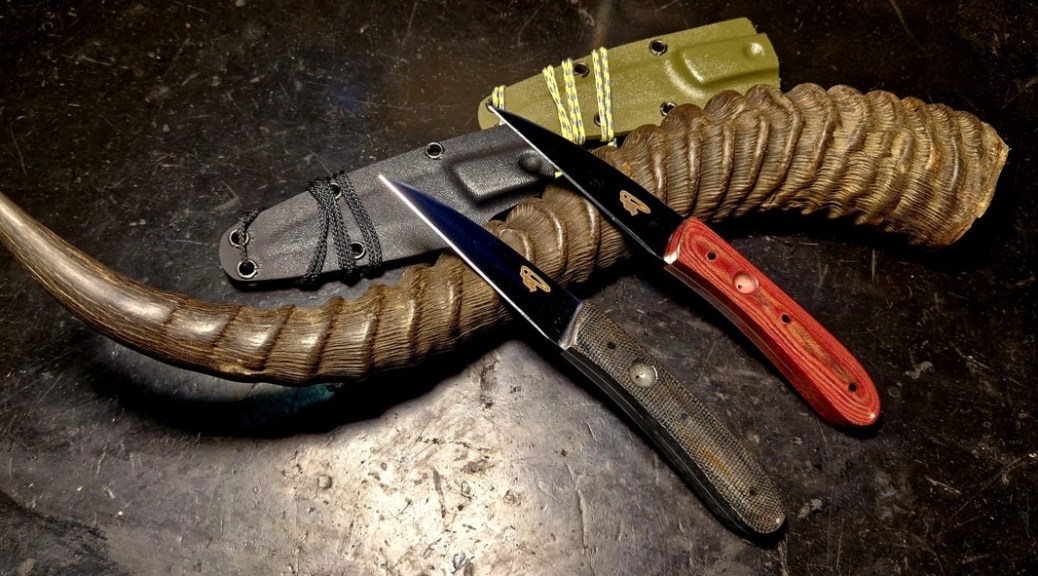
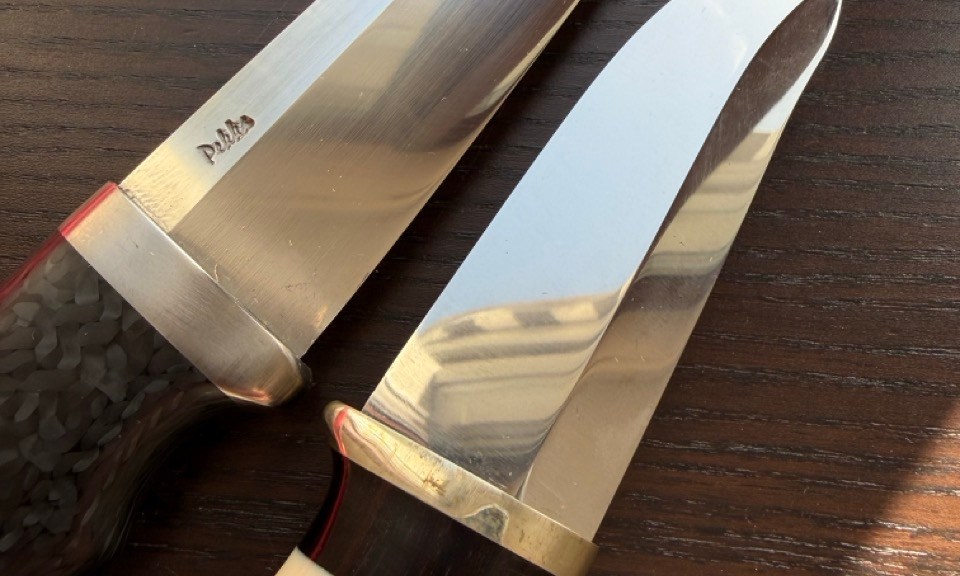
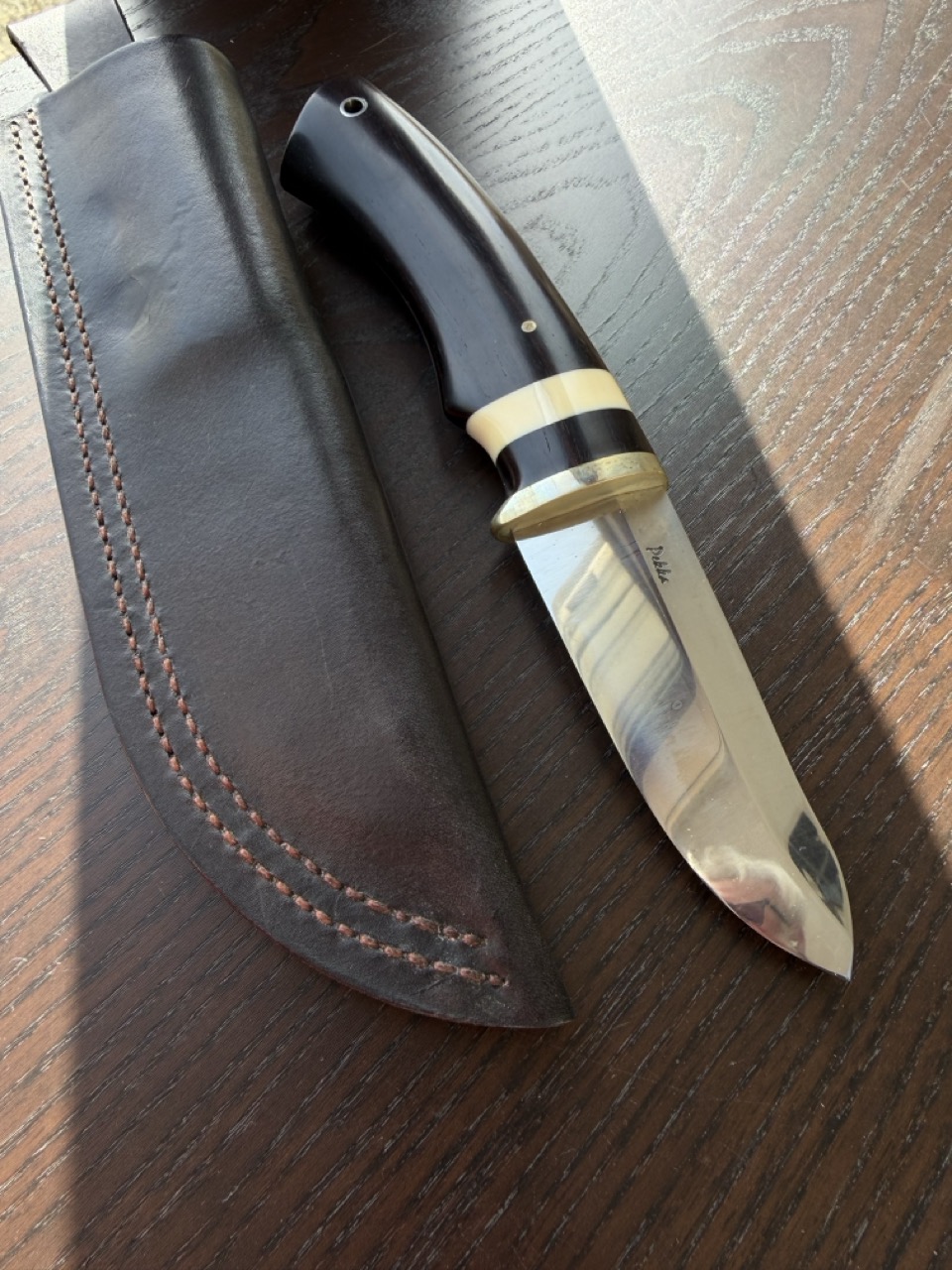
It was upon receiving one of my friend Jur’s knives — a superb hunting knife by Pekka Tuominen dating from 2012, forged in Silversteel and fitted with a handle incorporating walrus ivory — that I felt compelled to turn my attention back to Pekka Tuominen.

People often ask me: who is Pekka?

Consider this, then, a renewed portrait.
Because in Finland, a knife is never just a knife.

And the snow is never just the snow.

In the deep boreal forests where autumn means moose season and winter hardens the earth into something resembling iron, blades are not judged under showroom lights but against bone, sinew, cold, and time. It is in this demanding landscape that Pekka Tuominen has built his reputation — quietly, methodically, without spectacle.

He is not a factory. He is not a brand machine inflated by marketing departments and limited drops. He is a craftsman in the most literal sense of the word. And among serious Nordic hunters, his name circulates with a particular, understated respect.
Pekka’s relationship with knives began before memory. His grandfather, a part-time blacksmith, forged blades; his father worked as a carpenter. He received his first knife before the age of five. For him, the object was never exotic — it was elemental.
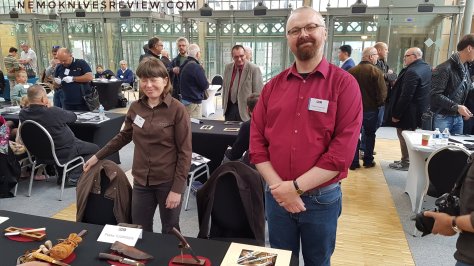

As a teenager immersed in scouting and outdoor life, he reached a simple conclusion about survival: the most important tool in the wilderness is a knife. Naturally, in Finland, that meant a puukko. At eighteen, he studied in Inari, in northern Lapland, training as a wilderness guide. There, he learned the fundamentals of puukko making. That period marked the true beginning of his craft.
A decisive intellectual influence came earlier, when he first read Sakari Palsi’s 1955 book Puukko. The text, he recalls, opened his eyes. It clarified what truly defines a puukko — not ornament, not material excess, but proportion and line.
For Pekka, a knife unites tool, design, and art in a single object. He cannot imagine life without one.
I have written a long review here about it.

Ask him to describe his ideal puukko — as a user rather than a maker — and he returns to simplicity. A blade of approximately 90 millimeters, paired with a 110 millimeter handle. Dimensions rooted in tradition, refined by use. Multipurpose, balanced, restrained.

He appreciates steels such as 115CrV3, often referred to as Silversteel, RWL34, and 52100. Yet he insists on a hierarchy that reveals the seriousness of his approach: the steel matters, but heat treatment matters more.

He is no rigid purist. One of his own heavily used test knives pairs stabilized black ash burl with a CPM S30V blade. He admits to having “wrongly” used it — and to grinding it down repeatedly as a result. For Tuominen, a knife that remains pristine has not yet fulfilled its purpose.
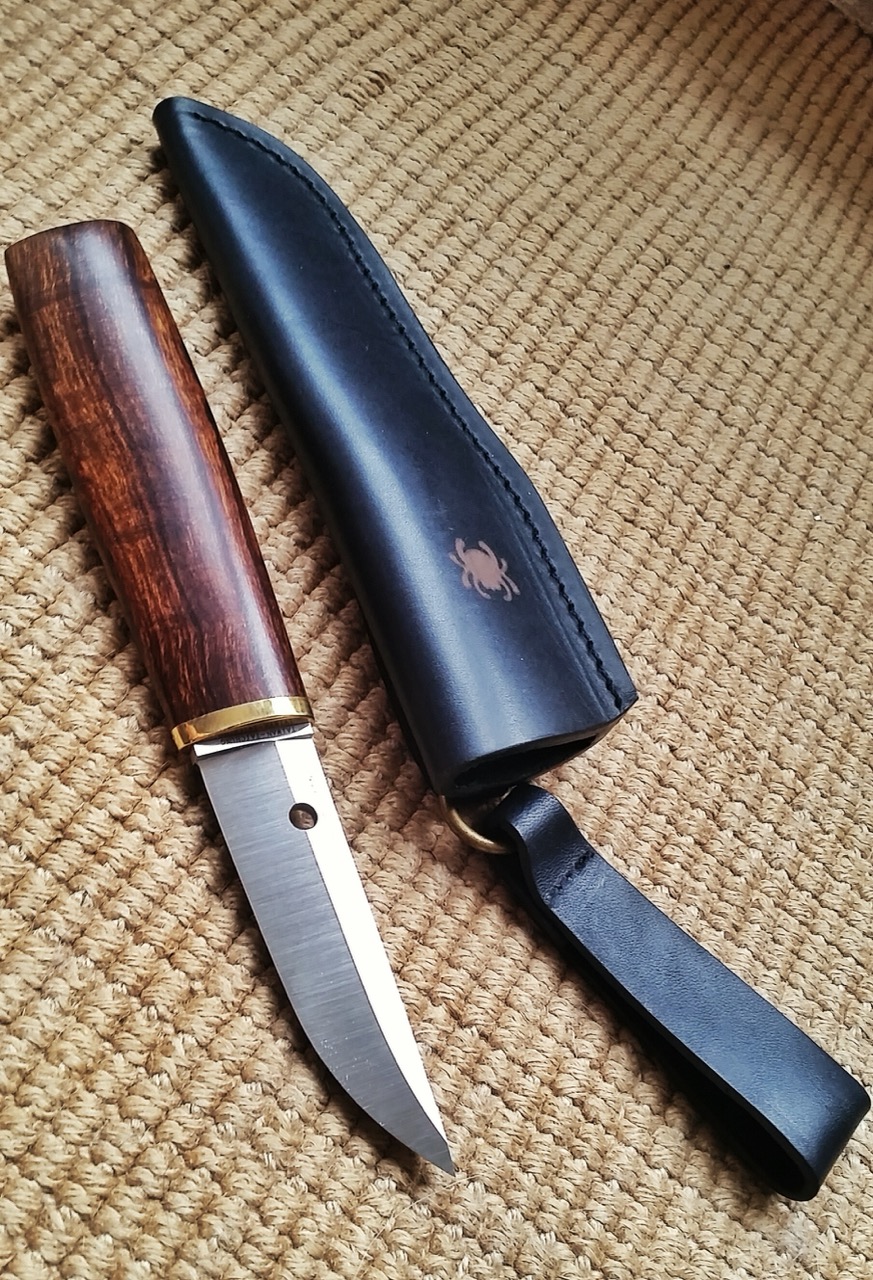
In an age of aggressive silhouettes and theatrical grinds, Tuominen defends restraint. A true puukko is defined by a relatively short, straightforward blade; a handle without finger guards; no exaggerated pommel; and clean, continuous lines that flow from tip to sheath.

He favors birch bark for its warmth and grip, but also works with curly birch and Micarta. His sheaths are hand-stitched, typically from vegetable-tanned leather. He admires traditional Finnish patterns — Tommi, Pekanpää, Kokemäen — whose differences lie more in decoration than in structure. The essential design language remains consistent across regions.

“The material does not make a puukko,” he says. “The design does.”
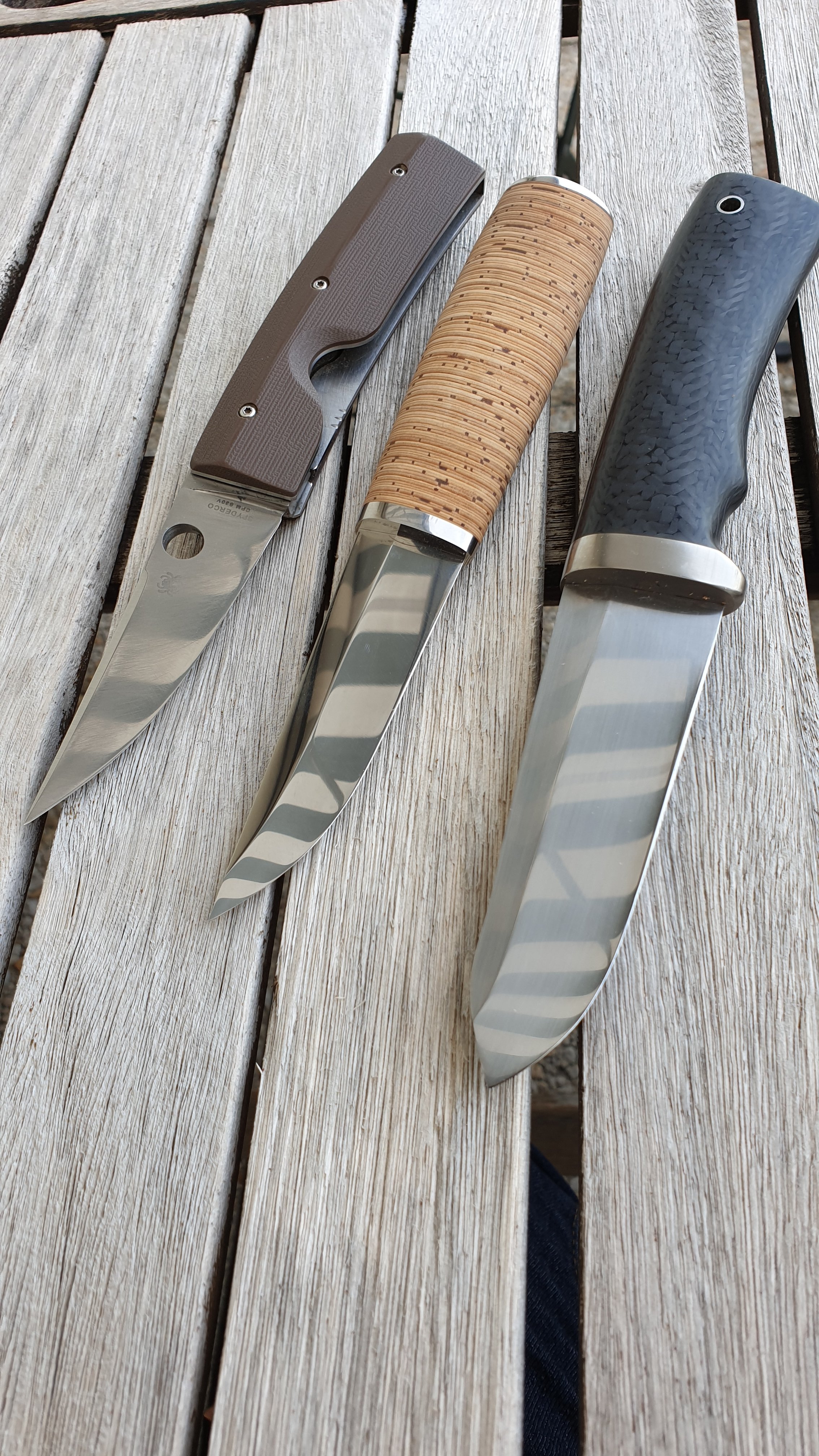
In Finland, the word puukkoseppä carries weight. It does not describe someone who merely grinds blades. It denotes a professional who forges, heat treats, shapes, finishes, and sews — who understands the knife as a complete entity.

Tuominen forges Silversteel and 52100, as well as his own Damascus from 15N20 and 1090. Stainless steels such as RWL34 are ground rather than forged. In every case, he performs the heat treatment himself.

This decision is not romanticism. It is control.
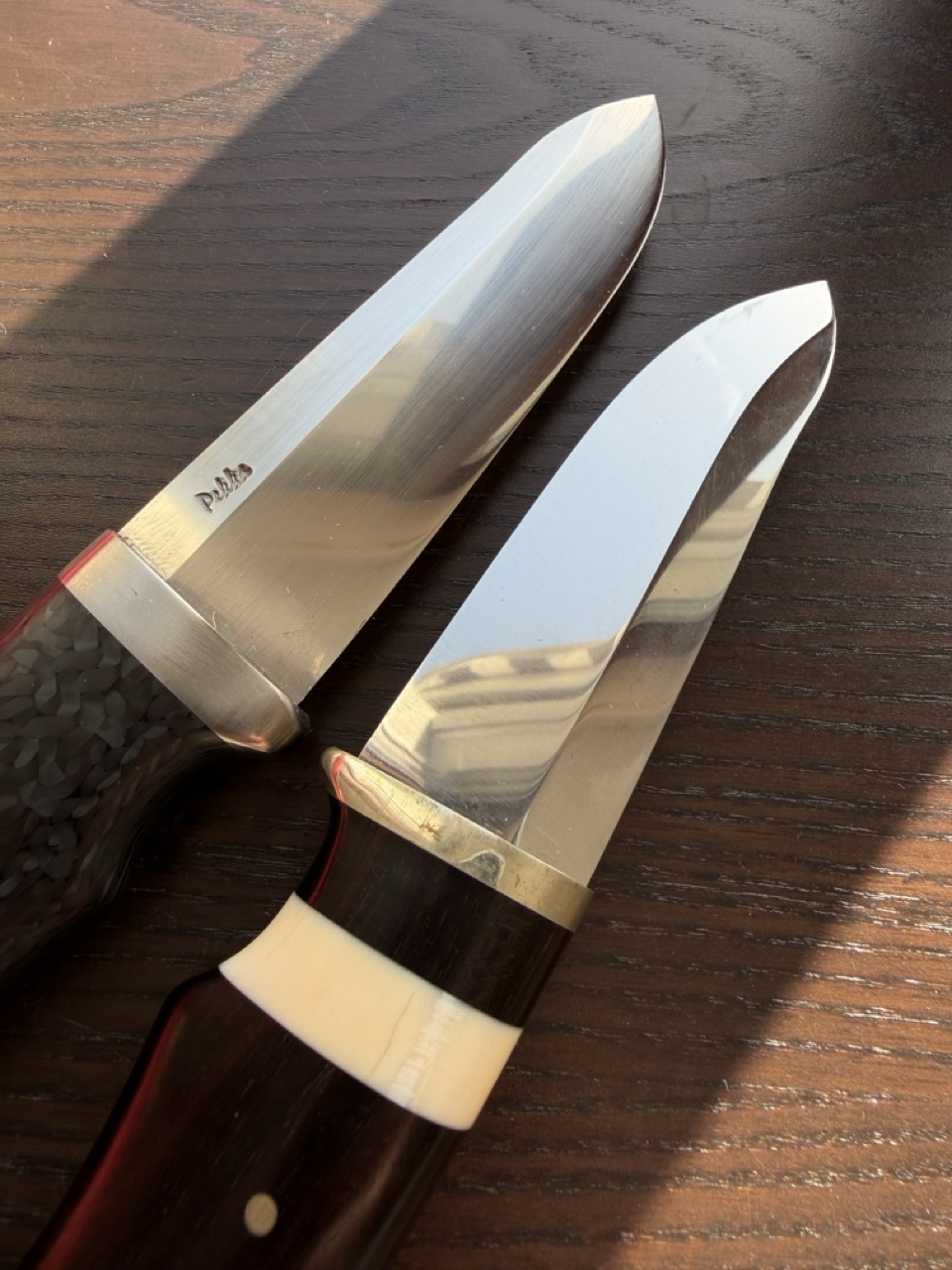
Heat treatment determines hardness, toughness, edge retention, resistance to chipping, sharpening behavior — in short, character. By managing austenitizing temperatures, quench timing, temper cycles, and when appropriate cryogenic steps, he tunes each blade for hunting reality rather than laboratory extremity. He does not chase maximum HRC for marketing appeal. He pursues balance.
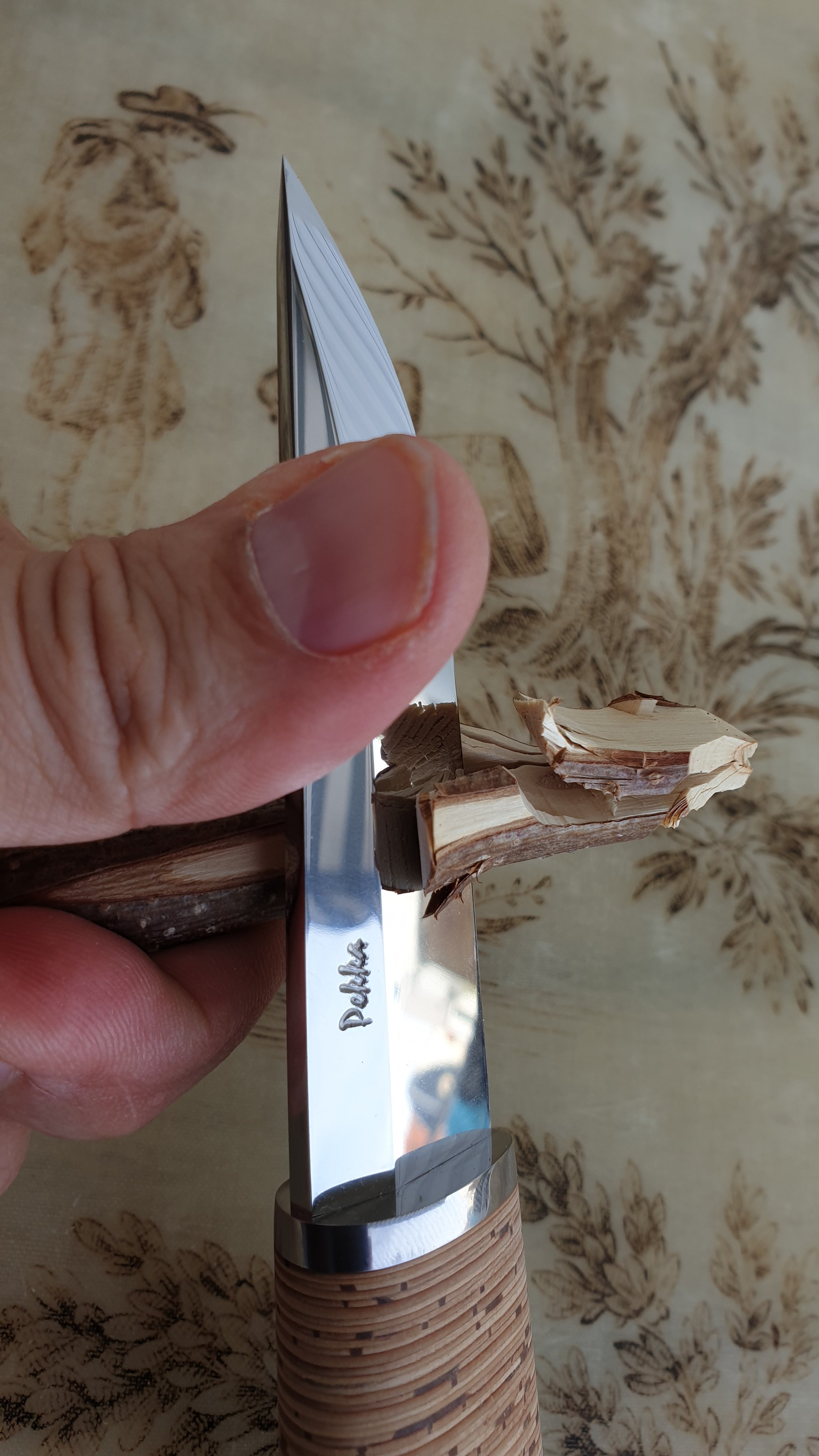
The difference is felt not in specifications but in seasons.

One Finnish hunter wrote on a forum, after two moose seasons with his knife, that he had done nothing more than strop it. A Swedish outdoorsman described the sharpening behavior as clean and predictable, “no surprises.” The praise is never flamboyant. It is consistent. Stability, reliability, endurance.
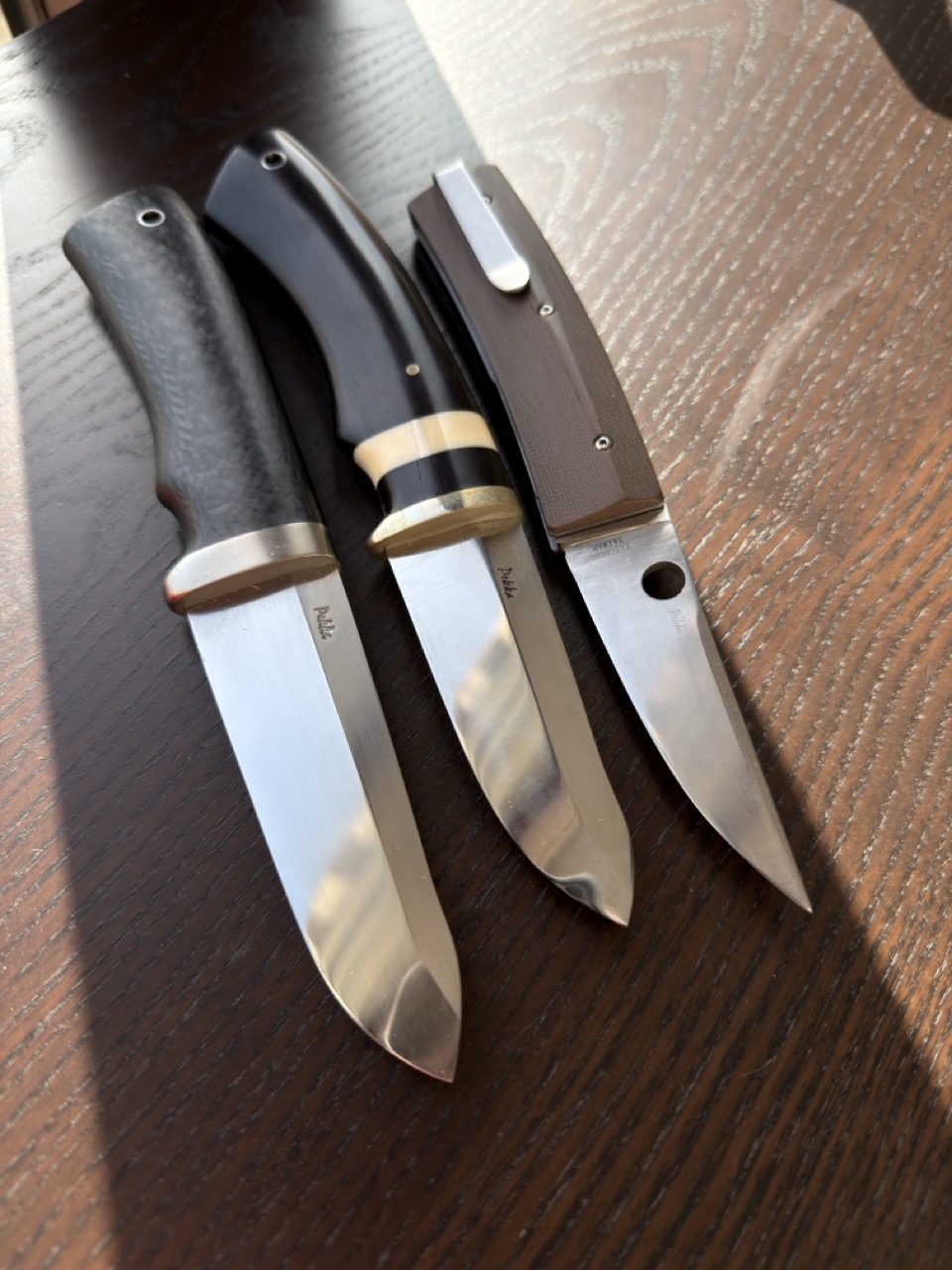
While many outside Scandinavia associate Finnish craft primarily with the puukko, Tuominen’s strongest following among experienced outdoorsmen is tied to his dedicated hunting knives. These are not nostalgic reinterpretations of folklore. They are instruments designed for skinning and field dressing large game in cold climates.
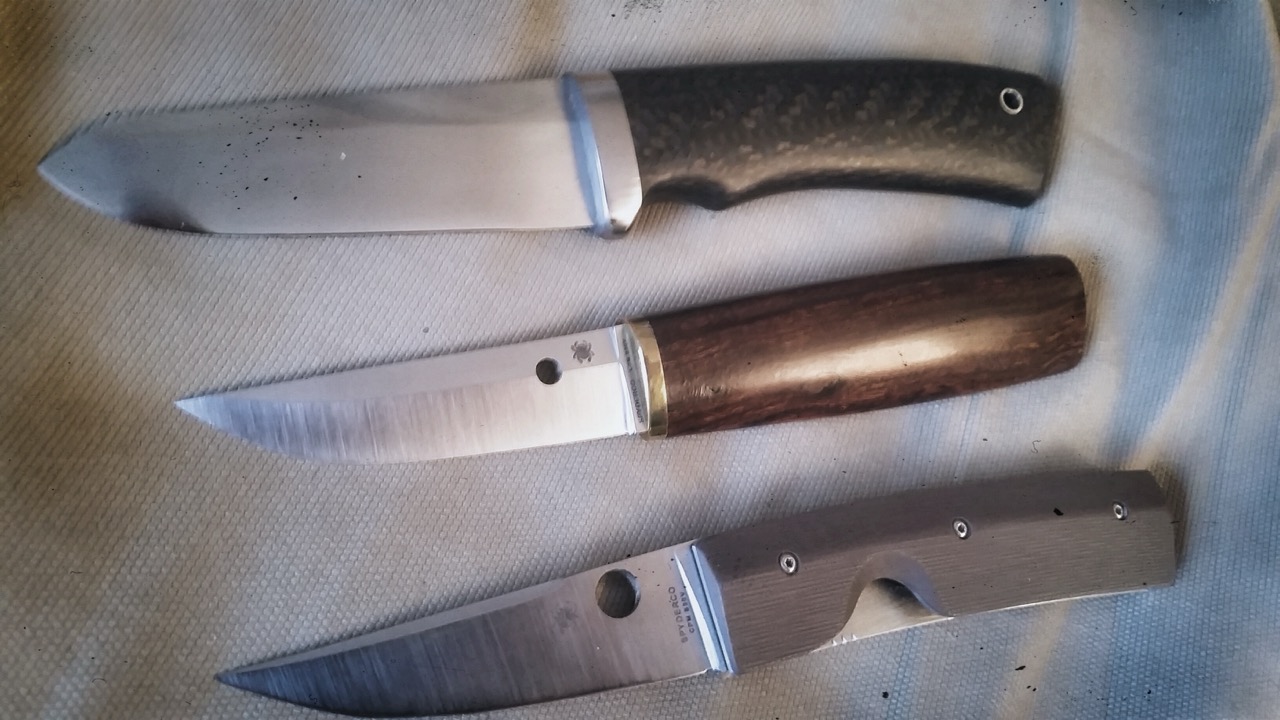
Their geometry avoids ego. Clean drop points, disciplined grinds, carefully judged balance. No theatrical belly, no tactical posturing. In hand, they feel neutral — and that neutrality becomes invaluable during extended work. Fatigue diminishes. Control increases.

In sub-zero conditions, poorly treated steel reveals itself quickly. Edges chip, roll, or turn brittle. Tuominen’s blades are repeatedly described as stable. It is a modest word, but in the field it is decisive.
Finland formalizes its craft traditions through national qualifications overseen by the Ministry of Education. Tuominen earned the title puukkoseppämestari, Master Blade Smith, after passing rigorous examinations and presenting a master’s work to a jury. At the time of his certification, only seven craftsmen in the country held that distinction.
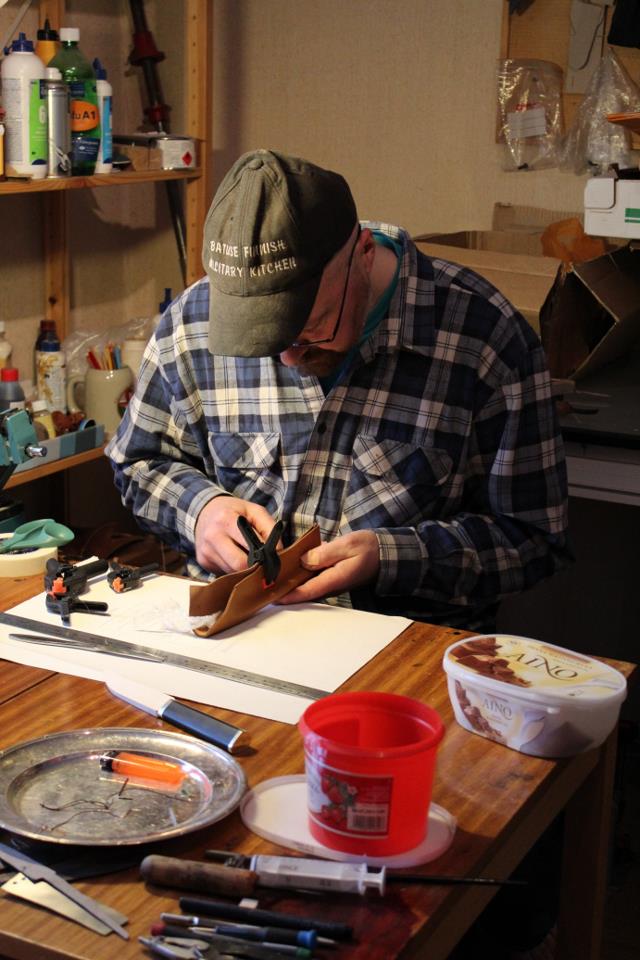
Today, knife making occupies the vast majority of his time. His waiting list extends roughly a year. Collaborations, including work with Spyderco, have broadened his international presence. Yet when asked about ambition, his answer remains almost disarmingly modest: he wants to become a better knife maker.

He considers craftsmanship a lifelong education — one in which imperfections are not failures but invitations to improve.

In a global knife culture increasingly captivated by spectacle, Pekka Tuominen’s work stands apart for its restraint. He works alone. He grinds, heat treats, shapes, and stitches himself. From blade to sheath, the knife remains under one set of hands.

He often summarizes his philosophy with a line that sounds simple enough: a simple man makes simple knives.

In Finland, however, simplicity is never simplistic. It is discipline. It is proportion. It is respect for the task at hand.

And in the forest, that is what endures.

Pekka’s site: https://pekkatck.fi

More articles about Pekka: HERE
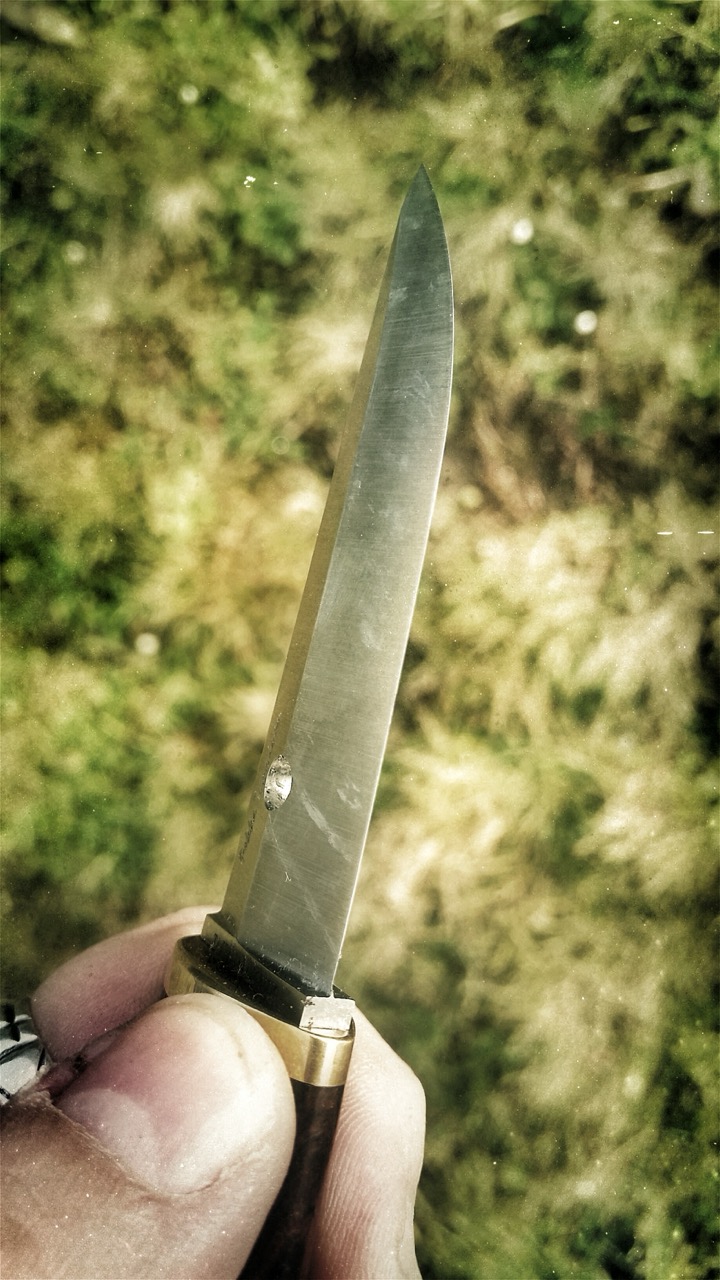
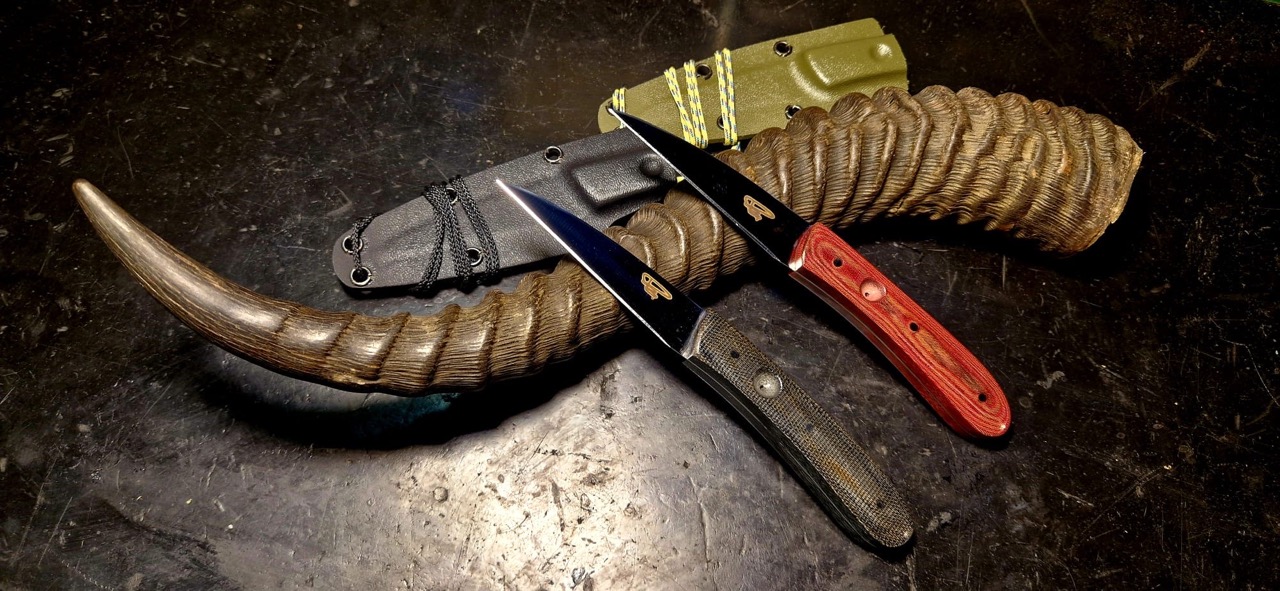
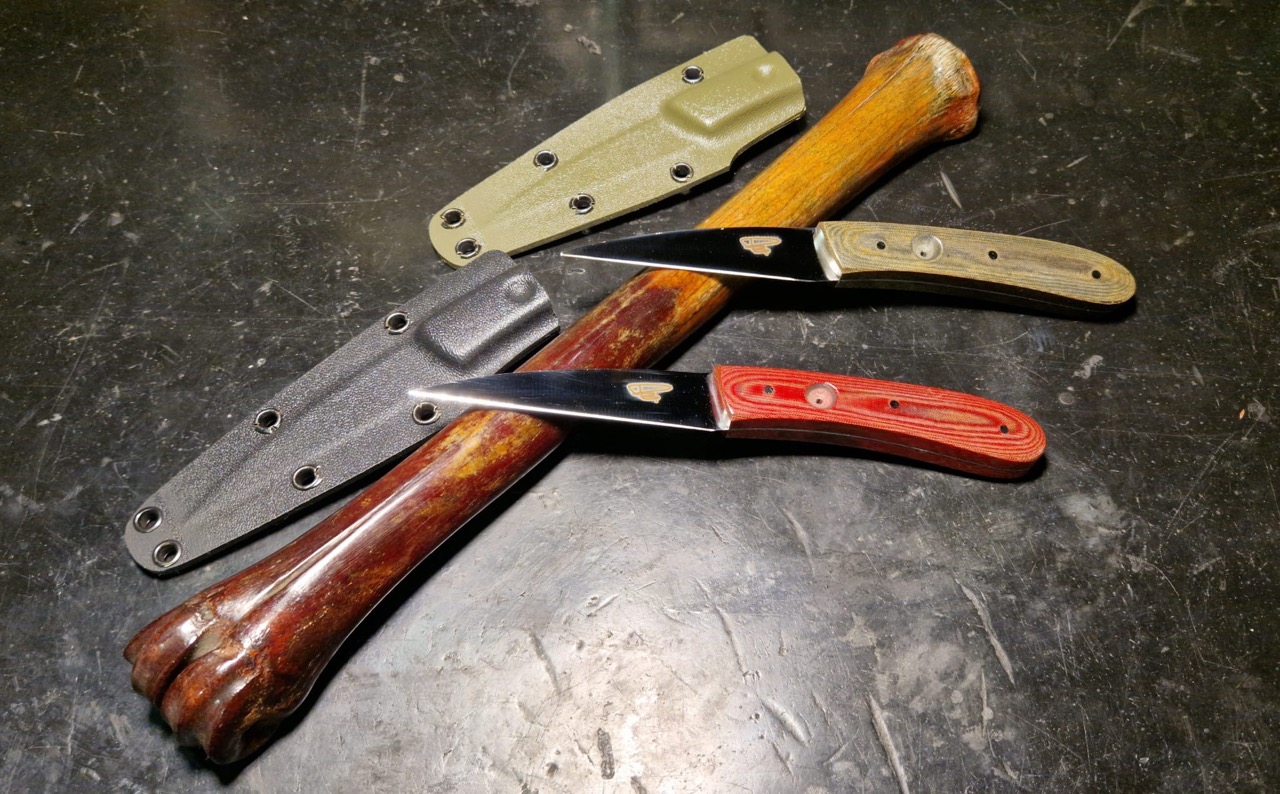
Patrick Bonetta’s Kitchen Warrior “Birdy” – The Essential Edge of Haute Cuisine.

Disclaimer: This knife has been provided through Patrick Bonetta ‘s friendship. Thank you to him for letting me review it. 😉

In a professional brigade, hierarchy is everything. Precision is everything. And above all, the paring knife is sacred.

The very first lesson in any serious kitchen is this: the couteau d’office is the cook’s most precious tool. It is the instrument that never leaves your side, the blade that performs the quiet, relentless choreography of peeling, trimming, turning, scoring. Before the grand gestures of service, before the spectacle of plating, there is this small blade—and the discipline it demands.

Hygiene, of course, is non-negotiable. In that environment, a folding knife is an indulgence the brigade cannot afford. A fixed blade is imperative—clean lines, no hidden cavities, nothing that compromises sanitation. Form follows function, and function follows rigor.

Yet the realities of service introduce their own hazards. A paring knife can disappear in an instant—swept toward the bin with a cascade of peelings, or carelessly dropped into a drawer where other blades wait to bruise its edge. In a kitchen moving at full tempo, neglect is not malicious; it is simply inevitable.

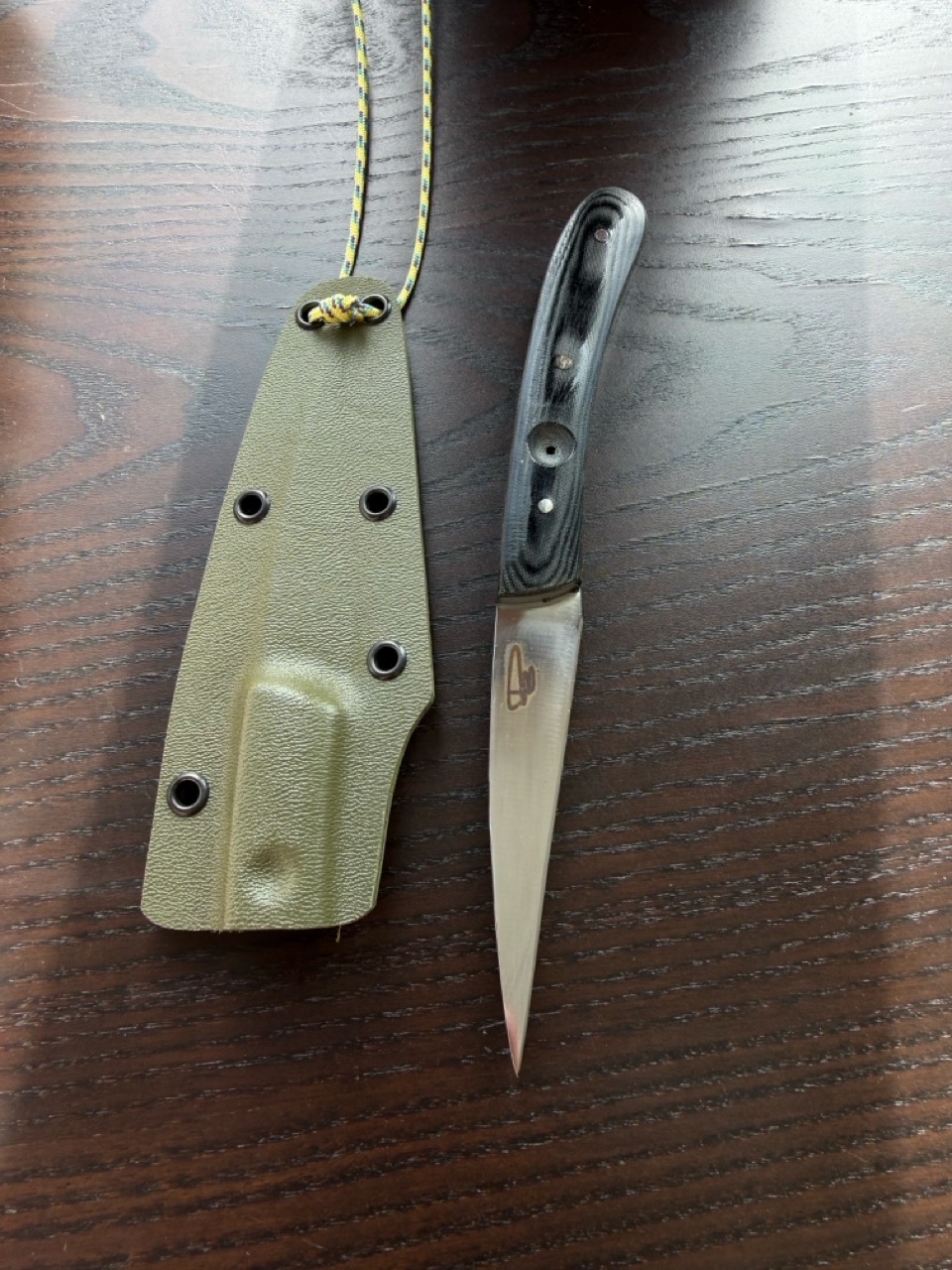
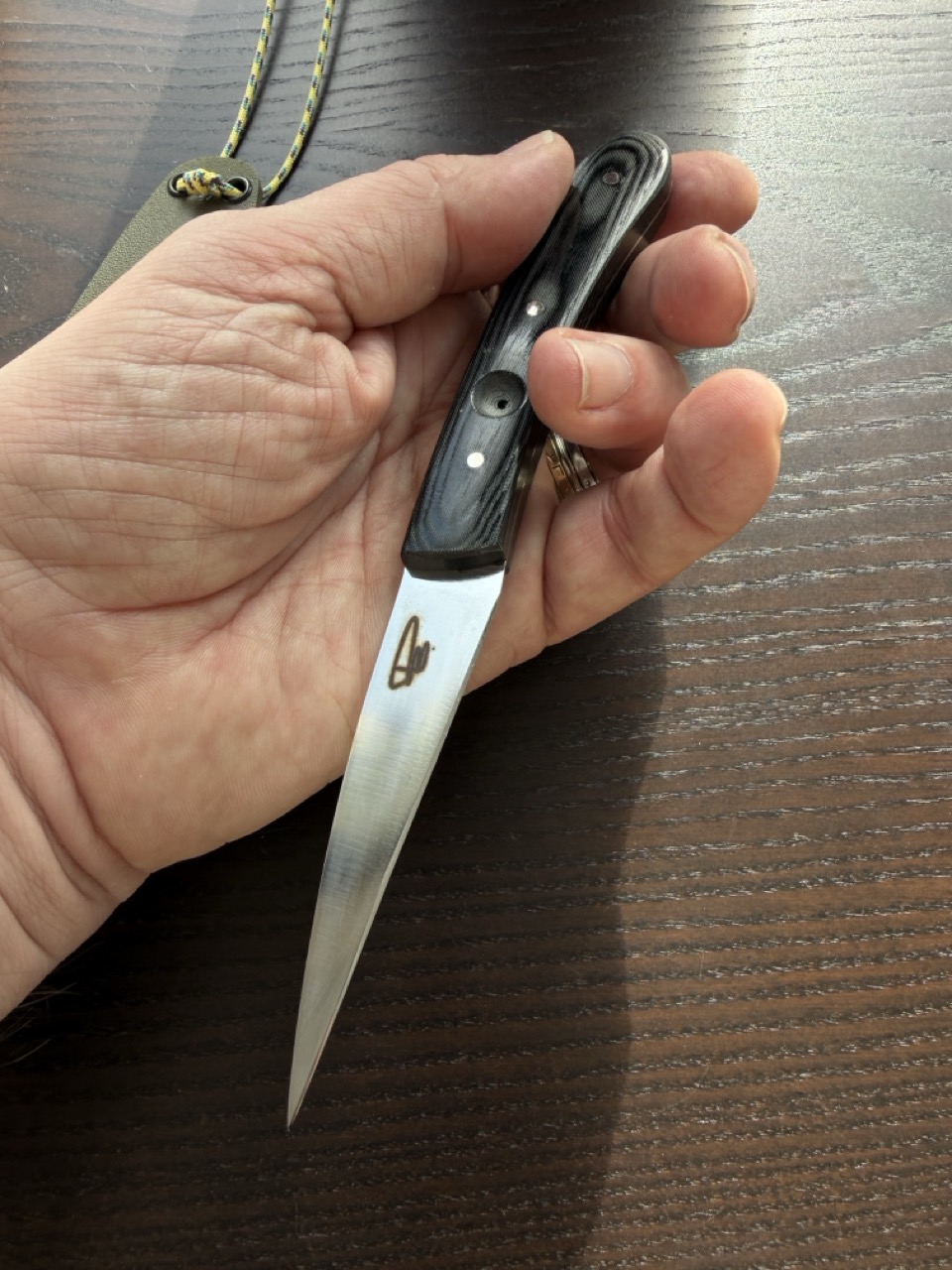
The solution is as elegant as it is practical: keep the blade on you. Always. Within reach. Around the neck, suspended discreetly yet ready in a heartbeat. Thus was born the idea of a refined thin neck knife—an ultra-thin, fixed blade forged in chrome-vanadium steel, equivalent in spirit and performance to Nitrum from Arcos. Fine-grained, corrosion-resistant, responsive to sharpening, it offers the clean bite and resilience demanded by daily service.

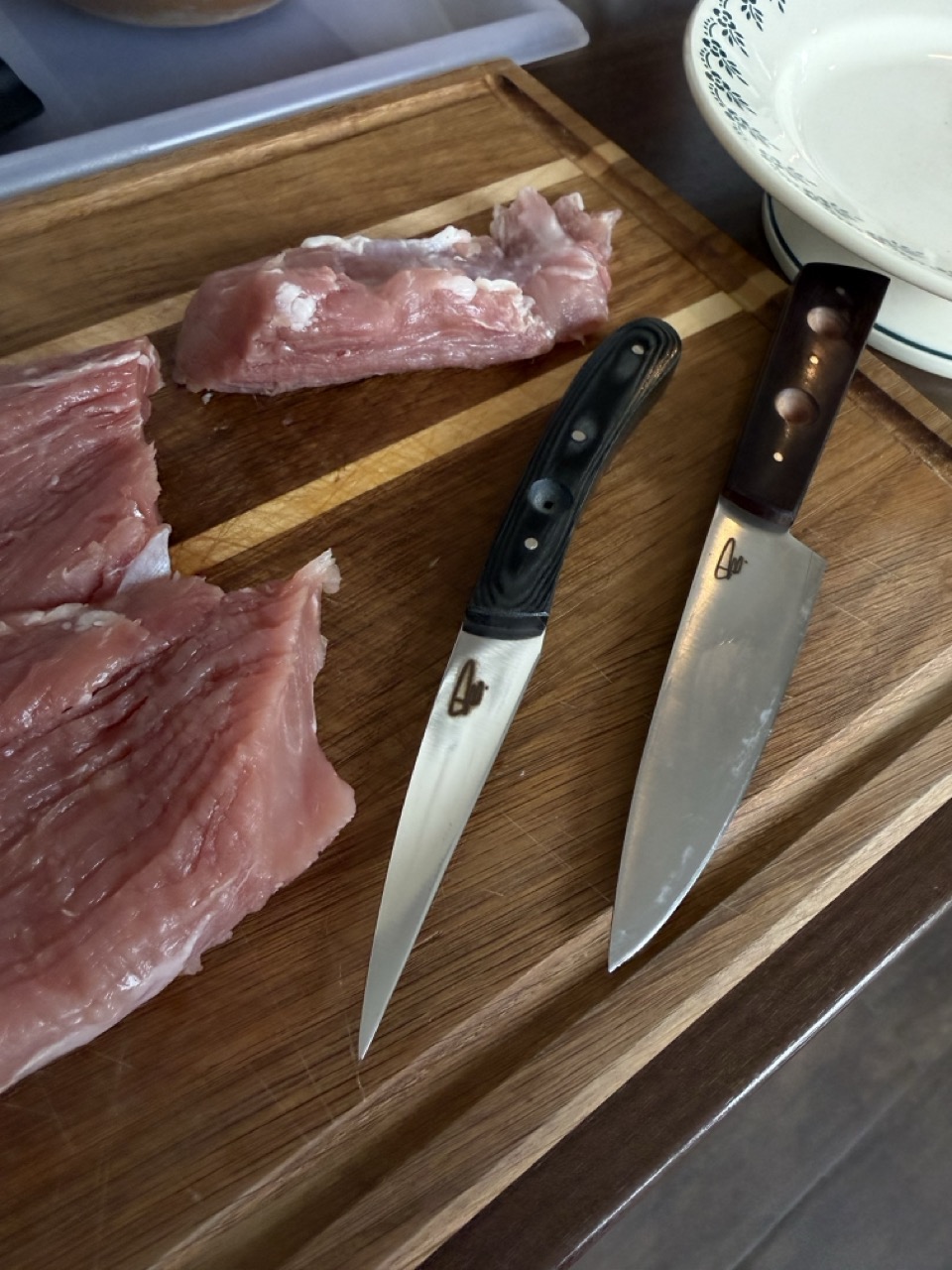
On the right is her brother AKA the Tactical Parking Knife reviewed here.

This is not a novelty. It is a working instrument—one now worn by internationally renowned chefs, among them the celebrated Alain Ducasse, who commissioned several for his own use. In kitchens where standards are uncompromising and reputations global, tools are chosen not for ornament but for excellence.

And excellence is precisely what defines Patrick Bonetta. Perfectionist by philosophy, the house approaches finishing and ergonomics with almost obsessive care. The balance is intuitive. The Birdy’s grip—secure without fatigue. The transitions between handle and blade—flawless. Nothing is left unresolved.

The result is “Birdy”, a paring knife elevated to high craft: a lil’marvel of proportion and purpose. In the kitchen, it slices, peels, and minces with fluid authority. It becomes an extension of the hand, a silent accomplice to high precision cuts… or not. 😉

True luxury in gastronomy is not spectacle. It is control.
And control begins with the right blade.

– The two last photo (c)Patrick Bonetta —

Spyderco Endela in Spy27 – 2026 Minimeet Gift.

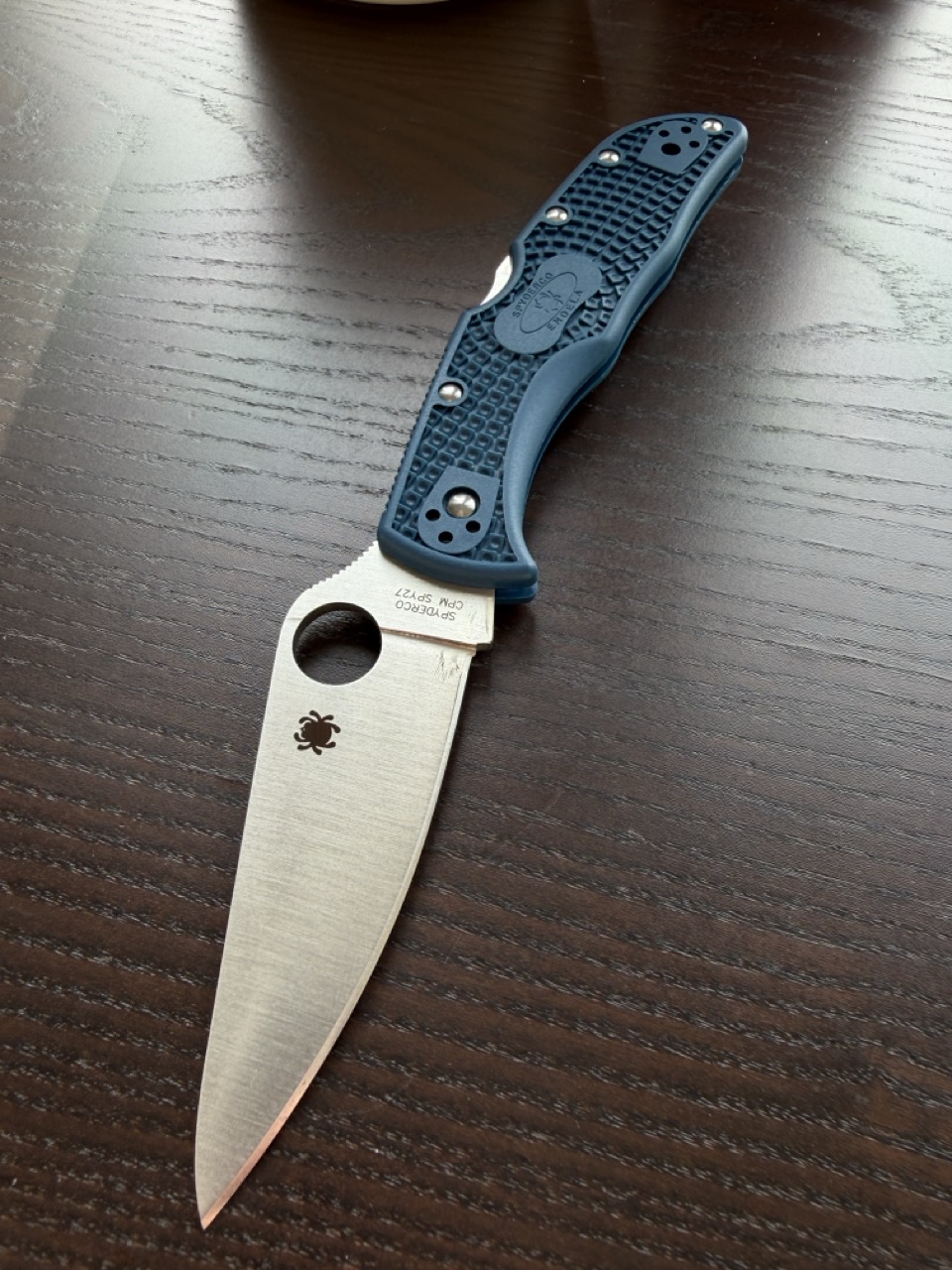
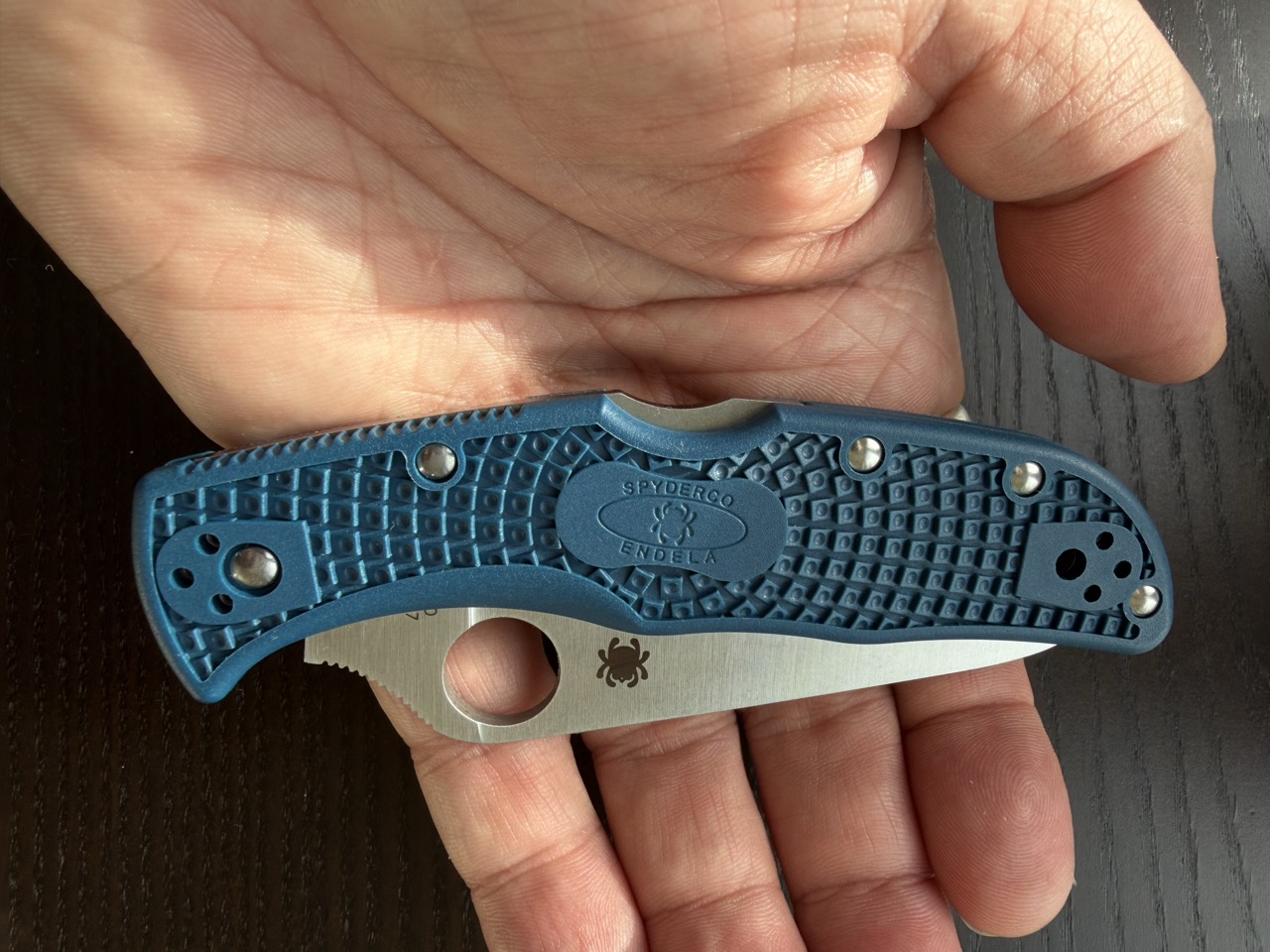
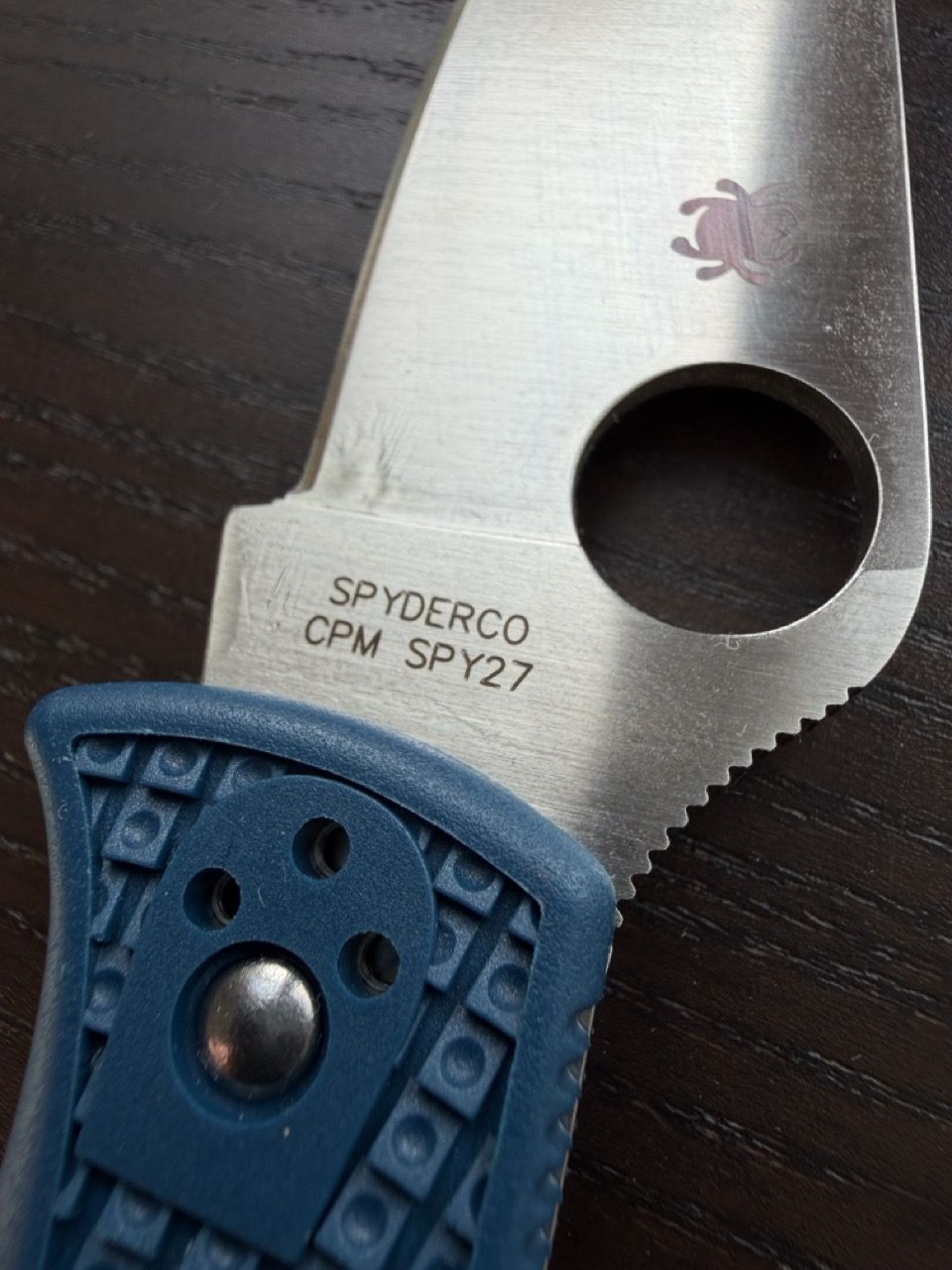
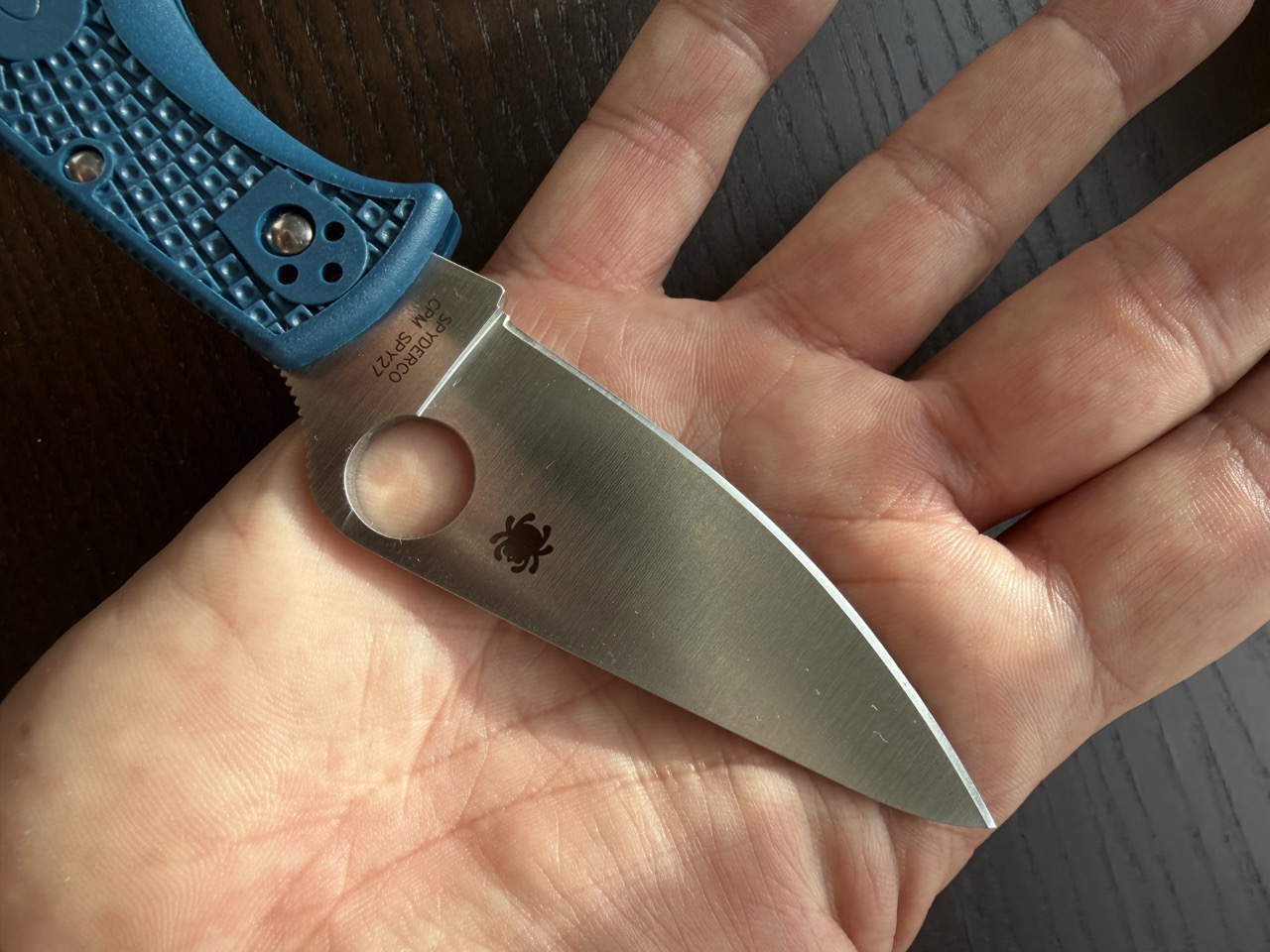
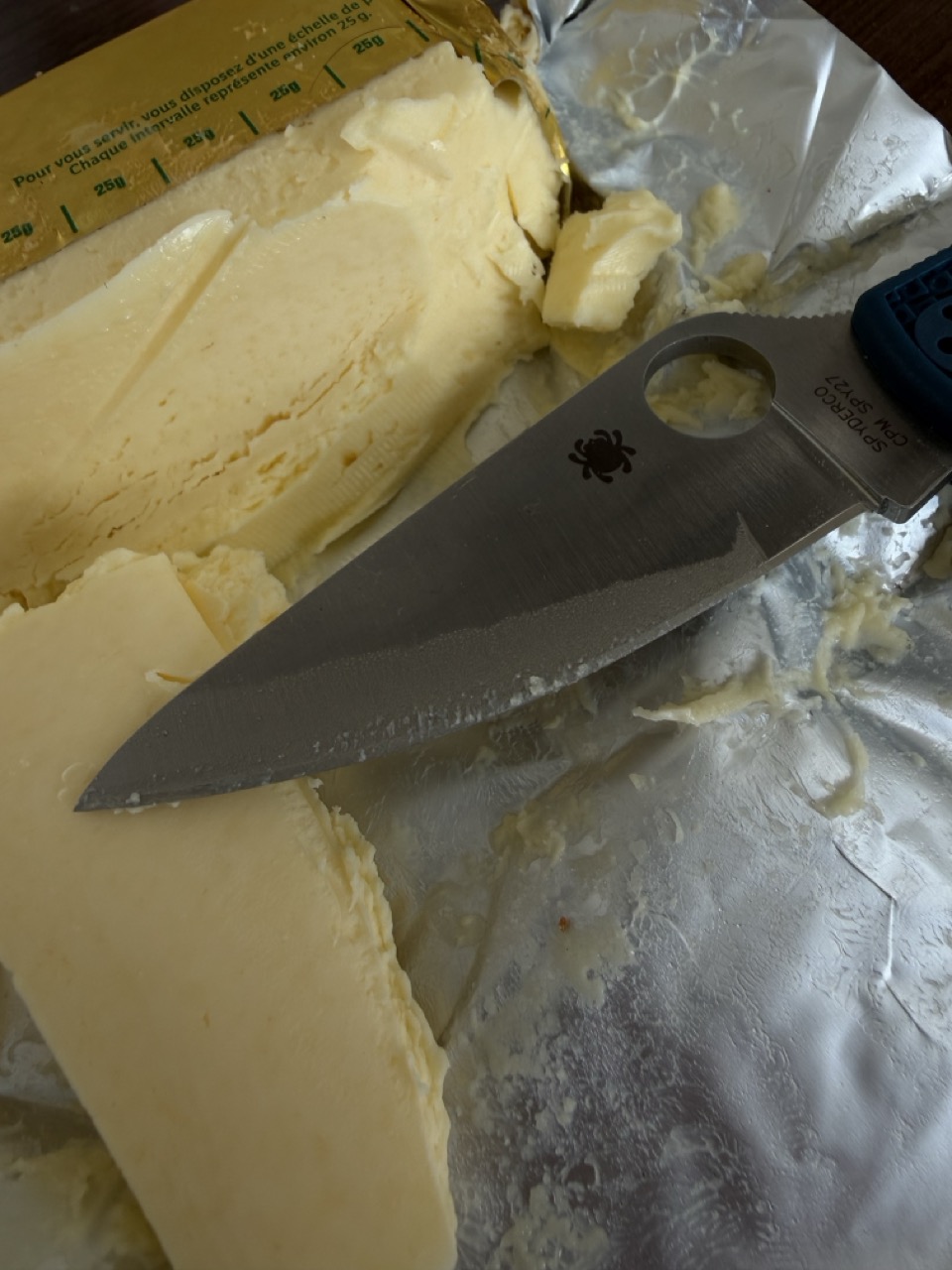
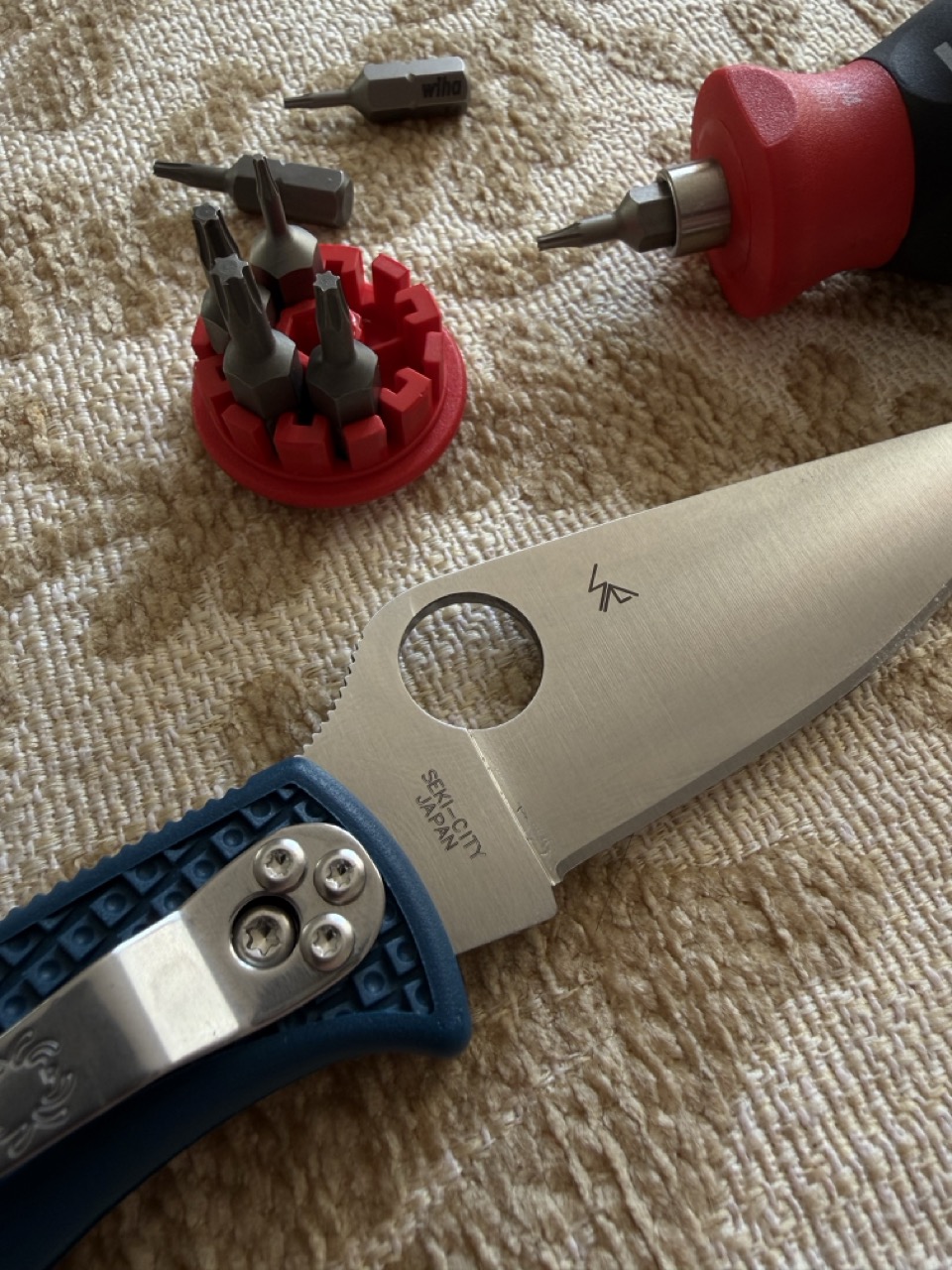
In the rarefied world of enthusiast gatherings, certain objects transcend their function to become emblems. At the 19th Minimeet of 2026, that emblem arrived in a flash of satin steel and unmistakable silhouette: the Endela, rendered in CPM Spy27.

This year’s gift was no ordinary edition, no routine variation in a catalog of many. It was a gesture—considered, knowing, and deeply rooted in heritage. A gift that spoke fluent Spyderco from A to Z with a bit of Japanese.

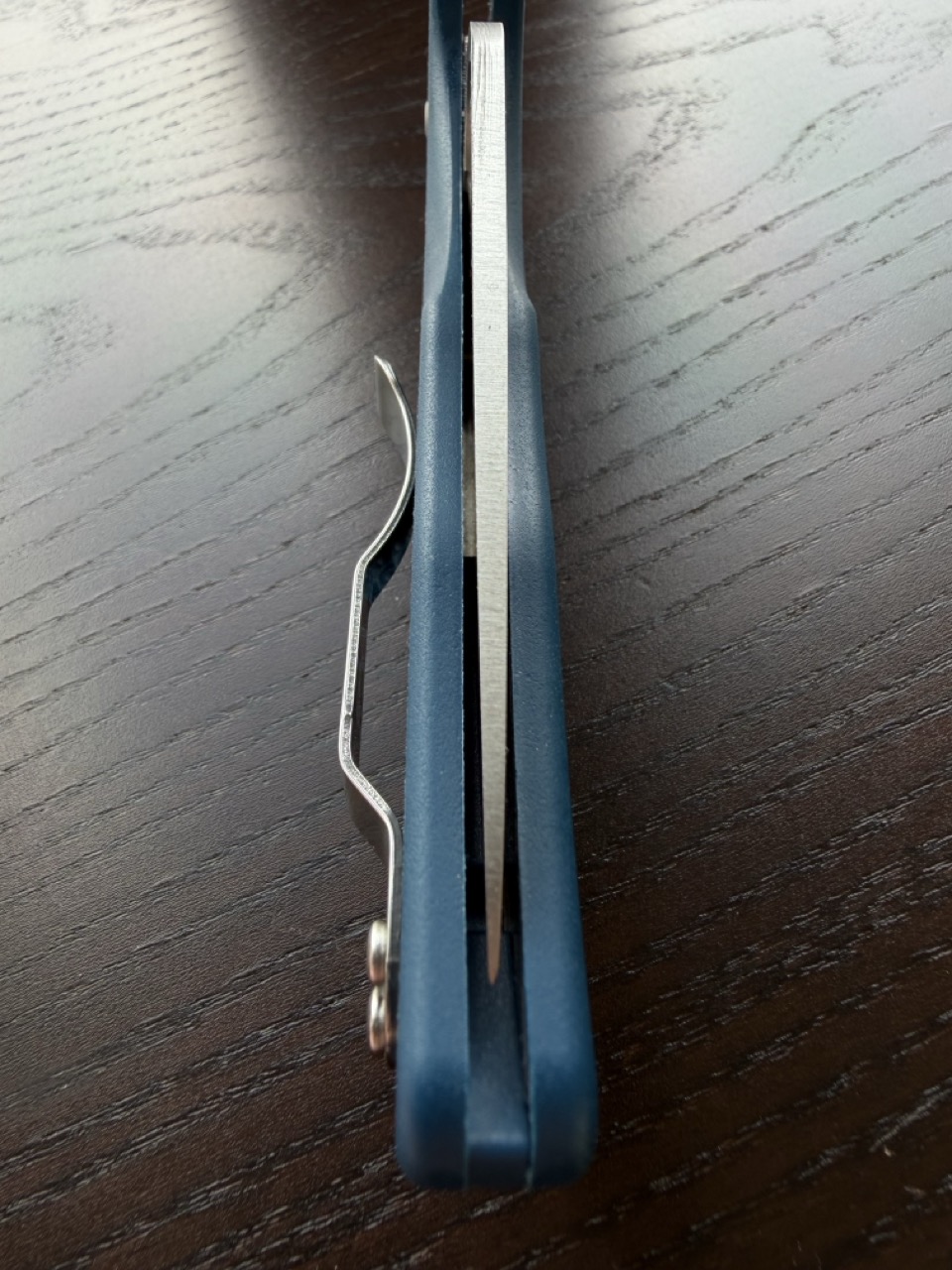
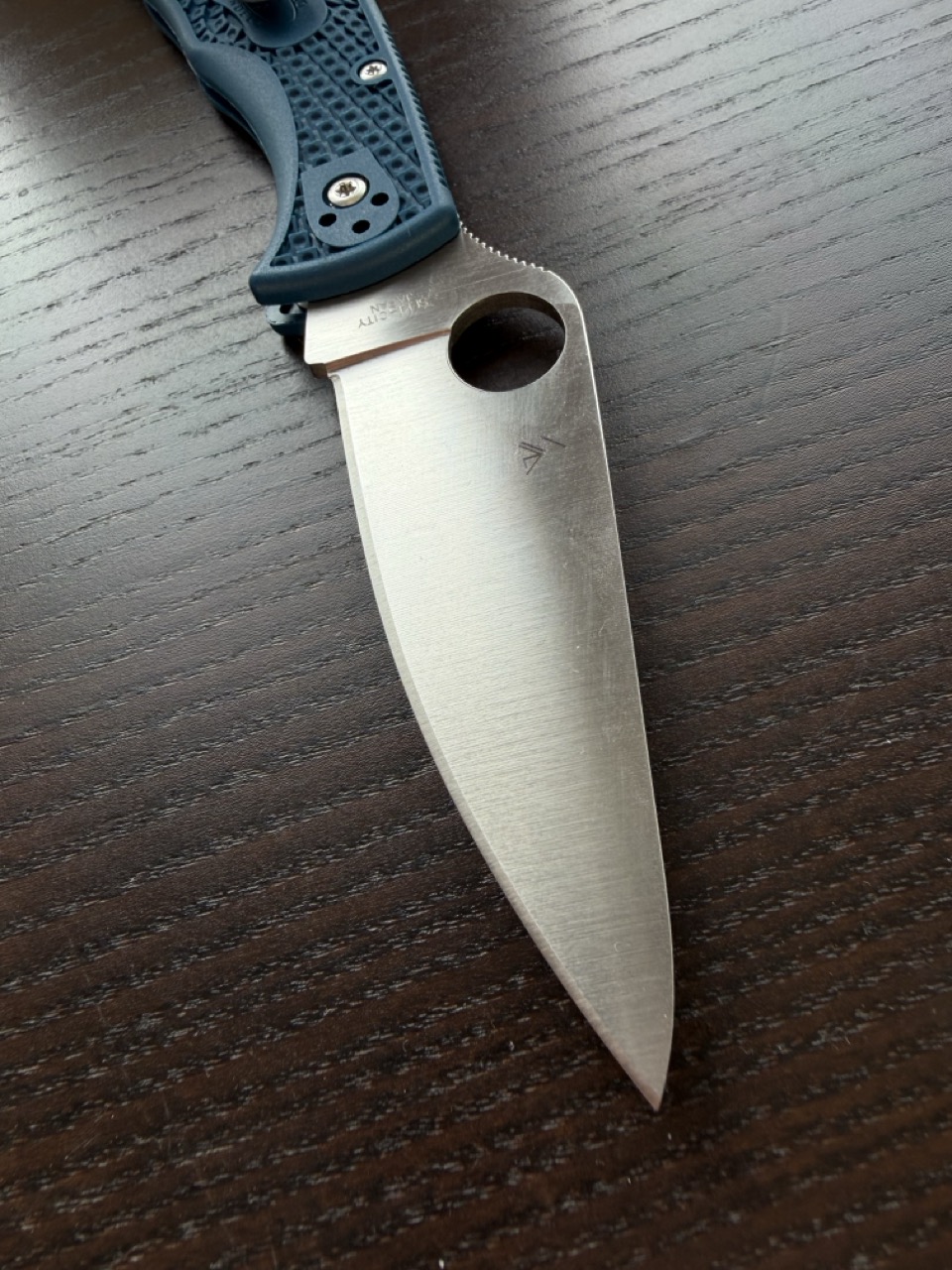
Designed by Sal Glesser, the Endela, positioned between the compact Delica and the longer Endura, has always embodied balance: long enough to command presence, slim enough to disappear into a pocket. In this iteration, its lines were amplified by a full flat grind (FFG), that signature tapering geometry that flows from spine to edge in one continuous, purposeful plane. The result is a blade that slices with authority yet retains the structural confidence expected from a serious cutting tool.

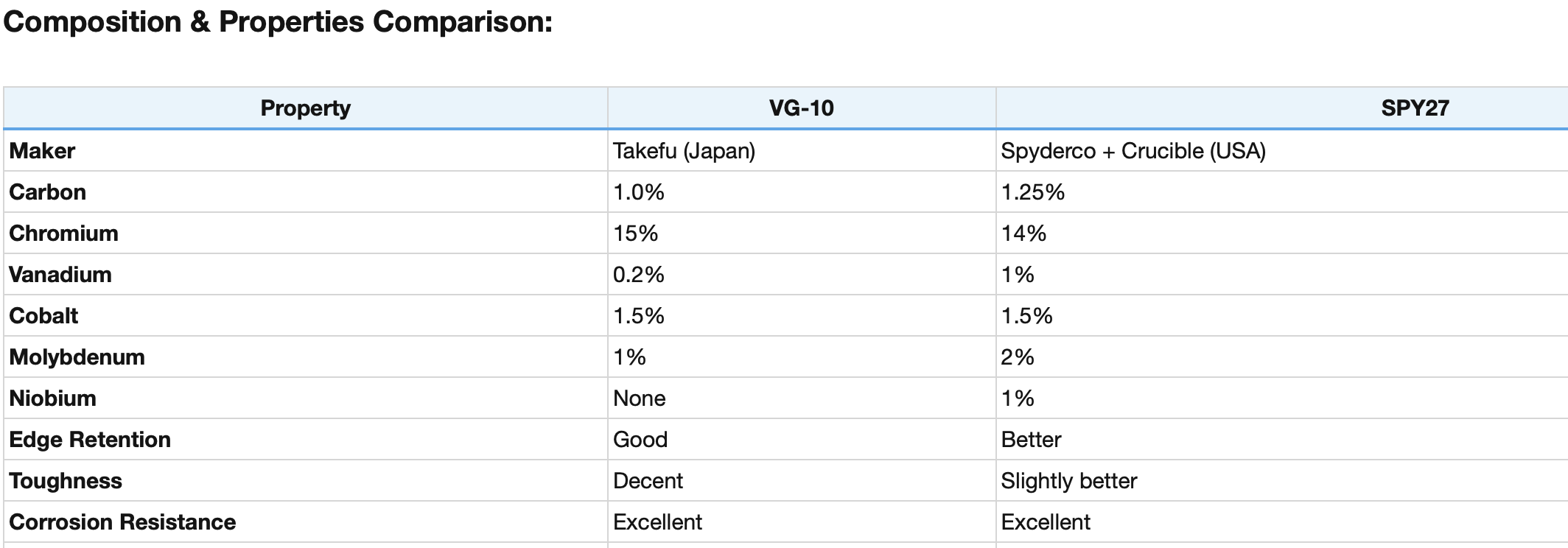
But the true poetry lies in the steel which I have covered in my UKPK article AKA “the Golden Child”.

(I have taken this from Humint in that thread on the Bladeforums)

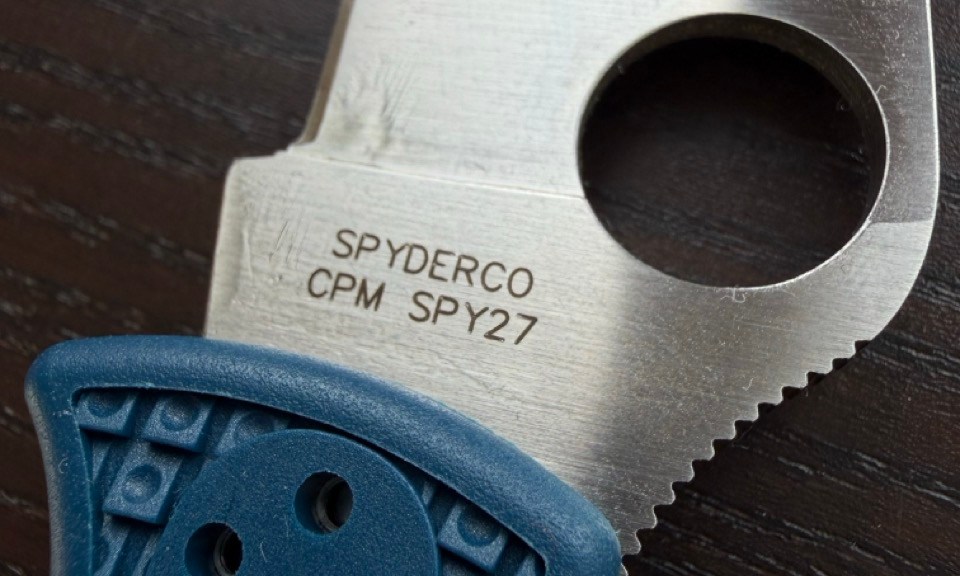
CPM Spy27 is not merely another powdered metallurgy alloy; it is an insider’s composition, born from collaboration and conviction. Developed as a proprietary formula, Spy27 was conceived as a modern evolution in performance stainless steel—often described as a powdered metallurgy answer to the spirit of VG-10, yet unmistakably contemporary in its balance of edge retention, corrosion resistance, and toughness. Engineered through Crucible’s particle metallurgy process—before the company’s bankruptcy reshaped the landscape—it stands as the product of a singular joint venture and a fleeting industrial moment.

Spy27 is, in many ways, a manifesto: a steel created not simply to follow trends, but to refine the brand’s own philosophy of practical performance. Fine carbides for clean, aggressive slicing. Stainless resilience for daily carry. A hardness profile that rewards precision sharpening while maintaining field durability. In hand, it feels deliberate—neither brittle nor indulgently soft. It is steel tuned to the cadence of real use. And God, it loves leather stropping.

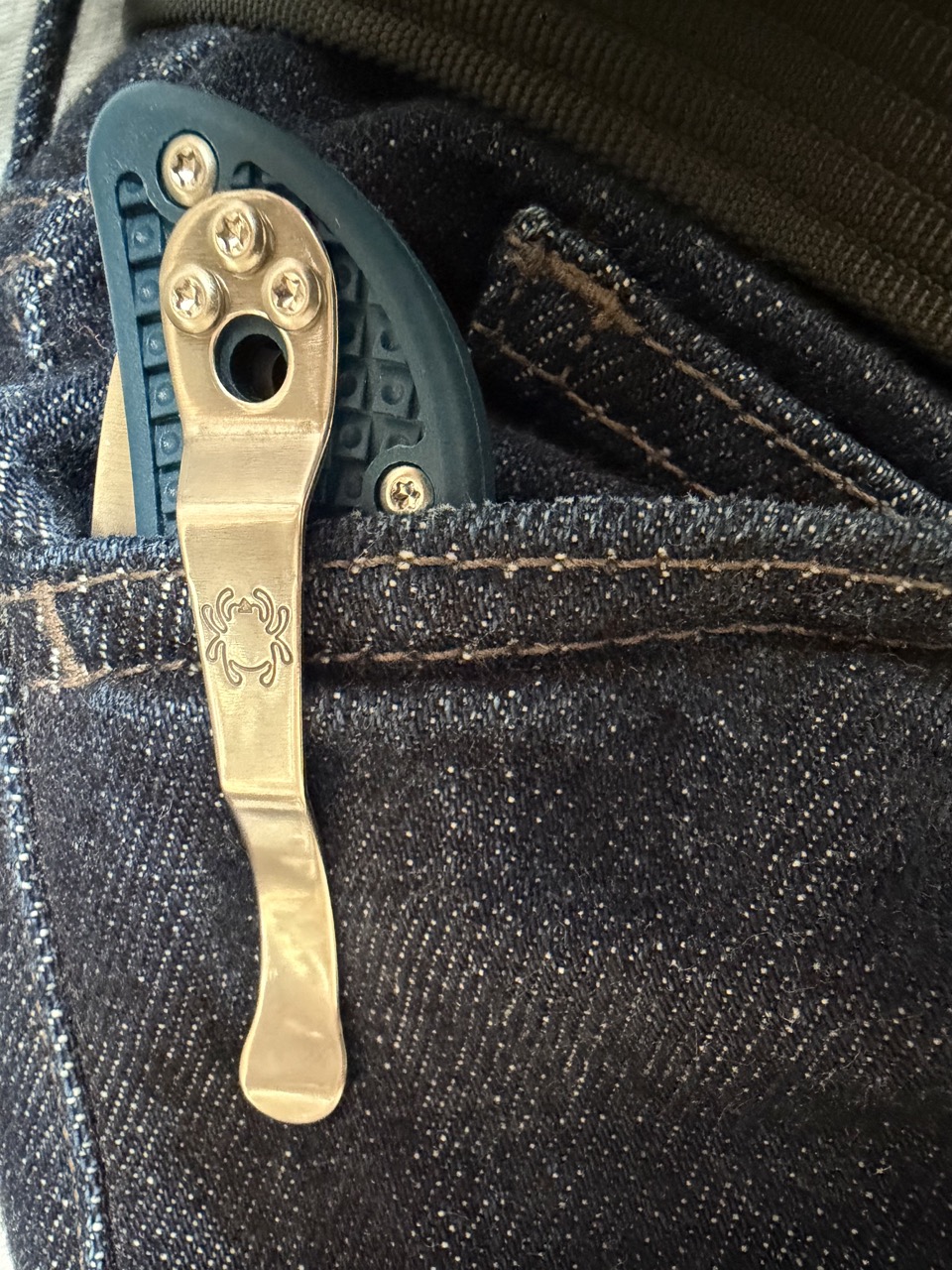
You cannot get more “Spyderco’s roots” than this. Made in Japan (like in the 80’s), paired with the unmistakable round hole—Spyderco’s totemic opening device—and a “spoon clip” ready for pocket carry, the Endela in CPM Spy27 becomes more than a knife. It becomes a statement of identity. The FFG geometry ensures that the blade glides through material with elegant efficiency, while the ergonomics—subtle finger choil, textured scales, carefully considered weight—anchor the experience in control.

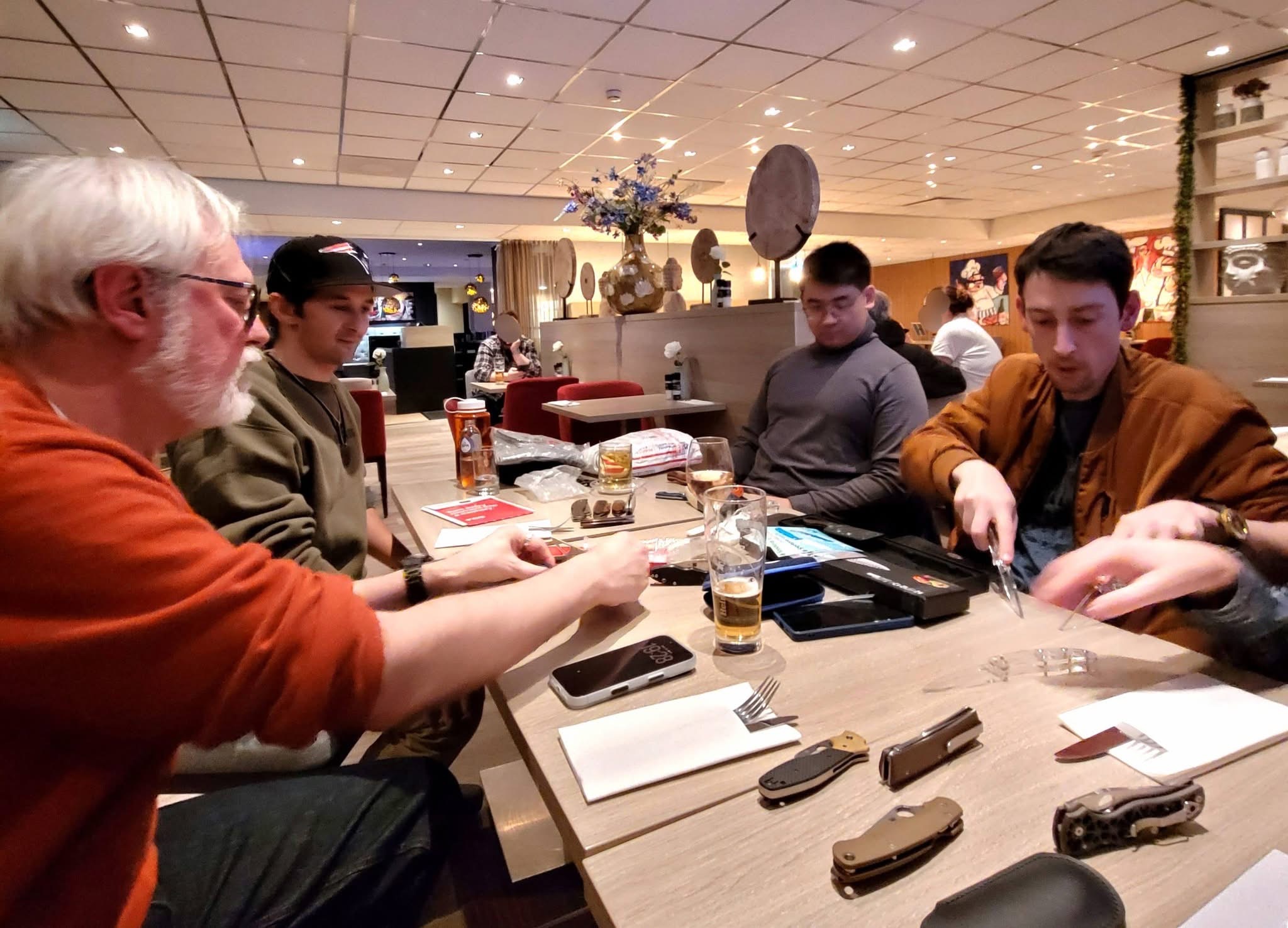
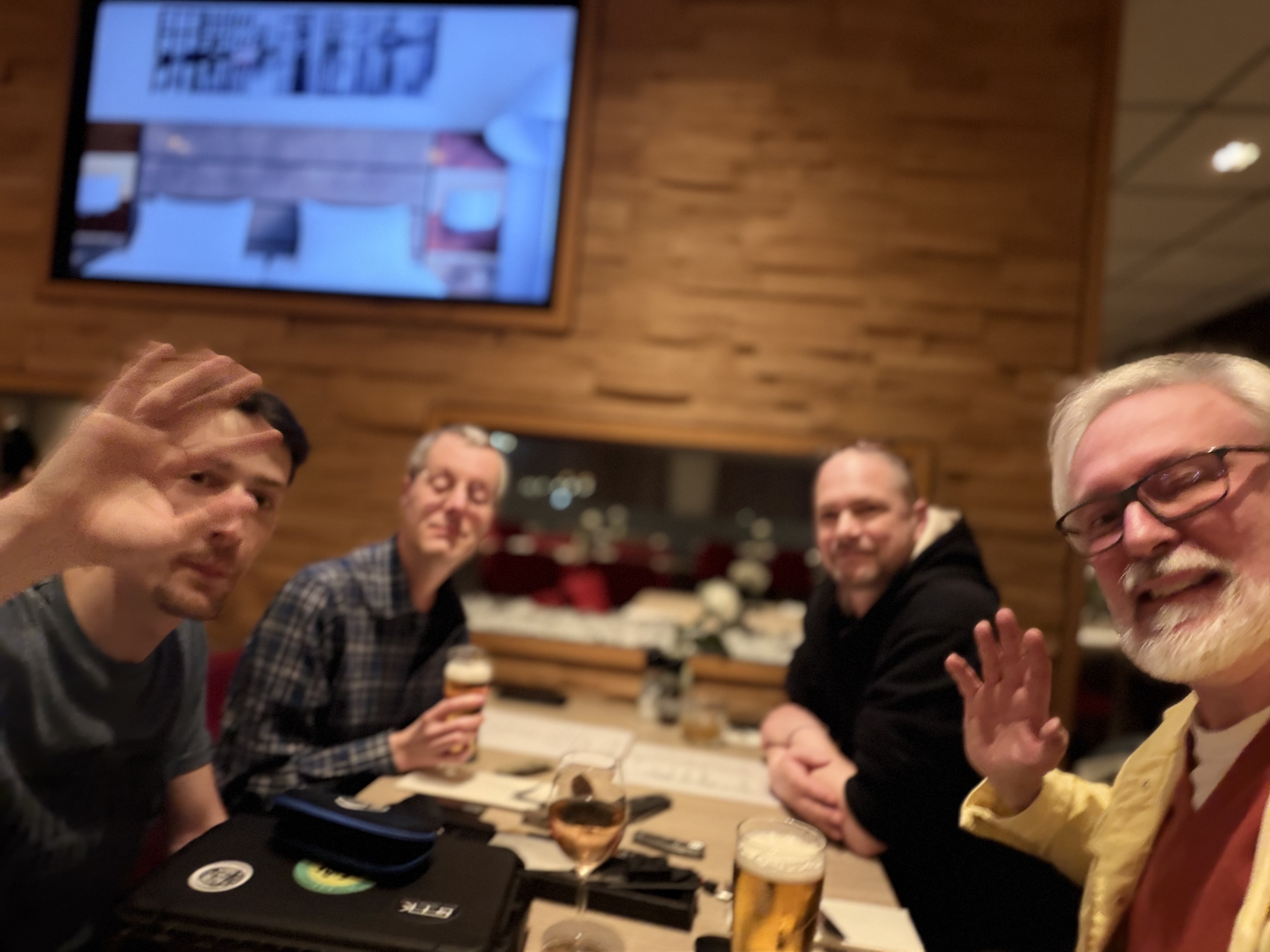
At a Minimeet, the gift is never just about value. It is about friendship. About shared language. About the unspoken understanding between those who appreciate grind lines, heat treatments, and the quiet satisfaction of a perfectly executed edge of our favorite performance knives.

The Endela came out of the box with the kind of edge that makes you pause for half a second before testing it. Not because you doubt it—but because you already know: this is the Way !

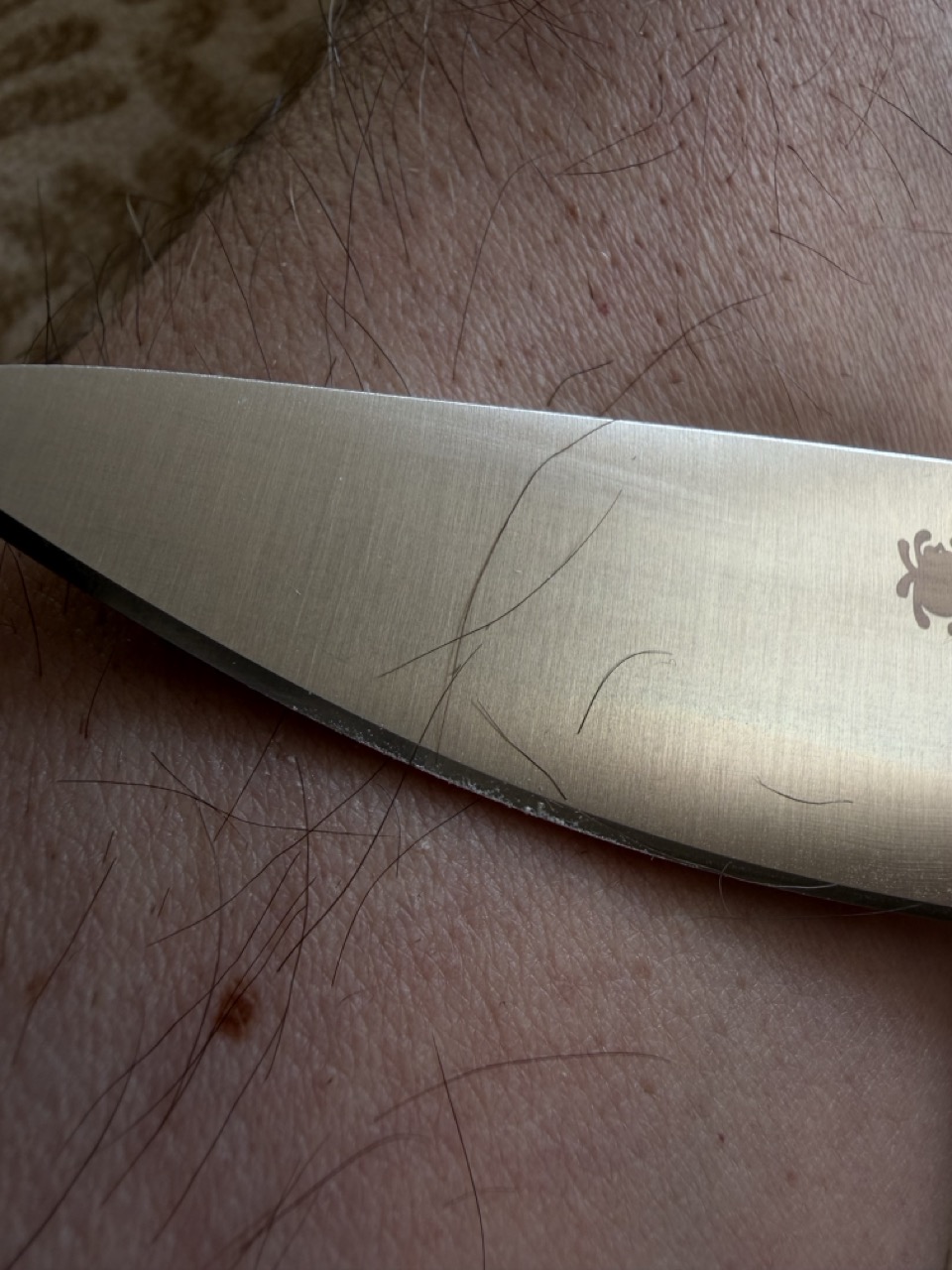
Factory sharpness can be a vague promise in this industry. Here, it was a statement. Kuddos to the Seki factory ! The blade arrived as an aggressive razor, keen and un-apolo-getic, the apex refined to the point where it would silently treetop arm hair without pressure. Not tear. Not tug. Simply pop. Hair fell away at the slightest whisper of contact.

This wasn’t just shaving sharp; it was hair-popping sharp.

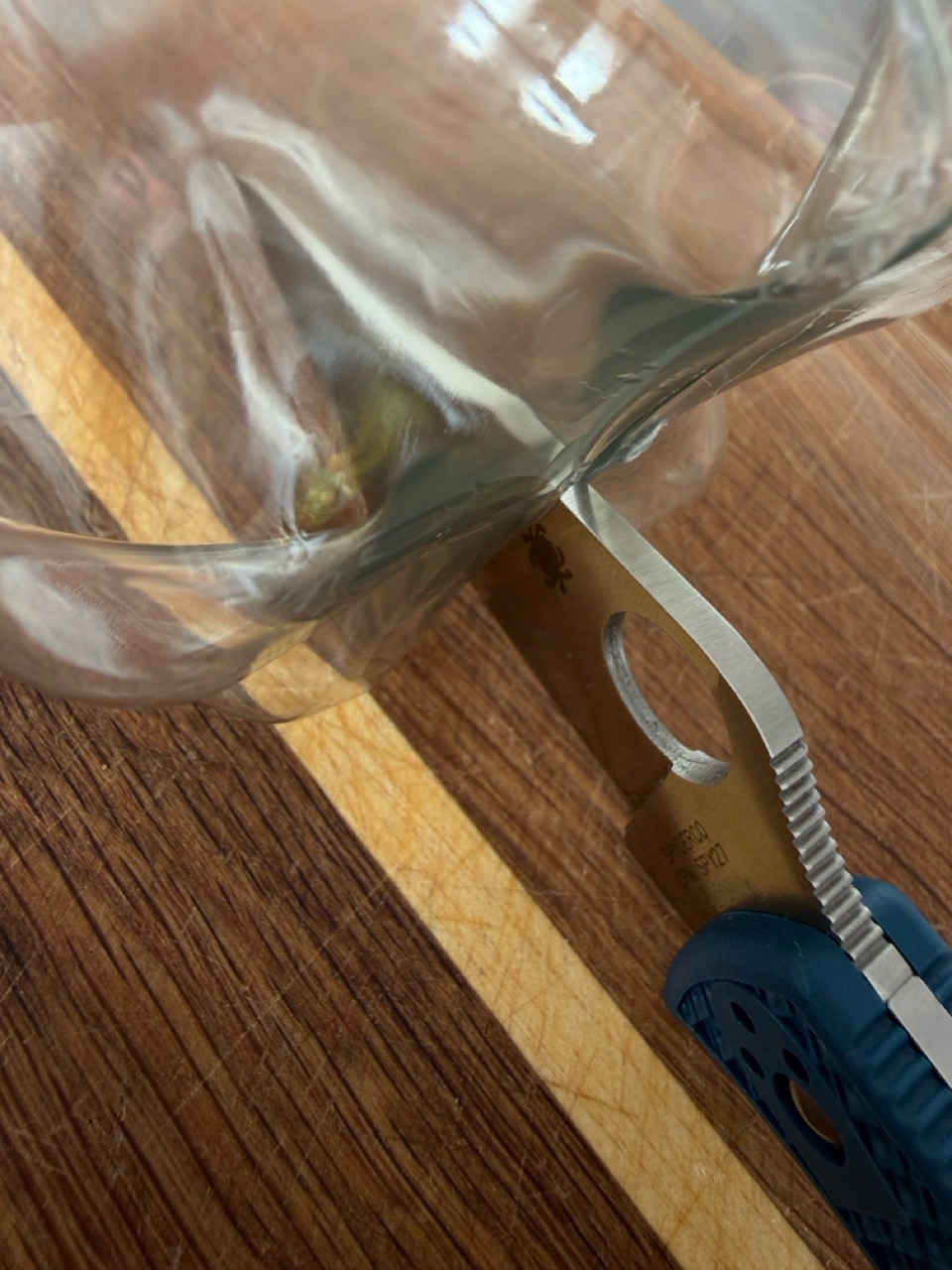
It slices through plastic as though the material had lost all resistance—gliding, parting, yielding without protest. There is a particular sound when a blade meets dense plastic packaging: usually a faint crackle, a hesitant drag. Here, there was only a smooth, uninterrupted whisper. The edge didn’t force its way in; it entered decisively and continued with almost disconcerting ease, as if the medium itself had become incidental.

That kind of performance is not accidental. It is the result of geometry meeting metallurgy in perfect accord.

As my friend Robin observed—accurately and without exaggeration—the level of sharpness coming out of the Seki factories has noticeably risen since the K390 batches. Something shifted during that era. Whether it was refinement in heat treatment protocols, greater consistency in final sharpening stages, or simply a renewed culture of precision, the outcome is tangible. Blades now leave the factory with an apex that feels more deliberate, more aggressive, more controlled.

The legacy of those early K390 runs set a new internal benchmark. What we’re seeing now is the continuation of that standard applied across steels—Spy27 included. The edges are cleaner, the bevels more disciplined, the bite more assertive right out of the box.

This year, which is also the 50th anniversary from Spyderco, that understanding came wrapped in Spy27.
So what do we got:
A steel born of collaboration.
A grind that defines a house style.
A silhouette instantly recognizable across continents.
For the 19th Minimeet of 2026, the Endela was not simply offered—it was bestowed.

And in doing so, it reaffirmed what true connoisseurs already know: luxury is not always gold and gloss. Sometimes, it is the cool, matte sheen of a perfectly ground blade, engineered with intent and carried with pride. Thank you for that beautiful gift.

(Photos from the Minimeet by Guillaume GX)

Spyderco Manix 2 Salt – A Welcome Overkill


The funniest part about using the Manix 2 Salt is remembering how this model first came into being at Spyderco—and how well it has matured over time, much like your humble narrator and its designer, Eric Glesser. We’re not getting any younger! 🙂
For that, you can refer back to my previous article dedicated to this knife.

“An extremely capable full-sized folder that is ready for the toughest challenges.”

It’s either a survival-kit essential or an EDC that has earned deep respect over the decades since its creation. And that’s pretty cool. This workhorse remains a bestseller at Spyderco because it radiates reliability and performance.

Its few drawbacks? The space it occupies in the pocket—which really deserves to be dedicated to it entirely—and the lack of tip-down carry. Which means no “Spyderdrop,” unlike the Military for example—one of the most elegant ways to open a Spyderco (Grab it by the Spyderhole!).

At its core, the Manix brings three key elements that truly make the difference: a blade clearly oriented toward performance—neither overly thick nor compromised, with a tall full flat grind; a rock-solid lock that effectively turns it into a fixed blade once engaged and a drop chuting action when closing; and ergonomics so well thought out that, no matter the wet and oily situation, this knife simply refuses to escape your hand.

Disclaimer: The Manix 2 Salt has been provided through Spyderco’s Ambassador Program, upon my own request. Thank you to the Spyderpeople for letting me review it.


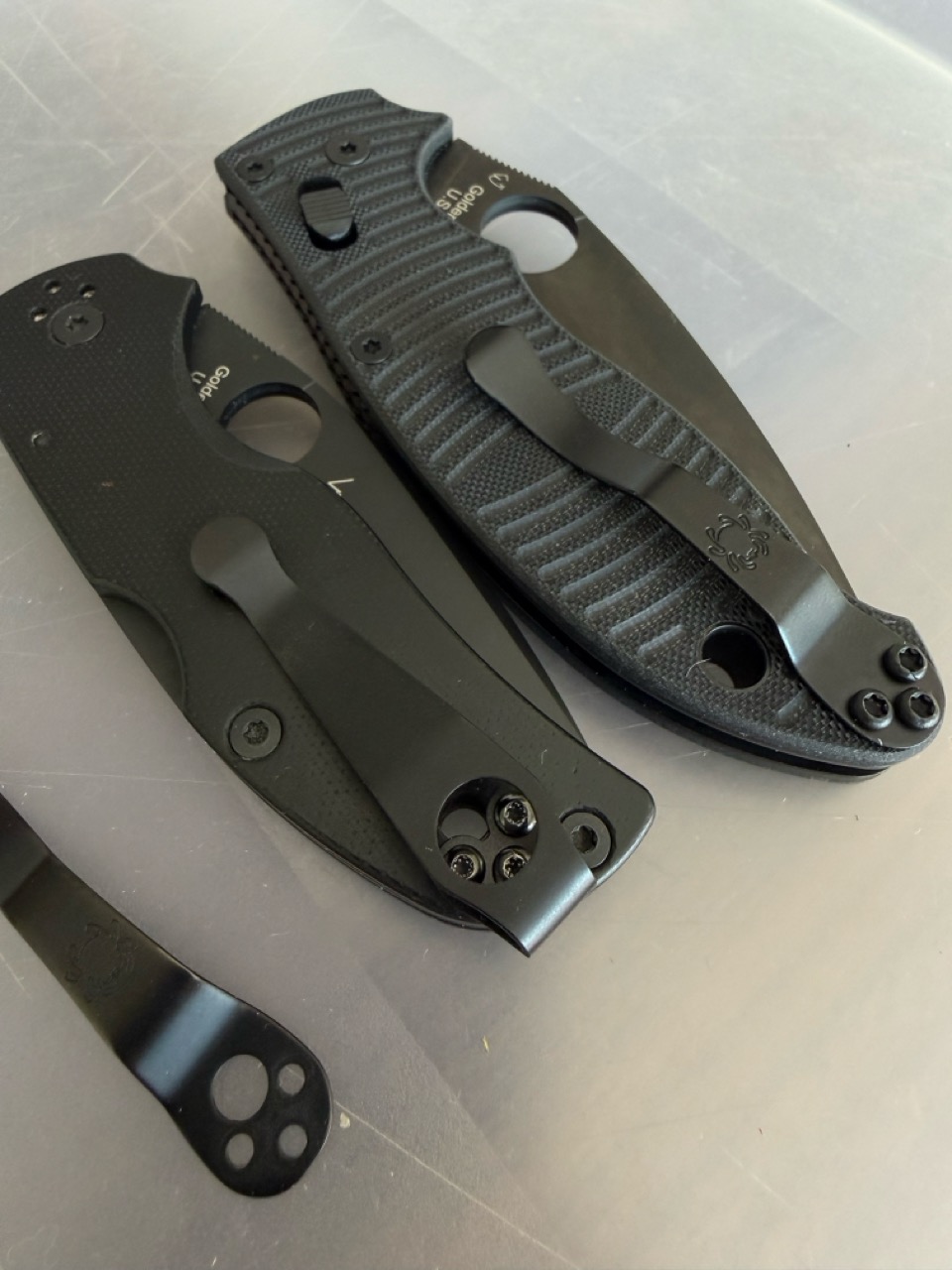
The Manix 2 Salt black G-10 handle is fully peel-ply-textured (mixed with Spyderco’s signature Caribbean Bi-Directional Texture™ pattern) and exceptionally grippy and yet surprisingly never abrasive to my denim pocket’s seams — a balance made possible by a thoughtful clip placement because, really, on the paper I was certain that folder would be a competitive pocket shredder !!

That said, this very design becomes a limitation if one considers swapping to a deep-carry clip: the clip would no longer land on the scale’s soft flat spot, potentially creating unwanted friction against the pocket lip. For this reason, I chose to keep the original clip. In practice, it delivers remarkably smooth in-and-out pocket action—arguably even smoother than the Edgerati.
This is still a mystery to me but that ultra grippy Manix 2 Salt G10 is actually very pocket friendly !

Now, for the past few weeks, the Salt—which is arguably the most badass version of the Manix 2 (alongside the Crucarta, which elevates it beautifully in the patina departement, or perhaps a few Sprint runs like the mighty CPM-15V brown g-10 version)—has been jumping into my pocket for real use. As you know, the Edgerati, thanks to its novelty and sheer pleasure of use, has had a tendency to evict several knives from my rotation: the Military 2 in CPM-15V, the Caly 2, the Chief in Magnacut, the Sage Salt… and inevitably, the poor Manix 2 Salt G10, which had the bad luck of arriving at the same time.

But then it hit me: if I see the Edgerati as a BMW X3—powerful, lightweight, and all-terrain—then the Manix 2 Salt is clearly a Land Rover Defender. After all, it came here to suffer… so let’s make it suffer.

And so far, it comes out with flying colors.
Like a Tenacious, this knife is here to work—no matter the conditions.
It brings back that familiar, no-nonsense feeling I used to get from the old Cold Steel Recon 1 and its mighty Triad Lock.


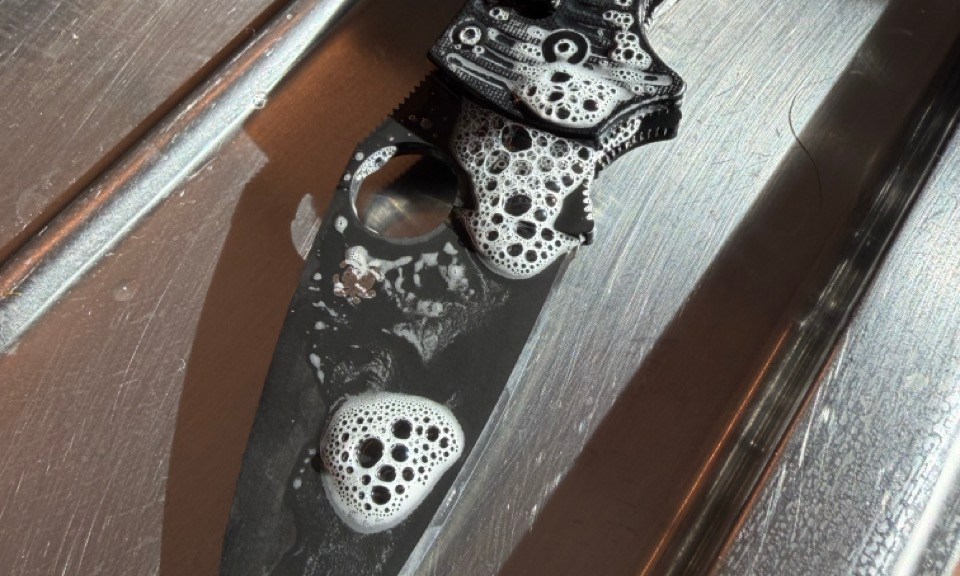
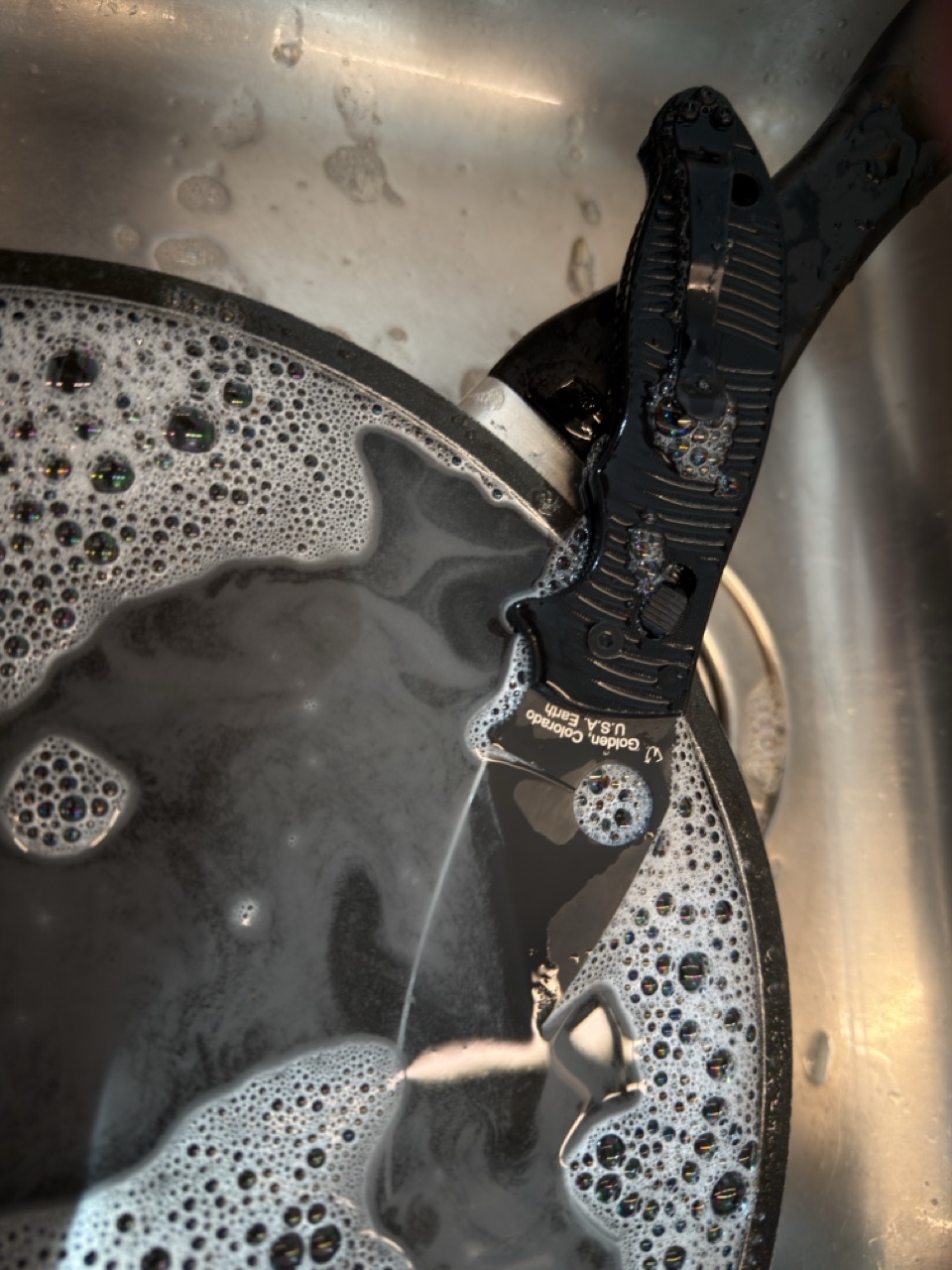
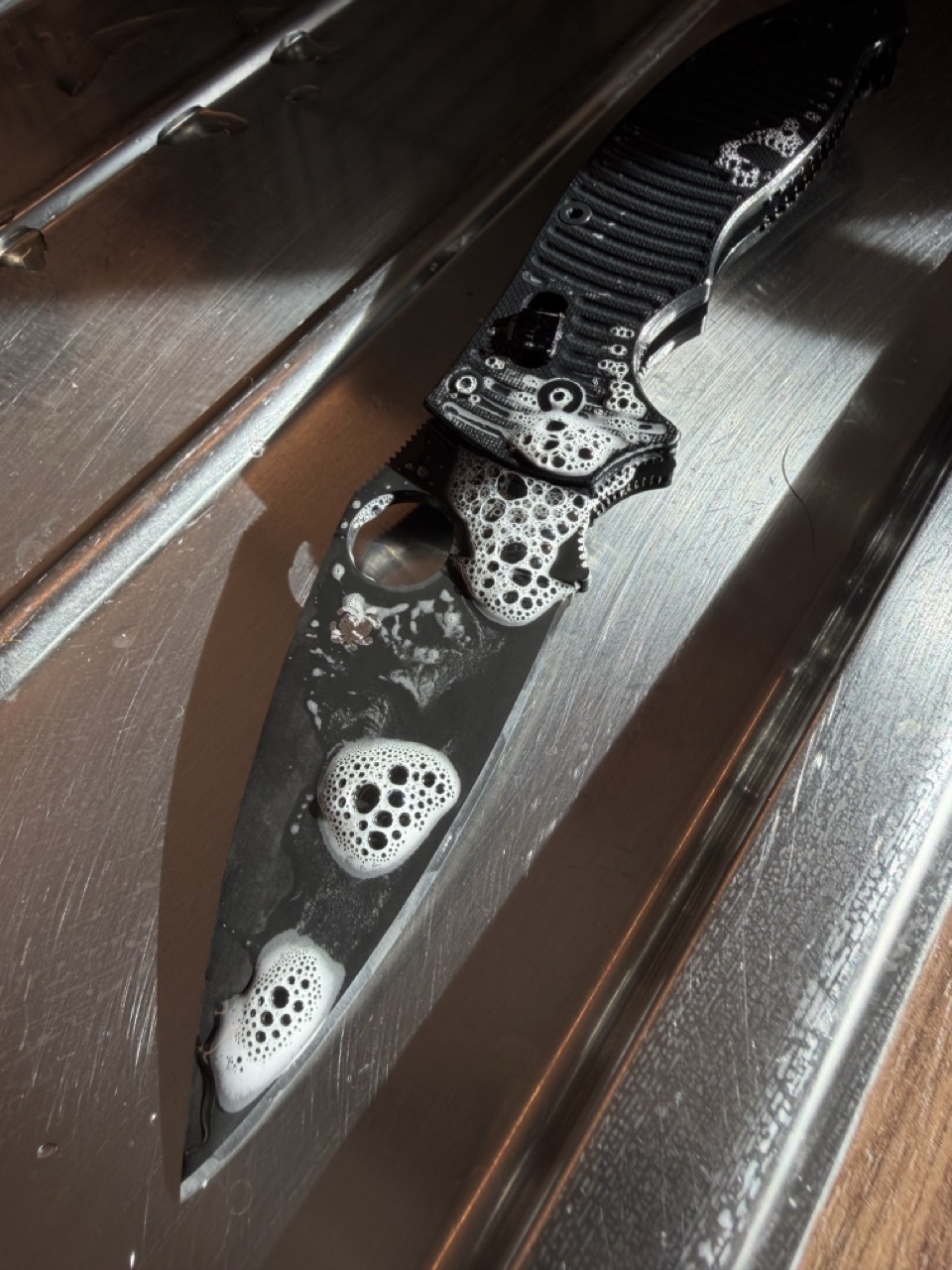
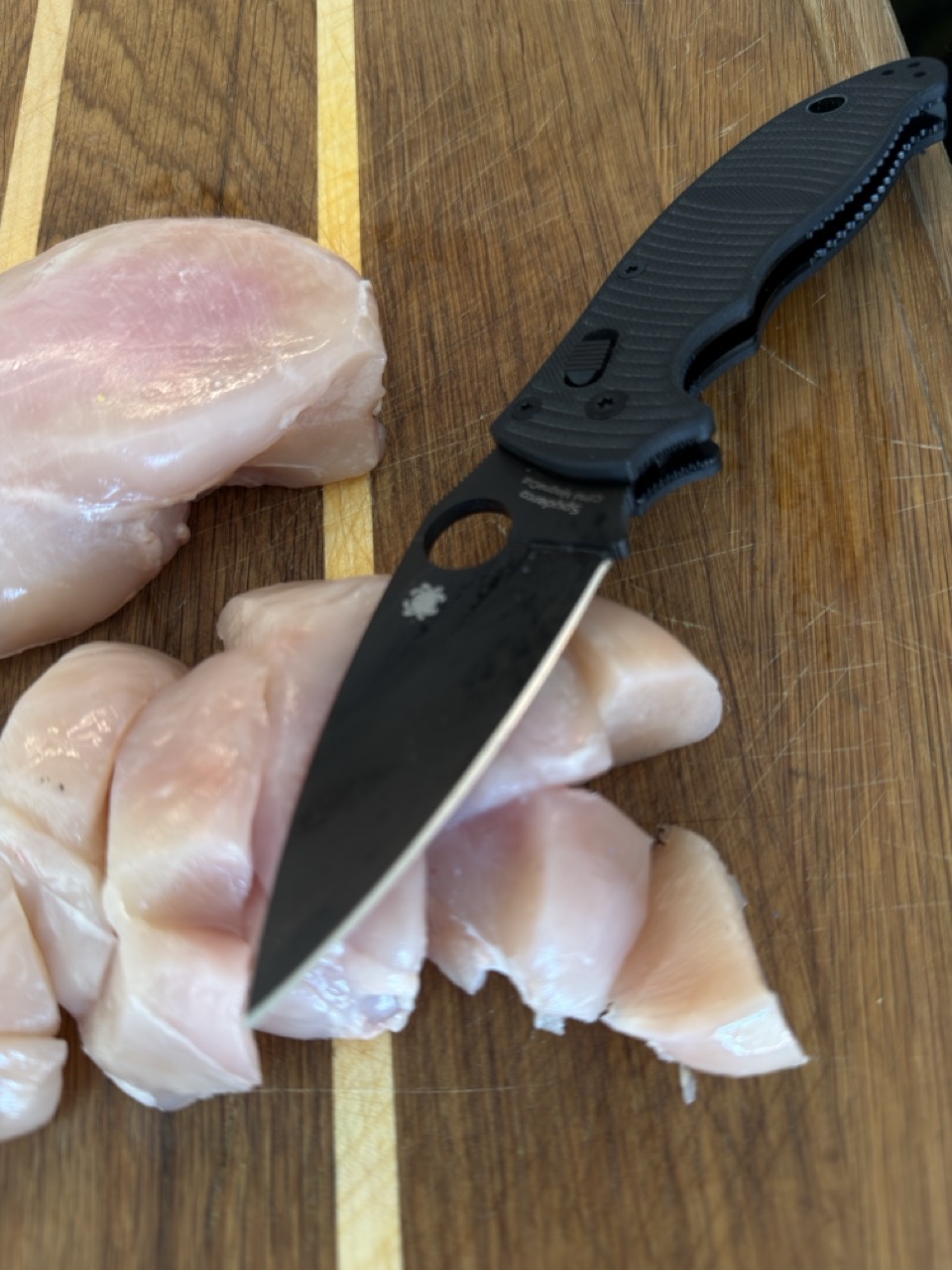
About the Manix 2’s lock, I was worried the mechanism might seize up with dirt or mud, but since the Salt laughs at moisture, soaking it in water is a non-issue. In the kitchen, it also encountered oily situations. Once again, the new G10 scales on the Salt provide excellent traction when drawing it from the pocket—which is definitely not the case with my titanium Squeak, an outstanding little bar of soap when my fingers are wet or greasy…

I did notice a small “click” when opening. I have the same thing on the carbon fiber CPM S90V version, though it’s less pronounced. It’s not a problem at all—just the mechanism doing its thing.

There is also something I forgot to mention—and it is far from a minor detail. The Manix lock does not rely on a detent ball to keep the blade closed in the handle. Much like a traditional back lock, spring tension alone holds the blade securely shut. It may seem subtle, but the implication is significant: closing force is applied even if the blade is slightly out of position. This provides an additional layer of safety—one that should not be underestimated, especially in demanding or unpredictable conditions.
And as mentioned in my previous article on the Manix Salt, the very first Manix models were built around a Martial Blade Craft–grade back lock—thick, overbuilt, and driven by an exceptionally strong spring. That DNA is still there. The Manix 2 lock clearly inherits that same philosophy of power, security, and mechanical confidence.
This is also what makes the Ball Bearing Lock™ so reassuring: safety.


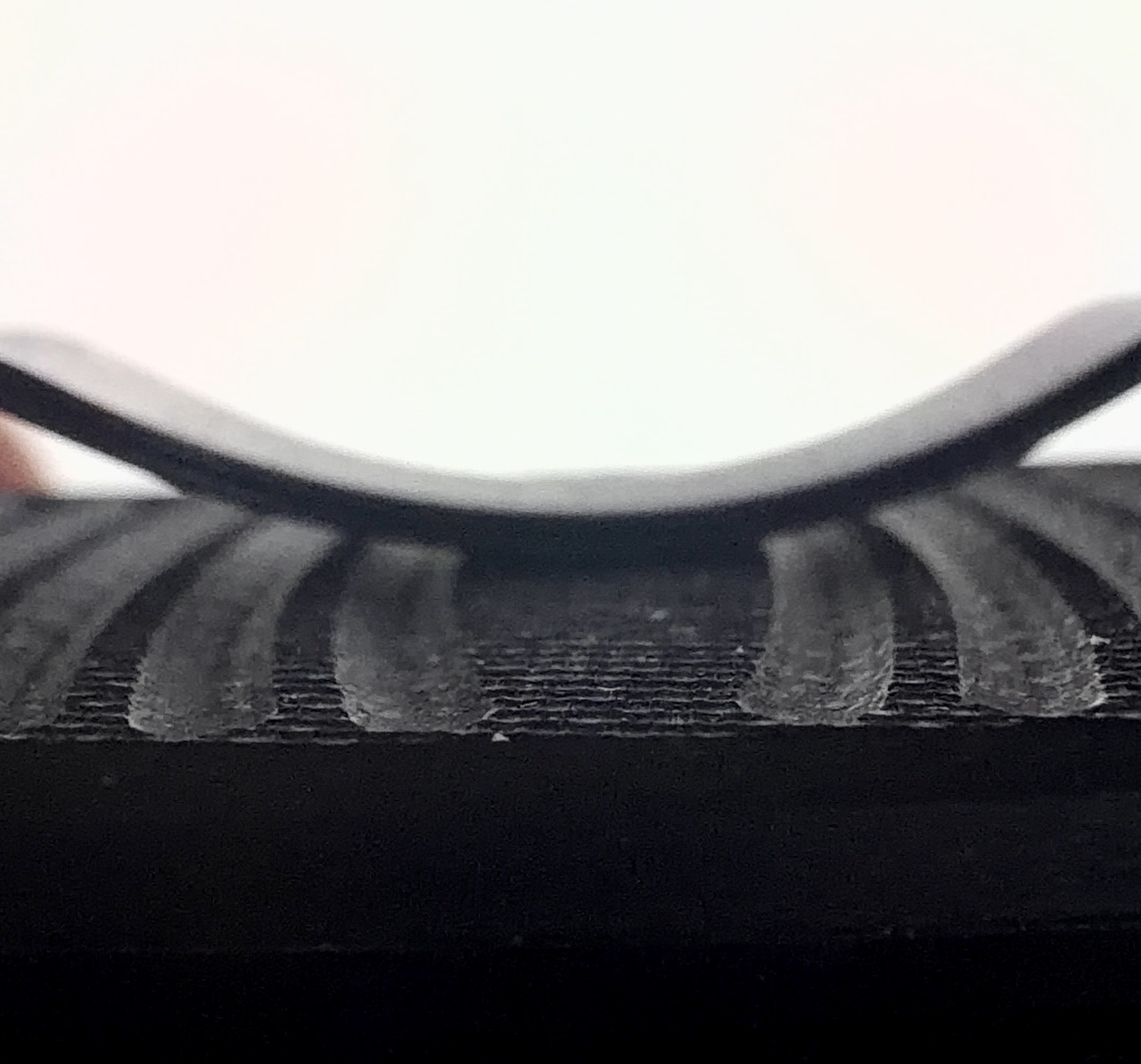
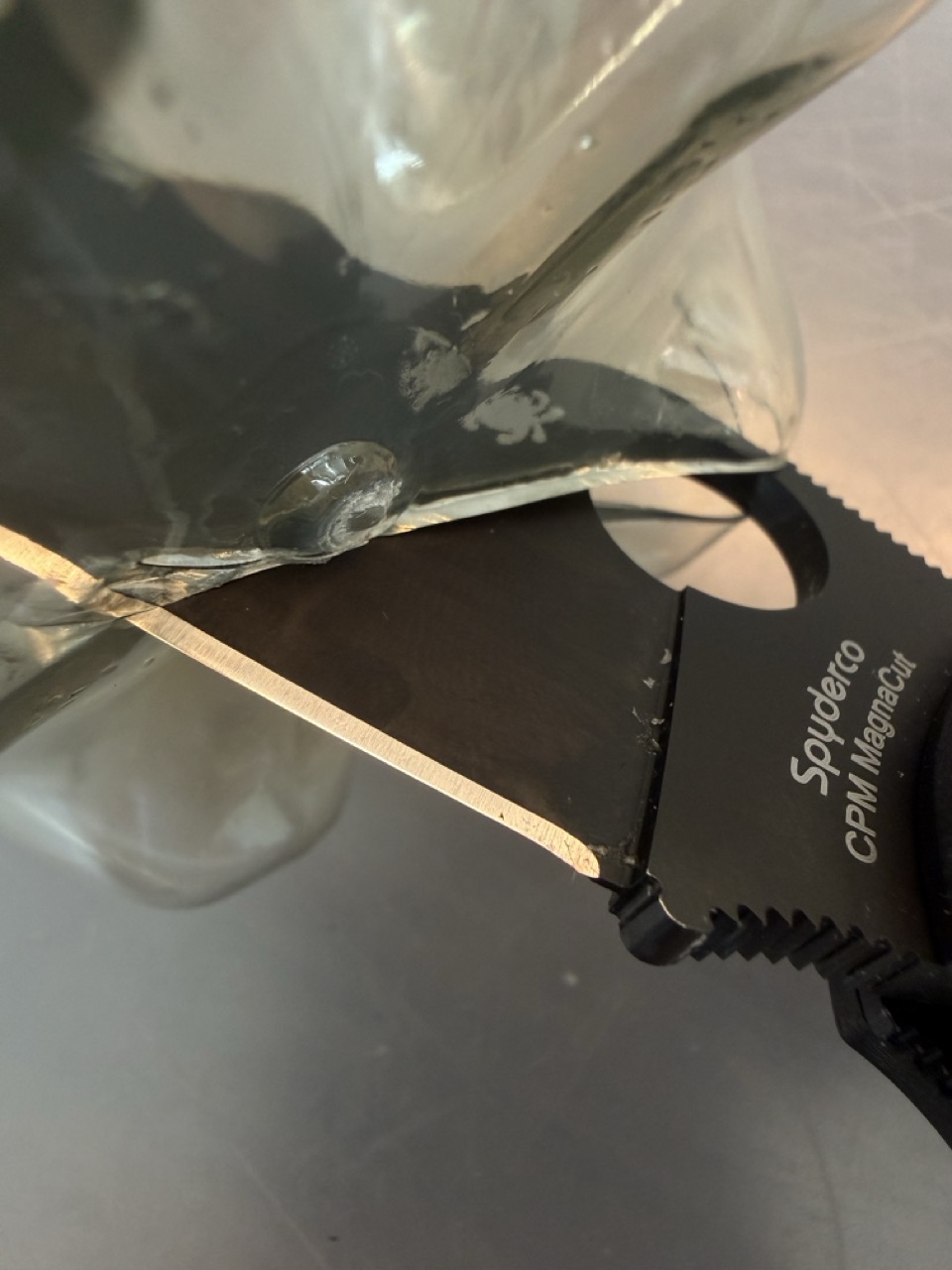
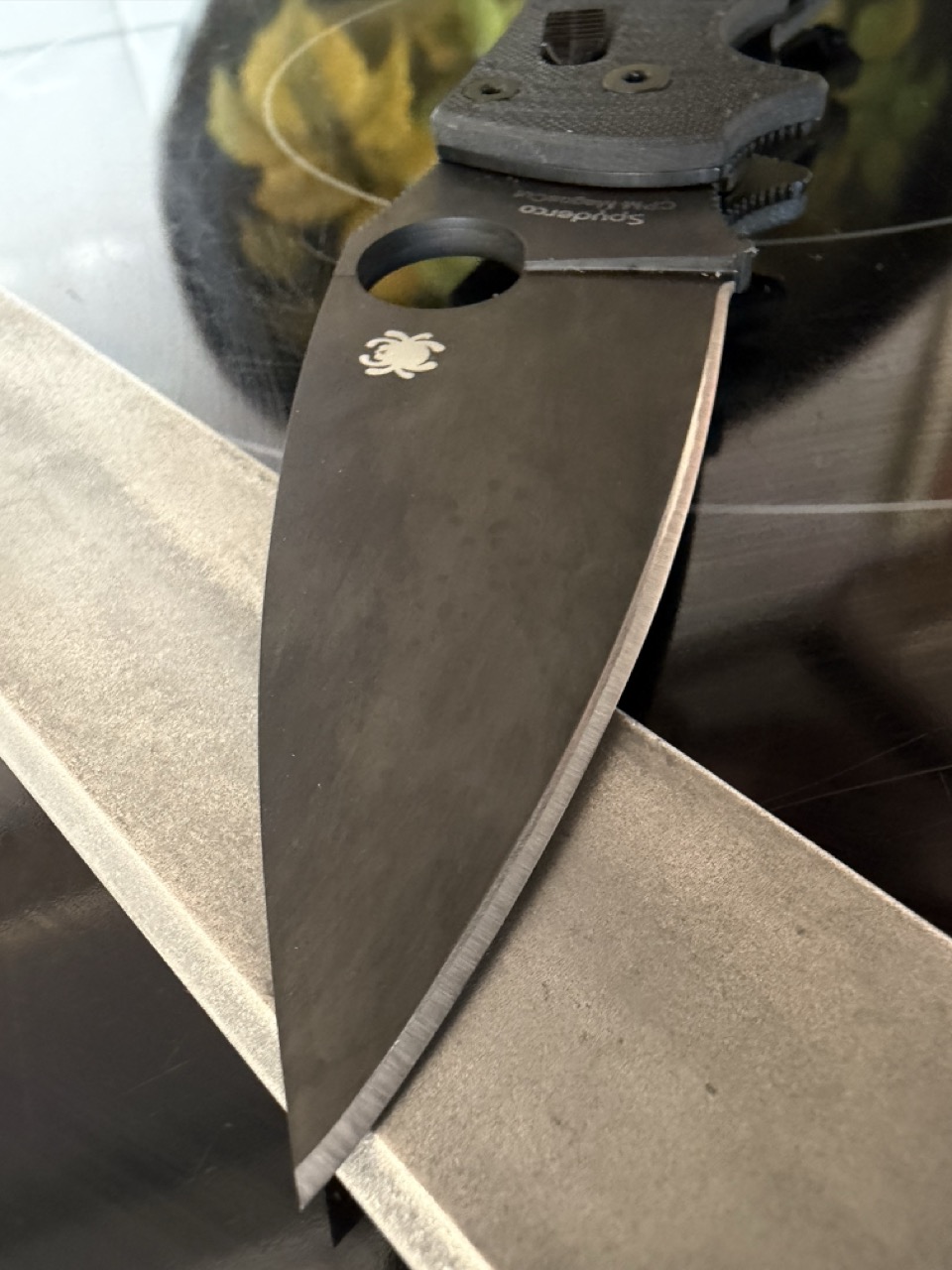
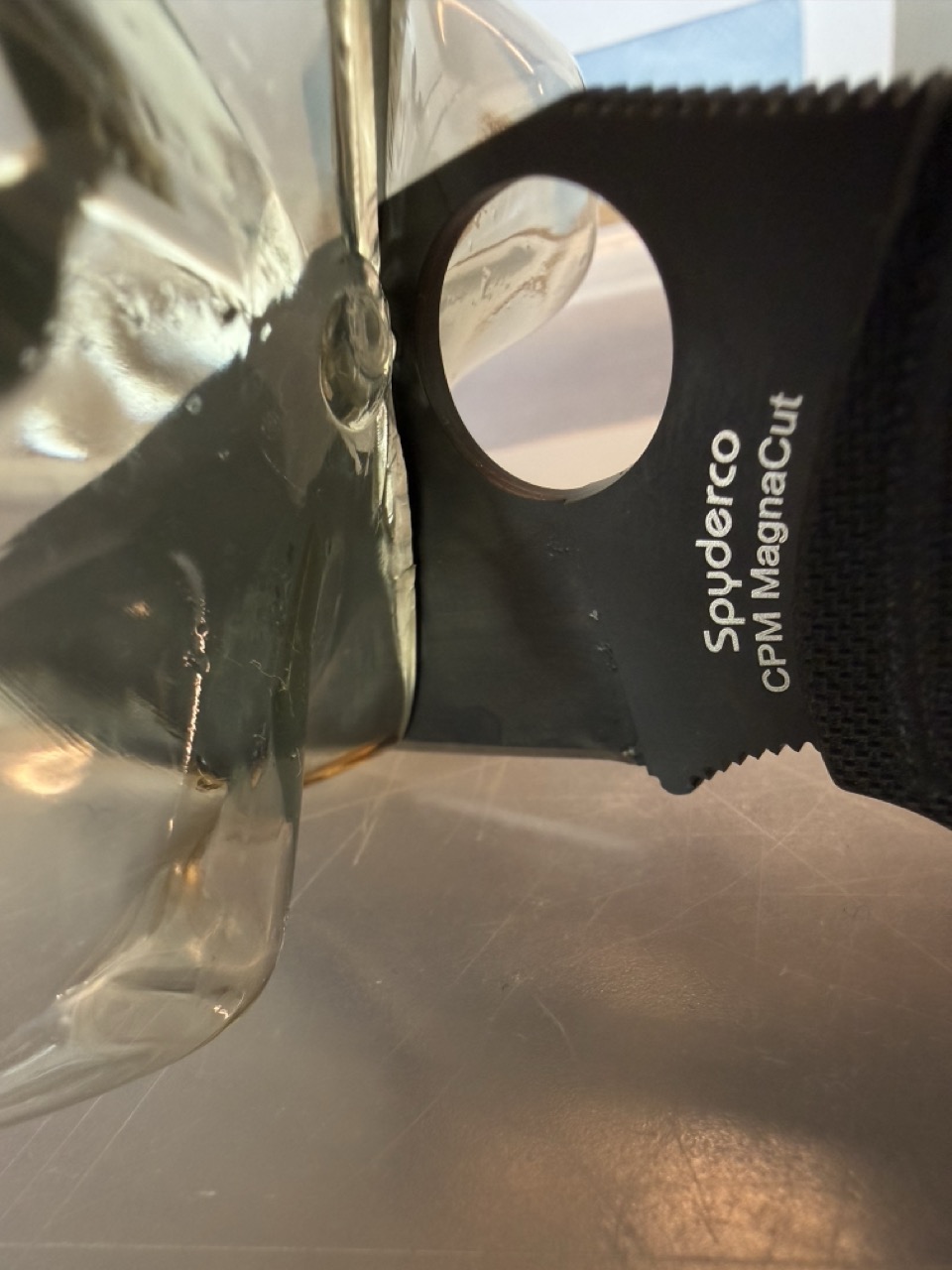
During my homemade bottle butt geometry test—driving the blade straight through the bottom of a plastic bottle, where the material is at its thickest—I found that the Manix 2 could do a tad better. Where the Edgerati (a thicker blade though) passed this test straight out of the box, the thinner Manix 2 Salt required a bit more encouragement. I therefore decided to de-shoulder the edge slightly to thin it out, and the improvement was immediately noticeable. As usual, in ten minutes, small adjustment, but one that significantly enhanced its geometry and cutting performance.
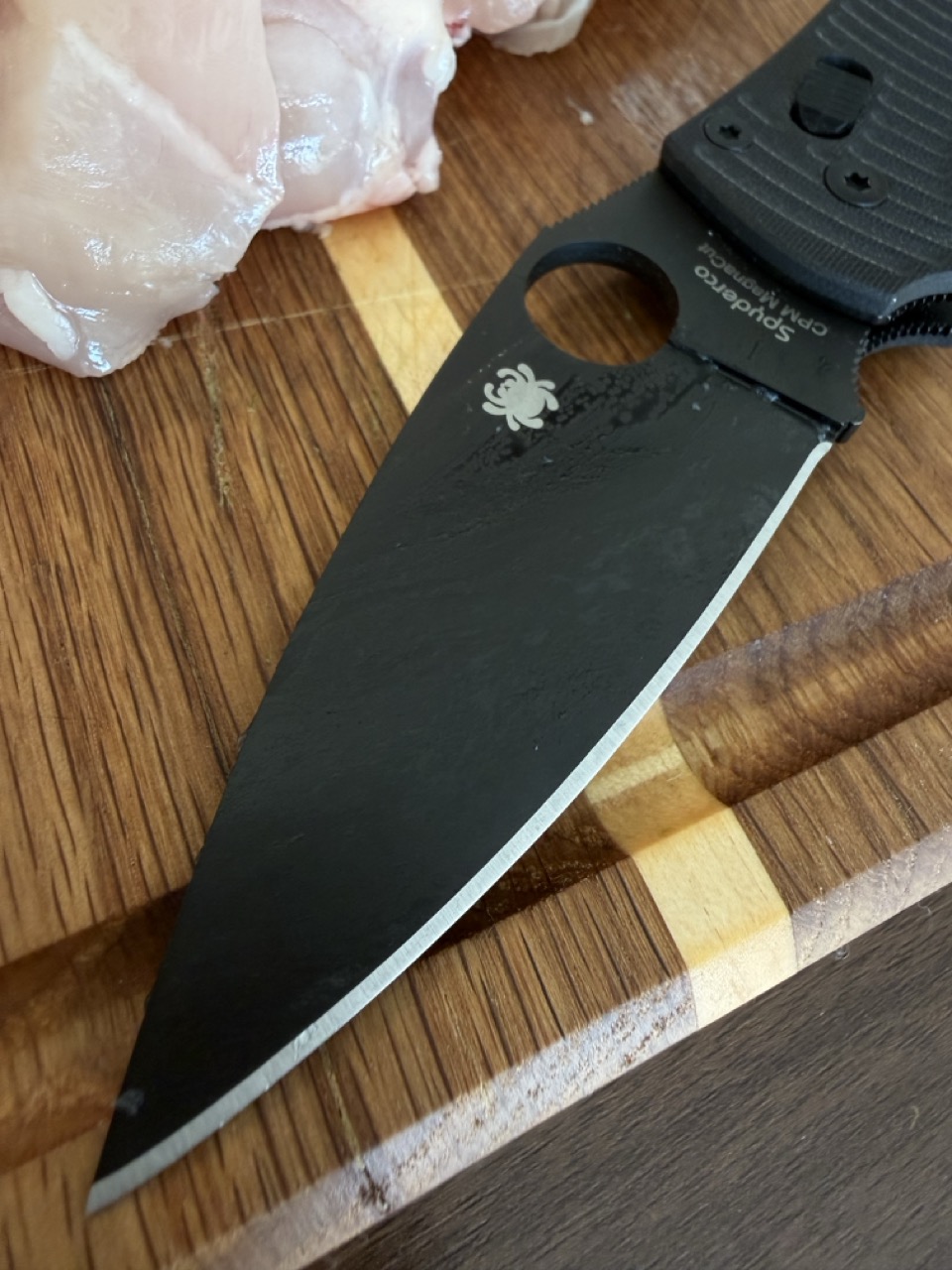
Also I have not been able to scratch that DLC blade so far.

It also made me wonder whether this knife could genuinely appeal to a diver. How intuitive would it be to deploy and use underwater? To answer that question properly, I decided to ask Geoffrey—the head of Normandeep, a professional diver and rescue specialist operating off the Normandy coast, near the D-Day beaches

“The relevance of folding knives in diving is not always obvious.
Accessibility and storage can be an issue, especially when wearing thick gloves.
That said, the Manix is probably the least compromised option, as its lock is the easiest to operate of them all—even with gloves on. For a travelling diver, it could make sense: a knife that transitions from backpack carry during walks to a diving knife clipped to a buoyancy compensator.

Beyond diving, there’s also the nautical world—sailors, fishermen, boating in general—where this kind of knife becomes genuinely relevant. In that context, it makes a lot of sense.”

In the end, the Manix 2 remains faithful to its original ambition: to be a tool first, without apology or compromise. It does not follow trends, nor does it seek to charm through superficial refinement. Its appeal lies elsewhere—in disciplined geometry, a locking system of unquestionable security, and ergonomics conceived to ensure the blade stays exactly where it should: firmly at work in the hand.

In its Salt configuration, these virtues are elevated rather than altered. Moisture, mud, oil, even neglect, fail to disturb its composure. It can be rinsed, returned to service, and trusted again without ritual or concern. Such quiet confidence is rare, and it explains why the Manix platform has not merely survived the years, but matured with them.

It may not be the most discreet companion, nor the most elegant silhouette in Spyderco’s catalogue. Yet when conditions degrade and reliability takes precedence over finesse, the Manix 2 asserts itself with calm authority. Like any true instrument of work, it earns respect not through promise, but through repetition.

And that, ultimately, is why the Manix 2 remains a reference—quietly indispensable, and entirely earned.