Tag Archives: Chief

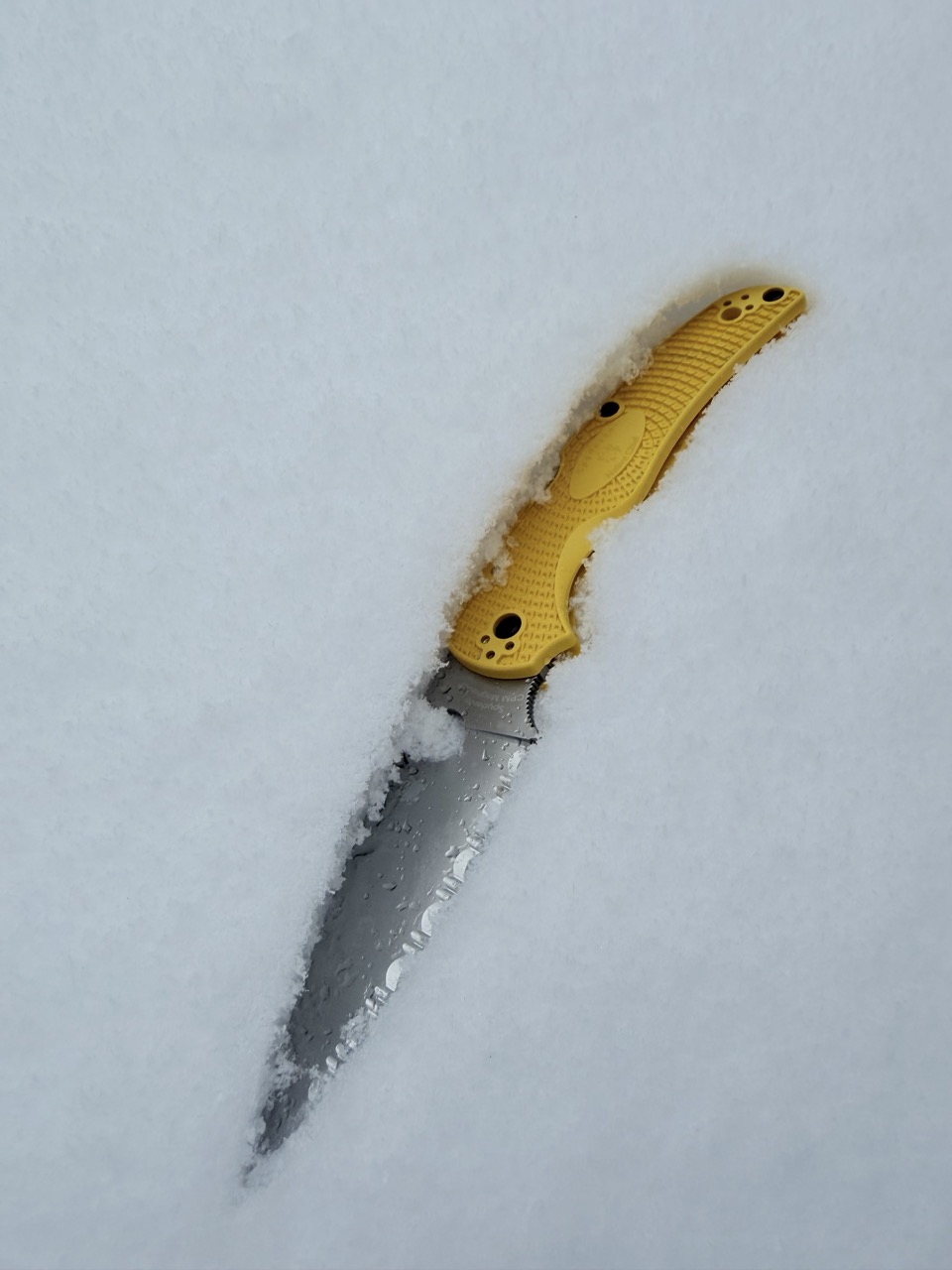
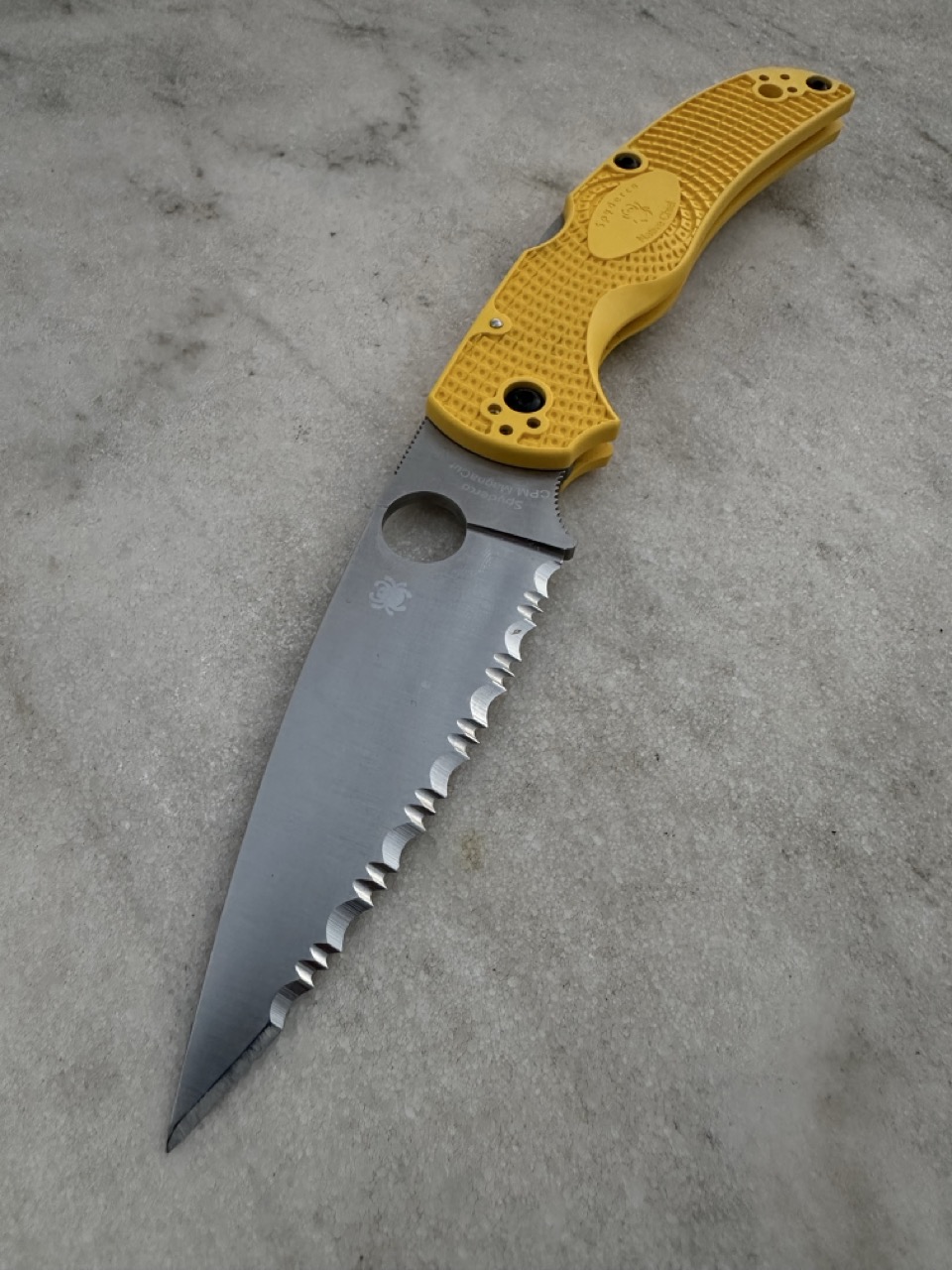
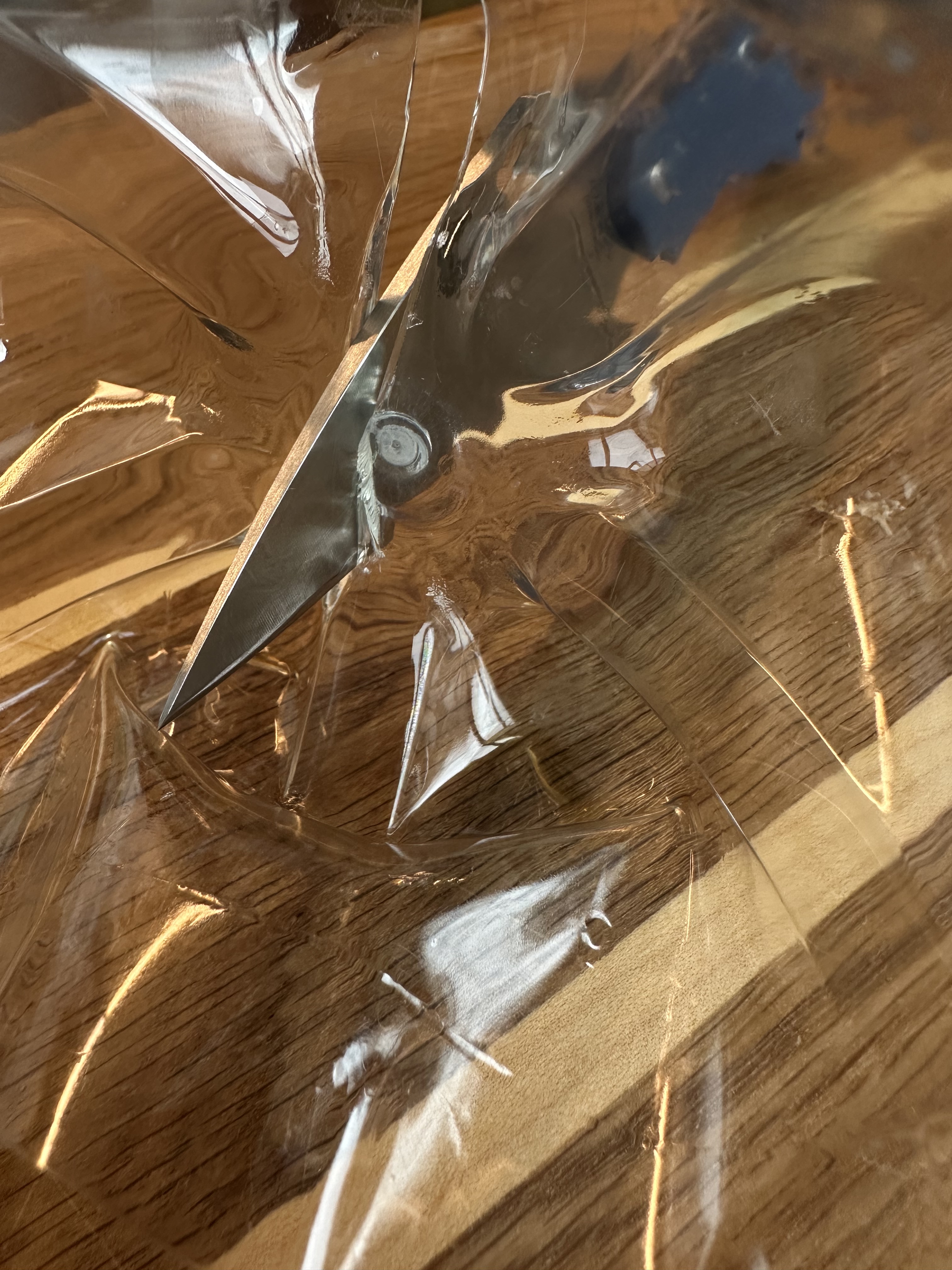
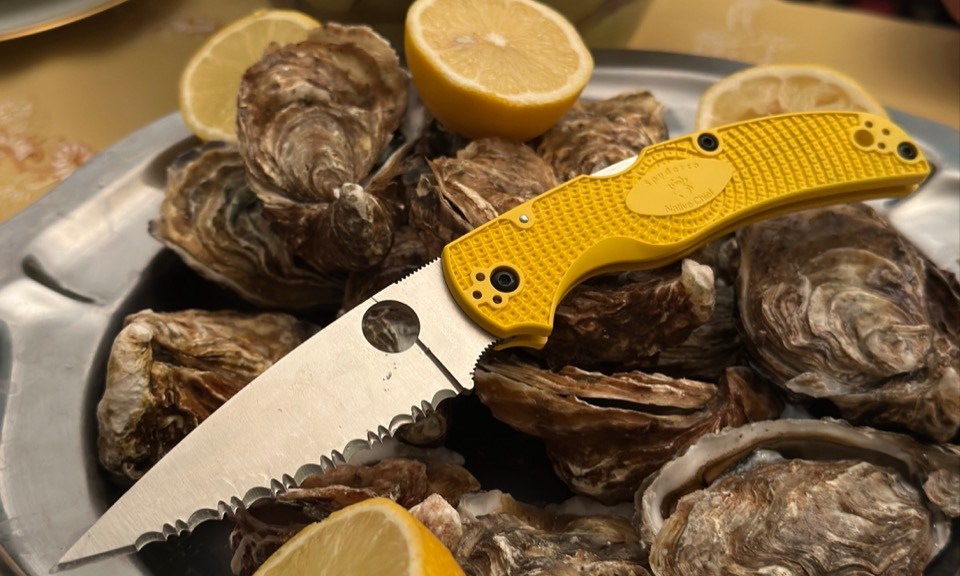
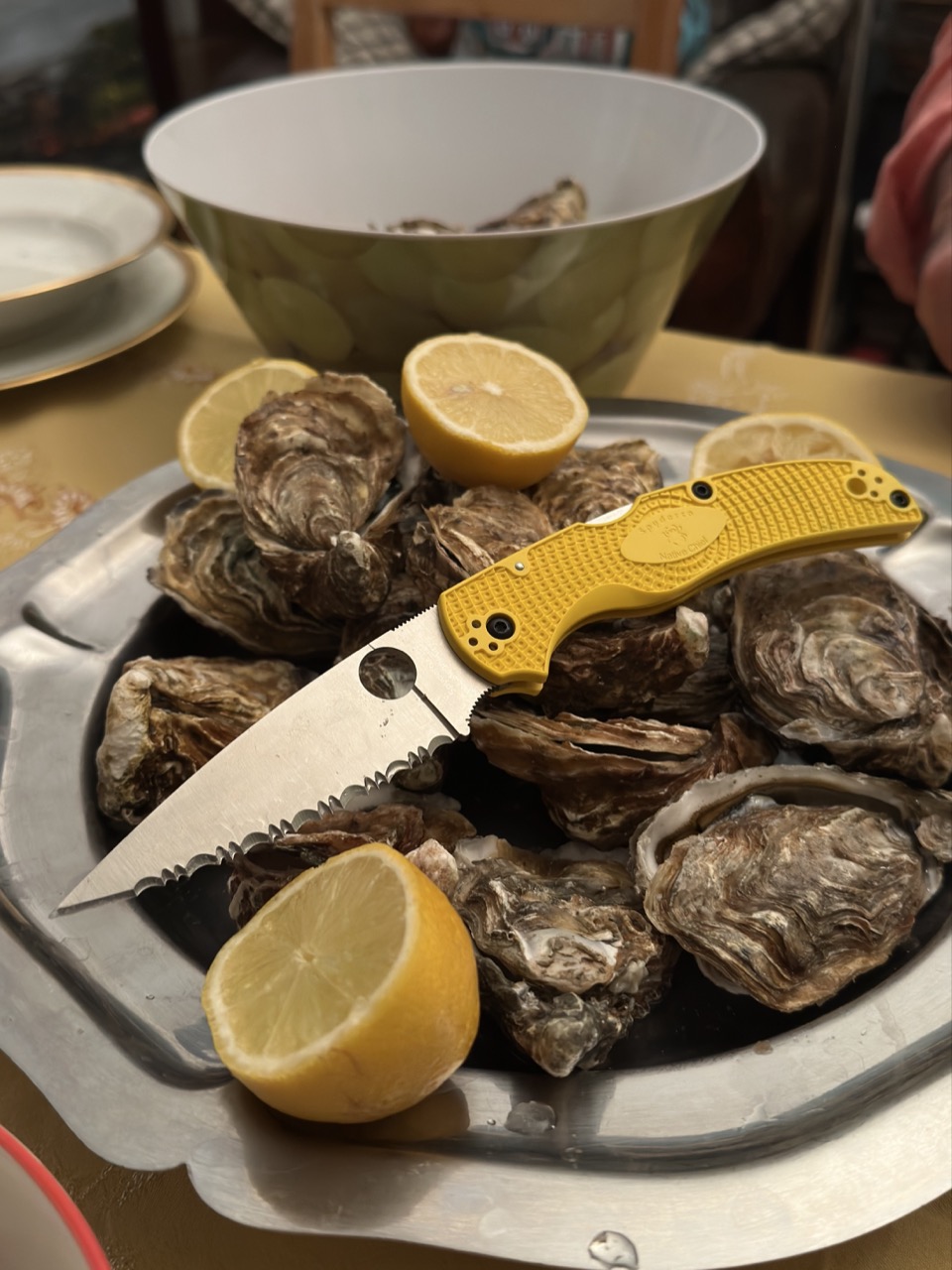
NATIVE CHIEF™ LIGHTWEIGHT SALT® CPM® MAGNACUT® — Teeth For The Deep.

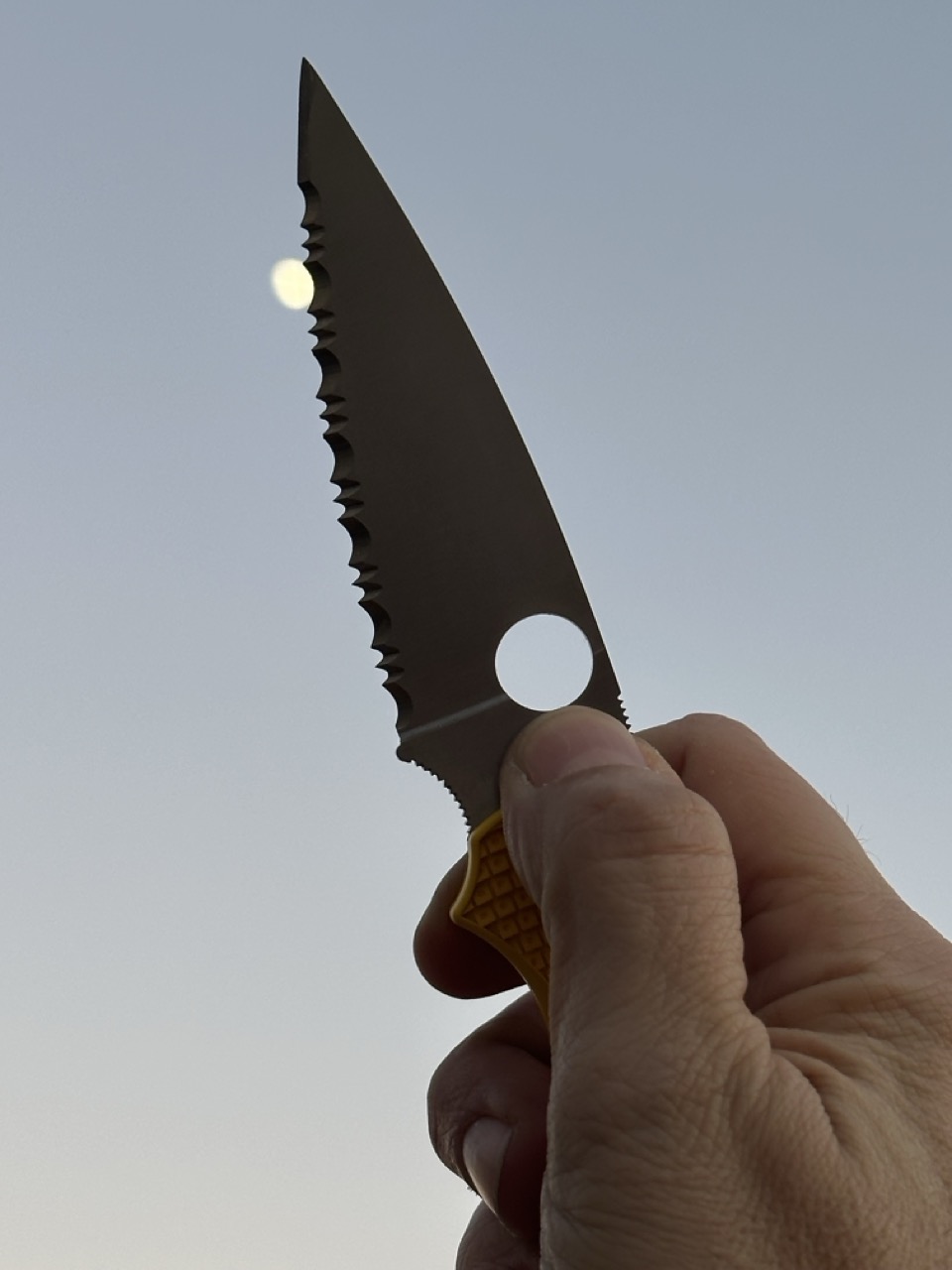
Serrations aren’t everyone’s favorite, but one thing is undeniable: Spyderco knows how to make them perform. I’ve tested serrated Chaparrals and even the semi-serrated CPM-M4 Tenacious, but the Salt Chief in Magnacut takes this to another level thanks to its relatively long blade.
The “Salt Chief” … does it ring a bell to South Park’s fans ?
(Ah, Isaac Hayes Salty Chocolate Balls...)

For the record, Magnacut behaves similarly to CPM-4V but is far more stainless, which explains why the Salt Series (like this Chief) thrives in humid and coastal conditions.
(The LC200N version of the very same knife (with green FRN handle) would be even better in terms of corrosion resistance but Magnacut’s edge will last longer.)

My first Chief, a special edition in CPM-4V nicknamed Hellboy, was already a beast which I considered replacing my Spyderco C36 Military — and this lightweight Salt Chief has teeth that remind me of a Nine Inch Nails album : pointy, high tech, raw and aggressive.

This relatively long folder is remarkably light: 88 grams for a 102 mm blade — 21% lighter than the G10 version, according to Spyderco.

This is a serious tool for mariners, divers, explorers, military personnel, cooks, gardeners, and anyone who might let their knife get wet. Unlike my Salt Sage 5 (plain edge, monster in the woods), the Serrated Salt Chief is clearly aimed at humid/coastal environments.
(There is also a plain edge Salt Chief C244PYL which could be more versatile.)
The serrations concentrate force on small points along the edge, allowing fibers to be cut more effectively than a plain edge of the same thickness. Each tooth acts like a mini-chisel, making tasks like slicing rope, cord, seatbelts, fibrous fabrics, or vegetation far easier.
But it will be harder to cut straight as the serrations are chisel ground on the left of the blade. So it will naturally be deviate to the right during a push cut.

The multiple points of contact make serrated edges actually longer than straight plain edge. Even if the points dull slightly, the valleys continue to cut, which is why serrated blades are preferred in emergency for cutting seat belts for example.
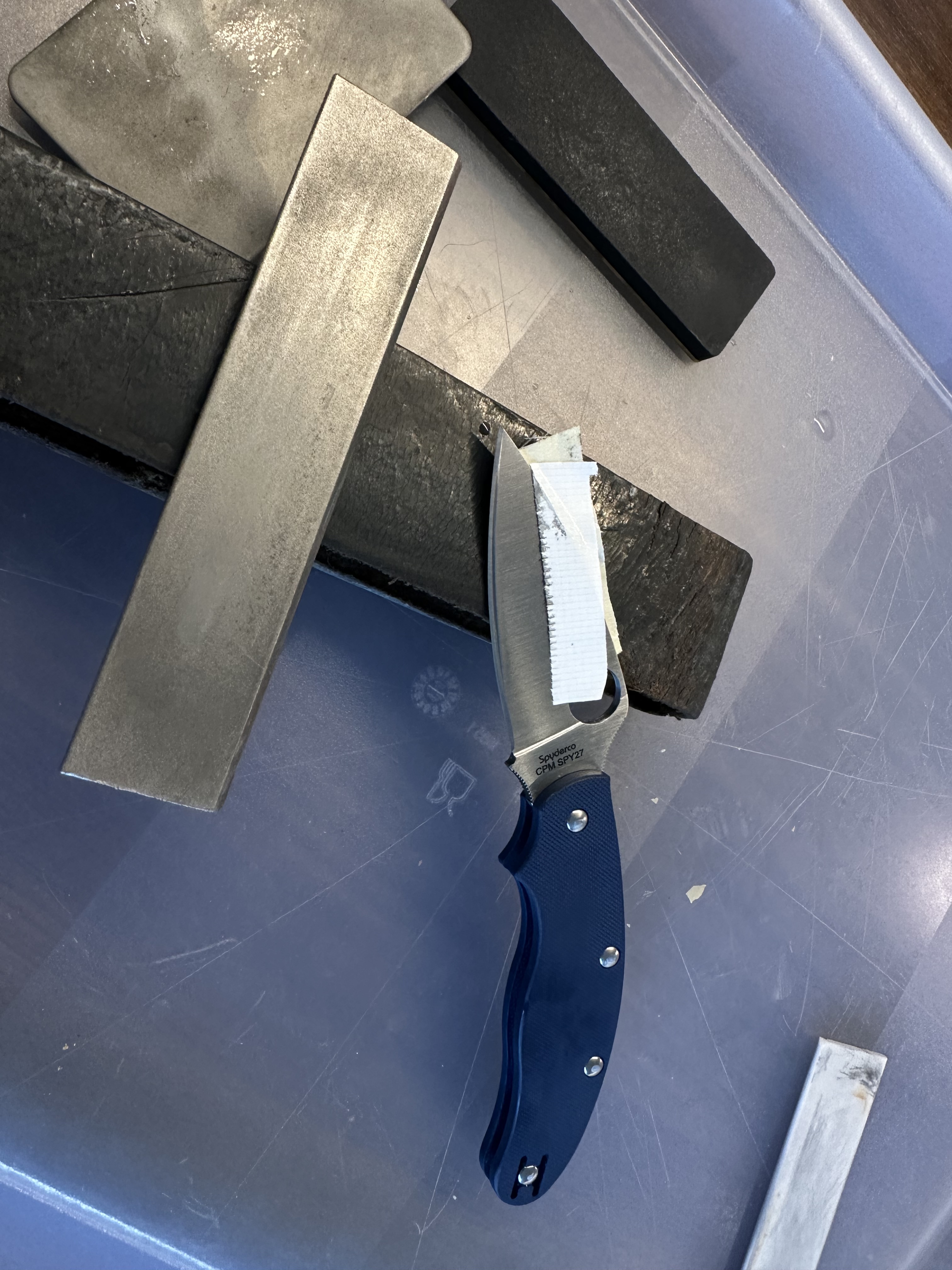
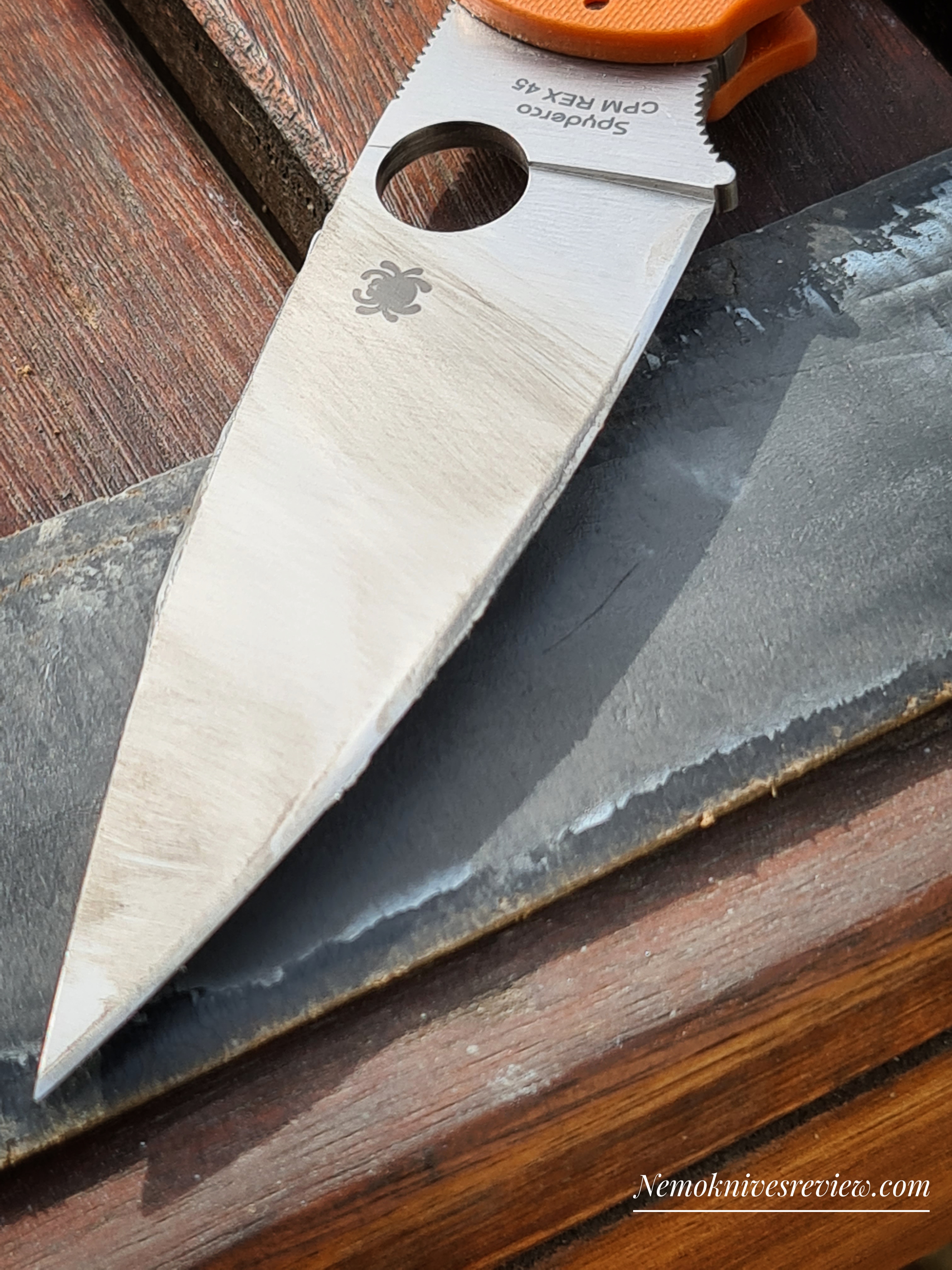
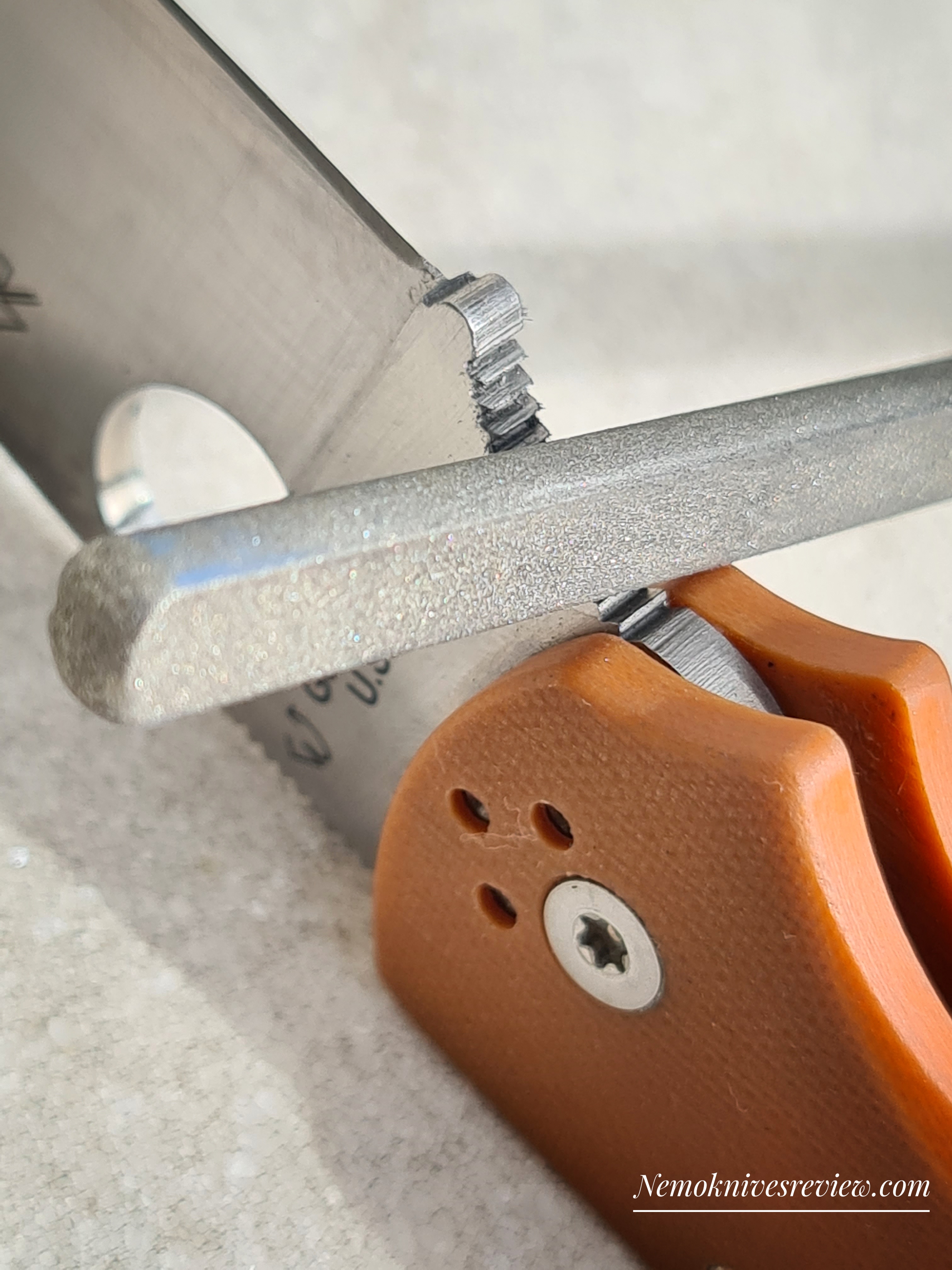
And serrated edge are not difficult to resharpen. Do it like you would sharpen a chisel with a ceramic able to reach each valleys. Once you get a burr just one or two passes on the other side of the edge and it is back to razor. No big deal really.
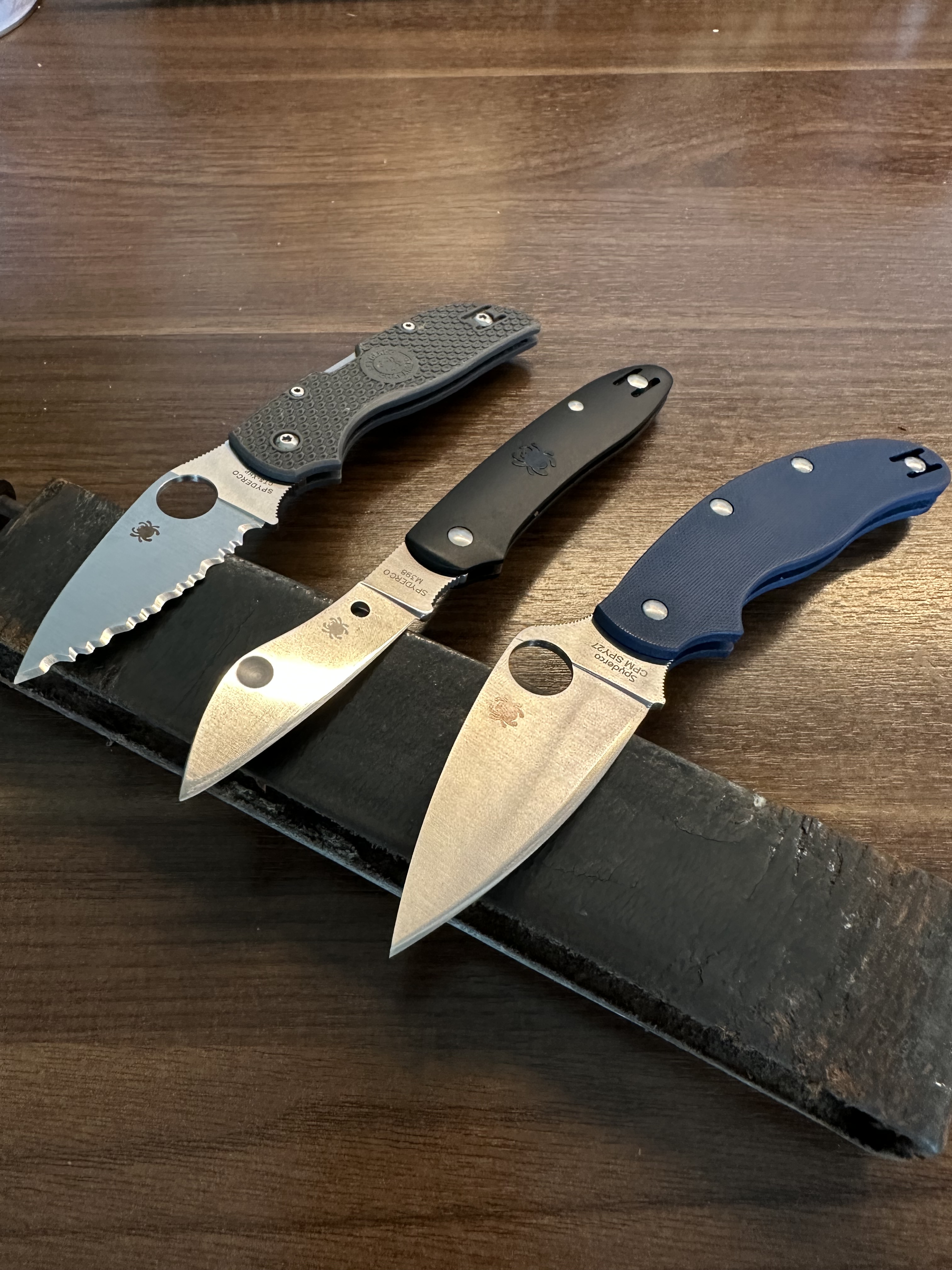
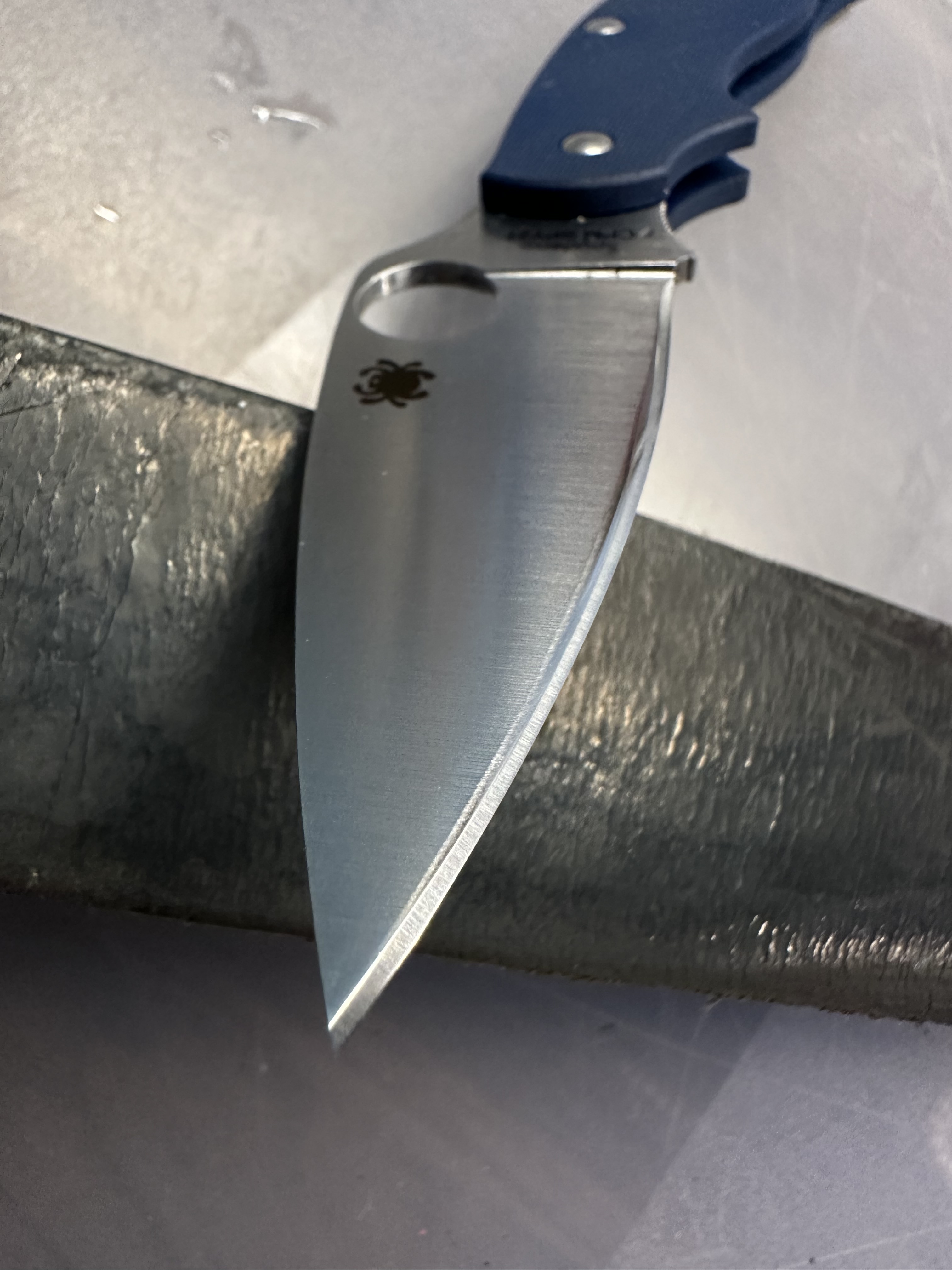
Magnacut love leather though; But it won’t be easy to strop it obviously, unless using the rims of a leather belt…

The ergos are just great. Same cockpit as the Native 5.

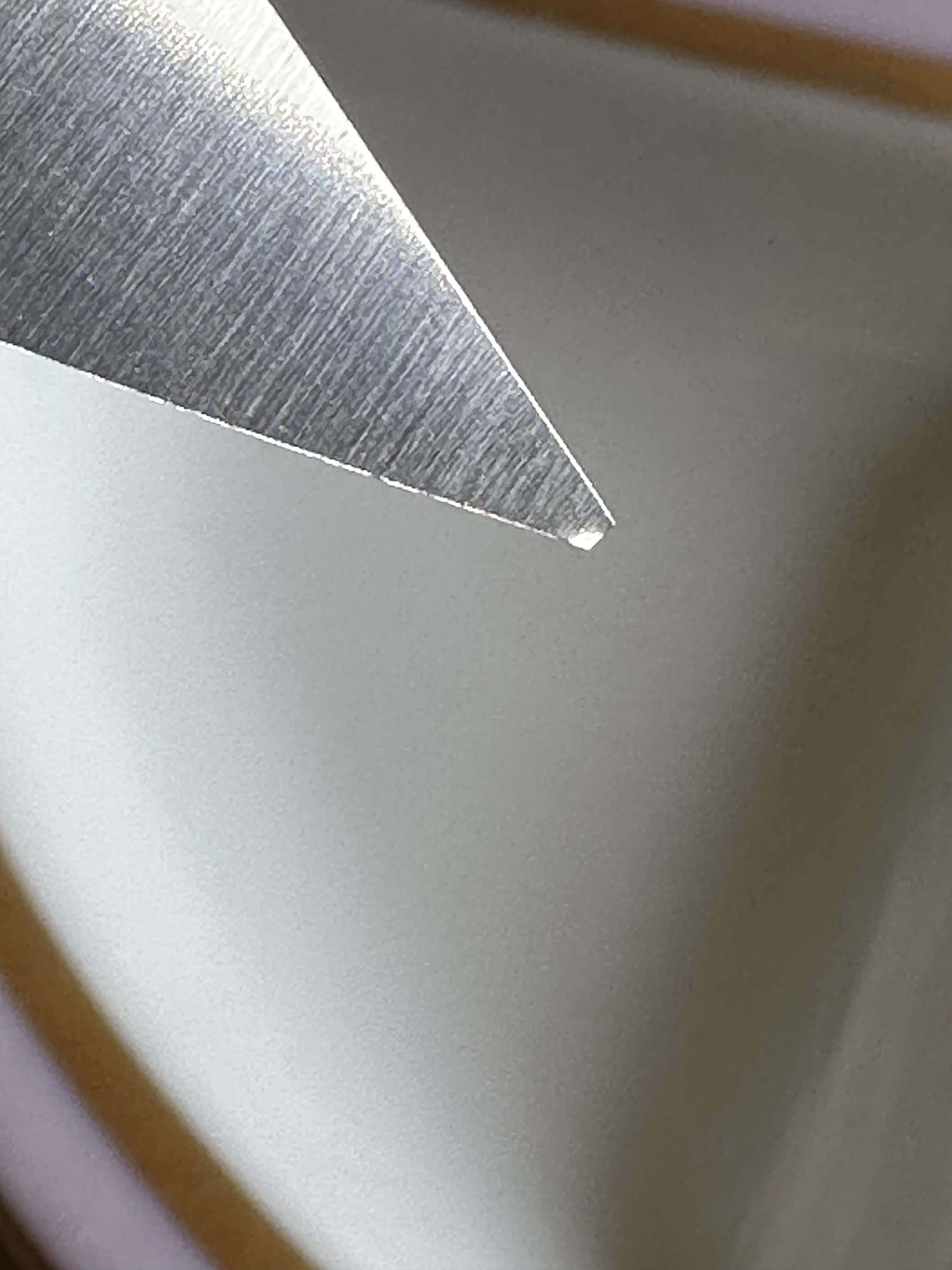
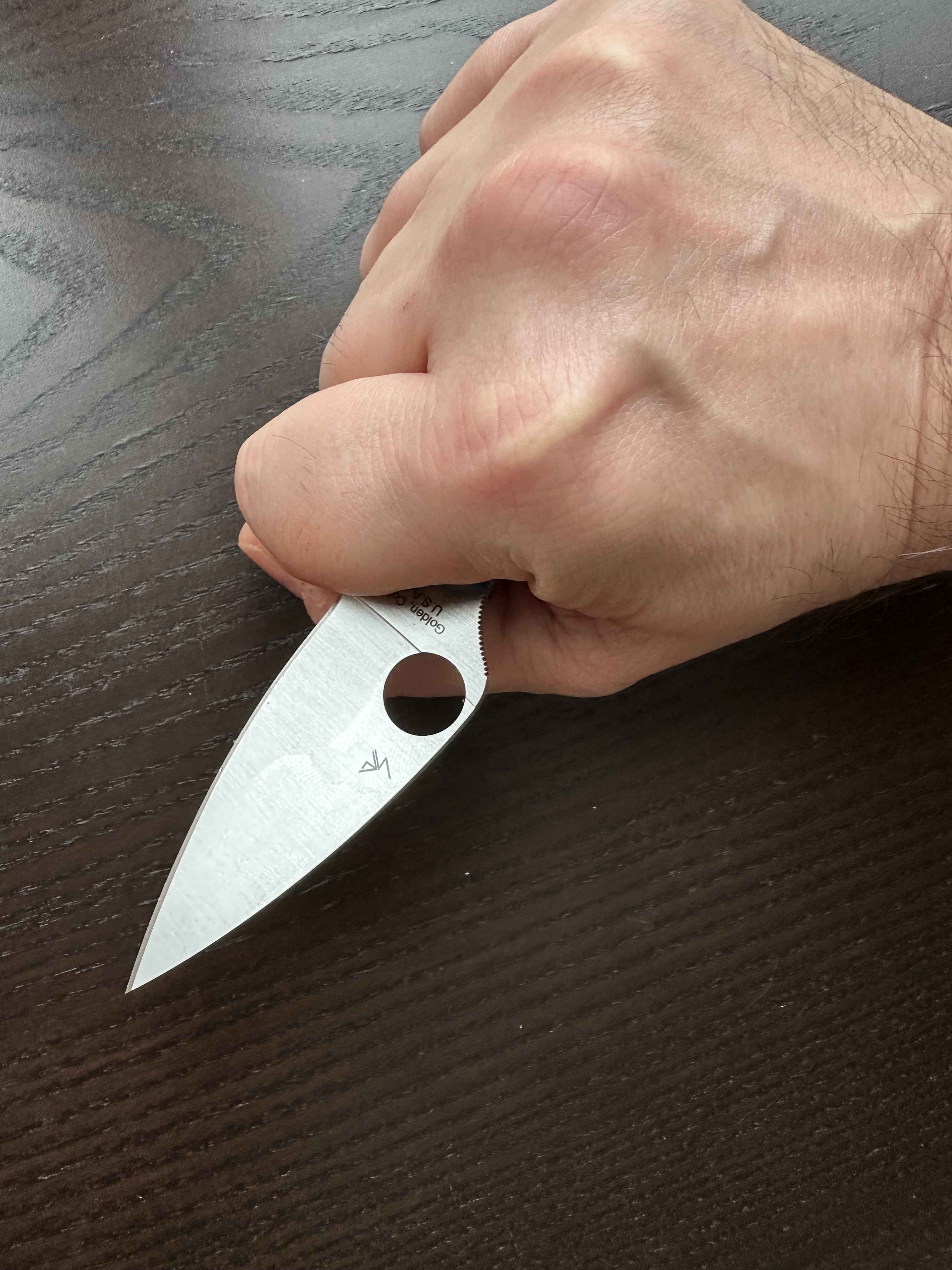
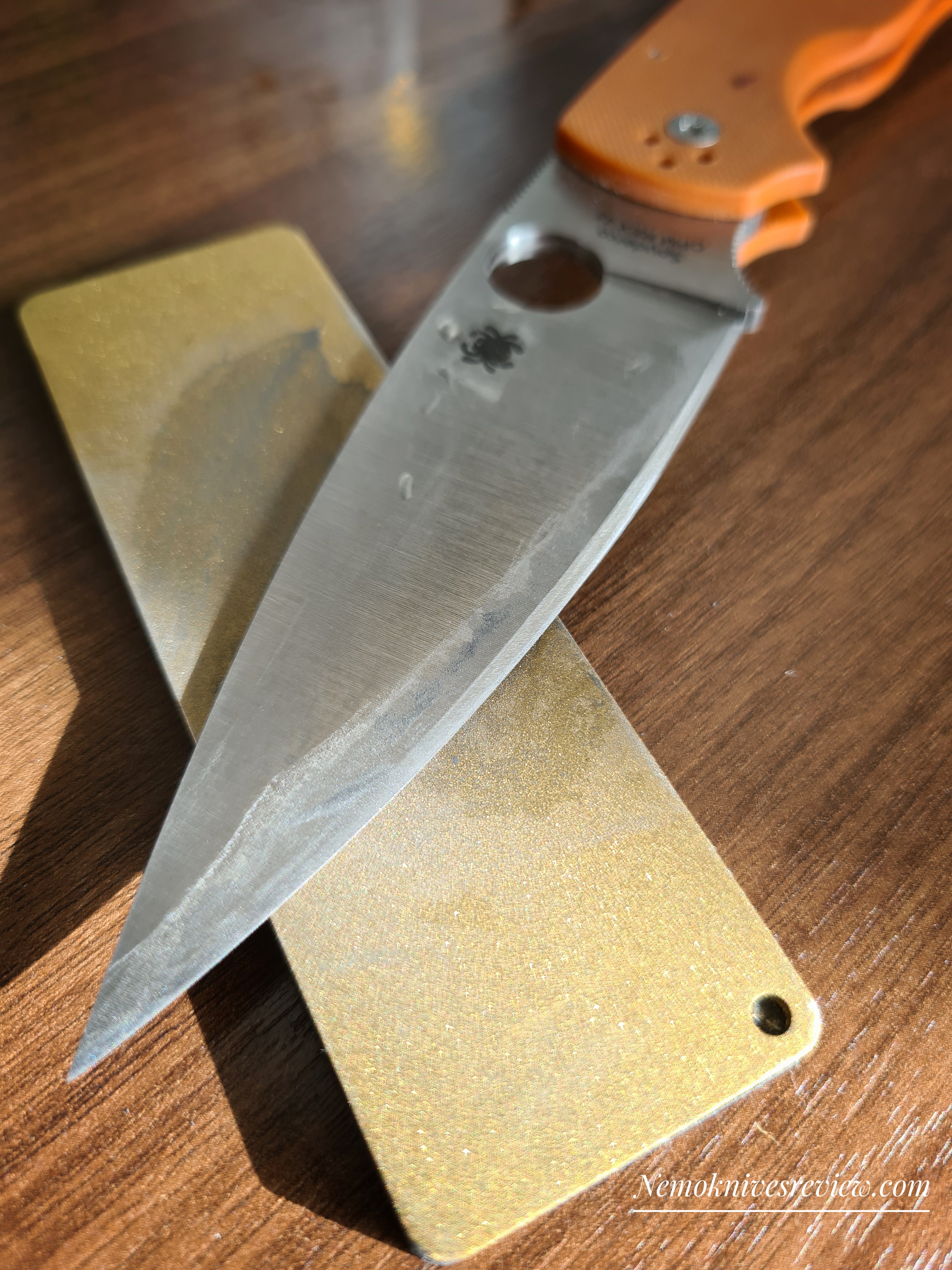
Out of the box, I noticed a slight tip imperfection — less than a millimeter — which I easily corrected on a diamond rod in under a minute. Even with Magnacut’s hard, corrosion-resistant steel, the tip can be fragile but repairable. This means one thing: use your sh*t !
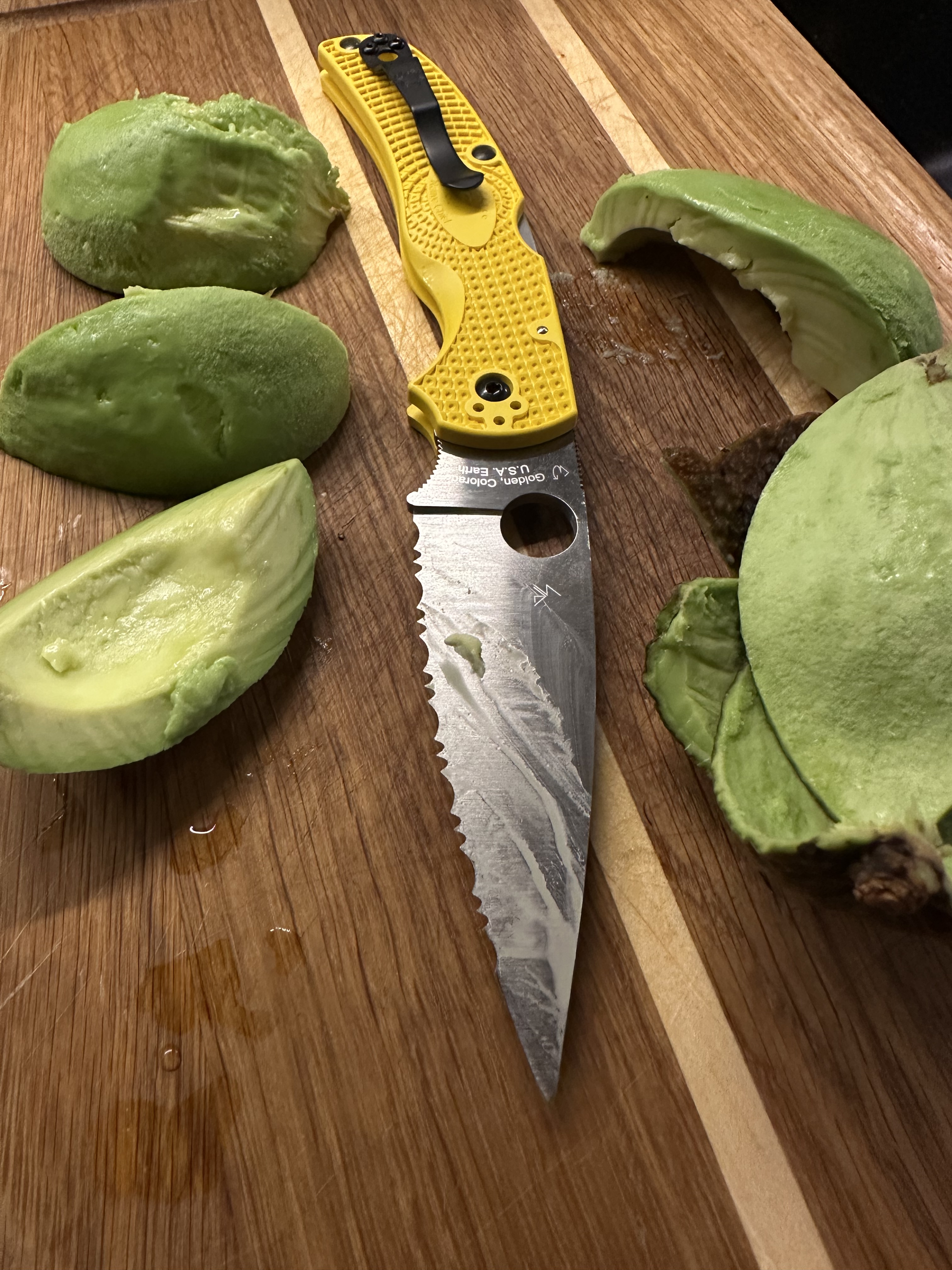
This light amphibious folder is made to be a workhorse in the sea or earth because it is also easy to keep clean.

Those diamond corners are perfect to put a fresh edge on a serrated blade.

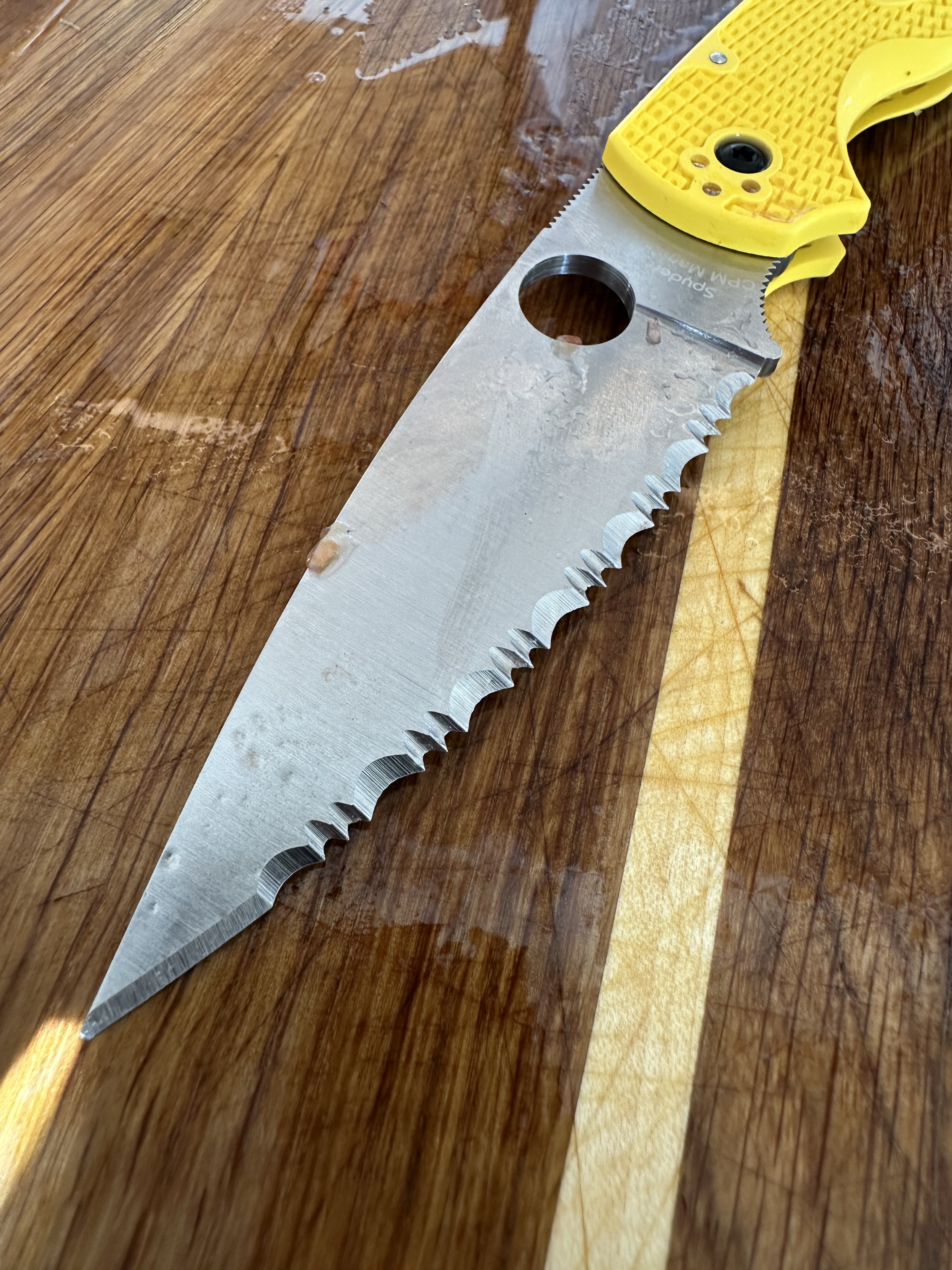
This time again, Spyderco uses a Full-Flat Grind with SpyderEdge. But this is a very very aggressive serrated edge, much more aggressive than the serrated Chaparral for example and, yes, so aggressive and pointy, it can snag and tear but it will do the job. It won’t be a clean cut but the job will be done very very quickly.
(On the Chaparral, the serration are rounded to avoid snagging when cutting. Those same serrations can be found on another serrated folder made in Taichung for Spyderco: the LC200N made Caribbean.)
So the Salt Chief serrated is also a potential emergency tool with a pointy blade!
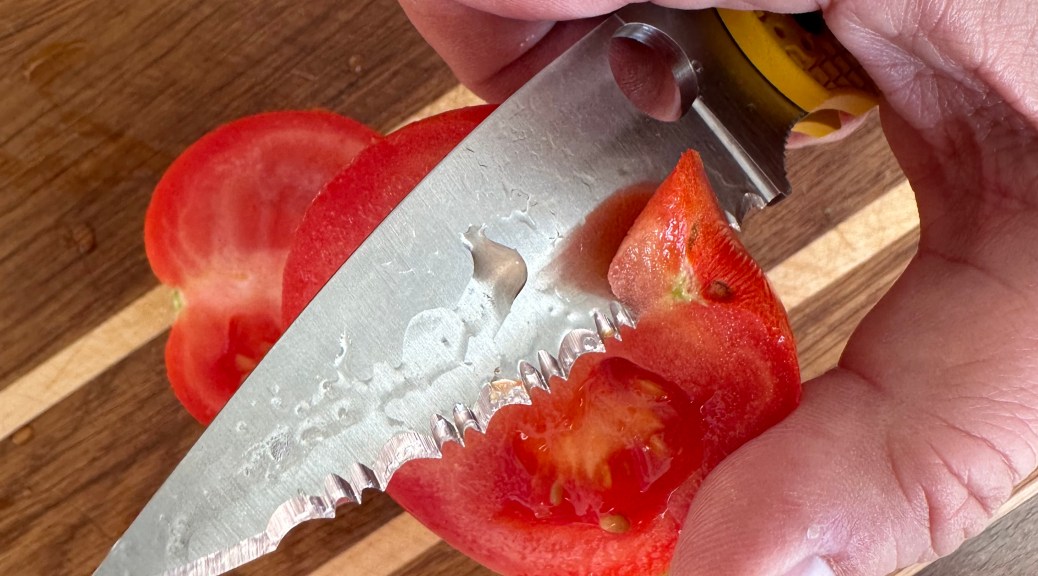
It will excel in marine scenarios like cutting wet cordage very quick. So this knife feels especially suited for maritime or humid environments. Those serrations also will cut in vegetation with minimal effort. Actually even a gardener or a farmer would appreciate that raw cutting power made to endure mud and rain.
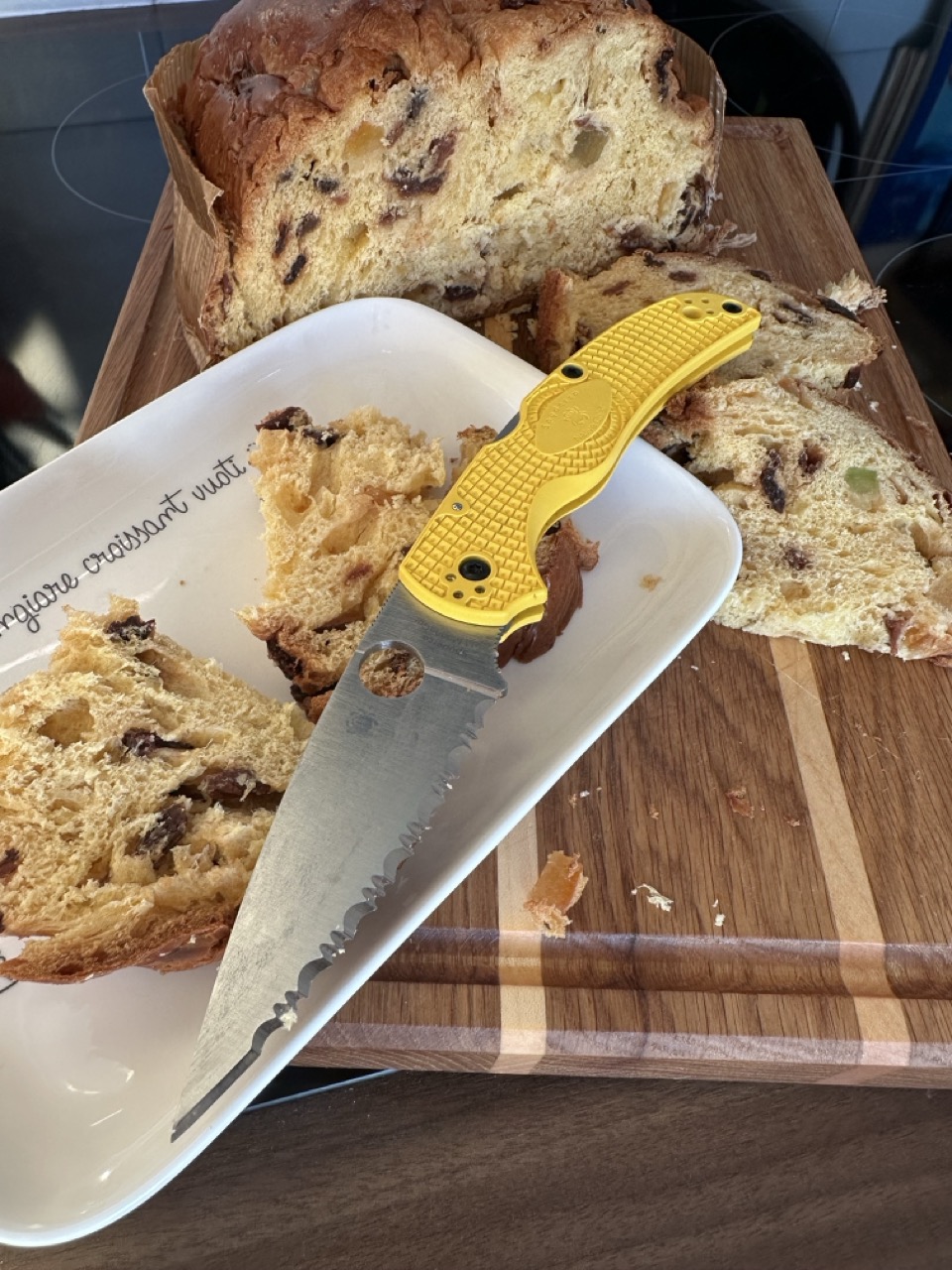
But keep it mind, this is raw cutting, fast and dirty. Perfect in emergency. But the cuts won’t be clean. You won’t slice raw meat into loafs like a chef knife would. Also keep it mind the the chisel edge blade will drift to the right.

As you can notice, the teeth of the Chief are more pointy and deep than, for example, the Tenacious CPM-M4 which is less agressive.

That lightweight Chief strong mid-backlock mechanism is impressive: no liners or spacers and… zero play (unlike my CPM-4V G10 Native Chief, which had slight vertical play.), and perfect action. The blade falls gently when unlocked, The drop-shut action is smooth, supported by a very strong spring, and the knife oozes quality from every angle.
Ah ! Zero play, this what we often got from Golden made backlocks this lightweight long knife is no exception !

This long pointy folder feels lighter than expected for its size, yet solid and trustworthy. It should be perfect for fishermen, mariners, firemen, policemen, divers, gardeners, ranchmen, farmer, construction workers or anyone working in the outside or in corrosive/humid environments from the rainforest to the ocean. The combination of Magnacut steel, Spyderedge, and Yellow FRN handle makes it an emergency tool — especially for those who value edge retention, corrosion resistance, and very aggressive cutting performance in wet environments.

In short, the Serrated Salt Chief designed by Eric and Sal Glesser is a serious, reliable, and powerful folder — perfect for professionals in demanding conditions who need to cut deep and quickly.

Spyderco -C94GCBL- UK PENKNIFE™ COBALT BLUE G-10 CPM® SPY27® – The Blue Djinn Who Loved Leather.

This is not the first UKPK I have reviewed in this blog. I was a very early adopter of this Sal Glesser’s approach of the modern slipjoint all made in Golden Colorado.
Some of my favorite are the Salt Versions in FRN: the Green LC200N and the Yellow CPM Magnacut. I even think, the serrated version of the Magnacut version could be an amazing legal travelling knife.

But they are FRN versions. I like FRN but I do love G10. Better, I’m a sucker for sanded G-10. Hence my love for the Heinnie Urban and its non-slip peel-ply texture.
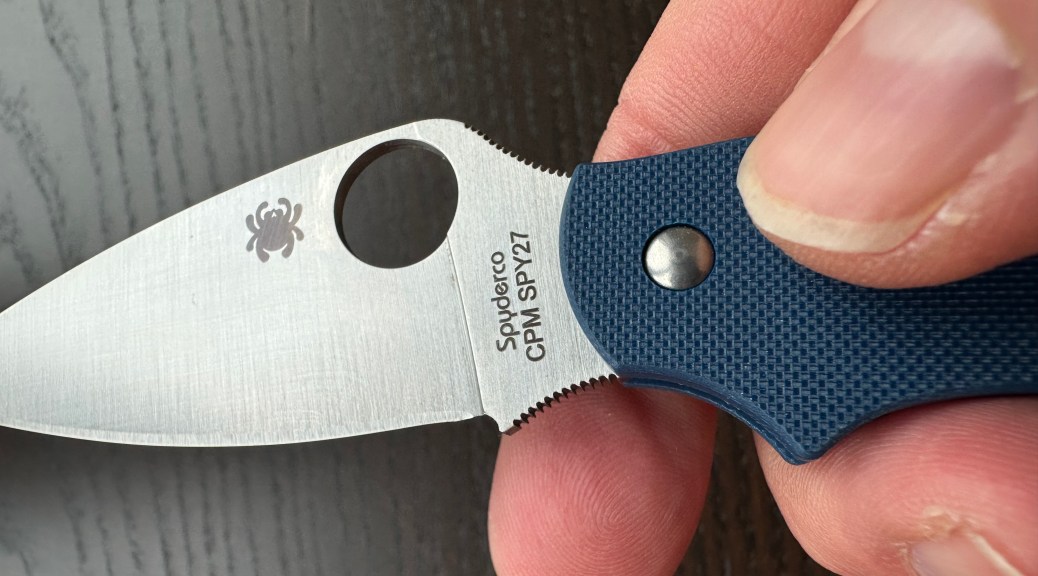
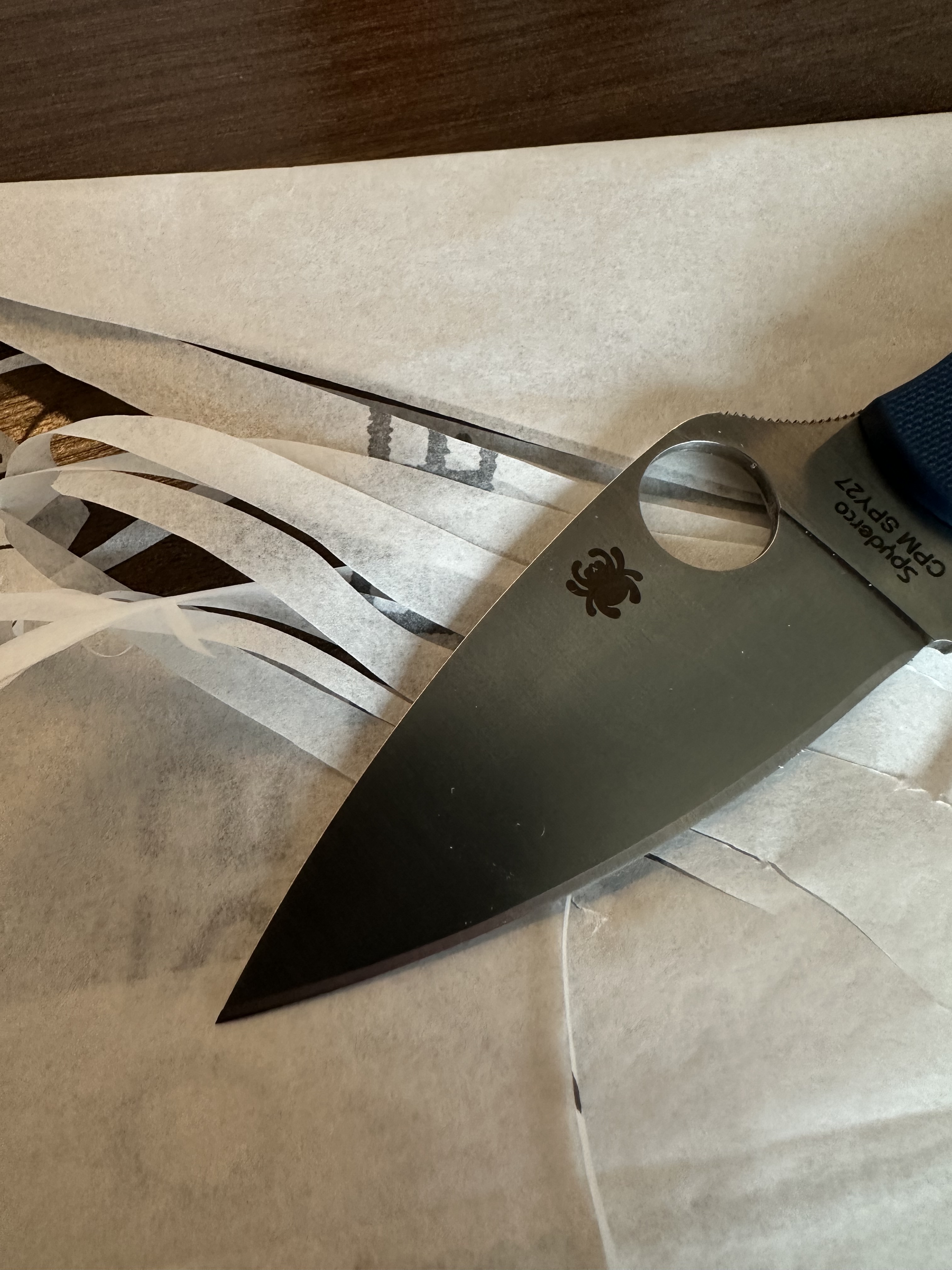
At first glance the satin-finished CPM SPY27 blade and signature cobalt blue peel-plytextured G-10 handle scales are juste gorgeous. Here are the full specs on Spyderco’s pages.

Like the Heinnie the skip joint got a strong mechanism. It is really a pleasure to feel this resistance which was totally absent from the very first drop point UKPK a decade ago. (Picture from Mr Blonde, Spydercollector site)

So far, I cannot imagine my self opening it with a flick like I was able to do on the LC200N FRN version. The Spring here on this G10 version is much stronger.

Let’s do some size comparaison. The UKPK is one of the long Slipit in Spyderco’s collection. It is almost a slipjoint Caly, even longer than a Chaparral. So you really don’t feel “underknifed” when you carry it in your pocket as your only EDC. It is also really handy and practical as a kitchen knife. The best thing is that this design keeps its blade length legal in most countries.

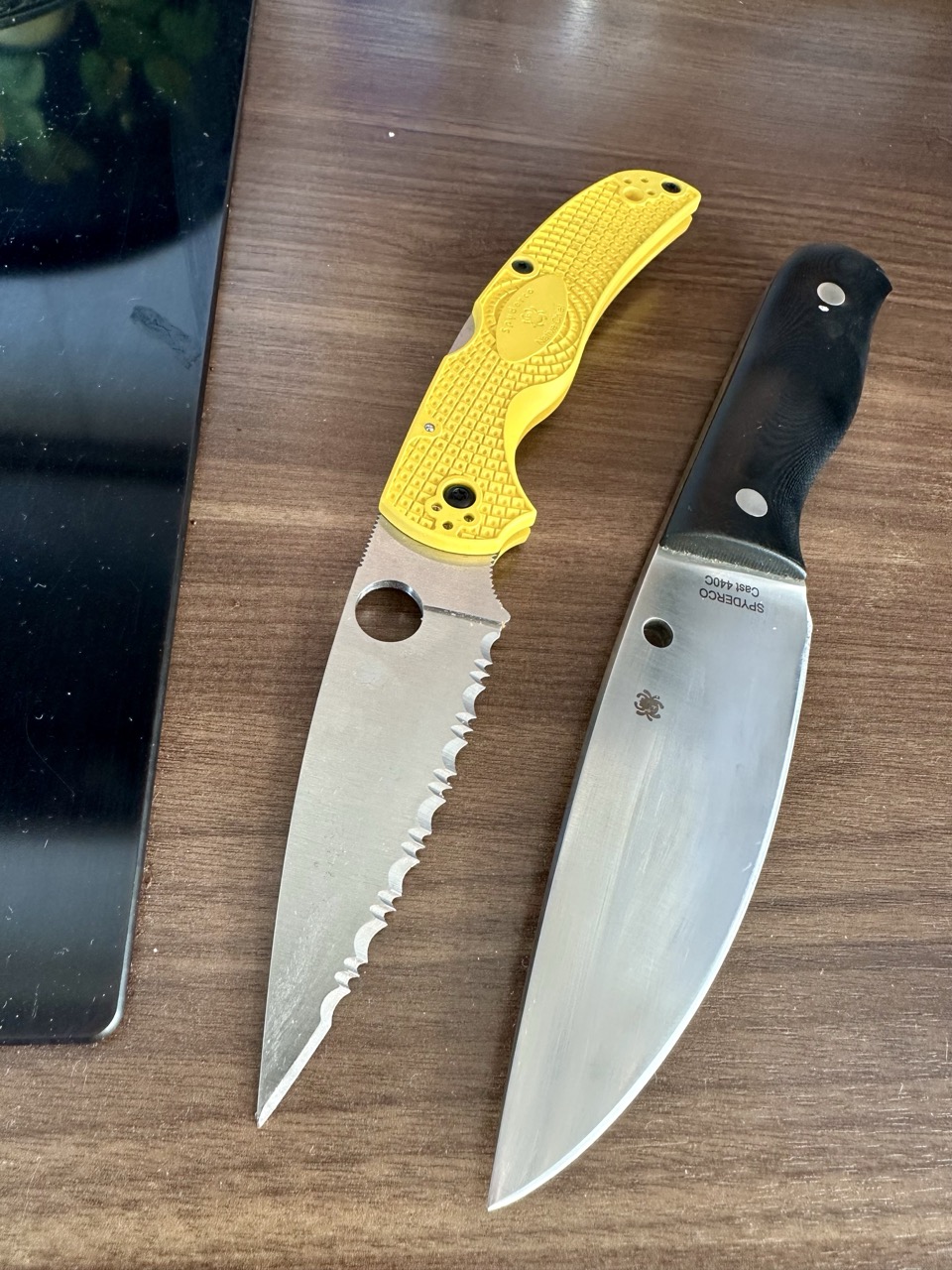
For cooking I often use a Native Chief.

The long leaf shaped blade is a must in the kitchen almost idea. It is pointy enough and its is enough for vegetables. Most of the works done in the kitchen like peeling potatoes, cutting oinions, you name it, was always done with a short full flat ground knife like a “Nogent Couteau d’Office”.

Something about the G-10 version is the spring/back spacer closing the handle of the knife when the FRN got an open handle easier to rinse.
But it is much more gorgeous and with a stronger spring for sure !

It also gives a little more heft to the knife. 48 grams for the FRN and 63 grams for the G10 version -> 31,25% heavier to be precise, almost a third ! But I do really love my heavy butt knives since my Schrade Sharpfinger.

Now this is my first CPM-SPY27 knife. Spy27 is a alloy recipe created in house with Crucible exclusively for Spyderco. It is a CPM ! So this is a premium super steel compared to VG10 or N690… In short it is a American Powder Metallurgy version of the Japanese VG10.

In Sal Glesser words:
“We offer many steels for several reasons;
1) We are Steel Junky’s (even Edge Junky’s) and we like to experience the different flavors and we try to do that.
2) We believe that many of our customers are also Steel Junky’s (even Edge Junky’s) and they too get to experience and play with and “taste” as you say, the many options.

I wanted a USA made “tweaked” version of Gingami 1 by Hitachi and after some effort with Carpenter, we have a powdered USA made steel called CTS-BD1N Which is a refinement of Gingami 1. I wanted a USA made “tweaked” version of Takefu’s VG-10 and now we have a powdered “tweaked” SPY27.

Carbone1.25%
Chrome14%
Molybdène2%
Vanadium2%
Niobium1%
Azote0.1%
Cobalt1.5%
Manganèse0.5%
Silicium0.5%


There is a very nice analysis in Knifesteelnerd and discussion here: https://forum.spyderco.com/viewtopic.php?t=94182

However, it should be noted that the SPY 27 Larrin used for testing was not heat treated by Spyderco. Some minor differences between Larrin’s heat treatment and Spyderco’s heat treatment can probably be expected. That being said, Larrin is the best source of consistent, objective data and metallurgical interpretation for steel comparisons.” To quote Karl_H in
https://forum.spyderco.com/viewtopic.php?t=87383

“SPY-27 will hold the fine edge longer… Its all about the stability of the fine edge, not the total wear resistance until fully dull. In this regard, SPY-27 can do what other stainless steels cant.” to quote Submicron in the same thread.

I am aware that Cobalt’s dust can be an health issue. Of course Rex 45 and Maxamet (10% of cobalt, 1,5% for SPY27) are the heavy weight steel in their tool steel category but the Spy27 (like VG-10), like all cobalt alloys needs to be carefully cleaned after a sharpening process.
(Cobalt may cause an asthma-like allergy. Future exposure can cause asthma attacks with shortness of breath, wheezing, cough, and/or chest tightness. * Cobalt may affect the heart, thyroid, liver and kidneys. * Repeated exposure to Cobalt dust can cause scarring of the lungs (fibrosis) even if no symptoms are noticed. According to https://nj.gov/health/eoh/rtkweb/documents/fs/0520.pdf)


Let say SPY-27 is in the same club as the S35VN steels in terms of performance and it especially loves fine ceramic and leather stropping. It gets easily a very crispy edge like VG10 or BD1N . ( Steel which are “leather super friendly” are also LC200N, 52100, VG10, AEB-L… )
This is a must and a real pleasure for me as I keep my knives sharp mostly with leather. A touch up and it makes flying hairs from my arm again.
And it seems true so far. I have not deshouldered the edge yet and intend to use it with the factory edge for some times but leather made it hair popping sharp. (Once deshouldered it is a straight razor with excellent edge retention… much better than S30V).
To quote Sal:
“SPY27 for some reason, seems to be punching above its weight.”

No crossroads, this Blue Djinn loves leather like the Bill Moran FB01 in VG10 loved it.

No need to use diamonds unless you want to reprofile the blade or round the shoulder then don’t forget to rinse the blade and to clean any dust.
But talking about dangerous dust, I have sanded the scales to preserve my pockets. Never breath that dust !!! Do it under water or wear a mask.
I got a neighbor who has been working around that kind of heavy dust and now he is breathing with two tubes in his nostrils. So be careful with your health.
This Blue G10 got a very nice texture under the thumb like some denim, textil like. It is really pleasant, almost like some Micarta found on the QSP Penguin.

So when you sand G10, just go outside in the wind or work under water. You don’t want to breath G10 dust made of fiberglass and epoxy.
Just rinse it under the tap to have it back to normal.
Once tuned at your hand, G10 is a very very nice material.

As you can notice the scales are even thicket than the blade and the blade is perfectly centered.

There is the famous middle/half stop when closing or opening the knife. It works like a safety measure. This knife is harder to close than to open.

The UKPK is a very ergonomic knife. It feels like it melt in the hand. It is so confortable for heavy cuts. Because this blade can work hard with zero play.

The “pistol grip” is common in many Sal Glesser design like the Endura or the Military. It is much more pronounced on the Massad Ayoob.

No hotspots for me a very safe handle, really, this lil slipjoint is screaming to be used hard.

It is even confortable edge up.

With the Roadie XL. Another great Slipit with a very low profile, almost like a pen in your shirt pocket.

And the mighty Chaparral serrated. Two of Sal’s best designs. Two wolves in sheep disguise thanks to their thin solid blades.

I have decided to de-shoulder the edge for a gentle convex result in the middle of the belly.

My old leather with some polish compound is ready again to smooth the edge to razor level.

Because I want a better touch on the leather, I usually keep the normal edge at the point to keep material there and near the ricasso as I use this portion for special shores like removing the aluminium cap on bottles.

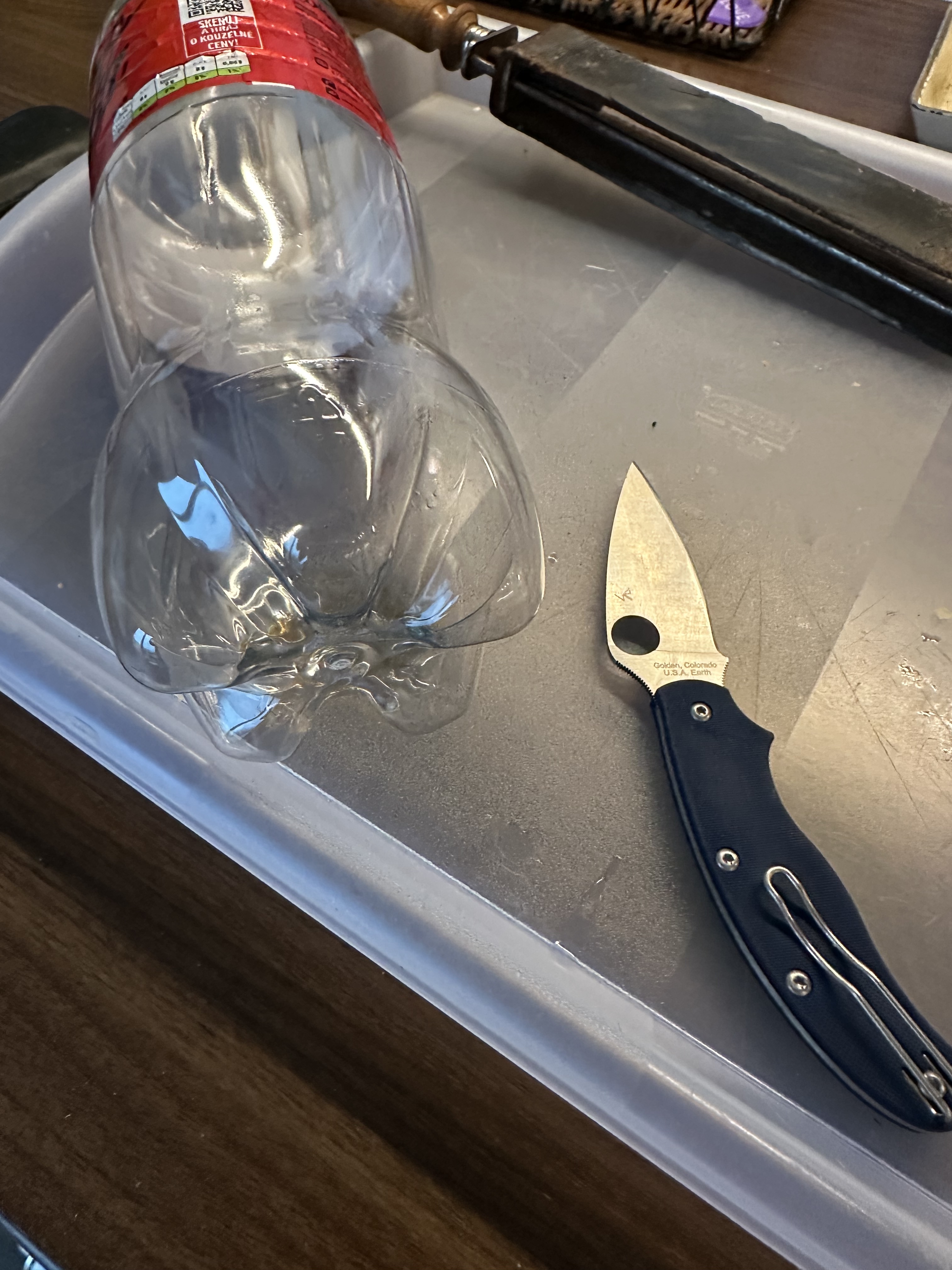
The Coke Bottle Butt test is passed with flying colors. As you can notice the plastic is 3mm thick. Not a single scratch on the blade.

So what do we got so far ?
A master piece of knife design by monsieur Sal Glesser with a strong construction and state of the art in-house alloy serving a thin blade and an ergonomic handle.
My advice: try to grab one before they disappear, it seems that G10 version is not here to last and it is really a sapphire: a true blue jewel !

NATIVE CHIEF™ REX 45 SPRINT RUN™ – C244GBORE – The Joker !

“It’s been a long road
Getting from there to here
It’s been a long time
But my time is finally near…”

Yes, it has been 22 years (since 1999) that we have been waiting for the Native Chief to be produced.

Sal Glesser said:

In 2008: “We only made one prototype. The model never went into production.”

In 2017: “The Native “Chief” has been on hold for some 15 – 20 years. I imagine we can get it to queue if there is demand. I’ll watch the thread. The Shaman is designed to be 3.5″ blade length which is legal in more places that the Chief’s 4.0″ blade.”

In 2018 “Working on the refinements for the 3rd prototype. We work on roughly 20-30 designs at any given time…. We’ll use a Golden back lock.”
Then…
I’ve been carrying a “Chief prototype. A 20 year old “sal” design with modern “Eric” mods.” had written Sal Glesser in March 2019.

As shown on Eric Glesser video “Native Chief Breakdown”, the prototype looks a lot like the finale version.

Here is also a video from Wouter (Spydercollector) presenting the production sample:

Also, knowing the Vanilla version released in 2019, all made in their new facility in Golden Colorado Earth, was in S30V, waiting for a Sprint Run was mandatory in my case.
I got my eye on the Rex45 Chief before even to be able to get the Tree Rex Shaman. Rex45 seems to me a great steel for such a “toothpick”. Last year I had the chance to get a Tree Rex and my experience with that alloy made the wait of the Chief even longer.
You can read my thoughts about CPM REX45 here:

https://nemoknivesreview.com/2020/02/07/the-tree-rex-also-known-as-the-shaman-in-cpm-rex-45-and-dymondwood/

To quote Spyderco’s site:
Crucible® CPM® REX® 45 is a super-high-speed particle metallurgy tool steel enriched with large volumes of cobalt, tungsten, molybdenum, and vanadium. Its high cobalt content increases the steel’s attainable hardness and enhances the positive properties of the steel’s other alloys. The addition of vanadium promotes the formation of vanadium carbides, which provide high wear resistance, fine grain size and increased toughness.

CPM Rex45 is just great: no chipping, pleasant to keep ultra sharp with only some leather + compound stropping: a great super steel. Just be careful with its dust with 10% of toxic cobalt, better be safe than sorry.

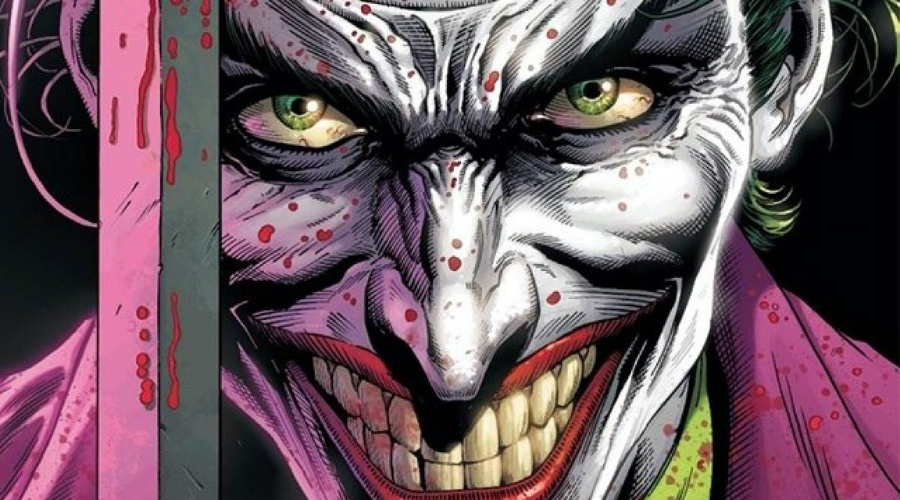
OK, my Chief was expected for the first of April, hence the name “Joker”. The slim shade and the burnt orange color scales also inspired me… (Certainly not the Joachim’s or Jared’s crappy interpretations, much more Ledger and Bolland.)

Back to the knife: stretching in length the Native is a beautiful result. Since the Native model people were asking for a longer version and a shorter version, they have been heard.

Right out of the box, the Chief felt very angular: sharp edges on the scales, gritty G10, and a lot of hot spot on the choil/ricasso and the blade spine.
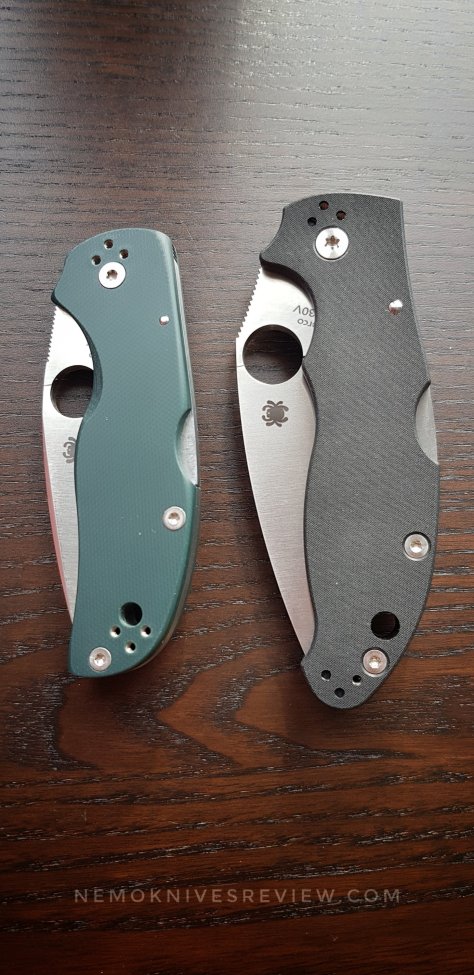
My Mandy City felt the exact opposite and it cost me a third of the Chief Price. So I was a little disappointed. It was not love at the first sight. Luckily , I know my Spyderco for a looooong loooong time and get my sandpaper ready.

I have send it under the tap to avoid any G10 dust which are really toxic for the lungs. Now the handle is suiting my taste.

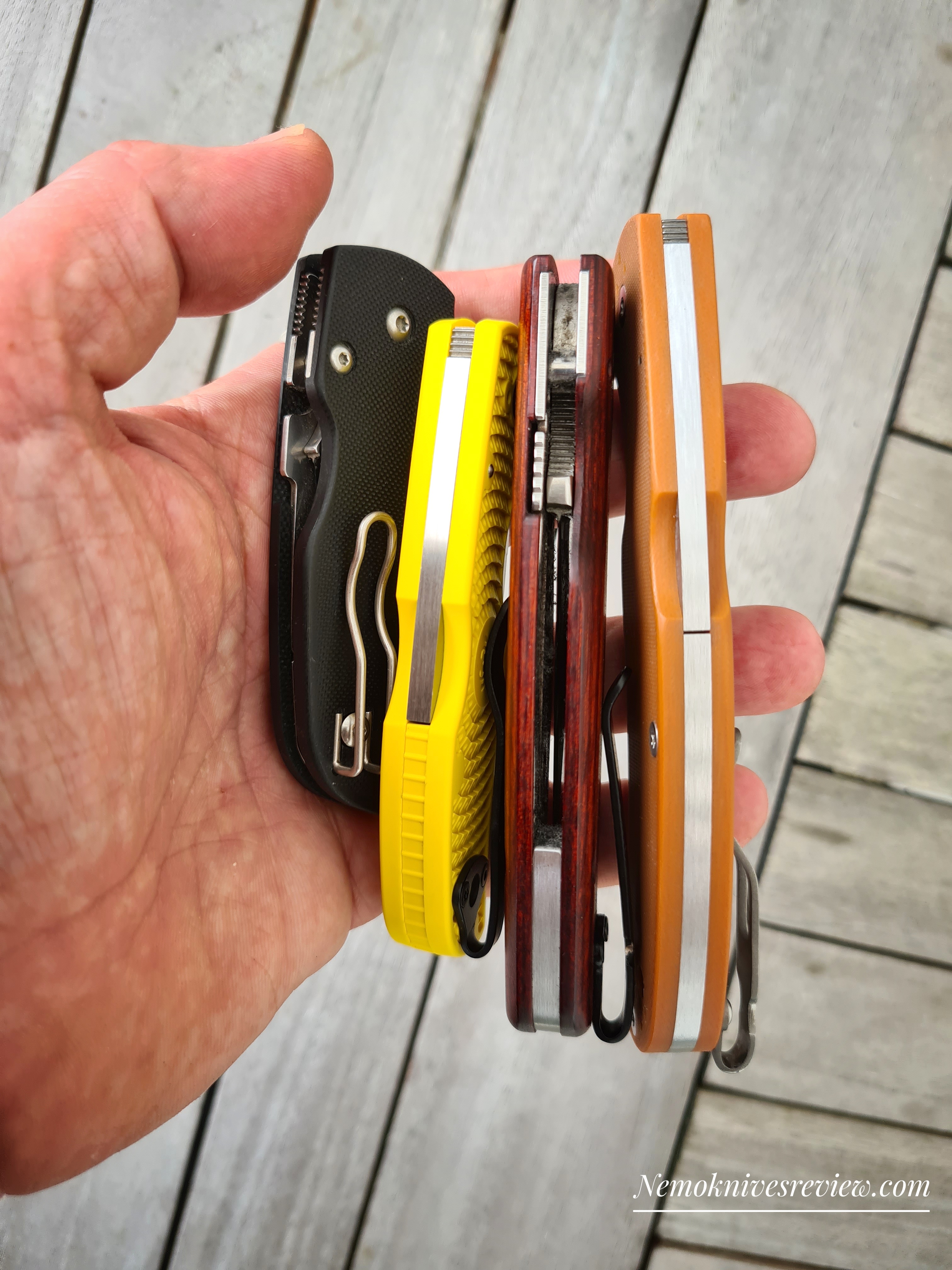
The last experience I got with thick all-G10 construction knife in the Spyderco Family was the great Manix 2 Lockback (sold for 99 euros !) which was a great hard working folder.


The G10 slabs are much more thick than with the steel liners construction.
Quoting Sal:
“Actually Eric and Tom went over this model with the engineers for quite a while before making the decision to make it liner-less. We’ve done a lot of experimenting lately and you can see a lot in the many different designs and options. It surprises me that some would think to make decisions on values without any experience. if we screwed it up, we’ll fix it, but we don’t screw up often considering the many envelopes we’re willing to push.”

Compared to the Police:

You can compared thick G10 and thinG10+Liners.

As with the steel liner’s knives, there is zero flex and zero play, horizontal or vertical. It is like a vault. (My old Benchmade AFCK BM800HSS got titanium liners and flexes a lot.)
G10 is a really solid material. They even makes stealthy fixed knives with G10 blades… A steel liner could also bend and warp, not a thick G10 slab IMHO. Also the Cold Steel Recon folders are steel linerless and Cold Steel’s Recons are known for their sturdiness. I got an XL Recon and the lack of liner is really not an issue.
The blade, helped by two bronze phosphorous washers, chutes free when unlock which is very reliable and easy to learn to put back the knife in the pocket. It is done smoothly and fast.
It is a very secure way to close your knife.

Let’s not forget: a one hand opening knife needs to be a one hand closing knife. The best example is using a knife at the top of a ladder: you want to be able to get the knife back in the pocket easily and safely.

I’m not a huge fan of the hour glass clips founded on the Native 5 and the Delica/Endura/Paramillie/Para3. It has been immediately replaced mine with a Blade4sell small titanium clip.
Let’s do a family photo:

On the Shaman (“made to be a fairly heavy duty folder. Simple, but stout.” according to Sal), the Chief, the Native and the Lil’ Native my favorite clip is that last one.

The Native family is the no “hump” clan of the Spyderco Catalog.
The Chief is co signed by Eric and Sal.

Back to the Orange Chief, I was not really pleased also by its edge geometry. I felt it thick behind the edge. Even if the knife was razor sharp out of the box, it could not pass my plastic bottle test which consist in cutting the butt of a soda bottle by the center which is thicker.
The thin Manly City was able to do it right out of the box, as were able my Swayback, my PPT or even my Delica too for example… The champions being the Michael Walker and the Nilakka.
It is a matter of “deshouldering”, convexing the edge as always.

Diamonds are super steel best friends.

And now it is able to pass the test. 🙂
But let’s do it again for good measure.

Once thinned with diamonds, I usually strop it for a nice shining results. So far I need more elbow grease but it slowly get better and better.

Also the choil was very sharp to my taste. A little diamond filing and it was much more finger friendly.

So far, the Chief is a slim knife but destined to be very polyvalent. When the Shaman is very outdoors oriented, the Chief finds its place also in the kitchen.
It takes time to built a natural patina on Rex45 but it will come later after some fruits and hot meats.

The orange scales make it very table’s friendly too, despite its very pointy shape which could make sheeples nervous.

In a plate nothing force you to keep the edge perpendicular to the surface. I have found REX45 being hard to dull on plates anyway. It is a very easy going steel.

Another easy going steel is K390 found in the Police Model. You can see it is a tad longer than the Chief with also a thinner stock blade.

The Chief is elegant and certainly one of the most beautiful design in the Spyderco scuderia. Their backlock is so solid, the handle will break before it. Sal Glesser knows that making a longer version of the Native was not as simple as a sketch on a drawing board. You can watch the video at the end of this article about that.

The double signature, Eric and Sal.