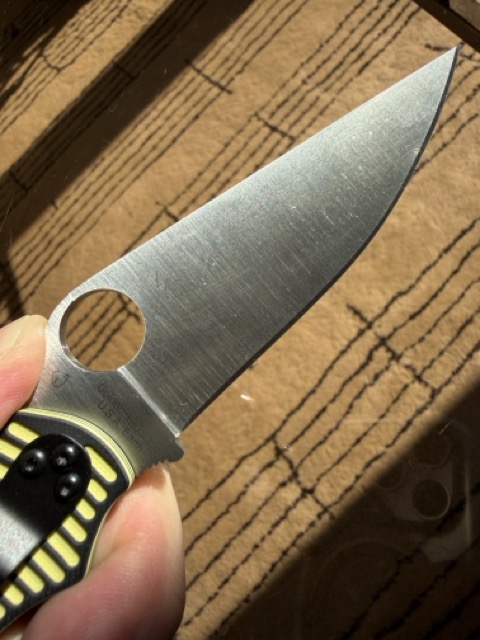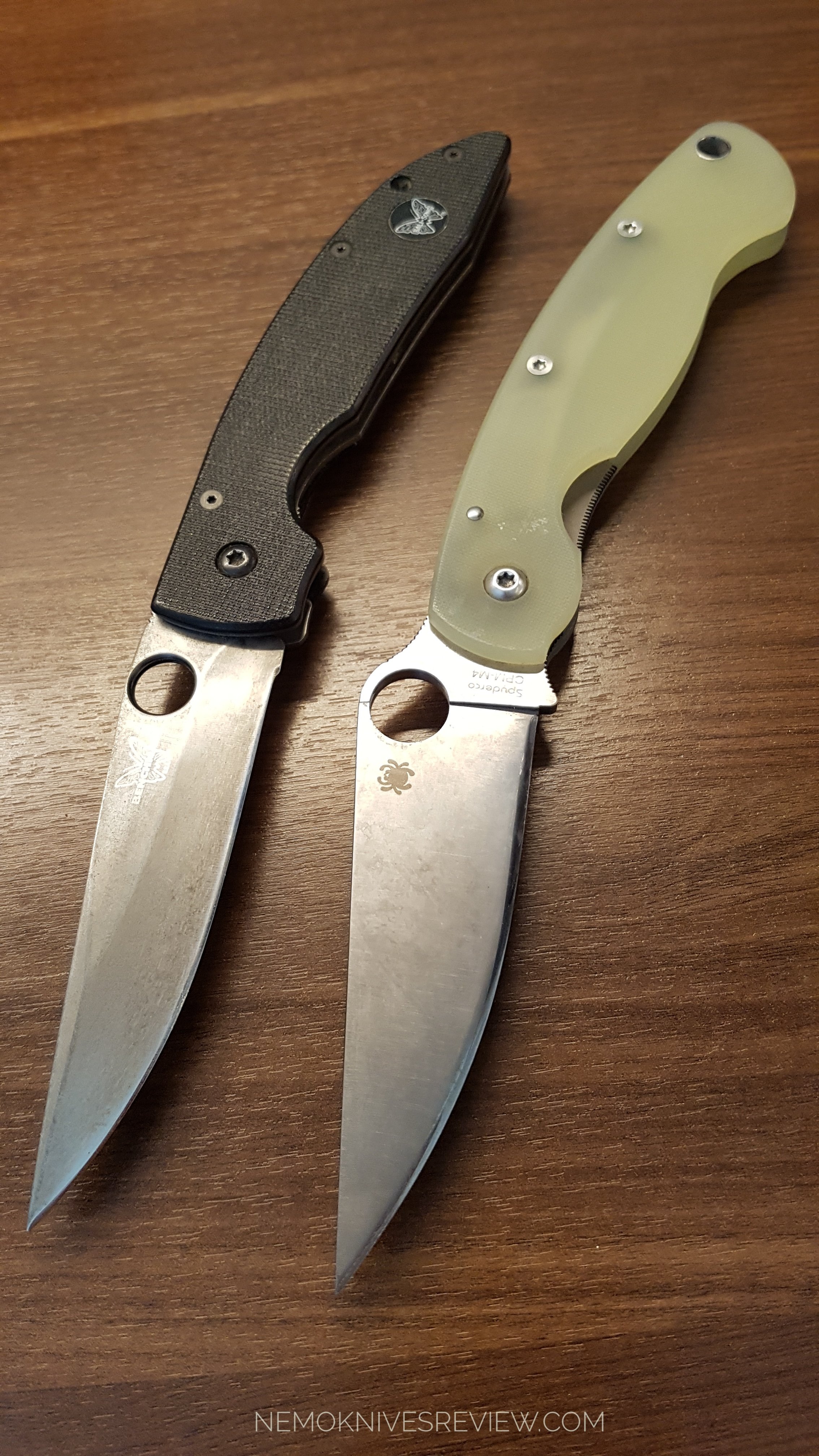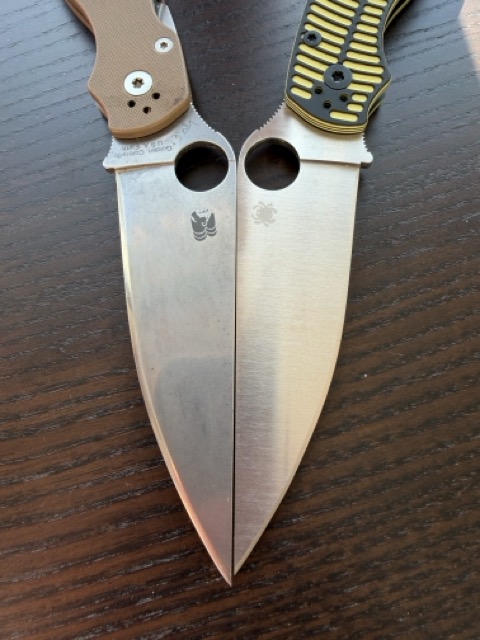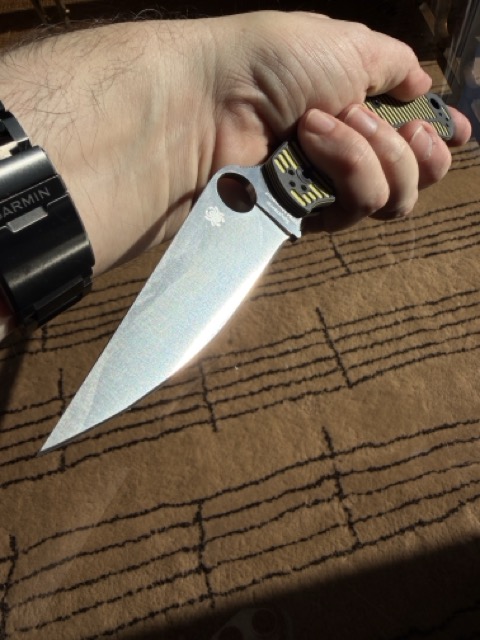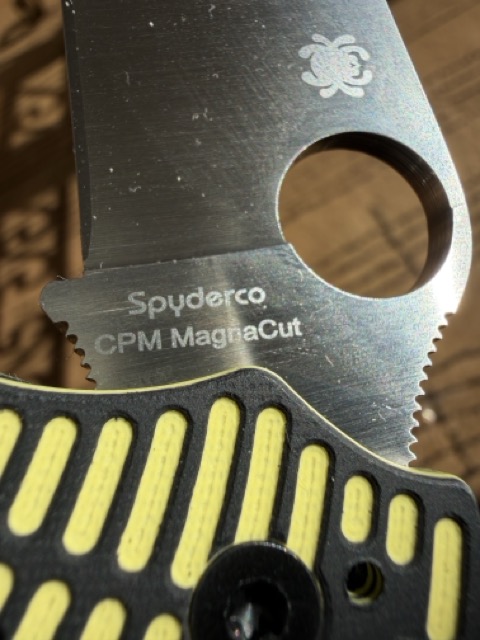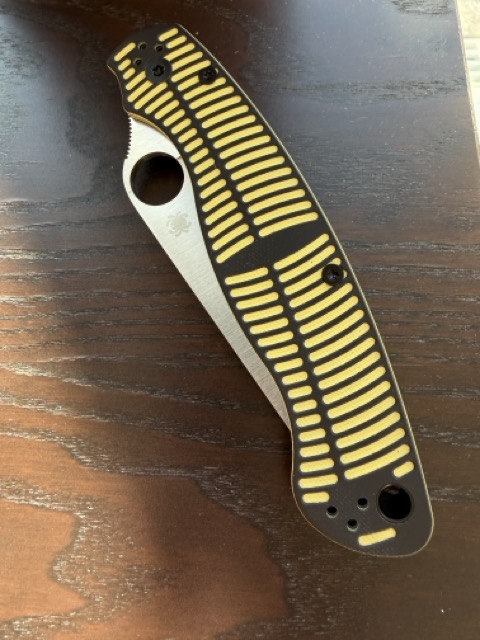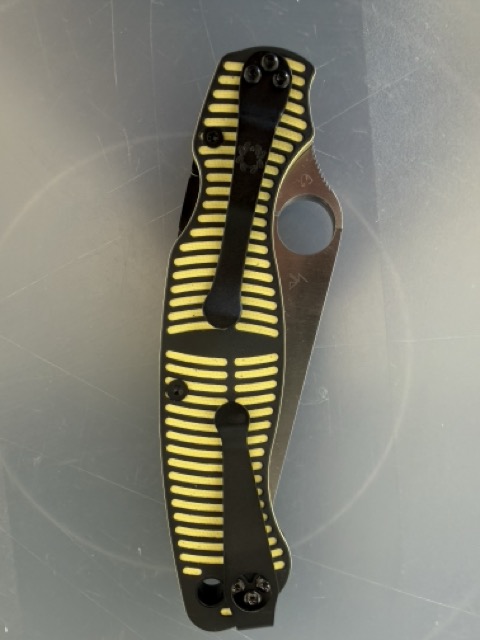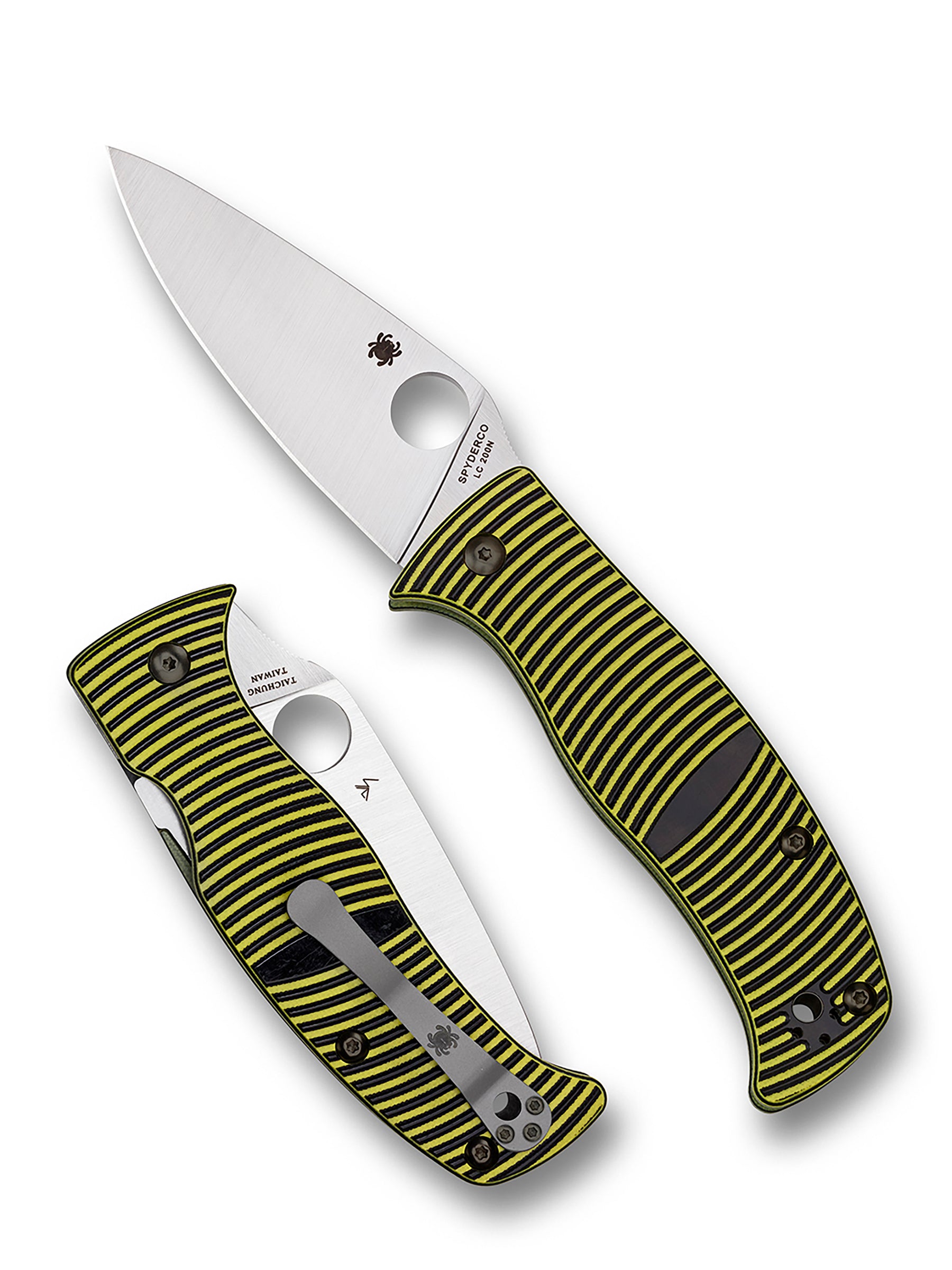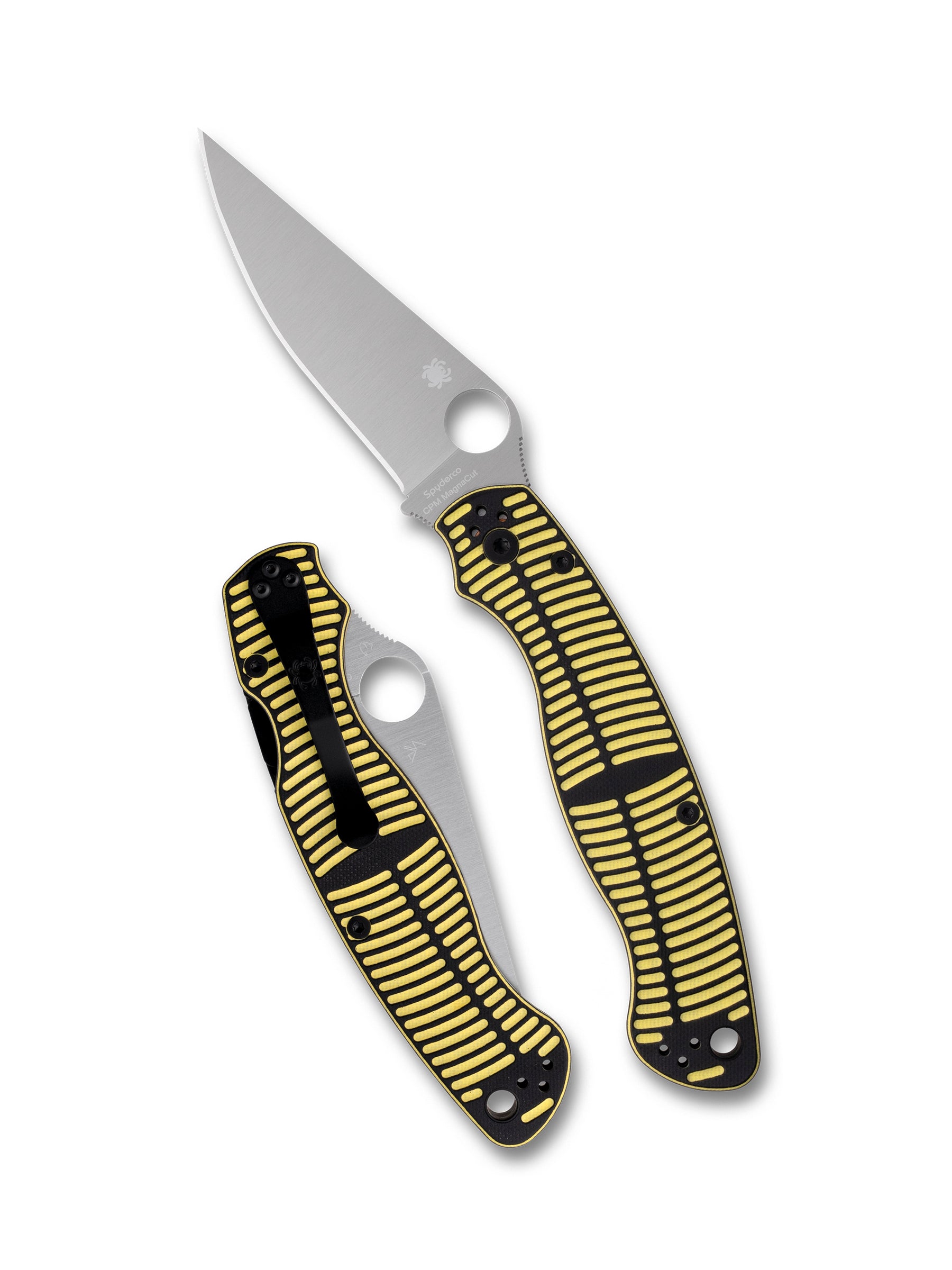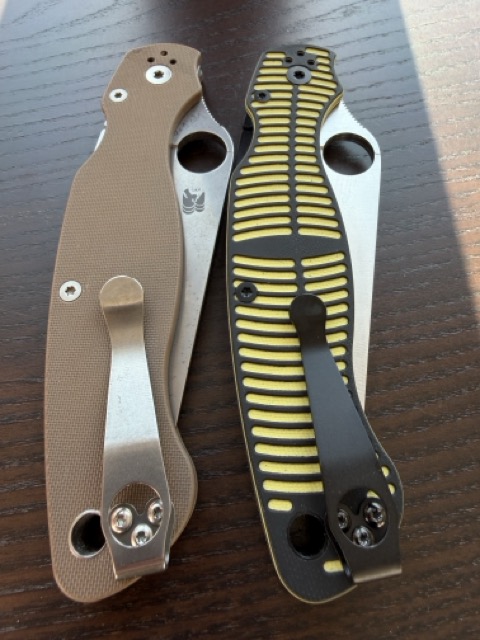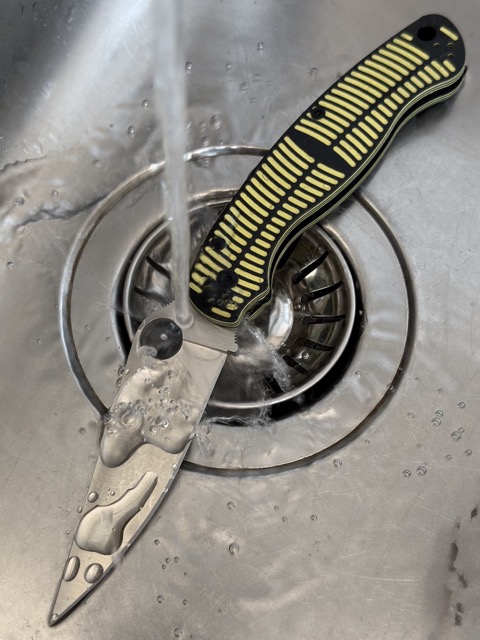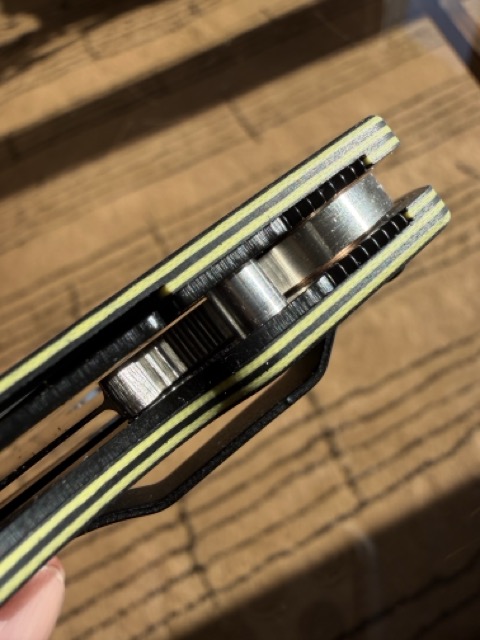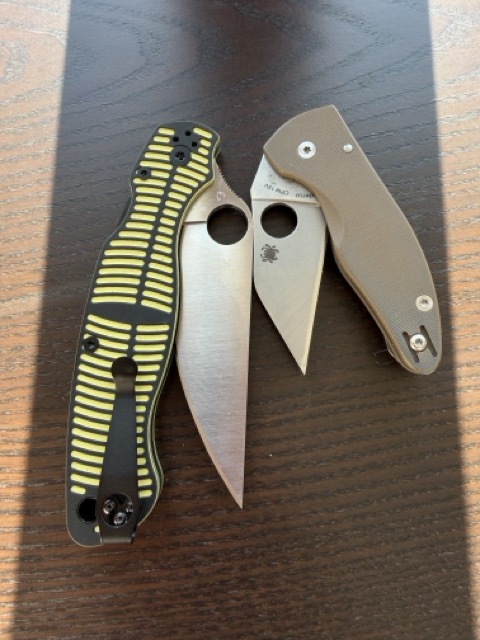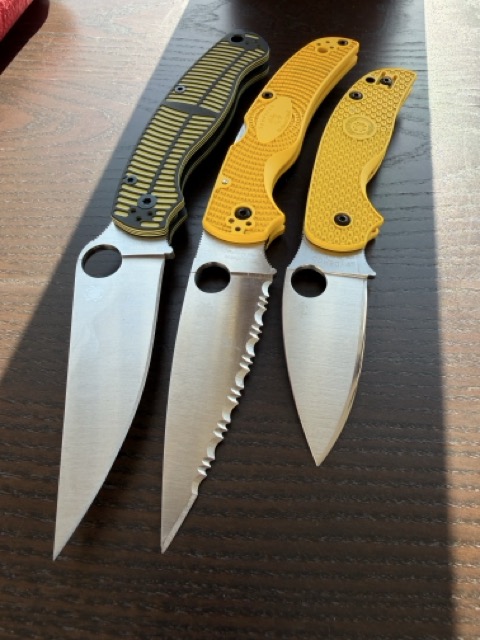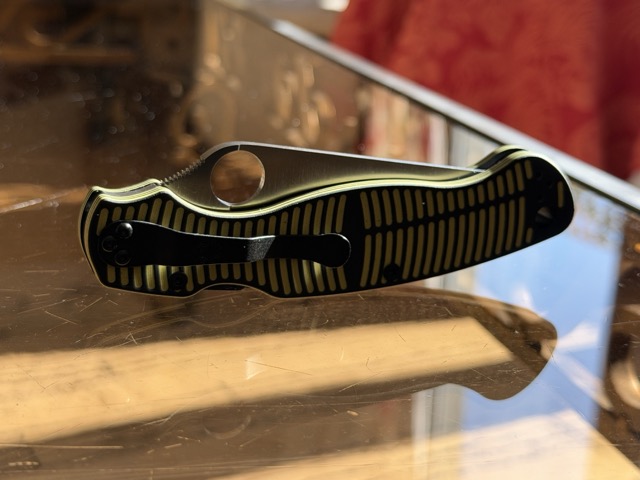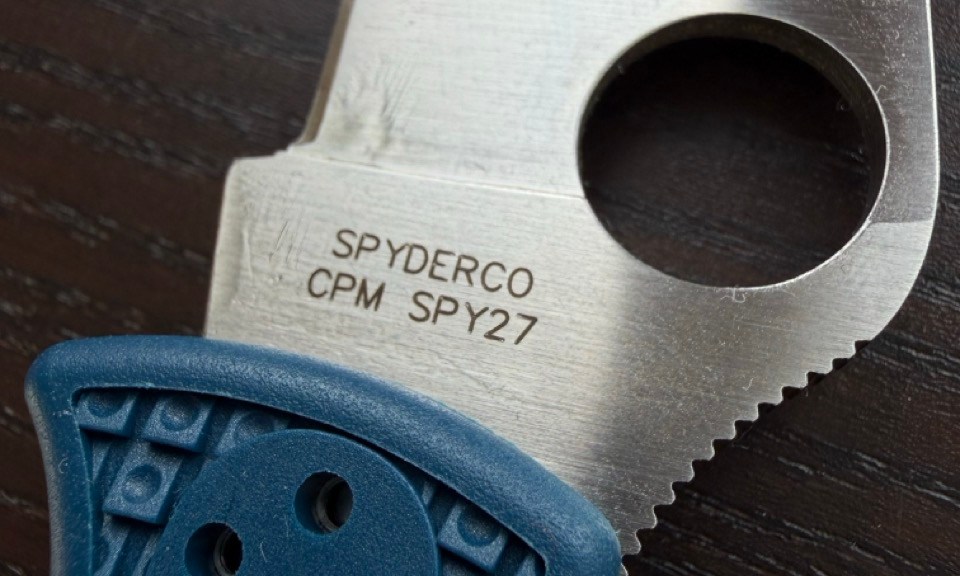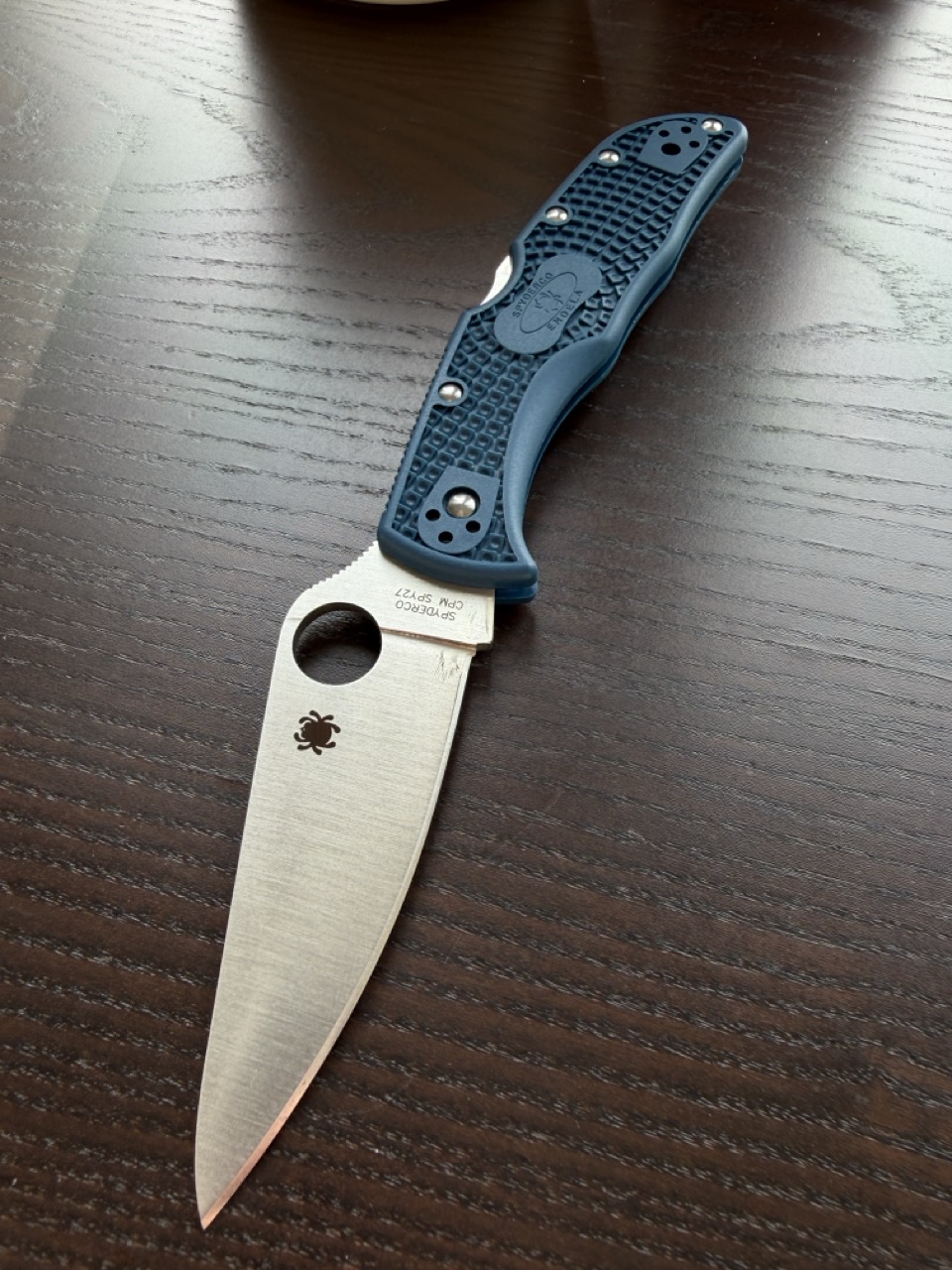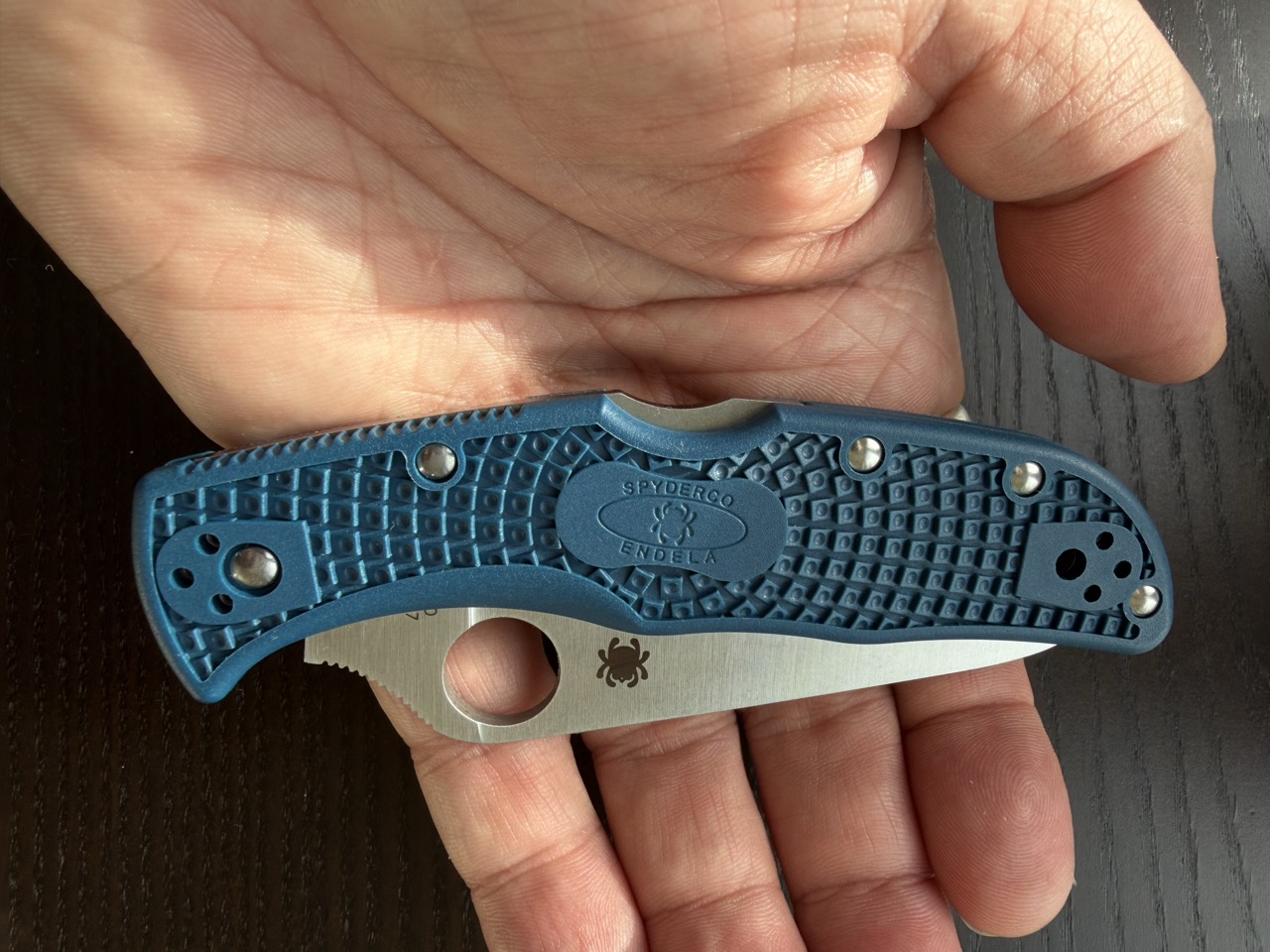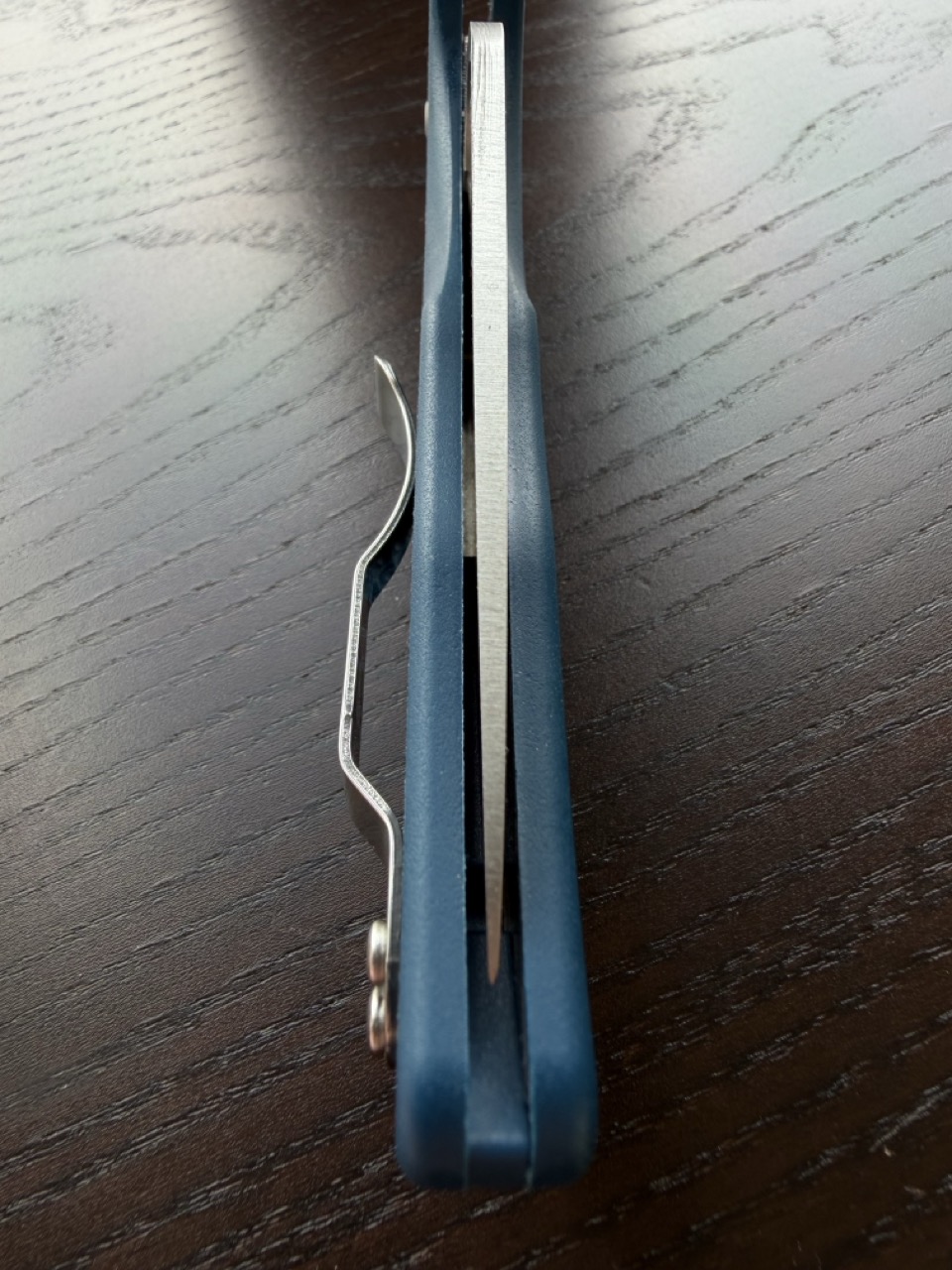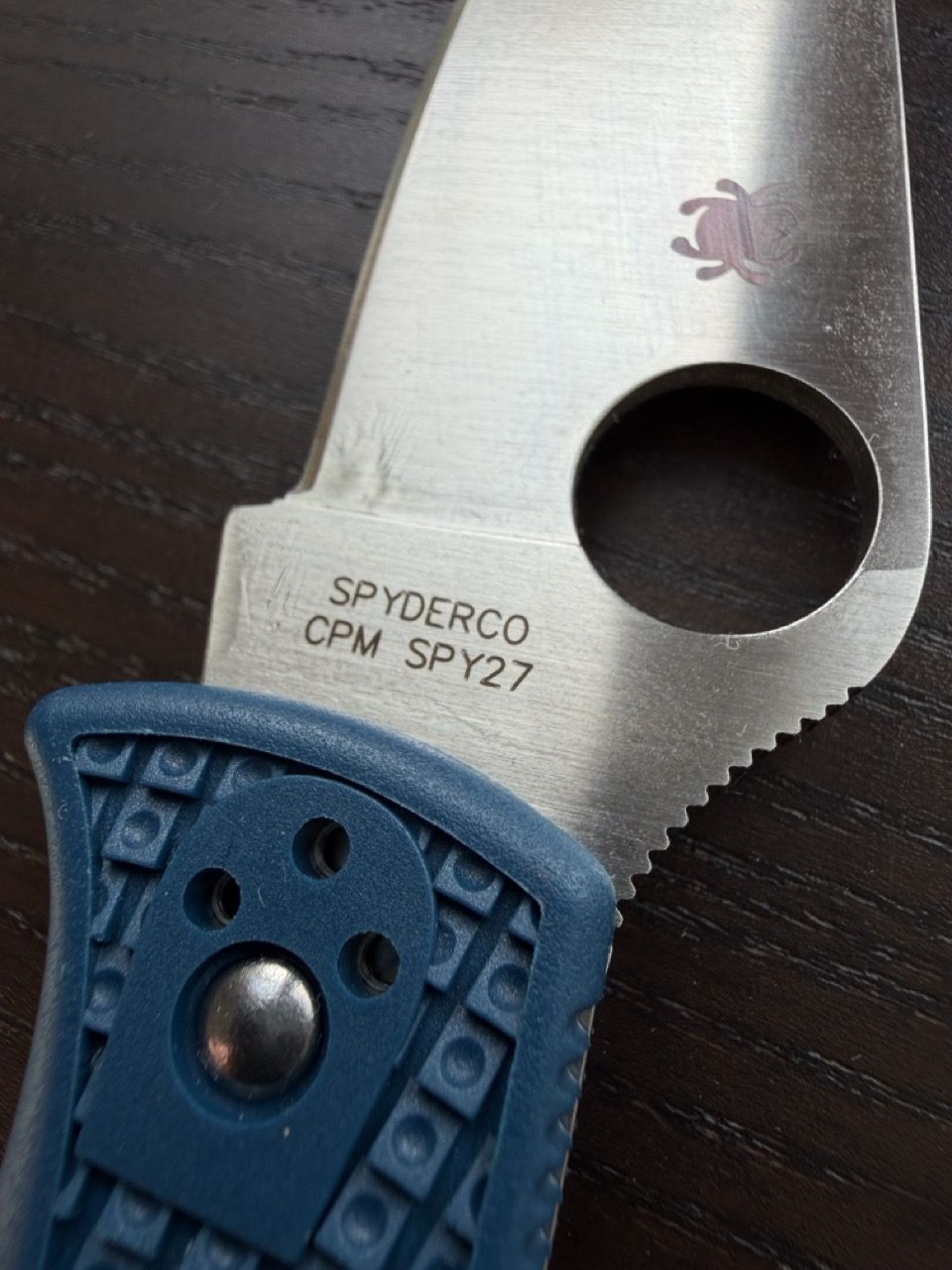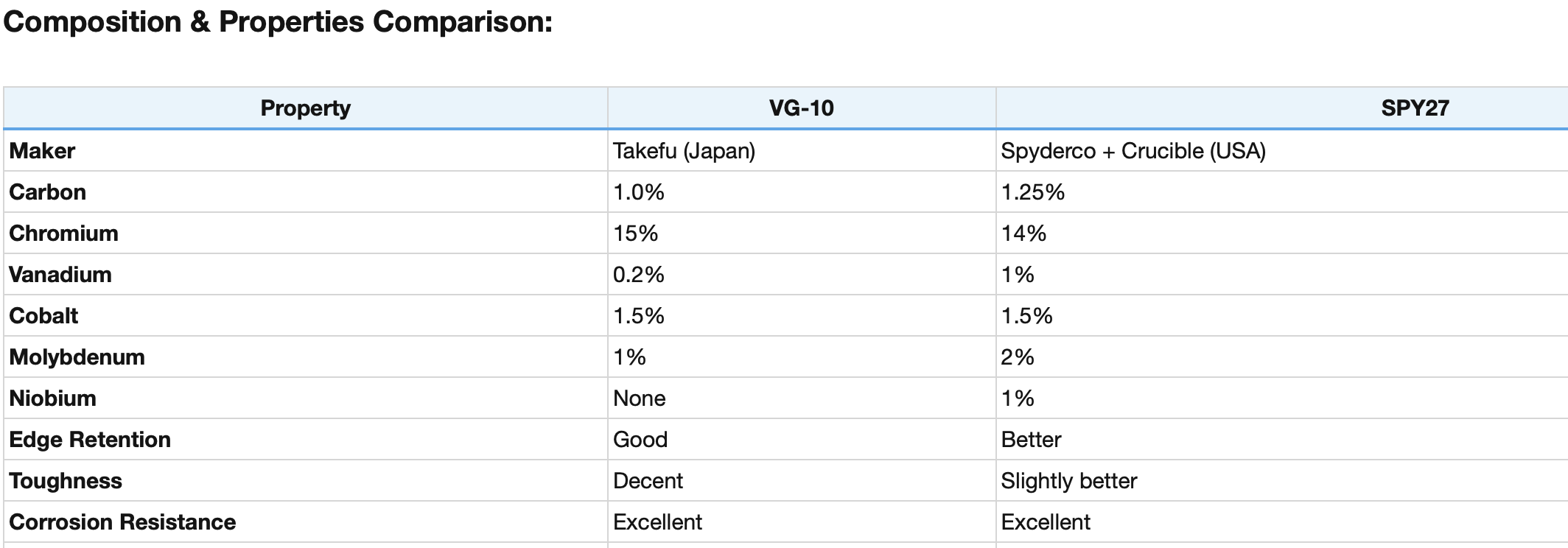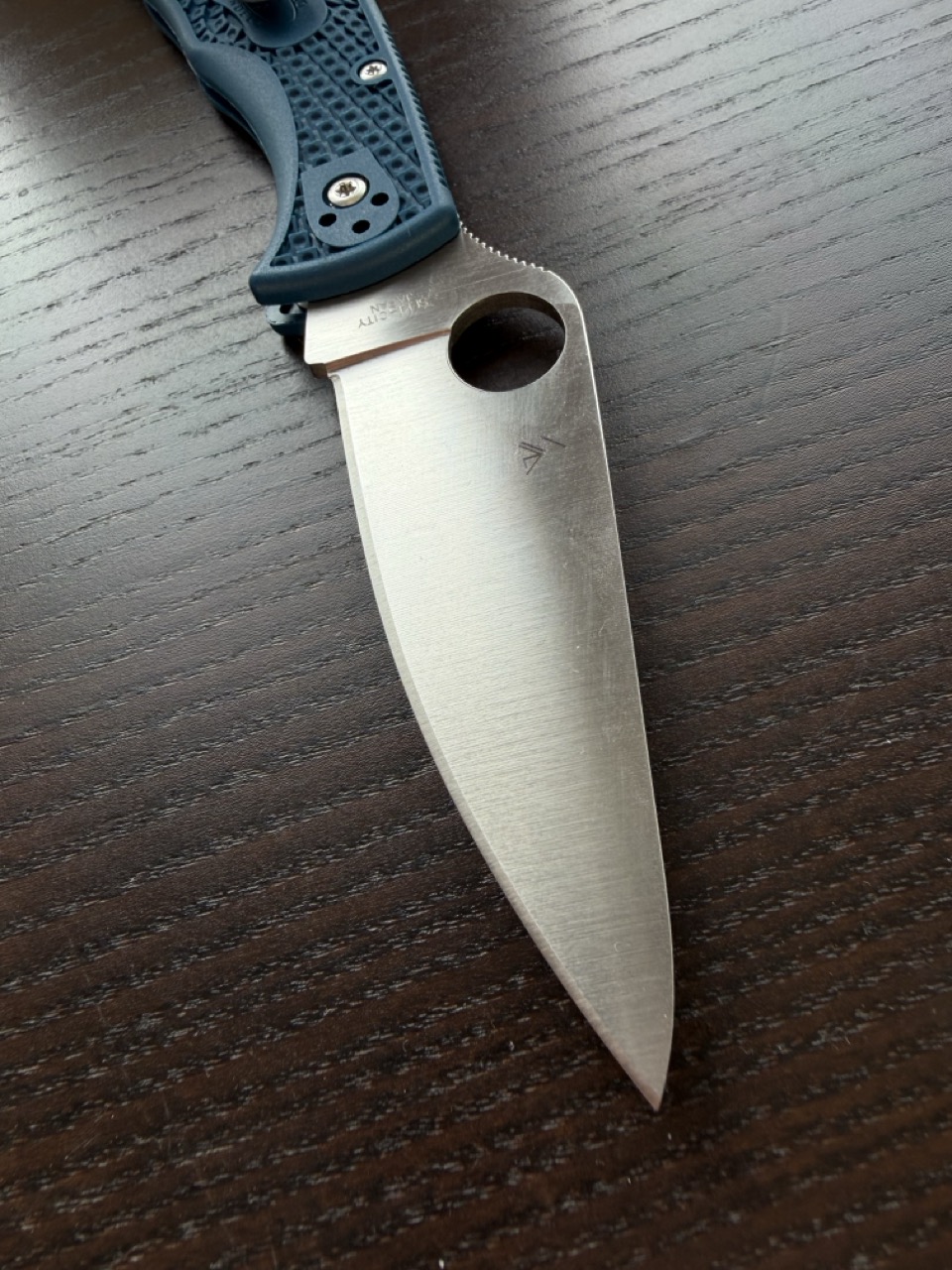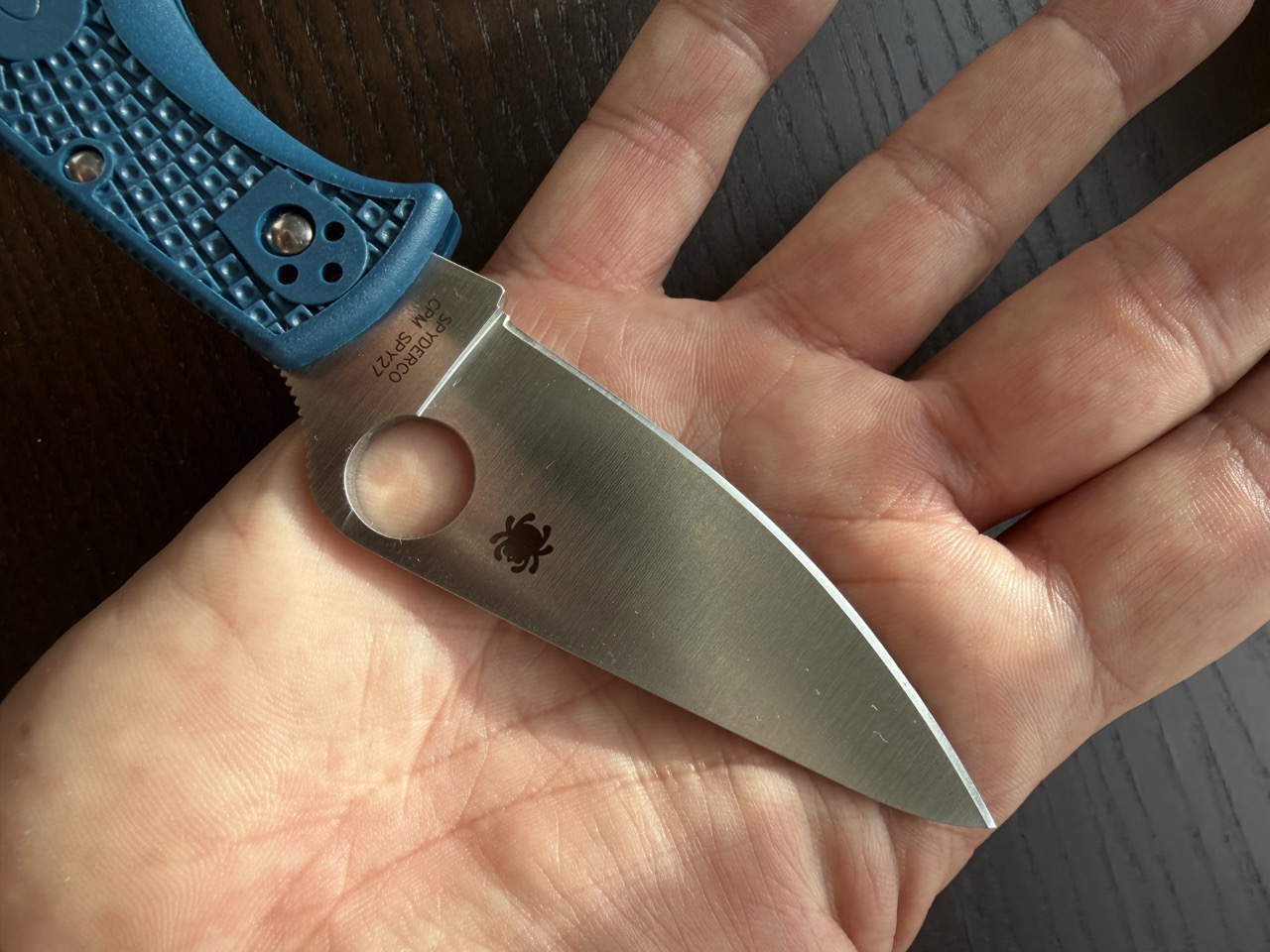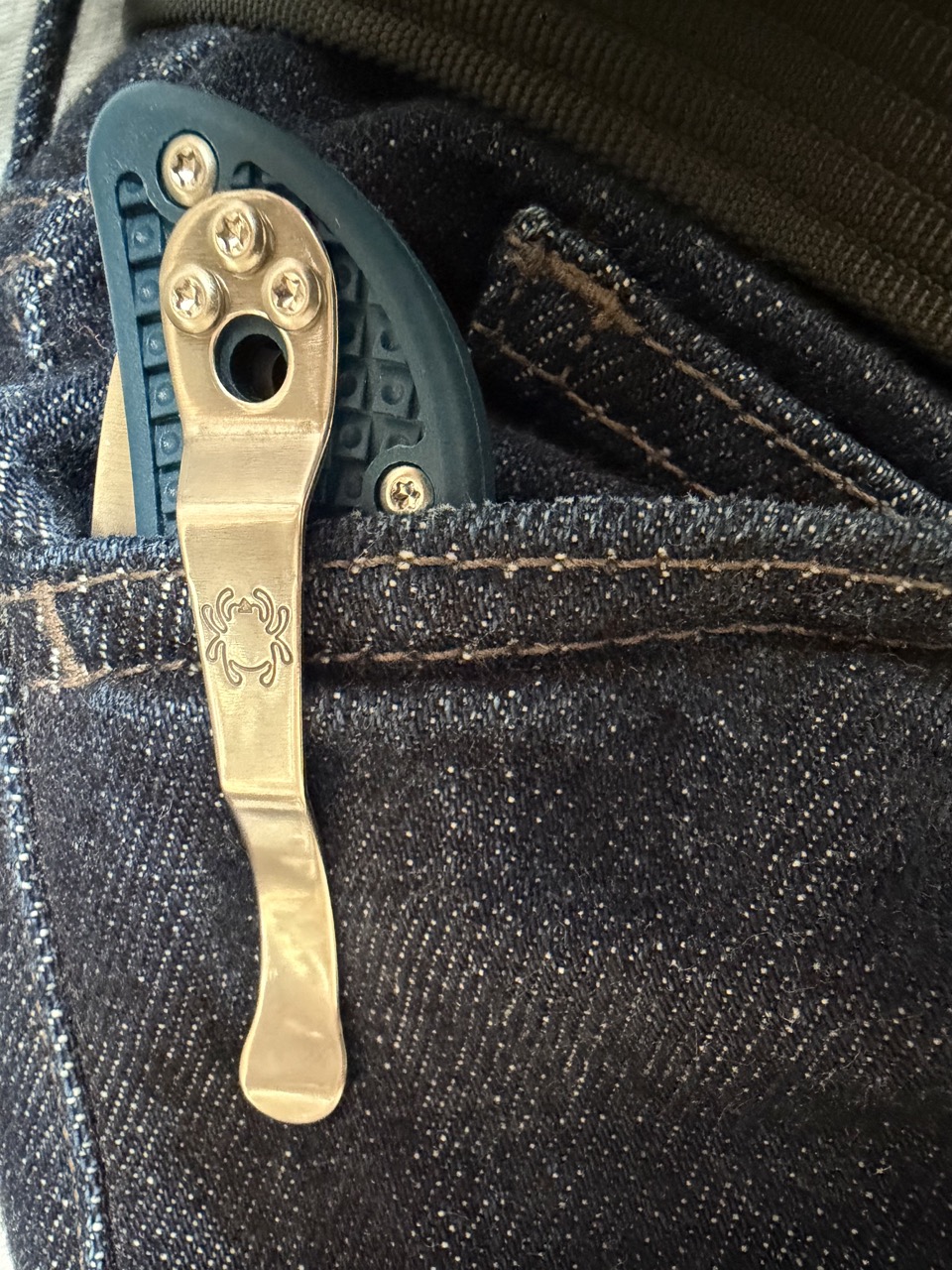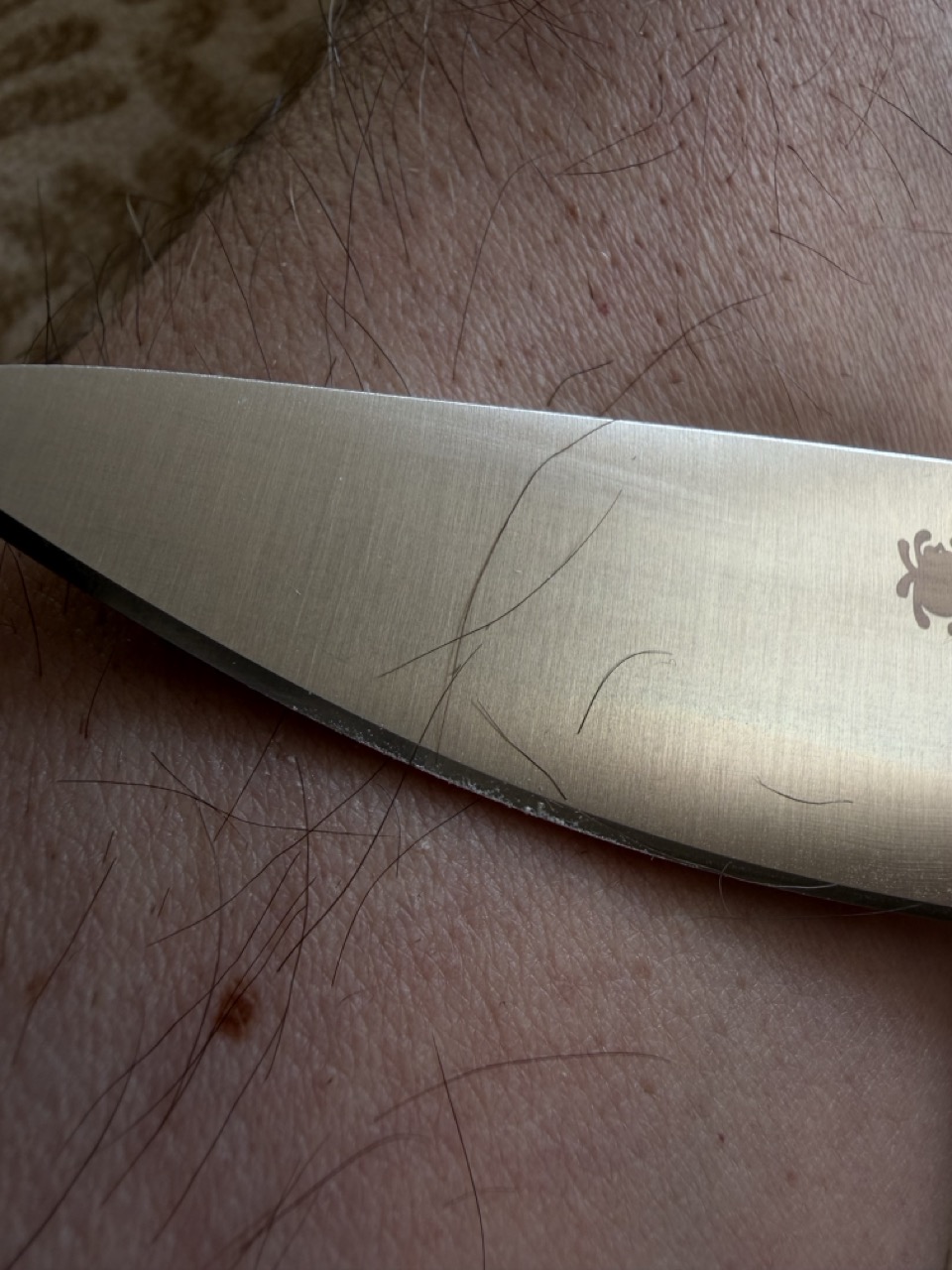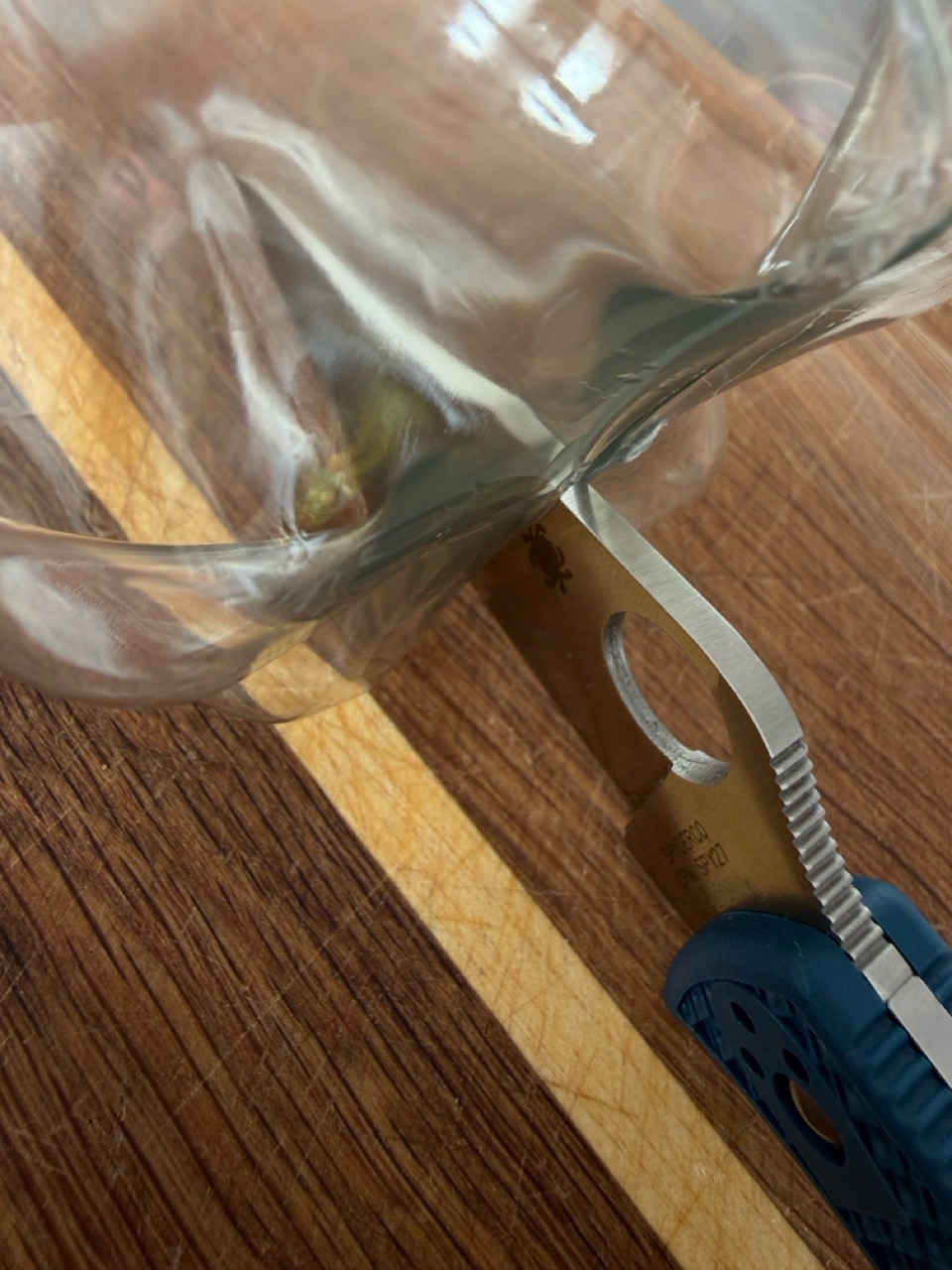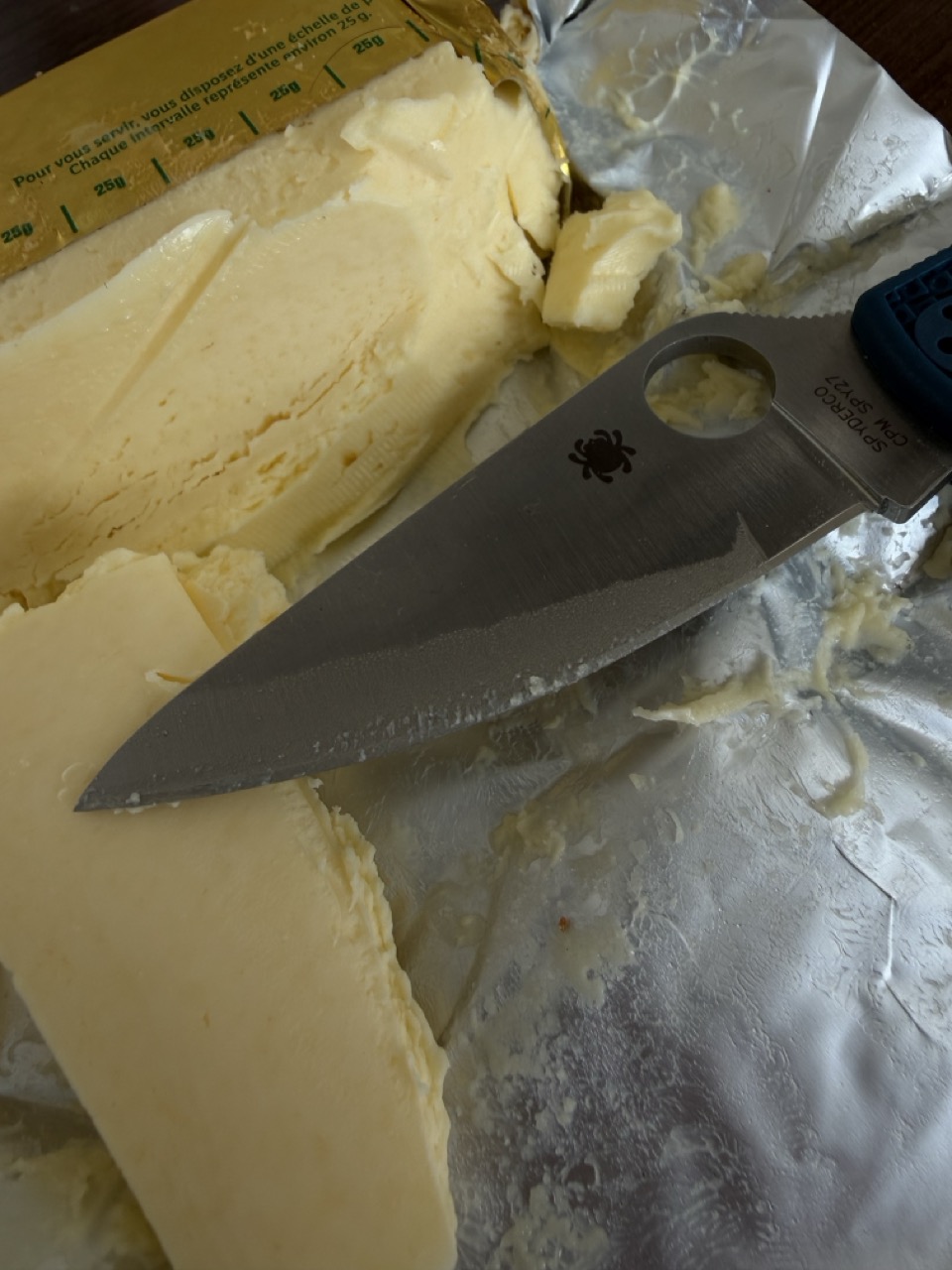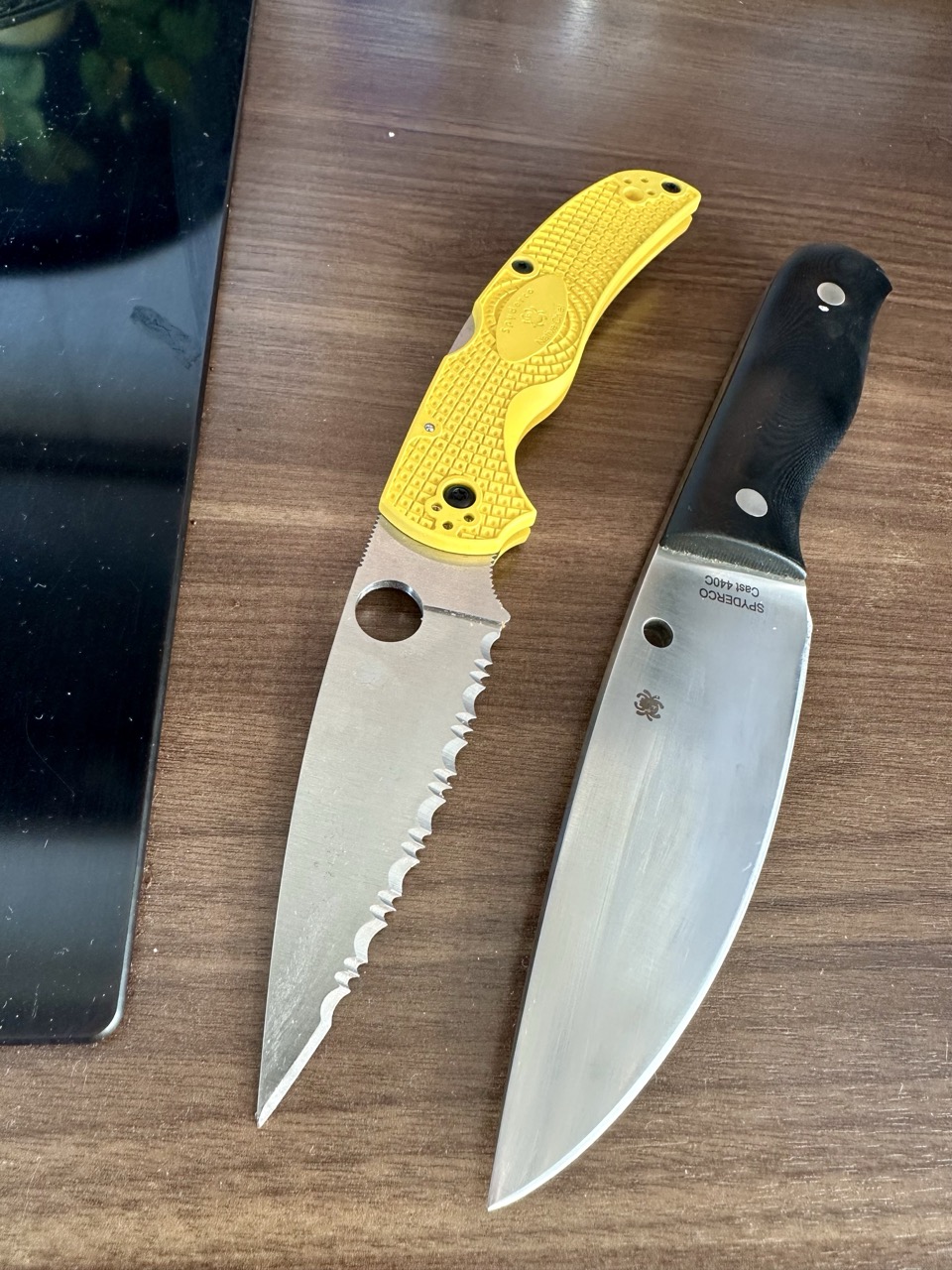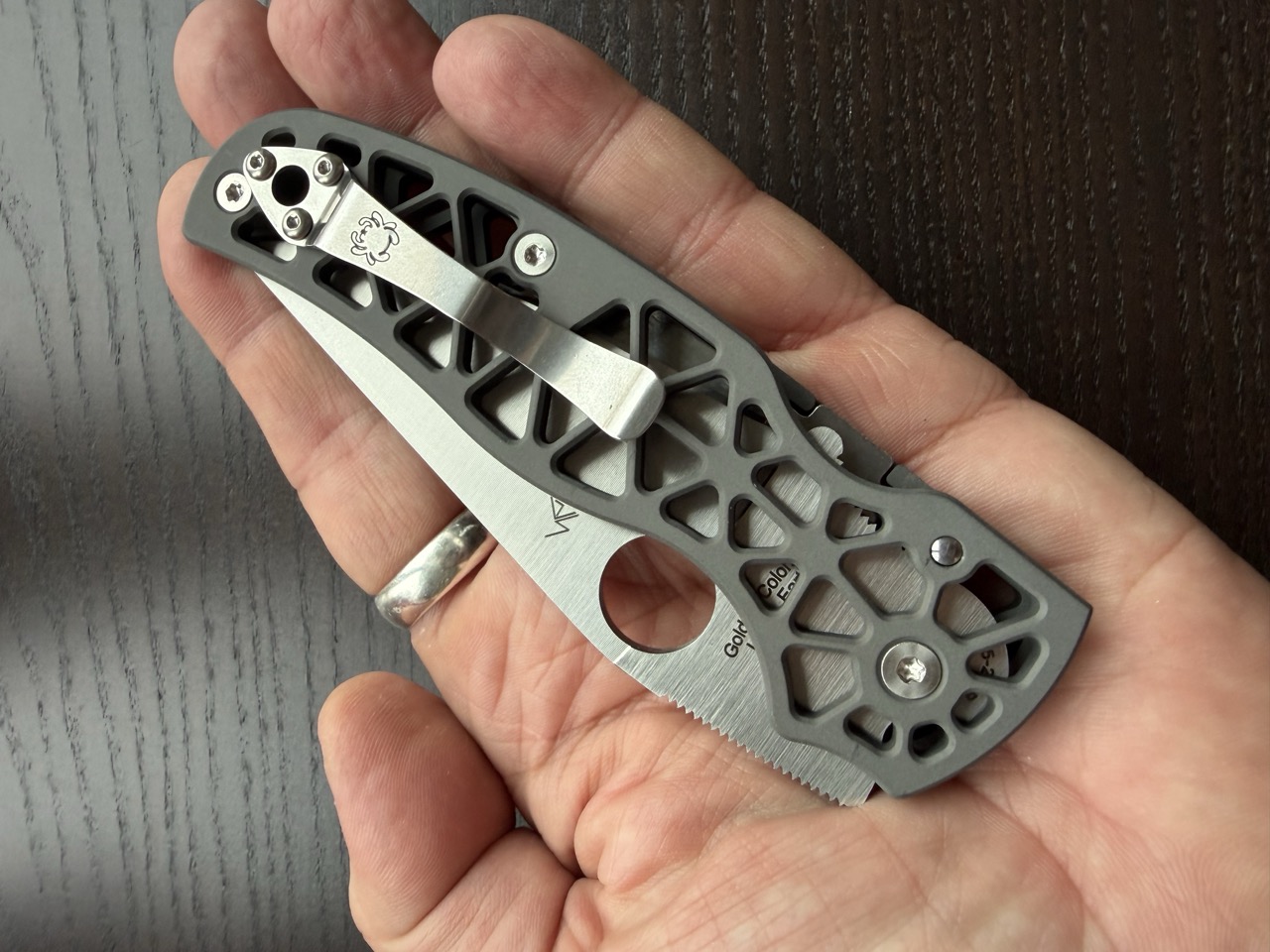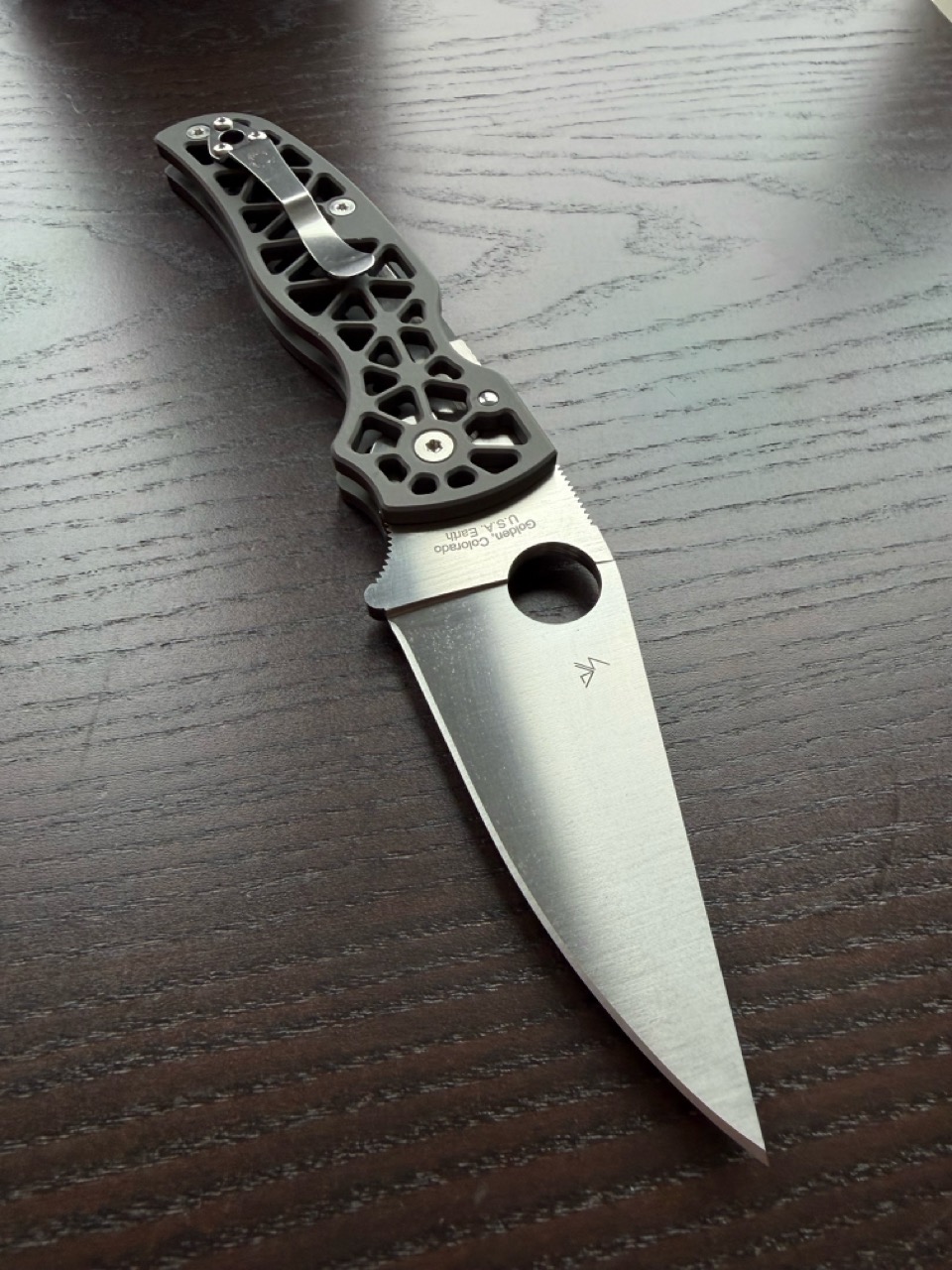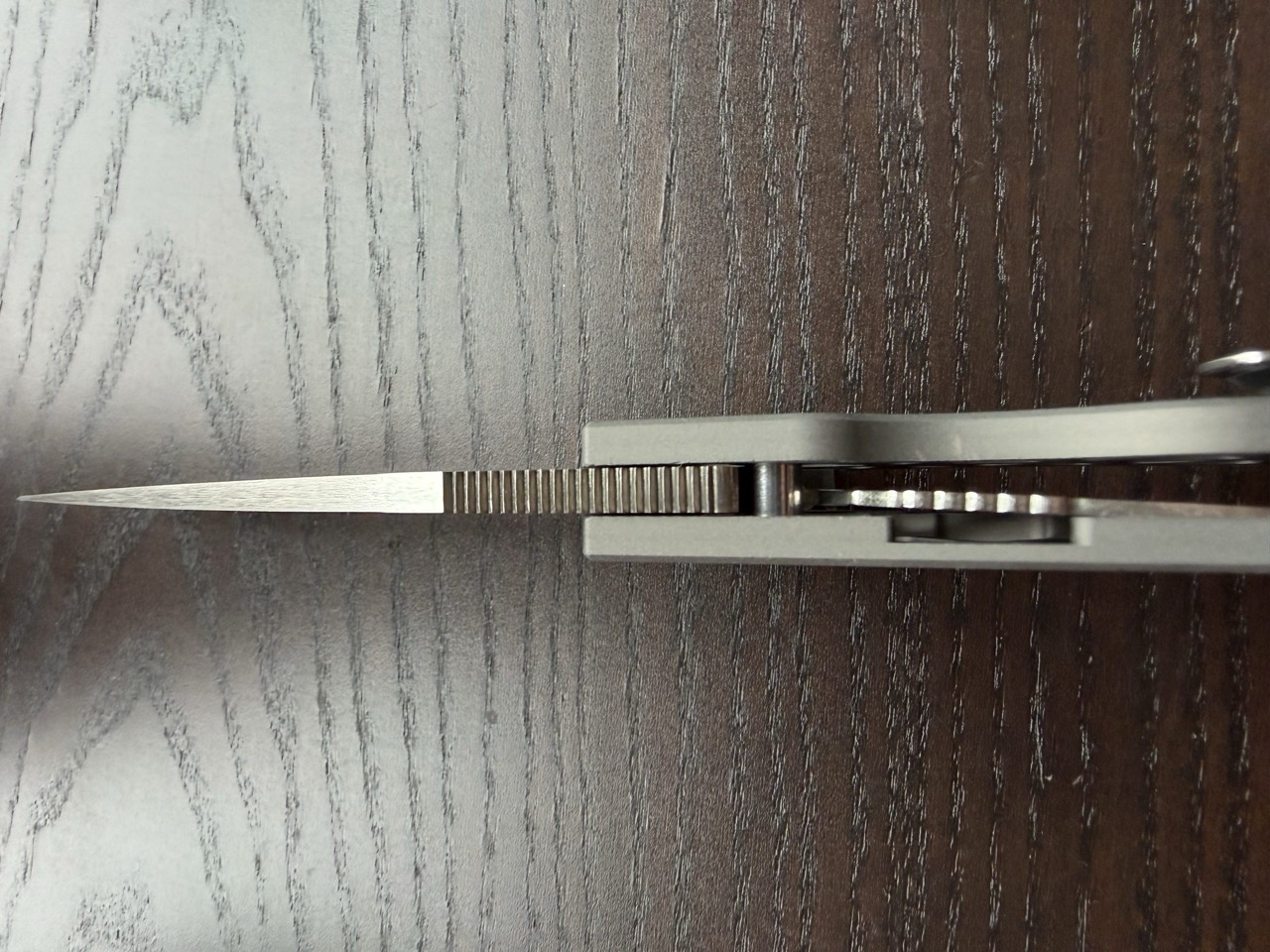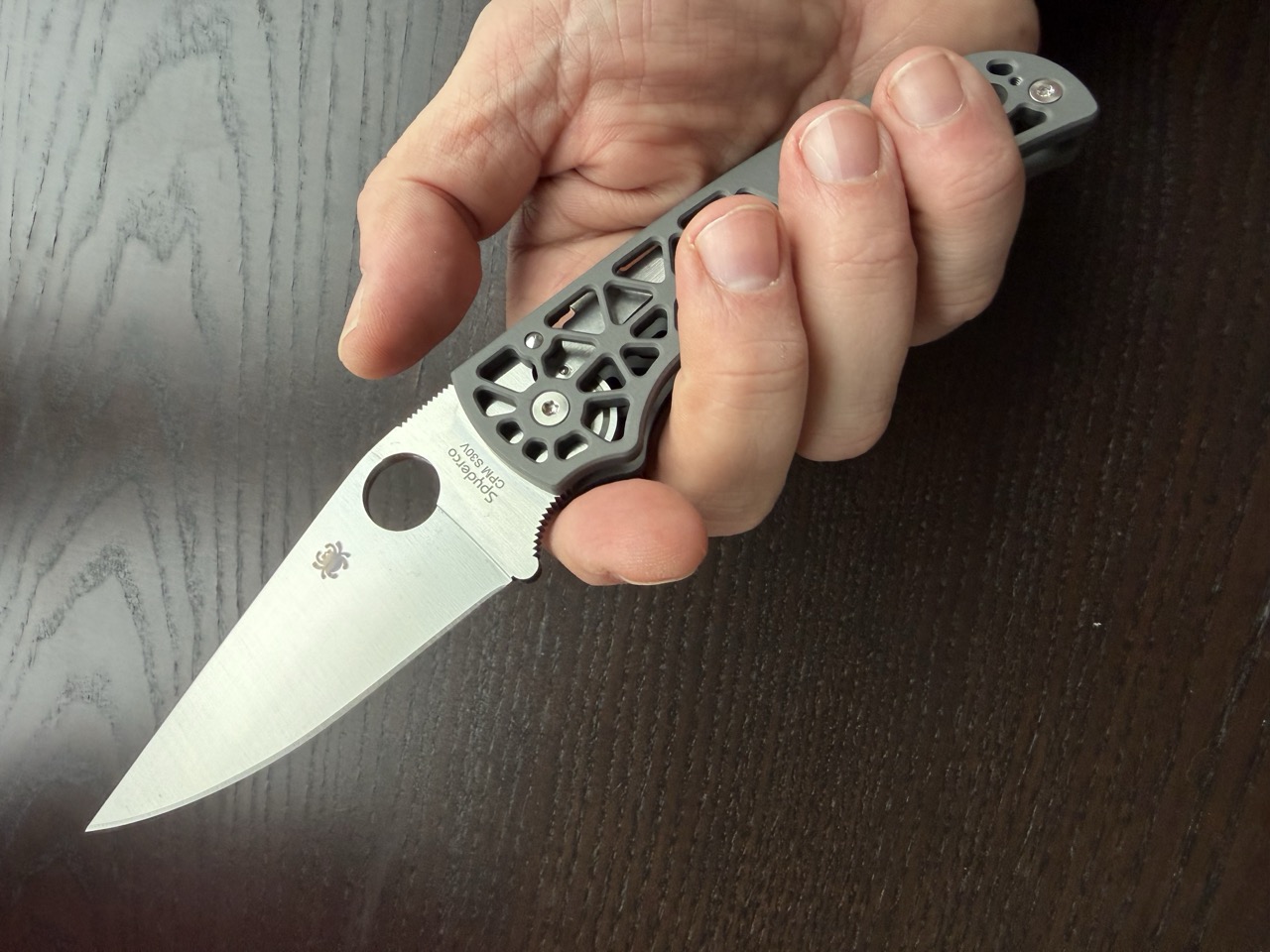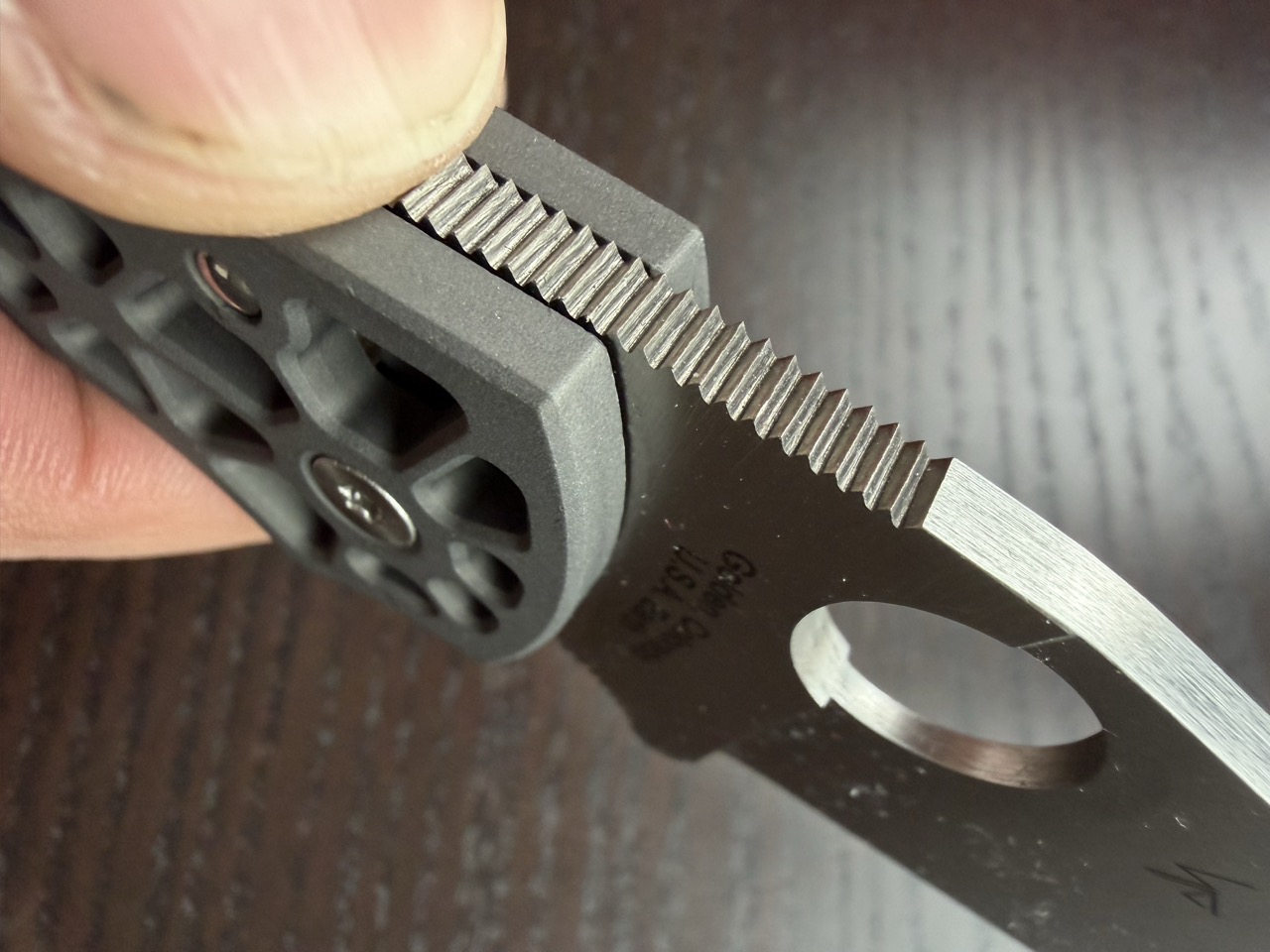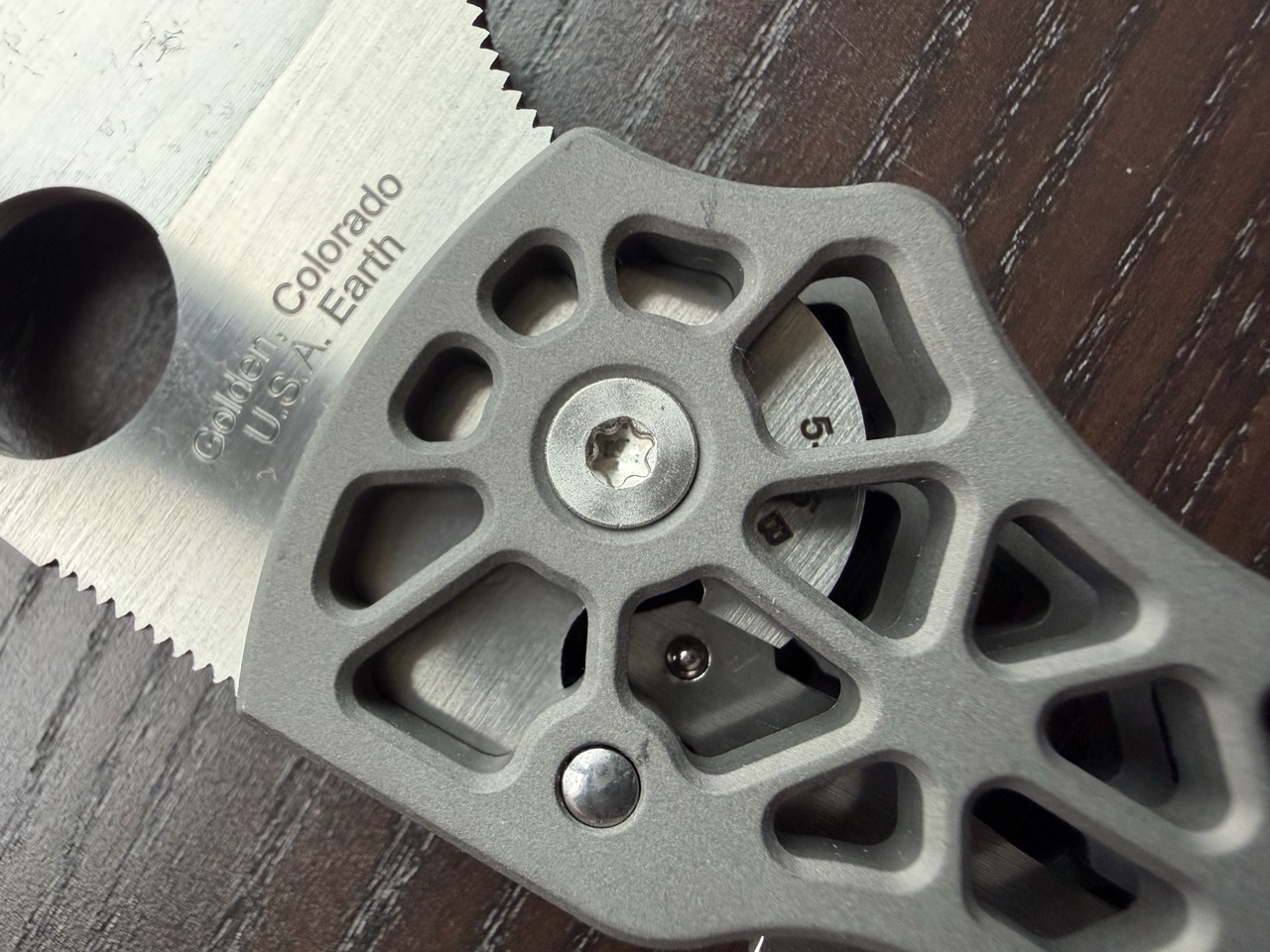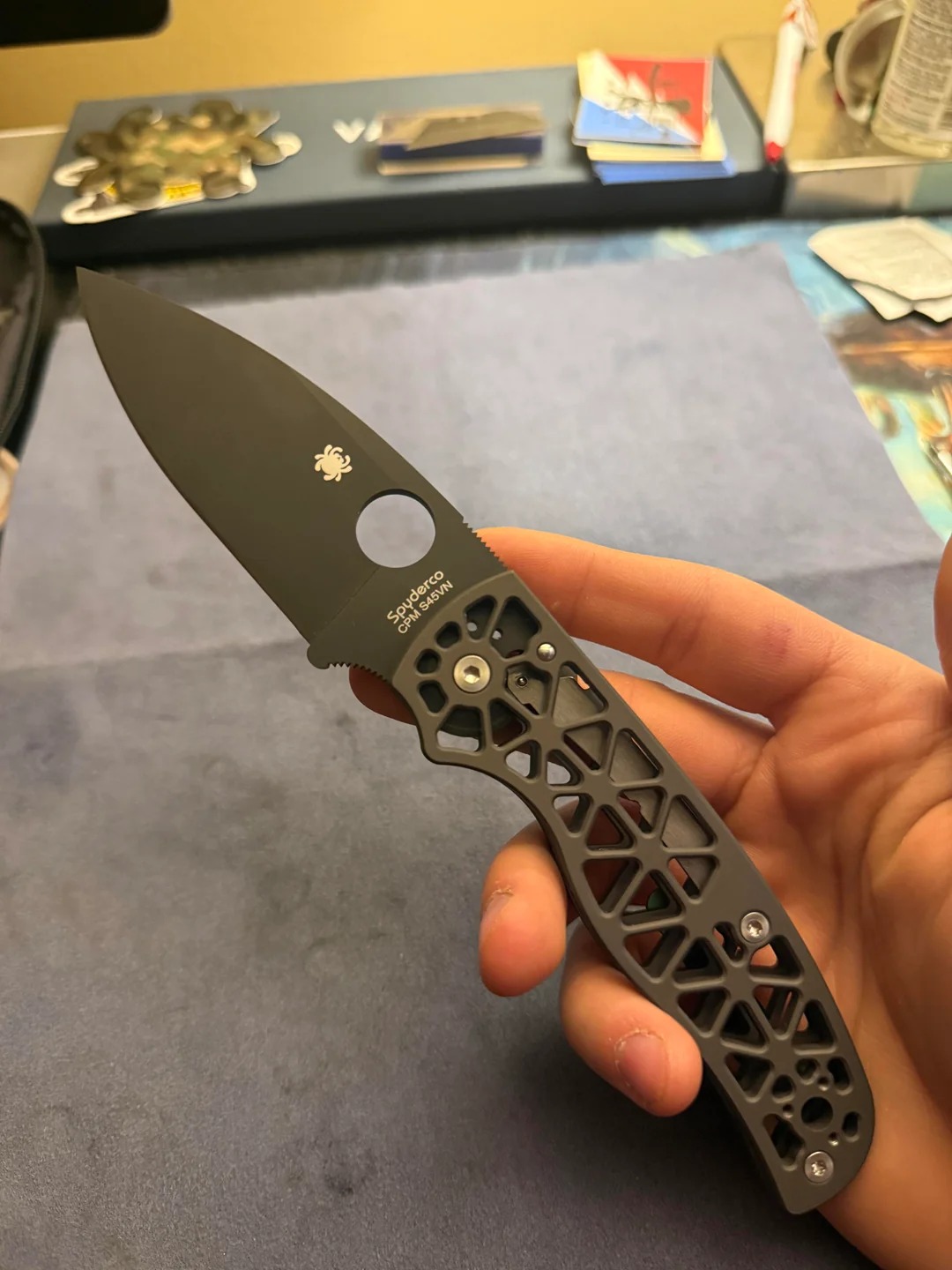
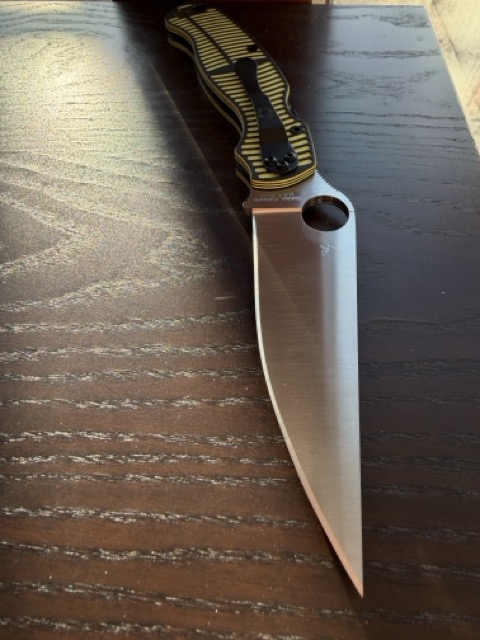
I sold my Military 2 in CPM-15V back in August. Yes I did ! Why? Because, for me, it was an overkill design. I could never quite get that 15V edge where I wanted it with my equipment, and—more importantly—I was almost afraid to use it hard. Such a Sprint Run deserved to be kept pristine for later… In my knife rotation, that niche of hard use folders was already well-covered by my Lil’ Temperance in K390, my Adamas in CPM-CruWear, and even my semi-serrated Tenacious in CPM-M4. The Military 2 felt like nothing more than an rare XXL Para 3, or at best a precious XL Paramilitary 2.
So I sold it to a friend, who was thrilled with the convex edge I had put on it. And with the money, I invested in a Microjimbo in CPM-15V—nicknamed Shard.
But then I kept catching myself looking at the Military 2 Salt, which in my book might be the best “military-style” folder ever designed: light, stainless, and equipped with a Magnacut blade. Then I even drifted toward the Manix 2 XL Salt… not released yet… Eventually, I had to admit it: I was missing the big boy that is the Military 2.
As you know, for reasons I can’t fully explain, I give names to my EDC knives. The habit probably comes from my youth, devouring Michael Moorcock’s Elric saga and Fritz Leiber’s Swords cycle. My CruWear Military was named Gandalf (grey handle). The CPM-M4 with jade G-10 was Ghost. My Military 2 in 15V was Gambit—after the chess term meaning to sacrifice material for positional advantage.
Well… I sacrificed Gambit. To invest in Gambit again.
A friend was selling his own M2 in 15V—bought after reading my reviews—because, just like me, the knife lived in a drawer and never found a place in his rotation. I immediately noticed he had put painfully a superb edge on it, better than the one I had given mine. So I bought it back. Somehow Gambit returned—sacrificed once, resurrected better.
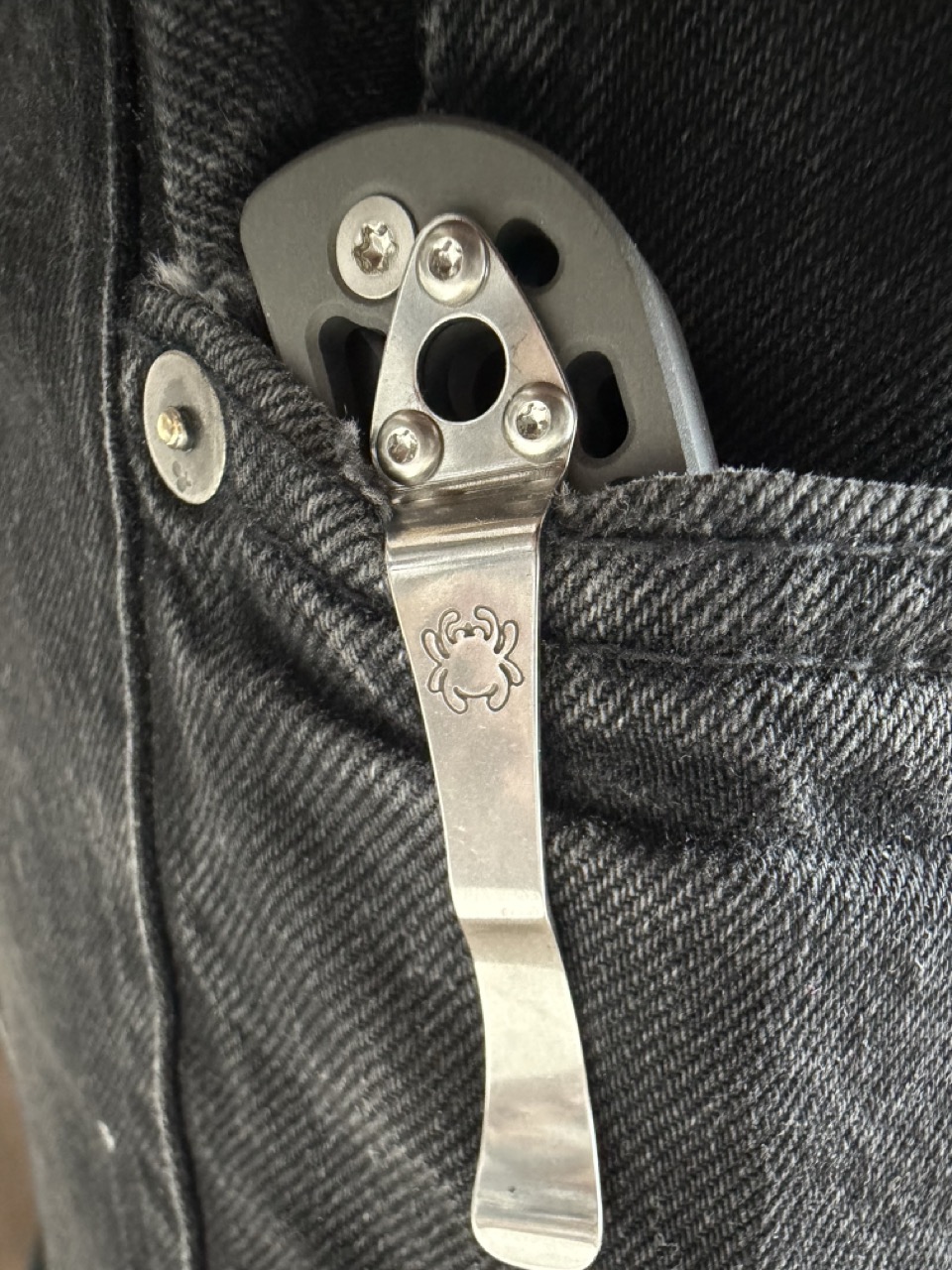
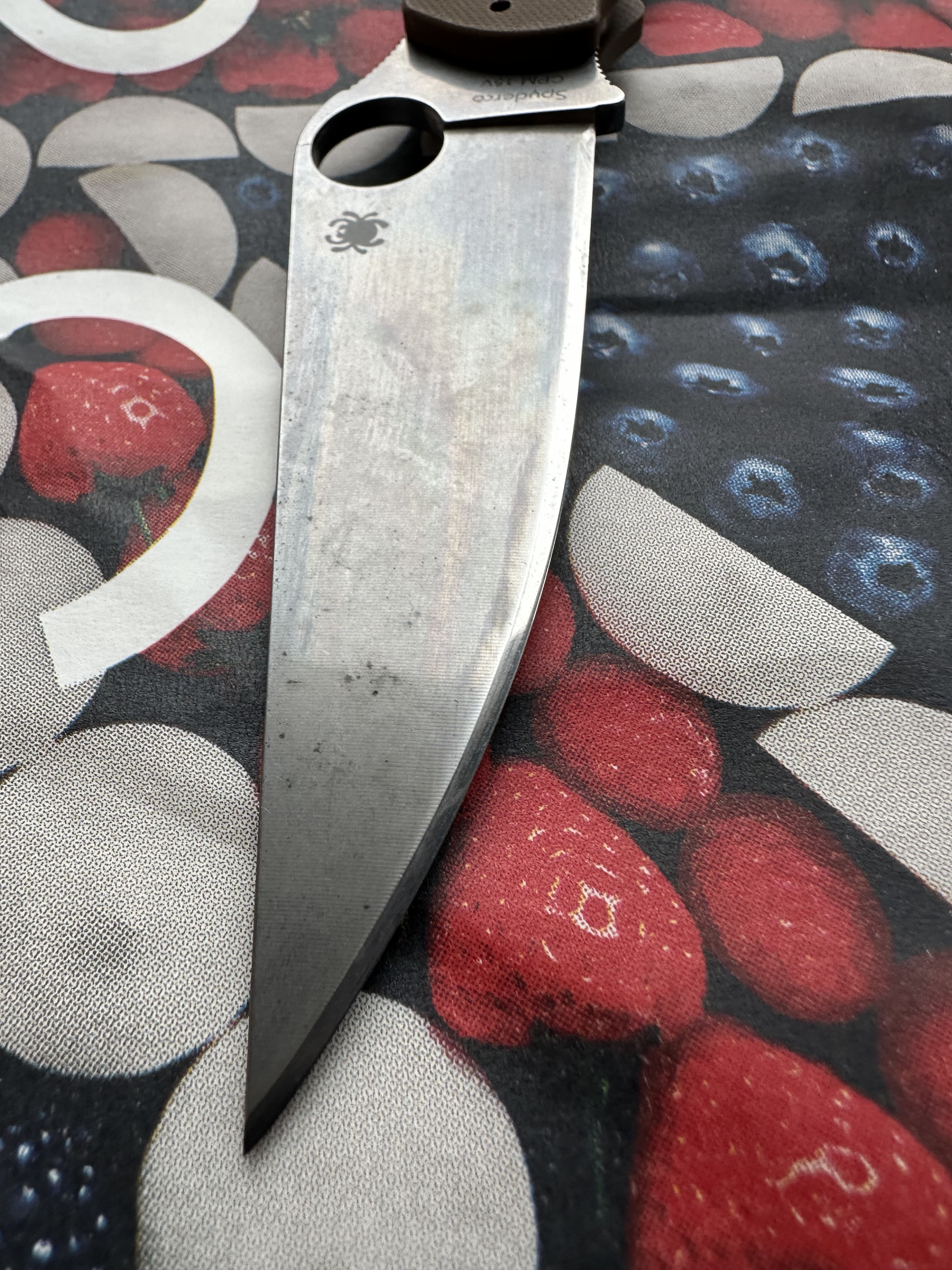
This time, I have decided to use it hard. The blade already has patina and even some pitting. It will be a user, not a safe queen. I have reinstalled a deep-carry clip, dropped it into my pocket, and off I go. Go figure, in those days on “Knife Angst”, I even carry it in the city—I don’t care. If I need to enter a museum, I just drop it in my bag with my keys. Again this is not a weapon, this is a tool. Always been. All those dreams of self defense with a knife are just marketing nightmares.
And as for mundane tasks being “unworthy” of such a mighty blade… I don’t care either. Cake, rose stems, cardboard with staples, plastic zips—bring it on. The geometry on that knife makes it brutally efficient.
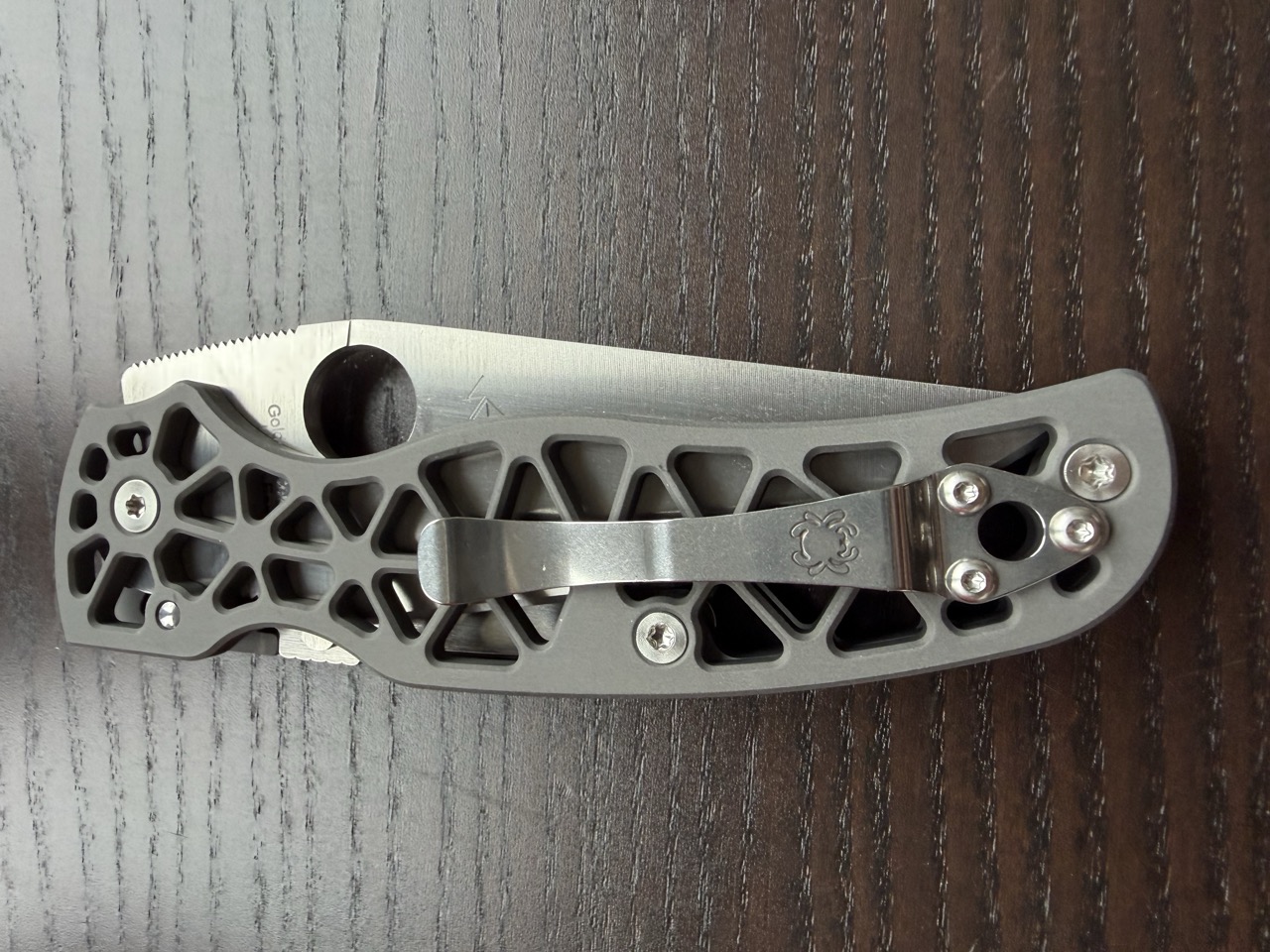
One detail I especially love: the oversized pivot screw on the Military 2. Compared to the Bodacious or the Paramilitary 2, it gives the knife a wonderfully toolish, purposeful look.
Nano Oil is a great way to keep the action smooth. And so far I only use leather to keep it super sharp. So the Military 15V is back in action and will be used also as a benchmark in military tactical knives production.
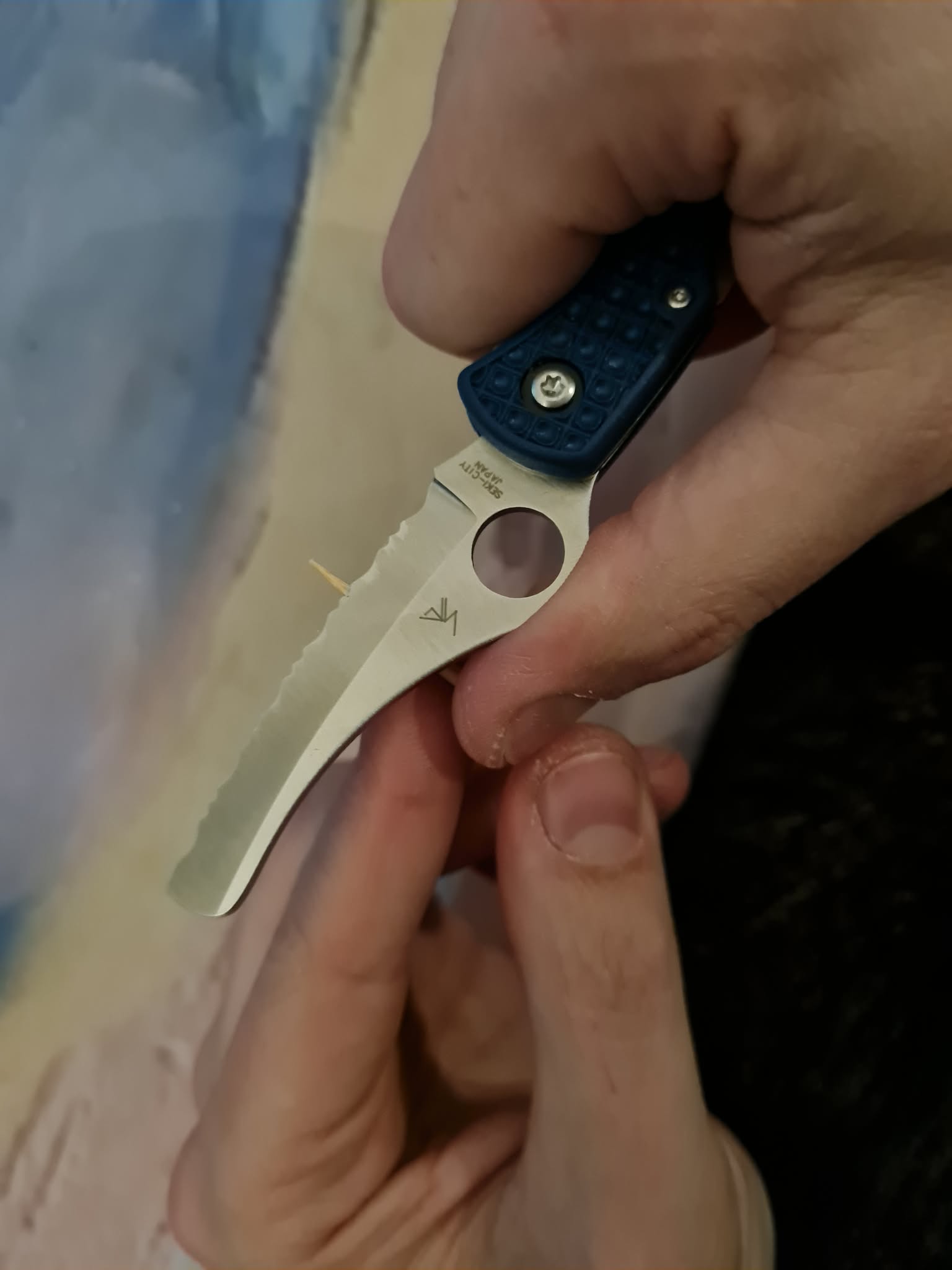
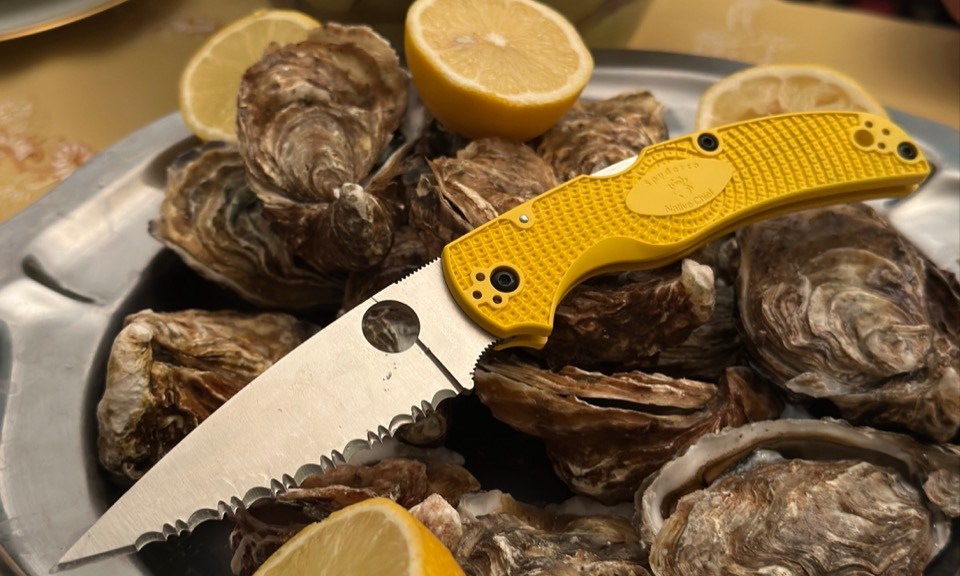
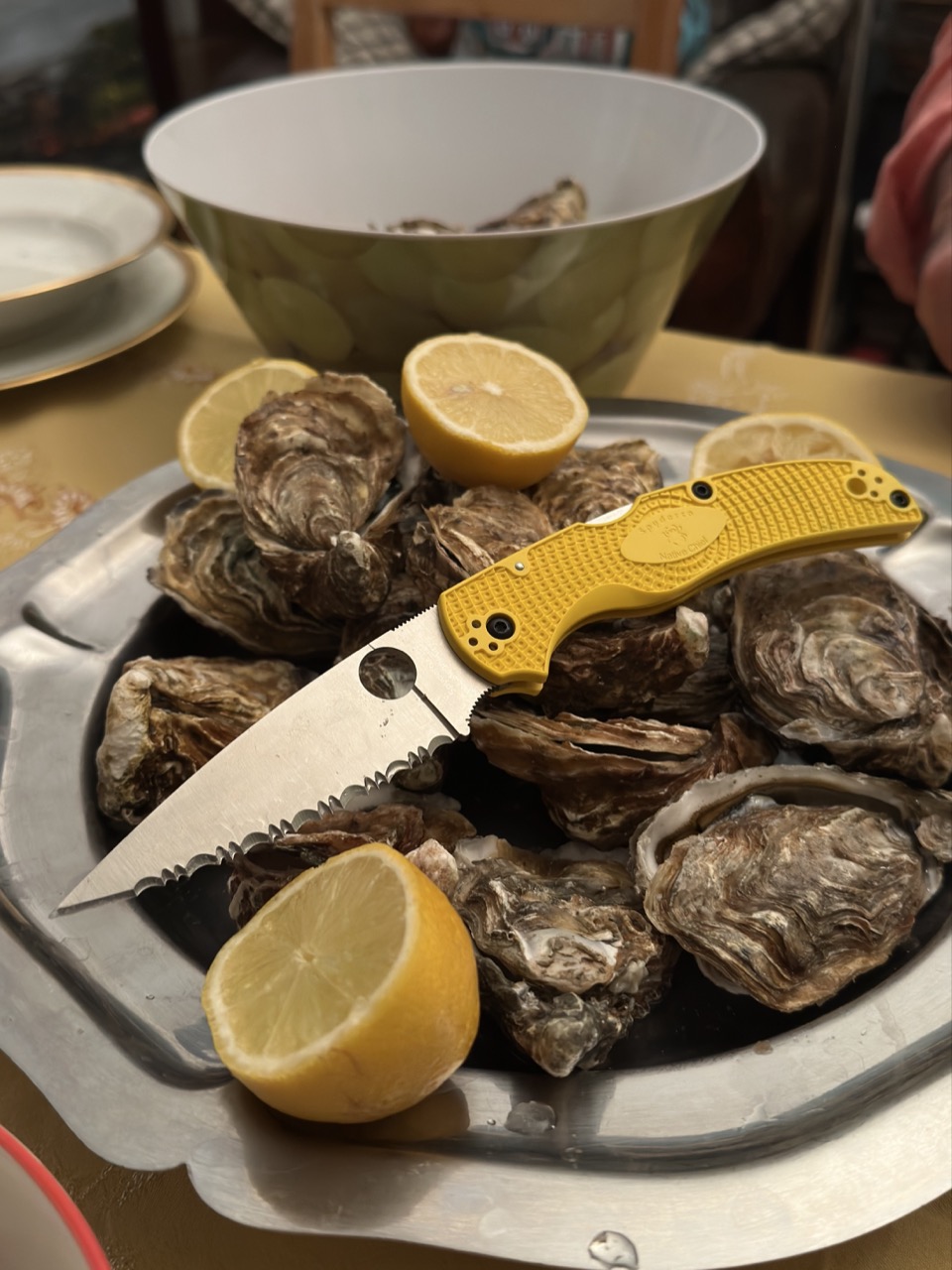
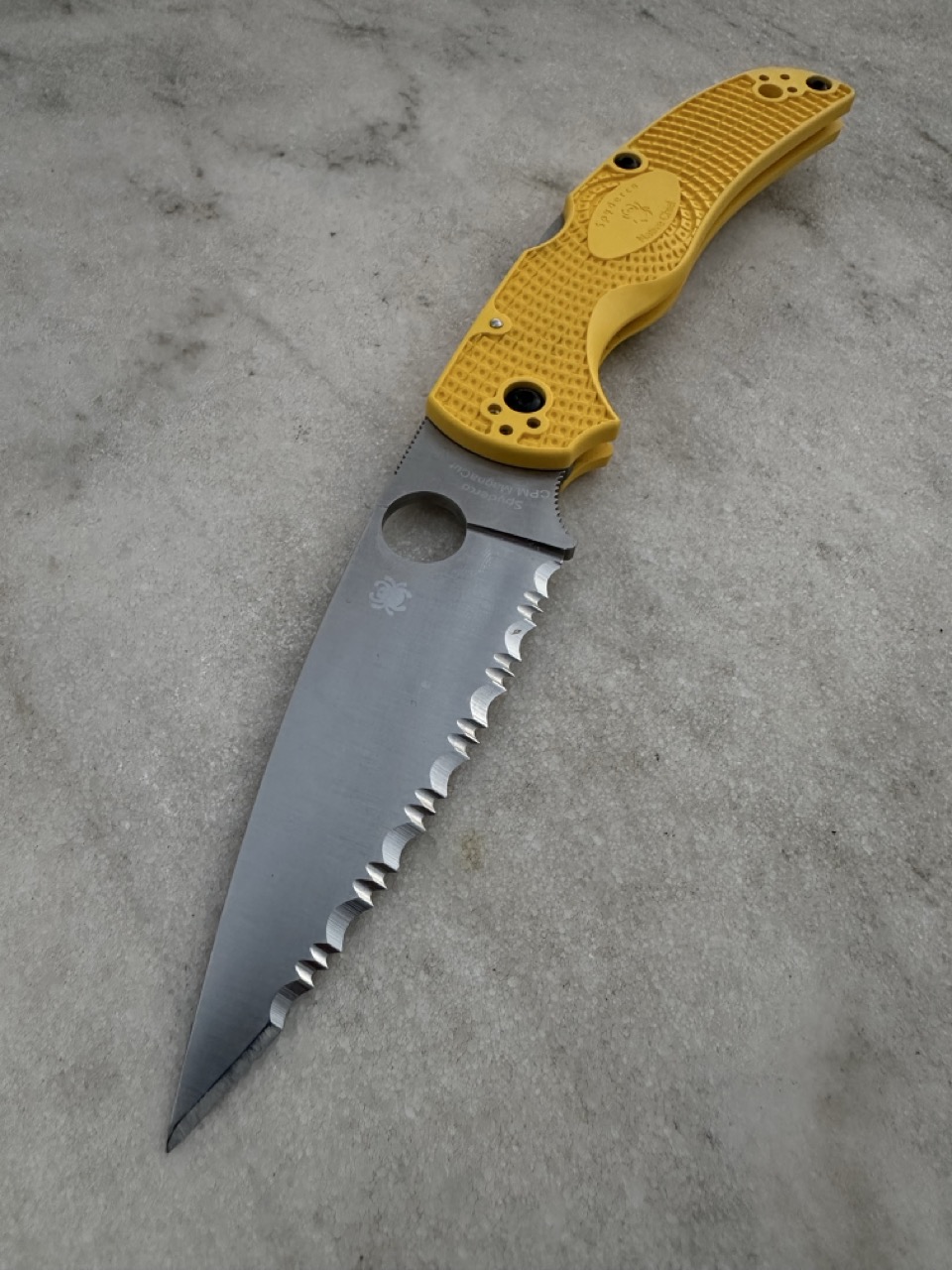
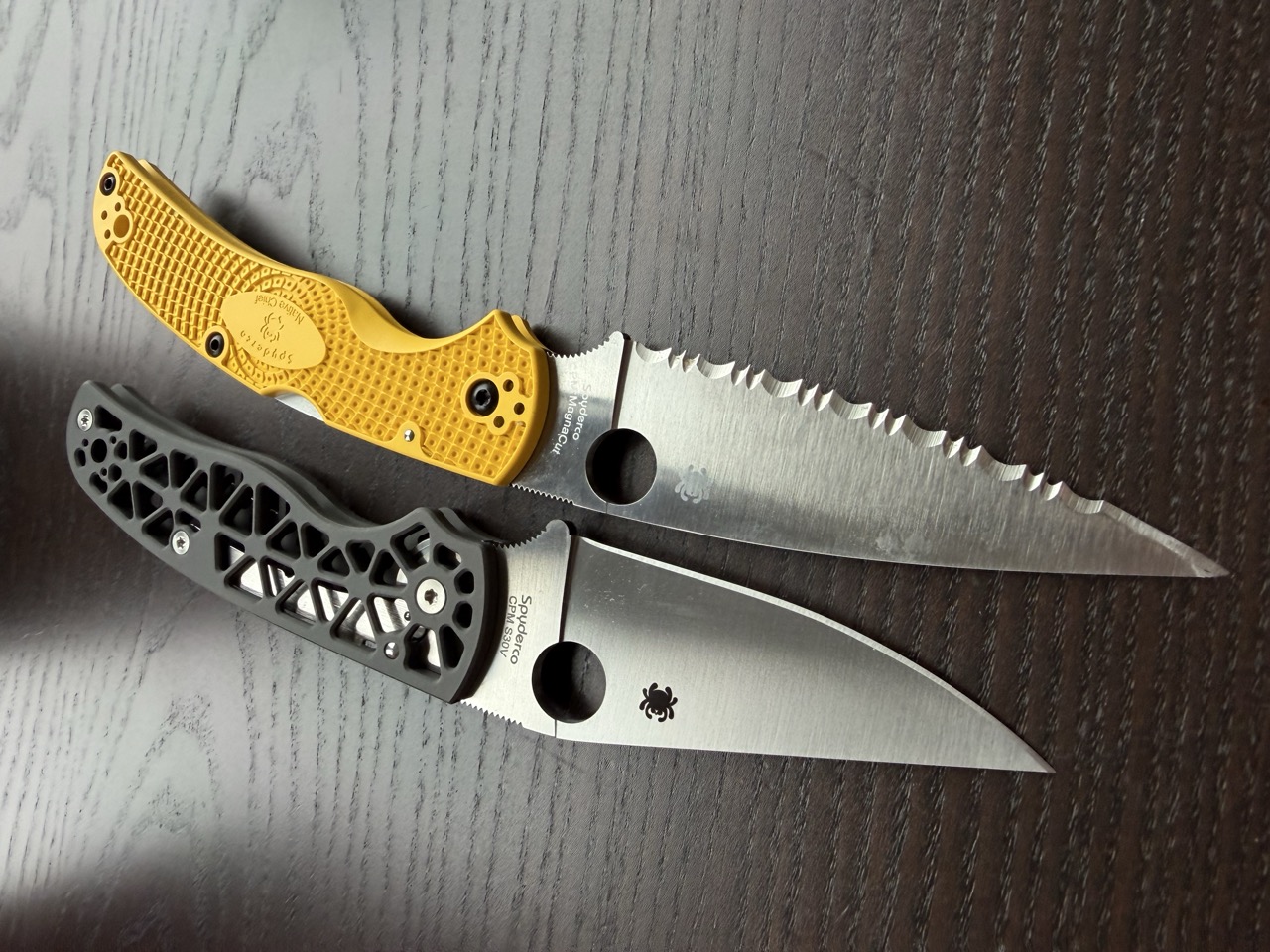
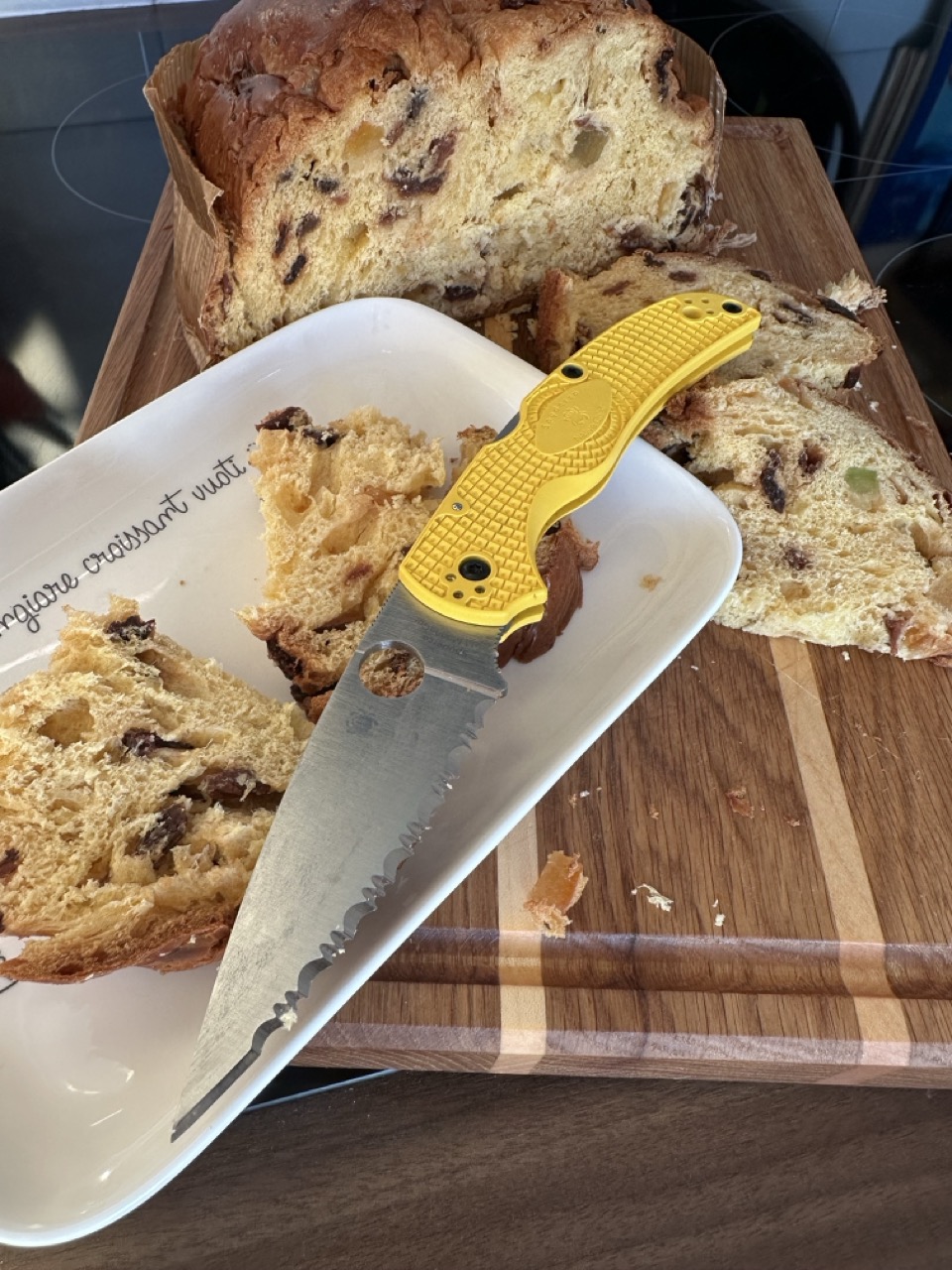
Serrations aren’t everyone’s favorite, but one thing is undeniable: Spyderco knows how to make them perform. I’ve tested serrated Chaparrals and even the semi-serrated CPM-M4 Tenacious, but the Salt Chief inMagnacut takes this to another level thanks to its relatively long blade. The “Salt Chief” … does it ring a bell to South Park’s fans ? (Ah, Isaac Hayes Salty Chocolate Balls...)
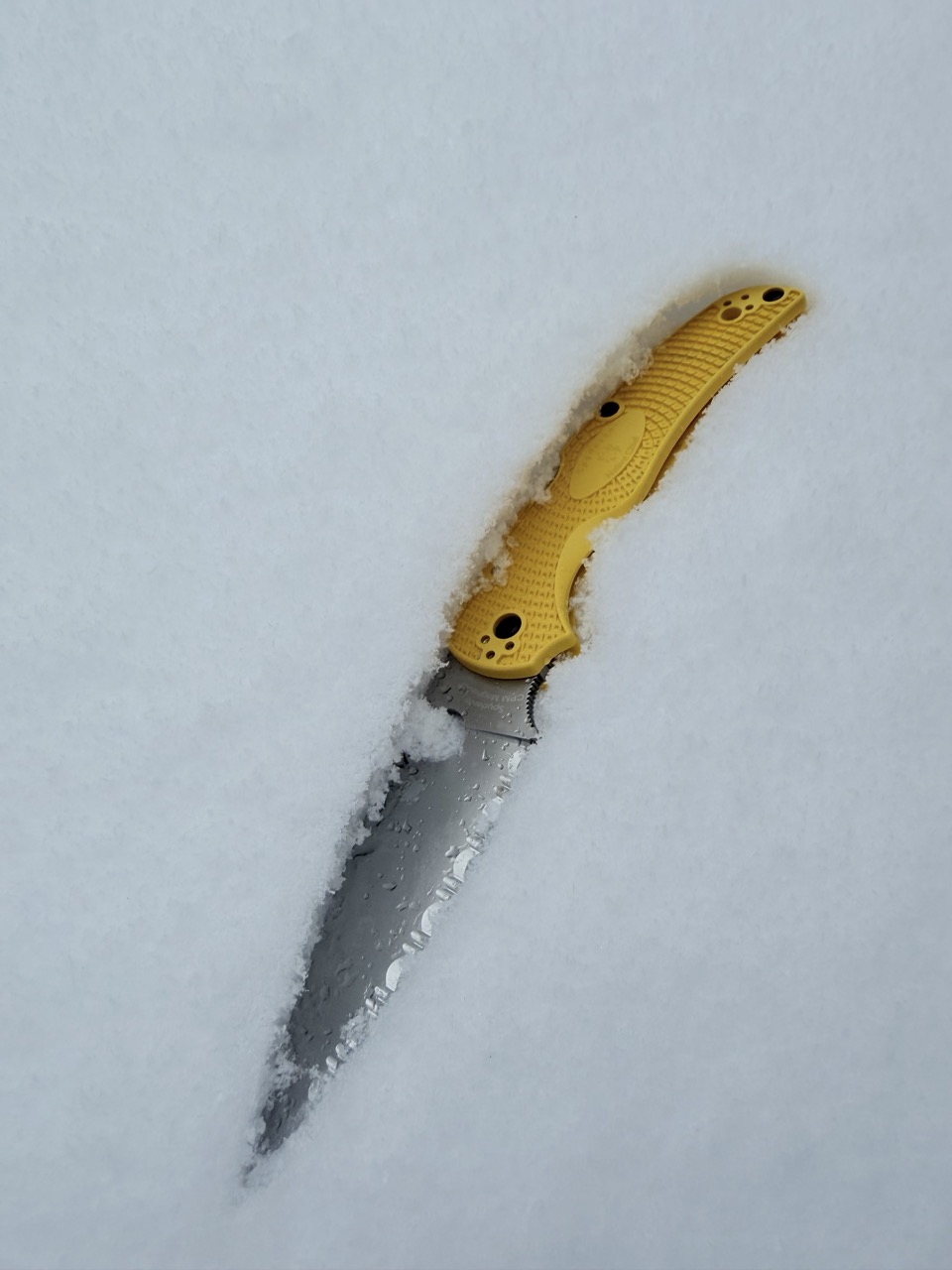
For the record, Magnacut behaves similarly to CPM-4V but is far more stainless, which explains why the Salt Series (like this Chief) thrives in humid and coastal conditions. (The LC200N version of the very same knife (with green FRN handle) would be even better in terms of corrosion resistance but Magnacut’s edge will last longer.)
My first Chief, a special edition in CPM-4V nicknamed Hellboy, was already a beast which I considered replacing my Spyderco C36 Military — and this lightweight Salt Chief has teeth that remind me of a Nine Inch Nails album : pointy, high tech, raw and aggressive.
This relatively long folder is remarkably light: 88 grams for a 102 mm blade — 21% lighter than the G10 version, according to Spyderco.
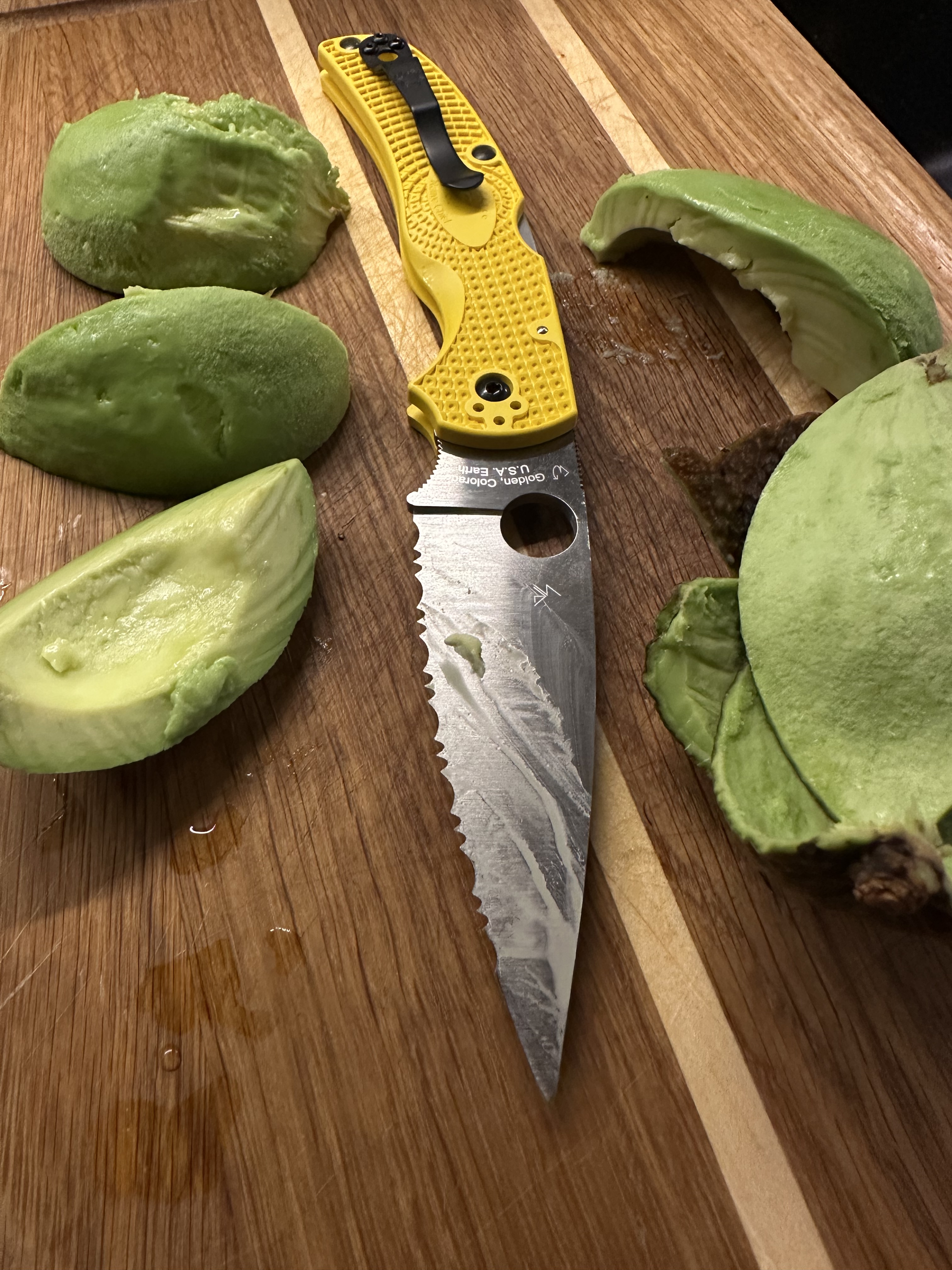
This is a serious tool for mariners, divers, explorers, military personnel, cooks, gardeners, and anyone who might let their knife get wet. Unlike my Salt Sage 5 (plain edge, monster in the woods), the Serrated Salt Chief is clearly aimed at humid/coastal environments. (There is also a plain edge Salt Chief C244PYL which could be more versatile.) The serrations concentrate force on small points along the edge, allowing fibers to be cut more effectively than a plain edge of the same thickness. Each tooth acts like a mini-chisel, making tasks like slicing rope, cord, seatbelts, fibrous fabrics, or vegetation far easier. But it will be harder to cut straight as the serrations are chisel ground on the left of the blade. So it will naturally be deviate to the right during a push cut.
The multiple points of contact make serrated edges actually longer than straight plain edge. Even if the points dull slightly, the valleys continue to cut, which is why serrated blades are preferred in emergency for cutting seat belts for example. And serrated edge are not difficult to resharpen. Do it like you would sharpen a chisel with a ceramic able to reach each valleys. Once you get a burr just one or two passes on the other side of the edge and it is back to razor. No big deal really. Magnacut love leather though; But it won’t be easy to strop it obviously, unless using the rims of a leather belt…
The ergos are just great. Same cockpit as the Native 5.
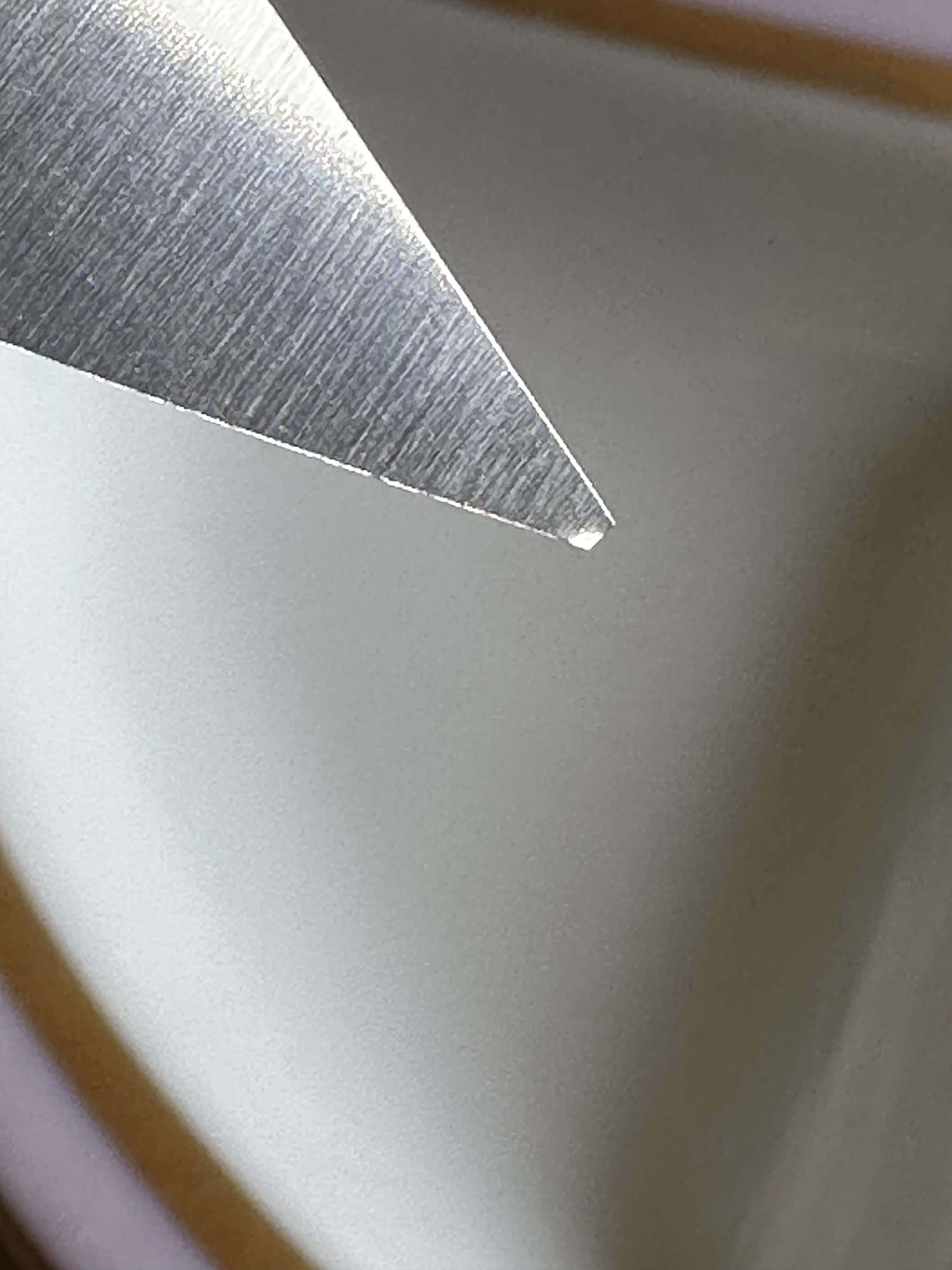
Out of the box, I noticed a slight tip imperfection — less than a millimeter — which I easily corrected on a diamond rod in under a minute. Even with Magnacut’s hard, corrosion-resistant steel, the tip can be fragile but repairable. This means one thing: use your sh*t ! This light amphibious folder is made to be a workhorse in the sea or earth because it is also easy to keep clean.
Those diamond corners are perfect to put a fresh edge on a serrated blade.
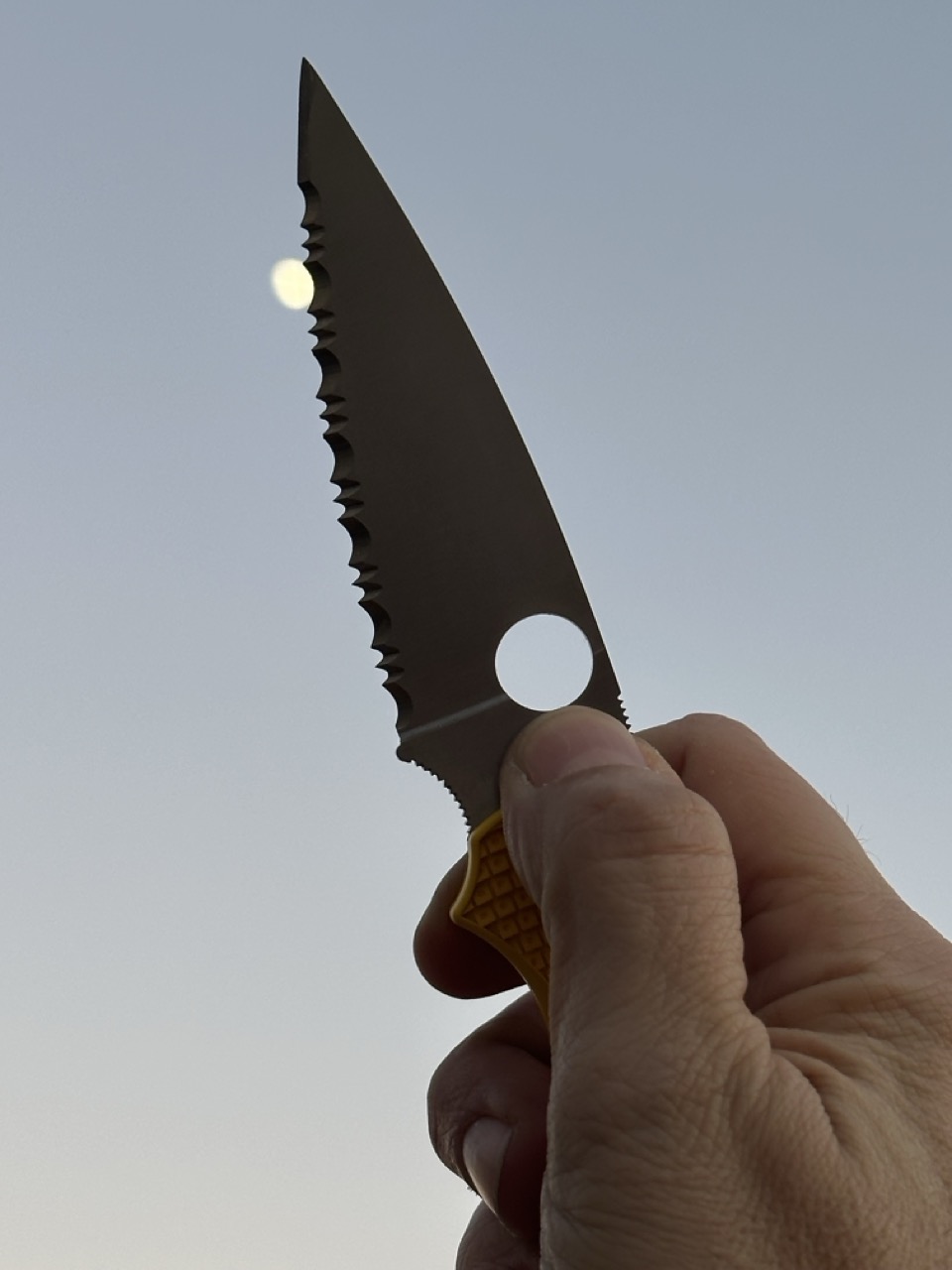
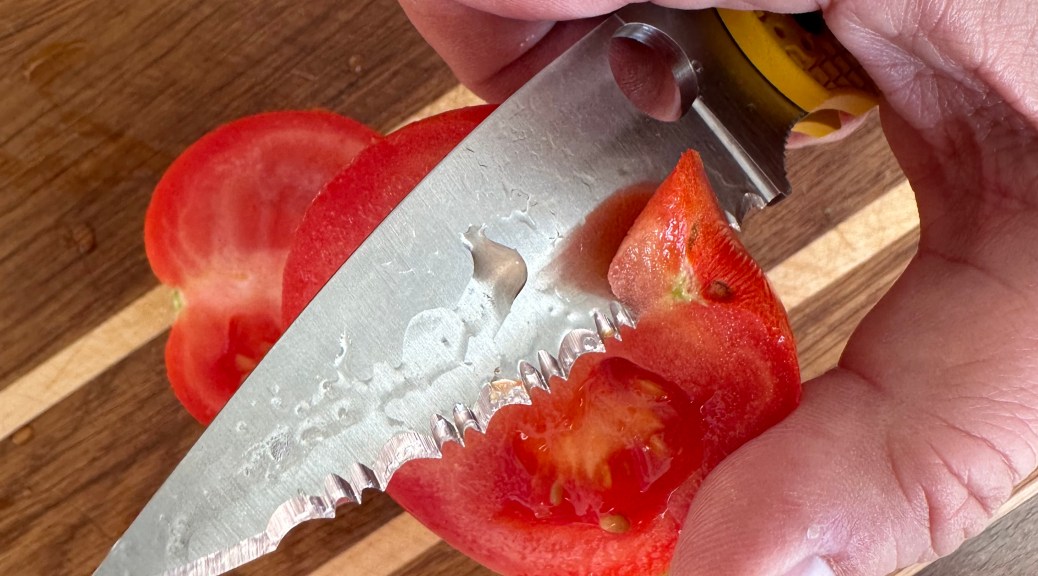
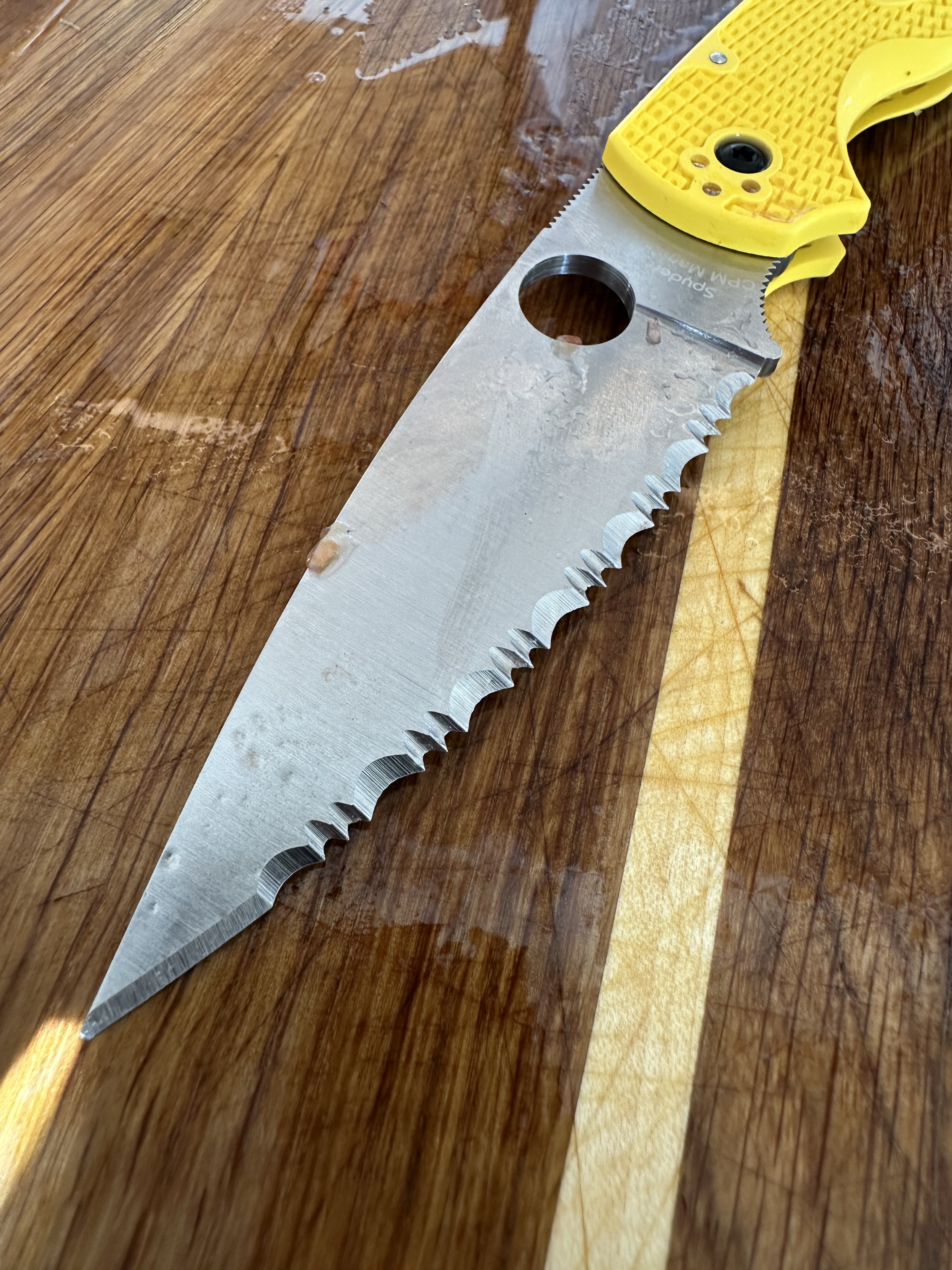
This time again, Spyderco uses a Full-Flat Grind withSpyderEdge. But this is a very very aggressive serrated edge, much more aggressive than the serrated Chaparral for example and, yes, so aggressive and pointy, it can snag and tear but it will do the job. It won’t be a clean cut but the job will be done very very quickly. (On the Chaparral, the serration are rounded to avoid snagging when cutting. Those same serrations can be found on another serrated folder made in Taichung for Spyderco: the LC200N made Caribbean.) So the Salt Chief serrated is also a potential emergency tool with a pointy blade! It will excel in marine scenarios like cutting wet cordage very quick. So this knife feels especially suited for maritime or humid environments. Those serrations also will cut in vegetation with minimal effort. Actually even a gardener or a farmer would appreciate that raw cutting power made to endure mud and rain. But keep it mind, this is raw cutting, fast and dirty. Perfect in emergency. But the cuts won’t be clean. You won’t slice raw meat into loafs like a chef knife would. Also keep it mind the the chisel edge blade will drift to the right.
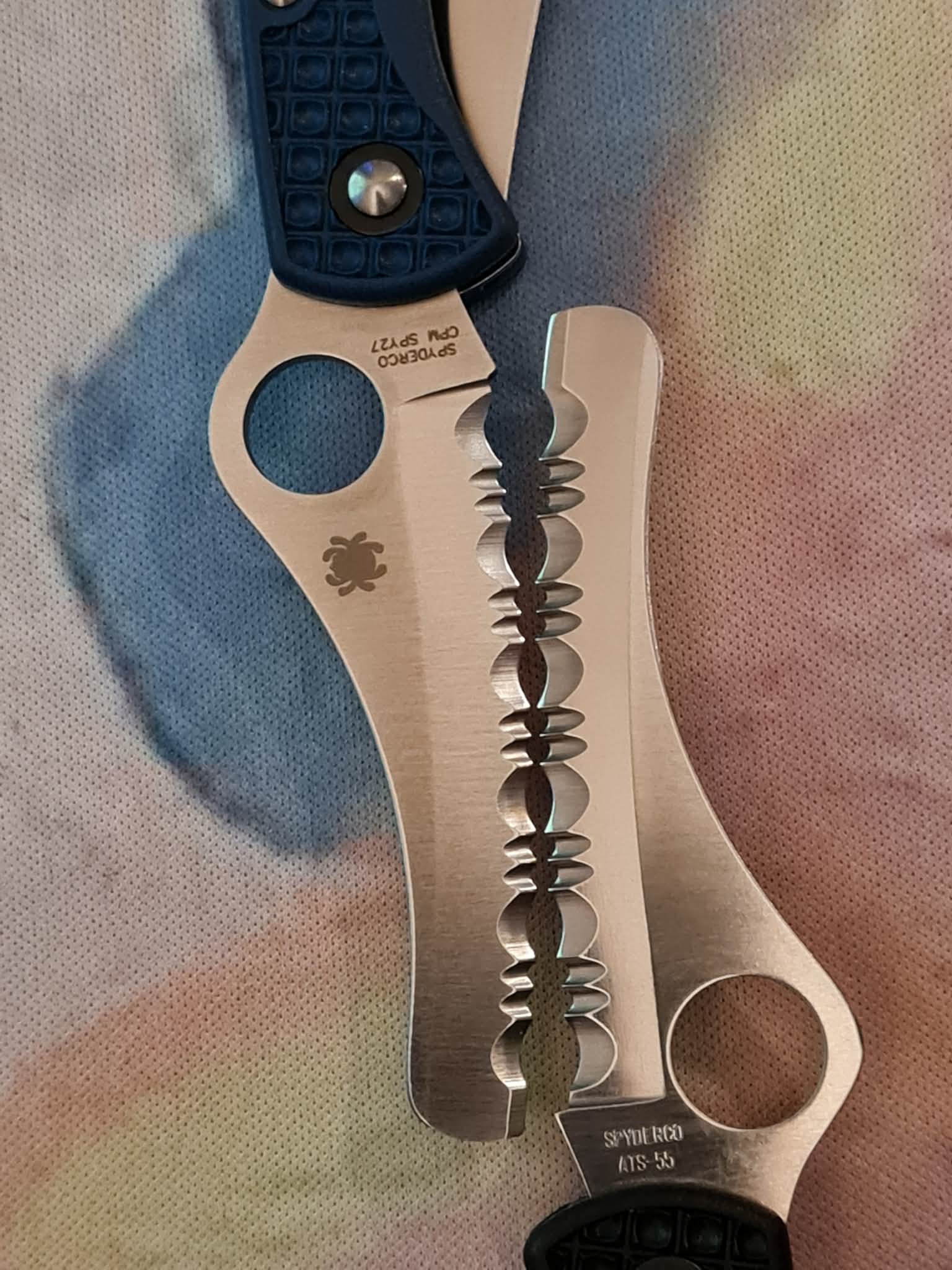
As you can notice, the teeth of the Chief are more pointy and deep than, for example, the Tenacious CPM-M4 which is less agressive.
That lightweight Chief strong mid-backlock mechanism is impressive: no liners or spacers and… zero play (unlike my CPM-4V G10 Native Chief, which had slight vertical play.), and perfect action. The blade falls gently when unlocked, The drop-shut action is smooth, supported by a very strong spring, and the knife oozes quality from every angle. Ah ! Zero play, this what we often got from Golden made backlocks this lightweight long knife is no exception !
This long pointy folder feels lighter than expected for its size, yet solid and trustworthy. It should be perfect for fishermen, mariners, firemen, policemen, divers, gardeners, ranchmen, farmer, construction workers or anyone working in the outside or in corrosive/humid environments from the rainforest to the ocean. The combination of Magnacut steel, Spyderedge, and Yellow FRN handle makes it an emergency tool — especially for those who value edge retention, corrosion resistance, and very aggressive cutting performance in wet environments.
In short, the Serrated Salt Chief designed by Eric and Sal Glesser is a serious, reliable, and powerful folder — perfect for professionals in demanding conditions who need to cut deep and quickly.
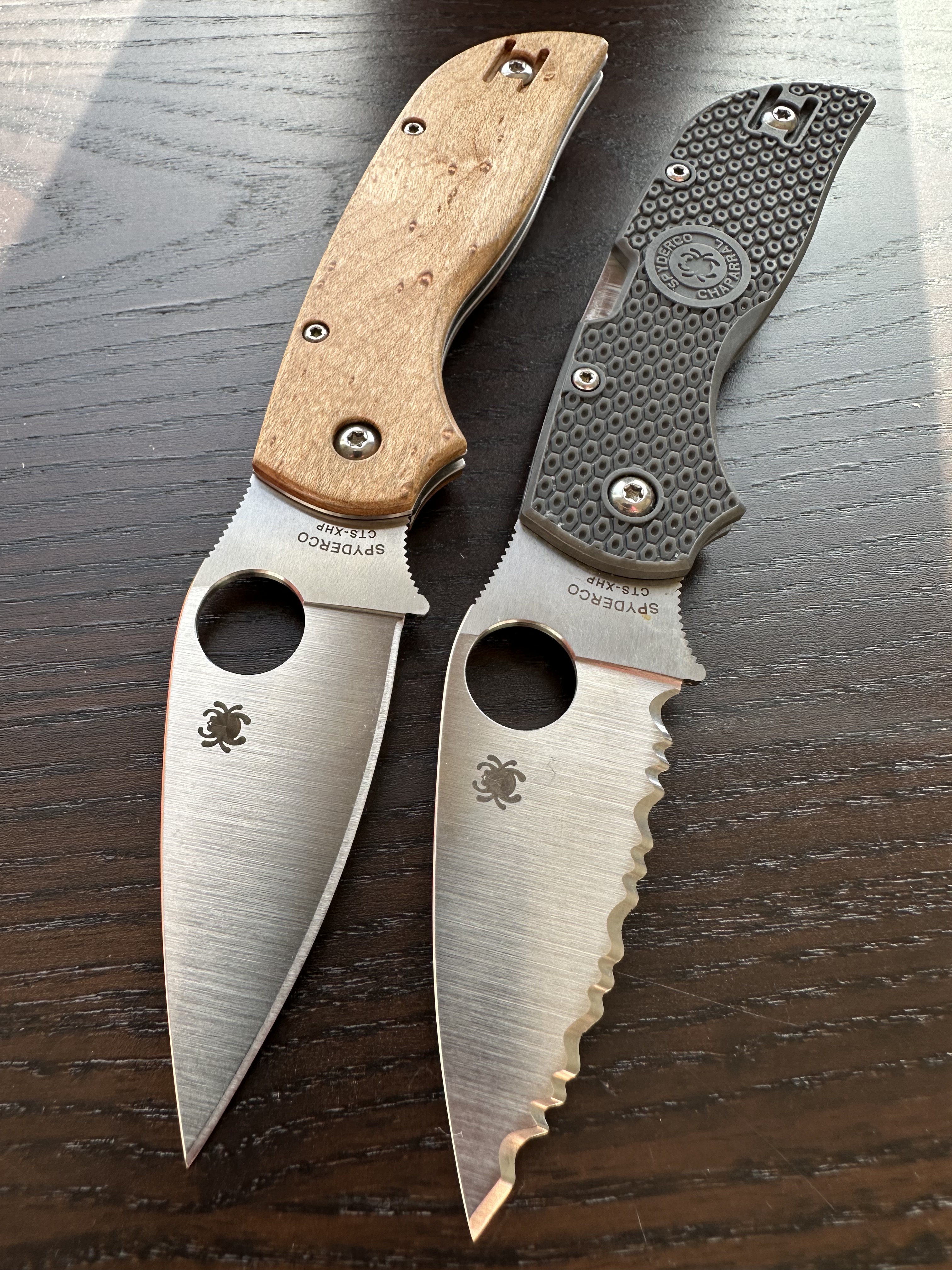
The Chaparral series is quite unique in Spyderco’s catalog. Originally designed to showcase different handle materials on the same platform, it has evolved into a performance-driven tool for one simple reason: the blade stock is exceptionally thin. That thinness means it cuts deep with minimal effort.
It is even thinner than the UKPK which is the thinnest of the SlipIt Family. (“SLIPIT®” is Spyderco’s trademark name for non-locking folding knives. These knives stay open through spring tension rather than a mechanical lock.)
2mm for the Chap and 2,5 for the UKPK.
I’ve owned the original carbon fiber version, and earlier this year I reviewed the Lightweight serrated model — still one of the most efficient “matter separators” you can carry in your pocket. Now, thanks to the Spyderco Ambassador Program, I’ve had the great opportunity to test the Slipjoint Chaparral.
It’s worth pointing out that the Chaparral is far from an entry-level model. It’s the premium, Taiwanese-built sibling in the SlipIt family — and at about twice the price of most SlipIt knives, it clearly plays in a higher class.
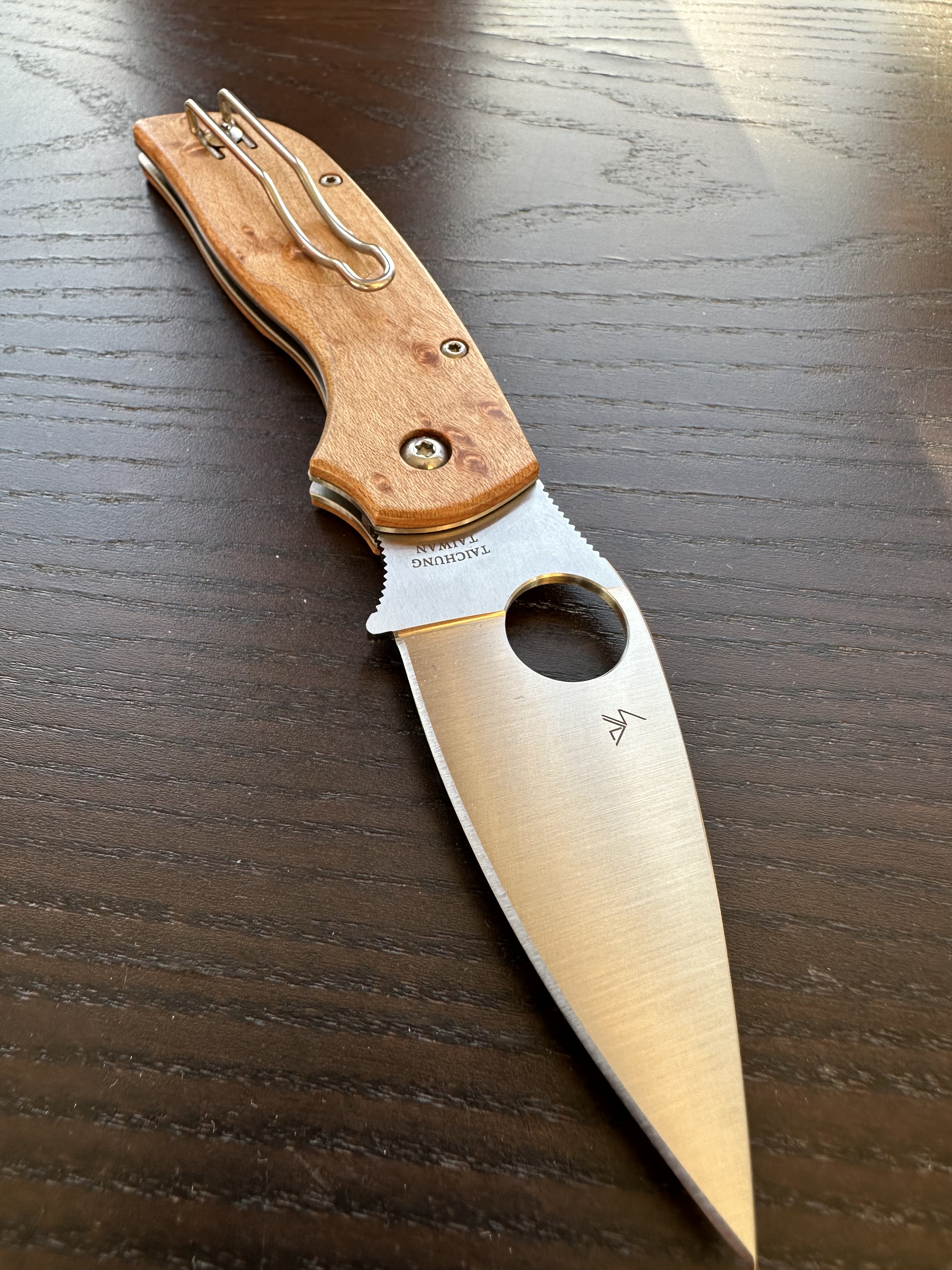
And this is an eye candy:
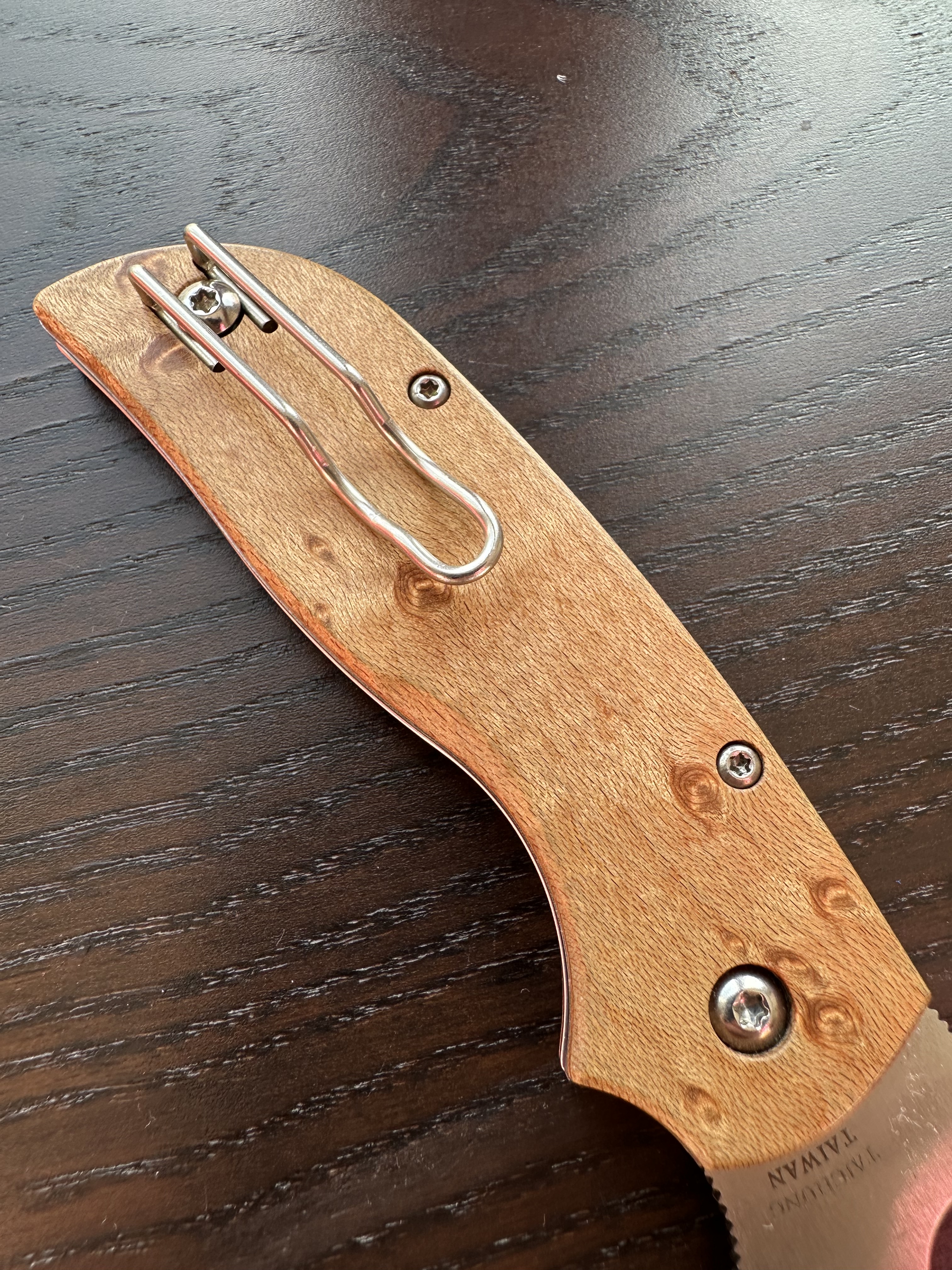
You can notice that Spyderco even includes a transparent protector over the clip area to prevent the handle from the clip during transport.
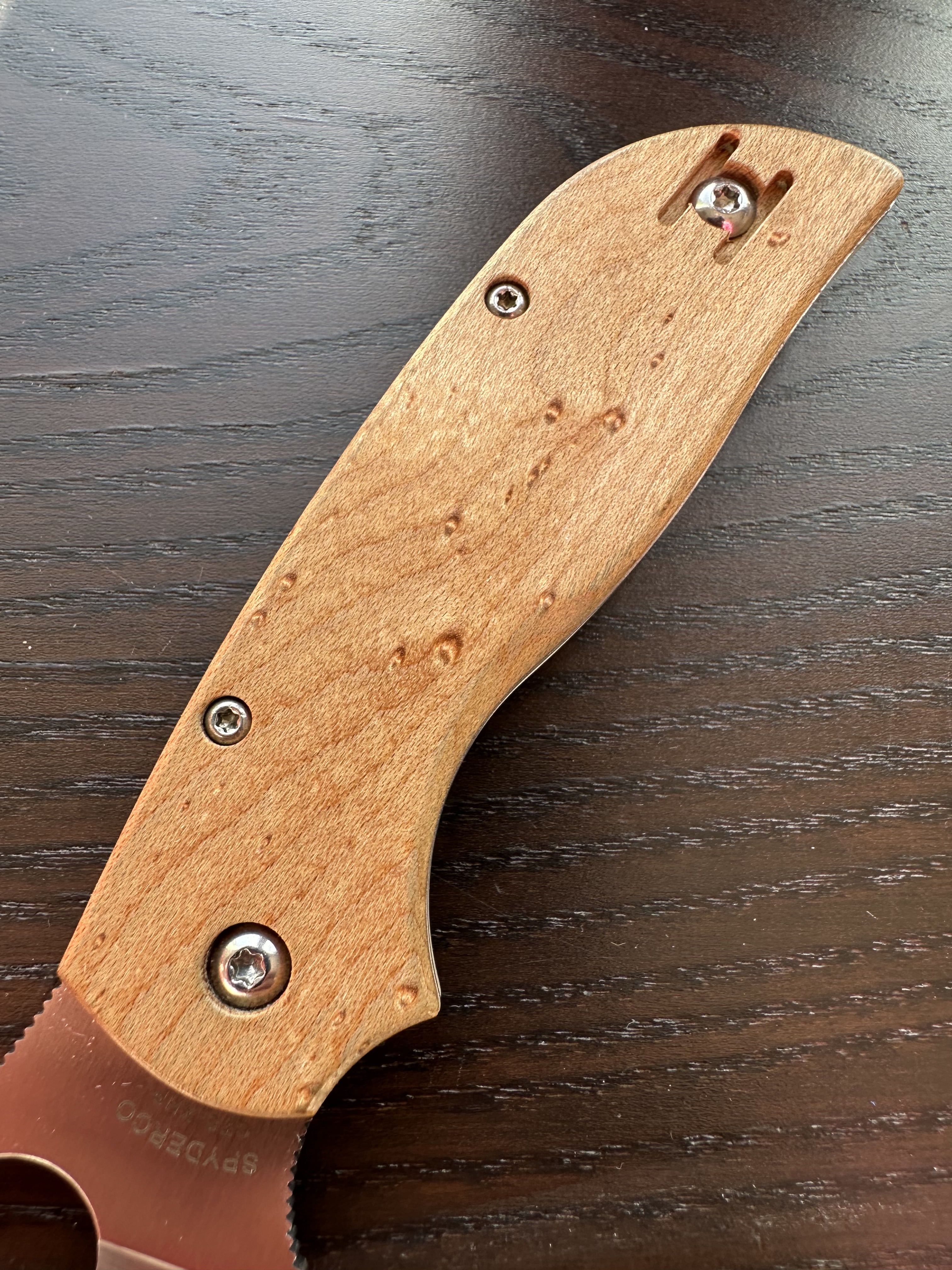
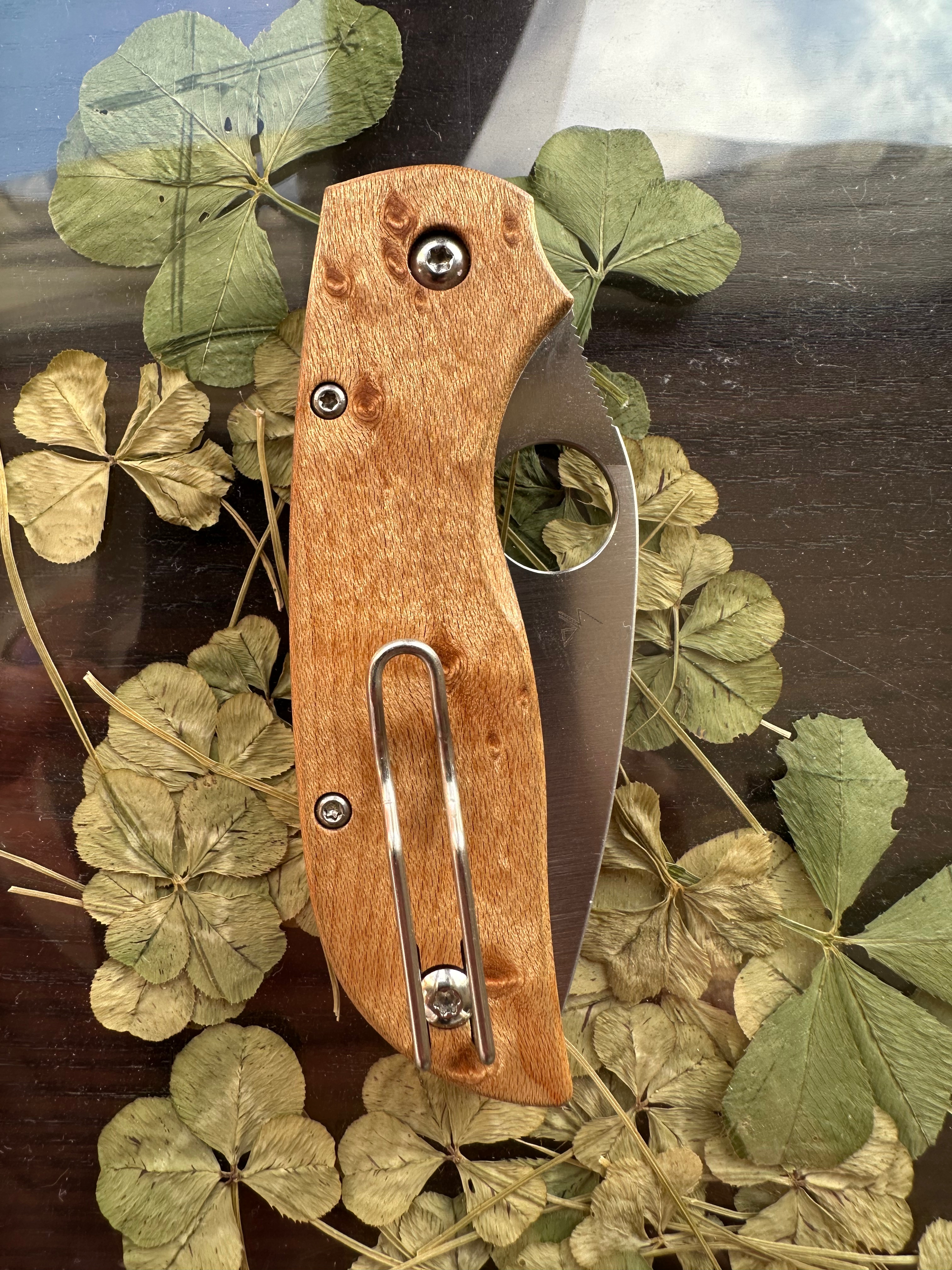
The knife arrived sealed in a plastic bag, likely to protect the wooden handles from changes in humidity. Made in Taichung, Taiwan, and shipped to Golden, Colorado, this precaution makes perfect sense — Golden’s dry climate has been known to affect wood scales before (as seen with their Bushcraft fixed blade). The handles themselves are beautiful. Carrying a piece of wood in your pocket almost feels like carrying a good luck charm.
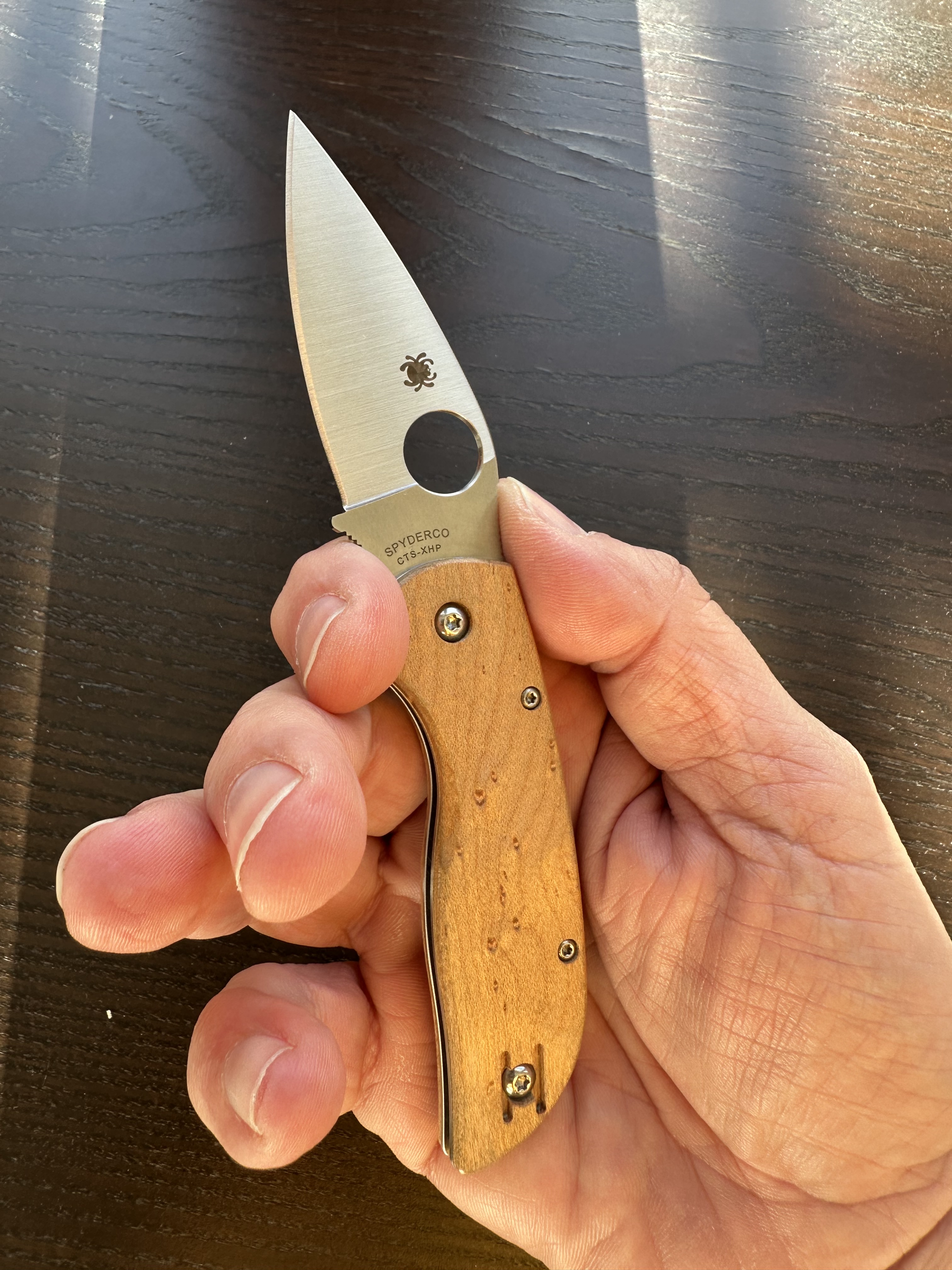
This is my first Spyderco folder with wooden scales, and I must say — it has real charm.
The knife comes with Spyderco’s standard wire clip, but I have swapped it out for the shorter clip used on the MicroJimbo, Lil’ Native, or Dragonfly — it’s more discreet and I wanted to do it before leaving any mark on the wood.
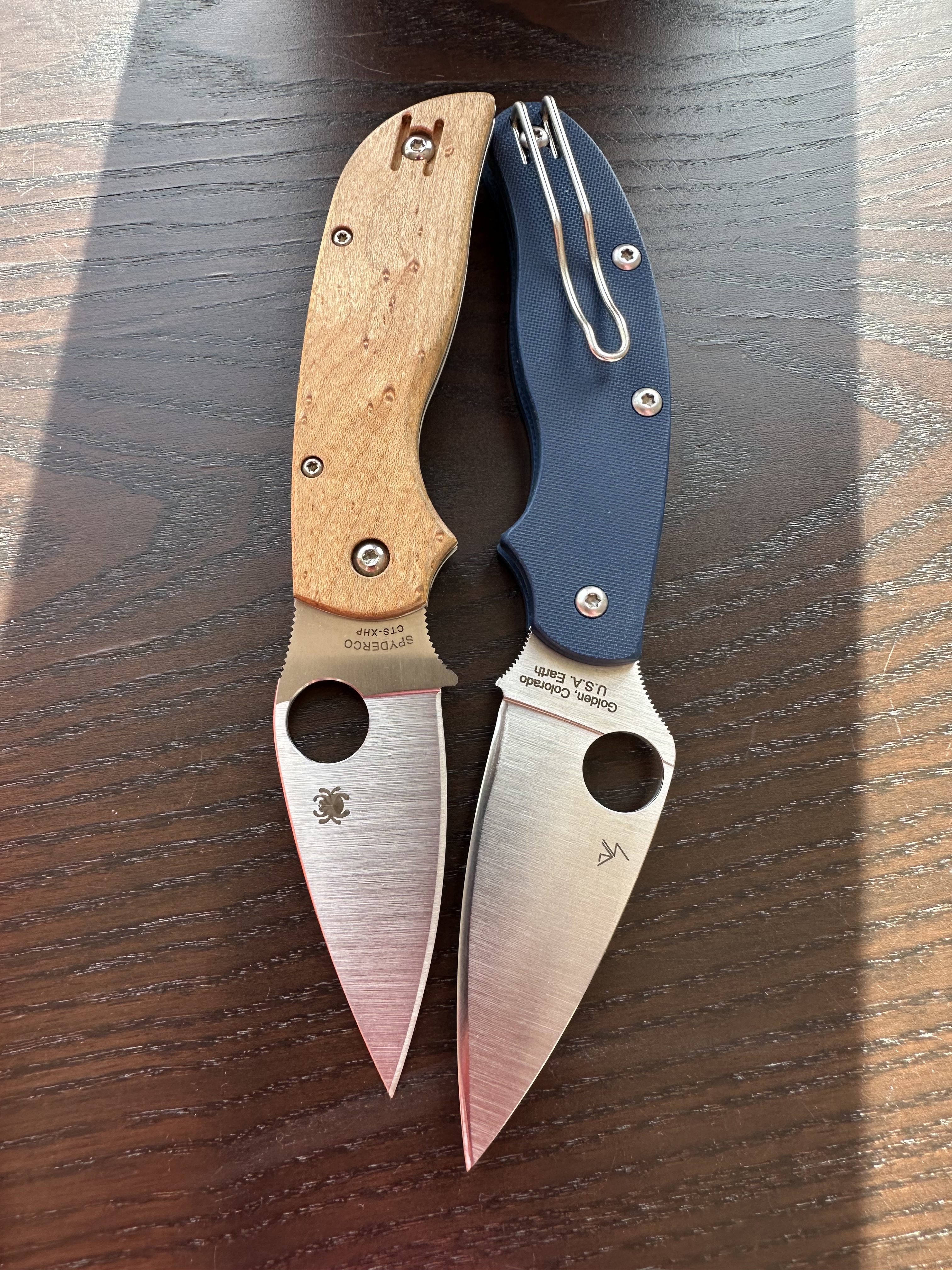
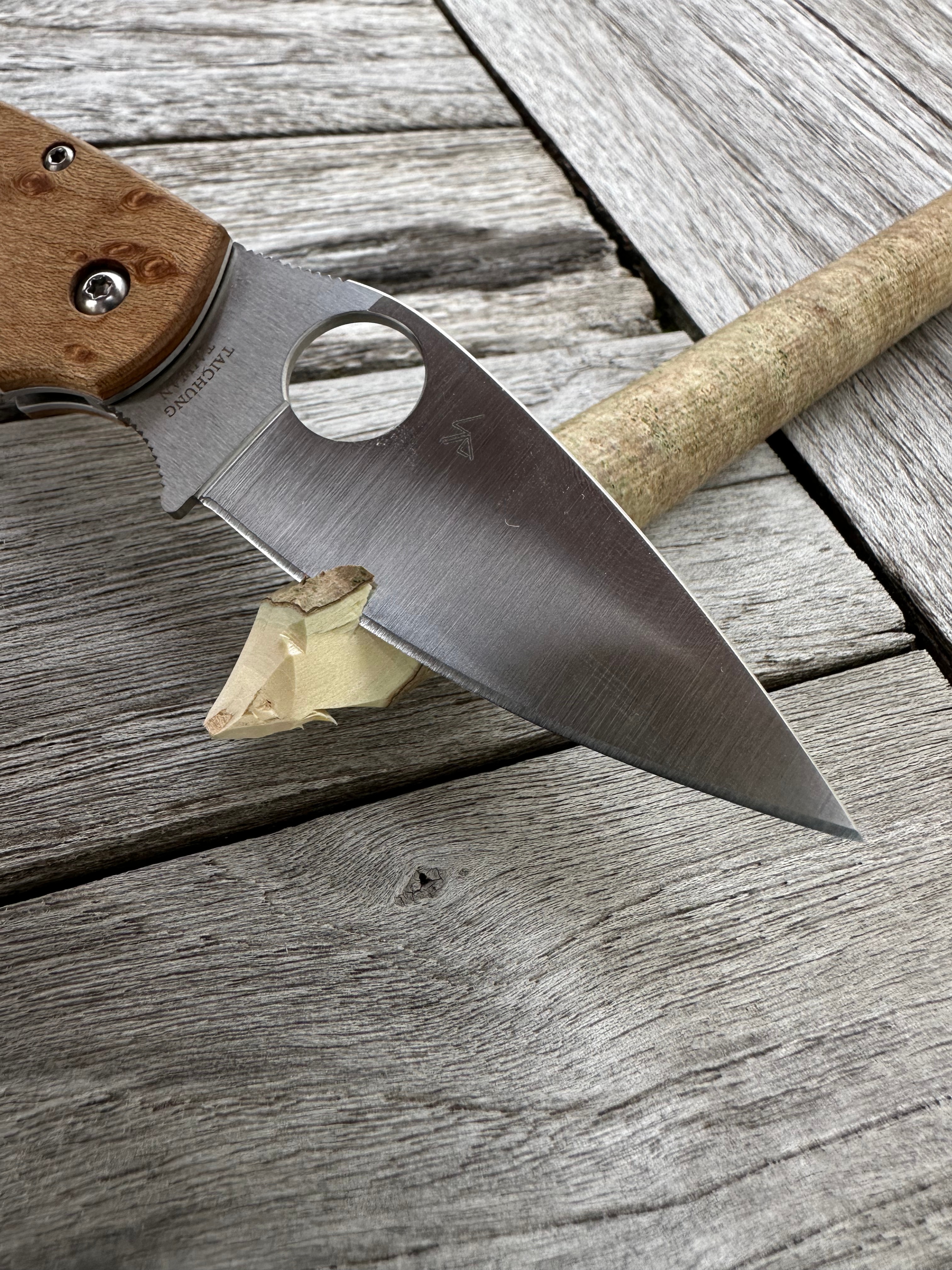
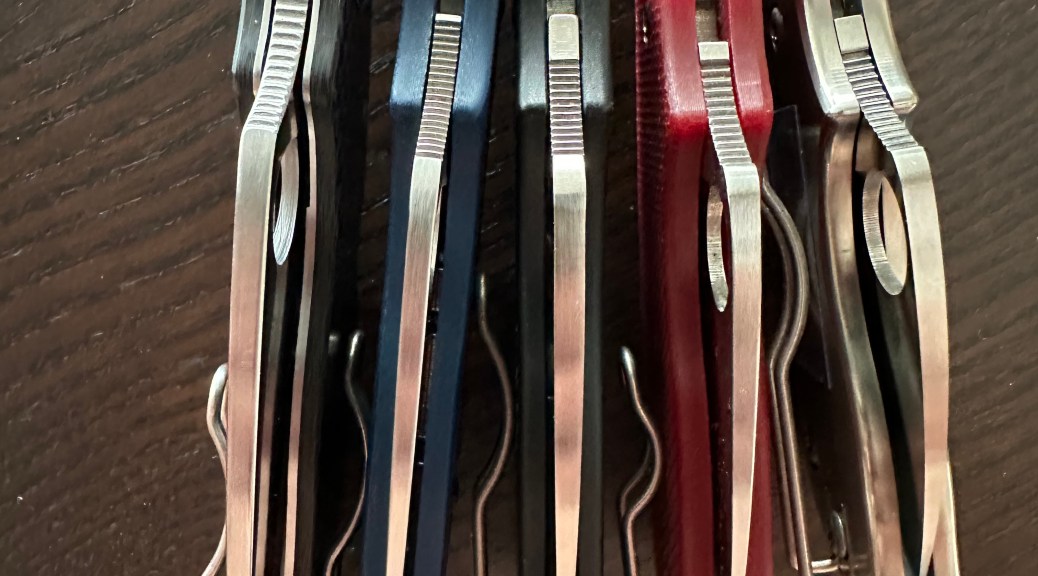
Here pictured with the Metropolitan and with the microclip mounted on. A downside of the wire clip is that it can create a “hotspot”, or point of discomfort, when applying significant pressure. That’s why I prefer that shorter clip cannibalized from another folder — it helps avoid this issue. When doing extended wood prep or cutting in the field, where downward force is applied, ergonomics really matter.
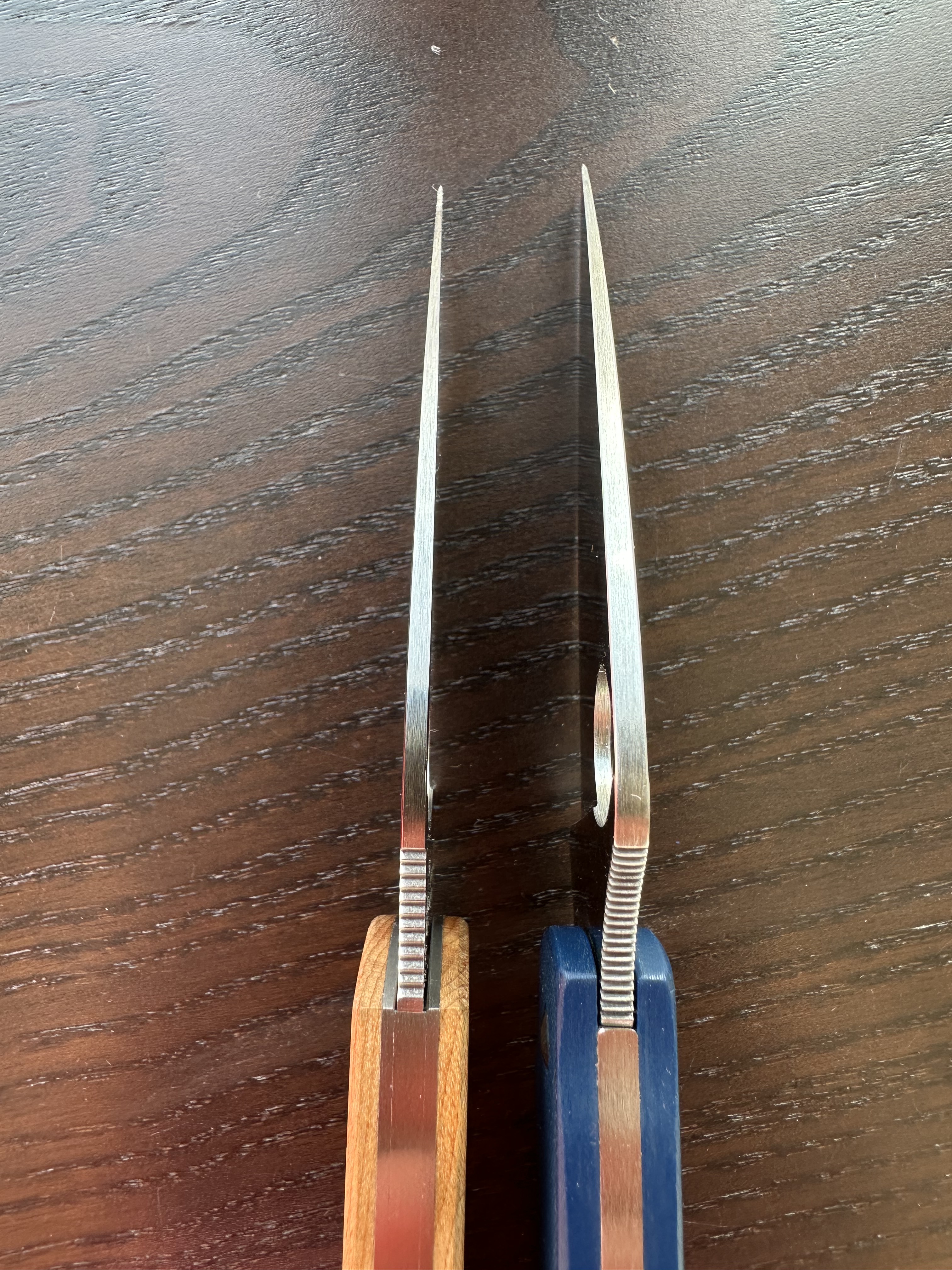
BTW the Metropolitan pictured above costs about half the price of the Chaparral, and while both fall into the same blade-length category, the Met’s blade is roughly 33% thicker. The Metropolitan’s M398 blade is impressive when it comes to edge retention, but the CTS-XHP used on the Chaparral has proven to be a reliable, all-terrain stainless steel that performs beautifully on that exceptionally thin blade stock. An M398 blade at just 2 mm thick would certainly be too brittle for practical use.
Here is the Chap pictured with the MicroJimbo, the UKPK, the Serrated Chap, the Wasp and the Roadie XL.
Now, about the mechanics: The Chaparral SLIPIT specifically replaces the usual Chaparral’s back-lock with this “notch-joint” spring system. The Chaparral backlock is also unique in the Spyderco catalog as it get an hidden pin for zero vertical play . Most Spyderco slipjoints close in two stages — first, disengaging the spring tension, then a mid-stop for safety. Not the Chaparral. Once you disengage the spring, the blade flows smoothly all the way to the closed position. (Compare that to the Manly Wasp (pictured in orange) or Comrade, which both have four distinct steps!) That said, disengaging the blade on the Chaparral requires a bit of effort — which is actually a good thing, especially for whittling. Feeling a blade start to close while it’s wedged in wood is never pleasant. I’ve had that experience with the beautiful COBOL, and it’s not something I’d want to repeat. Compared to other SlipIt models, the Chaparral is not in the same range of spring tension. I was initially afraid the action might feel too soft. It is not soft but noticeably less hard than my UKPK, Urban, Squeak or Metropolitan. My strongest being my Heinnie G10 Urban.
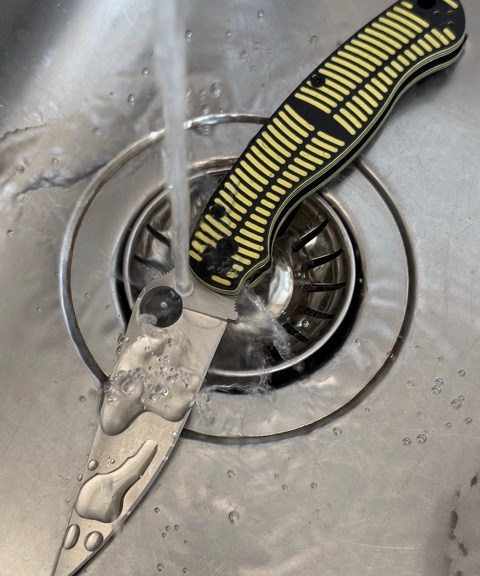
All in all, the Chaparral is a very capable tool — not just a pretty face. While its aesthetics are undeniably strong (especially with those bird’s-eye maple scales), some users have raised concerns about the stability and durability of the wood in moist or wet environments. Naturally, a wooden handle requires a bit of care — you don’t want to let it soak in the sink. (Buy a UKPK Salt instead !) Wood isn’t G10 or FRN; its warmth and character come at a small cost in terms of maintenance and environmental sensitivity. If you need something very rugged (wet/humid environments, rough carry), it might not be the best choice or you might pick a version with more durable scales.
And again, that blade stock is so super thin which makes it an incredible slicer. Opinel class ! You need to experience it to believe it. That’s the case for all Chaparral anyway, nothing new about that.
The fit and finish is near perfect. Notice how the spine and handle are gently bevelled as always with Taichung’s ! This is little folder for users who prioritize slicing performance, sharpness, and elegance, the Chaparral SLIPIT is just appropriate for EDC/“gentleman, lady” use. The non-locking SLIPIT mechanism is suited for jurisdictions (including Europe/UK) where locking blades may be restricted — that adds to its appeal. If you want also a knife that carries lightly, looks premium, and doesn’t feel like a bulky tactical folder, this hits that niche. But you may want to treat its maple scales carefully and avoid heavy moisture. I will rinse my Chap under the tap but immediately wipe it dry, this is as simple as that. I will see if wood will change on the long run and it will surely add some character. No worry. The non-locking SLIPIT mechanism may not feel as secure as a lock-back, and the “no half-stop” means the feel is really different that other SlipIt designed by Sal Glesser. Anyway any Chaparral will teach you a lesson on the importance of grind and thin geometry but this one will keep it legal in many countries.
If you’re seeking a precise, elegant everyday-carry folder with top-tier steel, superb slicing geometry, refined looks and minimal pocket presence — the Chaparral SLIPIT delivers strongly. Oh boy does it slice, hell yes. And it brings luck.
Choosing a travel folder is easy for me — I own quite a few knives of various lengths dedicated to that purpose. Traveling from France to the UK, however, means avoiding any locking blade and any edge longer than 3 inches (76 mm).
For the record the non locking mechanism of the SlipIts is reviewed in this review here.
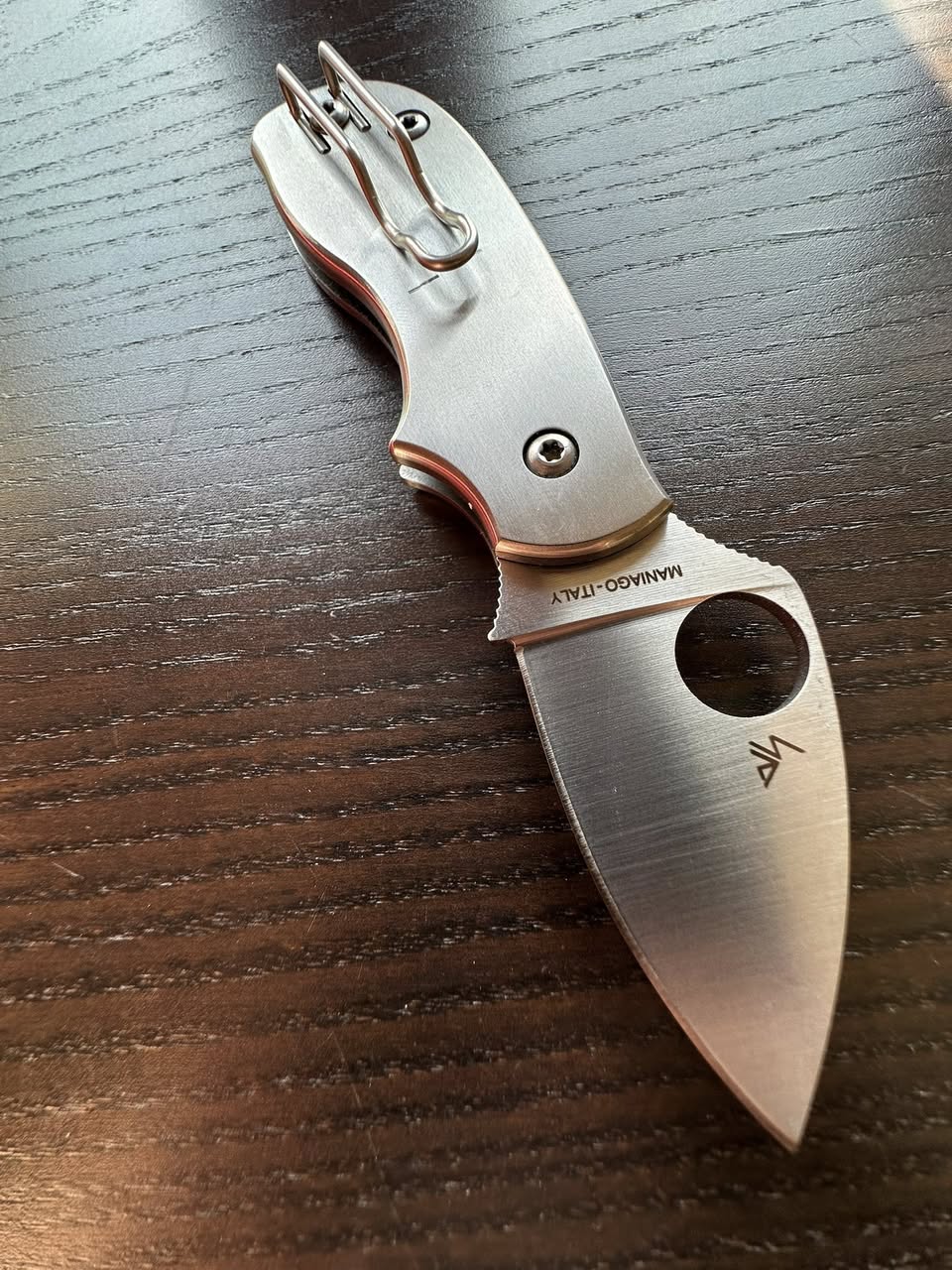
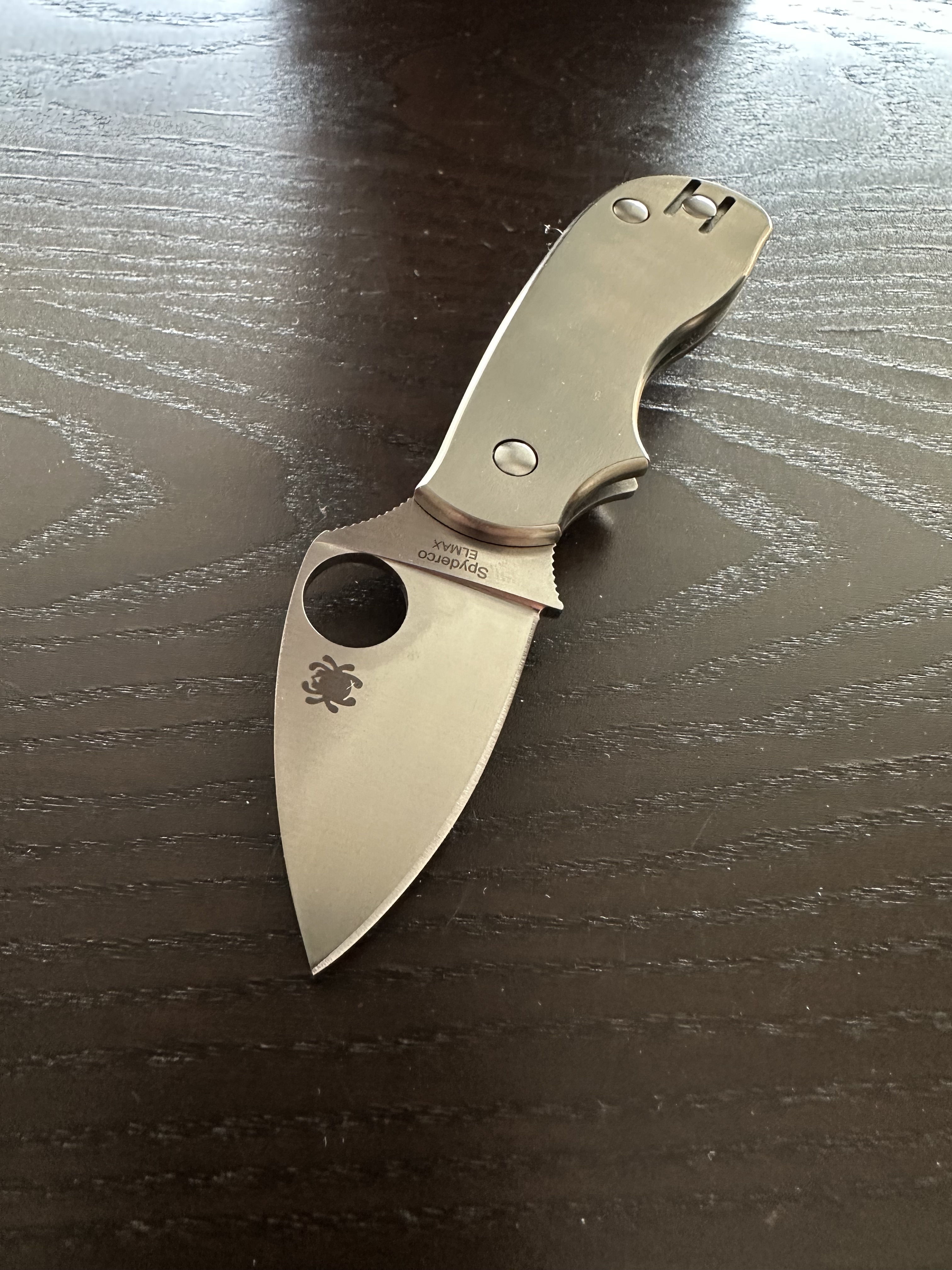
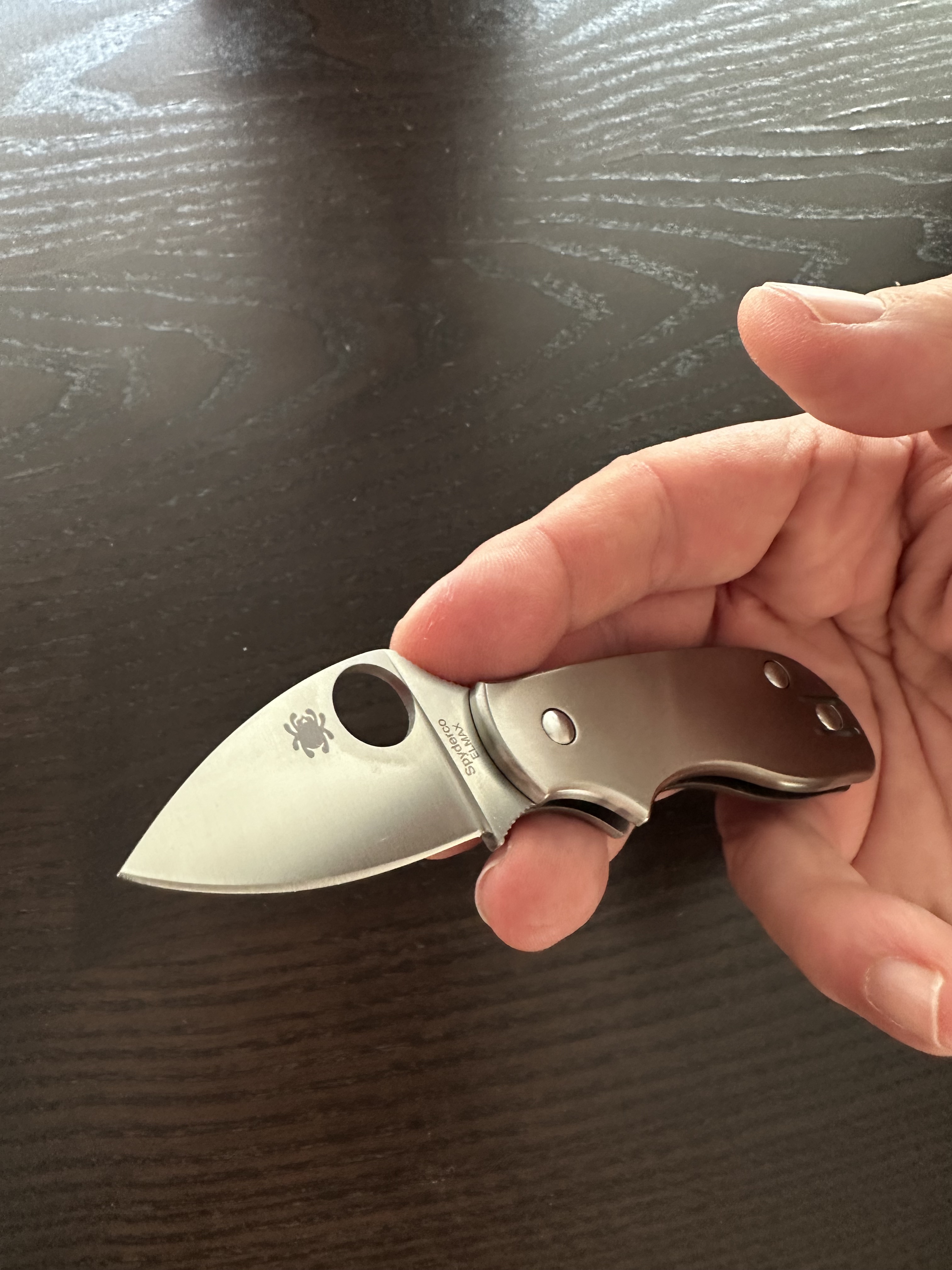
But this time, I’ve decided to take the Squeak designed by Sal Glesser. The Titanium/Elmax Sprint Run Jewel. Easy to pocket, One Hand opening are my choice. Usuaully I use a UKPK from Heinie for my UK trips. This time, it will be the SqueakDeluxe. This micro-folder has been a constant companion in my pocket since 2017, and it’s perfectly watch-pocket friendly — but as my only knife for a road trip? That’s the real question.
I don’t know about you, but my uses for a knife when traveling abroad are many — from cutting labels to sharing a piece of cake.
The first thing I ask from a blade is that it stays very, very low-profile. A deep-carry clip is mandatory in that regard. However, the Squeak’s stock clip isn’t exactly discreet, so I swapped it for a MicroJimbo clip — the same one used on the Lil’ Native — which is noticeably shorter.
Frankly, this shorter clip should come standard on all SlipIt models from the factory!
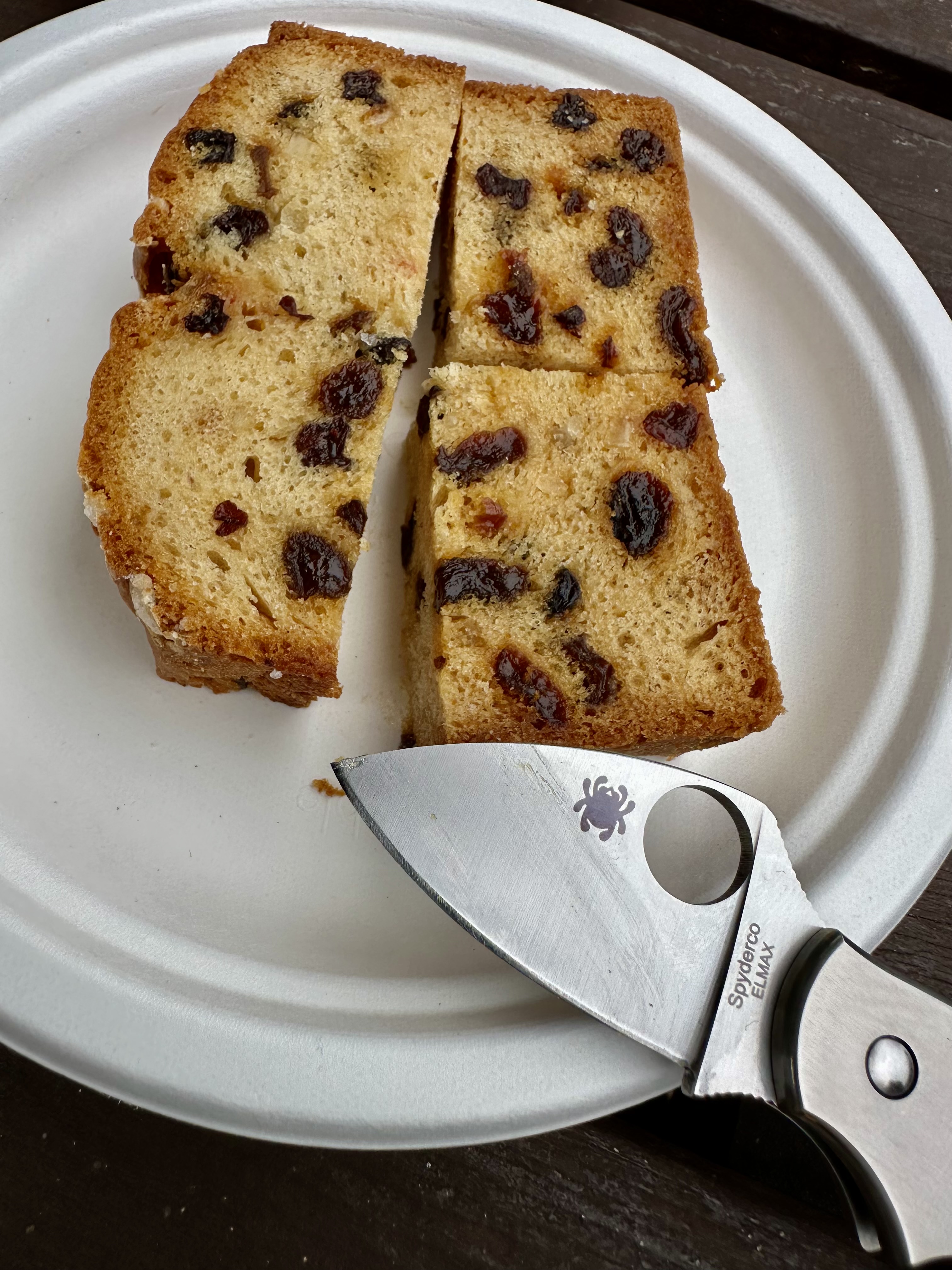
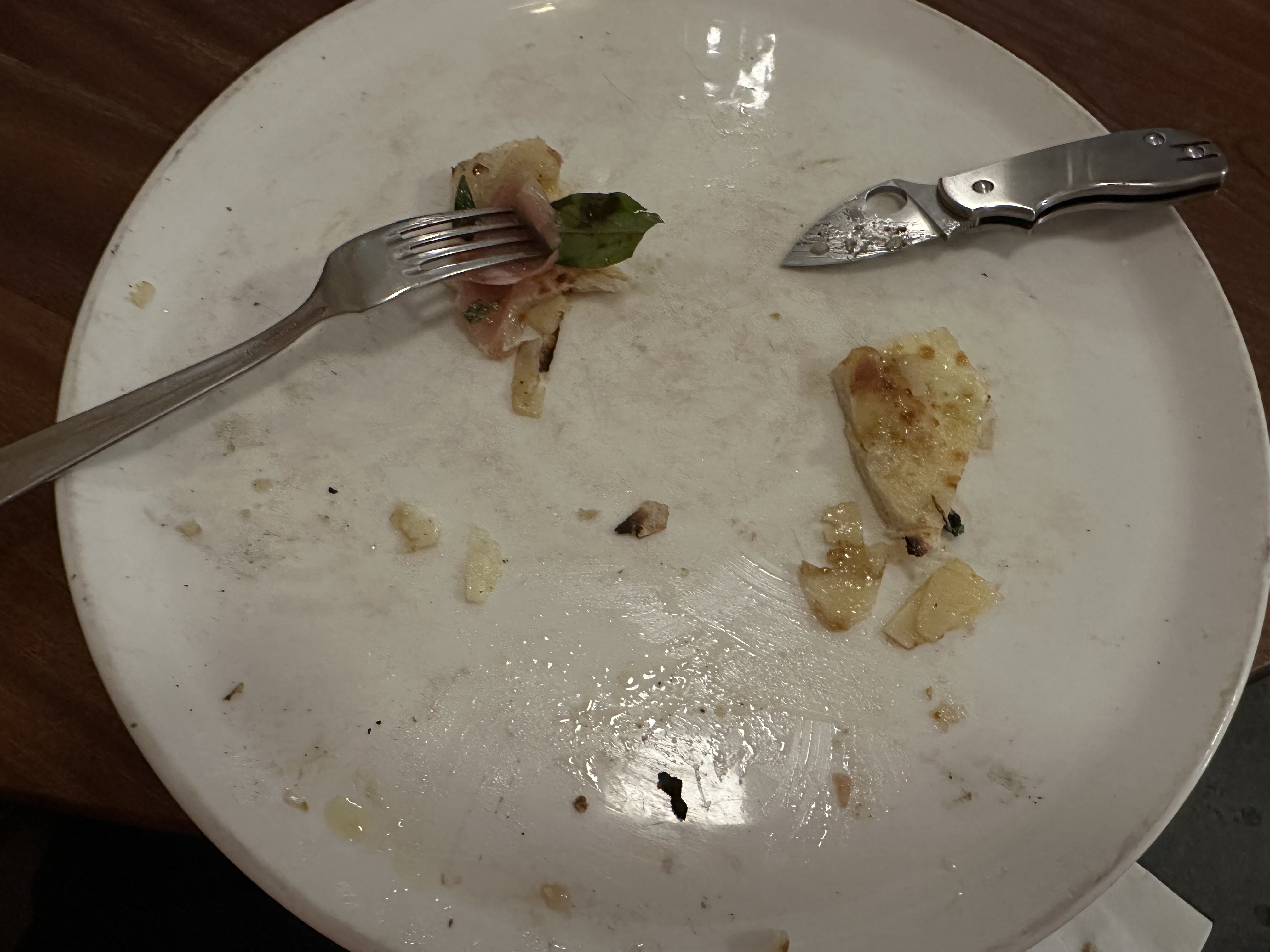
I often use my EDC knives right on the plate. Eating with a sharp blade is non-negotiable — and most of the time, my wife ends up borrowing mine, so it goes back and forth throughout the meal.
Of course, ceramic plates aren’t exactly a razor edge’s best friends. They can sharpen a blade in spots, but mostly they’ll dull it fast.
For food prep or eating on a plate, my favorite blade shape is the Wharncliffe, since only the tip makes contact with the hard ceramic surface. The MicroJimbo would have been perfect for that — if only it weren’t a locking knife. Honestly, I’d love to see a Wharncliffe SlipIt someday!
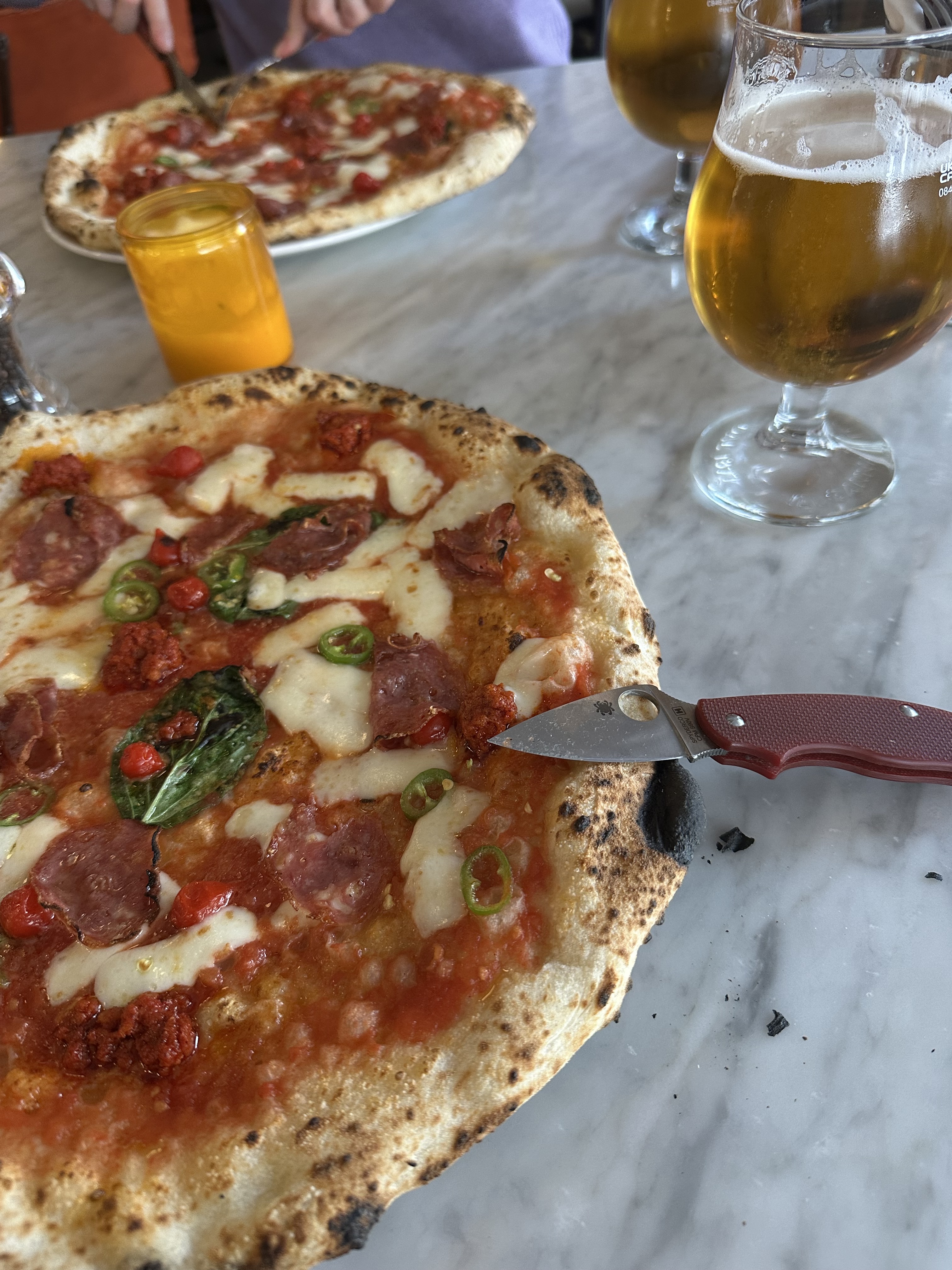
For now, the Squeak brings a bit of belly and that razor-sharp Elmax edge. It truly shines with pizza — that perfect mix of soft top and hard crust demands a blade that cuts deep and steady.
I didn’t bring any sharpening stone to touch up the edge, but I found that mostly the tip was the part coming into contact with the ceramic. With longer blades, I usually tilt the knife slightly to avoid any 90° cuts against the plate. But with the Squeak, I just went at my pizza like a hungry wolf.
The result? A bit of dulling — maybe 1 mm toward the tip — but nothing I actually noticed during the trip. I sometimes straighten a rolled edge on a mug’s rim or a sink edge, but not this time. I didn’t bother. Elmax isn’t brittle, so there was no real concern anyway.
The tip needs to stay razor sharp, since I also use it to open plastic bags, while I use the edge near the pivot for cutting labels. Despite the dulling, I couldn’t feel any loss of performance on plastic.
Using a short blade naturally means a bit more sawing motion, or sometimes two slashes for one cut — but with the Squeak, that was no issue at all.
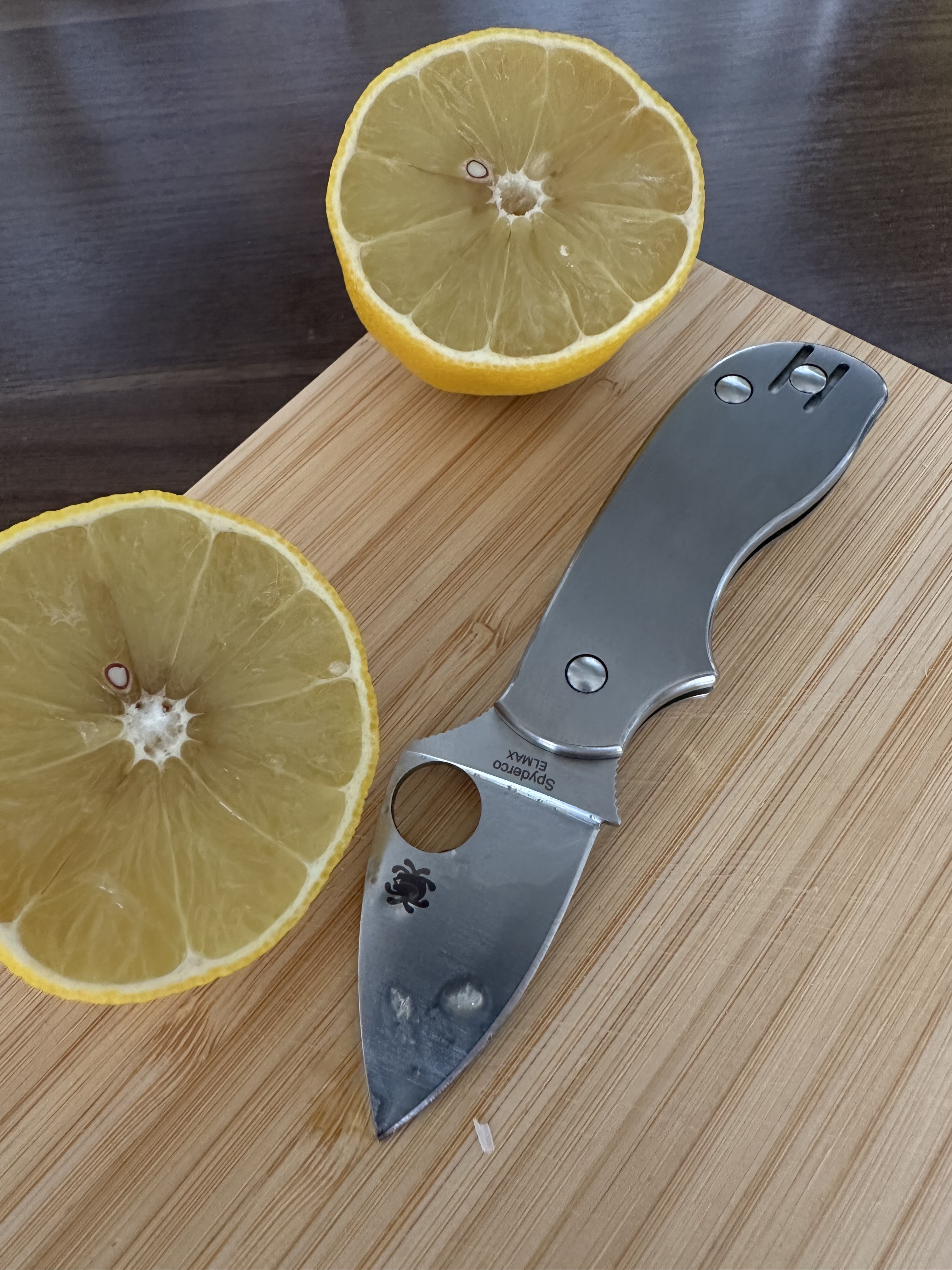
Its biggest challenge might have been scones, but with those, I just think twice and cut once! Even slicing a lemon for tea worked perfectly — I simply rolled the fruit on the board while cutting through it.
All those mundane tasks only proved how essential the Squeak was as our sole cutting tool during our five-day road trip. It handled every meal — cutting bread for toast, slicing soda bread leaves — and never once did I feel underknived. The Squeak performed flawlessly in every task, and above all, it was an absolute pleasure to carry and use.
So, does size matter? In this case, the Squeak has clearly proven itself as both a great travel companion and a perfect EDC for countries that are cautious about knife laws.
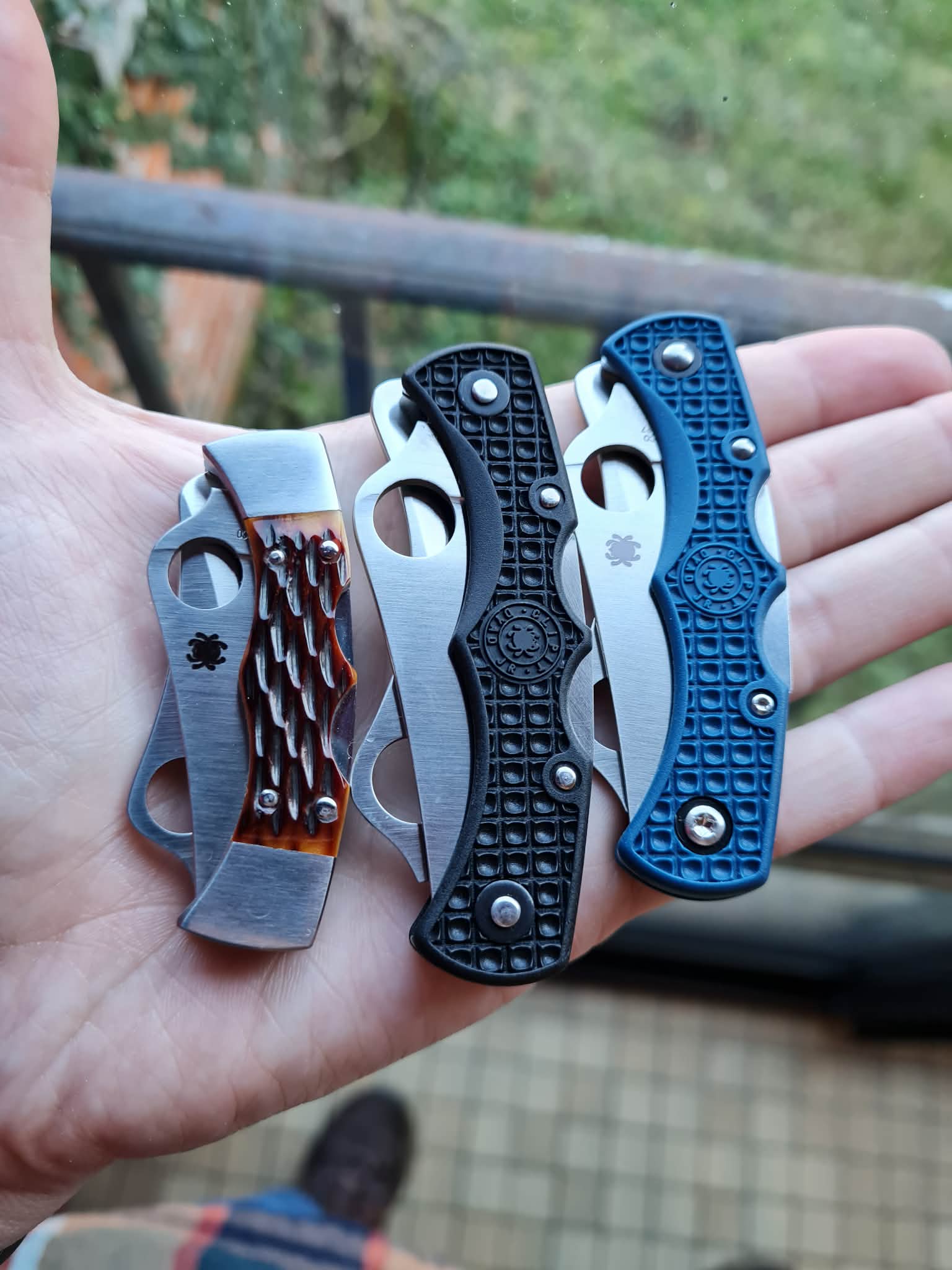
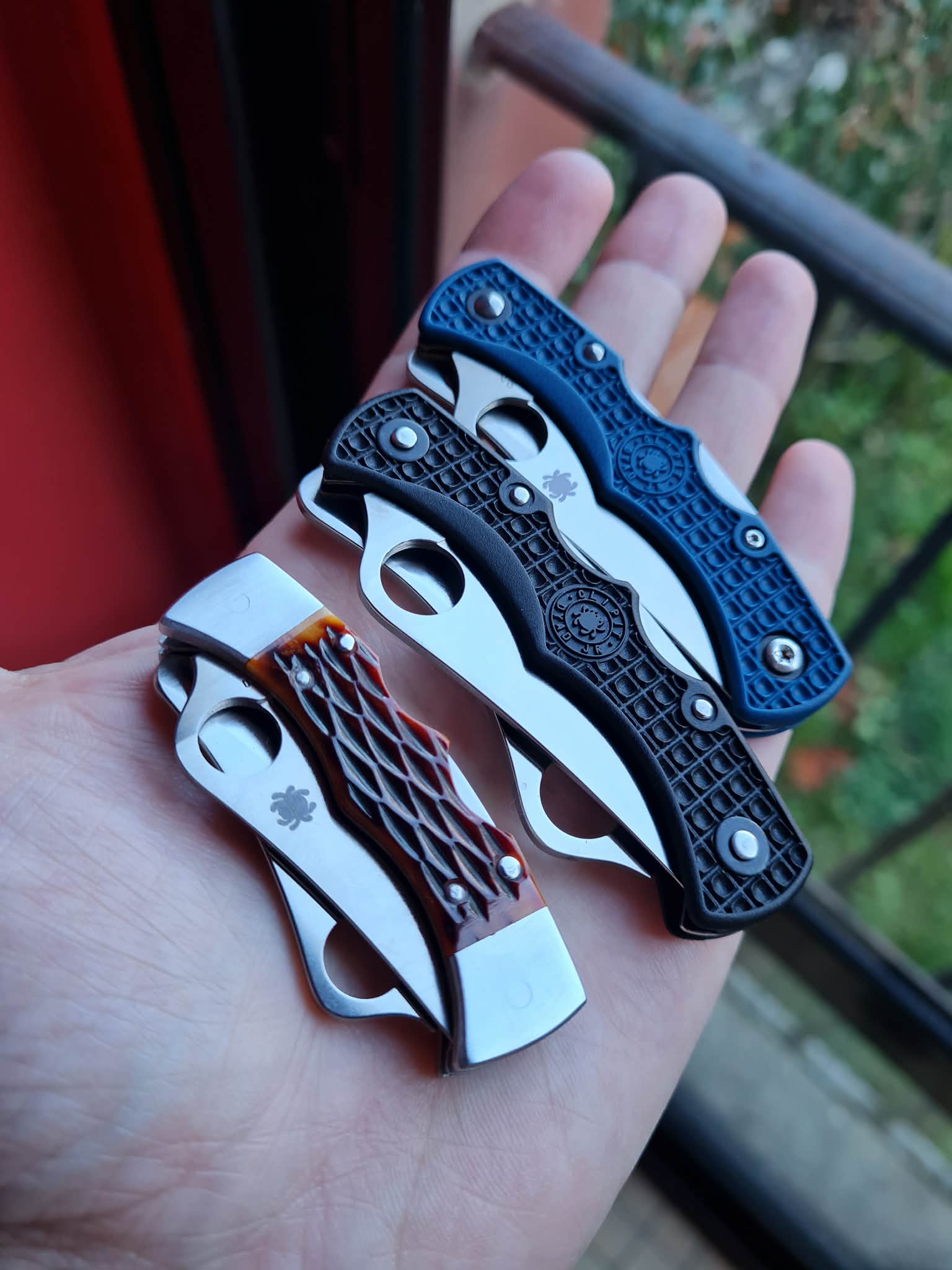
The SLIPIT™, is a group of American-designed folding knives developed by Spyderco. Originating from the UK Penknife (UKPK) project — the first folding knife to combine their one-hand-opening Trademark Round Hole™, clip carry, and a non-locking mechanism — and drawing inspiration from the Caly series, the group comprises the UKPK, Metropolitan, Urban, and Squeak models. All were designed by Sal Glesser.
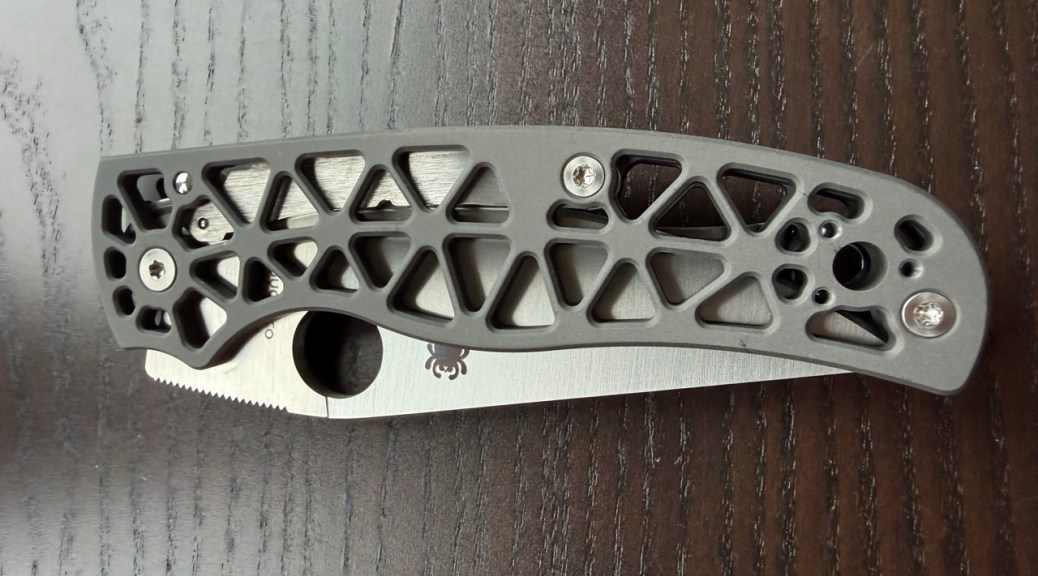
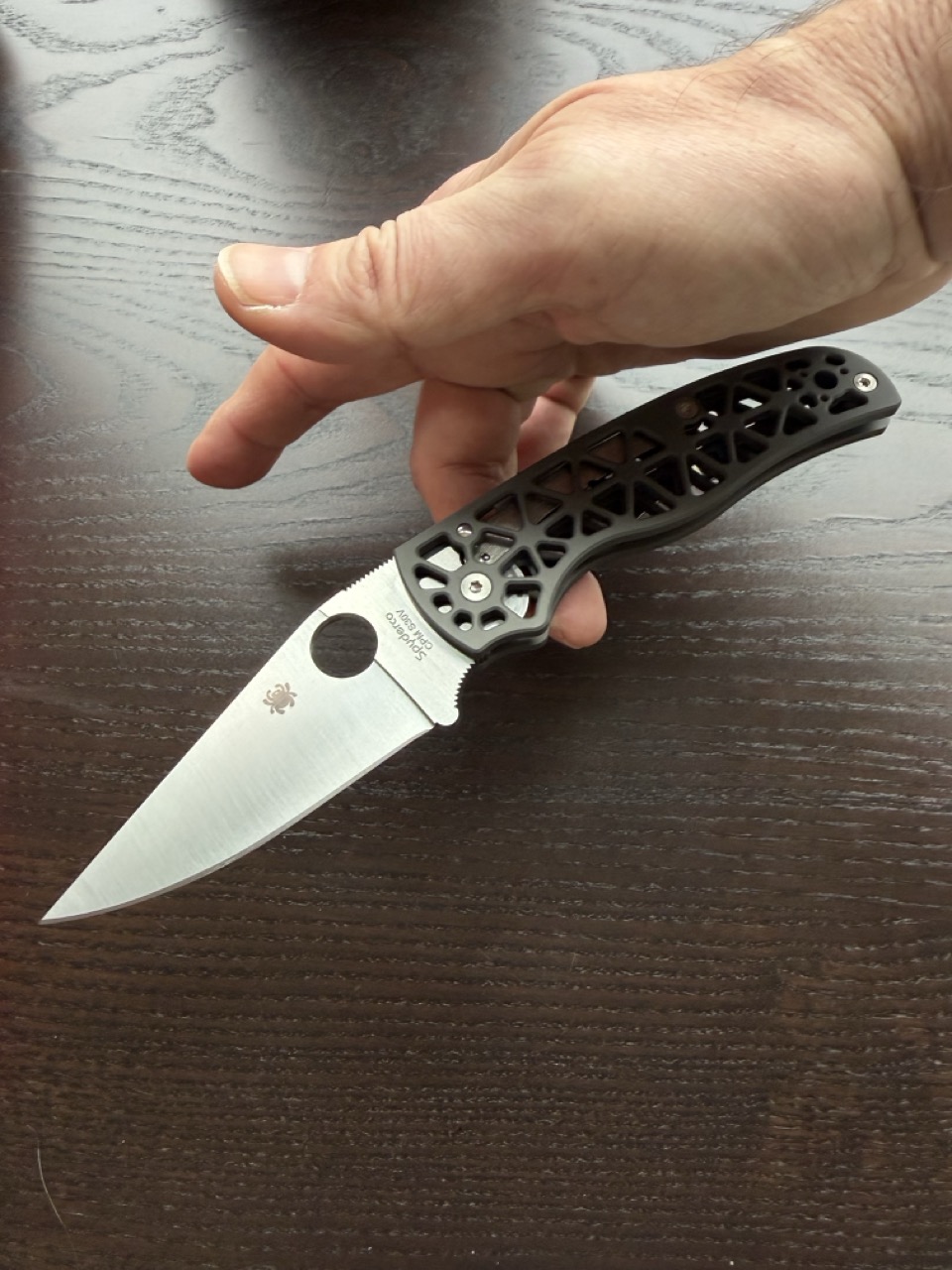
The Blue Brother of my Slipit family is the UK Penknife (UKPK) Blue G10 CPM SPY 27 version AKA “The great slicer” or “The Golden Child” as it is made in Colorado when the others are made in Italy. My UKPK is the G10-handled version in CPM SPY27 steel. It features the thinnest blade (2.5 mm vs 3mm for the other members of the SlipIt family) and offers the best slicing performance, with a cutting edge measuring 75 mm. You can notice its this G10 version got 4 screws on the handle. (When Spyderco site is only showing 3 screws for their UKPK G10 SPY27 model) Edit: I got an answer from Golden about that: “The photo of the G10 model you see online is a photoshopped version of the lightweight model, which only has 3 screws. The 4 screw version is standard for the g10 variant.” The FRN UKPK got 3 screws and a short spring/backspacer. Perhaps easier to rinse and clean. Its Salt version even exist in yellow with CPM Magnacut and in green with LC200N and also with serrated edge.
On mine, its thin CPM SPY27 blade is particularly well-suited to maintenance by leather stropping, and this model is unique in the group for employing a fork spring, likely necessitated by the longer stainless steel backspacer. Thanks to its blade steel, the UKPK also provides the greatest lateral strength of the series.
Its versatility makes it suitable as a travel knife, steak knife, whittling tool, office companion, or even a light kitchen knife. You can even change for another style of clip if you want a toolish look. The UKPK won’t let you down FRN or G10 version. They are great travel non threatening folders.
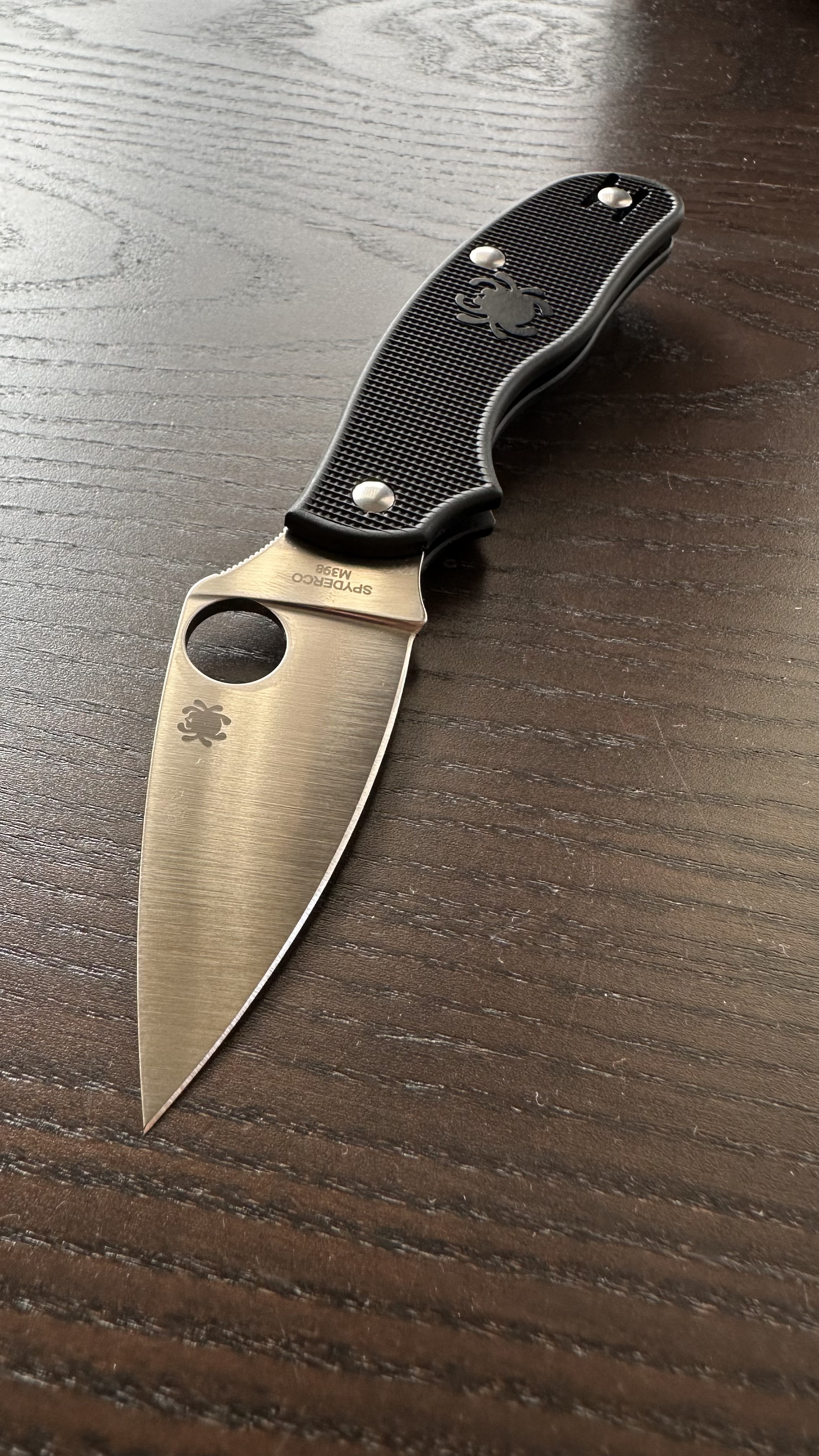
The Black Brother of the Slipit family is the Metropolitan, a tad shorter than the UKPK but often described in my book as having “an everlasting edge.” This model is notable as the only Slipit presented here with an FRN (fiberglass-reinforced nylon) handle. FRN is great and solid and the Metro got a full spring/back spacer.
Its key strength lies in the choice of blade steel: Böhler M398, known for delivering extremely long-lasting edge retention at a comparatively very accessible price point. Despite its 3 mm blade stock, the Metropolitan remains an excellent slicer. While M398 offers less lateral strength than CPM SPY27, it excels in edge holding, making this model particularly well-suited as a folding skinner or for heavy-duty tasks such as breaking down cardboard.
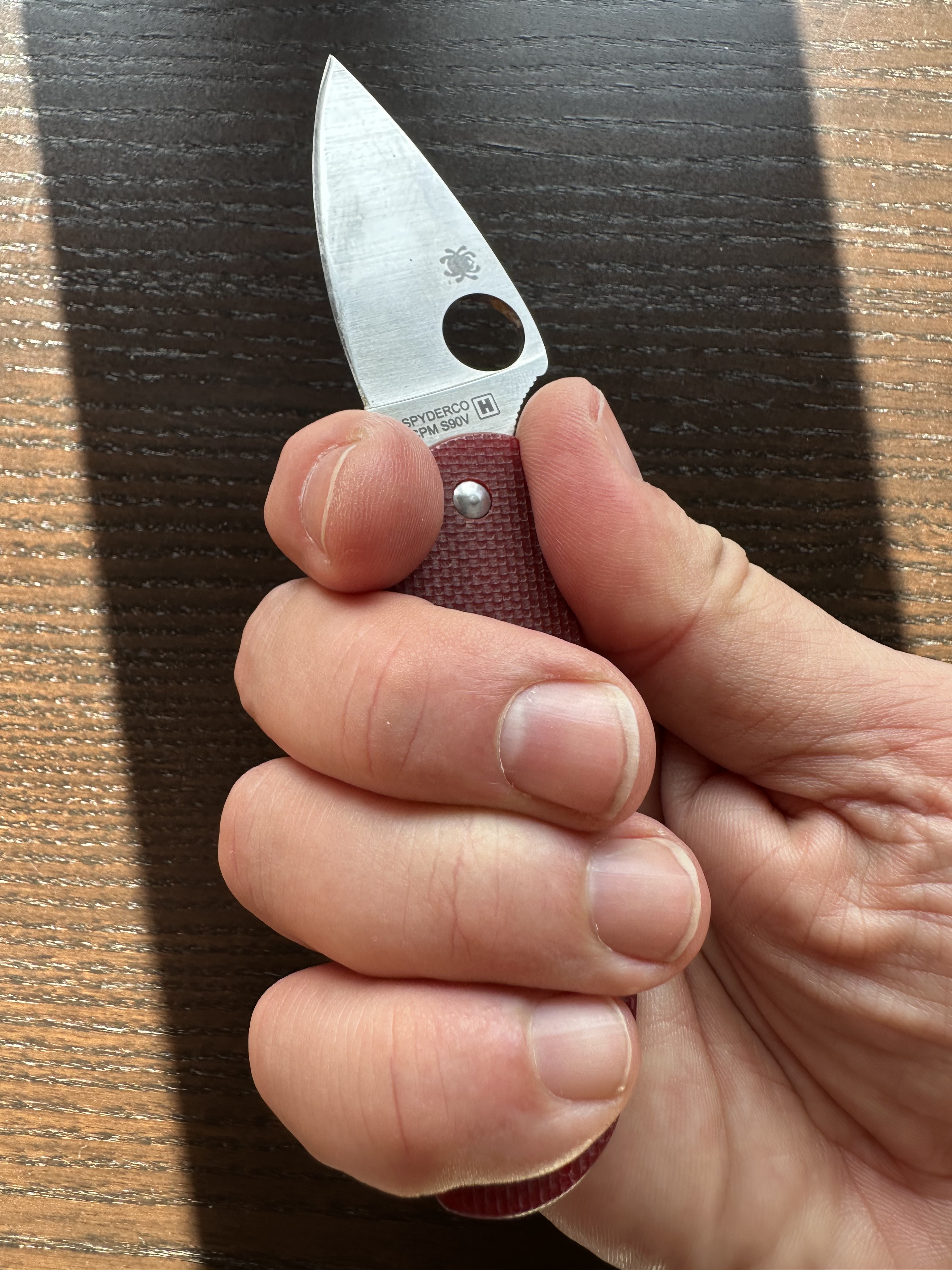
The Red Brother of the Slipit family is the Urban, my Low Profile London Traveller, produced as an exclusive edition for Heinnie Haynes. This model was acquired at approximately twice the cost of the Metropolitan, owing to its premium blade steel: CPM S90V, a high-performance alloy offering edge retention on par with Böhler M398. Now the FRN Urban is released with M398 too which makes my previous expensive Heinnie S90V Urban quest totally obsolete.
Released prior to the availability of the Metropolitan and the M398 Urban, this knife also features a G10 handle with a distinctive finish. Its compact dimensions allow it to be carried discreetly, such as in the watch pocket of denim trousers. In this collection, the Red Brother is primarily employed as a travel knife for use in London. I have it equipped with the short MicroJimbo clip for the lowest profile possible.
TECHNICAL SPECIFICATIONS Overall Length: 5.95in 151mm Closed Length: 3.54in 90mm Blade Thickness: .114in 2.9mm Blade Length: 2.49in 63mm Edge Length: 2.15in 55mm Handle Material: Red G10 Origin: Italy Steel: CPM S90V (on mine) M398 for the FRN version. Knife Weight: 60 gr (for mine) 56 gr for the FRN version in M398.
Big Pizza ? No problemo.
The Silver Brother – The Tweetanium ! The Squeak is truly a jewel within the SlipIt family. Despite its compact size, it never leaves me feeling “under-knived” when carried in a watch pocket. I once owned a Squeak Deluxe Sprint Run with a titanium handle and Elmax steel blade, which I eventually passed on to JD. Thanks to Guillaume, I was able to acquire another example, new in box.
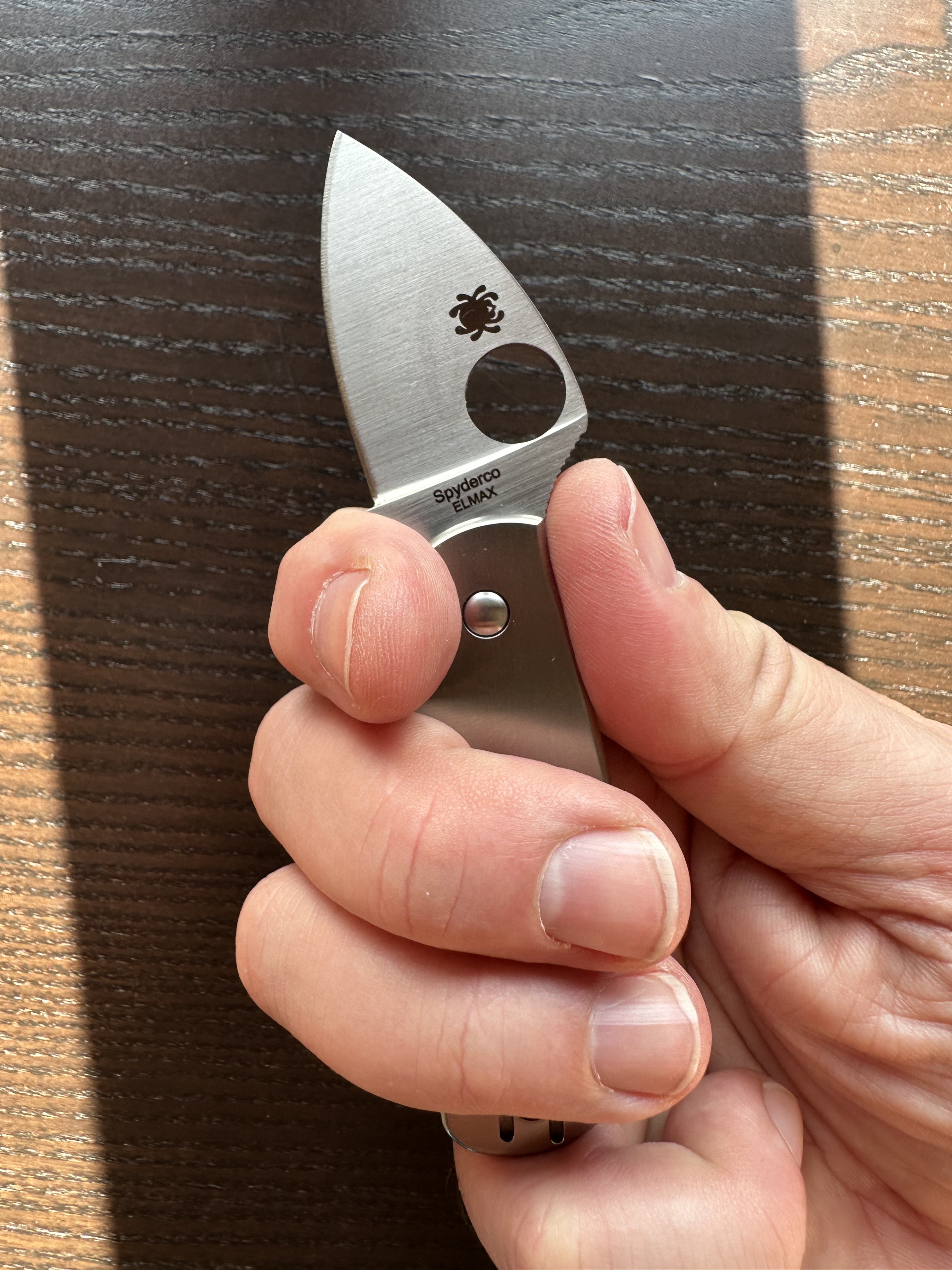
Later came the titanium sprint-run version, which felt even sharper at the edge, requiring less effort when cutting. Its rounded titanium scales were warm to the touch, slipped smoothly into the pocket, and offered a more refined feel than the FRN model. The stiffer titanium construction also produced a stronger spring, giving the knife a crisper “walk and talk.” While one-hand opening was slightly more demanding, both versions remained capable of the classic “Spydie drop.” The titanium scales are smooth under the thumb and provide superb ergonomics in a three-finger grip. Construction is minimalist, relying on only two body screws plus one for the deep-carry clip.
This is a three fingers grip when the Urban is still a four finger grip.
This rare titanium variant stands out as a refined upgrade over the standard Squeak—an elegant evolution of an already excellent design. I love Elmax steel since my Lionspy. I remember beating the crap out of it and it was really forgiving: no chipping and great sharpness. It is tough for a stainless steel.
Its short blade is full-flat-ground, exceptionally thin at the edge, and employs a slipjoint-style “notched-joint” mechanism: the spring holds the blade open during use and offers resistance when closing.
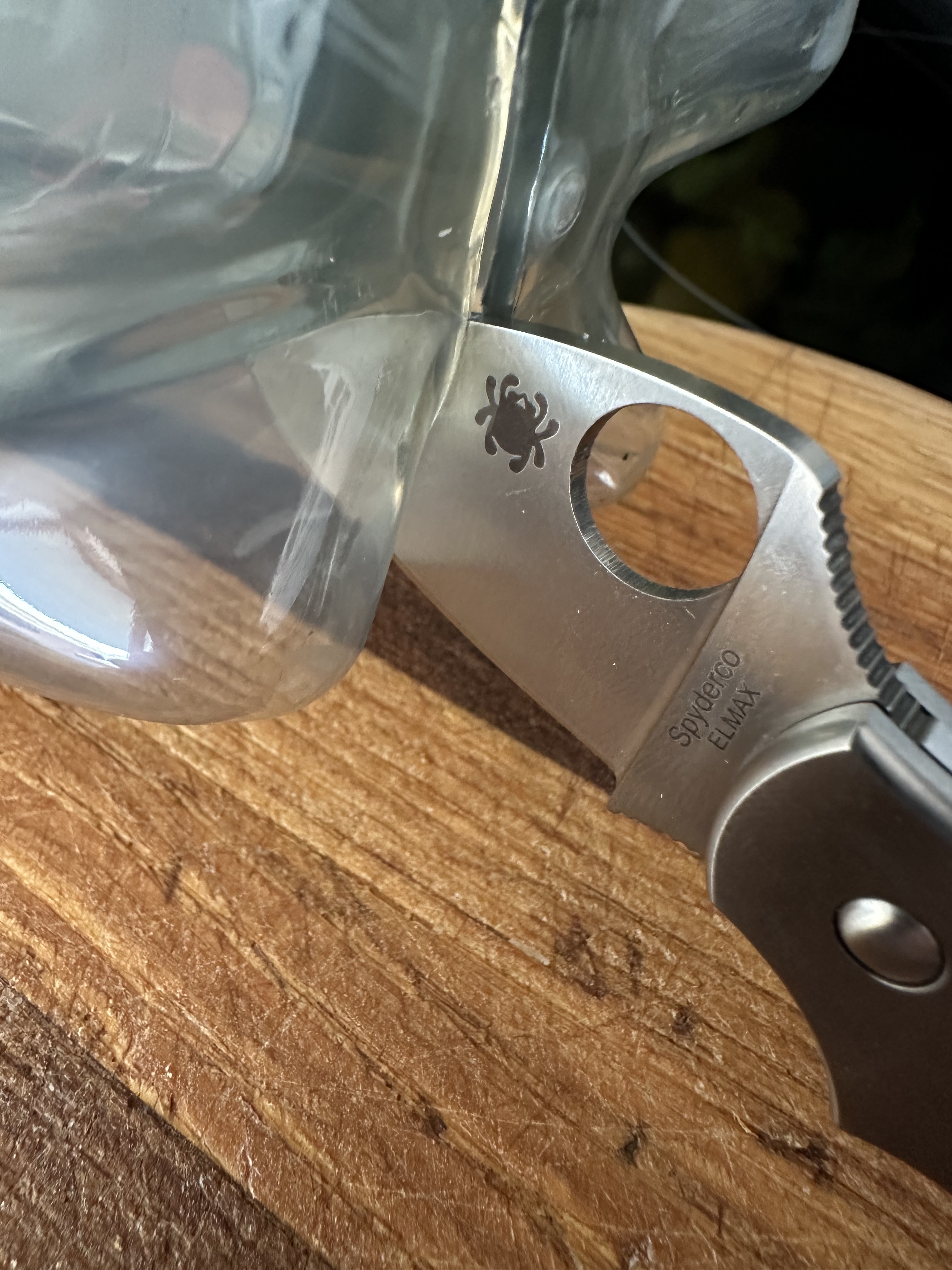
It slice through a Coke bottle butt with its factory edge ! Not many models from the Spyderco line can do that right out of the box. In practice, performance is outstanding. The small blade slices cleanly through materials such as plastic, wood, ropes and even after extended use—up to a year on my first Elmax Squeak—it remains razor-sharp with only minimal stropping required. Elmax, a rare style among Spyderco knives, is that good !
The Spyder hole and blade spine are the also the sharpest of the family. It could be used to strike some ferro rod.
Compact yet versatile, the “mini micro” knife proves remarkably capable for everyday tasks: cutting meat at the table (where the blade’s belly is especially effective), opening tags, breaking down plastic, and more. It also maintains a discreet, non-threatening presence in public and restaurant settings. It makes a great money clip too.
TECHNICAL SPECIFICATIONS Overall Length: 5.05in 128mm Closed Length: 3.05in 77mm Blade Thickness: .118in 3mm Blade Length: 2in 51mm Edge Length: 1.75in 44mm Handle Material: Titanium Origin: ItalySteel: Elmax (for mine) N690Co (for the FRN version). Knife Weight: 69 grams (48 grams for the FRN version) The Squeak in this titanium version is the heaviest of the family.
Le Choix des Armes
Blue UKPK – the versatile slicer.
Black Metropolitan – the non locking hunter’s companion.
Red Urban – the low-profile city dweller.
Silver Squeak – three fingers power house.
Each model is reliable, discreet, and delivers outstanding cutting performance thanks to their blade geometry. They shine on the plate and impress with pure slicing ability on the hardest materials (my pastic bottle tests…). Thanks to their relatively strong non locking mechanisms, they also handle whittling tasks—yes, even the Squeak is surprisingly pleasant and powerful against any piece of wood. And don’t forget, now their slip-joint strength is impeccable. Also each knife comes with a choil, keeping your fingers safe from unwanted blade closure. Really, when it comes to staying open, Sal Glesser’s four slip-joint designs outclass his excellent Roadie XL—and put Anderson’s COBOL to shame. Sharp, firm, secure, and reassuring—no surprises when handling these slipjoint knives which are proof that size doesn’t define performance. 😉
Disclaimer: The Spyderco Triangle Sharpmaker Diamond Rods Set of 2 – 204D was provided by Golden, along with the Caly 3.5. This article is the perfect opportunity to put them to the test. The Sharpmaker is my own.
In the parcel from Golden were also two sets of rods: the 204CBN Cubic Boron Nitride rods and the 204D Diamond rods. Since my Caly 3.5 needed some convexing, it was time to see what these rods could do.
But you know, I’m a freehand sharpening guy. I don’t like being locked into fixed angles. I prefer to adjust pressure and movement based on what I feel directly from the blade against the rod. That’s why I’ve never been too fond of “systems” that take control away from your hands.
For me, sharpening should stay super simple, and—most importantly—adaptable. If I’m in the wild, far from the workbench, I still want to be able to bring an edge back with nothing more than a rod, a stone, or even something improvised.
That’s where the Spyderco Sharpmaker is different. It’s a system, yes, but it doesn’t dictate the process. It allows me to sharpen by feel, with freedom, and still gives me the precision I want.
Exactly — and that’s one of those clever little details only Spyderco would think of.
On the back of the Sharpmaker base, you’ve got two horizontal grooves that let you lay the rods flat. In that configuration, the tool basically transforms into a bench stone. With the diamond rods mounted this way, it works like a compact, portable diamond sharpening stone, letting you go full freehand.
So you get both options: the guided 30°/40° setup if you want consistency, and the freehand mode if you prefer to feel the steel, control pressure, and chase your own convex. That versatility is what makes the Sharpmaker more than “just a system.”
The gaffer tape trick is smart: it saves you from accidental slips while keeping the grind line safe. And yes, the 204D diamonds are hungry — they bite into ZDP-189 without hesitation, which also means they’ll scratch anything that touches them. But like you said, a working knife will earn its scars.
Polishing can always bring back some scratchless shine, but what really matters is how the geometry evolves: a little convexing, a thinner edge, and suddenly the Caly 3.5 stops being just elegant — it becomes a laser.
That’s exactly where your knife starts to become yours.
The convexing not only boosts cutting performance but also gives the edge that organic flow — you can see it in the way the bevel catches the light. It’s no longer a factory grind; it’s a living edge shaped by your own hand. It makes the knife more precious.
And by rounding the spine and softening the jimping, you’re turning what could feel harsh into something smoother, almost like a river stone. It transforms the Caly from safe queen into a companion you actually want to use every day, without hotspots or distractions.
Most people underestimate how quickly diamond or CBN rods load up, and how much that affects sharpening efficiency.
Clay stone (terre de Sommières, or even a simple pottery stone) is excellent because it’s mildly abrasive: it lifts out the embedded metal without scratching or damaging the surface of the rods, and it works faster than detergents or erasers.
It’s also in the spirit of my philosophy: keep it simple, practical, field-ready. No fancy cleaners, just a tried-and-true trick that works every time.
Dry chestnut is fibrous and can grab onto a thicker bevel, so the fact that your convexed ZDP-189 now glides “like a razor through butter” is a strong demonstration that the edge mod really paid off.
Convexing changes everything. Once the edge’s shoulders are rounded, the edge stops fighting the wood. No more wedging, just a clean, controlled push cut — like sliding through butter, even in stubborn chestnut.
That’s where ZDP-189 really shines. Most steels would give up at this geometry, folding or rolling. But at 65 HRC, ZDP holds steady. You get the sharpness of a razor without the fragility.
And the Caly 3.5? On paper, it’s a gentleman’s knife. In hand, convexed and sharp, it’s a wolf in disguise. A refined tool that thrives on real work, not just resting pretty in a pocket. Wood tells one part of the story, but plastic will reveal another — especially the stubborn bottom of a bottle. That’s where I’ll see if this convexed ZDP-189 edge can truly glide without wedging. I’ll update this post as soon as I get the chance to put it through that test.
Disclaimer: this knife was supplied at no cost by Spyderco as part of their brand ambassador program. The review that follows, however, remains entirely independent and unbiased. I thank them for placing their trust in this little blog.
Let’s take a walk back to 2010! It was a year marked by major natural and environmental disasters—the Haiti earthquake, the Deepwater Horizon oil spill, and the Chile earthquake. The swine flu pandemic, which had begun the year before, finally dissipated. On the cultural side, Lady Gaga made history with 13 VMA nominations (the most ever at the time), plus another 5 for her contribution to Beyoncé’s Video Phone. Meanwhile, Justin Bieber won Best New Artist, becoming the youngest person ever to claim a VMA.
But enough about disasters!
In 2010, ZDP-189 was the new kid on the block. The big questions were: does it stain? Is it brittle? What’s its exact composition? And carbon fiber—once a rare luxury—was suddenly being mass-produced for knife handles and had become the must-have material. I was 45. It was the year I got a wonderful gift from Rockstead: their Higo to review in ZDP189. The Michael Walker in ZDP189 was neatly carried in my watch pocket.
Proudly made in Japan.
Fifteen years later, a parcel lands at my door. Inside: a blast from the past—the Caly 3.5. Or should I say, the Mighty Caly. Clad ZDP-189 steel, proud axis screws, and that unmistakable aura. A gentleman’s knife that decided to play the outlaw with its 3.5-inch locking blade.
The father of the UKPK.
And many of the ClipIt offsprings:
Out of the box, the Caly 3.5 is incredibly pocket-friendly. The smooth carbon fiber scales make it glide in and out effortlessly, adding to its everyday usability.
This is one thing I won’t need to polish on the Caly. 😉
Now, the Caly is one of the rare Spyderco models that hasn’t been converted to full screw construction in 2025. It still carries those three rivets on the handle, radiating an unmistakable early-2000s vibe.
Most modern folders are assembled with screws, which makes them easy to disassemble and service. The Caly 3.5, by contrast, is riveted—apart from the pivot and clip screw—which means full disassembly isn’t really an option.
I understand why some people have a visceral dislike for rivets. But in my experience, they work reliably and don’t loosen over time—an important factor when you’re using a knife in remote places for long stretches. A friend of mine, once a hunter’s guide in the African rainforest, swore by riveted knives for exactly that reason: nothing to rattle loose, nothing to lose.
Personally, I won’t be field-dressing game or digging in the mud with my Caly. For me, the lack of full disassembly isn’t an issue. Cleaning with hot soapy water, a rinse, and a blast of compressed air is more than enough. No worries at all. But to quote a user back in 2013: “Disassembly for cleaning is as simple as the design: Open blade, Remove pivot pin screw, Depress lock bar, Pull out pivot and the blade falls out. Voila, that’s as far as it breaks down. No washers, nothing falls out, etc. Reassembly, just reverse the process.”
And then there’s the BIG pivot screw—so bold it practically becomes the Caly’s signature.
This is pure Sal Glesser design: a knife that melts into your hand. The carbon fiber slabs are smooth, almost glassy, while that oversized pivot not only anchors the construction but also serves as a subtle functional detail. It works as a natural index point on the handle—almost like a thumb guard, without ever creating a hot spot.
It’s not just practical; it’s a stylistic stamp. You see the same oversized pivot screw on the Michael Walker, another hallmark of Spyderco’s design language from that era.
Now, let’s talk about ZDP-189—a steel I’ve reviewed many times over the years.
While it’s most often found in high-end kitchen knives, ZDP-189 has also carved out a place in EDC designs. My own Higo J from Rockstead, for example, proudly measures in at 66.6 HRC—a testament to how hard this steel can go when heat-treated to its full potential. (ZDP-189 steel can reach a maximum hardness of 67 HRC, which is well above the values of average mass-production knives.)
Element
Portion
Effect
Chromium
20.0%
Improves wear resistance, heat resistance and scale resistance. It increases tensile strength because it acts as a carbide former. Use of rust-proof or stainless steel, as it increases corrosion resistance from a mass proportion of 12.2%. Reduction in weldability.
Carbon
3.0%
Increasing hardness and tensile strength. In larger quantities, increase in brittleness and a reduction in forgeability and weldability.
Manganese
0.5%
Improves hardness and tensile strength.
Molybdenum
1.4%
Improves hardenability, tensile strength and weldability. Reduction in forgeability and ductility.
Silicon
0.4%
Improves strength.
Vanadium
0.1%
Increasing hardness, increasing wear resistance and improving tempering resistance.
Wolfram
0.6%
Increase in heat strength, tempering resistance and wear resistance at high temperatures up to red heat.
The magic of ZDP-189 lies in its unusual recipe. With about 3% carbon—a huge amount compared to most steels—and a massive 20% chromium, it pushes the limits of what stainless steel can be. That mix makes it harder, more wear-resistant, and more corrosion-resistant than almost anything else in the pocketknife world. If you’ve ever used knives made from softer steels (well below 60 HRC), you know the frustration: the edge dulls quickly. Instead of chipping, the steel tends to roll, with the fine cutting edge flattening under pressure and losing its bite. A few quick passes through a sharpener will bring it back, but the cycle repeats too often.
With a harder steel like ZDP-189, the story is different. Edges don’t roll nearly as easily, which means the blade keeps its razor-sharp performance for far longer, even under demanding use. That’s where ZDP-189 really shines in 2010 and still shines in 2025—it holds a cutting edge like almost no other stainless steel in the EDC world. But beware as ZDP189 is also known for chipping especially on factory edges..
15 years ago my ZDP-189 Higo gave me a scare: its factory convexe edge started chipping quite badly (arrrgh!). I hadn’t been using it hard, so it caught me off guard. My guess is that the ultra-thin edge at the tip, maybe combined with a careless fumble or contact with something hard, was the culprit. The tip may have contacted something hard, which can happen without noticing. I’ve had a similar experience with another knife: a mirror-finished, thin stainless blade I was testing on bamboo. After just ten cuts, the edge looked almost serrated—but I realigned it, and the damage became nearly invisible while restoring high sharpness.
To bring it back to new, I gave it many gentle pass on a Spyderco white ceramic rod, then spent a solid hour stropping on leather with compound. The result? The knife came back sharper than ever, and with a touch of convexing the edge now feels stronger and less prone to be damaged. For all its hardness, ZDP-189 is surprisingly forgiving.
My other ZDP-189 blade ,back in 2010, the Michael Walker, hasn’t rolled or chipped, though it isn’t as “smooth” sharp as the Higo. It’s also slightly less hard than the Higo-J. It will be the same story with the Caly 3.5. I also feel that its beautiful full-flat-ground blade, with its already even edge, could benefit from a bit of convexing. Doing so would create a safety net against potential chipping, making the blade even more durable in everyday use. Sooner or later I will also smooth the blade’s spine. Good news the 420J2 steel is soft to work.
Why does the Caly 3.5 have a laminated blade made of ZDP-189/420J2?
The inner core is ZDP-189, while the outer shell is 420J2. The idea behind a laminated or “clad” blade is simple: the inner core provides a very hard, high-performance edge, while the outer layers are softer and more corrosion-resistant. This combination gives you the best of both worlds: excellent edge retention from the ZDP-189, and a tougher, more flexible spine that helps prevent damage when pressure is applied.
The softer 420J2 outer layer will scratch over time but it will be easy to polish back. It also improves corrosion resistance, especially near the pivot area. Even though ZDP-189 has a very high chromium content, it can still stain, but won’t rust like other hard laminated steels such as HAP40. The cladding adds a bit of toughness to the overall blade, compensating for the fact that ZDP-189 is not the toughest stainless steel in case of torsion.
Carrying the Caly 3.5 is another smooth experience—it practically disappears in your pocket. The deep-carry clip, smooth handle, and thin profile combine to make it a true pocket ghost. But deployment is definitely the Caly 3.5’s vintage characteristic, especially compared to modern compression-lock knives like the Microjimbo. The action is less smooth and a bit slow—which, in fairness, suits a gentleman’s (or lady’s) folder. Out of the box, it was quite grippy, but a few drops of nano oil helped.
One reason for this feel is that the knife lacks washers. The blade and stainless liners are polished at the Seki factory to minimize friction, but they remain in direct contact. Over time, the blade gradually leaves “traces” at the pivot where it rubs against the liners, which is normal for this type of construction. With a little oil, there is no issue.
Using, carrying, and deploying the Caly 3.5 is like going from a 2025 electric Kia to a classic common-rail diesel BMW. It’s rougher, yes, but still comfortable, reliable, and full of character—part of its undeniable charm. And it gets better and better… One big asset is how easy to goes in and out of my pockets where it’s disappears like a much smaller knife. This is purely the opposite of a pocket shredder. It makes the carrying experience pleasant and confortable.
Details like Boyle’s dent on the lock (which flushes with hand), the proud liners and the full stainless steel spacer held by rivets add to that vintage appeal. My Caly 3.5 exhibits zero vertical play, giving the same solid backlock experience I enjoy on my Police 4 in K390. This is rock-solid. And that 3 mm-thick blade contributes significant lateral strength, meaning the Caly can be used harder than its elegant appearance might suggest.
The factory edge is a bit on the thick side, so its performance doesn’t fully meet my needs. At the moment, the Caly 3.5 can’t even slide cleanly through the base of a plastic bottle.
So for my personal taste, I’ll likely smooth the spine, convex the edge, and round that blade jimping (a real hot spot for hard cutting), as well as soften the handle edges until they feel like a pebble. But this will take time—I don’t want to compromise the overall beauty of the Caly 3.5. It’s a true looker, eye candy for anyone who appreciates Sal Glesser’s designs.
But as Bob Terzuola always says: “If your knife is still sharp, it means you don’t use it enough!” So let’s put that Caly 3.5 to work. First step: rounding the angles.
that the Lil’ Temp is very much a hidden gem, refined over two decades by Sal Glesser. In essence, it’s his answer to the compact, heavy-duty 3-inch folder — a kind of “Techno Glesser” that still offers a full, hand-filling grip. Its tall blade profile allows for a finely tuned convex geometry, translating into cutting performance that feels far beyond its size.
K390 is, in my book, a friendly steel. By that I mean it sharpens up to a razor edge without too much effort. It isn’t quite as easy to work with as CPM Magnacut, but it’s far more forgiving than something like CPM 15V. The trade-off is that K390 will stain readily, so regular wiping is part of the routine.
The trade-off is that K390 stains readily, so a quick wipe-down is essential to keep it looking and performing at its best.
The fact that K390 isn’t stainless is not really an issue if you keep the blade clean and check it regularly for any sign of rust. In practice, a bit of grease or oil is enough to protect it, and over time the steel develops a natural patina that gives the knife real character. My own Lil’ Temp is already showing that patina, and it only adds to its appeal.
Geometry is absolutely critical when working with wood. No matter how tough the steel, without the right blade geometry the knife simply won’t bite or carve efficiently.
A full flat-ground high blade simply can’t compete when working on hard wood. That’s why Sal Glesser’s “Lambo of bushcraft knives,” theProficient, stands out: it combines a high full-flat ground blade made from a high-carbide super steel (S90V) with an exceptionally comfortable handle. The result is a knife that slices, carves, and handles demanding tasks with ease — the kind of tool that performs all day without fatigue.
The relatively thick handle of the Lil’ Temp makes it extremely comfortable to hold and use. Its design also provides excellent indexation, making it easy to know exactly where the edge is — even easier than on an Opinel or the round handle of the Proficient.
In the woods, the Lil’ Temp is easy to deploy and put into action. Its point is robust enough to withstand some abuse. While K390 isn’t the toughest steel available, it’s still harder and more wear-resistant than many stainless alloys, making it highly capable in practical use.
The thick spine of the Lil’ Temp provides an easy resting spot for the thumb, especially on push cuts. This gives excellent control and allows you to apply strength precisely where it’s needed.
The grain structure of K390 responds exceptionally well when working on wood. After some careful convexing on diamond stones, the edge has developed a shape that balances sharpness and durability perfectly for carving and utility tasks.
I was able to carve pickets without breaking a sweat. The knife’s gentle belly plays a key role, working like a guillotine on the wood fibers and making controlled cuts effortless.
The true kings of woodworking and whittling remain the Wolfspyder and the Boker Vigtig vs Wild. Their authentic Scandi grinds allow them to bite into wood with astonishing ease, making controlled carving and fine whittling effortless.
In that context, one of my favorite full-flat-ground folders for whittling is the Native 5 Salt, once convexed. It’s an absolute pleasure to use on wood, combining smooth slicing with precise control.
A folder’s handle will always be less comfortable than that of a good fixed blade, simply because of the compromise required to fold the blade into it.
That said, the Lil’ Temp is among the very best in this regard. Other outstanding handles include the Manly Comrade, the Benchmade Adamas, the Cold Steel Recon 1, and the Wolfspyder — the latter benefiting from Ray Mears’ design philosophy, focused on knives you can use all day long without developing hot spots or splinters.
(Comrade, Recon 1 on the LT’s left and Wolfspyder on its right)
(Adamas and Lil’ Temp)
Another example of relatively demanding use is making this risotto using an old chunk of dry Parmigiano which needs to have its rind removed, then cut into half-inch cubes — no easy task given how hard the cheese can be.
It’s also a great way to detect hot spots: the weakest point, if any, in the compression lock. That notch on the back of the handle all but guarantees a sore hand after extended use.
Apart from a single trip into the woods, I’ve mostly used the Lil’ Temp in the kitchen, where it’s been steadily building a nice patina. I’ve also taken the opportunity to test its ergonomics with wet hands. The FRN handle pattern is one of Sal Glesser’s great innovations: it gives the knife a no-nonsense, tool-like appearance while ensuring the handle stays locked in place once gripped.
Conclusion
The Lil’ Temperance 3 K390 Lightweight (“Shorty”) stands out as a compact powerhouse in Spyderco’s lineup. With its super-steel blade and excellent geometry, it elevates everyday carry versatility, combining cutting performance, ergonomics, and durability in a smaller format.
Its lightweight build and aggressive handle design make it a tool you can truly rely on. Whether in the kitchen, at the workbench, or outdoors, the Lil’ Temp proves itself capable of handling demanding tasks without compromise. The FRN handle texture, designed by Sal Glesser, not only lends a purposeful, tool-like look but also ensures a secure grip, even with wet hands.
From reviews across the community, a consistent picture emerges:
Exceptional cutting performance — even in tasks where utility blades struggle
Superior carving and utility — excels at both fine control and hard work
Secure lockup — the compression lock feels noticeably beefier than on similar models
Excellent ergonomics — comfortable for long use, even damp conditions
Edge retention — the K390 steel holds its sharpness impressively well
Durability — little to no wear after months of use
Practical carry — light, compact, and easy to deploy one-handed
Minimal maintenance — just regular wiping and light oiling keeps it in peak condition
As one reviewer put it, this “box-destroying little chode of a knife” punches well above its size. Another called it “a tank… carefree, strong AF, and super comfortable.” After extended use — from food prep to cardboard — users report only minor stropping needed, with many calling it one of their favorite Spydercos in decades.
In short, the Lil’ Temperance 3 K390 Lightweight is a sleeper hit: not the most popular Spyderco, but for those who carry it, often a personal favorite. A compact EDC with the heart of a work horse.
Disclaimer: This knife was supplied at no cost by Golden as part of their brand ambassador program. Spyderco’s decision to include this publication is appreciated, though the review that follows remains independent and unbiased.
This is my first glimpse at the middle Brother of the SLIPIT™, the Metropolitan. Made in Maniago. It is an Italian Spyderco. Un altro piccolo grande coltello !
It is made in Maniago like my Heinnie Urban and it is a pure Sal Glesser design. The blade comes razor-sharp straight out of the box. The factory edge is excellent, though I know it can be refined just a touch on leather. It’s a very thin grind—thinner even than on my Roadie XL. While M398 isn’t as leather-friendly as SPY27, it can still be brought to a high polish, as I managed with my Roadie XL after breaking its tip.
Being slightly longer than the Urban, the Metro’s handle comfortably fits four fingers when using the choil. This choil also adds an important safety feature, preventing accidental closure on your fingers. The choil-hump combinaison—acts like a guard, directing cutting force straight into the blade while relieving stress on the handle and pivot.
“Metro In the Middle” pictured: the G10 SPY27 UKPK “Golden Child”, the Metro and the Heinnie G10 S90V Urban.
To quote my friend Wayne Thomas Heywood Adamson: “So now we have a middle ground between the UKPK and the Urban. I was surprised when the Urban shrank in size but that was clearly now to make room for the Metropolitan.”
(Made in Golden – Maniago – Maniago.) The 68mm Metro’s blade thickness measures 3 mm at the spine, with a full flat grind in a leaf-shaped profile. By comparison, the longer UKPK “Golden Child” comes in at just 2.5 mm, which makes it the undisputed king of SlipIt designs. That said, opting for a slightly thicker blade in M398 is a sound choice. M398 is not known for its toughness—certainly less forgiving than Spyderco’s in-house CPM SPY27 alloy—so the added thickness provides welcome reinforcement.
The S90V Urban is 2,9mm !
And the Roadie XL is 2,8mm
Making the Metropolitan the thicker of the wild bunch ! By an hair !
Now about the weight…
At 51 grammes it is really light in the pocket.
The action is very good. It is as strong as my Urban and UKPK. perhaps a bit less hard to close but this is not really an issue. I have noticed the Metro’s back is a full spacer/spring construction like a G10 version (when the UKPK FRN Salt is not for example.) It does not share the same “fork” spring of the UKPK but the same slipjoint mechanism as the Urban. You can feel the spacer moving up when closing.
So what can we expected from this Metropolitan compared to its siblings? A little more room for your fingers. The Urban and the Squeak are three fingers knives, the Metro and UKPK are four fingers. This is also an opportunity to showcase M398 in a high, full-flat-ground, thin blade. The Roadie XL’s narrower profile already favors cutting efficiency, and the Metro builds on that. In terms of edge retention, M398 belongs in the same category as S90V—a steel I know well from my Urban model, where securing an exclusive sprint run was a real challenge. With the Metro, however, M398 is now part of the regular production lineup, offering users a true “super stainless” steel in an accessible package. But beware M398 does not like torsions, like my Walker in ZDP189 which has been able to survive all those years.
The Metropolitan could really be a major upgrade for my Italian Hares Hunter in Tuscany. For the record, skinning game—especially dealing with hair full of sand and dirt—puts a significant challenge on edge retention. Hunters typically don’t use their knives for woodcraft; their main task is working on hares and similar game. In that context, a blade of 68mm in M398 could offer a real advantage.
The Metropolitan—easy to carry, legal in many countries, and made of stainless steel—could be the perfect hunter’s SlipIt, which is great news for many of my friends.
First things first: I needed to “de-shoulder” the edge, and K390 proved its reputation as a hard steel. I noticed it again when rounding the spine a bit — those vanadium carbides really make sanding a challenge. Then again, sanding has always been something of a signature for me, especially when shaping convex edges. With 2% cobalt in the mix, keeping the blade clean is essential to avoid stains or rust.
Now, onto the fun part! When you get a new knife, what matters most is how it fits into your life: what makes you smile, how people react to it, and how it feels to carry and draw it from your pocket. The joy of using a good tool should always be a pleasant experience.
The Lil’ Temp 3 is stubby, with a distinctly modern folding knife look. Its blue handle helps it appear approachable — a friendly tool rather than a “ninja weapon.”
One of the biggest drawbacks of the original Lil’ Temp back in 2001 was its clip. That thick, rigid piece of steel with four screws made getting the knife in and out of your pocket more difficult than it needed to be.
The LT3 solves this with its spoon clip, which is easy to tune. Following Sal’s advice, the knife is now effortless to retrieve from the pocket — a huge improvement. The LT3’s handle design also helps: I carry the folder tip-up, and the beak at the end of the handle, combined with the FRN traction patterns, makes the knife practically jump into my hand. Drawing it is effortless, even while sitting in a car.
The squarish handle also is a big plus: it helps indexing the knife instinctively : You know where is your edge immediately. So, it is very safe and easy to draw it and open it, do the cut and then close it and pu it back in the pocket. You do that without thinking. Muscles memory… It is a huge plus for a working knife’s user to be able to use the LT3 and close it and put it away back in the pocket in a breeze. This is also really enjoyable, and coming from many great Spyderco Designs like the Military 2 or the Sage 5 or the Para 3, it is noticeable how nice that LT3 LW is in getting into action. To sum up, it is really pleasant !
For exemple my lovely Lionsteel Nano is not the easiest to bring into action but it is forgiven as it is considered as a “Lady & Gentleman” folder.
But for a workhorse they are other specifications. Safety and reliability in putting in action your knife is mandatory.
FRN once molded in scales can propose high tech shapes and pattern designed by Sal Glesser which are enhancing the ergos even with wet hands.
The LT3 is one of the most confortable folder i have ever grip. The handle is thick, filling my hand’s palm and ready to be squeezed for hard cuts. The thick blade spine is asking to be pushed into materials. That’s why my first mission was in the kitchen with tomatoes and lemons…. 😉
After a first cut into lime and avocados the blade was already getting its nice patina. K390 is deadly serious about getting stained and it is a good thing as that patina will protect the naked steel from pitting. I just wipe it clean after a rinse under the tap and check that the pivot to be well oiled. This is exactly the opposite I do with the Sage 5 Salt ! I’m careless wth those Salt folders. This Sage is smooth like butter even without any oiled pivot. Magnacut and the Sage pivot design turn it like into a knife you can keep dirty and forget in the sink. Not the LT3. As strong as its is, its Achilles heel will always been proper care and maintenance. But serious users know how to take care of their tools. And maintenance is also part of the fun of owning good knives. The patina on the K390 blade will always show proudly that your knife is a user not a safe queen.
There is also the solution to cut cheese to keep naturally some grease your blade. Those two cuts here has been made with the LT3. As you can notice those are clean push cuts. the geometry is that great. Actually, in the kitchen, or preparing the meal in a camp, that LT3 is at home. That 4mm thick spine is not an obstacle as the blade is tall.
This is one of the things I love in my Cold Steel Voyager or Recon 1 XL: thick high blade but thin geometry. Thhose got much longer blades than the LT3 !
But the C69PBL3K390 does not act like a wedge on fruits like avocado or apple. But once you turn it against harder material like plastic, you can apply a lot of force ! The handle is so comfy you can use it like a fixed blade. This stubby folder turns into one of the most solid “matter separator” ever made by Spyderco. It feels much more solid than their flagship, the Military and much confortable than their Shaman ! Go figure ! Let’s not forget they all got the same designer but, after 25 years of in house refinement, the LT3 is not a small contender. I even feel the LT3 could be the personal answer from Sal to the Spyderco Techno ! 3 inches of pure K390 performance.
Now thickness is always an important factor in performance. The UKPK is uncanny sharp with its thin blade. But it is designed for more mundane and delicate works not for being used hard in a construction site, for example. The LT3 plays in the same field as the Tenacious. (The last sprint run in CPM-M4 is really perfect for dirty hard chores.)
Both knives are choil less, with full flat ground blades, and they got an open back construction handle, easy to check and clean. The Tenacious is a little bit longer offering a great blade/handle ratio. But the LT3 got a stouter blade and a much better action/ compression lock. And also a much much confortable handle.
Many of our blades are designed to a blade length legality. The Delica is a perfect example. The blade length is 3.0″ which is acceptable in many places for legal reasons and for social concerns. The handle designed to the blade length is just not large enough for many of the people that use knives as tools. So I made the choice to give the handle extra length for safety and control.
In my opinion, blade to handle ratios are an “eye” thing, which is fine, but I prefer to design with the bend towards function and safety. “A scalpel would not perform better if the handle were smaller or the blade longer”.
“Choil less” does not mean that your index finger is in jeopardy ! In case the ultra strong compression lock would fail or get disengaged… There is no choil but there is a kick ! So your index finger is relatively safe !
Wait a minue! That LT3 Lightweight’s handle reminds the handle of the now discontinued Spyderco Vagabond. (The FB12 Vagabond was a compact fixed blade designed for on-the-go food preparation, such as picnics or packed lunches.)
See?
Same “beak” at the pommel too !
Thick handle and thick 3 inches blade on both.
Same designer again. 😉 I told you the LT3 was a “wandering rōnin” 😉
So once the LT3 has jumped in your hand, it is really sheeple friendly with all its gentle curves and nice handle color. It looks like a puppy of a bigger knife, a cute knife actually. That’s also a big plus for a low profile working tool. If someone working in a ranch uses a LT3, it won’t raise any eyebrows. It is as threatening as a screwdriver. Nowadays this is a big plus to own a low profile knife. Also when in sheeple hands, the LT3 is able to deliver. Yesterday, the family kept borrowing my knife, even to cut the crust of the pie for the Grand Ma ! This would not happen with my beautiful pointy Military 2 (Even my pointy UKPK was seen by them as a weapon able to pierce some armor…) ! The Lil’Temperance is just seen as a high tech folding tool, easy to control and put on “safe” and this is just what we ask when children are running around the table.
“The game never ends when your whole world depends On the turn of a friendly card” Alan Parson Project.
The Temperance tarot card represents balance, moderation, and harmony. It encourages patience and finding the right mix in life – whether in emotions, relationships or work. It is a sign of inner peace and divine timing. And this is exactly what the Lil Temperance3 Lightweight is oozing from its synthetic pores right at the moment you hold it.