Tag Archives: Millie

Spyderco Military 2 Salt – C36GBKYLMCP2 – From ATS-34 to the Salt Age


If you were around in the 1990s, you remember the Steel Wars.
Back then, the aspirational trio was ATS-34, 440C, and D2.
ATS-34 wasthe working man’s stainless . 440C was the gentleman’s stainless . D2 was the semi-stainless tool steel brute with some bite.
Users were happy with Gin-1 blade. VG10 was not yet available. Hard chore fixed blades were made in 1095 or 1075 or 52100 carbon steel.
Anyway, those were the benchmark steels — the ceiling, not the starting point.
Then something shifted.

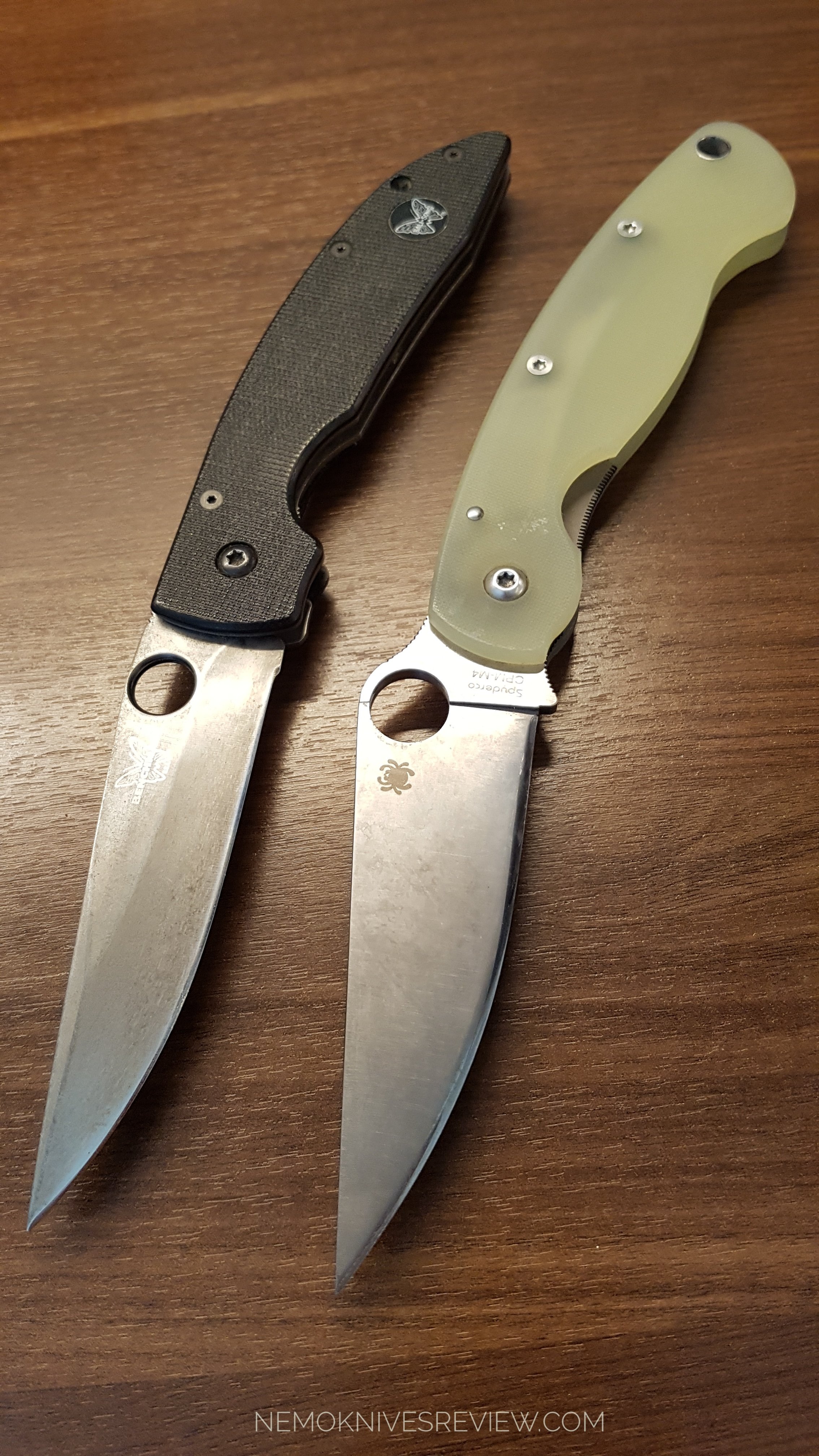
In 1996, Spyderco did something quietly radical with the original Spyderco Military: they moved from ATS-34 to CPM 440V — later renamed S60V. It wasn’t just a steel swap. It was a philosophical statement.
The Military became the first production folder to embrace Crucible’s Particle Metallurgy steel.
That moment matters a lot for knives users and for Spyderco.
It marked the beginning of the modern steel era in production folders — high vanadium content, fine carbide distribution, wear resistance that outpaced what most users even knew how to sharpen. It was controversial. It was ambitious. It was forward-looking. Typical Sal Glesser’s route to unknown territory.
And the Military has been evolving ever since.
Disclaimer: This knife has been provided through Spyderco’s Ambassador Program, upon their own request. Thank you to the Spyderpeople for letting me review it and enjoy it.

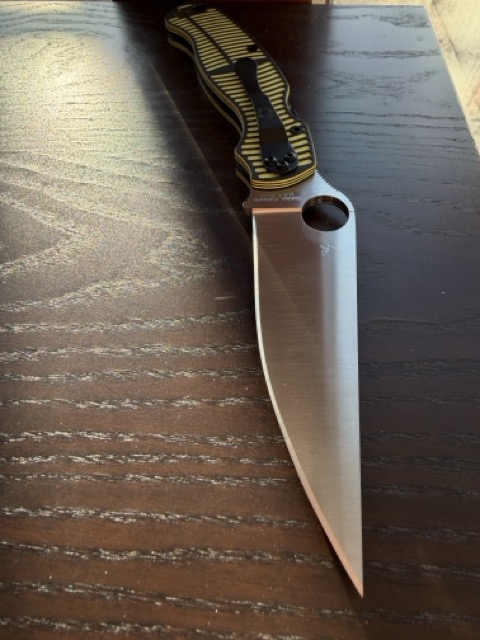
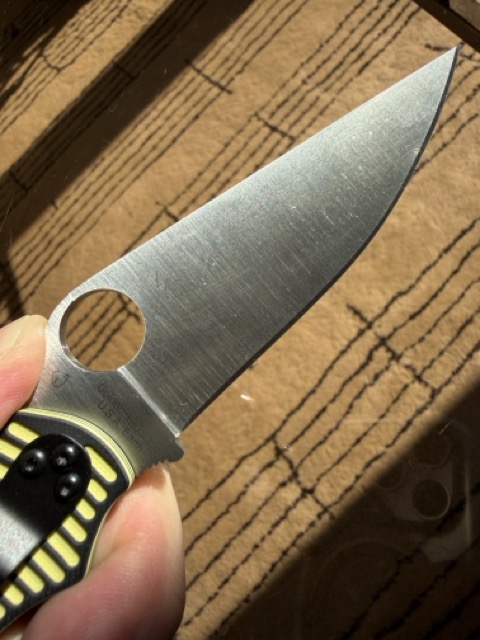
Enter the Military 2 Salt: Bright, Bold, Unapologetic — yellow and black handle, corrosion-proof attitude, purpose-built for brutal environments.
The Salt line has always been about defiance — defiance of rust, of humidity, of saltwater indifference. But this is not just a “marine” variant. It’s a continuation of a lineage that has consistently served as Spyderco’s testbed for what’s next.
From ATS-34…
To CPM 440V…
To S30V, S90V, S110V…
To the modern exotics.
The Military platform doesn’t chase trends. It previews them.
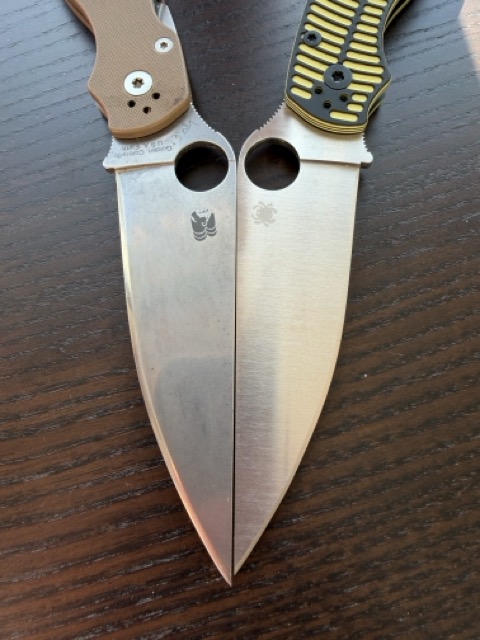

Fast forward to Gambit my CPM15V “Mother of All Bears” sprint run — a steel with outrageous vanadium content and edge retention that borders on absurd. In many ways, that sprint heat treated by Shawn Houston wasn’t just a collector’s piece. It was a thesis statement.
It said:
The Military platform still exists to push metallurgy forward.
Fifteen percent vanadium. Let that sink in. In the ‘90s, we thought 440C was peak sophistication.
For the record Rambo II Knife was made from 440C.
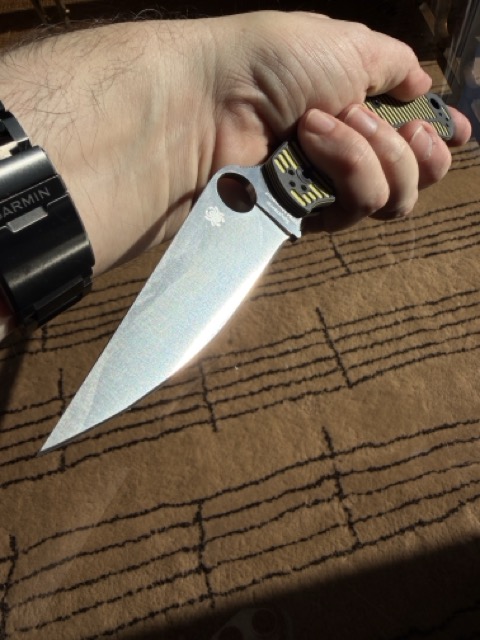

If the 1996 jump to CPM 440V (some kind of powder steel version of 440C) signaled the start of the particle steel era, then the inevitable future feels clear.
At some point — whether as a sprint or full production — the Military will wear CPM MagnaCut. A steel you can bring to the rain forest where even camera lenses can be eaten by fungi.
And when Spyderco does a Salt, it’s no gimmick. It is the logical next step.
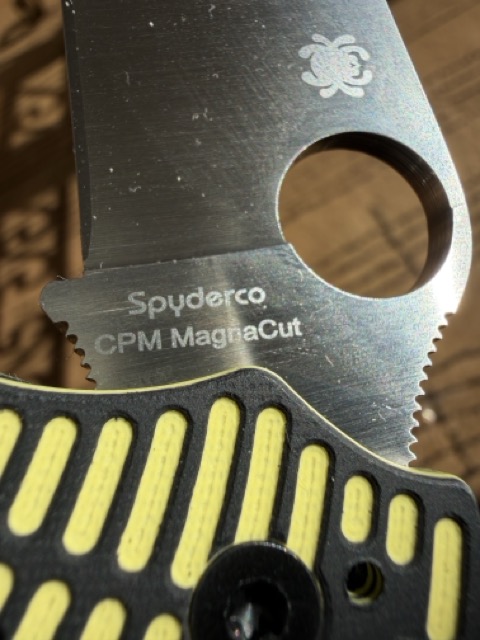

From a certain point of view, MagnaCut represents what ATS-34 once was supposed to be (Chris Reeve’s Sebenza were made of ATS-34) — stainless performance without compromise. Fine carbide structure. Balanced toughness. Real corrosion resistance. Practical edge stability.

As the Military began its journey by embracing the future of steel before the market demanded it, a MagnaCut Military is simply continuing that tradition.

The Military isn’t just another large folder.
It’s a timeline. A flagship. A knife Sal was giving for Eric for his military service.
But also it reflects where the industry was, where it is, and where it’s going.
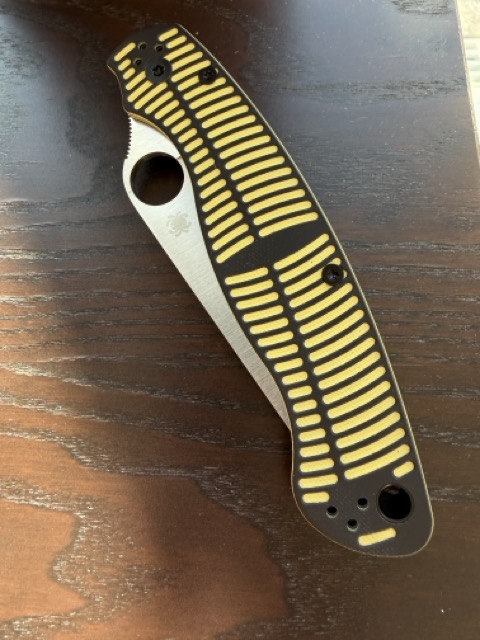

That beautifully “wasped” Military 2 Salt — with its unapologetic yellow and black scales — stands as a modern chapter in that story: corrosion-proof, high-performance, and unafraid of specialized steels.
For those of us who remember when ATS-34 felt exotic, holding a Military 2 Salt today is a reminder of just how far production knives have come.
And if history is any guide, this won’t be the final evolution.
It never is……. Magnamax ?
Anyway, Magnacut is a wonderful tough steel

There is, however, one issue with the Spyderco Military 2 Salt — and it’s not the steel, the ergonomy or the lock which came with zero lock stick BTW.
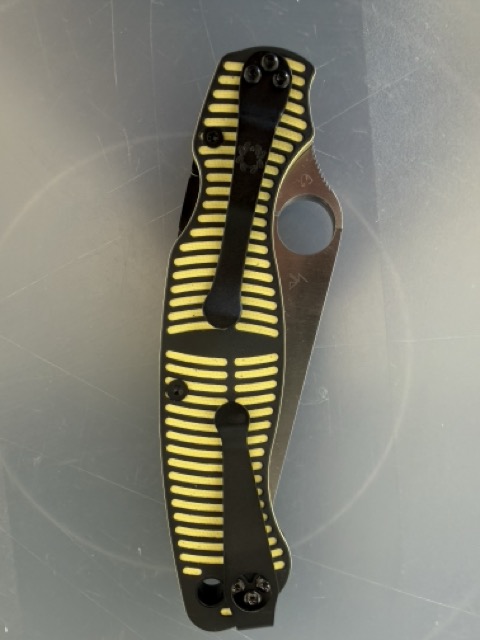
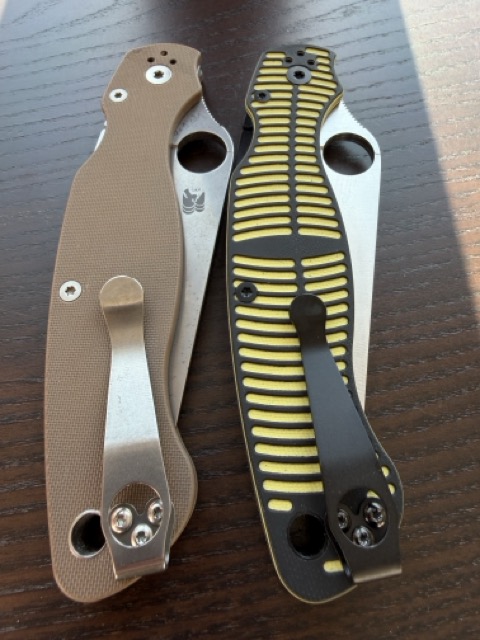
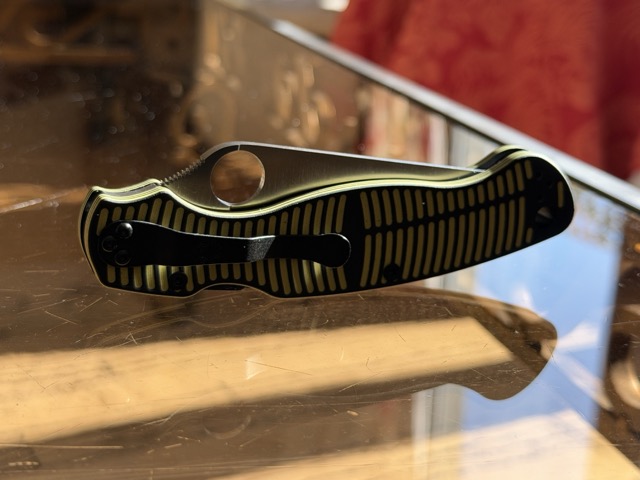
It’s the clip placement. As you can see no clip can reach that central flat spot. It stays on the grooves !

“The meticulously machined Caribbean Bi-Directional Texture pattern not only ensures a secure, non-slip grip, but also reveals the scales’ alternating black and yellow layers to enhance the knife’s visibility in and around the water.”

Yes but that yellow/black Salt version retains the aggressive, highly contoured handle geometry that makes the Spyderco Caribbean such a secure tools in wet environment.
“The Caribbean’s blade is housed in a vibrantly colored handle featuring scales crafted from layered black and yellow G-10. Their intricately machined pattern provides a non-slip texture and reveals the contrasting colors to create a high-visibility striped design. “
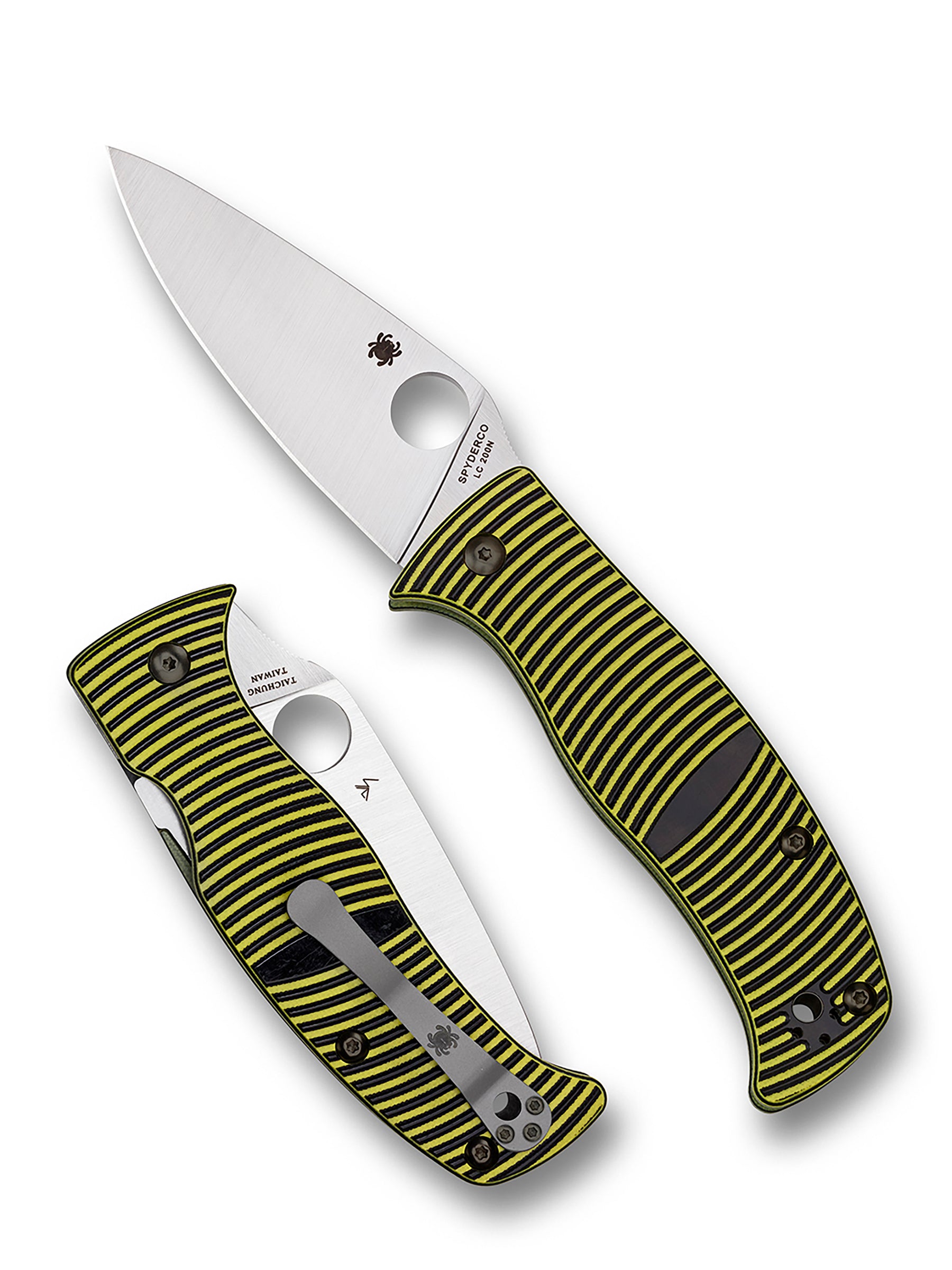


Those scales are not flat which is “handy” especially in wet or gloved conditions. From a grip standpoint, it’s outstanding. The ergonomics are purposeful. No question.
But the clip sppon is mounted across a section of handle that isn’t truly flat. And that matters for me.
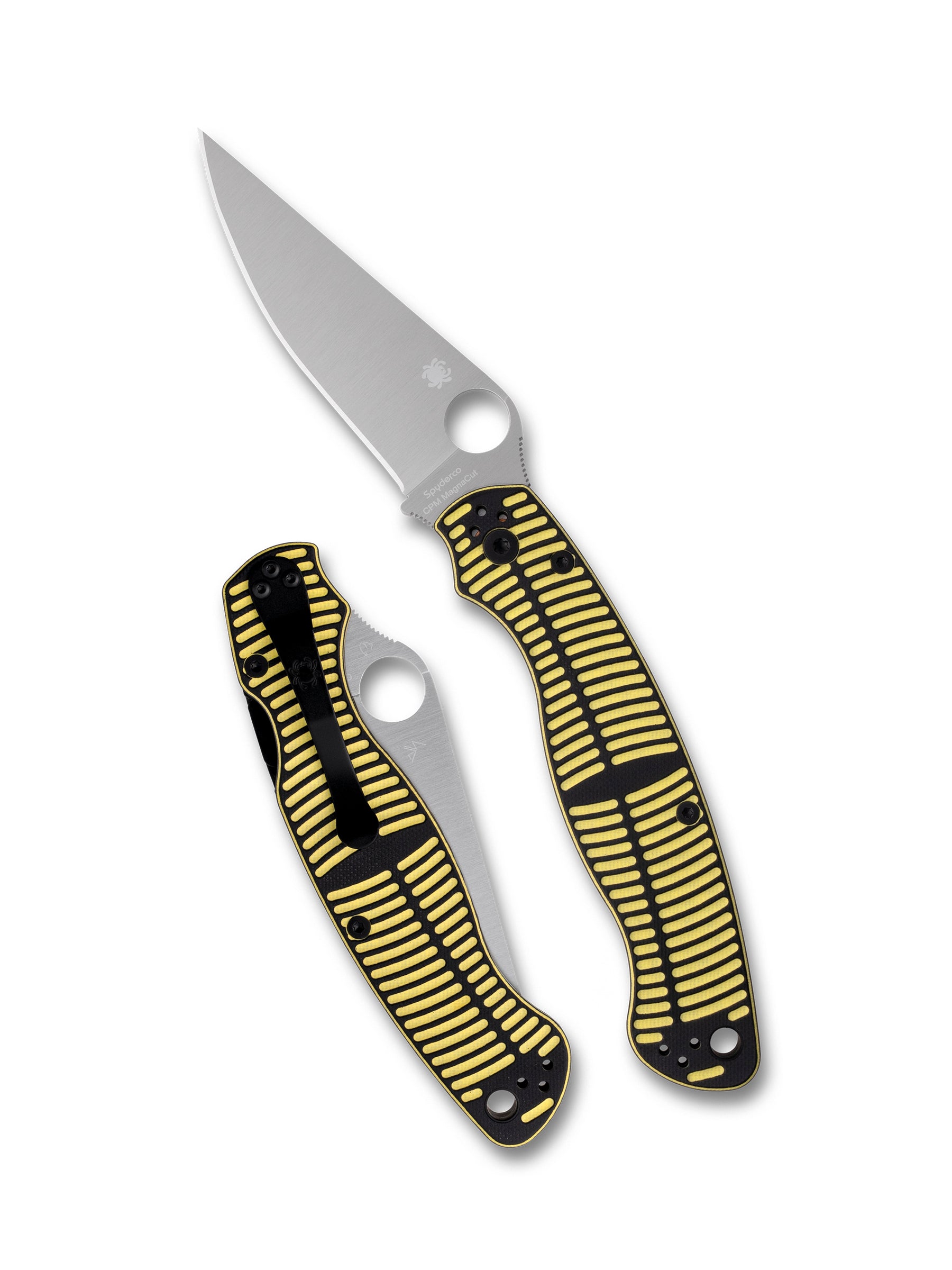
That handle creates localized tension points. In pocket draws and insertion, that translates into friction. And friction, over time, translates into shredded fabric !!
For a knife that’s designed to live in harsh environments, the last thing you want is a clip that behaves like a textile rasp.

For the record, this is not a Salt-series indictment.

Neither the Spyderco Manix 2 Salt nor the Spyderco Paramilitary 2 Salt exhibit this issue.

A low tension deep carry clip helps a lot in my case but your mileage may vary in terms of keeping your pockets pristine…

Anyway performance remains uncompromised.
Having a true all-terrain Military is no longer a niche concept. It’s a must.

The original Spyderco Military was conceived as a purpose-driven field knife — large, lean, unapologetically performance-focused. It wasn’t built for desk duty. It wasn’t built for Instagram. It was built to work.
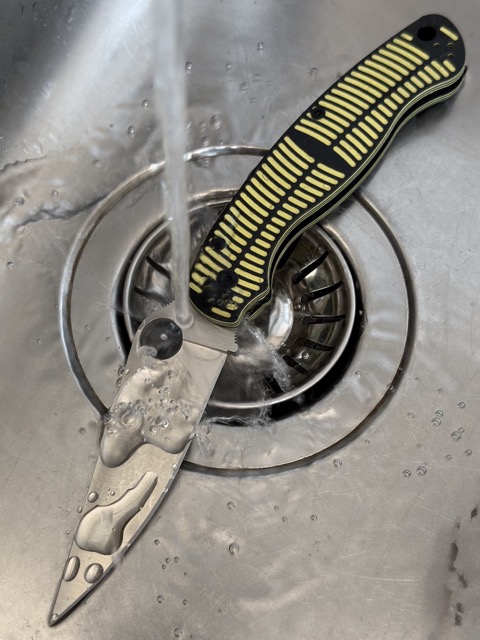
Today, “field use” doesn’t just mean dry land and predictable climates. It means:

  • Coastal humidity
  • Saltwater exposure
  • Sweat-soaked summer carry
  • Snow, mud, rain
  • Long-term storage in less-than-ideal conditions
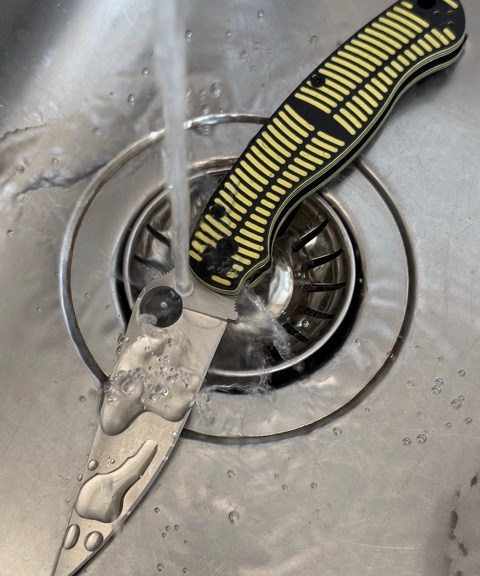
  • Kitchen !!

Corrosion resistance is no longer a specialty feature. It’s a baseline requirement for a all terrain purposed tool.
Low maintenance is a true luxury.

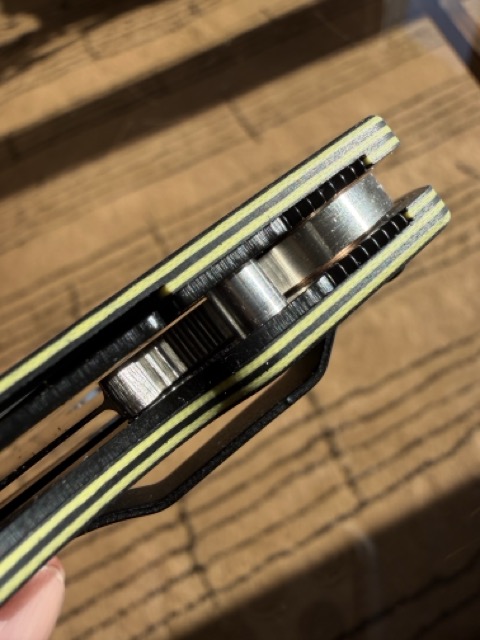
All inner parts are coated but the stop pin and the washers.
Notice that beautiful G10 layers a tour-de-force.
The nested liners being all coated there is no excuse to use that knife in wet environment.
That’s why the Spyderco Military 2 Salt matters.

It closes the loop of reliability through 3 decades.
The Military platform has always chased the frontier of steel performance — from ATS-34 to particle metallurgy, from high-vanadium experiments to modern wear monsters. But performance isn’t just edge retention charts and carbide percentages. Real performance includes survivability.

An all-terrain Military folder means:

  • A blade steel that shrugs off salt and sweat
  • Hardware that resists oxidation
  • A platform you don’t have to baby

It becomes a knife you can carry on a boat, on a mountain, in tropical humidity, or clipped inside gym shorts without thinking about it. The list goes on but you catch my drift. The Military is a big light hardchore folder ready to get dirty.
And that last part is key: without thinking about it.

Because the ultimate evolution of a military all terrain tool isn’t higher hardness.
It isn’t more vanadium.
It isn’t better CATRA numbers.
It’s freedom from worry !
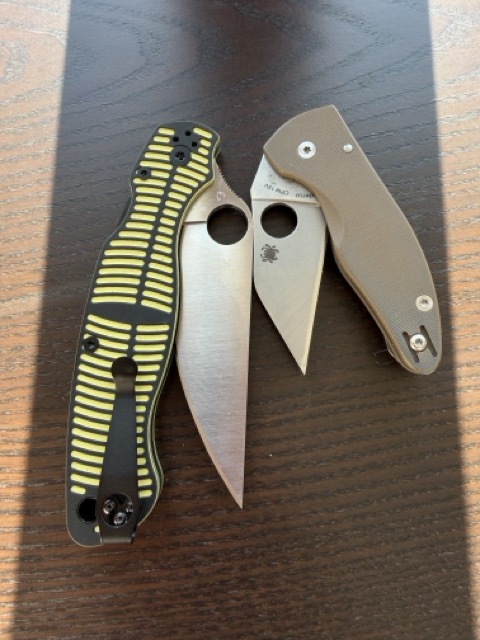
The Spyderco Military 2 Salt benefits enormously from the Compression Lock. The action is smooth, controlled, and confidence-inspiring. Opening is fluid. Closing is effortless and safe. Lockup is rock solid — zero play, zero drama.
It feels modern and mechanical in the best possible way.
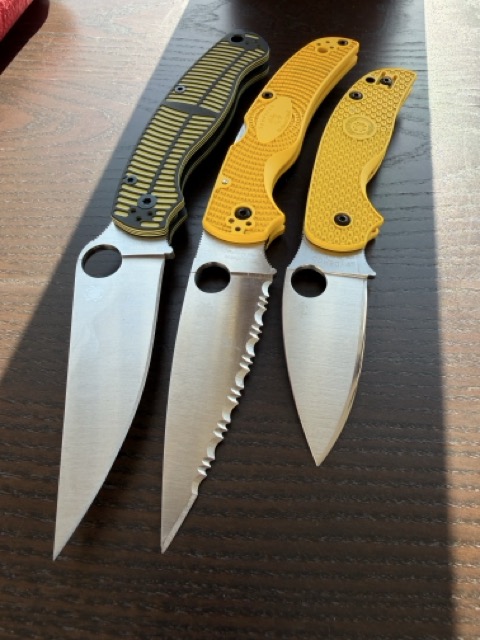

Compare that to the Spyderco Native Chief Salt Lightweight, and you’re in a different world. Back lock instead of Compression Lock. A more traditional cadence. A different relationship between hand and blade.
Both are outstanding knives. Choosing a favorite isn’t about quality — it’s about preference.
The Lightweight Native Chief is that good. 😉

The same goes for the Spyderco Sage 5 Salt.
Compact. Refined. Exceptionally balanced. In Salt configuration, it becomes one of the most complete corrosion-resistant EDCs available today.
At this level, it’s no longer about which one is better.
It’s about which one feels like yours.

The Military was once the knife that introduced mainstream users to particle metallurgy. Now, in Salt form, the Military 2 introduces the idea that a full-size, high-performance folder should be truly “environment-agnostic”.

And if we’re honest — for a knife with “Military” in its name — that capability feels less like an upgrade and more like destiny.


I had named my CPM M4 Millie “Ghost.”
My grey CPM CruWear Millie became “Gandalf.”
My current 15V Military 2 is “Gambit.”
So the salty one needed a name too.
And it had to start with a G.
It will be “Gurney”.
Gurney Halleck in frank Herbert’s Dune isn’t the flashy hero. He’s not mysticism and prophecy. He’s discipline. Loyalty. Hardened competence. A loyal warrior-poet who survives harsh worlds through skill and resilience.

That’s exactly what the Spyderco Military 2 Salt represents.
Not ornamental.
Not fragile.
Not trendy.

It’s a knife built for hostile environments. A blade you trust when conditions turn abrasive. There’s something very Arrakis about a corrosion-proof Military: survival through preparation.

“Behold, as a wild ass in the desert, go I forth to my work.”
Spyderco PARA 3 G-10 Black on Black C223GBK — The Black Panther Cub

20180305_100418-01.jpeg

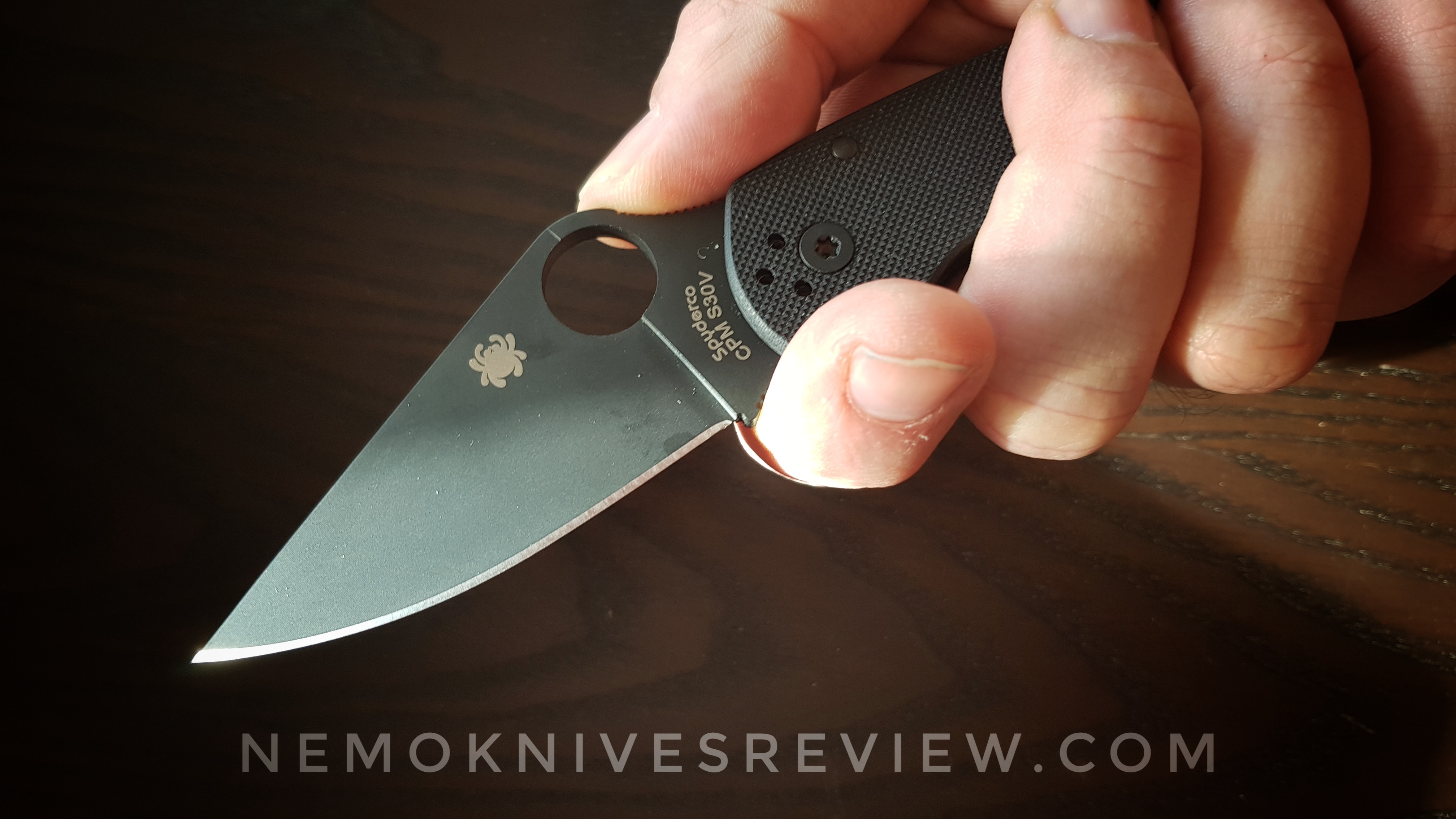
This is my first Para 3 and also my first black coated Spyderco blade.
According to Spyderco:

“For tactical end users who are concerned about light discipline or those who just prefer the look of a black blade, the Para 3 is now available with a tough Diamond Like Carbon (DLC) blade coating. This low-profile coating is permanently bonded to the premium CPM® S30V® stainless steel blade…”

Cool I do really love DLC as it’s really scratch resistant. The primary reason for blade coatings is to reduce the reflective properties of the steel. Shiny things draw the wrong kind of attention and in a military environment, can tend to get people shot. However, like anything else intended to be used in a military environment, coated blades are not immune to wearing off but DLC is really strong.

I also specifically love DLC for adding corrosion resistance. The area which normally rusts on an EDC is in the pivot area. No worries about that with a DLC coated blade!

The new Golden Co. factory is bringing some of the best quality in manufacturing to date. My Para3 is absolutely flawless: perfectly centered, perfect smooth action… I had noticed that rise in quality on my last sprint run Para2 in 52100 too. Now Golden is as good as Taichung in quality control – if not better. So kuddos Colorado! Also Eric told us during the last Minimeet that they have just hired two new engineers who will make a real difference. Spyderco has developed a speed training of their own engineers as no school had prepared them for the knife industry.

20180305_100217-01.jpeg

Like the Paramillie 2 was a son of the Millie, the Para 3 is really Millie’s grandson. Same “cockpit”, stout hardchore 3 inches blade, smooth Compression Lock.

20180305_100254-01.jpeg

My all black version is very discreet and the the short blade makes it even less threatening. A black “commando” feel on such a short folder is almost like an tribute to military blades. On a short knife like this baby millie the “cute” factor is very strong.

20180305_100349-01.jpeg


My hand fits perfectly on that handle. That infact was a big question mark prior to holding the Para 3. You feel this short version of the Millie is ready for any task.


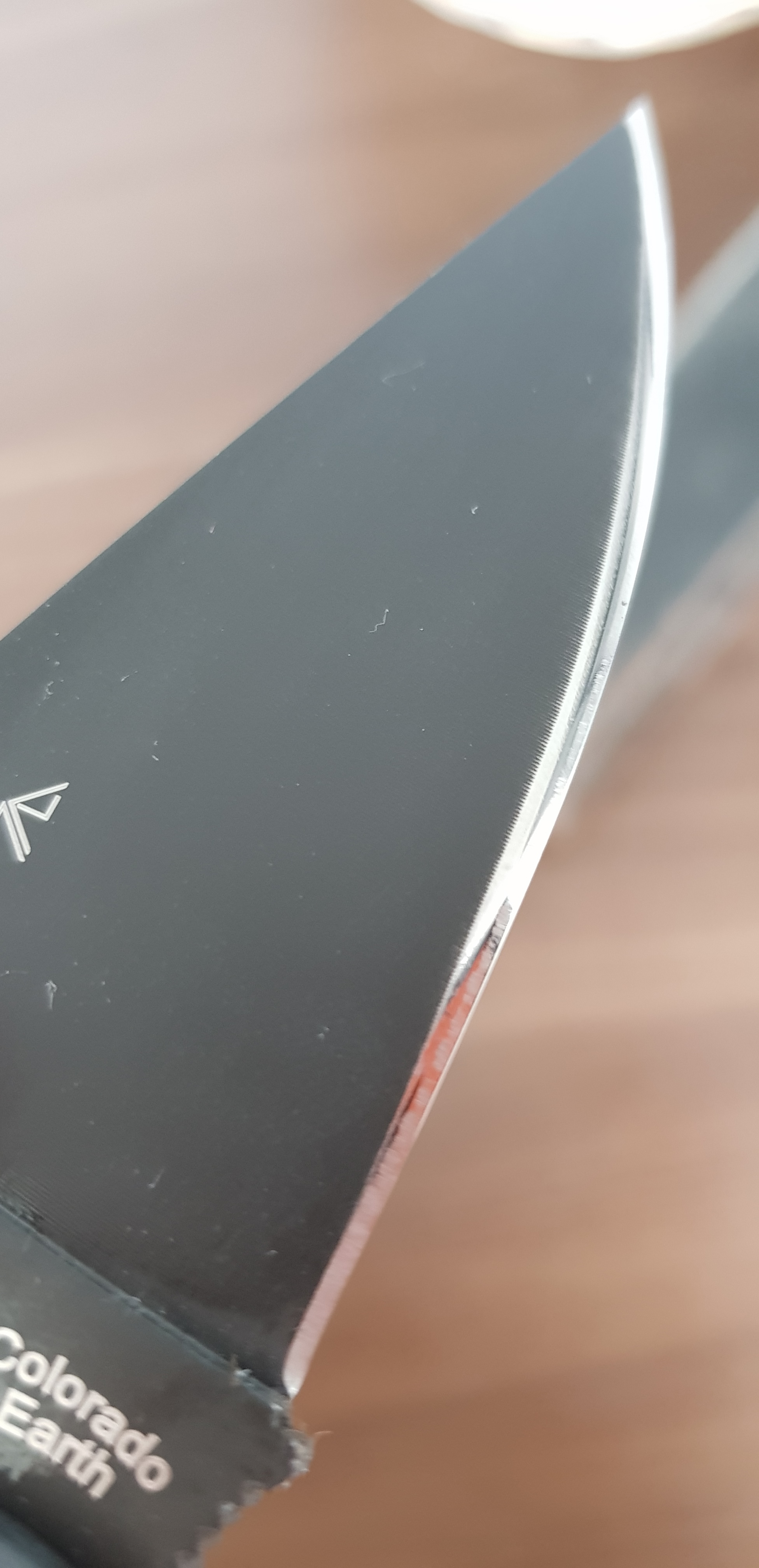
The DLC coating is absolutely stunning. I have sanded the G10 and put a great deal of care so to not scratch the steel hardware.

20180305_140401.jpg

Here after some plastic cutting which scratched some of my other blades, there were no marks on the diamond hard coating. Let see how it will age.


At first I had mounted the clip for tip down carry (left pic) and experienced great spyderdrops. The Para3 is so smooth in its action, a middle finger is sufficient for opening.
As I got the opportunity to get a titanium clip from Massdrop (right pic), after transformation it’s now a tip up solution and a middle finger opening work best for me. After all, a black knife, even of that size, needs to be as discreet as possible.

20180305_115442-2.jpeg

Some thinning of the edge, from DC4 diamonds to white ceramic until leather stropping.

20180306_110853.jpg

It worked great as I was not able to scratch the DLC coating.

20180306_110508.jpg

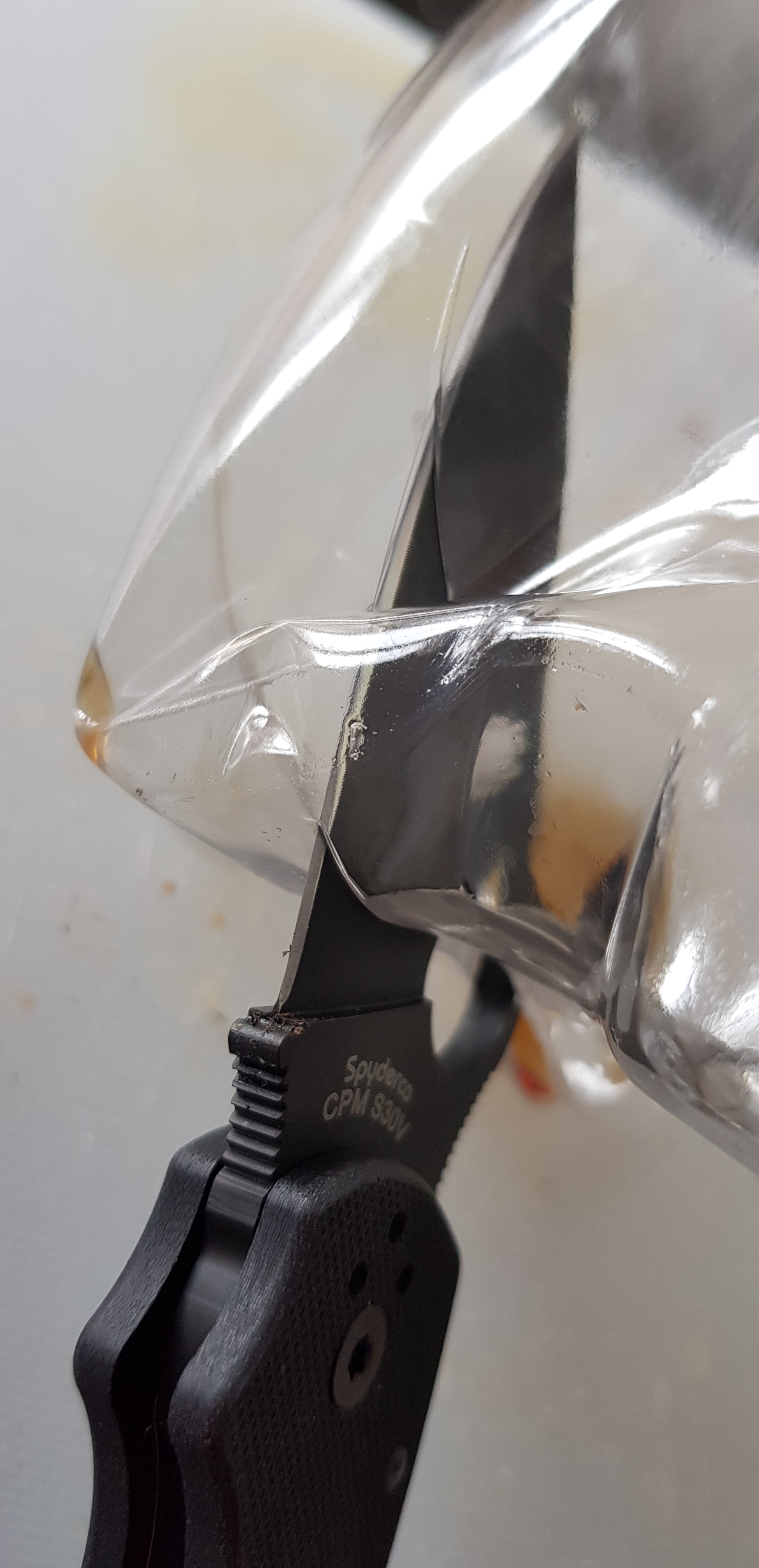
I got much better performances on pushcuts into the thick plastic of this coke bottle butt.

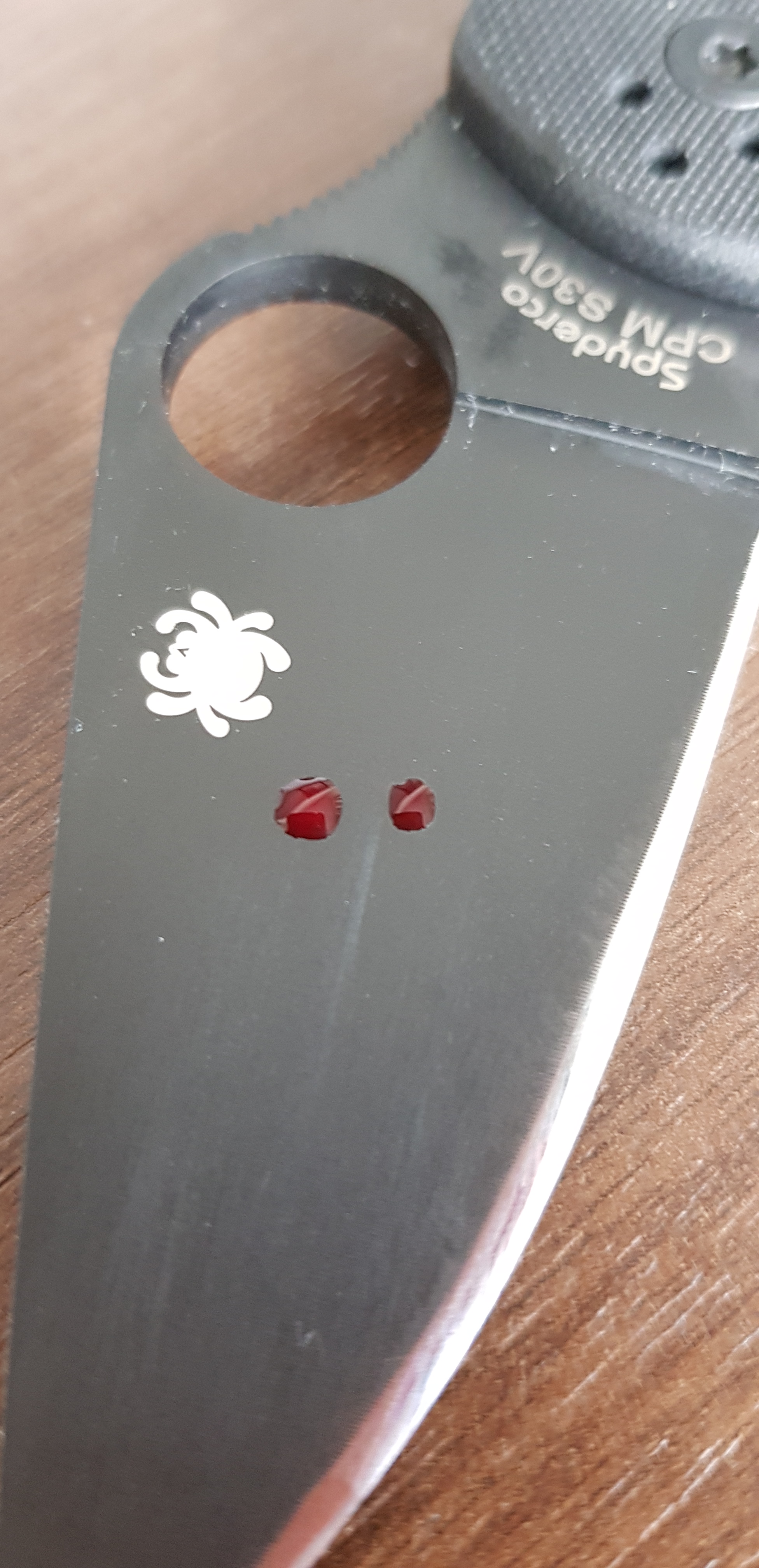
Of course, I had soon christianized the knife with a fumble… Drawing blood means luck.

20180306_110929.jpg


The Maxamet PARA3 Review is here.

edited by Pascal – 14 march 2018.

52100 Paramilitary 2 by the ocean.

So here I’m in Southern Bretagne near Lorient, city of Eric Tabarly with my Paramillie Exclusive Run in 52100 Ball Bearing Steel.
For those who don’t know Sal is a fan, this is why Eric is named Eric. 🙂

The moisture and salt are present and cars got a serious tendacy to rust just by being parked outdoor.

The knife has been used on food and for all the chores around another anniversary preparations. The Patina is a real surface protector as no pit or coloration has been noticed during that 4 days week end.

It eventually has been used to pop the remaining balloons after the party.
No oil needed. The edge did not rust. It was used daily. Very happy with that knife.
This is a very robust folder, with a strong blade.
It was still shaving hairs after 4 days of mild but constant uses. I did not process a lot of cardboard for example, but a lot of meat ! Duck for the matter.

The 52100 makes a beautiful blade with its mirror convexed edge. It was noticed.

Military C36PIN Part II: Ghost’s edge.


It has been 3 months since my Millie in CPM-M4 has landed in my pocket.
I believe it’s time for an update about it since it has been used a lot.

It is my first “new handle” C36 as mentioned here in my previous post.

Is there any change in my end line user experience ? Not really apart loving the new stop pin and the larger lanyard hole. It was easy to clean in the previous version, now it is easier and I clean it a lot as it’s used in the kitchen.

Smoothness ? As usual. The main break is the strong detent and the strong liner lock. It is open in a breeze with the major finger or by spyderdrop. The factory edge has been kept for almost three months. I have decided to refresh it at mid July and now the next step has been passed as I have convexed the edge to suit my need in cutting hard plastic (mainly bottles) before recycling.
There is no vertical or horizontal play and the liner has not moved since I got.
It’s a very very solid lock up !

Again CPM-M4 is my friend. In edge holding but also in refreshing by stropping on leather. The thin point of the blade has been used for delicate cutting on hard materials and it has been very reliable in that role. Choking up the blade gives a very nice whittling tool too.

In the kitchen the knife has been confronted to meat processing: chicken, turkey, rossbeef but also sausages hot or cold, fish…

The pointy point has been used to open a lot of hazelnuts: meaning twisting the blade to open them.
The favorite test in sharpness is how it cut tomatoes. This is a tricky fruit as it skin doesn’t have a lot of support from its flesh.

The Millie has also been used almost daily as silverware confronting its edge to hot and acidic materials. The patina did not come easily and no pit has been noticed. I use some nano oil or some olive oil to keep it in good shape, depending of my needs. Olive oil being less toxic of course.

I have invested in a titanium clip for deep carry. I have mounted it but for an unknown reason the pivot was much less smoother after. I think it is due to tolerances a the screw seems to be in some kind of tension but once removed the Millie was smooth again. Eventually I have found I love the original steel clip which is smoother to draw than any beadblasted titanium. But after sanding the titanium clip and bending it for less spring force on the pivot it was perfect for deep carry.

Today it was the opportunity to get rid of the factory edge and start a new chapter with a gently convexed edge. I have used sand paper on my old leather belt. Starting with 500 and finishing with 1000. I like a “rough” feel on my working blade. It comes from scratches and patina and it gives a lot of character but my pleasure is in a mirror finish edge.


On this model, the Jade or Natural G10 gives a very sheeple friendly look to that relatively big EDC knife. Of course it has been sand also to preserve my pocket lips. I have just kept the original feel/aggressivity of the G10 around the pivot as it is where I put my thumb.

Spyderco Military CPM CRU-WEAR ~ C36GGY – Fifty Shades of Grey

Spyderco Military CPM Cru Wear

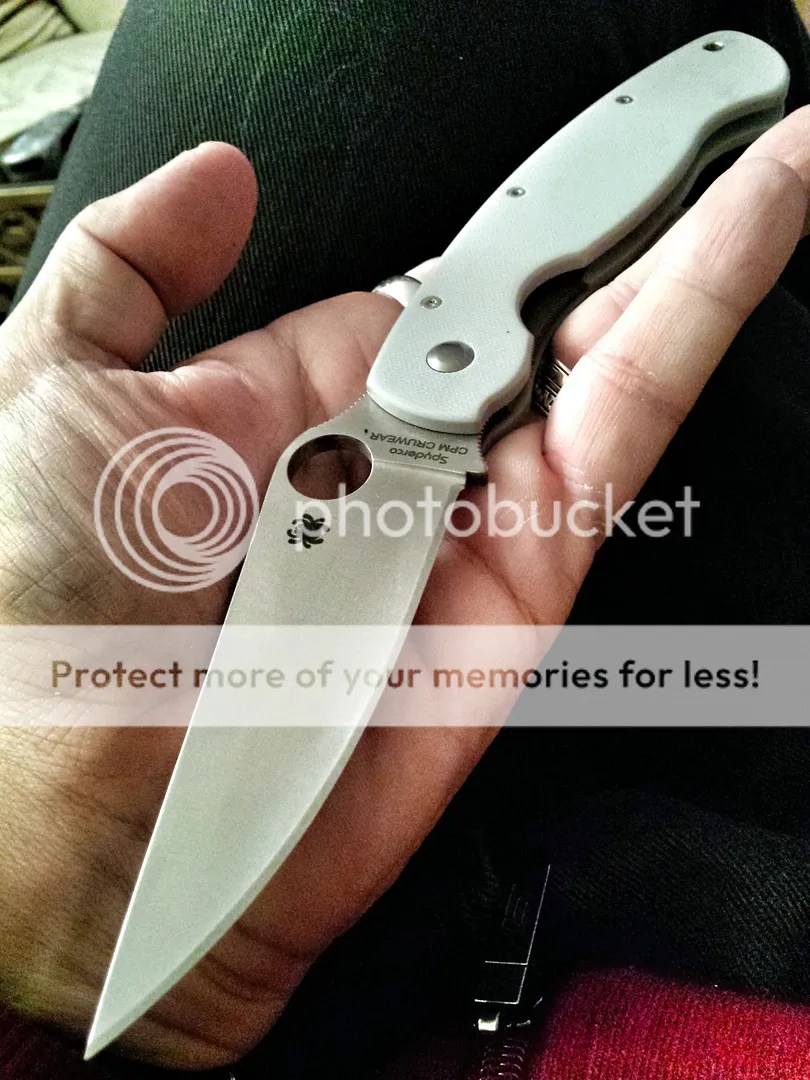
A smooth G10 handle after some sanding.

Back in 1996 I was handling my first Military. It was a CPM440V (S60V) blade with a black G10. Here the link to our old review Fred Perrin and I back in the Geocities’times.
Since, well, the constant refinement have made it ever more reliable.

Anyway, when I heard a Sprint run will be made with a CPM Cru-Wear blade, I knew this was going to be a excellent update.
What is CPM Cru-Wear ? My old fellow forumite Cliff Stamp was able to give the link:
http://www.nsm-ny.com/files/CPM%20CRUWEAR.pdf
It’s the powder version of the ingot Cru-Wear an American cold work tool steel. A Mule MT12 has been made with the ingot version of Cruwear and their users were wishing out loud for a folder with that steel. Ingot Cru-Wear is tough and with a toothy edge which is really wear resistant.
Quoting Spyderco Mule Sheath: “Upstate New York’s Crucible Steel manufacturers Cru-Wear which is very similar to Vascowear, a steel used by Gerber Legendary Blades in many of their past production knives.
Cru-Wear is a high-performance “V” tool steel that is difficult to process making it challenging for knife manufacturers to work with. It follows the same high-alloy, metallurgical tool-steel recipe used to produce D2, but with greater levels of vanadium, tungsten and molybdenum. It is air-hardened and worked in a cold state. Cru-Wear exhibits exceptional toughness, impact resistance and hardness for exceptional edge retention and is the first tool steel offering in Spyderco’s Mule Team Series.”

Cutting aluminium is easy and do not damage the edge.

Here is also a link to a great discussion on Bladeforums: MT12-Cru-Wear-real-world-feedback/a>
Now “CPM” Cru-Wear should be even better.

OK now, why I’m so excited? CPM Cru-Wear is destined to be tough. Not as tough as CPM 3V but more wear resistant. It supposes to be tougher than CPM M4 but less wear resistant.
The fantastic blade of the C36 can only get better with a tougher steel especially the needle point. Though, I have never had any issue with it, knowing the steel is tougher is always a plus.
Also I got a excellent user experience with CPM3V from Bark River Knives & Tools and Spyderco (Ed Schempp’s Tuff!). So having a new steel in that range is a must for a great folder as the Millie.

Spyderco Military CPM Cru-Wear

Gandalf the Grey is socially accepted

I have sanded the beautiful grey G10 handle to suit me taste and spare my pants. Now they are smooth and… sexy. I like G10. But I love smooth G10. Being long, tall and grey, I have christened it: Gandalf. I have tuned the pivot for smoother operation. The knife is light is the pocket and is open in spyderdrop with authority. No play whatsoever. The blade is centered. Holding and using a Millie is pure Spyderco experience and performance.

Anyway. I do use my knives in the plate. I eat with them. Cook with them. Plates are very bad with the edge, unless you manage to never cut with the blade at 90°, which is not really easy. They were no bending or chipping of the edge after some clumsy “accidents” in the kitchen.
There is no stain. Cutting acidic ingredients or even been in contact with hot vinegar did not change the finish of the blade. No pitting, nothing. It’s like a stainless steel so far.

I was not able to dull that CPM Cru-Wear edge, like, for example, my Persistence or my Delica. I was always able to shave my arms’hairs. Brown cardboard cut and disposed on every day basis were not able to dull Gandalf yet.

Stropping CPM Cru’ on leather is pure joy. Like CPM3V actually. I got some kind of mirror finish and a very agressive cutter. One of my favorite tests are tomatoes and bamboo. Both are no matches. The tricky tomatoes skins are cleanly cut and the hard bamboo do not roll or chip my edge (like I had experienced with ZDP189 at HRC66)
Also a Grey knife is not menacing like a tactically black camo counterpart: Gandalf is displayed in restaurant with stealth and elegance. Eating a good steack with a Millie is pure joy. They should have name it the “Meal-itary”.
The four inches blade give great polyvalence with its pointy needly point and its strong heel. You can push cuts in oak wood and later do some eye surgery. Anyway, Millies are Millies great knives which get even better in those sprint runs involving CPM M4, CTS XHP, M390, CPM D2, BG42…
But it shines even brighter with a tougher steel like CPM Cru-Wear.