Tag Archives: Sal Glesser

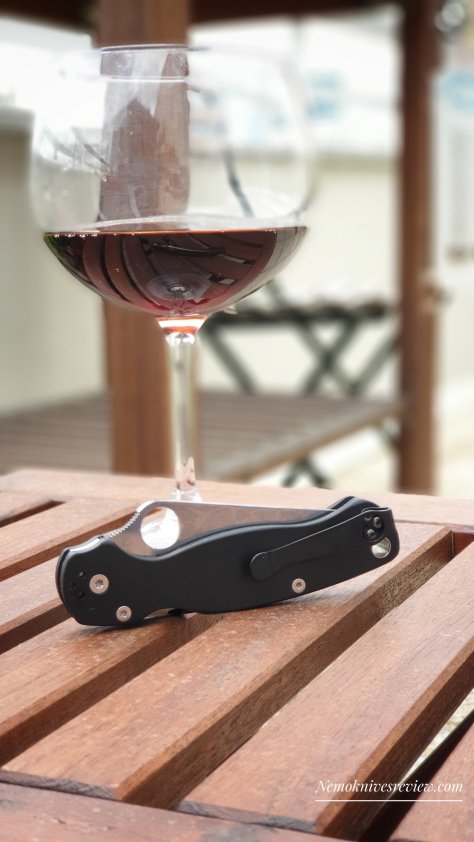
52100 Paramilitary 2 by the ocean.

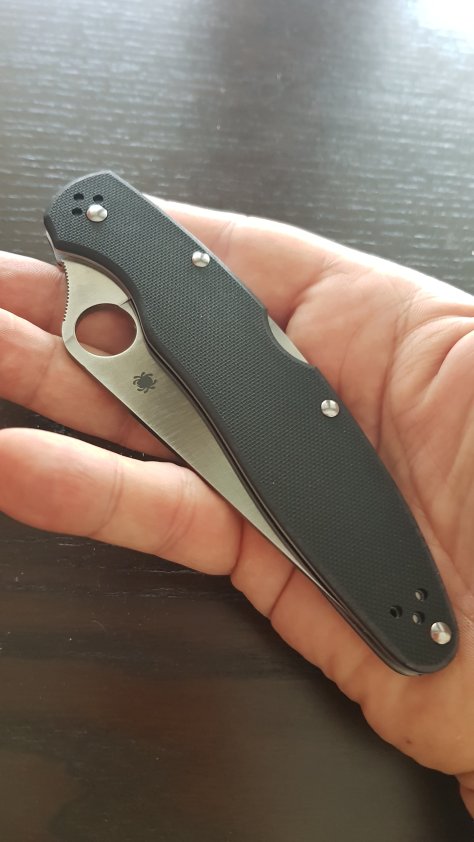
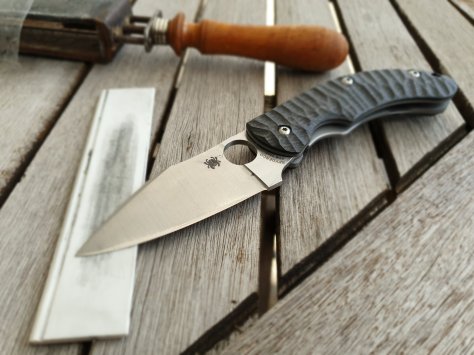
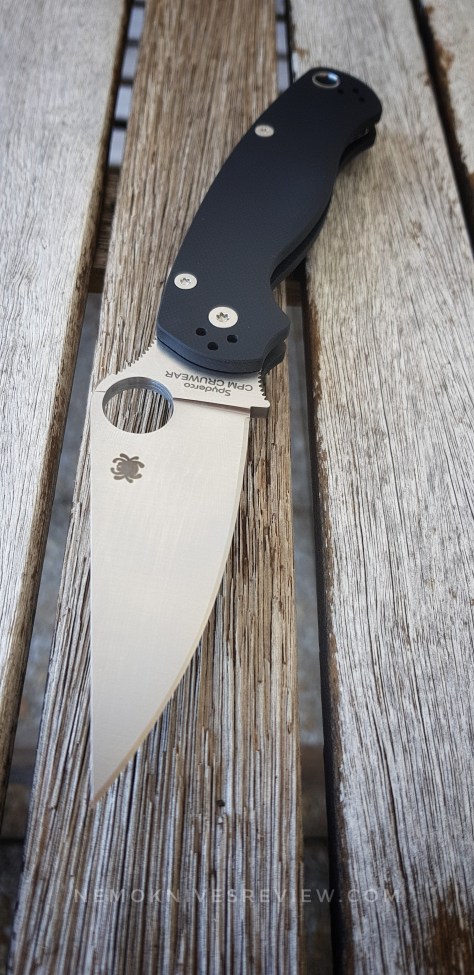
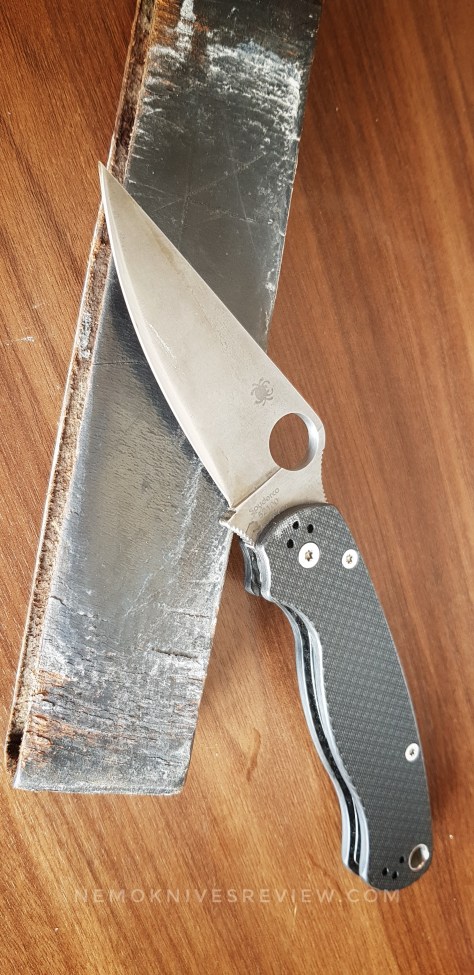
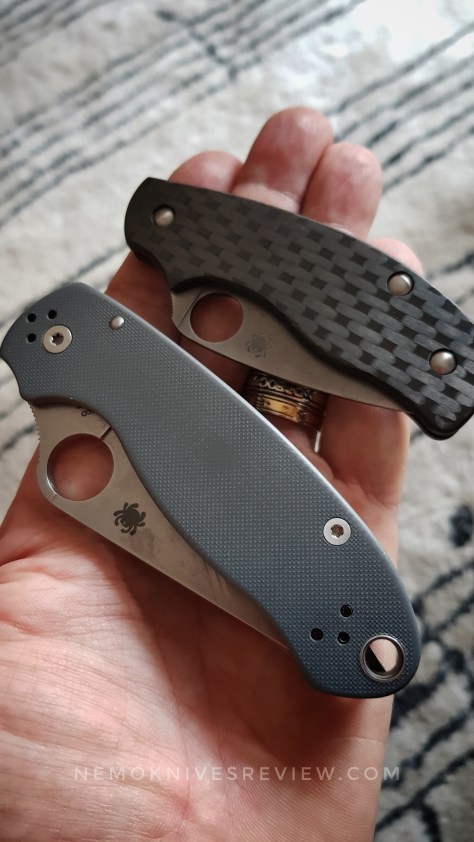
So here I’m in Southern Bretagne near Lorient, city of Eric Tabarly with my Paramillie Exclusive Run in 52100 Ball Bearing Steel.
For those who don’t know Sal is a fan, this is why Eric is named Eric. 🙂

The moisture and salt are present and cars got a serious tendacy to rust just by being parked outdoor.

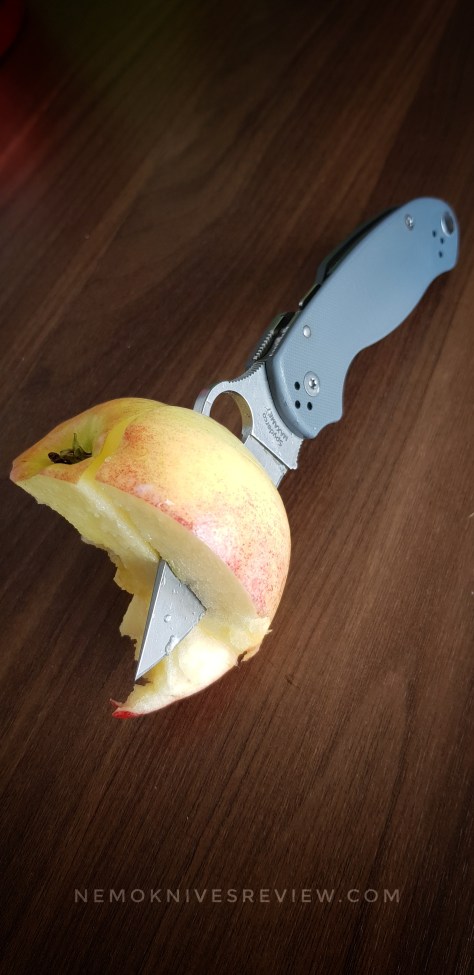
The knife has been used on food and for all the chores around another anniversary preparations. The Patina is a real surface protector as no pit or coloration has been noticed during that 4 days week end.

It eventually has been used to pop the remaining balloons after the party.
No oil needed. The edge did not rust. It was used daily. Very happy with that knife.
This is a very robust folder, with a strong blade.
It was still shaving hairs after 4 days of mild but constant uses. I did not process a lot of cardboard for example, but a lot of meat ! Duck for the matter.

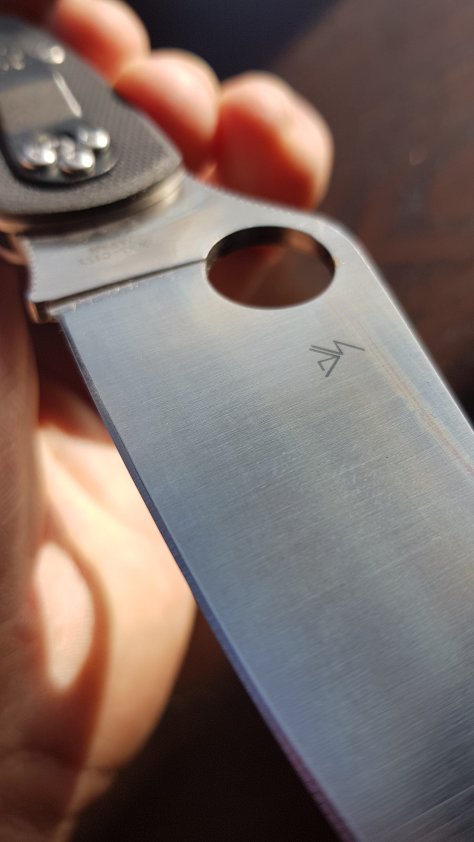
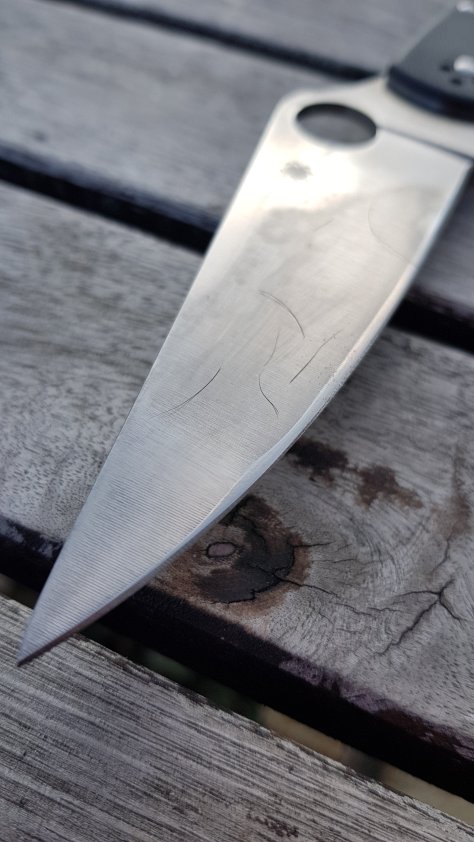
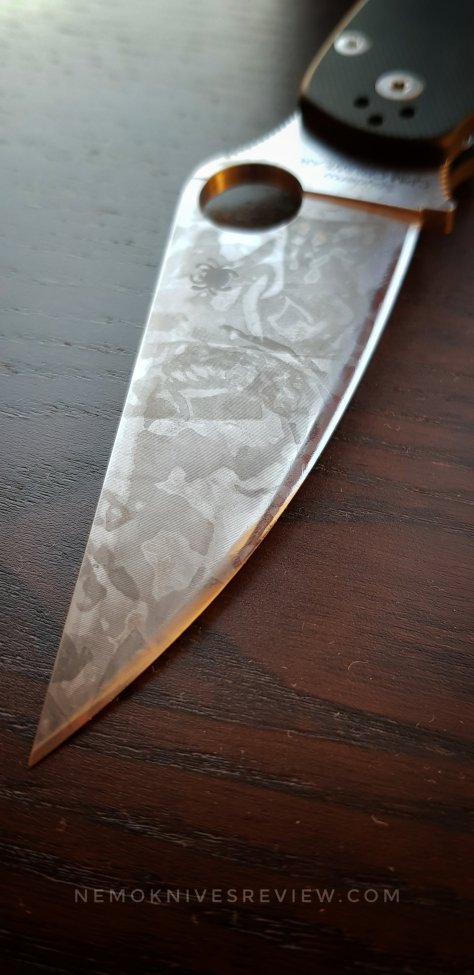
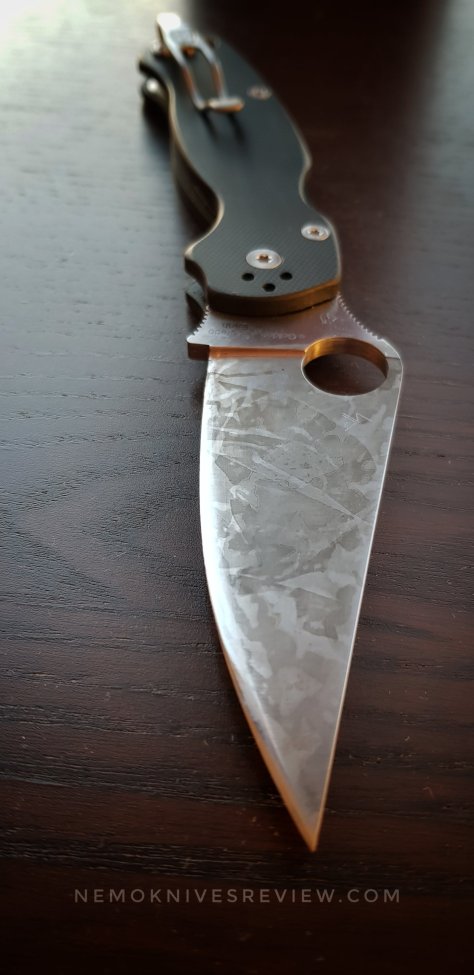
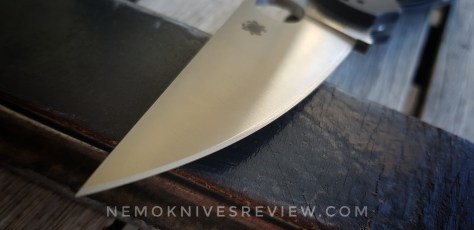
The 52100 makes a beautiful blade with its mirror convexed edge. It was noticed.

Spyderco Paramilitary 2 C81CF52100P2 52100 Exclusive Run – New Old Timer Workhorse !

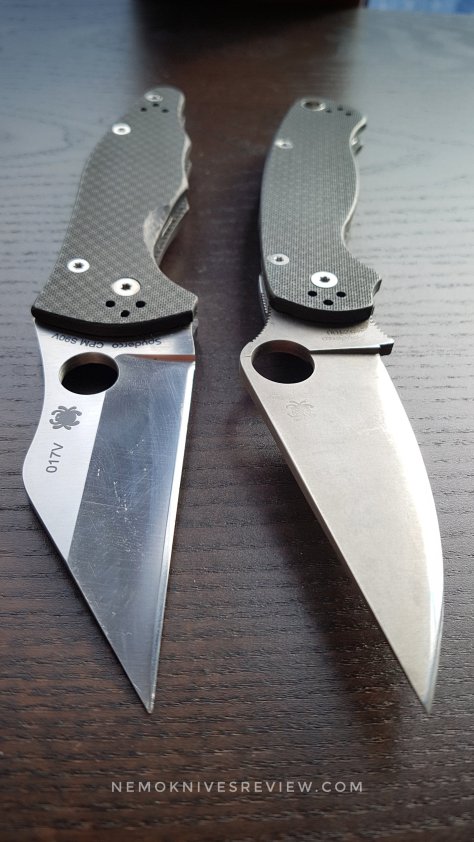
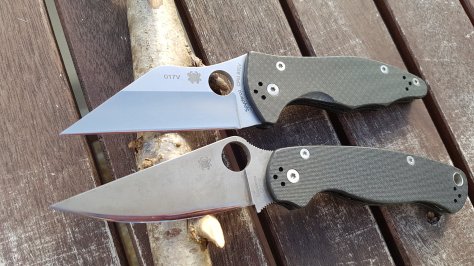
I love Grandpa’s knives in a modern form, like the AFCK in M2HSS twenty years ago. But I was not able to jump on bandwagon to catch a Military in 52100. Lucky me, soon a Paramillie II designed by Sal and Eric Glesser was able with the same Carbon Fiber handles and the same 52100 blade.

“52100 is a very good steel for cutting organic material. If you stay with organic material it will edge hold very well.
I use it for a core steel on high carbon pattern welded laminate. My competition cutters are a laminate of 15n20-52100-15n20.” Ed Schempp

“52100 is a ball bearing steel. Most ball bearing steels make pretty decent blade steel. Especially where edges are concerned. It is my favorite steel to forge. It is hard to find in sheet. Actually, I would like to do a run of a model in 52100, but I’d prefer to make it in Golden, so it will be a year or so.”   Sal

Ed Fowler in his many articles in Blade Magazine and his books introduced me in the “magic” of 52100. Also my first blades in 52100 are my two gifted Lil Blue II made by my friend Ray Kirk of Raker knivesRaker knives. Ed as a cowboy and Ray as a Native American ? Made in Golden ? This knife is the true heir of American traditional blades !

“52100 is the steel of which most of the bearings used in all walks of life today are made. Civilization rides on 52100 steel. If it were less than reliable, another steel would be used instead. I have used 52100 exclusively in my knives for the past five years. I have forged many bearings into blades. I have given my blades every opportunity to fail, subjecting them to rigorous, destructive tests. I have found 52100 to be the cleanest, most uniform steel that I have ever used. Properly forged and heat treated, 52100 produces a high-performance blade that knows no peers. I have reached this conclusion based upon extensive personal research, testing knives for the things that they need to do in the real world of knife function.

Bearing-quality 52100 steel blades are tough and normally pass the 90° flex test without cracking or breaking. Their strength is evidenced by the force required to flex them.

I demand three levels of performance from any knife intended for serious use. First, it must have the ability to cut and cut well. Second, the blade must be tough. By tough I mean it must flex without breaking like a piece of glass. Last, but not least, it must be relatively easy to sharpen. Through the years, I have tried many steels and heat-treating methods and have tested the results by cutting a lot of rope and breaking many blades. Some combinations have cut extremely well, but have
broken or chipped when subjected to hard use. Drawn to a point where they were tough, these blades were too soft to cut effectively. I had settled upon one steel that when properly forged and heat treated cut very well. I had invested a great amount of time and effort getting the most out of that steel, so I was reluctant to change.

The nature of 52100 has changed drastically since that first bearing was made more than 100 years ago. Bearings are performance oriented, and those that last and gain a reputation for high performance are in demand. Every bearing is, by nature of its job description, routinely tested to its limit of performance. Competition is based solidly upon quality steel, and the outfit that makes the best steel enjoys a ready market for its product. Quality control is a high priority in the manufacture of bearing steel.

In addition to everything else, 52100 is easy to work, grind, and heat treat. Even less than perfect heat treatment can result in a good knife, though it never should be said that bladesmiths should settle for simply “good enough.” As the knifemaker’s skills develop, the performance potential of the steel will offer ample room for growth.
The high chrome content of 52100 promotes a beautiful mirror polish and enhances the steel’s machinability. The 1 percent carbon is more than can go into solution in the steel. However, unlike 1095, which has about the same amount of carbon, the excess carbon in 52100 also has 1.5 percent chrome to react with to make chromium carbides that can enhance cutting performance.
The “Cadillac of steels,” 52100 has been and continues to be one of the cleanest blade materials suitable for cutlery. Its primary use demands great care in manufacture. It’s also extremely versatile. For example, I’m aware of one man who makes
“52100 has been and continues to
be one of the cleanest steels suitable for cutlery.”

Ed Fowler, the lover of 52100 ball-bearing steel, sheep horn, and dedication to the functional knife.

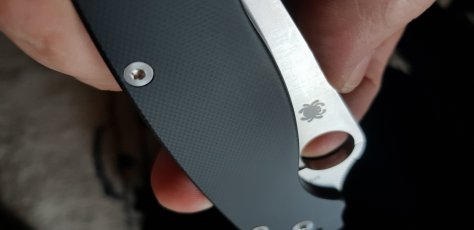
For Sal Glesser, the functionnal knife is carbon fiber handle and impervious to wear and tear. CF got that magic to age great even after some falls on concrete.

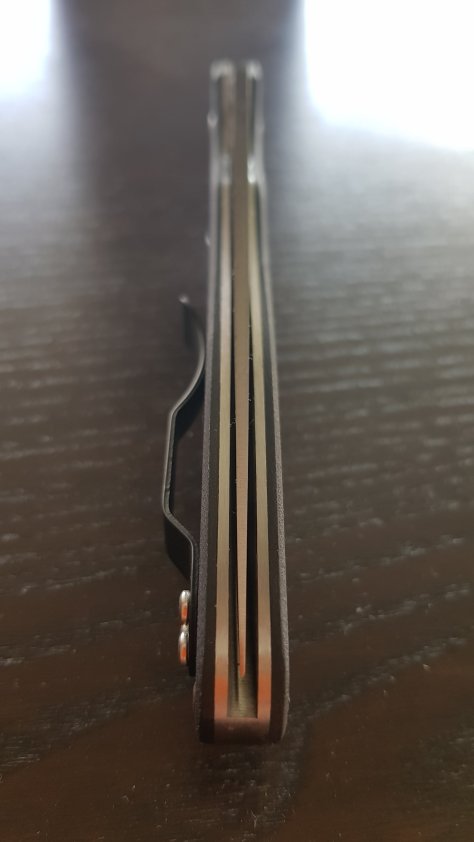
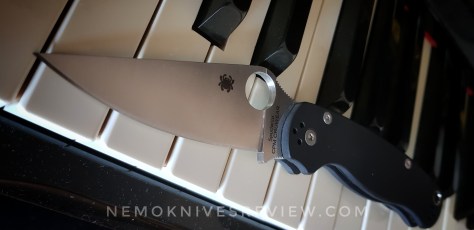
As you can notice mine came perfectly centered. The Colorado Plant is now bringing perfect quality controls and a love to details you can appreciate in all angles.
The action is smooth ans the blade can fall by gravity when the lock is released.
As on the Yojimbo2 the compression is lock provides an action which is one of the smoothest out of the box but othing new about that.

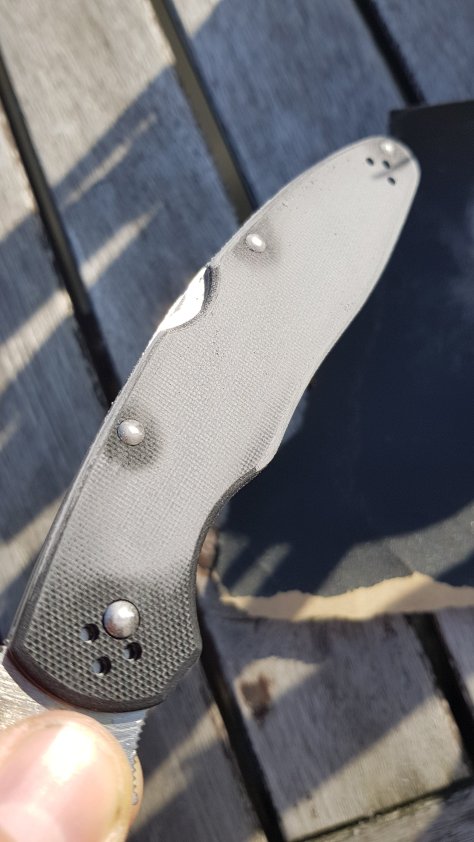
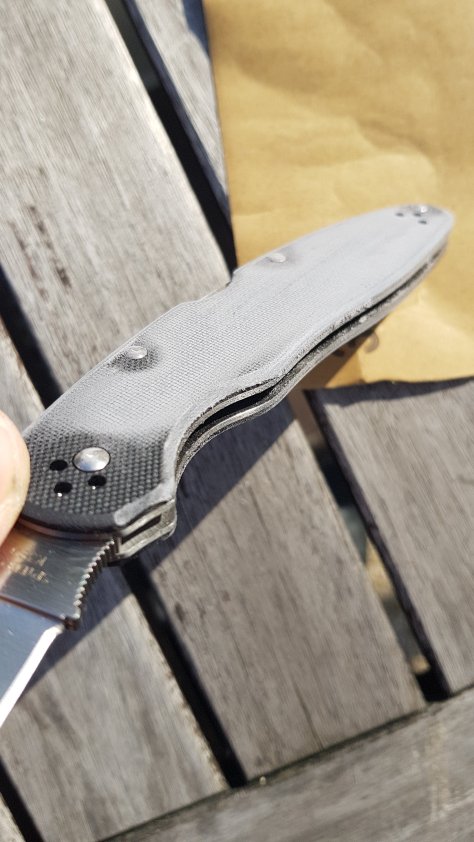
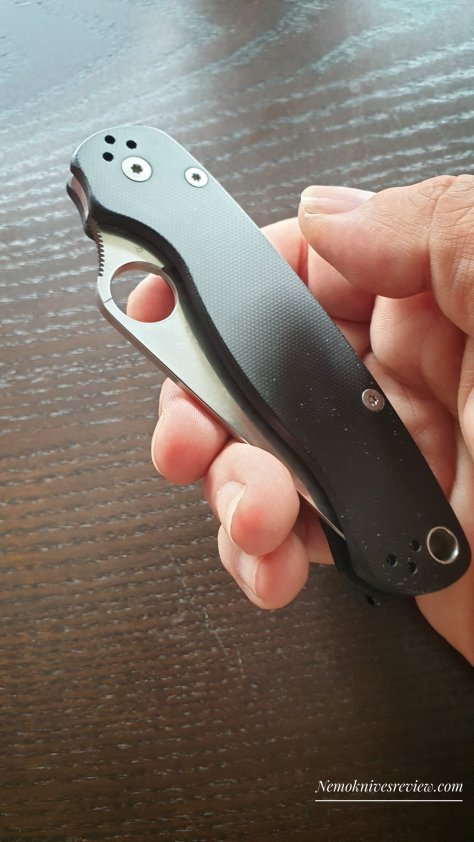
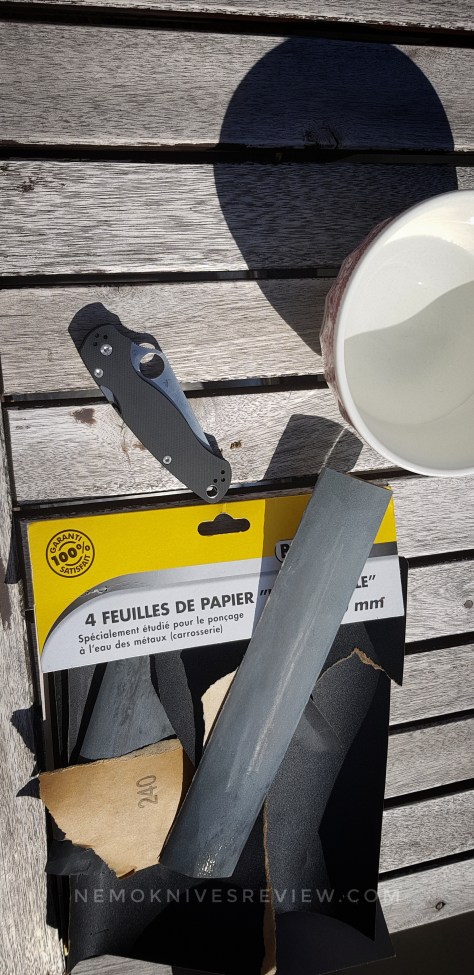
Ok time to smooth the peel ply CF for saving my trousers from being filed and also smooth the hump which catch my pocket’s lip. Sandpaper at 500 has been used.

For the hump, like on my previous Paramillie, a diamond file is mandatory. 15 minutes later it’s much better !

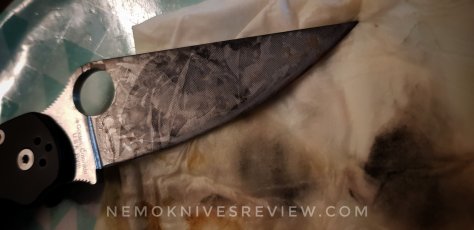
Then, knowing 52100’s fun is the fact it can get a patina very quick, green lemon juice was used to start a gentle patina.

For good measure I wanted to compare how a 1075 carbon steel Opinel and that 52100 knife will react to the lemon juice.

In the same time I could try the new Double Stuff 2, Howard korn from the Knifecenter of The Internet has just offered me.

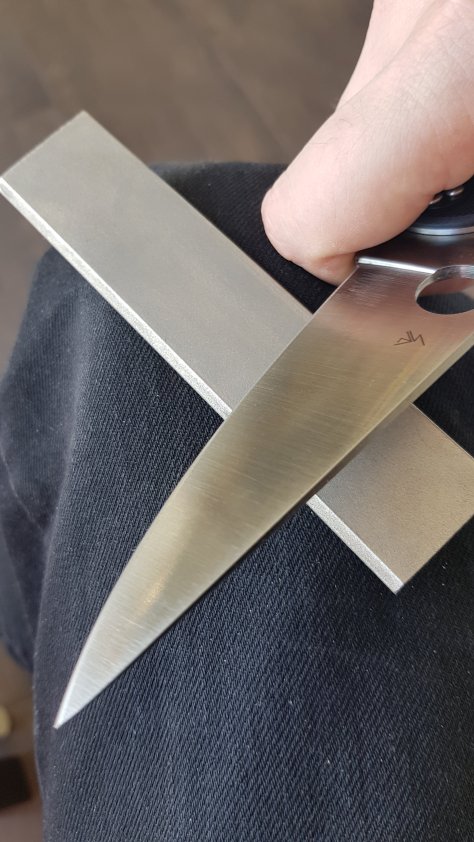
I was able to remove the shoulder and convexe my grind in a pair of minutes. Then with the white ceramic it was own to a mirror polish.
This is true 52100 get polished very easily. And the edge is like a mirror after some pass on leather. So this is also going to be fun.

WIth the lemon juice drying on its size, a patina soon appears.

And I was able to get a nice contrats with the convexed edge.

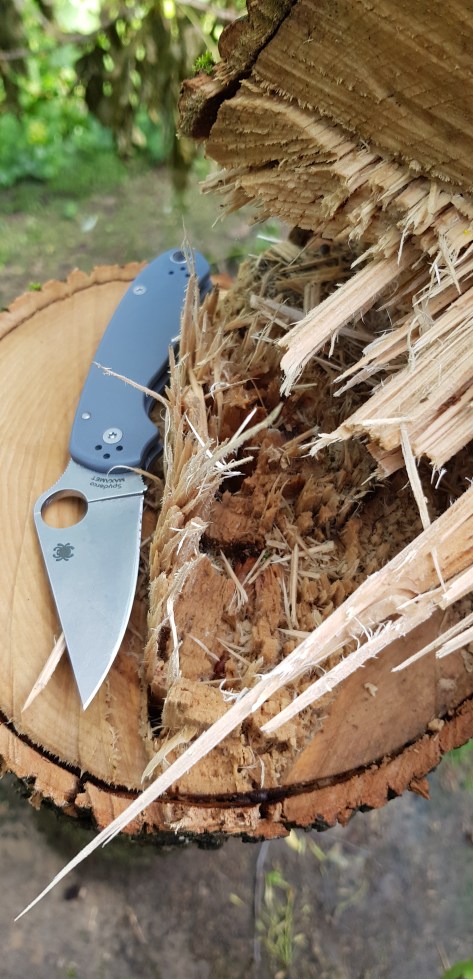
The knife bites in the wood like an hungry edge will. This should be a dream for Bushcrafters to get that kind of steel on such a modern and reliable plateform.
It can be turned into beyond razor very easily just by stropping my new convexed edge.
Yes, so easy to get it dangerously sharp and whittling hairs !!

The good thing also is that 52100 is supposed to be tougher than S30V and the thin point of the Paramillie needs plenty of strenght. Now I wonder what is the HRC of that blade.

I also like the matte black clip provided. It’s made for a low profile EDC.

It seems like the 1075 is getting drak faster than the 52100 as the wipe marks are visible on the Opinel blade.

So the Paramillie 2 is now ready to get some used. I will go near the Ocean for four days at the end of the week. It will be occasio to test it in a humid and salty environment.


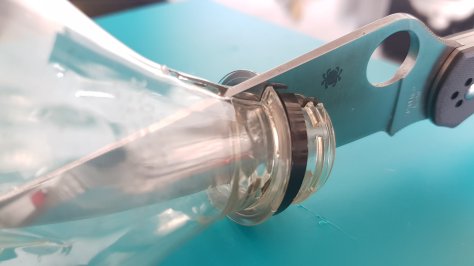
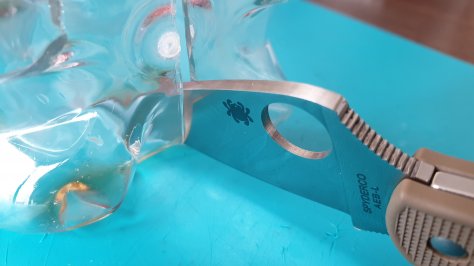
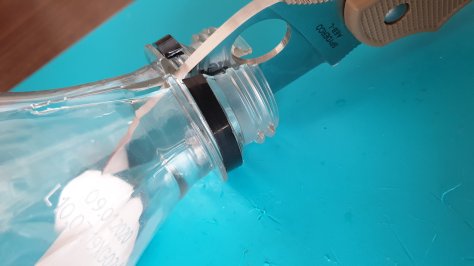
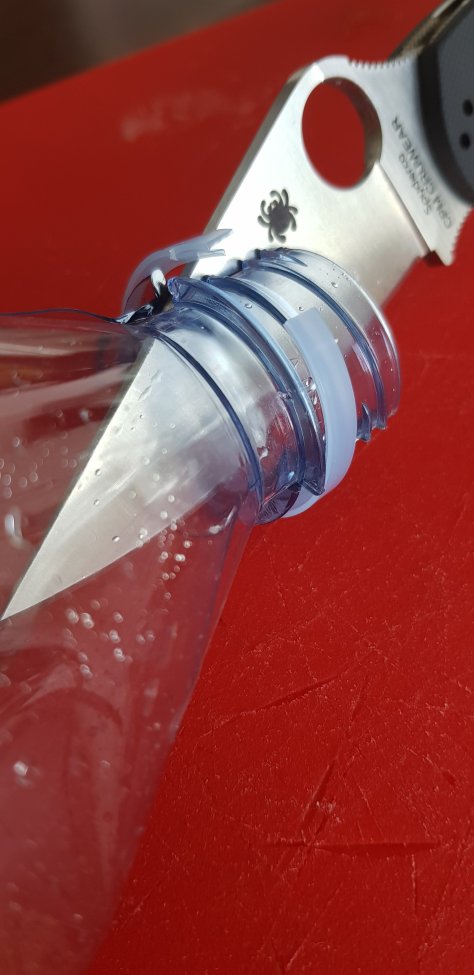
The new king of bottle butt cutting is my Opinel N°12. It goes through plastic like in butter. The Paramillie is stuck but slowly and steady goes through.
But so far nothing beats the Nilakka or the Opinel in that exercise.
But the 52100 will be slowly more thinned for that matter. 52100 is a steel to be thinned on the edge.

20171024_161430-01551097416.jpeg

20171024_163653-0185090506.jpeg

Cutting bread is another great test. The cruch is hard and the inside is soft. That’s why Opinel are great on that too. But here the Paramillie is also reliable.
52100 is “alive” . It means it needs care and the patina will evolve in time.
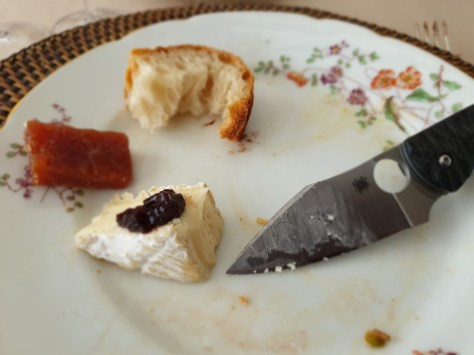
I have greased the pivot and now the cheese is greasing the blade. Let’s not forget Carbon Steel folders have been in use much more longer than stainless steel. Roman folders have been found in archeologic sites. So this Eric and Sal design enhanced by this bold move — bringing 52100 to a modern folder — is all an adventure !!
So…
“New” because it’s a new idea to give ball bearing steel to a tactical folder when the tendance is to S35V and M390 manufactured in China (Don’t mistake me I do love my Falcon). “Old Timer” remembering the Schrade 1095 collection made in the USA and Workhorse because this is a knife made to be used not kept in a safe. It needs to be oiled and sharpened and used and oiled and honed…
More to come !!

20171024_162326-01128561663.jpeg

20171025_121742-01516747397.jpeg

20171025_122149-01711124613.jpeg

I remove the edge’s shoulder with the diamond side of a Double Stuff 2. I do that until I got a burr.

Doing it without guide, free hands, gives a gentle convex edge.
Then I use the white ceramic to erase the deep diamonds cuts.
And then leather stropping. On 52100 it is a breeze to do.
Now it can whittling hairs.


And for good vintage look, some P1000 sand paper on the clip will age it.
But rust could be a problem in the pivot area… as shown on part II.

20171025_154513-01410924470.jpeg


Spyderco C11WDP Delica HAP40/SUS410 Pakkawood Handles, KnifeCenter Exclusive — Delicate Lady/Gentleman Folder.

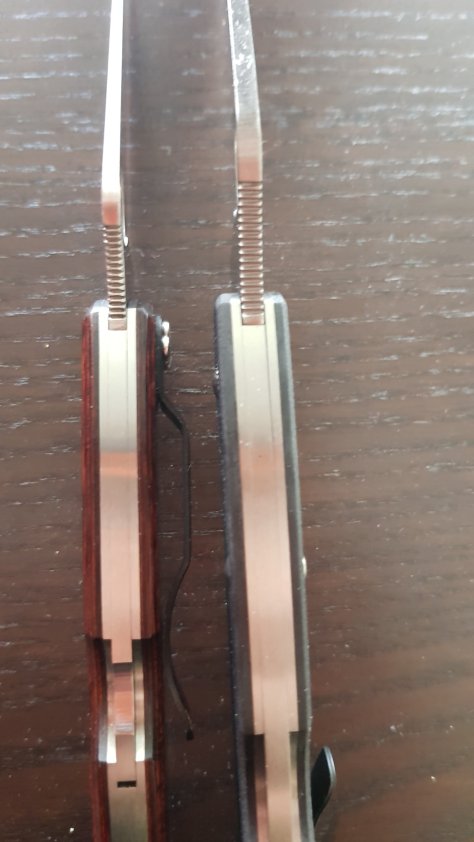
20170912_120344-011509878026.jpeg If the Endura with Pekkawood handles is too big for you, there is the Delica alternative ! Again it is IMHO the best version ever made of that legendary folder. I have bought it from the Knifecenter and Howard Korn which is really proud of his exclusive version have buffed the handle to a beautiful result. The Delica is not only a shorten version of the Endura, it got a thinner blade which gives great slicing and whittling power. Again this exclusive version got the clad HAP40/SUS410 blade and it gives you a powder metalurgy high speed alloy in a very thin stock. The blade got also now more lateral strenght than pure stainless steel. On the Delica with its thinner stock, again this pure slicing wonder ! With a little time you can hone it in a true razor. wp-image-136639233 The Delica got that status of pure EDC as it is small enough to be accepted easily by sheeples. The handle adds a touch of class to this little workhorse and the special alloy blade gives more power to the “matter separator”. wp-image-325305067 This is little gem is just asking to be clipped and use. As you can notice there is no laynard hole on the version. That can be an issue for some people who use lanyard to retrieve the knife form their pocket and enhance the handle in length. It’s a matter of taste. I love lanyards on knives pictures but I don’t like them on my EDC and the Delica’handle is perfect for my hand. wp-image-149091807 I have kept the clip mounted for tip up carry, on the opposite of the Endura which I open with a Spyderdrop. But the Delica is so smooth that it can be “spyderdropped” too. wp-image-1199844387 Fit and finish are stellar and you can noticed the 0.5mm of difference in the blade’s stock. Also the full steel backspacegives a feeling of reliable and solid construction pushing the envelop in that great design. wp-image-258000545 You can notice the hole in the clip which is not in use when mounted on the knife butt compared to the Endura’s mounted on the axis clip. Again, you choose your ways they are four positions. All in all the Delica KnifeCenter’s special edition is an incredible EDC and a must for collector. It’s the kind of knife which can not leave your pocket as it’s flat, soft and precious and with the Endura it forms a true daishō (大小) !! wp-image-77962487 wp-image-1669896613 wp-image-175933760 Eventually after some carrying, I have found that tip down carry was fun. The Delica is one of the shortest Spyderco I can spyderdrop as easy and faster than my Millie. Adding a lot of fun! Also the edge once thinned can use the fact HAP40 is ready for a mini apex. I was cutting bottle my Zero Tolerance could not goo through.

From M2HSS to CPM-M4 — Hightech Peasant Knives and why I love them.

I always wanted a Old Timer feeling on a Nasa tool. Grandpa’s knife update, a workhorse with the latest tech but asking for the same care as the previous 20th century generation used to provide to their pocket knives.

wp-image-1238144903

Back in the 90’s I was running after the Benchmade BM800HS AFCK and Mini AFCK BM812HS. (Yes, Sal Glesser was also involved in its design…) They were modern knives with titanium linerlocks but providing a High Speed Tool Steel a tungsten low chromium allow: M2 Speedstar.

wp-image-1360378706

wp-image-1626599986The Nimravus in M2, and pictured : the mini Nimravus BM45HS.
It has been used a lot, isn’t it ?
The “M” M2 stands for molybdenum with 5% of it in the alloy and with 0.95% of carbon, 2% vanadium and 6% of Tungsten it should have been named T2.
“M2 is the “standard” and most widely used industrial HSS. It has small and evenly distributed carbides giving high wear resistance, though its decarburization sensitivity is a little bit high. After heat treatment, its hardness is the same as T1, but its bending strength can reach 4700 MPa, and its toughness and thermo-plasticity are higher than T1 by 50%. It is usually used to manufacture a variety of tools, such as drill bits, taps and reamers.”
For more info: https://en.wikipedia.org/wiki/High-speed_steel

wp-image-718990230

wp-image-129881735

Cuts in the wood were very special and left some kind of patina with M2 blades: it’s soft. Could it be the fine grain of the alloy, the tungsten carbids ? You can find set of chisels and woodturning tools in M2, some of high quality made in Sheffield, UK, but their main marketing quotes is that they last 6 times more than carbon steel which means nothing IMHO unless they use very soft low carbon steel for comparaison.
As M2HSS is not used anymore my present favorite knives are often made of CPM M4.

When the AFCK M2HSS was provided, its blade was coated. But where was the fun ? Patina is a much better coating in my book. The idea was to give to a very thin pointy knife more strenght as the current production was using mainly ATS-34. IMHO they had killed two birds with one stone by upgrading the steel to a non-stainless-steel.

wp-image-258869882Bud Nealy Pesh Kabz or Travel Knife in M2 the coating has been removed and the Mantra 2.

I was very happy with the Caly 3 in Super Blue Steel (until I lost her) but it was not as good as HS steel. Very angry edge for sure but not lasting like M2 or of course the hyper CPM M4. So for good measure I have invested in a Endura with HAP40: “Spyderco C10WDP Endura 4 Folding Knife 3.8″ HAP40/SUS410 Satin Plain Blade, Mahogany Pakkawood Handles, KnifeCenter Exclusive”.  I’m not in business with Howard of the Knifecenter but back in the 90’s I had designed their Logo !
HAP40 is an Hitachi steel which looks a lot like CPM M4 but with added 8% Cobalt and it is technically exactly what a High Tech Peasant Knife should be.
More to come when I will review it next week !


SPYDERCO MILITARY C36PIN PART III: WHITTLING WITH GHOST.

We all know that the steel is only 30 percent of the equation for a great blade. And I’m not talking about the whole knife — ergonomy, lock quality, sheath, clip —  just the blade: the main “Matter Separator” to quote Sal Glesser.
Apart from the Steel they are the Heat Treating, the Grind and the BET “Behind the Edge Thickness”.
And also the quality of the edge coarsed or polished change the way the blade will cut in materials.

Wood is a fibrous material which depend of its grain and freshness when whittled.
Again, a rabbit to skin or a cardboard box to dispatch will behave differently under a sharp edge.
And a Self Defense designed knife will not need to be a Scandinavian Grind for example…

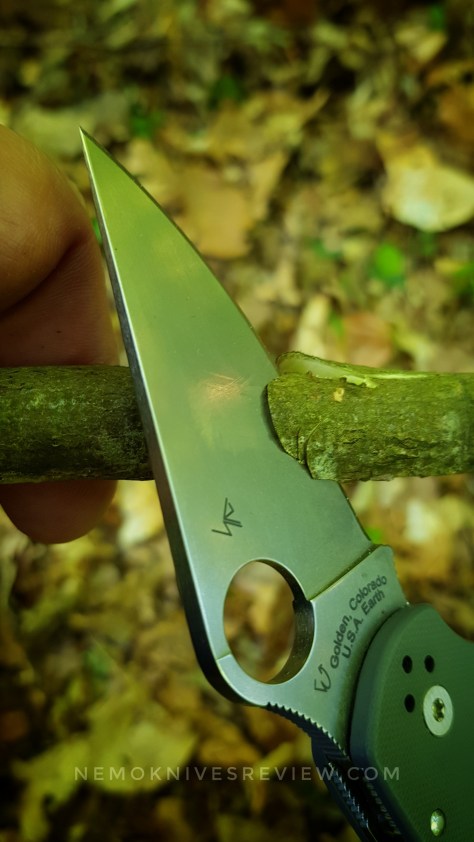
So I have decided to gather the Yojimbo 2 (Black), the Wolf Spyder and Ghost to practising my scales and mastering the rudiments of whittling on a hazel rod which has been drying for a month (since the Lil Nilakka Review actually).  My whole idea was to see and experience how the very different blades grind and shape would behave and eventually adjust Ghost for better whittling.
I have not used my Nilakka as it is a game changer. It’s too hard to reach its performance. (The pictures has disappeared because Photobucket has changed their policies, I will need time to create new links, sorry for the convenience…)
Also I’m a lost cause in whittling compared to what my father was able to do as a kid when he was whittling his own toys but I do have affinities with wood as my grandfather was cabinetmaker and my other grand father was clogmaker.

I had noticed back in the 90’s when I owned a Benchmade AFCK in ATS-34 and on in M2HSS that wood would be almost “patined” differently depending of the grain of the steel. M2’s cuts were leaving a very soft surface compared to ATS-34 which was a more aggressive cutter. I have then found that one of the most expensive wood chisels were made in M2 High Speed Steel.

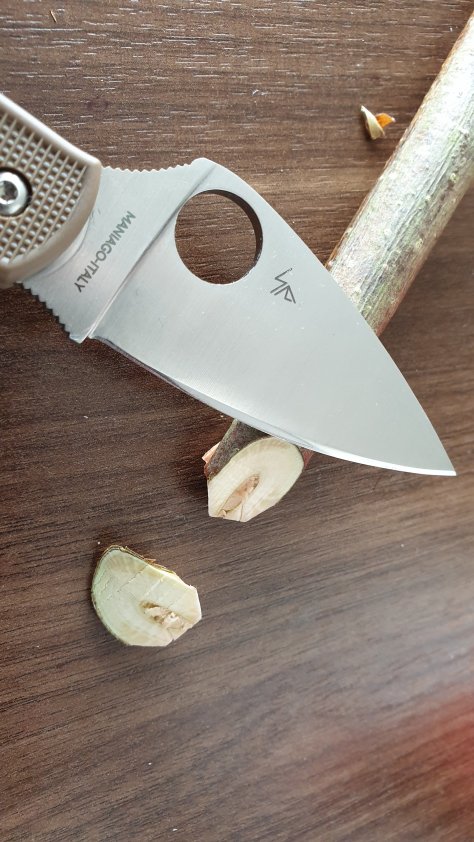
The Wolfspyder is in her element here. Since I have sharpened her back to razor, the scandi grind cut deep and with ease in the wood. This little knife is purely amazing when it comes to carve  deep or caress the rod. The sturdy design is asking to be used hard and the big chunks of wood were flying. It is a pocket beaver ! (OK no more kinky innuendo, pardon my French…). In pushcutting perpendicularly , the Wolfspyder was the more aggressive.
Again, S30V as heat-treated by Spyderco has proven to be a great “all terrain” steel as its edge was not dulled a bit. I’m surprised about the way it kept a perfect edge after all the cuts in a dirty bark and hard wood. Hairs were still flying of my arm. (I heard so much about it losing that very sharp fine edge beause of its relatively big carbids…). It will not be the was with…

Yojimbo 2 Sprint Run was another surprise. First I need to clarify that I had the edge “unshouldered” to be thinner. S90V is a bear to sharpen it feels like “plastic” and without diamonds it is time consuming.
But here it’s the ergos and geometry which made a difference. I was able to cut big chunks of wood with ease. The blade was going deep and my thumb got plenty of space to push behind the edge.
Michael Janich proved it: its Yo2 straight edge keep the pressure on the material. His design was primary made for cutting clothing and flesh in a attempt to keep an aggressor away but it has always proven to be a great EDC for mondaine task. Now I know that bringing the Yojimbo 2 in the woods won’t be a fashion faux-pas. This incredibly solid folder in the right hands can be a great wood processor.

Now I was surprised to notice how my razor S90V edge dulled. I mean, it was still in great shape and has reached the level of a “working edge” but it was not a reliable razor anymore. Twenty seconds on white ceramics and leather and it was back to Vorpal. S30V did not have that issue and of course not CPM M4 of…

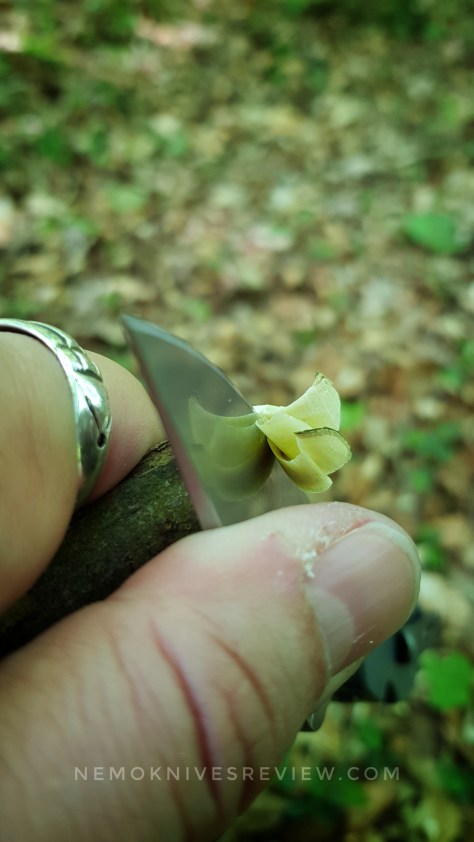
Ghost new convexed edge proved to be able to cut deep with a lot of control and also to remove bark with ease and no pressure as pictured. It was fun to use. CPM M4 got also that tendency to leave the wood’s fresh surface very smooth to touch. I could go on for hours but it needed some twist and home edjustment to ease my thumb sore.

The Wolfspyder’spoint is made to drill. It is thick solid, sharp and you can use all your force with no after thought. It’s not the case of…

…The Yo2 ! Back in the 90’s I had broken my Ronin point drilling in wood. It was a much thinner point and I was really stupid. So I was very careful with the Yo2. It’s clearly not its strong point (pun intended…) but I did not snap it.

C36’s pointy blades, first made of S60V (known as CPM440V) and then of S30V, are known to be relatively fragile but CPM M4 brings much more toughness to the whole design. Perhaps the CPM Cru-wear Sprint Run was even stronger but, anyway, I got zero concern with Ghost which was able to drill the hazel rod easily.

Eventually, the most important home improvement has been to rounded the blade’s spine. Of course the Sebenza is king in that matter, also the Slycz Bowie.

Sandpaper was used for that matter and if the edges has been removed I have not tried to round it completly but at least to make it much softer under the thumb and I don’t strike rods for sparks.

In conclusion, don’t be afraid to adjust and improve your expensive EDC knives to your own uses and tastes. My first attempt has been on my Paramilitary 2 handle. But a knife is a personal tool and it needs to fit you perfectly. Just take your time. Don’t use powertools and risk to heat the blade and ruin the heat treatment (done that in the 80’s…), just go slowly. Also don’t breath G10 and Carbon Fiber dust. Use a mask or do it under the tap. It would attack your lungs badly. Anyway my EDC have really been enhanced by all those little changes and Ghost is no exception to that thumb rule (pun…).
Enjoying your personal tools is always a joy when they are based on great designs in the first place.

Military C36PIN Part II: Ghost’s edge.


It has been 3 months since my Millie in CPM-M4 has landed in my pocket.
I believe it’s time for an update about it since it has been used a lot.

It is my first “new handle” C36 as mentioned here in my previous post.

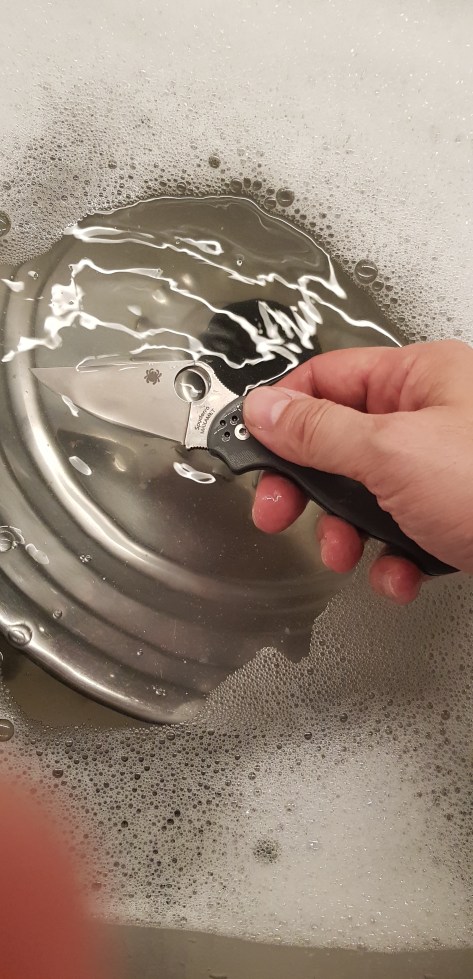
Is there any change in my end line user experience ? Not really apart loving the new stop pin and the larger lanyard hole. It was easy to clean in the previous version, now it is easier and I clean it a lot as it’s used in the kitchen.

Smoothness ? As usual. The main break is the strong detent and the strong liner lock. It is open in a breeze with the major finger or by spyderdrop. The factory edge has been kept for almost three months. I have decided to refresh it at mid July and now the next step has been passed as I have convexed the edge to suit my need in cutting hard plastic (mainly bottles) before recycling.
There is no vertical or horizontal play and the liner has not moved since I got.
It’s a very very solid lock up !

Again CPM-M4 is my friend. In edge holding but also in refreshing by stropping on leather. The thin point of the blade has been used for delicate cutting on hard materials and it has been very reliable in that role. Choking up the blade gives a very nice whittling tool too.

In the kitchen the knife has been confronted to meat processing: chicken, turkey, rossbeef but also sausages hot or cold, fish…

The pointy point has been used to open a lot of hazelnuts: meaning twisting the blade to open them.
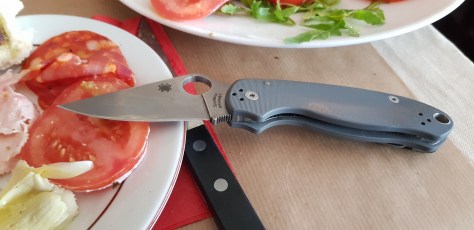
The favorite test in sharpness is how it cut tomatoes. This is a tricky fruit as it skin doesn’t have a lot of support from its flesh.

The Millie has also been used almost daily as silverware confronting its edge to hot and acidic materials. The patina did not come easily and no pit has been noticed. I use some nano oil or some olive oil to keep it in good shape, depending of my needs. Olive oil being less toxic of course.

I have invested in a titanium clip for deep carry. I have mounted it but for an unknown reason the pivot was much less smoother after. I think it is due to tolerances a the screw seems to be in some kind of tension but once removed the Millie was smooth again. Eventually I have found I love the original steel clip which is smoother to draw than any beadblasted titanium. But after sanding the titanium clip and bending it for less spring force on the pivot it was perfect for deep carry.

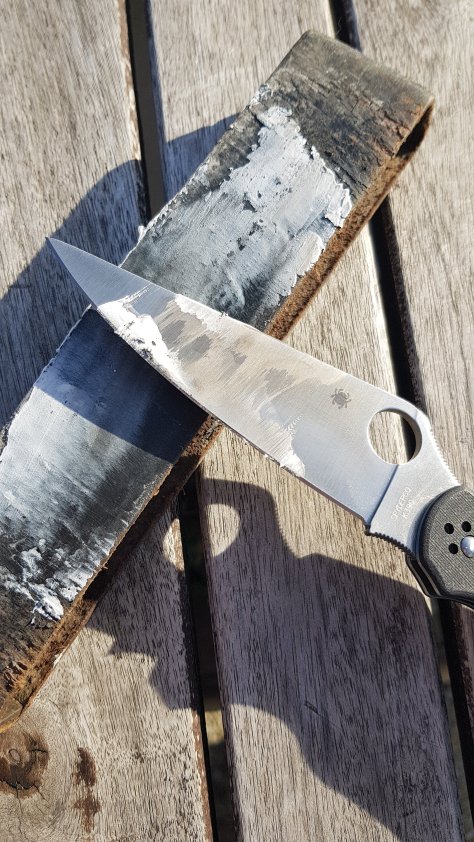
Today it was the opportunity to get rid of the factory edge and start a new chapter with a gently convexed edge. I have used sand paper on my old leather belt. Starting with 500 and finishing with 1000. I like a “rough” feel on my working blade. It comes from scratches and patina and it gives a lot of character but my pleasure is in a mirror finish edge.


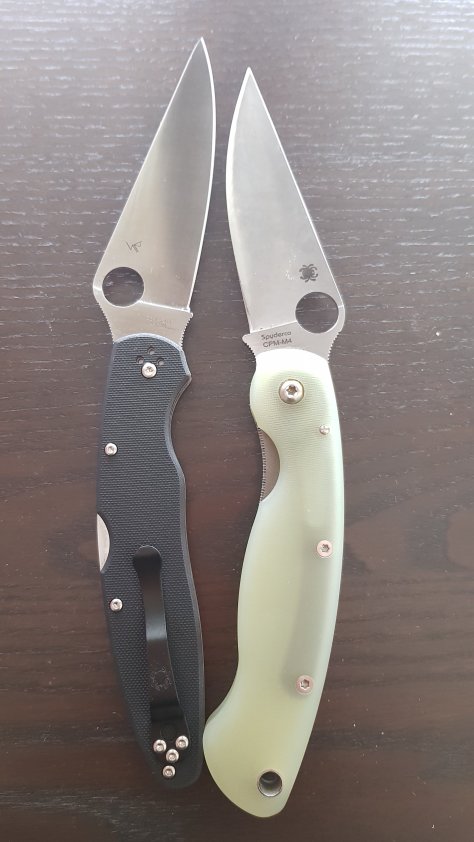
On this model, the Jade or Natural G10 gives a very sheeple friendly look to that relatively big EDC knife. Of course it has been sand also to preserve my pocket lips. I have just kept the original feel/aggressivity of the G10 around the pivot as it is where I put my thumb.

Military C36PIN CPM M4 Exclusive Run — Ghost in the Machine

For a funny reason I give name to knives I keep. It gives them more personality. For a strange reason all my C36 Military got name starting with G like Glesser.
My Military Sprintrun CPM Cruewear is “Gandalf” because of its grey handle.
My new Military with Natural G10 (or Jade G-10) and CPM M4 blade will be name Ghost. It’s an exclusive run for Blade HQ.

This is the first time I got the chance to handle the new version: no spacer, bigger lanyard hole, bigger screws… My first Millie “Glesser”, back in 1996 was already a new version with CPM440V (S60V) and the three screws clip. 21 years later here is what I consider the apogee in this design: a blade alloy I really love and a “light” construction.
Gandalf and Ghost weight almost the same: 124g versus 123g on my cooking electronic scale. This is a light package with a lot of cutting power.
I also love the fact that the Jade handle makes it very sheeple friendly and less “military”.

Since I have reviewed the M390 CF version and the Titanium handle version.

Now I have really convexed the grind on Gandalf for wood working.
But I wonder how it will compare to CPM M4 on Ghost.
It will be the subject of another review.

On the edge of the Polestar by JD

Like Nemo I have received my Polestar as a gift from Spyderco. It was in the goodie bag at the 2017 Amsterdam Meet. When I took the knife out of the box and looked it over my first impressions were positive. The blade opened smoothly and locked solidly with the lock bar fully engaging the tang. I liked how the gray G10 looked and felt, a nice combination of grippy and smooth. Clip tension was also excellent. I could slide the knife in and out of the pocket and waistband without any problem. The edge it came with from was less impressive, it could push cut receipt paper but had no slicing aggression at all.

When I came home I put a drop of Nano oil on the pivot which made it even smoother. I could flip the knife open with my middle finger, which is a lot of fun! Other than flipping it a few times I didn’t know what to do with Polestar. For me it is quite a big knife, having a blade length of 8,5cm. In my urban environment and with my use I have found that a blade length between 5-7 is ample. Small knives are often just more convenient for me.

After a few weeks of from time to time picking it up and flipping it I decided to give it a try and see how I would like to carry and use it. Like Nemo I moved the clip to the tip down position. I was going to carry it in the waistband and tip down carry reduces the chances of the blade accidentally opening. Thanks to the Spyder hole hump it could still be easily and quickly opened with the Spydie drop.

Before I was going to use it the edge would need to have more slicing bite then it did new. So, I thought a few passes on a coarse DMT hone would be enough for a quick touch up. I was wrong! I found out that, especially close to the recasso, the edge was pretty uneven. In some places it was even a high angle convex. The edge would need to be formed anew!

I cut of the old edge with a few light cuts into a stone and then created a new edge with my extra coarse DMT hone. I was interested in how the knife would function as it was intended by Spyderco. So I did not change the angle of the edge much but just evened out the edge bevel and formed a new apex. The steel was not hard to grind but, due to the unevenness, some parts needed lots more work than other parts. After I had was sure of having formed an apex by creating a burr on either side of the edge, I removed as much of the burr as I could by using alternate and high angle strokes. The burr flip flopped from site to side a lot and was not easy to cut of. Once I had removed most of the burr on the extra coarse hone I repeated the procedure on the fine DMT with the same difficulty in removing the burr. At that time the edge would slice receipt paper well but I have had better edges.

From past experiences I know that often a new knife needs to be sharpened a few times before the edge reaches its full sharpness and edge holding potential. So, this did not disturb me much. It was to early for conclusions.

I proceeded to cut up some cardboard before repeating most of the afore mentioned sharpening procedure. Only this time I finished on the diamond side of the Fallknives DC4, one of my favorite hones, to an edge that would just split head hair. Removing the burr and finishing the edge had become a bit easier this time around. Over the following days I carried this knife and used it for my normal cutting tasks. Mostly cutting paper cardboard and plastic packaging material and perhaps a bread bun for lunch. A funny thing I noticed: the edge its cutting ability seemed to first increase, then settle down, before slowly starting to dull!

After about a week of use the edge would still work for most of my cutting tasks but had lost some of its sharpness. I decided to resharpen the edge with just the diamond side of the Fallkniven hone again. Getting it sharp enough to shave arm hair was easy but getting it to split head hair still proved to be a bit fiddly, although I did managed it in the end. By comparison: my Elmax Squeak went from not biting in to the hair to cutting the hair with much less effort. A few passes on the hone did the trick there.

Normally I would have put the knife in pocket pocket as it was sharp enough for me use, but out of curiosity and to check my findings I resharpened it once more. I had become a bit easier to remove the burr and to make the edge arm hair shaving sharp. But to get the edge to split head hair was still a challenge. With other knives like my Maniago Spyderco’s in N690 and Elmax and, for instance, my Victorinox Bantam this had never been this difficult.

Overall the Spyderco Polestar is an enjoyable and capable knife: flipping the blade open with the middle finger is still fun and the handle works well, it handled my cutting tasks fine ones I got it sharp, but I am not impressed with the condition of the steel at the edge on my example. Still, it was interesting playing around with a knife that is so different from my usual fare!

JD

Spyderco C220GPGY Polestar – Workhorse for the budget-conscious user.

Spyderco Polestar

Designed for budget-conscious knife users who demand genuine Spyderco quality, the Polestar was offered to all attendants at the last Amsterdam Minimeet (2017). That’s how I got mine.

What could be the definition of a Workhorse ? We got example of knives which has been used hard, lost, bought again, always in our pocket, the one we use for dirty jobs and that we trust.
Classic examples are: Swisschamp from Victorinox and their Spartan, Buck110, Spyderco Delica, Opinel N°8, Mora’s Companion, Benchmade’s Griptilian, Coldsteel’s Voyager, Pradel’s folder, Doukdouks… to name a few…
Those manufactured knives do not have the best new hyper duper high carbide power metallurgy steel but they can get a keen edge and you won’t need a sharpmaker on the field to keep them sharp. And you don’t pay a premium.
So the Polestar leaf-shaped plain edge blade is a full-flat ground from American-made CTS BD1 stainless steel.

Again, the equation for a great blade is: steel + Heat Treatment + geometry. Fred Perrin uses 1075 steel but his geometry, heat treatment and great ergonomy makes the trick.
Twenty years ago, with Fred, we were testing a famous “tactical” collection names “Master of Defense” now discontinuited. Eventually we found, despite their high sexiness (black blade, premium material and designs) they were not able to hold an edge for a long time. Compared to our Spyderco Military (CPM440V) and my Sebenza (ATS34) they were almost useless for us. Thick edges on CPM154 did not make the trick for users.
The same year (I think it was 1996) we got the opportunity to test some Pakistani 1 dollars folders (Laguiole knockoff). Their thin blade were really capable. We were really impressed. Those shitty knives were users and keepers.

In June 2012 I was able to test a Spyderco Persistence. I enjoy many things in that knife but I did not like how fast its edge could get dull. I have tried to get beyond the factory (burned) edge but without any improvement. Based on that sample, it was really frustrating for my use. No chipping though, but a real tendency to ask for ceramic touch up twice a day. Since then, I have been staying away from Chinese Spyderco and Byrds.

I still got a Titanium Catbyrd wich has been a running test of 200 pieces to try the equivalent of 440C in China 9CR13MO. And despite a thick edge to my own standard, it has proven to be a much better option for an EDC user.

Back to the Polestar, this time the steel is American, made by Carpenter. You can find it on Spyderco Kitchen knives, a Mule, my UKPK and a lightweight version of the Manix 2. So this is a folding kitchen knife blade after all !!

What make the Polestar loveable is its design. Even if Spyderco recognised it has made some kind of retro engineering on one of their Byrd linerlock, for me the Polestar is the heir of their infamous Tenacious: there is no choil ! 🙂
The open construction makes cleaning easy. The wide lanyard hole is a reminiscence of the Paramillie 2. You got four positions for the clip which is much better than the Rubicon 2 in term of usability and “clipability”.

It can be easily open using the Spyderdrop technique so I have mounted the clip for tipdown carry. It’s fast and the knife is ready to cut. It suits my need.
At 3,3mm (0,13″) of thickness the full flat ground blade is a really beauty. There is a lot of Spyderco DNA in it. And it works great.
Yes, there are also a lot of quality  and attention in the manufacturing: my Polestar is perfectly centered and locks with zero play. This knife is serious business.
The G10 texture is something new. Some kind of peeled blue and grey G10 which gives IMHO a premium look to that knife. And under the thumb it is not abrasive at all. No sandpaper needed for my own use. The stainless steel construction give also some weight and no lateral bending.

So what do we got for around 60 dollars ? A solid sharp knife you can use with no second thought.
Like I wrote in the very first article of that blog here quality is not synonym with the geography. Viking used to got to Persia (using the Volga river) to buy the best steel for their swords because back in that time, some of the best alchemists were there. Chinese manufacturers are getting better and better. Just look at the Real Steel collection and especially at their Megalodon flipping folders. Chinese production will soon get pricey as they are investing a lot in robots. If you study the age pyramid in China they will be confronted to a demographic problem. So they need robots and computer controlled production able to deliver constant quality in manufacturing. Never forget all our expensive Apple toys are made in China not in Frankfurt !!

So, the Polestar is the choice for a hard use EDC and also a great guinea pig if you want to master the art of sharpening too. You will enjoy how fast you can get a popping edge back. And you won’t mind using the blade on hard surfaces. This what a workhorse also made for, cutting on a plate or on concrete, with no second thought.

My FranckenStrech is equipped with a Super Blue Steel. That was my idea of a EDC Workhorse: thin angry edge, easy to maintain, easy to carry and sheeple friendly. This tough cookie is hard to beat. Both designed by Sal Glesser.

The edge is not the thinnest (not bad actually !) but the cuts are precise and powerful. It can be thinned easily with sandpaper.

The Parmigiano chips is also a good test. They are transparent !

After whittling hairs, to cut against hard material like glass is not a concern.

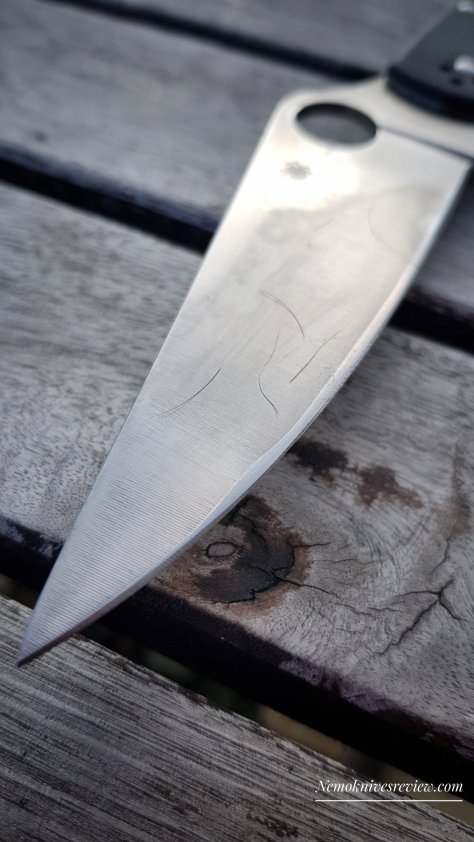
You can notce where the edge has rolled. In two ceramic passes it was straight again.
I won’t have the same ease of realignment with K390 I think. 🙂

Some of my Spyderco workhorses: the Millie, the Manix, the Polestar, the Stretch and the Slysz Bowie.
Different budgets for different tastes. All those knives are easy to clip, got enough edge for a lot of application and are easy to clean. The three knives I have not reprofiled are the Slysz and the Polestar.


Team Cuscadi new Carbon Fibers Scale on K390 Urban.

Why the change ?

After my Urban review I wanted a smoother experience. And give a more precious apparence.
Carbon fiber is a really sturdy material and twenty years ago you could only find it in Formula One and jetfighters.
The feel under the thimb is wonderful and the knife get clipped with ease.

Great work from Team Cuscadi and great service.

Team Cuscadi Scales on Urban K390