Category Archives: Uncategorized

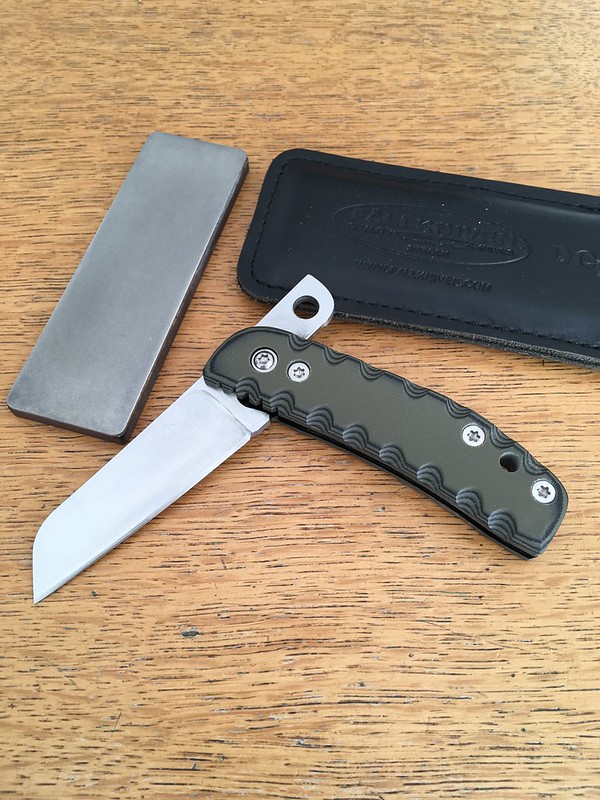
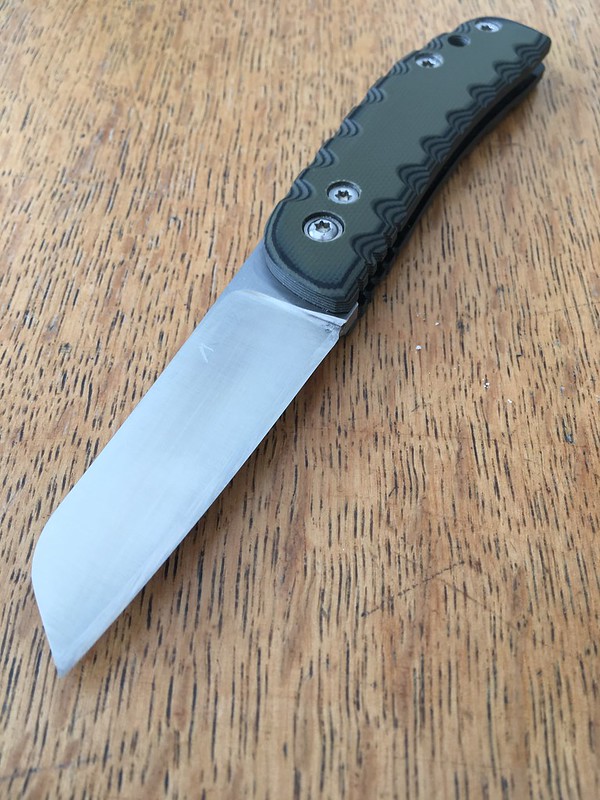
Spyderco Lil Nilakka Edge rolling out fixed and used.

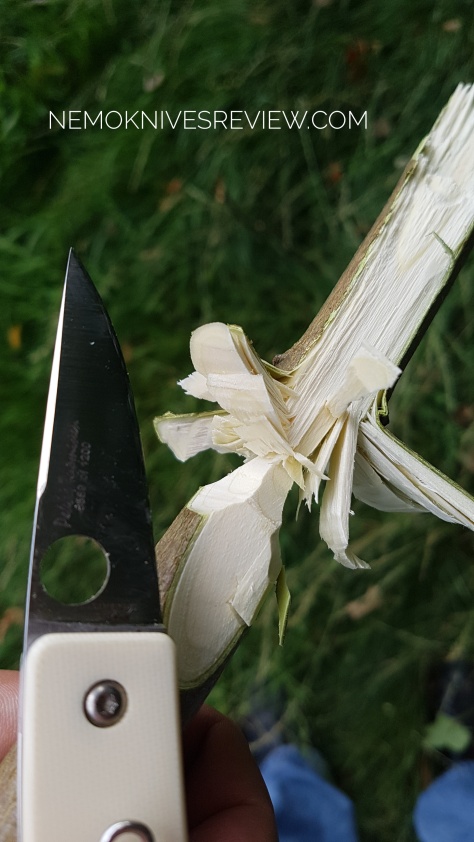
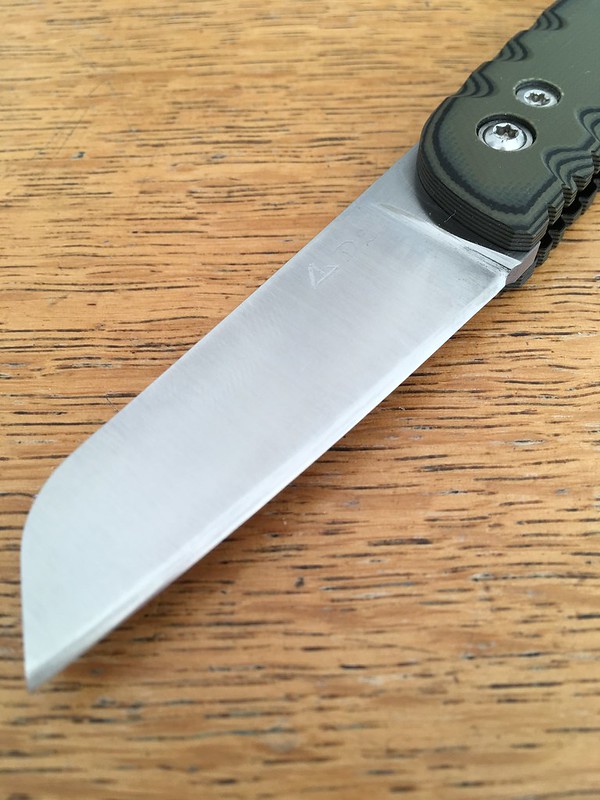
On my Lil Nilakka You can see the damage on the edge. Dry bambu cutting…

It looks spectacular but it’s just a matter to realign the edge.

It hurst on a new knife !!… Ouch !


In fact I also use diamond to remove some material.


15 minutes later, it is back for more.

Simple tools…

30 minutes later on leather;
Convexing gives a little more material behind the edge. No more stability issues.
And it’s not giving up on performances.


20170724_124624-0120170729_171500-0120170729_171439-0120170729_171301-0120170729_171539-0120170729_171546-0120170729_171651-0120170729_170954-01

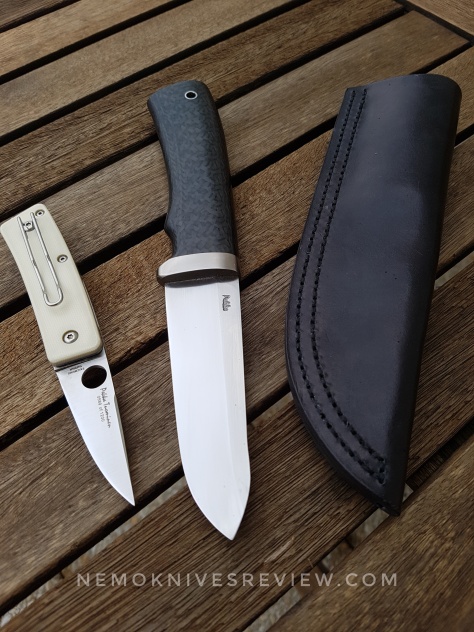
Spyderco C221GPWH Lil’Nilakka — Pekka Tuominen’s Lady/Gentleman Folder.

I first had the chance to play with the Son of the Nilakka at the Minimeet. It looks beautiful but the action was not smooth and the handle squarish. I was not really a fan. Especially as I thought my Nilakka full size was the perfect blade length for my use. Then I heard the concept of a Flash Batch: this is not a sprint run, once the knives are gone, it won’t be made again by Spyderco.

The 1200 manufactured C221 were going numbered, so it was another chance to own a Pekka’s folder. I bought one directly from him, as it was not easy to get one from the USA.  I asked him to choose a smooth one. He did choose well.

This little gem came in a pouch. The Ivory G10 and relatively butt heavy little knife made me thought to some kind of of gambler folder knife.  You could picture it in San Francisco in the 19th century on a poker table.


Very charming to the eyes and to the pocket and also under the fingers. The smooth handle and contours disappears in your palm, ready for action.

What are the main differences with the Nilakka ?
The blade thickness. The Nilakka is famous for it. The Lil seems more reasonable.
Visible stop pin on the C221.

Bigger hole on the little one !

A different clip and a visible pivot screw.

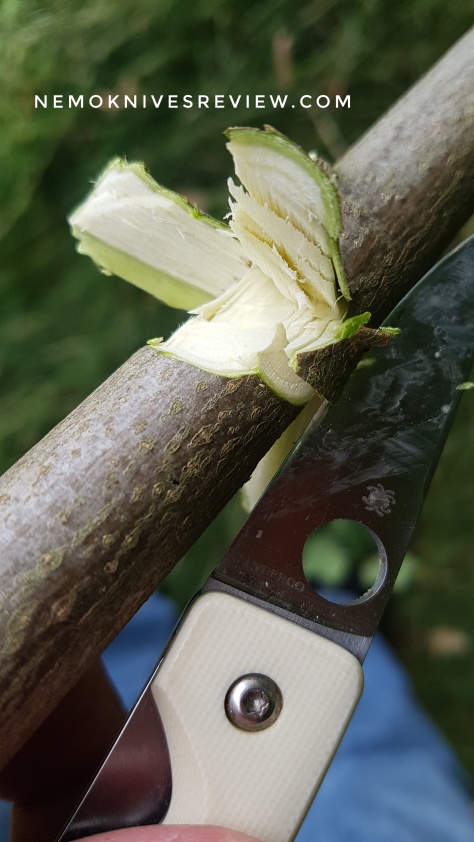
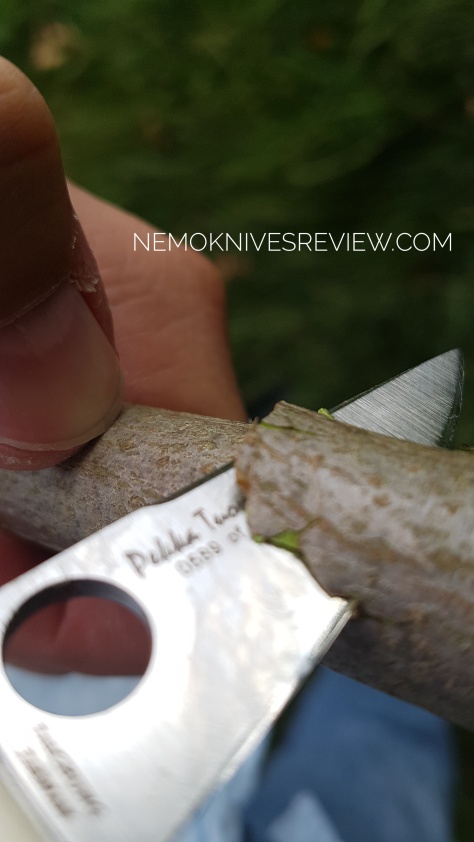
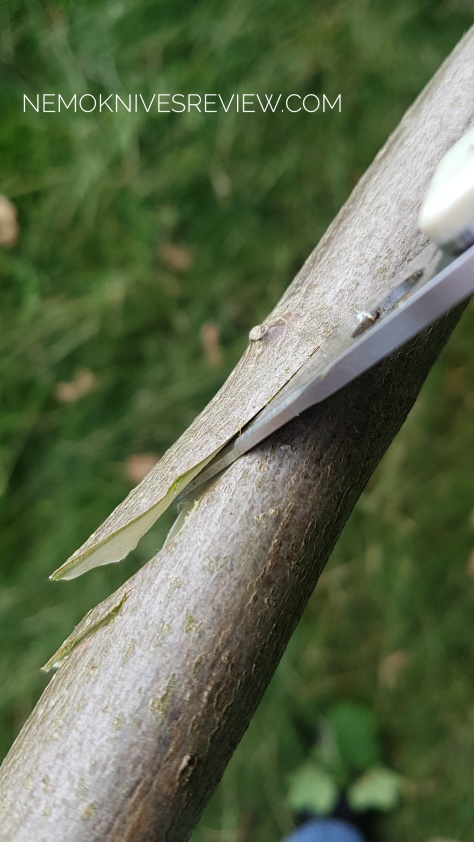
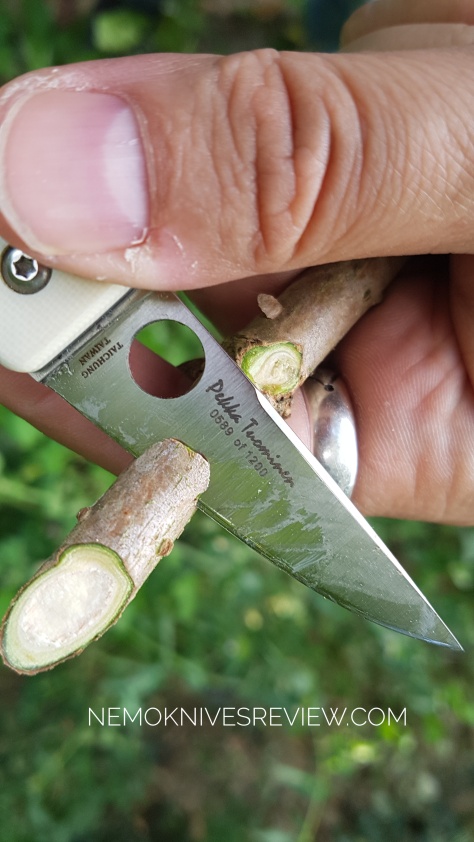
The Nilakka made by Pekka Tuominen was a shock in my little folding knives world. It was the first zero ground Spyderco knife I was able to play with. Zero ground are really thin and really fragile. The S30V edge was soon chipping on hard wood and plastic but after some resharpening, I was able to keep one the my keenest edge as acute as the first day it came out of its box. The Nilakka is still my benchmark for sharpness. So when the Lil’Nilakka arrived in my hand, it immediately went through the same tests: cutting some reed for my roses and…  This time the edge did not chip but warp.
See what’s happen to the edge and how to fixe it here:
“LIL NILAKKA EDGE ROLLING OUT TO FIX.”


That kind of damage is commun on thin edge made of stainless steel. I got it on a Pointu Deluxe made by Citadel for Le Pointu Coutellerie. Again a very very sharp beauty with a mirror finish blade, so the warps were easily spotted.
On the C221 it was also evident, the edge was warping and needed some elbow oil to keep in line. The damage was minor but visible. After reprofiling with diamonds stone and ceramic and eliminating the micro bevel, I was able to obtain a keen and stable edge.

Because the Lil’ Nilakka desserves it ! It’s an incredible powerful cutter. I’am able to hold that handle with 4 fingers and transfer a lot of force to that pointy blade.

This little knife is made for confortable powerful cutting, so the edge needs to be in great shape.
RWL34 is an excellent edge. Named after Rober W. Loveless, it’s like an ATS34 made by powder metallurgy. Pekka Tuominen uses that steel on his own customs and mine, the Urbain Hunter II. I add noticed in cutting bones and dry bambu how RWL34 was tough compared to S30V.

So here we go: a very sharp short pointy blade in a solid handle. Another Little Big Knife score for Spyderco and the third Pekka Tuominen design in their catalog. This is really the kind of little companion you can carry in the middle of the sheeples (non knife people), knowing you dispose of a very powerful cutting tool for EDC chores.
It would be also a great SD tool as you can hold it completely concealed in your hand. It’s very surprising in the way it can penetrate layers thanks to its thick handle and very pointy design. BTW mine got zero vertical or lateral play. Making it a very reliable tool.

For me it will be another sausage killer. And again in this role, the Lil’ Nilakka shows its excellence despite its short blade. I also use it to process plastic bottles before recycling and here, again, the Lil Nilakka shows no mercy after regrinding its edge.
You can follow her adventures in the last PJaffre review here:
spyderco-lilnilakka-my-romantic-gentleman-puukko/

False Brothers — Wolfspyder and Yojimbo2

Like Apollo and Soyouz, those knives are different but got connections.
Both are Spyderco folders with no hump, no choils, both equipped with compression locks, nested liners, spoon clips and radical blade designs.

Both are made to be carried as EDC. Not too big but not too small with a blade around 3 inches / 9 cm.
Their looks are reflecting their designer’s minds and crafts. Ray Mears is a teacher in bushcraft and Michael Janich is a teacher in martial blade craft.

Both are best carried tip up and you need to pull on their tails to unsheath them. They leave a similar print in and especially out the pocket.
Also both got a consequent integral guards. Only the Yo2 got its guard double with a nested liner though.

The main difference is the way their respective blades are ground.
A scandi grind against a saber hollow ground: the Yin and the Yang of cutting perfs.
Eventually the Yo2 is much easier to get sharp as you got less material to remove. But the Wolfspyder scandi’s once sharp is a pleasure on wood works for very precise controlled cuts. In that area, the Yo2 is more like a wild hungry edge waiting for a firm hand to stay on the course.
The thick point of the Wolfspyder is made to withstand drilling in hard wood.
The shard of the Yojimbo’s point is designed for deep penetrating thrusts… to the bone.

But in the end of the day, both knives are very pleasant EDC companions. Their ultra solid locks make them safe to use hard with no after thought. I was surprised how they can be adapted to mondaine chores with their own characters. Both got great ergonomics improved by a wide guard. The compression locks are not hurting my hand like on my Paramillies and the absence of jimping and hump is a plus in my book when you need to extend your thumb on the back of the blade for power cuts.

Yojimbo’s C85GP2 and C85CFP2 and a Ronin.

Following my first glimpse on a the Yojimbo Special Run of 2015 , I present you today the classic version of the Yojimbo: G10 handle and S30V steel. There is no difference between the knives but 4 grammes in favor of the CF version (110 vs 115).

Nemo Knives Review Yojimbos

The blade got the exact same length (on the photography, the Yo2 on the right is resting on her clip hence the parallax…). I have also found the detent to be harder on the S90V run but who minds ?

Now the main difference is the steel: S30V vs S90V.

Quoting Jerry Hossom on the knifenetwork.com :
“S90V contains 9% Vanadium. S30V contains 4% Vanadium (originally it was planned for 3% and thus the name). Vanadium carbides are VERY hard and provide a lot of wear resistance. On the flip side of that S30V was designed to be very tough; it resists chipping and breaking. S90V was designed to be very wear resistant, so it’s really a tradeoff. If you’re very careful with your knives, don’t toss them in the sink or hammer them through hard beef bones, S90V will do very well. If you’re rough on a knife, S30V will be a better choice. I’d likely choose S30V for larger knives, because they’re subjected to greater stresses. S90V is certainly fine for smaller knives. ”

So how S90V will behave on EDC chores with the Yojimbo blade particular shape especially its very narrow point. I remember the same kind of exchanges on the forums about the point of the CPM 440V (S60V)C36 military and our request to see a Millie with some strong tool steel hence the desire for CPM M4, CPM3V and CPM Cruwear version.

Back in 2002 I got the chance to own a Ronin made in VG10. The Ronin was a Mike Janich and Mike Snody collaboration on a SD fixed blade and more precisely a neck knife. I used mine for every day chore until the tip get broken and I was obliged to regrind it.

Here is my 15 year old Ronin next to the Yojimbo.

What I love in this design was the way It would cut on hard material without compromise the edge: only the point was touching the plate for example.
Then as S90V is known for its wear resistance, I should be able to keep the point sharp for a longer time…. And time will tell.

Some words from Mike Janich taken from the Spyderco Forums:

“Hey, Guys:

Thank you all for your comments and enthusiasm regarding the Yo2. I am very pleased to have it in production and I’m thrilled at the way it turned out.

I wanted to share a couple of fine points regarding the design. Like everything else I do, I like to explain why. You are free to agree or disagree, like or not like, but at least you’ll have the information to make a decision.

With regard to the not-fully-exposed Spyderco hole, I wrestled with various options on this during the design. I did not want to do the large index-finger choil of the original Yo because it narrows the grip too much in that area and starts to force the hand into a saber grip. The goal was to keep the closed knife as narrow as possible to preserve access to the pocket.

I had a similar challenge when I designed the Be-Wharned. One thing that I learned during that process was that the natural hand position for a thumb opening is typically not with the plane of the handle completely flat. Most people naturally hold the knife palm up, but with the knuckles at about a 45-60-degree angle to vertical. That means that your thumb also indexes the hole (or stud) at an angle, not flat on top of it. With the Be-Wharned, holding the knife at this natural angle and driving the thumb straight along the chamfer of the handle produces the most positive, reliable, and comfortable opening.

With that experience as a guide, I focused on the functional part of the Spyderco hole. When the closed knife is viewed with the edge down, tip to the left, this section is from 12 to 3 o’clock. That’s where the thumb actually bites and drives. That part of the hole is completely unobstructed.

As for the lock release cutout, I purposely made it smaller than that of the Para2. There are two reasons for this: First, some users–especially those who grip the handle tightly with their index fingers during opening–get a slight pinch from Compression Locks as the blade is opened. This is caused by the liner moving into the G-10 scale as the blade clears the detent ball. To mitigate this effect, I asked that the top of the Compression Lock tab be recessed slightly below the top edge of the G-10 scale and purposely made the recess smaller.

Second, speed closing of the knife is not high on my priority list. I close the knife by pinching the lock between my thumb (on the G-10 scale) and the nail of my index finger (on the lock tab). I can do this (and have done it) all day long without soreness or fatigue. For me, it’s perfect the way it is. Most importantly, the knife closes exactly when I want it to and I still enjoy both the extreme strength and the I-don’t-need-to-put-my-fingers-in-the-path-of-the-edge safety of one-handed closing.

I chose the standard hourglass clip for the Yo2 because it has been refined and perfected over the years. It works great, so why reinvent the wheel? Also, savvy Spyderco fans know that the same basic clip design used on the Yo2 is used on the Endura and Delica, but in black (and with the addition of the lanyard hole that matches the holes in those knives). Don’t like the shiny clip on the Yo2? Buy a replacement clip for an Endura for a few bucks and you’ve got an instant subdued clip. How easy is that?

As far as clip position goes, most folks know I prefer tip-up carry. The key to getting a personal defense knife into action quickly is being able to draw it and immediately open it without having to change grip position. The key to that is making sure that the overall size of the closed knife, the position of the Spyderco hole, and the height of carry are all proportionate to the average hand size. If you have a big knife with a deep-pocket clip, it may carry discreetly, but when you draw it, you’re holding it by the butt end with your thumb a long way from the hole. Unless you can magically Viagra your thumb into growing, you have to change your grip to get the knife open.

The clip placement on the Yo2 makes the knife ride high enough so that, with a proper draw, your thumb is automatically on the opening hole when the knife clears the pocket.

If you prefer discretion and a low profile over deployment speed, I purposely added tip-down carry to the Yo2. The clip holes at the pivot-pin end of the handle are as close to the front edge of the handle as physically possible to support deep-pocket carry. Yes, it’s tip down, which is slower. So is deep pocket carry in general. If you need deep-pocket carry and speed, arry tip down and use a Spyder-Drop opening. You’ll find that although a small portion of the Spyder Hole is obscured, there’s still plenty of surface area to grab onto. As you pinch the hole with your thumb and index finger, you’ll also find that your fingertips start to push the handle away from the blade, “cheating” your start on the opening.

As for a lanyard hole, I’m not a fan of fobs, so I opted for the additional strength of a screw post at the butt instead of a lanyard tube. However, if you are a lanyard fan, there is still enough room between the blade edge and the screw post to wrap a thin lanyard around the post with a cow hitch. That keeps the lanyard centered in the handle instead of wrapping around it and makes for a sleeker package. Think of a typical flashlight lanyard where the loop that attaches to the light is thin and strong and the rest of it is 550 cord sized. If you must use 550 cord for the whole lanyard, pull the guts out of it so it wraps flat around the screw post.

I hope this helps you better understand why the Yo2 is the way it is. A lot of thought went into it and it is truly a reflection of more than 35 years of experience, training, and daily carry of personal defense knives.

Stay safe,

Mike

P.S. As far as meat cutting tests go, yes, that was a big part of my personal R&D of the prototypes. Simple answer: It has more blade length than the original Yojimbo. It therefore cuts even deeper.”


Another one from Michael Janich in August 2012:

“Thanks for the discussion and your continued enthusiasm for the Yo2.

When I designed the blade for the Yo2, I took a lot of inspiration from the Manix2, both because I like the way it cuts and because, as a Golden-made product, its manufacture respresented a known core competency for Spyderco. Combining a partial hollow grind with a thick, strong spine provides a great balance of edge geometry and strength. Moving the point up towards the blade’s centerline moves it toward the thicker part of the blade; however, if the hollow grind runs parallel to the edge all the way to the point, the resulting point thickness is functionally the same as what you get with a wharncliffe.

The wharncliffe blade excels at cutting because it cuts with full power all the way to the tip. An acutely angled tip also provides superior penetration with minimal effort.

From a utility standpoint, the Yo2’s tip is analogous to an X-Acto knife and is excellent for detail work. The heel of the blade, closer to the handle, is extremely strong and more than capable of tackling most cutting chores for which knives are appropriate tools. In general, if you focus on using the part of the blade that is most appropriate to the task at hand, you can perform a wide range of cutting chores without a problem.

Having designed several wharncliffe blades now, I have also been privy to the warranty repair claims concerning these blades. In all honesty, broken tips are rare. The ones that do come in typically come with a story that begins “I dropped my knife on concrete/a hard tile floor….” or “I know I shouldn’t pry with a knife, but…”

Like a box cutter, a wharncliffe cuts with both power and finesse because of its straight edge. If your style of utility knife use actually focuses on cutting, it will serve you well. If your utility knife use focuses on prying, digging, or using your knife as a jack handle, buy a knife that is better suited to that type of use–and don’t expect it to cut very well…

I hope this helps.

Stay safe,

Mike
Michael Janich
Spyderco Special Projects Coordinator
Founder and Lead Instructor, Martial Blade Concepts”


Spyderco C181GTIP Lil Lionspy — Roaring Cub !

What are the differences with the Lionspy I called the Beast in my review ?
The size. This knife is more on the EDC size and the clip !!
The clip makes it a true EDC. Adding a spoon makes all the difference in the way that little knife get inserted and ride in the pocket.
Also i feel it a little more pointy but that may be subjective. It is still a knife which works great when used at 45 degrees with the cut material right on the belly. It works great to cut a hazel rod with full power in your shoulder.
The knife dimension are also simple: 3 inches blade with no choil for a 4 inches handle.

The Rotoblock works just fine but some would may think it is some kinde of overkill on a Reeve Integral Lock. But you would be very surpise by the number of hard use RIL knives I have been able to fold with a gentle spine whack.
It looks like they can be jammed by a shock as easy as any liner locks. So the Rotoblock is a nice security but it doesn’t turn your folder into a fixed blade. It is just an option which is easy to use and a nice thought for a knife provided without a choil to “feel” the blade and protect your fingers.

Lil Lionspy

Let’s not forget that a choil will work like some boot-dagger quillons: on a folder you are transfering your force directly to the blade. Without a choil, your force goes through the handle and all the interface with the blade: pivot, lock and pins… Hence the hard used Military C36 series working perfectly with a well executed liner lock. Choking up the blade is like using a antique friction folder: the handle is just some kind of folding sheath.

Again Maniago has proven that they were able to deliver an high tech and high quality knife and I’m very please with mine even if I found some complain about the use of nylon washers instead of bronze phosphorous washers in a knife of that price.
And the pro side you get a compact hard use folder with good ergos and an elmax blade. It is very oriented toward hunters. Especially Italian hunters like my friend Valter.
This is a low profile hunting folder a nice belly on its convex edge. Elmax has proven to be reliable and easy to keep sharp with just some stropping.

Now low profile folders are good in the city also. It is invisible as the deep carry clip is just working so great that it would be even a nice addition to the big Lionspy.

Military C36PIN CPM M4 Exclusive Run — Ghost in the Machine

For a funny reason I give name to knives I keep. It gives them more personality. For a strange reason all my C36 Military got name starting with G like Glesser.
My Military Sprintrun CPM Cruewear is “Gandalf” because of its grey handle.
My new Military with Natural G10 (or Jade G-10) and CPM M4 blade will be name Ghost. It’s an exclusive run for Blade HQ.

This is the first time I got the chance to handle the new version: no spacer, bigger lanyard hole, bigger screws… My first Millie “Glesser”, back in 1996 was already a new version with CPM440V (S60V) and the three screws clip. 21 years later here is what I consider the apogee in this design: a blade alloy I really love and a “light” construction.
Gandalf and Ghost weight almost the same: 124g versus 123g on my cooking electronic scale. This is a light package with a lot of cutting power.
I also love the fact that the Jade handle makes it very sheeple friendly and less “military”.

Since I have reviewed the M390 CF version and the Titanium handle version.

Now I have really convexed the grind on Gandalf for wood working.
But I wonder how it will compare to CPM M4 on Ghost.
It will be the subject of another review.

Back to the Future: A first look at a Jan Dox friction folder by JD

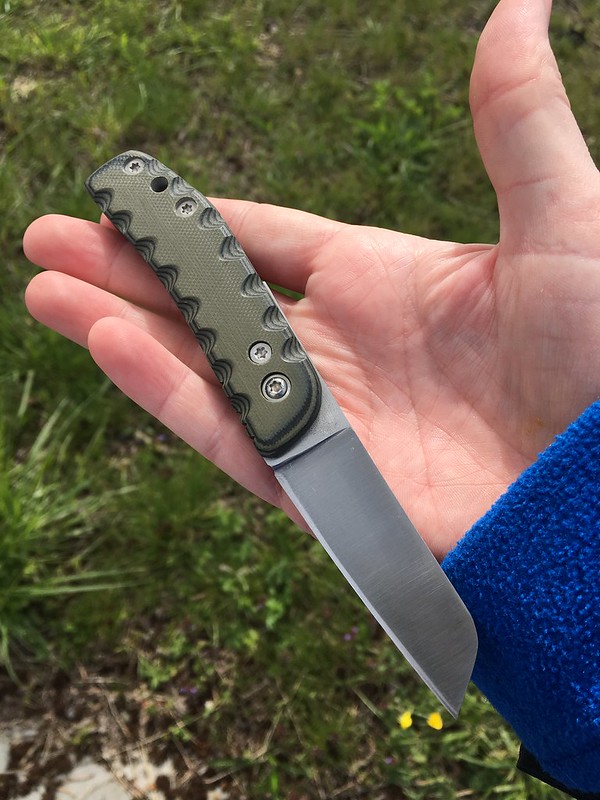
Recently I went to the Dutch Knife Exhibition (DKE) in Tiel. This is the only Dutch knife show and has been held for the last few years in the second part of April in Tiel. The DKE has a nice mix of handmade and production knives as well as knife maker supplies. Before I went to the show this time I had in my mind that one of the thing wanted to check out were the friction folders by the Belgium knife maker Jan Dox. I looked around the show, stopped by Jan’s table and looked the friction folders over and talked a bit with Jan. Jan told me he carries one of his own friction folders as an EDC. I like it when a knife maker carries and uses his own knives. It shows they have confidence in their product. After I finished looking around the show I went back to Jan’s table and decided to buy the folder you see pictured here.

Let me tell you some of my first impressions of this knife. The G10 handle looks good and is nicely rounded, feeling comfortable in the hand. The opening and closing action is smooth but secure. I can open and close the knife with one hand but it does not feel loose. Should the amount of friction change over time, the pivot can be tightened with a torx 10 screwdriver to make it right again.

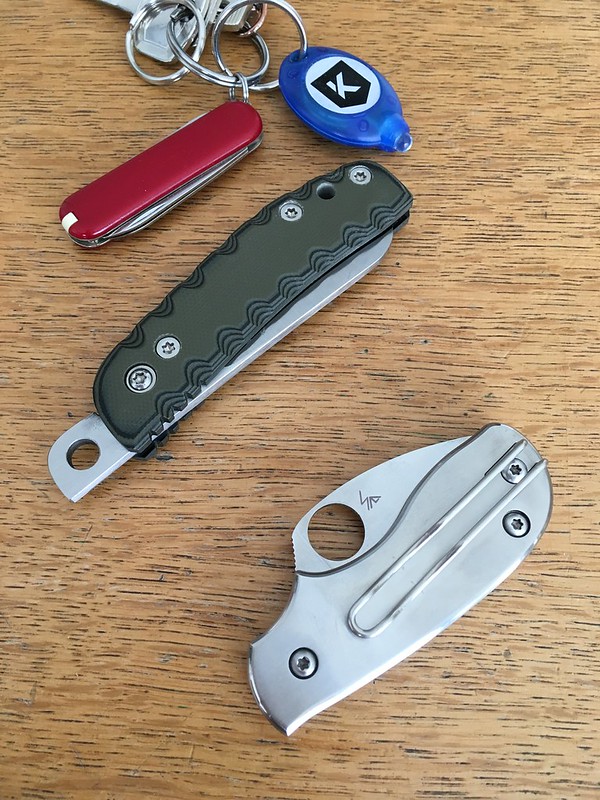
A lot of friction folders have a narrow tang sticking out when closed. Not something I would like to carry in the pocket without a sheath. And I do not like pocket sheaths much. The friction folders Jan Dox makes have a wider but relatively short tang that is rounded on one side and can be carried in the pocket naked. That is how Jan Carries his and that is how I will carry mine.

The edge it had new was not very sharp and had a small burr on the front halve of the blade. I think I had best look on this as: old fashioned style of knife, old fashioned sharpening paradigm! The maker puts on the edge bevels and the user sharpens it the way he wants. If you use it you have to sharpen it anyway. Besides, this was a very affordable handmade knife and I like to sharpen.

Putting a fresh edge on this blade made out of D2 tool steel, was pretty easy. I used a Extra Course DMT to refine the edge bevels and then put the final edge on with diamond side of the Fallkniven DC4. Following this I cut up some card board just to see how it did. No complaints there! The blade went trough the material with little effort. After having cleaned the tape gunk of the blade with lighter fuel I sharpened it up to head hair splitting sharpness. It is a pocket scalpel now! You can tell the maker took good care not to over heat the steel during fabrication. There where no nasty burrs to chase from side to side and a crisp, clean edge was easily obtained.

All-in-all I am pretty happy with my purchase and look forward to getting some use out of my new knife!

Dimensions:
Total length: 15,5cm
Length closed: 10,3cm
Blade length: 6,5cm
Handle length: 9cm

Update after about seven weeks of carry and use:
After having carried and used this knife for a while now I have found that it works well for me. for most of that time it has been my main edc. I have cut paper, cardboard, plastic packaging material, as well as bread buns with ease. During this time the D2 steel has held its edge well and was easy to touch-up or resharpen when it lost some of its sharpness. I found it Very easy to get it head hair splitting sharp with just the diamond side of my Fallkniven DC4.

There is enough friction between the handle and the blade to hold the knife open and closed but not so much that it is hard to operate. This means it can be opened (and closed) with one hand, which can be pretty convenient! This is the first friction folder that I have carried and used and it has proven to be a very useful design that has been well executed. It does just what I like a pocket knife to do, and does it well!


A first glimpse at the Spyderco C187CFP2 Peter Carey Rubicon 2

I’m not a fan of thick hollow blades for quite long time now. The Gil Hibben Rambo III knife is not in my dreamlist anymore and the last hollow ground knife I have reviewed has been the Recon 1. But one of my favorite knife, which has not been reviewed is my 1994 Sebenza. Anyway, the Sebbie and the Cold Steel or even the Gayle Bradley are holow ground but not thick blades.
The Peter Carey Rubicon 2 is 3,5mm thick and for a 3 inches blade it is substantial.
(The Slycz Techno was 5 mm though…)

The Rubicon 2 is not a big knife, is it destined to be an EDC. He’s not heavy, its liners are made of titanium and the scales of peel carbon fiber.

The first you enjoy is the ease of deployment. This knife flips like no other in my collection. No need for assisted opening on this baby: the heavy blade, the ball bearing pivot and the well designed flipper make the trick. The opening is positive everytime.

Eric Glesser told how difficult is it to have a flipper which also provides an alternative opening system. Meaning: sometimes you just want to open your blade gently with the Spyderhole and not with the flipper. You want to trade a “shlack!” for a “click!”.
The Rubicon can be open with the thumb and even the index. It’s fun how easy it is! The operation is so smooth and could be catagorized into the gravity knives family. This ease of operation has been a big charm upon me: the more I’ve played with the knife, the more I have enjoyed it.

The blade got a beautiful satin finish perfectly executed, perfectly executed, symetrical and and centered.

The second big charm on the Rubicon 2 is the handle. The way the flipper create a guard and a subguard, depending how you hold it. This short handle is married litteraly to my hand. For once, there is no lanyard hole and the butt of the knife is pointer than its blade.

A beautiful orange spacer gives a very hightech look to the knife as everyparts are perfectly adjusted: spacer, scales and liners. This high quality of manfacture is again provided by Taichung in Taiwan.

The bronze washers and the ball bearing gives the smoothness and the exterior stop pin assure that the washer are wide enough for stability: no lateral play.
The only break to the action could be the ball detent of the titanium liner lock but it is minor compared to the momentum of the blade.

The design is well thought also once the knfe is closed.  The Rubicon 2 gently rests in you palm confortably. The peels carbon fiber is very nice against the skin giving a very positive grip. The jimping on the blade are purely decorative and this is the way I like them two.
I won’t need to file them.

The blade is wide and thinly ground and very effective thanks to its nice belly. I was able to push cut through hard material easily. It has surprised me how it zipped though.

The balance of the Rubicon 2 is perfect IMHO. The choice of the material again provides that. The handle is very light.

I haven’t been able yet to find an easy to clip carry the knife. The texture of the scale and the very strong clip give a lot of friction. I was even able to carry it in the pocket watch.

Compared to the Ed Schempp Bowie for example: the Rubicon 2 is not pocket friendly at all.

It is not carried deep and the orange spacer screams loud : “Hey look !!!”

I’m so unhappy with the way the knife rides in the pocket that I’m thinking to use a pouch and get rid of the clip !

For the moment my cutting test with the Rubicon 2 has been really positive. It’s a short knife with a big potential.  Also your thumb can easily rest on the spine giving you more leverage.

So here we go with a first glimpse to a very well designed knife. I would have been more excited to get some exotic steel on such a radical design but S30V heat Treated by Spyderco does the trick.

The Rubicon 2 is destined to be a reliable workhorse and not only a looker and a very addictive flipping toy. There is a strong will behind its design to provide strong cutting power in a small package in its design and all is served by an ergonomy which is for me magnificent. The knife is simply anchored to your hand.

Spyderco C154TIP – Every Day Squeak !

It’s time to present a one year old friend who doesn’t want to leave my watchpocket.

The Squeak in its Deluxe Sprint version: Titanium handle and Elmax steel blade.

This little knife is made in Maniago Italy but has been designed by Sal Glesser.
You can find Sal signature engraved / laser etched on the blade near the hole.

This is one of the shorted blade I own, but again, unique to Spyderco, this is a little big knife.

The first sensation is purely tactile. The smooth titanium handle is a pleasure under the thumb and in the palm: its smooth surface and rounded edges are very appealing. The ergonomy is superb in its three fingers grip.

Noted that Satin finished Titanium can be a scratch magnet but you can easily remove them with light sandpaper or jeweller erasers.No big deal.

It’s a very minimalist construction every is hold by two screws. A third one is used for the deep carry clip which is my SPyderco’s favorite

The blade is full flat ground and especielly thin edge witha great steel: Elmax.

The choil makes it a reliable folding tool even if its a slipjoint.
The sprint is strong, much stronger than my UKPK, and the short blade offered less leverage for closing. To quote Spyderco: “The Squeak’s blade is held in the open position when cutting by a notched-joint at the knife’s pivot.  When closing the blade, the notch generates resistance functionally similar to traditional slip-joint penknife and performs the additional function of smoothing the motion of the blade opening.”

It’s a very very sharp blade. It goes through plastic bottle butts very very easily. The excellence in steel choice and the great edge geometry is so great that I have not touch it at all since I got it. After one year on regular use, the knife is still razor sharp. I keep it that way with some white ceramic and stropping on leather. That’s all. It is ‘that’ great.

I was very surprised by how usefull a short blade like this one can be.
Carried as a second folder (when usually I only use one knife or one multitool)

in my pocketwatch, the Sqweak has proven to be very useful.
I have been also able to eat with it. Its belly helps a lot to cut the meat in a plate. Again, the knife is not rising any eyebrows, nobody seems to notice the little tool in public places or even in a restaurant. Let’s be clear, knives in restaurant suck, one of my favorite low profile knife for that is the Mantra 2. It’s always handy to carry a small sharp blade in places where any knife could afraid the sheeples. I use mine a lot in the supermarket. It gets fast in the hand, open fast and closed fast. Very discreet and very powerful on cardboard and plastic tags of all sorts. Also last year I have been obliged to carry a Leatherman Wingman and the lil’ Squeak was my main eating knife for bread, cheese, sausages, meat and it was easily a much better blade than the multitool’s short thick blade…

The Squeak has also replaced my Pingo as my UK knife. I was on the verge to by an elmax Pingo but eventually I really need the opening hole. I need a one hand opening knife. Also it has renewed my love for Elmax so badly that I have bought the Zero Tolerance ZT0770.