Tag Archives: Hunting

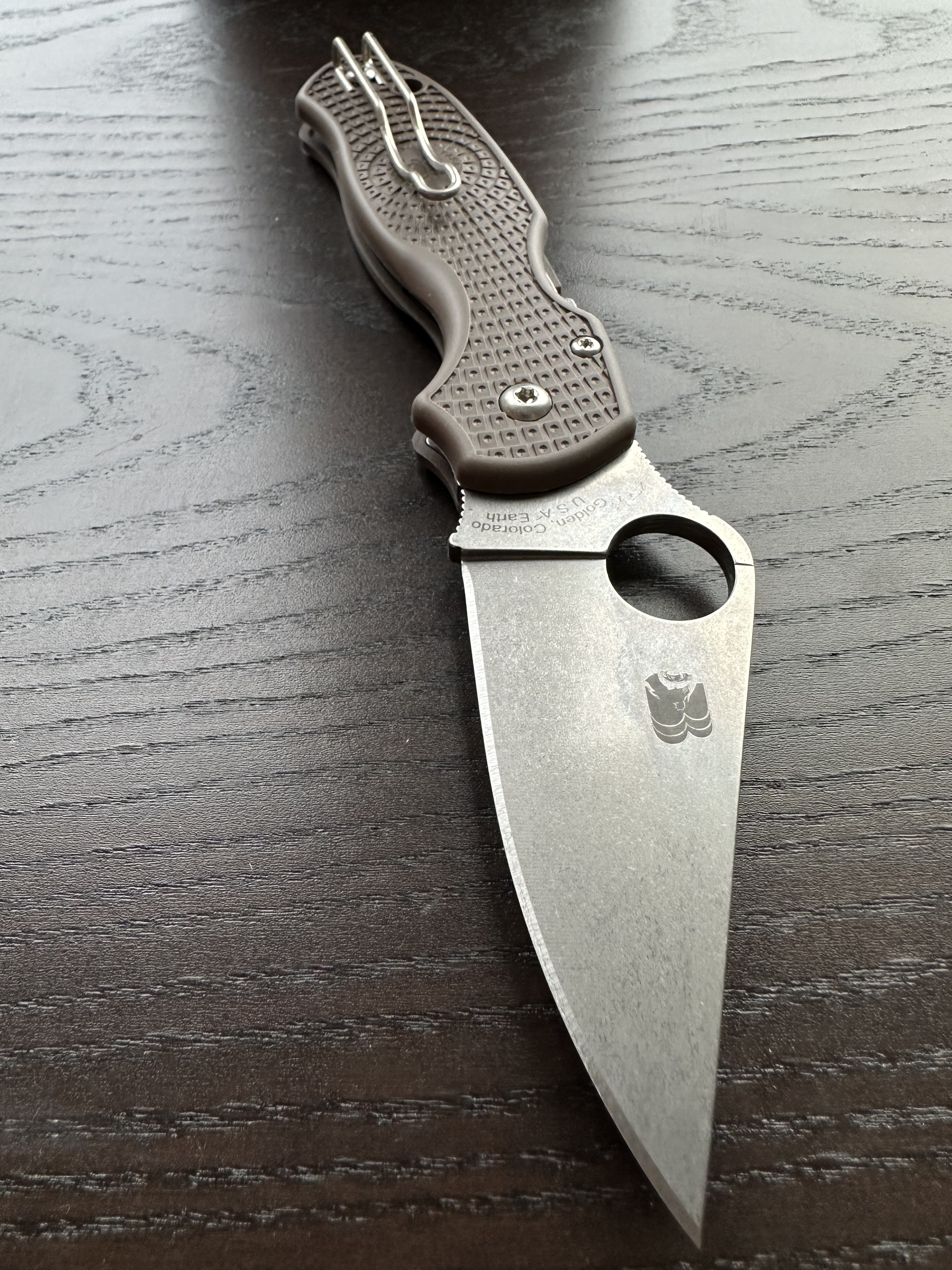
Spyderco Para 3 Lightweight 15V Sprint Run – C223PBN15V – First glimpse at the Lil’Brown Bear !

Jumping on the Para® 3 Lightweight Brown CPM® 15V® Sprint Run® wagon was an easy choice after a month of watching our American friends review this new CPM-15V batch.

Following the Manix 2 release two years ago, showcased in the Reveal 11, and a Paramilitary Brown version, here is the chance to test this remarkable steel on a lightweight platform: the Para 3 in brown FRN.


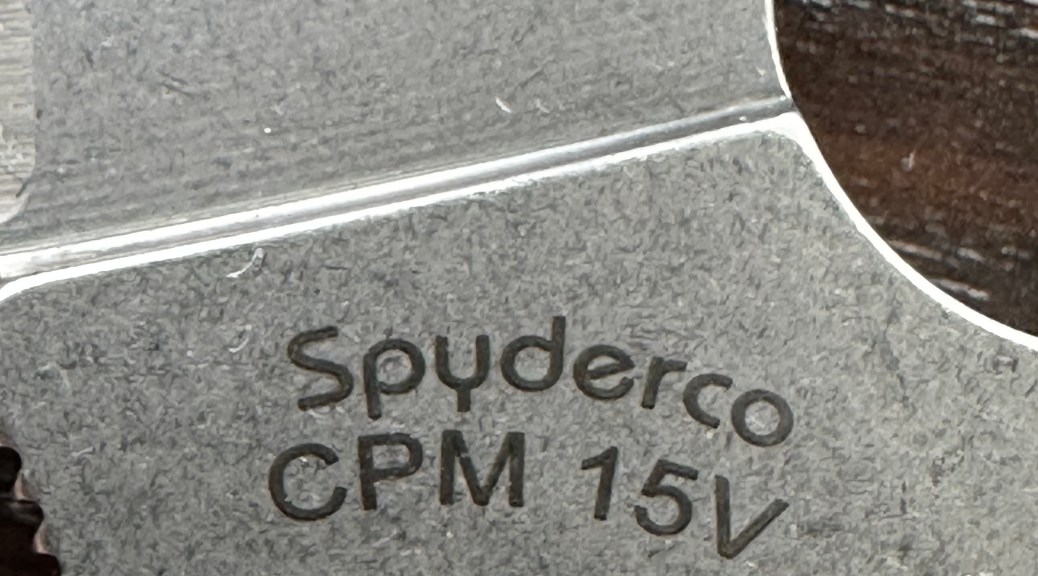
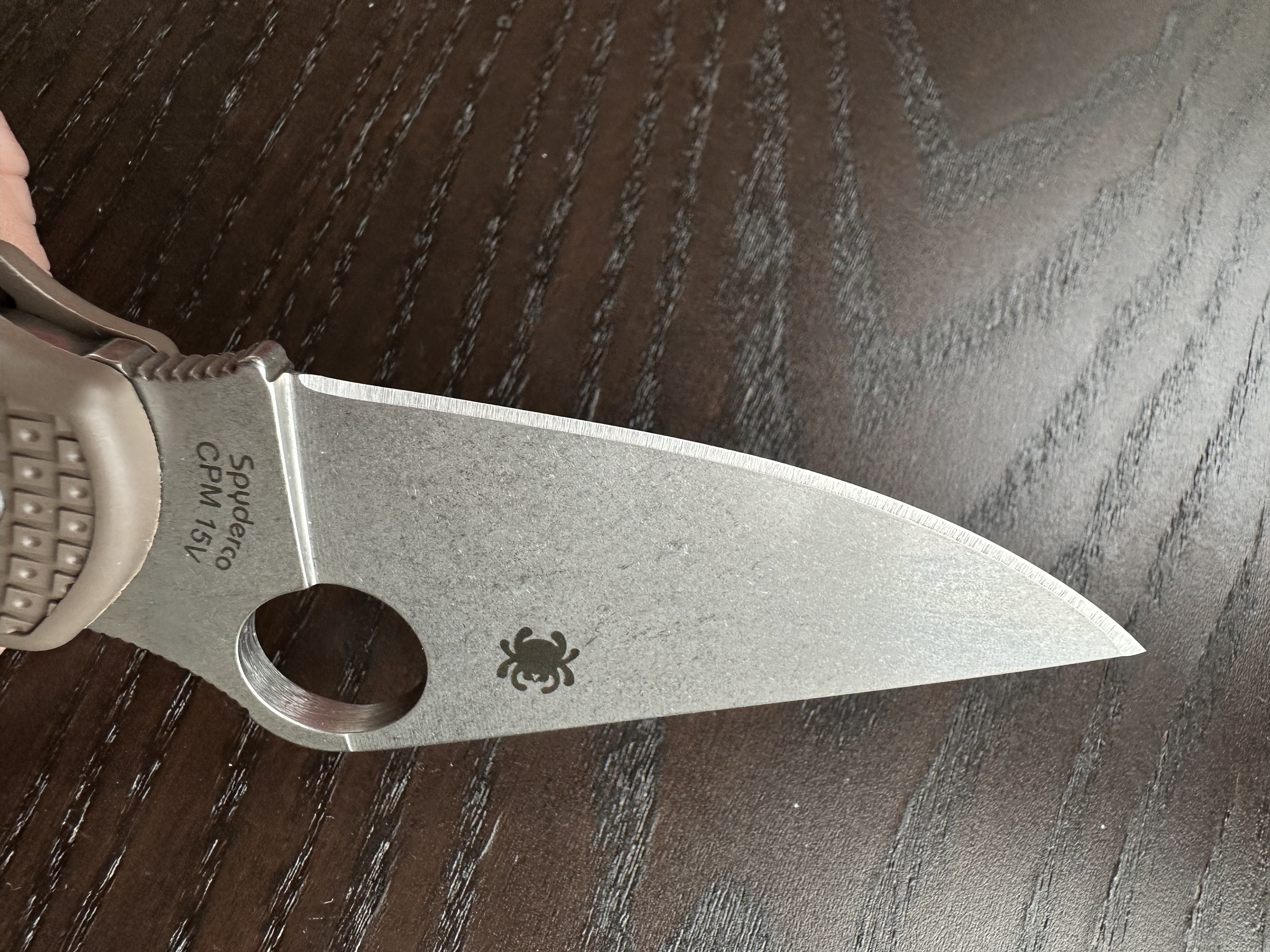
For record CPM 15V is “Boasting almost a 15 percent vanadium content, this remarkable material offers the highest wear resistance of any cold work tool steel available today. The full-flat-ground, satin-finished blade of this knife is further enhanced by a specialized heat-treating protocol developed by acclaimed custom knifemaker Shawn Houston. The result is a blade that offers extreme sharpness and unparalleled edge retention.”

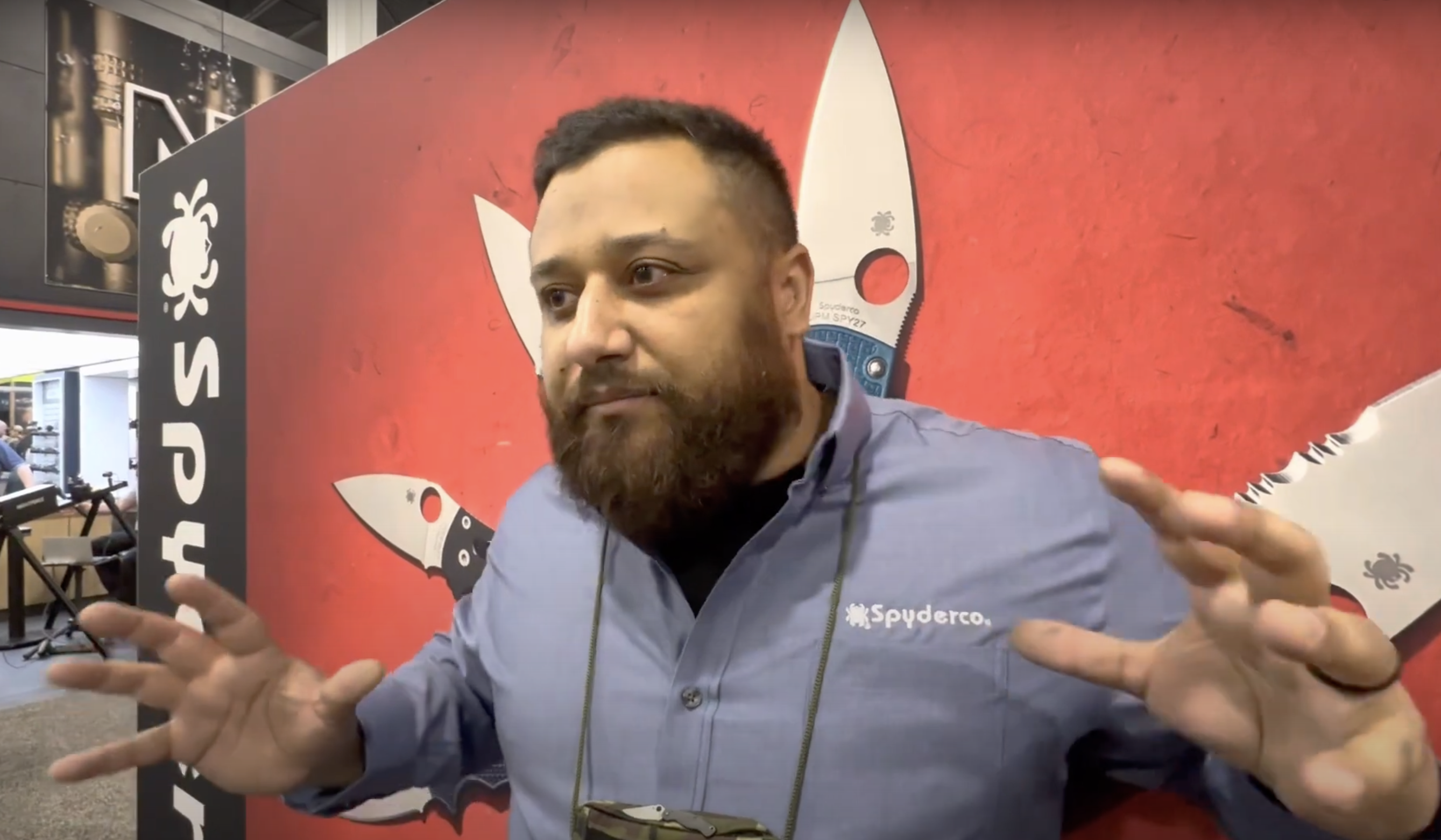
Shawn Houston is known as Big Brown Bear on youtube and his skills in metallurgy and knifemaking as drawn the attention of the Glesser’s family.

In 2018, he has written on the Spyderco Forums that request:
Sal, Can we get CPM 15v?
I like this steel. It’s easier to work with then Maxamet and Rex121.
Takes a killer edge and seems to be more stable then s110v.


Larrin Thomas even answered:
“You guys are crazy. But with Spyderco anything is possible.”

And in 2022 a first Spyderco knife designed by Shawn Houston in 15V with his own heat treat protocol was proposed. Eric’s Manix 2.

“The CPM 15V Sprint run was supposed to be a surprise treat.
Eric wanted to share the CPM 15V with the custom heat treatment I worked on for my folder design.
His idea was to use a standard model so people can get their hands on the steel. Which I thought was really, REALLY cool of him to do that.
Working with Crucible and Niagara Specialty Metal we were able to select a specific melt of the CPM 15V that would respond best to this specially developed custom heat treatment. 
So, Eric and Sal really went all the way on this, no other production knife company on the planet would do something like this. Eric and Sal are one of a kind. 
You guys need to understand this is very unique having actual knife/steel/sharpening/edge people running a knife company that can cater to enthusiasts. 
Originally, I was given options for different handle scales for the Manix but the most important priority was to get the CPM 15V Manix out as soon as possible so it didn’t make any sense to use exotic scale materials.
G10 is a great material to work with and brown g10 was selected because “Big Brown Bear” aka Triplebhandmade. (Me)
I am aware as many others that brown g10 is not unique to this model.
But the color of the handle scales and the handle scale material are irrelevant to edge performance and the most important priority was getting this out to you guys as soon as possible.
Looks like the price is great too, if we used carbon fiber etc cost would have been higher.
So, I hope you guys can respect that.
The folder collaboration design was being pushed back due to production capacity being completely full at Golden.
Please understand that I’ve been very persistent at wanting the knife made in Golden come **** or high water; I would wait until the
stars burned out.
Spyderco has been very busy increasing the size of their golden factory to meet the insane demand of the current knife industry after the global pandemic.
Keep in mind, when a new product comes through the factory, they have to train the staff on how to make them, and what the best procedures are for creating that specific model in high volume with maximum efficiency. So, there is hidden effort when new designs come through at Spyderco.
Folks need to remember if we want this folder made in Golden (my favorite factory) we have to be patient. 
My dream is to have a Golden folder we can all experience together.

I’ve gotten a chance to meet the people from the Golden factory I must say I’m even more excited about the idea of it being made in Golden. I’ve talked to the people that do grinding and heat treatment and there’s just something special about being able to talk to the folks that make your collaboration knife design.
So, I keep pretty quiet about the folder because I don’t feel it’s necessary to see get people excited about something that doesn’t have a clearly set date of exactly when it can be expected and I don’t want to put any undue pressure on Spyderco because they’ve been working very very hard over the past couple years to get things that sometimes people take for granted and expect to magically appear on the shelves to buy.
While I haven’t been posting in this thread everyday, I really appreciate you guys making sure to let Spyderco know this is something you want.
So, thanks for always updating this thread and talking about it on social media.I really think you guys will like this knife and I can’t wait to get one in my pocket one day.

-Shawn

Now this is new batch including Microjimbo, Yojumbo, Yojimbo2, Native, Military 2, Para3 G10 and Para3 Lightweight.

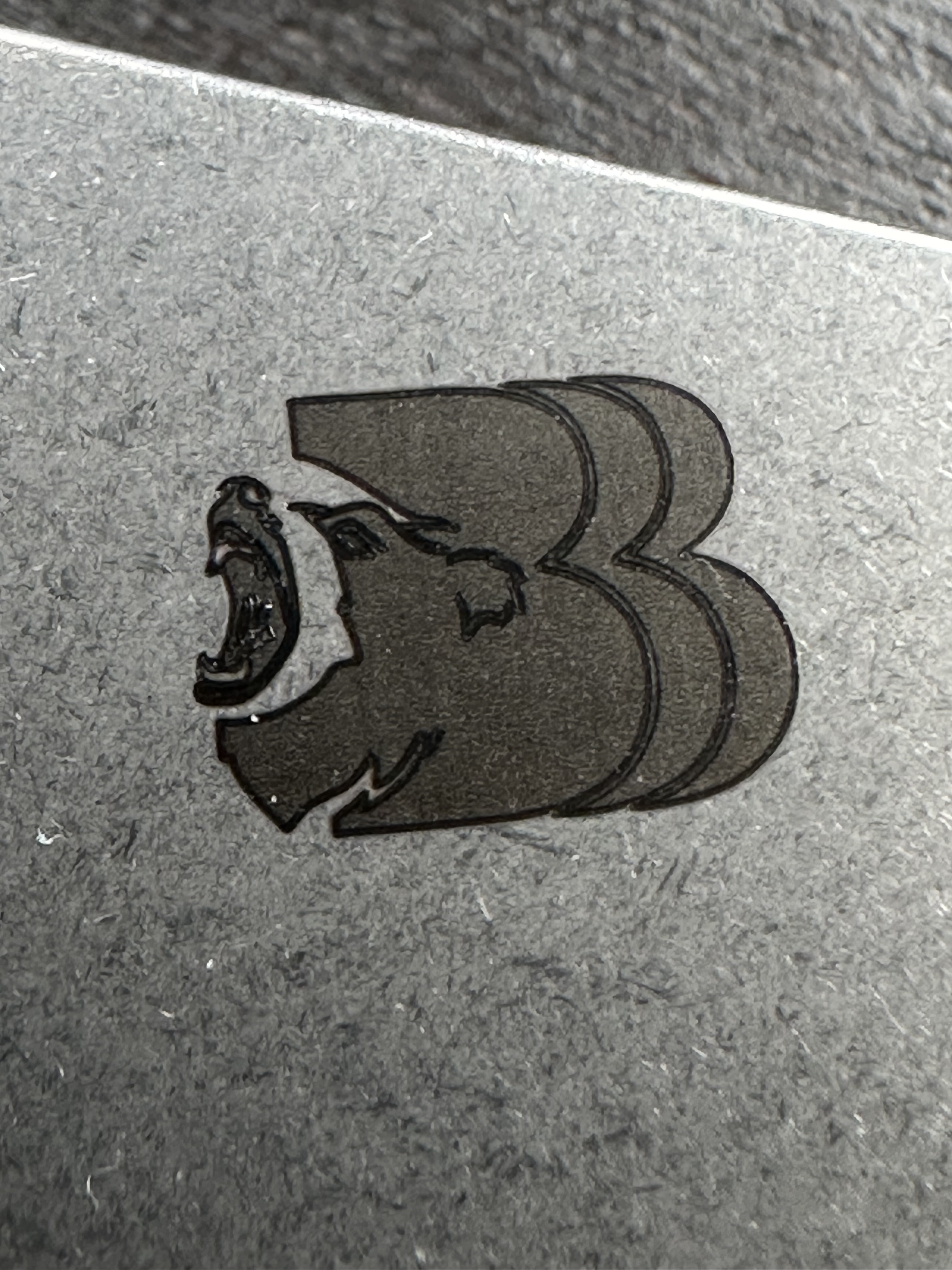
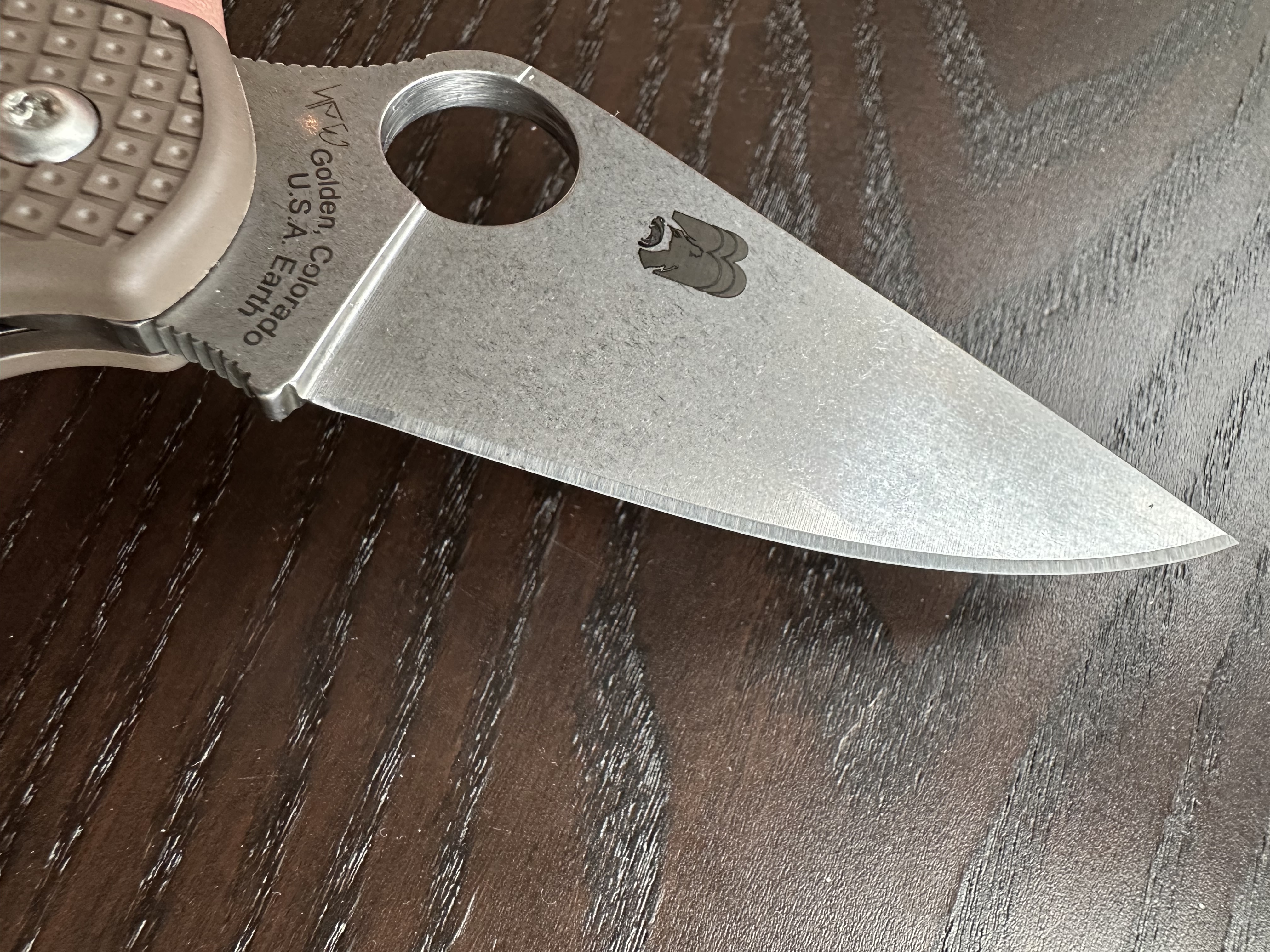
Like all its brothers and sisters it boast the BBB logo proving that the blade has followed Shawn Houston heat treatment.

In his excellent vidéo Shawn share his first impressions and also check the hardness of his Para3 and the result is 65.4 HRC ! Impressive !

Framed from his video: he performed five separate hardness tests just to be sure. It’s well known that Shawn Houston’s special heat treatment — refined over years and tested by renowned professionals — brings out the quintessence of CPM-15V, elevating its performance to exceptional levels.

“Well, most heat treatment protocols are for tooling, like the ones in datasheets — not really optimized for things like edge stability.”
— Shawn Houston, on his own heat treatment

In practical tests, Pete from the Cedric and Ada Gear and Outdoors was able to cut through a rope 2,000 times without compromising the edge.

The action on my new Para 3 is perfectly smooth. I notice a little lock sticking but this is not an issue in my book.


And smooth enough that nothing unscrews on it — the blade closes like glass, effortlessly and precisely.

My Para 3 arrived perfectly centered, but with some burrs on the scales.
(A burr is a raised edge or small piece of material that remains attached to a workpiece after a modification process.)

You can feel these tiny imperfections under your finger along the FRN edges.

I have “deburr” it with some diamonds rod. Nothing fancy but now the handle is fine. I don’t remember having that issue on my previous Para 3 review.

The edge is even.

I don’t see myself working on a convex edge on this one. Not for the moment.

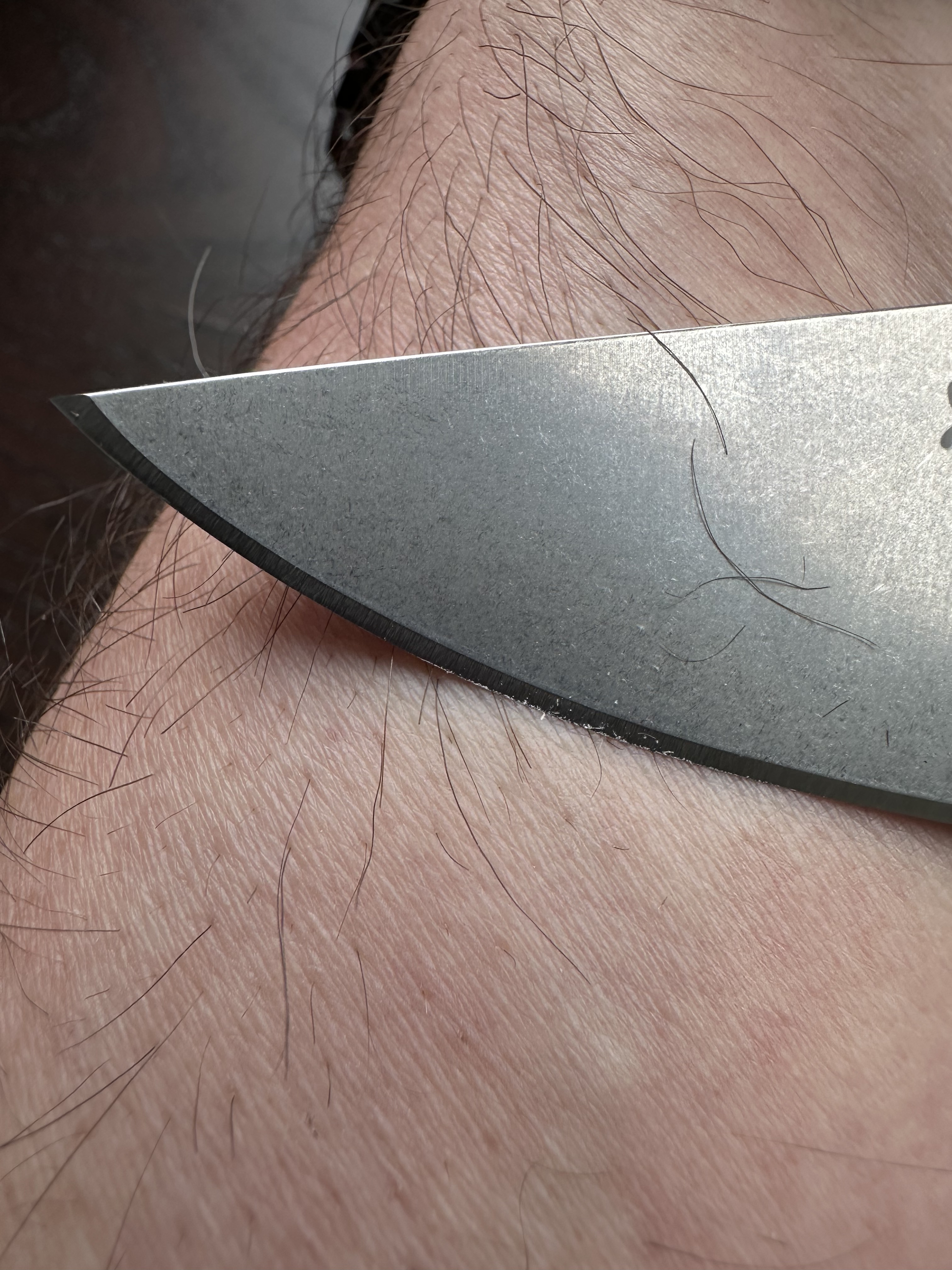
The sharpness is high and that blade is a hair popping sharp razor right out of the box.

I have already cut my self with its very pointy point. My Para 3 is baptized !

Now it is truly mind.

It is said that CPM-15V loves leather for a crispy edge.
(S90V or M398 for example don’t care about stropping…)

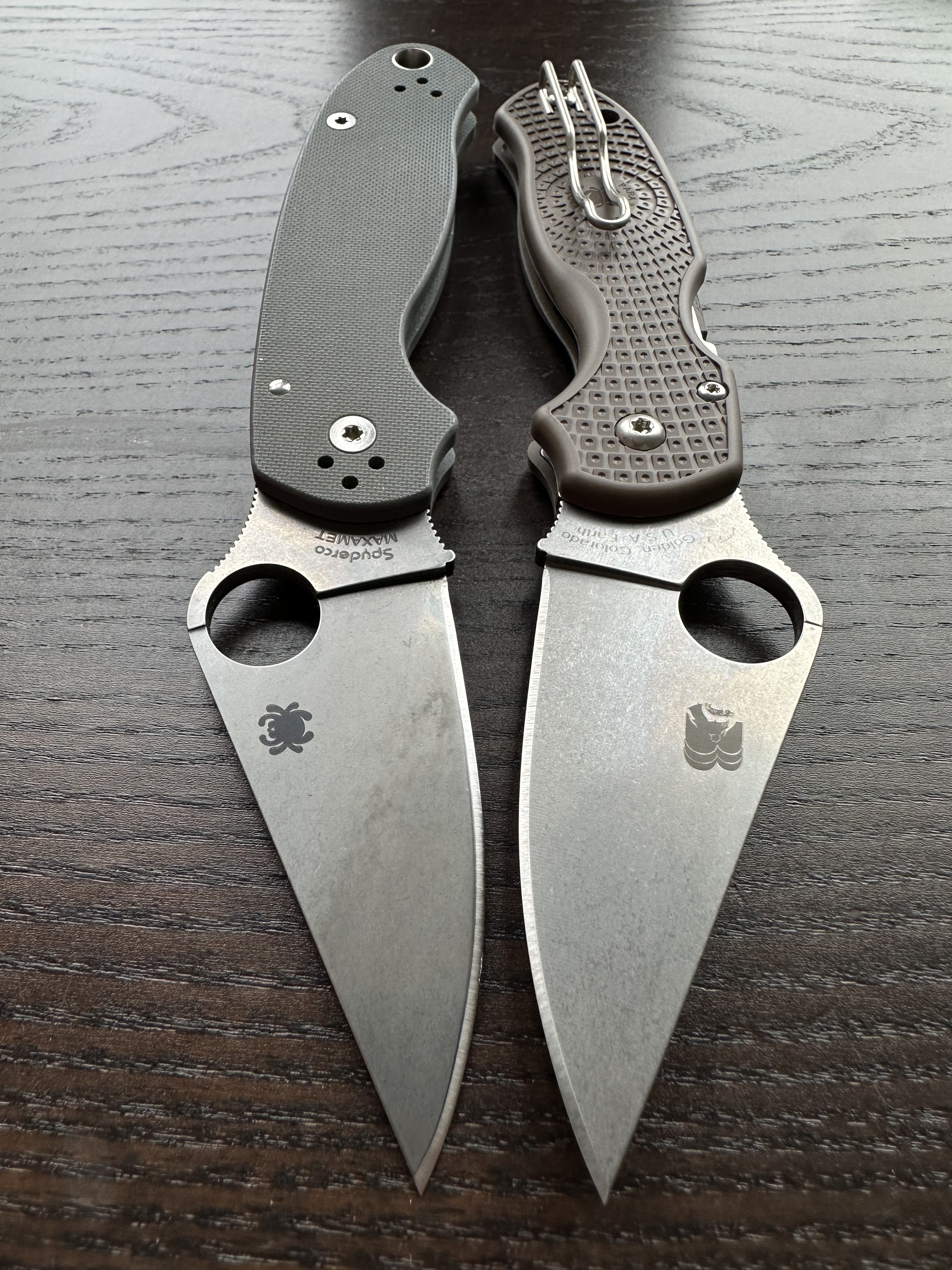
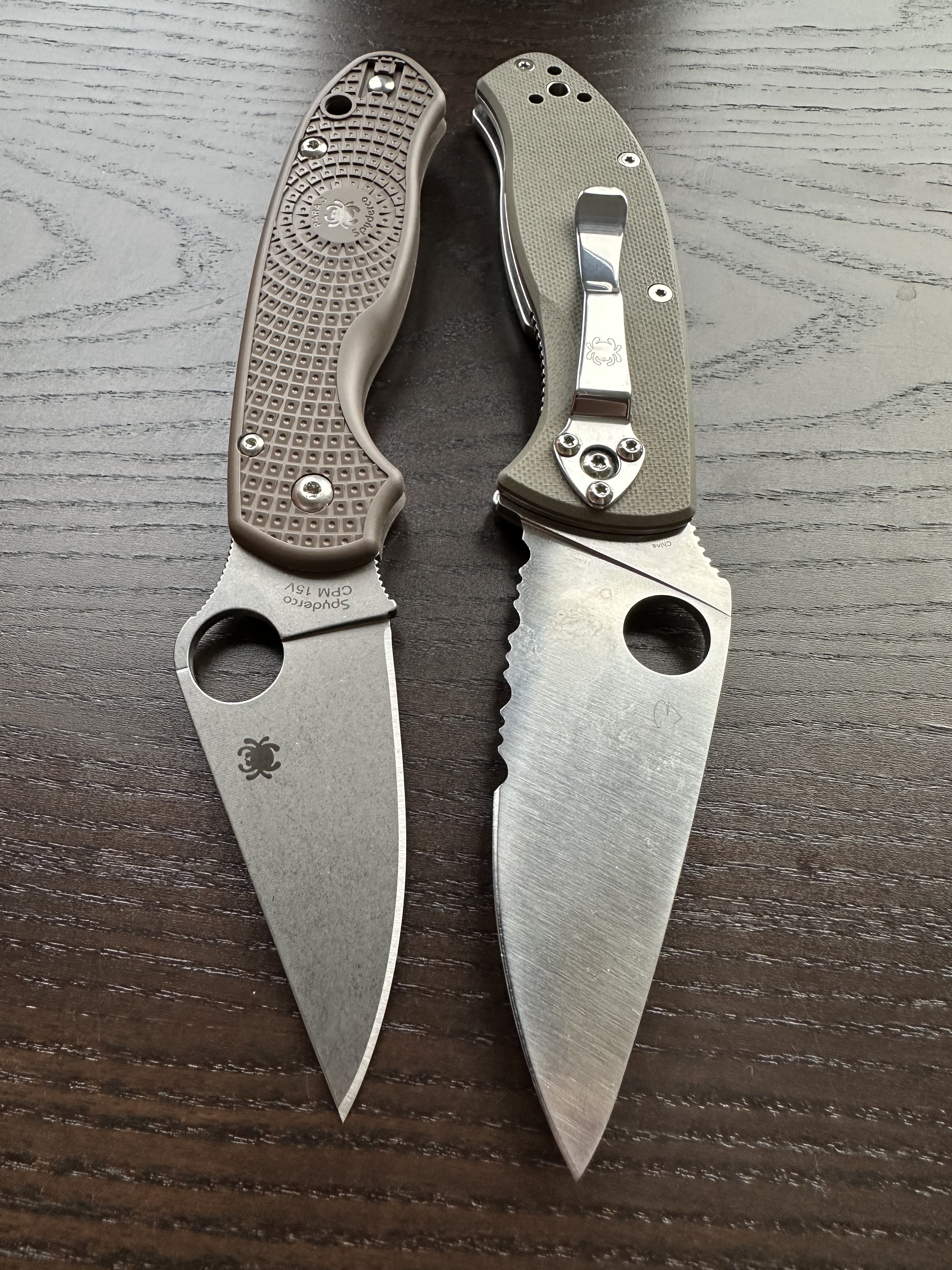
I’m curious how its 68 grams will compete with my Maxamet Para 3 G10 (98 grams) — sturdy yet smooth as velvet.

According to Spyderco:

“The term ‘lightweight,’ or the use of injection-molded handle components on a Spyderco folder, isn’t just about how the knife tips the scale. It’s about taking full advantage of the remarkable properties of FRN and FRCP, as well as our decades of experience as an industry leader in their use.”

So yes, this is a “light” saber.

The edge appears ground thinner than on the notoriously brittle Maxamet blade. Both blades receive special attention: the spine is smooth under the thumb, and the edges are expertly bevelled.

The chance to have such a steel on a lightweight folder would make it a great hunting knife like the Michael Walker ZDP-189 was in his days.
The game’s fur is very abbrasive. CPM-15V could be even stronger than ZDP189 on the joints, more permissive.

Ericasedc has made a video about that:

She seems really happy with her Para 3 since she has received it. You can see all the videos she has made on her channel about the Para 3 15V.

Anyway, going in the woods equipped with a Tenacious CPM M4 and a Para 3 in 15V would be a great combo nowadays.


Now that I can carry the mighty CPM-15V steel in my pocket, I’m eager to test its performance over the long run. Stay tuned for updates on this page or in another chapter.

Having a featherweight folder equipped with such a formidable blade and steel is uncanny — it packs remarkable power in a pocket-sized package. I still remember fitting the Maxamet blade on my red FRN Para 3 just to experience that sensation of a powerful engine on a lightweight platform.

This Para 3 Sprint Run is already a triumph, offering the chance to experience a remarkable steel crafted by passionate knifeaholics.

As mentioned, I have no intention of convexing the edge for now — I’m trusting Shawn’s expertise. Unlike AEB-L, which can be thinned while remaining strong, CPM-15V is packed with carbides, so I’ll stick with the angle specified by Spyderco and Shawn, which is already thinner than Maxamet.

But now, the real fun begins: testing!
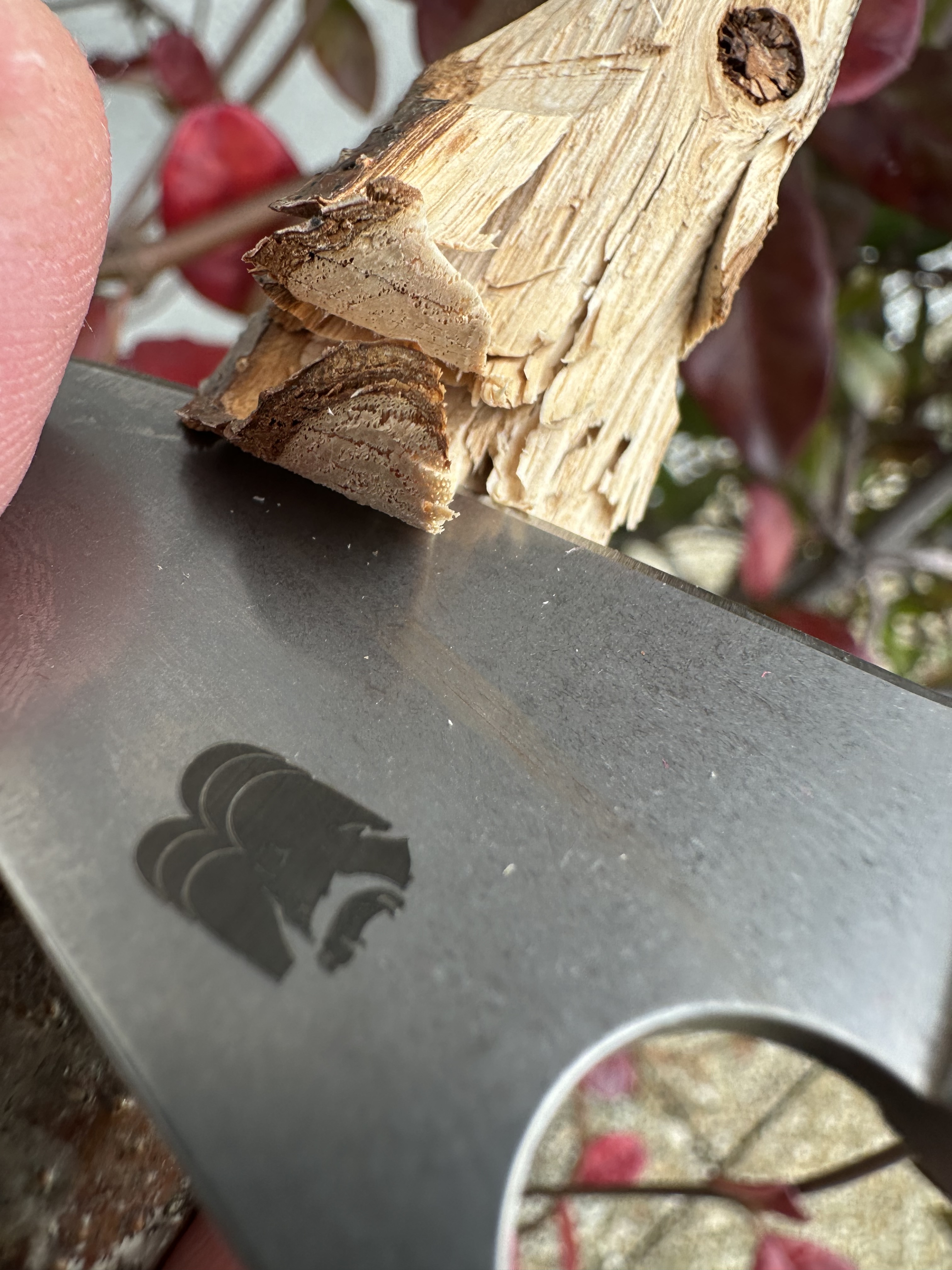
Spoiler: the combination of geometry and steel makes it an excellent whittler — the blade cuts deep, and the wood feels incredibly smooth under the cut.


Final word of this review are from Shawn Houston who was quoting and answering to Todd from Scienceofsharp.com about 15V (as Todd’s goal is to increase our understanding of the role of carbides in cutting performance and how different sharpening techniques “interact” with the carbide):
““tremendous pleasure in using an extremely sharp knife or tool (and satisfaction when you have sharpened it yourself). Even though it is often a fleeting experience”
That’s the “idée fixe” of it all.
The little smile and feeling of elation when the edge lasers through material with zero effort.
The stones, geometries, steels, heat treatments and the techniques.
Chasing those fleeting moments of joy with high performance and riding the line between madness and clarity in trying to understand at the most intricate levels how it all really works.
An insatiable quest.

The Edge is a Ghost. Always changing. Dying (dulling) being reborn (sharpened) split personality (angles and geometry changing).

Think of the edge as gas in a vehicle. It runs out of gas and you put in more gas. We provide the format, materials, design for use, variety to avoid boredom and create interest, but the edge is your creation. The result of your understanding, education, experience and practice.”

Sal

CPM 15V is a very difficult steel to manufacturer, so it may not always be available in the future.
Crucible Industries LLC went to great lengths to produce the steel, it puts a great amount of wear and tear on the ceramic refractory designed to hold the super heated liquid steel during melting. This is necessary to dissolve the vanadium carbides to the very fine sizes that we see in the finished product.
It’s quite a marvel that’s not often appreciated.
15V is basically the commercial limit for how much carbon and vandium they can get in a steel for production sizes batches.
The benefits of this to the end user combined with excellent heat treatment is a enjoyable, lasting cutting experience that also touches up at the edge nicely with proper abrasives and sharpening experience.”

Shawn Houston on Spyderco Forums

SPYDERCO SPRIG FB37GGR — Phil Wilson Bird & Trout Companion.

20171121_100407-01539792713.jpeg

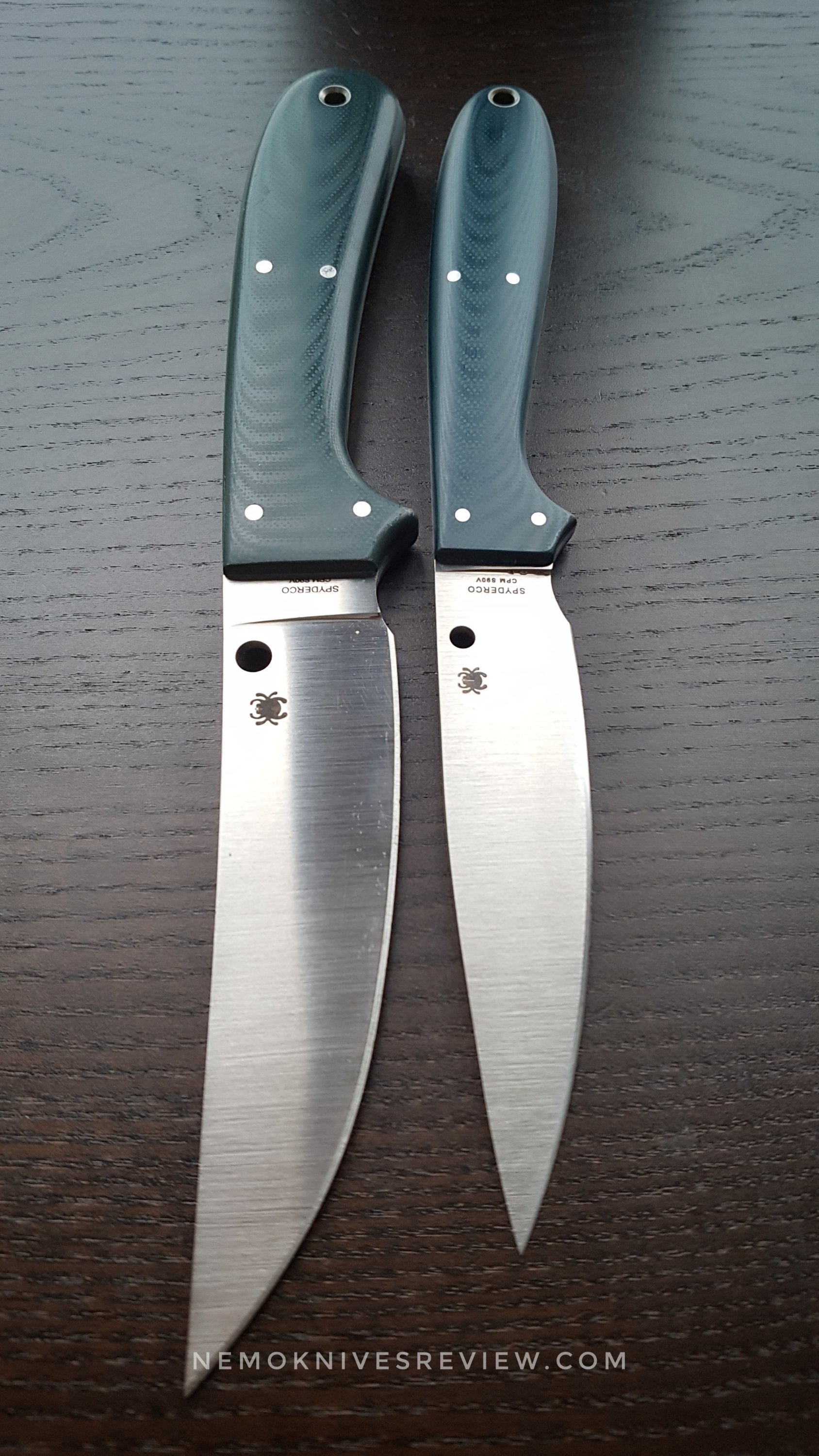
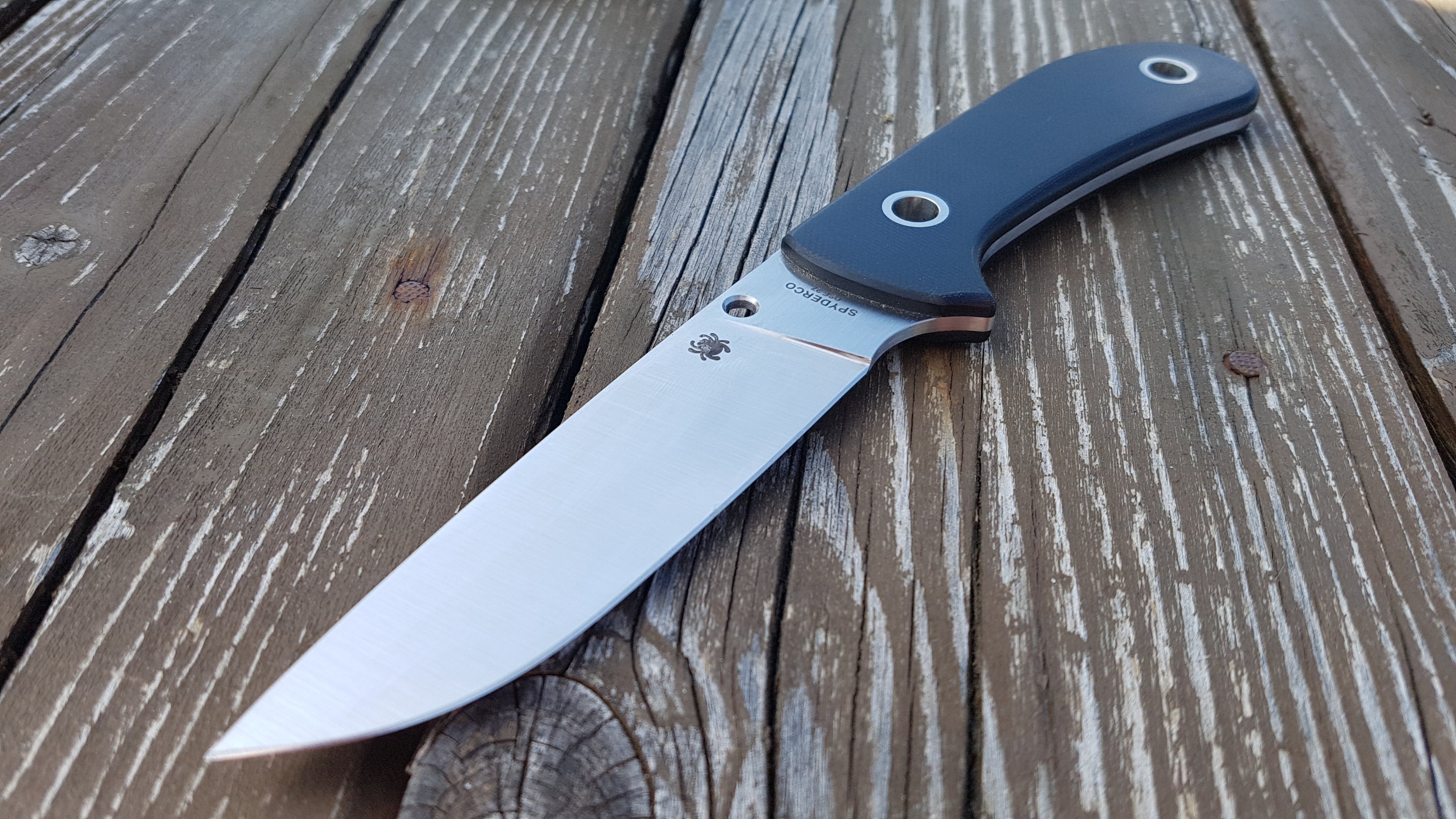
Bird & Trout knives are small thin fixed blades, lightweight sharp knives able to process a bird or a trout. Those knives got of course no chopping purposes and no bushcrafting purposes but we have found the Sprig by Phil Wilson to be a reliable wood companion.

I already knew Phil Wilson as a knifemaker and clever metallurigist for his writing on CPM420V (S90V) back in 90’s. He was the first to provide fillet knives for people who process salmons all day and was measuring the edge retention of this new powder steel back in the past century.  His results were outstanding: the S90V steel was able to process much more fish than the normal stainless steel used on that time (440C ?). He was also able to heat treat them to 60HRC and higher. Bringing the powder steel edge to uncharted territories long before people were spoiled with S30V and S110V and Elmax…
When Phil Wilson did edge holding test, lower Rockwell numbers yielded much poorer edge holding in real world use. High hardness prevents rolling and blunting of the edge, a major cause of loss of sharpness, even though the steel has very high abrasion resistance. His blades do have very high soak temps, oil quenched followed by deep cryo in liquid nitrogen but he did not have any problems with chipping as he considers the use for his S90V knives to be only for slicing.  (source Bladeforums).

To quote him:
“Edge holding will be proportional to hardness to a large degree. Experience with CPM 10V, S90V, and 3V showed me that, with a particle-based steel, the hardness can be pushed a little higher up the Rockwell scale and still retain enough toughness to prevent edge chipping. (CPM S60V is the exception; it has it’s best qualities at about Rc56.) This is because the particle-metallurgy-based steels have a very fine grain structure.”

20171121_100415-011815640864.jpeg

Let’s quote Phil Wilson about knife making and steel testing to understand the way he design knives, this is from an article he wrote in 2002 about the coming of S30V then new to all 15 years ago:
” I chose to make a fillet knife because, in my opinion, it has the hardest work life of any knife. Use around salt water will reveal a fillet blades ability to resist corrosion in a short time. Edge holding is tested quickly when cutting through scales and bones and working against an abrasive cutting board. A fillet knife must have a thin, flexible blade to ride over the rib bones during the fillet cut. A brittle steel will soon chip out or break under such use. A fillet knife also makes a very handy kitchen blade. It’s a natural for boning a chicken breast, slicing prime rib, or filleting out a grapefruit. Kitchen knives are left wet on the counter and bounced around in a drawer with other utensils, which is another pretty severe test for a new steel.

In addition to the fillet knife, I made a simple slab-handle semi skinner with the new S30V, and two other [nearly identical] knives from CPM S90V and 3V. This effort would give me a fresh comparison on the heat treating, grinding and finishing of all three steels. It would allow me to do some cutting and edge-holding tests against the new grade. Does the new S30V meet the challenges? The answer is yes, and I’m willing to bet that it will be the favorite steel of many knifemakers in a short time.”

— August issue of Blade Magazine in 2002 —

So as you can see Phil Wilson knows his craft and was testing those new particle-metallurgy-based steels to their limits. No surprise Jim Ankerson and Sal Glesser are huge fans of Wilson’s knives.

20171121_100509-01514419659.jpeg

The Sprig is not the first Spyderco edition of Wilson knives. The South Fork FB30GB was the first. This design combines very high cutting ability, point penetration and grip ergonomics into a very high performance working knife, to quote Cliff Stamps test of the custom original version. Strangely I was never able to bound with the South Fork when with the Sprig it was love at first cut !!

20171121_100715-011362243192.jpeg

First thing was the handle. The rounded Sprig handle is much more confortable in my hand when the South Fork feels more square.  The Sprig is nested in my palm very very confortably and I can cut i wood for long time without any hotspots noticed. It’s important for a fixed blade. With folders there is often some kind of compromised due to the folding of the blade into the handle, but for fixed blade the confort during cutting needs to be optimum hence the Mora’s handles compared to any thick edged squeleton tactical gadgets.

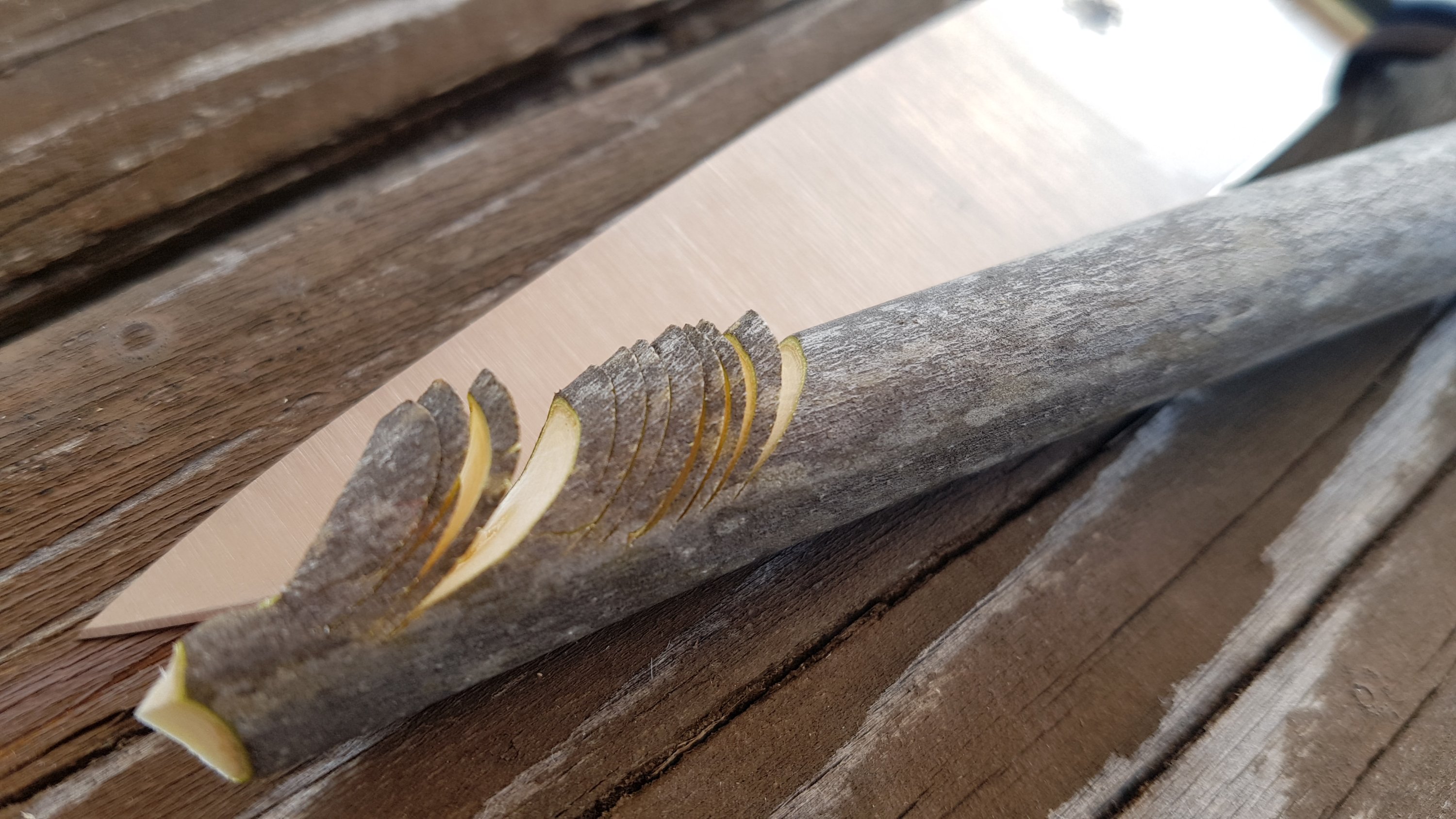
The Sprig is great on wood, even with its factory edge. It is ground thin in Taichung and is able to get to work right out of the box. The belly also helps a lot to push cut fibers acting like a guillotine edge. So really this knife can be used for bushcrafting purposes which are not implemented hard drilling in wood or batoning. The thin point is wonderfully handy and not made for snuff Russian tests.

20170923_122125-02970291423.jpeg

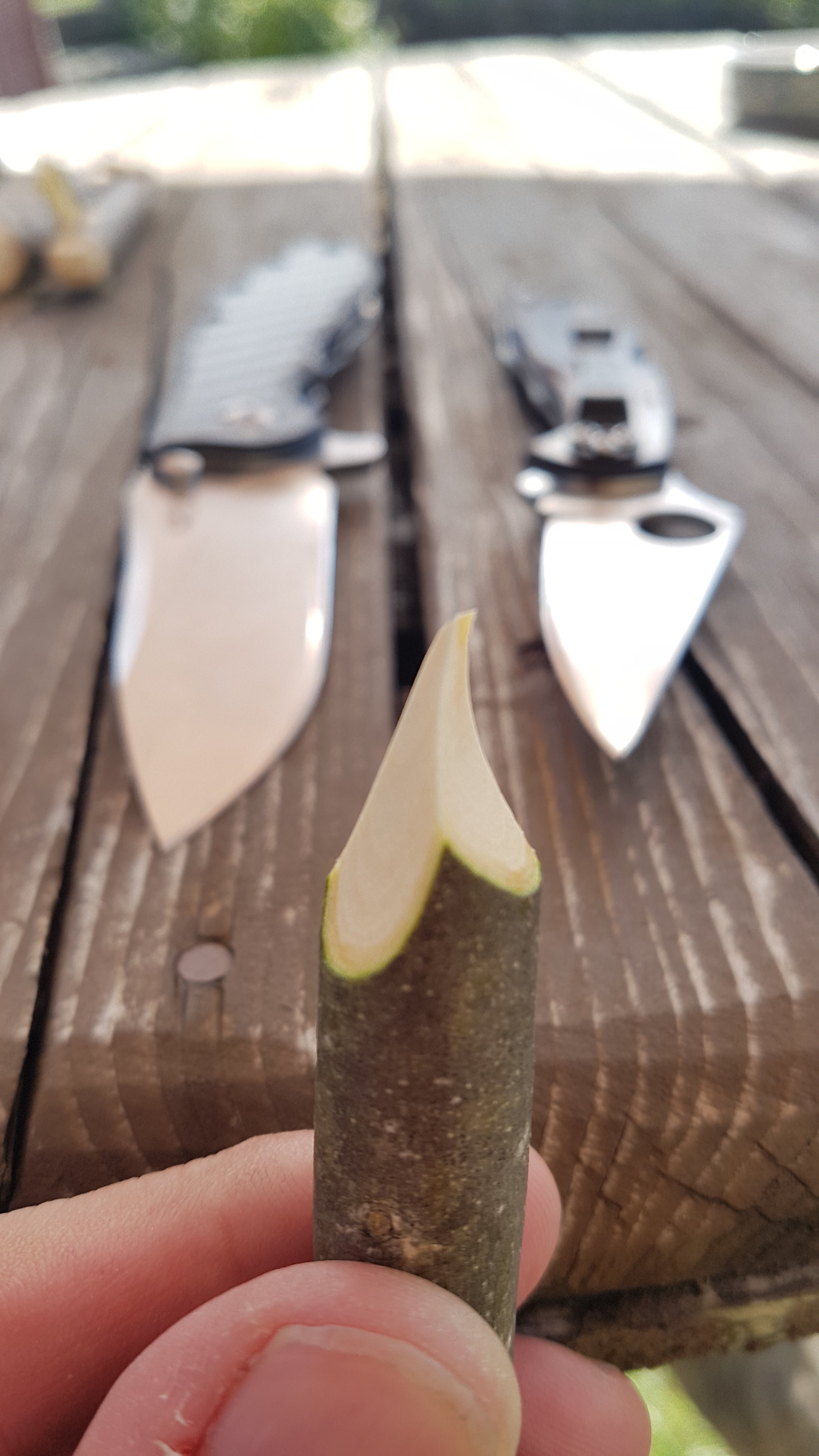
But for cutting wood and whittling the Sprig is even better than the South Fork or the Gayle Bradley Bowie and Junction, because its edge is so thinly ground.

20170923_123440-011828196874.jpeg

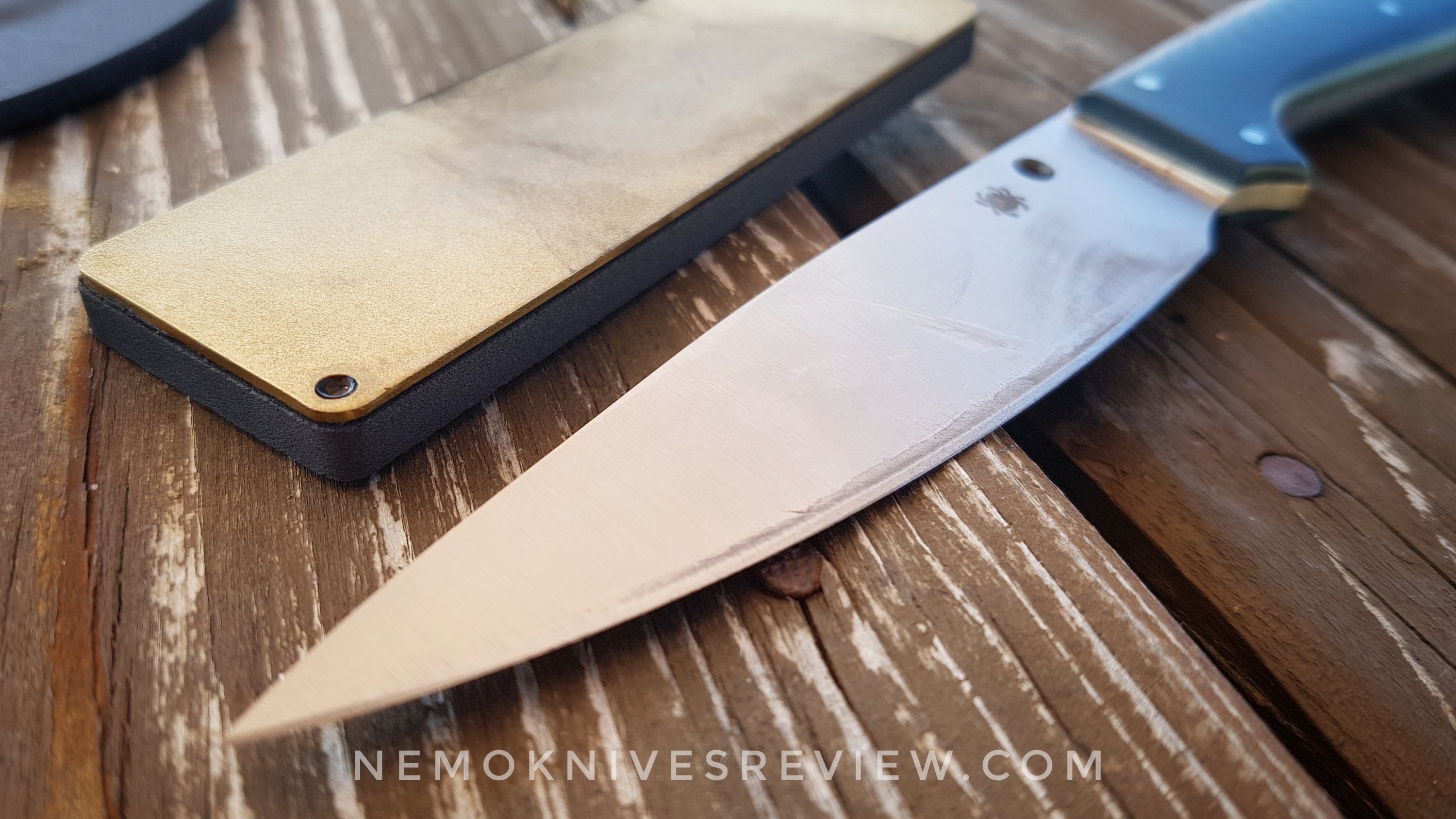
I had used some diamonds on it but it was not really necessary really. Just a compulsive attitude of mine when I got too much time on my hands… S90V is a legendary steel. I already quote Phil Wilson’s articles in my Paramillie 2 review.

“Crucible Materials Corp has introduced three winning steels in the past 10 years: CPM S90V, CPM 3V, and now CPM S30V. CPM 3V is still the undisputed toughness champ, even surpassing some carbon steels such as A-2. Originally known as CPM420V, S90V was introduced as an upgrade for S60V (originally called CPM 440V), and met all the targets of improved corrosion resistance and toughness. It has the reputation of being hard on heat-treating equipment and is a bear to finish, but is still the best edge-holding stainless steel going.”

20170923_122414-02137667105.jpeg

Easy to carry in my denim pockets with its kydex sheath, the Sprig is not really bigger than the Sliverax. The sheath is well made and flat enough to be packed in any Go-Hunting bag. So it’s very easy to bring him along for a walk in the forest or near the sea as S90V is very stainless.

I was really surprised by the cutting abilities of the Sprig. It really caught me by surprise.
The drop point design is useful even in the kitchen , so the Sprig will suit hunters as much as cooks and also it will take a very serious place in any expeditions needing a reliable cutting tool which you won’t need to sharpen every hours.

20171121_100547-01602839848.jpeg

You can find a lot to read and learn in Phil Wilson’s site here:
http://www.seamountknifeworks.com/articles.htm

Spyderco C22 in ZDP189 — Amazing After Six Years Hunting in Tuscany !

Six years ago, my friend Valter Nencetti took my Walker for a one year mission which turned into a six years journey. It was his favorite knife for hunting and he reported that to me in this article:  https://nemoknivesreview.com/2012/12/30/spyderco-c22-in-zdp189-italian-hunter-update-by-valter-nencetti/

This year, he has given it back to me after I had offered him my Native 5 in 110V which is IMHO an upgrade for Hare Hunting. The Backlock of a Native 5 is a perfect lock for that kind of use, but you can notice the Walker lock as not travel very far. The curved concave notch prevents it to go further.
There is absolutly no play !

For the record skinning hares is not an easy task for an edge as the hairs and the skin are ruining the sharpness very fast. There is a lot of dirt which acts as abbrasive. I have made a video and soon will put it on line.

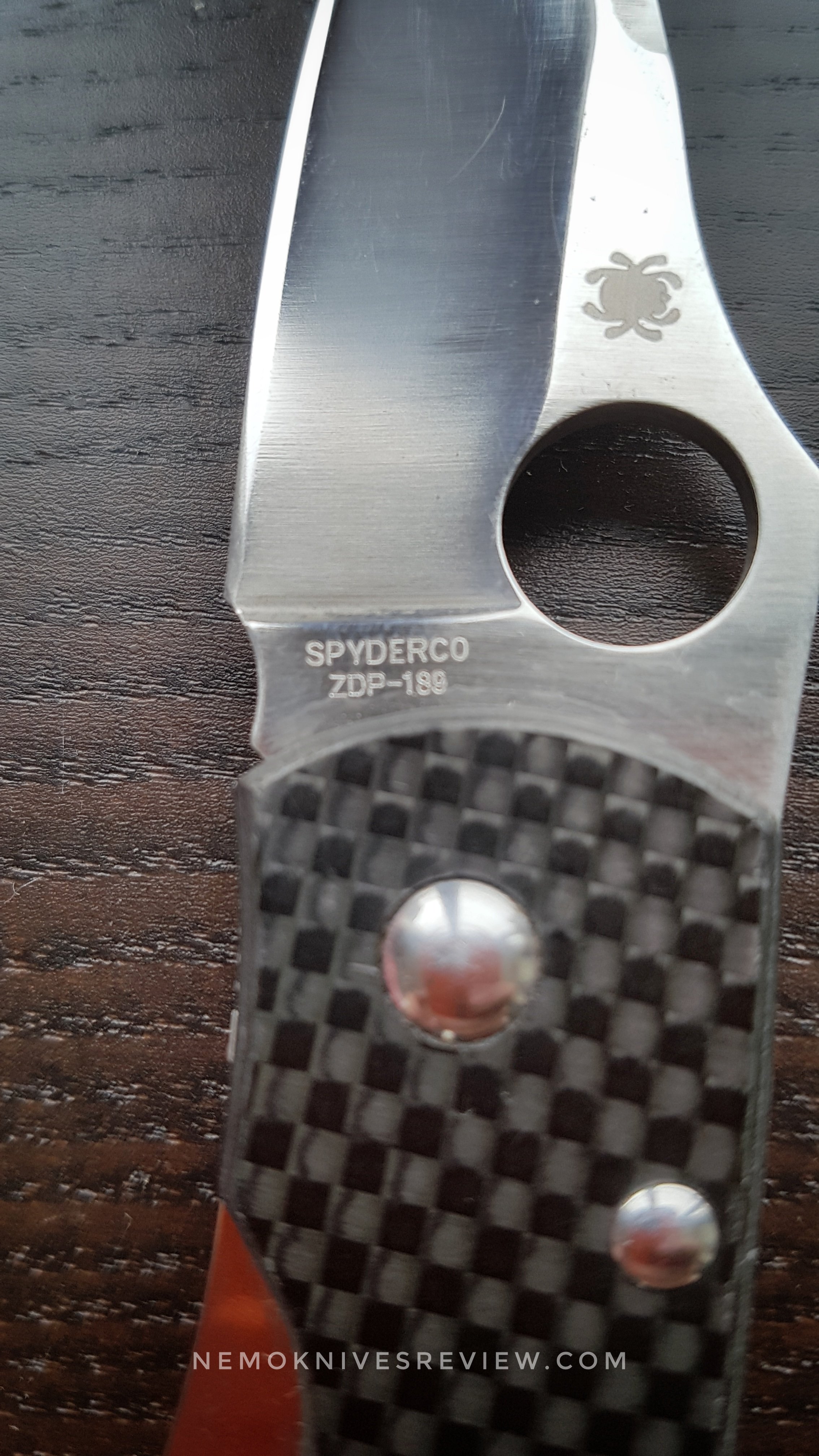
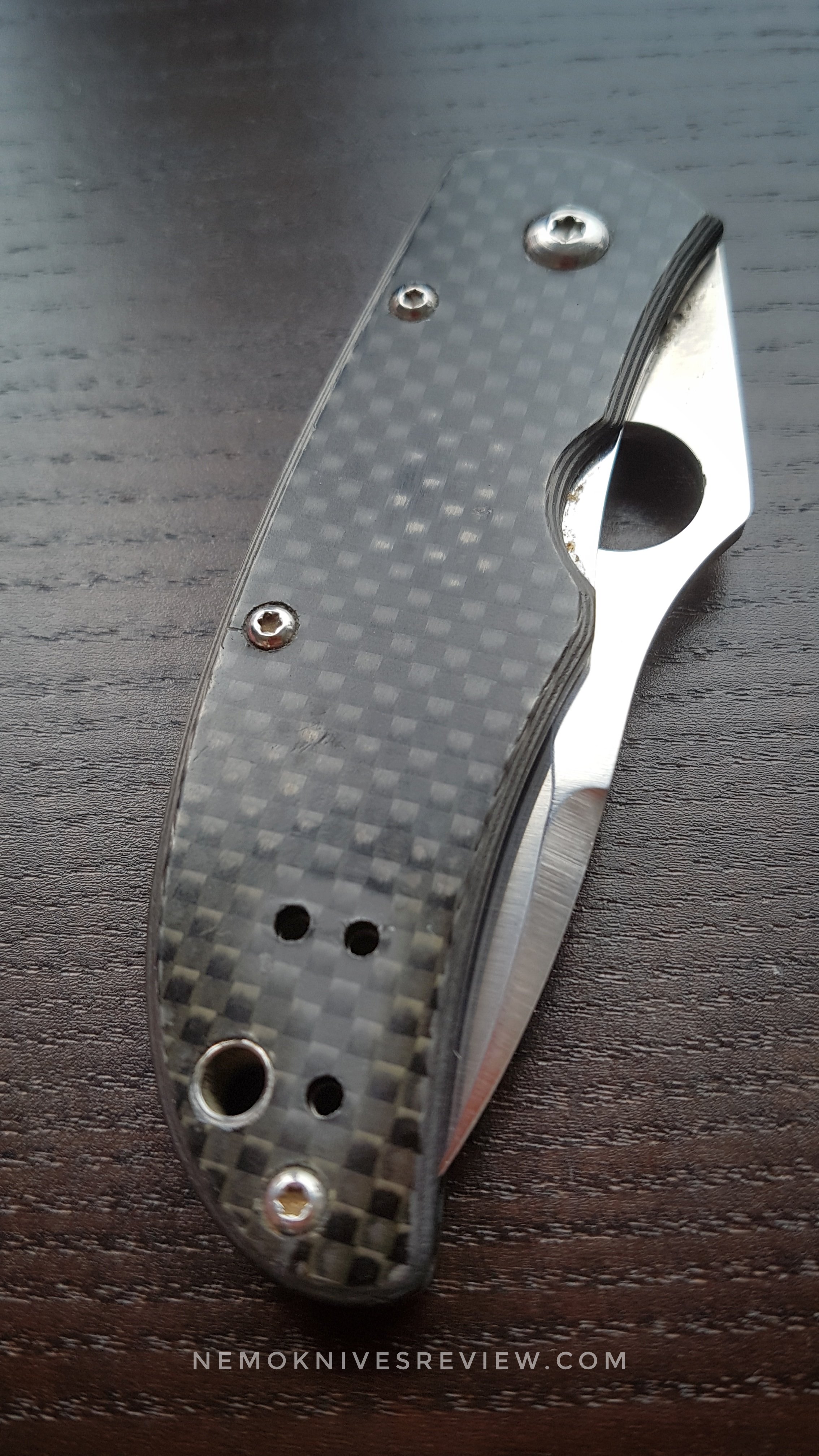
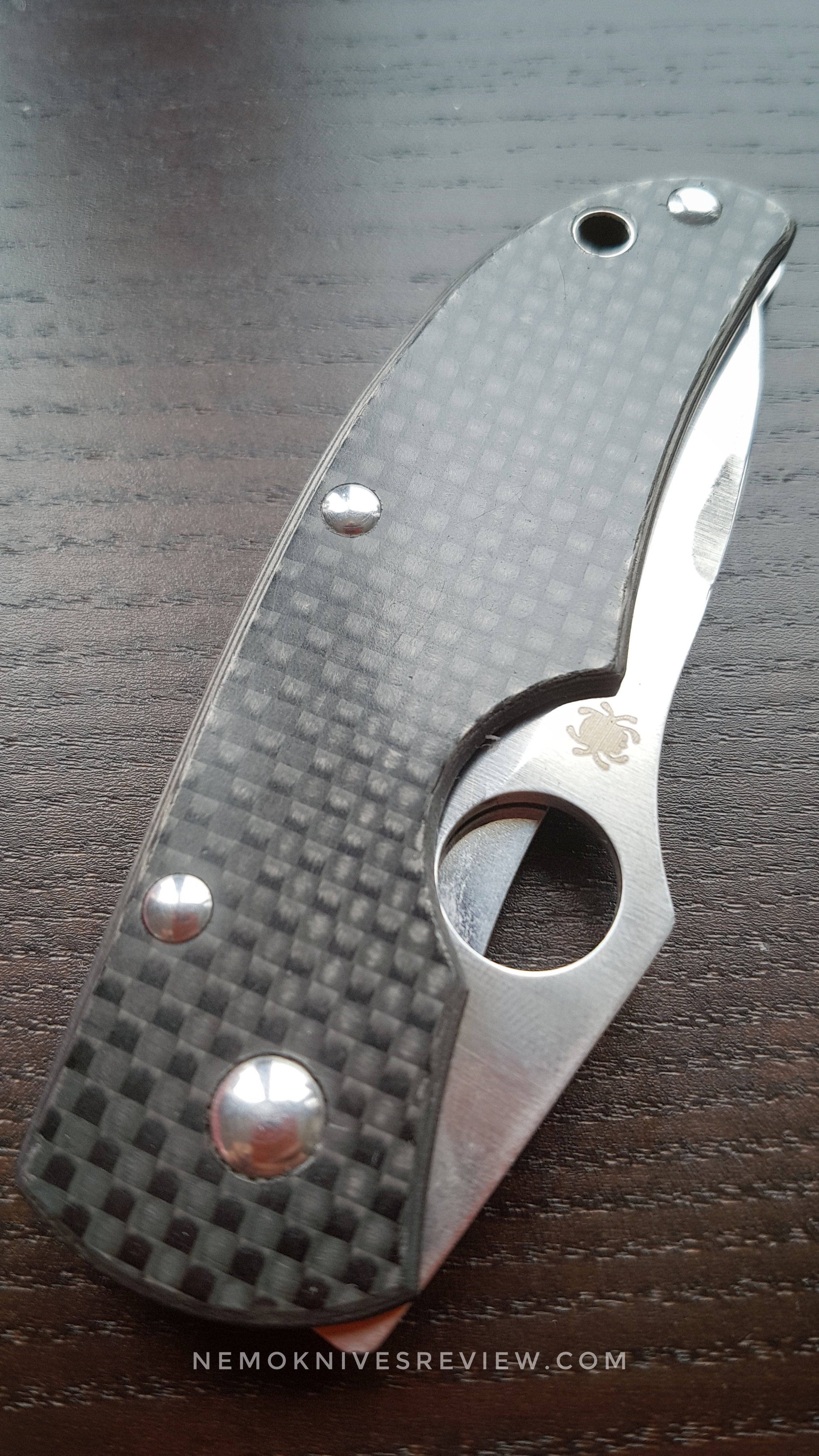
Being used everyday, Valter eventually broke the clip which is a very fragile part of the walker compared to spoon clips used noawadays in spyderco line. You can also see it was not clean everyday and used as an EDC in the countryside of his beloved national Park in the North of Florence in Italy.

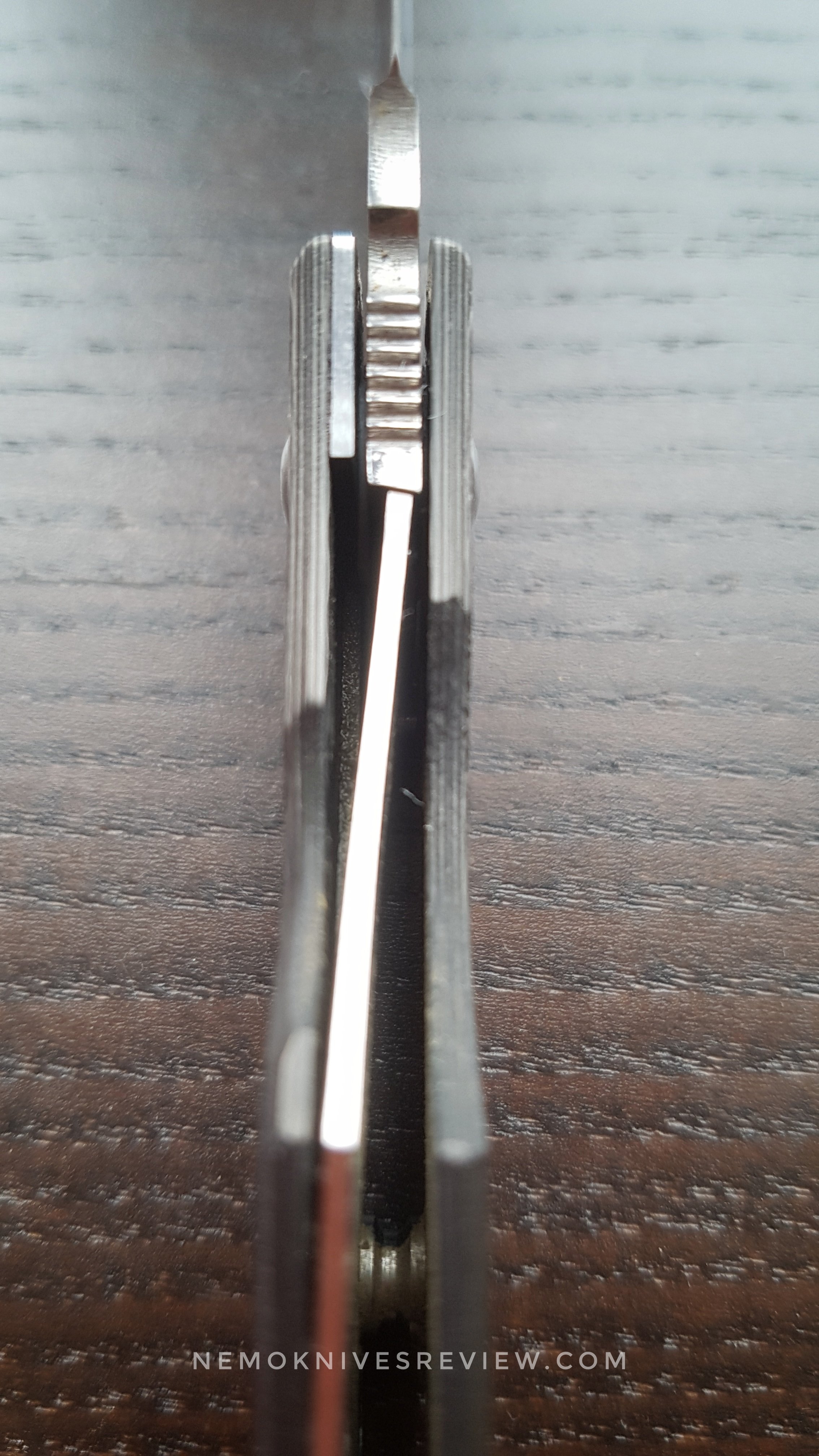
You notice the normal wear on the handle but Carbon fibers is incredibly sturdy as an slob material. It can be easily cure with some 1000 sandpaper work.

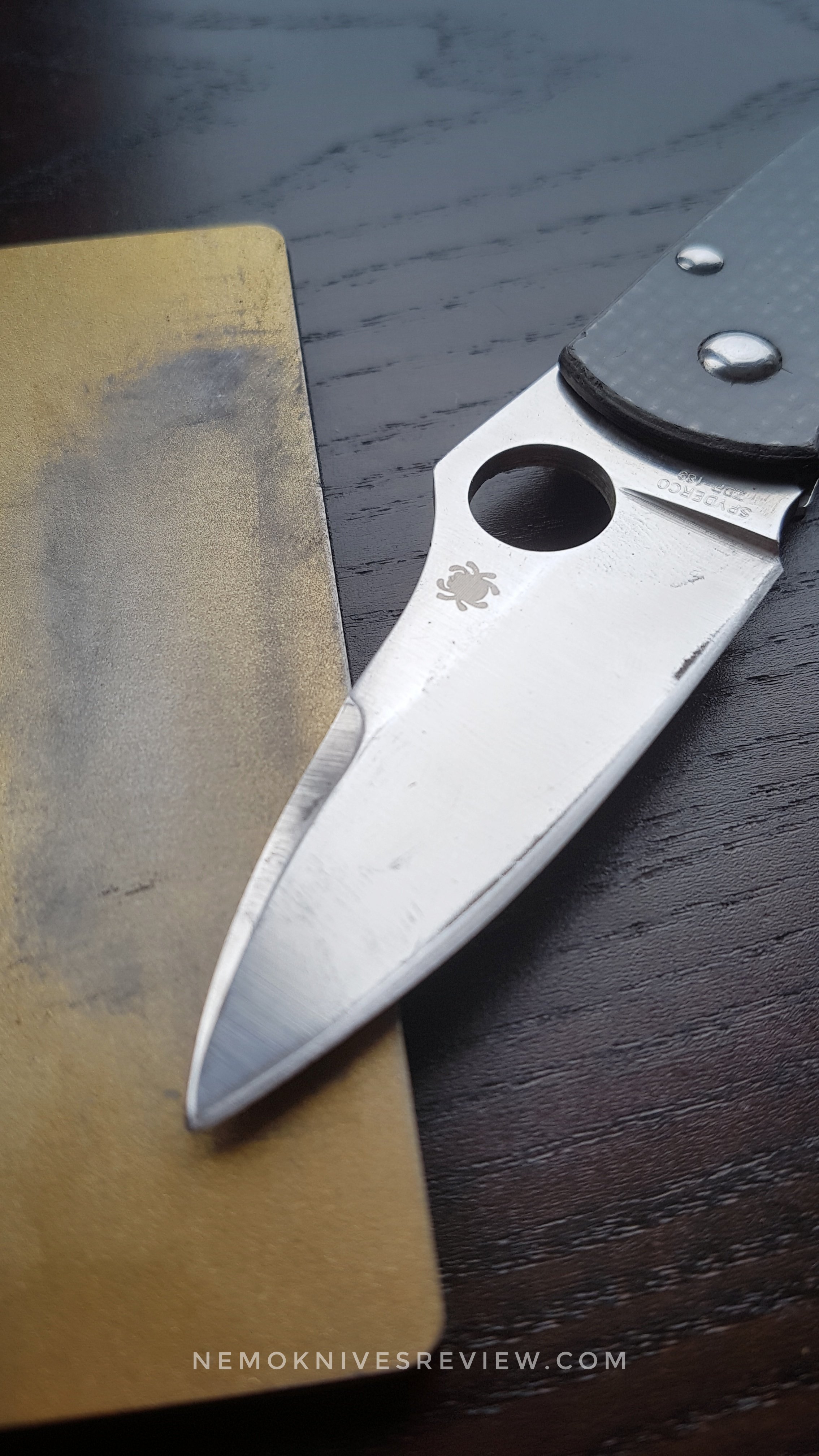
There were also no pitting on the blade or on the liner lock. ZDP189 is known for pitting strangely with its 3% of carbon and 20% of chromium. But here anyway, no issues.

I have started to clean the marks on the blade with some sandpaper.

Then I have restored the edge to razor.

No chipping.
No pitting.
No blade play.
No marks on the handle.
A broken clip.

Valter used his knife with no afterthoughts. I know it was not used on wood but mainly as a skinning tool. It has processed hares but also been used on boars and deers. Also it was used on plastic and everyday mondane tasks as Walter is breeding hunting dogs.

That’s not bad for a little gentleman knife which is a true workhorse.

Tuscan Raider #6 — Ed Schempp Bowie at his best, in the plates !

It’s not a surprise but Ed Schempp Bowie is not only a knife to keep in a safe for collection.
I have been taking a lot of knives in Tuscany. Fixed blades to test in the wood of the national parks and some folders. But eventually the Bowie has taken an important place in my trip.
Why ?
First it’s a gorgeous knife which create a lot of conversation.
Also it’s so easy to pocket. This is a huge plus for this EDC: it’s stay in your pocket like a much shorter folder. It’s easy to grab it and to take it. It’s always with you.
I have thinned the edge to the level of my Delica and the result on whittling wood are really outstanding.

It was easy to keep clean and classy. Meaning it can be used in the farm and in the city.

But it’s in the plate and in the kitchen that the Bowie was able to shine bright.

On the table, the Bowie takes its place with pride.

And the Kukri’s curve (Ed Schempp Signature) helps a lot when cutting in the plate.
At the opposite of my ZT0562CF with its flipper getting in the way…

The beef meat cookes at the flame is zipped open by the convexed edge.

The Tuscanian crostini are made of liver are gently spread on bread.

The trip back home leaded us through the Alps and the Opinel birth place.

Spritz, beer, hams and cheeses. The bowie was easy to open and close without to be noticed.


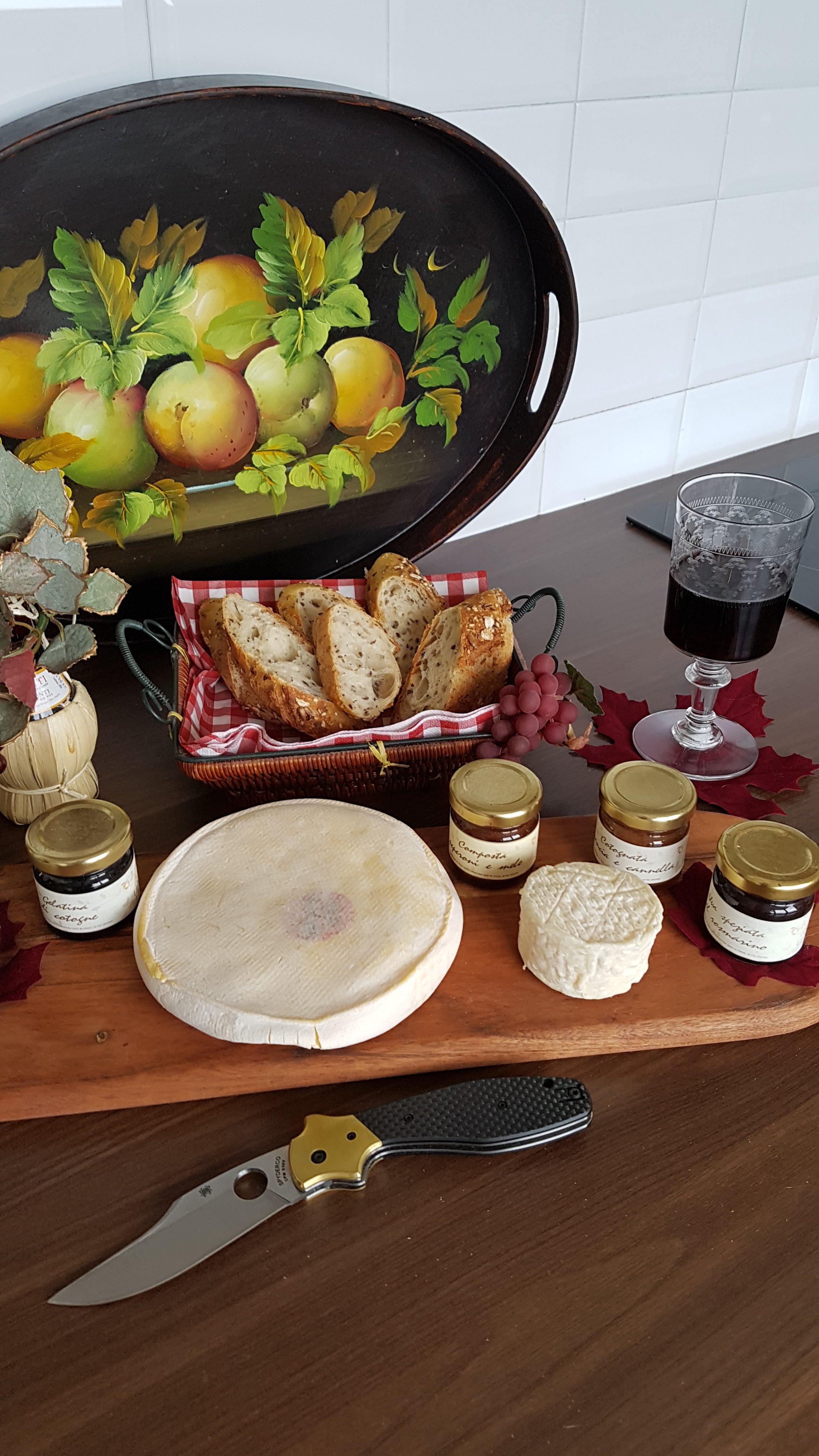
The roblochon is a cheese which needs a long blade.

Eventually the Bowie excellence can be expressed in the woods and in the plate. This is not the case of all folding knives. Ed Schempp’s EDC does it with elegance and efficiency.
So no, really it’s not a safe queen this is a knife to be used every day with pride.


Tuscan Raiders #4 – Geometries, Gayle Spyderco Gayle Bradley Junction and whittling.

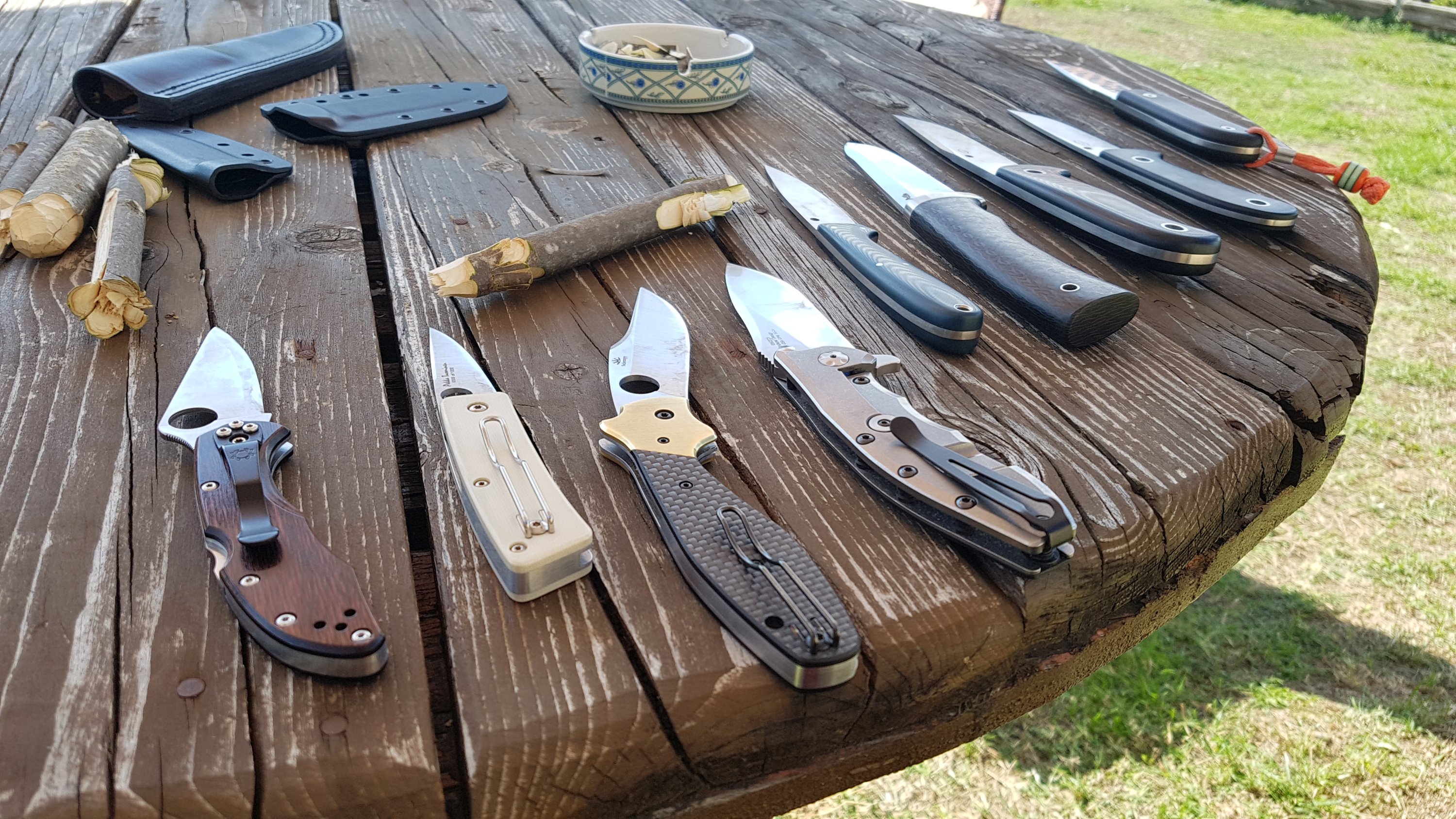
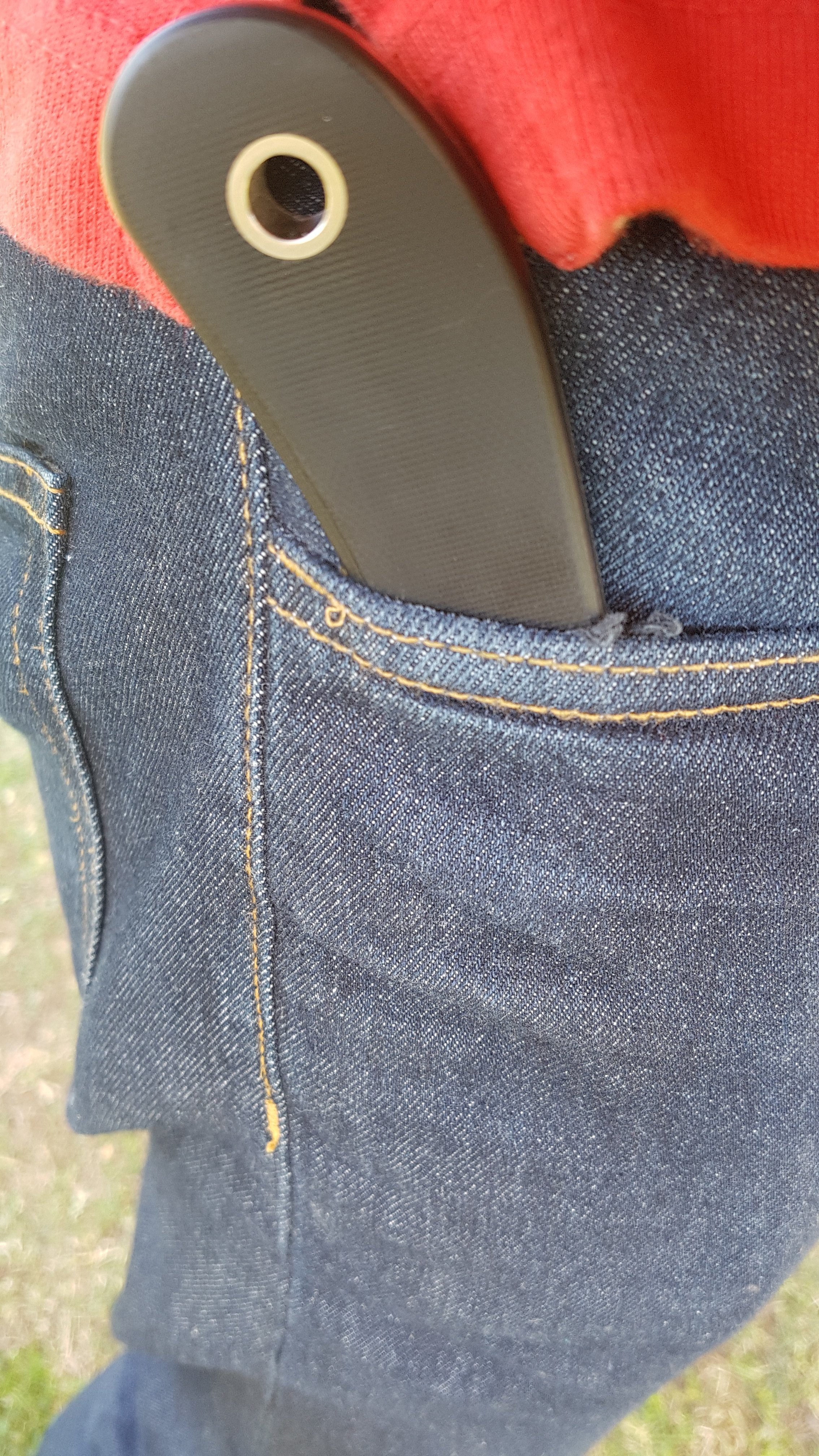
It has all started when I wanted to review the Spyderco Gayle Bradley Junction. It’s a great design for an EDC fixed blade which can be used for everything. Easy to carry in its pancake constructed bolteron sheath. But the edge was just too thick for my own use. To my knowledge, SPF27 is some kind of CPM D2 steel. A lot of carbon 1.5% and not a lot of chromium around 12%. Not the easiest on the stone as a semi stainless. It was not very soft under the diamonds compared to another blade in N690 HRC59 I got with me. And it was not really easy to remove the shoulder to create a gentle convex edge. Patience… In sharpening is important. And I often lack of it but I was able to improve it. Next some black stone mostly to remove the scratches. And then the white ceramic to get a better finish and a razor steel. You can notice the chamfered signature hole on the Junction. A première. The cuts were deeper. It was better! Much more enjoyable. But the spine was too sharp for my thumb and diamonds came handy to rounded the angles. It would never be a Sebenza spine…. Again the control during whittling was much much better. One should never be scared to round the edges for suiting your own needs. The handle is very flat on that knife. It’s an attention for people who wish to stash their knife in a pocket or a backpack without leaving a print. But a flat knife is not the most comfortable in the palm of your hand… Especially when cutting hard things for a long time. I decided to make a quick comparison with the Spyderco Sprig which is a pleasure to use. You can notice how the Phil Wilson’s Sprig got a thicker handle. And it change everything when cutting hard things. Also Phil Wilson’s is all about performances. Its geometry is stellar. It immediately cuts deep in wood without any real improvement needed…. But diamonds were there to be usef. 🙂 I was able to get thin regular cuts into the wood. So I have decided to try the diamonds on the Gayle Bradley Bowie I have brought with me. This one got a thicker geometry and is made if the same pulverized alloy as the Junction You can always improve an edge. Used as a light chopper it worked just fine. Gayle Bradley has provided a great compact Bowie which can be used as a light camp knife. You can see: it’s not a lot bigger compared to my Ed Chempp Bowie. And the edge once thinned is honorable. Of course it is not as thin as my Pekka Tuominen Urban II for example. And not as aggressive as the Sprig… I got…. too much knives on my table…
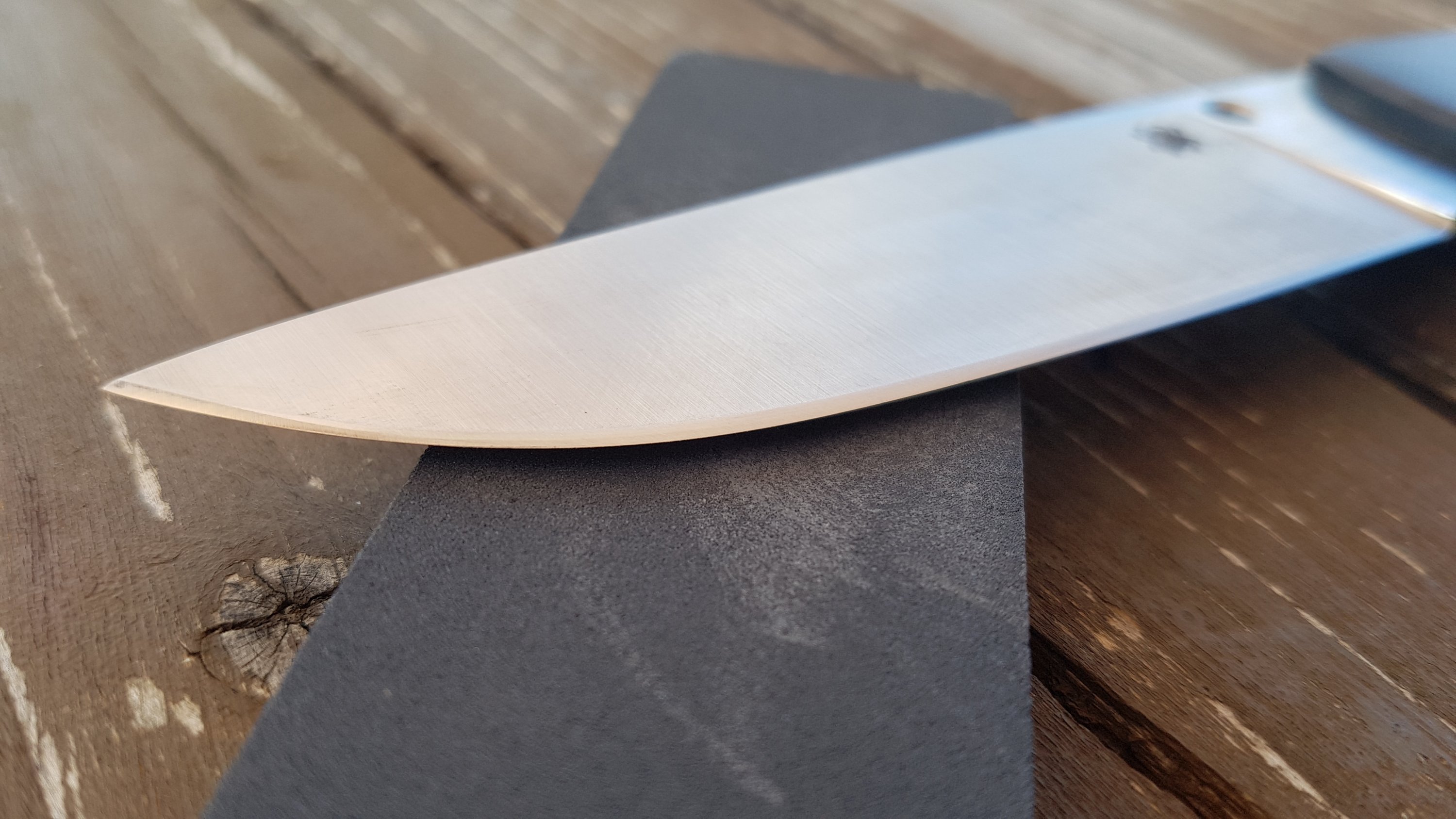
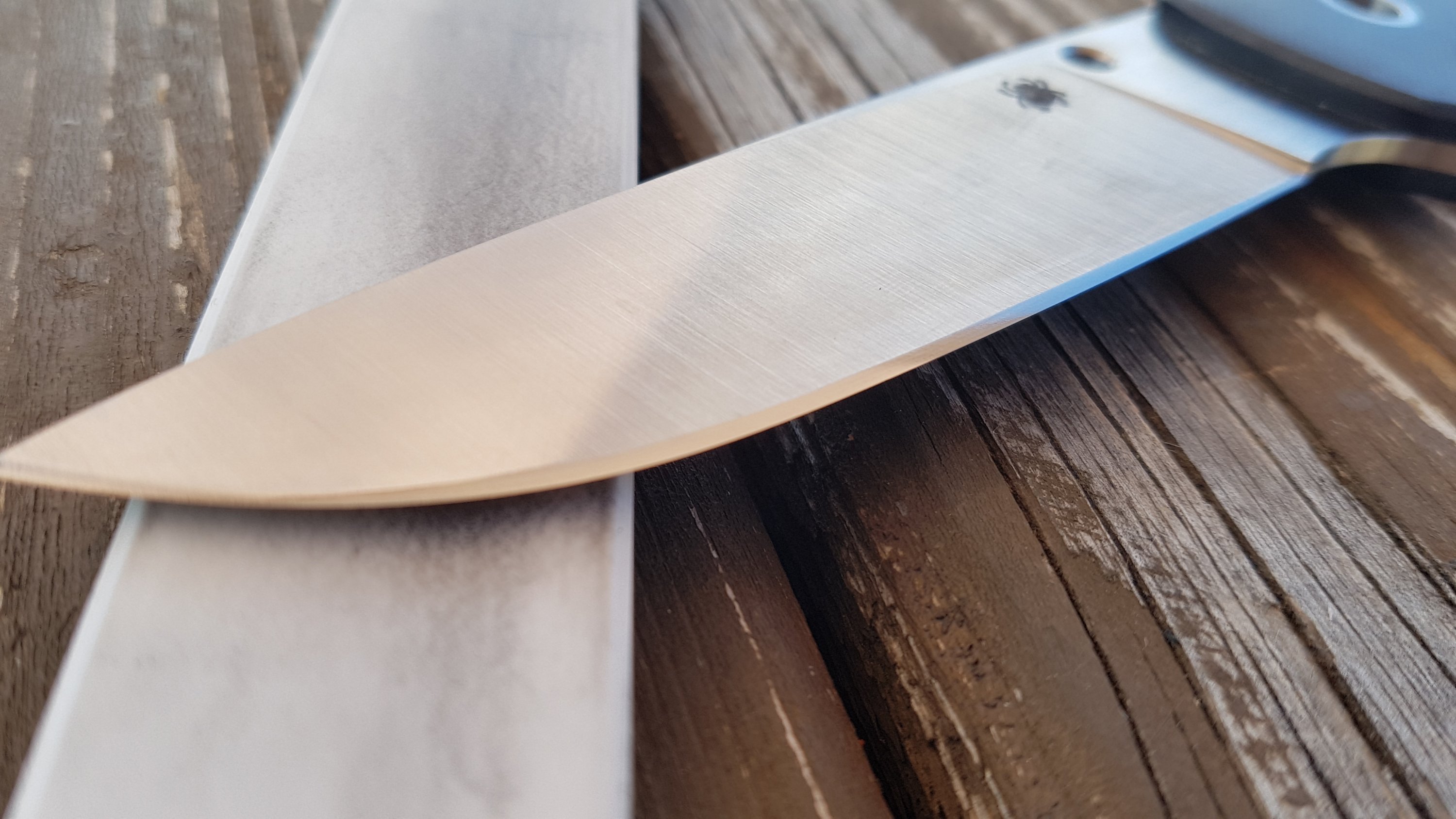
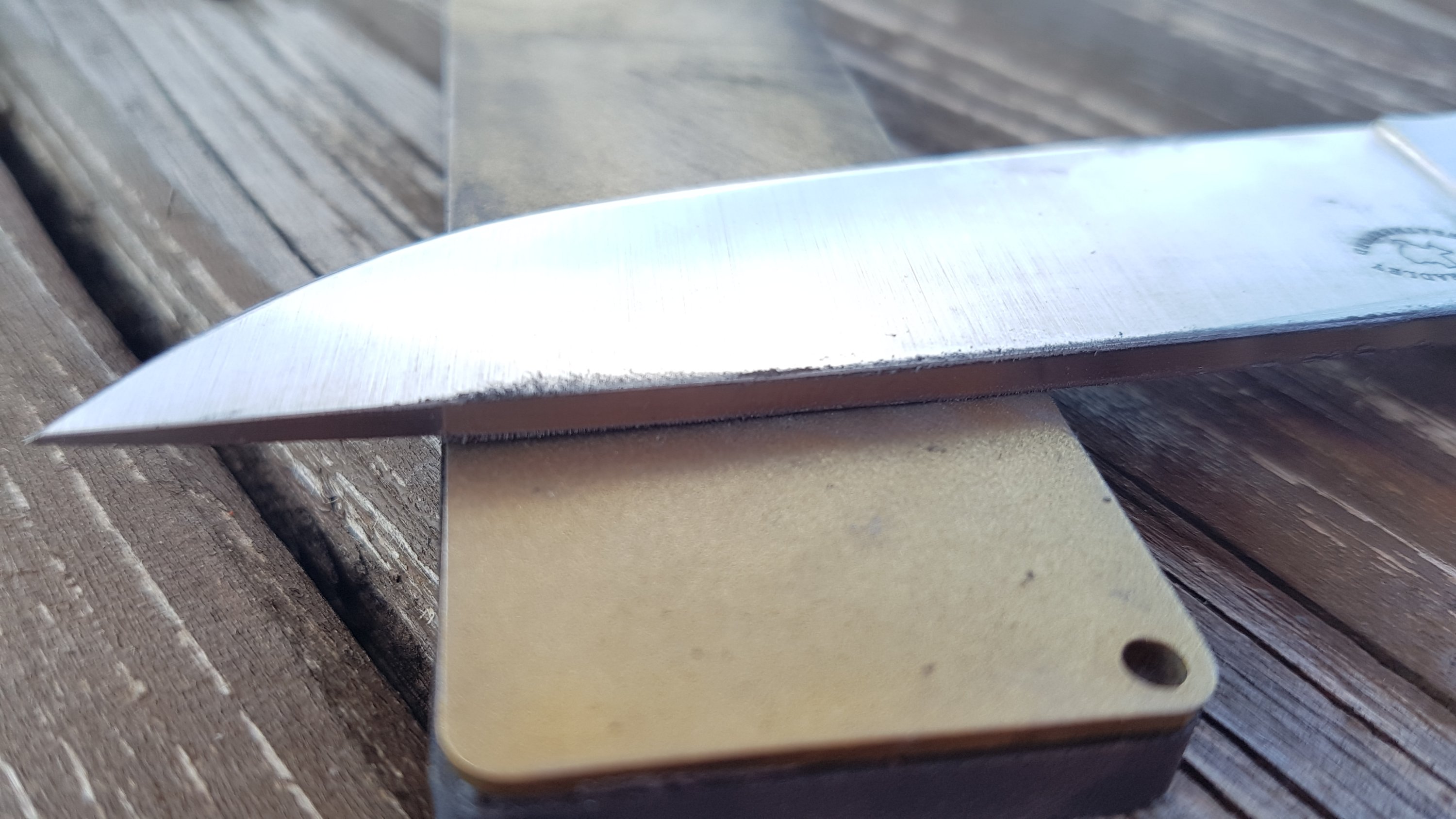
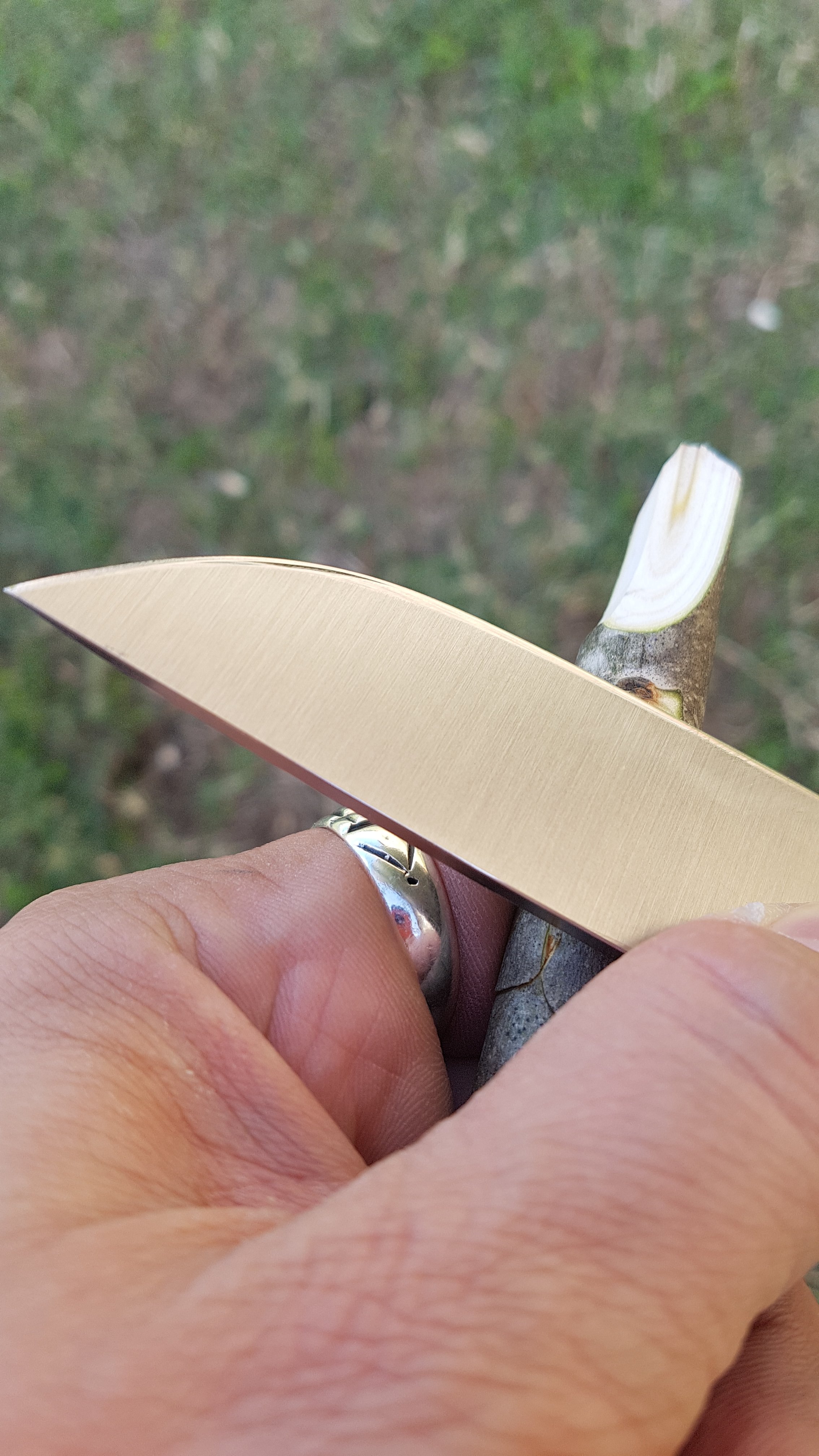
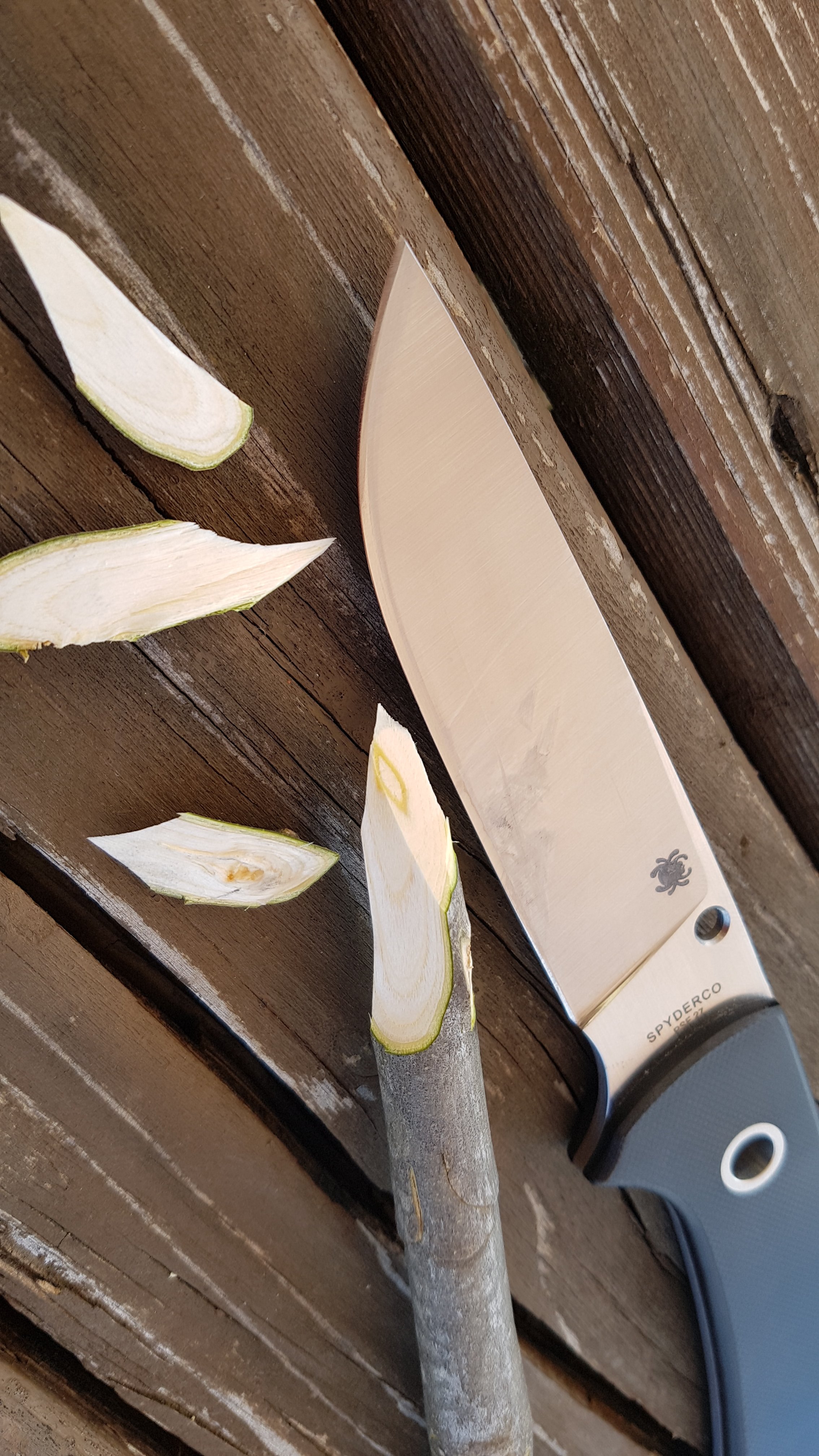
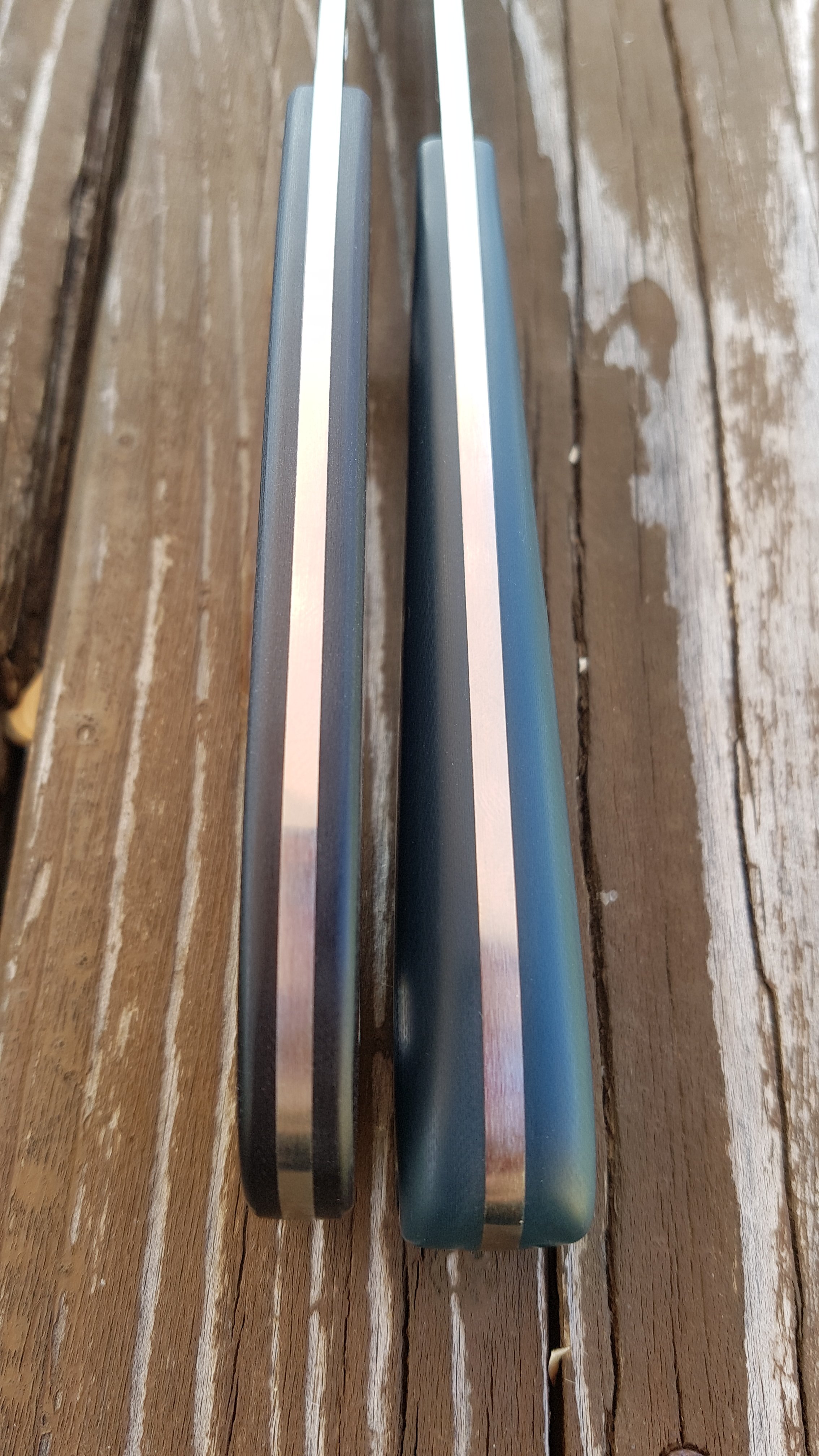
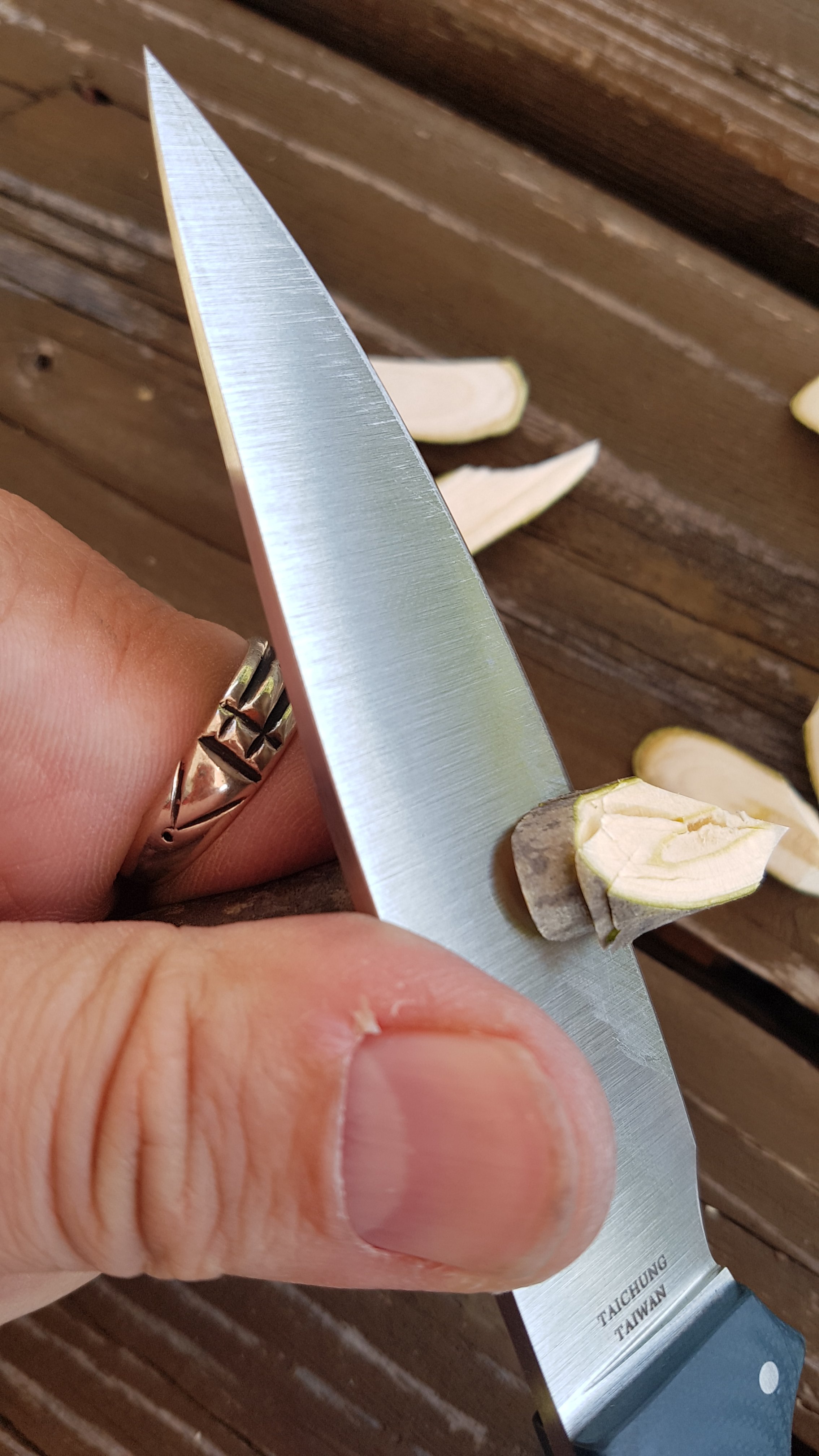
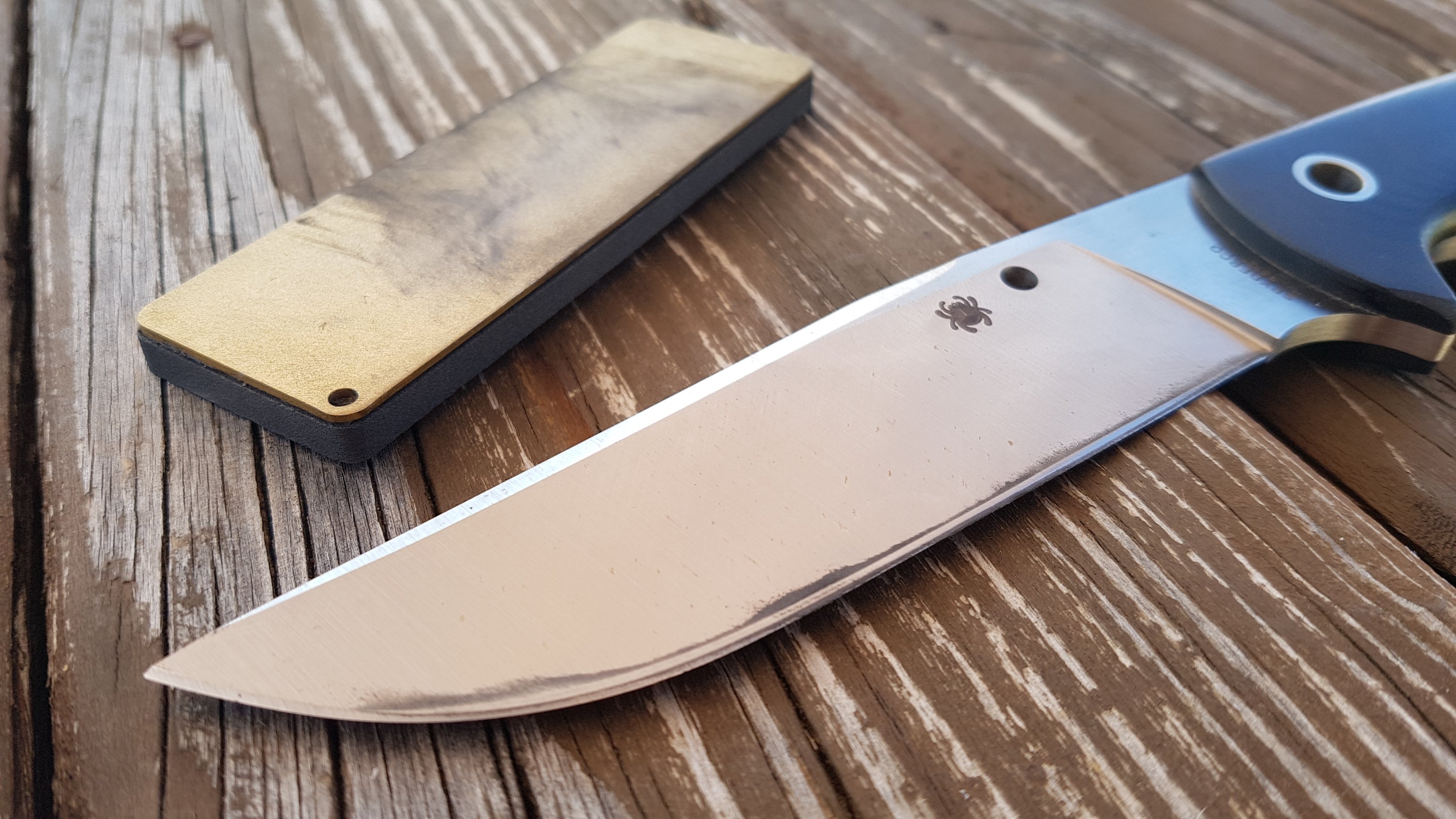
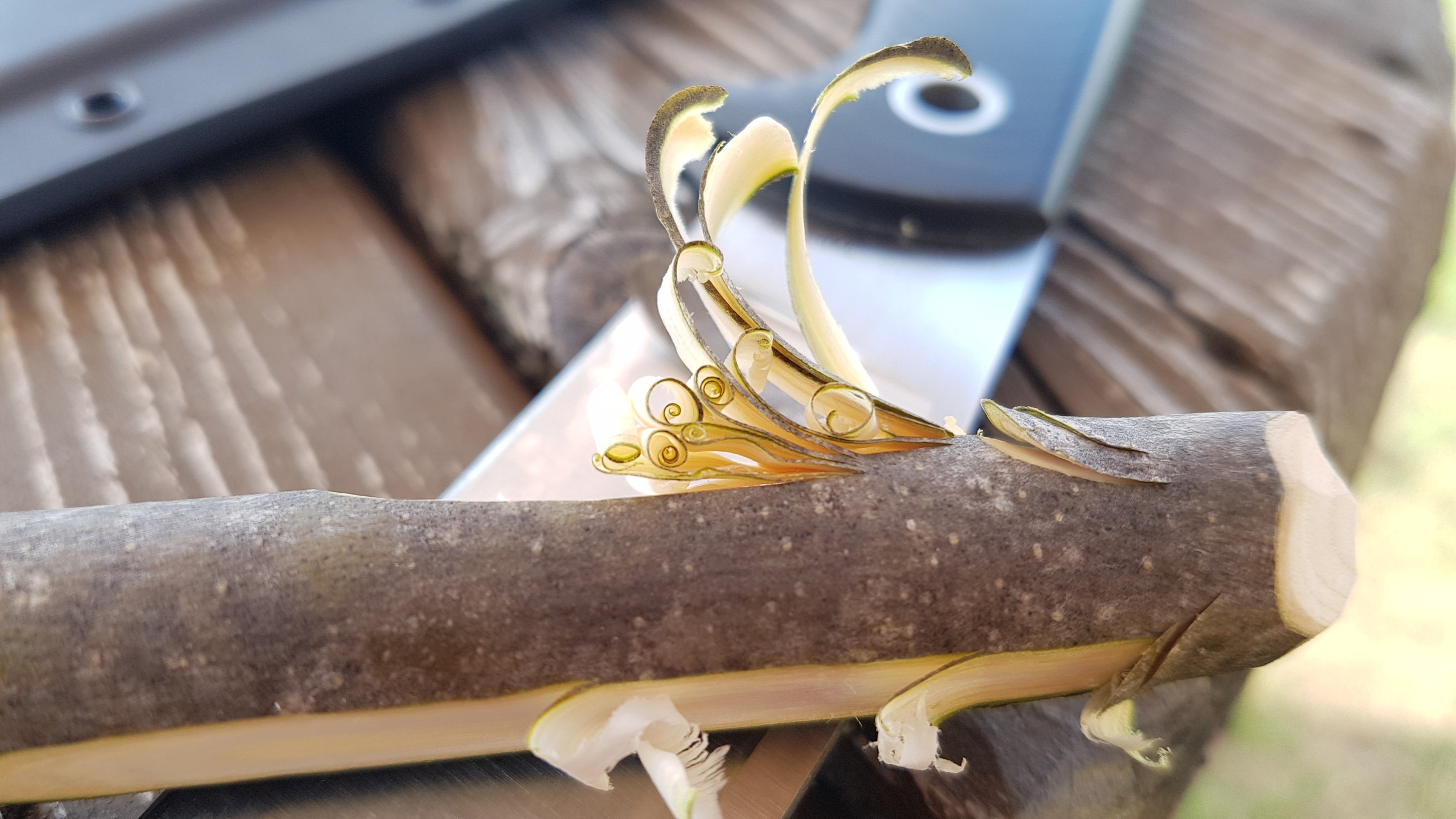
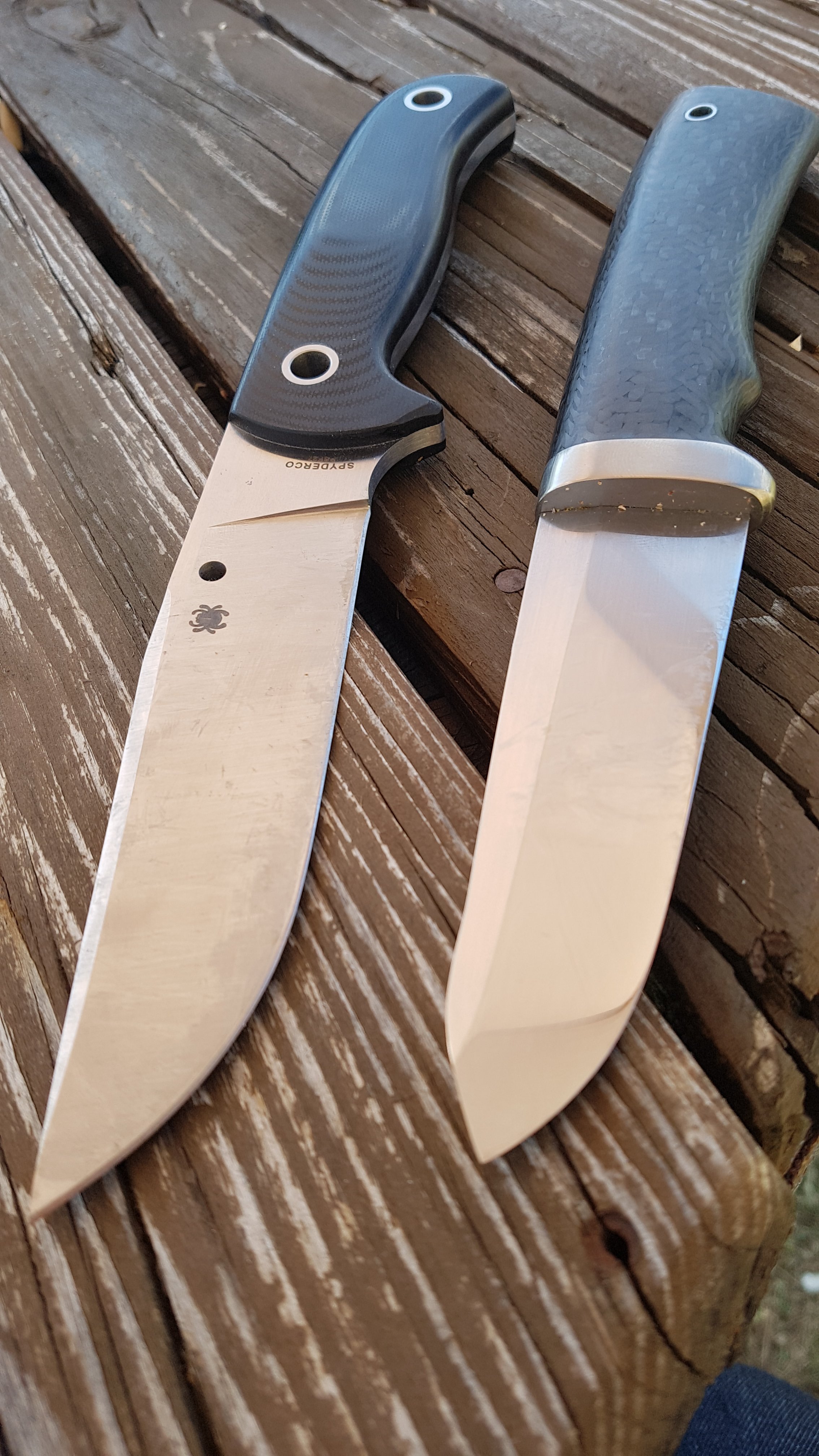
It was time to go to lunch. An Francesca knows how to prepare the pasta with pomodori. Crostini a la Toscane. Poultry liver, oignons, red wine, bread and a Bowie. Back in the outside I was thinking of a simple way to see the “impact” of good geometry on whittling. On the right, a single cut if the thin Delica and, on the left, a single cut of the thicker ZT0562CF. The Delica cuts deeper on a more open angle. Better geometry. But the ZT was pleasant to use even if it was not as fast at the job. Also the Delica was able to cut from the ricasso to the point without any hard pressure. In the end, I had noticed that the Junction was less good than the Sprig and the Delica was still the best whittler in the batch. No matter the steel, for wood cutting, geometry is queen. So I have taken my Bowie back to the diamonds and put a keener edge. Tomorrow it will be hunting day.

Opinel N°8 Carbone — The Crowned Hand

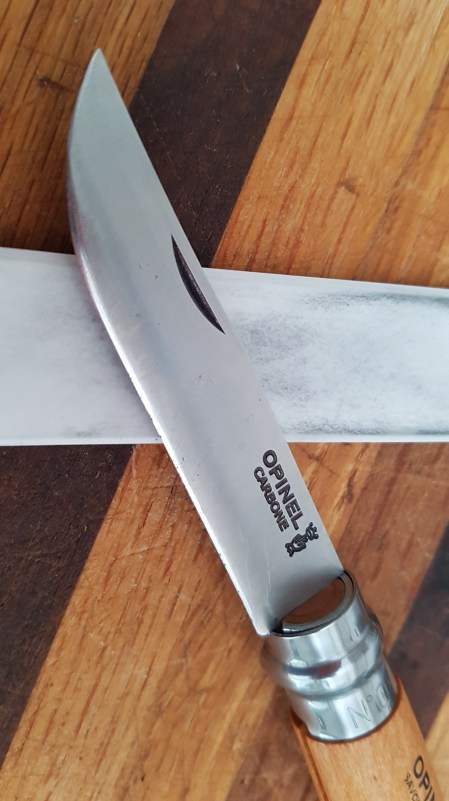
(You can notice the factory edge is a mess…  Easy to fix !)

I have been using Opinel since my very childhood. I was 8 years whe I was throwing my Opinel N°8 in the dirt figuring I was James Coburn in the Magnificent Seven. The blade was dull like a butter knife and black of stain but it was a constant companion.
Later when I had started to really use it I had discovered that it was really easy to get really really sharp and even to get it to razor sharp and keep it that way with just a steel sharpener. It was with an Opinel paired with a Glock knife (The Field Knife 78 (Feldmesser 78)) that I was living my first bushcraft adventures: building a shelter, making fire and cooking, making bows and arrows, sleeping in the woods…

I was buying some plants for the garden when I saw at the cashier some Opinel N°8 for 8 euros. It was the occasion to buy a new one just for the fun of using it.
I got a stainless N°10 somewhere and a filet… This Tradition Carbon is welcome.

As you can see the factory edge needs some work. But it’s so easy and fun to do.


Locked once closed.

The Jade CPM M4 Military looks like a BMW X5 compared to a Renaud 4L.
But both are fun in their own way.

Manufactured in the heart of the french Alps since 1890, Opinel N°8 hasn’t changed much. It got a new rotating ring which works also to block the blade when closed and this is a really great improvement in my own opinion.
“In the 90s, the Virobloc® system was modified to allow the blade to be locked in its closed position. ”

The con:  a round handle which not help to know in which direction the edge is. You need two hands (or your teeth and one hand) ton open the blade. Two hands to lock the blade. No clip, so the knife will disappear in the pocket. Carbon blade which can rust. But that not a problem if you know how to keep your tools oiled.

The pros: 8 euros !! This is a bargain. Half the price of Douk Douk. A very confortable rounded handle.
To quote them : “To protect our handles from external aggressions, there are two available finishes: buffing and varnishing.
Handles shaped from rare and precious tree species are buffed with wax applied with a cotton disk. For every other wood, we apply a varnish which has been selected for its highly protective properties against moisture and staining.
The varnish is tinted for the carbon range and clear for all the other ranges. To create coloured handles, we first apply a water-based wood stain before the varnish.”
The lock is reliable and easy to check.

A full flat ground blade with a thin edge. 40mm made by hand. German steel with 0.90% carbon heat treated in France at 57-59 HRC. (The Stainless version is Swedish 12C27).
“When it was first designed, the OPINEL blade was made from carbon steel. We still use a similar grade today, with an approximate carbon content of 0.90% which is still better than stainless steel. Our carbon steel is first produced in Germany and finalised in France before being worked by OPINEL.”

And this is where the Opinel is so fun to use. In all my knife it’s with my Opinels (stainless or not) that I got the best results in cutting plastic. Of course the steel won’t last like one of the new super steel but it’s so easy to go back to a very high sharpness: it’s fun.

Of course the Opinel beats all my other knives in my plastic butt/neck bottle tests. Even my great Nilakka or my reground Yojimbo 2.

The crowned hand.

Thinner and thinner !

I’ll  keep my new Opinel in my kitchen drawer. Sometime I will pocket it for going into the woods.
Compared to many modern folders, I know its performance are incredible and shows how thick the edges tend to be especially in the “tactical” scene. Strider comes to mind…
My Opinels wer beaten in wood work by the Dodo ! The Dodo got a belly which does miracle on cutting wooden rods.

I have read in a magazines some years ago that a famous hunter guide in Scotland was using an Opinel N°8 Carbone as his main hunting knife. He was using one knife by hunting season.

Anyway my good old new folder provides me “The original Opinel steel, the famous high quality cutting edge, easy to sharpen.”

Coke bottle are getting thicker at the butt, certainly a new manufacturing using more material and my new reprofile Zero Tolerance 0562CF cannot not cut through when she can still cut easily mineral water bottle’s butts.


The Opinel still can. Thin edge powaaa ! But you notice the 4mm thick plastic at the center.