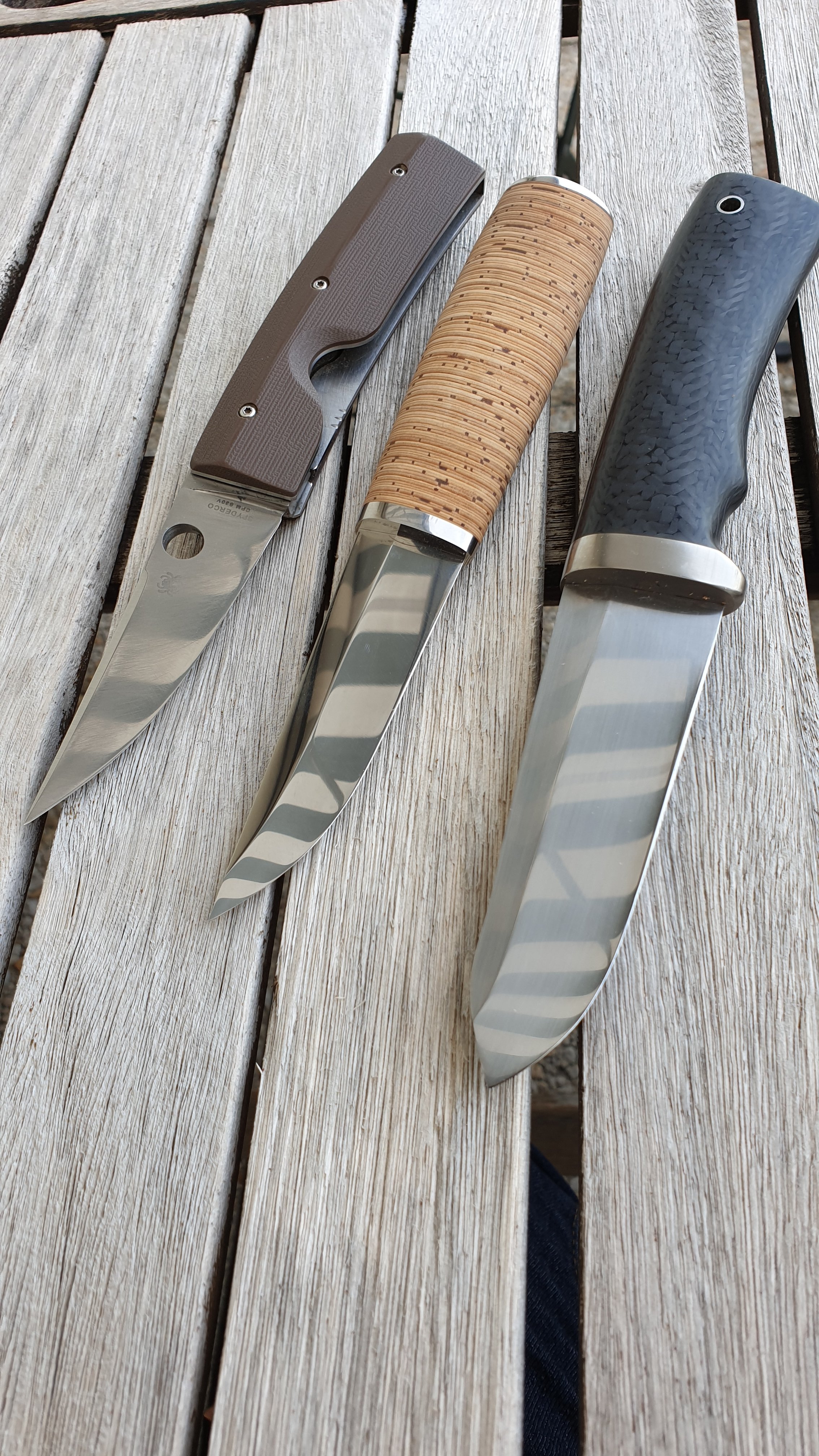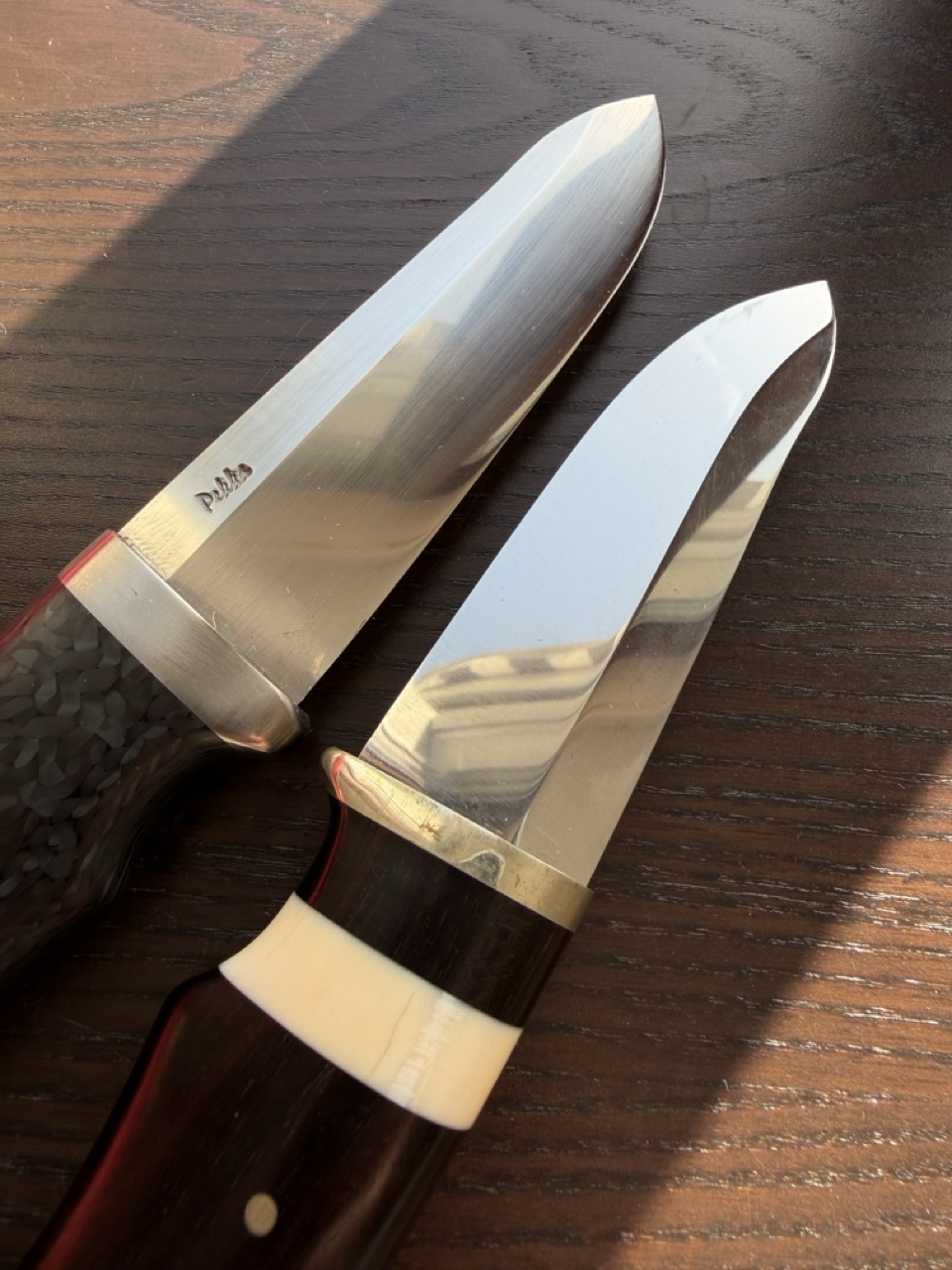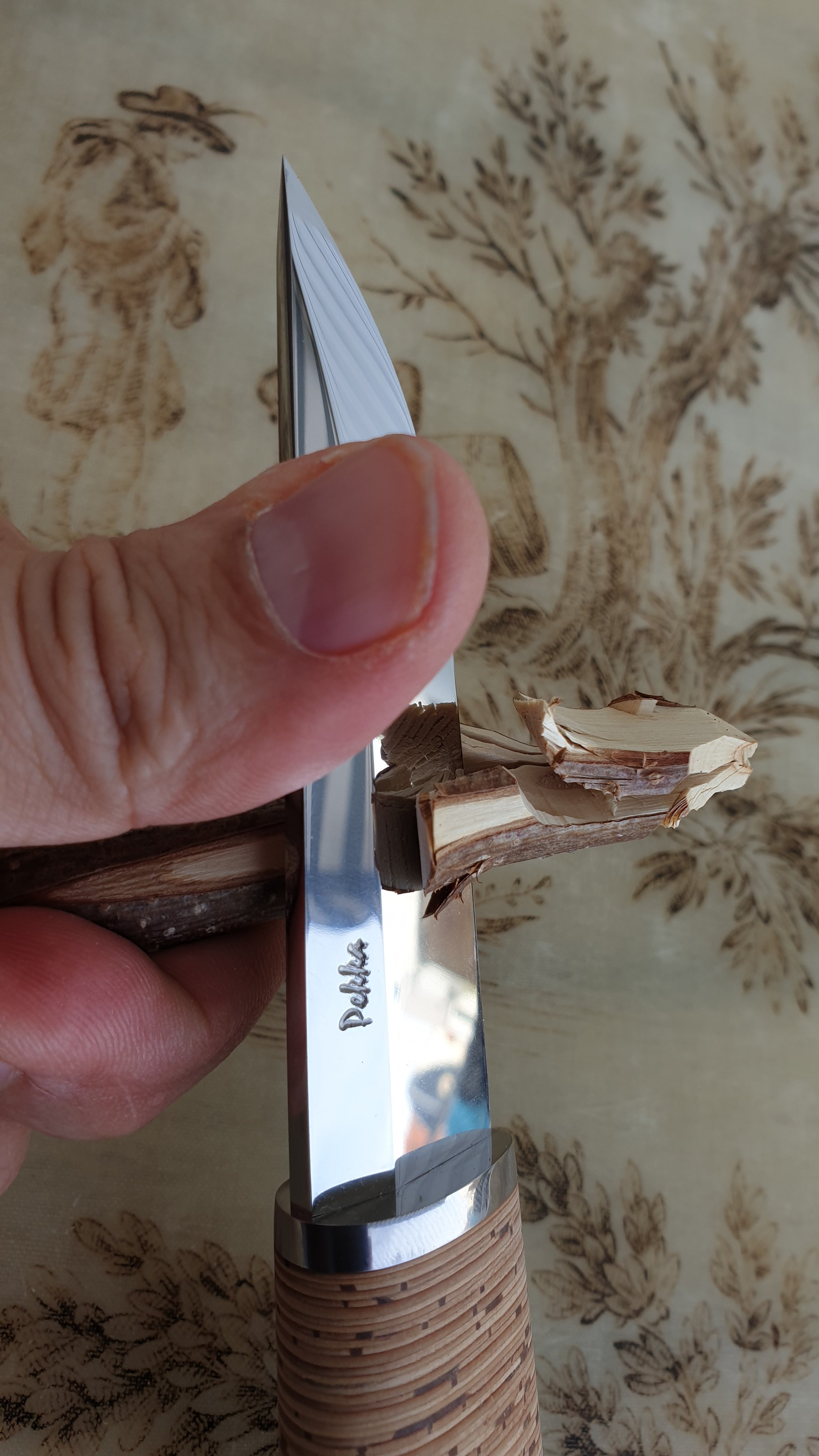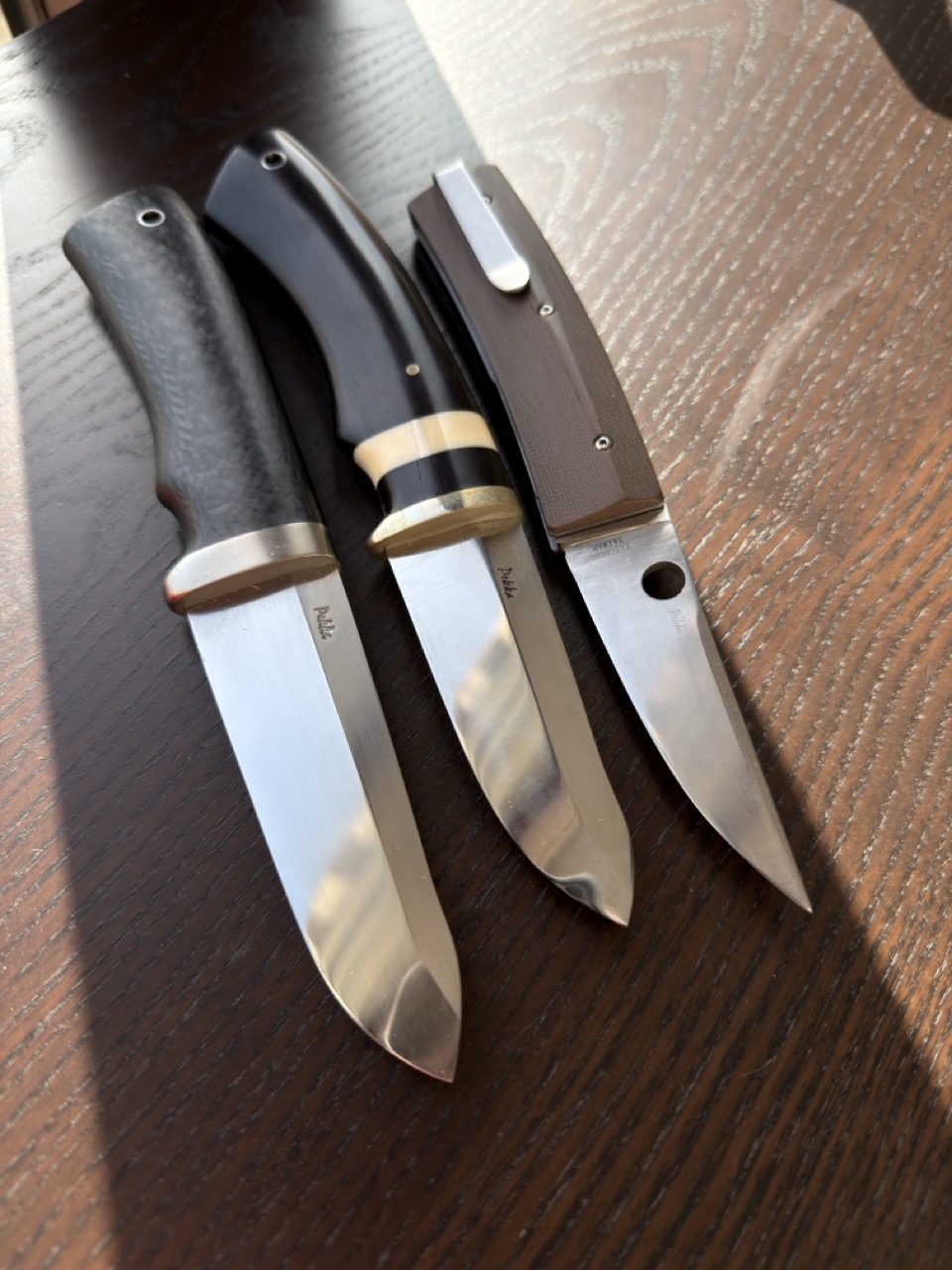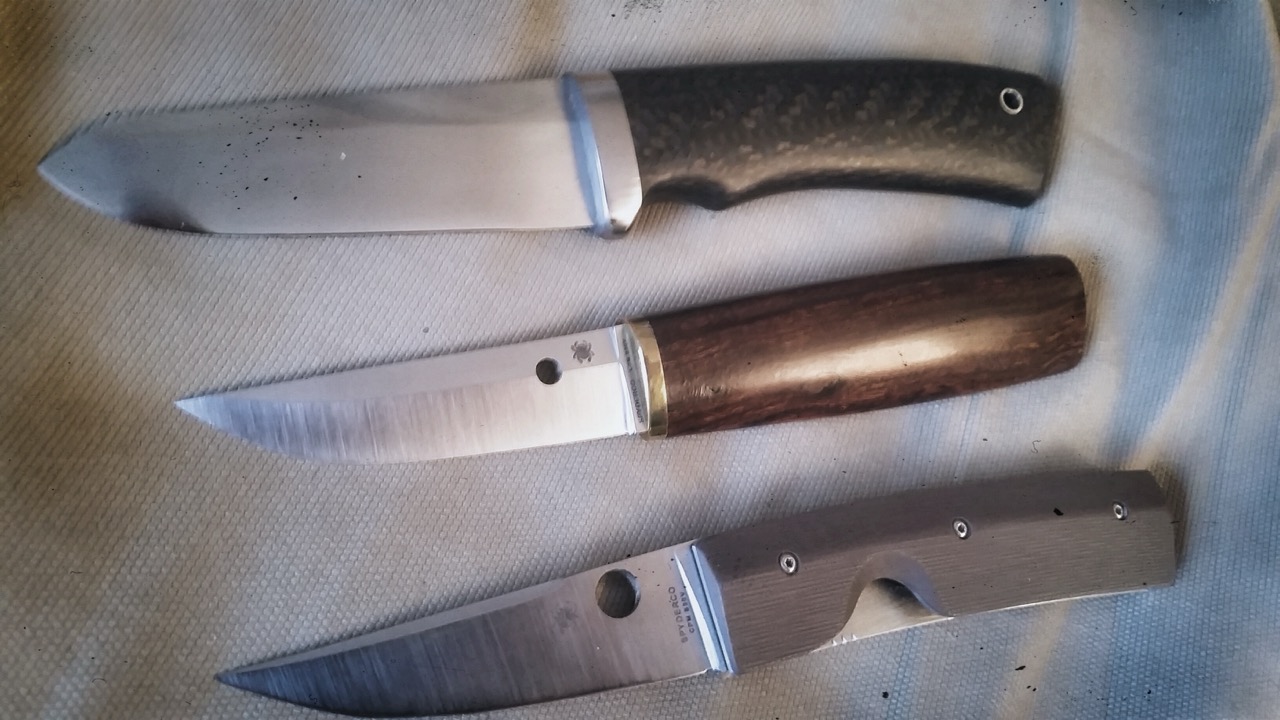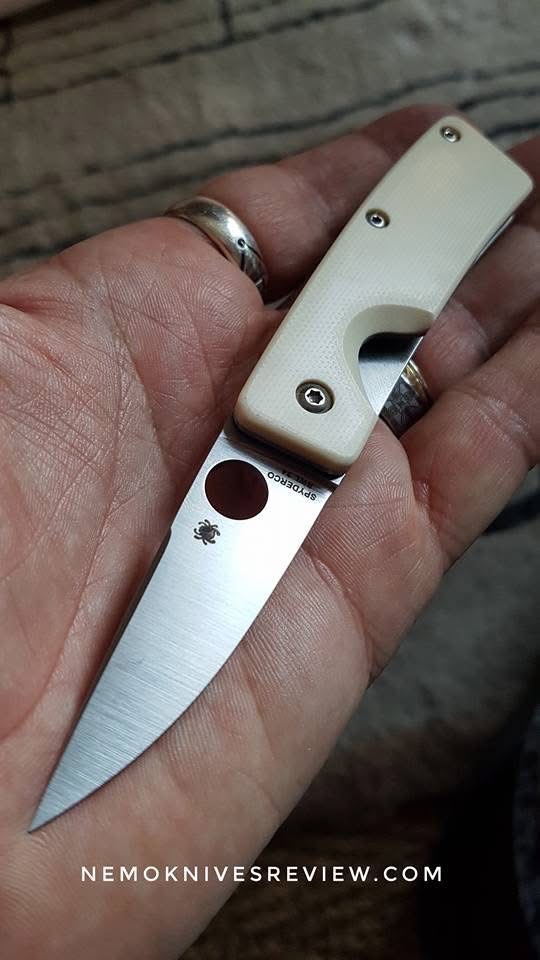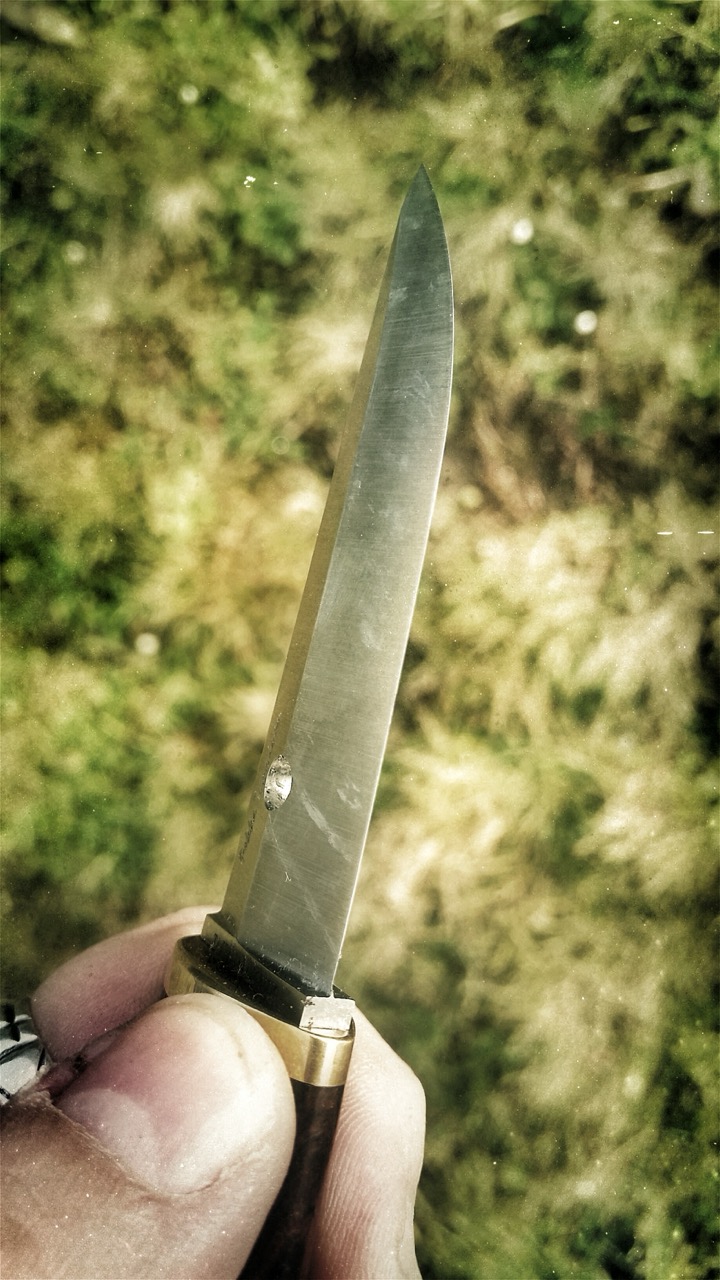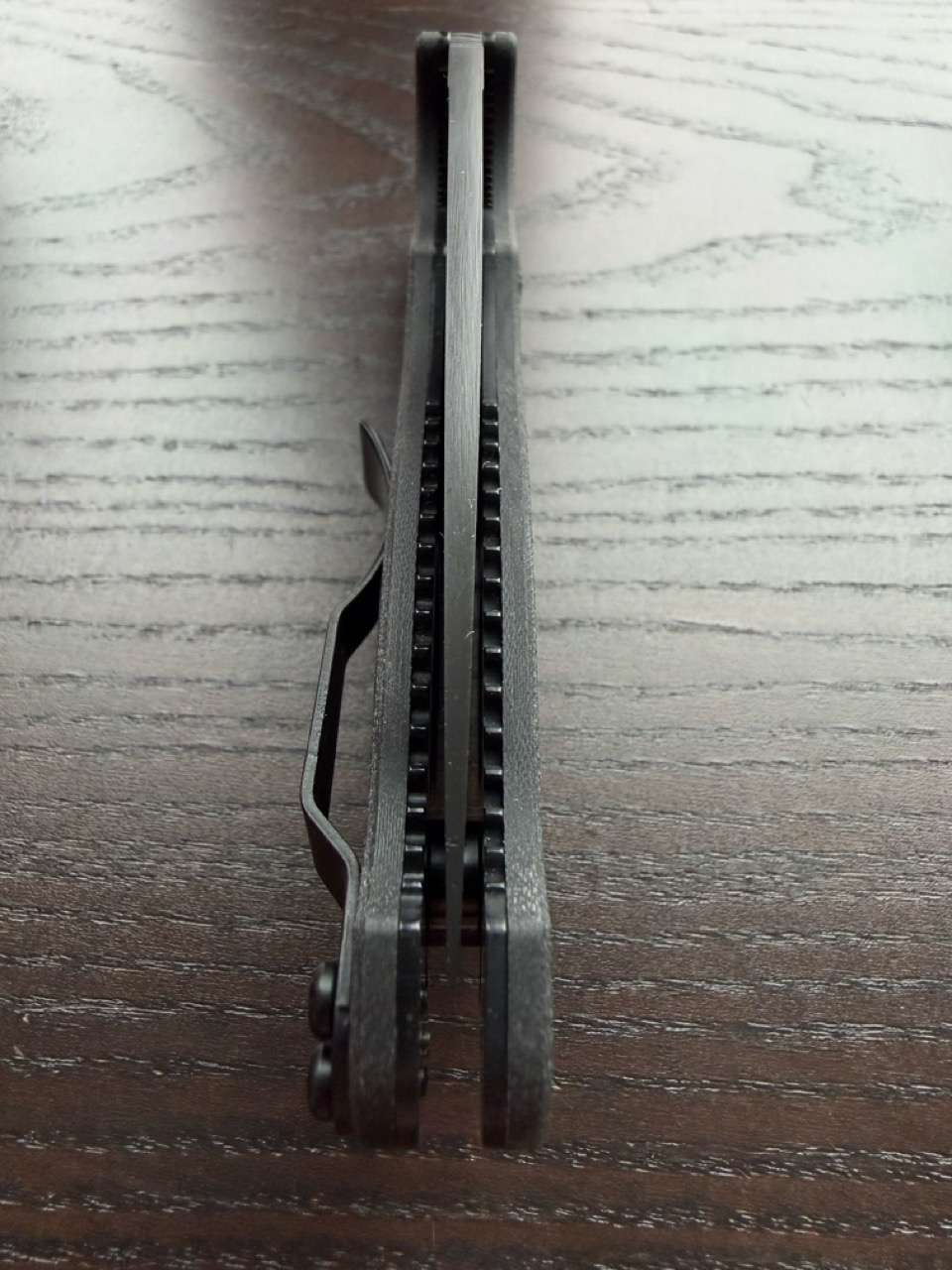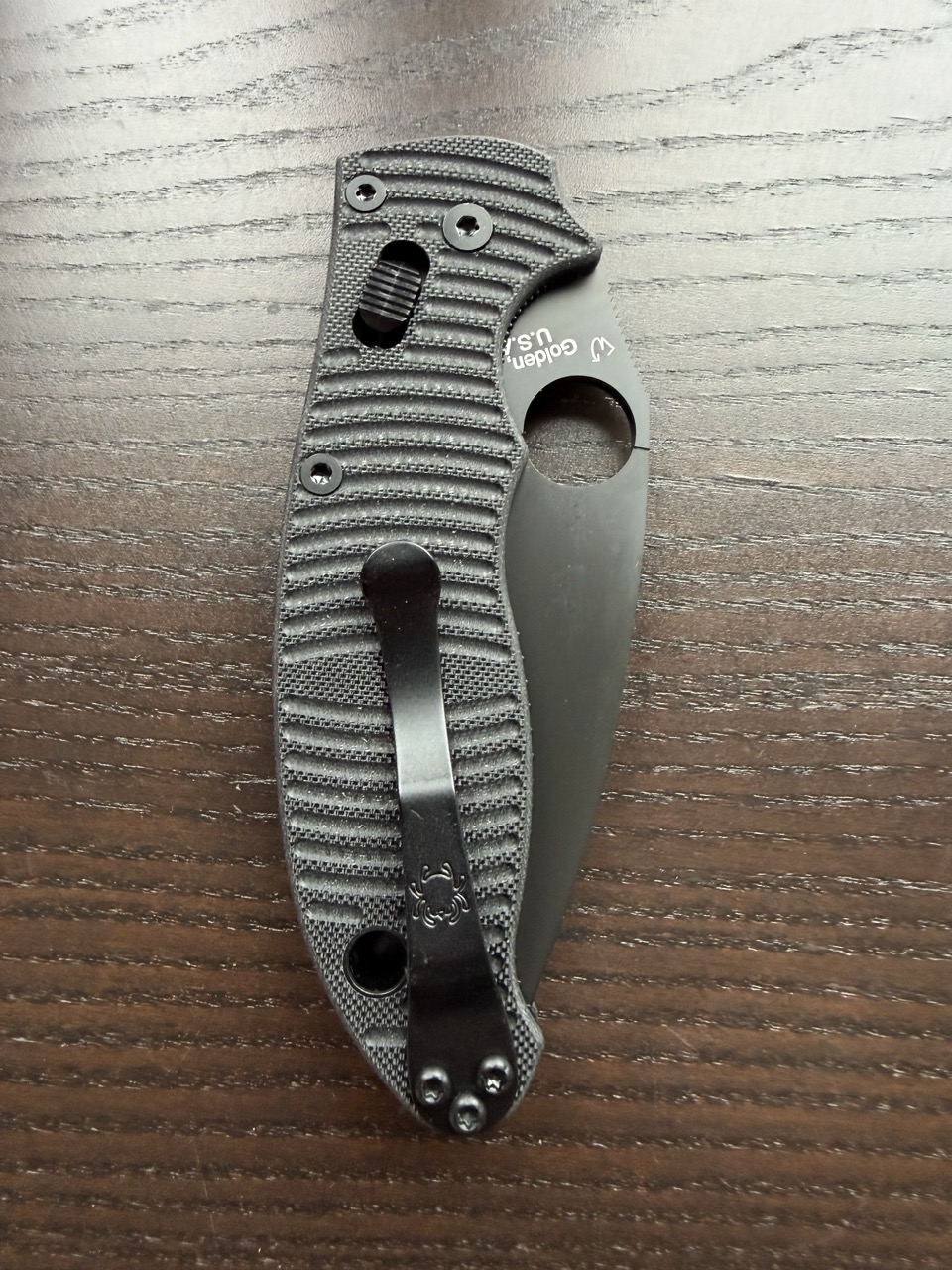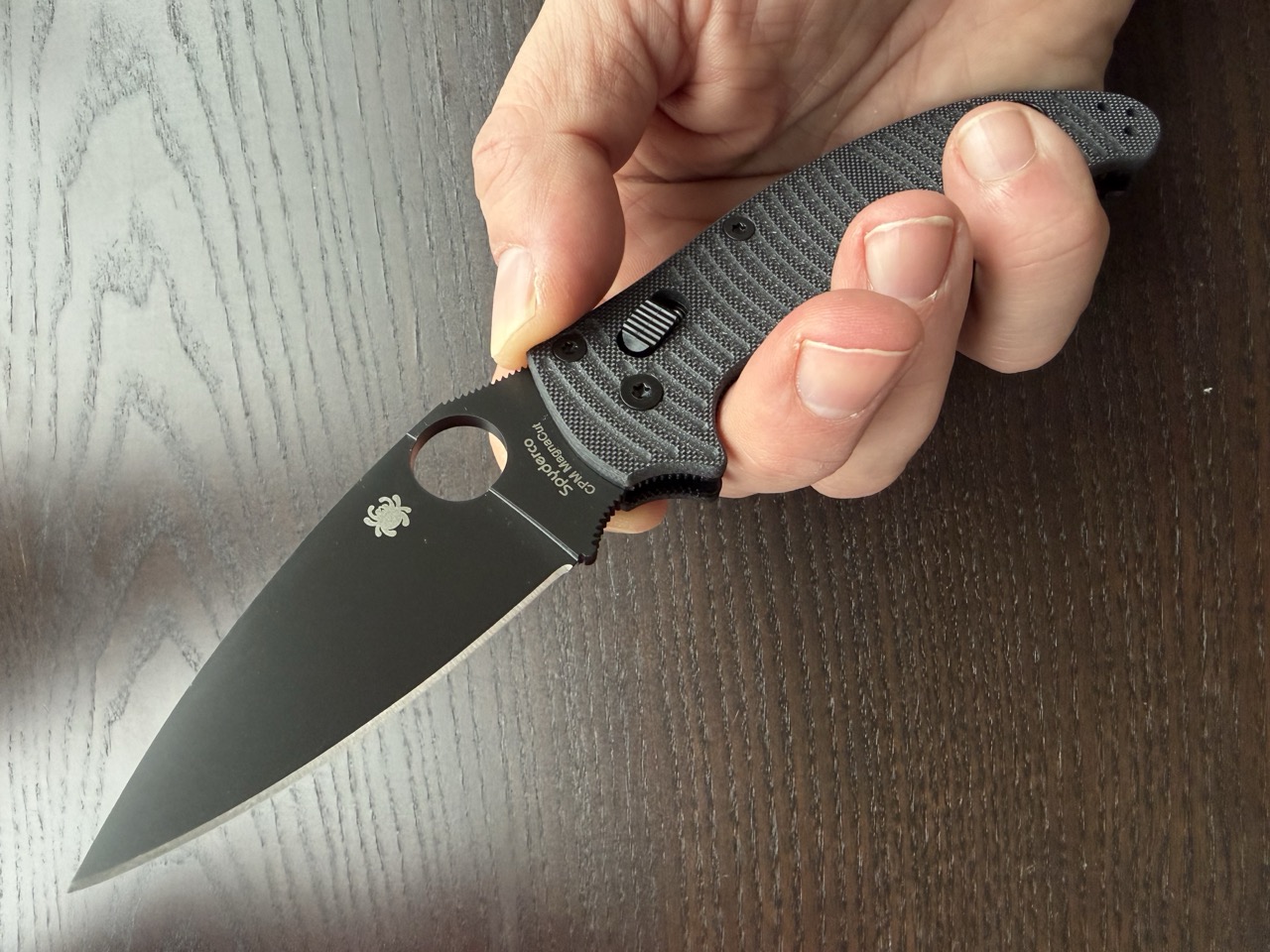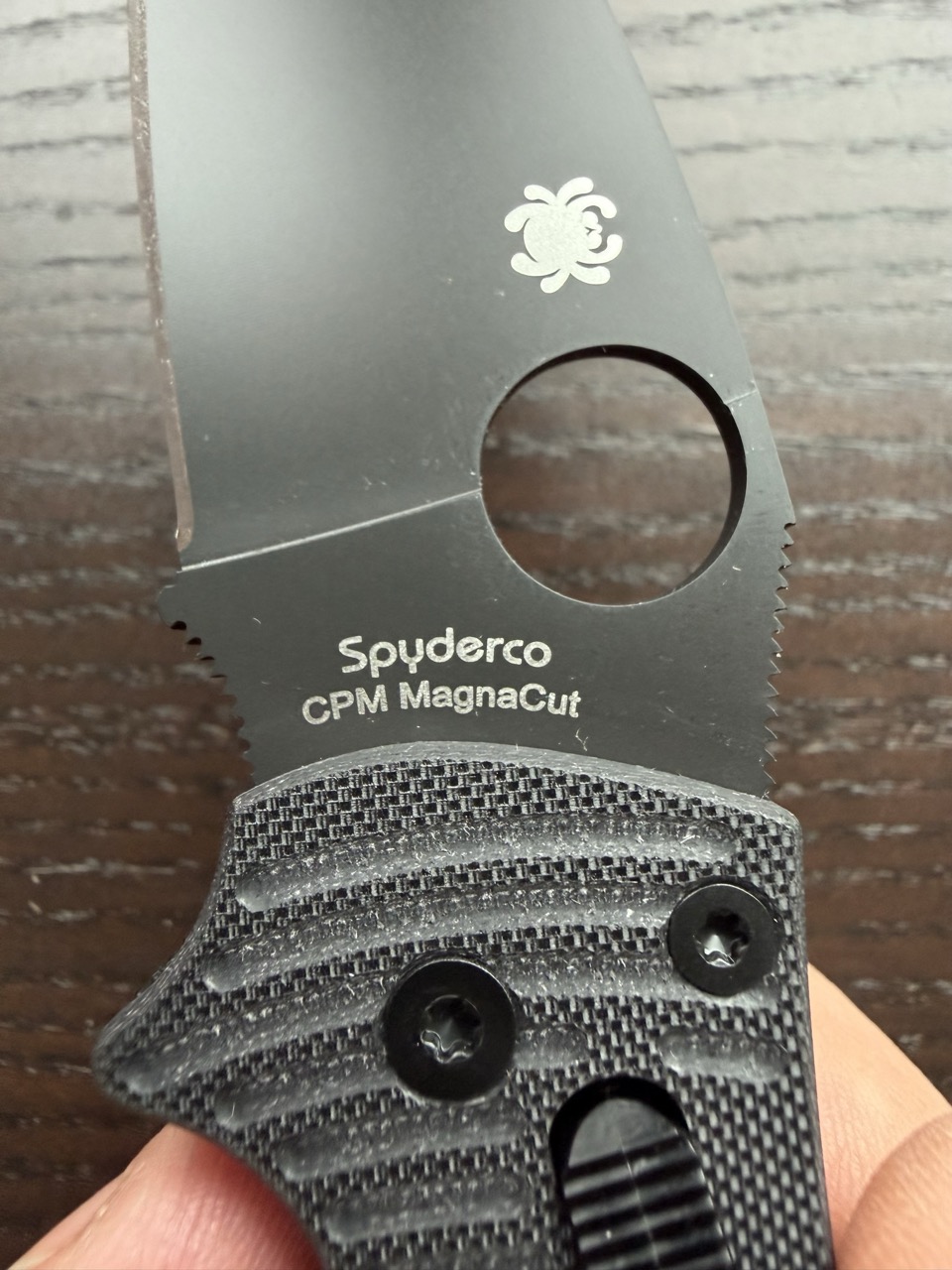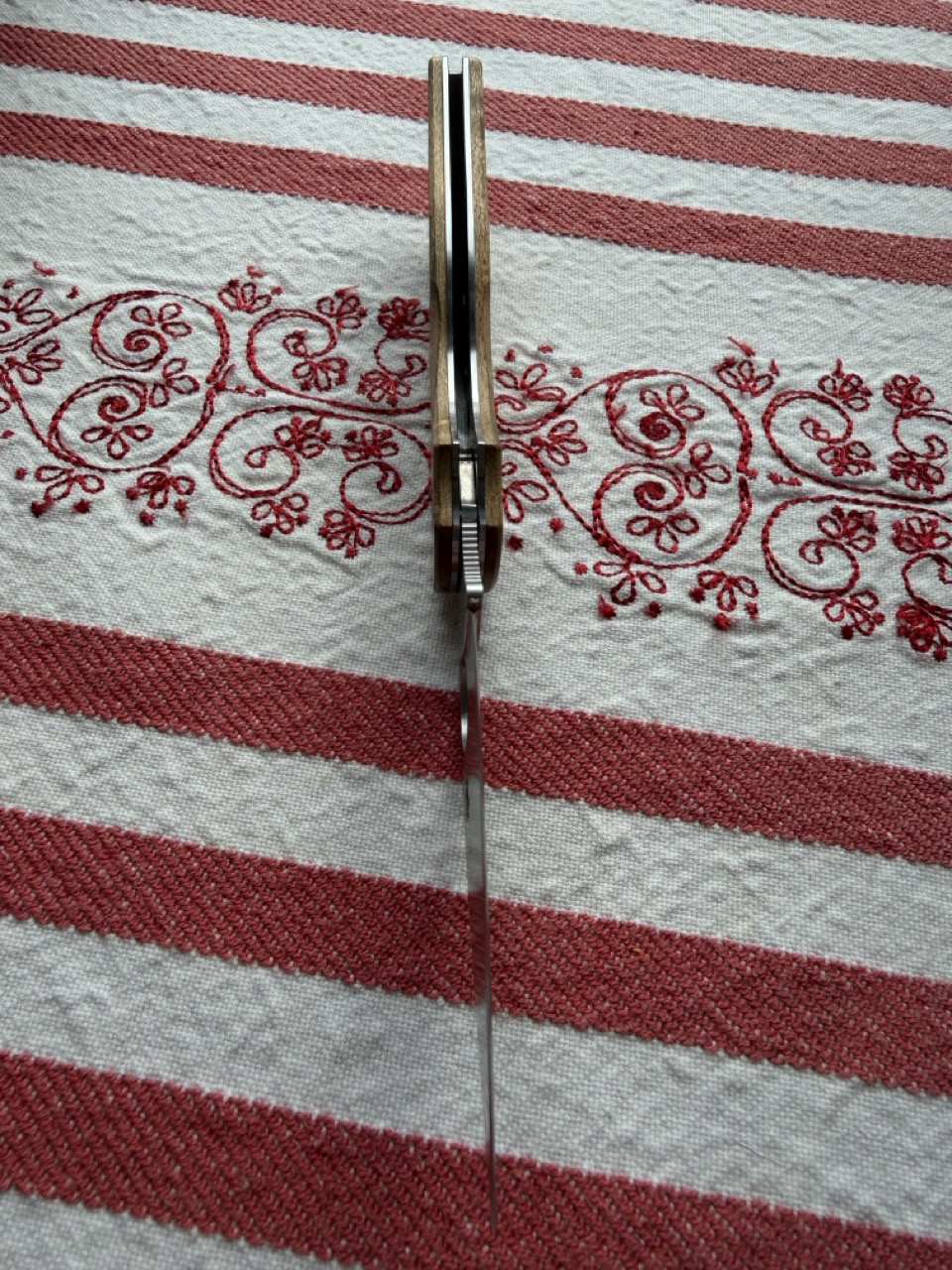
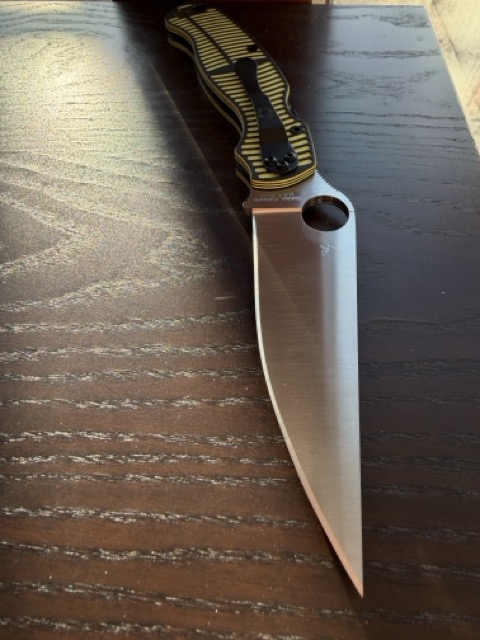
All posts by nemosandman

Journalist Reporter Filmmaker Author Photograph Sharpener... "And I feel like a knife, these days are calling I feel like a knife, sharpened like steel Touched by the hand of the gods on these golden mornings I feel like a knife for you." "KNIFE" Justin Sullivan 1991

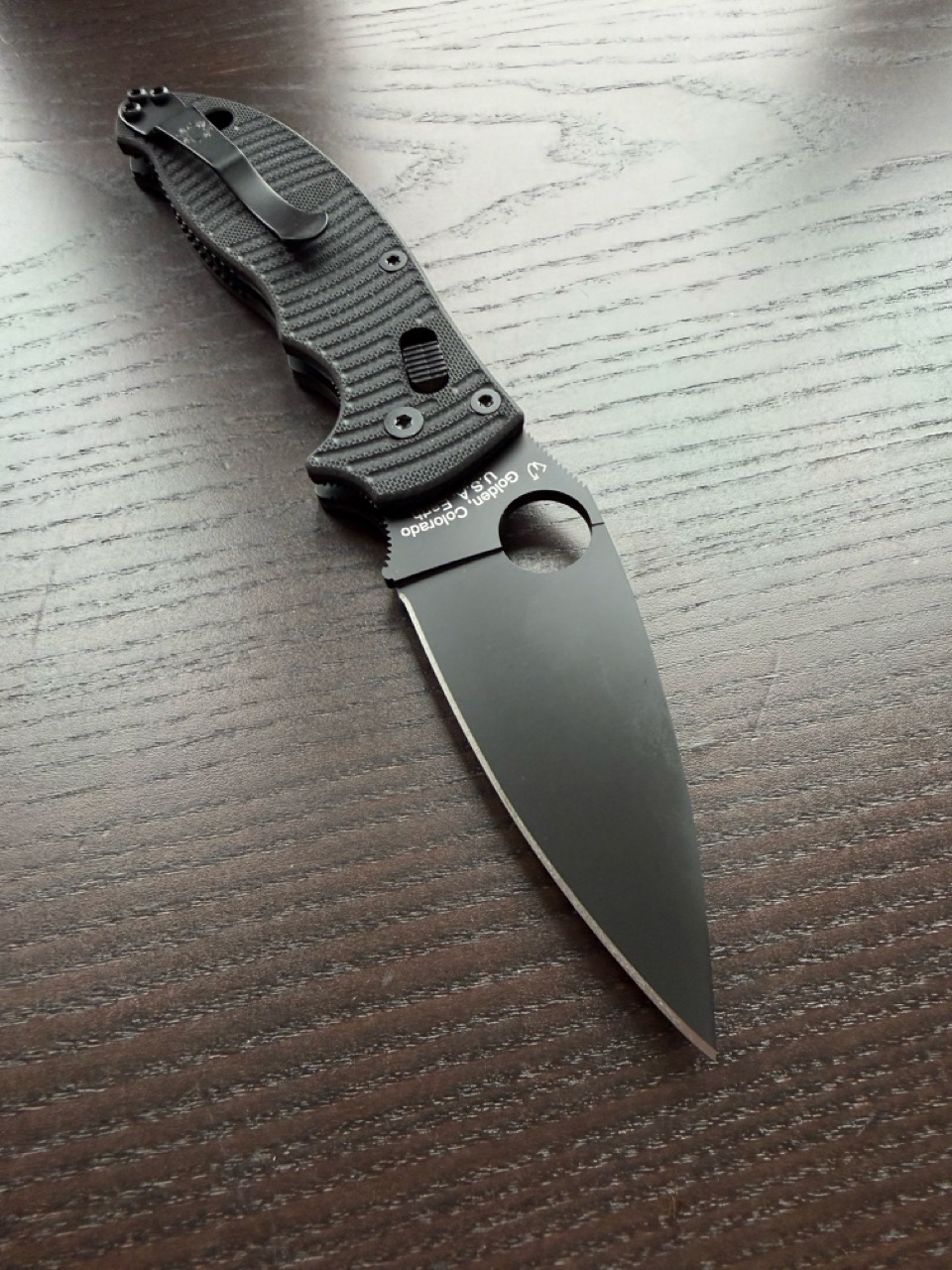
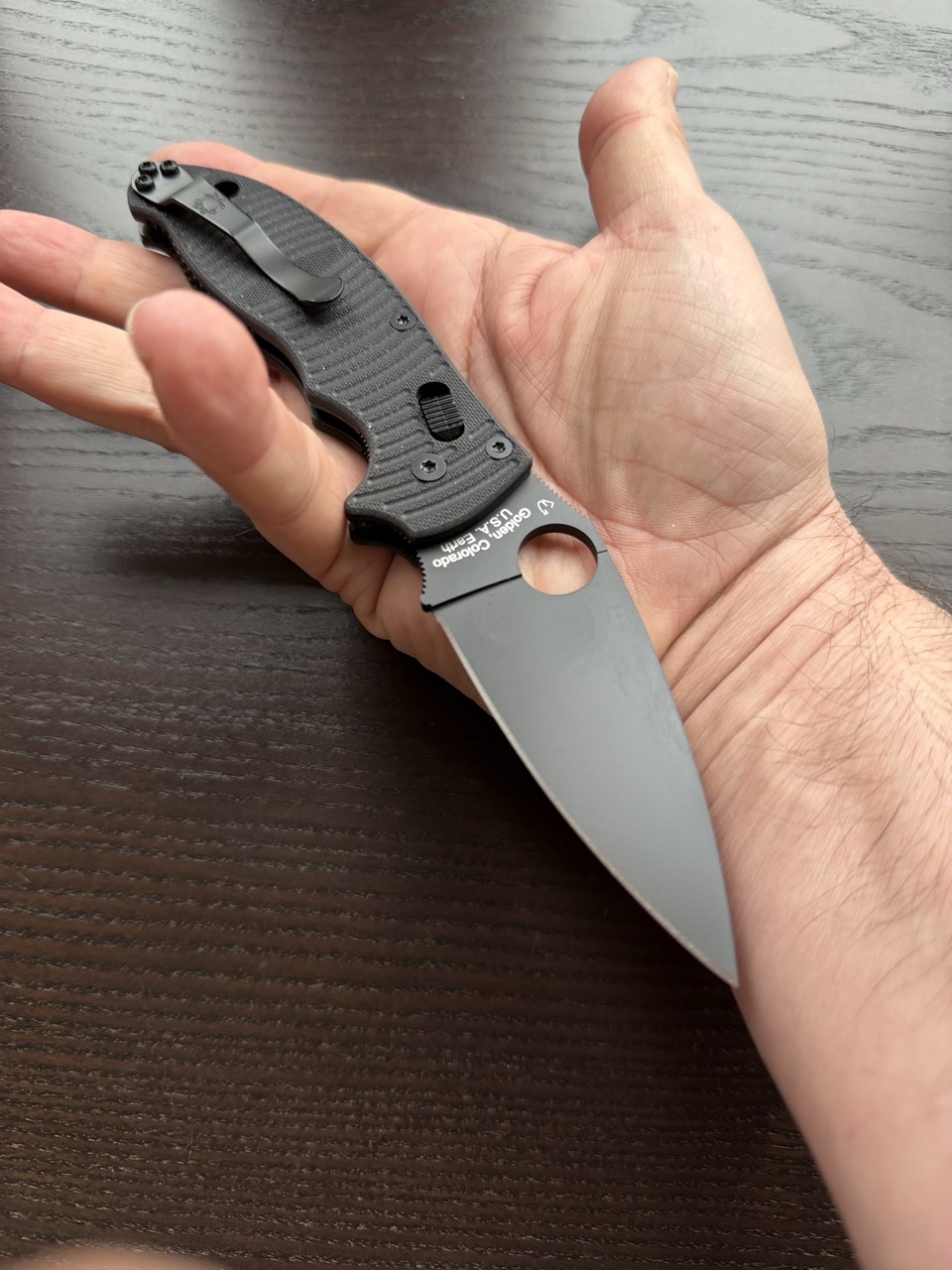
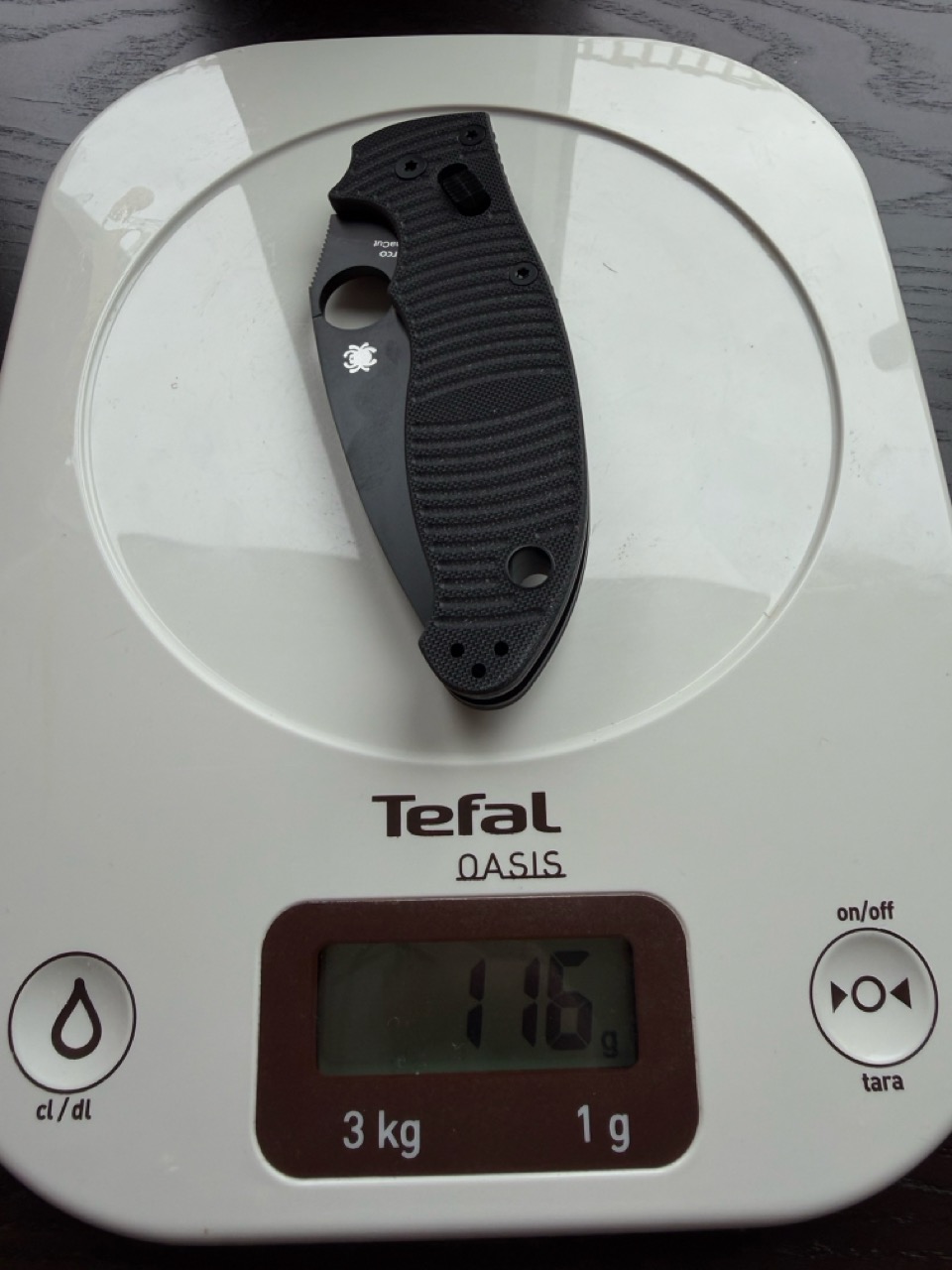
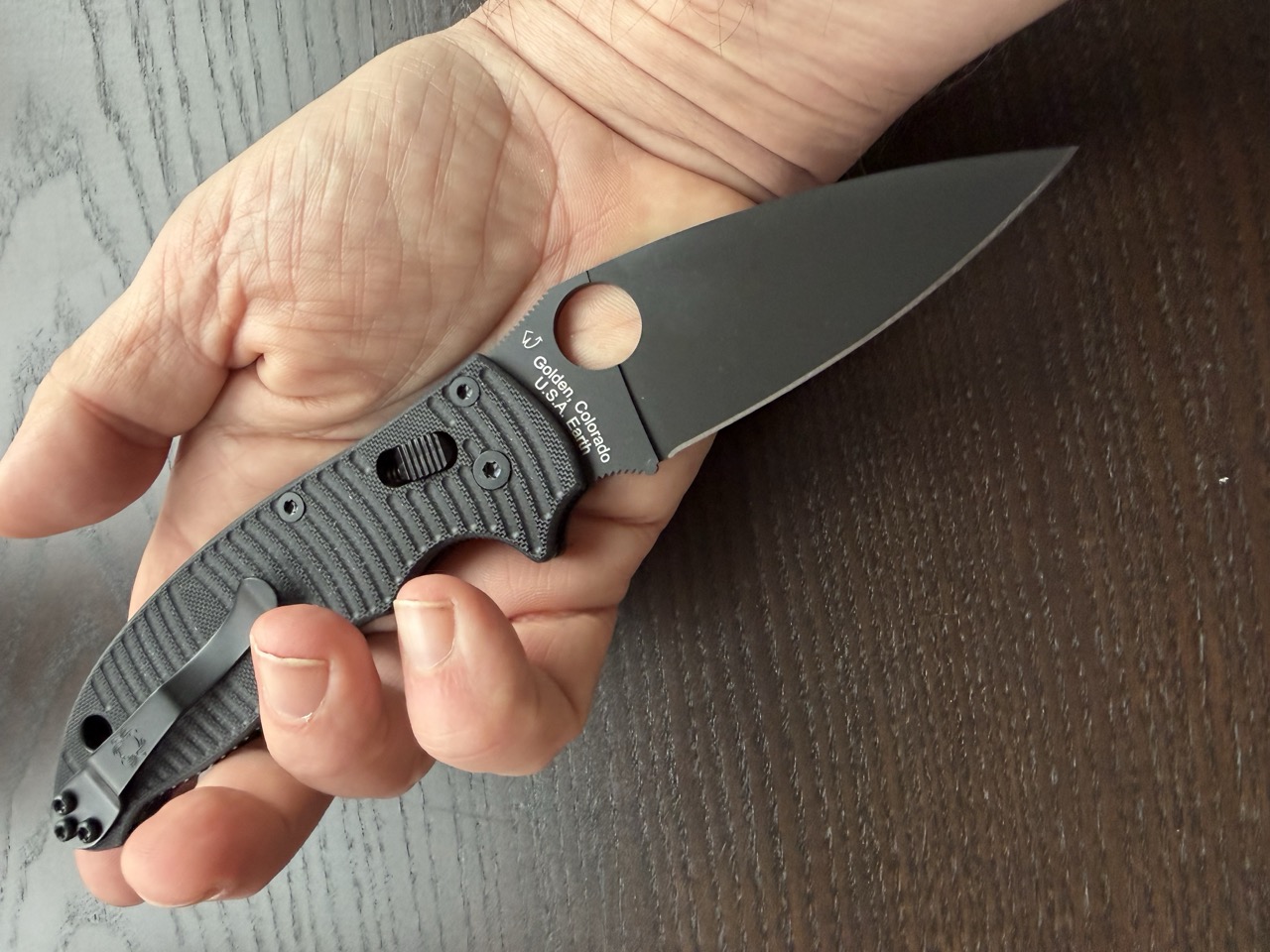
Spyderco Edgerati part 2 – The KWEMRP That Commands Attention !

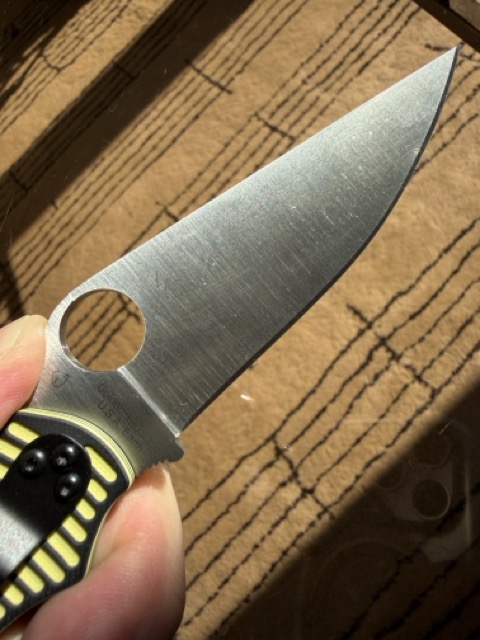
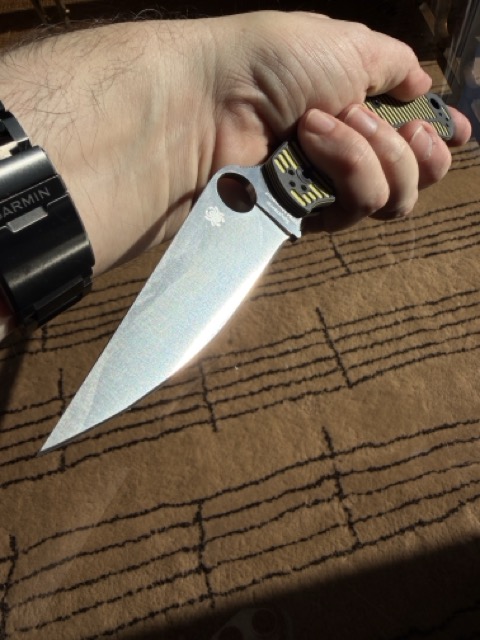
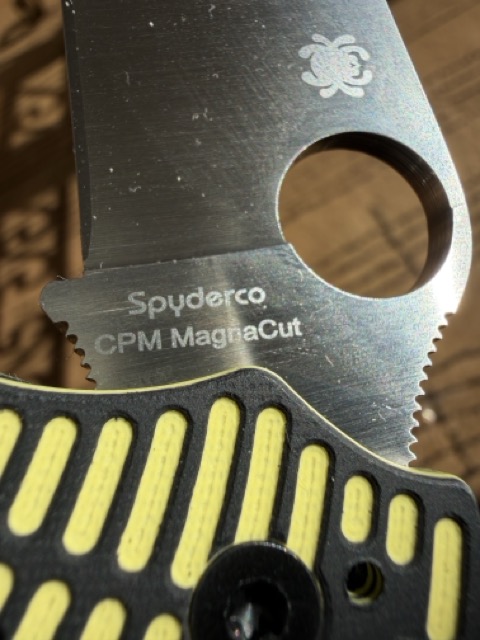
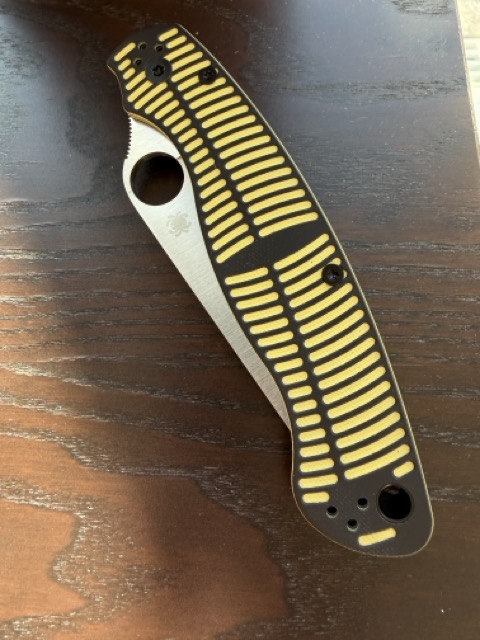
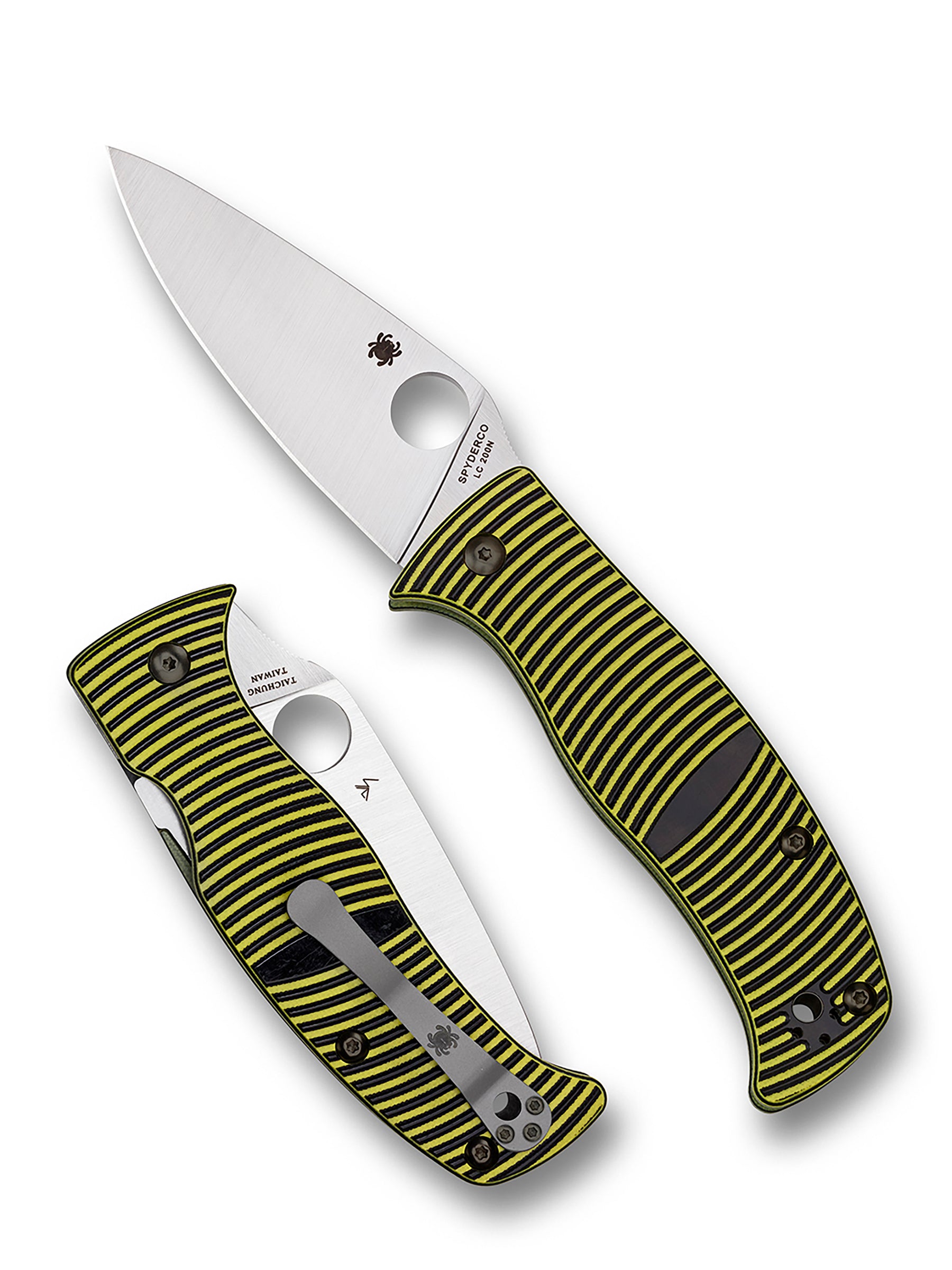
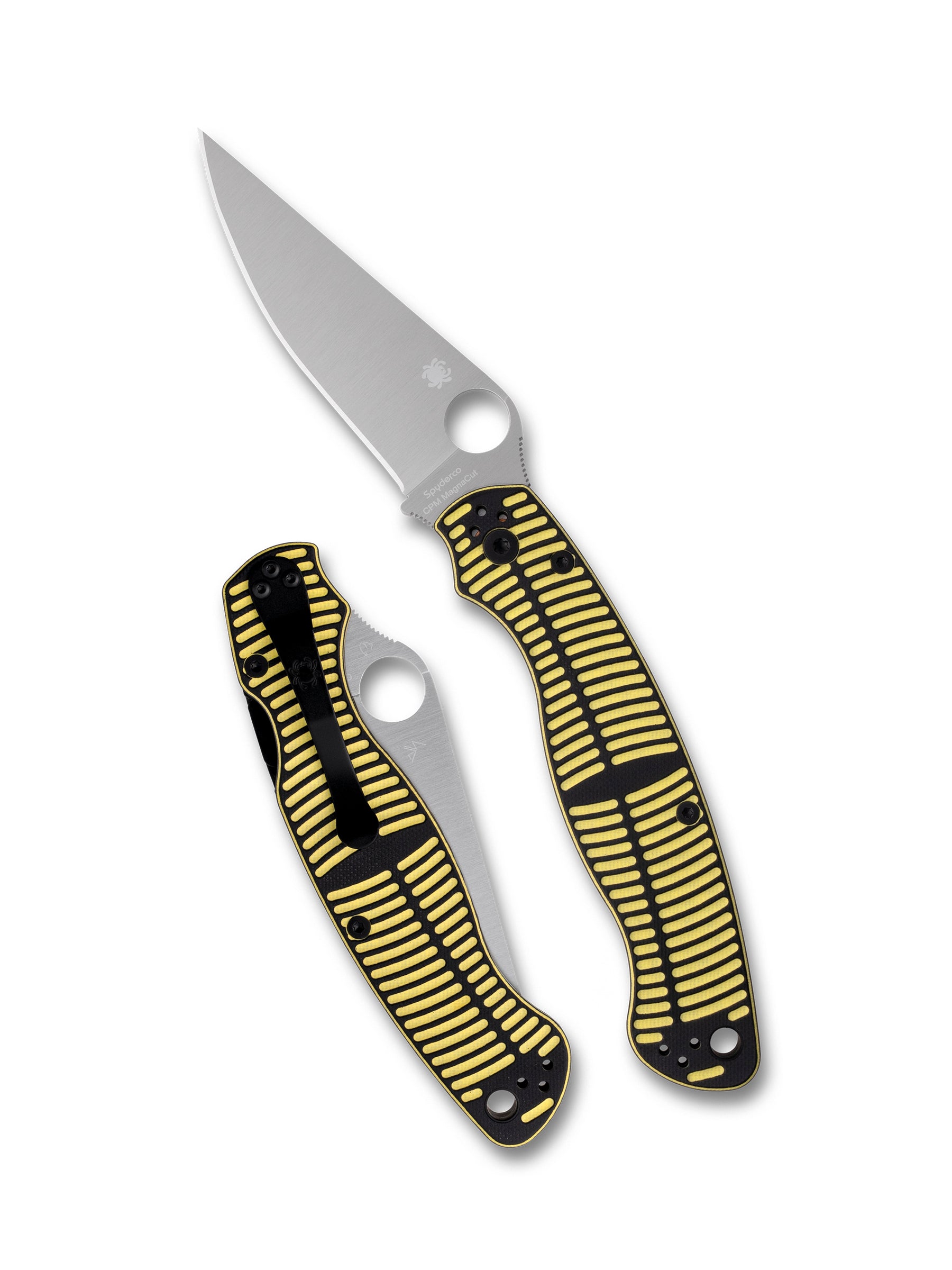
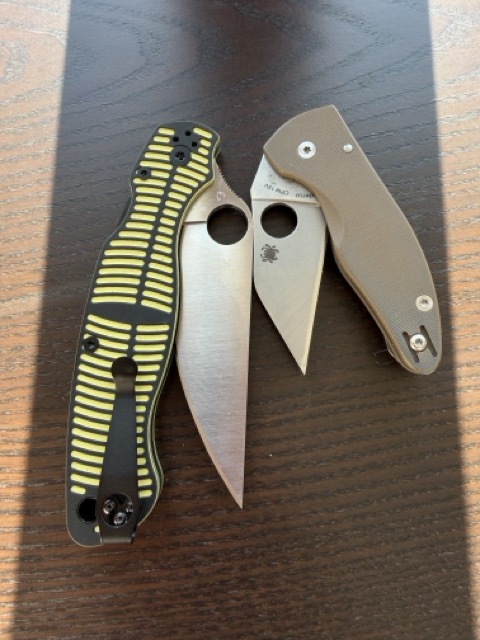
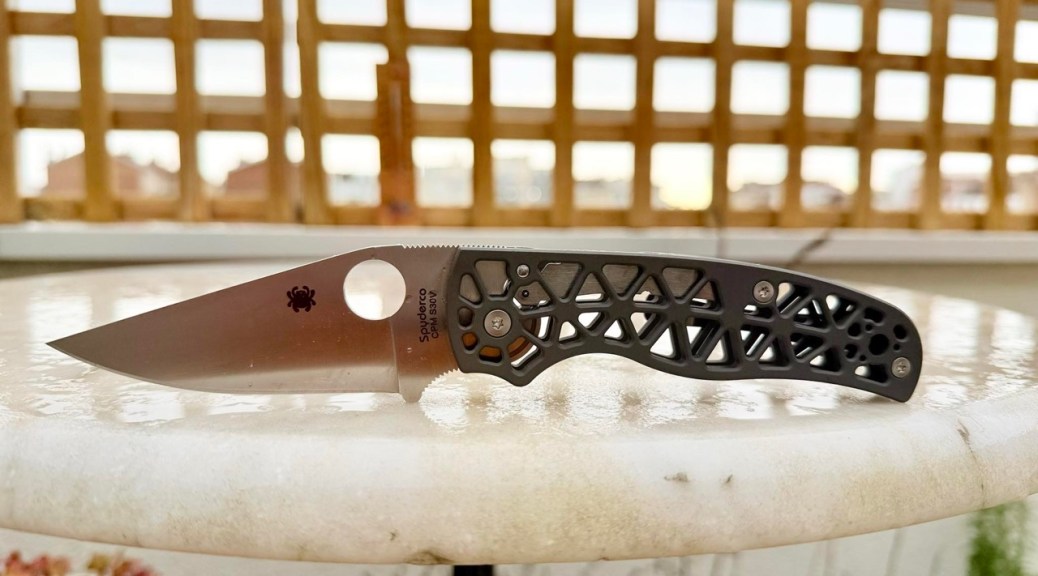
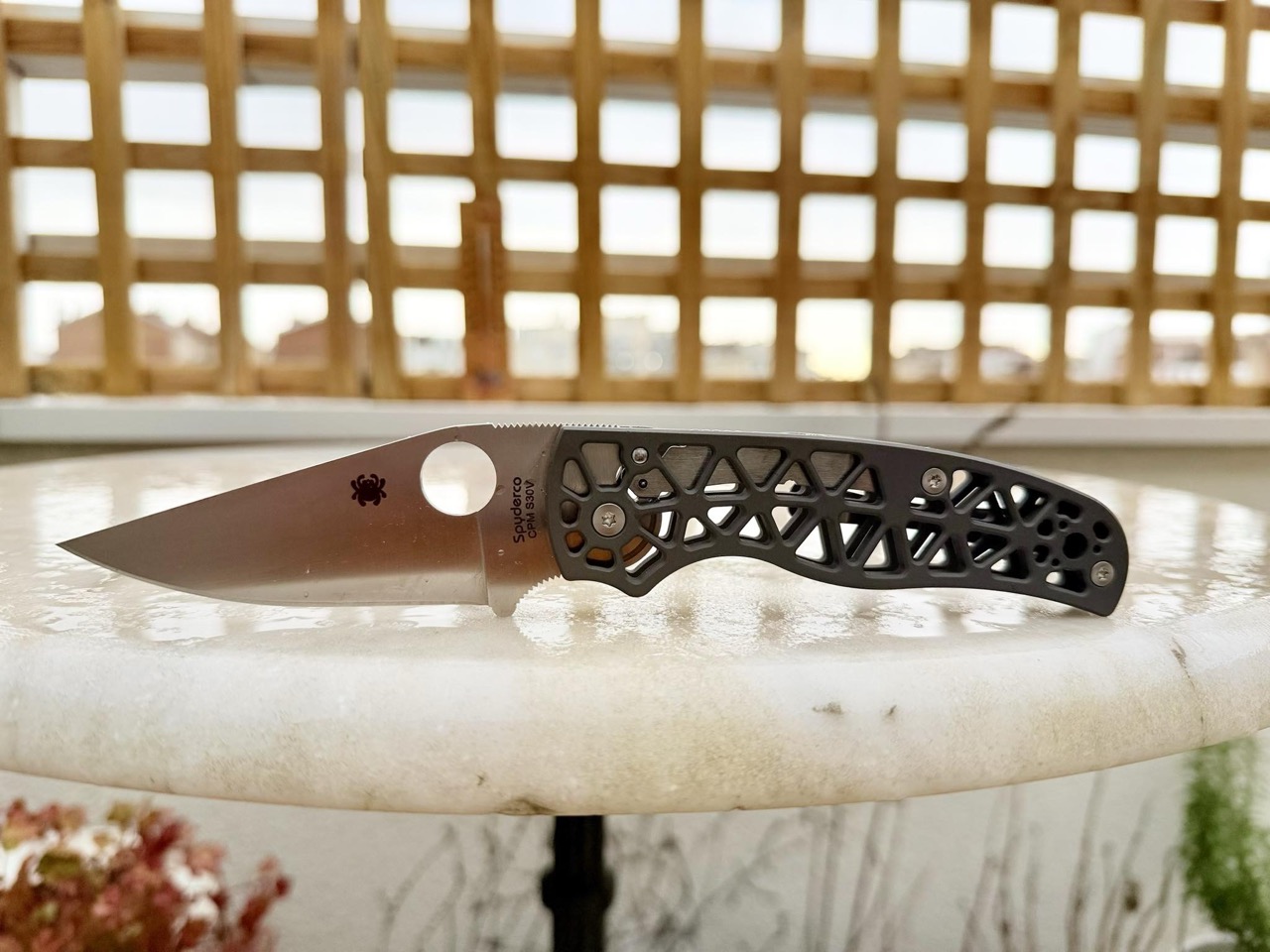
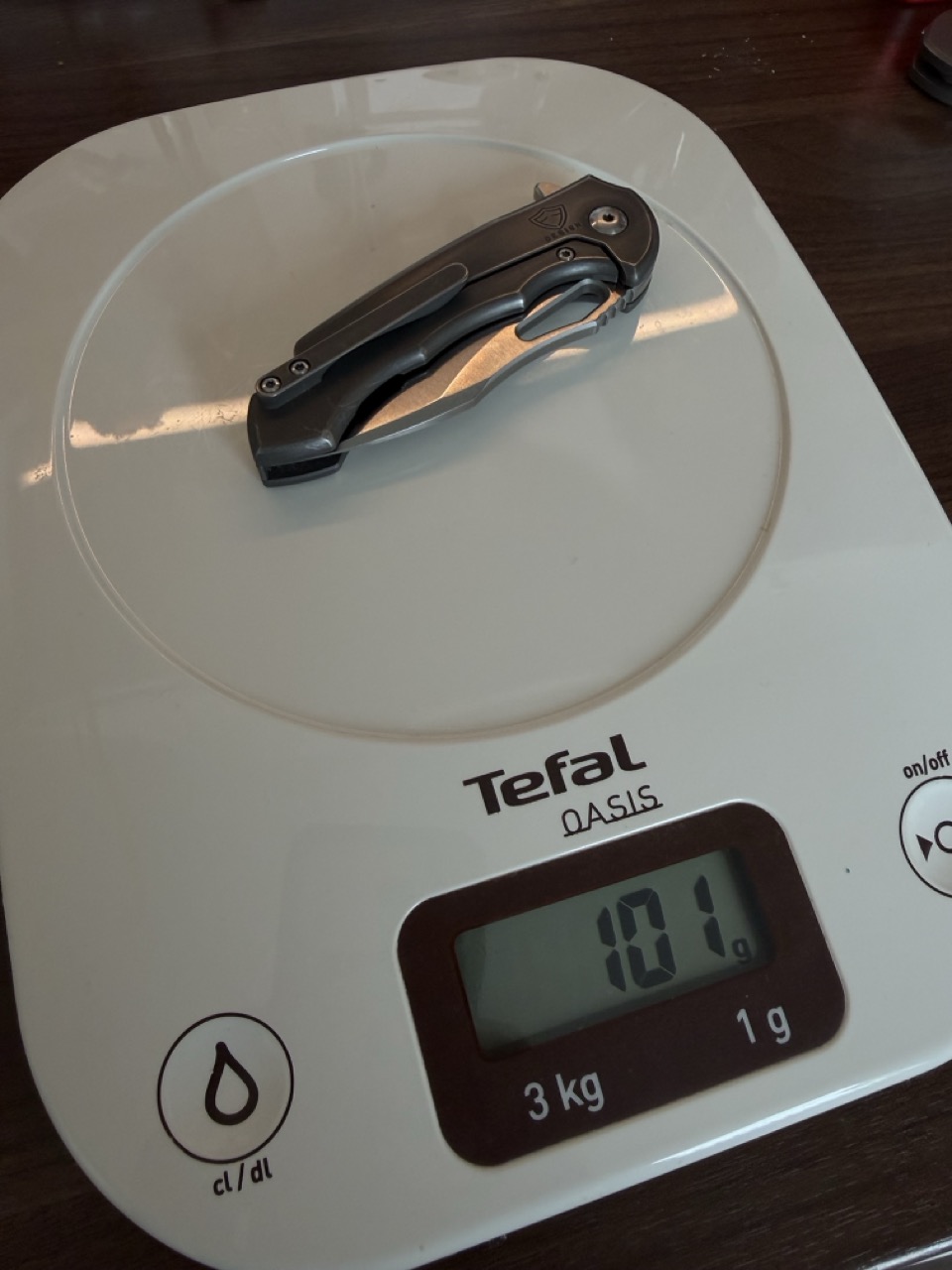
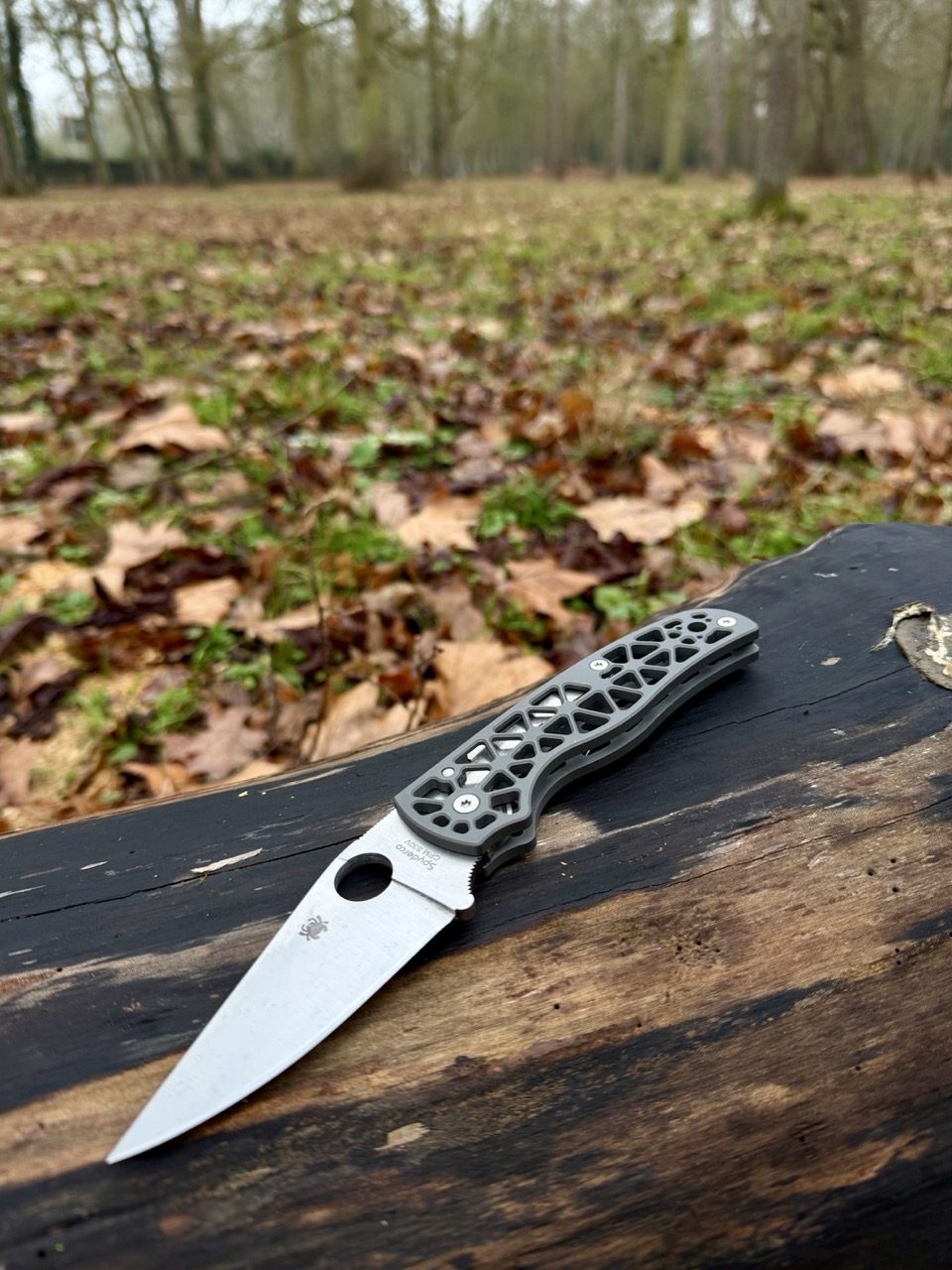
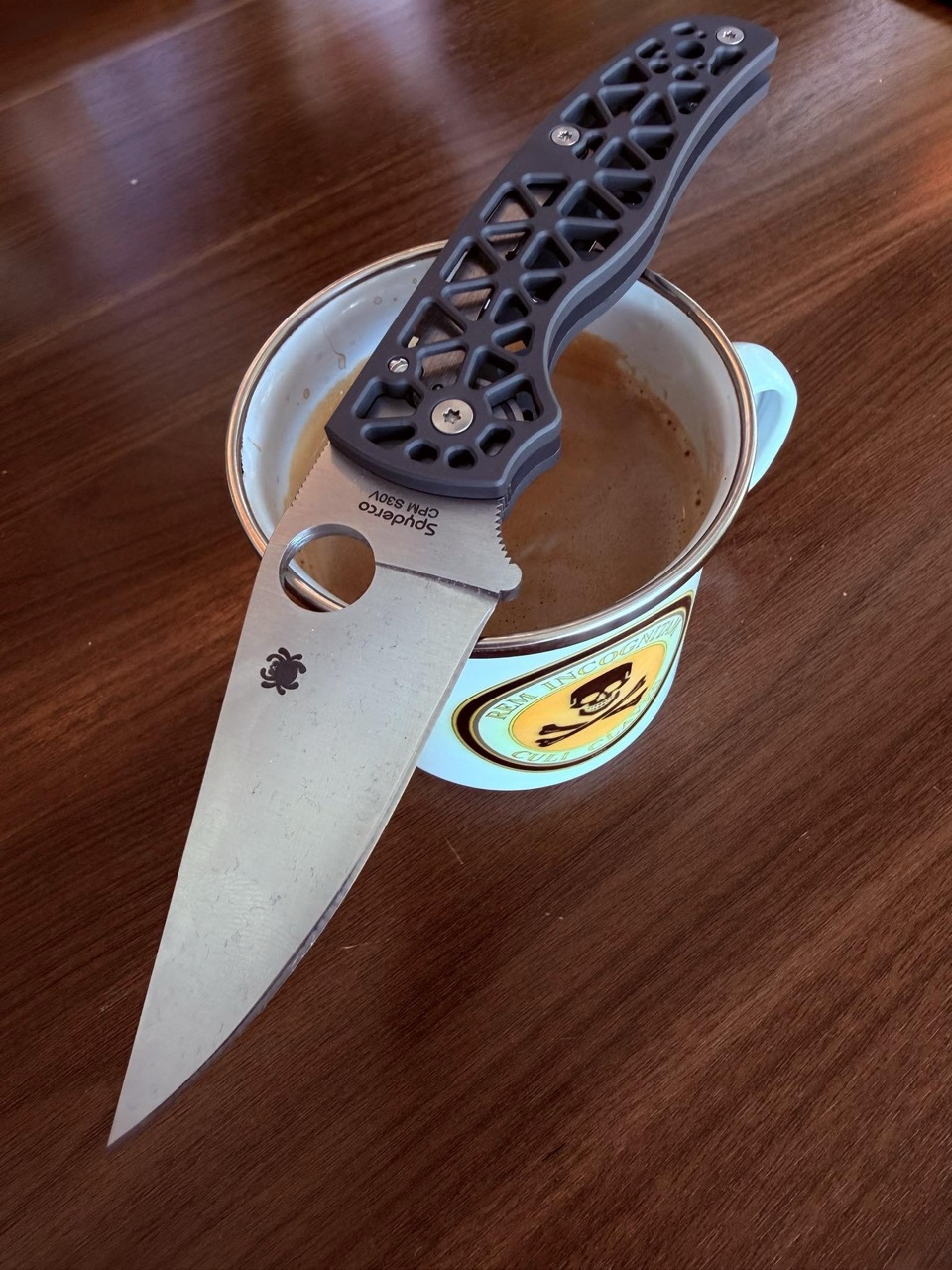
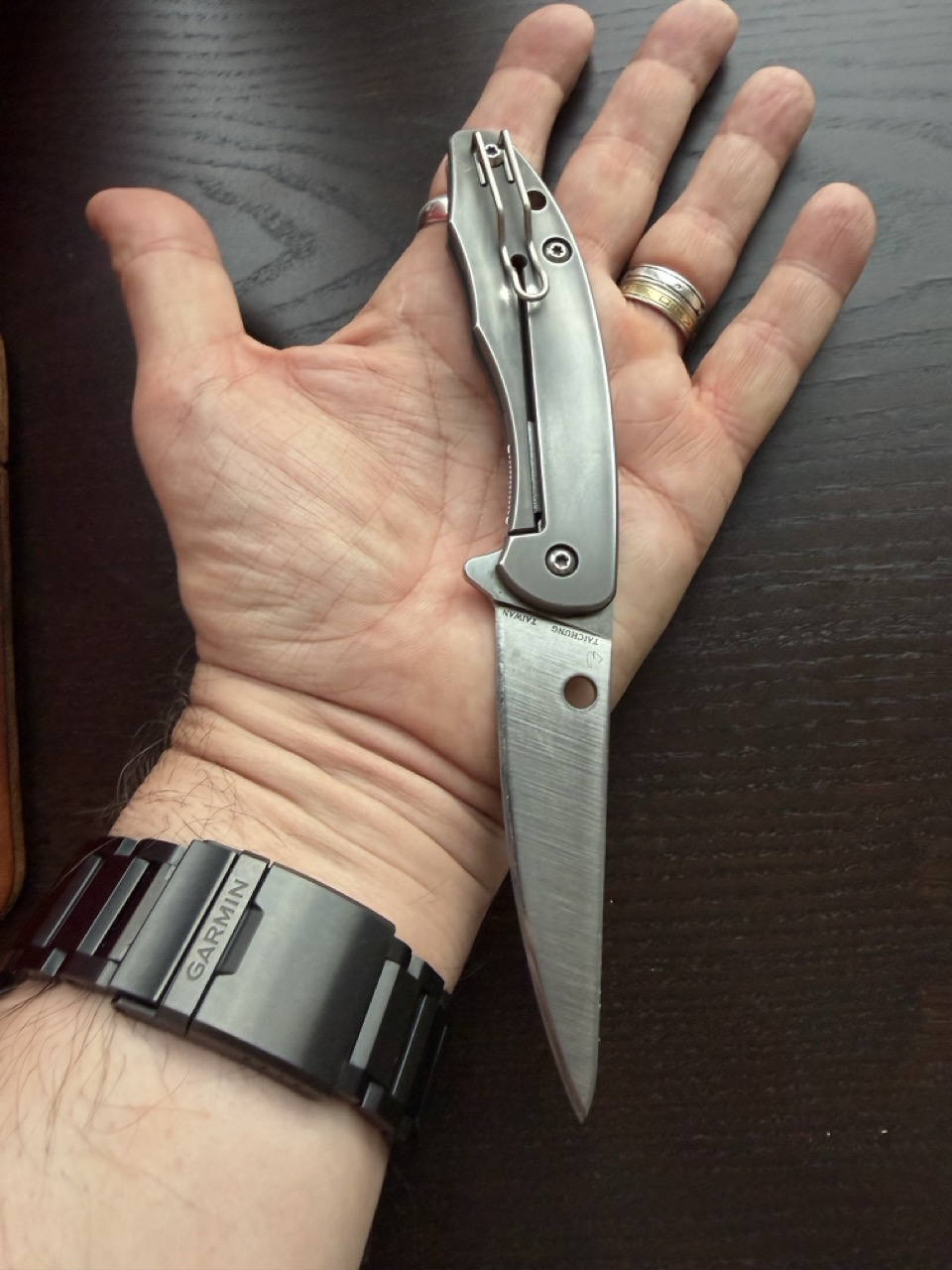
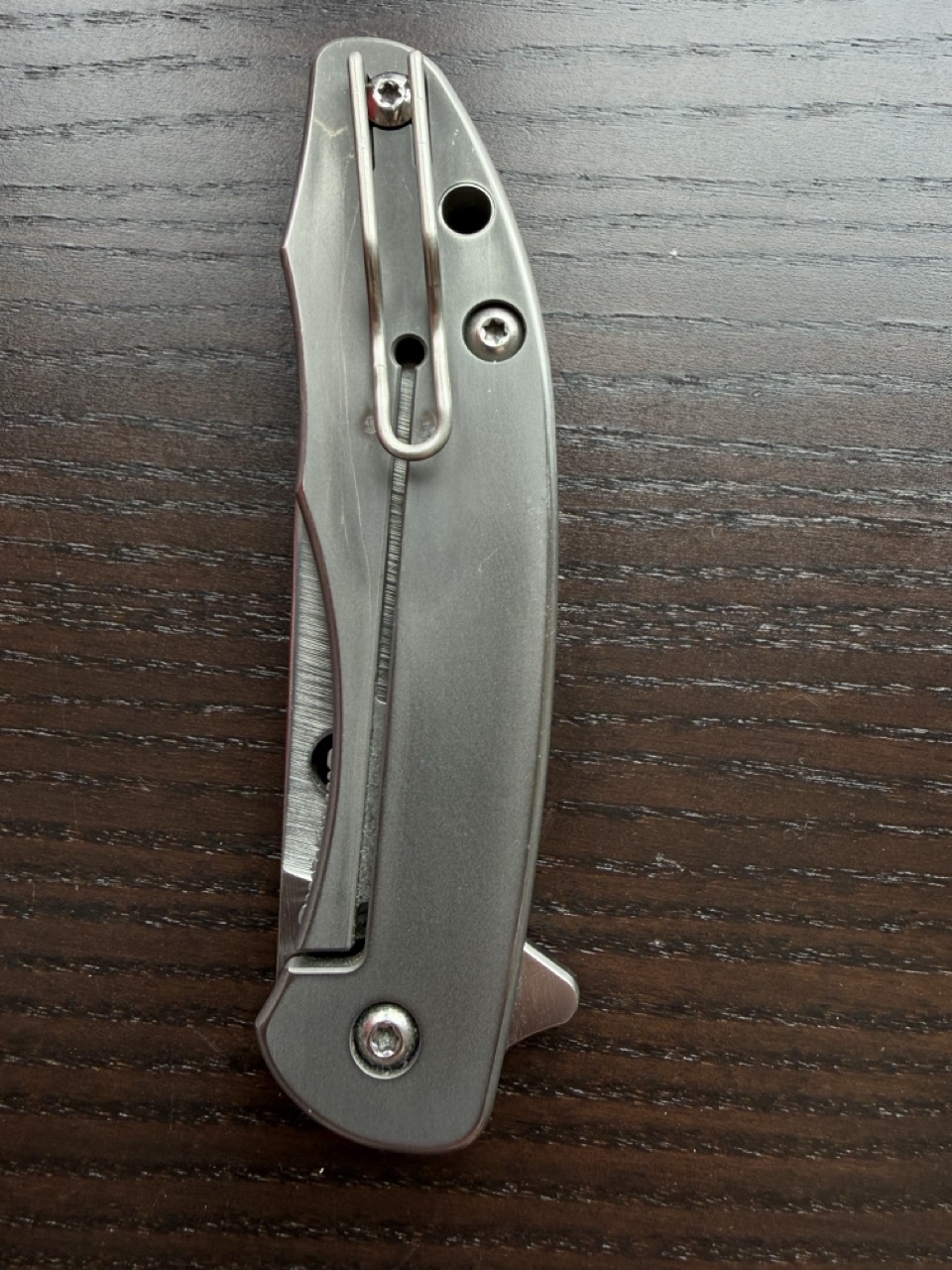
The Edgerati is a knife meant to be seen. Concealed use is not its calling; it is designed to be displayed. This intent is immediately evident in the intricacy of its handle, crafted from aerospace-grade aluminum—a material currently coveted in both automotive and mobile technology. Its aesthetic is at once modern and authoritative, a subtle nod to industrial sophistication.


This folding cutting tool feels as though it stepped straight out of a James Cameron film—somewhere between The TerminatorAliens, and Avatar. With its feather-light, aerospace-grade construction and unapologetically high-tech design, it belongs as naturally on Pandora—clipped to the gear of a frontier colonist—as it does in the pocket of a discerning collector. Sleek, precise, and unmistakably futuristic, it carries the kind of visual authority that would make it an effortless on-screen presence: a prop that doesn’t just look the part, but performs with the same credibility in the real world as it would under cinematic scrutiny.

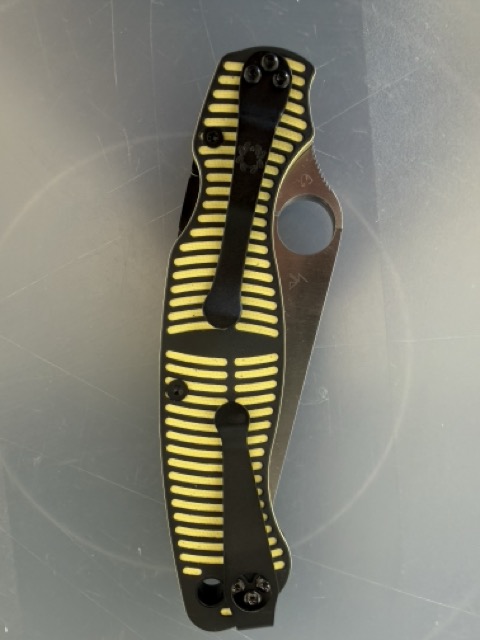
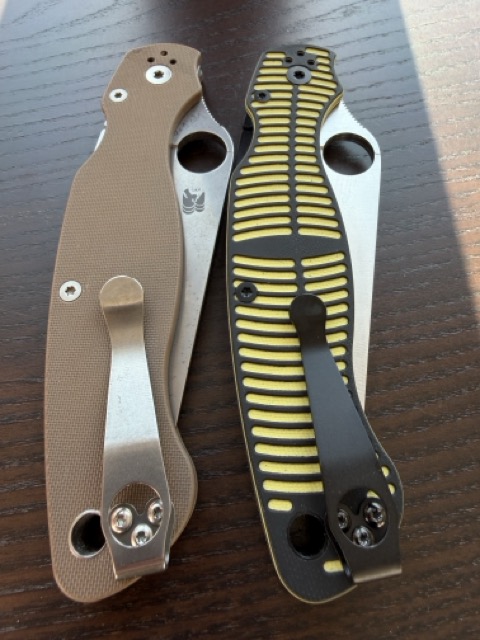
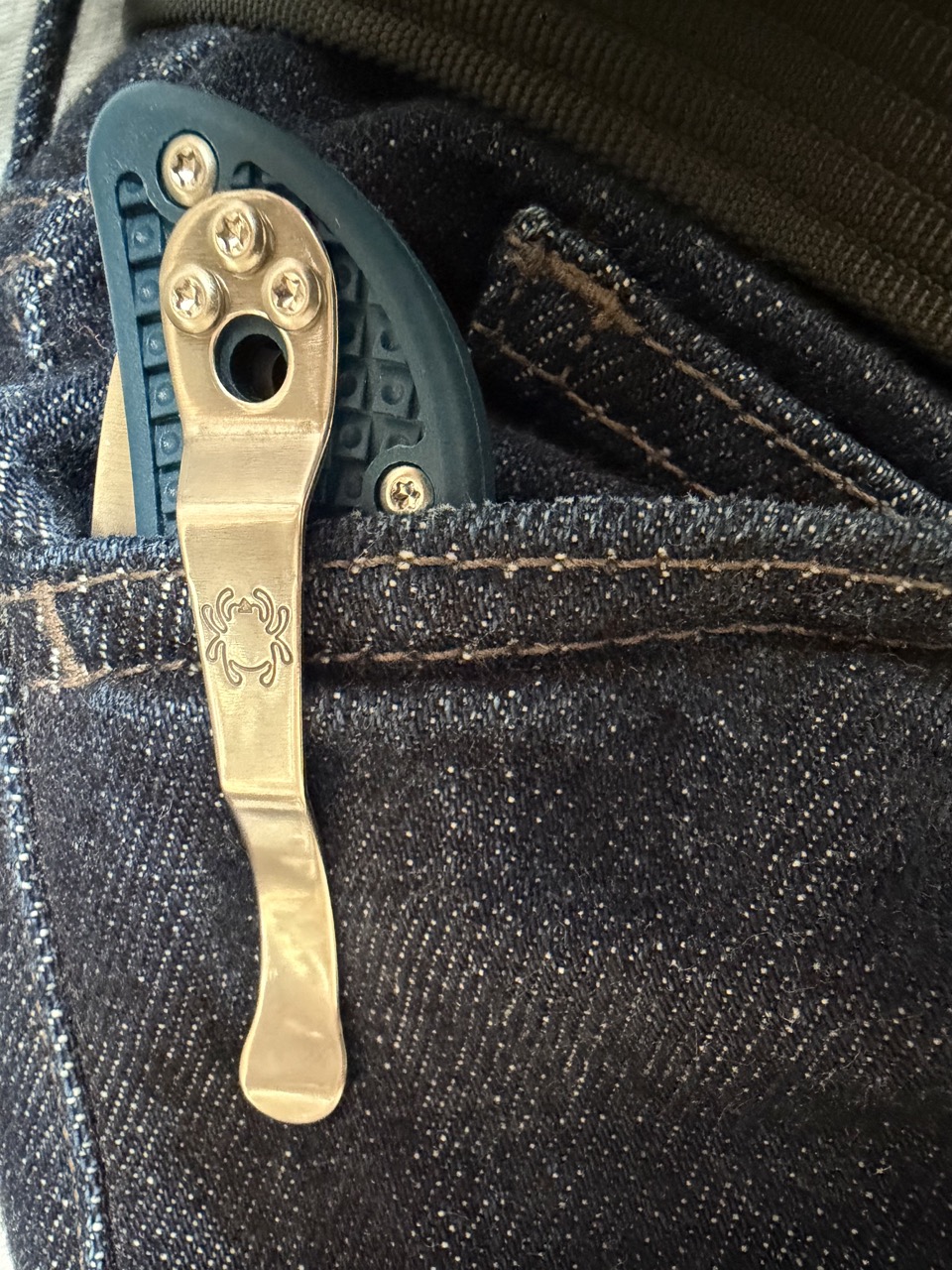
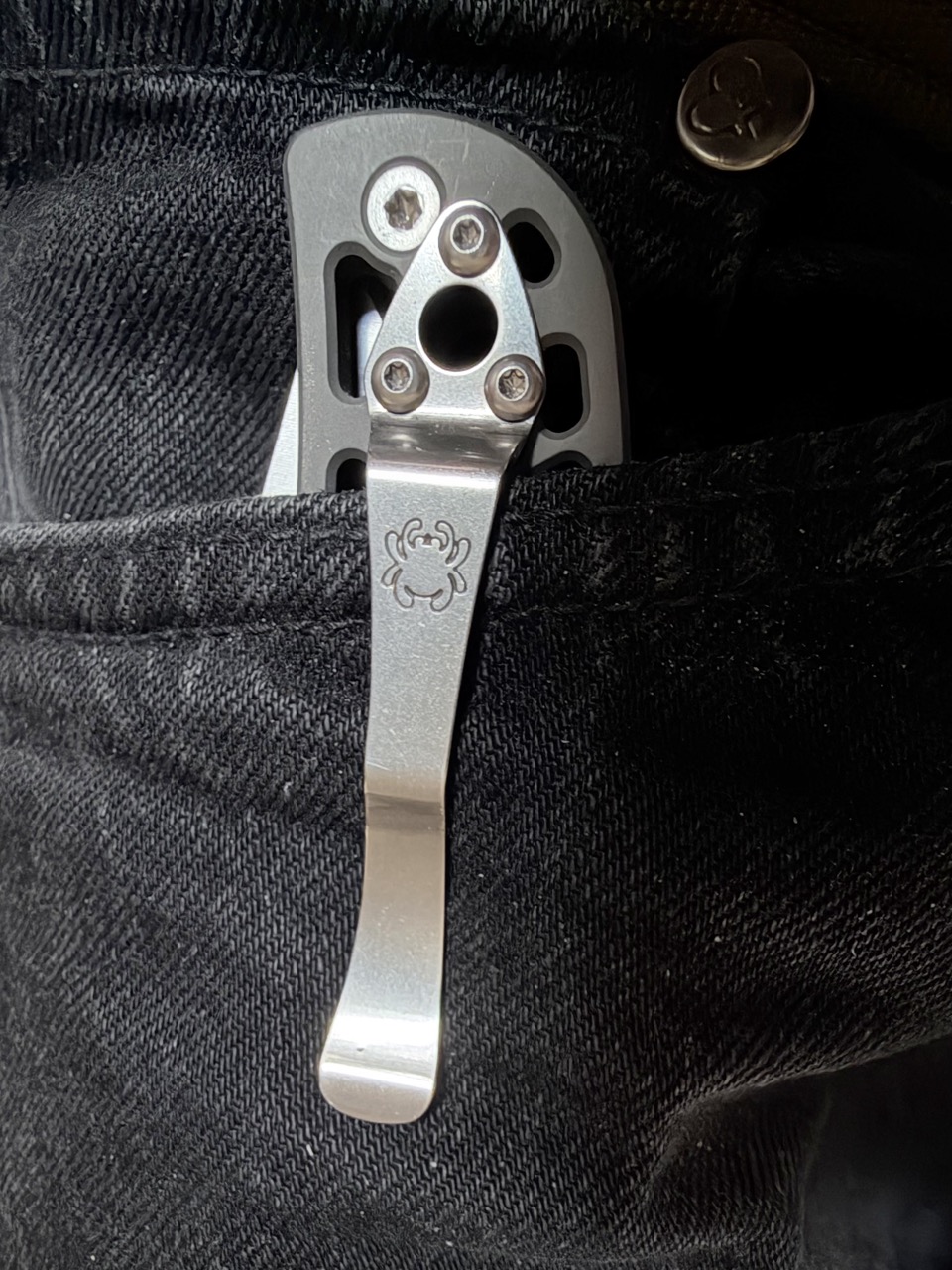
The clip positions the knife prominently in the pocket, foregoing deep-carry discretion for confident visibility. For those who prioritize subtlety, this may give pause—but the Edgerati embraces its presence unapologetically. Lightweight yet commanding, it wears its virtues with pride.

What truly surprised me was the Edgerati’s rare equilibrium between strength and comfort—its balance giving the knife an almost living presence in the hand. I had anticipated something more cumbersome, even imagined that maintenance might prove tedious, yet the opposite is true. The Edgerati feels intuitive, effortless. Whether in the kitchen or deep in the wilderness, it performs like a seasoned workhorse. The blade deploys with immediacy and closes with a swift, reassuring snap, reinforcing the impression of a tool engineered with equal measures of precision and confidence. It’s the kind of knife my friend Sancho would appreciate—always eager to move fast and light, even when chasing joggers. (This is indeed a private joke… Sancho doesn’t actually run—he ambushes them.)

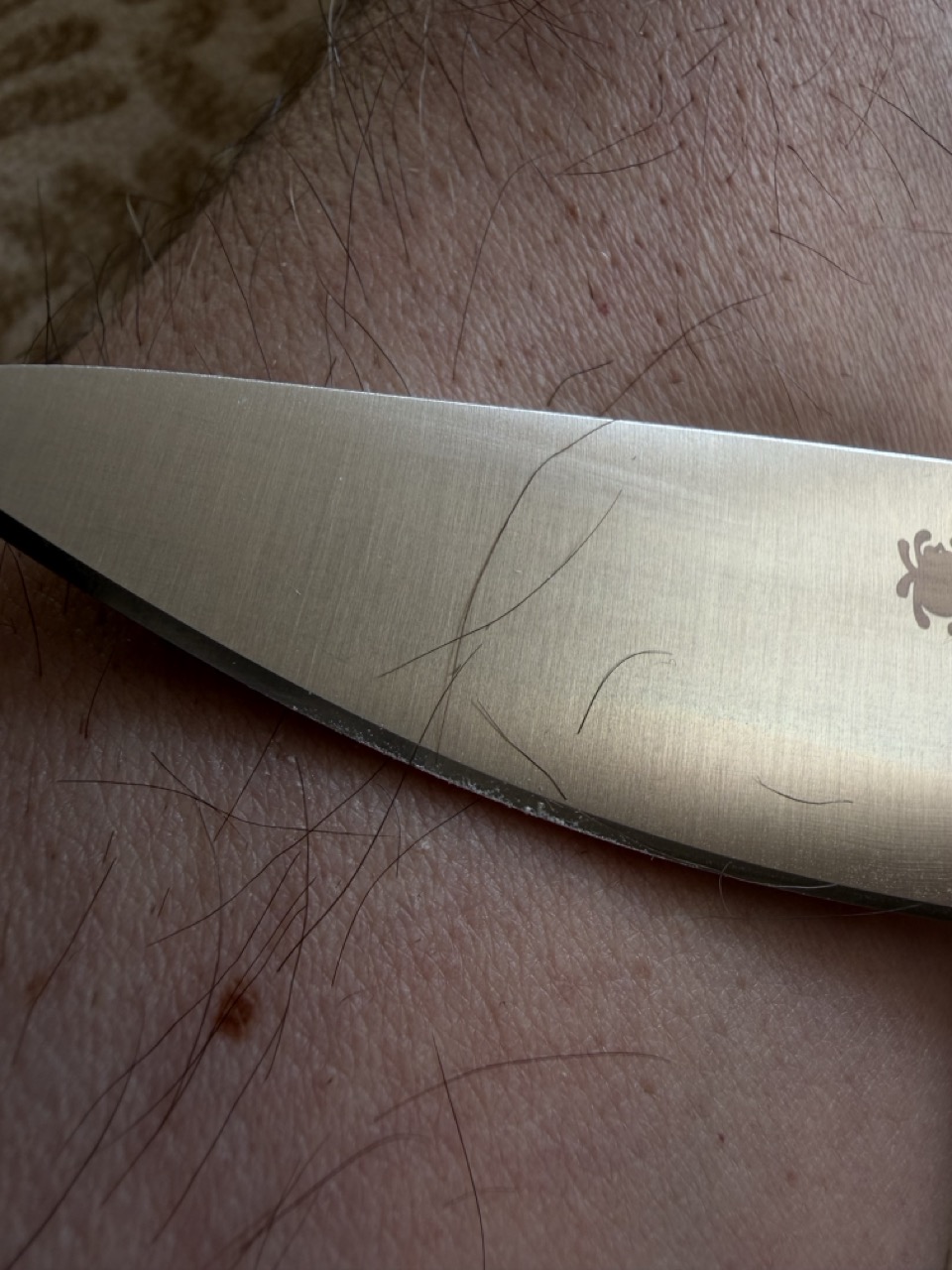
The geometry of the blade underscores its reliability: it cuts deep, precise, and confidently. Out of the box, the factory edge is nothing short of perfect—a testament to the meticulous craftsmanship that defines the Edgerati.


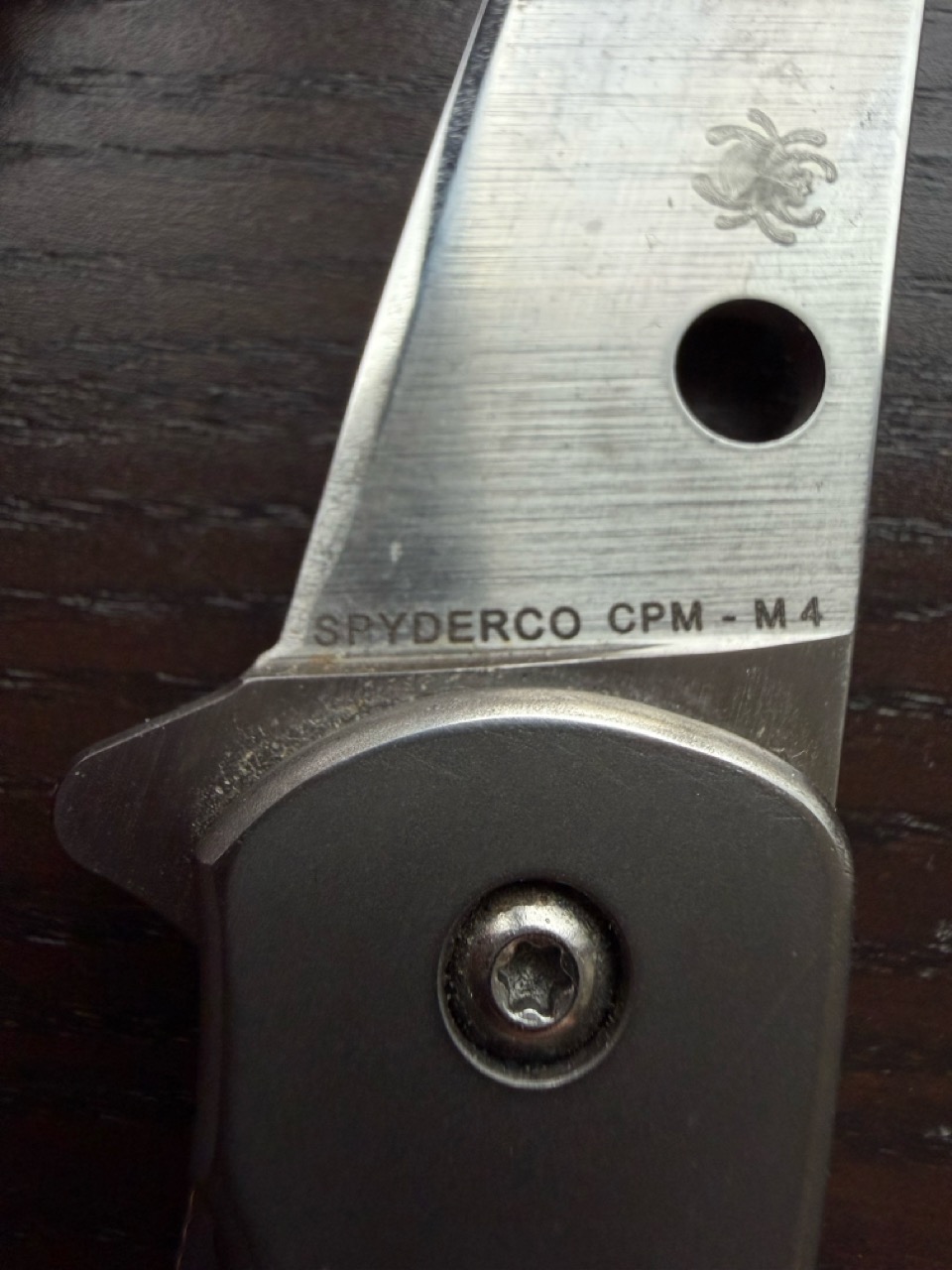
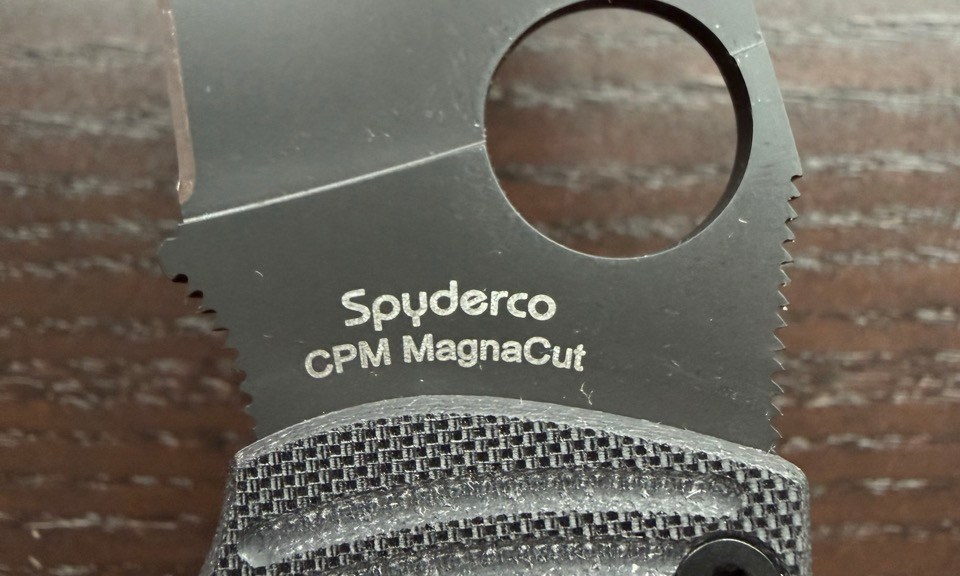
There is, admittedly, one small point of contention. While the S30V blade—expertly heat-treated by Spyderco—represents one of the finest expressions of this steel, I couldn’t help wishing for something a touch more adventurous. To be clear, CPM S30V remains a benchmark alloy, purpose-built for cutlery and still remarkably relevant. Yet today, we live in an era blessed with extraordinary newcomers—Magnacut, or even CPM MagnaMax. One can’t help but imagine, just for a moment, what the Edgerati would feel like straight out of the box with a MagnaMax blade: a true thunderclap, a statement heard across the knife world. For now, that dream must wait—but it certainly makes the prospect of future Sprint runs all the more tantalizing.

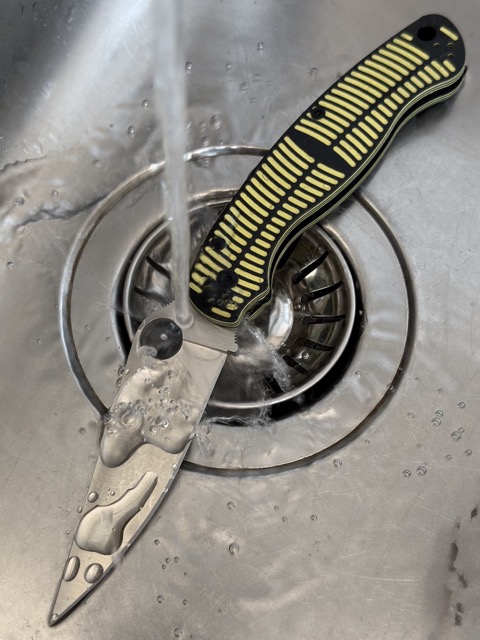
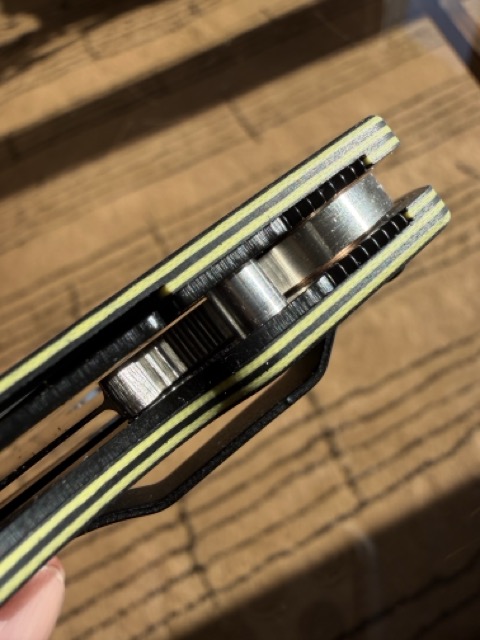
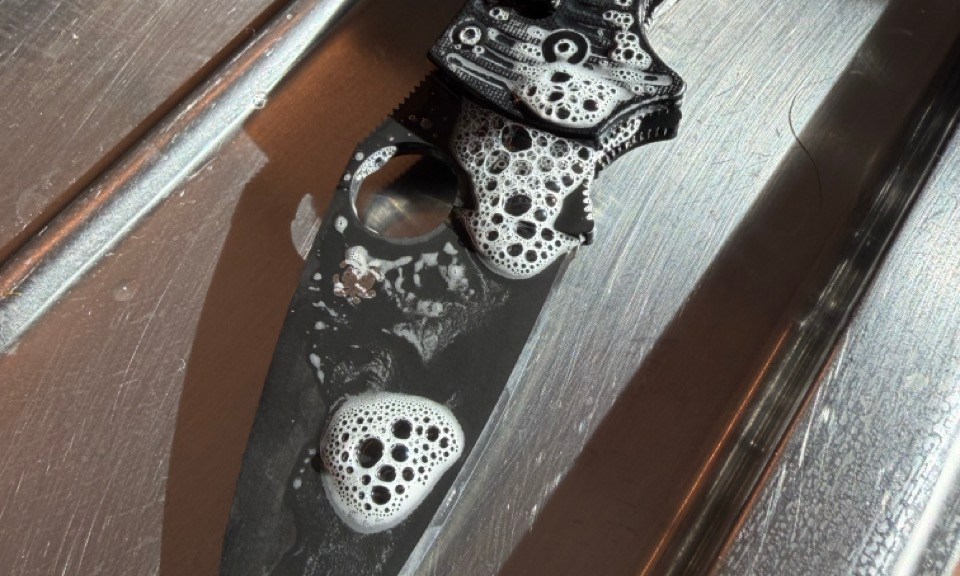
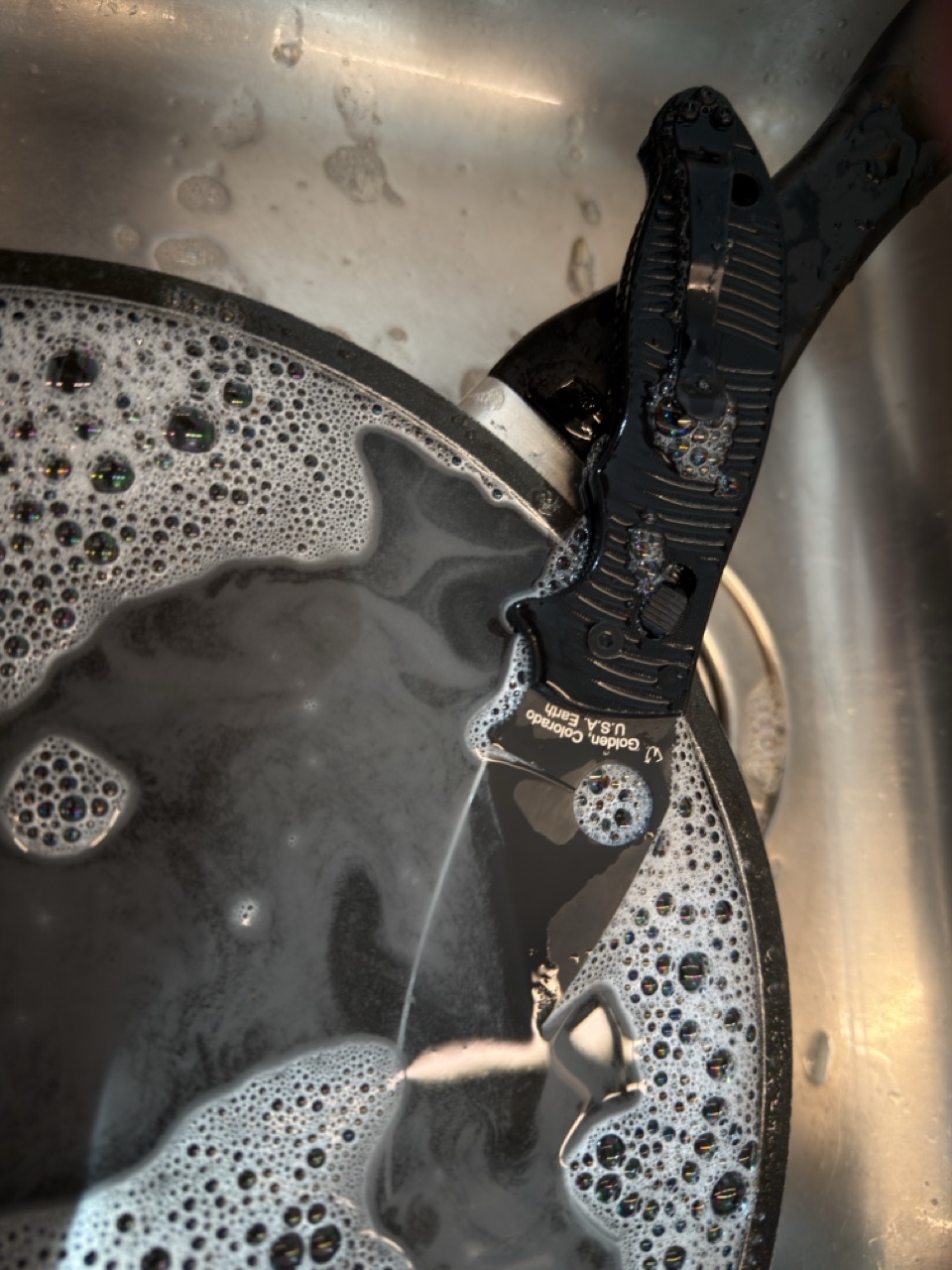
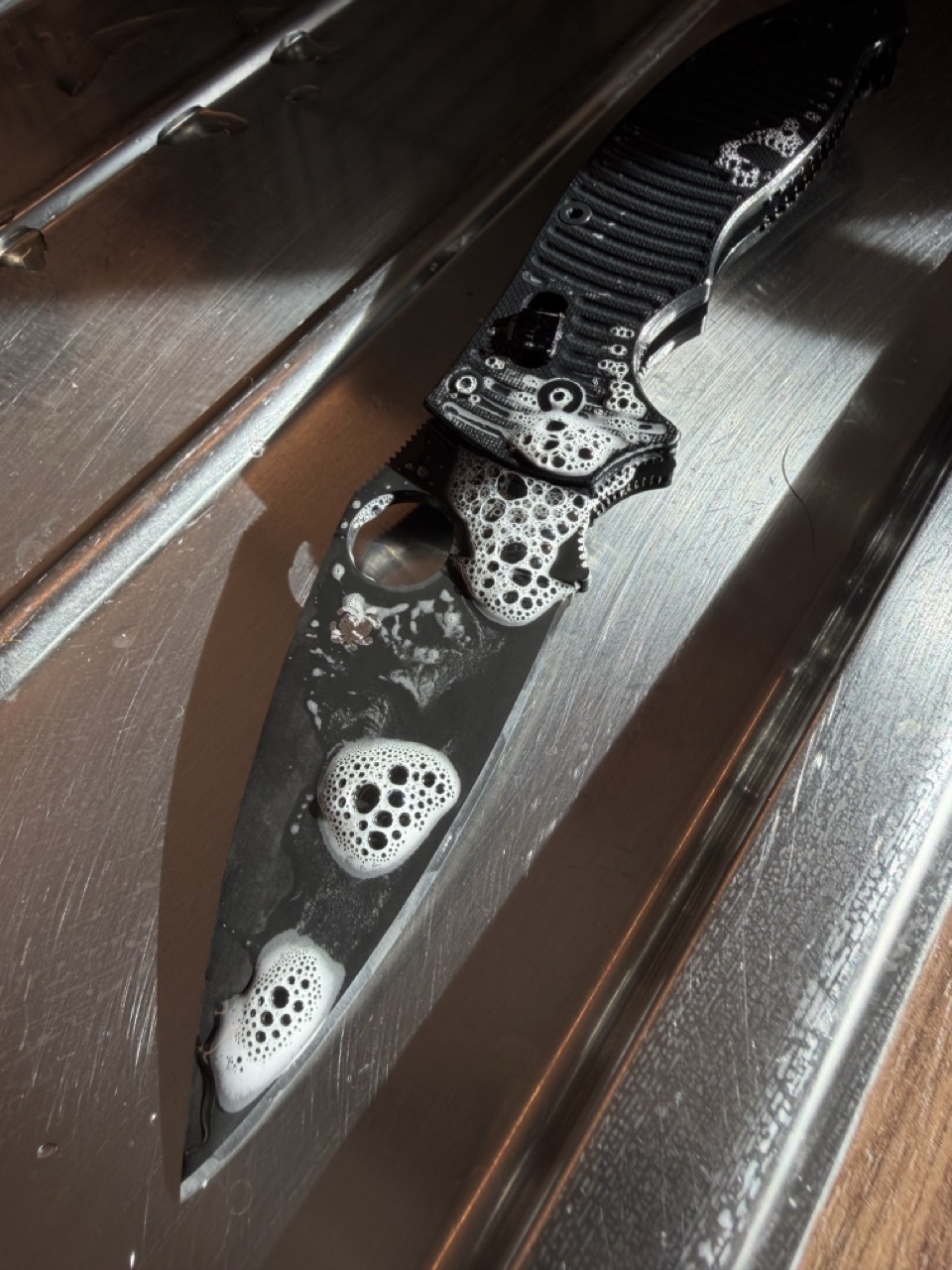
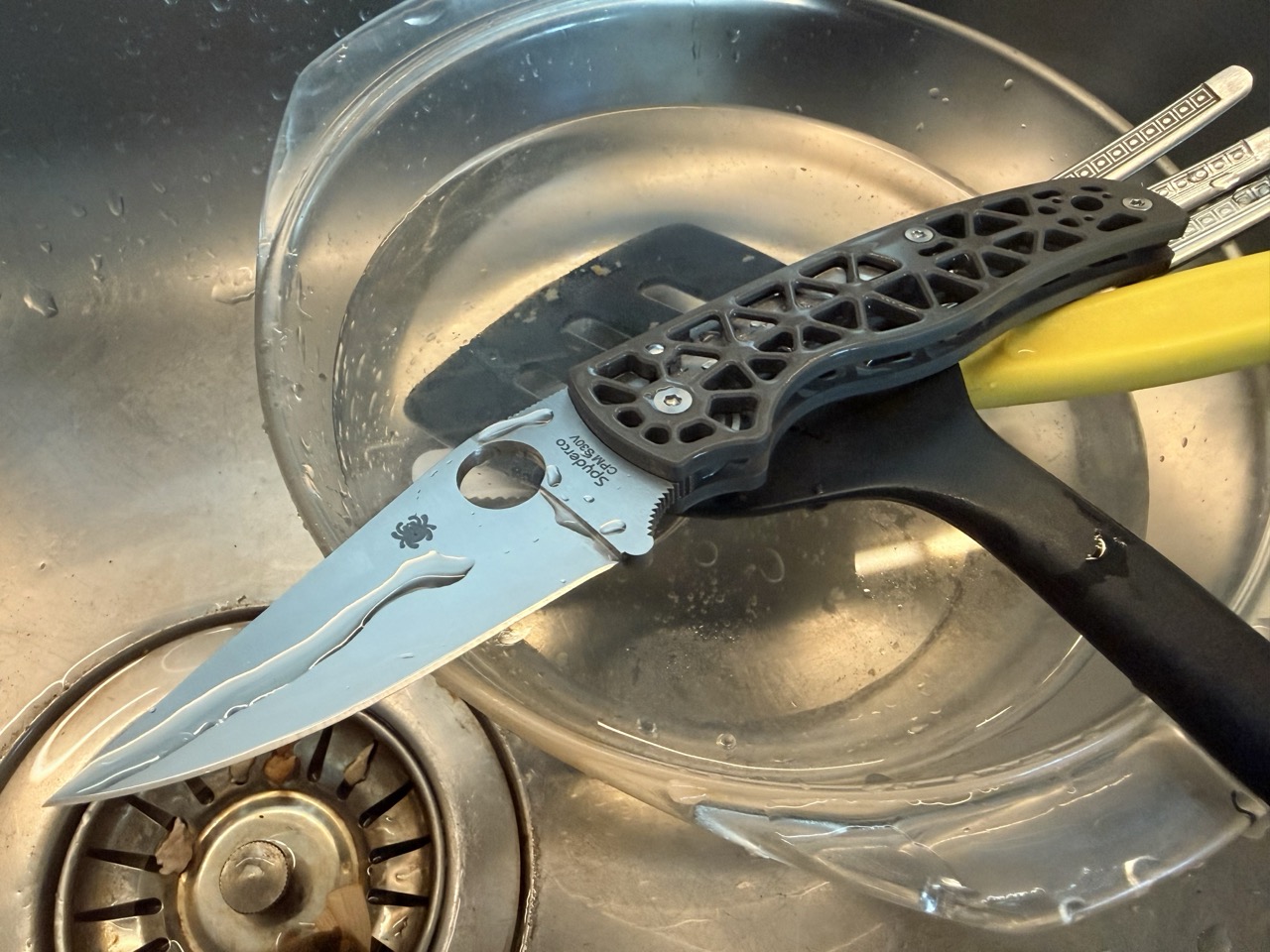
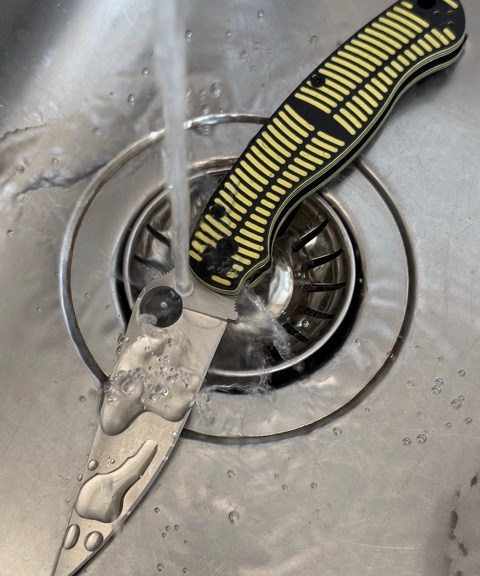
In the kitchen, hands are often wet—or worse, slick with oil. This is the ultimate test of a knife’s ergonomics: can it be drawn from the pocket and handled with confidence, without any risk of slipping? The Edgerati answers that challenge effortlessly. Its handle offers a subtle, almost rubber-like tactility under the fingers, and once in hand, it seems to lock naturally into the palm, inspiring immediate control even in the most slippery conditions. Just as importantly, its open construction makes the knife remarkably easy to clean under running water, while full access to the mechanical components simplifies maintenance and lubrication—practical virtues that reinforce its status as a true everyday tool.

I had initial concerns about that aluminum coating, but so far it has proven remarkably resilient. It shows no fragility, and the minor signs of wear blend seamlessly into the overall aesthetic. This is a knife that seems destined to age gracefully, acquiring character without compromising its refined appeal.

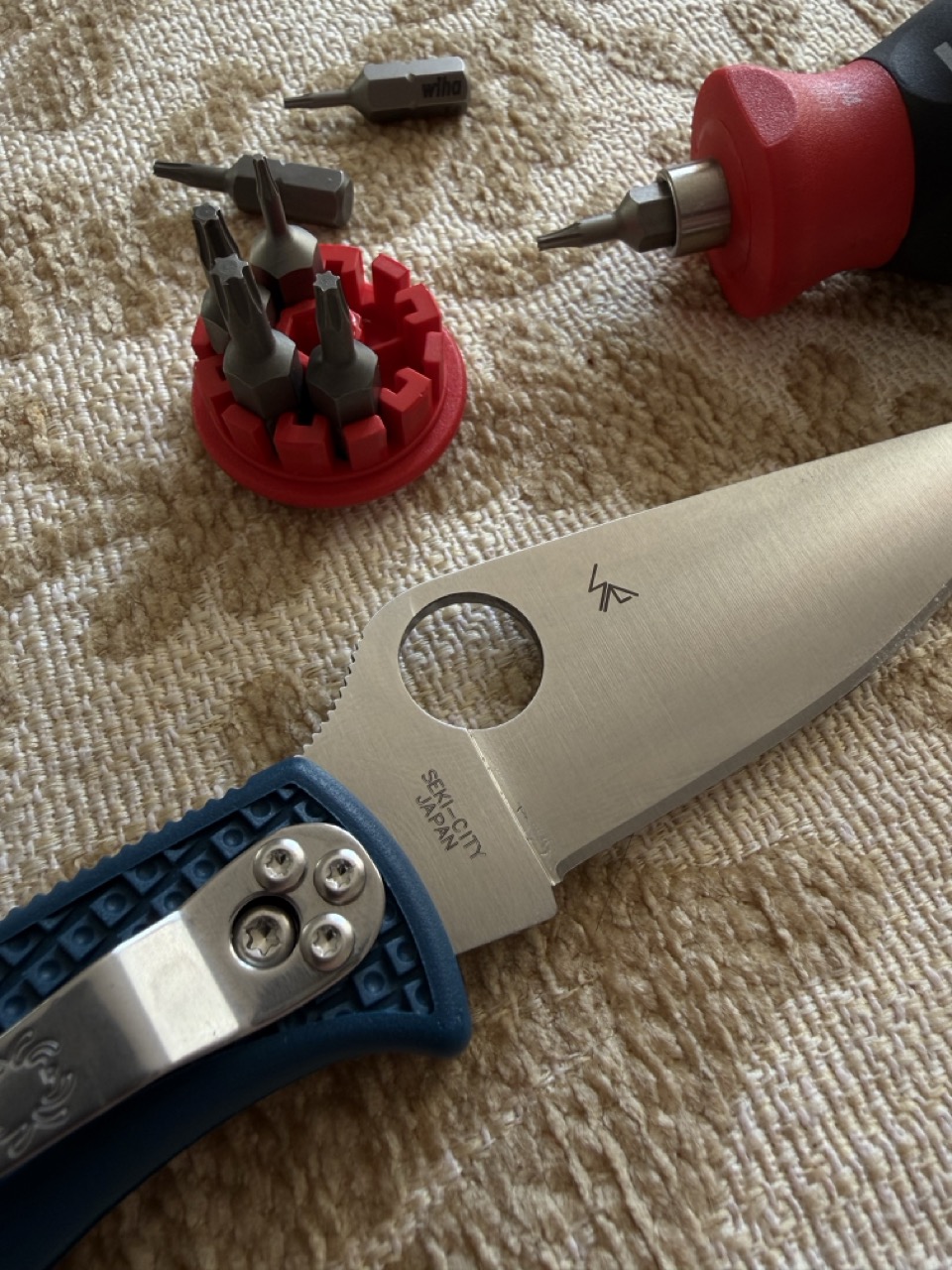
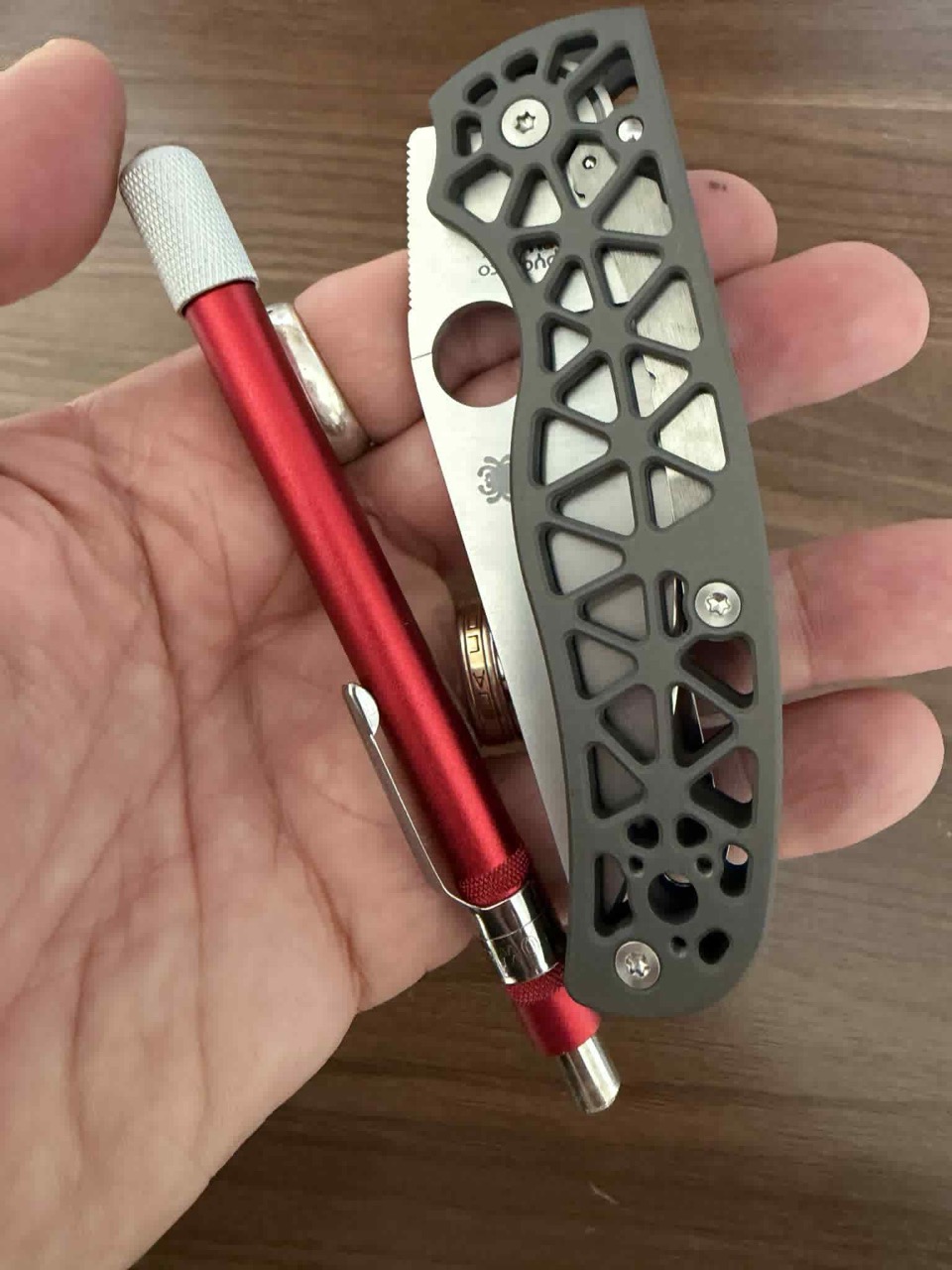
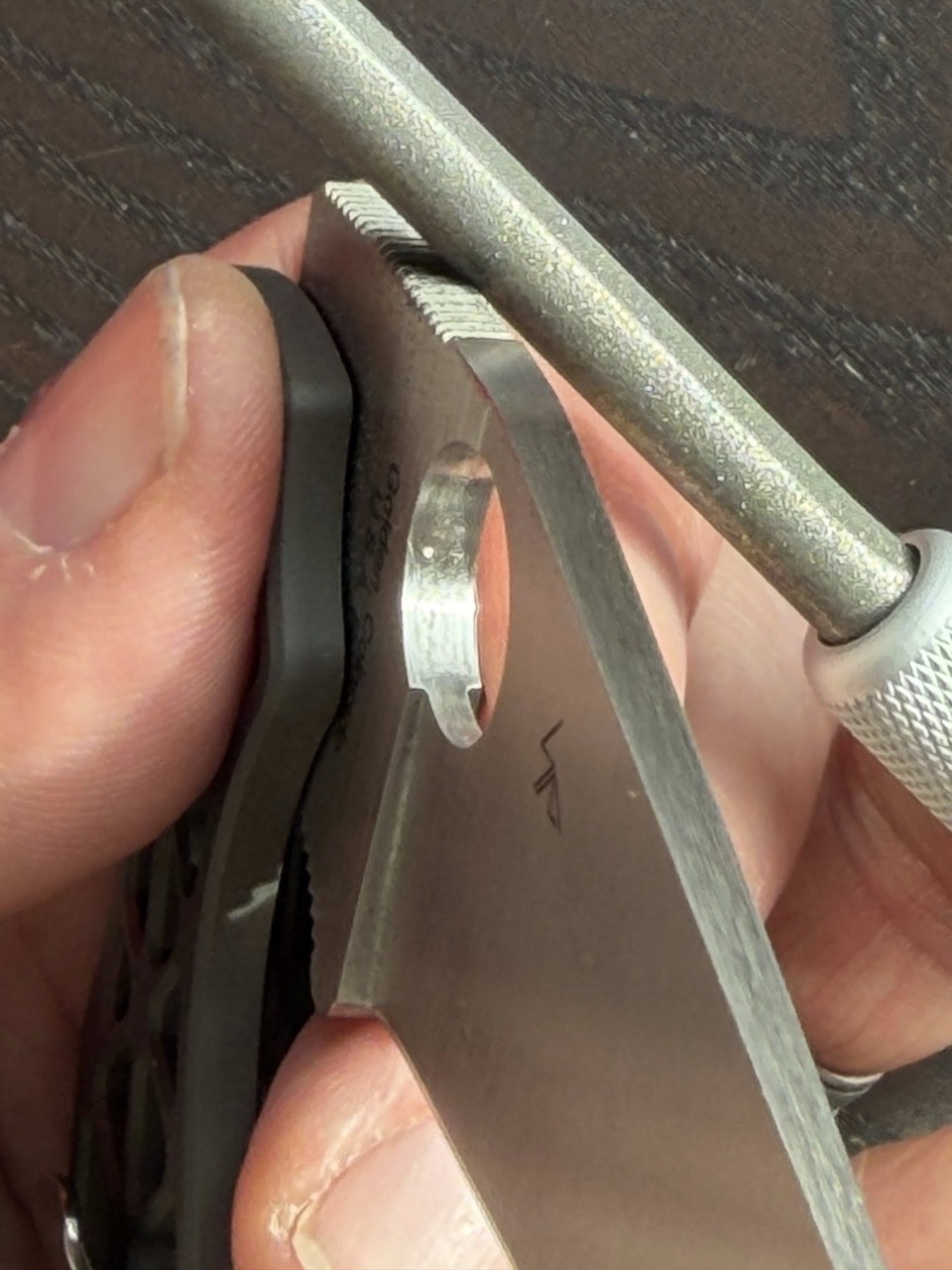
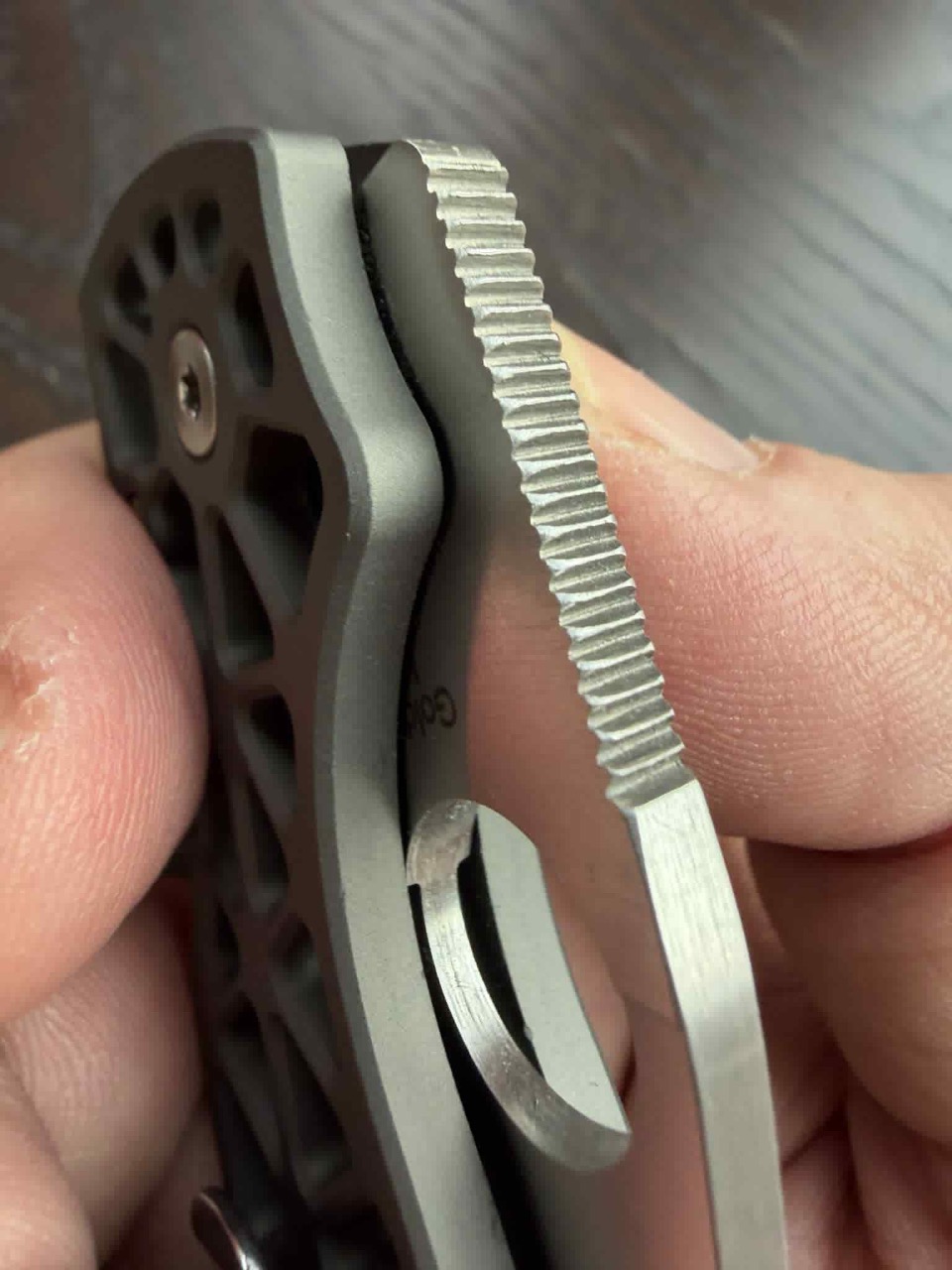
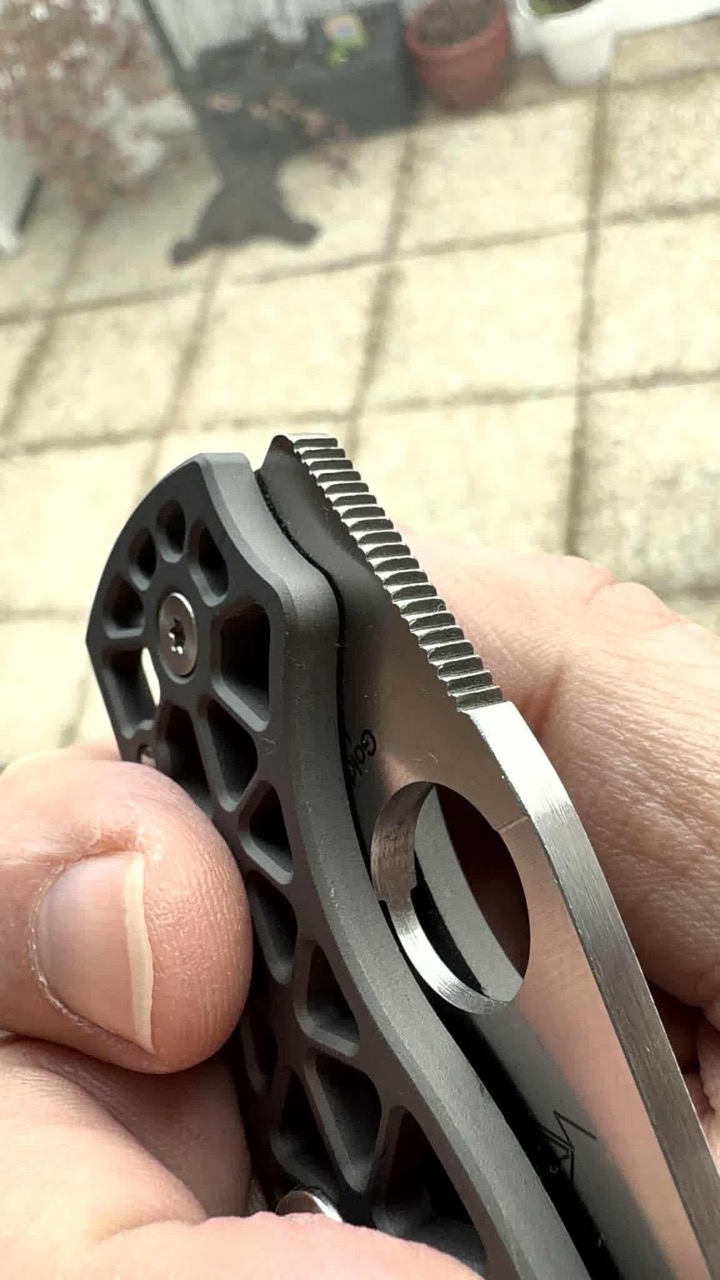
For those who appreciate a personal touch, customization is not merely possible—it becomes transformative. I chose to slightly round the spine of the blade, softening its edges and taming the aggressive upper jimping, using nothing more than a simple, coarse €5 diamond file. The result is subtle yet meaningful, enhancing comfort without compromising the knife’s character, and reinforcing the idea that the Edgerati welcomes thoughtful, owner-driven refinement.


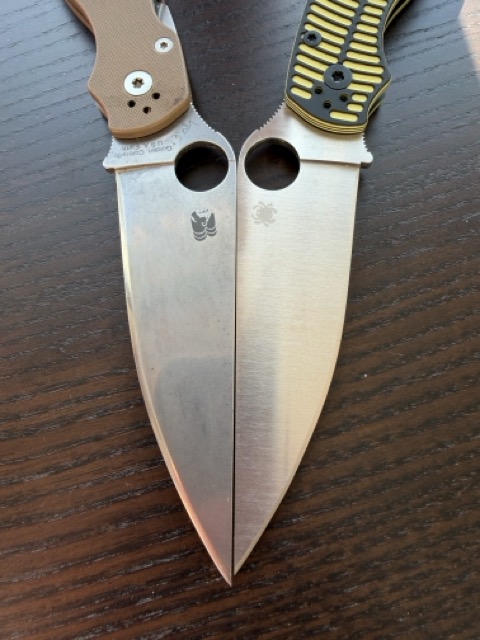
At 3.7 mm, the blade thickness may sound substantial on paper, yet the reality is far more nuanced. The Edgerati features a tall blade with a full flat grind, resulting in a geometry that is uncompromising straight out of the box. Thanks to its pronounced distal taper, the blade thins rapidly, delivering excellent cutting performance without any sense of excess material behind the edge. In that respect, it recalls me my Lil’ Temperance—4 mm thick, yet tall and very efficient. On a blade of this height, 3.7 mm translates to razor sharpness, with no penalty in use.
By contrast, the Shaman’s high saber grind required significant reprofiling to suit my preferences. Not so with the Edgerati—much to my own surprise. And considering that I routinely pair it with a Chaparral, one can easily gauge just how deeply I appreciate thin, efficient blade geometry.

The result is subtle yet immediately perceptible under the fingers, elevating both comfort and control and transforming the knife into something truly bespoke. The ability to tailor the Edgerati to one’s own preferences is not a mere convenience—it is an integral part of the ownership experience.

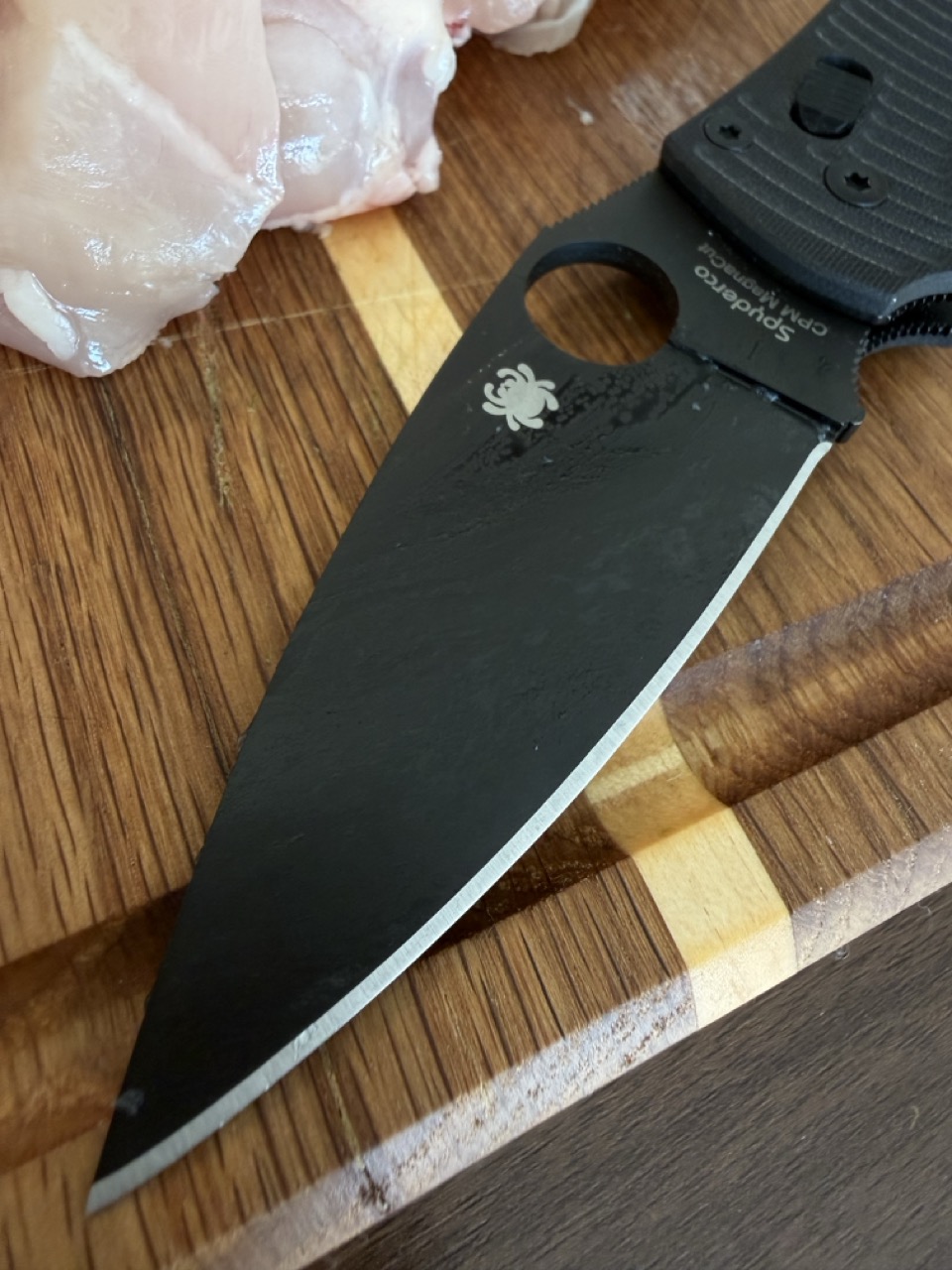
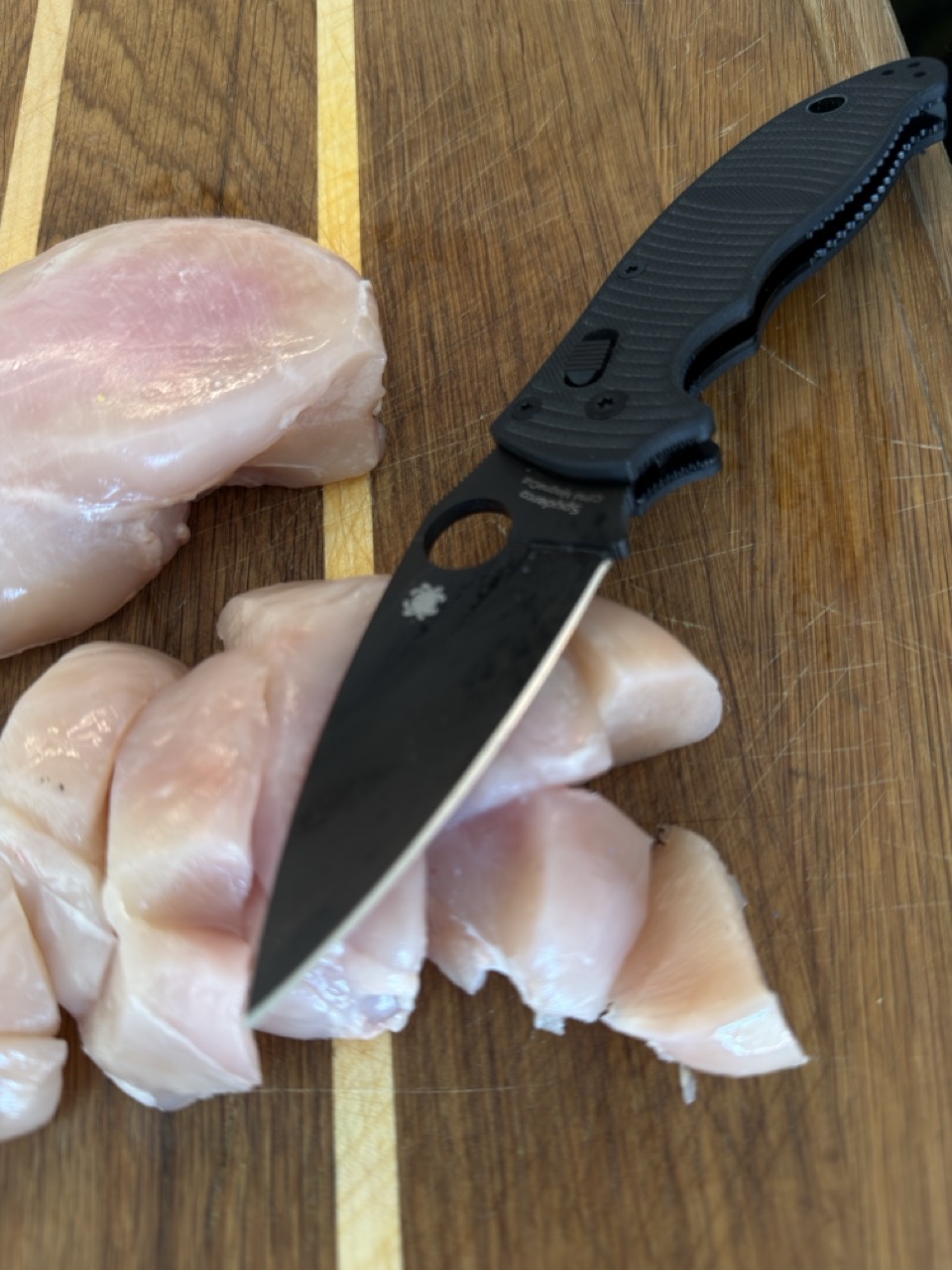
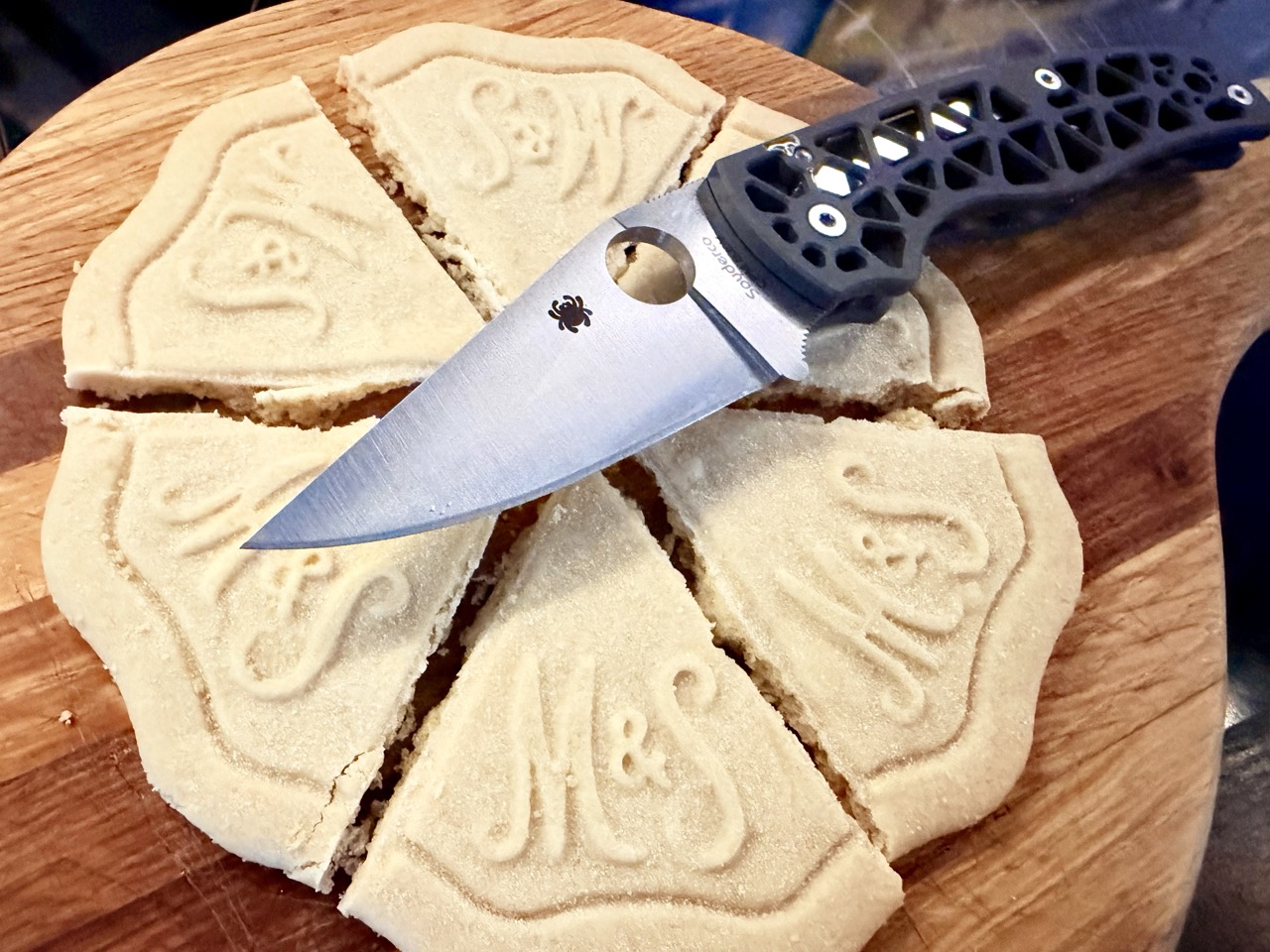
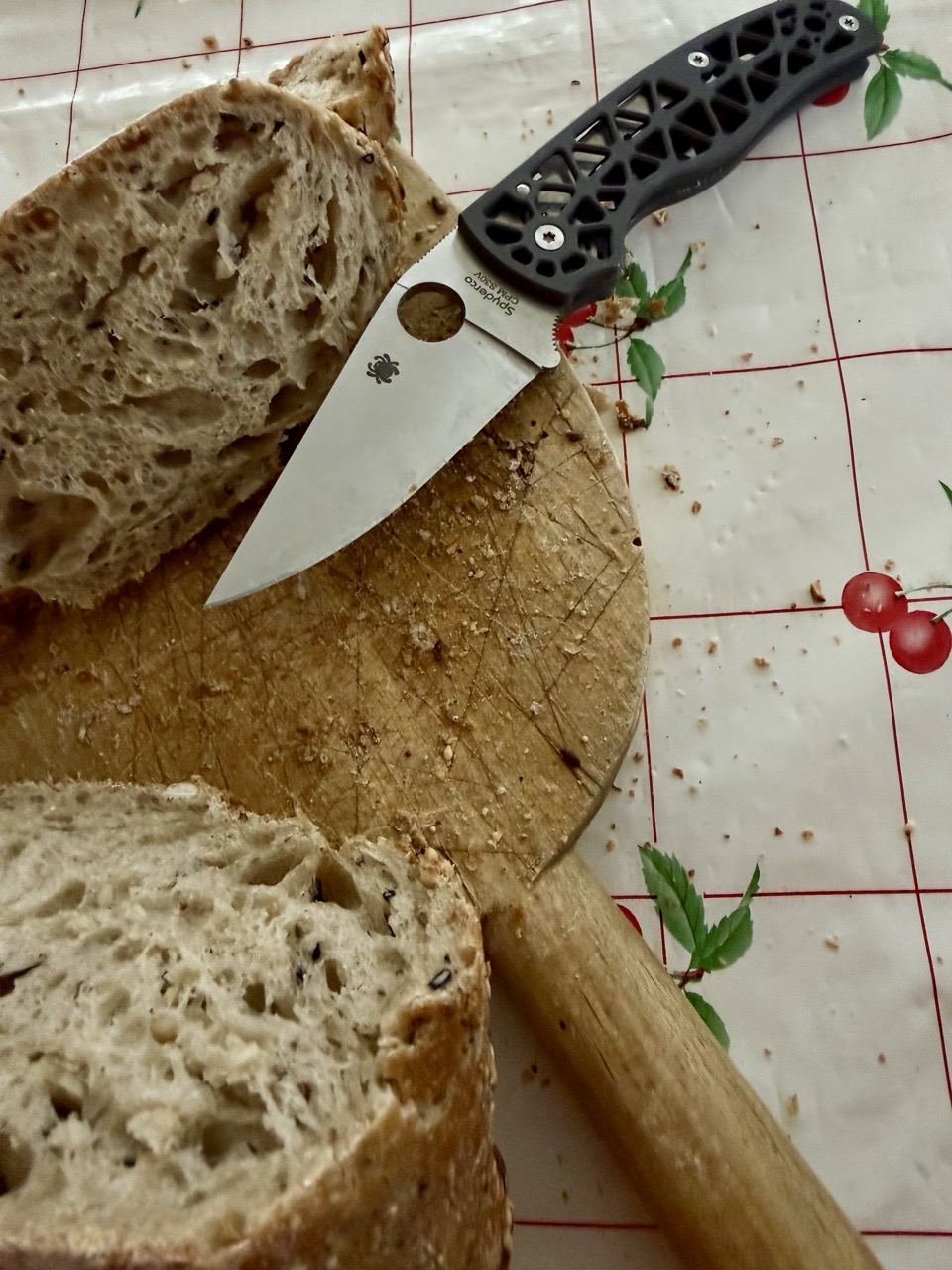
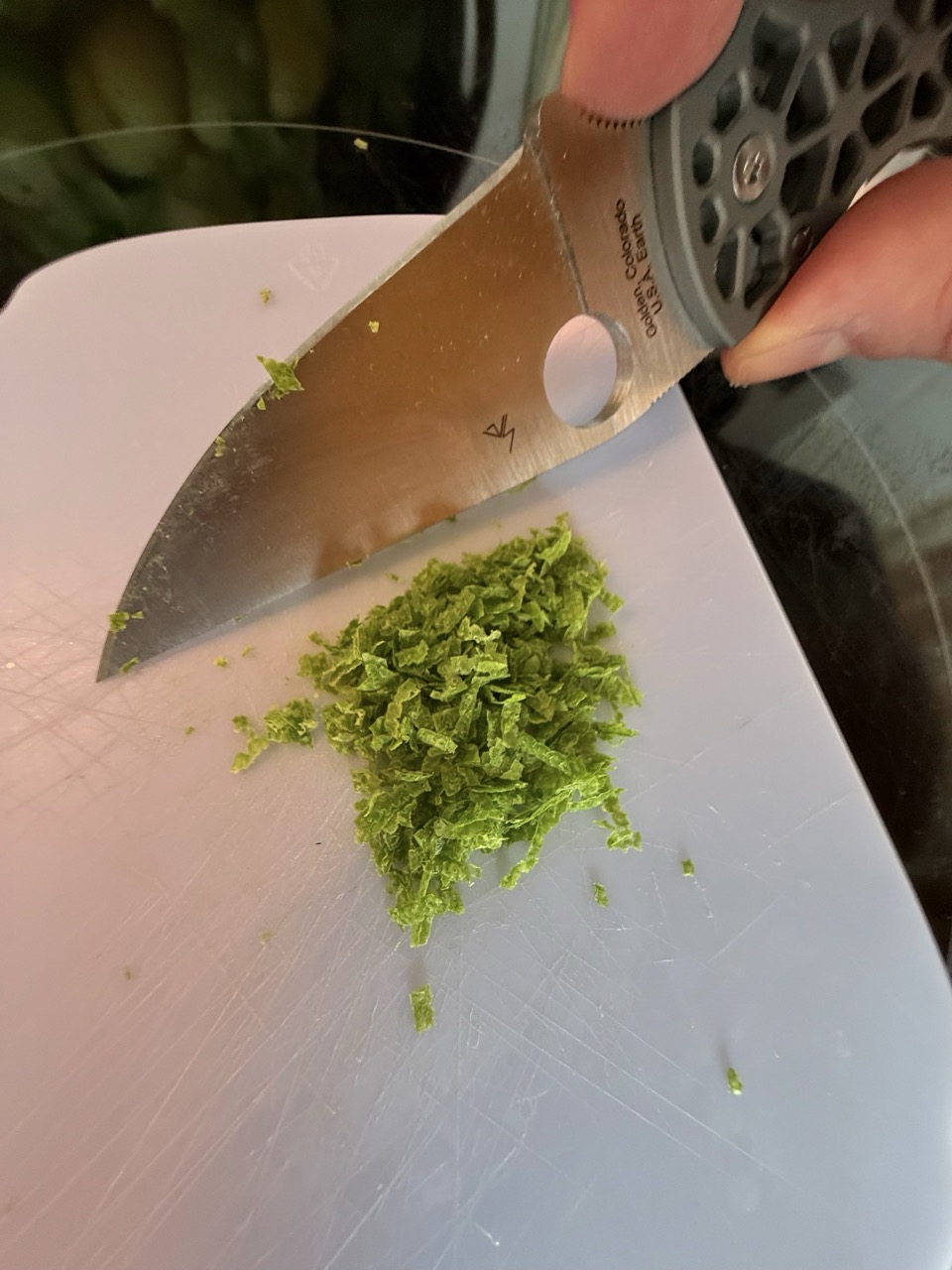
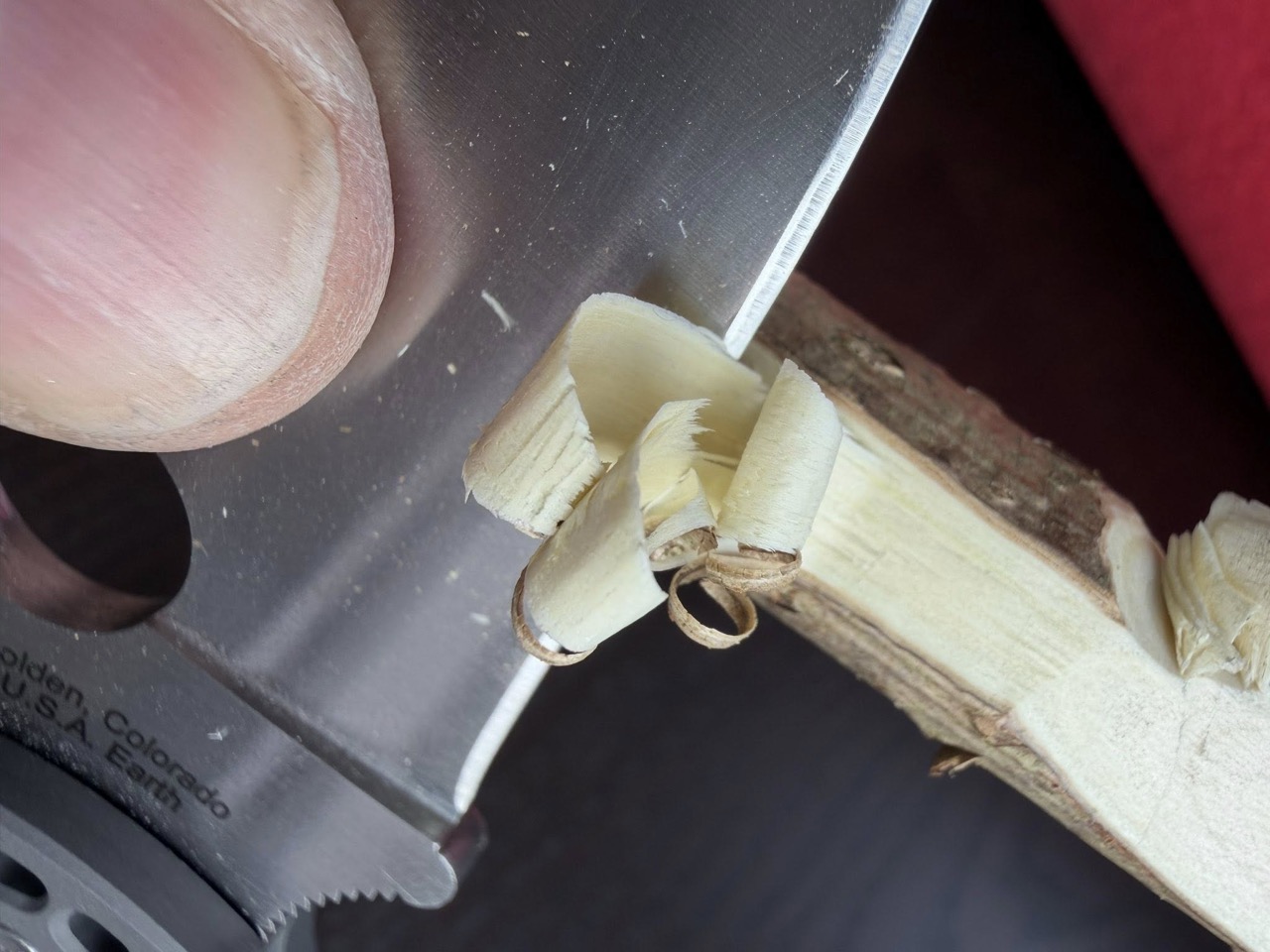
The Edgerati has proven itself a consummate workhorse, commanding respect far beyond the display case. It moves effortlessly from the precision of the kitchen—slicing sun-ripened tomatoes or conquering a stubborn squash—with the same grace and efficiency it demonstrates in the field, whether filleting fish, shaping kindling, or executing impromptu repairs.

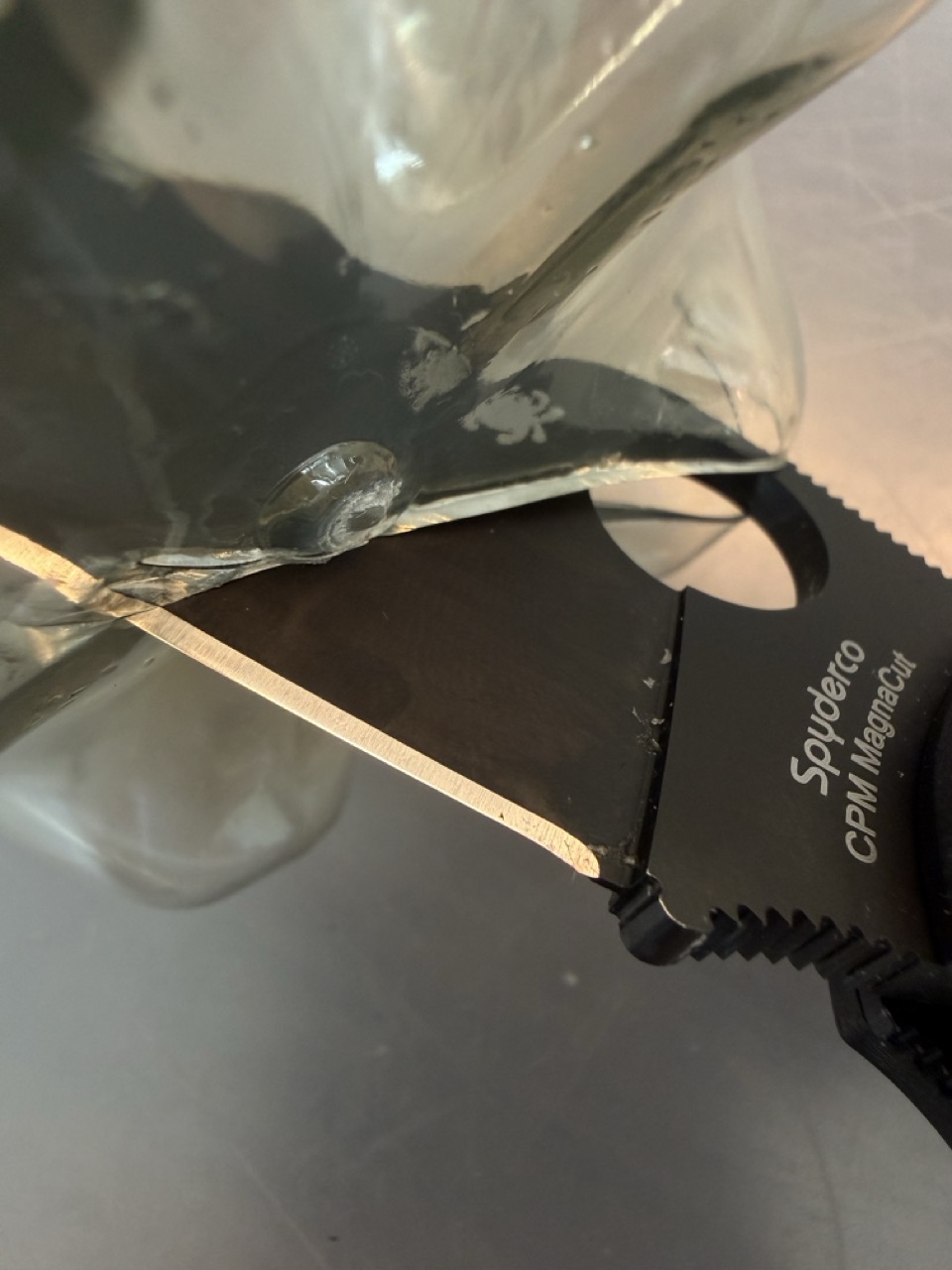
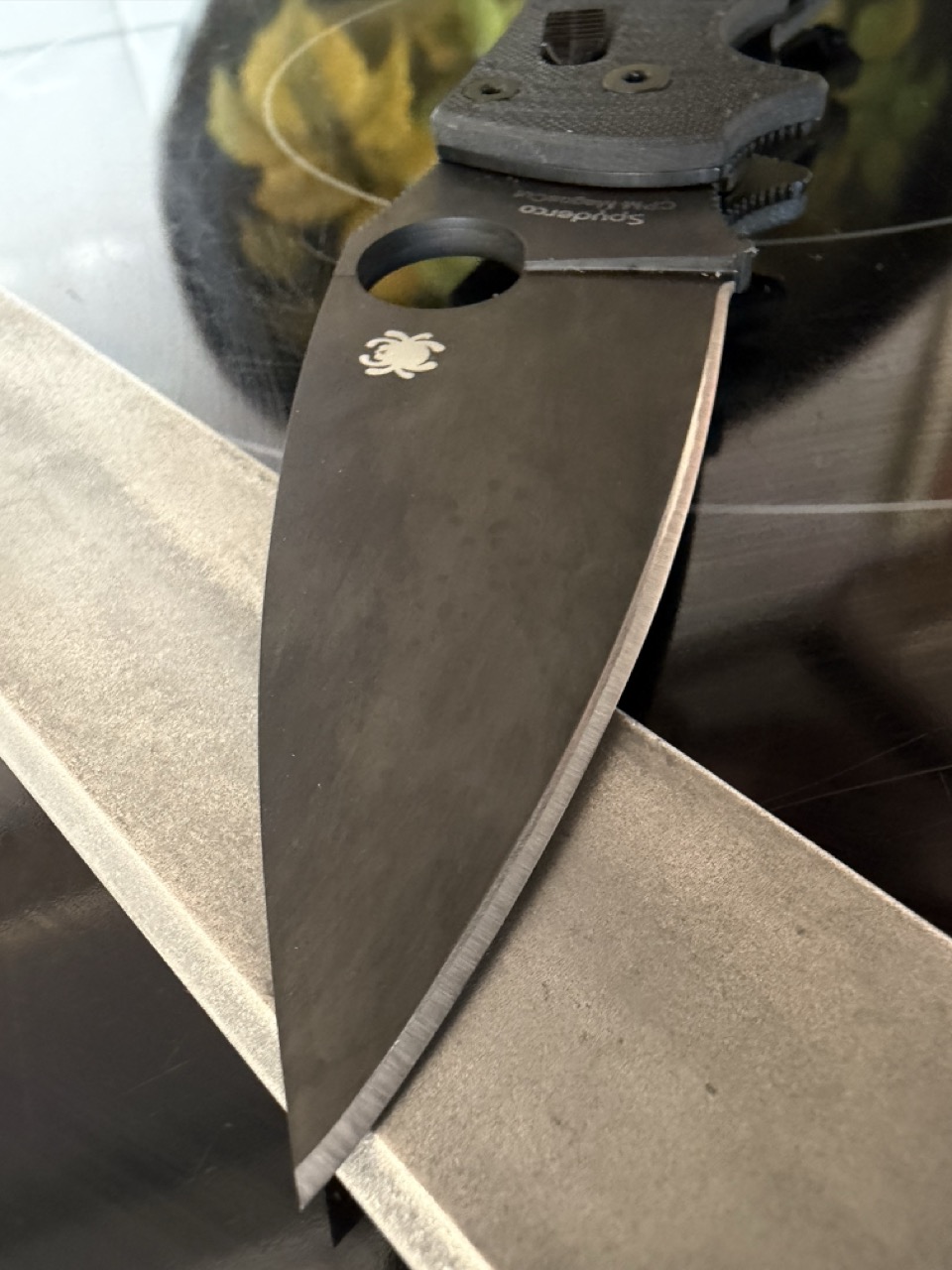
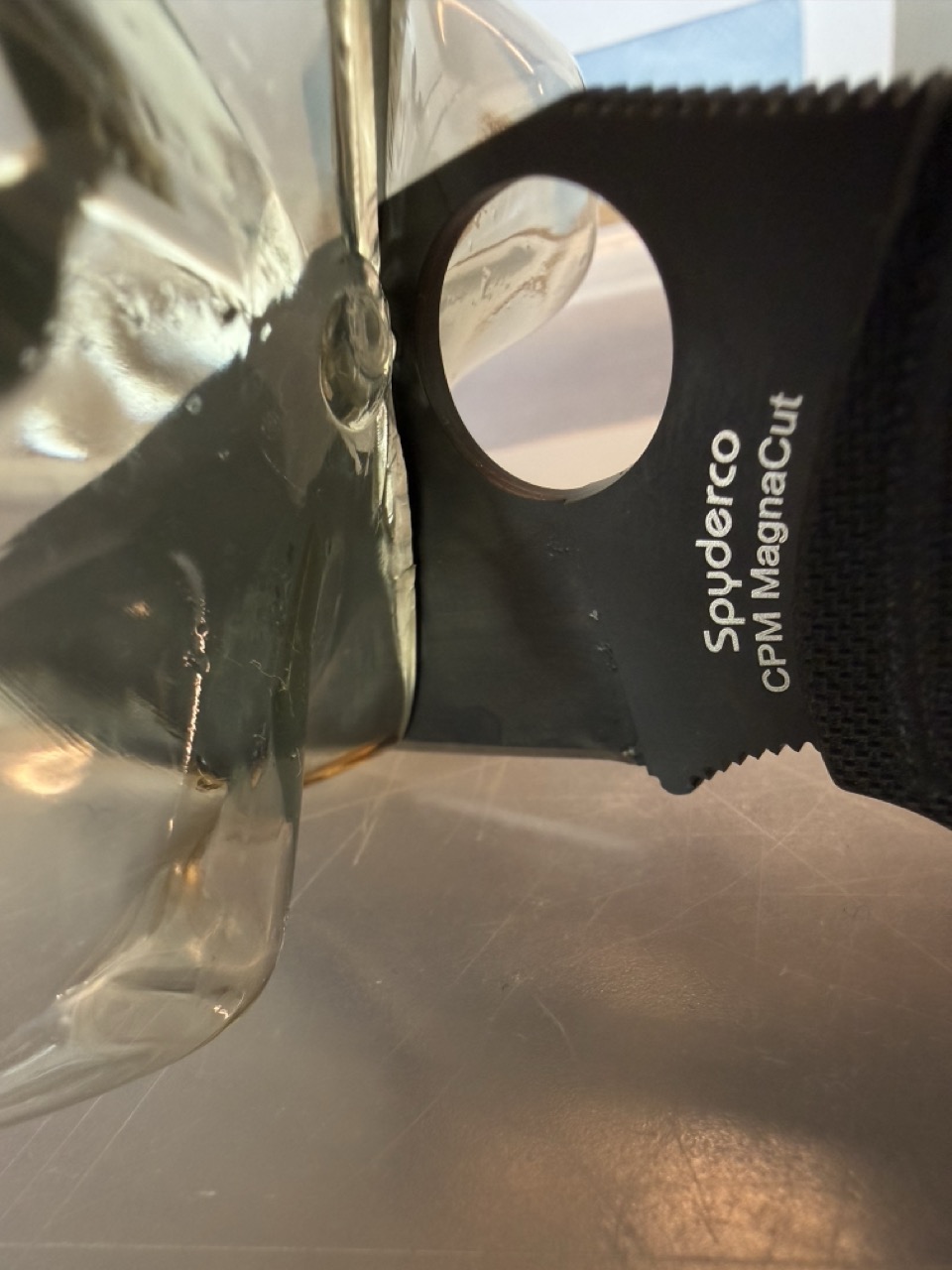
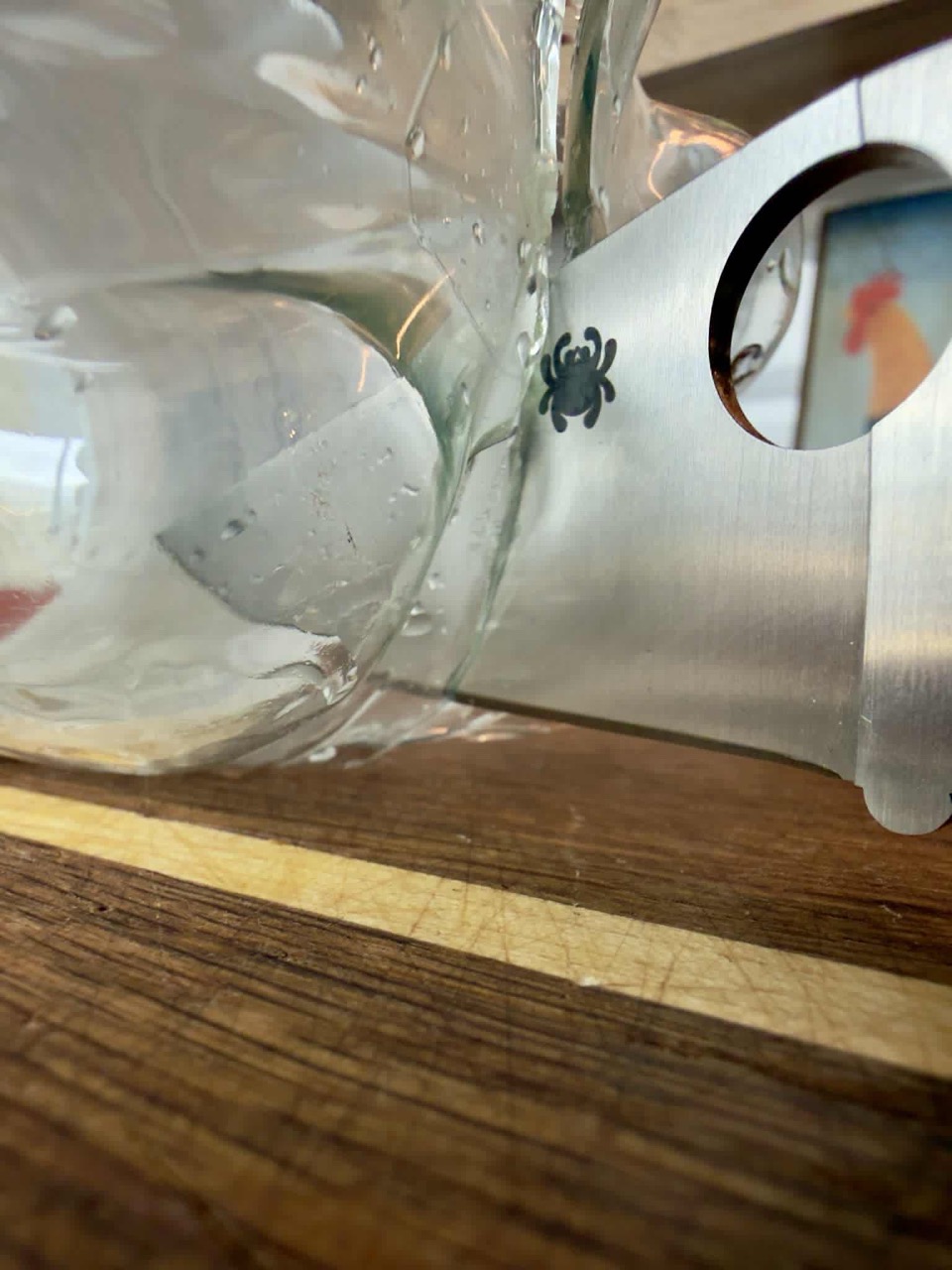
Through every challenge—pictured here during my now-infamous “butt bottle” test—the blade retains its razor-sharp edge and the handle shows no sign of strain, a quiet testament to the knife’s meticulous engineering. It is a piece that draws admiration, and occasionally amazement, at first glance, yet continues to thrive under the most demanding real-world conditions—a rare and compelling union of refined elegance and enduring, work-ready reliability.

IIn short, the Edgerati is not merely a tool, nor simply a lighter reinterpretation of the Spyderco Shaman; it is a statement of modern design—a precise balance of form and function that commands attention while delivering uncompromising performance. One might even call it a KWEMRP: a Knife Where Elegance Meets Rugged Performance. 😉.

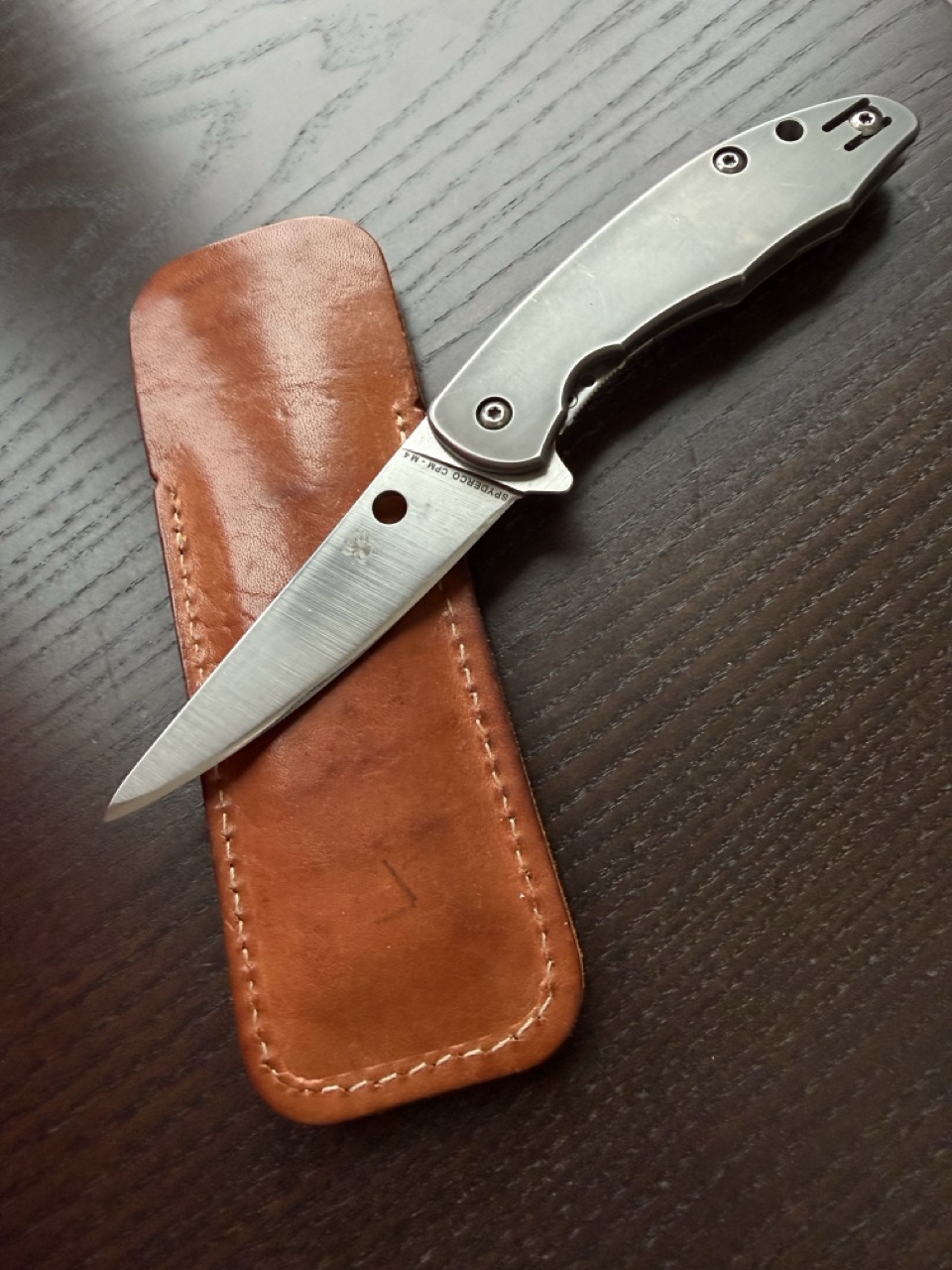
MANTRA™ 2 Titanium – C203TI – Still alive and kicking ?

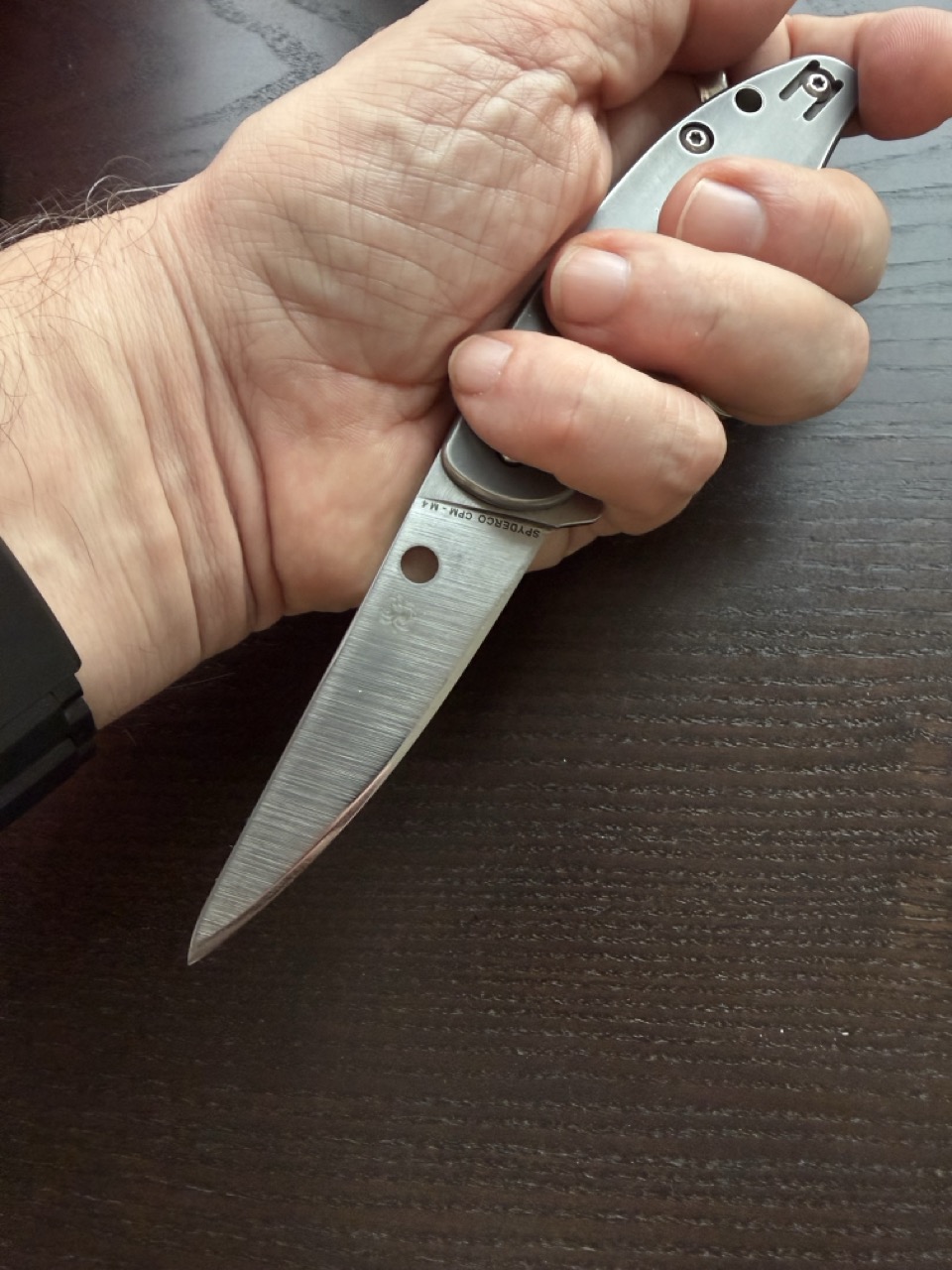
In 2026, does the decade-old Mantra 2 still have what it takes to stay relevant?

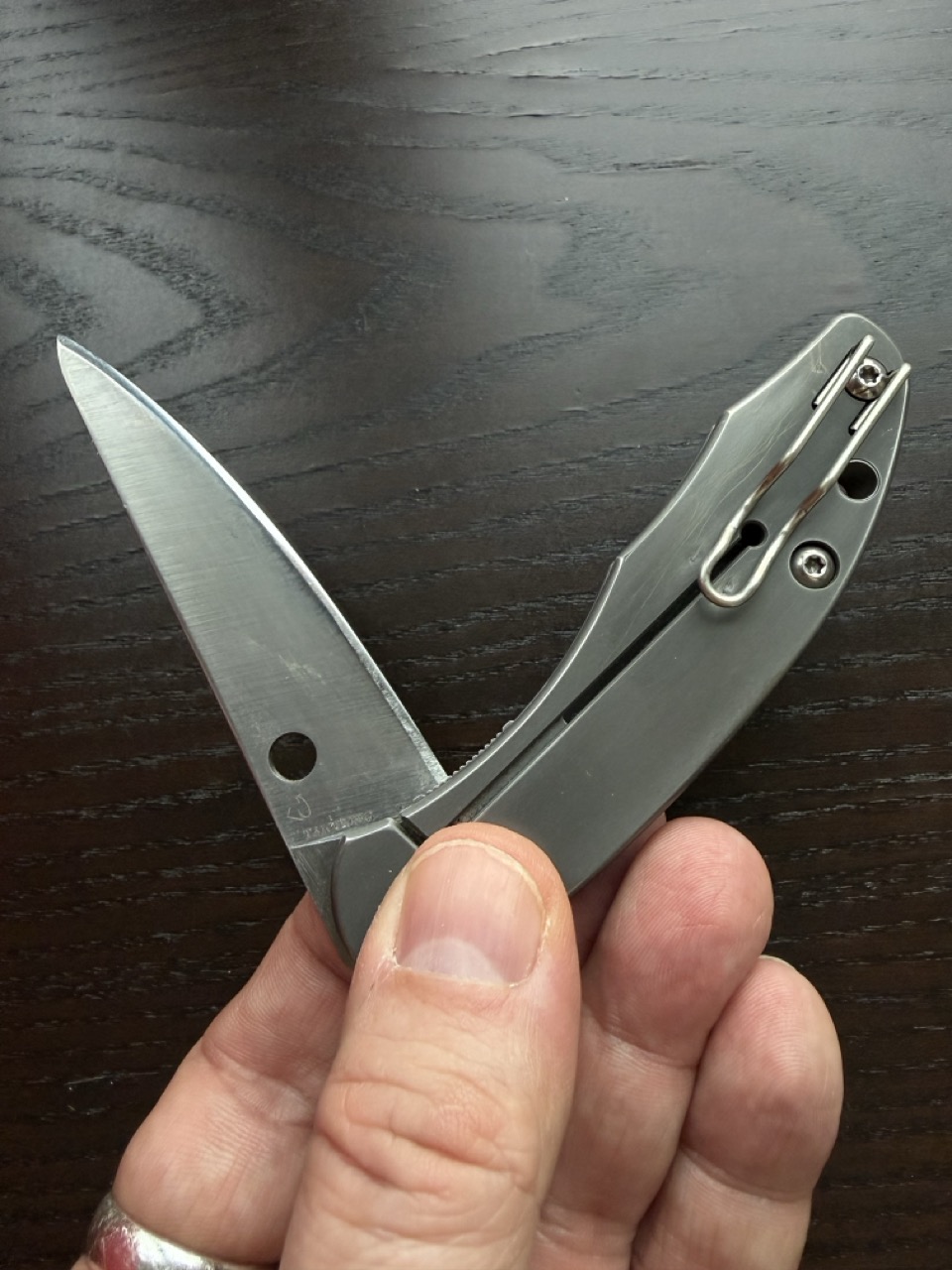
(For the record, the Spyderco Mantra 2 is a flipper-style folding knife. It features ergonomic twin titanium handle scales, a robust Reeve Integral Lock, and a lightweight open-backed construction. Its narrow drop-point profile suits a wide range of cutting tasks, and it opens quickly via an integral flipper and ball-bearing pivot.)

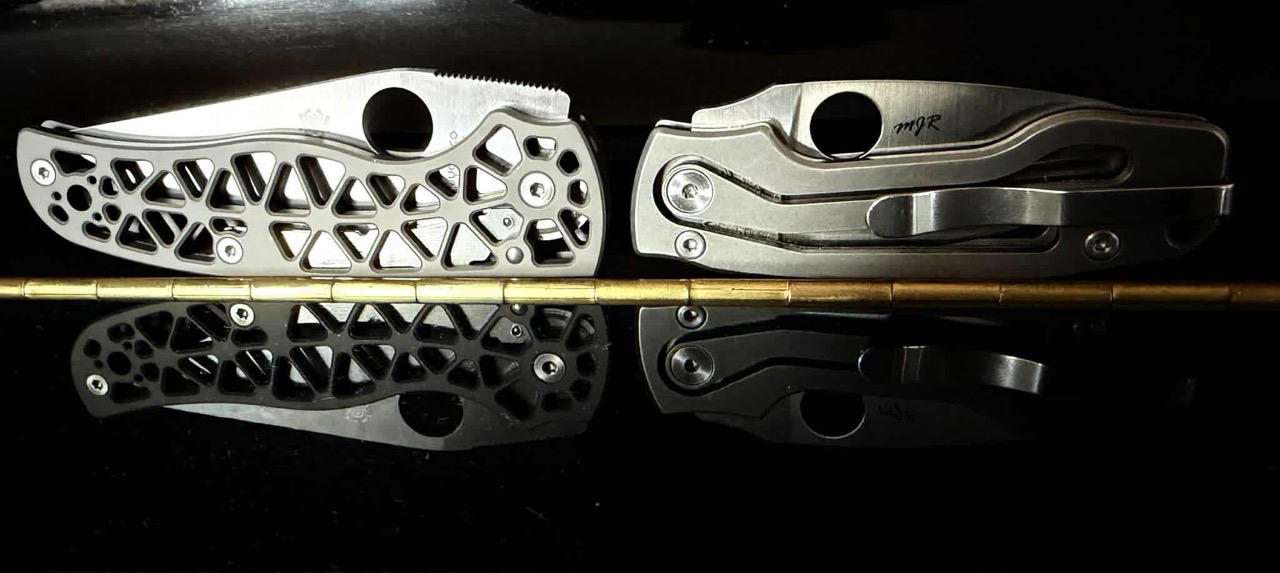
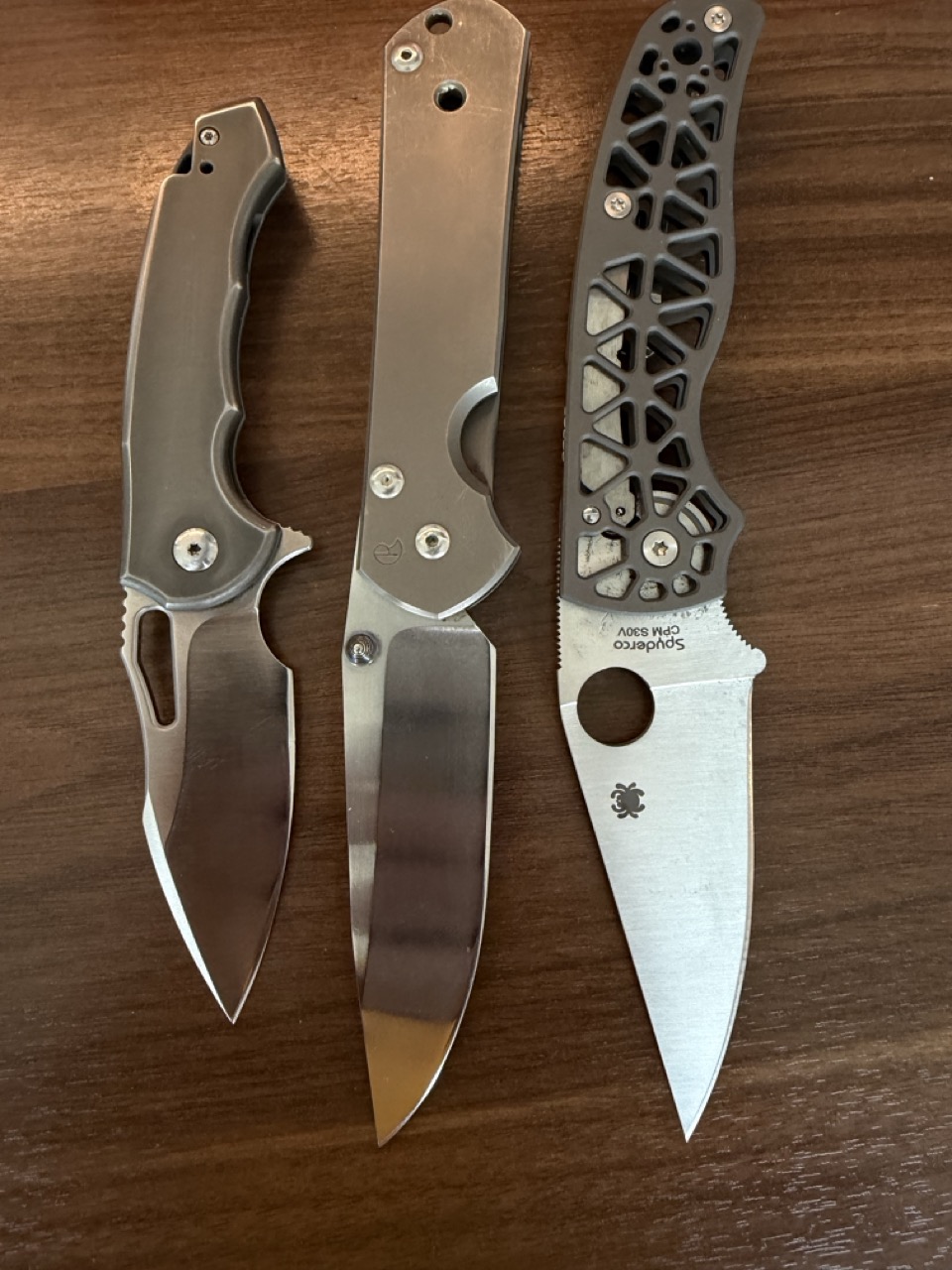
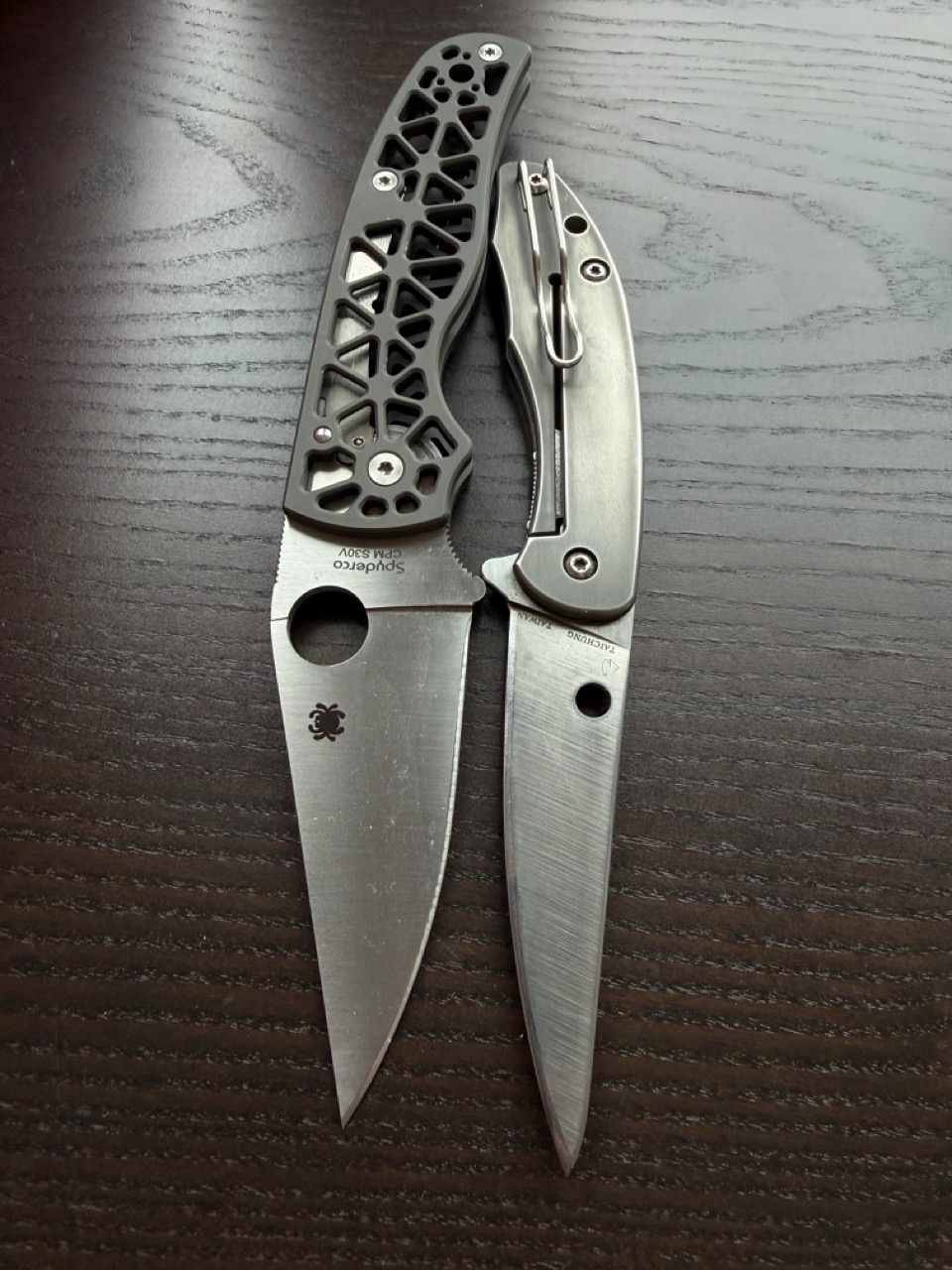
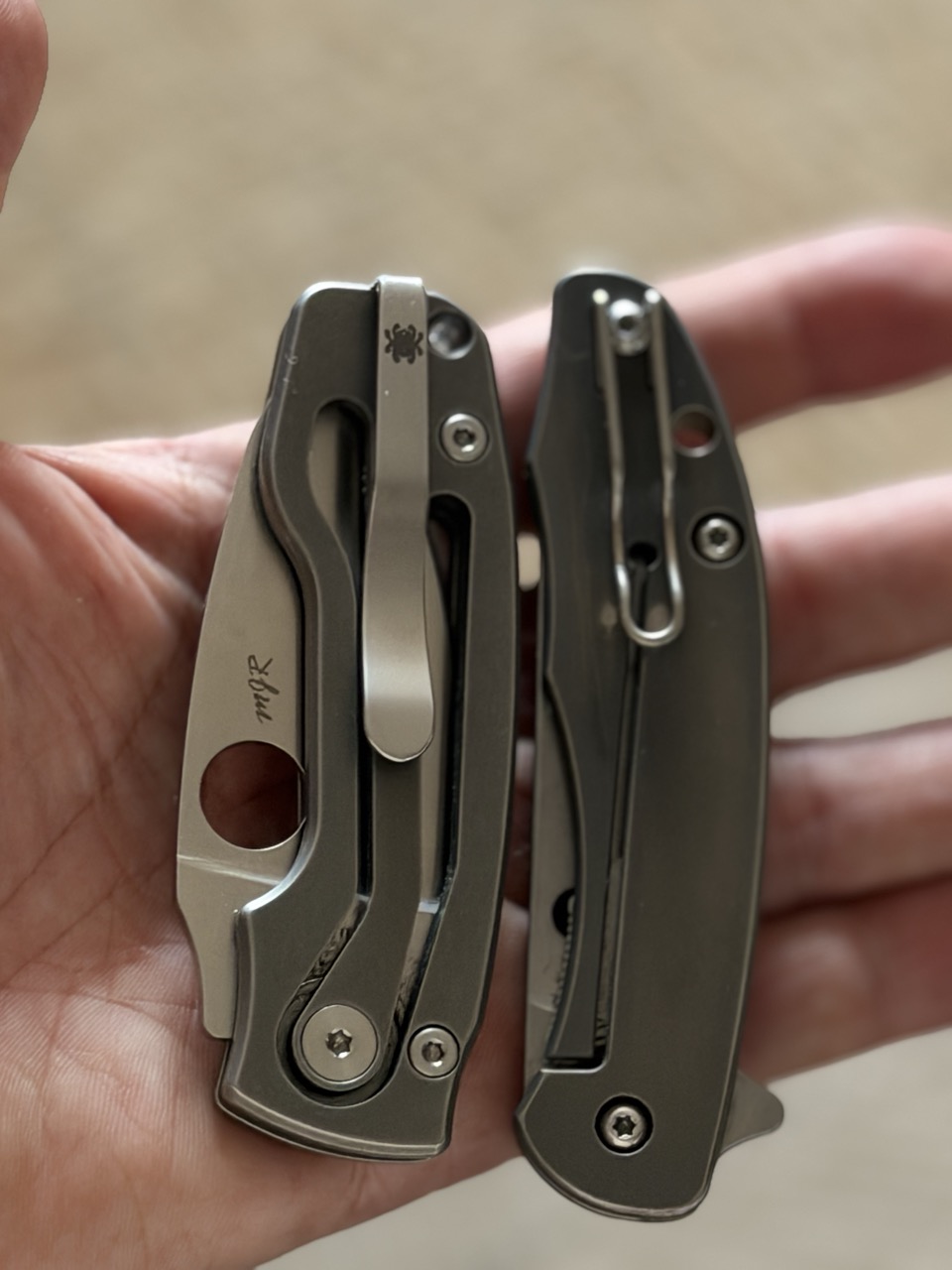
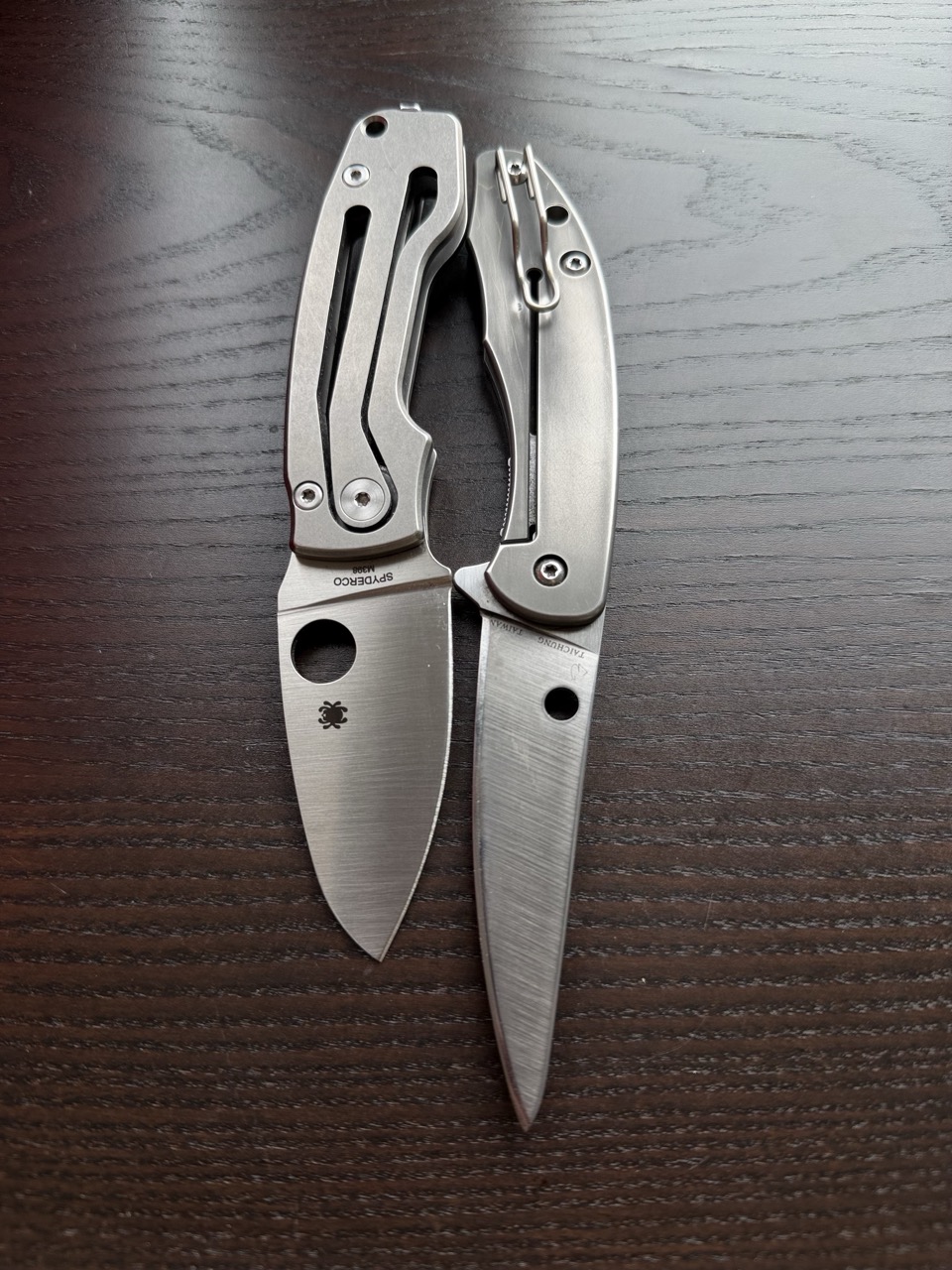
This question inevitably comes to mind when placing it next to the Edgerati, you know ? It’s that beautifully executed modern lightweight workhorse that embodies contemporary folding-knife design. On the surface, the comparison might seem unfair. The Mantra 2 belongs to an earlier design generation, one that predates today’s obsession with extreme lightness and visual minimalism. Yet, in actual use, the gap is far narrower than expected.

One aspect where Eric Glesser’s design continues to impress me is that blade-to-handle ratio. It remains among the most efficient in its class, extracting maximum cutting edge from a remarkably compact footprint. This efficiency translates directly into real-world ergonomics, with no sense of compromise in grip or control.

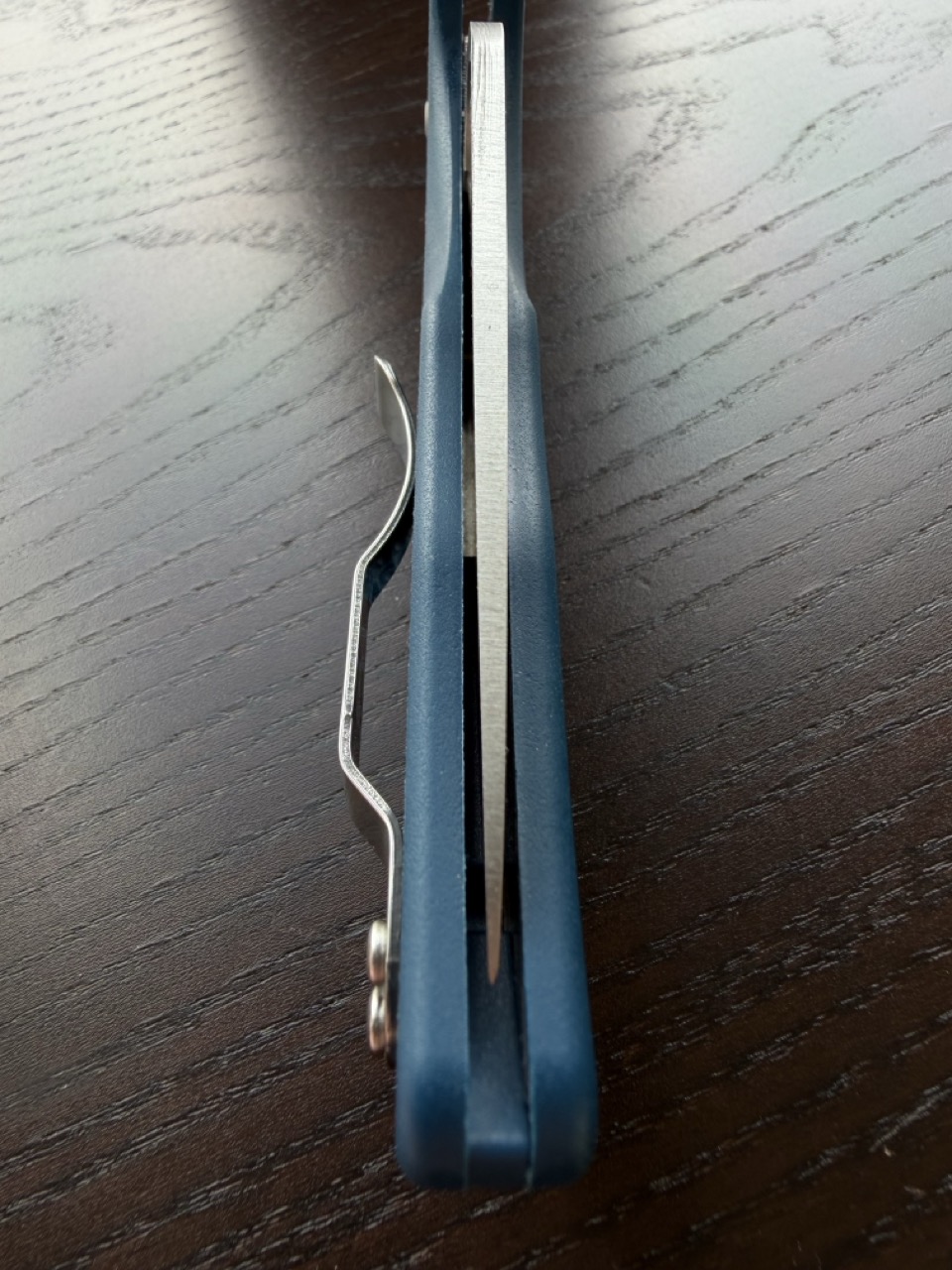
Pocket carry is another domain in which the Mantra 2 quietly exceeds expectations. Its footprint is remarkably discreet—once clipped in place, the slim, folded knife nearly vanishes. In daily carry, it becomes an almost invisible companion, a subtlety that even many newer designs struggle to achieve despite advances in materials and manufacturing.

A decade on, the Mantra 2 shows no signs of obsolescence. Rather, it stands as a testament to the enduring value of thoughtful fundamentals and intelligent proportions, which age far more gracefully than fleeting trends. It has been wielded in the kitchen, carried deep into the woods, relied upon as a traveling companion, and pressed hard into demanding materials—yet it continues to perform flawlessly, a quiet tribute to its lasting design.

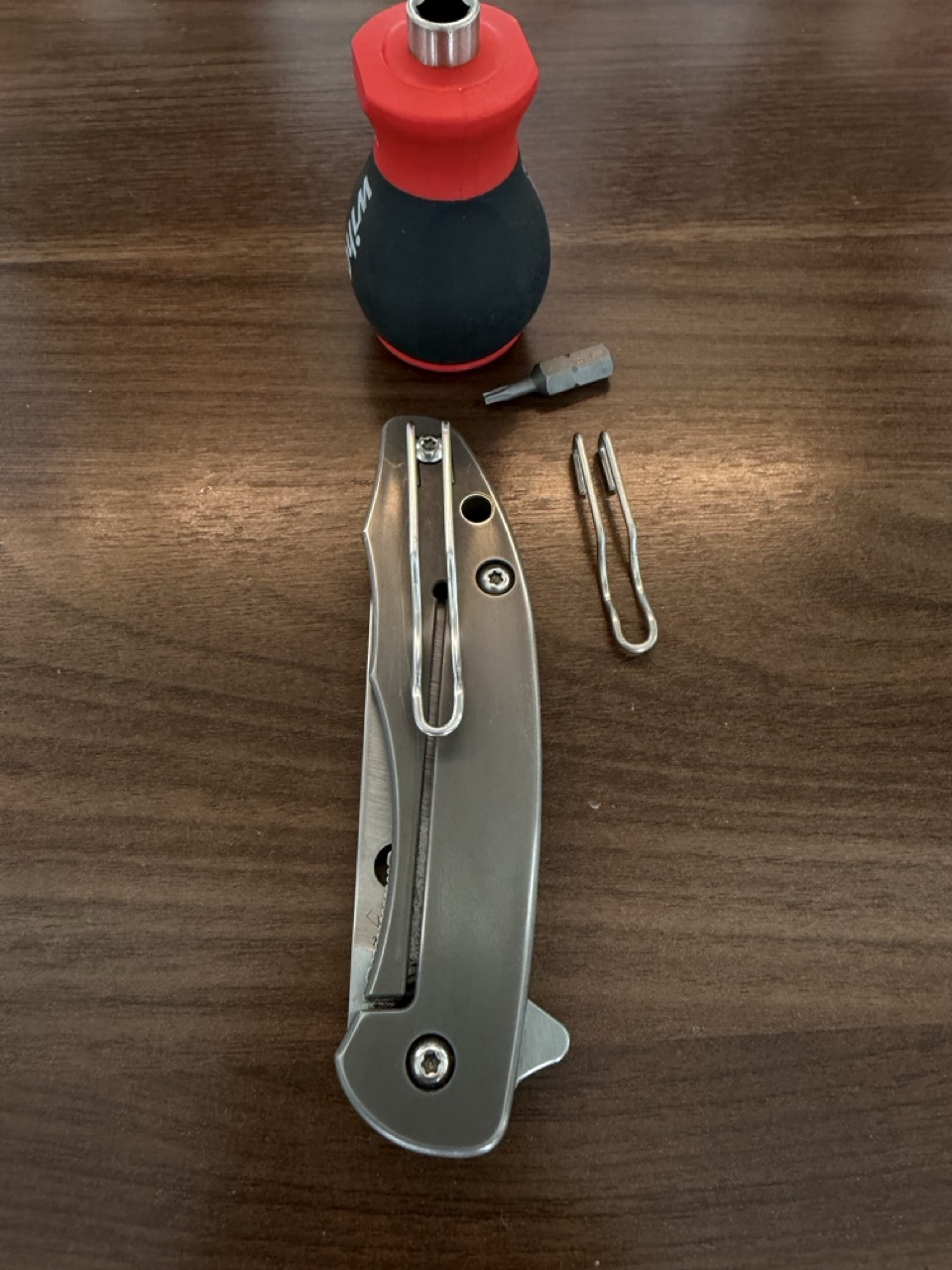
Along the way, I decided to upgrade the Mantra 2 with a shorter mini pocket clip—the kind found on the Lil’ Native Compression Lock, the Microjimbo, or the Dragonfly. A seemingly minor adjustment, it nevertheless has a surprisingly tangible impact on daily carry, subtly refining accessibility and pocket presence without altering the knife’s elegant proportions.

The shorter clip further reduces the knife’s visual footprint in the pocket, enhancing an already discreet carry profile. More importantly, it improves comfort in motion, removing any unnecessary contact points while preserving secure retention, making the Mantra 2 feel almost weightless and effortless throughout the day.

This small modification feels entirely in line with the original design philosophy of the Mantra 2: efficiency over excess, function over spectacle. Rather than altering the knife’s character, the shorter clip refines it, subtly updating the platform without betraying its intent.

In a way, this simple upgrade underscores the enduring strength of the Mantra 2’s design. A decade on, the knife requires no reinvention—its fundamentals remain exemplary. One minor critique persists: I’ve never been particularly fond of the small Trademark Round Hole™, which tends to trap debris and demands occasional cleaning. Personally, I would have preferred a simple laser-engraved circle as Spyderco’s signature—subtle, elegant, and maintenance-free.

Even so, the knife’s core mechanics continue to impress. After ten years of regular use, the liner lock has not shifted a single bit. Its stability and reliability remain flawless, a quiet testament to Spyderco’s engineering and the robustness of the Reeve Integral Lock.

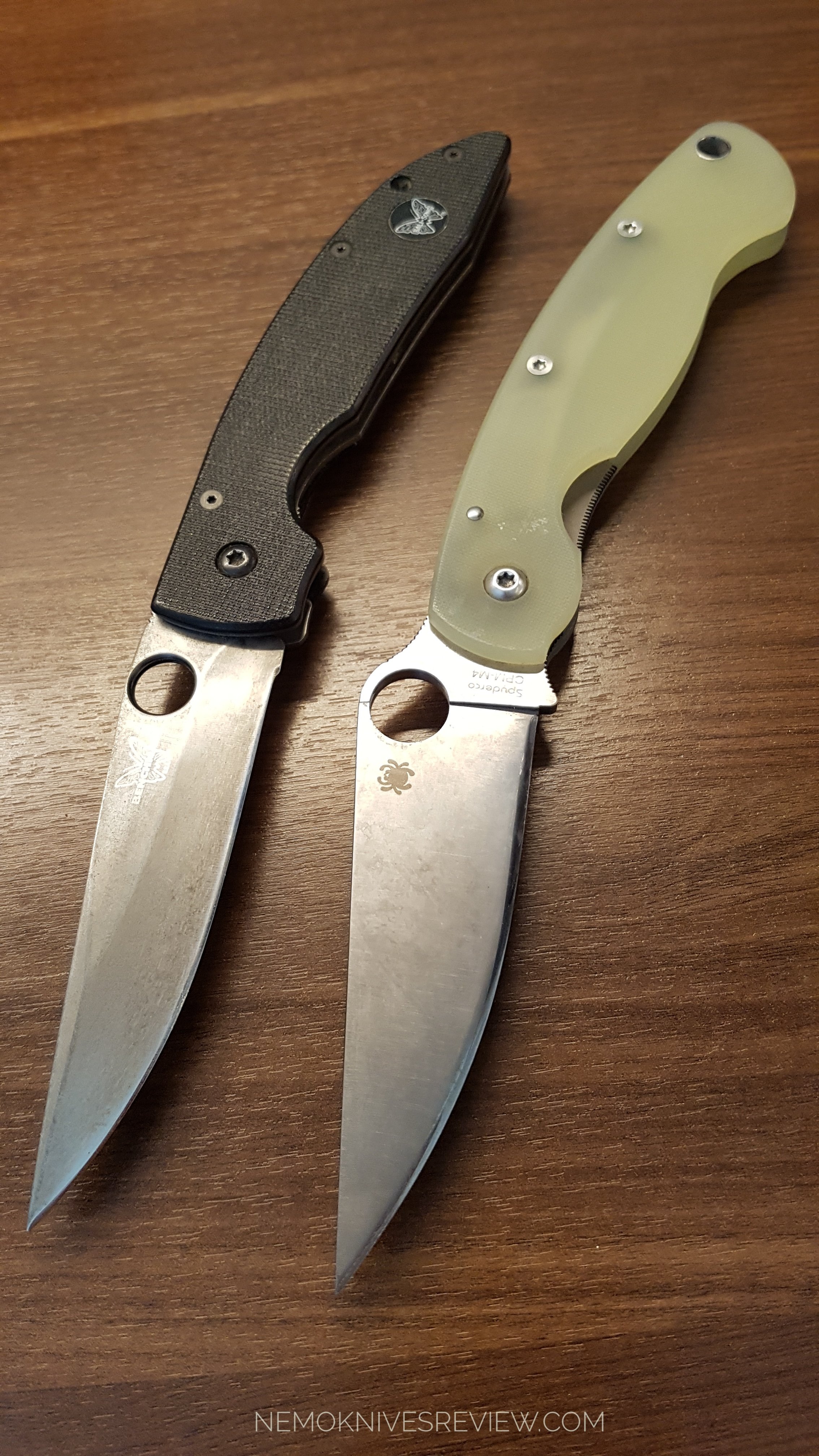
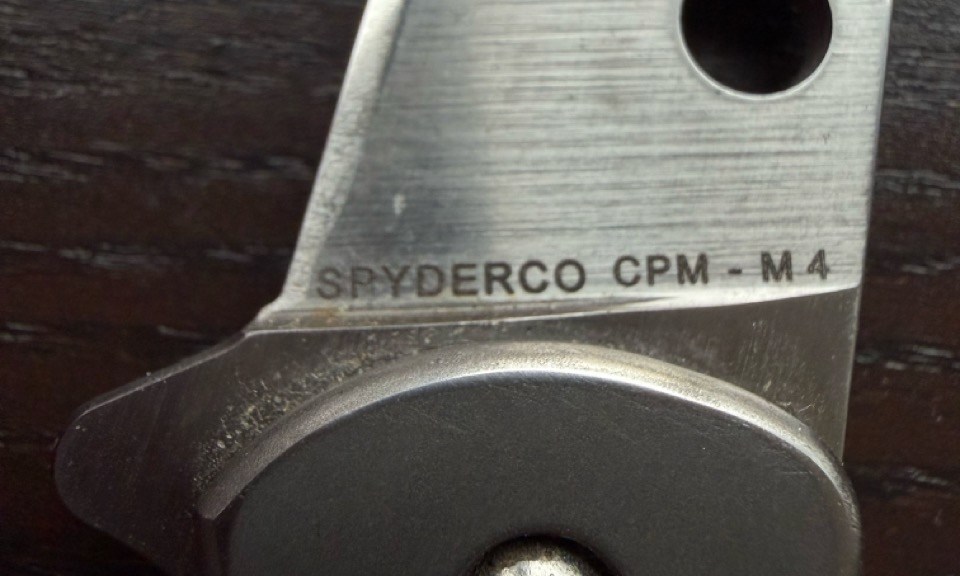
It is also worth remembering that the Mantra 2’s blade is crafted from CPM M4, a choice that says a great deal about the era—and the intent—behind the design. At the time, M4 was far from a marketing buzzword. It was selected for performance, not for trend alignment.

In use, CPM M4 still delivers what made it so respected: outstanding edge retention, a fine, aggressive cutting feel, and a toughness that inspires confidence during harder, more demanding tasks. Even when compared to newer powder metallurgy steels, it remains deeply relevant, particularly for users who prioritize cutting performance over corrosion resistance.

On this particular example, the steel is allowed to fully express its potential thanks to the work of my friend JD, who polished and sharpened the blade with remarkable efficiency. His edge work brings out everything M4 has to offer, resulting in a cutting performance that feels both refined and uncompromising. His skill is undeniable, and it shows immediately in use.

Of course, M4 comes with its own expectations. It asks for a certain level of care, a willingness to maintain the blade and accept patina as part of its character. Yet this trade-off feels entirely coherent with the Mantra 2’s tool-first philosophy. Rather than chasing stainless convenience, it embraces performance and durability.

A decade on, the CPM M4 blade reinforces the sense that the Mantra 2 was designed as a serious cutting instrument first—and as an object of design second. In 2026, that approach feels less dated than it does refreshingly honest.

Set against the PITS 2 in Böhler M398, the Mantra 2 reveals just how differently two knives can approach the same everyday cutting mission. Where the PITS 2 leans heavily into modern metallurgy, with M398 offering extreme edge retention and near-total corrosion resistance, the Mantra 2 counters with a more tactile, tool-driven philosophy embodied by CPM M4.

The PITS 2 feels engineered for low-maintenance efficiency: a steel designed to hold an edge seemingly forever, largely indifferent to environment or neglect. In contrast, the Mantra 2 demands engagement. Its M4 blade rewards attention, maintenance, and sharpening skill with a cutting feel that remains distinctly more aggressive and communicative.

In practical terms, the difference is less about absolute performance and more about attitude. The PITS 2 represents the pinnacle of contemporary refinement—clean, controlled, and technically flawless. The Mantra 2, meanwhile, feels more alive. It is a knife that invites use, interaction, and care, developing character over time rather than resisting it.

In 2026, choosing between the two is not a question of old versus new, but of values. The PITS 2 in M398 showcases where modern EDC design has arrived. The Mantra 2 in CPM M4 reminds us why performance-driven fundamentals still matter—and why some designs age not by fading, but by deepening.

Ultimately, the Mantra 2 (linked to JD review)remains an outstanding choice in 2026. Its exceptional blade-to-handle ratio and discreet, effortless portability continue to set a benchmark that many newer designs still struggle to match.

Notably, my own example—part of the very first generation—has never exhibited the slightest issue with its ball-bearing pivot. A decade on, it operates with the same smoothness and reliability as it did out of the box.

Proof, if any were needed, that strong proportions, intelligent engineering, and a focus on real-world use can stand the test of time.
The Mantra 2 is a pure flipper workhorse.

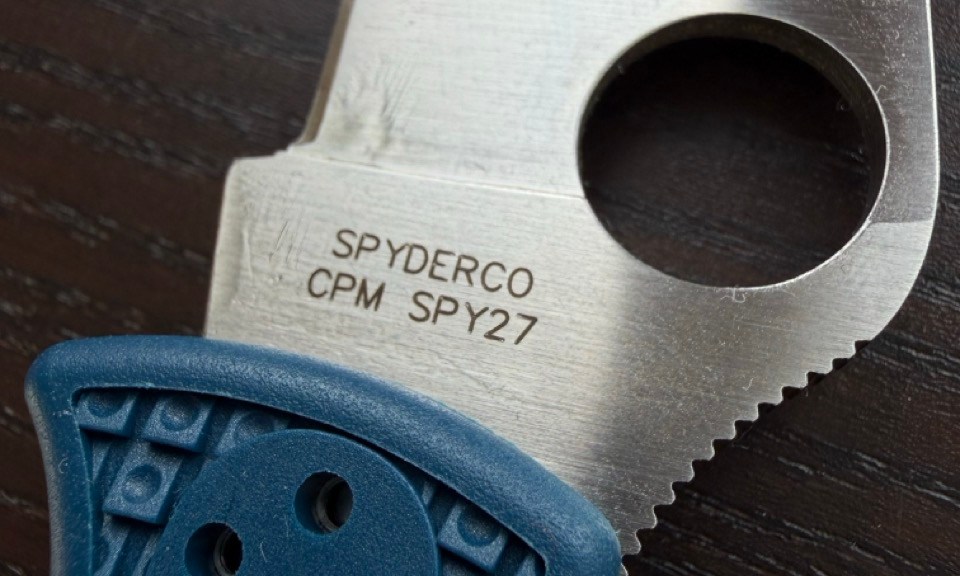
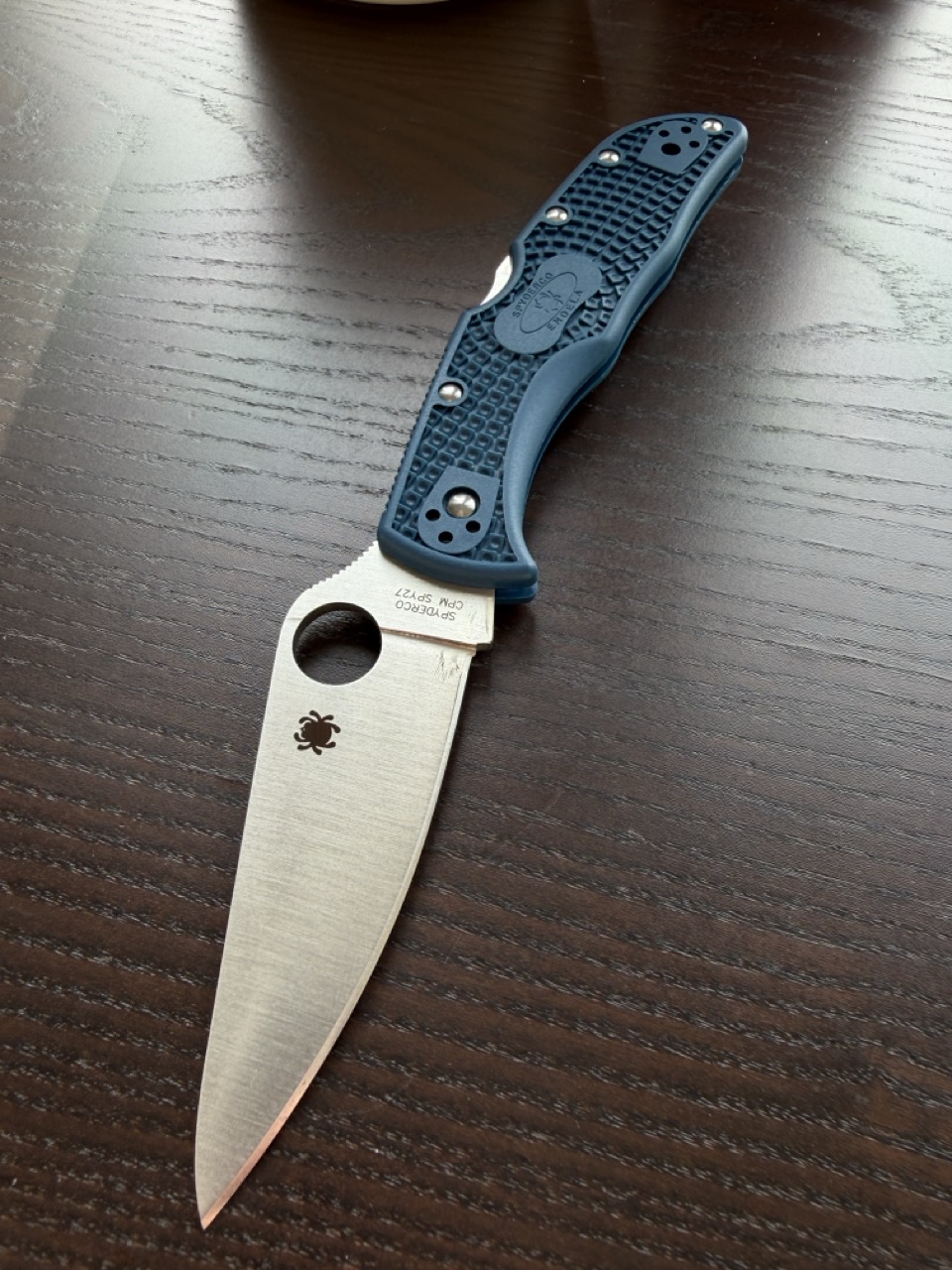
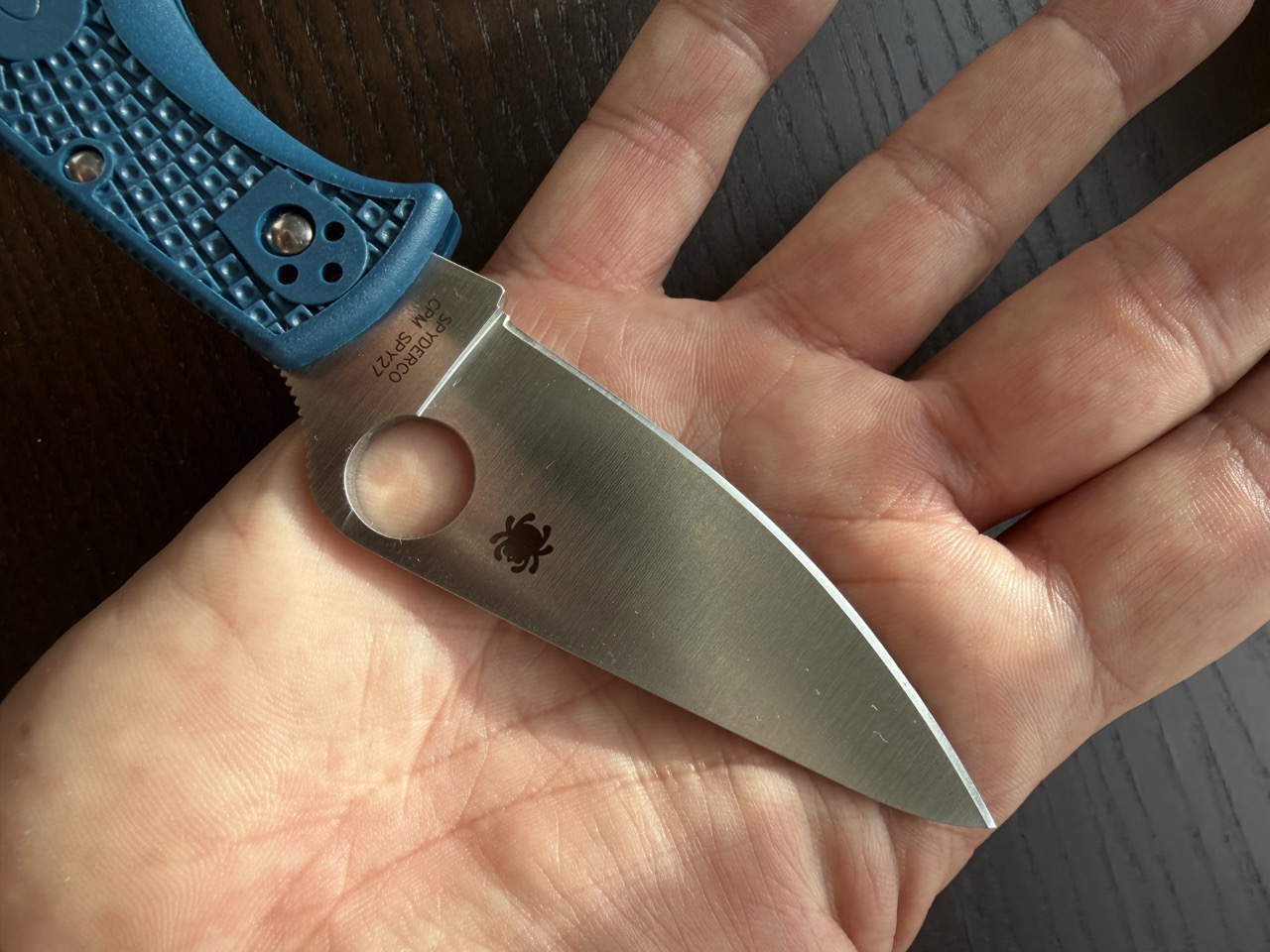
Spyderco Dyad Jr. Lightweight CPM SPY27 Sprint Run — Buddy Double


From time to time, I open the columns of this small blog to fellow authors who feel like sharing their thoughts on certain knife models. This has already been the case with JD and Pascal. Robin, a gifted French knife maker, is therefore the newest contributor, and here is his take on a knife I do not own but like very much.Nemo

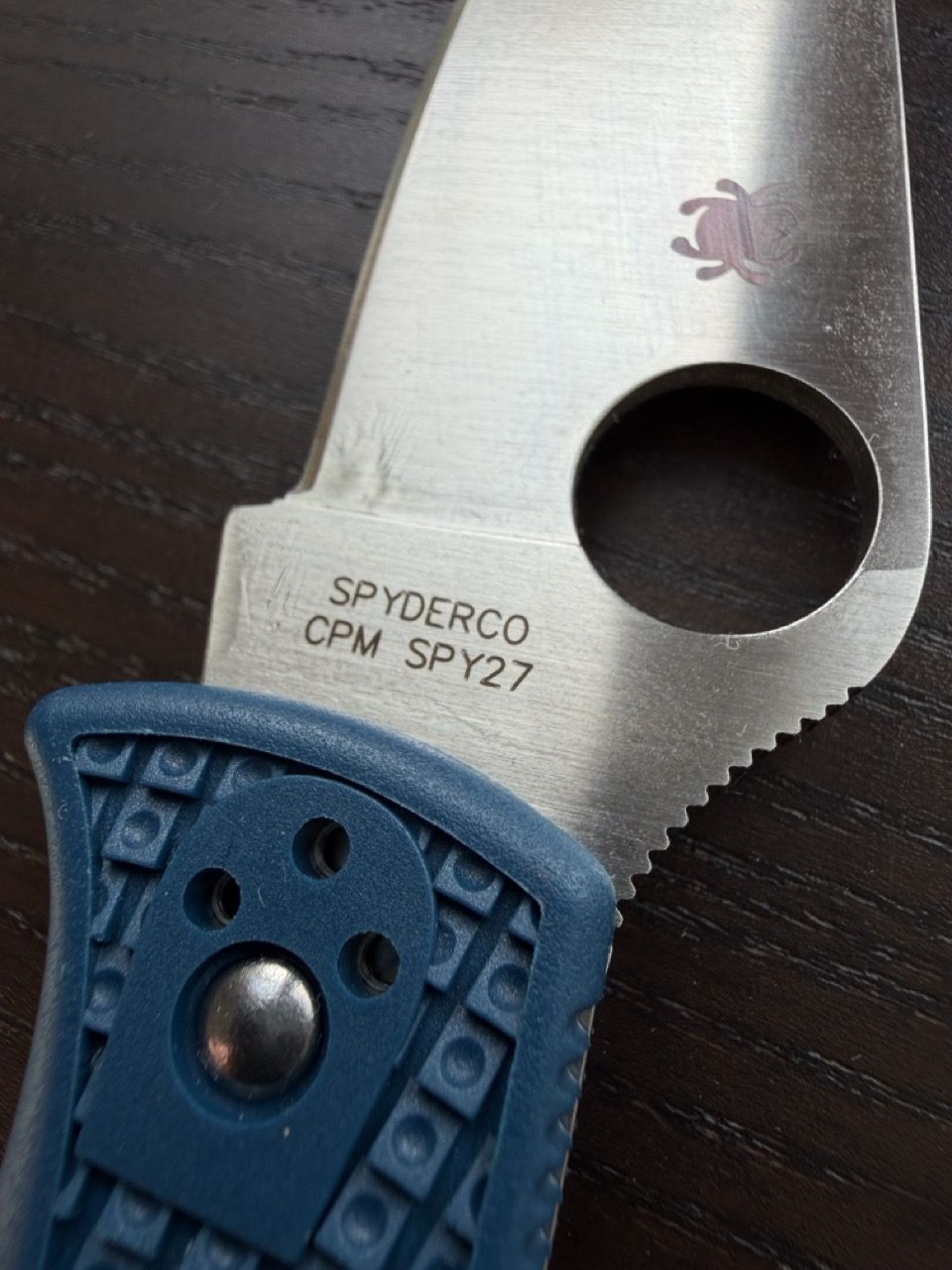
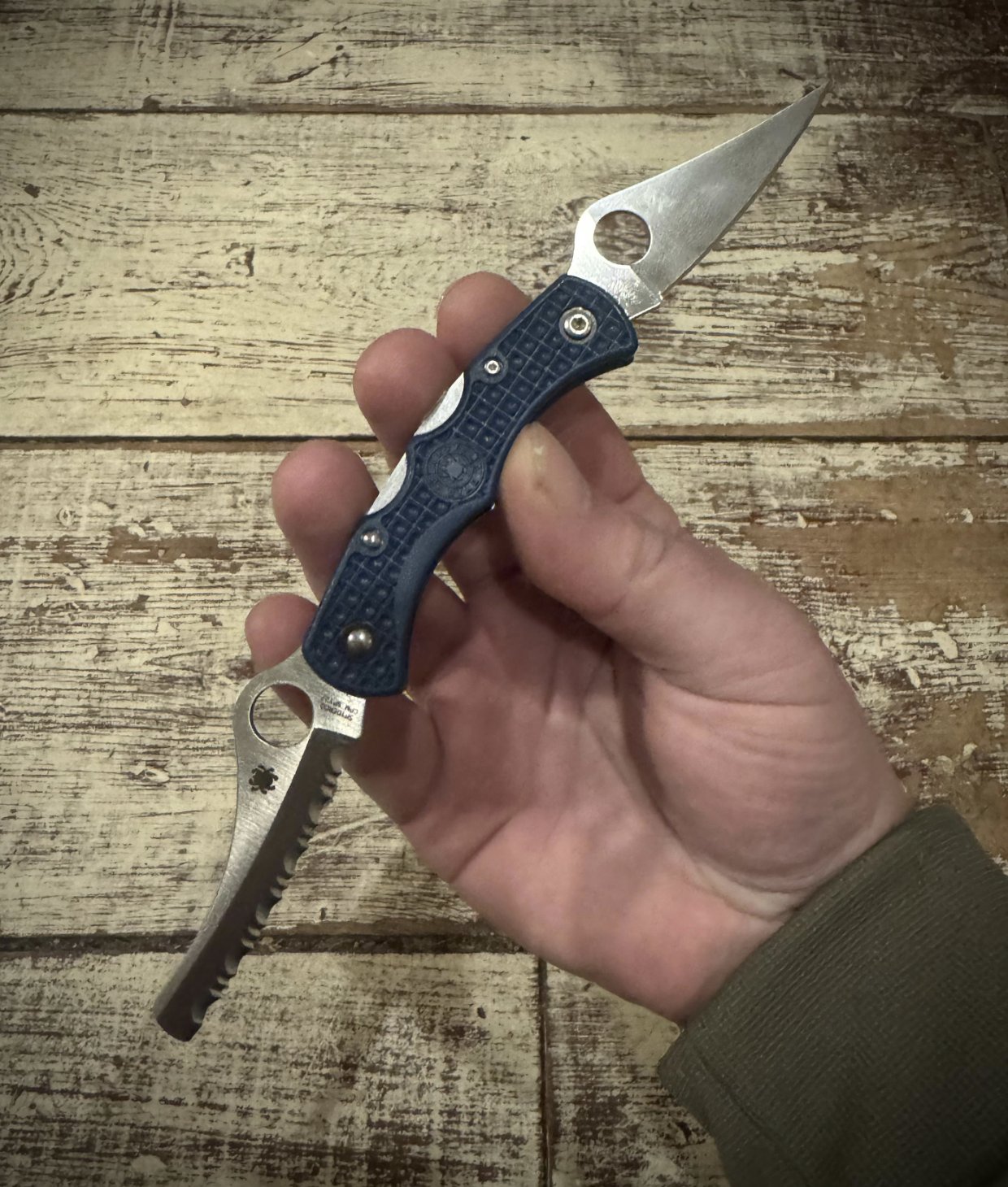
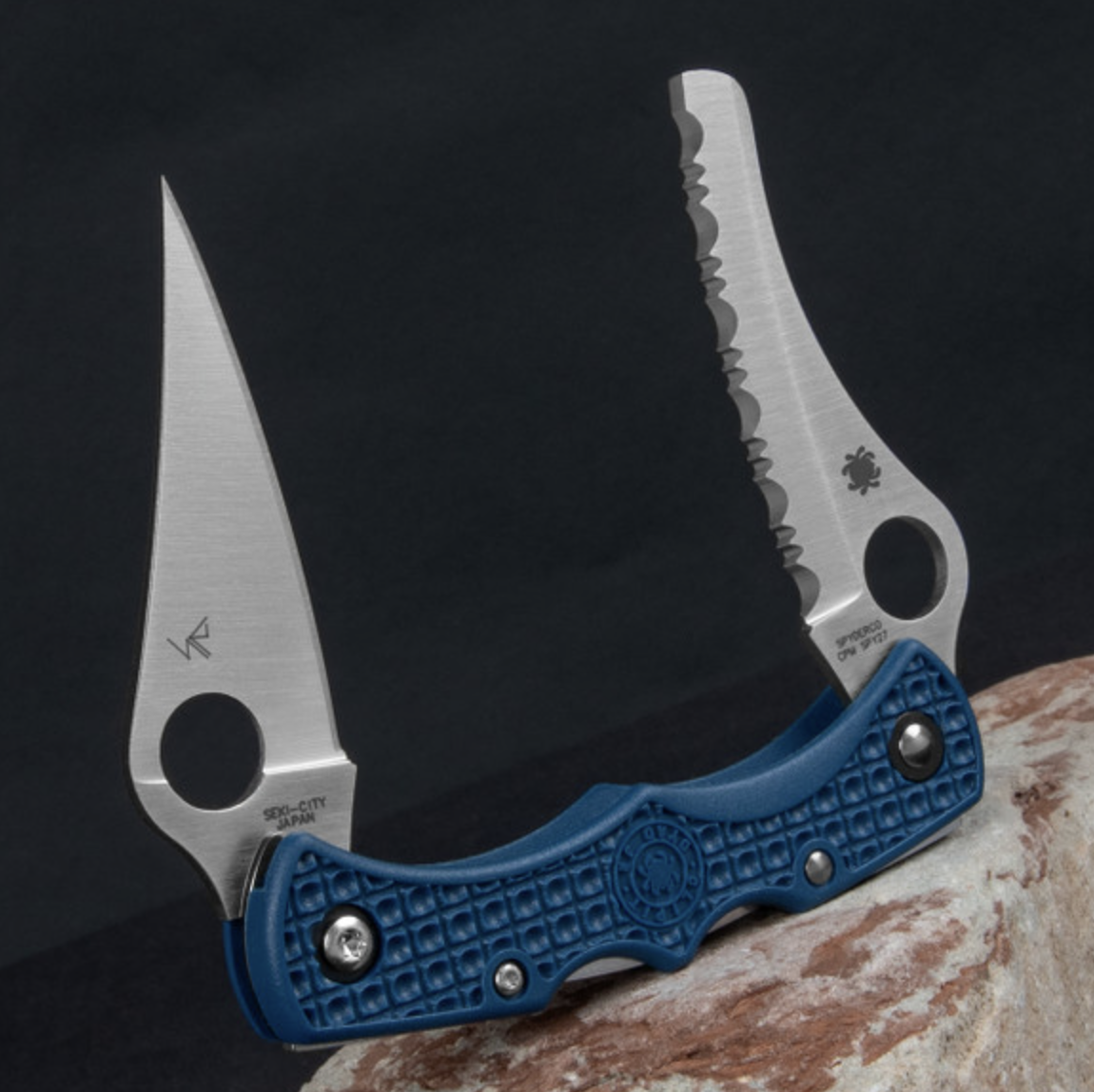
“Here’s my in-depth take on the Dyad Jr. equipped with Spyderco’s proprietary CPM-SPY27 steel, a knife that quietly embodies much of what makes Spyderco such a compelling brand.

Spyderco is one of the few manufacturers that can still make each Reveal feel genuinely exciting. While many brands rely on incremental cosmetic changes, Spyderco continues to juggle bold new designs with thoughtful revivals of older, sometimes underappreciated models. In the previous Reveal, two knives immediately caught my attention: the Edgerati, a completely new Sal Glesser design, and the Dyad Jr., a classic concept brought back to life with modern materials. One represents Spyderco’s future, the other its heritage, and the Dyad Jr. in particular spoke to me because it pairs a proven design with a steel I genuinely appreciate.

I’ve owned all three incarnations of the Dyad platform: the full-size Dyad, the Dyad Jr., and the Micro-Dyad. Each has its merits, but if I had to pick the most balanced and versatile of the trio, the Dyad Jr. wins without hesitation. It hits that sweet spot between usability and carry comfort. It’s large enough to feel like a “real” tool in hand, yet compact and flat enough to disappear into a pocket without effort.

Picture from “goodruckk” on Reddit.

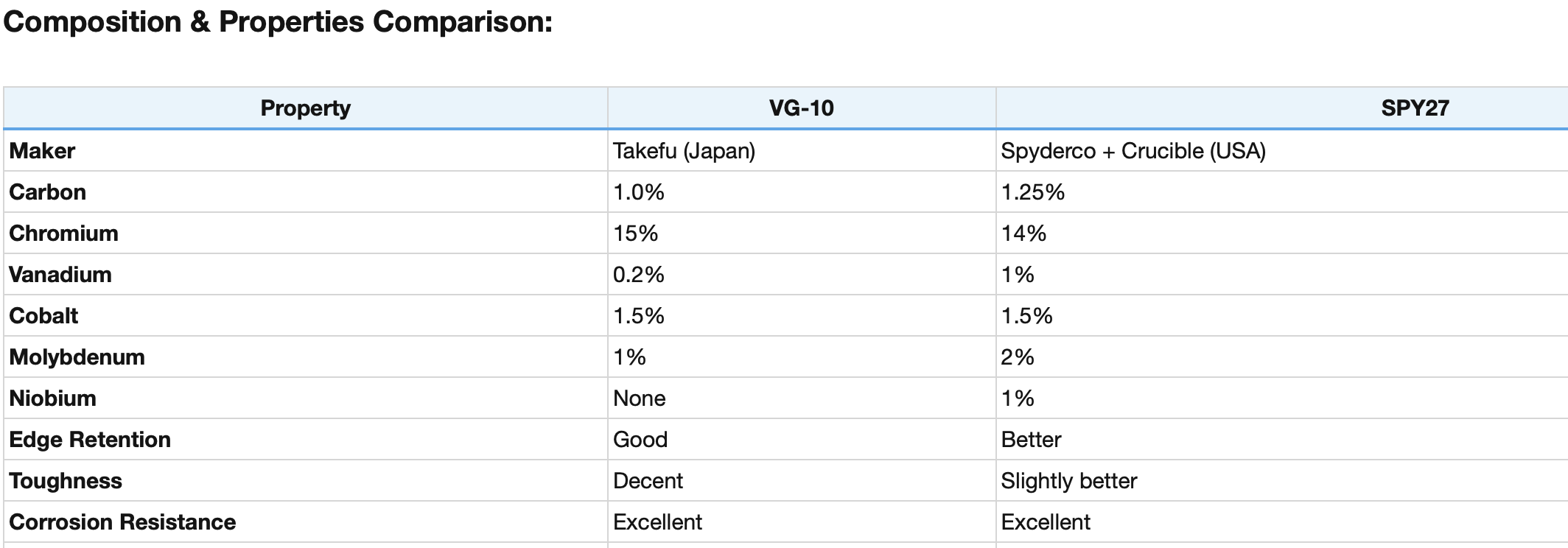
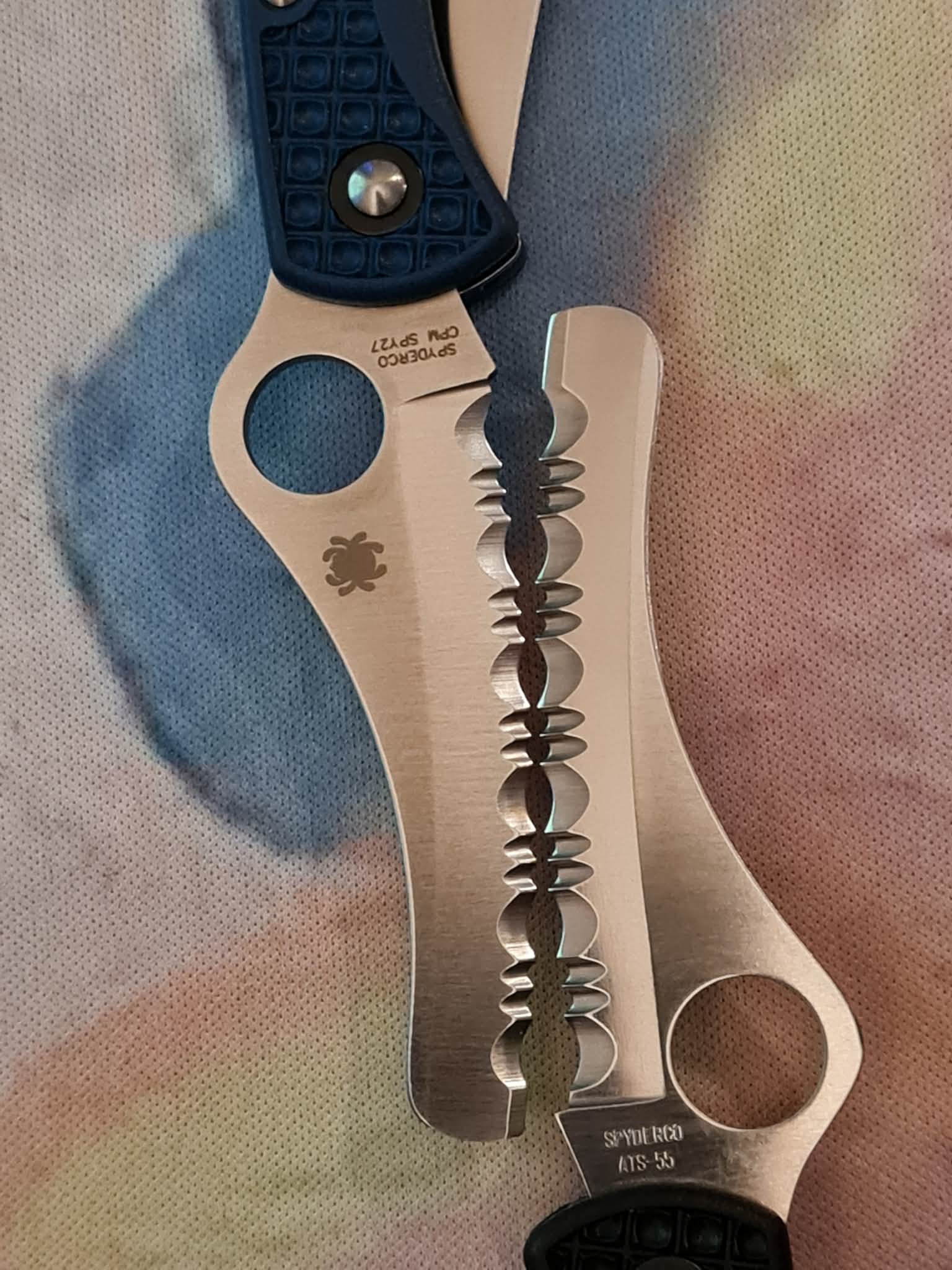
Comparing this new iteration to the older versions, several differences stand out. The most obvious, and arguably the most important, is the upgrade in steel. CPM-SPY27 is a substantial leap forward from what the Dyad Jr. originally offered. It brings improved edge retention, corrosion resistance, and overall consistency, while remaining easy to sharpen, a balance Spyderco has become increasingly good at striking. The second major improvement is the screw-together construction. This may seem like a small detail, but it’s a meaningful one. Serviceability, long-term maintenance, and overall precision all benefit from a screwed construction, and I personally consider this an unequivocal upgrade over the pinned build of the past.
(Important note: it is also clipless. Something to keep in mind. This folder will be digging deep in your pocket big time like a Swiss army knife Nemo.)

Pictures from Heinnie Haynes.

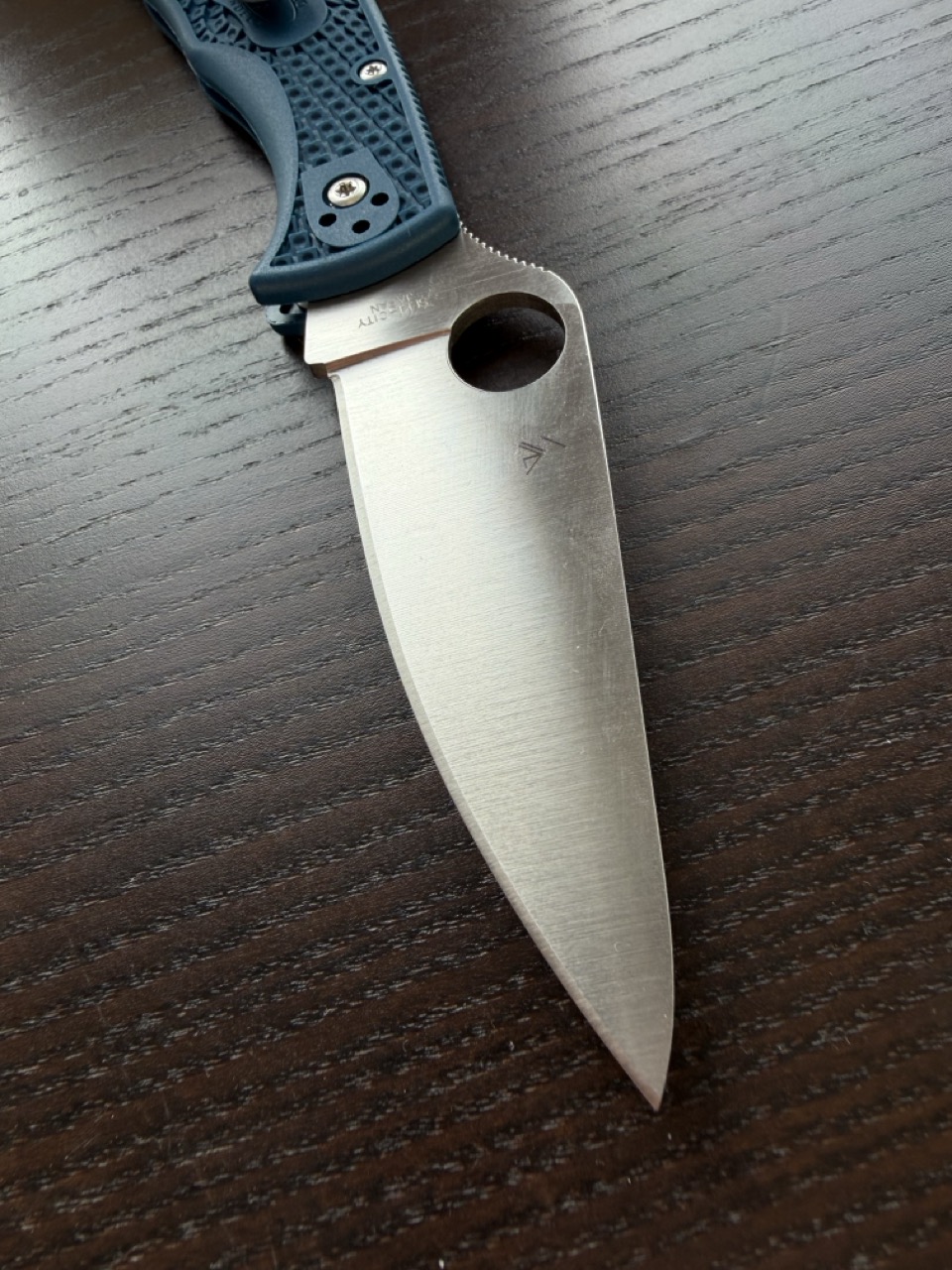
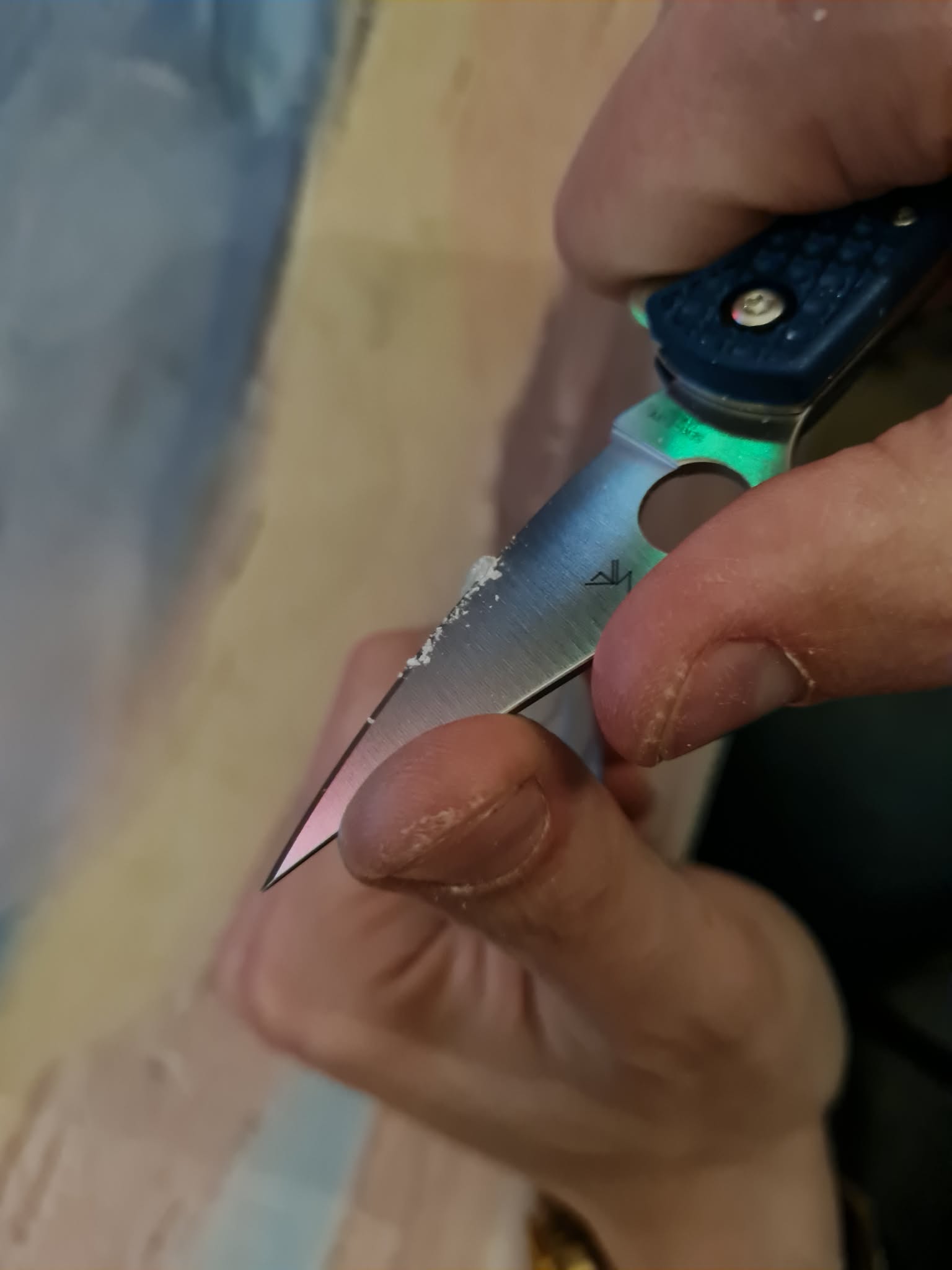
Despite its compact footprint, the Dyad Jr. delivers a surprising amount of performance. This has always been true of the design, but it feels even more pronounced here. The plain edge blade features an extremely fine, needle-like tip, easily one of the thinnest I’ve encountered on any Spyderco. It excels at precision work, piercing, and controlled slicing.

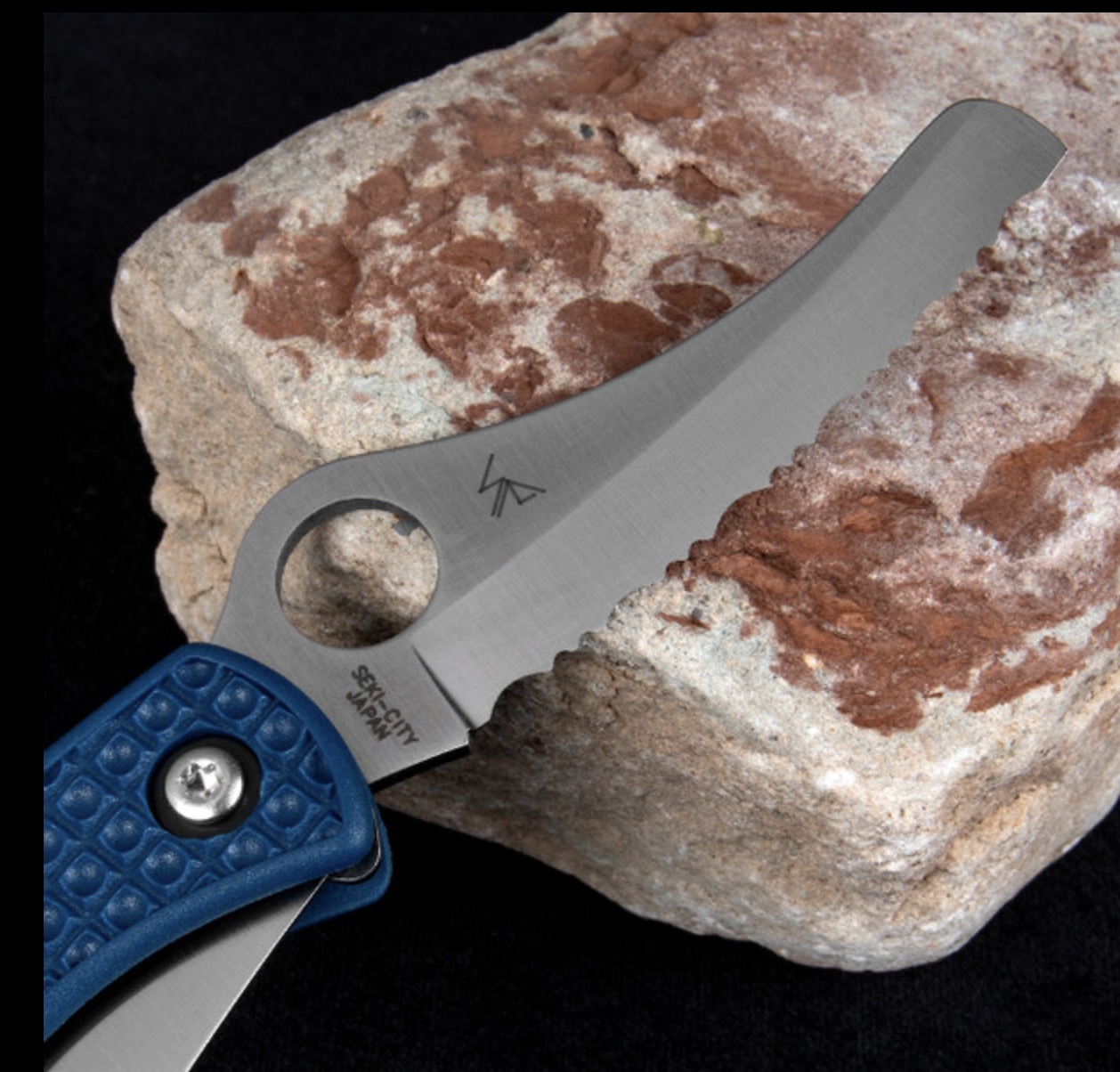
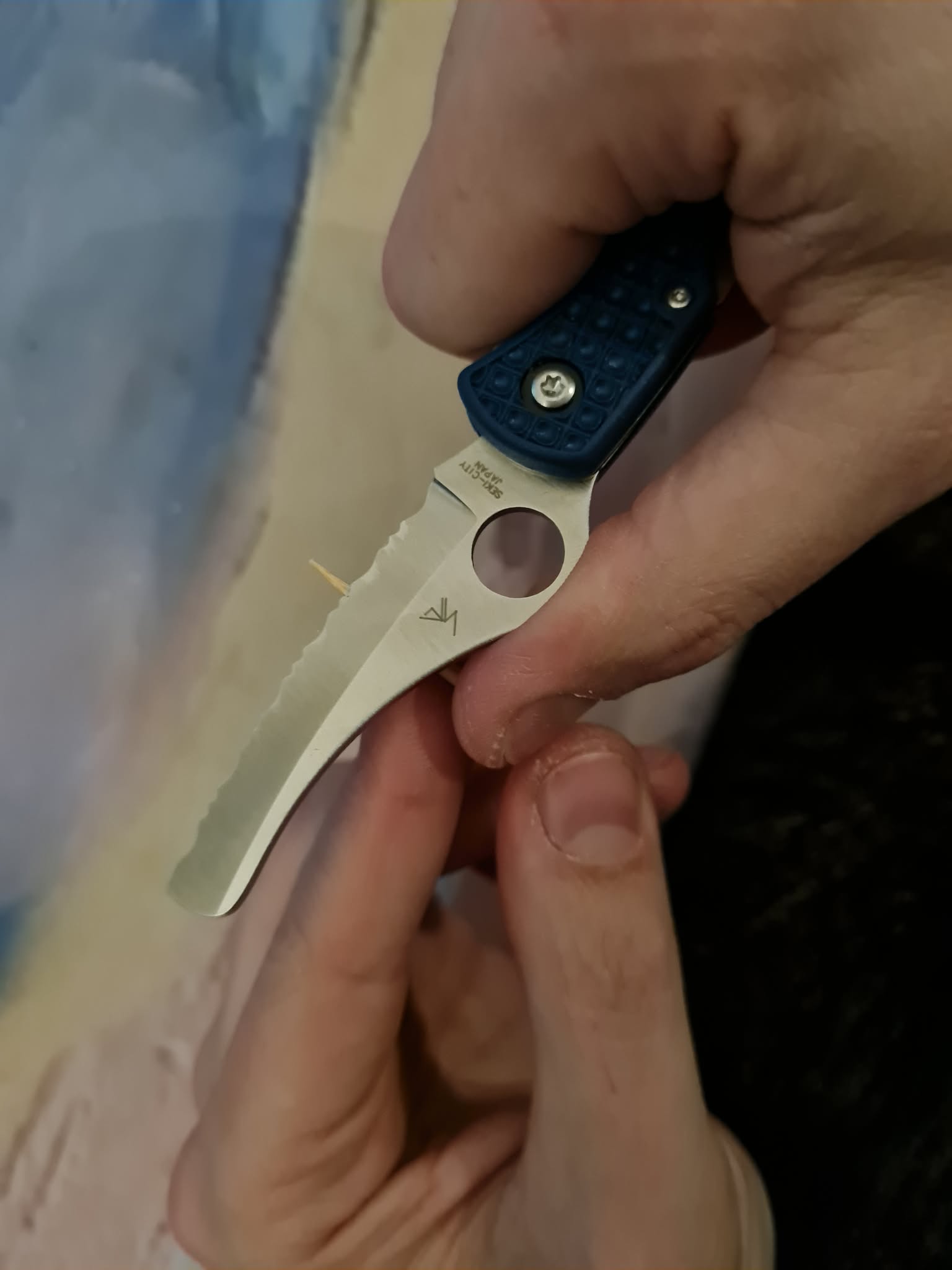
The serrated blade, on the other hand, is a pure cutting monster. For fibrous or abrasive materials, it offers edge longevity and cutting aggression that few single-blade folders can match. Having both options available at all times, without compromising ergonomics or carry comfort, is still a uniquely compelling proposition.

Fit and finish are excellent. The knife feels noticeably tighter and more refined than earlier versions. Both blades lock up solidly, with no vertical play whatsoever in my sample. Spyderco’s Seki-City backlocks have always had a strong reputation, but this one genuinely impressed me. In terms of perceived sturdiness, it comes surprisingly close to benchmarks like the Native 5 and Chaparral, which is high praise considering the Dyad Jr.’s dual-blade complexity.

Before I go back to what this knife is clearly meant for—cutting things—there’s one final point worth addressing: the price. Buying Spyderco in Europe is rarely inexpensive these days, and expectations have to be adjusted accordingly. That said, the Dyad Jr. positions itself extremely well. At under 130 €, you’re getting two fully functional blades, a smart and compact design, excellent build quality, and a modern, well-rounded steel that’s easy to live with. In the current market, that’s not just reasonable, it’s genuinely good value.

In short, the Dyad Jr. doesn’t try to be flashy or trendy. Instead, it quietly delivers versatility, performance, and thoughtful execution. For those who appreciate Spyderco’s more engineering-driven designs, this is a return that feels not only justified, but very welcome.”
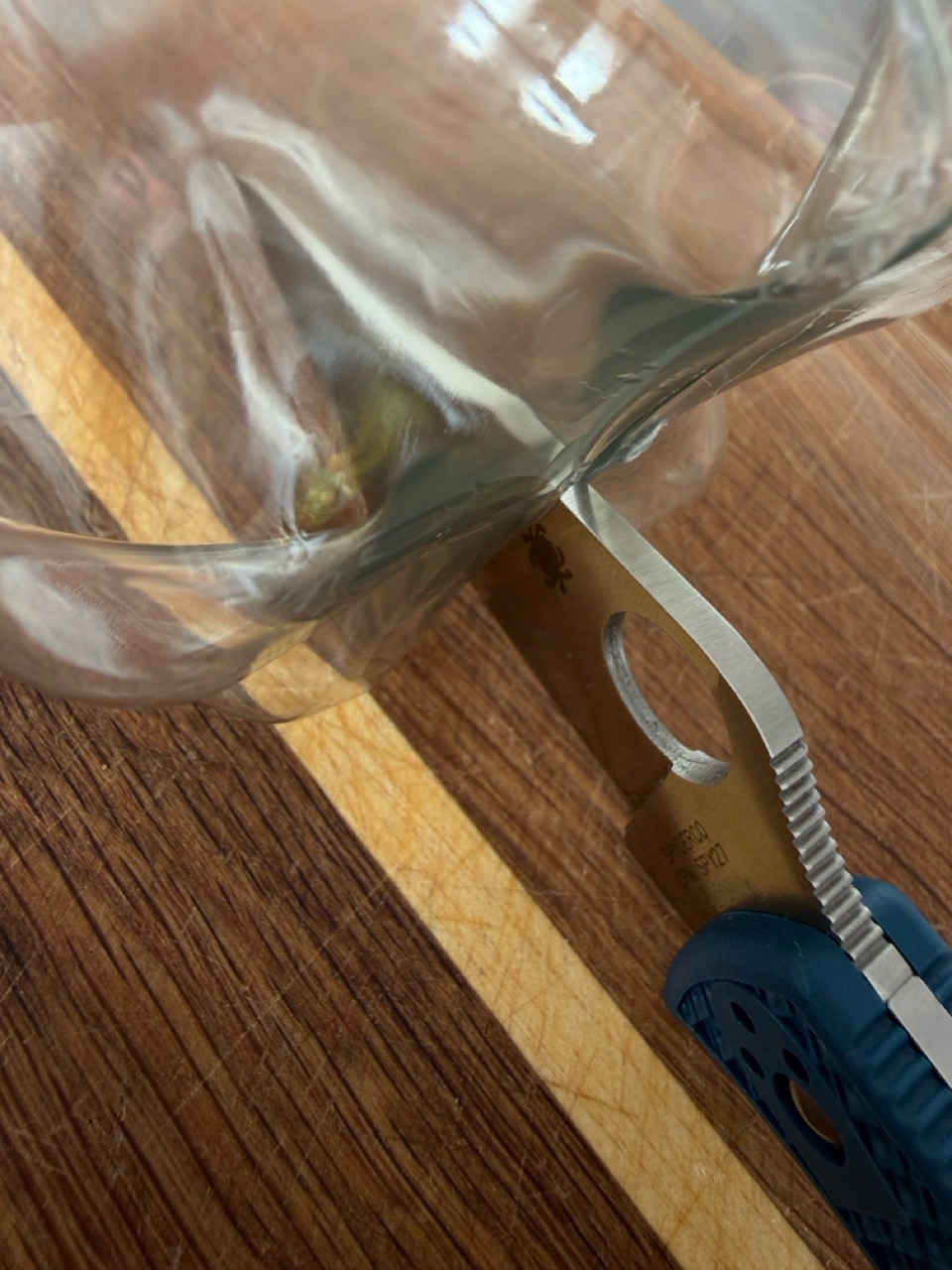
(I will certainly update that review with more pictures from Robin later this week. – Nemo)

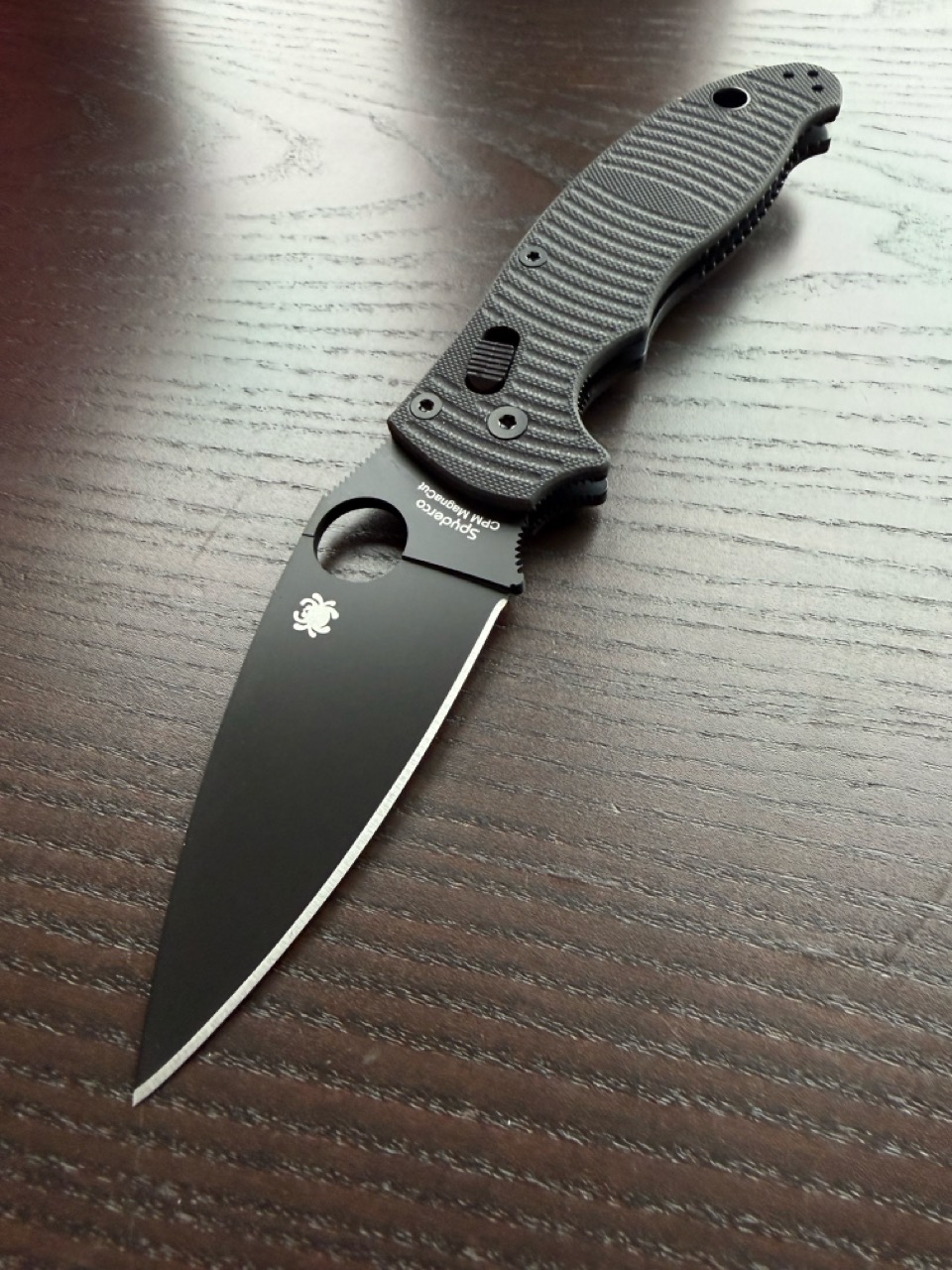
Spyderco MANIX® 2 SALT® – C101GMCBKP2 – The Black Pearl.

Disclaimer: This knife has been provided through Spyderco’s Ambassador Program, upon my own request. Thank you to the Spyderpeople for letting me review it.

When a Workhorse Learns to Swim.

The Spyderco Manix & Manix 2 — The Evolution of a Working Icon

In the early 2000s, Spyderco found itself at an interesting crossroads. The brand had already earned a formidable reputation among law enforcement, military users, and serious enthusiasts for redefining what a modern folding knife could be: ergonomic, purpose-driven, and unapologetically functional. Yet many of its most popular designs leaned toward lightness and slicing efficiency rather than outright mechanical strength. The Manix was born from a different ambition—one that prioritized structural robustness without abandoning cutting performance. It was a back-lock with the same strength as the Chinook’s.

That original Spyderco Manix debuted in 2004 as a bold statement. Designed by Sal Glesser, it was conceived as a folding knife that could offer near–fixed-blade confidence.

The first Manix models were built like backlock tanks. They featured full stainless steel liners, thick G-10 scales, steel spacer and broad, leaf-shaped blades typically made from CPM S30V, which was then at the forefront of powder metallurgy steels. The knife felt substantial in hand, deliberately so and part of the Martial Blade Craft line. Its ergonomics emphasized control and safety: a pronounced finger choil, generous jimping, and a handle shape that locked the hand in place. In an era where many folding knives still mimicked traditional silhouettes, the Manix looked aggressively modern—and some might say unapologetically industrial.

Despite its strengths, the original Manix was not without criticism. Its weight and bulk limited its appeal for everyday carry. Spyderco listened. Rather than abandoning the concept, the company chose to refine it.

That refinement arrived in 2010 with the release of the Manix 2 designed by Eric Glesser. This was not a cosmetic update, but a structural evolution. The Manix 2 retained the fundamental identity of its predecessor while reengineering nearly every aspect for improved ergonomics, weight reduction, and usability. The handle profile was subtly reshaped for better comfort, the liners were skeletonized, and the overall balance was improved. The blade geometry was refined for smoother slicing without sacrificing tip strength.

Crucially, the Ball Bearing Lock was first experimented on Eric’s Dodo and was redesigned with a removable cage, simplifying maintenance and paving the way for future customization. (FYI there was a Manix 2 with lockback.) The Manix 2 also benefited from Spyderco’s unique expanding steel portfolio, appearing over the years in everything from S30V and S110V to Maxamet, CPM CruWear, and later, CPM MagnaCut in the new Salt variants. Few knives have served as such a comprehensive showcase for the evolution of modern blade steels.

Over time, the Manix 2 became a canvas for experimentation. Sprint runs, exclusive dealer editions, and collaborations introduced bold colors, exotic steels, and alternative finishes. The knife earned a reputation not just for durability, but for honesty. It made no attempt to be sleek or fashionable. Instead, it embodied Spyderco’s core design ethos: form follows function, and ergonomy is a requirement.

The arrival of the Manix 2 Salt marked another milestone in the lineage. By pairing the platform with truly corrosion-resistant steels and hardware, Spyderco reaffirmed the Manix’s original mission: reliability under adverse conditions. From urban daily carry to offshore use, the Manix 2 proved adaptable without losing its identity.

The Spyderco Manix 2 has long been regarded as one of the brand’s most capable folding knives: robust, ergonomic, and unapologetically utilitarian. With the Manix 2 Salt, Spyderco takes that proven platform and adapts it for environments where steel usually fails—saltwater, humidity, sweat, and neglect—without diluting what made the Manix great in the first place.

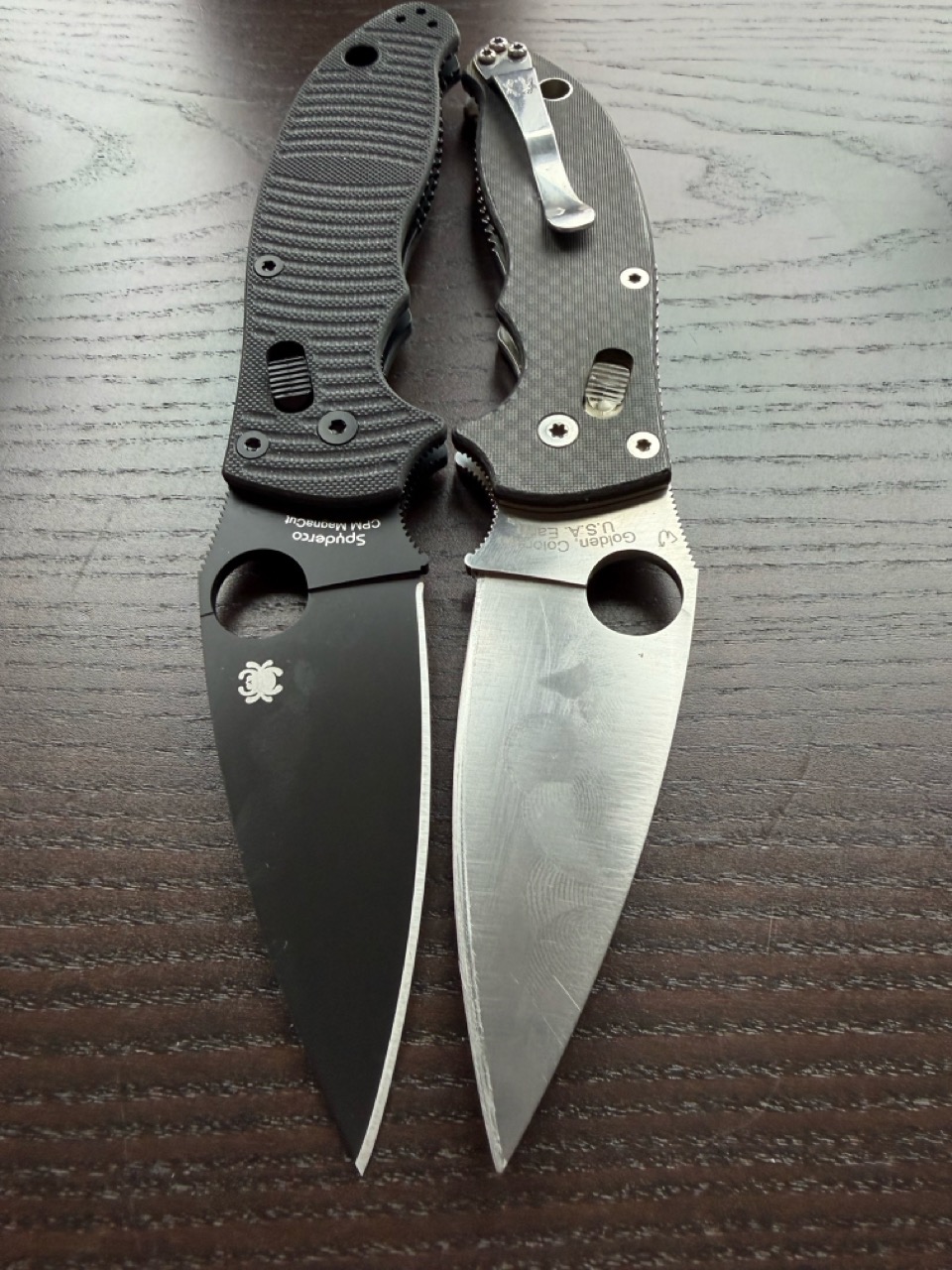
The blade shape remains the familiar Spydie leaf profile, offering excellent belly for slicing, a strong tip, and controlled precision in everyday cutting tasks. What changes everything is the steel. Spyderco’s decision to move the Salt series to CPM MagnaCut is pivotal. MagnaCut delivers an unusually convincing balance: genuine corrosion resistance on par with traditional Salt steels, but with markedly better edge retention and toughness. In practice, this means a blade that shrugs off rust in marine or tropical conditions while cutting like a modern premium steel rather than a compromise.

The Ball Bearing Lock remains one of the Manix 2 Salt’s standout features. Mechanically robust, fully ambidextrous, and secure under load, it inspires confidence in every cut. Out of the box, my lock spring can feel stiff, making disengagement less smooth than some might expect. Fortunately, this is rarely a permanent issue—regular use, or simply a bit of time, tends to ease the action. For those accustomed to the glassy feel of Benchmade’s Axis locks, the initial stiffness may seem pronounced; however, the Manix 2’s single, powerful spring is far stronger and more reliable than the dual Omega springs found in all Axis models, ensuring consistent performance even under demanding conditions.

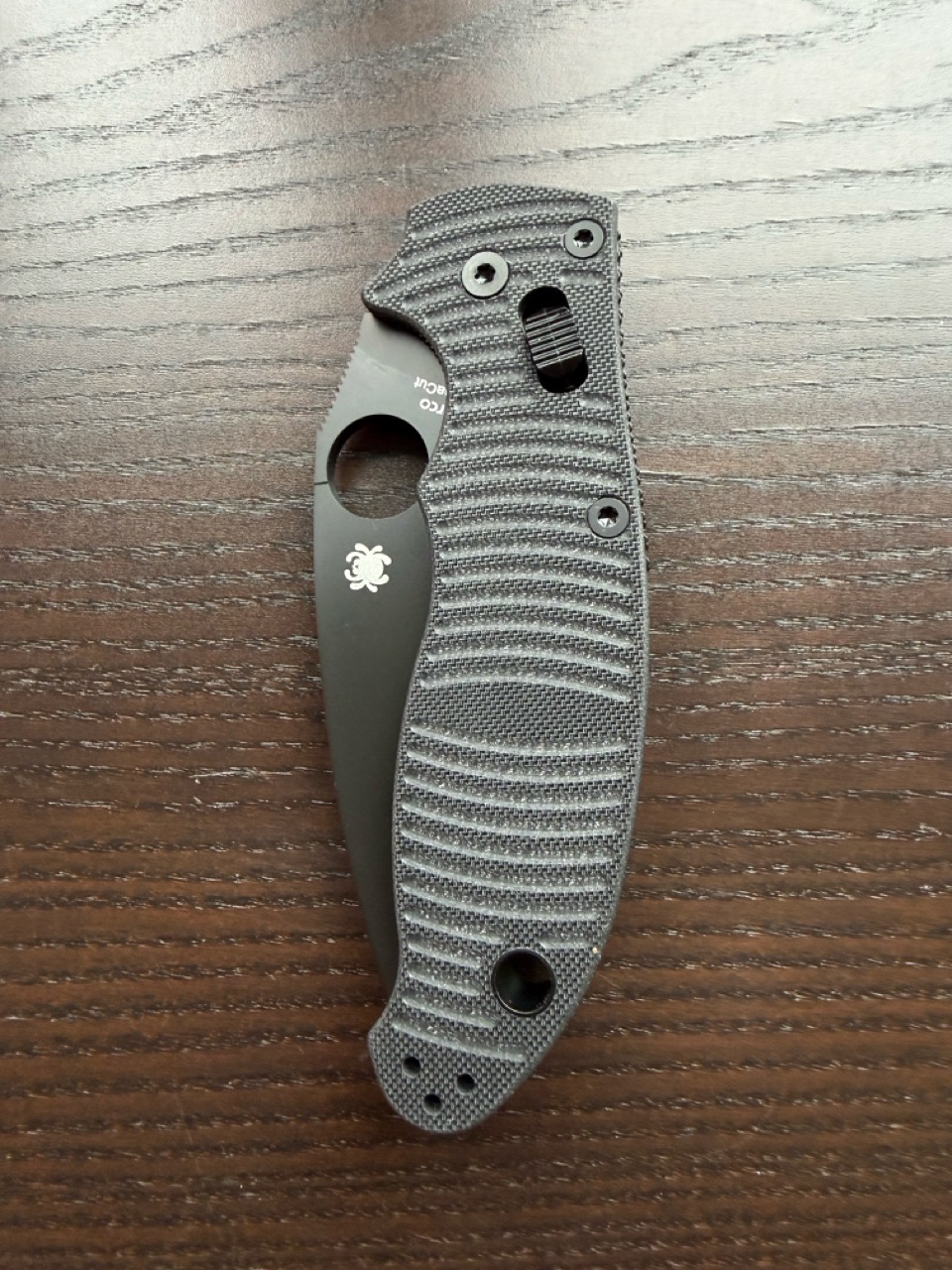
Ergonomically, the Manix 2 Salt truly excels—this is a grip to remember. The G‑10 scales provide a confident, locked-in hold, even in wet conditions, thanks to Spyderco’s signature Caribbean Bi-Directional Texture™. The pronounced finger choil, palm swell, and textured surfaces work in concert to inspire trust, whether your hands are cold, wet, or gloved. This is a knife built to be used, not admired from a distance. Personally, I plan to sand mine slightly to better suit my hand, but even stock, the design is thoughtful: the clip lands on a flat section of the handle, making pocket attachment effortless.

Like in the PM2 Salt, Spyderco’s attention to corrosion resistance extends beyond the blade. Hardware, liners, and clip are all selected with hostile environments in mind. This makes the Manix 2 Salt particularly appealing for sailors, divers, anglers, or anyone living near the sea—users who have learned, often the hard way, that “stainless” rarely means what it promises.
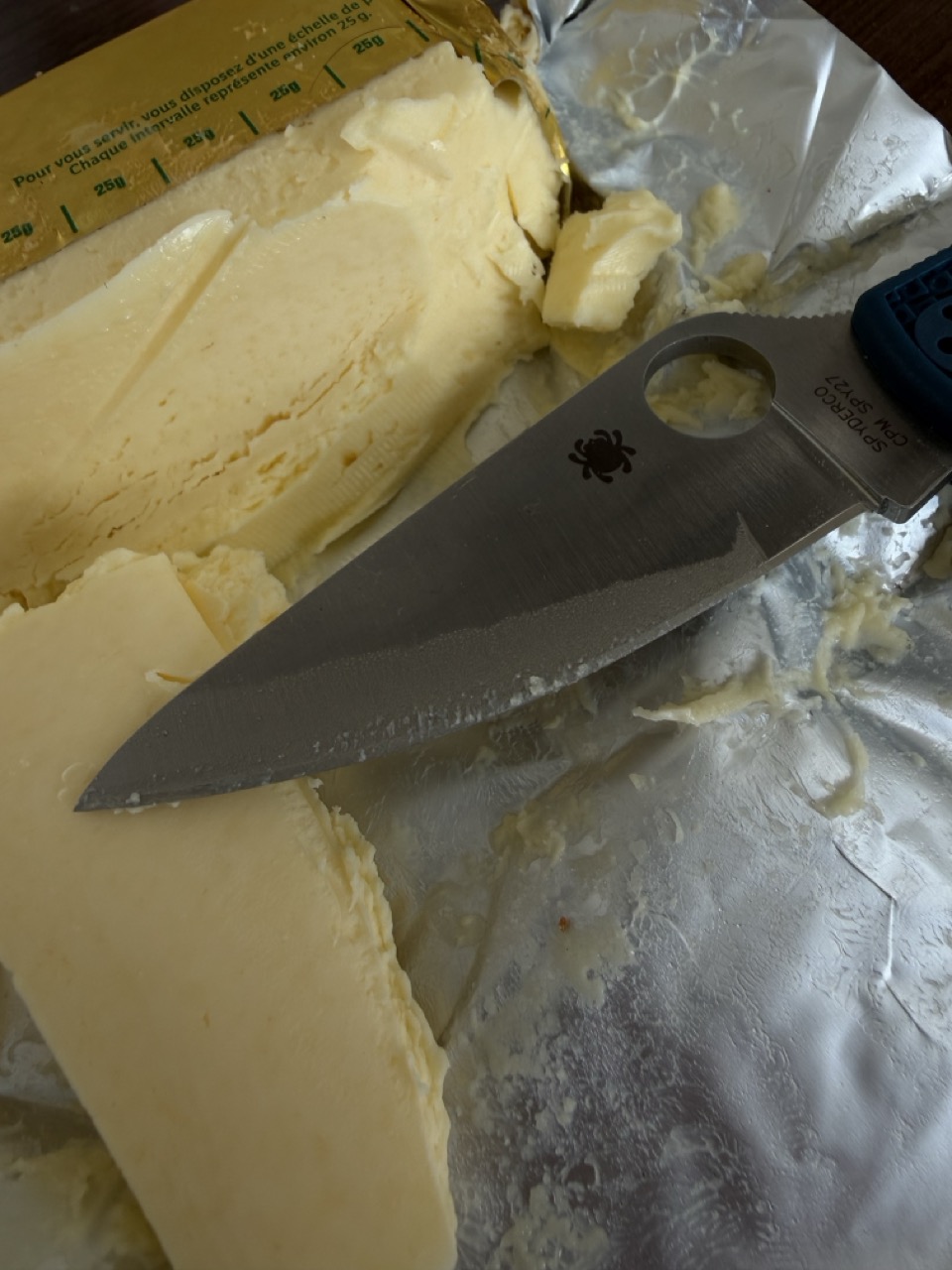
In everyday carry, this Black Pearl of a knife exudes a reassuring sense of overbuilt strength. It is neither the slimmest nor the lightest in its class, yet it makes up for that with unmatched durability, confident grip, and reliable cutting performance. It excels in conditions that quickly reveal the shortcomings of lesser knives, all while maintaining modern efficiency. Folded, it presents as a broad, substantial tool, and clipped in the pocket it occupies noticeable space—its all-black, tactical aesthetic might even intimidate the uninitiated. But once clipped it also disappears on a dark denim. So there is a low profile factor to consider too.

The Manix 2 Salt is ultimately a knife for people who value reliability. It may demand a brief break-in period, and it may never feel delicate—but that is precisely the point. This is a knife you can trust when conditions turn against you, and few compliments matter more than that.

Spyderco Chaparral® SLIPIT™ Birdeye Maple C152NLWDP – Part 2 Clipless Solution.

Sometimes discretion isn’t optional. Local laws—or the context you’re in—can severely limit what qualifies as a legal EDC.

That’s where the Chaparral SlipIt excels.

The Chaparral platform is one of Spyderco’s most refined designs. It is extremely thin—among the thinnest in their entire lineup—both in blade stock and handle thickness. This isn’t just about comfort: the blade geometry is optimized for slicing efficiency. Minimal stock, high grind, and a fine edge mean it cuts with very little applied force.

The SlipIt design removes the locking mechanism, making it legal in many jurisdictions that restrict blade length or prohibit locks. Despite being a slipjoint, it feels very solid and the choild provides an extra security. The internal construction—including the concealed stop pin near the pivot—adds stiffness and long-term durability that you don’t always get with non-locking folders.

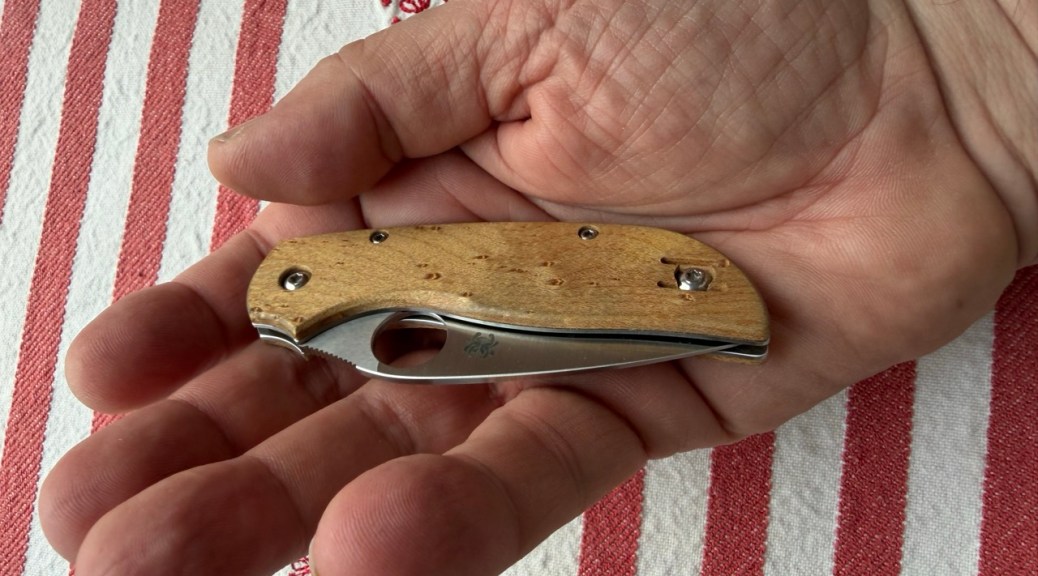
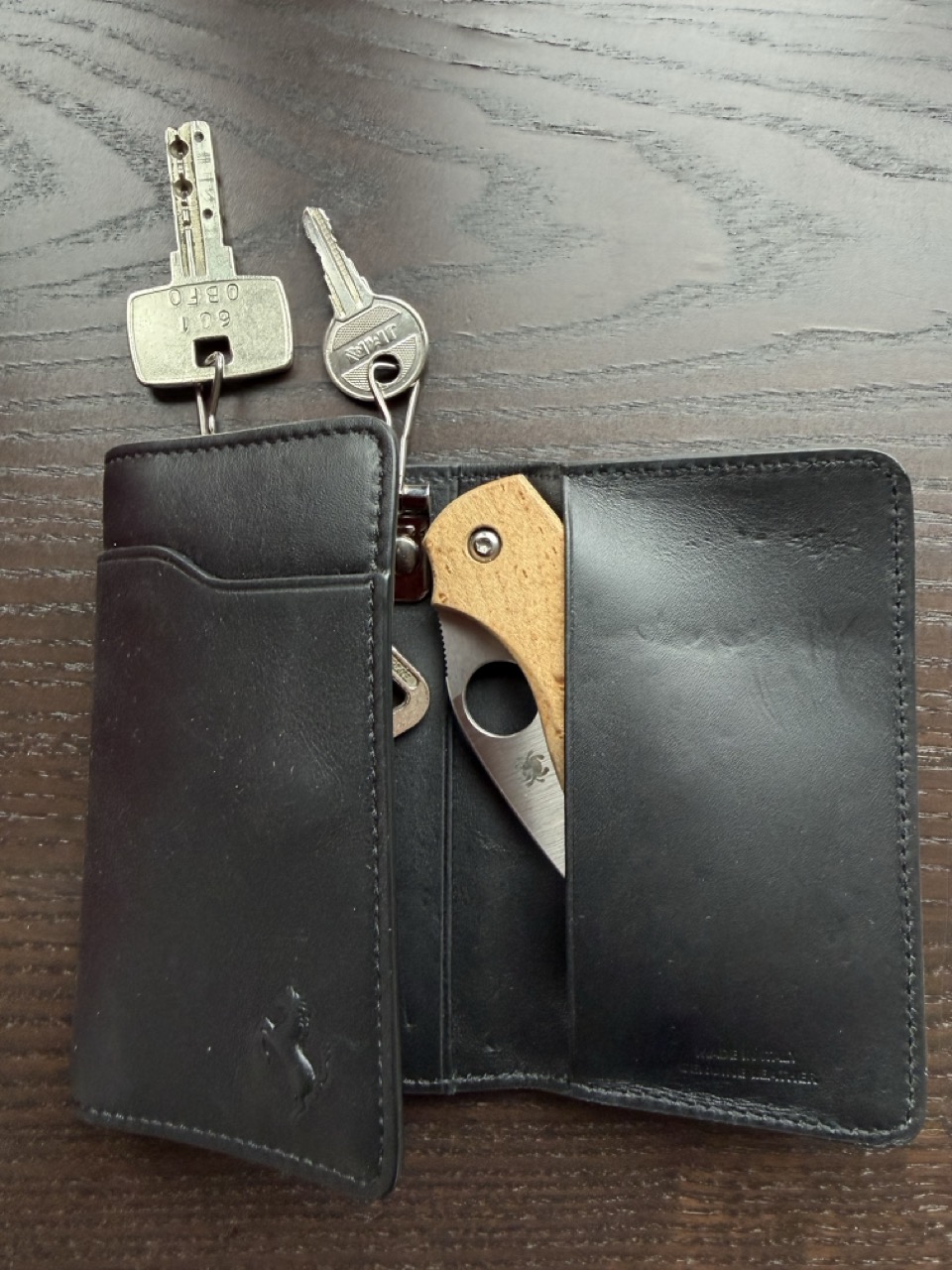
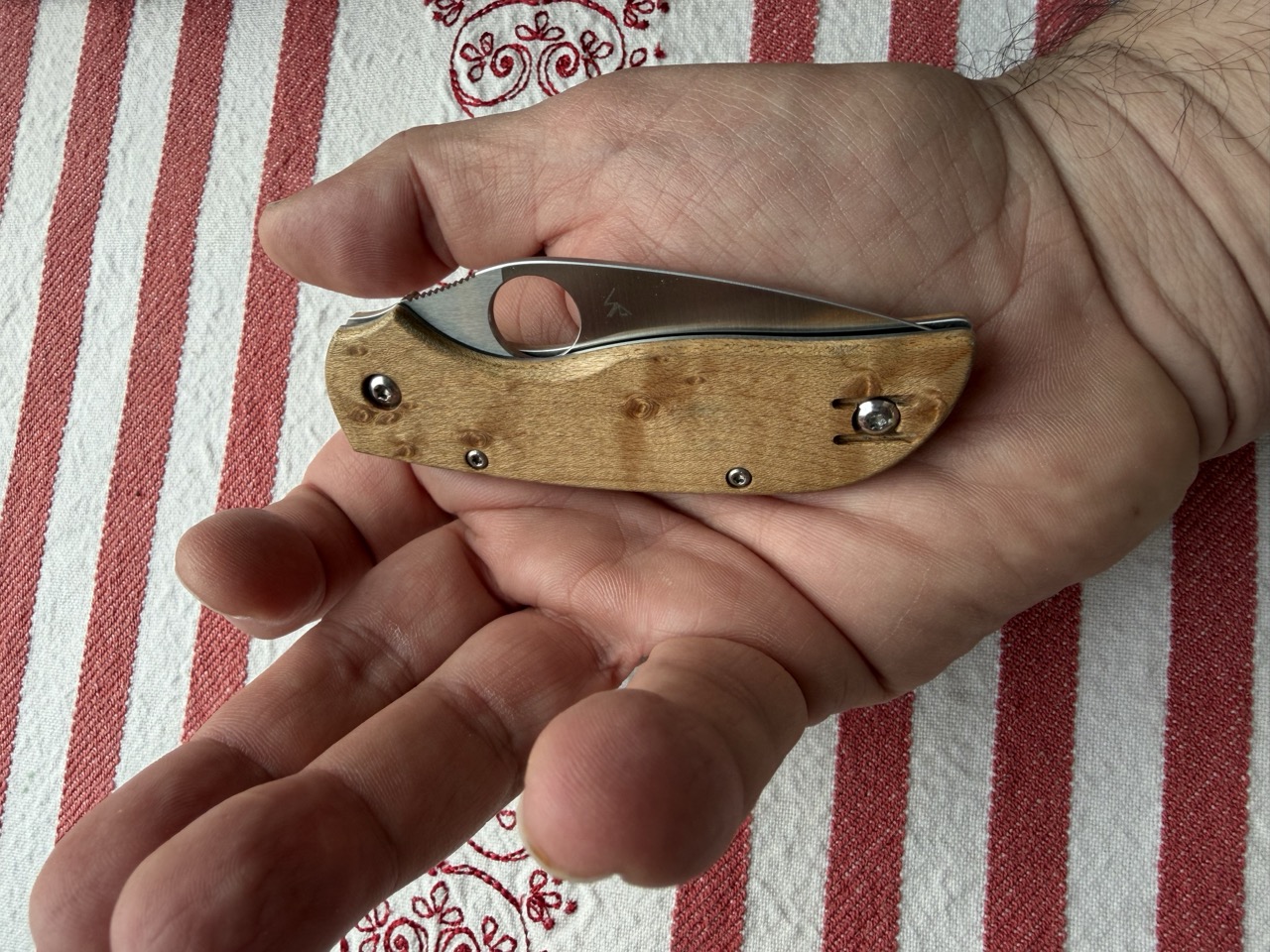
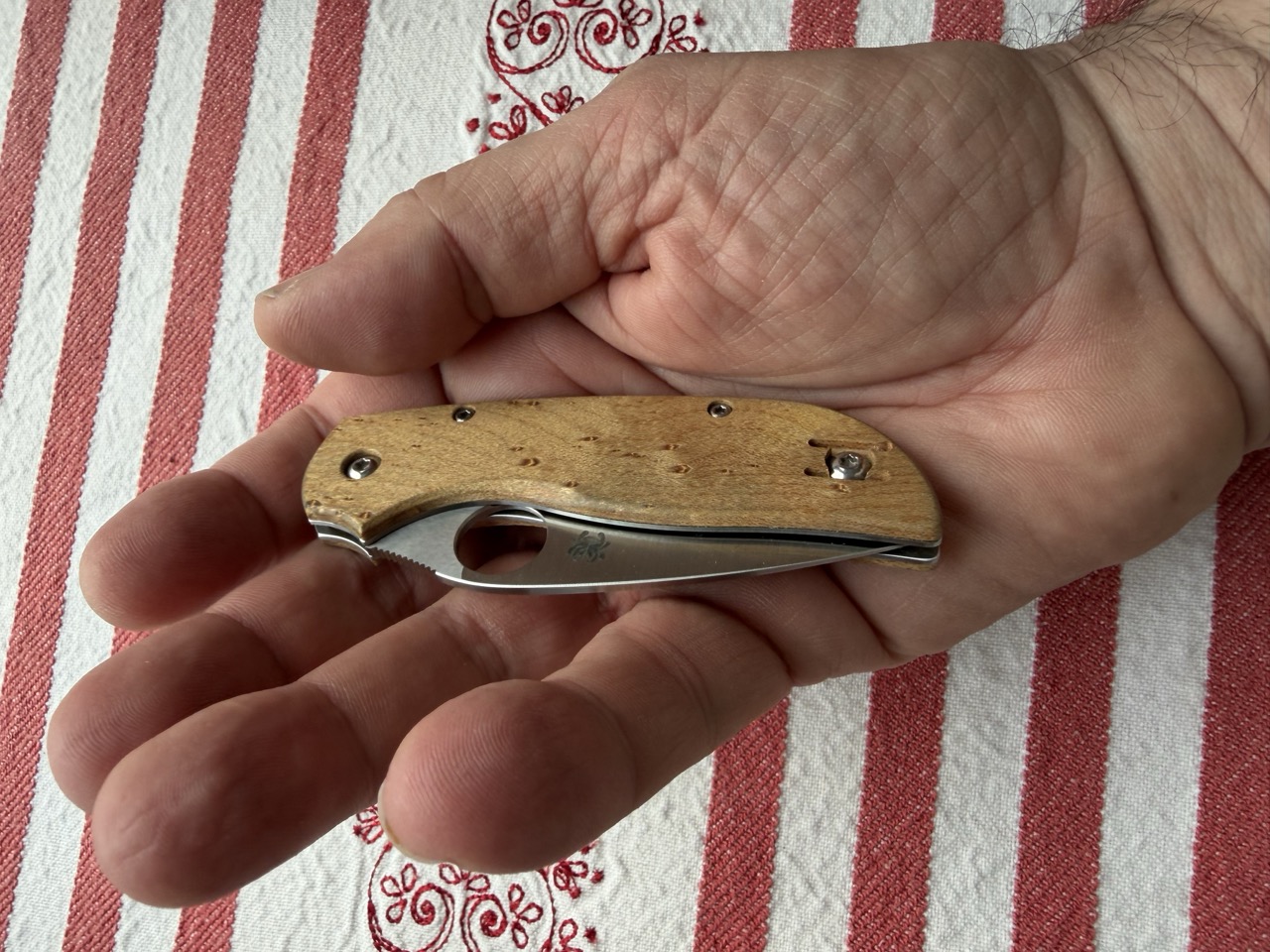
With the pocket clip removed, the Chap becomes almost invisible. It carries deep in the pocket, or even inside my keys wallet, without printing or drawing attention. Yet, once deployed, in use, it never feels inadequate. The cutting performance compensates for the modest size.
Also the absence of clip makes it much comfy in my palm. It is again a sensual experience which contributes to the pleasure of useing your EDC. (I also use a smaller clip found on the Microjimbo when I need to have it clipped on my watch pocket.)

But removing the pocket clip takes about two minutes—just one screw— and requires no modification. Immediately turns the Chaparral SlipIt into a deep-carry in the bottom of the pockets, ultra-discreet folder civilian and refined as a beautiful object, not a thug favorite guillotine.

If you need a knife that stays well within legal boundaries, carries unnoticed, and still delivers real cutting capability, the Clipless Chaparral SlipIt is a smart, elegant, technically sound choice.

Edit:
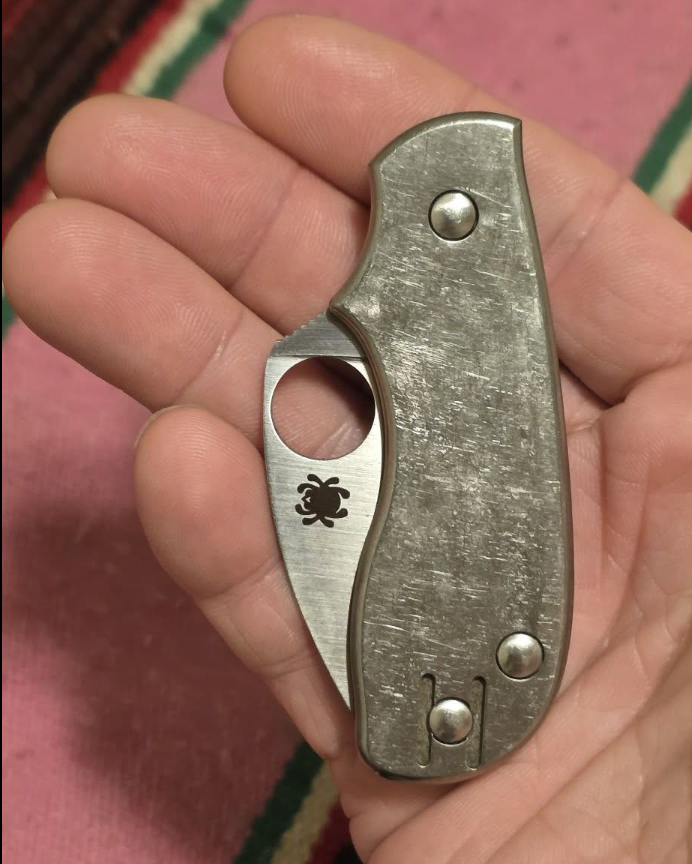
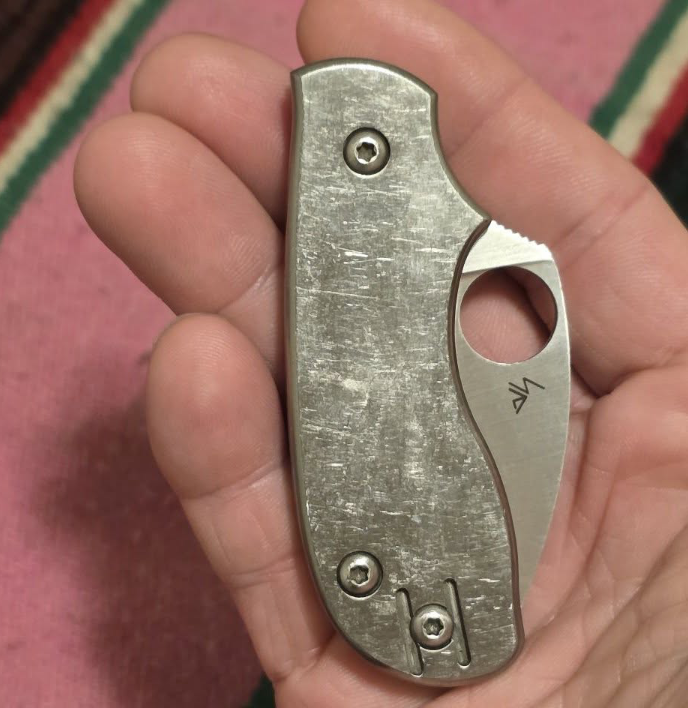
And if you’re worried about scratches, here’s a photo of a Squeak Titanium (not mine), clipless, living its best life at the very bottom of a pocket…

Keeping a titanium knife there is a bold choice—titanium (like wooden scales) is far softer than keys or coins—but it perfectly illustrates the beautility of EDC knives.

NATIVE CHIEF™ LIGHTWEIGHT SALT® CPM® MAGNACUT® — Part 2 — Every Day Teeth.

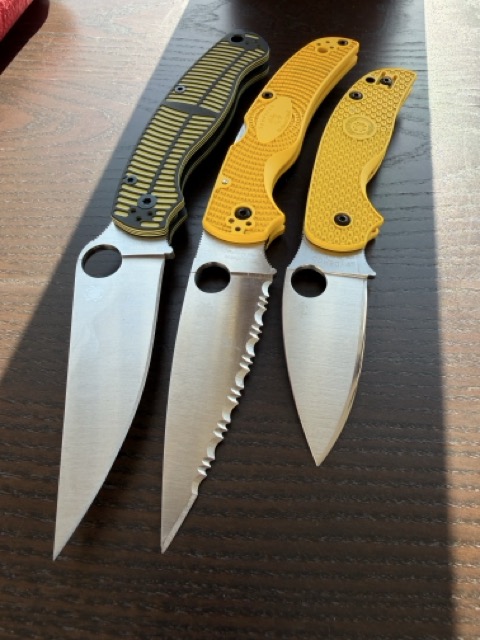
As I mentioned in my previous review of the Teeth for the Deep, the Chief Salt in Magnacut comes in two flavors: plain edge and serrated. The plain edge could be the ultimate traveler’s knife—light, versatile, and ready for anything (now that I have discovered the Edgerati, this is another great traveler knife, light and powerful but cost twice the Chief).
What about the Chief serrated version? That’s something else entirely. This is another animal. It takes the aggressive Spyderedge concept and stretches it across a long pointy blade, giving you both points and bites in one sleek package.
And no, you don’t open oysters with a Serrated Native Chief.
This picture is just for illustration. 😀

Having used the serrated Chaparral daily, I already knew how addictive a well-executed serration can be on a daily basis on a short and flat lady/gentleman folder. Scaling that up to the long Native Chief was something I had long wanted to put to the test again, and it doesn’t disappoint. Sal and Eric are true evangelists for serrations. Sal, in particular, is famous for collecting iconic knives and fitting them with custom serrated blades—the man knows how to get the max of performance in a portable package.

Now, let’s be honest: serrations aren’t for everyone—and that’s a shame. More often than not, it’s simply a matter of education and familiarity. No, serrations are not difficult to keep sharp; you just need the right tools for the job. And yes, you can push-cut into wood to strip branches from a rod when needed.

Some of my friends love meat but refuse to touch a serrated knife at the table. And while serrations are not the first choice for delicate whittling or ultra-precise cut, also the teeth are chisel-ground, so the cut can drift if you’re careless… But for true performance, fast and furious, serrations shine everywhere !
On the Chief Salt, they are sharp, a little too aggressive, and pointy: they bite hard into whatever you’re cutting, with a bit of drag, but they make short work of fibrous and demanding materials. The serrations of the Chaparral are more forgiving. The Chief Magnacut’s spyderedge will catch everything, keep it away from your skin !

Maintenance as mentionned earlier is simple. Especially with a triangle rod of a Sharpmaker.

” I designed the Sharpmaker to be able to sharpen serrations. It’s really easy to get good edge on a Spyderco serrated edge with a Sharpmaker. When sharpening a SE edge on the Sharp Maker should you also “push” the knife along the stones as well as pull? I feel like only pulling the edge along the stone would concentrate the contact of the stone on the front of each serration.”
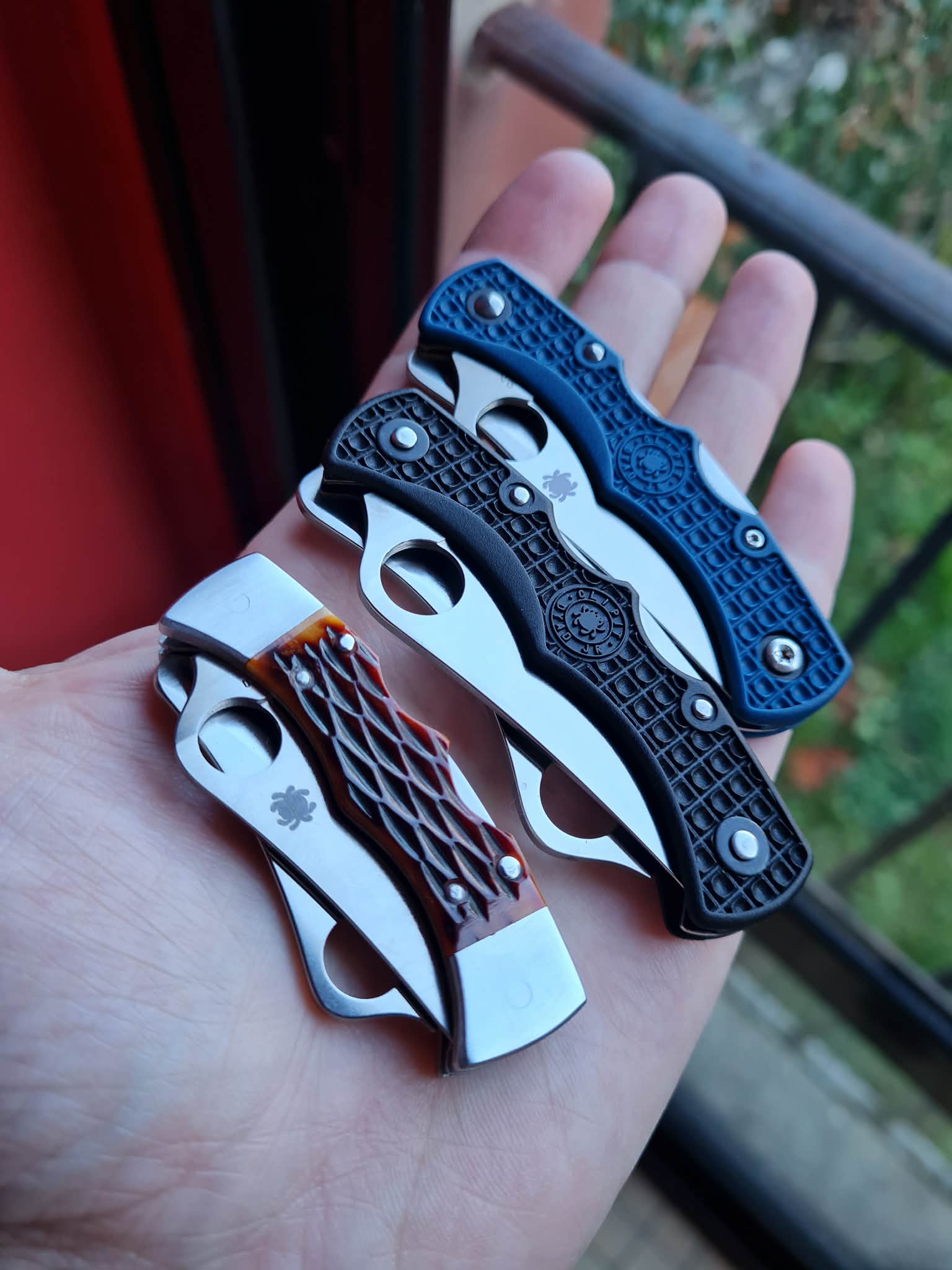
Sal.
These serrations hold their edge very very well and, because of the chisel grind, you only need to sharpen only one side of the blade. And here’s a neat thing to know: serrations always give you more edge length than a plain edge of the same blade size. More edge’s length, more power.

Using the serrated Chief changes the way I cut. On a wooden board, I often find myself relying mainly on the tip and the first 10% of the edge.
Making a wider angle with board, holding he knife higher…
If I cut parallel to the board, the serrations are so aggressive they generate sawdust!
But in any professional kitchen, serrated knives make preparing sandwiches or slicing layered ingredients effortless—fast, clean, and without crushing delicate foods.

The mechanics of a serrated blade differ from a plain edge. Plain edges excel when you can push, slicing smoothly through the material. Serrations excel with a sawing motion, ideal for fibrous materials and when speed matters more than precision. Think of sawing through a branch versus whittling a stick: both cut, but only one does it efficiently under pressure, in emergency. Spyderco bigger folders were often considered as Pocket Chainsaws for that very reason.
Start using Spyderedge and you will see they are addictive !

See ?

Slicing bread illustrates that point perfectly. Pushing with a flat blade (even a thin one) can squish a loaf, but a serrated edge will slice cleanly, scoring and dividing the material with minimal effort. A sharp serrated knife hooks, grips, and slices with real efficiency, unlike a dull serrated knife, which merely tears. Each teeth act like tiny scallop edge, biting, reaping through the material rather than forcing it apart. A real saw, is not really sharp, by contrast, removes shavings to create a kerf—a very different process altogether.

From a geometric point of view, that serrated Chief Salt is a masterclass in applied design. A true vector for serrations. Very aggressive yet easily controlled, fast yet precise enough for practical use in every day or emergency chores. It’s a light folding knife that turns hard work into satisfying results: you cut fast in all conditions, rain, snow, sea, mud, grease… That chief would even be a precious ally for an expedition in the rain forest. For anyone who wants to take with them everywhere the utility of a long, hard-working Spyderedge in a travel-friendly folding package, this is it. An toothy all terrain tool you can rely on in all circonstances. The fruit of fifty years into knife making observing Nature where serrations are legion.

“In our early testing, (Gail and my), we learned that a coarse edge cut more aggressively than a fine edge, but the coarse edge tended to dull more quickly. The way we decided to combine the coarse cutting and the fine edge longevity was with a serrated edge. The serration tooth is he “coarse” aspect and the “fine” inner edge, lasts longer. “
Sal Glesser.

Spyderco Edgerati – The Power and The Passion.

Disclaimer: this a first glimpse at the Edgerati provided through the Ambassador’s Program.


Sal Glesser is an inventor driven by passion. His love for performance in general, high-performance sports cars, and sailing races is reflected in every one of his creations.

His knives are known for their radical aesthetics and their uncompromising performance, always respecting the fundamental purpose of an edged tool. He is also recognized for taking his time, developing and testing numerous prototypes before releasing a new design.

For this knife, his inspiration comes from the world of sports cars—more precisely from the legendary Maserati Birdcage.

Masten Gregory deftly guides his British Racing Partnership 19 (#953) through The Corkscrew at Laguna Seca during the 1962 Pacific Grand Prix. Dan Gurney and Lloyd Ruby each won one of the weekendÕs two heats in other 19s, but overall honors fell to Roger PenskeÕs Zerex Cooper. Photo: Willem Oosthoek Collection

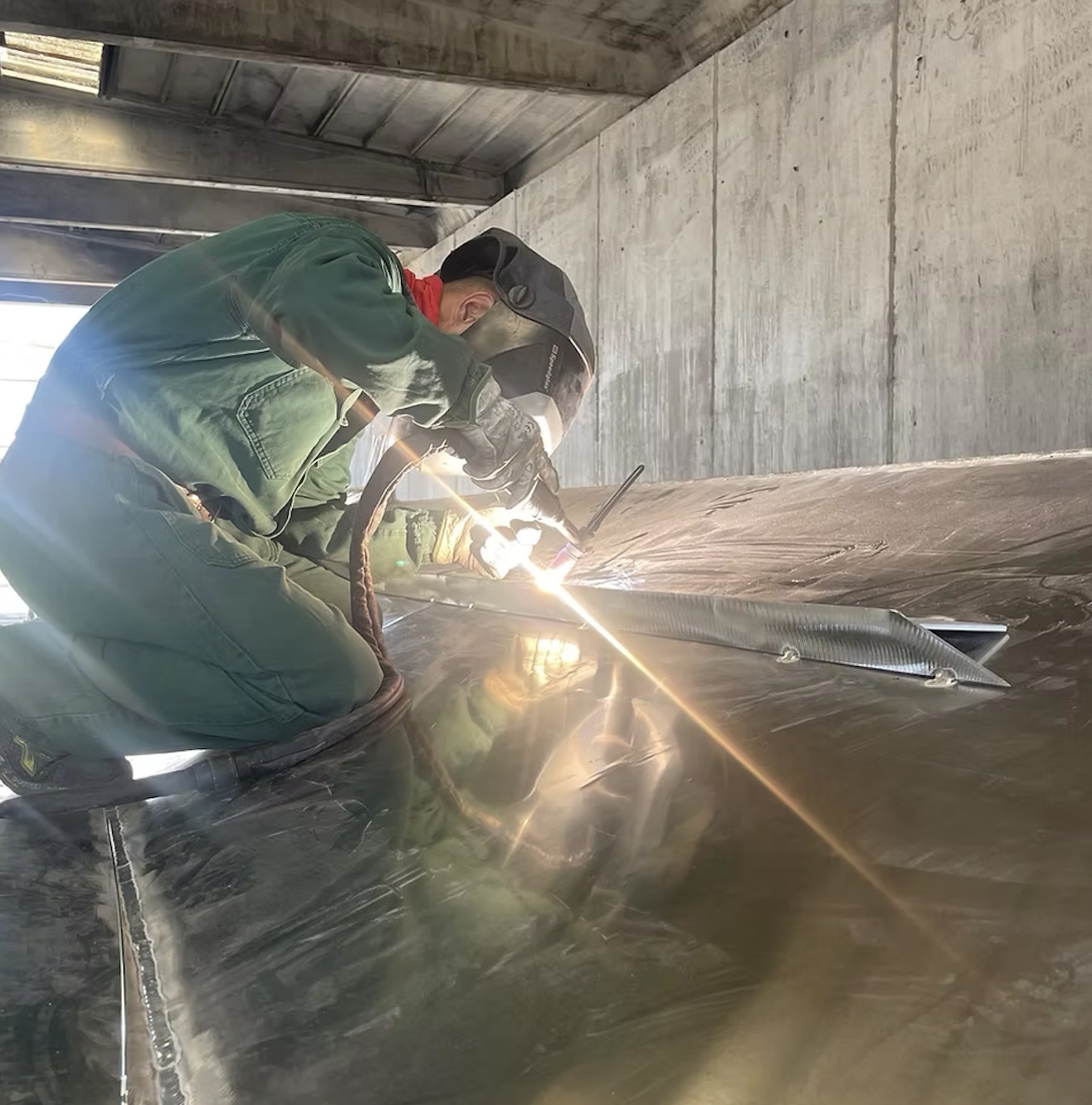
Produced between 1959 and 1961 for privateers competing in endurance racing, including the 24 Hours of Le Mans, the Birdcage was available in 2-litre and 3-litre configurations. Its name came from its revolutionary tubular space-frame chassis, made of roughly 200 chrome-moly steel tubes welded together in triangular formations at high-stress points. This construction method resulted in a chassis that was both lighter and significantly more rigid than anything else on the grid at the time.

Why not apply this design philosophy—and this obsession with performance—to a knife?

This is not Sal’s first attempt at creating an ultra-light, all-metal folding knife. I remember his “R” model, for instance.

I was never a real fan of the approach that consists of punching a spider-web of holes through both the handle and the blade. I understood the intention, the démarche, but as a user, it never convinced me. All those holes meant a knife that was constantly dirty, always in need of rinsing and cleaning… and, well, not my cup of tea.

So you can imagine my skepticism when the Edgerati was first revealed. The steel itself was not some exotic new alloy, and the handle seemed to scream: wash me under the tap and rinse me after every use.

I was wrong.

The moment I first held the Edgerati changed everything. At least two people—Mason and Robin—insisted that it was something you had to experience in hand. They were absolutely right. The knife is incredibly light, yet somehow feels substantial at the same time. My first impression was purely tactile. That beautiful clip point blade and those great ergos, the Edgerati is a bold move.

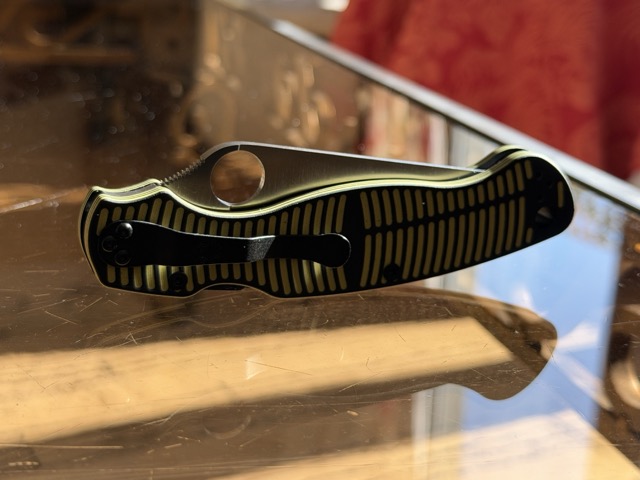
Because its handle is not thin, but thick enough to feel genuinely comfortable and secure for hard chores. That was the first excellent surprise: how this Birdcage homage actually translates into ergonomics. The aluminium feels warm under the fingers, and the triangular cut-outs provide excellent grip and retention.

The thick handle, combined with the complete absence of hot spots, makes it perfectly suited for hard use. Kudos to Sal—this is the work of someone who knows how to design a true tool, not just eye candy.

The action is smooth, with zero blade play. It feels extremely solid—reassuringly so.
On closer inspection, the Edgerati could almost be described as a Shaman stripped down and laid bare. The two knives share the same overall profile, down to the last screw.

(screenshot taken from CRBx video “Spyderco EDGERATI: Shaman in SEXY lace?”)

Spotted on Reddit: birds of a feather flock together—and it turns out there’s even the possibility of swapping blades with a Shaman (thanks to Armand for the heads-up).

I have asked to Golden.
— Imagine a Shaman Magnacut blade on that handle ?
— I have to admit. I’ve done the swap. The thicker blade stock on the Shaman throws off the balance, and the detents are not a perfect 1:1
It’s possible to flip the blade out, just with holding the handles and flicking your wrist. The Edgerati blade in Shaman scales is a nice treat though. Unfortunately, the Shaman in the Edgerati frame doesn’t work nearly as well.


So, you are warned.


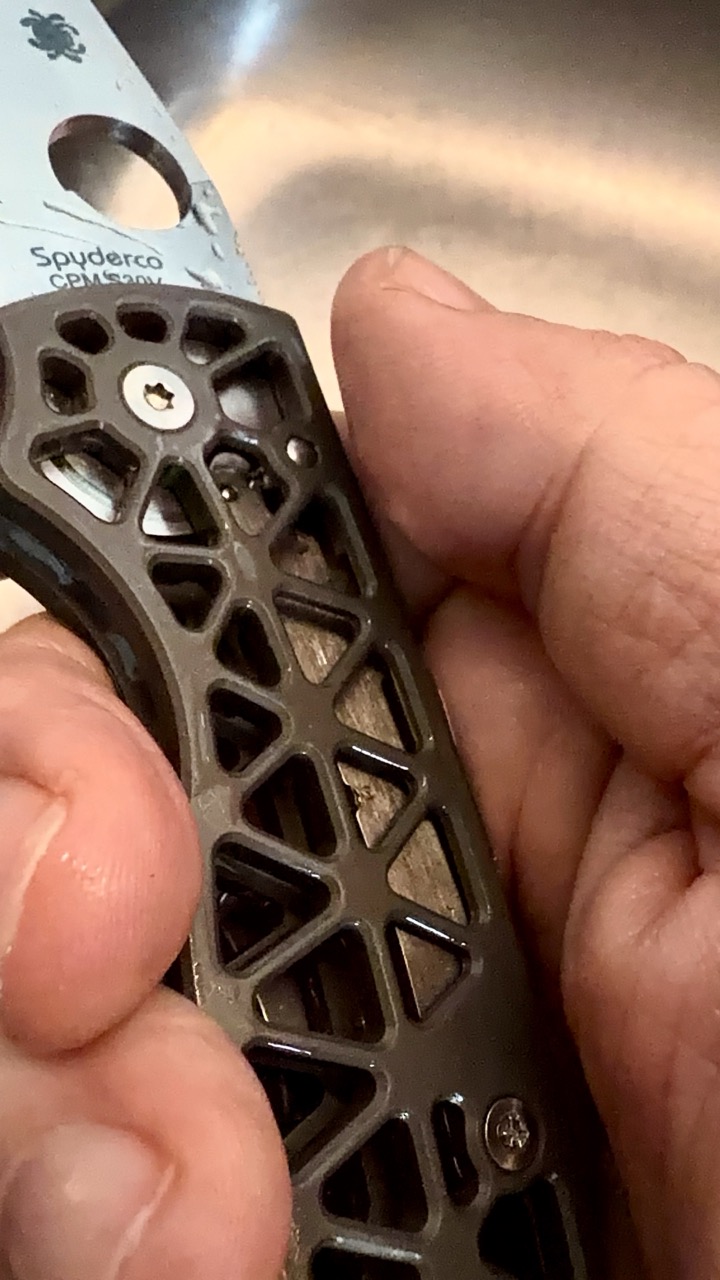
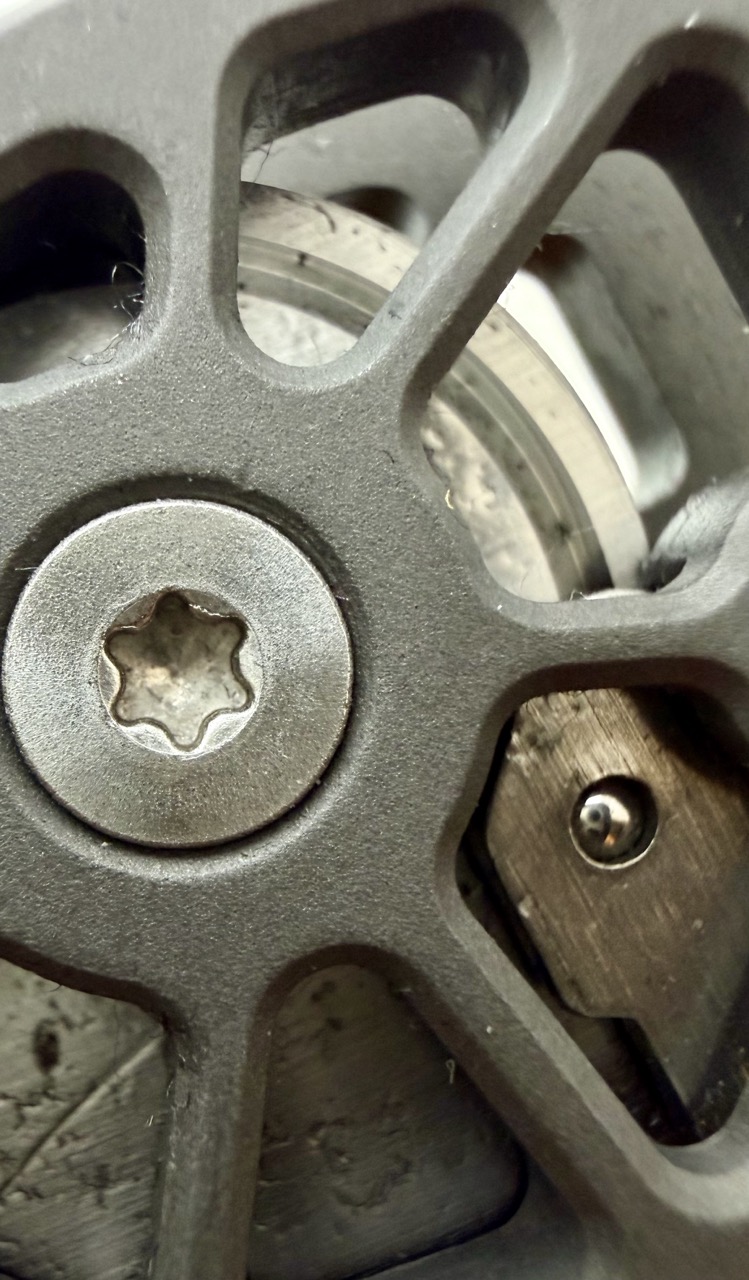
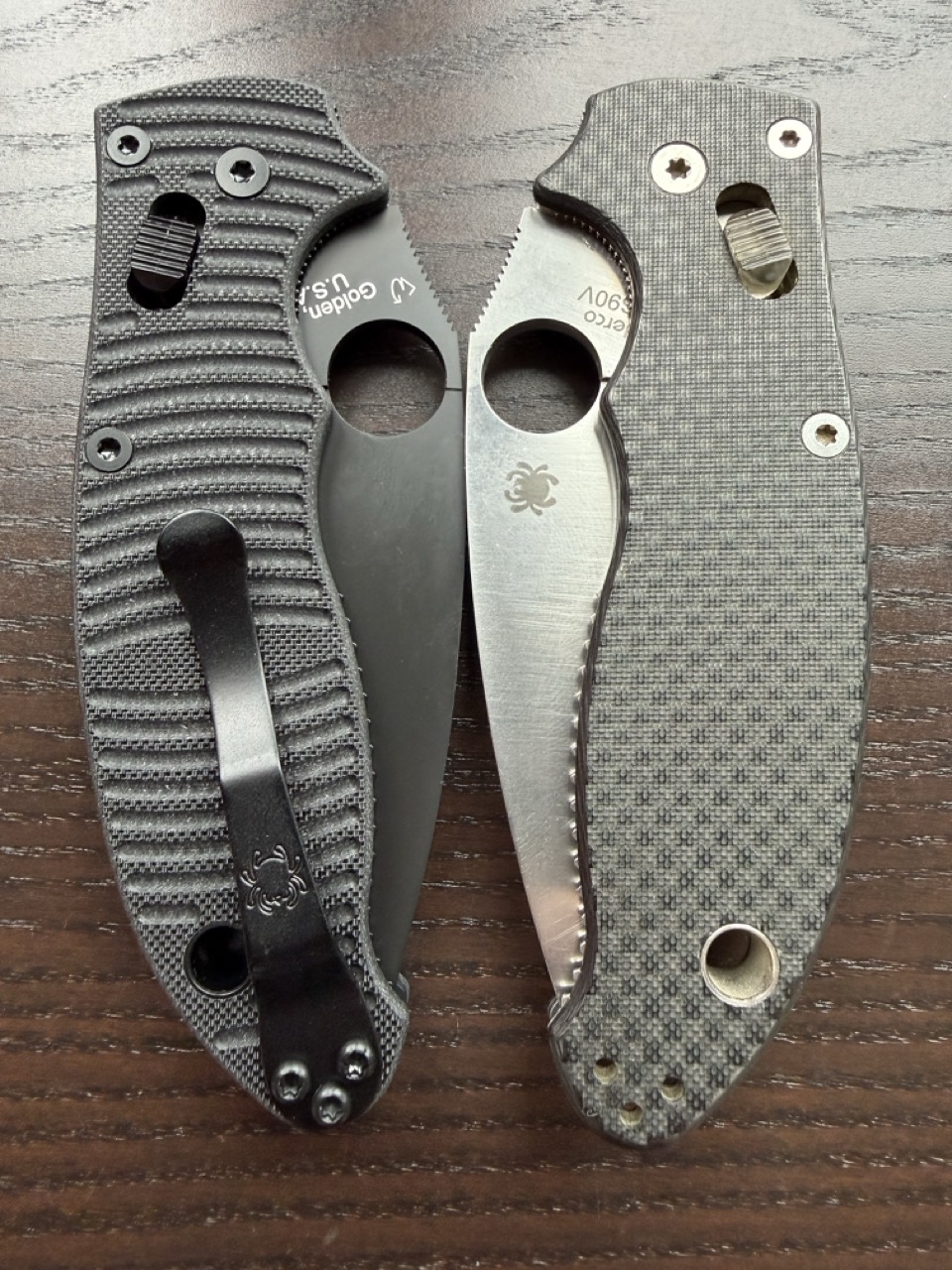
And yes, we also get the rare opportunity to see now inside the “engine” of the knife. One major advantage is the ability to fully clean it after dirty or demanding tasks. The Compression Lock remains a small masterpiece of engineering and operates with real authority. The spine of the handle, if I may put it that way, truly feels like an aircraft carrier for the hand—broad, stable, and extremely reassuring.

Beauty is, of course, in the eye of the beholder, but this is undeniably a beautiful knife once you get used to that “Eiffel Tower’s effect”. The pictures speak for themselves. It does not project “tactical” vibes; instead, it feels like a refined, high-tech engineer’s cutting tool. I can easily see it appealing to hikers who carefully count every gram they carry. Its versatility could also attract cyberpolice officers, climate change firefighters, alien hunters—and even starship troopers, for whom weight savings are critical, like astronauts. That may explain why it is also available in a full-black, partially serrated configuration. It is a toolish delicacy. A very capable solid reliable lightweight tool. Very very light and powerful !!

Aluminium (and its lightness) is very much in fashion in 2025. Apple, for instance, uses aluminium chassis on the iPhone 17 Pro because aluminium is light solid and an excellent thermal conductor. Coated aluminium, however, is also known for scratching easily. It willmark over time, and the pristine, “brand-new” look of the Edgerati’s handle is clearly not meant to last. Instead, the knife will develop what I would call a “war patina”—the visible proof of use. The Edgerati will become personalized quickly, for better or worse. Sanding the handle might eventually help even things out, but scratches are inevitable if that kind of wear bothers you.

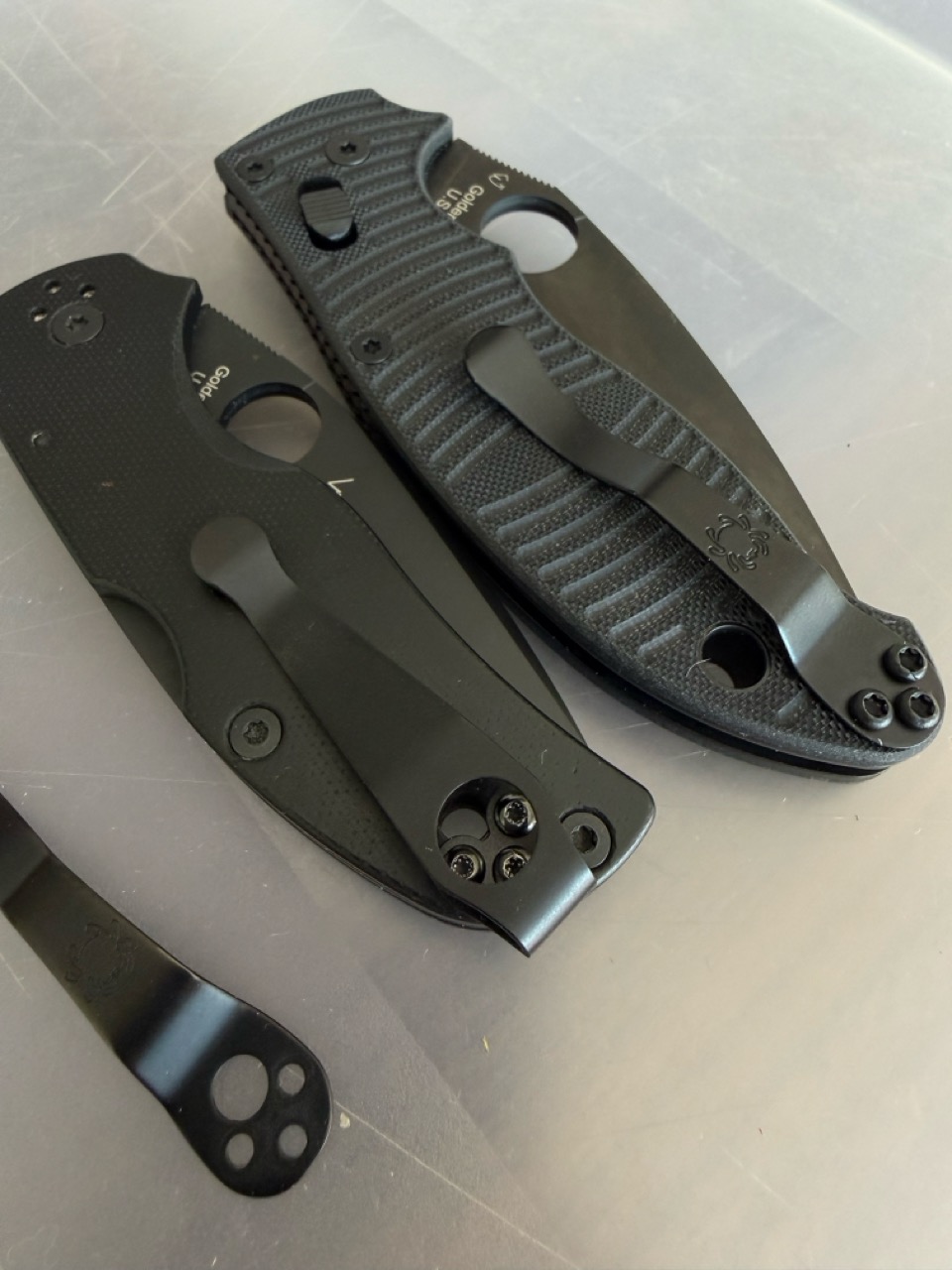
If there is one aspect I am not entirely happy with so far, it is the pocket clip. It’s the same heavy-duty style clip found on models like the Shaman, the Tenacious or the Lil’ Temperance. This means the knife sits proud in the pocket, and replacing the clip with a third-party option is not straightforward. On my sample it is also not particularly easy to slide in and out of the pocket. I’ll see later how—or if—I can improve this by slightly bending it.

All in all, I genuinely thought the Edgerati would be a collector’s piece—a “safe queen,” and therefore not really my thing. I couldn’t have been more wrong. The Edgerati is a user, through and through: an ultra-light, ultra-solid tool with a genuinely utilitarian blade in CPM S30V, heat-treated by Golden.
It is very hard not to fall in love with such a unique knife, once you hold it in your hands, especially if you already love its heavyweight brother: the Shaman.
But this Edgerati is a KWEMRP !

The Shaman design began a long time ago. It took several years to complete and refine the design before I was satisfied. Then the “Bodacious” and “Edgerati” variants were designed to serve what I thought might be requested.
Sal Glesser

“Oh-oh, the power and the passion
Oh-oh, the temper of the time
Oh-oh, the power and the passion
Sometimes you’ve got to take the hardest line”
Midnight Oil.

Edge’s up !

The Gambit of the Military 2 CPM 15V

I sold my Military 2 in CPM-15V back in August. Yes I did !
Why? Because, for me, it was an overkill design. I could never quite get that 15V edge where I wanted it with my equipment, and—more importantly—I was almost afraid to use it hard. Such a Sprint Run deserved to be kept pristine for later…
In my knife rotation, that niche of hard use folders was already well-covered by my Lil’ Temperance in K390, my Adamas in CPM-CruWear, and even my semi-serrated Tenacious in CPM-M4. The Military 2 felt like nothing more than an rare XXL Para 3, or at best a precious XL Paramilitary 2.

So I sold it to a friend, who was thrilled with the convex edge I had put on it.
And with the money, I invested in a Microjimbo in CPM-15V—nicknamed Shard.

But then I kept catching myself looking at the Military 2 Salt, which in my book might be the best “military-style” folder ever designed: light, stainless, and equipped with a Magnacut blade. Then I even drifted toward the Manix 2 XL Salt… not released yet…
Eventually, I had to admit it: I was missing the big boy that is the Military 2.

As you know, for reasons I can’t fully explain, I give names to my EDC knives. The habit probably comes from my youth, devouring Michael Moorcock’s Elric saga and Fritz Leiber’s Swords cycle.
My CruWear Military was named Gandalf (grey handle).
The CPM-M4 with jade G-10 was Ghost.
My Military 2 in 15V was Gambit—after the chess term meaning to sacrifice material for positional advantage.

Well… I sacrificed Gambit.
To invest in Gambit again.

A friend was selling his own M2 in 15V—bought after reading my reviews—because, just like me, the knife lived in a drawer and never found a place in his rotation. I immediately noticed he had put painfully a superb edge on it, better than the one I had given mine. So I bought it back. Somehow Gambit returned—sacrificed once, resurrected better.

This time, I have decided to use it hard. The blade already has patina and even some pitting. It will be a user, not a safe queen. I have reinstalled a deep-carry clip, dropped it into my pocket, and off I go.
Go figure, in those days on “Knife Angst”, I even carry it in the city—I don’t care. If I need to enter a museum, I just drop it in my bag with my keys. Again this is not a weapon, this is a tool. Always been. All those dreams of self defense with a knife are just marketing nightmares.

And as for mundane tasks being “unworthy” of such a mighty blade… I don’t care either. Cake, rose stems, cardboard with staples, plastic zips—bring it on. The geometry on that knife makes it brutally efficient.

One detail I especially love: the oversized pivot screw on the Military 2. Compared to the Bodacious or the Paramilitary 2, it gives the knife a wonderfully toolish, purposeful look.

Nano Oil is a great way to keep the action smooth.
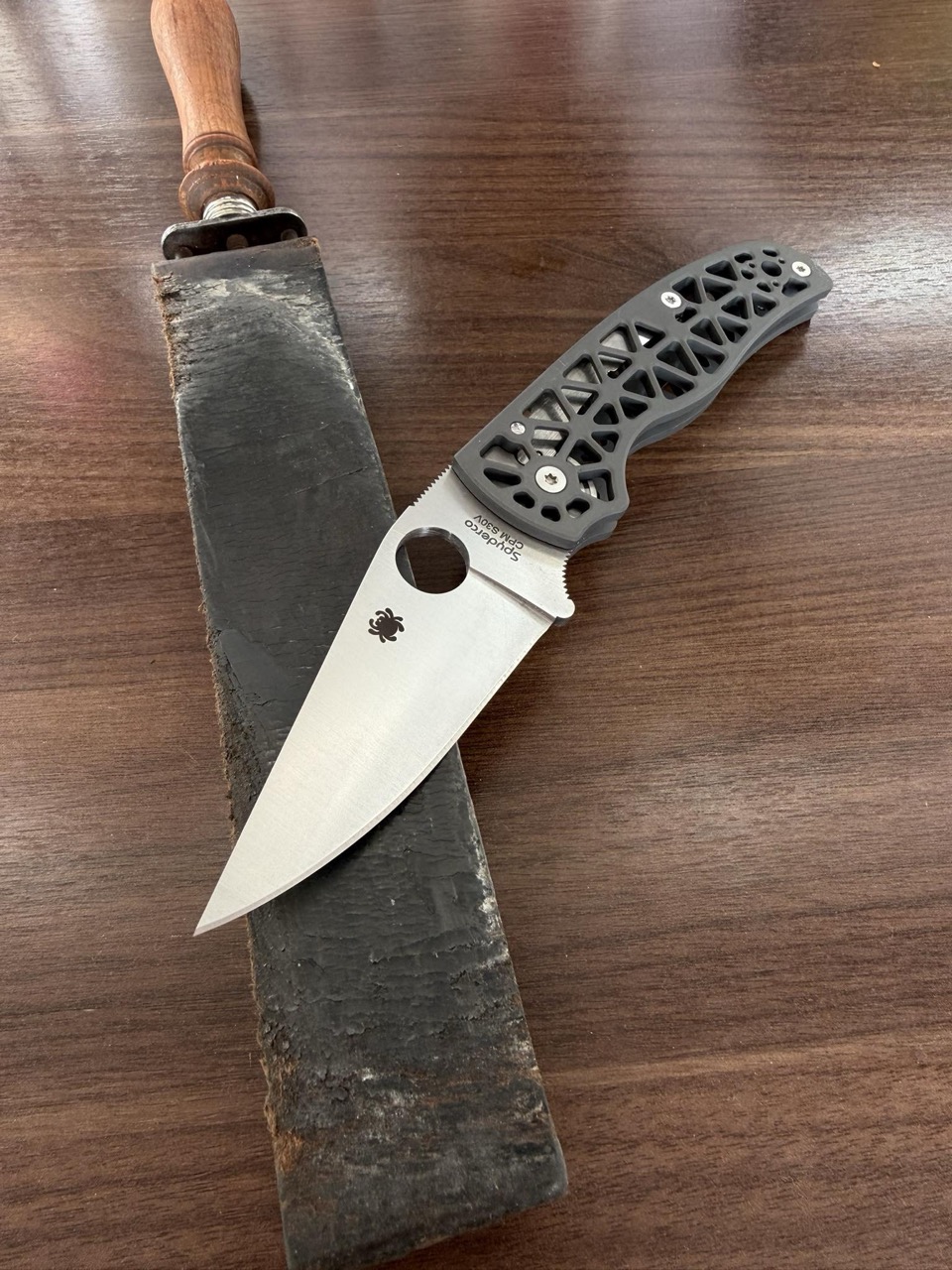
And so far I only use leather to keep it super sharp.
So the Military 15V is back in action and will be used also as a benchmark in military tactical knives production.

MIKE READ PITS™ 2 – C269TIP – Part 2 – Low Profile De Luxe SlipIt.

Digression: Did you think we were born in peaceful times?

In Western Europe today, amid increasing concerns over violence and insecurity, carrying a fixed blade — something I’ve done for decades with a short fixed blade — or even a locking folder can easily be misinterpreted.

And every single day, in the fall of 2025, the European newspapers report yet another knife attack or crime.

Knife attacks in the United Kingdom have shown a persistent and worrying upward trend in recent years. National data indicate that police recorded just over 53,000 knife‑enabled offences in the latest annual cycle, with assaults and robberies accounting for a substantial portion. While knife-related homicides represent a small percentage of overall offences, the absolute numbers remain high, with young people disproportionately affected. Offences involving the possession of bladed weapons have also risen, highlighting broader issues of accessibility and carrying habits in urban areas. Compared to a decade ago, knife-related violence has increased significantly.

(From a locking folder to slipjoint folder…. Sign of the times ?)

Most knife crimes in the UK use everyday knives like kitchen knives, because they’re cheap and easy to access. But a significant minority of attacks involve more “exotic” or dangerous blades: like machetes !

In Germany, some state-level police offices estimated more than 21,000 knife attacks in 2022, which corresponds to about 60 knife attacks per day nationally.

In France, knife attacks also remain a major concern, with more than ten thousand recorded assaults involving bladed weapons in the most recent year across areas policed by the national force alone. This figure corresponds to roughly a few dozen attacks per day and does not include all regions or the gendarmerie’s jurisdiction. Schools in the Paris region reported over a hundred knife-related incidents within a year, highlighting a sharp increase in youth involvement and the normalization of carrying knives. Broader national indicators show rising attempted homicides and a high proportion of armed robberies committed with knives, underscoring the central role of bladed weapons in everyday violence.
French law places certain knives (e.g., automatic opening, butterfly/balisong knives, fixed-blades over a certain size, double-edged blades) into stricter categories (Category D weapons) when carried without legitimate reason. Folding pocket-knives of everyday use (e.g., classic French models) are more tolerated — they may be treated as tools rather than weapons if not used aggressively or carried without justification.

CountryEstimated Knife-Crime / Knife-Attack Rate (per 100,000)
England & Wales (UK)~89 / 100,000 (using ~55,008 knife-enabled offences and a population of ~61.8 M)
France~15 / 100,000 (based on ~10,397 reported “knife attacks” and a population of ~68.6 M)
Germany~10.7 / 100,000 (using ~8,951 knife-attack figure from 2023 data)


In the UK, the rules are straightforward: a non-locking knife with a blade under 3 inches.
But now it seems that one-hand-operated folders are no longer welcome;
For the record, one-hand operation is actually safer: not only for opening, but also for closing the knife. A closed folder is a safe folder, and being able to switch your tool into “safe mode” quickly is a genuine advantage.

In France, things are far murkier — everything hinges on intention and context of use. It’s almost a Minority Report situation.

Ironically, in the country of Opinel and Laguiole, we’re now backpedaling because of sheer stupidity. And I’m not blaming the criminals who use knives to hurt people — that’s obvious. I’m blaming the people who carry a knife for self‑defense.
After a search from the Police in front of an high school:
“Why do you bring this knife to school ?”
“To defend myself !”
A knife is not a self‑defense tool — it’s a catalyst for problems.
Awareness, on the other hand, is a self‑defense tool, and that’s something you really need to keep sharp.
Even something as simple as wearing AirPods can compromise your ability to stay safe, cutting you off from your surroundings.

Unless you’re a gangster settling scores with your own kin, a knife will never be your bodyguard — not even with training.
In fact, it can make things worse, especially if you think you’re “trained in knife fighting.” A knife as a weapon is a killer’s tool, meant for ambush and combat, not for duels.

(The only blade that might actually “help” you — for example in an attempted‑rape situation where you are physically overwhelmed, dominated, and restrained — is also the one that will almost certainly land you in even more trouble afterward. And if you ever reached that true last‑ditch moment, your best hope would ironically be a short serrated edge rather than a razor edge; under an adrenaline surge, an aggressor won’t even register a clean cut. The Spyderco Manbug Wharncliffe SpyderEdge comes to mind.
But even then, you would need the mindset to become the aggressor just to survive — and you must be prepared to defend your actions in court afterward.)

I remember reading about an elderly man who was being harassed by a gang of young men. In the confrontation, he slashed the hand of one of his aggressors with his Swiss Army Knife — and in the end, he was the one standing before the judges.
“To claim self‑defense, sir, there must be proportionality between the attack and the response.”

It’s also a mindset.
I’ve carried a knife since I was 9 and have never had the inclination to cut or stab someone.
It’s all about how you have been raised.”
Des Horn

So let’s remain ladies and gentlemen, and let’s be low profile in our EDC choices.
The knives we carry and appreciate are not pocket bodyguards — they’re tools we genuinely enjoy using for simple, everyday tasks.

Enter the Alien/PITS2 and the whole generation of modern slipjoints.

Carrying a knife in today’s civilian world means opening parcels, prepping food, cooking, doing small repairs — being a handyman or -woman, or at least trying to be. I’ve written before about the modern slipjoints we now have access to: knives that benefit from three decades of “tactical” evolution. They offer deep-carry clips, true one-hand opening and closing, and high-performance steels refined for modern cutlery.

All of that is perfectly embodied in Spyderco’s SlipIt line.


So why would you choose a Mike Read folder? Is it better than a UKPK or an Urban?
Nope. The SlipIt flagship UKPK, for example, also has a thin edge, and you can even dress it up with titanium scales if you feel like it. Its mechanism is also stiffer, with a two-stage closing “safety” that makes the blade feel more controlled on the way down.

So why choose the PITS2?
It ultimately comes down to taste — your willingness to spend a bit more, your appreciation for the mechanism, the maker behind it, and of course a love for titanium and M398.

So what does the Alien/PITS2 truly bring in the long run?

In my case, I was genuinely surprised by how this “hard-to-open-one-handed” knife has grown on me.
That stiffness actually makes it reassuring to carry — you know the blade won’t pop open by accident. Especially when you carry it in the back right pocket.

First: it slides in and out of the pocket effortlessly.
That deep-carry clip is a real asset. It reminds me of the C181GTIP Lil’ Lionspy — also made in Maniago — but this one is even better than a wire clip: smooth, secure, and gentle on pockets.

Even though it’s light, the PITS2 feels dense and substantial in the hand. If you love titanium, you immediately recognise that warm, almost organic sensation it gives in the palm. Chris Reeve was the first to offer that pure‑titanium tactile experience, and the PITS2 carries that same aura.

Then your thumb finds the hole. It’s stiffer than most Spydercos I know, but that final click when fully opened is immensely satisfying. Forget about using your ring finger — it’s your thumb or nothing.

The hole is sharp enough to allow a “Spyder‑Drop,” though it occurs in two deliberate steps rather than one smooth motion.

Another major advantage: the PITS2 cannot pinch your fingers during opening or closing — a problem that the PITS1 sometimes had.

And, as I mentioned in the quick first‑look, that relatively tall blade comes with very thin geometry. This is the first Spyderco edge in a very long time—aside from my Chaparrals—that didn’t need to be convexed. I usually “de‑shoulder” everything to my taste and to my standard test: the plastic bottle butt.

This is where the PITS2 truly shines: pure cutting performance.
So far, it has never disappointed me. At first, I thought its more “gentle” blade tip wouldn’t be pointy enough for my tastes—especially since I’m used to the UKPK, Yojimbo 2 or the Microjimbo—but the PITS2’s tip is razor‑keen. It finds its way into soft or dense materials with nothing more than a light, controlled pass.

Actually, butter knives do not need to be sharp. 😉
The PITS2’s thin edge can slip effortlessly through delicate materials—like slicing a layered birthday cake without crushing it. And it can zip through cherry tomatoes, which is always a great test of geometry and edge aggressiveness. Tomato skin resists, tomato flesh is fragile; a good blade needs to pierce the first without mangling the second.

Well, well, well… go figure: tomatoes can be tricky — and a perfect opportunity to put your favorite edge to the test.
But honestly, what more could you ask for from a good EDC, superb slicing ability. A sharp knife is a safe knife.


M398 in that matter continues to surprise me. It reacts to leather like… K390 ! Amazing steel !
I’ve already used M398 on the Roadie XL and the Metropolitan, and it proved far more forgiving than I expected. I initially thought it would be brittle — especially after snapping about half a millimeter off the tip of my Roadie XL — but in everyday use it has shown itself to be an excellent alloy that also responds beautifully to stropping.


After some real use, I still haven’t managed to chip or even noticeably dull the PITS2’s thin edge. What’s remarkable is that it’s still as razor-sharp as it was right out of the box.


I also love how easy it is to check, clean, and oil the PITS2.
I can appreciate how skeletonized hidden liners have added lightness and strength to folding knives, but they also tend to become little nests for rust. For that reason, I really appreciate it when liners are DLC‑coated — and even better when they’re made of titanium.

Regarding the PITS2’s titanium handle, the absence of hotspots and the beautifully beveled edges make it a real pleasure to hold.

The cutout for the mechanism isn’t beveled, so you can feel its slightly sharper edge. I’ve also noticed that the two handle slabs are symmetrical, while the cutouts around the pivot are not identical.


Low profile usually comes with a deep‑carry clip or no clip at all… but the PITS2 clip is really shiny, so it still catches the eye. I know, because I’ve checked my reflection in a mirror and eventually had to unclip it and drop it deep into my pocket before passing through security recently.
Low profile wise: a tip if you are ever checked, do not open your knife with one hand, use both.

In those days of increasing knife crime and genuily believe that your EDC’s shape needs to be sheeple‑friendly.
If I pull out my fully serrated Native Chief Salt, anyone around will instantly assume that this long, pointy, toothy, shiny blade is straight out of Jack the Ripper’s toolkit.


The PITS2, with its rounded profile and non‑threatening blade shape, is a perfect example of a legal and friendly high tech EDC that won’t raise any eyebrows if used in public.
It’s actually even less threatening than a UKPK.

ll in all, the PITS2 delivers on its promises.
Incredible thin edge. Enjoyable mechanism. Low profile. Easy to clean.

It’s a friendly, high‑tech luxury tool that can be brought to the table to slice a sausage, yet also serves as a reliable outdoor companion capable of carving a walking stick. I’m loving the Alien in these times of shifting paradigms.

So let the weary land be rested and the killing season over
Let the shadows stretch forever in the light of burnished silver

For I fear the age of consequence and I wish that it was over
Bring me the snowfall, bring me the cold wind, bring me the wiener

(My Nano has been heavily resharpened into a convex edge, while my PITS2 comes with its thin, perfectly even factory edge.)

MIKE READ PITS™ 2 – C269TIP – The Legal Alien

Disclaimer: This knife has been provided through Spyderco’s Ambassador Program, upon my own request. Thank you to the Spyderpeople for letting me review it.

This is a first look, first glimpse review — my very first impressions!

Mike Read’s custom Alien (£400,00 Elmax Blade) was presented to the world in November 2023, and it is now produced by Spyderco through Maniago, Italy under the name PITS 2 in 2025 for around €300,00.
So this is an English design, produced by a Colorado-based company, and manufactured in Italy — you can’t get more international than that.

To respect the King’s Law in the UK, you need to carry a non-locking knife with a blade under 3 inches, and also have a good reason to carry it on your person. The PITS 2 respects those rules and looks far less threatening than the original PITS 1.

This isn’t my first Mike Read design — I reviewed his PITS 1 back in 2018 and loved it. That knife was his very intention of creating a solid workhorse with no lock. Two years ago, a sprint run in M390 appeared.
Now comes the PITS 2, in M398, and to me, this is a much better design. Here’s why.

Pie In The Sky” (not pig!) was Mike Read’s nom de guerre on the British forums. His specialty as a knifemaker is crafting non-locking knives: state-of-the-art tools with titanium handles and obsessive attention to detail.
The PITS 1 was a looker — but the PITS 2? It’s eye candy.

Here’s a video from The Crafter Carry about the Alien:

Compared to the more angular tip of the custom Alien, I find the PITS 2 blade shape more graceful, with a nicer drop to the point.

The custom Alien used a titanium clip, whereas the production PITS 2 wears a steel one — but I actually prefer Spyderco’s version here.

What really makes it stand out is the handle mechanism:

“A truly unique non-locking mechanism that consists of two integral spring arms machined into the handle scales. The forward end of these arms, which supports the blade pivot, flexes as the blade is opened to provide pressure for its notched-joint mechanism to bear against the stop pin.”

That’s clever: just two integral spring arms machined into the handle that hold tension on the blade pivot. The absence of a traditional backspring makes for an open-handle design — easier to rinse under the tap and keep clean. Exactly what you want in a workhorse.
(Let’s be clear: If you anticipate heavy-duty work (construction, field outdoors, survival uses) where a strong locking mechanism is required, then this may not be the optimal choice — you’d trade some robustness for style and finesse.)

The blade is made of Böhler-Uddeholm M398 particle metallurgy stainless steel — a steel in the same class as CPM S90V. It holds an edge forever, though it’s not the toughest, and you’ll need diamonds to sharpen it.
I once broke the tip of my Roadie XL after a fall on tiles, but when used as intended, M398 is delightful. I’ve worked my Roadie XL and Metropolitan hard, and M398 has never failed me. This steel would be perfect also for hunters which need long edge holding when skinning.

Mechanically, this is the first Spyderco I’ve handled that’s harder to open than to close. The blade retention in the closed position is quite strong, while closing is much softer than most slipjoints. With wet hands, I even find it tricky to open — I have to “Spyder-drop” it by holding it by the hole!

At least, if a Police officer asks to see it, you must open it with two hands — another good point, as it’s clearly a gentleman’s knife, not a weapon. Also, while the PITS 1 looked somewhat like a skinner, the PITS 2’s drop point blade is much less aggressive-looking.

Inside the “cockpit,” there’s now a choil and a gentle hump, allowing a secure grip near the blade — something the PITS 1 lacked with a more aggressive quillon or guard for the index finger. So even with its softer closing action, it’s not a real issue. Still, when whittling hardwood, beware: that tall blade can snap shut faster than a UKPK or an Urban, both of which have stronger backsprings. Always use the choil!

The tall, thin blade arrives razor sharp out of the box. Geometry is spot-on for push cuts, and like the Slipjoint, Manly Wasp, Chaparral, or UKPK, performance is excellent. Let’s call that: “Perf In The Sky.”
This will be a great travelling companion and even a hunter best friend.

Totally UK legal and of the highest quality imaginable, the PITS 2 is not a cheap knife — in fact, it’s pricier than the Chaparral Slipjoint — but it has that “Sebenza-like”feel of a high-quality titanium folder. A gem of a knife, and one of the rare non threatening slipjoints truly designed to be a hard worker.

As rare as pies in the sky!