Disclaimer: This knife was supplied at no cost by Golden as part of their brand ambassador program. Spyderco’s decision to include this publication is appreciated, though the review that follows remains independent and unbiased.
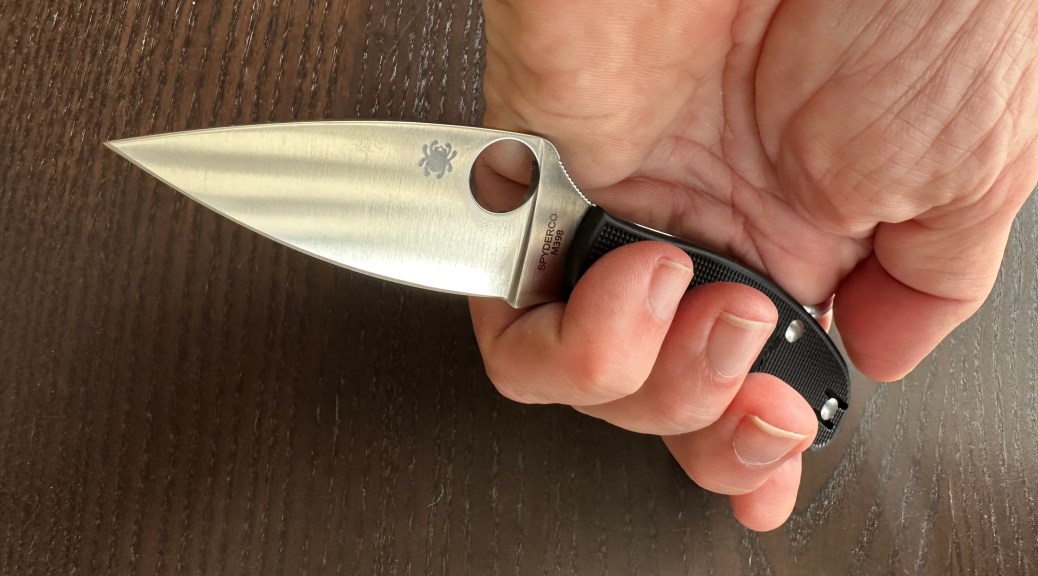
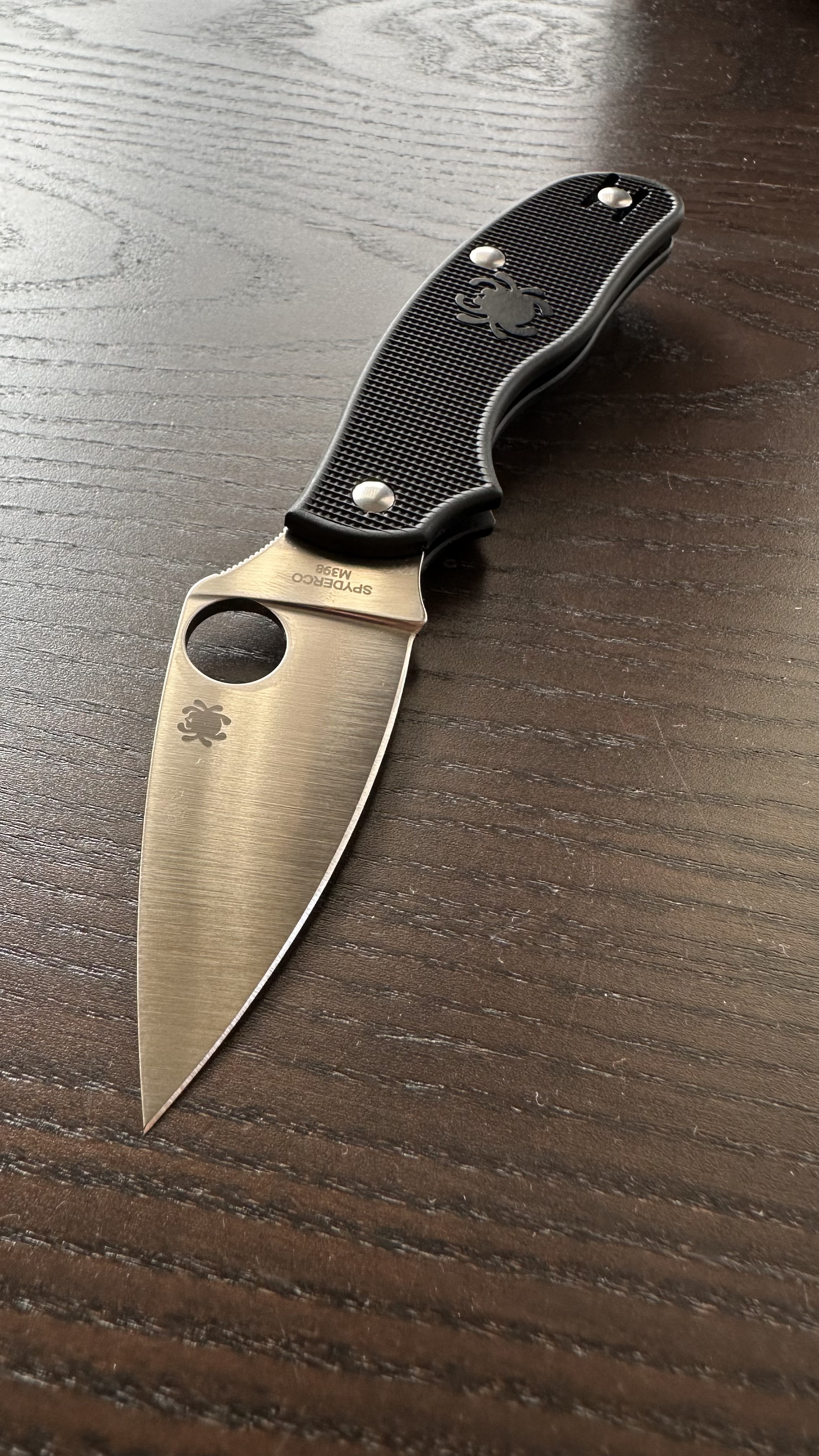
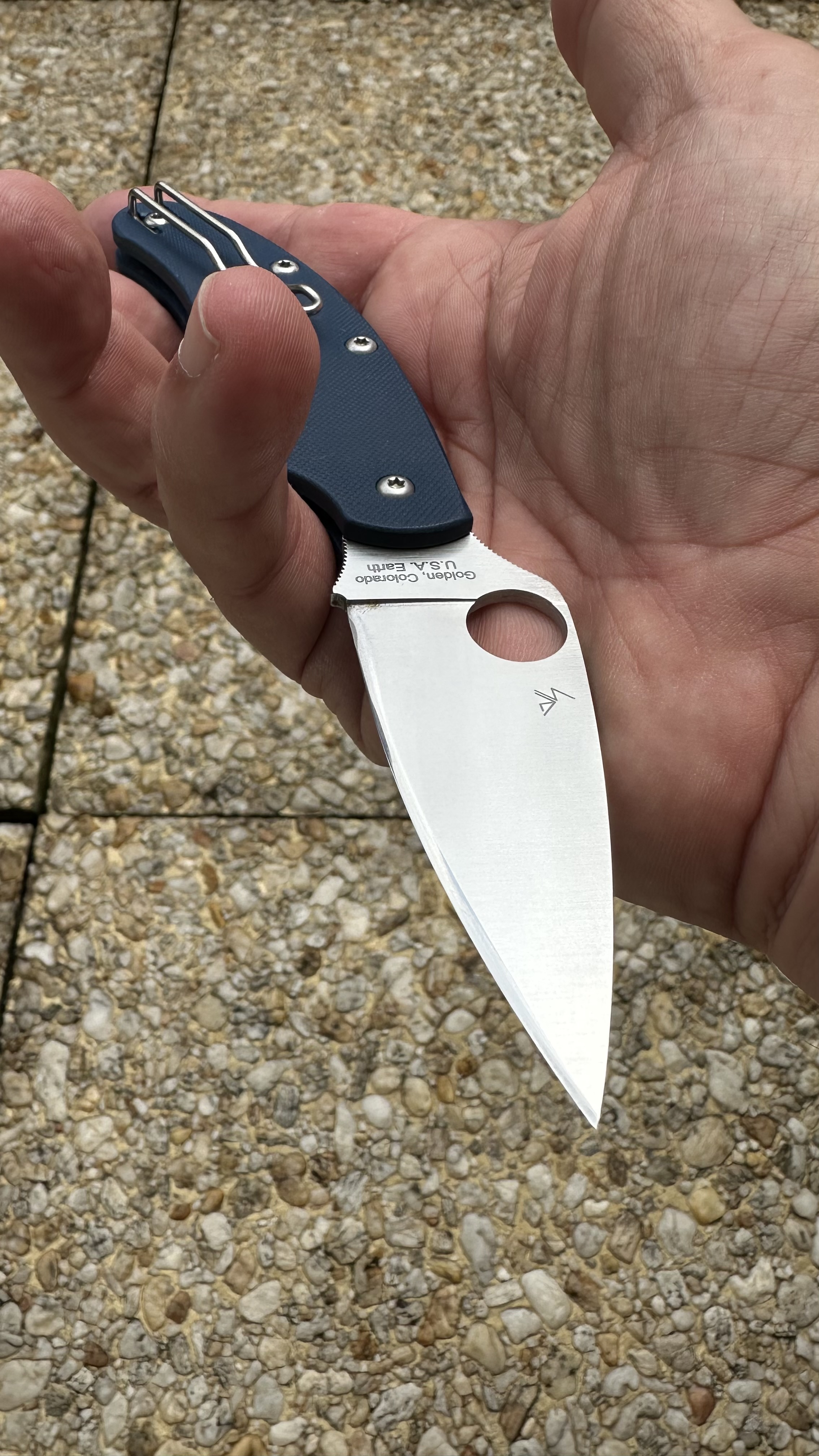
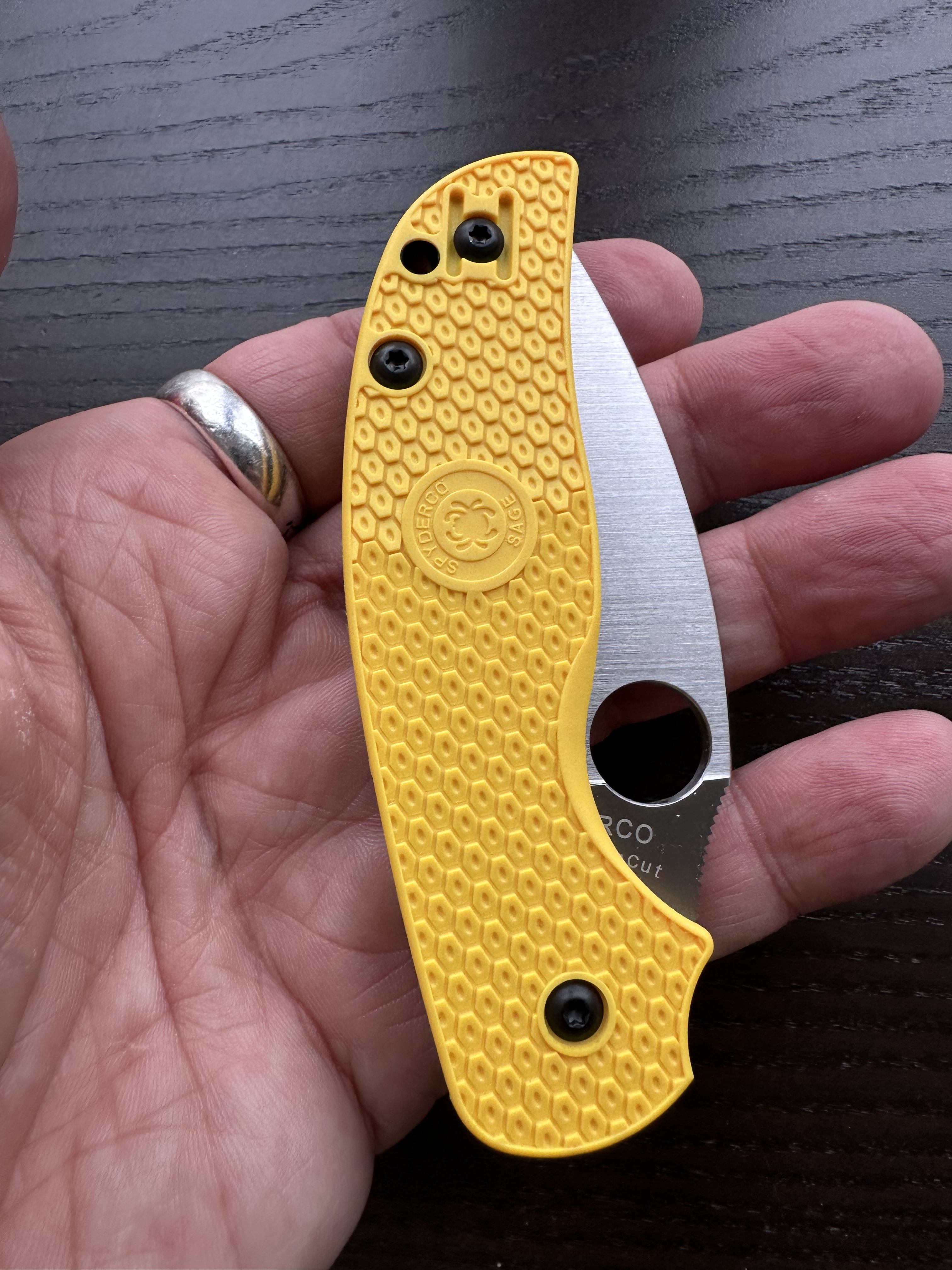
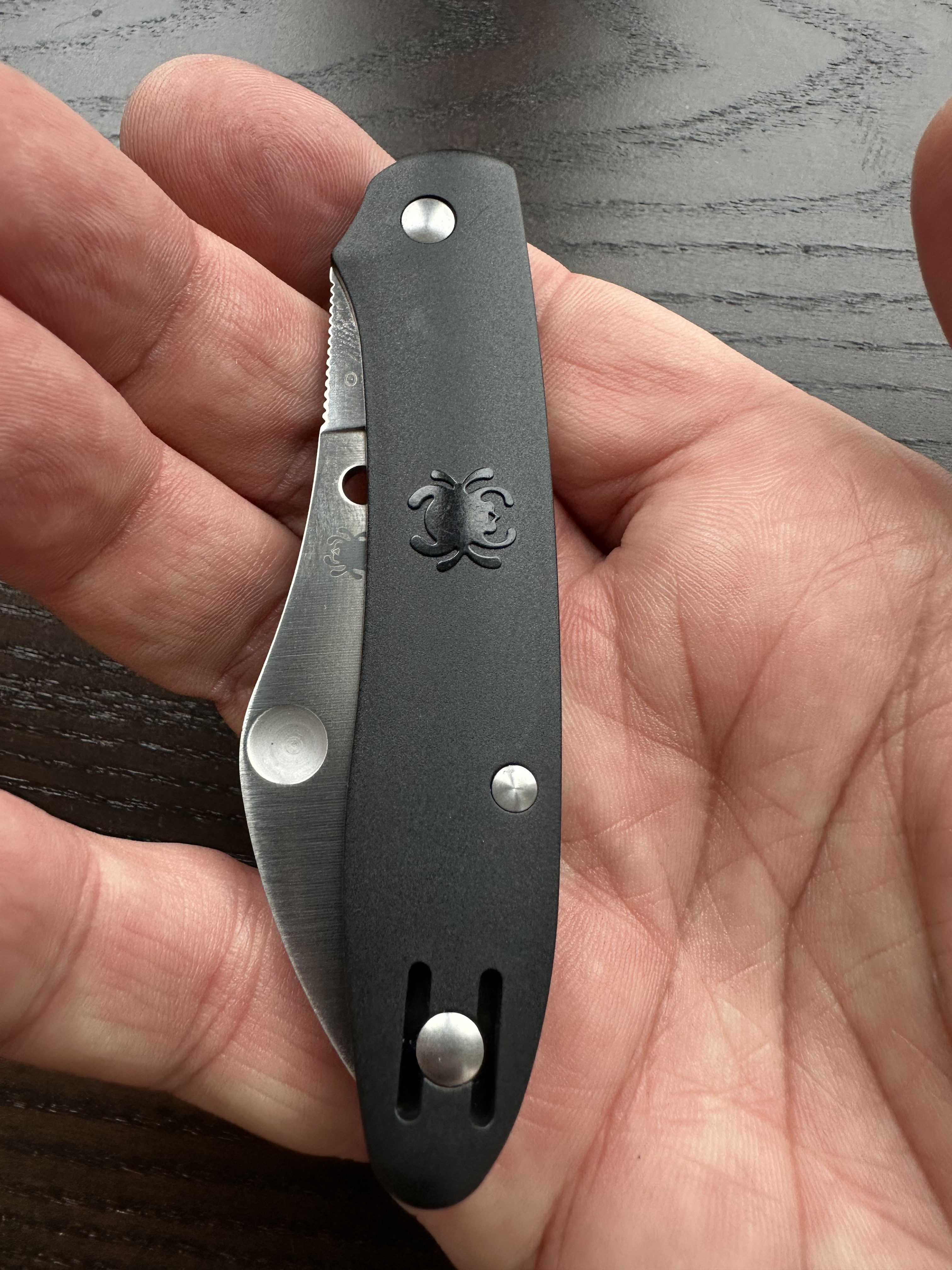
This is my first glimpse at the middle Brother of the SLIPIT™, the Metropolitan. Made in Maniago. It is an Italian Spyderco. Un altro piccolo grande coltello !
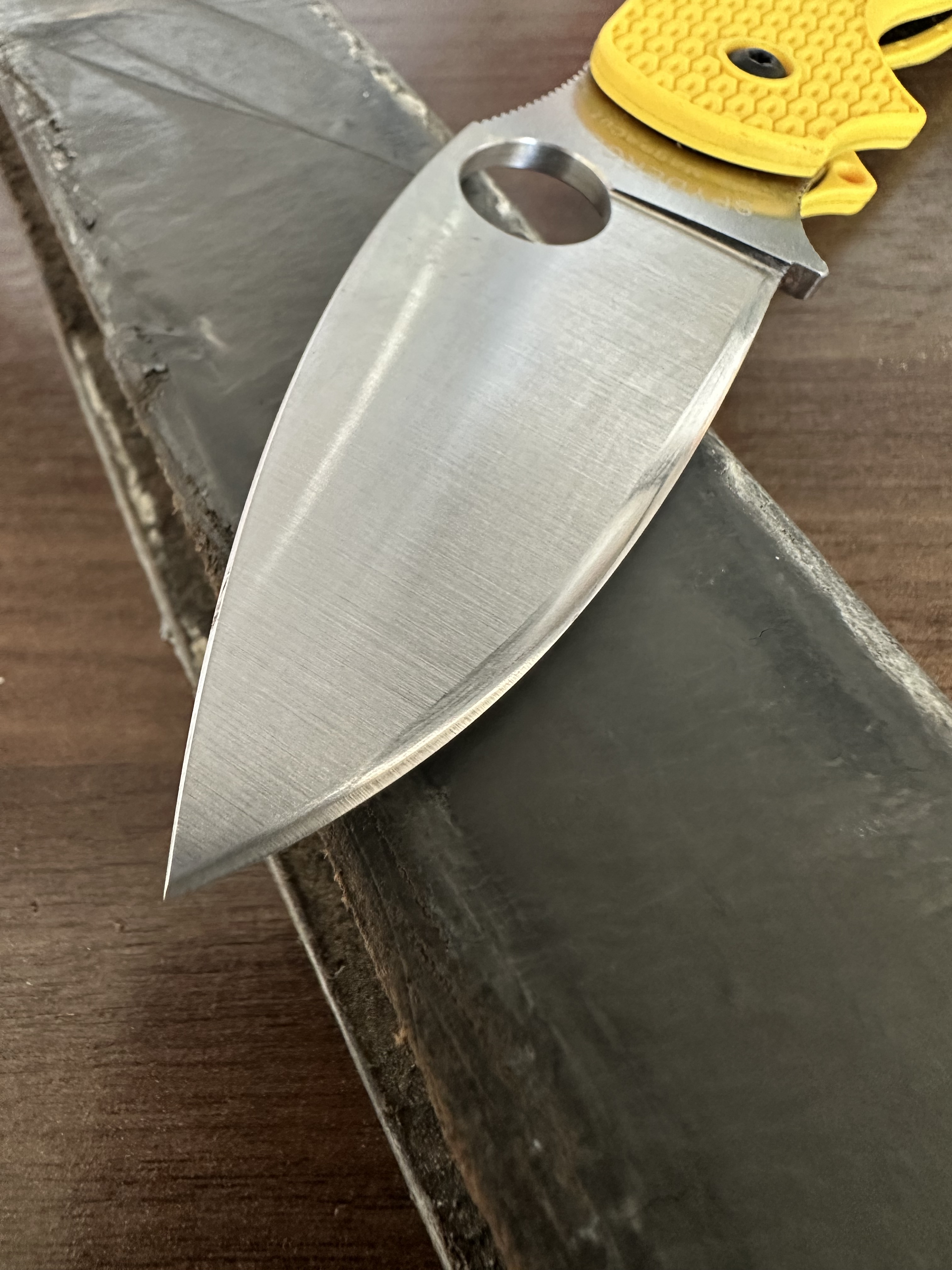
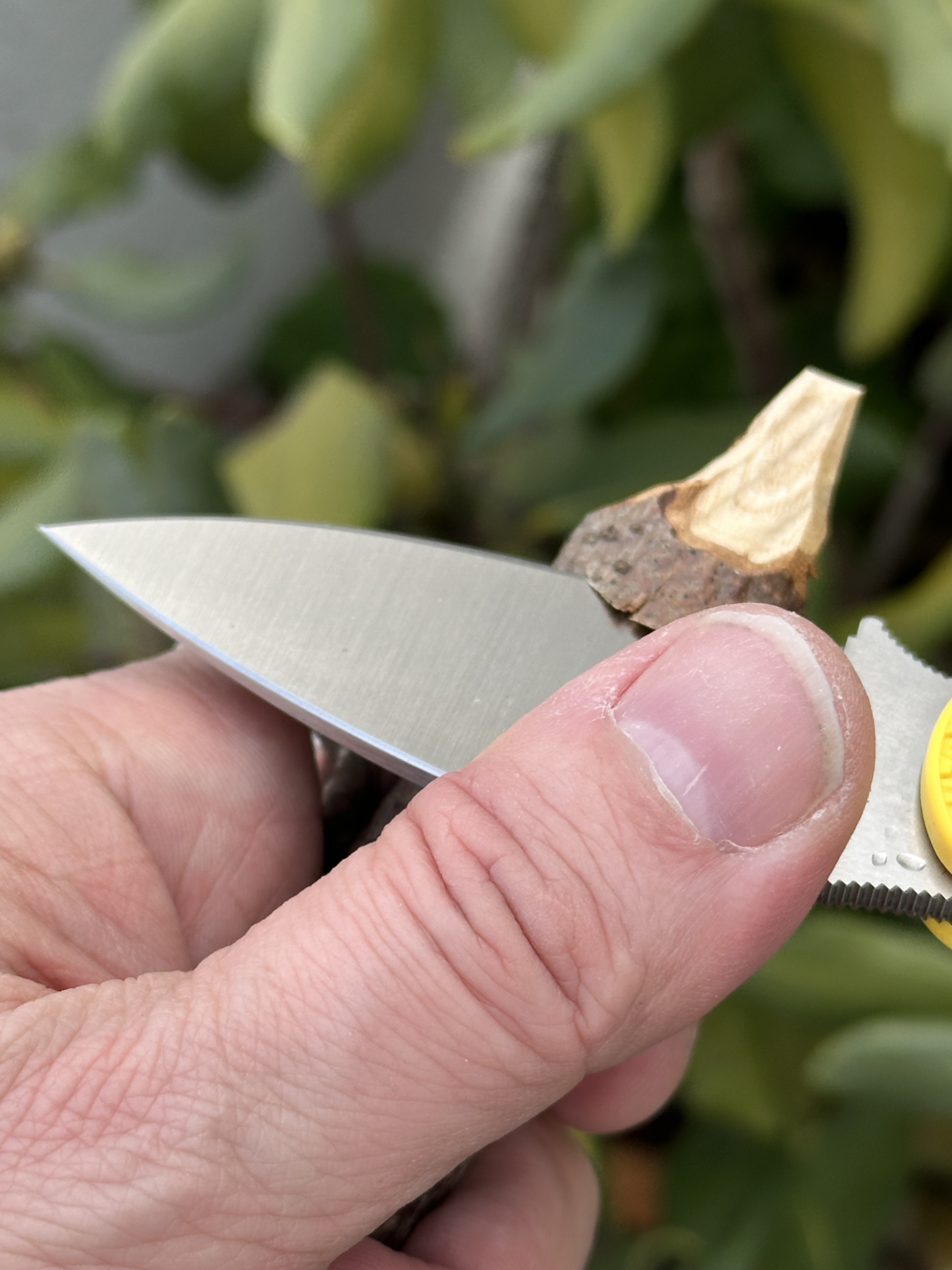
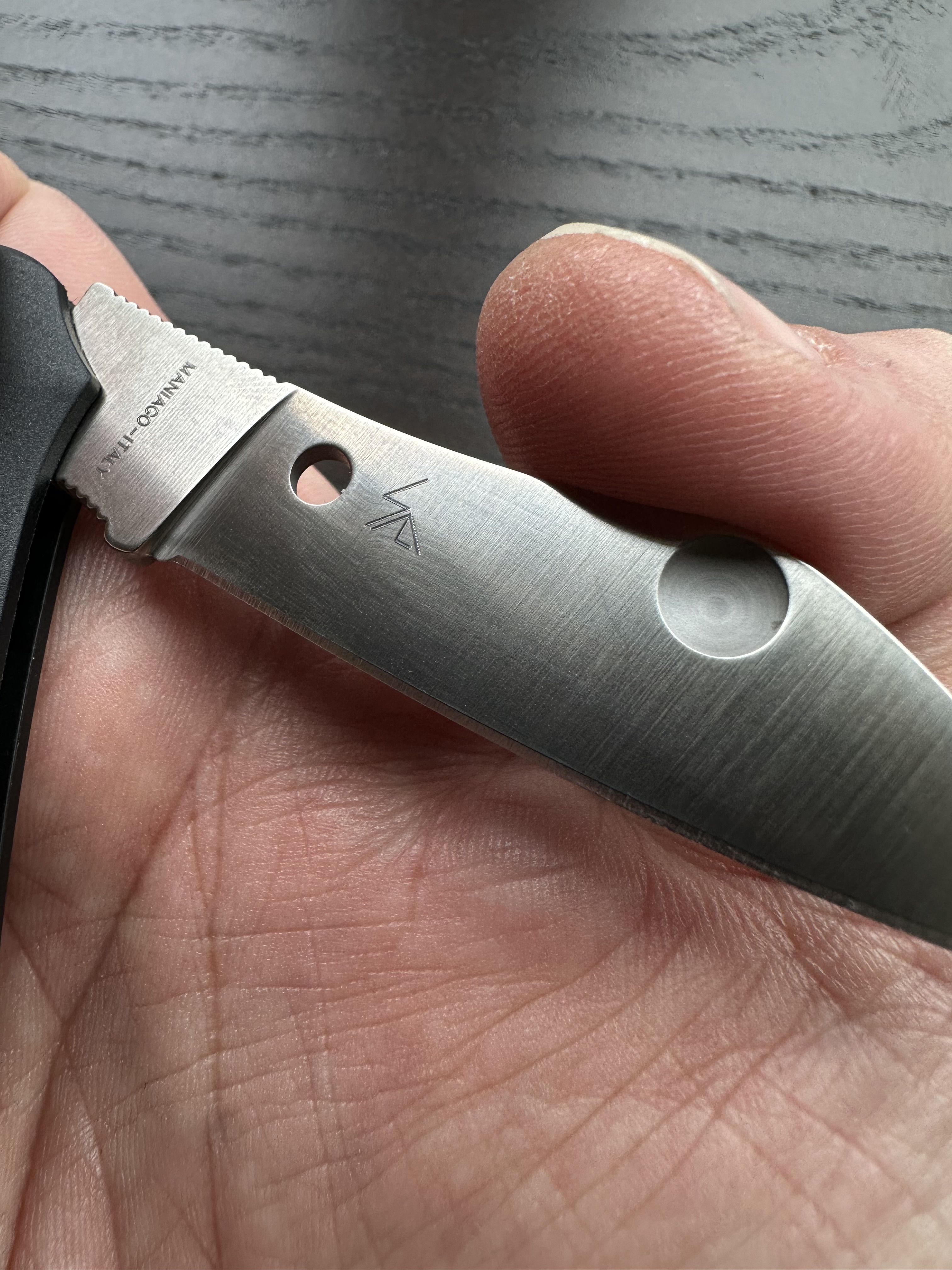
It is made in Maniago like my Heinnie Urban and it is a pure Sal Glesser design. The blade comes razor-sharp straight out of the box. The factory edge is excellent, though I know it can be refined just a touch on leather. It’s a very thin grind—thinner even than on my Roadie XL. While M398 isn’t as leather-friendly as SPY27, it can still be brought to a high polish, as I managed with my Roadie XL after breaking its tip.
Being slightly longer than the Urban, the Metro’s handle comfortably fits four fingers when using the choil. This choil also adds an important safety feature, preventing accidental closure on your fingers. The choil-hump combinaison—acts like a guard, directing cutting force straight into the blade while relieving stress on the handle and pivot.
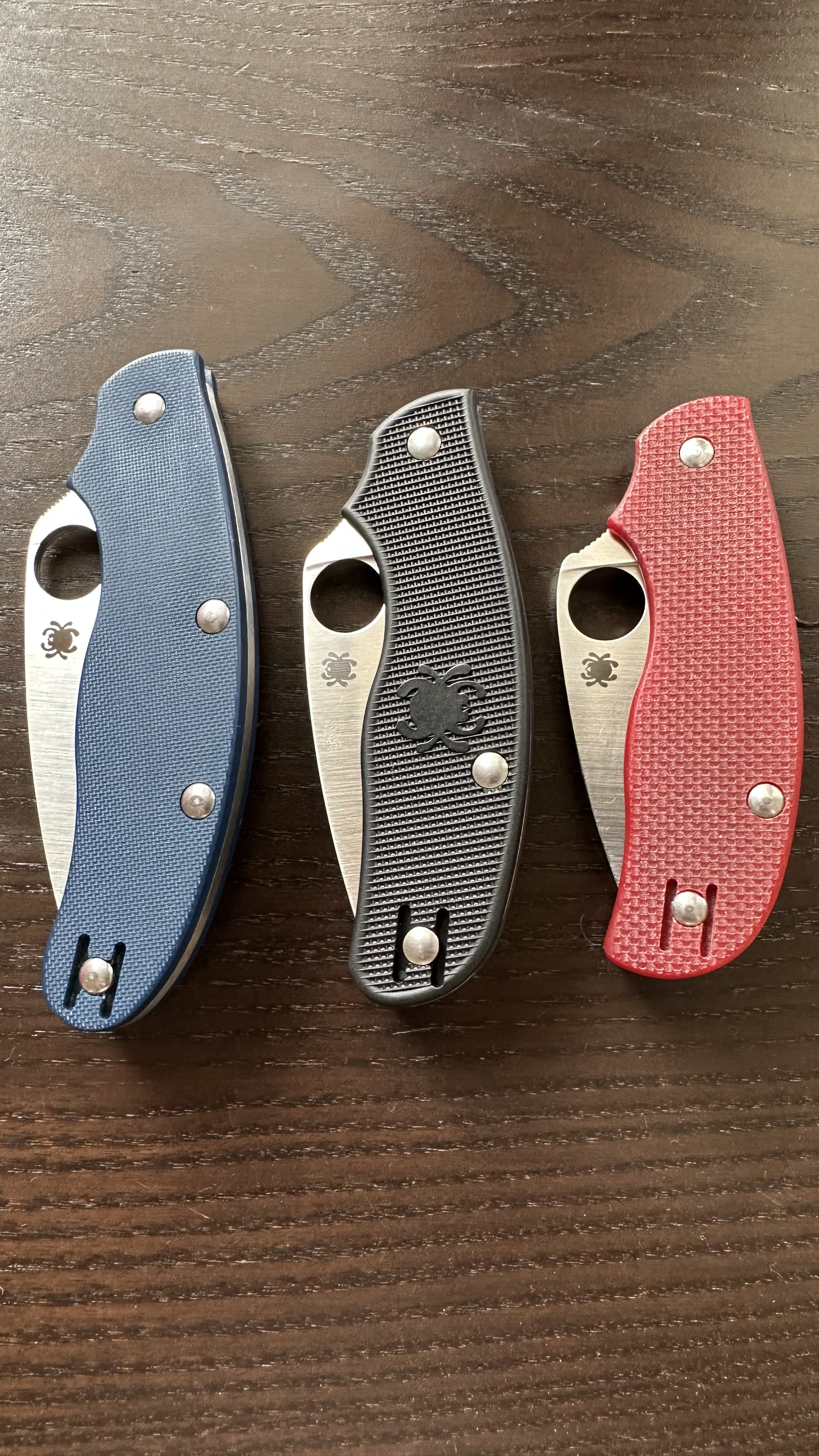
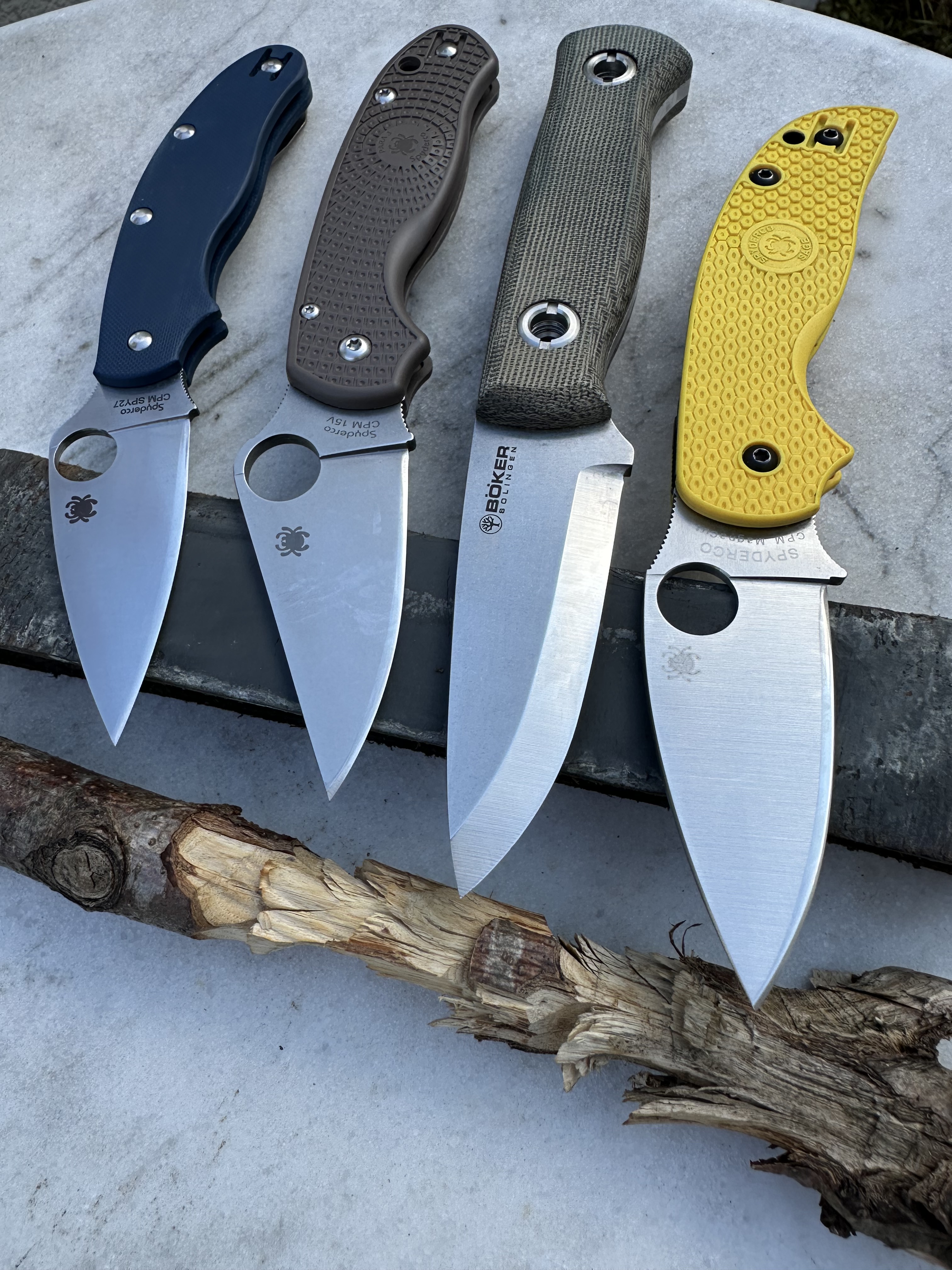
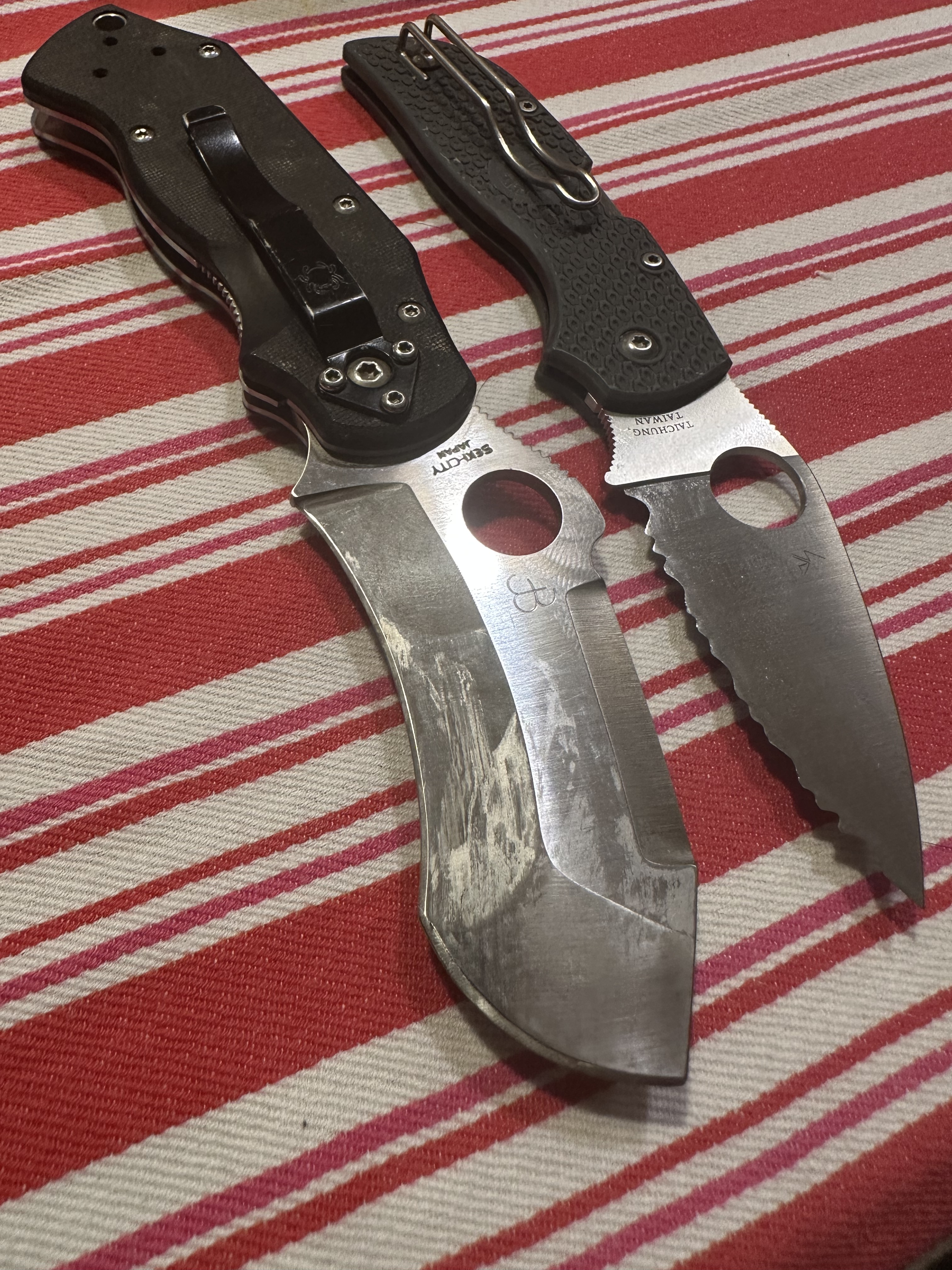
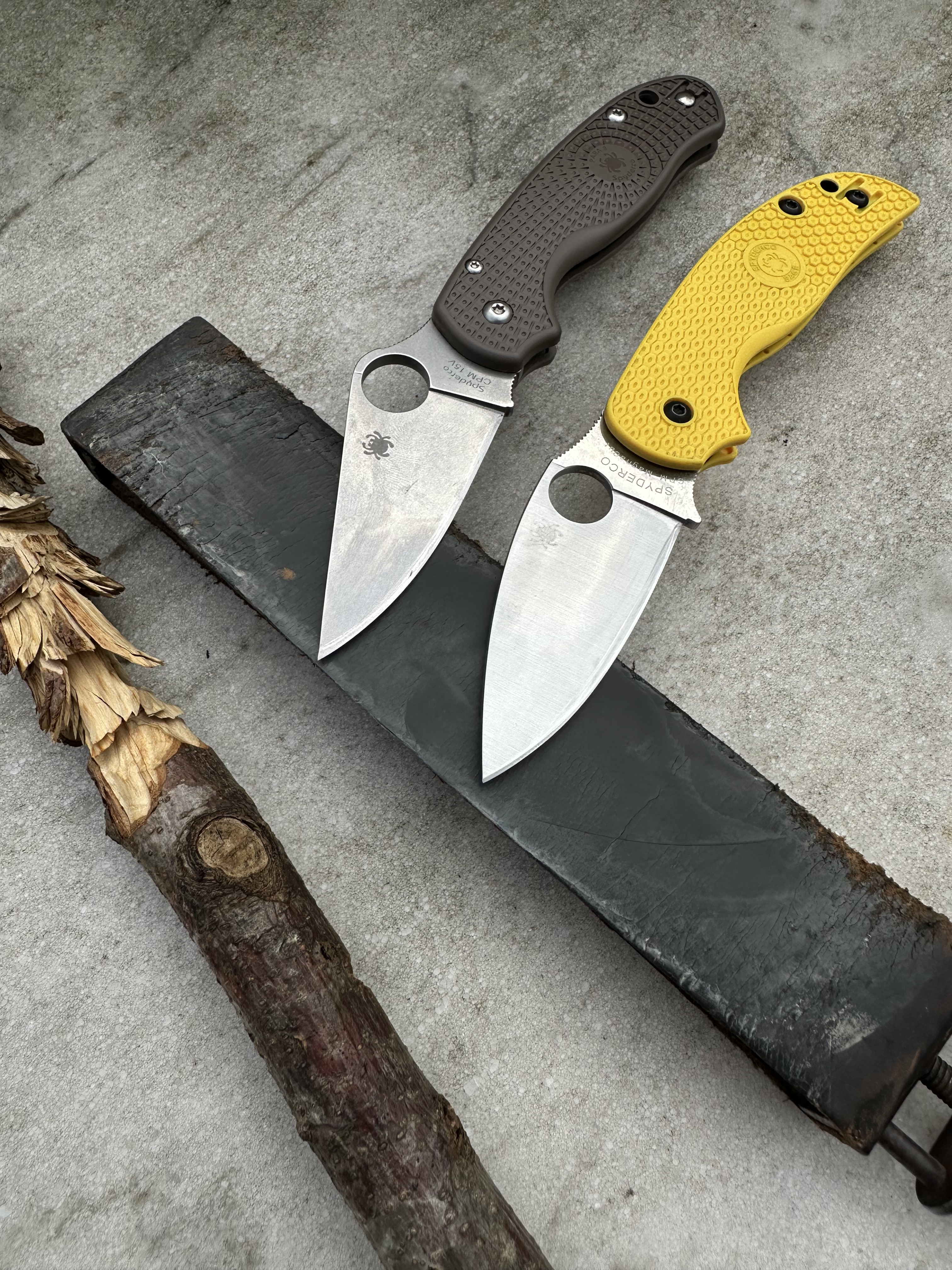
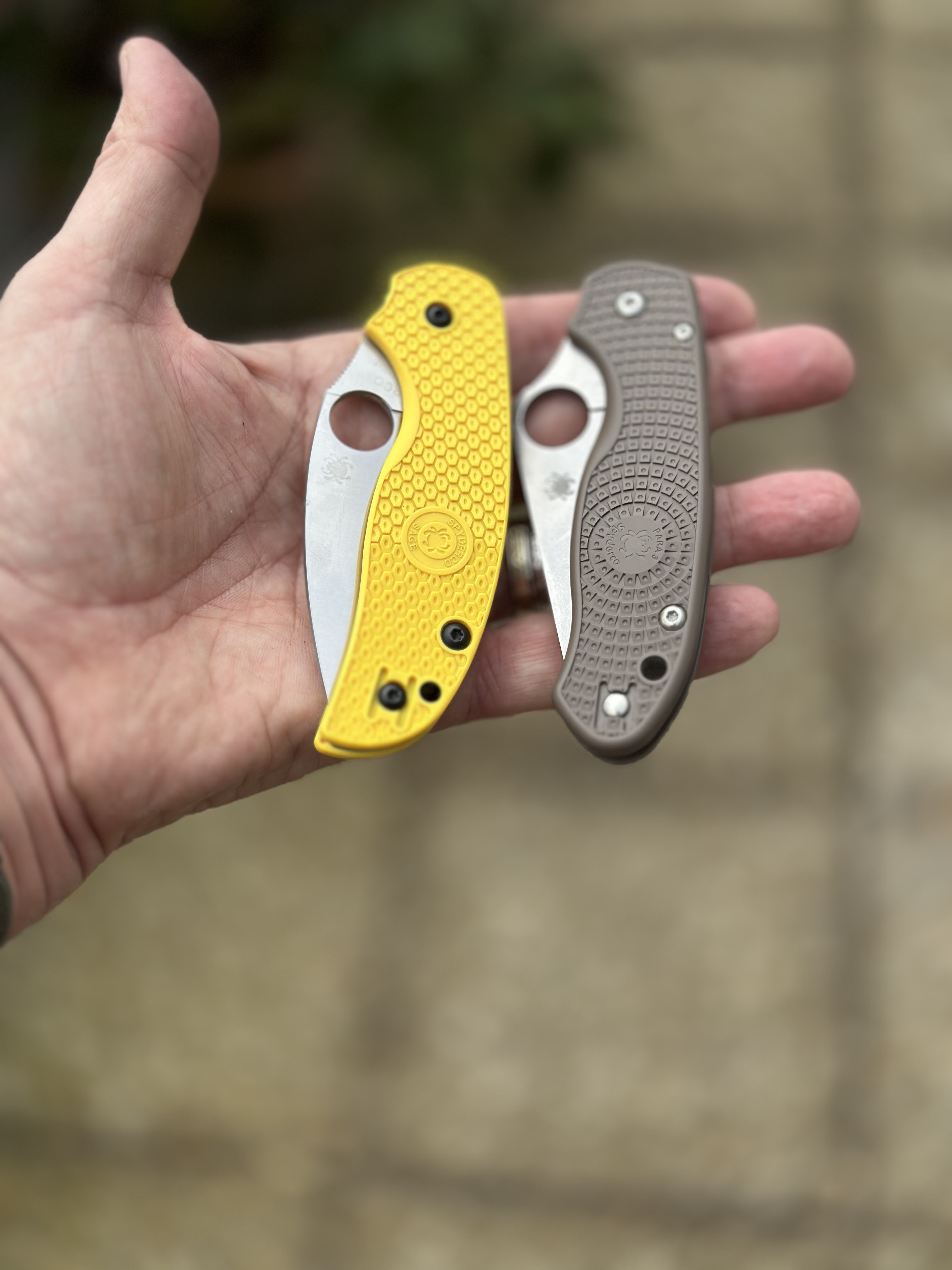
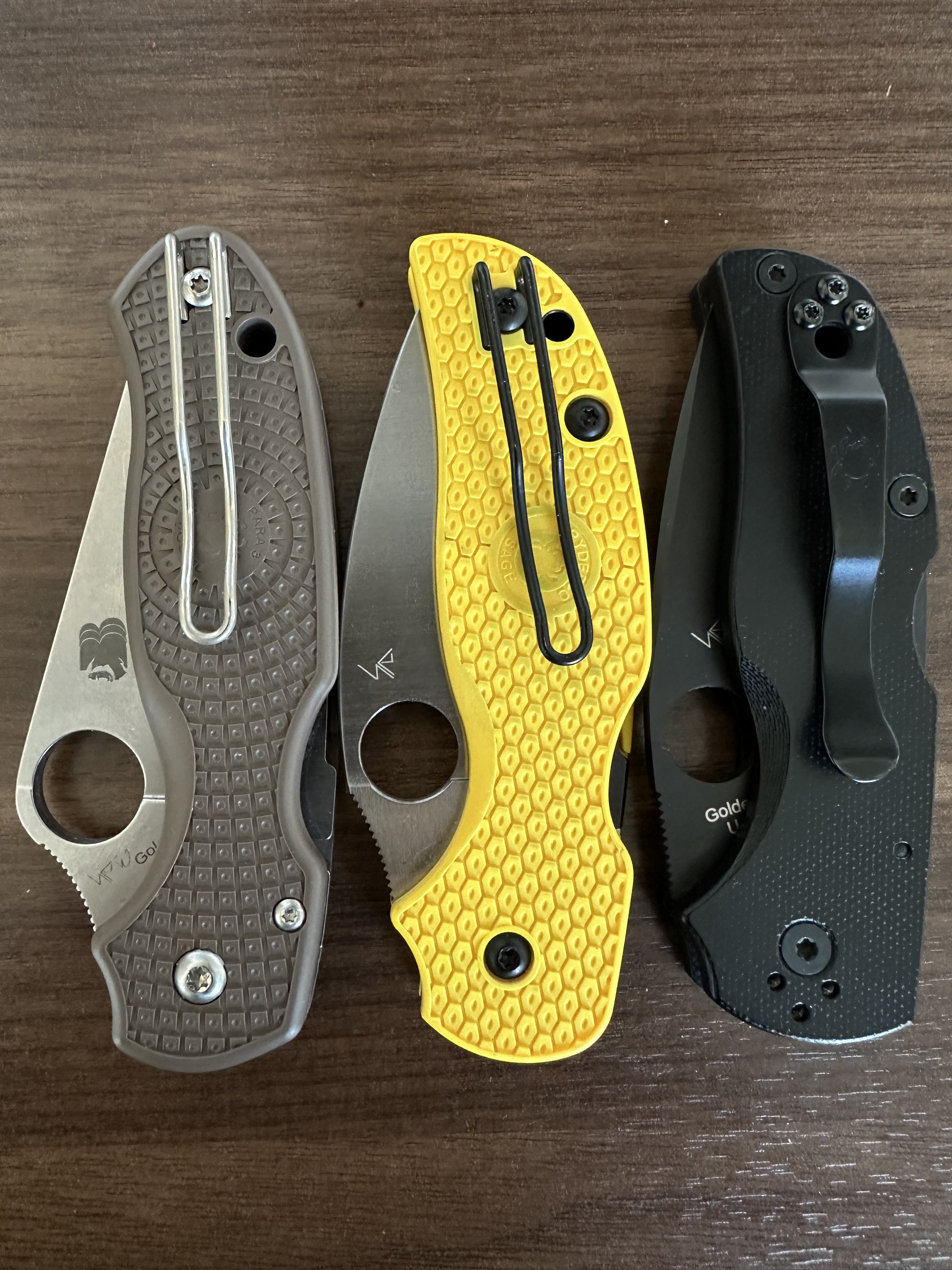
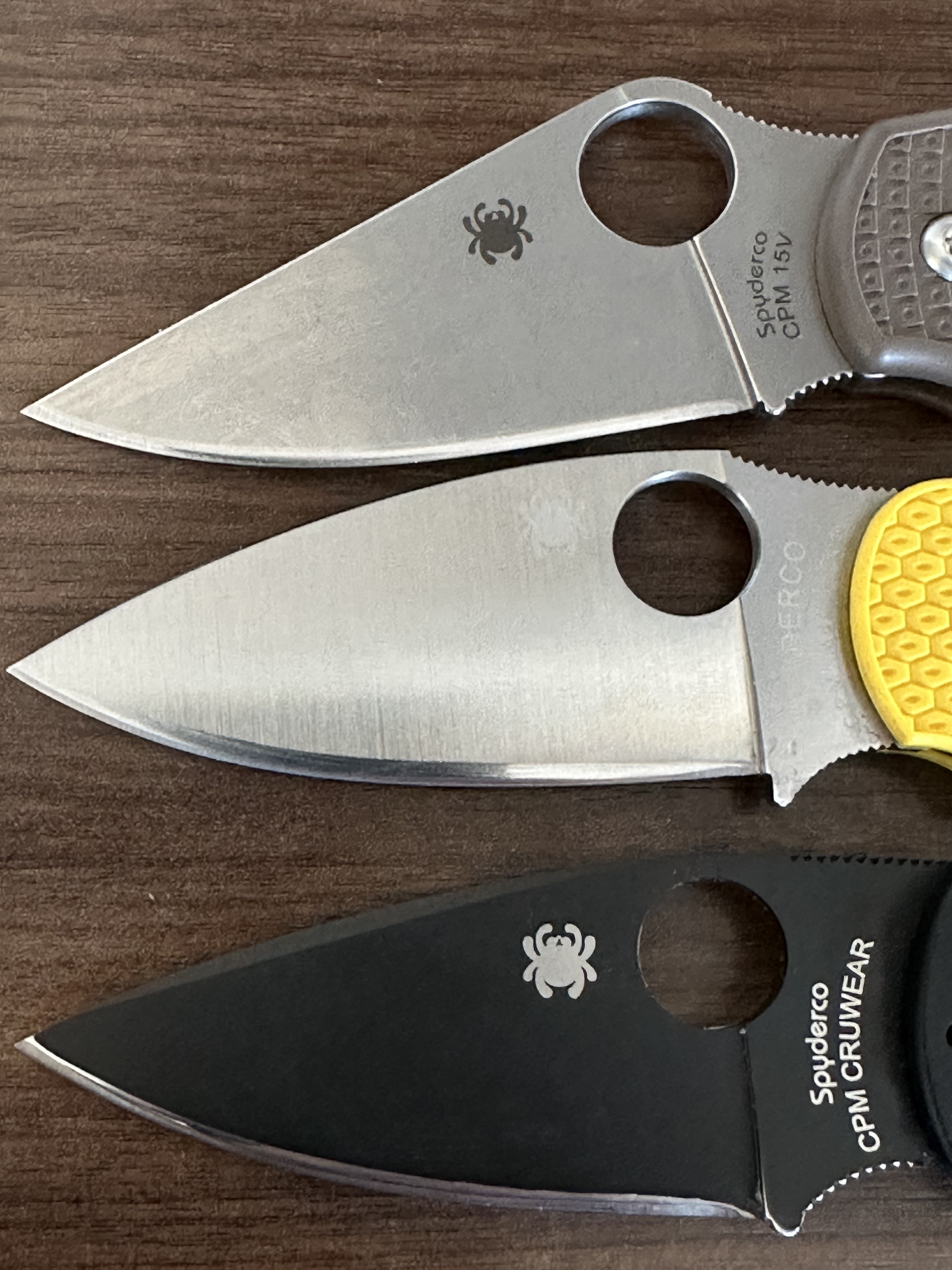
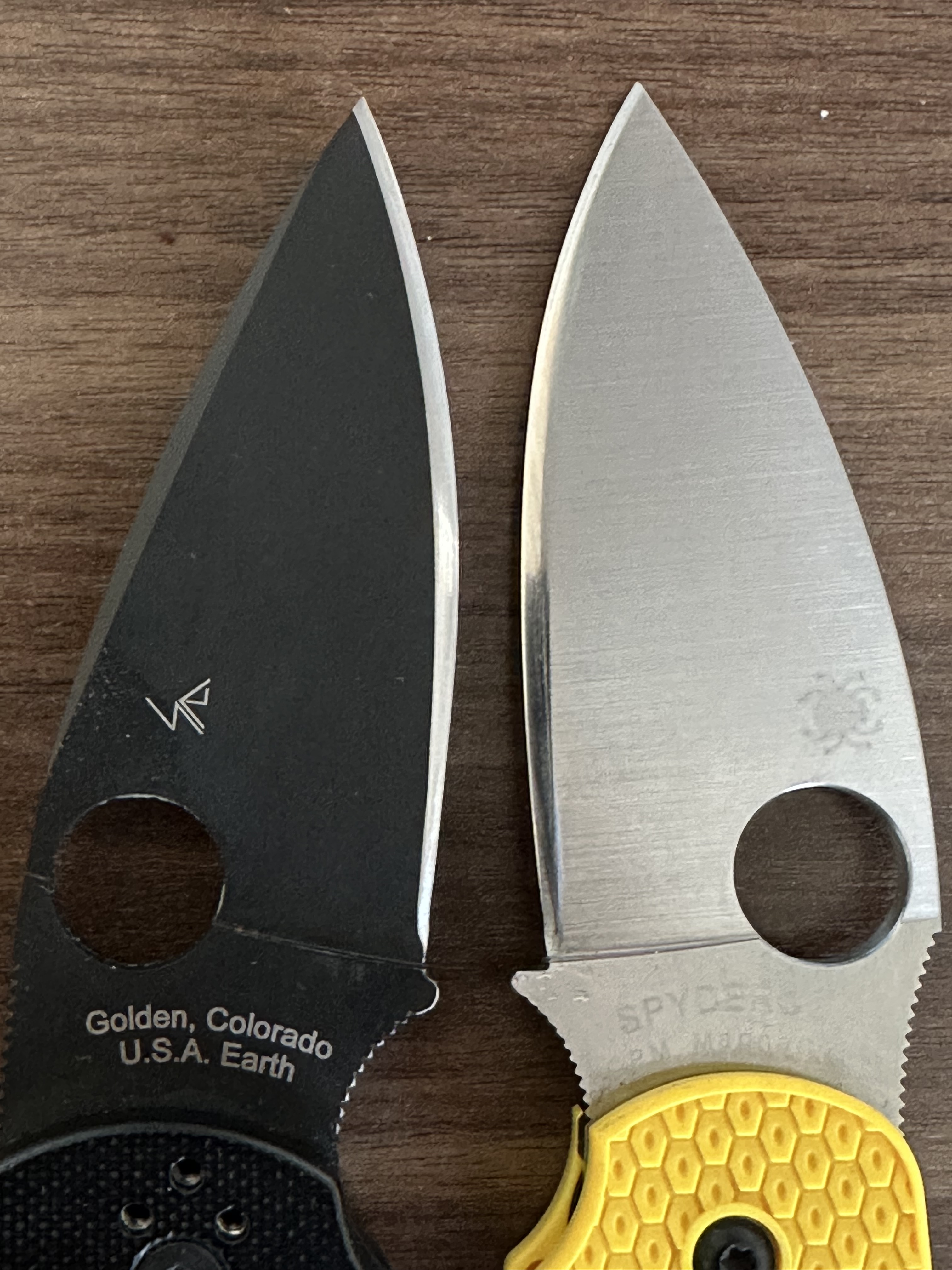
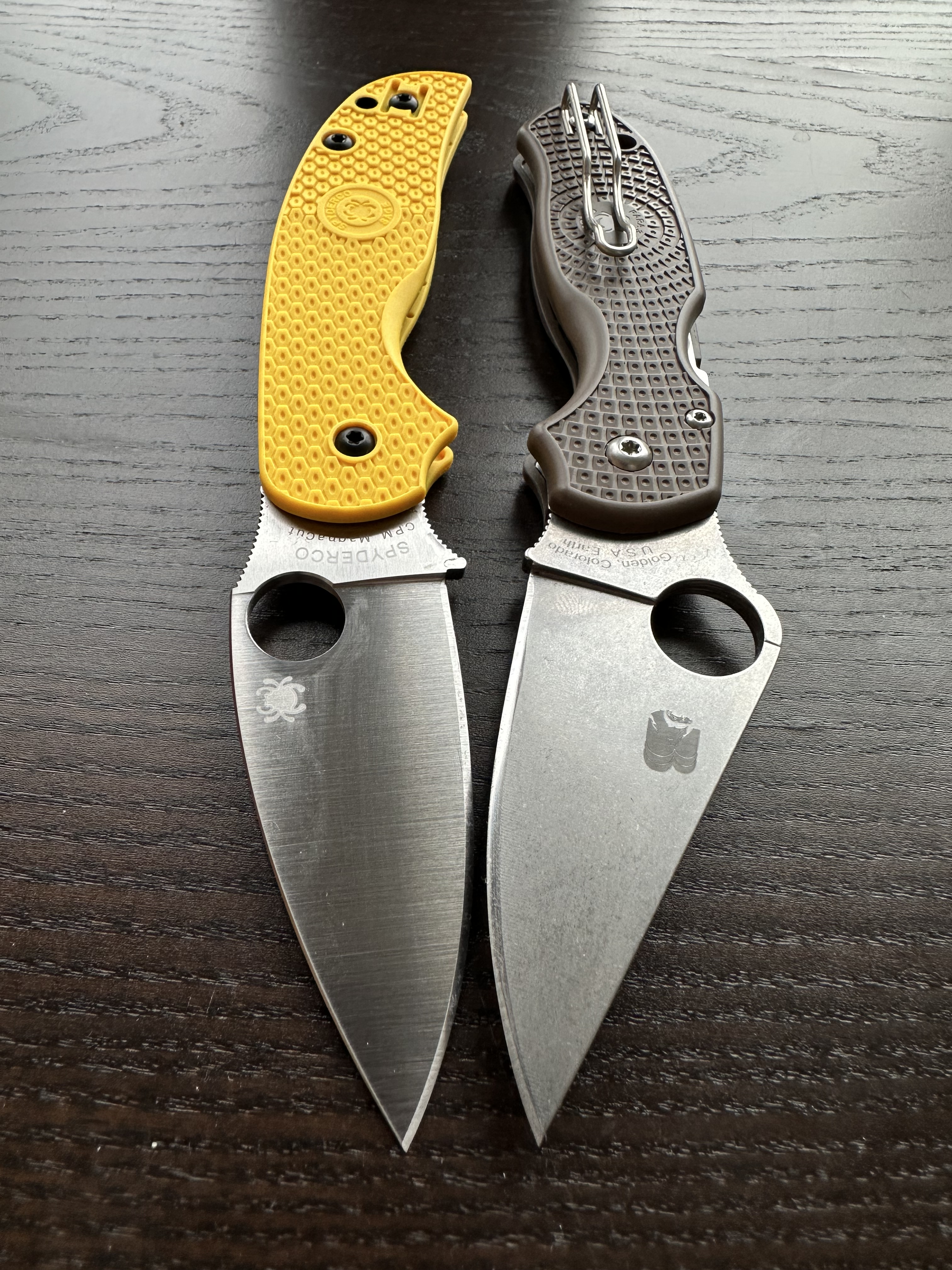
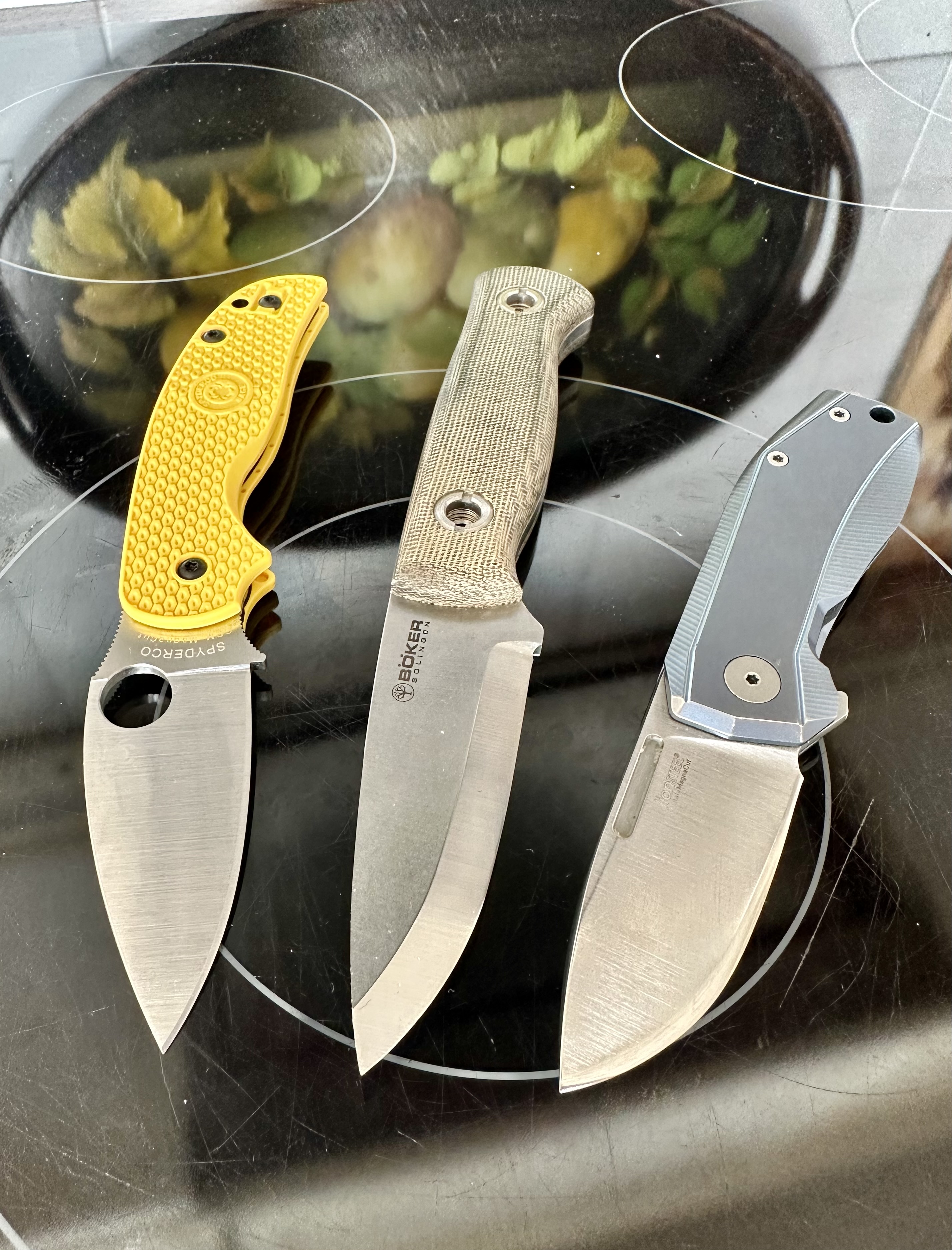
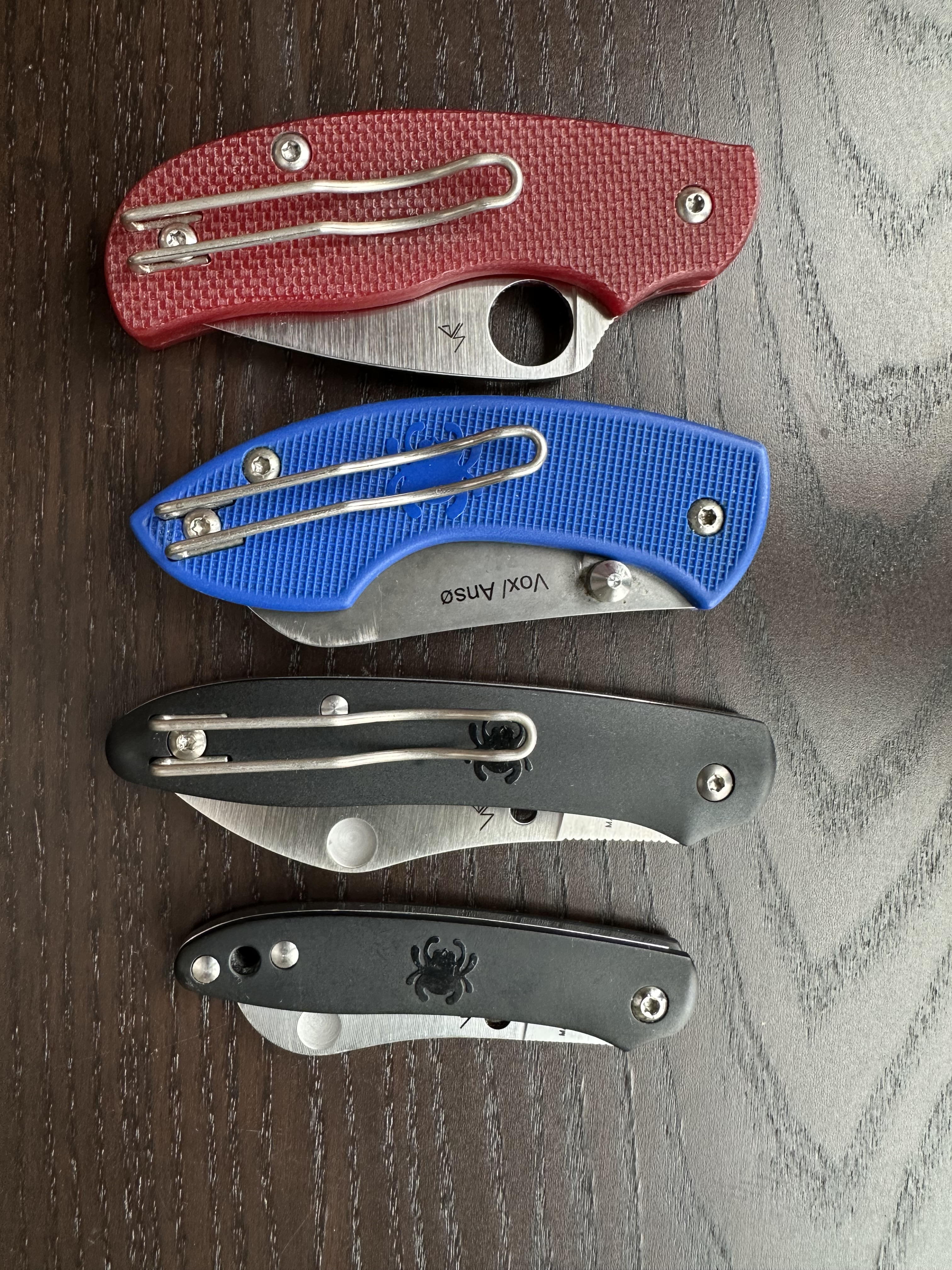
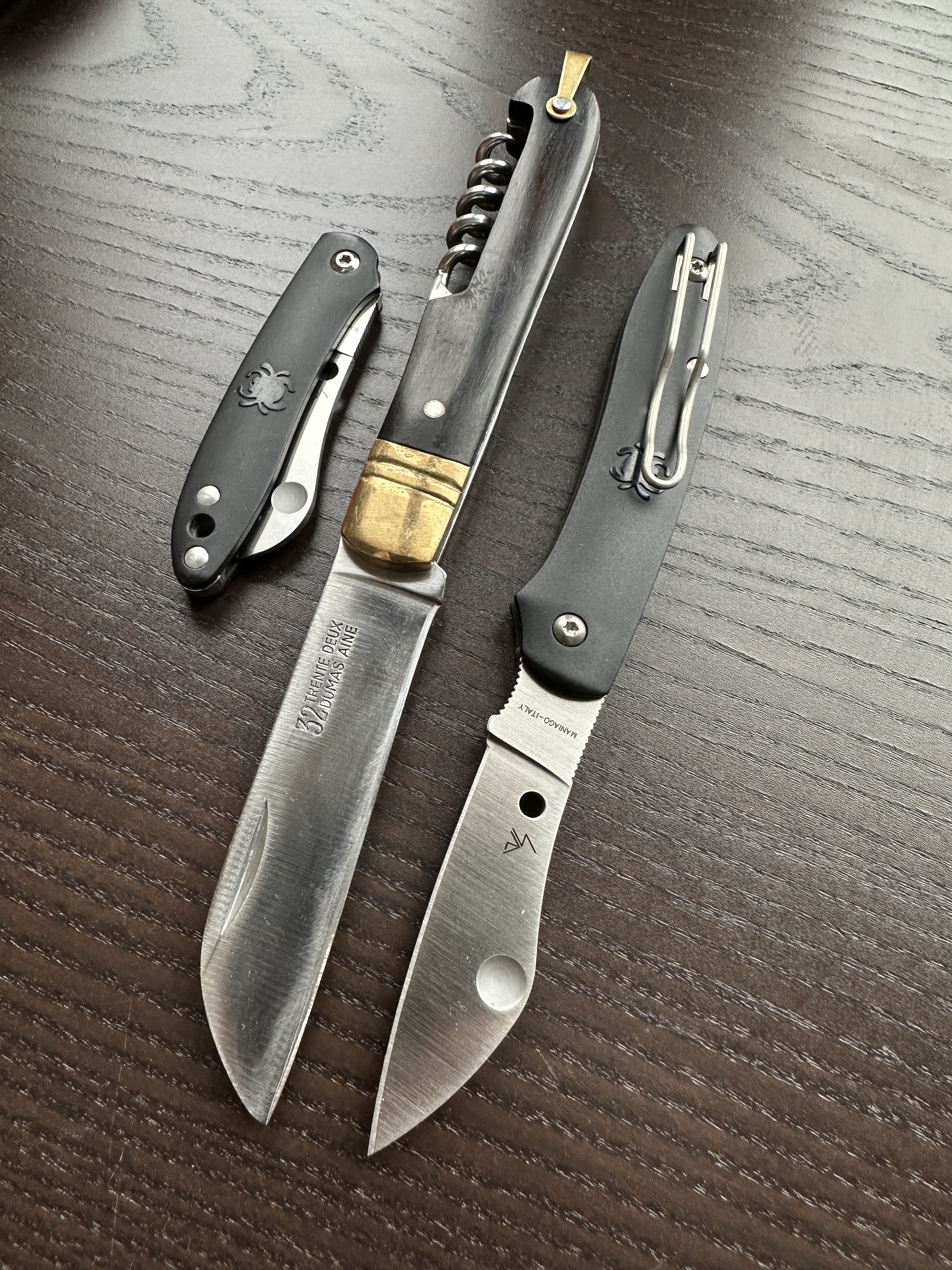
“Metro In the Middle” pictured: the G10 SPY27 UKPK “Golden Child”, the Metro and the Heinnie G10 S90V Urban.
To quote my friend Wayne Thomas Heywood Adamson: “So now we have a middle ground between the UKPK and the Urban. I was surprised when the Urban shrank in size but that was clearly now to make room for the Metropolitan.”
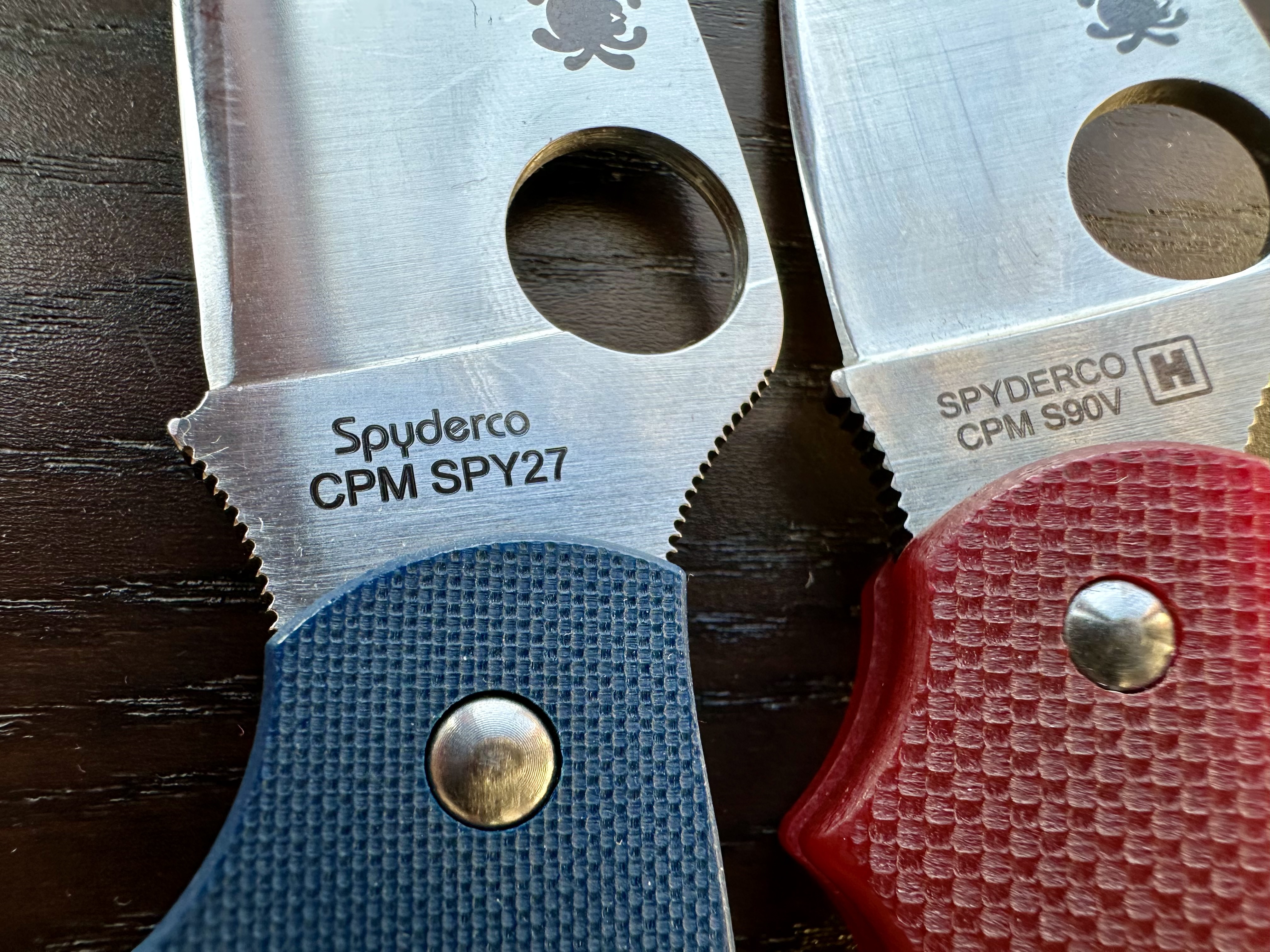
(Made in Golden – Maniago – Maniago.) The 68mm Metro’s blade thickness measures 3 mm at the spine, with a full flat grind in a leaf-shaped profile. By comparison, the longer UKPK “Golden Child” comes in at just 2.5 mm, which makes it the undisputed king of SlipIt designs. That said, opting for a slightly thicker blade in M398 is a sound choice. M398 is not known for its toughness—certainly less forgiving than Spyderco’s in-house CPM SPY27 alloy—so the added thickness provides welcome reinforcement.
The S90V Urban is 2,9mm !
And the Roadie XL is 2,8mm
Making the Metropolitan the thicker of the wild bunch ! By an hair !
Now about the weight…
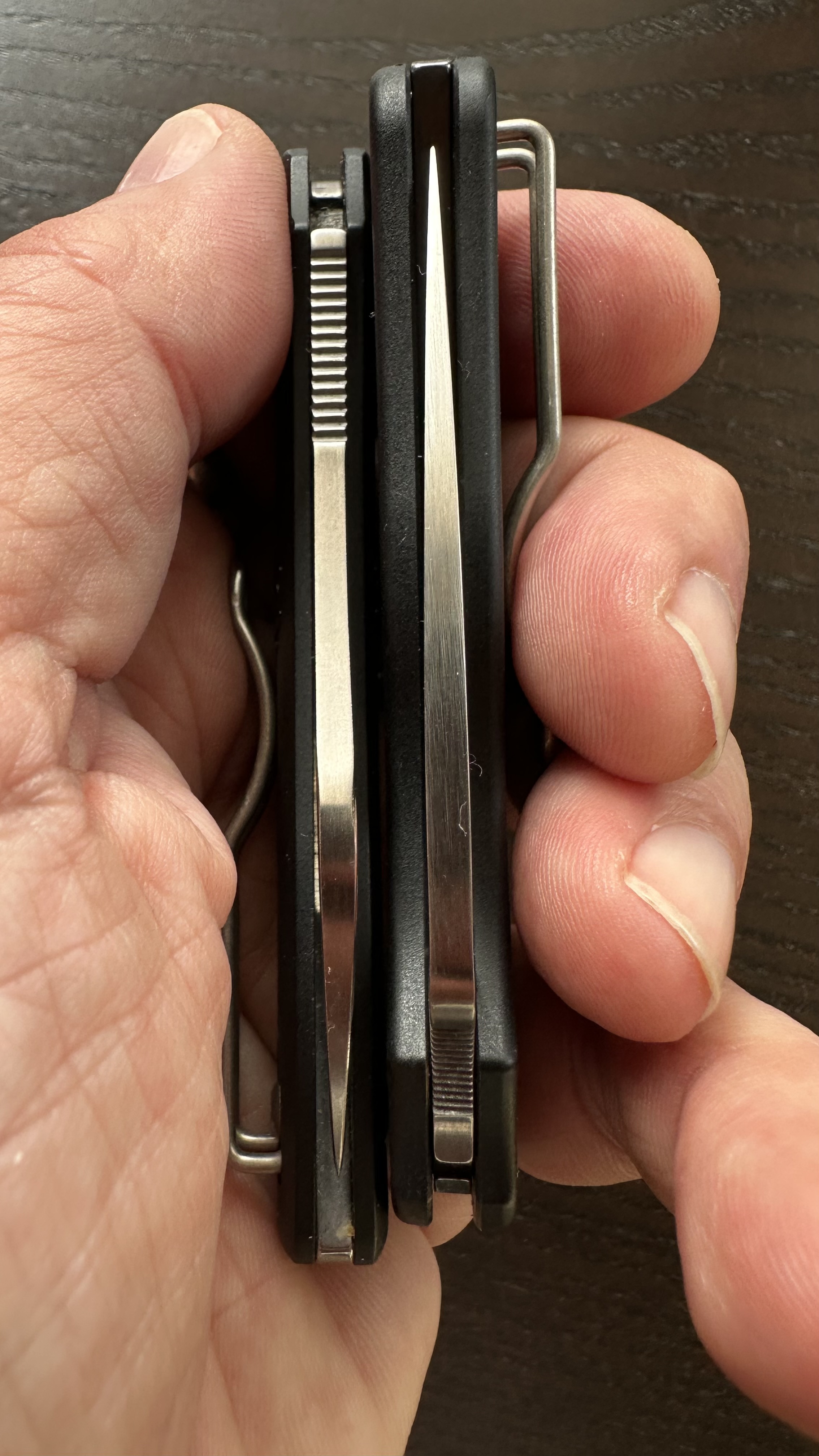
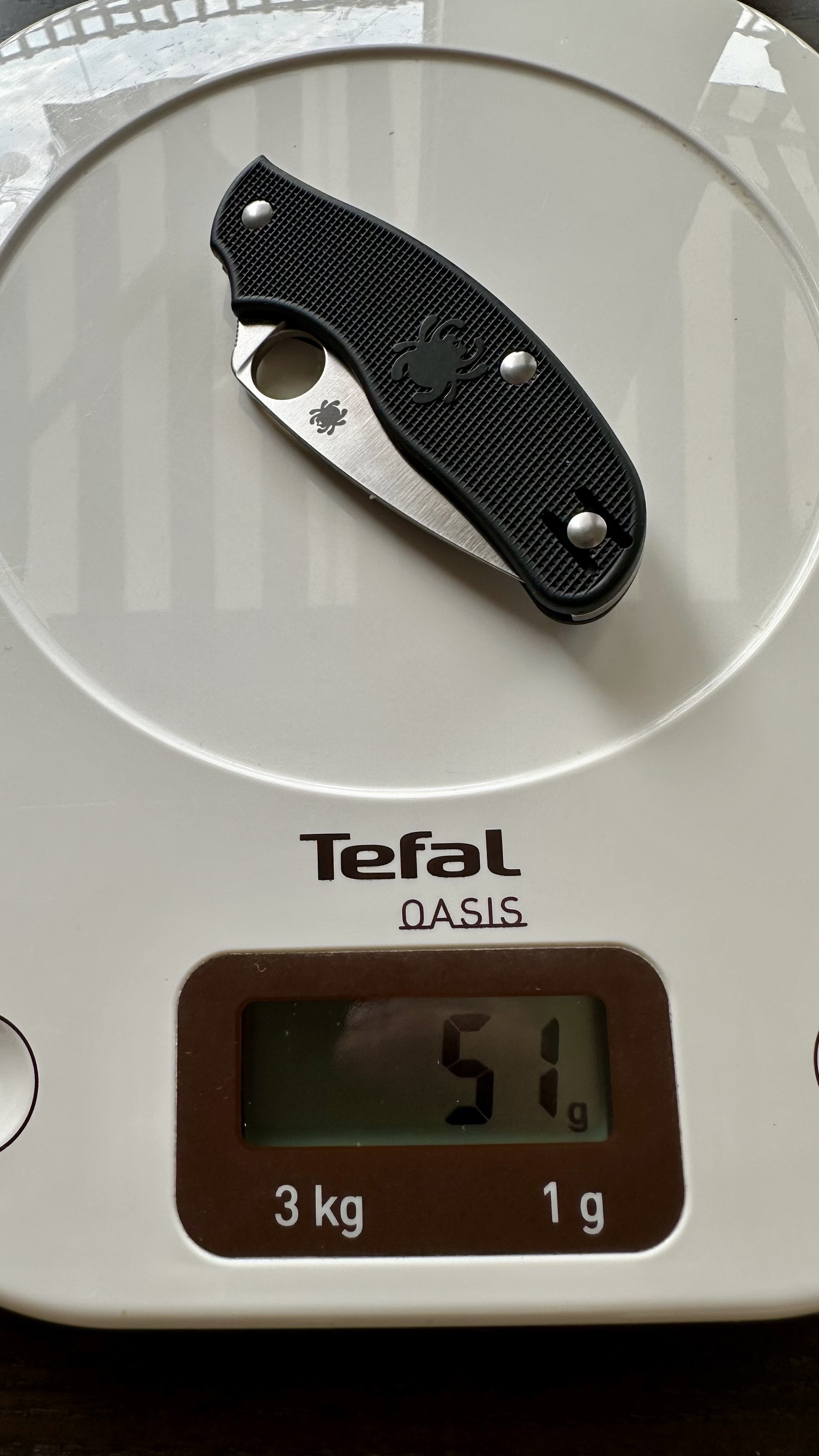
At 51 grammes it is really light in the pocket.
The action is very good. It is as strong as my Urban and UKPK. perhaps a bit less hard to close but this is not really an issue. I have noticed the Metro’s back is a full spacer/spring construction like a G10 version (when the UKPK FRN Salt is not for example.) It does not share the same “fork” spring of the UKPK but the same slipjoint mechanism as the Urban. You can feel the spacer moving up when closing.
So what can we expected from this Metropolitan compared to its siblings? A little more room for your fingers. The Urban and the Squeak are three fingers knives, the Metro and UKPK are four fingers. This is also an opportunity to showcase M398 in a high, full-flat-ground, thin blade. The Roadie XL’s narrower profile already favors cutting efficiency, and the Metro builds on that. In terms of edge retention, M398 belongs in the same category as S90V—a steel I know well from my Urban model, where securing an exclusive sprint run was a real challenge. With the Metro, however, M398 is now part of the regular production lineup, offering users a true “super stainless” steel in an accessible package. But beware M398 does not like torsions, like my Walker in ZDP189 which has been able to survive all those years.
The Metropolitan could really be a major upgrade for my Italian Hares Hunter in Tuscany. For the record, skinning game—especially dealing with hair full of sand and dirt—puts a significant challenge on edge retention. Hunters typically don’t use their knives for woodcraft; their main task is working on hares and similar game. In that context, a blade of 68mm in M398 could offer a real advantage.
The Metropolitan—easy to carry, legal in many countries, and made of stainless steel—could be the perfect hunter’s SlipIt, which is great news for many of my friends.
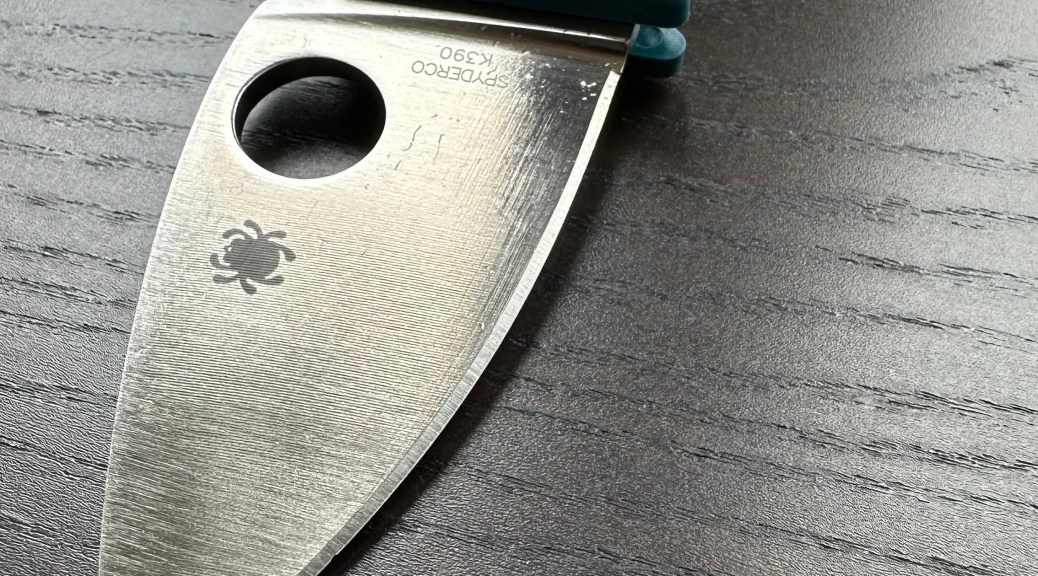
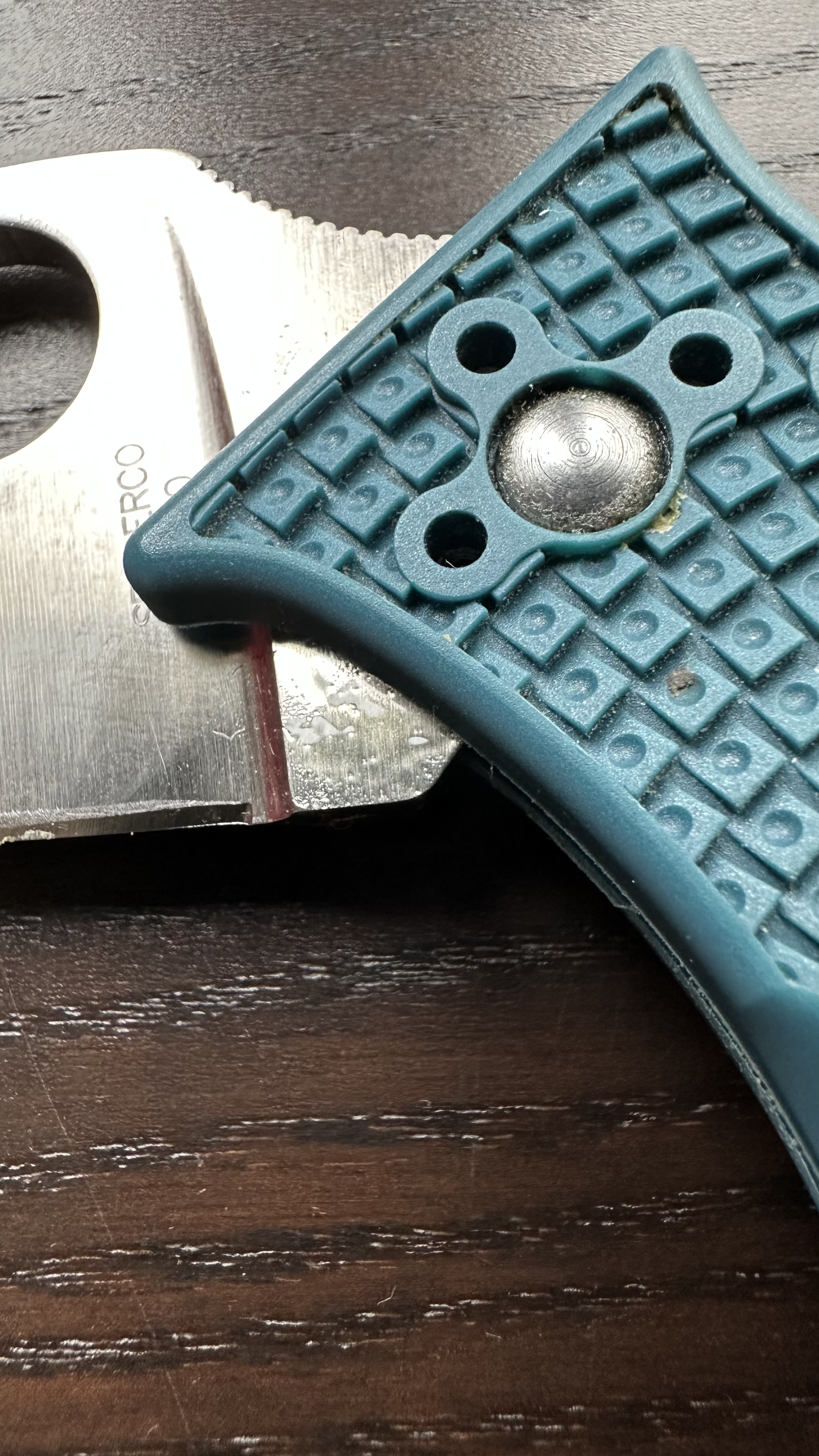
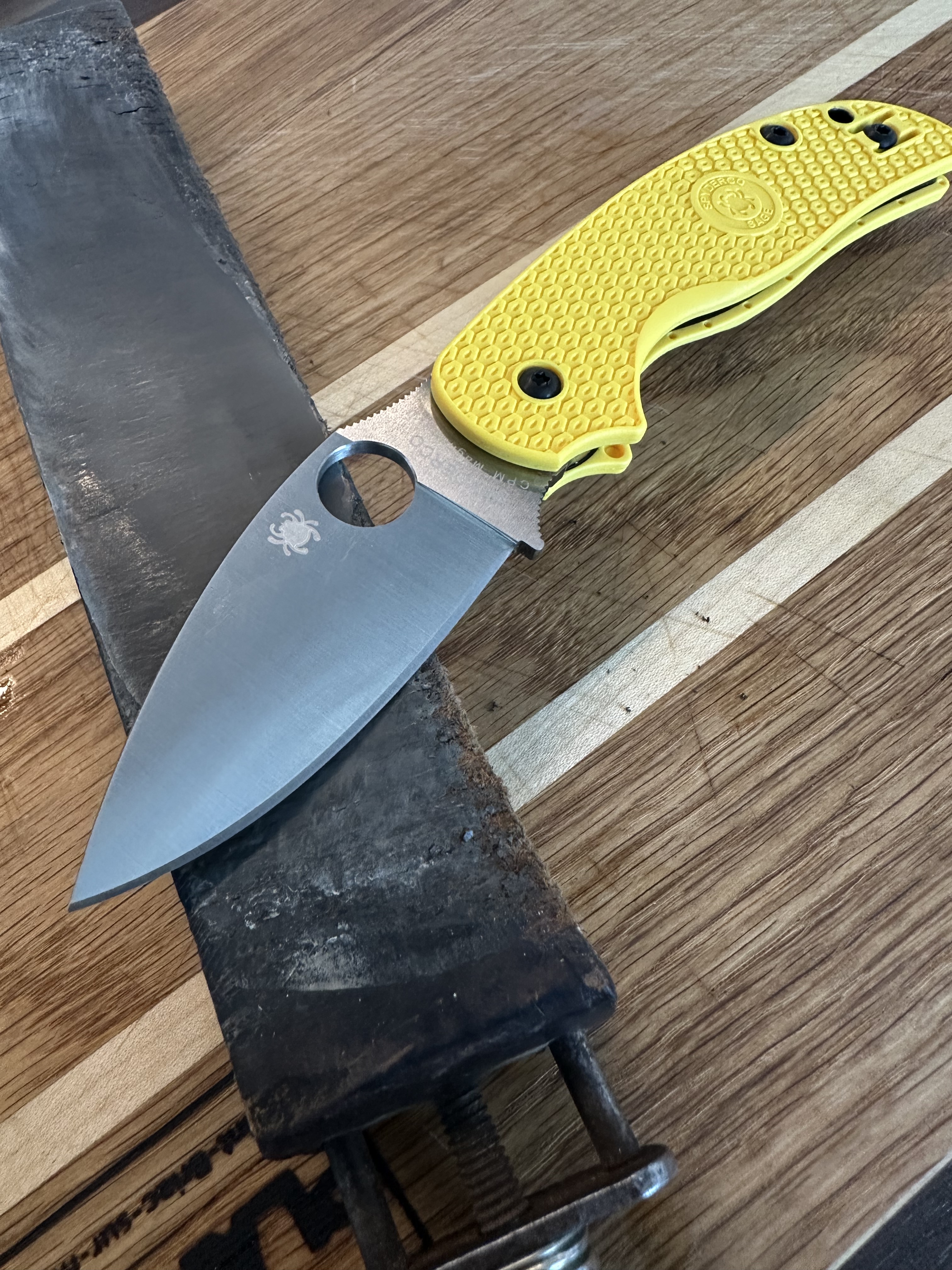
First things first: I needed to “de-shoulder” the edge, and K390 proved its reputation as a hard steel. I noticed it again when rounding the spine a bit — those vanadium carbides really make sanding a challenge. Then again, sanding has always been something of a signature for me, especially when shaping convex edges. With 2% cobalt in the mix, keeping the blade clean is essential to avoid stains or rust.
Now, onto the fun part! When you get a new knife, what matters most is how it fits into your life: what makes you smile, how people react to it, and how it feels to carry and draw it from your pocket. The joy of using a good tool should always be a pleasant experience.
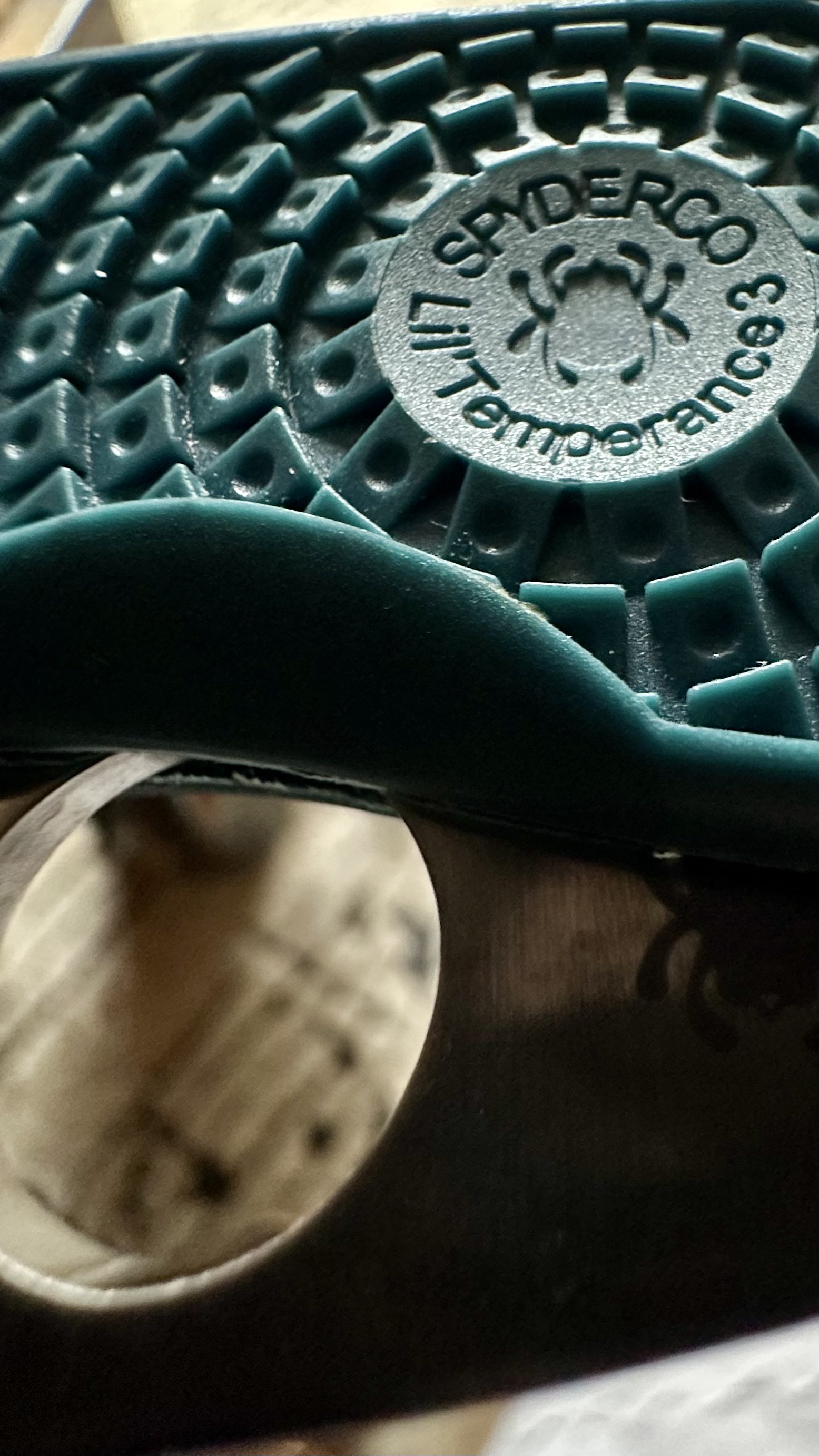
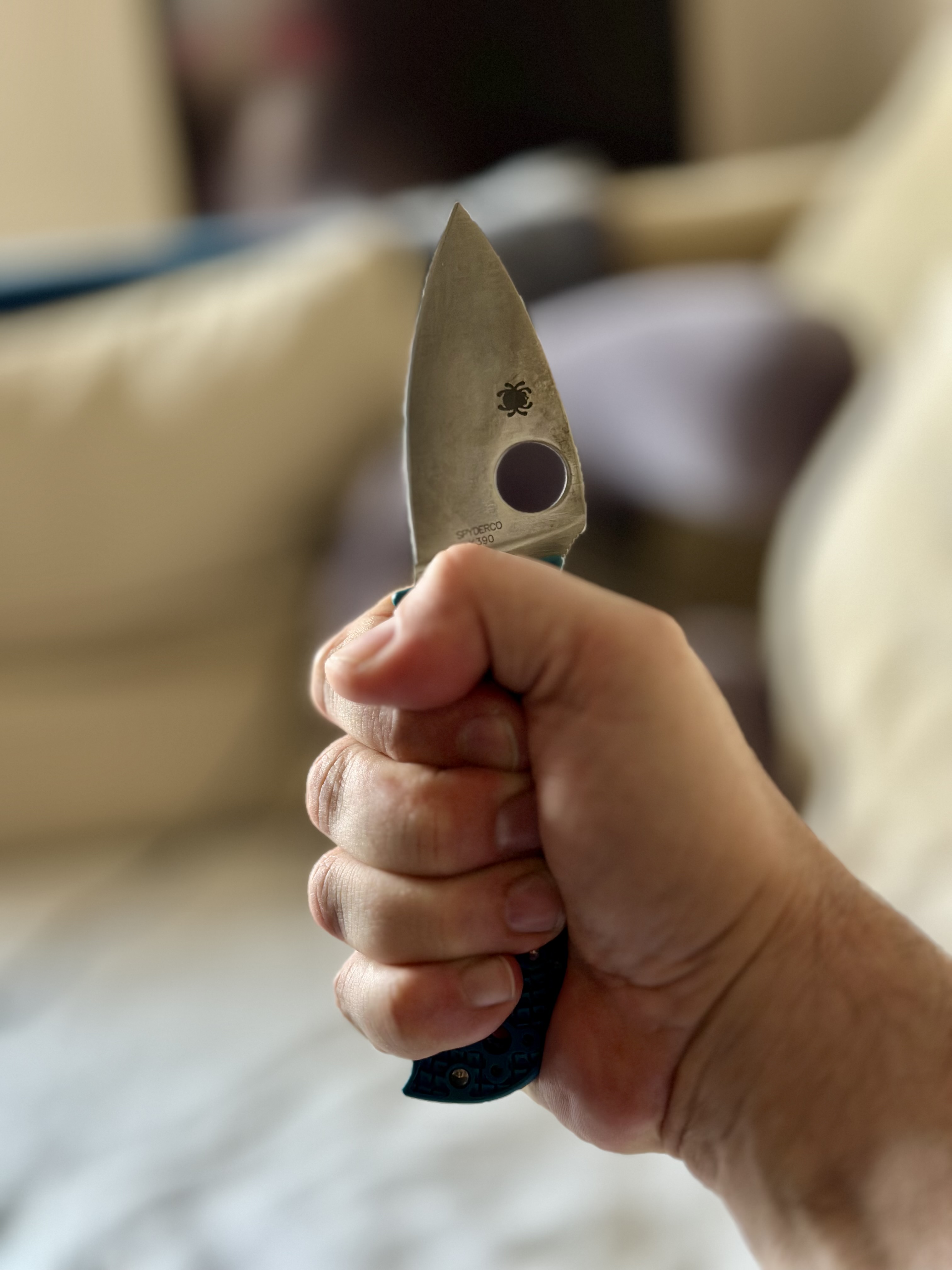
The Lil’ Temp 3 is stubby, with a distinctly modern folding knife look. Its blue handle helps it appear approachable — a friendly tool rather than a “ninja weapon.”
One of the biggest drawbacks of the original Lil’ Temp back in 2001 was its clip. That thick, rigid piece of steel with four screws made getting the knife in and out of your pocket more difficult than it needed to be.
The LT3 solves this with its spoon clip, which is easy to tune. Following Sal’s advice, the knife is now effortless to retrieve from the pocket — a huge improvement. The LT3’s handle design also helps: I carry the folder tip-up, and the beak at the end of the handle, combined with the FRN traction patterns, makes the knife practically jump into my hand. Drawing it is effortless, even while sitting in a car.
The squarish handle also is a big plus: it helps indexing the knife instinctively : You know where is your edge immediately. So, it is very safe and easy to draw it and open it, do the cut and then close it and pu it back in the pocket. You do that without thinking. Muscles memory… It is a huge plus for a working knife’s user to be able to use the LT3 and close it and put it away back in the pocket in a breeze. This is also really enjoyable, and coming from many great Spyderco Designs like the Military 2 or the Sage 5 or the Para 3, it is noticeable how nice that LT3 LW is in getting into action. To sum up, it is really pleasant !
For exemple my lovely Lionsteel Nano is not the easiest to bring into action but it is forgiven as it is considered as a “Lady & Gentleman” folder.
But for a workhorse they are other specifications. Safety and reliability in putting in action your knife is mandatory.
FRN once molded in scales can propose high tech shapes and pattern designed by Sal Glesser which are enhancing the ergos even with wet hands.
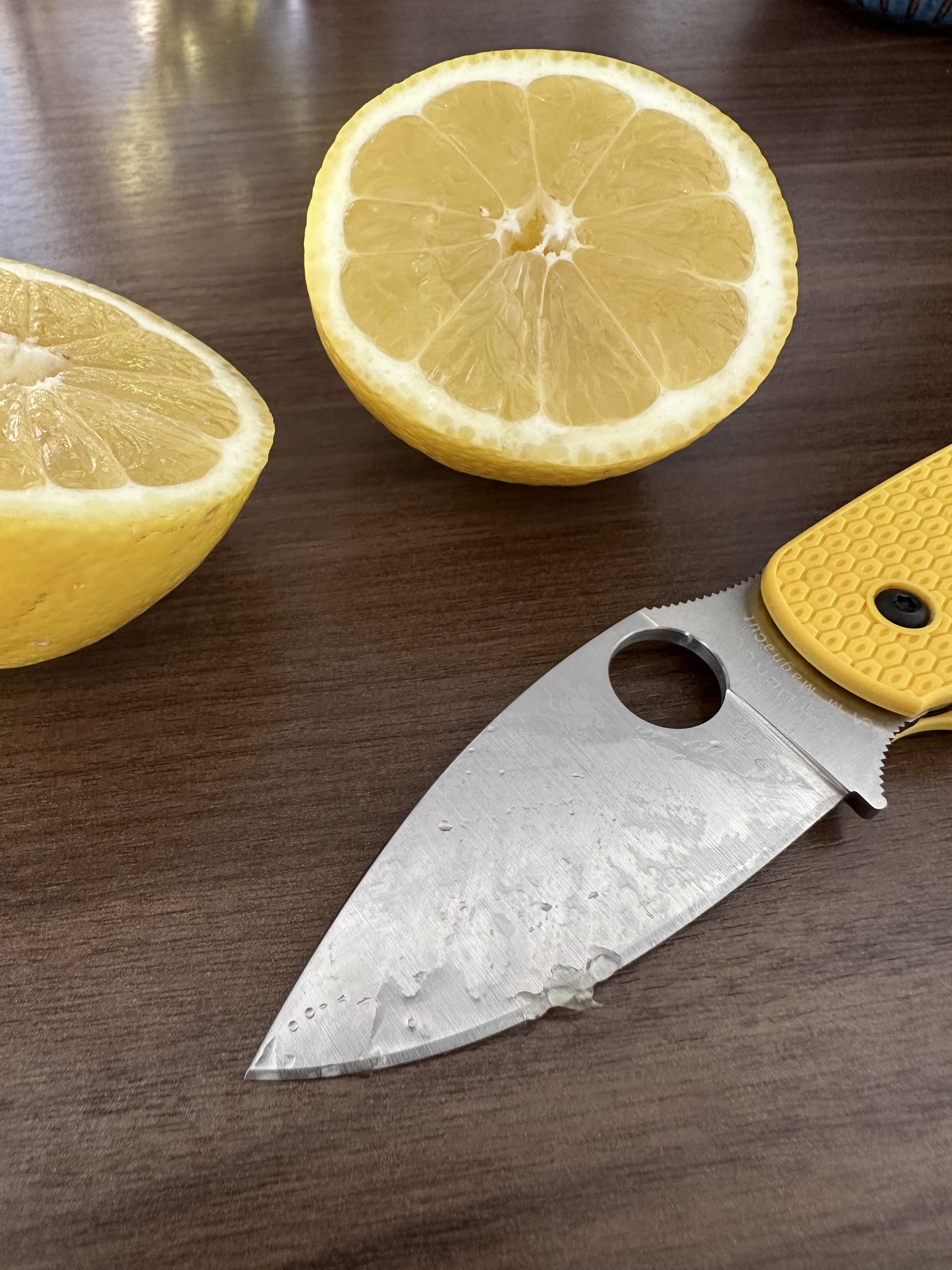
The LT3 is one of the most confortable folder i have ever grip. The handle is thick, filling my hand’s palm and ready to be squeezed for hard cuts. The thick blade spine is asking to be pushed into materials. That’s why my first mission was in the kitchen with tomatoes and lemons…. 😉
After a first cut into lime and avocados the blade was already getting its nice patina. K390 is deadly serious about getting stained and it is a good thing as that patina will protect the naked steel from pitting. I just wipe it clean after a rinse under the tap and check that the pivot to be well oiled. This is exactly the opposite I do with the Sage 5 Salt ! I’m careless wth those Salt folders. This Sage is smooth like butter even without any oiled pivot. Magnacut and the Sage pivot design turn it like into a knife you can keep dirty and forget in the sink. Not the LT3. As strong as its is, its Achilles heel will always been proper care and maintenance. But serious users know how to take care of their tools. And maintenance is also part of the fun of owning good knives. The patina on the K390 blade will always show proudly that your knife is a user not a safe queen.
There is also the solution to cut cheese to keep naturally some grease your blade. Those two cuts here has been made with the LT3. As you can notice those are clean push cuts. the geometry is that great. Actually, in the kitchen, or preparing the meal in a camp, that LT3 is at home. That 4mm thick spine is not an obstacle as the blade is tall.
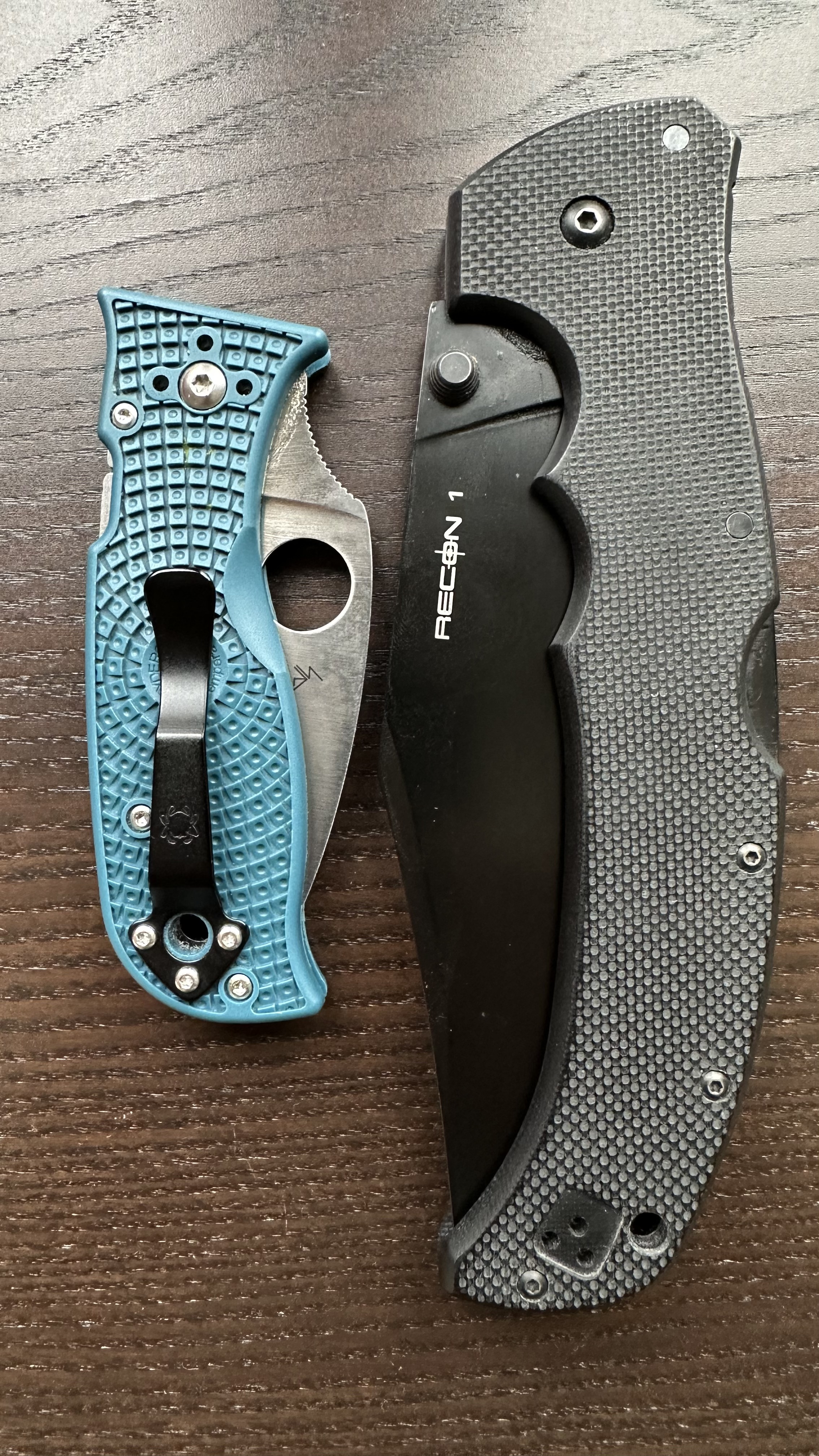
This is one of the things I love in my Cold Steel Voyager or Recon 1 XL: thick high blade but thin geometry. Thhose got much longer blades than the LT3 !
But the C69PBL3K390 does not act like a wedge on fruits like avocado or apple. But once you turn it against harder material like plastic, you can apply a lot of force ! The handle is so comfy you can use it like a fixed blade. This stubby folder turns into one of the most solid “matter separator” ever made by Spyderco. It feels much more solid than their flagship, the Military and much confortable than their Shaman ! Go figure ! Let’s not forget they all got the same designer but, after 25 years of in house refinement, the LT3 is not a small contender. I even feel the LT3 could be the personal answer from Sal to the Spyderco Techno ! 3 inches of pure K390 performance.
Now thickness is always an important factor in performance. The UKPK is uncanny sharp with its thin blade. But it is designed for more mundane and delicate works not for being used hard in a construction site, for example. The LT3 plays in the same field as the Tenacious. (The last sprint run in CPM-M4 is really perfect for dirty hard chores.)
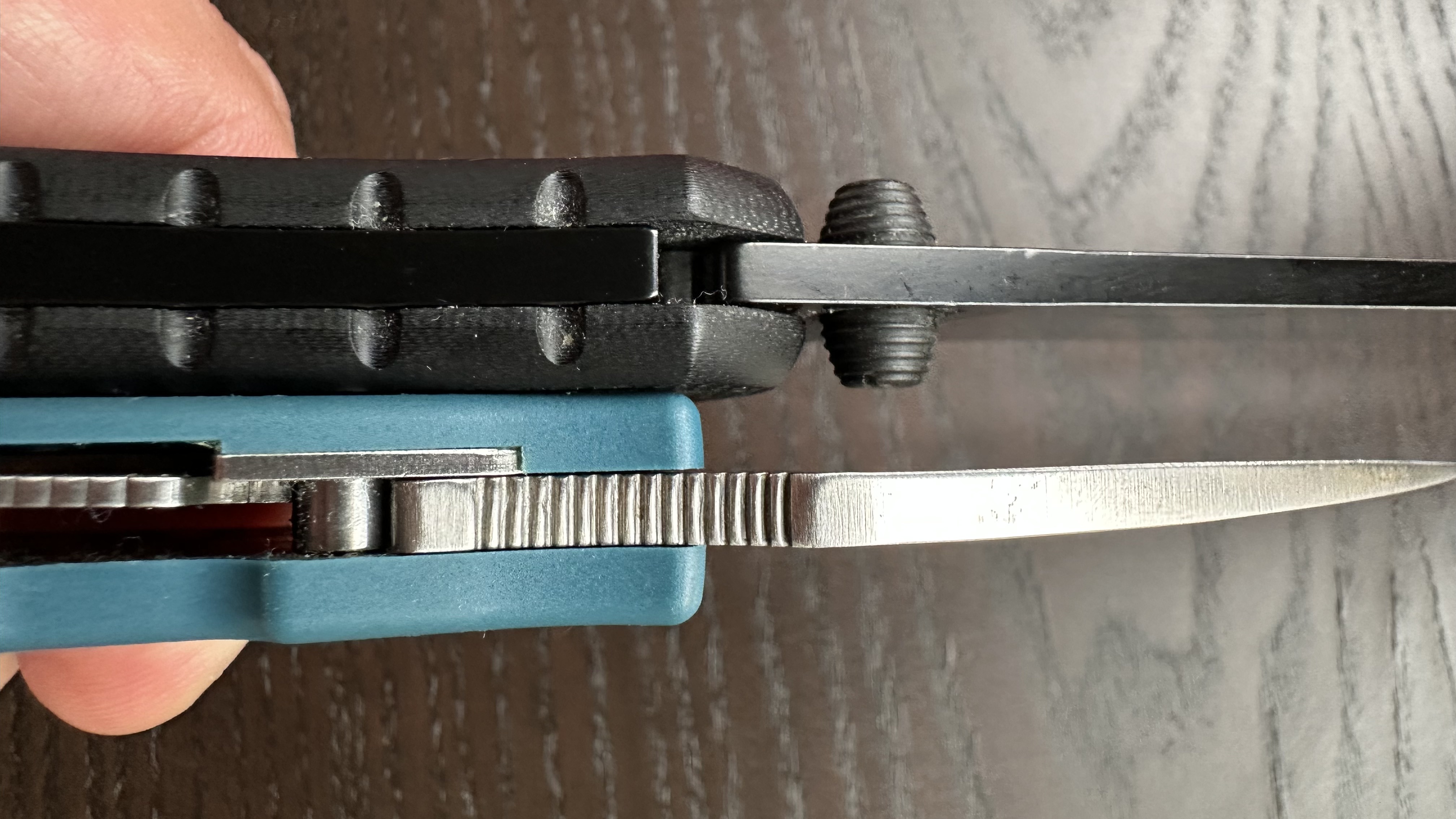
Both knives are choil less, with full flat ground blades, and they got an open back construction handle, easy to check and clean. The Tenacious is a little bit longer offering a great blade/handle ratio. But the LT3 got a stouter blade and a much better action/ compression lock. And also a much much confortable handle.
Many of our blades are designed to a blade length legality. The Delica is a perfect example. The blade length is 3.0″ which is acceptable in many places for legal reasons and for social concerns. The handle designed to the blade length is just not large enough for many of the people that use knives as tools. So I made the choice to give the handle extra length for safety and control.
In my opinion, blade to handle ratios are an “eye” thing, which is fine, but I prefer to design with the bend towards function and safety. “A scalpel would not perform better if the handle were smaller or the blade longer”.
“Choil less” does not mean that your index finger is in jeopardy ! In case the ultra strong compression lock would fail or get disengaged… There is no choil but there is a kick ! So your index finger is relatively safe !
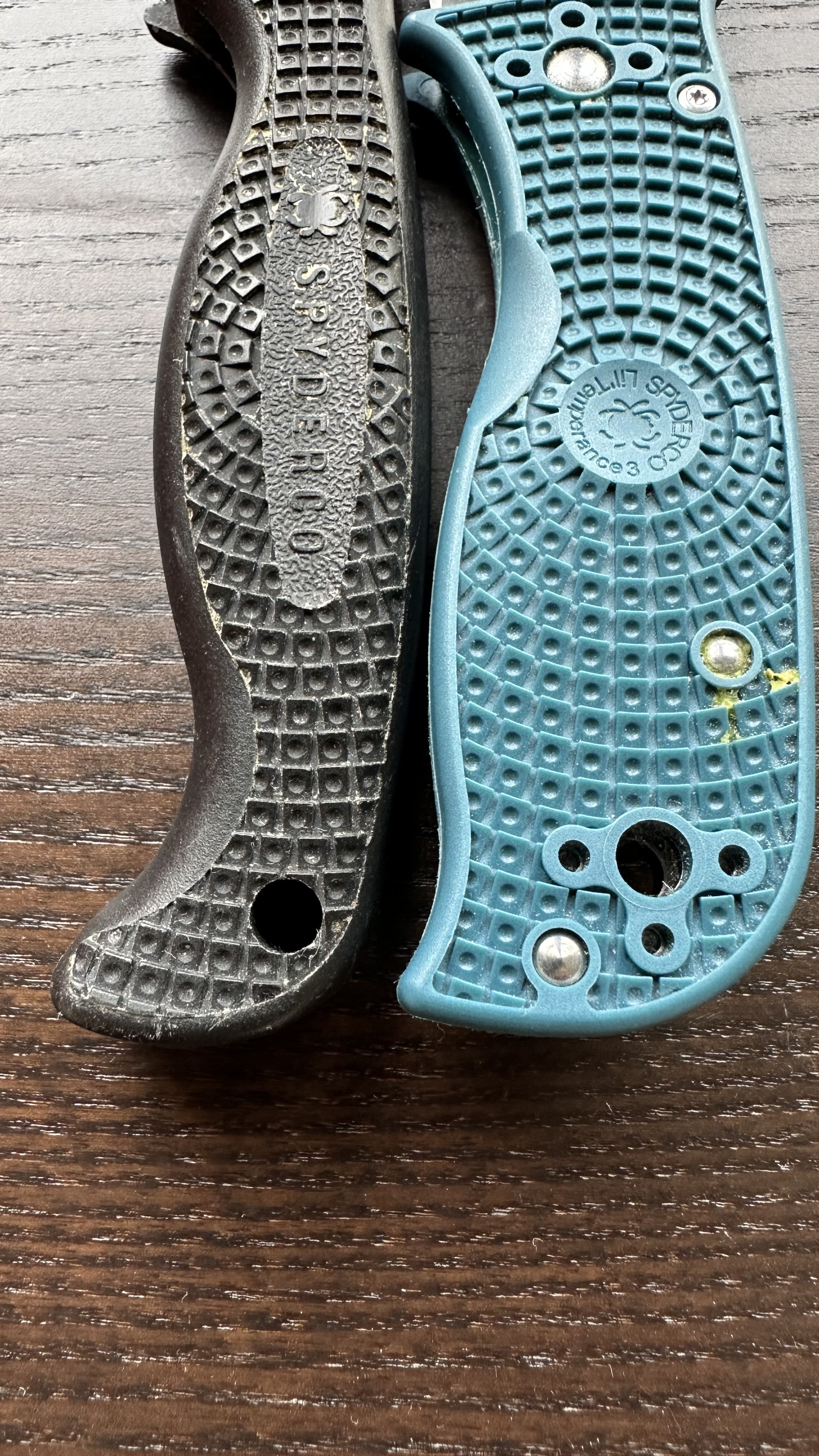
Wait a minue! That LT3 Lightweight’s handle reminds the handle of the now discontinued Spyderco Vagabond. (The FB12 Vagabond was a compact fixed blade designed for on-the-go food preparation, such as picnics or packed lunches.)
See?
Same “beak” at the pommel too !
Thick handle and thick 3 inches blade on both.
Same designer again. 😉 I told you the LT3 was a “wandering rōnin” 😉
So once the LT3 has jumped in your hand, it is really sheeple friendly with all its gentle curves and nice handle color. It looks like a puppy of a bigger knife, a cute knife actually. That’s also a big plus for a low profile working tool. If someone working in a ranch uses a LT3, it won’t raise any eyebrows. It is as threatening as a screwdriver. Nowadays this is a big plus to own a low profile knife. Also when in sheeple hands, the LT3 is able to deliver. Yesterday, the family kept borrowing my knife, even to cut the crust of the pie for the Grand Ma ! This would not happen with my beautiful pointy Military 2 (Even my pointy UKPK was seen by them as a weapon able to pierce some armor…) ! The Lil’Temperance is just seen as a high tech folding tool, easy to control and put on “safe” and this is just what we ask when children are running around the table.
“The game never ends when your whole world depends On the turn of a friendly card” Alan Parson Project.
The Temperance tarot card represents balance, moderation, and harmony. It encourages patience and finding the right mix in life – whether in emotions, relationships or work. It is a sign of inner peace and divine timing. And this is exactly what the Lil Temperance3 Lightweight is oozing from its synthetic pores right at the moment you hold it.
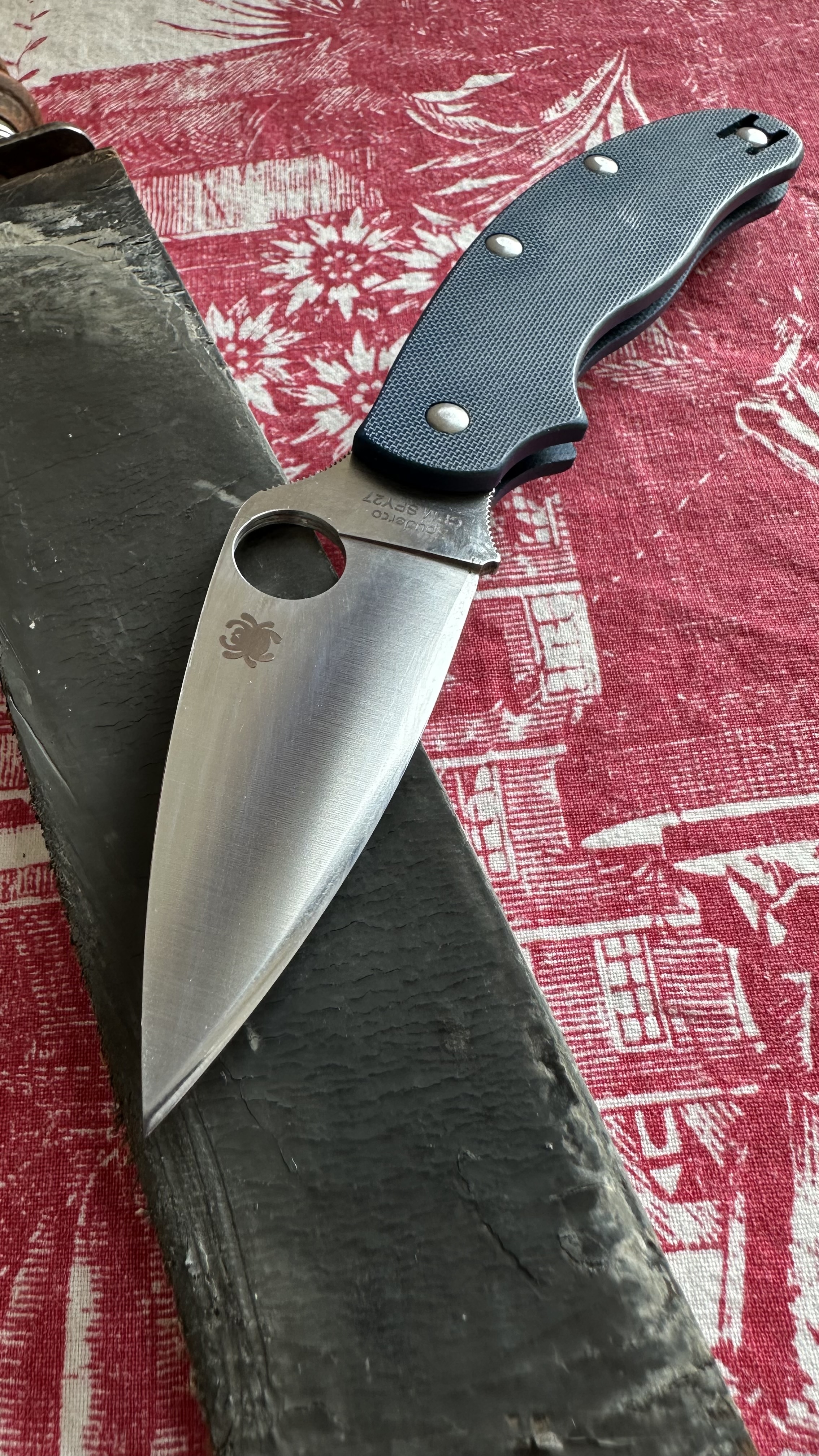
I have had the chance to buy that UKPK in G10 for 100 euros in January 2025. Since, it has been my “go to the city” favorite folder.
Sometimes replaced by the Roadie XL for a lower profile or Dredd my Urban in S90V made in Maniago and exclusive to Heinie in the UK.
The UKPK is remarkably versatile, proving itself even in woodworking. Its strong, reliable mechanism keeps it ready for anything — all while remaining fully within legal limits. Stripping vines, carving rods, scraping, cutting — it handles everything with ease. The spring “lock” never falters, and the finger choil adds an extra layer of passive safety, even if it’s rarely needed.
Its thin yet strong CPM SPY27 blade is a true joy to use on wood. In this domain, the UKPK stands out as one of Spyderco’s best hidden gems across all categories made in Golden. And if I ever had to defend myself against an animal, I believe it would perform every bit as well as the legendary Calypso (all the story here).
The tip has seen plenty of use, and all I can say is that Spyderco’s in-house SPY27 steel is extremely forgiving. You can push it hard with no damage to the edge. I’ve compared it with many of my favorite wood-cutting knives — including some specialized for woodworking — and it performs impressively in the same league.
One way I now measure the value of a pocket knife is by the pleasure I get from using it. The UKPK easily ranks among the top on my list. Strong, thin, and precise, it excels as a true “matter separator,” handling everything from everyday tasks to more demanding jobs like scraping paint.
There’s also a distinct joy in keeping the edge razor-sharp, and SPY27 has become my new favorite for that. Achieving a razor edge is a breeze. Being in the AEL-B class, it’s even easier to work on than Magnacut and is extremely leather-stropping friendly. After just a quick session on leather, SPY27 regained that legendary crisp edge — and it’s such a pleasure to use!
Hairs are flying and the convexed home made edge is shining like a mirror. This is really part of the joy to use leather strops on a steel.
So it is a joy just to strop it again and again just to maintain this razor edge.
Then for forced push cuts, the geometry of the UKPK is just a killer. It goes deep like a thin Opinel blade can go.
To keep the knife sharp, I’ve mostly relied on leather stropping, with occasional touch-ups on white ceramic, even after cutting cardboard, plastic, acidic food, and hard wood. The UKPK in SPY27 is a winner, offering a significant boost in edge retention and versatility. Maintaining its vorpal edge is even easier and more enjoyable than with the excellent Magnacut or LC200N versions.
It’s no wonder this steel has earned such a special place in my heart.
And I was not able to get any chipping or edge bending in six months. It gives an hint about the high quality of the inhouse heat treatment on that inhouse steel.
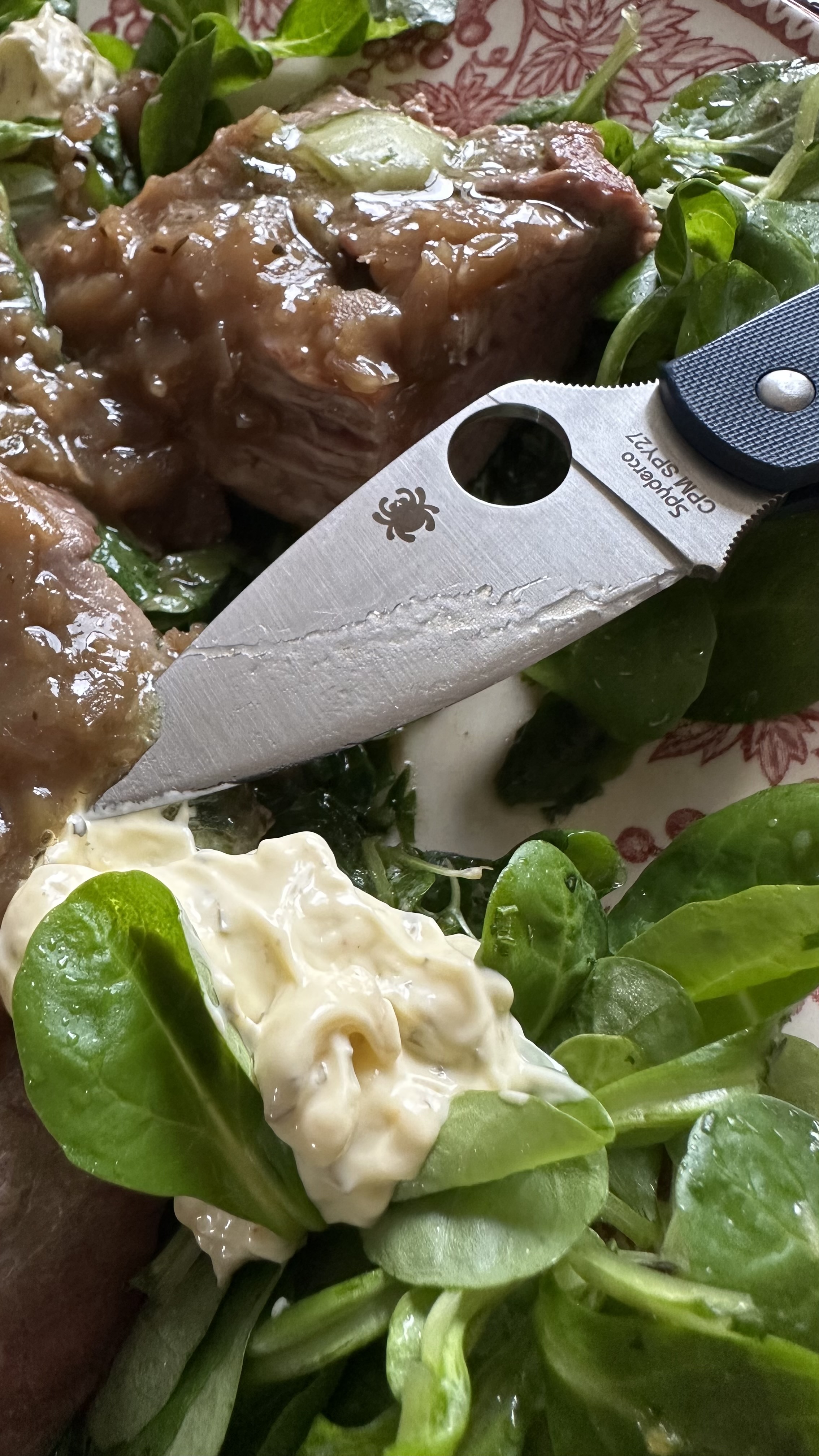
Used in the plate, the SPY27’s core refused to be damaged: no pitting, no rust, no stain. No damage on the plate ceramic too. It a gourmet companion and a wonderful carnivorous friend.
In the kitchen, geometry-wise, the UKPK can compete with the best — for example, the Patrick Bonetta Kitchen Warrior. The G10 version is also a visual delight. I never felt “under-knifed” with my Urban, but the UKPK could easily be my one and only Spyderco. A three-inch, legal, high-performance sharp blade is a must-have for EDC, and such knives are surprisingly rare.
This is 100% Sal Glesser design. This Golden-made gem is the all-terrain pocket knife my grandfather would have dreamed of! Hence its name The Golden Child. 😉
For an alternative you can now get The Metropolitan. Its little brother.
For a two-week road trip in Italy, the serrated Chaparral was my only knife. Sal Glesser’s Chaparral has been studied many times on this blog, but lately, the serrated version has become a central part of my rotation.
Why is this knife such a great traveling companion?
Friendly FRN handle: The grey FRN offers excellent grip, even with wet hands, making it comfortable and reliable in a variety of conditions.
Blade length: At less than 3 inches (71 mm), it’s easily accepted as a pocket knife. The serrations effectively add about 25 % more cutting edge, boosting performance without increasing size.
Flat and thin: Its slim profile allows it to comfortably fit in a watch pocket.
Sturdy mechanism: The hidden pin ensures zero vertical play, providing a rock-solid feel.
So this little big knife was my main cutting gear for two weeks.
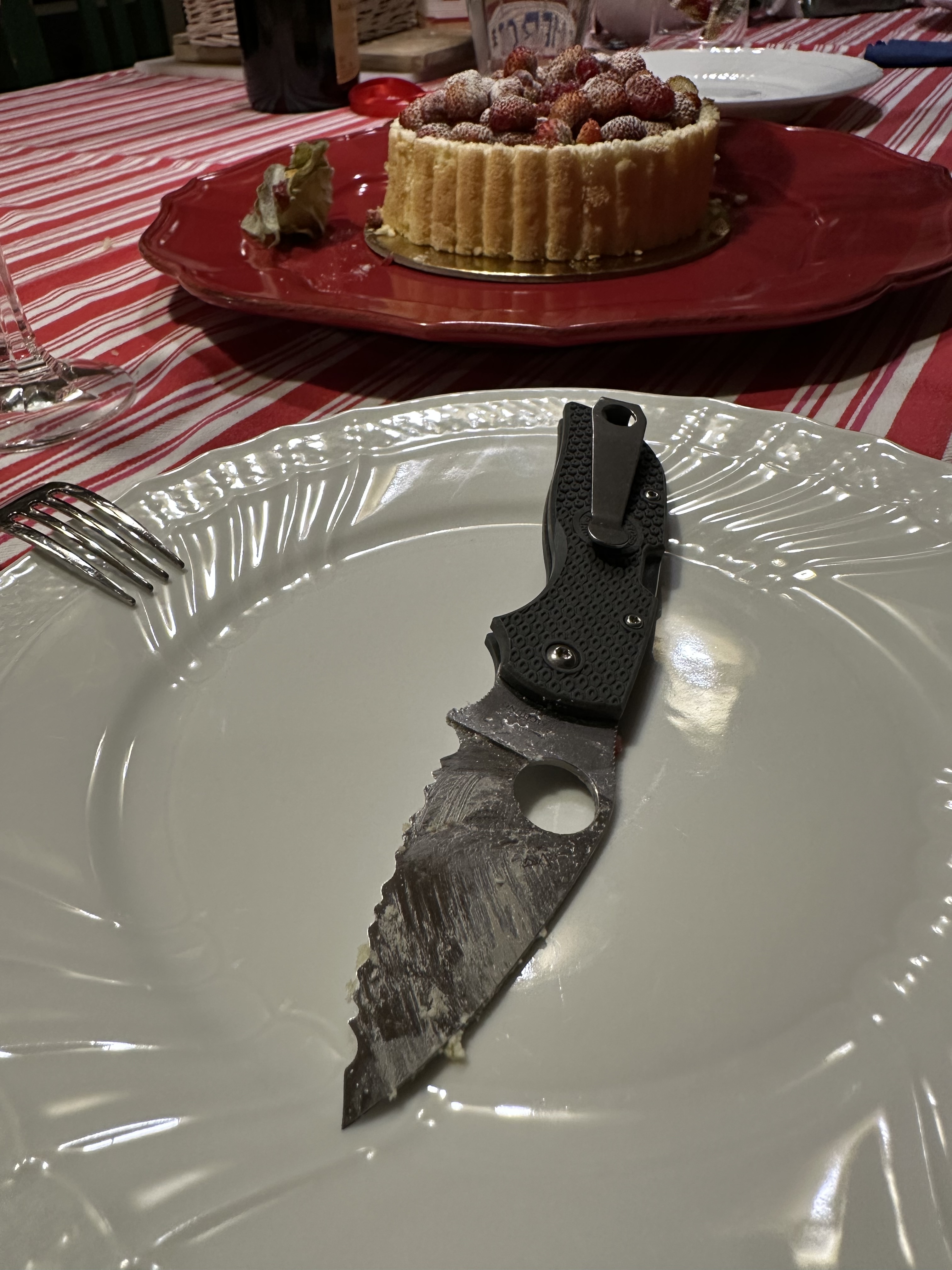
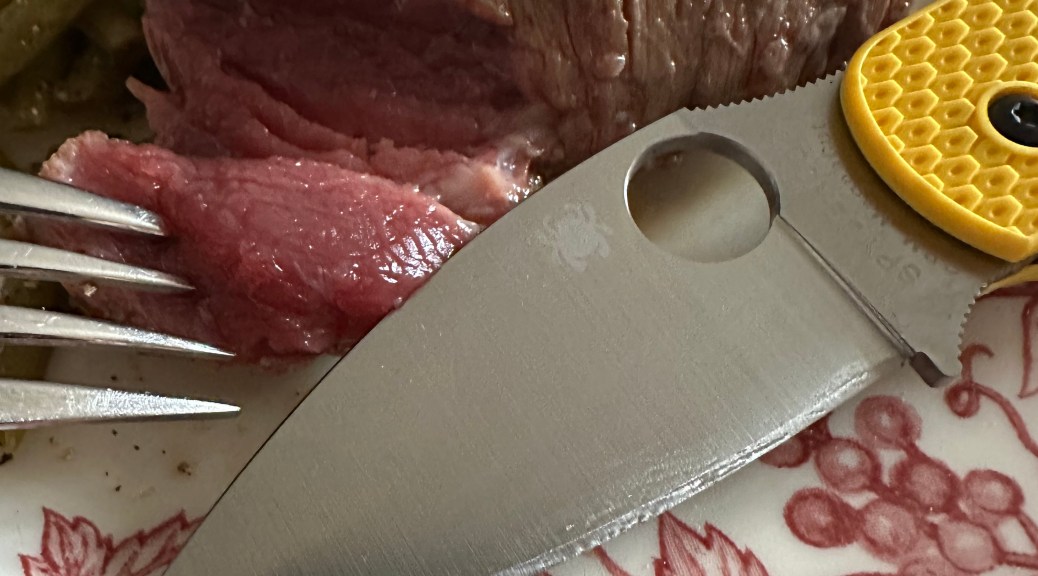
I was able to open it in restaurant without to be noticed and replace the dull silverware provided. The serrated Chap is a folding steak knife by essence.
Its thin blade is making the cuts accurate even on delicate cream croissant shared with a coffee.
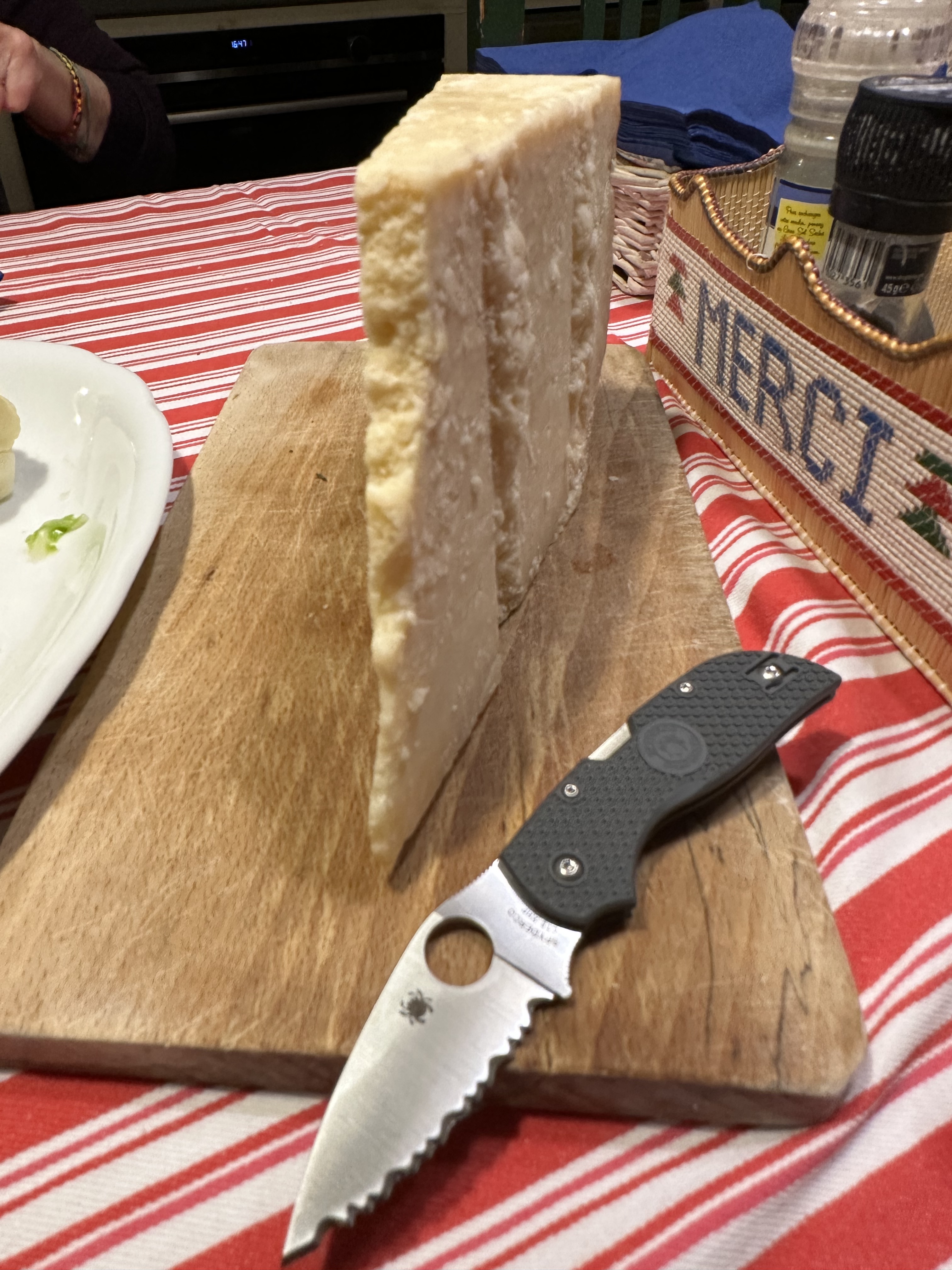
One of the challenge for such a thin blade is the famous hard cheese found in Emilia-Romagna: the Parmigiano Reggiano.
Normally, Parmigiano is not “cut” — a traditional leaf-shaped short knife is stuck into it and breaks off large chunks like a wedge. That approach wasn’t a problem for the thin CTS-XHP blade of the Chaparral. It dug in deeply and, with a slight torsion, fragmented the cheese effortlessly.
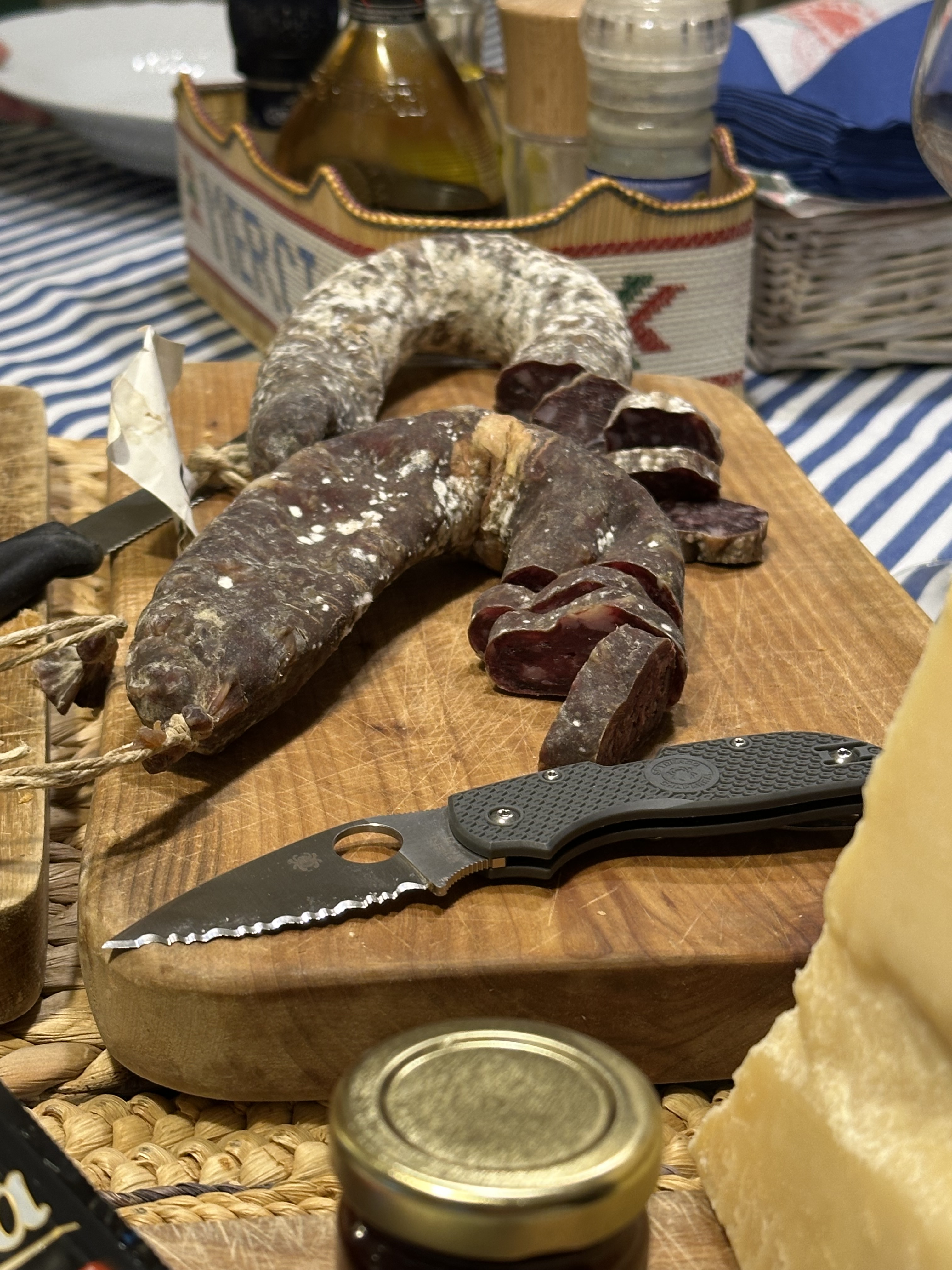
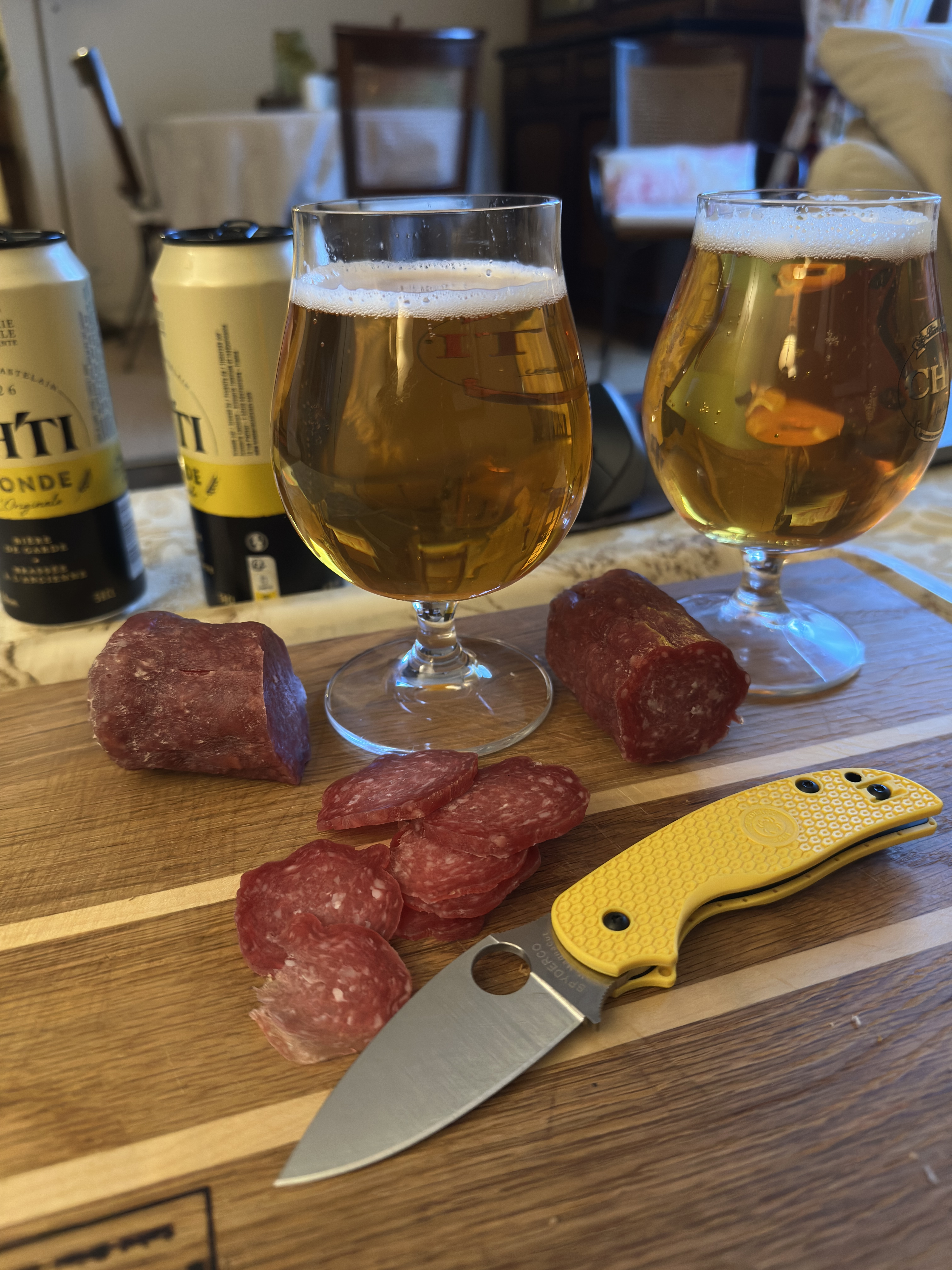
Hard sausages in Tuscany can be made from deer or doe or even boar. Again, bring a thing serrated edge to the board and it will be a success.
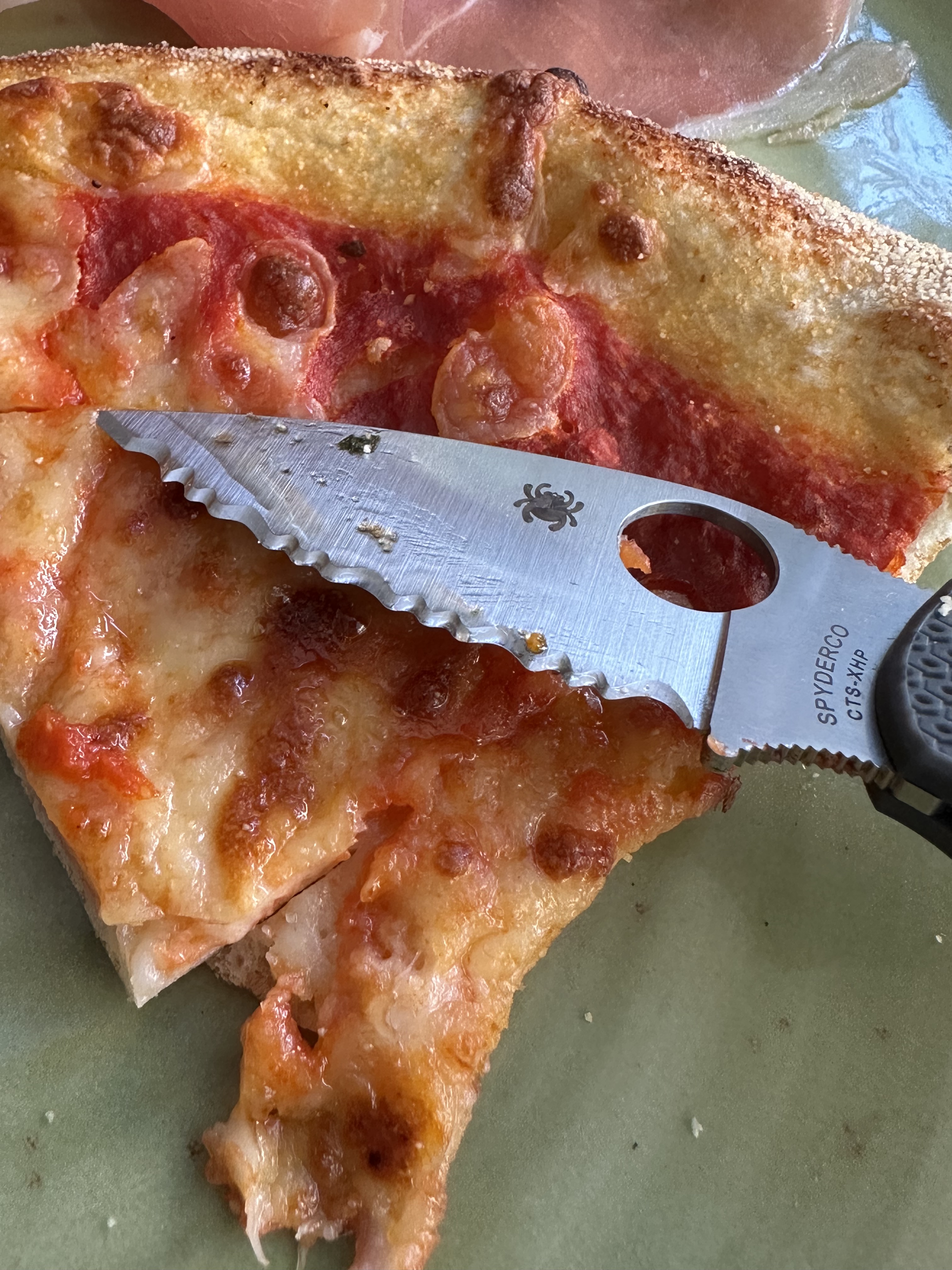
Pizza can be a challenge. You want to cut through all the layers without dulling the edge on the plate. Serrated edges do not dull easily in the plate. And even some knives encountered provide serrations at the end of the edge like this one:
Here the Chap near a friend’s Captain which has been used to deal with mozzarella.
It feels good to be not the only Spyderco in the village.
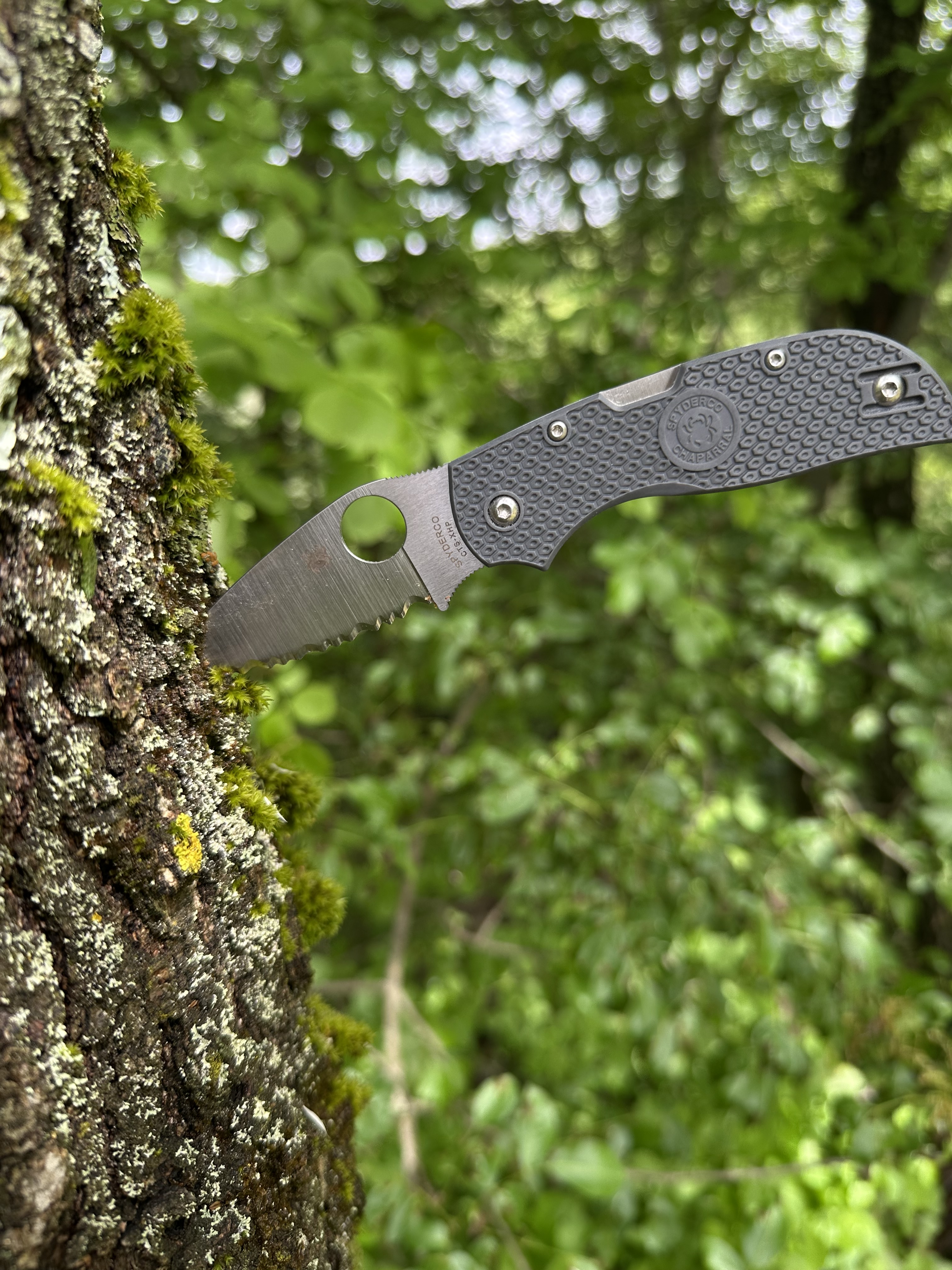
After two weeks with the Chaparral, I never felt “under-knifed.” It performed reliably in all conditions — rain, seashore, and forest — and remained socially unobtrusive. Its cutting power, thanks to the thin, hard CTS-XHP blade, proved that a pocket-sized chainsaw can be an essential part of any traveling kit.
After two weeks of use, the Chaparral showed no rust issues, no bent serrations, and no gritty mechanism. I simply rinsed it under the tap and let it dry in my pocket.
Even now, I don’t feel any need to resharpen the blade — the serrations are extremely difficult to dull. For a travel folder, I can confidently say: the Chaparral comes highly recommended!
If you want to see some spectacular moments from my two-week Italian road trip, I’ve released four video postcards on YouTube, all filmed and edited on the same iPhone 14 Pro that provided the photos for this article. If you enjoy them, feel free to give a thumbs up and subscribe to my Youtube channel.
You know what ? It’s time to thin the edge of Gambit. Pictures are better than thousand words.
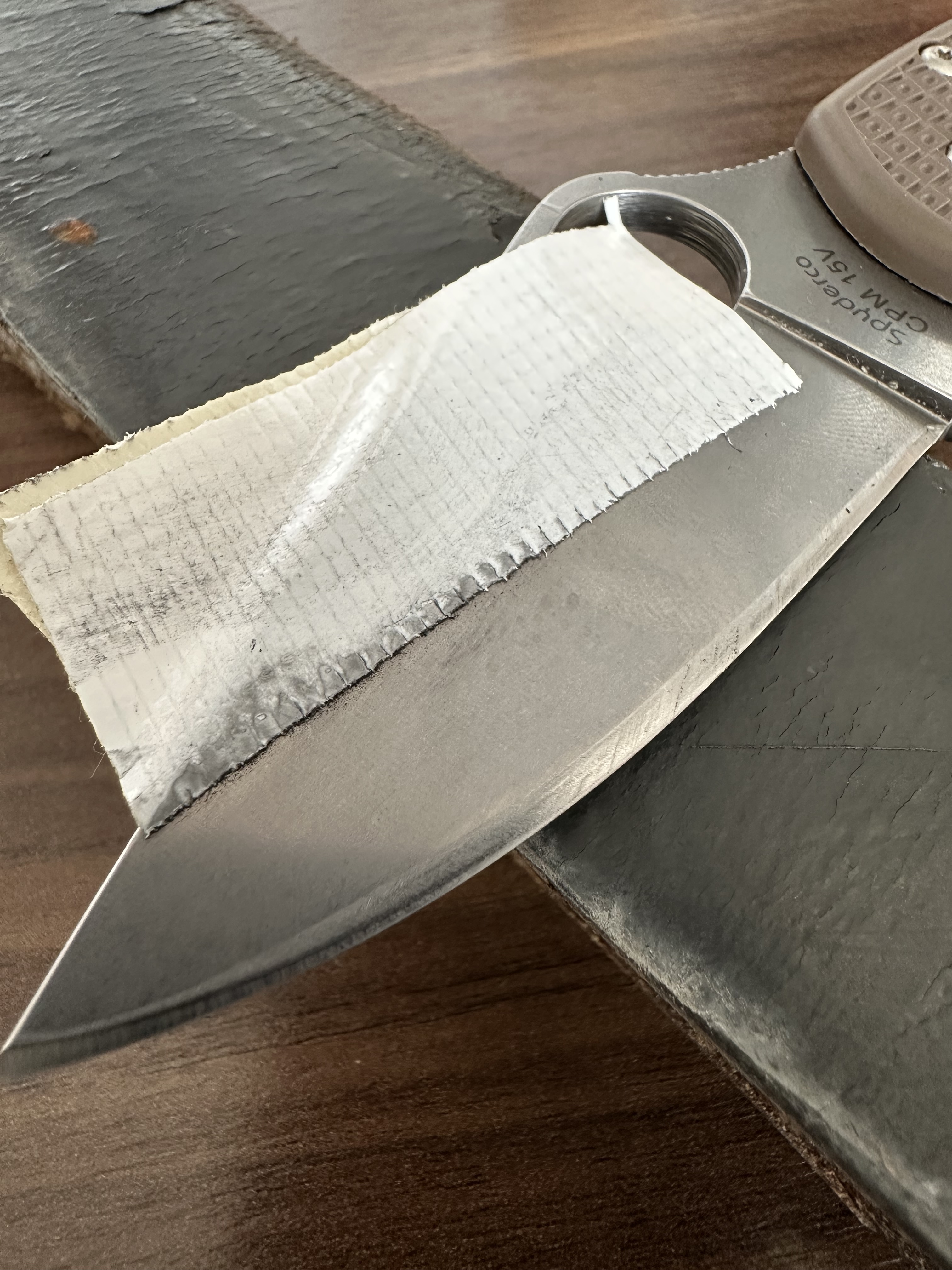
The gaffer is here to protect the blade against my clumsiness.
The Double Stuff 2 is the main tool. But it is old now. It has lost some of its teeth in many many edges reprofiling…
But eventually it is a cheap Sharpy bought on Amazon which seems to be 15V best friend. It is 800 grit. And it bites into 15V like no tomorrow. So I was able to round the edge’s shoulder. Let’s test it.
It goes deep and steady. There is real improvement. But gosh, 15V do not like to lose its particules. Compared to Magnacut or SPY27, CPM-15V is hellish. Now I perhaps don’t have the best diamond tools for that. But really, it is not a piece of cake in my book.
Now could it be a answer: The Military 2 reaching the 67 HRC ? But that was exactly my impression after watching the YouTuber’s video — until Jake, a metallurgist for 14 years, left an exceptionally detailed, well-sourced comment under this review. To quote his conclusion:
“… Spyderco did an amazing job getting a near custom level heat treatment on an amazing steel at an affordable price to many people who otherwise wouldn’t have been able to spend large sums of money on customs. But expecting 67Rc is a bit too much. Shawn has said it repeatedly that it isn’t realistic for a production knife company to hit hardness levels that high and also be able to work the material.“
Many thanks to Jake for his eye-opening comment — truly appreciated!
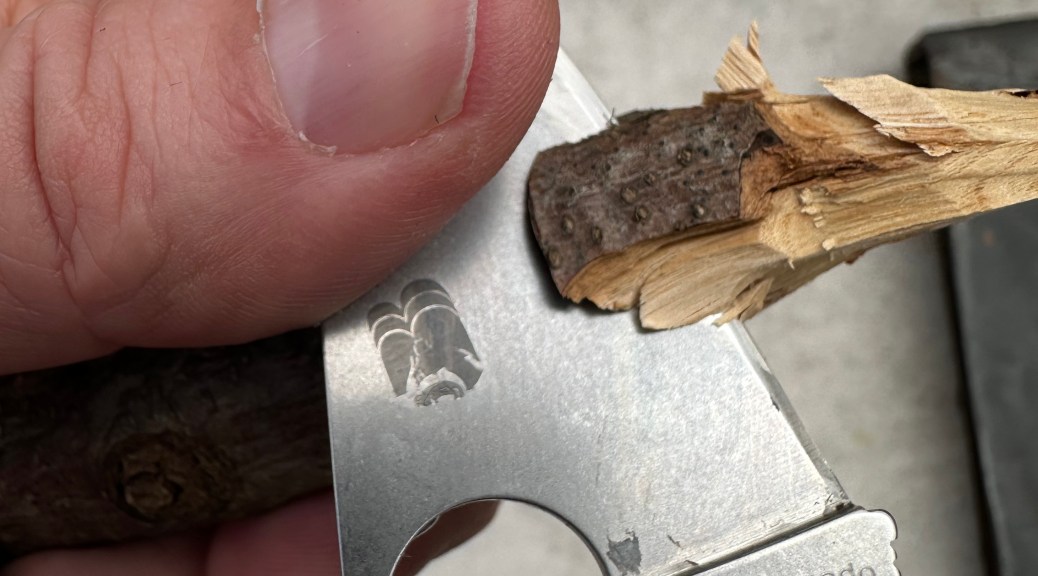
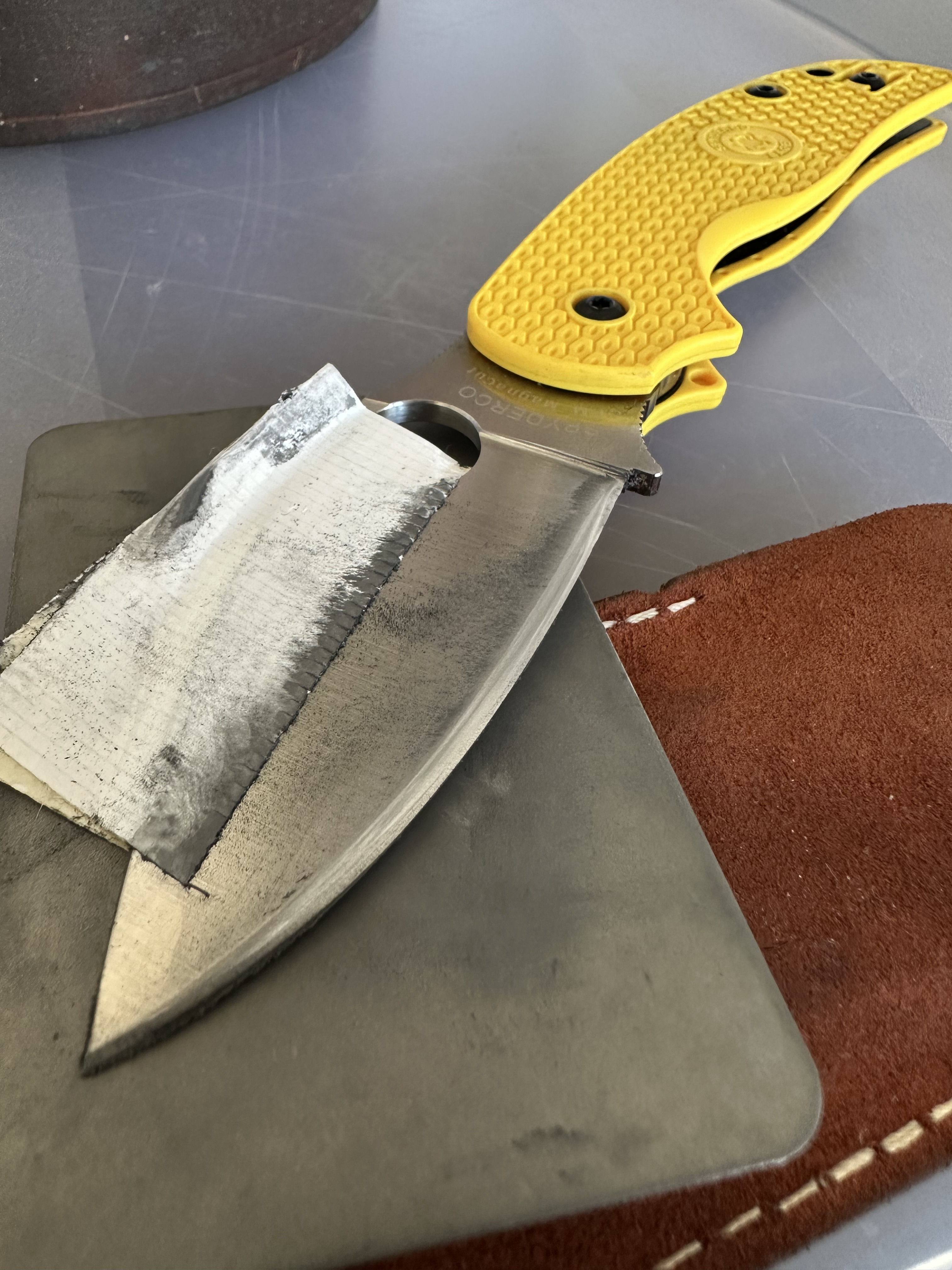
My goal here isn’t to touch the edge itself, but to smooth the border between the flat of the blade and the edge angle. This allows me to maintain the edge primarily on leather while reducing drag when cutting hard materials like plastic or wood.
The equipment I used was again the Spyderco Double Stuff 2, focusing mainly on the diamond side. I experimented with gentle, round strokes on the flat diamond stone instead of always moving in the same direction — it seems to remove metal much faster.
For aesthetics, I plan to follow up with white ceramic or jade stones to approach a mirror finish, similar to the Sage 5. Magnacut responds beautifully to polishing, whereas CPM-15V doesn’t particularly care.
The use of gaffer helps preventing any deep scratches on the blade finish. It works great. The black dust is metal removed by the diamonds. I do that outside in the wind. I don’t want to breath that dust.
Eventually this second round has gone so smoothly (compared to the first one linked at the start of this review) that i was on the verge to work on the Military 2.
Remember Sal saying: “The Edge is a Ghost. Always changing. Dying (dulling) being reborn (sharpened) split personality (angles and geometry changing). Think of the edge as gas in a vehicle. It runs out of gas and you put in more gas. We provide the format, materials, design for use, variety to avoid boredom and create interest, but the edge is your creation. The result of your understanding, education, experience and practice.“
The comparison between the Sage 5 Salt and the Para 3 continues. In short: the Sage 5 has superior geometry thanks to its high 3 mm FFG blade, while the Para 3 features a sturdier blade, a thinner point, and is overall lighter (no steel liners).
It’s really your choice — both are highly capable and complement each other, coming from the same design mind. Shawn Houston even notes that the Para 3 carries “that Delica vibe.”
I’m impressed by the Sage 5’s exceptionally smooth action — one of the best among Spyderco’s compression lock knives. I love both knives. These days, the Sage Salt rides with me, but while both won’t let you down, the smooth Sage is more fidget-friendly. Both are great, but the Sage 5 is simply less popular… 😉
Let’s go back to the same process but adding 15 minutes more can be a game changer in term of geometry. But let’s be clear this is typically the Pareto law which says: “The Pareto principle states that for many outcomes, roughly 80% of consequences come from 20% of causes.” It means that in 15minutes + this new 15 minutes it is not the most efficient as 80% of the job was done during the 6 first minutes last time. But those added fistful of minutes are a little bonus to even the bevels.
As you can notice I have concentrated my thinning process mainly on widing the bevel.
10 minutes later, I got a more even larger bevel which should go shining after some leather stropping.
On another fistful of minutes, I will work on the tip but I like to keep some material here. Now I’m basically dealing with a flat grind with a convex edge at the end. In Japanese a convex grind is also called a hamaguri grind. Literally this means: clam. This name comes from the convex way the side of the shell moves to the end. Exactly like the full convex edge. A full convex grind is sometimes also called an appleseed grind. Again because of the pointy tip of the seed of an apple.( I’m a fan of アップルシードa Japanese manga series written and illustrated by Masamune Shirow.) But for now it is much than satisfying in terms of whittling and dealing with hard maetrail to cut. The edge goes deep in every push cuts and the high FFG blade five a lot of control for powerful results.
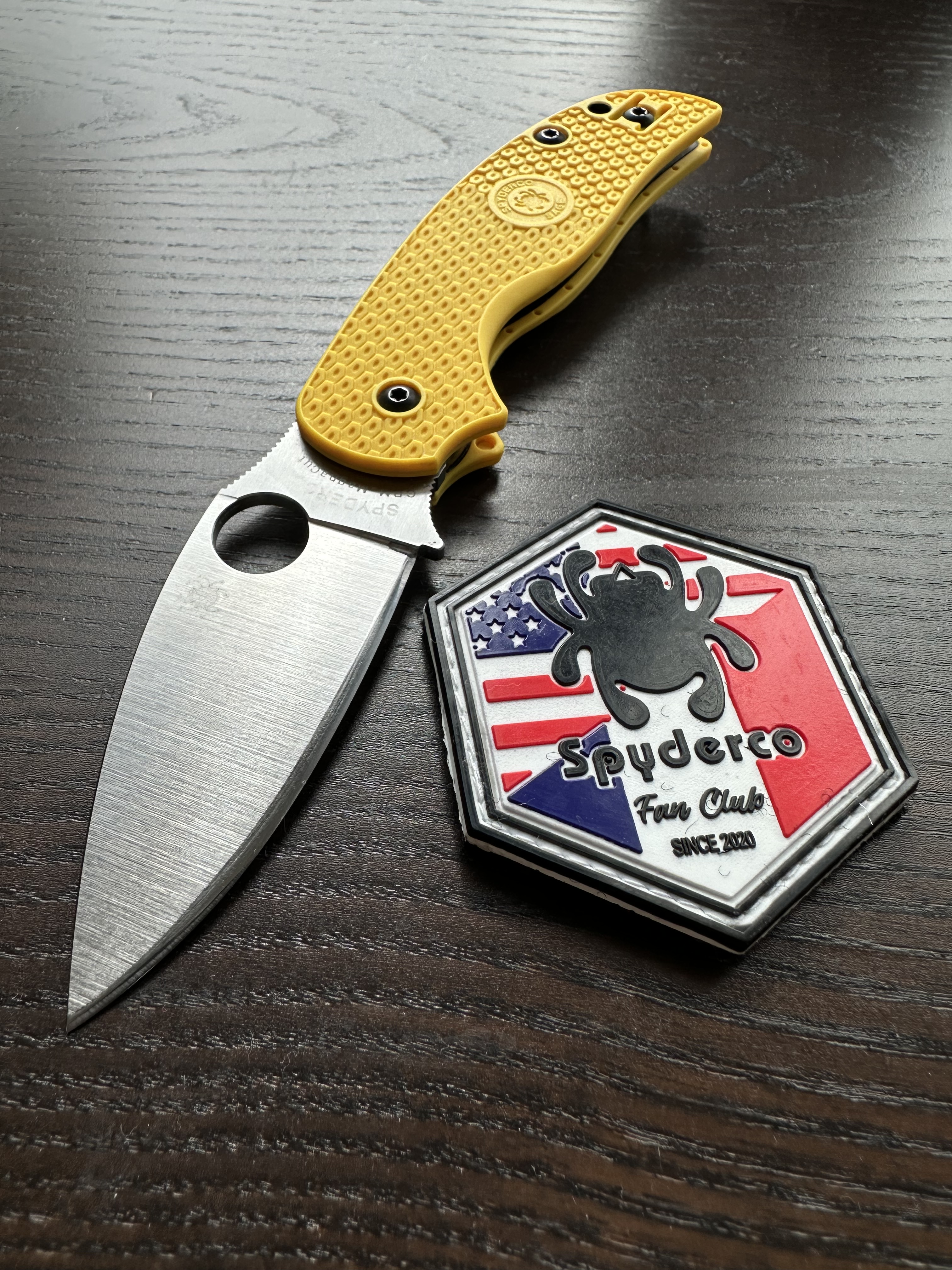
(Badge designed by Guillaume Xais)
So far my initial impression are confirmed: the Sage 5 Salt is a keeper and another 3 inches blade length Spyderco to rule them all like the Delica 4, the Native 5 or the Para 3 or even the UKPK ! All are Sal Glesser’s children (The Para 3 paternity is shared with Eric !)
It is perfect in all aspects – sharp thin blade, centered, strong detent compared to the Military 2, no blade play, suuuper smooth. The Sage5 is the best implementation of a compression lock I have ever had… Perfect tolerances and no lock stick.
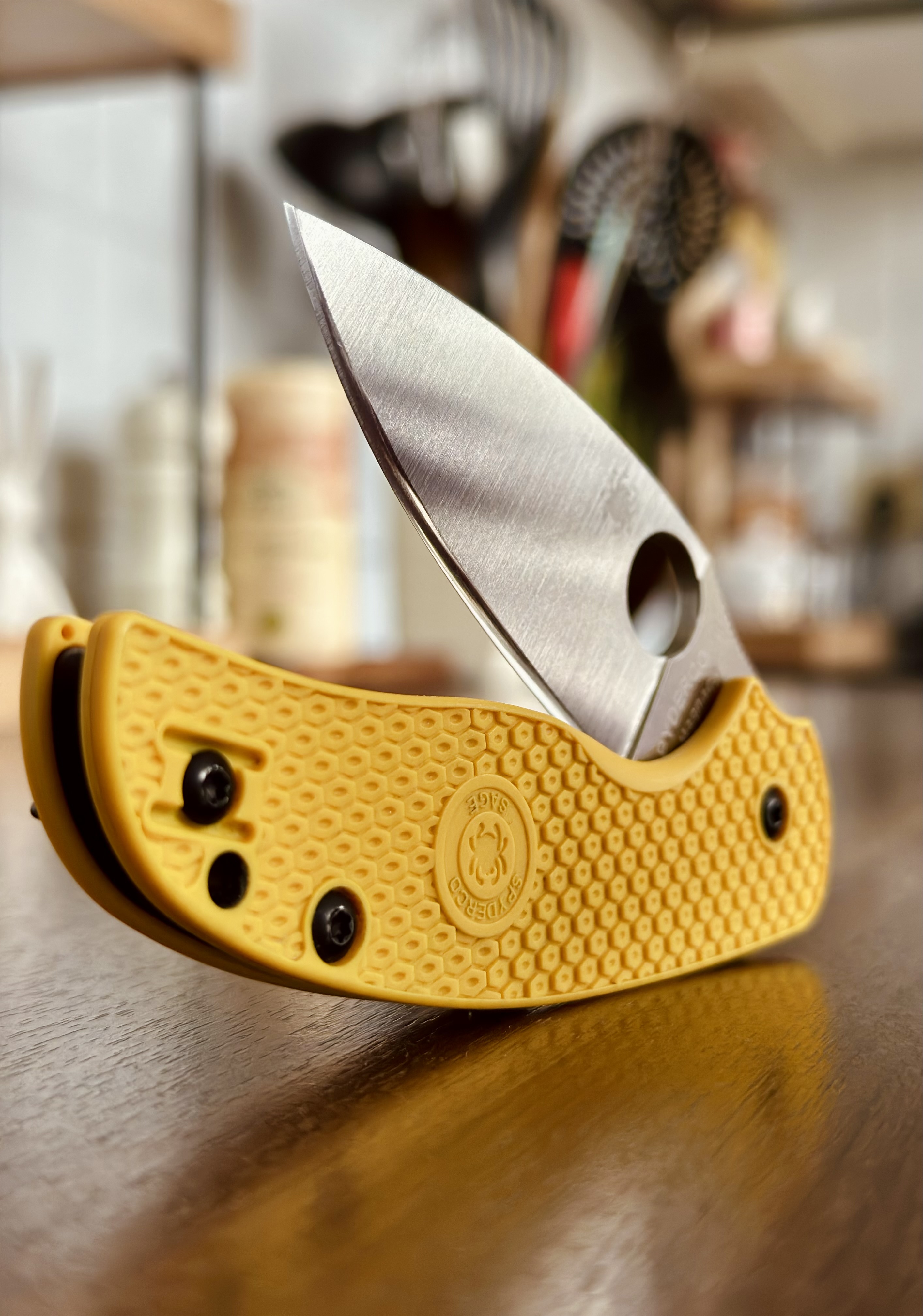
The open-backed construction allows easy cleaning. This Sage 5 is really asking to be used and, thanks to its yellow handle, retrieved even on the forest or ocean floor. Really a must have 3 inches knife for all occasions. And I’m a huge fan of the Native 5 and the Para3. But this Sage 5 seems to lead the pack.
First of all, thank you to Guillaume Xais who has convinced me to try the Sage 5 Salt. I have found a deal under 200 euros. In the past, I have owned some Sage(s) from the Sage 2 to the Sage 4 actually. You still can find the reviewss by clicking the links. The Sage 2 was a Sebenza killer when all the crave was about Christopher Reeves Integral Lock and titanium slabs. The Sage 3 was the Blue Brother. The Sage 4 was a masterpiece with its Front Lock and titanium Bolster never reviewed because too much a jewel of a knife.
(Picture by Guillaume Xais – instagram Spydigex_knives)
I wasn’t particularly interested in the Sage 5 Compression Lock, and even less in the Sage 5 Lightweight. Yet both the Sage 5 G10 and Lightweight versions proved so popular and well-regarded that Spyderco expanded the lineup into Maxamet, SPY27, REX 121, Magnacut, and CPM-M4 (thanks to Guillaume for the editing).
With the vanilla S30V, the Sage 5 was offered in six different alloys — some of the most impressive in terms of performance — demonstrating just how versatile and capable this design can be. “The Sage 5 Lightweight has also proven itself to be a perfect platform for showcasing the elite properties of high-performance blade steels.”
(Picture by Guillaume Xais – instagram Spydigex_knives)
For the record the Sage Series has traditionally expressed the same iconic design with different lock mechanisms, paying homage to the innovative designers who created them. Also Spyderco donates approximately 5% of sales of the Sage line to the National Alzheimer’s Association Denver, Colorado Chapter. (A Sage 6 is soon coming with a button/compression lock as found on the Smock.) So I have asked to Guillaume in the Spyderco Fan Club France, why should I invest in a Sage 5 Salt Lightweight in the first place ?
(Picture by Guillaume Xais – instagram Spydigex_knives)
“Its action, like any self-respecting Sage LW, is dazzling! This yellow contrasts with the hardware, the clip, and the deep black of the liners, like a Black Mamba face… I love it! My first Magnacut, by the way… I fish and am quite often at the seaside, it will complement my Ukpk salt (which is also very good). My favorites, however, remain the 2 and 4, true works of art!
For me, it does everything better than a Para3: handling, fluidity, less fragile tip, less tactical image, more rewarding feel of the FRN… there’s no comparison (from my point of view, of course). Add to that the Taichung Quality and Magna’versatility… they’re worth it, right?“
I was convinced !
First impressions: there’s some real heft to this lightweight — thanks to the full liners. I love it. The blade is perfectly centered, and the lock doesn’t stick.
The detent is impressively strong, almost magnetic — stronger than the detents on my recent Para 3 and Military 2. Go figure! And the action is smooth as oily butter. Classic, perfect Taichung craftsmanship.
The FRN pattern is hard, grippy and catchy I even got some issue to put in my pocket. It the same issue I had with my Chaparral Lightweight.
A passage under the sandpaper would be perhaps mandatory ? Let’s see what Papa Sal would advice in my case of protecting my pockets: “You can lessen the tension on the clip as an easy solution. Some sand the scales bit.”Sal in the Forums.
Some gaffer to protect the black screws when using sandpaper. Then cleaned under the tap and it’s good to go.
Well… it is so compact it can eventually be carried inside the pocket watch. But Sal was right like always, bending the clip a little has completely changed the way it clipped and for the better.
The metal hardware is all black certainly PVD coated. “Like all Salt Series folders, the clip, liners, and all handle hardware are also crafted from marine-grade materials.” said Spyderco. And Guillaume is right, the contrast between the black and yellow is an eye candy.
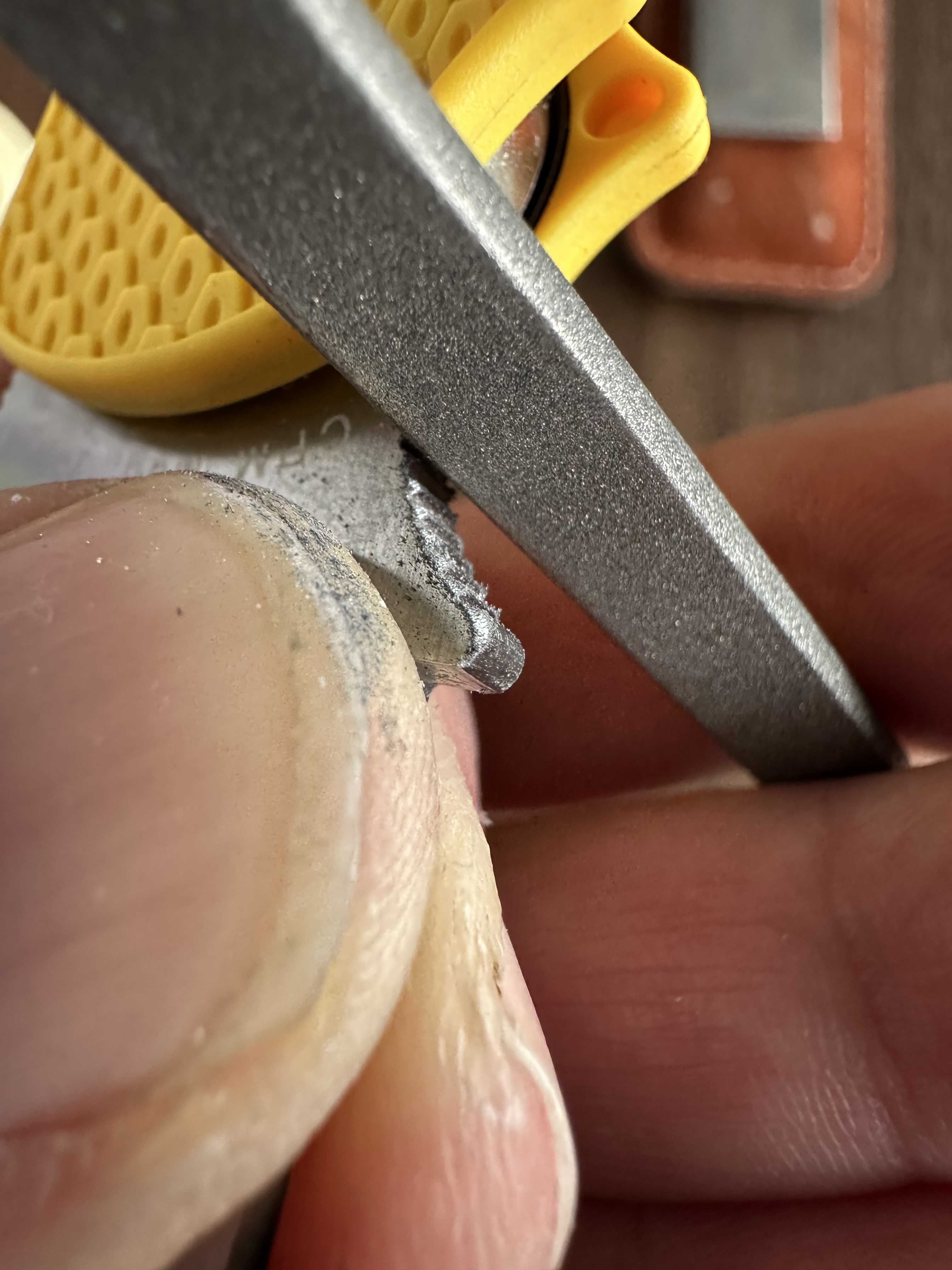
I have found a little hot spot on the choil which I felt under my index finger. Nothing a little diamond file won’t eliminate in a matter of minutes.
The Para3 is a really light package because there is almost no liner.
64 grams.
78 grams for the Sage 5 with its nested steel liners
The FRN is smoother on the Para3 as it is not the same pattern. Being a Salt the Sage 5 is destined to be used with wet hands.
The Sage 5 has a thinner 3 mm blade, and the chamfered edges on its spine are just stunning — smooth under the thumb and a true Taichung signature. Even the Spyderhole is gently finished.
A major plus for whittling is how easily my left-hand thumb finds a comfortable spot on the blade spine. With the Para 3, the thumb doesn’t have a proper ramp parallel to the cut. On the Sage 5, the parabolic spine of the leaf-shaped bladelets the thumb push comfortably in the middle of the spine, which makes a real difference during whittling.
Same blade length, but a different spine shape. The Para 3’s Spyderhole is especially suited for use with gloves.
Is the Sage more of a civilian EDC and the Para 3 more tactical? Not entirely certain. The Sage feels more solid in the hand and has more heft, while the Para 3 feels like a light, quick-reaction tool, and the Sage 5 is an all-terrain EDC.
The Sage handle is more compact and can be carried in the watch pocket, thanks to its grippy FRN and strong clip.
Grip is essential when working around water or with wet hands. The Para 3 is gentler on pocket edges, while the Sage out of the box can be a pocket shredder. Following Sal Glesser’s advice, I flexed the clip slightly for lighter retention — now it’s perfect.
Next, let’s take a look at the Sage’s geometry straight out of the box.
I was able to cut through the plastic without having de-shouldered the edge yet. It will be done in the next chapters. For the record, I was not able to get a clean cut with the factory geometry of my new Para3 and Military2 in CPM 15V.
So this blade has excellent geometry right out of the box: this is really impressive ! Without any touchup of the factory edge it goes deep in any material, soft or hard.
The Sage 5 Salt is a pure Sal Glesser design with its iconic leaf-shaped blade. Fun fact: the letters S‑A‑G‑E appear in order in his name!
This great folder is made in Taichung, Taiwan, renowned for its exquisite manufacturing and quality control. The blade is chamfered, and the jimping is soft under the thumb, making it a joy to handle.
Ultimately, this is a Highlander knife: “In the end, there can be only one.” The Sage 5 Salt feels like a Spyderco to rule them all — the only one I’d ever need in terms of portability, reliability, and performance.
Purely stainless from blade to screws, it is a true all terrain tool. I mean, you won’t need another knife as this one is totally impervious to salt water and boast that CPM Magnacut blade known for its great performance: “a revolutionary particle metallurgy steel that offers an exceptional balance of edge retention, toughness, and the extreme corrosion resistance.” It is true when properly heat treated and with the best geometry. (Again all those green marks are links to previous review or sources of this review.)
Polishing the Sage’s edge on a leather strap — aka stropping — removes the final imperfections, leaving an even razor-sharp edge. Magnacut, in particular, responds beautifully to leather stropping.
With the Vigtig and the Nano. I managed to get these three knives for under €200: the Sage 5 at €194, the Vigtig at €130, and the Nano at €192.
This means that, as of March 2025, CPM Magnacut knives can be found for as low as €130 — a good deal, though it may not last. The UKPK in CPM Magnacut should be in a similar price range, which I’m looking forward to.
So far, first impressions are excellent! The yellow handle makes it feel less threatening — more like an everyday tool than a “ninja mall weapon,” which is a definite plus these days.
It’s also ready for kitchen use, thanks to a strong edge that isn’t afraid of ceramic plates. Magnacut takes a razor-sharp edge easily with just a bit of ceramic and leather work. No need for diamond paste like on the mighty CPM 15V.
The amphibious Sage 5 is a perfect traveling companion — from mountain rivers to the ocean. It delivers impressive cutting power for its size, biting into hard wood effortlessly. The blade spine is very comfortable for push cuts, making it a reliable all-terrain tool.
It’s a dream knife for fishermen and woodcrafters, capable of accompanying you in virtually any environment. So far the Spyderco Salt serie is enlarged to very nice plateforms with Military flavours and civilian purposes.
First impressions of the Sage 5 are excellent — in terms of action, geometry, and ergonomics. This is a great EDC that’s fearlessly corrosion-resistant.
Thanks to Guillaume for the tip! Now time to convex it !
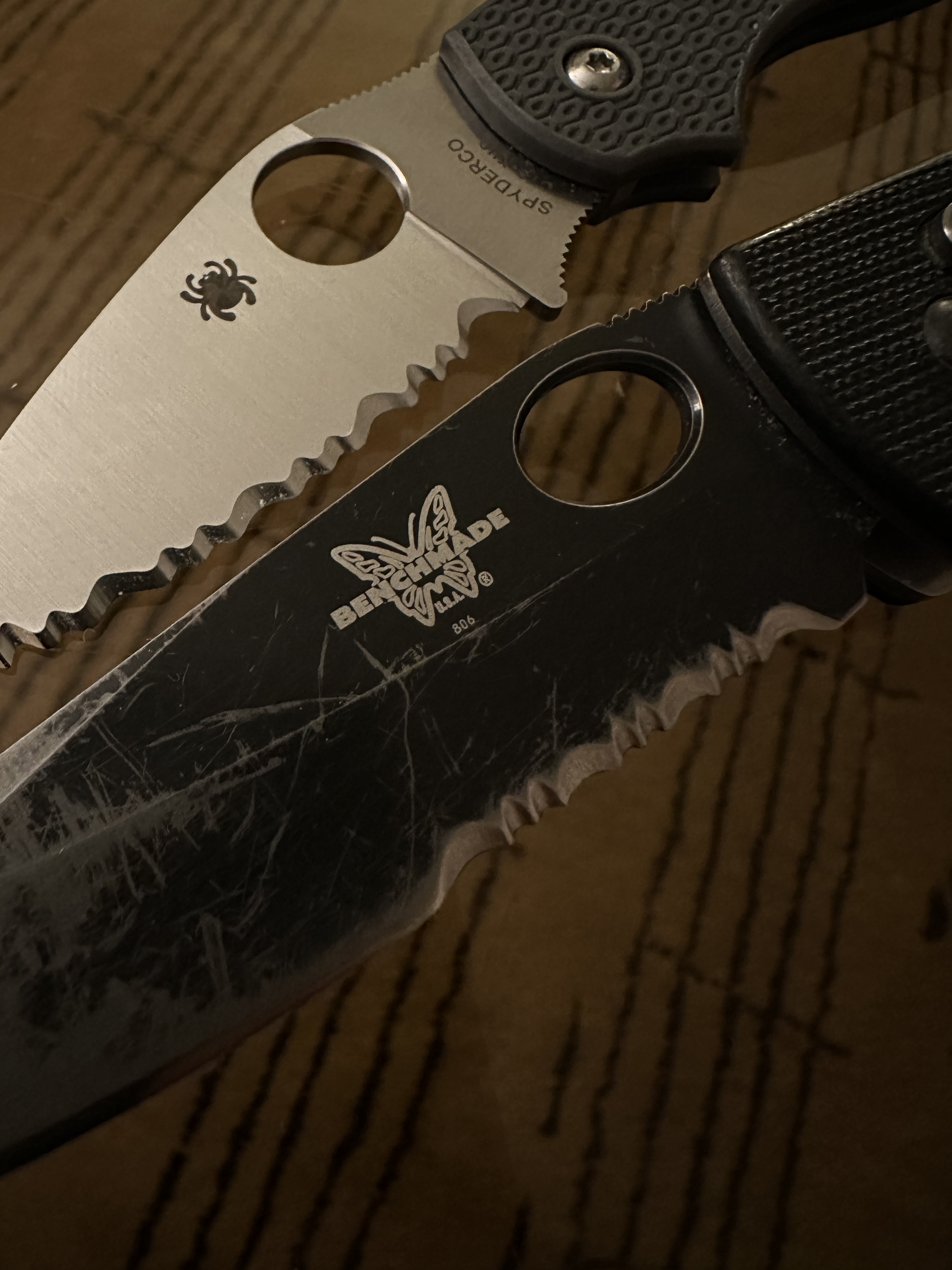
Like I had mentioned in the glimpse review of the Serrated Chaparral, this little, thin folder is built to punch above its weight. Thanks to its sturdy construction and relatively strong stainless steel — the same type found on my Cold Steel Recon 1 XL — it can be tested and used like a much larger knife without compromising performance.
Solid steel, sturdy lock? Not much difference from a larger knife, in fact. 😉
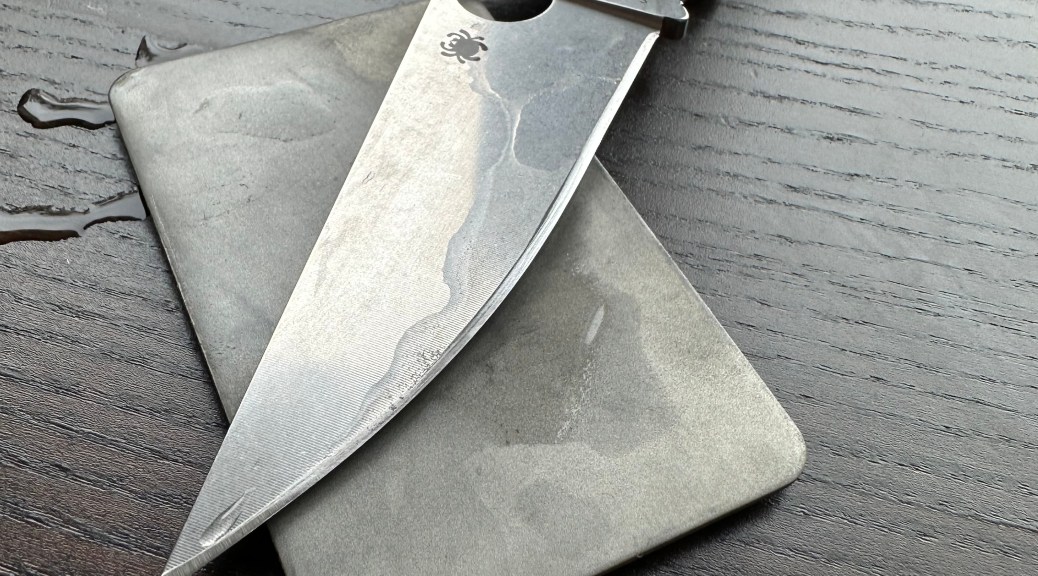
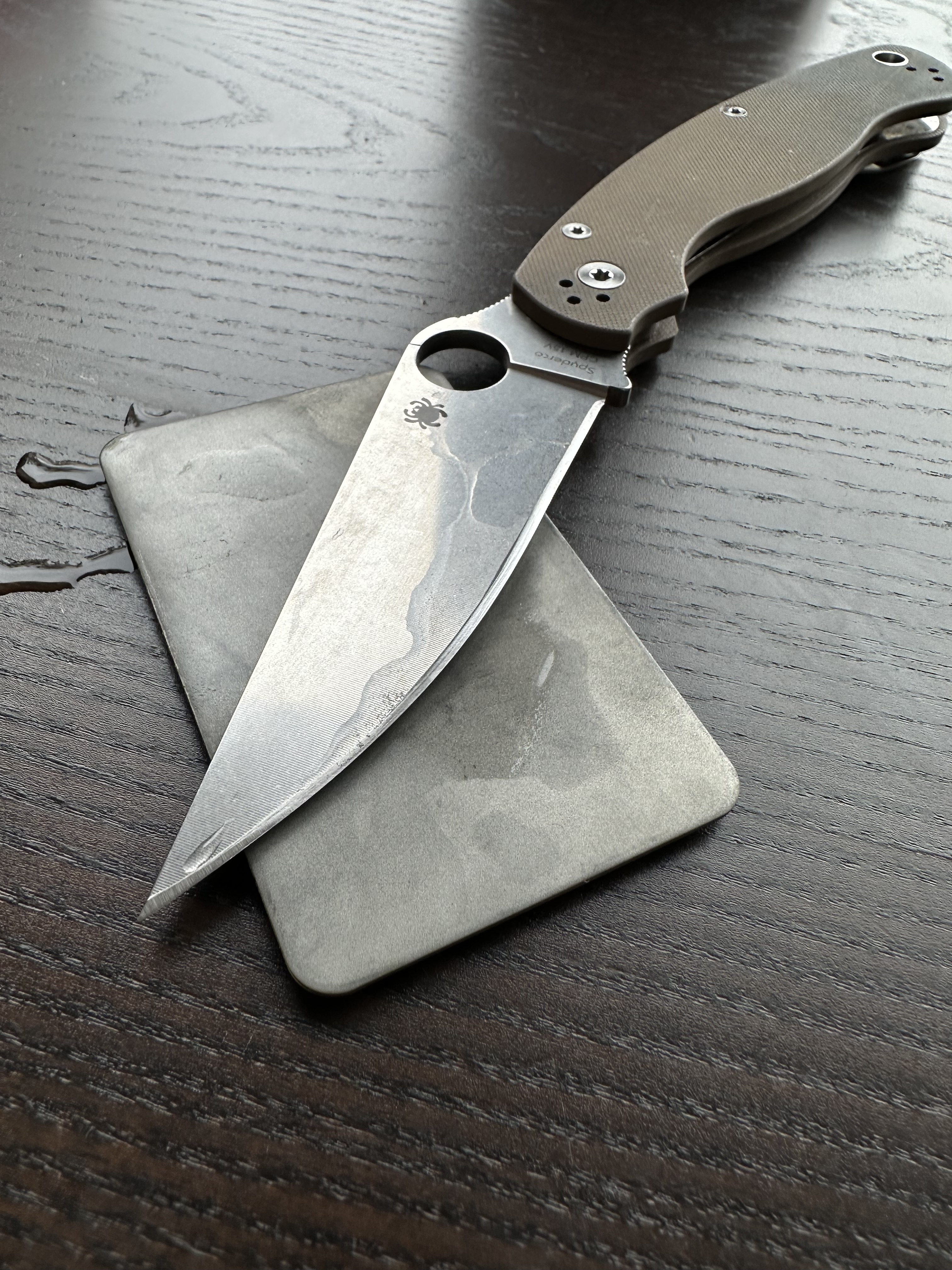
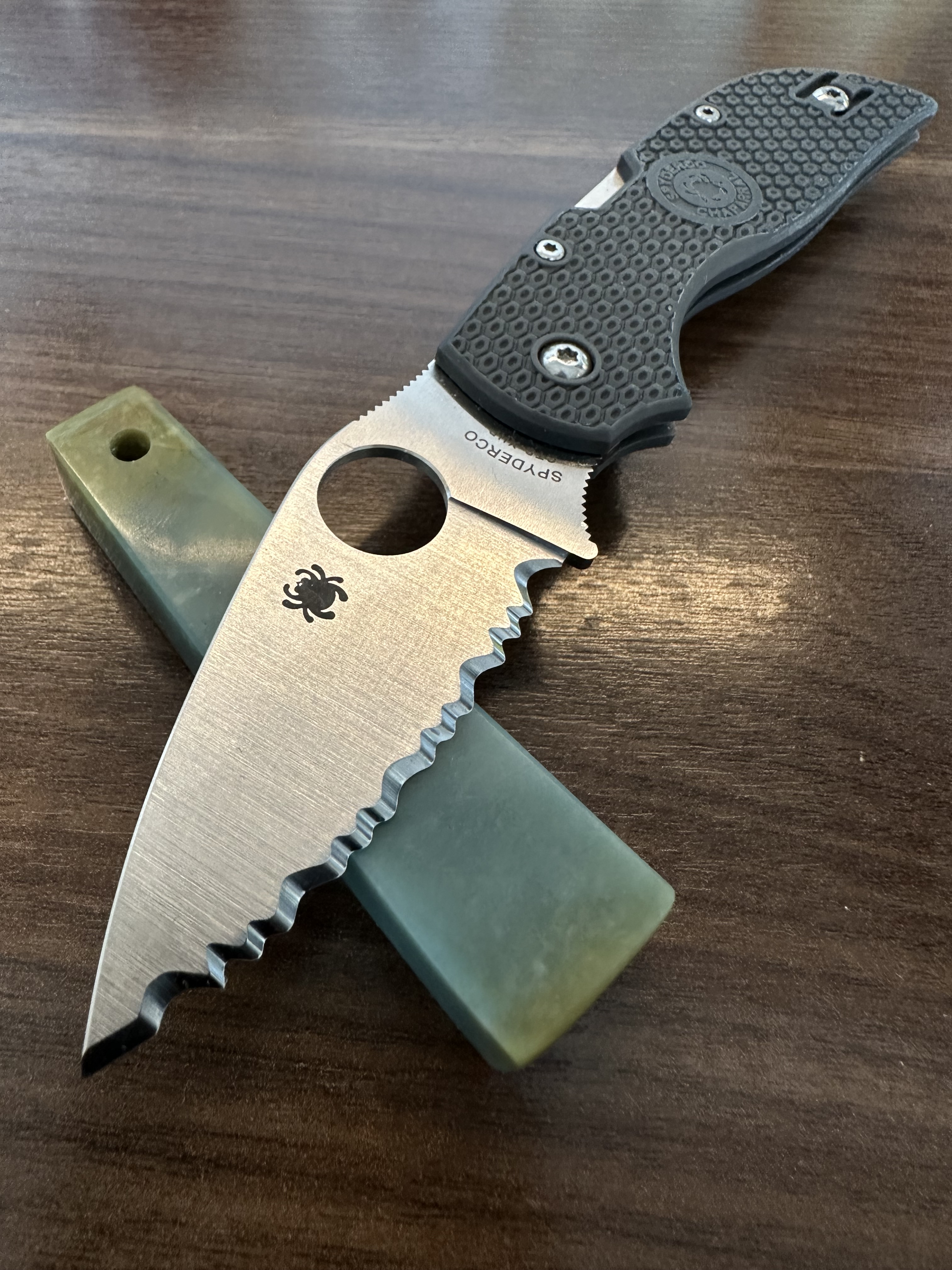
So far, I’ve put the knife through its paces, cutting anything I could, and maintaining the edge with some Jade stones (see first picture). The mechanism shows no signs of play in any direction — rock-solid performance.
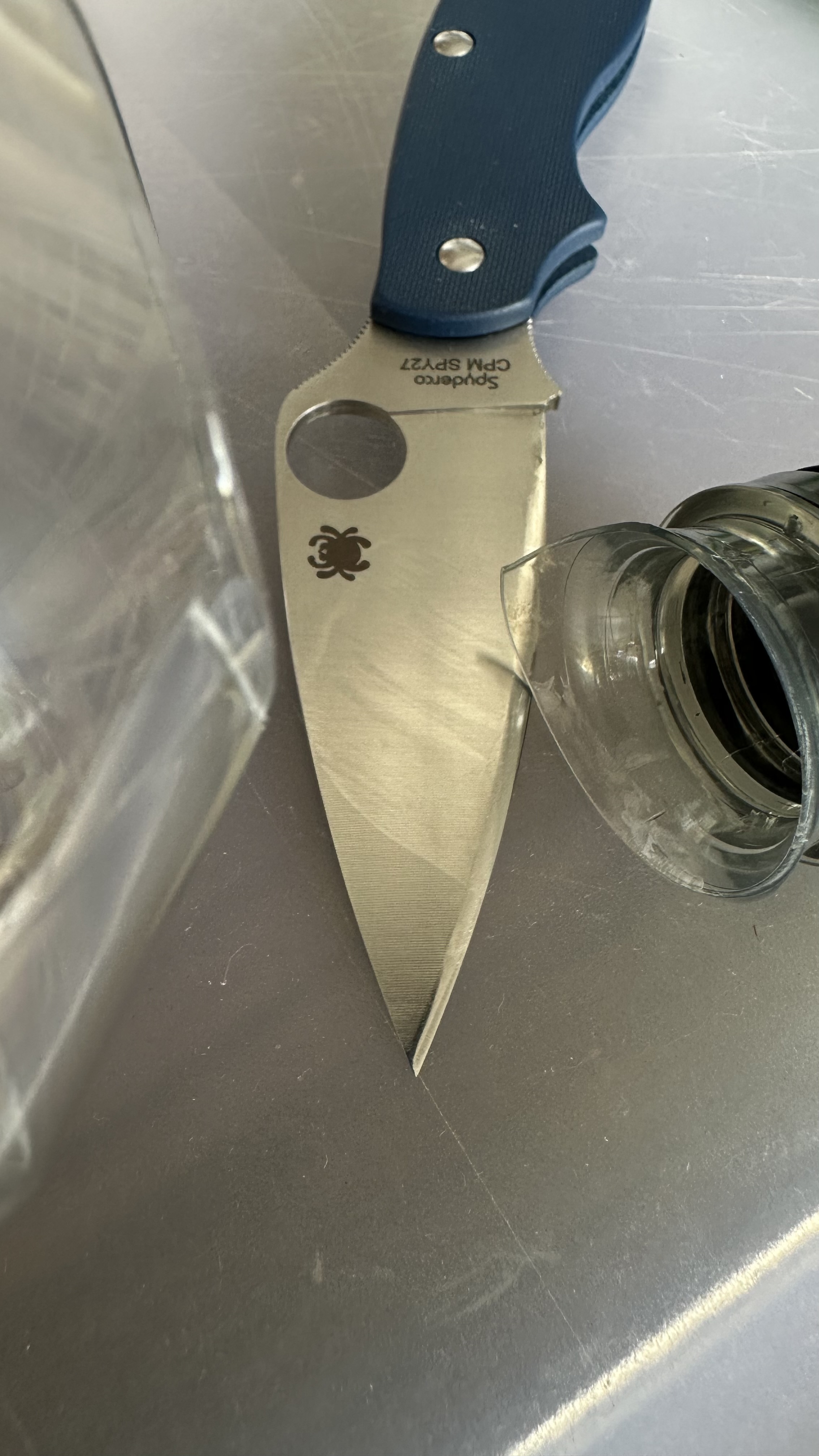
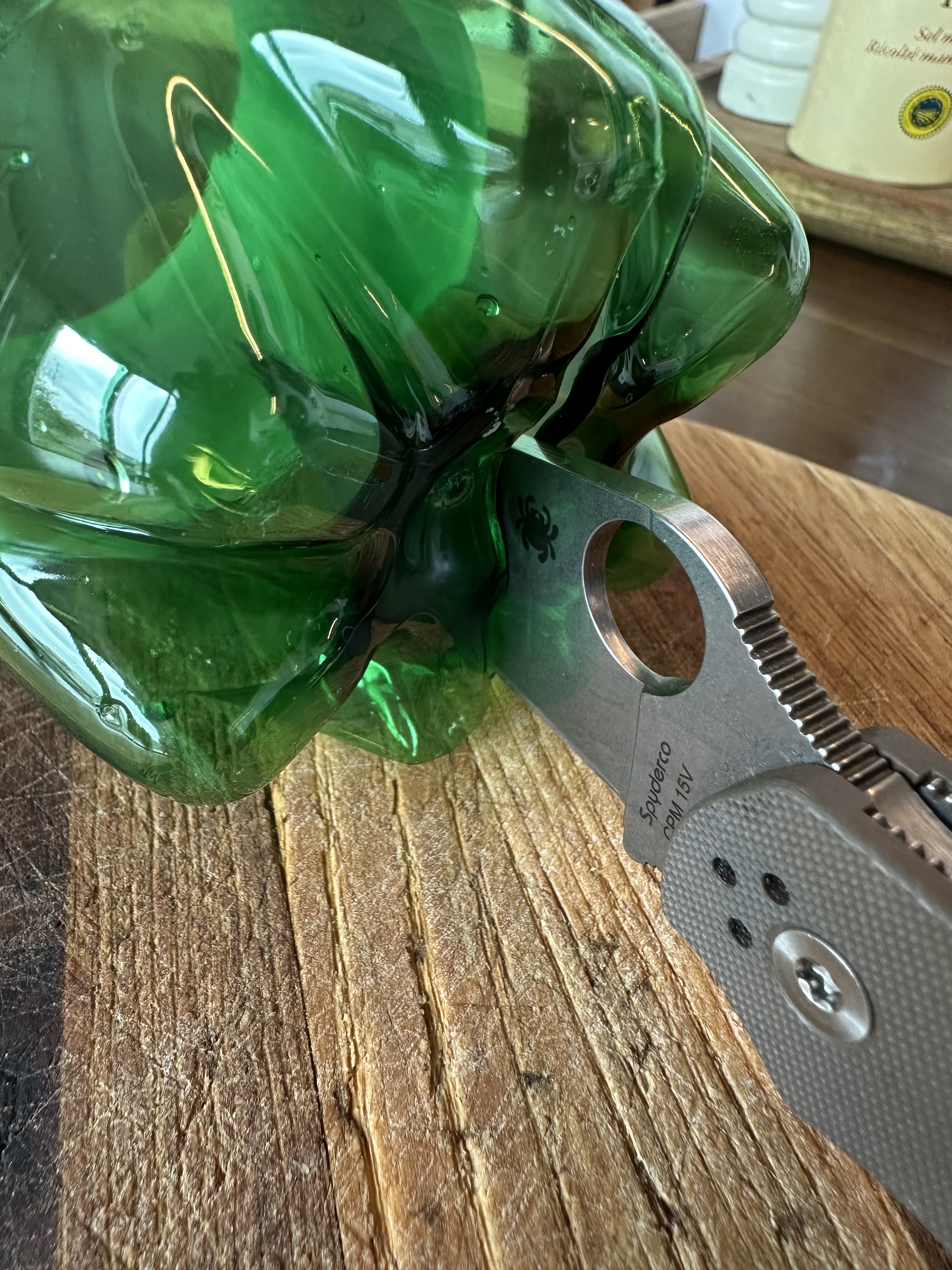
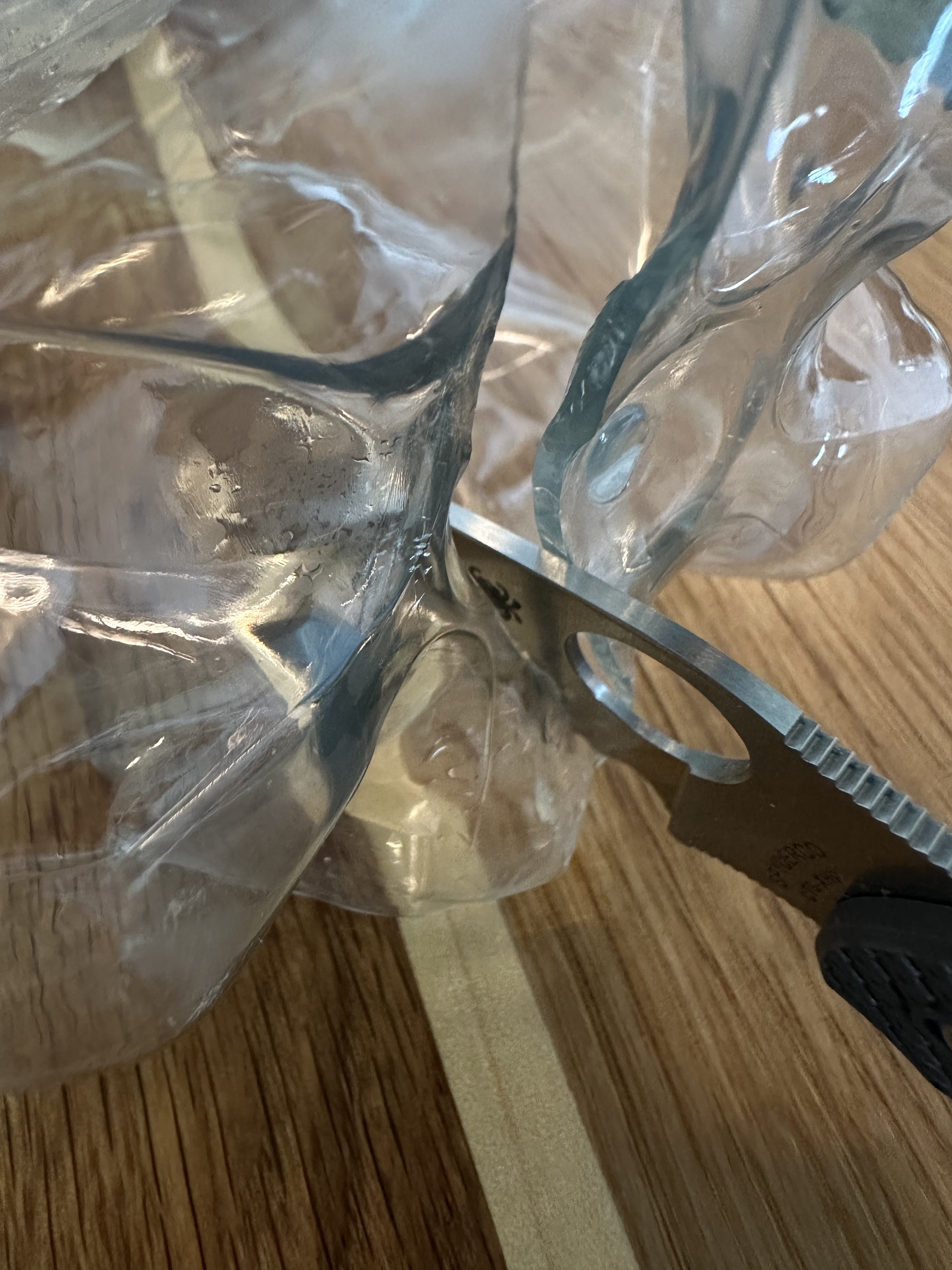
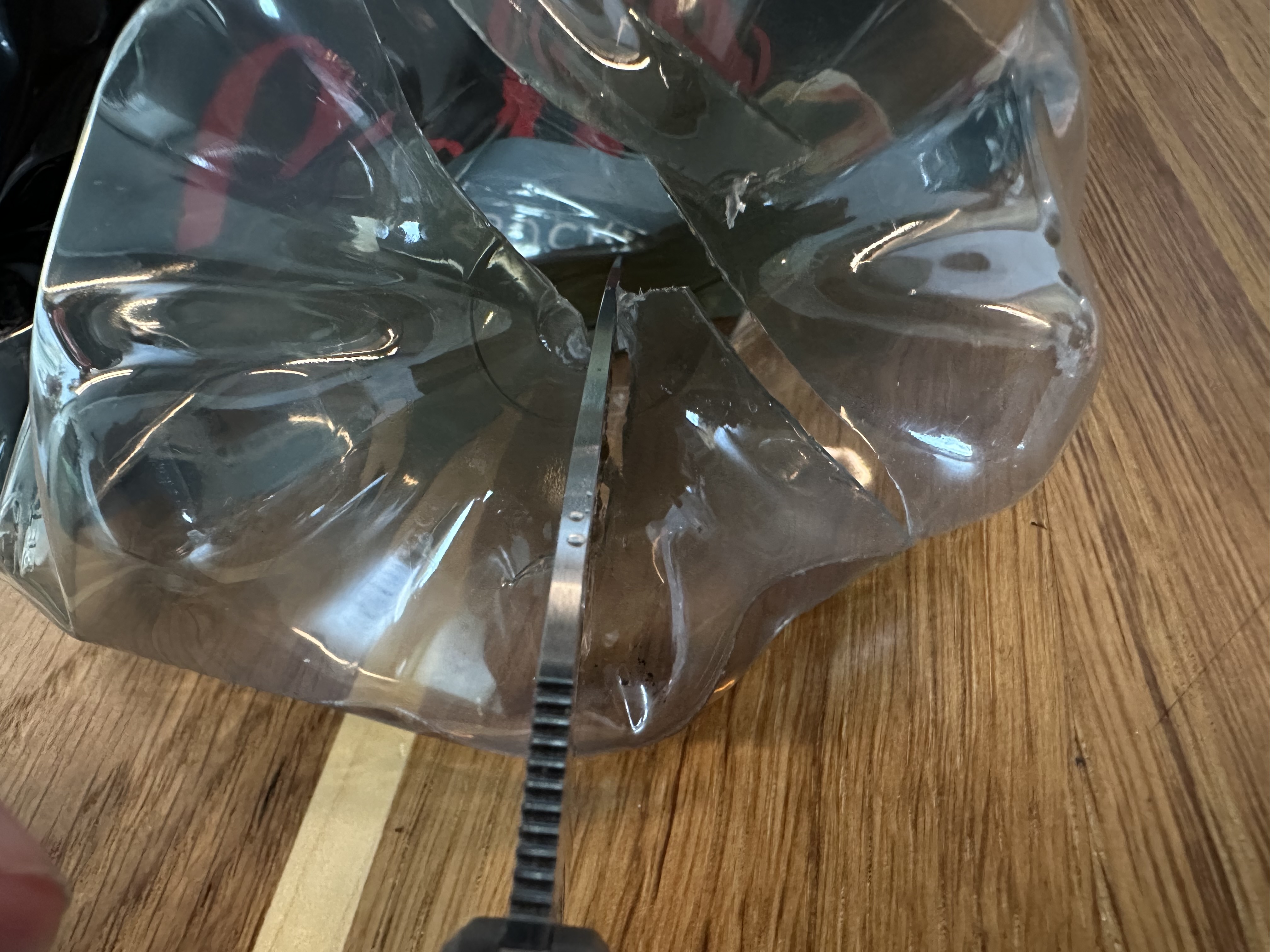
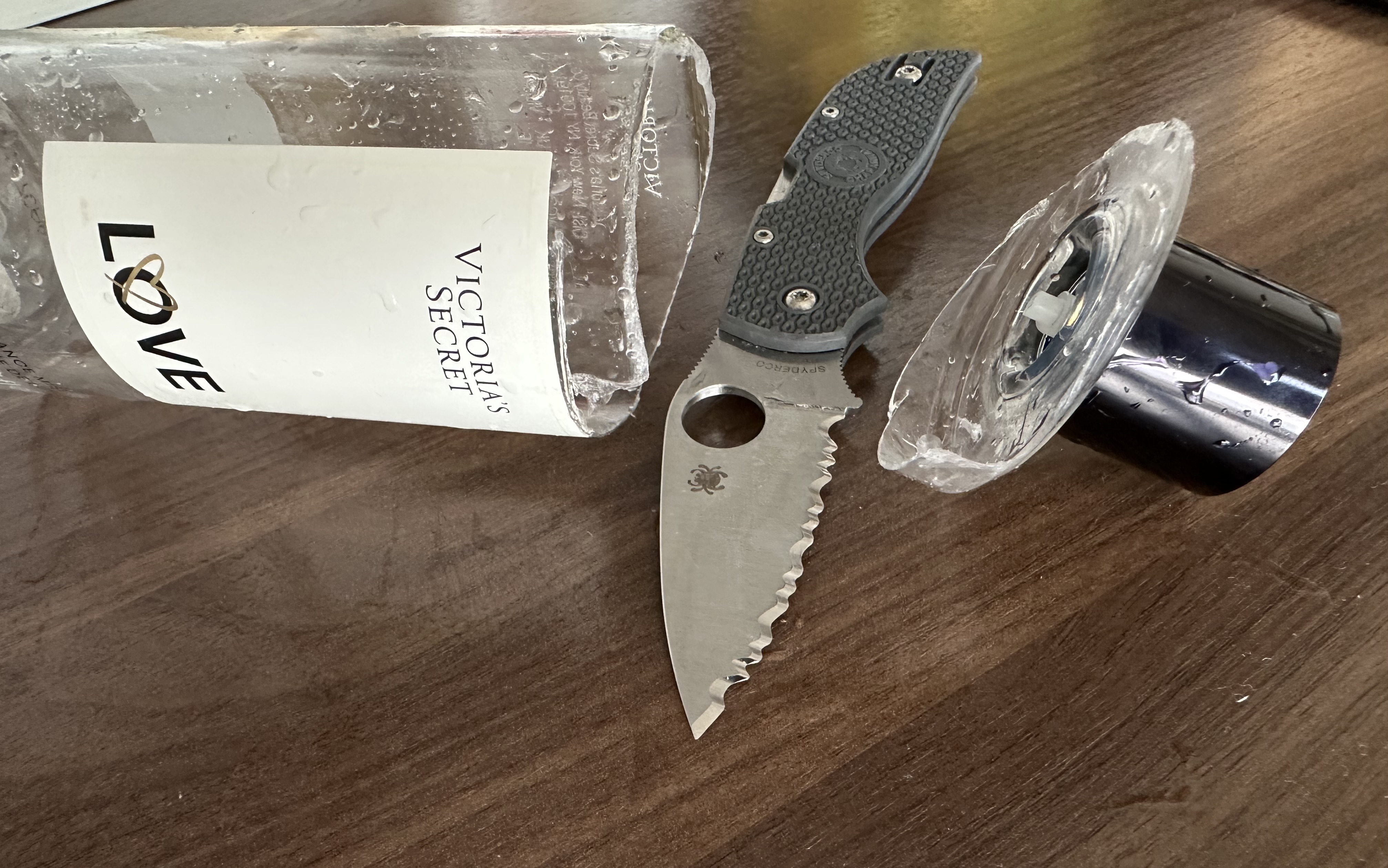
The plastic is thicker that the blade.
As you can see, the serrated edge is a chisel grind, which means it tends to deviate slightly to the right of the material being cut, much like a fin in water. I started the cuts with a bit of sawing, then transitioned to push cuts, and the knife effortlessly sliced through the thick plastic used to form the bottle.
This little knife is fierce in term of cutting performance. It is a lot of power in your pocket ! It is a pocket chainsaw !
The serrations really shine on the plate. You can push the knife hard against ceramic surfaces, and if the points ever need a touch-up, a few passes on a ceramic corner — or in my case, a jade corner — brings them back like new.
I have been able to reach razor level just by passing gently the Jade on it.
Actually it is fun to enhance the edge.
Actually, this is a bit of a comeback for me with serrations, dating back to my AFCK experience 25 years ago. Back then, I mostly used partly serrated edges, which helped initiate cuts on hard materials.
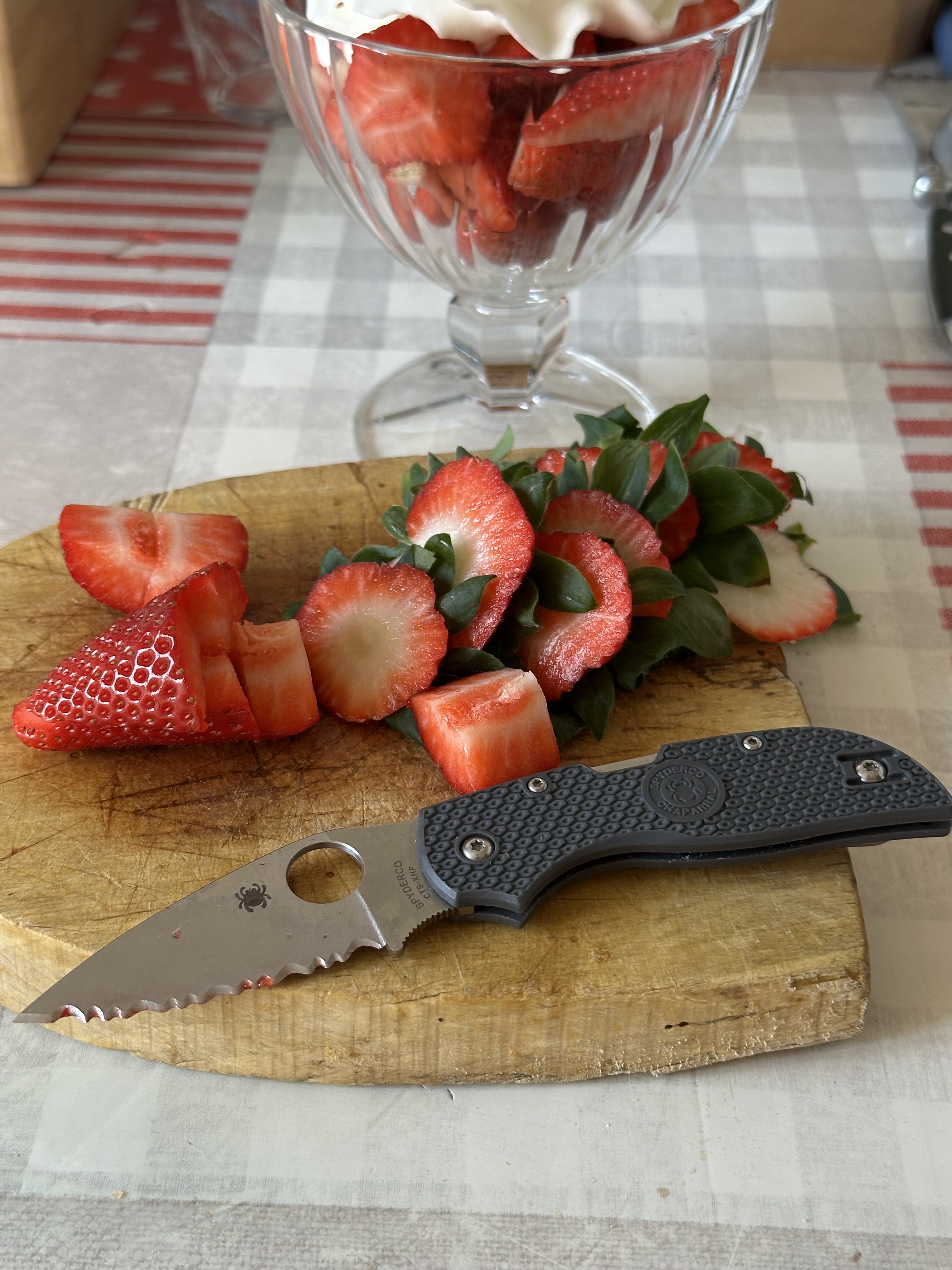
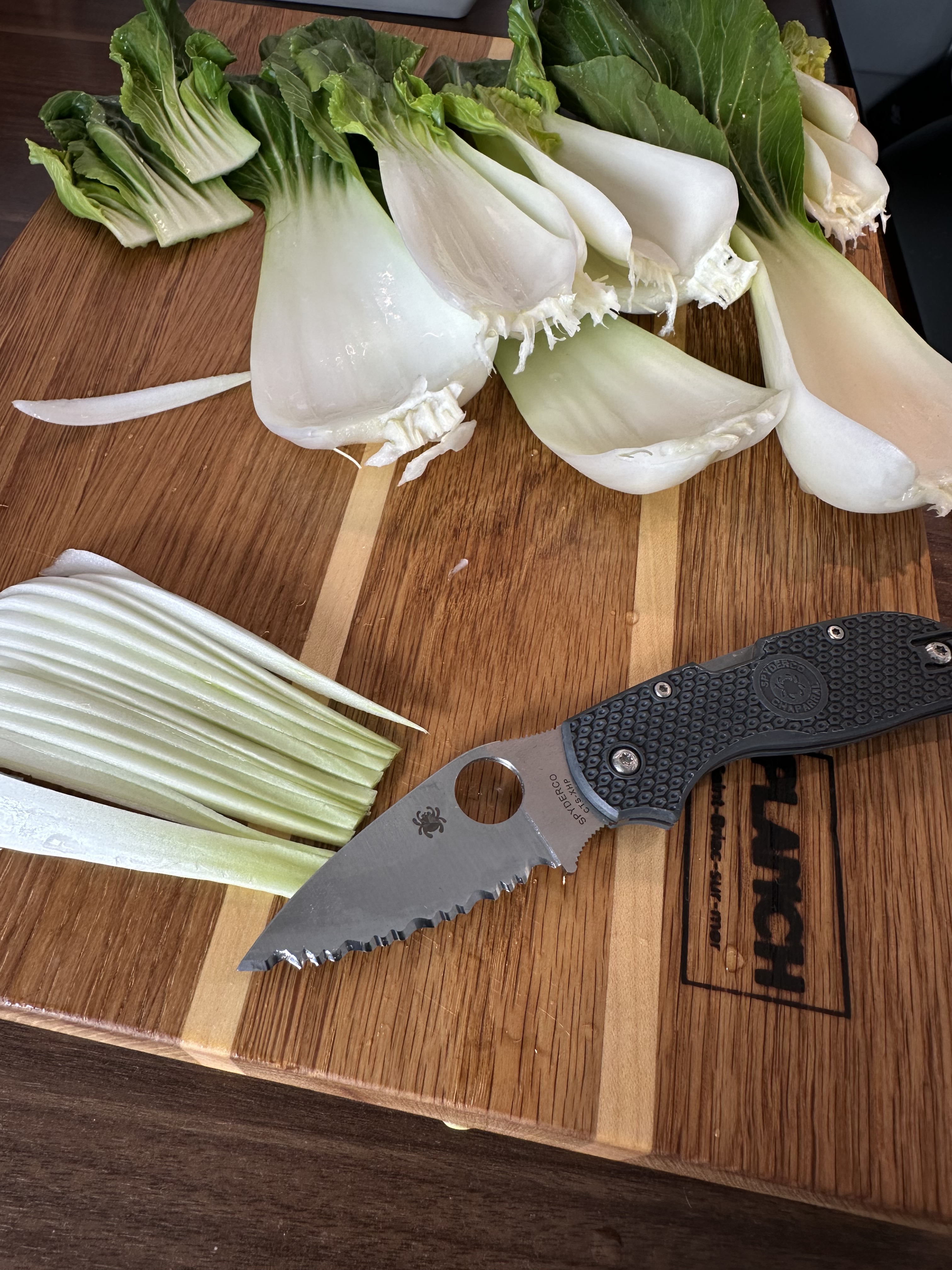
With a fully serrated thin blade and no plain edge, I initially wondered how useful it would be in the kitchen — especially since my wife’s favorite knives are Victorinox fruit knives (serrated). But it turns out, neither fruits nor vegetables can withstand the sharp, wavy edge of the Chaparral.
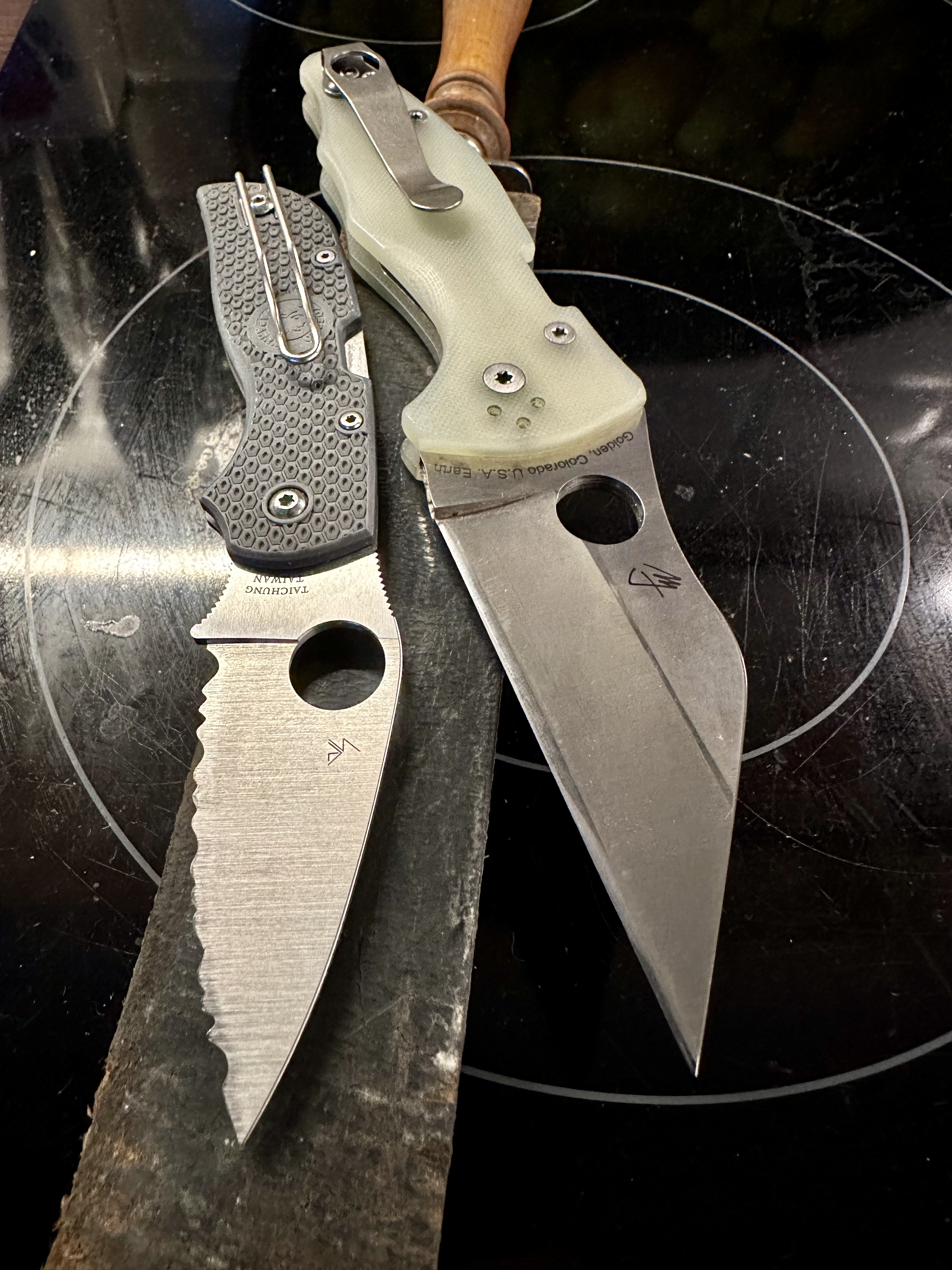
Funny enough I have been able to strop the edge of the Chap by using the side of the leather belt. CTS XHP is a steel which loves leather in my experience.
All in all, so far, so good. The Chaparral delivers impressive cutting power. Its thin, fully serrated edge is unique within the Spyderco line, pushing the design out of its comfort zone — and for a “knifeaholic” like me, that’s pure fun.
The next step is to trust this little knife enough to take it on a road trip in Italy — handling food prep, wood, and low-profile carry as my only pocketed folder. The Chaparral will make its return in May.
Six years ago, I reviewed the Working Poney, also known as the Roadie. Mine had been reprofiled by Jan Dirk, and even on its tiny scale, it proved to be an outstanding performer. For six years, it quietly stowed away, accompanying me across the UK, Vietnam, and countless places where knives were frowned upon.
Then, in 2024, I noticed the announcement of an XL version — the C267BK — featuring a better steel and a clip. Right away, I saw the new pointed blade, replacing the classic sheepfoot-style blade, now ground from Böhler-Uddeholm N690Co. Even more exciting, the XL uses M398, an exotic steel reserved for flashbatches — a serious step up in terms of performance and collector appeal.
And so, here it is: Ladies and gentlemen, the Roadie XL !
They say an image is worth a thousand words, so here you have 4,000 words with no syntax or spelling errors.
Back to the Roadie XL: it is made in Maniago, Italy, just like my Nano and many other excellent knives these days. The Maniago plant remains one of the best worldwide in terms of quality and precision.
Specifications:
Overall Length: 6.51″ (165mm)
Blade Length: 2.74″ (70mm)
Steel: M398
Closed Length: 3.76″ (95mm)
Edge Length: 2.31″ (59mm)
Weight: 1.5oz (43g)
Blade Thickness: 0.108″ (2.8mm)
Its shape and size make it extremely pocket-friendly, easily fitting into the watch pocket of a pair of denim jeans thanks to its deep-carry wire clip. You could remove the clip, but why? It keeps the knife perfectly on the pocket’s lip. The clip is also reversible, though that’s not mandatory for a two-handed opening folder.
With its thin profile and light weight, combined with the clip, the Roadie XL can even be carried in a shirt pocket like a pen. In short, it’s a knife meant to stay on your person almost unnoticed.
The action is smooth, with two stops/steps before the blade fully opens. In practice, it feels smoother than my Urban, which only requires a single hand to deploy.
With a slightly longer blade than the Urban, the Roadie XL remains legal to carry in countries such as Denmark, the UK, or Germany. Mine arrived razor sharp straight out of the box, so I’m in no particular hurry to convex the edge.
Mine came razor sharp right out of the box. So I’m not in a special hurry to convex its edge.
You can immediately recognize Sal Glesser’s signature design—a clear mark that it’s his invention. Sal is an inventor, and it’s always impressive to see how he manages to create clever, practical tools. Quoting him directly:
“When the Transportation Security Administration (TSA) briefly considered allowing the carry of knives on airplanes again, Spyderco designed the Roadie™ to fit their guidelines. We created an incredibly popular modern expression of the classic penknife. Since bigger can indeed be better, the Roadie now has a big brother: the Roadie XL. It faithfully offers all the defining features of its smaller counterpart—including a non-locking “notched-joint” mechanism, a textured index-finger choil, and contoured, injection-molded handle scales. Its full-flat-ground sheepfoot-style blade is crafted from M398 stainless steel and features our distinctive “Double Dent™”—a pair of symmetrical dimples in the blade that provide a solid purchase for a fingernail-free two-handed opening. In addition to its larger size, the Roadie XL also adds a deep-pocket wire clip for convenient top-of-the-pocket carry.”
Now, let’s talk about M398, one of Spyderco’s premium powder metallurgy steels, only available in limited flash batches, all made in Maniago, Italy.
From what I understand, M398 is closer to CPM-90V than to M390. Quoting Darrin Thomas’s analysis (which is worth reading in full):
“The original M390 has a reported carbide volume of 20.5%, and the new M398 has about 30%, so there has been an increase in carbide of almost 50%. We would expect this to lead to a significant reduction in toughness along with an increase in wear resistance. The datasheet shows that the toughness of M398 is only about a third of M390, though at somewhat higher hardness. So it is apparent that the design of M398 is all about wear resistance and essentially ignores toughness. M390 has only slightly lower toughness than K390 with similar carbide volume (though K390 was tested at 62 Rc). M398, on the other hand, has significantly less toughness than the similar carbide volume S290. However, M398 does have some positive traits, such as increased hardness and reduced retained austenite relative to M390. I’m personally not all that interested in yet another high edge-retention steel that sacrifices toughness, ease in sharpening, and workability. We had other options and this initial look doesn’t make M398 appear to be an improvement over the other available steels. M398 was a relatively simple modification of M390 and I can’t help but think that a more optimized version could be made. M390 did offer similar toughness to cold-work tool steels like K390 with a similar carbide volume, but M398 has significantly lower toughness than the similar carbide volume S290. So M398 doesn’t appear to be over-performing relative to its composition and carbide content. I wrote about some Bohler-patented high wear resistance steels using niobium instead that look very interesting but haven’t seen a commercial release. Those steels would be breaking new ground and potentially offering new property combinations not previously available. But if Bohler pushes out M398 more broadly it will be interesting to see how knifemakers utilize the steel for applications that benefit from high wear resistance and edge retention.”
When M398 was used in a previous flash batch for the SpyMyto, I wasn’t particularly excited—it felt like overkill for a folder that seemed built for hard use. The Myto is essentially the big brother of my Nano made in CPM Magnacut, and a SpyNano in M398 is also on the bench. In comparison, Magnacut is far tougher than M398, making it more suitable for wide, workhorse blades.
On the Roadie XL, though, this is a different story. Like with my Heinie Urban in S90V, these small blades are not intended for bushcraft—but some highly skilled bushcrafters can make miracles with even a 2-inch slipjoint, as shown in an inspiring video I recently saw.
Slip-joints are gentle companions for both ladies and gentlemen. For those with long nails, the Roadie XL is equipped with its distinctive “Double Dent™”—a pair of symmetrical dimples in the blade that provide a solid purchase for a fingernail-free, two-handed opening.
Its high wear resistance comes in handy, as these small blades often encounter cardboard, which can be surprisingly abrasive. I also recall Roger, my father-in-law, wielding his old Pradel slip-joint like a crowbar or flat screwdriver, without a second thought. Old-timers often treated knives mercilessly, using them until the blade was as thin as a needle.
I’m confident the Roadie XL with its M398 blade would make an excellent hare skinner—the fur is full of sand that can destroy an edge almost instantly. Tuscan hare hunters would likely appreciate its durability. Its high wear-resistant alloy makes perfect sense here. Additionally, the blade is relatively thick at 2.8 mm, which would otherwise be prone to breakage.
Ergonomically, the Roadie works beautifully for a slip-joint because you can hold the blade by its choil—a feature rarely found on traditional slip-joints. Even most Swiss Army Knives lack that level of security, and with M398’s toughness, the blade cannot close on your fingers. As Spyderco notes:
“Unlike traditional penknives, the Roadie also features a subtle index-finger choil that increases control of the knife during use and acts as a safeguard against unintentional closure.”
There’s no undue pressure on the pivot, often the most delicate part of many folding knives. If you are careful not to twist the point in wood, the Roadie XL can withstand applied force directly to the blade. This makes it another “Lil Big Blade”—small but versatile.
It can serve as a steak knife, whittler, label remover, balloon popper, nail cleaner, or cardboard cutter. Brown cardboard is notorious for edge damage, but not for an alloy like M398, packed with carbides.
And in today’s world, one more practical advantage: it is extremely sheeple-friendly. The Roadie XL looks like a pocket knife, not a tactical or soldier’s tool, making it socially unobtrusive yet highly capable.
Beauty is in the eye of the beholder, but to me, this blade—shaped almost like a scaled-down cutlass—is pure eye candy.
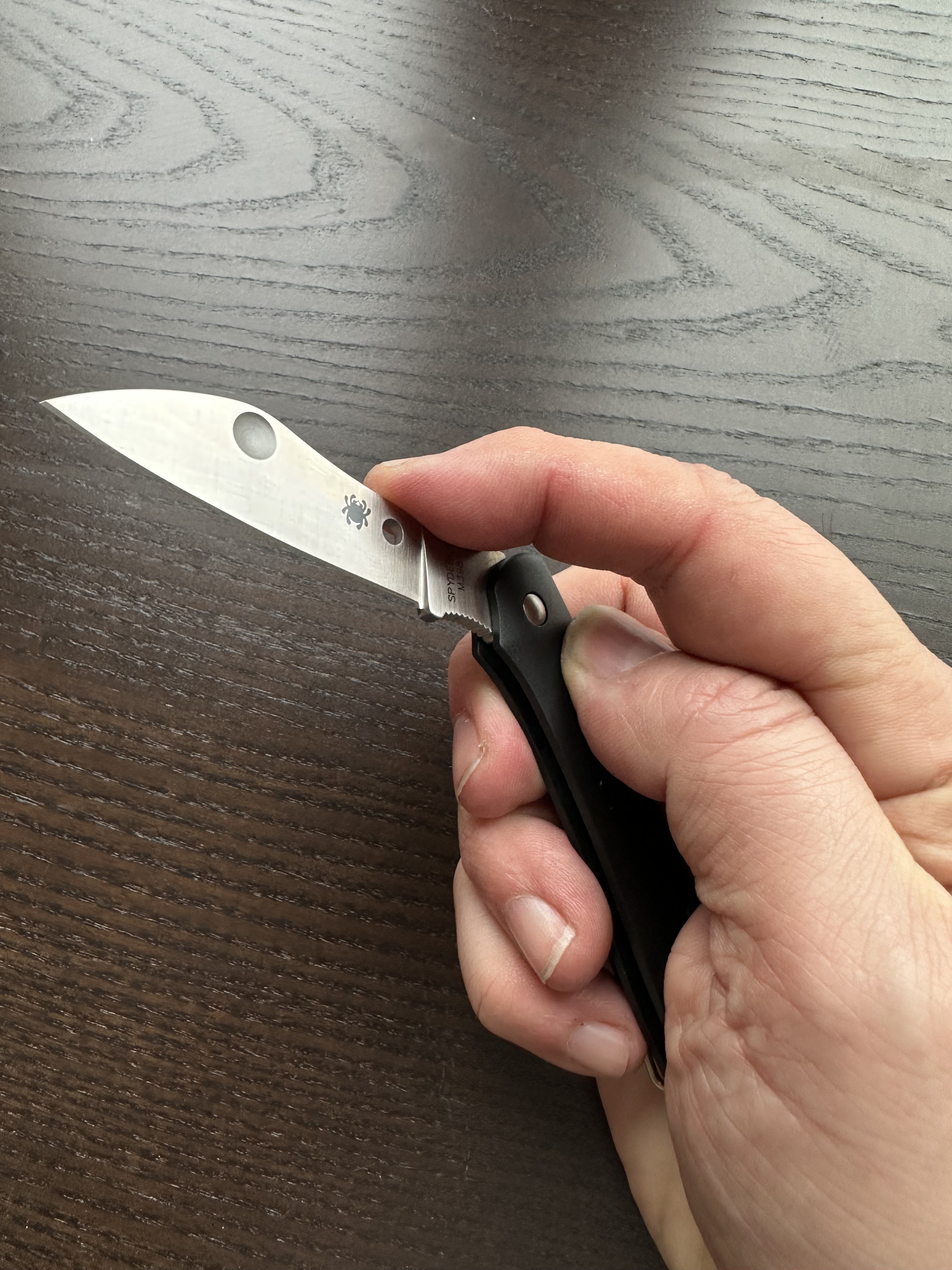
Interestingly, I’ve discovered that I can open it one-handed in two distinct ways:
A fast wrist flick while holding the blade itself.
By gripping the blade with thumb and index finger and gently pushing the handle away with the middle and ring fingers.
So, even though it wasn’t designed as a one-hand opener, the Roadie XL can function surprisingly well as a one-handed knife in either technique.
Compared to a traditional sheepfoot slipjoint, the Roadie XL is incredibly light yet sports a premium alloy blade (Since August 2025 another slipjoint with M398 is available: The Metropolitan.). And at under 100 euros, the Roadie XL is an exceptional bargain for what it offers.
This is one of Sal Glesser’s finest EDC designs—a true Every Day Carry folder that balances elegance, utility, and performance. And for once, size really matters with a Roadie. No wonder it’s already sold out on the Golden site! There is part II here.




























































 NemoKnivesReview