Tag Archives: Spyderco

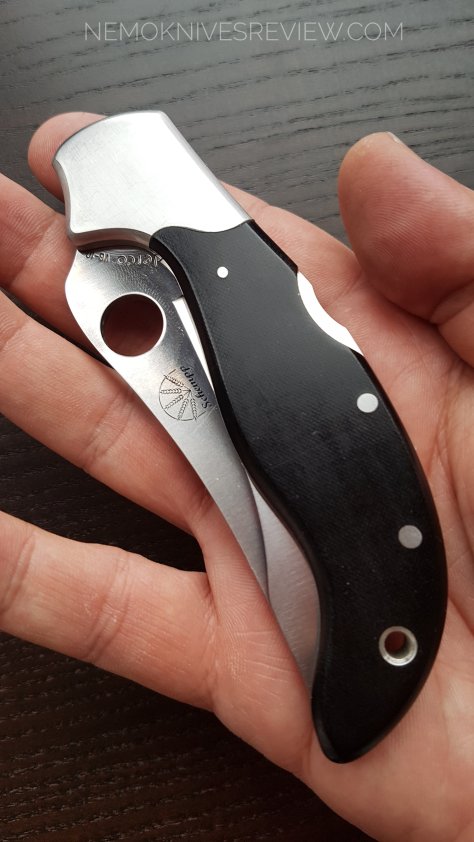
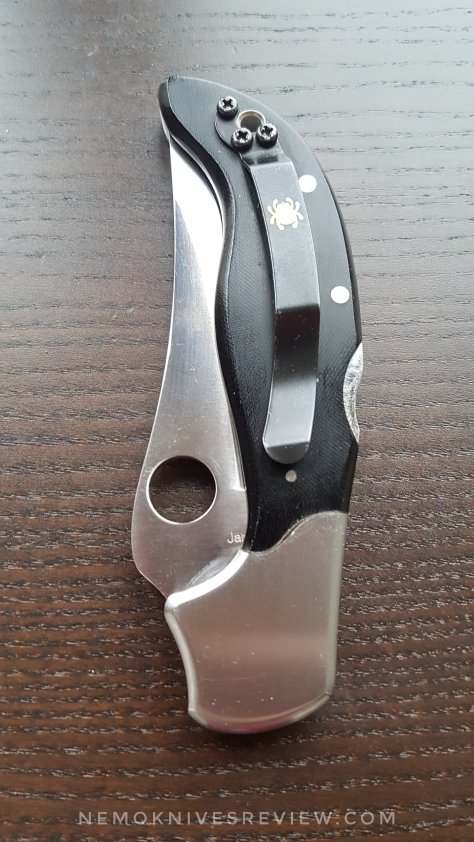
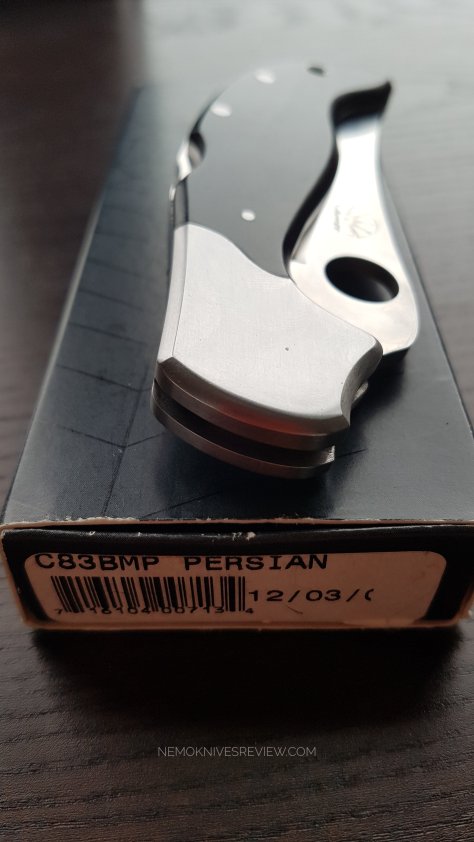
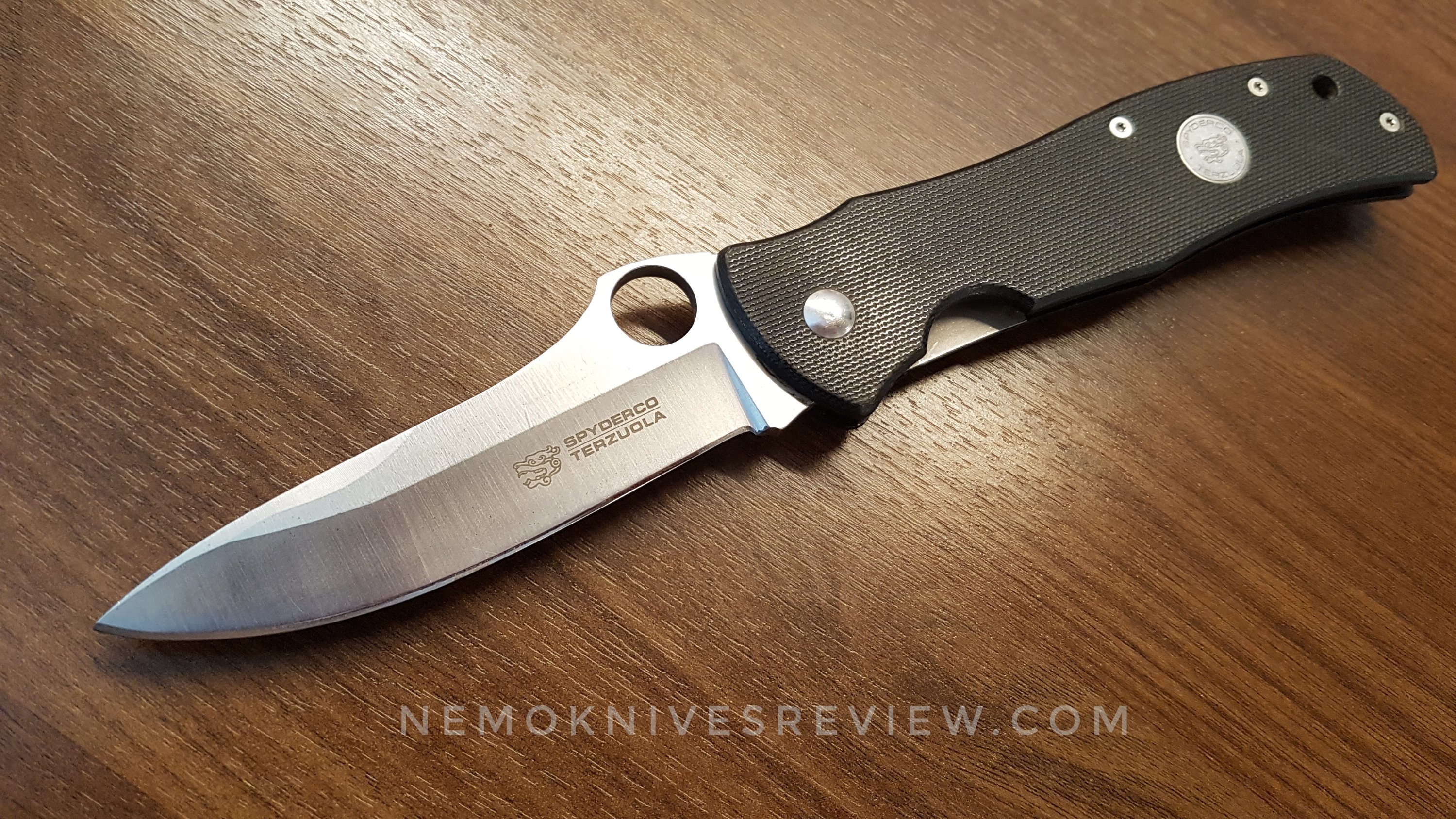
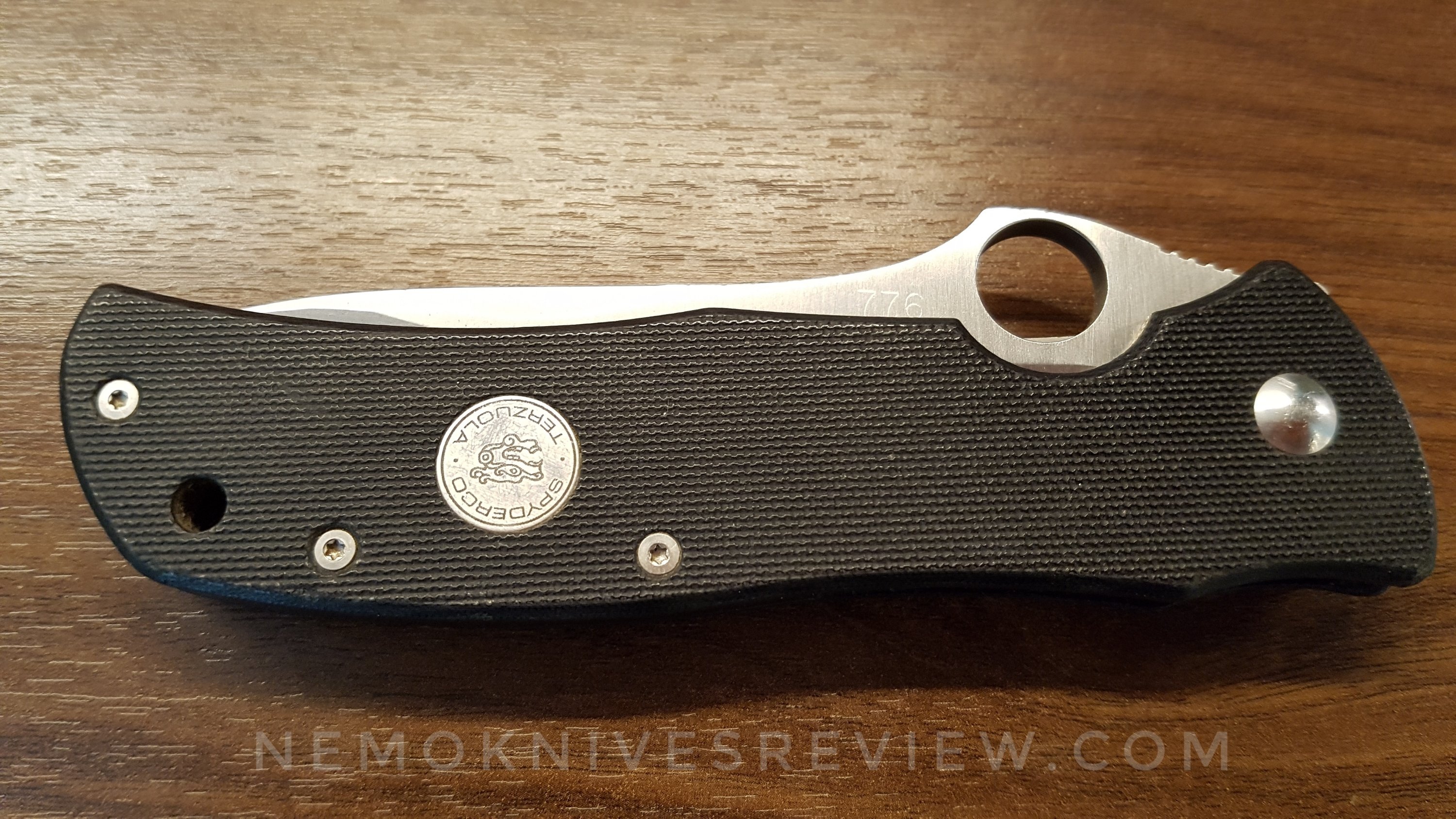
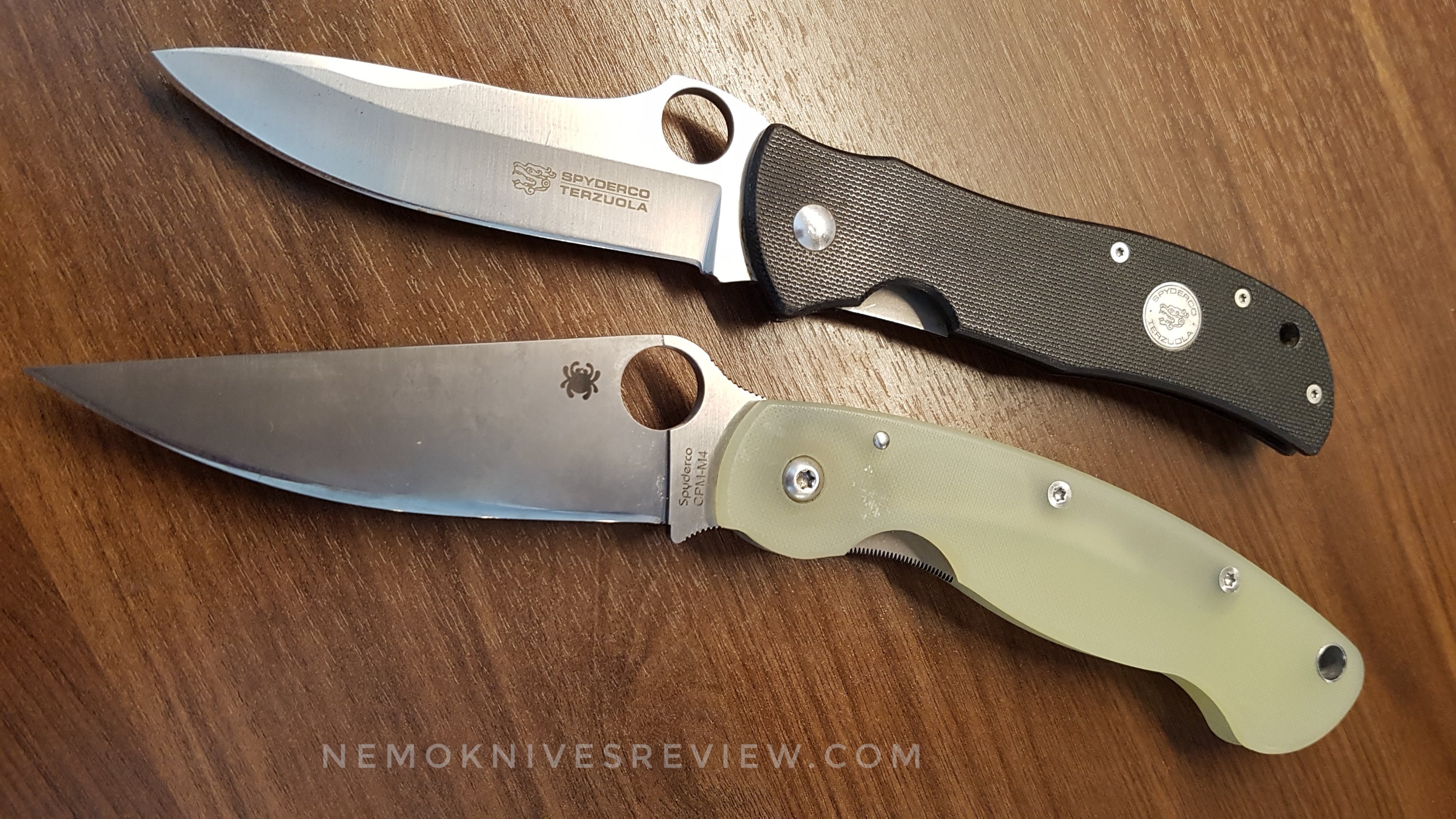
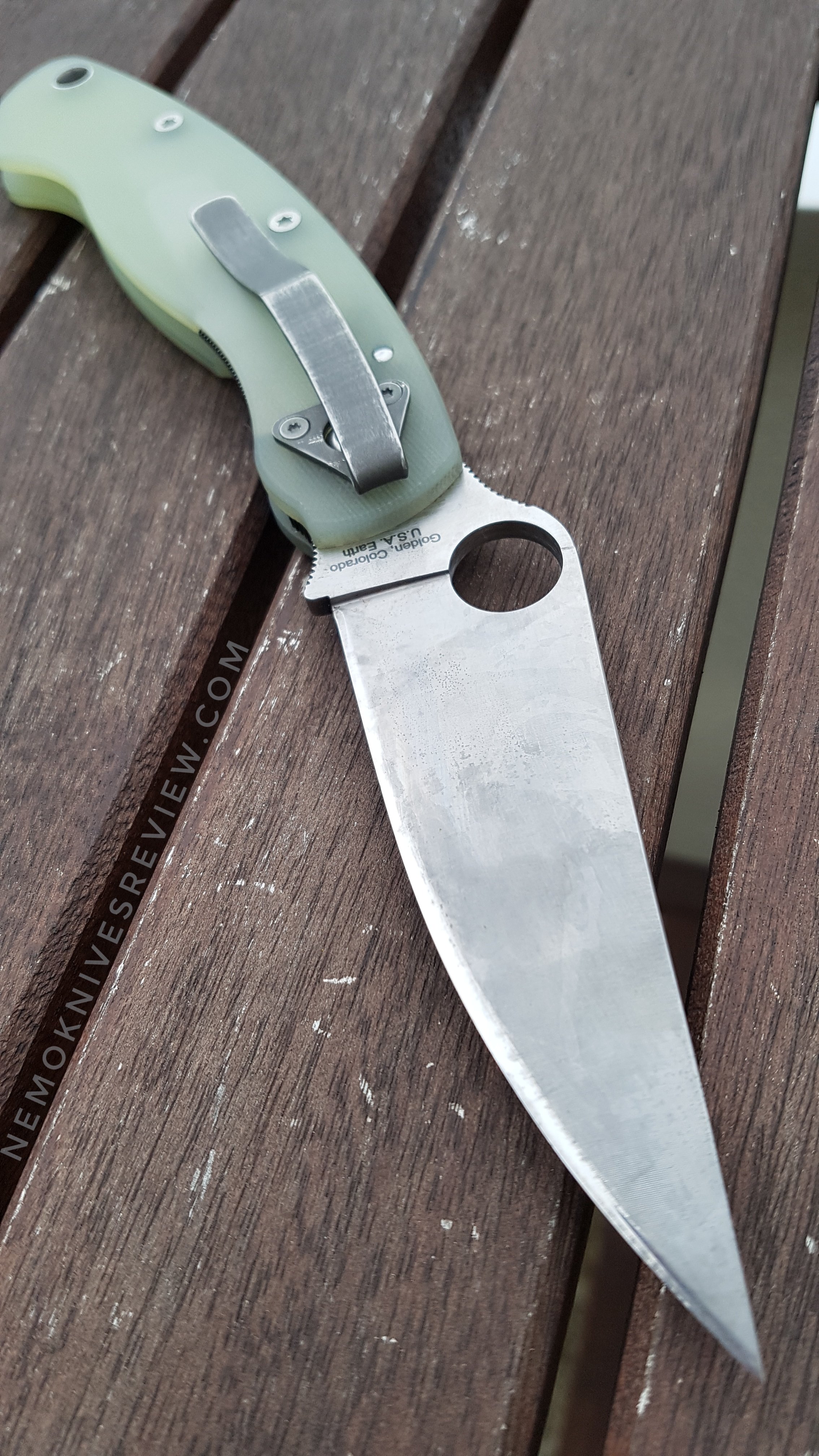
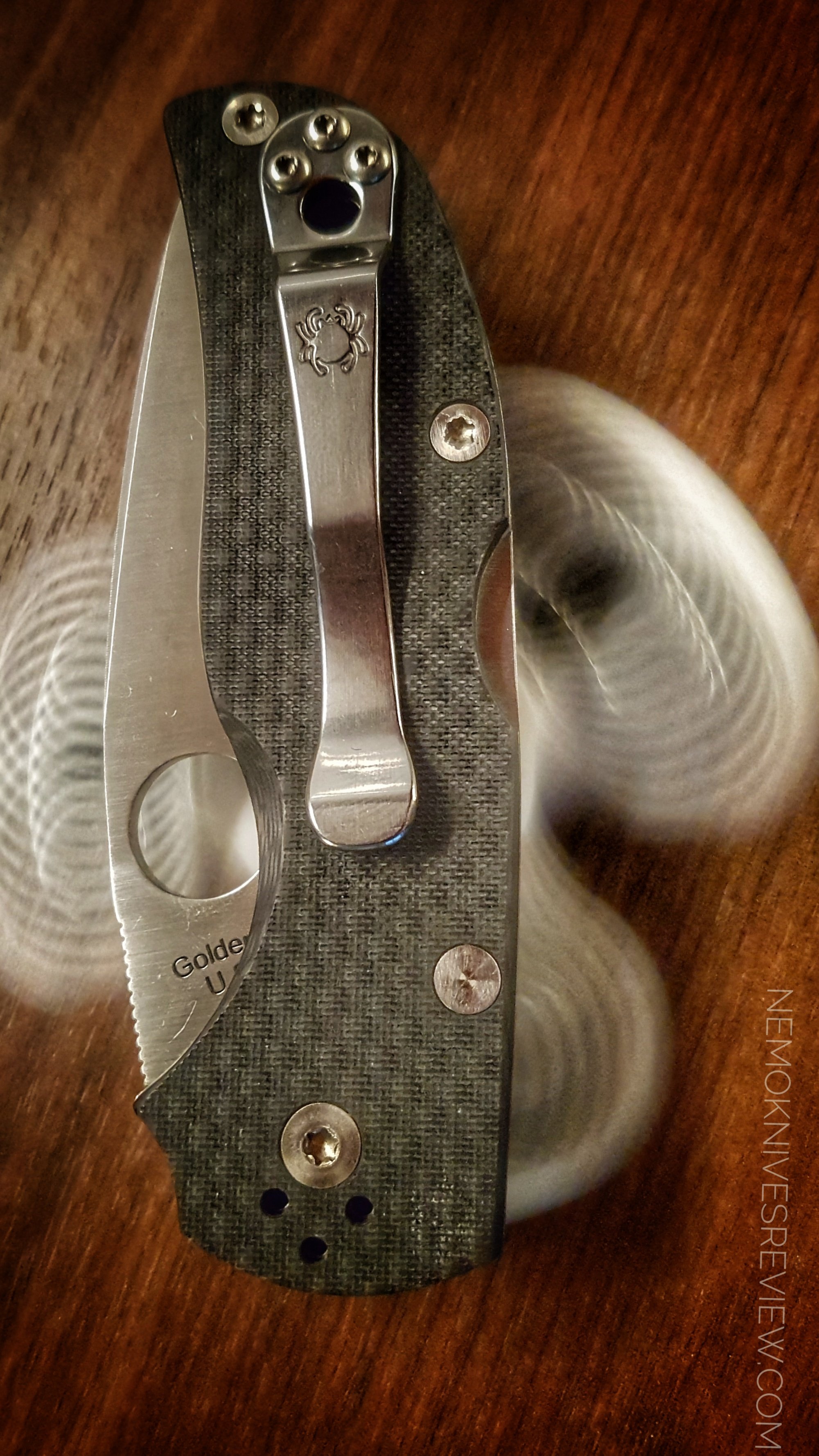
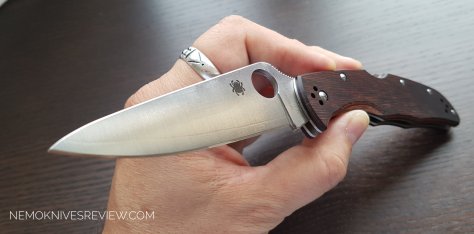
Spyderco Persian C83BM — Ed Schempp’s Prince of Persia.

wp-image-1520279796


There is one special knife which is my EDC rotation. It’s not the last steel, not the last lock but this is one of the most beautiful Spyderco ever made. I had pictured it with my Tuff
It was designed by Ed Schempp and quoting Spyderco product presentation:

“Custom knifemakers are way more than just steel junkies. Many are great artists and deep thinking intellectuals with their own specialties and talents. They continue to bring spice, variety and new ideas to the knife world. Custom maker Ed Schempp is a wheat farmer who while driving his tractor through his fields has time to think. He thinks about knives and everything surrounding them: steel, designs, heat treat, metallurgy properties, and he also thinks wheat, but only because he has to. His signature symbol, wheat sheaves are found on all his knives. He recently collaborated with Spyderco in a design called the Persian Folder — a well thought out mixture of classic Western meets the exotic East.

wp-image-1055336628

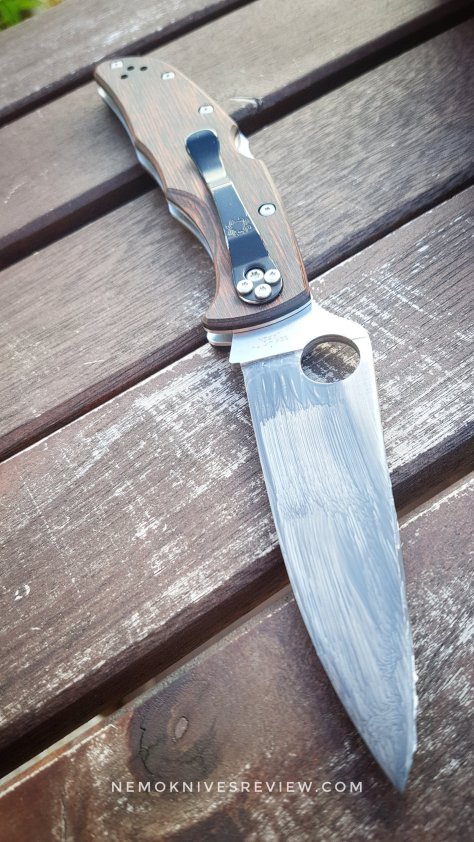
The shapely Persian blade is traditionally found in fixed blade form but Ed incorporates this Eastern influence into a folding knife. Made of VG-10, the hollow-ground blade is deep-bellied, ending in an upswept tip with a curvy spot on the spine where your thumb rests. The blade’s curves flow through into the handle, which is black Micarta topped with polished steel bolsters. Not only do the curves add visual appeal, they create a finger choil and a crook in front of the index finger then end in a tail, for a myriad of grip positions. A custom designed steel pocket clip positions the knife so it carries right-handed, tip-up. Balance combined with top-notch fit and finish mark this model an Ed Schempp design and a true Spyderco.

wp-image-1938682350

This knife was a gift from JD when he came to visit at the occasion of the SICAC in 2012, five years ago.  It has been sharpen and honed by him and it came really really sharp. Once thing I have noticed is how VG10 can take a very keen edge easily. This one is no exception. His deep belly and thin edge makes it a great slicer really easy to touch up on white ceramic of on leather.

wp-image-1833968756
Made in Seki Japan, the Persian is pure elegance and ergonomy. It spouses my hand gently and brings the blade right where it needs to be: in the extension of my arm. Ed Schempp’s ergos are legendary.

wp-image-626439719

Shown here with one of the last Spyderco made by Schemp: the Legend of The Fall.

Cutting is easy and even on a board you got control on your pressure. There are no hot spots on that handle and the index can rest before our after the quillon on the choil. This is a bolt constructio: there no screws but on the very exotic mounted clip. Tip up carry for this relatively heavy folder as heavy as my Zero Tolerance.

wp-image-1851276464

This is a true Legend of Spyderco manufacturing, bolt in design and highly praised by users and collectors. Mince is of one of the first batch and it keeps going strong.

wp-image-665512693

The action is as smooth as the all realisation.

Error
This video doesn’t exist


Knife conversation part 1 — Sharpening !!

20171012_105624-014060260.jpeg

Nemo: when you buy a knife you will be sooner or later, depending of many factors, confronted to a dull edge. Getting away from the factory edge is like leaving your parent’s home: it is uncharted territory for most of us. So should you waith for the knife to be dull or immediatly hit the stones to make it yours and why ?

cropped-p1070881.jpg

JD: When I get a new knife I check the edge to see what condition it is in. I pinch it between my fingers to see how thick it how thick the blade is just behind the edge. And just look at the edge see if the edge bevel is even. Some times you can see unevenness close to the ricasso. That will take some extra attention and work on the hone to get right. I use light to see if it reflects of the edge, if it does there is a dull spot. Then I check for a burr with my thump nail.
20171010_125828-01177728853.jpeg

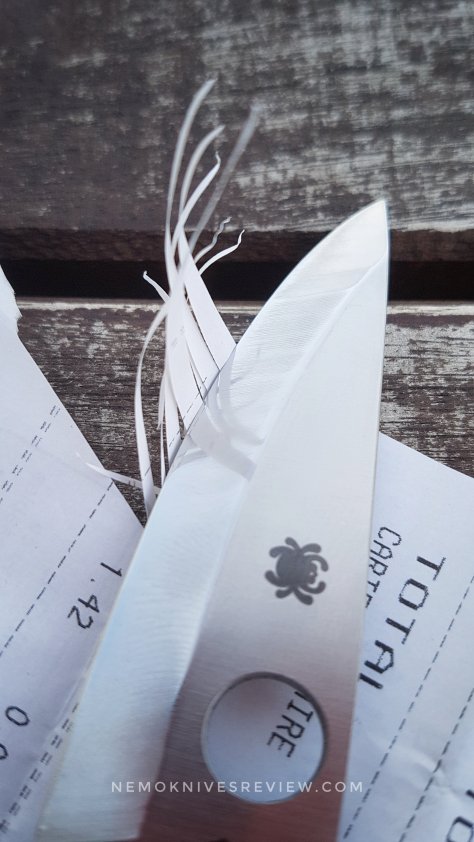
If there is a burr I take a hone, usually the diamond side of the Fallkniven DC4, and remove it. Now I take a receipt of shopping, they are usually thin and consistent, and try push cutting and slicing it. If it cuts the paper cleanly and easily it is good enough to start using. If not, then I will sharpen it first. Depending on edge thickness, edge angle, and steel and what I feel like (knives are a hobby for me!) I will pic a hone and start sharpening.

20171004_180416-011239339540.jpeg

Nemo: knowing sharpening is your hobby is a knife easy to get dull a dream for you ? Or do you prefer your sharp edge to remain sharp for a long time ?
Would you enjoy D2 more than Elmax ?

20171012_104749-0277866023.jpeg

JD: a knife is for cutting and it cut better when sharp. I prefer a sharp knife! 🙂 It needs to cut what I need to cut with ease otherwise it is back to the hone it goes! I also like a knife that when it looses sharpness is easy to get sharp again. So I have no need for high wear resistant steels. But if they are thin at the edge and I like the rest of the knife it would not hold me back either.
If they are both well heat treated and kept cool in production and sharpening there after, both D2 and Elmax would work fine form me. I do not think I could tell them apart in use or sharpening. I am not much of a steel junky, though I like reading about the science of how steel works in knives. (I highly recommend the following books: (in German) Roman Landes: Messerklingen und Stahl and (in English): John D. Verhoeven: Metallurgy of Steel for Bladesmiths!) For me blade geometry and sharpness make a relevant difference. I can tell a thick knife from a thin knife and a dull one from a sharp one far better than the edge retention one steel from another.

20171011_151451-011592961934.jpeg

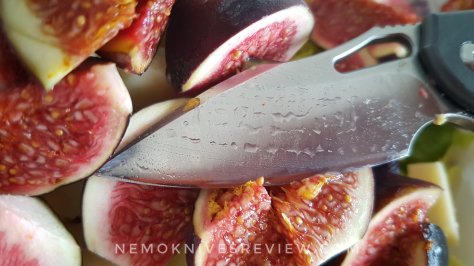
The biggest differences in steel that I notice are, first, how they sharpen, how easy or hard it is to remove steel, and second, how stainless they are. The last bit mostly when cutting fruit.

wpid-CameraZOOM-20120314164015602.jpg

Nemo: Sharpening wise: what would be the main difference between hollow ground knives and flat grind ?

JD: If they are the same thickness behind the edge the hollow ground blade wil take less effort to make the blade even thinner behind the edge, and take less effort to keep the blade thin behind the edge. Hollow ground knives can be laid flat on a hone to make and keep them thin. I have done this with a few knives. One of them a Spyderco Salt1. Now it is almost a single bevel grind (‘scandi’) and much thinner behind the edge. This has made it cut a lot better.  

The same can be done with a knife with flat bevels, it just takes more work. When you use and sharpen a knife for a while the edge gets closer to the back of the blade and gets thicker. When it gets thicker it cut worse. To make it cut well again the area behind the edge needs to be thinned out. As a hollow ground knife has less steel behind the edge it takes less work to keep it thin behind the edge.

On flat ground you often need to remove the scratches after …

20171012_103055-011631308535.jpeg

Endura HAP40 blade and Pakkawood handle, sanded to my taste.

wp-image-1364064139

The tools of the trade. Leather belts, sandpaper sheaths and coffee.
As usual I cannot let ma knife as provided by the factory and Pakkawood being a synthetic ersatz of wood, I wanted to see how it reacted under the sandpaper.

P500 Metal sandpaper is used just to round the facets into rounds. The Pakkawood is soft and it’s done without any kind of discoloration. It reacts a lot like Micarata. No smell.
Anyway I was holding my breath. Those dusts are unhealthy.

“If you have a buffing wheel, try polishing the wood handle – it buffs up beautifully with a XAM or green rouge compound.” said to me Howard Korn.

wp-image-128584173

Then I take the chance to sand the edge of the liners. It always great to feel an handle with not sharp edge. I have done also the same with the hole. I don’t want to chanfered it like on the AFCK but less edge makes my thumb safer. Remember, I was bite by the Tatanka hole once.

I have sand the spine to smooth it and then used some polish on leather to remove the sharpening scratches.
Eventually I have turn the Endura into a great razor which has be baptised with my blood for good measure. (I happen during the stropping…)

wp-image-1702930307

Spyderco C10WDP Endura 4 HAP40/SUS410 Satin Plain Blade, Mahogany Pakkawood Handles KnifeCenter Exclusive — Wooden Wonder Perfection !

wp-image-1591541194

We all know how knives get personnal items and how many times we touch them and use them. Synthetic material got their practical side but natural materials provide some spirit to a folder. It gives nobility, it gets some gentle patina over the years and it makes your personal knife much more personal and more precious. Pakkawood is synthetic but it gives than kind of feel, add a steel spacer and steel liners and you got a bank vault workhorse of the 4th generation !!
The legendary Endura and Delica has now provided as the exclusive batch at the Knifecenter and they are not only great Spyderco’s but also near perfection EDC.

wp-image-1470324120

First thing to notice is: this is not your regular Endura. Like the Orange Sprint Run C10FPBORE, this C10WDP is offering one of the best blade ever made in Seki: HAP40 steel clad between SUS410. HAP40 is like CPM M4 an high speed tool steel created by particular metallurgy and made by Hitachi. In my book it means a strong edge who will not chipped even if ground thin.

Quoting Spyderco: “HAP40 is a semi stainless, powdered high speed steel (HSS) that takes and holds an edge better than any other steel available on our site. HAP40 is fine-grained enough to sharpen very well and rates 64-68 on the Rockwell Hardness Test (HRC)—even harder than the traditional carbon steels used for knives. We have specified a hardness of 65-66 HRC for our blades. Unlike other HSS steels, it can be relatively easily sharpened on normal waterstones, if not quite as easily as traditional carbon steels.

We think HAP40 holds the potential to become one of the best steels on the market for the production of high quality, high durability kitchen knives.”

Edited on the 8th of  October: Semi stainless ? With 4% of chrome ?
What I can witness is that my HAP40 does not want to develop a patina yet when CPM-M4  is staining easily.

Perharps HAP40 is not a Japanese CPM-M4 but something closer to acording to CPM® REX® 45(HS)CPM® REX® 45(HS):
CPM REX 45 is an 8% cobalt super high speed steel which has excellent hot hardness along with good wear resistance and toughness, making it suitable for difficult machining applications. Made by the Crucible Particle Metallurgy process, CPM REX 45 has good machinability and grindability characteristics.Typical ChemistryCarbon 1.30%Manganese 0.30% (0.70%)*Silicon 0.50%Chromium 4.05%Vanadium 3.05%Tungsten 6.25%Molybdenum 5.00%Cobalt 8.00%Sulfur 0.06% (0.22%)Typical ApplicationsBroaches Milling CuttersEnd Mills Extrusion PunchesForm Tools Shaper CuttersGear Hobs Taps* The addition of .20/.25 S in larger diameter rounds (e.g. 2-9/16″ and over) provides a uniform dispersion of small sulfides throughout the structure, resulting in machinability and grindability benefits with no deleterious effect on toughness.”
wp-image-1698808930

It’s even better than my superblue Stretch in term of long last edge and certainly less prone to pit or stain. So, it’s much better.
So the fact that the blade is clad HAP40 is a good thing; you get toughness and flexibility where it counts  on the spine and rigidity where it counts on the cutting edge. (quoting Sickael a forumite)

wp-image-237739966

Talking about perfection in manufacturing: the blade is perfectly centered and there is zero vertical play !
wp-image-1725366259

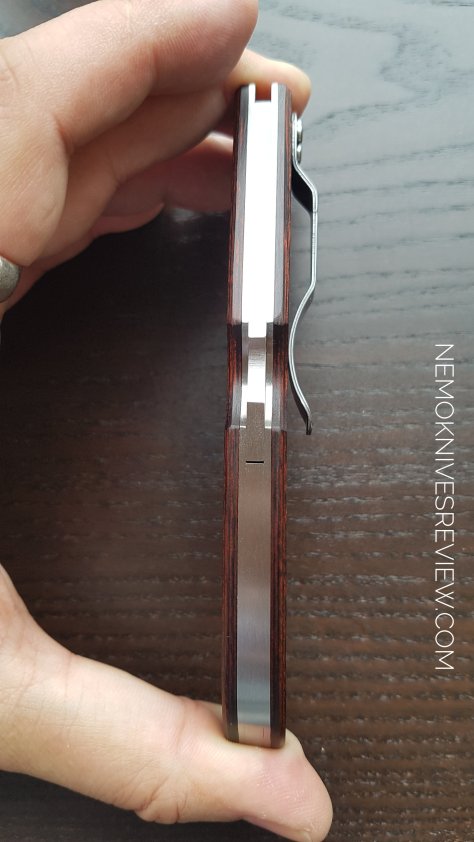
The steel spacer and skeletonized steel liners gives a very solid feel and a high quality feel. This is the same spacer as on the G10 Endura. It’s not butt heavy, the knife is well balanced. You can noticed how the adjustement between the liner and the spacer are perfectly done.
wp-image-2094609716

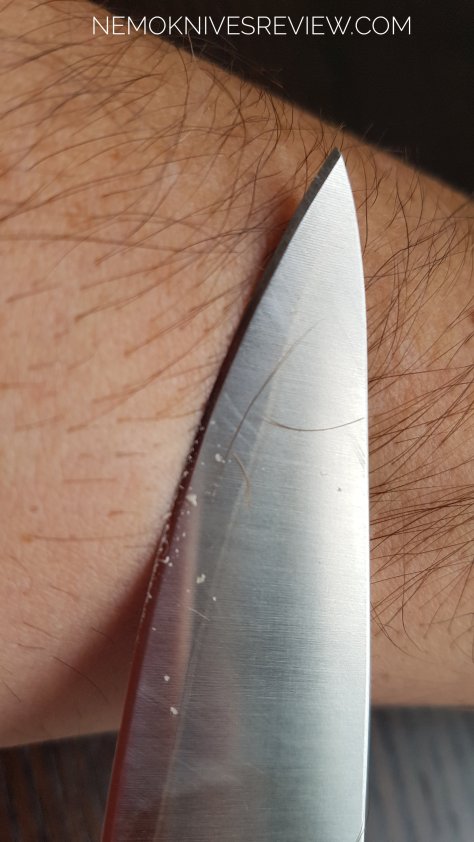
Of course the factury edge was on the razor side of the scale. With such a special steel it could be thinned by some work on sand paper to de-shoulder it or kept this way.
wp-image-31979110

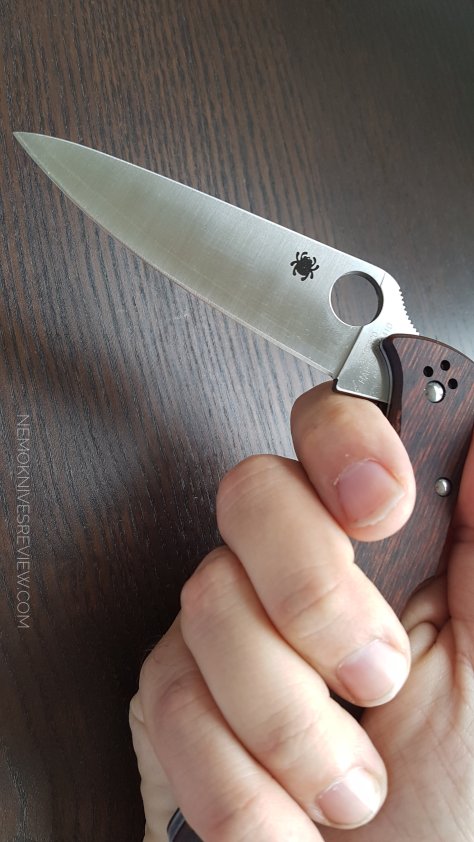
Even if the endura doesn’t have a choil, when closed the blade falls by inerty gently on the index. Making the closing safe and fast. Perfect !
wp-image-363329519

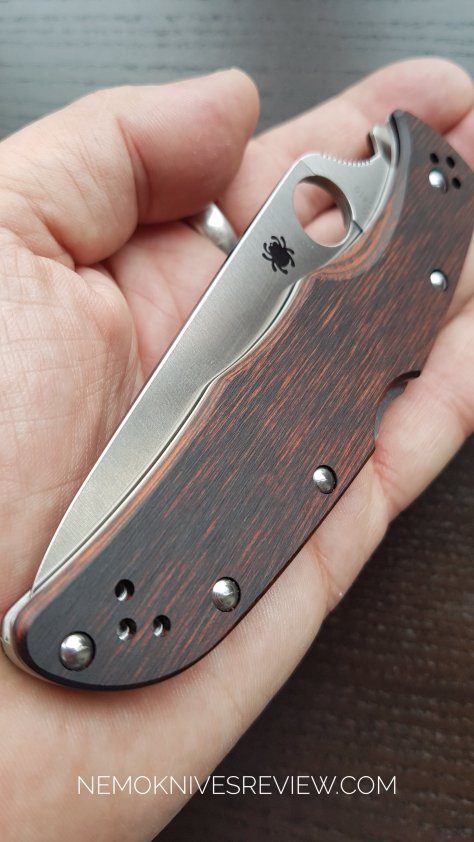
“The wood is Pakkawood which is a stabilized laminate of birch with stain, but it is the best material for knife handles. It never warps, absorbs water or changes in any way and it looks great. It also polishes up with a buffing wheel to a high gloss. They are totally made in Seki City and I love my Delica. ” Howard Korn – The Knifecenter of the Internet.
Nuff’s said. This is a labor of love. The wood is warm under the touch and provides enough traction for serious cutting job. This knife is a user, a beautiful and rare user. A classical design enhanced by the choice of materials.

wp-image-694756572

Compare to the Stretch and Millie the Endura is taking her place just in between. A little thicker than my Stretch and longer too.

wp-image-594675929

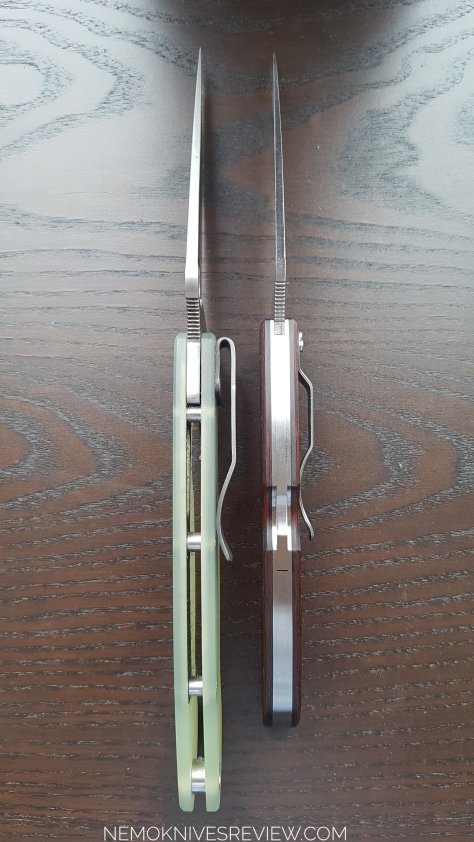
Compared to my Millie, the blade is thinner but provide almost the same working edge. The Endura has always been an impressive cutting machine confirmed by years of production and refinement.
wp-image-550269868

For a must shorter handle tha the Millie, you are pocketing a blade enough long to cut bagels in half or split a melon.

wp-image-53244488

But I have found that the jimping on the blade were a little too much aggressive and by rubbing against the pocket’s lips it could ruin your denim in a week.

wp-image-377603091

It was fixed by using some diamond file turning the 90° edge…

wp-image-987220275

into a smooth rounded one. It was done in 2 minutes. This is something I also made on my Millie, Paramillie… The hump’s jimping is always catching and wearing my pocket.
wp-image-889866509

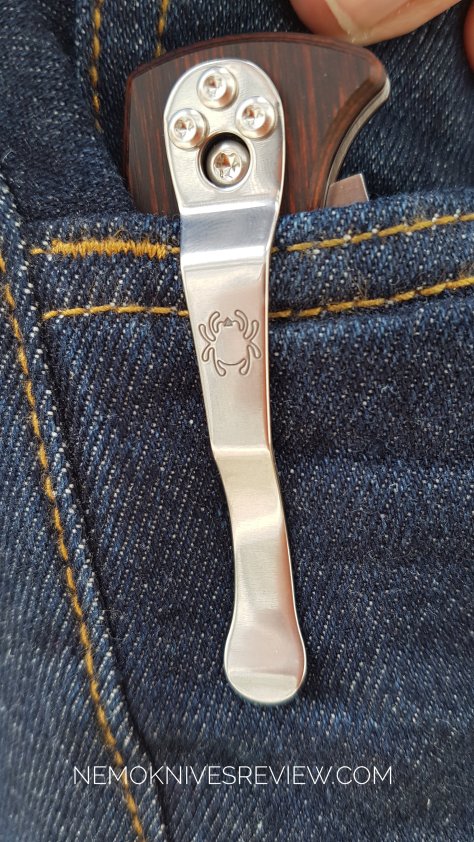
Now I prefer Tip Down carry for Spyderdrops and it gives a reason to have this holl in the clip.

So here it is: the best Endura version with a great “Wow Factor”. Even sheeples love it. It’s not menacing, it’s all in elegance and choice in refinement. This is a stunning folder and a rare Endura giving you the chance to carry a Grandpa’ knife with the last technology.

wp-image-632435697

And now let’s start to use it. The kitchen is my battlefield as the knives are subject to their main purpose: cutting efficiently.

Let’s try this on code fish and tomatoes. The factory edge is “honest” but this steel begs for a thinner manifestation, better efficiency.

No stain and no risk for that hande, the wood is stabilized.

So let’s use some diamonds. De-shouldering the edge and creating an apex.
And then gently stropping on leather. The wine glass i not mandatory.
The day after I was sanding the scales !

Starmate C55 — Blast from the Past.

wp-image-522978193

Spyderco’s C55 Starmate wasn’t just a knife—it was a statement. In the ’90s, it stood as a refined alternative to the Millie: same precision engineering, nested liners, CPM440V (S60V) steel, identical blade thickness, and uncompromising materials. Twins on paper, yet worlds apart in feel. The Terzuola captivated with its rugged, workhorse demeanor, while the Millie thrived on rapid-response agility. Then there was the C36—alive in the hand, delivering unparalleled penetration and slicing power. The Starmate, measured and deliberate, carried the quiet confidence of a blade built to endure.

wp-image-64356143
I was happy to have a thick blade made of that alloy as I was afraid to snap it. I used it as my main edc in rotation with M2 AFCK, ATS34 Sebenza. 
And soon, the steel—what we simply called “CPM”—revealed its true character. It held an edge far longer than anything we’d seen before. The initial razor-sharp bite dulled quickly, yes, but then it kept slicing, again and again, without faltering. At the time, this was revolutionary. CPM420V (S90V) was rare; it wasn’t until 1999 that I finally had the chance to test a Darrel Ralph design in S90V. The only way to bring it back to full razor sharpness? Fred Perrin’s backstand.

wp-image-891419135

S60V felt like an entirely new animal. Its wear pattern was unlike anything we’d seen with ATS34, 1095, XC75, D2, or M2HSS back then—and that was thrilling. You could set out on a trip, leave your sharpener behind, and your Starmate would keep cutting for two full weeks without complaint.

wp-image-1462584139

Twenty years on, the contrast is striking: the Starmate on the left, the AFCK on the right. Titanium liners show noticeably more wear. That’s where Bob Terzuola’s genius comes in—his improved Walker LinerLock features a concave ramp on the blade’s lock face. Pioneered in his custom knives, this geometry delivers far greater strength and security than conventional flat lock ramps—and it’s showcased proudly in the Starmate.

wp-image-931991847

Twenty years between those two great knives.

And 2026 with the M2 CPM15V.

The Starmate stands as a testament to Spyderco’s rich history of collaboration with one of knifemaking’s most talented and innovative craftsmen. In just two weeks, I’ll meet Bob Terzuola at the Paris knives show—an ideal moment to capture some photos and shoot a video right here.

MILITARY C36PIN PART IV: Deep Carry Clip in Titanium

wp-image-1647603082

After the part III where I built a patina by worshipping various acids, here comes the part IV of improving my old classic Spyderco: installing a better clip.
My first attempt in custom deep carry titanium clip has not be good. It was for the Yojimbo2 and I’ve been mounting the original clip back.
Then I have ordered a titanium clip for Ghost my Millie.

Actually I was disappointed again, once mounted the action was not smooth anymore.
For some reason the clip was exercising some forces on the pivot and the opening and closing were stiff. Also the mate finish was not helping the insertion of the knife is the pocket.

wp-image-1677734557

So I have bent the clip for it to be less strong and also I have sand it to smooth it.
It made a difference.

wp-image-1872289614

Talking about differences, the titanium clip is very well designed and comes with two flat torx screws. It’s a little higher/thicker than the original one but it’s not a problem and does not change the ergonomy.

wp-image-756113331

Also by sanding the clip, I have obtained a worn look which goes well with the patina.

I have also rounded all the edge on the G10 with P1000 sandpaper to have it smooth in the pocket.

But I felt some resistance when I put the knife in my pocket and I also found that now the lip of my pocket was obliged to go through a new threshhold: the base of the clip.

You see ? There is step formed by the attached base of the clip which can be hard on my pocket, tearing a hole of my worn denim.

So I was back to sanding on P500 this time to smooth the steep and avoid wear.
And it worked !

Eventually I was able to ease the clip spring pressure and get my C36 back to smooth operation.

So it was not an issue with screws length but a slight deformation at the pivot due to too much spring tension.

So I’m happy, the C36 Military now disappears in the pocket but it also easy to “spyder-drop” it in the blink of an eye. The action is a little stiffer but some nano-oil helps it. I’m not able to have the blade closing by gravity anymore. Anyway the Millie as never as smooth as the Ed Schempp Bowie and not as easy to carry.
But now I can carry that C36 in the city with no afterthought. It’s almost invisible and the Jade Natural G-10 helps a lot in its invisibility and sheeple friendly carried tool.
Hence the name “Ghost”.

wp-image-757726932

Here how the clip looks before sanding the edge and the finish. You can see the sharp edge around the screw and also the jaws mark of my leatherman.

wp-image-812829568

SPYDERCO NATIVE C41CFP5 – CPM110V Three years update.

wp-image-1801371413Last year, Jim Ankerson made a Military CPM110V test and was able to “cut 6,000 linear ft of cardboard checking every 500 ft for phone book paper sharpness, would still slice phone book paper after this stage, zero edge damage.” He had stopped but ” it could have cut a lot more. I try and keep the cardboard to a reasonable amount.”
For Euros, this is 1829 meters ! CPM110V is so special to him that it’s his Bladeforum’s profile picture. This is special stuff as seen in my Manix 2 review here.
wp-image-1926118994

It’s been three years since I got my Native 5 in CPM110V and 6 years since I use a Native 5 as one of my EDC: friendly size, great ergos… Time to look at it.
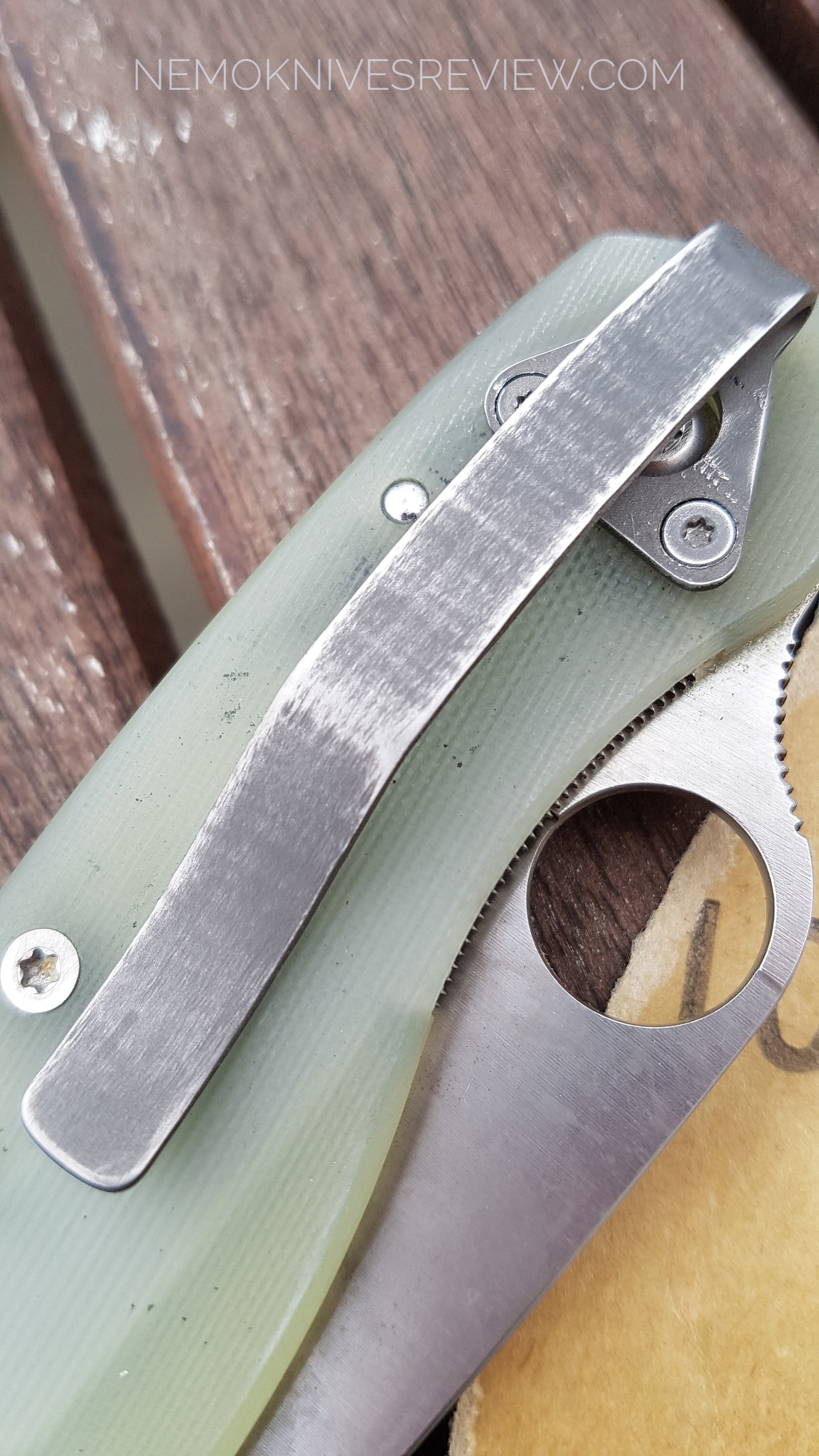
First of all,  I have never touched up the blade. Some stropping but not a single ceramic touch. With its factory edge, the blade looks like new: no scratches at all and the Carbon Fiber handle is pristine.  Those materials are hard and made to last no question this folder is a knife made to be some kind of time capsule. Its backlock is one of the strongest  in the knife industry behind the triadlock and has developed zero play which is great because I got many backlocks with vertical play even out of the box. Spyderco backlocks have undergone many refinements and through better manufacturing tolerances are among the safest and easiest locking systems to operate. To quote a forumite: “the engineering wizards at Spyderco have (IMO) outdone themselves”.

The Native is a must-have for any knifenut and got a near cult following aura. First thing, it’s an all American made knife which is IMHO better than the Seki’s and also it has been designed to be a great EDC. A totally polyvalent knife. It has even been chosen to be the symbolic knife of Spyderco’s 40th Anniversary with a Thor Damasteel blade special CF edition. Now it also exists with flutted titanium handle, full carbon fiber handle and S90V blades and lightweight with Maxamet and 110V…
It’s easy why people are collecting them and clipping them with pride.

wp-image-667072309

Eventually, during this 3 years I have never used “hard” my Native 5. Simply because the false edge is not thumb friendly. I do push the blade with my left hand thumb when whittling. It has been used in the kitchen, but not that much as its blade is short. It has been used for sausages processing and mondaine tasks. I would have use it as much as my Chaparral… And as the Native is overbuilt, it handles on those task with ease.
Also the handle is a little on the squarish side. I have sand it but even though it is not as ergonomic as a Yojimbo2, the Manixes or the guardless Nilakka. So it is not appealing me to use it hard even if I know the construction can handle it.

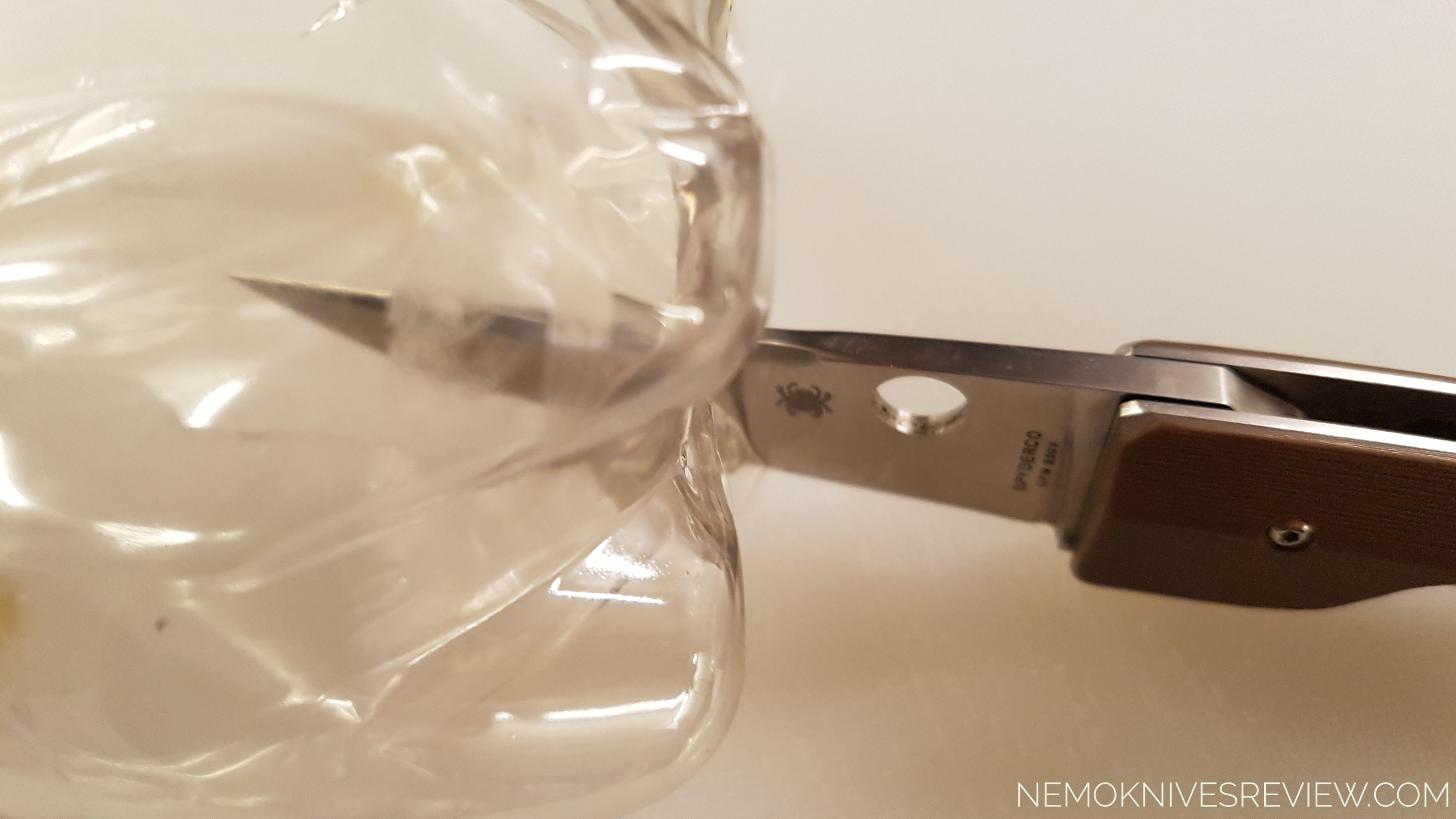
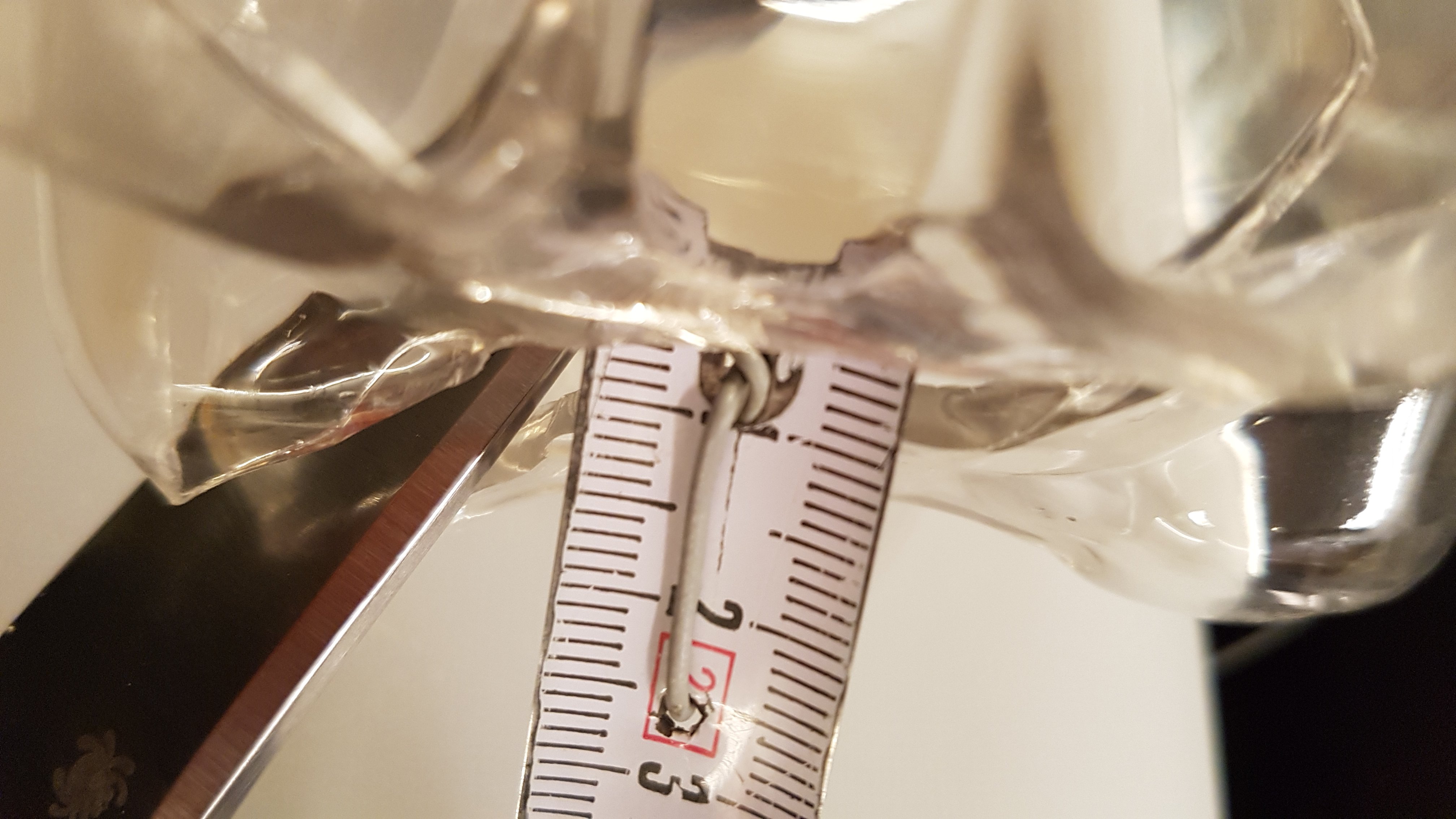
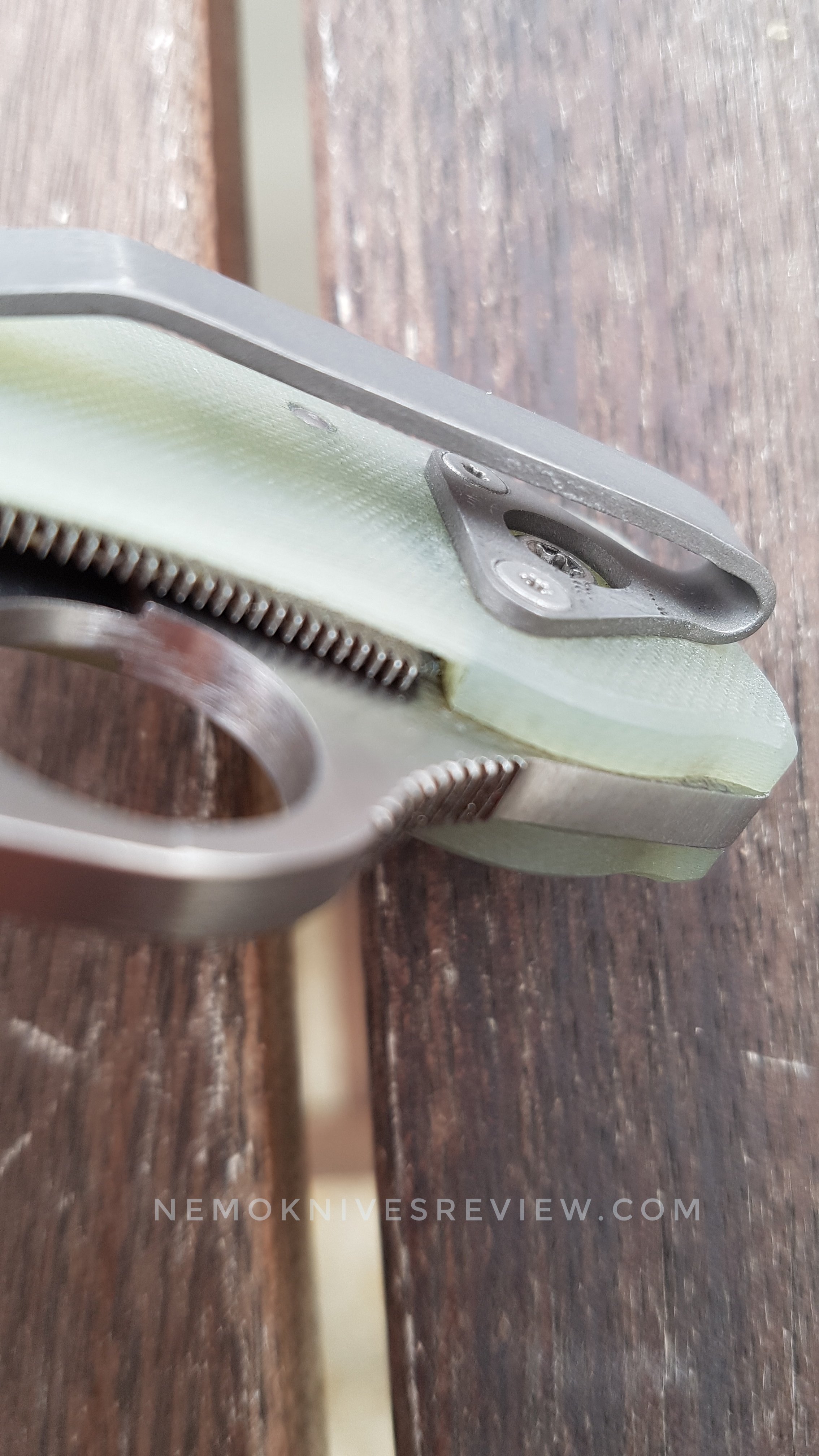
My Native is some kind of overbuilt Gentleman folder. I carry it mainly in the city or in office environment. I know it will 200% reliable and with his thin edge the cutting tasks will be done in a blink. Unless It has failed on a cutting the plastic bottle butt but it was not its fault. The plastic was 4mm thick !
wp-image-94616575

If you want to learn more about Natives:
A 2012 video from MrBlonde (Spydercollector) shows the history of the Native.
Also Paul Beretta (The Deacon) has a great post on his site about it.
The Native was also used for Bladeforums exclusive knives many years.

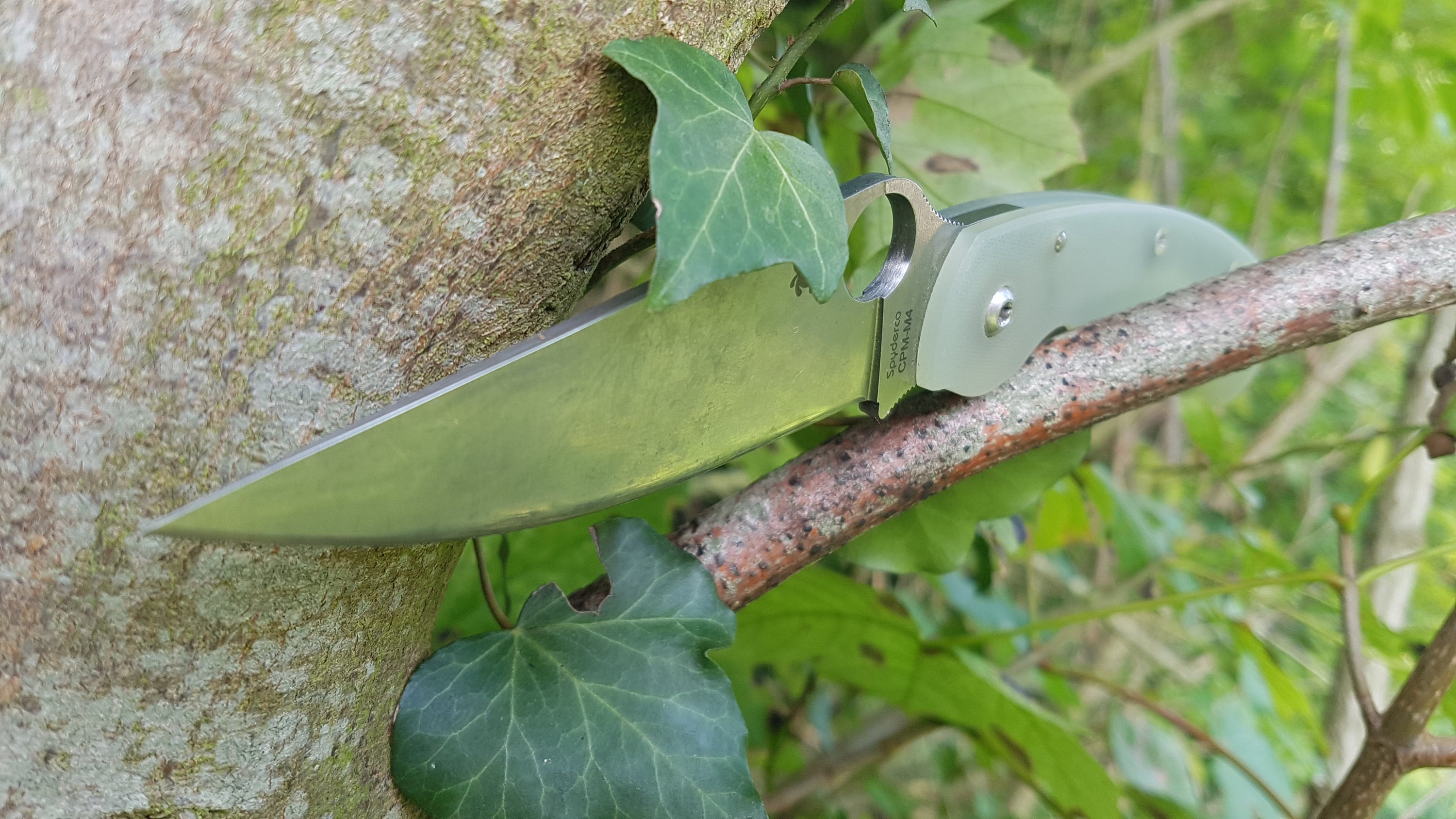
Spyderco C36 CPM M4 – Building a Patina

“After building a Patina, coat it with cheese.”

This is an old trick Fred Perrin used to do just un case someone asked him about his knife:
– Is it a weapon?
– Nope I eat a lot of cheese.
But the cheese grease also protected the blade from pitting. Olive oil, butter are also useful to coat you carbon blade. And they are not toxic.

Eating with your knife is solving a lot of issues: you use your knife a lot, you take care of your edge a lot, you display it and people get used to your taste in cutlery. It’s not a Silent Companion anymore: it’s your coming out as a knifenut.

Ok, first picture was only an industrial cheese, it was mandatory to show a real Camembert from Normandie:

(First made in 1791 by Marie Harel, a farmer from Normandie, she had given refuge to a priest who gave her the recipe in gratitude. She first made the cheese for her family, but word spread and the rest is legend. This version of French Camembert is produced in the heart of Normandie.
The velvety white rind encases a pale yellow interior which softens towards the outer edges. The rind has mild mushroom aromas that are well balanced with the saltiness and supple creamy texture of the interior. The flavour profile displays cauliflower and yeast notes, an indication of a real Camembert…)

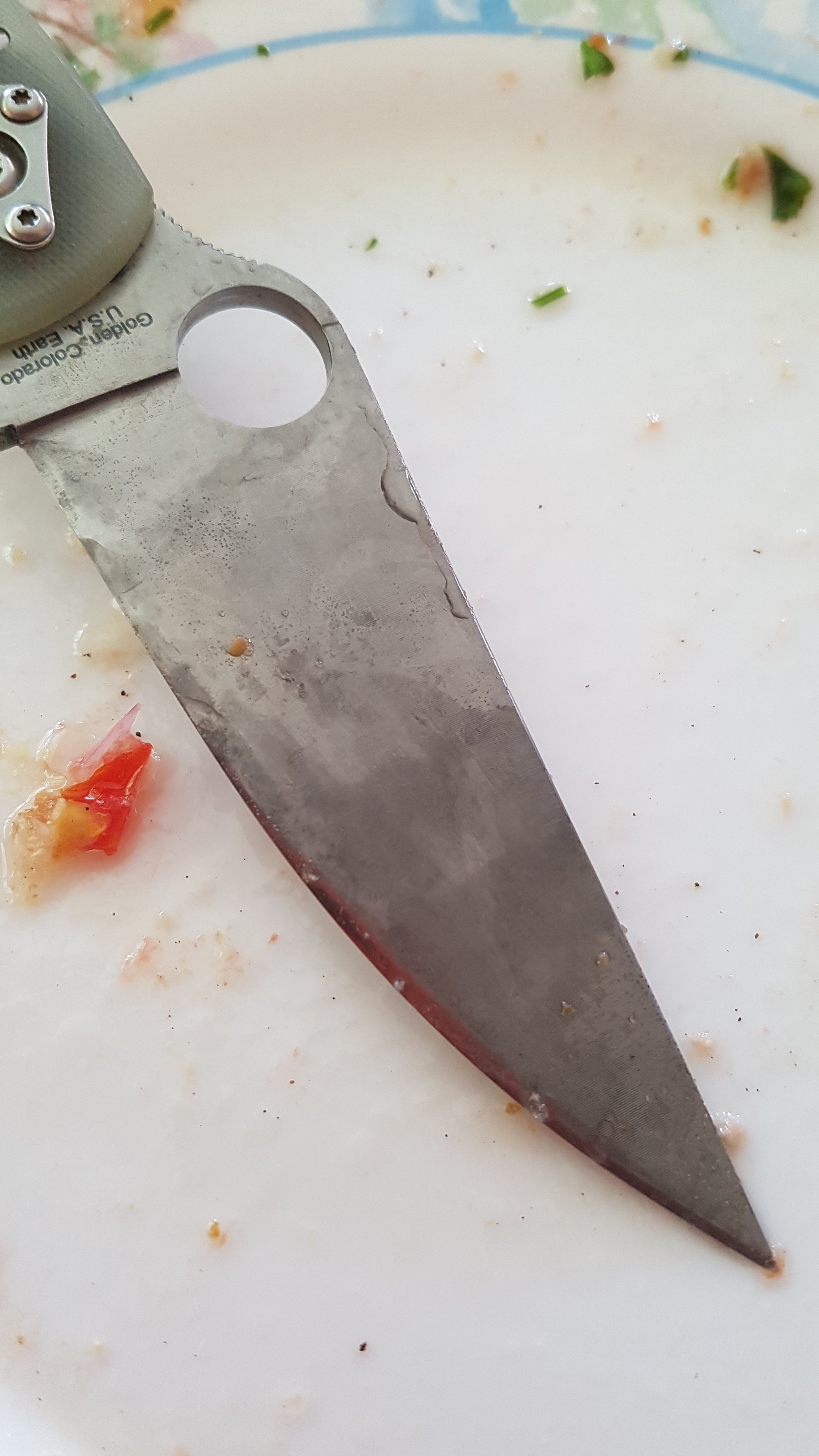
You don’t need to force a patina when you eat with your knife. Here, tomatoes with vinagar provide an acid environment able to built it. CPM M4 is much slower than Super Blue Steel in getting darker. A catalyst is heat. Hot meat, hot acid dish (tomatoes) will build the patina quicker. Often, meat loaves will add some rainbow stains which once polished are beautiful.

(My father in law used to clean his knife by thrusting its blade in the earth. Old timer did not respect their blade like us. But one thing is sure, they used them for everything. Their edges were often ruined in the dirt or just by scrapping son paints on a tool, but at least they used them hard.)

wp-image-370095210

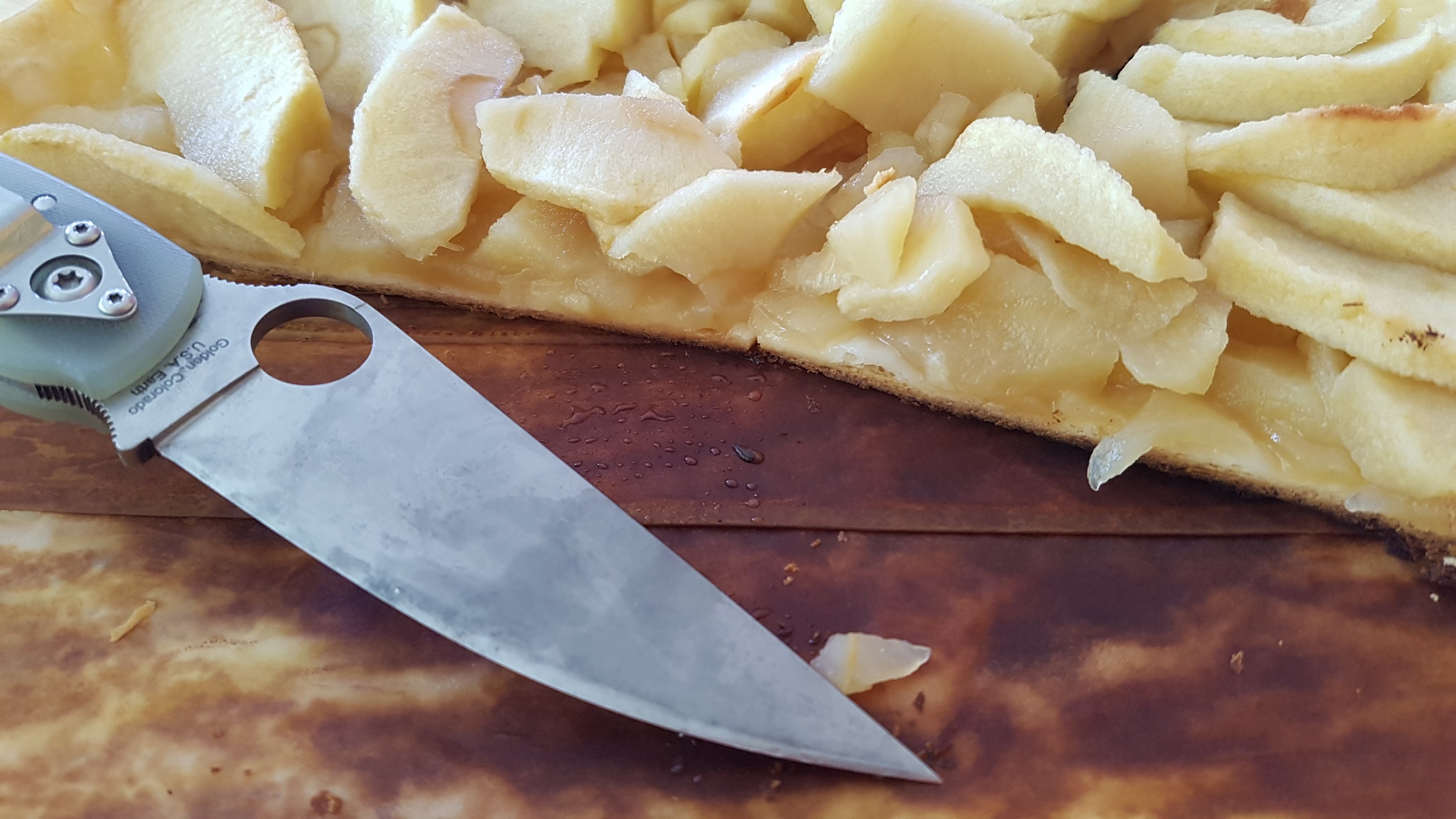
Cutting an apple pie in a plate will be hard on your blade’s point and edges. But again this is the game of letting your precious EDC goes in other hands. Iy your knife is really the quality knife you claimed, you should be able to clean it and refresh it in a blink of the eye.
Again, I also got bad experience by cutting vegetable in the garden and having dirt and earth ruining my edge.

wp-image-2098428597

The point of your knife will get darker sooner than the entiere blade. But this is the signature of a used knife and they are tools to be used.

wp-image-1362488435

In the end, DLC coated blades will never show as much as character as naked carbon steel.

wp-image-1696421388wp-image-2019233986

Spyderco Yojimbo2 – Mission: Italian Salad.

This is my first post sent directly from my smartphone. As I’m looking for easier way to publish on the blog.
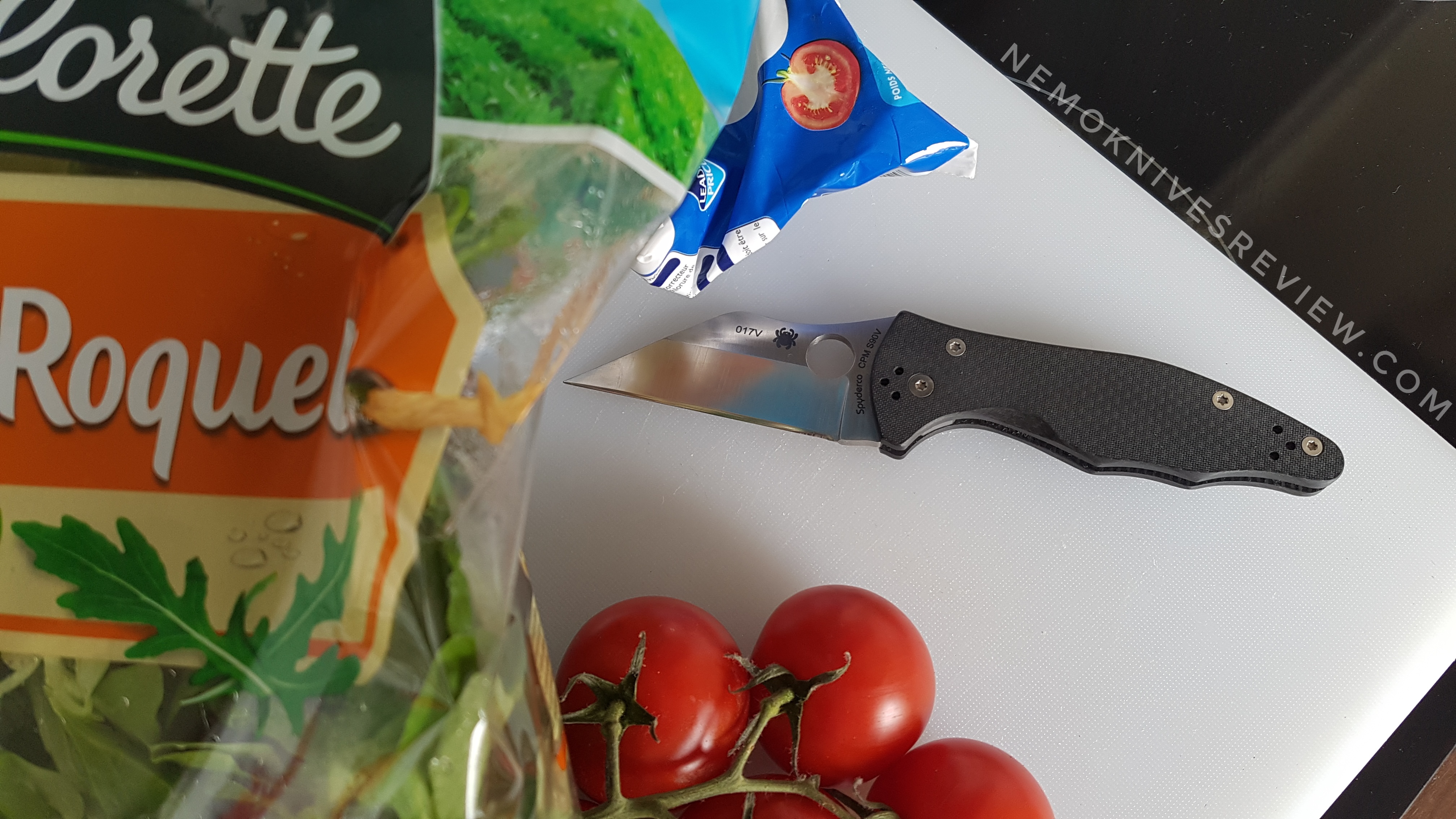
It was made at the occasion of preparing a quick lunch with mozzarella, salade and tomatoes with my Yojimbo2. Nothing fancy really but a very sharp and easy to clean knife is mandatory.

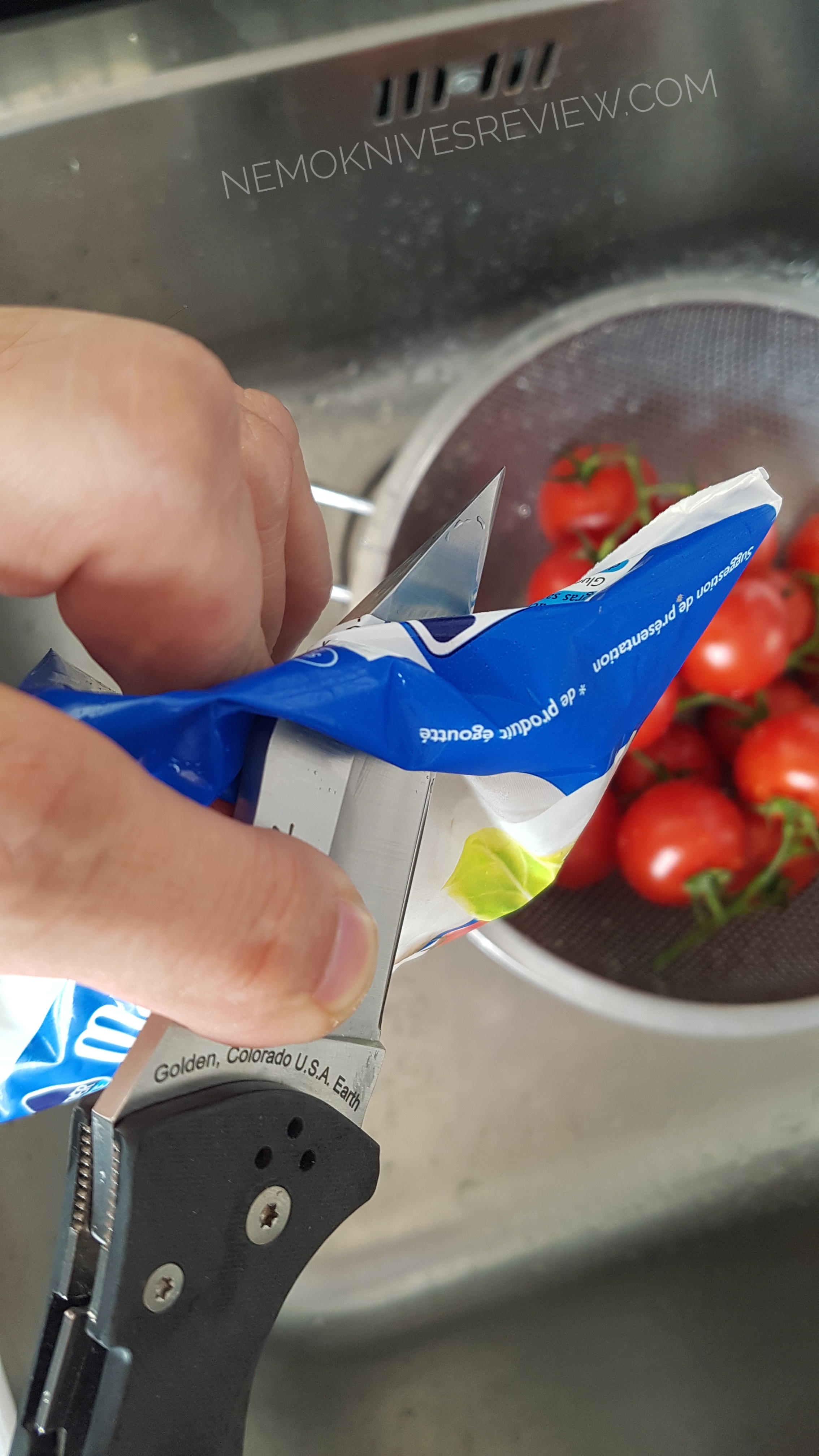
In the kitchen, its first use is to open bags. Many times you won’t find a pointy knife in a kitchen drawer so the sharp EDC like the Yojimbo 2 is handy to pierce plastics.

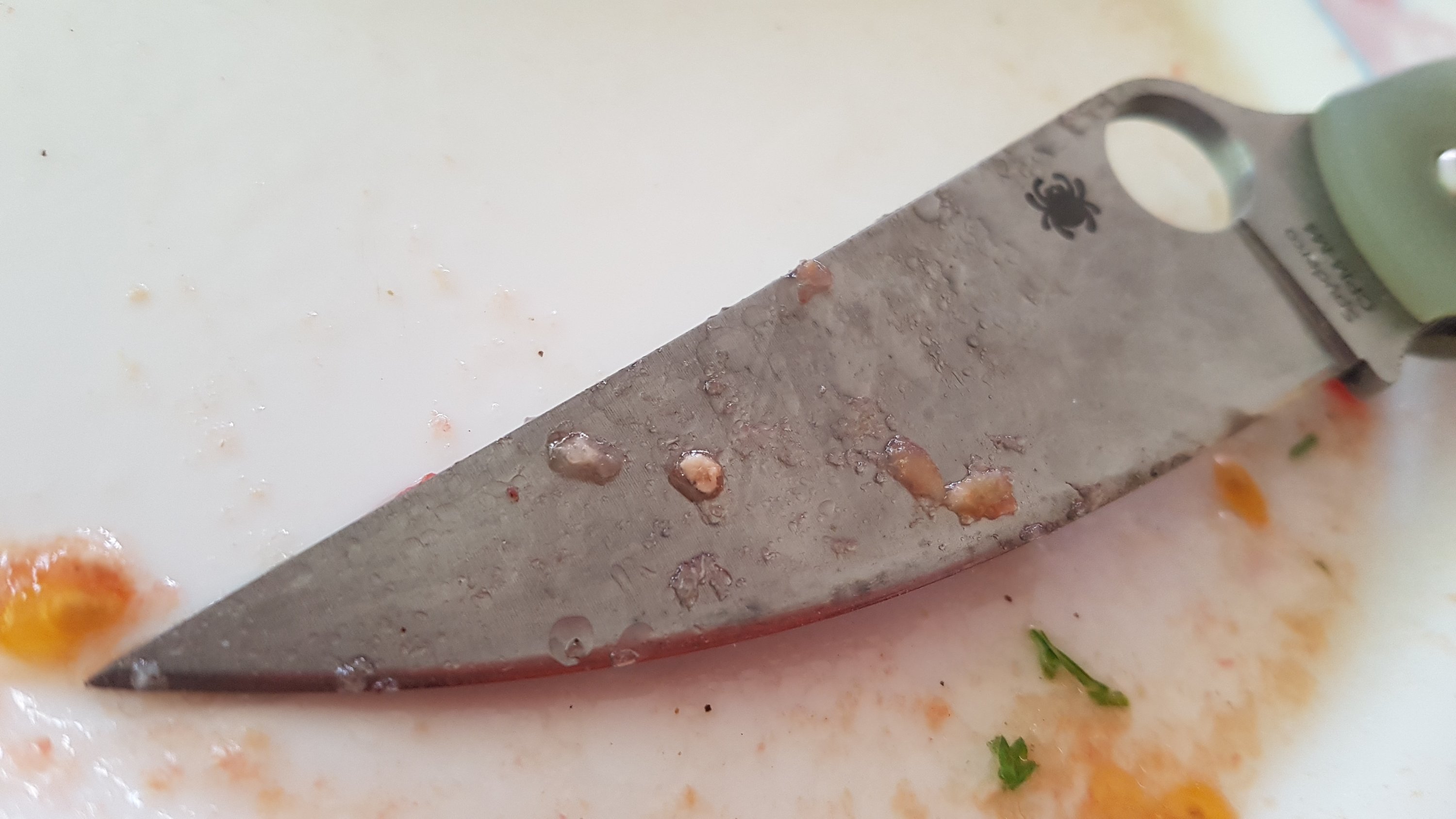
Another great test for the edge is the tomatoe skin. Tomatoes are fragile fruits and their skin can be tricky. If the knife is dull it will squash the tomatoe. You need a sharp toothy edge for best results. Chef goes very fast for that matter. Fast means sharp fresh edge.
The S90V has been refreshed yesterday after whittling with Ghost.

The last part was the mozzarella balls to cut in loaf. It’s sticky on the blade and very flabby.  You need a broad knife to work on it. A Chef knife could have been handy but the Yo2 was able to deliver its task.
Again SD knives can be used for EDC tasks especially kitchen unless they are a Kerambit. 😉