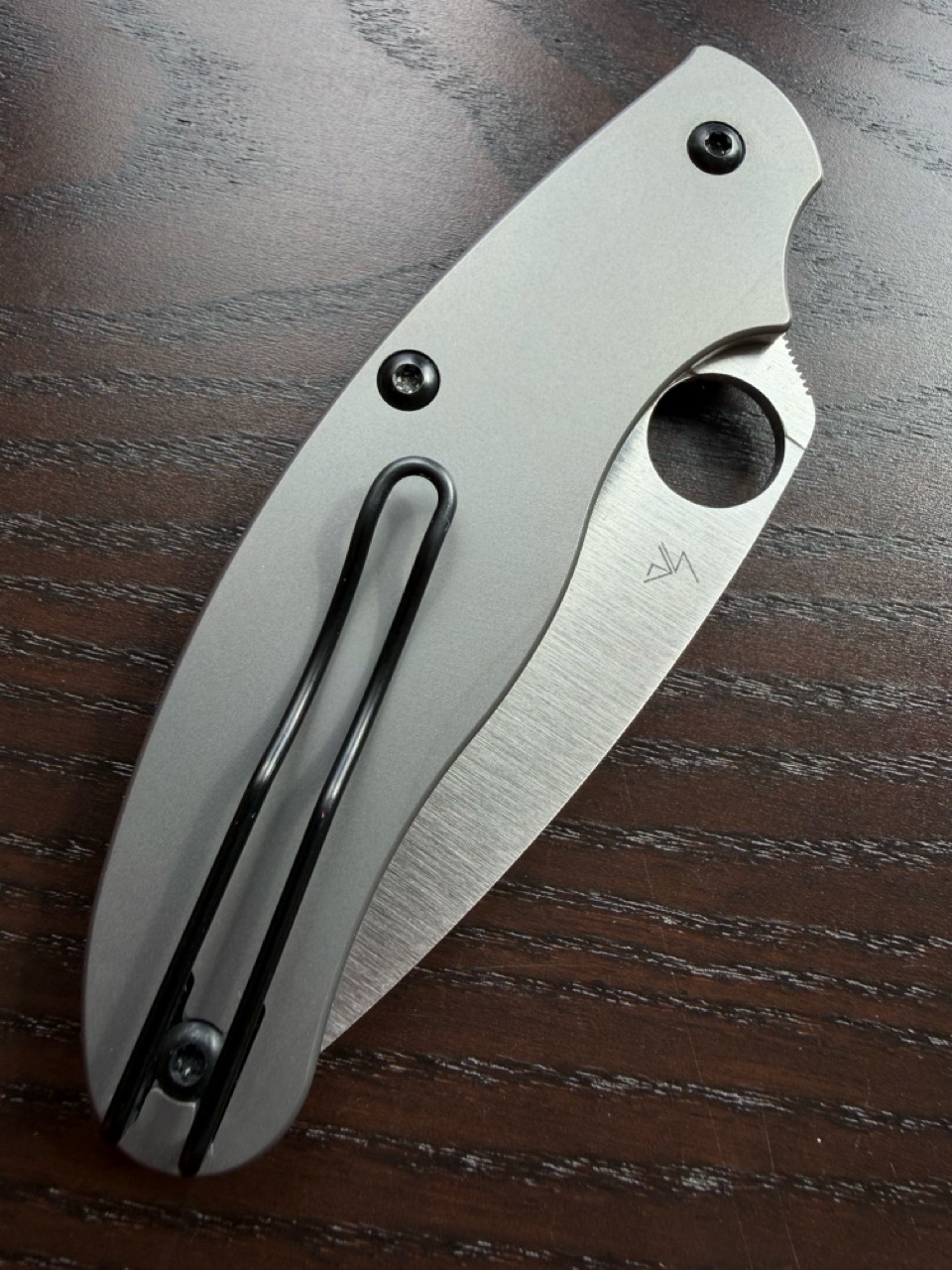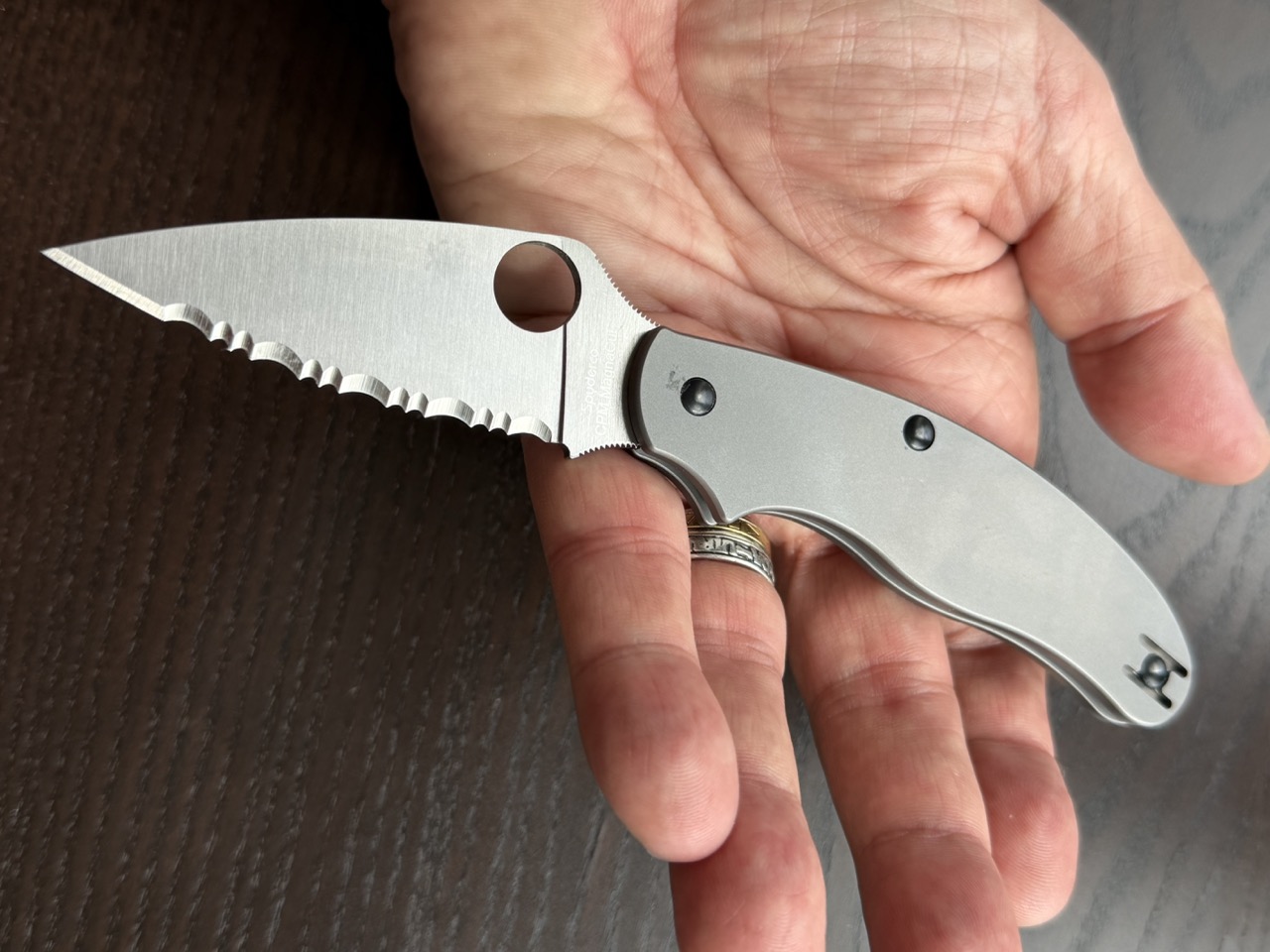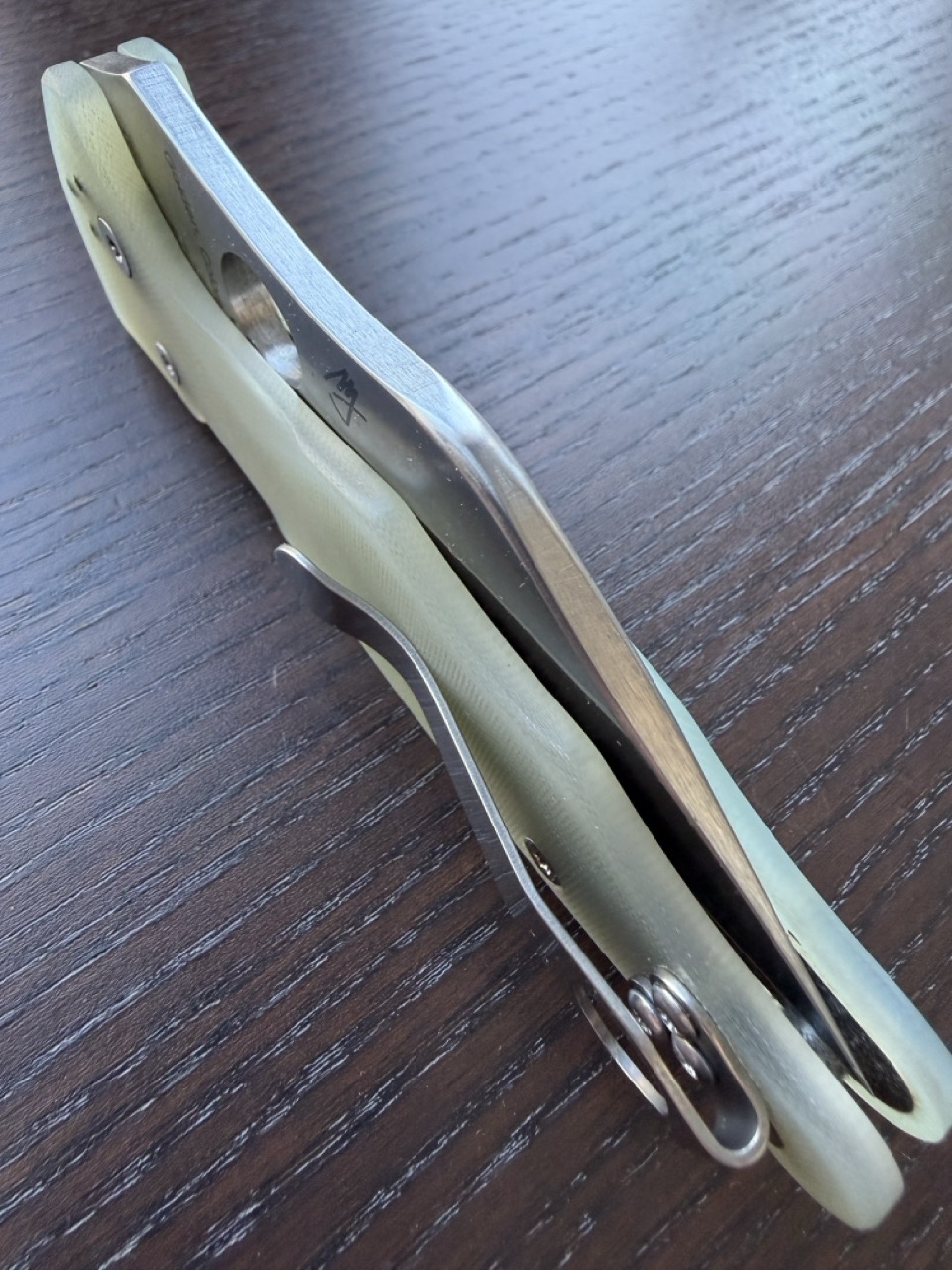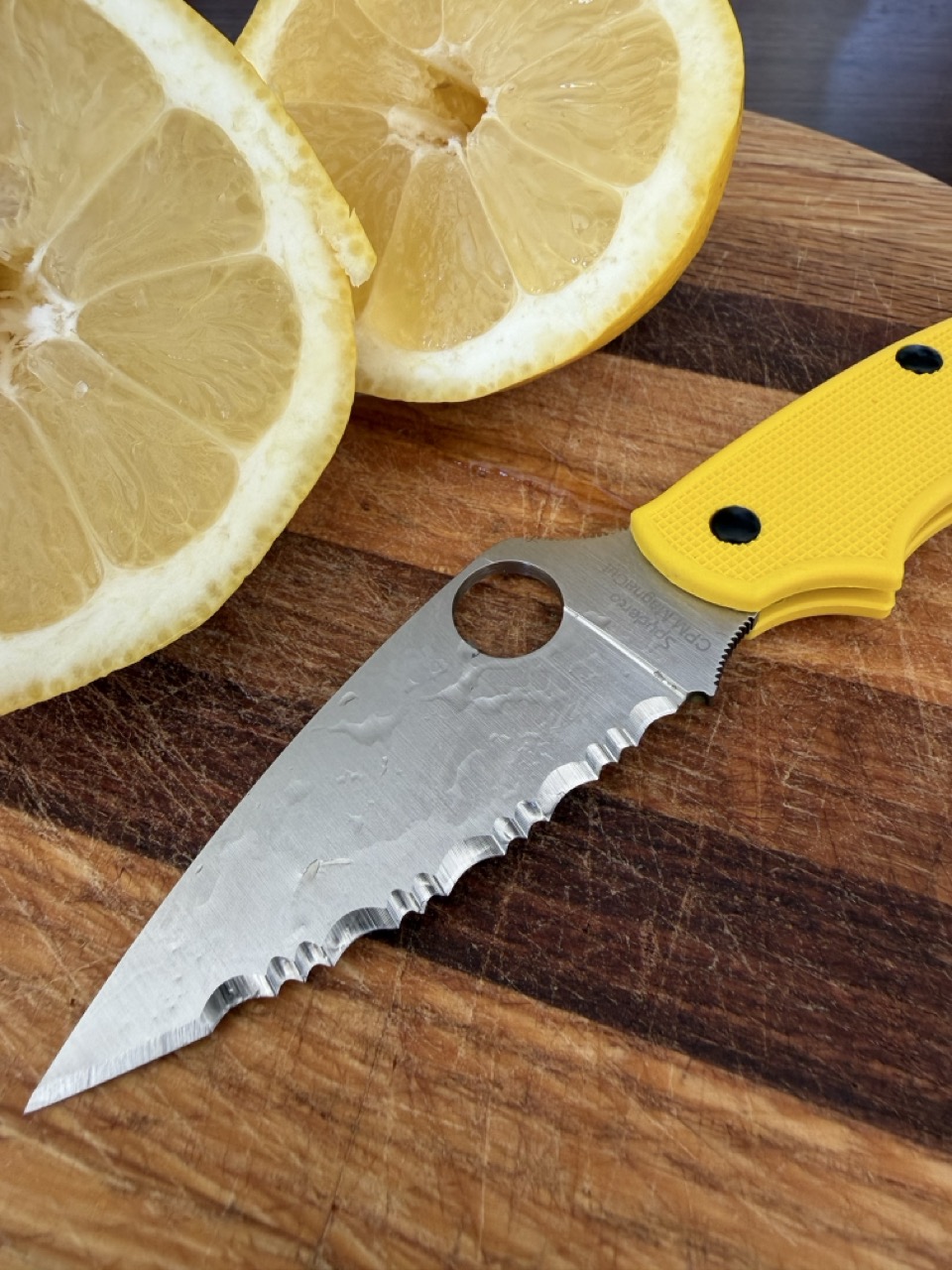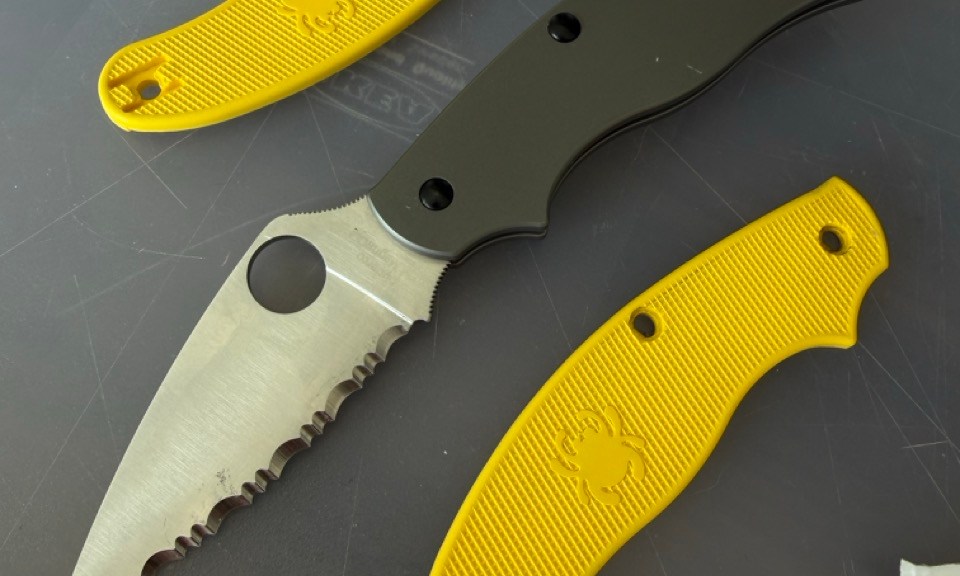
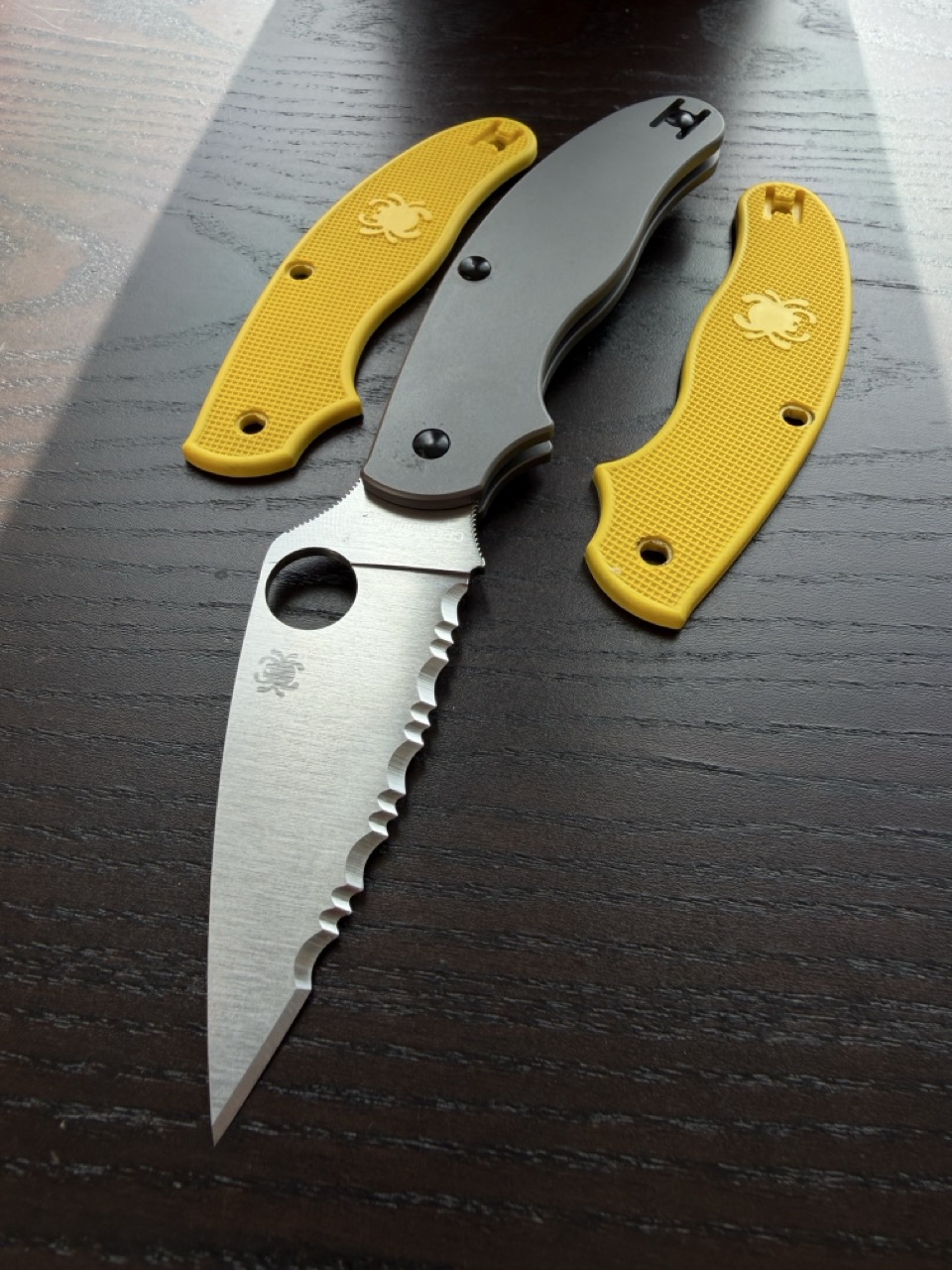
INSTALLING THE TITECH HEINNIE® EXCLUSIVE SPYDERCO UKPK TITANIUM SCALES.

Installing Titech titanium scales from Heinnie Haynes onto a Spyderco UKPK is less a mechanical operation than a quiet exercise in precision, patience, and restraint—something closer to watchmaking than simple knife maintenance. And I’m clumsy.
The UKPK, with its deceptively simple slipjoint construction, hides a strong and finely balanced backspring fork whose tension defines the entire character of the knife. Respecting that tension is the key to a successful transformation. And trust me, it asks for respect because it is strong !!
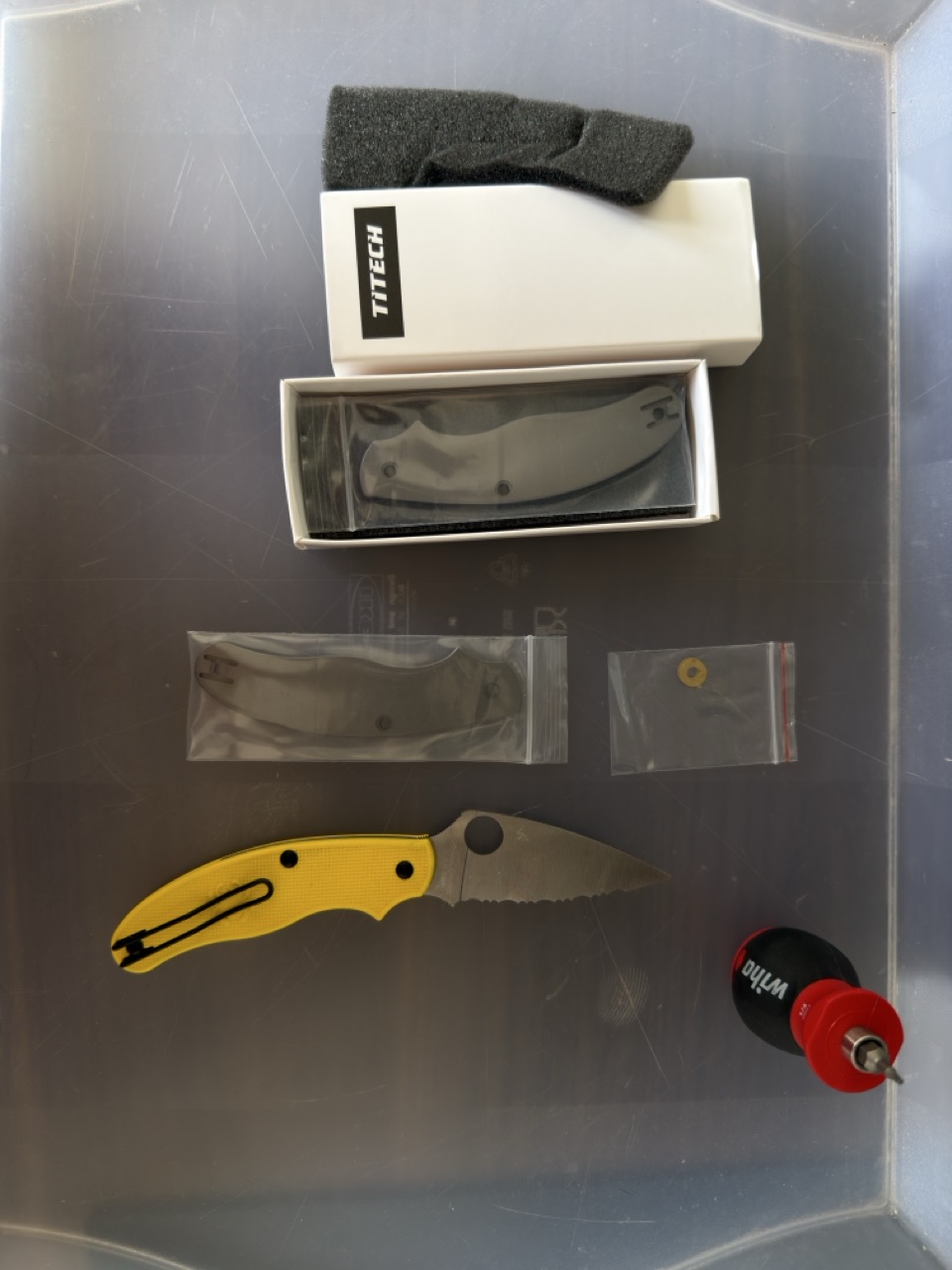
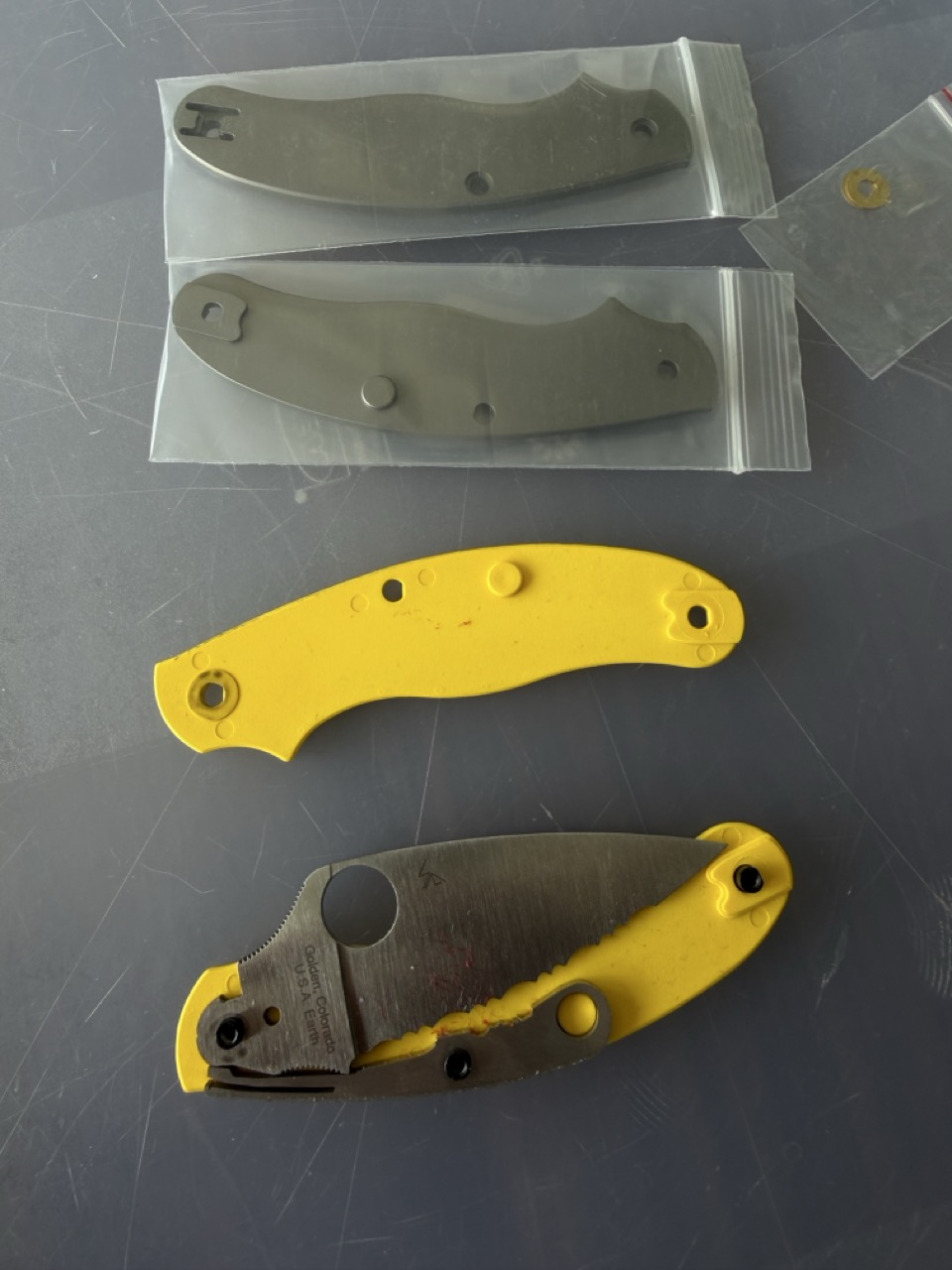
Begin by approaching the disassembly with intention rather than haste. A quality Torx driver is essential, not only to preserve the hardware but to maintain control over each movement. Remove the pocket clip screws first, then the body screws, and only then ease into the pivot. At this stage, the knife is still under spring tension, and it is important to keep a subtle, steady pressure on the handle as the scales begin to separate. The backspring should never be allowed to snap free; instead, it must be guided, almost persuaded, into release.

This moment defines whether the process remains controlled or becomes unnecessarily chaotic.
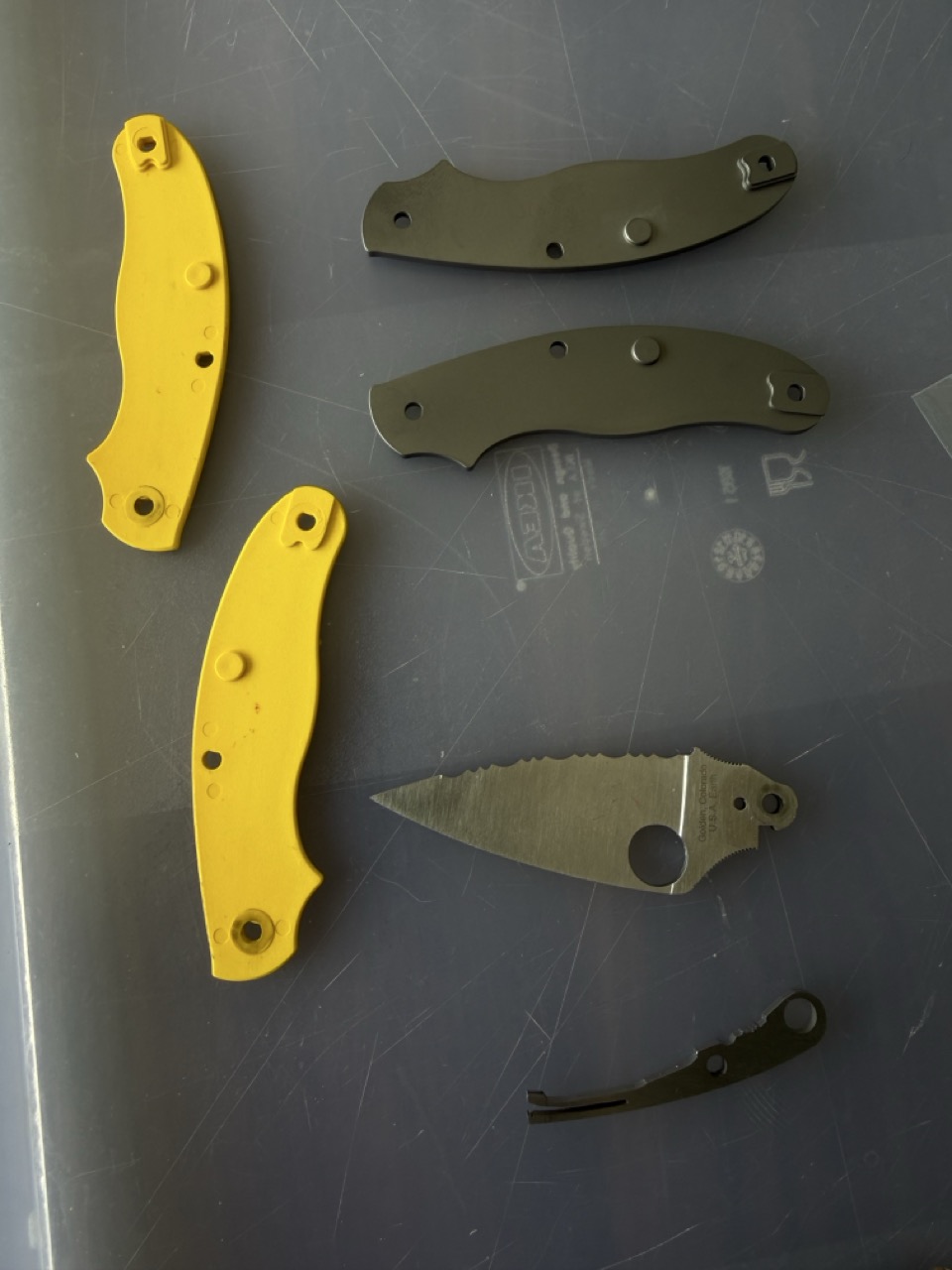
As the original FRN scales come away, the internal architecture of the UKPK reveals itself in a straightforward yet unforgiving layout: blade, backspring, stop pin, pivot barrel, and screws, all of which must be preserved and transferred. The most elegant way to proceed is to move components gradually, keeping their orientation intact, allowing the new titanium scale to receive them in a natural sequence rather than reconstructing everything from memory. The washers, often overlooked, are in fact central to the final action. They must sit perfectly flat on either side of the blade, aligned with the pivot, as even the slightest misplacement will translate into stiffness or uneven movement once assembled.
I have used gaffer tape to maintain the D Shape female screws in place while manipulating the scale.
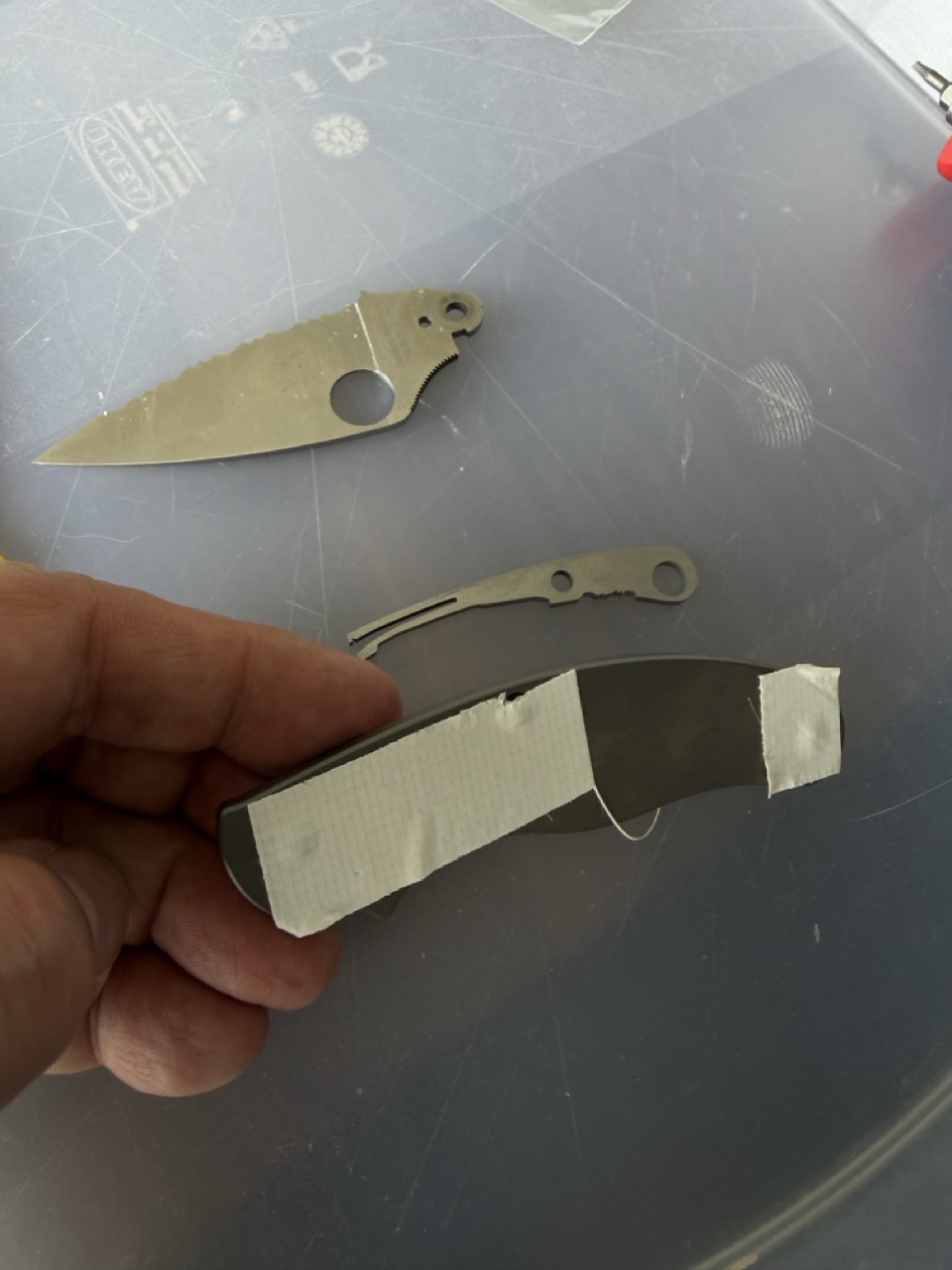
Reassembly is where the transformation begins to take shape. One titanium scale becomes the foundation upon which the blade and spring are seated, their relationship re-established with careful alignment. The second scale closes the structure, and the pivot is introduced not as a point of tension but as a placeholder, tightened only enough to hold the system together.
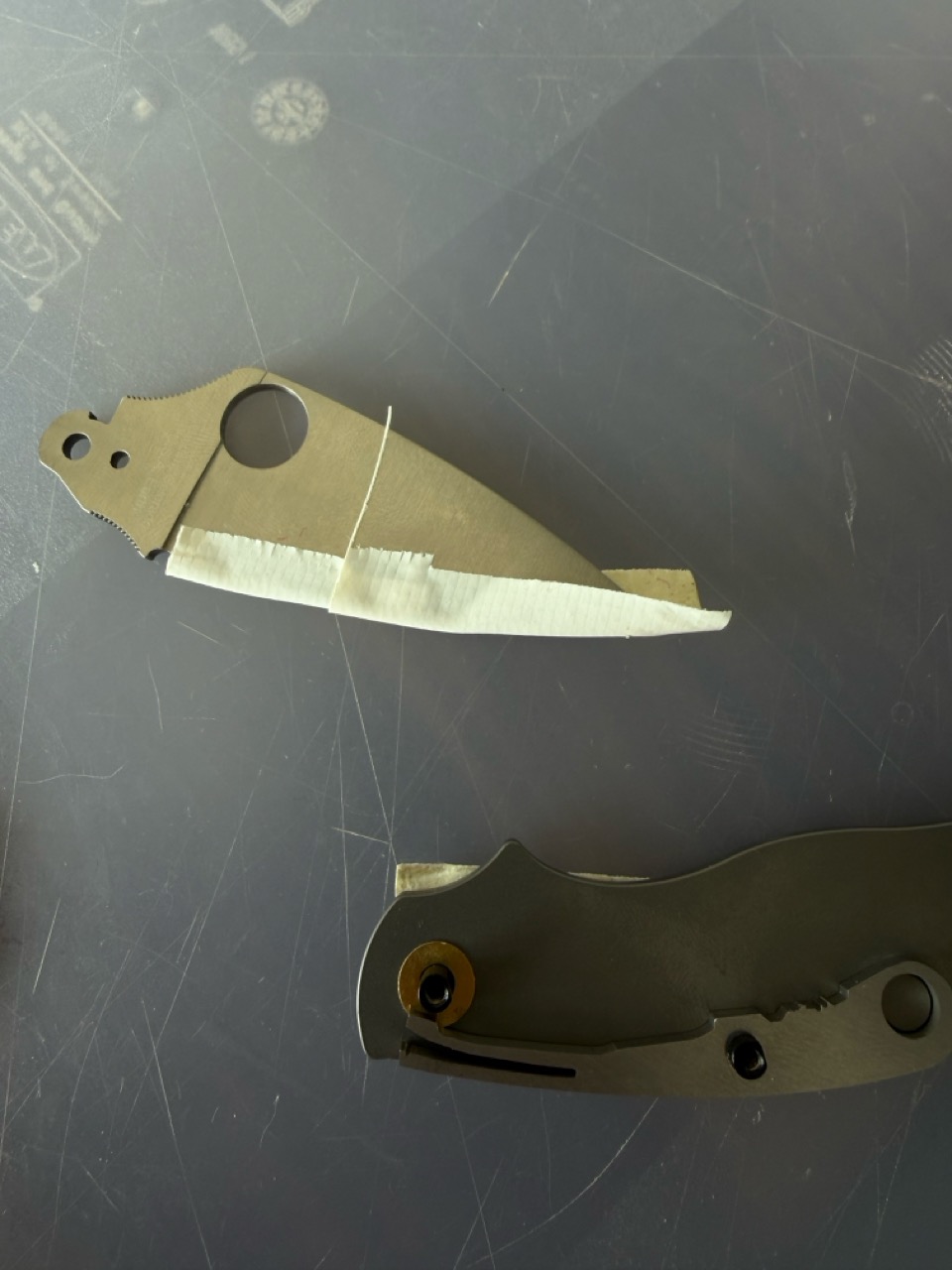
Insert the blade carefully into the fork of the backspring, ensuring it seats naturally without forcing the geometry; from that moment onward, the entire operation shifts to the opposite end of the spring, whose tail must be guided with precision into the recessed channel of the titanium scale, where it locks into place and defines the tension of the mechanism.
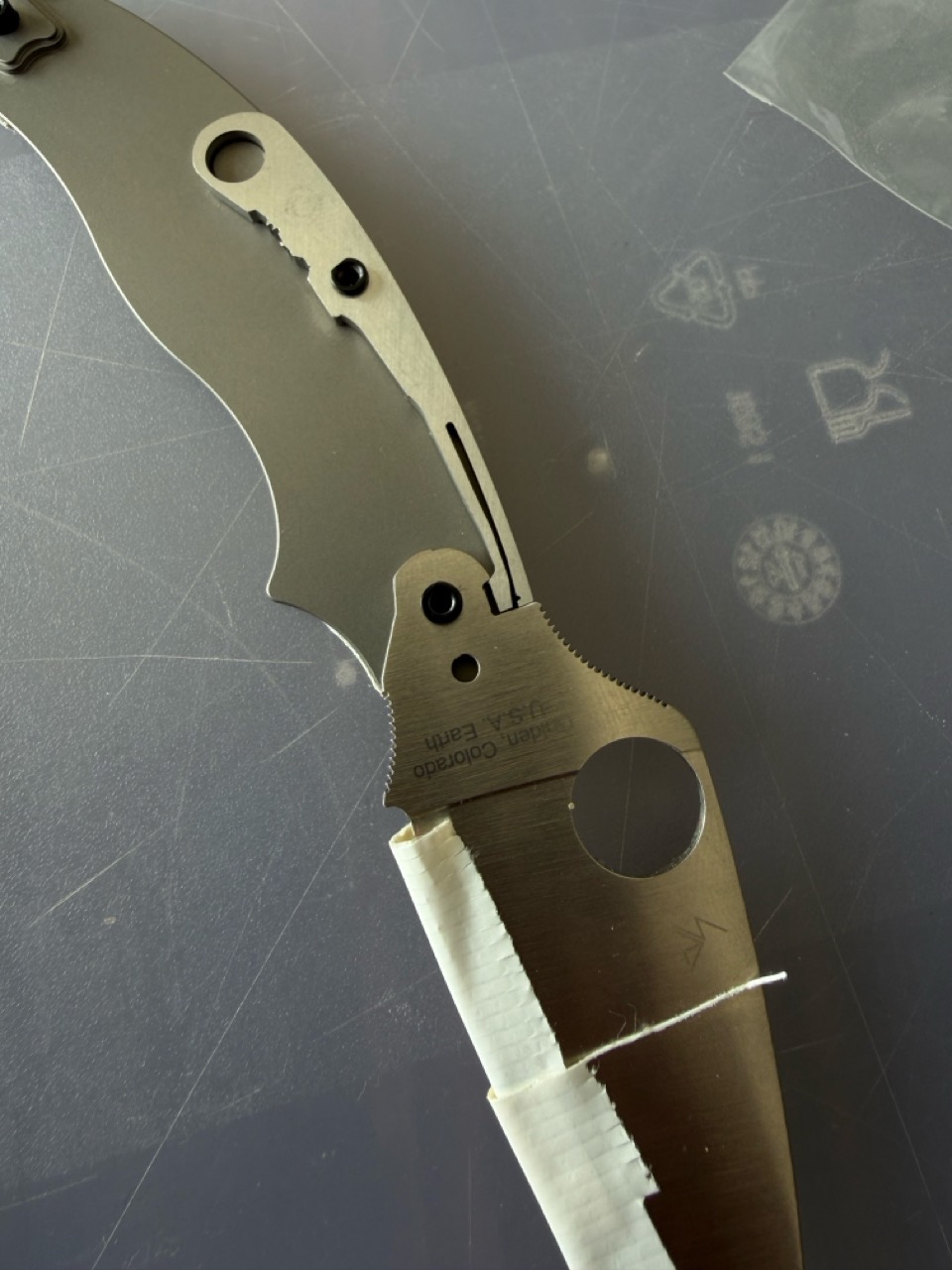

The body screws follow, also left deliberately loose. At this stage, the knife should feel unresolved, almost unfinished, and that is precisely the intention.

The refinement comes next, and it is here that the distinction between an average installation and an exceptional one is made. The body screws should be brought to tension first, gradually and evenly, allowing the frame to settle without distorting the spring. Only then should the pivot be adjusted, and even then with the lightest touch, in minute increments. The temptation to over-tighten must be resisted entirely. On a slipjoint like the UKPK, excessive force does not create solidity; it creates imbalance, increasing spring pressure artificially and compromising the fluidity of the action. In extreme cases, it risks stressing the spring itself, which is the heart of the mechanism.
Keeping the pivot loose with a touch of threadlocker is exactly the right instinct; it allows the mechanism to settle into its natural alignment before you commit to final tension.

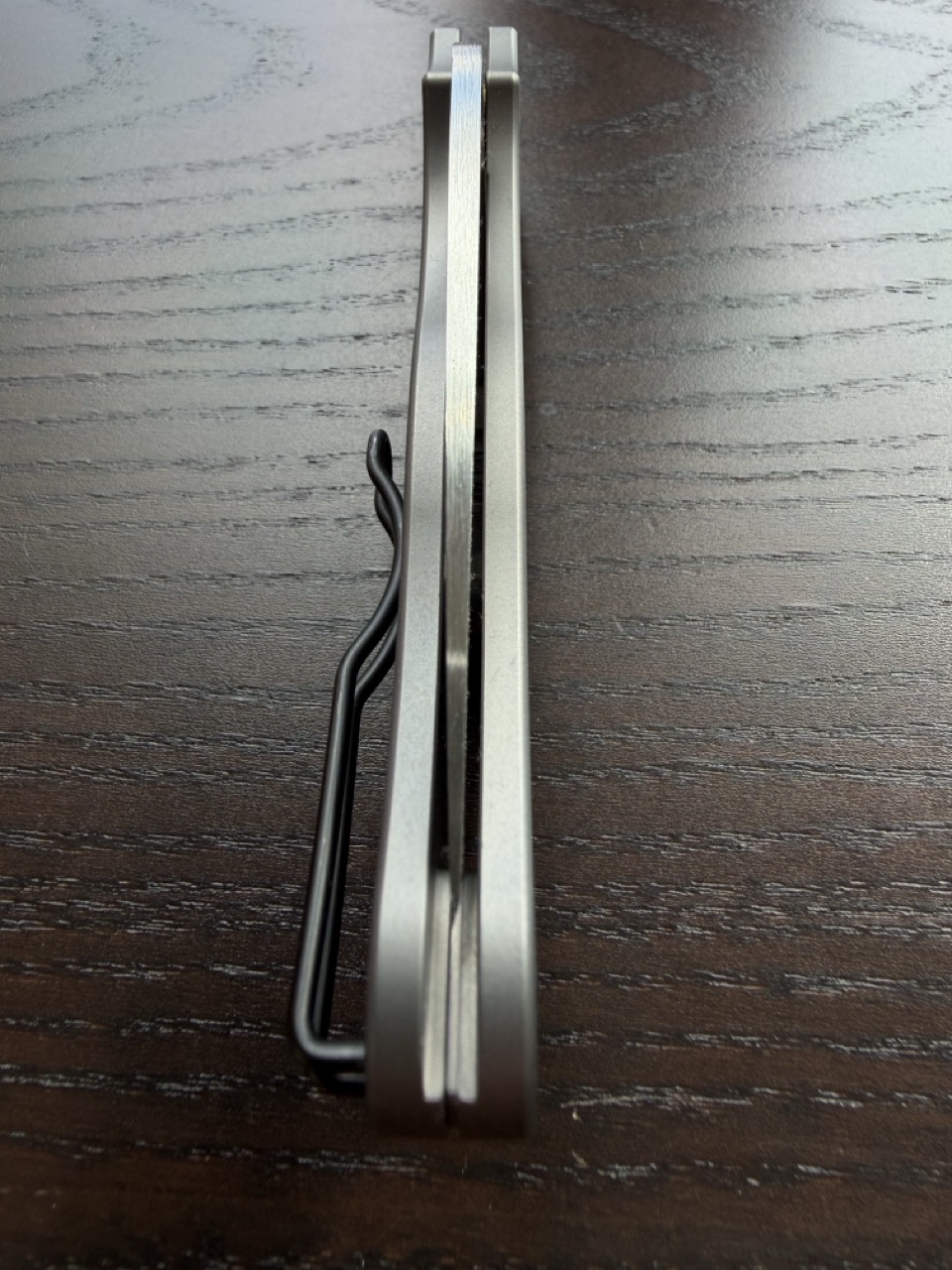
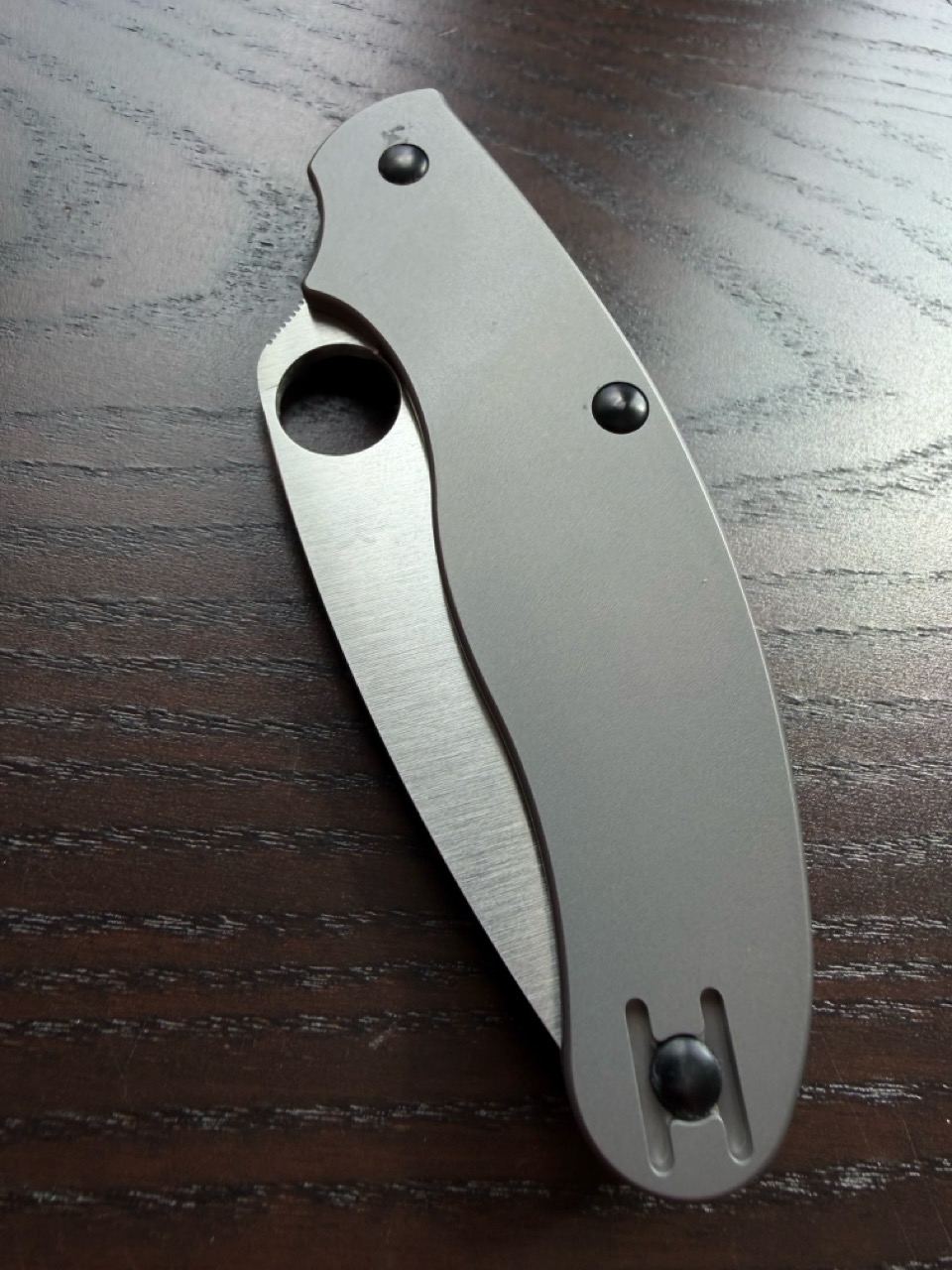
The final result: the UKPK gains a subtle weight, a cooler tactility, and a sense of structural integrity that the original FRN cannot provide.
I love the added heft—it enhances the feel while preserving the rustproof nature of the UKPK Salt.
t’s a rare upgrade where nothing essential is lost. Instead, everything is simply… tightened, deepened, and made more intentional.
And for around 57 euros, it feels like a genuine bargain.
Heinnie Haynes also offers brass and copper Titech scales, though they didn’t quite suit the spirit of my Spyderco UKPK Salt.
But if Sal Glesser ever releases a 52100 version of the UKPK, copper would suddenly make perfect sense. 🙂
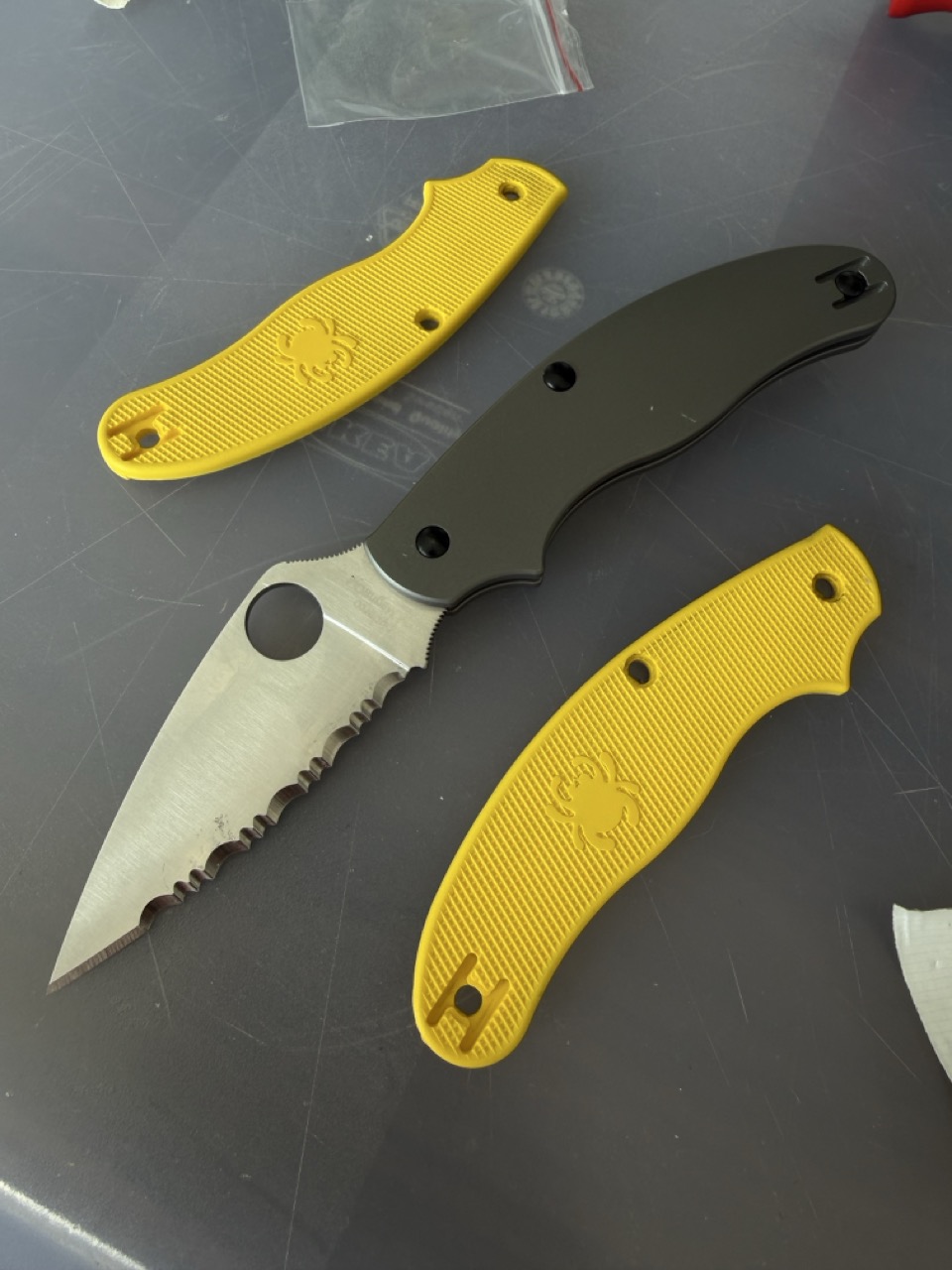
Now my Spyderco UKPK Salt has developed a beautifully smooth action paired with a reassuringly strong mechanism. The mid-stop produces a crisp, satisfying clang that subtly signals quality. It’s a pleasure to handle, with a confidently positive open position that inspires trust every time.
Teeth Don’t Lie: Field Notes on a Rasp Knife named “Bull Cutter”.

There are teeth… and then there are teeth.
Serrations — and rasp.
Let’s get one thing straight.
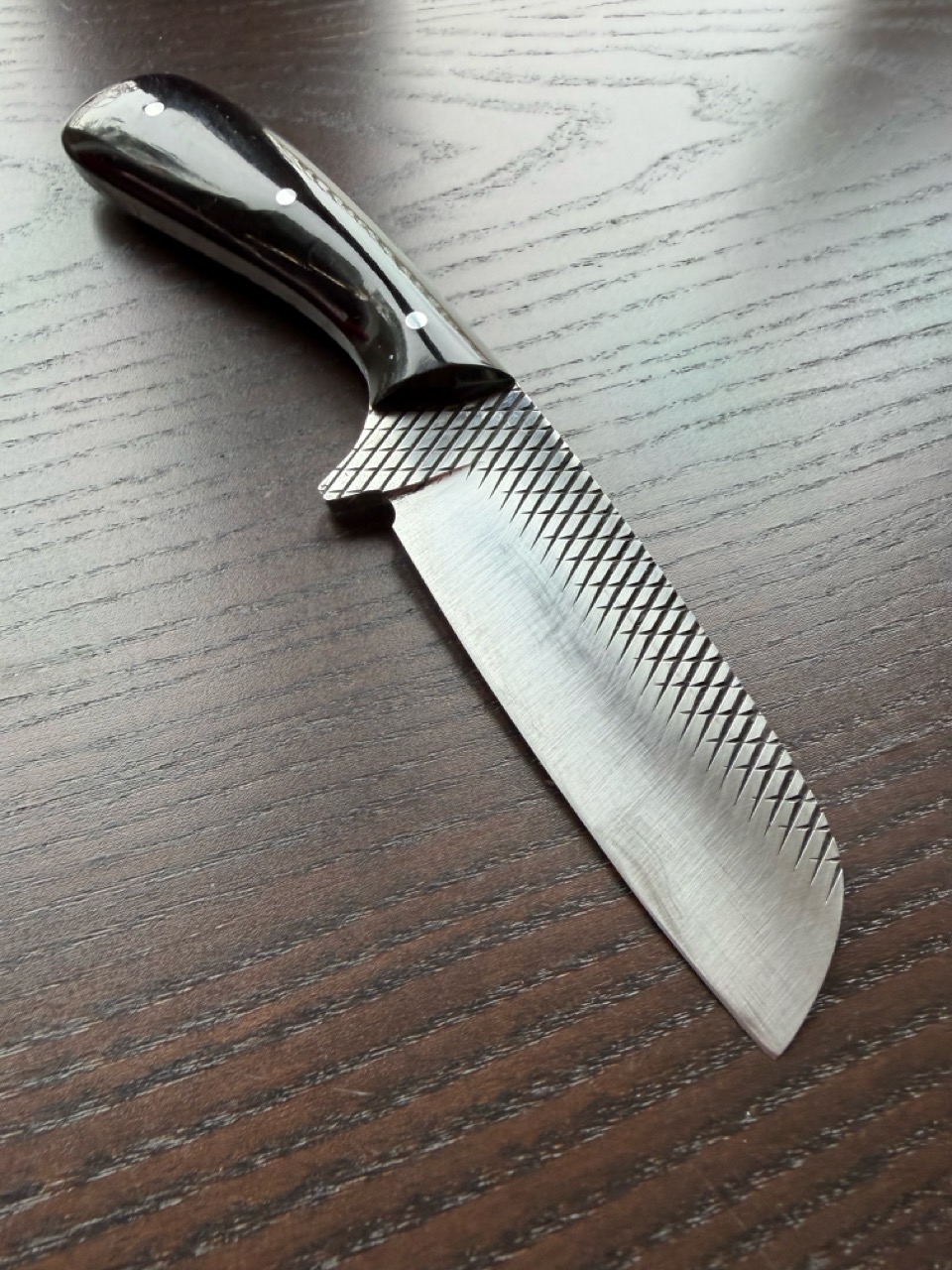
This is not a “knife made from a rasp.”
This is a farrier rasp that refused to die.
(A farrier takes care of the feet and hooves of equines, whether donkeys, ponies or horses. He takes care of fitting and trimming the shoes.)
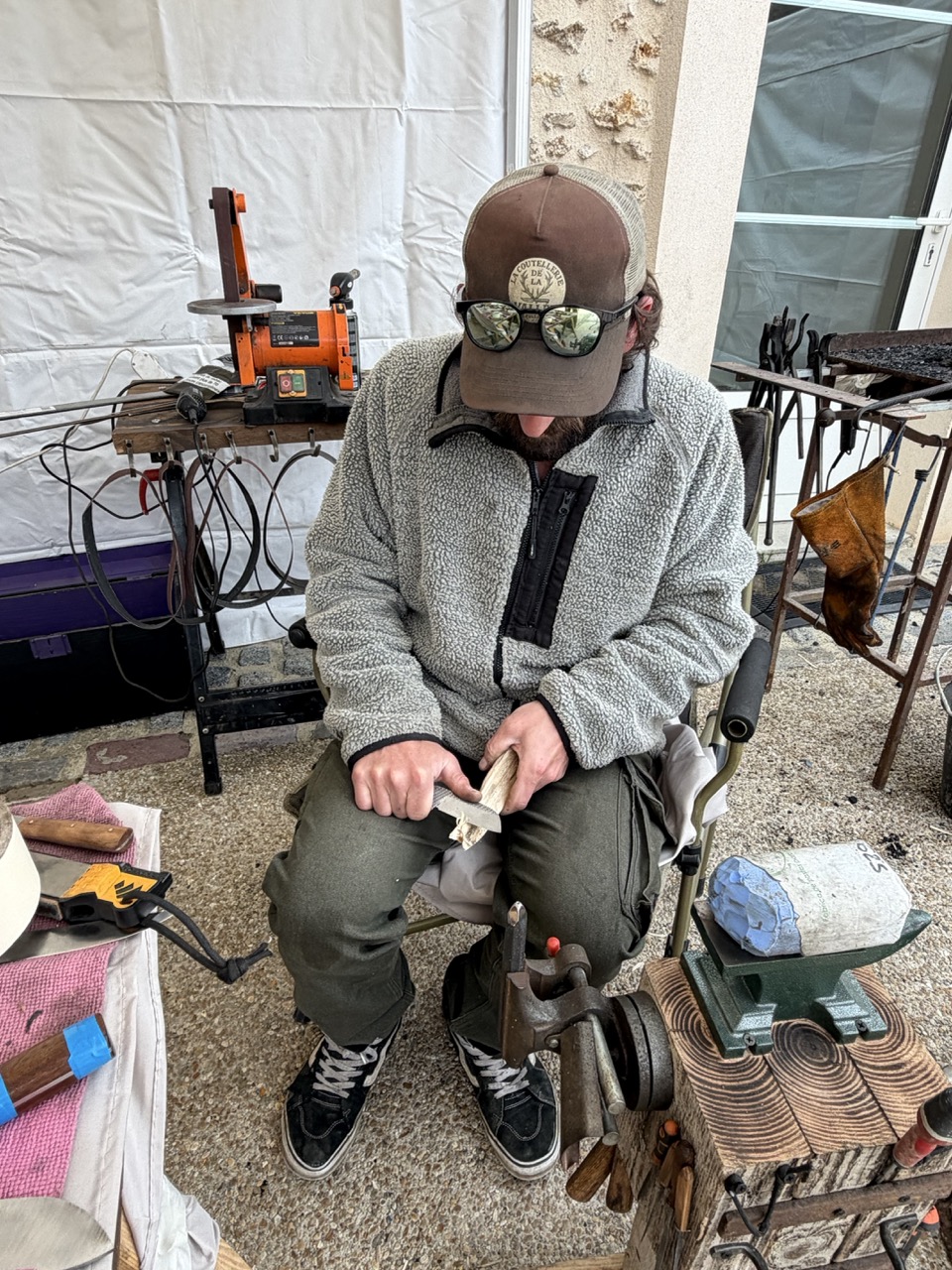
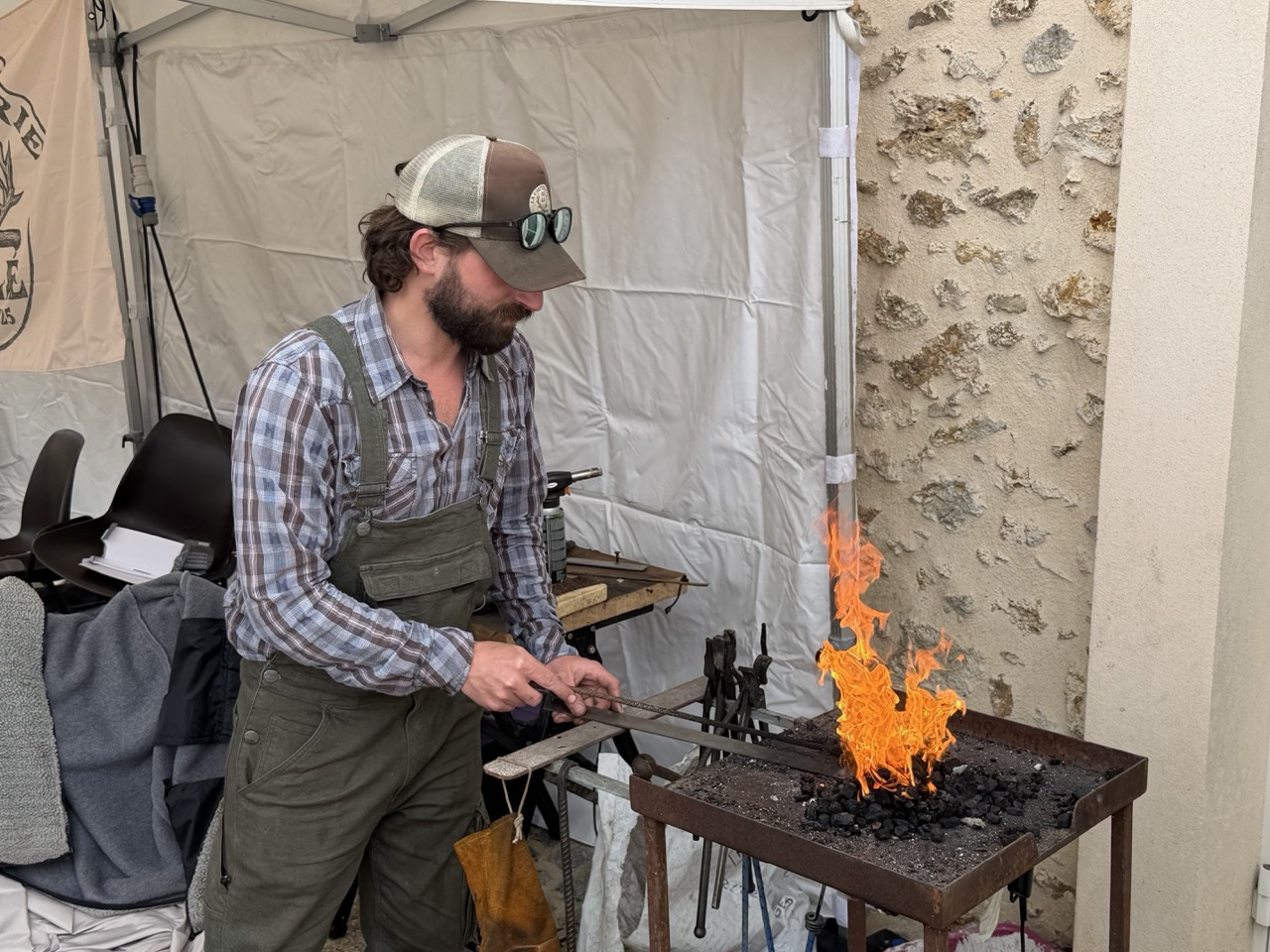
And when the knifemaker knows exactly what he’s doing — and here, Robin Medina Thomas from La Coutellerie de la Vallée clearly does — you end up with a blade that doesn’t just cut. It commits. Playfully.
Carrying its inheritance in both form and function.

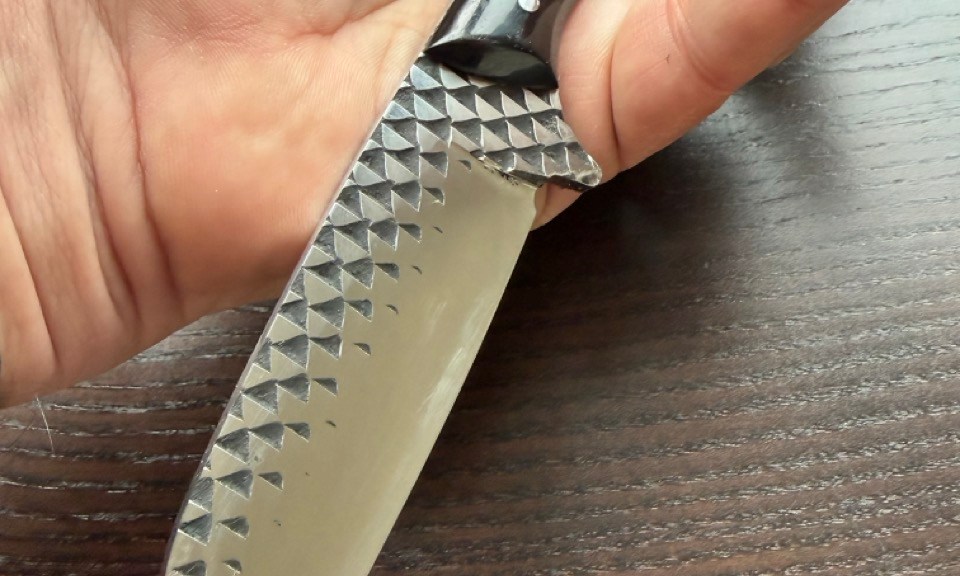
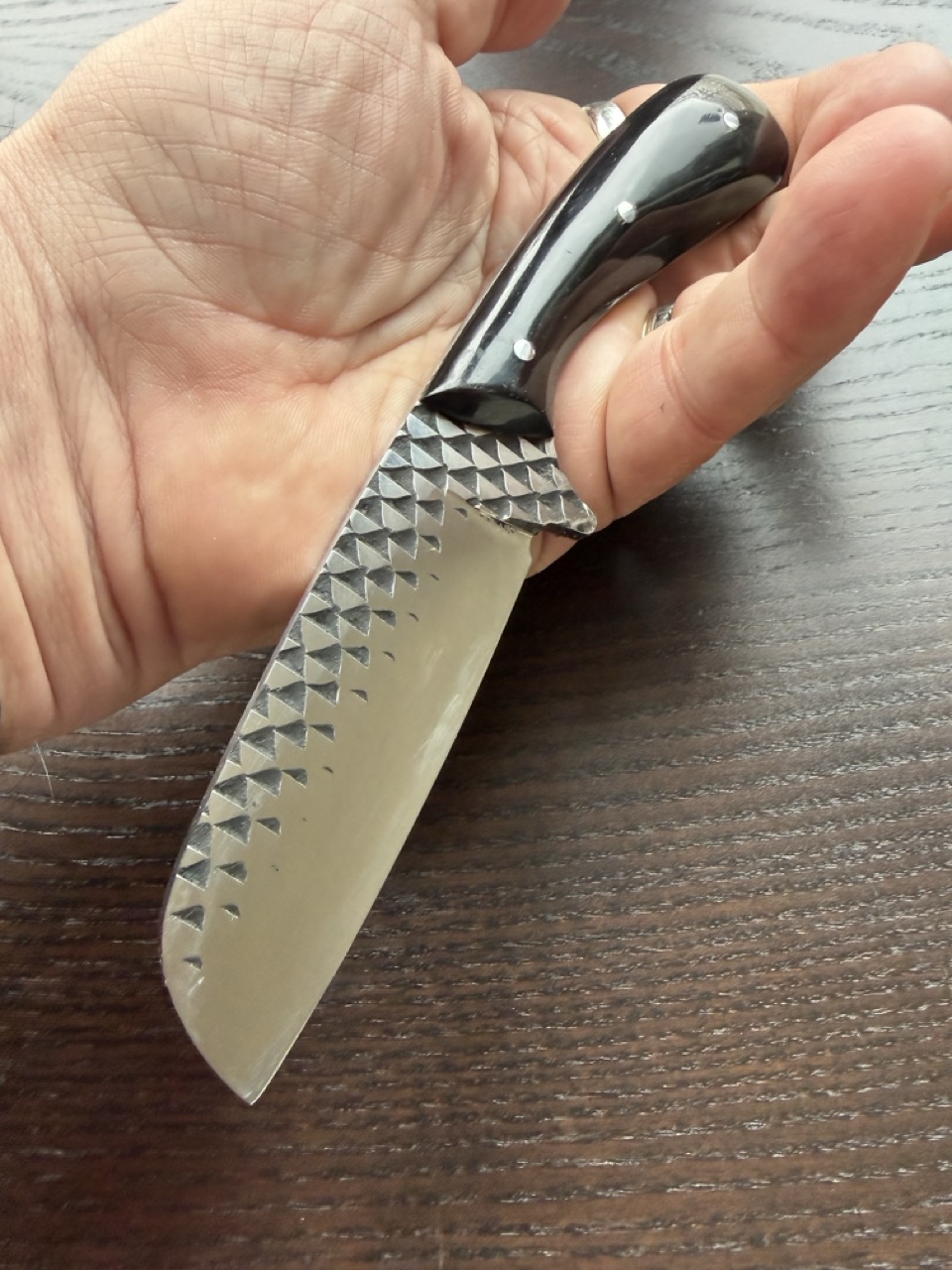
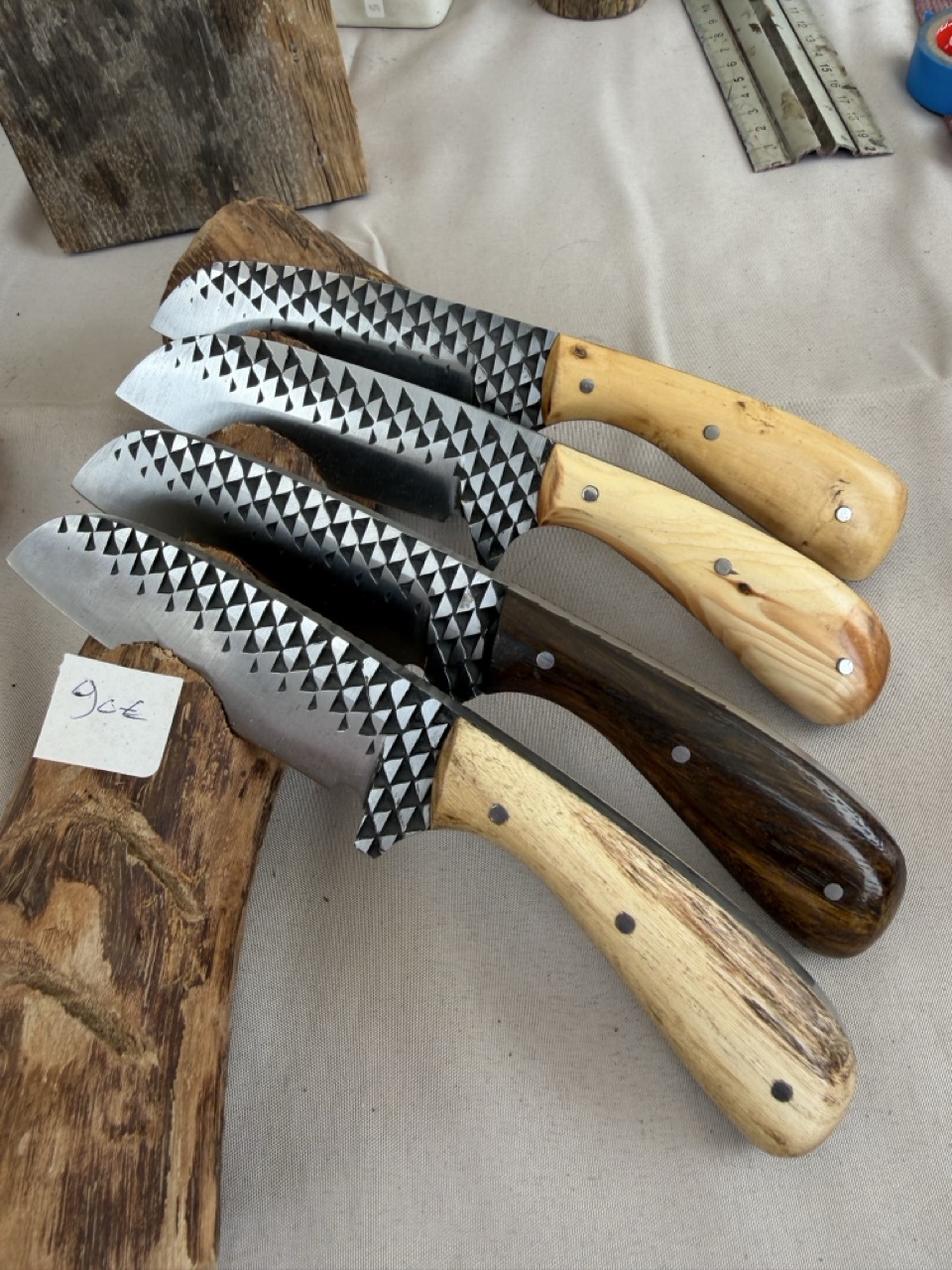
The blade retains the unmistakable imprint of its former rasp life.
A thick spine, yet a remarkably fine cutting geometry. Along the upper section, the rasp’s triangular teeth remain smoothed — not as ornament, but as a deliberate act of preservation… a generous spine that offers a wide, comfortable track for the thumb.
These elements speak of force.
From abrasion to raw, unapologetic function.
And then, just below, everything shifts — through transformation.
In an age of excess and waste, this feels almost essential.
Not just recycling, but refinement.
A second life in excellence !

Rasp steel is high-carbon steel, typically around 1% carbon.
An old-timer alloy — simple, proven, and unforgiving if mishandled. No modern complexity.
Just steel that responds directly to heat, to grinding, to use.

And when treated right, it delivers exactly what matters:

Edge, bite, and honesty — with a potential remarkable tolerance for abuse.

That’s why this kind of steel has long been favored for expedition and field knives (TOPS, ESEE…). It has proven itself where it matters most: in wood, in weather, in real use.

Not in theory. In the field. You cant go more traditional than this.


Deep, smooth, almost liquid in its reflection, the zebu horn handle creates a striking contrast with the blade’s aggressive texture — a dialogue between softness and bite.
The transition is not only visual. It is tactile. Almost sensual.
Oh, this is a tool made with love, and a companion, still becoming.

And you feel it immediately in the balance and ergonomics.
The fingers and palm find their place naturally — no adjustment, no hesitation, no hot spots.

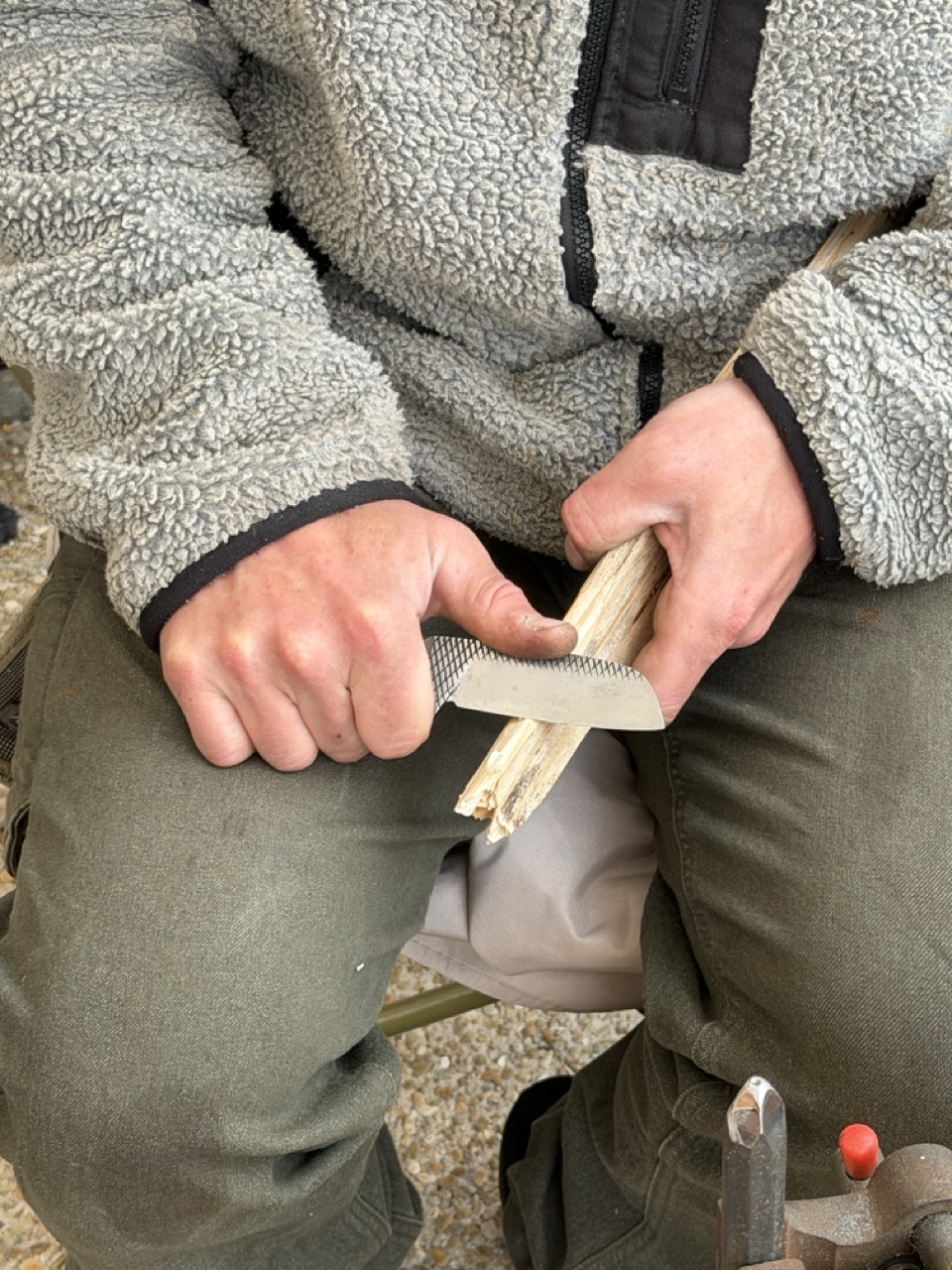
The spine is just right for controlled push cuts, offering both comfort and precision.
This is, above all, an excellent trimming knife.
It can also find its place in bushcraft.
Easy to bring back to a razor edge, and forgiving in use — a knife that works with you, not against you.

The profile remains restrained.
A compact geometry, balanced, with a gentle curvature that favors control over demonstration. The bevel is generous, inviting engagement without excess resistance.

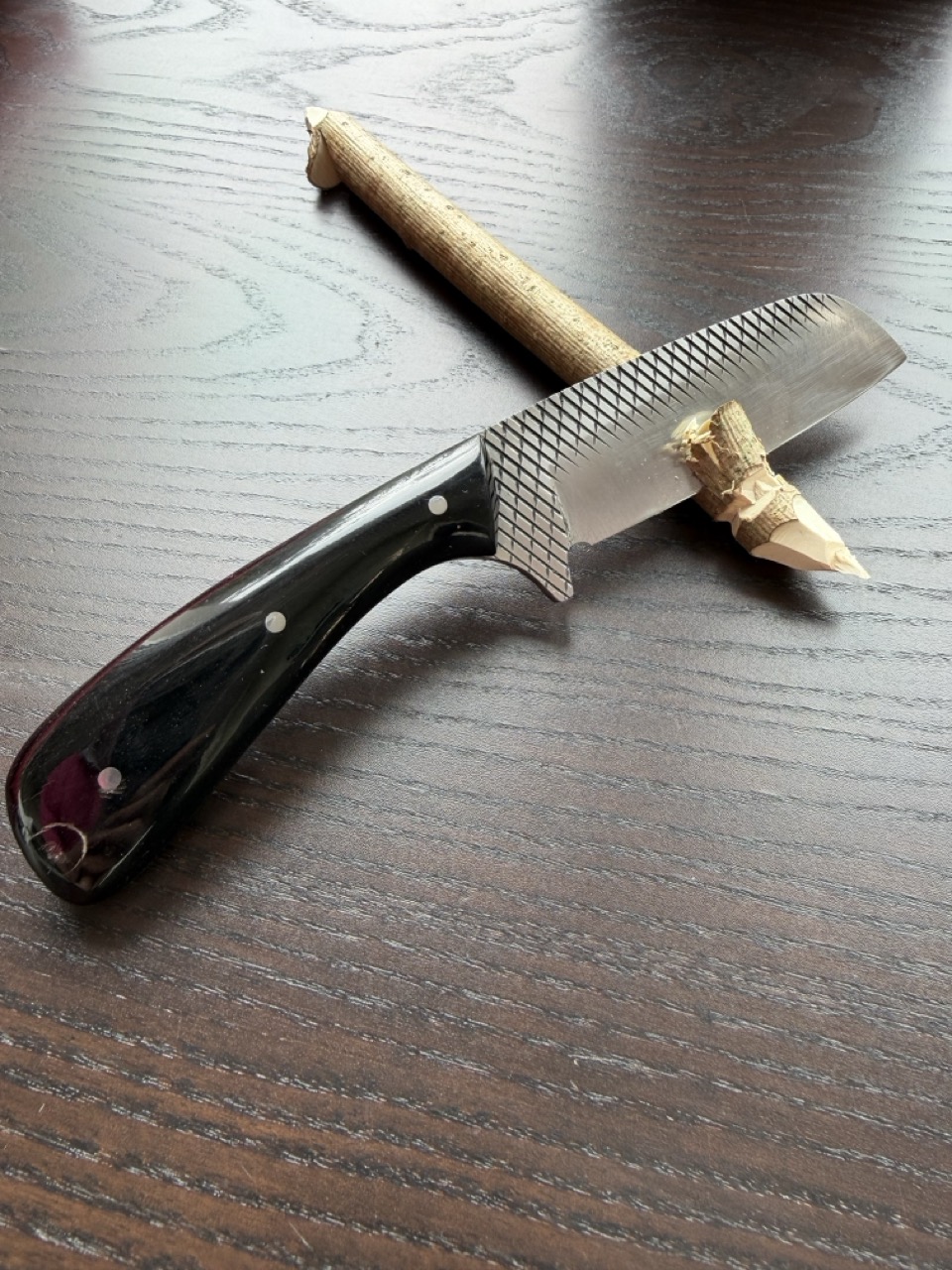
Used in wood, the blade reveals its true character. It confirms the visual promise: entry is immediate, the cut remains stable, the material yields without fracture.

Under diamond stones, the edge feels stubborn—almost reluctant to yield.
But that resistance is a good thing.
As legendary knifemaker Des Horn once put it: “It’s not easy to grind carbon steel without raising the temperature too high. If it turns blue while grinding, it’s much softer.”
And that Bull Cutter’s rasp steel? It’s properly hard.

As a bonus:
Carbon steel and zebu horn share a common trait: they will change.
The steel will soon take on a patina, marking time and use.
The dark brown horn will slowly deepen, its surface already showing and gaining subtle complexity.
These are not signs of wear. These are the continuation of the object.

And Robin’s Bull Cutter is really a knife made to be enjoyed in the woods. He will see a lot of kitchen times too because the sheepfoot blade is non-threatening, almost reassuring — even to those who don’t speak the language of knives, as they are drawn to the story of a farrier’s rasp given a second life.
The guard locks the hand in place with quiet confidence, and the thin edge invites controlled push cuts with ease.

Robin made this knife for his own enjoyment — and you can feel it.
There is substance here. A certain heft in the hand, just enough to carry momentum when working light branches. It’s not meant for show — it’s meant to be used.
A compact blade with presence.
A small tank, stripped of frills and completely free of tacticool pretension.
Instead, it carries something rarer:

There is an old-timer aura….
The kind of knife that feels familiar the moment you pick it up as if that steel had already lived a looong life before reaching your hand.
It also echoes my long-standing appreciation for Schrade Old Timer fixed blades: the same kind of steel, the same pragmatic lineage.

“Excellent. Those are heat treated for hardness and not strength but are thick enough to be strong enough.” Des Horn.

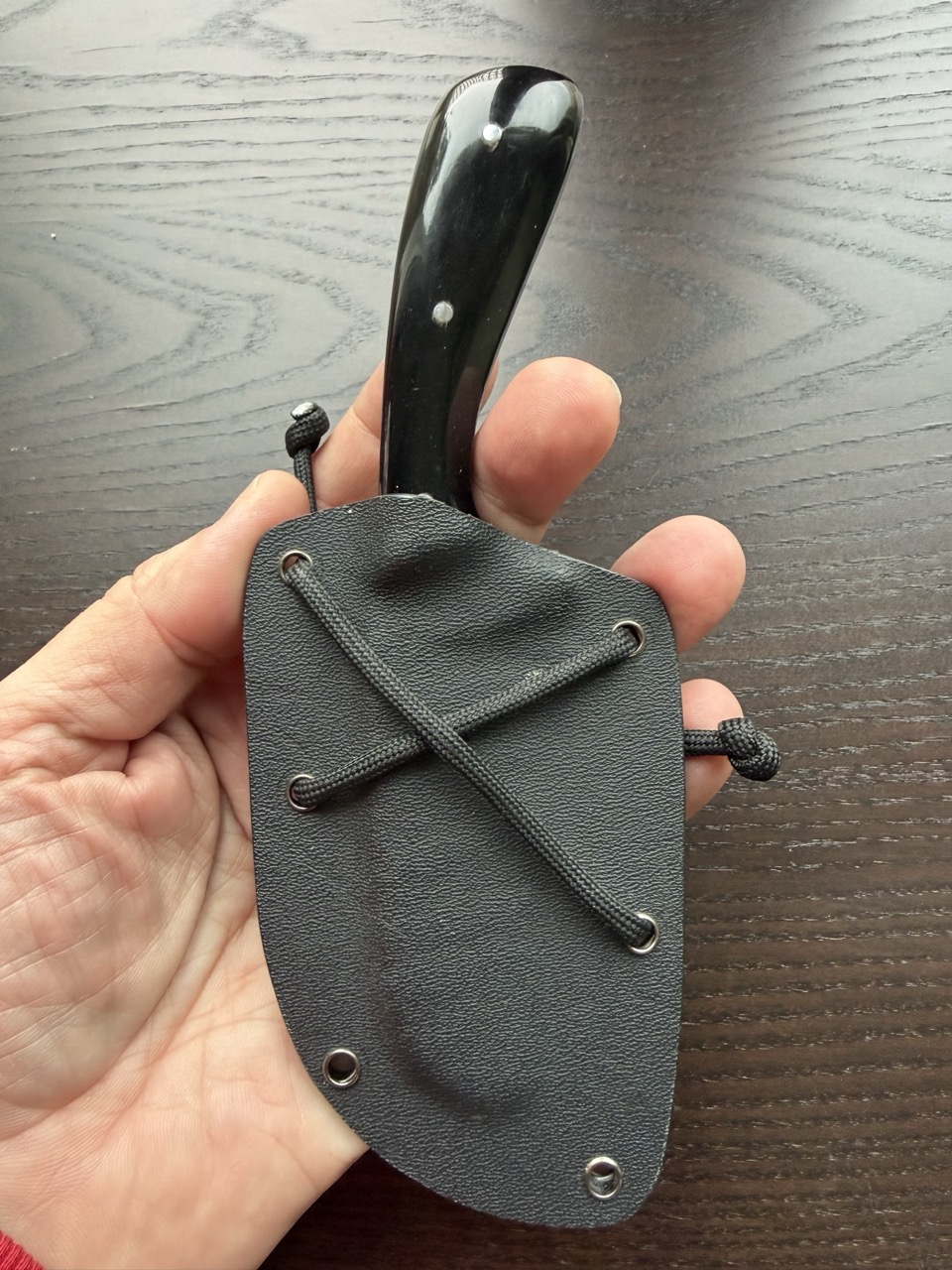
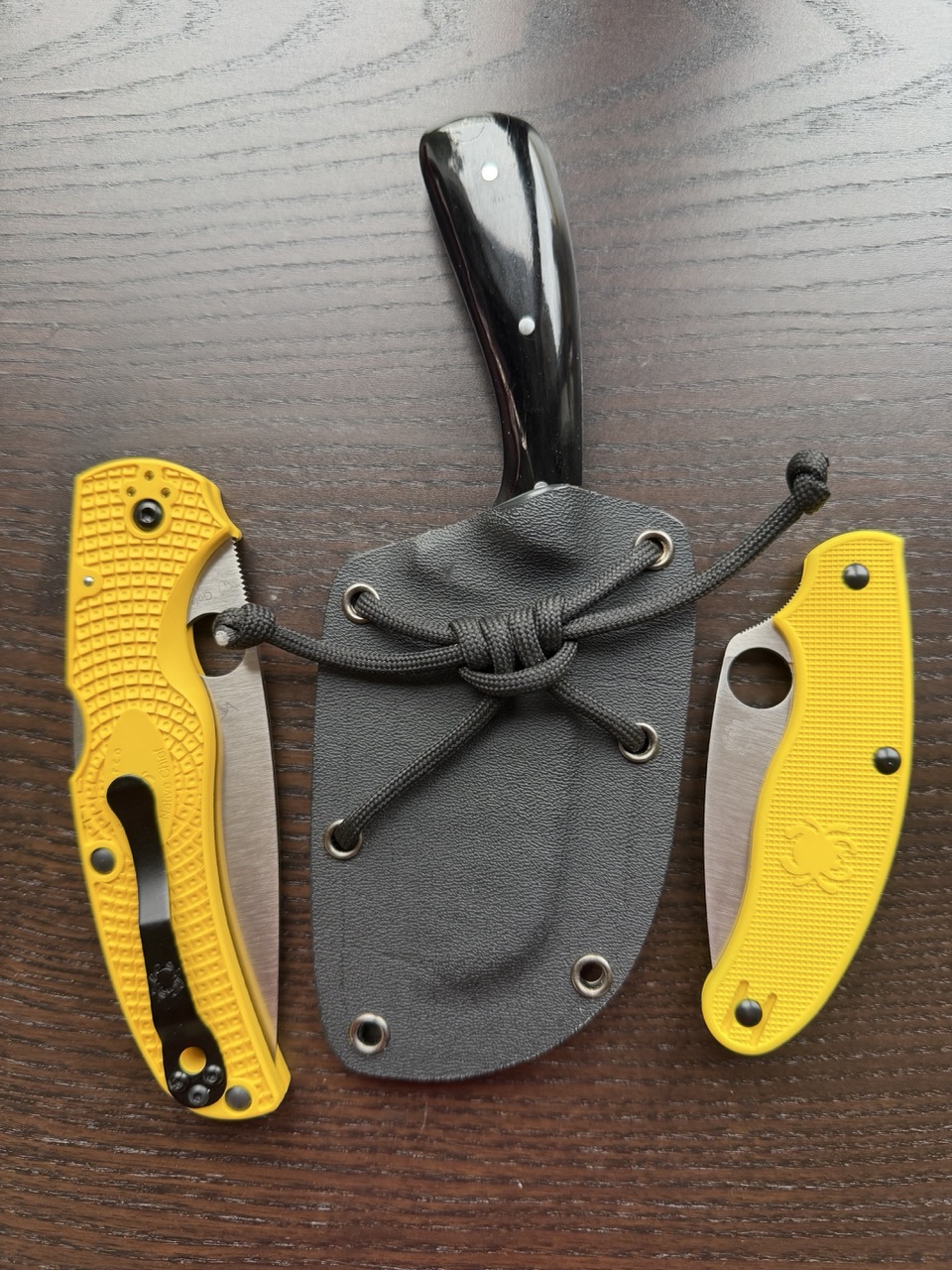
And then there is the sheath. Modern. Minimal. Black. Functional.
No unnecessary flourish — just a pancake kydex shell, shaped tight to the blade, held by a simple cord system that lets you adapt carry without overthinking it.
Your knife is a tool, destined to be in your pocket, belt or bag, when you go in the woods.
This kind of sheath are indestructible and they dry easy.

The handle can be crafted from a selection of carefully chosen woods and natural materials, each bringing its own character and depth:

  • Curly Birch — light-toned and finely figured, with subtle flame patterns that shift under the light, offering both elegance and warmth.
  • Boxwood — dense and smooth, with a pale golden hue that evokes traditional European craftsmanship and understated refinement.
  • Yew — rich in contrast, blending warm amber tones with darker veins, a wood long associated with heritage and resilience.
  • Yellow Locust (Black Locust) — robust and naturally durable, with a deep, earthy coloration that speaks of strength and longevity.
  • Rosewood — dark, luxurious, and complex, with deep reddish-brown tones and a natural luster that brings a sense of quiet opulence.
  • The list goes on…

For around 100 euros (mine was 110), the Bull Cutter doesn’t belong in a display case. This is Robin’s favorite design and best seller. It belongs in the forest — in valleys of green and grey, following the rivers as they meander through the land.

It is a coup de cœur for me — and my kind of tribute to a young, gifted knifemaker.

In use. This rasp steel was born to remove matter.
It still does in a new sharp shape.

La Coutellerie de la Vallée
https://www.facebook.com/profile.php?id=61582645504772
Dampierre-en-Yvelines, France
An artisan workshop dedicated to the crafting of bespoke knives and the art of fine sharpening.
Each piece is shaped with care, guided by tradition, and made to endure in use.

📞 +33 7 61 83 52 59

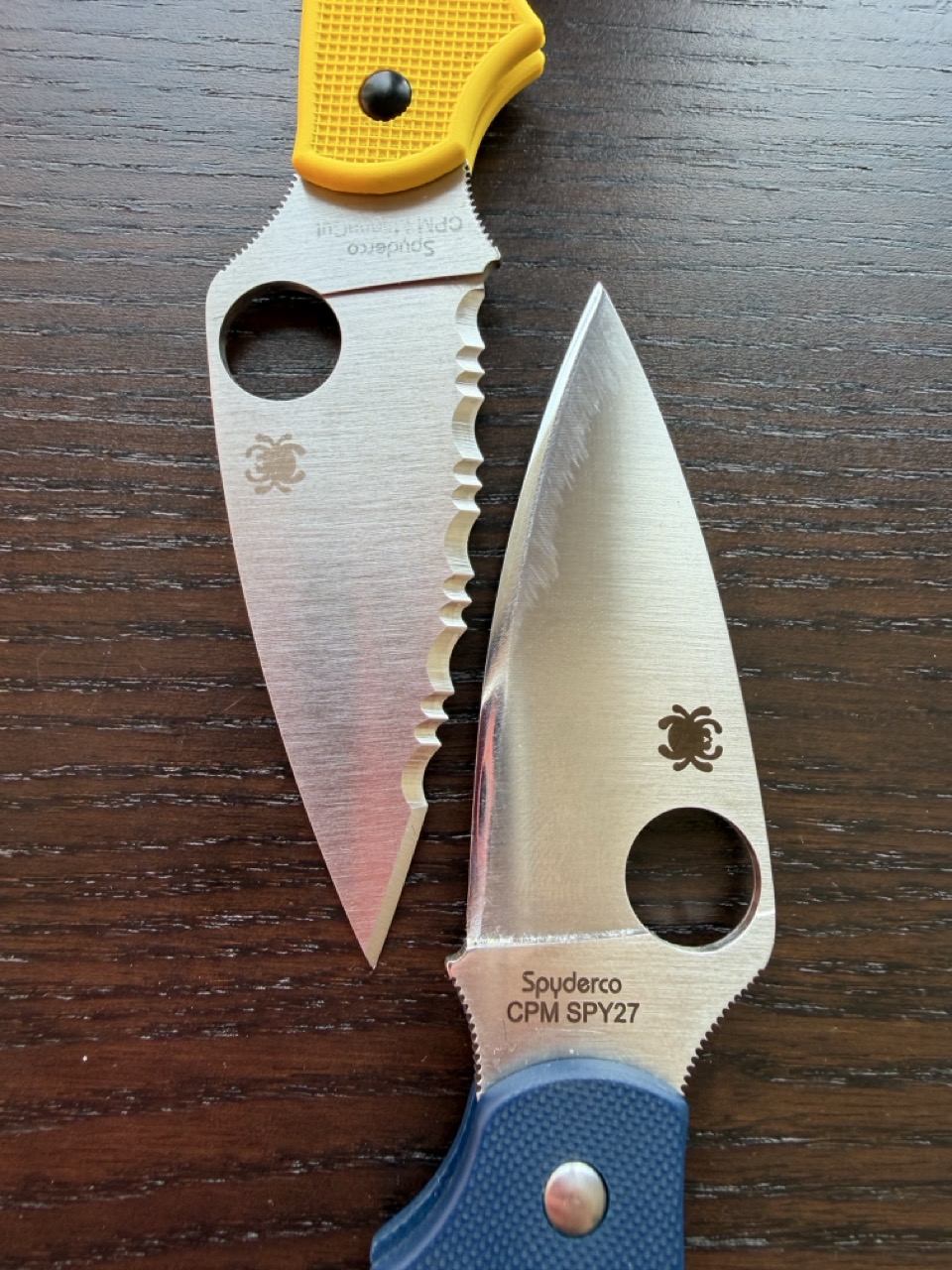
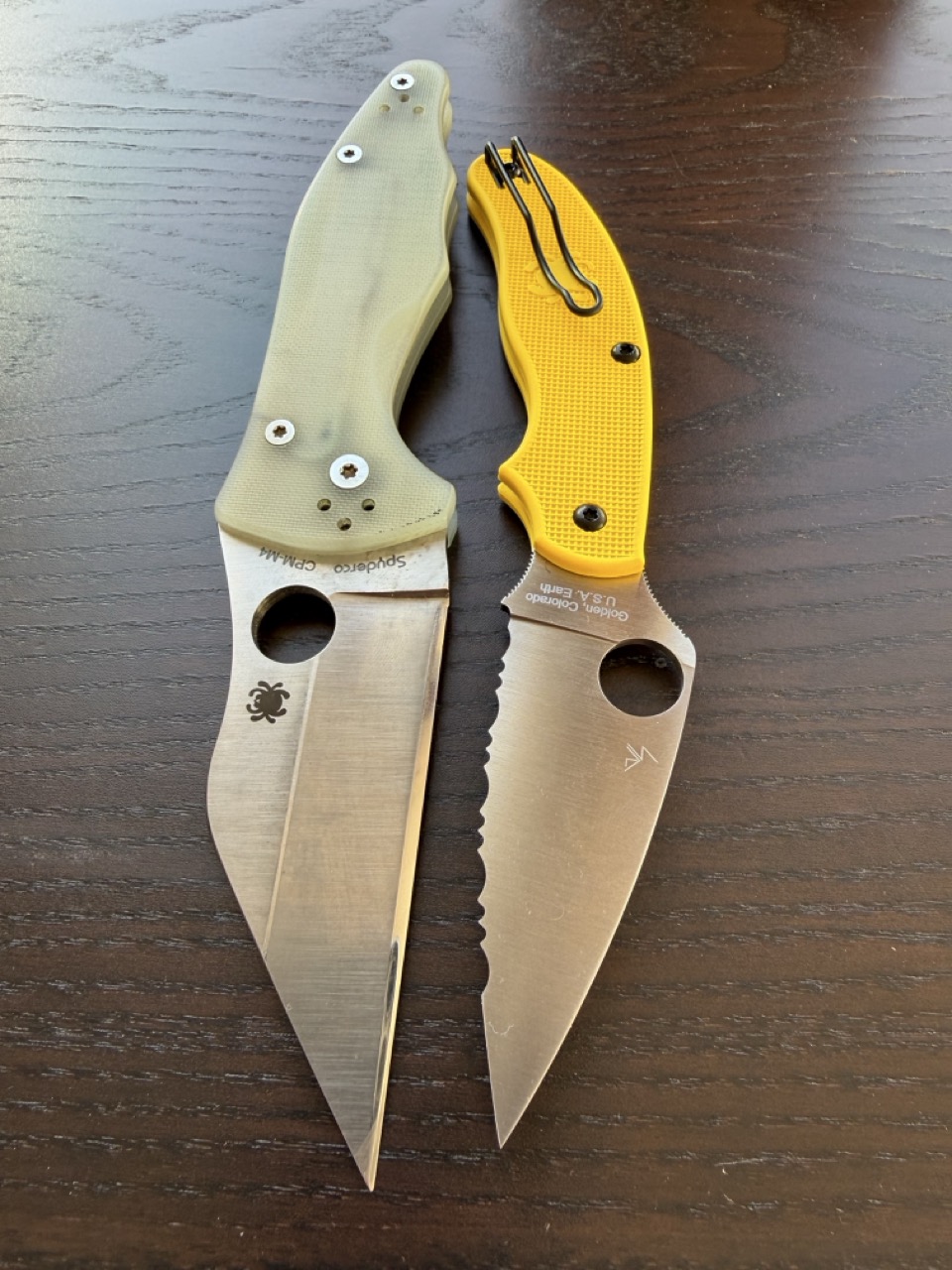
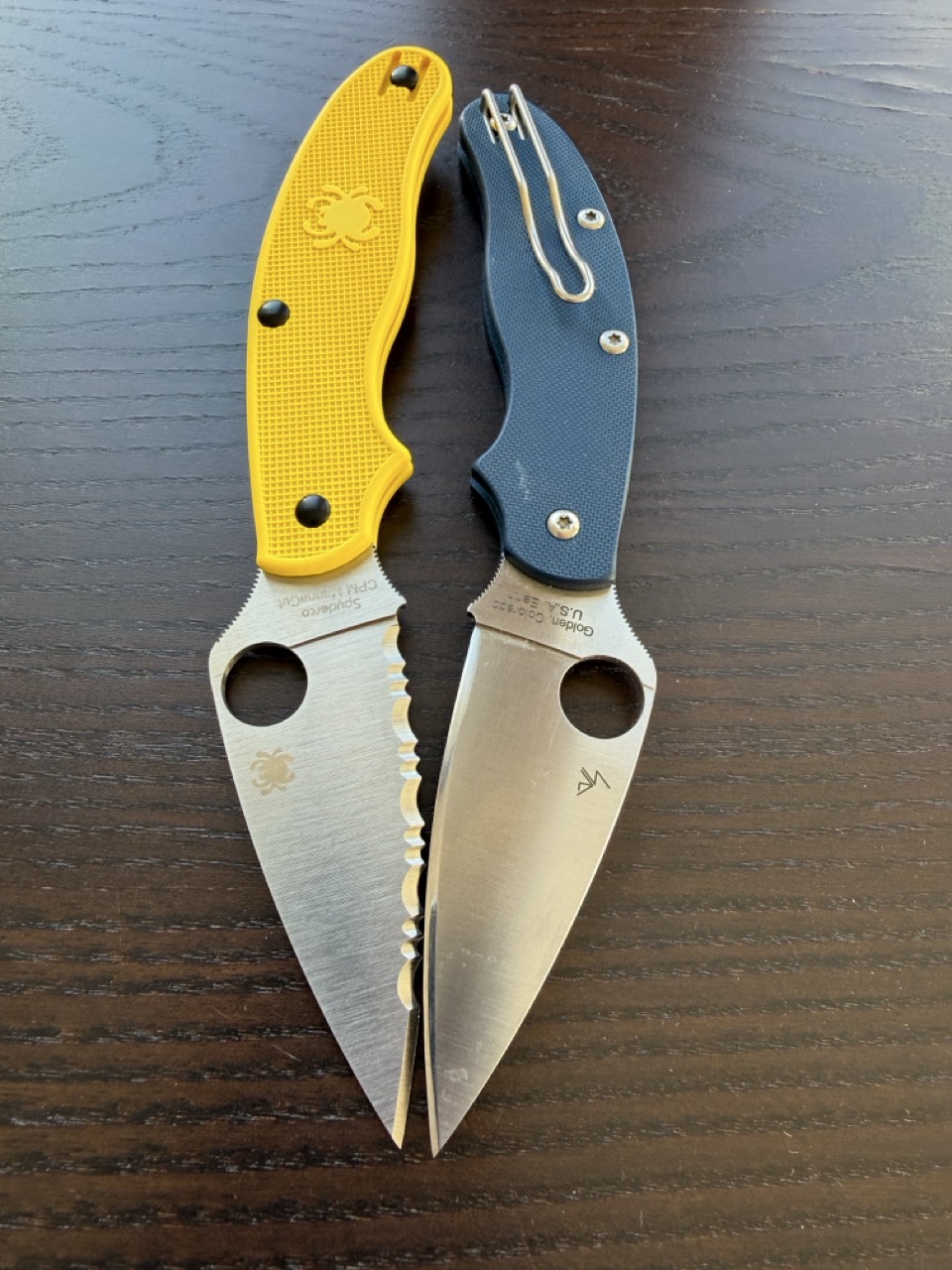
“Part The Matters For Me” – Spyderco UKPK Salt Serrated vs UKPK Sprint SPY27 Plain Edge – Teeth vs Razor.


I often come across very strong opinions when it comes to serrated versus plain edges. More often than not, users dismiss serrations outright—too ugly, too difficult to sharpen, ultimately useless, impossible to tune… usually without ever having truly put them to the test.

Consider this a brief attempt to set the record straight.

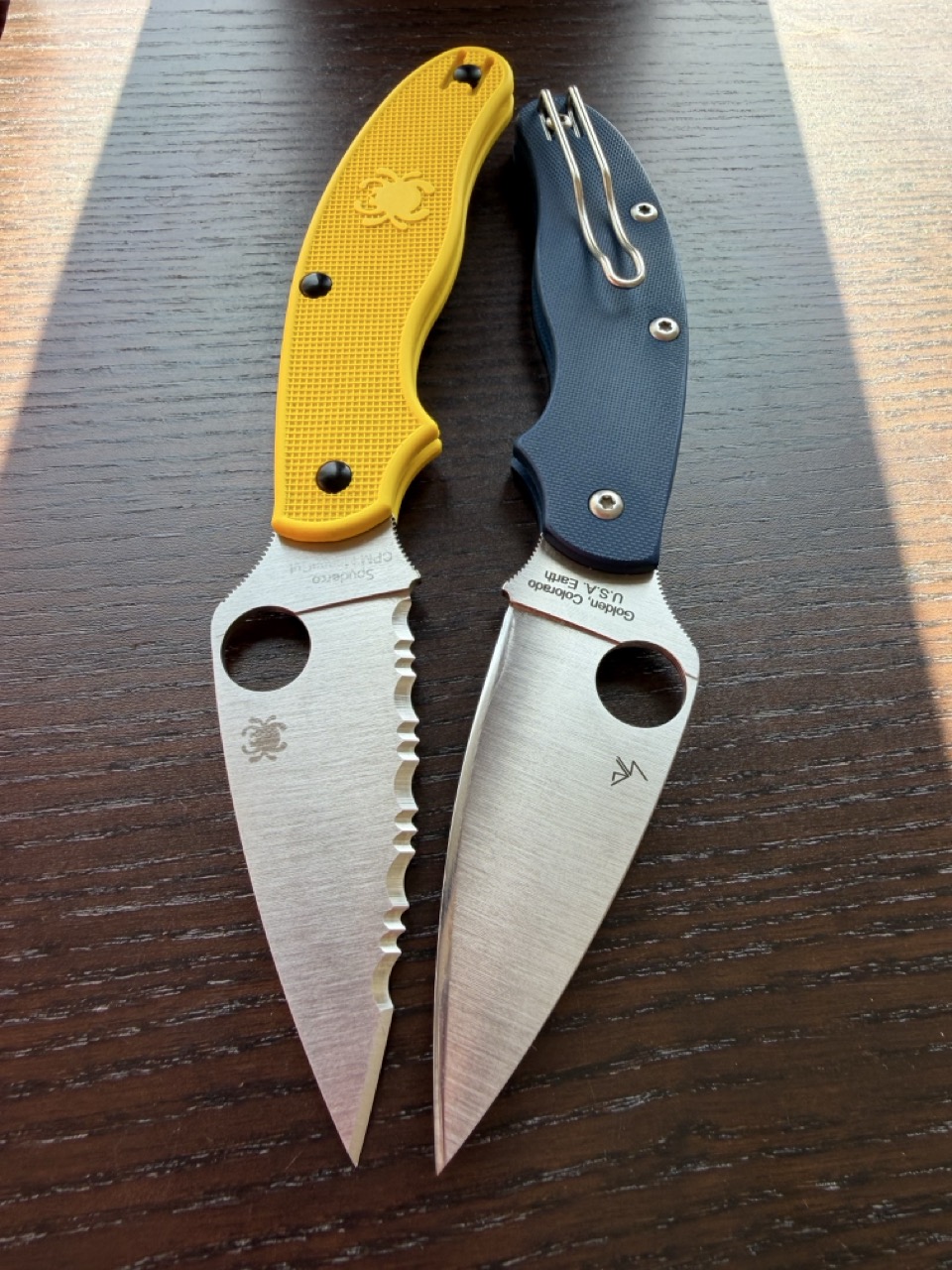
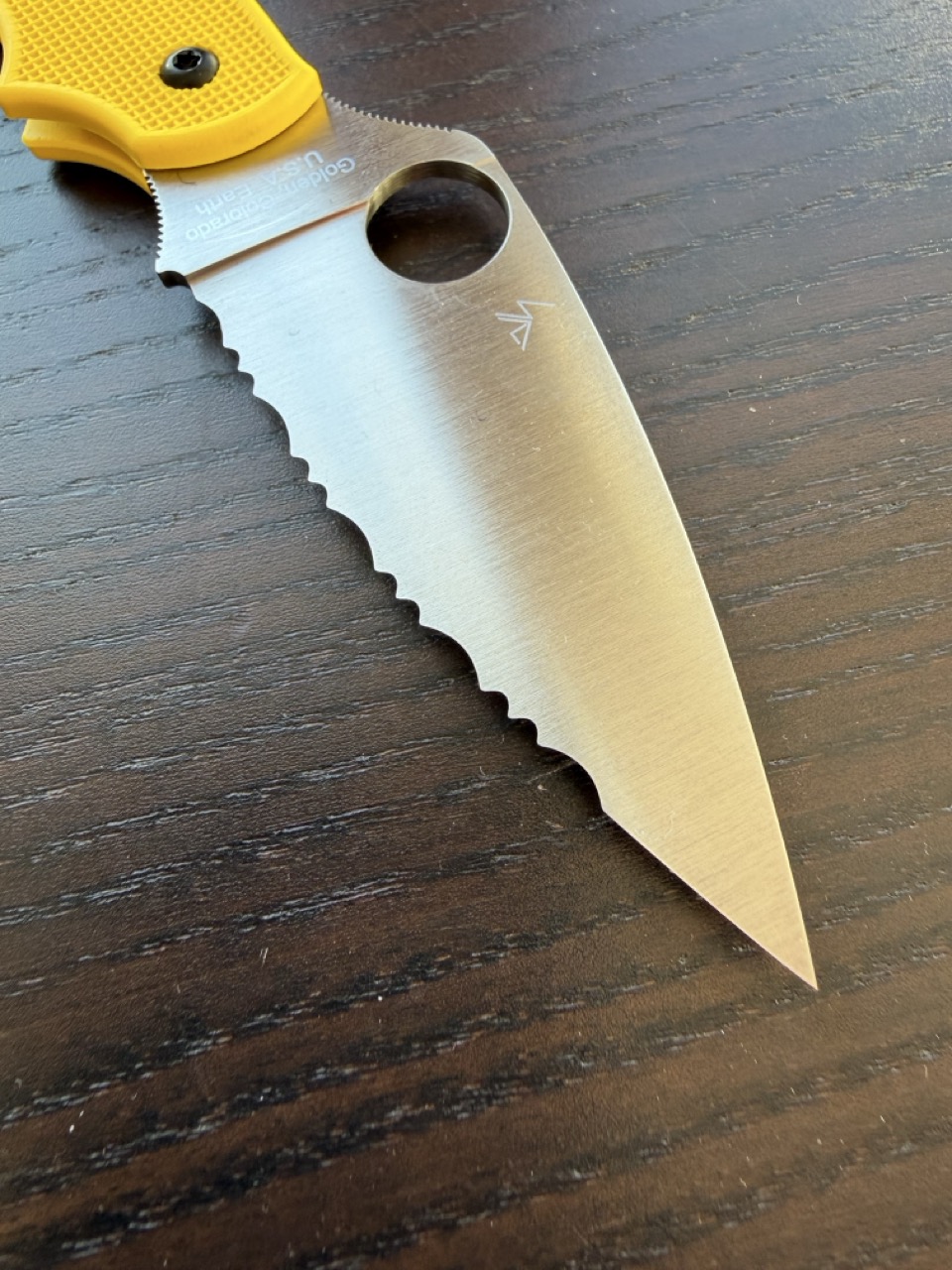
The Spydie UKPK Salt in Magnacut, here in its serrated form, is built for unforgiving environments : lightweight, corrosion-proof, and relentlessly efficient when conditions turn wet, fibrous, or hostile.

Facing it, the Spyderco UKPK Sprint Run in SPY27 with a plain edge embodies precision and control, offering a refined, razor-like cutting experience with effortless maintenance.

What do we got ? Two identical platforms, two radically different philosophies: one designed to endure, the other to excel.

Let’s first compare the steel. Two of my favorite high end alloys and luxury, in this case, does not come from polish or presentation. It comes from intent.

The UKPK Salt, dressed in serrations and armed with Magnacut, carries the modern obsession with resilience to its logical extreme. This is not a steel that negotiates. It exists in total defiance of the elements: saltwater, humidity, neglect. Where older stainless steels would stain, pit, or surrender their edge, Magnacut remains composed, almost indifferent. Its toughness borders on the improbable for something so corrosion-resistant, and yet it refuses to chase the last degree of razor refinement. Its edge is not delicate—it is enduring. One senses immediately that this is a steel designed not for the enthusiast’s bench, but for the long, indifferent stretch of real use.
Across from it, the Golden Child, blade of SPY27, a Sprint Run which offers a very different kind of luxury. Less demonstrative, more intimate. Designed in-house by Spyderco, COM-SPY27 feels less like a technological statement and more like a tuned instrument. It sharpens with ease, almost eagerly, taking on a ultra fine, ultra precise edge that invites control rather than brute persistence. Where Magnacut stands its ground, SPY27 moves—fluid, responsive, alive under the hand. It does not seek to dominate harsh environments; it refines the experience of cutting within them.
The distinction is subtle but decisive. Magnacut is a wonder steel that reassures. SPY27 is an exclusive steel that seduces.

Now about the edge shape…. Here, inevitably, the steel disappears. What remains is the edge—the only part that truly meets the world.

Like Moses said, “Part the matters for me”…
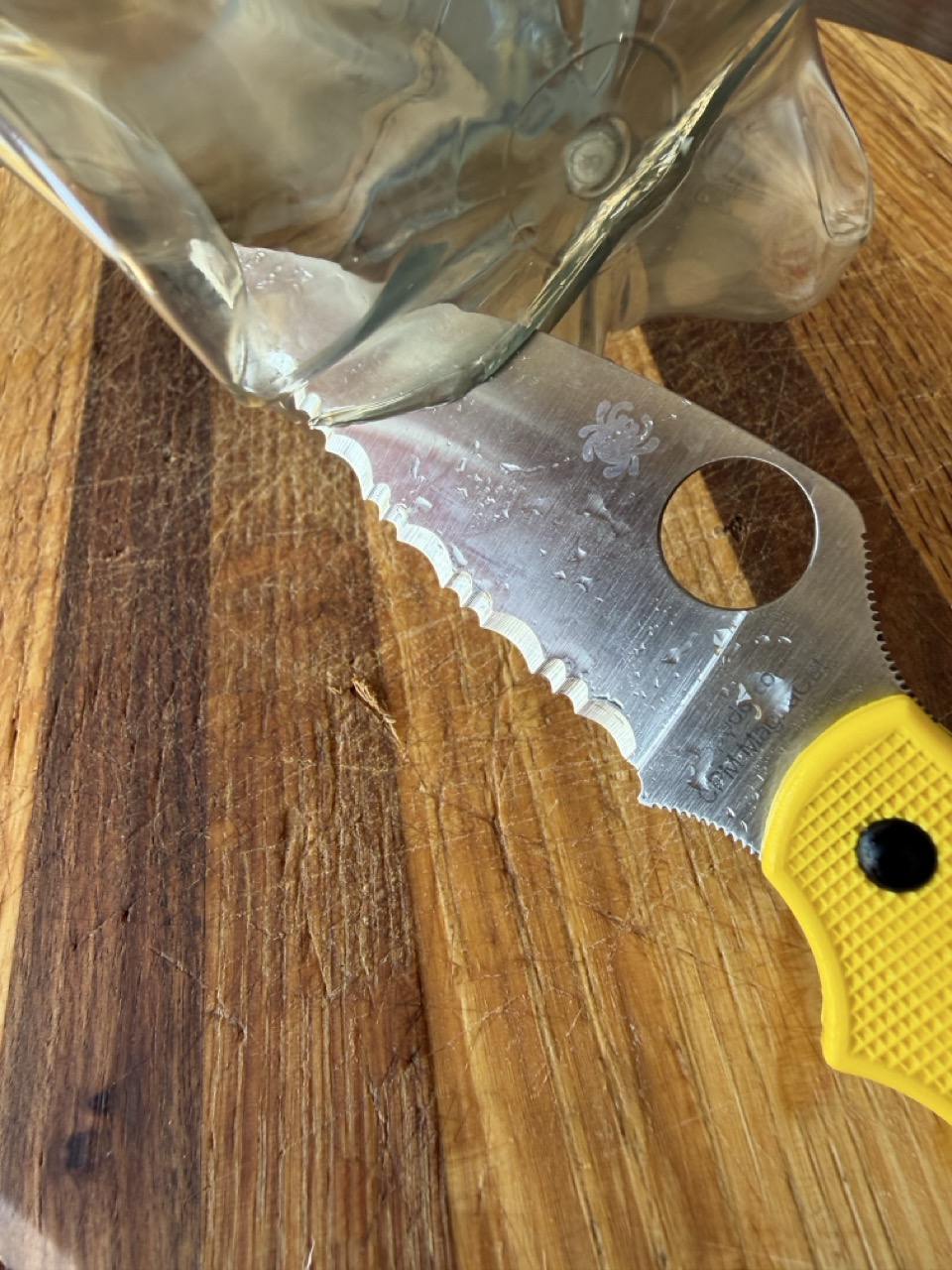
—oh wait, I meant the waters. 😉

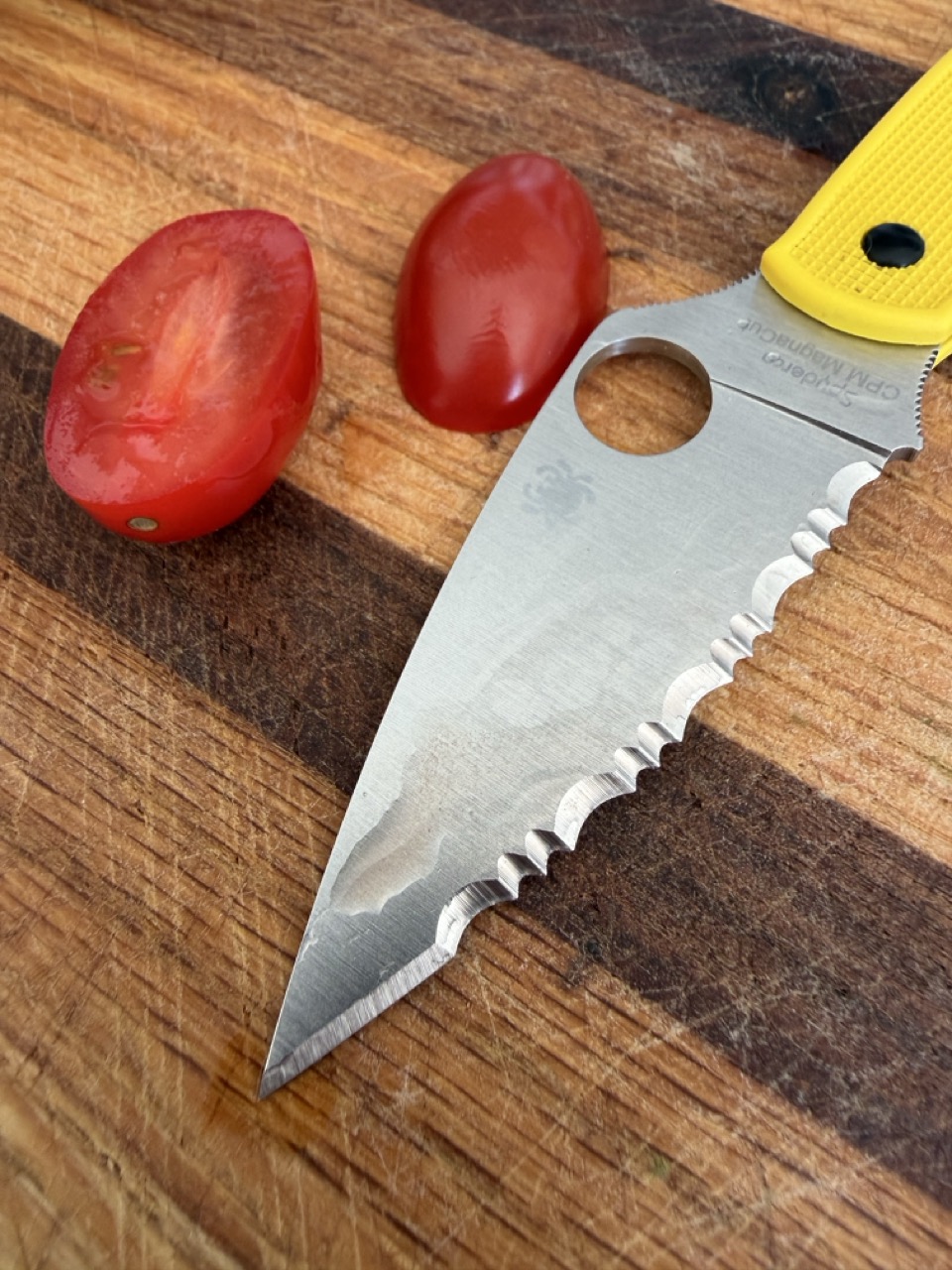
On the Salt, the serrated profile transforms the blade into something almost mechanical in its intent. It does not glide; it engages. Each tooth acts as a point of aggression, catching, pulling, tearing through resistant materials with an efficiency that borders on inevitability. Rope, fibrous plastics, anything damp or uncooperative—these are not challenges but confirmations of purpose.
You need to try it to understand it. Serrations aren’t saws—they’re teeth.
Even as the knife loses its initial sharpness, the serrations continue to function, each peak preserving a fragment of cutting power. It is a system designed to keep working long after refinement has faded.

But there is no illusion here. This is not a refined edge. It does not slice so much as it asserts itself. Precision is sacrificed for continuity of performance. Elegance yields to certainty.

To sharpen it, use the corner of a stone or a triangular rod, and treat it like a chisel-ground blade: work each serration individually, then simply remove the burr on the flat side. It’s done in minutes—easy, almost effortless.

The SPY27 Sprint Run, with its plain edge, follows the opposite philosophy. The cut is continuous, uninterrupted—a single line of intent from heel to tip. It can be tuned at will, from a coarse, aggressive bite to a razor’s whisper. There is no tearing, no hesitation. Materials part cleanly, almost silently, as if persuaded rather than forced. In wood, the blade tracks with uncanny precision; in food, it glides effortlessly; in finer tasks, it answers the slightest pressure. Here, SPY27 reveals its true nature—not through endurance, but through absolute fidelity to the cut.

And when the edge begins to soften, it does not resist restoration. A few passes on leather, a moment of attention, and the blade returns to form. There is a rhythm to it—a dialogue between user and steel that serrations, by their nature, cannot offer.

Placed side by side, these two UKPKs do not compete so much as they define a spectrum.

The Salt, in Magnacut and serrations, is a study in persistence. It is the knife that continues when conditions deteriorate, when maintenance is forgotten, when the environment becomes hostile. It asks little and gives consistency in return.

The SPY27 Sprint Run is something else entirely. It is not concerned with surviving neglect. It assumes presence, attention, a certain appreciation for the act itself. It rewards that attention with a level of precision and tactile satisfaction that borders on indulgence.

In the end, the choice is not between better or worse. It is between two forms of excellence.

One refuses to fail.
The other refuses to compromise.

And that review was also inspired (in the background) by that beautiful New Model Army song :


“We all get what we’ve got coming to us
The tide flows both ways across the seas
All following through on promises made
The roads are filled with fleeing slaves and refugees – singing

Part the waters for me

Now this motioning forward will never stop
We’re like sharks in the water, if we stop swimming we die
All coming out of the ruins bedraggled and worn
Like a people who stared too long, too long at the sun in the sky – singing

Part the waters for me

Any god will surely come, deliverance will surely come
On our knees by the stony shore, crack the sky and deliverance will come

Part the waters for me”


Screenshot

Reprofiling Intent: Turning the Yojimbo 2 into a Woodcraft Tool

There’s a quiet irony in taking a knife designed for confrontation…
and teaching it patience.

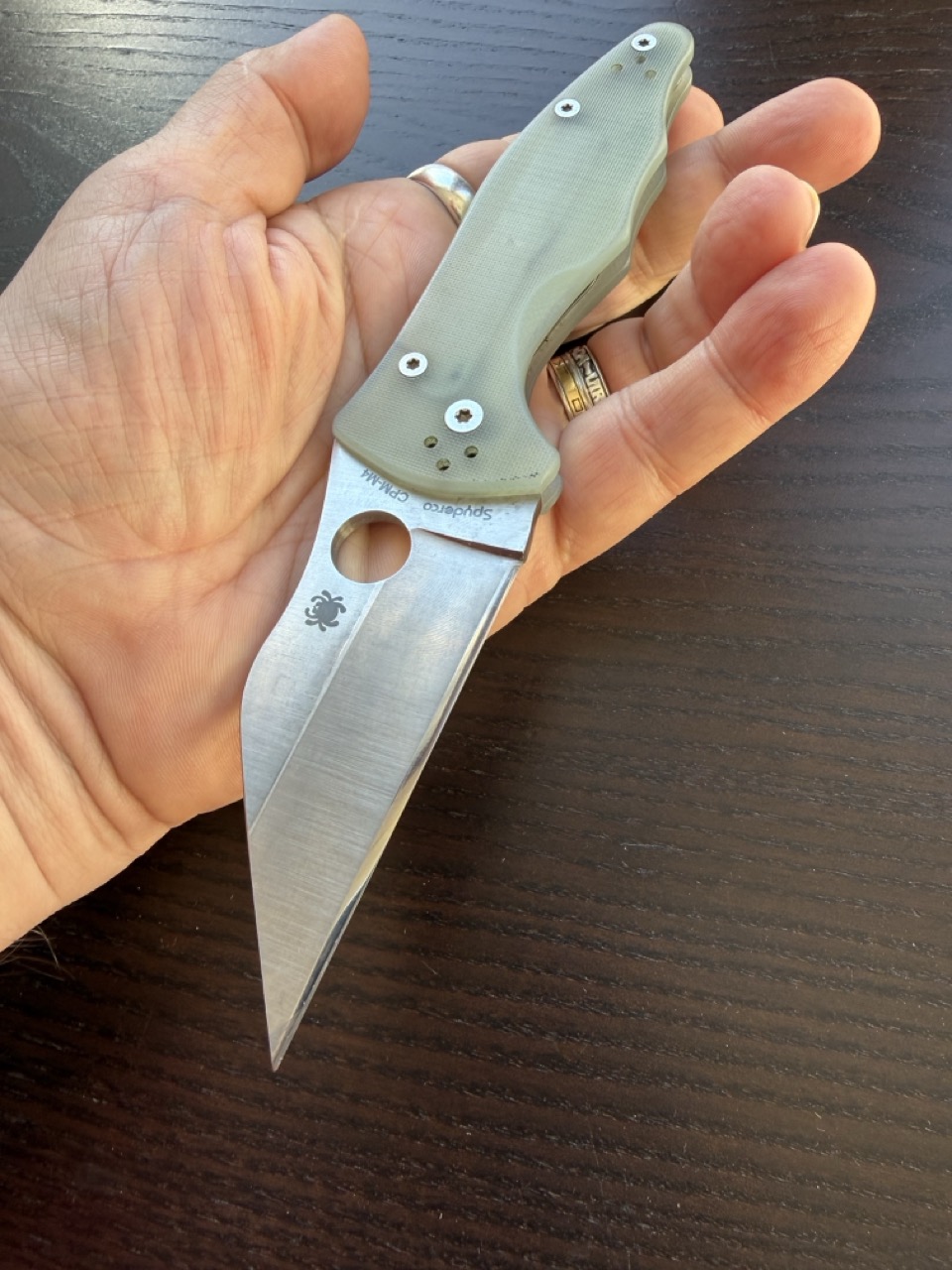
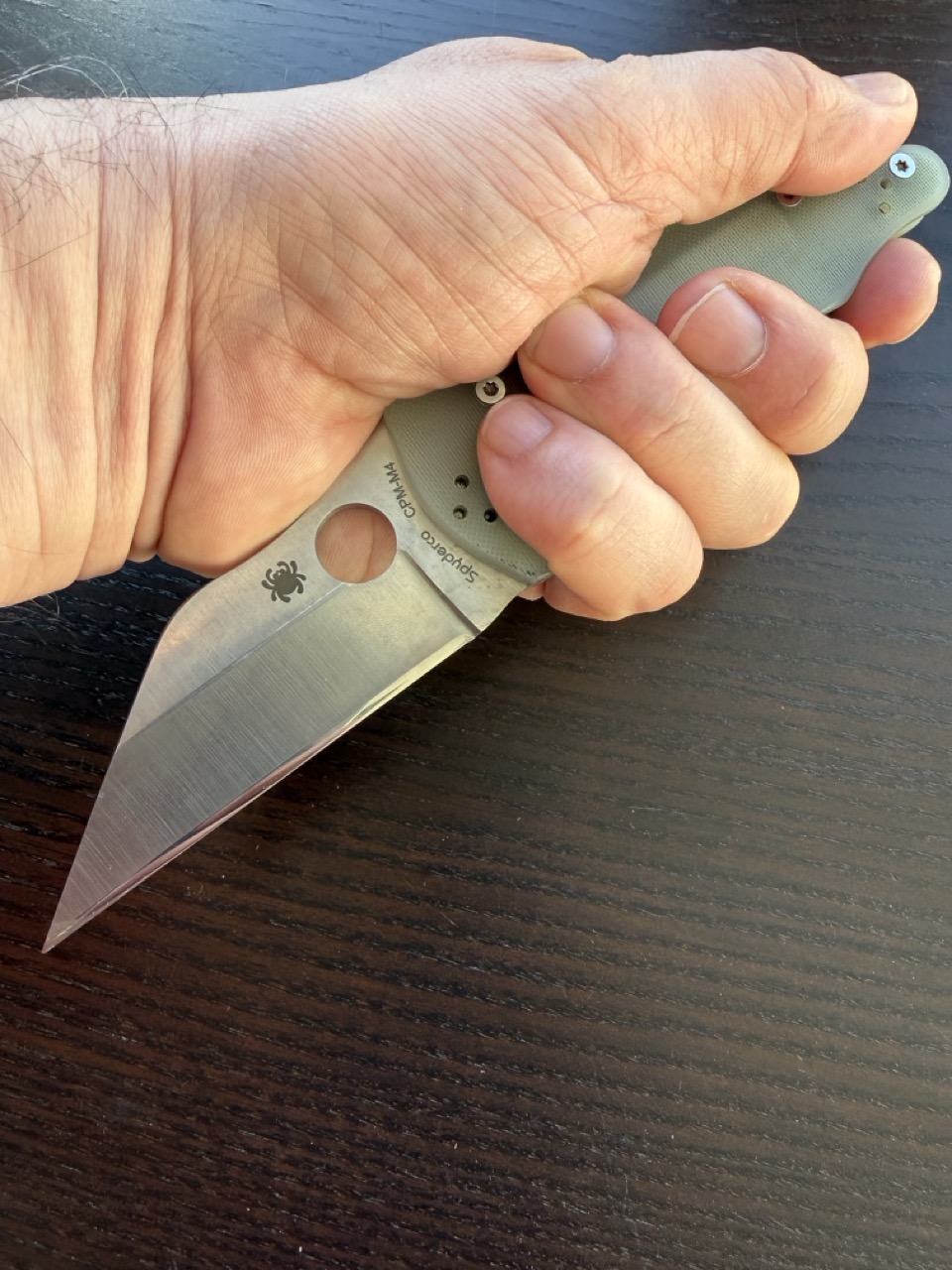
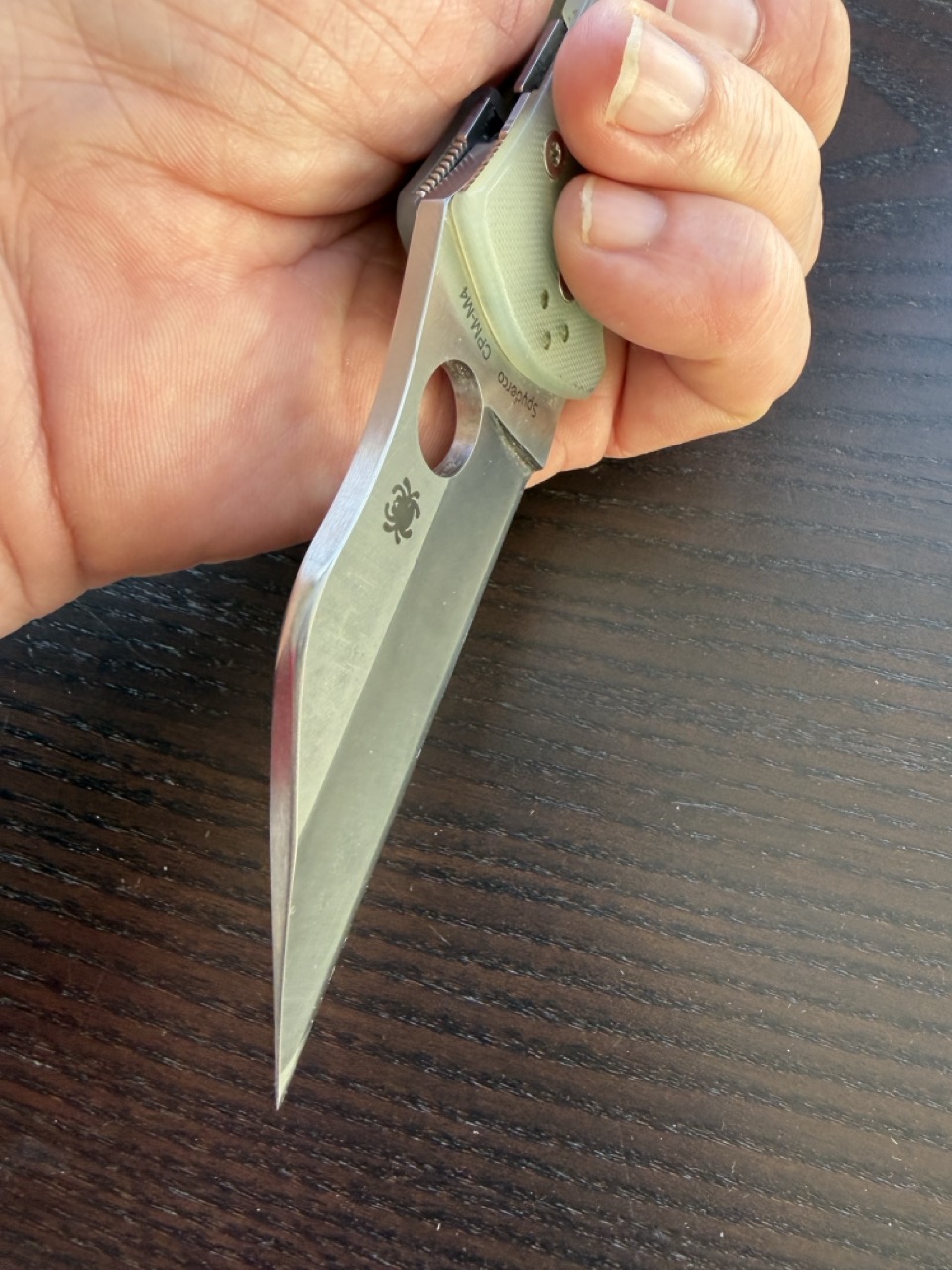
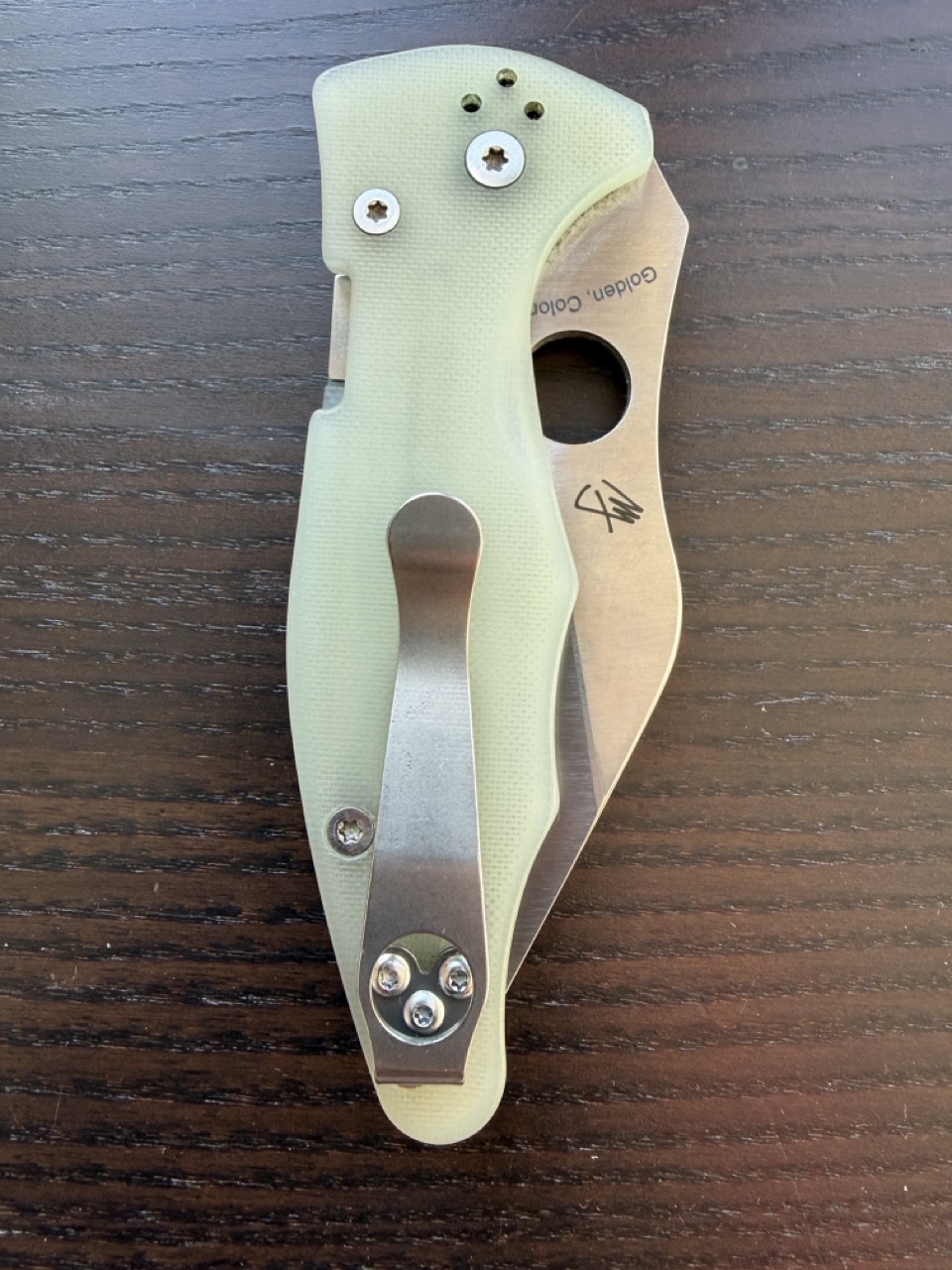
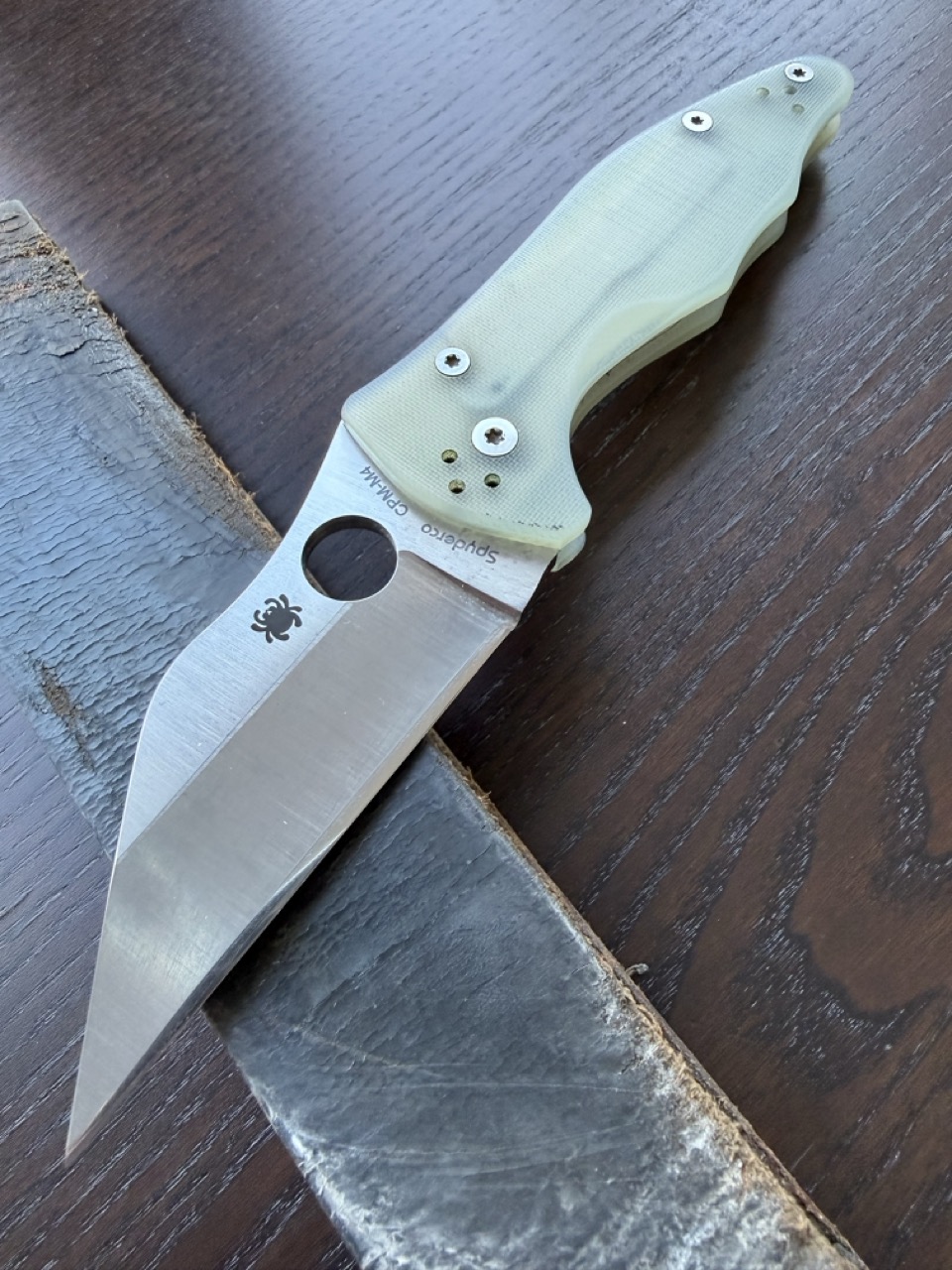
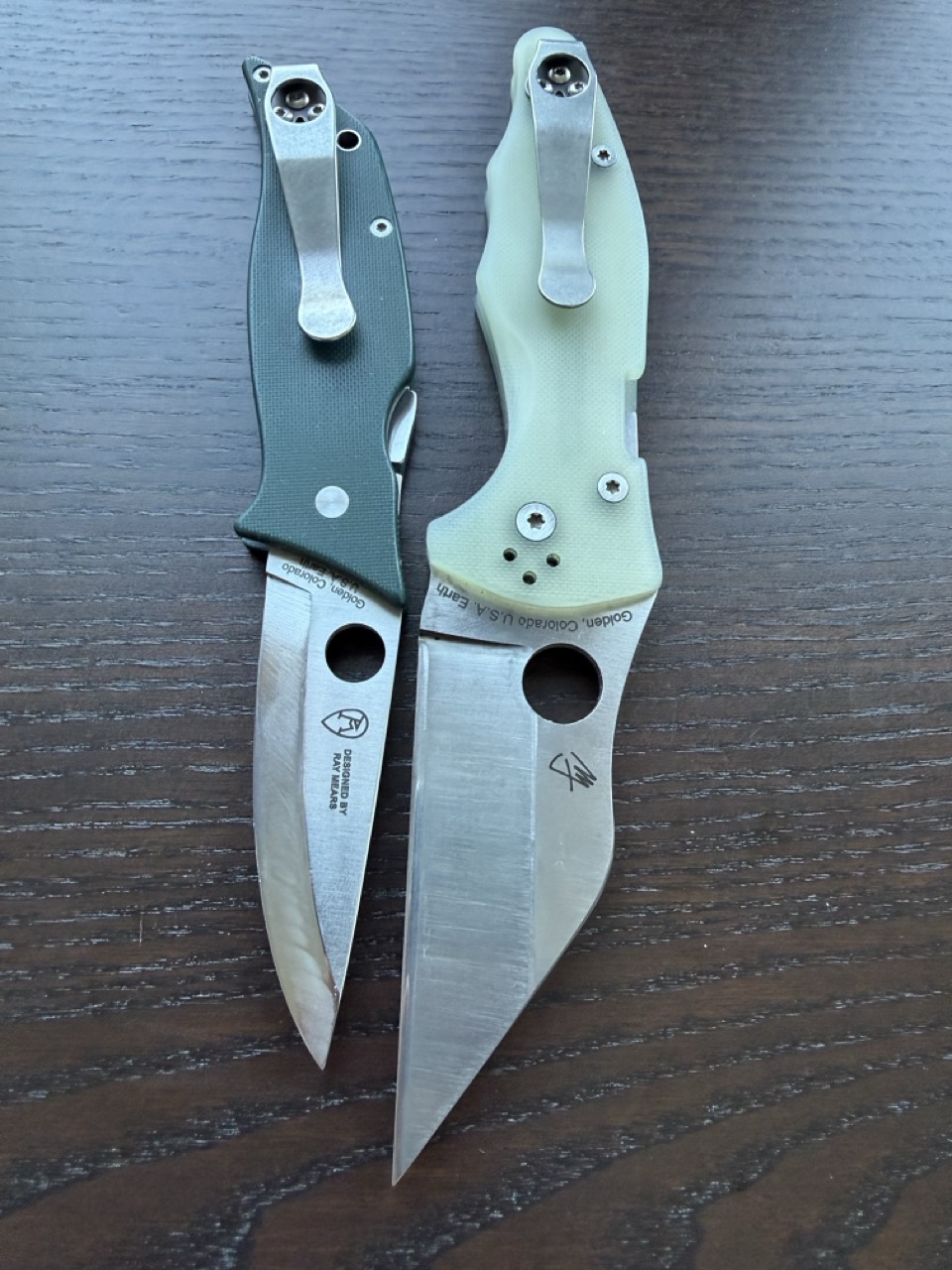
I’ve written more than once about Jade, my 8 years old Spyderco Yojimbo 2 Sprint Run—a blade that was never meant for the forest.
It was conceived for speed, control, and intent in a very different kind of environment.

But strip away the narrative, and what remains is geometry.

And geometry doesn’t lie.

Somewhere along the way, it became clear that I wasn’t alone in that realization.
At the last Minimeet, I had the chance to handle a design by Michael Janich—a fixed-blade prototype unmistakably rooted in the Yojimbo 2’s DNA, yet openly aimed at bushcraft.

That moment changed the perspective.

Because it confirmed something simple: using a Yojimbo 2 in the woods isn’t a vue de l’esprit.
It’s not a conceptual stretch, nor a contrarian experiment.

It’s a natural evolution.

I wasn’t alone in seeing it as a whittler, a wood cutter, a tool for controlled work rather than confrontation.
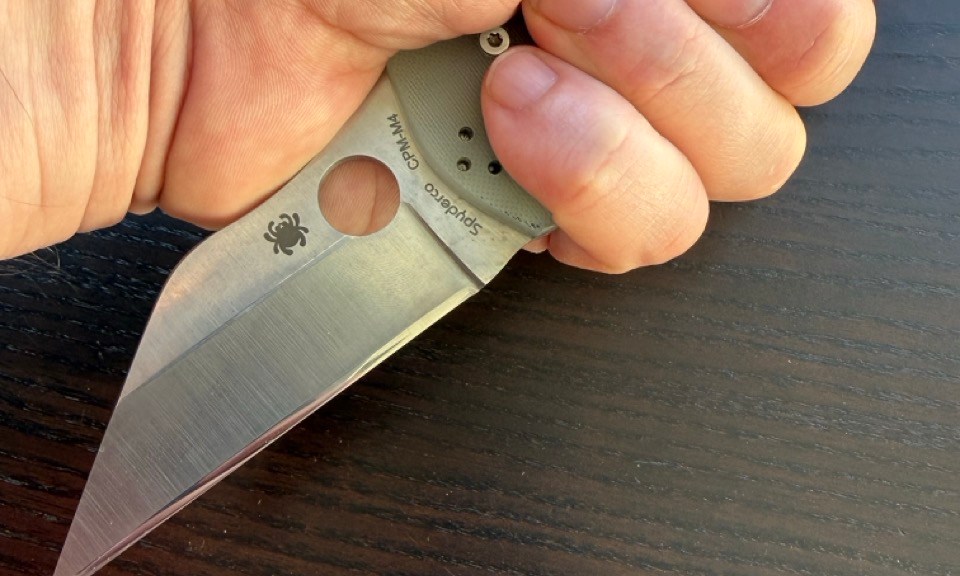
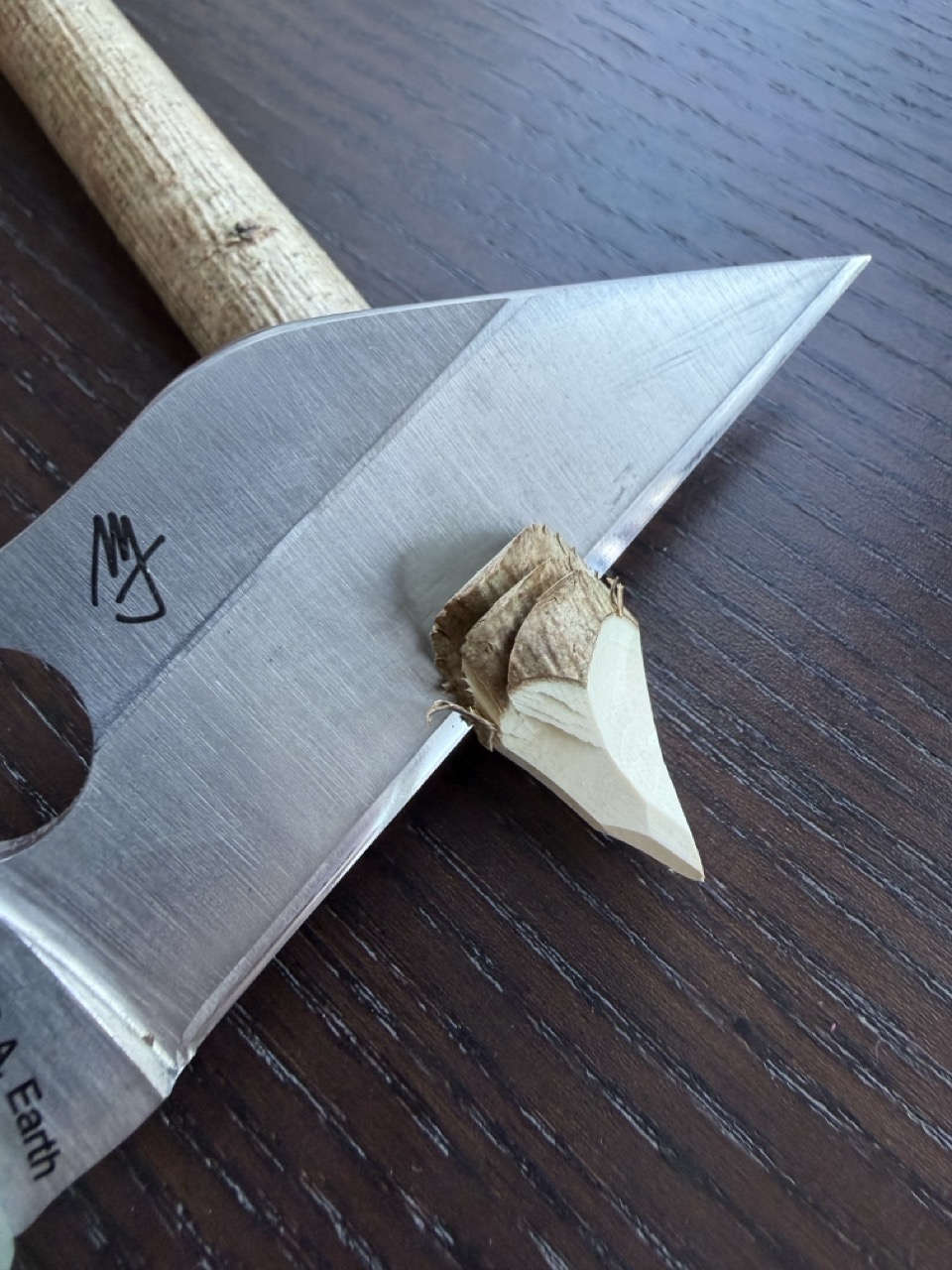
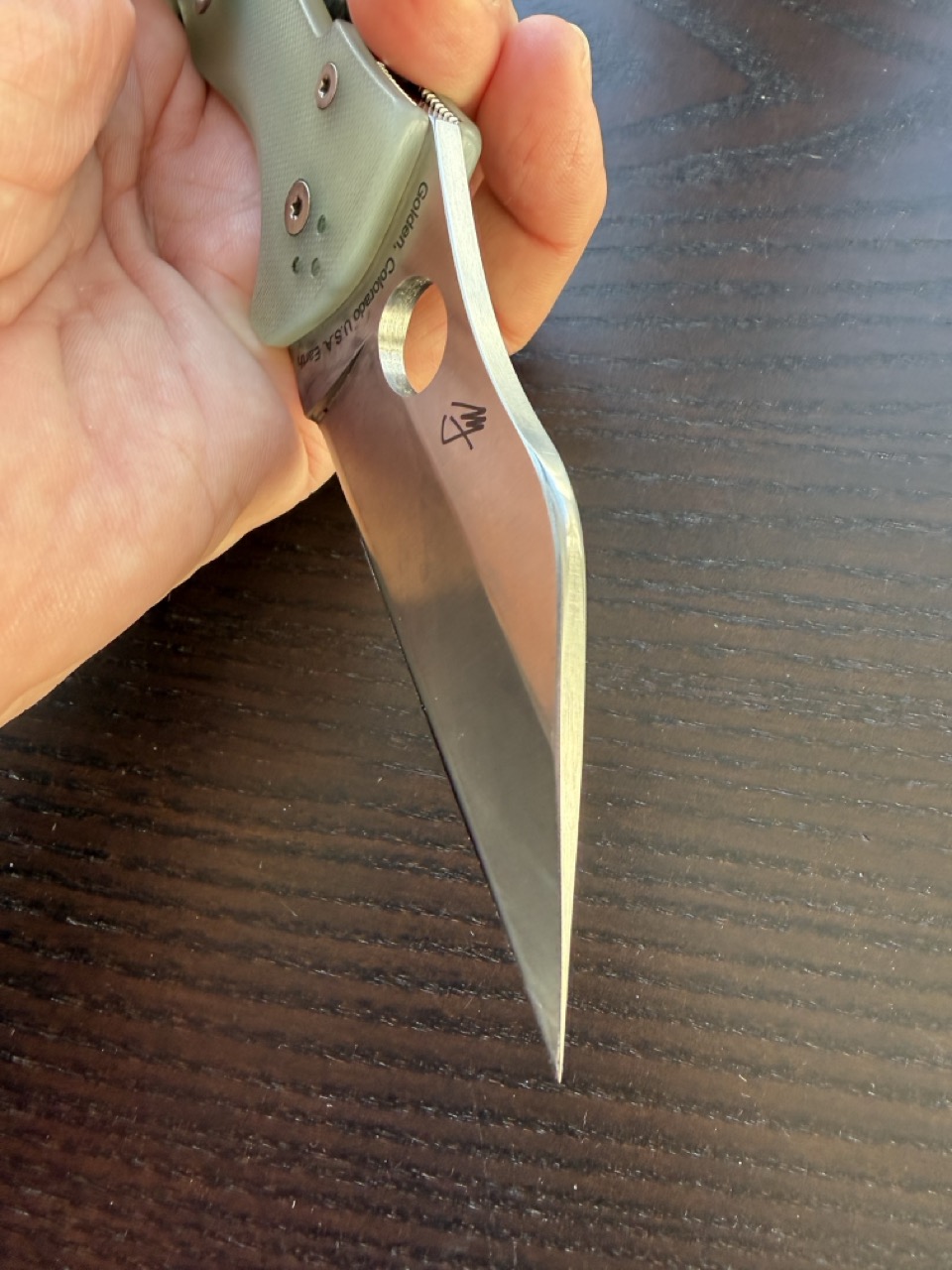
It’s my reinterpretation—since 2018—of what a reliable forest knife could be against the grain: hollow grind and very pointy wharncliffe.

  • Steel: CPM M4 — aggressive, unforgiving, alive… and tough.
    Tougher than S30V, which matters when your Yojimbo carries a fine, precise tip.
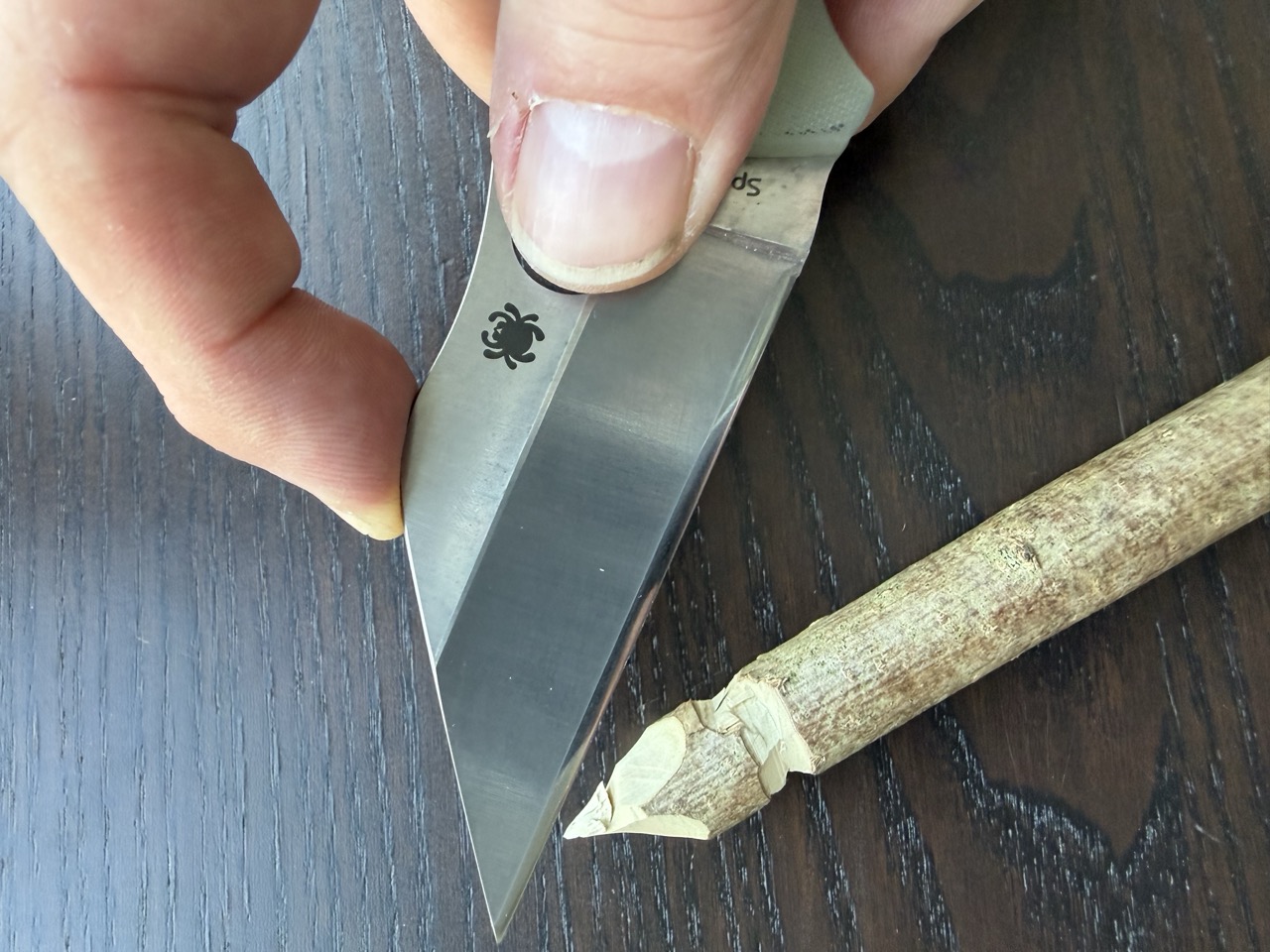
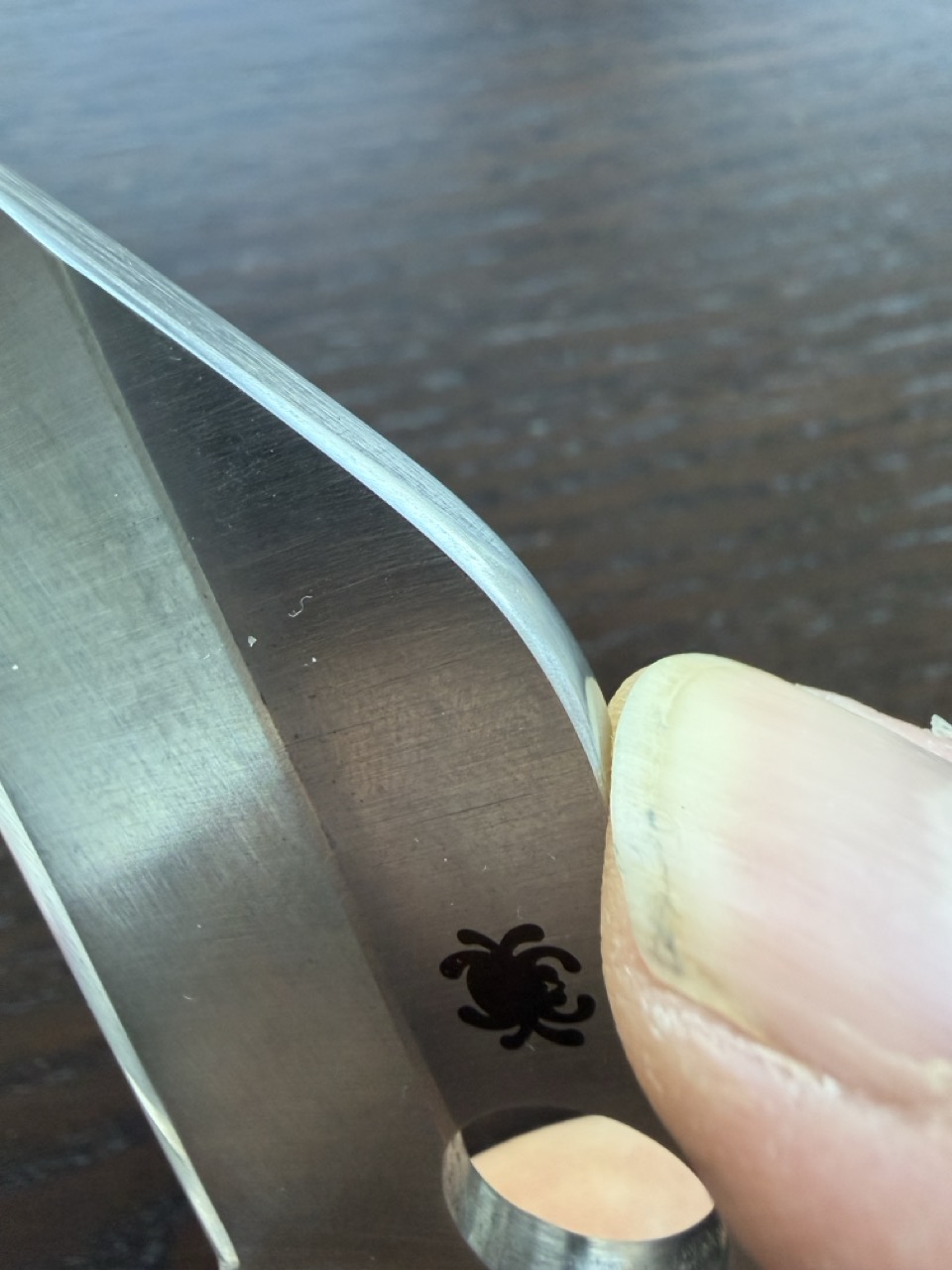
  • Edge: Convexed — reshaped for efficiency, and just as importantly, easy maintenance on leather.
    A working edge, not a showroom finish.
  • Spine: Rounded — softened for control, especially in push cuts driven by the thumb of my left hand.

These aren’t cosmetic tweaks.
They are functional decisions that shift the knife’s center of gravity—from tactical response to wood interaction.
Because using a knife gently on a piece of wood is not just a task.
It’s a sensation. And that sensation—quiet, controlled, almost meditative—is where the real value lies.
Cutting wood is not only about efficiency.
It’s about pleasure.

And pleasure is an essential part of the cutting experience with a CPM M4 thin edge. That straight edge doesn’t fight the material—it applies a constant, controlled pressure through the cut.
It enters, separates, and exits with a continuity rarely found in production folders. Michael Janich has been advocate of that design for 25 years. And it seems he has taken his own Yo2 in the wild too.
Because that’s where the Wharncliffe reveals its truth.
Its straight edge isn’t a limitation—it’s an advantage for whittling.

Precision cuts become natural. Predictable. Repeatable.
And then the thin, convexed edge takes over.

Suddenly, even hard, dry wood yields with ease:

  • cuts deepen without resistance
  • fibers part cleanly—almost polished under the thumb
  • the blade tracks perfectly straight, as if guided on rails

What is often misunderstood as a “tactical” profile becomes something else entirely: a controlled cutting line—precise, deliberate, uncompromising.

Even feathersticks are no longer a technique.
They become a rhythm. A mantra.
Notches become intention.
Every movement feels deliberate. In total control.

Then comes the detail most people ignore: I have rounded spine on my Yo2. This is where the knife becomes an extension of my hand.
No more sharp edges digging into the thumb.
No hesitation when applying pressure.
Just a direct transfer of force, guided and stable.

In extended carving, this changes everything.
You don’t adjust your grip to the knife.
The knife adapts to your movement.

But CPM-M4 is not a forgiving companion.
It stains.
It reacts.
It asks for care. This is not Magnacut. 😉

But in return, it offers something rare: a lasting, aggressive bite into the material. In wood, that translates directly to efficiency.
Less effort. More control. Longer sessions without compromise.

It does raise a question, though—one worth exploring.
How would a Magnamax Yojimbo 2 perform in that domain?
Magnamax sits close, in spirit, to a stainless K390—high wear resistance, a keen, persistent edge in a rustproof package.
That could change the balance for a wooden Yojimbo 2.
Either way, it would be an interesting evolution of a SD tool into a wood knife.
But back in 2018, when Jade took shape as a sprint run, CPM M4 was the undisputed king of the hill.

Let’s be clear: Jade is not my traditional bushcraft knife.

  • It won’t baton logs
  • It won’t split kindling with brute force
  • It doesn’t pretend to be indestructible

But that’s precisely the point. This knife exists in its own different space:

Where cutting is not about survival theater,
but about precision, control, and understanding the material.
Calm and enjoyment.

It remains a folding knife and its tip is fine, by design.
But within its intended envelope, Jade performs with a clarity few knives achieve.

Because some knives are defined by their makers and others are polished by their users.
Jade belongs to the latter.

What began as a tactical tool has become something quieter, more refined:
modern woodcraft instrument, shaped not by doctrine, but by experience. Convex at the edge, softened at the spine—
this is not a knife that was designed for the woods.
It’s a knife that learned them.
Jade the quiet warrior

UK PENKNIFE™ SALT® YELLOW CPM® MAGNACUT® — Civility Bares Its Teeth.

Disclaimer: This knife has been provided through Spyderco’s Ambassador Program, upon my own request. Thank you to the Spyderpeople for letting me review it. 

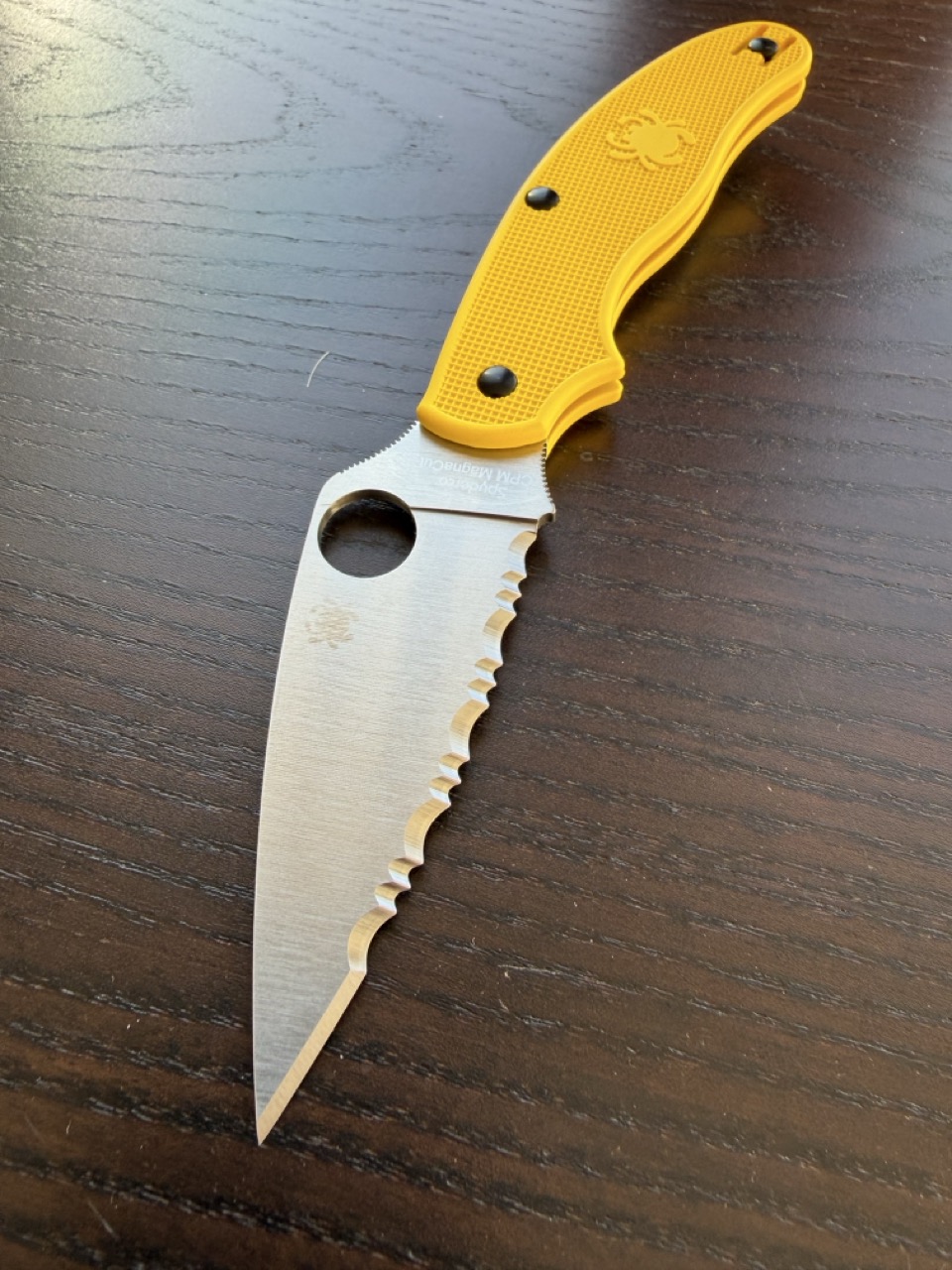
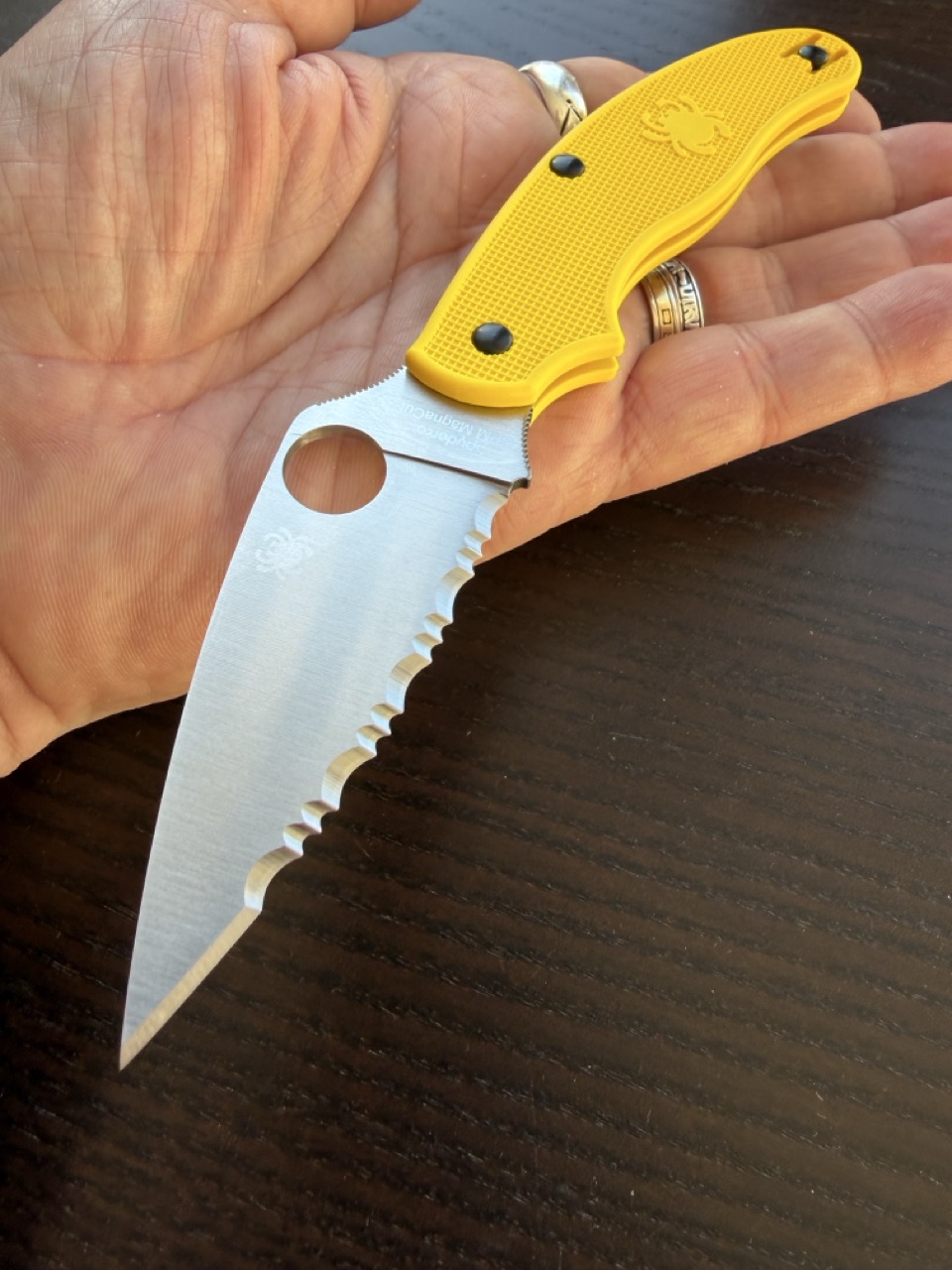
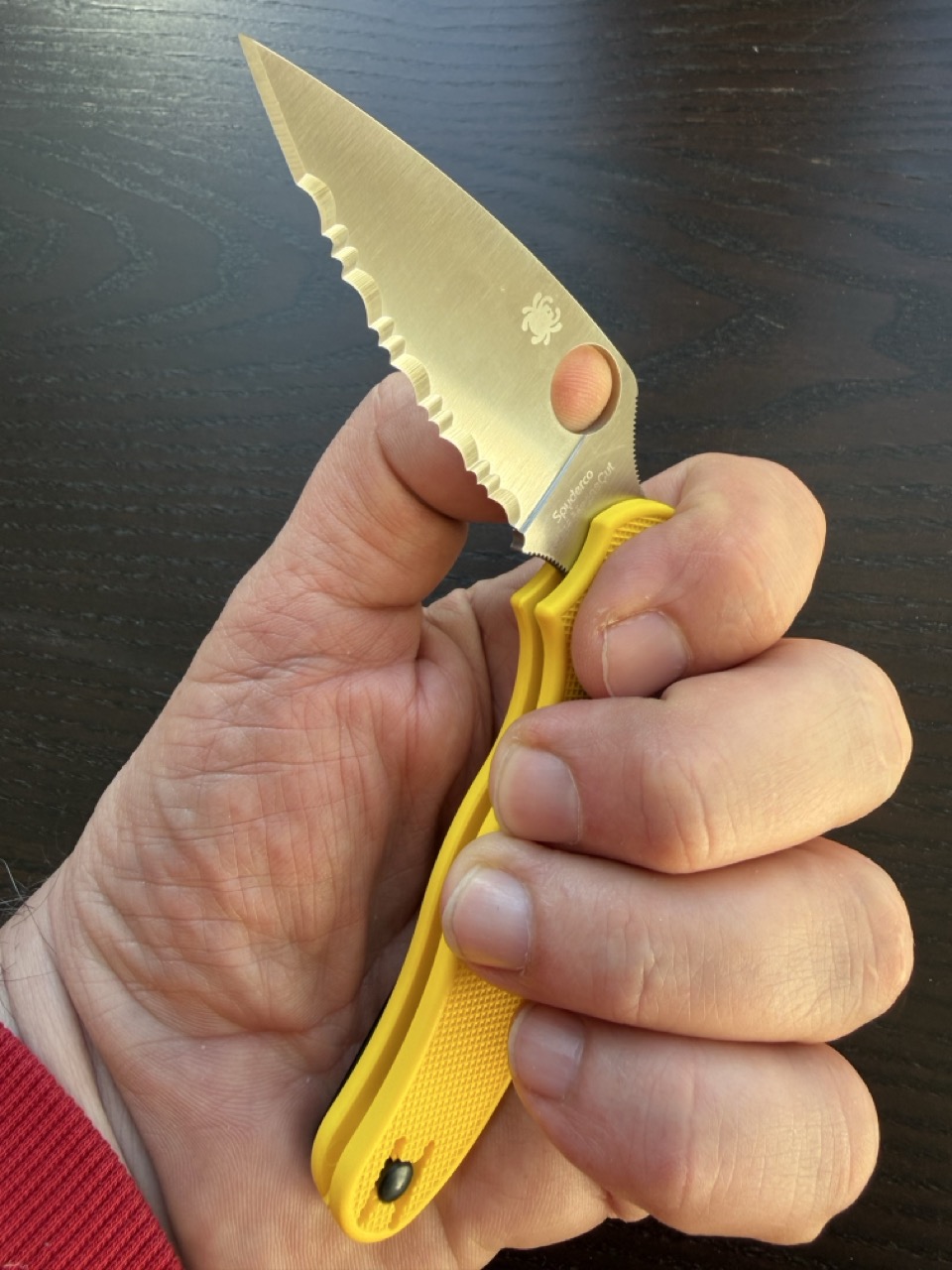
There’s something deliciously subversive about the Spyderco UKPK in full serrated CPM Magnacut steel.
Something unique in the world of cutlery. So friendly and so formidable !
Imagine a slipjoint—non-locking, polite, born for UK legal carry—now equipped with one of the most advanced steels ever made… AND with a fully serrated edge. The kind of edge famous for emergency uses, an edge that looks like it wants to chew through a seatbelt, a rope, or your expectations like there is no tomorrow.
And yet… it works. Too well. And this is just great !

Back in the 80s, Spyderco didn’t just enter the knife world—they rewired it.
And at the center of that shift was an inventor: Sal Glesser.
Three ideas. That’s all it took:
the clip, the hole, and the teeth.
The clip turned knives into tools you actually carry—pocket, belt, or backpack.
The Spyderhole made one-handed opening instinctive, reliable… and easy to maintain in the real world.
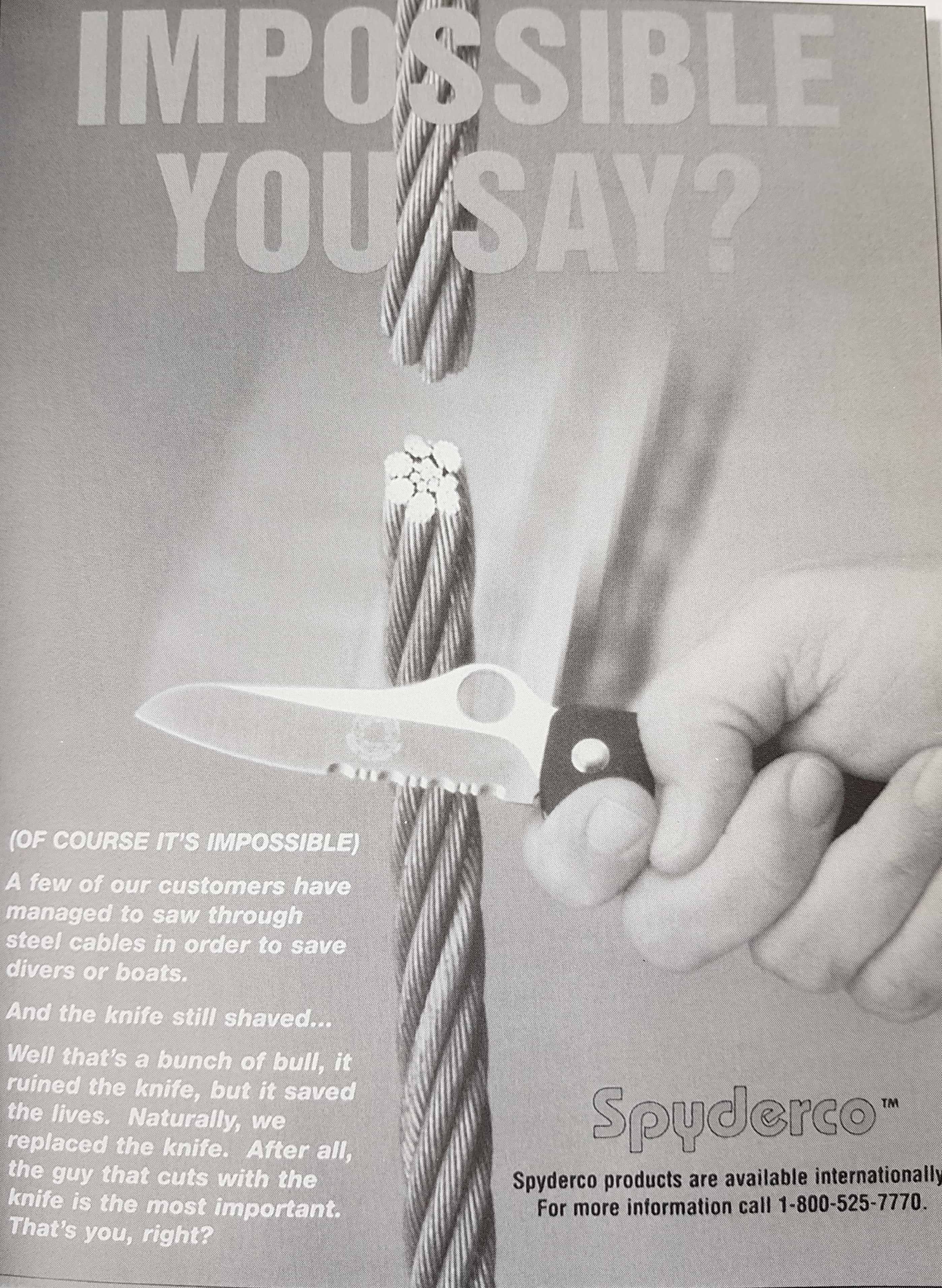
And the serrations? They made blades hungry for fibrous materials.
Let’s get one thing straight, once and for all:
serrated knives are not saws.
They don’t remove material—they slice through it. Razor sharp, aggressive, efficient.
While everyone else was still polishing forged 52100 steel and dressing knives in stag like museum pieces, Spyderco dropped something radically different into the pocket: performance and reliability.
The early icons—Spyderco Worker, Spyderco Mariner, and Spyderco Police—weren’t about tradition.
They were about function.
Fully serrated edges. Stainless steels. Tools built to cut, not to impress.
They looked strange.
They cut like nothing else.

The Spyderco UKPK was Spyderco’s first true slipjoint, introduced roughly twenty years ago—not as a nostalgic throwback, but as a constraint-driven design.
It was built for one purpose: to comply with UK law.
No lock. A sub-3-inch blade.
But in true Spyderco fashion, compliance didn’t mean compromise.
Instead of dumbing things down, they engineered around the limitations:
a strong, confidence-inspiring pocket knife inspired by the Caly 3
with a prominent finger choil for control and safety and the unmistakable Spyderhole for true one-handed use.
What could have been a neutered tool became something else entirely:
a legal EDC that still behaves like a real knife.
The UKPK wasn’t designed to look traditional.
It was designed to work—within the rules, not despite them.
You don’t feel “underknifed” with any of the SlipIt in your pocket from the UKPK to the Squeak through the Urban.

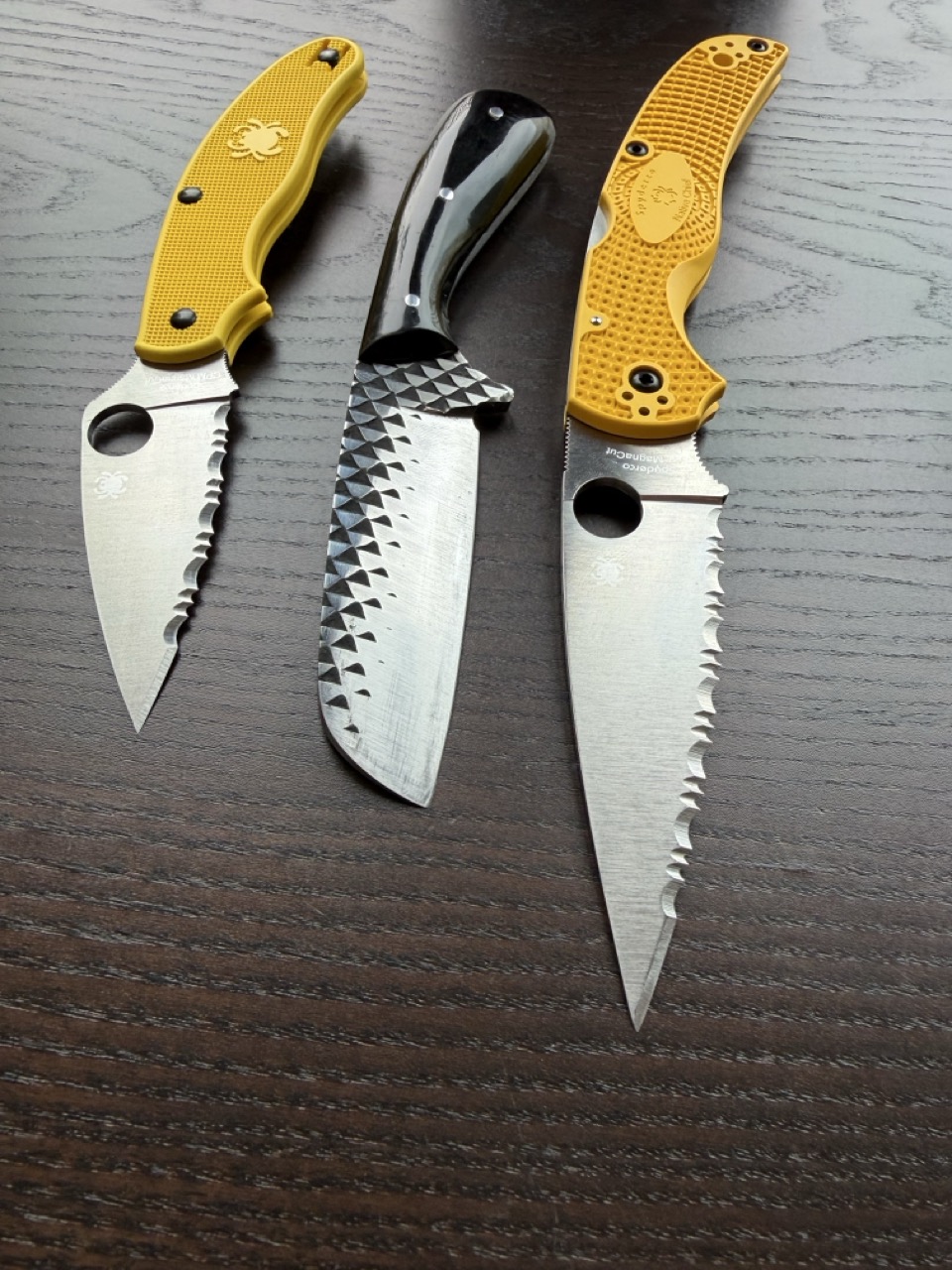
(Pictured here with the UKPK Spy27 G10. The Salt is a FRN lightweight.)
But, yes, the UKPK has always been about restraint.
No lock. No aggression. Just that classic Spyderco leaf blade and a strong slipjoint spring doing quiet, honest work.

But now… serrations change the personality completely.
This is no longer a polite cutter— it’s a controlled velociraptor claw.


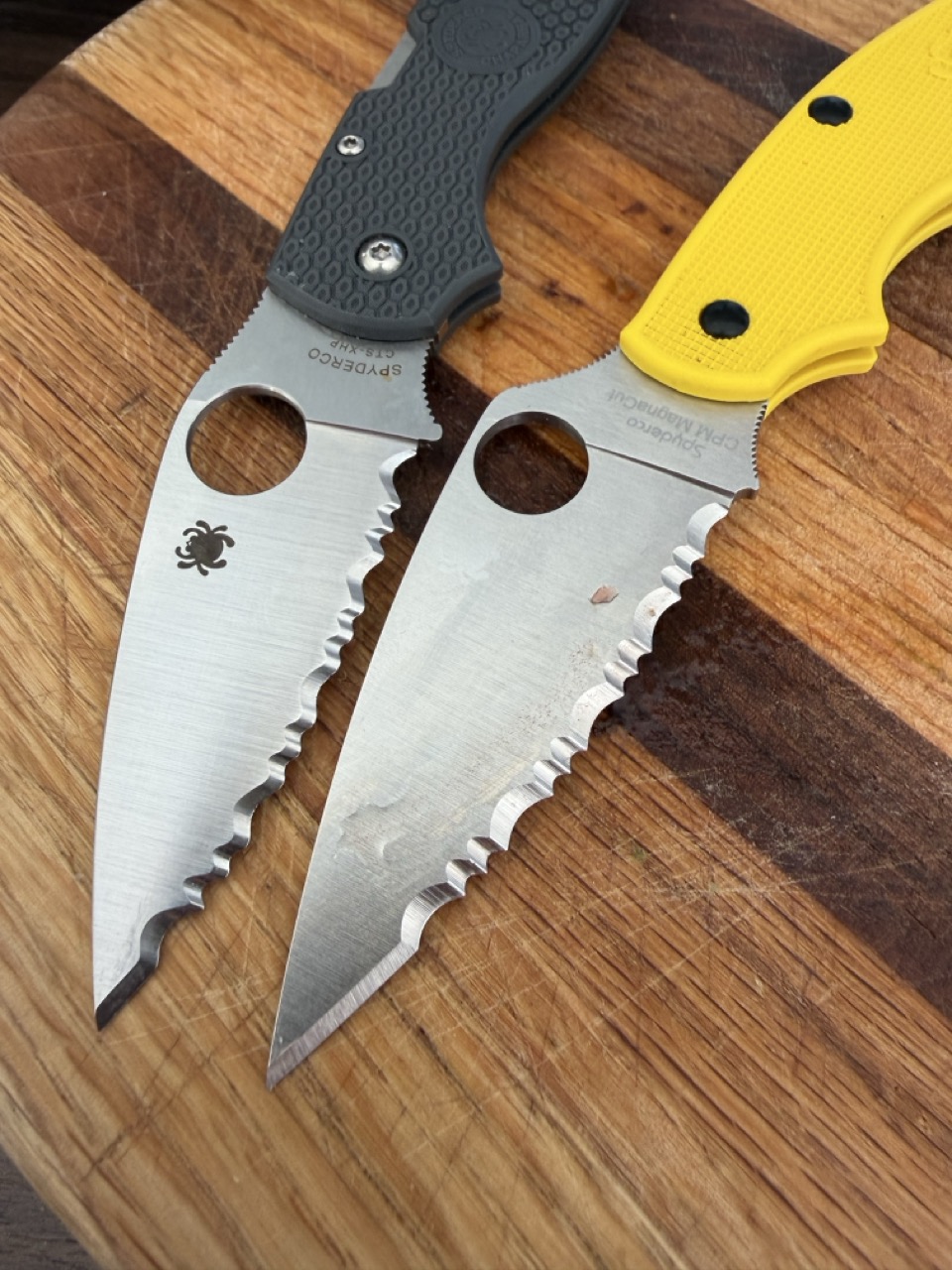
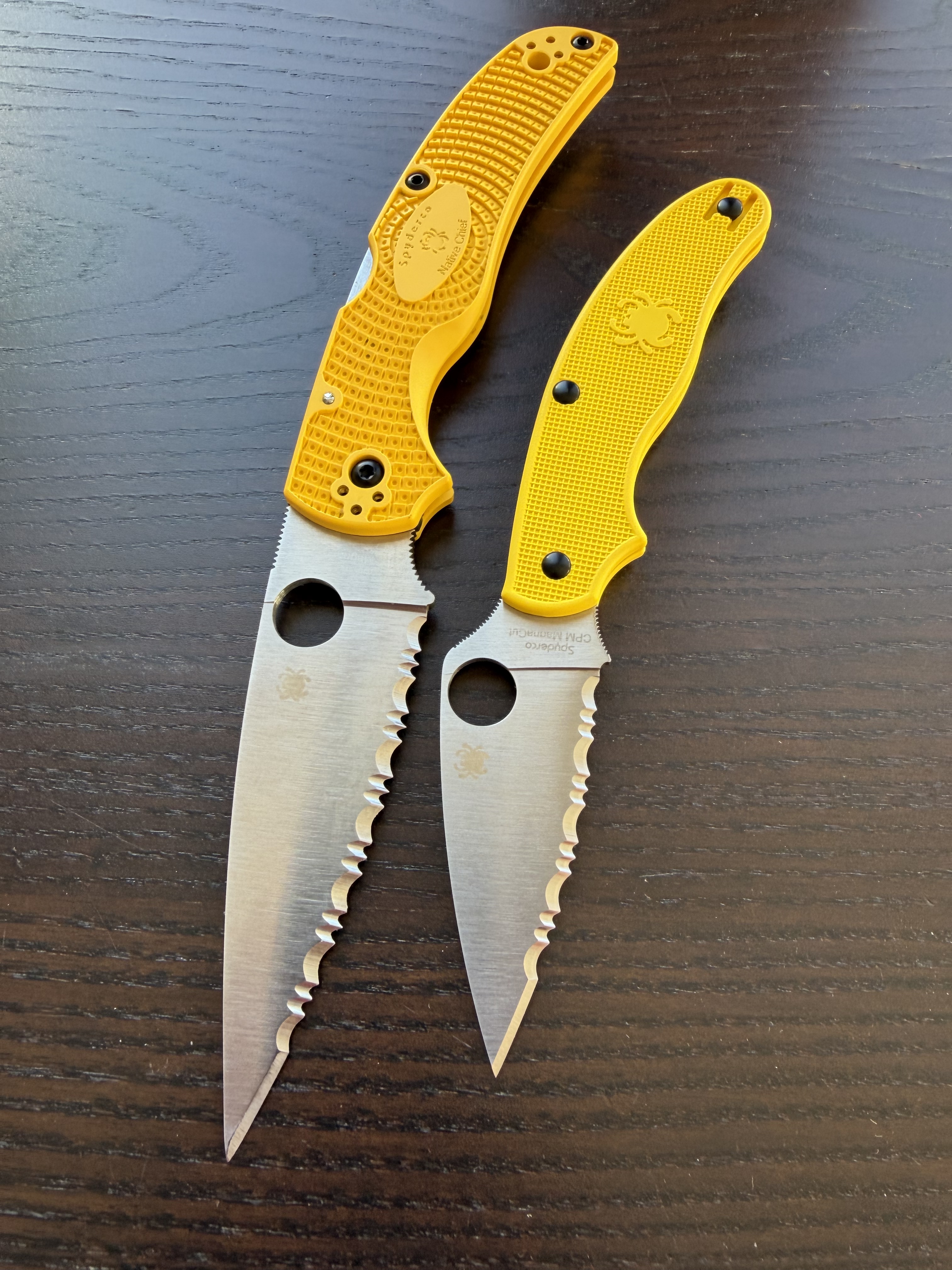
We already know how Spyderco’s serrations behave—from the long slicing authority of the Spyderco Native Chief Salt, to the feral aggression of the Spyderco Civilian, down to the unlikely precision of the “Mighty Grey Mouse,” the Spyderco Chaparral in full serrated.
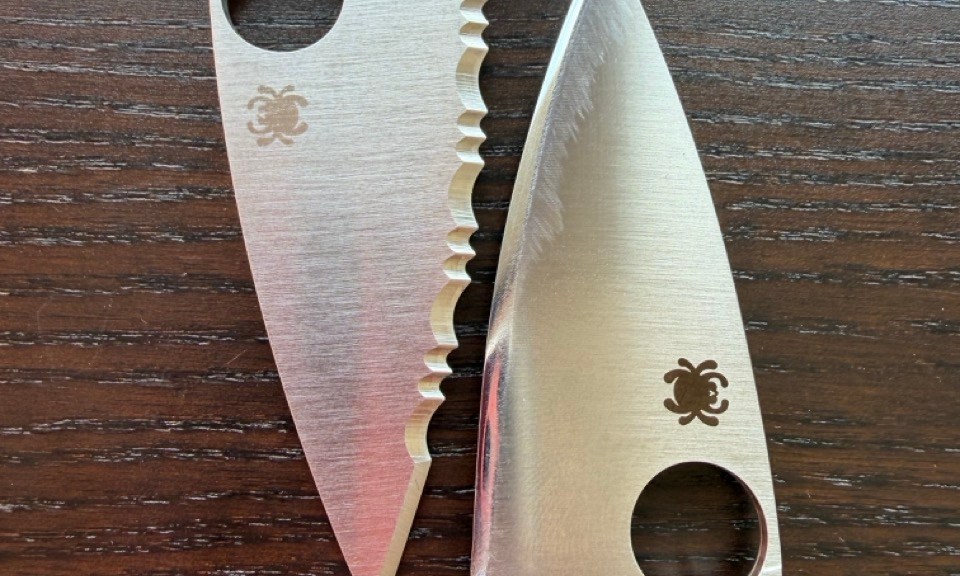
(Notice on the picture: the Chaparral/Taichung serrations are “softer” than the Golden made serrated knives.)

Oh, SpyderEdge
The bite is immediate. Unforgiving.
Cardboard, rope, fibrous material—this isn’t slicing anymore.
It’s total matter separation. “Part the matters for me !”


As you’ll notice, SpyderEdge uses a chisel grind—
which makes it surprisingly easy to maintain.
You work one side, raise a burr, then lightly deburr the other.
That’s it.
No complicated angles, no endless back-and-forth.
Fast. Efficient. Back to razor sharp in minutes.
For a blade that cuts this aggressively,
maintenance is almost… unfairly simple.

Now you’ll say: this isn’t new.
And you’d be right.
The Spyderco UKPK LC200N already brought serrations to the platform, with that ultra-corrosion-resistant, NASA-associated steel used in the Salt Series. (Click on the link for its extended review. That version exists now in green FRN.)
But this time… it’s different.
This time, CPM Magnacut steel’s turn to roar in your pocket.
And that changes everything in my book ! As I love Magnacu first.
And also because Magnacut doesn’t just resist corrosion—it brings toughness, edge stability, and a kind of refined brutality that pairs almost too well with serrations.
This isn’t just a variant.
It’s a very serious evolution of intent.


Here’s where things get almost absurd—in a good way as you get a blade that:
stays aggressive for ages
keeps cutting even when “dull”
laughs at moisture, sweat, food prep, urban abuse
This is not just durable—it’s low-maintenance lethality in a legal-friendly package.

The gentleman’s non locking folder has no business being here.
And yet—it thrives.
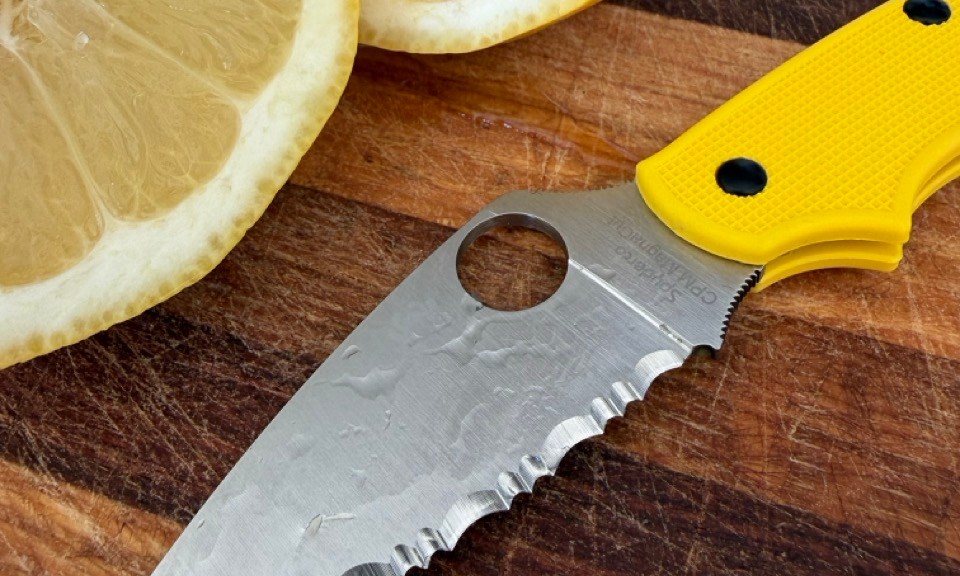
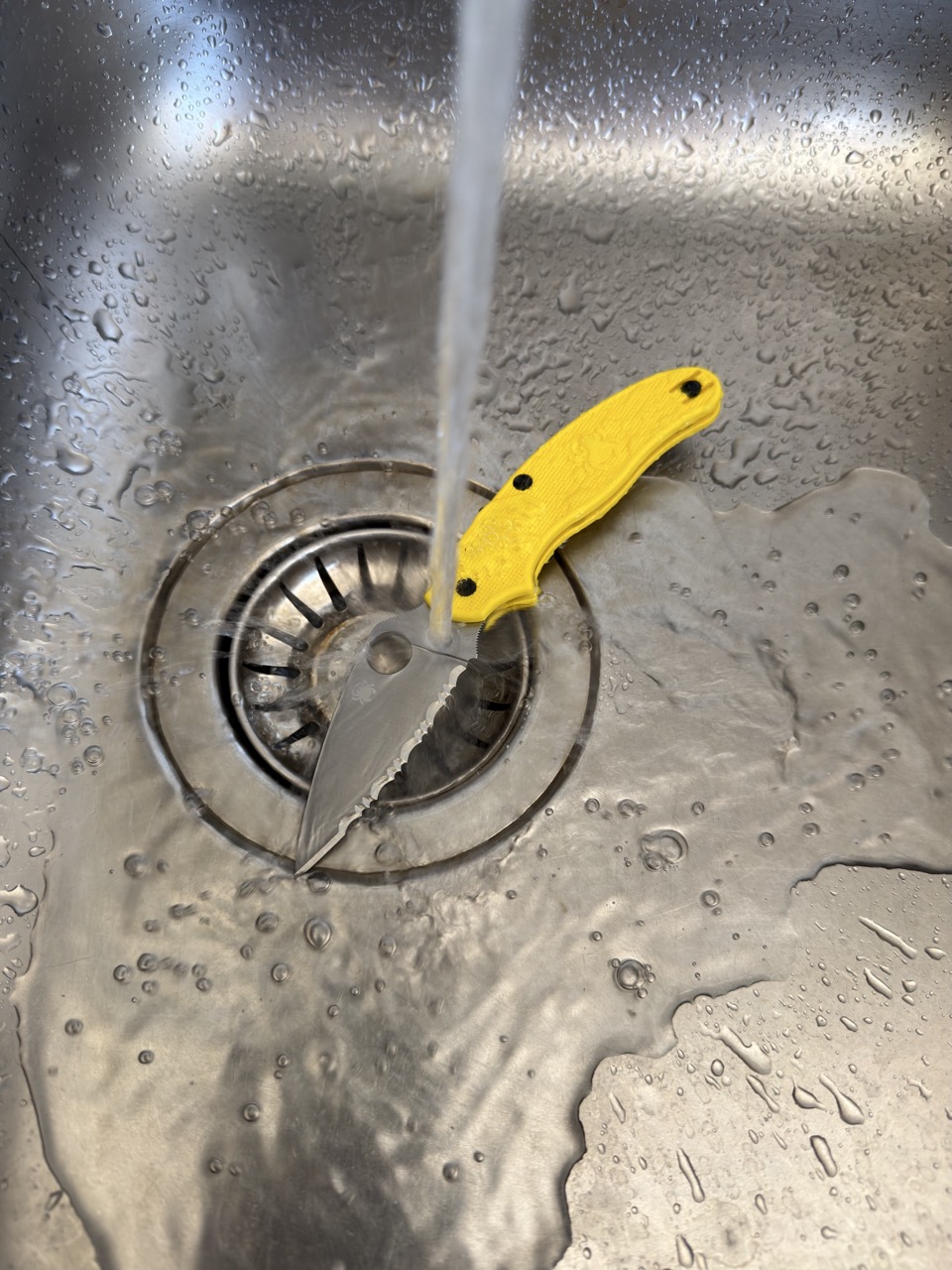
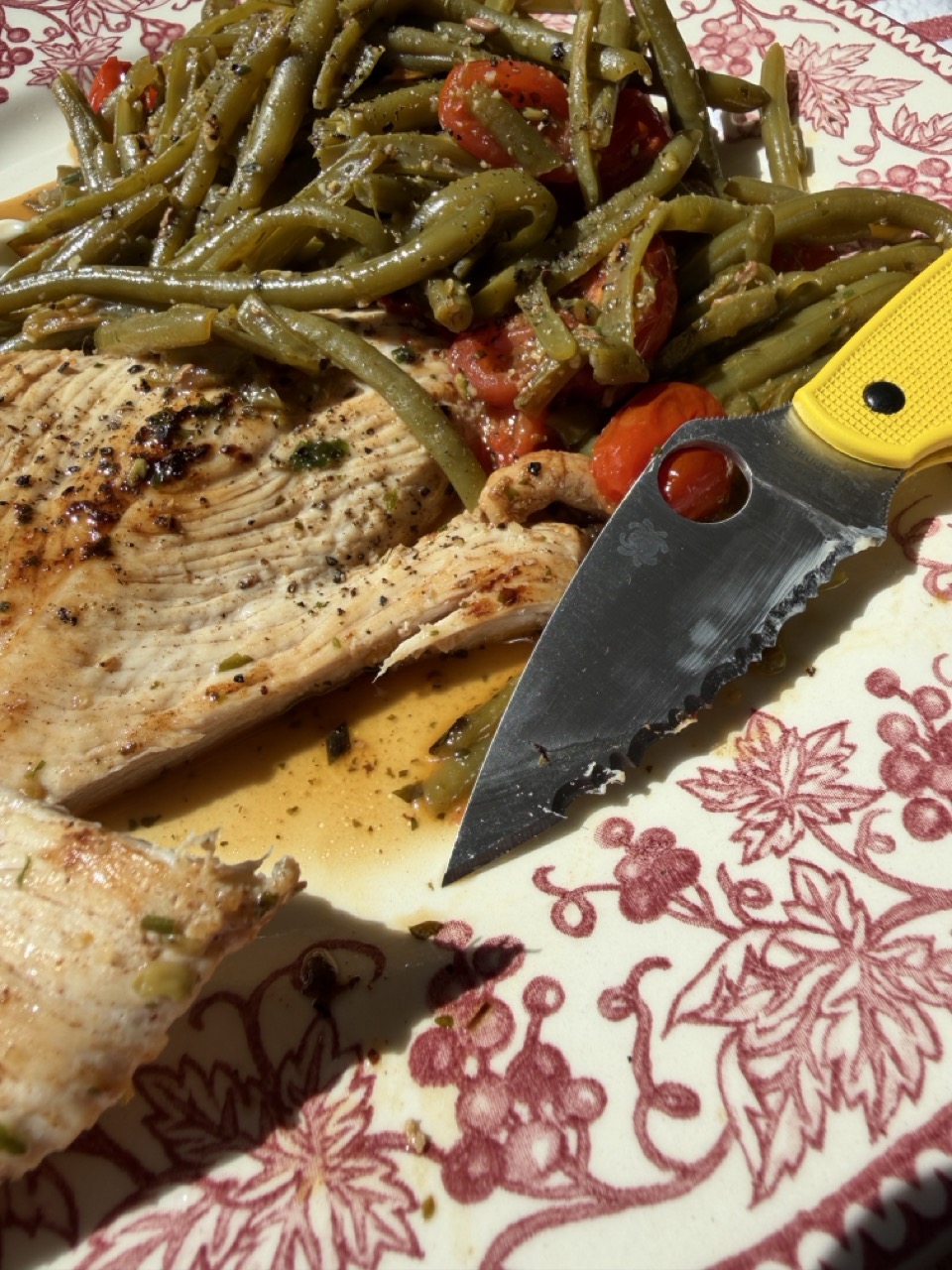
From the Amazonian coast to the unforgiving battlefield of my own kitchen, this “polite” knife sheds its manners the moment it meets real work.
What should feel restrained feels… unleashed.

Let’s be honest: serrations on a slipjoint feel wrong to most of knife collectors. You expect that kind of edge on a rescue knife, a tactical folder, something that locks like a plastic vault equipped with whistle.
But Spyderco pulls it off because:
the UKPK’s ergonomics are rock solid
the choil gives you a huge security if the blade closes on your fingers.
the walk & talk is confidence-inspiring, the slipjoint is hard to close.
You don’t feel under-knifed at all.

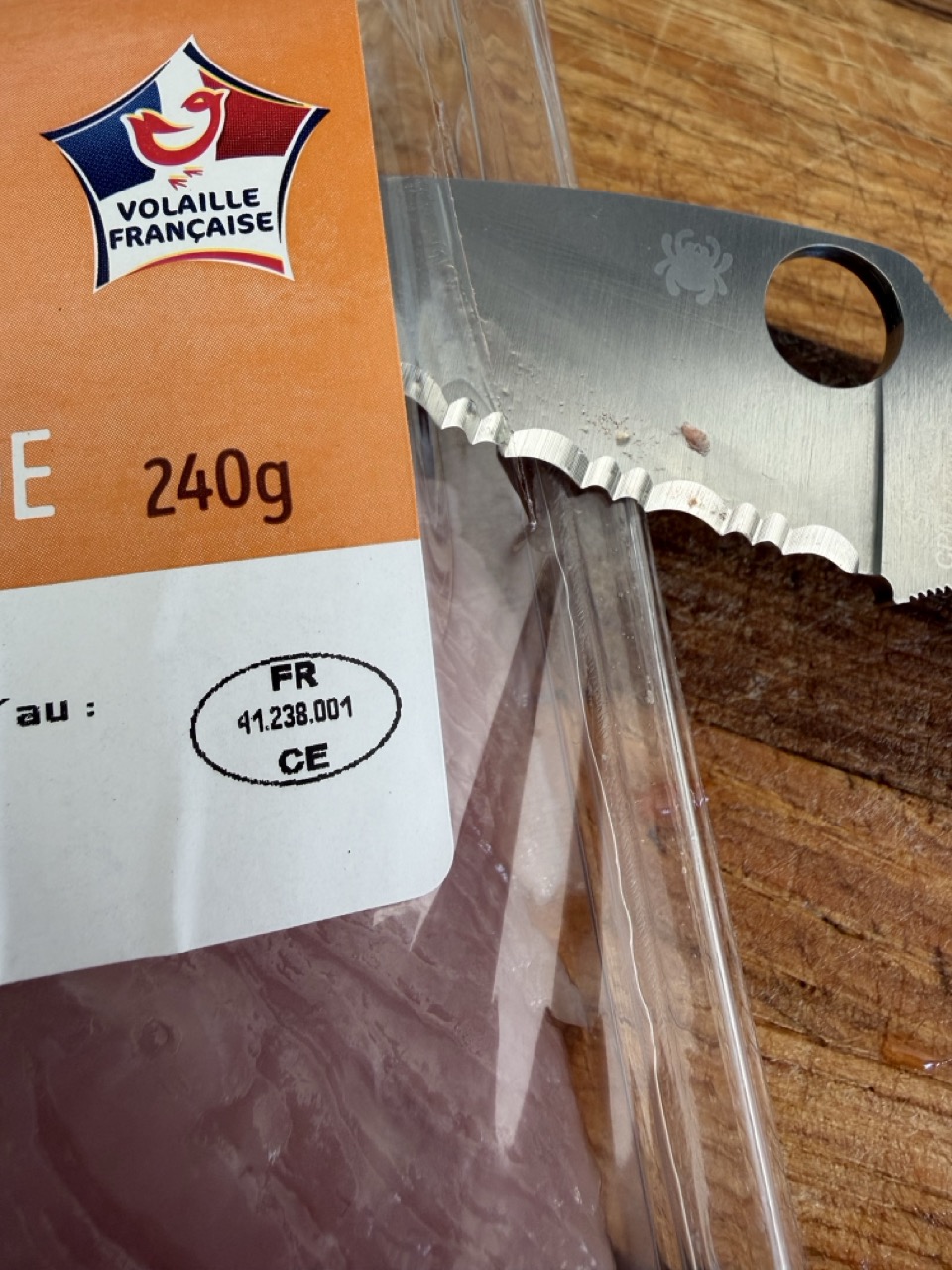
In the Real World, this knife shines where most EDCs hesitate: ripping through packaging without slipping, cutting rope under tension
food with crust (bread, cured meats—yes, really) in wet environments where plain edges can lose bite.
Nope, it’s not a bushcraft blade by design but it won’t frown to be used in the woods.
It’s not a slicey Instagram queen.
It’s a working edge for people who actually cut things or need thing to be cut quick !


The serrated Magnacut UKPK is a contradiction that became a concept.
It takes:
the legality of a slipjoint
the performance of serrations
the excellence of Magnacut
…and fuses them into something oddly perfect and reliable.

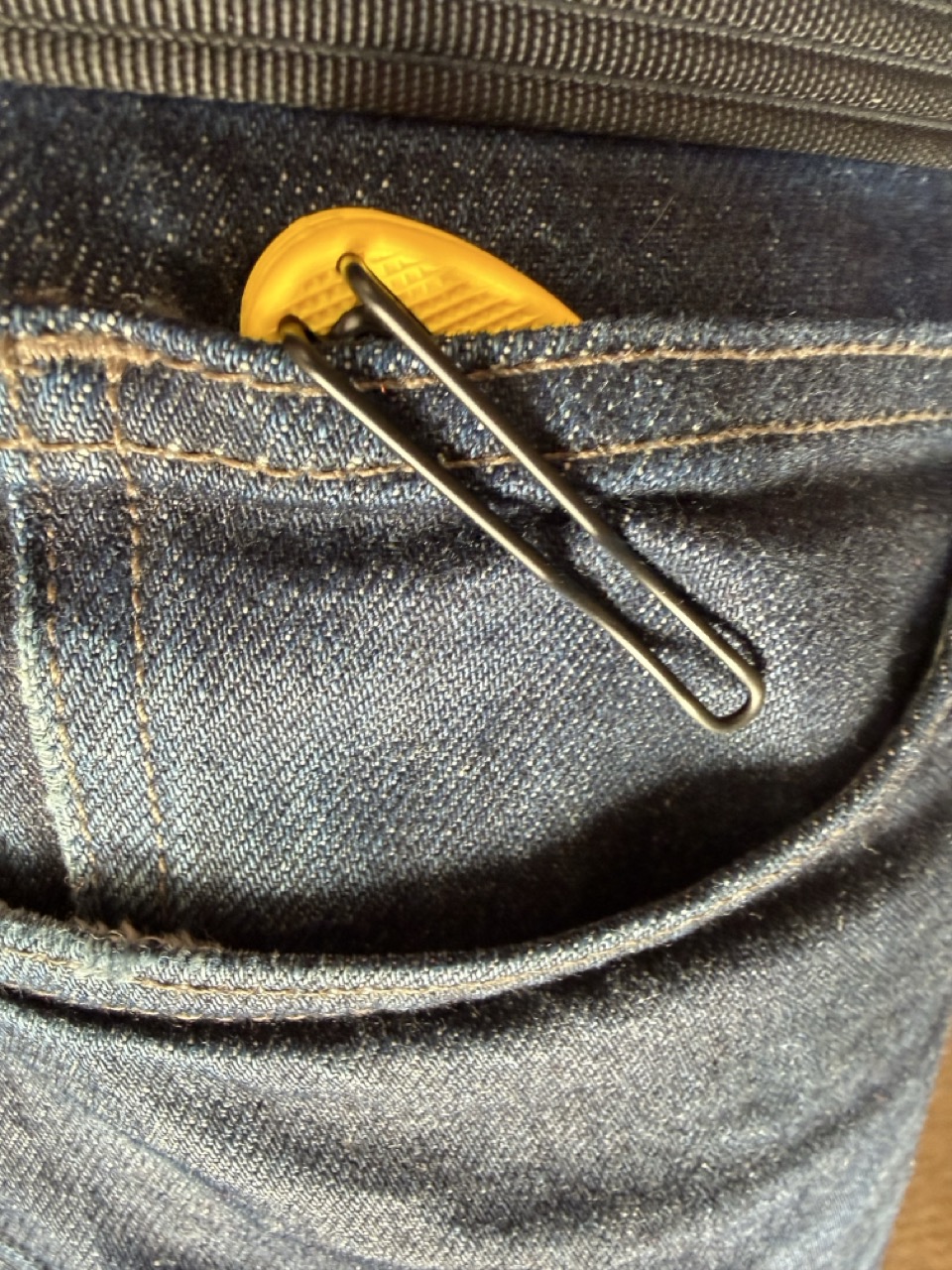
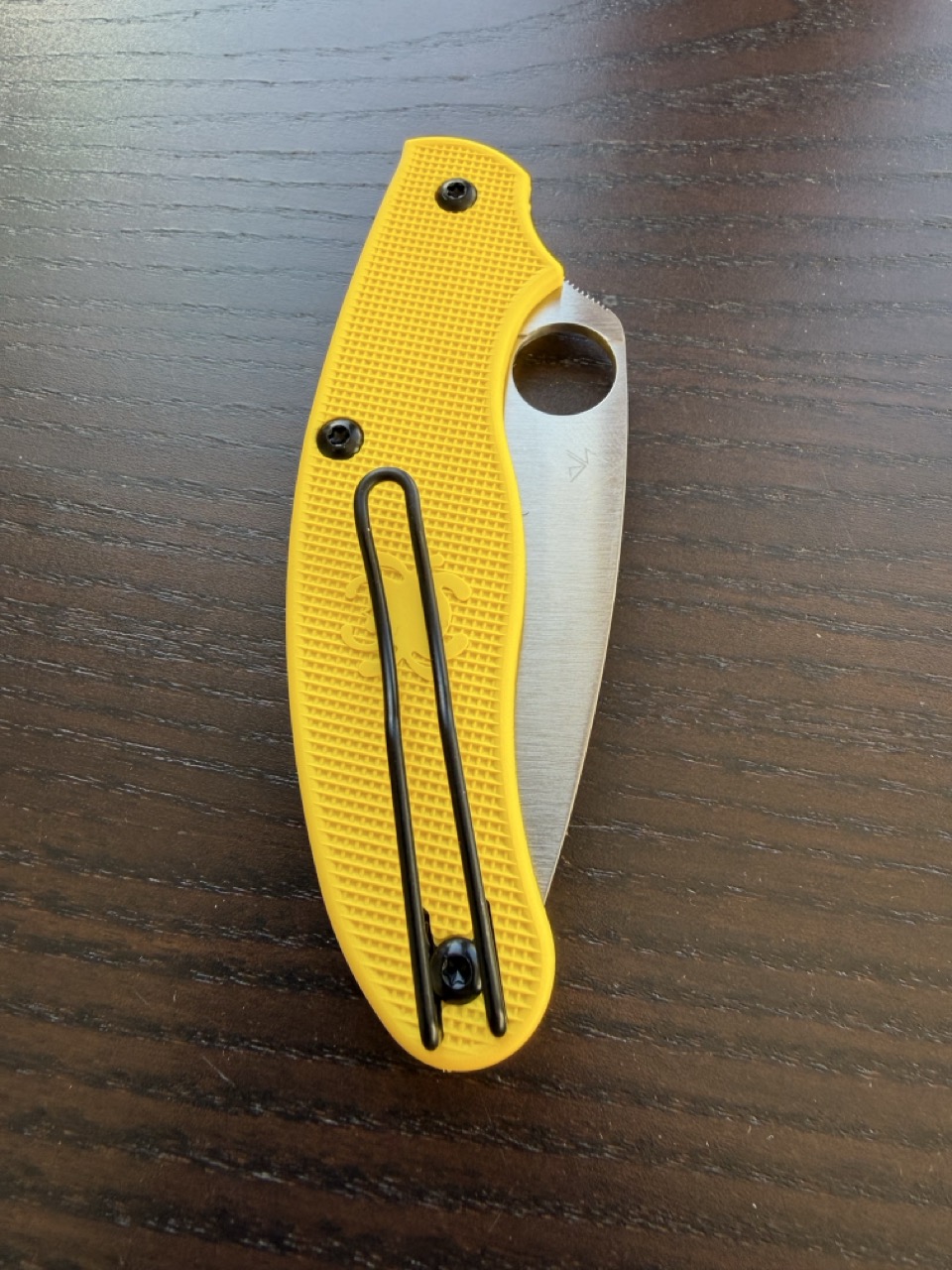
The clip is black and deep carry and all the metal elements (clip, screws, spring and of course blade) are impervious to salt water: “marine gear” is the name of the game.
Knowing LC200N green version is rustproof when Magnacut is stainless.
That green LC200N version is more sea proof if you see what I mean. But the edge won’t last as long as with the Magnacut version. 😉

The UKPK Salt Serrated in Magnacut isn’t your refined EDC.
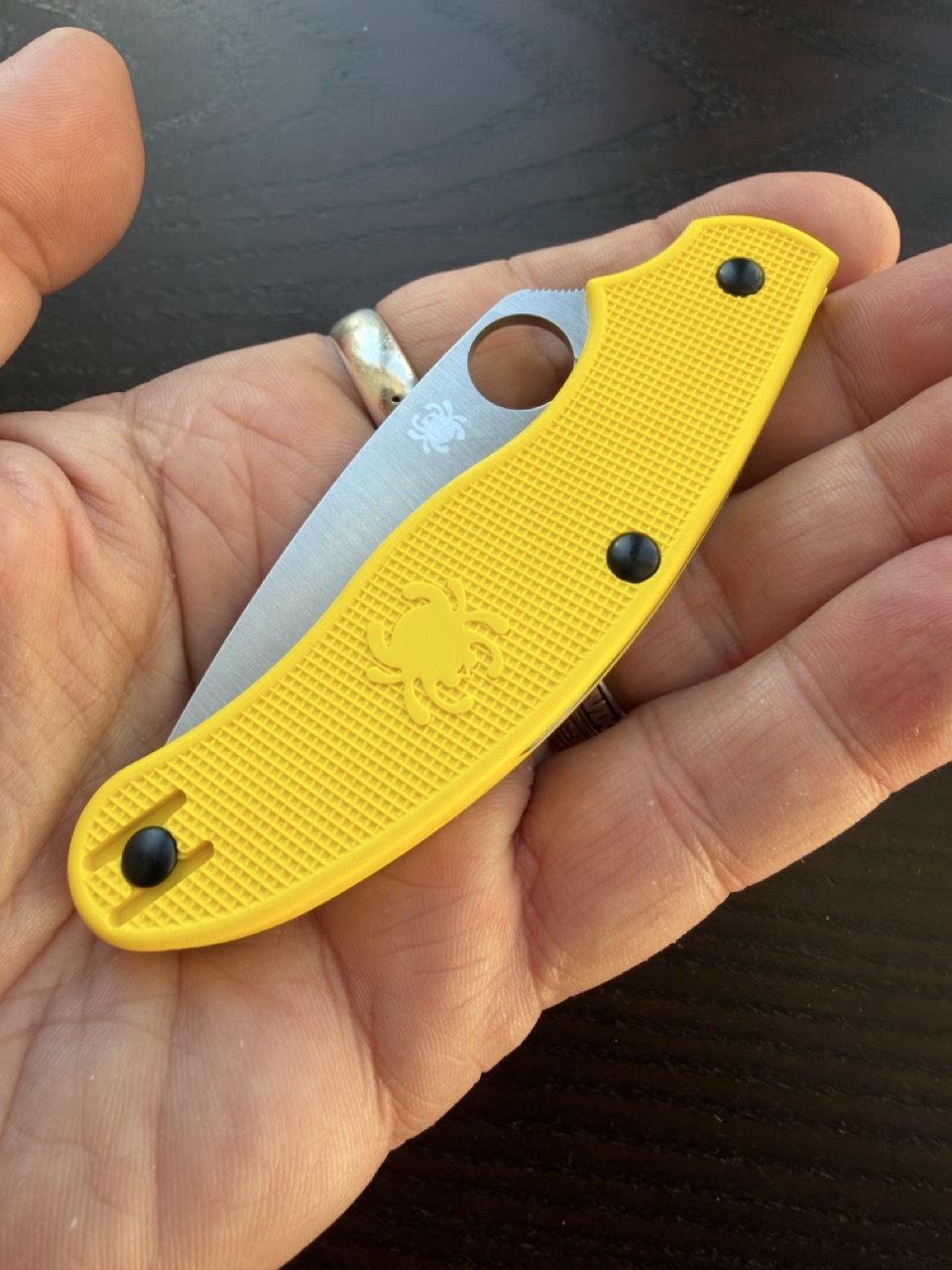
It’s lightweight, high-visibility yellow, with a remarkably thin blade—among the thinnest ever seen on a SlipIt platform.
Made in Golden, Colorado, it turns into something unexpected:
your new all terrain folding survival tool… in a legal suit.

Overall Length: 6.91in 176mm
Closed Length: 3.95in 100mm
Blade Thickness: .098in 2.5mm
Tip Carry Position: Tip-Up

Blade Length: 2.98in 76mm
Edge Length: 2.58in 66mm
Handle Material: FRN
Lock Type: SlipIt
Origin: United States

Steel: CPM® MagnaCut®
Knife Weight: 1.7oz 48g
Clip Position: Ambi
Grind: Full-Flat

I have now installed some Titech Titanium Scales exclusive from Heinnie.
Take a look at my previous review of the LC200N UKPK Plain Edge here.