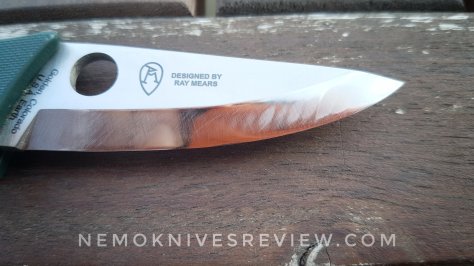
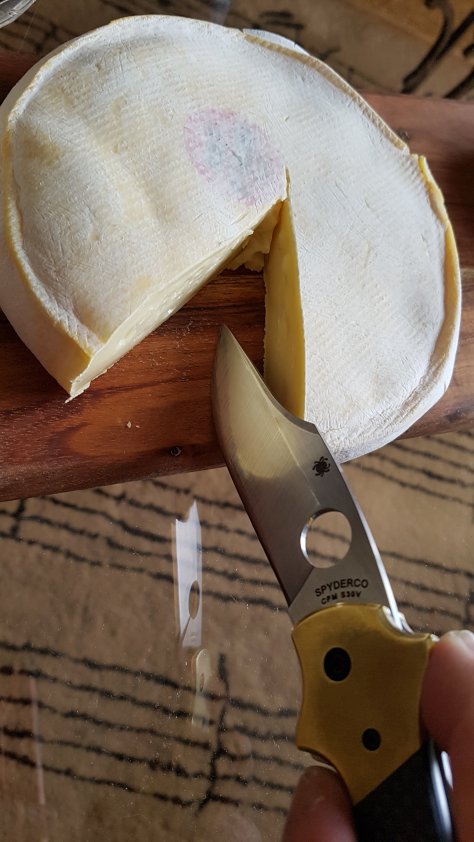
I love Grandpa’s knives in a modern form, like the AFCK in M2HSS twenty years ago. But I was not able to jump on bandwagon to catch a Military in 52100. Lucky me, soon a Paramillie II designed by Sal and Eric Glesser was able with the same Carbon Fiber handles and the same 52100 blade.
“52100 is a very good steel for cutting organic material. If you stay with organic material it will edge hold very well.
I use it for a core steel on high carbon pattern welded laminate. My competition cutters are a laminate of 15n20-52100-15n20.” Ed Schempp
“52100 is a ball bearing steel. Most ball bearing steels make pretty decent blade steel. Especially where edges are concerned. It is my favorite steel to forge. It is hard to find in sheet. Actually, I would like to do a run of a model in 52100, but I’d prefer to make it in Golden, so it will be a year or so.” Sal
Ed Fowler in his many articles in Blade Magazine and his books introduced me in the “magic” of 52100. Also my first blades in 52100 are my two gifted Lil Blue II made by my friend Ray Kirk of Raker knivesRaker knives. Ed as a cowboy and Ray as a Native American ? Made in Golden ? This knife is the true heir of American traditional blades !

“52100 is the steel of which most of the bearings used in all walks of life today are made. Civilization rides on 52100 steel. If it were less than reliable, another steel would be used instead. I have used 52100 exclusively in my knives for the past five years. I have forged many bearings into blades. I have given my blades every opportunity to fail, subjecting them to rigorous, destructive tests. I have found 52100 to be the cleanest, most uniform steel that I have ever used. Properly forged and heat treated, 52100 produces a high-performance blade that knows no peers. I have reached this conclusion based upon extensive personal research, testing knives for the things that they need to do in the real world of knife function.
Bearing-quality 52100 steel blades are tough and normally pass the 90° flex test without cracking or breaking. Their strength is evidenced by the force required to flex them.
I demand three levels of performance from any knife intended for serious use. First, it must have the ability to cut and cut well. Second, the blade must be tough. By tough I mean it must flex without breaking like a piece of glass. Last, but not least, it must be relatively easy to sharpen. Through the years, I have tried many steels and heat-treating methods and have tested the results by cutting a lot of rope and breaking many blades. Some combinations have cut extremely well, but have
broken or chipped when subjected to hard use. Drawn to a point where they were tough, these blades were too soft to cut effectively. I had settled upon one steel that when properly forged and heat treated cut very well. I had invested a great amount of time and effort getting the most out of that steel, so I was reluctant to change.
The nature of 52100 has changed drastically since that first bearing was made more than 100 years ago. Bearings are performance oriented, and those that last and gain a reputation for high performance are in demand. Every bearing is, by nature of its job description, routinely tested to its limit of performance. Competition is based solidly upon quality steel, and the outfit that makes the best steel enjoys a ready market for its product. Quality control is a high priority in the manufacture of bearing steel.
In addition to everything else, 52100 is easy to work, grind, and heat treat. Even less than perfect heat treatment can result in a good knife, though it never should be said that bladesmiths should settle for simply “good enough.” As the knifemaker’s skills develop, the performance potential of the steel will offer ample room for growth.
The high chrome content of 52100 promotes a beautiful mirror polish and enhances the steel’s machinability. The 1 percent carbon is more than can go into solution in the steel. However, unlike 1095, which has about the same amount of carbon, the excess carbon in 52100 also has 1.5 percent chrome to react with to make chromium carbides that can enhance cutting performance.
The “Cadillac of steels,” 52100 has been and continues to be one of the cleanest blade materials suitable for cutlery. Its primary use demands great care in manufacture. It’s also extremely versatile. For example, I’m aware of one man who makes
“52100 has been and continues to
be one of the cleanest steels suitable for cutlery.”
Ed Fowler, the lover of 52100 ball-bearing steel, sheep horn, and dedication to the functional knife.

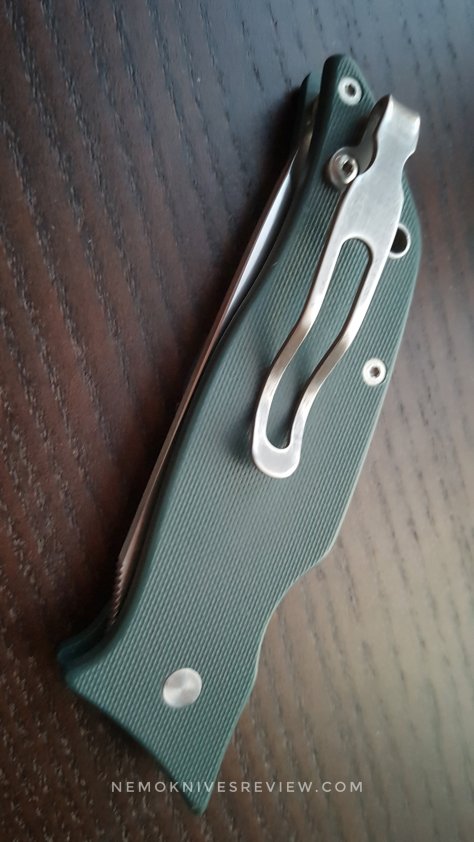
For Sal Glesser, the functionnal knife is carbon fiber handle and impervious to wear and tear. CF got that magic to age great even after some falls on concrete.
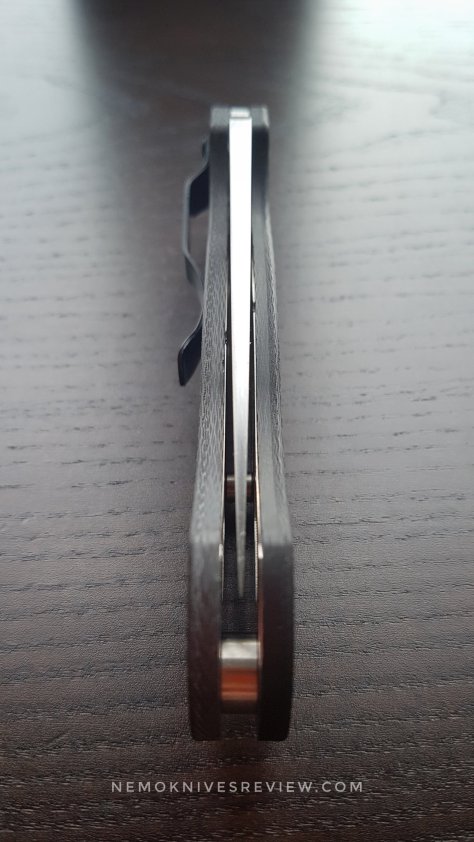
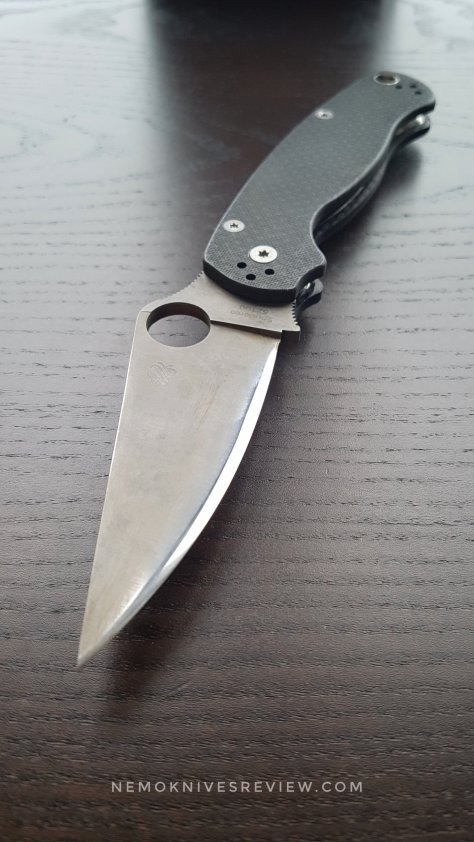
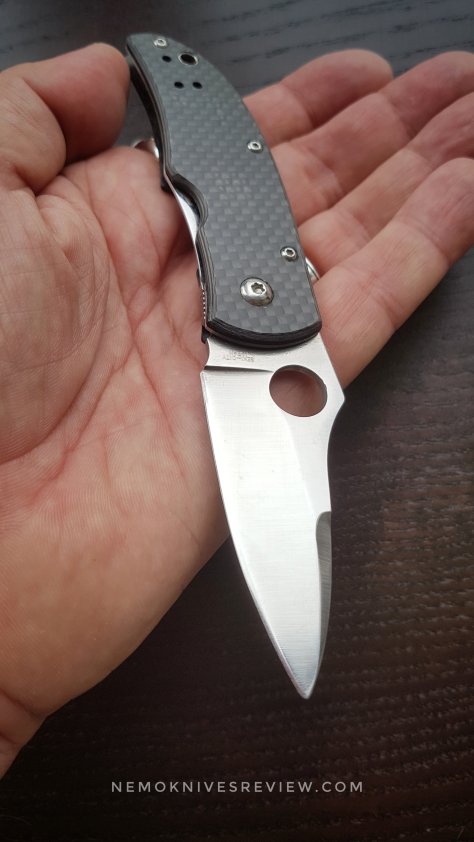
As you can notice mine came perfectly centered. The Colorado Plant is now bringing perfect quality controls and a love to details you can appreciate in all angles.
The action is smooth ans the blade can fall by gravity when the lock is released.
As on the Yojimbo2 the compression is lock provides an action which is one of the smoothest out of the box but othing new about that.

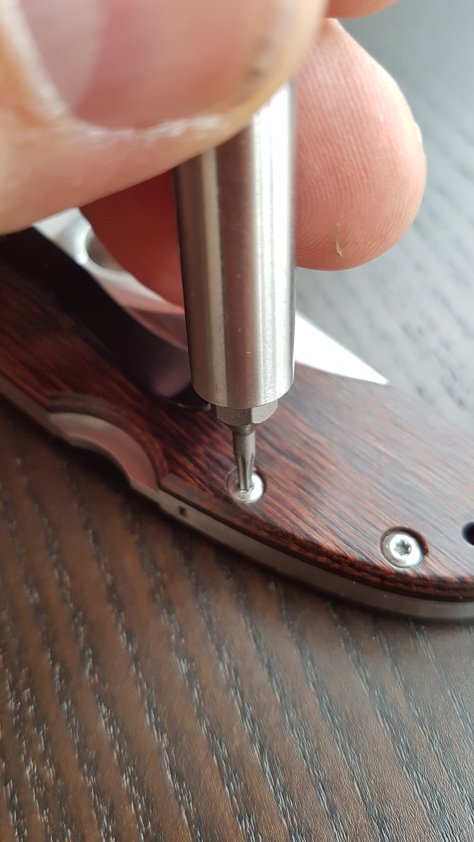
Ok time to smooth the peel ply CF for saving my trousers from being filed and also smooth the hump which catch my pocket’s lip. Sandpaper at 500 has been used.
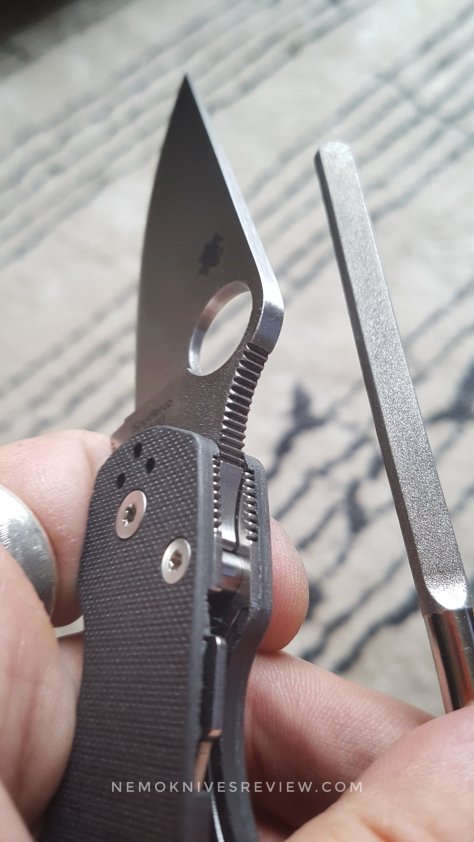
For the hump, like on my previous Paramillie, a diamond file is mandatory. 15 minutes later it’s much better !

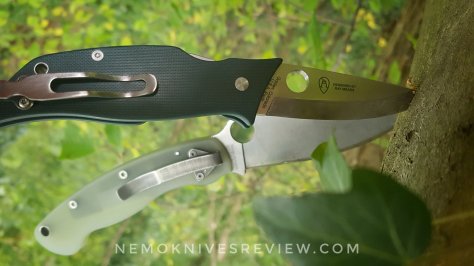
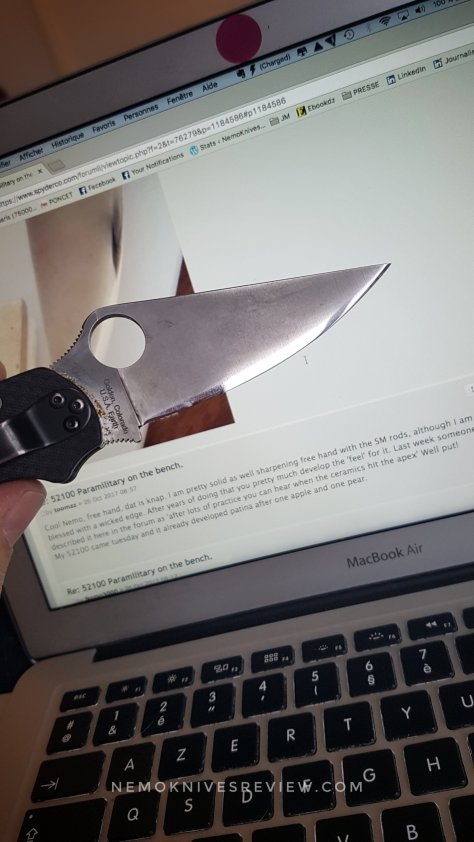
Then, knowing 52100’s fun is the fact it can get a patina very quick, green lemon juice was used to start a gentle patina.
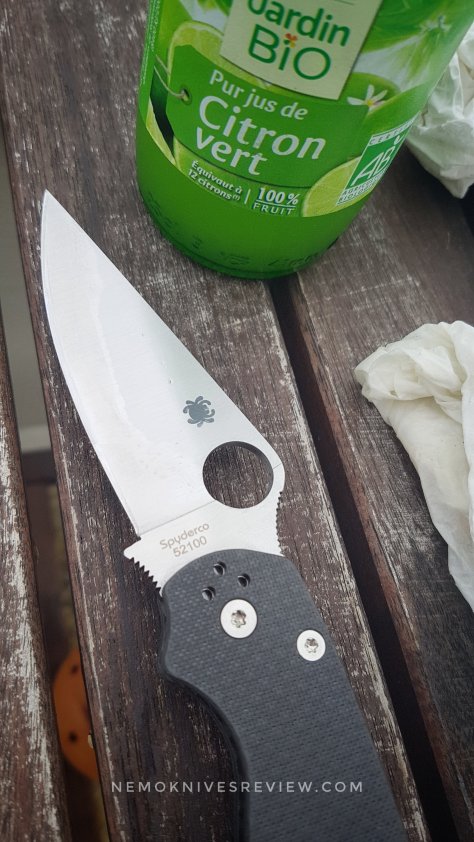
For good measure I wanted to compare how a 1075 carbon steel Opinel and that 52100 knife will react to the lemon juice.

In the same time I could try the new Double Stuff 2, Howard korn from the Knifecenter of The Internet has just offered me.
I was able to remove the shoulder and convexe my grind in a pair of minutes. Then with the white ceramic it was own to a mirror polish.
This is true 52100 get polished very easily. And the edge is like a mirror after some pass on leather. So this is also going to be fun.
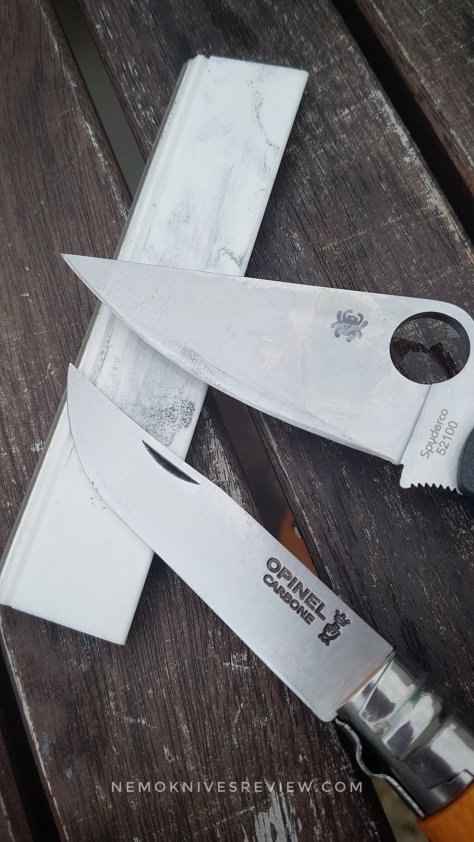
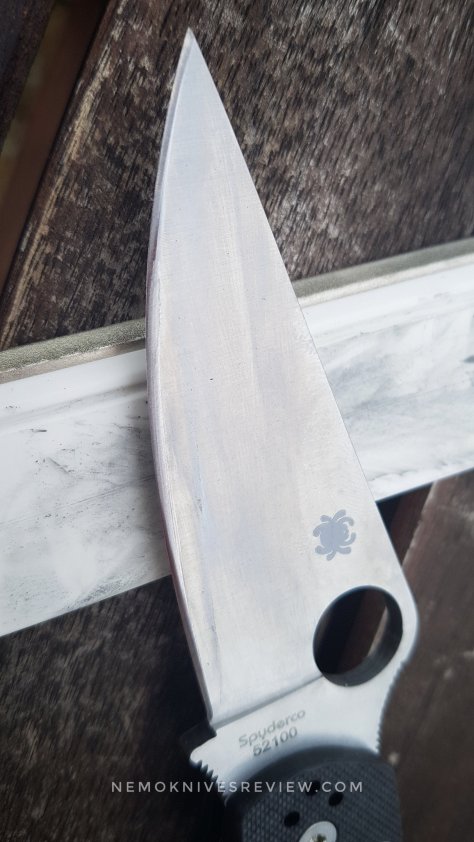
WIth the lemon juice drying on its size, a patina soon appears.

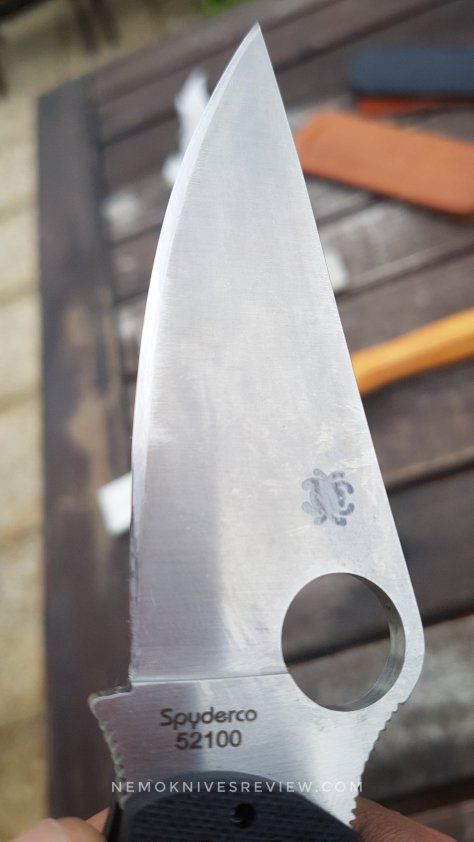
And I was able to get a nice contrats with the convexed edge.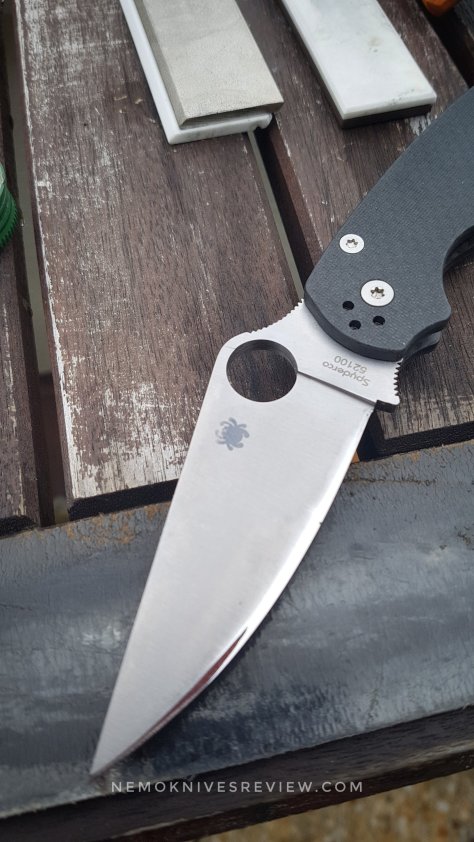
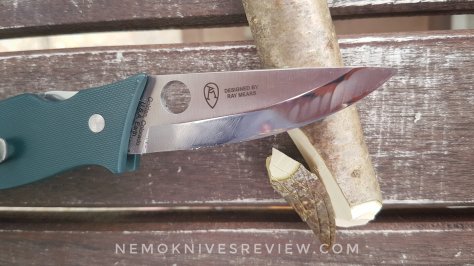
The knife bites in the wood like an hungry edge will. This should be a dream for Bushcrafters to get that kind of steel on such a modern and reliable plateform.
It can be turned into beyond razor very easily just by stropping my new convexed edge.
Yes, so easy to get it dangerously sharp and whittling hairs !!
The good thing also is that 52100 is supposed to be tougher than S30V and the thin point of the Paramillie needs plenty of strenght. Now I wonder what is the HRC of that blade.

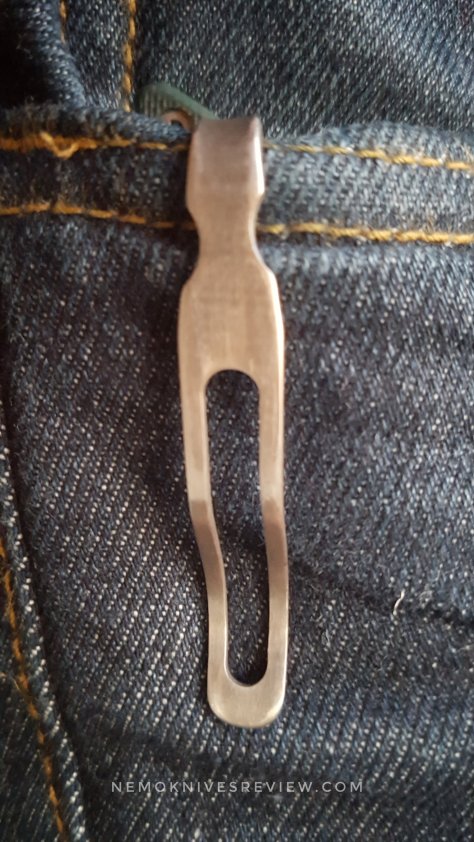
I also like the matte black clip provided. It’s made for a low profile EDC.

It seems like the 1075 is getting drak faster than the 52100 as the wipe marks are visible on the Opinel blade.

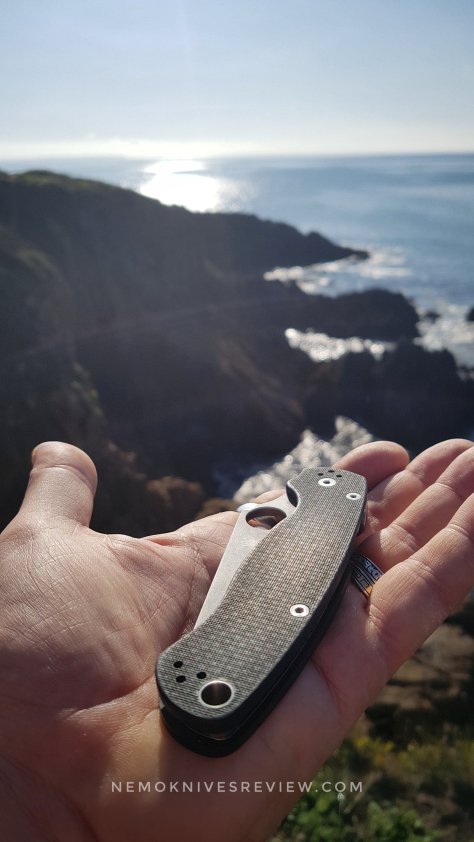
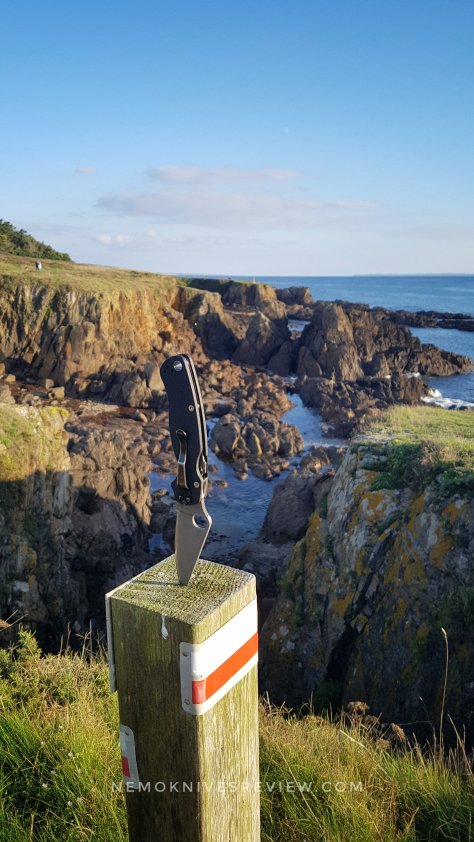
So the Paramillie 2 is now ready to get some used. I will go near the Ocean for four days at the end of the week. It will be occasio to test it in a humid and salty environment.

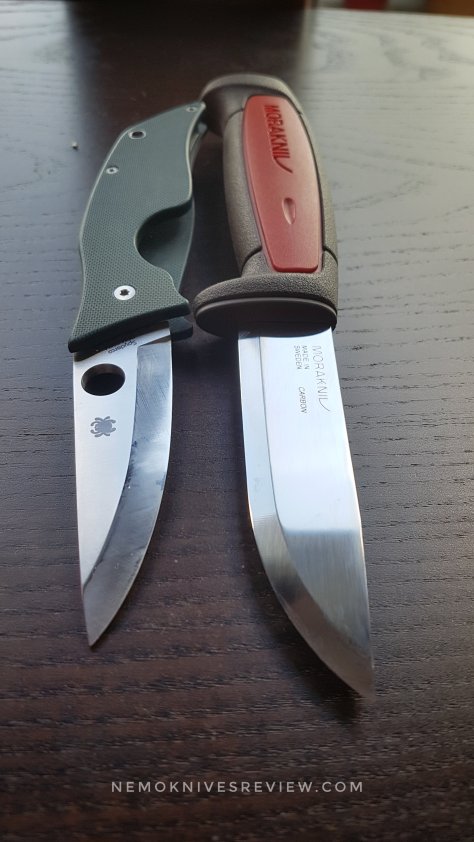
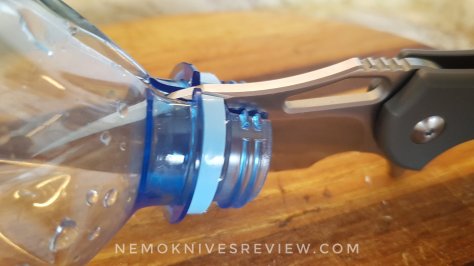
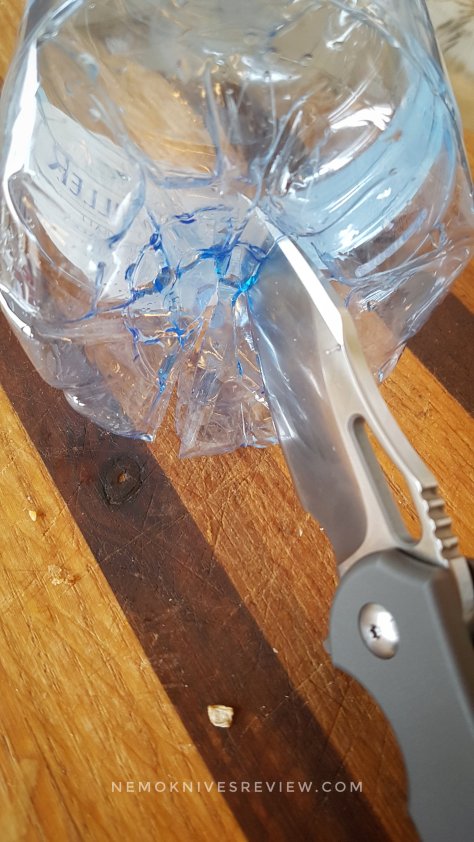
The new king of bottle butt cutting is my Opinel N°12. It goes through plastic like in butter. The Paramillie is stuck but slowly and steady goes through.
But so far nothing beats the Nilakka or the Opinel in that exercise.
But the 52100 will be slowly more thinned for that matter. 52100 is a steel to be thinned on the edge.


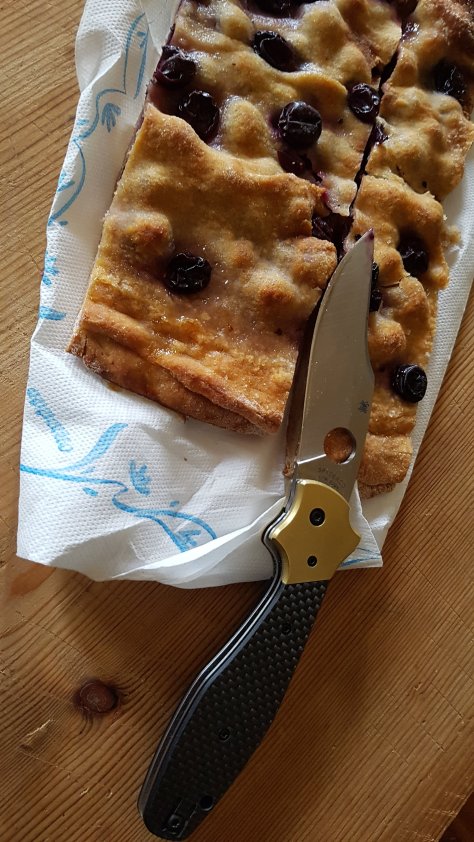
Cutting bread is another great test. The cruch is hard and the inside is soft. That’s why Opinel are great on that too. But here the Paramillie is also reliable.
52100 is “alive” . It means it needs care and the patina will evolve in time.
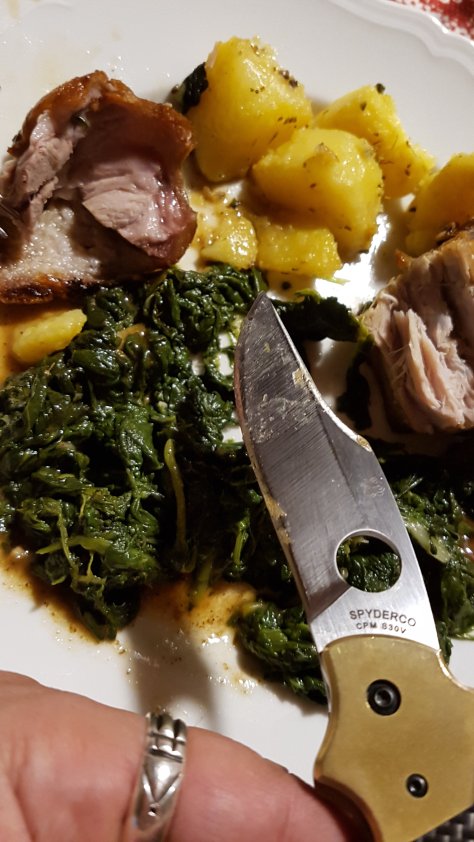
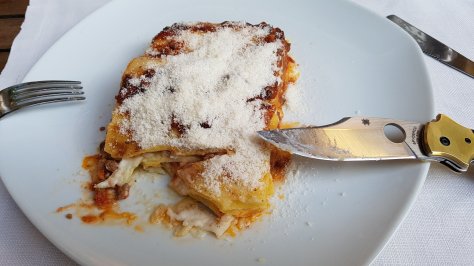
I have greased the pivot and now the cheese is greasing the blade. Let’s not forget Carbon Steel folders have been in use much more longer than stainless steel. Roman folders have been found in archeologic sites. So this Eric and Sal design enhanced by this bold move — bringing 52100 to a modern folder — is all an adventure !!
So…
“New” because it’s a new idea to give ball bearing steel to a tactical folder when the tendance is to S35V and M390 manufactured in China (Don’t mistake me I do love my Falcon). “Old Timer” remembering the Schrade 1095 collection made in the USA and Workhorse because this is a knife made to be used not kept in a safe. It needs to be oiled and sharpened and used and oiled and honed…
More to come !!


I remove the edge’s shoulder with the diamond side of a Double Stuff 2. I do that until I got a burr.
Doing it without guide, free hands, gives a gentle convex edge.
Then I use the white ceramic to erase the deep diamonds cuts.
And then leather stropping. On 52100 it is a breeze to do.
Now it can whittling hairs.

And for good vintage look, some P1000 sand paper on the clip will age it.
But rust could be a problem in the pivot area… as shown on part II.












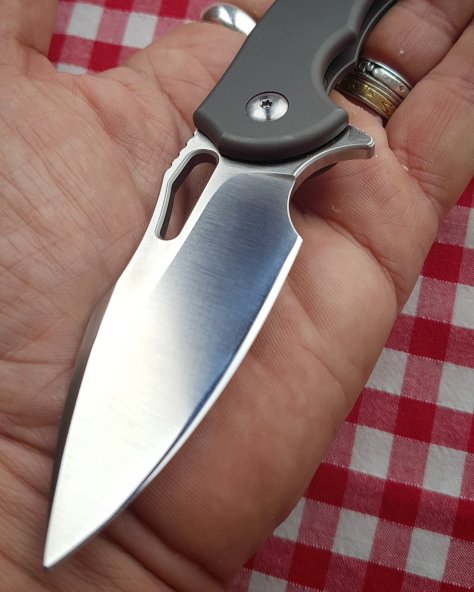


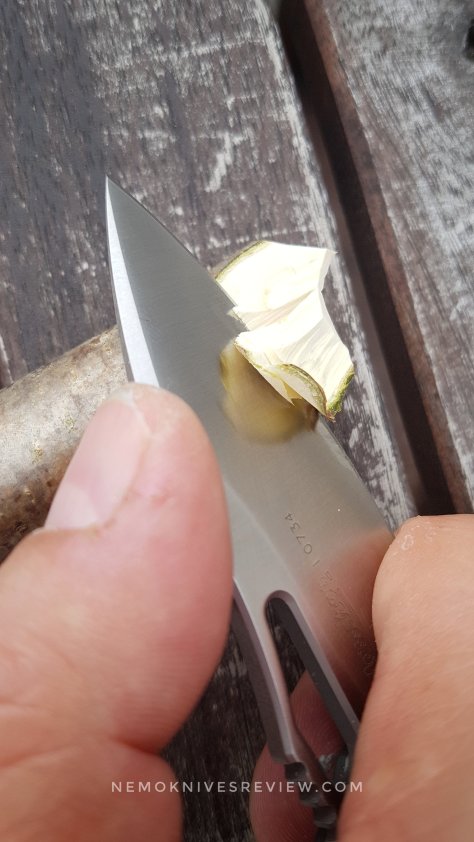
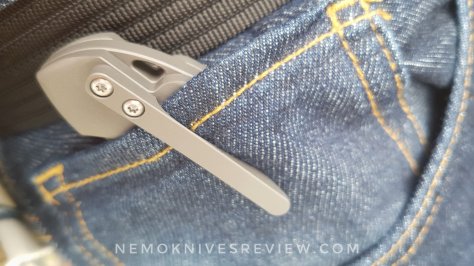


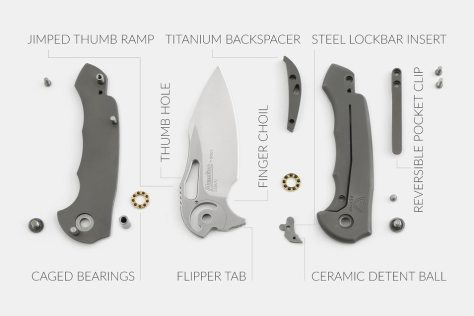








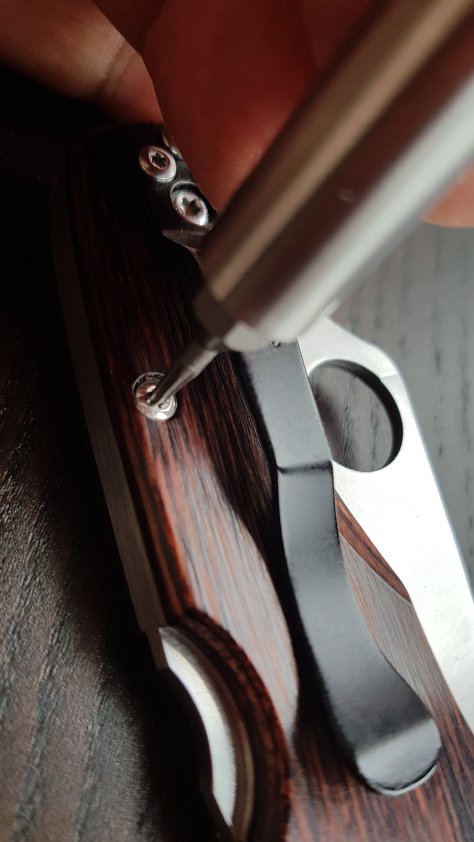
 I had ordered a titanium deep carry clip for my
  So here it goes !
  I’m always amazed at how thick the blade is and how solid this little folder is after one year without real maintenance. I have found the scandi S30V quite easy to maintain razor sharp and to my surprise it is easy to keep that way without any convexing and losing the “zero ground” scandi edge. But the best thing about the Wolfspyder is how hard
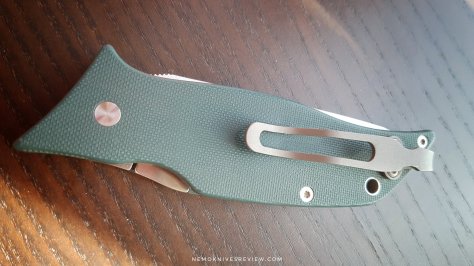 Easy to carry and easy to reach in the pocket. This one will be in my pocket for a trip in Norway very soon ! The Scandi ground little big knife in Scandinavian territory !