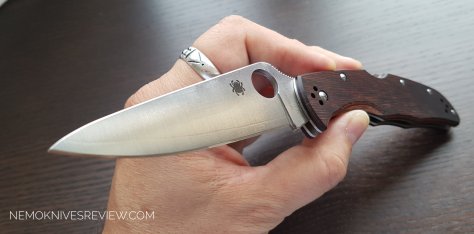
We all know how knives get personnal items and how many times we touch them and use them. Synthetic material got their practical side but natural materials provide some spirit to a folder. It gives nobility, it gets some gentle patina over the years and it makes your personal knife much more personal and more precious. Pakkawood is synthetic but it gives than kind of feel, add a steel spacer and steel liners and you got a bank vault workhorse of the 4th generation !!
The legendary Endura and Delica has now provided as the exclusive batch at the Knifecenter and they are not only great Spyderco’s but also near perfection EDC.

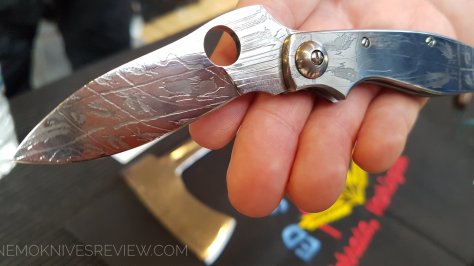
First thing to notice is: this is not your regular Endura. Like the Orange Sprint Run C10FPBORE, this C10WDP is offering one of the best blade ever made in Seki: HAP40 steel clad between SUS410. HAP40 is like CPM M4 an high speed tool steel created by particular metallurgy and made by Hitachi. In my book it means a strong edge who will not chipped even if ground thin.
Quoting Spyderco: “HAP40 is a semi stainless, powdered high speed steel (HSS) that takes and holds an edge better than any other steel available on our site. HAP40 is fine-grained enough to sharpen very well and rates 64-68 on the Rockwell Hardness Test (HRC)even harder than the traditional carbon steels used for knives. We have specified a hardness of 65-66 HRC for our blades. Unlike other HSS steels, it can be relatively easily sharpened on normal waterstones, if not quite as easily as traditional carbon steels.
We think HAP40 holds the potential to become one of the best steels on the market for the production of high quality, high durability kitchen knives.”
Edited on the 8th of October: Semi stainless ? With 4% of chrome ?
What I can witness is that my HAP40 does not want to develop a patina yet when CPM-M4 is staining easily.
Perharps HAP40 is not a Japanese CPM-M4 but something closer to acording to CPM® REX® 45(HS)CPM® REX® 45(HS):
CPM REX 45 is an 8% cobalt super high speed steel which has excellent hot hardness along with good wear resistance and toughness, making it suitable for difficult machining applications. Made by the Crucible Particle Metallurgy process, CPM REX 45 has good machinability and grindability characteristics.Typical ChemistryCarbon 1.30%Manganese 0.30% (0.70%)*Silicon 0.50%Chromium 4.05%Vanadium 3.05%Tungsten 6.25%Molybdenum 5.00%Cobalt 8.00%Sulfur 0.06% (0.22%)Typical ApplicationsBroaches Milling CuttersEnd Mills Extrusion PunchesForm Tools Shaper CuttersGear Hobs Taps* The addition of .20/.25 S in larger diameter rounds (e.g. 2-9/16″ and over) provides a uniform dispersion of small sulfides throughout the structure, resulting in machinability and grindability benefits with no deleterious effect on toughness.”
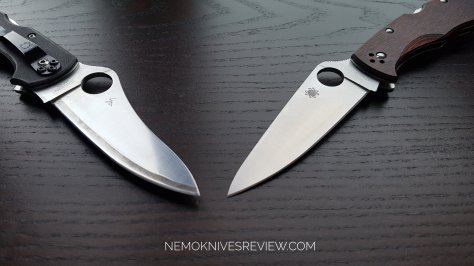
It’s even better than my superblue Stretch in term of long last edge and certainly less prone to pit or stain. So, it’s much better.
So the fact that the blade is clad HAP40 is a good thing; you get toughness and flexibility where it counts on the spine and rigidity where it counts on the cutting edge. (quoting Sickael a forumite)

Talking about perfection in manufacturing: the blade is perfectly centered and there is zero vertical play !
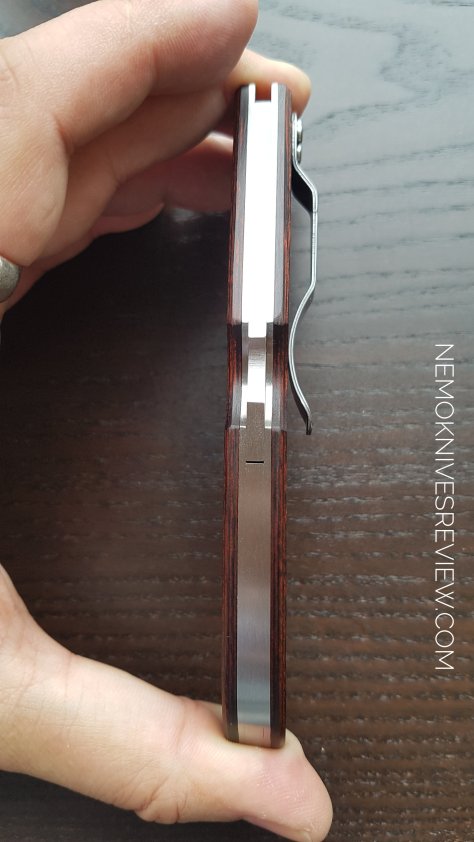
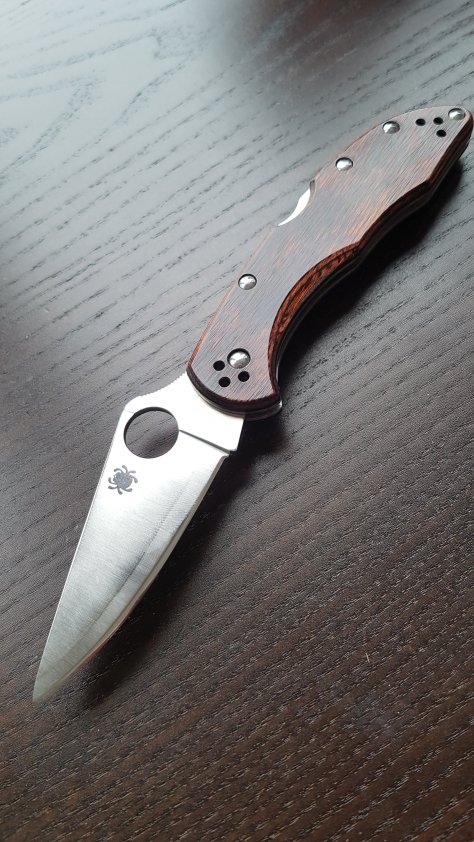
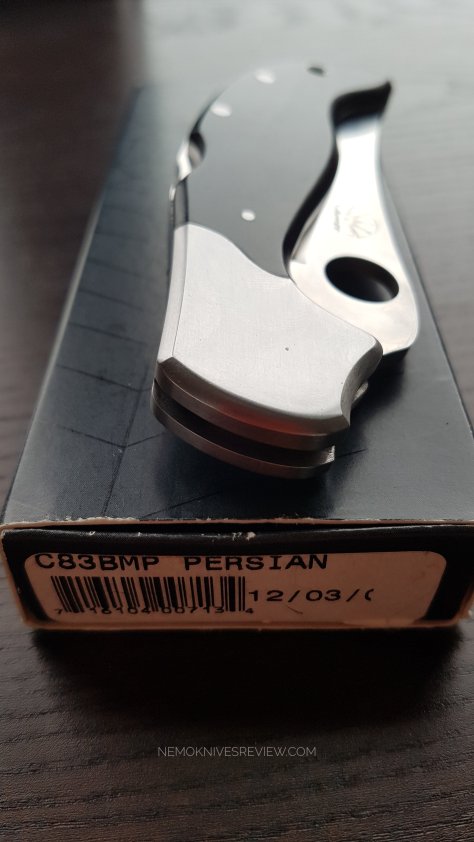
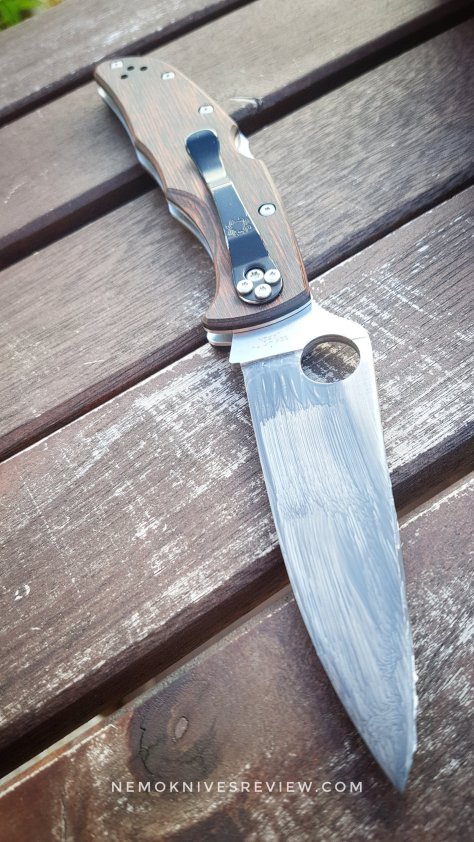
The steel spacer and skeletonized steel liners gives a very solid feel and a high quality feel. This is the same spacer as on the G10 Endura. It’s not butt heavy, the knife is well balanced. You can noticed how the adjustement between the liner and the spacer are perfectly done.
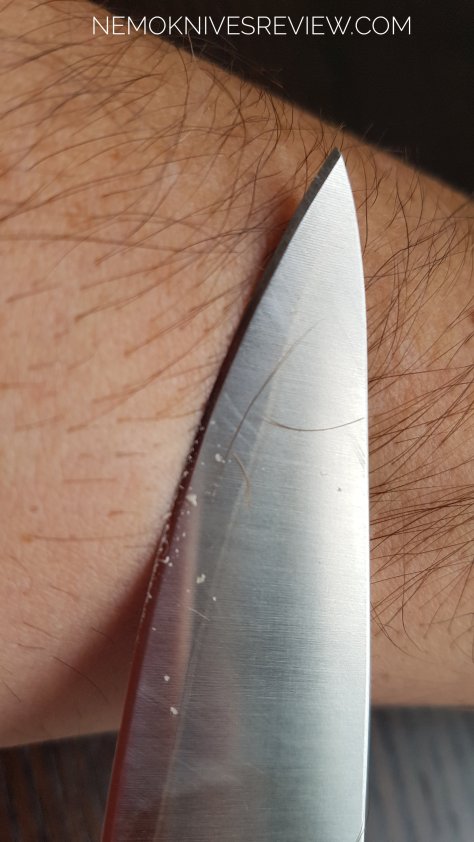
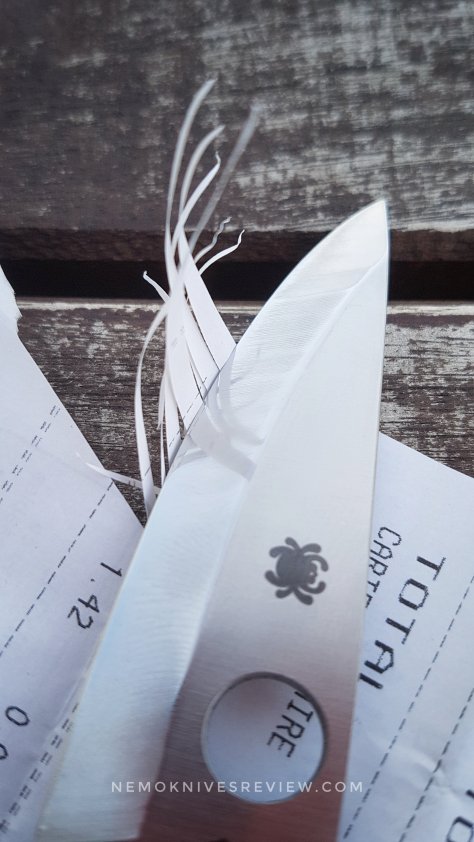
Of course the factury edge was on the razor side of the scale. With such a special steel it could be thinned by some work on sand paper to de-shoulder it or kept this way.
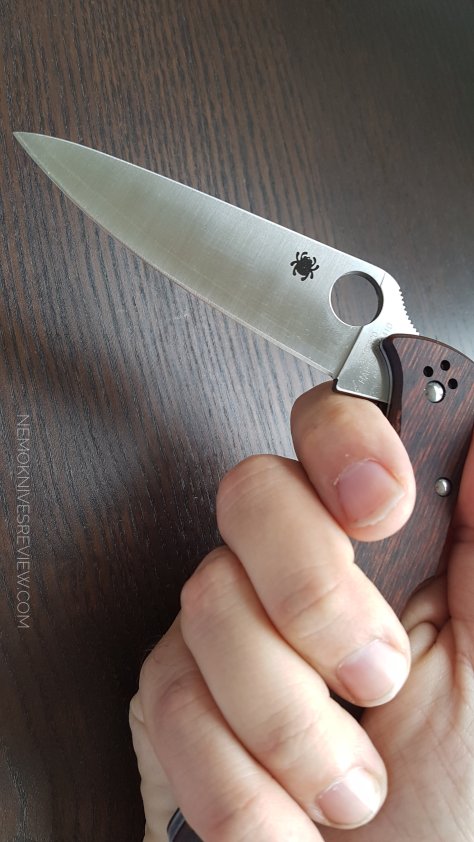
Even if the endura doesn’t have a choil, when closed the blade falls by inerty gently on the index. Making the closing safe and fast. Perfect !
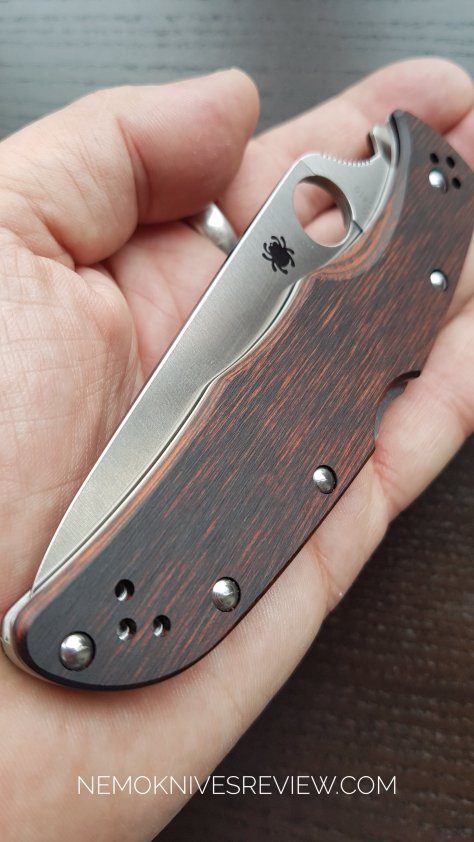
“The wood is Pakkawood which is a stabilized laminate of birch with stain, but it is the best material for knife handles. It never warps, absorbs water or changes in any way and it looks great. It also polishes up with a buffing wheel to a high gloss. They are totally made in Seki City and I love my Delica. ” Howard Korn – The Knifecenter of the Internet.
Nuff’s said. This is a labor of love. The wood is warm under the touch and provides enough traction for serious cutting job. This knife is a user, a beautiful and rare user. A classical design enhanced by the choice of materials.

Compare to the Stretch and Millie the Endura is taking her place just in between. A little thicker than my Stretch and longer too.

Compared to my Millie, the blade is thinner but provide almost the same working edge. The Endura has always been an impressive cutting machine confirmed by years of production and refinement.
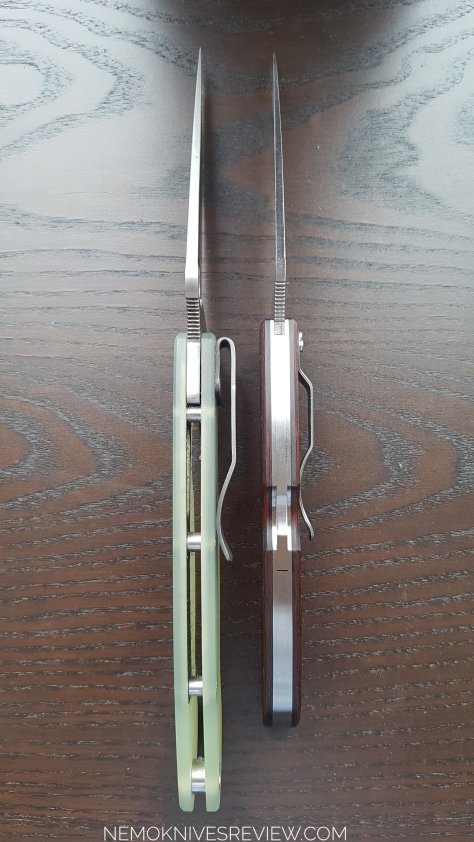
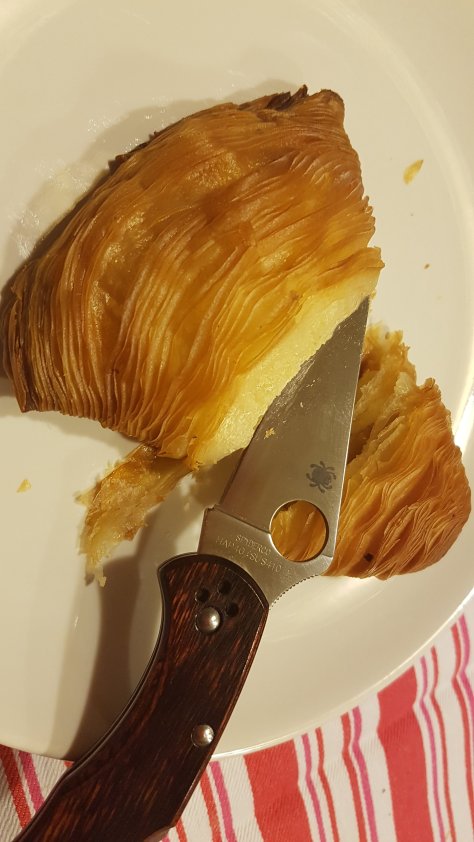
For a must shorter handle tha the Millie, you are pocketing a blade enough long to cut bagels in half or split a melon.

But I have found that the jimping on the blade were a little too much aggressive and by rubbing against the pocket’s lips it could ruin your denim in a week.

It was fixed by using some diamond file turning the 90° edge…

into a smooth rounded one. It was done in 2 minutes. This is something I also made on my Millie, Paramillie… The hump’s jimping is always catching and wearing my pocket.
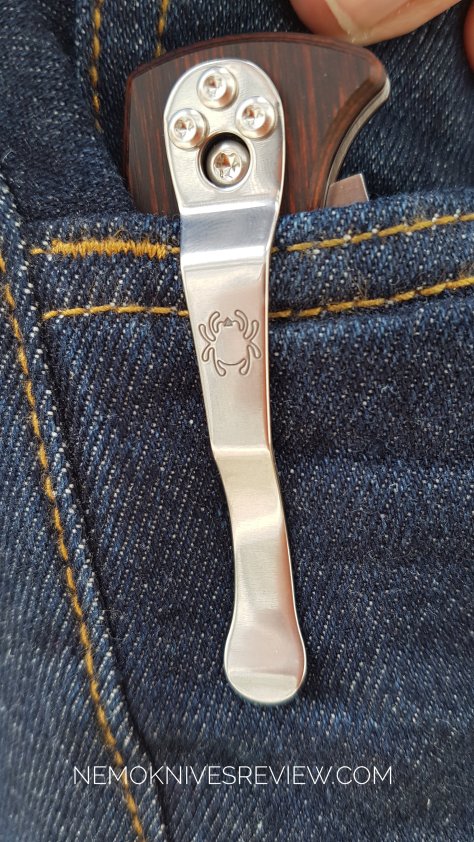
Now I prefer Tip Down carry for Spyderdrops and it gives a reason to have this holl in the clip.
So here it is: the best Endura version with a great “Wow Factor”. Even sheeples love it. It’s not menacing, it’s all in elegance and choice in refinement. This is a stunning folder and a rare Endura giving you the chance to carry a Grandpa’ knife with the last technology.

And now let’s start to use it. The kitchen is my battlefield as the knives are subject to their main purpose: cutting efficiently.

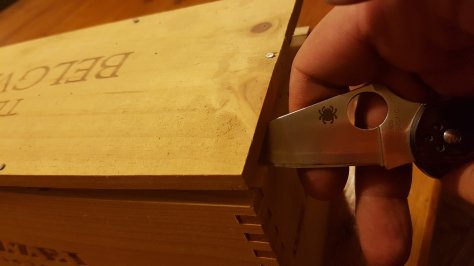
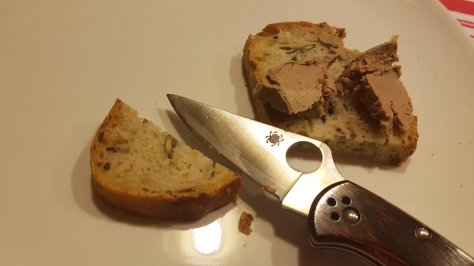
Let’s try this on code fish and tomatoes. The factory edge is “honest” but this steel begs for a thinner manifestation, better efficiency.

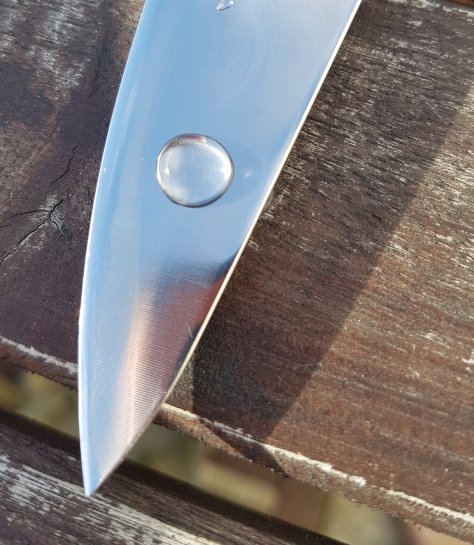
No stain and no risk for that hande, the wood is stabilized.

So let’s use some diamonds. De-shouldering the edge and creating an apex.
And then gently stropping on leather. The wine glass i not mandatory.
The day after I was sanding the scales !










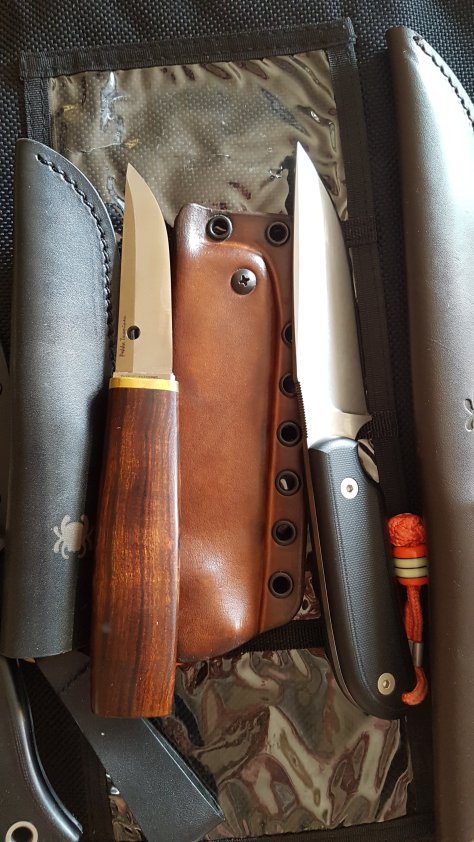
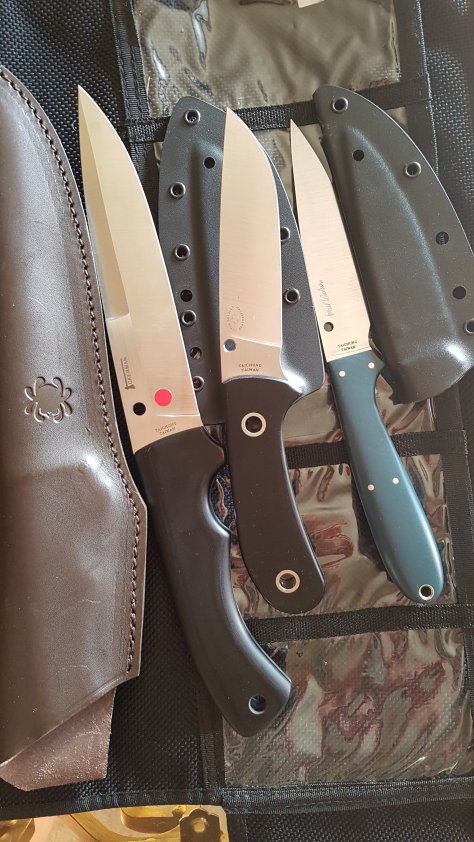






 If the
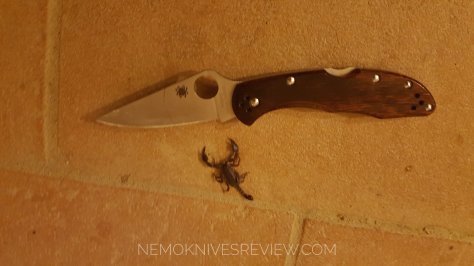
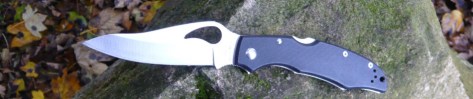
  The Delica got that status of pure EDC as it is small enough to be accepted easily by sheeples. The handle adds a touch of class to this little workhorse and the special alloy blade gives more power to the “matter separator”.
 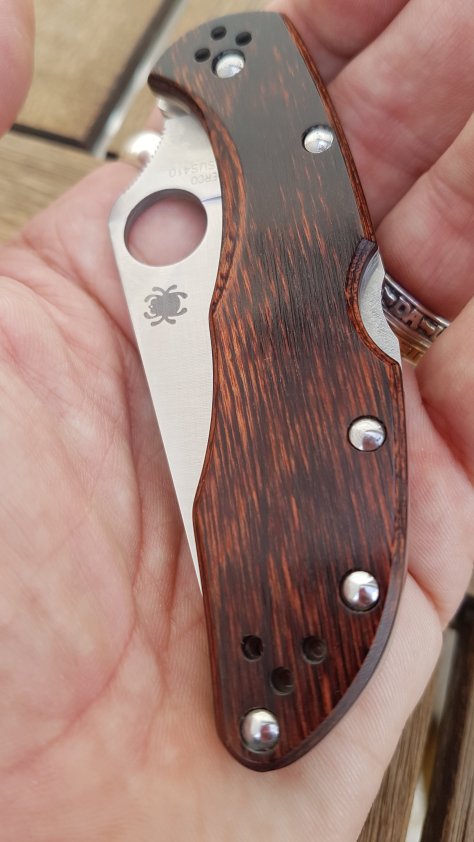 This is little gem is just asking to be clipped and use. As you can notice there is no laynard hole on the version. That can be an issue for some people who use lanyard to retrieve the knife form their pocket and enhance the handle in length. It’s a matter of taste. I love lanyards on knives pictures but I don’t like them on my EDC and the Delica’handle is perfect for my hand.
 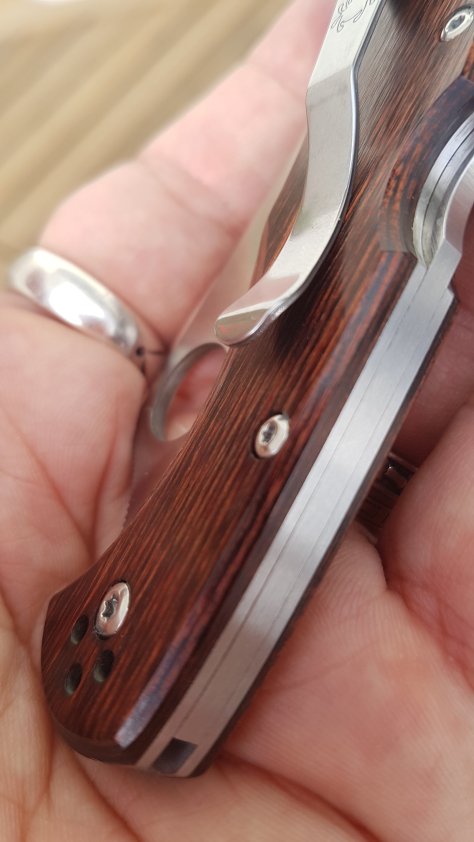 I have kept the clip mounted for tip up carry, on the opposite of the Endura which I open with a Spyderdrop. But the Delica is so smooth that it can be “spyderdropped” too.
 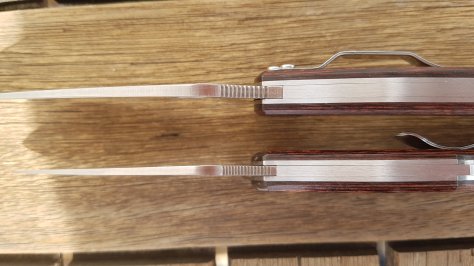 Fit and finish are stellar and you can noticed the 0.5mm of difference in the blade’s stock. Also the full steel backspacegives a feeling of reliable and solid construction pushing the envelop in that great design.
 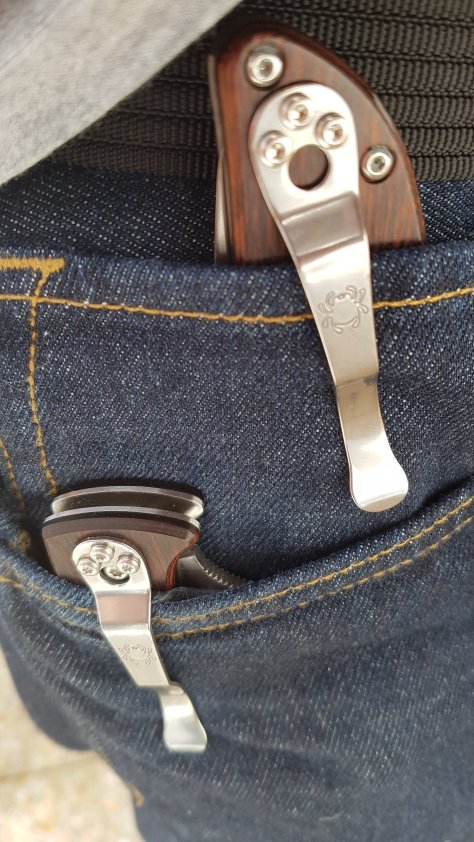 You can notice the hole in the clip which is not in use when mounted on the knife butt compared to the Endura’s mounted on the axis clip. Again, you choose your ways they are four positions. All in all the Delica KnifeCenter’s special edition is an incredible EDC and a must for collector. It’s the kind of knife which can not leave your pocket as it’s flat, soft and precious and with the Endura it forms a true daishō (大小) !!
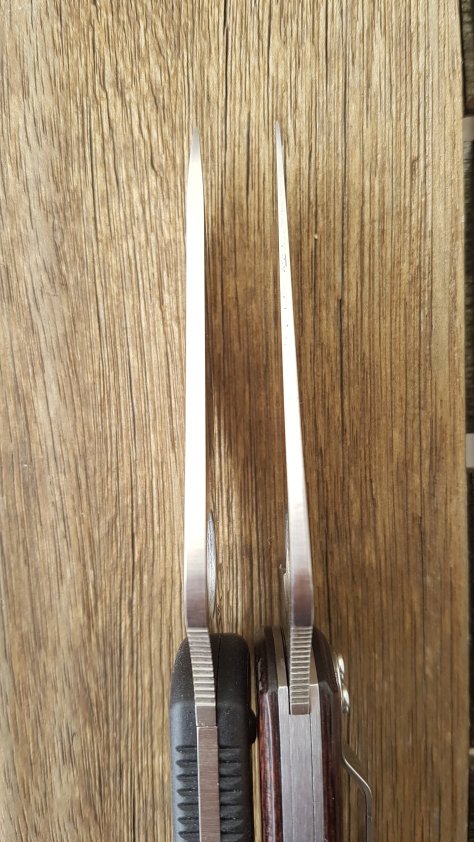
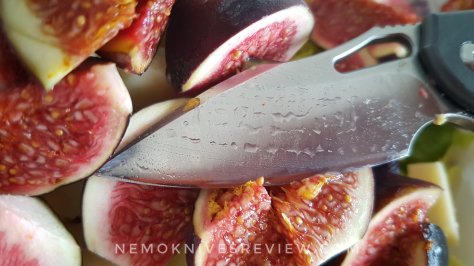
 Eventually after some carrying, I have found that tip down carry was fun. The Delica is one of the shortest Spyderco I can spyderdrop as easy and faster than my Millie. Adding a lot of fun! Also the edge once thinned can use the fact HAP40 is ready for a mini apex. I was cutting bottle my Zero Tolerance could not goo through.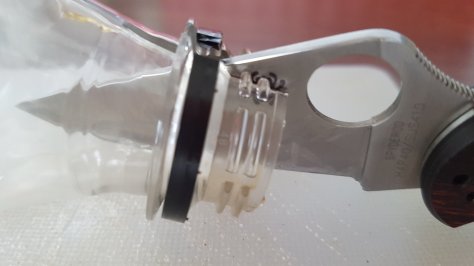










 My first Zero Tolerance was


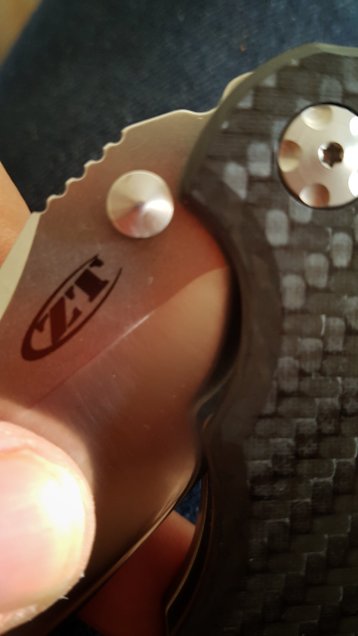 As you can notice, it’s easy to pinch your finger between the stud and the handle when opening the blade. So really, it’s a true flipper made to be open in that way. And here the experience is wonderful. The smooth KVT ball-bearing opening system. A washer with caged ball bearings surrounds the pivot and makes opening the knife nearly frictionless. Only the detent ball brings some minor friction actually. But it’s really minimal. The knife opens every time. The balance is perfect, just behind the pivot. So the blade is alive in my hand.
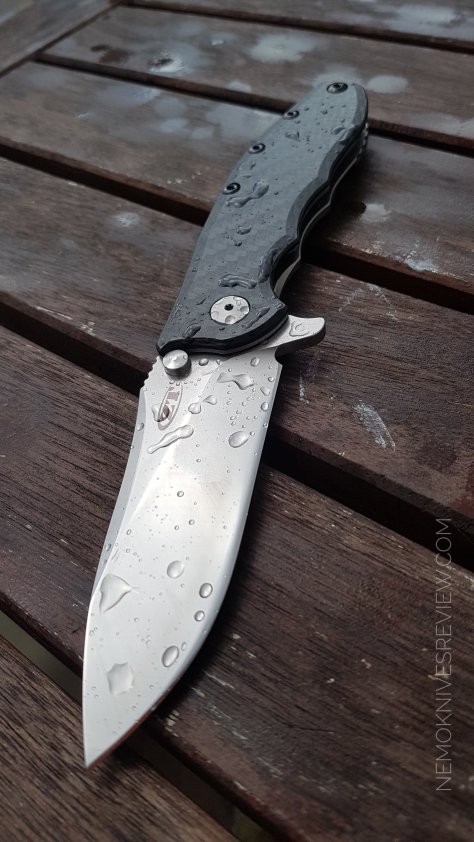
  What you noticed first when handling the ZT0562CF is her smooth Carbon Fibers scale and butter like action. It’s 156 grams heavy compared to my Military 120 grams (titanium clip)… You fee the heft. And that’s exactly what I wanted. The corners are chanfered and there is no hot spots even the clip is not felt in hammer grip. I love the details on the blade: the stonewashed flat side and the satine grind.
  It offers alsmot the same working edge. It carries tip up and it’s not as fast to draw as the Millie even with its titanium deep carry clip. The blade is made of CPM 20CV but it was first offered in
  You can notice the different surface works on that picture. But as far as the blade was beautiful I felt the edge was thick compared to what I’m used too.


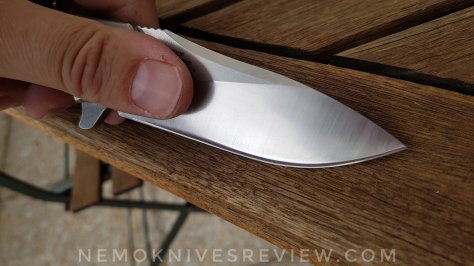
 I have started with the diamonds of the Fallkniven DC4. It was not easy as I felt the thumb studs was going in the way. eventually I was able to de-shoulder the edge and even to scratch the blade. That “Hinderer flat-ground “slicer” grind” that should provide both slicing efficiency and a tough point was not easy to get at first.
  Against the scratches I has used a P1000 Sandpaper and they were erased. No big deal. They have disappeared just but doing an 90° motion. I have treated all the blade for good measure.
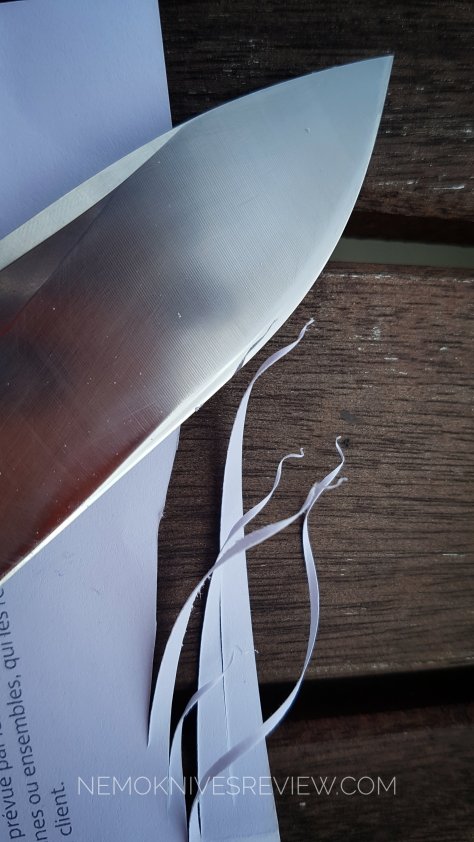
 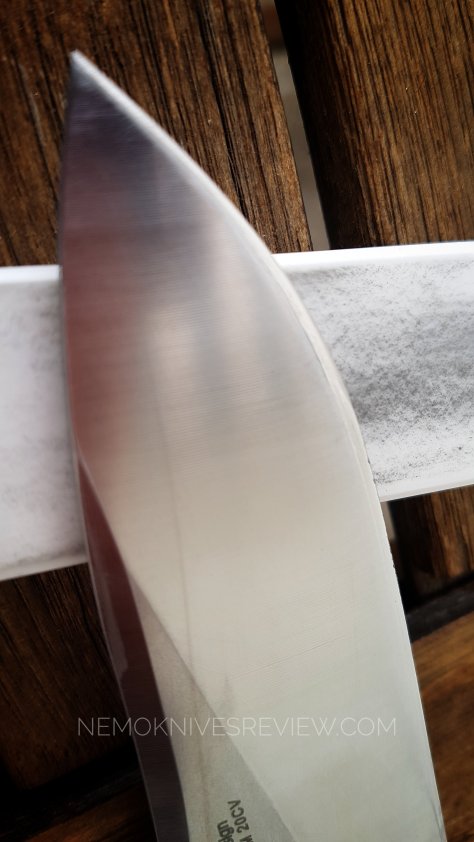 Then came the work on the brown stone, the brown ceramic and the white ceramic. My edge was slowly going convexed. My favorite one for stropping. Soon CPM-20CV was back to razor. I was amazed by the way the steel react under the ceramic. It was much easier than I thought. I had the same excellent experience with my


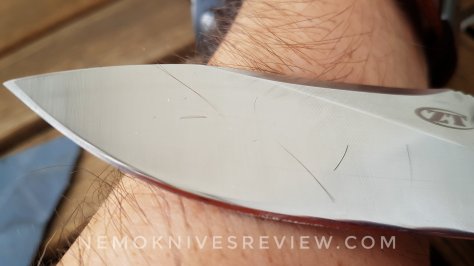 True convex razor as the hairs were jumping on the blade.




 NemoKnivesReview