Tag Archives: Bushcraft

Casstrom No.10 Swedish Forest knife — My Woodlore Alternative.

20171129_113258-0187204110.jpeg

The title could have been the “Poor Man Woodlore” but it would have not reflect the quality of this N°10 SFK Bushcraft knife. For twenty years now I have follow with interest the long walk of Ray Mears in the wood. Producing an elegant fixed blade to make some magic of barks, sticks and leaves. First time I have seen him using his knife, I thought to myslef: “Who is this guy who walks in the countryside with a fixed blade in his pocket…” This is where my interest for the man and the tool has started.
I was already using a Hello Scandi grind knife back on those days with cladded carbon steel.

Annex+-+Weissmuller,+Johnny+(Tarzan+and+His+Mate)_NRFPT_09

Bushcraft is a childhoold adventure dream. It mixes Tarzan, Rambo and all those scouts and indian stories. You can go playing in the woods with your favorite new sharp toys, creating things like bows, arrows, huts, shelters… I was doing bushcraft with my uncle Guy back in the 70’s. He was using a sturdy slipjoint german knife we called a “Canif” (k-nife) and soon I was allowed to bring my own fixed blade knife. Later, when I was 11, I was really into it after investing all my money in a Glock Feldmesser 78 which was a game changer for me: I was able to chop wood !! Any way, a fixed blade was always my best friend in the wood and I have often asked for a sheath I could pocket easily. Don’t laugh but I still got my Rambo II knife… perhaps the subject of another article. Anyway here a picture:
20171129_154632-011784392973.jpeg

Ok back to the topic:  Casström No.10 Swedish Forest Knife.
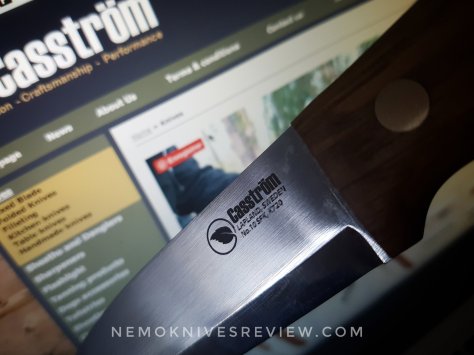
Casström is a manufacturer and distributor of top quality knives and outdoor equipment. They got all a collection of knives and some beauties for bushcrafter. They are famous for having a survival knife developed with survival expert Lars Fält an old friend of Ray Mears. But I was not interested in that collaboration. Why ? because I was looking for a smaller knife. My attention turned to the N°10 with its 10cm long blade compared to the Lars Fält with it 11,5 cm blade.

20171129_152406-0139308231.jpeg
I add noticed they were selling Second Knives in their site. It sounds great to me since I got a great experience with Second knives in the UKBushcrafter sale some years ago.
So I have contacted them explain to them that an handle or cosmetic was not an issue as far as the blade was perfect for the review. Gently they have decided to send me a perfect knife instead of a second and that for the initial price. Very nice gesture.
20171129_152114-01848827757.jpeg
From their site we can learn that it was designed a multipurpose knife for hunting, bushcraft and general use in the great outdoors. The blade is 10cm long and made using 3.8mm thick Austrian made O2 high carbon tool steel (Böhler K720) and heat treated to achieve a hardness of 58-60 HRC. The knife is ground with a shaving sharp flat Scandinavian grind and have a satin finish… and it’s true, it was shaving sharp right out of the box.

20171129_152357-011763225109.jpeg

What I had noticed on the pictures of N°10 knife was the handle: it’s not straight.
Immediately after holding it for the first time, it was love at first palm ! The handle is so well thought after, it literally makes love with your hand. It’s like Ed Schempp or Paul Alexander knives designs, straight lines are not our friends, curves are our friends.

20171129_152348-01936145436.jpeg

You see where you pinky can wrapped itself ? It is so confortable !
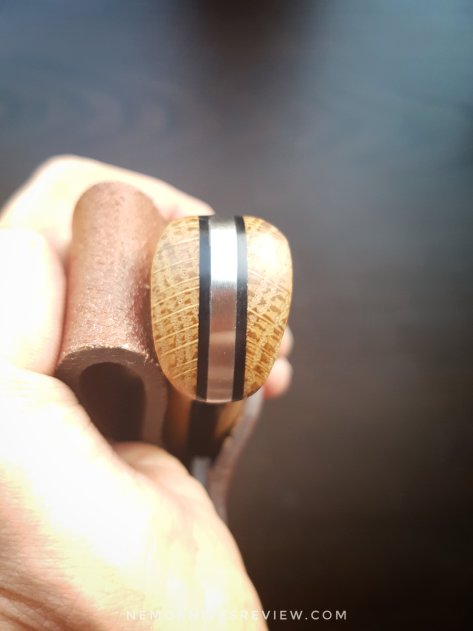
You can also see the black liners between the handle scales and steel to enhance durability over time. The site explains also that the wood has been treated with a traditional Scandinavian linseed oil based varnish.

The knife comes with a sturdy welted sheath made from cognac brown 3mm vegetable tanned full-grain leather. The sheath features an extra wide belt loop, a fluid draining hole and a lanyard hole. All based have been covered. The sheath looks sturdy but I was happy to apply some bee wax and jojoba in it to smooth it a little.
20171129_152337-021624725502.jpeg
About the steel: Böhler Tool Steel K720 is a very tough and strong oil hardened high carbon tool steel also known as O2 : C. 0.9%, Si. 0.25%, Mn. 2.0%, Cr. 0.35% V. 0.1% (HRC 58-60)
Compared to
O1 Tool Steel. C 0,85%  Si 0.50%Mn 1.00% Cr 0.60% Ni 0.30% W 0.40% V 0.30% Cu 0.25% P 0.03% S 0.03%
They are brothers in the tool steel department as “Bushcrafters generally don’t seek the characteristics of stainless over the performance of high-carbon edge retention, and is why traditional Bushcraft knives are produced using tool steel for their blades.Spyderco Catalog.

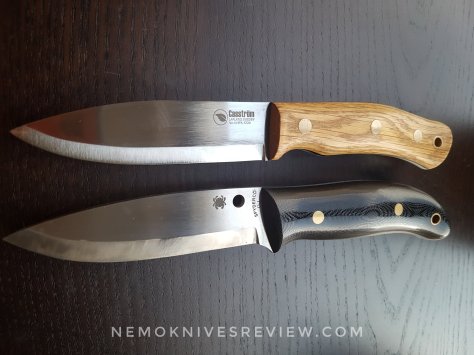
Compared to the UKbushcrafter in G10 they also brother in the same department.
20171129_145003-011517286754.jpeg

The main difference between them is the weight; 68 grams lighter for the N°10. G10 is heavier and more dense than oak. I do prefer also the wood handle which feels less slippery than G10 when my hands are wet.

20171129_145204-011215907219.jpeg

The sheath also is less bulky that on the UK Buscrafter which feels like a bigger knife all in all.
But compared to the original Woodlore we are in the same game: same length , same weight, same kind of steel, same grind… Which makes a great alternative with a very clever handle at a fraction of the price.
Really, Casström people are entering the bushcraft game with great products at a very nice price. The N°10 made in Sweden (*) can be found around 120 euros with international shipping and you can compare to the 460 euros of the last Ray Mears design made in the UK. Alternatives are good.
Time to test the knife  now. More to come soon.

* “The knives are manufactured predominantly in Spain, but with design, material selection, final finish and quality control here in Sweden. The finish is very high in relation to the price and materials used as you can see. The wooden handles we make are close to custom grade.” David Cassini Bäckström — Casström AB
20171129_152434-012119253959.jpeg


Bushcrafters and Whittling: when the true Scandi grinds stand their ground.

20171113_152859-01548548664.jpeg

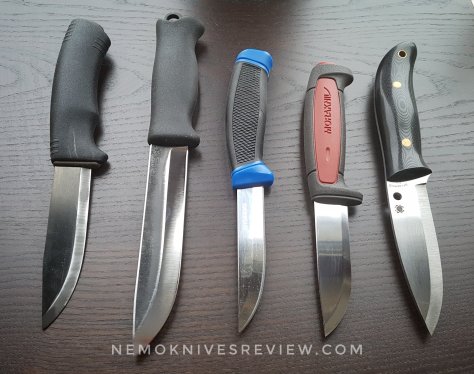
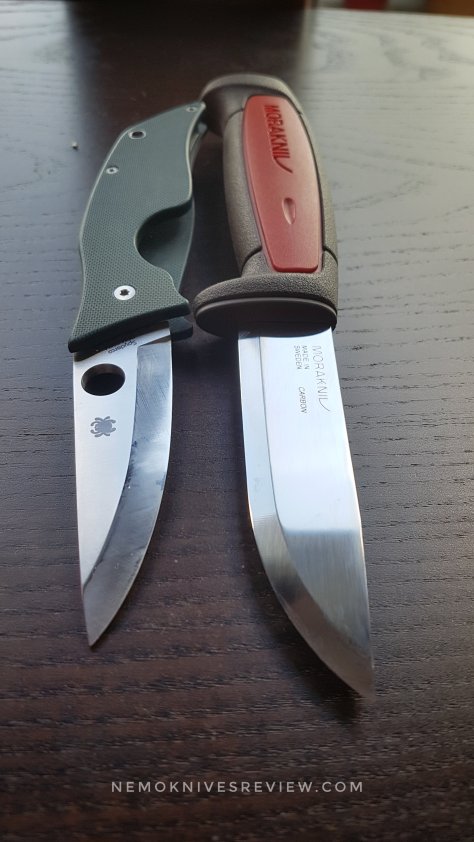
As I have found, a Scandi grind blade is not the easiest to be honed to your desire especially with modern powder metallurgy steels but once obtained it is a pleasure for the whittler. With that in mind I have bought two Mora Knives: a Morakniv Pro-C and a Bushcraft Survival Knife both in Carbon Steel and rubber handle. My idea was to get easily razor sharp scandi edges like I was able to obtain on the BuscraftUK from Spyderco.

20171111_152503-01740016526.jpeg

On the picture above only 3 of the knives are true scandis with no micro bevels.

I have been able to compared how Scandi behave with plastic bottles and also on wood . In fact, in my own experience, Scandi edge bites with some kind of hunger the cellulose fibers and soon also acts as a wedge which makes all the cuts strong and controlled. It doesn’t go as deep as a thin convexed full flat ground blade but the wooden chips produced are thicks. It’s a pleasure to use a Scandi ground knife on wood, there is precision in the cuts which can be shallow or radical (with the wedge effect).

20171113_154434-01804443587.jpeg

The “Zero Ground” Nilakka being an exception as it combines the strong cuts of the Scandi with the deep push cuts of the full flat ground blades. Which makes it voracious on wood and explain the 5mm stock of the Nilakka blade.

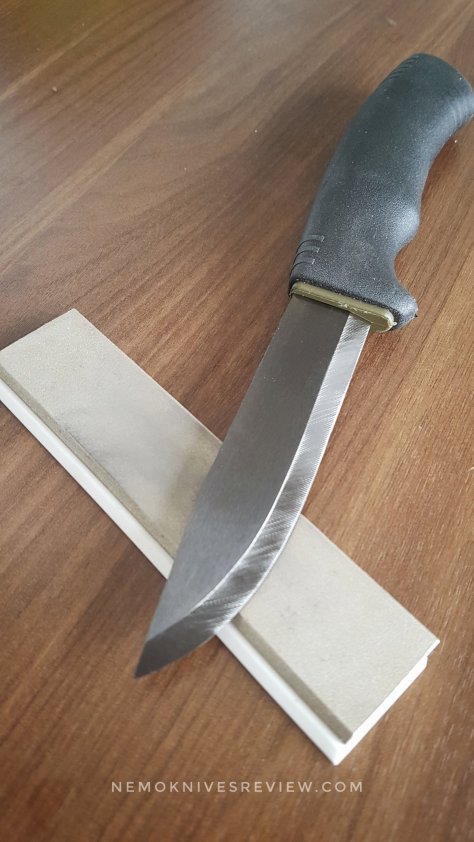
On the two Mora Kniv, the cheaper was the sharper. The Pro-C bites immediately when the Mora BSK was dull. I have put that on the fact there is some kind of coating and no secondary edge. So, my first move has been to remove that coating.

20171111_152106-011616380728.jpeg

The secondary edge put flat on a stone, the coating was removed steadily and the edge was quick able to shave hairs then the Mora BSK was able to bite in wood and was a pleasure to hold and work with.
Both Mora are much lighter than my Spyderco Bushcrafters as they are not full tang. as i don’t plan to do any batoning with them, it is not an issue. Both Mora are true Scandis like my Spyderco Wolfspyder and Buscrafters.
It’s not always the case, even in Norway.

Normally Norwegian knives looks like that:
20171019_214153-021082467779.jpeg

Scandi knives are a pleasure to cut and drill with as the thickness of the blade runs to almost the point of the blade, making a very strong tip.

But now you can also buy a Korean Puukko from Hyundai.

20171019_154632-01245911696.jpeg

It will cost you around 40 Krons, which is around 4 Euros, 5 dollars…
But here you can see. It’s not a scandi but a thick saber grind with a visible micro bevel.

It means that even Scandinavian countries are not protected against pure cutlery heresy. It also means that Viking don’t mind to buy crappy tools for half the price of a Mora.

20171019_154716-01837024615.jpeg

Why ? Because true scandi means a good steel and a good heat treatment to stand the thin geometry. It’s a century old design adapted to people building everything from wood: home, tools, furnitures… A true scandi edge angle is acute enough to be reliable and sharp.
Quoting “Patriot Dan” on the blade forums:
“There isn’t one angle really but 22 degree inclusive (11 per side) is a typical swedish midway edge angle for a scandi grind. The angle can be anything from 15 – 25 depending on use. (This is with the steels and the heat treat typical for those knives, some steels may not be optimal for such acute edge angles).The swedish and Norwegian grinds/edges are more obtuse than their Finnish counterparts. I believe the english bushcraft (woodlore being the most famous) knives that sport a scandi grind are based on swedish grinds but that’s just because they’re very similar.”

So true Scandi are NOT saber grind on disguise and NOT convexed. You need to put the bevel on the stone to keep them “true” hence my work of patience on the Nilakka, restoring her edge to zero grind after some convexing.

I haven’t made that kind of mistake on my Wolfspyder and S30V have proven to be reliable with zero chipping making that little folder a pure joy to use on wood.

More to come soon as the tests will take some time.

20171019_132849-01692132311.jpeg

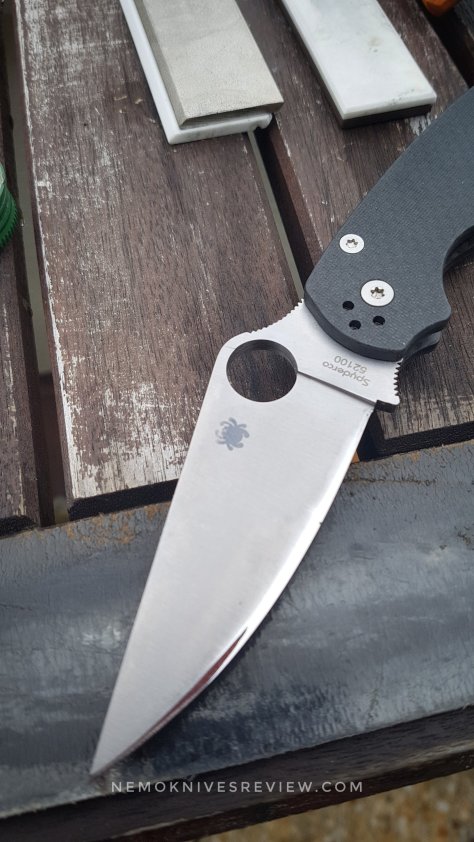
Spyderco Paramilitary 2 C81CF52100P2 52100 Exclusive Run – New Old Timer Workhorse !

I love Grandpa’s knives in a modern form, like the AFCK in M2HSS twenty years ago. But I was not able to jump on bandwagon to catch a Military in 52100. Lucky me, soon a Paramillie II designed by Sal and Eric Glesser was able with the same Carbon Fiber handles and the same 52100 blade.

“52100 is a very good steel for cutting organic material. If you stay with organic material it will edge hold very well.
I use it for a core steel on high carbon pattern welded laminate. My competition cutters are a laminate of 15n20-52100-15n20.” Ed Schempp

“52100 is a ball bearing steel. Most ball bearing steels make pretty decent blade steel. Especially where edges are concerned. It is my favorite steel to forge. It is hard to find in sheet. Actually, I would like to do a run of a model in 52100, but I’d prefer to make it in Golden, so it will be a year or so.”   Sal

Ed Fowler in his many articles in Blade Magazine and his books introduced me in the “magic” of 52100. Also my first blades in 52100 are my two gifted Lil Blue II made by my friend Ray Kirk of Raker knivesRaker knives. Ed as a cowboy and Ray as a Native American ? Made in Golden ? This knife is the true heir of American traditional blades !

“52100 is the steel of which most of the bearings used in all walks of life today are made. Civilization rides on 52100 steel. If it were less than reliable, another steel would be used instead. I have used 52100 exclusively in my knives for the past five years. I have forged many bearings into blades. I have given my blades every opportunity to fail, subjecting them to rigorous, destructive tests. I have found 52100 to be the cleanest, most uniform steel that I have ever used. Properly forged and heat treated, 52100 produces a high-performance blade that knows no peers. I have reached this conclusion based upon extensive personal research, testing knives for the things that they need to do in the real world of knife function.

Bearing-quality 52100 steel blades are tough and normally pass the 90° flex test without cracking or breaking. Their strength is evidenced by the force required to flex them.

I demand three levels of performance from any knife intended for serious use. First, it must have the ability to cut and cut well. Second, the blade must be tough. By tough I mean it must flex without breaking like a piece of glass. Last, but not least, it must be relatively easy to sharpen. Through the years, I have tried many steels and heat-treating methods and have tested the results by cutting a lot of rope and breaking many blades. Some combinations have cut extremely well, but have
broken or chipped when subjected to hard use. Drawn to a point where they were tough, these blades were too soft to cut effectively. I had settled upon one steel that when properly forged and heat treated cut very well. I had invested a great amount of time and effort getting the most out of that steel, so I was reluctant to change.

The nature of 52100 has changed drastically since that first bearing was made more than 100 years ago. Bearings are performance oriented, and those that last and gain a reputation for high performance are in demand. Every bearing is, by nature of its job description, routinely tested to its limit of performance. Competition is based solidly upon quality steel, and the outfit that makes the best steel enjoys a ready market for its product. Quality control is a high priority in the manufacture of bearing steel.

In addition to everything else, 52100 is easy to work, grind, and heat treat. Even less than perfect heat treatment can result in a good knife, though it never should be said that bladesmiths should settle for simply “good enough.” As the knifemaker’s skills develop, the performance potential of the steel will offer ample room for growth.
The high chrome content of 52100 promotes a beautiful mirror polish and enhances the steel’s machinability. The 1 percent carbon is more than can go into solution in the steel. However, unlike 1095, which has about the same amount of carbon, the excess carbon in 52100 also has 1.5 percent chrome to react with to make chromium carbides that can enhance cutting performance.
The “Cadillac of steels,” 52100 has been and continues to be one of the cleanest blade materials suitable for cutlery. Its primary use demands great care in manufacture. It’s also extremely versatile. For example, I’m aware of one man who makes
“52100 has been and continues to
be one of the cleanest steels suitable for cutlery.”

Ed Fowler, the lover of 52100 ball-bearing steel, sheep horn, and dedication to the functional knife.

For Sal Glesser, the functionnal knife is carbon fiber handle and impervious to wear and tear. CF got that magic to age great even after some falls on concrete.

As you can notice mine came perfectly centered. The Colorado Plant is now bringing perfect quality controls and a love to details you can appreciate in all angles.
The action is smooth ans the blade can fall by gravity when the lock is released.
As on the Yojimbo2 the compression is lock provides an action which is one of the smoothest out of the box but othing new about that.

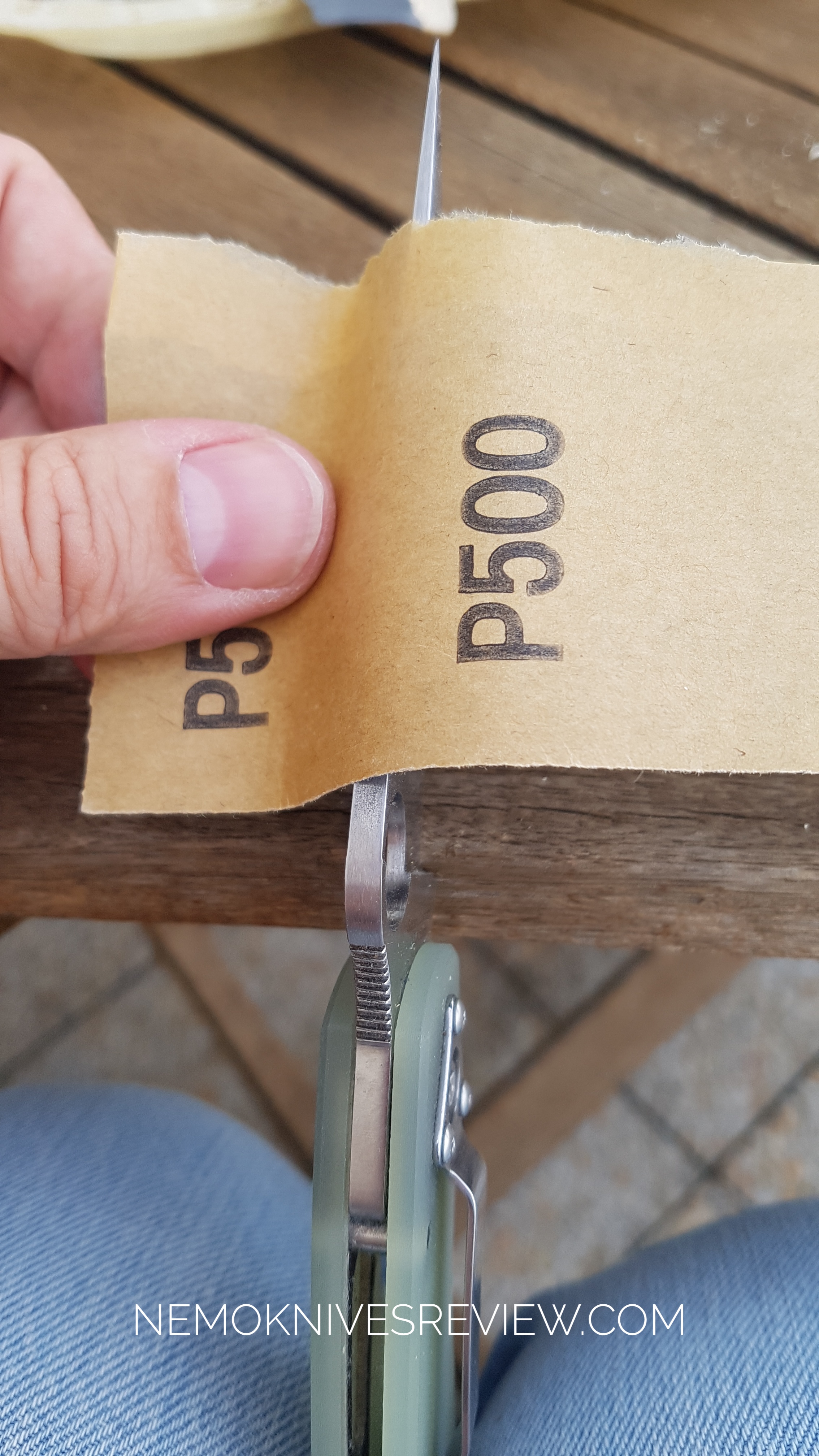
Ok time to smooth the peel ply CF for saving my trousers from being filed and also smooth the hump which catch my pocket’s lip. Sandpaper at 500 has been used.

For the hump, like on my previous Paramillie, a diamond file is mandatory. 15 minutes later it’s much better !

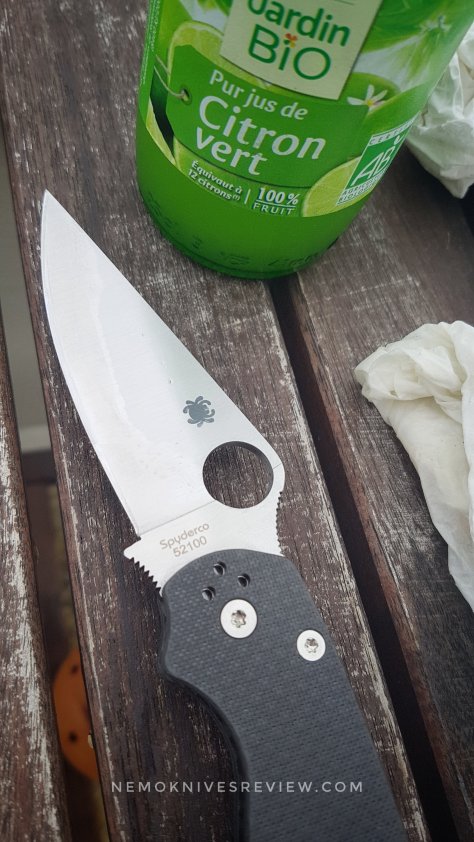
Then, knowing 52100’s fun is the fact it can get a patina very quick, green lemon juice was used to start a gentle patina.

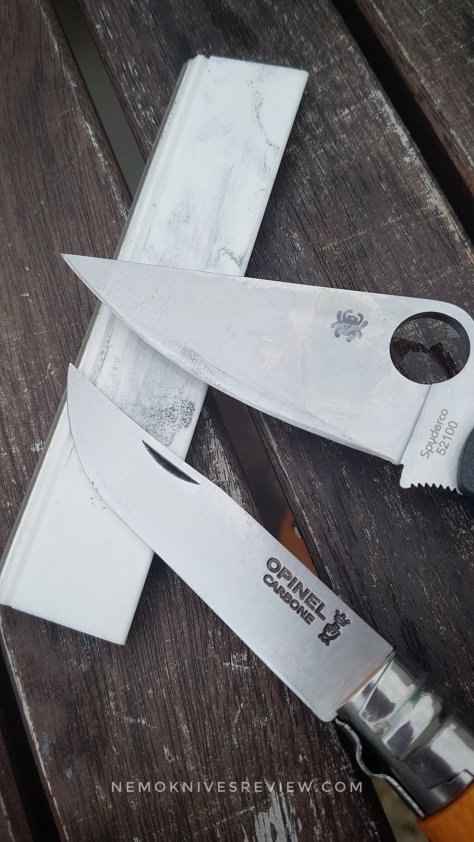
For good measure I wanted to compare how a 1075 carbon steel Opinel and that 52100 knife will react to the lemon juice.

In the same time I could try the new Double Stuff 2, Howard korn from the Knifecenter of The Internet has just offered me.

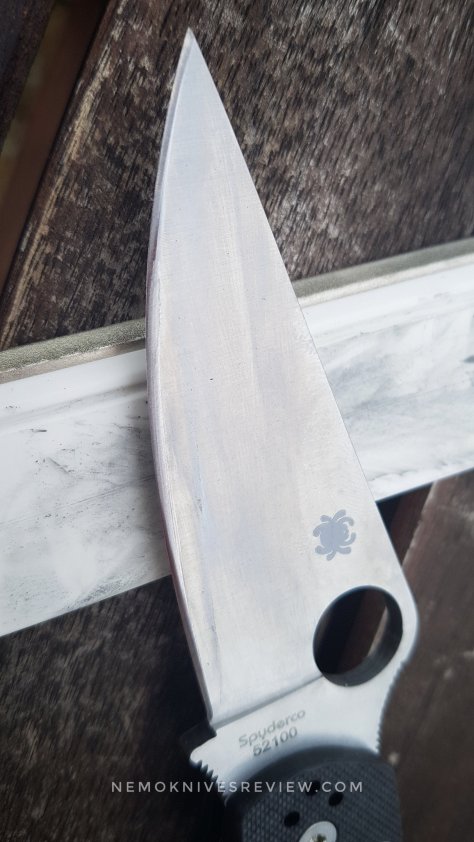
I was able to remove the shoulder and convexe my grind in a pair of minutes. Then with the white ceramic it was own to a mirror polish.
This is true 52100 get polished very easily. And the edge is like a mirror after some pass on leather. So this is also going to be fun.

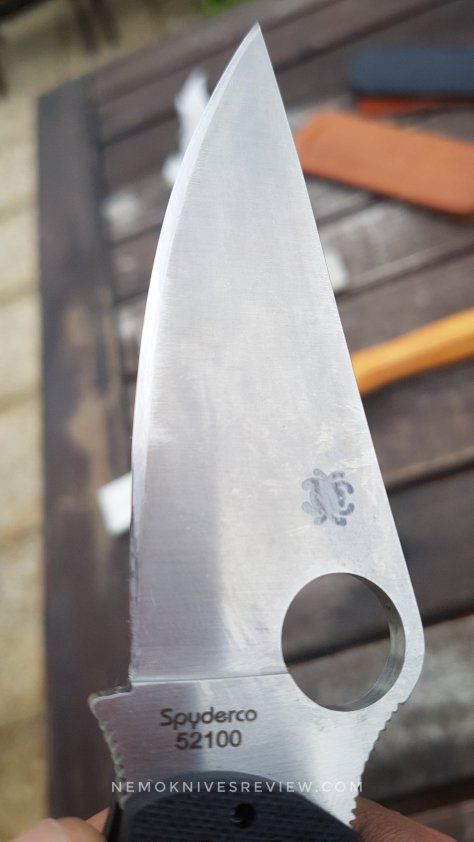
WIth the lemon juice drying on its size, a patina soon appears.

And I was able to get a nice contrats with the convexed edge.

The knife bites in the wood like an hungry edge will. This should be a dream for Bushcrafters to get that kind of steel on such a modern and reliable plateform.
It can be turned into beyond razor very easily just by stropping my new convexed edge.
Yes, so easy to get it dangerously sharp and whittling hairs !!

The good thing also is that 52100 is supposed to be tougher than S30V and the thin point of the Paramillie needs plenty of strenght. Now I wonder what is the HRC of that blade.

I also like the matte black clip provided. It’s made for a low profile EDC.

It seems like the 1075 is getting drak faster than the 52100 as the wipe marks are visible on the Opinel blade.

So the Paramillie 2 is now ready to get some used. I will go near the Ocean for four days at the end of the week. It will be occasio to test it in a humid and salty environment.


The new king of bottle butt cutting is my Opinel N°12. It goes through plastic like in butter. The Paramillie is stuck but slowly and steady goes through.
But so far nothing beats the Nilakka or the Opinel in that exercise.
But the 52100 will be slowly more thinned for that matter. 52100 is a steel to be thinned on the edge.

20171024_161430-01551097416.jpeg

20171024_163653-0185090506.jpeg

Cutting bread is another great test. The cruch is hard and the inside is soft. That’s why Opinel are great on that too. But here the Paramillie is also reliable.
52100 is “alive” . It means it needs care and the patina will evolve in time.
I have greased the pivot and now the cheese is greasing the blade. Let’s not forget Carbon Steel folders have been in use much more longer than stainless steel. Roman folders have been found in archeologic sites. So this Eric and Sal design enhanced by this bold move — bringing 52100 to a modern folder — is all an adventure !!
So…
“New” because it’s a new idea to give ball bearing steel to a tactical folder when the tendance is to S35V and M390 manufactured in China (Don’t mistake me I do love my Falcon). “Old Timer” remembering the Schrade 1095 collection made in the USA and Workhorse because this is a knife made to be used not kept in a safe. It needs to be oiled and sharpened and used and oiled and honed…
More to come !!

20171024_162326-01128561663.jpeg

20171025_121742-01516747397.jpeg

20171025_122149-01711124613.jpeg

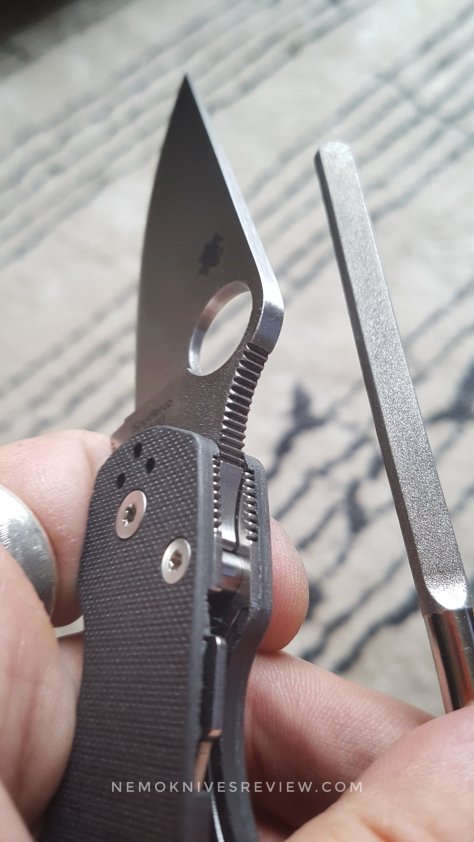
I remove the edge’s shoulder with the diamond side of a Double Stuff 2. I do that until I got a burr.

Doing it without guide, free hands, gives a gentle convex edge.
Then I use the white ceramic to erase the deep diamonds cuts.
And then leather stropping. On 52100 it is a breeze to do.
Now it can whittling hairs.


And for good vintage look, some P1000 sand paper on the clip will age it.
But rust could be a problem in the pivot area… as shown on part II.

20171025_154513-01410924470.jpeg


Wolfspyder upgrade – adding a deep pocket clip on the folding bushcrafter.

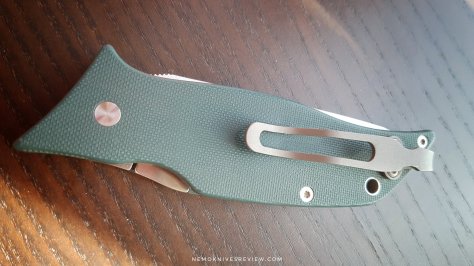
I had ordered a titanium deep carry clip for my Yojimbo2 but eventually I did not like how it was slowing the draws on that SD folder. But there is one knife which desserved another attempt: the beloved Wolfspyder. So here it goes ! I’m always amazed at how thick the blade is and how solid this little folder is after one year without real maintenance. I have found the scandi S30V quite easy to maintain razor sharp and to my surprise it is easy to keep that way without any convexing and losing the “zero ground” scandi edge. But the best thing about the Wolfspyder is how hard you can use it with now after thoughts. You can drill with its point and cut hard in wood or plastic. There is no risk of failure from the point to the lock and the thick G10 slabs are confortable during long cuts sessions. Mine has developped zero play in any direction after one year of use. It’s one of the knife which is sheeple friendly and gives a lot of joy in use. Controlling the whittling cut is really something which gives you a grin of satisfaction. The Wolfspyder ? Still highly recommanded in my book. 😉 Easy to carry and easy to reach in the pocket. This one will be in my pocket for a trip in Norway very soon ! The Scandi ground little big knife in Scandinavian territory ! 20171004_192619-011485188651.jpeg 20171004_172752-021531683036.jpeg20171004_192521-011447988755.jpeg20171004_192536-011341008177.jpeg
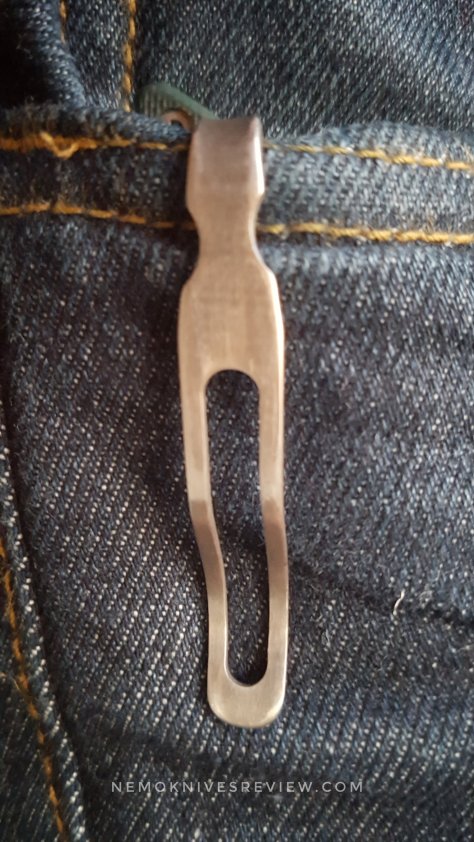
20171005_093640-01981766584.jpeg

It can take big chips of wood from hazelnut trees.

Geometry rules!

And after a week end of whittling it is still razor sharp.

Tuscan Raider #2 – cheese and wine, boar, scorpion and Delica.

For now this post has only been edited on my smartphone. It’s more of a journal kind and some thoughts I wanted to share. It is the occasion also to share some pics of knives being used.

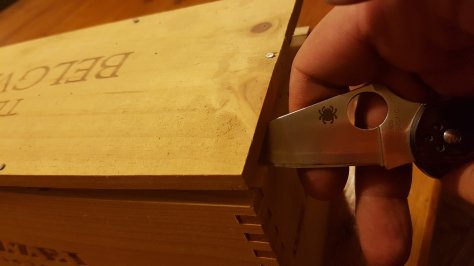
Once arrived in Tuscany one of the first duty of my Delica was to open a wooden crate.

Delica are thin bladed. Snapping the point is very easy.

The trick is not to apply leverage but simply to twist the blade. Even with a thin point you can apply a lot of torque. The crate was open easily.

The good thing with that knife is how well it is accepted by people and sheeples.

Tonight it has been borrowed a lot and ladies used it when a keen edge was requested.

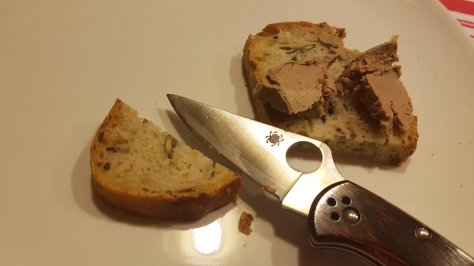
Liver…

Boar and mash potatoes…

So far HAP40 is stainless from being used everyday as silverware. No patina has been spotted. It seems more resistant than CPM M4…

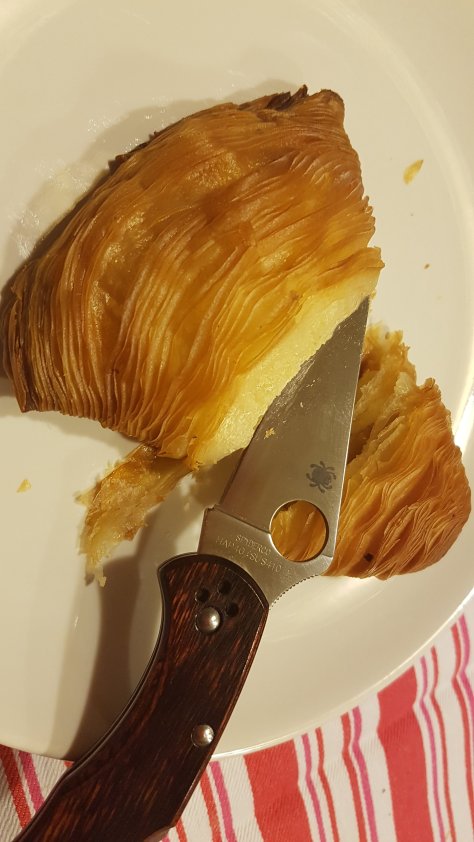
A delicacy from Naples.

Hard crust and soft inside. You need a very thin edge to cut all those blades of pasta’

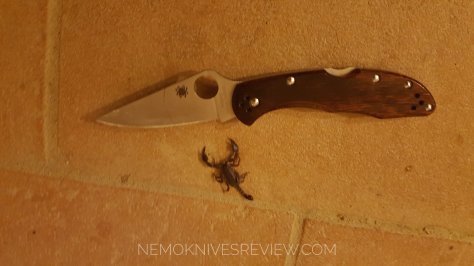
The dog was playing with a scorpion. Nobody seems to care about it. But it was the chance for a bug picture…

Eventually the dog was alive despite annoying that poor scorpion for a very long time.

The scorpion escaped somewhere. Tuscany country life.

And as I’m writing now in the shade of the evening a mosquitoes has decided to taste my blood. Smallest animal are feeding in the biggest.

Sunday morning we will go hunting.

Tomorrow time to test the Euroedge.

SPYDERCO MILITARY C36PIN PART III: WHITTLING WITH GHOST.

We all know that the steel is only 30 percent of the equation for a great blade. And I’m not talking about the whole knife — ergonomy, lock quality, sheath, clip —  just the blade: the main “Matter Separator” to quote Sal Glesser.
Apart from the Steel they are the Heat Treating, the Grind and the BET “Behind the Edge Thickness”.
And also the quality of the edge coarsed or polished change the way the blade will cut in materials.

Wood is a fibrous material which depend of its grain and freshness when whittled.
Again, a rabbit to skin or a cardboard box to dispatch will behave differently under a sharp edge.
And a Self Defense designed knife will not need to be a Scandinavian Grind for example…

So I have decided to gather the Yojimbo 2 (Black), the Wolf Spyder and Ghost to practising my scales and mastering the rudiments of whittling on a hazel rod which has been drying for a month (since the Lil Nilakka Review actually).  My whole idea was to see and experience how the very different blades grind and shape would behave and eventually adjust Ghost for better whittling.
I have not used my Nilakka as it is a game changer. It’s too hard to reach its performance. (The pictures has disappeared because Photobucket has changed their policies, I will need time to create new links, sorry for the convenience…)
Also I’m a lost cause in whittling compared to what my father was able to do as a kid when he was whittling his own toys but I do have affinities with wood as my grandfather was cabinetmaker and my other grand father was clogmaker.

I had noticed back in the 90’s when I owned a Benchmade AFCK in ATS-34 and on in M2HSS that wood would be almost “patined” differently depending of the grain of the steel. M2’s cuts were leaving a very soft surface compared to ATS-34 which was a more aggressive cutter. I have then found that one of the most expensive wood chisels were made in M2 High Speed Steel.

The Wolfspyder is in her element here. Since I have sharpened her back to razor, the scandi grind cut deep and with ease in the wood. This little knife is purely amazing when it comes to carve  deep or caress the rod. The sturdy design is asking to be used hard and the big chunks of wood were flying. It is a pocket beaver ! (OK no more kinky innuendo, pardon my French…). In pushcutting perpendicularly , the Wolfspyder was the more aggressive.
Again, S30V as heat-treated by Spyderco has proven to be a great “all terrain” steel as its edge was not dulled a bit. I’m surprised about the way it kept a perfect edge after all the cuts in a dirty bark and hard wood. Hairs were still flying of my arm. (I heard so much about it losing that very sharp fine edge beause of its relatively big carbids…). It will not be the was with…

Yojimbo 2 Sprint Run was another surprise. First I need to clarify that I had the edge “unshouldered” to be thinner. S90V is a bear to sharpen it feels like “plastic” and without diamonds it is time consuming.
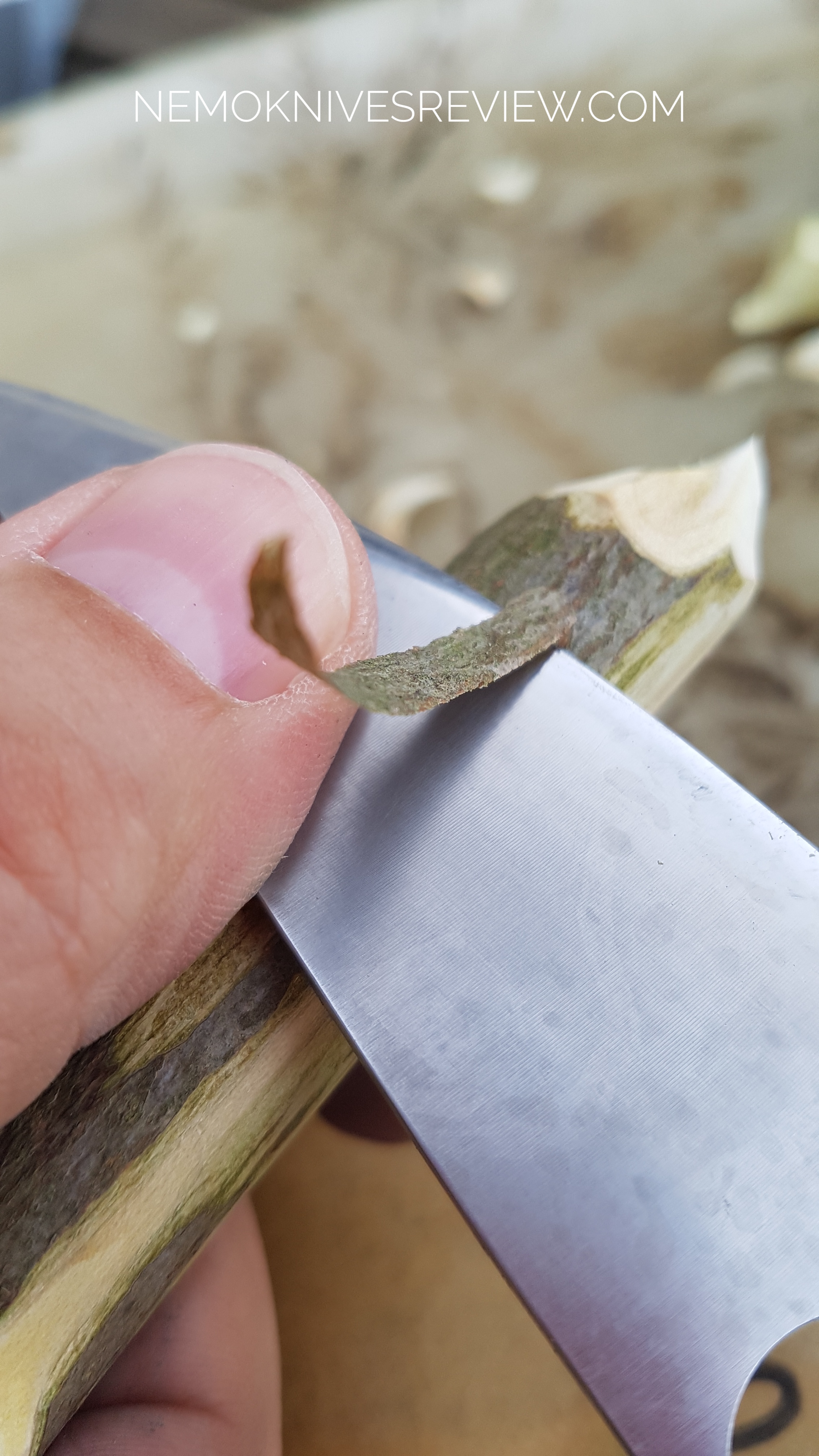
But here it’s the ergos and geometry which made a difference. I was able to cut big chunks of wood with ease. The blade was going deep and my thumb got plenty of space to push behind the edge.
Michael Janich proved it: its Yo2 straight edge keep the pressure on the material. His design was primary made for cutting clothing and flesh in a attempt to keep an aggressor away but it has always proven to be a great EDC for mondaine task. Now I know that bringing the Yojimbo 2 in the woods won’t be a fashion faux-pas. This incredibly solid folder in the right hands can be a great wood processor.

Now I was surprised to notice how my razor S90V edge dulled. I mean, it was still in great shape and has reached the level of a “working edge” but it was not a reliable razor anymore. Twenty seconds on white ceramics and leather and it was back to Vorpal. S30V did not have that issue and of course not CPM M4 of…

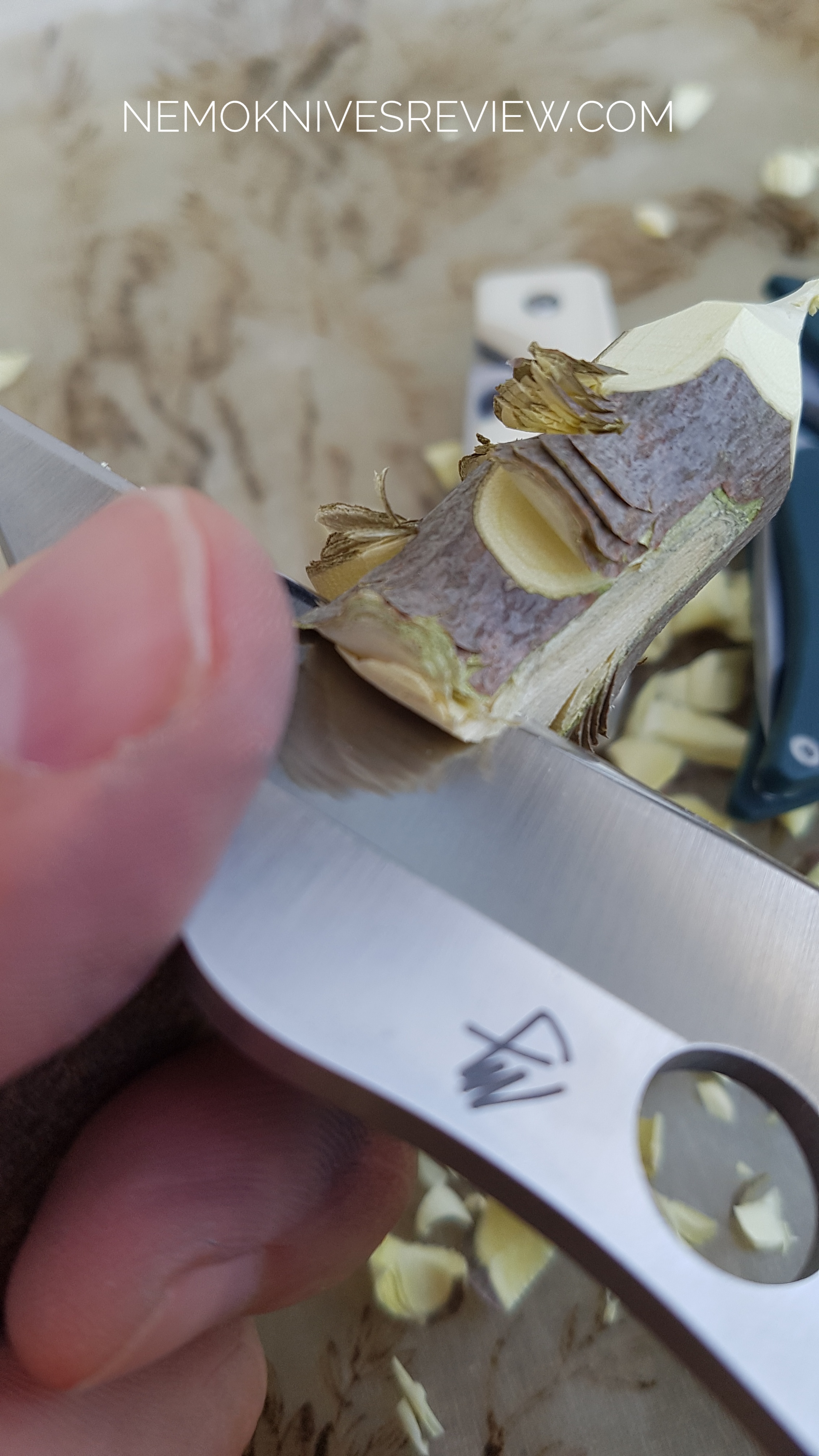
Ghost new convexed edge proved to be able to cut deep with a lot of control and also to remove bark with ease and no pressure as pictured. It was fun to use. CPM M4 got also that tendency to leave the wood’s fresh surface very smooth to touch. I could go on for hours but it needed some twist and home edjustment to ease my thumb sore.

The Wolfspyder’spoint is made to drill. It is thick solid, sharp and you can use all your force with no after thought. It’s not the case of…

…The Yo2 ! Back in the 90’s I had broken my Ronin point drilling in wood. It was a much thinner point and I was really stupid. So I was very careful with the Yo2. It’s clearly not its strong point (pun intended…) but I did not snap it.

C36’s pointy blades, first made of S60V (known as CPM440V) and then of S30V, are known to be relatively fragile but CPM M4 brings much more toughness to the whole design. Perhaps the CPM Cru-wear Sprint Run was even stronger but, anyway, I got zero concern with Ghost which was able to drill the hazel rod easily.

Eventually, the most important home improvement has been to rounded the blade’s spine. Of course the Sebenza is king in that matter, also the Slycz Bowie.

Sandpaper was used for that matter and if the edges has been removed I have not tried to round it completly but at least to make it much softer under the thumb and I don’t strike rods for sparks.

In conclusion, don’t be afraid to adjust and improve your expensive EDC knives to your own uses and tastes. My first attempt has been on my Paramilitary 2 handle. But a knife is a personal tool and it needs to fit you perfectly. Just take your time. Don’t use powertools and risk to heat the blade and ruin the heat treatment (done that in the 80’s…), just go slowly. Also don’t breath G10 and Carbon Fiber dust. Use a mask or do it under the tap. It would attack your lungs badly. Anyway my EDC have really been enhanced by all those little changes and Ghost is no exception to that thumb rule (pun…).
Enjoying your personal tools is always a joy when they are based on great designs in the first place.

Real Steel “Megalodon 2017” RS9611 – Enter The Dragon !

RS9611 Real Steel Megalodon

Again I got a really great bargain and service from my favorite Ebay retailer: Caledon2 Whole Sale Knives and Swords. Kuddos to them to beat record in shipping each time, mine arrived 4 days before its ETA.

I have found this Real Steel Megalodon 2017 model while browsing for a sturdy flipper three months ago.
Eventually I have found the Zero Tolerance ZT0770 as the Megalodon was not available. But I was caught by the beautiful lines and the materials used in this model. Chinese knives production are getting better and better and Real Steel is the new kid on the block in high end cutting tools.

According to https://chinaknives.blogspot.fr (Thanks Wayne for the head up!)

The brand was created in 2013 by the same people who brought you Sanrenmu knives.
Those folks saw the factory, that produced good quality OEM knives for American companies and cheap, but well made budget “original” design knives and thoughty it could be something bigger.
At first, they based on the same designers, that produced Sanrenmu original knives, the most known of them is Liang Gang, that designed some of SRM’s best known models. That is the reason that some of RealSteel’s designs look a lot like the Sanrenmu models (probably are the same, but with different branding).
Their breakthrough (in my opinion) came when they started working with Huang Liang Zhi, better known by the name Carson (Tech Labs). His designs were well known to the people who are interested in Chinese knives, but the quality of his knives is incredible, and second to none (maybe except some of Kevin John work).
Together they made an aluminium version of the Carson Griffin and also released his boiling flipper design under the name Megalodon (probably just put RealSteel logo on the Carson made knife).
There has been some conspiracy on YouTube lately, claiming that Carson has sold his knifemaking factory to RealSteel, but that information was proven to be wrong and was just speculation of one specific Youtuber with big imagination. Carson himself took a photo with his knives to prove this wrong.”

According to Real Steel:
“At the request of many of our fans, we have re-dedicated ourselves to the Megalodon. However Realsteel would not be Realsteel if we were satisfied with a simple relaunch of the old model. We have taken the strengths of the original megalodon on the basis of your feedback and renewed every single component. The result is a megalodon, which at first glance looks like its predecessor, but in reality it is surpassing its predecessor in its blade steel, in its finish and in many other details. This makes it interesting not only for users with the highest demands, but also for collectors.”

The Meg is destined to be a flagship. Mine is numbered  “474 “and come in a very nice box with its certificate and the name of the knifemakers: Carson Huang and Mr Li in the city of Huangao on the Yellow Sea, facing Korea. Funny to see how many people are thinking the late Kit Carson who invented the flipper is behind this one.

I knew M390 mainly from that incredibly great Spyderco Military Sprint Run.
For Jim Ankerson: “M390 even after 550 cuts it was still not getting noticeably harder to cut the rope, after 600 cuts it was still pretty easy and it would still slice paper clean…” he said in a test versus ZDP189 7 years ago.
So M390 is something of a super steel which, if well heat treated, can beat records. Again Jim Ankerson tests makes M390 ahead of many competitors for rope cutting.

The clip is not has good as my Mantra 2 or ZT0770 but it does the trick despite a very unorthodox design made to get caught in the lips of the pocket. There is a warp in the clip look which combined with the gap in the handle can make the pocket insertion tricky. The G10 version doesn’t have this issue.

Anyway, the Megalodon handle is some kind of work of art. It shows how the industry has progressed in machining titanium. Though it is not as impressive as the Slycz Bowie handle … But beautiful curves and clever design which made the illusion of a longer blade compared to its handle. It’s a very sleek piece of cutlery.
You got all the last gizmo in the knife industry. The Integral Lock is renforced again wear and has a security to avoid bending the spring too far for example.


There is milling on the inside of the scales making the full titanium handle very light and the knife is very well balanced once the blade is deployed.

The action is incredibly smooth thanks to its “Pin Bearing”. Kevin Cleary in his great video on 7th minutes explain it. No balls but pins. Simple as that.
The action is as smooth as the Rubicon 2 which means a really really smooth experience. Better than my Mantra 2 and quieter than the ZT0770 spring assist authoritarian opening.

The 3,5mm thick beautiful full flat blade is a razor right out of the box and the edge is thin. With 10 cm long this is not a short tool but it carries quiet well.
I have start to thin the edge further and you can see pictures of the process on our Facebook Group here.

The full open design of the handle makes it easy to rinse after use and I really think this Chinese flipper is made for being used in the wood with no afterthought. China is making now great “separators of matters” for the money, from the Spyderco Polestar, the Byrd series and now to the Real Steel high ends top of the notch folders, I think, after “Made In Taiwan”, “Made In China” is soon going to be a quality label.
But yet they are really shy about that.
“Real Steel” are word in English not Chinese.
And nowhere on the knife you will found “Made In China”  or  “Huangao” written…
Shyness versus China ?

To quote Gary W. Graley on his review on Bladeforums. on the difference with G10 version:

“I did end up getting one of the Ti versions, also a very nice knife, VERY smooth flipper and solid lockup,
Some differences between the G10 and this Ti version

Price, yep, you knew that was going to be there, it’s quite a bit above but with that you do get needle bearings for the pivot mech, Ti frame lock and M390 steel, all add up to be worth the extra price tag

the blade is a smidgen longer than the G10 versions

the blade grind is slightly thicker and as you can see ground a bit different, I am getting about .023″ at the edge bevel where the G10 I’m getting about .017″ so that’s a good bit thicker, but, it is still pretty thinly ground compared to a lot of folders out there, it does cut well.

Handle, the thickness of the handle is thinner than the G10, and of course being Ti it is a little smoother, but the contours provide adequate grip, I do like the thicker G10 handles myself though.

Overall, these are BOTH excellent value knives, highly recommend either one.”

The blade is centered.


Comparaison with other classics.


Comparaison with my 1996 Sebenza.


With the Spyderco Slysz Bowie.


With my CPM Cruwear Military.


With the mighty K2 !


a very Steampunk clip.


It cuts the Coke bottle butt with zero issues but it could and should do better.
Reprofiling is on its way here.


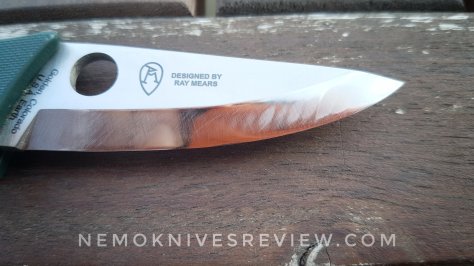
Spyderco Ray Mears WolfSpyder Collaboration

When I’ve heard about the collaboration between Ray Mears and Spyderco, I was really excited. Ray Mears !! I knew his show since the 90’s and his gentle way to walk in the beautiful English countryside and doing a lot of thing with a short fixed blade.

Wait a minute ?! A short fixed blade in the UK ?! Is that forbidden by UK laws ?
But Ray’s knife was a tool to do things, to create shelter, to elaborate traps, a cutting tool used for construction, for cleverness… not for fear and destruction.

20160430_112616_zpskjvvyrq6

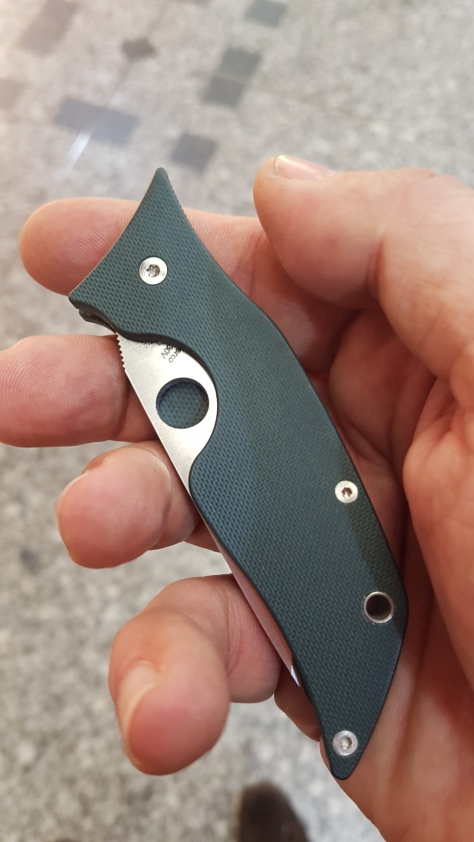
At the last Minimeet in Amsterdam I was able to play with a prototype of the coming Wolfspyder. I was not impressed. Almost disappointed : it was a very short knife with a big notch in the handle asking for my thumb to find a linerlock… without any liner lock. Oh yeah, it was a very goofy handle at first sight… And a thick edge on a short blade…

Eric Glesser was hosting the Meet alone for the first time and he was giving a lot of informations about this design : how Ray Mears has contacted Golden and how they have decided to join force. The best ‘in house’ lock being the Compression Lock, it was an immediate choice. Now the folder needed to be used in the way Ray uses his knives, so it needed to be tough, solid, reliable and ergonomic.

Ray Mears Woodlore was his first attempt in the knife designing world. Alan Wood was the maker of his short fixed blade with scandinavian grind. The result was a no non sense design of a versatile tool. (Spyderco also got their own Bushcrafter knife vaguely inspired by the Woodlore craze…)

To my own knowledge the Wolfspyder will be the first folding knife designed by Mears, so I figure this is a very personnal attempt. He had time to think about what he wanted in a folder. So this a knife of maturity.

20160503_222429_zps0o4uqfkl

The result is absolutly fascinating if you know the philosophy behind Woodlore Inc UK’s premier School of Wilderness Bushcraft: using knowledge to live from what the wilderness offers.
In the past years, I had noticed in his TV shows that Ray Mears was often using a Suedish folding knife (a Fallkniven 3 inches folder) instead of his famous Woodlore fixed blade knife. It was funny as I remember how Peter Horstberger (Fallkniven’s CEO) was not advising to use his folding knives for cutting wood… (When his Fallkniven U2 was released…)
Anyway, Ray Mears was counting now on a full flat ground folder as his main EDC in the wild and on the show. But now he was going to Golden: the ‘Temple of Full Flat Ground Folders’ to get his own design refined and produce and we got…. A scandi grind folder !?
20160511_111746_zpsacipnemo
OK. Scandi means hard use for me. The blade offers some thickness to almost its point. Its edge goes deep when push cutting and trimming wood and the cuts can stay shallow for creating feather sticks.
But as much as I love S30V, will the choice of that steel be the best « sharpening friendy » choice ? CPM S30V is one of the rare steel made for knives but Bushcraft tools tend to be more on the “carbon steel” side. O1 is the tool steel found mostly.
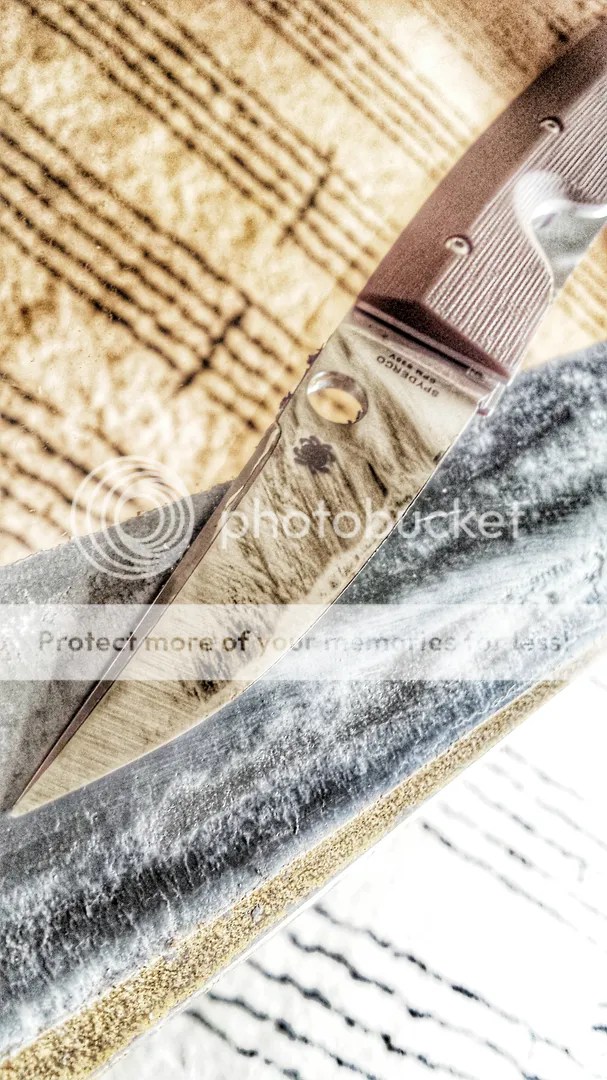
Scandy grind, if you don’t create a new bevel, can be a bear to sharpen as S30V a big carbid vanadium steel is very resistant to abrasion and you need to keep the original geometry to remove a lot of metal.
I dont think I will get a good result with my Japanese water stone.
Diamonds will be S30V scandi ground best friend. But then, will the cratches ruin the finish ? Oh well… I’m really looking forward to watch some Woodlore video showing us how to… 😉

fb_img_1462022614451_zpse71cuobd

Back to the Wolfspyder intriguing design. As odd as the handle looks, it is eventually a pleasure to hold. The unusual horns are perfect for a resting thumb, even the pinky got its own place ! The integral guard works great, you can firmly hold your knife, your hand won’t slip on the blade. It works edge down in hammer grip but also it works great edge up.

fb_img_1462306810272_zpsf3eoswb7

The compression lock is hidden/integrated/nested in the G10, this is Spyderco’s usual ‘tour de force’ they know to achieve since 1995 on their C36 Military’s liner lock …
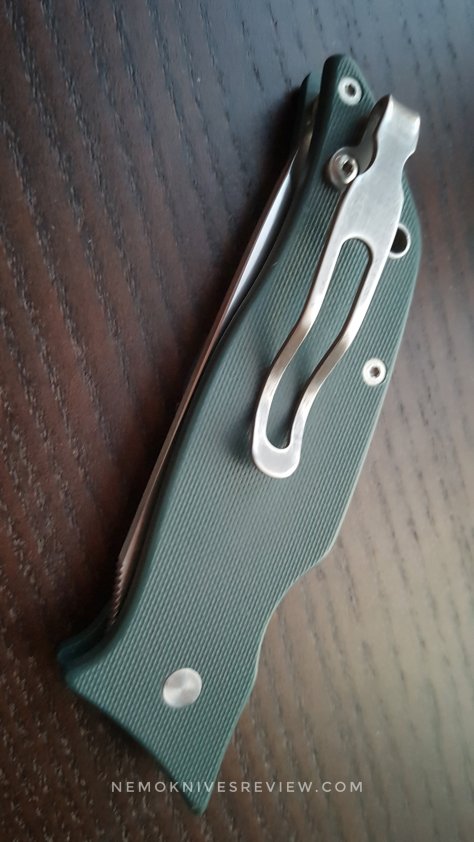
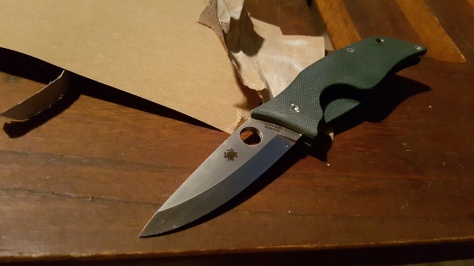
The G10 green colour is dark and perfect for a UK offspring tool. The back of the handle (where the lock is) does not bit your hand when using the knife hard. It was my main concern since the Paramilitary compression lock was sometimes really painful when used hard without gloves on. Which means the Wolfspyder can be used harder, with more power than the Paramillie !

20160503_215802_zpsay6luvfm

For my own confort I have sanded and rounded all the G10 edges. Also the back of the blade as I don’t have plan to make fire this way and my sore thumb was asking for that improvement. Now the edgy back was designed to scratch some ferro rod… I prefer to push cut with my finger on a rounded back blade like on the Sebenza.

The Wolfspyder again oozes quality from all its pore. The action is smooth. There is zero play in any direction. It’s heavy in your hand, well balanced… it screams to be used.

Once clipped to a pocket, the knife rides high compared to my recent wired clipped Spydies… But odd enough, eventually it makes quick draws so easy! The fingers find their way around the handle and the thumb ready to push open the holed blade in the same motion. Easy and fast for tip up carry knife. This is not a southpaw friendly knife BTW.
I close the blade using momentum and inertia. The relatively heavy blade is perfect for that. I release the compression lock and with a quick wrist movement it closes.

20160514_203018_zpsqctcapxg

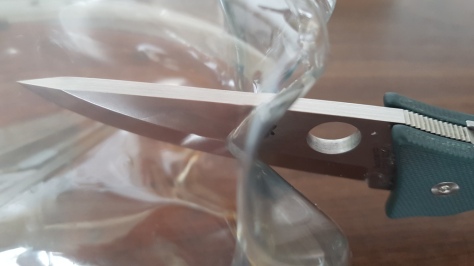
On my Plastic Bottle Butt test, the Wolfspyder was not the best performer. The grind is a little to « wedgy » for pushcutting through thick plastic. But I was able to pass through. When my Swick, my Manta 2 and of course my Nilakka were able to cut through it easily. Again, that particular grind is primarily made for wood tasks.

20160513_234005_zps7f6zydxq

All in all, I’m very satisfied with that purchase. It’s a very well thought EDC companion imagined by a gentleman who got only two knives designed and made in 30 years, the Wolfspyder being the second to my knowledge. At least Mears is not Bear with a collection of low end tools mass produced for his TV fan. And this UK designed knife is proudly made in the Colonies: Golden, Colorado, Earth !! 😉
So the Wolfspyder is finding its gentle place in my front pocket, easing my craves for new bold designs, asking to be used in the wild even if I carry it in the city. Have a knife, will travel… Chapter II is here !

and her last travel to Norway is here.

20160509_182133_zpsxdfq1bpv

SPYDERCO NILAKKA ~ C164GBN – Round 2 – Hard Use Folding Puukko

I could not imagine that a knife with a 4.5mm thick stock blade could be considered as some kind of safe queen ever. A delicate collection folder destined to open letters (and clean nails). The Nilakka is from Pekka Tuominen for God’s sake. He is a exmilitary, a countryman, a masterbladesmith and a gifted knifemaker who is also genuinely “tool oriented” (even if he also loves precision and is “attention to details” driven). So. No safe queen. Let’s use his Nilakka like it deserves it: hard. Everyday. In all conditions. And it has to be successful ! I’m a grandson of a farmer which used to clean his knife on his trousers, drink like a hole, spit on the ground, and fart loudly to make his point. I will use the Nilakka like he would have use it.

But before, I needed to change some details to have that gorgeous folder fitting my personal tastes. First thing to be tuned was the clip. This a great deep pocket clip but this one was going to eat my pants pocket faster than a porcupine in love. Also, it was so tight, the Nilakka was not a fast drawing tool at all. Easy peezy lemon squeezy, some sanding with sandpaper (600 grit) and the handle is now soften as a hedgehog neck. And also, the Nilakka is much easy to pocket (in and out). I need to have my tools out of the way as fast as I need them to be drawn.
Second important personal tuning: the back of the blade is just too sharp for my delicate thumb. It would be a blister magnet to keep it with all those sharp angles that way. Again, some elbow grease and some sandpaper were able to fix that and… now my thumb can push the blade with confidence. this is important for power and control of my cuts.

Like I had noticed it, My C164GBM is from the second generation Nilakka: it is not a zero ground blade. There is a tiny tiny bevel.
Anyway, that knife does pushcuts into hard wood with an ease which is simply unreal! The Nilakka is by far one of the best wood cutters in my collection if not the best. Even my CPM Cruewear Military with its now impoved with a thin convexed edge is not a match for the S30V blade of the C164GBN. Into wood, the Nilakka goes deep, steady and makes big chunks of wood. It’s so easy. It’s so fun ! It’s so reliable on the long run.

Oh, I’m so disappointed: I was not able to have my edge ruined !! I was expecting to have some damages by cutting bambu, hard plastic and bones… Nothing. I was able to dull it and I have also able to use ceramic and leather stropping to maintain the edge on a very keen level. In 2 minutes, S30V (which is not my favorite steel after using CPM M4, CPM3V…) is back to high level of sharpness and more stropping can make it a true razor able to whittle some hairs.

The handle is strange, isn’t it ? Diamond shape. But once you know how to palm it it is very comfortable to use despite all its sharp corners. And yes I have grind the corner with sand paper too. Why it’s so confortable in use ? It’s certainly because the handle is fat and in “3D”. This a particular shape you can find on Finnish fixed blades (Tapio Wirkkala’s design and Sisu’s version of Cold Steel named the Finn Bear, it’s the same diamond shape handle…). It’s very effective even when my hands are wet. If I need to stab anything I will rest the handle’s butt in my palm. (Sanded sharp corners…) Anyway, such a thin edge doesn’t need too much force to cut deep in any hard materials. I even cut into aluminium cans. I wanted to see how S30V would behave if I was using it like a CPM Cruewear blade. Spyderco excellent heat treatment and micro bevel is the key of success. The Nilakka’s edge is now reliable.

So far so good. We still got a thin point blade which makes look the Military as a crowbar. After drilling some holes in chestnut wood, I have lost half a millimeter of that thin needle pointy point. In fact, I had noticed it after drilling a dozen of holes, twisting the blade again and again… No big deal, there is still enough point sharpness to pop any balloon around. I had the same with my Spyderco Ronin, Dodo and Yojimbo and it was not a big deal. It’s relatively easy to regrind by hand and the new point is much more sturdy.

The kitchen is my main battlefield. You need to be able to process, flesh, bones, tomatoes,plastic bottles, cardboards, cling but also aluminium. Again as thin as it is, I was not able to damage the Nilakka edge. OK, I did not try to hammer the Nilakka through a concrete block just for the sake of breaking it. This would be (pardon the pun) pointless. But this is not a safe queen !
And I had used my folding puukko like my grandfather or my father in law would have use it.

Now, the Coke bottles are one of my favorite test and many famous knives were not able to cut through the hard plastic bottom center. This is the thicker part of the plastic. Try that on your favorite knives and you will be surprised. Try to cut right in the middle of the butt. Here, the Nilakka was able of miracles. The same kind of powerful push cuts a sharp Opinel can provide. You know, thin ground blade Opinel are really kings in pushcutting hard materials. Try any of them on plastic and you will be really surprised. The Nilakka is in the same league. It is even better than Urban II, the Hunting knife from Pekka Tuominen I carry in my bag. This is something that many “tactical” knives makers are forgetting. (Mad Dog knives or Striders are not the sharpest tools for that…)
I was really surprise in how the S30V thin edge behaved on the long run. No more chipping, no bending, no more damage (but the point). I was really impressed.

Through all the holidays, the C164 has been rinse after use but not oiled (I use Nano Oil than I get from Isidore in Armes Bastille) and the Nilakka is as smooth as the first day. The lock has not moved. I was not able to have lock failure. The knife is easy to clean and shows no rust despite its use for cutting lemon without real cleaning.
The absence of guard on that design is not an issue if you know how to adapt and how to use a knife. There is plenty of ways to choke up the blade for delicate work and the absence of the usual Spyderco choil did not bother me at all.

Something, I have noticed and that I love about that blade’s shape: it starts like a sharp wedge and ends like a needle. This is unique and radical in design. And you can find many use to it. The penetration power is tremendous and the slashing power at the top of my records.
I was not even able to notice any wears or scratches on the metal spacer.
So it has kicked my Millie from my pocket. And I will continue to EDC the Nilakka for the coming months until it fails me. Which is not certain.
I’m really surprised in how the mechanism is reliable and easy to rinse but most of all the keen blade is a pleasure to use and put all my other knives under a new perspective.
For example my Gayle Bradley seems like much duller knife compared to the easy deep cuts provided by the Nilakka geometry.
Also Pekka’s design is so unique and beautiful, open and closed… it’s really “sheeple friendly”.
So the test will be continued in round 3.

Nilakka Nemo Sandman

Nilakka Nemo Sandman
Stropping the blade is the best way to keep it to razor sharp level. It’s easy and quick.

O
One of the most beautiful back in the folding knives industry. A steel spacer, a thick blade and a thin point. Unique !
Edit August 2017: Since then a Lil Nilakka has born !

Spyderco Bushcraft UK – Part 3: Solid Companion

Since I had received my Bushcrafter for 2010 Xmas, the knife has been always in use.
I really enjoy small fixed blades and this particular one has turned to be another little big knife.
In the 90’s I have been reviewing with Fred (Perrin) another little big blade: the Fallkniven F1 in its first solid VG10 incarnation. This is the kind of small tool with some heft in your hand, giving a sense of security and reliability. The Fallkniven F1 is now a legend in travelling knives. Well, the BushcraftUK feels that way in my hand but better than this it is also offering some uncanny cutting performance: the zero scandi grind cuts like a laser and it is very very addictive.
But fragile. I was able to micro chip its factory edge just by being me: clumsy… Bones, stones, sand… are not thin edge friendly. But the good thing is that I was able to gently convex my edge to keep it luch more stable. Removing a chip on a zero ground edge means time consuming before to see some result, unless you don’t want to “respect” the zero grind. Also sharpening the edge on ceramic can be frustrating as you scratch the mirror polishing badly. Good thing, with some elbow grease it’s back to mirror again. O1 is not stainless. But I did not let a patina to develop but on the handle where the hand leave natural moisture and the steel is now grey.
As I was not planning to use the back of the blade to produce sparks, I have gently rounded the edges and this heresy to the Bushcraft Gods gives me a lot of thumb’s confort when I’m pushcutting into hard materials.
Really the BushcraftUK is the king of my woods.
Why ?
Because it’s compact enough to be pocketed in my coat. So I got it on me. I never had it attached to my belt. I love the leather sheath I never got any issue with it. Mine is still like new as I have been using the brown sheath from my second for a while. Perharps I will try to find a kydex sheath for it as I do transport the knife in my bag more than on myself. Now for the knives works in the wood, the size of the Bushcraft suits me. I’m able to use it for light chopping and batonning without any care. Hence the chipping…. But again, the Bushcrafter has never let me down. Better it’s my favorite in his category.
Since I had ever seen Ray Mears on television back in the 90’s I felt I was not the only one to enjoy little fixed blade for their reliability in the wood. One of my first “bushcraft” was a Glock knife back in the 80’s. Broke the handle. Glue a compass in it…
Things I did not with the Bushcraftuk is: throwing it, cutting concrete intentionally and open oysters… but I have removed nails from wood, batonned through hard plastic, use it in the rain, in the snow, on the sea shore… With a little care I was not able to have rust pits on O1.
The weight and the high sharpness do wonder in the woods. Every chores are quick jobs. And this is exactly what that blade is for: energy’s economy and confort in use.
Back home I usually check the edge and do some leather stropping to have it back to mirror polish. No oil have been used to protect the blade. I use it everyday outside or in the kitchen so I keep it sharp and clean.
I got many kitchen knives. The Bushcraft will not replace them but the scandi grind is great on hard cheese, bread and meat. I rinse it after and dry it immediately. No more no less.

Even if I enjoy the flatness of my Stretch or the squareness of my Southard, on that hard used small fixed blade the rounded ergonomic handle is simply my favorite since I have had made a bokote handle on my Cold Steel Trailmaster. The black G10 after two years of constant use looks and feels like new. G10 is an incredible tough material. But the Bushcrafter is my first “blister proof” knife. Even my beloved H.E.S.T. required the use of gloves but not the Bushcrafter. I have removed the lanyard as I was not able to find something which suited me yet. Especially when I used the knife in the mud, blood… Again lanyard are great on pictures but I don’t like them in use. I don’t like to feel moisture trapped in it.

What would I change ? Sorry Sal but I do not like the hole in the blade. For one reason: I need to clean it and oil it or it’s unhygienic and a rust magnet. I would had prefer some kind of circle, even as big as a folder hole than that. I understand it’s a signature but…I would had preferred something easier to clean.

For two years the BushcraftUK has proven to be unique in my collection. Incredibly confortable in the hand and sharp and tough and strong in the field. It’s all business. The amazing South Fork has not yet been able to kick it out of my bag. I plan to use it with the Stretch and my good old Tramontana Machette as combo. I’m not a lumberjack after all, am I ?

Nemo Bushcraft

bushcrafter Nemo

Bushcrafter

Bushcrafter