
(Fresh from out of the box)
As my friend and co author JD I had ordered the Ferrum Forge Falcon for 124 dollars. Titanium handle à la Sebenza (* the RIL is a South African invention ) with steel insert in the lock to prevent excessive wear, S35V blade with high flat grind, reasonable size for the city. And a two main screws construction ? What not to love ?
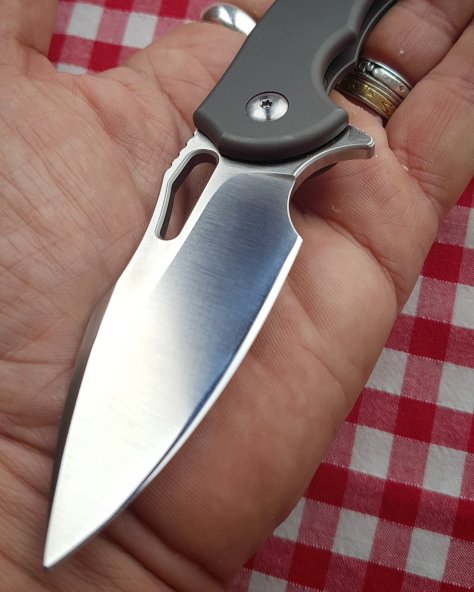
(Here with a new convexed edge the day after)
This was a first time for me with those companies. The knife has been made by WE knives in China and designed by San Diego based Ferrum Forge.
124 dollars for a knife this quality, this is almost the third I would normally pay.
This kind of excellent ratio price/quality have been noticed on the Megalodon folder.
And like the Meg, the only flaw on my Falcon is…. the clip.
First thing I have noticed: it was smooth as my ZT0562CF. It fires easily. A lot of work has gone on the blade and the handle to smooth everything. It’s as good as Taichung factory in the attention to details. It runs on ball bearings and the detent is perfect on mine. The blade feels heavier than the handle, it gives a nice momentum.
Zero play in any direction. The handle is smooth with its rounded edges and so nice under the thumb. No hot spot even if the jimping are quite aggressive. The blade is chanfered on the right places making a very precious package.


Second thing I had noticed is the great balance. The knife is perfectly balanced. The blade looks wider than the thick titanium handle.

See how small it is ? I even think it would be a great knife for smaller female hands. For bigger hand it would be a three finger handle unless using the big choil.
This big choil is part of the charm of that design and it could be some kind of Native hommage: thick handle and false edge drom point blade.

It’s about the size of my beloved Wolfspyder but more elegant. Let’s not forget Spyderco places function before the look. But the wide blade on the thinner handle does a lot in easthetics. The hole in the blade is purely for the looks and to remove some weight, you won’t open he knife with it. OK, you can do it but this is not made for that.
Also the large choil can be a problem when you cut ropes or strings and they get stuck into it. But the Native 5 got the same issue, it’s no major when the finger is in the choil.


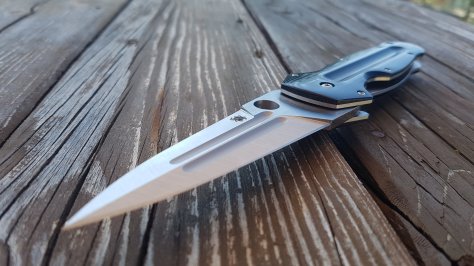
The insert of steel in visible and the lock is new and the blade is perfectly centered.
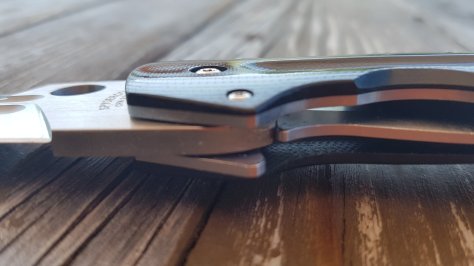
As you can notice the titanium notch to bend the integral liner to create the lock is not on the outside but inside. This is pleasure to keep the handle smooth.
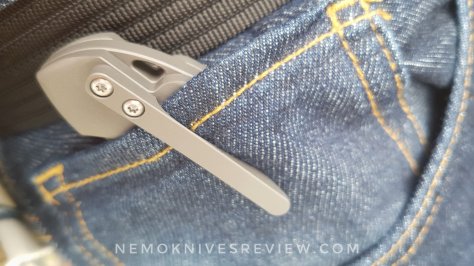
This notch combine to pocket clips often get caught in the pocket lip while drawing. It was the case of the Megalodon or even the Slyscz Bowie where I had changed the clip size !

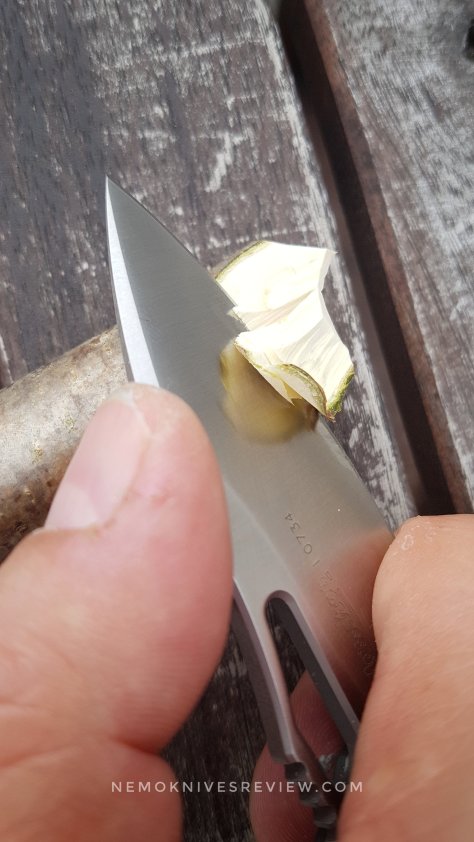
Right out of the box the knife is not shaving but the edge is thin and the geometry is good. It will be a matter of minutes on ceramics to get to the sharpness I want.
Only the clip is an issue. Like on the Megalodon, this is the only flaw but unlike the Real Steel flagship, I will get rid of the Falcon clip if it bends and carry it in the pocket.
First this clip is too thick and is not going enough deep inside the pocket. It has also a tendancy to bend, So we will see how it will go.

Compared to my Delica, you can notice it is even shorter.

And delica is a tad longer in edge value.


Now its thick handle makes it very confortable in the palm for hard cuts.


You can see the attention to details on the titanium spacer and the pivot.
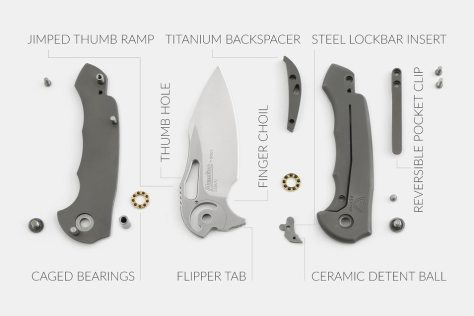
Two screws construction. The pivot and handle. Add the two clip screws and the two from the steel insert and a pin for the spacer but after all it is a very clean design.
“The Falcon’s 2.9-inch drop-point blade features a sizable choil for index finger placement when choking up. The spine has a concave cutout offering a natural thumb rest for a forward grip. As far as hardware, the Falcon has been crafted with the best materials on the market. Thanks to titanium’s spring properties, it makes for a safe and reliable frame lock that is almost impossible to accidentally disengage. The hardened steel lockbar insert won’t wear out in the long haul, drastically increasing the folder’s longevity. Holding the knife together is a titanium backspacer, bead blasted in gray. Also notable is the titanium clip, which has been adjusted for tension so that it stays put on the go, but it won’t rip your pants apart when taking out the knife.”
From the Massdrop page.


Compared to the ZT0562CF the Falcon can sustain the comparaison. But the clip in the ZT is one of the best ever made making the big folder easy to carry.


Sharpening is OK. CPM S35V is not the easiest steel to deal with but it can hold an edge if well heat treated. After diamonds, ceramics and leather, my edge is now convexed and the high flat grind gives deep cuts.
This is something wich needs to be tested on a long run. So more to come soon… But so far for the price 124 dollars shipping including, this is a great bargain and a beautiful knife especially compared to over marketed knives…
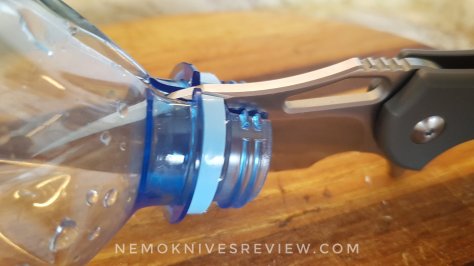
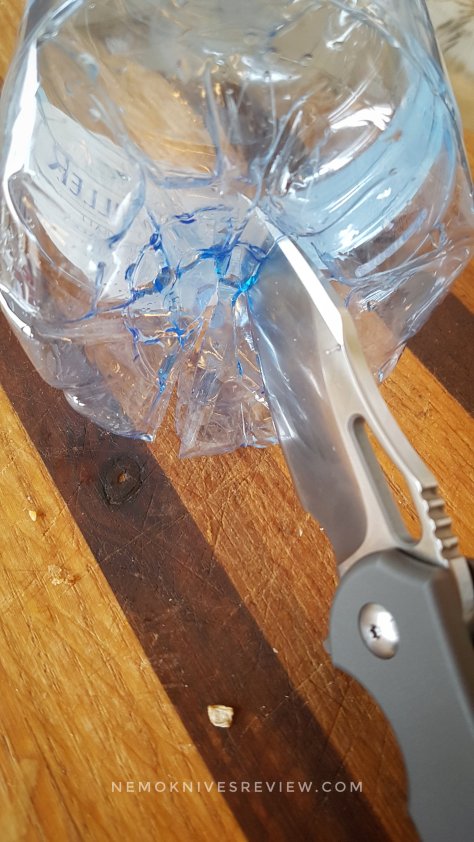
And once convexed the edge was able to cut through the 4mm plastic butt of a 2 liters Coke bottle. Excellent !!


*(Like…. the 300 dollars Urban S35V and Titanium handle from Canadian Robert Young Peyton claiming the Integral lock is an American invention when, Chris got an South African Award for his Pre Sebenza in 1987, move to Boise in 91 and get naturalized in 2001…The Integral lock is a South African invention by Chris Reeve !! )

Cutting the leaves of sucres…
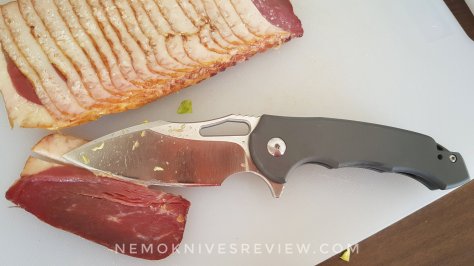
Slicing the dried duck breast.
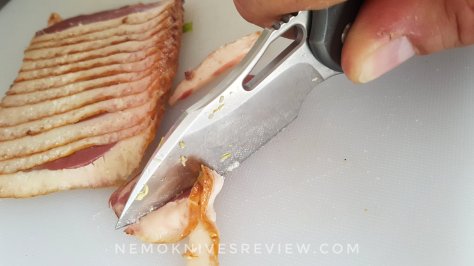
Removing the fat.

Dicing the cantal cheese.
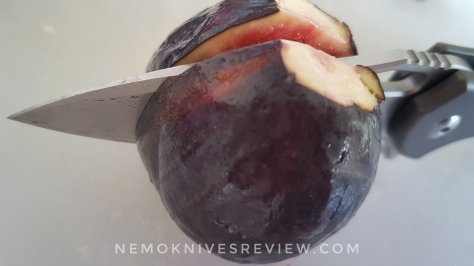
Splitting fresh figs…
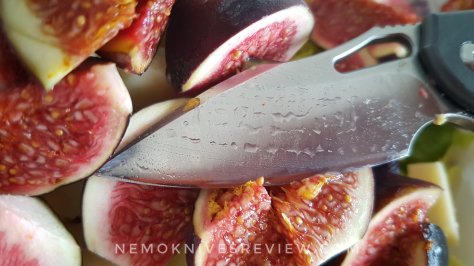
All the ingredients are ready. Add some sauce mixing olive oil, mustard, wine vinager and soja sauce.
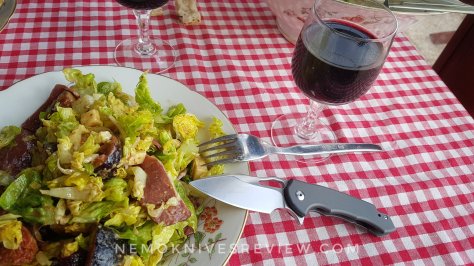
The soft texture and fruity taste of the young cantal combine particularly well with figs and duck breast. But you can replace it with other cheeses, for example, tomme de Savoie, salers or laguiole.
JD got also a Falcon but he did not like it: here is review.
https://nemoknivesreview.com/2017/10/14/the-falcon-has-landed-by-jd/


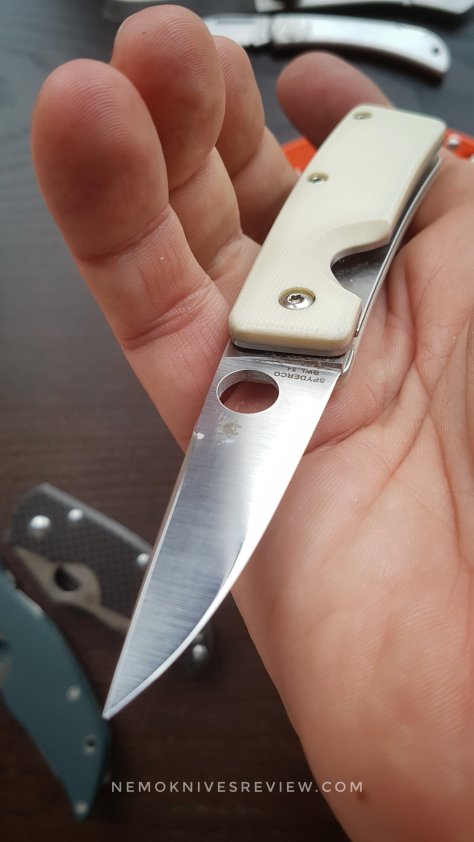
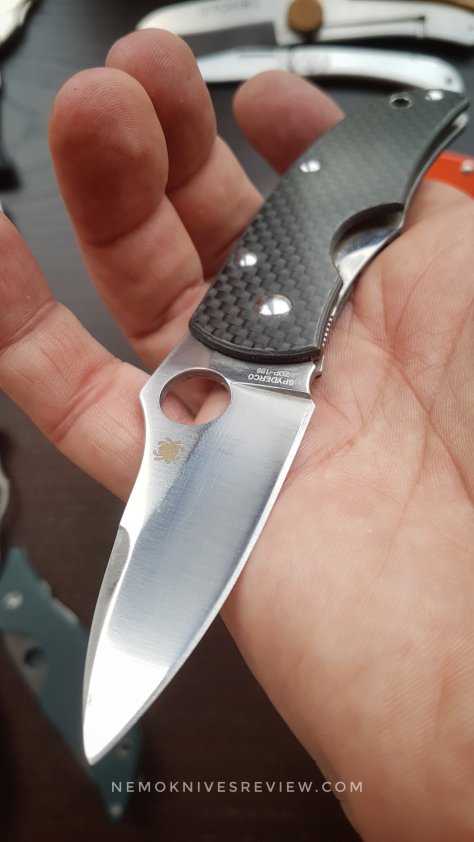

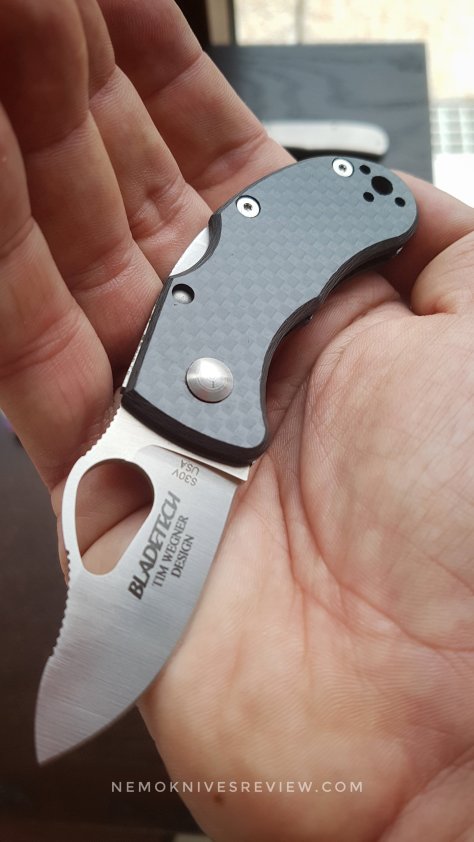


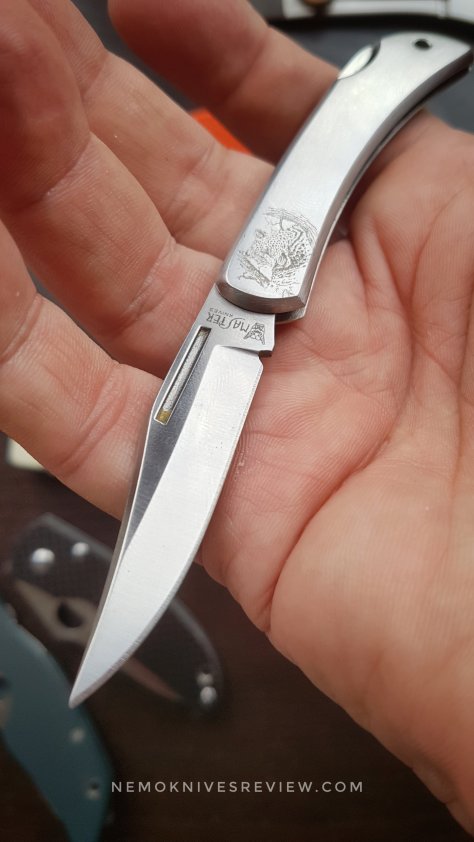
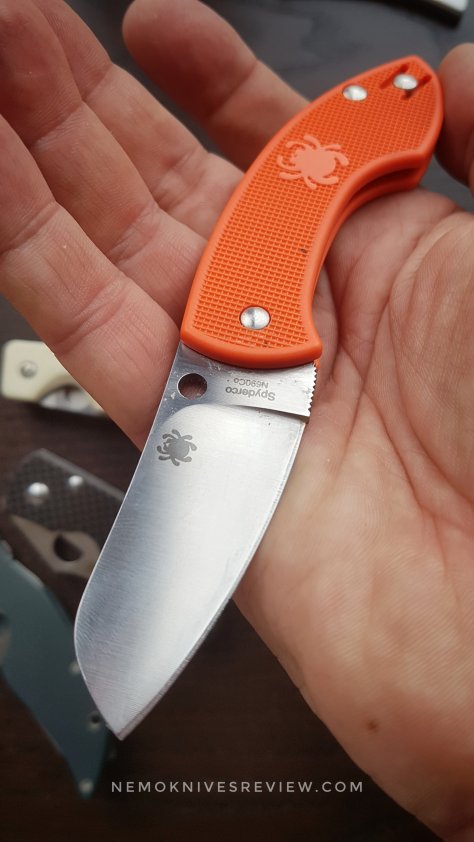





 I had ordered a titanium deep carry clip for my
  So here it goes !
  I’m always amazed at how thick the blade is and how solid this little folder is after one year without real maintenance. I have found the scandi S30V quite easy to maintain razor sharp and to my surprise it is easy to keep that way without any convexing and losing the “zero ground” scandi edge. But the best thing about the Wolfspyder is how hard
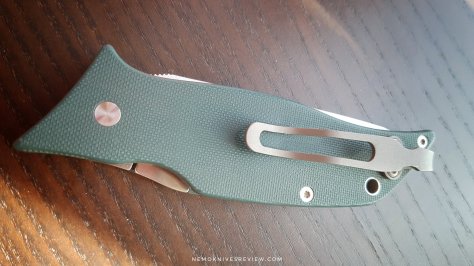 Easy to carry and easy to reach in the pocket. This one will be in my pocket for a trip in Norway very soon ! The Scandi ground little big knife in Scandinavian territory !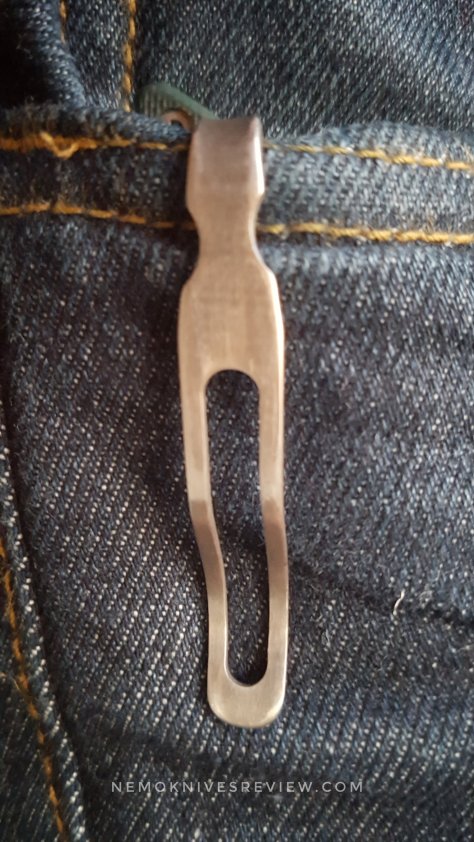














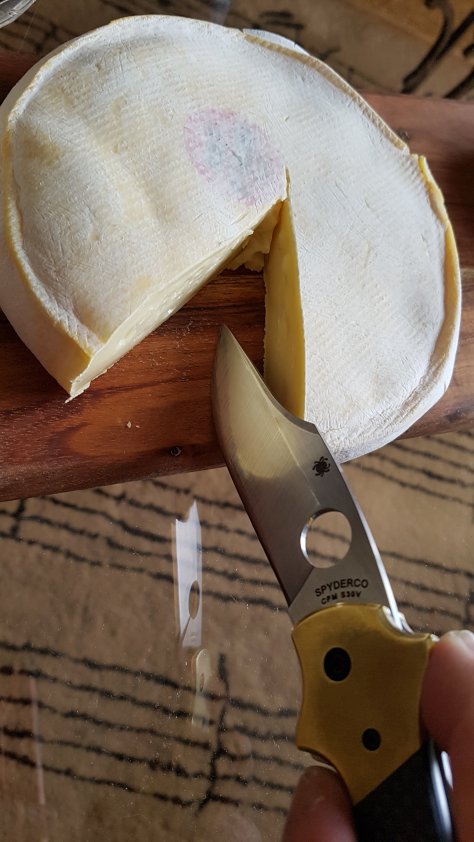


 This is a quick glimpse at yesterday’s hare hunt. Which will be the support of future reviews and


 Morning ride in the Italian Mountains.
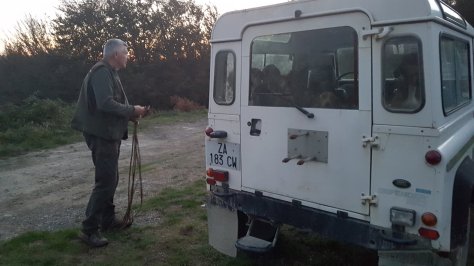

 Hunting dogs equipped with GPS collars.




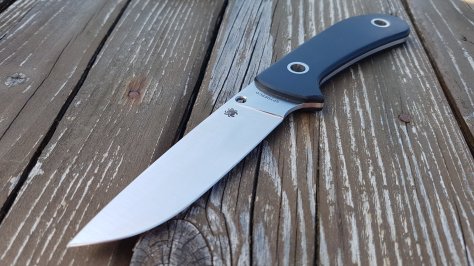 It has all started when I wanted to review the Spyderco Gayle Bradley Junction. It’s a great design for an EDC fixed blade which can be used for everything. Easy to carry in its pancake constructed bolteron sheath. But the edge was just too thick for my own use.
 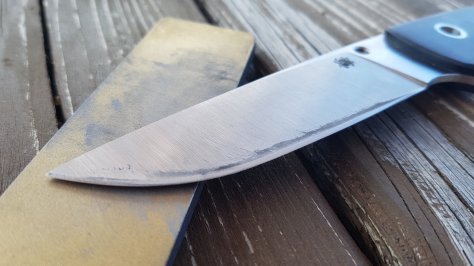 To my knowledge, SPF27 is some kind of CPM D2 steel. A lot of carbon 1.5% and not a lot of chromium around 12%. Not the easiest on the stone as a semi stainless. It was not very soft under the diamonds compared to another blade in N690 HRC59 I got with me. And it was not really easy to remove the shoulder to create a gentle convex edge. Patience… In sharpening is important. And I often lack of it but I was able to improve it.
 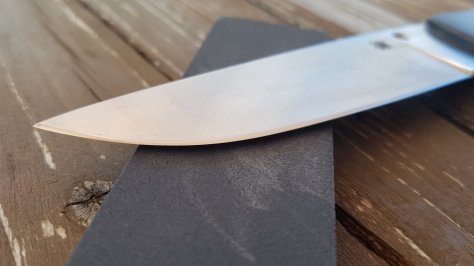 Next some black stone mostly to remove the scratches.
  And then the white ceramic to get a better finish and a razor steel.
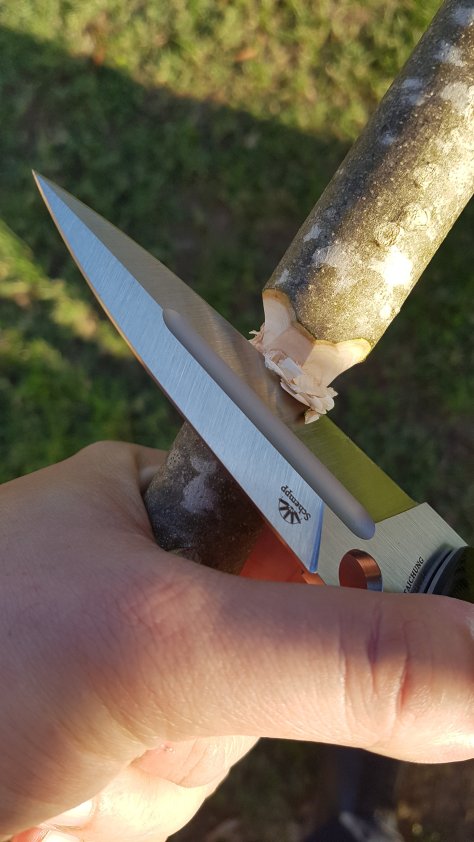
 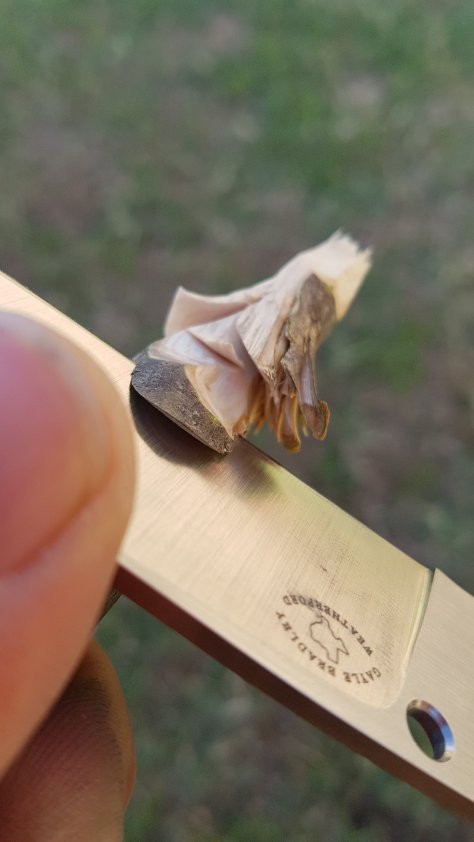 You can notice the chamfered signature hole on the Junction. A première. The cuts were deeper. It was better! Much more enjoyable.
  But the spine was too sharp for my thumb and diamonds came handy to rounded the angles. It would never be a Sebenza spine….
  Again the control during whittling was much much better. One should never be scared to round the edges for suiting your own needs.
  The handle is very flat on that knife. It’s an attention for people who wish to stash their knife in a pocket or a backpack without leaving a print.
  But a flat knife is not the most comfortable in the palm of your hand… Especially when cutting hard things for a long time.
 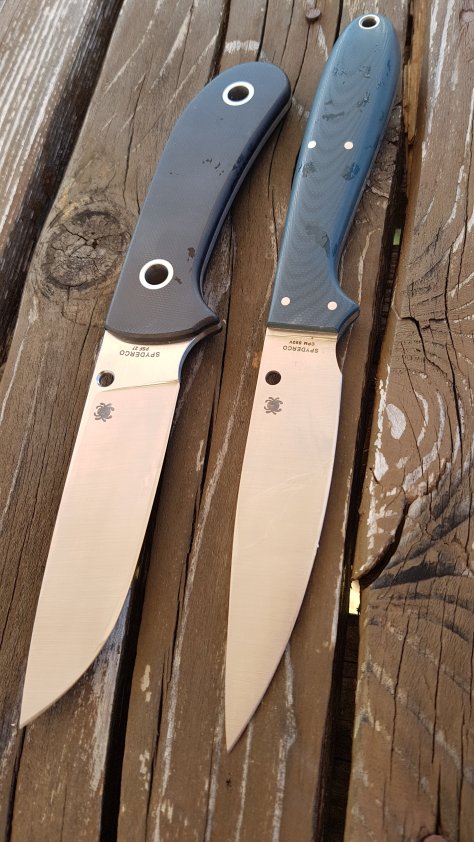 I decided to make a quick comparison with the Spyderco Sprig which is a pleasure to use.
  You can notice how the Phil Wilson’s Sprig got a thicker handle. And it change everything when cutting hard things. Also Phil Wilson’s is all about performances. Its geometry is stellar.
  It immediately cuts deep in wood without any real improvement needed….
 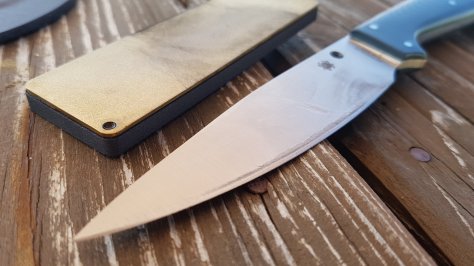 But diamonds were there to be usef. 🙂
  I was able to get thin regular cuts into the wood. So I have decided to try the diamonds on the Gayle Bradley Bowie I have brought with me. This one got a thicker geometry and is made if the same pulverized alloy as the Junction
 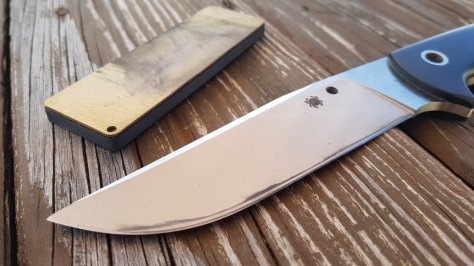 You can always improve an edge.
  Used as a light chopper it worked just fine.
  Gayle Bradley has provided a great compact Bowie which can be used as a light camp knife.
 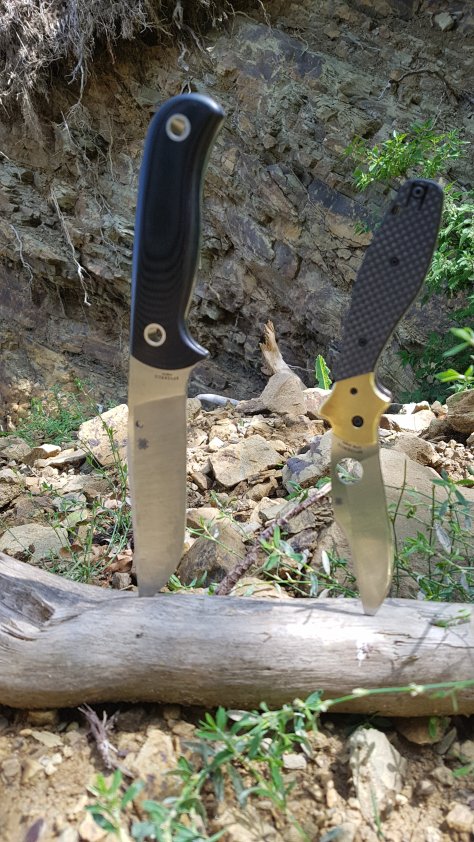 You can see: it’s not a lot bigger compared to my Ed Chempp Bowie.
  And the edge once thinned is honorable.
 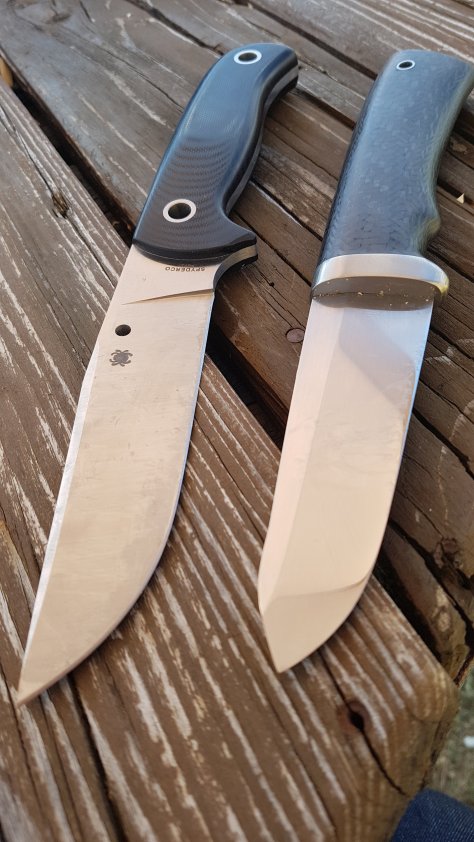 Of course it is not as thin as my Pekka Tuominen Urban II for example. And not as aggressive as the Sprig…
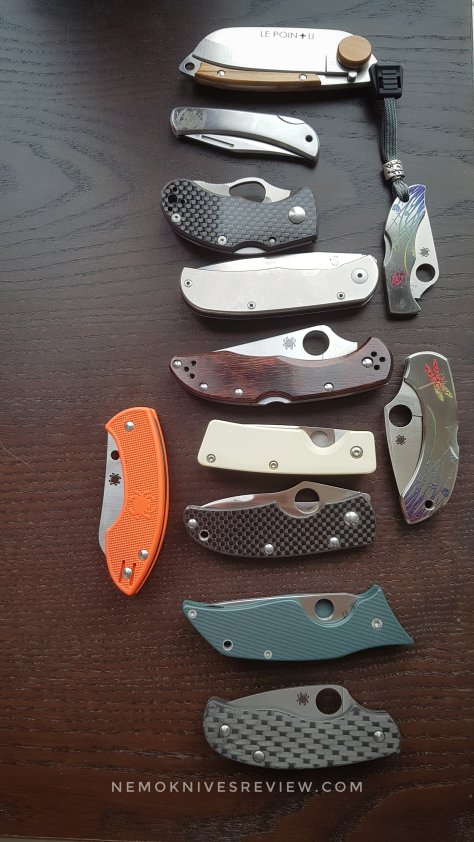
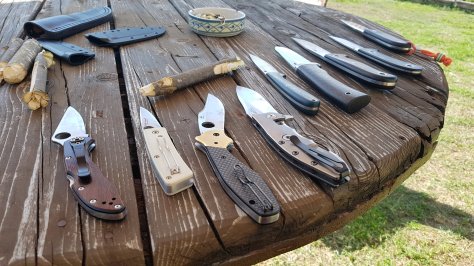 I got…. too much knives on my table…
 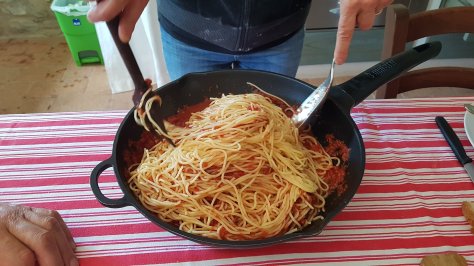 An Francesca knows how to prepare the pasta with pomodori.
  Crostini a la Toscane. Poultry liver, oignons, red wine, bread and a Bowie.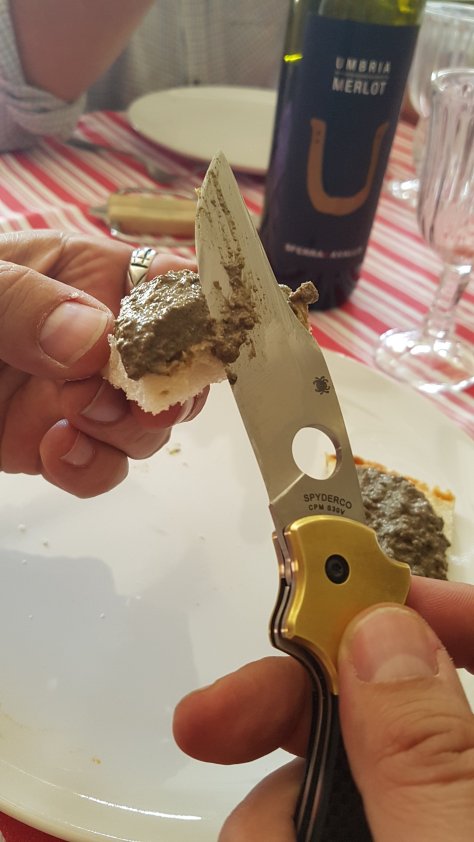
 Also the Delica was able to cut from the ricasso to the point without any hard pressure. In the end, I had noticed that the Junction was less good than the Sprig and the Delica was still the best whittler in the batch. No matter the steel, for wood cutting, geometry is queen. So I have taken my Bowie back to the diamonds and put a keener edge. Tomorrow it will be hunting day.








 NemoKnivesReview