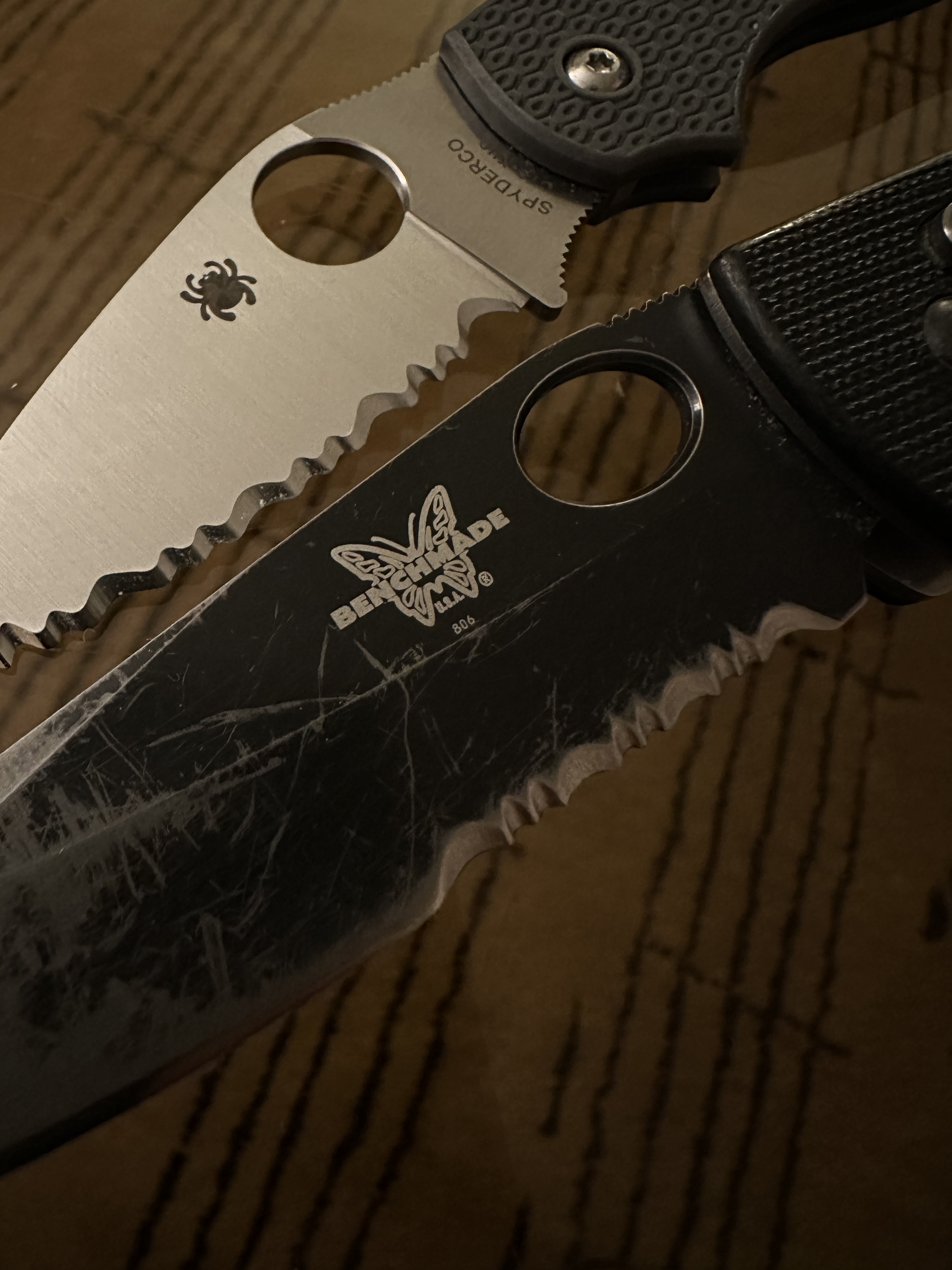
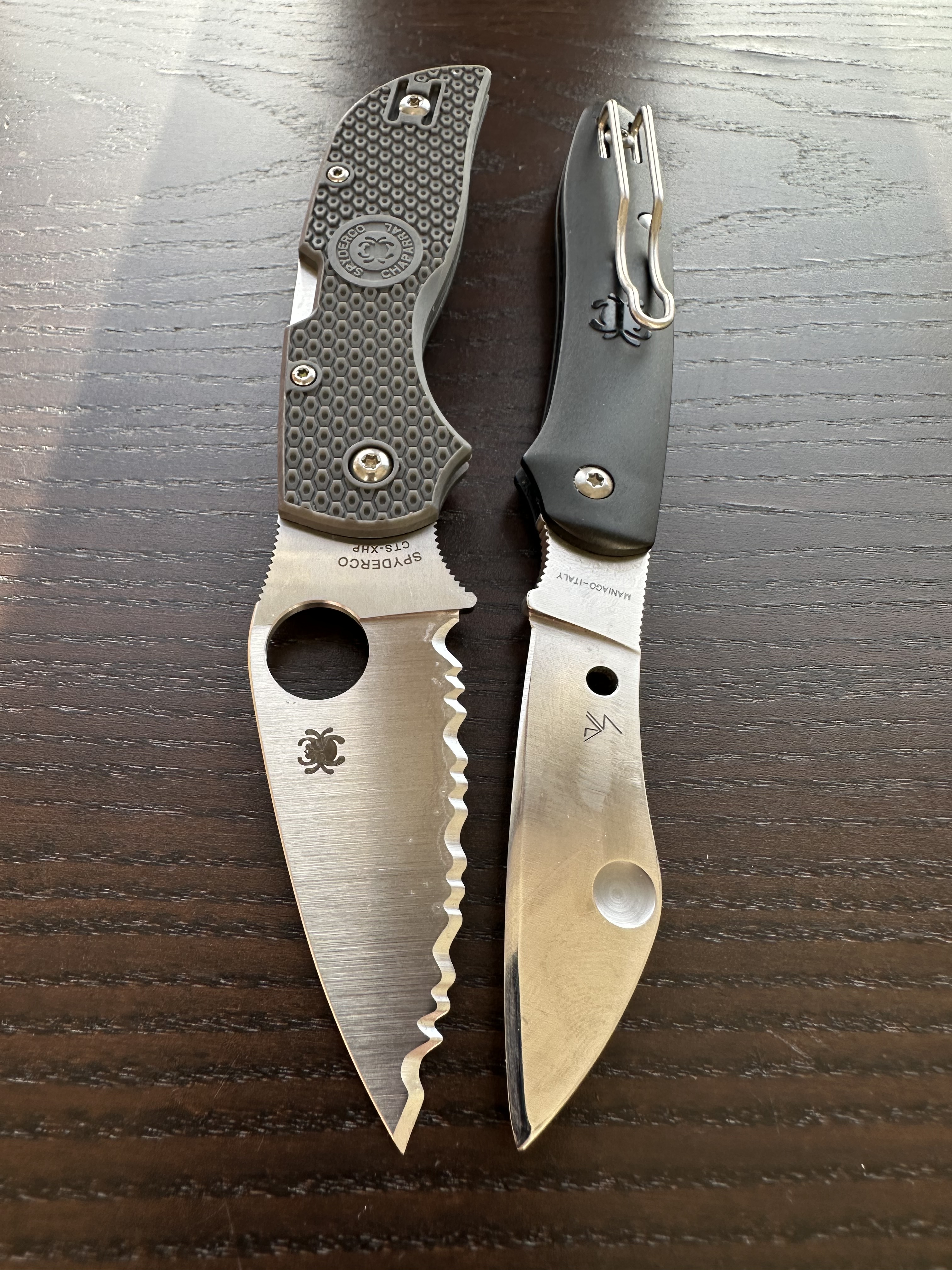
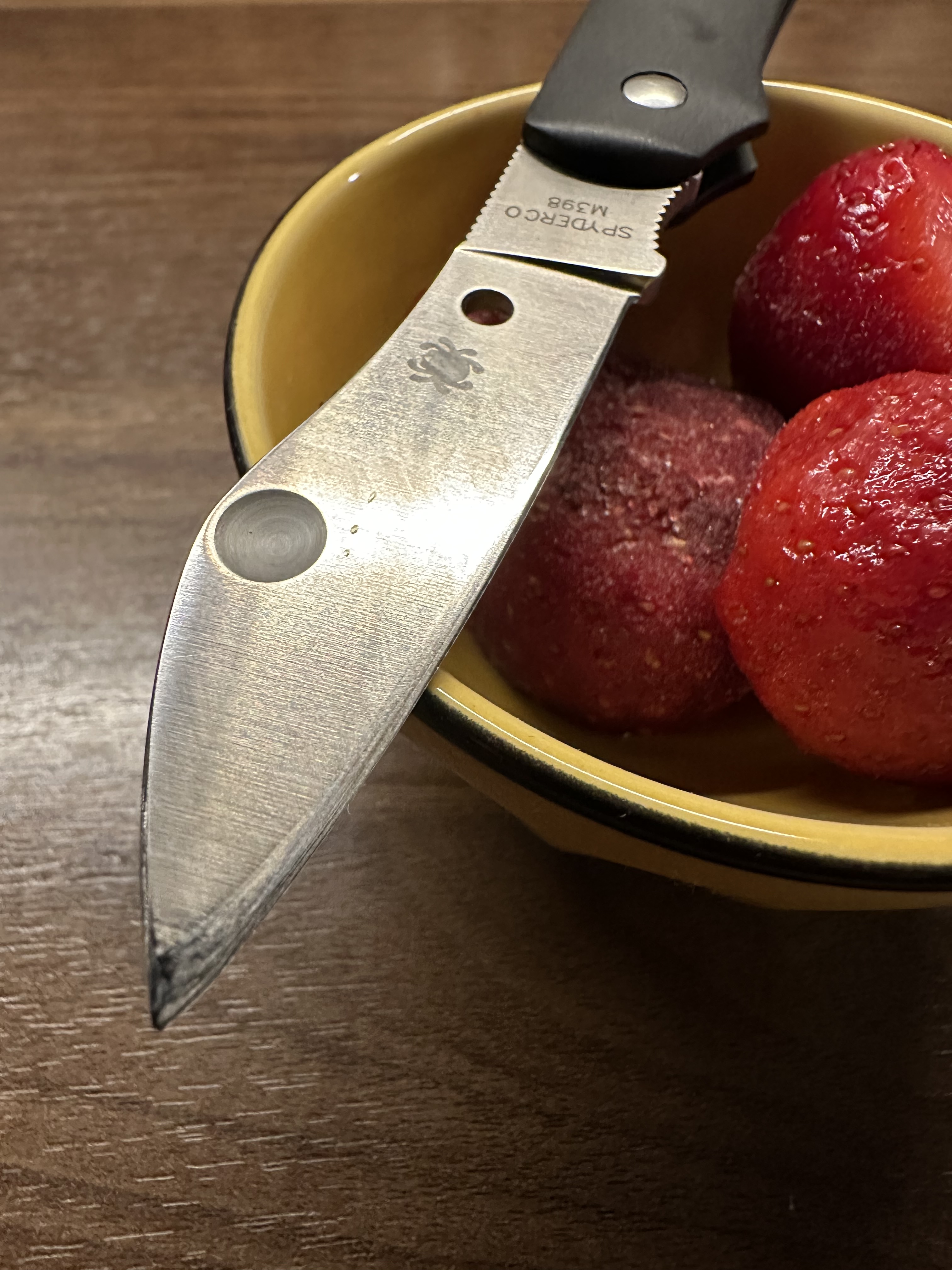
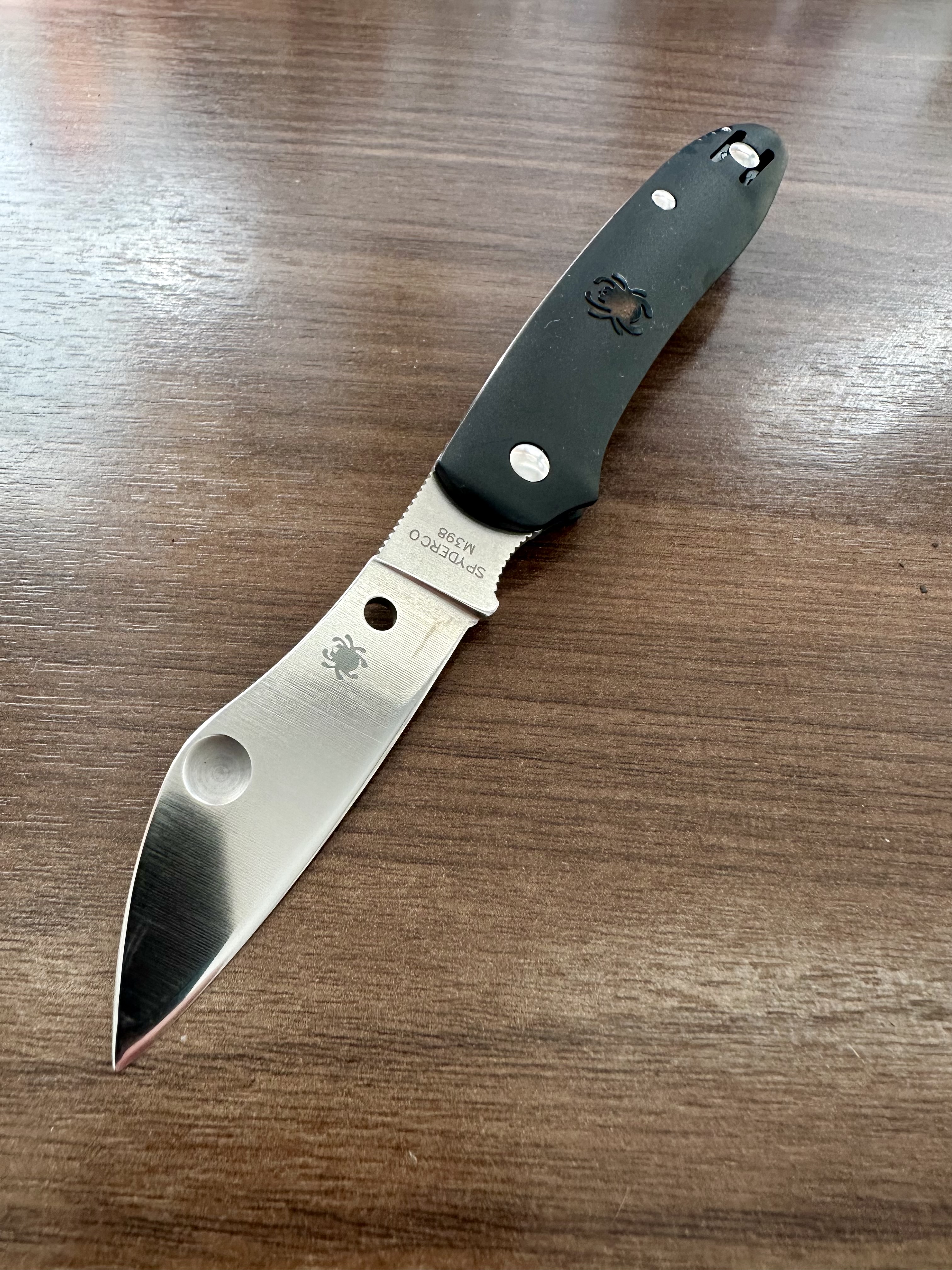
Like I had mentioned in the glimpse review of the Serrated Chaparral, this little, thin folder is built to punch above its weight. Thanks to its sturdy construction and relatively strong stainless steel — the same type found on my Cold Steel Recon 1 XL — it can be tested and used like a much larger knife without compromising performance.
Solid steel, sturdy lock? Not much difference from a larger knife, in fact. 😉
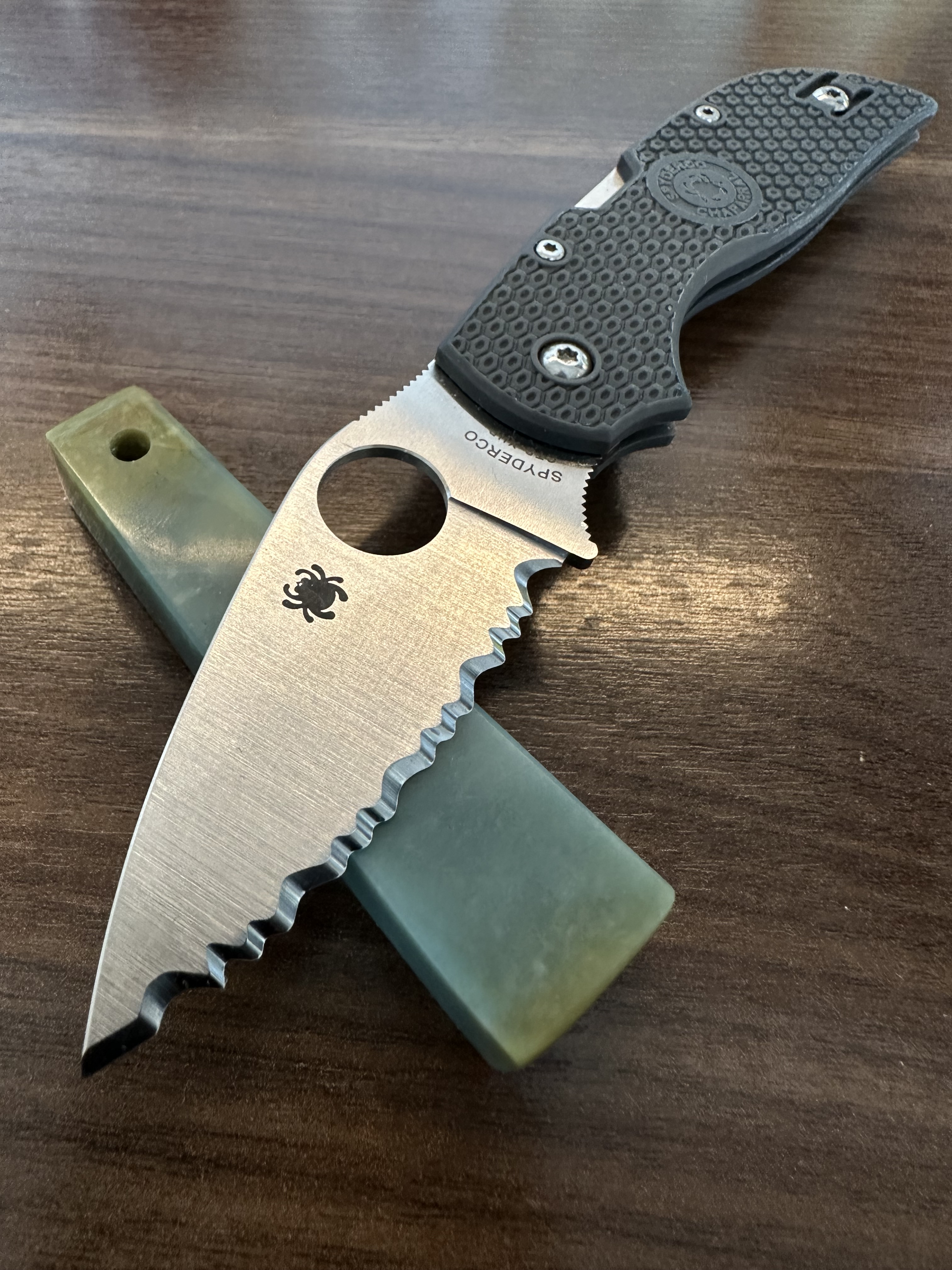
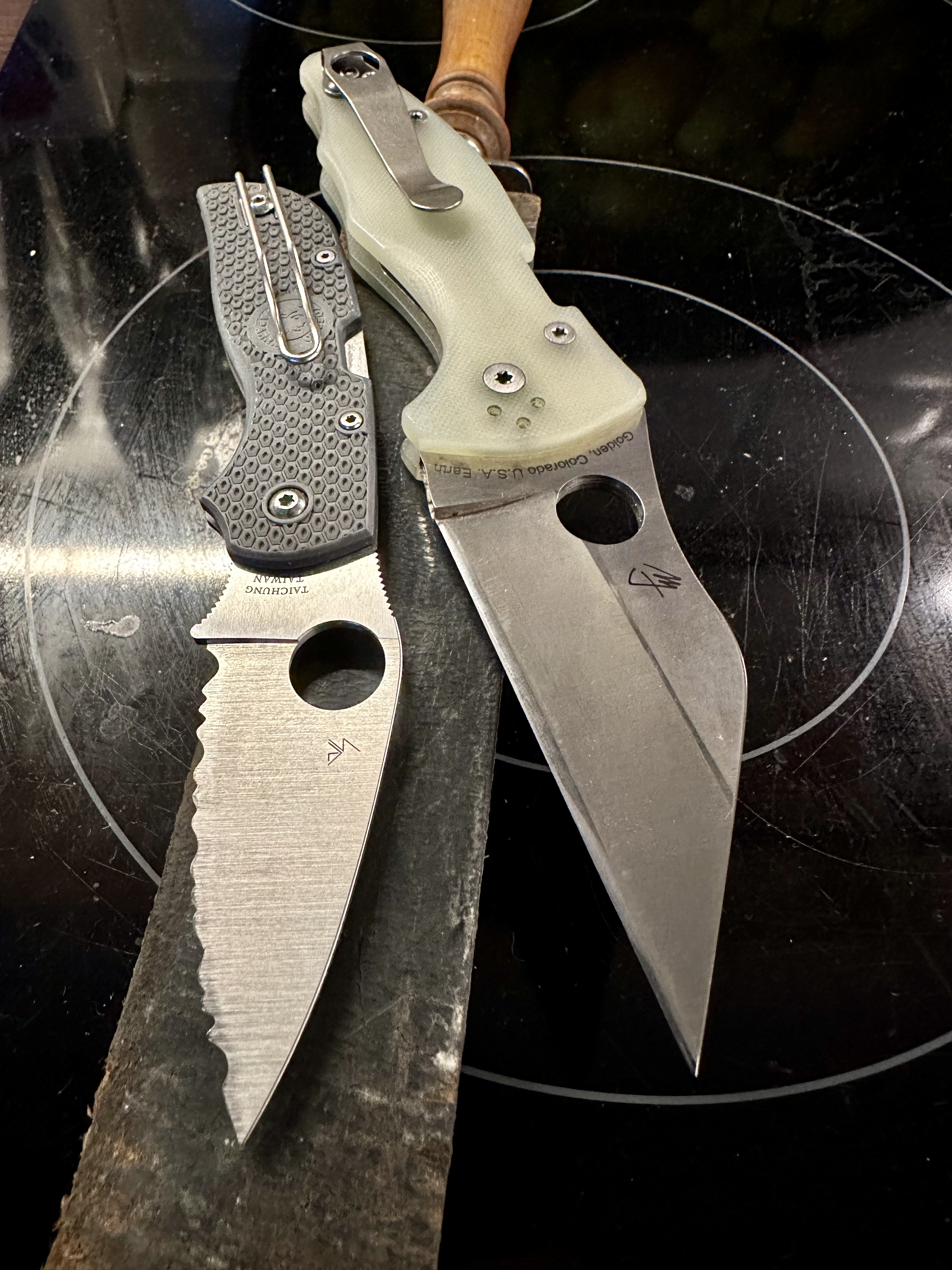
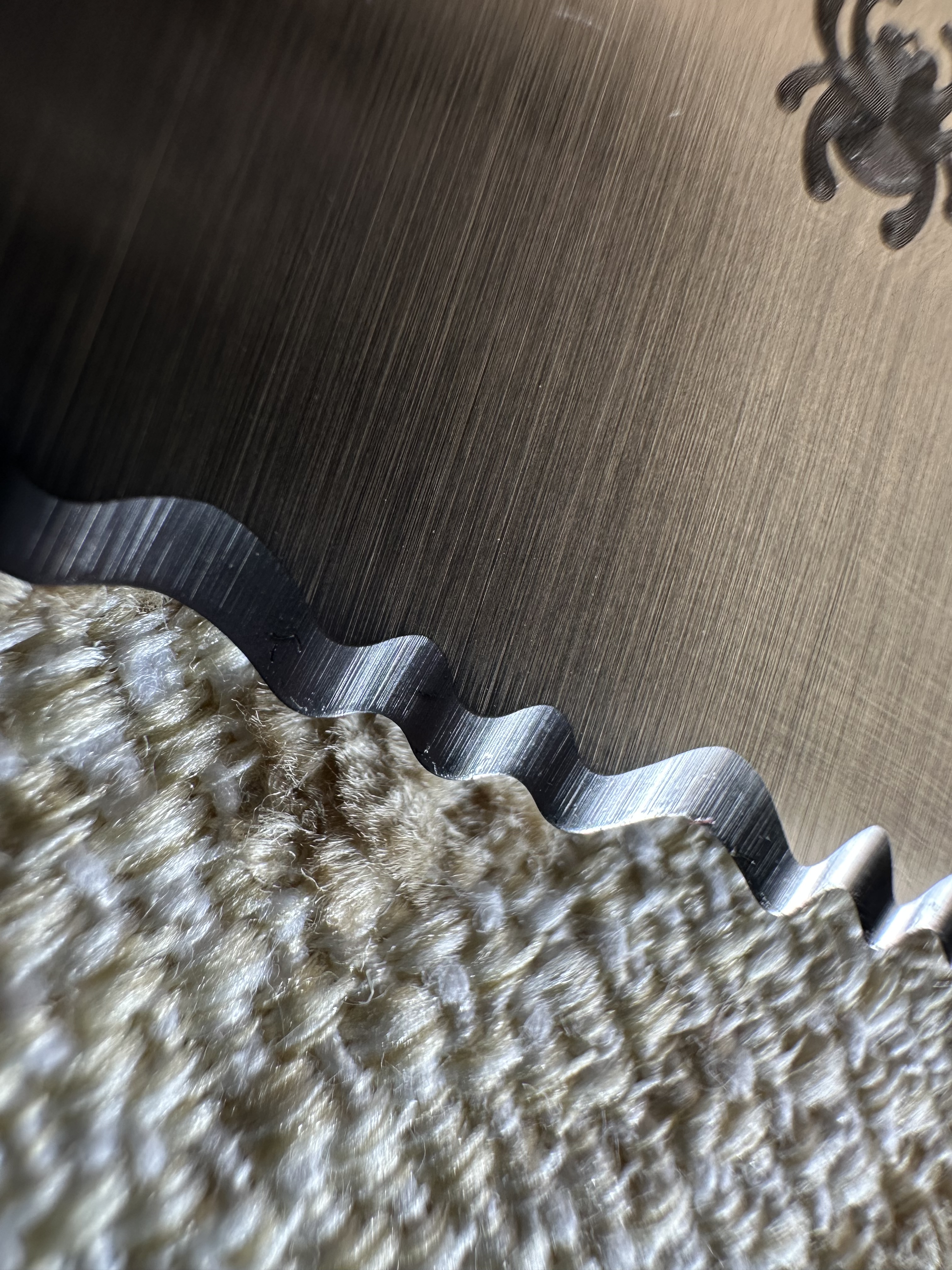
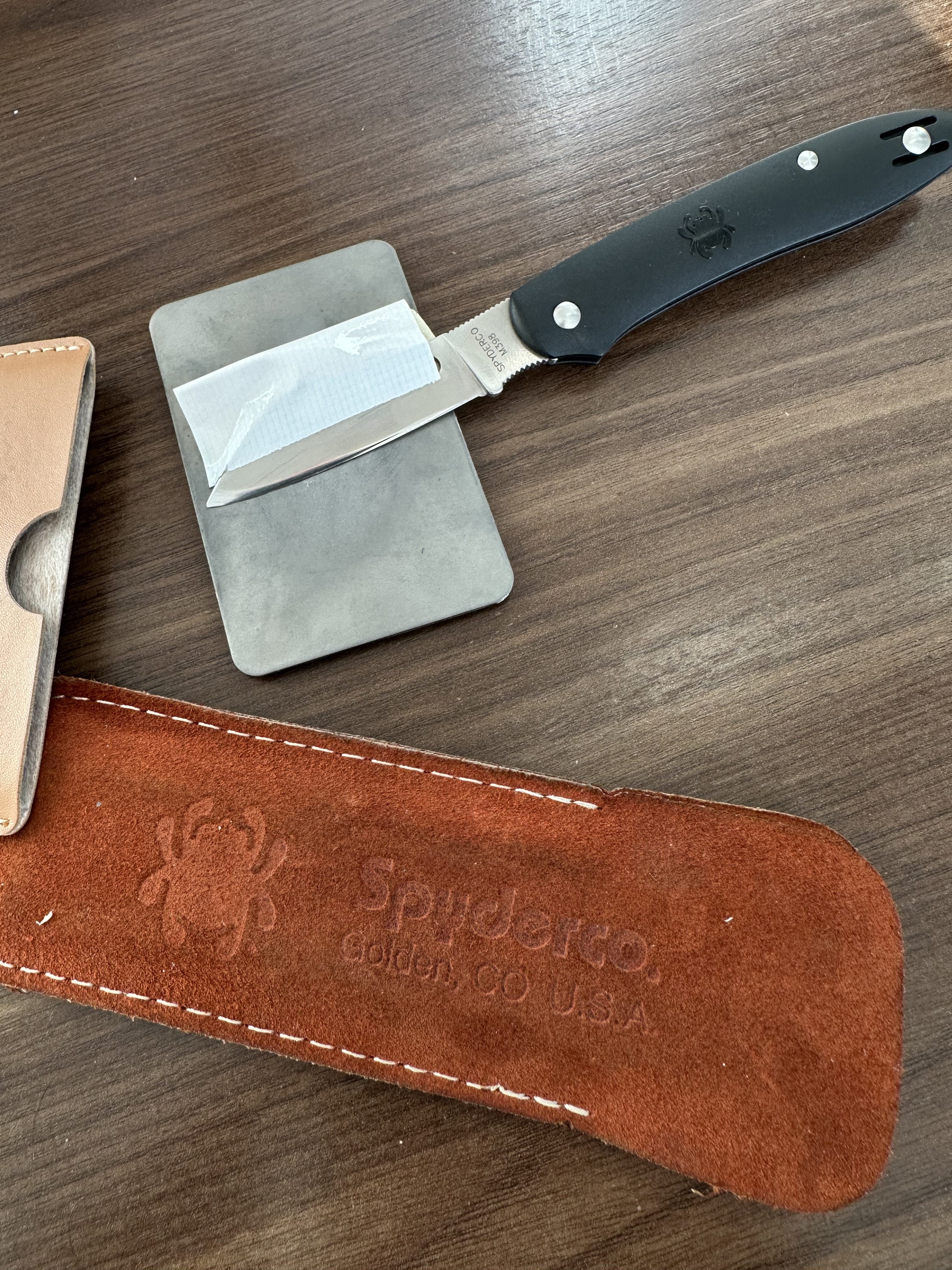
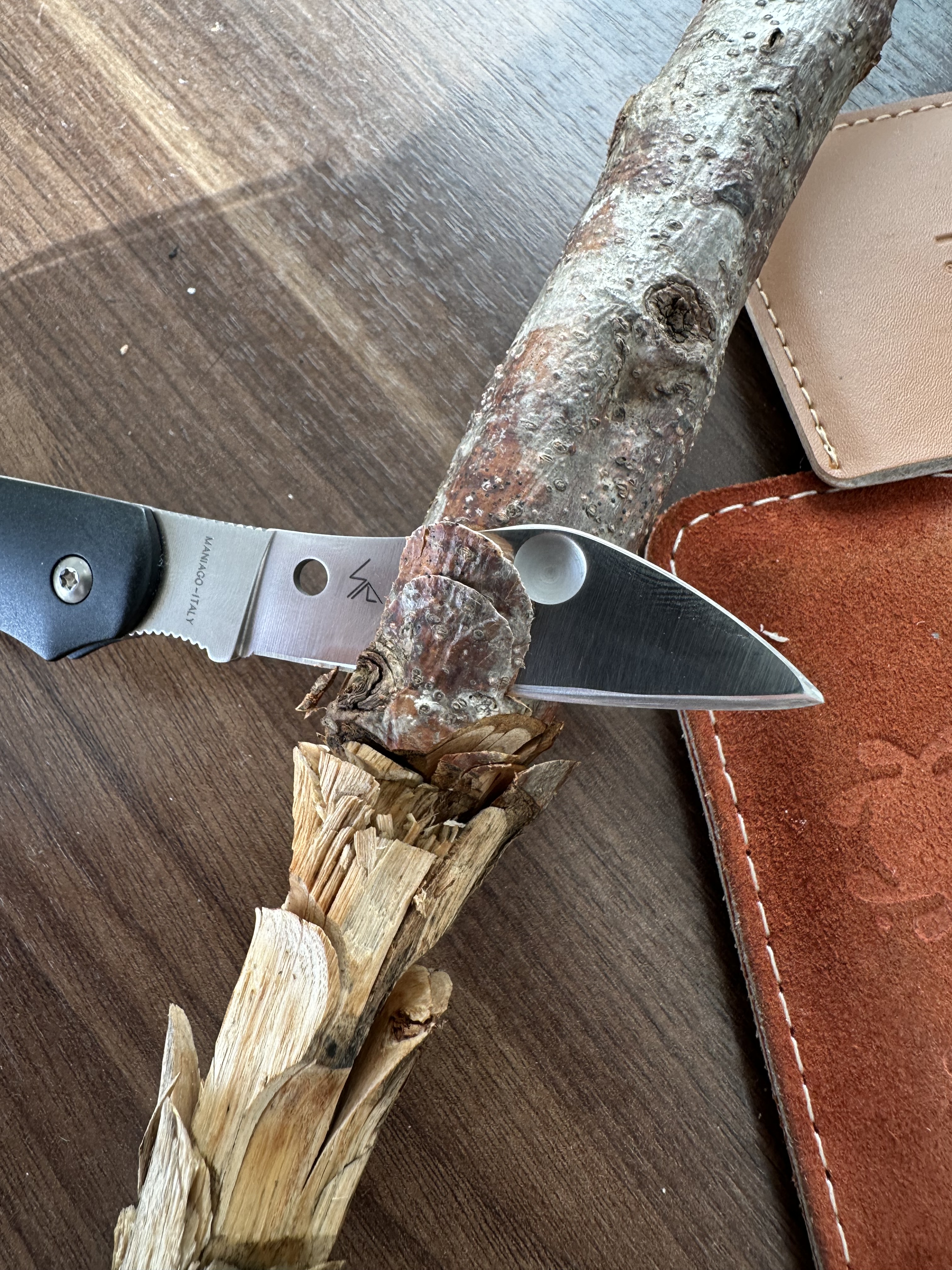
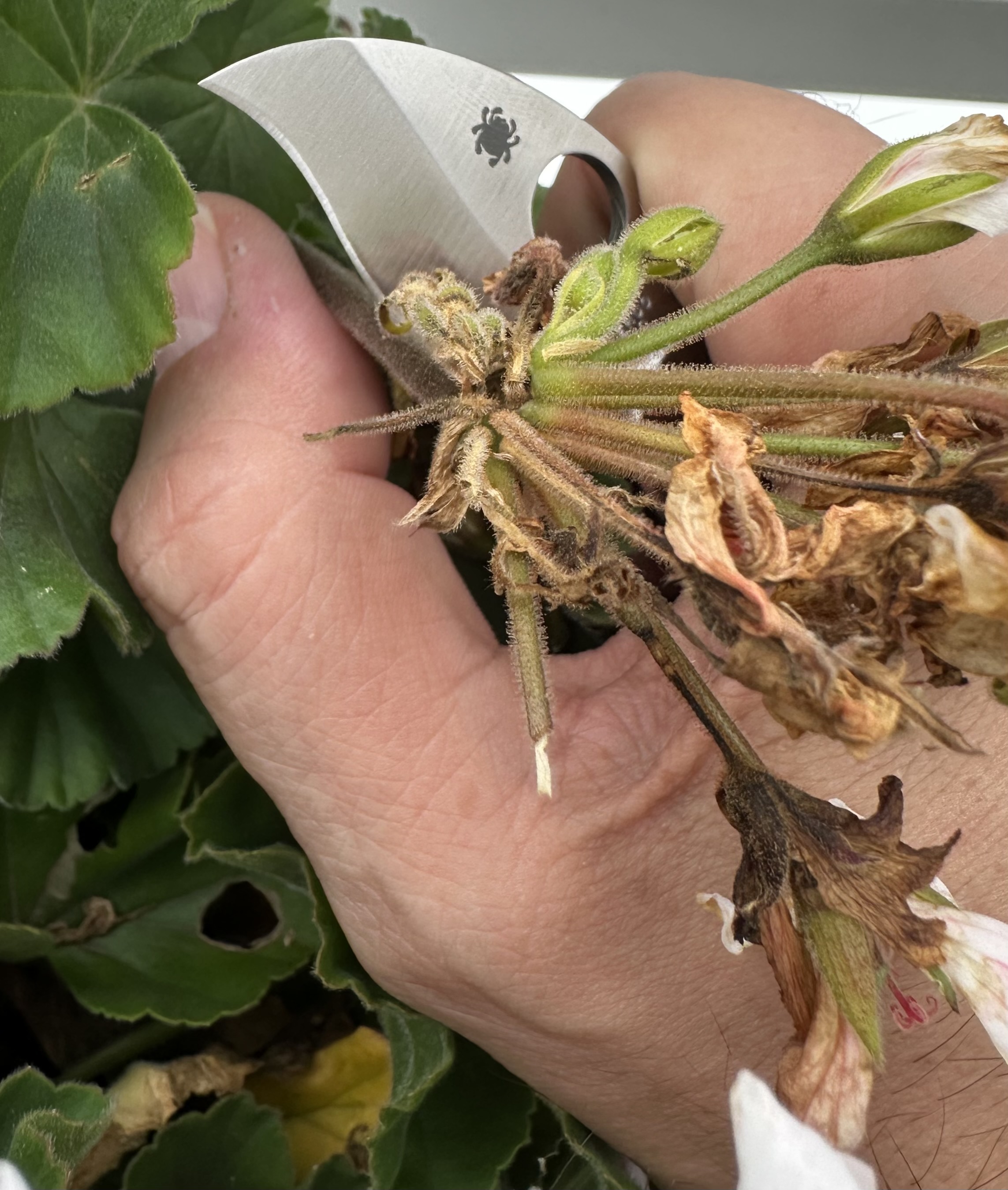
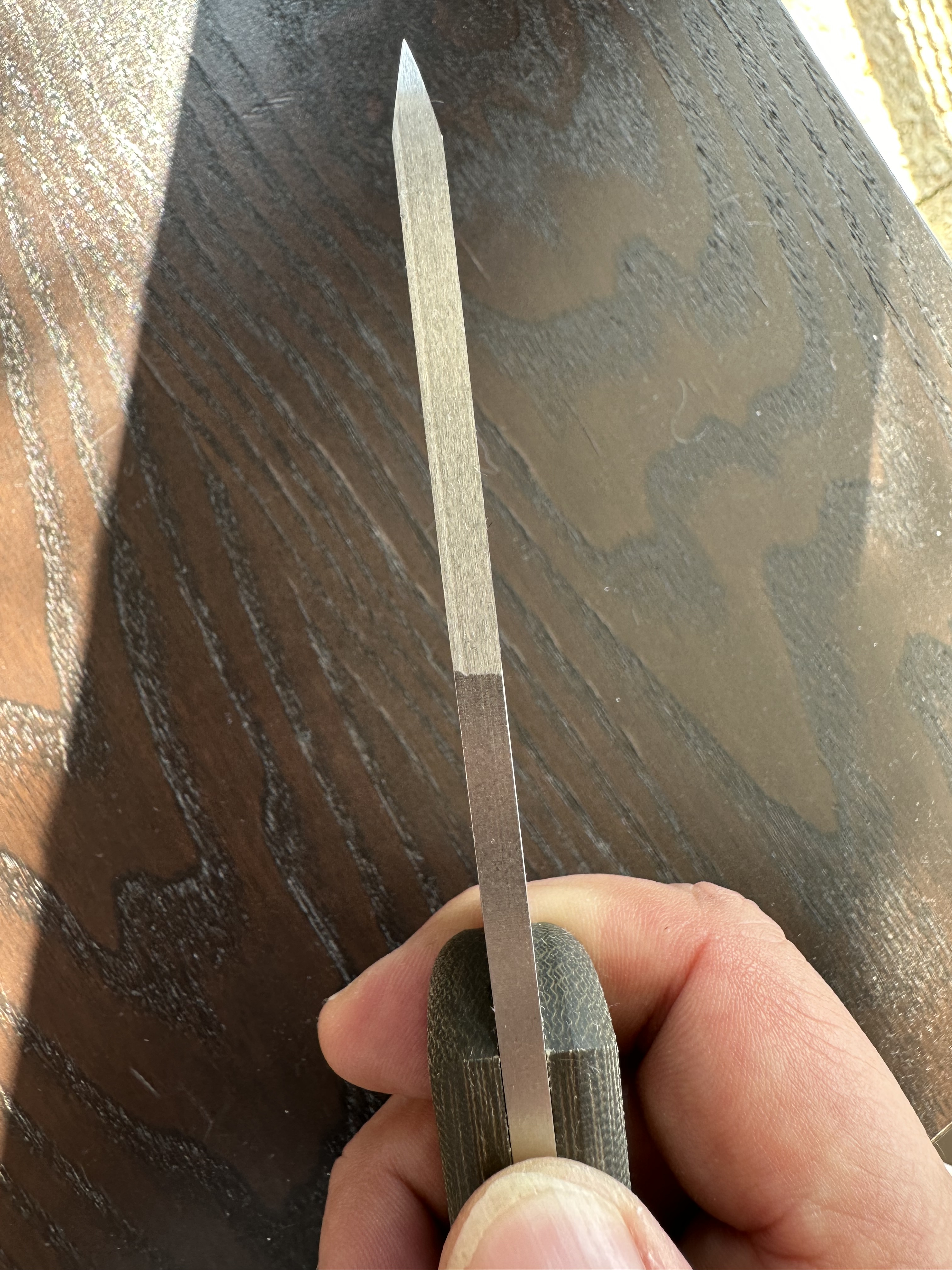
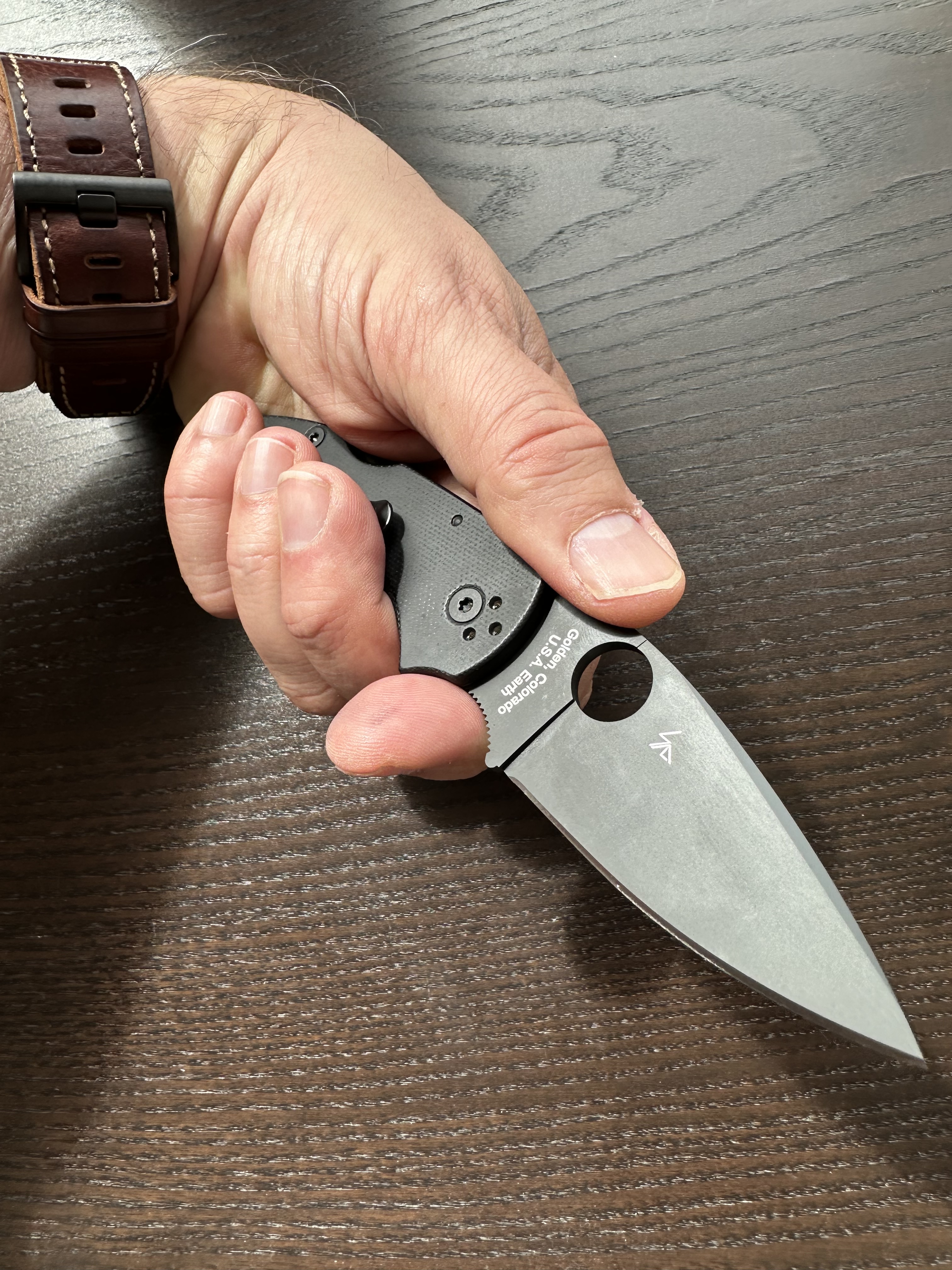
So far, I’ve put the knife through its paces, cutting anything I could, and maintaining the edge with some Jade stones (see first picture). The mechanism shows no signs of play in any direction — rock-solid performance.
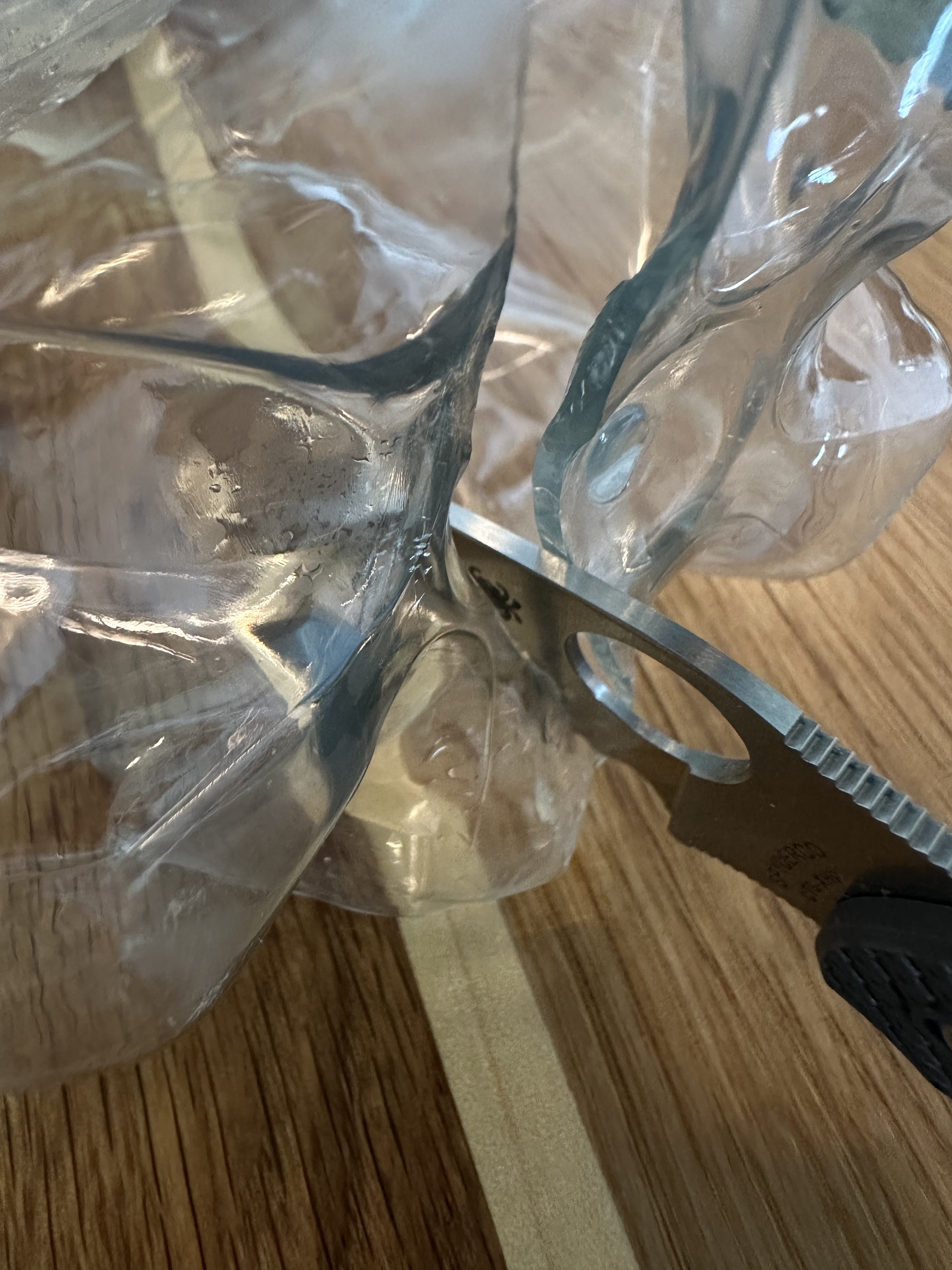
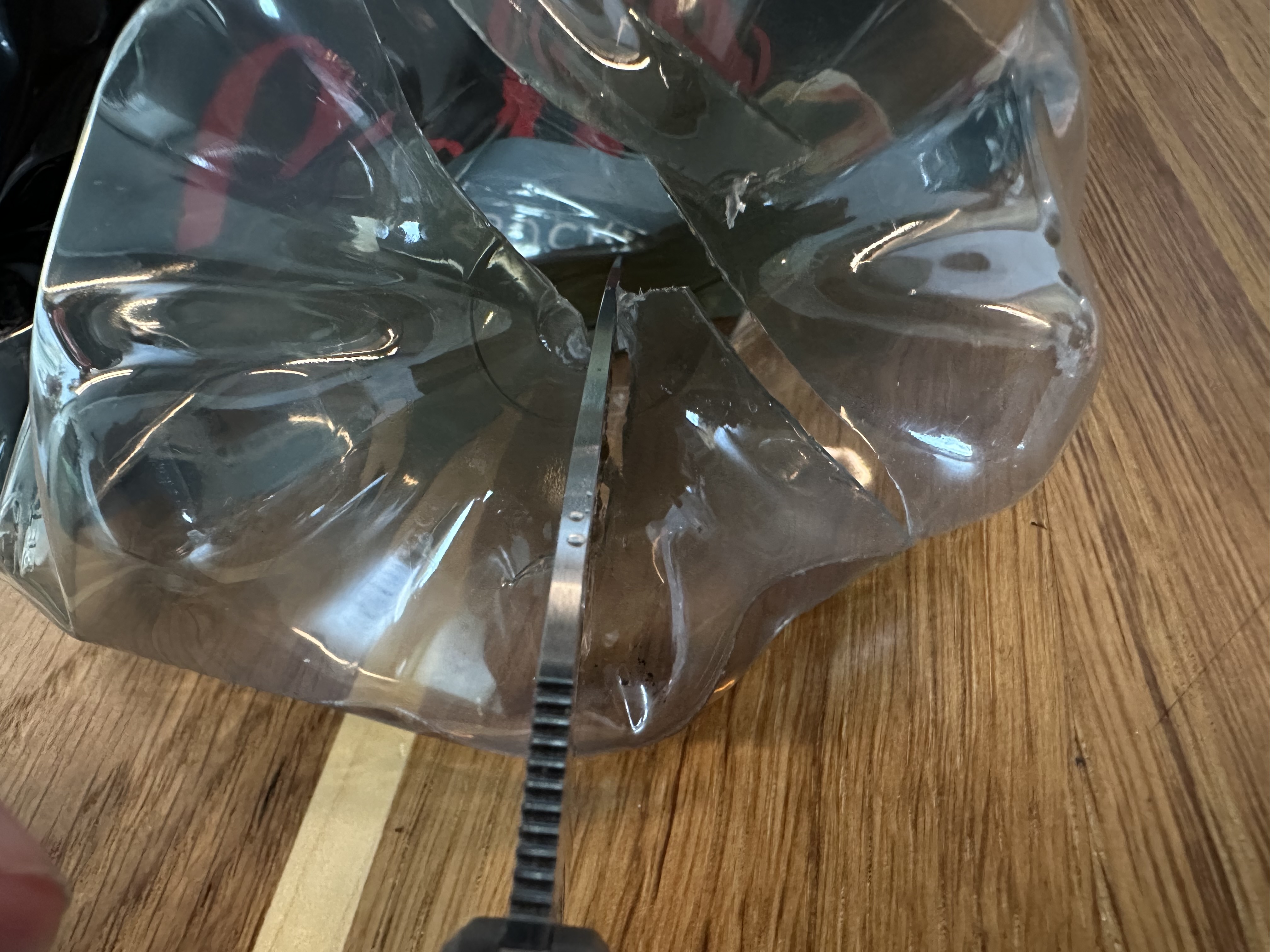
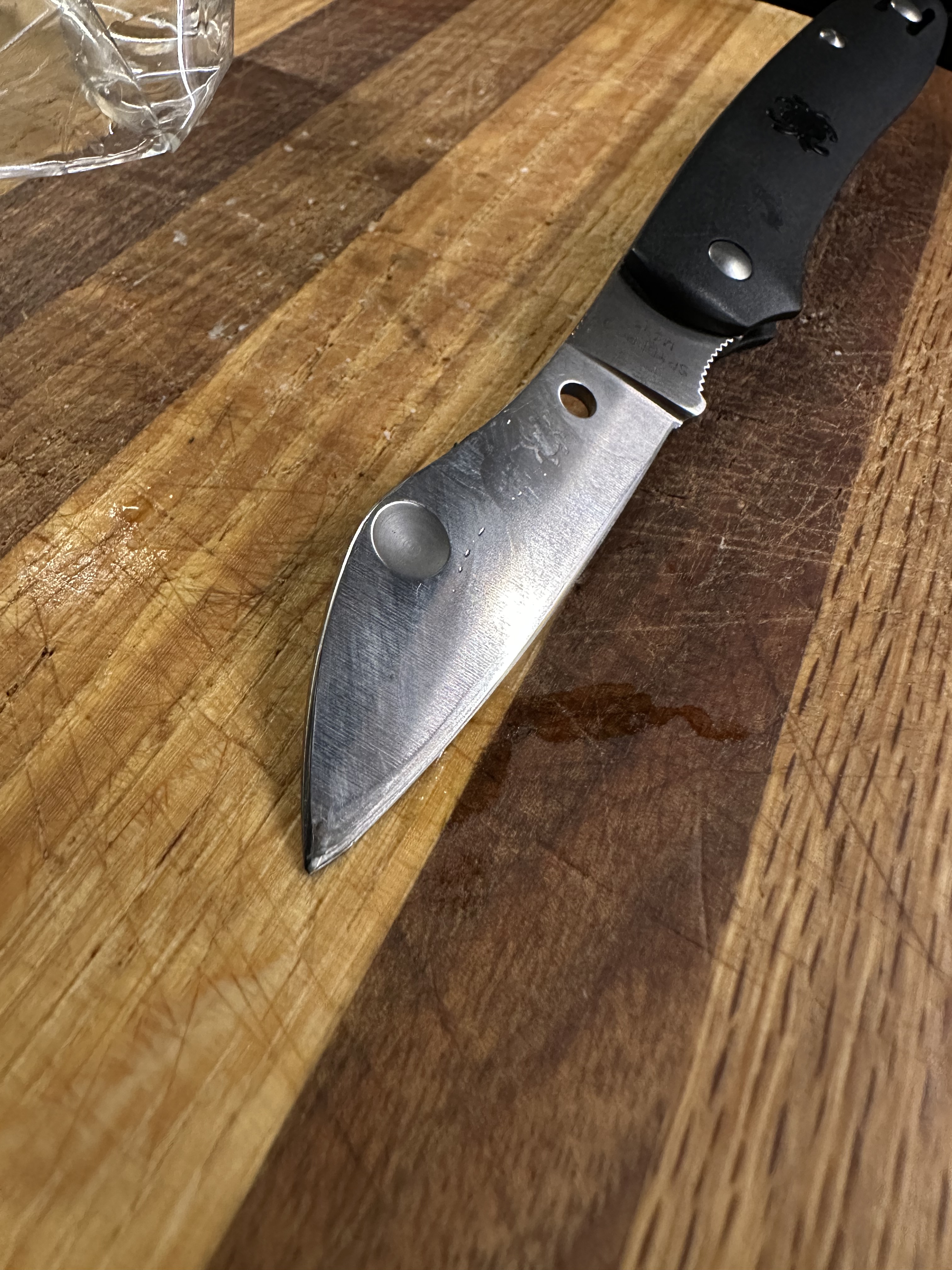
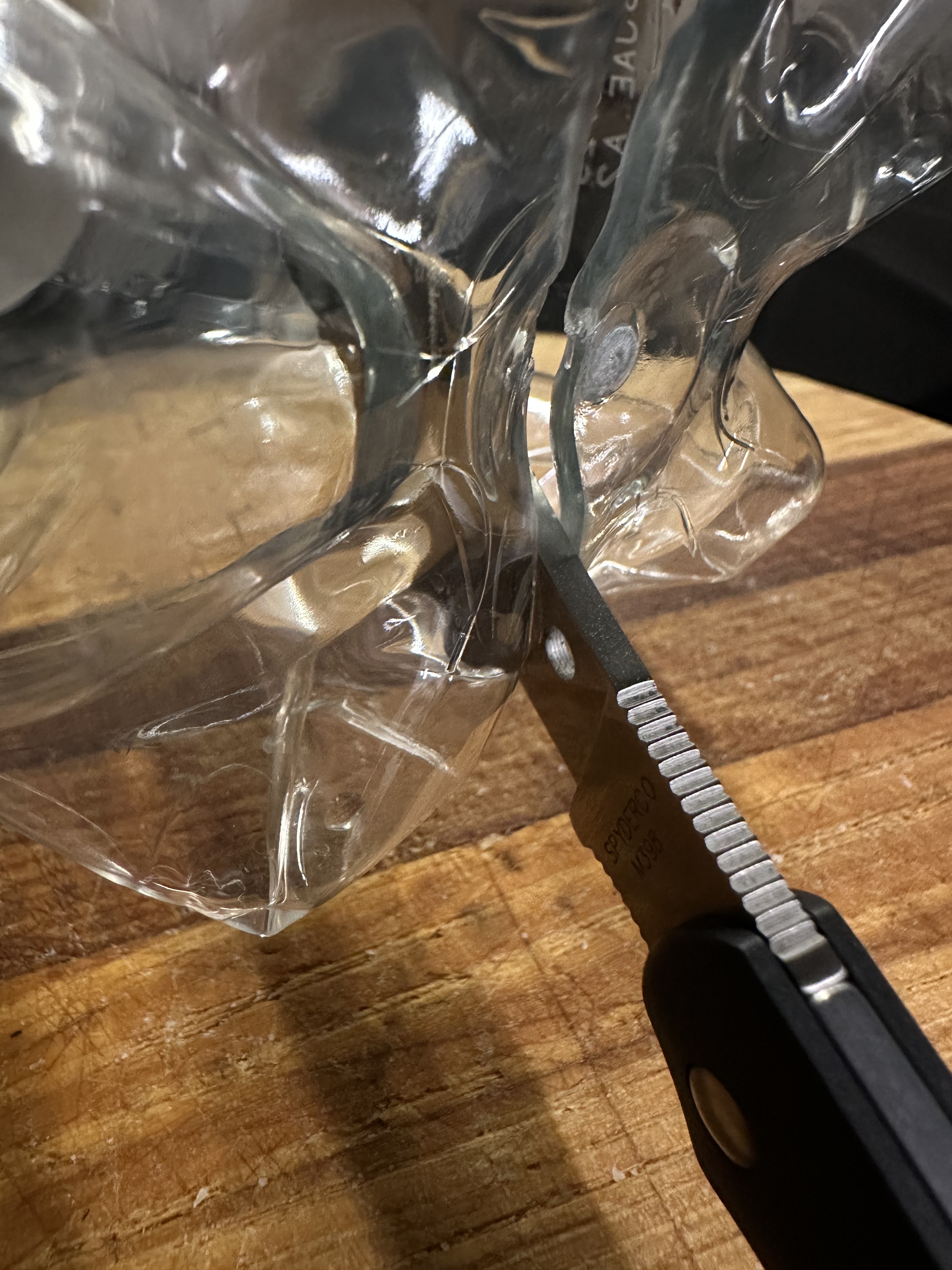
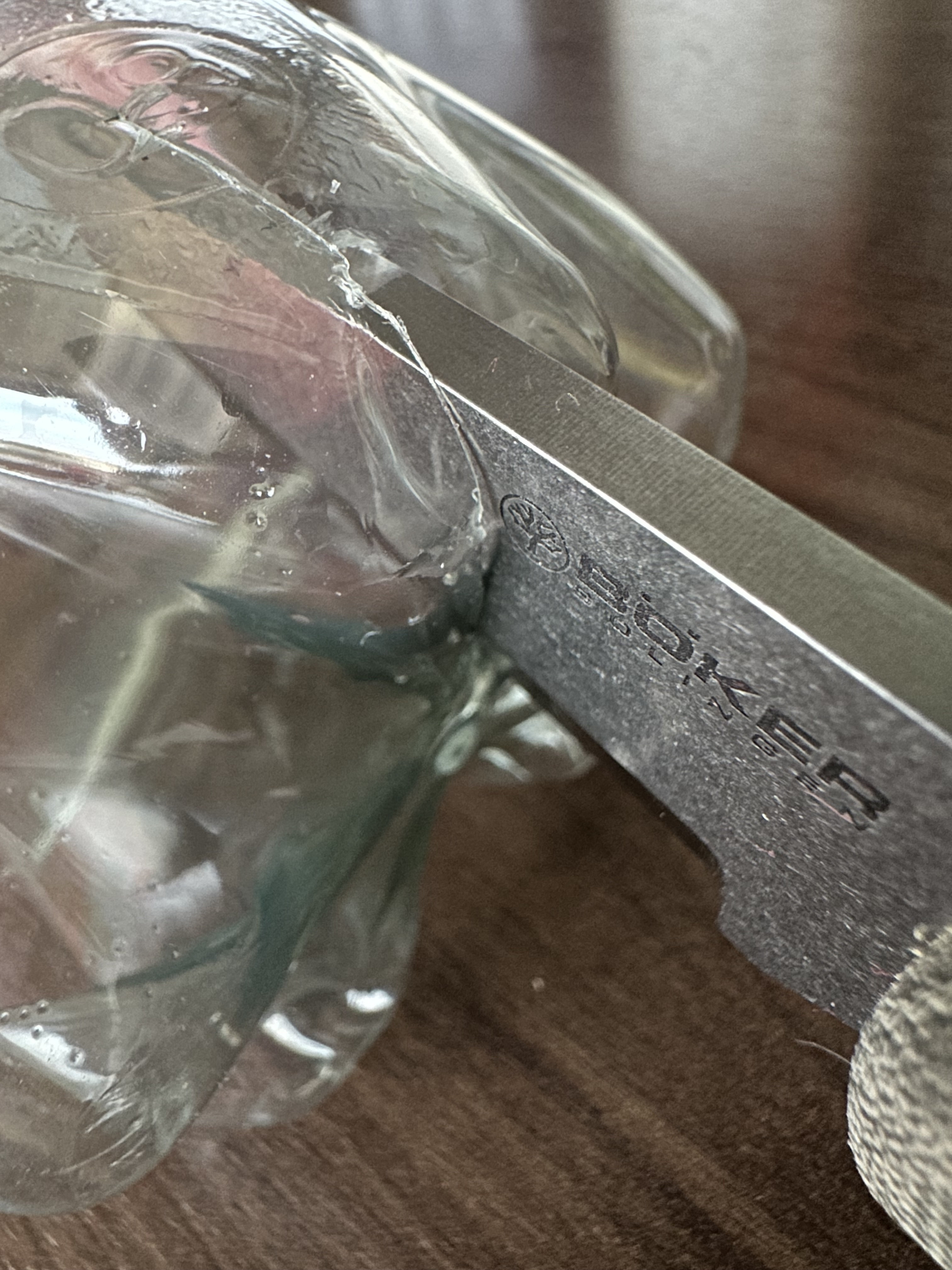
The plastic is thicker that the blade.
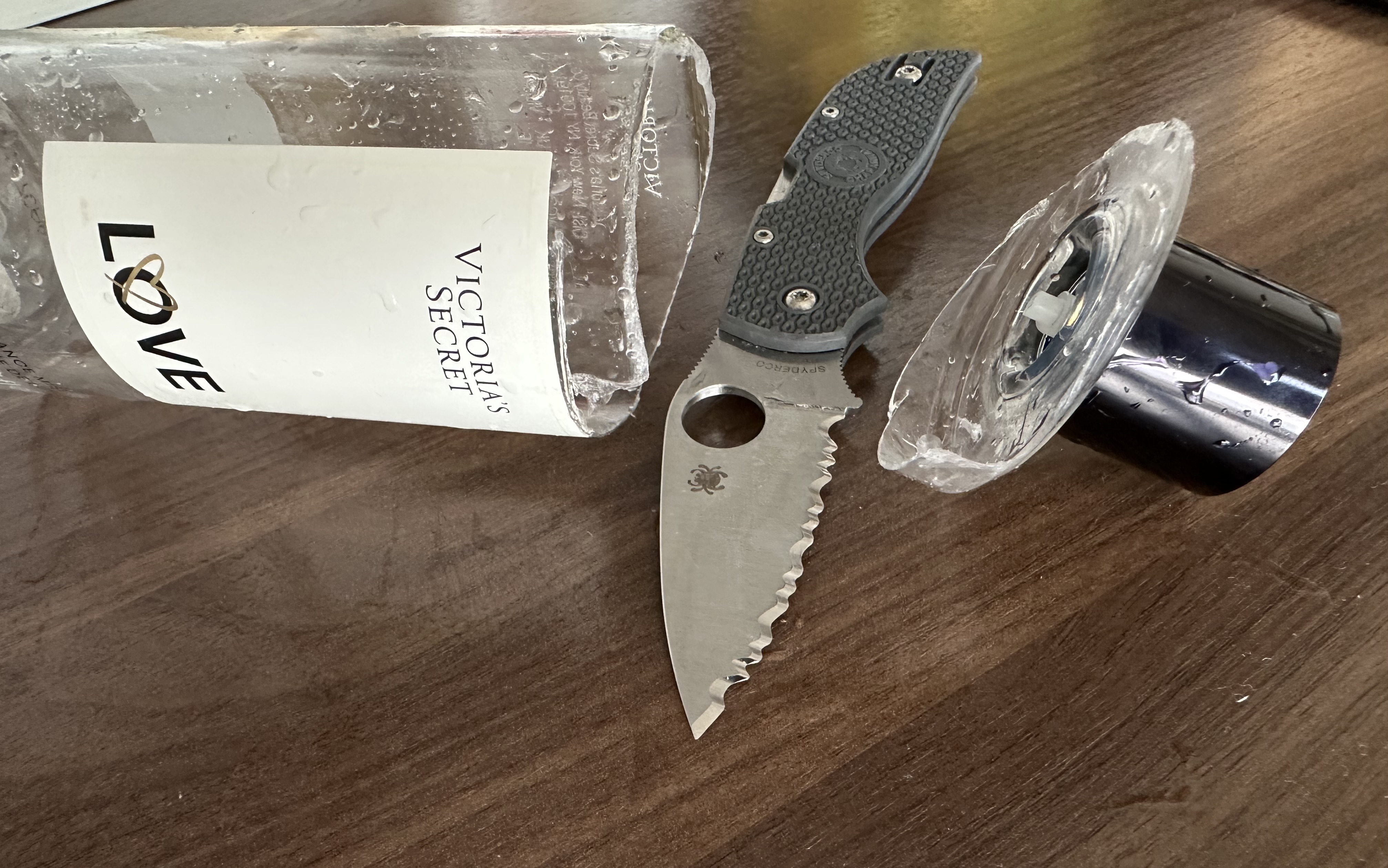
As you can see, the serrated edge is a chisel grind, which means it tends to deviate slightly to the right of the material being cut, much like a fin in water. I started the cuts with a bit of sawing, then transitioned to push cuts, and the knife effortlessly sliced through the thick plastic used to form the bottle.
This little knife is fierce in term of cutting performance. It is a lot of power in your pocket ! It is a pocket chainsaw !
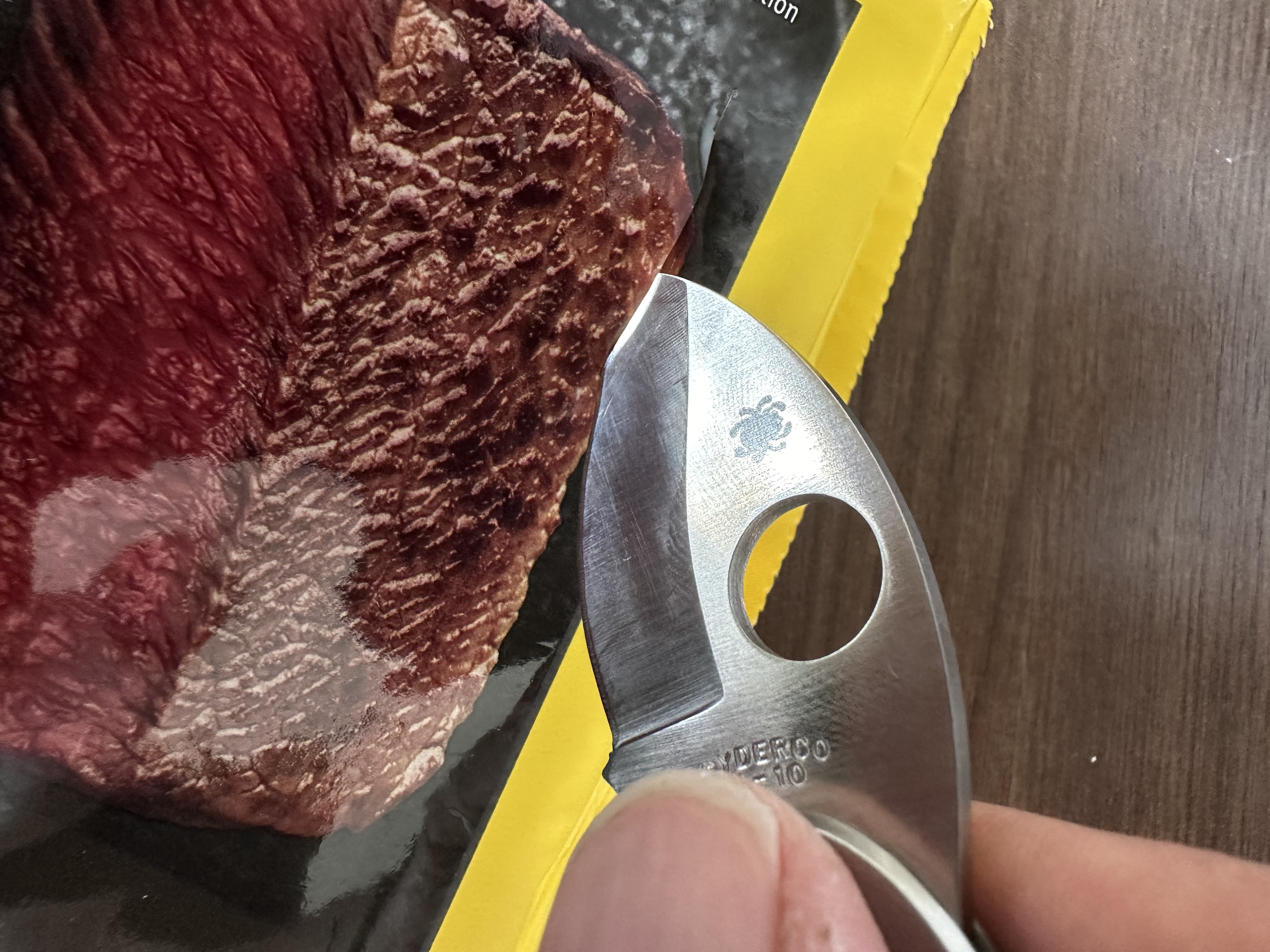
The serrations really shine on the plate. You can push the knife hard against ceramic surfaces, and if the points ever need a touch-up, a few passes on a ceramic corner — or in my case, a jade corner — brings them back like new.
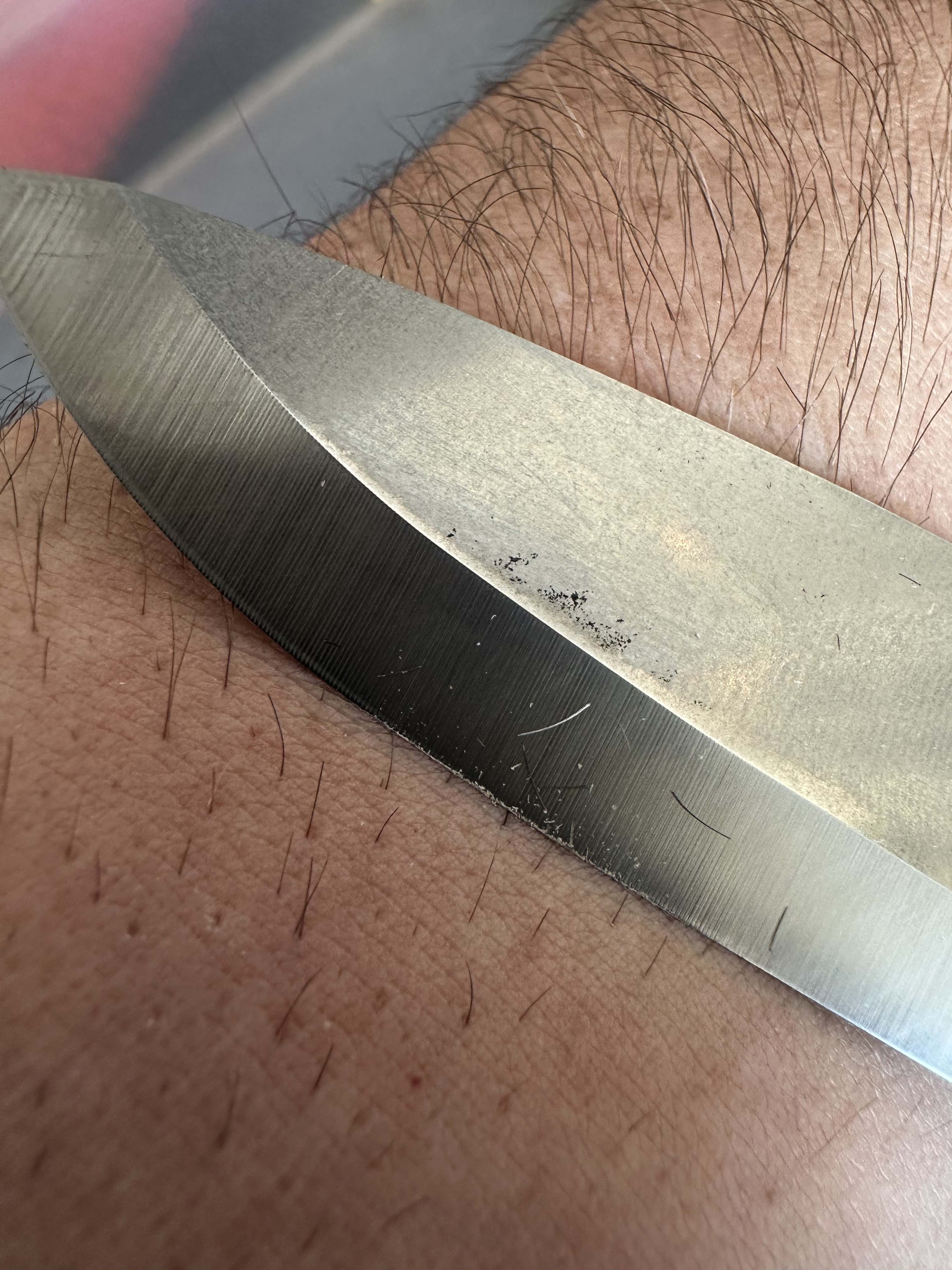
I have been able to reach razor level just by passing gently the Jade on it.
Actually it is fun to enhance the edge.
Actually, this is a bit of a comeback for me with serrations, dating back to my AFCK experience 25 years ago. Back then, I mostly used partly serrated edges, which helped initiate cuts on hard materials.
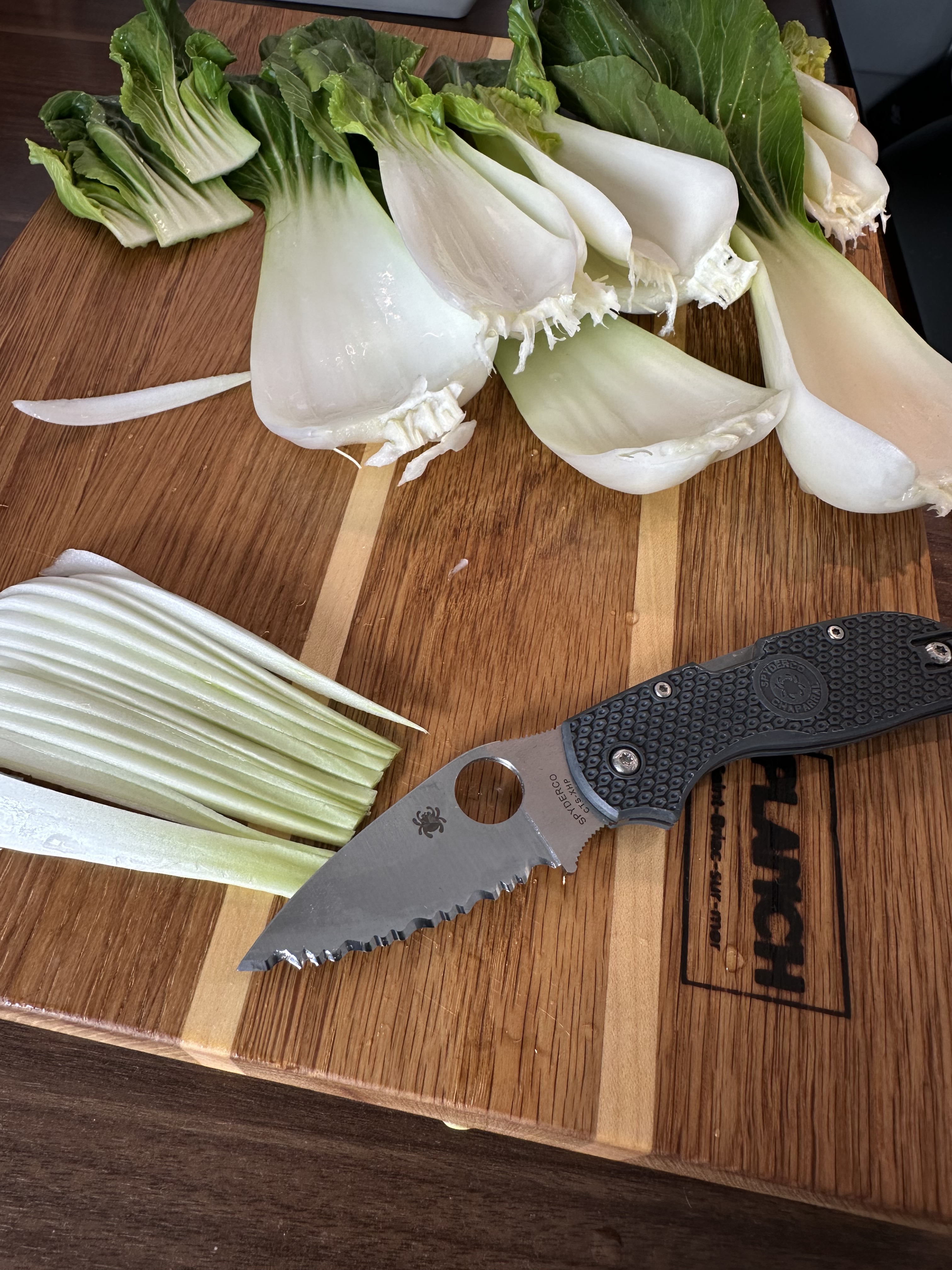
With a fully serrated thin blade and no plain edge, I initially wondered how useful it would be in the kitchen — especially since my wife’s favorite knives are Victorinox fruit knives (serrated). But it turns out, neither fruits nor vegetables can withstand the sharp, wavy edge of the Chaparral.
Funny enough I have been able to strop the edge of the Chap by using the side of the leather belt. CTS XHP is a steel which loves leather in my experience.
All in all, so far, so good. The Chaparral delivers impressive cutting power. Its thin, fully serrated edge is unique within the Spyderco line, pushing the design out of its comfort zone — and for a “knifeaholic” like me, that’s pure fun.
The next step is to trust this little knife enough to take it on a road trip in Italy — handling food prep, wood, and low-profile carry as my only pocketed folder. The Chaparral will make its return in May.
I’ve been an early adopter of the Chaparral. Nearly 13 years ago, I called it the “Extra Flat Companion”in my first review from 2012. Back then, the Chaparral was designed to serve as a platform to test different handle materials, while the Sage (another model “made in Taichung”) showcased various lock designs used in folders.
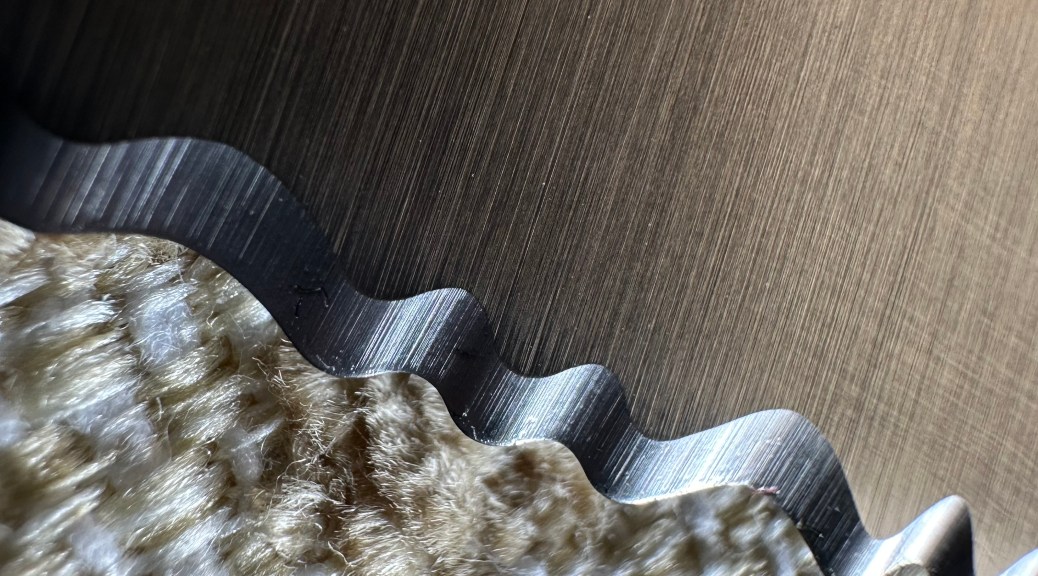
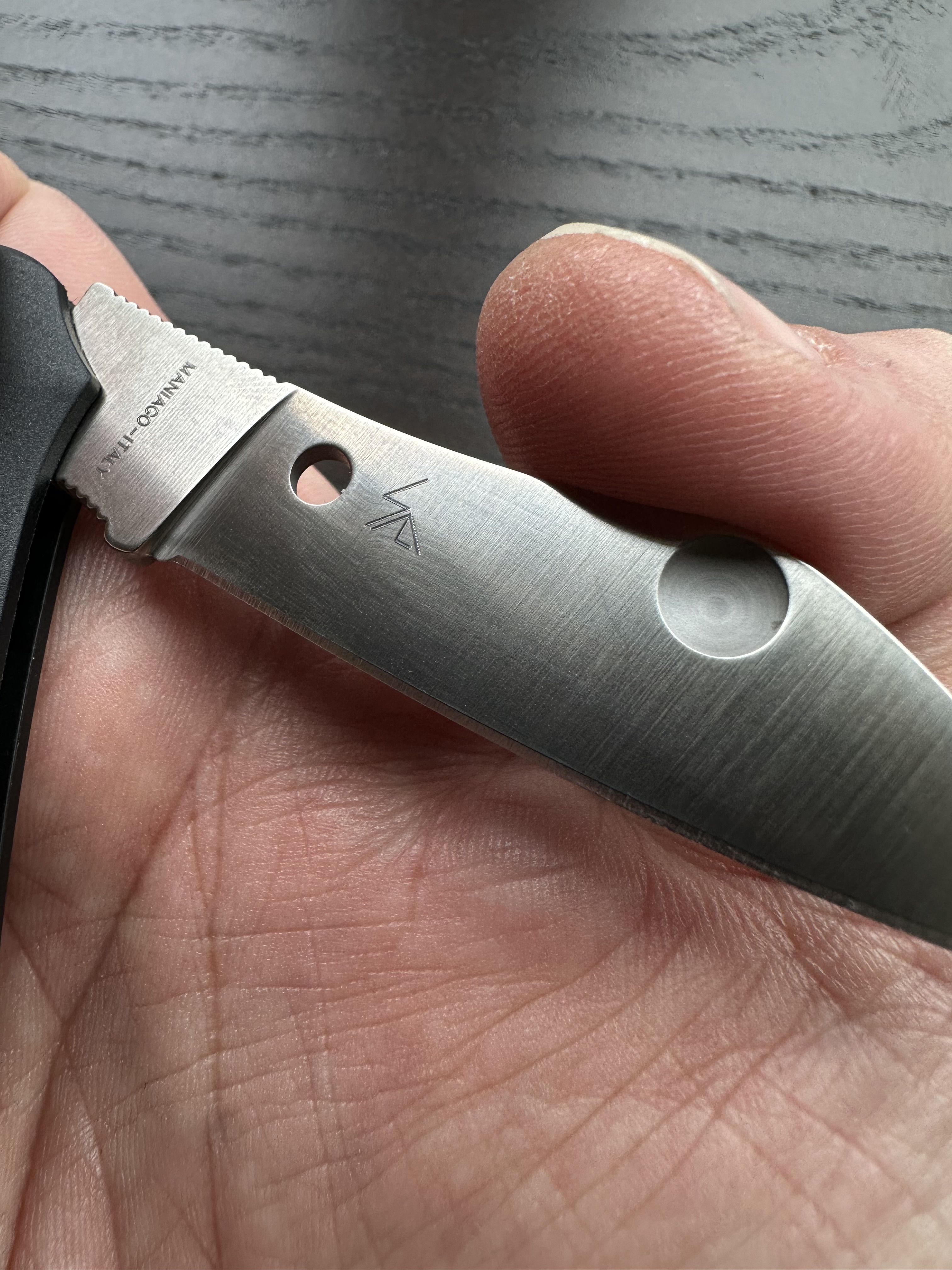
Twelve years later, Spyderco has introduced a major improvement to the Chap’s blade: their famous serrations. The brand is, of course, known for its Spyderhole, its clips, and… the performance of its serrated edges. Sal Glesser has long advocated the superior cutting performance of Spyderco’s sserrations. Scallops, moon quarters, and thin chisel geometry all work together to create the ultimate “matter separator,” making tough cutting tasks effortless.
Sal has refined his serrations into a recognized patterns and created the Spyderedge: “Spyderco’s two-step serration patterns consist of one large and two small serrations. The pattern increases the cutting edge’s surface area by up to 24%”. On the Chaparral, the serration are even better as they are rounded to avoid snagging when cutting. Those same enhanced serrations can be found on another serrated folder made in Taichung for Spyderco: the LC200N made Caribbean.
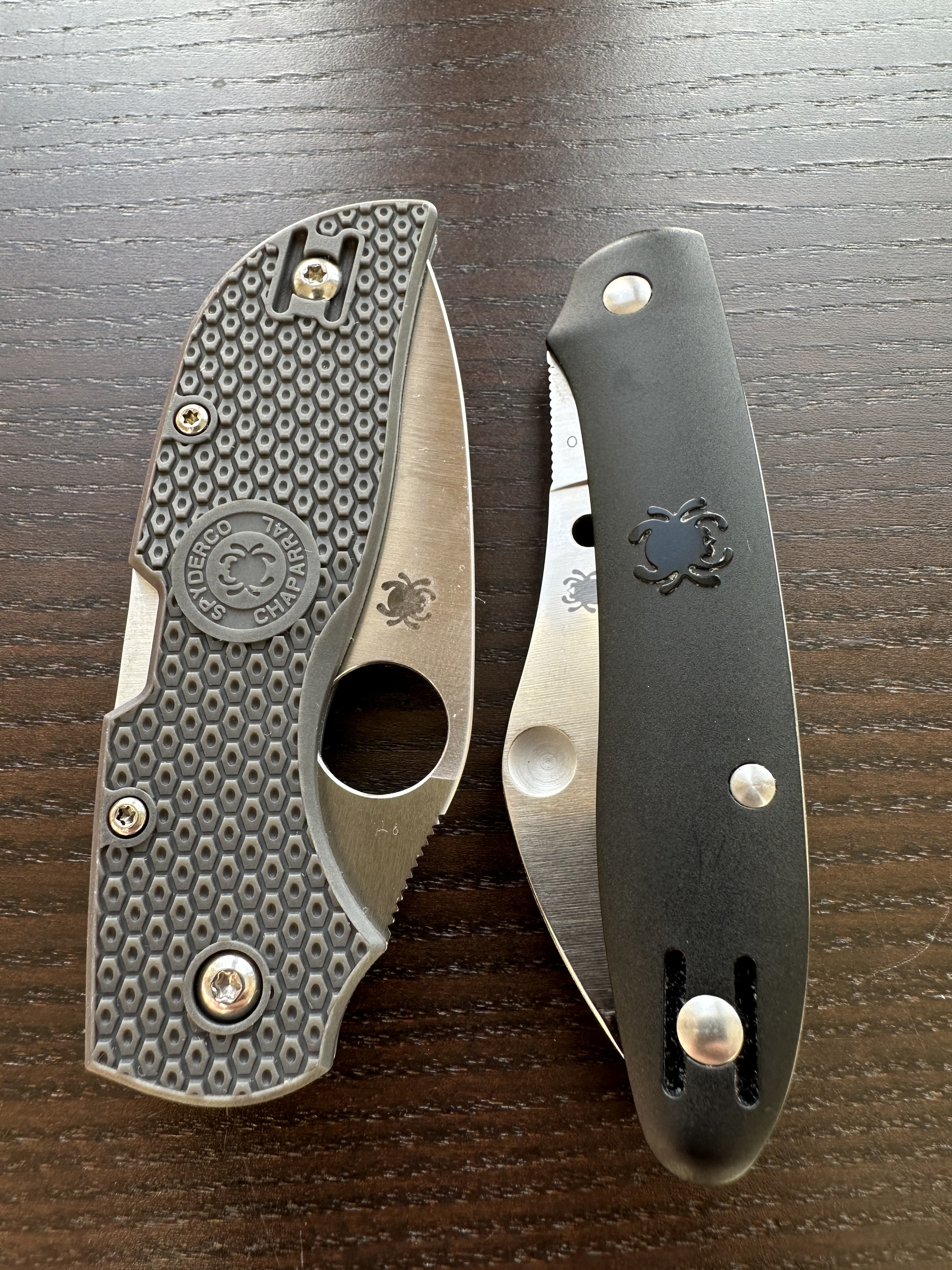
I’am not a serration’s fan. I prefer a short convexed blade like my Roadie XL to EDC but this is the opportunity to pocket a serrated knife designed to be low profile folder easily displayed in the middle of the sheeples.
The Chaparral is another Lil’ Big Knife in disguise. Go figure, his lock is equipped with an hidden pin which gives a lot of strength and stability. This improved backlock is also found on the Sage 4 but do not worry about vertical play.
Also the Chaparral’s blade is only 2 mm thick. A razor blade with serrations ? It should be interesting !
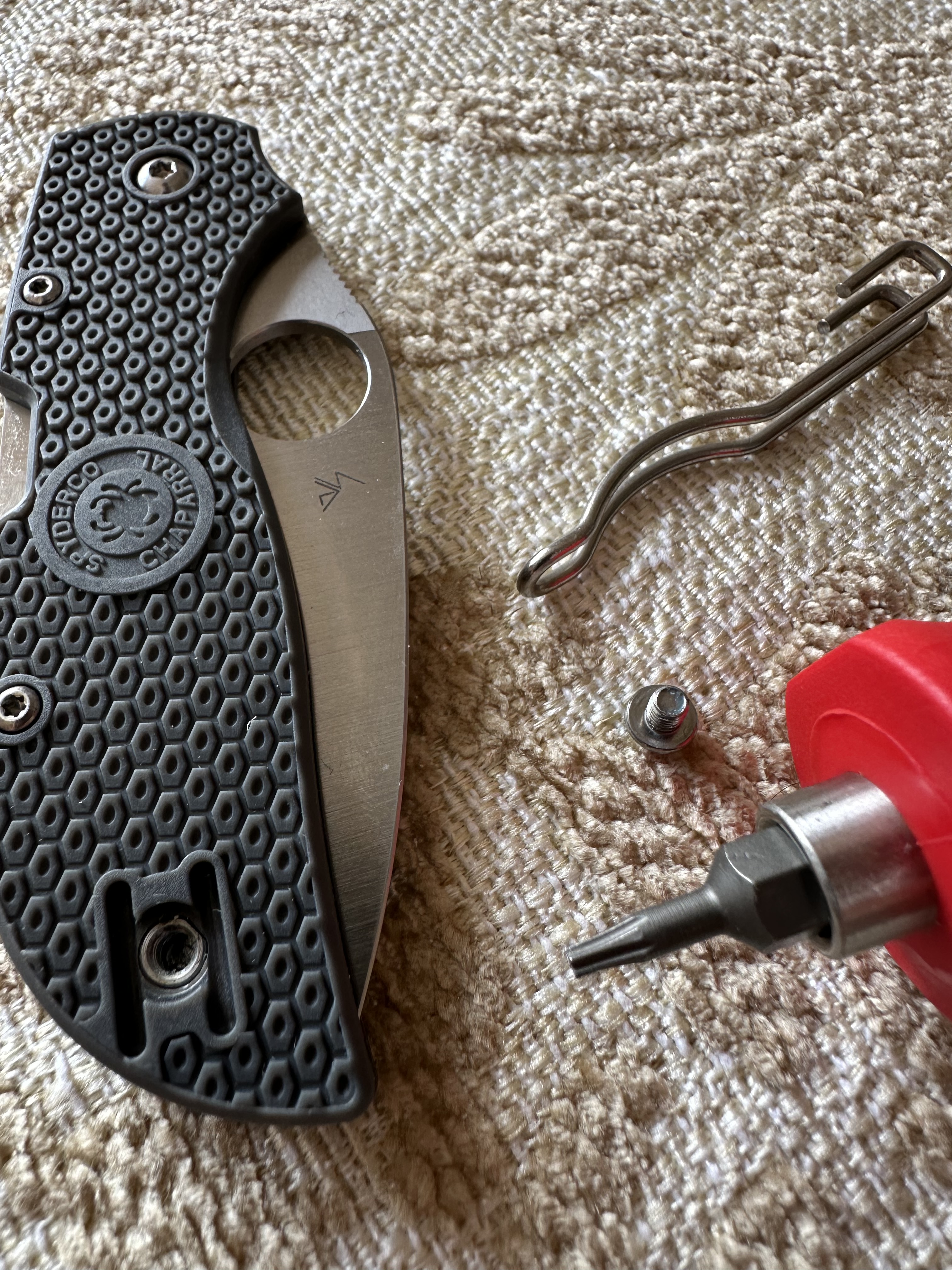
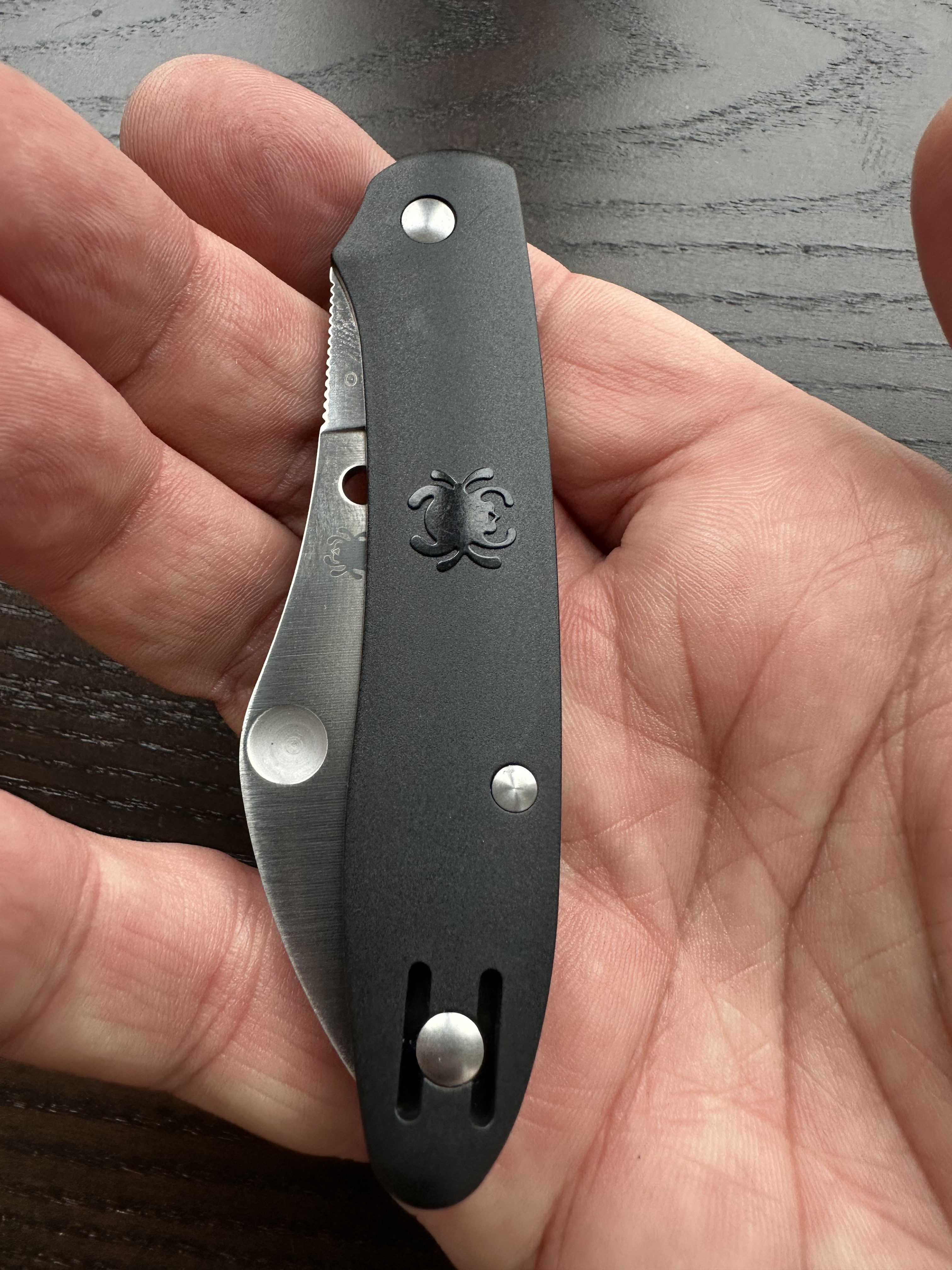
It even has teeth on its handle. The FRN scales feel almost like shark skin, which can be tough on pockets. My first step was to temporarily remove the pocket clip, then sand the scales to smooth them out.
The FRN doesn’t react as quickly as G10 when sanded. I still ended up with a slightly toothy handle, but it’s much more acceptable to me. Of course, this is a matter of personal taste — many users will appreciate the aggressive grip the pattern provides. I, however, prefer not to carry a pocket shredder anymore.
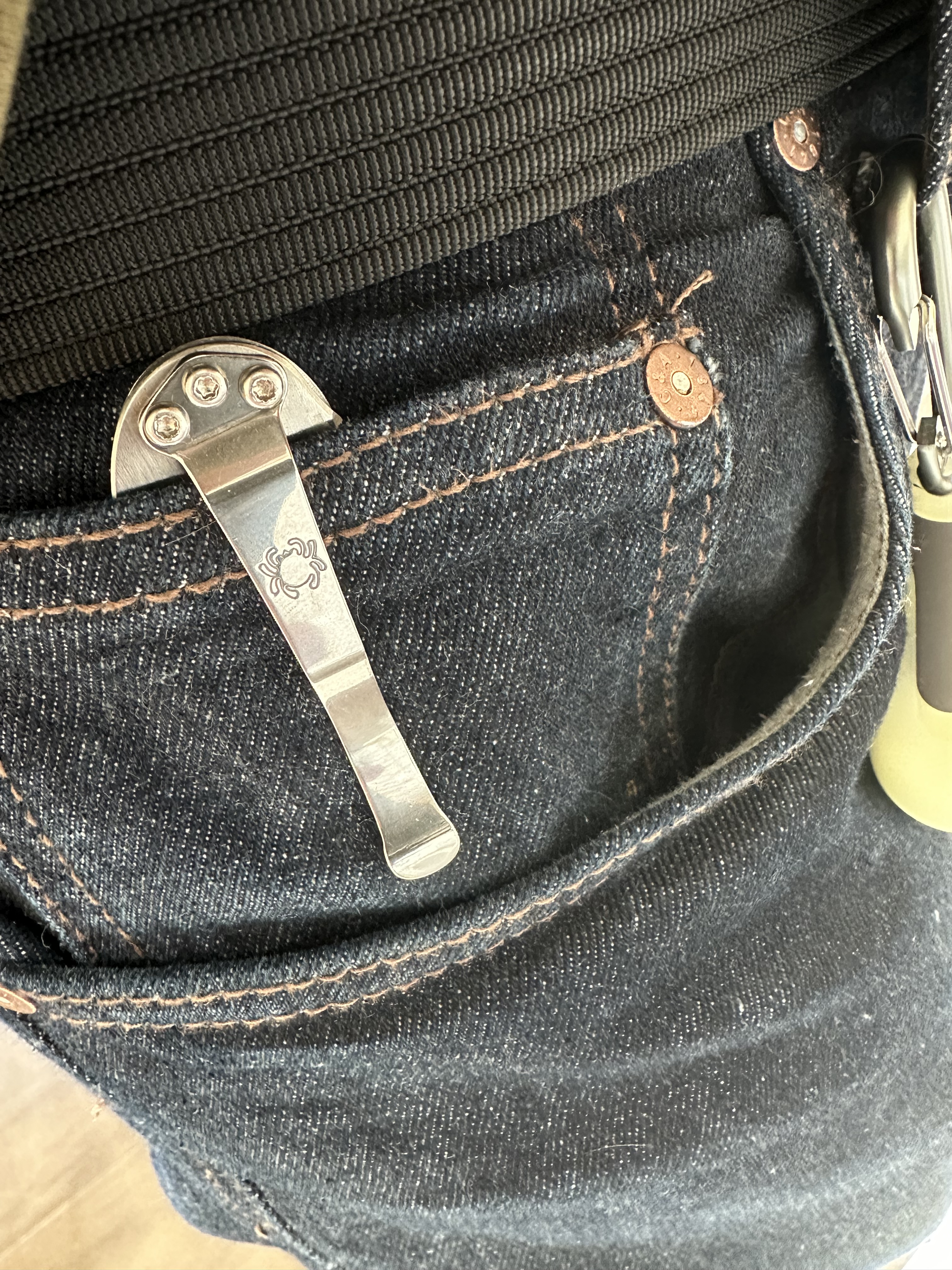
Lately, I’ve discovered that I really enjoy knives I can carry in my denim watch pocket. The Roadie XL, which I can now flick open with a wrist, is the king of that pocket and I use it hard despite its small size.
But this little “Tooth Faerie”, the Serrated Chaparral, also demands heavy use — and beware of its cutting power! Its steel, CTS-XHP, is known for being extremely reliable, even on thin edges. I’ve used it in many knives, including some Cold Steel Voyager XLs, and it never disappoints.
It will be very interesting to see how the Chaparral Light platform, equipped with a top-performance factory edge and an improved backlock, performs as a true workhorse — pushing the envelope of what the Chap’ can do. Spyderco has also just released a Slipit (non-locking) Chaparral, sold at nearly double the price of the FRN serrated version. Clearly, this one isn’t marketed as a “precious” collectible but as a pure performance tool. Spyderco has supercharged the Chaparral to be a user’s knife.
To summarize:
2 mm thick blade — this is thin !
Backlock enhanced with a hidden pin — zero vertical play !
M398 is a fragile steel compared to M390. The encounter of the tip of the Roadie XL with a tile of my kitchen has been definitive. One mm has been shattered and now I got a micro flat screwdriver as a tip. OK. Diamonds are steels best friend. I’m able to form a new tip in a diamond shape.
For now I won’t baby that Roadie XL anymore. I decide to thin the edge.
The best way is to protect the blade to avoid any big scratches.
Then it is time to play with industrial diamonds.
I will also use some diamond rod to round the jimping.
Of course I’m enough clumsy to scratch the blade twice and I’m obliged to use some diamond paste to treat the surface.
Then some polishing paste on the leather to slowly makes it like a mirror.
I’m quite happy with the result.
Time to test this new geometry. The edge has been convexed and thinned it should cut much better.
One of the most difficult task is to cut in two the butt of a two liters plastic bottle. This is a test my Scandi blades fail all the time. Any Opinel is king in that. Or the Manly Wasp ! My favorite being the Nilakka.
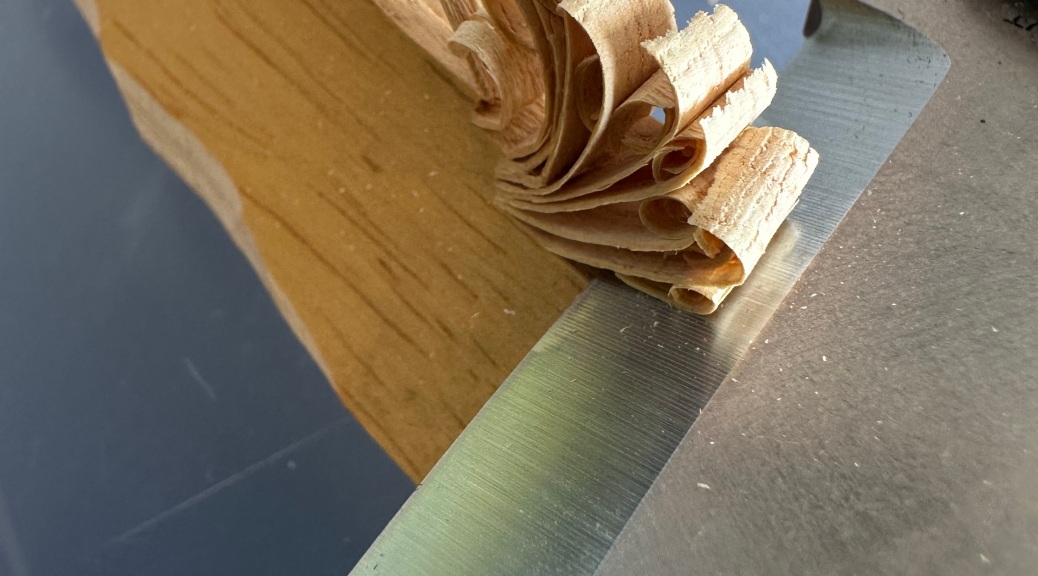
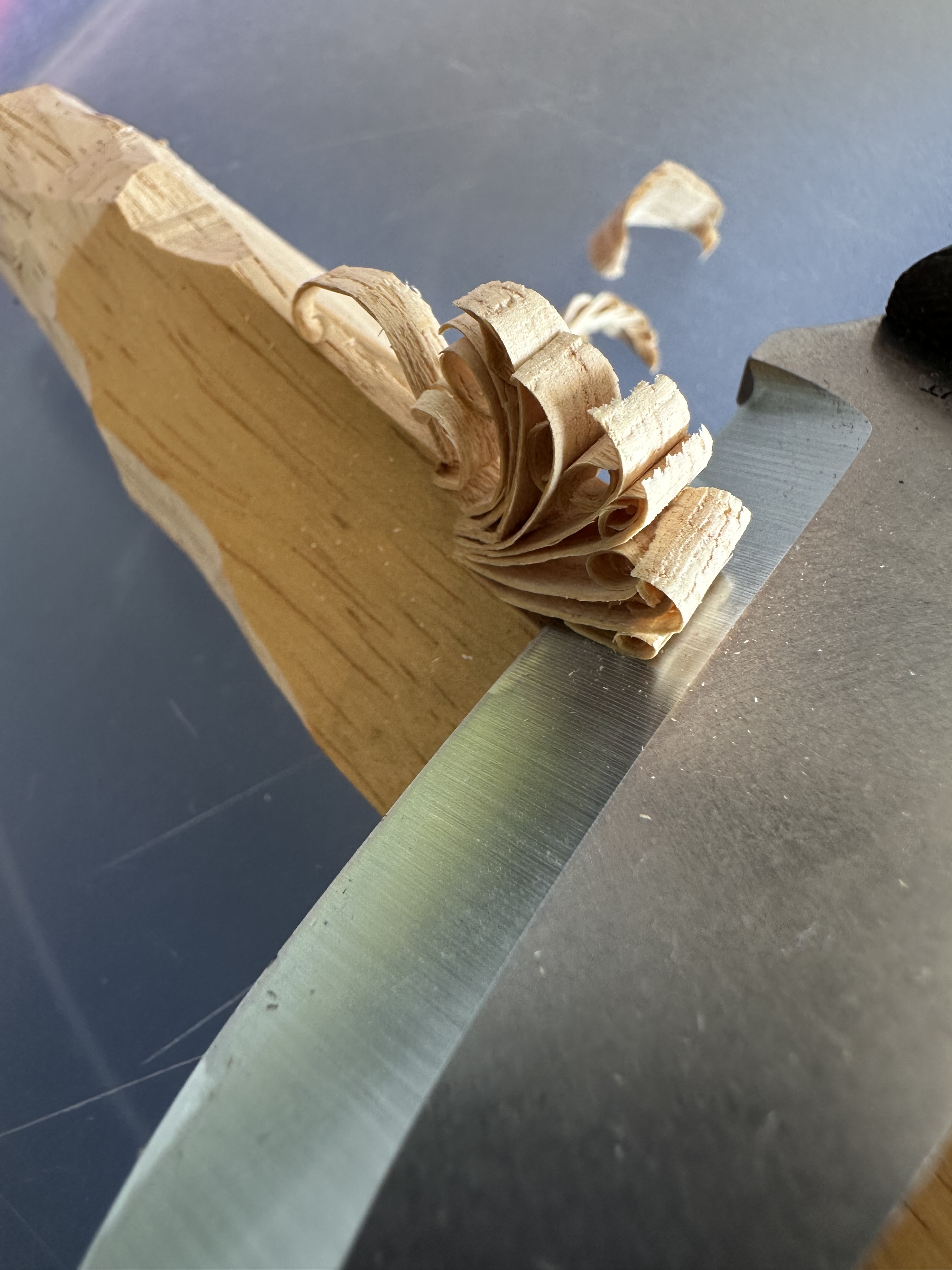
As a whittler it goes deep in wood.
As a steak knife, the shape of the blade brings only the new tip in contact with the ceramic of the plate.
That new tip is strong enough to be able to pierce a metal lid of a green bean jar. A hole pierce help the release of the lid on some jar. No damage no more. Now the Roadie XL cuts much butter.
Six years ago, I reviewed the Working Poney, also known as the Roadie. Mine had been reprofiled by Jan Dirk, and even at its tiny scale, it proved to be an outstanding performer. For six years, it quietly stayed in my pocket, accompanying me across the UK, Vietnam, and countless places where knives were frowned upon.
Then, in 2024, I noticed the announcement of an XL version — the C267BK — featuring upgraded steel and a clip. Right away, I saw the new pointed blade, replacing the classic sheepfoot-style blade, now ground from Böhler-Uddeholm N690Co. Even more exciting, the XL uses M398, an exotic steel reserved for flash batches — a serious step up in performance and collector appeal.
And so, here it is: Ladies and gentlemen, the Roadie XL!
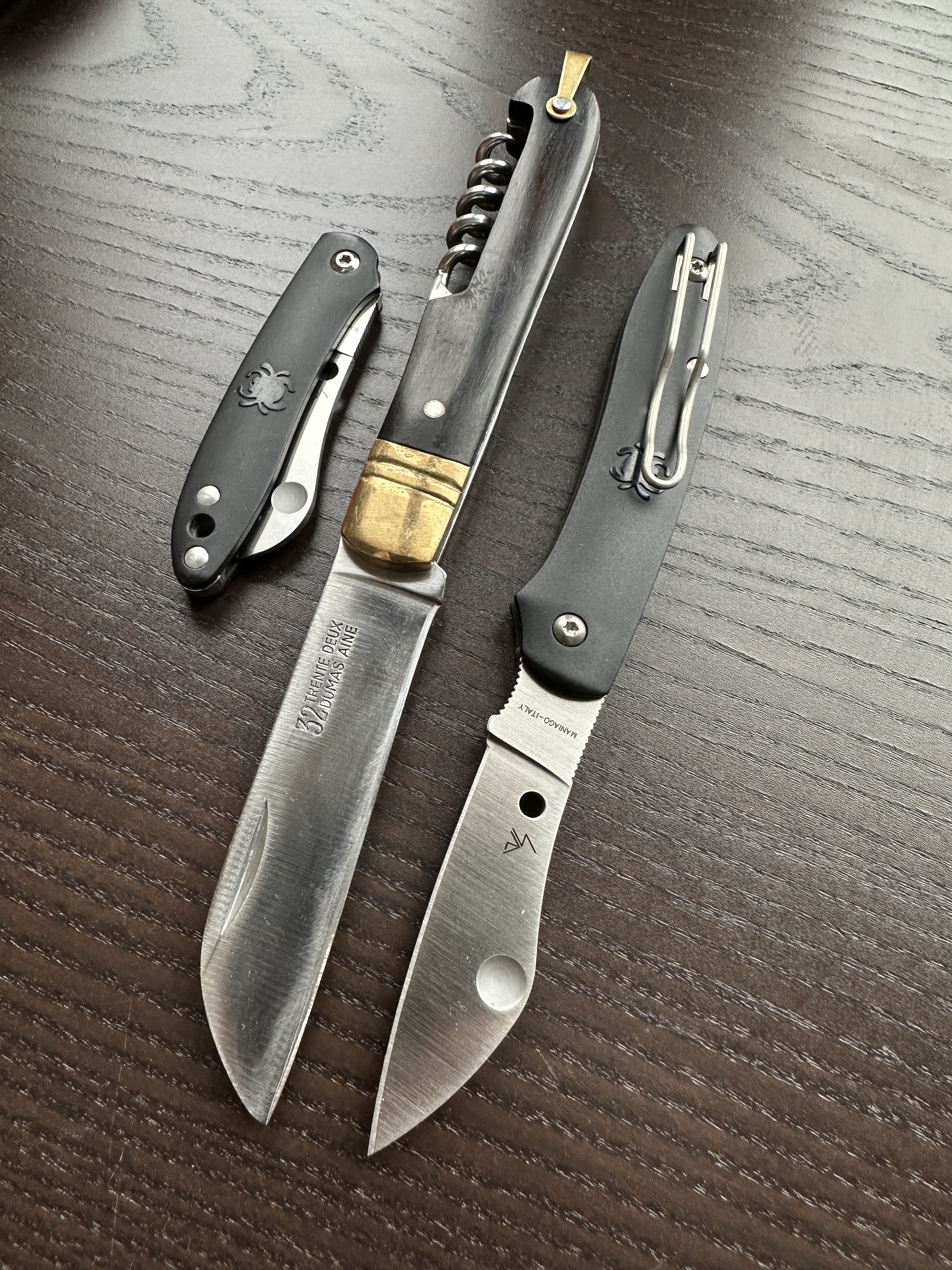
Back to the Roadie XL: it is made in Maniago, Italy, like my Nano and many other excellent modern knives. The Maniago factory remains one of the world leaders in precision and manufacturing quality.
Specifications:
Overall Length: 6.51″ (165mm)
Blade Length: 2.74″ (70mm)
Steel: M398
Closed Length: 3.76″ (95mm)
Edge Length: 2.31″ (59mm)
Weight: 1.5oz (43g)
Blade Thickness: 0.108″ (2.8mm)
Its shape and size make it extremely pocket-friendly, easily fitting into the watch pocket of jeans thanks to its deep-carry wire clip. You could remove the clip, but why? It keeps the knife perfectly secured at the pocket’s edge. The clip is also reversible, though that is not essential for a two-handed opening folder.
With its thin profile and light weight, combined with the clip, the Roadie XL can even be carried in a shirt pocket like a pen. In short, it is a knife designed to remain on you almost unnoticed.
The action is smooth, with two detents before the blade fully opens. In practice, it feels smoother than my Urban, which deploys with a single motion.
With a slightly longer blade than the Urban, the Roadie XL remains legal to carry in countries such as Denmark, the UK, or Germany. Mine arrived razor sharp straight out of the box, so I am not in any hurry to convex the edge.
Mine came razor sharp straight out of the box, so I’m not in any particular hurry to convex its edge.
You can immediately recognize Sal Glesser’s signature design — a clear mark of his inventive approach. Sal is an inventor at heart, and it is always impressive to see how he manages to create clever, practical tools. Quoting him directly:
“When the Transportation Security Administration (TSA) briefly considered allowing the carry of knives on airplanes again, Spyderco designed the Roadie™ to fit their guidelines. We created an incredibly popular modern expression of the classic penknife. Since bigger can indeed be better, the Roadie now has a big brother: the Roadie XL. It faithfully offers all the defining features of its smaller counterpart — including a non-locking “notched-joint” mechanism, a textured index-finger choil, and contoured, injection-molded handle scales. Its full-flat-ground sheepfoot-style blade is crafted from M398 stainless steel and features our distinctive “Double Dent™” — a pair of symmetrical dimples in the blade that provide a solid purchase for fingernail-free, two-handed opening. In addition to its larger size, the Roadie XL also adds a deep-pocket wire clip for convenient top-of-the-pocket carry.”
Now, let’s talk about M398, one of Spyderco’s premium powder metallurgy steels, produced in limited flash batches in Maniago, Italy.
From what I understand, M398 is closer to CPM-90V than to M390. Quoting Darrin Thomas’s analysis:
“The original M390 has a reported carbide volume of 20.5%, and the new M398 has about 30%, so there has been an increase in carbide of almost 50%… [text unchanged] …”
When M398 was used in a previous flash batch for the SpyMyto, I was not particularly excited — it felt like overkill for a folder intended for hard use. The Myto is essentially the big brother of my Nano in CPM Magnacut, and a SpyNano in M398 is also on the bench. In comparison, Magnacut is far tougher than M398, making it better suited for wider, workhorse blades.
On the Roadie XL, however, it is a different story. Like with my Heinie Urban in S90V, these small blades are not intended for bushcraft — although skilled users can achieve remarkable results even with a 2-inch slipjoint, as shown in an inspiring video I recently watched.
Slipjoints are gentle companions for both ladies and gentlemen. For those with long nails, the Roadie XL features its distinctive “Double Dent™” — a pair of symmetrical dimples in the blade that provide a secure grip for fingernail-free, two-handed opening.
Its high wear resistance is useful, as these small blades often encounter cardboard, which can be surprisingly abrasive. I also recall Roger, my father-in-law, using his old Pradel slipjoint like a crowbar or screwdriver without hesitation. Older users often treated knives as true tools until they were worn down to almost nothing.
I am confident the Roadie XL, with its M398 blade, would make an excellent hare skinner — fur full of sand can destroy an edge very quickly. Tuscan hare hunters would likely appreciate its durability. The high wear-resistant alloy makes perfect sense here, and the blade is also relatively thick at 2.8 mm, reducing the risk of damage.
Ergonomically, the Roadie works beautifully for a slipjoint because you can use the choil for control — a feature rarely found in traditional designs. Even most Swiss Army Knives do not offer that level of security. As Spyderco notes:
“Unlike traditional penknives, the Roadie also features a subtle index-finger choil that increases control of the knife during use and acts as a safeguard against unintentional closure.”
There is no undue pressure on the pivot, often the most fragile part of folding knives. If you avoid twisting the tip in wood, the Roadie XL can handle direct cutting force on the blade. This makes it another “Lil Big Blade” — small, but highly capable.
It can serve as a steak knife, whittler, label remover, balloon popper, nail cleaner, or cardboard cutter. Cardboard is especially abrasive, but not for a steel like M398, rich in carbide content.
And in today’s world, one final advantage: it is extremely sheeple-friendly. It looks like a pocket knife, not a tactical weapon — discreet, elegant, and highly functional.
Beauty is in the eye of the beholder, but to me, this blade — shaped like a scaled-down cutlass — is pure eye candy.
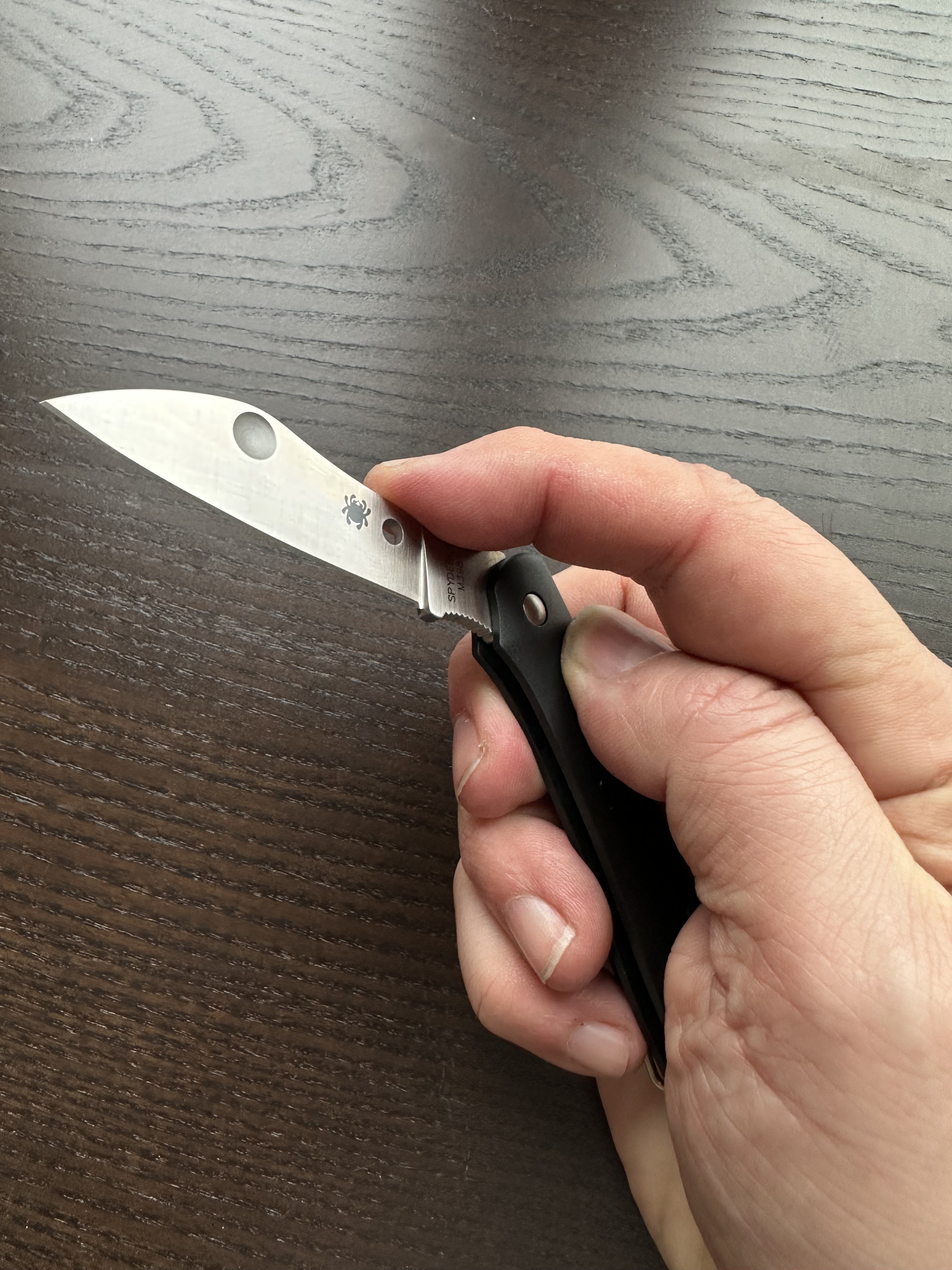
Interestingly, I can open it one-handed in two different ways:
A quick wrist flick while holding the blade.
By gripping the blade between thumb and index finger while pushing the handle away with the remaining fingers.
So even though it was not designed as a one-hand opener, the Roadie XL can still function surprisingly well as one.
Compared to a traditional sheepfoot slipjoint, the Roadie XL is incredibly light while offering a premium alloy blade. (Since August 2025, another M398 slipjoint has joined the lineup: the Metropolitan.)
At under 100 euros, the Roadie XL is an exceptional bargain for what it delivers.
This is one of Sal Glesser’s finest EDC designs — a perfect balance of elegance, utility, and performance. And for once, size really matters with a Roadie. No wonder it sold out so quickly on the Golden site! Part II is here.
One week later with Thorin in the pocket (Tolkien fans will know), I can now say: “What a great EDC knife!”
And especially after each use: “What a cleverly designed cutting tool!”
Of course, I have noticed some complaints about the fact that the ball bearings are not ceramic. But I also remember reading many issues about the Spyderco Mantra 2, and mine only got better and better the more I used it.
The same goes for the Nano: it now flips at 100% every time.
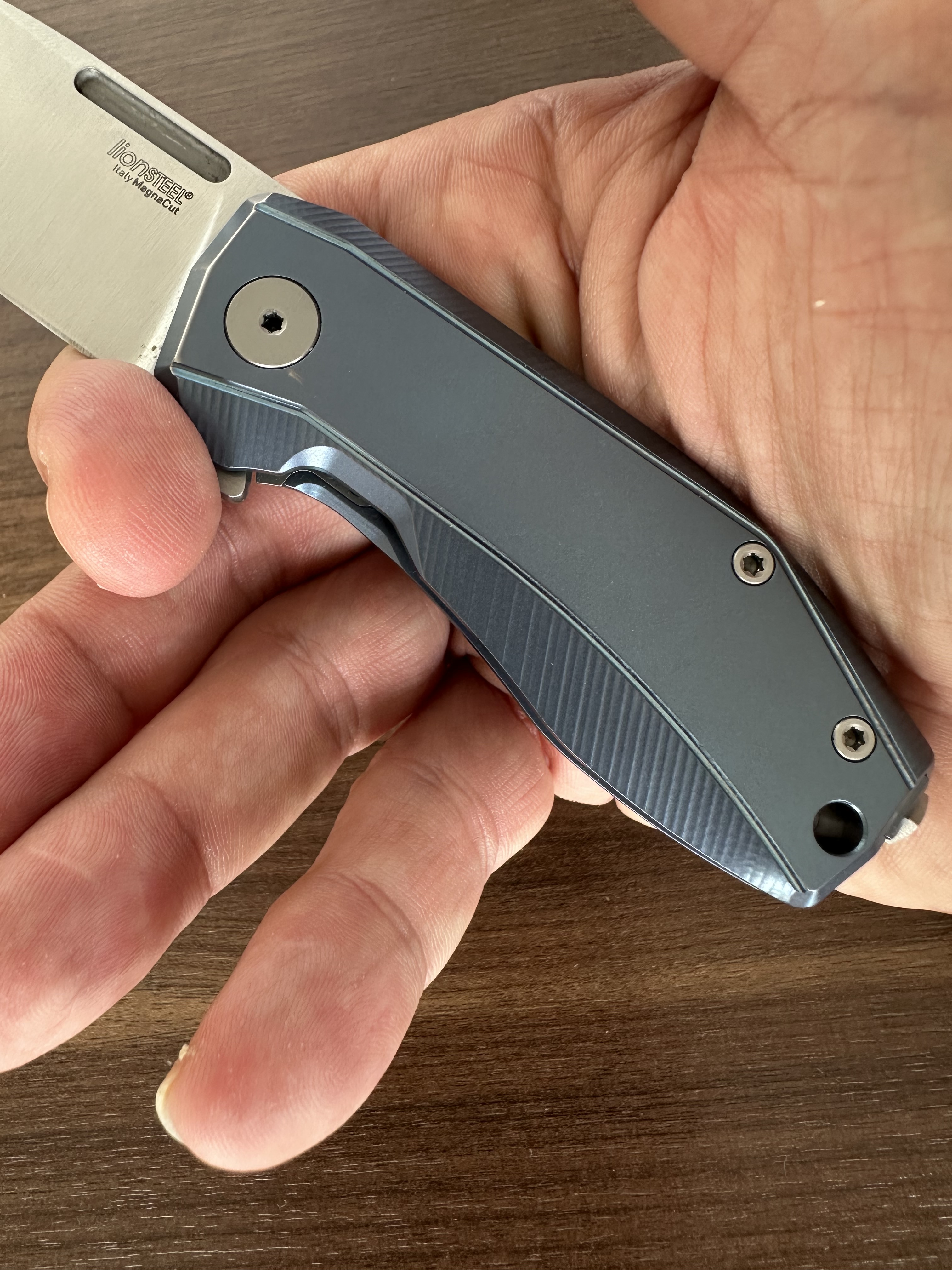
Now the Dwarf has proven to be exceptional in terms of pure ergonomics. This is a knife designed as a tool you can handle for a long time, making it a great candidate for woodworking and even various bushcraft uses.
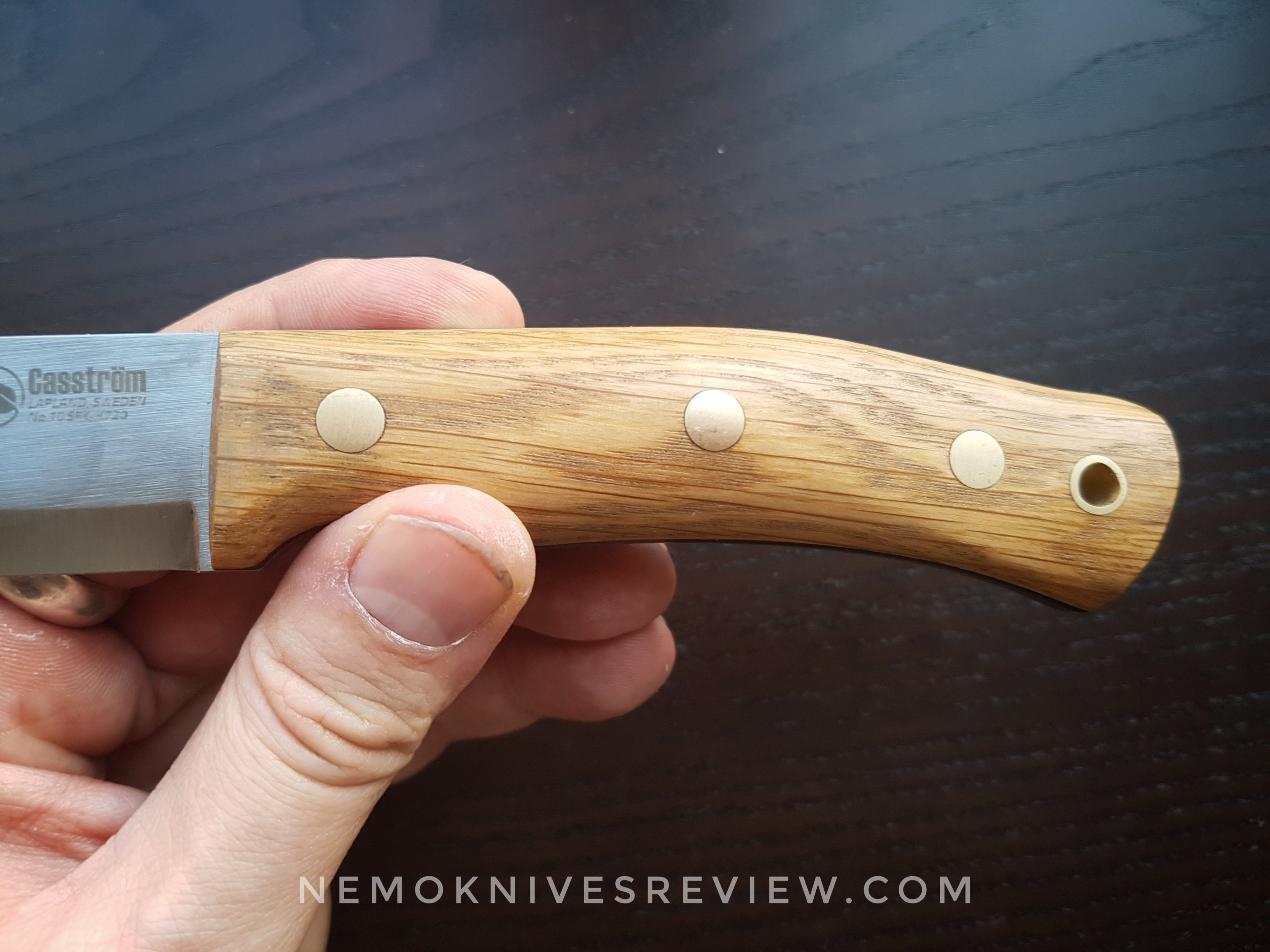
As you can notice, the handle has that “elbow” near the end, which makes it simply nest in the palm of the hand.
See?
It follows the same idea as the Casström handle, a knife that is a pure bushcraft tool.
This design detail significantly improves comfort and control in the hand.
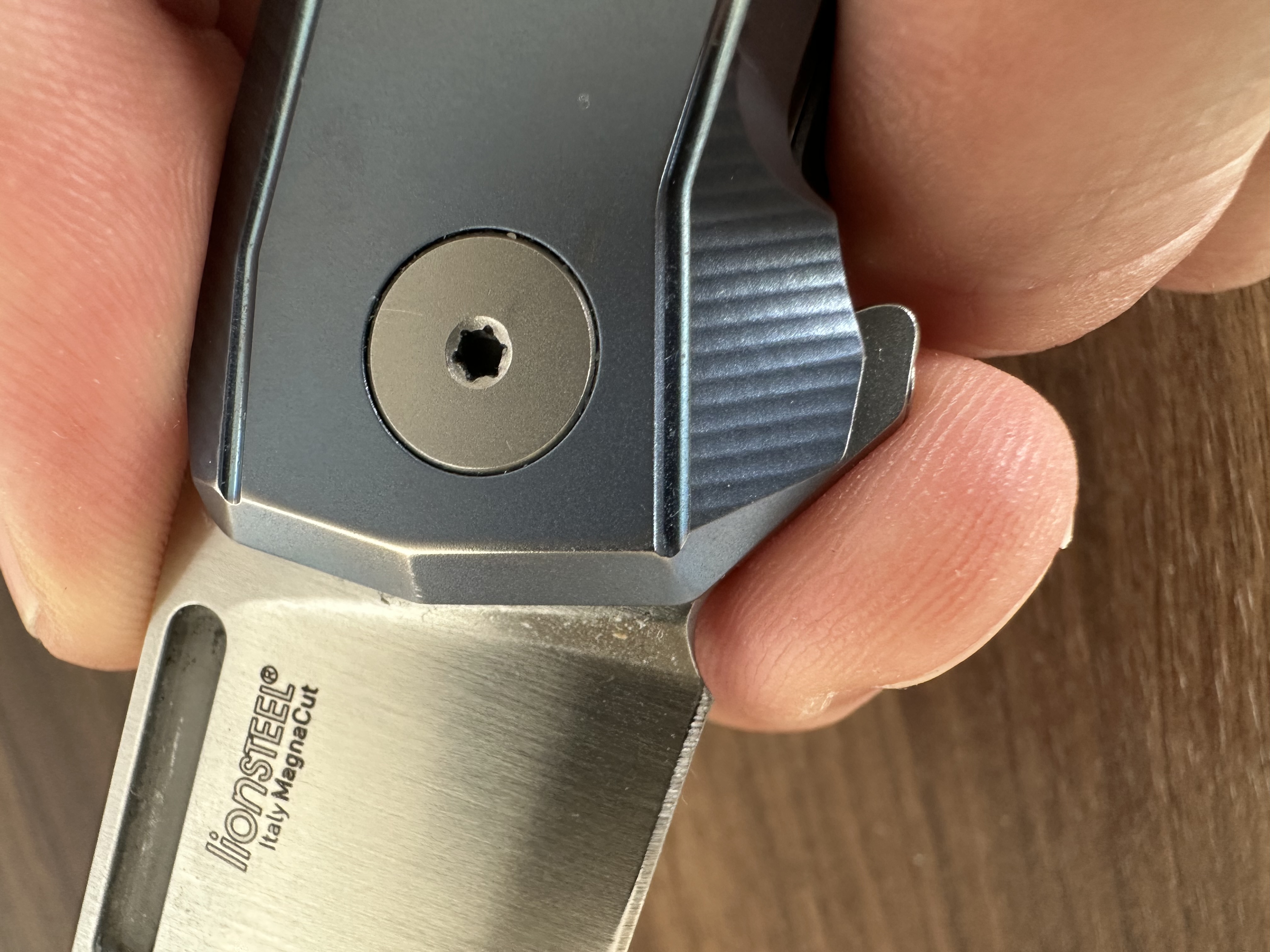
Another really nice touch is how the flipper integrates into the handle once the Nano is open.
The flipper almost disappears into the handle. It sits more flush than on my Amalgame Bowie.
This dwarven knife is made for hard use and tough work. The blade has a wide full flat grind on an almost 4mm thick stock, which delivers excellent push-cutting power.
Like the dwarves in Tolkien’s books, you cannot judge the Nano by its size.
This little big knife has a handle built for a strong grip and a short blade made for hard cutting.
Also, the edge of that CPM Magnacut blade, once convexed, is easy to maintain razor sharp with just leather stropping. Apparently, the heat treatment has been very well executed by the Maniago makers.
The excellent geometry also makes it a breeze to use on softer materials.
The open construction also makes it easy to clean.
Even better: titanium and Magnacut are not easy to stain anyway. You don’t need to clean it immediately. Under hot tap water, it comes back like new.
So really, so far so good: Thorin the Dwarf (“Nano” in Italian) delivers and is not a disappointment at all, but an excellent surprise. It sits in the same category as the Spyderco Techno.
Short tools with real cutting power are precious and not easy to design well; a folder short enough to fit comfortably in a watch pocket, with its pebble-like shape, won’t raise any sheeple eyebrows. That’s a gem!
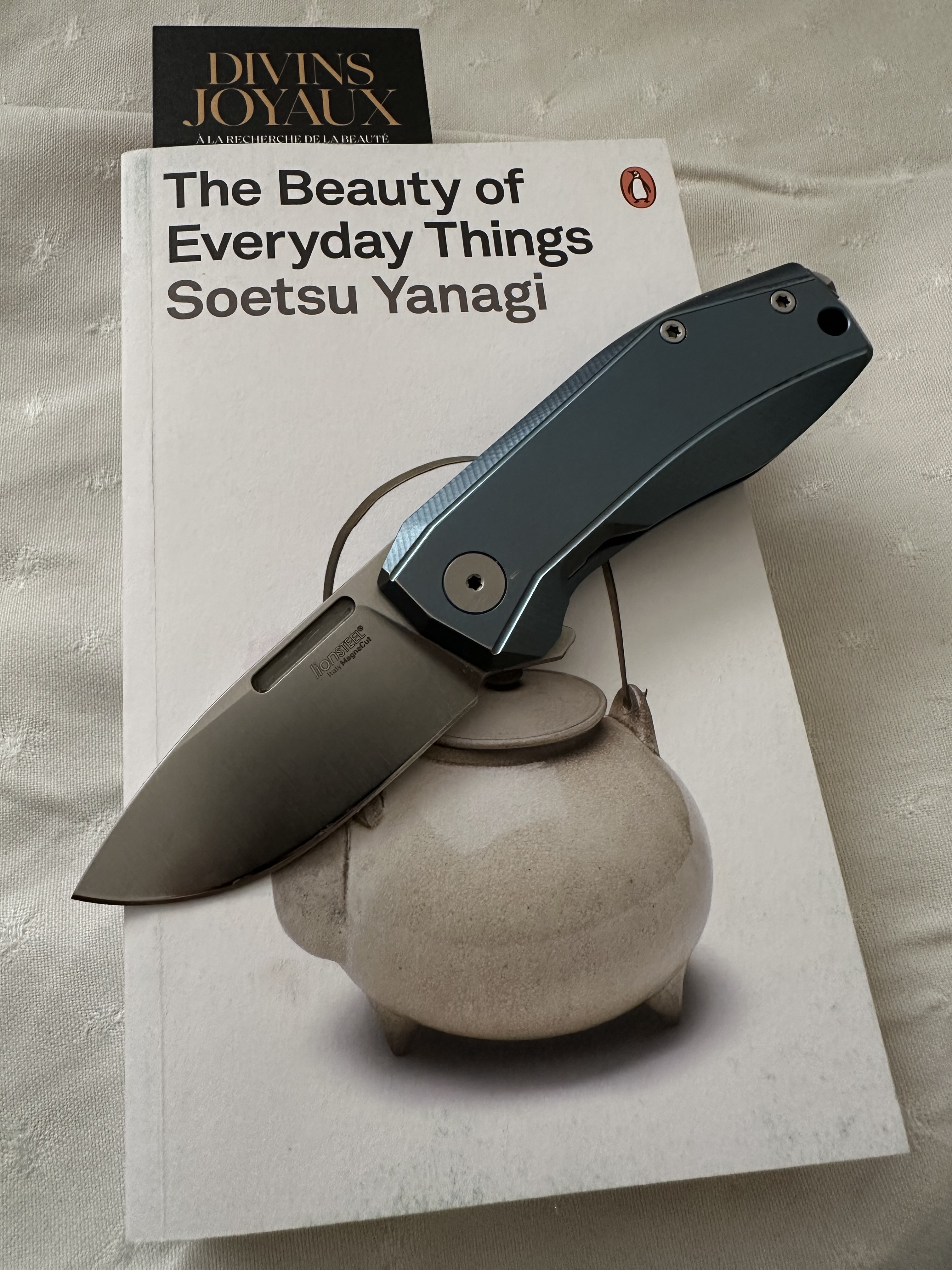
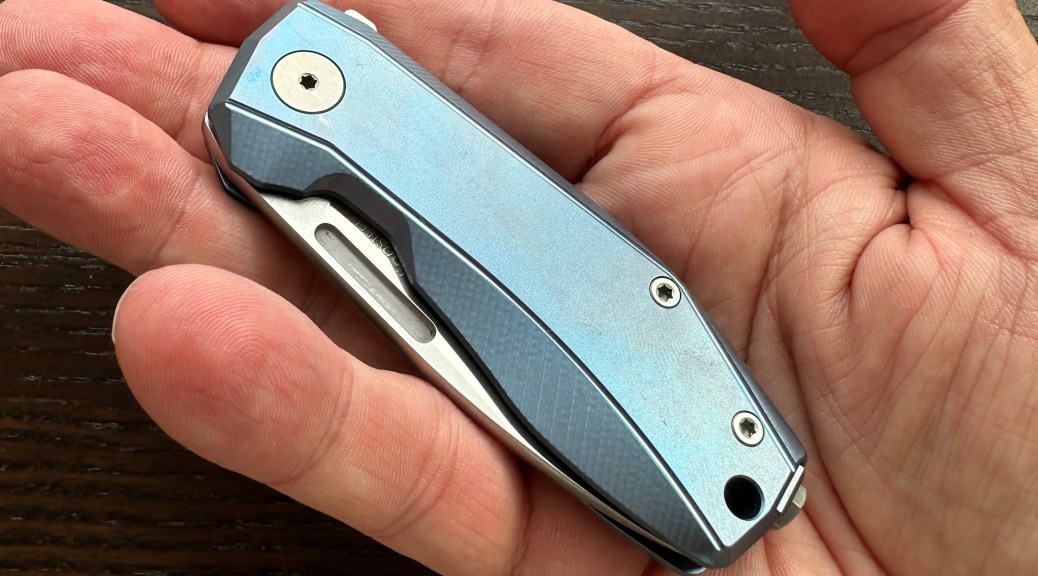
I’ve been eyeing the Nano from Lionsteel for almost a year now.
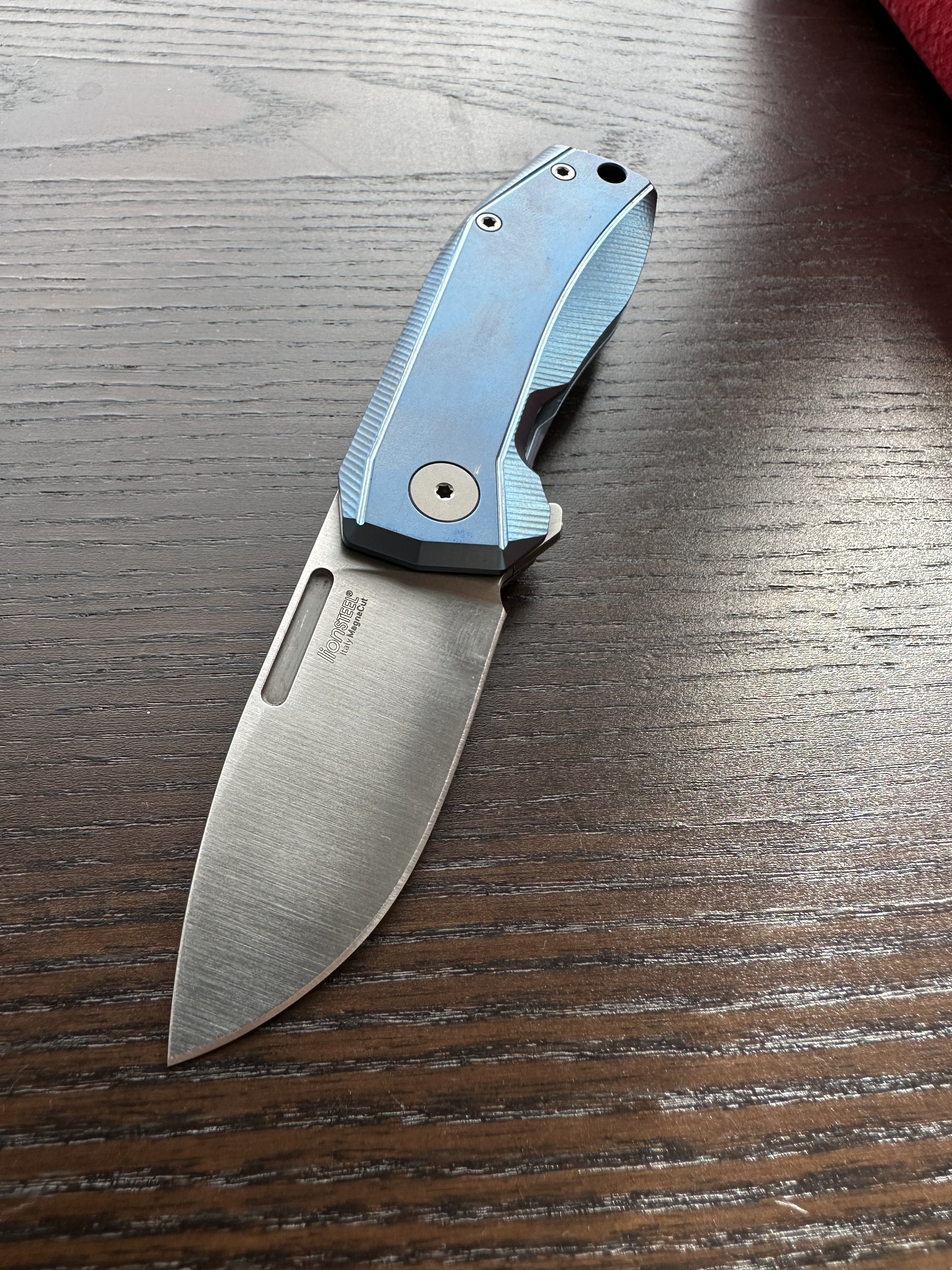
A compact titanium frame lock in CPM Magnacut, made in Maniago, is a very tempting proposition. Lionsteel has clearly invested heavily in what has become the “darling steel” of modern cutlery: CPM Magnacut, and several models in their lineup showcase it.
Known for high manufacturing quality, Lionsteel has already impressed me in the past, including through collaborations like the Spyderco LionSpy.
So, back to the Nano: what’s not to like about this chunky little “big knife”?
Magnacut, titanium, and a refined Italian design — amore a prima vista.
Specifications (from Lionsteel):
Total length: 162 mm (6.38 in)
Blade length: 65 mm (2.56 in)
Blade thickness: 3.8 mm (0.15 in)
Weight: 101 g (3.56 oz)
Steel: CPM Magnacut
Finish: Satin
Lock: Frame lock
Frame: Titanium 6Al4V
Handle: Titanium (blue anodized version shown)
Packaging: Cardboard box
The blade hardness is reported around 63 HRC according to this CBRx video.
This model is designed to be the “ultimate everyday partner”, as Lionsteel describes it.
To me, it feels like the Italian answer to the Spyderco Techno. Even upcoming generations seem to follow a similar design language.
This is an ultra-solid compact folder: titanium frame, strong lock, premium steel — a true pocket workhorse.
The hidden stop pin design also reminds me of my Swayback. Everything feels overbuilt in the best possible way — like a Land Rover in a Ferrari suit.
The flipping action out of the box is not perfect despite the double crown bearing system, but a drop of oil improved it significantly.
Still, the flipper is not my primary opening method.
There is a blade cutout allowing easy one-handed opening. I can reliably notch-drop open the Nano this way.
The flipper is removable thanks to Lionsteel’s ReF system (Removable Flipper System), allowing the user to install or remove it depending on preference.
I personally keep it installed, as it also works as a small guard.
Closing is smooth and secure. The titanium frame lock is reinforced with a hardened steel insert to prevent wear over time — a well-executed technical detail typical of Maniago craftsmanship.
The blade arrived very sharp out of the box, and Magnacut clearly responds extremely well to stropping.
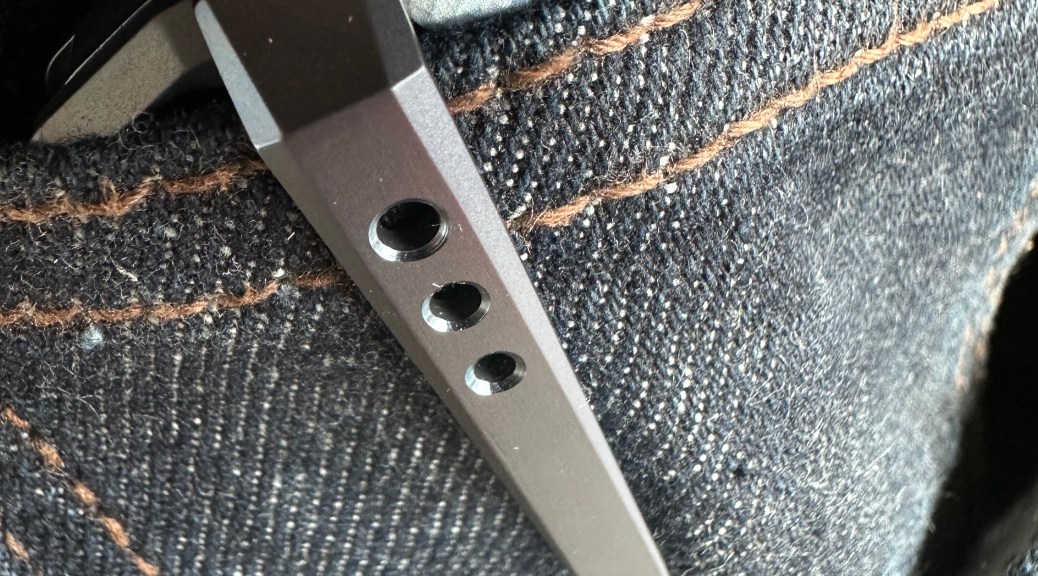
The clip is beautifully machined titanium and reversible for left-hand carry.
However, it is quite stiff on thick denim pockets. Not a deal-breaker, but worth noting for heavy clip users.
On the positive side, it never creates hotspots and disappears well in hand.
Overall finishing is excellent. The Nano feels like a premium folder in every detail. At under 200€, it is frankly an impressive value proposition.
Comparable quality from some US-made brands would cost significantly more.
Ergonomics are better than expected. I was initially skeptical about the angular geometry, but in use it feels secure and comfortable, even during harder cutting tasks.
The spine is rounded like a Chris Reeve design, making thumb push cuts very comfortable.
In wood, the geometry performs very well. Magnacut combined with this blade shape makes it a surprisingly capable compact woodworking tool.
Despite its size, the Nano offers a slightly better blade-to-handle ratio than my Native, making it feel efficient and purposeful.
In short, this is a compact but highly capable knife: refined, robust, and beautifully executed.
Thanks to Lionsteel and Gianni Pauletta for this design — a true gem from Maniago.
Mine is blue. Nel blu, dipinto di blu… and yes, it makes me feel felice di stare lassù.
I’ve known Jiminy Cricket since 1994. I even owned a pink version of this little bugger back in the last millennium.
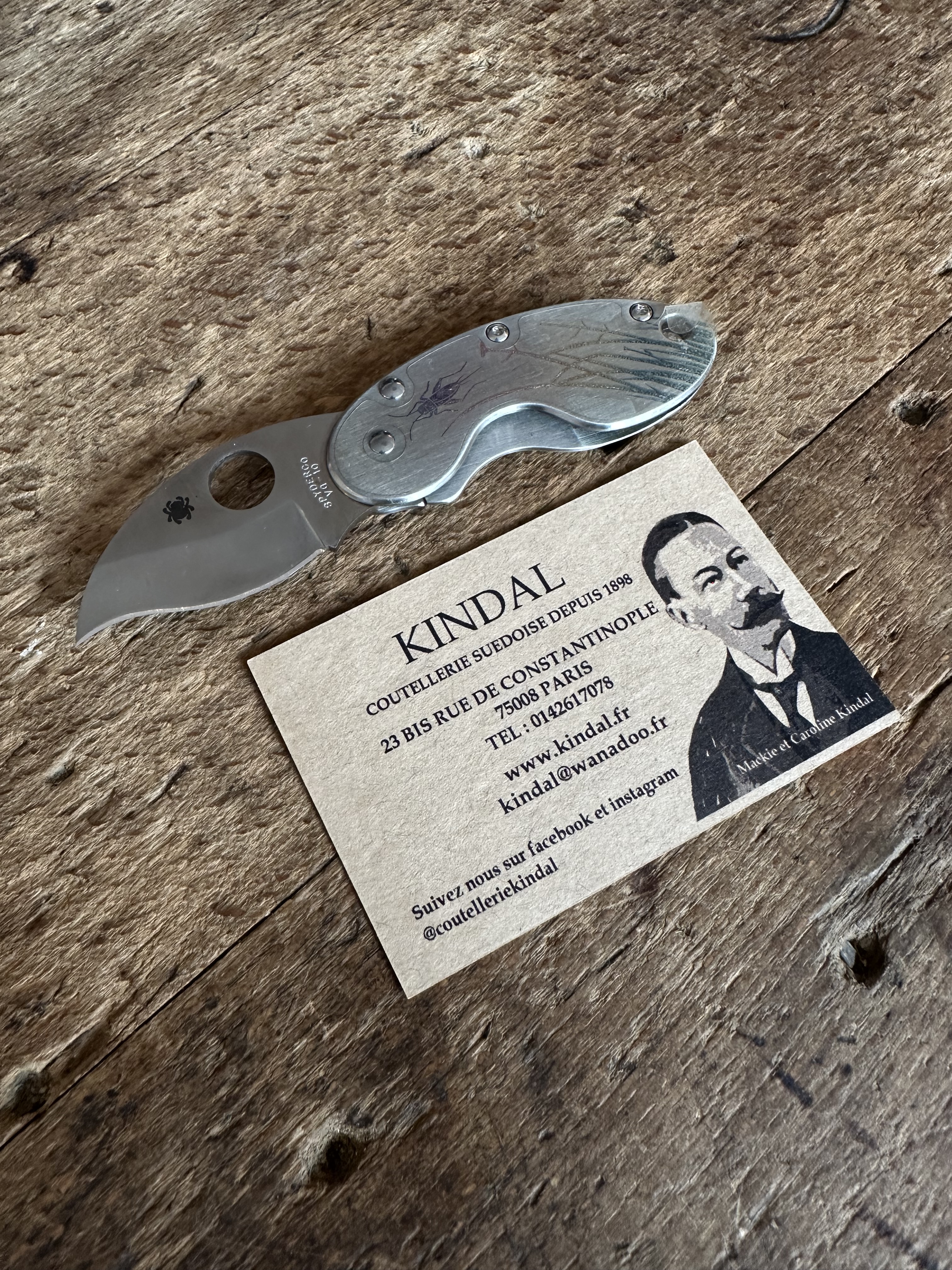
Today, during a small pilgrimage to the famous Kindal cutlery shop in Paris,
Mme Kindal showed me one of the treasures on display, next to a Janisong and a titanium Military…
It was love at first sight for this blast-from-the-past little big knife. A compact piece with surprising presence—perfect for another New Old Stock adventure.
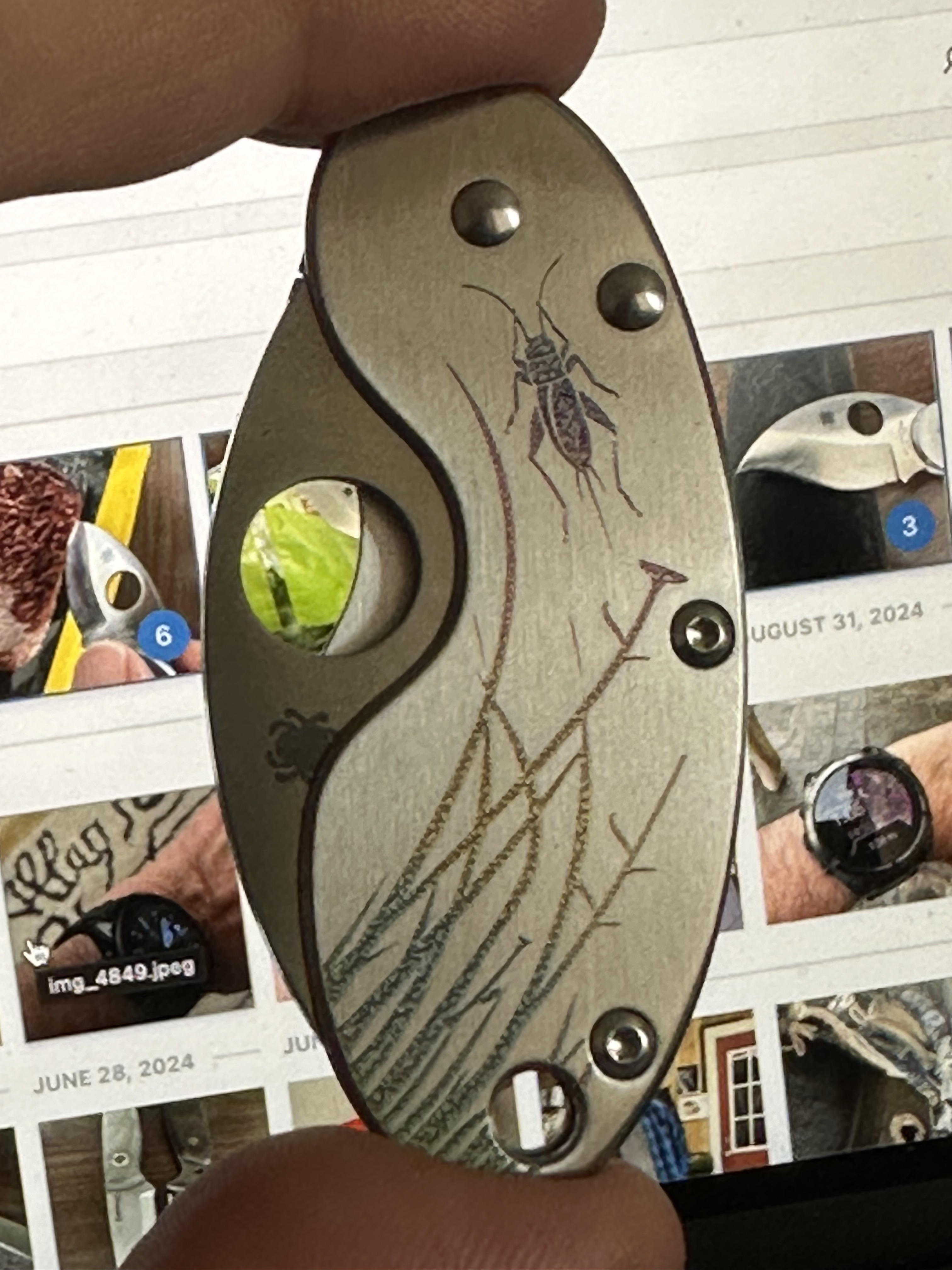
The Tattoo version of the Cricket is a true jewel—both to look at and to use. It has been cleverly designed in-house by Sal Glesser (though I wouldn’t be surprised if Ed Schempp also influenced it).
Based on the stainless steel Cricket platform, it is a beautifully executed piece of cutlery.
Folded, the C29T forms a smooth, rounded package that disappears almost completely in the pocket. The clip is tip-down (right-hand), but also works as a tie clip or even a money clip. The anodized artwork gives it a refined, elegant touch.
The stainless steel construction with a Chris Reeve Integral Lock keeps the knife extremely thin and easy to carry—even in a shirt pocket.
The tip-down carry allows a very fast and elegant Spyderdrop opening, bringing its reverse “S” blade into action instantly.
The 2 mm thick, 48 mm long blade is deceptively capable thanks to its S-shape. You effectively gain extra cutting edge length in a very compact format.
Like Eric Glesser’s Dodo, the Cricket is a geometric trickster: the cutting angle is rarely 90°, creating a sinusoïdal slicing effect. It is surprisingly powerful—hence its “little big knife” reputation in the Spyderco world.
The Cricket is a joy to use in the garden on tougher materials…
…and equally effective on softer ones.
But beware: that S-shaped beak loves to grab anything in its path. Your thumb included—so be careful, it can bite fast.
The beak penetrates plastic with surprising aggression, making package opening effortless.
Not everyone likes S-shaped or recurved blades. But this form is inspired by nature—claws, talons, beaks, and teeth.
Sharpened on a rounded ceramic and finished on leather, the Cricket easily returns to a razor edge (VG10 is not difficult to maintain).
Here I’m using a jade stone: I sharpen the belly on the flat and the beak on the edges.
The open design also makes it extremely easy to clean under running water.
I highly recommend the Cricket as an EDC knife. It is a small but powerful “matter separator,” ideal for both men and women in daily use. It can be clipped to a purse, a pocket, or even a bra.
I once knew a former French Marine—six-foot-four, heavily built—who carried a pink Cricket as his daily EDC. Go figure. That’s the kind of knife that truly makes you wish upon a star.
I have a passion for short fixed-blade EDC knives. And they are hard to find.
I had been eyeing the new Pocket Tango with its magnetic sheath, but my original intention was to buy a Lulu from KNAFS — until I found out it was not a true Scandi grind because of the micro-bevel they added after discovering Magnacut was chipping with their original geometry.
At least they were honest enough to announce it, but for the price, I felt my Wolfspyder already covered the same territory in a folding package.
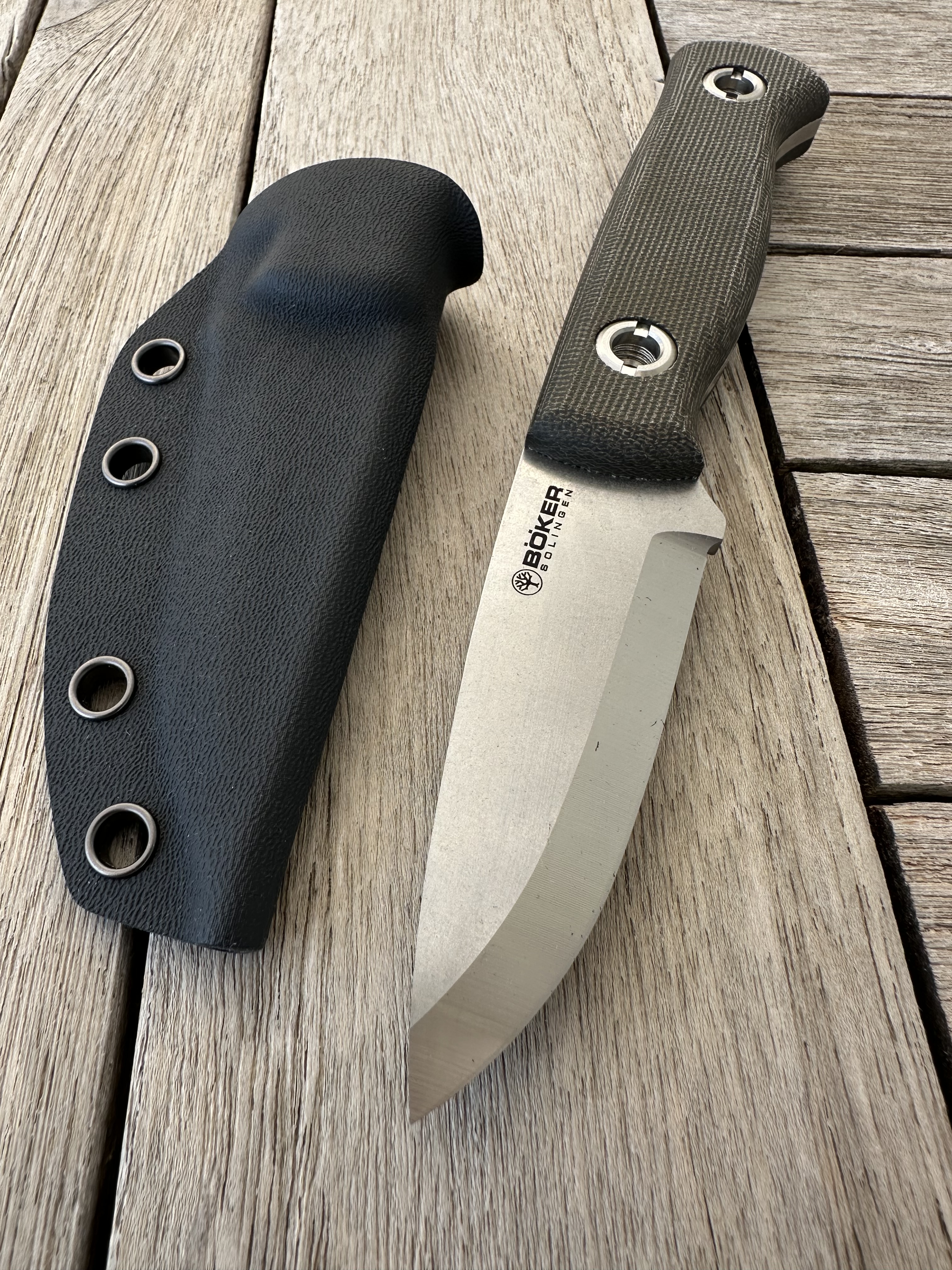
So I wanted a robust small fixed blade that would bring something new compared to a folding knife: lateral strength, for example. While looking around at all the new Magnacut fixed blades made in Italy, I found one that was instead made in Solingen… Germany!
And for less than half the price of the beautiful little Lulu.
I discovered it had originally been designed for a TV survival game and for German YouTubers filming themselves surviving in Canada.
Quoting Böker’s site:
“Two streamers in the wilderness? (…) Trymacs (29) from Hamburg and Rumathra (27) from Bonn will compete together as a team in the upcoming season of 7 vs. Wild and face the 14-day adventure in the wilderness of Canada. The two heavyweights from the German streaming/gaming scene together have over 4 million followers on Twitch (Trymacs 3.4 million, Rumathra 0.7 million) and also have a strong presence on YouTube and Instagram. As part of the intensive preparation for this borderline experience, the choice of the right equipment – especially because all items have to be stored together in a 1L Nalgene bottle – played an elementary role for the two.“
OK. Why not. But eventually, who was the designer?
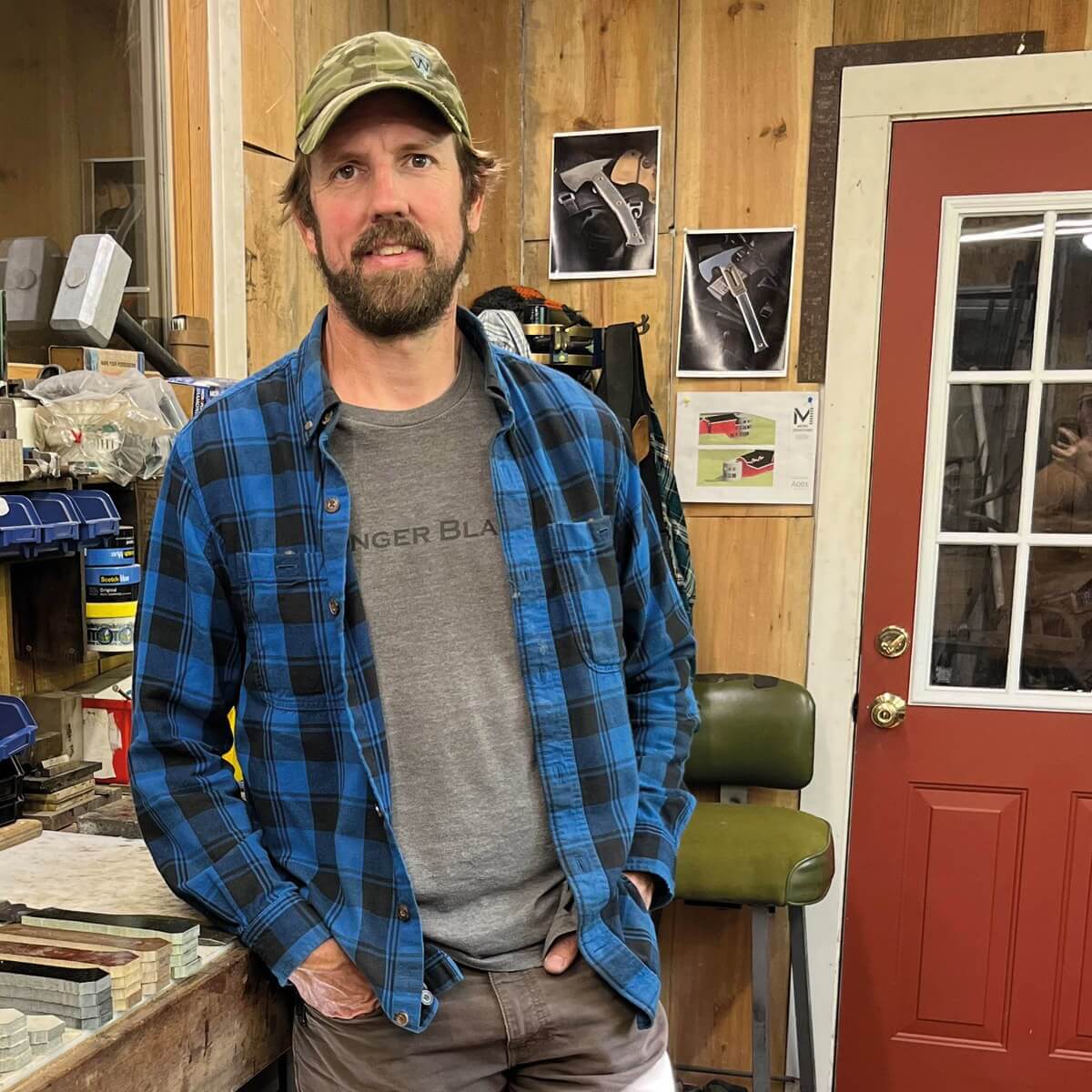
He’s American, and his name is David Wenger. His interview can be found here on Böker’s site.
David clearly knows his craft, as he is both a bushcrafter and a former builder. Looking at his own knives, you can immediately see his passion for dependable tools meant to be used hard in the wilderness or in the garden. As far as I am concerned, he has created a truly excellent fixed blade for Böker.
Especially because simple designs are often the hardest to get right.
Remember how impressed I was by the Casström N°10 seven years ago? This “Vigtig” is following the same path in my opinion. Its design looks simple, but in reality it is highly refined. It is both a robust and very sharp knife!
The first thing to consider is the price of this knife: 135 euros shipped from Knives&Tools. Not bad at all considering that K&T is not usually the cheapest retailer on the web.
It is even sold cheaper than the Casström, which currently sits around 166 euros (June 2024). (The imported Lulu tops out at 295 euros!!)
And the Vigtig (“Important” in German) comes in CPM Magnacut, just like the Lulu — but with a true Scandi grind! Sharp as my mother-in-law’s tongue!
And this is simply one of the cheapest CPM Magnacut knives available today.
Also, with an 8.5 cm blade length, it is not designed as a “companion” knife but rather as a true main bushcraft and survival tool.
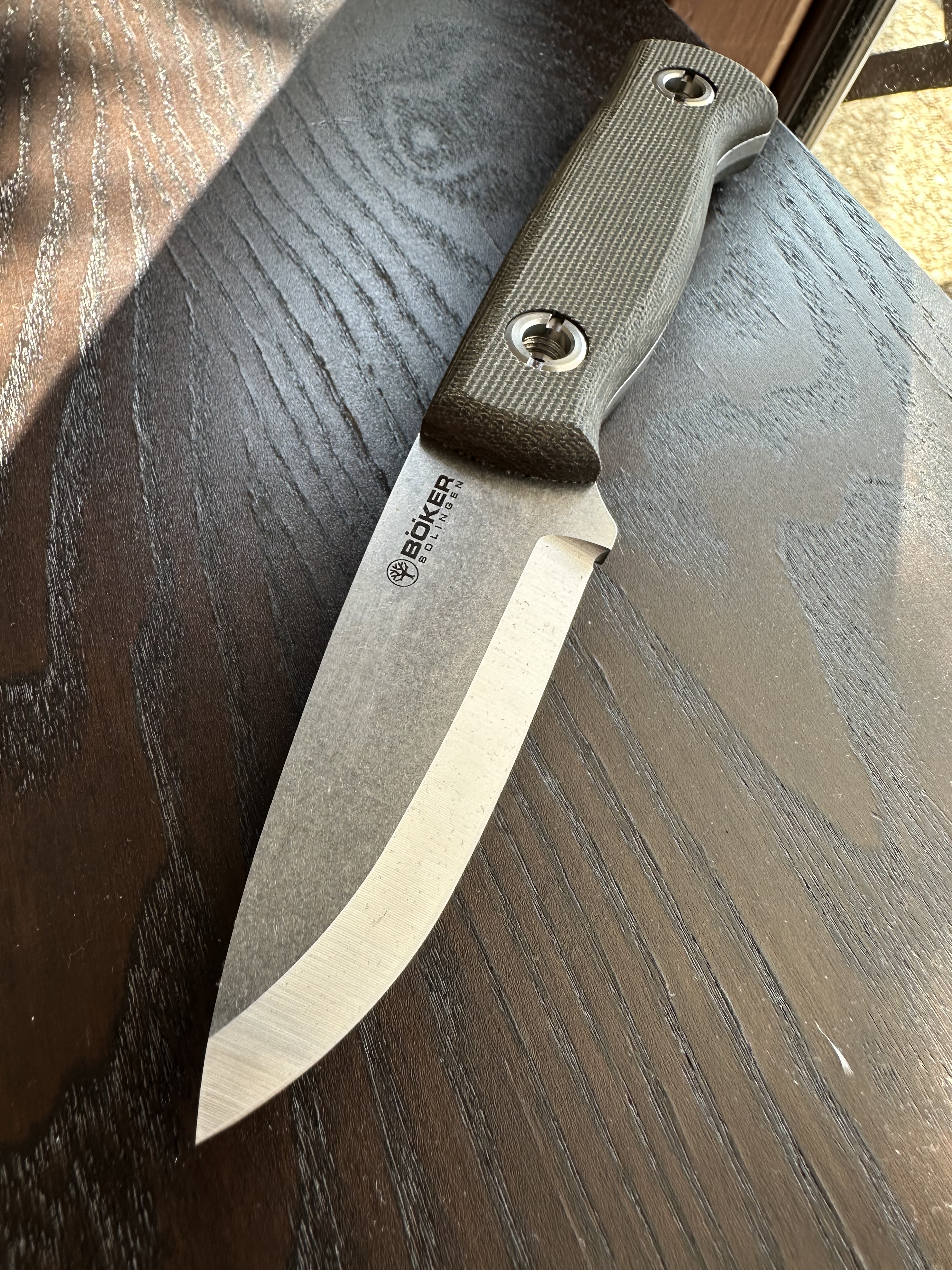
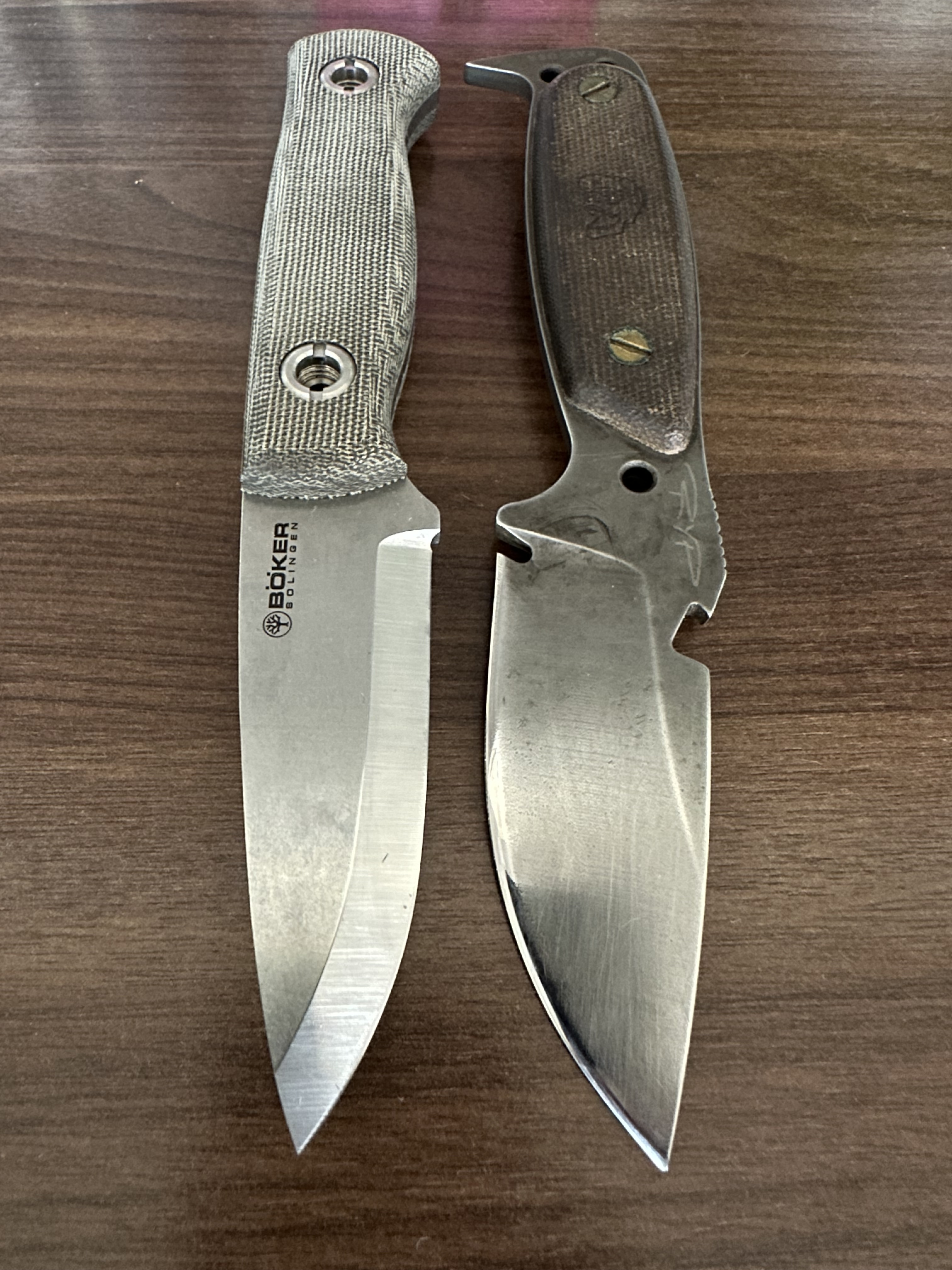
The moment I held the Vigtig, I immediately appreciated the ergonomics of its green Micarta handle. This knife feels good in the hand. It is well balanced. It feels alive! (Something I have been missing from Spyderco lately — and that comes from a French Spyderco fanboy who loves stropping Magnacut on leather, because CPM Magnacut is a pleasure to strop.)
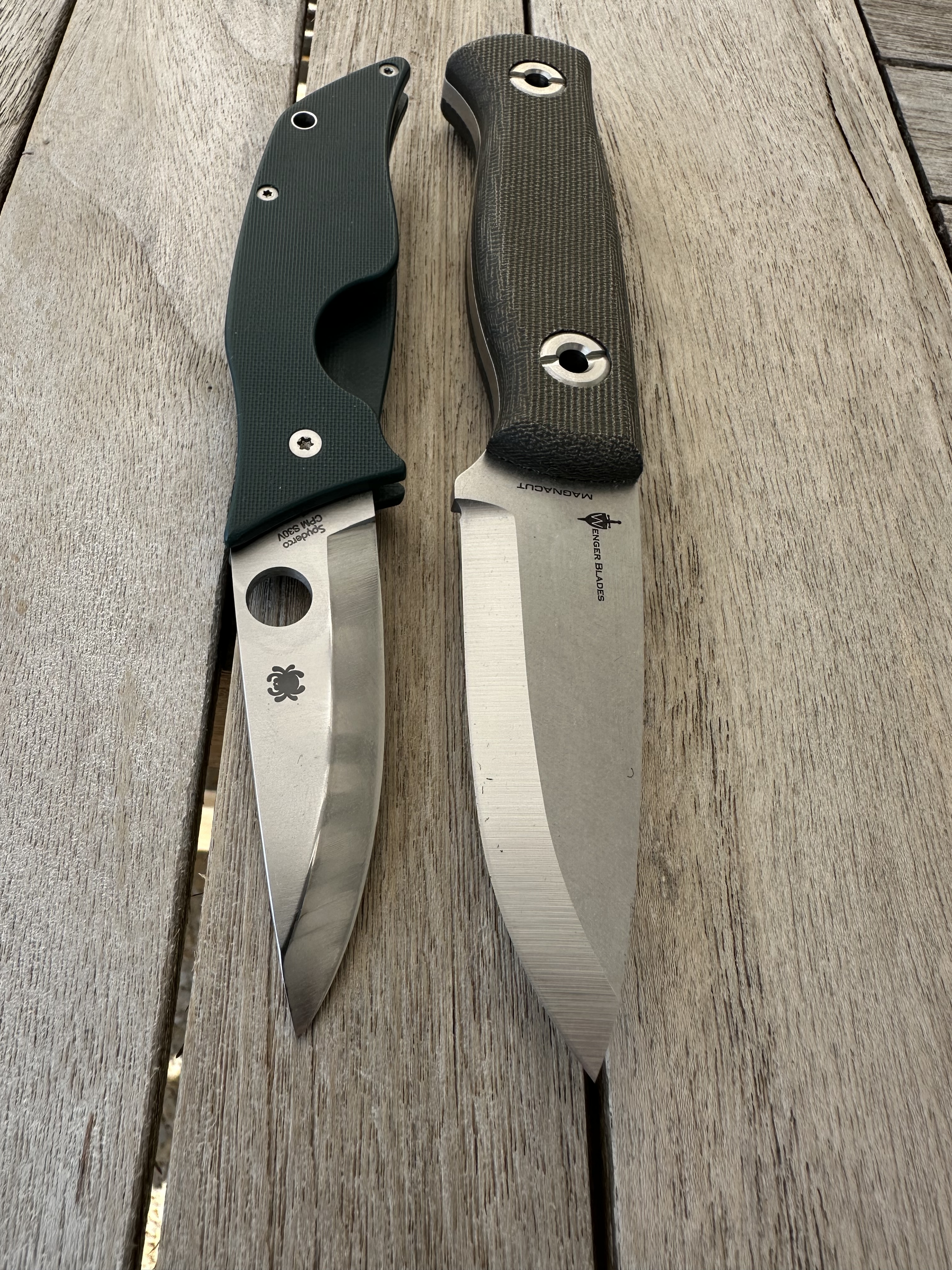
The Micarta is smooth yet naturally grippy. Oh boy, when you hold the “Important,” you are gripping a real tool. Something built to be used hard in a very compact format. Let’s not forget that it is even shorter than a deployed Endura (22 cm against 19 cm for the Vigtig!).
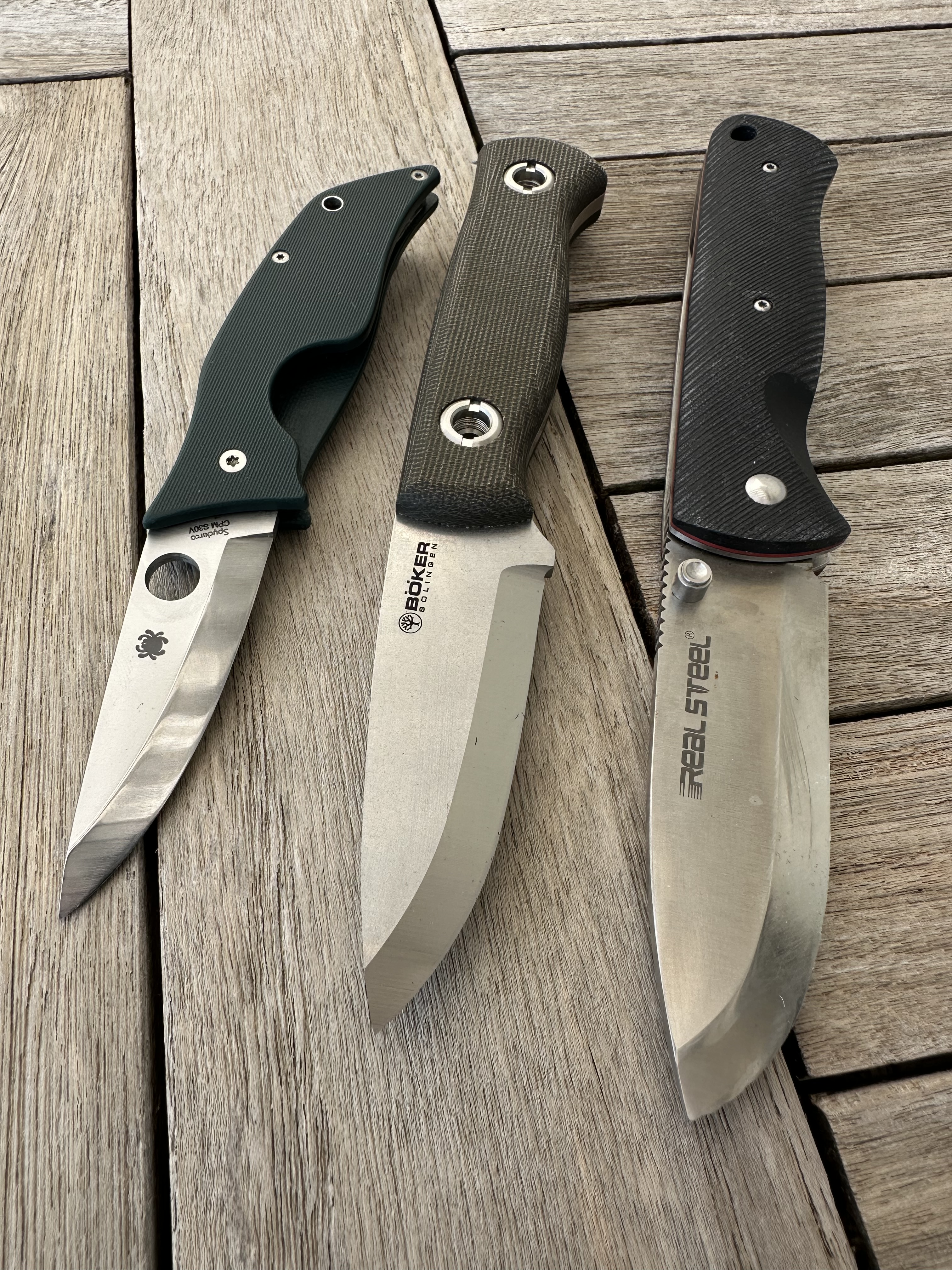
The scales are not fully rounded, but this softly boxy shape helps you instantly know the angle and orientation of the edge. That is why I generally prefer boxy or flat-handled knives like the Native or the Wolfspyder pictured here.
The Vigtig is marketed as a “survival” knife, but in my opinion it is equally a bushcraft knife, both in dimensions and ergonomics.
The rounded handle of an Opinel has always been somewhat problematic for me. You gain comfort, but you lose precision during cuts. That is why I was always placing my thumb on the blade to know exactly at which angle it was positioned.
With the Vigtig, the knife feels completely at ease in your palm. It is extremely comfortable and radiates quality and strength. There are strong heavy-duty vibes here (just like David from KCI recently said about the new Manix XL Crucarta)!
This is mandatory for a compact tool you expect to use for hours (like the Proficient, for example, which remains hard to beat but feels more premium and less blue-collar than the Vigtig).
The Vigtig may not be “perfect” ergonomically, but it is at least very, very good — and it was even qualified as a “Super Knife” by the Dutch Bushcraft Knives boys.
There is a sharp section on the spine near the tip designed for use with a ferro rod. Since the stock is 4 mm thick, it does not create discomfort for my left thumb. Those sharp edges can also be used to scrape bark for various purposes.
Personally, I would have preferred a rounded spine because I often apply pressure cuts using my left thumb.
Now we have a true Scandi grind. No micro-bevel.
The Vigtig pops hairs right out of the box.
Magnacut is famous for its extremely fine grain structure, strength, and toughness.
It bites into wood like nothing else and keeps its crisp edge.
Böker announces an HRC of 62-63. Hard, yet still tough!
If there is one thing the Scandi grind struggles with, it is my Plastic Bottle Bottom test.
Where a Nilakka or an Opinel will glide through easily, the Scandi tends to get stuck. This is purely a geometry issue: the Scandi acts like a wedge.
CPM Magnacut also absolutely loves leather stropping. It delivers the behavior of a tool steel in an extremely stainless alloy. Frankly, this is a bushcrafter’s dream! The edge is highly resistant to the elements, and it is an easygoing tool that can even be used near saltwater without a second thought.
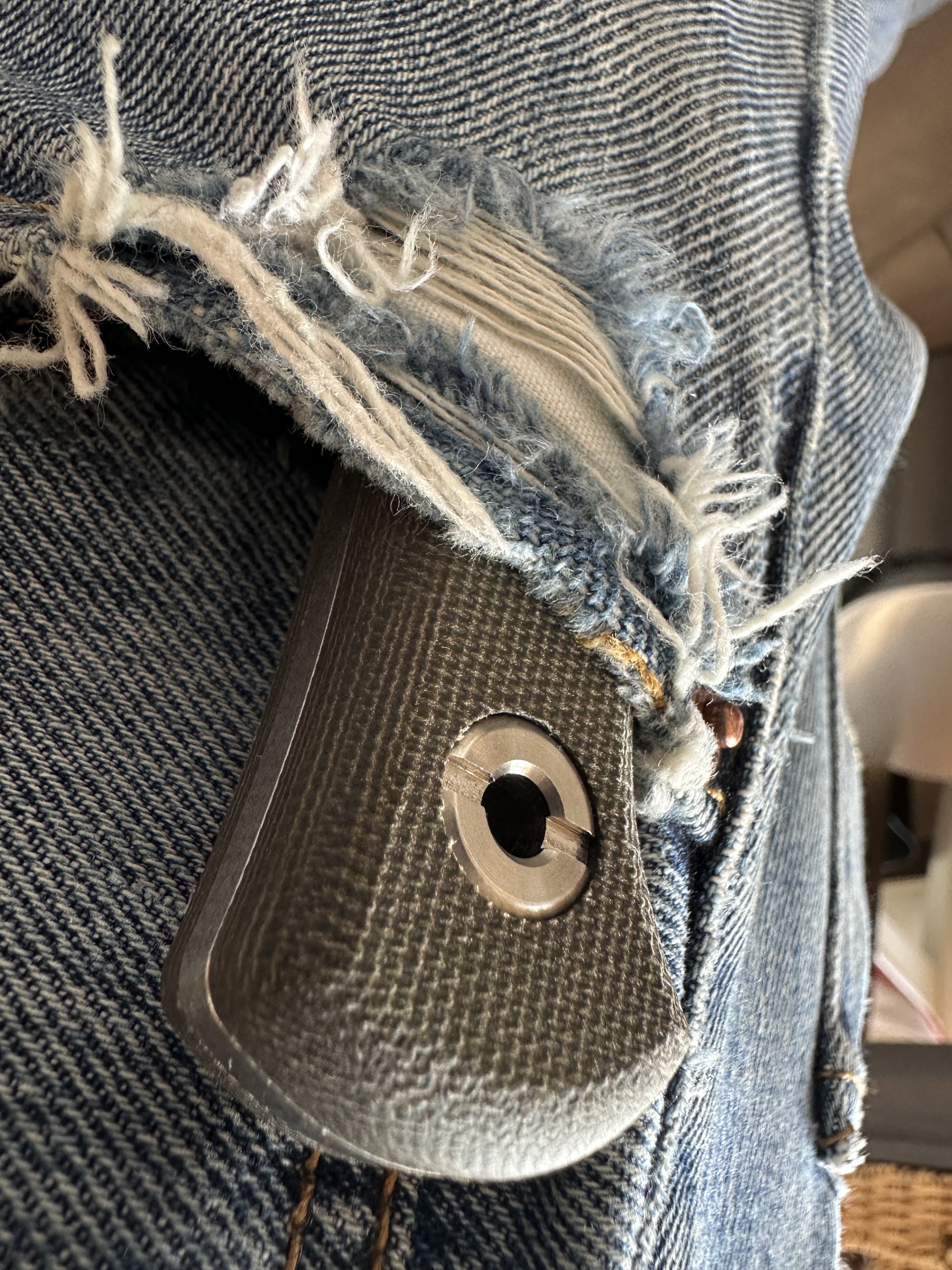
Especially because there is a hidden compartment inside the handle.
“A special highlight can be found inside the handle. Instead of hollow studs, the two large screws can be easily removed with the help of a coin, revealing an ample compartment with a depth of 14 mm compared to the outer dimensions of the handle, where tweezers, tinder, charcoal tablets, a fishing kit and safety pins, for example, can be easily accommodated.“
I personally will not use it, and I will probably secure the screws with some blue thread locker. But at least, if necessary, you can use the knife without its Micarta scales and still benefit from the hidden compartment.
Rambo is never far away whenever survival knives are discussed.
My previous hard-use EDC fixed blade was this 1095 multitool knife. It is now replaced by the Vigtig because it is much sharper and built from a far superior alloy. Notice how convex I had ground the old 1095 — I will not need that with the CPM Magnacut Scandi edge, as I experienced zero damage even when using it on hard dry bamboo.
These compact, robust fixed blades can do everything a large folder can do — and much more! The main difference is simply the need to clean the blade before resheathing it.
Another critical thing to evaluate on a fixed blade is the sheath!
The Vigtig sheath is also excellent in my book and comes with a clip for belt or pocket carry. The taco-style Kydex construction is my favorite because it is slimmer than pancake-style sheaths.
I carry the knife directly in my pocket, where it can easily be removed by pushing against the Kydex lip with the thumb and then returned to the sheath one-handed. The sheath opening is wide enough to guide the blade back in without difficulty.
The clip is a little too strong for my taste because I like being able to quickly move a sheathed knife into a bag. So I usually carry the sheath without any hardware. Its slim profile fits perfectly in my pocket against my wallet.
Inside the front pocket of my old denim jeans, the Vigtig stays perfectly in place and is immediately forgotten thanks to its ideal EDC dimensions.
Great sheath!
So yes, this knife was genuinely designed to be a fixed-blade EDC. It enters a territory forbidden to folding knives: being ultra-solid, robust, and forgiving under hard use without compromising carry comfort.
I am really looking forward to using it in the forest, and I would not even hesitate to use it by the sea! The Vigtig could almost be considered an amphibious bushcrafter.
For now, it will mostly be used around the house for mundane tasks, because that is the best way to truly get to know a knife.
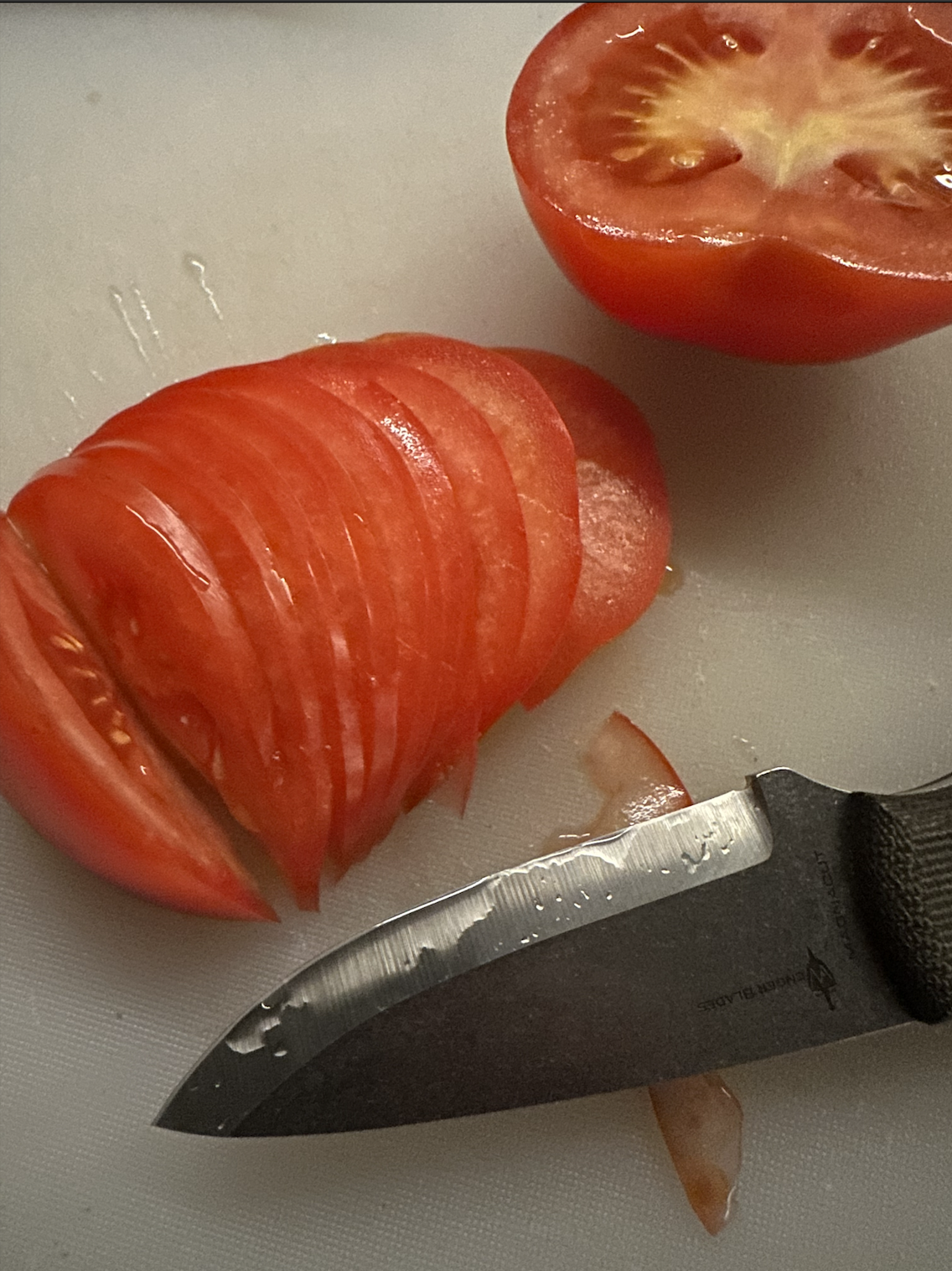
For those who believe Scandi grinds are not kitchen-worthy… 😉
So far, I have been able to use it in the kitchen with ease despite its 4 mm blade stock. It sliced thin loaves effortlessly.
Frankly, after using it extensively in the kitchen, I can say it performs amazingly well for such a short and thick tool.
This is only a first glimpse. I will certainly update this little review with more observations, new pictures, and probably another chapter soon.
So, kudos to David Wenger for this robust knife design and to Böker for offering it at such a great price.
The Vigtig is not a tool designed to destroy, but a tool designed to build — by a builder!
One video reviewer I really enjoy is Floriano Bitturini with his vlog PDT Il Parchetto di Tagliagole — “The Cutthroat Park.”
Here is his video in Italian:
And here is a French video review I also really enjoyed:
Seven years ago, I was already in love with a KnifeCenter Exclusive Native. The idea of offering a smooth G10 handle was, IMHO, a great EDC enhancement, as aggressive G10 can quickly turn any knife into a pocket shredder.
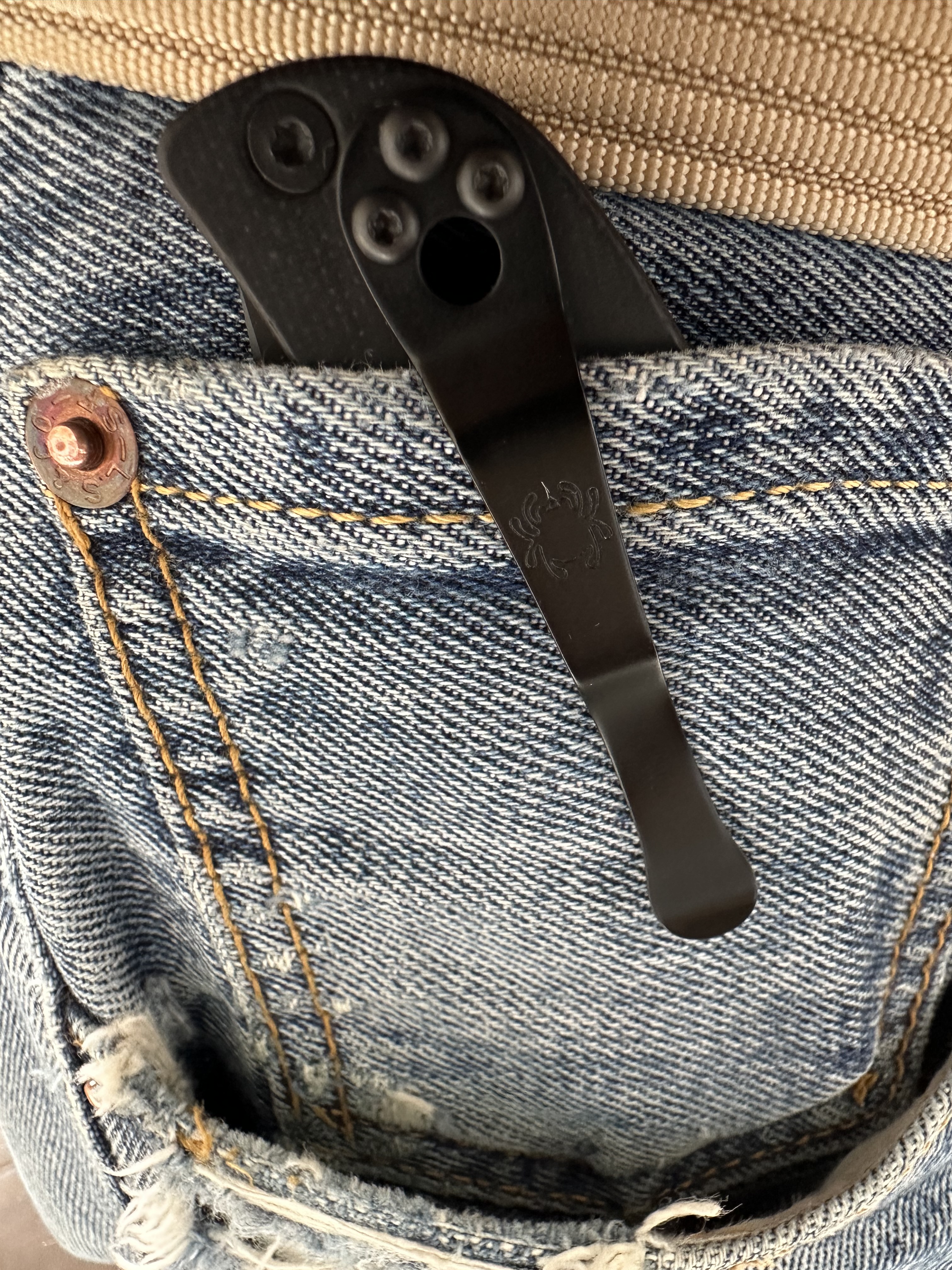
As you can notice, the Native 5 with its OEM clip can perfectly clip into a watch pocket.
I was certain I had missed the opportunity to own one of those smooth operators made exclusively for KCI when Alex, a fellow member of the Facebook Spyderco Fan Club France, pointed it out to me. They were still in stock! HERE!!
I have known monsieur Howard Korn, the founder of KCI, since his early beginnings back in the 90s when he was operating almost alone. He even suggested that I design their logo. Howard was among the very first resellers to offer knives on a large scale using a very new medium at the time: the World Wide Web! What a venture… and eventually, what a success! That was before Amazon, and Howard remains one of the true pioneers in spreading cutlery culture worldwide. Hence the excellent videos now produced in-house. Once again, it was a smooth transaction from the USA to France thanks to great customer service for a fantastic exclusive. I may be biased, but after nearly 30 years of dealing with KnifeCenter, my experience has always been flawless and inspiring.
Eventually, I found out that I may have bought one of the very last examples of this Native Exclusive because 10 days after my order (June 2024), they were already out of stock.
So what do we have here?
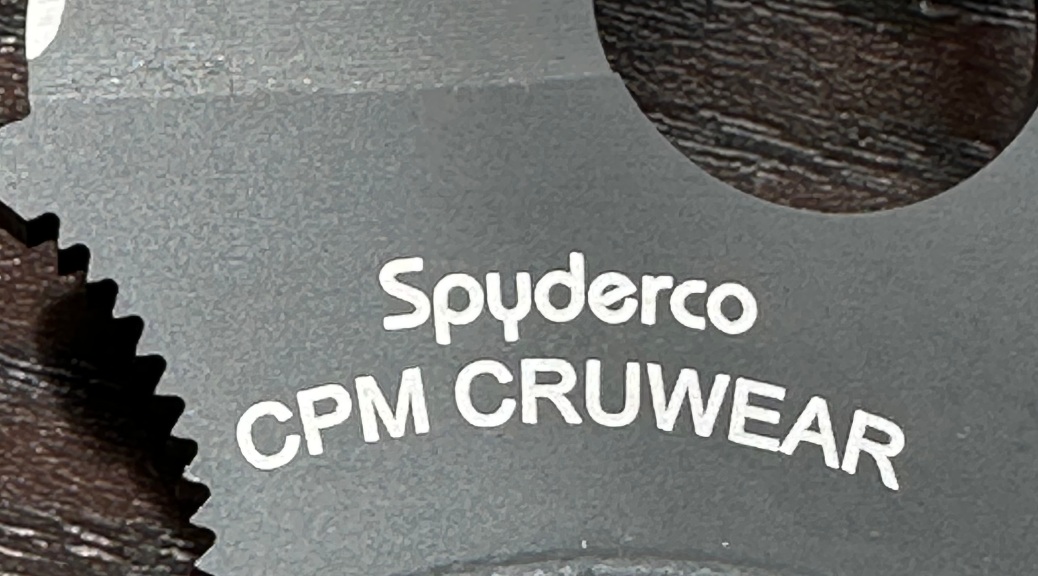
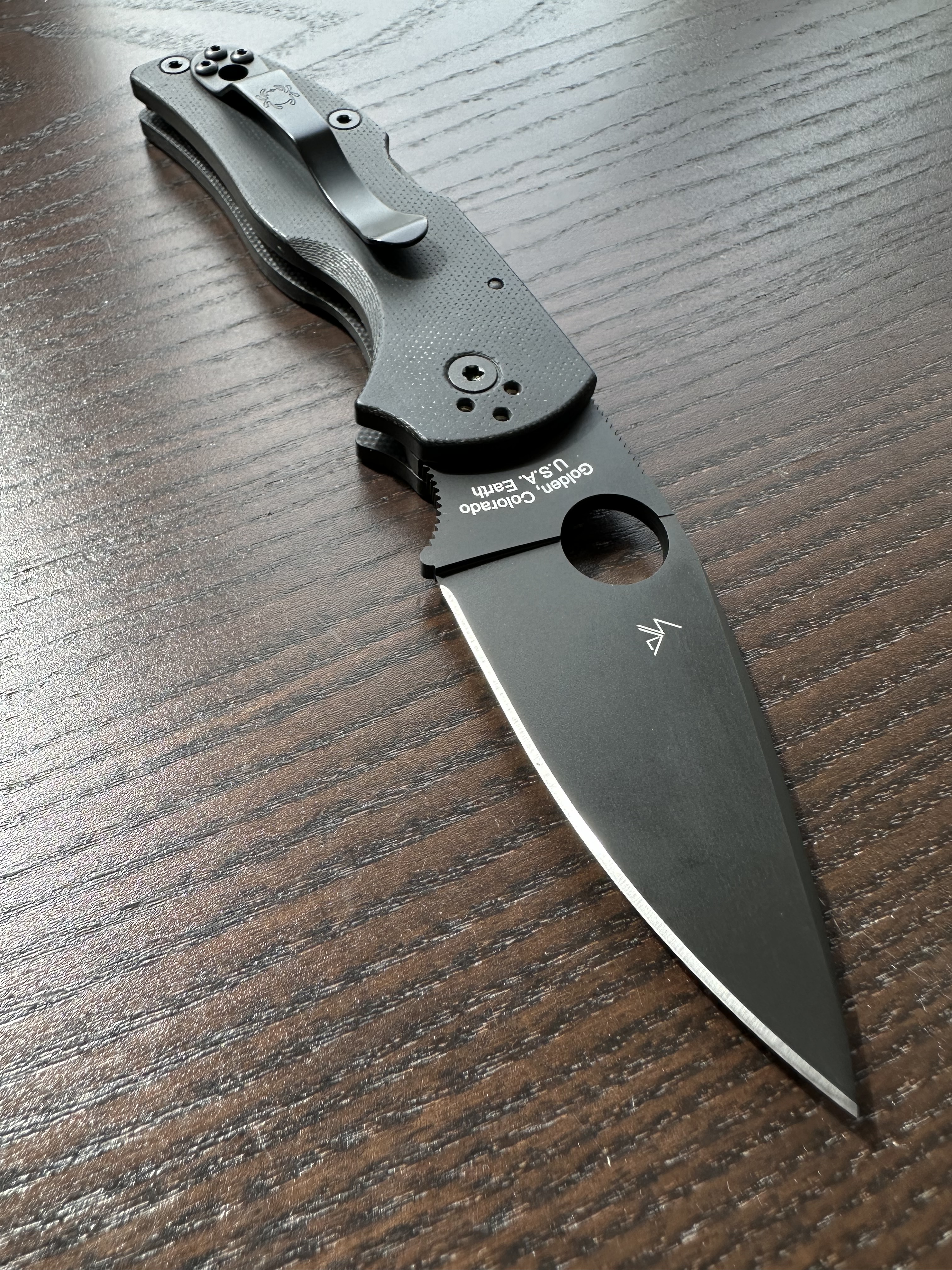
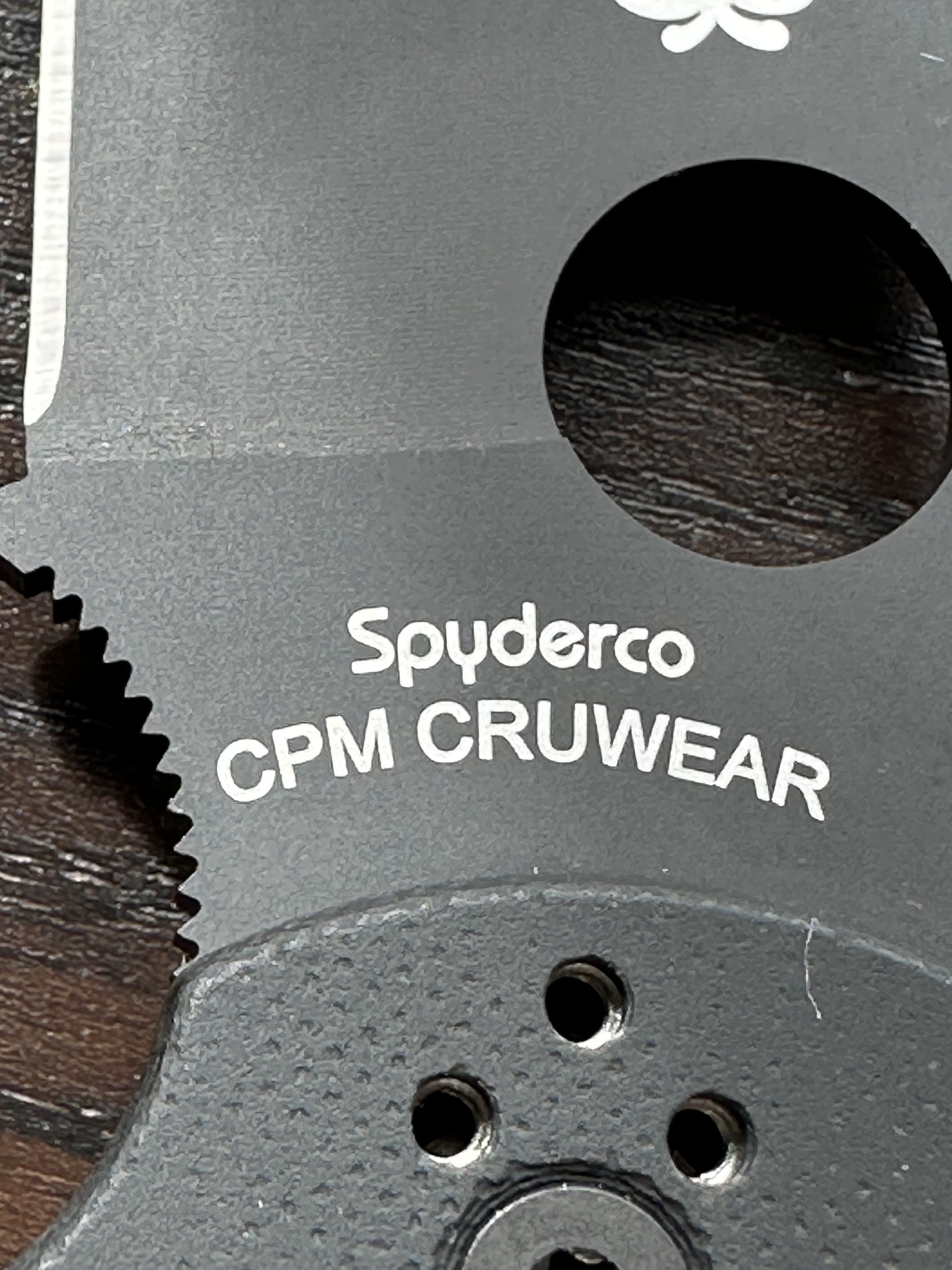
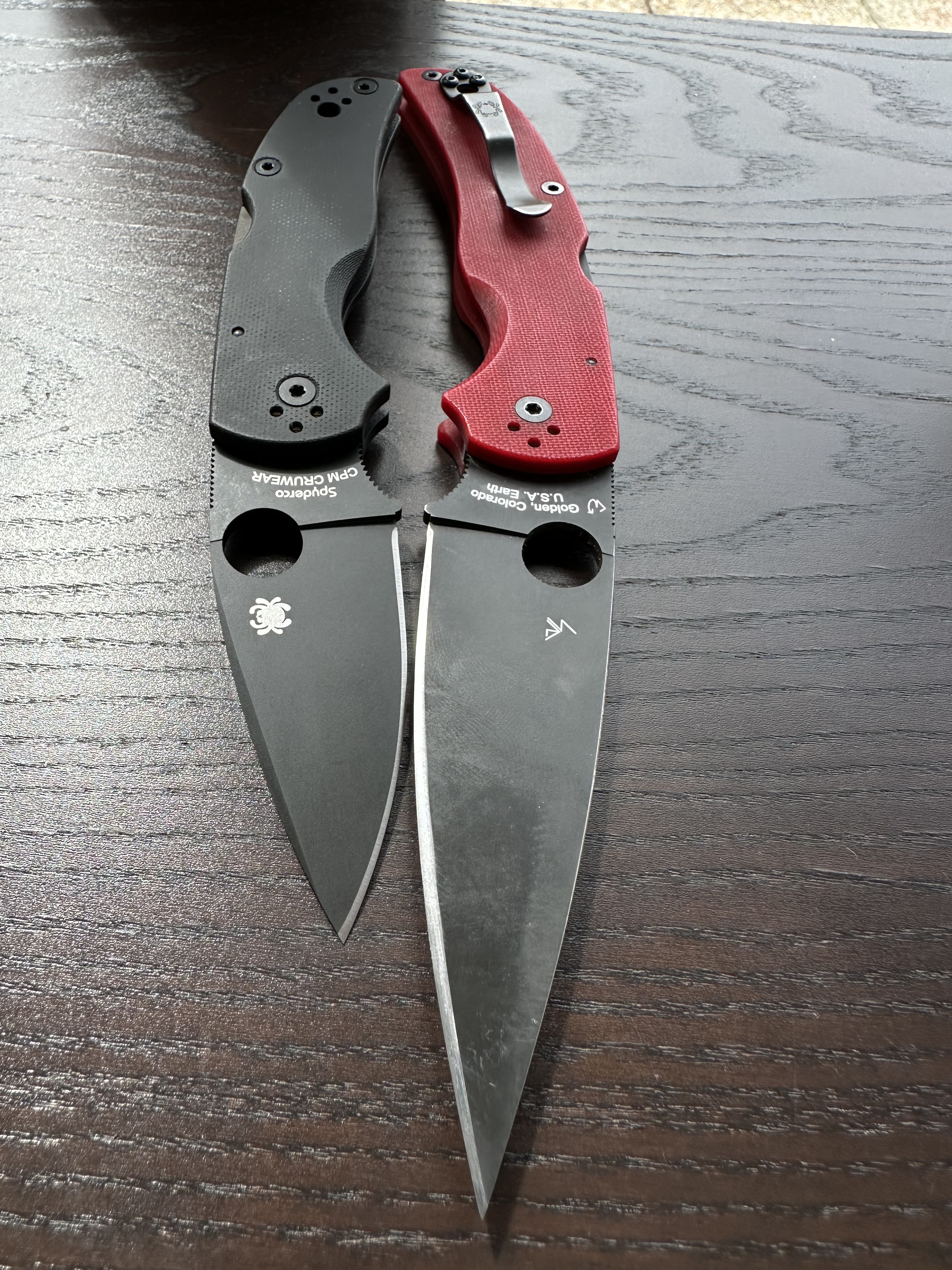
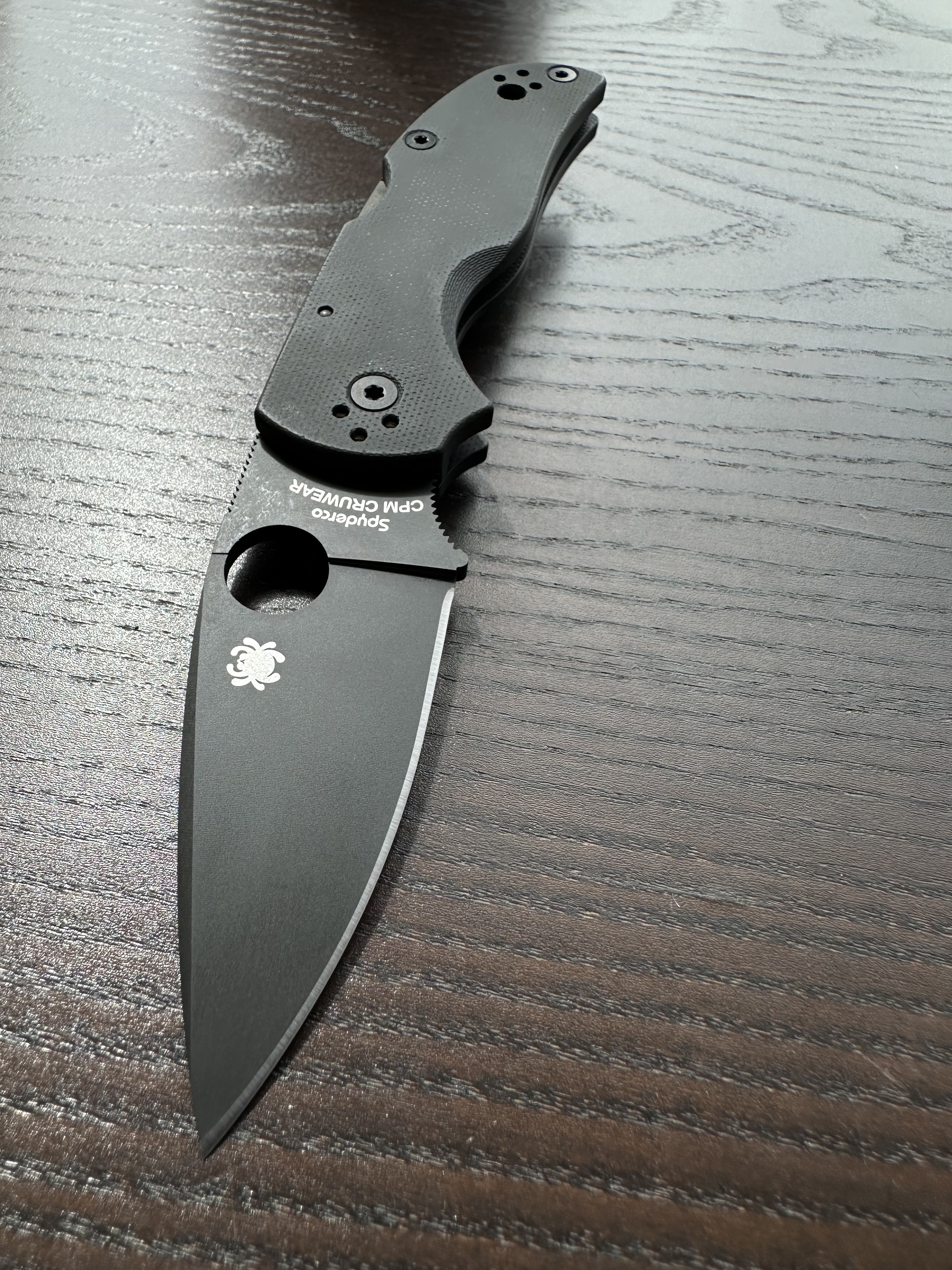
I have written a lot about CPM CruWear! But this tough and well-balanced alloy, capable of taking a crisp razor edge, is perfect on both small and large folders. This is a true workhorse steel and one of the greatest high-tech alloys available in modern cutlery. I have even demonstrated how difficult it is to force a patina onto it. This time, with the DLC coating, neither patina nor rust should be a concern. BTW, DLC (Diamond-Like Coating) is even used for medical implants. It is not toxic.
This all-black version of the Native is ready to be used in all weather conditions.
So here we have a very low-profile package with a non-threatening design, because black knives matter when confronted with sheeple who might otherwise label you a mall ninja carrying a dark saber.
These days, I am reluctant to carry long blades or large folders in the city, and my search for shorter, socially accepted knives — locking or non-locking — has become obvious. I have previously written about knives suited for city use, and the Native is definitely one of them. The idea is maximum versatility in a tool that should not raise eyebrows: a friendly, non-threatening package. The kind of knife my grandfathers and father used to carry without a second thought — except on airplanes. 😉 When heading into the countryside, I do not restrict myself in terms of blade length, but in big cities I play a very low-profile game and most of the time strictly follow the law, even if I am not particularly worried about police checks. Hence the Native: the same cockpit ergonomics as Hellboy, which gets a lot of kitchen use now that the Chief has turned into a Chef, but in a shorter format.
There is also a swedge on the blade spine of the Native that is not present on the Chief.
The action is smooth with zero blade play, and a true guillotine drop can be achieved simply by releasing the lock. I have already written about how top notch these Golden-made Natives are in terms of fit and finish, having used them since 2011.
This linerless version is, to me, the best Native design ever produced, and this Exclusive represents the best of the best. In these years dominated by titanium frame locks and Axis-style locks, the opportunity to own a truly great lockback feels precious. And this one, for me, is the Last of the Mohicans!
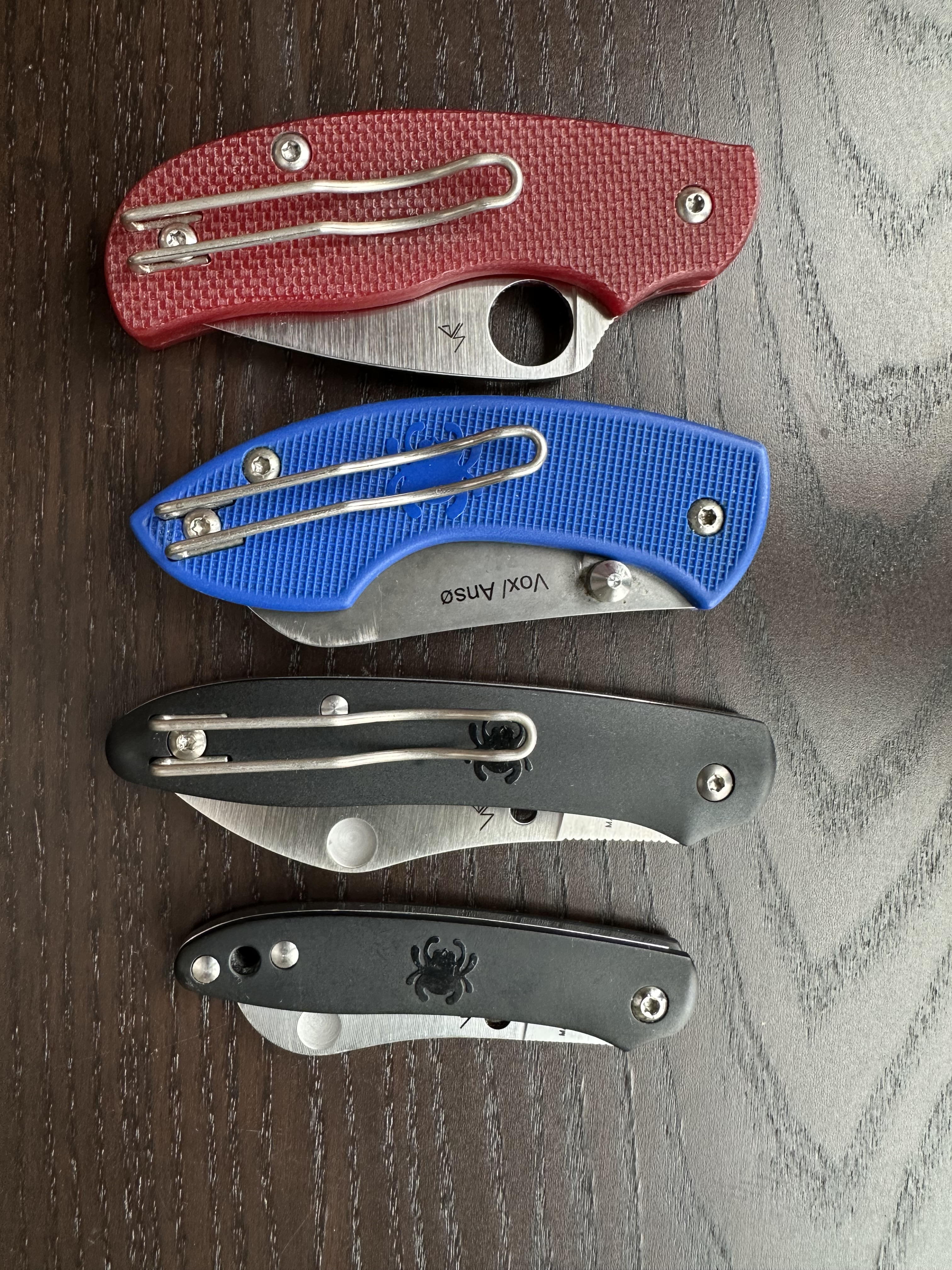
The Spyderco Urban, Squeak, and UKPK family are the most addictive slipjoint lineups in the modern knife world. I have already written about them on this blog. The UKPK Salt is simply one of the best modern folders available nowadays. The Squeak is totally sheeple-friendly, and of course the Urban was made for city carry and can be carried almost everywhere except on airlines.
Spyderco’s description: “This Exclusive version of the Spyderco Urban™ was manufactured specifically for Heinnie Haynes (heinnie.com) and is available only through their sales channels. Originally introduced in 2009 and later discontinued, the Urban remains a cult classic among devoted fans of Spyderco’s non-locking, one-hand-opening, clip-carried SLIPIT™ knives. This distinctive expression of it showcases a leaf-shaped blade crafted from premium CPM® S90V® particle metallurgy stainless steel. The PlainEdge™ blade is full-flat ground for exceptional edge geometry and is proudly laser engraved with the Heinnie Haynes logo.Not to be outdone, the handle of this knife features distinctive red G-10 scales with a non-slip peel-ply texture. They complement the jimping (textured grooves) on the blade’s thumb ramp and index-finger choil to ensure a positive grip and outstanding control during use. A reversible deep-pocket wire clip provides a choice of left or right-side tip-up carry, making every aspect of the design completely ambidextrous.”
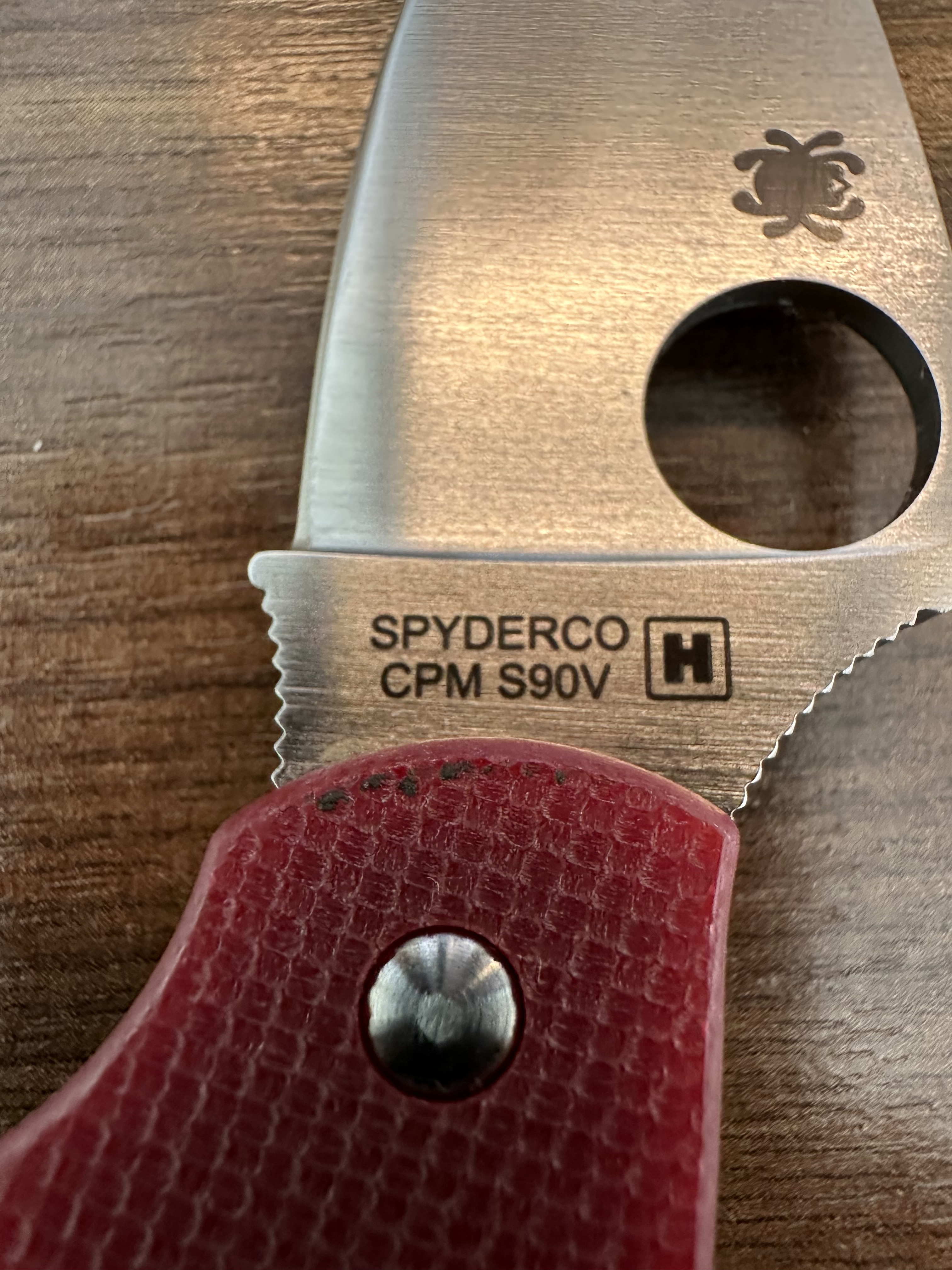
This red one is my third Urban. The first one was in K390, the second one was in AEB-L and was named Cappuccino. All of them were eventually pushed out of my pocket because of the greatness of the UKPK Salt in LC200N. Still, they have all been great companions during my travels in the UK, as they are fully legal: non-locking knives with blades under 3 inches (76 mm)… Eventually, I started looking for a G10 version with a full stainless steel backspacer, and I found the Heinnie Haynes exclusive version available on their site. It is not a cheap knife, be aware of that, but it oozes quality both on paper and in hand.
First things first, this Urban features a CPM S90V blade, the same steel found on the Proficient bushcraft knife. S90V was previously known as CPM420V, and it remains one of Sal Glesser’s favorite steels ever produced by Crucible.
S90V is famous for its incredible edge retention, and after 25 years of using it, I can tell you that it can also be a bear to resharpen. Diamonds are its best friends, and even then it requires a lot of white ceramic work and stropping… Compared to non-stainless super steels like Maxamet, it can be quite tedious to bring back to a truly razor-sharp edge. But once sharp, its working edge seems to last forever. This is exactly the opposite of my previous experience with Cappuccino, my AEB-L Urban. That knife was tough and incredibly easy to keep razor sharp, but it quickly lost its edge when used on abrasive materials like cardboard. S90V eats brown cardboard for breakfast and stays sharp for a very long time, but it takes patience to bring it back to a crisp razor edge. That is excellent when you need a long-lasting working knife on a trip where you did not plan to bring sharpening equipment. Sal Glesser trusts S90V enough to use that alloy on many of his own special Sprint Runs with carbon fiber handles. I have never been disappointed by S90V. Even on fixed blades or on the Manly folders, it has always been a game changer in terms of long-lasting sharpness, and in my experience it even surpasses CPM 10V. S90V is also highly stainless. Unless you plan to use your knife in the ocean, it can handle demanding work in the forest without needing immediate cleaning. It has also been noticed that this S90V Urban features a slightly thinner blade: 0.23 cm instead of 0.29 cm. The blade is also slightly shorter than previous Urbans, although I have not noticed any difference in real-world utility.
This Urban was made in Italy, and in my personal experience, Maniago craftsmanship has never been a disappointment. Your mileage may vary, but this has been mine. I have always been happy with my Spytalians!
G10 is not a common material on Urbans, as FRN dominates the lineup, and the texture of this G10 is even more distinctive. At first, I considered turning this knife into a smooth “pebble,” but… nah! It is great as it is. I only adjusted the feel slightly by sanding it, but overall this is a beautifully made, high-quality handle — once again, kudos to Maniago. All Heinnie Haynes exclusives feature this red treatment on the handle; it is their signature. The G10 version also benefits from a longer steel backspacer that closes the handle construction more completely.
Now about the action: this Urban has the strongest spring of all my slipjoints! That is actually a very positive point. I can still open it with a quick wrist movement, but closing it requires real force, which is rather rare — even in Spyderco production. (The first UKPKs were “chewing gum soft,” to quote Guillaume, moderator of the Spyderco Fan Club.) A strong spring combined with the absence of a lock makes it a great candidate for legal everyday carry nowadays.
Now regarding geometry, Maniago deserves another round of kudos! As you can see in the picture above, I was able to split a bottle bottom in a single pass with the factory edge. That is also rare! Even my beloved Hellboy needed some thinning before reaching that level. This is thin geometry straight out of the box! The short drop-point blade makes it an excellent whittler, and Spyderco truly knows how to make little big knives. The hump and choil transmit your cutting force directly into the blade, sparing the handle, pivot, and mechanism. It is a clever design, inspired by the old San Francisco gambler’s knives. Sal’s first implementation of this “cockpit” concept dates back more than 30 years to the C36 Military. The choil-and-hump combination is brilliant for preventing a non-locking blade from closing onto your fingers. To me, it is an absolute must-have!
So here we have a legal folder with a non-threatening blade, a strong non-locking spring, excellent cutting geometry, and stellar particle metallurgy steel. What is there not to love about this wonderful Urban?
You can cut a pizza on your plate and use it as a steak knife without raising any eyebrows. I use my knives directly on plates, and I know how to avoid dulling them on ceramic. My mother-in-law never places a knife near my plate anymore — that is how I can spot where I am supposed to sit at her table.
The Urban also has the perfect size for carrying in a Levi’s 501 watch pocket, and as you can see, mine has been shredded over time by many aggressive G10 handles before extensive sanding.
So yes, I highly recommend this excellent exclusive little knife. Again, it is not cheap, but the quality is there from tip to clip.




































 NemoKnivesReview