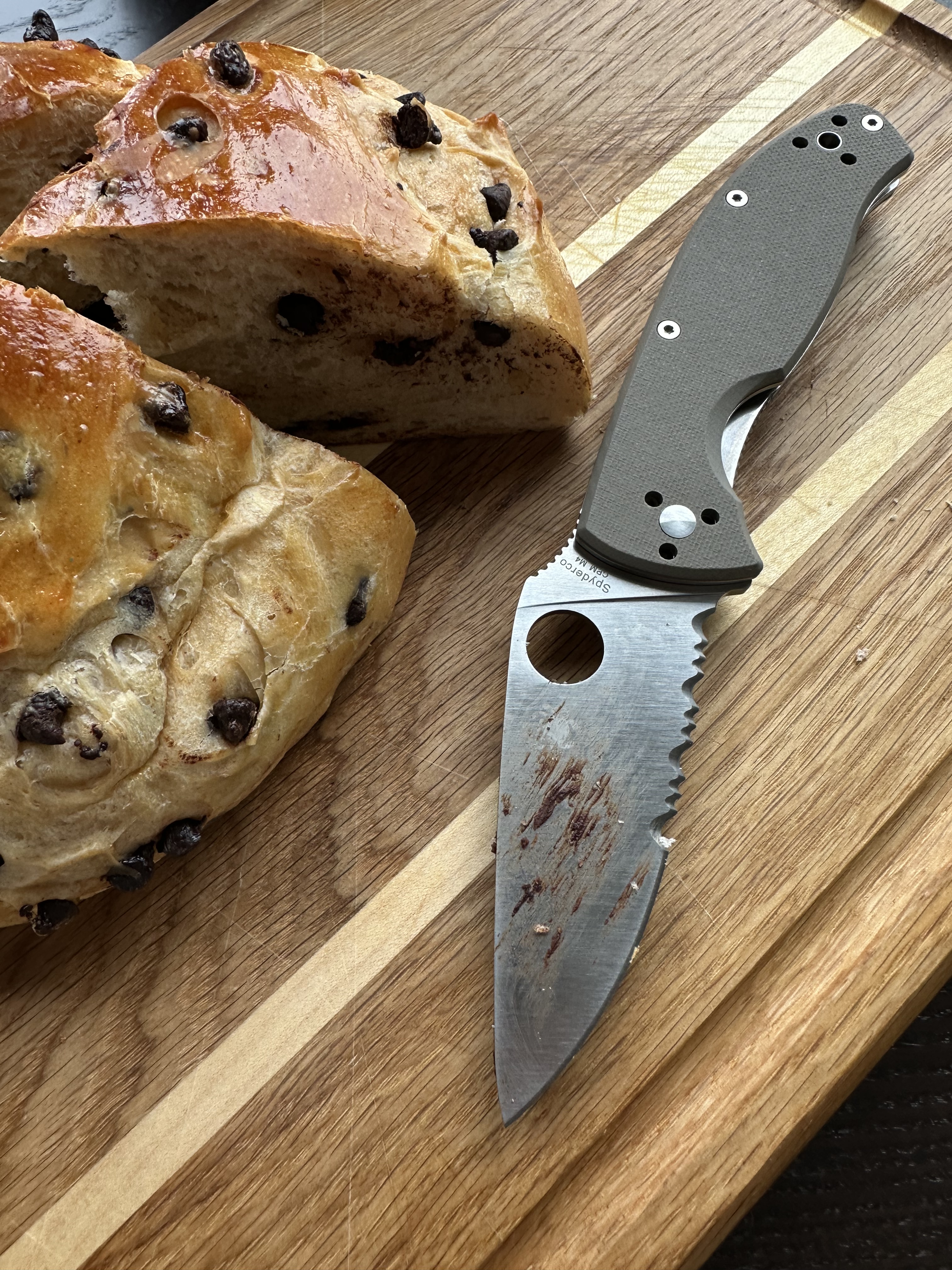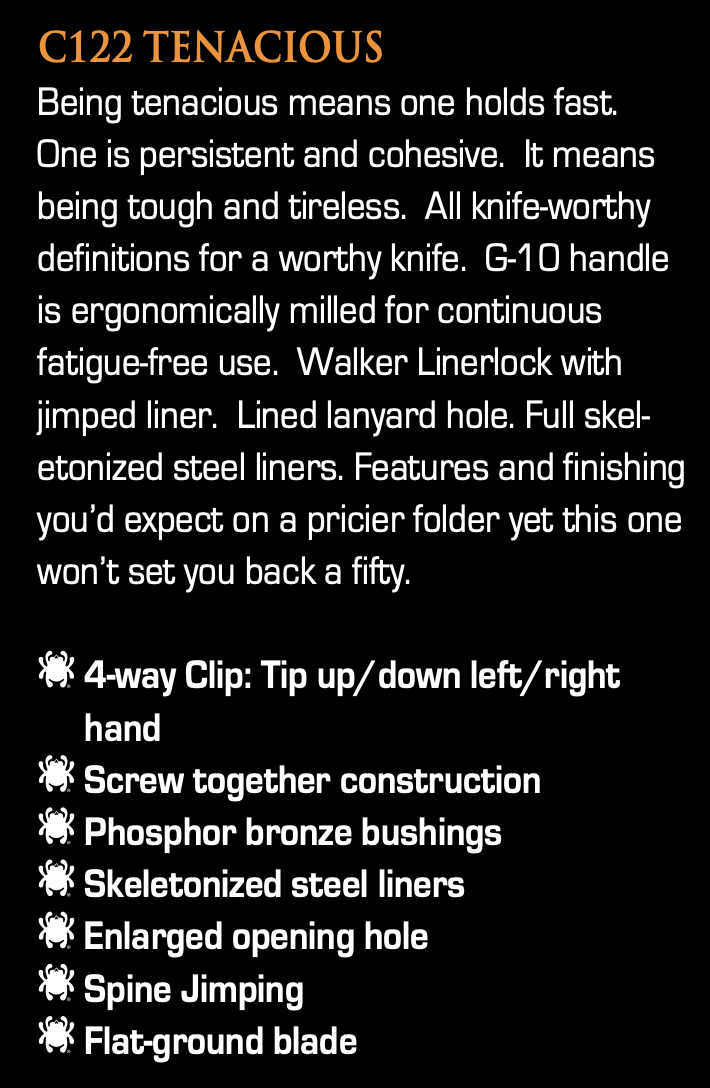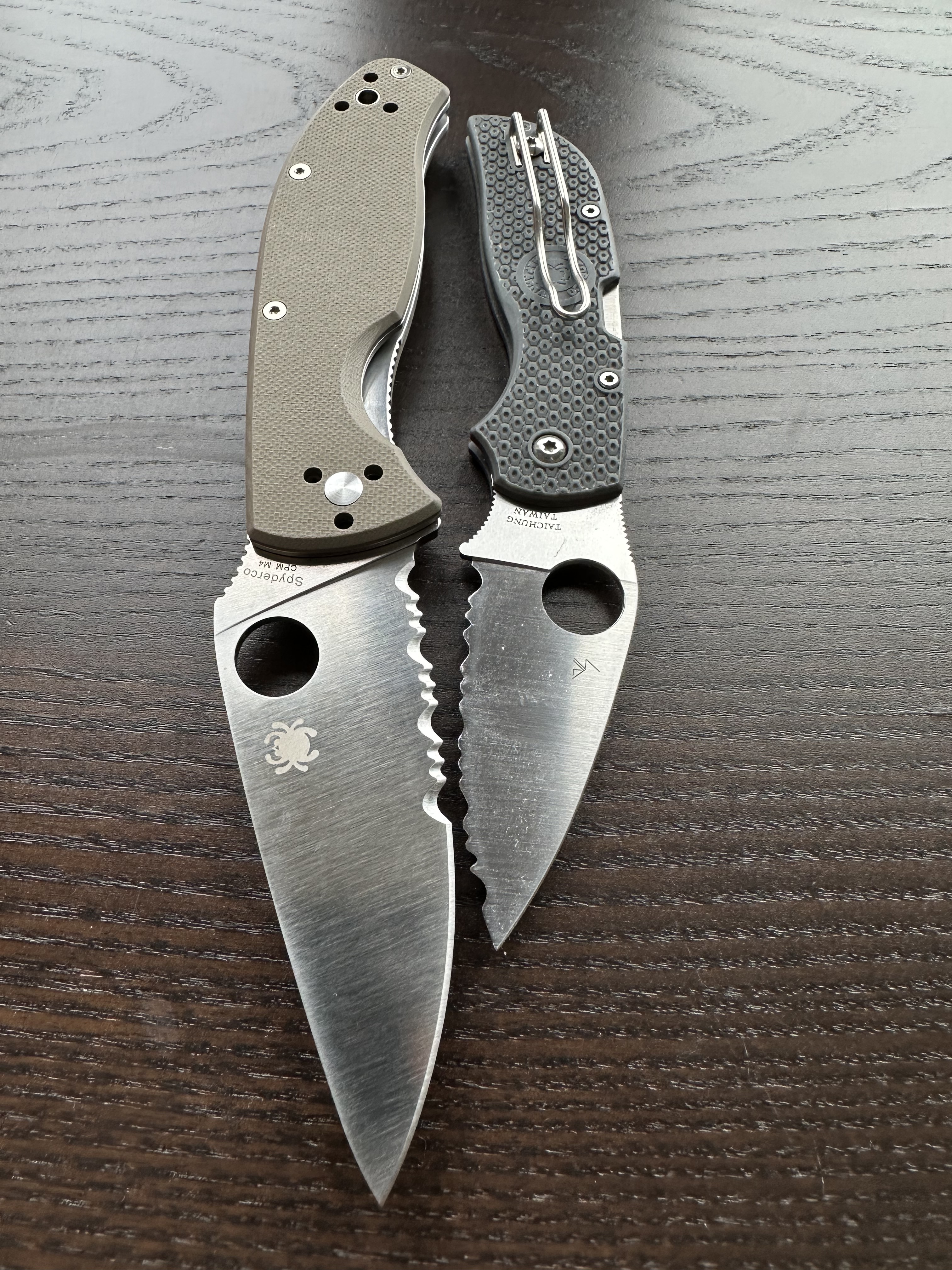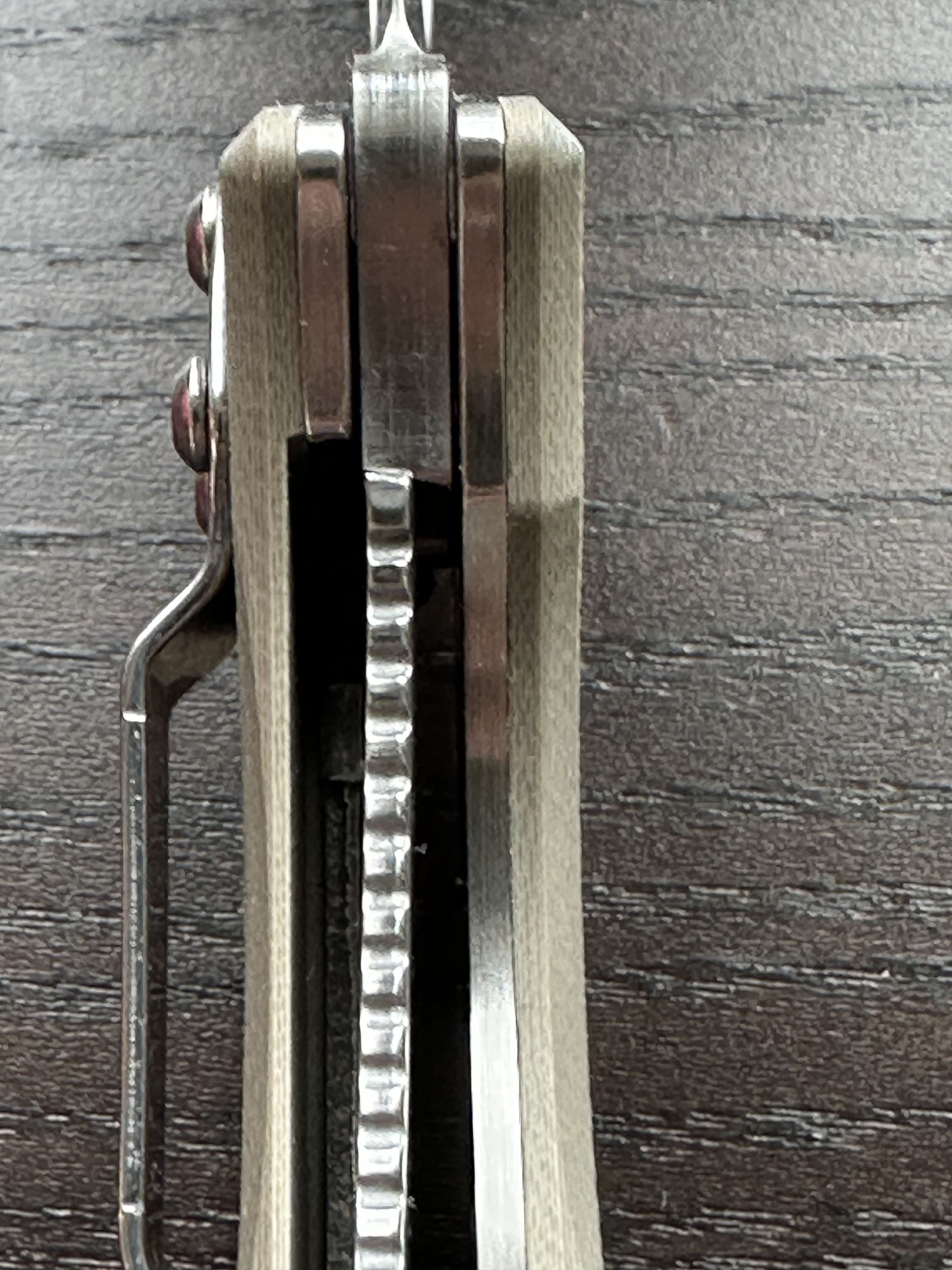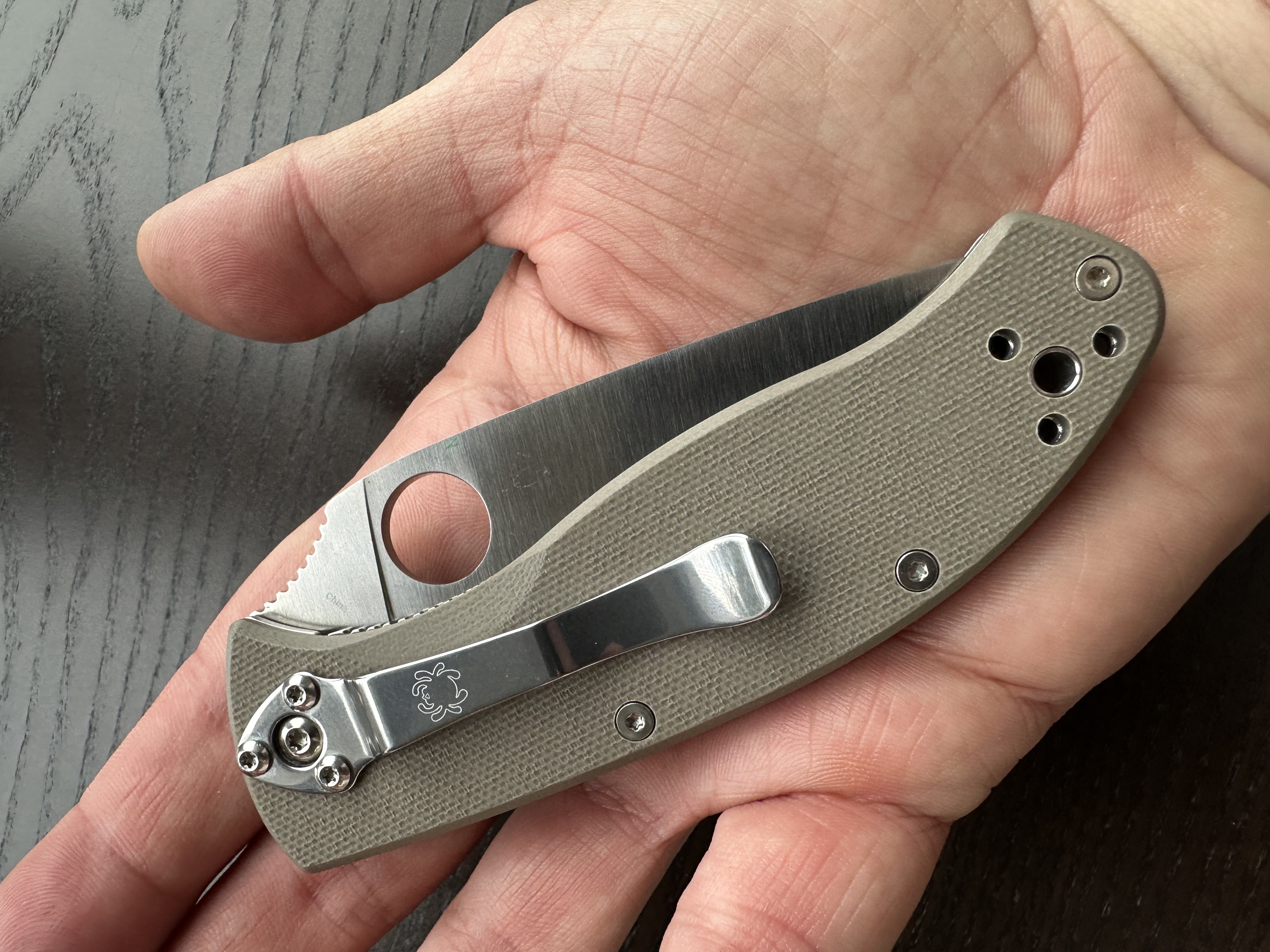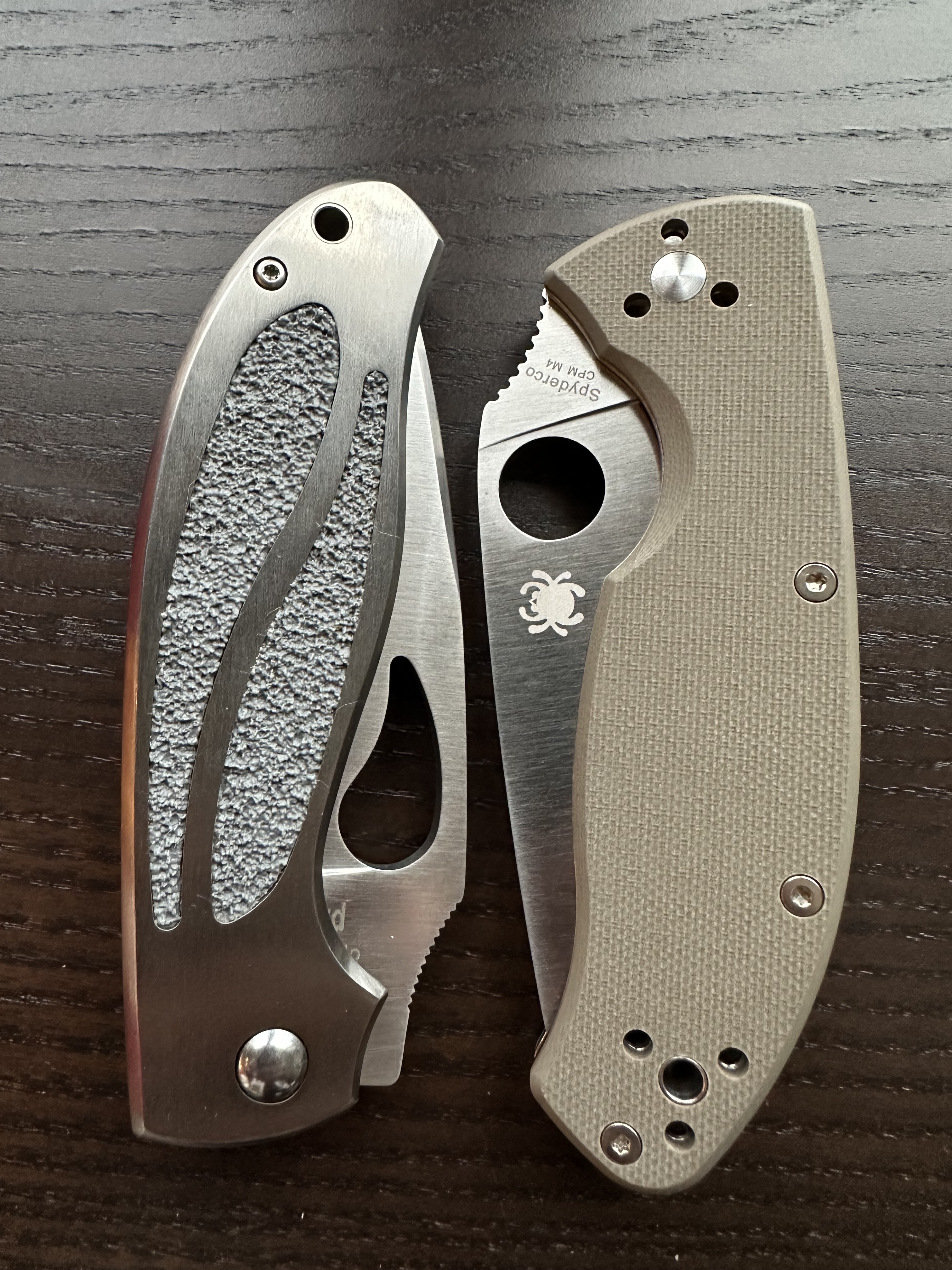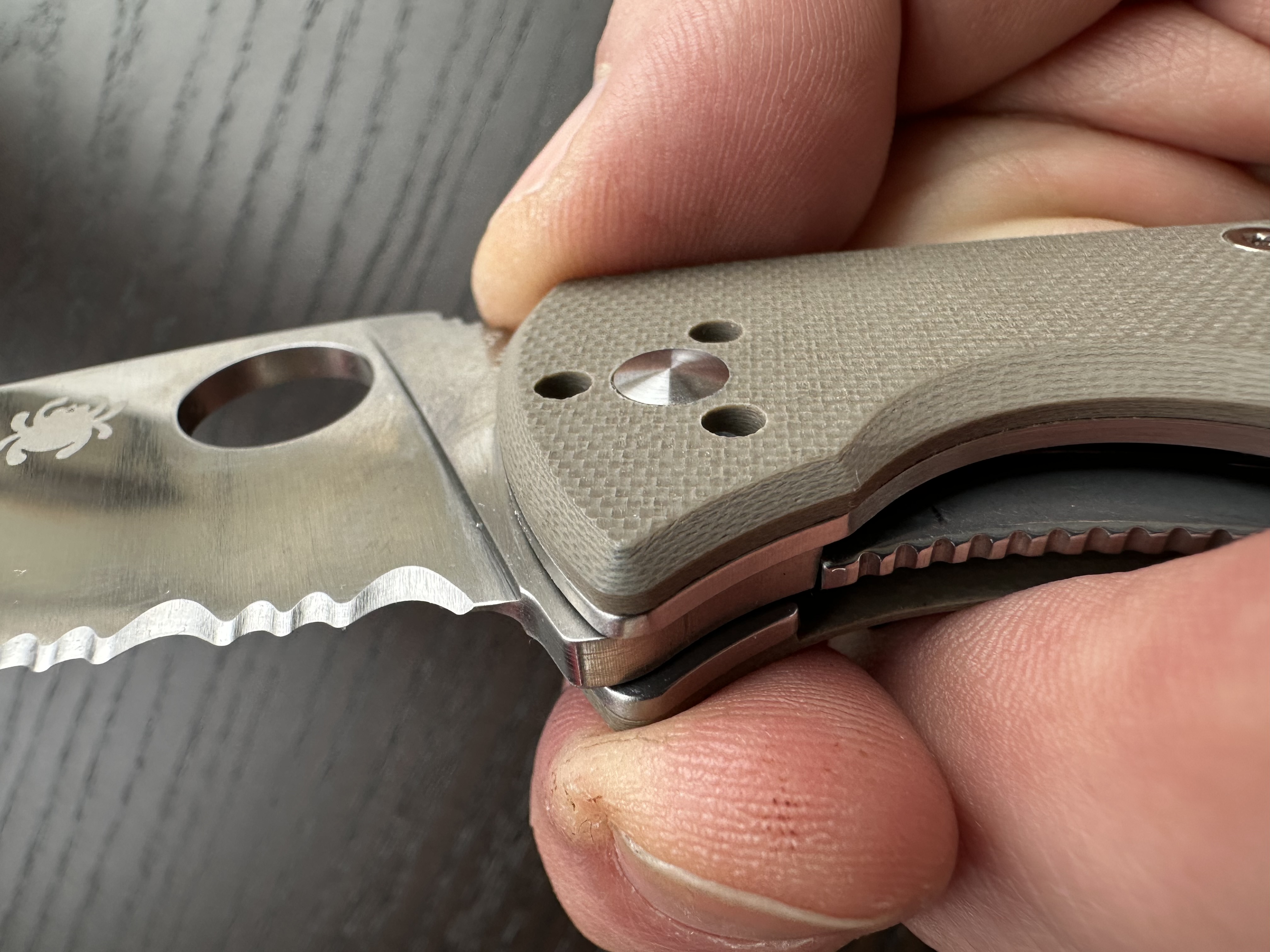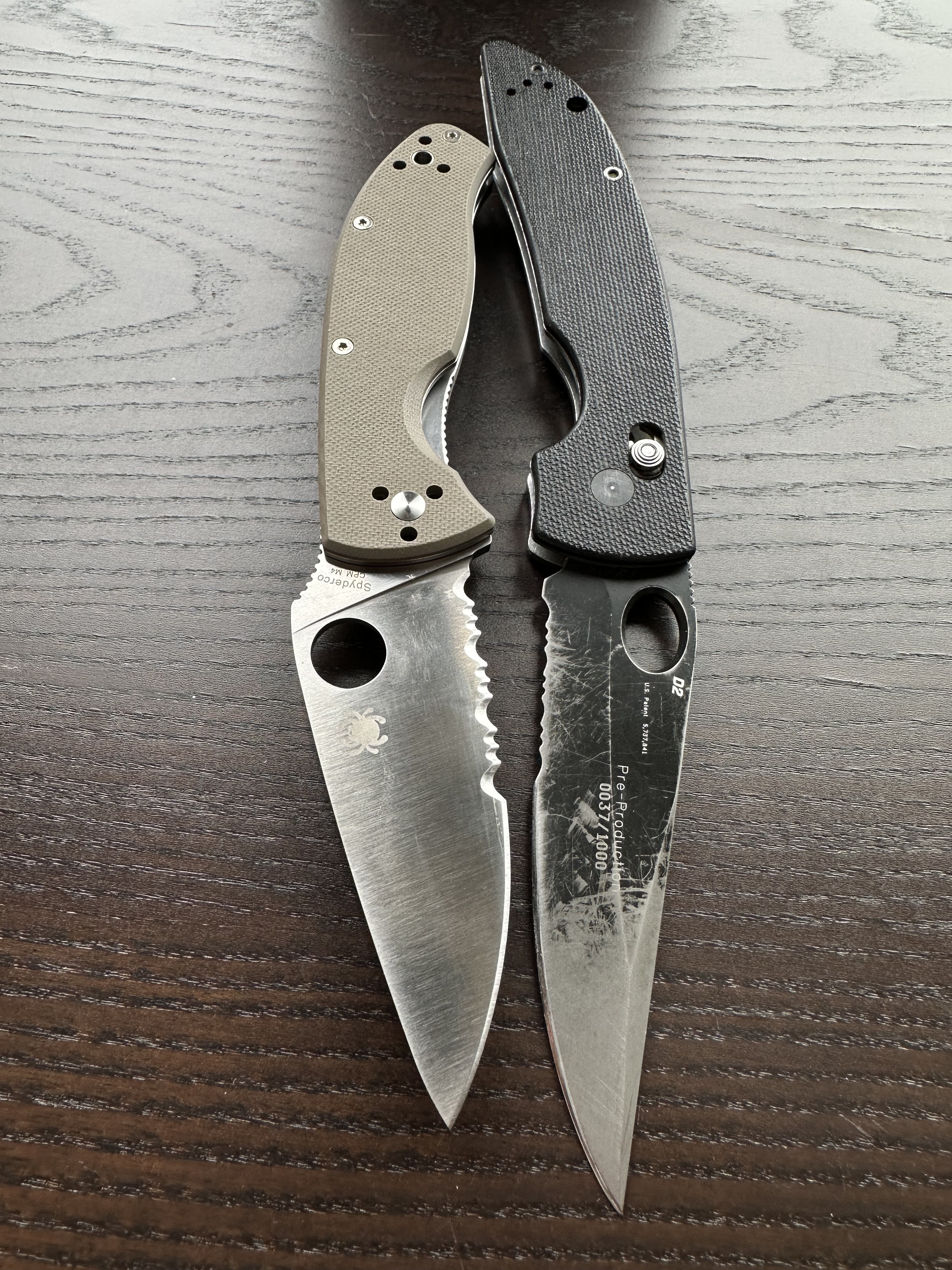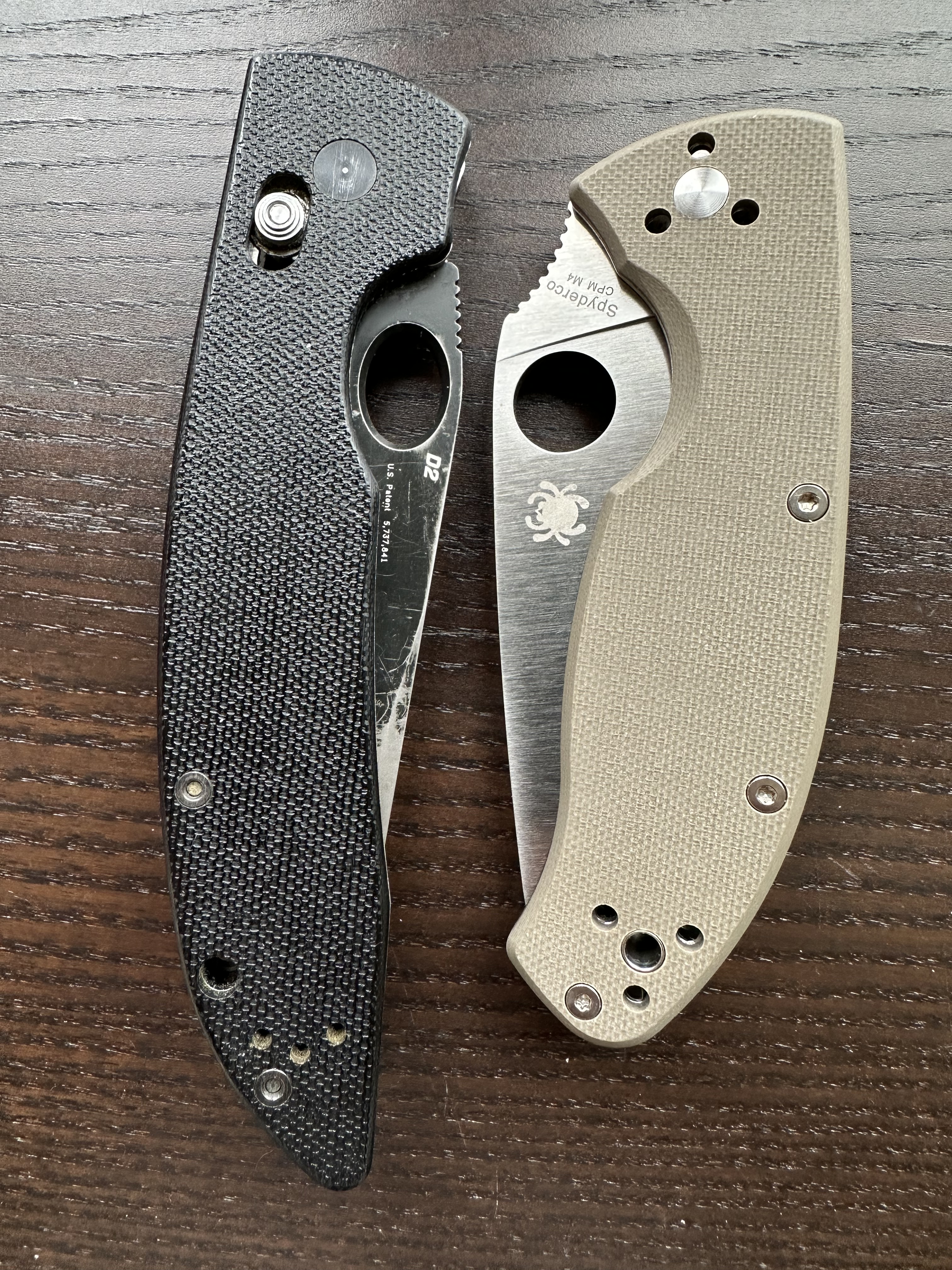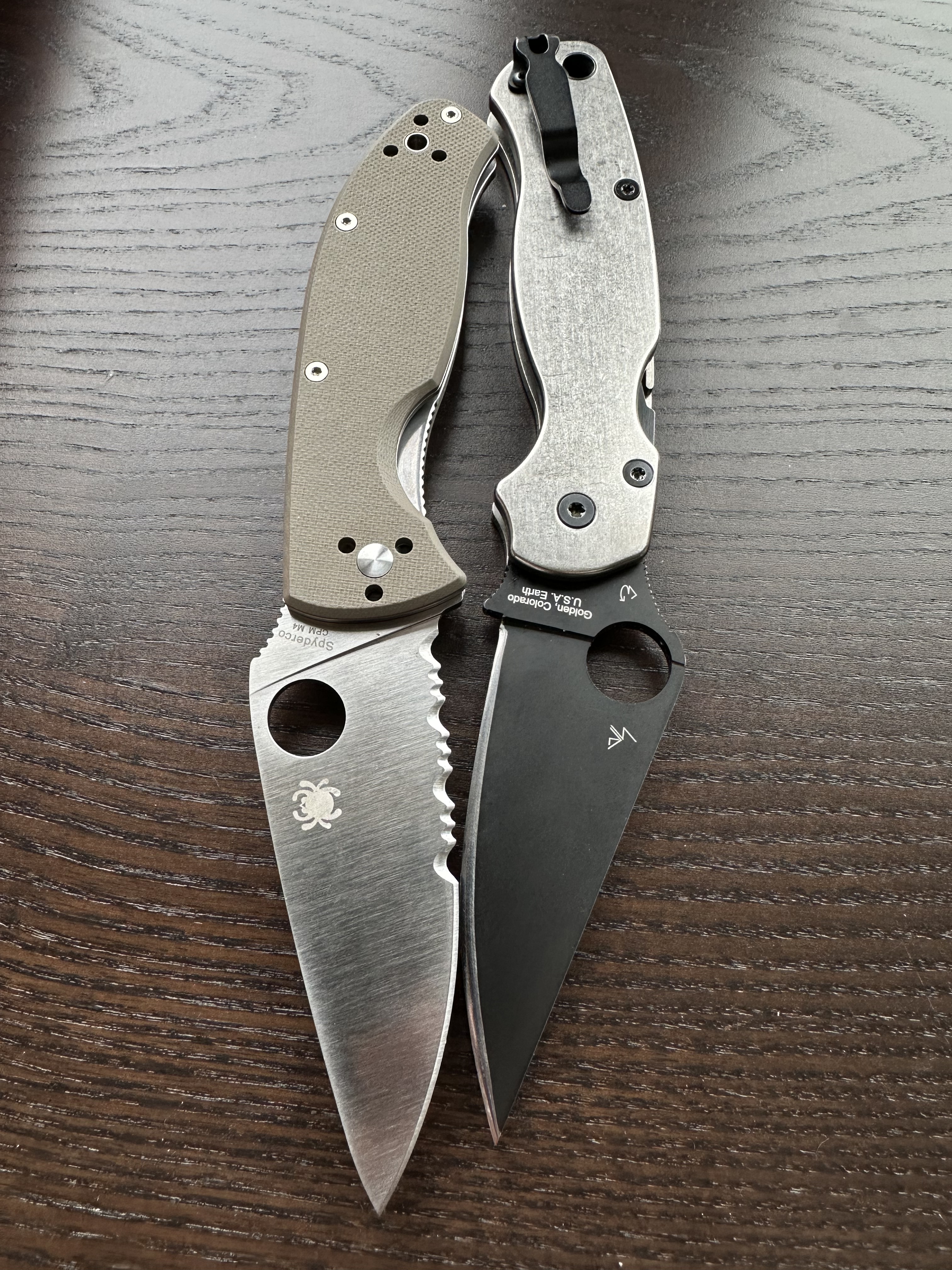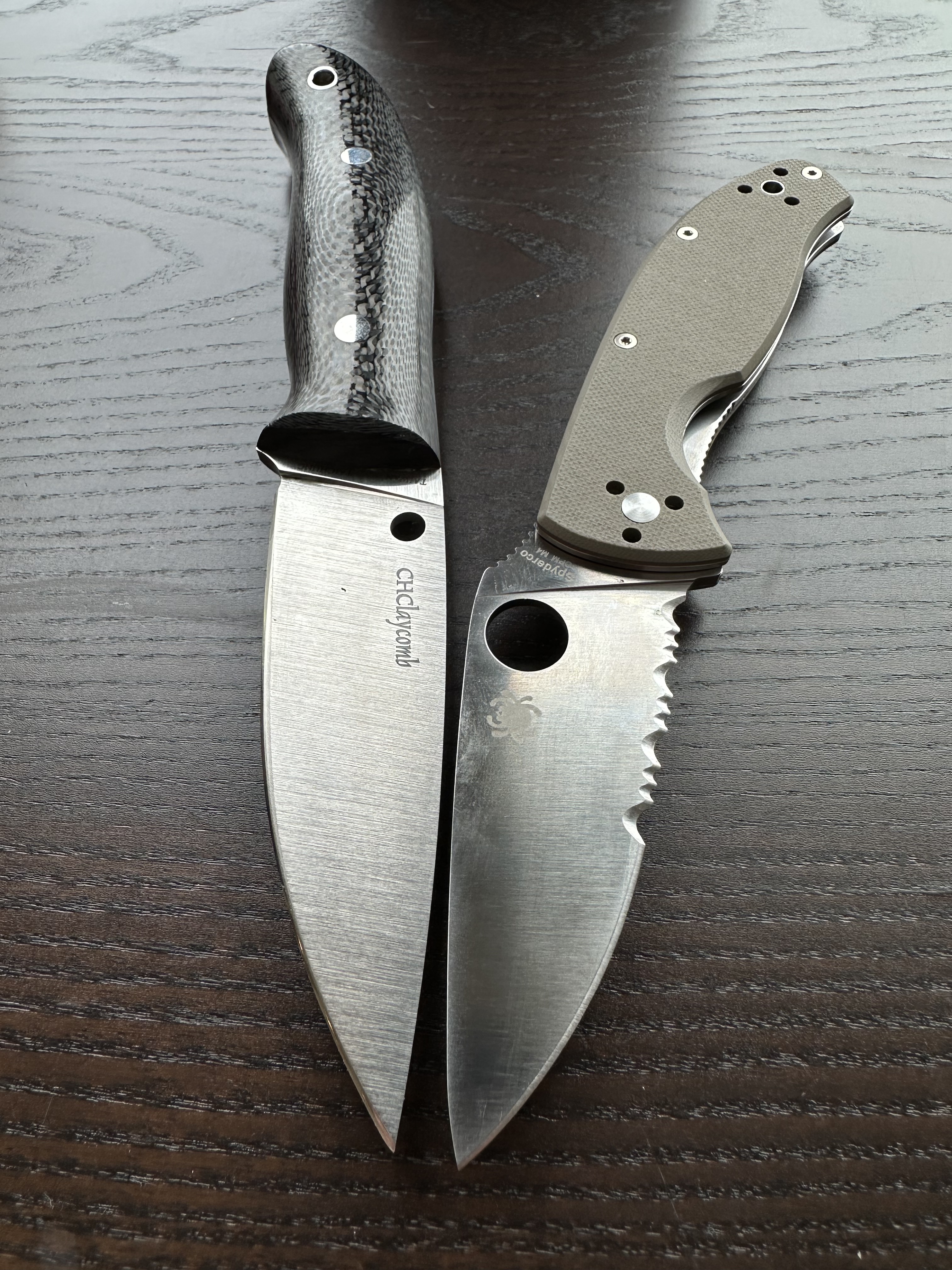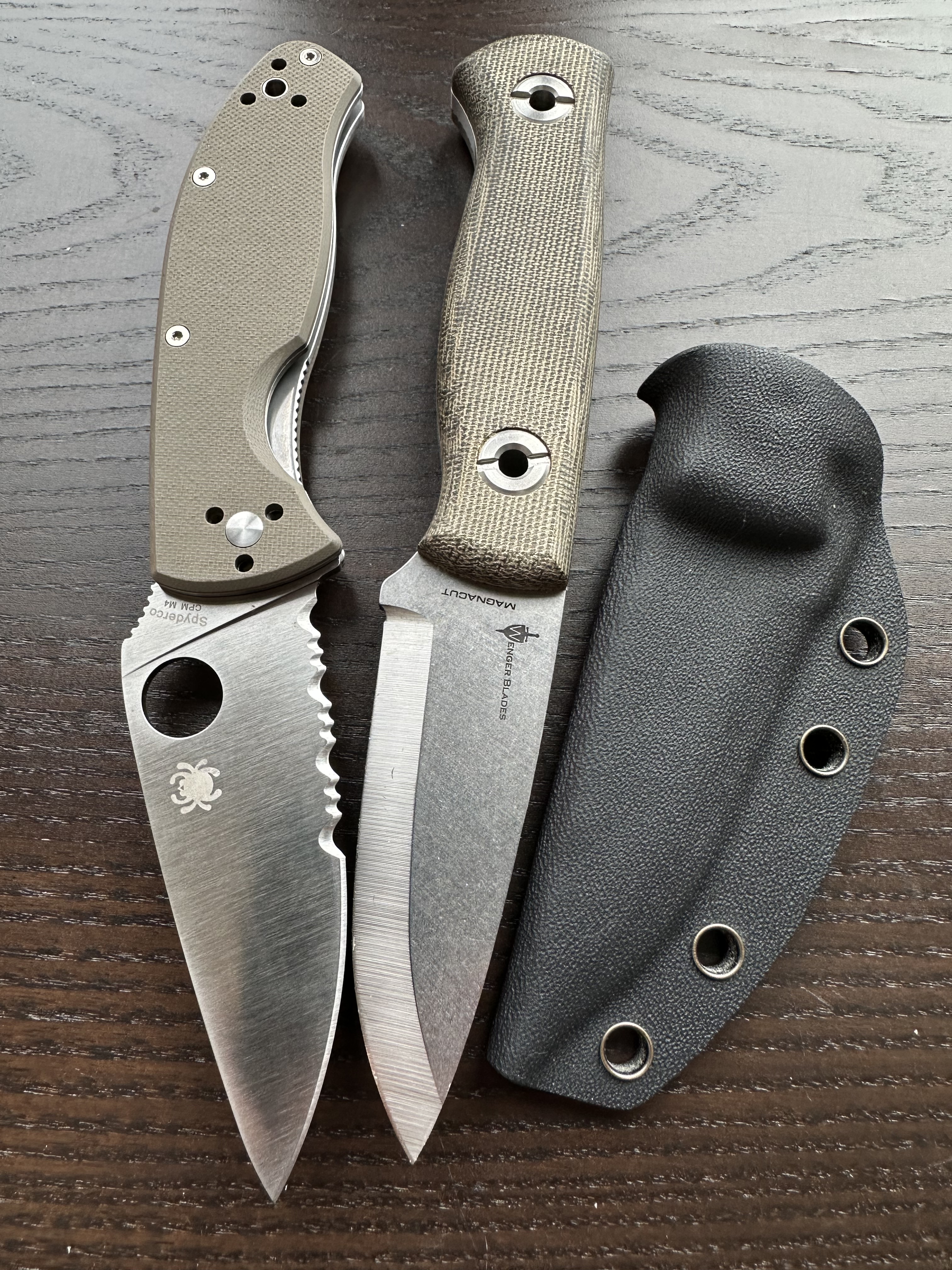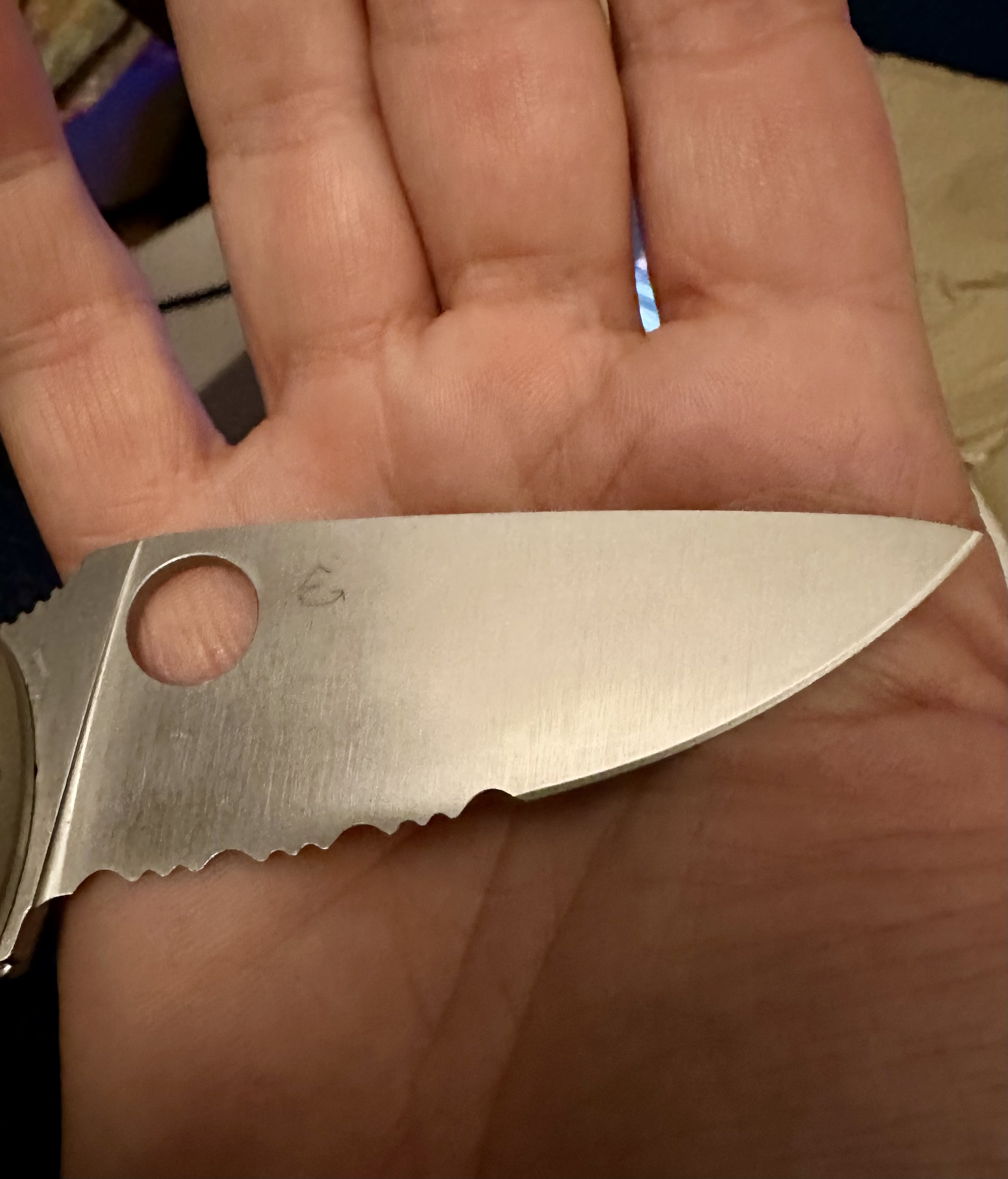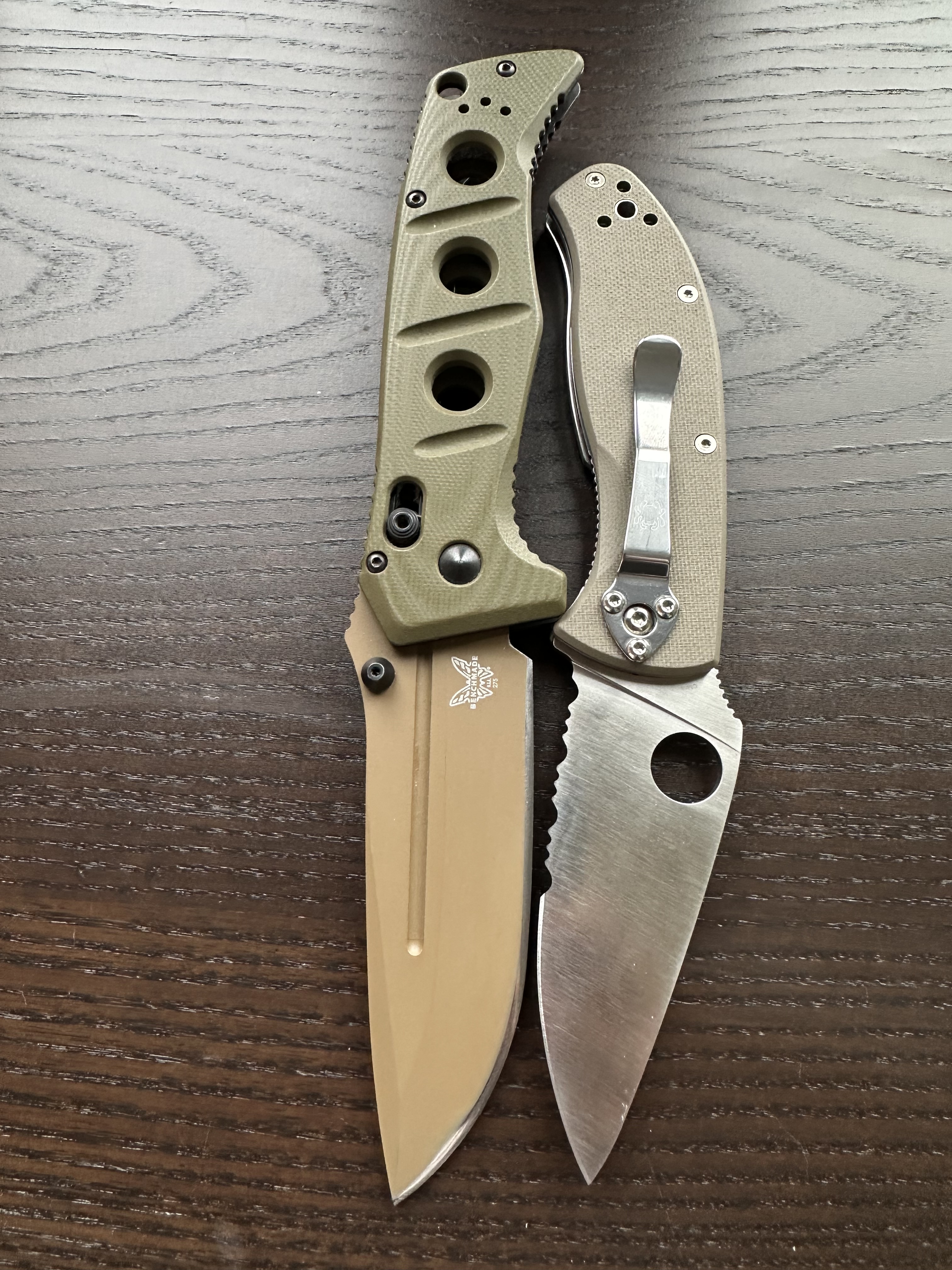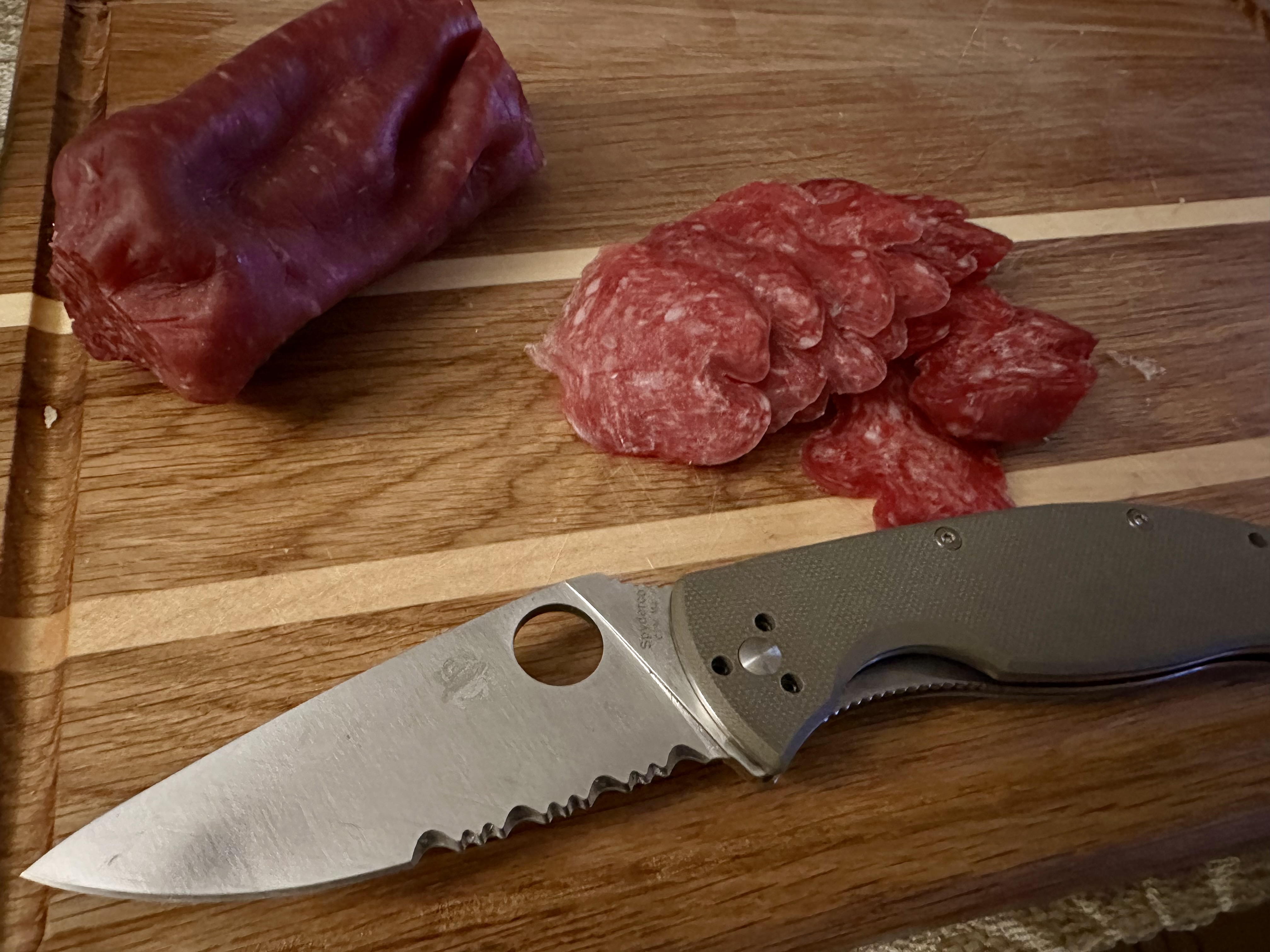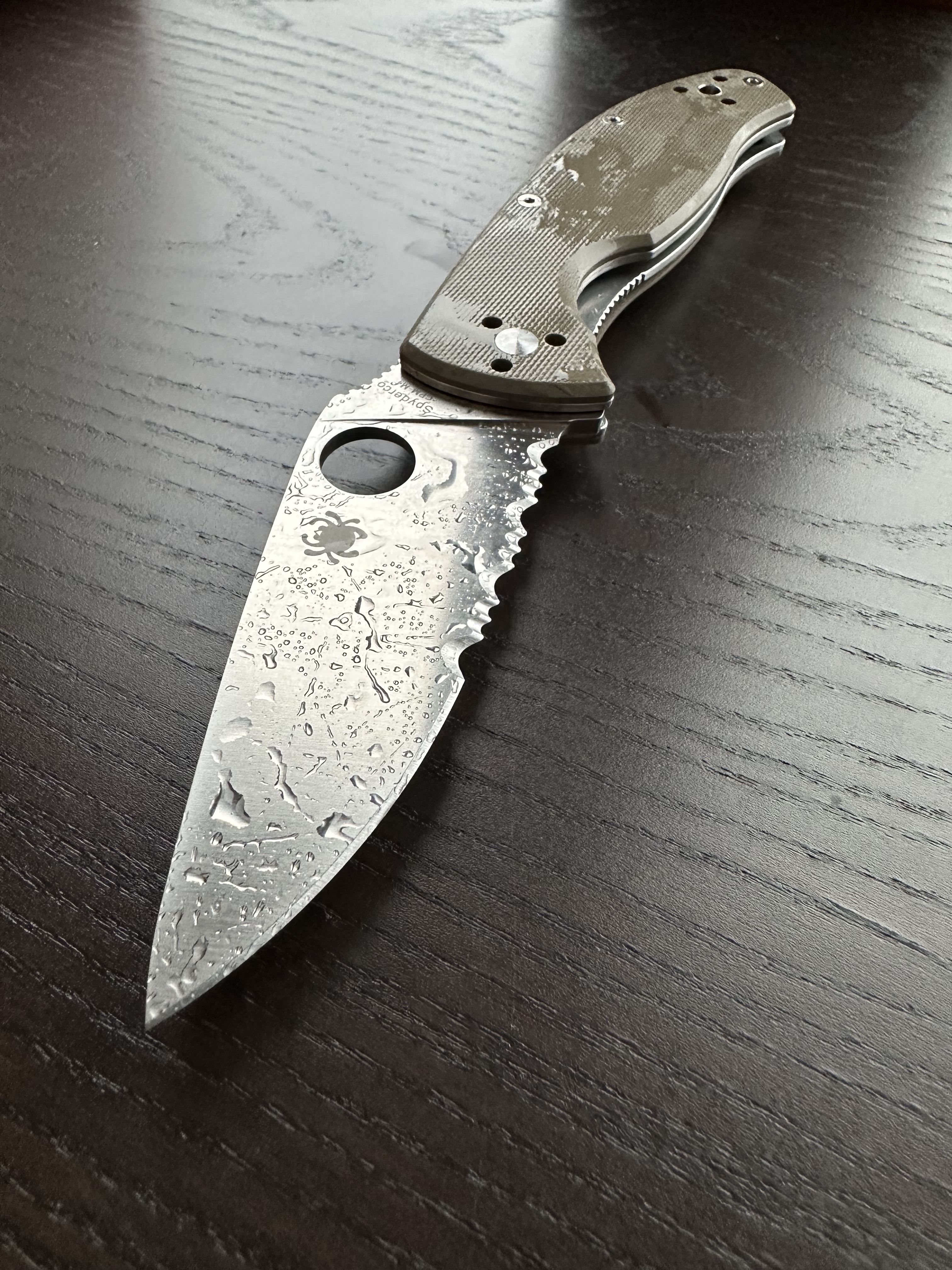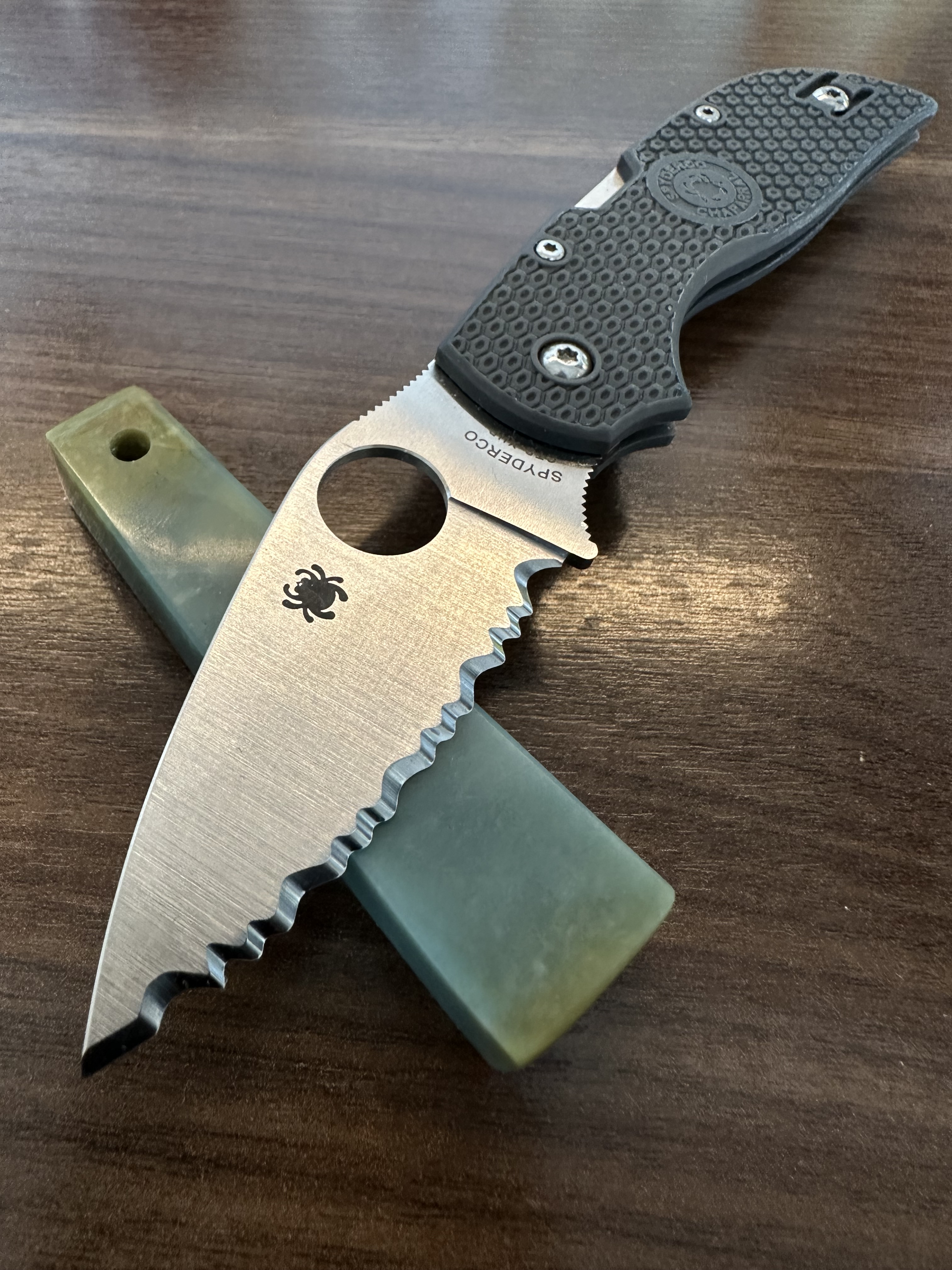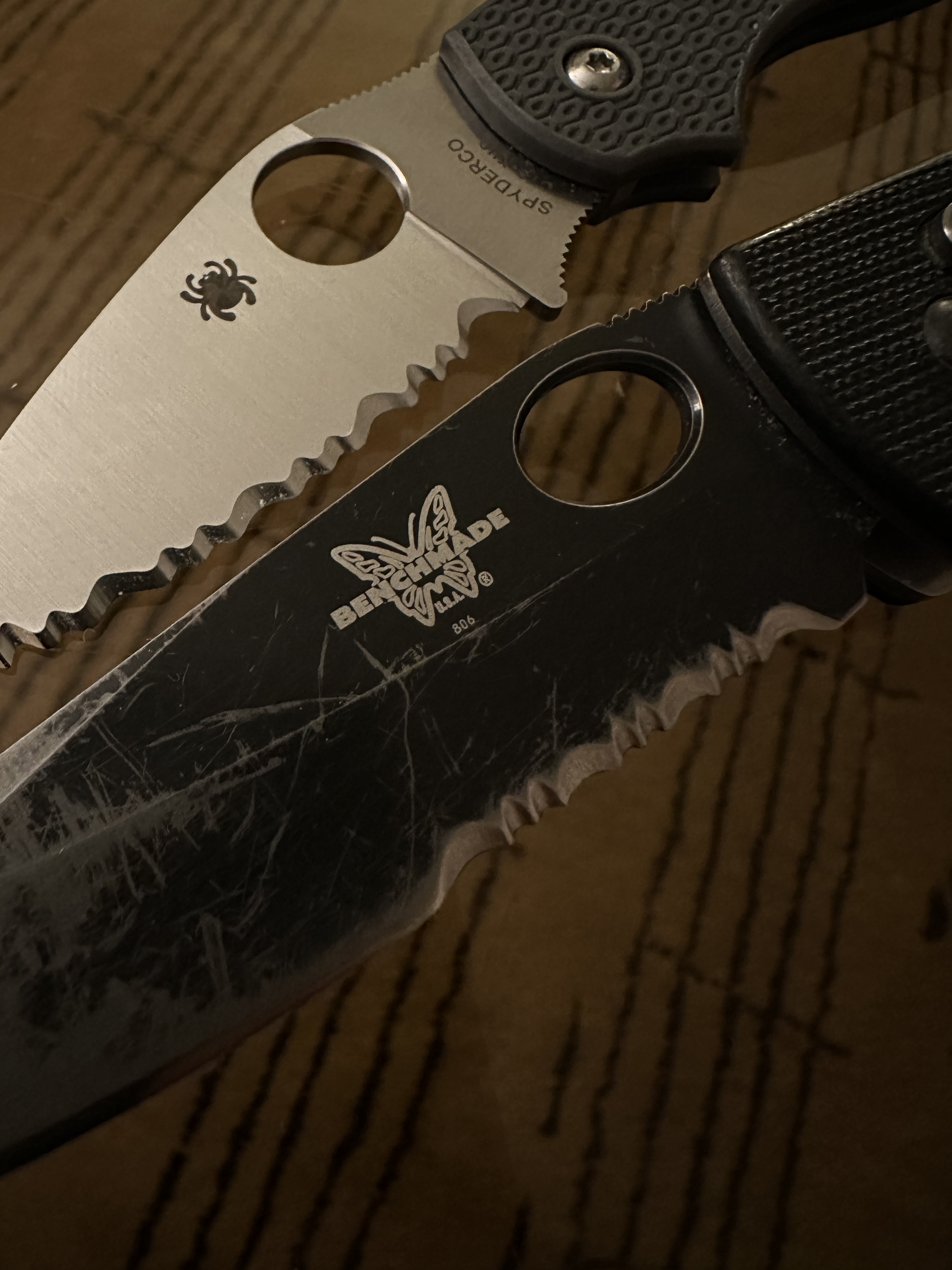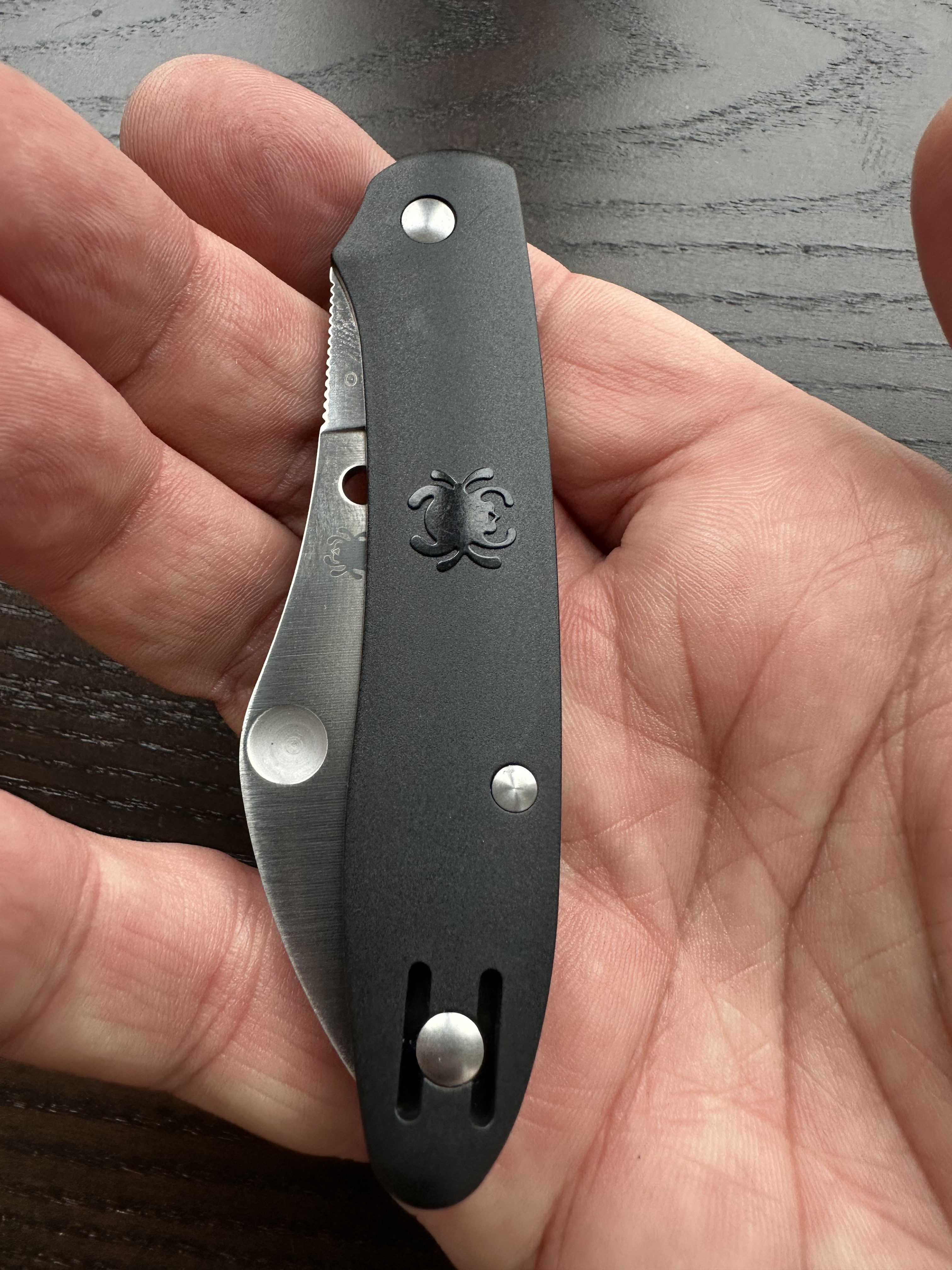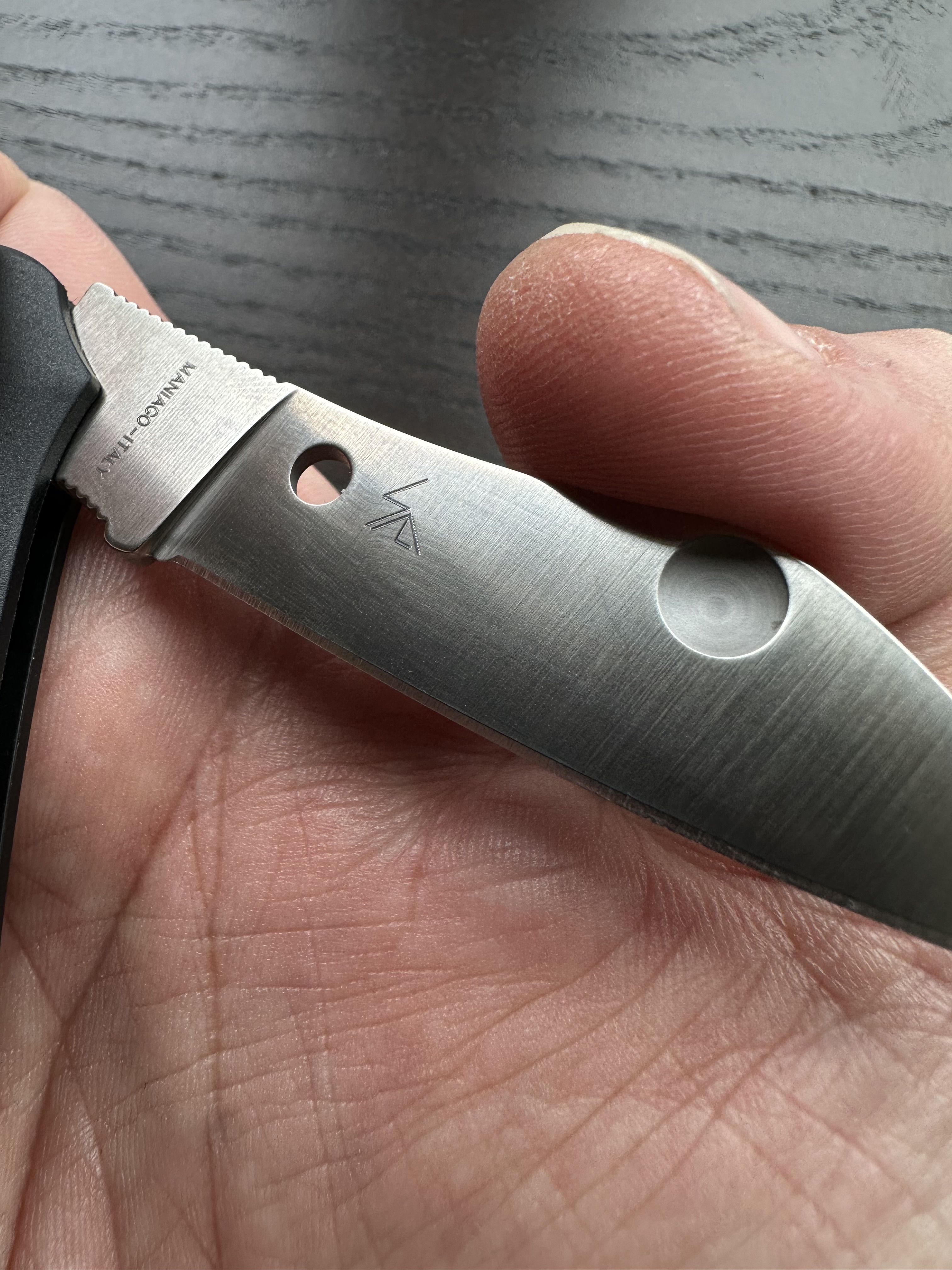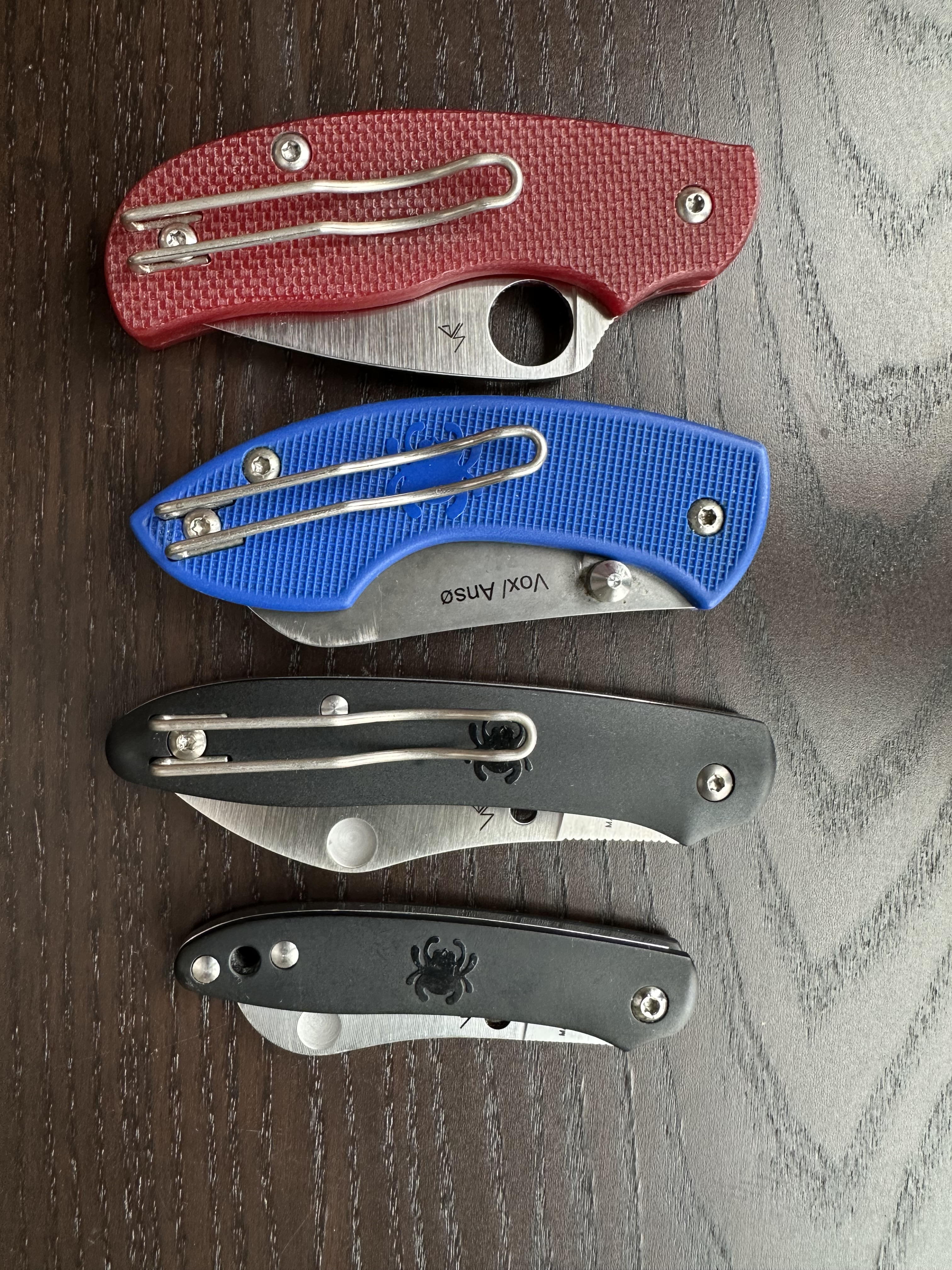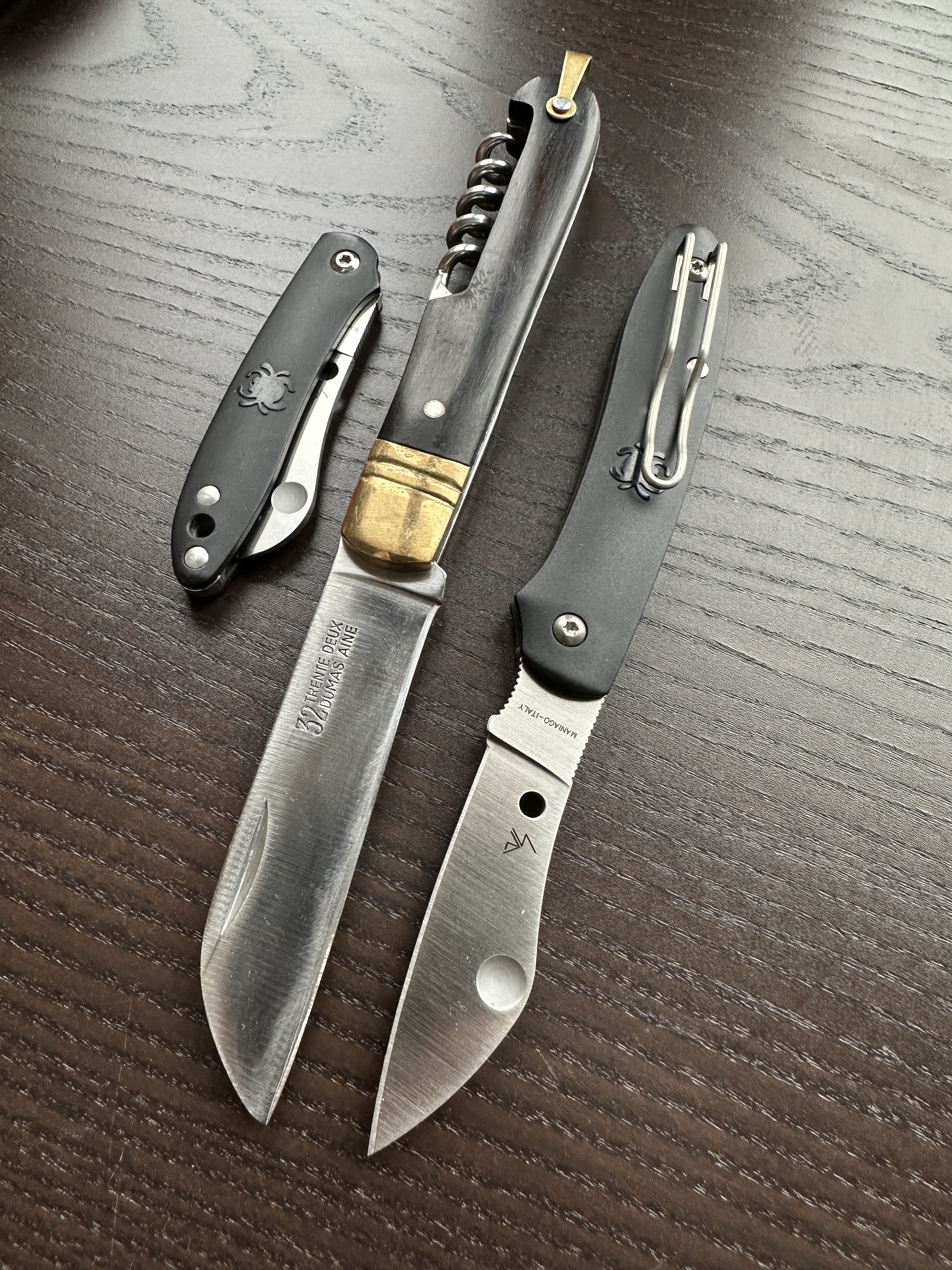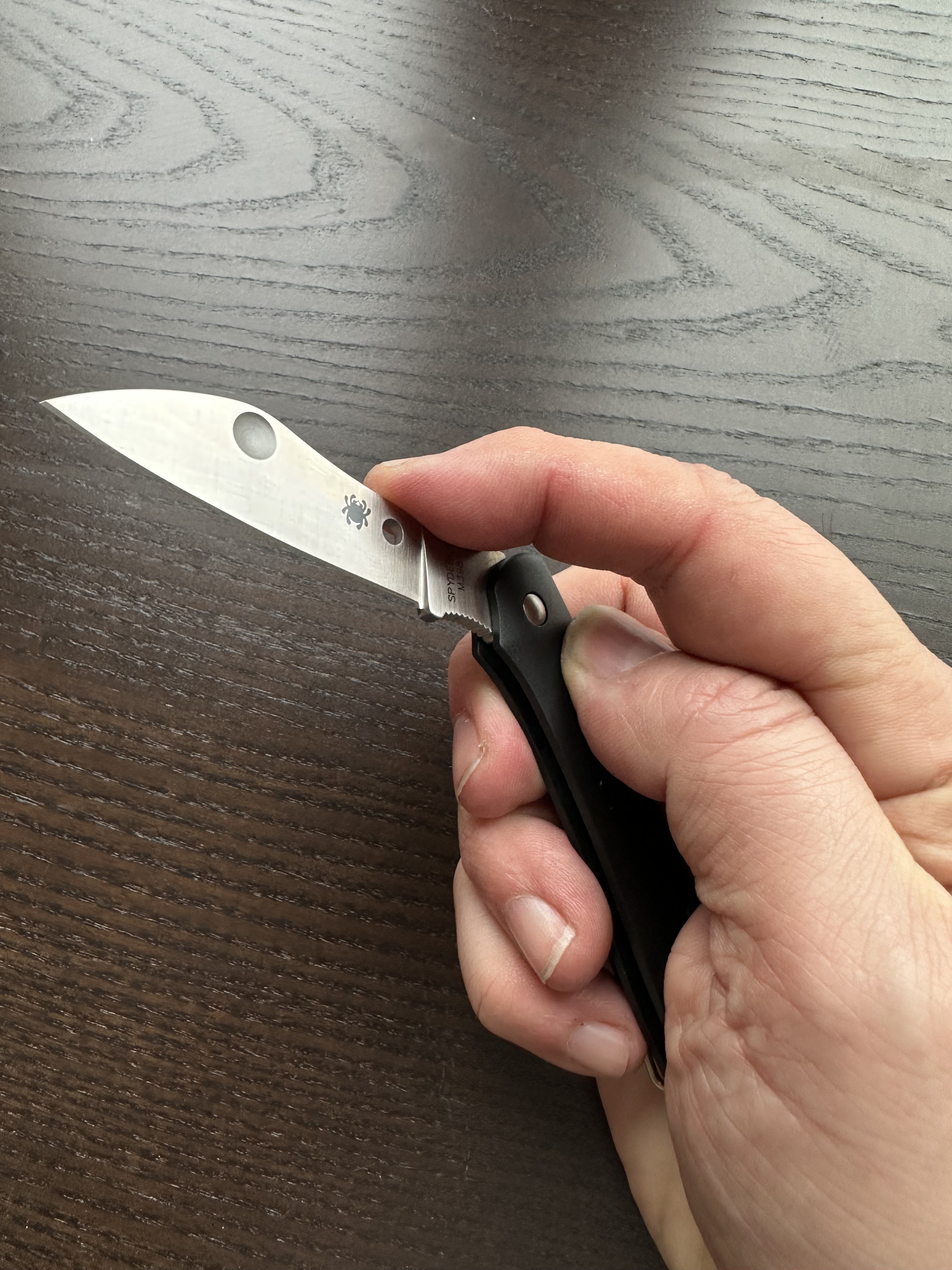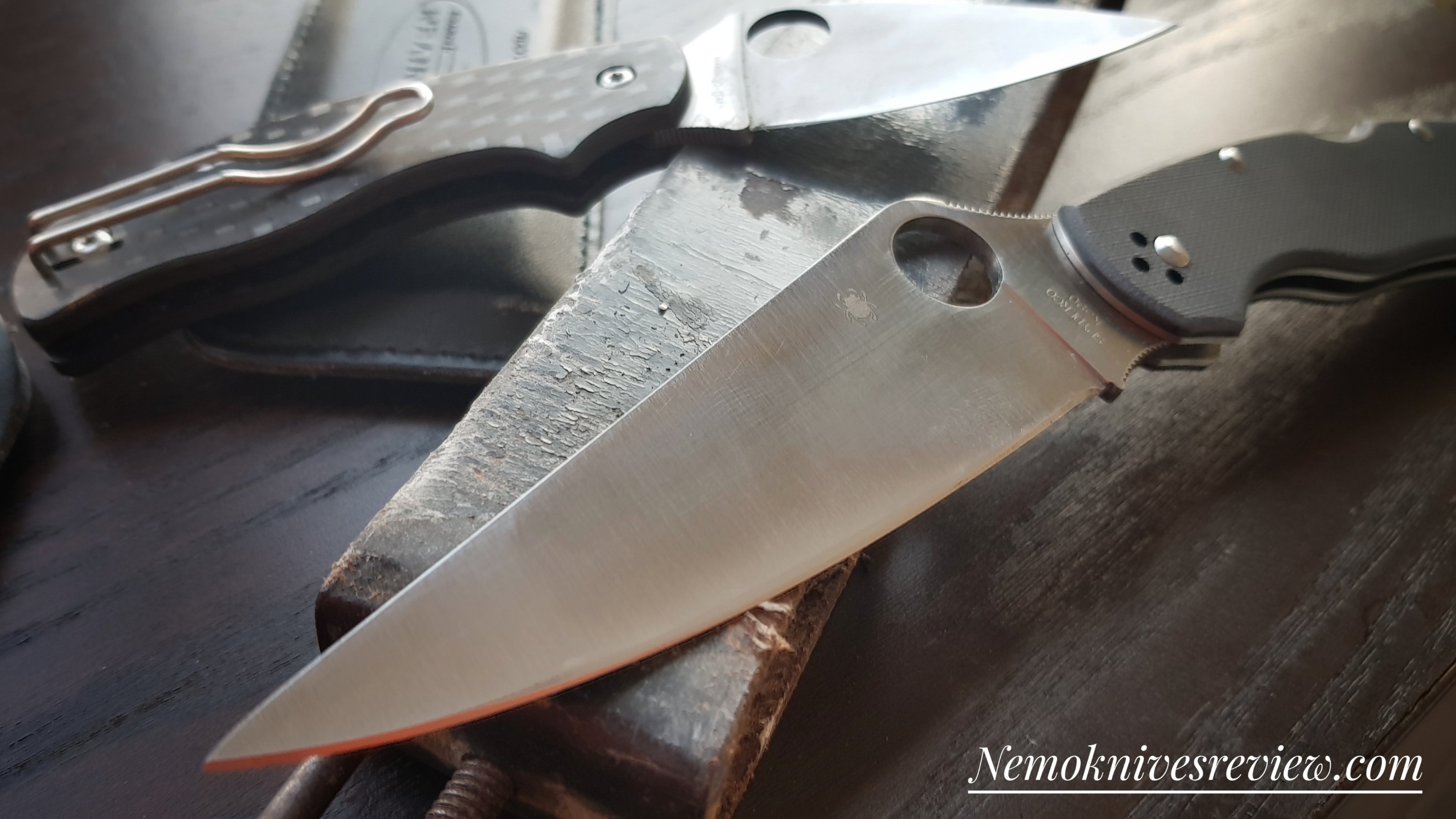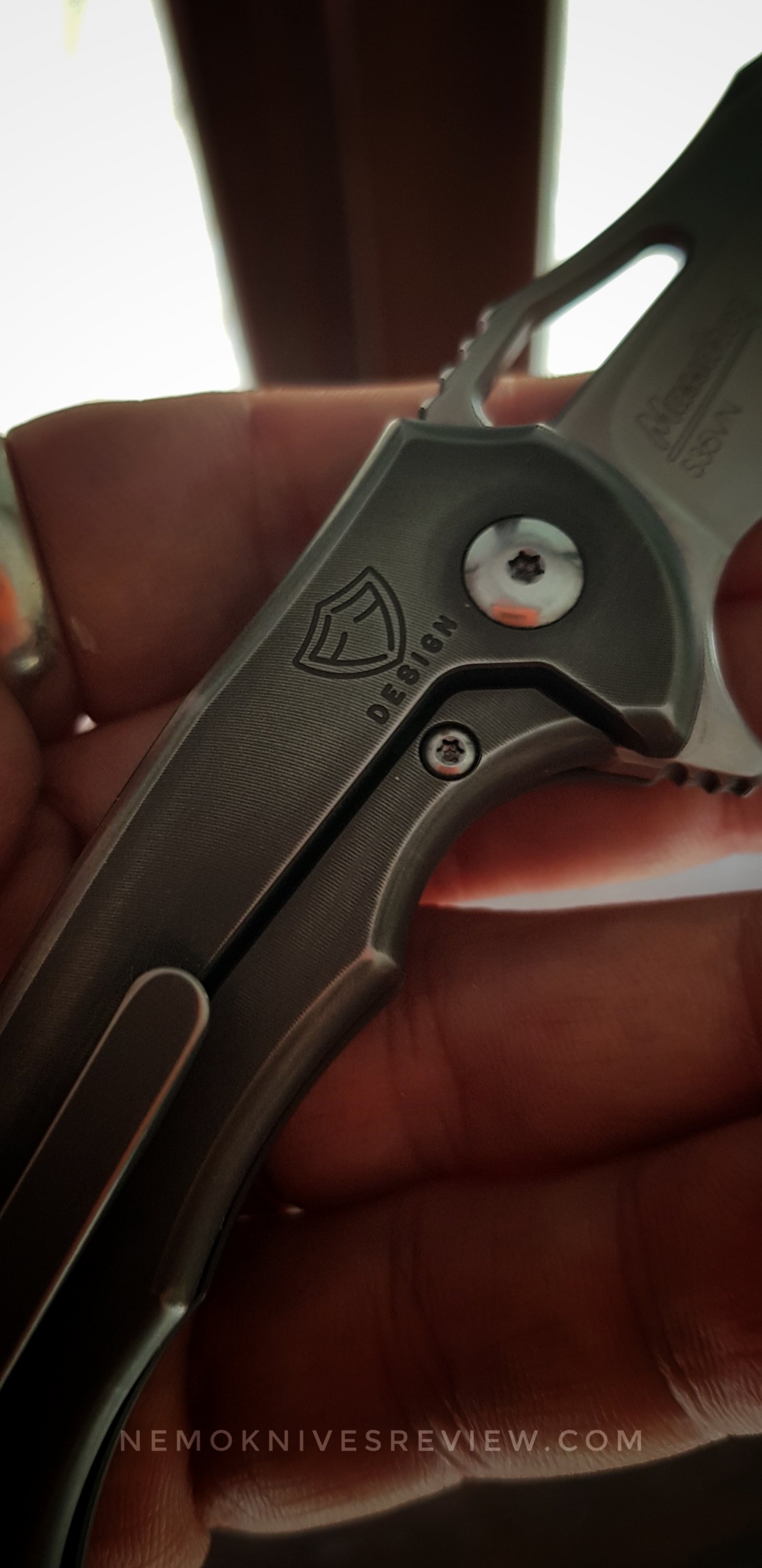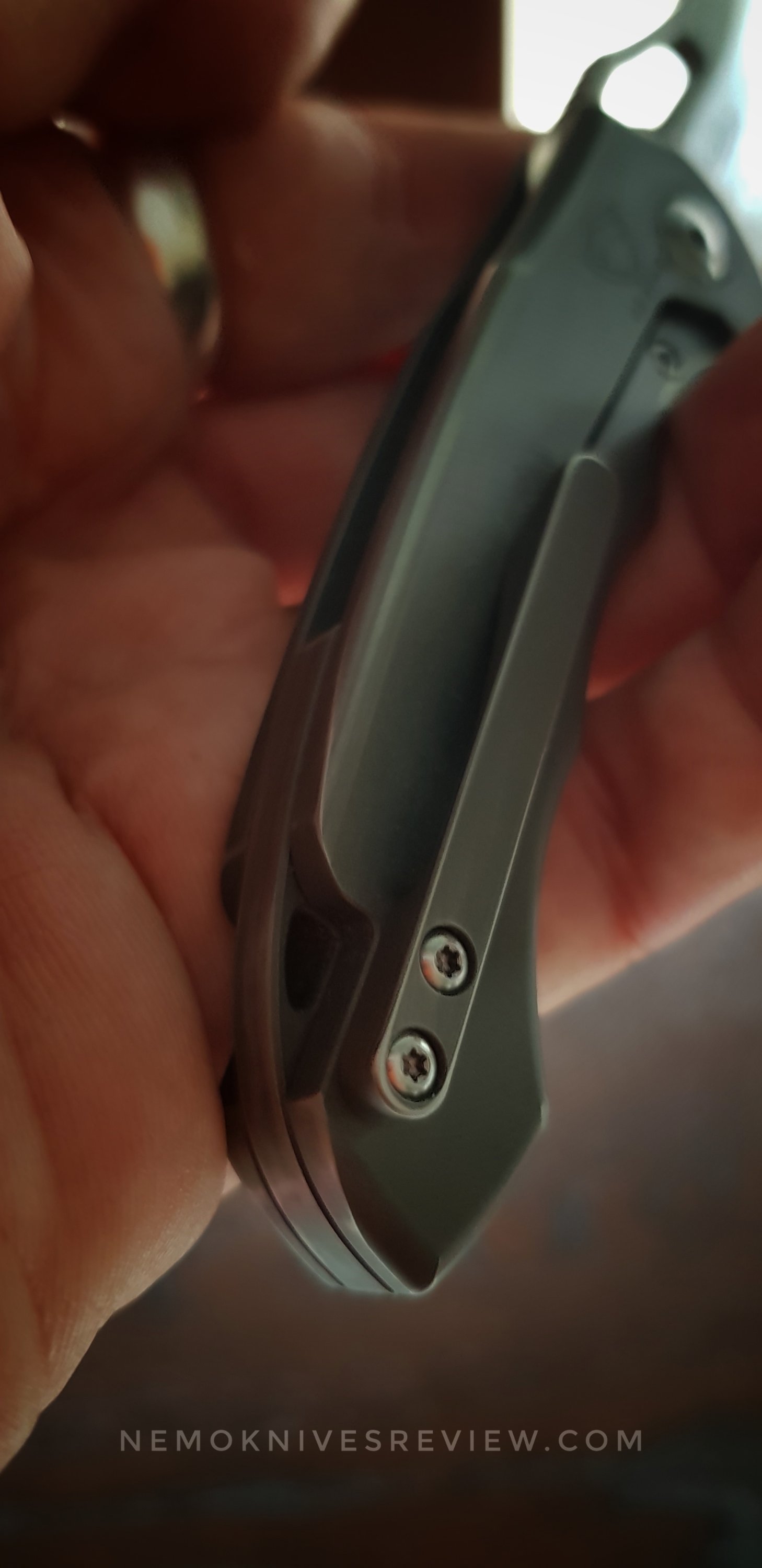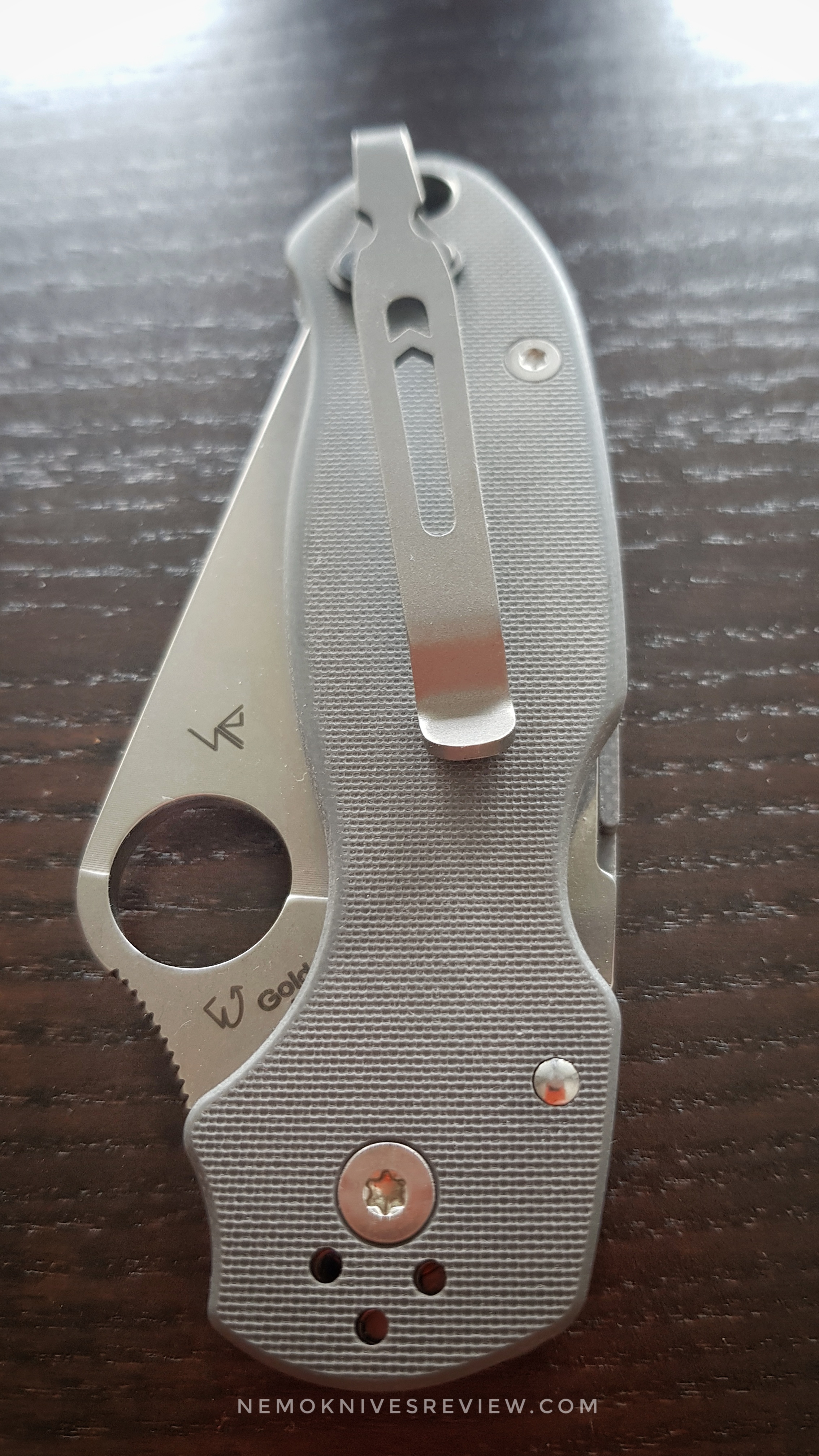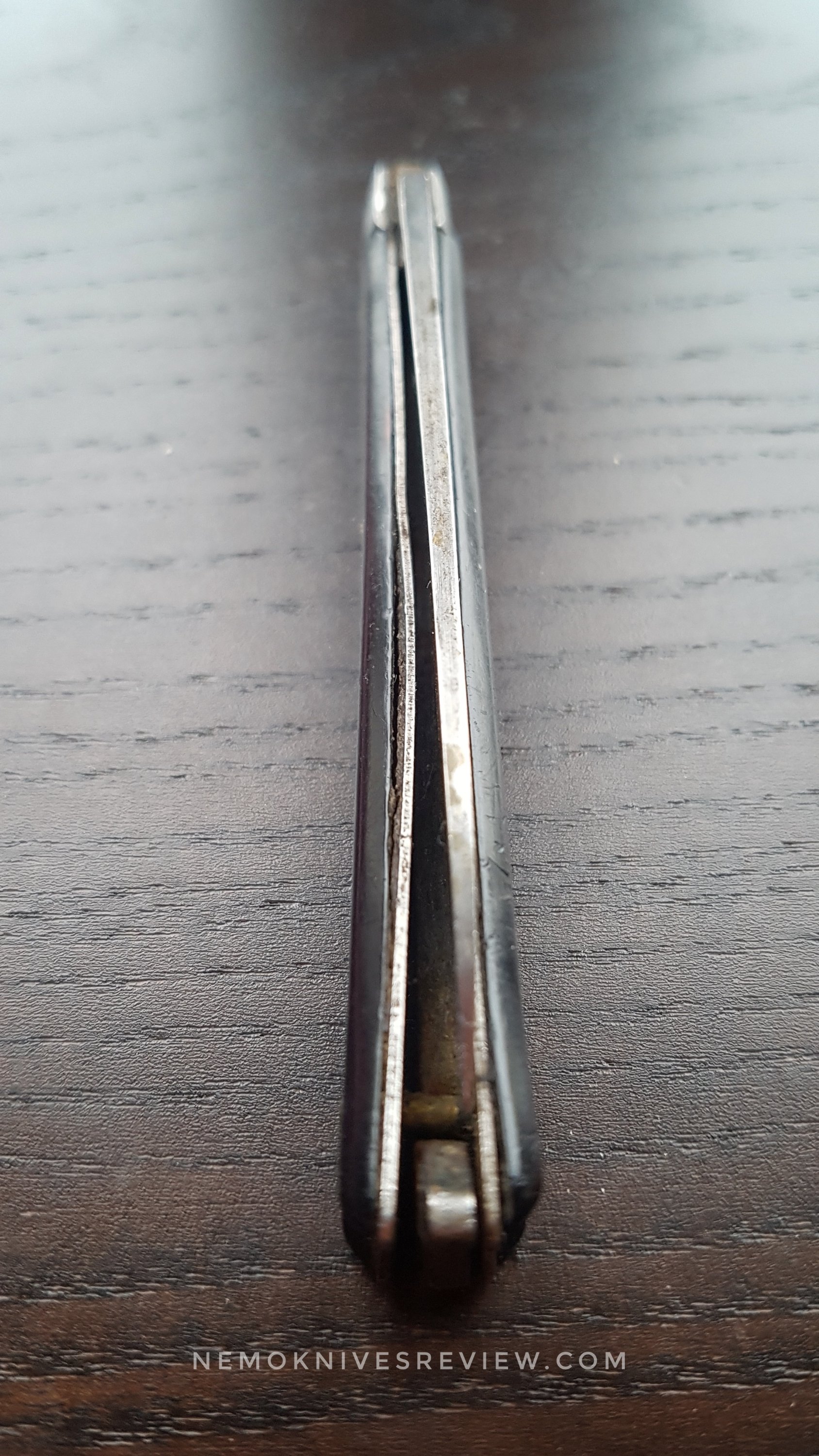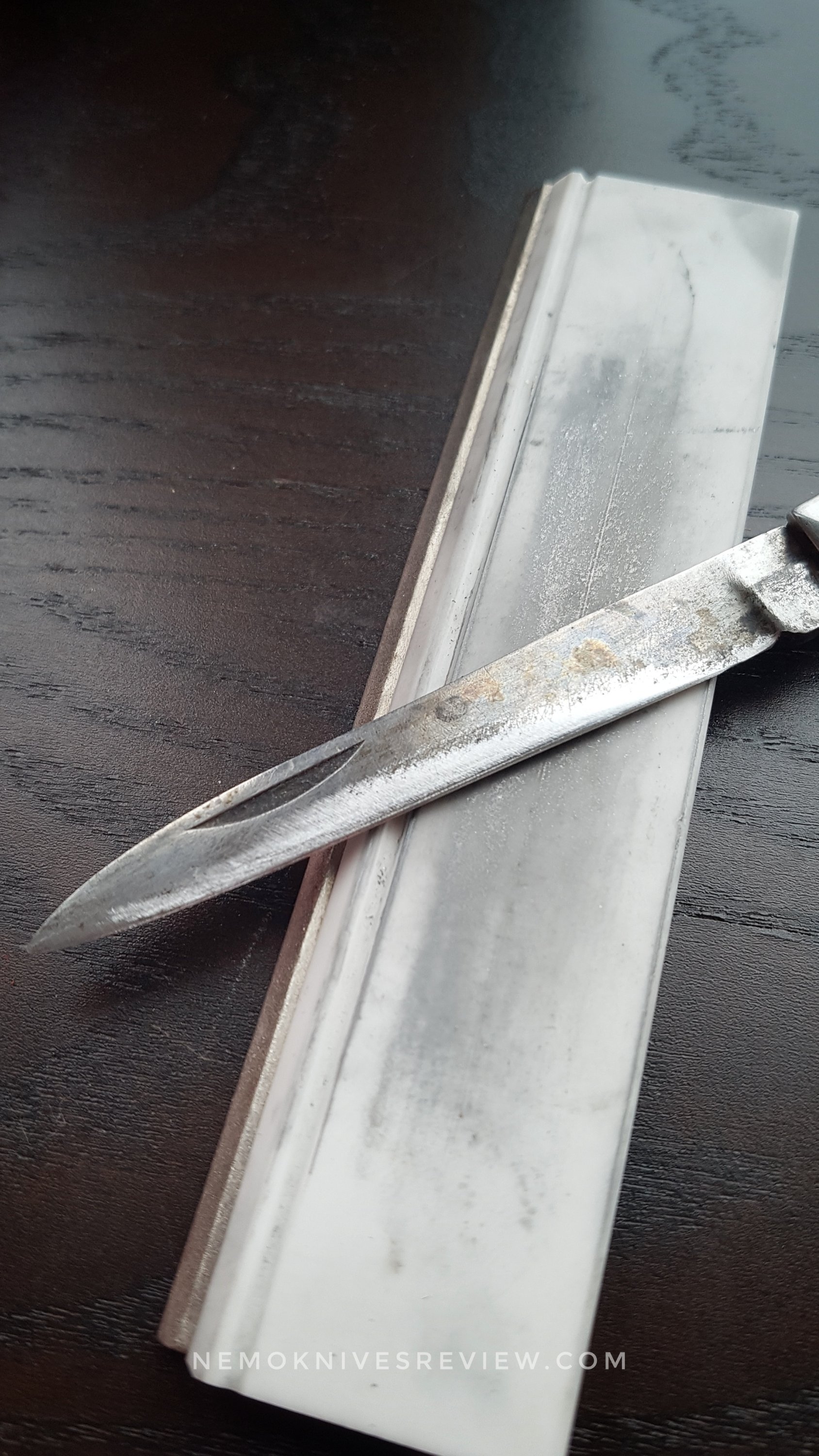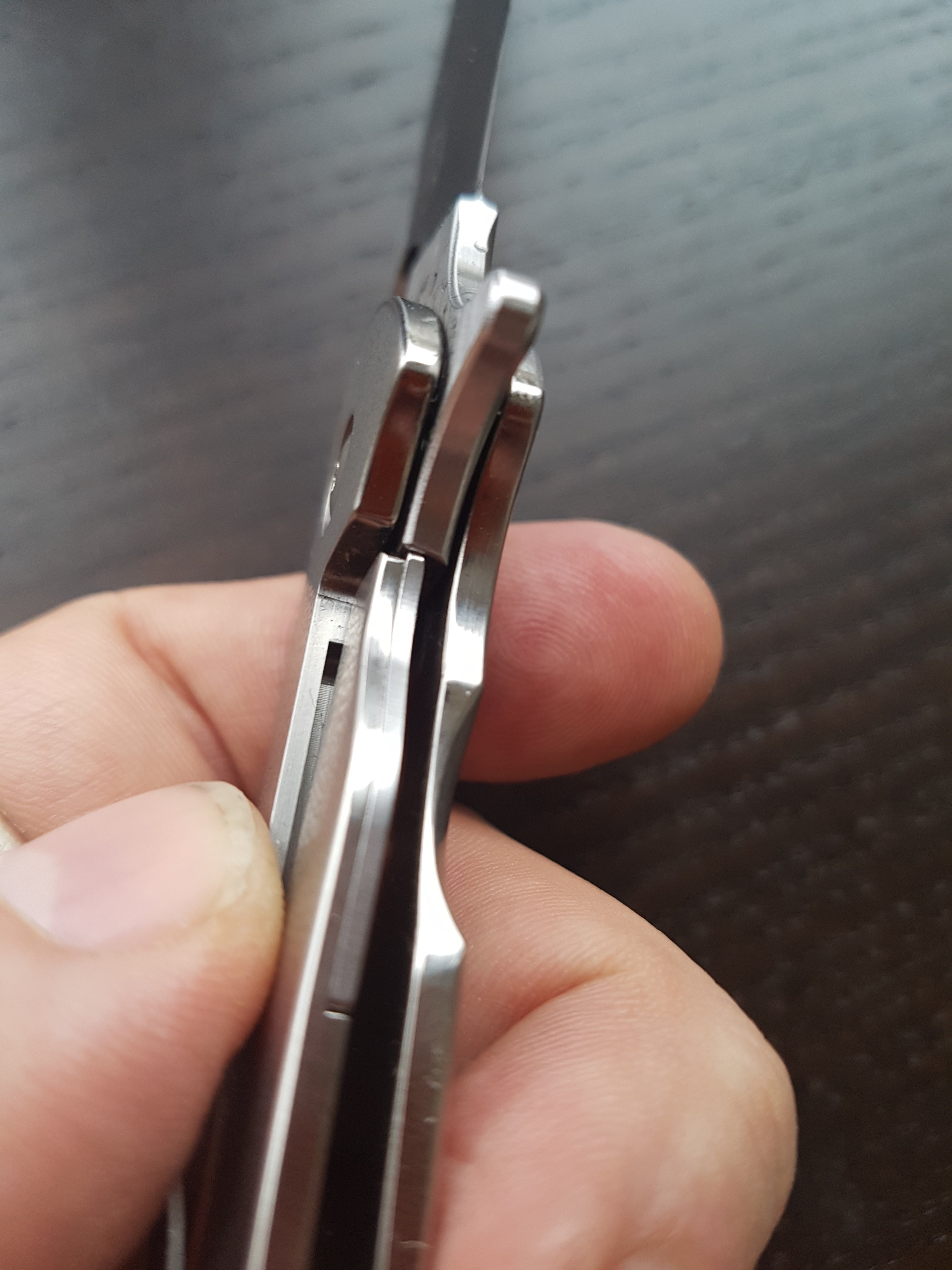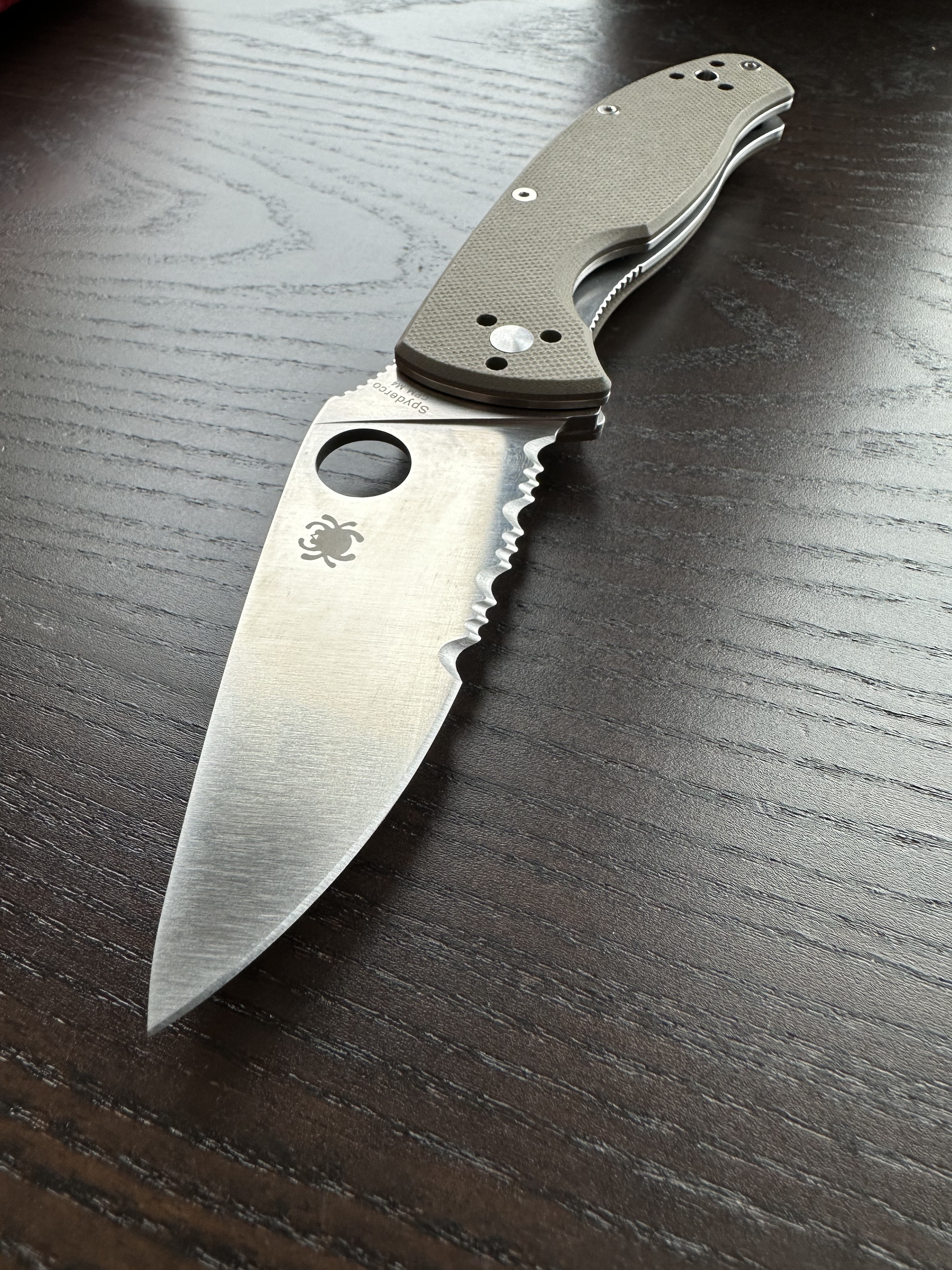
Like I had mentioned in the glimpse review of the Serrated Chaparral, this little, thin folder is built to punch above its weight. Thanks to its sturdy construction and relatively strong stainless steel — the same type found on my Cold Steel Recon 1 XL — it can be tested and used like a much larger knife without compromising performance.
Solid steel, sturdy lock? Not much difference from a larger knife, in fact. 😉
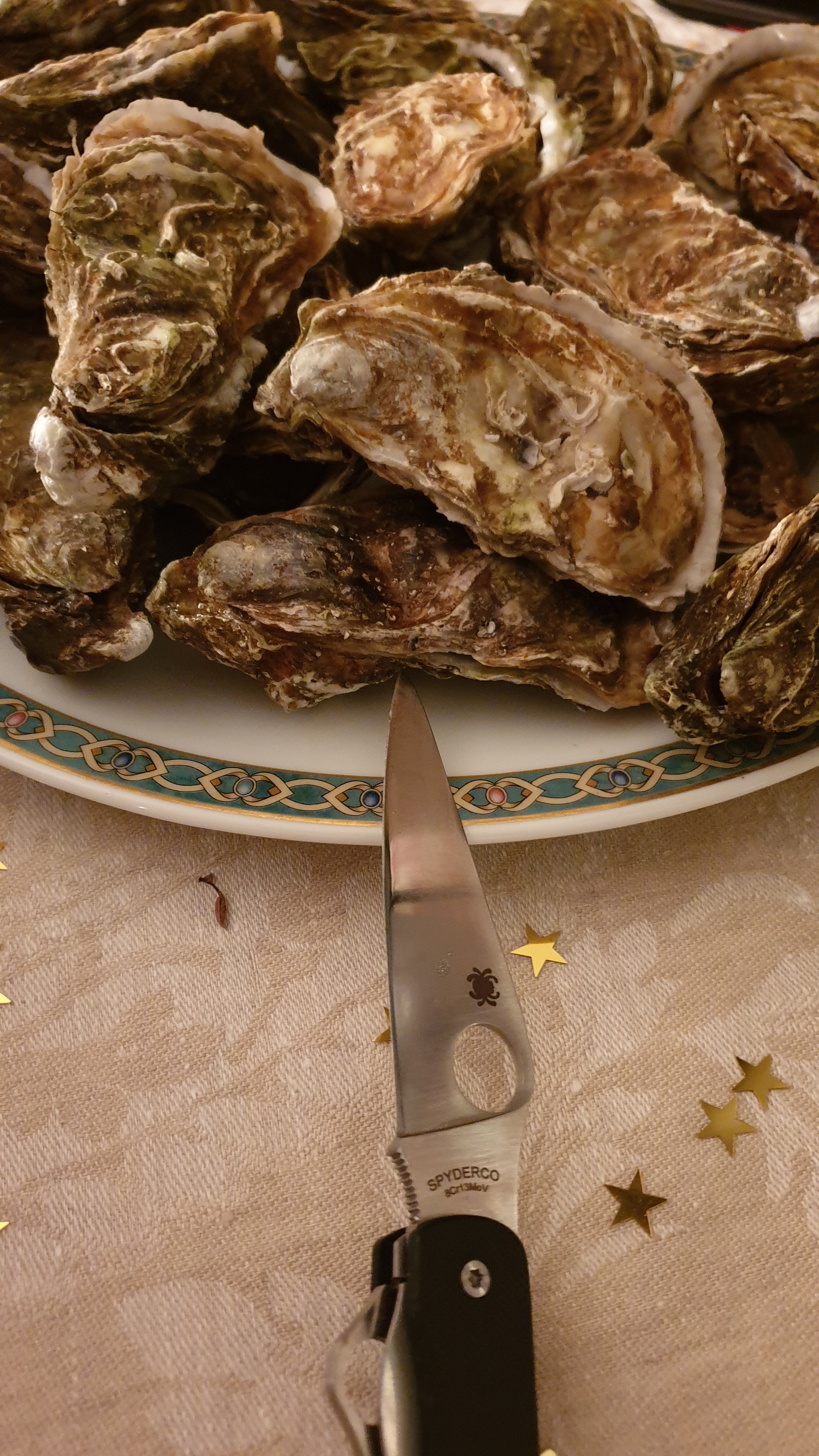
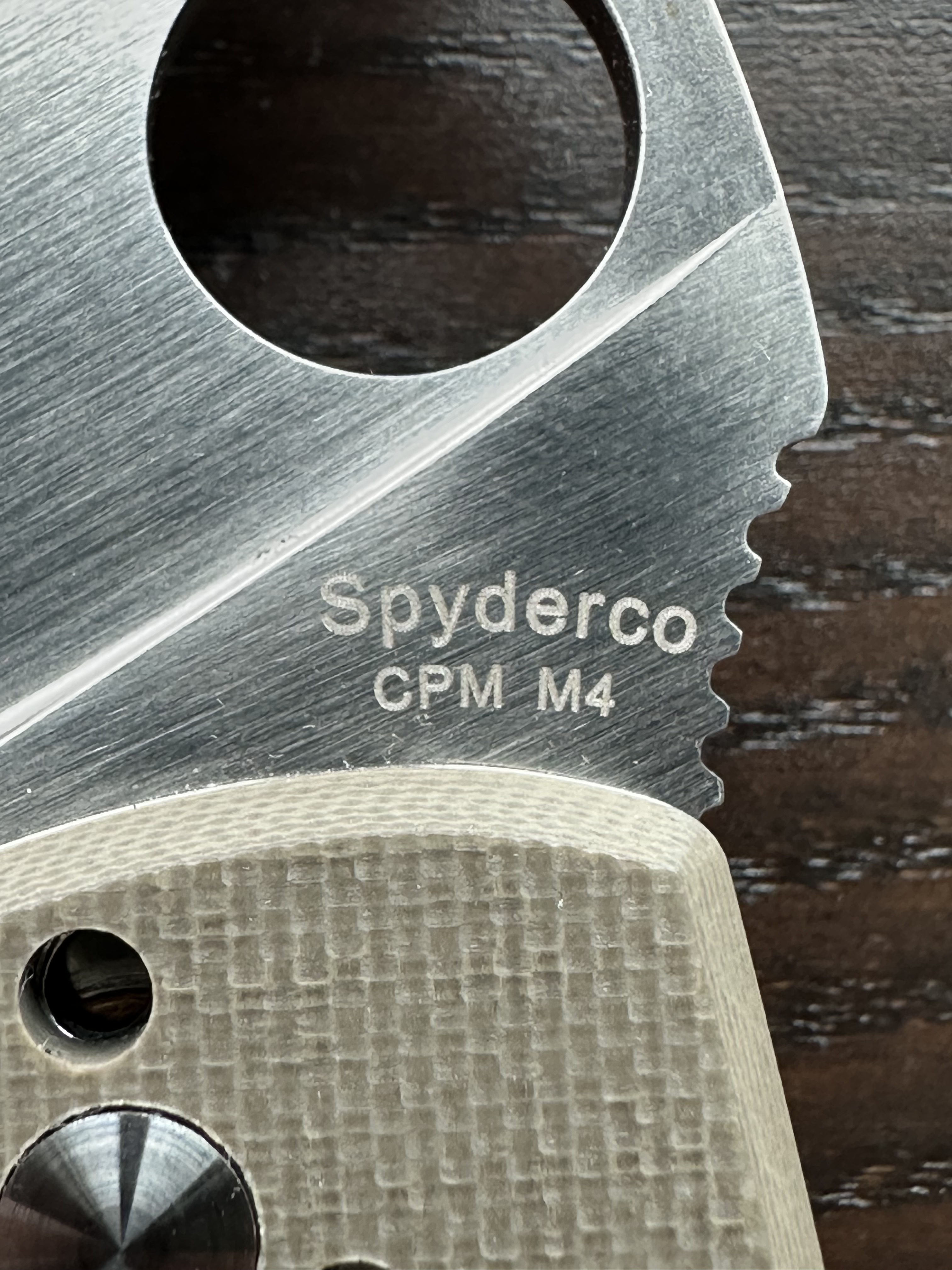
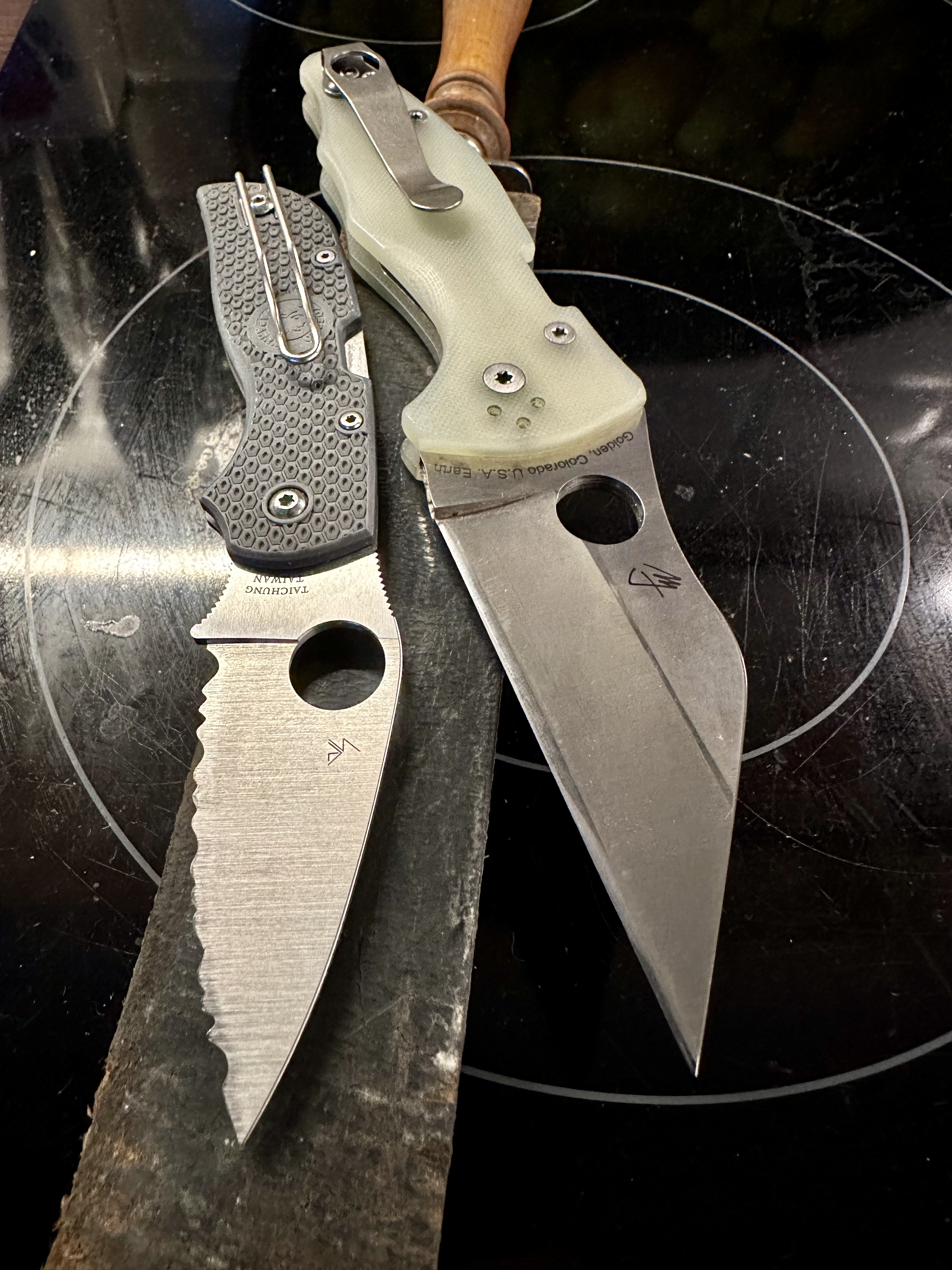
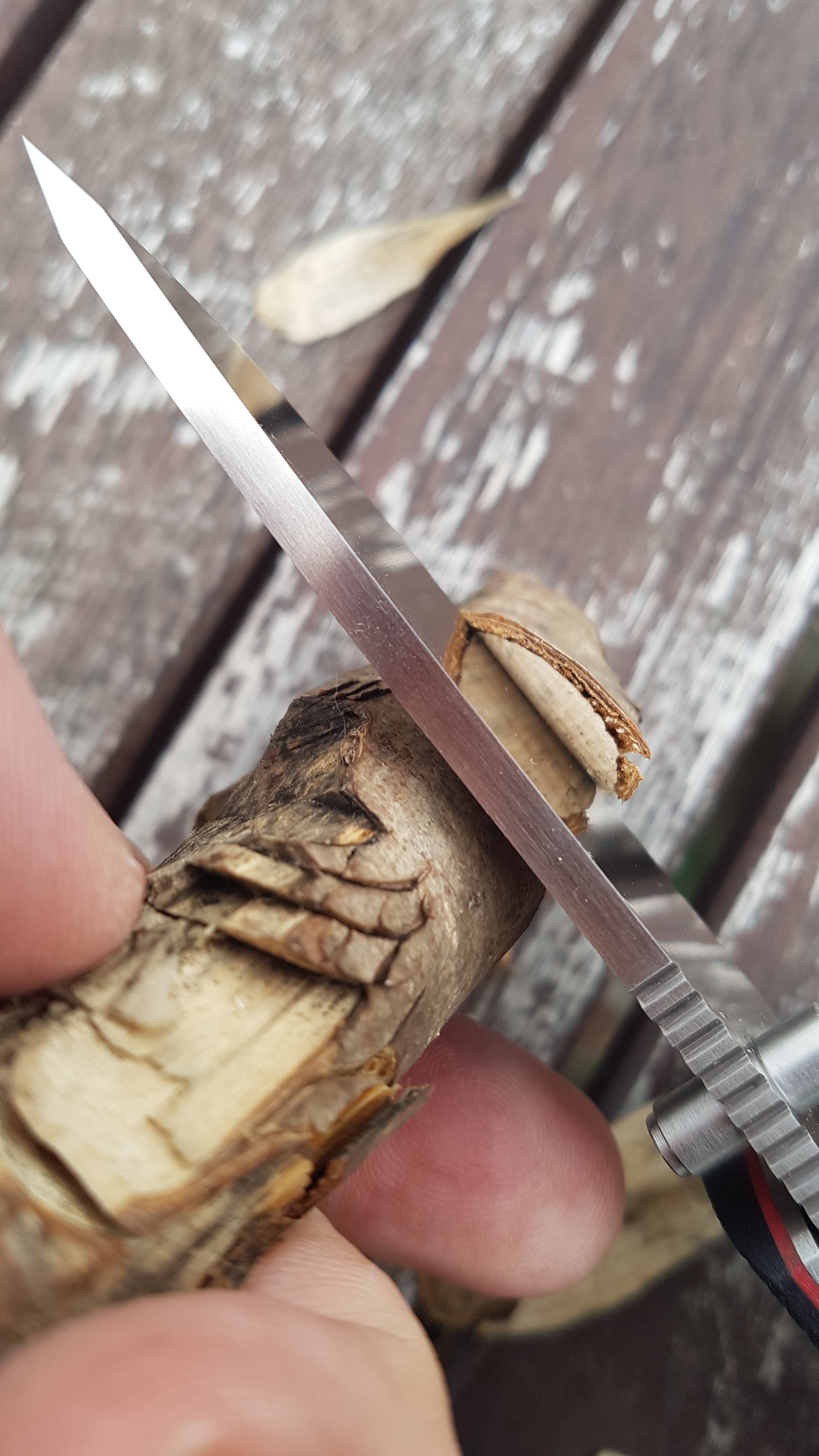
So far, I’ve put the knife through its paces, cutting anything I could, and maintaining the edge with some Jade stones (see first picture). The mechanism shows no signs of play in any direction — rock-solid performance.
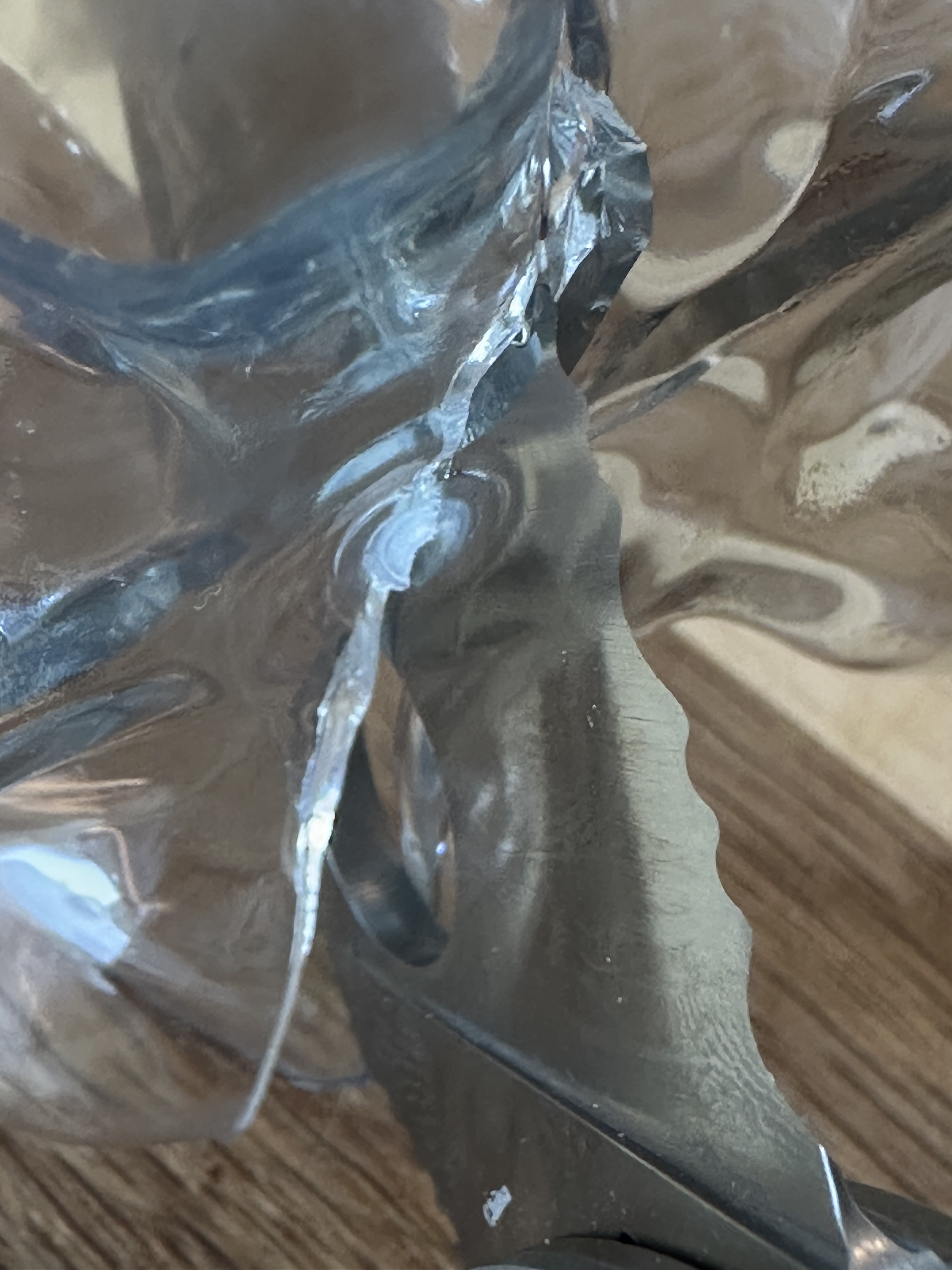
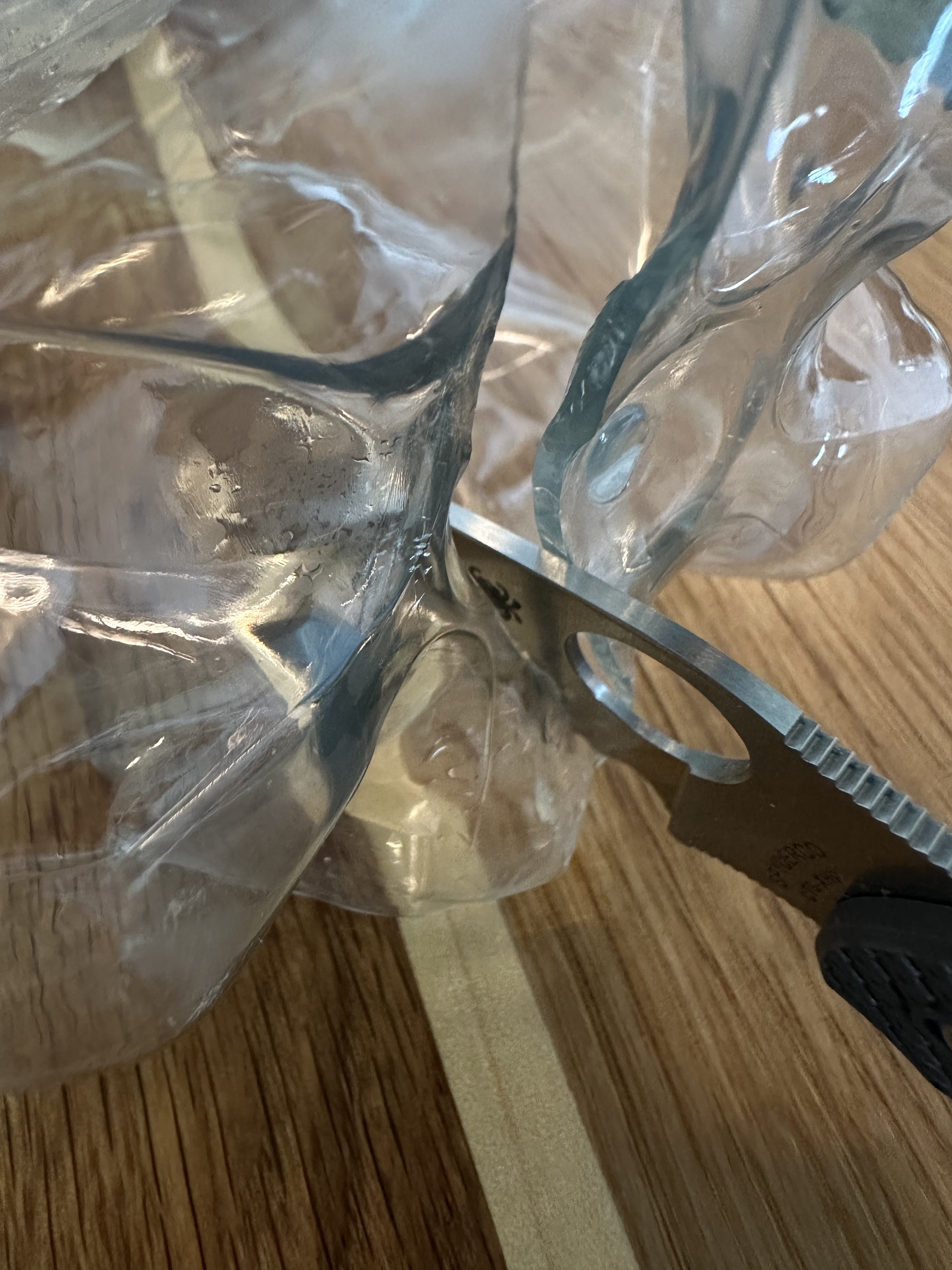
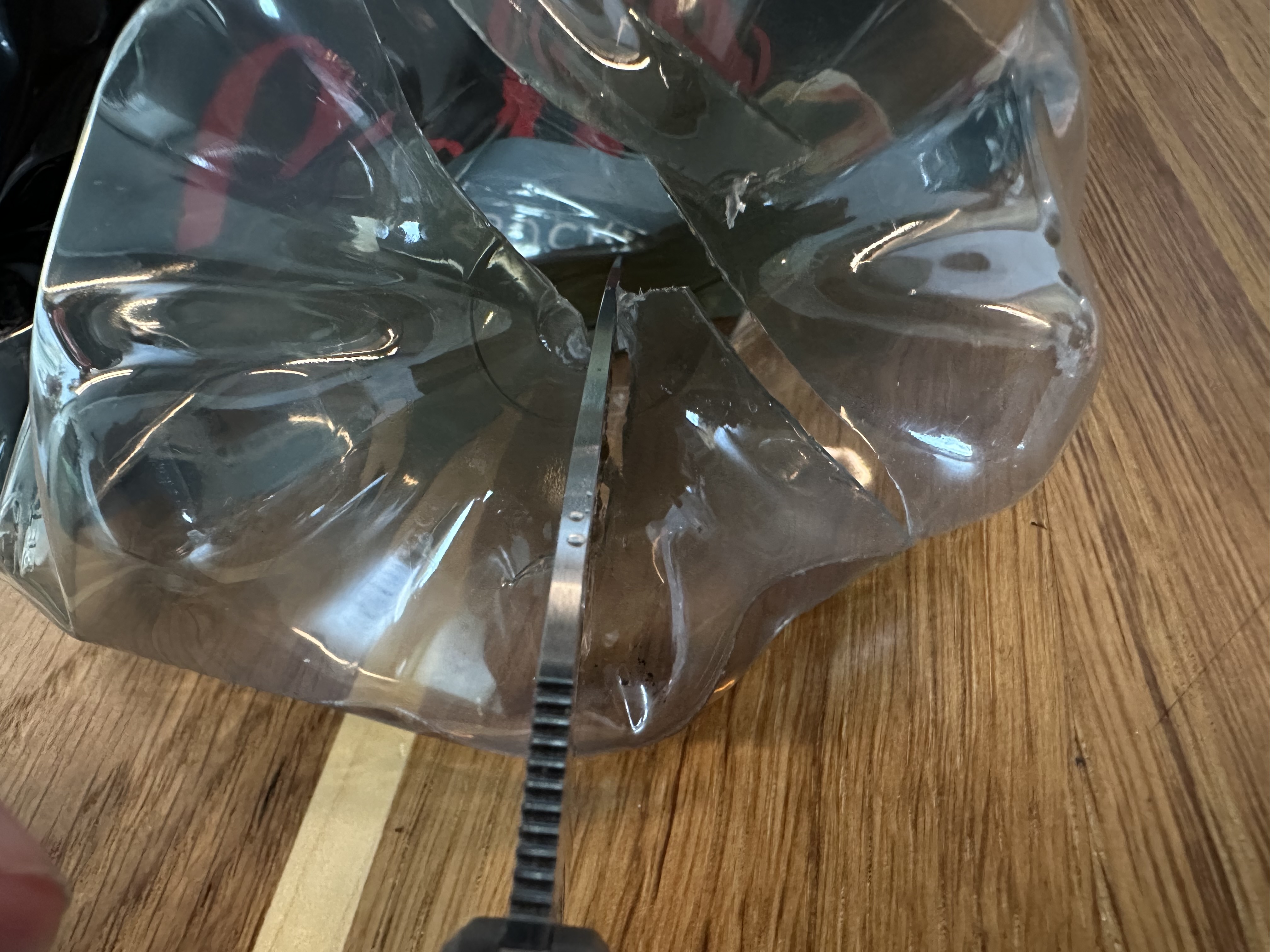
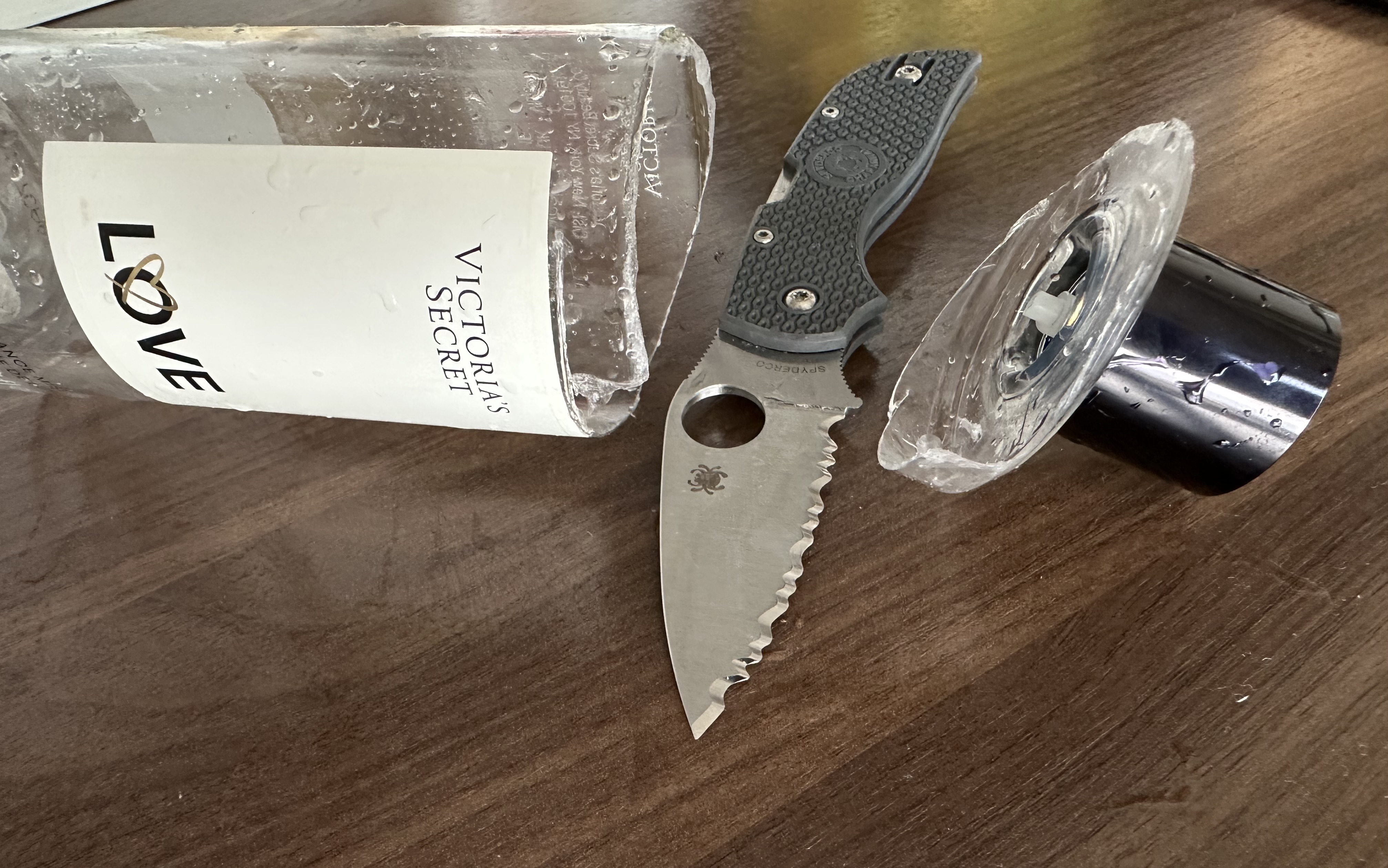
The plastic is thicker that the blade.
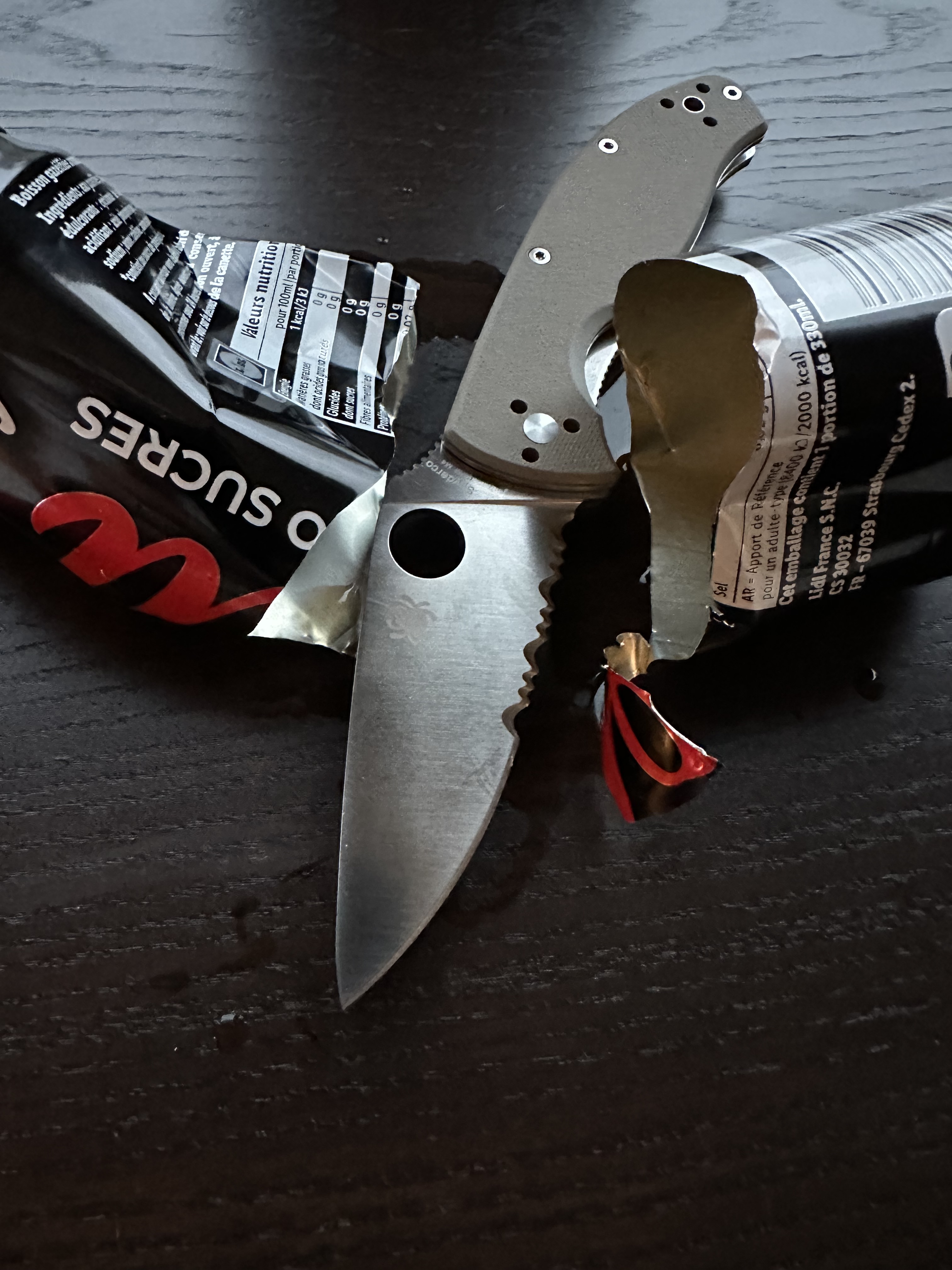
As you can see, the serrated edge is a chisel grind, which means it tends to deviate slightly to the right of the material being cut, much like a fin in water. I started the cuts with a bit of sawing, then transitioned to push cuts, and the knife effortlessly sliced through the thick plastic used to form the bottle.
This little knife is fierce in term of cutting performance. It is a lot of power in your pocket ! It is a pocket chainsaw !
The serrations really shine on the plate. You can push the knife hard against ceramic surfaces, and if the points ever need a touch-up, a few passes on a ceramic corner — or in my case, a jade corner — brings them back like new.
I have been able to reach razor level just by passing gently the Jade on it.
Actually it is fun to enhance the edge.
Actually, this is a bit of a comeback for me with serrations, dating back to my AFCK experience 25 years ago. Back then, I mostly used partly serrated edges, which helped initiate cuts on hard materials.
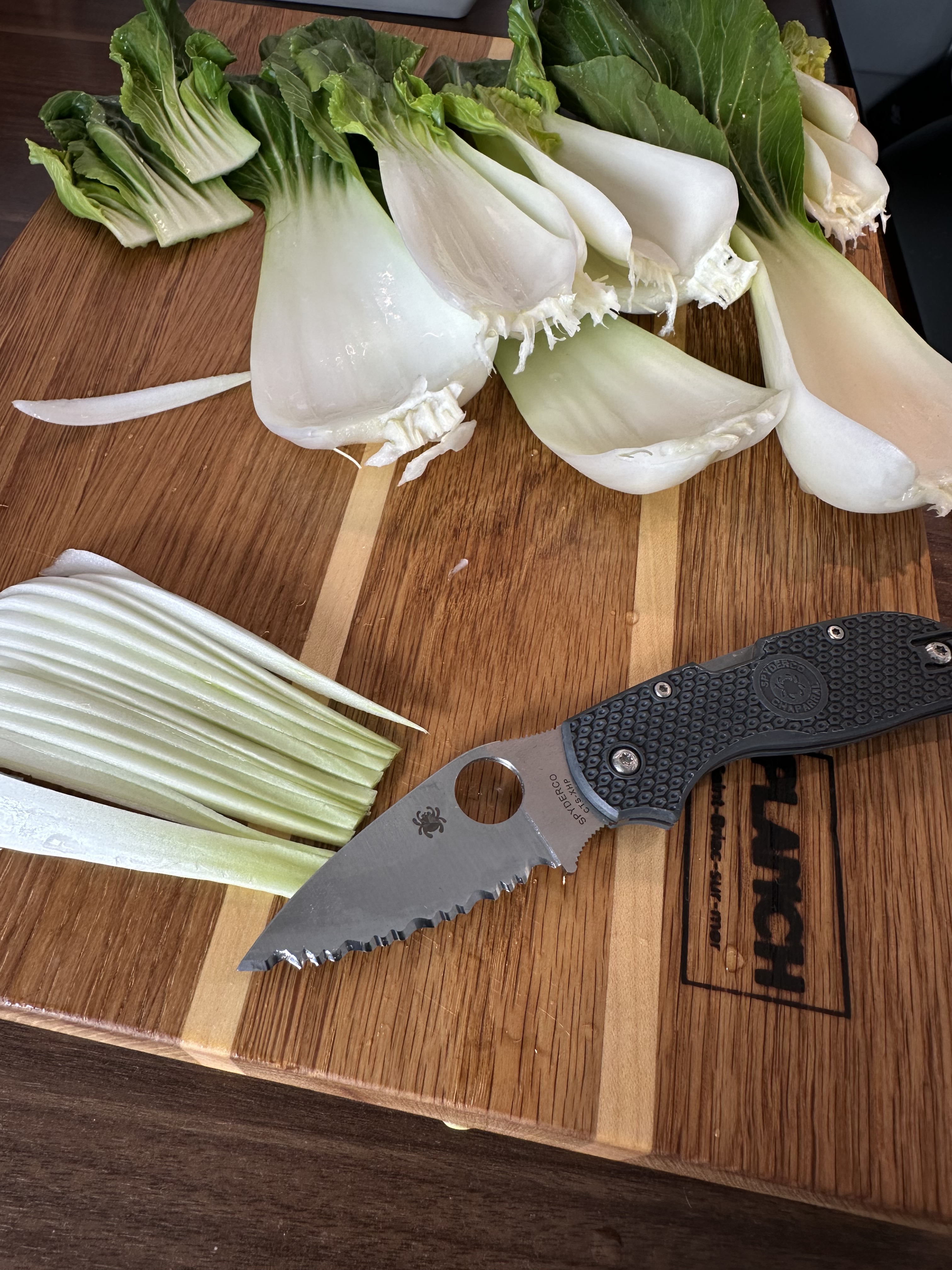
With a fully serrated thin blade and no plain edge, I initially wondered how useful it would be in the kitchen — especially since my wife’s favorite knives are Victorinox fruit knives (serrated). But it turns out, neither fruits nor vegetables can withstand the sharp, wavy edge of the Chaparral.
Funny enough I have been able to strop the edge of the Chap by using the side of the leather belt. CTS XHP is a steel which loves leather in my experience.
All in all, so far, so good. The Chaparral delivers impressive cutting power. Its thin, fully serrated edge is unique within the Spyderco line, pushing the design out of its comfort zone — and for a “knifeaholic” like me, that’s pure fun.
The next step is to trust this little knife enough to take it on a road trip in Italy — handling food prep, wood, and low-profile carry as my only pocketed folder. The Chaparral will make its return in May.
Six years ago, I reviewed the Working Poney, also known as the Roadie. Mine had been reprofiled by Jan Dirk, and even on its tiny scale, it proved to be an outstanding performer. For six years, it quietly stowed away, accompanying me across the UK, Vietnam, and countless places where knives were frowned upon.
Then, in 2024, I noticed the announcement of an XL version — the C267BK — featuring a better steel and a clip. Right away, I saw the new pointed blade, replacing the classic sheepfoot-style blade, now ground from Böhler-Uddeholm N690Co. Even more exciting, the XL uses M398, an exotic steel reserved for flashbatches — a serious step up in terms of performance and collector appeal.
And so, here it is: Ladies and gentlemen, the Roadie XL !
They say an image is worth a thousand words, so here you have 4,000 words with no syntax or spelling errors.
Back to the Roadie XL: it is made in Maniago, Italy, just like my Nano and many other excellent knives these days. The Maniago plant remains one of the best worldwide in terms of quality and precision.
Specifications:
Overall Length: 6.51″ (165mm)
Blade Length: 2.74″ (70mm)
Steel: M398
Closed Length: 3.76″ (95mm)
Edge Length: 2.31″ (59mm)
Weight: 1.5oz (43g)
Blade Thickness: 0.108″ (2.8mm)
Its shape and size make it extremely pocket-friendly, easily fitting into the watch pocket of a pair of denim jeans thanks to its deep-carry wire clip. You could remove the clip, but why? It keeps the knife perfectly on the pocket’s lip. The clip is also reversible, though that’s not mandatory for a two-handed opening folder.
With its thin profile and light weight, combined with the clip, the Roadie XL can even be carried in a shirt pocket like a pen. In short, it’s a knife meant to stay on your person almost unnoticed.
The action is smooth, with two stops/steps before the blade fully opens. In practice, it feels smoother than my Urban, which only requires a single hand to deploy.
With a slightly longer blade than the Urban, the Roadie XL remains legal to carry in countries such as Denmark, the UK, or Germany. Mine arrived razor sharp straight out of the box, so I’m in no particular hurry to convex the edge.
Mine came razor sharp right out of the box. So I’m not in a special hurry to convex its edge.
You can immediately recognize Sal Glesser’s signature design—a clear mark that it’s his invention. Sal is an inventor, and it’s always impressive to see how he manages to create clever, practical tools. Quoting him directly:
“When the Transportation Security Administration (TSA) briefly considered allowing the carry of knives on airplanes again, Spyderco designed the Roadie™ to fit their guidelines. We created an incredibly popular modern expression of the classic penknife. Since bigger can indeed be better, the Roadie now has a big brother: the Roadie XL. It faithfully offers all the defining features of its smaller counterpart—including a non-locking “notched-joint” mechanism, a textured index-finger choil, and contoured, injection-molded handle scales. Its full-flat-ground sheepfoot-style blade is crafted from M398 stainless steel and features our distinctive “Double Dent™”—a pair of symmetrical dimples in the blade that provide a solid purchase for a fingernail-free two-handed opening. In addition to its larger size, the Roadie XL also adds a deep-pocket wire clip for convenient top-of-the-pocket carry.”
Now, let’s talk about M398, one of Spyderco’s premium powder metallurgy steels, only available in limited flash batches, all made in Maniago, Italy.
From what I understand, M398 is closer to CPM-90V than to M390. Quoting Darrin Thomas’s analysis (which is worth reading in full):
“The original M390 has a reported carbide volume of 20.5%, and the new M398 has about 30%, so there has been an increase in carbide of almost 50%. We would expect this to lead to a significant reduction in toughness along with an increase in wear resistance. The datasheet shows that the toughness of M398 is only about a third of M390, though at somewhat higher hardness. So it is apparent that the design of M398 is all about wear resistance and essentially ignores toughness. M390 has only slightly lower toughness than K390 with similar carbide volume (though K390 was tested at 62 Rc). M398, on the other hand, has significantly less toughness than the similar carbide volume S290. However, M398 does have some positive traits, such as increased hardness and reduced retained austenite relative to M390. I’m personally not all that interested in yet another high edge-retention steel that sacrifices toughness, ease in sharpening, and workability. We had other options and this initial look doesn’t make M398 appear to be an improvement over the other available steels. M398 was a relatively simple modification of M390 and I can’t help but think that a more optimized version could be made. M390 did offer similar toughness to cold-work tool steels like K390 with a similar carbide volume, but M398 has significantly lower toughness than the similar carbide volume S290. So M398 doesn’t appear to be over-performing relative to its composition and carbide content. I wrote about some Bohler-patented high wear resistance steels using niobium instead that look very interesting but haven’t seen a commercial release. Those steels would be breaking new ground and potentially offering new property combinations not previously available. But if Bohler pushes out M398 more broadly it will be interesting to see how knifemakers utilize the steel for applications that benefit from high wear resistance and edge retention.”
When M398 was used in a previous flash batch for the SpyMyto, I wasn’t particularly excited—it felt like overkill for a folder that seemed built for hard use. The Myto is essentially the big brother of my Nano made in CPM Magnacut, and a SpyNano in M398 is also on the bench. In comparison, Magnacut is far tougher than M398, making it more suitable for wide, workhorse blades.
On the Roadie XL, though, this is a different story. Like with my Heinie Urban in S90V, these small blades are not intended for bushcraft—but some highly skilled bushcrafters can make miracles with even a 2-inch slipjoint, as shown in an inspiring video I recently saw.
Slip-joints are gentle companions for both ladies and gentlemen. For those with long nails, the Roadie XL is equipped with its distinctive “Double Dent™”—a pair of symmetrical dimples in the blade that provide a solid purchase for a fingernail-free, two-handed opening.
Its high wear resistance comes in handy, as these small blades often encounter cardboard, which can be surprisingly abrasive. I also recall Roger, my father-in-law, wielding his old Pradel slip-joint like a crowbar or flat screwdriver, without a second thought. Old-timers often treated knives mercilessly, using them until the blade was as thin as a needle.
I’m confident the Roadie XL with its M398 blade would make an excellent hare skinner—the fur is full of sand that can destroy an edge almost instantly. Tuscan hare hunters would likely appreciate its durability. Its high wear-resistant alloy makes perfect sense here. Additionally, the blade is relatively thick at 2.8 mm, which would otherwise be prone to breakage.
Ergonomically, the Roadie works beautifully for a slip-joint because you can hold the blade by its choil—a feature rarely found on traditional slip-joints. Even most Swiss Army Knives lack that level of security, and with M398’s toughness, the blade cannot close on your fingers. As Spyderco notes:
“Unlike traditional penknives, the Roadie also features a subtle index-finger choil that increases control of the knife during use and acts as a safeguard against unintentional closure.”
There’s no undue pressure on the pivot, often the most delicate part of many folding knives. If you are careful not to twist the point in wood, the Roadie XL can withstand applied force directly to the blade. This makes it another “Lil Big Blade”—small but versatile.
It can serve as a steak knife, whittler, label remover, balloon popper, nail cleaner, or cardboard cutter. Brown cardboard is notorious for edge damage, but not for an alloy like M398, packed with carbides.
And in today’s world, one more practical advantage: it is extremely sheeple-friendly. The Roadie XL looks like a pocket knife, not a tactical or soldier’s tool, making it socially unobtrusive yet highly capable.
Beauty is in the eye of the beholder, but to me, this blade—shaped almost like a scaled-down cutlass—is pure eye candy.
Interestingly, I’ve discovered that I can open it one-handed in two distinct ways:
A fast wrist flick while holding the blade itself.
By gripping the blade with thumb and index finger and gently pushing the handle away with the middle and ring fingers.
So, even though it wasn’t designed as a one-hand opener, the Roadie XL can function surprisingly well as a one-handed knife in either technique.
Compared to a traditional sheepfoot slipjoint, the Roadie XL is incredibly light yet sports a premium alloy blade (Since August 2025 another slipjoint with M398 is available: The Metropolitan.). And at under 100 euros, the Roadie XL is an exceptional bargain for what it offers.
This is one of Sal Glesser’s finest EDC designs—a true Every Day Carry folder that balances elegance, utility, and performance. And for once, size really matters with a Roadie. No wonder it’s already sold out on the Golden site! There is part II here.
I have seen a video where someone is stabbing concrete with its Spyderco Police 4 to show how K390 is strong ! The blade of that famous knife is thin and this thinness is here for a purpose: Sal Glesser has decided to use the Police 4 plateforme according to his own desire but toughness and impact resistance may have weighed in on the decision. For once the Police is not especially aimed at the LEO but those ELU who use their thin knives hard !
“We make quite a few designs for the Law Enforcement market at this time, so the design for Police use is necessarily the case anymore, like it was in 1984. I designed the Police 4 to include what I would like in a knife, more than what a LEO might like. It’s still a kissing cousin, and large for most people. I widened the blade, enlarged the hole and selected a steel that I like to use. The design’s success in the marketplace is unknown at this time. But I get to have one. ” Sal Glesser.
K390 is not stainless. It’s a cold work tool steel which uses Bohler proprietary Microclean technology. K390 has close to the same edge holding as A11 but is much tougher. Bohler’s third generation particle metallurgy contributes to the toughness of the steel.This steel will be hard to grind, finish and sharpen. Once it is sharp it will stay sharp for a long long long time. It’s CPM M4 on steroids which means K390 has more strength, durability, stability and wear resistance than M4 ! And I do love CPM M4.
“K390 is quite simply the powder metallurgical cold work tool steel with the best properties for cold work applications available from BÖHLER at the moment. K390 MICROCLEAN was developed to meet the demanding wear resistance and compressive strength requirements of cutting, blanking and punching applications, for cold forming applications and for parts which are subjected to abrasive wear in plastics processing. Tool life can be increased by several hundred percent due to the outstanding wear resistance, high compressive strength and good toughness of BÖHLER K390 MICROCLEAN. These material properties enable our customers to make their production processes more efficient and consequently to reduce the price per part produced. Too hard to be machinable? Quite the opposite. The task of the tool steel manufacturer is to produce a steel which is, on the one hand, easy and economic to machine (with a hardness of around 280HB) and simple and unproblematic to heat treat, but which, on the other hand, has a very high hardness (up to 64HRc) and optimum performance in use. The secret lies in the powder metallurgy process. A very fine, homogeneous microstructure guarantees optimal machinability.
K390 owes its superior properties above all to the powder-metallurgical production process. The main advantages of BÖHLER MICROCLEAN steels over conventional steels are: • uniform carbide distribution • small carbide size • uniform chemical composition over the entire cross-section and length • virtually isotropic behaviour due to improved homogeneity and the absence of segregations.”
From Phil Wilson on the Spyderco Forums.: “I have been using K390 from the start ever since it was introduced by Bohler and I got some small samples to try. A bit of history is that it is the European version of CPM 10V but not the exact chemistry (about 1% less V plus small addition of a few others). That is because the CPM 10V chemistry was protected by patent at the time. If you check the K390 data sheet it claims that the bit less V gives K 390 a little boost in impact toughness. It also can be heat treated at a lower temp. than 10v. So it is pretty much the same as the A11 grade but different in a few small details. It is hard to tell the difference between CPM 10v and BU K390 in the real world in my experience. I like both grades and they are the base line (along with Vanadius 10 and K294) from which I measure wear resistance. The 5 chrome is there to make them all air hardening among other things and does not contribute much to corrosion resistance. It is going to make a killer knife in the new offering and be another classic. Phil”
On my Urban, K390 has proven to be very tough. It is my main travelling folder. And it is a real wolf under sheep’skin. One of the little home test I got is by removing the metal around a bottle of wine’s cork. Most of the time, the knife edge is bent and shows some shining due to miss alignement but not with K390. The steel feels like plastic. On my three knives, the Pingo got the most stout blade and less pointy. This little knife is simply used very hard with zero damage to the edge: digging in wood, cut into staples, scrapping various paints and plastic. So far, even if the steel is not stainless, a mild patina has protected it from real rust.
So what do we got ? A tough blade which keeps its sharpness for a very long time. A forgiving edge which can be used by clumsy hands with no after thoughts.
The side effects are: the need of diamonds and ceramics to keep it razor.
Once convexed to me taste, I use white ceramic and some stropping just to get it mirror.
I really do love that short stubby folder which are turned to be my Spyderco Techno replacement.
In term of ergonomy first, the rounded hand, large choil, smooth thick blade spine, all concours to make your hand “at home” when holding it.
This large choil gives a lot of control and force on precise cut need at the start of the edge. It is the exact opposite of an Izula for example when the index finger is blocked behind the guard, here you can whittle with index finger near the piece of wood giving you a lot of accuracy.
This handle also scales the blade up in term of proportions making it a beautiful short knife. Also in the elegance department, the edge feels like the tip of a lance with it spear’s point. Mine has aged beautifully with a gentle sanding on the titanium.
The clip has hold perfectly and is not hurting my palm when holding the knife tight.
The edge has been gently convexed and did not show any chipping or bending after a year of rotation.
So far I am very happy with my #734 and I highy recommend it.
Massdrop is not always offering bargain, especially regarding some famous 1095 steel made American Blades like TOPS, but for their US/China connection they are often great purchase. My friend Dan Sharpe (thanks to Loremicus a young Mangaka from Hong Kong) highly recommends their FF CRUX which turn to be two of his favorite folder.
I will certainly follow his advice at one moment, those folders are a bargain of high quality.
CUSTOM-KNIFE FEEL, PRODUCTION KNIFE PRICE: That’s the idea behind the Massdrop x Ferrum Forge Falcon. This folder is small enough to take anywhere, yet rugged enough to open boxes, cut rope, slice food, and more.
BEST STEEL ON THE MARKET: Developed by Crucible Industries (a leading manufacturer of specialty steel), S35VN is perhaps the most balanced blade steel ever in terms of all-around performance.
SMOOTH DEPLOYMENT: The Falcon has a grippy flipper tab and a ceramic ball-bearing opening system for buttery-smooth deployment with little effort.
SOLID TITANIUM HANDLE: The 6AL4V titanium handle is both lightweight and strong. Bead-blasted to a smooth gray finish, it perfectly complements the satin blade. The matching titanium clip is reversible for righties and lefties.
ABOUT FERRUM FORGE: Founded in 2009, Ferrum Forge is a dynamic duo of brothers Chris and Elliot Williamson. Known for their innovative designs and precise craftsmanship, the pair operates out of a small Southern California workshop.
KEY MEASUREMENTS: Blade length: 2. 9 in (7. 4 cm), closed length: 3. 9 in (9. 9 cm), overall length: 6. 8 in (17. 1 cm), Weight: 3. 6 oz (102 g)
It has been half a year of patience before my pre order turns into a mail call. Howard Korn from the Knifecenter.com was kind enough to send it to me as soon as he has received it. It was a quick 6 days of travelling from Fredericksburgh, Virginia to Paris.
The name of this Para3 should be”Desire” but it will be “Mouser” in honor of its color: grey. Also in honor of its almost magical alloy used: Maxamet.
What is Maxamet ?
According to Spyderco its full name is “Carpenter® steel’s Micro-Melt® Maxamet® alloy”. “Maxamet is an extremely hard high-speed powdered tool steel possessing properties that transcend conventional high-speed tool steels and approach those of cemented carbides – the ultra-hard materials used to machine other steels. When Carpenter developed this amazing alloy for the rollers in their steel mills, they sent samples to various companies in the knife industry to evaluate as a blade material. Although many tried, Spyderco was one of only a handful of companies to successfully develop the specialized methods necessary to machine, heat treat, and grind this demanding material to yield reliable, high-performance knife blades.”
It so difficult to work with that it has given some headaches to Eric and Sal hence the 6 months late in the production of that Para 3.
Maxamet should have better performance than CPM110V. Now that I got both steel, I will try to see if I feel and see a difference.
What its composition reveals ? Carbon 2,15% ; sulfure : 0.070% – 0,23%; chromium : 4,75% ; vanadium 6,00% ; manganese 0,30% ; silicium 0,25% ; cobalt : 10,00% ; tungsten 13,00%.
It’s not a stainless steel it’s an high tech tungsten alloy !!
The wear resistance of Micro-Melt Maxamet alloy is better than that of conventional powder metal high speed steel grades and is equivalent to AISI A11 cold work powder metal tool steel. A11 is CPM 10V. Better? How much better ?
According to Cliff Stamps: “Maxamet is an extreme alloy, for comparison, it is to 10V what S90V is to 420J2. Maxamet is used when HSS like M4 fail because they are too soft or wear too fast – just consider that for a matter of perspective.”
(For the record he’s not talking about CPM M4 which comes from powder metallurgy process but good old M4HSS.)
So far Mouser is shaving my arm’s hairs which are flying of its blade. Its factory edge is really thin. With that amount of tungsten it should not be sensitive to its final tooling in the Golden plant. I’m not planning to work on it yet and keep it that way for its first run.
Its complex heat treatment and the HRC should be on the very high..
Spyderco is offering that steel on many knives: not counting a Mule but a LW grey Manix 2 , a G10 grey Paramillie 2 and a lightweight grey Native…
The Maxemet version is not a Sprint run.
I have also noticed the chamfered work they have made on the spine and the spyderhole and the jimping behind the hump. I don’t have to use my diamond rat tail file anymore !!
Thank you Golden ! 🙂
Also the blade has been gently beadblasted which gives it a very industrial look. The grind is perfectly symetrical as always on my Colorado’s made.
The thick grey G10 slab also concours to give that toolish look, again the attention to detail are stellar. There is nothing to change when you open your black and red box.
So far what I have changed is the clip, as I don’t plan to spyderdrop this little guy.
The smooth compression lock permits a lot of other way to open it elegantly.
Also I have sanded the G10 to smooth it to my taste and keep my pocket lips healthy.
I keep the pivot area rough for the ergos.
Now the game is on, let see all this fuzz about that Maxamet steel !
Spyderco catalog’s sheet is here.
EDIT: Eventually I have gone back to the OEM hourglass clip in a Tip Down carry option.
Because it’s so fast to draw like a I do on my Millie and Paramillie 2.
The spyderdrop is so elegant and bound to the spyderhole: it works like a breeze.
Also I have starting to test the sharpness which is uncanny right our of the box.
I did not have that kind of result with its S30V bro. The Maxamet thin edge goes through the plastic bottle butt to make tagliatelle !! The edge is really hungry.
Between both knives there is a little difference. It is the sound of the mechanism.
The opening and locking on the S30V version will be a TAK.
When the opening of the Maxamet version will be a TIK.
The pitch of Mouser is much higher. Different alloys, different hardness produce different sounds.
The Mouser is a small (not much more than five feet) mercurial thief, gifted and deadly at swordsmanship (often using a sword in one hand named “Scalpel” and a long dagger or main-gauche in the other named “Cat’s claw”), and a former wizard’s apprentice who retains some skill at magic.
The cynical-sounding Mouser is prone to showing strains of sentiment at unexpected times. He’s a rogue, living in a decadent world where to be so is a requirement of survival. It was created by Fritz Leiber.
Part II is here: https://nemoknivesreview.com/2018/06/12/spyderco-c223gpdgy-para-3-maxamet-part-ii/
Following the arrival of the PITS, the daily testing has come quite quickly as it hasn’t left my pocket still so there have been a bunch of opportunities to put it in play.
The first thing I noticed was the action required to open the folder which is much harder than for any compression locks. This is something to keep in mind as you won’t be opening it quicky; the Urban for example is faster to open.
This resistance is also a proof of how sturdy the spring and the design are.
The second thing I had noticed was how quickly the blue handle was subjet to getting scratched.
So, I was obliged to put my mind at rest by simply sanding the handle…
I just used a 600 grind sandpaper and the result kept the blue inside the holes and inside the mechanism, like a well worn denim jacket… The scratches are easy to keep at bay and the blue aura and reflections are beautiful.
Another thing which I had noticed: there is one very hot spot…. The horn on the talon of the blade can bite you ! It happen once when I was sanding; a sharp and neat cut!
After some convexing of the blade’s bevel, I was able to improve the geometry and cut really easily through plastic bottles which are everyday processed before recycling.
This is also a knife I wanted to compare with my faithful Urban.
My Urban has got a hightech tool steel blade and a customized Cuscadi carbon fiber handle. I can carry it in my watch pocket. The PITS cannot go there but it provides a much stronger mechanism and a longer blade which makes it a real all terrain folder when the Urban is really limited to the city sleakers.
So far, and that’s not surprising, the N190co steel blade has been kept as a razor using some white ceramic and leather stropping. The PITS unique mechanism makes it great to strop on leather as the blade cannot easily fold on your fingers when the Urban softer mechanism asks for a lot more attention.
The PITS is really easy to live with. The steel keeps an excellent edge with no chipping or rolling and is easy to touch up. The bad weather these days makes it outside wet and cold but the titanium handle conveys a warm touch and the grip is secure. Currently I make it team up with the big bad Real Steel D2 bushcraft folder and both seems to go very well together.
Those are the two extreme among the folding cutlery bow.
Oh and just for the pleasure, you can also play the comparaison game with the Spydiechef !
I have been dreaming about that kind of folder for quite a long time. Something heavy, strong with a rounded handle to take in the forest and built some shelter.
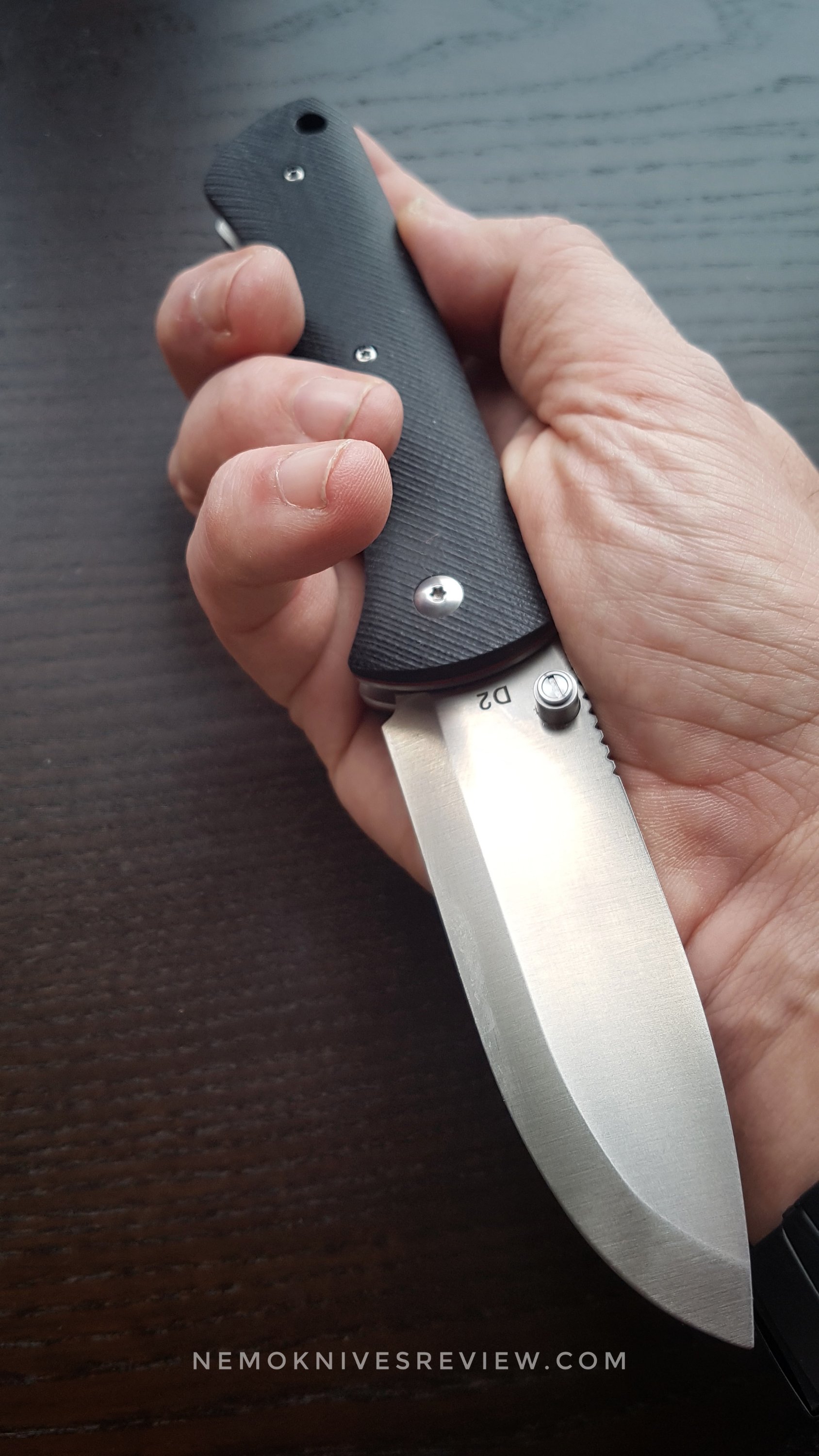
RealSteel Knives, a Chinese company, may have heard my prayer as they are producing a Bushcraft Folder in two versions: with and without the one hand opening option provided with two studs.
180 grams of a very well balanced 90mm blade length beefy companion.
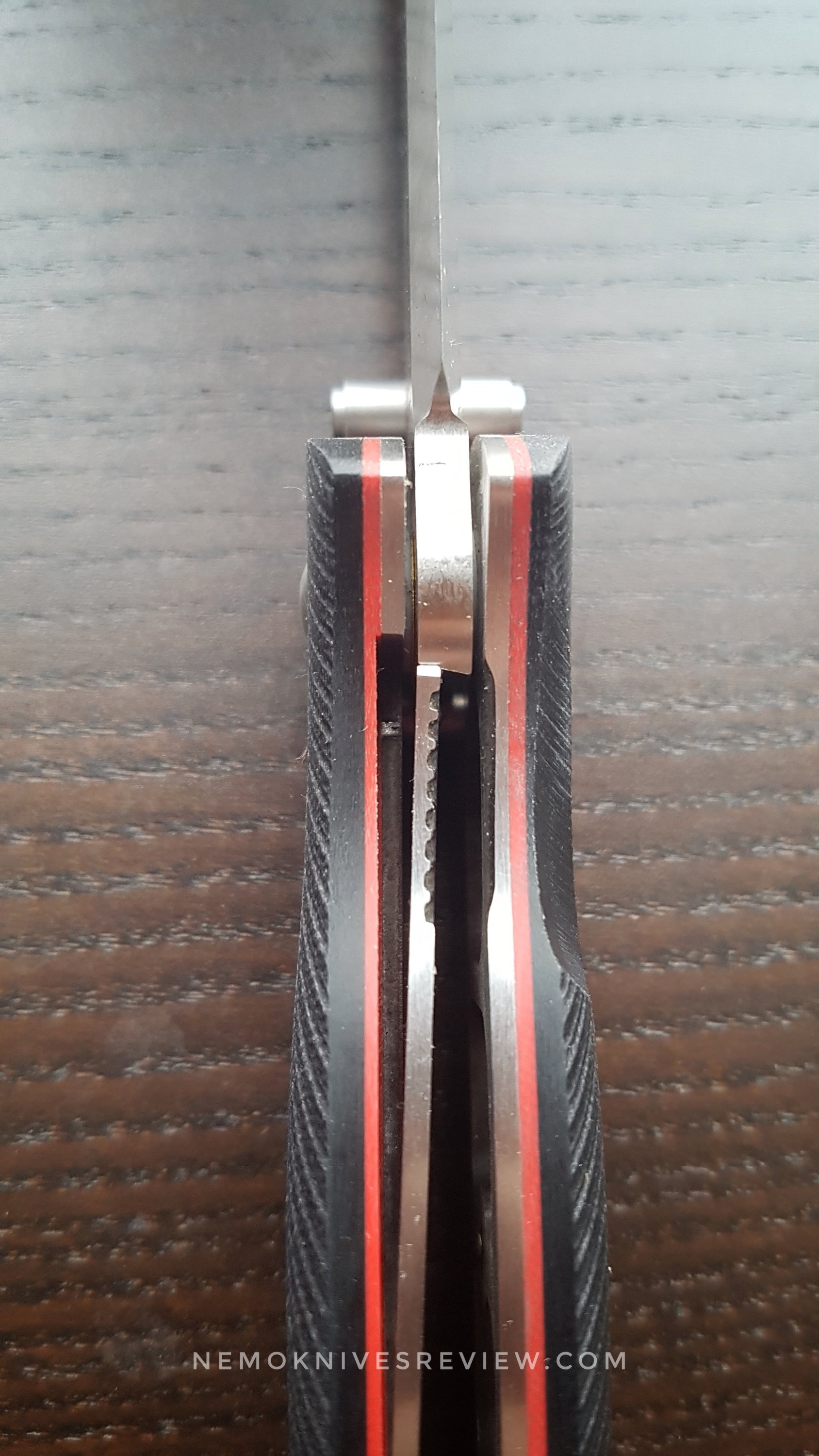
My first experience with Real Steel was the beautiful Megalodon which has had review here. Its main flaw was the awful clip and you know what ? The Bushcraft Folder has no clip but a beautiful textured G10 handle. Also the red liners are a very nice touch bringing a real touch of class. The blade is perfectly centered; the action is smooth; the action Southpaw friendly…
So let’s have a look:
The blade is made of D2. This air hardening classical steel is not my favorite but some of my friends and co-writers like JD do have an excellent opinion about it. As a reminder let’s not forget D2 has 13% chrome steel which can stain and can be a bear to get sharp. RealSteel seems to have bought tons of D2 as their production of fixed blades is mainly using that alloy. The HRC is 58-60 which is not the hardest heat treatment for that steel but it seems appropriate for a knife destined to resharpen in the field. Oh and this is a true scandi: no secondary bevel on that baby ! You can put it flat on some stone and you should be able to keep it like a razor !
The lock is a thick Michael Walker’s liner lock and it reminds me of the one on Spyderco Gayle Bradley; thick liners locks are easy and confortable to use. Here the steel liners are heavily skeletonized to reduce weight and keep a great balance.
Don’t forget: batoning with a folder is not a good idea with the lock engaged. Let’s say it’s not a good idea, period. Some chores are better kept for the uses of thick fixed blades. But the RealSteel BF can easy drill in wood and be twisted while cutting: there is no movement, no play; everything is very well adjusted. So this is a very serious outdoor knife. The spine of the blade is sharp, certainly for striking a rod and lighting fire. I will soon round mine, as I prefer to have a confortable ramp to push with my thumb during woodworking. The handle does not have a fully open construction; there is a G10 spacer in the butt along with a lanyard hole. It looks really easy to rinse and keep clean.
The G10 has got a very nice texture: not harsh. You can notice it on the picture. Also there is no hot spot on that handle so you can hold it really tight; it’s almost like a fixed blade. The linerlock is recessed and you can not disengage it by holding tight the handle. Just be careful and always remember: regardless how strong a folder is, it will never be as strong as fixed blade. Use it with respect and care; should the lock fail, there is no choil to protect your precious fingers!
This the heaviest folding blade in a 4 inches folder I have ever owned!
You certainly can put that 3,5mm thick blade in good use. Especially as the scandi is very keen and easy to keep ultra sharp – as much as you don’t create a bevel.
Even though the studs do not get in the way when sharpening, it should be easy to remove them with a flat screwdriver if you want a pure two hands opener.
A first test on dry wood shows I have got a very serious contender; the blade cuts deep and makes as good chips as my Casstrom (Scandi type blades give you a lot of control when cutting wood). This is always such a pleasure to use them. Also the solid tip is great to drill and open crates without fear of breaking it.
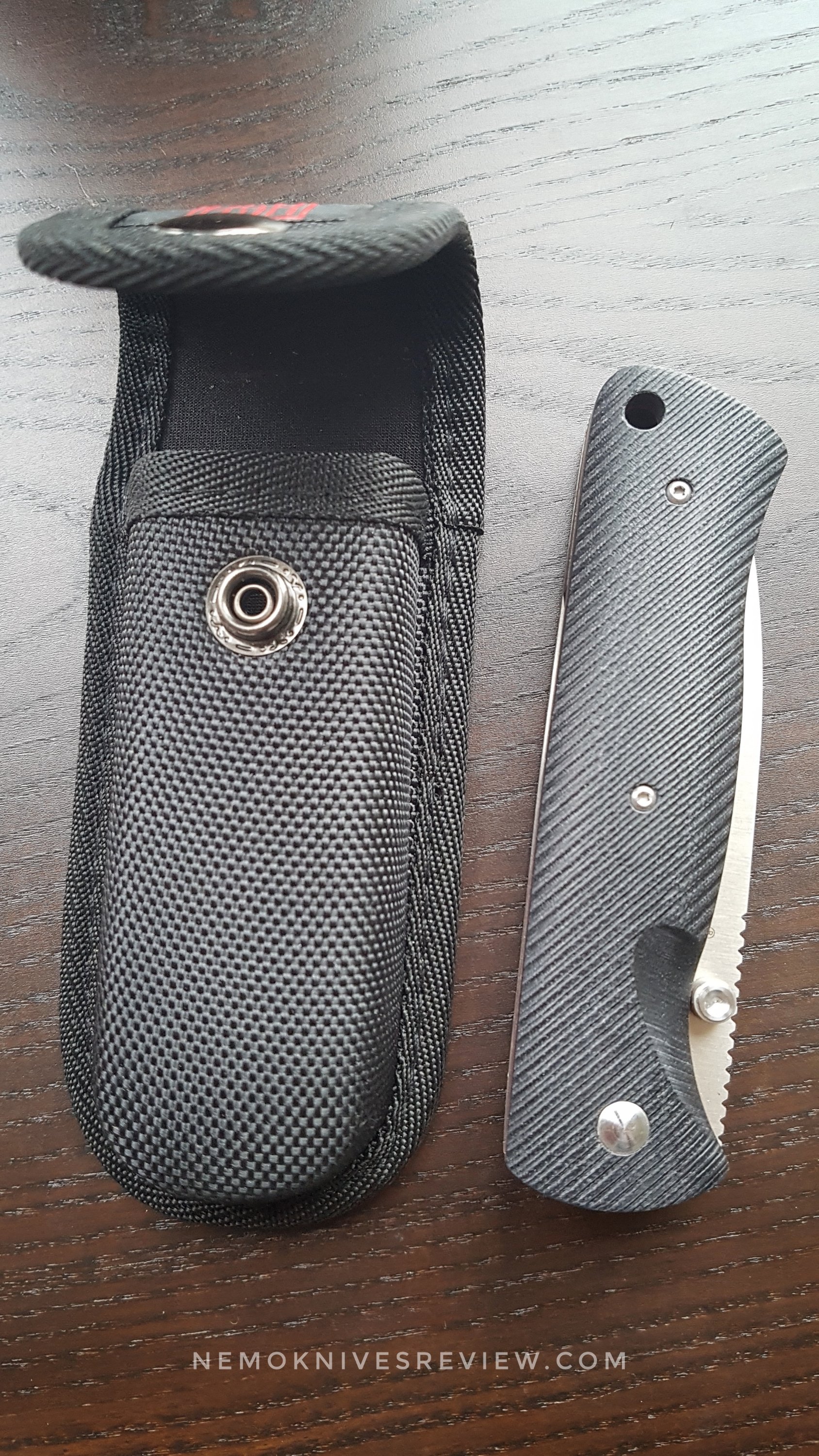
The pouch which is provided with that big heavy workhorse is well made, but I will certainly carry it vertically in my front pocket against my leather wallet. I have tried that before going for a one hour walk and the knife did not move.
The knife snuggles perfectly inside the pouch you can pass in a belt.
In my opinion a nice cocoon to transport the knife in a coat pocket or in a bag, featuring its toolish function in opposition to all those fast draw tactical response tools always regarded as weapon and also marketed as “tactical” knives, conveys a comforting message.
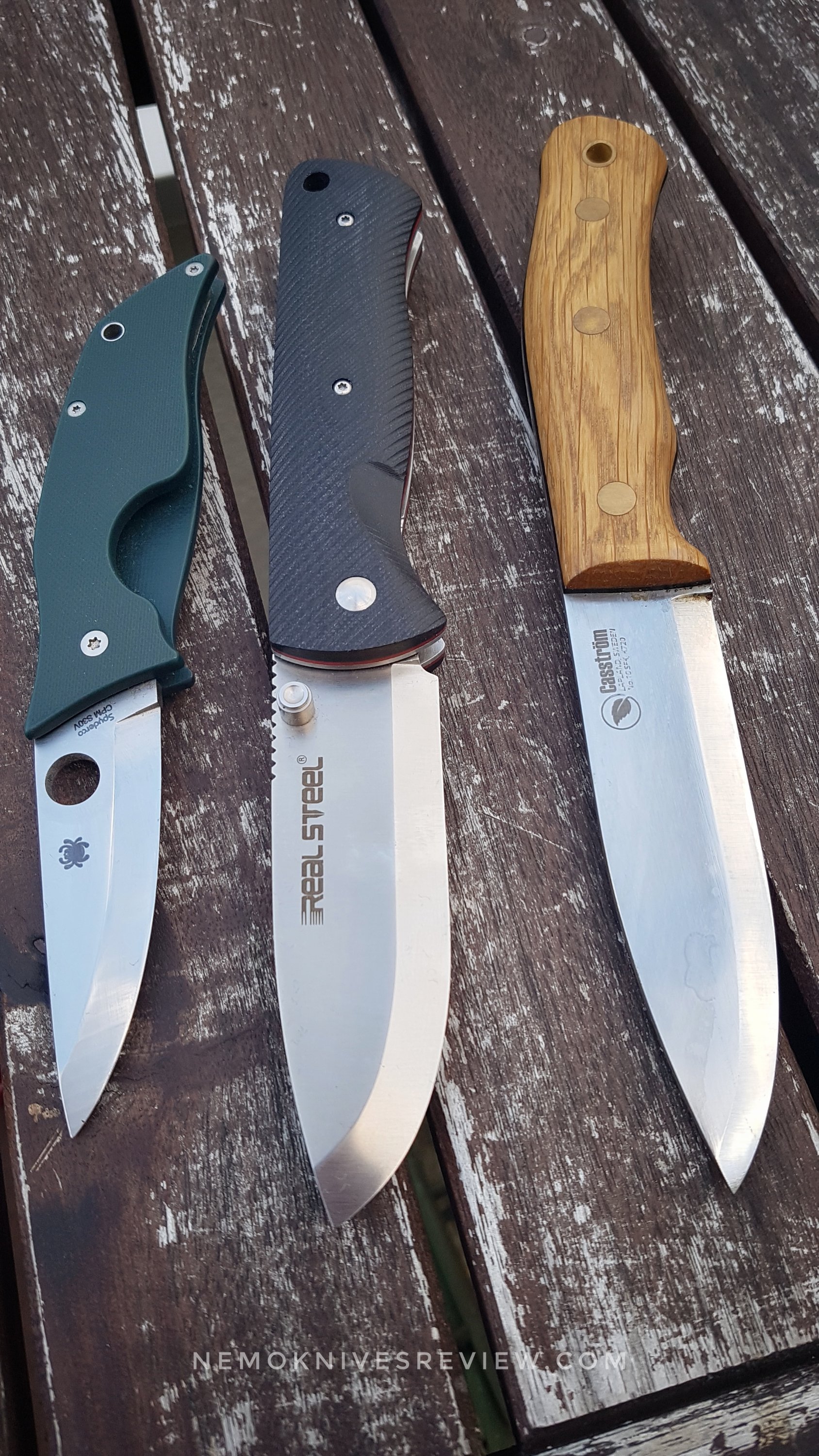
My wonderful Wolfspyder is dwarfed by the heavy RealSteel folder which’s size is very close to any classical bushcraft fixed blade. You feel you can easily use it for light chopping, for finishing off a cut. Again, impacts are not folding knives’ best friends, but the momentum of that heavy blade could be used for light chopping in wood, like trimming branches in one whip of the wrist.
This is a mean blade perfectly centered beware parallax illusion in this photography.
And the handle is even thicker than the fixed blade.
Of course the main limitation of a folder is the blade length which cannot exceed the handle length (except for some hunting daggers).
So what have we got in the end ? An heavy, solid, easy to keep sharp bushcraft tool.
OK. But for what price ? Mine was bought for less than 60 euros ! This is great for a knife destined to be used a lot and not kept in a safe.
In my opinion, this is a very solid bargain for a very serious wood companion.
“Made in China” tools are getting better and better in terms of quality, prices are competitive and don’t forget…. your Iphone X are also made in China. Here you have got a Chinese Viking Folding Knife, which is great !!
More to come soon !
When the holidays come, you are confronted to other members of your family, mostly sheeples, who will open huge eyes should you wave that K2 from your pocket to slice the turkey. That said, lets see what those sheeples bring to the table.
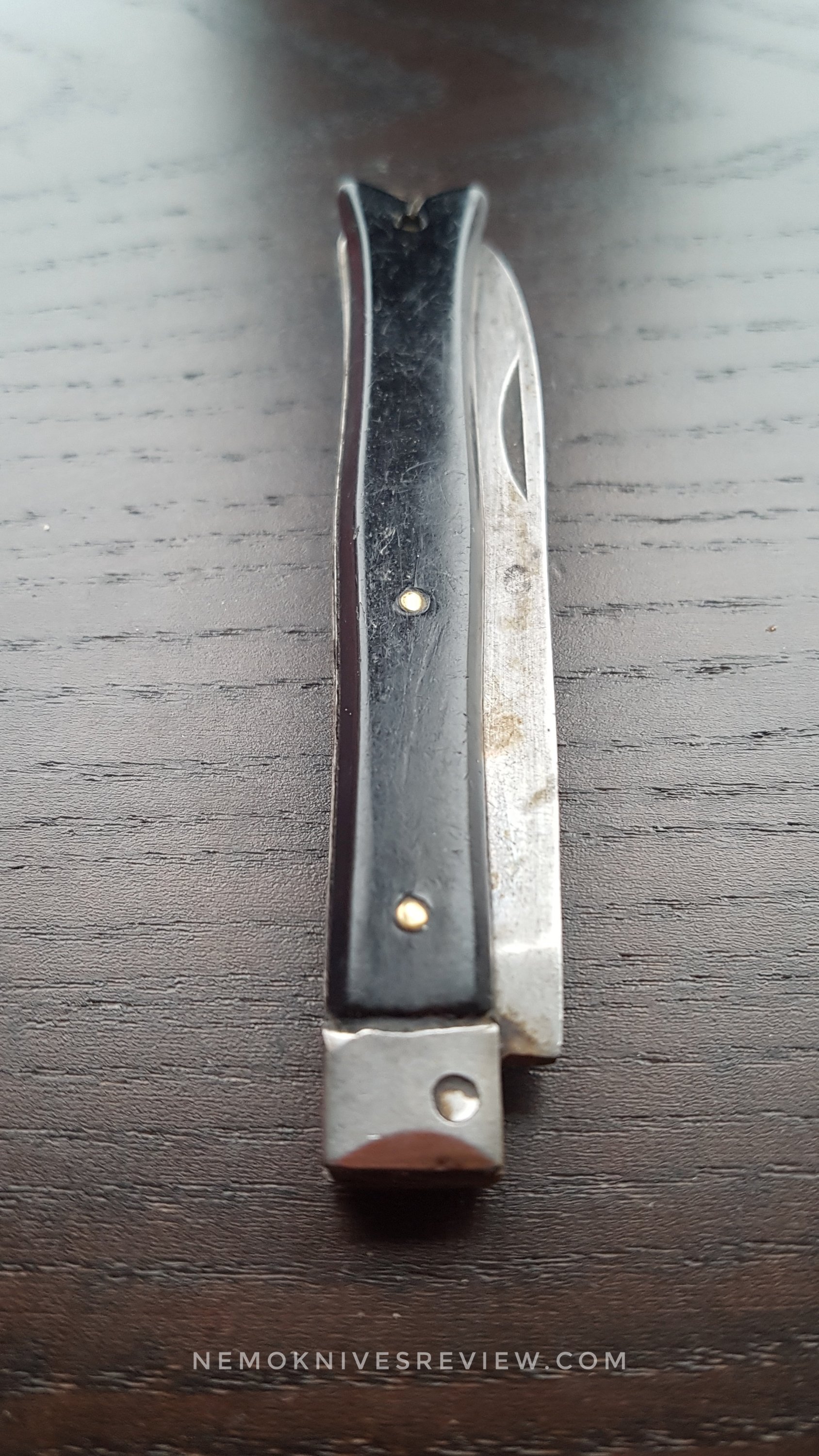
Oh! This is the kind of slipjoint elderlies are still carrying nowadays: a Pradel. This one is a fishtail bakelite carbon steel pocket knife still used for getting everything you can think of done. Let say this is Tim Leatherman main inspiration and as you can guess: this is a tool, not a weapon. It can be used as a screwdriver and is clean sometimes… let say it is wiped mostly because it could rust.
Like the Chaparral, this is a full flat ground blade. It’s a real razor blade or should we say it ‘used to be’ a real one, because this baby was dull as a knee when I got it. Fortunately the unknown carbon steel percentage enabled an easy shift back to decent sharpness.
The blade ‘was’ perfectly centered… a long time ago but, as you can see, the knife is an old timer still not decommissioned by its owner. Duty, that day, was to pick the potatoes to check if they were cooked and get them out of the hot water; who needs tactical flipper for that matter ?
The Pradel is a knife used to cut the french bread known as “baguette”, to remove stones stuck under a boot’s sole, to open envelopes and more generally all the chores which would be better suited to a more appropriate tool, like stripping wire, cutting tarp, scraping paint, probing, forcing, twisting, cutting over and over again, but… ending up being accomplished with Pradel; doing it all just beacause it’s at immediate reach.
No safety net, no lock, no guard, no clip, this is a tool for all dirty jobs and also takes its place in the kitchen and on the table: apples, potatoes, bottle necks, sink’s holes, flowers…
My Sliverax looks at it with its envious hole: how can such a simple knife live so many adventures? Nothing is reliable in this design but the will of her owner to keep going.
Where the Chaparral shows exquisite working mecanism and engineering and no play either vertical or horizontal, the little battered Pradel is still going strong, never defeated with all her battle scars otherwise it would have broken.
Now when it is used for harder chores, it’s held directly by the blade; the handle working as a folding sheath. This is uncommon; even for the Roman design folding knives two thousand years ago.
So what do I take back from the encounter between a modern folder and the Pradel ?
First and foremost we should use our knives, thick tactical toys or slim razors alike.
Second a locking blade is luxury and because it’s viewed to be immediately oriented towards some fighting realm… sheeples are allergic to it which is a shame as a locking blade is a great security for our fingers.
Eventually people who are still dreaming of knives as weapons are fooling themselves and give bad publicity by not using them for the most humble chores. Knives are tools to help, not ninja’s toys with “rings” and “skulls”, symbols of death and tragedy.
Real EDC knives have got battle scars and are humble. I will always respect a battered tool which wears the patina of years on its blade and handle because the true battle of a tactical folder is in its everyday chores not in the murdering fantaisies of childish dreamers that give knives a really bad name tainted with human blood. Sometimes I really understand sheeples…
“You sharpen the human appetite to the point where it can split atoms with its desire…”
I feel like in the “Honest Trailers”: “Please review the Advocate…” OK here we go:
Oh yes, the Advocate is a looker and really catches the light. Knowing Gayle Bradley since his first hard chores folder, I really wanted to see his new design.
At the moment I write those lines, we are all under the official statement from Spyderco about the Advocate. To sum it up: “A careful review of the Advocate’s design revealed that the steel washers used in its pivot are measurably thinner than those used in our other flipper models and are therefore vulnerable to the effects of overtightening….We have suspended production of the current version and are working diligently to redesign the pivot to completely eliminate this concern. We have also decided to suspend shipment of our current inventory of Advocate knives until a satisfactory redesign is complete.” Michael Janich 10th of April 2017.
I don’t have any issues with my Advocate pivot, so I’m not concerned.
Unless major purpose, I don’t feel the urge to disassemble my knives and I always find that rinsing them under hot tap water and oiling them back once dry, is more than enough to keep them going. I do however have got a gripping pivot issue with my Southard but this was before discovering and using nano oil. Here on the advocate, it seems like even nano oil did not help. but again It do not have any issue on mine. I got other issues and they are from the design, not the manufacturing.
So I was able to snatch a model before the factory line stopped and I really wanted to try and love another great Gayle Bradley design. The Advocate is his first flipper and he’s using my favorite steel: CPM-M4 (drawing from Gayle Bradley’s extensive experience as a competitive cutting champion, CPM® M4 is a high-performance tool steel renowned for its extreme edge-holding ability).
“The Advocate’s handle consists of two 3-D-machined solid titanium scales that are radiused across their width and feature a unique “orange peel” finish that is both visually striking and provides an enhanced grip texture. The precision machining of these features ensures maximum comfort in the hand and contributes to the knife’s stunning, custom-quality appearance.”
See how the knife looks great? This is a very thin design. It slips into your pocket very confortably but, in my own experience, its thin handle create a lot of hotspots. I would have preferred a thicker handle even if the finish and lines are wonderful, it is really more a looker than a user so far.
OK mine fires perfectly and once unlocked, the blade falls free. So the action is OK but there is a strong break to it: the ball detent on the lock making the action less smooth than on my other flipper: ZT0562 or Falcon. It’s even noisy, you hear it. What is the point of having ball bearings when you put a brake on it ? Spyderco knows what smooth means ie Ed Schempp’s Bowie the Paramillie. Why not the Advocate ?
Also you can notice how the Zero Tolerance’s (ZT) handle is thicker and hence much better ergonomic-wise. I would not mind that for a Chaparral or for a shorter folder but the Advocate is a medium folder with a 9 centimeters blade and weighs 111 grammes; so it’s not a small folder! Even on the last picture you can see that it’s thinner than the Sliverax….
Error
This video doesn’t exist
Also flippers have got a fun factor shared with spinners and balisongs. We love to play with them and because of that, we have tendancies to “test” them more in their opening and closing.
Again, the Advocate’s thin profile doesn’t make it easy to close. The tension on the lock bar is very important and the edge to unlock it is sharp. So it’s not easy on your thumb, almost painful sometimes compared to my ZT and its fat lock… Even the flipper’s tab feels too thin for such a strong detent. It’s biting into the index finger’s pulp….
You can see the sharp edge of the lock bar; actually it comes from the steel insert.
You can notice the marks on my thumb.
Look at the way the lock bar is chamfered on the ZT. Rick Hinderer is not at his first flipper design obviously…
After playing for some time, there is no real fun. The detent is so strong it makes thumb-opening impossible on mine; only reverse grip works for me.
Error
This video doesn’t exist
So the strong lock acts like a break; you understand why Compression Lock flippers like the Sliverax are a path to explore. That said, after playing with both knives, I also feel the Sliverax could have benefited from a stronger detent.
So far the Advocate is not my favorite Gayle Bradley design.
My opinion is not based on any pivot issues as mine doesn’t have it but in my book,
it’s too thin, too slippery, not easy to close nor is it easy to open with the thumb hole. It’s not smooth… It’s the total opposite to its famous GB1.
Perhaps it will grow on me but even the clip is not a deep carry option… Oh well.
I need to play with my Ed Schempp bowie for good measure… as it’s the perfect opposite in the way Taichung can deliver a great folder with great ergos.
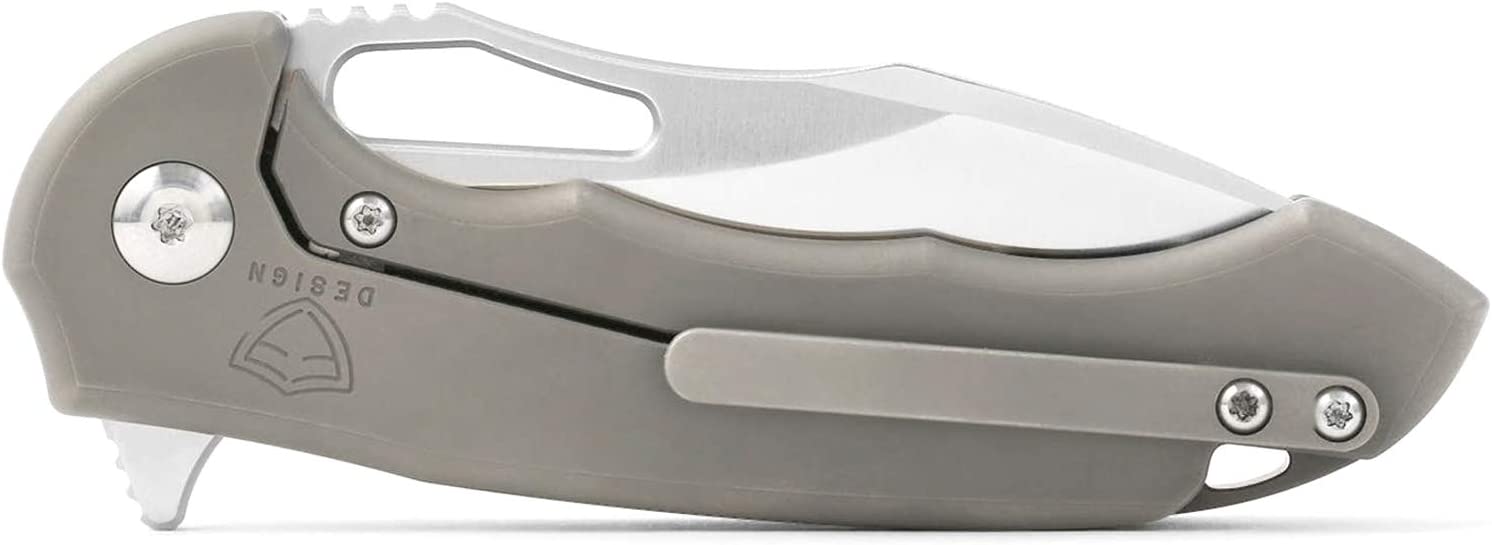
So in summary, if you want a really fun and light Spyderco to play with, try the Sliverax.
This is a first glimpse review with Paul Alexander explanation at the end.
So I got the knife for less than an hour in my hand and this is just what passed through my mind just playing with it during photographies.
So it will be followed by more in situ testing. I remember Paul Alexander’s proto at the Minimeet and the fact that he is an engineer in automotive and not a knifemaker. I liked that. Sal Glesser is an inventor and he loves engineering, so it was logical for him to welcome some bold new designs coming out of the bladeshows sphere.
Oh, the Sliverax !! She’s a looker. Pure beauty and this is not only in the eye of the beholder. Perfection of the grind, the bolt starship design. I’m whittling while I’m holding her. She got a wasp shape, something of a spaceship, created for performance…
But the first thing I have noticed is how light (94 grammes) she felt and how well balanced she was. The sweet point is just behind the pivot making the Sliverax alive. Also the blade got that angle with the handle which reminded me Ed Schempp’s design: once open all the back of the knife forms a bow. It’s ready to cut and really ergonomic.
The Sliverax got that kind of wasp shape very biological, organical and natural in her lines.
This is pure a full flat grind with a perfect finish. Taishung at their best again. No jimping, no tactical frills: clean and pure lines.
And once closed she’s very much like a Yin and Yang symbol.
This very thin handle is possible thanks to the Compression Lock which as the center of the design. It seems like an improved version with two pins which makes it feel very solid. Also two bronze phosphorous cages for the ball bearing is a very nice improvement compared to the Advocate or Mantra 2 pivots.
Quoting Paul Alexander on the Spyderco Forums: “So, the compression lock is by far my favorite locking mechanism, and once I felt I had a good handle on how to implement the lock in a sound manner, I pretty quickly started to consider incorporating a flipper mechanism. As an aside, I have a bit of a love/hate relationship with flippers. On the love side, I do really enjoy the almost instantaneous deployment you get with a good flipping mechanism; and somehow, incessant flipping never gets old… at least not for me, the wife and kids get understandably annoyed after a while. On the hate side, I’m not a fan of the protrusion flipper tabs usually entail. They can be cumbersome in pocket (I really do spend a lot of time considering the closed form of my designs, and while actual use is paramount, my personal knives probably spend a fair bit more time in my pocket than in my hand… sigh, office life). Plus, the tab can almost ruin the knife aesthetic if you’re going for really clean, svelte lines for a particular design.
The Sliverax mechanism was the first workable version of a compression lock flipper I came up with, and it’s pretty straight forward. The flipper tab is just an extension on the tang, wrapping around the stop pin to get the tab into a location that gives it the right amount of leverage and generates a big enough moment to open reliably. This ends up creating a detail that looks a lot like a portion of an internal stop pin track just inboard of the flipper tab, but the cut out is further away from the pivot than a full internal stop configuration, to keep the blade as robust as possible. And that’s about it. I’ve got 2 or 3 other flipper incarnations I’m trying to work into newer designs, but really at their heart they are all fairly similar, you have to have certain features and components to make it functional, and then you come up with design inversions that better integrate into your target package.
I also believe in simplicity and elegance in a design whenever possible, so I try and not get overly intricate or complex, and start forcing extra elements or components into a knife. We’re already putting bearings in these things, and that’s probably on the upper end of what I consider reasonable for what is supposed to be a ‘basic’ hand tool. In the end, bearings are still a far sight better than most opening assist mechanisms out there, and they do provide consistent, smooth flipping action in a pretty cost efficient manner.”
The CompLock makes it also a breeze to fire. It flips open with fast. My detent is OK.
The handle shape makes it also perfect for classical hole opening. This is a real pleasure to be able and to have access to the Spyderhole even with the left hand.
I can open it like my Paramillies: with a middle finger opening.
The texture of the carbonfiber/g10 handle is perfect in my book. It won’t tear my pocket. And the wire clip install is one of my favorite. Again It look a lot like the clip mounted on the Ed Schempp bowie. Both knives are cousin:
So as much as I love my Bowie, the Sliverax is a love at first sight. But she’s much lighter in my hand and in my pocket and the blade is actually thicker 3,6mm vs 2,5mm for the Bowie.
So the Sliverax feels like a dancer in my hands but the blade shape is oriented toward reliability in cutting and using as a tool. Sure, there is no play vertical or lateral what so ever.
But the funniest and amazing particularity of Paul Alexander’s design is the way the edge is actually longer than the blade. The edge goes under the pivot and stops at 2mm from the flipper.
This design gives a lot of edge for a light EDC. On a portable solution we are always looking for the maximum of performance and here, for once, the cutting edge has been generously thought! This is a first for me.
The Sliverax seems also easy to clean thanks to its open construction. Really a serious tool for going in the wild or to be rinse in the kitchen sink. This is not a safe queen but a folder to be used.
And yes she cut right through the plastic bottle but with her factory edge.
And you can notice how the spine is chanfered too.
I have asked Paul Alexander the story behind his design.
Here is his answer: “As far as design intent, I was definitely going for a comfortable, average use EDC knife. I’m a huge fan of negative blade angles and the less fatiguing loads it puts on the users wrist and forearm. I personally think of this design in two different ways, it’s either a modified wharncliffe with a slightly negative blade angle or a thin leaf blade with a much more pronounced negative blade angle, it really comes down to how you approach the material to be cut with the edge/tip and what task you’d like to perform.
It was definitely not a design focusing on use on a cutting board or other flat backing surface (the negative blade angle limits that quite a bit, as does the flipper), but more for free cutting tasks such as breaking down cardboard, opening plastic clam-shell containers, opening packages, shaving/stripping the surface of various wood stock, etc.; and I think it performs tasks like this quite capably.
It’s been years since the design was submitted to Spyderco, but at the time making a compression lock flipper was a novel feature which I was trying to accomplish. I also prefer a generous swell to the butt of the handle to fill the palm. I like to secure the grip of almost all of my designs by primarily pinching it between the thumb and index finger in a saber grip, with the bulbous handle allowing the rest of your fingers to rather loosely wrap around it and be used to subtly direct the blade pitch and rotation when needed, but also be readily gripped much more tightly when necessary. “