Tag Archives: folder

Knife conversation part 1 — Sharpening !!

20171012_105624-014060260.jpeg

Nemo: when you buy a knife you will be sooner or later, depending of many factors, confronted to a dull edge. Getting away from the factory edge is like leaving your parent’s home: it is uncharted territory for most of us. So should you waith for the knife to be dull or immediatly hit the stones to make it yours and why ?

cropped-p1070881.jpg

JD: When I get a new knife I check the edge to see what condition it is in. I pinch it between my fingers to see how thick it how thick the blade is just behind the edge. And just look at the edge see if the edge bevel is even. Some times you can see unevenness close to the ricasso. That will take some extra attention and work on the hone to get right. I use light to see if it reflects of the edge, if it does there is a dull spot. Then I check for a burr with my thump nail.
20171010_125828-01177728853.jpeg

If there is a burr I take a hone, usually the diamond side of the Fallkniven DC4, and remove it. Now I take a receipt of shopping, they are usually thin and consistent, and try push cutting and slicing it. If it cuts the paper cleanly and easily it is good enough to start using. If not, then I will sharpen it first. Depending on edge thickness, edge angle, and steel and what I feel like (knives are a hobby for me!) I will pic a hone and start sharpening.

20171004_180416-011239339540.jpeg

Nemo: knowing sharpening is your hobby is a knife easy to get dull a dream for you ? Or do you prefer your sharp edge to remain sharp for a long time ?
Would you enjoy D2 more than Elmax ?

20171012_104749-0277866023.jpeg

JD: a knife is for cutting and it cut better when sharp. I prefer a sharp knife! 🙂 It needs to cut what I need to cut with ease otherwise it is back to the hone it goes! I also like a knife that when it looses sharpness is easy to get sharp again. So I have no need for high wear resistant steels. But if they are thin at the edge and I like the rest of the knife it would not hold me back either.
If they are both well heat treated and kept cool in production and sharpening there after, both D2 and Elmax would work fine form me. I do not think I could tell them apart in use or sharpening. I am not much of a steel junky, though I like reading about the science of how steel works in knives. (I highly recommend the following books: (in German) Roman Landes: Messerklingen und Stahl and (in English): John D. Verhoeven: Metallurgy of Steel for Bladesmiths!) For me blade geometry and sharpness make a relevant difference. I can tell a thick knife from a thin knife and a dull one from a sharp one far better than the edge retention one steel from another.

20171011_151451-011592961934.jpeg

The biggest differences in steel that I notice are, first, how they sharpen, how easy or hard it is to remove steel, and second, how stainless they are. The last bit mostly when cutting fruit.

wpid-CameraZOOM-20120314164015602.jpg

Nemo: Sharpening wise: what would be the main difference between hollow ground knives and flat grind ?

JD: If they are the same thickness behind the edge the hollow ground blade wil take less effort to make the blade even thinner behind the edge, and take less effort to keep the blade thin behind the edge. Hollow ground knives can be laid flat on a hone to make and keep them thin. I have done this with a few knives. One of them a Spyderco Salt1. Now it is almost a single bevel grind (‘scandi’) and much thinner behind the edge. This has made it cut a lot better.  

The same can be done with a knife with flat bevels, it just takes more work. When you use and sharpen a knife for a while the edge gets closer to the back of the blade and gets thicker. When it gets thicker it cut worse. To make it cut well again the area behind the edge needs to be thinned out. As a hollow ground knife has less steel behind the edge it takes less work to keep it thin behind the edge.

On flat ground you often need to remove the scratches after …

20171012_103055-011631308535.jpeg

Opinel N°8 Carbone — The Crowned Hand

(You can notice the factory edge is a mess…  Easy to fix !)

I have been using Opinel since my very childhood. I was 8 years whe I was throwing my Opinel N°8 in the dirt figuring I was James Coburn in the Magnificent Seven. The blade was dull like a butter knife and black of stain but it was a constant companion.
Later when I had started to really use it I had discovered that it was really easy to get really really sharp and even to get it to razor sharp and keep it that way with just a steel sharpener. It was with an Opinel paired with a Glock knife (The Field Knife 78 (Feldmesser 78)) that I was living my first bushcraft adventures: building a shelter, making fire and cooking, making bows and arrows, sleeping in the woods…

I was buying some plants for the garden when I saw at the cashier some Opinel N°8 for 8 euros. It was the occasion to buy a new one just for the fun of using it.
I got a stainless N°10 somewhere and a filet… This Tradition Carbon is welcome.

As you can see the factory edge needs some work. But it’s so easy and fun to do.


Locked once closed.

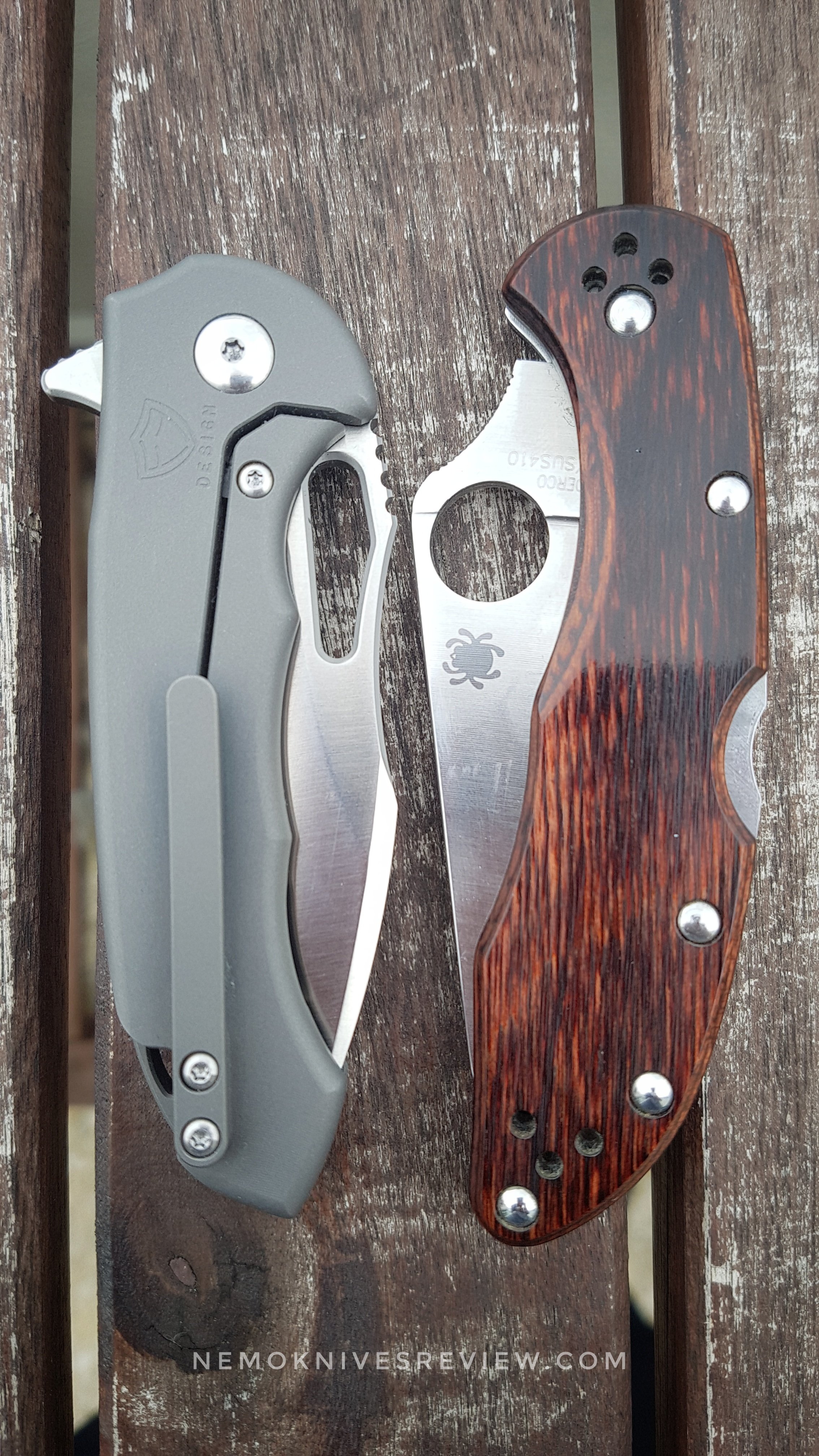
The Jade CPM M4 Military looks like a BMW X5 compared to a Renaud 4L.
But both are fun in their own way.

Manufactured in the heart of the french Alps since 1890, Opinel N°8 hasn’t changed much. It got a new rotating ring which works also to block the blade when closed and this is a really great improvement in my own opinion.
“In the 90s, the Virobloc® system was modified to allow the blade to be locked in its closed position. ”

The con:  a round handle which not help to know in which direction the edge is. You need two hands (or your teeth and one hand) ton open the blade. Two hands to lock the blade. No clip, so the knife will disappear in the pocket. Carbon blade which can rust. But that not a problem if you know how to keep your tools oiled.

The pros: 8 euros !! This is a bargain. Half the price of Douk Douk. A very confortable rounded handle.
To quote them : “To protect our handles from external aggressions, there are two available finishes: buffing and varnishing.
Handles shaped from rare and precious tree species are buffed with wax applied with a cotton disk. For every other wood, we apply a varnish which has been selected for its highly protective properties against moisture and staining.
The varnish is tinted for the carbon range and clear for all the other ranges. To create coloured handles, we first apply a water-based wood stain before the varnish.”
The lock is reliable and easy to check.

A full flat ground blade with a thin edge. 40mm made by hand. German steel with 0.90% carbon heat treated in France at 57-59 HRC. (The Stainless version is Swedish 12C27).
“When it was first designed, the OPINEL blade was made from carbon steel. We still use a similar grade today, with an approximate carbon content of 0.90% which is still better than stainless steel. Our carbon steel is first produced in Germany and finalised in France before being worked by OPINEL.”

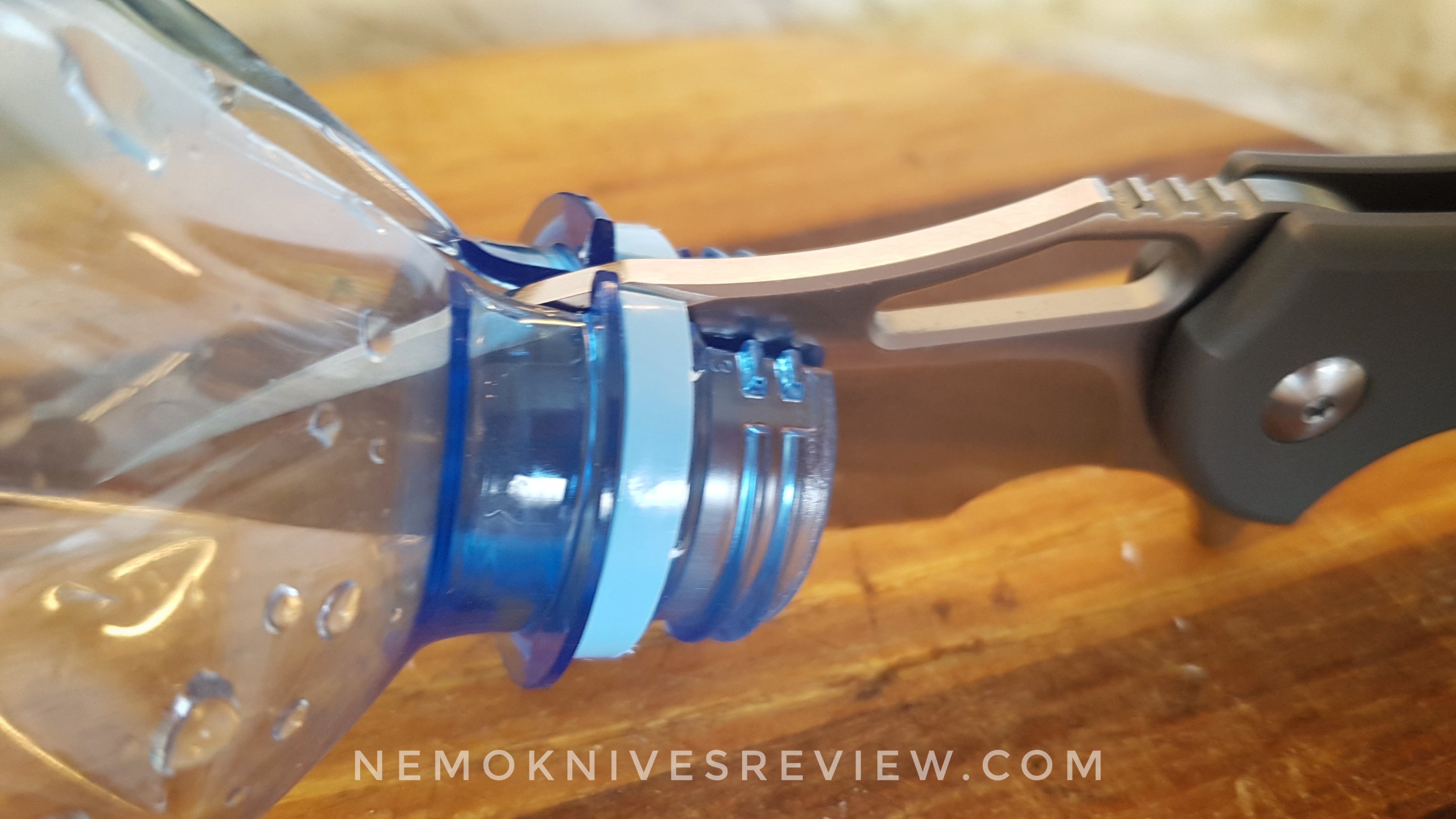
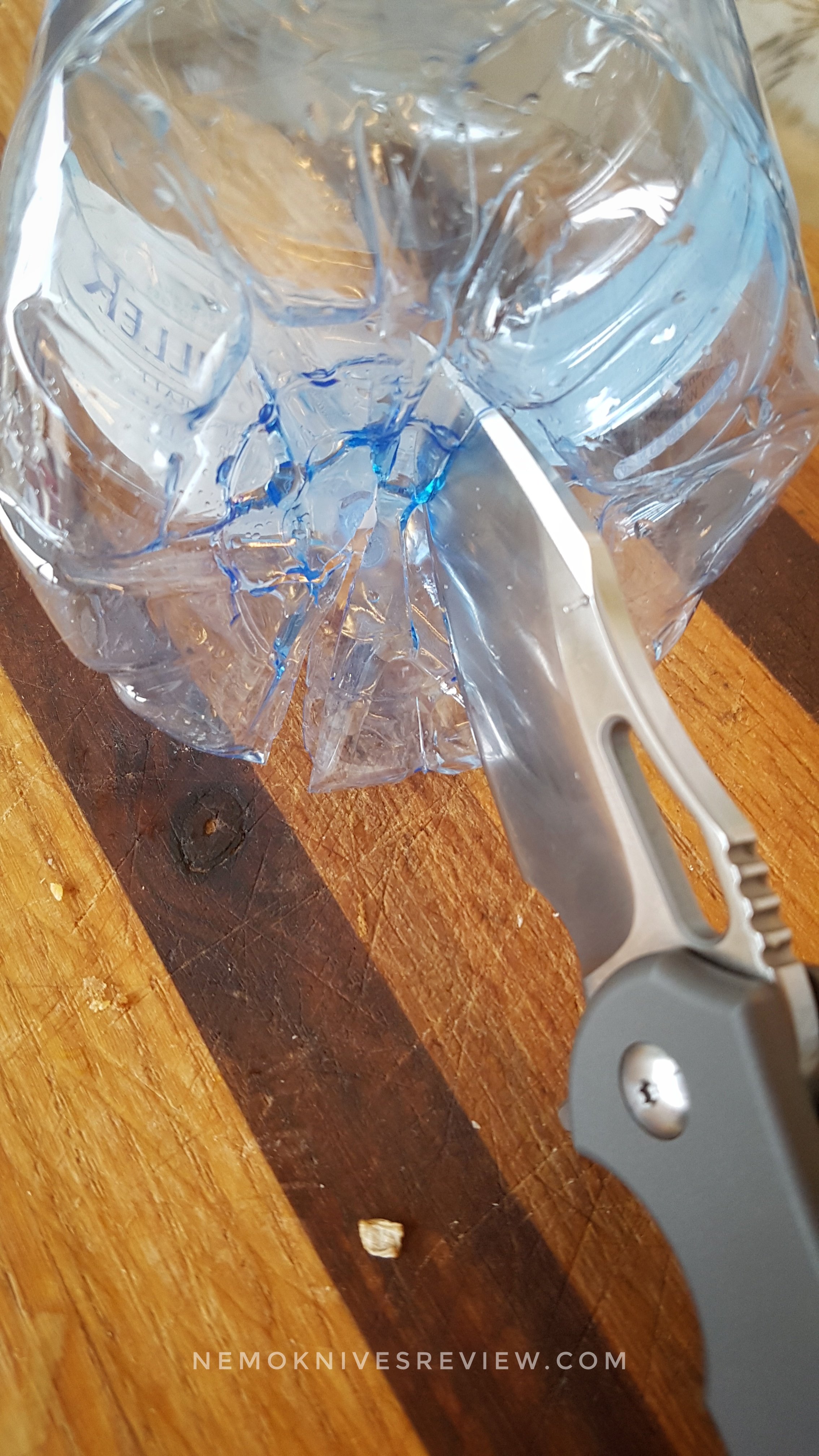
And this is where the Opinel is so fun to use. In all my knife it’s with my Opinels (stainless or not) that I got the best results in cutting plastic. Of course the steel won’t last like one of the new super steel but it’s so easy to go back to a very high sharpness: it’s fun.

Of course the Opinel beats all my other knives in my plastic butt/neck bottle tests. Even my great Nilakka or my reground Yojimbo 2.

The crowned hand.

Thinner and thinner !

I’ll  keep my new Opinel in my kitchen drawer. Sometime I will pocket it for going into the woods.
Compared to many modern folders, I know its performance are incredible and shows how thick the edges tend to be especially in the “tactical” scene. Strider comes to mind…
My Opinels wer beaten in wood work by the Dodo ! The Dodo got a belly which does miracle on cutting wooden rods.

I have read in a magazines some years ago that a famous hunter guide in Scotland was using an Opinel N°8 Carbone as his main hunting knife. He was using one knife by hunting season.

Anyway my good old new folder provides me “The original Opinel steel, the famous high quality cutting edge, easy to sharpen.”

Coke bottle are getting thicker at the butt, certainly a new manufacturing using more material and my new reprofile Zero Tolerance 0562CF cannot not cut through when she can still cut easily mineral water bottle’s butts.


The Opinel still can. Thin edge powaaa ! But you notice the 4mm thick plastic at the center.


Military C36PIN CPM M4 Exclusive Run — Ghost in the Machine

For a funny reason I give name to knives I keep. It gives them more personality. For a strange reason all my C36 Military got name starting with G like Glesser.
My Military Sprintrun CPM Cruewear is “Gandalf” because of its grey handle.
My new Military with Natural G10 (or Jade G-10) and CPM M4 blade will be name Ghost. It’s an exclusive run for Blade HQ.

This is the first time I got the chance to handle the new version: no spacer, bigger lanyard hole, bigger screws… My first Millie “Glesser”, back in 1996 was already a new version with CPM440V (S60V) and the three screws clip. 21 years later here is what I consider the apogee in this design: a blade alloy I really love and a “light” construction.
Gandalf and Ghost weight almost the same: 124g versus 123g on my cooking electronic scale. This is a light package with a lot of cutting power.
I also love the fact that the Jade handle makes it very sheeple friendly and less “military”.

Since I have reviewed the M390 CF version and the Titanium handle version.

Now I have really convexed the grind on Gandalf for wood working.
But I wonder how it will compare to CPM M4 on Ghost.
It will be the subject of another review.

On the edge of the Polestar by JD

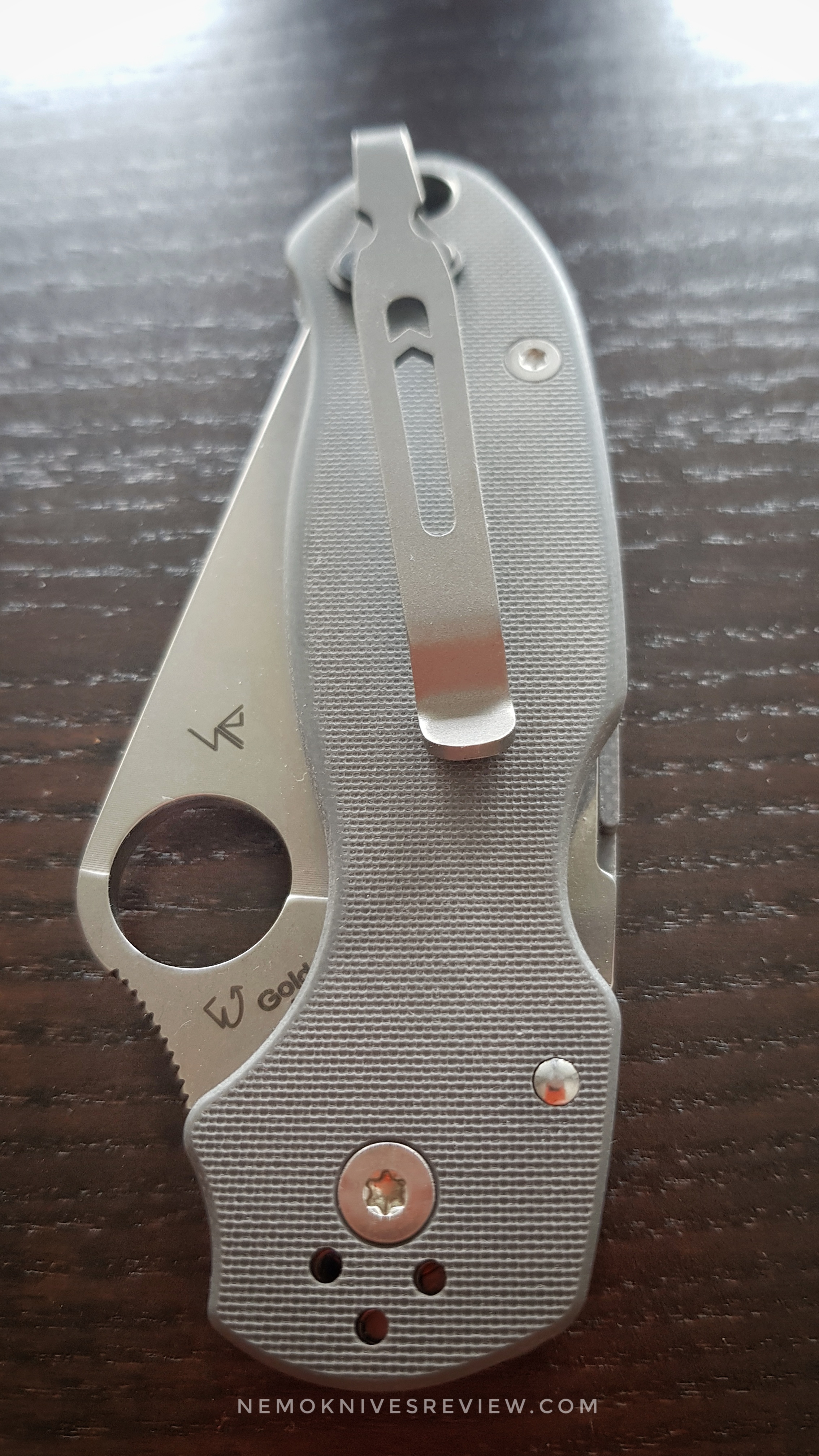
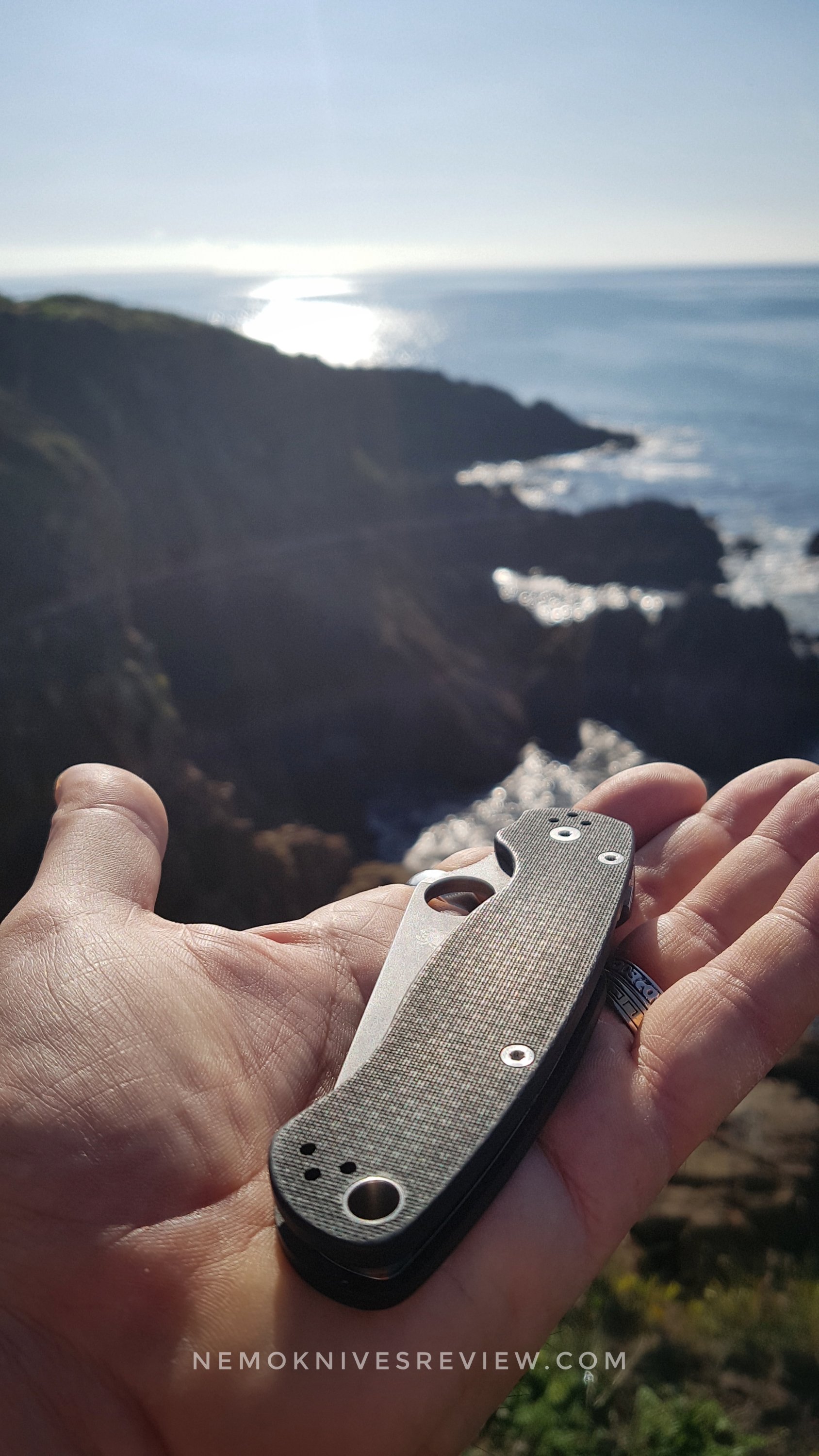
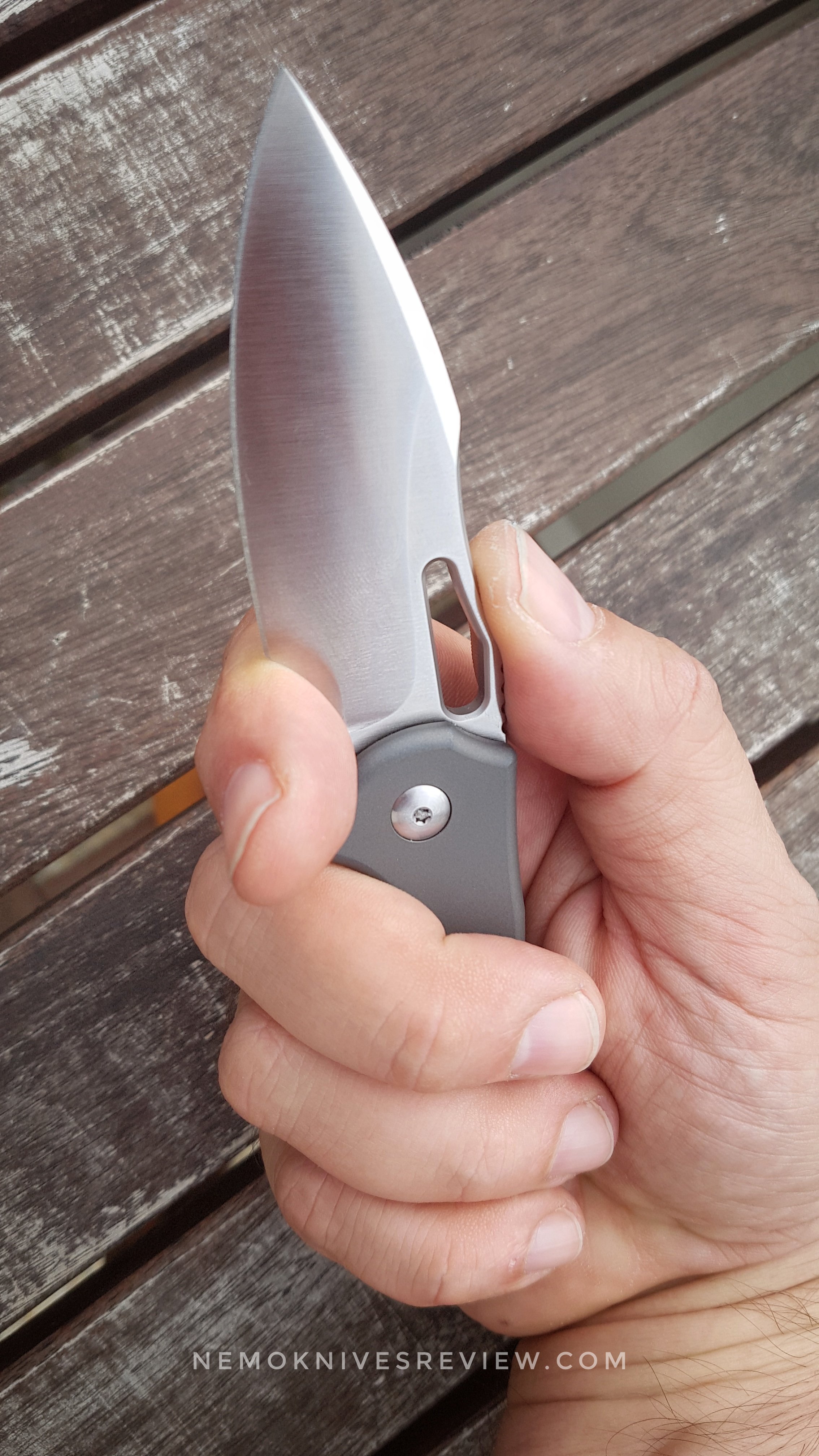
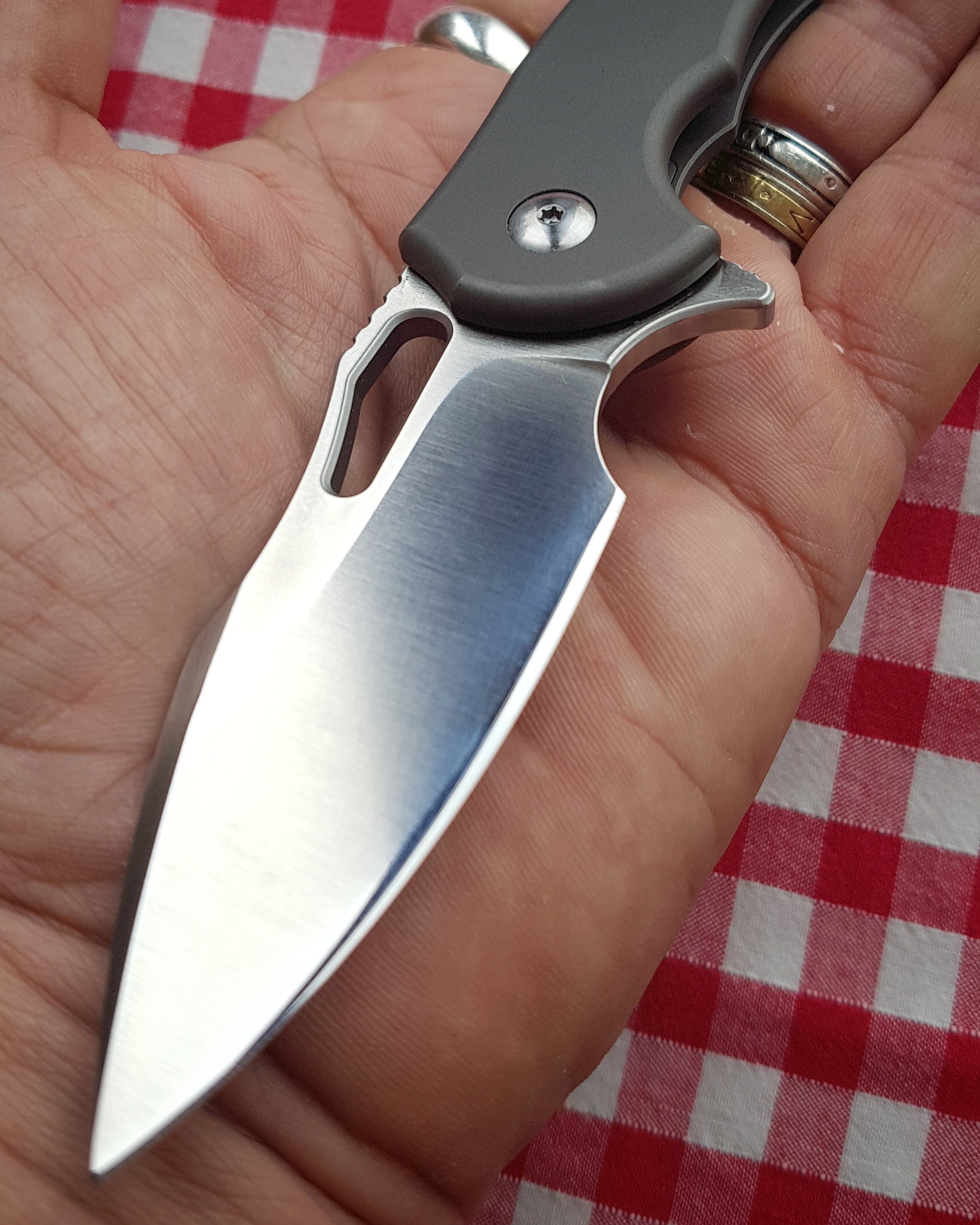
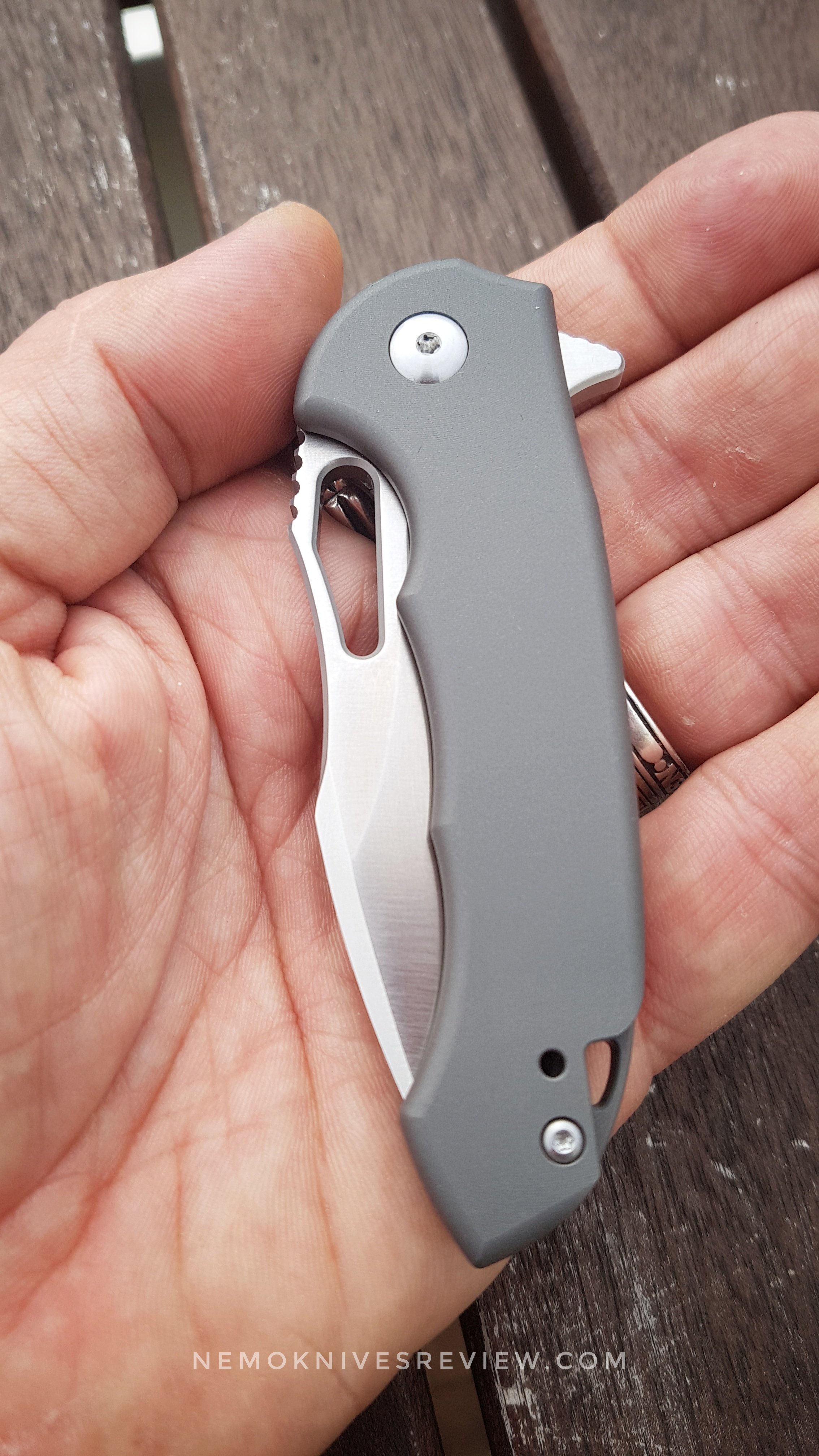
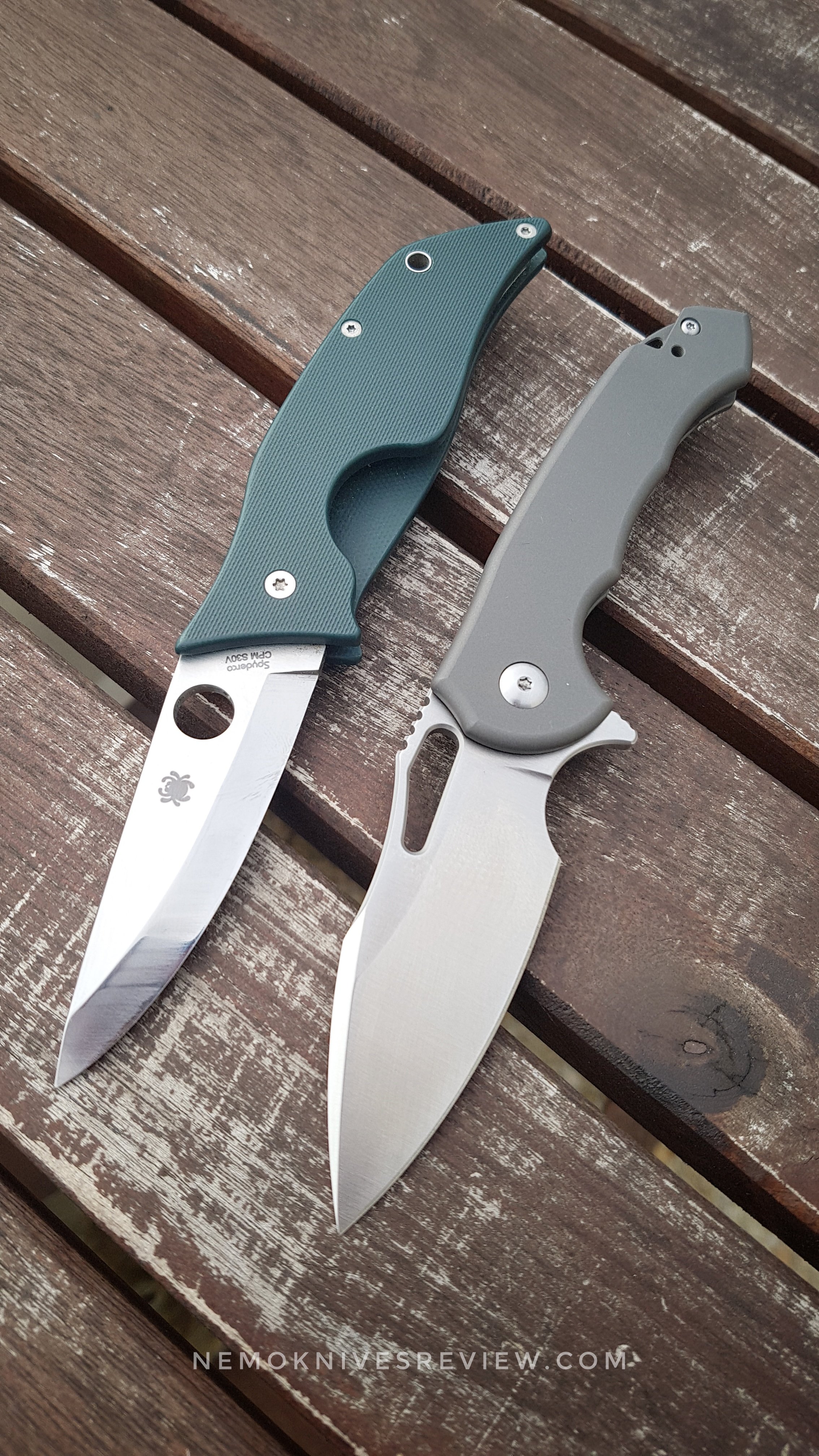
Like Nemo I have received my Polestar as a gift from Spyderco. It was in the goodie bag at the 2017 Amsterdam Meet. When I took the knife out of the box and looked it over my first impressions were positive. The blade opened smoothly and locked solidly with the lock bar fully engaging the tang. I liked how the gray G10 looked and felt, a nice combination of grippy and smooth. Clip tension was also excellent. I could slide the knife in and out of the pocket and waistband without any problem. The edge it came with from was less impressive, it could push cut receipt paper but had no slicing aggression at all.

When I came home I put a drop of Nano oil on the pivot which made it even smoother. I could flip the knife open with my middle finger, which is a lot of fun! Other than flipping it a few times I didn’t know what to do with Polestar. For me it is quite a big knife, having a blade length of 8,5cm. In my urban environment and with my use I have found that a blade length between 5-7 is ample. Small knives are often just more convenient for me.

After a few weeks of from time to time picking it up and flipping it I decided to give it a try and see how I would like to carry and use it. Like Nemo I moved the clip to the tip down position. I was going to carry it in the waistband and tip down carry reduces the chances of the blade accidentally opening. Thanks to the Spyder hole hump it could still be easily and quickly opened with the Spydie drop.

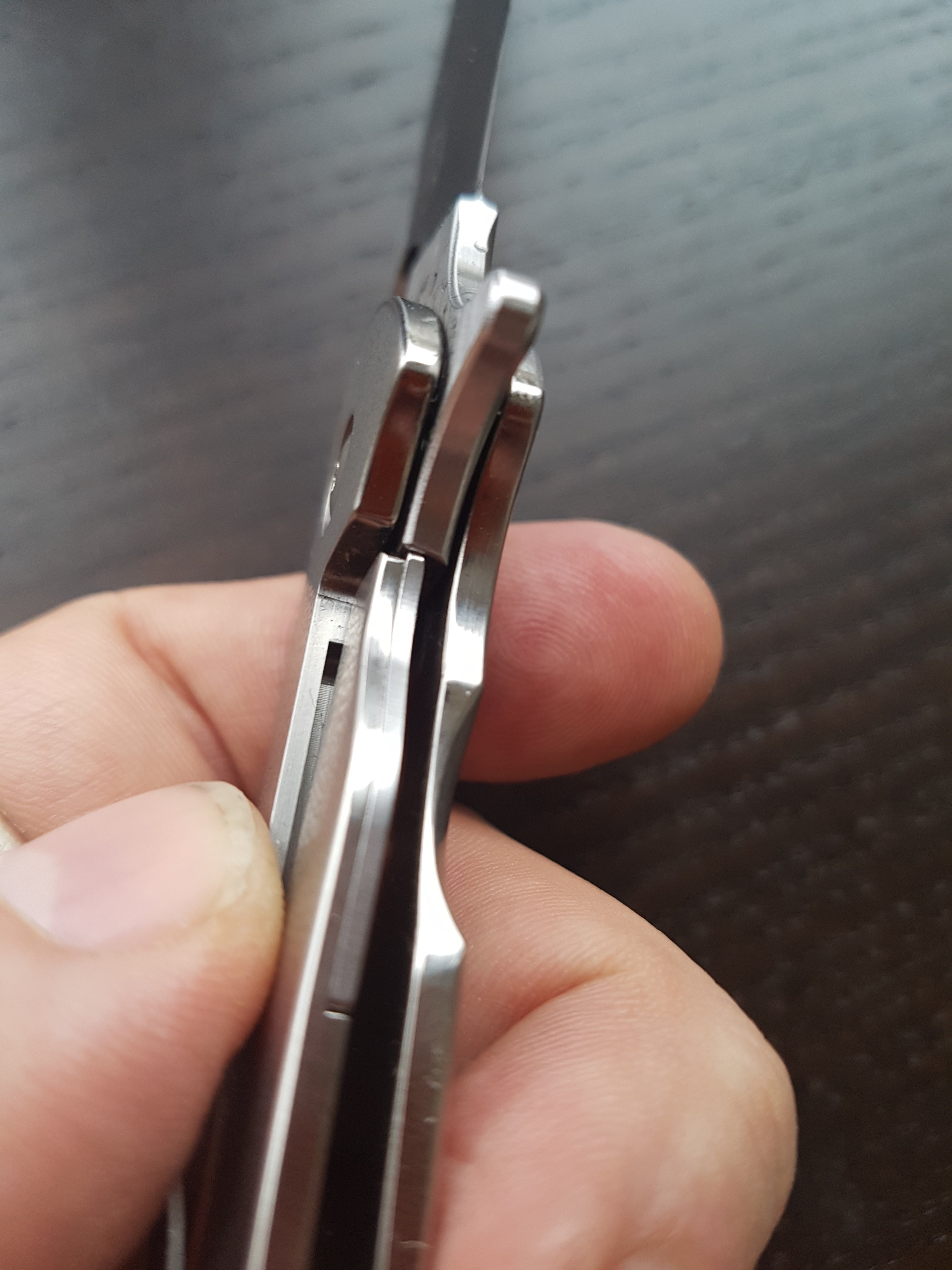
Before I was going to use it the edge would need to have more slicing bite then it did new. So, I thought a few passes on a coarse DMT hone would be enough for a quick touch up. I was wrong! I found out that, especially close to the recasso, the edge was pretty uneven. In some places it was even a high angle convex. The edge would need to be formed anew!

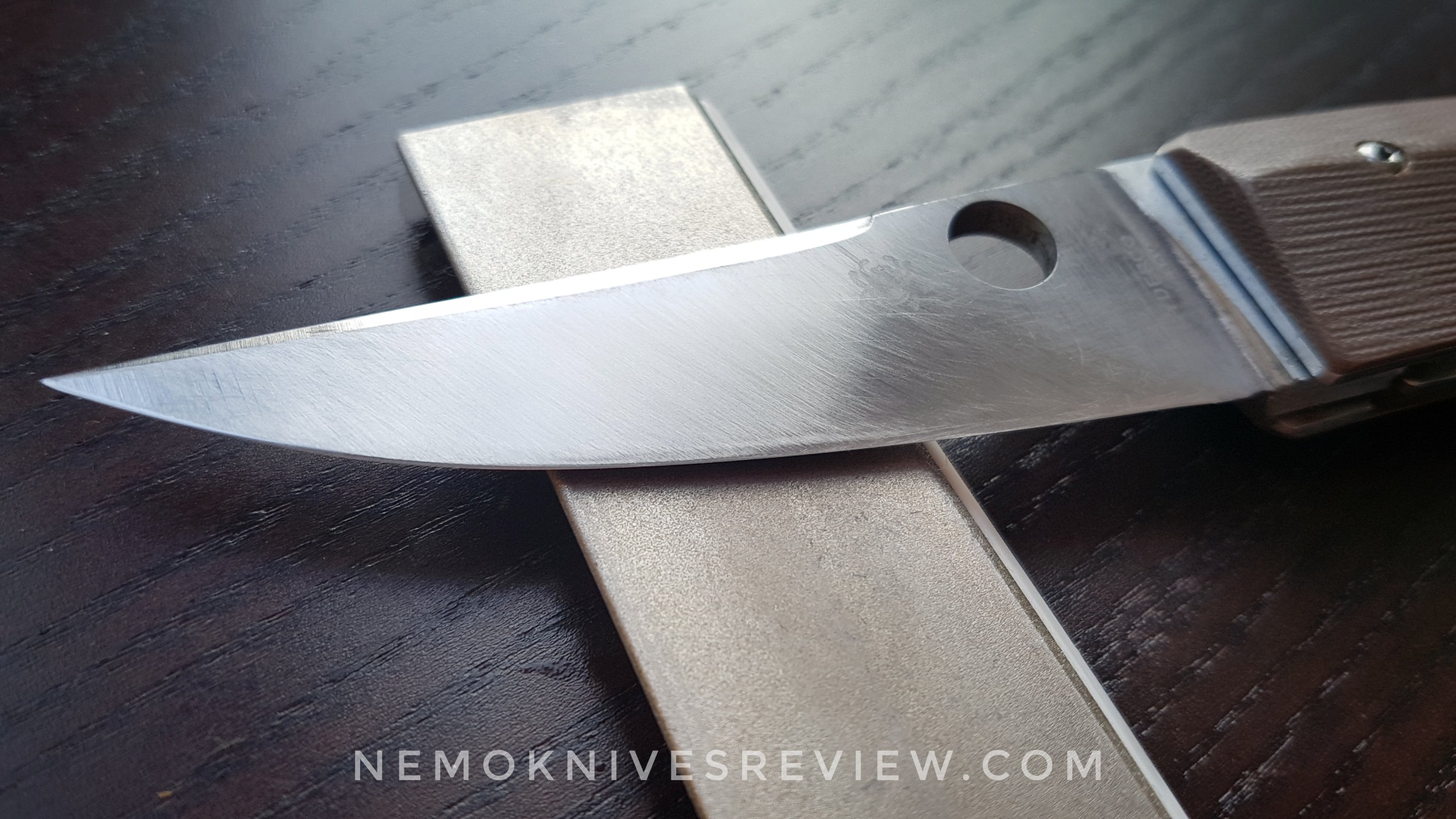
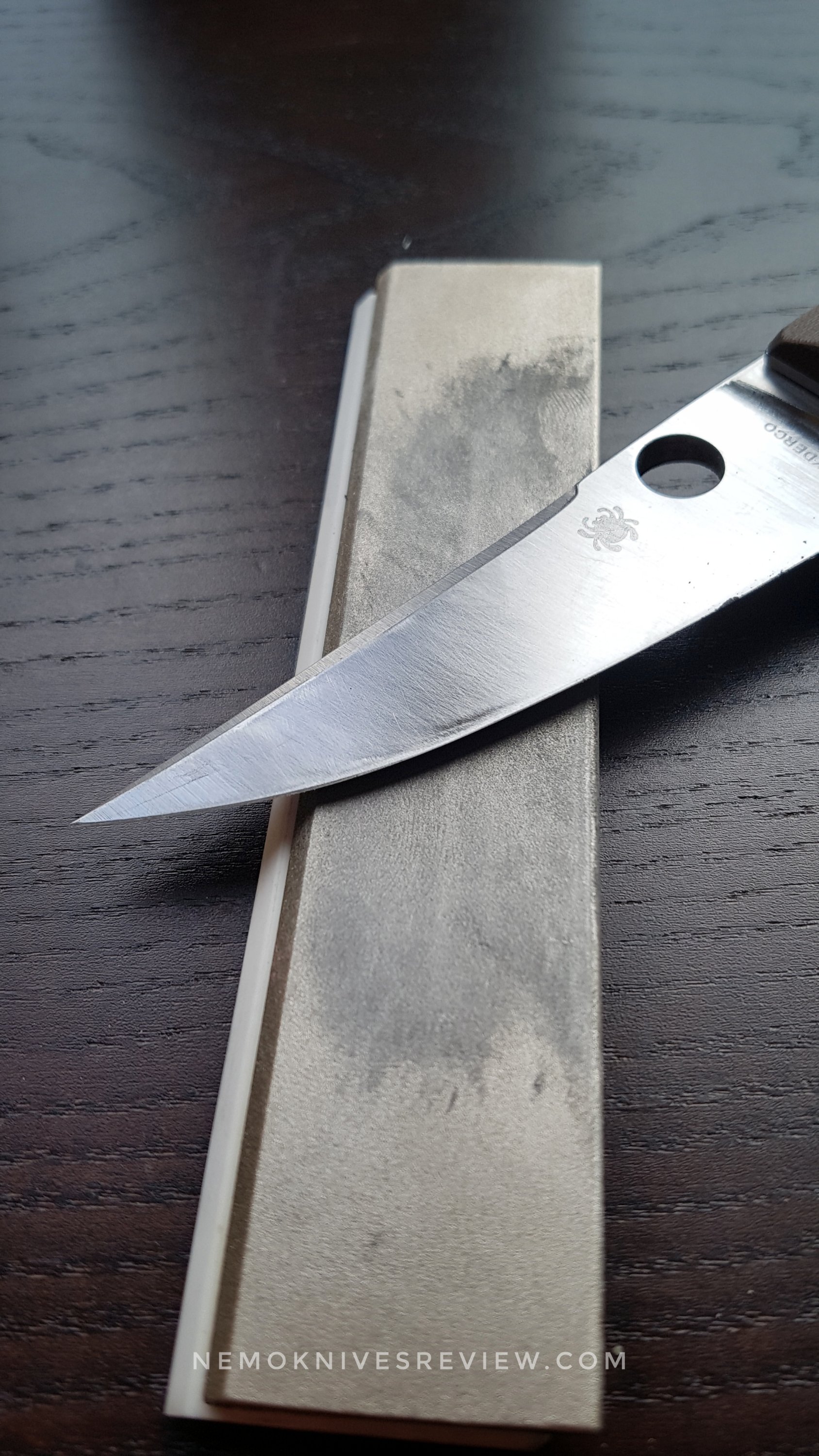
I cut of the old edge with a few light cuts into a stone and then created a new edge with my extra coarse DMT hone. I was interested in how the knife would function as it was intended by Spyderco. So I did not change the angle of the edge much but just evened out the edge bevel and formed a new apex. The steel was not hard to grind but, due to the unevenness, some parts needed lots more work than other parts. After I had was sure of having formed an apex by creating a burr on either side of the edge, I removed as much of the burr as I could by using alternate and high angle strokes. The burr flip flopped from site to side a lot and was not easy to cut of. Once I had removed most of the burr on the extra coarse hone I repeated the procedure on the fine DMT with the same difficulty in removing the burr. At that time the edge would slice receipt paper well but I have had better edges.

From past experiences I know that often a new knife needs to be sharpened a few times before the edge reaches its full sharpness and edge holding potential. So, this did not disturb me much. It was to early for conclusions.

I proceeded to cut up some cardboard before repeating most of the afore mentioned sharpening procedure. Only this time I finished on the diamond side of the Fallknives DC4, one of my favorite hones, to an edge that would just split head hair. Removing the burr and finishing the edge had become a bit easier this time around. Over the following days I carried this knife and used it for my normal cutting tasks. Mostly cutting paper cardboard and plastic packaging material and perhaps a bread bun for lunch. A funny thing I noticed: the edge its cutting ability seemed to first increase, then settle down, before slowly starting to dull!

After about a week of use the edge would still work for most of my cutting tasks but had lost some of its sharpness. I decided to resharpen the edge with just the diamond side of the Fallkniven hone again. Getting it sharp enough to shave arm hair was easy but getting it to split head hair still proved to be a bit fiddly, although I did managed it in the end. By comparison: my Elmax Squeak went from not biting in to the hair to cutting the hair with much less effort. A few passes on the hone did the trick there.

Normally I would have put the knife in pocket pocket as it was sharp enough for me use, but out of curiosity and to check my findings I resharpened it once more. I had become a bit easier to remove the burr and to make the edge arm hair shaving sharp. But to get the edge to split head hair was still a challenge. With other knives like my Maniago Spyderco’s in N690 and Elmax and, for instance, my Victorinox Bantam this had never been this difficult.

Overall the Spyderco Polestar is an enjoyable and capable knife: flipping the blade open with the middle finger is still fun and the handle works well, it handled my cutting tasks fine ones I got it sharp, but I am not impressed with the condition of the steel at the edge on my example. Still, it was interesting playing around with a knife that is so different from my usual fare!

JD

SPYDERCO K2 FOLDER ~ C185TI – The Flat and Furious

Farid K2 SPyderco K2

Farid Mehr is known for his massive designs. He was even doing integral lock from stainless steel slabs. This is pure heavy metal. Here is his first collaboration with Spyderco and the result is well impressive ! The K2 could be seen as an Ăśber-Sebenza and last but not least this is the first CPM10V industrial folder ever.

CPM10V is the King of the Mountain in the pure edge retention field, it’s got even better results than CPM90V.

Typical Chemistry
Carbon 2.45%
Manganese 0.50%
Silicon 0.90%
Chromium 5.25%
Vanadium 9.75%
Molybdenum 1.30%
Sulfur 0.07%

Much less Chromium than CPM110V and CPM90V. CPM10V is an alloy with almost 10% of vanadium. This is a dream steel. Something to test and feel. I have already the great tests of Jim Ankerson about how great CPM10V at 63HRC is a pure beast of work. Cliff stamps also have made some “in deep” researchs with the same conclusions.

My K2 is light, perfectly balanced. The edge is thin. The blade is wide. The handle is flat.
The lock needs some breaking in as it’s sticky. The flat slabs are not close to how the Slysz Bowie feels confortable. Flat and palm are not friends. Also the spine of the blade is square after the hole hump. the finish of the blade is not as refined as the Slysz’s but the K2 got its own charisma. Something brutal which asks to be tested hard. It’s a very masculine tool.

So here are some pictures and size comparaisons. This is a big folder which ride small in the pocket with the best powder steel available nowadays. Pocketing that much high quality edge in a flat, solid and light package should raise the ears of the hunters. Also the R.I.L. lock and construction is easy to clean.

FARID K2

The Slysz Bowie and Farid K2 the Yin and the Yang.


A clever disk to prevent over pushing the RIL.


Compared to the Millie. The K2 leaves almost the same pocket print. The absence of choil gives a lot of edge.


Let’s try to dwarf it with the Cold Steel Voyager XL but in the end the K2 provides a relatively long blade too !


Compared to my Sebbie.


Compared to the Tuff. Two very different philosophies. The Tuff is tougher but the K2 got more edge length.


The construction of the knife uses only two screws. The axis and the other one (near the lanyard hole) which got that kind of squashed steel ball to give rigidity. Very clever. No need for a spacer.


And the belly is perfect for cutting pizzas !!


Is the K2 a folder for Machete ?

Spyderco Lionspy – Updating the beast

Spyderco Lionspy

Since I got that wonderful Spyderco Lionspy I did not baby it at all ans test as EDC and hard working knife as I wanted to see if a massive a stout folder would be useful and handy as a fixed blade even if it should not be as strong.

So let’s review some points which I was concerned with:

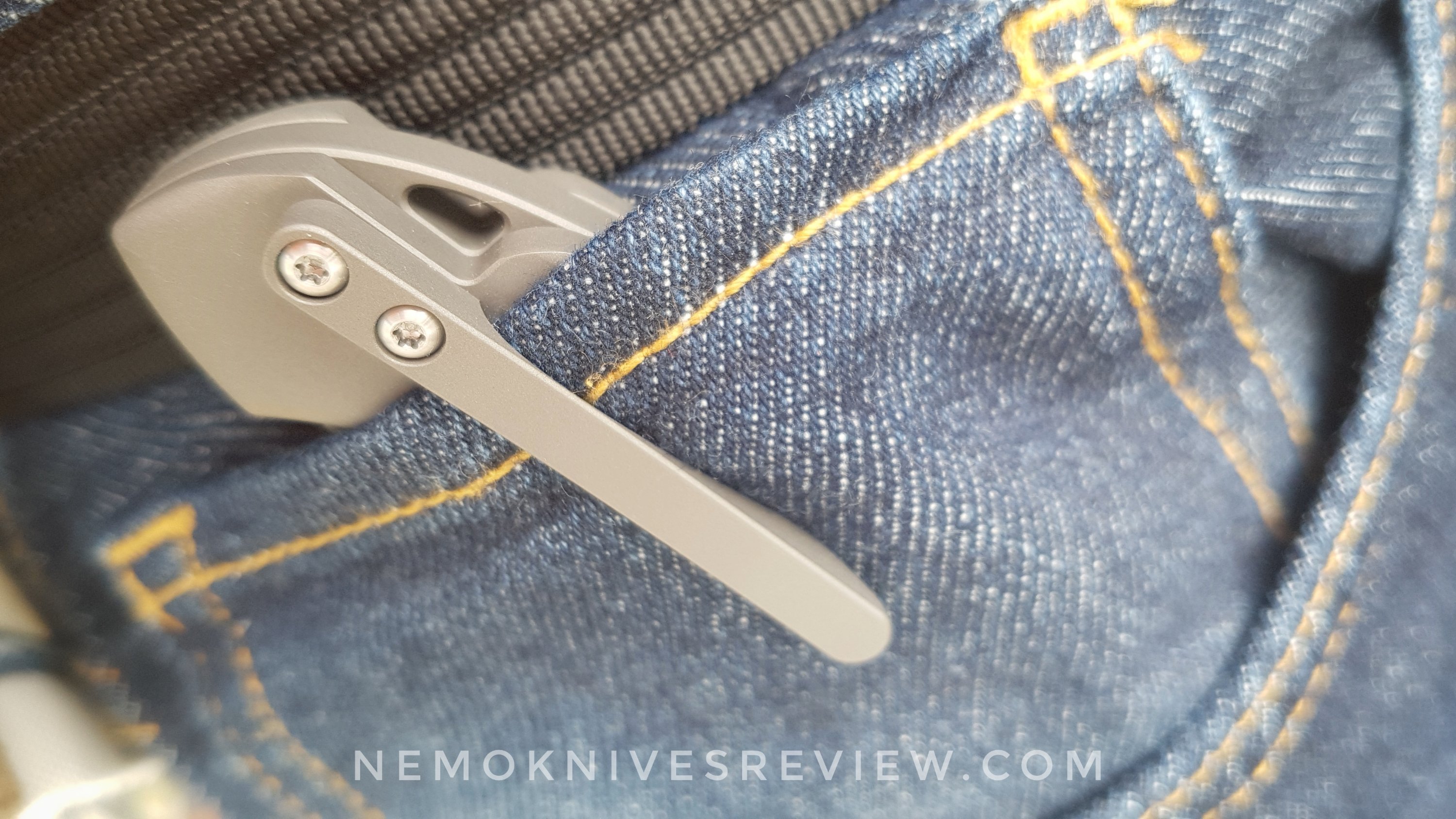
The very small short butt clip:
yes it is short. But it is very discreet. And it’s a pleasure to pocket that knife: it disappears.
I found it is easy to retrieve once you have adjust your technic: gently pulling the clip first to free the knife from the pocket.

The stopping pin:
while in the woods, I used it as a light chopping tool.And it was great.
I was concerned about the stopping pin as one side is plug in titanium but the other one in G10. Zero problem so far and I have used that knife very hard. So eventually no issues. So far so good.

The rotoblock:
this is a breeze to use. A pinch of the thumb and the safety is on or off. The knife feels very solid and lock failure is not a real concern.
I love this system.

The heavy stout thick blade:
I was able to trim and cut branches for making walking canes very very easily. It was a fast and easy processed job. A dozen of light impacts and a two to three inches diameter wood rod is chopped of the tree. I don’t know if that knife was design for that purpose but it works great. Like a micro pocket axe.

No pointy blade:
if kept very sharp the Lion Spy got a good penetration power. But I’m happy to keep another knife with a more pointy blade on me.

Elmax ?
surpringly easy to keep sharp. My Lionspy this last month has been mainly kept sharp with strops of leather and half a dozen white ceramic strokes.
Very nice steel. Been used on bones, plastic, wood, meat. No chipping edge, no rolling edge… so far. My first experience with Elmax is absolutely positive.

The hot spots:
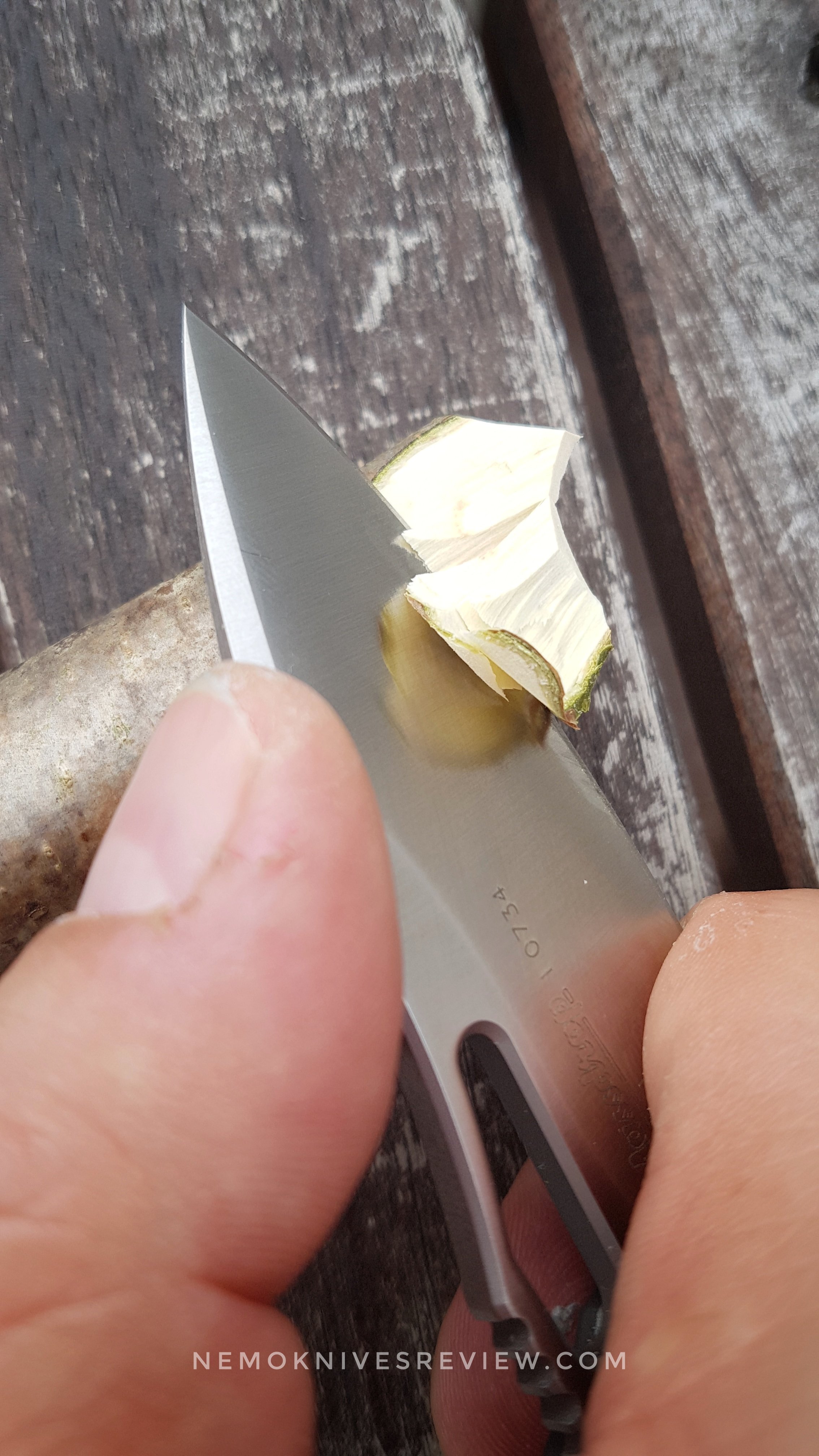
the blade’s spine is ‘squarish’. And when ‘thumb-push cutting’ without gloves it is quickly not pleasant. I was able to round the corners on the spine with diamond rods, sand paper, caution and patience. Elmax is hard. I do not have any plans to start a fire with it anyway so no more square spine. Now it is much more confortable to use for push cuts. Especially with such a nice convex grind. The wood fibers are sectionned nicely, gently with control.

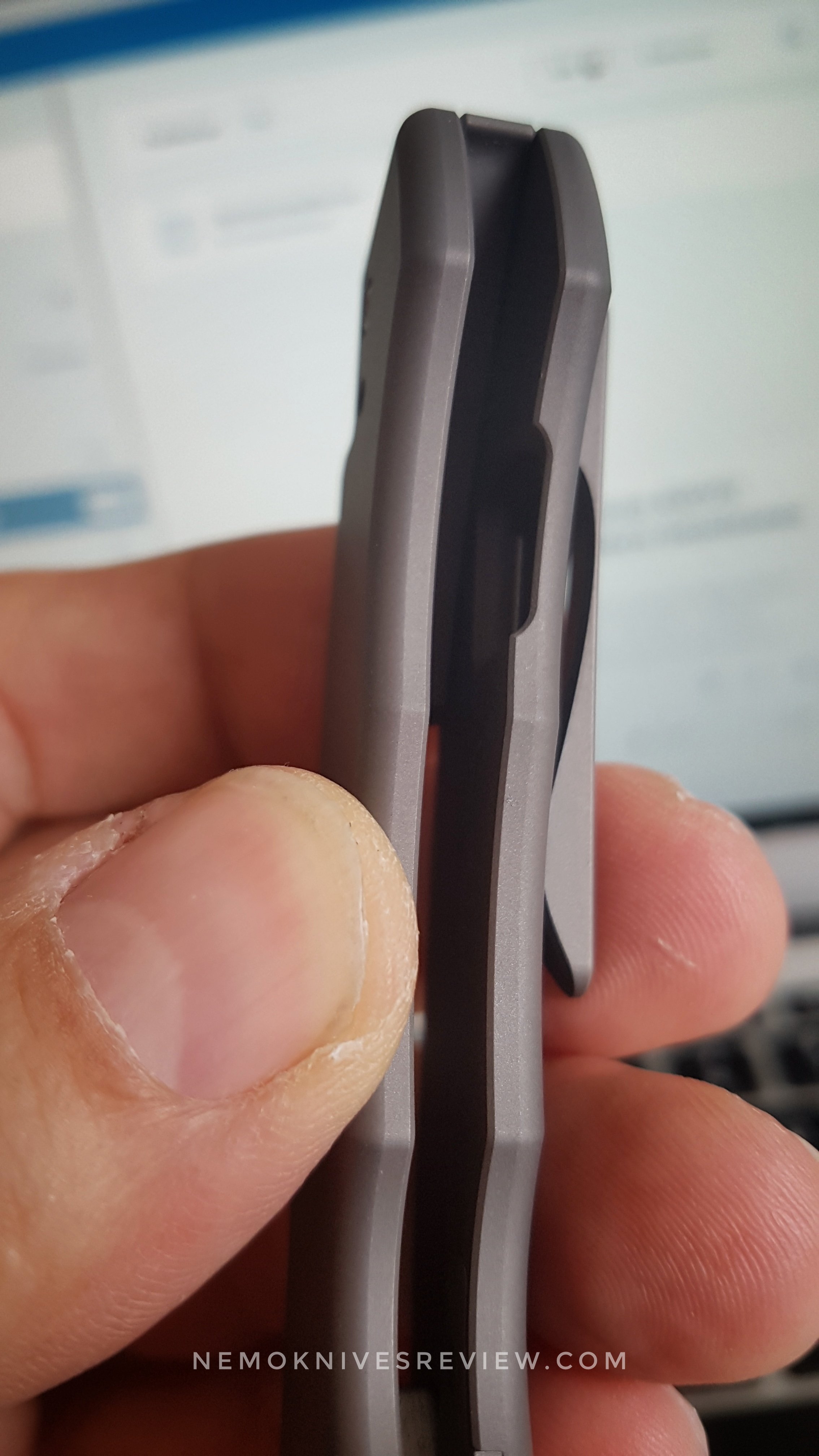
Handle… now there is one hot spot in the ergo I cannot improved without rethinking the whole knife. It is about the open construction handle’s liners/slabs…. They are profiled like airplane wings, like propelor blades !!! Beautiful but not confortable when used perpendiculary with the palm of the hand. After sometime, you can find another way to hold the handle but compared to a lockback (or the plain handle of fixed blade) this is an ergonomic issue. But there is a reason.
The Spyderco Gayle Bradley got a square handle and is much more confortable as the space between the liners is almost filled. But the gap between the slabs in the Lionspy construction is proportionnal to the thickness of its blade (4.5mm). There is a real gap in this open construction.
Once you find you own way to hold and use the Lionspy, things are going much easier. But gloves can be mandatory for long use of the Lionspy.

Eventually I was surprised by the ease to put that stout knife in service and how fast the cutting job was done when I was in walking rod processing mode. Reliable and clever, it is my favorite light chopping folding knife.

Spyderco LionSpy